
2017 was a big news year but mainly for the wrong reasons. The closure of local manufacturing dominated the news agenda, we had the lingering rumblings of Dieselgate casting a shadow over the industry and Tesla discovered that selling a dream was far easier than teaching a robot to spot weld.
In amongst the doom and gloom were a number of big stories that got us interested. Here are our top five for the year.
1. Walkinshaw Wildfire
Who doesn’t like the idea of a 300kW+ mega-ute? We certainly do, and if we can no longer buy a Maloo, a LF3-engined Colorado sounds a pretty exciting Plan B. Any news on Walkinshaw or HSV certainly got the attention of Wheels readers, with this news story almost melting down our social media pages.
2. HSV GTS-R W1 revealed
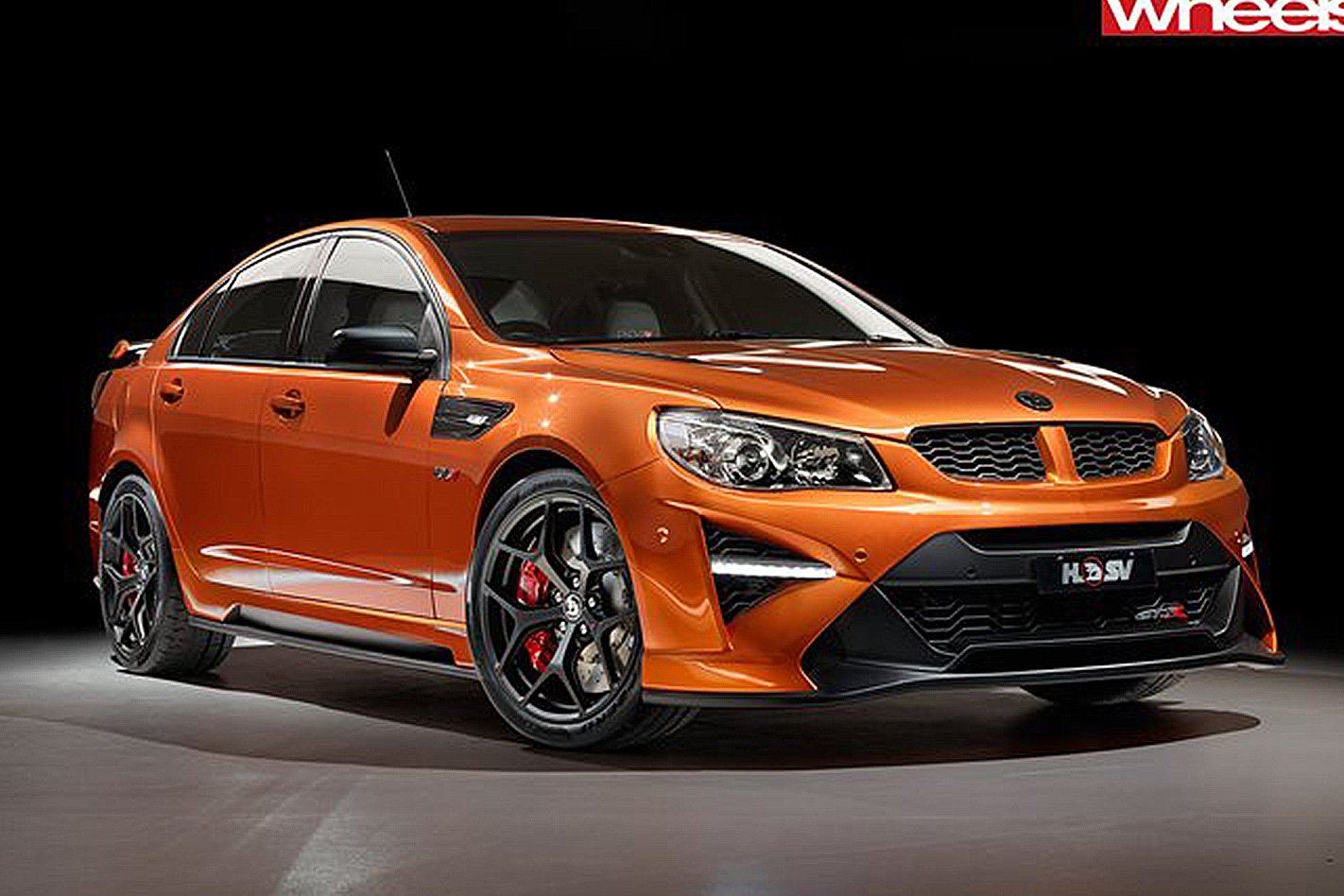
Read about the HSV GTS-R W1 reveal here.
3. Mazda SkyActiv-X tech
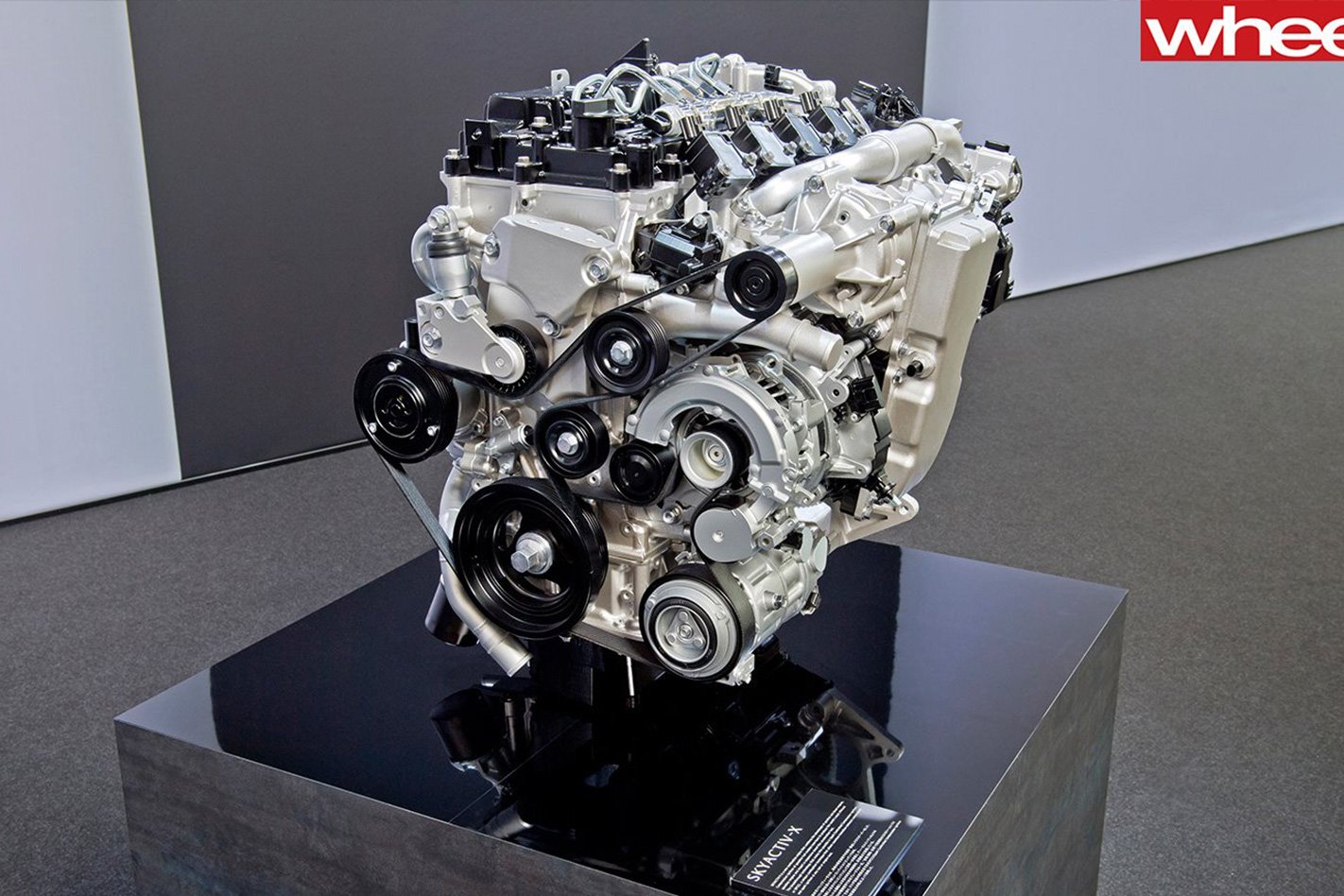
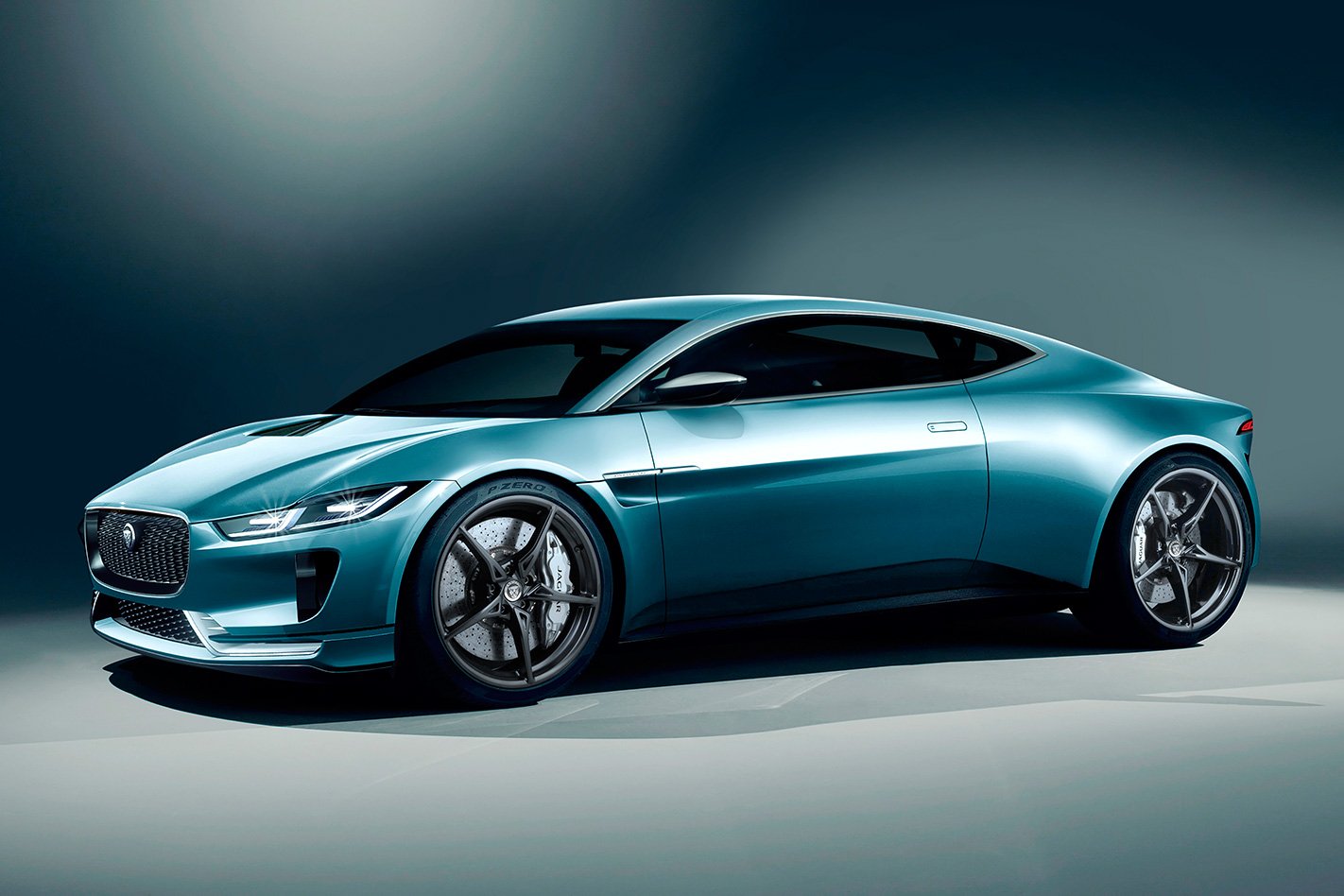
4. Jaguar goes all electric for the F-TYPE
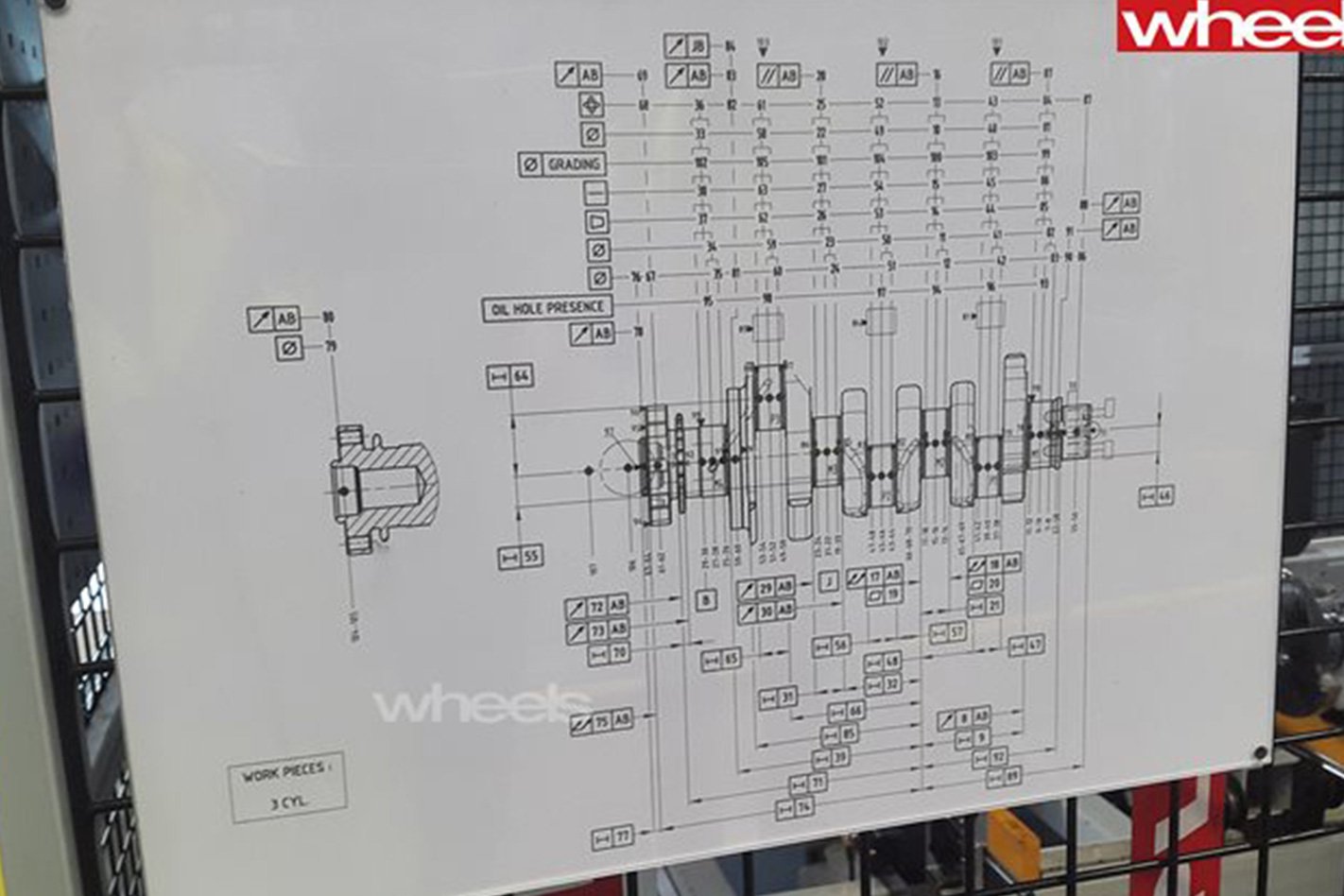
5. JLR-s three-pot Ingenium engine
Welcome to the MOTOR Awards for 2017, where we recognise the best and worst or the year.
In this instalment we give out three awards – Best Interior, Best Option, and Biggest Gimmick
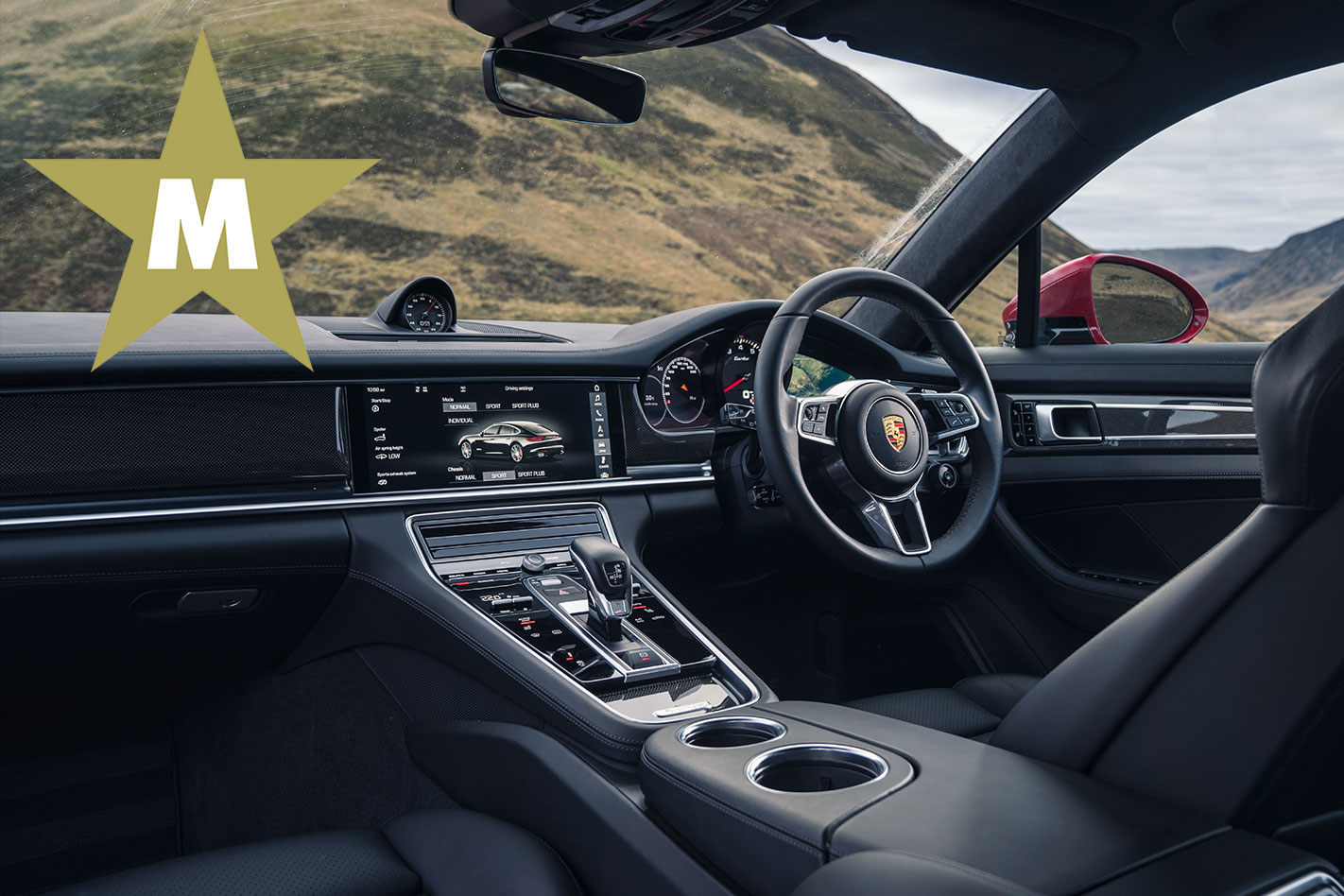
BEST INTERIOR: Porsche Panamera Turbo
Lexus fired a loud warning shot at posh rivals with the LC500. The swoopy, futuristic coupe is just as alluring inside as it is outside. The interior feels expensive, looks sexy, and is home to one of the best V8 soundtracks we’ve heard this year.
However, some crucial errors, like a confusing gearshift pattern and mouse trackpad, spoil its chances for the top spot.
A finalist further up the food chain is Bugatti’s Chiron. Its interior makes a Koenigsegg’s look as inviting as lunch with Kyle Sandilands. From the moment you see that arch which swoops down from its roof, or the circular brake pedal, you know this thing is special.
And it must be the first Volkswagen product with a steering wheel without buttons pinched from an A3. Downsides? Rear vision is blocked by an almighty 16-cylinder engine and there’s no infotainment screen, yet it costs A$4.3m.
We’re not hankering for wood panels or Breitling clocks; we’d trade them for a perfect driving position and pedal placement every time. But luxury is nice, and on that note, Porsche’s new Panamera deserves high praise, weaving slick design and the latest technology into an office still clearly focused on you.
The Panamera interior mutes the outside world like you’ve climbed into a bank vault. The steering wheel’s nothing new – we’ve met the 918-inspired item before in 911s – but everything else is. Porsche went from a million buttons on the centre console to almost none, banishing them for touchscreen slates.
They surround a gear stalk that looks stolen from an Apache gunship. Its also sensibly separates ‘park’ with a button. Even the cup holder lids resemble cross hairs. The infotainment screen’s bigger than your living room’s, but doesn’t make the cockpit mimic Minority Report like a Mercedes-AMG E63.
The tactile ‘click’ when you press the console buttons is slick, too, while the infotainment’s new control system is simple to learn, even for iPhone-phobes.
Get happy with options and punters up back can watch TV or conference call with the Bluetooth headphones. But the most fun is to be had in the driver’s seat, where the central, and largest, dial counts engine revolutions. And a 4.0-litre twin-turbo V8 means it’ll come round more often than the clock.
Clear forward vision, thanks to that sweeping dash, lets you better judge when to release the hounds and underneath the brake pedal’s wide enough for left-foot braking. There’s also a nice solid dead pedal for when you want to call on all 20 braking pistons.
Of course, this is all bolstered by traditional Porsche ergonomics, which all helps make the Panamera Turbo interior as the place you’d rather be in 2017.
BEST OPTION: Porsche 911 GT3’s manual
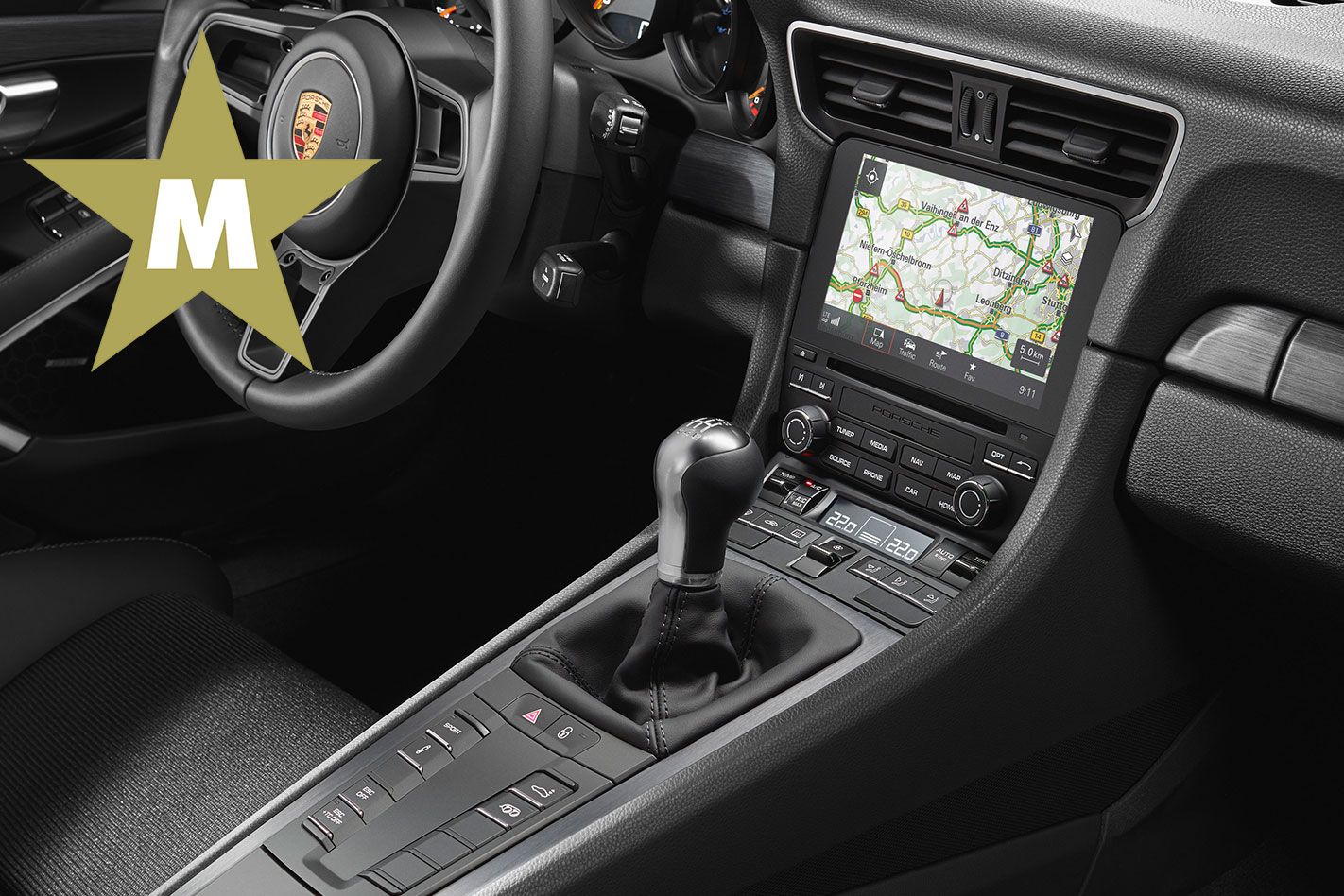
The gnashing of teeth from enthusiasts when the PDK-only 991 GT3 was released and the sell-out success of the manual-only 911 R and Cayman GT4 convinced
Weissach to re-introduce the option of three pedals and a DIY gearlever in the 991.2 generation GT3.
Unlike the seven-speed manual in the regular Carrera models, it’s not simply a manualised version of the PDK, either, but a bespoke gearbox with six carefully chosen ratios and a spot-on shift action.
Sadly, it’s unlikely too many customers will choose the manual, but kudos to Porsche for at least giving them the option.
BIGGEST GIMMICK: BMW M4 GTS water injection
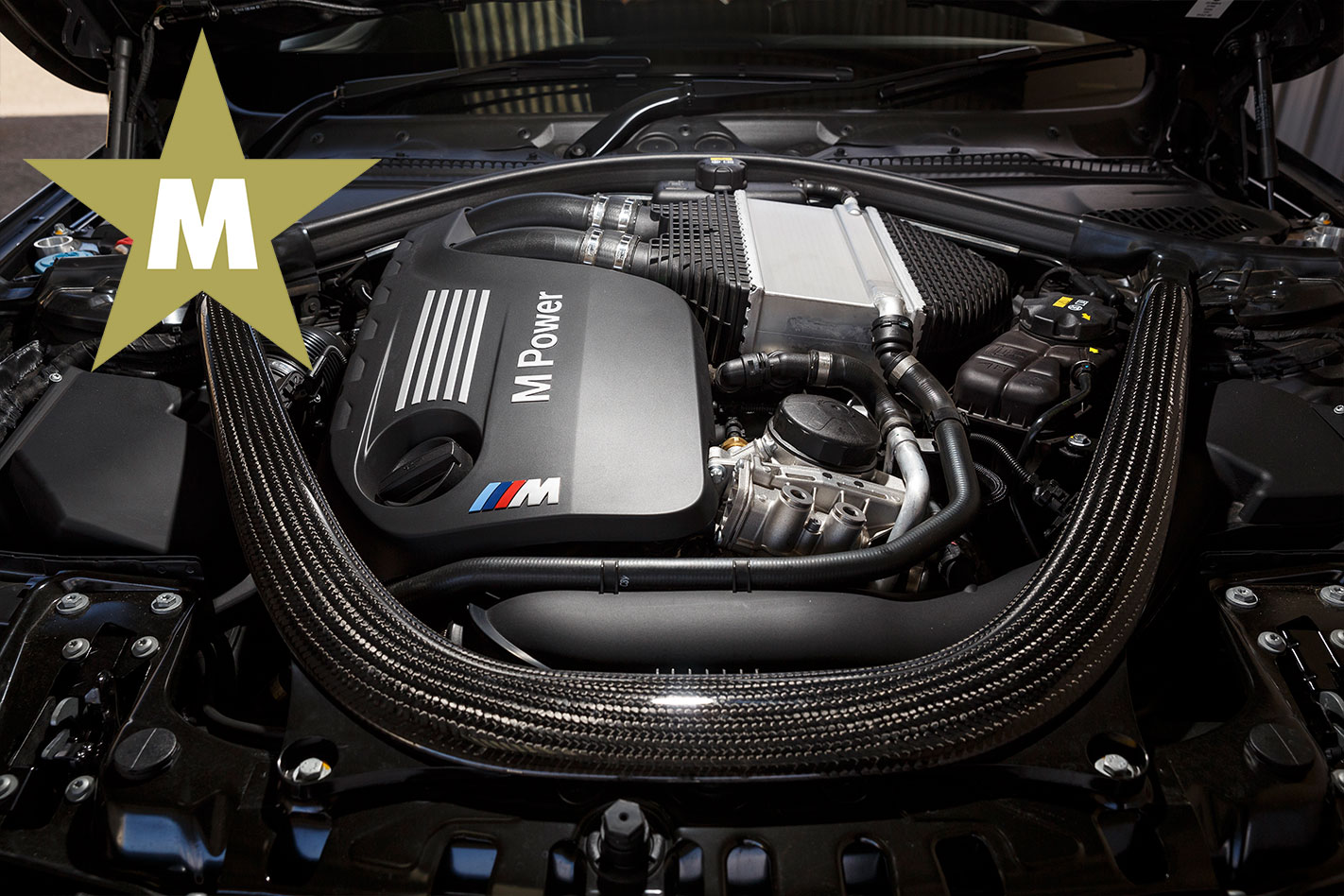
A fine mist of water is sprayed into the inlet to lower charge temperatures, which then atomises before entering the combustion chamber.
This allows boost pressure to be raised and outputs increased from the M3/M4 Competition’s 331kW/550Nm to 368kW/600Nm for the GTS.
So if it all sounds good, why is it a gimmick we hear you ask?
Well, firstly, the water runs out very quickly, but more importantly, BMW then released the CS with 338kW/600Nm and no water injection in sight.
To us it seems to be a lot of hassle for such a small gain.
As motor show secrets go, this was a good one, and well kept. We’d heard a whisper about it the day before, and some internerds reckoned that they knew what was up. Sure, everyone had their theories, and the feeling that something was really on permeated the gathering hordes surrounding Holden’s darkened stand at the Melbourne Motor Show last month.
This feature was first published in MOTOR magazine’s May 2008 issue.
Over at the Ford stand, there must have been a dreadfully familiar, sinking sense of déjà vu. Cast your mind back to 1998 and the imminent launch of the all-new AU Falcon at the Sydney Motor Show. After an investment totalling $700 million and betting the farm on its next big sedan, the Blue Oval was thoroughly rumbled by a clay two-door originally sketched up on a dining room wall…
“Everything you do is tactical or strategic,” acknowledges Tony Stolfo, the director of Holden’s design department. “Strategically, we’d love to continue down the path of actually doing a coupe off our [VE] architecture, but it’s a matter of building a business case and getting the corporation to back it.
“The tactical side, obviously, is that we want to take the focus off everyone else in terms of the motor show…”
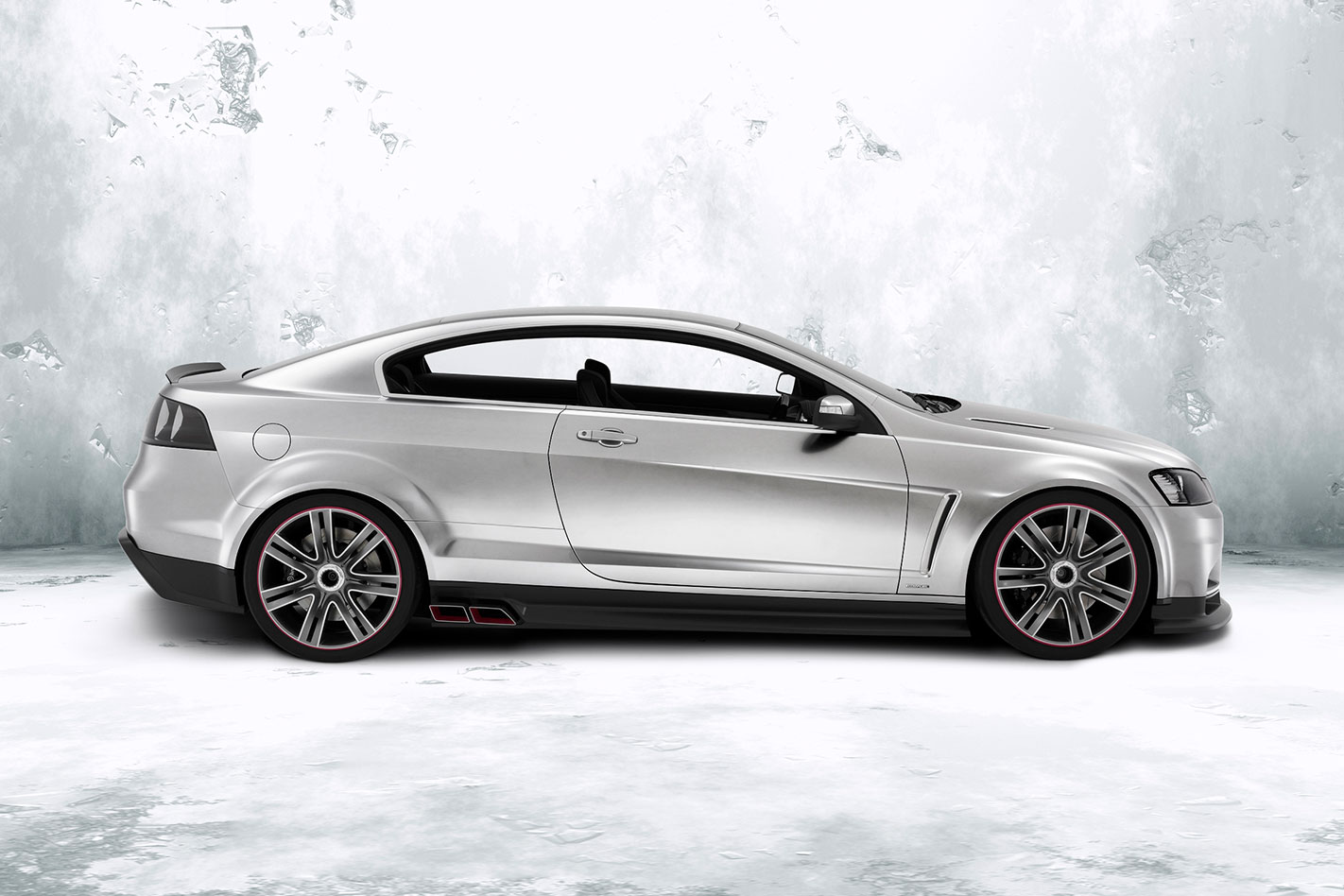
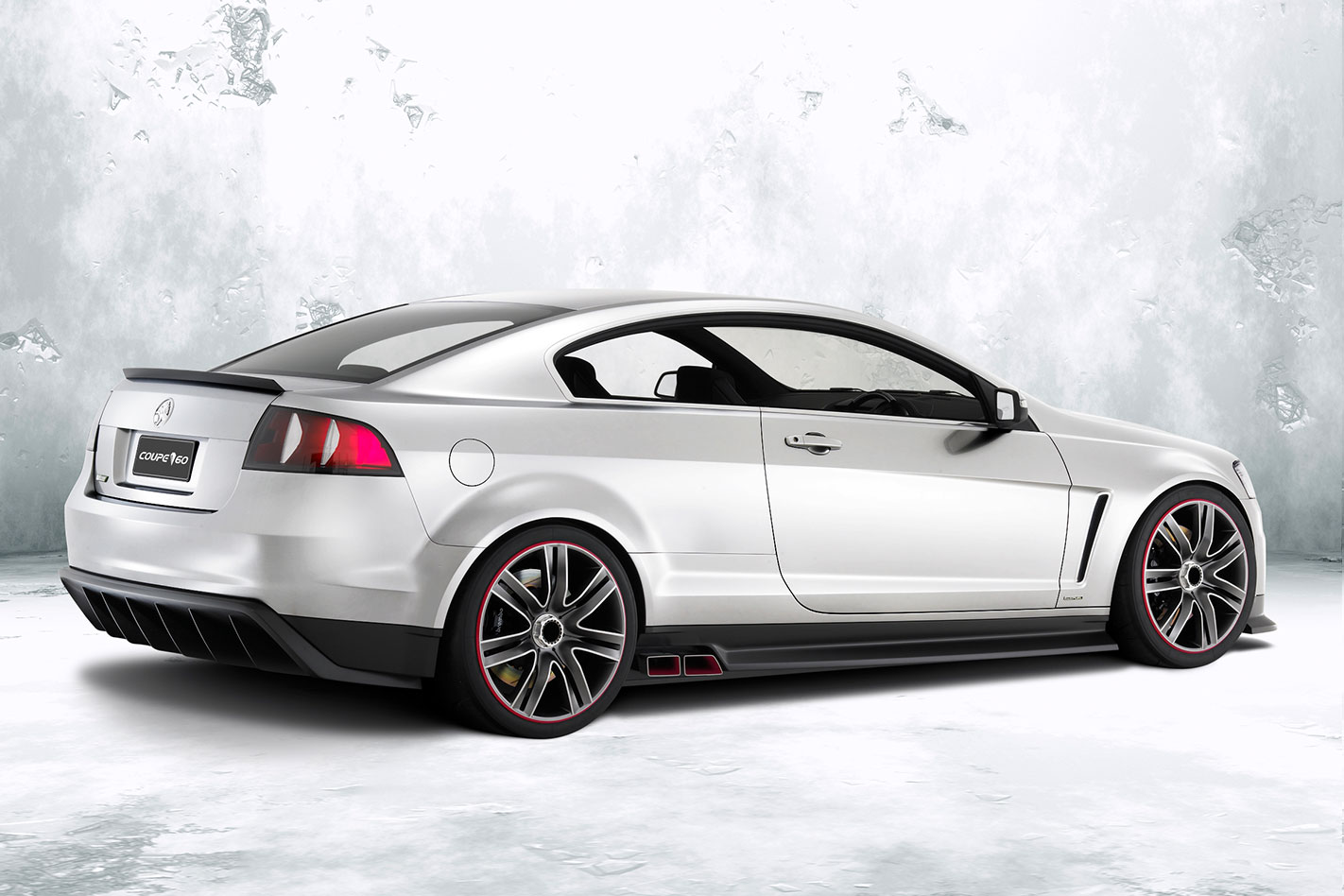
The fibreglass-bodied car took a mere seven months to complete, under a small team led by Project Design Manager Peter Hughes (one of the team leaders on VE). Starting with an SS V development hack as a parts store, the rear rails of a current-production VE chassis were shortened to reduce the car’s total length by 57mm and the exhausts modified, before the donor engine and ’box were fitted up. The majority of the build actually took place in a small workshop in Japan, which helped Holden keep the car secret.
“We’ve dropped the H-point, or the seating reference point, downwards, which [has] allowed us to push the roof down as hard as we can,” says Stolfo. “It’s got very similar proportions to what you’ll see on the Camaro, actually.”
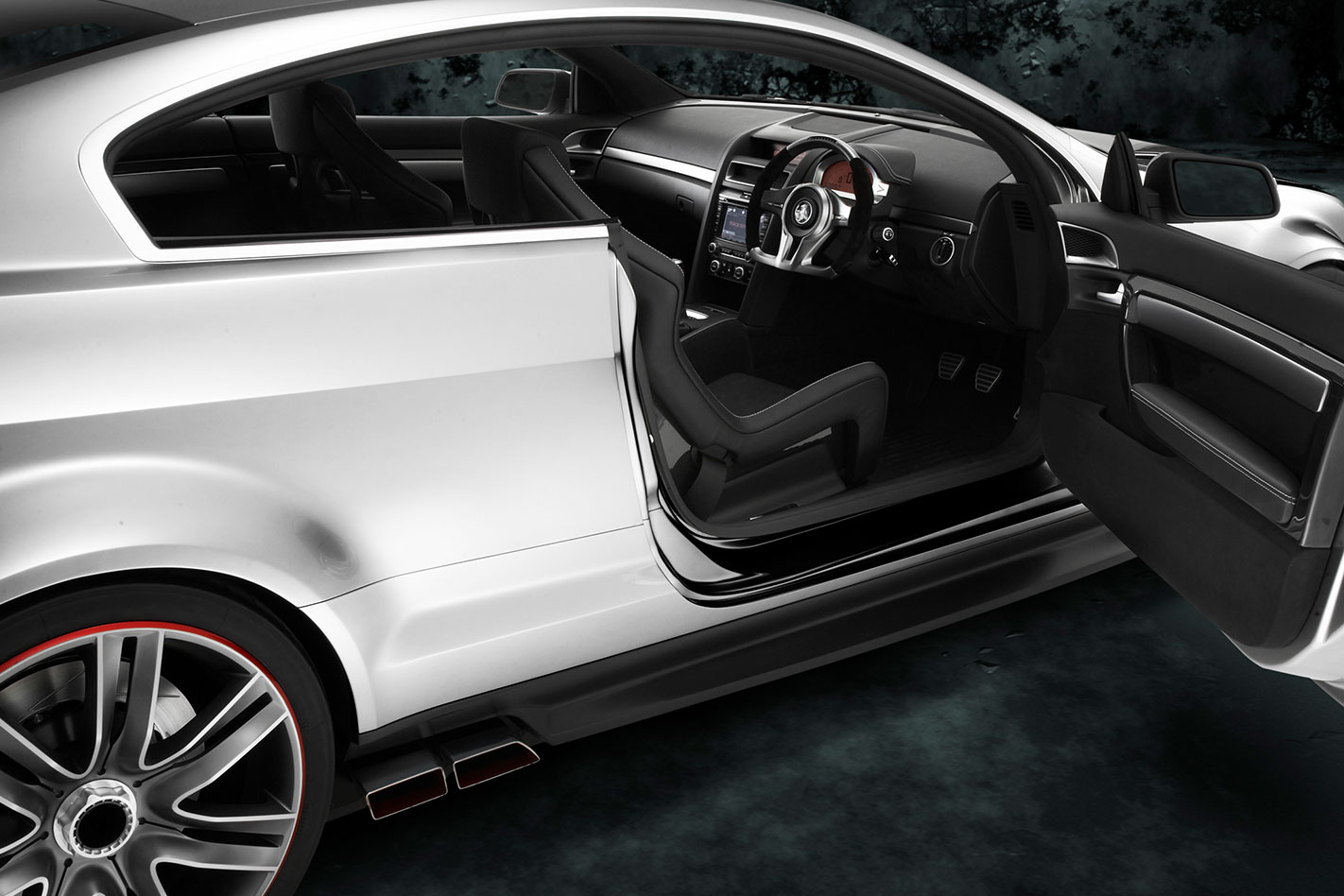
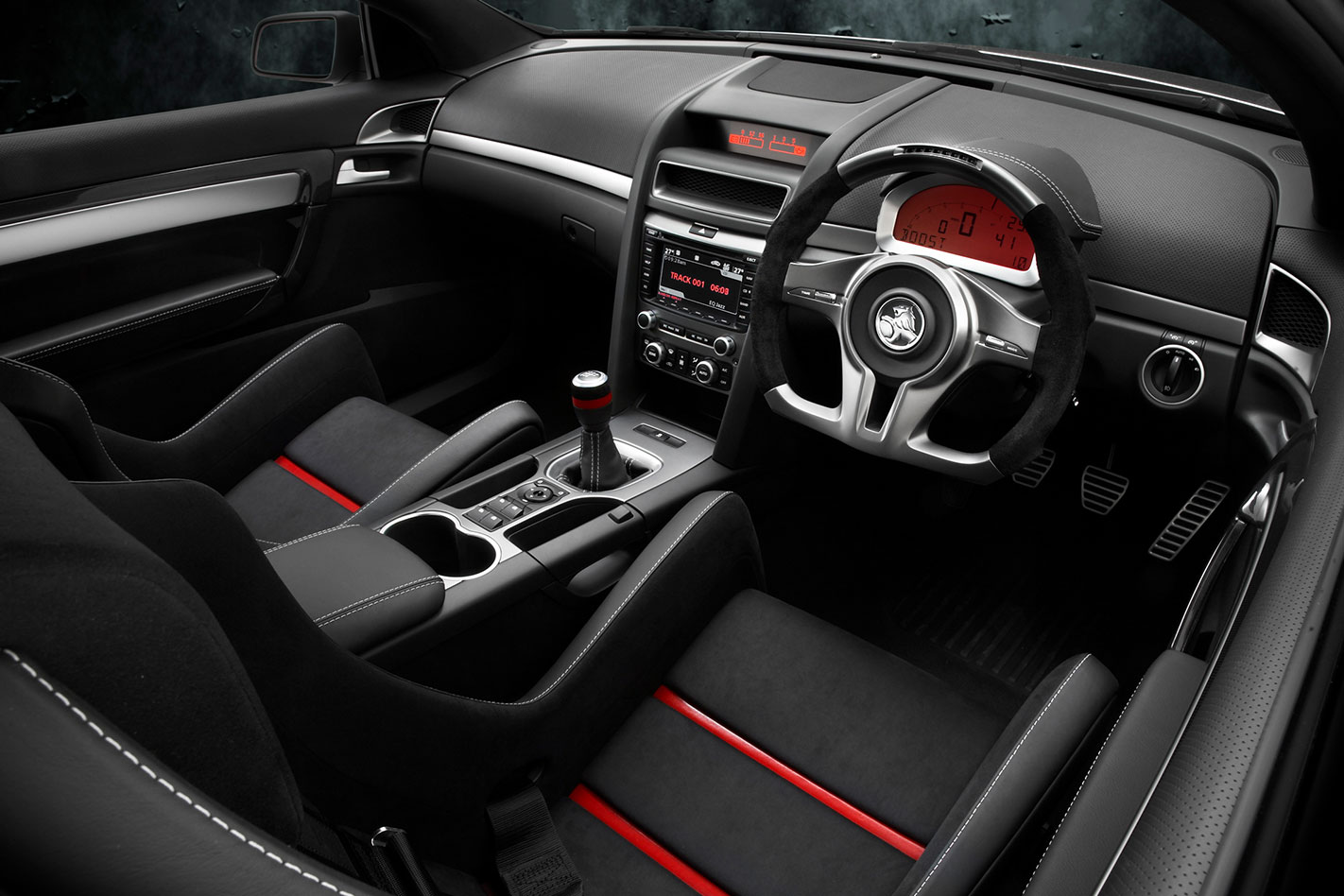
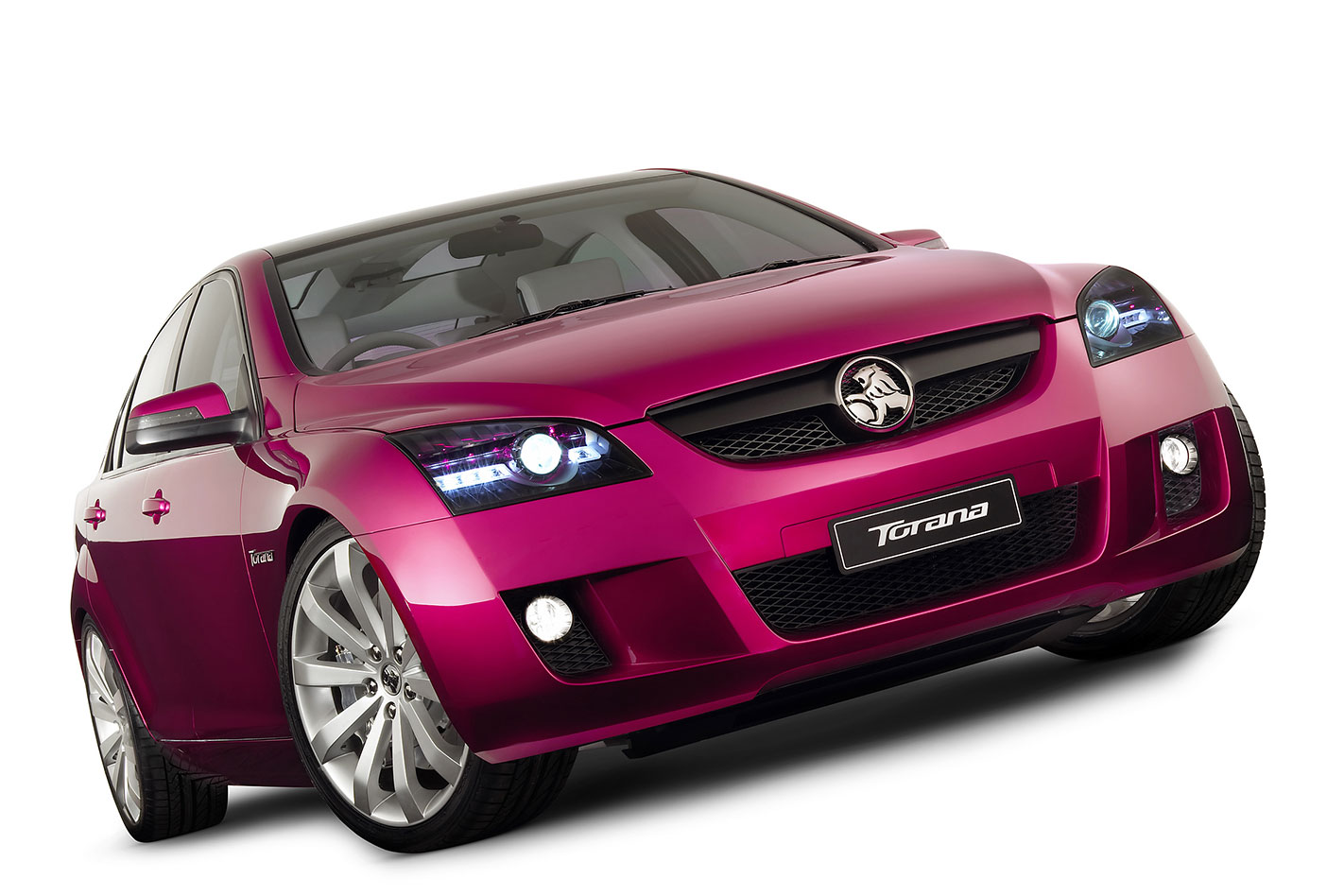
“There’s a lot of carbon fibre, structurally as well as cosmetically, including a full flat underfloor,” chimes in Ewan Kingsbury, a softly-spoken Englishman whose previous concept credits include the recent Torana rendering.
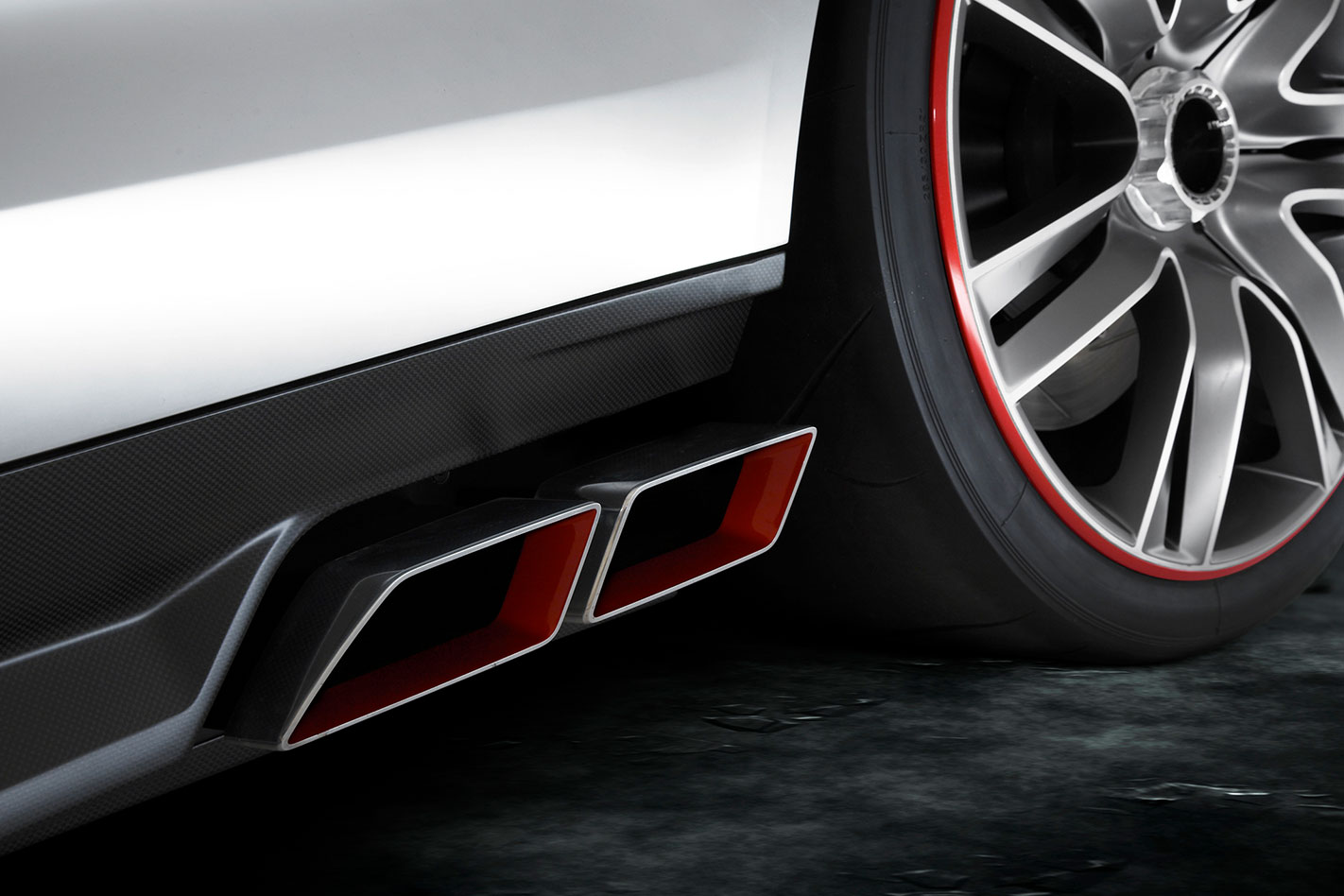
“We tried to keep it cosmopolitan. Holden is sporty but sophisticated, with an edge – knockoff hubs and side exhaust, and brake induction vents are a nod to the Supercars, for example,” says Kingsbury.
He’s no stranger to the skunkworks world of building concepts, but even Kingsbury is surprised how easily this job worked out.
“This has been a bit of an after-hours project, but it’s come together pretty smoothly. Often they’re a nightmare,” he laughs.
Geek Speak: Active Aerodynamics
One of the cool things about this conceptual animal is how much of it actually works. “All the electrics work, the [power] glass all works… the car’s a driver and we’ve had it on the track,” grins Stolfo, who couldn’t help but give the throttle a not-so-gentle nudge on the way down the catwalk. Providing the drive is an LS2 5967cc bent eight fitted with the US-spec Active Fuel Management-capable ECU, which retards spark to four pots on light throttle percentages. It’s tuned to take E85 blended ethanol, too, making a big, fat, loud noise about what’s in store for the next major VE update. Everything else is straight SS V specification stuff, including the six-speed manual gearbox – except, of course, for the massive Brembo brakes (complete with caliper ducting), bobtail bootlid spoiler and quadruple side-exit exhausts.
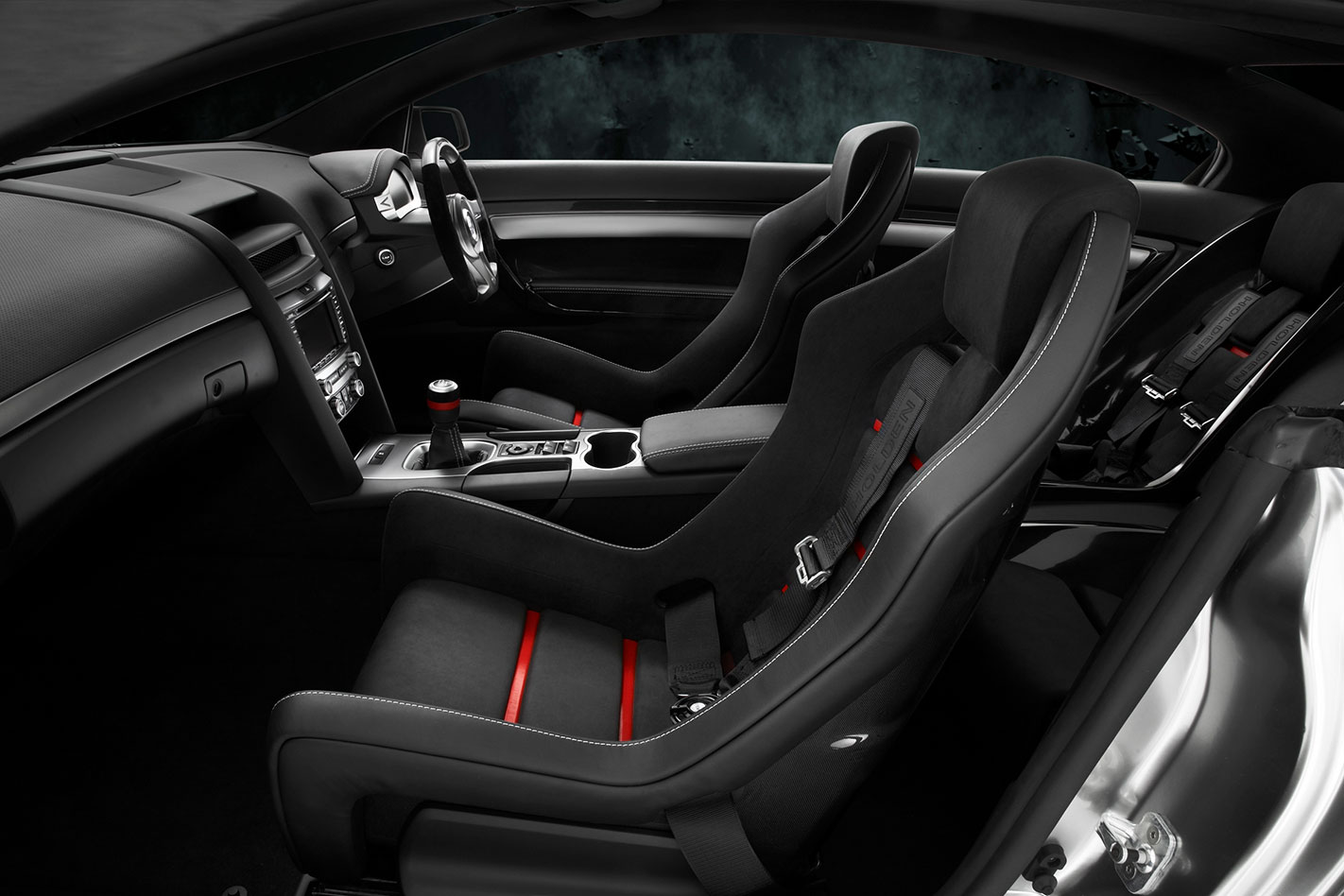
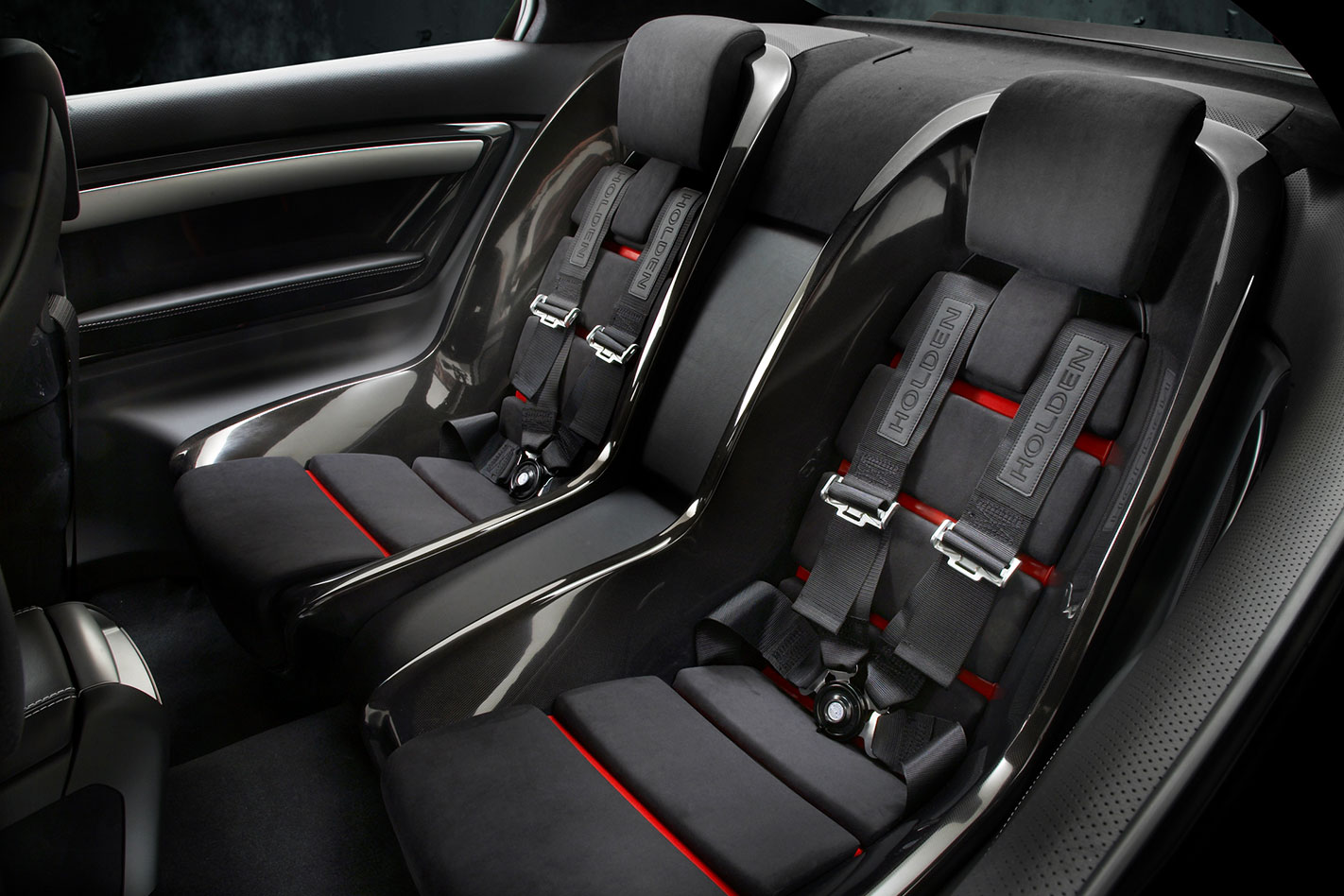
“The car was built by a very small show-car builder in Japan. Data goes over there and they make the moulds and the structures. They’re great guys – I mean, we would love to build it here, but we’ve got so much work on, it meant that this one had to go outside.”
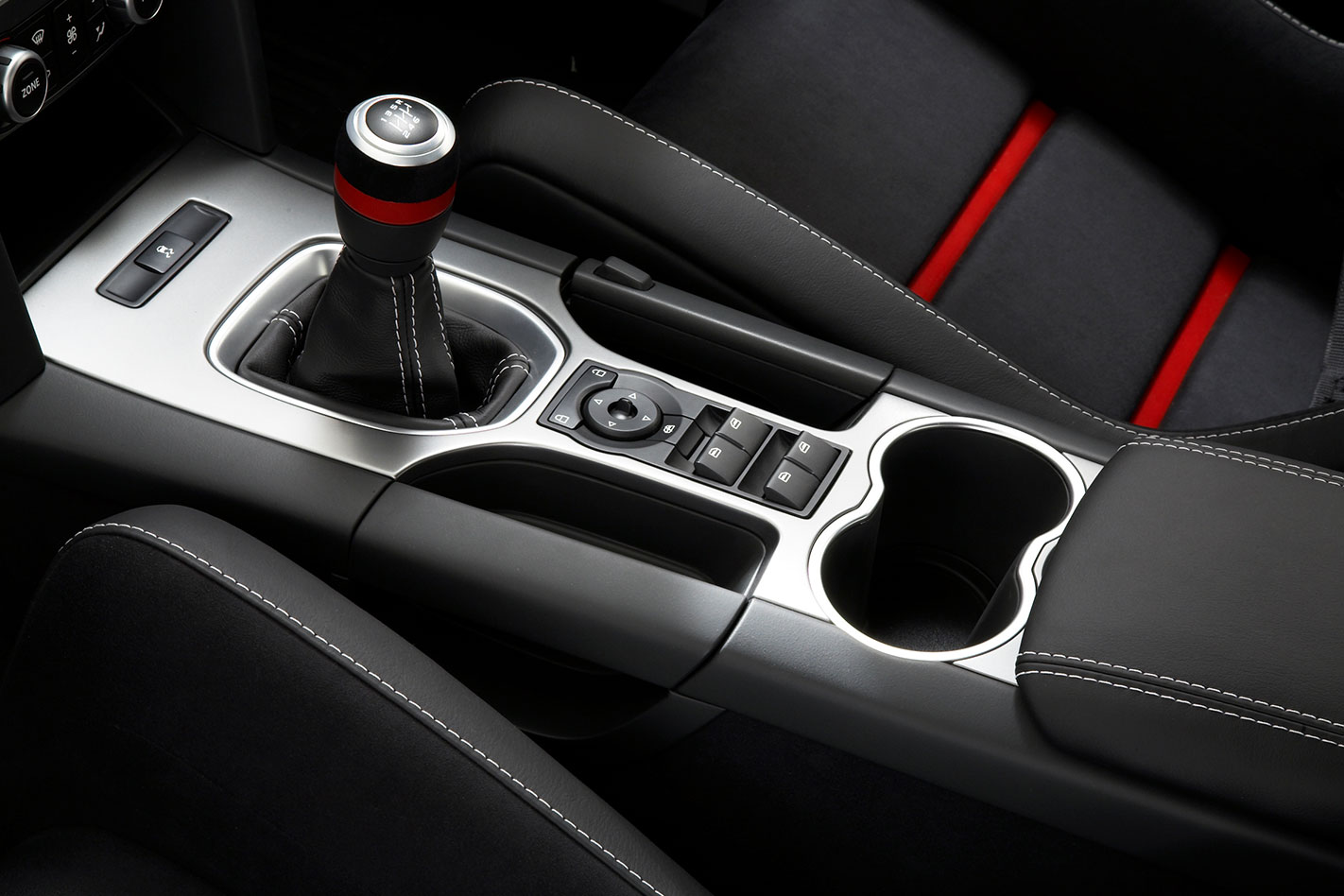
Holden’s relatively recent (and massive) investment in one-piece bodyside dies for the VE will make it think long and hard about the business case for the next Monaro. The large car sector is in serious decline, despite recent wins for Holden to supply sand to Bondi in the form of the Pontiac G8 sedan and ute to the US. Even given the fact that modifying the current VE platform wouldn’t be that hard or expensive (it could, for example, design the rear end to suit export markets straight away, as opposed to the mid-life fuel tank relocation the VT Monaro had to undergo to meet US regs), a third-time-lucky Monaro – in a mass-market sense, at least – has the sheer weight of reality stacked against it.
“There’s no details around [Holden] whether or not we can actually make that or not make it – it’s purely concept,” says a deadpan Stolfo of the Coupe 60. Yeah, right, Tony… you guys didn’t learn one single thing about building a coupe from this after-hours project.
“Having said that,” he recants, “if you look at some of the work [in the car], if we were to go down the path of looking at convertibles and so on, you’ve got to be able to take the loads etc. There’s [engineering] solutions there, we’d just have to explore them.”
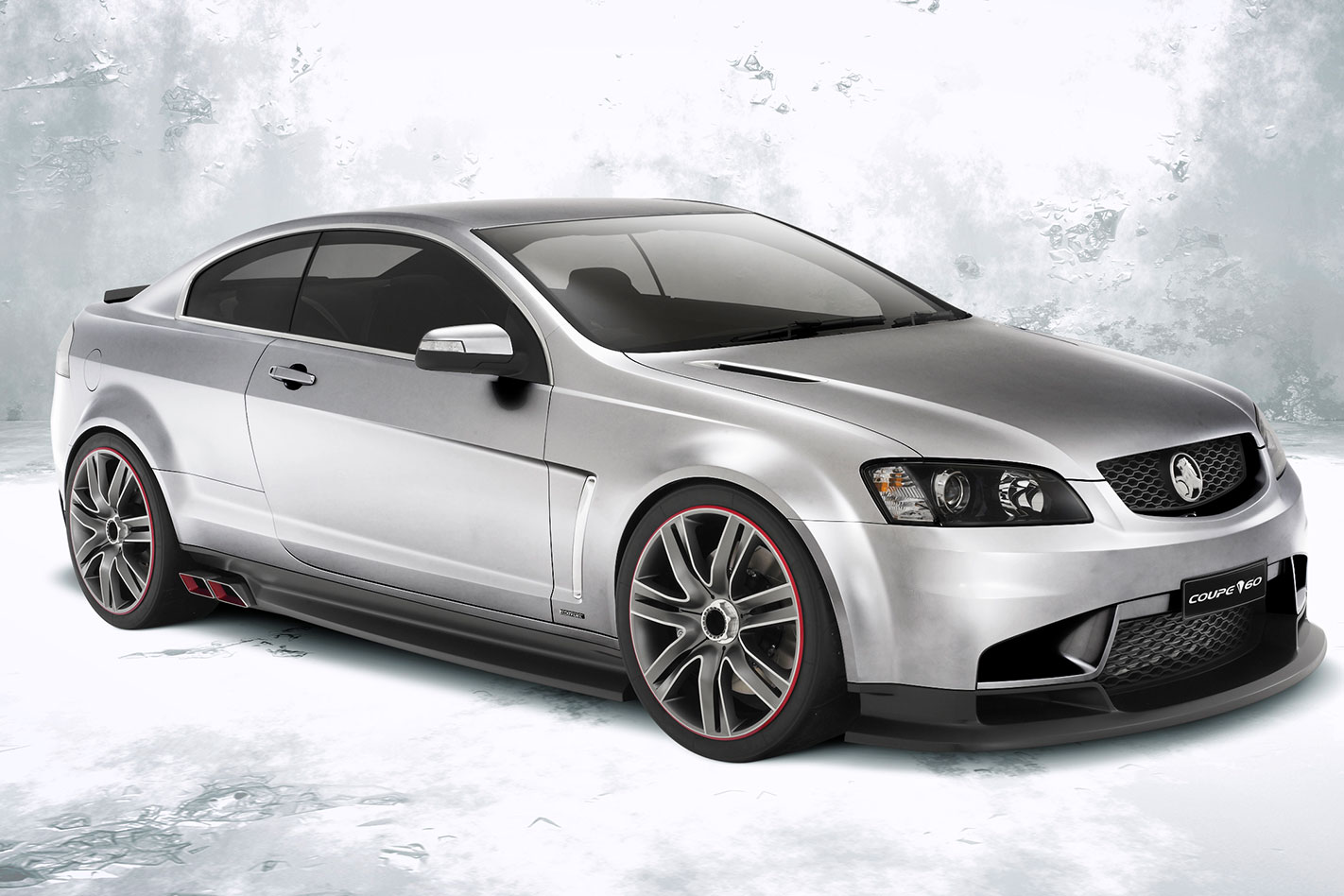
“The RWD, design, and engine capability of Holden is a well-loved treasure in the rest of the corporation,” he told us at the show. “Bob Lutz said it was drop-dead gorgeous. I used to do concept cars for GM in Detroit and this is the finest car I’ve ever seen. It’s stunning.”
“So, what do you reckon?” grins Stolfo.
Screw the business models. Just build the damn thing already.
Holden Coupe 60 Fast Facts: BODY: 2-door, 4-seat coupe DRIVE: rear wheels ENGINE: 90-degree V8, OHV, 16v MATERIAL: alloy head/alloy block BORE/STROKE: 101.6 x 92.0mm CAPACITY: 5967cc COMPRESSION: 10.9:1 POWER: 307kW @ 6000rpm TORQUE: 550Nm @ 4400rpm REDLINE/CUT: none/6600rpm FUEL/TANK: 98 octane/73 litres TRANSMISSION: 6-speed manual SUSPENSION: struts, A-arms, anti-roll bar (f); multi-links, coil springs, anti-roll bar (r) LENGTH/WIDTH/HEIGHT: 4837/1895/1400mm WHEELBASE: 2915mm TRACKS (f/r): 1678/1613mm STEERING: power rack and pinion TURNING CIRCLE: 11.4m LOCK-TO-LOCK: 2.9 turns BRAKES: 380mm ventilated discs, six-piston calipers (f); 350mm ventilated discs, four-piston calipers (r); ABS, ESP, TC WHEELS: 21 x 8.0-inch (f), 21 x 10.0-inch (r), machined alloy TYRES: Kumho custom semi-slicks SIZE: 245/35R21 (f), 285/30R21 (r) PRICE: $2,500,000
Top 3 Holden Show Stoppers
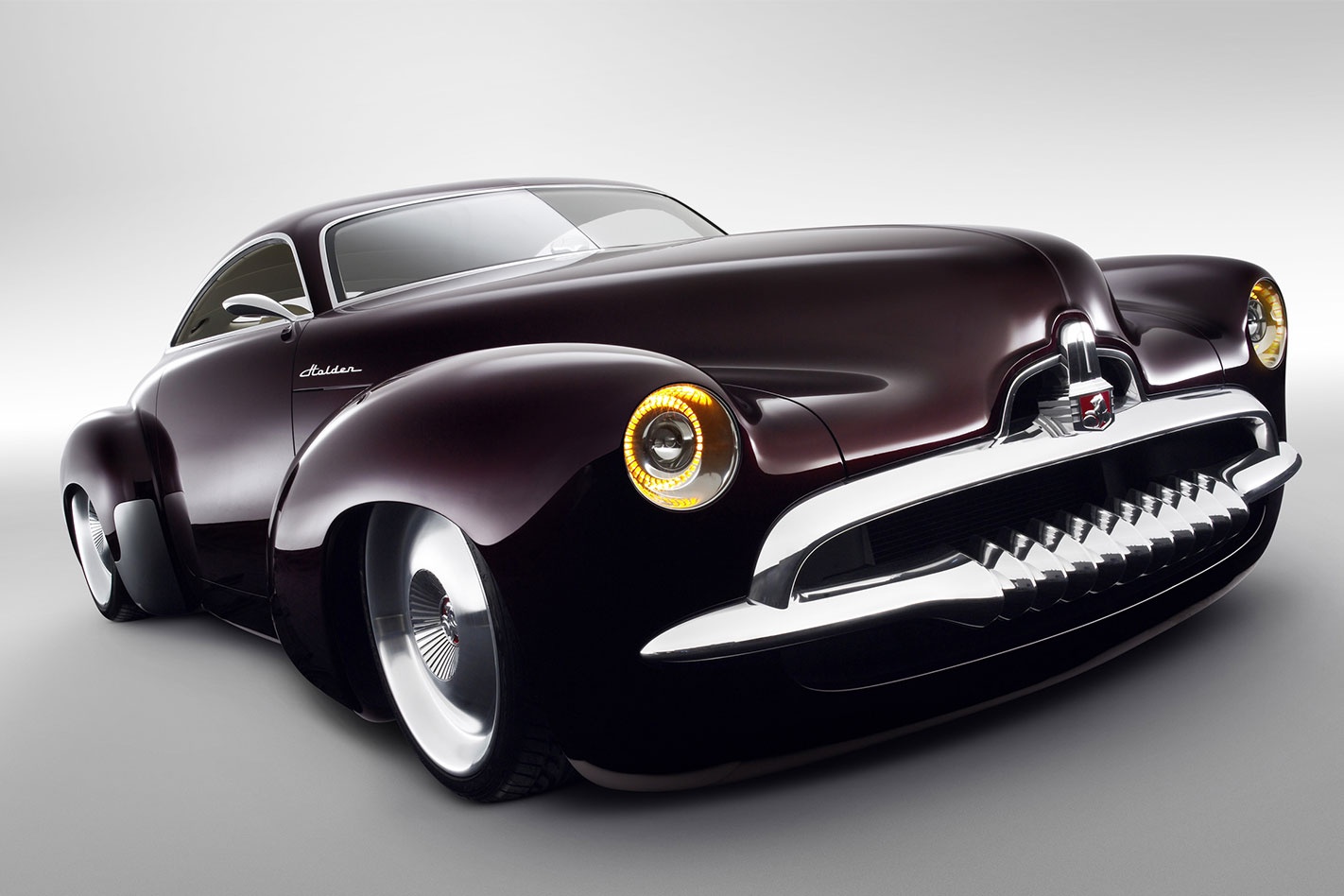
Efijy (2006)
Torana (2004)
HRT 427 (2002)
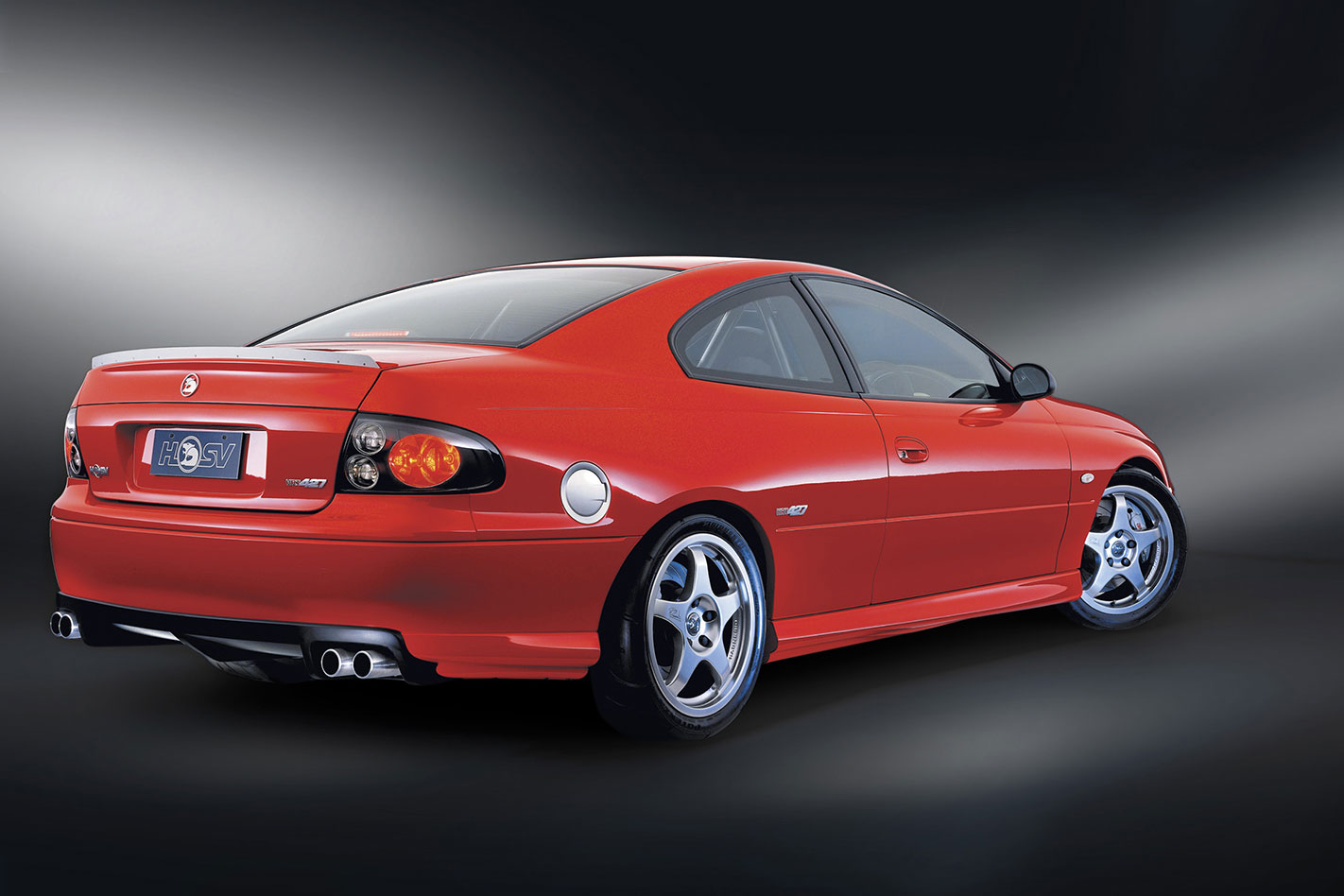
MOTOR‘s review on the HRT 427
Bad-arse 7.0-litre was the precursor to the pigeon pair of Monaro enduro racers. Stripped, caged and race-ready, two were built before the project died in 2003, despite 50 firm orders in the books.
Here’s our second instalment of which reviews resonated the most with Australia’s motoring enthusiasts. Performance products naturally attracted plenty of pageviews, though more prosaic machinery still commanded the attention of our readership too.
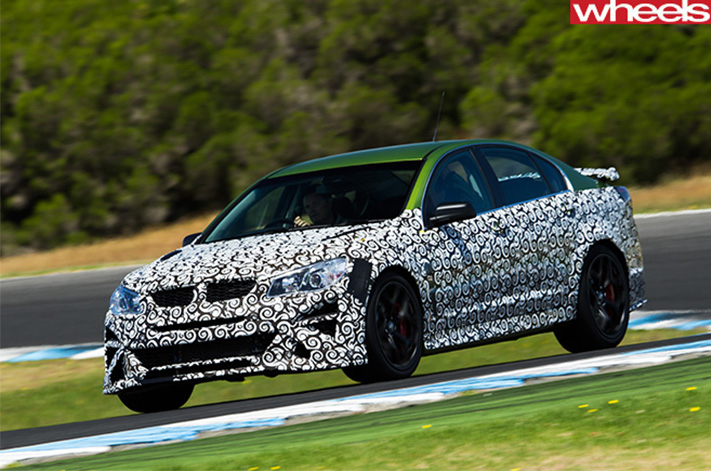
2017 HSV GTSR and GTSR W1 twins
Early this year we had the privilege getting behind the wheel of the HSV GTSR and the ultra-special GTSR W1 – the two most potent Australian-made cars to ever grace our roads and circuits.
Driving camouflaged prototypes can often be a frustrating exercise thanks to the need to keep risk at bay, but to HSVs credit they were happy to let us punt the ultra-valuable W1 around one of Australia’s premier circuits – Phillip Island. As far as first impressions go, this duo made a powerful one – literally.
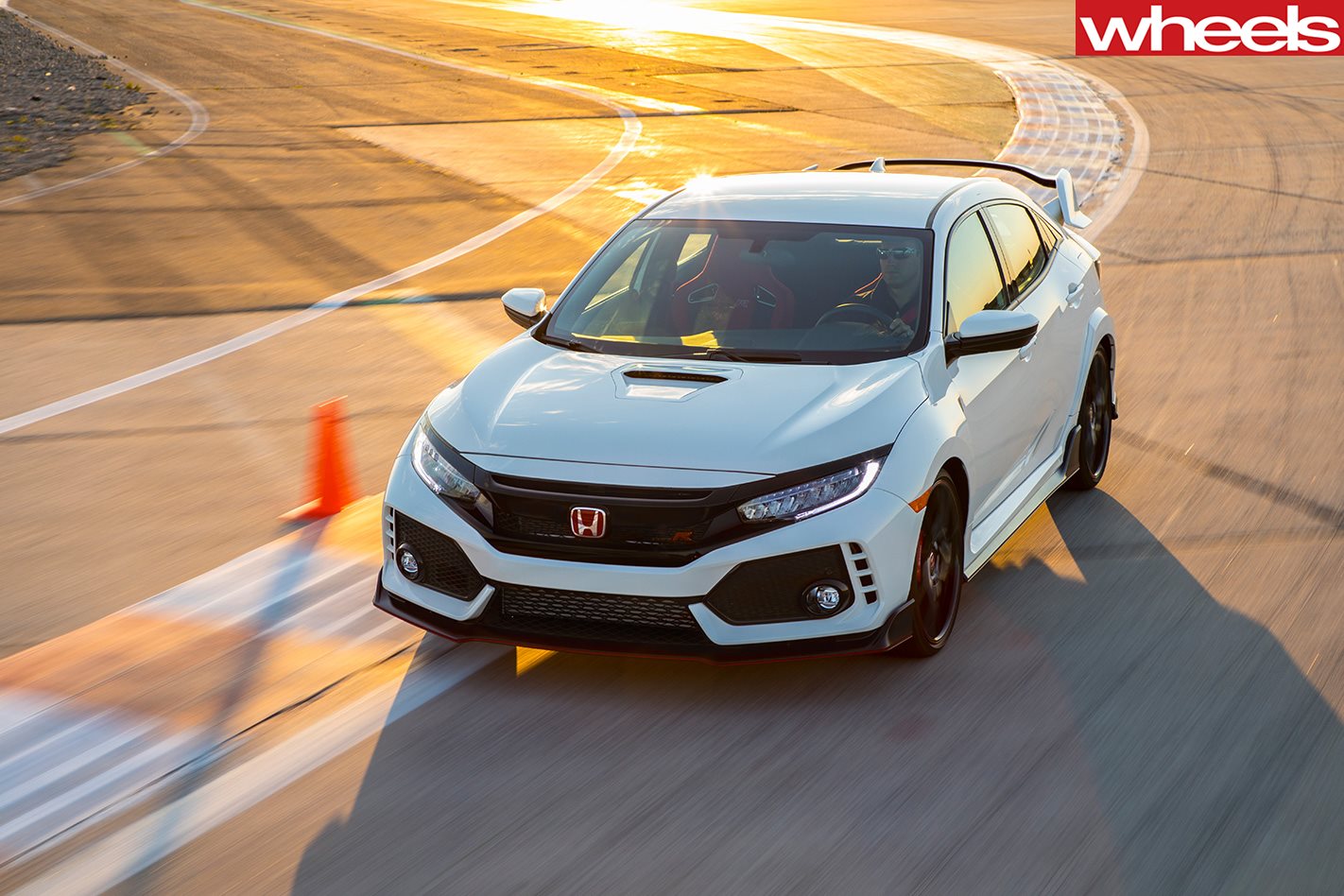
Honda did a lot of chest-beating and hype-building in the lead-up to its latest-gen Civic Type R launch, promising it’d be the fastest front-drive road car around the famed Nurburgring Nordschliefe.
And they delivered, with the Type R clocking the world’s most challenging circuit in seven minutes, forty-three seconds. More importantly, it blew us away with its savage – yet approachable – performance when it underwent its local launch in Australia. It may look like an anime robot, but the Type R’s sheer capability is difficult to dismiss. Evidently, a great many of our readers were keen to find out more about Honda’s hero.
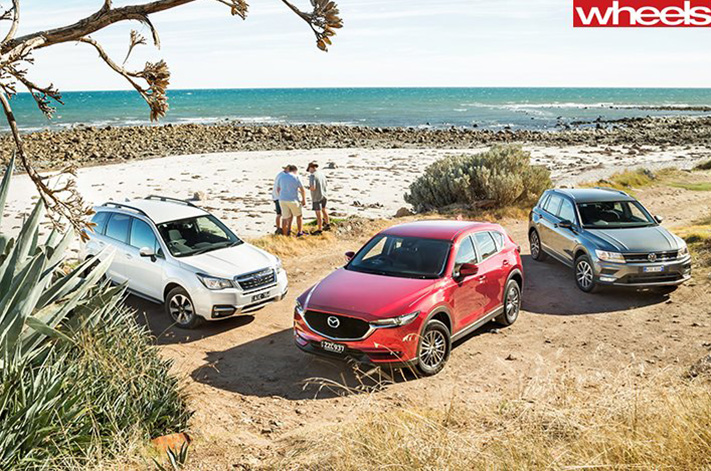
Forget large Aussie cars: this trio are representative of what the bulk of Australian families are buying these days, and our comparison naturally drew a significant amount of traffic as a result. Mazda’s CX-5 is the newest kid on the block, but the ultra-classy Tiguan presents a compelling alternative for those who can stump up a little extra outlay.
Meanwhile the Subaru Forester keeps things real with its honest offering, capable AWD driveline and satisfying value for money. But is the four year-old Foz too grey-haired to mix it with its younger competitors? Have a read.
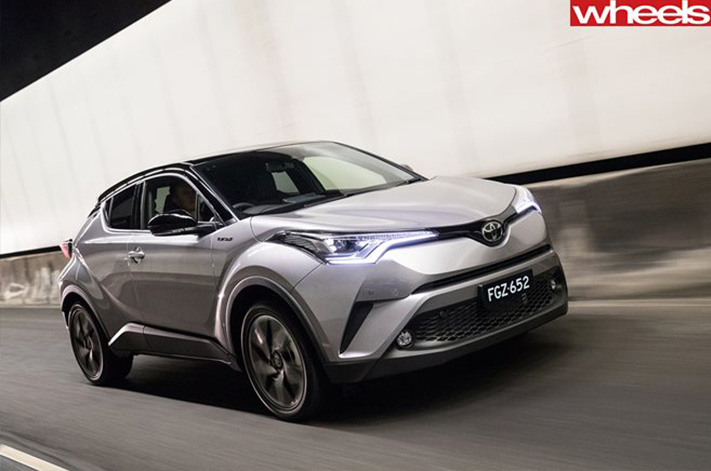
Is Toyota, so long maligned as a purveyor of mediocre motoring appliances, on the cusp of reinventing itself? The arrival of the fun and funky C-HR certainly suggests so, given it stands well apart from the dull Corolla, Yaris, Prado and Kluger with its edgy, provocative styling.
But dig beneath the skin and you’ll witness Toyota’s mechanical rejuvenation as well. As one of the first models to use Toyota’s brand-new modular TNGA platform and powered by a 1.2-litre turbocharged and direct-injected four-pot, the C-HR is more than just sharp suit over recycled underpinnings.
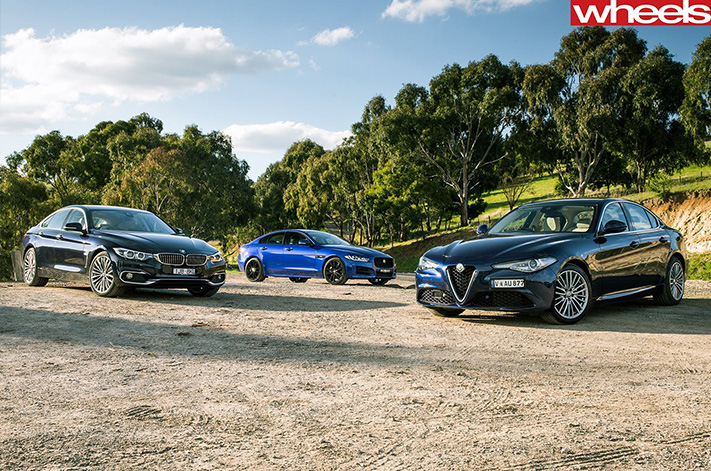
It’s a business-class battle royale, except with the usual suspects of 3-Series, C-Class and A4 entirely absent. Instead, we took three not-so-obvious choices and pitched them against each other to see if those shopping for a bit of luxe have something to gain by ignoring the status quo.
Alfa’s Giulia has been a pleasant surprise, wowing us with its outstanding dynamics and mechanical talent, while the Jag XE proves itself to be more than capable of challenging the Germans. As for the BMW, it’s a case of examining whether the sleeker, more elegant 4 Series Gran Coupe has more charisma than the competent-yet-somewhat-boring 3 Series sedan.
Last year was big for luxury SUV releases, with premium brands introducing a host of all-new models resulting in dealership forecourts brimming with high-riding metal and leather – and there are more new models still to come.
Brand-new or next-generation models that arrived during the past 12 months include the Audi Q2 and Q5, BMW X3, Jaguar E-Pace, Jeep Grand Cherokee Trackhawk, Land Rover Discovery, Maserati Levante, Range Rover Velar and Volvo XC60.
It’ll be more of the same in 2018, with a diverse range of highly anticipated SUVs arriving from Europe and Japan bringing new levels of luxury and performance. These include:
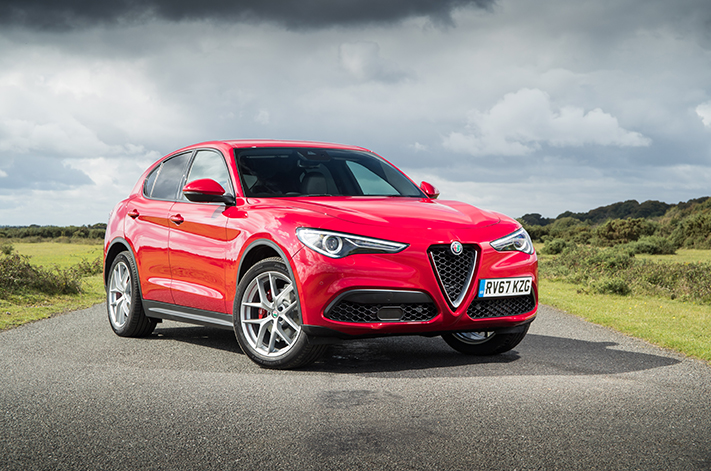
Alfa Romeo Stelvio
Alfa Romeo’s first-ever SUV will arrive sometime in the next couple of months, with petrol and diesel engine options at launch ahead of a high-powered Stelvio Quadrifoglio flagship. The 149kW petrol and 156kW diesel will be paired with an eight-speed automatic and all-wheel drive as standard, with the rear-wheel drive and manual options available in Europe deemed unsuitable for our market.
Pricing is expected to start around $77,000 with standard equipment including autonomous emergency braking, forward collision warning, blind spot monitoring and lane departure warning. Two option packages – luxury-focused ‘Lusso’ or sports-flavoured ‘Veloce’, will allow owners to up-spec their Stelvios.
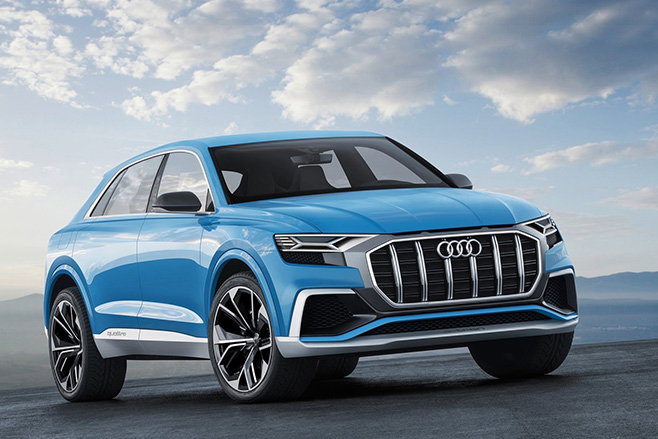
Audi Q8
Audi already has somewhat of a yardstick for big luxury SUVs in the form of the Q7, and its sporty sibling the SQ7 trashes any talk about SUVs being unable to deliver driver enjoyment, with a 320kW/900Nm twin-turbo V8 diesel engine. So we look forward to seeing what its sleeker big brother, the Q8, will have to offer.
We’ve already been given a glimpse of the Q8 via a concept revealed at the 2017 Detroit motor show in January, which featured a “luxury lounge” cabin for seating four people, as well as Virtual Cockpit technology and a plug-in hybrid system producing 330kW/700Nm. The production version is due later in 2018 and will be aimed squarely at the Mercedes-Benz GLE Coupe and BMW X6. As well as the hybrid version, expect a high-performance SQ8 variant powered by a 325kW 4.0-litre V8.
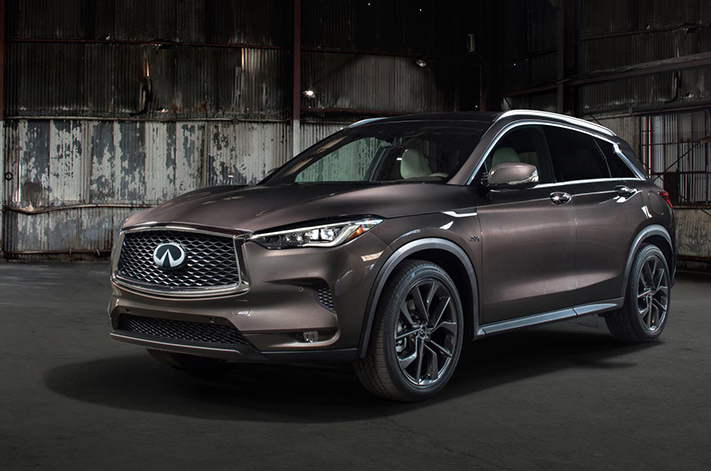
Infiniti QX50
Nissan’s luxury sub-brand has totally redesigned the QX50 mid-size SUV, plonking it on an all-new platform and adding a revolutionary variable compression ratio engine, that combines the power of a 2.0-litre turbocharged petrol engine with the torque and efficiency of a four-cylinder diesel, by adjusting its compression ratio to optimise power and efficiency.
The Infiniti QX50 also offers a range of technologies including its ProPILOT advanced driver assistance technology, including adaptive cruise control, automatic emergency braking and a lane-keeping assist system that works on single-lane highways.
The production QX50 shares much of the design cues seen on the QX50 concept at the 2017 Detroit motor show in January including the swept back roofline.
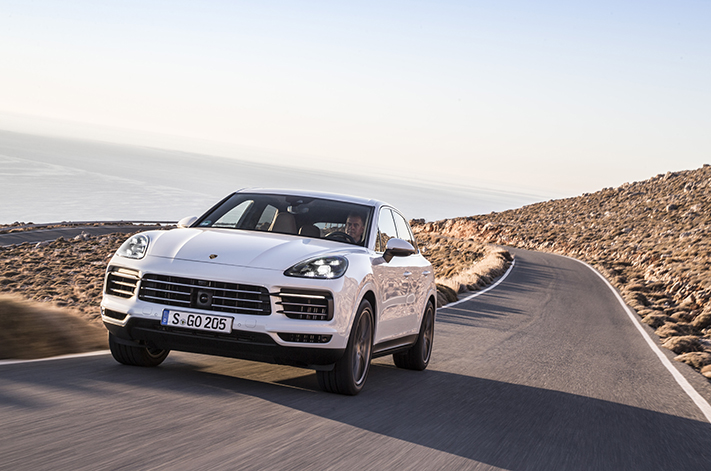
Porsche Cayenne
The third-generation Porsche Cayenne has been heavily influenced by the smaller Porsche Macan and promises sharper dynamics than before to make it feel more like a high-riding 911 with plenty of room for the whole family.
The refreshed Cayenne range features two newly developed six-cylinder engines, with the hero-model Cayenne S capable of sprinting from 0-100km/h in just 4.9 seconds with an optional Sport Chrono Package fitted. Each version of the Cayenne will feature active all-wheel drive, electric chassis control and three-chamber air suspension, which all lead to excellent on-road performance as well as decent off-road capability for the brave.
Inside, the Cayenne will gain the multimedia system developed for the Porsche Panamera, including a 12.3-inch touchscreen and a thermal imaging camera that will spot animals – and wayward pedestrians – in the dark.
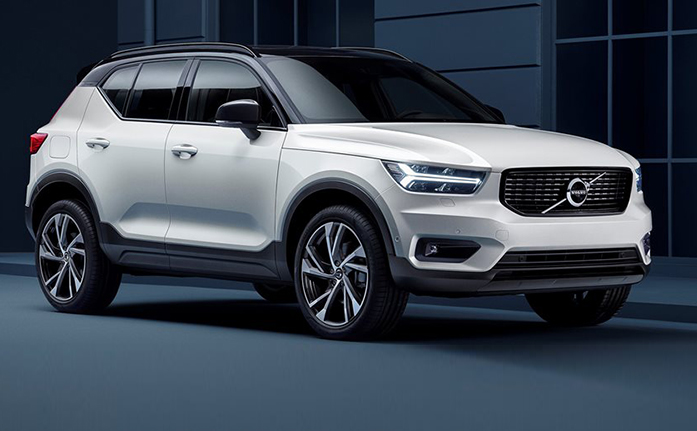
Volvo XC40
Volvo’s smallest-ever SUV is expected here in the first half of 2018 with pricing to start around the $45,000 mark, making it very competitive against other Euro crossovers including the Mercedes-Benz GLA, Audi Q2 and Jaguar E-Pace.
It will be available initially with a D4 turbo-diesel four-cylinder or a T5 turbo-petrol inline-four, with three-cylinder turbo petrol, plug-in hybrid and pure electric powertrains added after 2019.
Technology highlights include Volvo’s latest vertically-oriented infotainment display and all-electronic instrument panel and Volvo’s Pilot Assist driver assist tech.
The interior is also designed to not only boost comfort, but provide more intelligent storage as well, with huge door bins capable of taking a handbag or full-size laptop, under-seat drawers, a dedicated phone shelf with an inductive charging pad and a built-in waste bin hidden in the centre console.
IT GENERALLY takes quite a lot to surprise the Wheels road test team.
They’re a grizzled bunch who tend to know what’s coming down the pipe with new cars, but every once in a while there are cars that either exceed their expectations or fail by a fair margin to meet them. Here’s a selection of this year’s unexpected treats and tribulations.
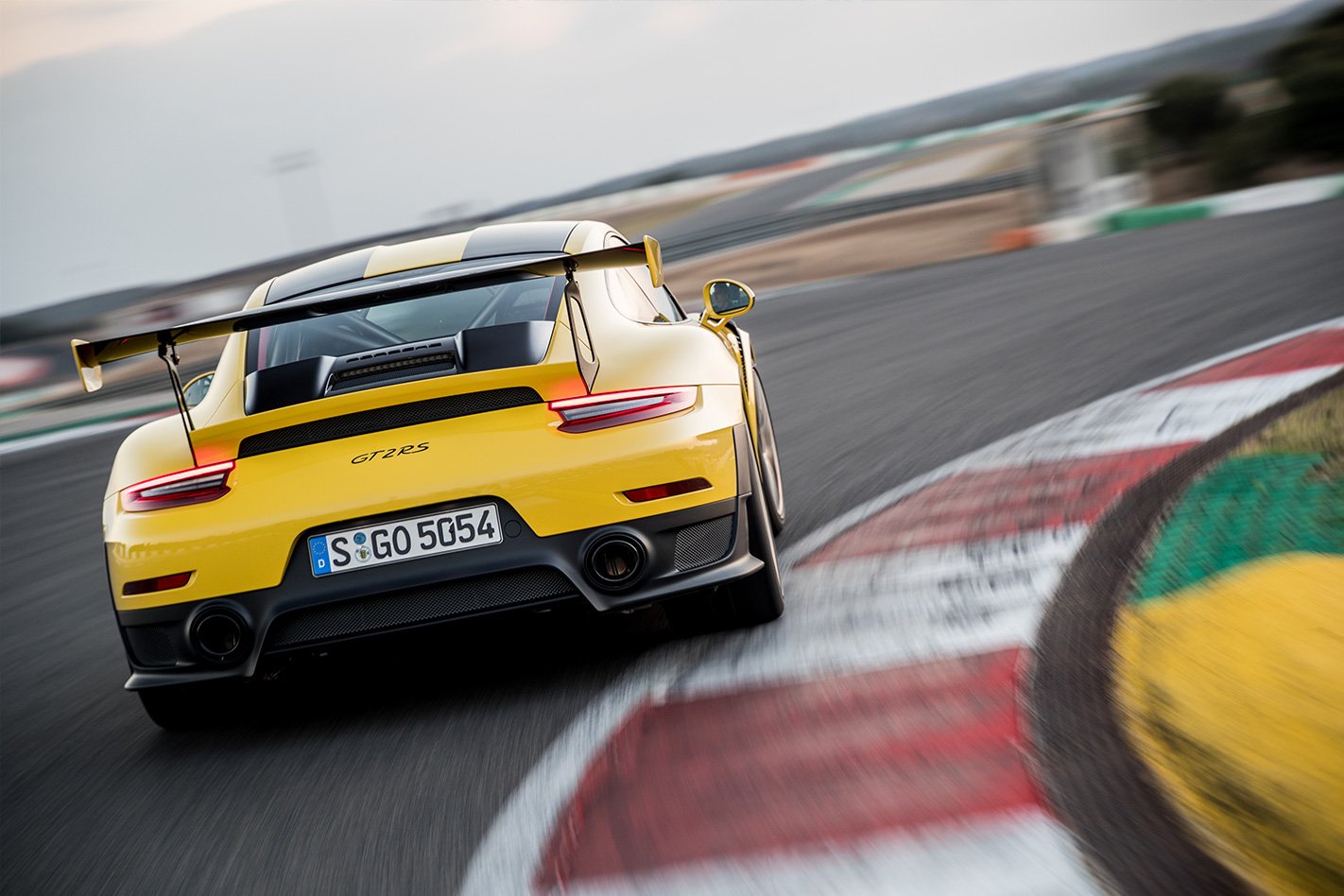
1. JUST HOW QUICK THE 911 GT2 RS WAS
Okay, so it’s fairly reasonable to expect the Porsche 911 GT2 RS to be rapid. What blew away editor Inwood was the accessibility of that performance, even on a track as gnarly as Portimao. The GT2 RS has, in previous generations, more than earned its Widowmaker nickname, but the genius of the latest car is how Porsche has kept the excitement but reduced the malevolence of its handling.
As a measure of how quick the car was on circuit, Alex registered 290km/h into the braking zone at the end of the pit straight, where a Mercedes-AMG GT-R had registered a 264km/h top whack with the same driver on board a few months earlier. In a division where we separate the cream by fractions of a percent, that’s nigh-on ten percent quicker. The Porsche is nearly twice the price of Affalterbach’s finest though. That was a bit of a shocker too.
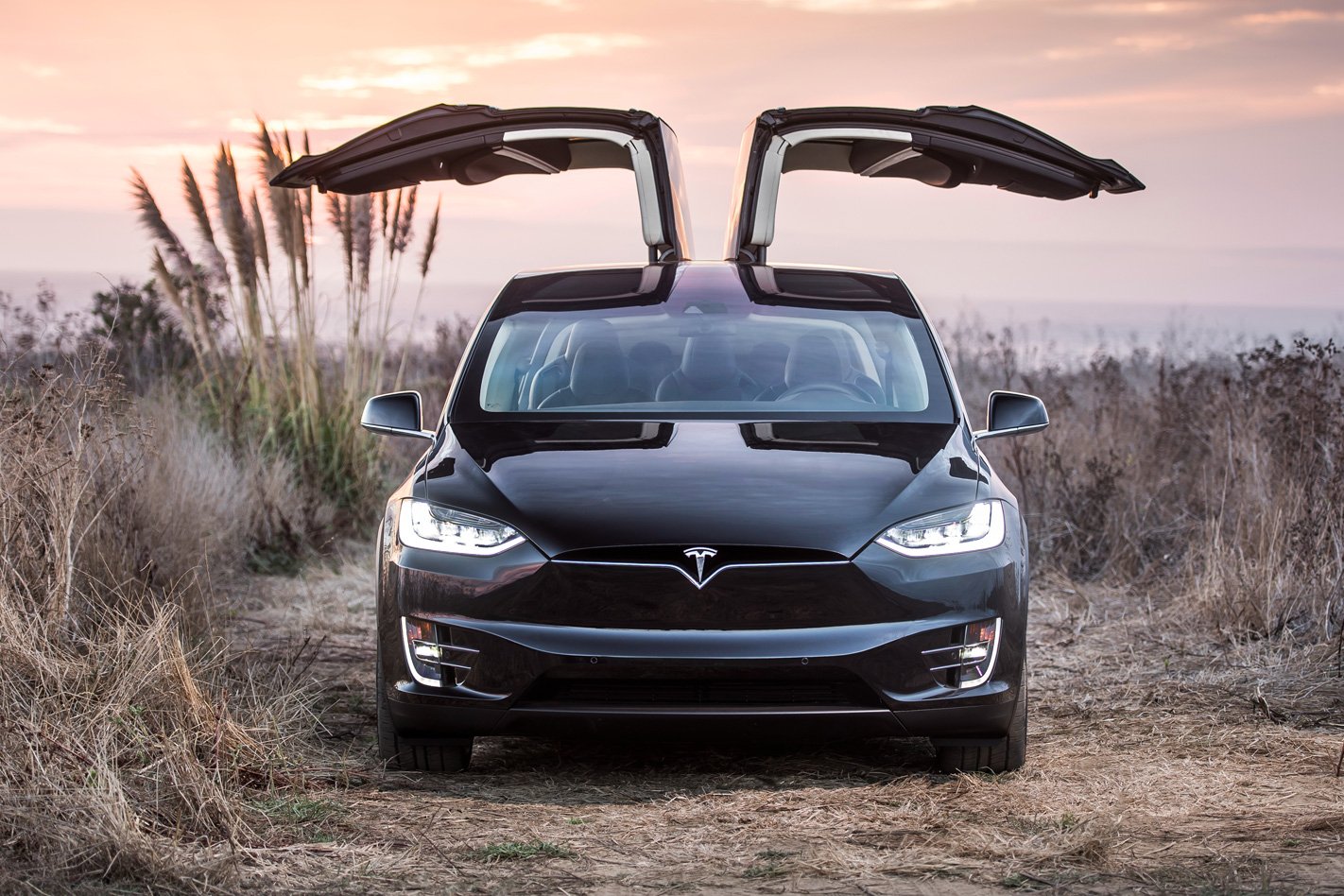
Say what you want about the Tesla Model X, and there’s a lot to divide opinion here, there aren’t too many complaints about the way that it steps off the mark, especially if you’re packing P100D power. What was genuinely refreshing was that it doesn’t all fall apart at the very first corner. This massive chunk is actually really good fun to hustle.
Yes, we know about all the torque and the centre of gravity and everything, but it’s still somewhat otherworldly to emerge from a fast corner in a perfect four-wheel drift as you light up each and every Goodyear Eagle F1. Yes, it’s irrelevant, but we’d be lying if we didn’t point out that everyone got out of this car with big, dopey grins on their faces.
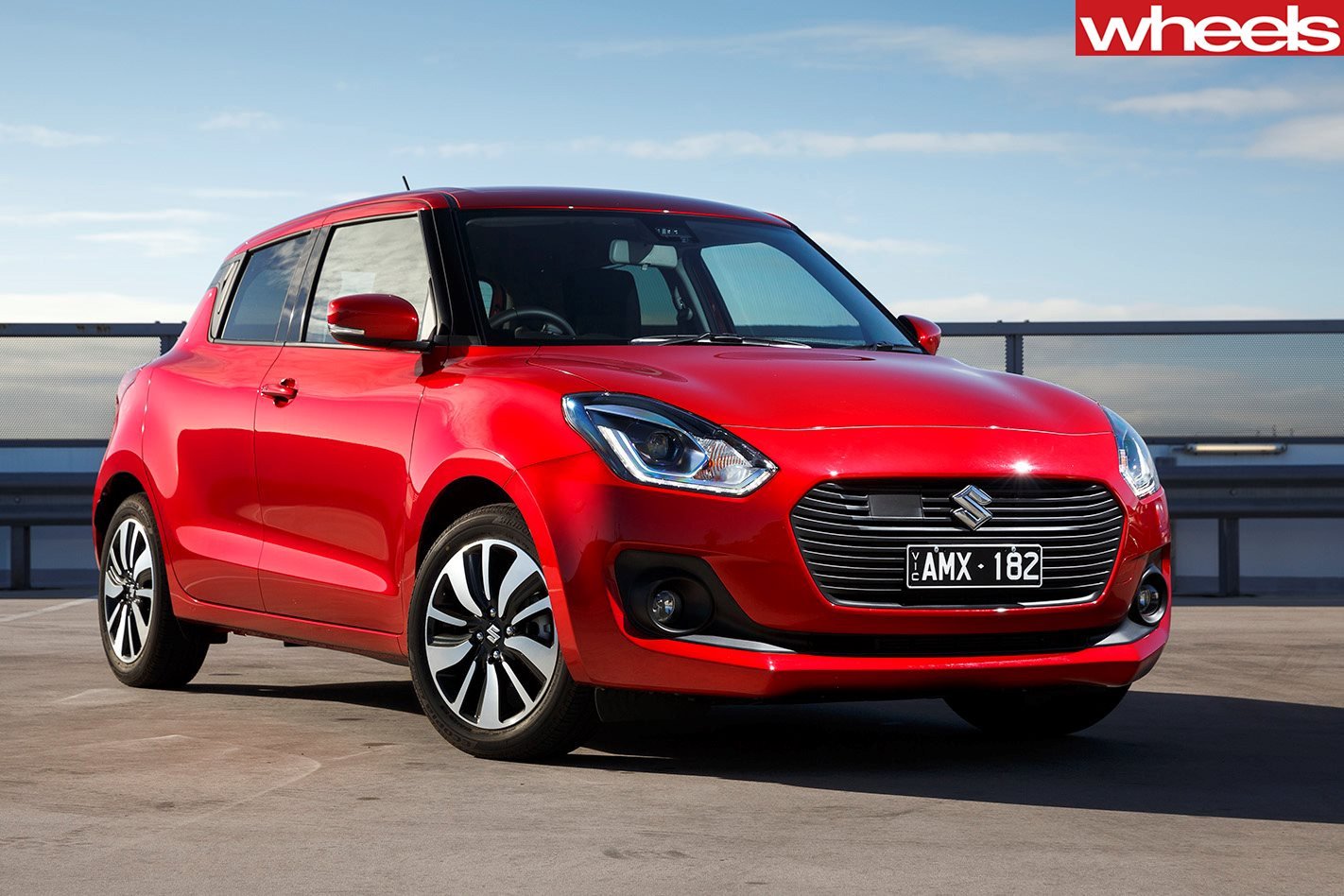
This might not come as any great surprise to the hardcore amongst you, but even if you have yet to nail the perfect heel and toe downshift or you’re not quite sure how to pitch a car into oversteer with just a pop of the clutch pedal, it doesn’t matter. A manual box can still spell big fun. Nothing demonstrated that quite so clearly as Suzuki’s latest Swift.
With a mere 66kW to conjure with, the entry level Swift GL manual is an absolute hoot. Even though only around five percent of Swift customers will choose the entry-level car, it earns a solid recommendation for us. It’s a throwback in some ways to a simpler time, but we adore the fact that $16K nets you a driver’s car of surprising ability. It’s just a set of better tyres away from greatness.
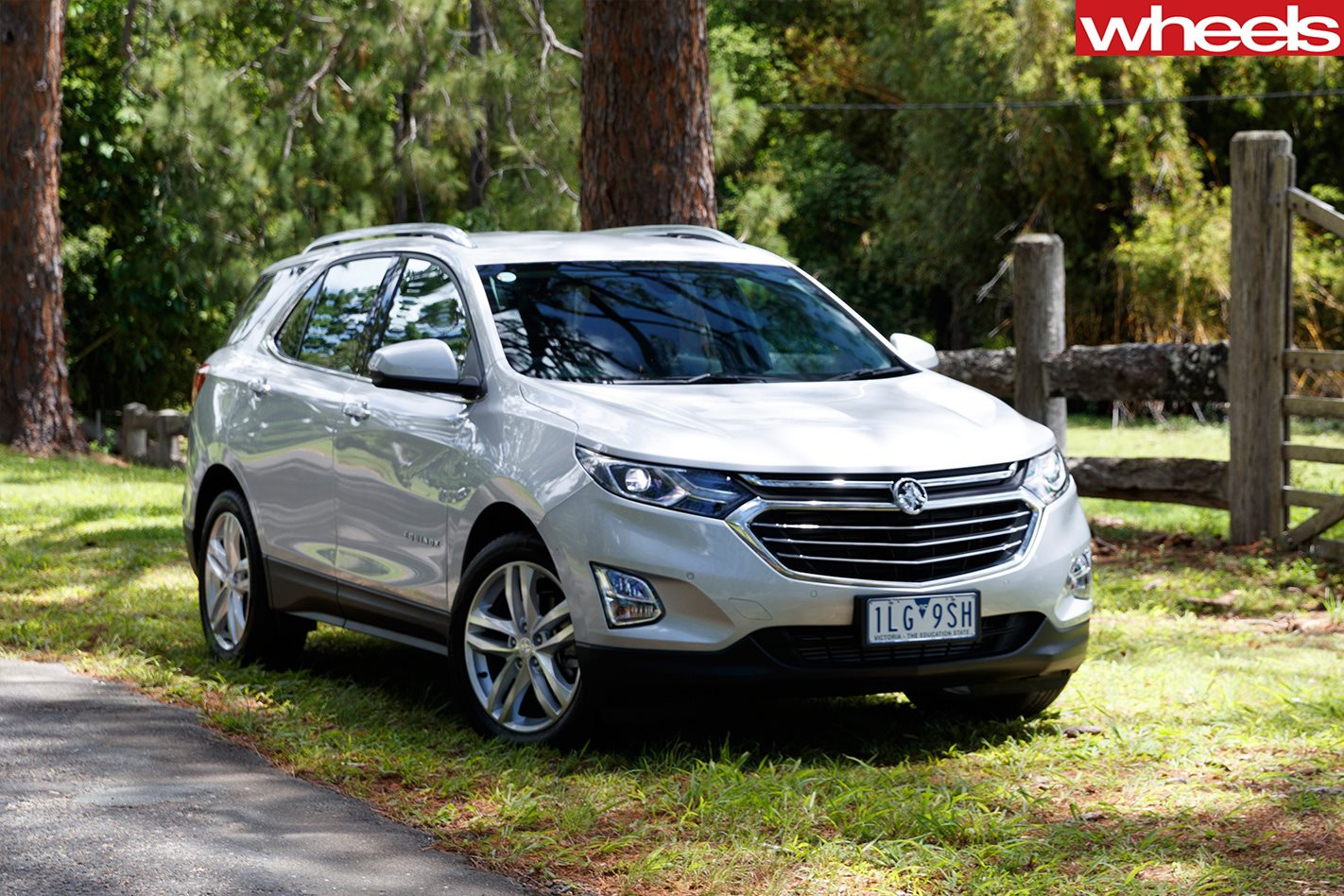
Cards on table time. We thought the Holden Equinox would be a duffer. We think you did too. I mean, just look at it. It’s an uninspiring-looking thing inside and out, but the guys and gals at Lang-Lang have excelled themselves with the dynamic set up of this car. Does that matter to the target buyer set? Probably not. Nevertheless, as an exercise in making the best of a dealt hand, the Equinox has a lot going for it.
It’s big, it’s well equipped, it’s packed with smart tech (including active aero), and the 2.0-litre car is so much quicker than any of its direct rivals. Embarrassingly so. If you can look beyond the plain Jane styling, the Equinox is right up there as one of this year’s more pleasant surprises.
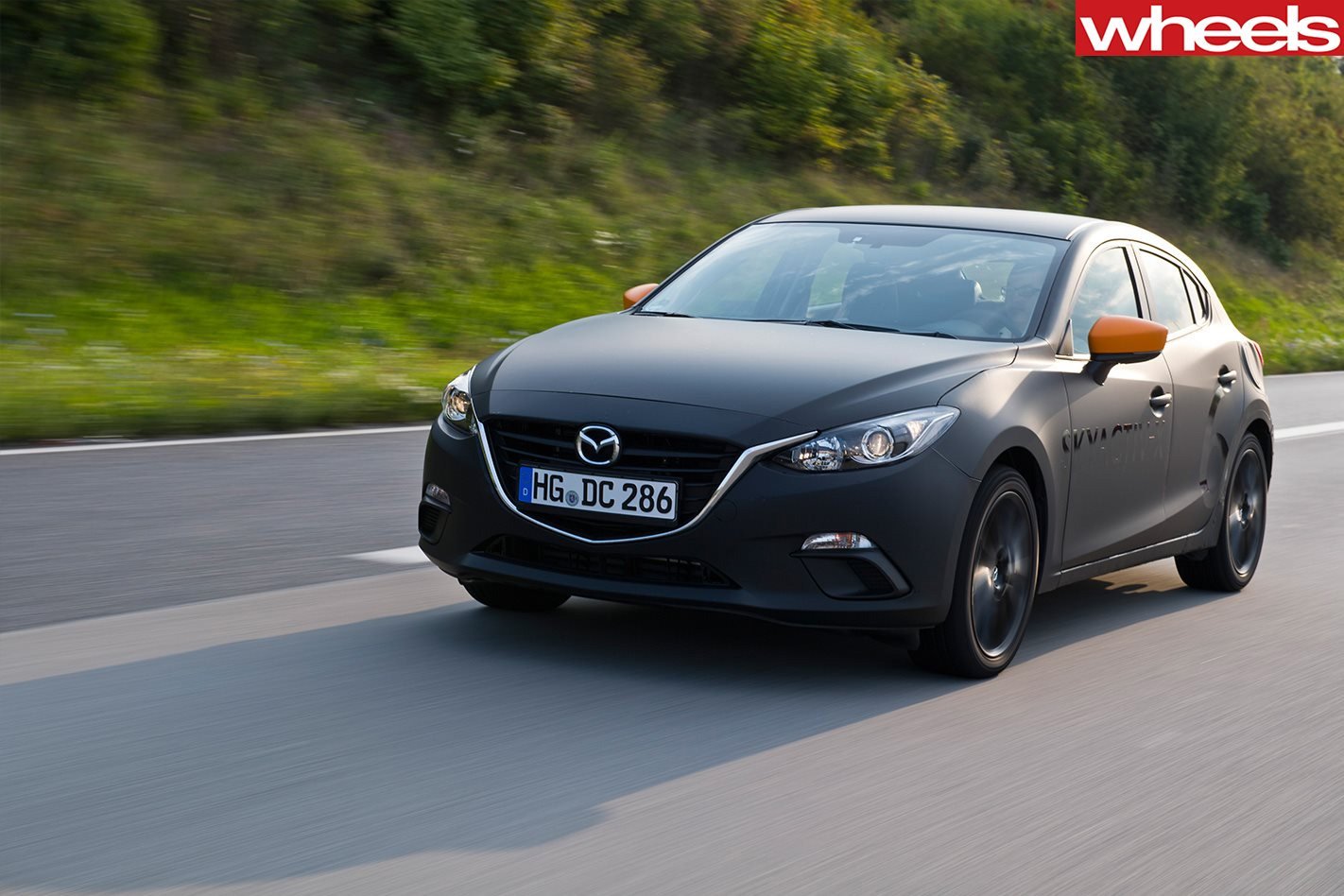
The promise of diesel-like fuel economy from a refined and clean petrol engine sounds too good to be true. Mercedes-Benz tried ‘compression ignition’ of petrol engines but eventually relegated it to the too hard bucket. Mazda’s breakthrough was creating a sparkless-ignition engine that uses spark plugs.
Sounds counter-intuitive, I know, but using the tiny fireball in the combustion chamber as an additional piston, in effect squashing the remaining air fuel mix downwards as the real piston comes upwards is a spark of genius (sorry). It also allowed Mazda to use the spark plug as one of the engine’s key control functions, which we didn’t see coming. It seems to do exactly as promised. Expect to see it first in the all-new Mazda3 in 2019.
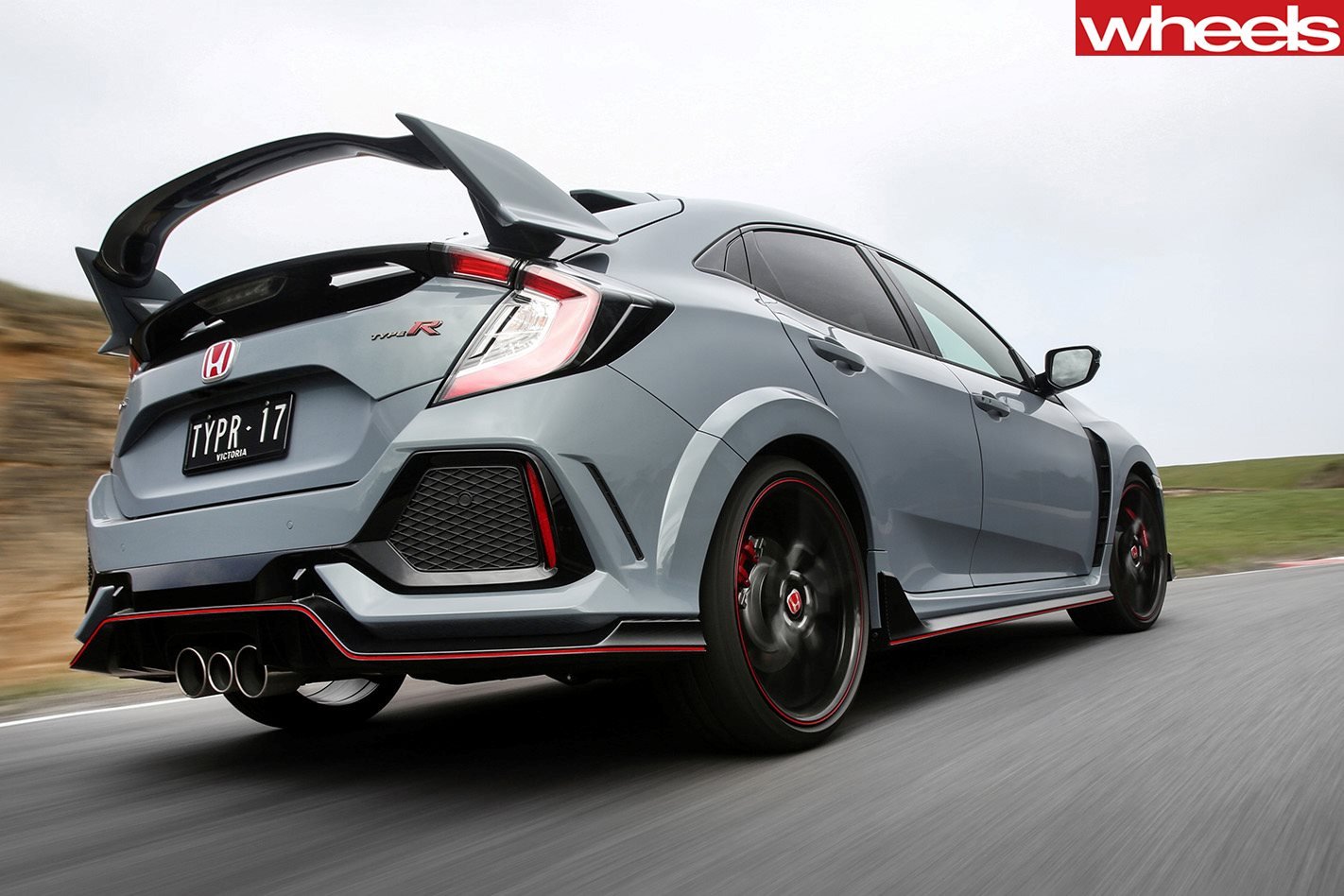
To date, the Honda Civic Type R is like wine from an inconsistent terroir. One vintage will be great, the next year’s pretty unpalatable. So it was with some trepidation that we parked ourselves behind the wheel of the latest version. Turns out we needn’t have worried.
Beneath all the juvenile plastic nonsense slathered all over the exterior is the heart of a truly great hot hatch. It’s so much more civilised than its styling suggests, yet it can dissect the toughest section of road or track you can throw at it. If only they’d develop a mechanically-similar sleeper version. Type-O anyone?
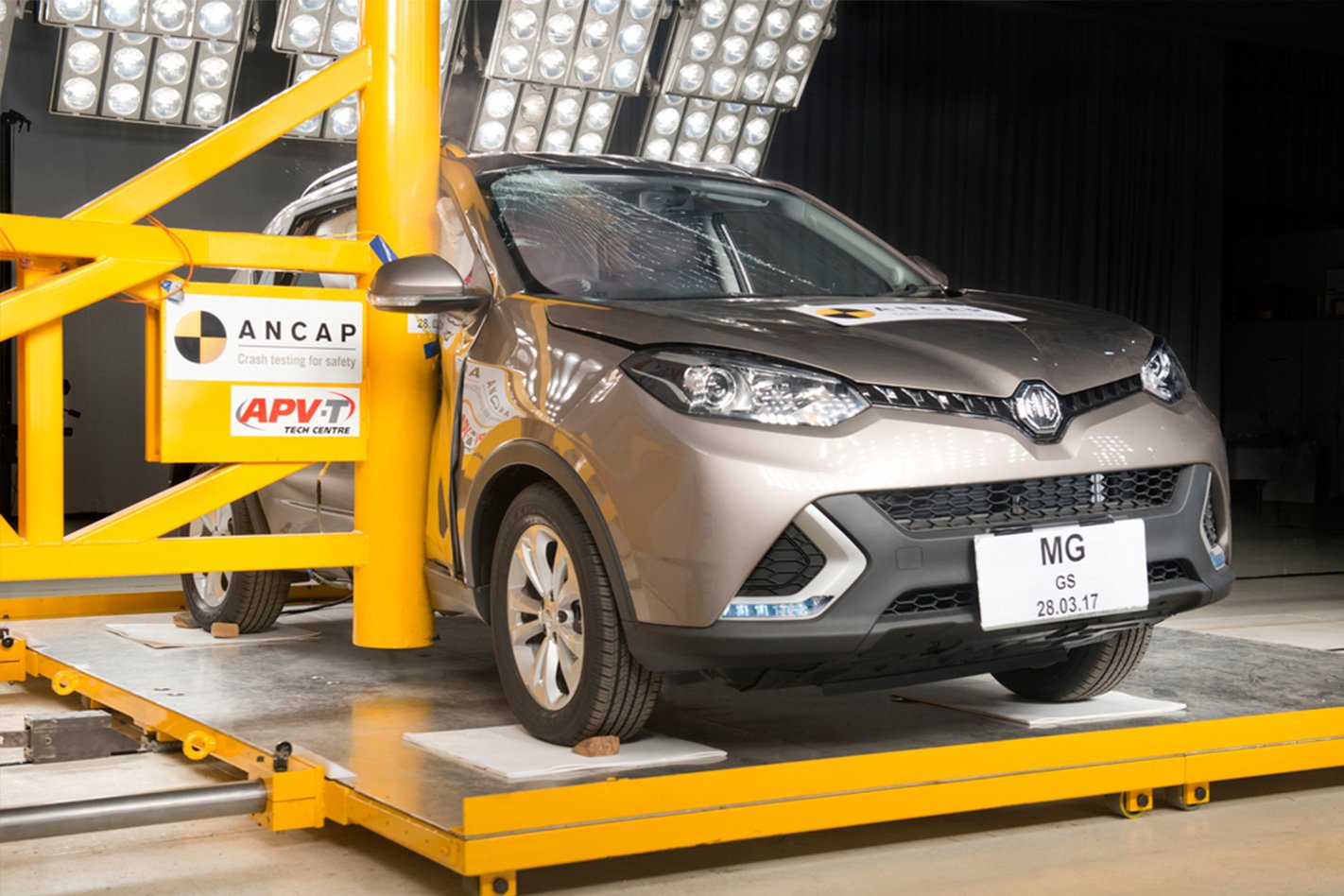
We’ve come to expect Chinese-built cars to have all the structural integrity of a Sarah Huckabee Sanders press conference, but it seems the days of making wisecracks about these cars might be drawing to an end. The MG GS is the first Chinese product to receive a full ANCAP five-star rating after upgrading the safety specification of the small SUV for our market. The 5 star ANCAP safety rating applies to all MG GS models built from August 2017 and on sale from October 2017.
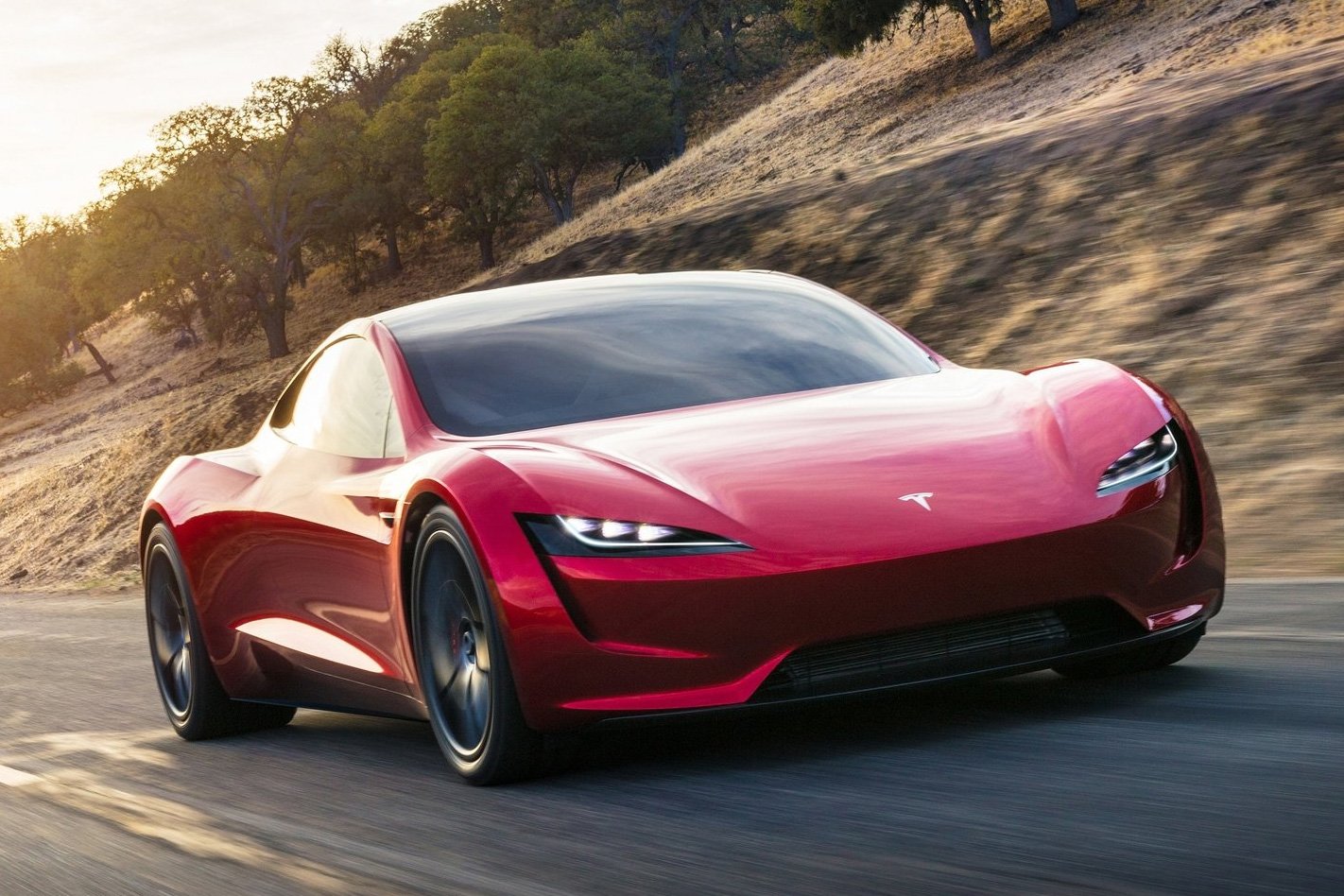
The award for the best-kept secret this year goes to Elon Musk, who pulled one heck of a blinder, unveiling the Tesla Roadster 2 halfway through the press unveil of his semi truck.
Must have sucked to be the sports car journo who turned down an invitation to a truck launch, but the hype machine instantly went into full swing, and punters were stampeding to throw their credit card details at Tesla’s website for a chance to land an early Roadster build slot. 0-100km/h in 1.9 seconds and a top speed of 400km/h sounds pretty tempting. Even if he can’t build it, they will come.
Welcome to the MOTOR Awards for 2017, where we recognise the best and worst or the year.
In this instalment we give out three awards – Most Fun, Best Concept, and Scariest Beast.
MOST FUN: Subaru BRZ
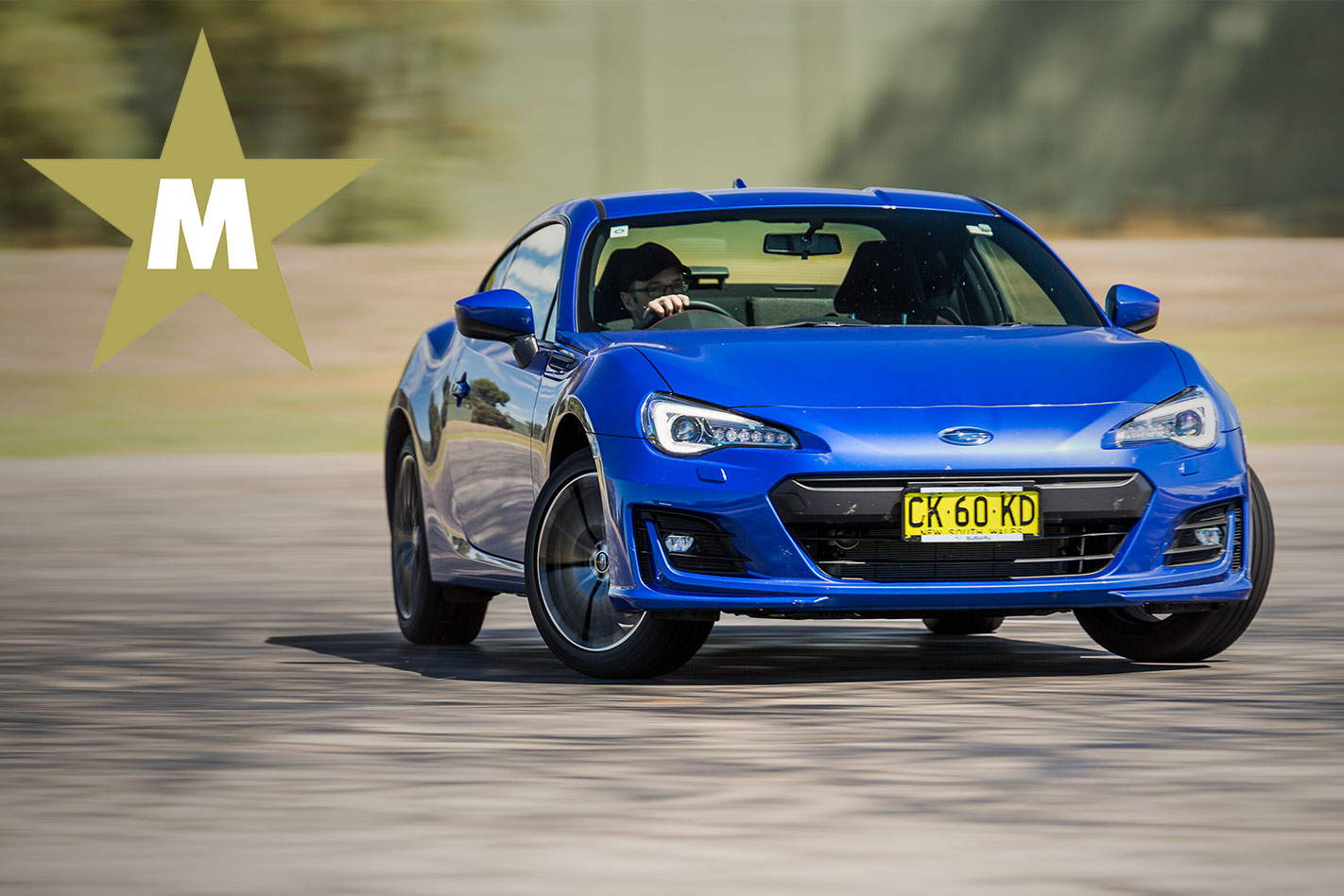
It’s bloody cheap at $32,990 plus on-roads. Since Toyota jacked up the 86 GT’s price tag, the Subaru is only $2200 costlier – a surcharge it makes up for with 17-inch Michelin Primacy rubber alone, replacing 16-inch Yokohamas. The 17s are still slidey, but drift proceedings are at the driver’s call and not merely that of the road surface.
The Toyobaru twins both beefed up body rigidity for the new year, with extra spot welds in the C-pillar and thicker mounting plates for the rear suspension, which permitted engineers to slightly soften the suspension for greater handling balance.
Are you from the misguided train of thought that says hard damping equals more fun? Look elsewhere. The BRZ is wonderfully malleable and engaging, rolling subtly onto its outside wheel after the keen nose has been guided by the sharp and syrupy-smooth steering system that still – four years after the original’s launch – rates among the best in the business.
Gone is the crude Sport electronic stability control (ESC) setting that worked with the brakes, replaced by a more lenient and quieter Track ESC setting, which permits throttle-steer and only tempers big-time oversteer.
Of course with ESC turned completely off, the BRZ, fortunately, can still spin its rear wheels furiously enough to make the driver forget about the lack of a turbocharger on the 2.0-litre boxer four, which now produces 152kW at 7000rpm and a laughably low 212Nm at an awfully high 6400rpm.
Gutless it may be at low revs, but mated with a slick and clicky six-speed manual, and seated deep and low inside the tub, there’s real sparkle in this driving experience when thrashed. Keep the tacho needle flicking away at the top, and the throttle directly connects right foot to limited-slip diff-equipped axle to precisely alter the horizontal degrees of travel.
Perhaps the icing on the cake was the BRZ Sports Edition. For thousands less than the 86 LE, the Subaru offered the same impressive Brembo braking and Sachs damper upgrade. Not even placing price aside, it’s the BRZ that left us with the biggest smile this year. And not coincidentally, it’s an outline that can look similar to the wide arc of black rubber it often leaves on bitumen.
BEST CONCEPT – AMG GT Concept
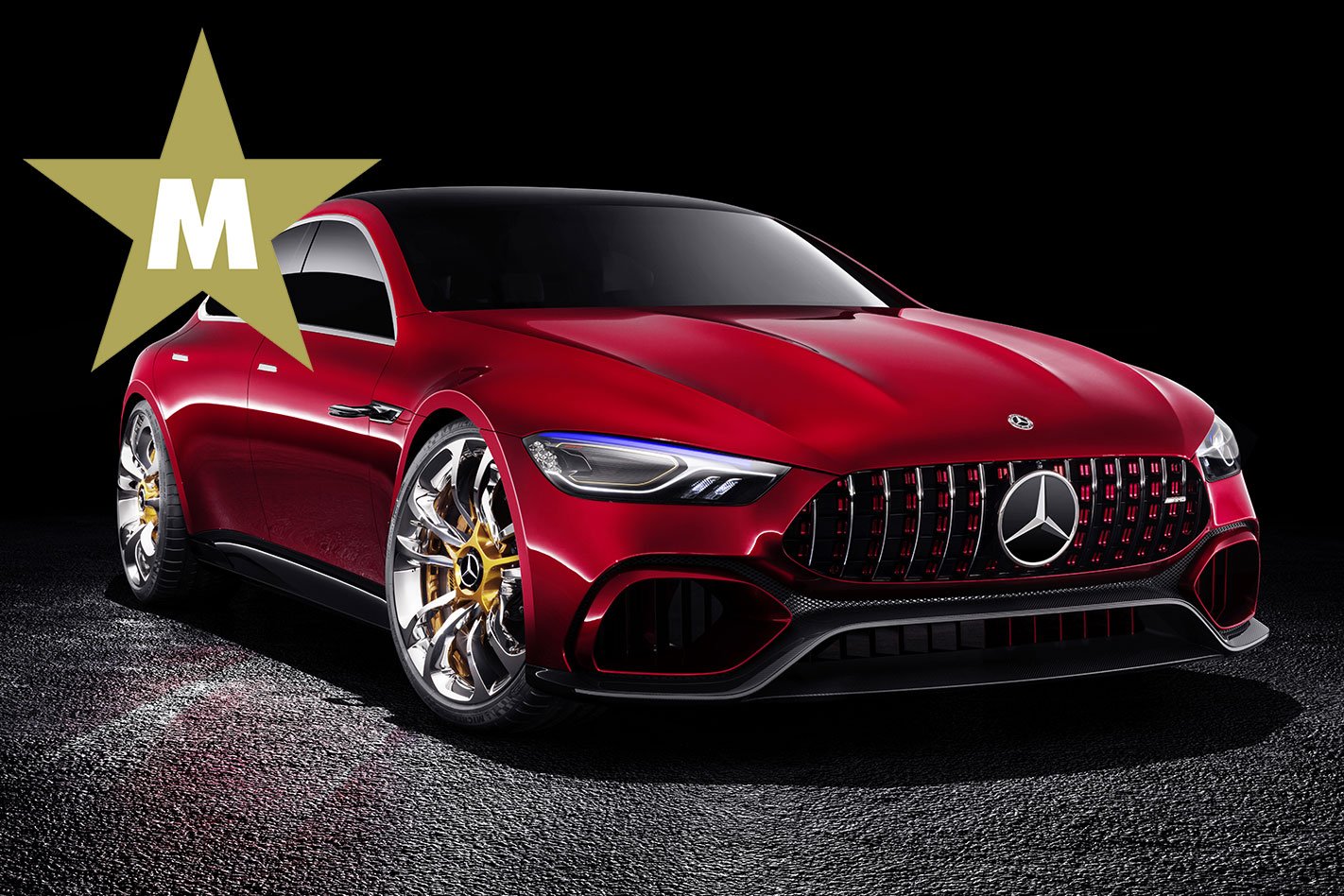
The Mercedes-AMG GT Concept previews a forthcoming ‘four-door coupe’ which will use an electrically-assisted version of AMG’s 4.0-litre twin-turbo V8 to produce 600kW and a claimed 0-100km/h time of around 3.0sec dead.
Think of it as Merc’s version of the Porsche Panamera Turbo S E-Hybrid, only faster and much cheaper. It’ll start production in mid-2018.
SCARIEST BEAST – Porsche 911 GT2 RS
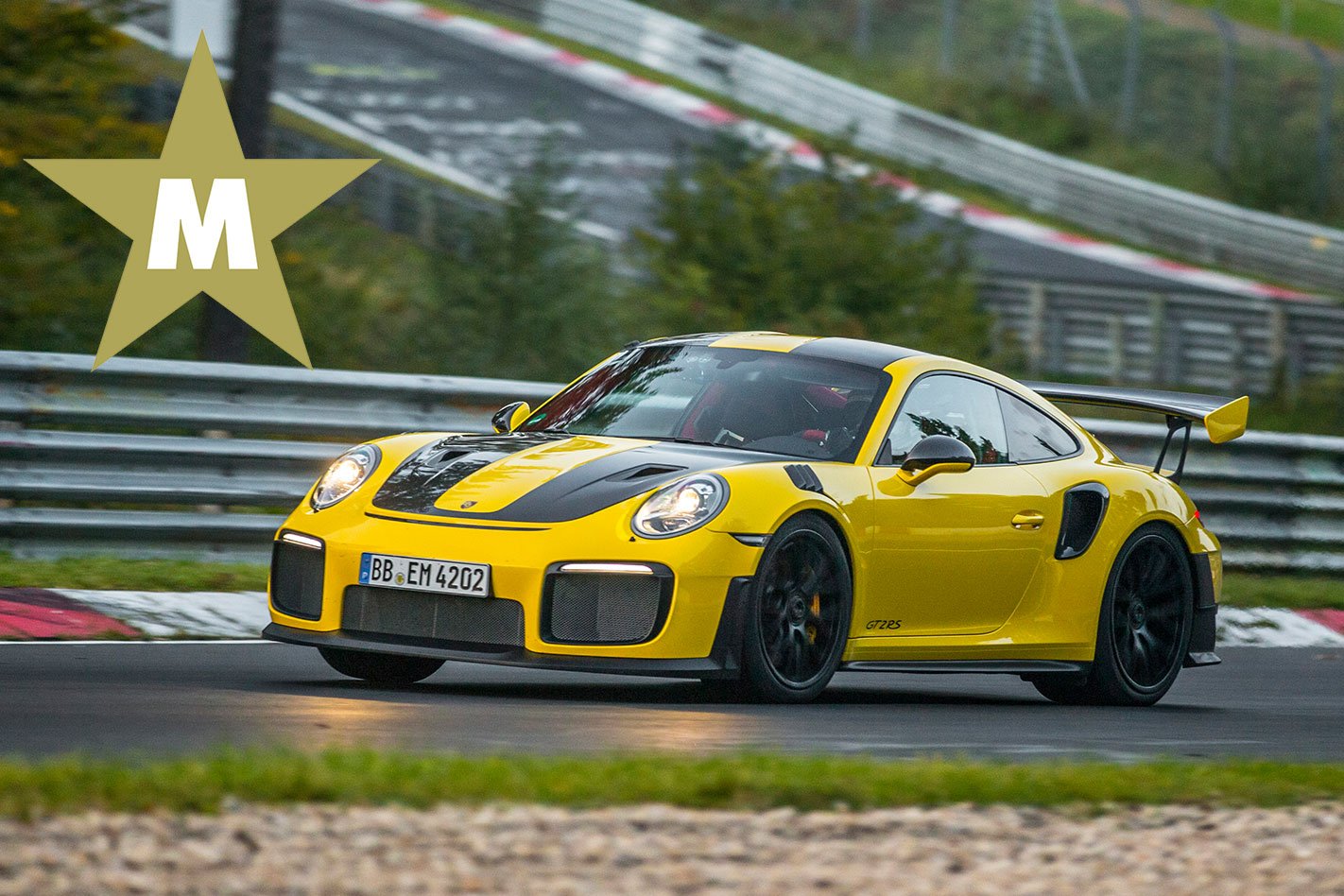
Its acceleration is brutal, with the engine seemingly intent on turning the car inside out and sucking the driver backwards into the turbos, accompanied by violent braking and cornering forces so strong your head is likely to come off.
It’s unclear whether we’ll get a chance to drive the GT2 RS locally, but that’s okay – we’re scared. But you’d already know from reading our first drive.
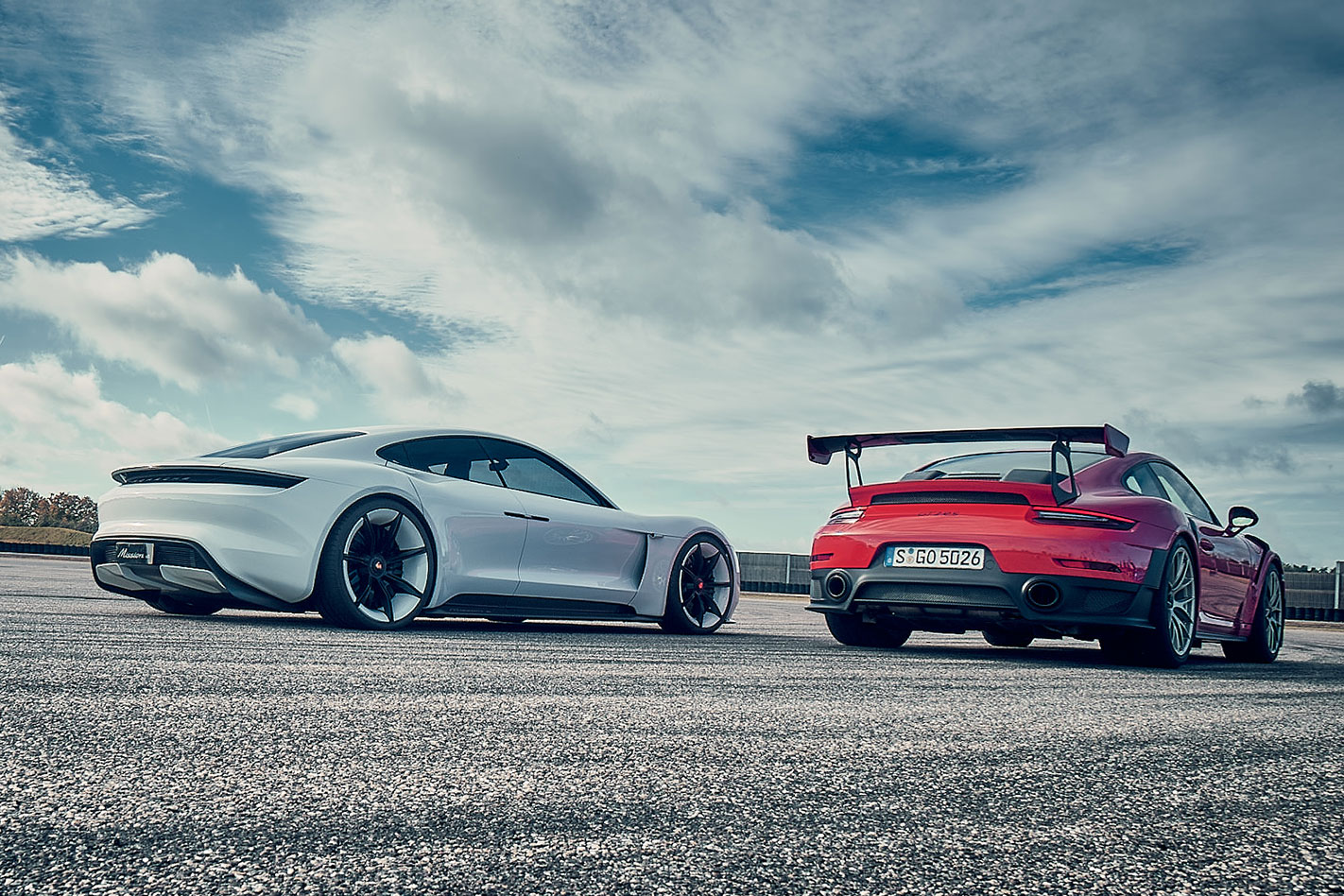
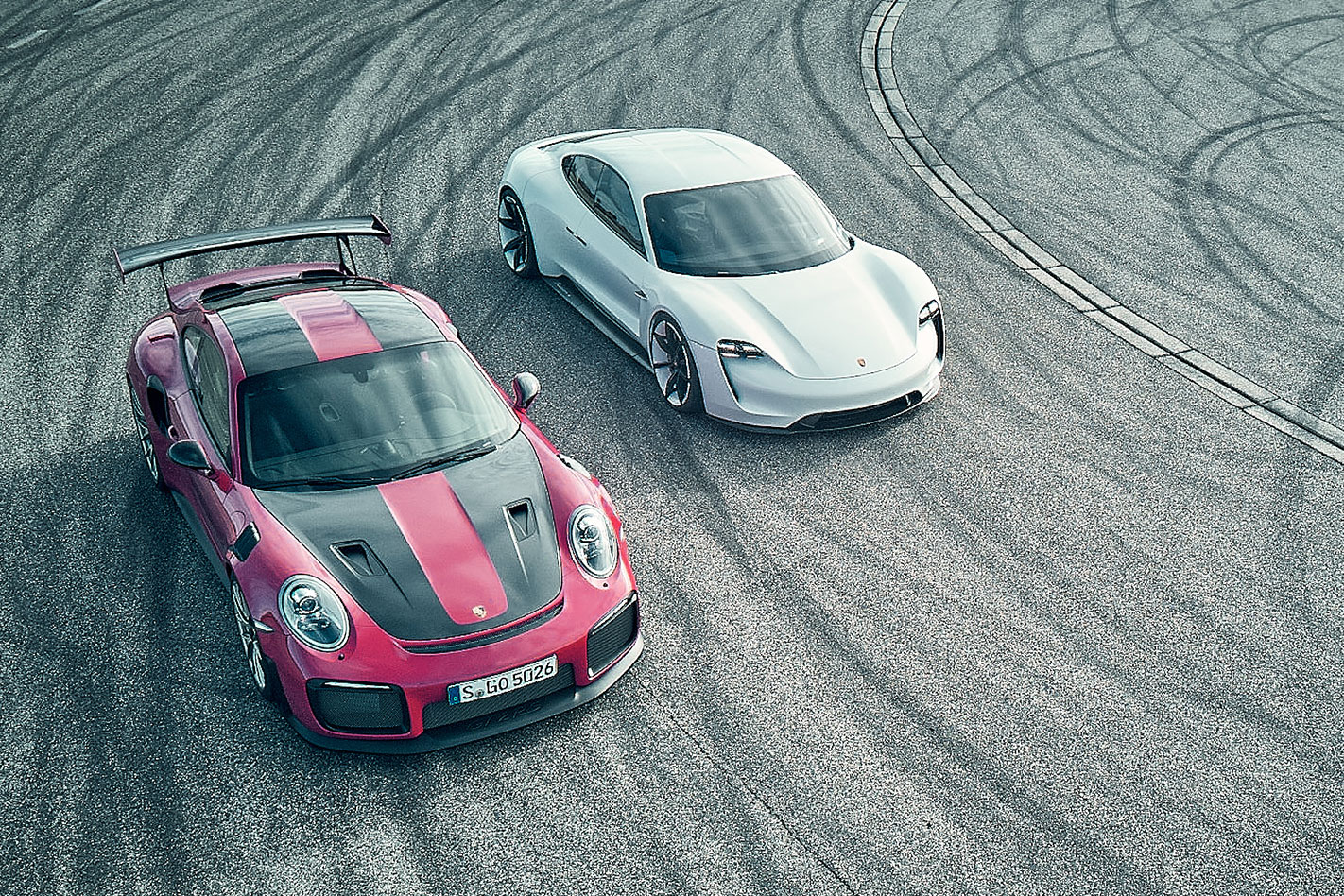
There will never be another day like this – 2018 911 GT2 RS meets 2020 Mission E.
While the pair are polar opposites in character and content, their DNA is fused by the desire to deliver maximum driving pleasure. In a way, it’s volt versus octane – or, more broadly, present versus future. Except, this time at least, there is no loser and this isn’t specifically a comparison. Electric drive may one day replace the iconic petrol-fed flat six, but for the time being, the two propulsion ideals are going to live side by side, as demonstrated by the plug-in hybrid. So let’s bask in the glory of what we have now while exploring the future.
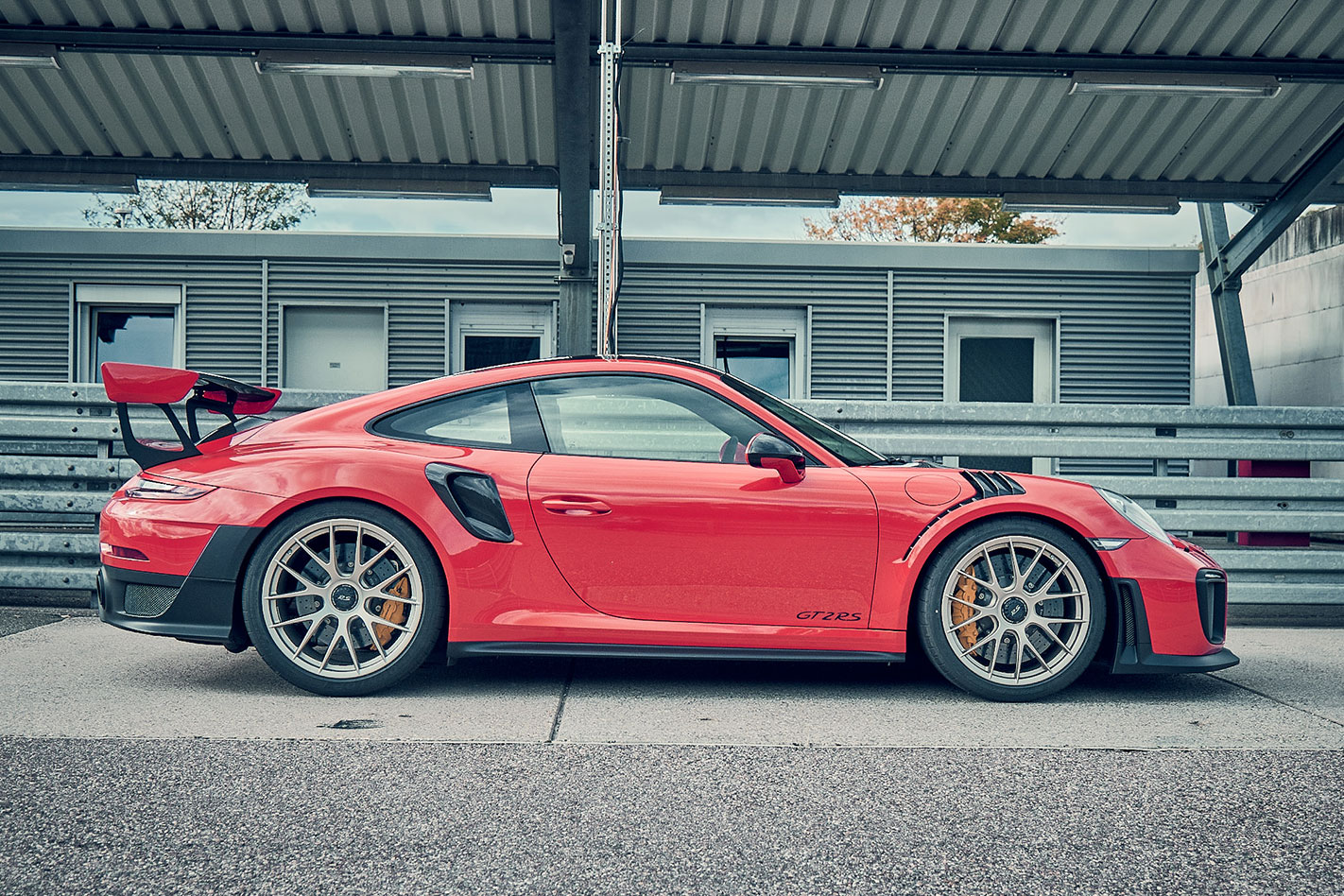
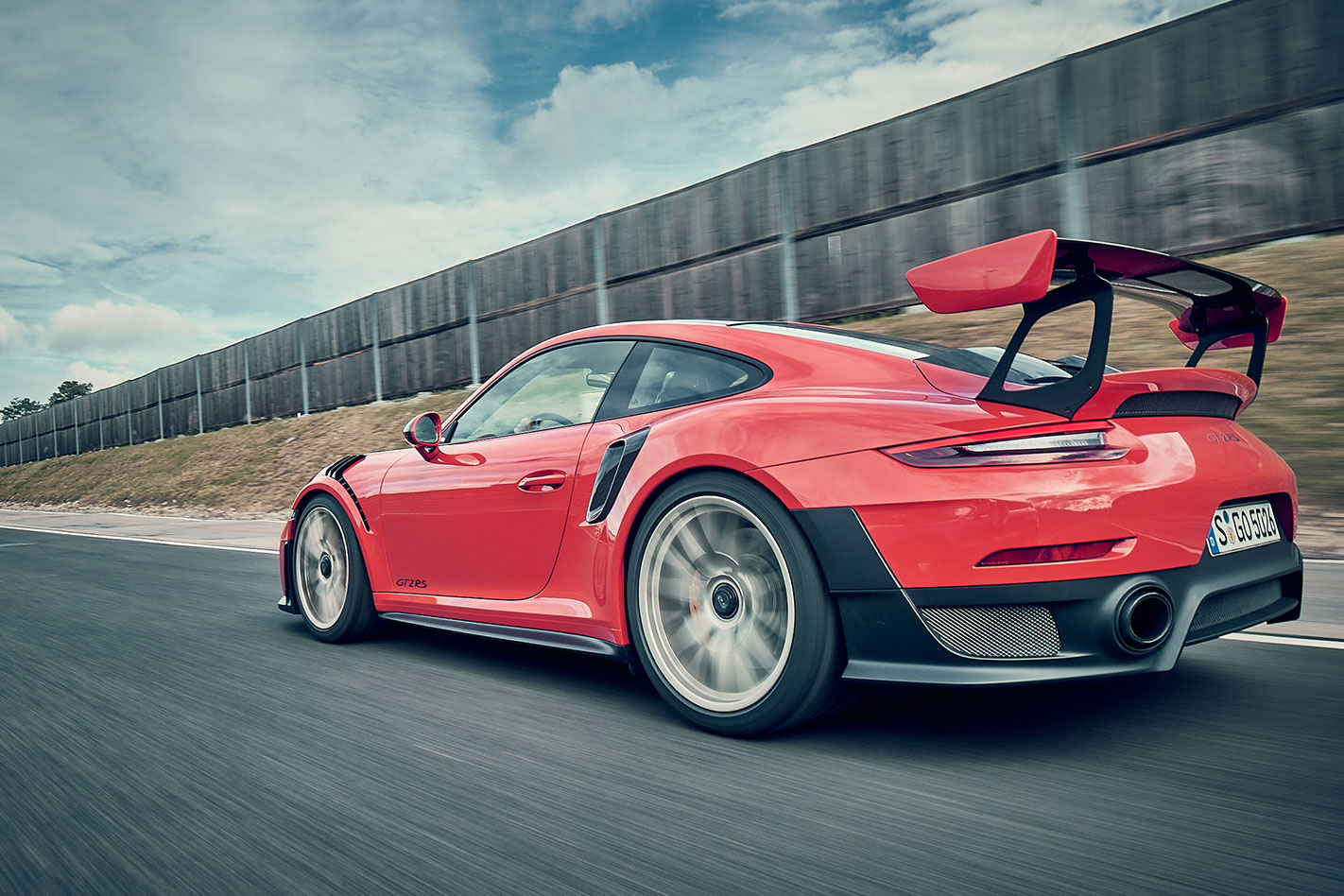
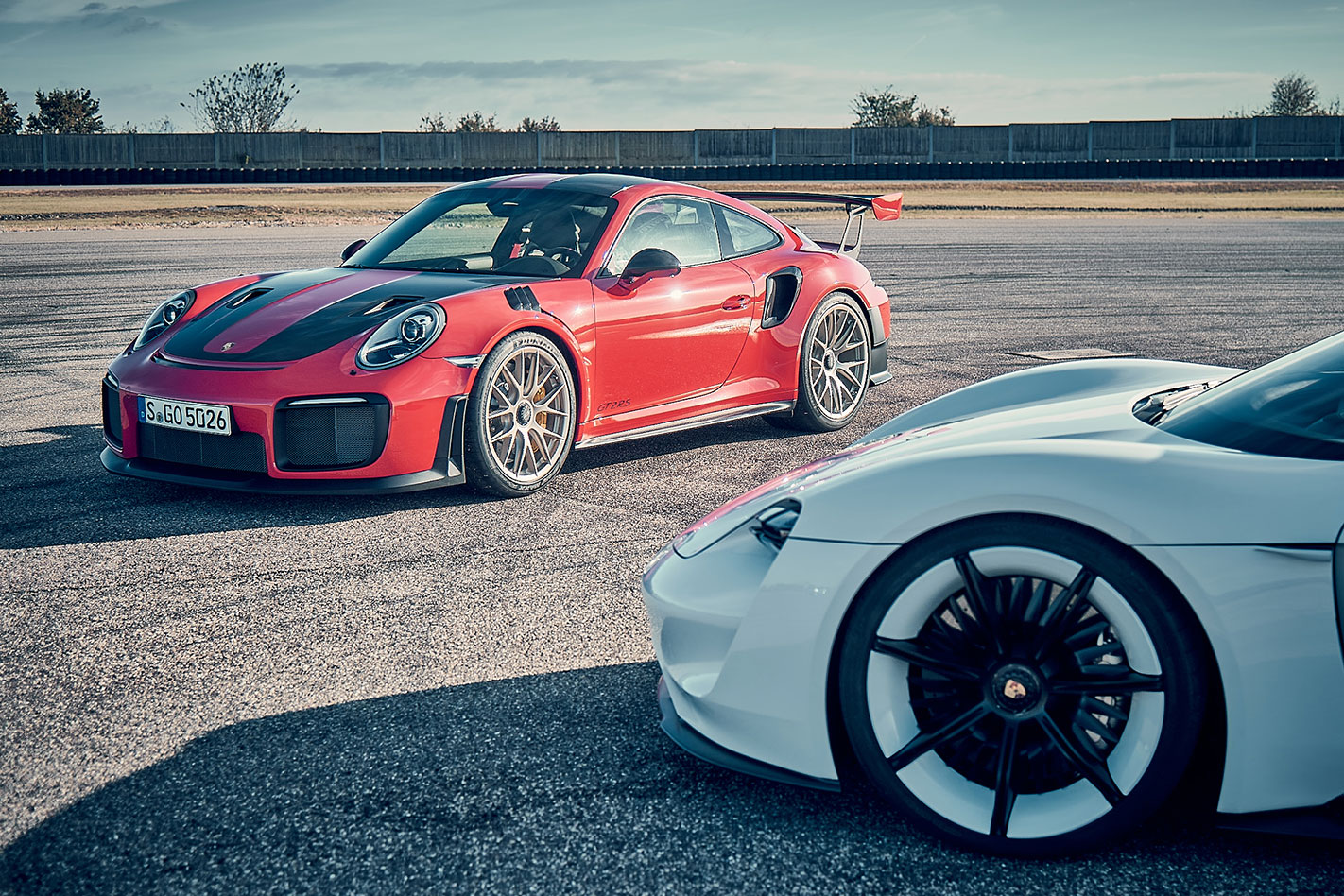
Like its predecessors, the latest top-notch RS sold out long before the order books opened. The red and black beast we have here, model number 001, is the rarest of a rare breed. The 515kW/750Nm weapon is equipped with the desirable Weissach Pack, which cuts 30kg, yet adds a hefty price premium. However, when playing in this league, buyers want the ultimate.
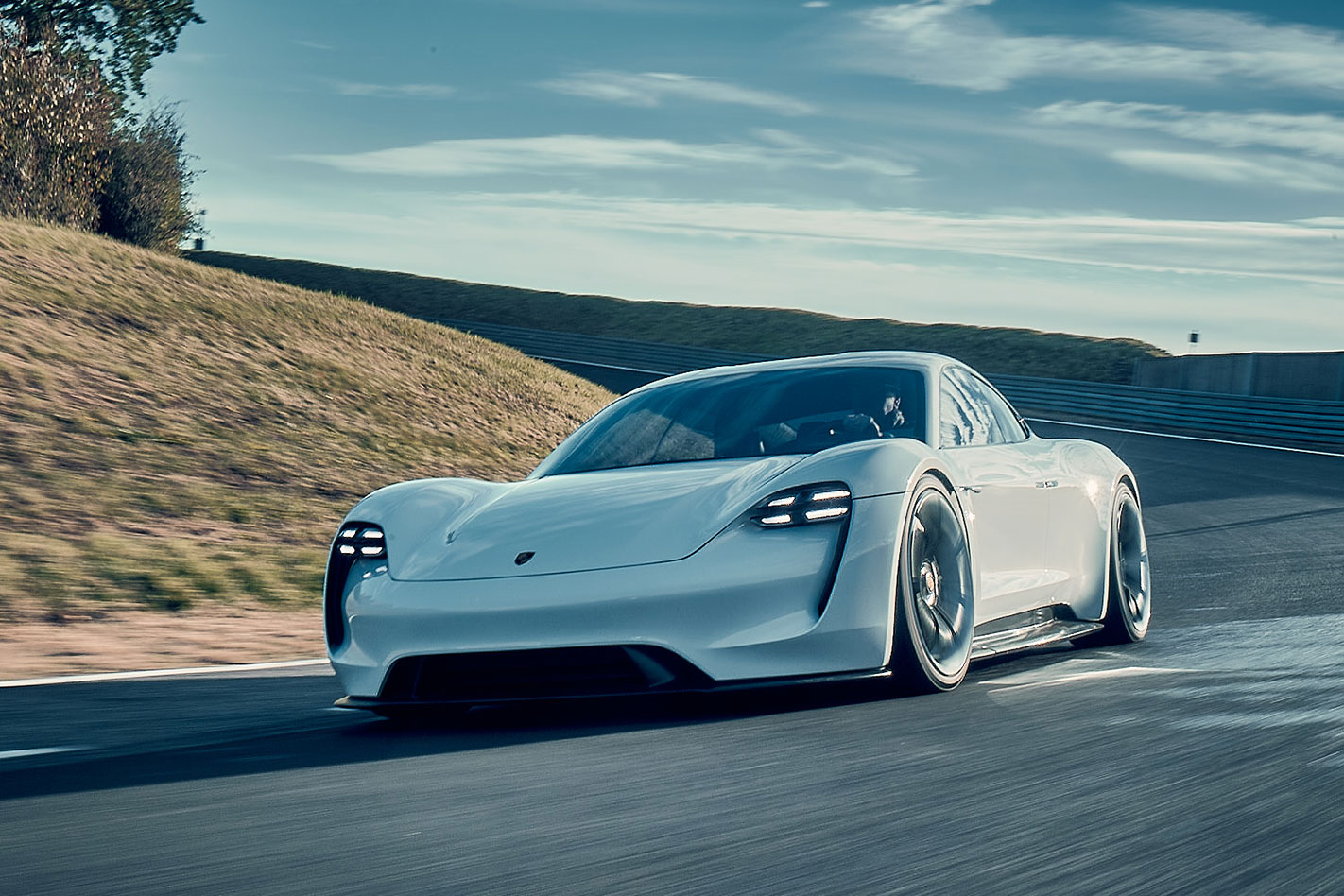
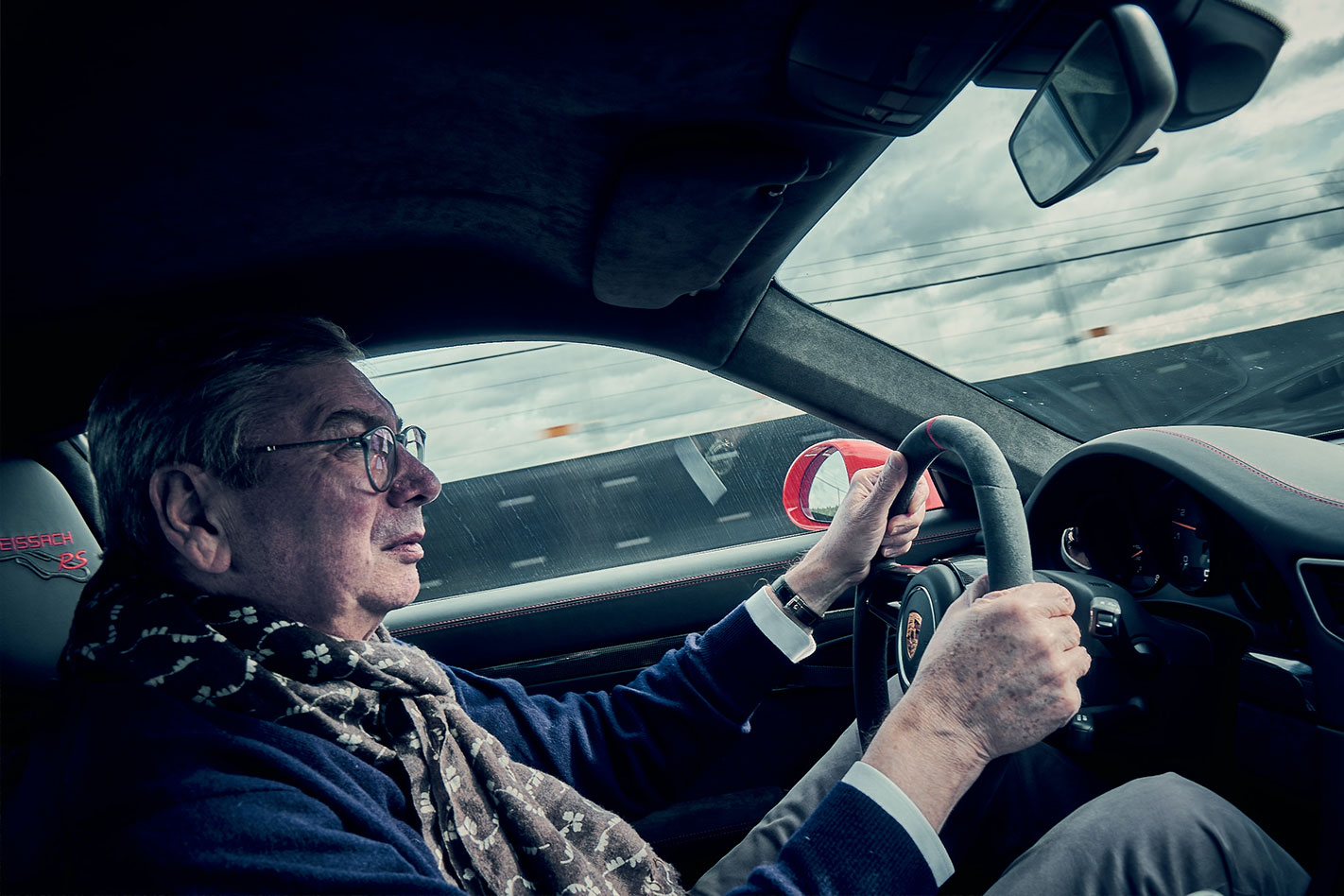
The Weissach research and development team are protecting their baby like a first born. To drive the Mission E, you actually need permission from the board of directors. You also need to be granted the goodwill of the specialised crew trained to deal with the bytes and bugs that tend to haunt such a one-off, high-voltage car. As we approach the object of desire on a Sunday morning in October, there is tension in the air, literally and figuratively speaking.
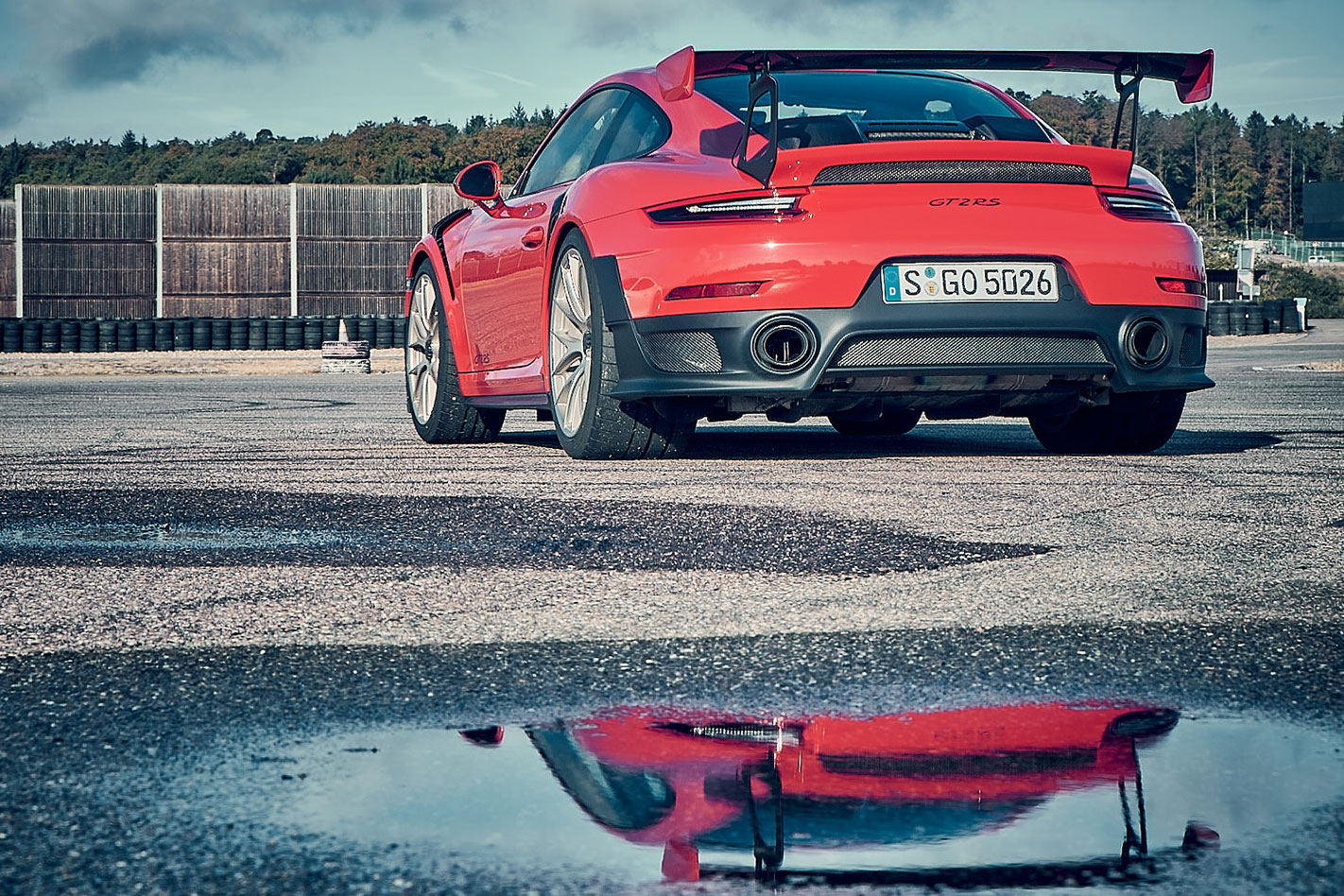
By definition and aesthetics, the GT2 RS is an entirely different kettle of fish. One look at the massive single-deck rear wing, the flared carbon-fibre sills and the protruding front splitter is all it takes to understand that this is definitely not a run-of-the-mill 911. It has presence in spades, but it’s functional, too. For example, that rear wing creates 340kg of downforce at maximum speed while, in Sport Plus, the two massive tailpipes emit a cacophony of sound and become virtual flame throwers. When viewed from behind at night the wide-body 911 looks like the devil’s very own chariot. All the louvres, ducts, splitters, aprons, skirts and air blades scattered around the muscular body manage to befriend the wind and placate the massive amount of heat emitted.
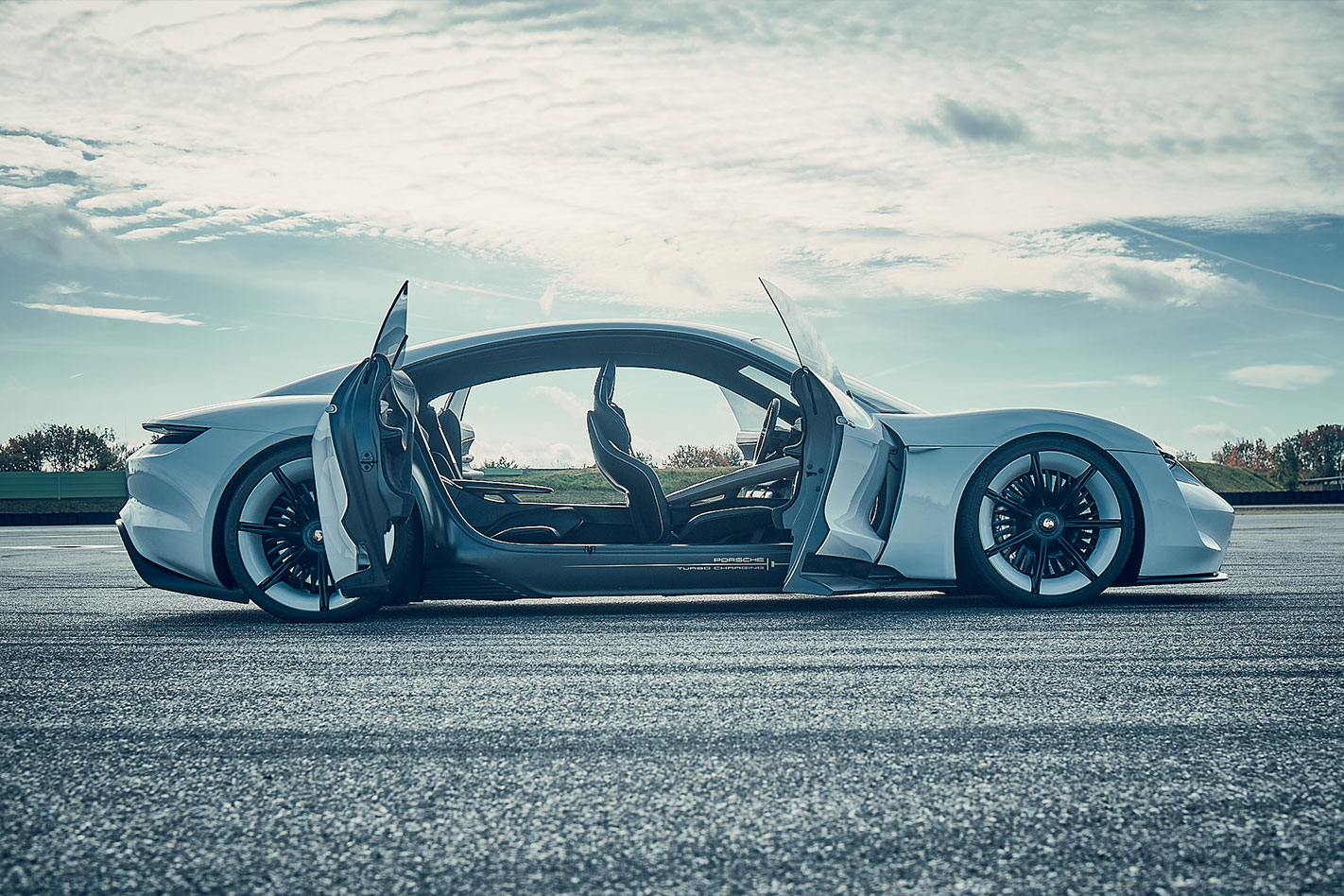
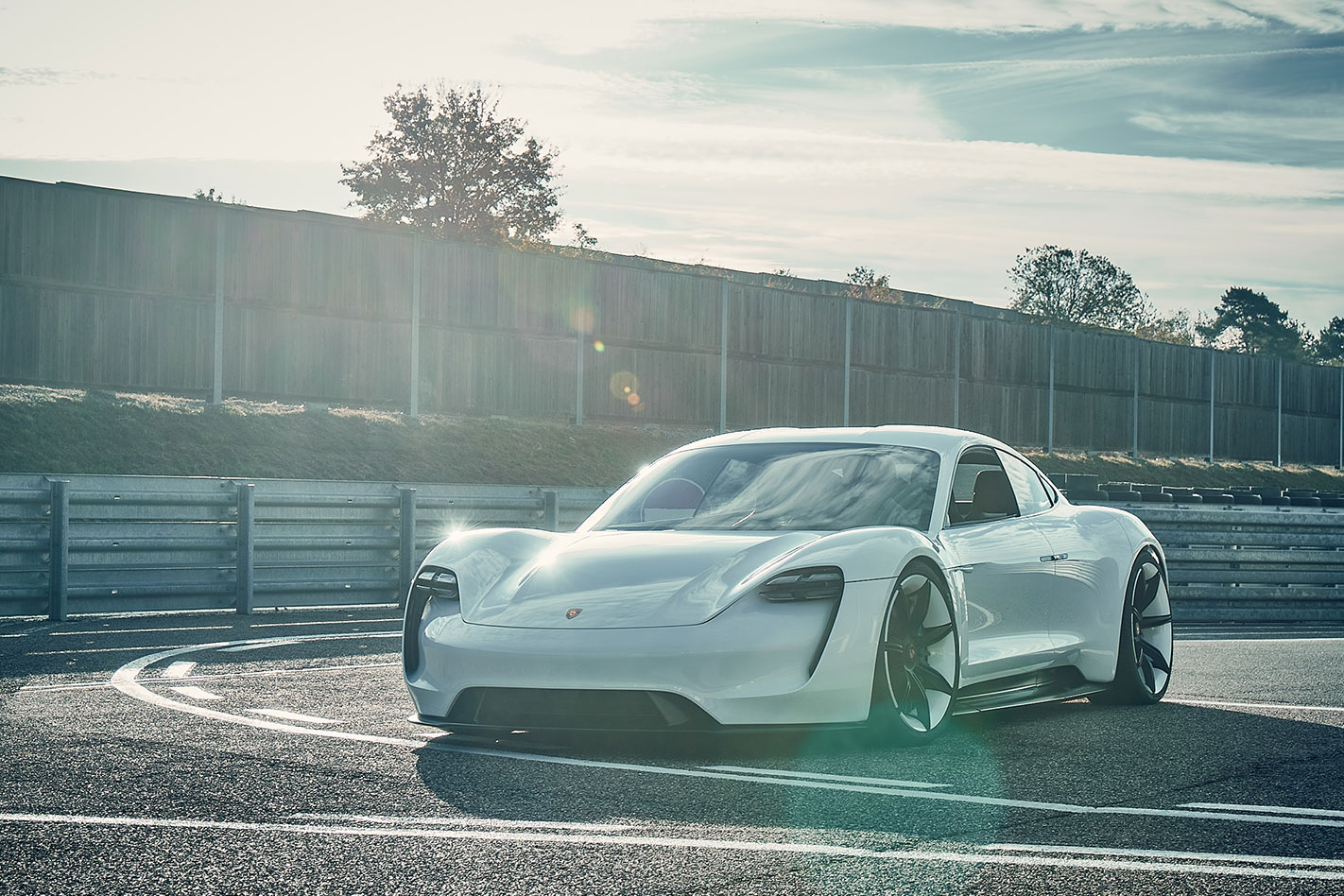
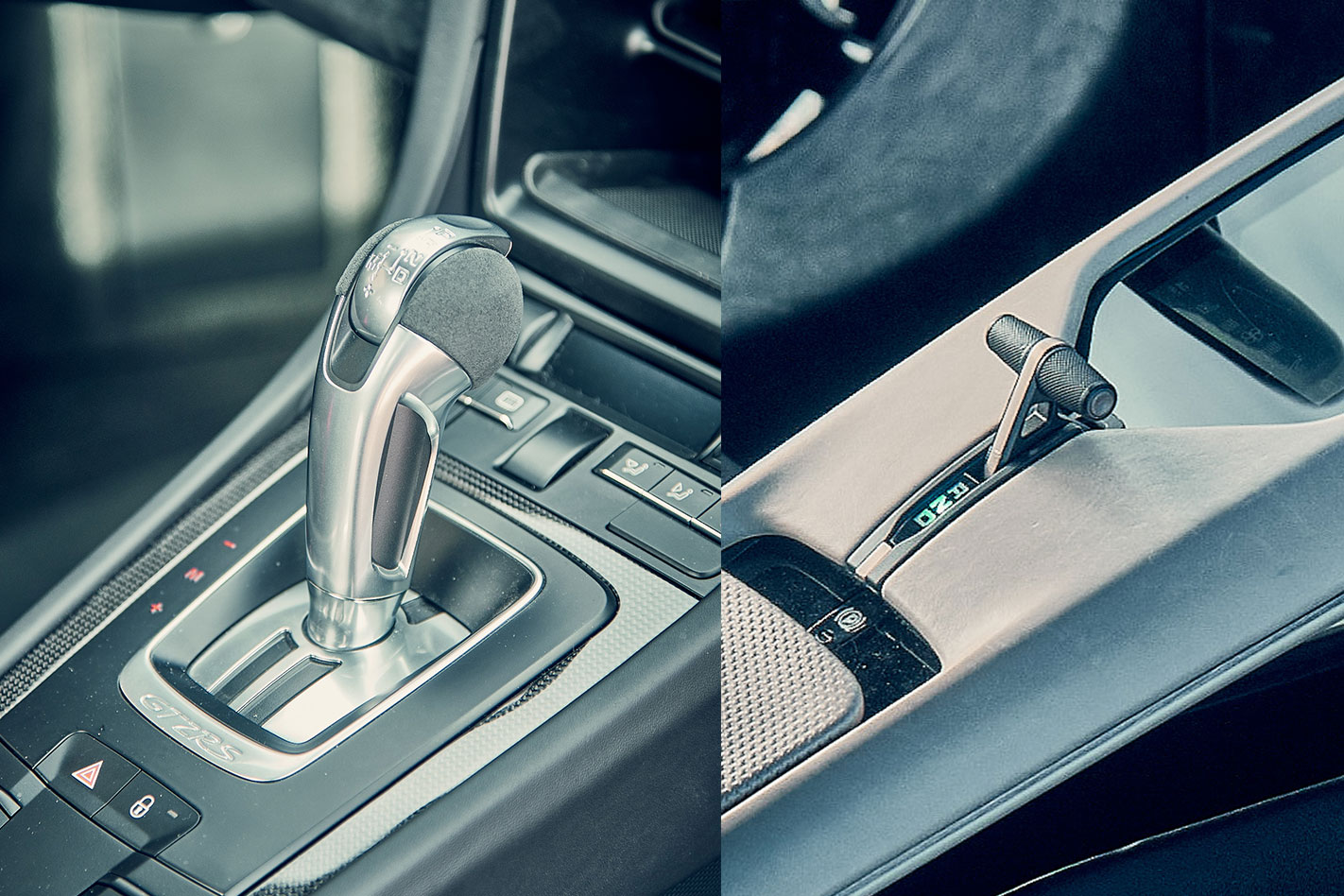
On the inside, the Mission E has electric doors, windows and seats, along with a high-tech cockpit featuring five animated round instruments and a centre stack featuring a giant touchscreen (think Tesla). The classy, all-black centre stack – non-functional at the time of our test – is seamless and curved, and conveniently arranged for sound ergonomics. The ambience is clearly more iPad generation, but the designers did also apply classic luxury traits, such as supple leather with matching wood and metal accents.
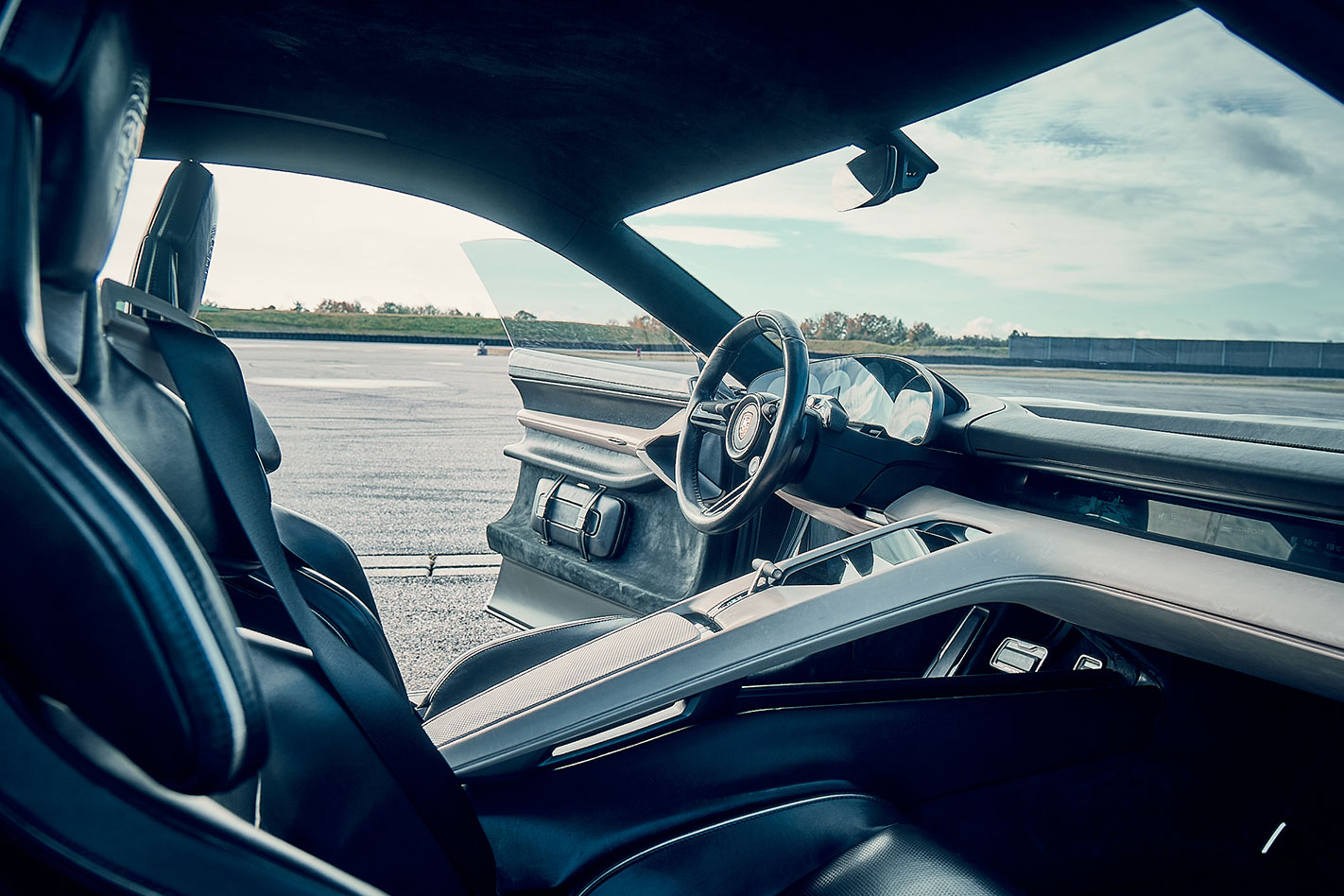
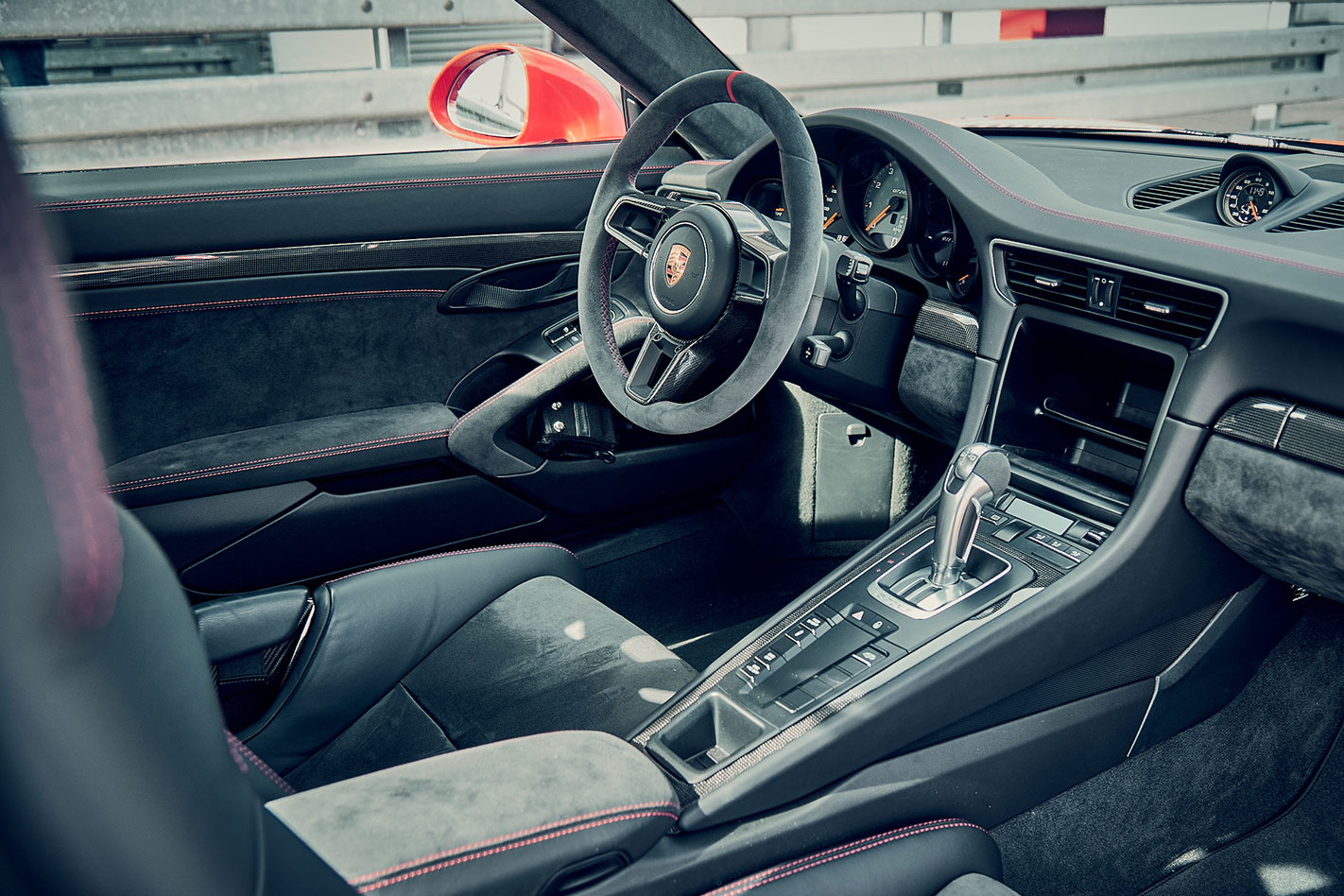
While the Mission E is undergoing final tests on its ECU by the men in Porsche coats, I take the chance to head out on track in the GT2 RS. The surface is still moist in some places and the marbles on both sides of the racing line shout caution. Taking it easy until the tyres get some temperature is definitely the right thing to do. It also gives me a chance to reacquaint myself with the Weissach track, which was built in 1972. Even the long variant is actually quite a short circuit with only thirteen corners, but because of the great variety of crests, climbs, descents and surface changes, the rollercoaster drive invariably gets the heart racing.
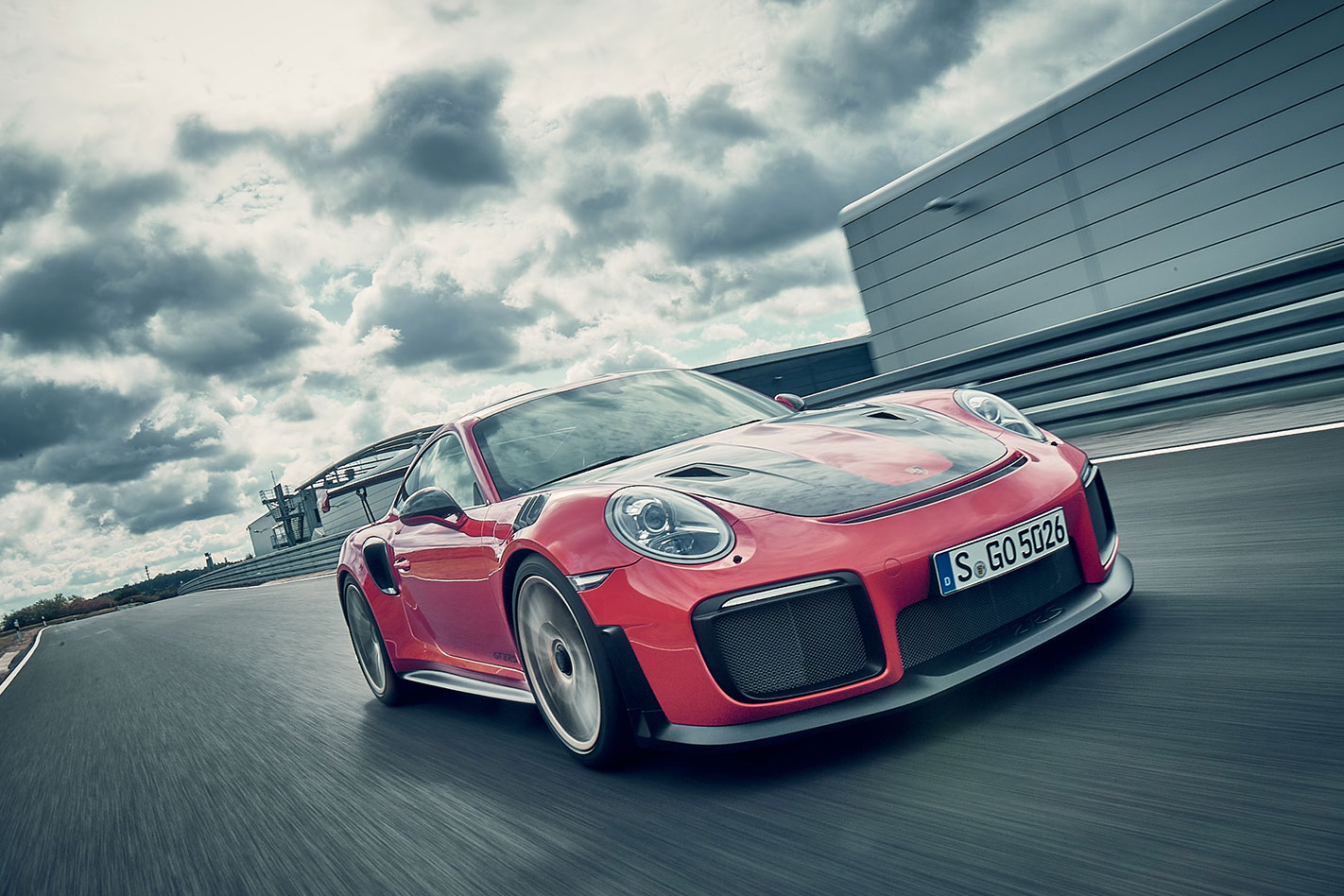
I’m familiar with all the numbers as I’ve been in this car before. And yet, flooring the loud pedal for the first time in the most powerful 911 is breathtaking. Managing the mighty forward thrust is a challenge for all the senses. Adding an extra dash of drama, every move the GT2 RS makes has its own tone of voice. It has quirks and idiosyncrasies aplenty.
The next thing your ears register is the difference between cold and hot tyres, brakes and engine. Early on in the game the tyres drum, the brakes chafe and the engine conveys quite a hoarse soundtrack. But this car isn’t about mere progress. Still, testing the mid-range waters by cornering at 70 per cent and braking a bit too early is a good idea at first. Once comfortable, the GT2 RS begs to be whipped hard. After all, its reason for existence is to be a showcase of the great work completed by the engineers, putting its performance curve above many foes by being the pinnacle of the Porsche crop. However, it’s time to experience the future – one that is beckoning whether we like it or not.
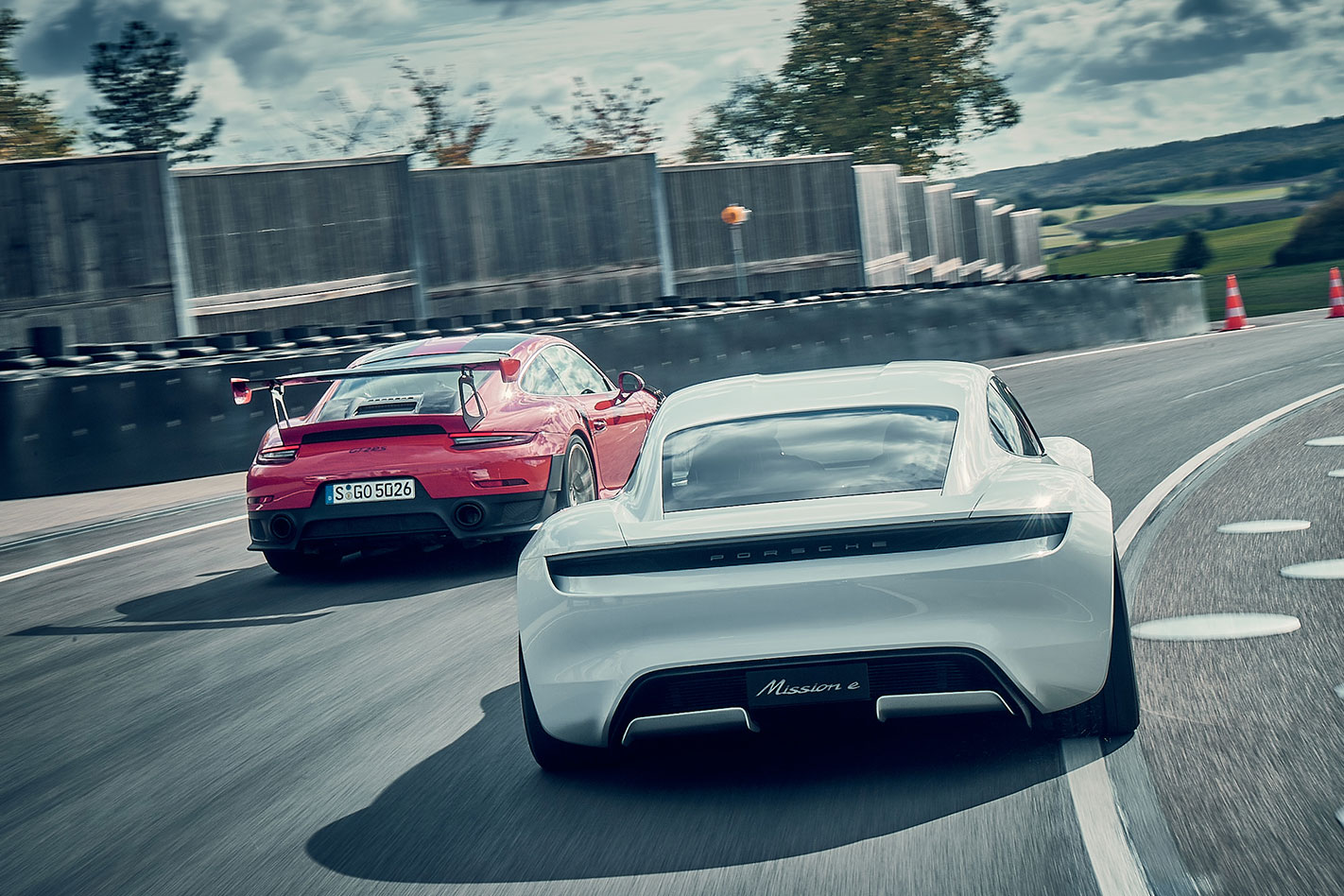
The plan from Germany is not only to make this a more committed and rewarding drive than the Tesla Model S, but to also warrant unconditional repeatability. And when you’ve got hypo cars in your portfolio such as the GT2 RS, the ‘future’ has to stack up to the present. However, to best the likes of Tesla, there needs to be some parameters the Mission E must meet in order for it to be deemed a success – both internally and in terms of sales. The batteries and motors must not heat excessively, the cell chemistry and single, highly complex cooling circuit must cope with recurrent, full-discharge cycles, and hour-long high-speed runs on the Autobahn must not eat the range in one fell swoop. Yet talk is cheap, a drive is in order to see what’s what.
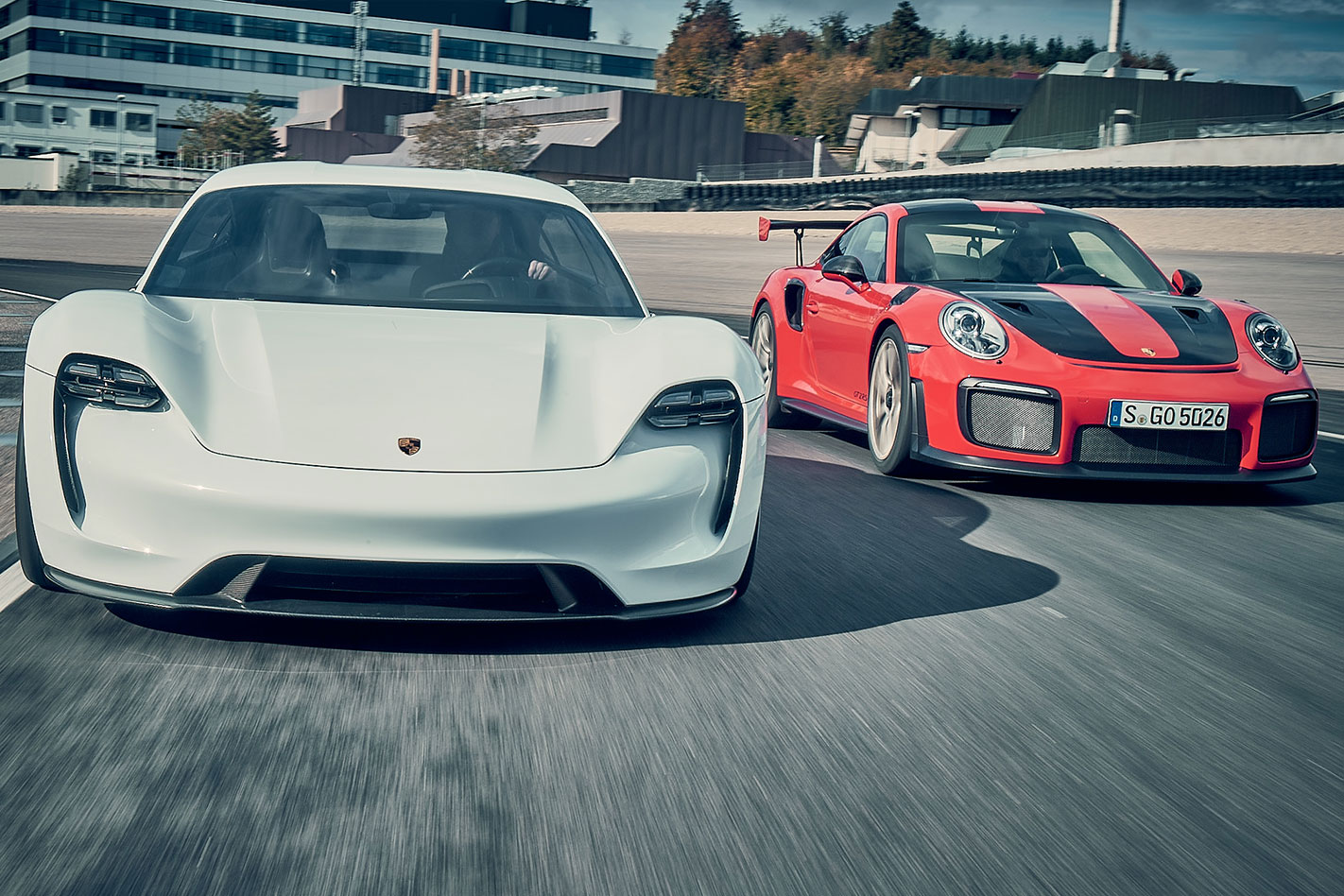
“If you like our sports cars, you will love the way Mission E drives,” promises project leader, Stefan Weckbach. “After all, this is the Porsche among the BEVs. It totally complies with our philosophy, fusing intuitive controls with a rear-bias torque split for emotional dynamics. Add to this the lower centre of gravity and available features like rear-wheel steering and active anti-roll bars, and it should not be difficult to imagine the result.”
The GT2 RS boasts similar side-to-side traction along with rear-wheel steering, active dampers (PASM) and carbon-ceramic brakes. In fact, this is the first Porsche road-car engine equipped with water injection designed to cool off the heat exchangers. Whenever the intake air temperature exceeds 50 degrees and the driver buries the throttle to the firewall, the system (fed by a five-litre water tank) will kick in.
However, what makes the GT2 RS so very, very special is the force-fed powerhouse that lurks beneath the carbon-fibre lid, which also accommodates two gaping air intakes to feed the turbos and a tall double-decker rear wing. The new 3.8-litre engine delivers a monstrous 515kW at 7000rpm, eclipsing the previous 3.6-litre unit by 59kW. At the same time, peak torque increases from 700 to 750Nm, available from 2500rpm. There’s a real sweet spot at 4500rpm, resulting in phenomenal mid-range punch. Despite this, what bends the mind most is the acceleration in fourth and fifth gears, giving the GT2 RS an uncanny ability to outpace just about anything on the road as all hell breaks loose in the final 1200rpm from 6000rpm to cut-out. To get a feel for how explosive this narrow rpm bracket really is, check out the onboard video which captures the recent record lap on the Nürburgring.
Speaking of cost, it is worth noting that the Mission E is going to be priced between Cayenne and Panamera, and only slightly above the least expensive Tesla model S. While Porsche’s original goal was to build around 20,000 high-end BEVs per year, the unusually zealous marketing department has suggested that adding another 10,000 units to that tally is achievable.
If we’re being really honest, for most of us the 368kW GT3 would be more than enough, but, of course, there’s always the upcoming 991.2 GT3 RS, which promises to be more track focussed than the pricey 515kW all-rounder. Ultimately, the GT2 RS makes you recalibrate your inner speedometer. A judgement adjustment needs to be made regarding relative distances, braking markers and the limit of adhesion. The GT2 RS really does up the ante that much in all the aforementioned areas. On a good day in dry weather with little traffic you’ll be left in no doubt that this is the real McCoy. It is, currently, the 911.
It’s essential to keep a firm grip on the wheel because every ridge, painted kerb and expansion joint will want to make the GT2 RS rip its rear wing off. The biggest dare on this diminutive track is to keep the right hoof firmly planted from the exit of the last bend to the entry of the first right hander. Wide eyed, we briefly saw 270km/h before stomping on the anchors – hard. It’s enthralling and all a bit too much to take in for just one moment in time.
The Numbers – The Future and the Present
| u00a0 | PORSCHE 911 GT2 RS | PORSCHE MISSION E |
| BODY | 2-door, 2-seat coupe | 4-door, 4-seat coupe |
| DRIVE | rear-wheel | all-wheel |
| ENGINE | 3800cc flat-6, DOHC, 24v twin-turbo | Permanent magnet synchronous |
| BORE/STROKE | 102.0 x 77.5mm | N/A |
| COMPRESSION | 9.0:1 | N/A |
| POWER | 515kW @ 7000rpm | 300-500kW |
| TORQUE | 750Nm @ 2500-4500rpm | 850Nm |
| POWER/WEIGHT | 350kW/tonne | 136-227kW/tonne |
| TRANSMISSION | 7-speed dual-clutch | 2-speed |
| WEIGHT | 1470kg | 2200kg |
| SUSPENSION (F) | double A-arms, adaptive dampers, anti-roll bar | double A-arms, adaptive dampers, active anti-roll bar |
| SUSPENSION (R) | multi-links, adaptive dampers, anti-roll bar | multi-links, adaptive dampers, active anti-roll bar |
| L/W/H | 4549/1880/1297mm | 4850/1990/1300mm |
| WHEELBASE | 2453mm | N/A |
| TRACKS | 1588/1557mm (f/r) | N/A |
| STEERING | electrically assisted rack-and-pinion, four-wheel steer | electrically assisted rack-and-pinion, four-wheel steer |
| BRAKES (F) | 410mm carbon-ceramic discs, 6-piston calipers | N/A |
| BRAKES (R) | 390mm carbon-ceramic discs, 4-piston calipers | N/A |
| WHEELS | 20.0 x 9.5-inch; 21.0 x 12.5-inch (f/r) | 21.0 x 8.5-inch (f); 22.0 x 10.0-inch (r) |
| TYRE SIZES | 265/35 ZR20 (f); 325/30 ZR21 (r) | 245/35 ZR21 (f); 285/30 ZR22 (r) |
| TYRE | Pirelli P Zero | Pirelli P Zero |
| PRICE AS TESTED | $645,400 | $200-400,000 (est.) |
| LIKES | Torque-laden grunt; razor-sharp handling; u2019Ring-smashing pace | An unwavering commitment to driver enjoyment; charging time |
| DISLIKES | Allocations are all accounted for; Itu2019s not exactly cheap u2013 if you can get one | No noise; weu2019ll have to see if Porsche can deliver electric-only thrills |
| RATING | 5 out of 5 stars | TBC |
The Sydney-to-Hobart yacht race kicks off in the NSW capital today, with a whopping 105 boats setting sail for Tasmania in a race that will pit sailors against time, weather, the ocean and each other.
But what if that’s not exactly your idea of a relaxing trip? What if you prefer a yacht of a different kind – something boatlike, yet still very much confined to terra firma? Here’s a list of the best land-yachts for you to make the trek from Sydney to Hobart – with a little help from the Spirit of Tasmania, of course.
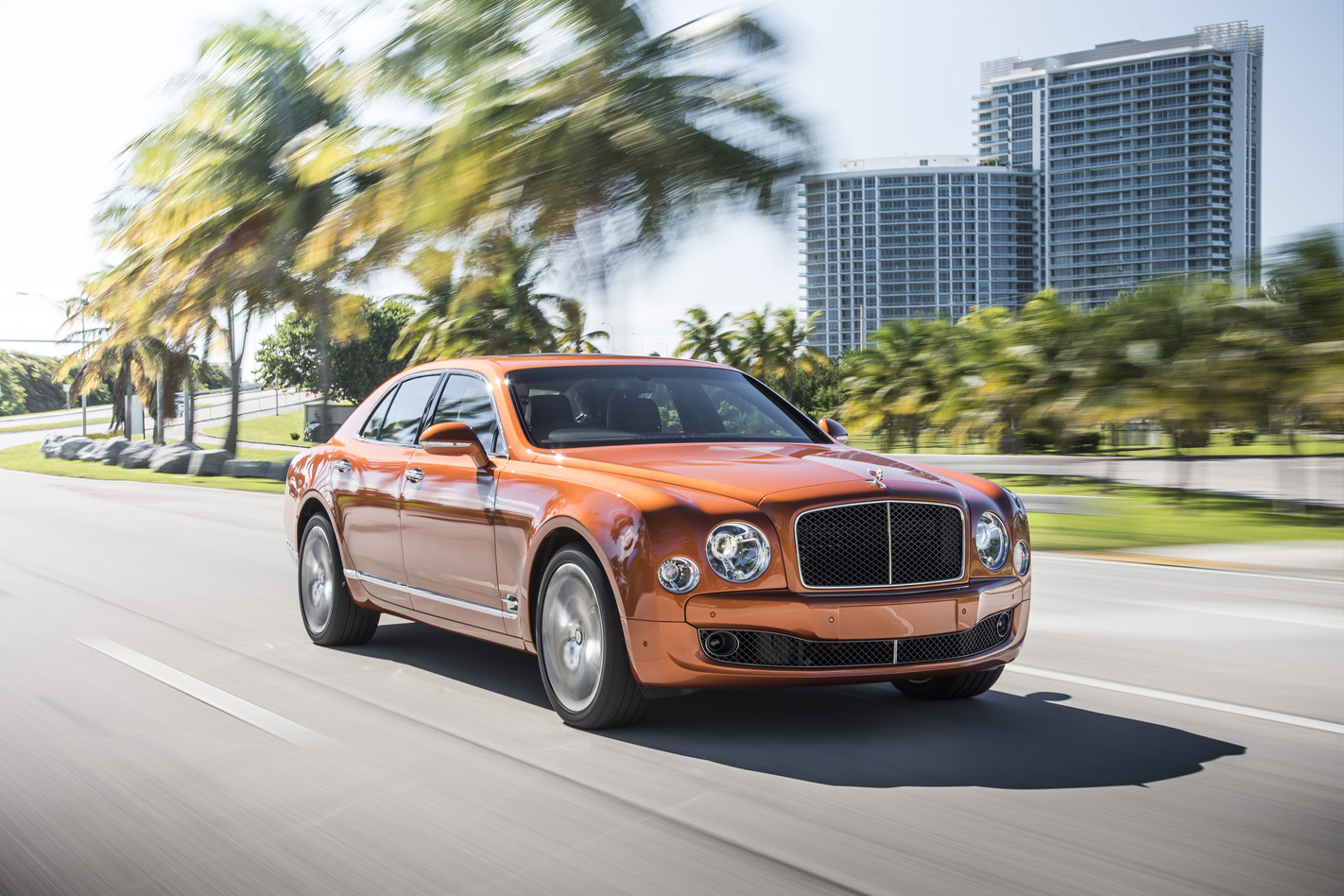
Bentley Mulsanne Speed
$733,387, 395kW/1100Nm
Large, traditional, and with carpets made of thick wool rather than recycled PET bottles, the Mulsanne is Bentley’s luxo-cruiser for those that prefer to ride in the back. Its 6.8-litre turbocharged V8 may be a low-revving grandfather’s axe of a machine, but with a gigantic 1100Nm of twist and a scarcely believable 4.9-second 0-100km/h sprint stat, it guarantees that progress won’t just be stately – it’ll be bloody quick too.
BMW M760Li
$424,710, 448kW/800Nm
BMW stops short of calling this rig an ‘M7’, but we wouldn’t blame the German automaker if it did. And why shouldn’t they? With a twin-turbocharged 6.0-litre V12 pushing out nearly 450kW and sending it to all four wheels, this big Bimmer can leap to 100km/h from standstill in 3.7 seconds. And you thought the Bentley was fast!
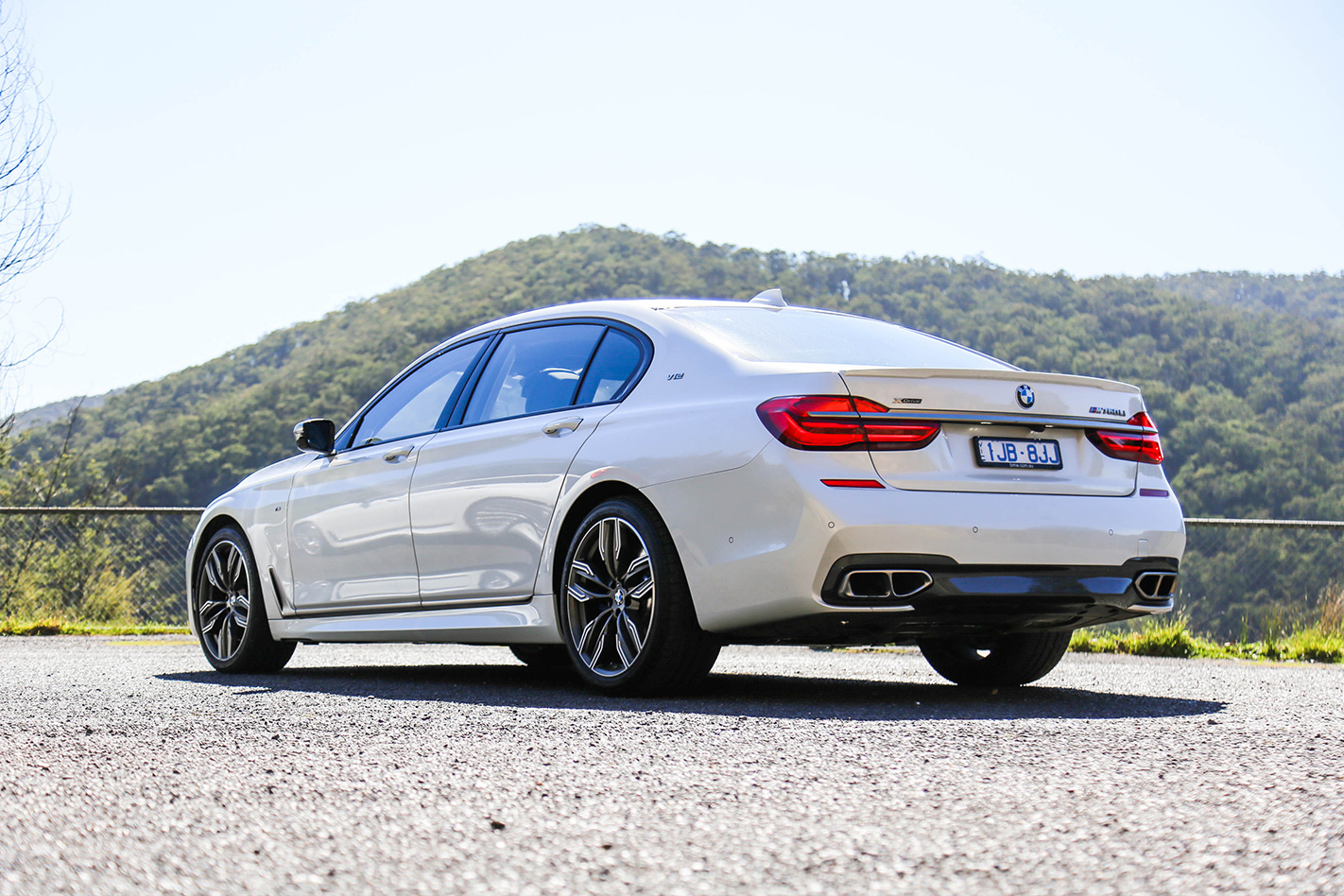
Sophisticated air suspension also endows the M760Li with handling that’s far from boatish, so there’s no fear of capsizing once a sharp turn approaches. Not that there are many of those on the run down the Hume.
On top of all that performance is an exceptional cruiser, with acres of rear seat space and sizable screens controlled by BMW’s nifty rear infotainment control tablet. Perfect for spending long hours on the road.
Jaguar XJ Autobiography LWB
$303,855, 375kW/625Nm
The Bentley isn’t the only refined British sedan on this list. Jaguar’s interpretation of a fleet-footed land yacht is the long-wheelbase XJ Autobiography, a rear-driven luxury four-door that takes power from a 5.0-litre supercharged V8 and takes it to the rear wheels for sporty dynamics.
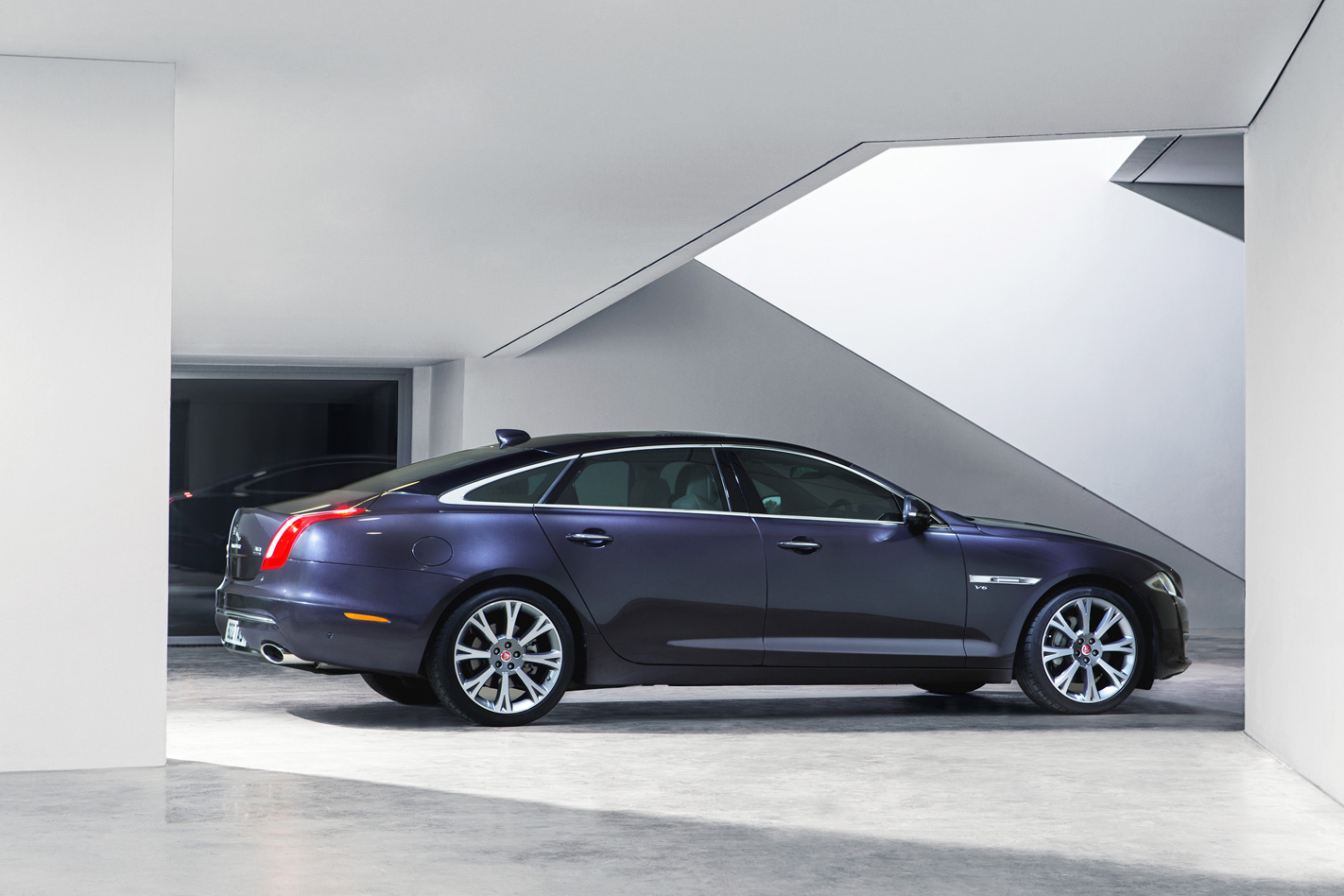
With extra length between its B- and C-pillars, this sizable English sedan cossets its rear passengers with 18-way adjustable leather seats, a 20-speaker, 825W sound system, and a serene ride.
A 0-100km/h sprint time of 4.9 seconds puts it on equal terms with the wafty Mulsanne for straight line speed, but its pricetag puts it in a far more affordable position than its fellow Brit. Even so, positioned north of $300K it’s definitely still one for the well-heeled
Range Rover SV Autobiography LWB 5.0-litre
$398,900, 405kW/680Nm
The XJ Autobiography’s 5.0-litre supercharged V8 also sees service in its corporate cousin, the colossal Range Rover SV Autobiography. However, while the Rangie’s extra half-tonne of mass (it weighs a whopping 2.4 tonne before you even put anything or anyone in it) adds nearly a second to the 0-100km/h sprint, it compensates with unbelievable levels of luxury.
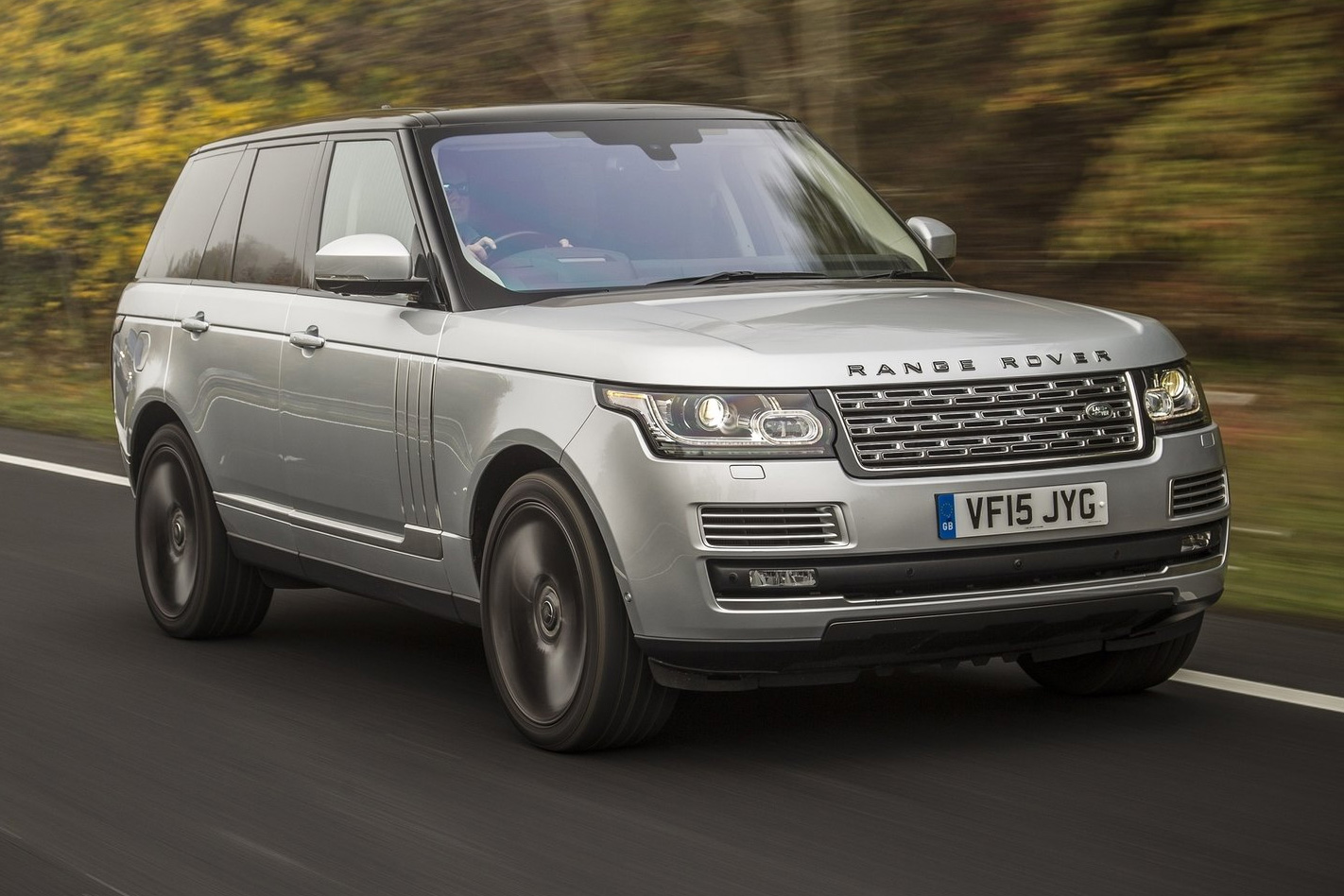
Despite its huge footprint, the Range Rover flagship only offers enough seats for four people. Those in the back are treated to a business-class experience, with individual fully-adjustable (and massage-giving) seats bisected by a high centre console and a fridge. The rear doors have a power-close function, the sound system has 29 speakers and there are milled metal features throughout. This is not your average Toorak Tractor
Rolls-Royce Phantom Drophead Coupe
$1,075,000, 338kW/720Nm
What if you prefer something a little different – an open deck for your yacht, rather than a cabin? What if you ALSO have a little over a million bucks burning a hole in your pocket?
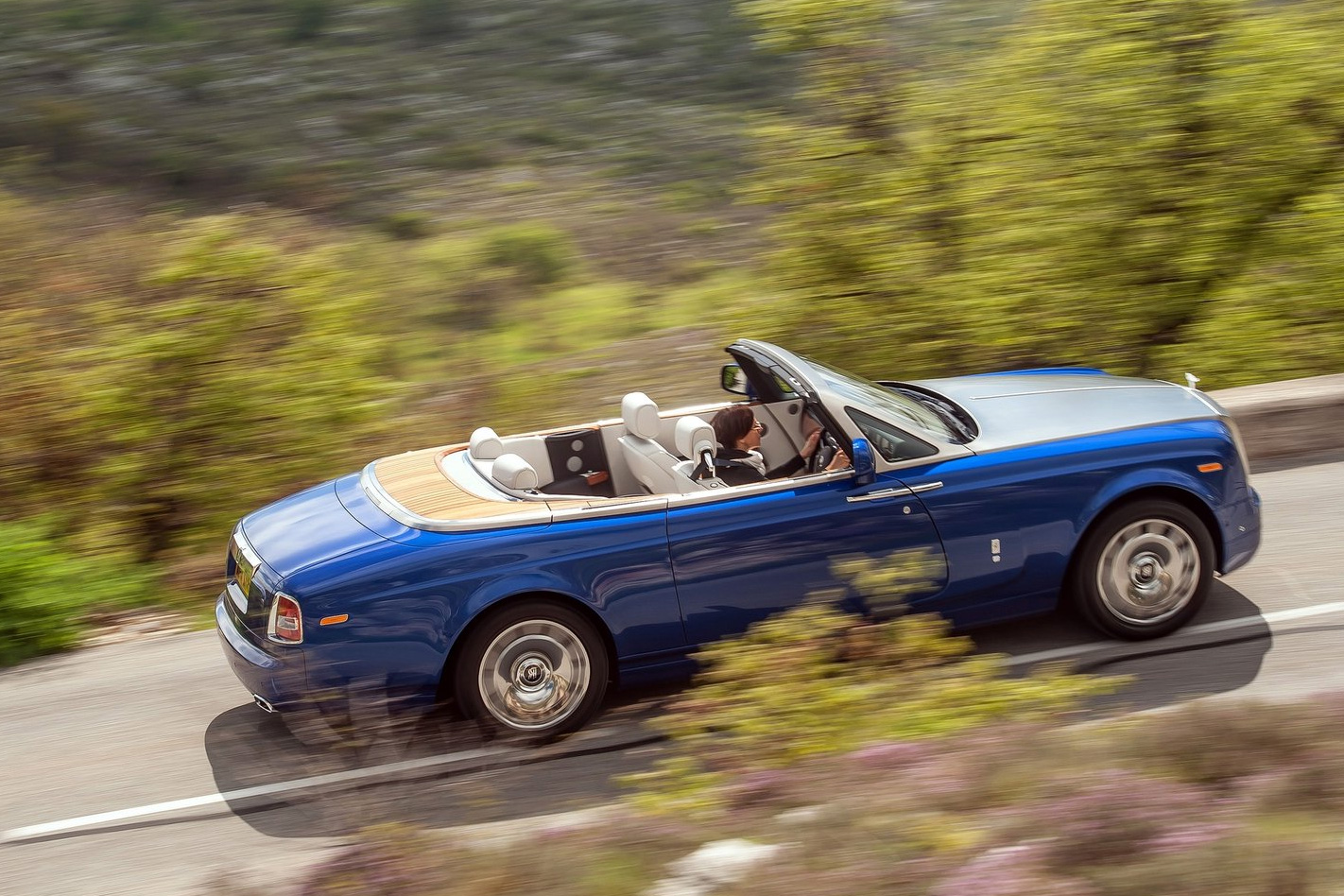
Enter the Rolls-Royce Phantom Drophead, the most unfeasibly expensive convertible ever. A shortened, two-doored and roofless version of Rolls-Royce’s uber-limo, the Phantom Drophead Coupe surges forth courtesy of a 6.7 litre V12, air suspension smoothing out even the choppiest of tarmac.
It also attempts to impersonate an actual yacht, with its rear tonneau cover able to be optioned with actual boat-style teak decking – which can also be applied to the boot floor if you like. Anchors aweigh!
THE various motorsport championships around the world have been run and won for the year, and the world’s race cars put into storage ahead of testing next year.
But that doesn’t mean we can’t celebrate what was another nailbiting season of racing, filled with equal measures of tragedy and triumph, punctuated by thrilling passes and jaw-dropping crashes.
We’ve decided to celebrate the racing year that was by honouring our favourite people, moments and races with some awards:
Biggest upset
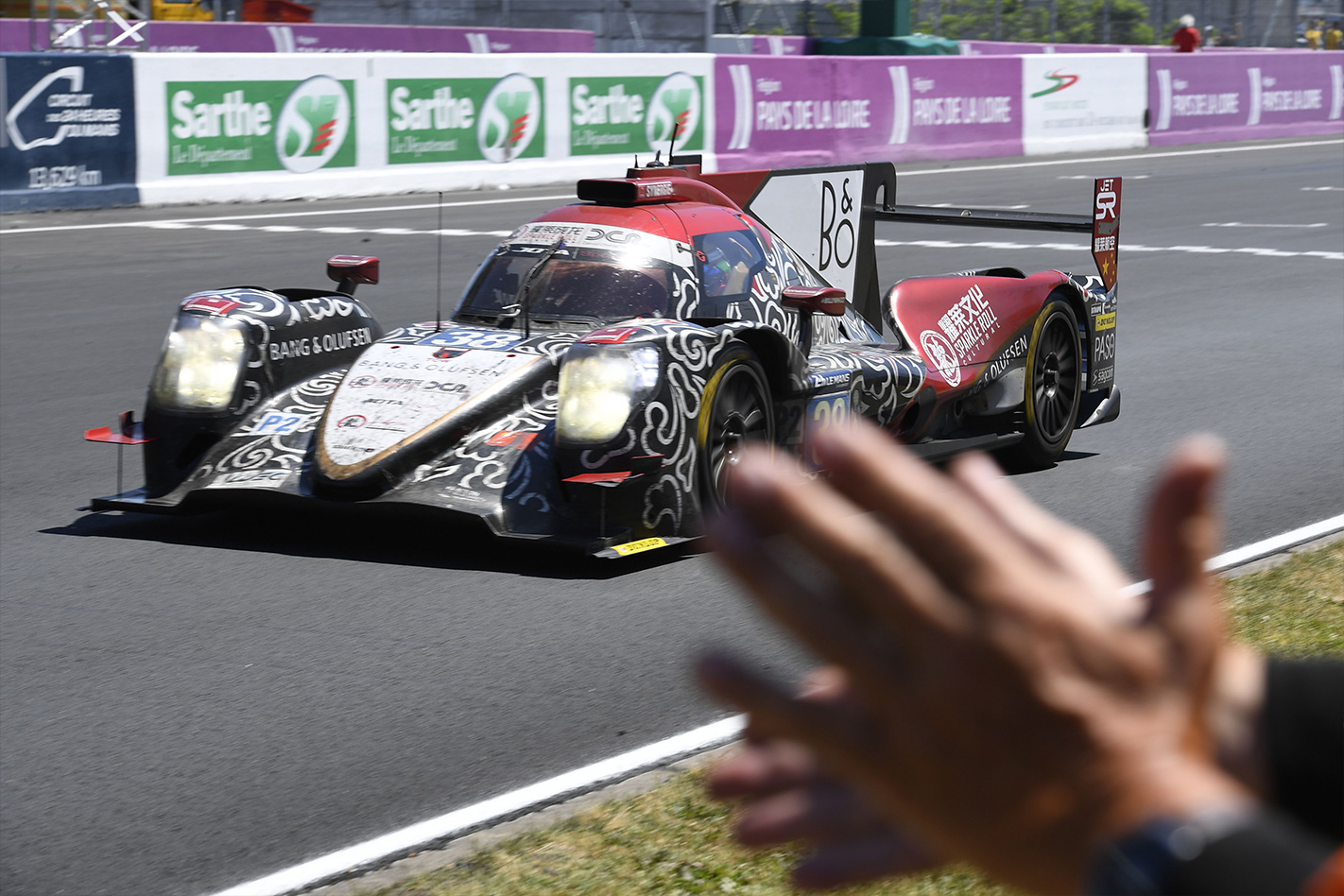
Jackie Chan Racing – 24 Hours of Le Mans
It’s four hours until the end of the biggest endurance race of the season – the 24 Hours of Le Mans – and an LMP2 car is leading the race. With a laptime roughly 10-11 seconds slower than the top-tier LMP1 weapons around the La Sarthe circuit, the thought of an LMP2 car leading the Le Mans outright is unthinkable. But motorsport fans, this wasn’t a dream, it was a reality which will haunt LMP1 teams for years to come.
The team that found itself at the front was Jackie Chan DC Racing (yes, THAT Jackie Chan). Unfortunately, Porsche managed to get one of its 919 LMP1 cars back on track and running in time to overtake the LMP2 minnow with two hours to spare. But, for a couple of glorious hours and for the first time in history, an LMP2 car led endurance racing’s greatest event before finishing second outright – outperforming multi-million-dollar factory squads.
Jordan Taylor
If you’re not already following Jordan Taylor on his various social media channels, change that. The American sportscar driver is one of the best ‘follows’ you can add to your feed. From his laugh-out-loud photo captions from flights, to his satirising of fellow racing drivers, to his backyard karting antics: Taylor is a refreshing change to the mountain of stale motorsport social media feeds.
Best pass
Ricciardo kills three birds with one pass
Passing a single driver in a corner is just part of the job for racers. Passing two in a single curve is impressive. But dispatching three opponents in one foul swoop … well, that makes you Daniel Ricciardo.
The Aussie driver overtook Nico Hulkenberg, Lance Stroll, and Felipe Massa in one masterful movement during a restart at the Azerbaijan Grand Prix. The Honey Badger at his best.
Best meltdown
Sebastien Buemi – Montreal Formula E ePrix
A bad day at work can grind the best of us down, but what happened to Sebastien Buemi in the Montreal Formula E race seemed to hit a nerve. With his title hopes on the line, Buemi got caught up in some early on-track carnage, with his race unravelling from there.
After losing the championship, Buemi went into full meltdown, picking verbal fights with three of his competitors in the space of a couple minutes. It’s quite something to watch.
Best personality
Daniel Ricciardo
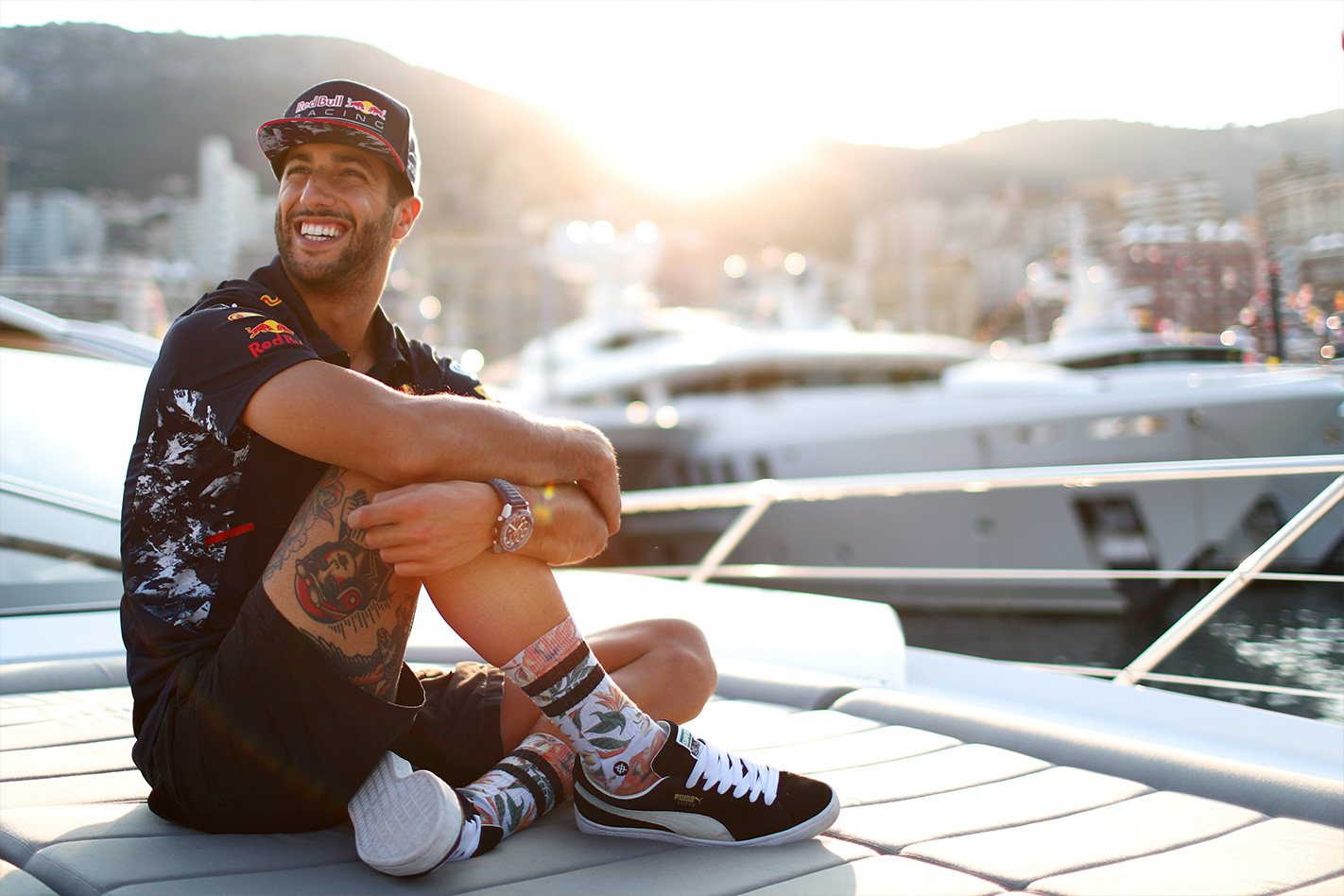
We here at Wheels HQ are self-aware enough to realise our bias might be showing with this one, but it couldn’t be anyone else, could it? Daniel Ricciardo has earned himself a reputation of being a laugh in interviews traditionally reserved for dry PR-fed lines. He’s doing the country proud, not least for stealing Lewis Hamilton’s phone during the podium celebrations in Mexico.
Not convinced? Watch his antics during a rain delay when qualifying at Monza, when the Aussie snatches a broadcast camera to go spy on his rivals at Mercedes.
Erebus Motorsport
Erebus was the little team that could, winning the biggest race of the Aussie motorsport calendar. David Reynolds and Luke Youlden’s victory at this year’s Bathurst 1000 was one for the ages -while Erebus Motorsport’s team owner Betty Klimenko has undoubtedly deep pockets, the squad has downsized in recent years and struggled for on-track performance. However, this year it has shaken off that reputation, and asserted its authority by adding taking the Peter Brock Trophy home from Mount Panorama following an unpredictable, wet, wild and thrilling endurance race.
Tearjerker moment
Fernando Alonso’s engine failure – Indianapolis 500
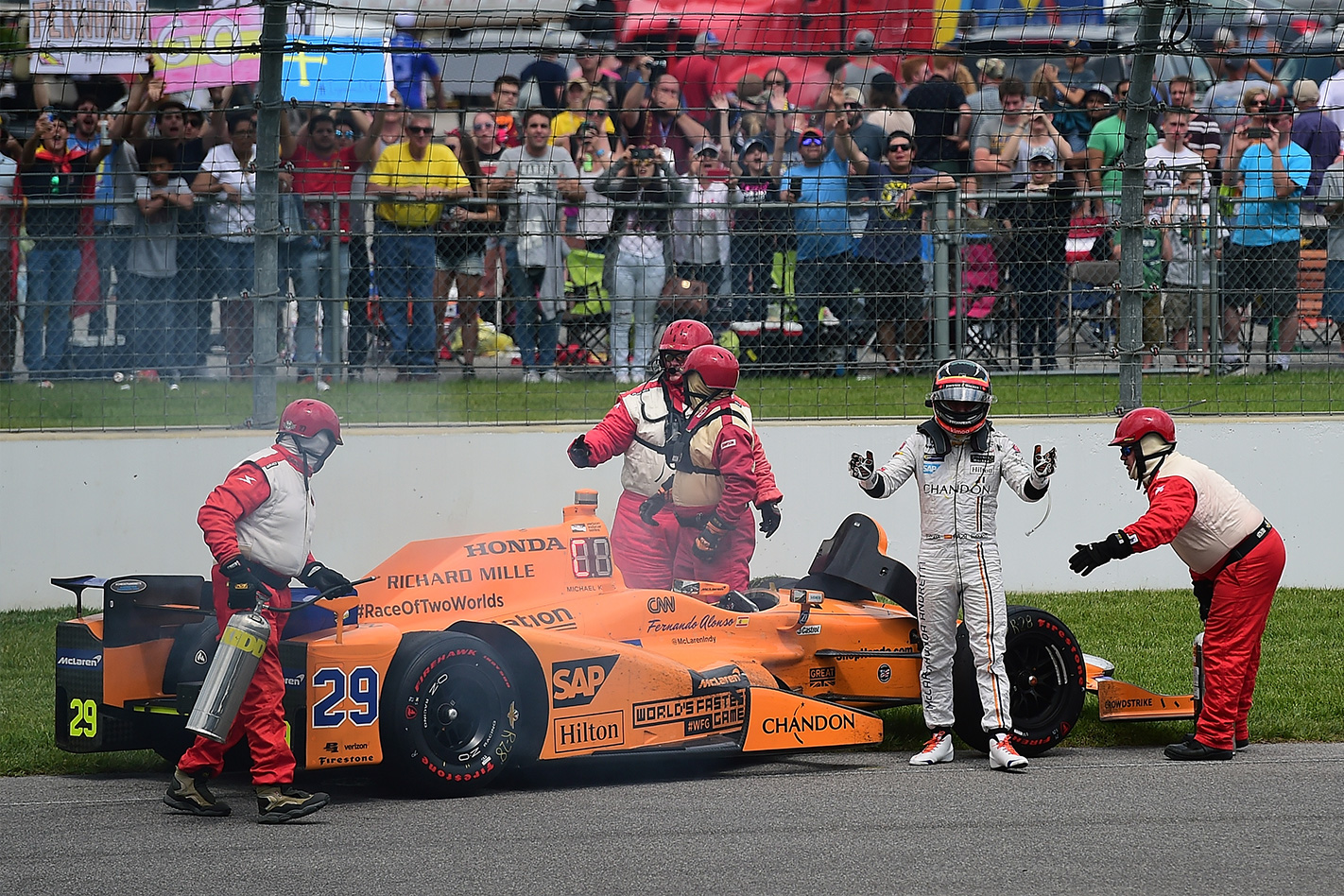
It was the news which shocked the motorsport community, Fernando Alonso, two-time world driver’s champion and McLaren Formula 1 driver would snub the Monaco Grand Prix to compete in the Indinapolis 500. Rated as one of the best living racing drivers around, it was no surprise Alonso adapted to oval racing swiftly. A solid qualifying performance was followed by a measured and impressive drive in the race. The Spaniard was leading the biggest single-day sporting event in the world on his first attempt, and victory looked assured.
But then ghosts of F1 engines past came back to haunt Alonso, and his Honda engine failed. It was a cruel twist of the knife for a man who has suffered at the hands of Honda’s turbo V6 engines for two years, and was clearly hoping for a reprieve.
Porsche 919 Hybrid
Officially being retired in Bahrain, Porsche’s LMP1 racer will be sorely missed from the world’s racetracks in 2018. Being sacrificed so the brand can join the growing ranks of Formula E, the 919 is headed to the halls of Porsche’s retirement warehouse with an illustrious record. The 2.0-litre V4 turbo hybrid accrued a trio of drivers’ and constructors’ championships, along with 16 victories and 11 pole positions from just 33 races. The LMP1 category, and the motorsport world, is poorer for its departure.
Best race team
M-Sport
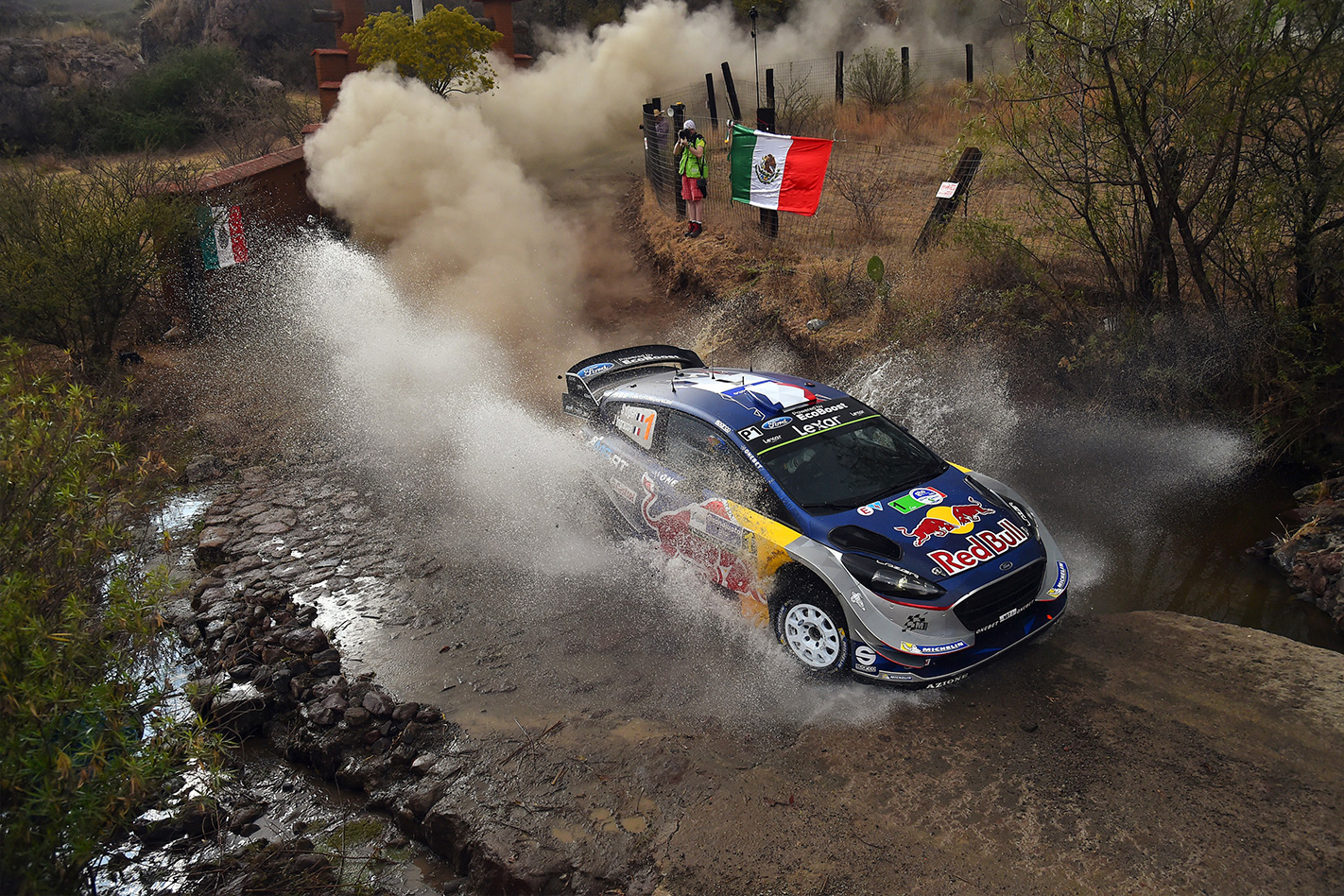
While technically the factory Ford squad, M-Sport receives little to no funding from the Blue Oval, making it a well-heeled privateer team. Building all-new cars to meet WRC’s new 2017 regulations, and with a star recruit in Sebastien Ogier, M-Sport went on to win both drivers’ and constructor’s championships, along with four rallies during the season.
Shane van Gisbergen – Winton
There could only be one, the king of victory celebrations in Supercars, Shane van Gisbergen. The Kiwi’s antics in Winton after his victory was one of the best he’s put down. A stout burnout, followed by sideways tyre-frying antics for the majority of the circuit. Watch, and enjoy. RIP tyres.
