Paolo Garella is like a cat. Throughout his 35-year career as an engineer, he has lived many lives, any one of which would be the highlight of most people’s resume, working with not only automotive royalty but actual royalty. Despite his success, his story is still being written. The 61-year-old generously donated his time during a long drive from his Italian home to talk MOTOR through his journey thus far. And what a journey.
Born in 1959, Garella grew up in a small town south of Turin in an automotive family. His father introduced him to the wonder of cars and his uncle was the general manager at Ducati. But it was an annual local event that would light the path ahead. “One thing that very strongly inspired my career was every year there was the Turin Motor Show. It was always a dream to go and see those fantastic cars and one year Pininfarina [showed] the Ferrari Pinin. For me that was a shock, I thought ‘this is what I want to do’. The car is important in my memory.”
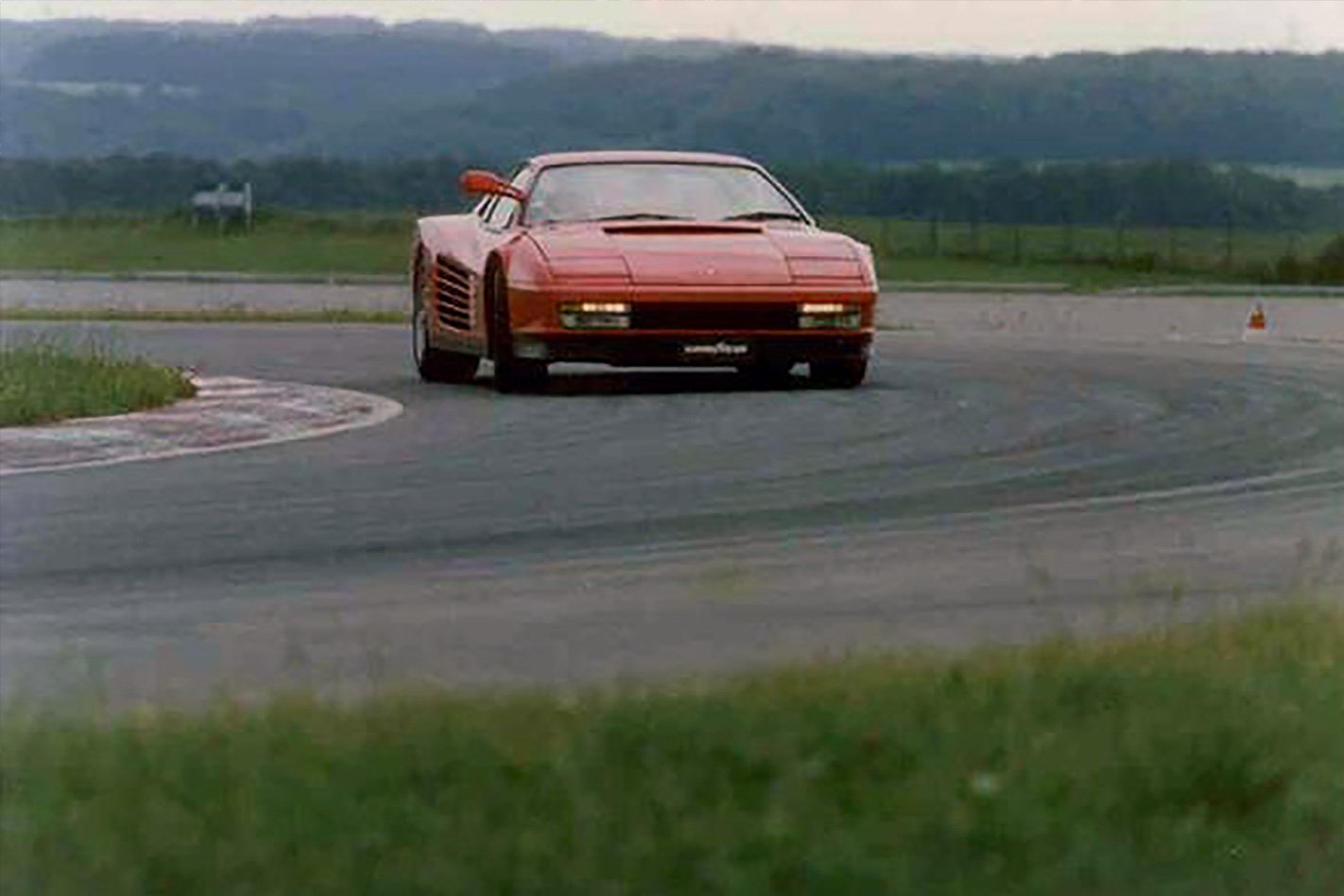
Having graduated from the Politecnico di Torino as a mechanical engineer, Garella began working for Goodyear as a test engineer at its Mireval proving ground in the south of France. “I really learned what the car should do. It was really very, very important for what I’ve done since, to be able to judge a car, to drive everything that was on the market for four or five years. There were people from France, from Belgium, from Germany, it was an incredible mixing pot of competence and ideas of the handling of a car, the comfort.”
The work was varied, Garella’s image archives showing everything from a Peugeot 309 GTi to a Ferrari F40 to a giant mining truck. His main project during this time was the creation of a new wet handling circuit at Mireval, a crucial component in tyre development.
“If I had to pick a memory from Goodyear I will pick the work we did on the wet handling track. That was an incredibly advanced project that involved tens of people from the two sides of the ocean. So it was a little bit of the true starting point of my career as a manager, to be able to put together a group of incredible people to reach an extraordinary achievement.”
From there Garella joined Albatech, where he worked on unusual concept projects like the electric Bertone Blitz and two-stroke Pininfarina Ethos – “I went to drive that car on the circuit I developed in Goodyear and that is a great memory” – before becoming technical director for Alba’s Group C sports car team.
In 1992 Garella made his biggest move, to Pininfarina, where he would spend nearly the next two decades working on some of the world’s most exotic machinery. Usually by tearing it apart. Garella’s primary role was to head Pininfarina’s special projects division, which was kept extraordinarily busy by its main client, the Royal Family of Brunei.
The Sultan of Brunei’s car collection is the stuff of legend. Said to contain anywhere between 5000 and 10,000 cars, over the next five or six years Garella and his team would create some of the more interesting additions. “When I joined Pininfarina already the work was around the Brunei cars and a few months after I joined they contacted us to have a direct deal. Before, all the cars were sold through this guy in Singapore. After I joined we started to sell the cars directly to them and we developed very strong links, developing the cars and discussing with them what kind of car they would like. From then it was a crazy five years, six years [during] which we’re building more than 60 cars every year.”
The combination of Pininfarina’s engineering skill and the Royal Family’s almost infinite resources made almost anything possible. For instance, a lack of right-hand drive availability wasn’t going to stop them having their favourite cars with the steering wheel on the ‘correct’ side.
“The first project we did directly for them were [Ferrari] 288 GTOs that were made right-hand drive, [and] we increase the power. It was fun because two cars were sent from Brunei to be transformed but two other cars I went to buy them. Honestly, the 288 was an easy one, very easy. The F40 was easy because it was a 308 [base], so therefore we could buy the steering rack. The only thing was that because of the width of the tyre we had to redesign the pedals because the space on the right side was not as wide [as] on the left side.
“The toughest one we did was the Porsche 959. Really, really tough. That was completely re-engineered on the front, we had to re-do the fuel tank, that was a really big pain. I think we did four of those. All the projects had their difficulties. One of the big things was air-conditioning because all those cars were not really thought of to have strong air-conditioning. And for them in Brunei one of the key things was the air-conditioning, so every time we had to spend a lot of time and tuning,” he explains.
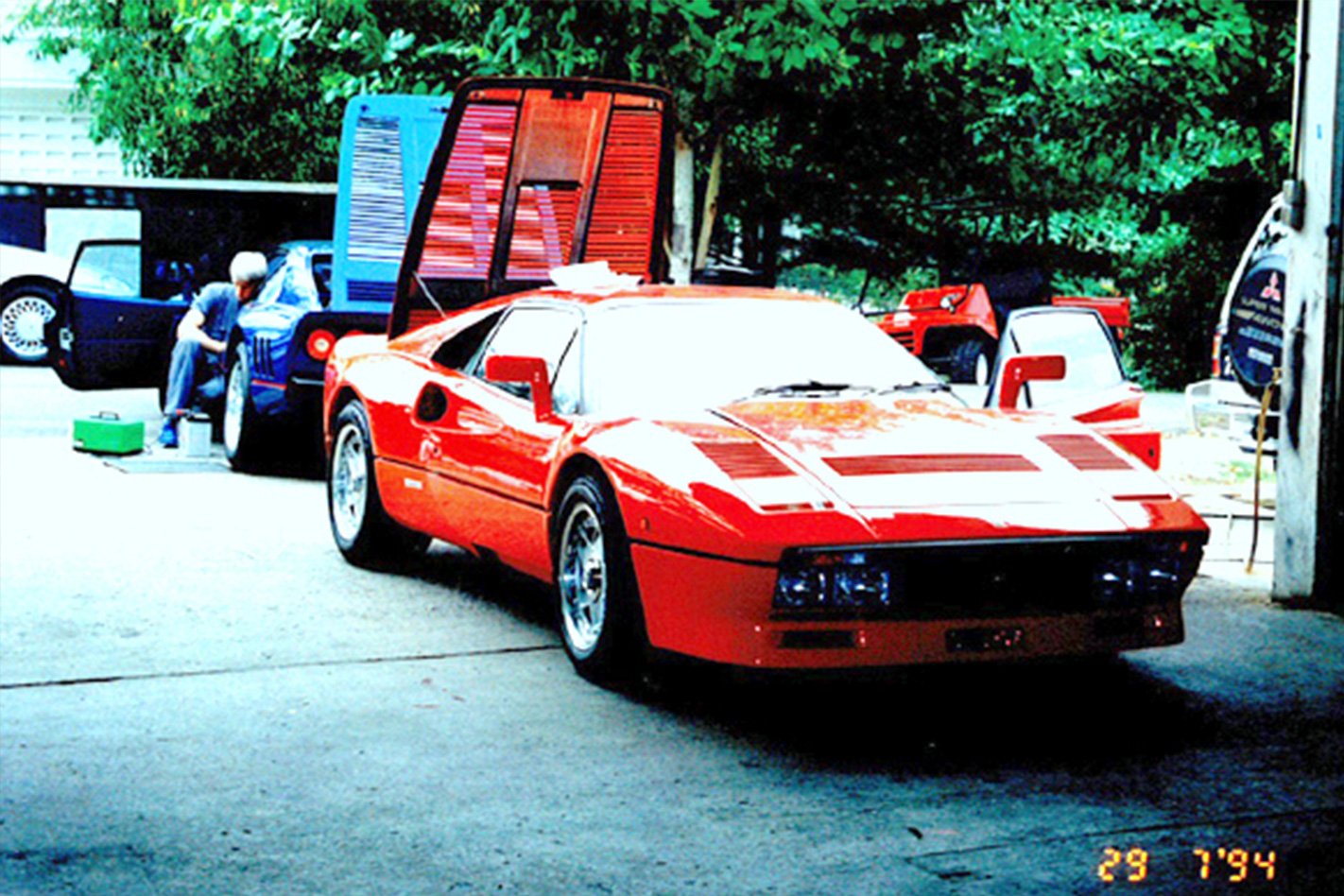
As you might have surmised, these transformations were not quick backyard jobs. Many of the cars were repainted (hence the existence of blue and black 288 GTOs and yellow, grey and green F40s) and then subjected to OEM-style quality tests, including hot weather and water durability.
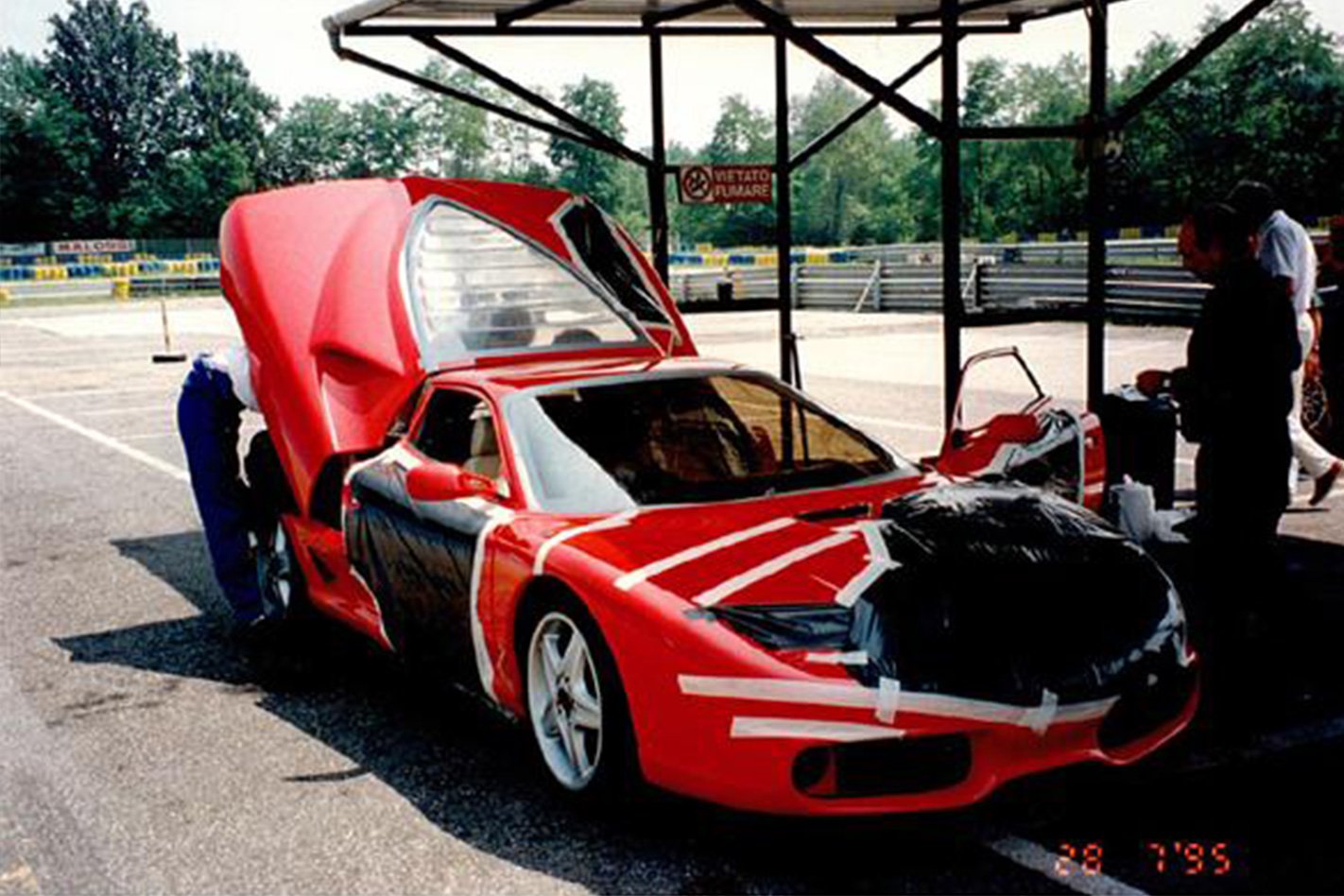
“It was a full OEM development process and, frankly, some of the projects like the [Ferrari] 456 four-door and estate, that was a true development in which we did benchmarking activities, we reengineered completely the door system of the cars, the chassis was completely modified, the gearbox.”
The 456s were particularly popular with the Royal Family, Pininfarina delivering 42 (!) examples in various guises, all with a bespoke automatic transmission.
“When we started deliveries the Ferrari 456 didn’t have an automatic transmission yet, so we adapted the Porsche 928 transmission and made some improvements. When Ferrari came out with their transmission the Royal Family didn’t like it and continued to ask us to modify 456 with our automatic.”
Brunei 456s came in many shapes – two-door coupes and convertibles, four-door sedans and five-door wagons – but it wasn’t the only car to be re-’boxed.
“We did the same thing on the 550 [Maranello]. That was a great development. We used the Mercedes transmission, I think was six-speed, and the drivability of that transmission was fantastic. Unfortunately, that was towards the end of the relationship with them but we did a lot of work in transmissions. We did a Ferrari 355 with a semi-automatic transmission, we did Testarossa with semi-auto, we did the XJ220 with semi-auto and these were developed together with Prodrive in England.
“They were hybrid systems that were using pneumatic and hydraulic actuation, pneumatic for the gear engagements and hydraulic for the clutch control. Because the level of the electronics was not as refined as today, it was really a lot of tuning to make it work. Very frankly, some of the applications, the one on the XJ220 for example, was never fully reliable [and] need continual adjustment. There were different levels of refinement depending on the donor car.”
Despite its capricious nature, the XJ220-based ‘Pininfarina J’ holds a special place in Garella’s heart. “My favourite project was the Pininfarina J, because on that car I still have my personal speed record. I did 220mph (355km/h) in England. It was really incredible.”
That’s almost as incredible as some of Pininfarina’s more obscure creations. There were the Ferrari FXs, three Testarossas (and, later, three 512s) restyled and rebodied in carbon fibre with more power and the aforementioned semi-auto gearbox. There was the Aston Martin AM3 and AM4 (three units of each), the Bentley Continental R-based B2 and B3 (13 of each), a GMC Suburban with camouflage paint and one-way glass, and “a Ferrari 456 with night vision so you could drive it at night without the lights on.”
Um, pardon?
“It was very simple. We had five screens in the car and we had six cameras around the car and we had an infra-red illuminator mounted on the bumper so we had a mix of day and night vision cameras. In the night you would switch on the infra-red illuminators that would light the surroundings and you could drive at night by looking at the screens.”
Every two months Garella would fly to Brunei for two weeks accompanying his latest creations but it was far from a holiday. “It was very stressful. Basically, there were two weeks where you would not sleep much and you were always on call. The moment the car was landing in Brunei they wanted the car immediately, that was the big thing. The car had to be ready immediately for [Prince Jefri] to be driven and to be seen – it was like the new toys had arrived in town. The stress was arriving in Brunei and at that moment you had to be sure the car was working.”
It wasn’t always the case. In a previous interview, Garella described a time when things didn’t go to plan.
“The Bentley B2 was a very important project for us because it was the first time that we delivered completely new cars in a direct deal and it was a big rush. We had to deliver the car for the birthday of Prince Jefri and Prince Hakeem was very keen on having the car delivered.
“We shipped the car by a special plane and the car arrived in Brunei the night of the party. We drove straight to the garage. The car was so wet because of the rain that we had to dry the complete interior and many of the electronic functions were not working.
“Finally, the car was ready. We brought the car in front of the house where the party was going on, everything was ready but we received a panic phone call that the steering wheel was not straight. One of our mechanics started unbolting the steering wheel and, in the middle of the operation, Prince Hakeem with his father and all the court walked through to see the car. It was a great embarrassment.
“Myself and some friends were hiding behind a pillar not to be seen and our mechanics just walked away very quietly. Prince Hakeem of course became ballistic, was furious with the mechanic and called us to adjust the car in the evening. But the car was a great success.”
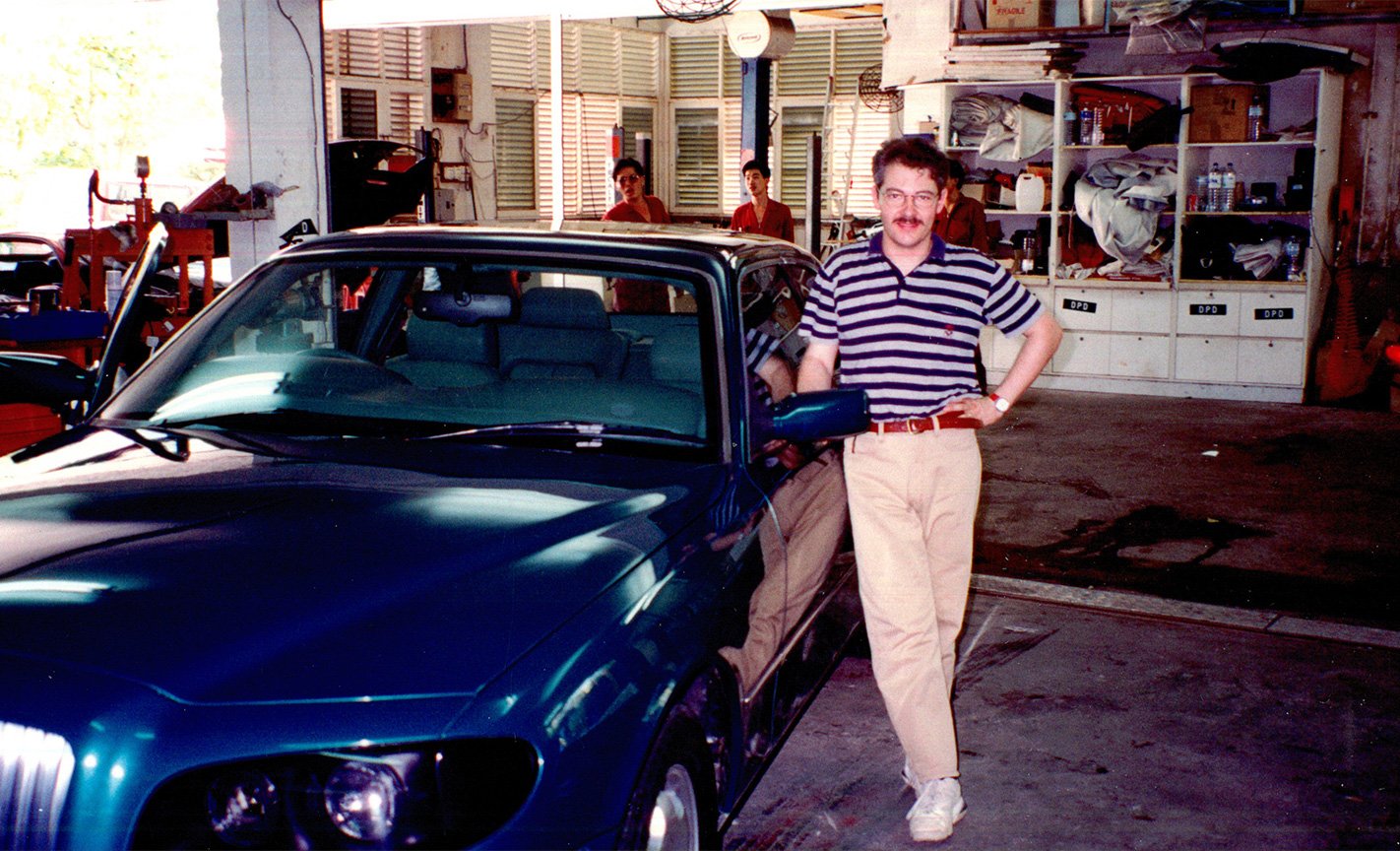
Working conditions also left something to be desired, at least in the beginning: “When we arrive in ’92 it was really working in the jungle with rats and iguanas coming and seeing what you are doing. Then through the years, the system improved significantly and in the end it was very, very pristine.
“They spent a lot of money on the storage of the cars, on the new garages, by the end it was nice.”
Sadly, the majority of the Brunei collection barely moved with many cars slowly rotting away. Was it upsetting to see all this hard work go to waste?
“Myself and my colleague Dario, who was managing the commercial side, we told ourselves at the beginning that this could not last forever. Yes, we were sad that some of the cars were not used but the big race between the manufacturers was ‘which is the cars they liked most and used most’? We have been extremely successful because the 456 was the car, in general, they were really using the most; the estate, the four-door, they were cars that really they loved. It was a very strange competition.”
The 1997 Asian financial crisis and the investigation into Prince Jefri’s alleged misappropriation of state funds brought an end to the arrangement, court documents showing the family had spent at least AU$100million with Pininfarina. Over the next three or four years, Garella restructured Pinfinfarina’s engineering activities, in the process pitching to Andrea Pininfarina the idea of relaunching special projects.
“Andrea liked the idea and my idea was to do limited series and one-offs. The limited series was the Pininfarina Enjoy that really didn’t work very much, so I tried to push on one-off projects.”
The Pininfarina Enjoy was a Lotus-based lightweight sports car that was expected to have a high-end interior by Louis Vuitton, only for the latter to refuse to put its logo on the car, removing any possibility of sales to the brand-obsessed potential clientele.
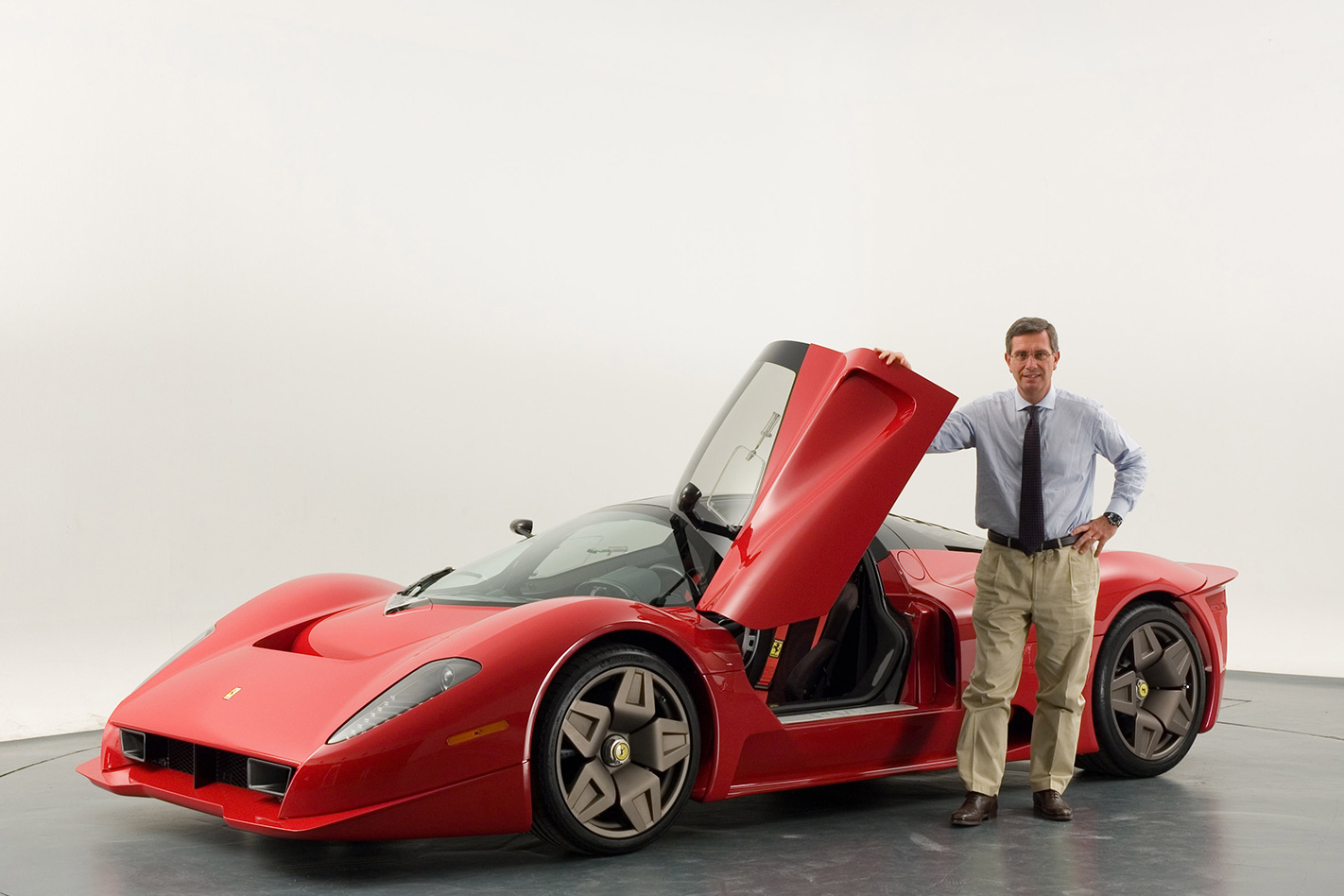
Happily, the one-off program was more successful.
“We started to go and contact hundreds of people around the world asking if they were interested in doing a one-off. In 2005-2009 we were doing one project every 18 months roughly. The first contract that was signed for one-off was the Kappa, then we did the P4/5, then we did another project for an American gentleman that remains a secret, then we did the [Rolls-Royce] Hyperion and finally the New Stratos.”
Through Pininfarina’s one-off program Garella would create lasting friendships. The first project, the 612 Kappa, commissioned by New York real estate mogul Peter Kalikow, led to another, the recreation of the Momo Mirage, a Chevy-powered, Italian-built grand tourer originally created by Kalikow in the 1960s.
The incredible P4/5, commissioned by American film producer Jim Glickenhaus, would forge an even stronger bond.
“The second person that responded positively was Jim and [he] came to us with the idea of doing a homage to the [Ferrari] P3/4. His idea was very much to do almost a replica of the P3/4 with a little bit of modern technology. But we steered his idea and we convinced him to do what then became P4/5.”
Using Glickenhaus’s brand new Ferrari Enzo as a base, designer Jason Castriota penned the styling which Garella and his team then turned into a fully functioning, road-registered supercar, the final P4/5 unveiled at the 2006 Pebble Beach Concours. Then-Ferrari president Luca di Montezemolo reportedly hit the roof when he learned Pininfarina was redesigning Maranello’s flagship supercar. But the success of the project is illustrated by the fact the completed car eventually received Ferrari’s blessing. To date, the P4/5 is the only Ferrari not to have been built by Ferrari.
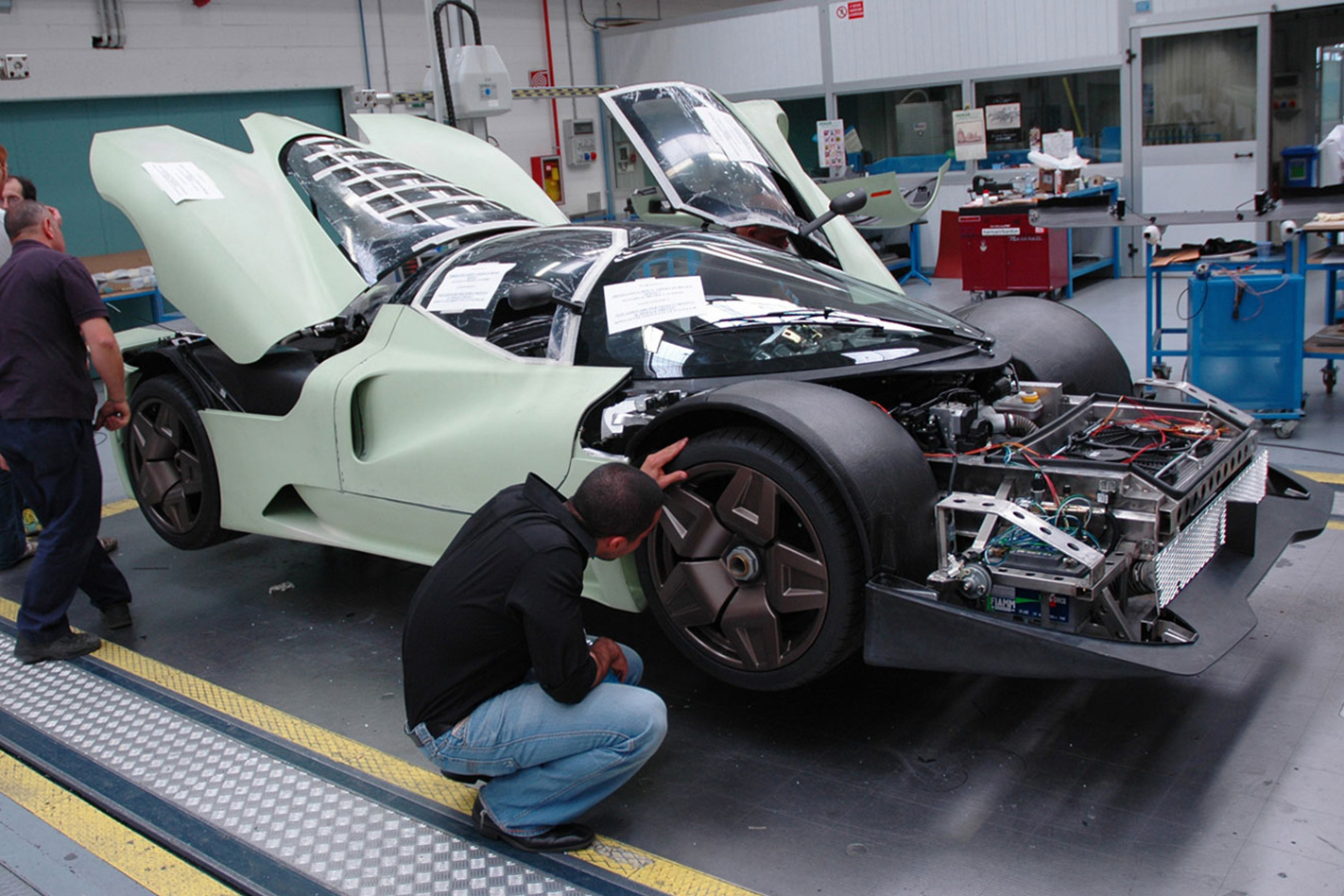
“I have to say P4/5 has been a little bit of a magic project. It’s one of these projects that happen once or twice in your life in which you’re able to put together a number of people who have a very high capability, they want to demonstrate something and, for different reasons, they love the concept.
On one side there was myself that wanted to show that this concept of one-off was working, and the chief stylist of it was Castriota who wanted to do a car inspired by the P3/4. The people in the workshop wanted to go back to the time of Brunei doing real cars, so there was a fantastic mix that transformed this project into one of the most famous one-offs anywhere in the world.
“Montezemolo when he saw the car said ‘ok, yes, you can put the Ferrari emblem, it is going to be good for the myth of Ferrari’.”
Pininfarina’s next project for Glickenhaus was the restoration of the one-off Ferrari 206 Dino Competizione, but Garella would soon be tasked with running the P4/5 Competizione race program. Based on a Ferrari F430 GT2, it found a home at the Nurburgring 24-Hour, where it had a troubled run to 39th place in 2011 but in 2012, fitted with a KERS hybrid system, finished an impressive 12th outright.
“For me, the P4/5 Competizione is a little bit of a transition. I managed the project and I got more and more involved managing even the technical solution through the development of the car. Originally the decision was to choose a company to do this car and managing the race. This worked a little bit the first year but already from the second year what we wanted was a little different to what was delivered so we decided to be completely independent and for this I founded MAT.”
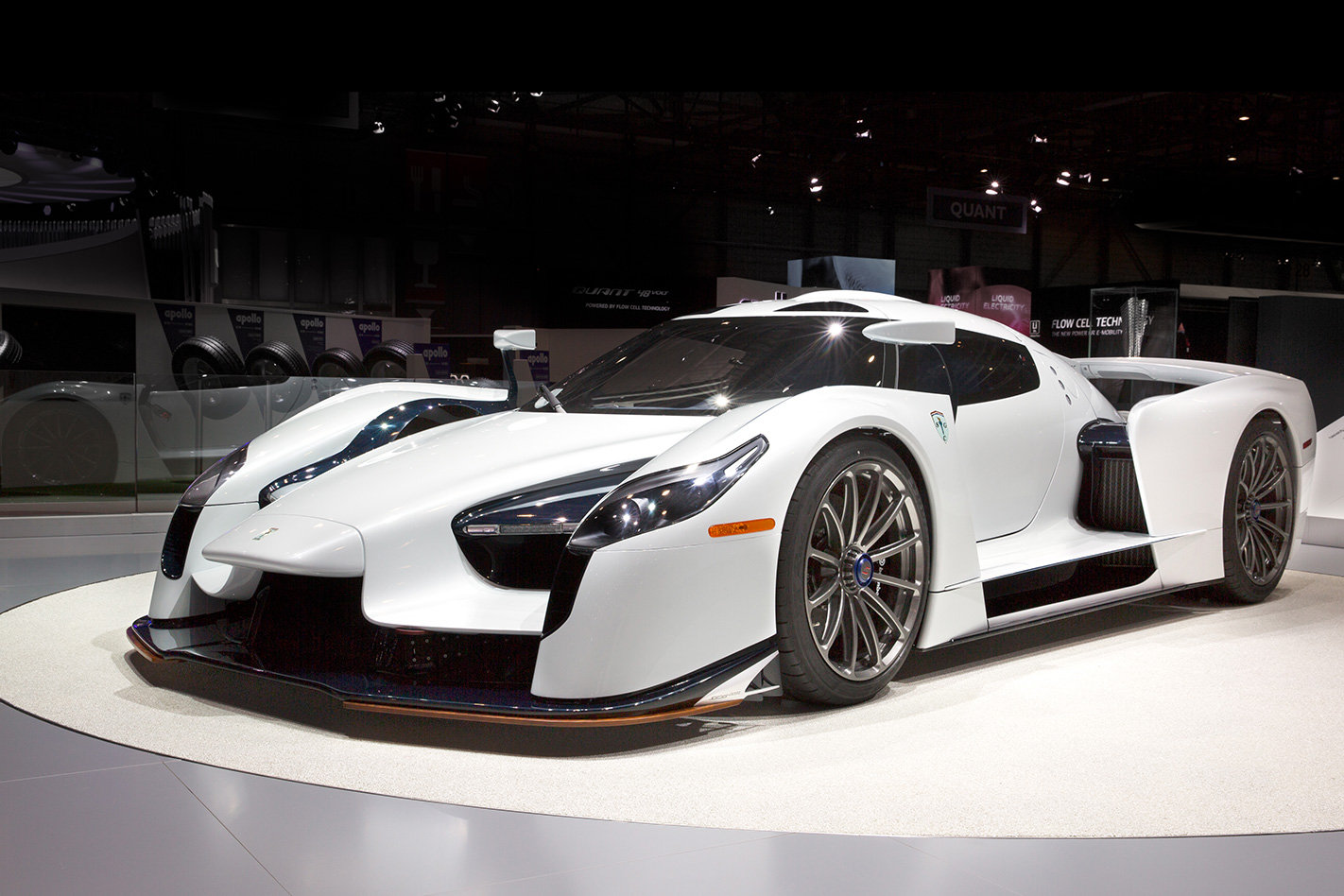
Manifattura Automobili Torino’s first project was the P4/5 Competizione’s successor, the Glickenhaus SCG-003, which was intended to not only be a race car but launch Glickenhaus as a supercar manufacturer.
“Let’s say that SCG represents all my career and history. There are a number of technical solutions – on the body, on the chassis, on the suspension but also in the process that was used to create the car – that are a little bit the apex of my career. I learned from the big manufacturers, the small manufacturers, the racing etc.
What I’m very proud of is the process we followed to do a car that was not only a race car but was the start of a new car manufacturer. I’ve been to hundreds of presentations in which the styling says ‘form follows function’ but I think there is no other road car that represents form follows function because that car was really conceived for a specific performance, to be the fastest car on the Nurburgring.”
The SCG-003 achieved its goal in 2017, securing pole position for the Nurburgring 24-Hour.
“The moment when we did the pole position at the Nurburgring with the SCG … was not only a technical achievement but a political achievement of an American guy with an Italian team beating the Germans at the cathedral of automotive in Germany, and this was very much a political work. When we met, Jim didn’t even know what the Nurburgring was or that there was a 24-Hour, and to be there and to be in front of the grid was amazing.”
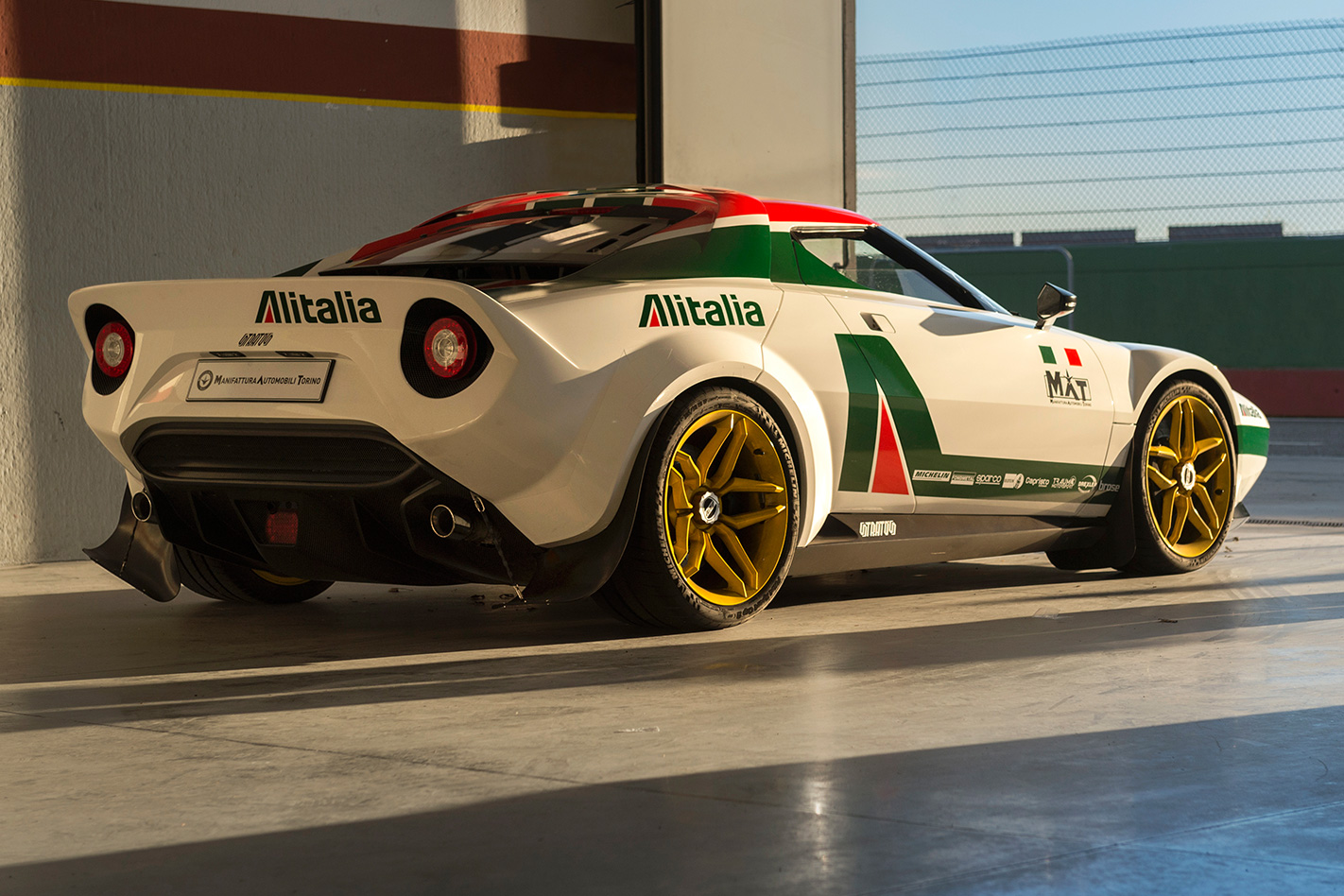
MAT is also responsible for producing 25 units of the New Stratos, a car that started as a Pininfarina one-off.
“This was the last one-off project I did in Pininfarina. I did it half in Pininfarina, half as an external consultant. The idea came from a group of people but mainly from Michael Stoschek, a very famous customer that secured the Stratos brand and he is a Stratos fan.
Michael is a person that is incredibly demanding and he has incredible attention to detail, so the development of the car lasted for more than two years and he didn’t stop until it was right. Again it was one of these magic projects in which the stylist, the people involved etc. wanted to do something like this and you can see with the proportions, the surfaces, the technical solutions; these are things [done] not only because you have to do it but because you want something very, very special and unique.”
The New Stratos used the chassis and powertrain from the 430 Scuderia but was substantially re-engineered to be lighter, smaller and more powerful. The intended production run of 25 cars was kyboshed by Luca di Montezemolo, who forbade any Ferrari suppliers from supporting the project. Thankfully a decade later Ferrari has no such qualms and the New Stratos will reach production with the added joy of a six-speed manual option.
“The New Stratos is much lighter than the 430 Scuderia, it handles better, it has the Ferrari engine. All this was achieved thanks to Michael and a team of people who really wanted to create something very, very special.”
Garella describes MAT as “an accelerator”.
“Basically, a company or individuals that want to become a car manufacturer, we are able in one year, 18 months to give them a product. Then if they want, we can help them with the communications, the marketing and the sales. Then it’s up to them if they want to go on their own or if they want to still have us involved in the production and promotion of the car.”
It’s a role MAT first played with the Glickenhaus SCG-003 and has now repeated with the wild Apollo Intensa Emozione, a radically styled hypercar that makes a Lamborghini Aventador SVJ look a bit soft. It has a Ferrari-derived 6.3-litre V12 producing 582kW/760Nm in a 1250kg body that can also generate 1350kg of downforce at 300km/h. Just 10 will be built.
“There are projects like SCG which I consider very much our project. Then there are projects like the Apollo when we have a client that has a certain idea and asked us to interpret and realise – with a limited budget and very limited time – what he wants. For me, the importance of the Apollo is that after a bad experience in Germany, what he was not able to achieve in two years we deliver the first car in 12 months.
“It was very interesting from a process point of view with the time constraints we had. We did all the development, we did the two cars and then we deliver the tools and everything and they are doing the cars with a company in Germany.”
MAT’s latest project is another hypercar and yet couldn’t be more different. Whereas the Apollo used a naturally-aspirated V12 attached to a six-speed sequential manual and race car aero, the bizarrely-named Aspark Owl is powered by batteries and driven by a quartet of electric motors.
“Technically, the Aspark has been a fantastic challenge because the client came to us with a design and some very simple targets: the car had to be lower than a metre and they wanted to achieve this crazy acceleration. Frankly, when they came to us we saw all these other manufacturers like Rimac and Pininfarina declaring the same numbers but ‘ok we will be the last one and that’s fine, let’s do it’.
“After one year not only have we done it, we are the first one to do it. We have done 1.72sec 0-60mph and Rimac is announcing 1.85sec and we know that we can do better. We have done 350km/h and the only reason we haven’t been faster is that we are waiting for the sophistication of the tyres because our tyre limit is 350km/h.
“In an incredibly short time we have reached performance that other companies are talking [about for] years but they have not achieved yet.
“I would never have thought when I was in Brunei that I would develop a full-electric hypercar. Honestly I’m doing all these projects because I love driving cars and I have to say to drive these cars with this technology – the Owl has four motors, four gearboxes, torque vectoring, ESP, everything developed in-house by us, it has a centre of gravity that is lower than the middle of the wheels – it’s really an incredible thing to drive.”
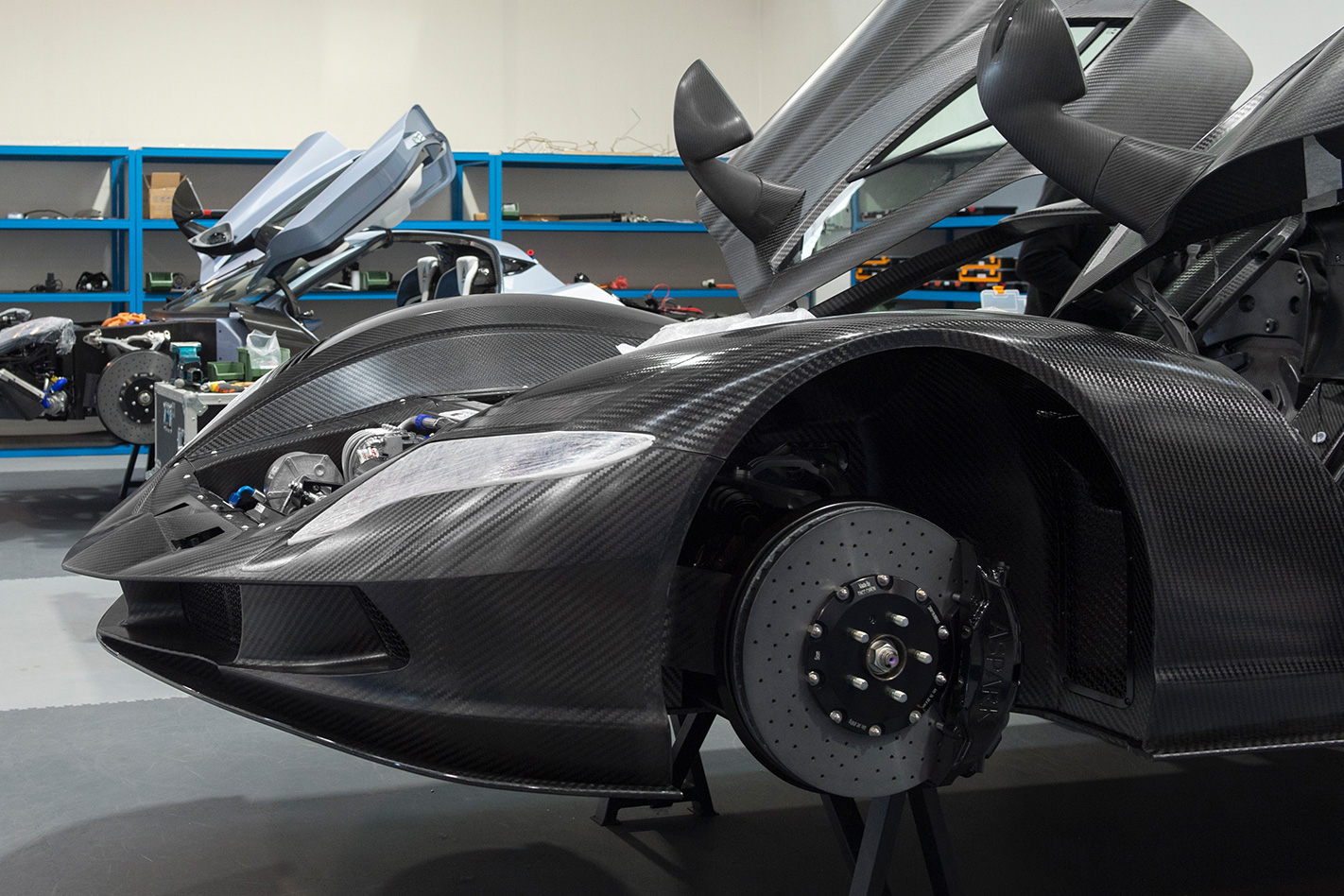
The Owl’s numbers are ludicrous. As well as the 1.72sec 0-60mph (97km/h) sprint, 0-300km/h is claimed to take just 10.6sec thanks to its 69kWh battery and quartet of electric motors producing 1480kW/2000Nm. I ask Garella if he can describe what it’s like to drive with such power:
“No. What’s incredible is with this electric motor you have the same [rate of change] in braking and acceleration and this is really what is completely different in these cars. It means that your tyres are always at the limit of grip. If you don’t drive you don’t understand. With these cars, you have so much torque and so much power that if you don’t have the electronic aids the tyres will just spin all the time. So the electronics actually make the car drivable.
“With the electronics, you can make the car oversteer, understeer, you can do drifting, you can do whatever you want. Your capabilities are more linked to managing those electronics because the electronics bring the car to the limit.
“The electronics drive the car, you really don’t drive the car.
“When you do the 0-100km/h you are not in control because [by] the time you push the pedal you can count, 1…2… you are at 100km/h. To be able to understand that performance you have to do it 20 times. I think this is interesting on this vehicle, [it gives] you the possibility to feel something that no other cars will give you in terms of feeling. This is what I think is interesting as an engineer and as a human being, to try something new and have something new to experience.”
Garella has ambitions beyond being an engineering gun for hire, however.
“We are in a very interesting moment, we are doing the Owl and we are discussing other projects. But for me, the next step is to build our own car for our brand. We were ready to show something to a limited number of people [at the Geneva Motor Show]. Unfortunately, Geneva was cancelled. But in this moment we are looking for investors. I’ve seen all these people coming and trying to enter the automotive world and I would like now to do it myself in the right way.
For this we need support and we need funding because to do a car is a big step and not only to do the car but to create a sales network and to grow and do our own thing.
We have a concept that is very, very special. It’s not the standard supercar. It’s a hybrid vehicle with incredible capability on-road and off-road, a vehicle perfect for Australia! The style is very unique and there are a number of features that I will announce that I think will make this vehicle very, very unique. It is not only a vehicle but a development of a number of systems that would be able to be used on other cars and that with a general approach this development of these systems should allow the company to grow and sell similar technology to other manufacturers.”
His energy and enthusiasm is infectious. Despite 35 years of incredible adventures, it’s clear that Paolo Garella still has a few automotive lives left to live.
Worldwide plug-in vehicle sales defied the Covid-19-led economic downturn to jump by at least 43 per cent in 2020.
Figures are still being compiled, but it’s expected the final tally will show 3.24 million new battery electric vehicles (BEV) and plug-in hybrid vehicles (PHEV) were sold compared to 2.26 million in 2019, according to a report published by online database EVvolumes.com.
Of these 1.4 million were sold in Europe, with the Continent seeing a 137 per cent increase in EV sales in a year when the overall vehicle market was down 20 per cent.
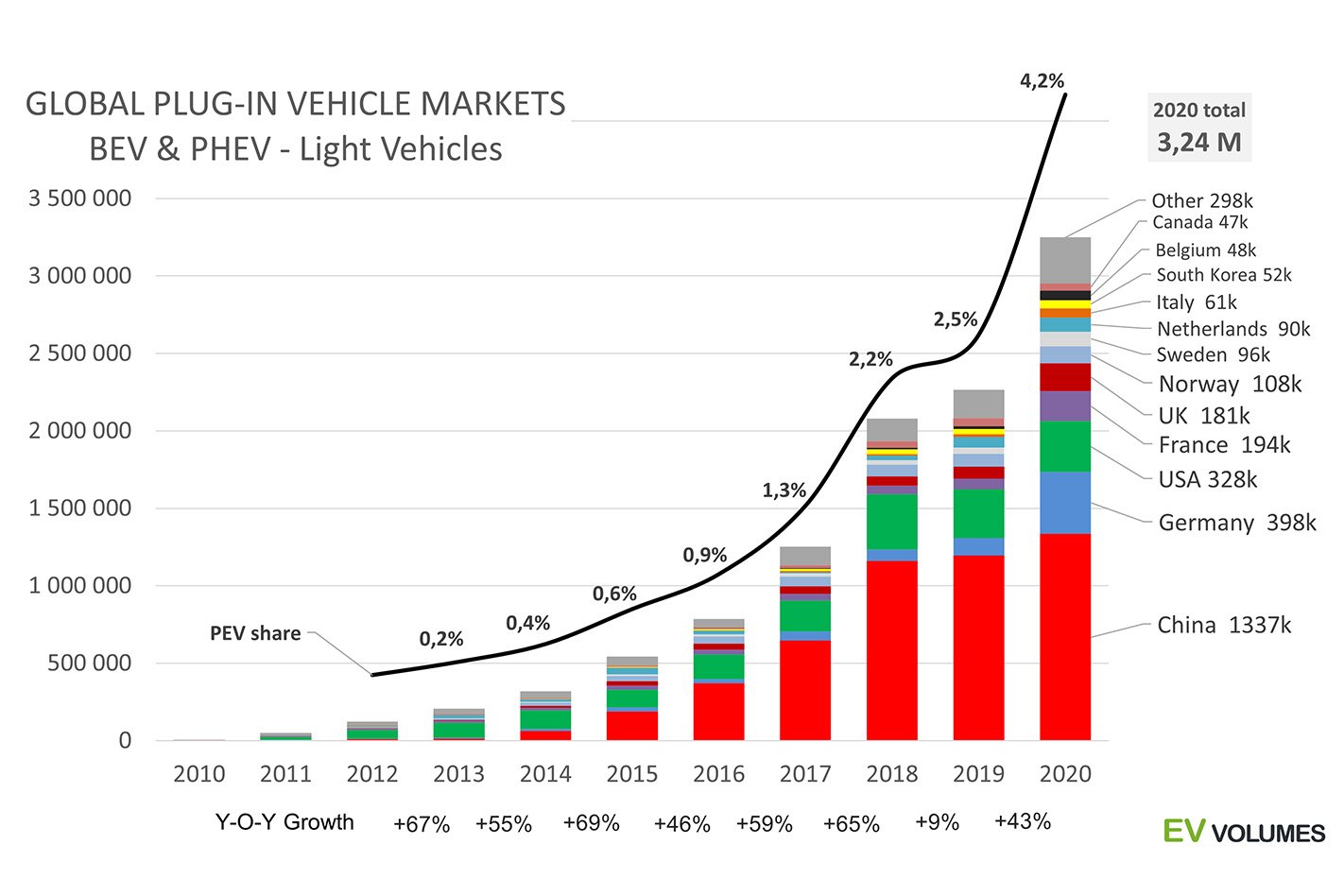
The leap saw Europe supersede China in terms of EV growth for the first time since 2015.
Europe is also ahead of China in terms of EV market share, having jumped by 3.3 per cent in 2019 and 10.2 per cent in 2020. This includes non-EU countries signed up to the European Free Trade agreement including the UK.
Outside Europe, EV growth was slower in 2020 but still significant. Chinese sales recovered strongly during the second half to be up by 12 per cent while the US increased by just 4.0 per cent despite the relatively affordable Tesla Model Y going on sale.
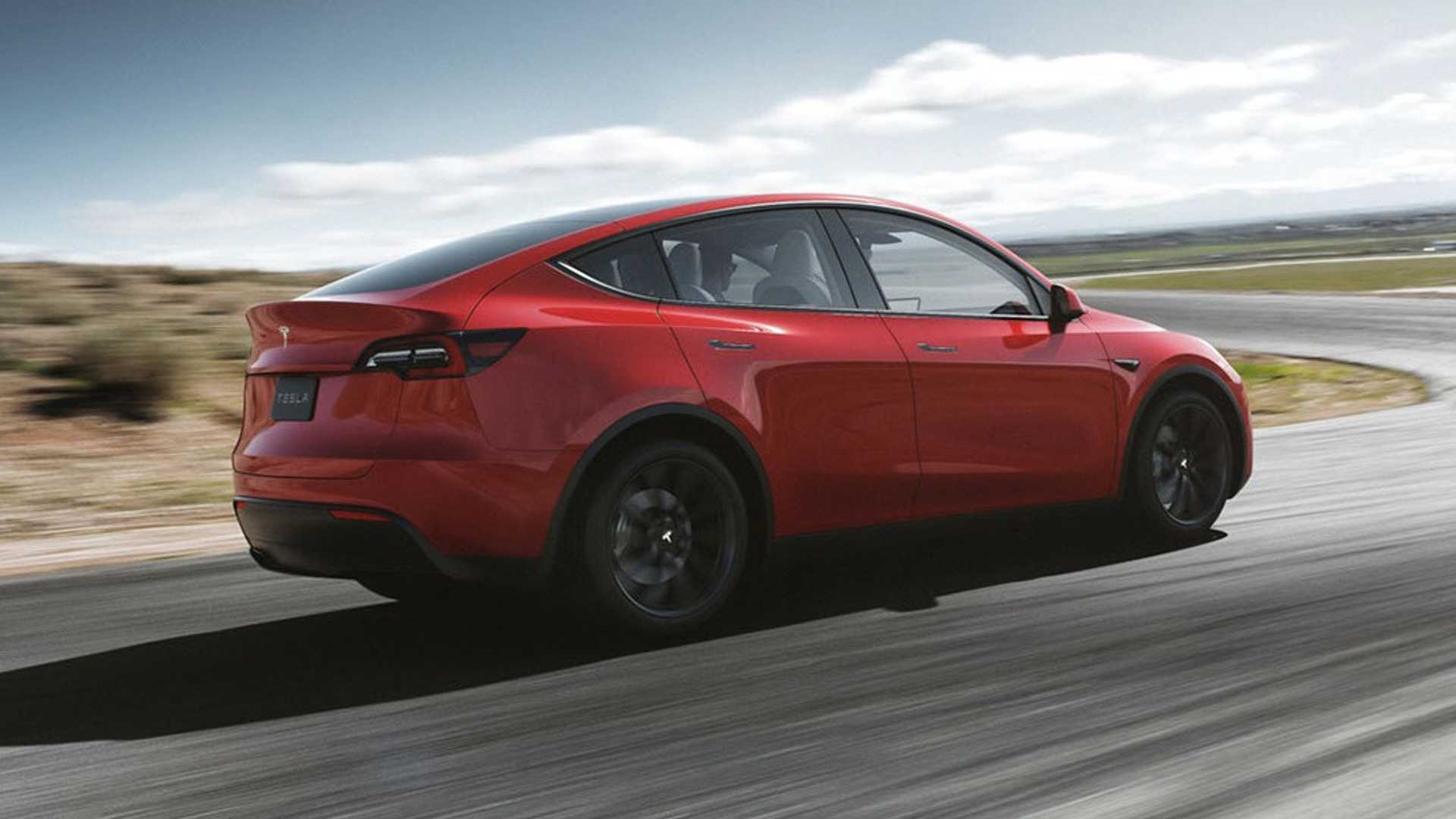
Not that Tesla had a bad year – it accounted for almost 80 per cent of all BEVs sold in the US in 2020.
Fortunes varied in other markets, with declines in Japan and Canada, while increases in South Korea, Taiwan, India, Israel, UAE and Hong Kong outweighed these losses.
Australia, meanwhile, saw BEV sales rise by 16.2 per cent from 1523 in 2019 to 1769 in 2020, according to the Federal Chamber of Automotive Industries. That figure is actually likely to be closer to 5000 because the FCAI’s VFACTS 2020 sales figures don’t include Tesla, which is believed to have sold around 3000 vehicles in Australia last year.
Plug-in hybrid sales in Australia increased by 18.2 per cent, from 1426 vehicles in 2019 to 1685 vehicles in 2020.
PHEVs also experienced a resurgence around the world after having their first downturn in 2019 brought upon by their emissions rating being switched from the NEDC test cycle to the stricter WLTP in Europe.
This saw CO2 emissions of most PHEVs exceeded the 50g limit for incentives in many European markets as manufacturers scrambled to install larger batteries to increase electric range to meet EV subsidy requirements.
The result was 386,000 PHEVs sold in Europe in 2020, accounting for more than a third of the 990,000 PHEVs sold worldwide. That global figure represents an increase of 410,000, or 71 per cent, over 2019.
Aston Martin will offer an alternative to the divisive grille that graces its Vantage sports car.
Consistent negative feedback surrounding the outlandish front end has forced the British manufacturer’s hand, whose Aston Martin Works restoration division will now offer the ‘Vane’ replacement grille inspired by the current DB11 front end.
It also keeps in line with the horizontal slat design (below) that’s become commonplace for the marque over the past century.
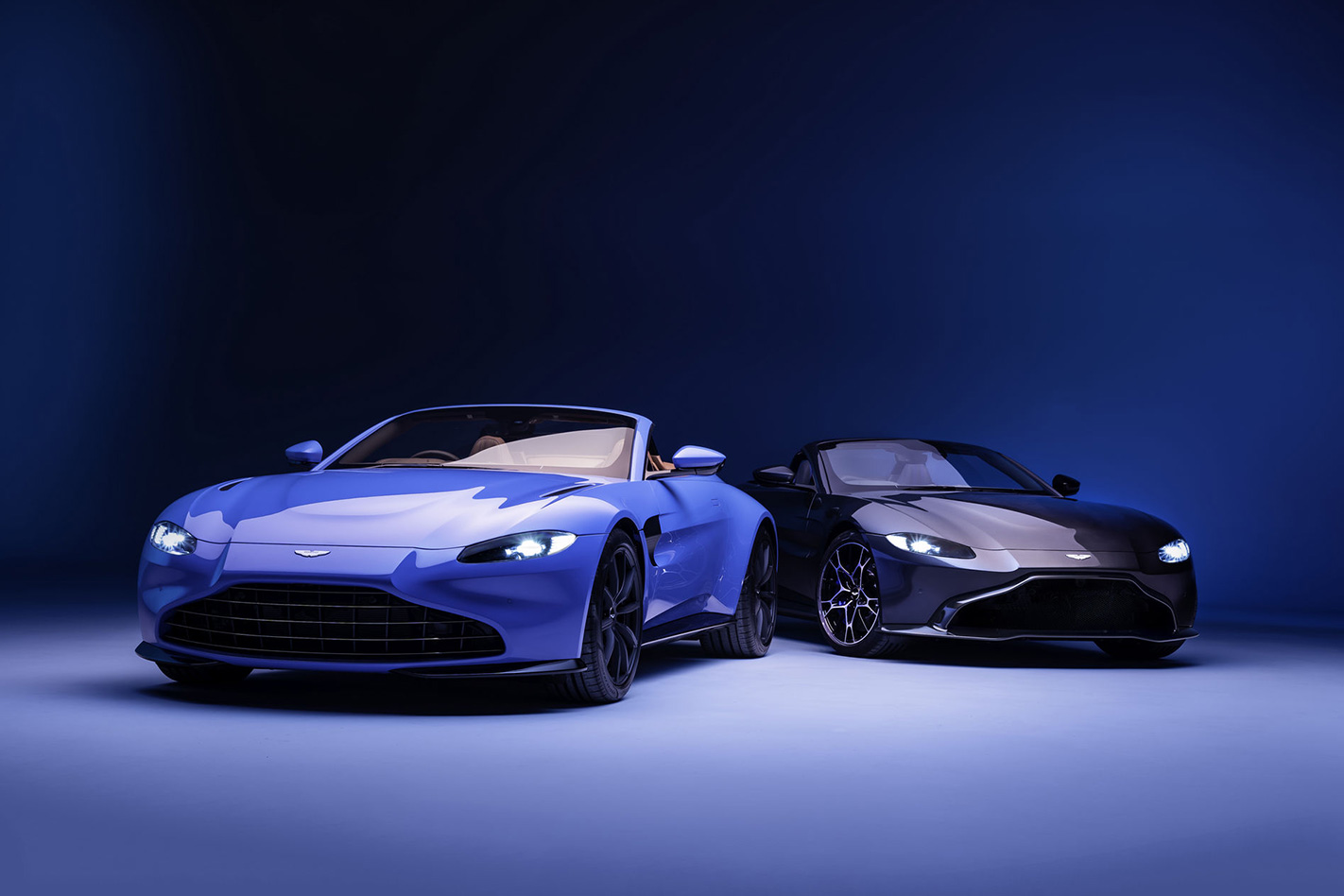
The current generation Aston Martin Vantage made its debut in 2018 with the aggressive, gaping ‘Hunter’ grille which polarised critics who had grown accustomed to a more restrained look from Aston.
Until recently, aftermarket companies like Revenant were the only way to sort out a more traditional grille look, though Aston Martin is now taking matters into its own hands by offering the alternative to both used and new cars.
Importantly, the new grille design doesn’t impact the cooling or efficiency of the 375kW/685Nm twin-turbo V8 under the bonnet of the Vantage and the standard three-year warranty is unaffected.
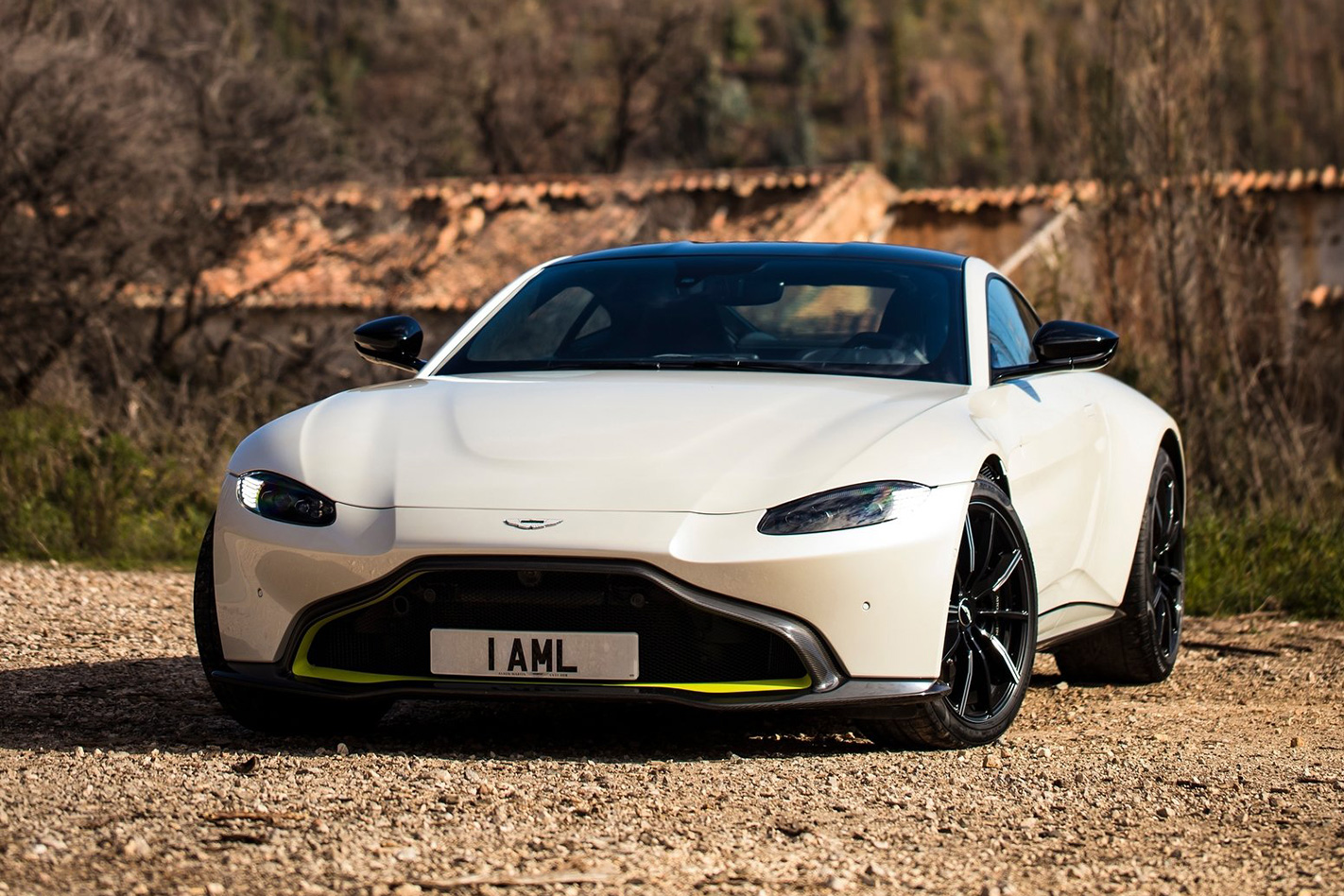
The conversion requires the entire front bumper and splitter to be replaced and can be completed at any Aston Martin body shop.
Despite the announcement originating from a UK-based Works shop, it’s expected that the swap-over will eventually be on offer for unsatisfied Australian customers too.
No price is listed for the conversion, with interested parties instructed to enquire with Aston Martin’s Works department for a bespoke quote.
It’s here. That part of the year when Aussies go AWOL while the days are long and the weather’s warm, and take pause to reflect.
From the Wheels banana lounge, I’m pondering the things that were awesome about 2020. Erm, spending more ‘quality time’ with the family? A new normal that did away with rush-hour and the need to trouser-up, like… ever. The welcoming of a pricey pup into your pack, minus the literal teething problems. And now, with 2020 confined to the rear-view, hopefully never hearing the expressions ‘new normal’ or ‘home schooling’ ever again.
Add to that list of highs today’s top-spec medium SUV. Really? Yep.
Just five years ago, a comparison of flagship soft-roaders from our brands here wouldn’t feature half the good stuff today’s iterations do, in part because some of it was yet to be invented, but mostly because the SUV stakes today are damn high.
Ford Escape and Mazda CX-5’s former selves boasted of no such inclusions as ventilated seats, heated steering wheels, adaptive headlights, head-up display (HUD), radar cruise with stop and go, a 360-degree view monitor, virtual instrument cluster or colour touchscreen display. Yet they still cost most of $50K.
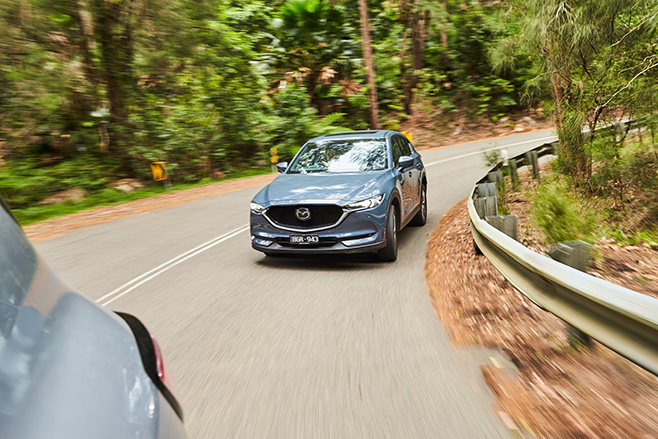
Thinking back further, to a decade ago, when we were still bemoaning that the SUV looked like it might catch on – despite making the average station wagon feel like something Colin Chapman himself would happily cop – the safety spec topped out at ABS and airbags. ESC if you were lucky. (At least Mr Lotus would be familiar with the level of occupant protection.)
But now you get smart brake support, driver attention alert, blind-spot monitor, forward obstruction warning, lane departure warning, lane keep assist, rear cross-traffic alert and traffic sign recognition systems in the Mazda, among other technology.
And, in the Ford, you get (takes deep breath) pre-collision assist with active braking, forward collision warning with brake support, post-collision braking, driver alert, blind spot information system (BLIS), cross-traffic alert, evasive steering assist and enhanced lane-keeping with road edge detection systems.
Yep, as we head into a hopefully way-better 2021, we’ve got it pretty good, in the car department at least, compared with the mums and dads before us. Pore over the spec-sheet details and you work out that it’s quicker to note the things you miss out on.
Same goes for the brief list of features found in one but not the other. The $49,590 (plus on-roads) Escape Vignale AWD gets a panoramic roof, while the $50,830 CX-5 Akera Turbo has a standard-sized sunroof. And the Mazda gets a powered passenger seat while the Ford’s is manual.
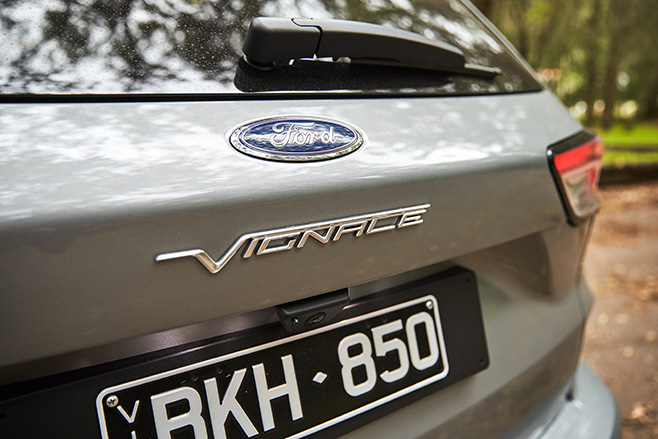
As well as the convenience, luxury and safety gear that makes 2020 iterations so much more desirable than their predecessors, there are drivetrains that were once firmly WRX, not family wagon.
In the Ford it’s a 183kW twin-scroll turbocharged 2.0-litre four with electronically controlled, variable torque distribution all-wheel drive. The Mazda ups displacement, with a variable-geometry turbo 2.5-litre producing 170kW, also applied via all-wheel drive.
Fewer herbs from a bigger engine? Yep, but the Mazda runs on 91 RON while the Ford demands 95. Put 98 in the Mazda and, says its maker, it will pip the Ford by a kilowatt.
The torque figures are telling of the capacity difference, with 387Nm in the Ford and 420Nm in the Mazda, which also hits its peak earlier – 2000 versus 3100rpm. Also, the CX-5 makes max power at 5000, while the Escape peaks at 5700rpm.
While they’re both hugely flexible as well as surprisingly rapid, the Mazda outdoes the Ford when given a bootful from a crawl, where it’s quicker to summon a more generous reserve of boogie. Meanwhile, the Ford can, in the same situation, feel as if its smaller and peakier mill is a slight mismatch for the SUV-shifting task.
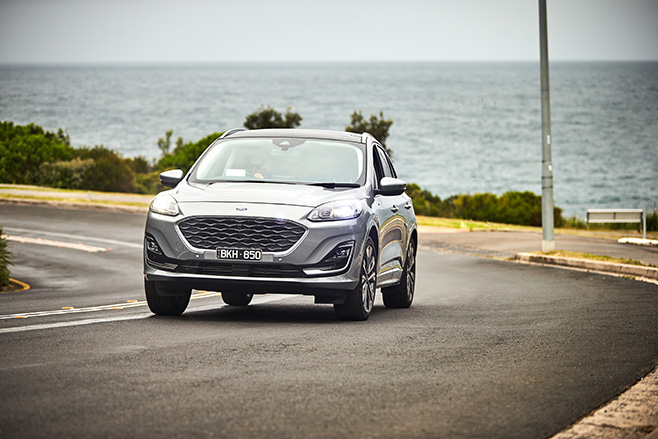
The Mazda sounds better doing it too, segueing from politely mannered to a perfectly judged throaty growl, where the Ford’s tune is less soulful.
The Escape’s eight-speed auto cedes some smoothness to the Mazda’s largely slick and intuitive six-speeder. The Ford SUV can lurch when attempting gentle low-speed manoeuvres.
The ADR combined cycle fuel numbers of 8.6L/100km for the Ford and 8.2L/100km for the Mazda hint at a decent performance-economy balance, with the urban and highway extremes suggesting a real-world school-run thirst in the low teens and sipping well into the single-digits on a trip up the coast.
During most urban driving, the feature-rich, well-finished cabins signpost their flagship SUV status as much as the presence of more than ample shove. For a while now, newly released Mazdas have had this curious ability to usher in a fresh era of cabin finish and refinement, before being retrospectively graded down just in time for an all-singing successor to arrive.
Well, the Akera isn’t newly released – the CX-5 line-up is due an update in the first half of 2021 – yet it feels pretty classy to us. Neatly stitched and trimmed soft-touch dash, console and door trims and Nappa leather upholstery were not always the stuff of mainstream family cars.
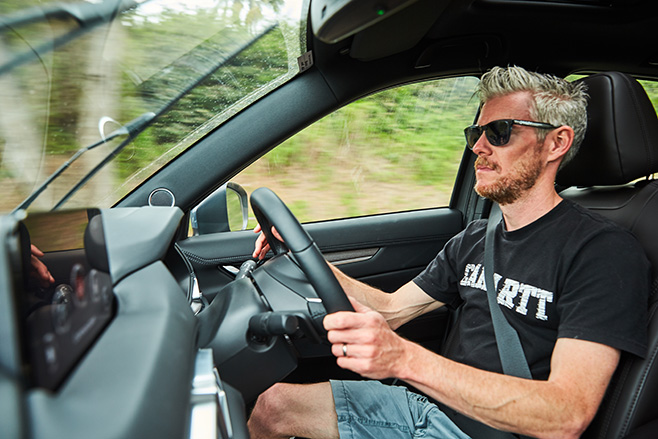
The virtual instruments look classic and futuristic at the same time, with their crisp graphics encircled by silver trims, and the smooth leather wheel with intuitive button layout provides a similar impression.
But the seating is a game of two halves. The Mazda’s front pews look and feel great, with a near-ideal bolstering that holds you in, without feeling unnecessarily sporty. But in the back, a lower seat base than the Ford promotes a slightly less comfy position, though also helps create legroom by pointing knees upwards more than forwards.
This, with a shallower glasshouse than the Ford’s, also makes the cabin feel darker and less spacious. There’s decent legroom in the CX-5 and a bit more headroom than the Ford, thanks in part to its non-panoramic roof.
The Ford’s sizeable sunroof is one of many design elements that add up to a brighter, roomier-feeling cabin, along with a lower-set dash-top, lower beltline and generally generous glasshouse.
The Ford’s front-row pews look less inviting than the Mazda’s and prove both less comfy and less supportive. However, I suspect it’s horses for courses. From talking to other testers, seems the Escape is designed for broader folks, while the CX-5 suits skinnier types.
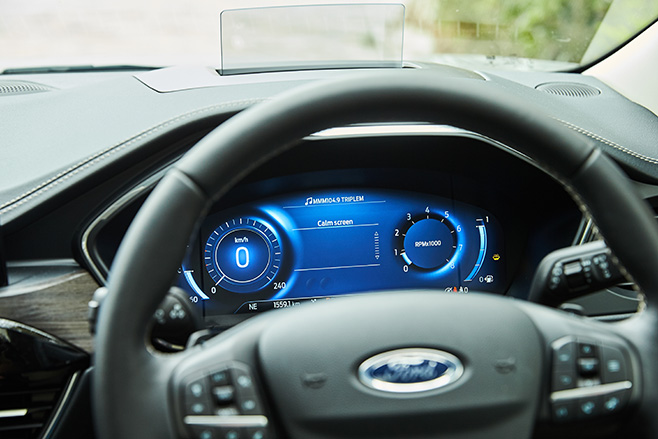
There’s a similarly solid attempt in the Escape at creating class through stitched-trim coverings and leather upholstery, but while the CX-5 targets classy the Escape aims for futuristic. A slightly iffy execution sees the virtual instruments look a touch unsophisticated, while some of the low-level plastics feel it.
The Escape’s rotary gear selector scores marks for cool, but the Mazda’s conventional lever is easier to use when your mind is multi-tasking. The Ford’s wheel is sportily sculpted, but the button-fest invites mild criticism rather than finger-presses.
In a reverse of the CX-5 situation, accommodation is better in the back of the Escape than in the front, with a comfily padded and angled seat base that promotes a stadium-style view, and there’s plenty of legroom and good headroom. Entry and egress are better too, through a broader and better-shaped door opening.
That extra legroom is courtesy of a sliding rear seat base that allows the cargo area to be shrunk in the name of leg-stretching space. The wheelbases are actually almost identical, the Ford’s just 10mm longer at 2710mm.
Finally, they both get rear ventilation outlets, USB ports, outboard seat heaters and reclining backrests that will be handy for long trips.
Back in the front and I’m developing an alternative theory about why SUVs are so popular. You need one these days to see over the other SUVs. Can’t see through ’em, so join ’em.
However, this and the more commonly cited SUV advantages of generally good vision and easy entry, egress and loading will never argue with the laws of physics – raising a vehicle’s centre of mass fundamentally works against its handling.
You may think this loses relevance in a firmly sporty SUV confined to suburbia or a gentle motorway cruise, and you would be sort-of right.
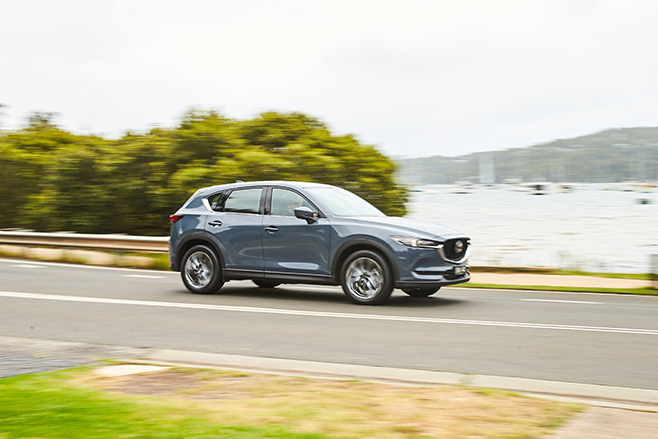
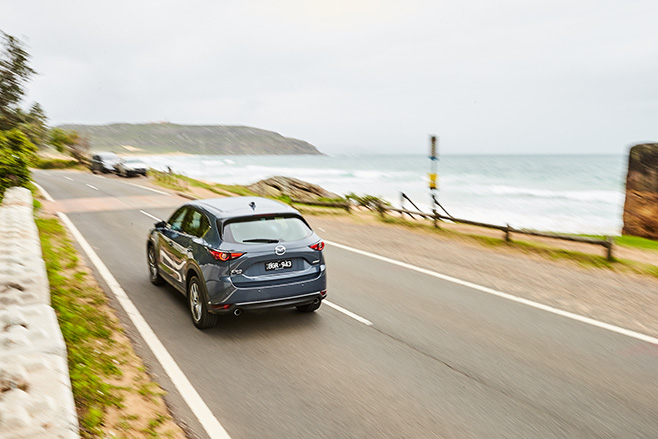
During the kind of driving the CX-5 is designed to do, it feels satisfyingly athletic, responding swiftly to the nice, tactile wheel and cornering with palpable balance and minimal roll, leaving the family wagon’s roots as a blunt, utilitarian tool a distant memory.
But push the CX-5 beyond brisk and the steering takes on a faint glugginess and the degrees of lean experienced are exaggerated because you sit up high. It’s not too difficult to get the Mazda’s Toyo R46s squealing in a tight corner – though it’s quite likely the tyre more than the chassis.
On the positive, the ride is firmly absorbent in the CX-5 and body movement is neatly contained up to tyre-squealing territory.
When hurrying the CX-5 – and, to a lesser extent, the Escape – the amount of squish needed at the brake pedal tells of the circa-1700kg being hustled. Be in no doubt that there’s less squish, squirm and slip in the Ford. It’s a decidedly crisper device.
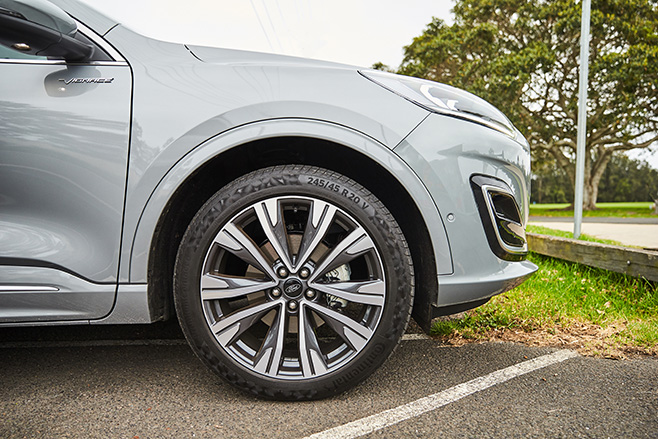
It only takes a few corners to uncover the Escape’s quick, incisive steering. With fewer turns lock-to-lock than the CX-5 (2.5 versus 2.7) as well as a firmer suspension and shallower sidewalls, the Blue Oval SUV is always more eager to change direction than its rival. Yet the Ford’s steering is light and never huge on feel, and it remains resolutely vacant when loaded up. And you can really load it up.
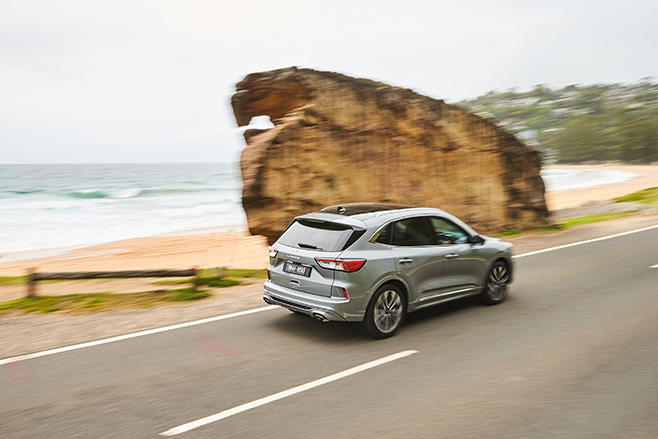
The Escape’s reserves of talent and grip have the CX-5 comfortably covered, with better (Continental) tyres. The Ford is possessed of a fundamental keenness and is capable well beyond the scope of SUV duties.
But the trade-off is pretty stark. The Vignale, on our test car’s optional 20-inch wheels and tyres, is taut to the point of terse. We wonder whether it’s a bridge too far given this is a quality you put up with all the time, while most will only revel in the handling capability occasionally.
There’s nothing quite like a straight-cut comparison outcome, but it’s not quite so clear here. It’s more a case of swings and roundabouts.
The Ford Escape Vignale AWD is a sharper, better handler, quick like the CX-5, with an appealing cabin that’s roomier and brighter, and comfier in the back. It’s also busier in the ride, a bit less responsive on the urban crawl, and not quite as cosseting in the front.
The Mazda CX-5 Akera Turbo AWD is decently comfy and agreeably sporty, with instant, low-down torque and a terrific note under load. It’s not as spacious or light-filled as the Escape, with its smaller glasshouse and standard-sized sunroof. But it’s a nice, classy cabin and the actual occupant space in the back is pretty close.
If this was a back-to-back of hot SUVs, the Escape Vignale would have it in the bag. But it’s not. It’s a contest of quick, flexible, attractive, inviting, safe and enjoyable turbo AWD, high-riding family wagons.
Not long ago, affordable vehicles designed to carry 2.3 little units (the 0.3 being a $7K Cavoodle) held nowhere near the sort of appeal of this pair. But at the end of the day – sorry, year – the all-rounder CX-5 Akera Turbo AWD nails the flagship family-wagon brief to seal victory.
Now, hand me another frothy, Jeeves. Anything other than a Corona.
Interior focus
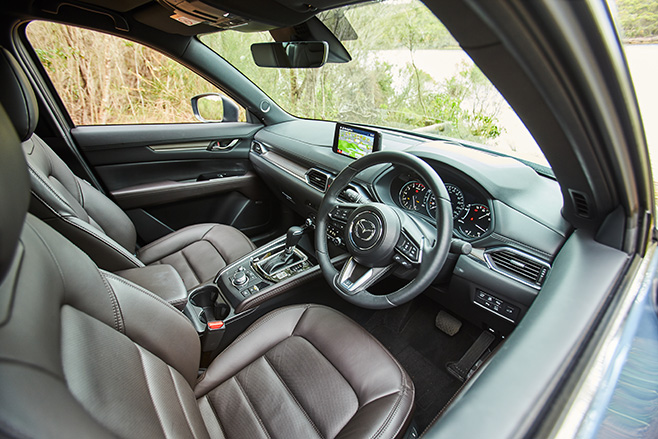
Mazda CX-5 Akera Turbo AWD
New ‘Zippo’ key replaces the slimline unit that Mazdas have used for a while. It is form over function, with small buttons on the edge and bulkier proportions in the pocket. CX-5’s virtual cluster features dynamic red dial marking at the speed limit – so simple and useful.
Nappa leather upholstery in ‘Dark Russet’ is a welcome break from default black. Dash-top infotainment display is set to grow from 8.0 to 10.2 inches with the incoming CX-5 update. Rear seatbacks fold 40/20/40 for a bit more versatility than Ford’s 60/40 arrangement.
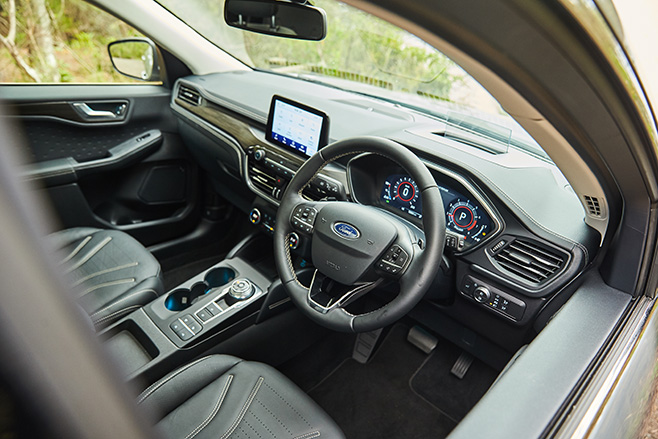
Ford Escape Vignale AWD
Escape’s head-up display projects onto a transparent panel that sprouts from the dash-top while CX-5’s is onto the windscreen – but both units are handy. Ford’s wide-angle reversing camera display is brilliant, bringing a sense of being able to see around corners and providing terrific confidence during manoeuvres.
The 12.3-inch virtual cluster brings flashy graphics with the selection of each drive mode. Love the white-stitched upholstery; not so much the big-grained dog-nose finish on low-level plastics. Chief criticism of busy steering wheel buttons is that cruise is where you would expect to find volume.
Mazda CX-50 inbound?
Mazda’s still unconfirmed CX-5 update is thought to be mild – a Turbo badge may be the extent of the exterior tweaks – but Hiroshima’s long-term play is just the opposite.
The next CX-5 could adopt the CX-50 nameplate to slot in with the CX-30 and forthcoming MX-30, a rear-wheel-drive/AWD platform, and petrol and turbo-diesel six-cylinder engines with 48V mild-hybrid and plug-in hybrid assist.
And here we were thinking donk downsizing was an irreversible trend. The sights, it seems, are set on Germany.
u00a0 | Mazda CX-5 Akera Turbo | Ford Escape Vignale AWD |
u00a0 | $50,830/Tested $51,325* | $49,590/Tested $50,740* |
u00a0 | Drivetrain | u00a0 |
Engine | 4cyl, dohc 16v, turbo | 4cyl, dohc 16v, turbo |
Layout | front engine (east-west) AWD | front engine (east-west) AWD |
Capacity | 2488cc | 1999cc |
Power | 170kW @ 5000rpm | 183kW @ 5700rpm |
Torque | 420Nm @ 2000rpm | 387Nm @ 3100rpm |
Gearbox | 6-speed automatic | 8-speed automatic |
u00a0 | Chassis | u00a0 |
Body | steel, 5 doors, 5 seats | steel, 5 doors, 5 seats |
L/W/H/Wu2013B | 4550/1840/1680/2700mm | 4629/1883/1680/2710mm |
Track (F/R) | 1595/1595mm | 1597/1588mm |
Weight | 1720kg | 1690kg |
Boot | 442L | 412-526L |
Fuel/tank | petrol/58 litres | petrol/54 litres |
Economy | 8.2L/100km (ADR combined cycle) | 8.6L/100km (ADR combined cycle) |
Suspension | Front: struts, coil springs, anti-roll bar. Rear: multi-links, coil springs anti-roll bar | Front: struts, coil springs, anti-roll bar. Rear: upper and lower A-arms, coil springs, anti-roll bar |
Steering | electric rack-and-pinion | electric rack-and-pinion |
Front brakes | ventilated discs (320mm) | ventilated discs (330mm) |
Rear brakes | solid discs (303mm) | solid discs (302mm) |
Tyres | Toyo Proxes R46 | Continental PremiumContact6 |
Tyre size | 225/55R19 99V | 245/45R20 99V |
u00a0 | Safety | u00a0 |
ANCAP rating | 5 stars | 5 stars |
Verdict | 8.5/10 | 8.0/10 |
u00a0 | Warranty: 5ys/unlimited km | Warranty: 5ys/unlimited km |
One of the more unusual interests a motoring journalist must possess is a deep love of Google maps. Spending hours searching for undiscovered squiggly lines is a joy, not a chore… and it’s only the start of the process.
Once a promising section of road has been identified, a switch to satellite is required to ensure it’s tarmac, as often the little Google car hasn’t transversed some of the more rural roads – as an aside, how do you get that job?
And can I use a Ford Focus RS or Porsche 911 GT3? Then it’s down to street view, if available, to check the scenery – the best road in the world is no good if it looks like a supermarket carpark.

The point is, finding good roads doesn’t just happen. Except, occasionally, it does, and as fun as Google is, it can’t compare to the excitement of organic discovery.
You can’t plan these moments, they have to come out of nowhere and as such are quite rare.
Nevertheless, while testing a road recently that was intended purely for transport suddenly showed promise, hiding in plain sight within a stone’s throw of more regular routes.
With each kilometre, it shed layers like a winding black onion until it became clear that we had to feature this road, presumably behind the wheel of something epic.
An engine in the middle is a good start, particularly when it features 10 naturally aspirated cylinders.
Feed the prodigious power to the rear wheels only, chop the roof off and include an Italian heritage and it’s difficult to think of a more exotic cocktail.
This neatly describes the Lamborghini Huracan EVO RWD Spyder, which rockets from 0-100km/h in a claimed 3.5sec – or about as long as it takes to say its name – and barrels through 200km/h in just 9.6ec on its way to a 324km/h top speed.

Nestled within this wild white wedge is the latest Lamborghini/Audi 5.2-litre V10, which in this guise develops 449kW at 8000rpm and 560Nm at 6500rpm.
This is 21kW/40Nm down on the all-wheel-drive EVO but matches the outputs of the first-gen Huracan LP610-4. It’s also 52kW/20Nm more than Audi deems sensible to send through the rear wheels of its R8 V10 RWD.
Ditching the front-drive gubbins saves 43kg but the reinforcement required to stop the open chassis twisting like warm liquorice adds 120kg.
A claimed weight figure of 1509kg seems reasonable, but Lamborghini quotes its figures for a dry vehicle, so add fluids, fuel and a driver and you’re looking at around 1750kg or more.
As such it’s 0.2sec slower than its hardtop sibling to 100km/h and 0.3sec slower to 200km/h – if you can sense that, you have a more finely calibrated drag strip derriere than I.

Outright performance is more or less irrelevant for the first part of our journey, a 60min schlep down the M420 freeway south-east of Melbourne towards Phillip Island.
The Huracan EVO is extremely easy to drive – leave the ANIMA switch on the base of the steering wheel in Strada (Road) and the engine is subdued, the steering light and the gearbox slips from cog to cog smoothly of its own accord – but in Spyder guise it isn’t quite so relaxing to be in.
Road and wind noise is substantial, rearward vision a challenge and despite the $12,970 inclusion of adaptive dampers, which does include the very handy nose-lift system, the low-speed ride is pretty terse.
Now’s probably a good time to cover off the thorny issue of the options. All up, they add $90,550 to the base price of $422,606.
Believe it or not, the prevailing wisdom for Aussie exotics tends to be to strip out as much standard equipment as possible; this keeps the base price down and allows each customer to spec their car – a blank canvas, if you like.
There’s method to the madness, but you are then left paying $6480 for Apple CarPlay, $1680 for cruise control, $3600 for parking sensors and $3850 for a rear-view camera.
For that amount of money you could buy a whole Kia Picanto (with change) which includes every such feature as standard.

The rest of the box-ticking is down to personalisation and Lamborghini’s Ad Personam program makes the sky the limit.
The big ticket items are the $13,690 sports seats (add another $4800 for unicolour leather and $1800 for Lamborghini shields on the headrests), the $8410 ‘Aesir’ rims and $10,080 of high gloss black exterior trim.
To its credit, Lamborghini has attempted to simplify the process: buyers can add the Driver and Lifestyle Packs at a cost of $10,090 for both which includes the magnetorheological adaptive suspension with lift kit, carbon brakes, transparent engine cover, alarm, front and rear parking sensors and cheaper rim upgrade, options that would normally cost more than $50,000 if purchased separately.
Enough money talk; let’s drive. Having made your way down the M420, fuel up at Grantville, then continue another four kilometres down the freeway and turn left onto Dalyston-Glen Forbes Road.
This connects, you guessed it, the blink-and-you’ll-miss-it town of Glen Forbes to Dalyston on the Bass Highway, within smell if not sight of Bass Strait. It’s a short road, just 20km in total, but it packs a hell of a lot in.
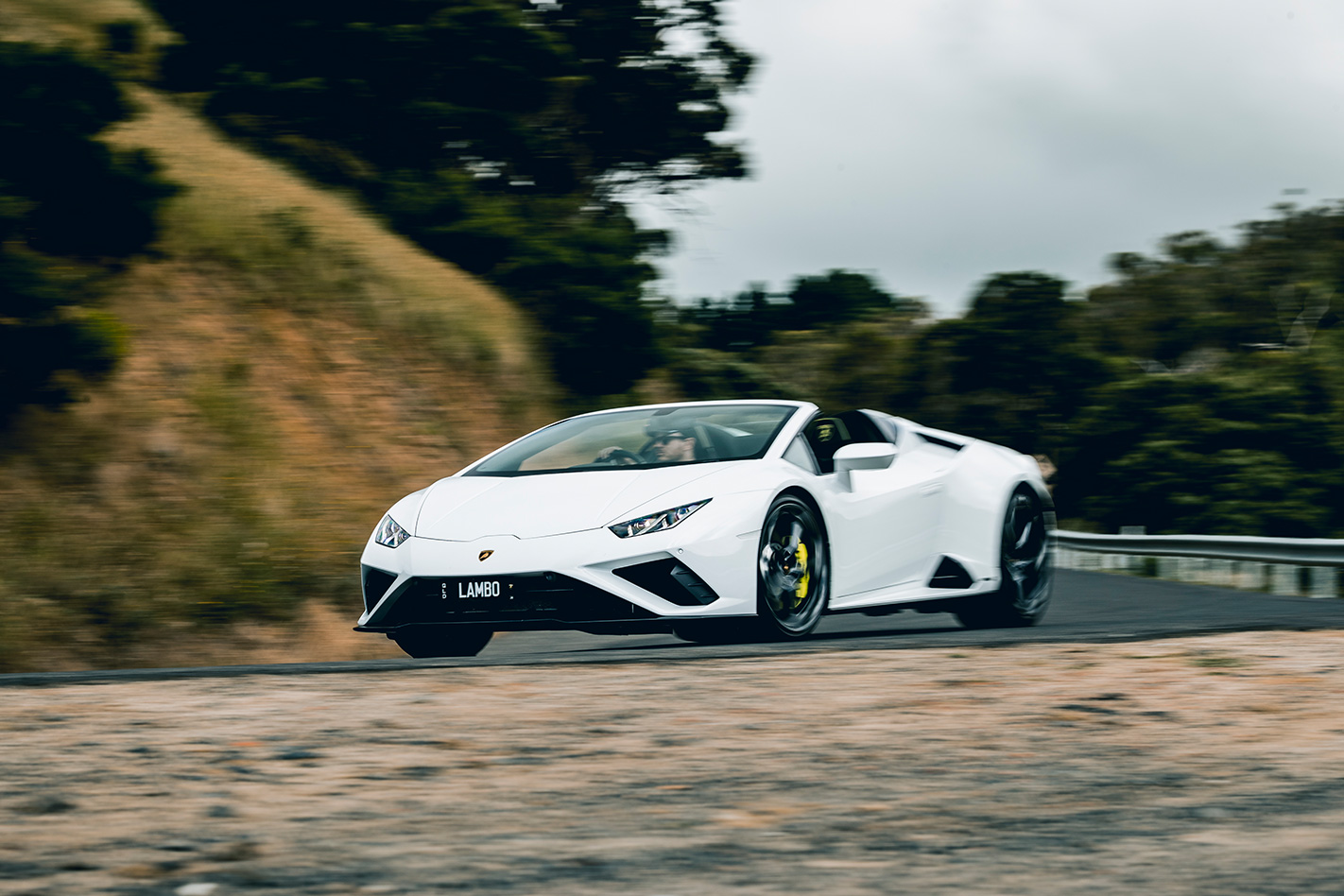
The first corner of note is a nicely cambered right-hander, taken in third or fourth gear, a grandstand of curious cows on the outside scattering nervously in response to the downshift bark of this Raging Bull.
I’m still in Strada, the engine muted and the suspension as relaxed as it’s possible to make it but as we cross the bridge over the Bass River a click to Sport adds weight to the steering and plenty of decibels to the exhaust note.
The V10’s peaks – power at 8000rpm, torque at 6500rpm – suggest a highly-strung engine but it’s still possible to hum along at an impressive pace without troubling the tacho’s upper reaches.
Make sure you keep left and ignore the Eden Road turn-off, though if you do take a wrong turn a cracking set of corners just past Woolamai is a decent consolation prize.
Our chosen route immediately narrows dramatically, the road hugging the hillside like a giant, bumpy black snake.
The roof is down now, the process taking 17sec and operable at up to 50km/h, and a full-throttle blast completely overwhelms my senses.

The Spyder’s 0.3sec deficit to the Coupe in the 0-200km/h sprint has never felt more irrelevant. Your brain doesn’t know what to concentrate on: your eyes want to focus on the rapidly blurring scenery, but your ears are distracted by the shrieking engine and the wind is swirling within the cabin.
Thankfully the car is more composed. On this lumpen tarmac the firm low-speed ride makes sense, the suspension controlling the body beautifully, absorbing bumps rather than falling into and jumping out of them.
The ESP isn’t as happy. Lamborghini developed P-TCS (Performance Traction Control System) for the Huracan EVO RWD models, a smarter traction control (it claims) that instead of harshly cutting torque when the rear wheels lose traction, continues to deliver it even while the car is recovering from a slide.
In Strada, P-TCS is as cautious as an overprotective parent, stepping in before the slightest hint of rear slip is allowed to develop. In Sport, Lamborghini claims “the rear wheels can slide and skate during acceleration, for easy drifting fun without compromising safety.”
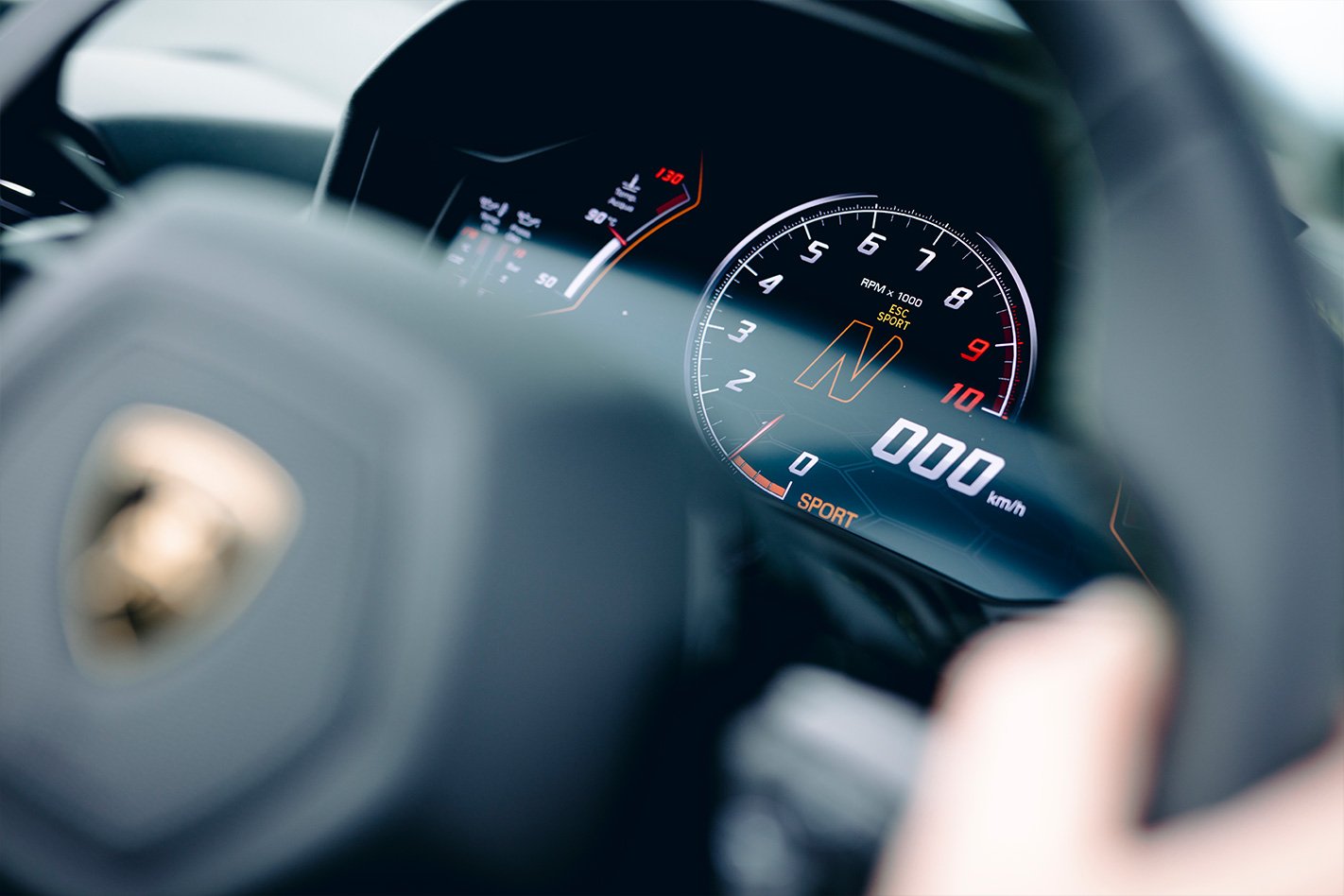
Sounds promising, but in reality P-TCS is still quite conservative, feeling to loosen the reins slightly at higher speeds, but it doesn’t offer the latitude of Ferrari’s Slide Slip Control or Audi’s ESP Sport.
Of course, with more than 600hp being fed to the rear wheels of a mid-engine supercar, that might be a good thing.
Experienced drivers will click ANIMA up once more to Corsa. This illuminates ‘ESP Sport’ whether you’ve touched the button or not, but while it doesn’t offer any more latitude than Sport – P-TCS is trying to make you go quickly in this mode and that means keeping things tidy – it does allow the option of deactivating the electronics completely.
This is something we’d only recommend for the racetrack, but let’s just say the Huracan EVO RWD Spyder is friendlier than you’d expect when the rear tyres have broken free.
Corsa also ramps up the aggression further, to ‘Great White Shark with a toothache’ levels. It’s a frenetic experience, so best to pull up and rest for a moment, a roadside layby on a left-hand hairpin offering a beautiful view down the valley to the coast and the mouth of the Bass River.
Unfortunately, our efforts to stop and take a breath are stymied by the fetid stench of a decomposing kangaroo, which explains the odd rank whiff that floated in through the Huracan’s open top. Time to get out of here.
The road immediately changes dramatically once again, the open farmland making way for a narrow gorge.
A rock face stands ominously on one side, the unimaginatively titled Gorge Creek hidden beneath the undergrowth on the other. This stretch was built by soldiers returned from the war between 1919-1921.
Drilling for blasting was done by two men, one holding the drill while the other smashed it with a sledgehammer, the spoil moved using picks, shovels and wheelbarrows. It must have been monstrously hard work, though in the context of what they’d just endured in Europe, probably seemed like a walk in the park.
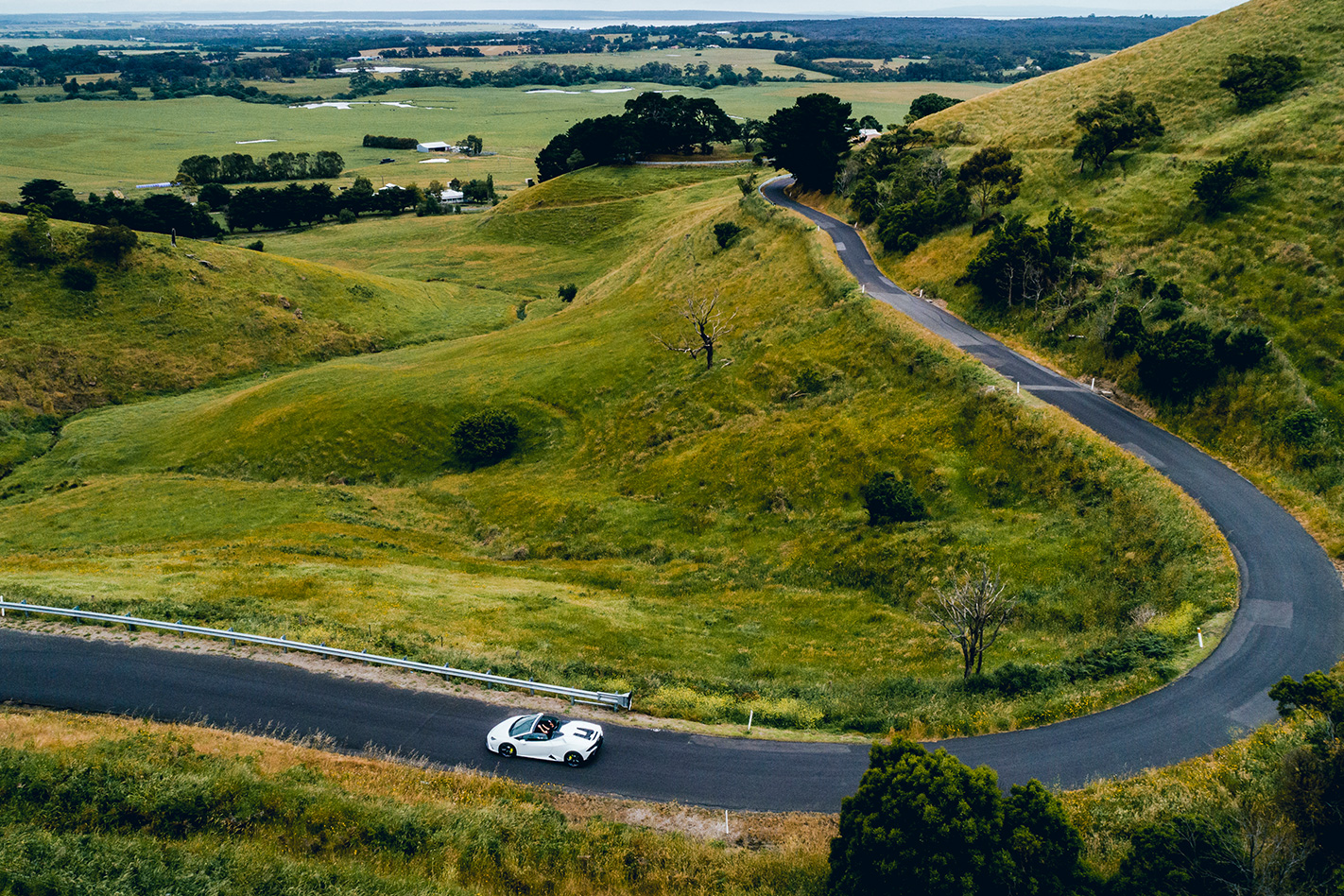
It’s difficult to imagine a better environment for a V10 supercar. The proximity of the rock wall completely changes the acoustics, the sound becoming mellower but thicker, almost like you could reach out and grab a handful.
In Corsa mode the Huracan is ridiculously loud, the loudest road car I’ve ever driven. Its song carries for kilometres and it’s a good thing those brave diggers are no longer working here, as the Lambo’s fierce machine-gun cracks on the over-run would have them diving into the nearest roadside ditch.
It’s more than a little ostentatious, but that’s the Lamborghini way.
There are a couple of quick left-right combinations in this section, the road contorting to ensure a favourable camber.
The Huracan is unfazed, capable of carrying massive speed, but you do notice the relative lack of body rigidity in the moments when the loads are at their most severe.
Funnily enough, it’s most noticeable in daily driving, the odd creak through a driveway or over a speed bump; during hard use it manifests as the odd shimmy through the body, the extra 120kg of reinforcement noticeable in quick direction changes when the car doesn’t react with the immediacy you expect.
Remember, the Huracan isn’t built around a full carbon tub, but a mixture of aluminium and composites structures.
It doesn’t hurt its outright pace, though. Beyond the gorge, the corners become quicker and the straights longer and the manner with which the Huracan accrues speed is ridiculous.
Modern supercars really are absurd; the EVO RWD Spyder is the least potent Lamborghini sports car and more than 74kW down on rivals from McLaren and Ferrari, yet it’s still so, so fast.
I flick the ANIMA switch back to Sport; in Corsa the gearshifts have an engineered-in jolt that’s theatrical but soon becomes tiresome, whereas Sport auto-upshifts at redline, even in manual, but the shifts themselves are utterly seamless.
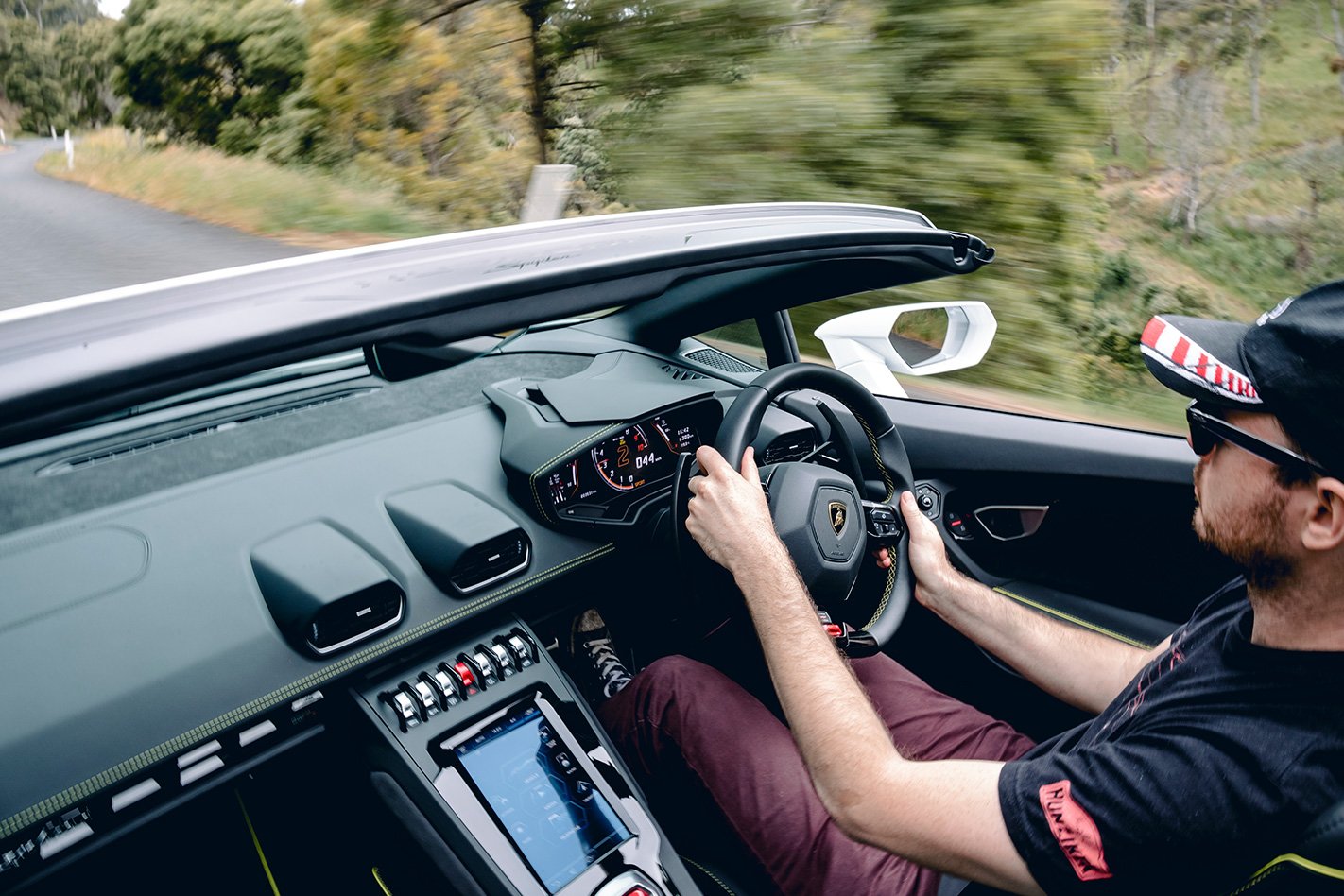
Since turning off the freeway we’ve been steadily climbing but a tight left-hander marks the summit, your reward a breathtaking view and a stunning series of bends.
Directly ahead of you, yet almost 1.5km distant, is the road. It encircles an enormous valley, completing a 270-degree arc before disappearing.
The vista stretches more than 10km down to the sea over green hills – it’s a beautiful place. Sightseeing tends to take a back seat when there’s a deserted, twisting road in front of your Lamborghini, however.
It’s a brilliant stretch of road: the surface is smooth, though certain apexes have a light dusting of gravel from farmers taking WRC lines, and a varied mix of corners come thick and fast.
At maximum attack this EVO RWD Spyder is a phenomenal experience. The ferocity of the acceleration is more than matched by the deceleration, the standard steel brakes equal to the task, the gearbox instantly answering your downshift requests.
Grip levels are incredible, the traction such that the electronics remain asleep with no bumps to worry about.
The 40:60 weight distribution requires some managing; accelerate too early and the nose will lift, pushing the front tyres wide, but exercise a degree of patience and this Lamborghini is devastatingly effective.
Its greatest dynamic shortcoming is the steering. There’s an annoying elasticity to the way it feels, which only worsens at speed and the sportier drive modes add extra weight.
The front end it controls is sharp enough that you rarely have to worry about the level of front grip, but the wheel does tend to go mute, especially when winding off lock on corner exit.
A quick run through a wooded valley and the Dalyston-Glen Forbes road has given its best. From here it’s an enjoyable 100km/h cruise through farmland to the town of Dalyston, but with apologies to its inhabitants, we’re continuing another five minutes along the coast to the seaside hamlet of Kilcunda to reflect on driving Lamborghini’s latest supercar offering.

It hasn’t been a particularly long drive – from fill-up at Grantville to watching the waves at Kilcunda takes only around half an hour – but in the process there’s been almost every sort of corner, surface and scenery imaginable: bumps, hairpins, sweepers, canyons, farmland, coast, the works.
The Huracan EVO RWD Spyder has grown on me. Initially, it felt a little more style than substance, but its exotic looks, searing pace, rear-drive dynamics and outrageous noise make it a desirable supercar – if you don’t mind being looked at.
I wonder if you can mount Google Streetview equipment on it?
What is the 2021 Kia Rio?
It’s one of the longest-serving nameplates on the Kia roster, and despite its competitors abandoning the field around it, the Kia Rio moves into 2021 with a spring in its step.
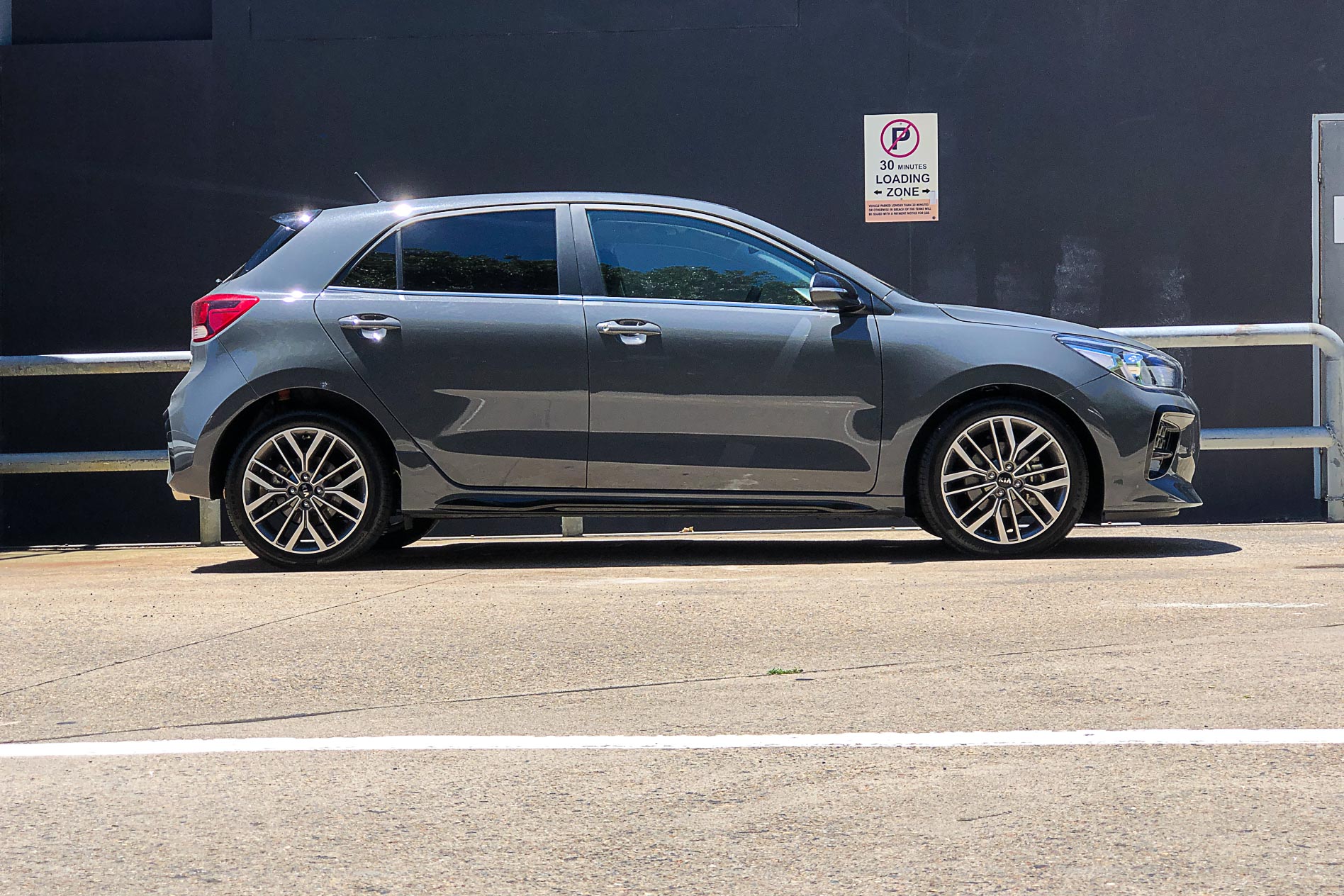
The fourth-generation Rio launched in 2017, with Kia giving the five-door, five-seat compact hatchback a light going-over late in 2020.
More safety and a revised visage were the main issues addressed in the mid-life facelift.
This is the top-spec GT-Line, which will set you back $24,900 drive-away as of January 2021.
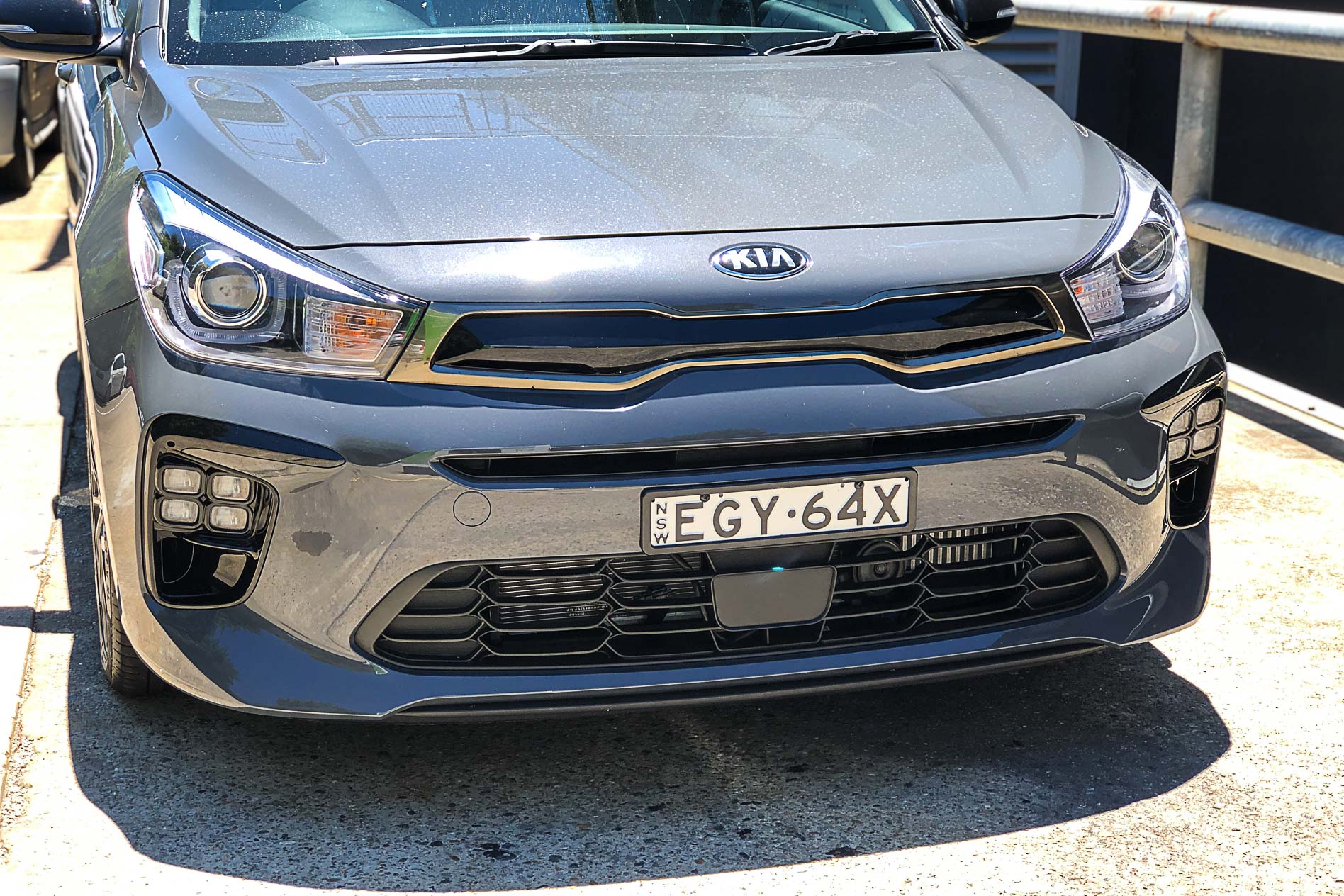
For that, you get a conservative yet handsome compact five-seat hatchback with plenty of safety inclusions and a high-tech three-cylinder engine package – but all isn’t perfect.
Price and Value
Kia has made a success of staying the course in vehicle categories where other brands have found it too hard to persevere.
And when you’re competing against a diminished field, it’s easier to draw in those buyers who previously shopped with the other brands.
The diminutive Rio slots above the tiny Picanto and under the Cerato in Kia’s hatch line-up; it’s a tightly packed line-up, sure, but for short-haul urban work, you’d lean towards the Rio for most tasks.
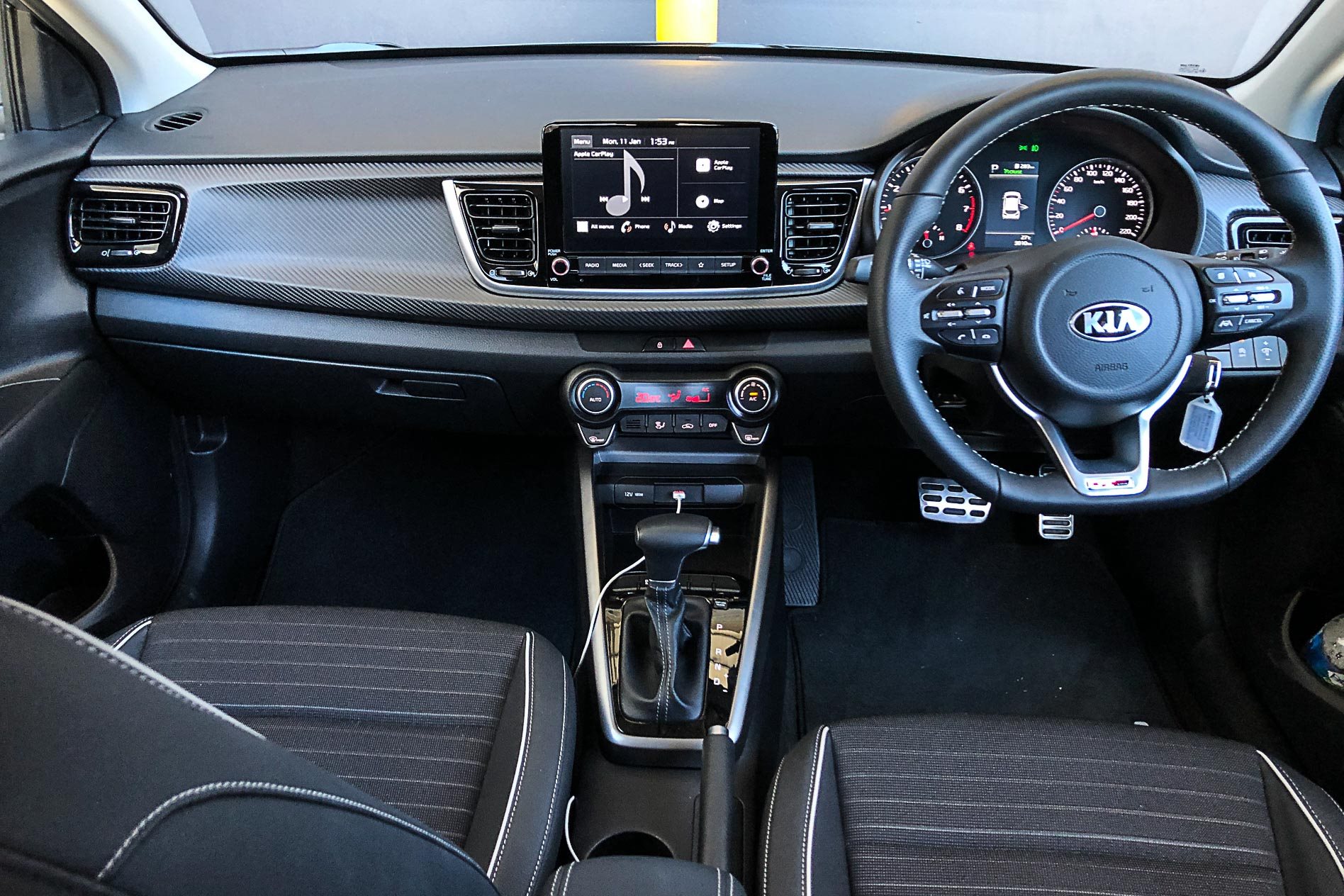
At $24,990 drive-away, it’s well equipped for the money, too; upgraded climate control, decently sized multimedia screen with wireless Apple CarPlay and wired Android Auto, comfy cloth-covered seats and three USB charge points fore and aft.
You’ll get automatic headlights and auto wipers, and the manually-operated climate control system will automatically defog the windows for you.
The driver’s seat gets six-direction adjustment, as well.
Living with the Kia Rio
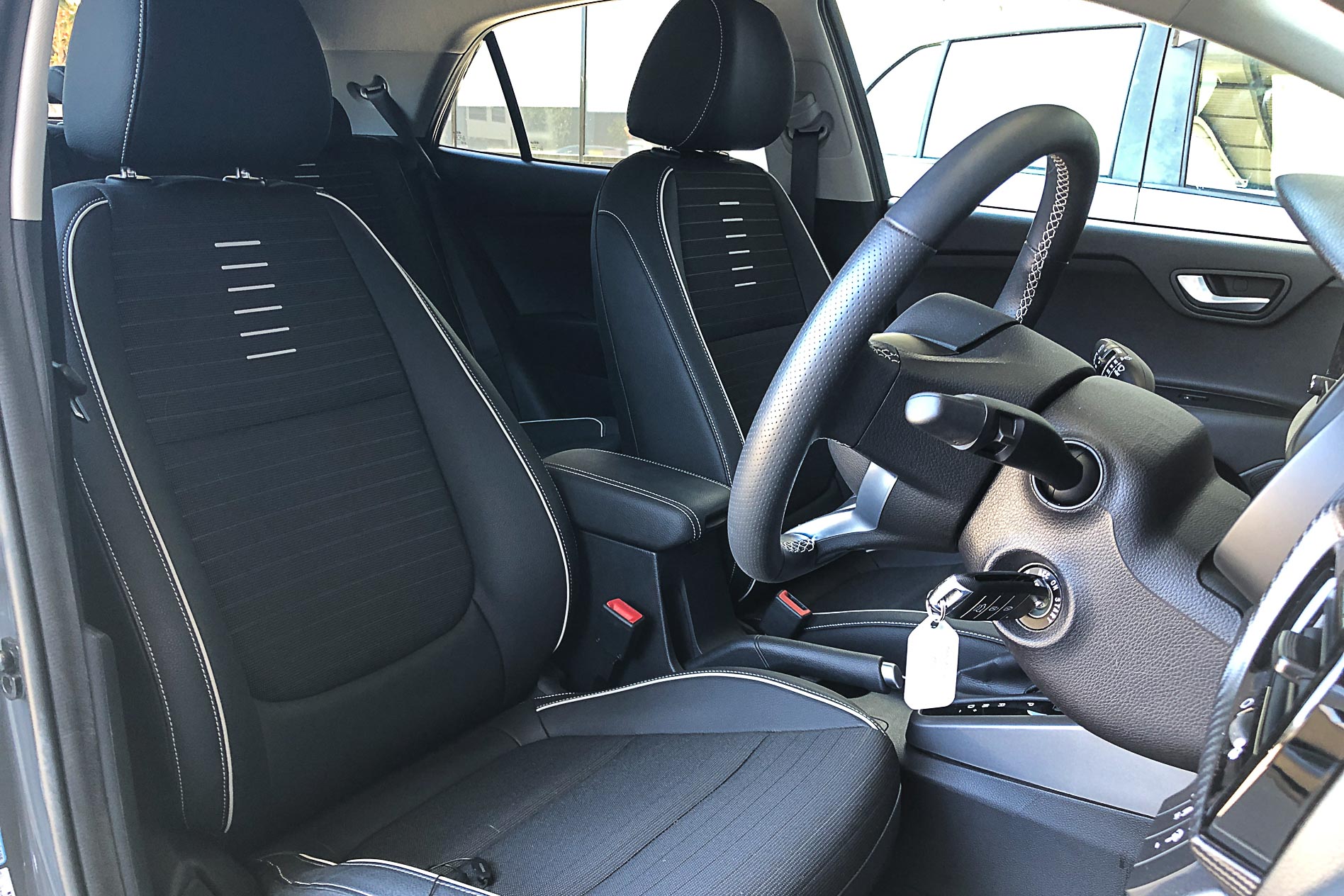
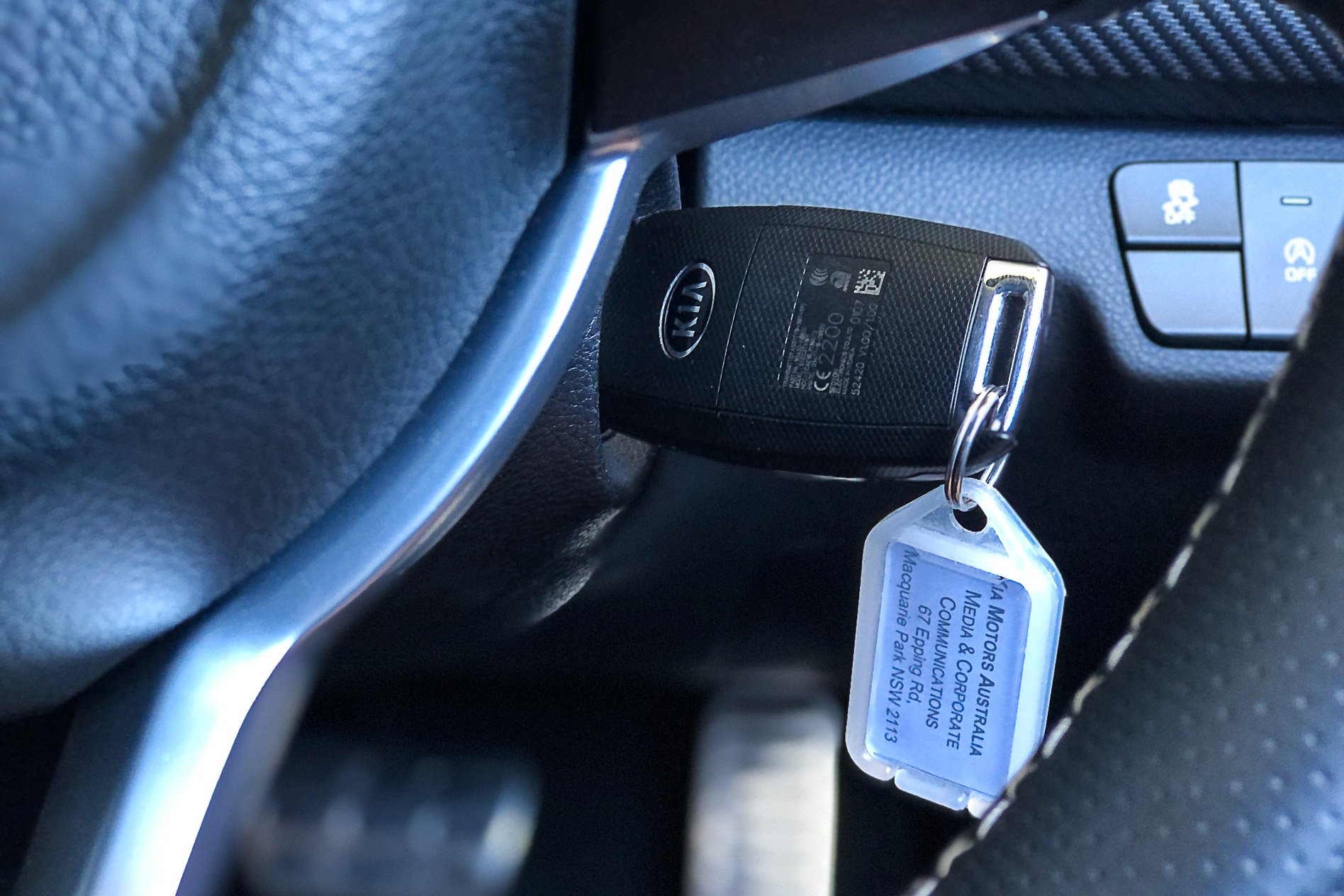
If you like your cars fuss-free, then you’ll love the Rio. It uses a regular key to start it, has a T-bar auto shifter, has the indicators on the right side of the steering column… in short, it’s a very traditional car when it comes to its general operation.
The large centre-mounted multimedia screen is a nod to the modern world, though it too is very simple to use.
Our tester did continually throw my Apple CarPlay connection off, though, which was annoying and unusual. I suspect a glitch in the matrix between the wired and wireless Apple connections was the culprit.
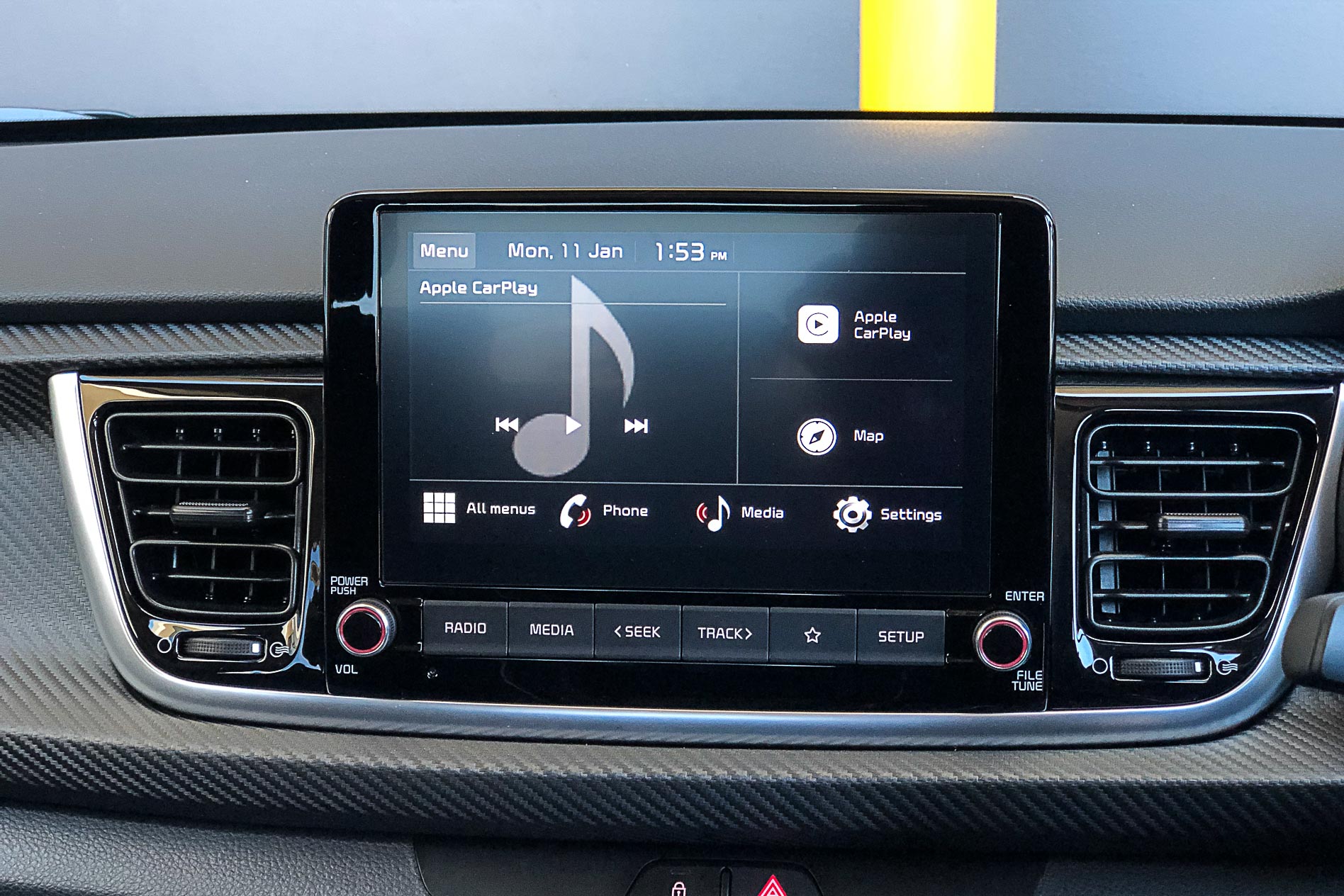
Despite its small size, the Rio’s front seats are plenty roomy for normal-sized humans, with decent head and shoulder room up front.
Rear seat passengers are also surprisingly well catered for, though knee room for taller rear seaters is compromised unless the front seater is willing to compromise.
It’ll take two ISOFIX baby seats on the outermost seats, but being a regular-sized hatch means you’re stooping a bit to bolt the kids in. And forget about getting three baby seats across the rear bench – it’s just not going to happen.
The GT-Line offers more in the way of connectivity for second-rowers than the entry-level Rios – though don’t forget this is a twenty-five grand car, so there are compromises to endure when it comes to features.
Accessing the cargo area is simple enough, as is dropping the 60/40 split-fold seats to liberate more room; there is a decent 325 litres of well-shaped space behind the rear seats, and 980 litres with the seats folded.
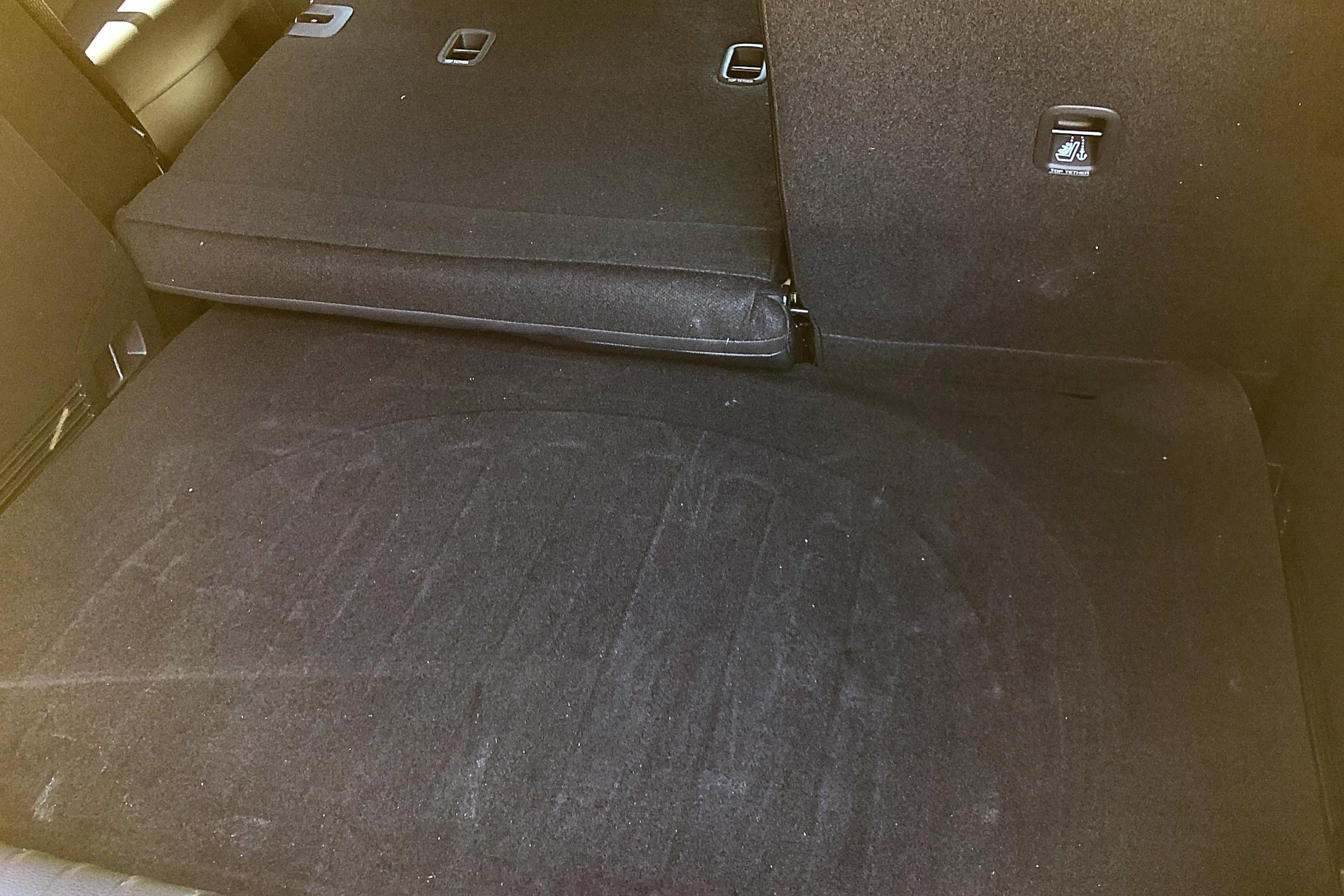
That boot room, though, means you have to live with a space-saver spare wheel beneath the boot floor.
Engine, transmission, drivetrain
The GT-Line is the only Rio that uses Kia’s one-litre, three-cylinder turbocharged petrol engine, which sends its power to the front wheels via a seven-speed dual-clutch transmission.
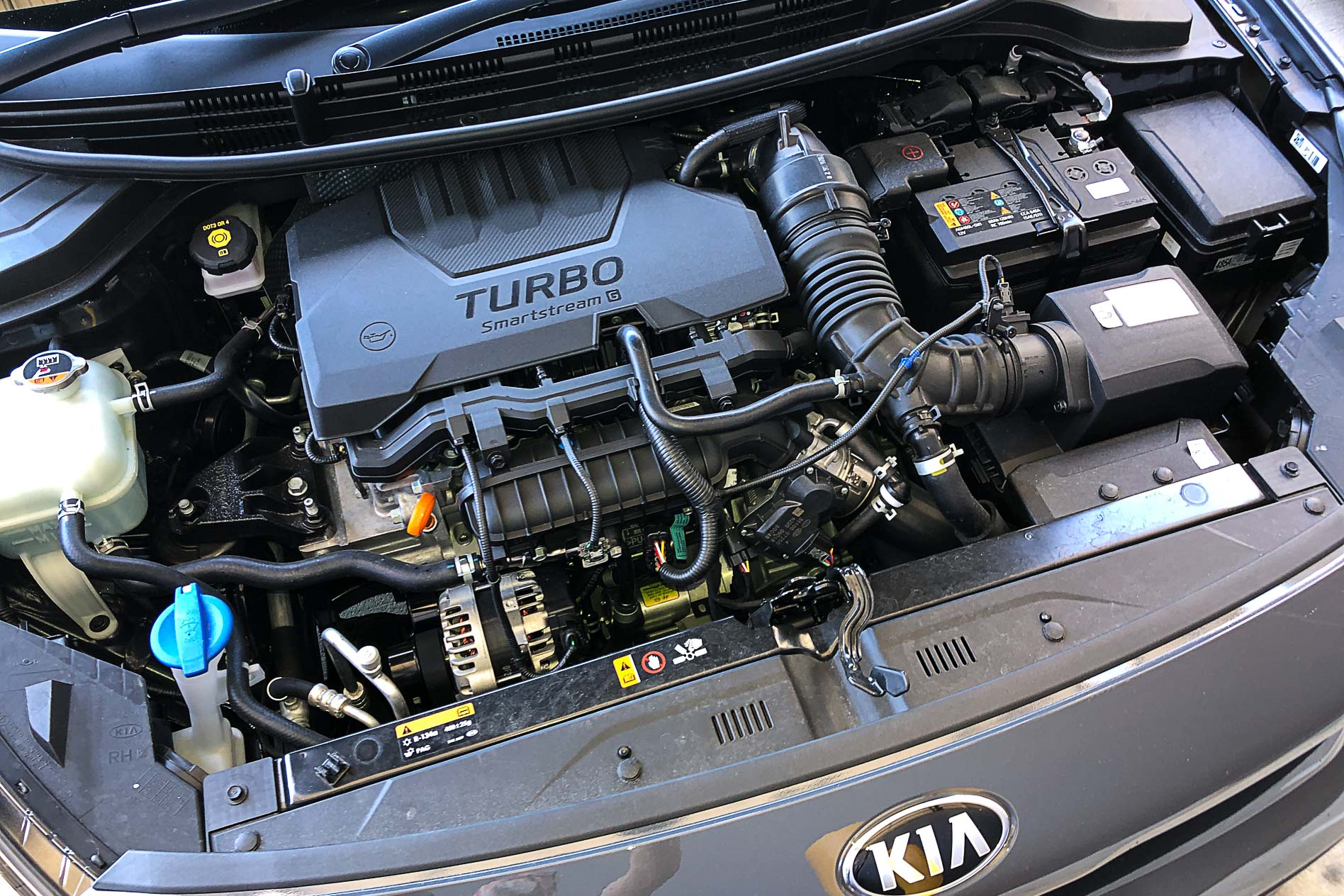
Its outputs of 74kW and 172Nm are modest, but then so is the Rio’s 1197kg claimed tare weight.
A big tick in the Rio’s favour is that it’s fine with regular unleaded petrol; many turbocharged engines need premium unleaded as a minimum.
Driving the Kia Rio
Over the last decade, Kia has taken it upon itself to recalibrate the ride and handling of every car it takes from HQ to make it a better fit for Australian conditions, and the Rio is no different.
However, I reckon the company has done itself a rare disservice to the standard car in this case, and it’s the one area where the Rio GT-Line lets itself down.
Put simply, the suspension springs feel far too firm at slow speeds over bumps typical of an urban environment.
Sharp-edged potholes and ledges aren’t absorbed by the springs, causing the impact to jar through the steering and the body of the Rio.
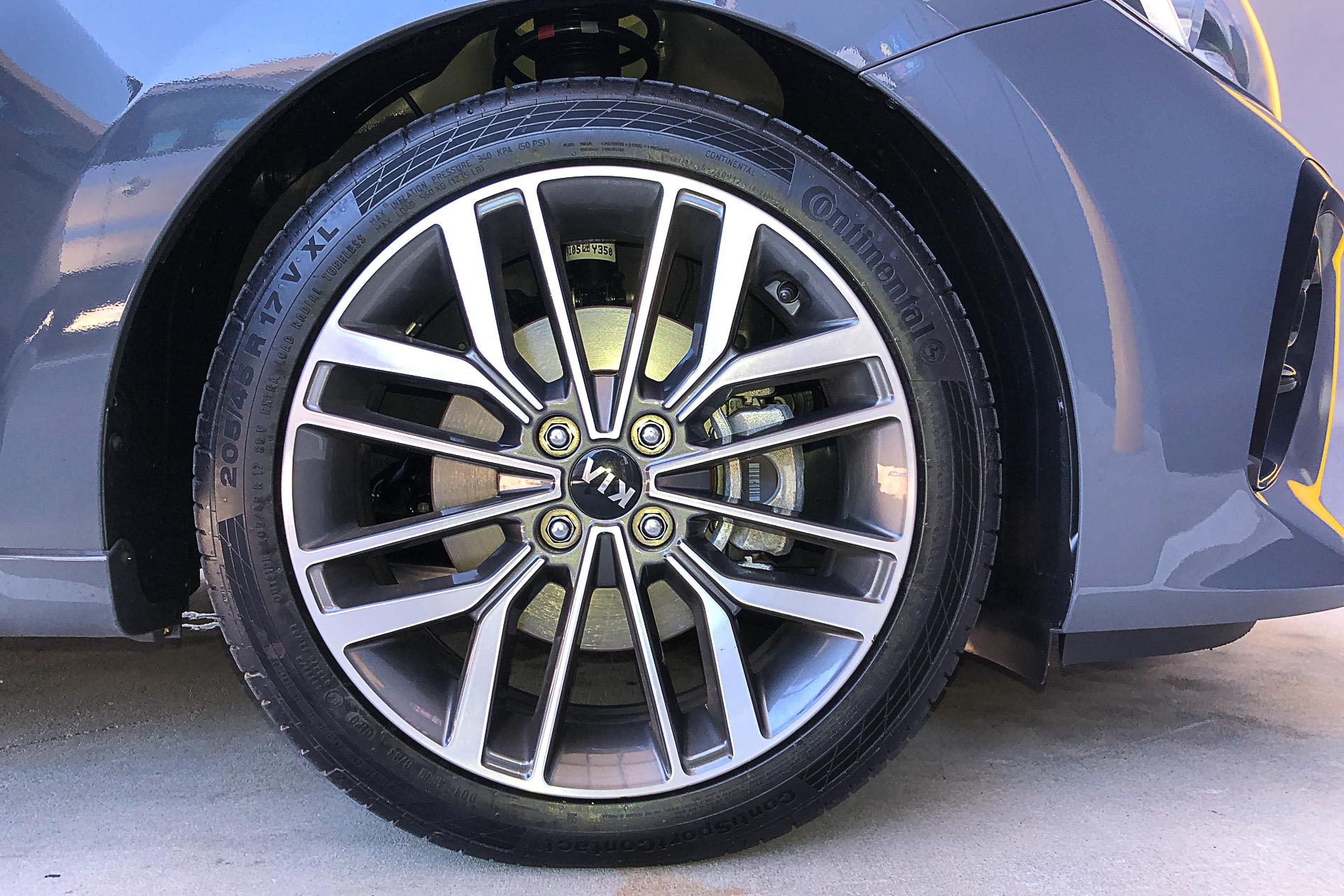
The ride comfort improves as speeds increase, which tells me that the shocks work very well at higher velocities, but it’s the low-speed ride that lets the side down.
Conversely, those firm springs mean that the body roll is well controlled, and steering feel is also very precise and comfortable… but that primary ride, that first bump, is just a bit too severe.
Put it this way; your parent/partner will definitely glare at you from the passenger seat.
The three-cylinder engine does a good job at propelling the Rio around, though it’s a little more coarse and raw than a four-cylinder engine.
The dual-clutch gearbox is well-matched to the engine’s powerband, though, and performs every bit as predictably as a traditional automatic transmission.
Long ascents will drop the gearbox a cog, but the Rio can hold its own up hills, despite its diminutive size.
Noise getting back into the cabin is obvious but not overbearing, particularly for a car of the Rio’s size, and it’s as comfortable at 110km/h as it is at 70km/h.
Safety
There’s a decent smattering of electronic safety help aboard the ANCAP five-star Rio; lane-keep and lane-follow assist, AEB, rearview camera with sensors and bending halogen headlights are all included as standard and complement the six airbags.
The GT-Line also gains forward collision warning and driver attention alert, where driver steering inputs are monitored with cameras and sensors, and an audio/visual warning issued if careless driving is detected.
High-beam assist and rear belt activation detection is also included, though because the Rio is an older model, it predates 2020 Euro NCAP requirements for front passenger collision that would require a front-centre airbag.
How much does it cost to run the Kia Rio?
Having the smallest engine in the Rio line-up also means the GT-Line is the most frugal, posting a claimed combined fuel economy figure of 5.3L/100km. Over 280km, I posted 5.8L/100km.
With a 45-litre tank on board, that gives a best-case range of almost 850km to a single tank.
A fixed-price service plan is offered over the Rio’s seven-year warranty period, and totals $3299; you’ll need to visit your dealer every 12 months or 20,000km.
The four-year/40,000km service is the dearest of them all at a shade over $700.
You’re also eligible for a year’s free roadside assistance when you buy your new Rio, which is renewed for free for another year (up to eight years) if serviced with a Kia dealer.
Verdict
When it comes to value for money, long warranty and low-cost motoring, the Kia Rio is a great proposition.
In GT-Line guise, though, it’s a case of ‘try that low-speed ride before you buy’.
I’m old and fussy, but I reckon there’s a way to give the little Rio a bit of ride quality back, at the expense of some of the sharpness of the current offering.
However, you may think it’s well suited to the sporting nature of this top-spec Rio, in which case you’ll be as happy as a clam.
Overall Rating
3.5/5 stars
Plus & Minus
Plus Stacks of value, great looks, honest and simple
Minus Ride and handling are VERY sporty in nature
Model Kia Rio GT-Line
Engine 998cc 3cyl, dohc, 12v turbo
Max power 74kW @ 4500-6500rpm
Max torque 172Nm @ 1500-4500rpm
Transmission 7-speed dual-clutch auto
Weight 1197kg
Economy 5.3L/100km
Price $24,990
On sale Now
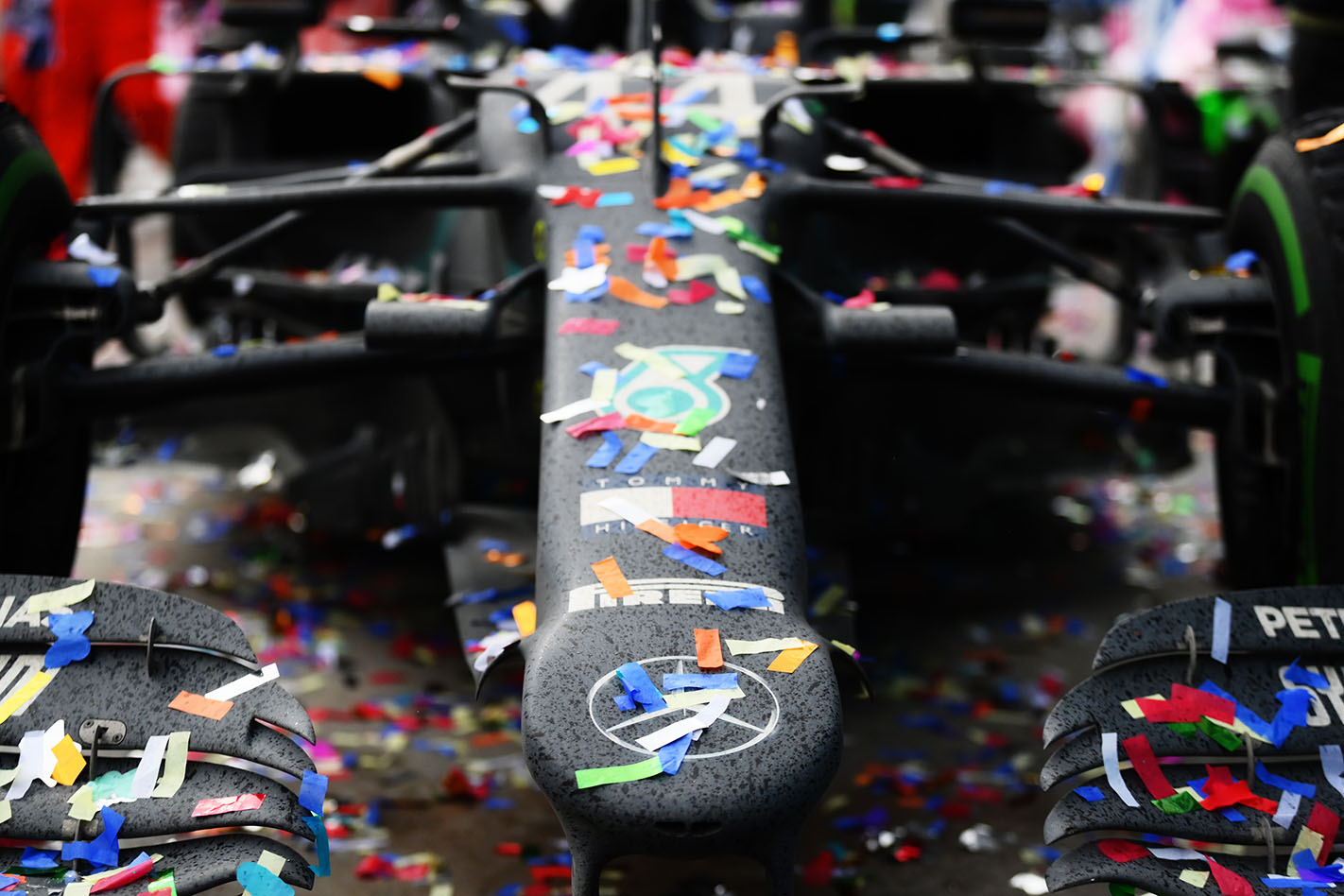
When Lewis Hamilton crossed the line at the end of a chaotic Turkish Grand Prix, sealing his seventh world drivers’ championship, a question rippled through motorsport circles the world over – is he the greatest racing driver ever ?
Now sitting equal with the great Michael Schumacher on championship titles, and with the most grand prix victories and pole positions in history, Hamilton’s place in the pantheon of F1 legends requires careful consideration. It’s not just Michael Schumacher that Hamilton must be measured against, but also the likes of Juan Manuel Fangio and Jim Clark, both of whom crushed the opposition in Formula 1’s formative decades.
While the ‘greatest of all time’ debate is a largely subjective one, the data and numbers behind Hamilton’s 14 seasons and seven titles make a compelling case.
Granted, there are difficulties and caveats needed when comparing drivers of different eras, but the statistical dominion Hamilton holds over F1 in recent years is undeniable. Of drivers to have competed in at least 50 grands prix, Hamilton’s win percentage is second only to Juan Manuel Fangio’s 47 per cent. However, the Briton has competed in three times as many GPs. He has won half of the F1 championships he has taken part in.
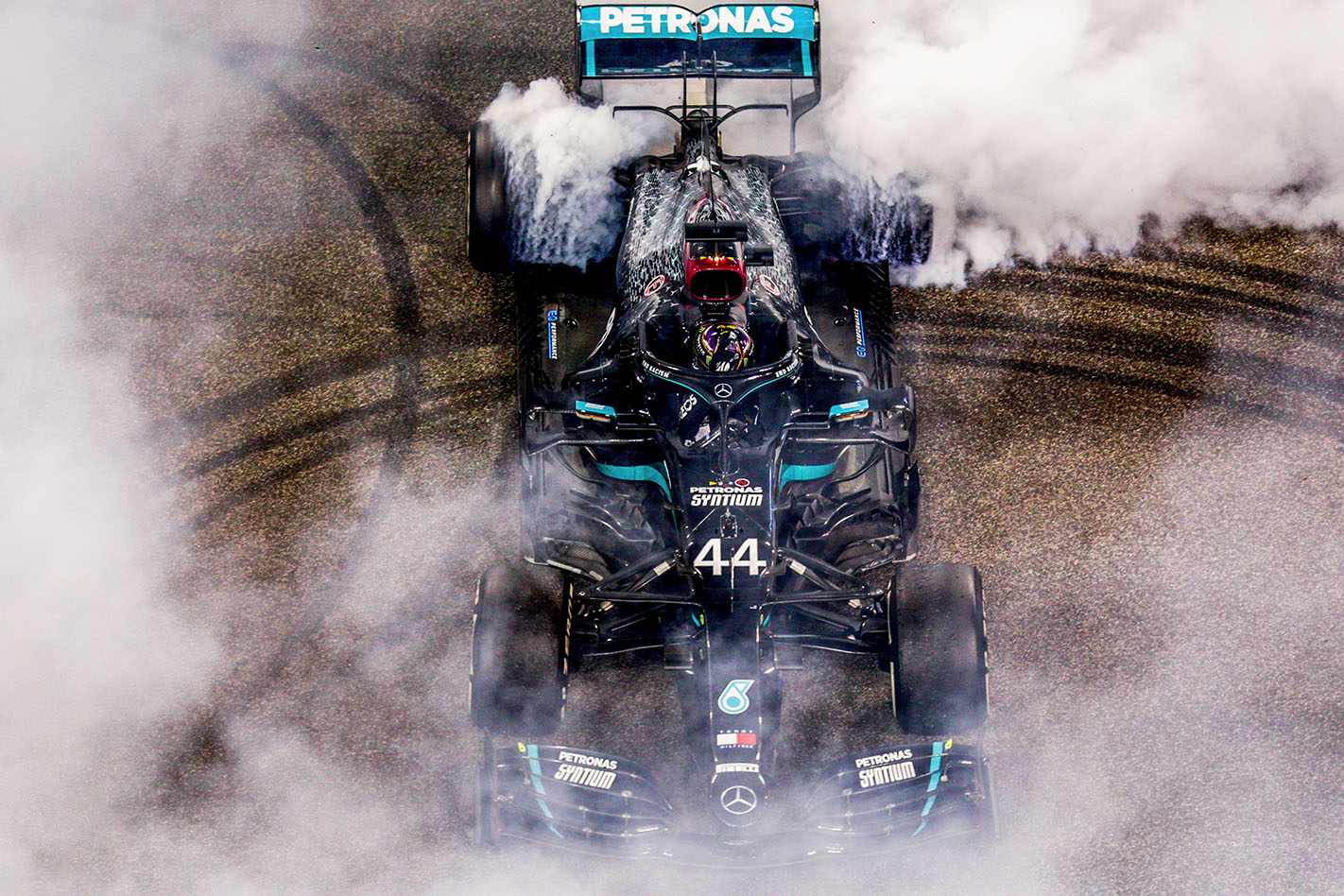
Part of Hamilton’s success is his consistency. In the time since the Briton last failed to finish a grand prix he started, Hamilton has added three world championships to his repertoire. He remains the only driver in F1 history to win in every season in which he has competed.
While Hamilton’s Mercedes-AMGs have been incredibly fast, his success cannot simply be attributed to the car. Valtteri Bottas, in identical equipment only bested Hamilton four times in 2020 and finished the championship closer to Daniel Ricciardo than Hamilton. The mental fortitude and personal sacrifice needed to beat Hamilton in 2016 (one of his worst performing seasons since ’14) drove Nico Rosberg into instant retirement.
It’s easy to dismiss Hamilton’s achievements by pointing to Mercedes-AMG’s dominance in the hybrid era, and while the team has won every title since the introduction of new rules in 2014 it is reductive to say they have gone unchallenged. Ferrari was a serious threat to the German juggernaut in ’17, ’18, and ’19.
Not convinced by these numbers? Well, the Hamilton story is far from over, and looking beyond this year the 35-year-old shows no signs of slowing up.
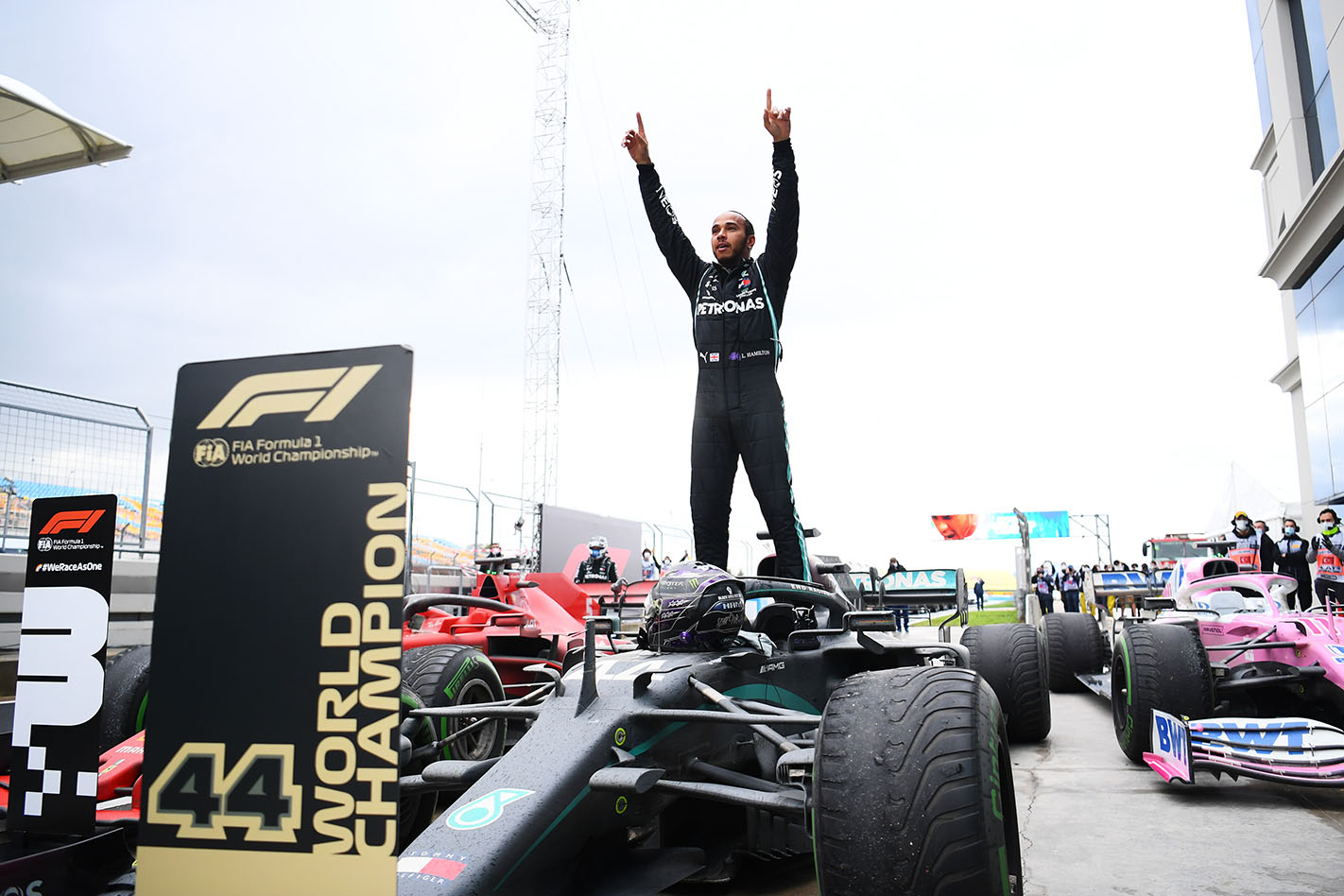
LEWIS HAMILTON’S CAREER BY THE NUMBERS
- Most wins: 95
- Most poles: 98
- Average start: 3.8
- Average finish: 4.8
- Most podium finishes: 164 (95 1st, 40 2nd, 29 3rd)
- Most career points: 3763
- Laps led: 5405
- Laps raced: 15539
- Most points finishes: 228
- Laps led percentage: 34.8%
- Fastest laps percentage: 20%
- Podium percentage: 61.9%
- Win percentage: 35.8%
- Fastest laps: 53
- DNFs:24
- Grand Slams (pole, win, led every lap, fastest lap): 6
- Most points in a season: 413
- Championship percentage: 50%
- Pole percentage: 37%
- Entire races led: 22
- Grand Prix starts: 265
- Hat-Tricks (pole, win, fastest lap): 18
UPDATE – Mark Larkham will return to the Supercars pitlane in 2021, after an extraordinary outcry from fans and supporters.
Supercars CEO Sean Seamer confirmed the news on the sport’s website this afternoon, and Larkham said he was humbled.
“Like Supercars, I could not in good conscience ignore the will of the fans whose very participation has kept me in the business for most of my life; but at the end of the day, this is not about me, this is about the fans,” he said.
“The fans that love our sport, watch our telecasts, buy tickets and team merchandise; and keep the whole show alive. They spoke, Supercars listened and responded; kinda cool.
“So in a really good way, over Christmas you did put an enormous weight, not burden, on my shoulders, and Supercars gave me lots of time to consider my position, and I thank them for that.
“Add to that my deep love of our sport and the fact that Supercars, and Sean in particular, allowed me to agree a very clear pathway back in, where most importantly I can continue to do what I do, including bumble, fall, drop things and make mistakes.”
While the rest of the commentary team is to be confirmed, it’s understood that the status quo will be largely retained.
The move to fire Larkham, confirmed over the Christmas break, sparked an extraordinary outcry from fans of the sport, as well as from the motorsport industry.
“Can’t tell you how much I’ve enjoyed the opportunity Supercars have given me over many years,” Larkham said in a statement.
“From the whiteboard to the Hino Hub, the freedom and flexibility I’ve been given to create and contribute to the telecast has been a blast.
“So, I just hope in some way my small part has help fans understand some of the nuances of this cool sport we all love, whilst we laughed a little along the way.”
‘Larko’, who was set to join fellow pitlane reporter Riana Crehan on the sidelines in 2021, joined the commentary team in 2006 after wrapping up a career as a driver and team owner.
Over the ensuing years, Larkham made the space his own, bringing laconic yet impassioned expertise to the difficult job of translating a technical sport to armchair pundits.
In fact, he is arguably the best pit lane reporter in any motorsport discipline anywhere in the world – and the fans love him for it.
Larkham’s real skill is an innate ability to project his vast knowledge of the sport to not just dedicated motorsport fans, but to casual observers of Supercars.
As well, he’s been actively involved in mentoring many of the sport’s emerging talents, as well as actively promoting Supercars to a wider audience outside of motorsport.
Fans slammed the decision, with thousands of comments and reactions lambasting the decision flooding social media in the hours after the news broke.
“Larko made a complex sport easily understood for the non hardcore fan and for those with great experience,” said former Super2 racer Adam Majoram, in one such typical comment.
“His valued input and entertaining presentation will be missed… Maybe they’ll call him back – you don’t know what you have until it’s gone.”
Industry pundits, too, expressed confusion and anger at the call.
“Yesterday’s decision by Supercars management to axe Mark Larkham from their commentary team was naively dumb in the least and or mind-numbingly ignorant at its worst,” wrote motorsport maven Brett Murray in a scathing commentary piece.
“Not only is that a complete backhander to the current telecast, which is one of the best in the world, it is a complete middle finger to the fan base which has kept this sport alive through some pretty tough times.”
“Worst decision ever. The sport will be poorer by the lack of his presence, he brings an energy and enthusiasm that can’t be bottled,” said Erebus team principal Betty Klimenko.
“Riana is a wonderful woman, she always had a smile for me and a hug when things went wrong.”
“Many fans will have their own favourite Larko memory from his time with the broadcast team and we are grateful for everything he has contributed in the way that only he could,” said Supercars CEO Sean Seamer.
“Mark will always be a part for of the Supercars family and we wish him all the best for the future.”
The make-up of the 2021 commentary team is still up in the air, with Mark Skaife and Jessica Yates confirmed from the 2020 line-up, with former Seven pitlane reporter Mark Beretta returning to the fold alongside Craig Lowndes.
(L to R) Yates, Skaife and Lowndes
It’s understood that long-time anchor Neil Crompton currently has no deal to resume for 2021, while former racer Paul Morris is understood to be in the running for a pitlane reporting role.
Seven will broadcast six Supercars races live in 2021, including the Bathurst 1000 and the Bathurst 12 Hour (if it goes ahead).
Highlights from other races will be replayed on Seven and 7plus the same day of the race, while Fox and Kayo will broadcast all races on pay TV.
We’re hearing reports that a five-door version of the popular Suzuki Jimny offroad wagon will be revealed around July 2021.
This five-door variant, which is likely to share the same styling and mechanicals as its three-door sibling, yet sit on a stretched wheelbase, is allegedly being developed for the Indian market.
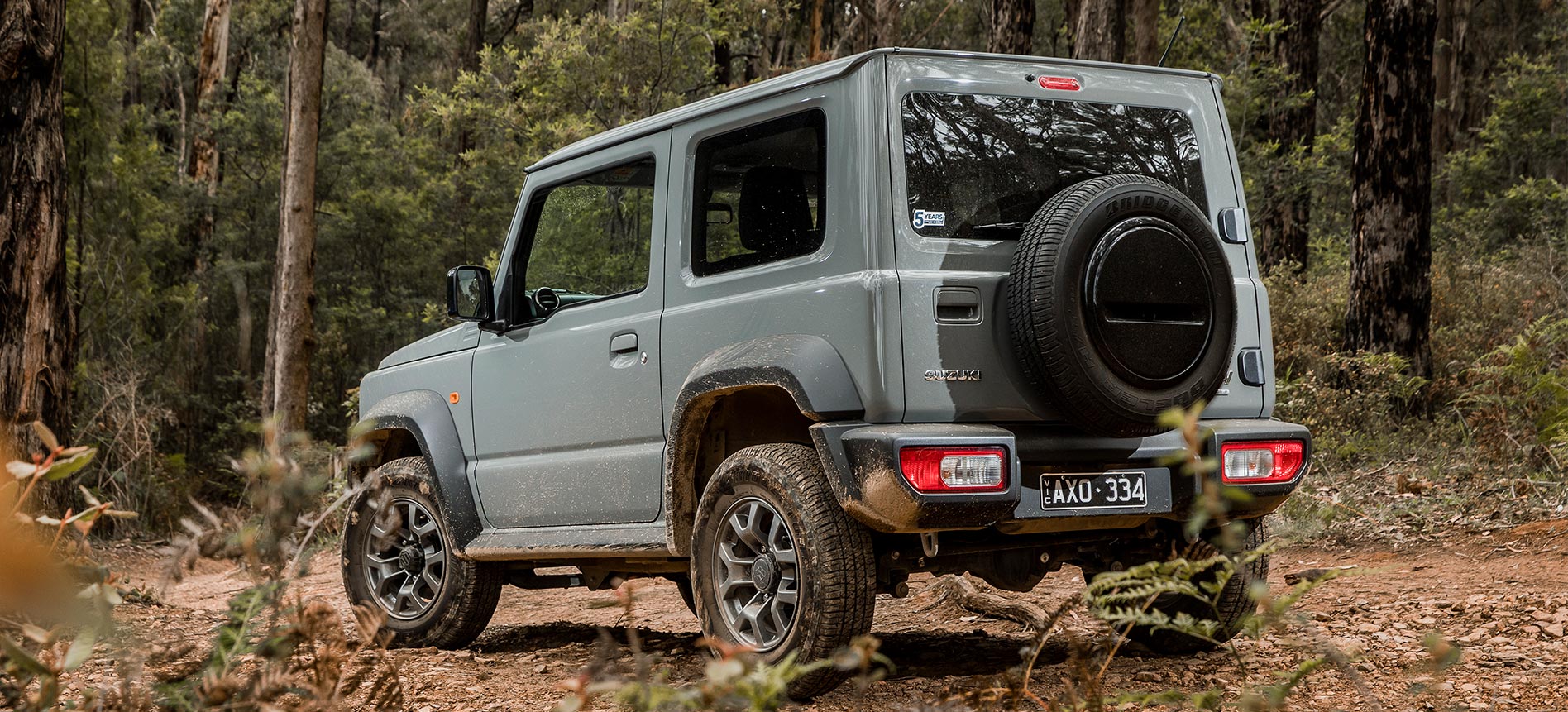
The report by Autocar India coincide with the opening of a new Suzuki Jimny production line in India, built to satisfy strong global demand for the baby 4×4.
Cars produced in India are initially destined for Latin American countries like Peru and Colombia.
Autocar magazine reports that Indian-built Jimnys are mechanically and physically identical to those built at the Kosai plant in Japan which supplies Australia.
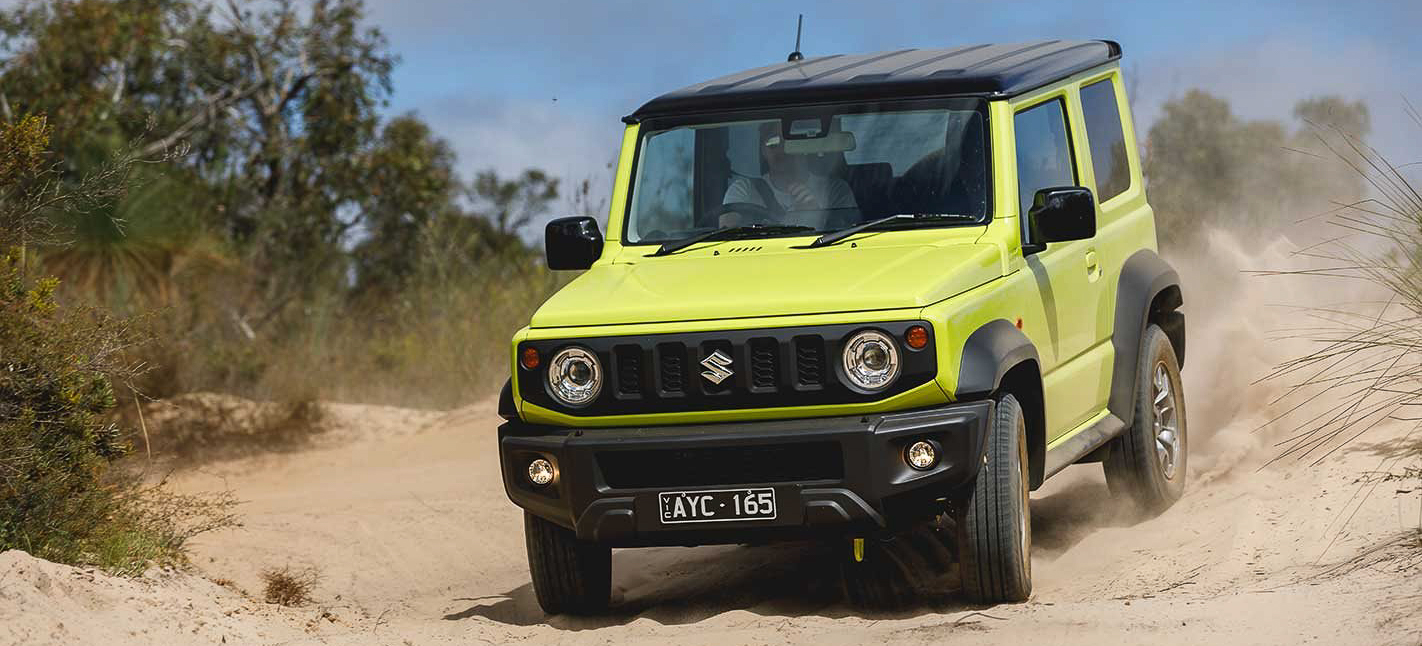
There’s no suggestion that Australian-spec Jimnys will shift to the new Indian production facility, although the Indian production line could see reduced wait times as it shoulders some of the global demand from the stretched Japanese plant.
Whether the five-door Suzuki Jimny will find its way into Australian showrooms remains to be seen, but when WhichCar spoke to Suzuki Australia general manager Michael Pachota at the 2019 Jimny launch he was clearly interested in seeing a “more-door” Jimny in Australia.
“If the name starts with ‘Jimny’, we’ll sell it,” Pachota said. “A five-door would broaden the range of customers beyond just thrill-seekers, adventure seekers and young drivers who just want the cutest 4×4 on the block. It would really broaden our demographic.”
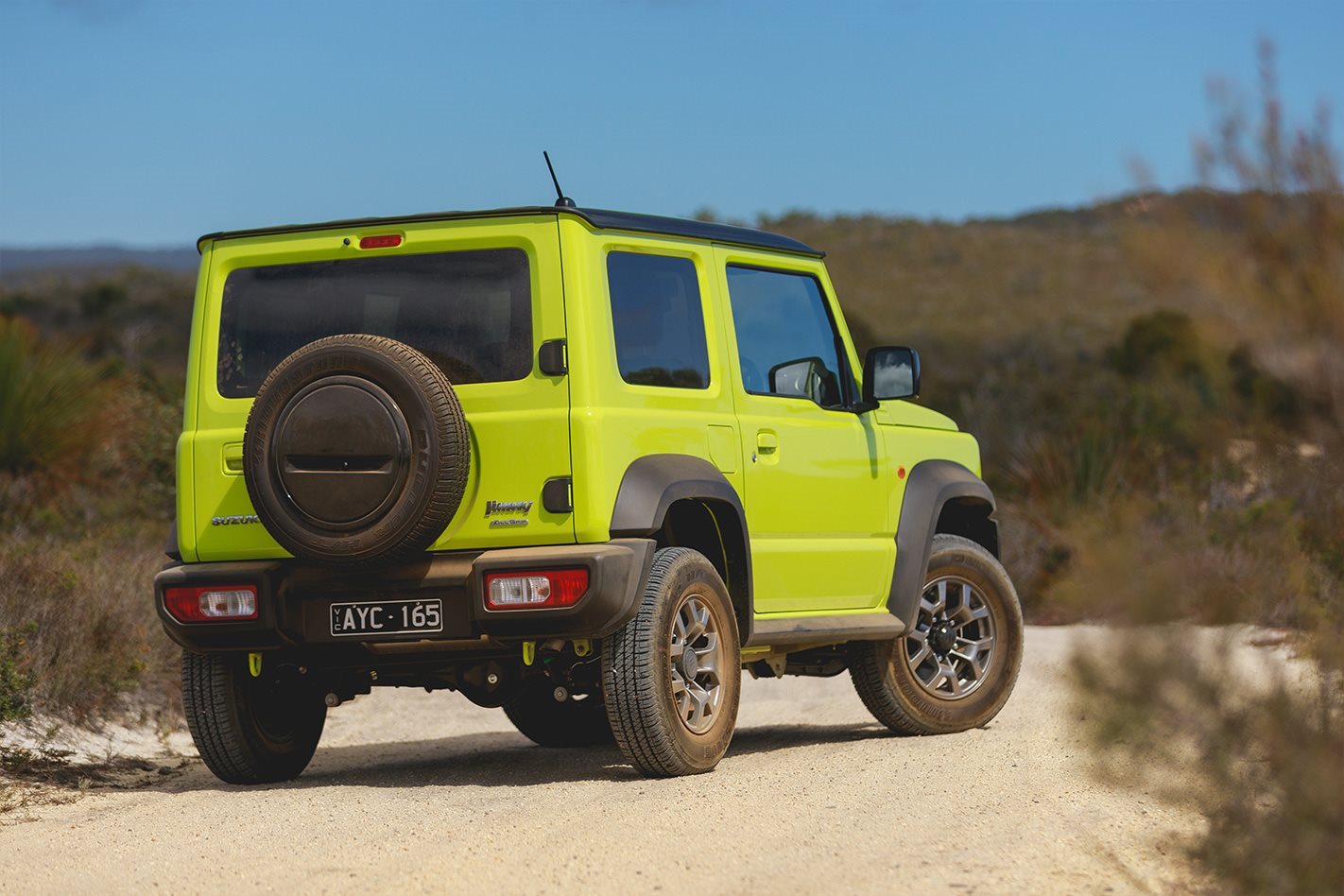
Waiting lists have been consistently long since its release, with some buyers forced to wait close to a year for their Jimny.
We’ve contacted Suzuki’s Australian arm to ask about the possibility of the five-door hitting our shores, as well as to confirm that Australia’s Jimny supply will continue to be sourced from Japan rather than the new Indian plant.
Apologies in advance for being anti-climactic, but the Toyota Supra is a damn good sports car. If you are in the market for a driver’s car that gets your adrenal glands pumping, can be driven regularly, and stands out from the crowd, the reborn MkV Supra is one of the best options available today.
At PCOTY 2019 the Toyota Supra finished a worthy third, beating the likes of the HSV Camaro ZL1, Renault Megane RS Trophy R, and Lotus Exige Sport 410. Stiff competition.
It is interesting, then, that Toyota has felt the need to update its flagship sports car just over a year after it was launched locally. What’s changed, then?
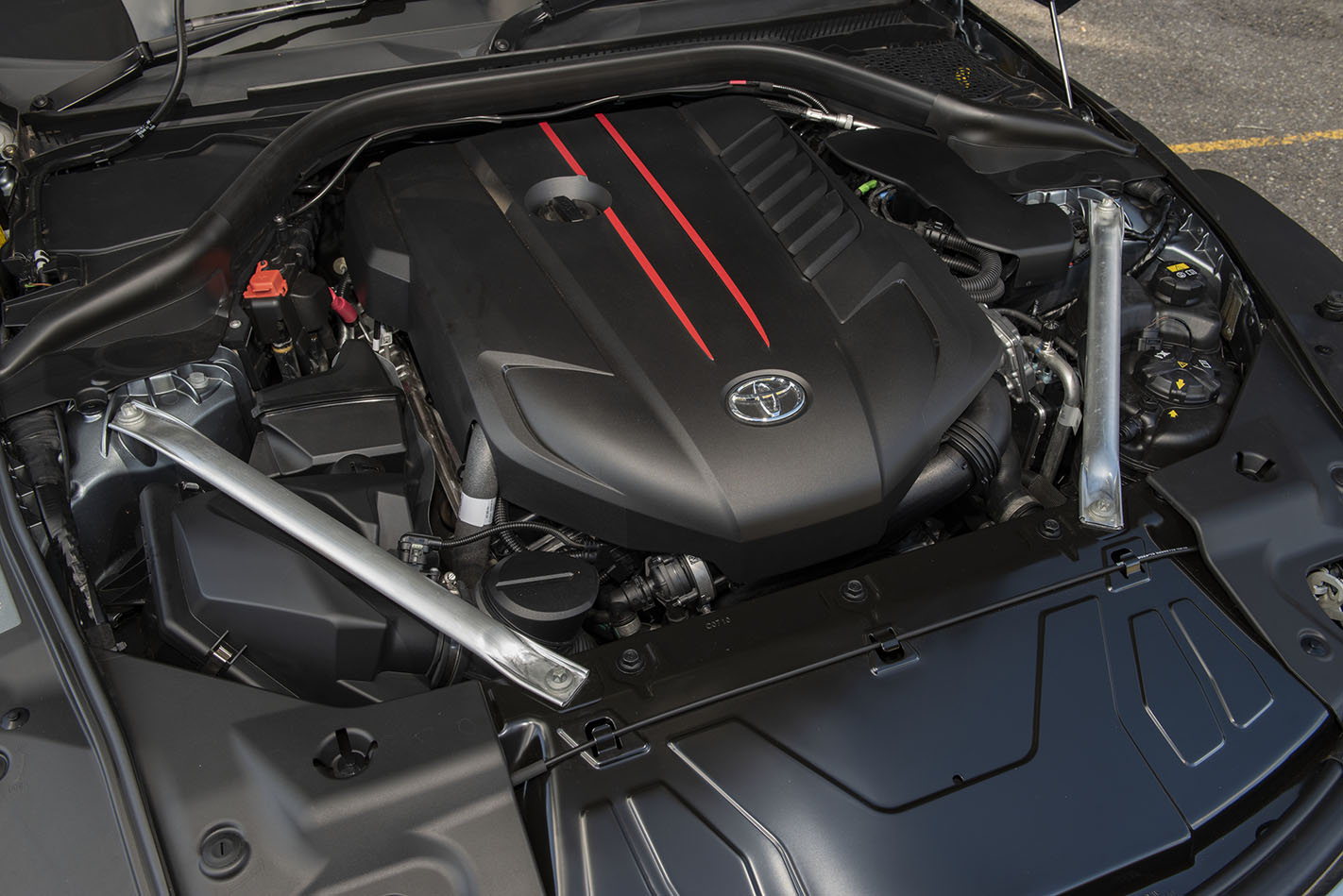
Thanks to some fiddling from BMW, the German-sourced 3.0-litre turbocharged straight-six-cylinder engine now makes an extra 35kW (for a total of 285kW), and there have been tweaks to the chassis to add rigidity.
Thing is, the Supra didn’t really need any extra grunt or stiffness. It was already plenty fast in the real world, and Toyota had tuned in a sweet ‘Goldilocks’ suspension tune that was not too stiff, not too soft. So, has Toyota broken the sacred ethos of “if it ain’t broke don’t fix it”? Spoiler alert: no.
It’s all too easy nowadays to give a sports car a little too much power, which you can’t tap into on some of Australia’s best back roads without turning your licence into a critically endangered species. Thankfully, the changes made to the Supra’s engine have only served to make it more accessible, more of the time.
Peak power is not simply increased at the top of the rev range, with the extra kilowatts on offer earlier and across a wider spread of revs, shunting the Supra toward the horizon between 5800-6500rpm. Torque remains capped at 500Nm, but is now spread between 1800-5000rpm (previously 1600-4500rpm).
Having peak torque on tap for more than 3000rpm means the Supra always feels muscular, without the driver needing to search for the right ratio in the eight-speed automatic gearbox to get meaningful acceleration.
Toyota claims the new powertrain will drop the 0-100km/h sprint to 4.1 seconds. Our short time with the flagship GTS variant means we haven’t had the opportunity to verify the claim with independent performance testing.
Our best time with the 250kW version was a stout 4.44sec from 0-100km/h, and the patented butt dyno tells us the extra 35kW of grunt and wider powerband will shave a tenth or two from that.
Kudos to Toyota for making the more powerful powerplant available on both the base GT and more expensive GTS variants of the Supra, with prices rising $2000 across the board as a result. The engine isn’t the only area that has been fettled for this update, with new strut braces fitted in the engine bay to help improve rigidity.
For the anoraks, the only external way to differentiate this new more powerful version from early MkV adopters is the addition of a Supra logo on the front brake calipers on GTS badged versions. GT variants, with their unpainted calipers, remain visually indistinguishable unless you pop the bonnet and see the additional strut braces.
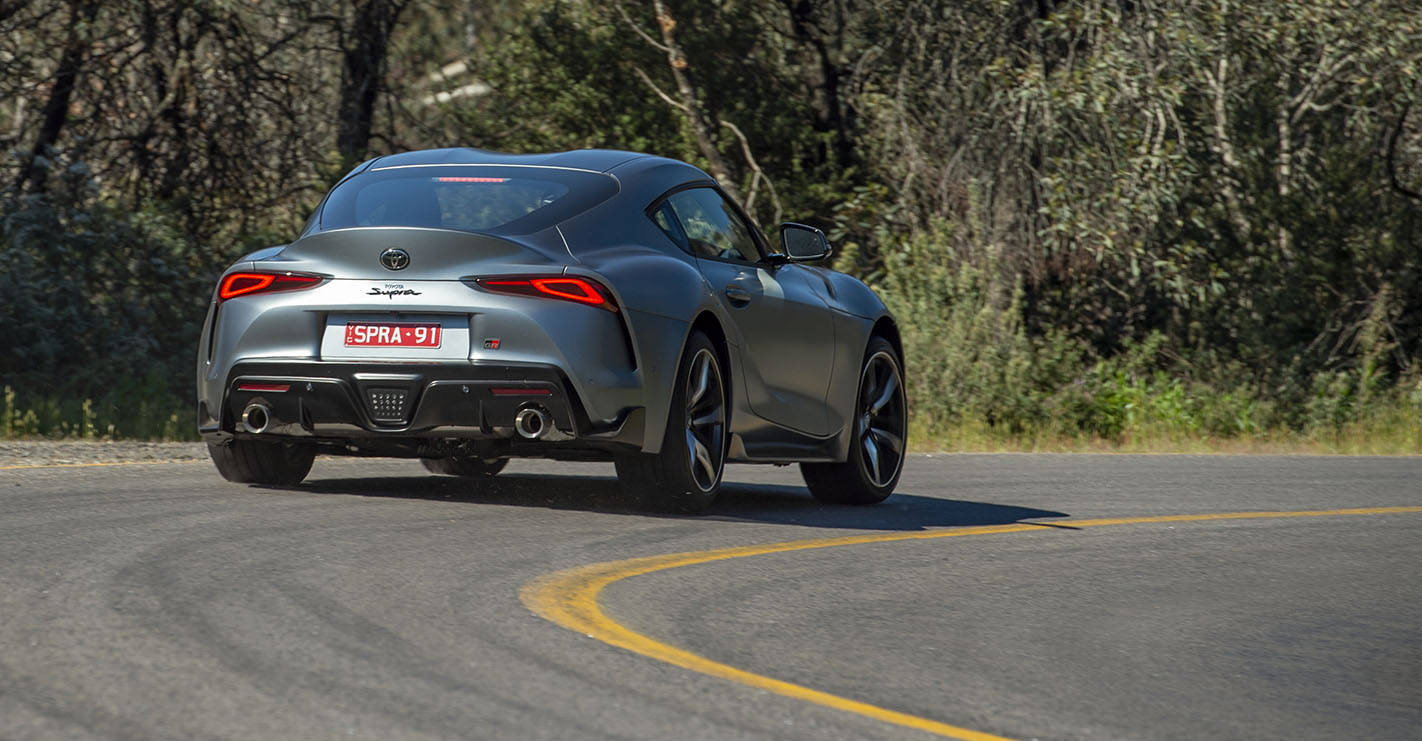
It’s not all about power with the Supra though, as the mid-corner speed you can achieve in the MkV is staggering, helped in no small part by the Michelin Pilot Super Sport rubber (255/35/R19 up front and 275/35/R19 at the rear).
Chassis balance is beautifully judged, with keen turn-in, and an eagerness throughout the middle part of the corner that inspires you to start employing your right foot early. Square up the exit, press the throttle against the firewall, and the Supra places its newfound power to the ground with aplomb.
Take this as your one warning though: don’t get aggressive with the Supra. It performs better with a smooth hand, and is at its most rewarding (and fast) when flowed progressively from one bend to another. Snap oversteer awaits those with jerky inputs.
The brakes perform well, with strong pedal feel that doesn’t step over the line of being artificially overservoed. There is enough travel in the pedal that you aren’t stressed against the belts on the mildest of applications, but strong applications still shed speed rapidly.
The wheel is nicely sized at 373mm, has a well-judged rim size, and is thankfully fitted with a judicious selection of buttons – mainly for controlling the cruise function and media.
Now for the downsides, which I’ll preface by saying don’t come anywhere close to spoiling the Supra’s giggle-inducing positives. Firstly, the ZF torque-converter automatic is crisp and smooth on the way up the ratios, but can be clunky coming back down, particularly at slow speeds around town.
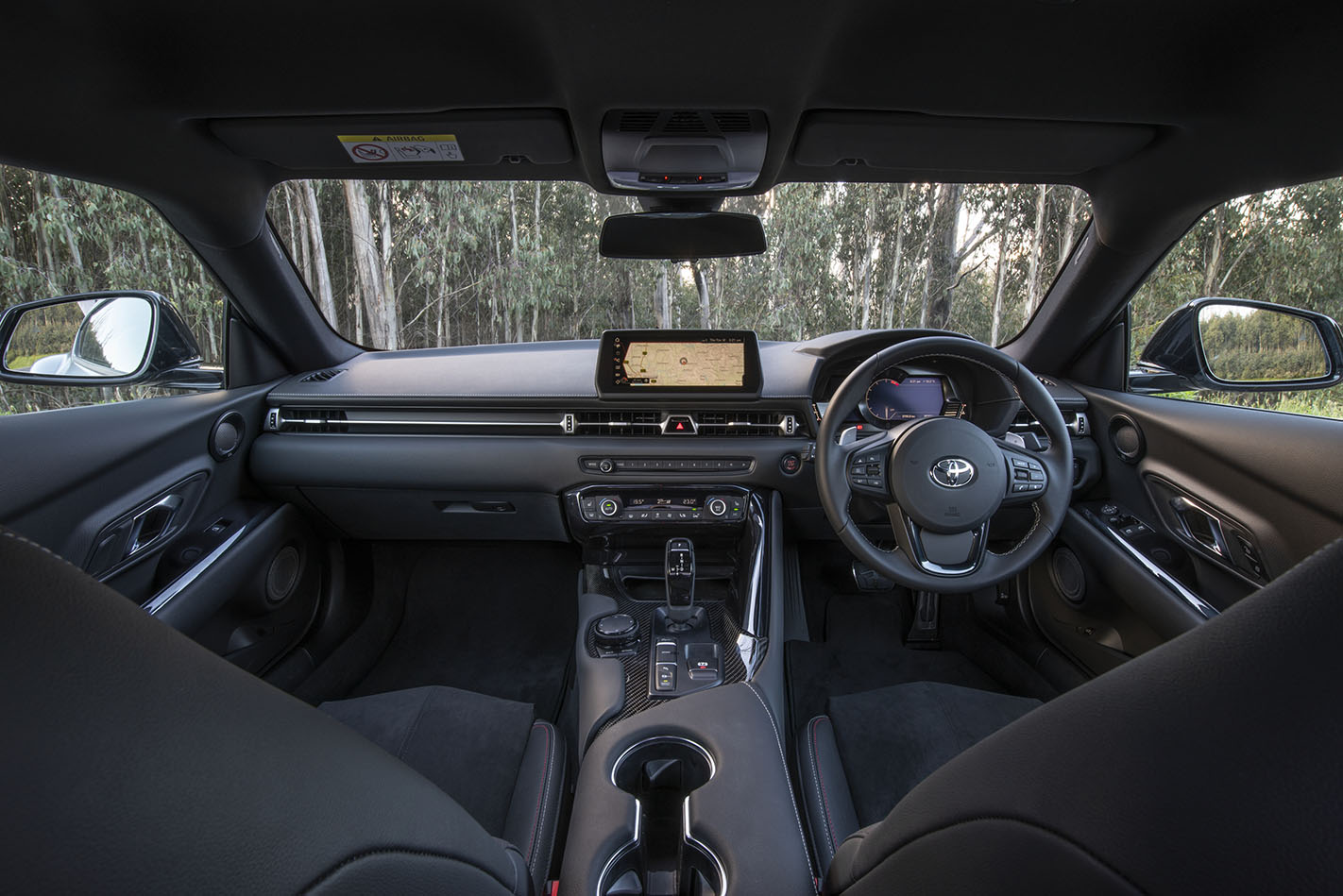
A grand tourer the Supra decidedly is not. With less than 1000km on the odometer, our test car had already developed an incessant and incredibly annoying rattle in the dash. That brings our tally of Supra press cars with rattles to three (out of three), each developing a problem in a different area of the cabin. Toyota needs to send someone to Graz with a stern finger and a new set of ratchets.
Then there is road noise. On the highway, tyre noise is a pervasive problem. You need to have the JBL speakers cranked to drown out the drone. Long stints on the highway in the Supra can become tiring.
However, the biggest sticking point with the Supra remains its pricing and model structure. I struggle to see a reasonable justification for the extra premium that the GTS demands over the base model.
If you opt for the GTS you gain 19-inch wheels (up from 18 inches), wrapped in the same Michelin Pilot Super Sport tyres as the GT, larger rear brakes with red calipers, metal pedals, a head-up display, JBL sound system, and the ability to option Alcantara interior trim and matte grey pain at $2500 a pop (both of which were fitted to our test car).
The value just isn’t there.
Our test car was priced at $102,126 before on-roads, a full $15,000 more than a base GT, for no real performance gain. Yes, the GTS gets larger rear brakes, but you won’t notice that in the real world, and track day enthusiasts are going to get more benefit from more aggressive pads. The extra tinsel doesn’t necessarily improve day-to-day liveability either, with the JBL speakers not adding a significant level of extra fidelity or clarity, and the small convenience of a head-up display just isn’t worth the extra outlay. Ultimately, unless you are desperate for the bigger rims or access to the paint and trim options, save yourself the money and pass on the GTS.
Regardless of which variant you opt for, if you are willing to put up with its niggles, the Toyota Supra will reward you with one of the most enjoyable driving experiences you’ll find in any new car on sale today.
Long live the legend.
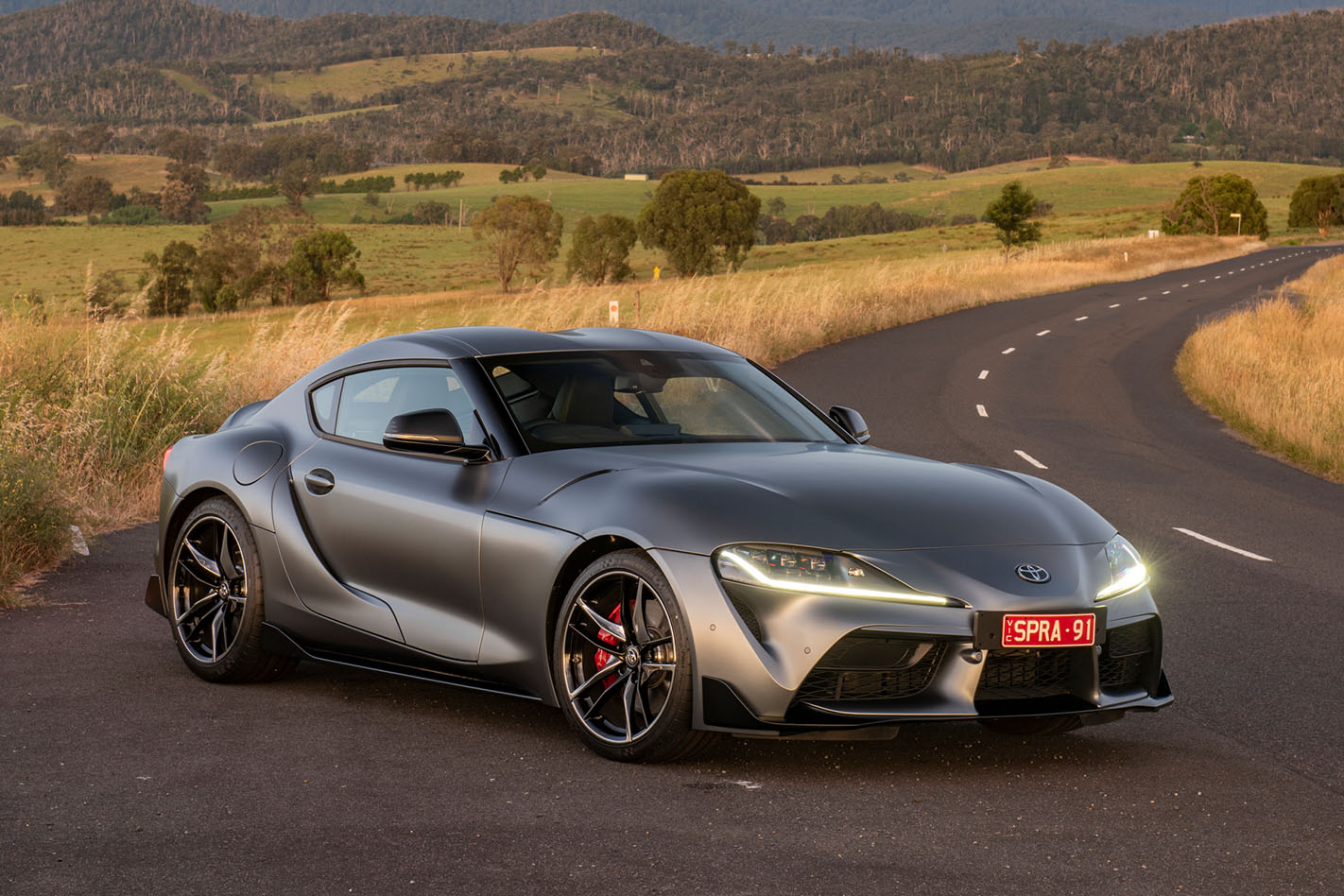
TOYOTA SUPRA GTS SPECS
Engine: 2998cc inline-6, DOHC, 24v, turbo
Power 285kW @ 5800-6500rpm
Torque 500Nm @ 1800-5000rpm
0-100km/h: 4.1sec (claimed)
Weight: 1495kg
Price: $97,126
Star rating: 4.5/5
Like: Accessible performance, prodigious chassis, head-turning looks
Dislike: Clunky downshifts, tiresome road noise, persistent rattles squeaks