
Are we sick of SUVs yet?
The sales figures say “haha, no”, yet the imminent arrival of Ford’s new Tourneo makes a compelling argument as family-friendly transport – and one that might entice at least a few of us to trade in the Kluger or Prado and get themselves into a boxy bus instead.
The Tourneo takes aim at similarly sized people-movers with commercial vehicle origins like the Toyota Granvia, Hyundai Staria and Volkswagen Multivan – as well as the reigning king of the people-mover segment, the Kia Carnival.
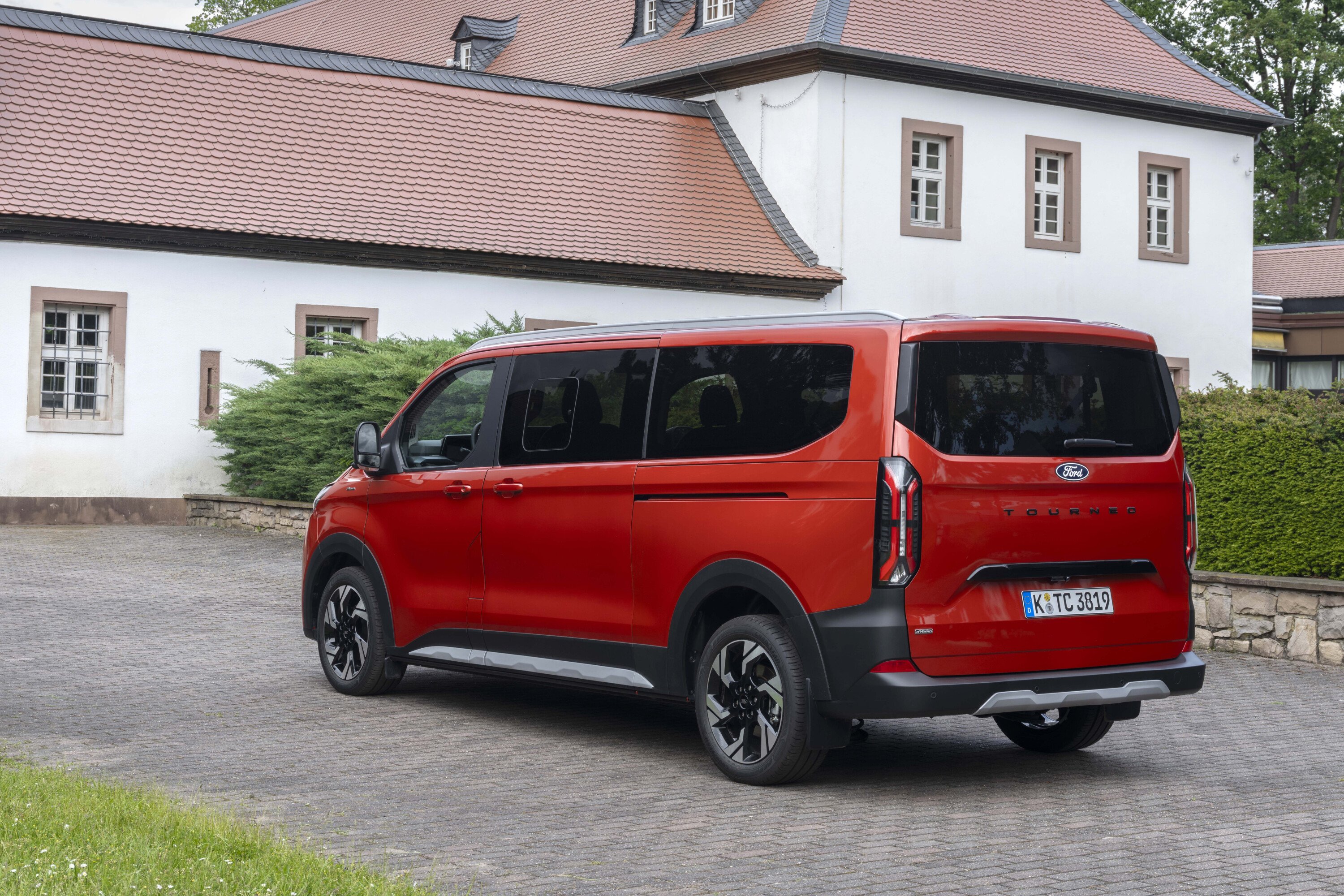
1
This is new territory for the Blue Oval’s Australian arm, with the only Transit-based personnel carriers to date being utilitarian buses and dual-cab variants of the commercial van range. Does the Tourneo have a warmer vibe than those efforts?
And with the Tourneo sharing its DNA with the new-generation Transit Custom, which made a strong first impression in all-electric E-Transit Custom form during its global media launch, does it show the others how to make a van-based people-mover with passenger – and driver – appeal?
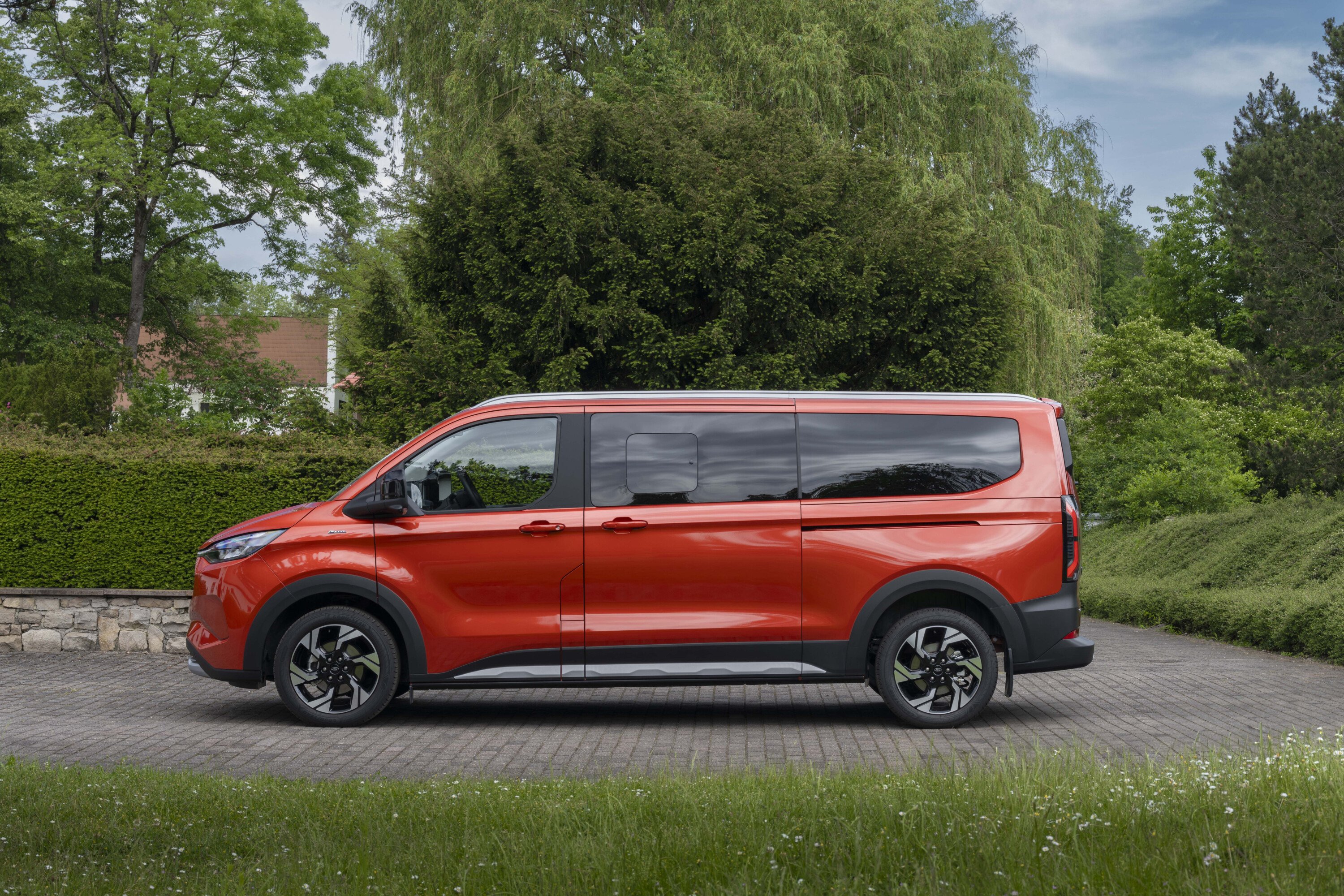
1
JUMP AHEAD
- How much is it, and what do you get?
- How do rivals compare on value?
- What’s it like to drive?
- Interior comfort, space and storage
- How much fuel does the Ford Tourneo use?
- How safe is the Ford Tourneo?
- VERDICT
How much is it, and what do you get?
The first batch of Tourneos aren’t due to arrive until the final quarter of this year, however Ford Australia has already announced pricing for the two-variant range.
The entry-spec Tourneo Active will retail for $65,990 before on-roads, while the high-spec Tourneo Titanium X will wear $70,990 pricetag.
For the Active, the following features will be standard:
| 2024 Ford Tourneo Active features | |
|---|---|
| Power sliding rear doors on left and right | Wireless Apple CarPlay and Android Auto |
| Heated driver and front passenger seats | Wireless phone charging pad |
| Track-mounted reconfigurable second and third row seats | 17-inch alloy wheels |
| Keyless entry and ignition | LED headlamps and tail lamps |
| Tri-zone climate control with separate rear cabin controls | Adaptive cruise control |
| 13-inch infotainment touchscreen with Ford Sync4 operating system | |
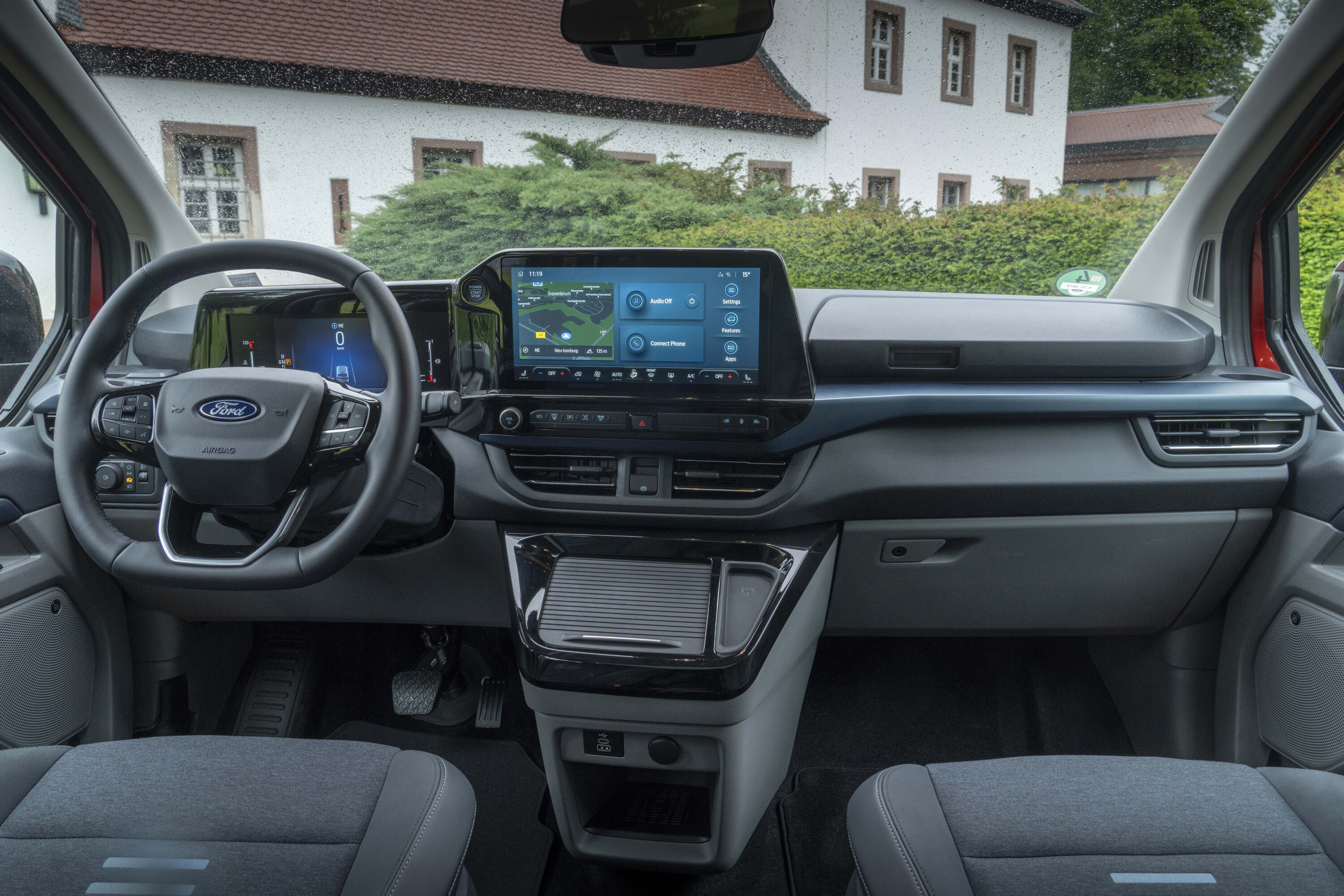
1
Spending more on the Titanium X nets a few extra luxuries, with all of the Active’s features (with the exception of the black plastic body cladding and wheels) plus the following:
| 2024 Ford Tourneo Titanium X features | |
|---|---|
| Panoramic fixed glass sunroof (no retractable shade) | B&O premium audio system |
| Artificial leather upholstery | 360-degree parking camera. |
| Power-adjustable front seats | Unique 17-inch alloy design |
How do rivals compare on value?
With a price range of $65,990 to just over $70K, the Tourneo competes with both upper-end mainstream people-movers, as well as lower-spec premium people-movers.
Key among them are the Hyundai Staria Highlander – which costs $64,000 as a FWD petrol or $67,000 as an AWD diesel – and the Kia Carnival.
The Carnival’s Sport + and GT-Line grades align most closely to the Tourneo, with the Sport + Diesel retailing for $64,610 and the GT-Line Diesel priced at $72,910, however the Carnival’s lower-spec S and Sport grades provide more affordable options, reaching as low as $50,150 for the Carnival S petrol.
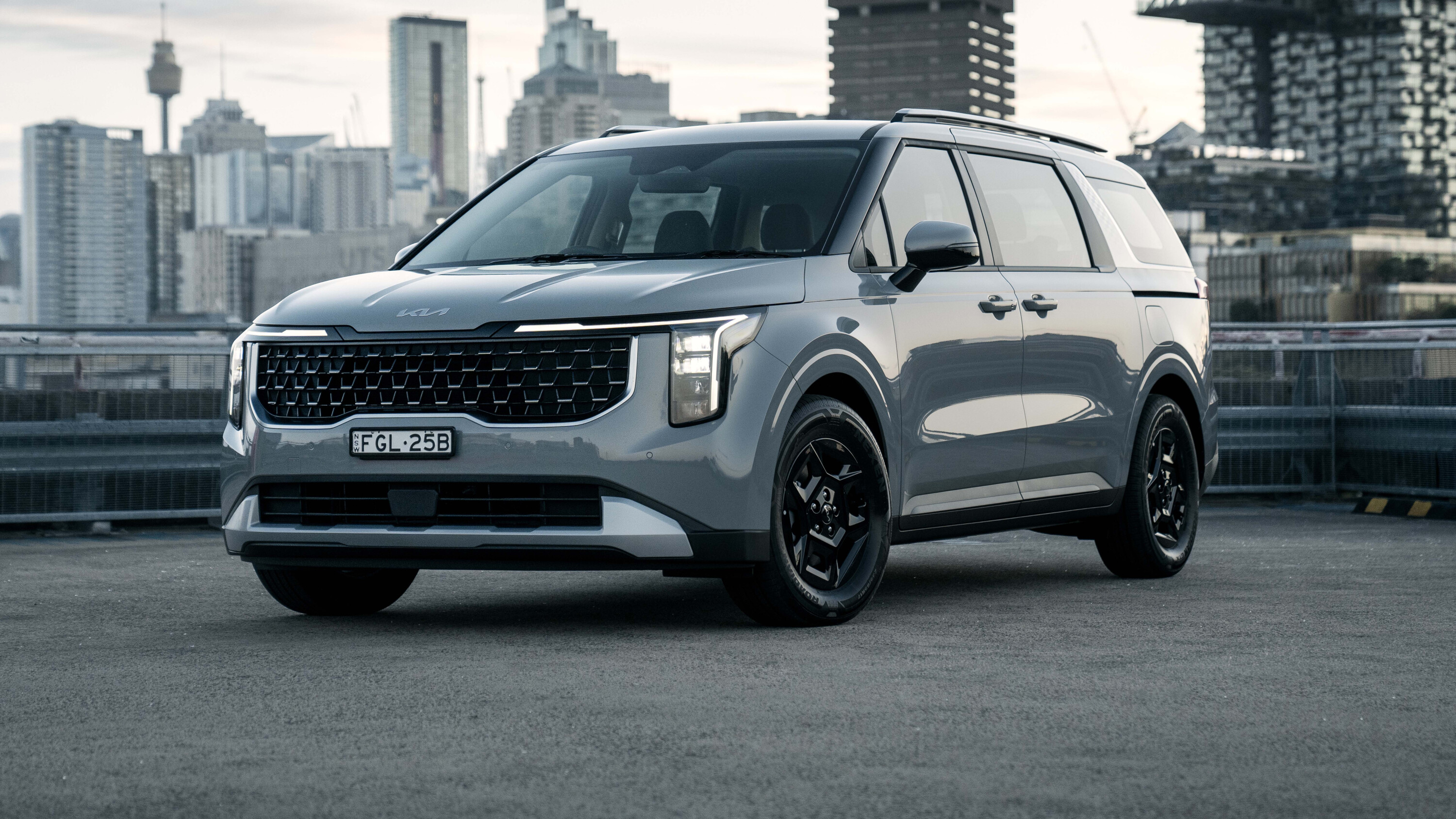
1
The availability of a petrol powertrain is also something the Tourneo doesn’t offer in Australia – though Ford’s local office is flirting with the idea of bringing in the all-electric E-Tourneo.
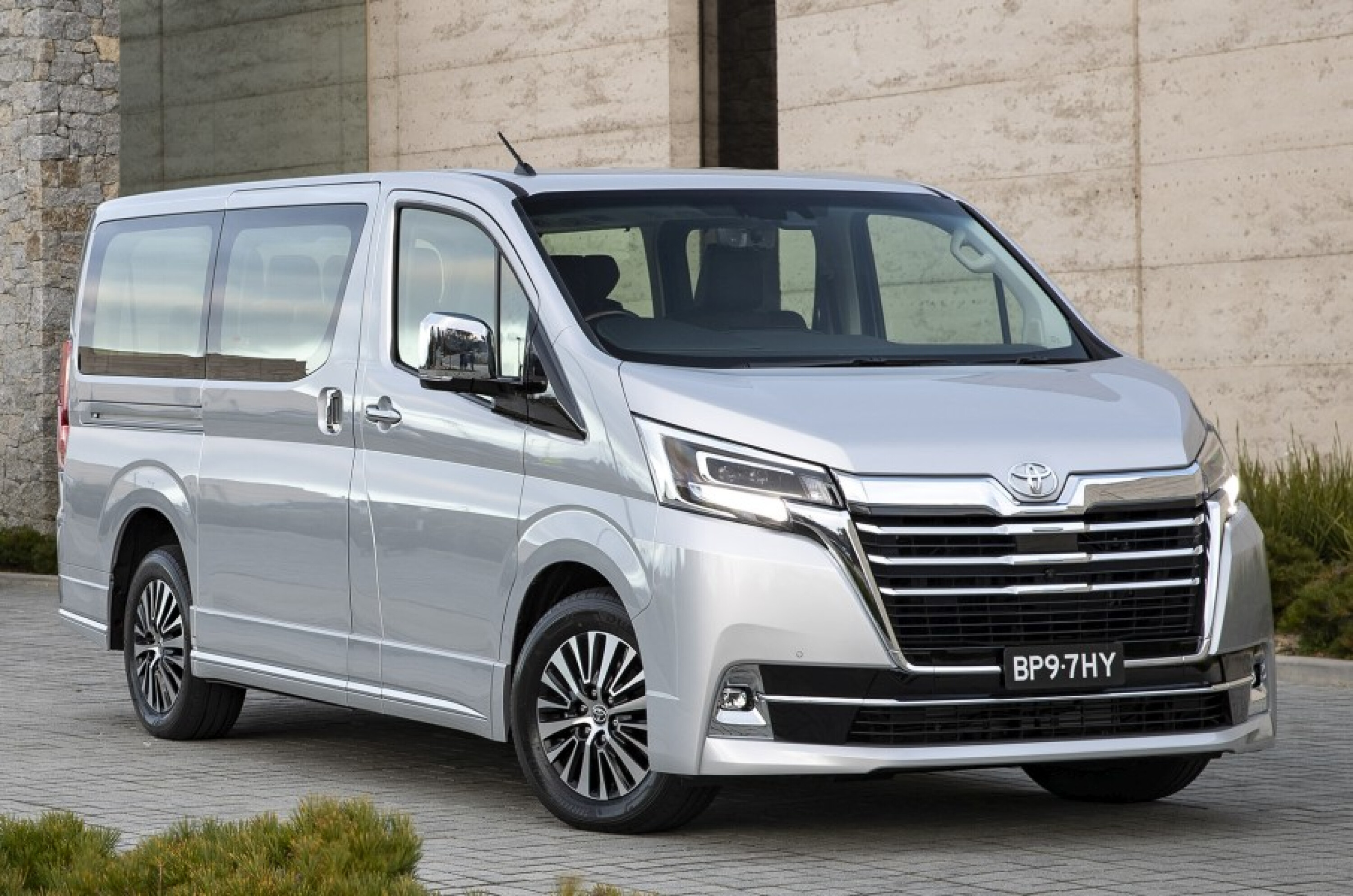
Other rivals include the Toyota Granvia and Volkswagen Multivan, both of which, like the Hyundai Staria and Tourneo, transform a commercial van into a passenger-carrying micro-bus. Of those, the Granvia costs significantly more on a like-for-like basis, with a Tourneo-equalling eight-seat layout coming at a $2000 premium over the standard six-seat configuration.
The VW Multivan aligns more closely, with its Comfortline SWB and Premium SWB priced at $69,290 and $72,290 respectively, though note that a new-generation Multivan is around the corner.
1
What’s it like to drive?
Australia-bound Tourneos will be powered by the same diesel powertrain as the Transit Custom, with a 125kW and 390Nm 2.0L EcoBlue turbo diesel driving the front wheels via an eight-speed torque-converter automatic.
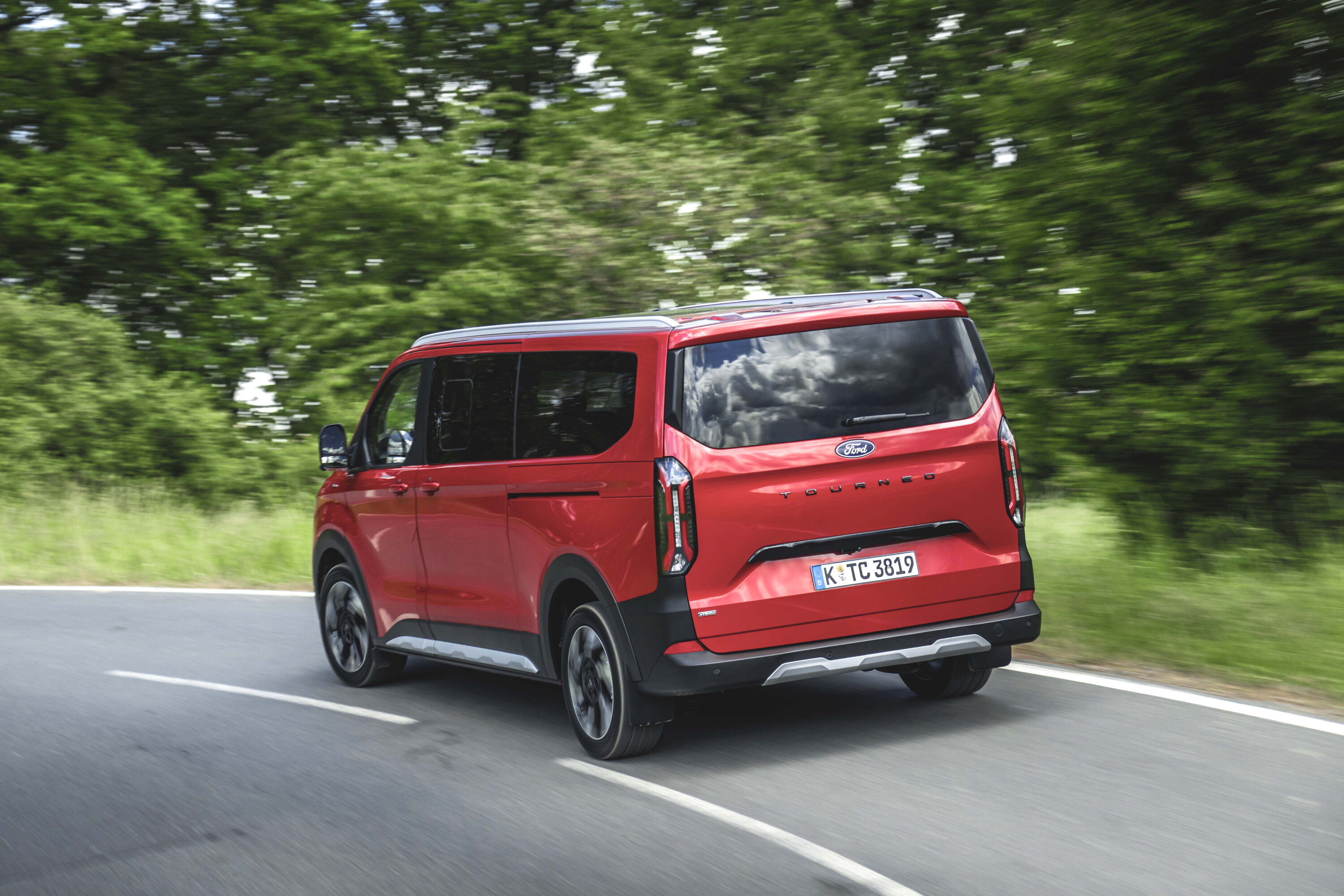
It’s a good combo. The diesel is quiet and smooth and pulls strongly, while the eight-speed auto shifts cleanly and has a ratio spread that works well with the diesel’s torque-rich low end. It picks up speed easily – the Tourneo weighs over two tonnes when empty, but it feels rather sprightly.
That sense of agility is magnified by its handling. The steering is light and easy-going, but it’s hooked up to a fast and responsive rack and a front axle with geometry that feels far more car-like than a typical van.
1
The suspension is also shared with the Transit Custom, with a MacPherson strut front and independent trailing arms at the rear, but with Tourneo-specific spring and damper rates that deliver a softer, more comfortable ride.
It works well, too, with little head-toss and jostling when going over speedbumps or lumpy ground.
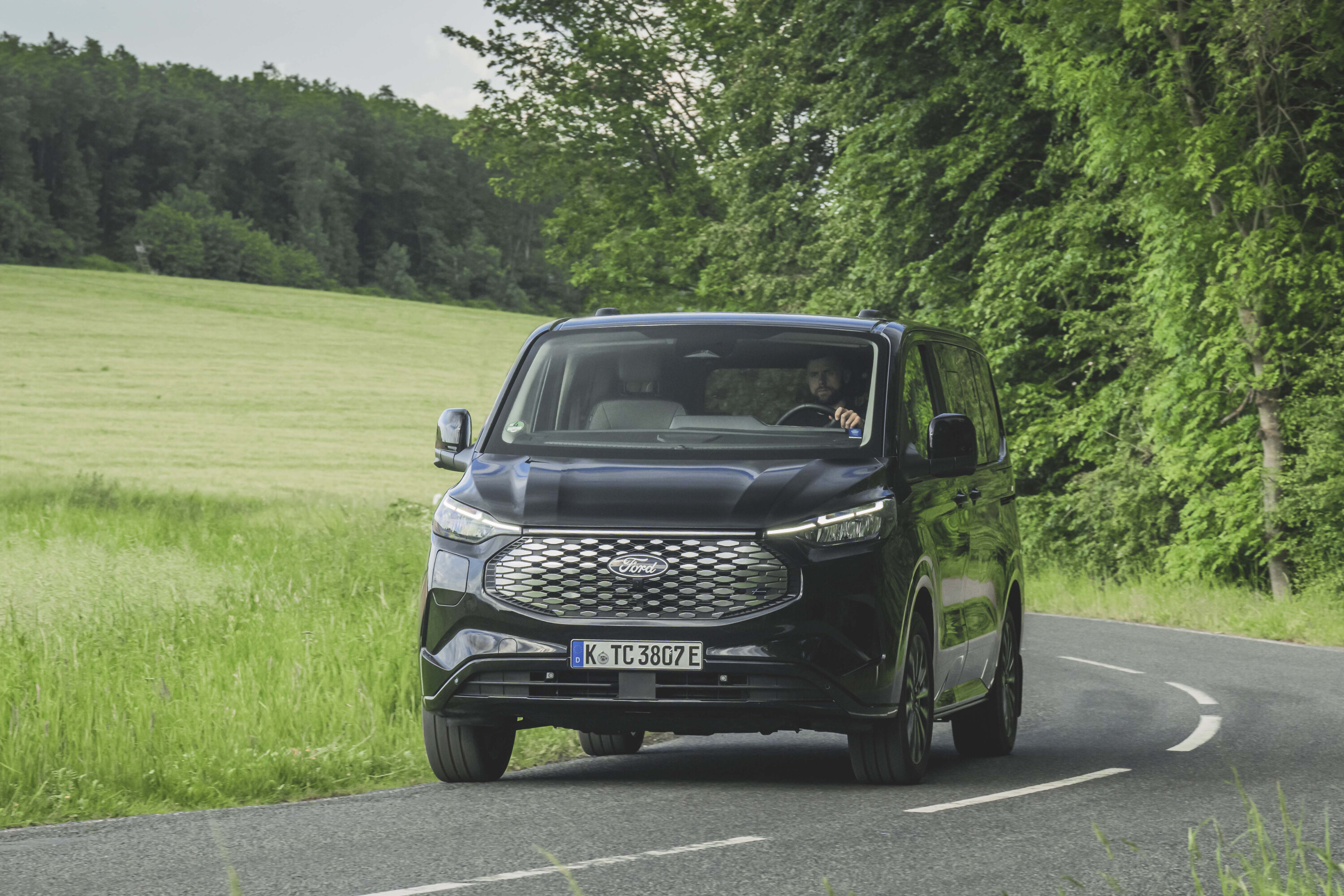
At over five metres long and two metres wide, it’s got a footprint that’s slightly bigger than a 300-Series Toyota LandCruiser. However, with the driver sitting much closer to the front bumper and enjoying excellent vision through the windshield and side glass, along with the presence of huge mirrors (with separate wide-angle parabolic mirrors), blind spot monitoring and, in the Titanium X grade, a top-down camera view, it’s no challenge threading the Tourneo through traffic. A very car-like turning circle of 10.9 metres certainly helps, too.
1
Interior comfort, space and storage
The upshot of borrowing the bones of a commercial vehicle to create a people-mover is that you get an interior that’s properly cavernous. In the Tourneo’s case, you also get an interior that’s hugely versatile as well.
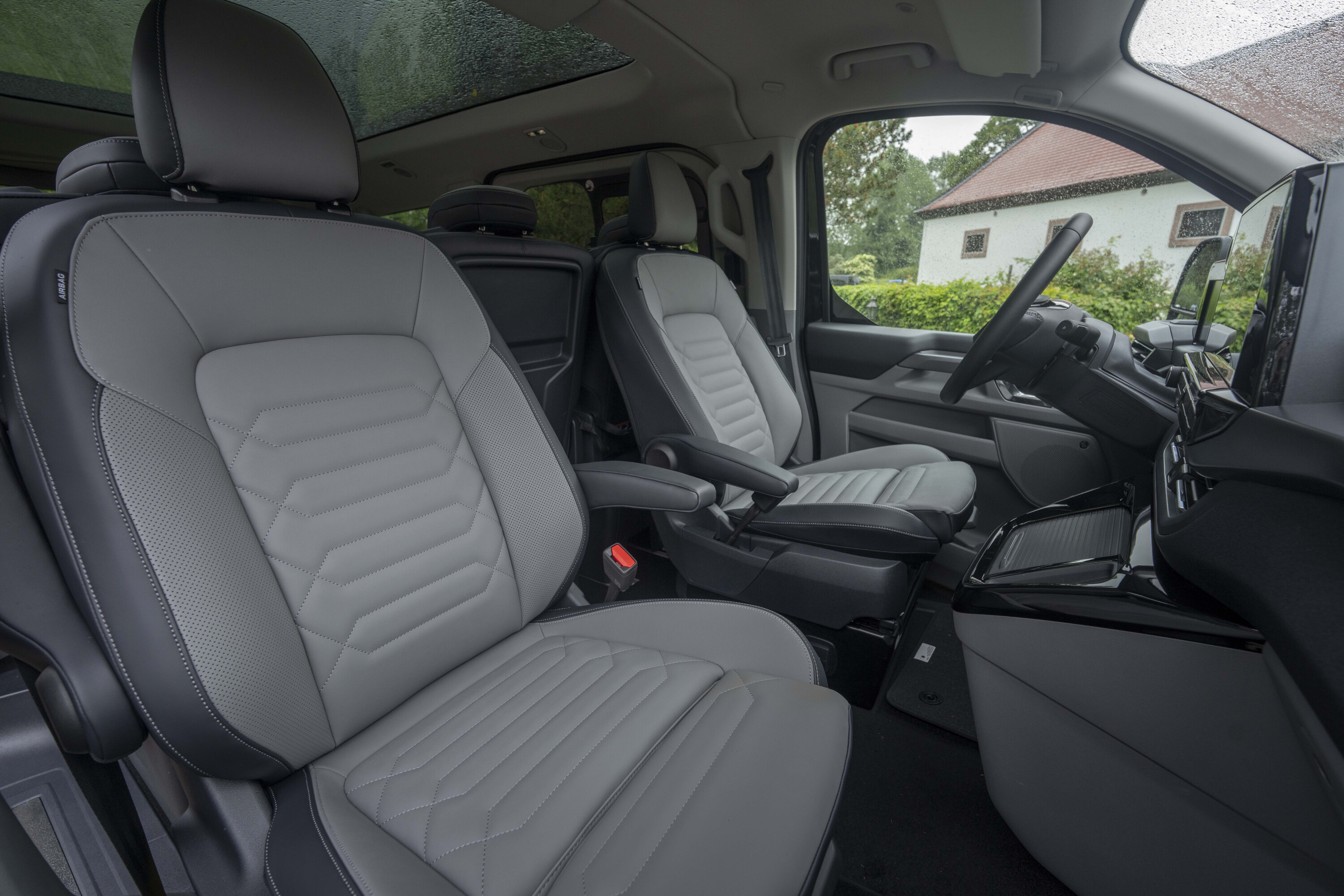
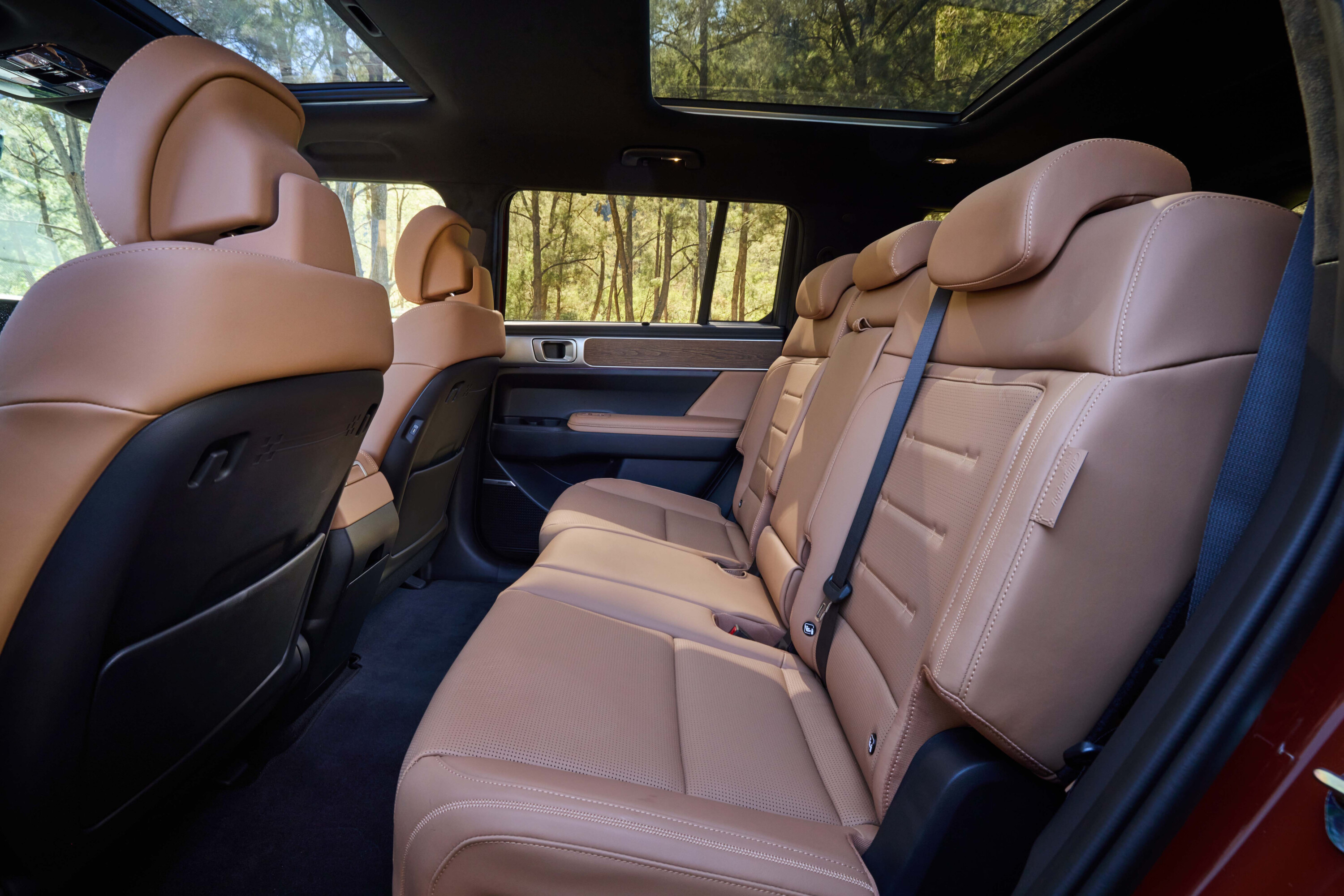
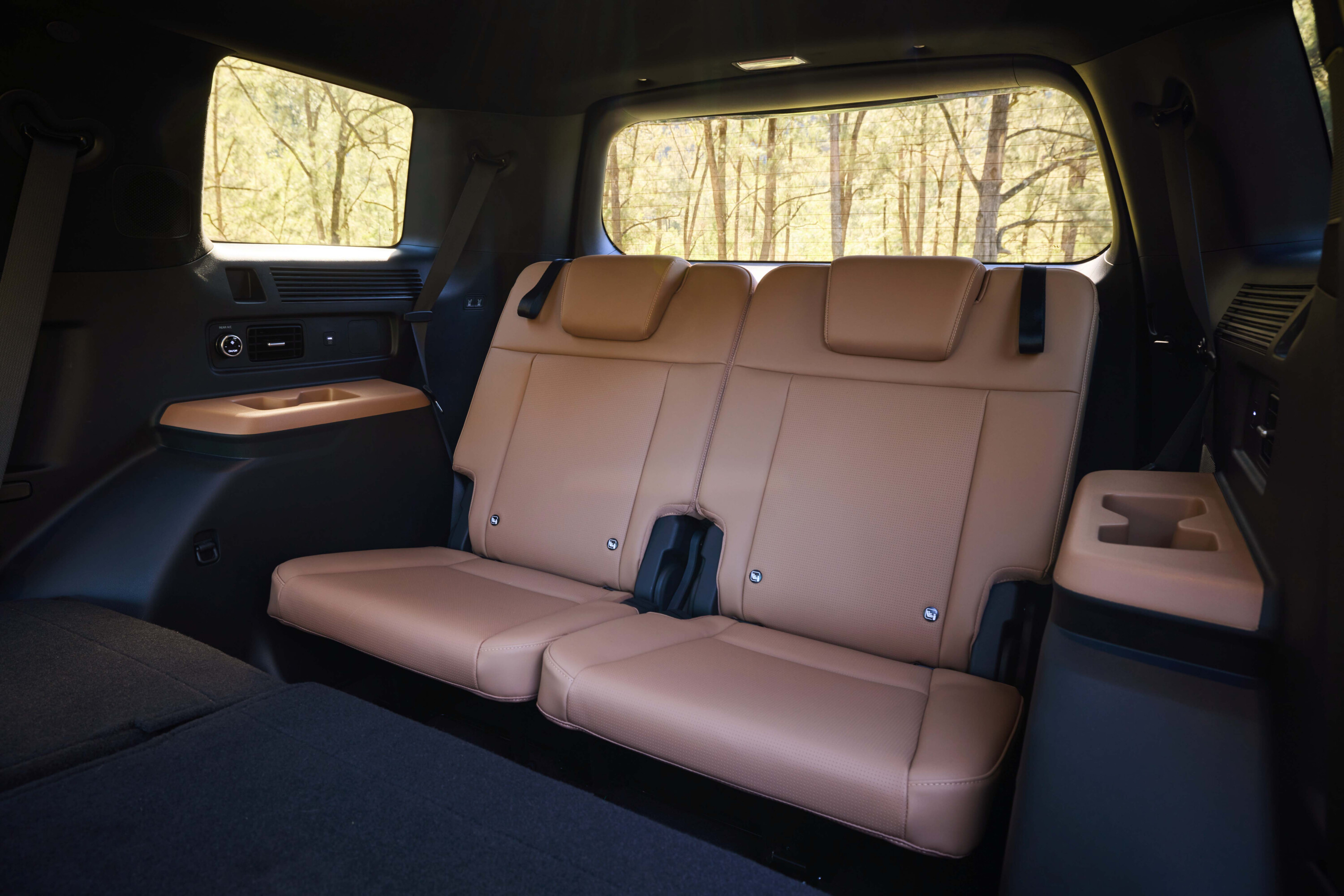
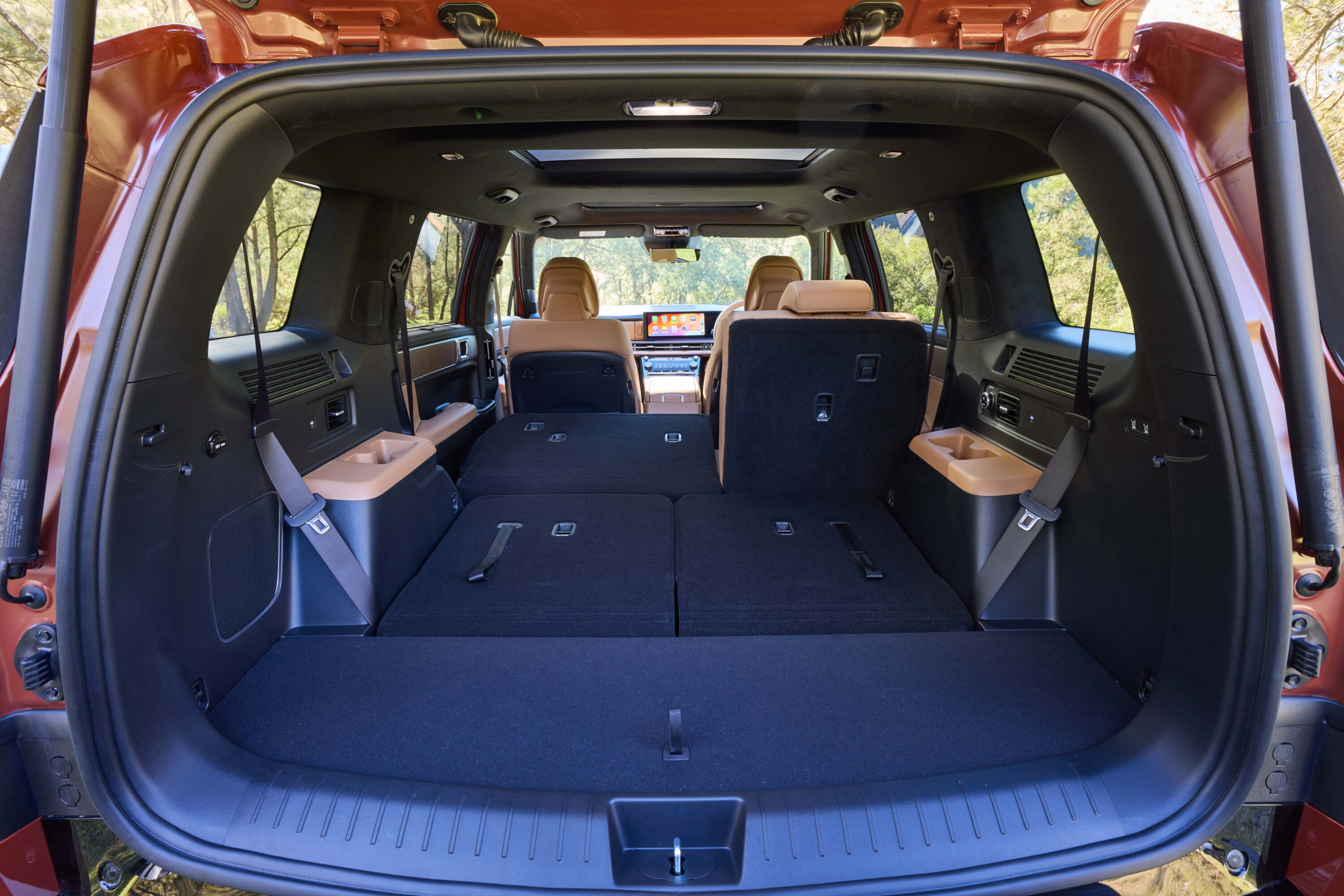
The Tourneo in Australian guise will come in an eight-seat configuration, with the two front seats separated by enough space to allow walk-through access to the second row. Furthermore, with each seat in the second and third rows mounted on a sliding rail and easily removable by hand (no need to break out the toolbox), the Tourneo can be reconfigured to whatever layout makes sense to you.
Need to take you, your spouse and six offspring to (presumably a Catholic) church on Sunday? Easily done. Heading to the coast with a few of your surfer buddies and can’t be bothered strapping your surfboards to the roofrack? Just remove the rear seats on one side, and carry the boards internally.
1
You might want a hand to remove the third row in its entirety, however, as it’s split 60/40 with the bigger portion likely too heavy for one person to handle.
The middle seat in the second row can also fold its backrest completely flat, revealing a hard tabletop with integrated cupholders and a lip to keep small items from sliding off, while the second row seats can either face forward for an airliner-style layout, or face backward for club-style seating.
The base of each rear seat is also equipped with a shallow storage drawer (though each only provides enough room for a wallet or a pair of thongs), while there are plenty of other stowage options throughout the cabin – including a pair of curious smartphone holsters on each C-pillar.
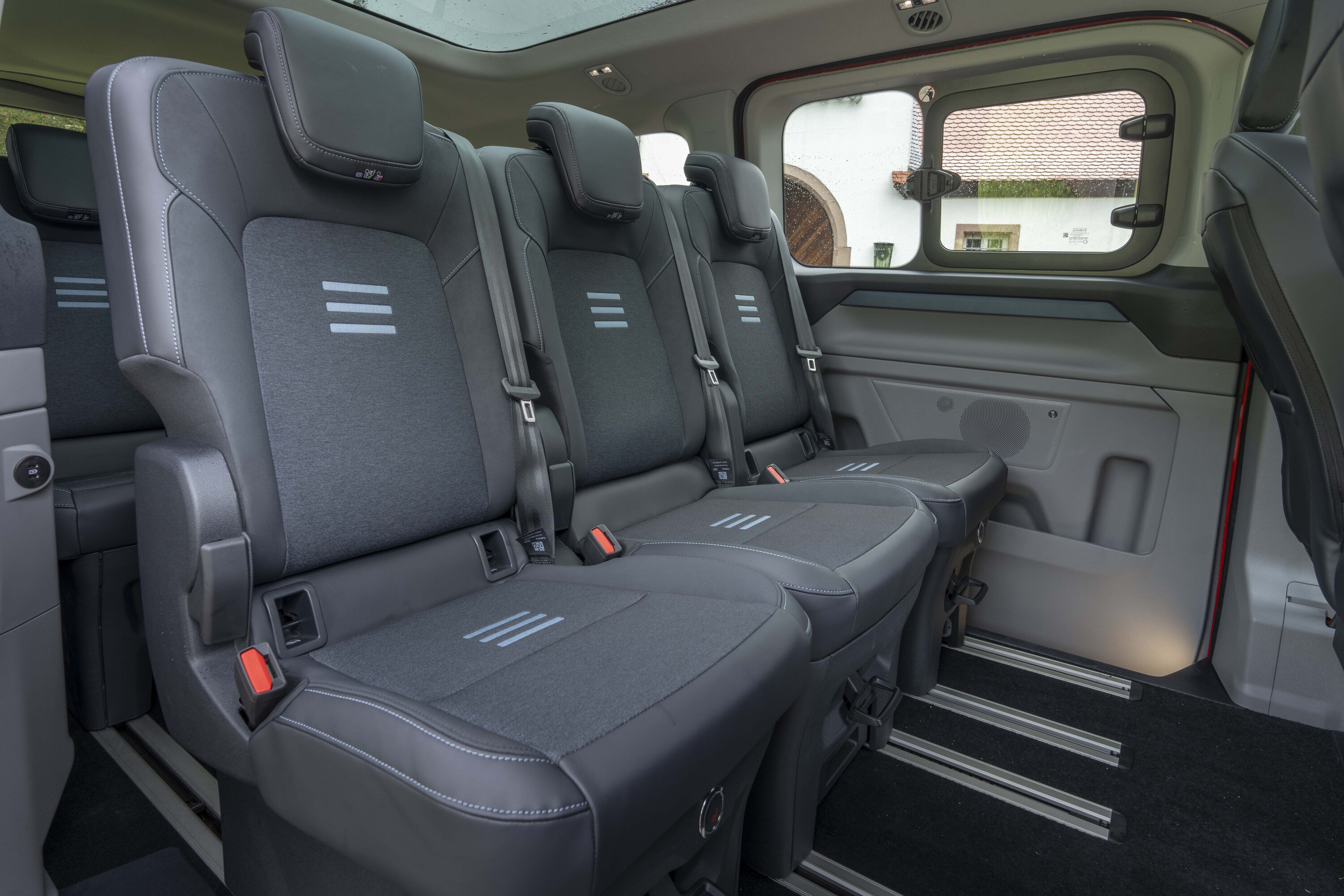
1
Up front, the Tourneo takes the dash of the Transit Custom – including all of its numerous storage cubbies, pockets and trays – and grafts on a vestigial centre console, which houses a pair of cupholders behind a roller shutter, a coin tray, a couple of additional USB ports (USB-C and USB-A), and a wireless phone charging pad.
Backseaters also get plenty of device charging options, with a pair of USB-C ports mounted low on each C-pillar, though cupholders are in shorter supply.
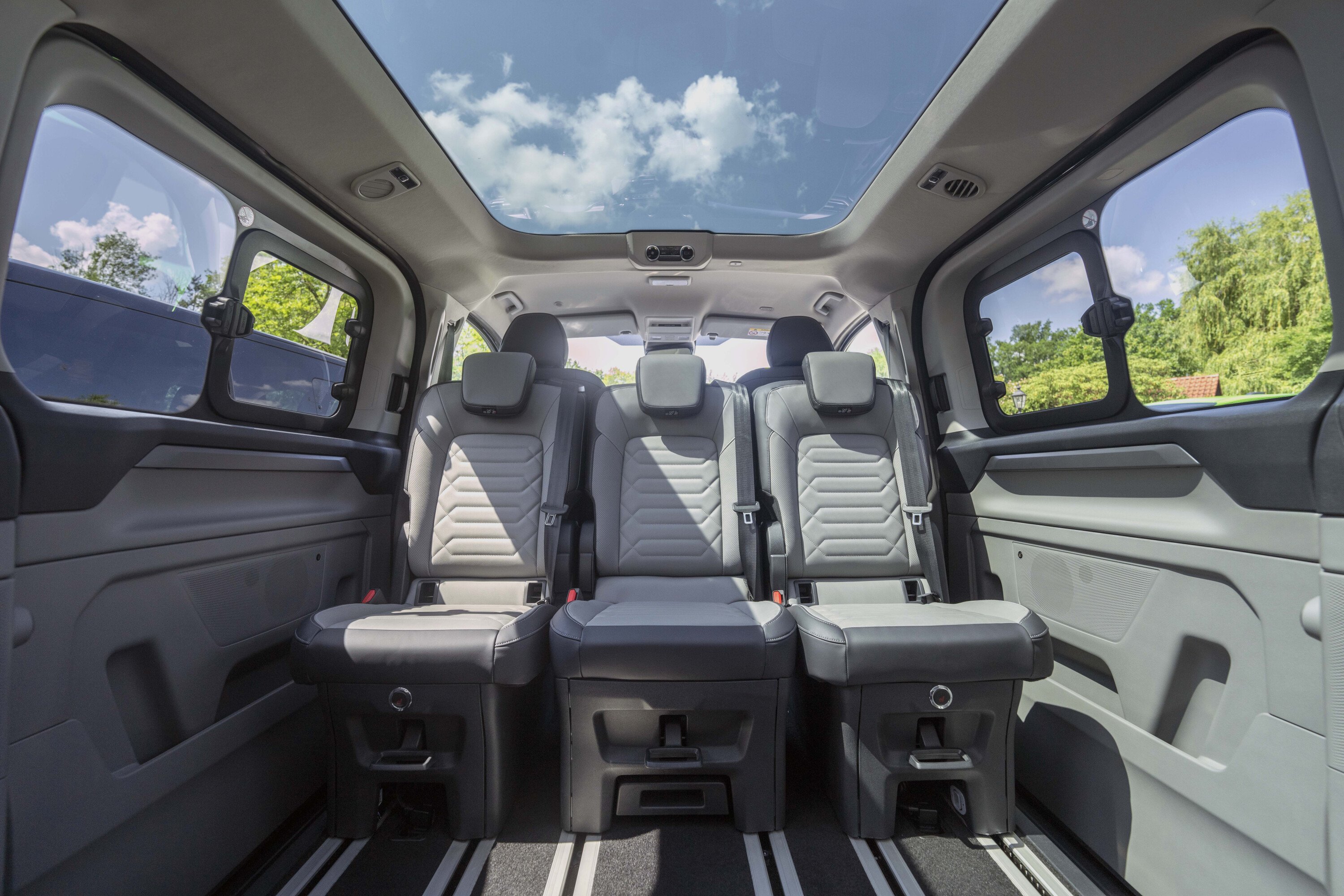
If you don’t fold down the middle centre seat, there’s just two drink receptacles for six people back there, not ideal on a hot day, but a bigger issue when the sun’s out might be that big glass roof in the Tourneo Titanium X.
It provides an unobstructed view of the sky and floods the cabin with light, but it’s not equipped with a retractable sunshade which may be a drawback on particularly hot days.
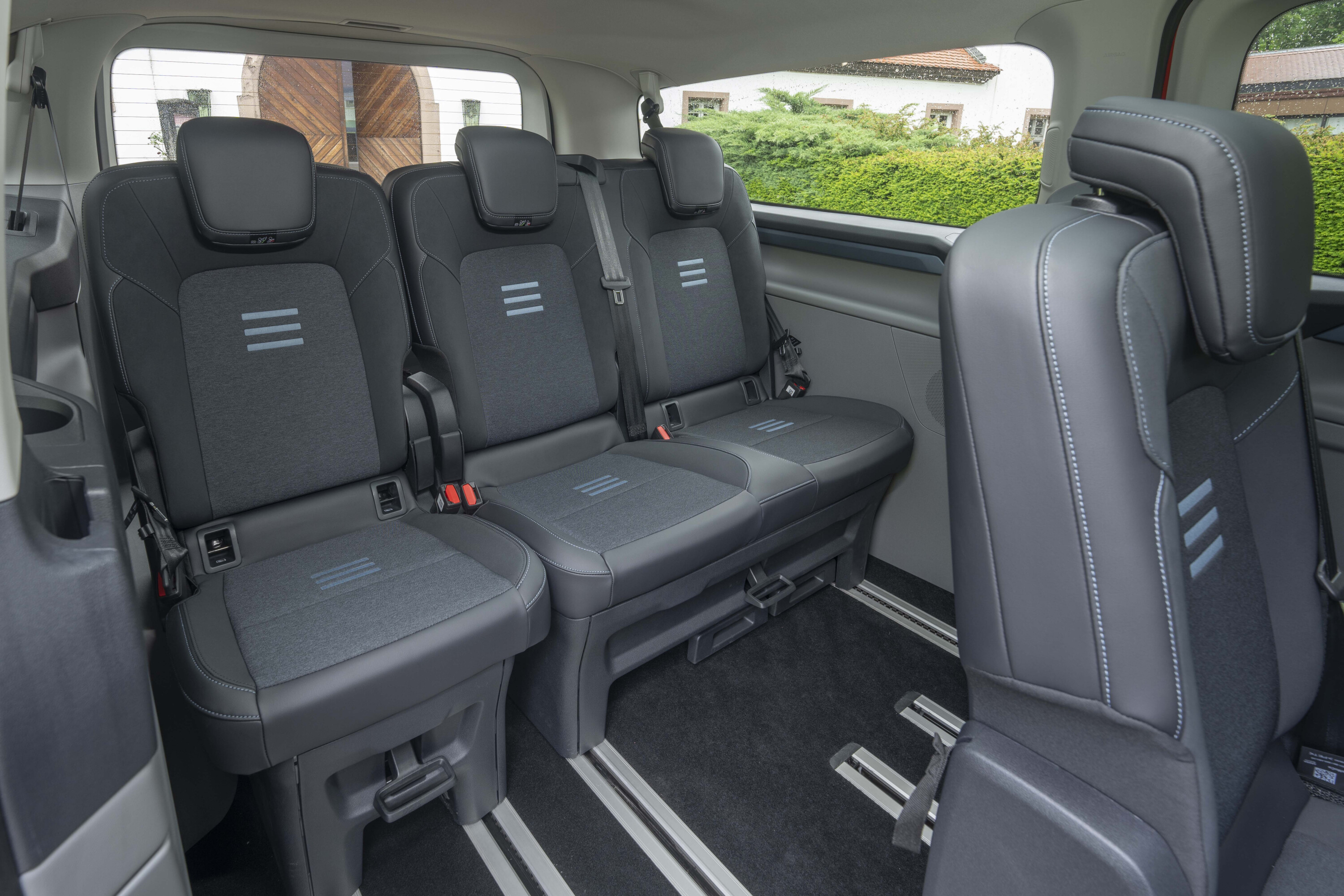
1
We’ll have to wait for some local summertime testing to see if the harsh Aussie sun overwhelms the tint and coatings of that glass panel, but at least there’s reasonable coverage of air vents throughout the roof, as well as separate controls for the rear zone of the tri-zone climate control.
It’s spacious enough for six regular-sized adults to sit back there without rubbing elbows, with easy entry and egress even with the middle row facing rearward.
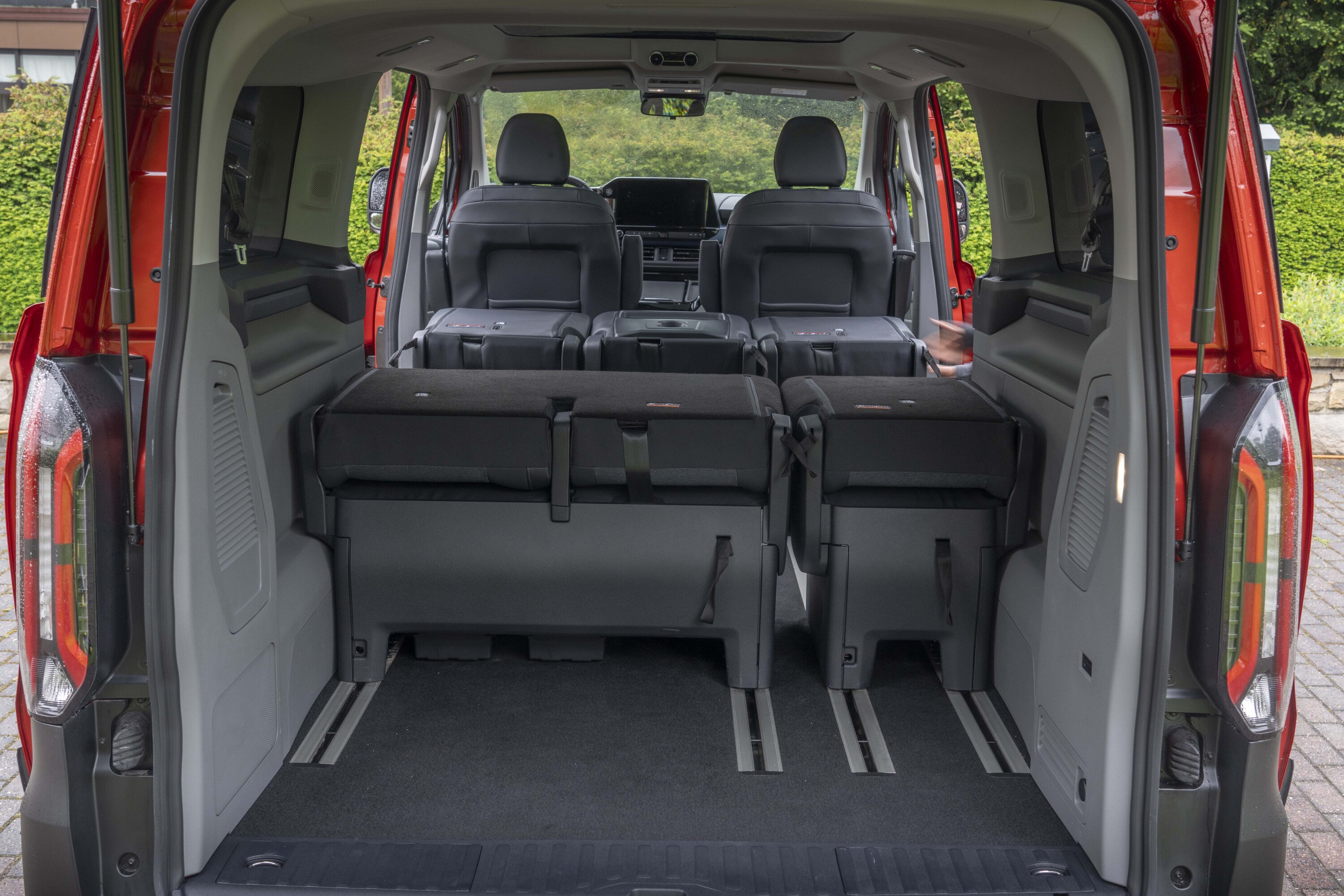
With all seats facing forward, the outboard middle seats tilt and slide forward with a light touch to provide access to the third row. However, it’s the space behind the seats that may cramp the style of some users.
1
Australia is only confirmed to be getting the shorter-wheelbase “L1” variant of the Tourneo, with the 40cm-longer “L2” staying in Europe.
The vast majority of that length difference is seen in the boot, with the usable luggage area behind the third row being substantially smaller in the L1 at 1152 litres, versus the L2’s 1534L.
For shuttle/limo transfer operators who are dropping travellers off to the airport, that shortfall may be most keenly felt.
2
How much fuel does the Ford Tourneo use?
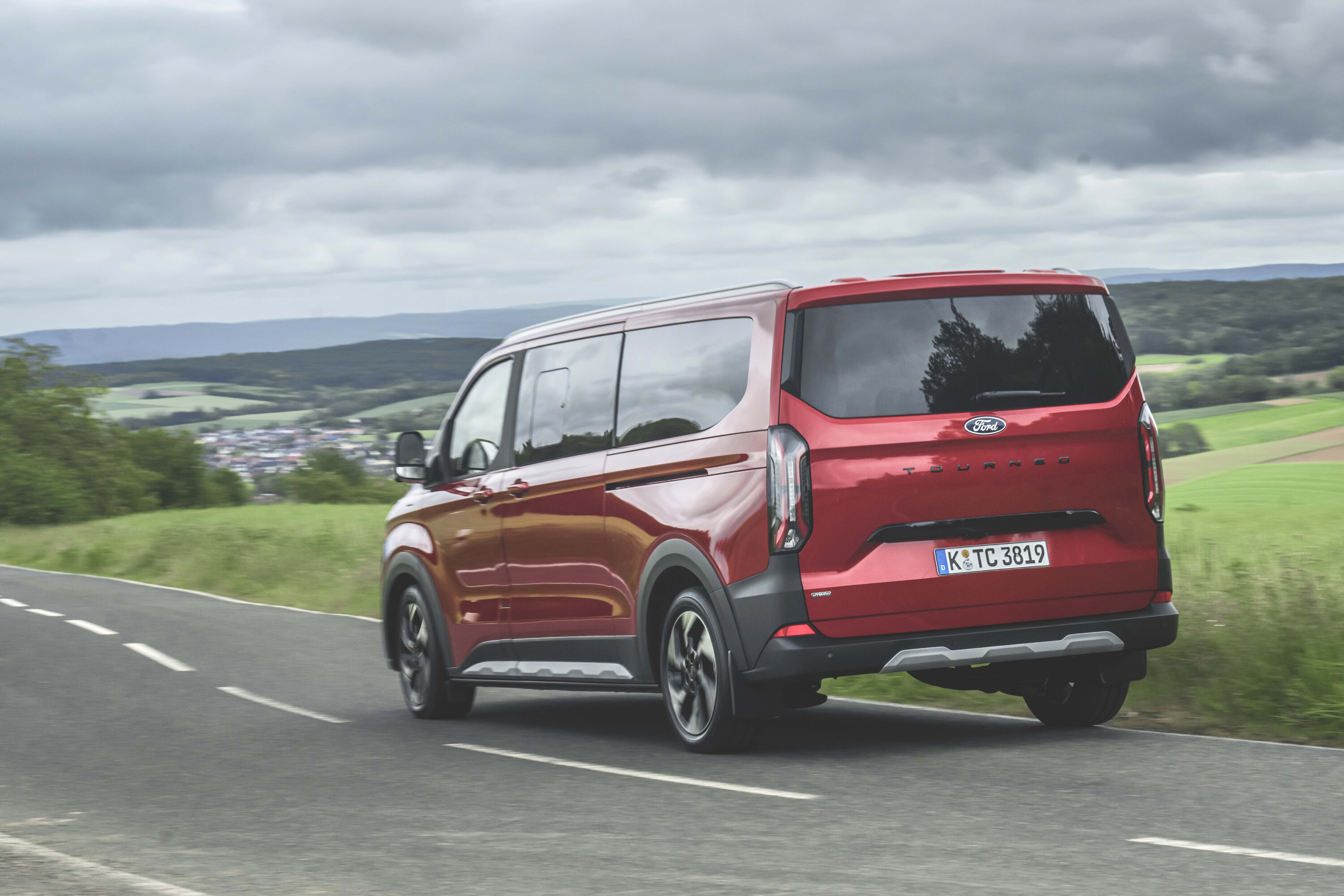
Our first taste of the Tourneo took place in and around Frankfurt, Germany, and as such included a fair degree of high-speed driving on unrestricted sections of the autobahn.
Even so, we saw an average consumption of 11.3L/100km, which was right on Ford’s claim for this particular powertrain.
1
How safe is the Ford Tourneo?
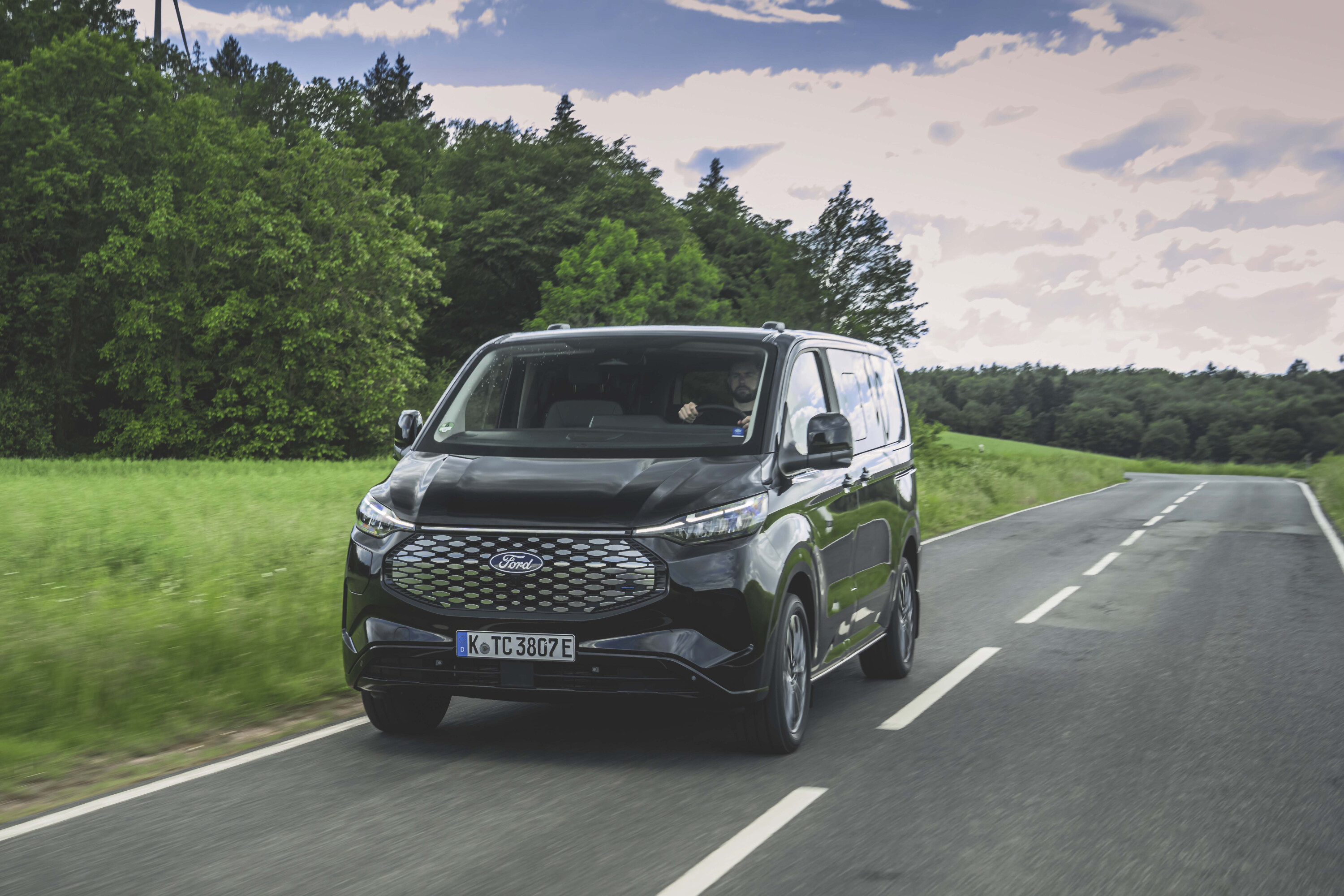
Standard safety gear includes a suite of six airbags covering dual front and side bags for the first row, and curtain airbags.
Driver aids include active cruise control, blind spot monitoring, lane keep assist, rear cross-traffic alert, frontal collision warning, AEB, a rear parking camera (360-degree camera on Titanium X). ANCAP has yet to test the Tourneo.
1
VERDICT
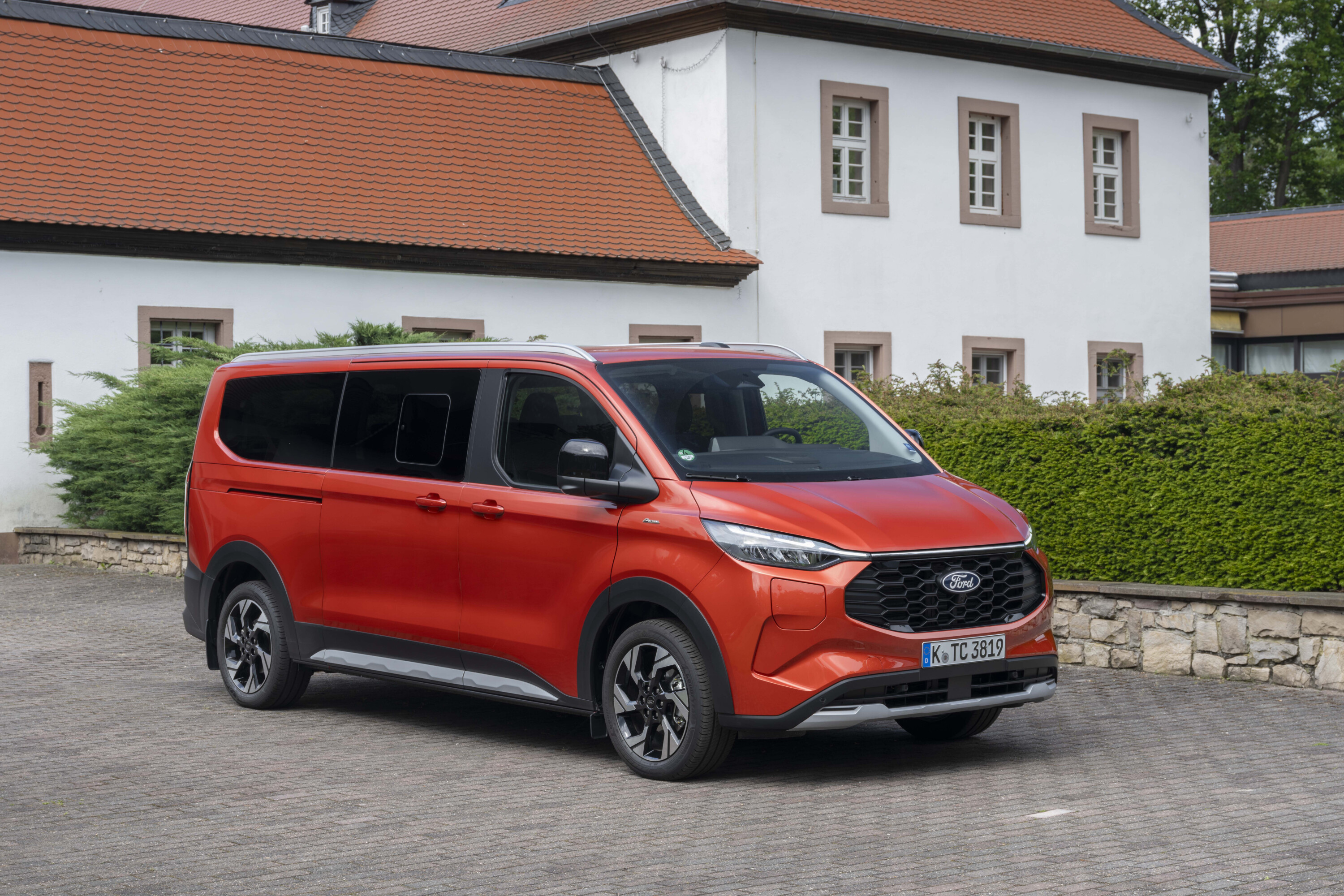
As a family-carrying alternative to an SUV, the Tourneo is superior in many regards. You get more cabin, for one. Way more.
It’s also easier to park, the sliding doors carry no risk of door dings in tight carparks, and being able to quickly rip out the back seats means it’ll handle trips to the hardware store probably just as well as a Ranger.
Yeah, the maximum towing capacity of 2500kg lags behind that of an Everest, but if you don’t tow heavy things or like to go off road, that metric doesn’t matter.
2
The Tourneo also has a faint whiff of premiumness to it, even though its pricing is at the more reasonable end of the spectrum.
That’s something that’s arguably a direct result of the new Transit Custom that it’s based on being such a well-sorted thing – as a result, the Tourneo’s commercial vehicle lineage isn’t so obvious.
Combine that to agreeable on-road dynamics, and the Tourneo shapes up as a primo pick as a people mover. We’ll put it through the wringer on local roads once it gets here, but so far the Tourneo makes a strong case as one of the best people movers around.
MORE
Everything Ford
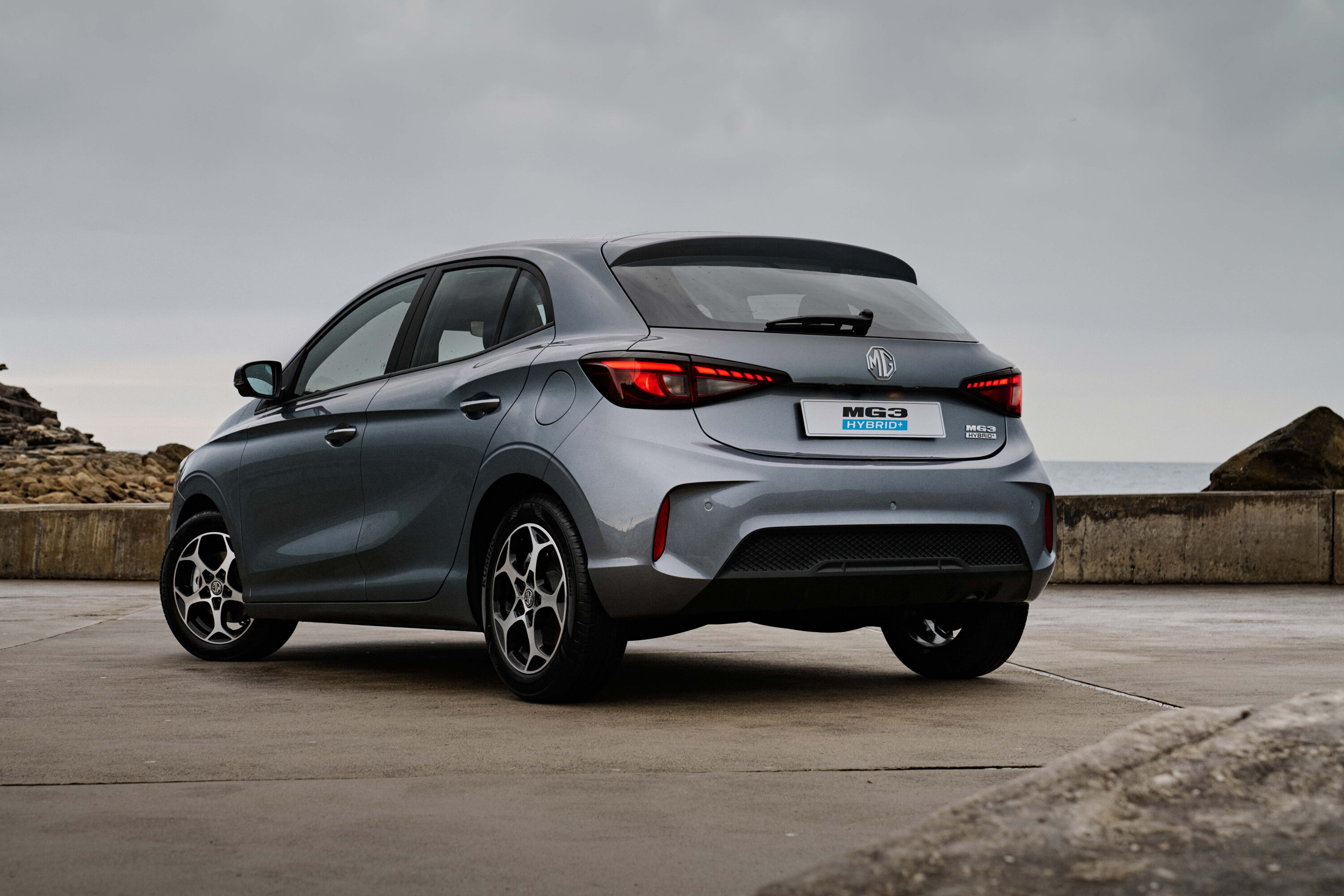
The 2024 MG3 city car has arrived in Australia, introducing MG’s first ever regular hybrid model but also an entry-price rise of just over $7000 to end the era of new cars available for less than $20,000 drive-away.
MG has announced a starting RRP of $23,990 for its second-generation MG3 where the outgoing model cost from $18,990 drive-away to continue sharp deals that have made it Australia’s best-selling city car since 2020.
The price rise follows the Kia Picanto’s move above the $20K drive-away mark earlier this year. MG flagged such a possible price increase earlier this year, noting that the new MG3 would step up significantly in standard equipment.
1
This includes major additions to the MG3’s safety arsenal, which should help contribute to a much better crash-safety rating than the three-star NCAP score of the old model.
Where anti-lock brakes and electronic stability control were about as advanced as features got with the previous MG3, the latest model incorporates various warning systems (forward collision, lane departure), multi-monitoring (blind spots, rear cross traffic, tyre pressures, “unsteady driver”), and assistance features (adaptive cruise, speed-limit notification, emergency lane keeping).
A brand-first regular petrol-electric drivetrain follows the plug-in hybrid offered in the HS midsize SUV and features in Hybrid+ variants that sit above the regular petrol MG3s.
1
The hybrid commands a $4000 premium over the equivalent standard petrol.
Whether petrol or petrol-electric, there are two trim grades familiar to MG showrooms: Excite and Essence.
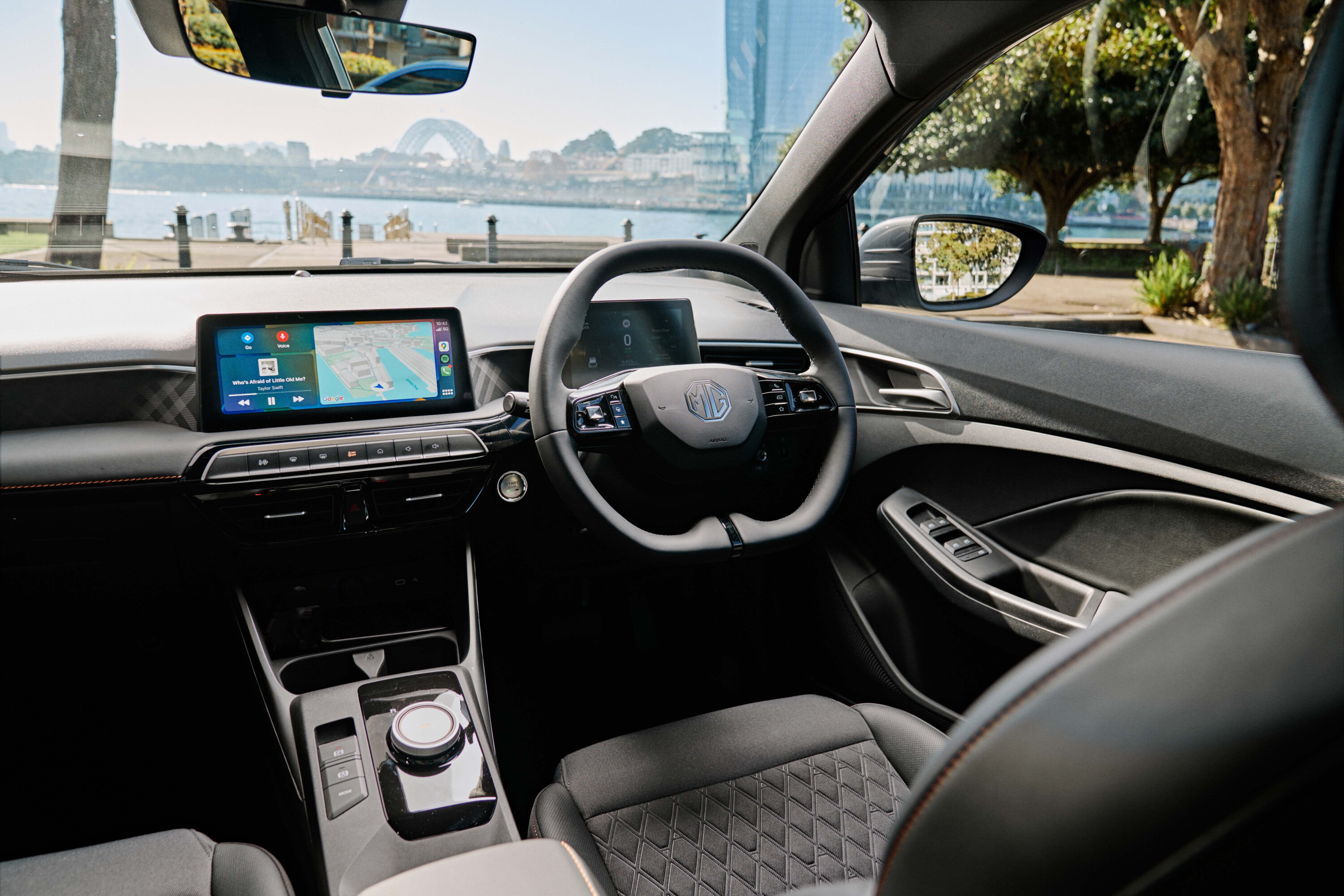
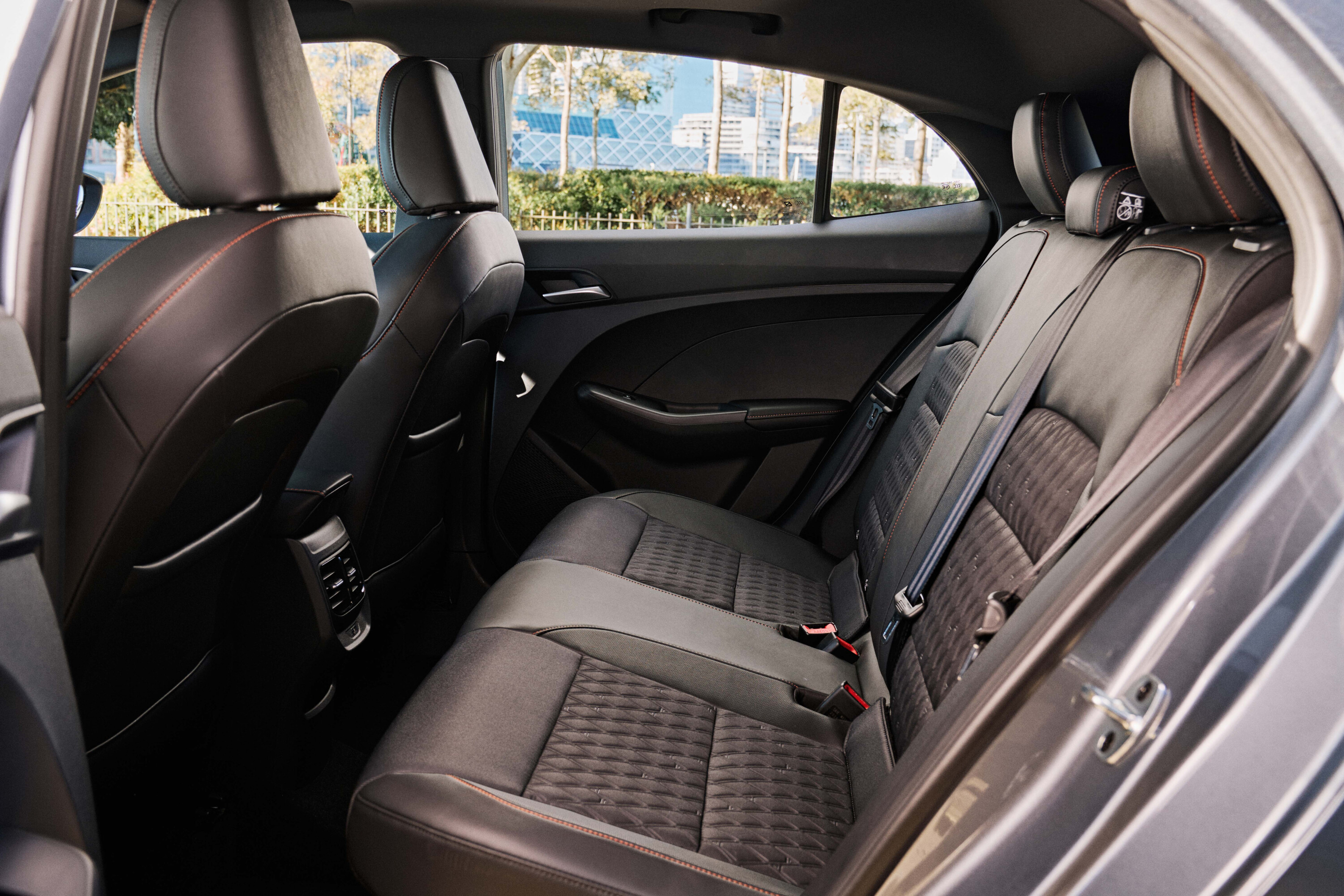
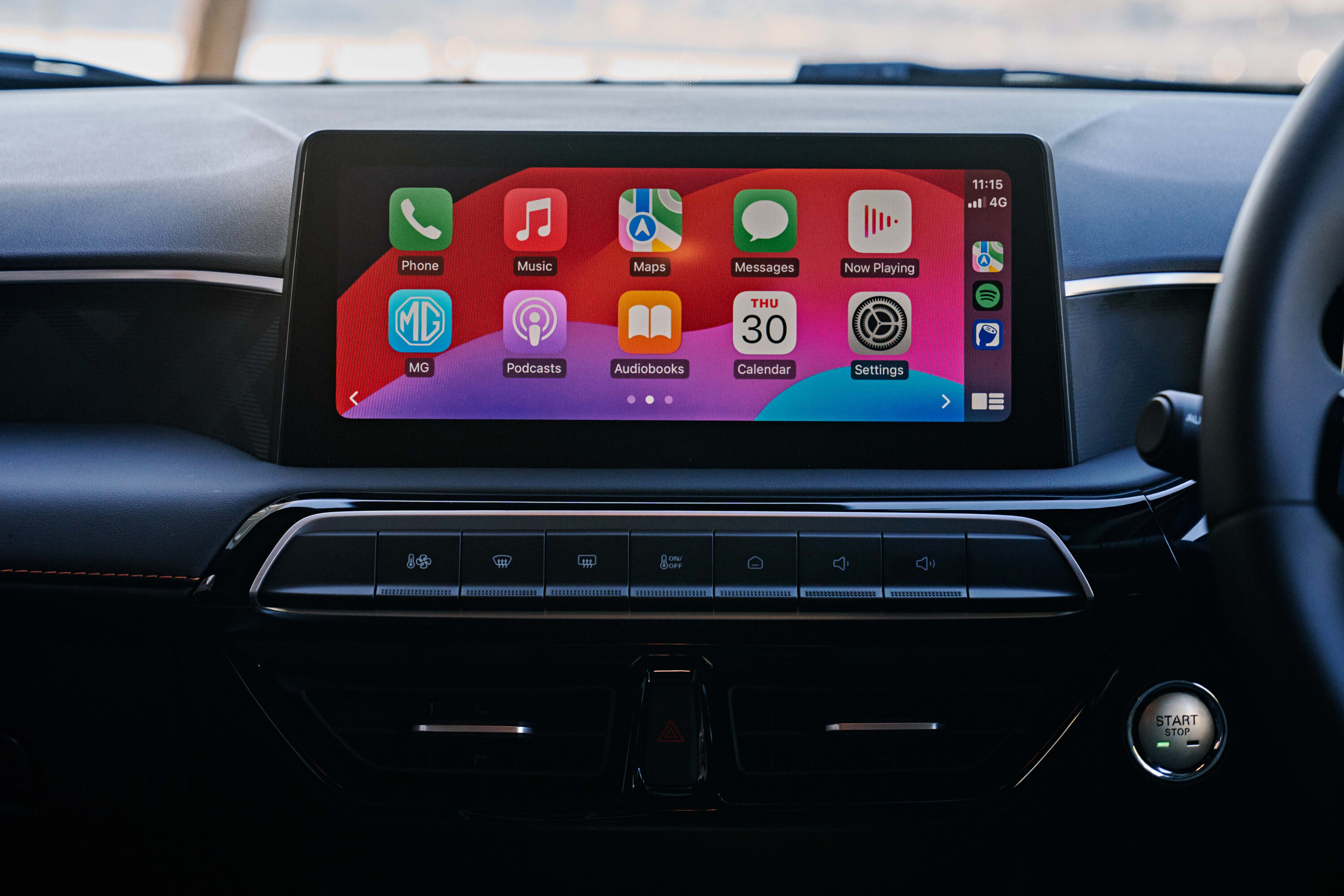
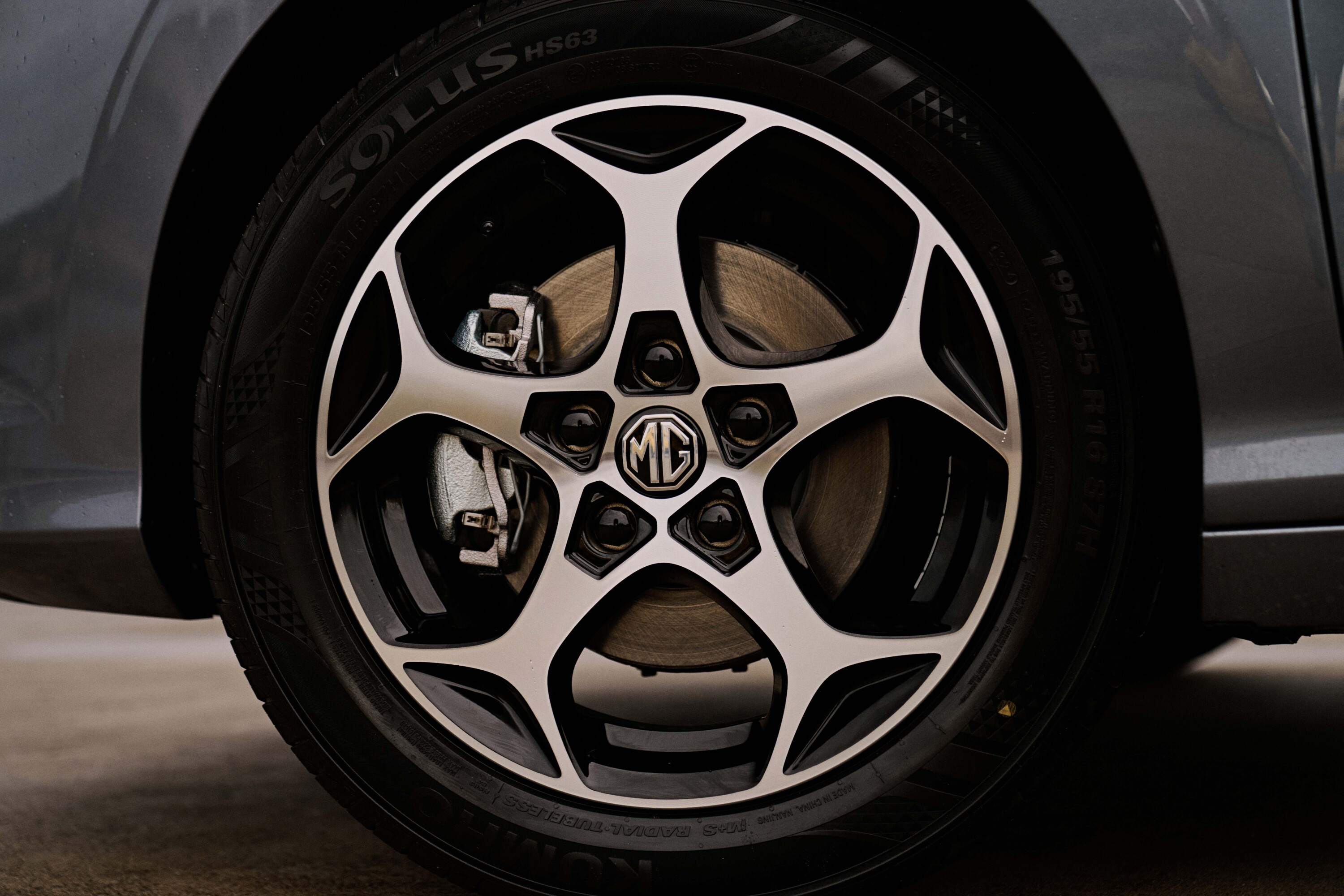
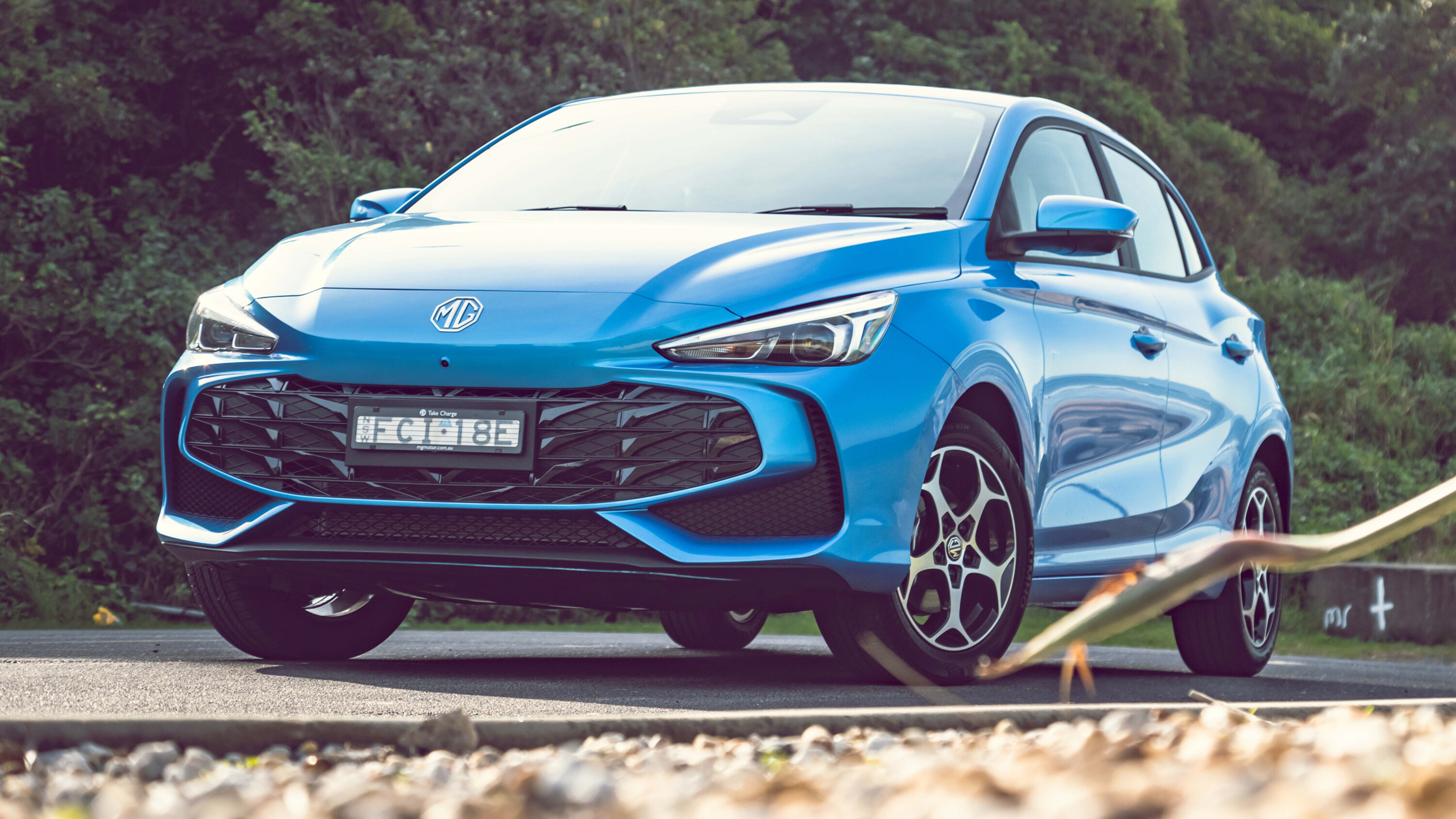
All models sit on stylish (to our eyes) 16-inch alloys, a size up for entry models, and provide dashboards graced with a digital display combination of central 12.25-inch infotainment screen and 7-inch driver cluster.
Essence models ramp up tech, materials and convenience to tempt buyers to impart with just an extra $2000.
1
Starting with the exterior, the headlights switch from halogen to LED, vehicle entry becomes keyless, wipers adopt an auto mode, and the MG3 gains a small sunroof.
Blue continues as one of the brighter exterior paint options alongside a new yellow and red in an expanded palette that also features your staple white, black, silver, and grey. Yellow and white are no extra cost, where others are metallics costing an extra $700.
Inside, the upholstery changes from cloth to a combination of pleather/fabric, the steering wheel swaps from pleather to real leather, the infotainment system adds navigation and digital radio, and MG throws in a three-year subscription to its iSmart telematics that links various vehicle functions to the owner’s smartphone.
Functions include car location, door locking/unlocking, cabin climate preset, route transfer, and vehicle diagnosis.
In the city-car class that has more than halved in entrants over the past four years, remaining competitors to the MG3 include the Mazda 2, Suzuki Swift, Toyota Yaris, and Volkswagen Polo.
1
Only the Swift and Yaris offer hybrid drivetrains. The Swift, which has also just launched in next-generation form, is a simpler ‘mild hybrid’ with limited electric assistance; the Yaris has been a regular petrol-electric model only since early 2024.
The Yaris was once one of Australia’s most popular city cars, but sales have plummeted since the entry price rose by about $9000 in the second half of 2020.
Capped-price servicing ranges from $234 to $536 for the petrol MG3, with the Hybrid maintenance costs slightly higher – between $235 and $628 depending on vehicle age/mileage. Intervals are every 12 months or every 10,000km.
Warranty is seven years, unlimited kilometres.
1
| 2024 MG3 pricing (RRPs & Drive-aways*) | ||
|---|---|---|
| MG3 Excite petrol | $23,990 RRP | $26,079 DA |
| MG3 Essence petrol | $25,990 RRP | $28,139 DA |
| MG3 Hybrid+ Excite | $27,990 RRP | $30,199 DA |
| MG3 Hybrid+ Essence | $29,990 RRP | $32,259 DA |
| *NSW pricing | ||
1
| 2024 MG3 Excite features | |
|---|---|
| Adaptive cruise | Halogen headlights |
| Intelligent cruise assist | LED DRLs |
| Intelligent speed assist | Cloth seats |
| Blind spot + RCTA | One-touch windows (driver anti-trap) |
| TPM | 7-inch driver cluster |
| FCW | 10.25-inch infotainment |
| LDW | Plug-in CarPlay and Auto |
| Emergency LKA | Rear vents |
| u2018Unsteady driveru2019 warning | Rear USB-A |
| 16-inch alloy wheels | |
1
| 2024 MG3 Essence features | |
|---|---|
| 360-degree camera | Auto wipers |
| LED projector headlights | Keyless entry |
| Sunroof | iSmart phone functions compatibility (3-year subscription) |
| Pleather/cloth seats | Digital radio |
| Leather steering wheel (pleather Excite) | Built-in nav |
1
| 2024 MG3 hybrid features over petrol | |
|---|---|
| Pedestrian warning sound | Drive mode button |
| Repair kit (spacesaver for petrol MG3) | Auto single-zone climate (electronic petrol) |
| Electronic rotary gear selector | |
MORE
Everything MG
The sub-$20,000 car is dead, long live … well, your best hopes for a brand-new budget car in 2024 and beyond.
MG’s second-generation MG3 has arrived, ousting its predecessor that was the last new car Australians could buy for less than twenty-grand with no more to pay.
Following the Kia Picanto’s move above the $20K drive-away mark earlier this year, the MG3’s starting point climbs steeply from $18,990 drive-away to $23,990 plus on-road charges.

1
We had been pre-warned, with MG keen to emphasise that the replacement would come standard with significantly more equipment, notably extra safety features that were conspicuous by their absence on the old MG3 (along with a three-star NCAP crash rating).
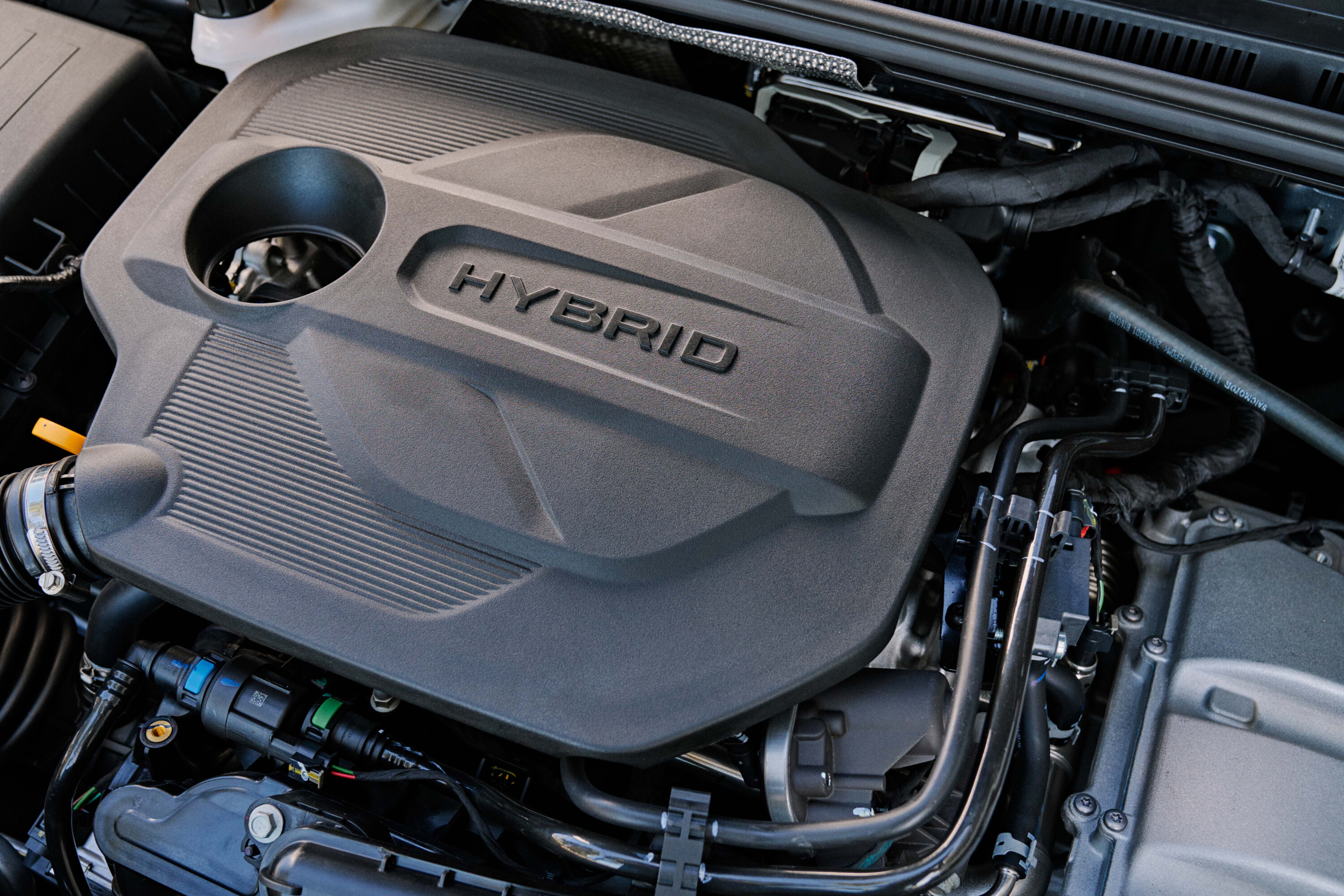
There’s also a big leap in technology, headlined by MG’s first regular (non-plug-in) hybrid drivetrain.
That inevitably costs more again – a $4000 premium, to be exact, over the standard MG3 models powered by a 1.5-litre four-cylinder petrol engine. The MG4 Hybrid+ starts from $27,990 before on-roads.
1
JUMP AHEAD
Pricing and features
Whether petrol or petrol-electric, there are two trim grades familiar to MG showrooms: Excite and Essence.
Safety on the old model is most politely described as elementary, its most advanced driver aids essentially being bread-and-butter ABS and ESC.
Every MG3 now adds the smashed-avo works, incorporating various warning systems (forward collision, lane departure), multi-monitoring (blind spots, rear cross traffic, tyre pressures, “unsteady driver”), and assistance features (adaptive cruise, speed-limit notification, emergency lane keeping).
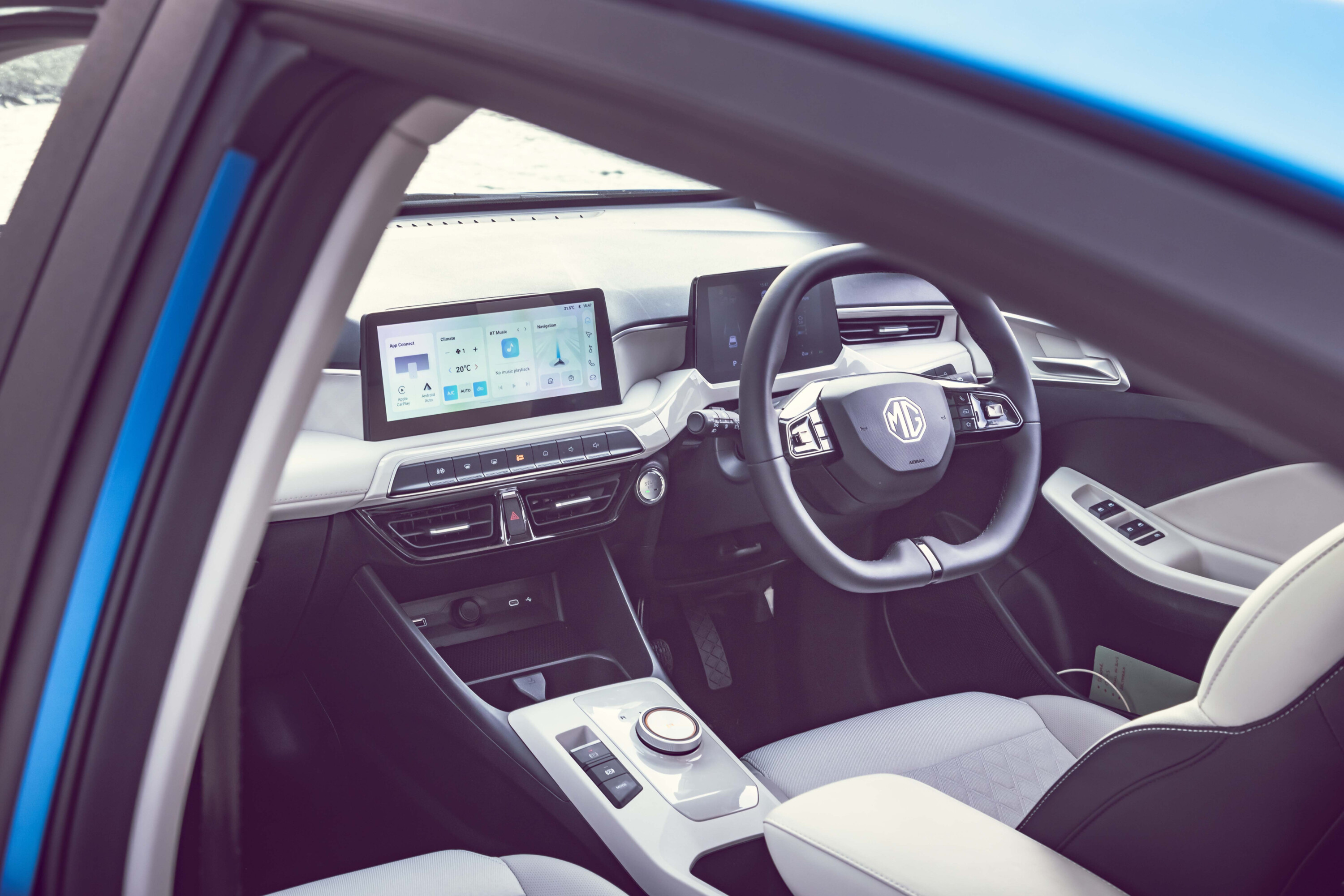
All models sit on stylish (to our eyes) 16-inch alloys, a size up for entry models, and provide dashboards graced with a digital display combination of central 12.25-inch infotainment screen and 7-inch driver cluster.
1
Essence models ramp up tech, materials and convenience to tempt buyers to impart with just an extra $2000.
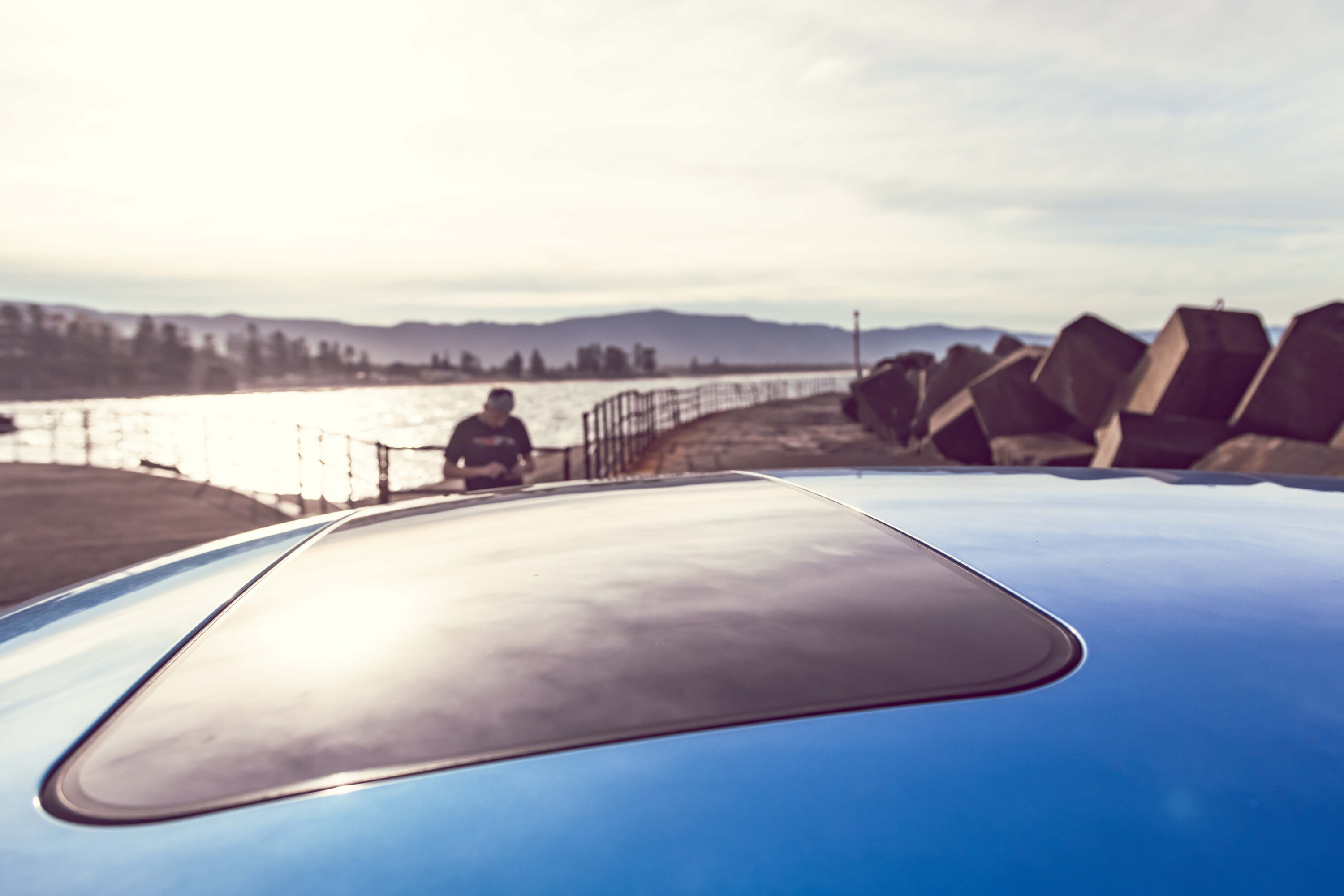
Starting with the exterior, the headlights switch from halogen to LED, vehicle entry becomes keyless, wipers adopt an auto mode, and the MG3 gains a small sunroof.
Inside, the upholstery changes from cloth to a combination of pleather/fabric, the steering wheel swaps from pleather to real leather, the infotainment system adds navigation and digital radio, and MG throws in a three-year subscription to its iSmart telematics that links various vehicle functions to the owner’s smartphone.
| 2024 MG3 Essence features | |
|---|---|
| 360 camera | Auto wipers |
| LED projector headlights | Keyless entry |
| Sunroof | iSmart compatibility (3yrs) |
| Pleather/cloth seats | Digital radio |
| Leather steering wheel (pleather Excite) | Built in nav |
| 2024 MG3 Excite features | |
|---|---|
| 16-inch alloy wheels | 7-inch driver cluster |
| Halogen headlights | 10.25-inch infotainment |
| LED DRLs | Plug-in Carplay and Auto |
| Cloth seats | Rear vents |
| One-touch windows (driver anti-trap) | Rear USB-A |
1
While the Mazda 2 and Volkswagen Polo are technically competitors in what is a severely shrunken city-car class these days, the MG3’s key rivals are the Suzuki Swift, which has also just launched in next-generation form (with a mild-hybrid drivetrain), and the Toyota Yaris that went hybrid-only in early 2024
The MG3 has in recent years outsold both, overtaking the Yaris since 2020, when the tiny Toyota increased its entry price by about $9000. MG Australia will be hoping the MG3’s price increase doesn’t lead to a similar sales fate; last year the Yaris’s 2098 sales were about a fifth of their total in 2019.
It still looks good value compared with the Yaris that has a proper hybrid system, if not as sharply priced as the smaller Swift that is primarily petrol-powered but with partial electric assistance.
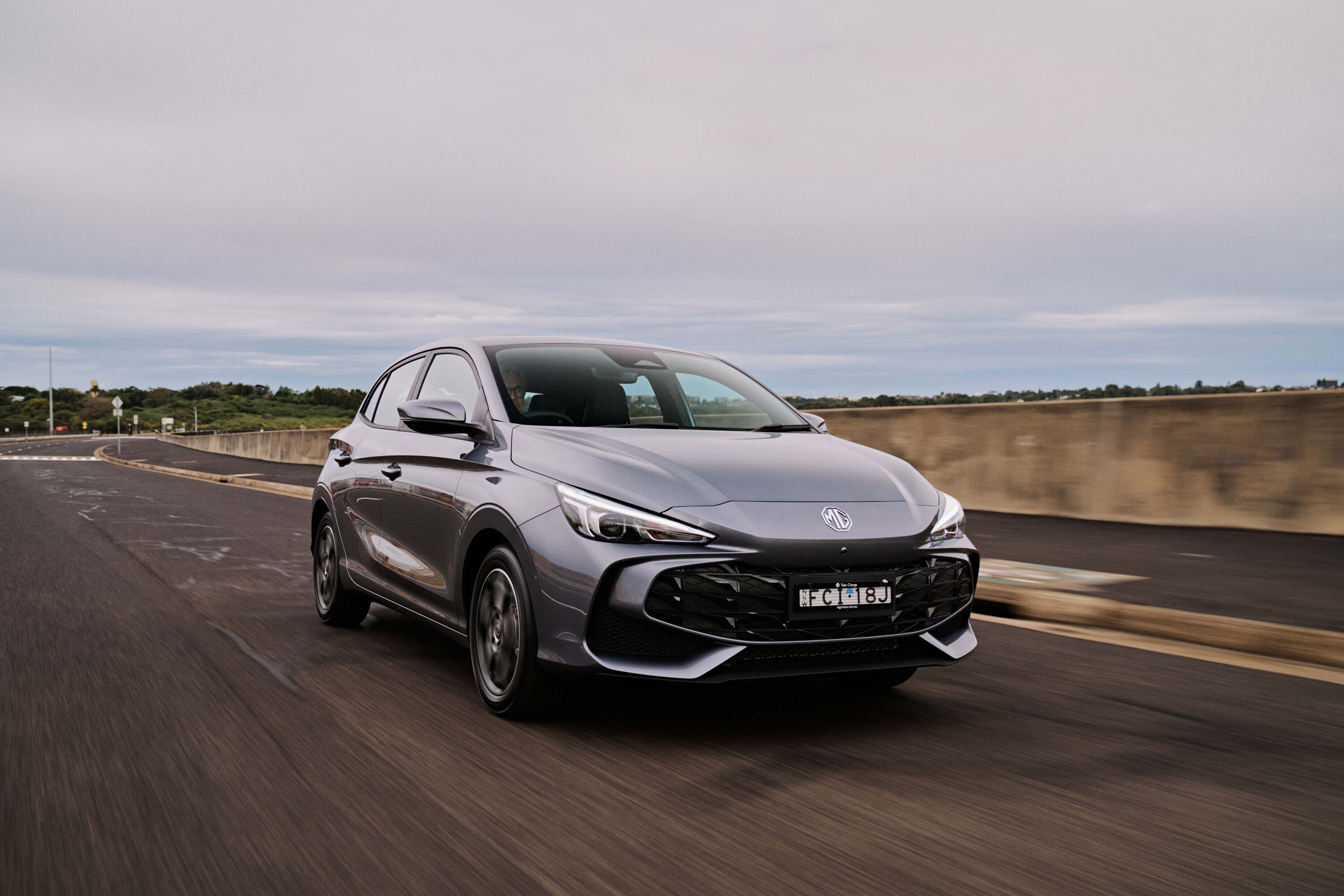
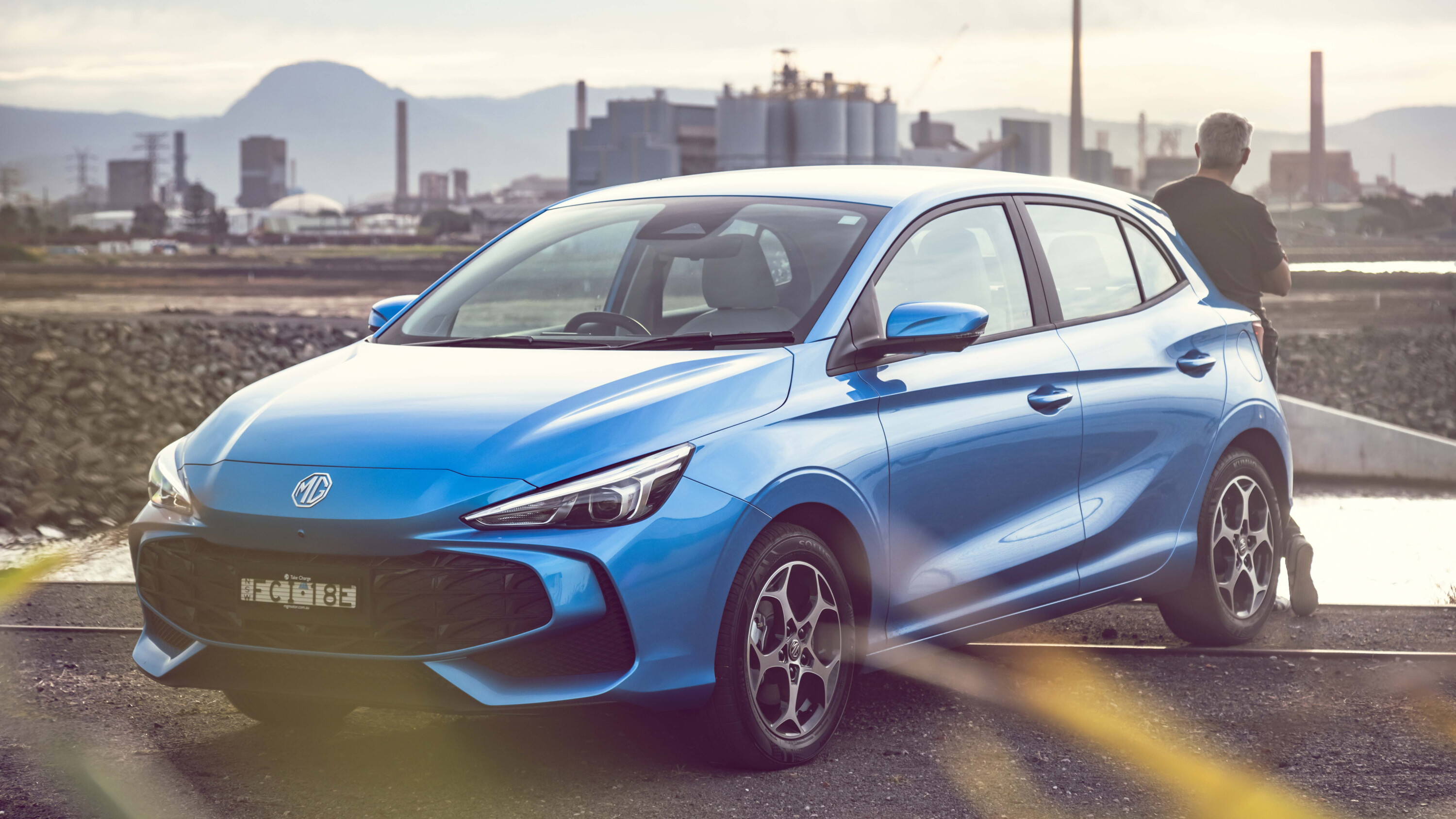
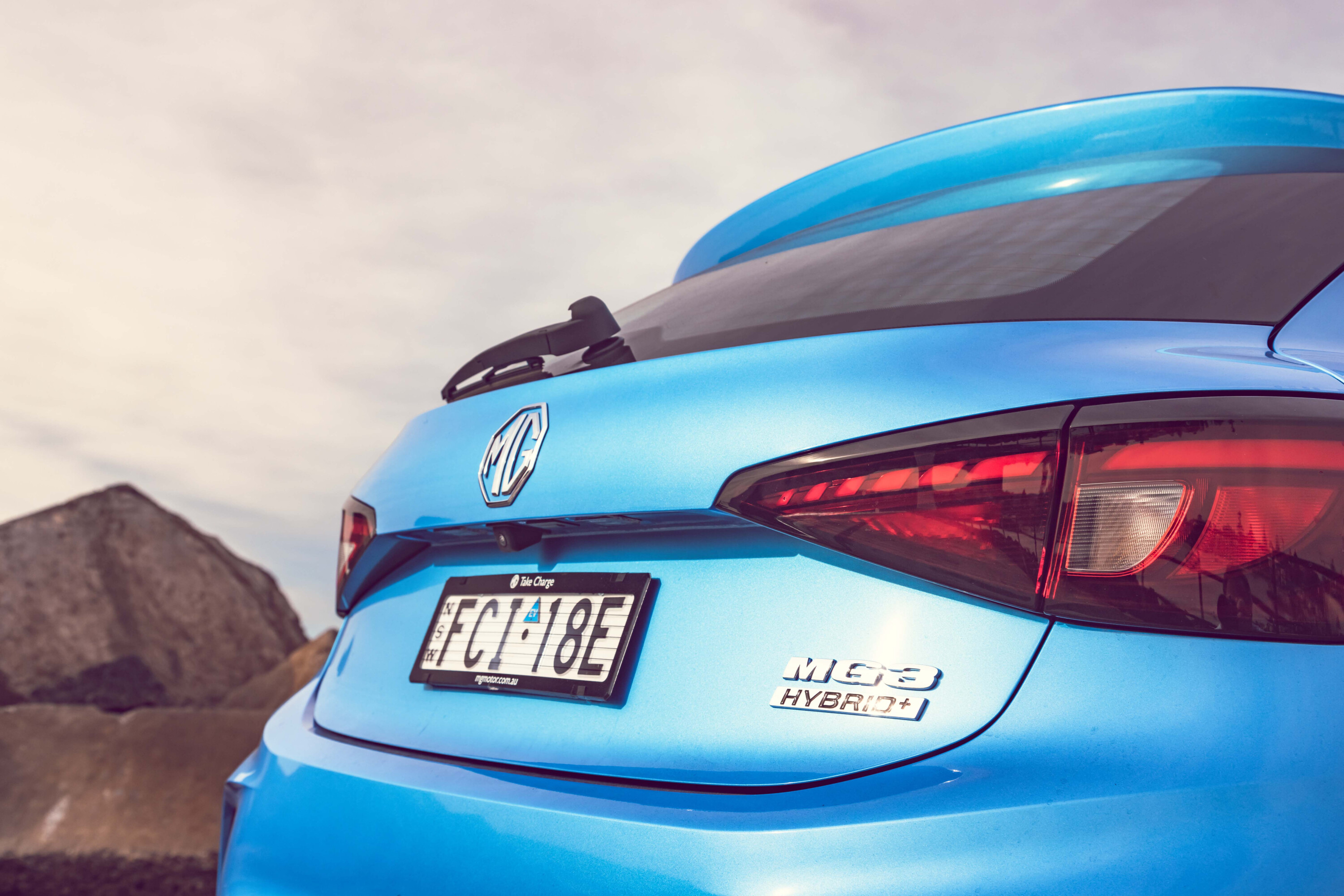
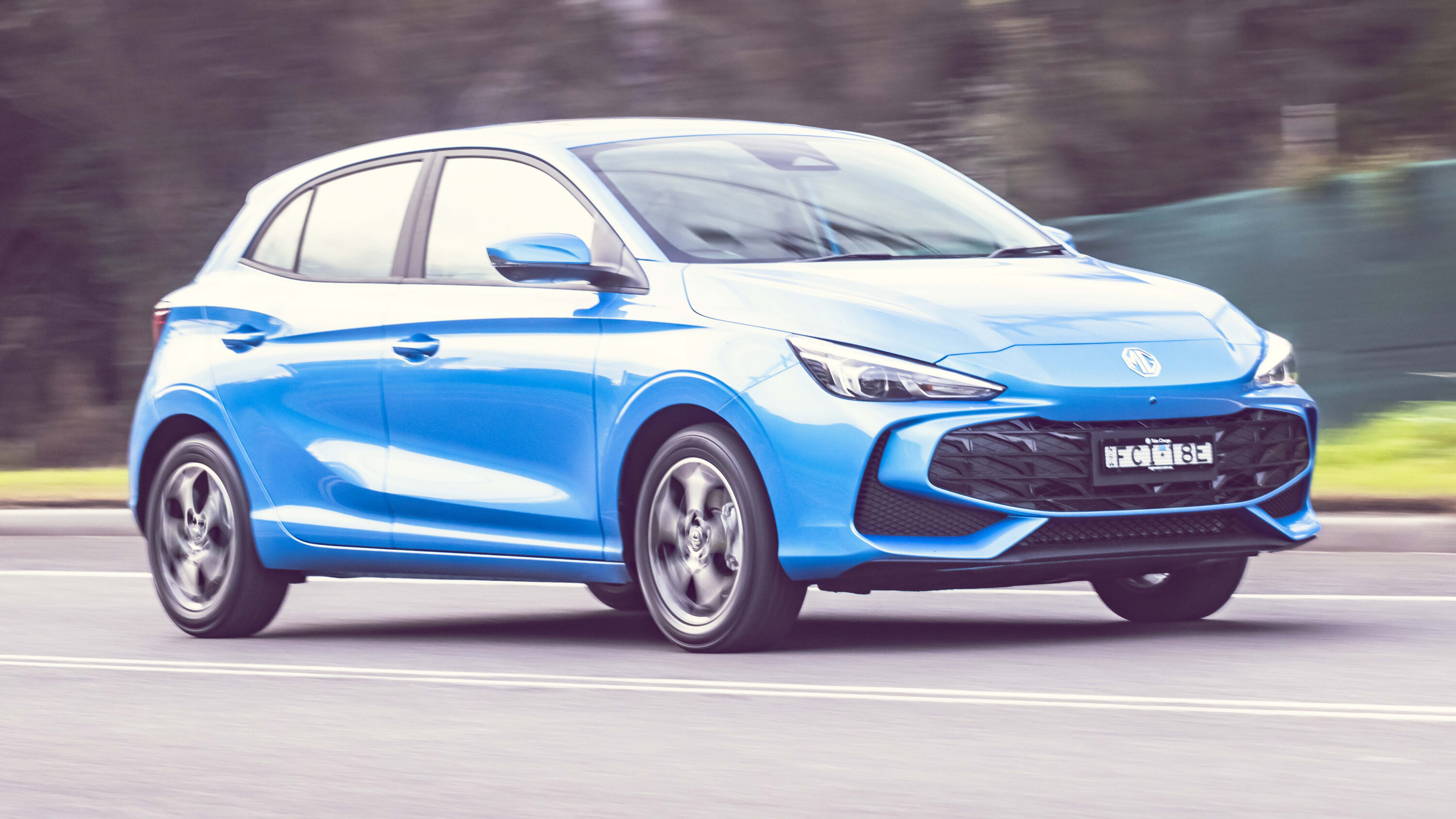
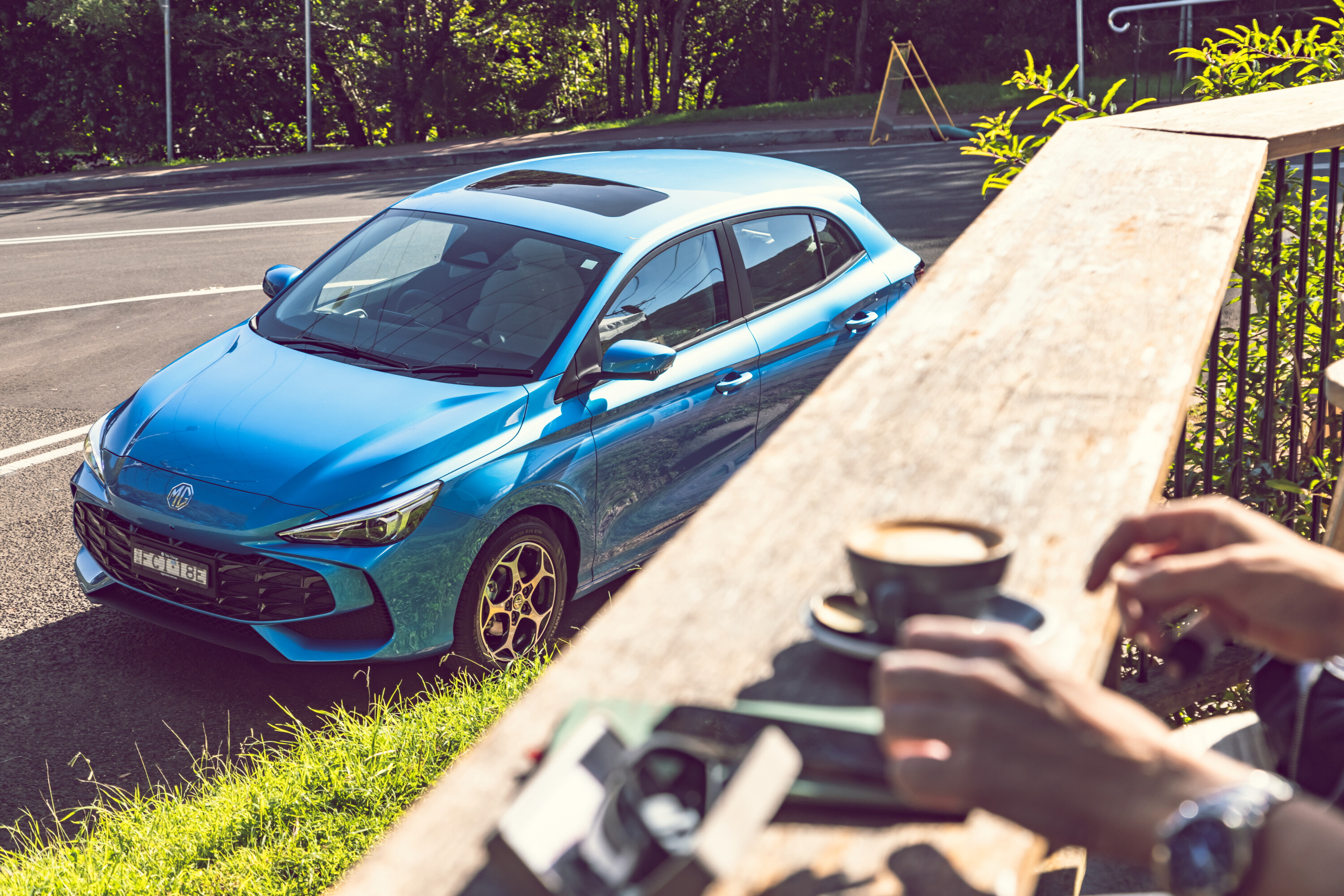
Our test car is a best-foot-forward variant, the range-topping Hybrid+ Essence. It’s coated in Brighton Blue (extra-cost) metallic, one of the brighter options alongside a yellow and red in an expanded palette also featuring your staple white, black, silver, and grey.
1
Most dimensions also grow, if not by a margin that pushes the MG3 out of ‘Light car’ territory. Six centimetres are added to its length, with five of those coming in the wheelbase, though it’s still only a touch over 4.1 metres long – shorter than one of the smallest of ‘Small cars’, the VW Golf.
The biggest stretch is to width, the MG3 widening by nearly seven centimetres – complemented by a 4cm widening of the rear track. Height is the only dimension with a minus sign against it, though the drop is a mere 2mm.
No surprises underneath. It’s struts up front, with a torsion-beam rear suspension.
1
Cabin space and comfort
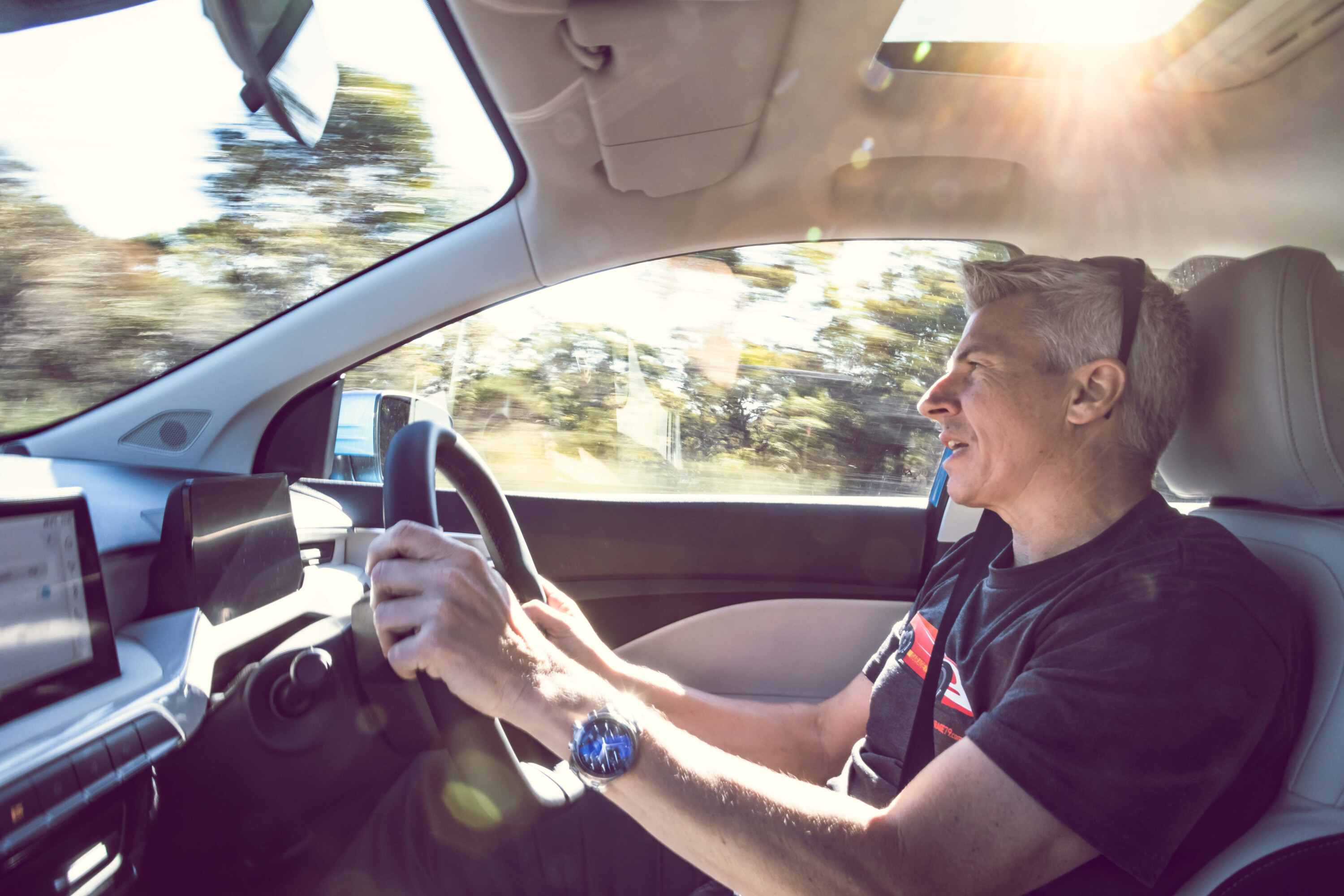
A quick door-shut test immediately bodes well for build quality; no tinniness often associated with a budget car but instead a satisfying, Golf-like thunk.
To use another, more pertinent VW comparison, the MG3 isn’t quite Polo-posh inside but the interior has matured nicely – particularly in the case of the top-spec hybrid.
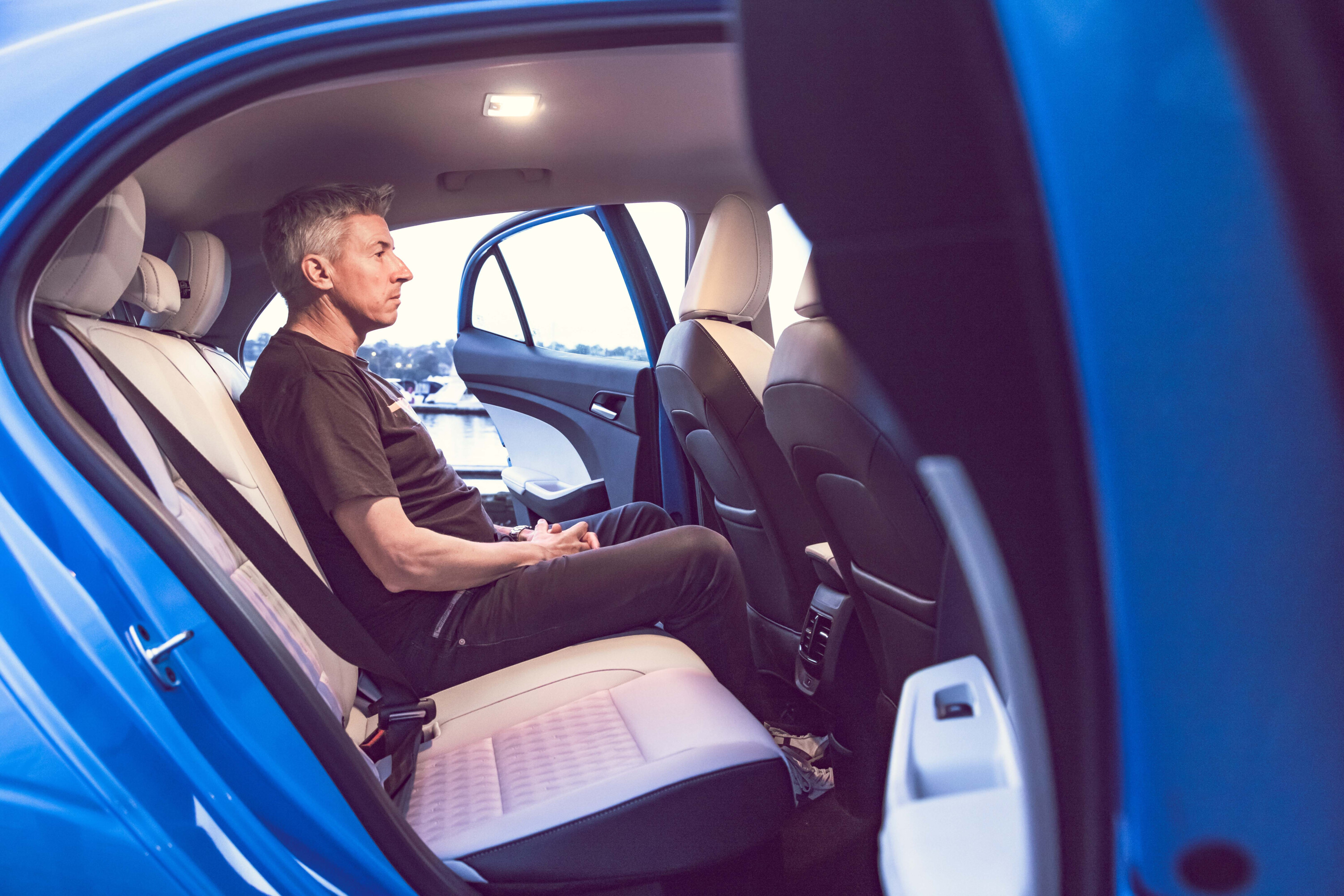
The Essence brings a full-leather steering wheel and extra pleather for the dash and seats (the latter of which look smart in the white-with-black trim option), working with other stylish materials such as the ceramic-like ultra-smooth plastic used on the centre console and dash to elevate the interior above ‘cheap car’ status.
1
While they help offset the still-significant percentage of hard plastics, there’s impressive smoothness to the various part joins in the cabin – no rough-to-the-fingers misalignments that can be common to lower-priced cars.
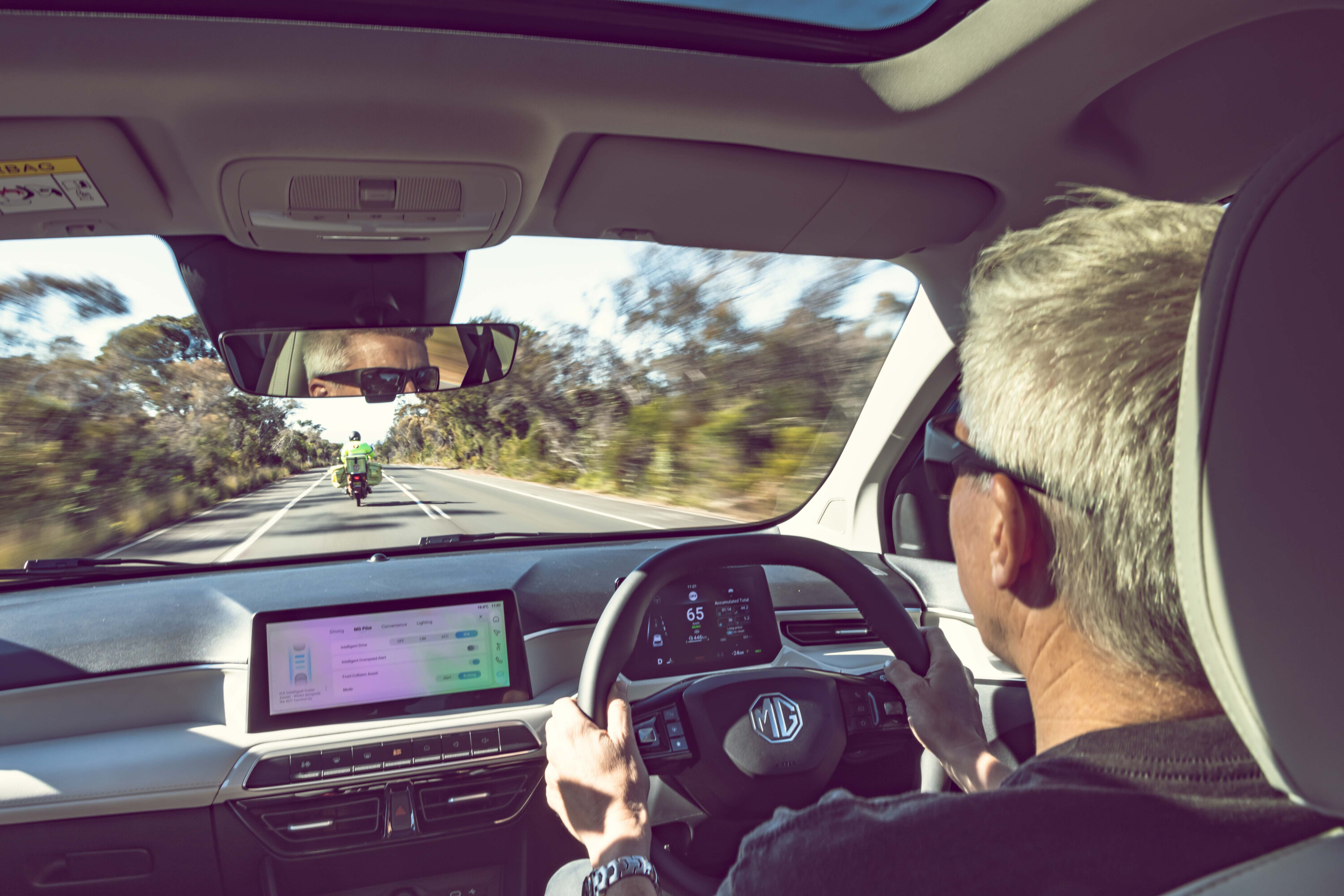
Cost-cutting measures exist besides any material choices. The most obvious and surprising is a steering wheel that adjusts for height but not reach, which forces some drivers to make some compromises to the driving position. For this writer, that meant my wrists falling a bit short of being able to rest on top of the steering wheel (while stationary) to ensure my legs had the ideal distance to the pedals.
Only the driver’s window has auto up/down where the others are auto-down only, and the sliding smartphone tray on the centre console feels quite loose (at least on our test car). And, talking of mobiles, there’s no wireless charging even on this range-topper.
1
That tray at least contributes to some excellent front-cabin storage.
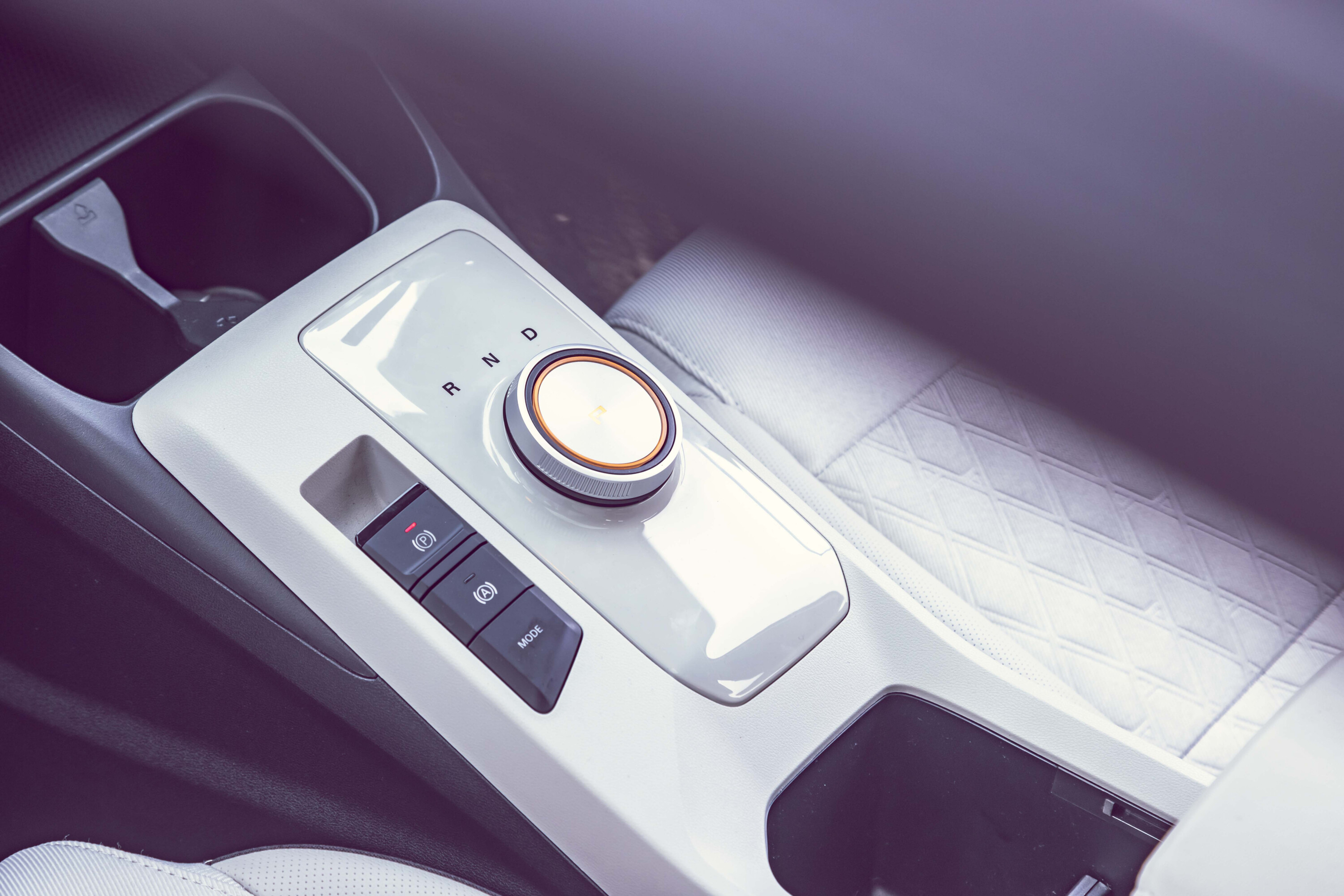
The dash layout with its dual digital displays shares some similarities with MG4, as does the Hybrid’s rotary transmission controller (petrol models have a regular auto gearlever).
The MG3’s 10.3-inch infotainment display sits lower and more naturally on the dash than in the company’s electric hatchback.
It’s a good screen size that trumps the 8.0 and 9.0 displays in the Yaris and Swift, respectively.
1
If not lent the most inspiring of visuals with mostly black/white menus with some blue thrown in, menus and functions are easily identified, and the screen response is faster than we’ve experienced with the MG4’s system.
There are physical shortcut buttons below, importantly including fast climate control access – unless, however, you’ve plugged in your phone for Apple CarPlay or Android Auto.
The steering wheel, another shared item with the MG4, includes functions that aren’t all immediately obvious, requiring some familiarisation – though this includes two star-icon buttons that can be handily configured as shortcuts to certain functions via the infotainment screen.
1
MG has done a good job on the overall cabin packaging. There’s a good amount of knee space for a regular-height adult behind their own driving position, while headroom seems sufficient for people up to six feet tall.
There’s a comfy, nicely sprung bench, too, with a long cushion good news for those with longer legs. Rear vents are also something of a rarity in a vehicle of this size.
No centre armrest also means no cupholders in the rear, only bottle holders moulded into the doors, and storage is otherwise limited to seatback pouches and a small tray just below a USB-C port.
Undamped grabhandles can be labelled as a very minor cabin-budget victim.
1
Boot capacity drops by 14 litres to 293 litres. If further distancing luggage space from the Polo’s 351L, the MG3’s volume still beats the Yaris (270L) and Mazda 2 (250L).
That increases to 983L with the rear seats taken out of action, though surprisingly the MG3’s seatback is a single piece rather than the ubiquitous 60-40 split-fold.
Hybrid models miss out on the petrol’s space-saver spare wheel under the floor, owing to the standard 12V car battery being booted out of the engine bay to make room for the electric motor.
1
On the road
We’re yet to test the petrol-only MG3, but for reference it features a new four-cylinder engine with the same 1.5-litre displacement. Power is down fractionally from 83 to 82kW and torque drops from 150 to 142Nm, but official fuel economy improves from 6.7 to 6.0 litres per 100km.
The Hybrid+ promises even better consumption. Call that 28 percent better: 4.3L/100km.
Despite a fuel tank that’s nine litres smaller than the petrol’s (36 v 45L), the hybrid offers an extra 87km of theoretical range (837 v 750km).
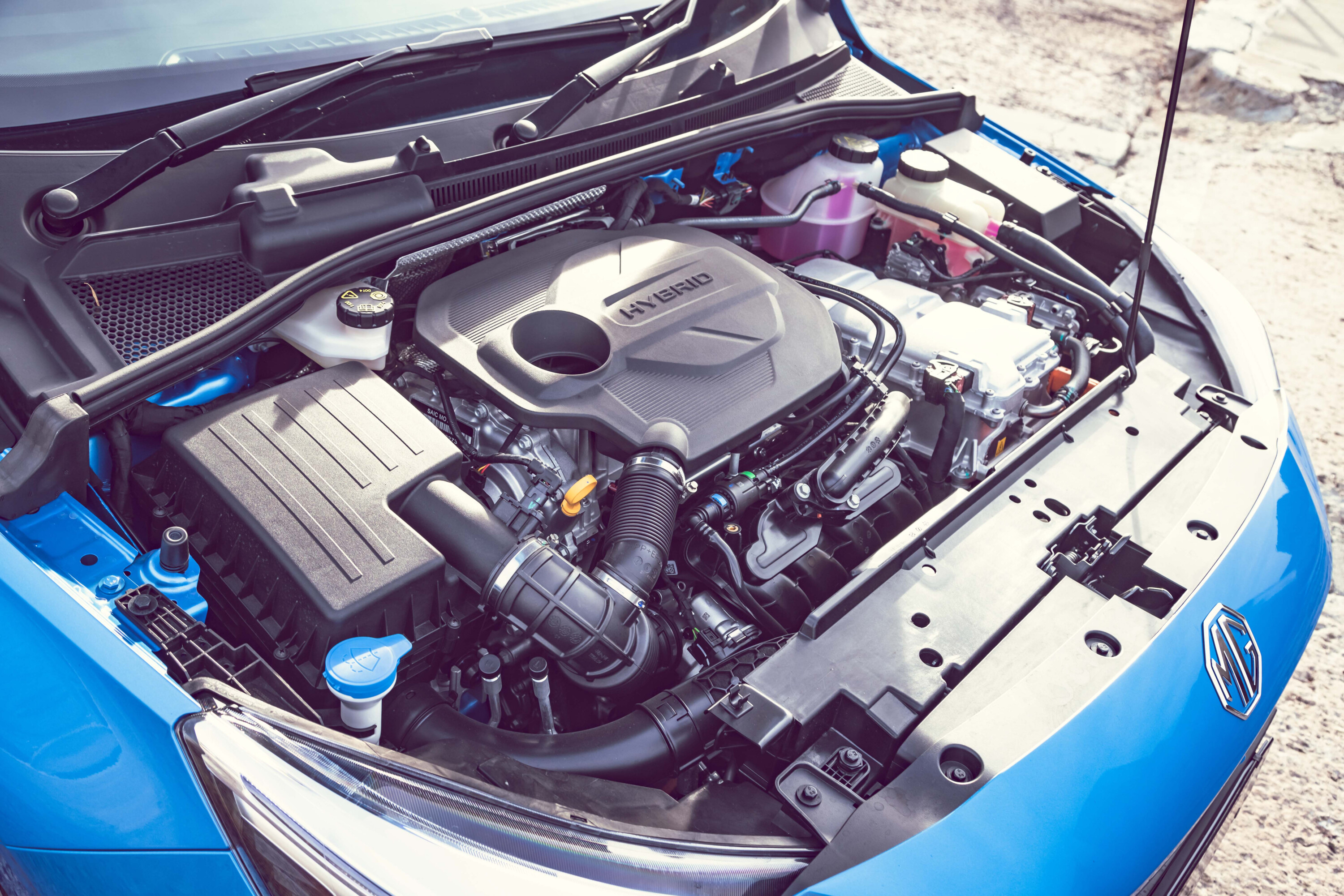
The combustion half of the petrol-electric equation is also a 1.5-litre four-cylinder, and like the Yaris hybrid’s 1.5L three-cylinder it favours the economy-focused Atkinson Cycle over the more widely used Otto Cycle. It’s quoted 41 percent thermal efficiency even bests the Toyota’s, albeit it by just a single percent, though more relevant to buyers is the Yaris’s official consumption that, on paper, is a whole litre lower (3.3L/100km).
1
Also in the Yaris’s favour (and that of the MG3 petrol) is an ability to run happily on 91 Octane where the MG3 Hybrid+ requires 95 at a minimum.
MG’s approach to hybrid drivetrains seems a little different beyond its requirement for higher-grade fuel, though…
With a 75kW petrol engine partnered with a 100kW electric motor, combined power is a pocket-rocket-like 155kW.
MG’s specs list 8.0 seconds for the 0-100km/h acceleration run, yet arguably more impressive is a 5.0sec claim for 80-120km/h. That’s not hanging around.
1
With the Hybrid’s exclusive drive modes cycled into Sport for full dual-motor goodness and a firm stomp of the accelerator pedal, we wouldn’t dispute the figure, such is the MG3’s energetic in-gear burst (in one of only three gears, by the way).
In wetter conditions, the traction control is asked to step in if accelerating from 40-45km/h with mild aggression.
If performance isn’t as punchy as the 155kW stat suggests, it still surprises for an everyday city car that isn’t aiming to become the next Ford Fiesta ST.
Eco and Normal are other driving modes, though only the MG3’s electronics control which parts of the hybrid drivetrain work and when.
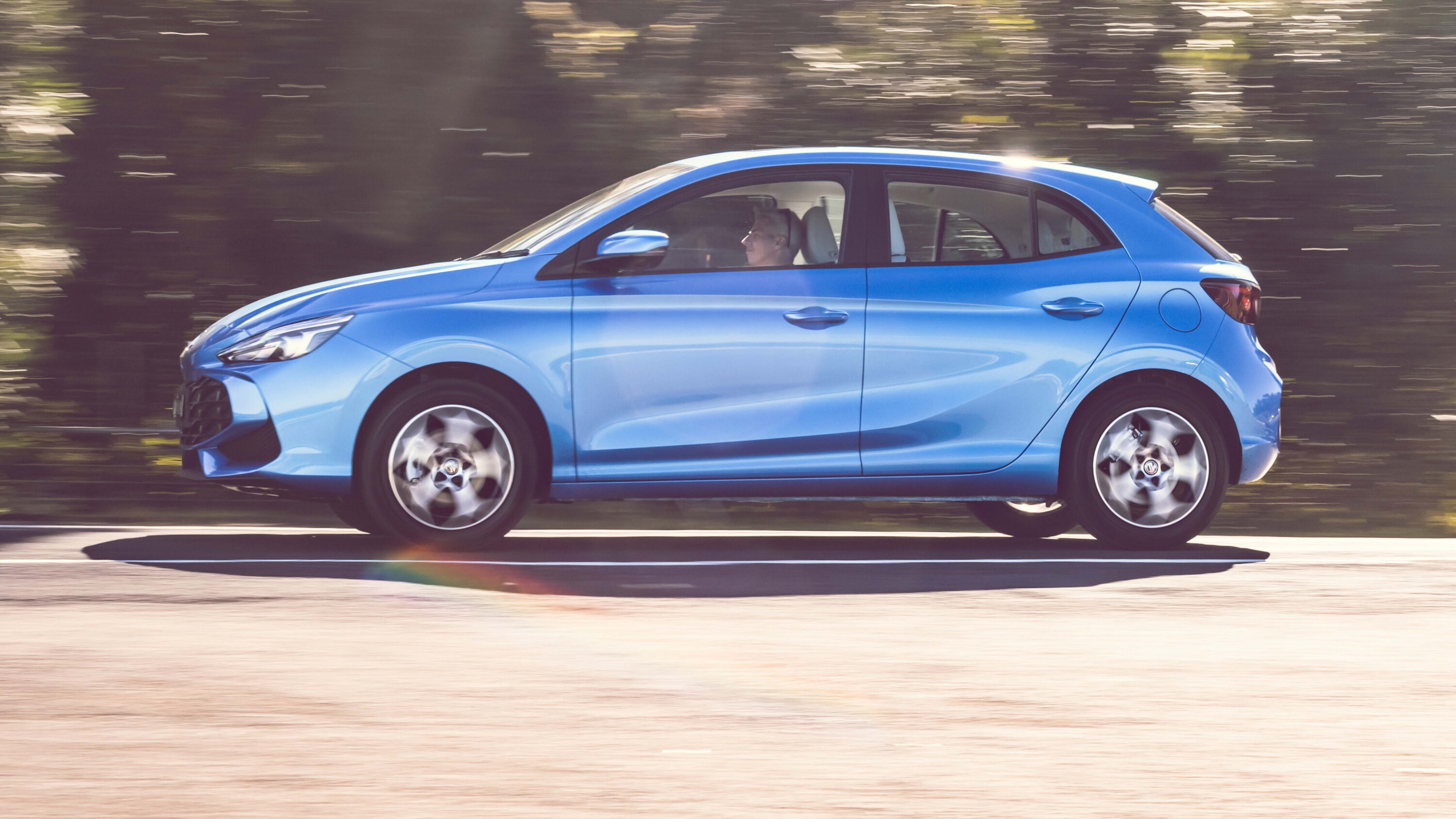
1
If the 1.87kWh battery has sufficient charge, the Hybrid+ will drive the front wheels with electric power only – and for faster and longer than a Yaris would typically allow.
It’s an MG4-Lite experience as there are inevitably limitations to the EV phase of motoring. The petrol engine will often fire up, with higher revs for the prevailing road speed indicating it is driving the generator that helps replenish the battery rather than helping to propel the car. The engine sometimes kicks in when the MG3 is stationary to do the same.
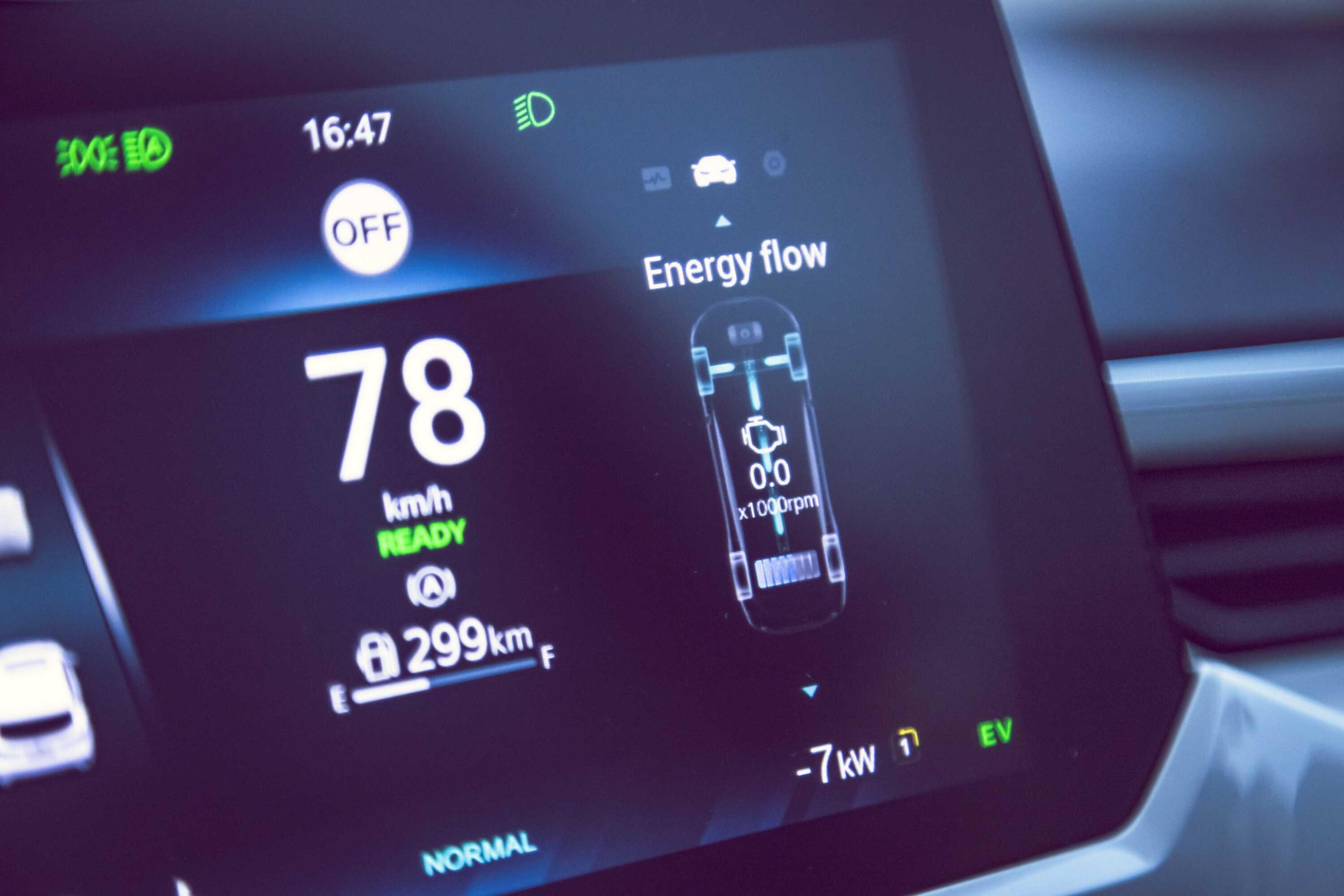
An Energy Flow monitor is available on the driver cluster, though it’s a shame the fascinating active diagram isn’t available in a larger size via the central touchscreen.
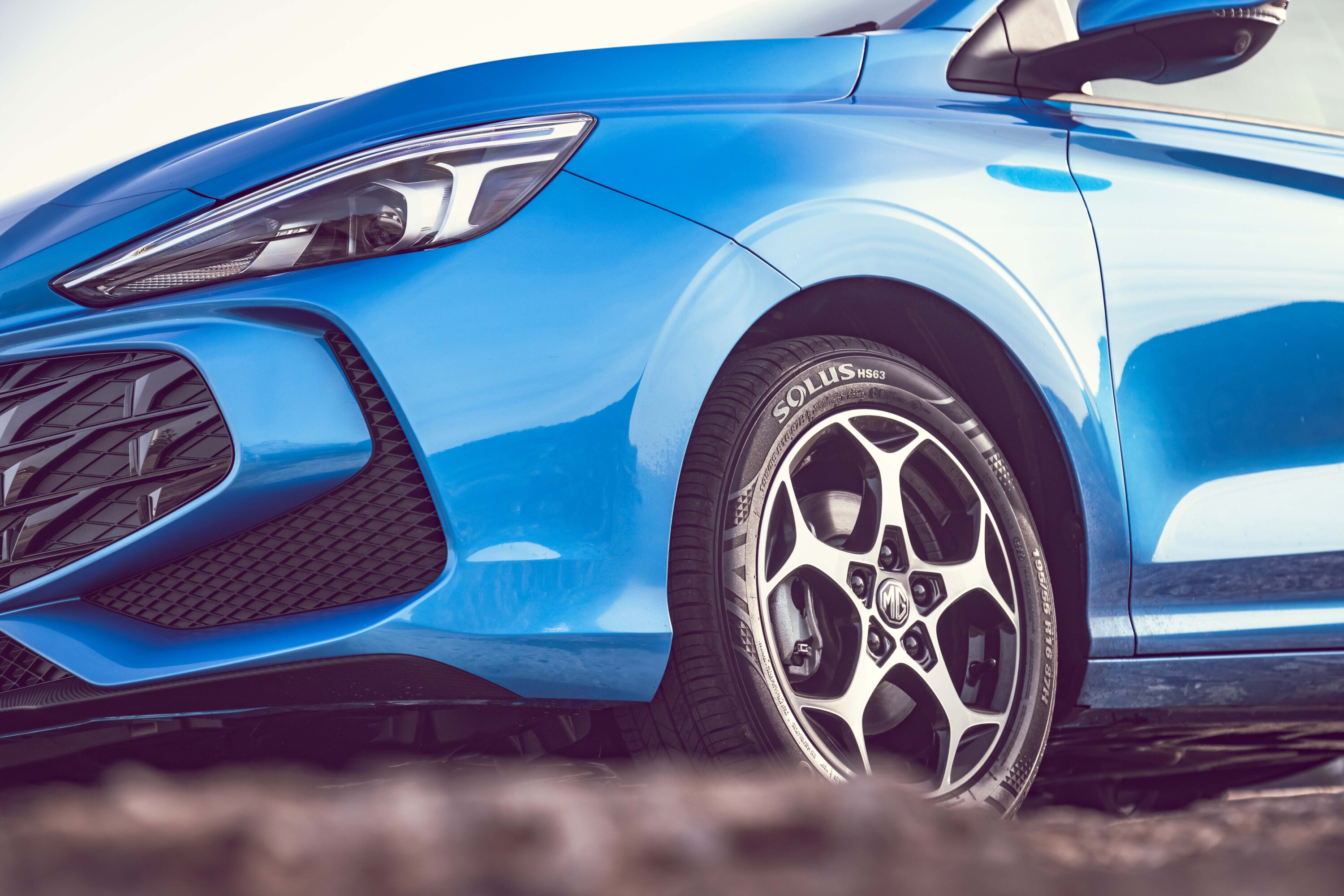
1
‘EV’ and ‘HEV’ modes feature permanently on the cluster as an alternative guide, the latter illuminating whenever the petrol engine is engaged for either powering the generator or wheels.
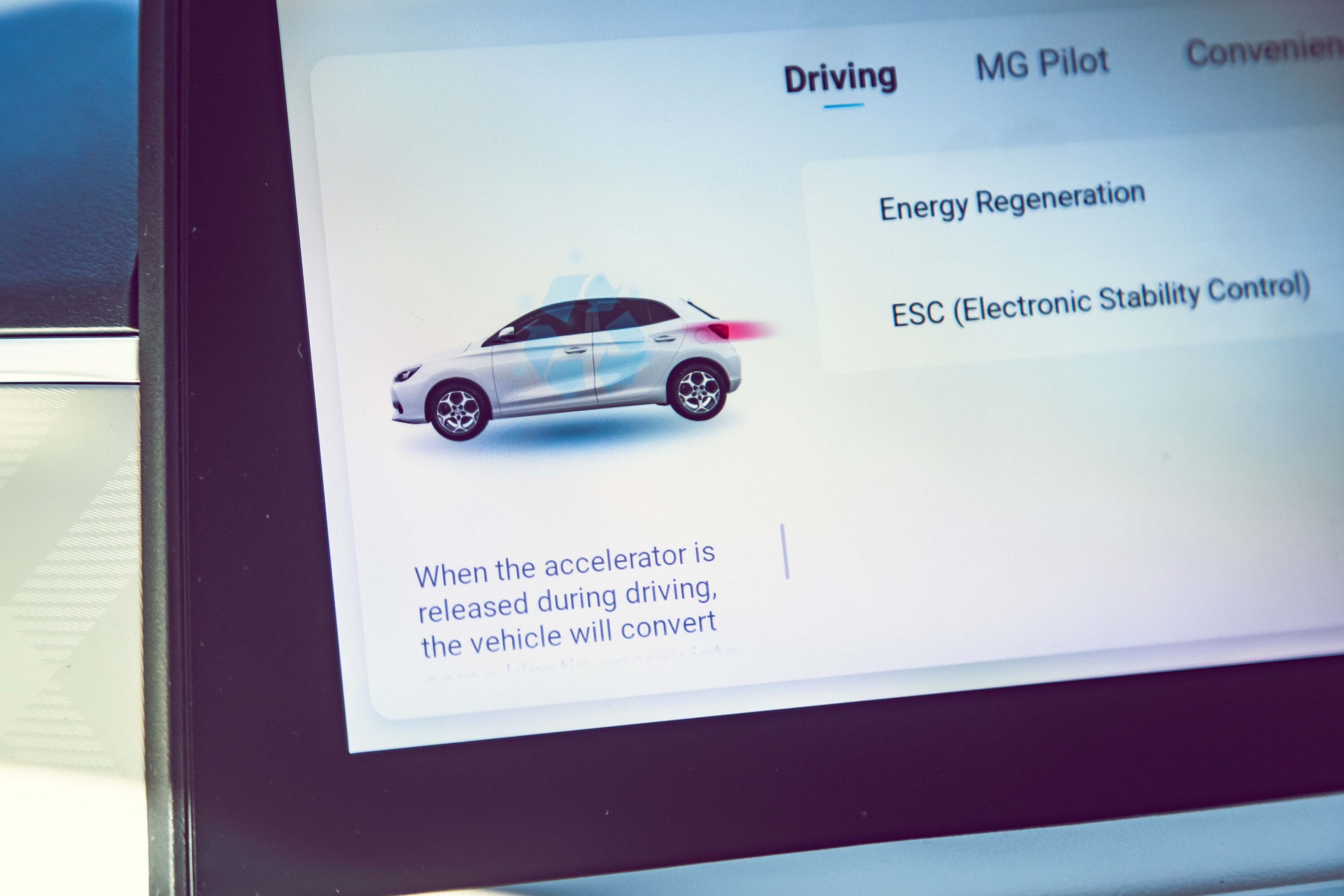
Regenerative braking is offered in three settings. High hints at the one-pedal driving offered by the MG4 without bringing the MG3 to a full stop and is best for the stop-start nature of urban driving. On the open road, Low enables more natural coasting when lifting off the throttle pedal where High, and even Medium to an extent, makes for jerkier progress.
We chose Regen-braking adjustment as one of our steering wheel shortcuts because of its ability to have either a positive or negative effect on the MG3 driving experience.
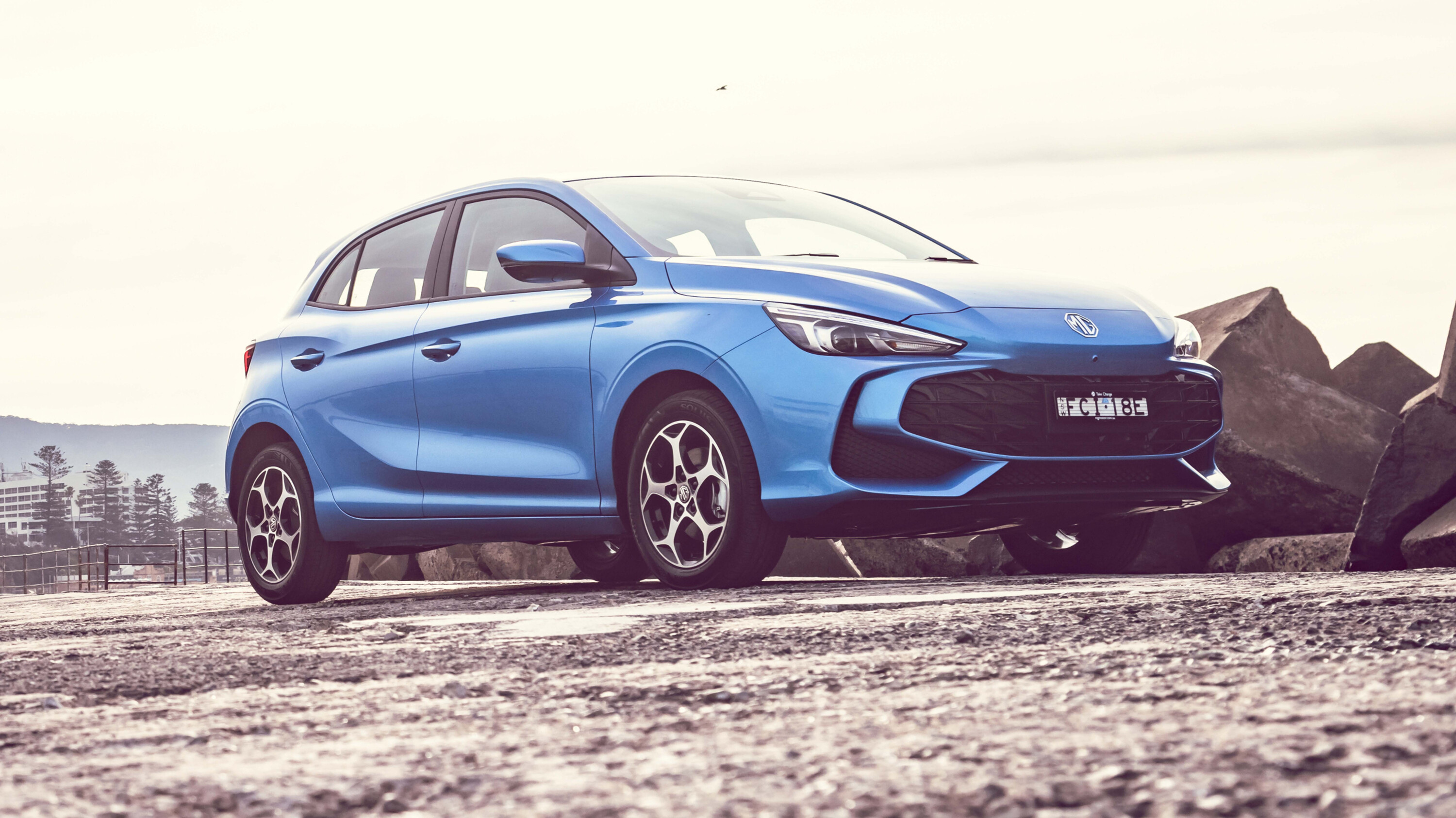
1
We found that was still the case with adaptive cruise engaged, prompting us to turn it off for a smoother drive on the freeway.
Turning off the Intelligent Speed Assist was also essential for our personal sanity. Essentially a speed-limit notification system combined with a speed limiter warning, it chimes every time you creep just over the prevailing speed limit. As with many other manufacturers, the system unfortunately defaults to ‘on’ every time the car is switched off and on again.
Our main drive and photography day took us from Mascot (Sydney) to the Gong (Wollongong), providing a tenuous M-G angle but also a great city-to-city run.
The MG3’s trip computer indicated a 4.8L/100km average after a total 222km drive across seven hours, with an average speed of 32k/h. Intriguingly, after a reset and 119km of pure suburban driving over multiple days, we registered an average of 7.0L/100km. Is this a hybrid that is possibly more efficient on the open road than around town, the reverse of traditional expectation?
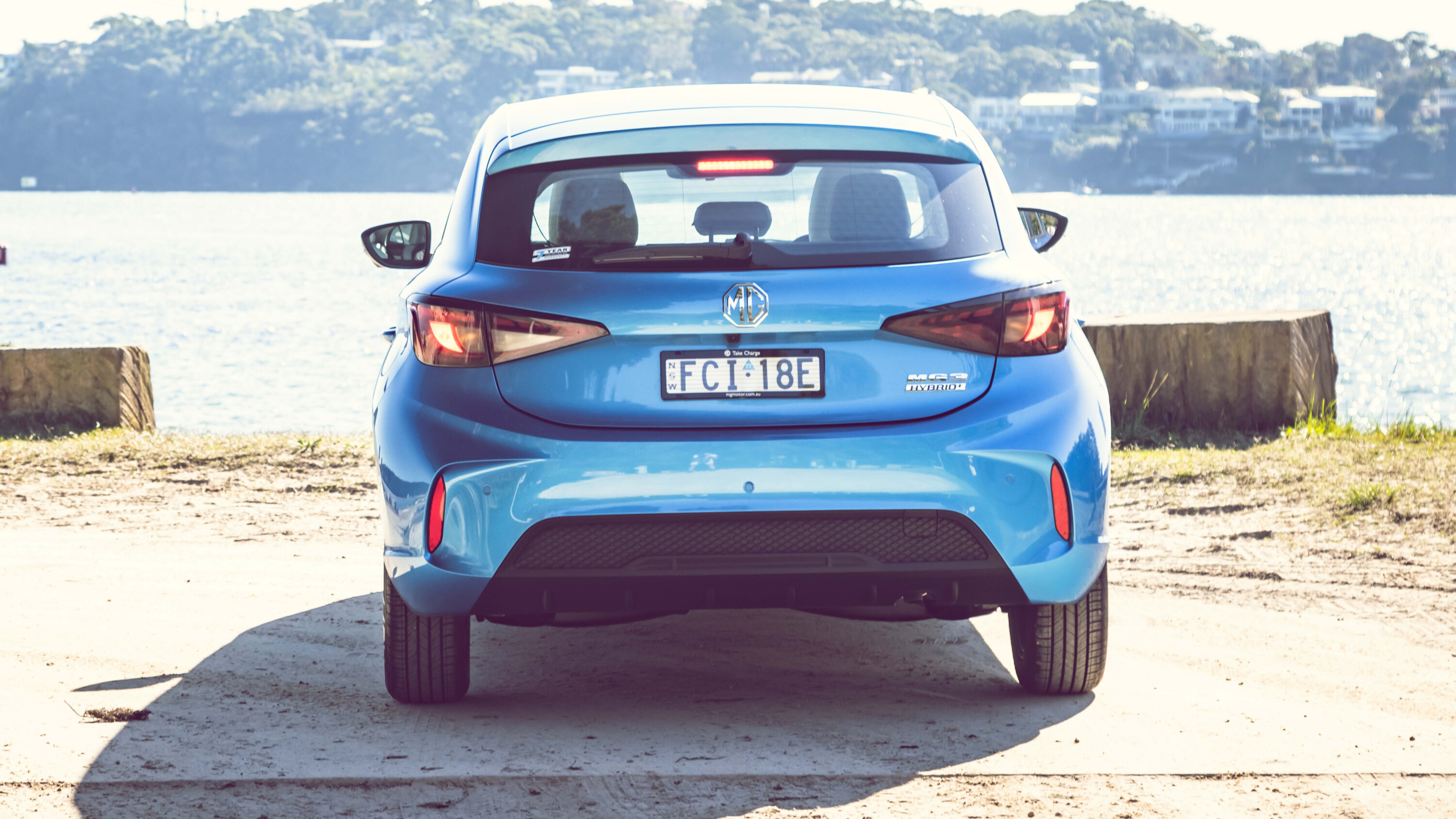
1
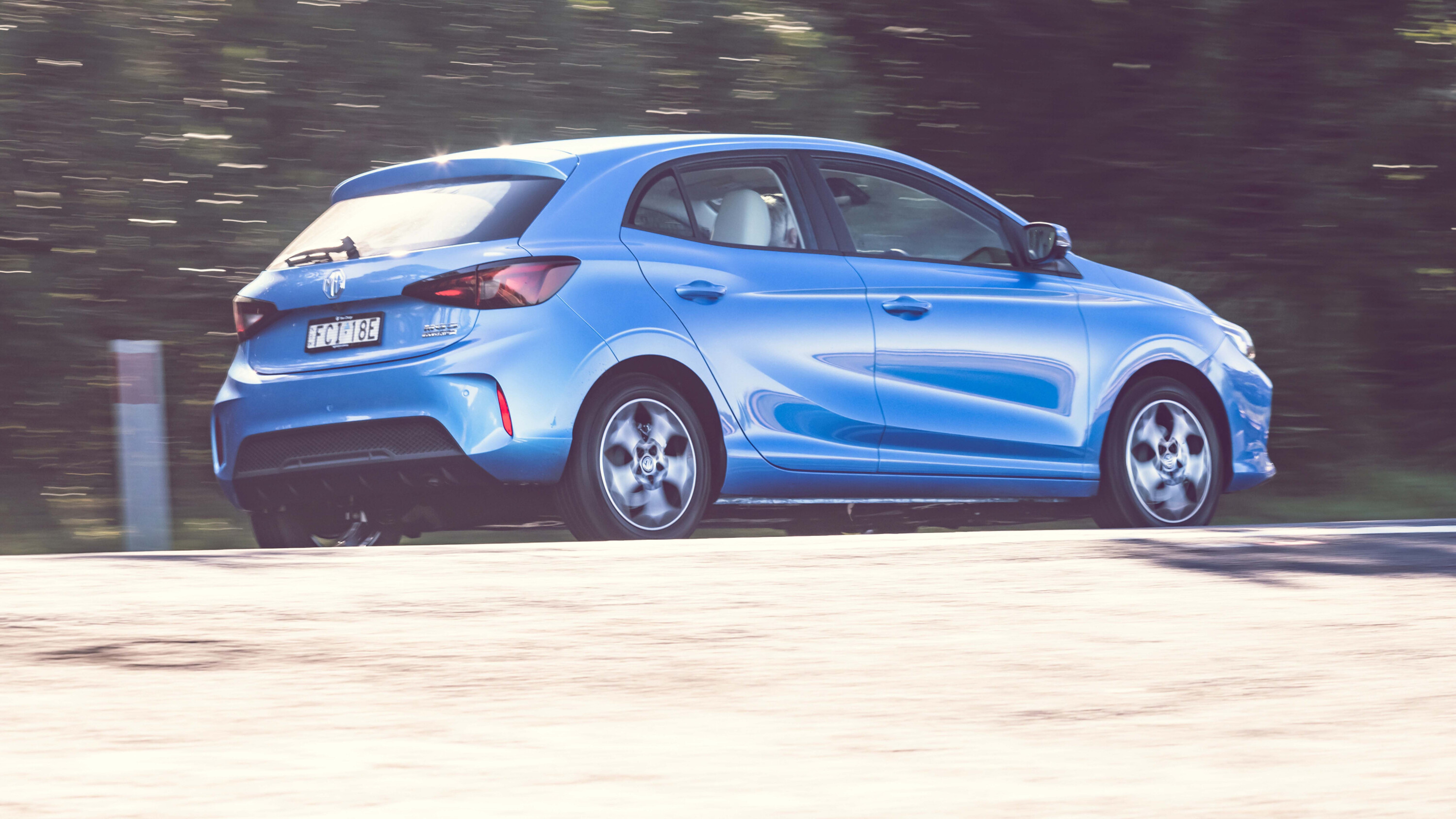
Suburbia is where the MG3 shines brightest, though – showcasing its tight turning circle, wieldy low-speed handling, quick access to bursts of acceleration to fill traffic gaps, and a satisfyingly supple ride (further aided by its chubby 55-profile tyres).
Sharper bumps such as road joins are the only small chink in the suspension’s armour.
Although the nicely cushioned and controlled ride remains outside city limits, the rest of the MG3’s dynamics start to falter as speeds rise and roads bend.
1
The steering is the primary letdown, its on-centre feel and response becoming vague above 60km/h – making it harder to thread the MG3 accurately along a country road or necessitating the driver to stay busy with the wheel trying to keep the car tracking straight in its freeway lane.
It’s ultimately not as endearing to keen drivers as the outgoing Swift or the dearly departed Ford Fiesta.
That said, an X-Power version of the MG3 to rival the Polo GTI would be more than welcome.
1
VERDICT
The MG4 – our Wheels Best EV Under $80,000 – reset expectations for future MG models.
Our hope was that the MG3 would carry plenty of that electric hatch’s strong DNA while being mostly differentiated by having a petrol engine under the bonnet as well as an electric motor.
In many respects that’s the case, while the hybrid also offers a ride even better suited to Australian roads.
If various quirks, patchy steering, and a question mark against everyday fuel economy pull the MG3 up short of small-car brilliance, still noteworthy is the giant leap over its predecessor to become a solid and highly likeable city-car package that’s far easier to recommend.
MORE
Everything MG
MORE
PHEV and Hybrid Cars
| 2024 MG3 pricing (RRPs) | |
|---|---|
| MG3 Excite petrol | $23,990 |
| MG3 Essence petrol | $25,990 |
| MG3 Hybrid+ Excite | $27,990 |
| MG3 Hybrid+ Essence | $29,990 |
UPDATE: Pricing locked in; order books open
The order books for the MG Cyberster have opened in Australia, with the all-new electric roadster set to cost “between $100,000 and $150,000” when it arrives later this year.
MG has also confirmed it will import only the flagship 77kWh AWD version of the electric sportscar into Australia, foregoing other versions in the range which have smaller battery packs and less performance.
The MG Cyberster 77kWh AWD packs 400kW/725Nm from its dual electric motors and can hit 0-100km/h in 3.2 seconds.
“Dealers are taking orders as we speak with the manufacturer’s suggested retail price (MSRP) range will fall between $100,000 and $150,000. Exact MSRP figures will be finalised closer to the launch date,” said MG Australia’s national sales manager Brad Chruszcz.
“We will be bringing in limited numbers of these cars into the country so it’ll definitely be a case of supply verse demand given the interest we’ve already had from the public and our 90+ dealers.”
April ’24: Spotted! MG Cyberster arrives in Oz
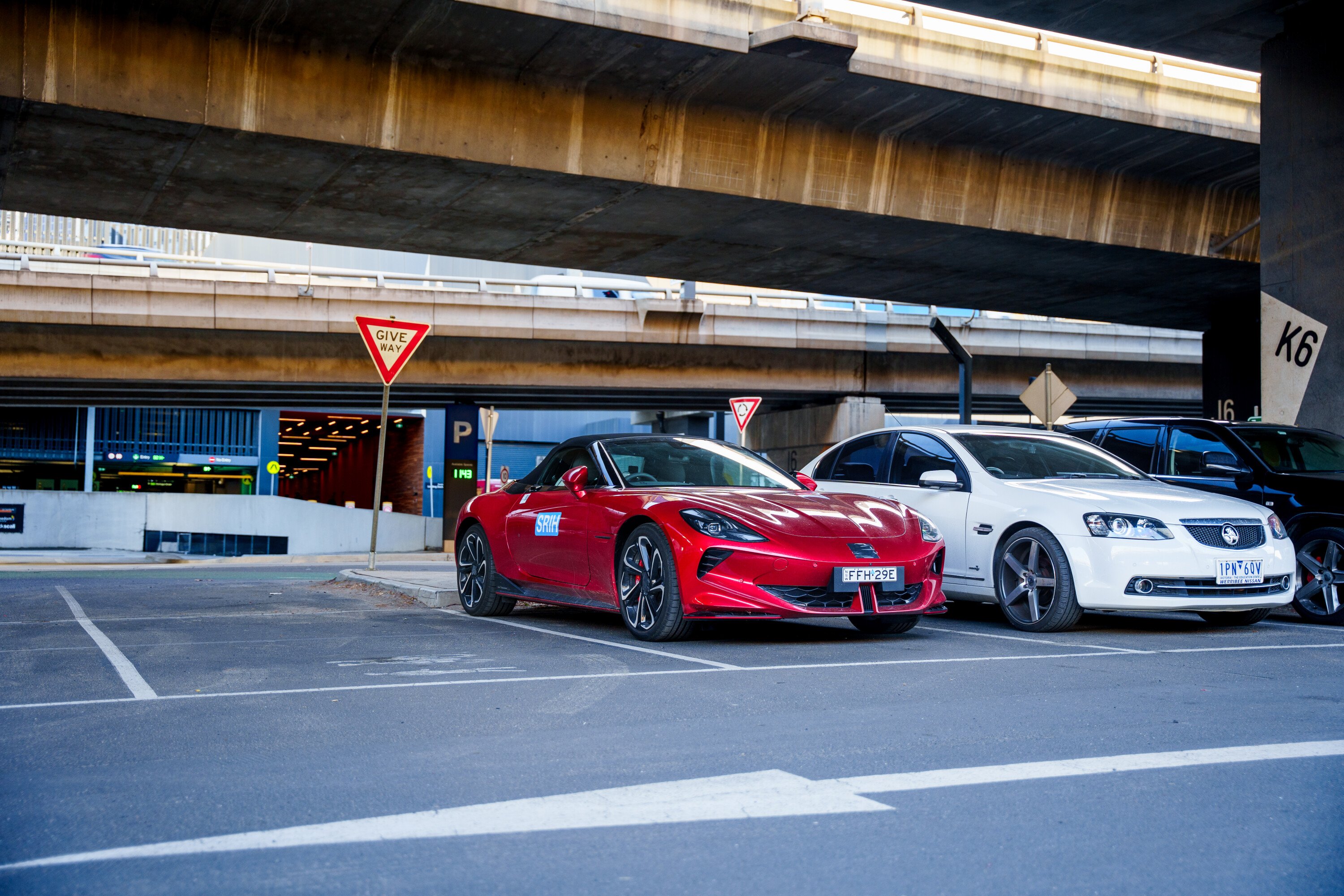
The first examples of the MG Cyberster have arrived in Australia, with Wheels spotting this testing mule in Melbourne this morning.
Parked up in Docklands, this particular example is a right-hand drive ‘engineering evaluation’ vehicle and arrives a few months before the production version will launch in the second half of 2024.
4
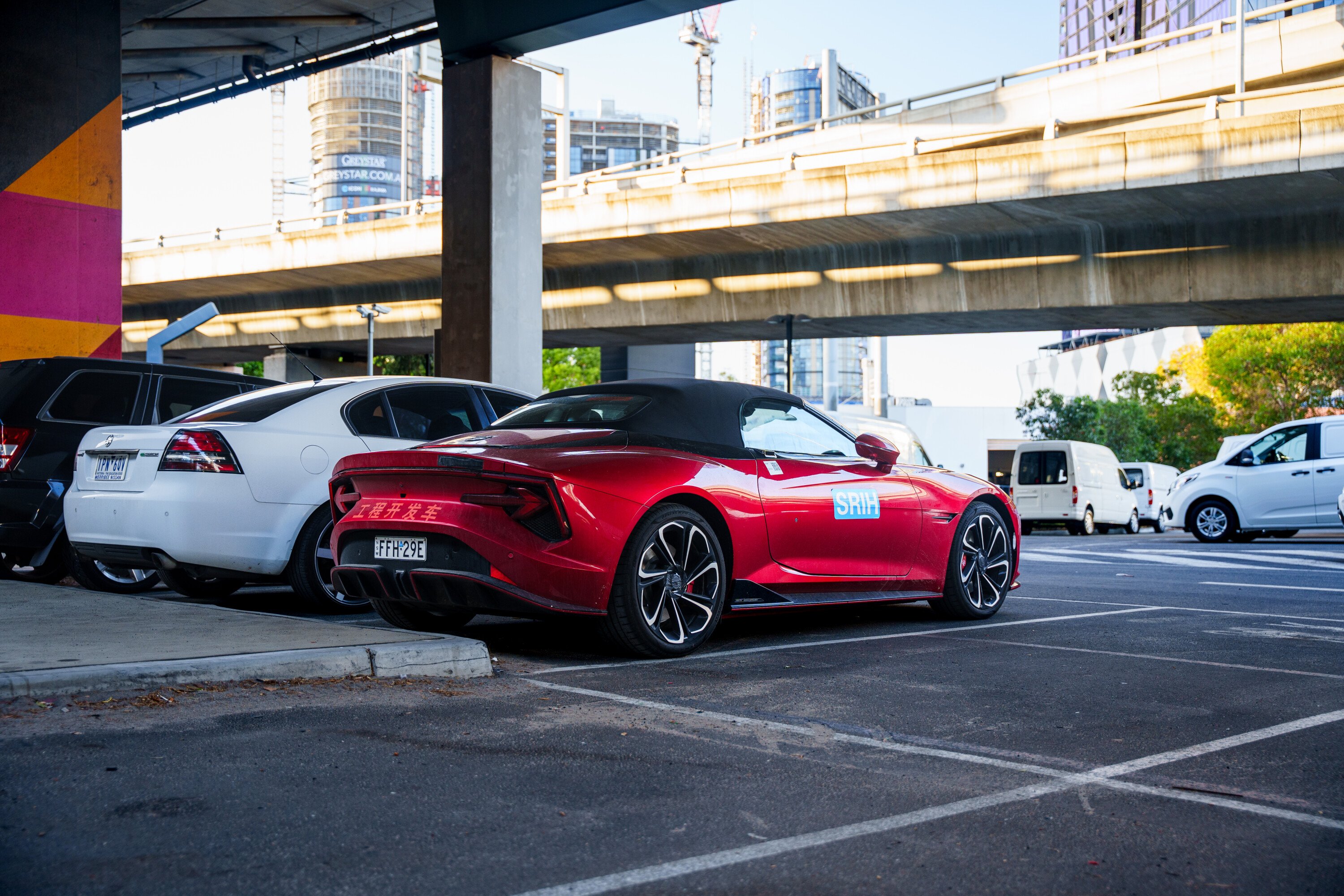
It’s unclear if MG is planning to give the Cyberster any form of local suspension tuning, however this car has already covered some distance in Australia given it was spotted in Sydney a few weeks ago.
It looks striking, too, despite the tape over its badges and other testing signage. This car rolls on 20-inch alloys shod with staggered Pirelli P Zero tyres.
The 20-inch wheels also suggest this is the flagship version of the Cyberster which scores larger wheels and a bigger 77kWh battery. Dual electric motors produce combined outputs of 400kW/725Nm and MG claims the Cyberster will hit 0-100km/h in 3.2 seconds.
6
MG is yet to confirm what variants of the Cyberster it will offer in Australia — three are available in China — or how much it will cost. Previous speculation suggests a starting price higher than $100,000.
December: MG Cyberster officially confirmed for Australia, launch timing locked in
Good news for anyone waiting for the Aussie arrival of the MG Cyberster: we can now confirm it’s due to launch in H2 2024.
Until now it was believed the Cyberster, which is MG’s first all-electric sportscar, would arrive Down Under in late 2024 or even 2025, so today’s confirmation that it will be next year is good news.
Speaking with Wheels earlier today, an MG spokesperson said: “MG Motor can confirm our line up for next year (2024) to include an all new MG3 available in both ICE and Hybrid, as well as the all new HS and Cyberster.”
Still no word on how much the Cyberster will cost, although it’s almost guaranteed to be higher than $100,000. Continue reading our story below for more details.
August 10: The MG Cyberster looks likely to cost around $100k when it reaches Australia
The all-new MG Cyberster will launch next year in its China home market and the United Kingdom, before making its way to Australia in late 2024 or early 2025.
Based on MG’s new electric architecture called MSP (Modular Scalable Platform), the Cyberster is all but guaranteed to become MG’s most expensive car – unless the IM LS7 does launch locally.
“That’s good that you mentioned that”, responded MG Motor Australia CEO Peter Ciao when asked if a $100k price tag is likely, before adding “that’s a good forecast” as he laughed the question off.
Ciao previously justified a more premium positioning for his marque that’s currently best known for its affordable everyday cars.
“This is a premium brand, this is a very good sports brand. So [with MG], the price range, I believe, is very wide. It’s very easy to get over $100,000” said Mr Ciao.
3
Our original story, below, continues unchanged
April 18: MG Cyberster unveiled, Australian debut confirmed
MG has unveiled the production version of the 2024 Cyberster Roadster, and an Australian launch is confirmed.
Snapshot
- Electric roadster unveiled at Auto Shanghai
- Australian release confirmed
- Lambo-esque scissor doors, bigger than MX-5
- Likely rear- or all-wheel drive with 231-400kW
Good bits
- Proper sports proportions
- 231kW RWD & 400kW AWD options
- 0-100km/h under 4 seconds
- Australian launch confirmed
Not yet confirmed
- Driving range? ud83eudd37u200du2642ufe0f
- Australian timing!
- Price?! Probably $100,000+
The convertible comes as MG’s first all-new sports car since the mid-engined MG F that ran from 1995 to 2011. It’s also the first MG sports car designed under Chinese ownership, and it’s taken quite a different approach to the iconically lithe MG B (1962-1980).
Measuring 4535mm long, 1913mm wide and 1329mm tall, and riding on a 2690mm wheelbase, the Cyberster is comfortably larger than MGs of old – it’s also 20cm longer than a BMW Z4, and extended 60cm compared to a Mazda MX-5.
1
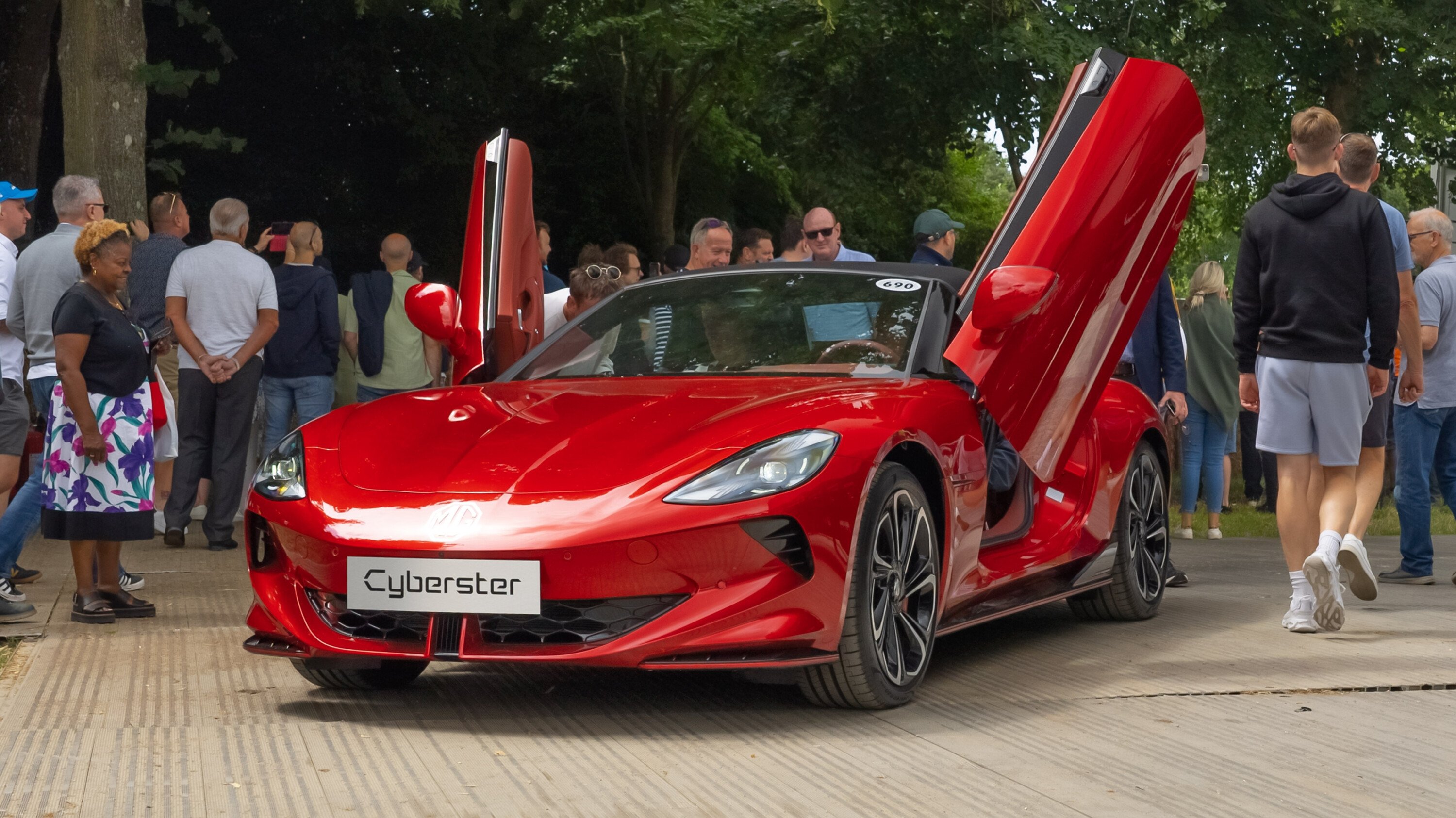
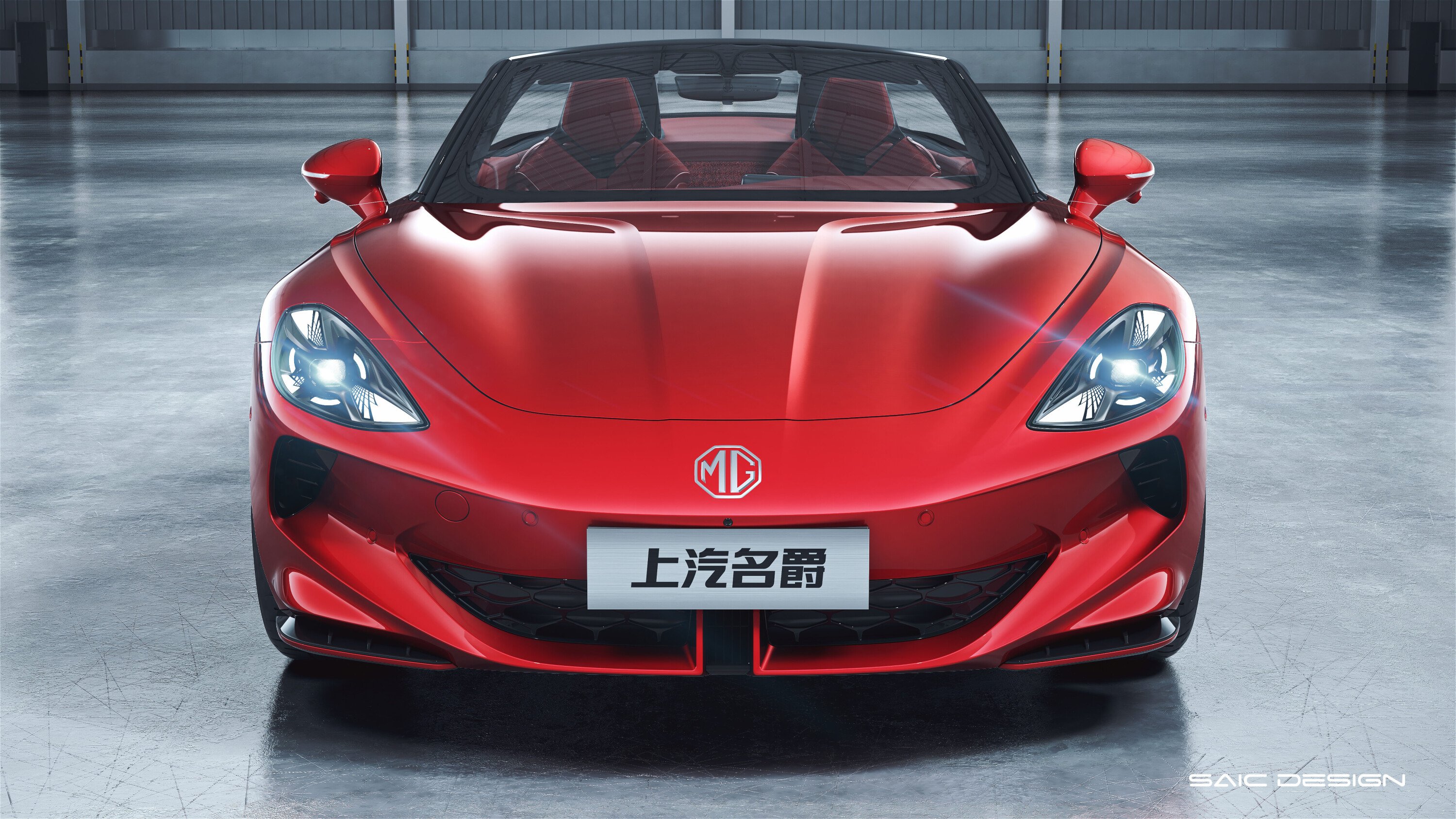
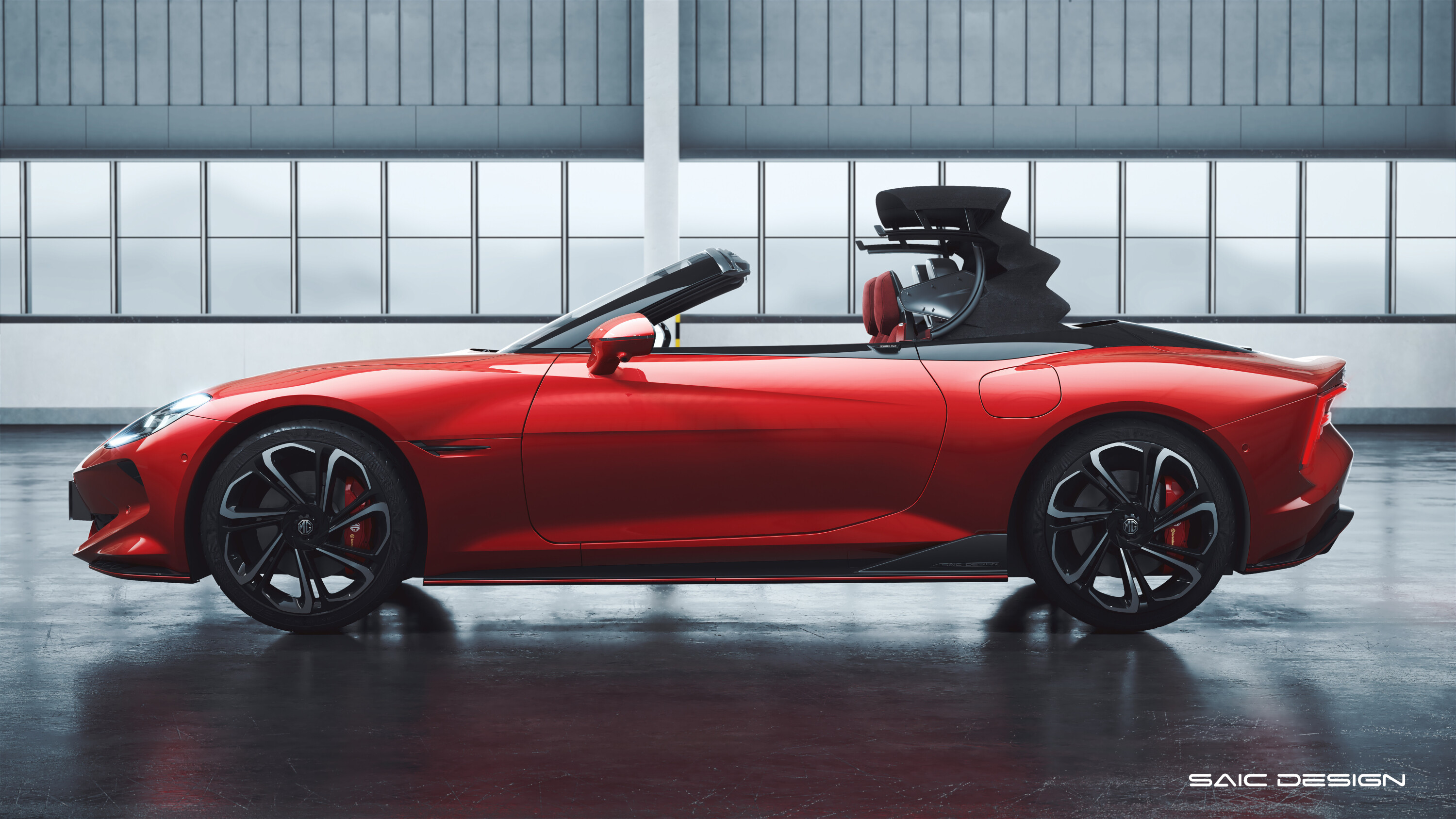
Despite increased dimensions, the Cyberster manages to evoke classic sports car proportions with its long, low bonnet and rearward driving position. Yet its details are decidedly futuristic with LED headlights, angular LED taillights and sharp body lines.
Then there are the Cyberster’s unmissable scissor doors, which open up and out like a Lamborghini Aventador – a rather ostentatious choice, but one sure to grab attention and buyer interest.
1
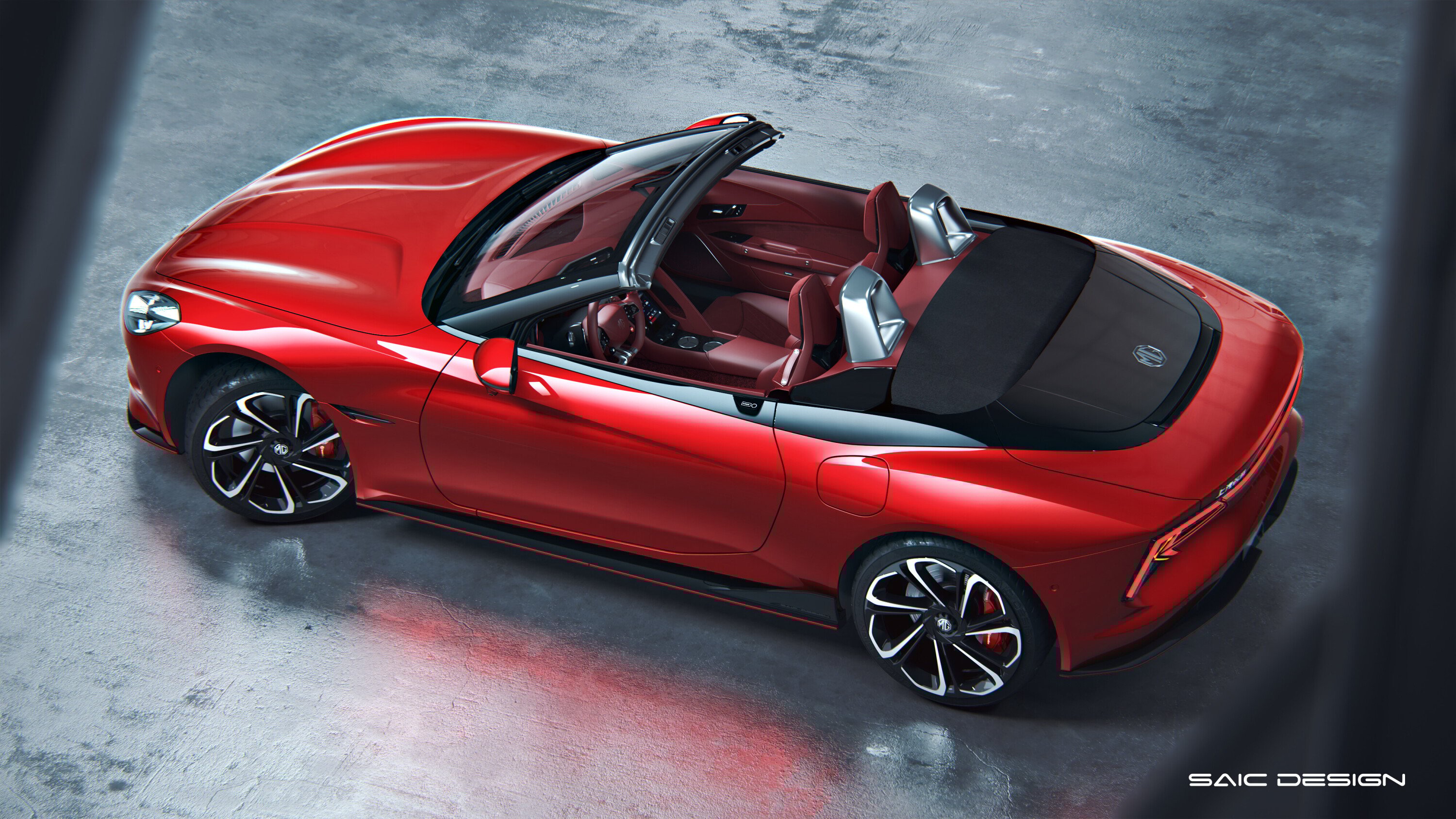
Inside, the cabin isn’t spartan like a Lotus Elise. The Cyberster is fitted with three digital screens: one for the digital driver’s display, another for the infotainment, and a third for the HVAC controls.
The car pictured is fitted with a conventional round steering wheel, but spy photos and the prior concept hint that a yoke-style item (as offered overseas with some Tesla models and by Lexus in the RZ) could come to fruition.
1
Specifications from the Chinese government suggest the Cyberster will be offered in rear- or all-wheel drive configurations. The former is likely to output 231kW, and the latter 400kW.
Kerb weights rated between 1850-1985kg are also expected, so 0-100km/h should be dispatched in less than four seconds.
Information on WLTP driving range from the battery pack is not confirmed, nor is the Cyberster’s underlying platform.
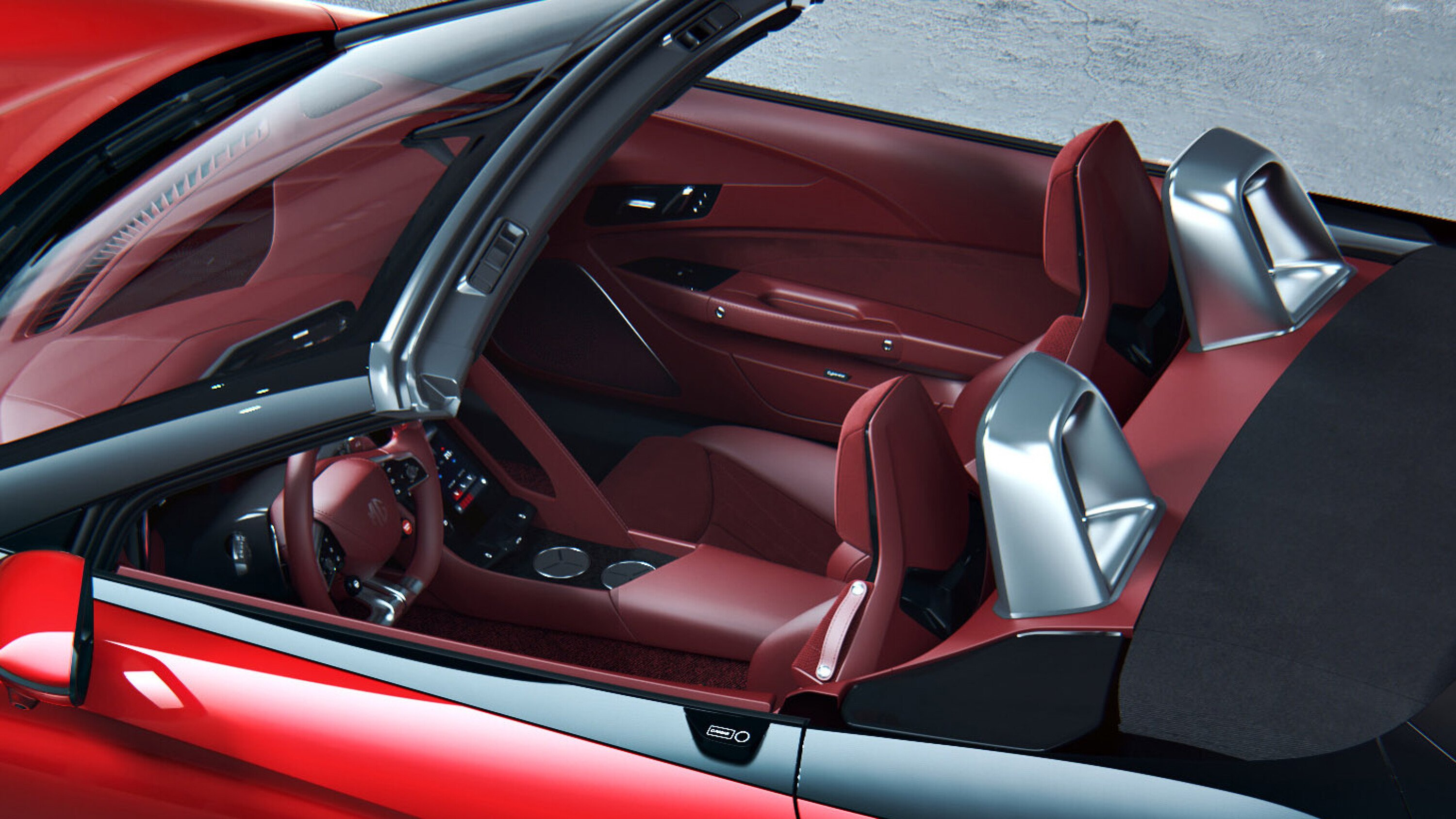
1
MG Cyberster specifications
| 2024 MG Cyberster | Rear-wheel drive | All-wheel drive |
|---|---|---|
| Length | 4535mm | |
| Width | 1913mm | |
| Height | 1329mm | |
| Wheelbase | 2690mm | |
| Kerb weight | 1850-1985kg | |
| Power (estimated) | 231kW | 400kW |
| 0-100km/h (estimated) | sub-4 seconds | |
| WLTP driving range | TBC, expect 400km+ | |
| Release | Summer 2024 (Northern hemisphere) | |
| Australian launch | Australia confirmed, timing TBC | |
| Price | TBC, expect upwards of $100,000 | |
When will the MG Cyberster come to Australia?
The car’s launch is scheduled for Summer 2024 in the UK and Europe – so a little more than a year away. An Australian release will follow, but exactly when is unconfirmed.
“I can confirm that we will be bringing the MG Cyberster to the Australian and New Zealand market and hope to have more exciting news to share around this in due course, ” an MG Motor Australia spokesperson told Wheels.
As for pricing, the Cyberster could be a circa-$50,000 rival for the Mazda MX-5 – but its size and powertrain setup suggests it’ll be closer to $100-150K, where it would do battle with the BMW Z4 and Porsche Boxster.
MORE
Everything MG
⚡ More EV stories to help you choose the best car for your needs
The all-new Polestar 3 might have a smaller number than the forthcoming Polestar 4 but it’s a much more expensive, more expansive and more sophisticated vehicle – a large coupe SUV, according to its maker, intended to compete among luxe EVs such as the BMW iX, Audi Q8 e-tron and Mercedes-Benz EQE SUV, as well as the combustion-engined Porsche Cayenne.
With exclusive competition like that, the handsome Polestar 3 needs to be capable of more than just Insta-worthy face and body shots.
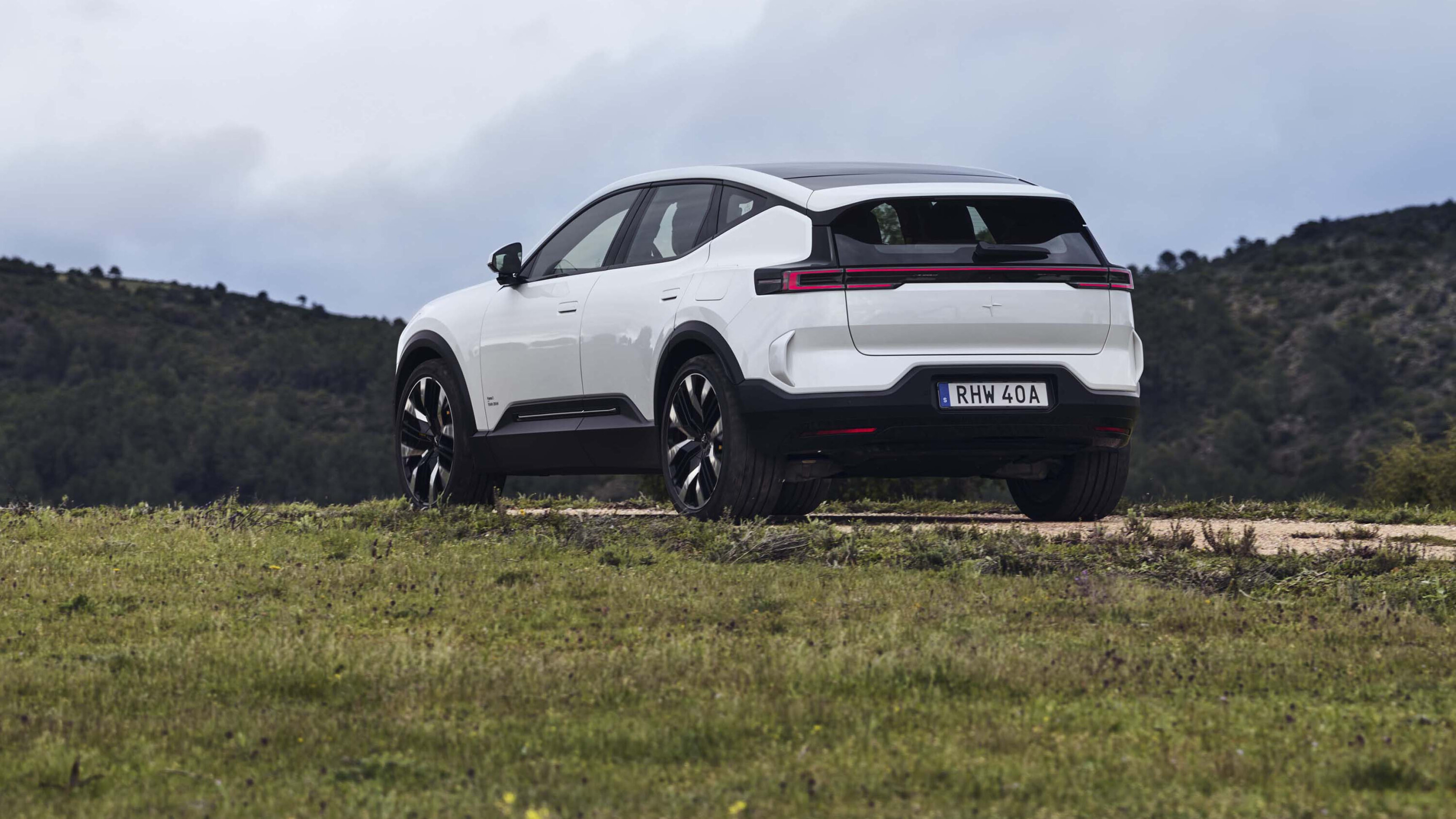
1
And based on our first taste of it through the city and among the mountains surrounding Madrid in Spain, there’s a very strong chance that the Polestar 3 (in dual-motor AWD form, as tested) will translate well to its many international markets, including Australia.
Officially revealed way back in October 2022, the Polestar 3 made its public debut at the Shanghai Auto Show in April 2023 but has taken longer than expected to finally reach full production.
Australian pricing was revealed (and order books were opened) in late in 2023 – $132,900 for the Long Range AWD and $141,900 for the Performance Pack AWD – with initial deliveries to customers starting in late August ’24.
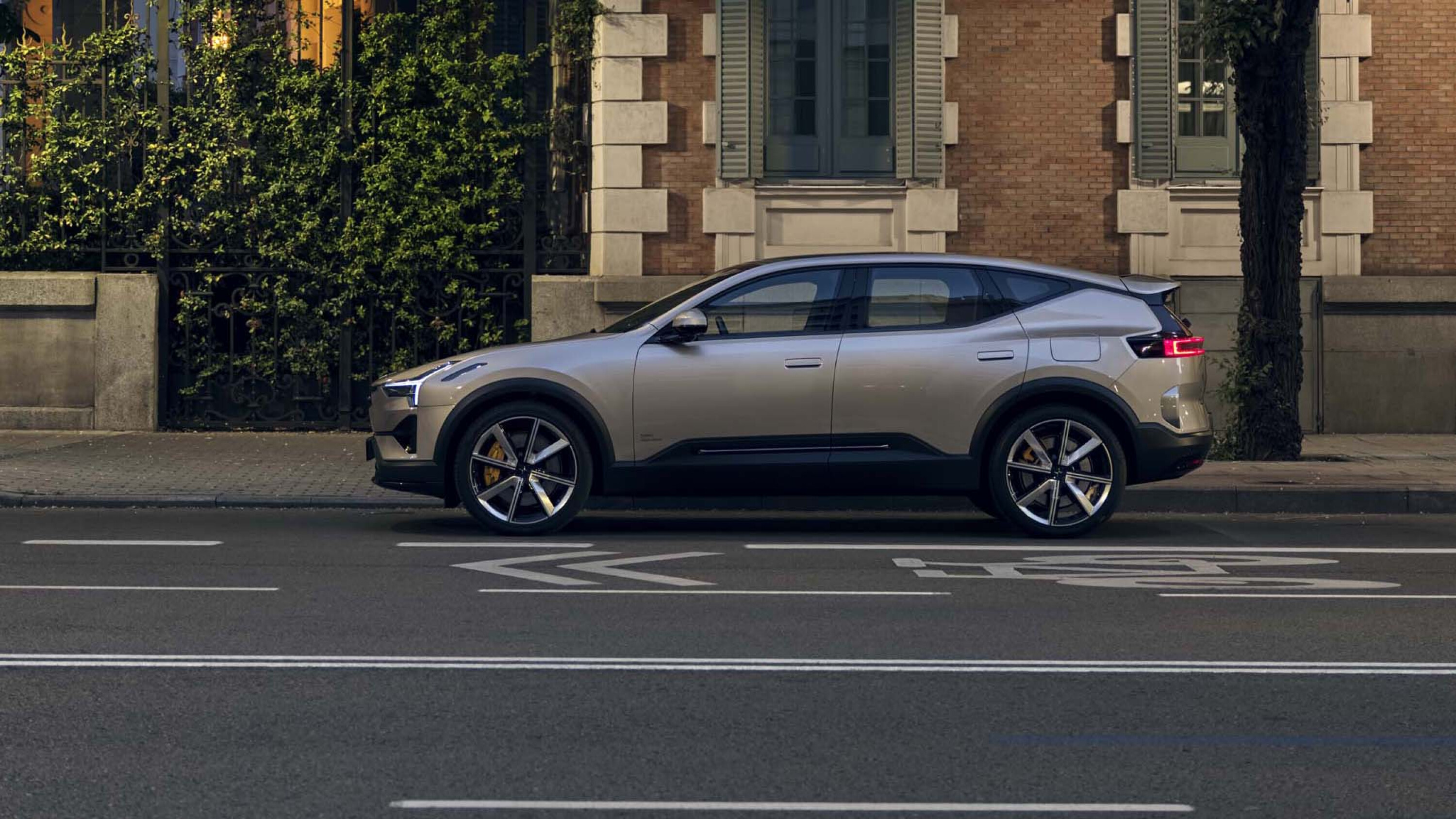
1
JUMP AHEAD
- Is the 2024 Polestar 3 worth my attention?
- What about inside?
- What powers the Polestar 3?
- How does it drive?
- Is it worth waiting for the 2024 Polestar 3?
Is the 2024 Polestar 3 worth my attention?
Built in both Chengdu, China and South Carolina in the US, Polestar 3 shares its all-new electric-vehicle platform – dubbed ‘SPA2’ – with Volvo’s forthcoming seven-seat EX90 large electric SUV.
And given that Volvo has been handed the lucrative breeder brief with its SUV, Polestar has been gifted greater stylistic flexibility with the design of its five-seat 3.
Outside, the front is predictably bluff, with its embedded sensors and radars in the flat-panelled ‘grille-of-sorts’.
1
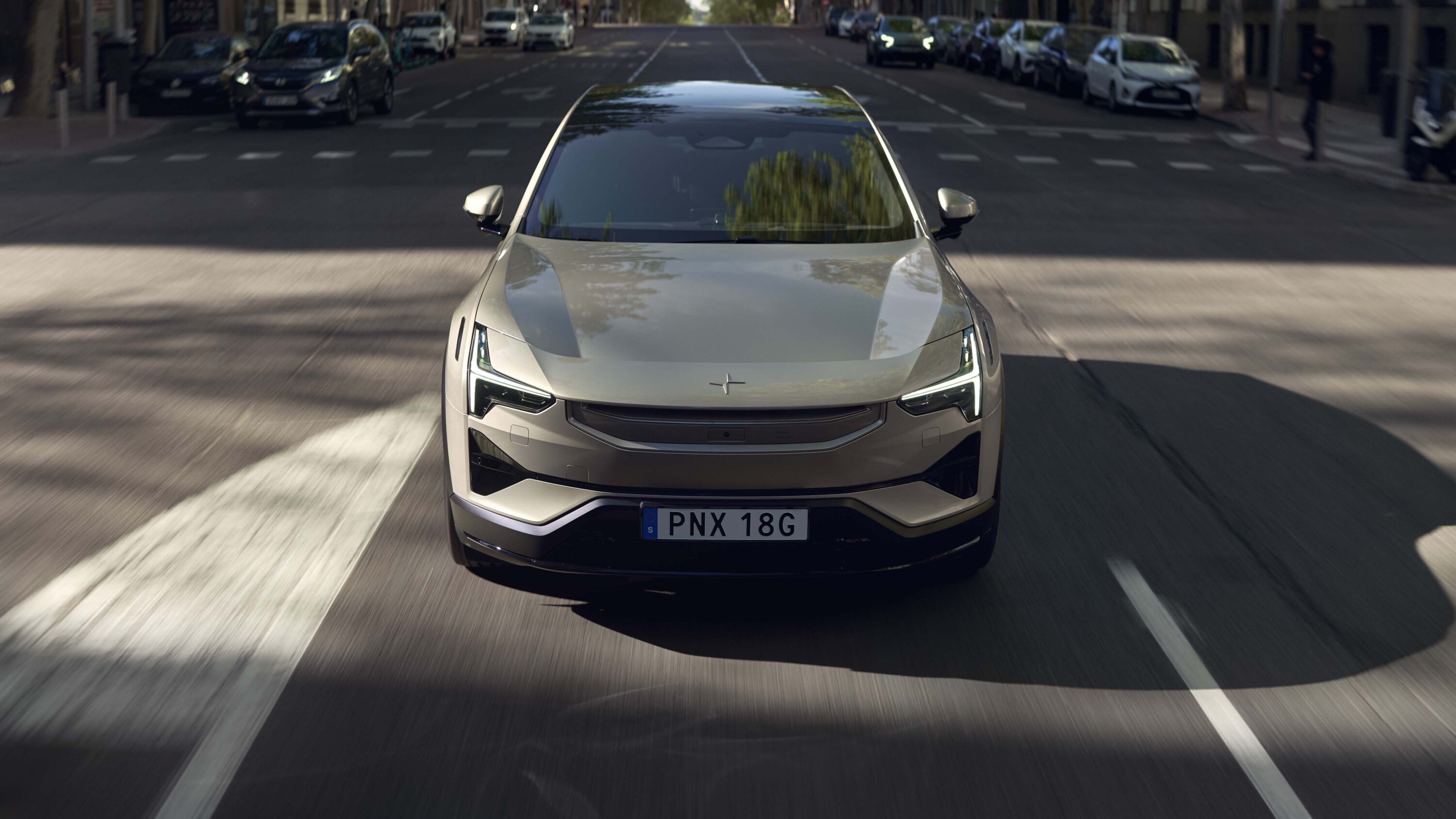
The Polestar 3 appears considered, tasteful and handsome
The Polestar bonnet logo (that looks like two boomerangs, or Citroen’s double-chevrons, were tossed in the air and landed back-to-back) has a lovely, shadowy night-time glow, while the gorgeous rear tail-lights form an elegant band that spans the tail width, then geometrically hook back on themselves.
From virtually any angle, the Polestar 3 appears considered, tasteful and handsome, as well as strikingly individual – especially from behind.
Unashamedly sporty, nice and low (for an SUV), with a sleek roofline and a hip-tastic rear end with broad, boxed haunches, its tapered glasshouse appears peripherally inspired by the classic Volvo P1800ES of the early-’70s … or is that simply us car tragics spotting a little bit of everything in everything?
Either way, visually, it’s a triumph.
1
What about inside?
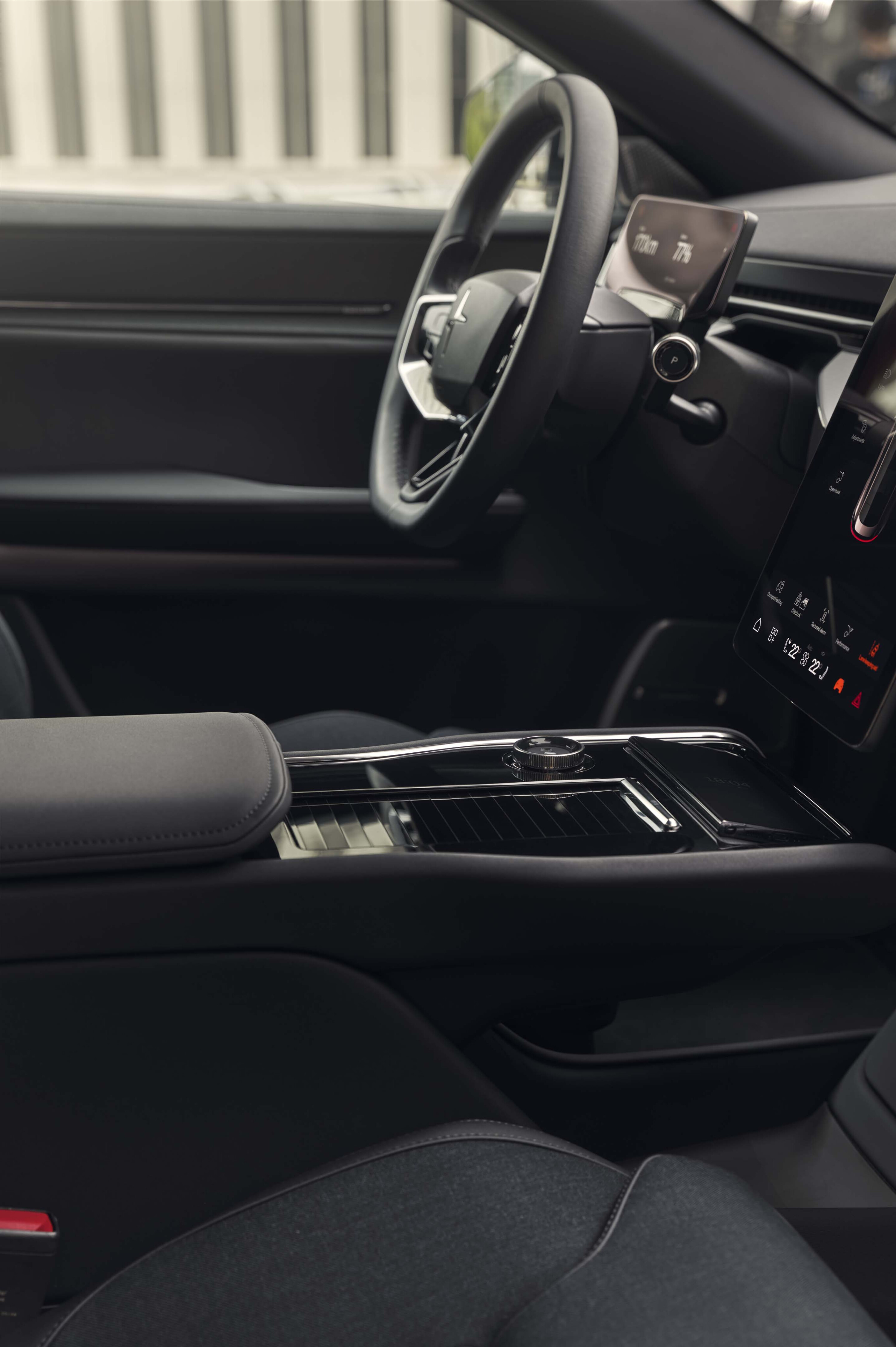
Inside, that impression continues. Riding on a lengthy 2985mm wheelbase (that’s, intriguingly, 14mm shorter than the smaller Polestar 4’s!), the Polestar 3’s interior space is seriously vast – doing a great impression of a lounge room on wheels, like those tremendous full-size American sedans of the ’60s.
It may not be pillarless but there’s loads of glass to open up the Polestar’s cabin – including a standard full-glass roof – and by scalloping out the B-pillar trims, the excellent (Volvo-sourced) front seats seem to sit slightly inboard of the body structure, making the interior feel even more like a cinema space than a car.
The premium 25-speaker Bowers & Wilkins sound system with Dolby Atmos is the icing on the cake there, with truly mind-blowing sound clarity and staging, while the Polestar 3’s lounge-like rear bench combines with a perfectly flat floor and optional padded pillows (in the same upholstery as the seats) to truly make rear occupants feel at home.
1
The overall aesthetic is similar to the Polestar 4’s, meaning clearly inspired by the Scandinavian minimalism of contemporary Volvos, but the Polestar 3 feels much more luxe – as you’d hope for its $50K premium over a Polestar 4.
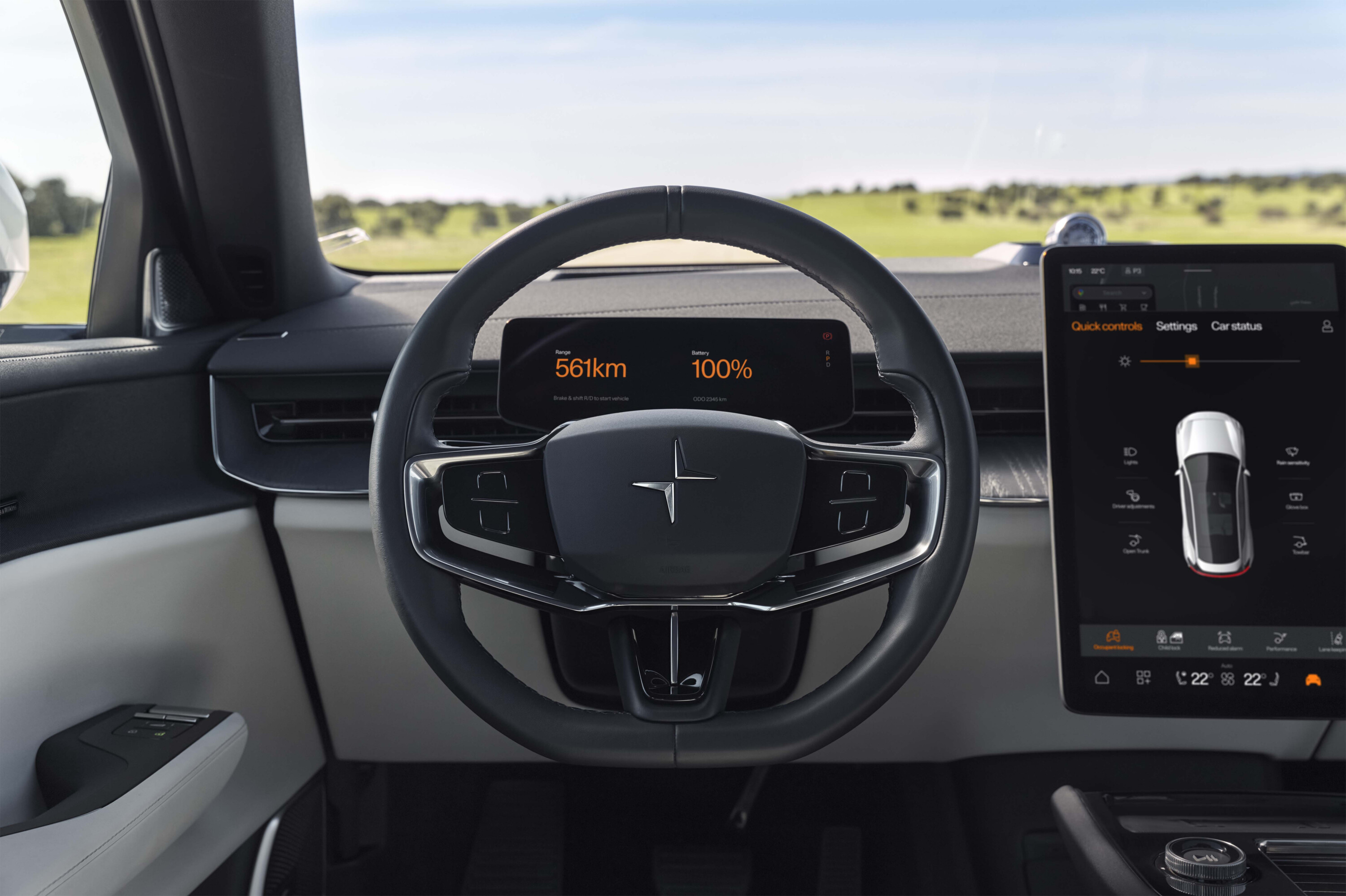
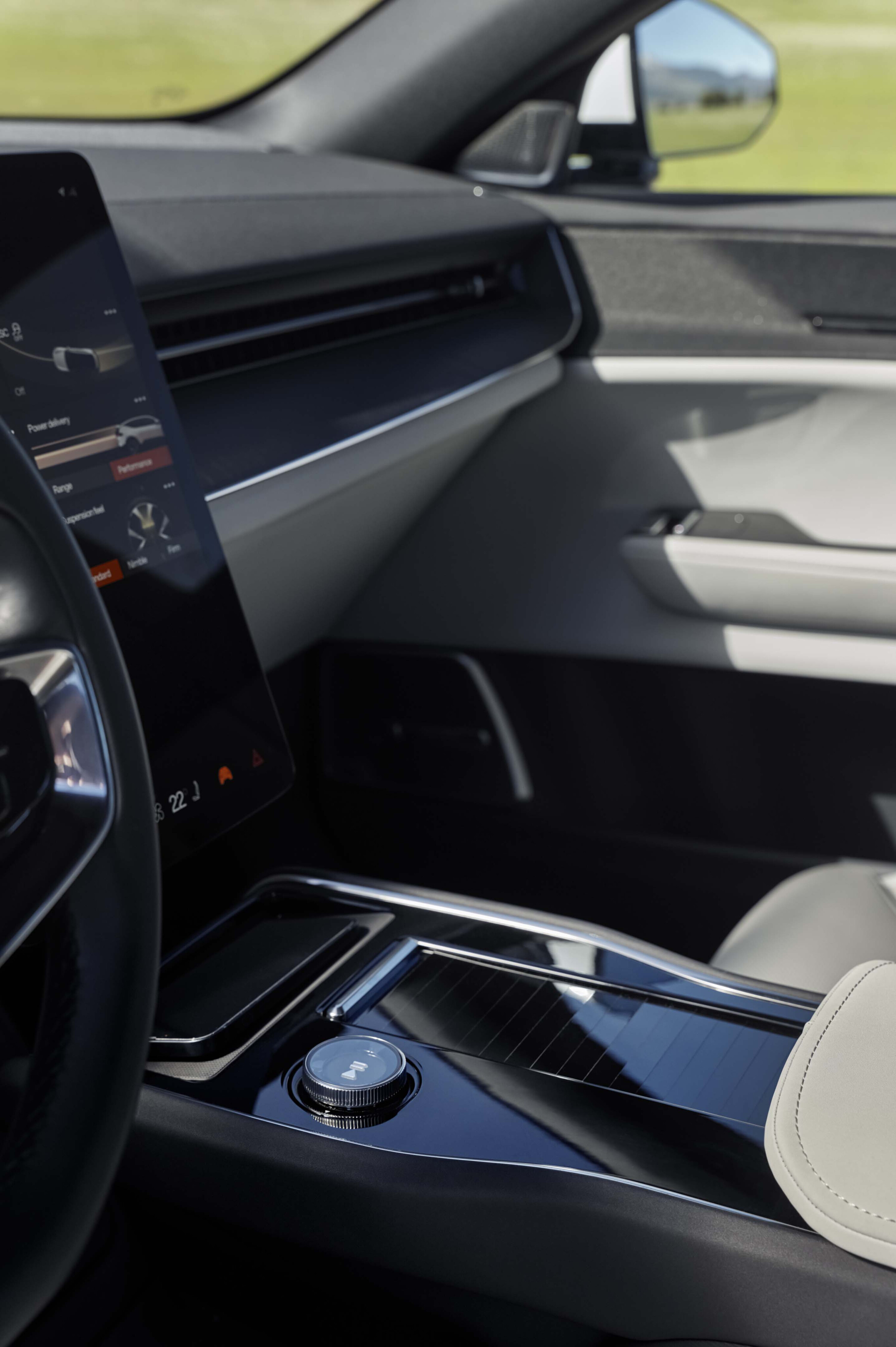
There’s a material-upholstered dashboard, four different interior trim treatments – all of them beautifully tactile – and a general aura of expense that perfectly suits its price and target audience. And while its 14.5-inch portrait touchscreen does require some familiarity to operate effortlessly, its in-built features and lovely ‘Unica 77’ typography exude class.
Worth noting are the Polestar 3’s interior door releases. They’re flush metal handles that lift up from the front end of the door armrests – just like those on a 1971-80 HQ-HZ Holden – and are arguably the best example of a retro revival for good, not evil.
1
What powers the Polestar 3?
Underneath, the Polestar is about as retro as the third millennium. All launch variants feature dual electric motors, all-wheel drive with rear-motor disconnect, and dual-clutch torque vectoring on the rear axle that can send up to 100 percent of drive to either rear wheel.
The 400-volt electrical architecture consists of a 111kWh battery that’s capable of up to 250kW DC charging (10-80 percent charge time is 30 minutes), while the suspension hardware features adaptive dual-chamber air springs and adaptive damping – capable of being adjusted between Standard, Nimble and Firm settings, and across a 60mm range for height.
A 180kW/420Nm front electric motor combines with a 200kW/490Nm rear electric motor for output totals of 360kW and 840Nm in the Long Range AWD, and 380kW and 910Nm in the Performance Pack model (which was the car we drove).
1
Despite weighing nearly 2500kg, Polestar says the Long Range is capable of 0-100km/h in 5.0sec while the Performance Pack trims that to 4.7sec.
The Long Range also has, er, longer range with a claimed 628km according to WLTP, while the Performance Pack trims that to 561km WLTP.
According to our launch-route test average of 24.8kWh/100km, however, the Polestar 3 Performance Pack’s enthusiastic real-world range translates to around 430km.
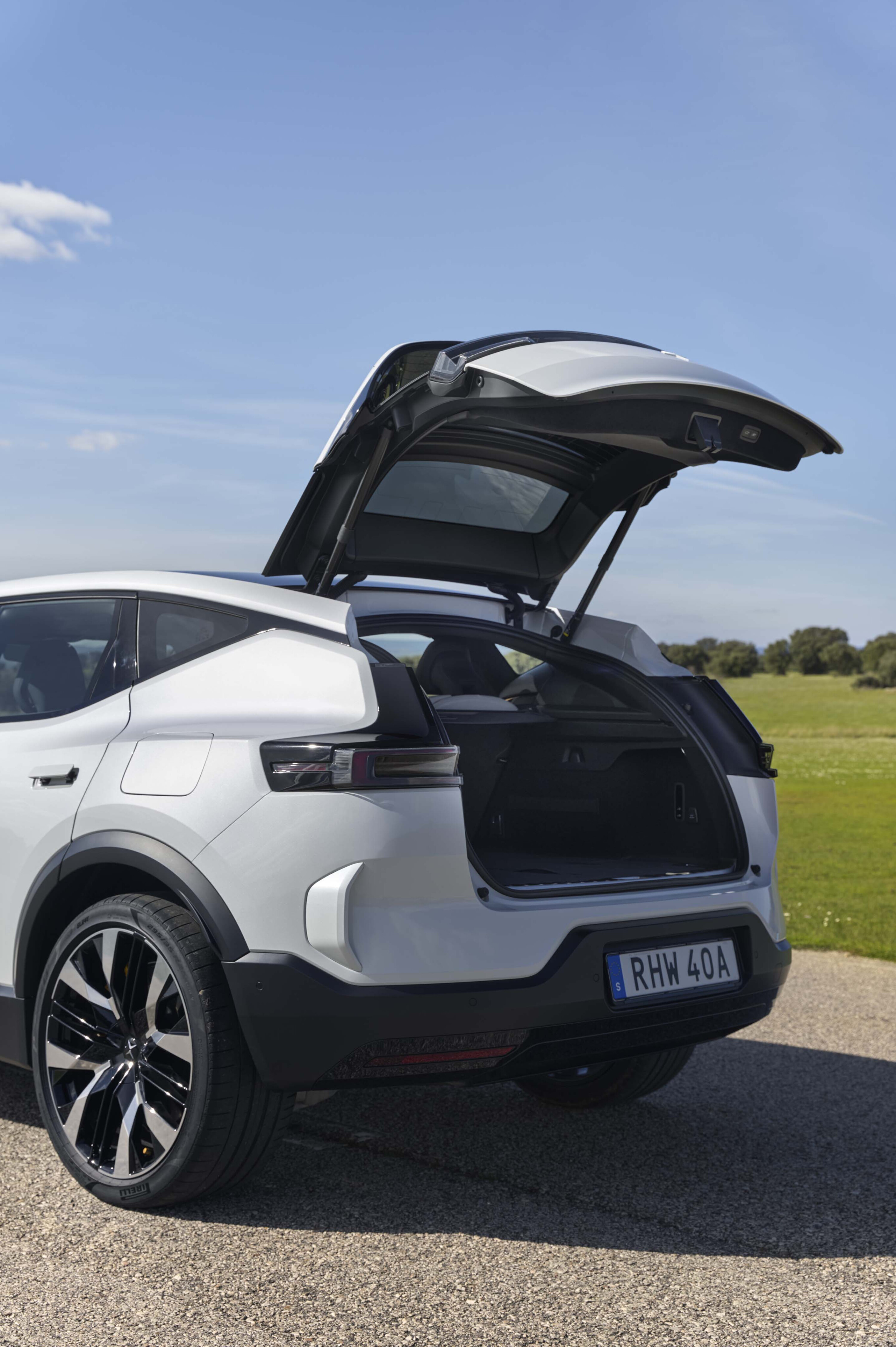
1
How does it drive?
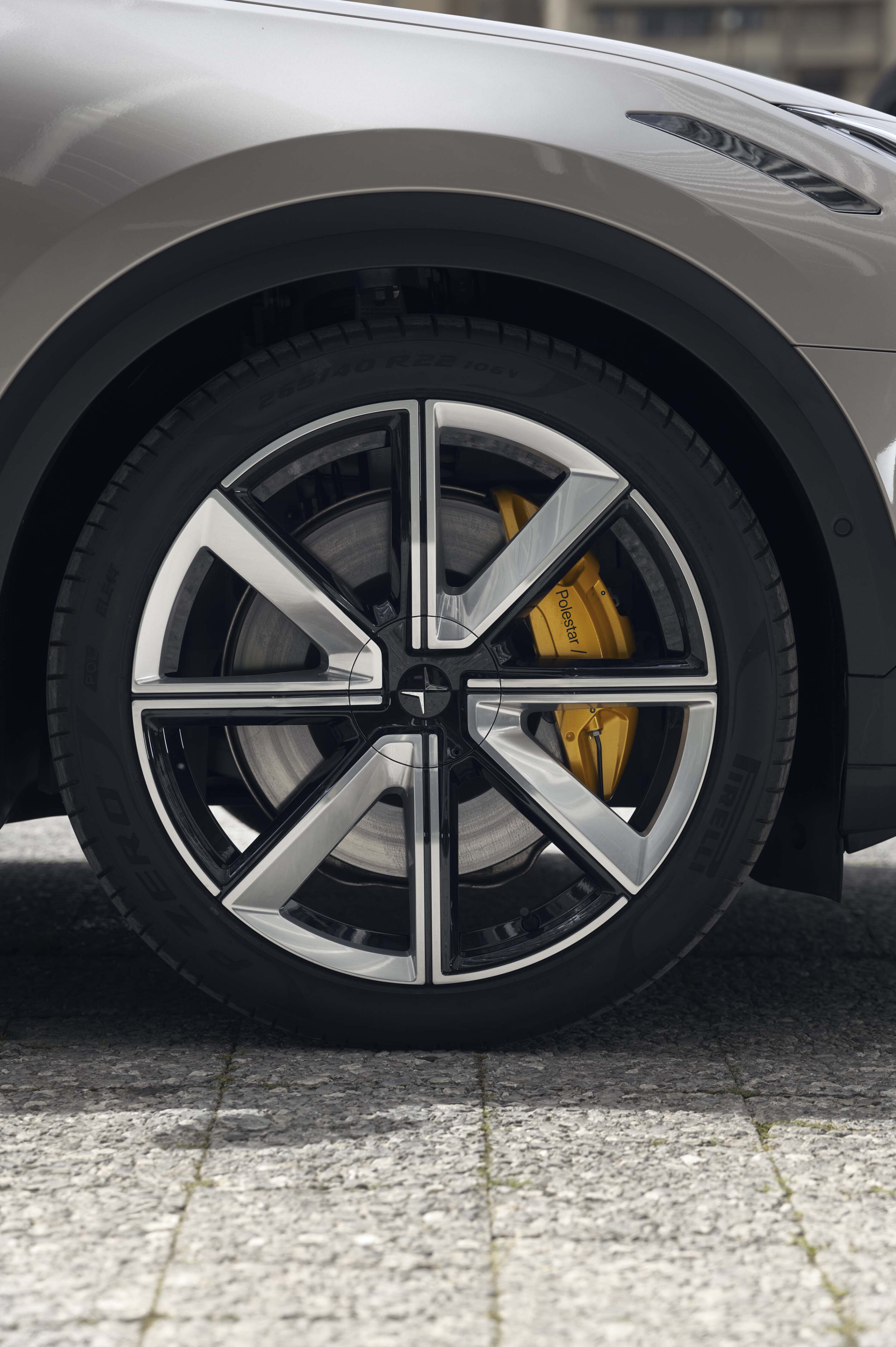
Wearing huge Brembo brake calipers (painted gold on the Launch Edition and Performance Pack) and guard-filling 22-inch alloys clad in massive 295/35R22 Pirellis at the rear, the Polestar 3 combines performance and sophistication exquisitely.
It looks quite tough, but it’s also impressively refined and rides surprisingly well, given the vastness of its rolling stock.
On Spain’s fast-moving motorways, the Polestar 3 defines driver confidence. It combines a broad stance on the road with delightful fluidity, crisply and effortlessly threading its way through some quite challenging freeway corners at speeds approaching 150km/h, without ever raising an eyebrow (unless Spain’s policia were secretly watching!).
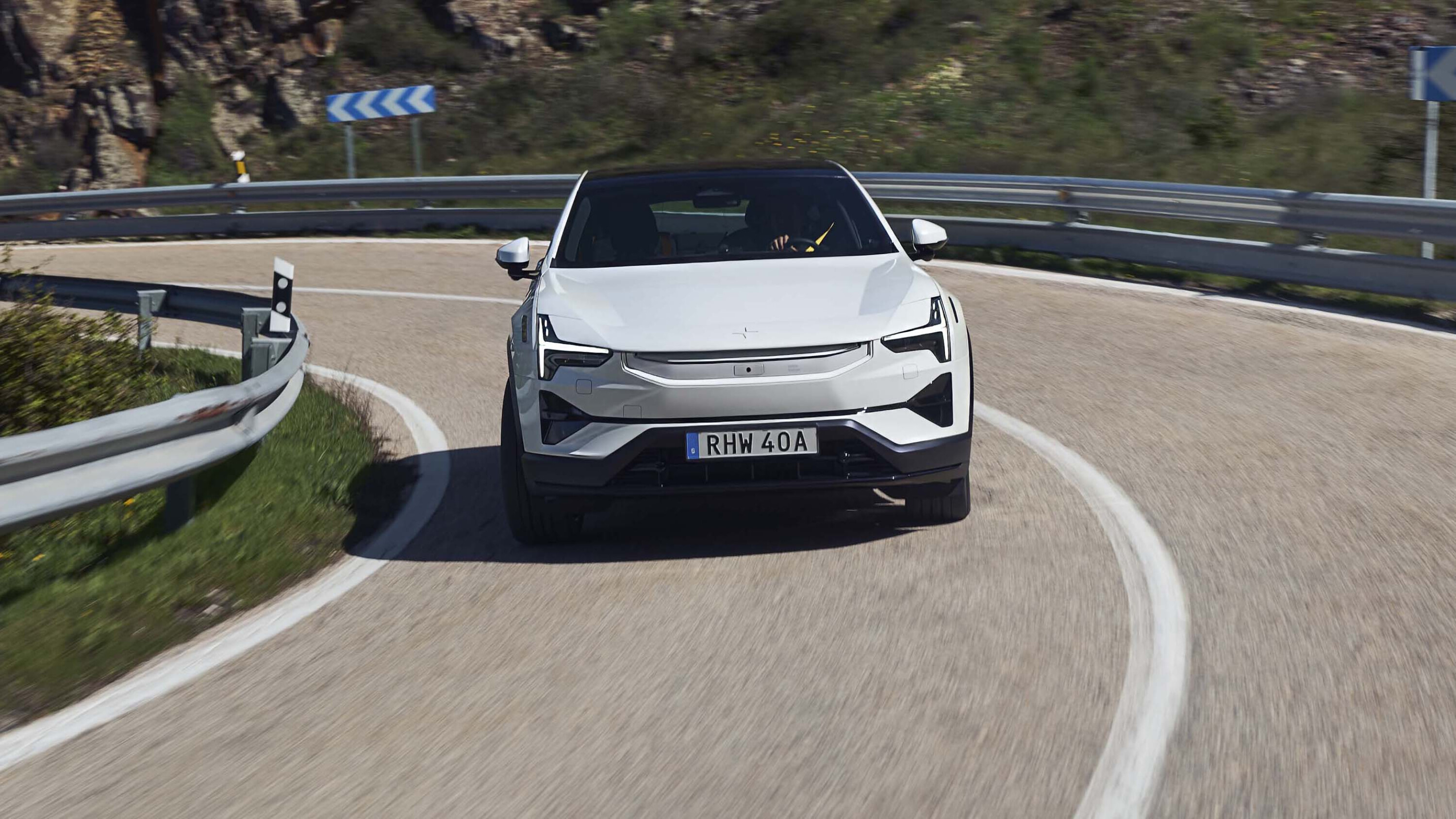
1
Up in the hills, even in a vehicle measuring 4900mm long and 1968mm wide, it used its relatively low centre of gravity and 50:50 weight distribution to further demonstrate this polished level of poise.
For such a hefty vehicle, it feels surprisingly lithe, with the Borg-Warner dual-clutch rear diff employing mechanical torque vectoring to make the rather digital Polestar 3 feel satisfyingly natural in its dynamic rhythm, handling balance and corner-exit control.
As for performance, the 3’s outright numbers aren’t enough to stop the presses, and we can only be thankful for that.
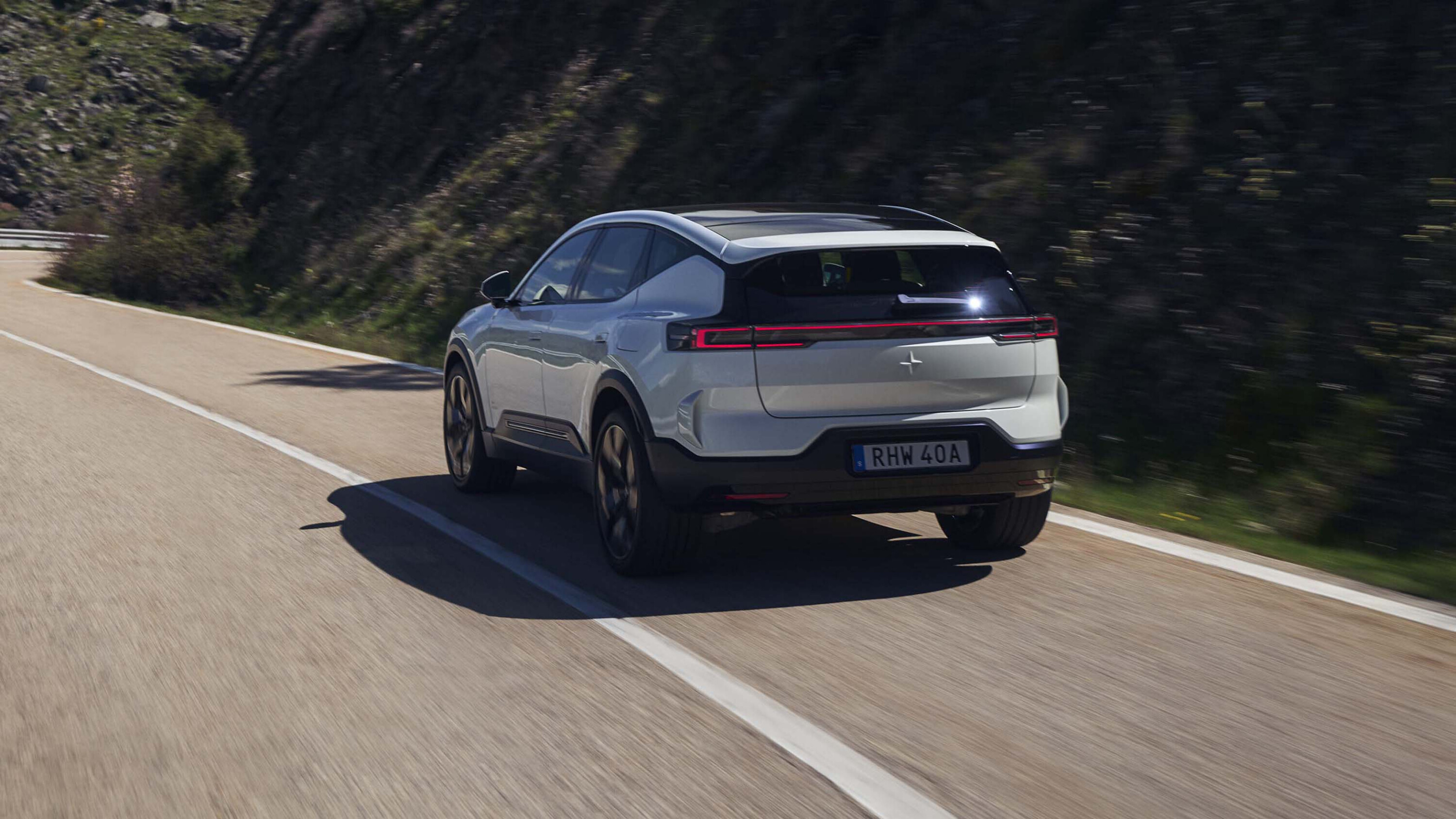
1
This coupe-ish SUV doesn’t need any more acceleration than it has, and there’s still plenty on offer at three-figure speeds – especially in glacial Australia.
What’s more impressive is the finesse it displays in acquiring speed, maintaining speed, and washing off speed – including its full regen-braking mode, which isn’t as severe as Hyundai–Kia’s i-Pedal.
Perhaps the single-motor, rear-drive version due to arrive in Australia in early 2025 will provide a sweeter, more delicate drive, but considering that no Performance Pack Polestar has even felt as polished as this, perhaps the all-guns-blazing hero variant is the one to go for after all.
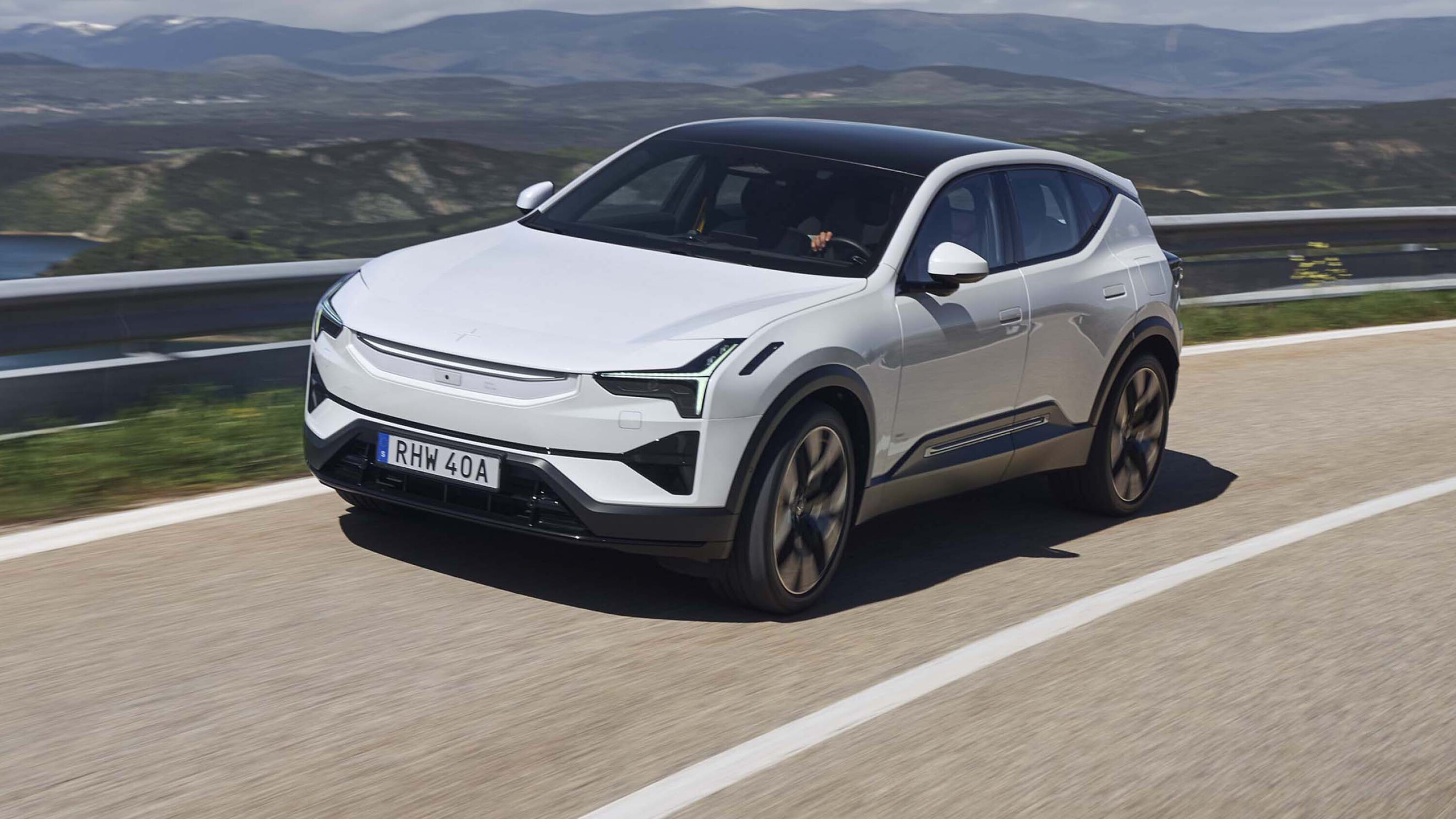
1
Is it worth waiting for the 2024 Polestar 3?
With Australian deliveries due to begin at the end of August for what is an incredibly well-equipped vehicle – both from a luxury and niceties perspective, and in terms of active-safety – the Polestar 3 seems like good value compared to the rivals Polestar is quoting.
Given that even a top-spec Kia EV9 – admittedly a seven-seater – costs $121,000 before on-roads, the $133K five-seat Polestar 3 is brimming with appeal. It looks special, feels special and sounds special – both in terms of refinement and audio-quality.
And when lined up against its true competitive equivalents (such as BMW’s $185K iX xDrive 50 or Mercedes-Benz’s $165K EQE 500 SUV), the Polestar 3 appears a relative bargain. Especially if looking catwalk ready is high on your list of priorities.
MORE
Everything Polestar
MORE
Electric SUVs
| 2024 Polestar 3 Performance Pack specifications | |
|---|---|
| Price | $141,900 (before on-road costs) |
| DRIVETRAIN | |
| Electric motors | Two permanent magnet synchronous |
| Battery | 111kWh nickel-manganese-cobalt |
| Drive | All-wheel drive |
| System power | 380kW |
| System torque | 910Nm |
| Transmission | 1-speed reduction |
| CHASSIS | |
| L/W/H | 4900/1968/1614mm |
| Wheelbase | 2985mm |
| Track (f/r) | 1675/1669mm |
| Weight | 2584-2670kg |
| Boot | 484 litres + 32L front |
| Range | 561km (WLTP) |
| Efficiency | 24.8kWh/100km (tested) |
| Suspension front | double A-arms, air springs, adaptive dampers, anti-roll bar |
| Suspention rear | multi-links, air springs, adaptive dampers, anti-roll bar |
| Steering | Electric power-assisted, 11.8m turning circle |
| Front brakes | Ventilated disc (400mm) |
| Rear brakes | Ventilated disc (390mm) |
| Tyres | Pirelli P Zero |
| Tyre size | 265/40R22 (f), 295/35R22 (r) |
| SAFETY | |
| NCAP rating | Unrated |
| 0-100km/h | 4.7sec (claimed) |
The previous four generations of Hyundai Santa Fe shared one thing in common. They were all very easy to damn with faint praise. Really not bad. There or thereabouts. A lot of metal for your money. That sort of thing.
At no point did somebody dream of owning a Hyundai Santa Fe. It achieved popularity almost by a slow, creeping type of inoffensive overall competence.
You discounted everything else and after that process of elimination, the Santa Fe was the answer you arrived at to fit the family transport brief. With the fifth-generation version, that’s about to change. The Santa Fe has developed a persona all of its own.
Before we go any further, you might well have come to a conclusion on whether that’s a good or bad thing.
The styling – especially around the rear end – does have the capacity to divide opinion. Spend a little more time with the Santa Fe and it tends to become a non-issue. You’ll love this car for what it can do and how it will fit in with your family’s needs without succumbing to lowest-common-denominator blandness.
Hyundai’s a company on a heck of a roll at the moment, and the Santa Fe reflects that swagger.
1
JUMP AHEAD
- How much is it and what do you get?
- How do rivals compare on value?
- What’s it like to drive?
- Interior comfort, space and storage
- How much fuel does the Hyundai Santa Fe 1.6T-GDi use?
- How safe is the Santa Fe?
- VERDICT
1
How much is it and what do you get?
On the face of it, the new Santa Fe looks to charge you more and deliver you less, which seems very 2024.
Whereas you could purchase the old car with a grunty 3.5-litre 200kW V6 for a sniff over $46k, this time round the range starts at $55,500 and for that you get a 172kW 1.6-litre four under the bonnet. It seems for all the world like the most textbook case study in shrinkflation.
That buys you the entry level front-drive car in the three tier range, and an all-wheel drive version is on offer for $58,500. The Elite and the Calligraphy models that sit above are all-wheel drive only and retail at $65,000 and $75,000 respectively, so there are some fairly hefty steps up through the range for models that are ostensibly mechanically similar.
1
Hyundai claims that buyers aren’t asking for diesel engines and chunky towing abilities in this class. What they want are hybrids and their blend of refinement and modest fuel bills.
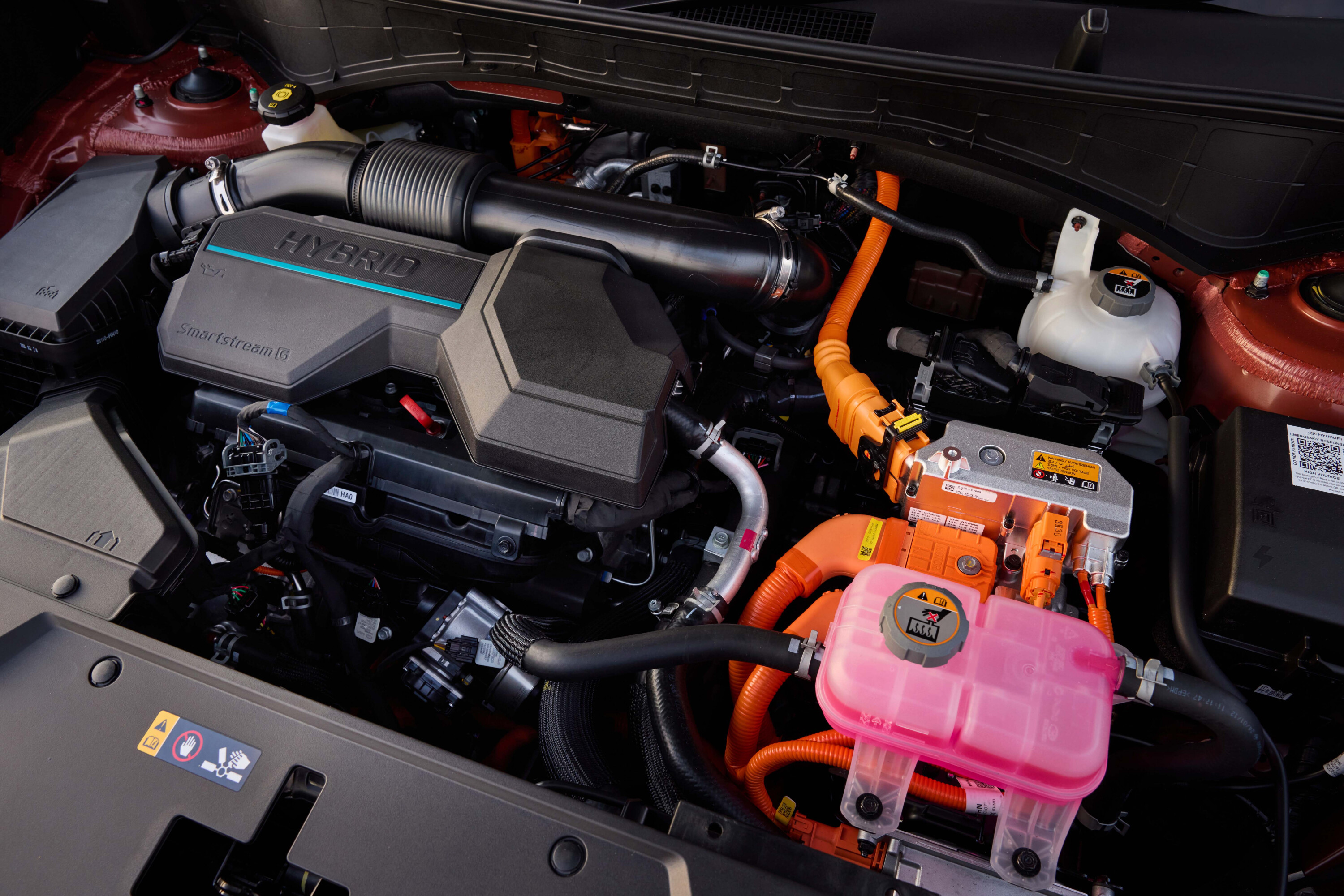
On that score, Hyundai has certainly delivered. A 2.5-litre non-hybrid version will be along later in the year, but for the time being, the 1.6T-GDI powerplant is the sole engine being imported. Thankfully it’s a good ‘un. But before we get into the oily bits in any further detail, let’s take a step back.
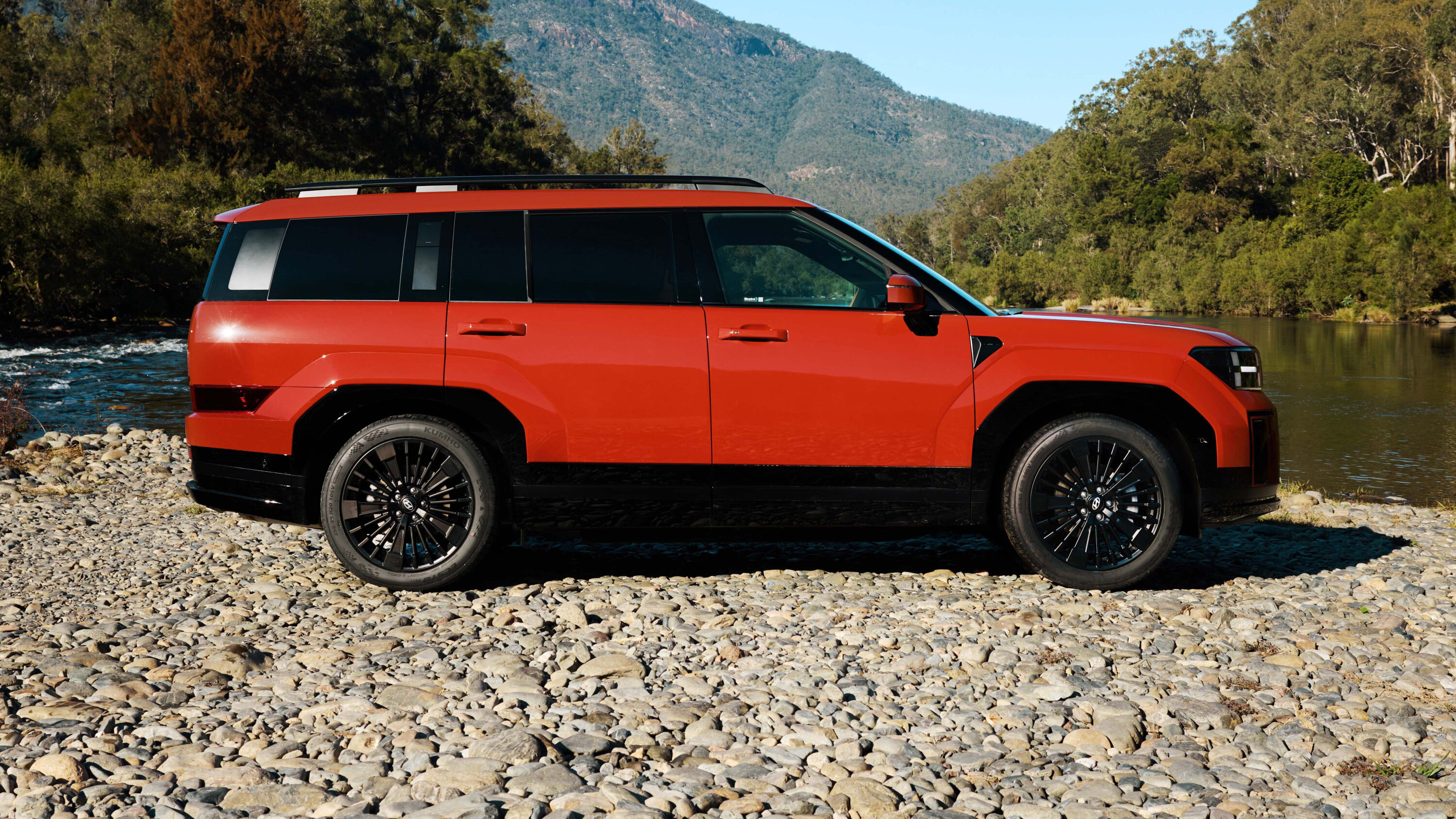
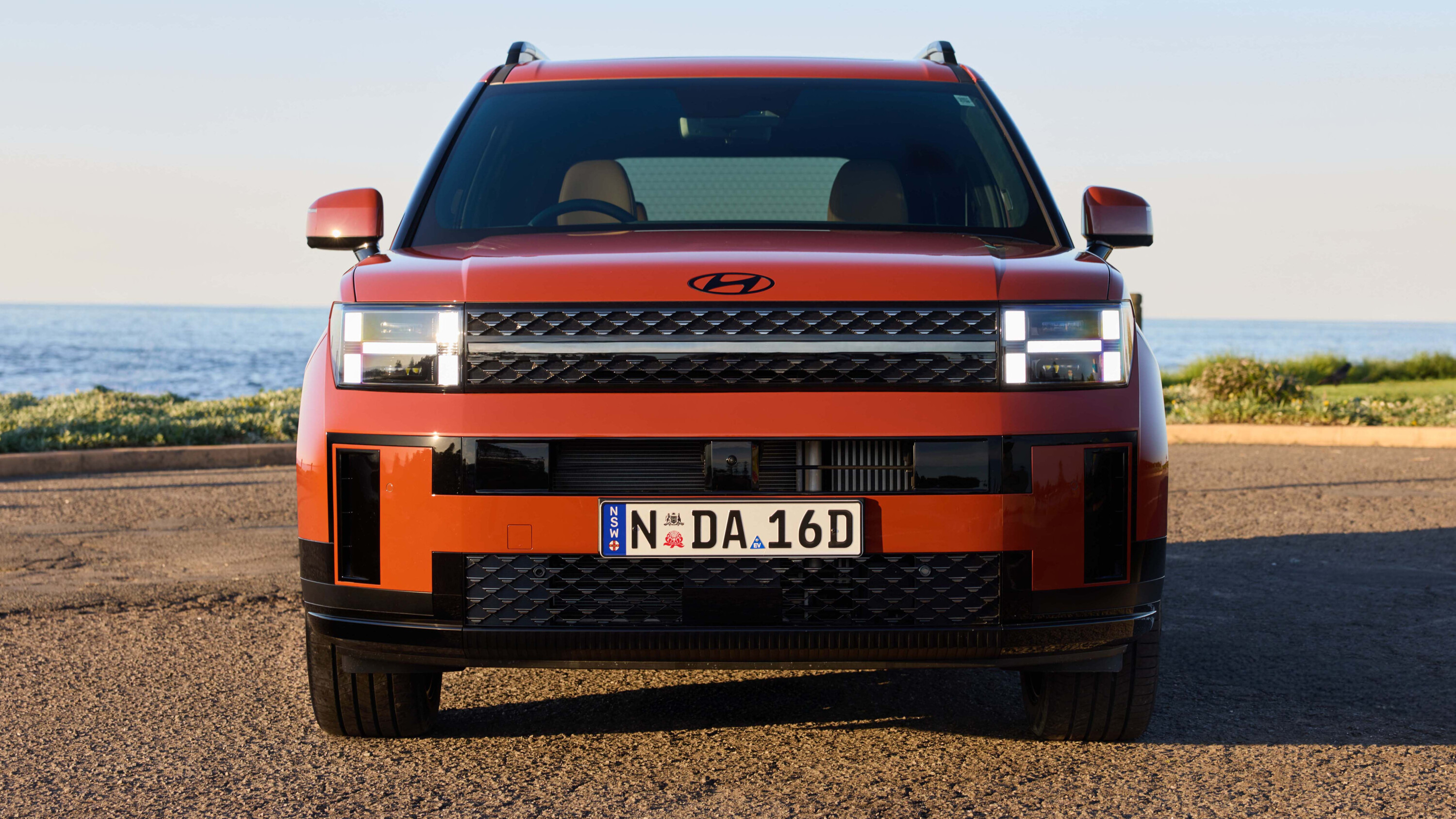
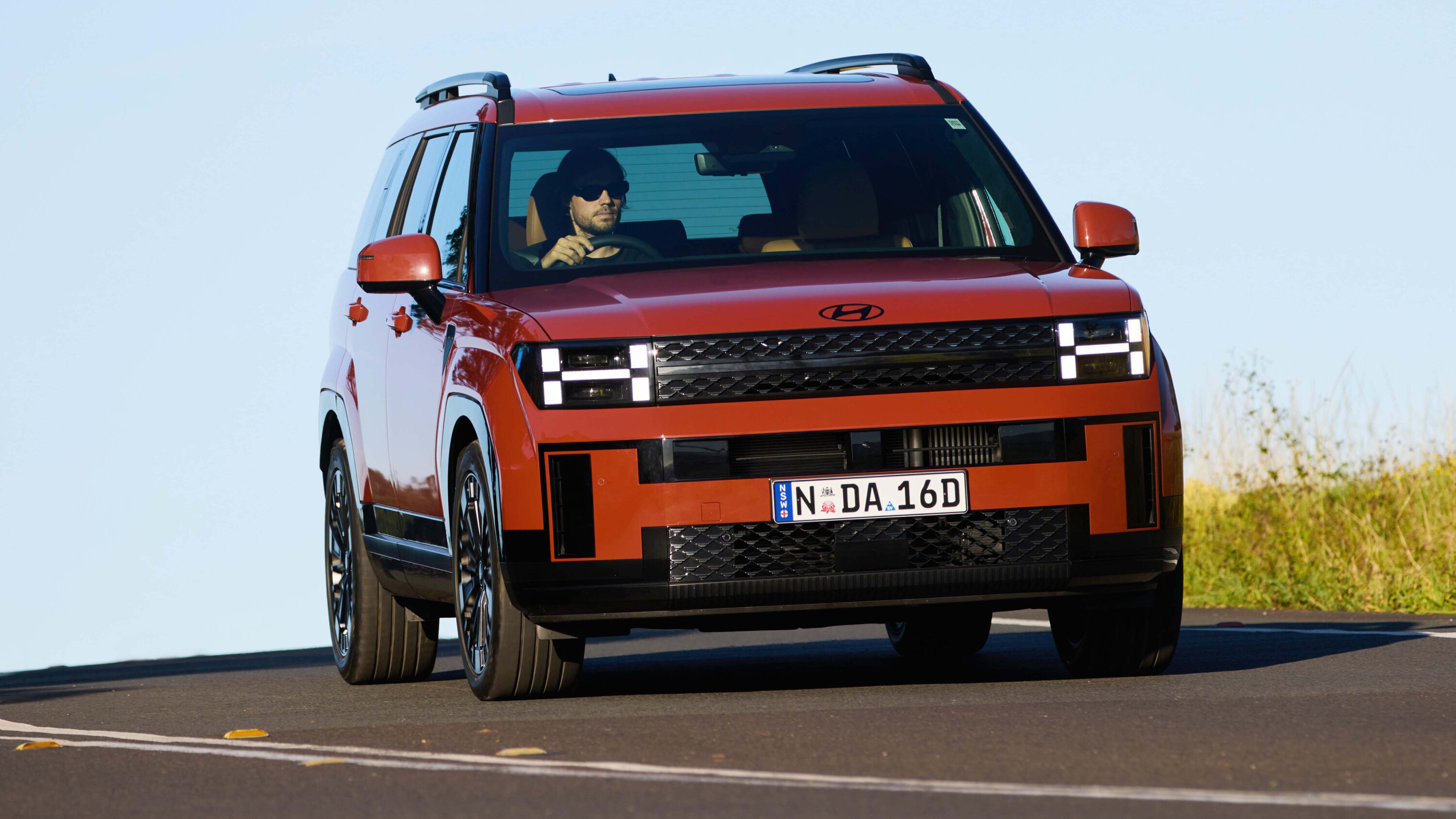
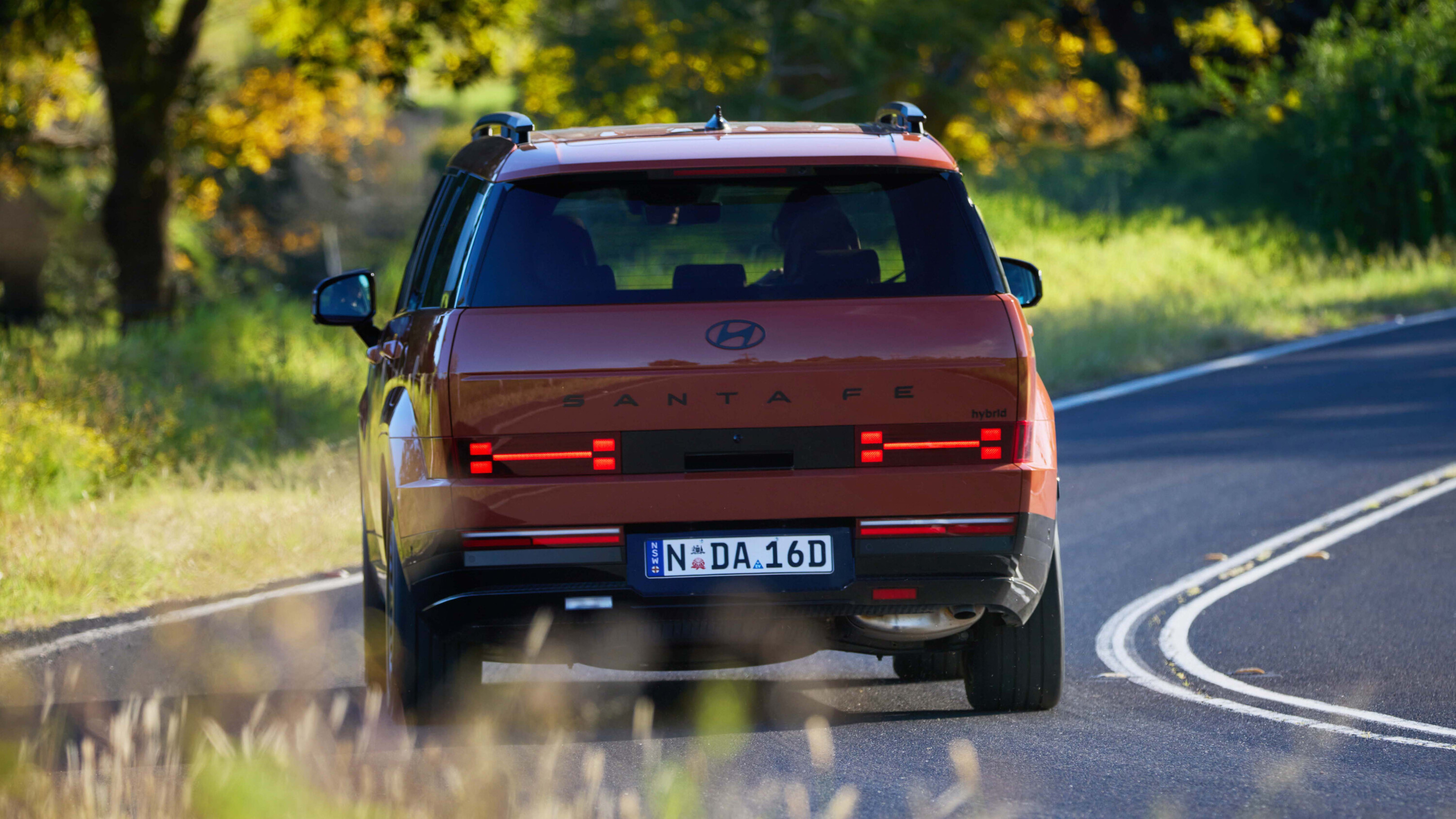
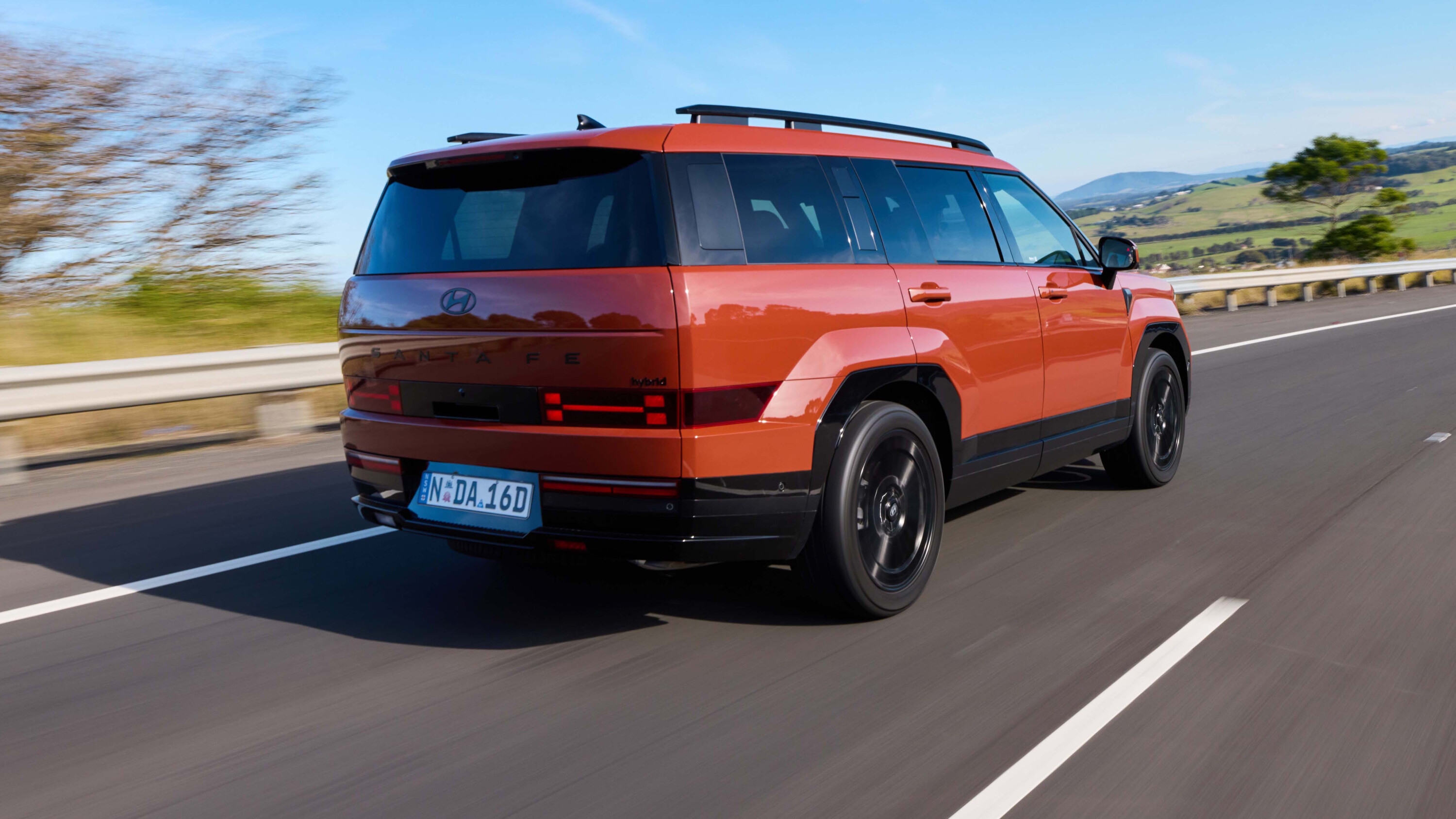
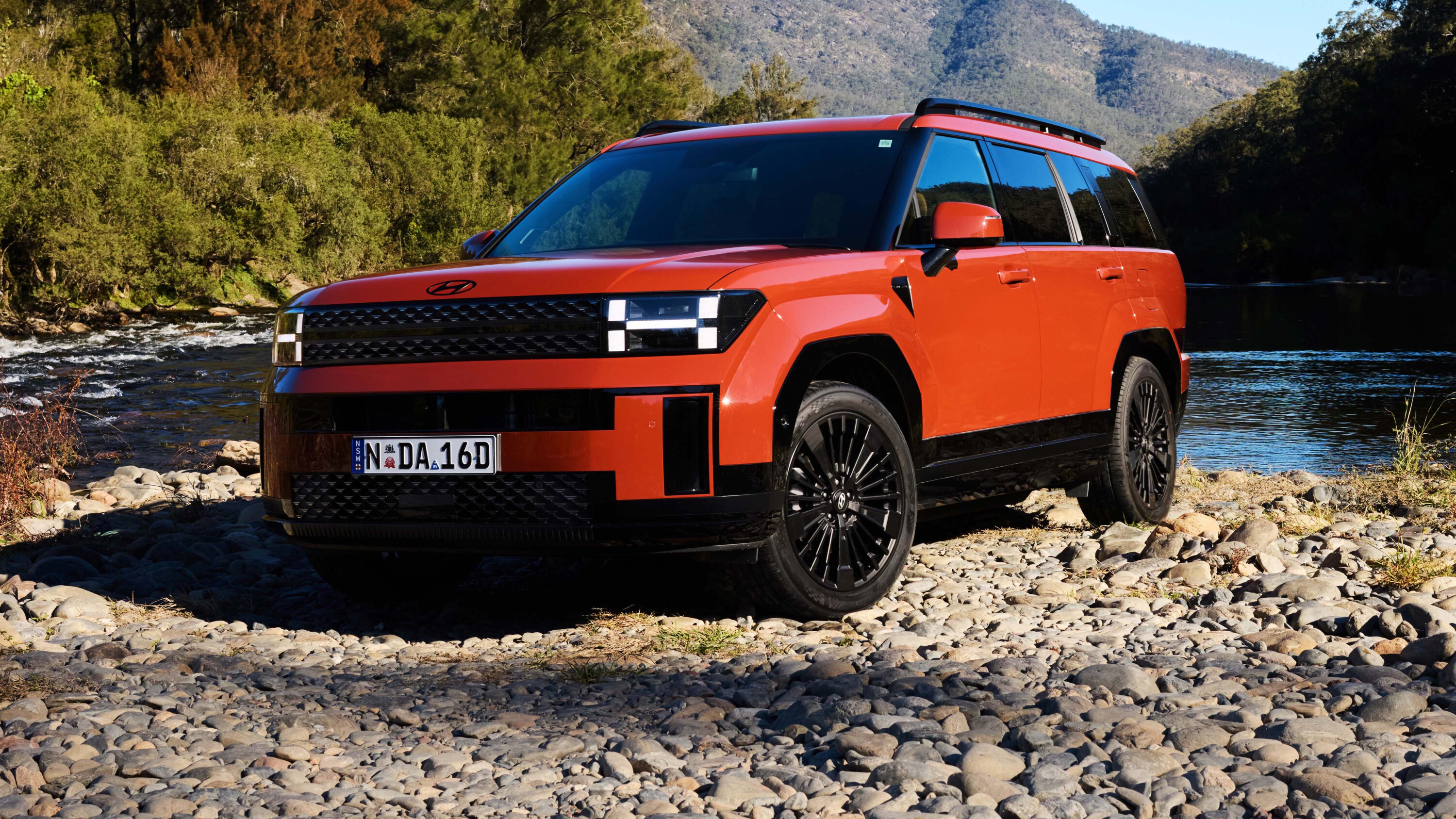
The Minecraft design language is a radical departure from the smooth pebble forms of the previous Santa Fe and while the front end is distinctive and attractive (check the different grille treatments for the base and Elite versions versus the ritzy Calligraphy trim), the rear end initially looks oddly heavy, that low-mounted strip of tail lights giving it a lugubrious effect.
1
I wonder how well resolved it would look with vertical strip tail lights. Maybe a little too much like a Land Rover product and, let’s face it, nobody wants a spittle-flecked phone call from Gerry McGovern.
There are already some fairly Gaydon-like cues, whether it’s the low-profile full width tailgate badging, the floating glasshouse and the brutal cubism of the new Defender. If you were to delete the badging and ask a sample set of people who it was made by, perhaps Toyota and Ford might also float to the surface.
While we can argue back and forth on whether it’s a handsome car (for my money, it is), there’s no arguing with the tape measure. This shows that, at 4785mm long, the Santa Fe has grown by 45mm in length.
1
The width remains identical, but there’s an extra 60mm of height and, importantly for a three-row vehicle, wheelbase has extended by another 50mm.
Compared to the even larger Palisade, second row legroom for the Santa Fe is 1055mm where the Palisade measures 1077mm, but the Santa Fe offers 11mm more headroom back there.
Hyundai offers a palette of 10 colours for the Santa Fe. Only two (Creamy White mica and Terracotta Orange solid) are zero cost but the option prices of the premium metallic and mica paints are a modest $695 uptick and the matte finishes (Creamy White and Earthy Brass) are $1000 extra, which is still quite reasonable compared to many other manufacturers.
1
How do rivals compare on value?
Prices are still a nick above that of our favourite in this class, the Kia Sorento, but it’s worth bearing in mind that this is for a hybrid version of the Santa Fe, whereas, to date, there are no hybrid offerings of the Kia family hauler.
The 206kW 2.5-litre Santa Fe, which arrives later this year, will be a more like-for-like comparison for Sorento pricing.
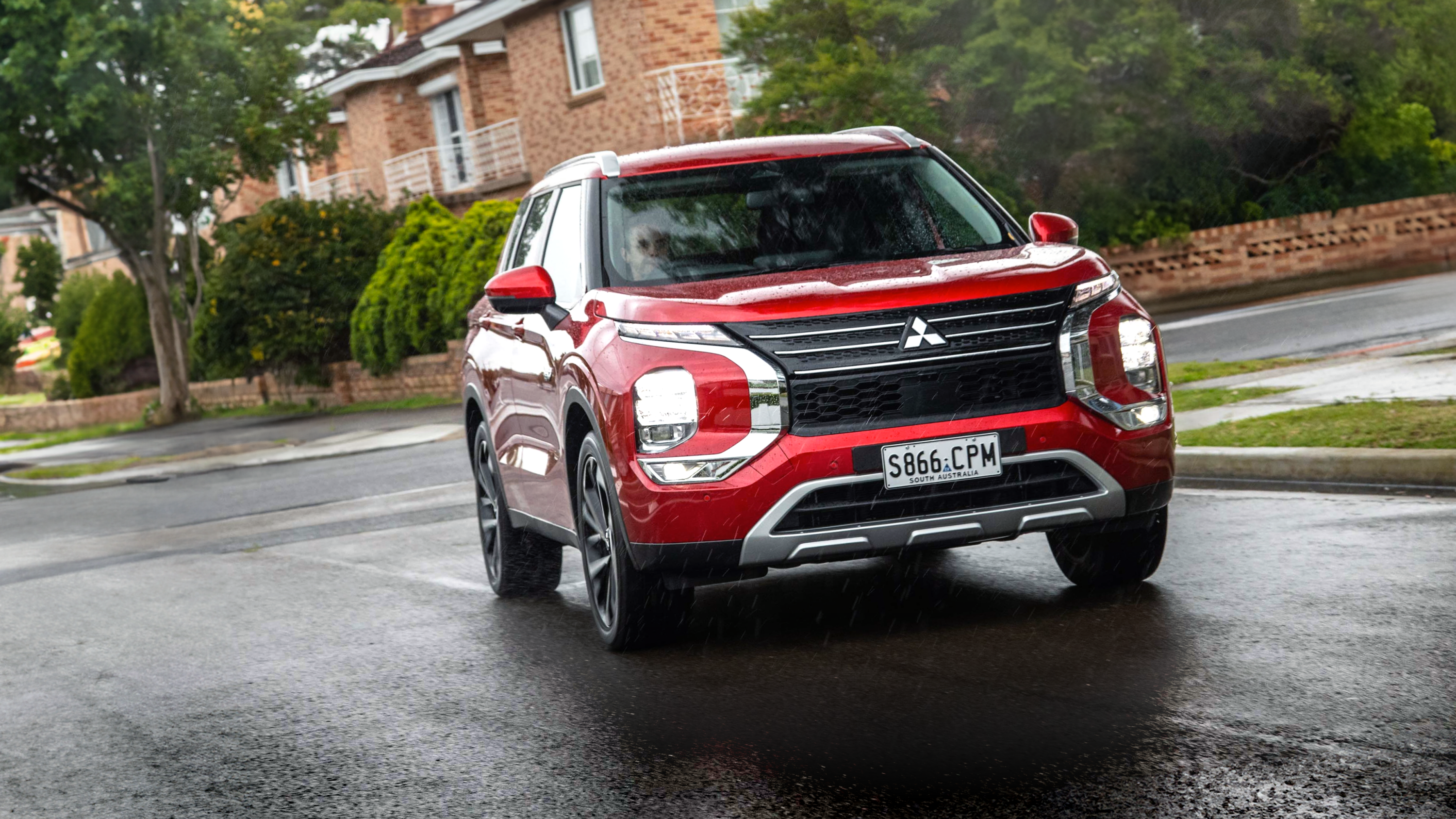
Otherwise, the Hyundai, at $55k-$75k, looks decent value against the Toyota Kluger hybrid($58k-$80K), but its most formidable rival on the value front is likely to be the Mitsubishi Outlander PHEV, which offers the attraction of plug-in hybrid versatility and costs between $64K and $72k.
1
What’s it like to drive?
Switch the Santa Fe into its Eco mode for the freeway leg of our journey and it feels a little anaesthetised.
It defaults to 1900rpm on the rev counter whenever possible with a prod of the throttle lifting it rather lethargically to 2500rpm before it deems another upshift is in order. When pressed into action the 1.6-litre engine is surprisingly vocal and there’s a fair bit of road noise transferred into the cabin.
The ride’s not bad, but it’s clear that this isn’t one of those Hyundais that has benefited from some local suspension tuning love. It lets you know what’s going on beneath you. It’s never harsh or terse, but neither does it deliver the sort of pillow-topped ride that some of its better rivals (or, indeed, its stablemates) can deliver.
1
As the roads get twistier, it’s clear that there is some real talent in this chassis. Grip is strong through corners, the Kumho Ecsta PS71 tyres(255/45 R20 all round) serving up plenty of adhesion.
The steering has some welcome heft to it in Sport mode and the Santa Fe is easy to place, offers decent visibility and body control is good. The handover between the regenerative and friction braking is also very good indeed.
Like all current Hyundai products, there are a myriad of maddening warning chimes sounding all the time. Even when the car is travelling at just below the speed limit (checked via a satellite data logger) the four chimes of the overspeed warning will repeatedly sound and it can be distracting to switch that system off when on the move.
1
I’d expected to be thoroughly underwhelmed by an engine this small propelling two tonnes of three-row SUV up the road, but it’s a smart, economical choice that’s more than adequate for the task.
The 1650kg braked towing capacity might not be hugely impressive but vehicles in this class are family cars first and foremost and not heavy-duty leisure haulers.
The six-speed automatic gearbox does a reasonable job of keeping the engine on the boil in Sport mode and, when switched into the correct mode, you can use the wheel-mounted paddle shifters to ping up and down the box if required.
1
The changes aren’t as quick as a dual-clutch but it seems the right transmission for the typical use case of the Santa Fe.
Below 2500rpm, it does suffer some Eco mode lagginess manifested via a doughy-feeling throttle that will only be exacerbated if the vehicle’s heavily loaded, so bear that in mind when planning an overtake.
We didn’t get the chance to head off road, but there are terrain modes to help the all-wheel drive system optimise traction. The ground clearance of 177mm and the road-oriented tyres are likely to prevent too much in the way of adventures off the beaten track, but in case you were interested, the approach, breakover and departure angles are 17.4, 20.9 and 15.3 degrees respectively.
1
- What is a Powertrain or Drivetrain?
- Power vs torque
- Car suspension explained
- Automatic transmissions (‘gearboxes’) explained
- Chassis control systems explained
- Car vs Ute vs SUV: How the vehicle you buy should guide the way you drive
- What is the WLTP emissions and range test?
Interior comfort, space and storage
Here’s a bit of vehicle testing tradition for you. It’s usual to park yourself in the base model first, get a feel for what the honest-to-goodness bare bones model is like first, and then sample the upper-spec versions afterwards.
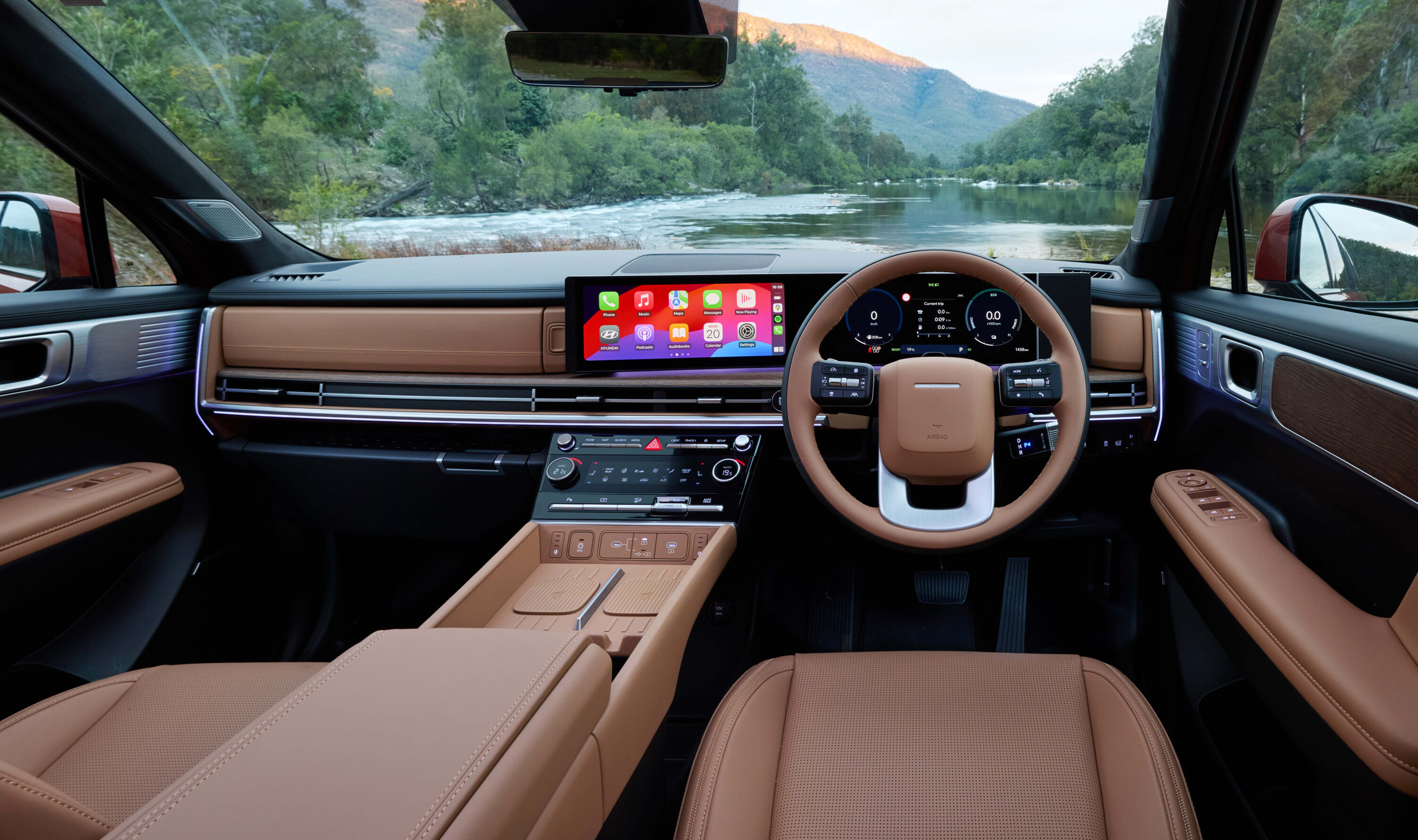
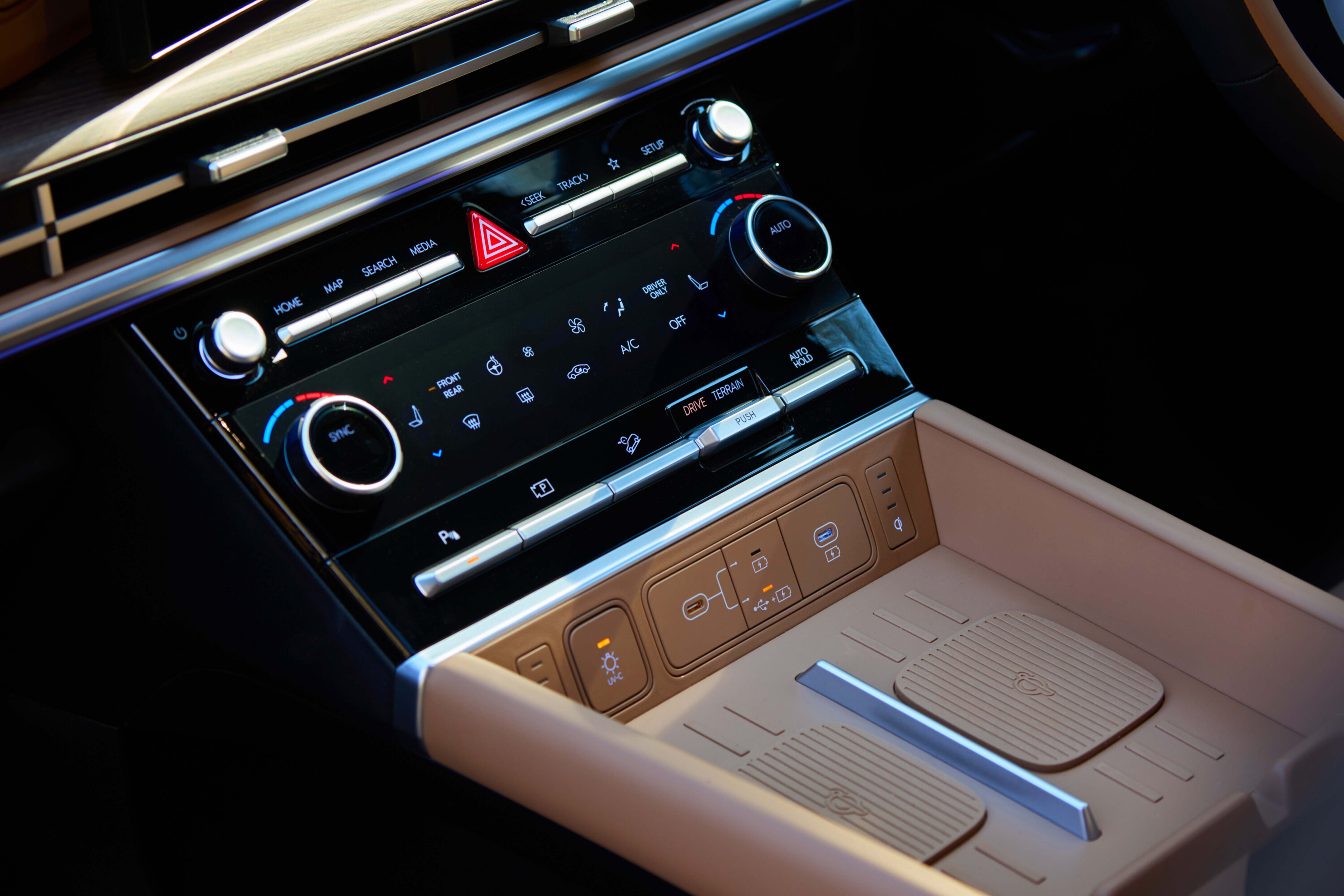
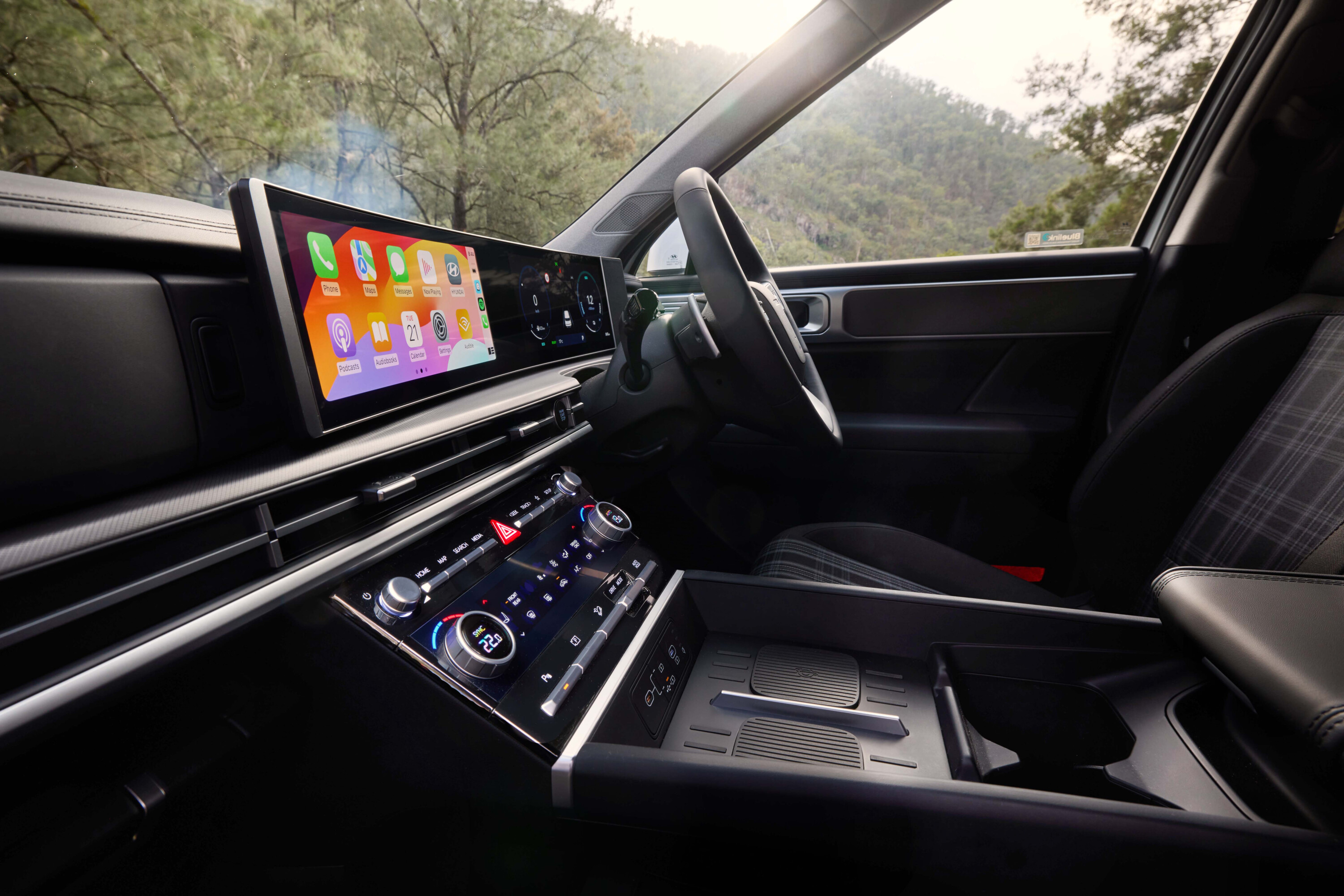
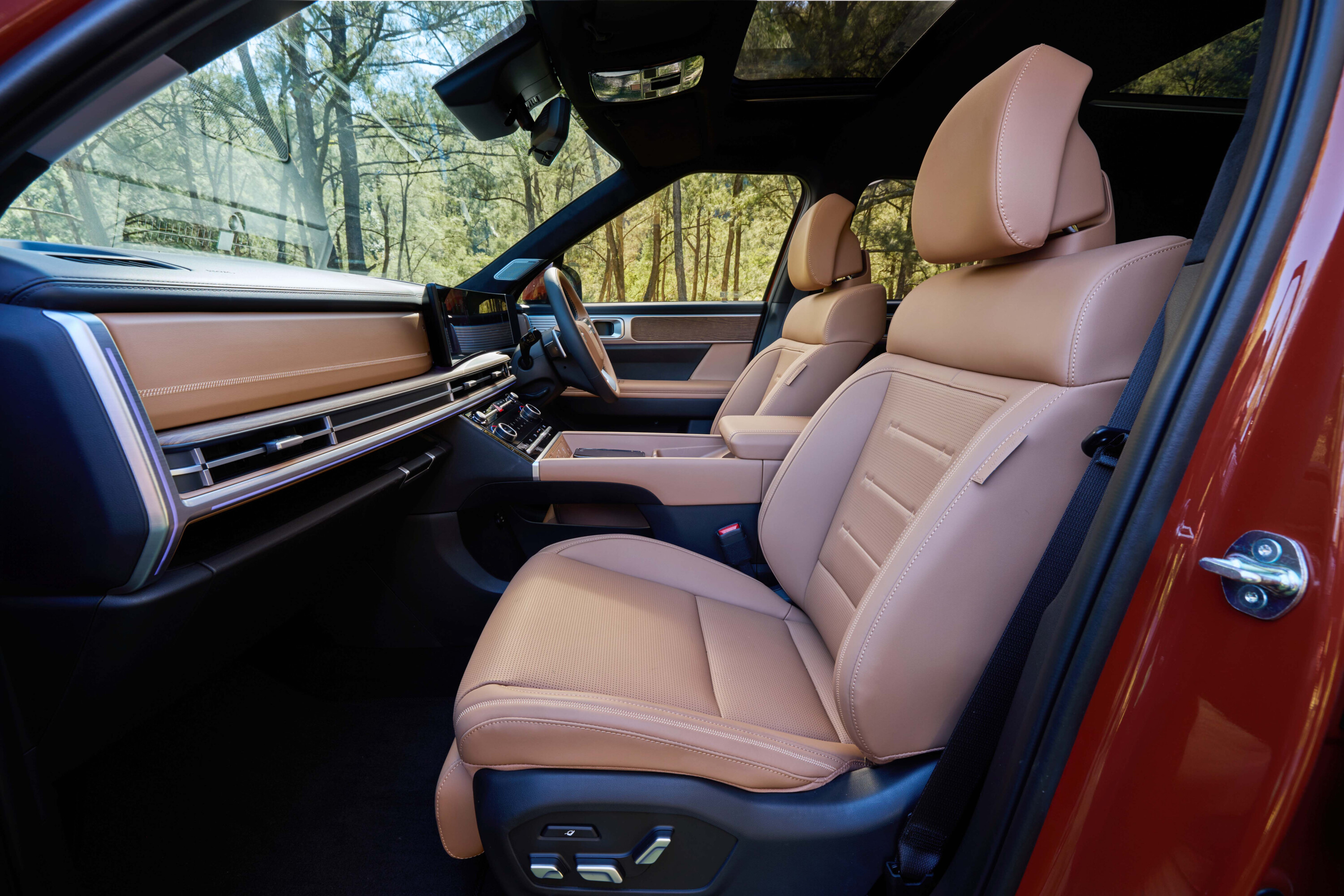
I got what I was given, and in this case it was the top-spec Calligraphy version, dressed in pale leather, mirroring a beautiful pale grained finish for the dash infills.The dash is dominated by the Panoramic Curved Display, which houses twin 12.3-inch digital cluster and infotainment screens.
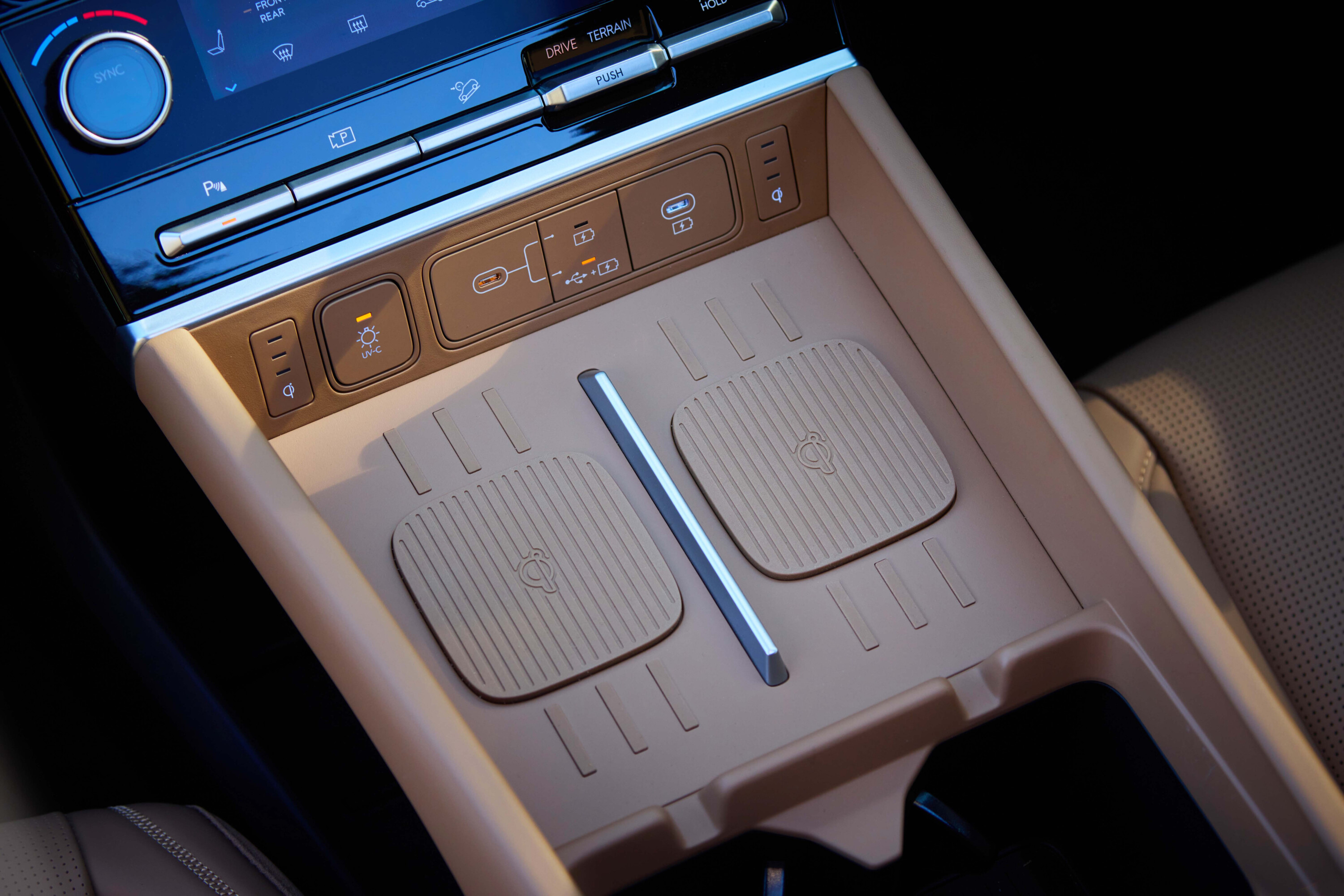
The Calligraphy also features some upmarket gadgets like first row relaxation seating, a dual-pane sunroof, a digital centre mirror, the options of captain’s chairs in the second row (for a six seat configuration) and a UV-C sterilisation tray that nukes bacteria from personal items like phones and keys.
1
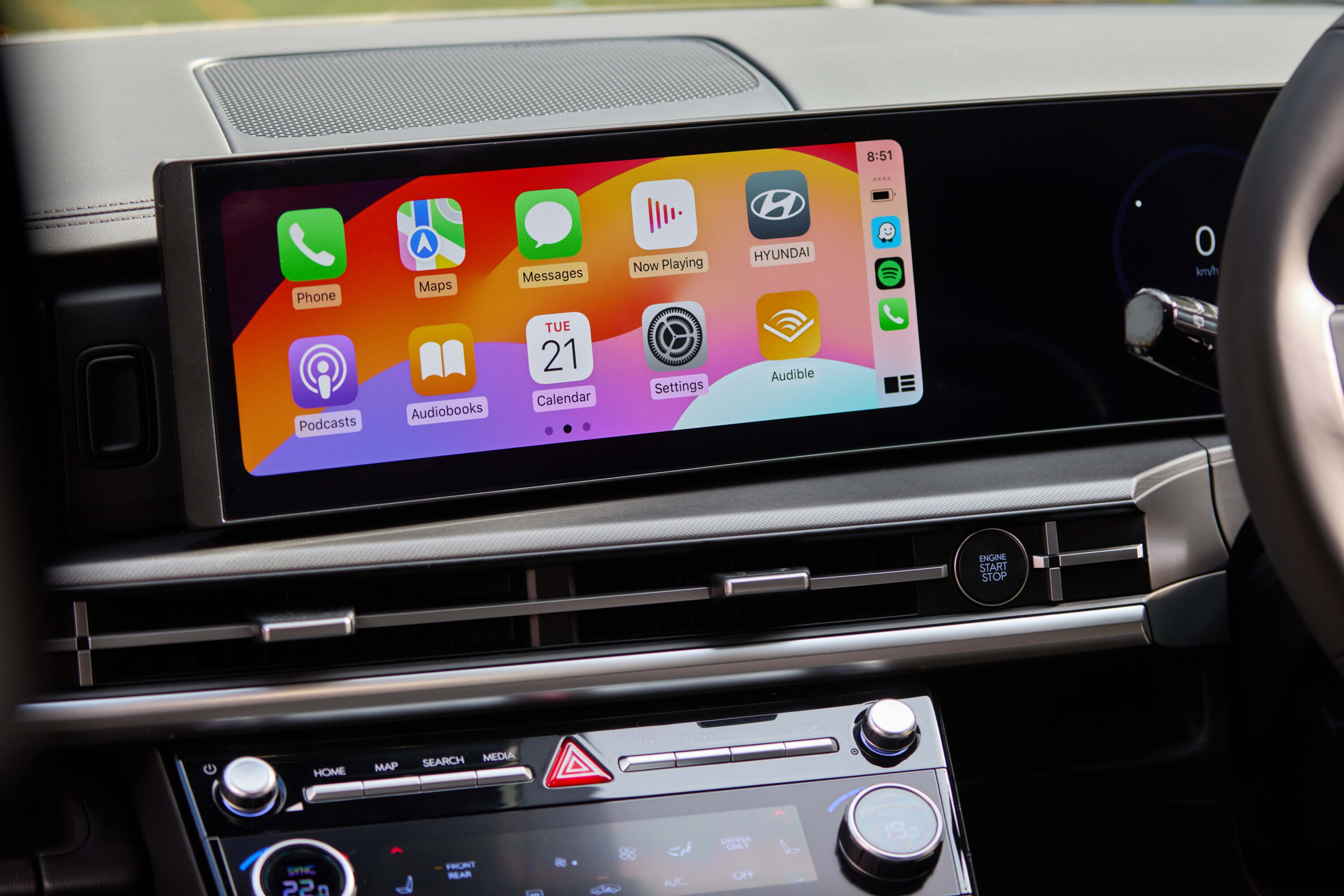
Sensibly, Hyundai has blended analogue and digital controls. The easy access ventilation controls are welcomed as are the easy-to-fathom wheel-mounted controls for the stereo, phone and adaptive cruise control.
The captain’s chairs are wonderfully comfortable, with plenty of legroom and a decent amount of recline. It’s like being in a TGV and watching France whistle past outside. They do come with some caveats though. Obviously you will no longer be able to seat seven, and the ultimate carrying capacity is compromised by the fact that they don’t fold flat to the floor like a second row bench.
Still, if you’ve got a couple of older kids and don’t need a huge cargo carrying capacity spending $1000 on these seats would doubtless make you very popular parent.
1
Up front there’s wireless Apple CarPlay and Android Auto as well as a pair of wireless charging pads, which is a very neat touch. Another feature that I loved was the twin-hinged centre box, which means that those in the front and the second row can both access it with ease.
Jumping from the Calligraphy into the base model brings a more utilitarian feel to the seat and dash fabrics, but otherwise, it feels no hardship at all. Things you will miss? There’s no native sat-nav in the base model, so you’ll be relying on your smartphone mirroring.
There’s also a stereo that’s a bit less bass-rich than the Bose item fitted to the mid-range Elite and the Calligraphy flagship. Bluelink over the air updates are also a feature of the two higher spec variants.
1
All Santa Fe variants get a powered tailgate which opens to reveal a very low floor (the full-sized spare wheel is thoughtfully slung beneath the vehicle).
The third row seats are straightforward to fold and access isn’t too bad, and there’s up to 10 degrees of backrest recline available. Those in the rear do get their own ventilation controls, USB-C outlets and dual cupholders on each side of the car.
There’s a total of four ISOFIX child seat points and five top tether mounting points. With two rows of seats in position, you’ll get 628 litres of luggage space, but if you fold the second row bench seat, that balloons to a hefty 1949 litres (VDA). Because of the positioning of the rear lights, the tailgate opening is a hefty 145mm wider than the outgoing model.
5
How much fuel does the Hyundai Santa Fe 1.6T-GDi use?
One of the benefits of a downsized engine is decent fuel economy right? Of course it is.
Hyundai claims an average of 5.6 litres per 100km, but in the real world you often have to work these little engines quite hard to make progress. On a long run, we were averaging 6.2 litres per 100km which is only around 10 percent off the WLTP consumption figure. A 67 litre fuel tank offers decent touring range.
Obviously that fuel usage will increase if you load the Santa Fe up or drive it in more demanding scenarios. The hybrid system is such that it never drives the car purely on electric power alone, but instead augments the 1.6-litre petrol engine to make it feel like a larger capacity unit. There are three user-selectable levels of re-gen for the hybrid battery.
1
How safe is the Santa Fe?
Hyundai doesn’t have an ANCAP rating for the Santa Fe yet, but it is due to enter the EuroNCAP testing process and we’d be very surprised if it didn’t get the full quota of five stars.
It’s supplied as standard with 10 airbags, comprising driver and passenger airbags, first and second row side thorax and pelvis airbags, a driver’s knee airbag, a front centre side airbag and full-length curtain airbags.
The Santa Fe also benefits from Hyundai’s SmartSense safety suite which includes forward collision avoidance, automatic junction monitoring, lane change monitoring and avoidance, driver steering assist, blind-spot collision avoidance assist, lane-keep assist and safe-exit assist to monitor your blind spot when easing out of a parking spot.
1
The base Santa Fe is richly equipped with safety systems.
There’s also blind spot view monitor, driver attention warning, smart cruise control which is adaptive and monitors the sat nav to determine safe corner radius speeds, lane centring, and lane following which can monitor the vehicle ahead if the white lines on the road temporarily disappear.
Of course, there’s also a huge array of parking assists and a surround view monitor. You’ll need to step up to the Elite model to get Highway Driving Assist 2 and the nav-based smart cruise control as well as rear occupant alert and remote smart park assist, but otherwise the base Santa Fe is richly equipped with safety systems.
1
VERDICT
Hyundai has equipped the Santa Fe with virtually everything it needs to be a standout choice in its sector. The depth of engineering and the thoughtfulness that’s gone into executing this family vehicle are genuinely impressive and immediately up to date.
Whether you can live with the severe cuboid styling is another matter altogether. If it jars, give it time because there’s so much about this version of the Santa Fe that’s a monumental leap forward compared to its predecessor.
It’s also one of those rare SUVs where we’d quite happily recommend the base model with no options required. Given that the upticks in price between trim levels are so large, that might seem a slam on (especially) the range-topping Calligraphy and, at first glance, $75k for a 1.6-litre Hyundai SUV does seem a stretch.
1
Jump inside though, and it’s hard to deny the feel-good factor. Then, when you start casting around for what else that sum buys you in this sector, it’s clear that Hyundai has done its homework.
Indeed, it expects the Calligraphy to account for 50 percent of all Santa Fe orders in Australia with the base model and the Elite trims accounting for 25 percent respectively.
For the first time, the Santa Fe feels like a car you could recommend to family and friends without caveat. They can be the judge of the styling. For so long it’s been a model that’s been somewhat shaded by its once-removed cousin, the Kia Sorento. That no longer feels the case.
MORE
Everything Hyundai
MORE
Large SUVs
Mitsubishi has revealed plans to add conventional hybrid models to its Australian line-up as it looks to expand beyond its existing plug-in hybrid variants.
The move, which was shared with Aussie dealers by Mitsubishi’s global president and CEO Takao Kato, will give the Japanese brand a foothold in the booming hybrid segment which is currently dominated by Toyota.
In a testament to how popular hybrids are becoming, Toyota yesterday announced plans for its passenger car and car-based SUV line-ups to become hybrid only, with versions powered solely by combustion engines to be ditched.
Mitsubishi currently doesn’t offer any conventional ‘self charging’ hybrids in Australia. Instead, its hybrid options are plug-in hybrid electric vehicles (PHEVs) which have larger batteries, drive more like battery electric cars and need to be plugged in regularly to best achieve their efficiency and performance advantages.
1
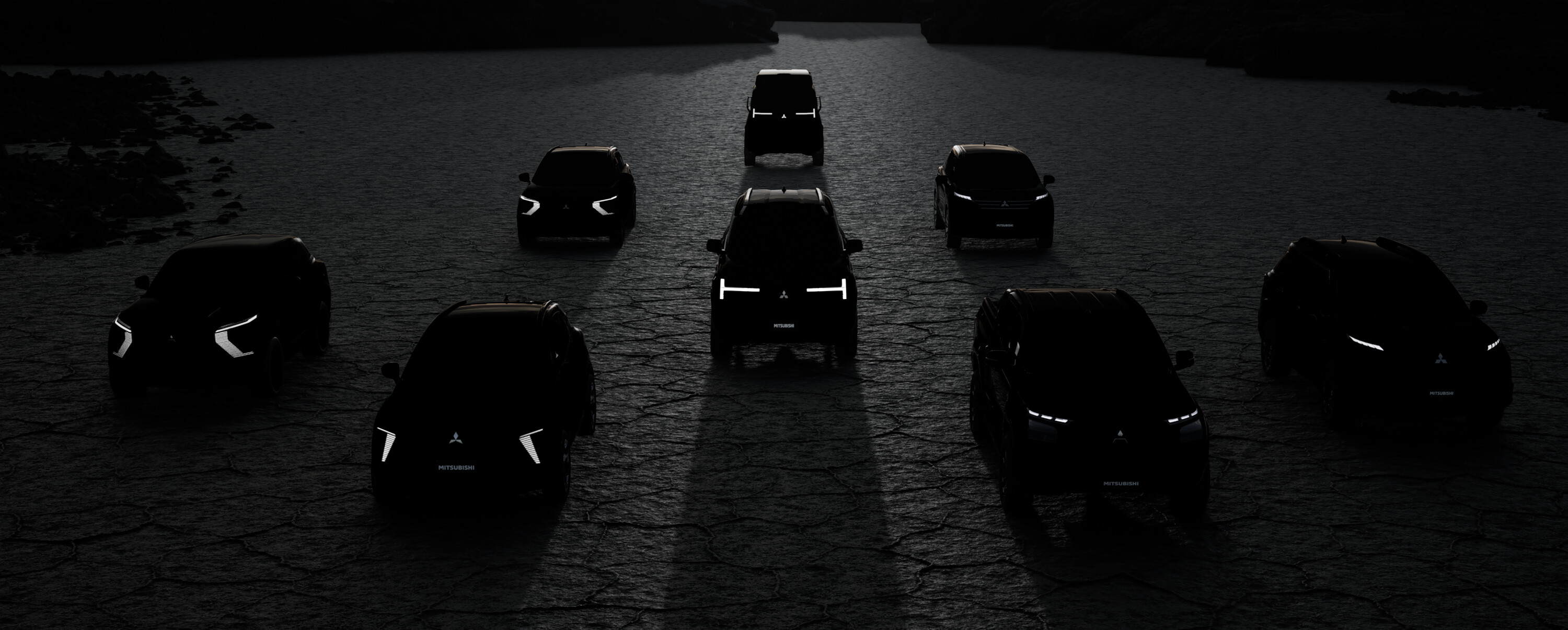
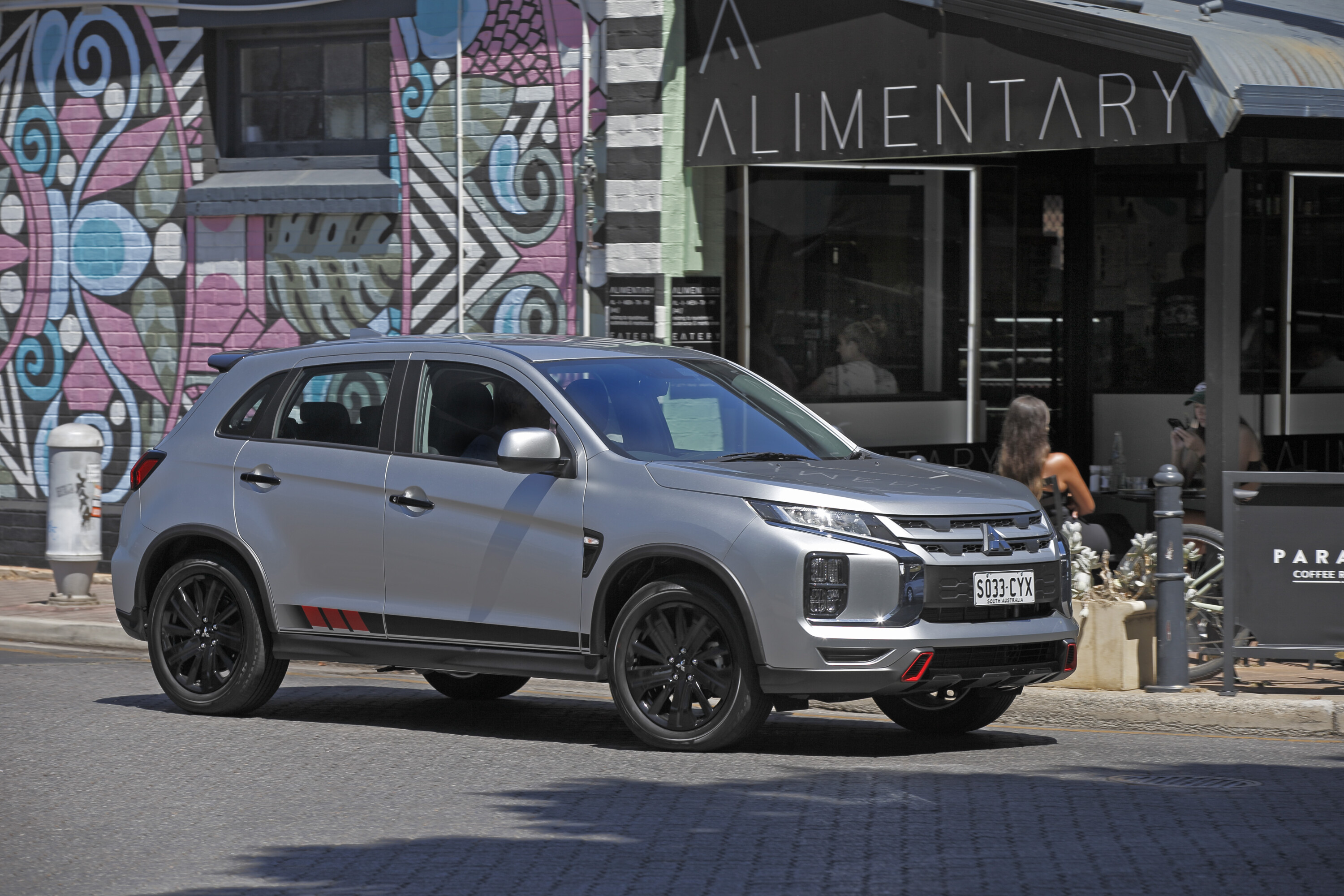
Mitsubishi currently has two PHEV variants in Australia: the mid-size Outlander PHEV SUV and the smaller Eclipse Cross PHEV.
“Australia is a core market for MMC [Mitsubishi Motors Corporation], and it makes an important contribution to our global business,” said Takao Kato. “We will offer not only battery electrics but also plug-in hybrids and hybrids, and introduce appropriate products that will meet the New Vehicle Efficiency Standard (NVES) set by the Australian government.”
The commitment is part of Mitsubishi’s “pathway towards 2030” where it aims to evolve its line-up with more electrified variants and the addition of all-new models, including fresh variants of the new-generation Triton.
Other new additions to the Aussie line-up are likely to be the next-generation Delica people mover and a fresh large SUV, potentially the next Pajero Sport.
It’s unlikely Mitsubishi will offer hybrid versions of its current models, with the new powertrain tech tipped to be introduced with new-generation cars like the next ASX.
1
It’s also possible Mitsubishi will lean heavily on its role in the Renault/Nissan alliance to source the hybrid powertrains for future models.
In Europe, for example, Mitsubishi sells hybrid versions of the ASX based on the Renault Captur.
In Thailand and other south-east Asian markets, Mitsubishi also recently introduced hybrid versions of the Xpander and Xpander Cross MPVs which use a self-charging set-up based on a modified version of the company’s existing PHEV technology.
You’d be forgiven for thinking that the motor show, in its traditional sense at least, is going the way of the manual gearbox.
Once the leviathan of shows, Frankfurt IAA was the place to be for all the key brands in Europe, but it has now moved to Munich and attracts a fraction of the manufacturers.
An Australian equivalent is long gone, Geneva attempted a bizarre revival via a panic move to Doha but is now gone again, and Detroit’s dates were muscled into a different end of the year by the growing might of the Consumer Electronics Show. The motor-show world is now a very different space.
Whether it be a post Covid-19 society nervous of large gatherings or the various brands favouring smaller satellite presentations where they can more carefully control their marketing messages and audience, it would appear the glory days are over. Except they aren’t… as demonstrated by Auto China 2024. The big motor show is back!
1
After a four-year hiatus, the Beijing show has returned and, unlike other shows that emerged from the pandemic as dimly glowing shadows of their former selves, Beijing was a dazzling display of electrified wonder.
While many accepted stalwarts from Europe, Japan, South Korea, UK and the US showed up, a humble undertone percolated the tourists as the Chinese marques dominated at their home ground.
As attendance at other shows dwindles, Auto China 2024 expected more than half a million people to walk through the doors in just three days, prompting the manufacturers to keep their powder dry at other global events and save the big news for Beijing.
This year, the event hosted 117 global premieres, of which 30 were by multinational brands, and a whopping 41 concepts were revealed covering 220,000 square metres of exhibition space at CIEC-Chaoyang. Picking just one champion of the show is as hard as choosing your favourite tooth, so here’s our top 10… or so.
1
JUMP AHEAD
- MG EXE181
- Genesis Magma
- Mini Aceman
- Mercedes-AMG GT 63 S E Performance and G580 electric
- Smart concepts
- Souo H8 boxer engine
- Fang Cheng Bao Super 9
- Chery Exeed E08
- Zeekr Mix
- Denza Z9 GT
- Dongfeng Mengshi M-Hunter
- Lynk & Co 07
1
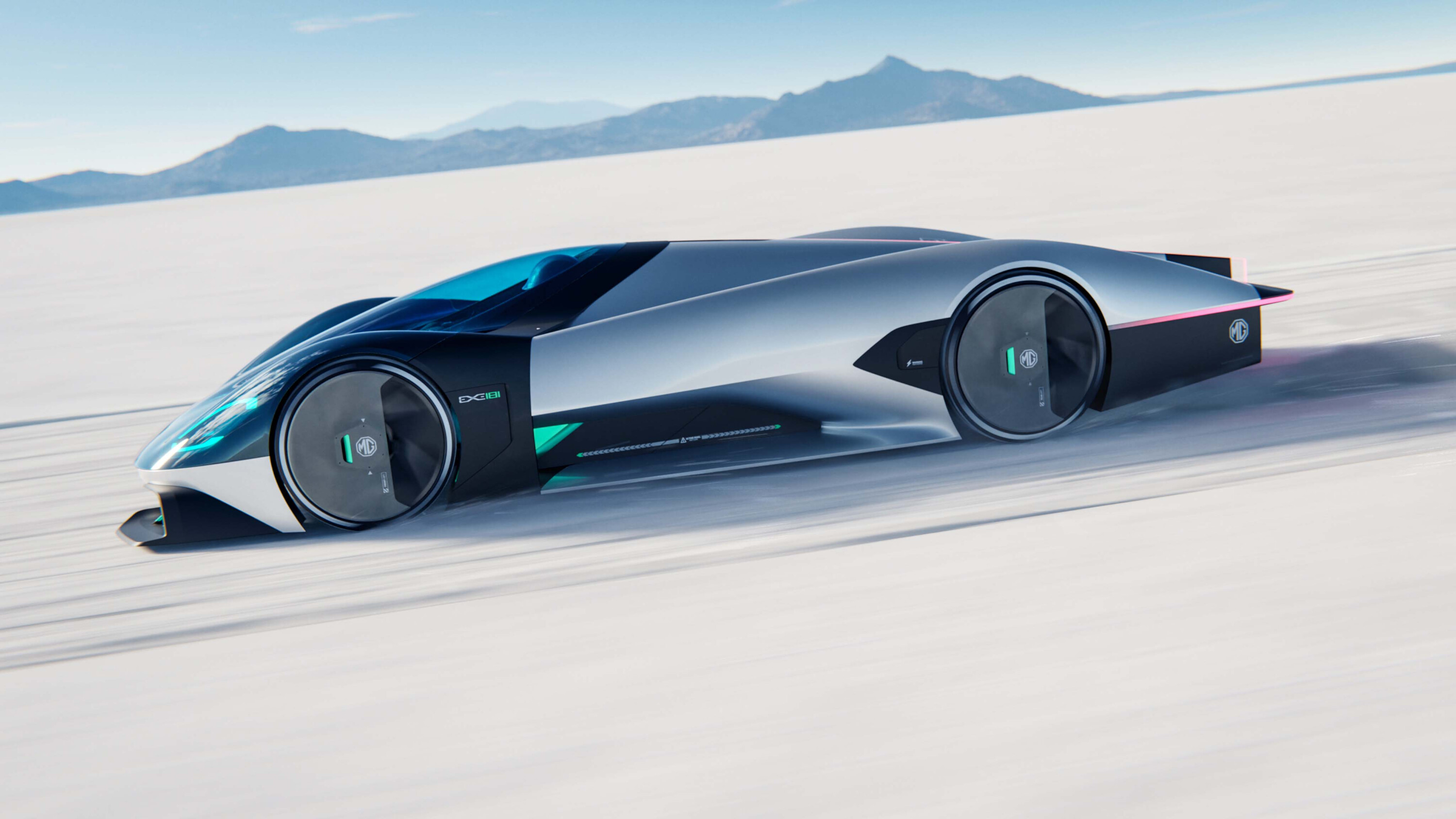
MG EXE181
Remember when MG used to cop flak for turning an iconic English sportscar marque into a purveyor of cheap SUVs?
If the Cyberster two-seater didn’t silence those critics then the EXE181 takes a champagne cork and decisively shoves it down their collective throats. Built as a nod to Stirling Moss’s land-speed record of 1957, the EXE181 was penned in the UK design house and significantly ups the performance ante compared with its ageing 1.5-litre grandfather, cracking 100km/h from standstill in less than a second, says its maker.
Amazingly, though, acceleration is not its party piece. Thanks to a drag coefficient of just 0.181, it’ll reach a top speed of 415km/h. The 181 in its name refers to its slippery score while the EXE presumably indicates how much it’ll cost if this striking concept car goes into production, which MG has not ruled out.
7
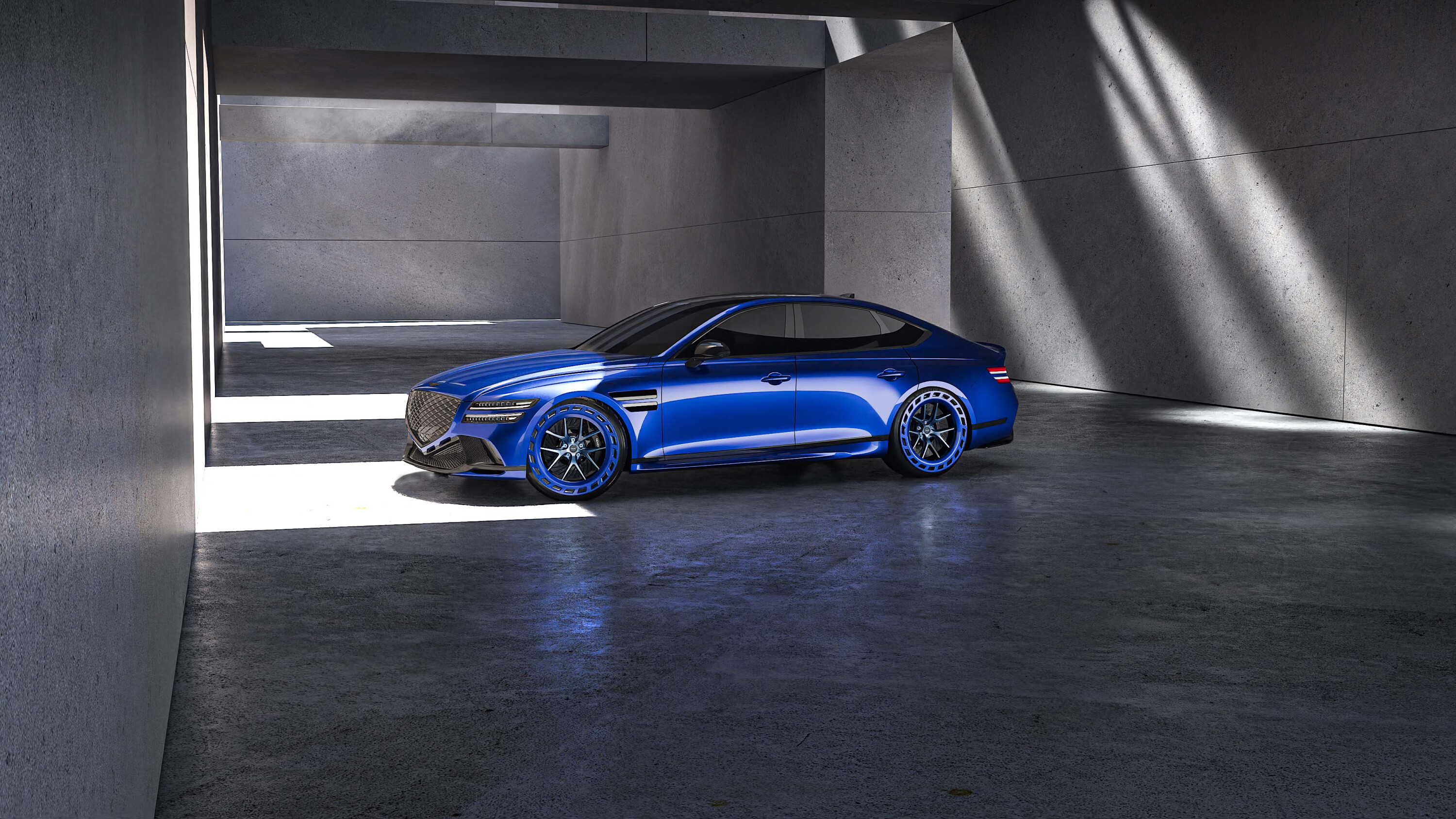
Genesis Magma
At the Genesis stage, much of the attention was being stolen by the ridiculously pretty X Gran Berlinetta concept which was revealed in Barcelona late in 2023 but it had been redecorated in easily the Beijing show’s trendiest colour – orange.
However, it was the Vision Blue car lurking in centre stage that was the really interesting model.
The G80 Magma joins the GV60 Magma (also orange) and builds the momentum of the Magma high-performance sub brand and its chances of becoming a de facto BMW M/Mercedes-AMG rival. Both Magma models are likely for Australia, too.
8
Mini Aceman
It might seem strange choosing a motor show in China as the venue to reveal the latest model from a European/British brand but it’s far more appropriate than you might imagine.
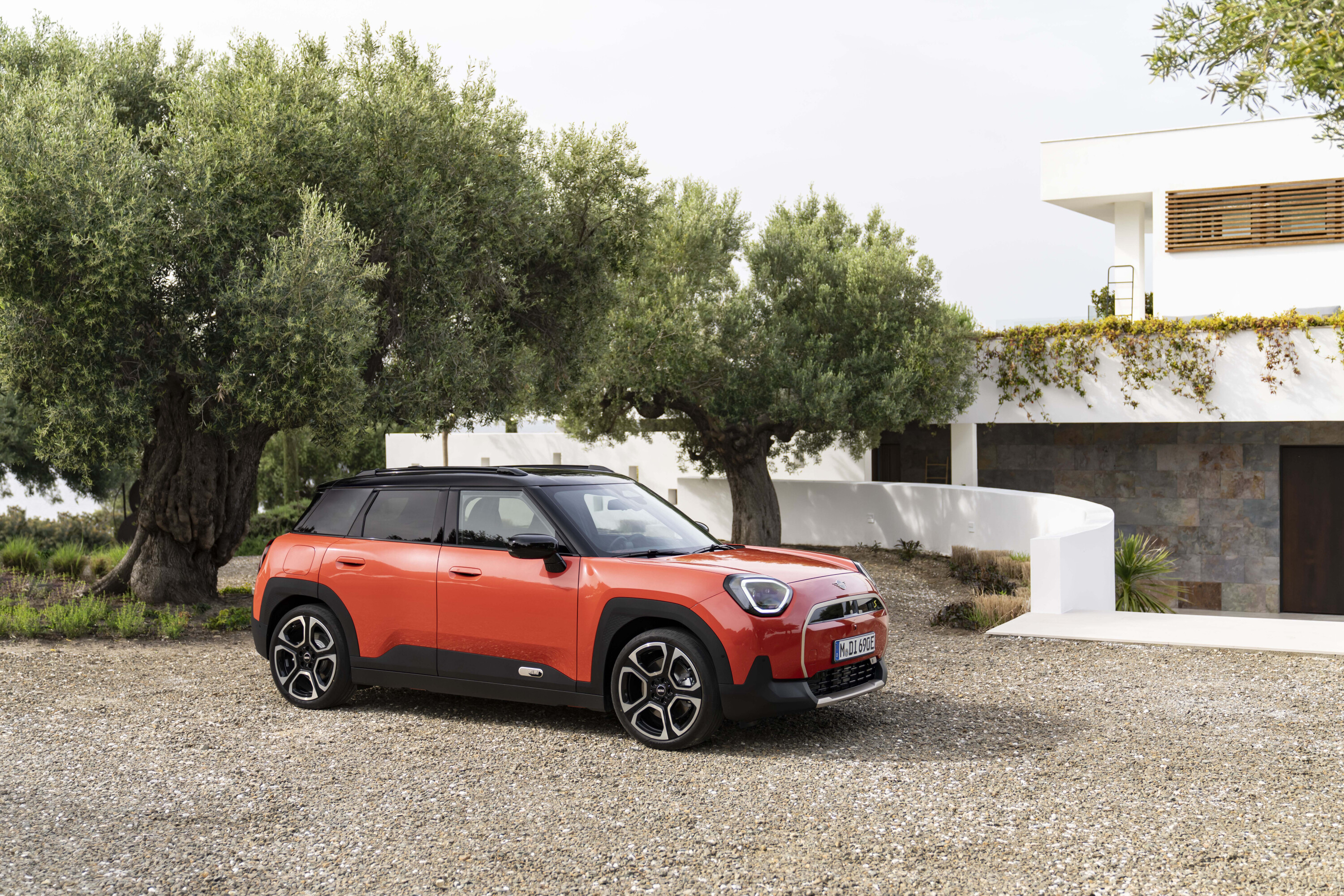
While the Countryman will be the first Mini made outside of the UK (on BMW’s X1 and X2 production lines), the Aceman will emerge from a Chinese factory as part of a GWM joint venture. Significantly, the Aceman is the only Mini model for now that’s available exclusively as an EV, while its Mini Cooper three-door and Countryman siblings are offered as petrol and electric.
Mini refers to the new model as an SUV, sitting between the Countryman all-wheel drive and Cooper small hatchback. But with front-drive only and decidedly car-like proportions, this Mini is more for the road than the trail.
27
Mercedes-AMG GT 63 S E Performance and G580 electric
In response to the tsunami of electrification and China’s demand for it, Mercedes-Benz took the opportunity to roll out a new version of a model that, until now, was one of its thirstiest.
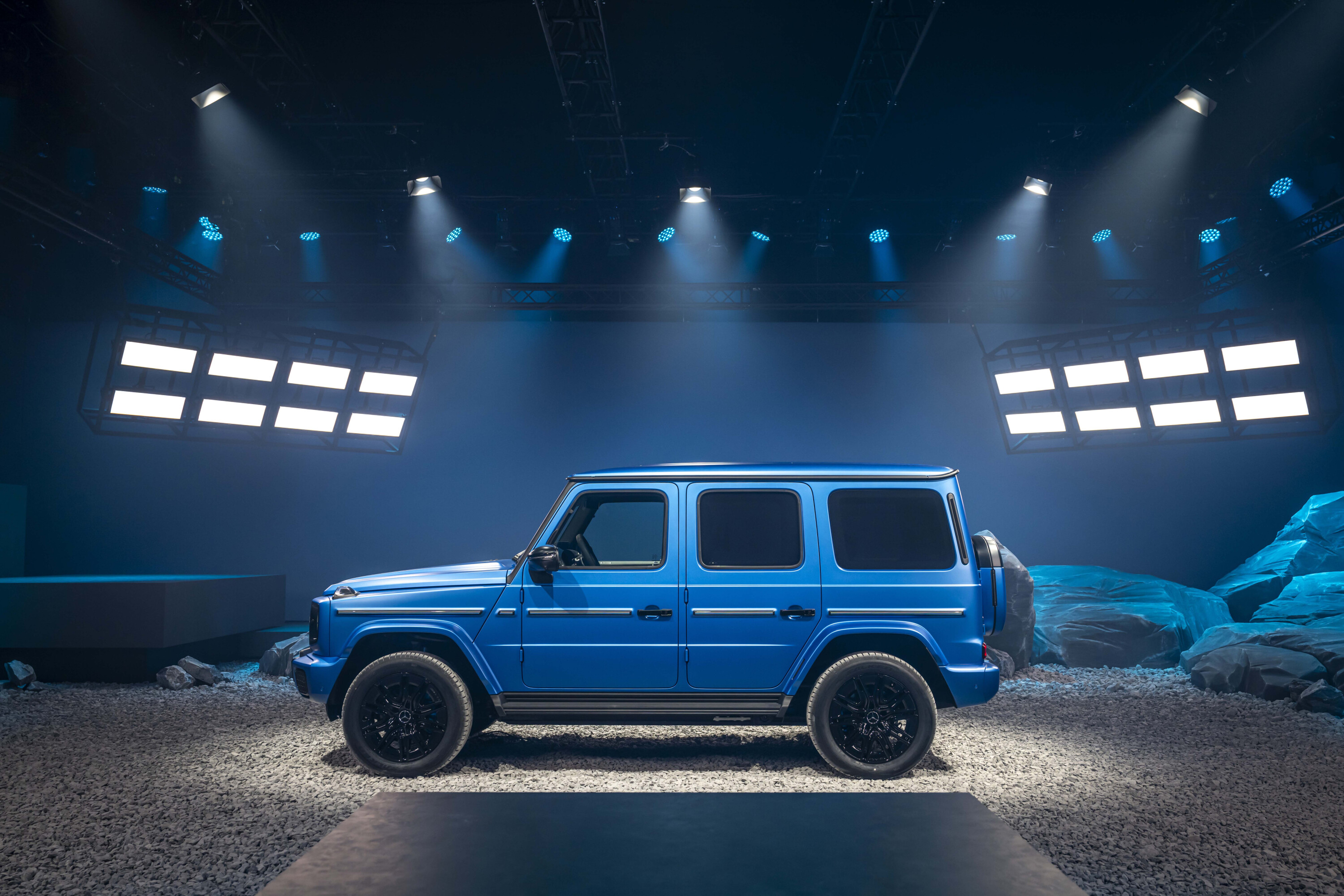
With a 4.0-litre twin-turbo V8 and 2.5 tonnes to lug around, the G63 AMG doesn’t just roar, it also guzzles. The new G580 however, whispers. That’s because the newest G-Class is powered by four electric motors, with individual two-speed gearboxes at each wheel, for combined outputs of 432kW and 1164Nm.
If that doesn’t tickle your fancy, then the GT 63 S E Performance certainly will. The new flagship GT is a V8 plug-in hybrid with 600kW/1420Nm and it can hit 0-100km/h in a claimed 2.8sec. That’s quicker even than the AMG One hypercar, while top-speed is 320km/h. Both cars are due in Australia soon.
6
Smart concepts
Thanks to Australia’s obsession with large cars, tiny city vehicle maker Smart was axed locally almost a decade ago, but the models on show in China might appear in Australia now the brand is coming back.
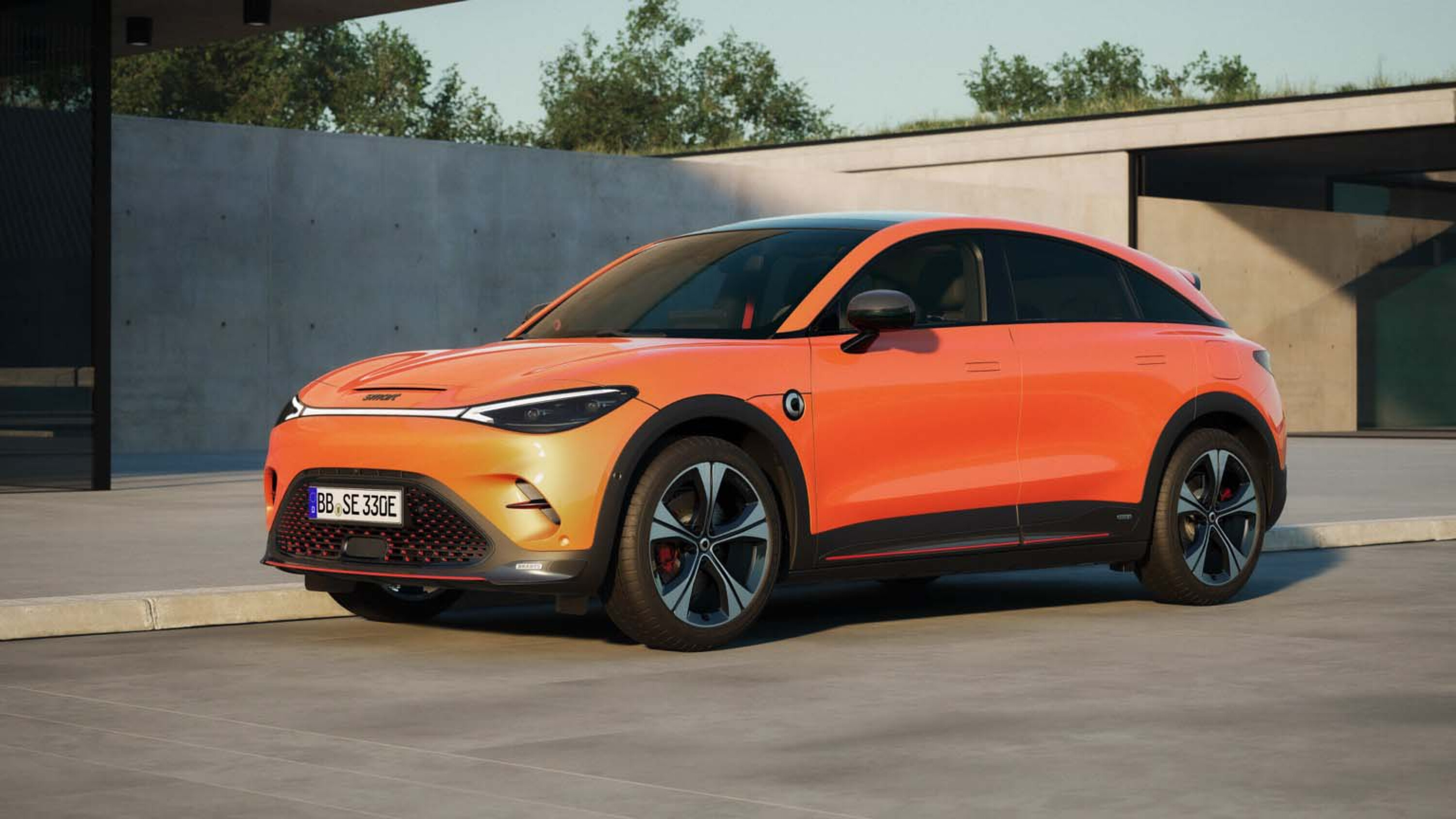
Not only is the range no longer only diminutive micro boxes, but the models have evolved into potent and capable machines. Revealed at the show this year was the #5 concept, which will likely evolve into a production SUV with 800-volt architecture and in excess of 550km of range.
However, the most recent evolution of its new #3 is more intriguing. Rolling out in the famous Brabus branding, the high-performance #3 has all-wheel drive, 315kW and will smash 100km/h from standstill in 3.7 seconds.
Smart says the #3 Brabus delivers “one-second-wow” styling and performance but if we were to pick just one word it’d be, well, smart.
2
Souo H8 boxer engine
Of the vehicles on show this year, 278 were hybrid or full electric, yet that’s not to say Auto China 2024 was without any quality internal-combustion moments.
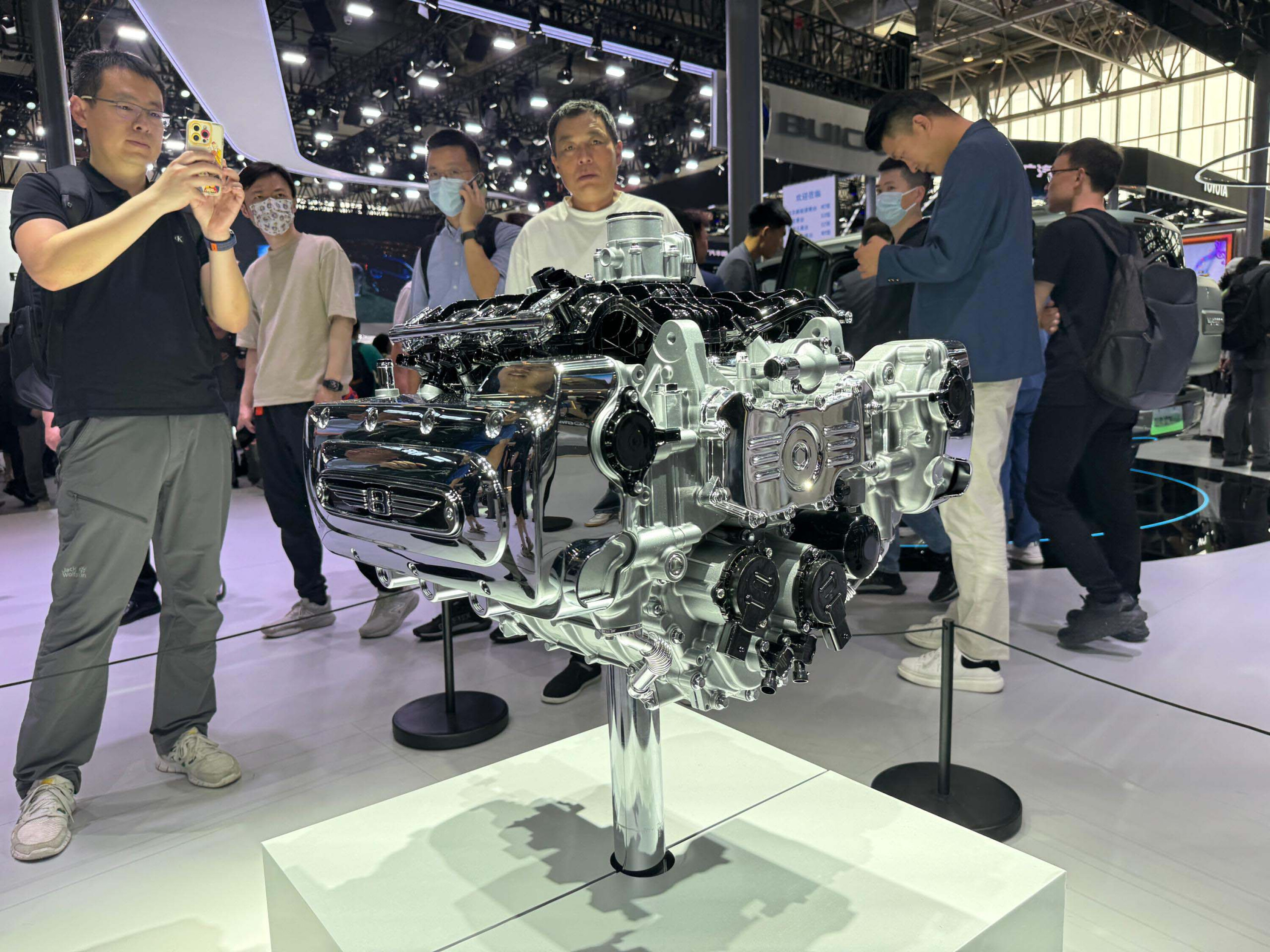
While GWM is known for its wide range of four-wheeled vehicles, it’s making the move into motorcycle production this year. It’s first Souo H8 bike will be revealed in June 2024, but to build a little hype in the meantime, the Chinese manufacturer rolled out its highly unusual engine – a water-cooled, naturally aspirated boxer eight.
Other than a capacity of 2.0 litres, Souo is remaining tight-lipped about tech specs, despite offering an aural treat of what it’ll sound like. Think BMW flat-twin noise that’s been fed through an event horizon.
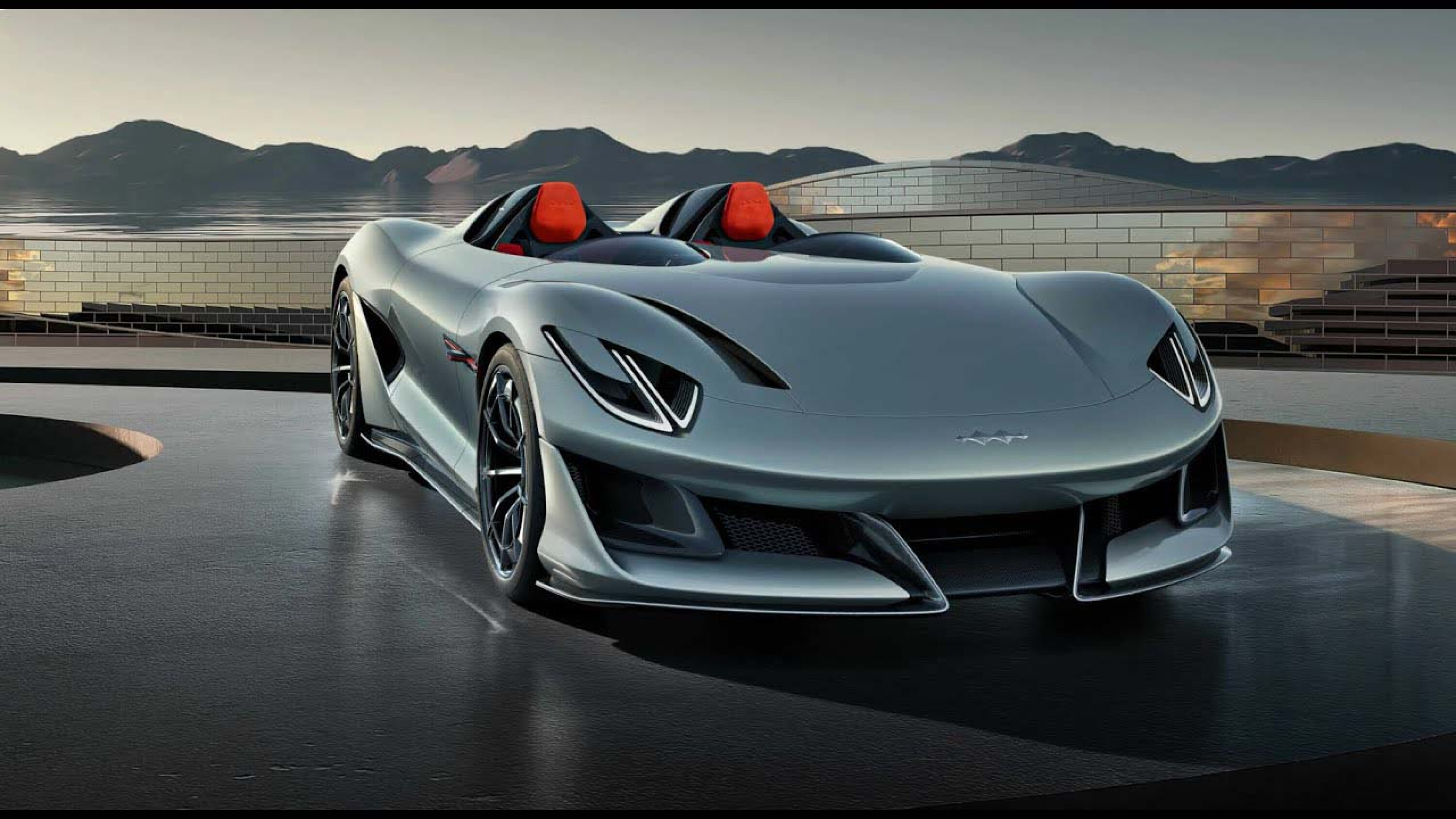
1
Fang Cheng Bao Super 9
While there was more than enough technology on display to prove this Chinese manufacturer is at the forefront of powertrain, information and entertainment, the Fang Cheng Bao Super 9 concept was there to prove they have a grasp on aesthetics, too.
Sure, it was mostly accomplished by poaching former Lamborghini and Audi designer Wolfgang Eggert but that doesn’t detract from the extraordinary screen-less speedster’s arresting beauty.

1
Chery Exeed E08
It’s hard to know where to start with the Chery Exeed E08. You’ve heard of three-box and two-box vehicle design but allow Chery to introduce… a box.
Its maker says the capsized fridge has a ‘super low drag coefficient’ but the only way this would be possible were if the elec-brick was constructed using cobwebs and the slightest draught simply gusted through any MPV matter like a photon of light through a vacuum.

9
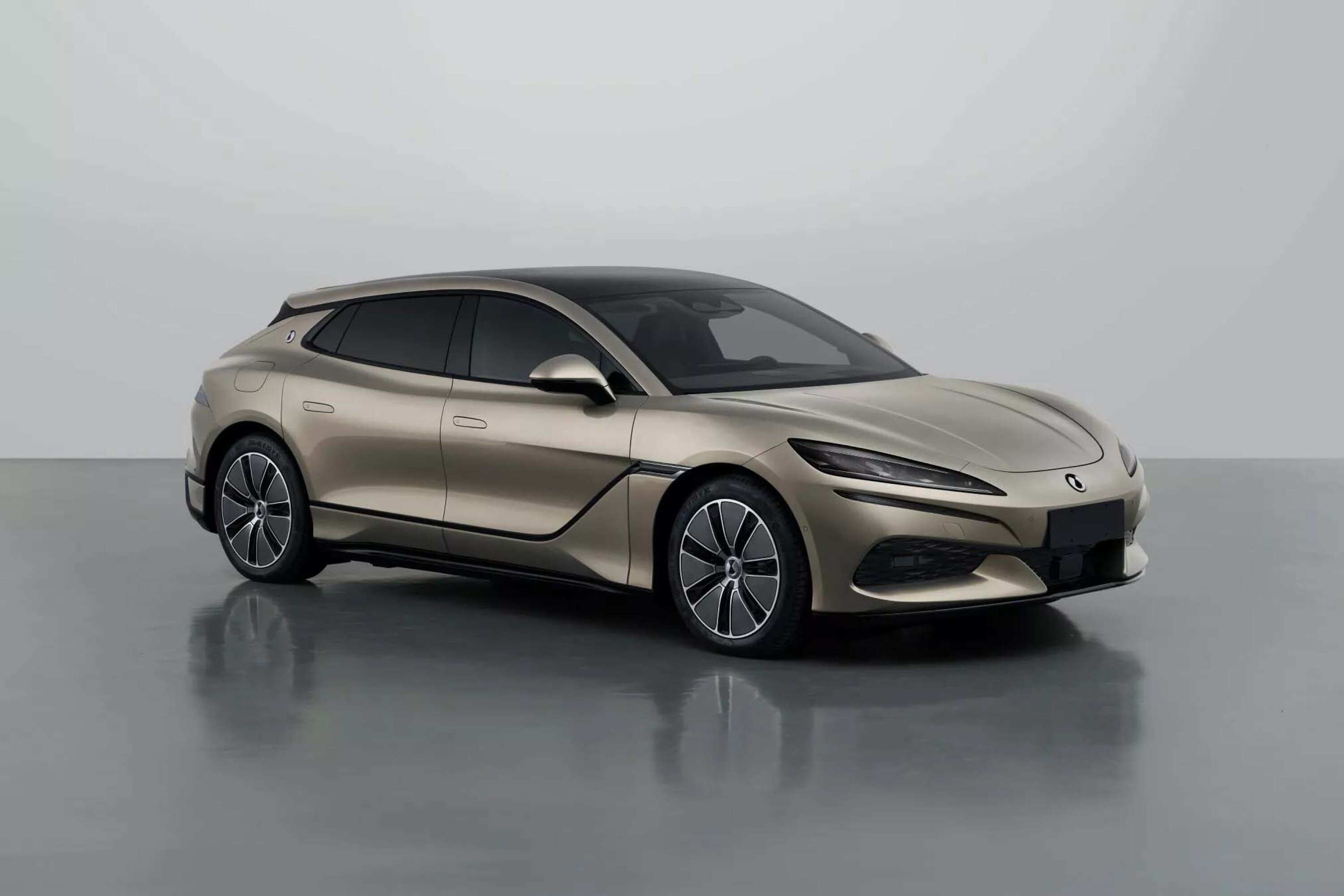
Zeekr Mix
Part of the joy of the Beijing show is the opportunity to see a few of China’s domestic-market models and brands that will definitely never be sold globally due to the catalogue of copyright and intellectual property laws that they shamelessly violate.
One such example is the Zeekr Mix, which has more than just a passing resemblance to the Volkswagen ID. Buzz.
It’s almost a shame that it would be hailed with legal artillery the second it ventured outside PRC as its combination of 310kW, AWD and an innovative lounge-room-configurable interior make it a genuinely likeable rip-off.
1
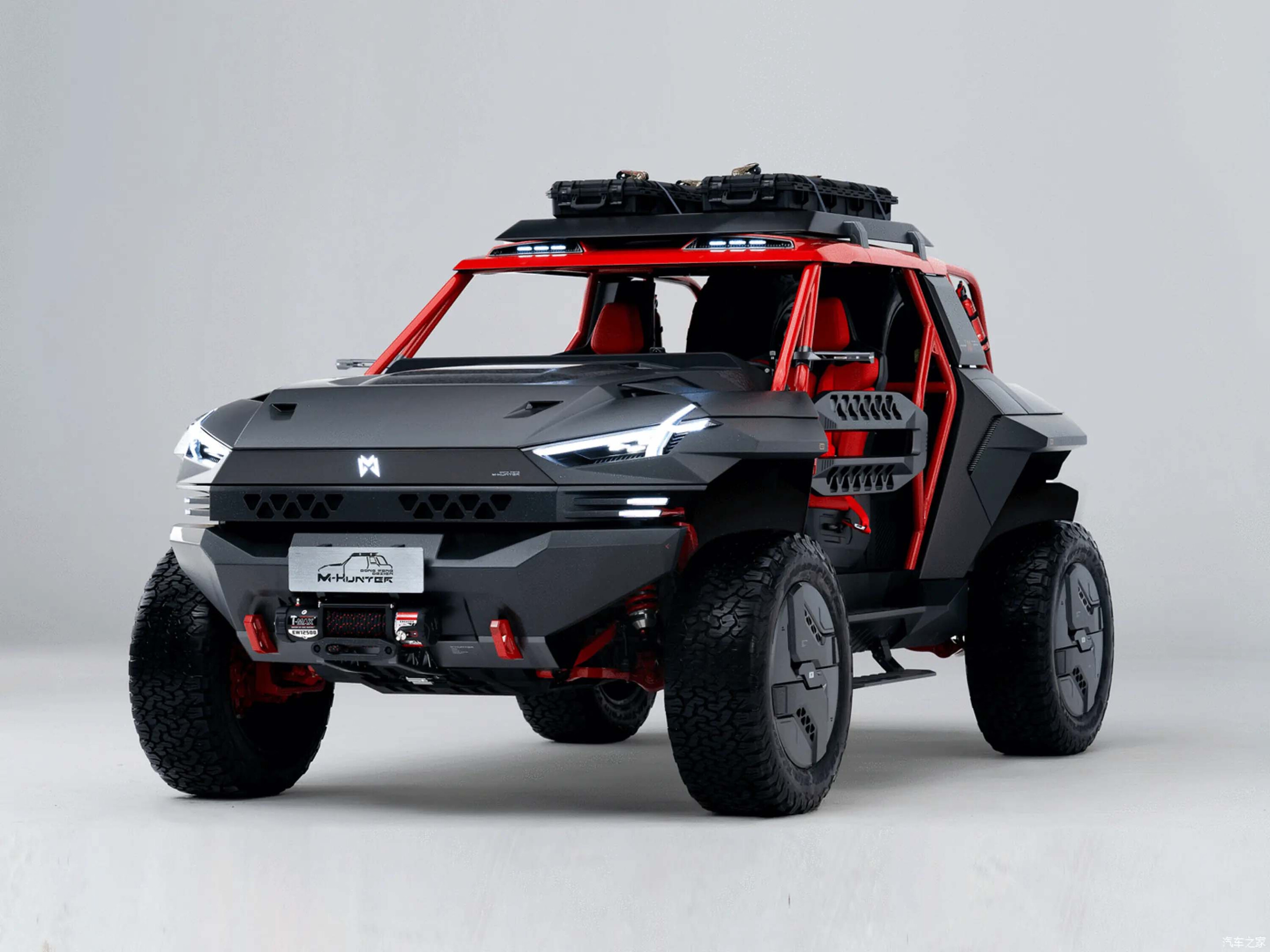
Denza Z9 GT
Speaking of China-Euro collaborations, the Denza Z9 GT is the result of a partnership between BYD and Mercedes-Benz.
While it might look like a relatively conservative shooting brake in the company of some hyperbolic concepts, this five door is a circa-1000 horsepower cut-price Porsche Taycan slayer. Perhaps hard to believe, but it shares some of its underpinnings with the BYD Seal, although this car has lost a lot of blubber and gained muscle.
Three electric motors provide 700kW to all four wheels, while one per wheel at the rear brings tail-biased handling and sophisticated torque vectoring. All that tech and performance comes at a cost though. While performance is expected to be visceral, the Z9 GT tips the scales at 2875kg. Perhaps it’ll be dubbed the BYD Whale in some markets…
2
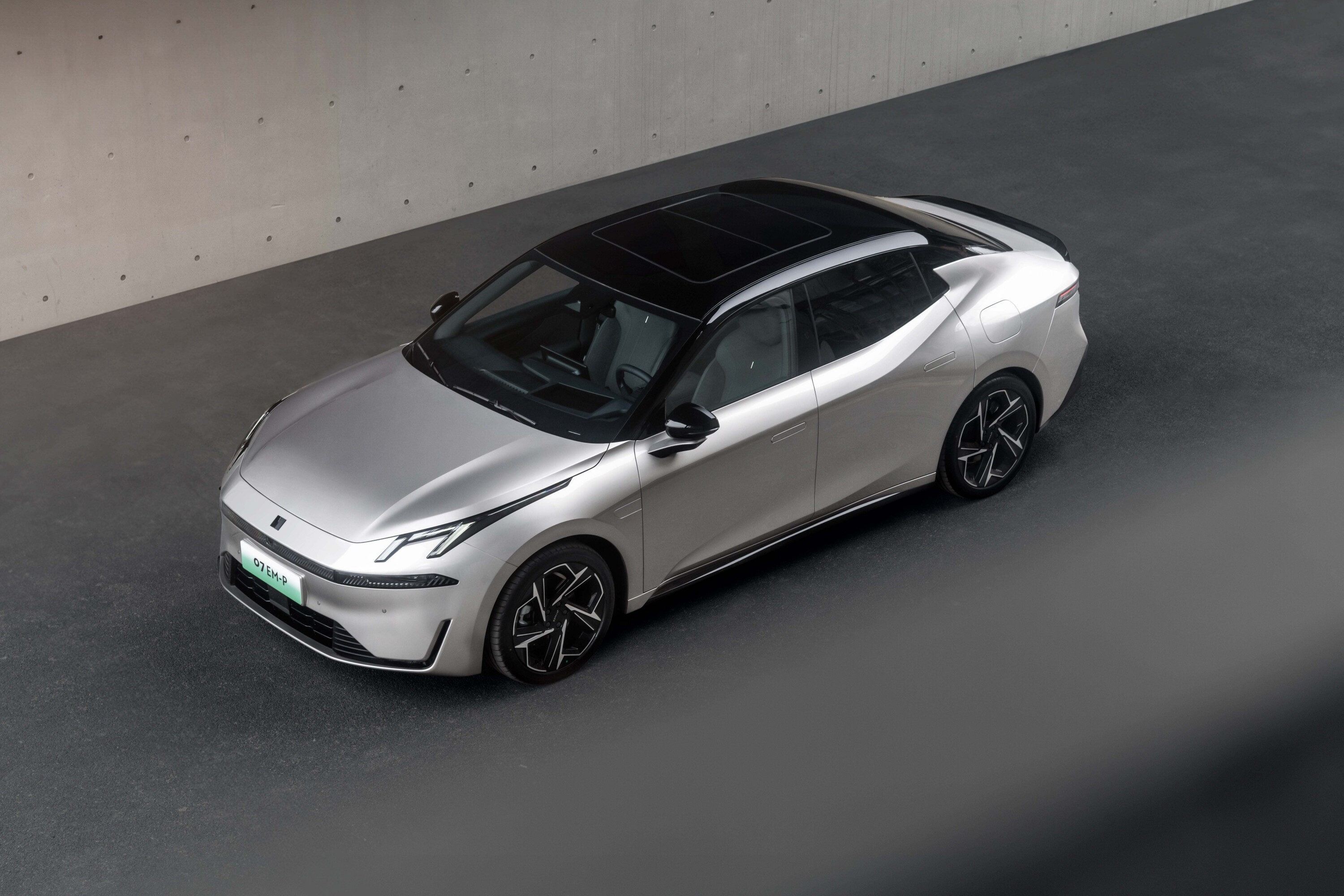
Dongfeng Mengshi M-Hunter
It certainly wasn’t the silliest name at the show this year, with plenty of amusing translation fails to be found, but the Dongfeng Mengshi M-Hunter was up there.
Looking like the illegitimate offspring of a CanAm Maverick and a Mini Moke, it’s easy to look past this hardcore off-roader’s name when you realise, believe it or not, it is not a concept.
Details were light at the time of reveal but it’s thought to have either a pure battery or range-extended electric powertrain similar to the previous M-Hero 1. If that’s the case, expect up to 800kW and, rest assured, the roll cage is not just for show… because you’ll be needing that.
13
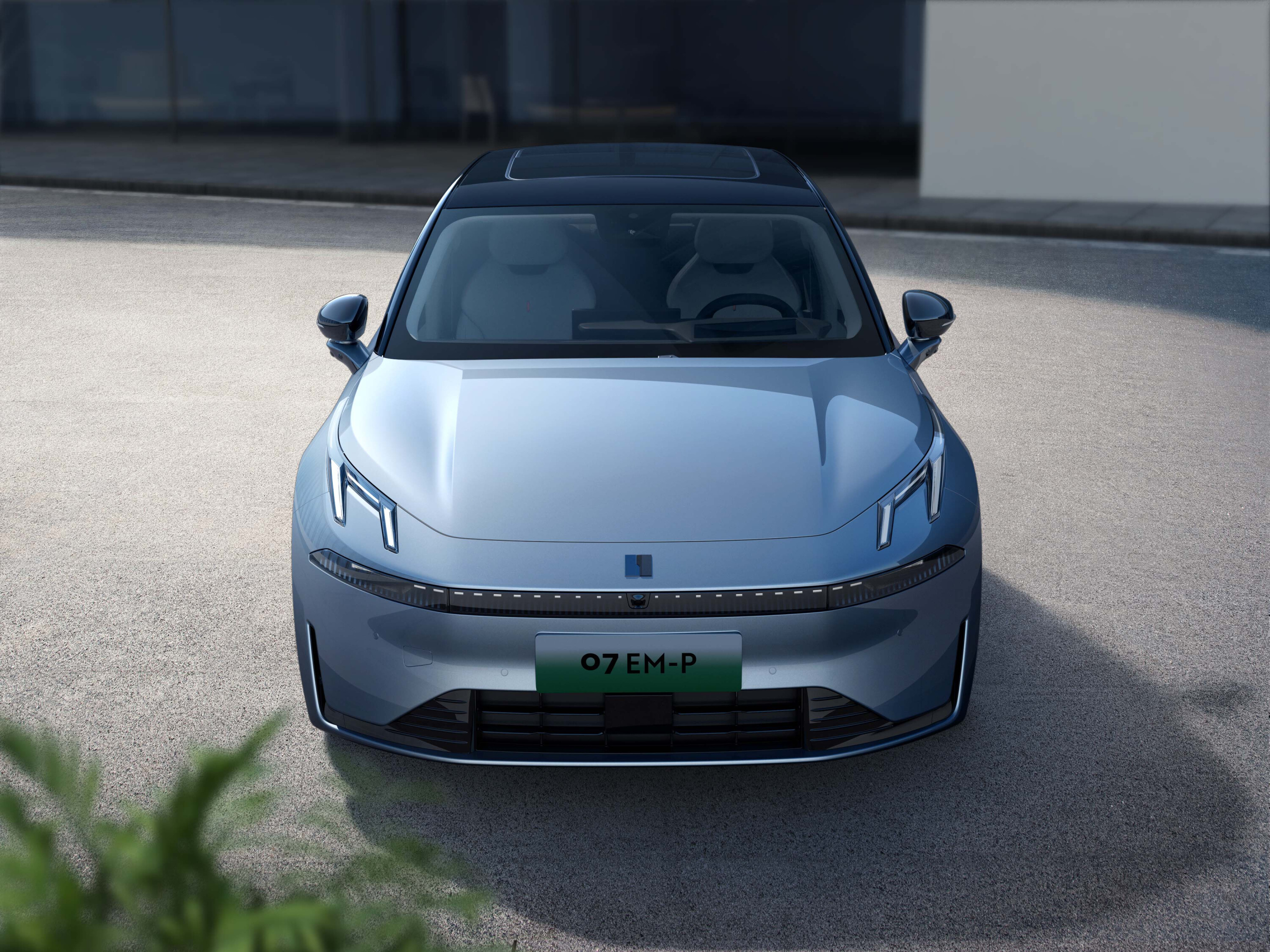
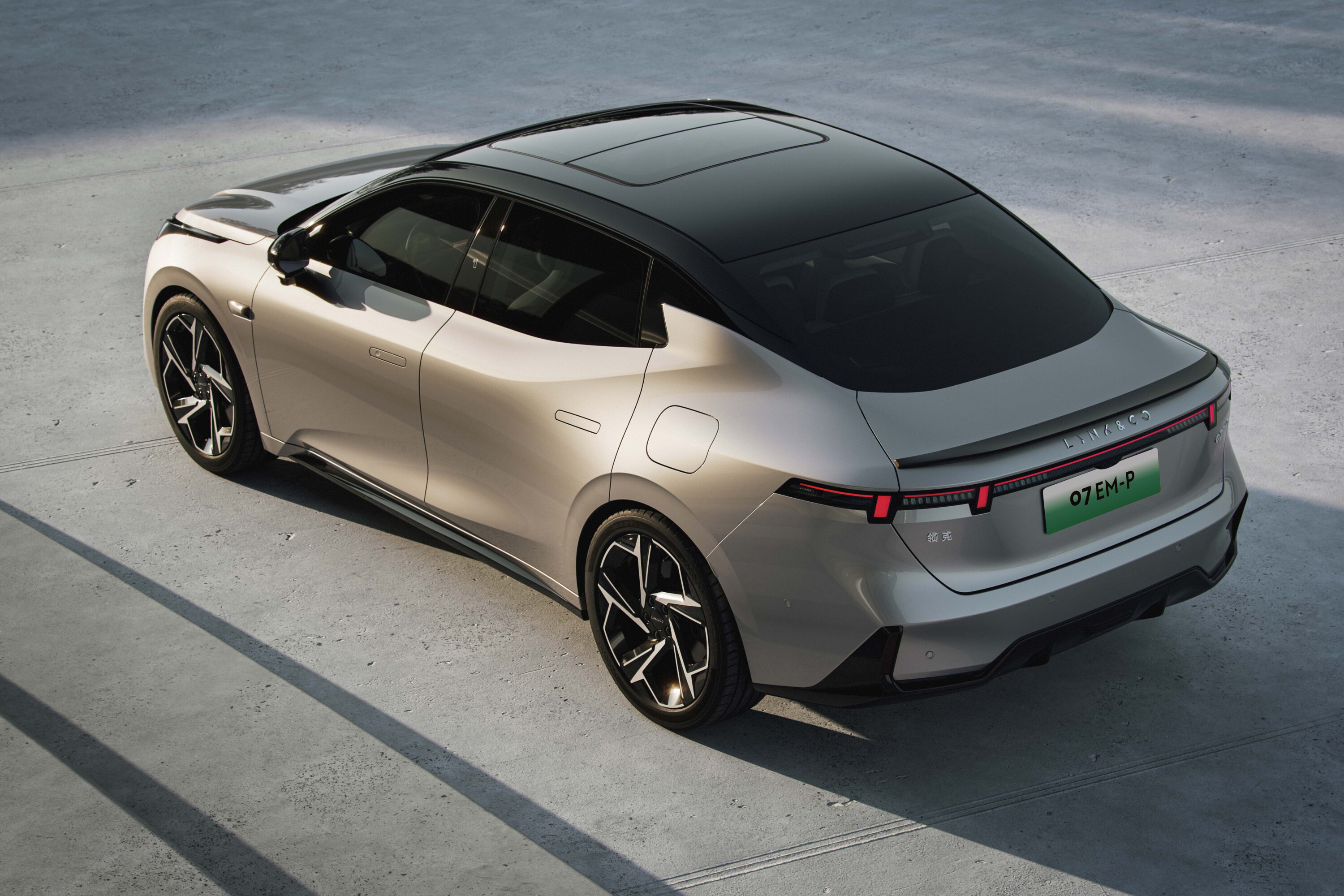
Lynk & Co 07
Despite its polarising Gen-Z phonetic name, Lynk & Co is a brand worthy of attention. It’s not yet officially confirmed for an Australian debut – except it has already made one of sorts.
The 03 is cutting laps on track Down Under as part of the TCR racing series which, reading between the racing lines, is laying the ground for an introduction.
When it does, the 07, which had its sheets torn off in Beijing, probably won’t be the Aussie spearhead. But the 08 as part of a car-sharing service? Hmmm. Watch this space.
MORE
Wheels Industry
Has there ever been a more elegant exercise in creative cost-cutting than Porsche’s original Boxster?
Upon first acquaintance, that might sound something of a pejorative – an accusation that a company peddling premium products is somehow short-changing its customers but, as we delve into the situation in which the Boxster was born, you’ll discover it’s anything but.
In order to set the scene, let’s press rewind and head back to 1991-1992. It’s no understatement to say that Porsche AG was in chaos. It was building the 968, the 911 and the 928, three coupes with no shared componentry that were in a race to see which could lose the company the most money.
Realising that the company was on a fast track to bankruptcy, manufacturing boss Wendelin Wiedeking ordered a root-and-branch review of all of the fundamental processes required to build a car.
1
With the manufacturing side rapidly beaten into shape, the engineering department also came in for a restructure.
Horst Marchart, a Porsche man for 31 years, was named board member for research and development in 1991, replacing the mercurial Uli Bez. His first job was to axe one in every five jobs at Weissach.
Like the manufacturing department, the R&D team invested some of those savings in trips to Japan in order to streamline processes and better understand their core competencies. The old line-engineering approach gave way to a more flexible project management system and from that came the New Generation vehicles.
The four-door Porsche 989 project was swiftly killed by unfavourable exchange rates and Porsche instead turned its attentions to a cheaper entry-level car. This wasn’t the first time this had occurred.
1
Aside from earlier models like the RS 60 and 914, Porsche had built the Type 984 in 1984, informally dubbed ‘Porsche Junior” within the halls of Zuffenhausen.
A styling model appeared, rear engined with a hard-top convertible, but try as they might, Porsche couldn’t make the numbers work for them. Despite being smaller, simpler and lighter, the profit margins were just too small to get the project across the line.
Nevertheless, a spark had ignited within Porsche, demonstrating the benefits of a purpose-built two-seat roadster, rather than chopped versions of existing 968 and 911 coupes.
In 1991, Marchart knew the basic rules of play. Porsche needed to build 35,000 cars a year in order to retain its dealer network. The 993 version of the 911 was on its way and already in advanced stages of development, and would launch in 1993.
1
However, he realised that in order to launch two parallel sports car lines, considerable savings needed to be made. He crunched the numbers and realised that a disproportionately high share of development budget went into a car’s front end.
It stood to reason. The crash structures, the approach aerodynamics, the heating and ventilation systems, the doors, the front suspension, the steering system, the headlights and so on were costly concepts to nail down. If two model lines could be spun from the same front architecture, the savings would be profound.
Marchart put the proposal to the Porsche board on 11 October 1991. That date was the same day he was promoted to the board so, in effect, he got to mark his own homework.
The Boxster was always the subsidiary product with development priority being devoted to the new version of the 911, dubbed the 996 after the year – 1996 – that it would be revealed.
1
The thinking at the time was that the company would develop a new water-cooled flat-six for the 996, with the low-cost sports car getting a four-pot derivative. That roadster was given the code name 986, and various names were bandied around within Porsche, including Spyder, Expo and RSK.
Porsche unleashed the full might of its design department on the shape of the car. Harm Lagaay oversaw the styling efforts, with Wolfgang Möbius, Tony Hatter, Pinky Lai, Matthias Kulla, Steve Murkett and Grant Larson all tasked to sketch a proposal, after which four clay modellers were assigned to build up a scale model. Simultaneously, they’d work on 996 in an adjoining studio.
Larson was the only one of the designers to ignore Lagaay’s diktat for an aerodynamically advantageous high rear end. His shape was retro-tinged without being mawkish, and Lagaay realised that it could be made to work aerodynamically – not via the basic shape, but through fine tuning of the details.
1
With interior design by Stefan Stark that included overt fan blades and deeply bolstered seats, it was the clear winner of the design competition and earned a new name – Boxster.
In autumn of 1992, the decision was made to bring forward the Boxster’s unveiling by three months, choosing to launch at the Detroit Show in January 1993 rather than Geneva. Wendelin Wiedeking unveiled the car to universal acclaim and was adamant that this was no mere show pony.
They were going to build it, it would be on sale by 1996, it would look very much like the car on the stand and, crucially, it would cost less that $40,000 US dollars. The company that looked as if it was going broke had turned a corner.
By the time the Geneva Show rolled round in 1993, Porsche had already frozen design work on the Boxster clay buck, alongside its 911 counterpart. Now they had the small task of engineering the car. It quickly became apparent that packaging a multi-link rear suspension with the boxer engine wasn’t going to be either space or cost efficient.
1
In case you ever found yourself wondering why the Boxster, and indeed the subsequent Cayman coupe, ran on the seemingly rudimentary architecture of four MacPherson-style struts, well there’s your answer.
At the time, it was the accepted engineering solution for small, mid-engined cars built to a budget, and the Fiat X1/9, the Lancia Beta Monte Carlo and the Toyota MR2 had all previously adopted this layout with success. In testing, Porsche had realised that overly short wishbones that would have fit into the space available only offered advantages at speeds of more than 280km/h – clearly an impractical consideration.
The suspension utilised twin-tube Bilstein dampers, with the Krupp-sourced front springs shaped in a cone so that the units could never become coil-bound under compression.
1
Brembo was tasked with the design of the monobloc brake calipers and Pirelli, Continental, Bridgestone and Michelin were the tyre suppliers capable of achieving Porsche’s targets for weight, rolling resistance, durability and low noise.
The other question that frequently arises when discussing the development of the Boxster is why it was unveiled before the 996 version of the 911? Surely the most logical marketing decision would be to launch the halo car and the diffusion line off the back of that publicity?
That was indeed the aim, but Porsche’s hand was forced by domestic rivals BMW and Mercedes-Benz, who were bringing the Z3 and SLK to market. Zuffenhausen needed to react to these dual threats.
Work on both the oily bits of the 996 and the 986 really only started in earnest in 1993 due to the final phase of work in launching the 993 version of the 911 – a car that outsold all of its estimates and which bought the company some much-needed breathing space in the development of the New Generation cars.
1
Stylist Grant Larson staged a minor rebellion when he learned that the 996 and 986 were both to share the same headlights and front bumpers.
While the lights couldn’t and wouldn’t be altered, he strong-armed Lagaay into authorising a unique front bumper for the Boxster so that it wouldn’t be completely identical to the 911 when viewed from the front.
It’s not widely appreciated but the body was built by BMW. Porsche signed a $125m contract for BMW to construct the body panels at its Eisenach plant. This was part of a deliberate scheme to reduce the number of direct suppliers from 950 for the 993 version of the 911 to around 300.
1
Bosch supplied the lights, Audi the manual transmission, Peguform the bumper assemblies and Car Top Systems the roof.
This proved to be somewhat of an issue when Karmann took legal action against Porsche, believing the design was a little too similar to the Karmann Idea, a roadster shown at the Frankfurt Show in 1991, which incorporated much the same Z-fold system that used the front section of the soft-top as a de facto tonneau cover.
The simplification process extended to the engine. After some investigation, it was discovered that the cost savings of developing a four-cylinder engine didn’t stack up, and Porsche still remembered the reception for the four-pot engine in the 924.
The response was the M96.20 water-cooled 2488cc flat six. This used 408 parts versus the old air-cooled flat six’s 480, despite the fact that the newer engine featured four valves per cylinder and double the camshaft count. It also weighed a mere 182kg versus 232kg for the air-cooled unit.
1
In order to shave costs further, Porsche adopted Lokasil technology for the cylinder liners – in effect LOCalised SILicon, providing a high proportion of silicon crystals only where they were needed and not throughout the block, as in the 944 and 928 engines.
The engine was unconventional in many ways. Its two ‘blocks’ and their cylinder heads were connected by long tension bolts to a split aluminium casting in the middle of the engine that carried the crankshaft, that Porsche dubbed the ‘bearing bridge’.
Legendary engine designer Hans Mezger suggested a cost effective and clever auxiliary heat exchanger, that was basically a water pipe that cooled the right-hand head that was dipped into the oil sump. Because water heats up quicker than oil, it can be used to warm the oil on a cold engine and cool the oil of a hot engine.
1
Mezger was apparently disappointed that Porsche didn’t pursue a dry-sump option for the Boxster, instead relying on a wet sump with two small scavenge pumps for the heads.
The Boxster was first driven by the press in October 1996 at a press launch near Cologne, receiving a rapturous reception. Peter Robinson reported for Wheels in the October 1996 issue: “Every corner is an event, every drive, no matter how short, an affair to savour.”
He grumbled about heat soak in the boot, the awkward-looking side vents and the shiny switchgear but opined that this was “a proper Porsche, a return to the company’s original philosophies, wrapped in an entirely contemporary package.”
History would bear him out, but some of the economies that Porsche realised in the manufacturing of the 986 would come back to haunt it. Issues with cylinder bore scoring, intermediate shaft bearing failures and rear main seal oil leakage.
1
A modest facelift in 2001 was followed by another power increase for the engines in 2002.
The 2.5-litre managed a modest 150kW, with that output receiving a bump in 1999 with the arrival of a 162kW 2.7-litre engine to replace the 2.5 and, more importantly, the launch of the S model with its 188kW 3.2-litre unit, six-speed transmission and bespoke front clip. At the same time, Porsche fixed the cylinder liner issue by revising the casting process.
A modest facelift in 2001 was followed by another power increase for the engines in 2002. This lifted the 2.7-litre to 168kW and 191kW for the S version’s 3.2-litre. These powertrains also featured a welcome revision to the previously troublesome intermediate shaft.
Another small but significant change at this point was a glass window for the fabric hood, and a fourth bow in the roof to help support the additional weight of the glass. The rear spoiler was also reshaped.
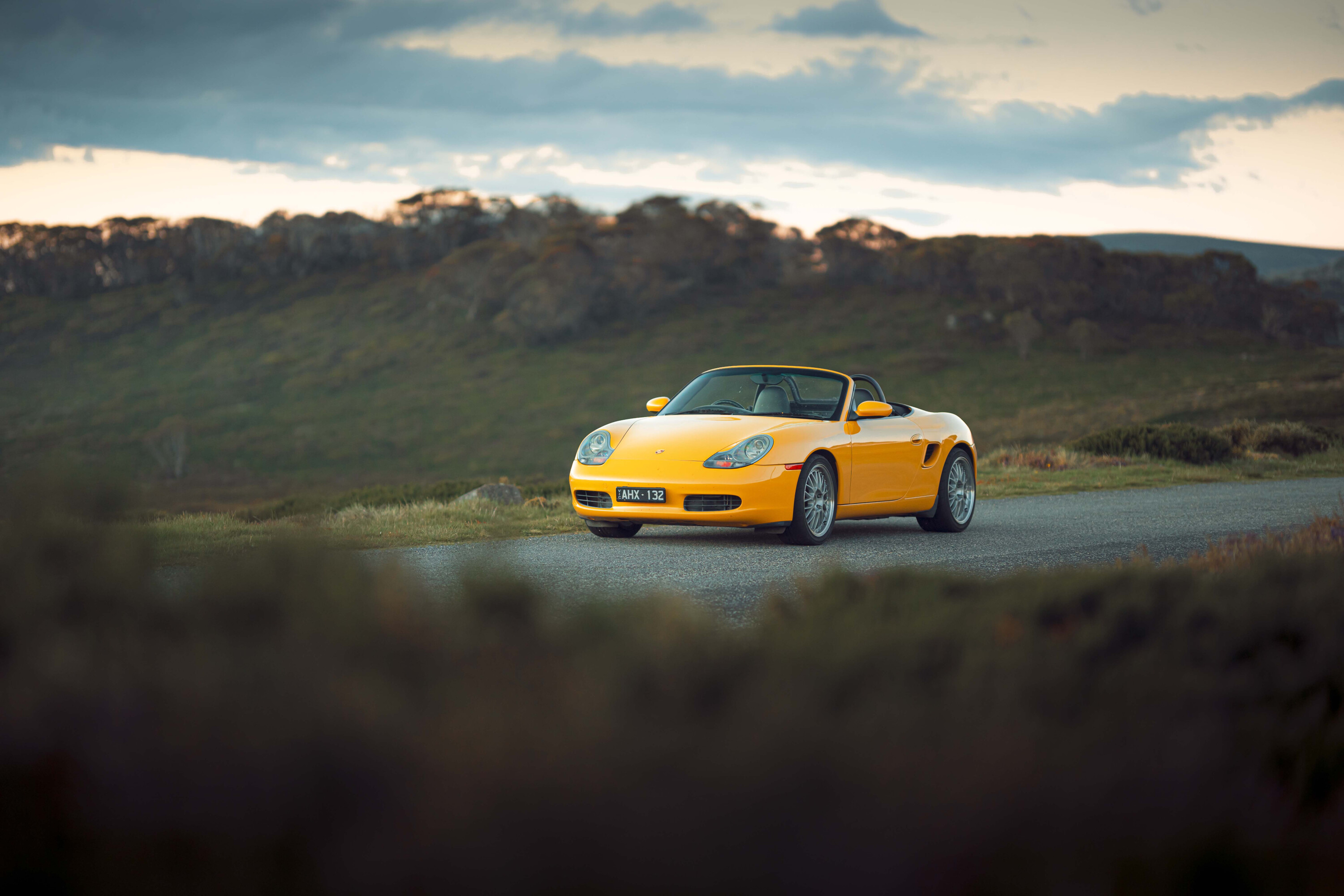
1
The 986 Boxster was a huge success for Porsche.
Between 80 and 90 percent of all sales were conquest purchases from other marques, they were younger than expected and Porsche sold 56 percent more of them than predicted by even its most ambitious estimate. It might be a stretch to say the Boxster saved Porsche, but the decision to share the development costs of the 986 and 996 certainly did.
“We had two model lines which we felt would allow us to recover, and then one year later we launched the [996 version of the] 911, and then with the recovery of the economy we felt we were out of the woods gradually,” noted Marchart. Here’s to remaining out of the woods.
Thanks to Karl Ludvigsen – author of ‘Porsche: Excellence Was Expected’ – for his considerable help with this feature.
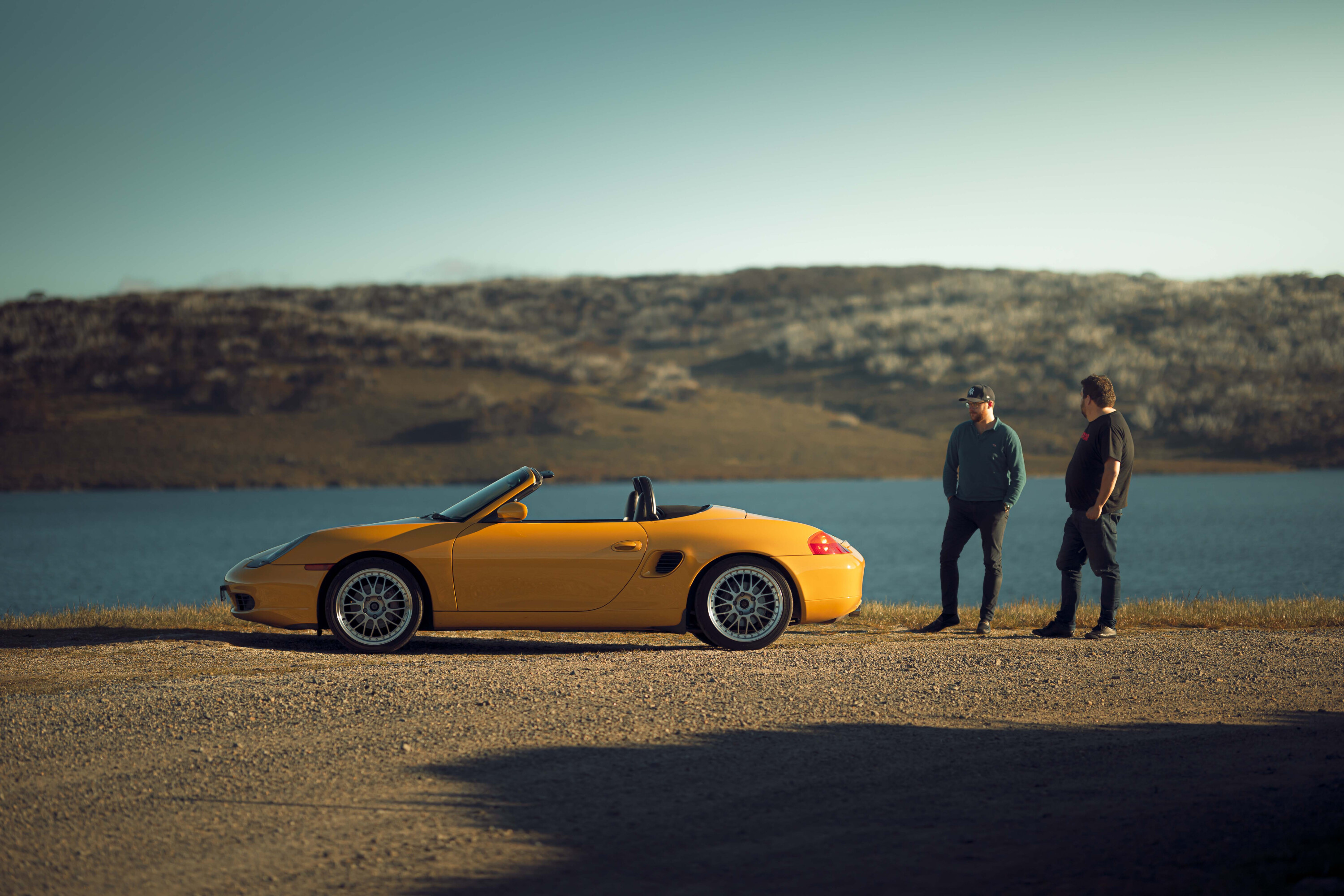
1
Finn pickings?
If you own a 986, there’s a 55 percent chance that it was built not in Germany but in Finland, and not directly by Porsche but by its contractor, Valmet. If your Boxster’s VIN has a U as the 11th character, it was built in the Uusikaupunki plant.
In a serendipitous gift of timing, the plant had just wound up its contract to build Opel Calibras and had capacity to build Boxsters. The decision was not taken lightly. Wendelin Wiedeking had to face down an angry works council who preferred the option of putting on a third shift at Zuffenhausen.
The decision proved a success, with warranty claims for the Finnish cars being lower than those of their German-built siblings.
MORE
Everything Porsche
| Porsche 986 Boxster | |
|---|---|
| Engine | 2687cc flat 6, dohc, 24v |
| Max power | 162kW @ 6400rpm |
| Max torque | 260Nm @ 4750rpm |
| Transmission | 5-speed manual |
| Weight | 1335kg |
| 0-100km/h | 6.6sec |
| Price (now) | from AUD $20,000 |
After a slight delay compared to the rest of the range, the Audi SQ8 e-tron and Q8 50 e-tron – formerly known simply as the e-tron –have finally landed in Australia.
At the local launch event in Victoria’s picturesque Yarra Valley, we had the opportunity to test drive both new SQ8 e-tron body styles and the entry-level Q8 50 e-tron.
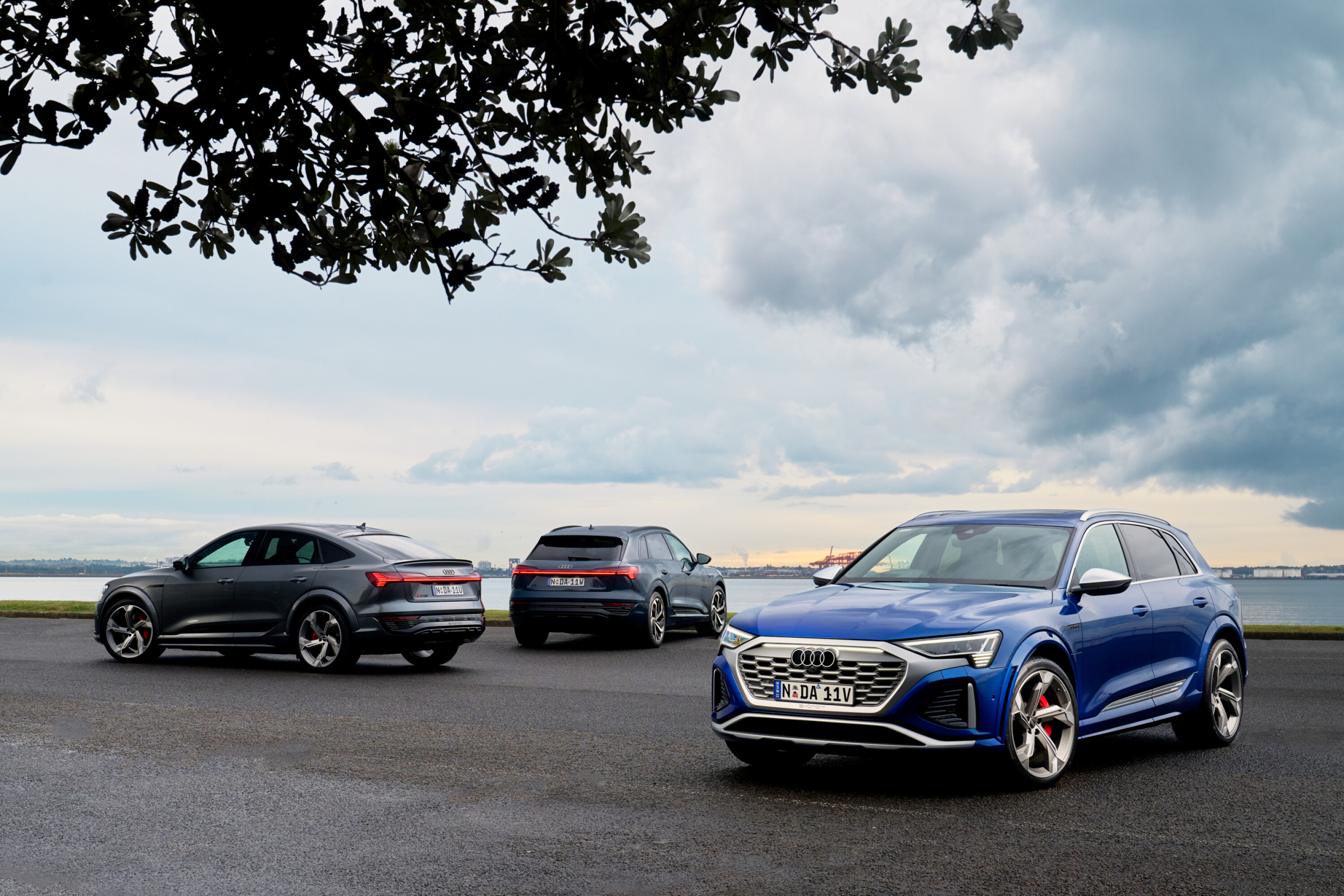
1
Allow me to put myself on the chopping block for a moment (and brace myself for any potential criticism) by admitting that the Q8 is the first new Audi I’ve driven in my career. Rather than pretending to know how the previous model performed, I approached this experience with a fresh perspective, informed by listening to and reading my colleagues’ insights.
After all, we all have to start somewhere, right? And having spent months driving some of Audi’s direct competitors, I was even more keen to attend this launch and evaluate Audi’s pioneering electric vehicle in Australia.
JUMP AHEAD
- How much is it, and what do you get?
- Interior comfort, space, and storage
- How do rivals compare on value?
- What is it like to drive?
- Efficiency
- How safe is it?
- Warranty and running costs
- VERDICT
How much is it, and what do you get?
The Q8 lineup in Australia will consist of four variants: the Q8 50 e-tron, the existing Q8 55 e-tron Sportback, and the SQ8 e-tron, available in both SUV and Sportback versions.
The mid-spec Q8 55 e-tron has been in market for over six months at this point and will be sandwiched by these launch variants. Pricing starts from $140,600 for the new entry-level Q8 50 e-tron, up to $180,600 before on-roads for the range-topper SQ8 Sportback e-tron – the sporty coupe style SUV.
Key updates include a new front fascia with an inverted, coloured grille, a full-width daytime running light, and a modernised 2D logo. Audi has also added remote park assist and new LED matrix headlights. Aerodynamic enhancements, such as new front air curtains over the wheel arches have been added to further reduce the coefficient of drag, improving the vehicle’s efficiency.
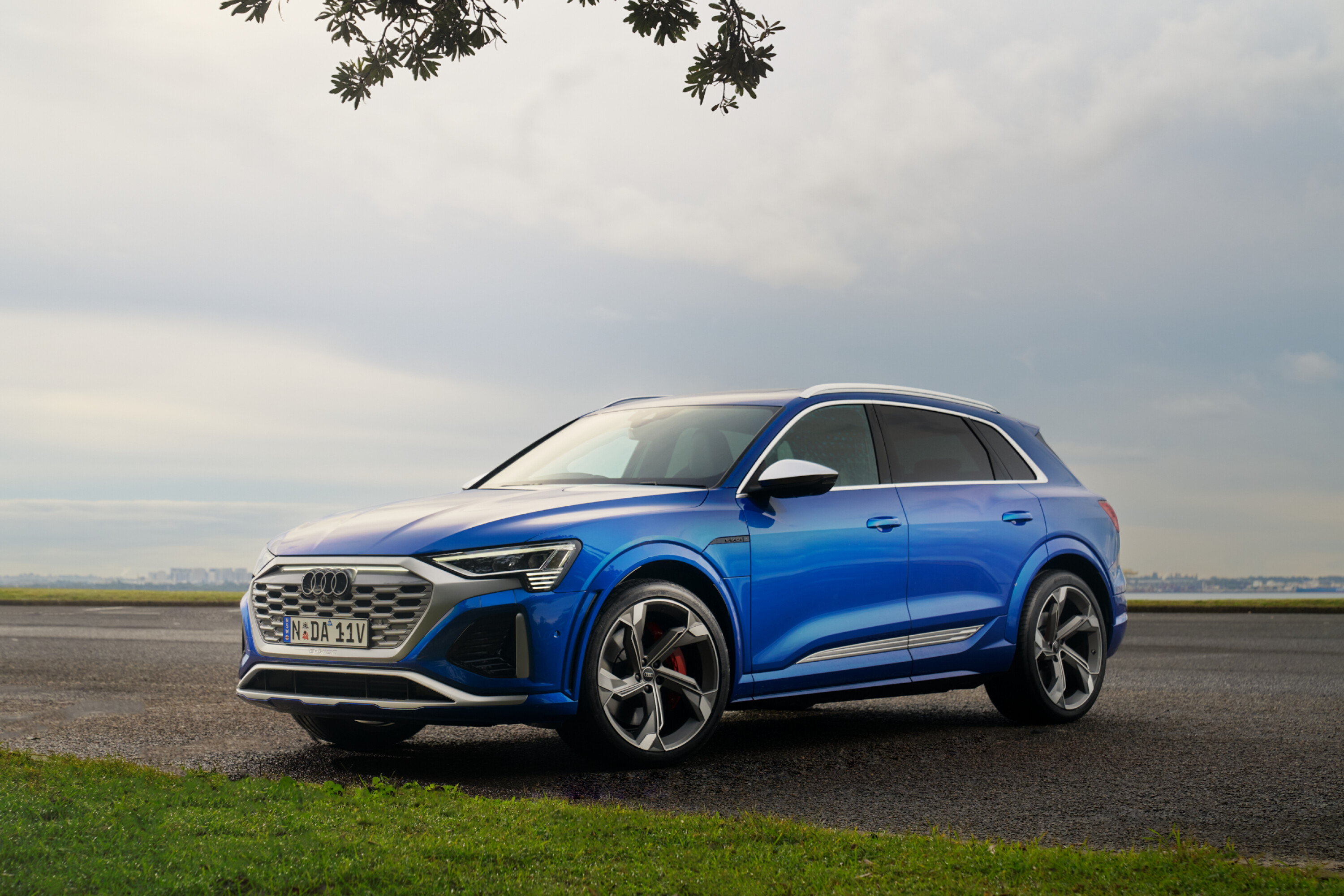
1
| Model | Pricing |
|---|---|
| Q8 50 e-tron | $140,600 |
| Q8 55 e-tron Sportback | $165,900 |
| SQ8 e-tron | $173,600 |
| SQ8 e-tron Sportback | $180,600 |
The launch edition was offered in a limited batch when the 55 landed late last year which has now run out.
Standard features for the base grade include 20-inch alloy wheels with a wide five-spoke design. Apart from the embossed e-tron logo on the rear bumper and the decal on the B-pillars, these wheels are one of the few outward signs of the car’s electric nature.
Even the front grille, with its sleek design, requires a closer look to notice the absence of traditional petrol engine gaps.
| 2024 Audi Q8 E-Tron 55 features | |
|---|---|
| 20-inch alloy wheels | Heated, power-folding and auto-dimming side mirrors with memory, kerb-side function |
| Adaptive air suspension | Keyless entry and push-button start |
| 10.1-inch MIB 3 infotainment system | 360-degree camera system |
| Wireless or wired Apple CarPlay and Android Auto | Electric tailgate |
| Audi Connect Plus connected-car service | Head-up display |
| DAB+ digital radio | Front and rear parking sensors |
| 10-speaker, 180-watt audio system | Autonomous emergency braking (vehicle, pedestrian, cyclist, junction) |
| Wireless phone charger | Lane-keep assist |
| 12.3-inch digital instrument cluster | Collision avoidance assist |
| 8.6-inch ancillary touch display | Lane departure warning |
| Single-colour interior ambient lighting | Blind-spot alert |
| Leather-accented upholstery | Rear cross-traffic alert |
| Heated front seats | Safe exit alert |
| Dual-zone climate control | Adaptive cruise control |
| Auto-dimming rear-view mirror | Traffic jam assist |
| LED headlights, tail-lights, and daytime running lamps | Rain-sensing wipers |
| Rear dynamic indicators | Tyre pressure monitoring. |
The 55 e-tron, which launched last year and wasn’t part of this event, includes more power and features such as S line exterior styling, 21-inch sport alloy wheels with a 10-spoke design, sport front seats, four-zone climate control, ambient lighting, electric steering wheel adjustment, and full-grain leather seats.
The SQ8 models are available in both a traditional SUV configuration and a Sportback design with a signature sloping rear spoiler.
These variants come equipped with 22-inch sport alloy wheels in a ‘titanium grey’ finish, S body styling on the front and rear bumpers, grille, side sills, and rear tailgate spoiler. Additional features include red brake calipers, sport front seats, a 16-speaker B&O sound system, a heated steering wheel, and metallic paint.
1
The entry-level Q8 e-tron boasts a WLTP range of 411 kilometres, with a 0-100 km/h time of 6 seconds in boost mode and 7 seconds without.
While the previous generation had a different range based on the NEDC standard, it’s not a direct comparison due to the differing testing methodologies but Audi claims an improved range although were unable to provide exact figures.
The SQ8 Sportback offers a greater range of 430 kilometres and accelerates from 0-100 km/h in just 4.5 seconds in boost mode, or 5.1 seconds without. It delivers a robust 370kW of power and 973Nm of torque for a more thrilling drive experience.
Both the Q8 e-tron 50 and 55 feature twin-motor setups, providing a substantial 664Nm of torque. The Q8 e-tron 50 generates 250kW of power, while the 55 model steps up to 300kW, offering enhanced performance and agility.
| Sensory package- $9,600* |
|---|
| Digital Matrix LED headlights with dynamic projections |
| Exterior door entrance LED projector lights with e-tron logo |
| Power-assisted soft close doors |
| Heated rear outer seats |
| Air quality package |
| Upper dashboard and lower interior elements in full leather |
| Sunshade for rear window |
| * for SQ8 variants only |
1
It goes without saying that for over $200K drive-away for an SQ8 there is a huge expectation of what a customer would expect as standard on your vehicle.
So the almost $10K sensory package isn’t an easy pill to swallow. But on the other hand, 2% of the cost price wouldn’t scare away a buyer looking around this price point.
We were also unable to test the virtual door mirrors, which replace traditional side mirrors with two cameras that project video onto 7-inch screens near each door. This might be just as well, given the mixed love/hate responses we’ve heard about them.
1
| 2024 Audi Q8 E-Tron available colours | |
|---|---|
| Magnet grey | Glacier white* |
| Chronos grey* | Manhatten grey* (^) |
| Mythos black* | Plasma blue* |
| Ultra blue* (#) | Soneria red* |
| Daytona grey pearl* (#) | * Premium paint, $2300 |
| (^) not available for Q8 E-Tron 55 Launch Edition, Sportback 55 | (#) not available for Q8 E-Tron 55 |
Interior comfort, space and storage
When assessing an electric car of any sort, a lot of the focus is often placed on the vehicle itself being electric, especially in recent times when the main thing separating the Q8 from the e-tron version is what is powering the wheels.
But take a step back from the electric powertrain and you realise what a beautiful cabin you’re in. Overall quality and craftsmanship is tangible in this SUV with every detail contributing to the overall feeling of luxury. Some harder plastics below the B-pillar does bring it down a touch but keep your eyes forward and the design is beautiful and tactile.
The same thought has gone into the practicality of the vehicle which combines easy to use features with elevated designs.
1
The driver information is showcased on crisp and bright 12.3-inch digital display.
The primary 10.5-inch screen features haptic feedback with three customisable levels. However, this feedback is disabled when CarPlay is active. A secondary 8.6-inch touchscreen monitor underneath displays climate controls and driving modes.
The Q8 e-tron 50 features has a thin circular steering wheel and manual adjustment, which is a surprise for a $140K SUV.
There’s a good amount of storage between the large door pockets which comfortably fit our 750ml bottles, and a two centre cupholders. Similarly there’s a deep centre console and a glovebox which interestingly almost folds out flat into what reminds me of the fold-down tray you have on an airplane.
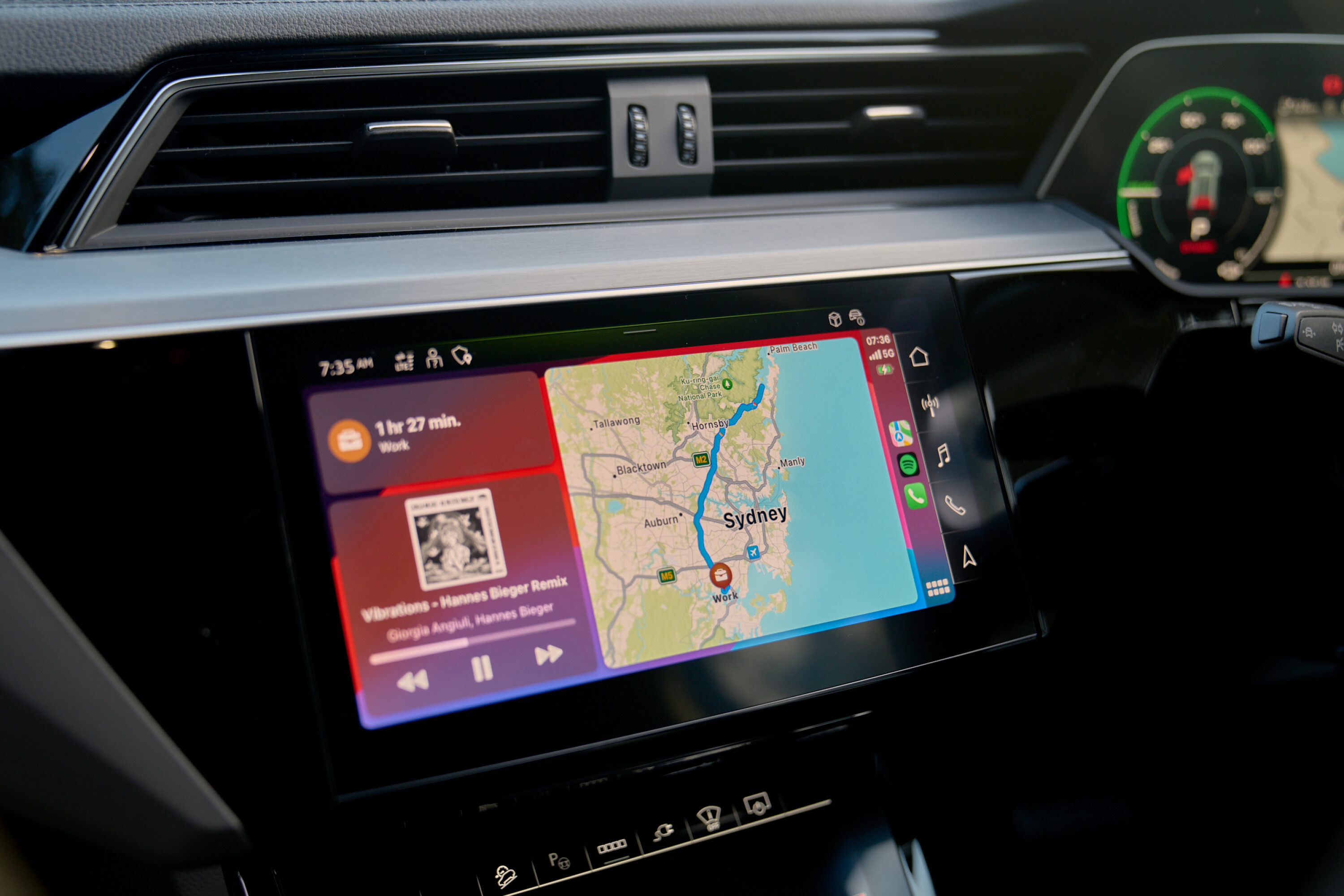
1
In the back there is netted storage behind the front seats and a fold down centre armrest with a further two cupholders.
All variants have an electric tailgate with gesture control. Boot space for SUV versions is measured at 569L behind the second row and 1637L with the seats folded down. The Sportback is slightly reduced to 528L/1567L due to the sloping roofline eating into rear space.
Rear side passengers in the SQ8 receive three air different air vents and dual-zone HVAC controls. They’re also treated to rear seat heating as part of the sensory package we had fitted on the launch car, that when combined with the heater makes for a very cozy spot as a passenger. The second row is equally as spacious in Sportback models penalising headroom only marginally.
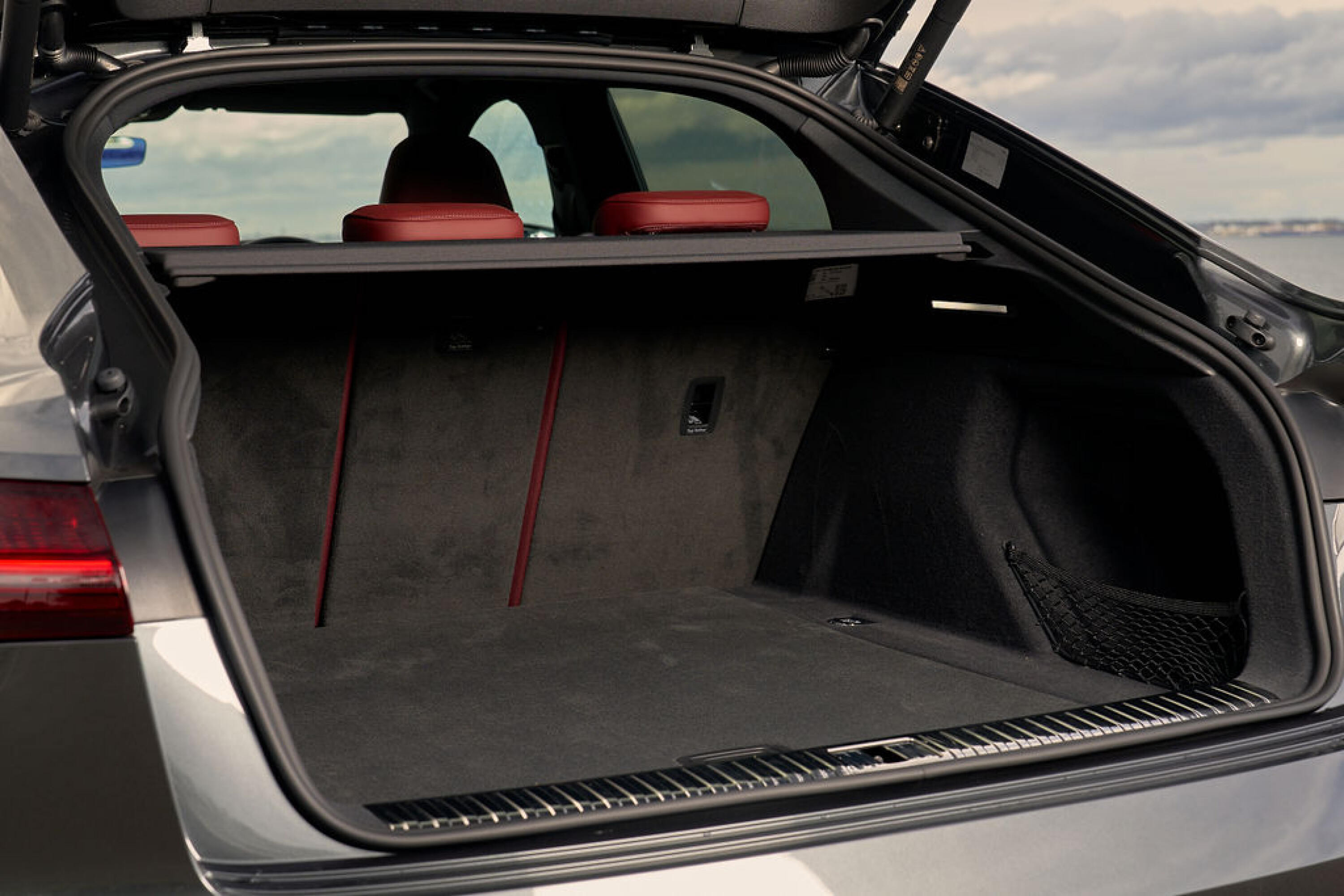
2
How do rivals compare on value?
Almost all competitors now offer electrified SUV options. Think BMW iX (from $130,990), Mercedes-Benz EQE SUV (from $134,900), the new Polestar 3 (from $132,900) and Jaguar i-Pace (from $144,125). Even the incoming Cadillac Lyriq might be added to some shopping lists.
Closely aligned to the SQ8 e-tron the iX includes air suspension, BMW Laserlight and a panoramic sunroof as standard. These are embedded into the costs but with those features adding almost $7k to the price it overtakes the BMW. The iX also has 630km of range on a WLTP test cycle it trumps the equivalent SQ8 by 200km.
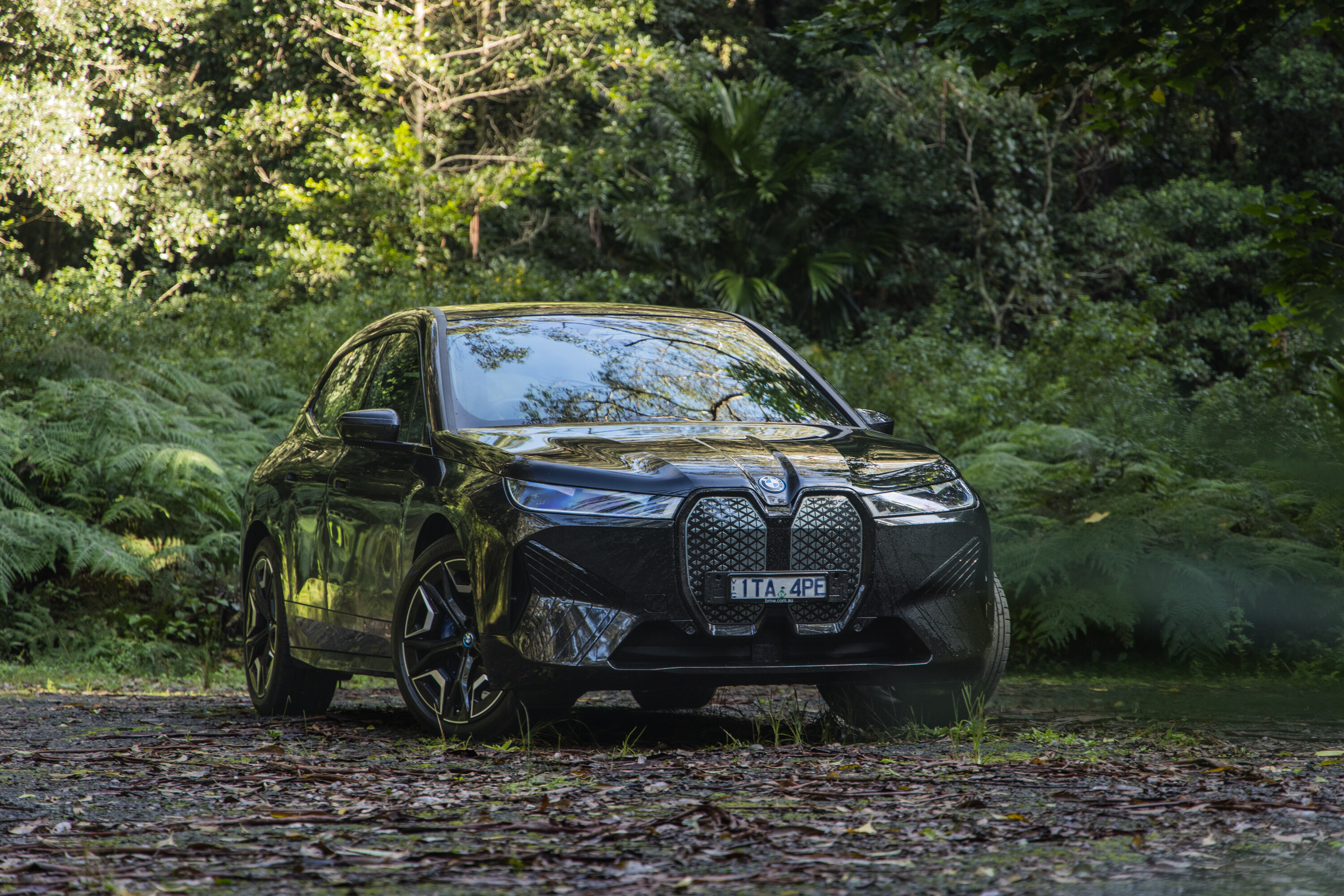
1
Both Jaguar’s I-Pace trims feature twin-motor, all-wheel-drive setups, delivering 294kW and 696Nm, and have a WLTP range of 470 kilometres.
Similarly, the Mercedes-Benz EQC has two models both equipped with an 80kWh battery and dual electric motors, delivering 300kW and 760Nm, with a lower WLTP range of 350 kilometres.
What is it like to drive?
The basics
| Audi Q8 e-tron 50 | Audi Q8 e-tron 55 | Audi SQ8 e-tron | Audi SQ8 Sportback e-tron | |
|---|---|---|---|---|
| Body | 4-door, 5-seat, SUV | 4-door, 5-seat, SUV | 4-door, 5-seat, SUV | 4-door, 5-seat, SUV |
| Drive | twin-motor all-wheel drive | twin-motor all-wheel drive | triple-motor all-wheel drive | triple-motor all-wheel drive |
| Battery size | 95kWh | 114kWh | 114kWh | 114kWh |
| Max power | 250kW | 300kW | 370kW | 370kW |
| Max torque | 664Nm | 664Nm | 973Nm | 973Nm |
| Energy consumption | 23.9kWh/100km (claimed) | 25.6kWh/100km (claimed) | 28.8kWh/100km (claimed) | 28.0kWh/100km (claimed) |
| Weight | 2510kg | 2520kg | 2650kg | 2650kg |
The Q8 and SQ8 embody luxury and both come equipped with Audi’s signature quattro permanent four-wheel drive system.
One of the standout features of the Audi cabin is its exceptional noise insulation. On the freeway, wind noise is minimal and tyre noise is virtually non-existent, allowing passengers to easily enjoy a nap without any disturbances after a long journey.
Thanks to a new quicker steering ratio, the steering in both models is remarkably nimble for a such large vehicle. This provides a more precise and connected feel, making manoeuvring surprisingly easy, whether navigating city streets or winding country roads.
A notable highlight in the SQ8 is the torque vectoring system, enhanced by the two separate rear motors. This significantly boosts the vehicle’s agility, allowing it to change direction with remarkable ease and improving overall handling and cornering performance. The precise distribution of power to the rear wheels ensures that the vehicle remains composed and responsive, even during more spirited driving.
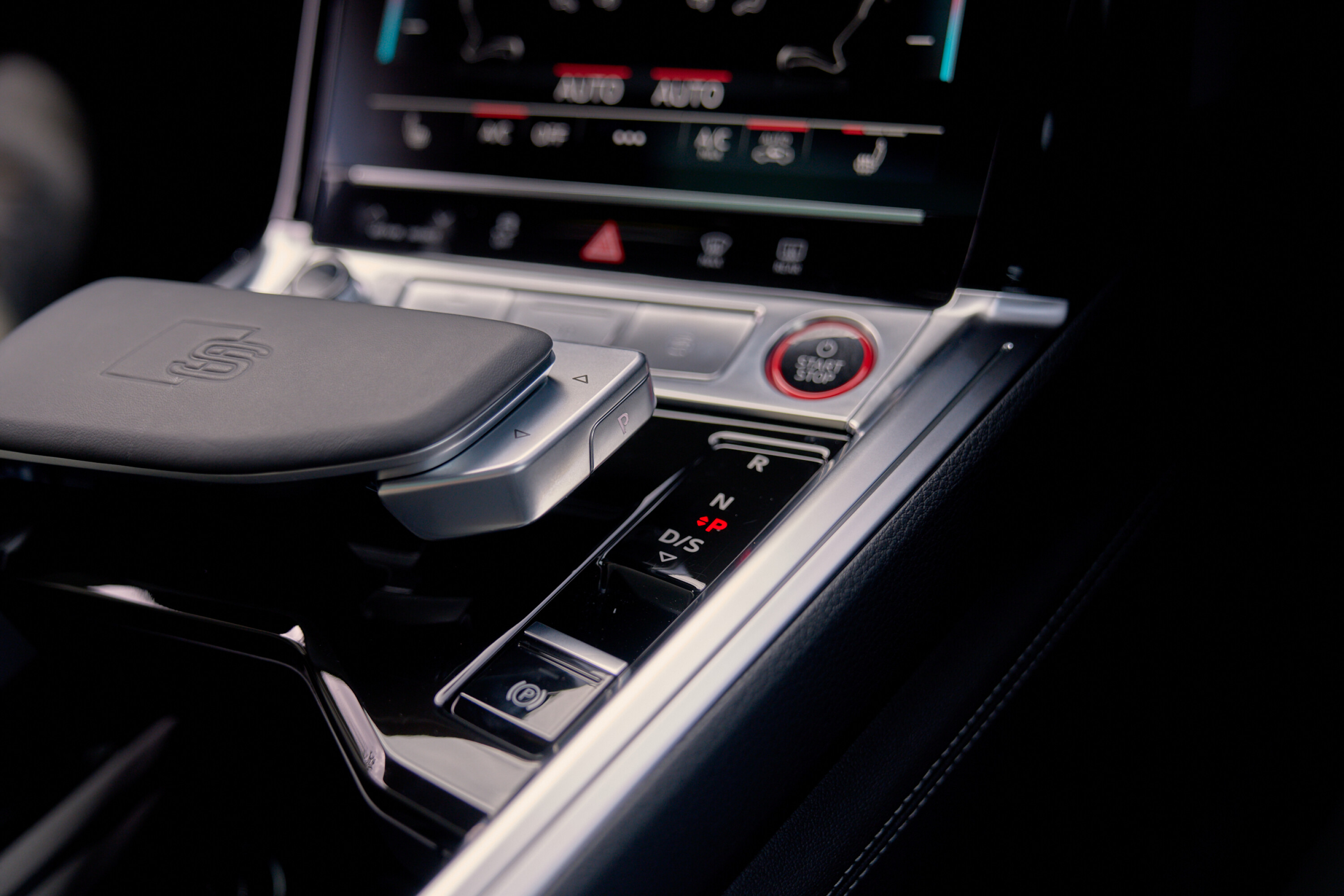
1
The SQ8’s 0-100 km/h time of 4.5 seconds is quick, but it doesn’t feel as rapid as some competitors, likely due to the vehicle’s substantial size.
Nonetheless, the acceleration is smooth and consistent, delivering power in a controlled and refined manner. This makes for a more composed driving experience, even when tapping into the vehicle’s impressive performance capabilities.
To clarify, it’s certainly not slow, but you won’t experience the stomach-churning and often at times violent “Am I going to throw up?” acceleration that some rivals deliver.
1
Braking is responsive for such a large vehicle. Despite having to arrest up to 2.6 tonnes, the braking system instills confidence with its quick and precise response.
The large brakes provide ample stopping power, ensuring that the vehicle can be brought to a halt efficiently and safely, even under heavy braking conditions.
On winding roads, even the base grade Q8 50 e-tron handles well, thanks to its low stance and lower centre of gravity. This design helps the vehicle grip the road effectively and stay planted, despite being a large SUV. The well-tuned suspension and balanced chassis further enhance the driving experience, providing stability and control through tight corners and curves.
1
Efficiency
Audi claims a consumption rate of 23.9kWh per 100 kilometres for the Q8 50 e-tron, and 28.8/28.0kWh for the SQ8 SUV/Sportback.
This gives them a respective claimed range of 411km and 430km for both SQ8 bodystyles. The existing 55 e-tron has a driving range of 454km and claimed consumption of 25.6kWh.
During the launch drive, my usage figures sat between 25kWh-30kWh based on a range of roads and conditions.
Charging times for the Q8 e-tron vary based on the type of charger available. Using a standard home wall box, the Q8 e-tron can charge from zero to 100 percent in approximately 14.5 hours. A 50kW fast charger will take an hour and 16 minutes to a full charge from zero. With a 170kW charger, the Q8 e-tron can charge from 10 to 80 percent in just 31 minutes.
1
How safe is it?
The entire Audi Q8 e-tron range has earned a full five-star safety rating from ANCAP, based on the Audi e-tron testing in 2019.
The Q8 e-tron scored 91 percent for adult occupant protection, 88 percent for child occupant protection, 71 percent for vulnerable road user protection, and 78 percent for safety assist systems.
The Q8 e-tron range comes equipped with an extensive array of standard safety features. This includes a 360-degree cameras, adaptive cruise control with traffic jam assist, lane assist with rear cross-traffic assist and exit warning system, intersection crossing assist, collision avoidance assist, and turn assist. Additionally, dual frontal airbags, side chest-protecting airbags, and curtain airbags for both the front and second rows.
1
Warranty and running costs
The Q8 e-tron range is covered by a five-year, unlimited-kilometre warranty and an eight-year/ 160,000km battery warranty.
To tempt the transition to electric for first time buyers new cars come with a six-year Chargefox subscription.
You’ll also get free servicing and complimentary roadside assistance for the five years as well. Service intervals after the five years are set at two years or 30,000 kilometres, whichever comes first.
VERDICT
The Audi Q8 e-tron and SQ8 e-tron have launched in Australia, continuing Audi’s commitment to luxury and performance in electric vehicles.
The Q8 impresses with its high-quality craftsmanship and advanced infotainment systems, although some cost-cutting in the entry-level model might feel a bit basic.
Audi has truly mastered the luxury experience in the SQ8, especially once some options are included.
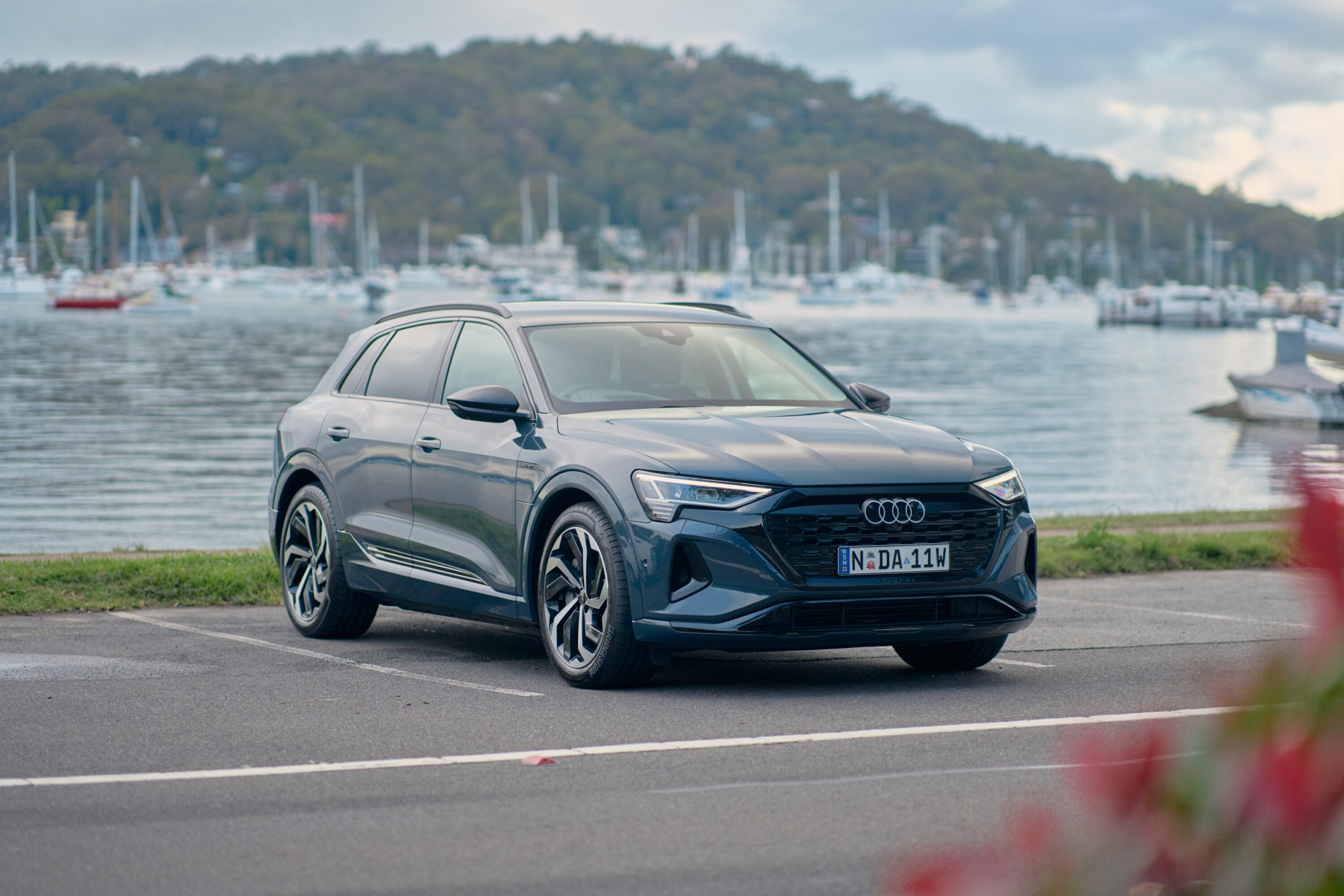
1
They’ve created a vehicle that not only makes a compelling case for going electric but also stands out as a great car to drive, with its electric nature almost becoming a secondary consideration.
On the road however, the Audi Q8 and SQ8’s consumption is notably high, consuming more than all most rivals. Given that some competitors offer over 200 kilometres of additional range, this does invite some criticism.
MORE
Electric Cars
