
A heavily bewinged Mercedes-AMG GT has been captured lapping the Nürburgring, revealing the latest glimpse into what is most likely the Black Series version’s development.
As the Nürburgring begins to open its gates for select events Mercedes-AMG has seized the chance to push ahead with development of its halo model in Germany’s warming weather.
The new footage gives us the latest look at the range-topper’s radical bodywork and samples its significantly changed V8 soundtrack, courtesy of what is believed to be a new flat-plane crankshaft at the twin-turbo V8’s core.
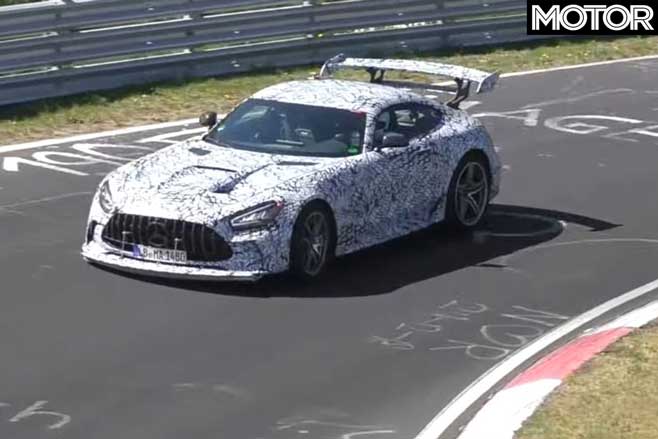
As for what we can take from the sighting, after speaking to Tobias Moers, head of AMG, at the Frankfurt Motor Show late last year, sister magazine Wheels gleaned the Black Series will be an overhauled GT R that builds upon the Pro version with GT3-inspired aerodynamic bodywork that was becoming too difficult to hide in production-nearing form. So what you see is what you get, then.
The GT in this video sports an aggressive front façade, with a scalloped bonnet hinting at the required air flow needed to cool its new powerplant, something which is expected to exceed 520kW when it debuts.
Then there are the vented front guard fairings and its front-lip that mimic the GT R Pro’s before a new front bumper that sports a single radiator opening, rather than a second one underneath the GT’s signature Panamerica grille, again hints at the car’s superior cooling.
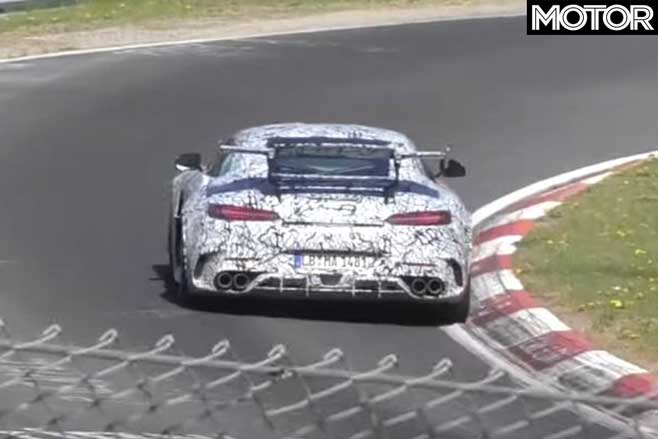
The bodywork opens up behind the front wheel arches, presumably to pull hot air out, before we’re treated to a hulking wing with an extra spoiler within its supports.
There’s also a rear bumper that spans its exhaust tips at its sides, rather the centre like other GT variants. And while that’s a new look, the noise coming from the rear is even more interesting.
The note is disappointingly muffled compared to a regular GT’s. There’s no audible throb or menace left in its wake but only a flat mono-tone blare. And while we cannot say if this is how the incoming Black Series will eventually sound, since there’s no information on the car’s exhaust tuning and this test’s particular criteria, we’re hoping otherwise.
On the other hand we know the powerplant will be key in uplifting the GT R Pro’s performance to the next level, something Moers has consistently promised up until the Black Series’ much anticipated release. And while that was originally planned for 2020 it’s comforting to see AMG cracking on with development.
When it comes to cars, we’re told the future is autonomous. We won’t need to drive. Cars will drive themselves and park themselves. Cars will pick the kids up from school, and whisk us interstate while we stream Netflix or read a book catch up on sleep.
For example, US electric car maker Tesla claims its cars are technically capable of driving themselves from your garage to work via school and the supermarket without you having to lift a finger. In America Tesla has already racked up millions of miles of autonomous driving on public roads… and there are videos of people eating cheese and having lightsabre fights while driving to prove it.
Some Audis can not only drop you at the shops, but also drive themselves into the multi-level carpark and park themselves, waiting to be recalled when you’re ready to go home.
There are Mercedes-Benz models that can get you from Melbourne to Sydney like you’re a passenger on a luxurious train – except Australian legislation doesn’t allow this level of autonomy yet.
And it’s not just expensive cars. Many affordable hatchbacks, like the Kia Rio and Mercedes-Benz A200 have cruise control systems that can match your speed to surrounding traffic, and most passenger cars these days have autonomous emergency brakes (AEB), which leap into action when you’re not paying attention.
That’s all well and good, but where are we really on the road to autonomy? And with all these ‘self-driving’ systems around, what counts as a truly autonomous car?
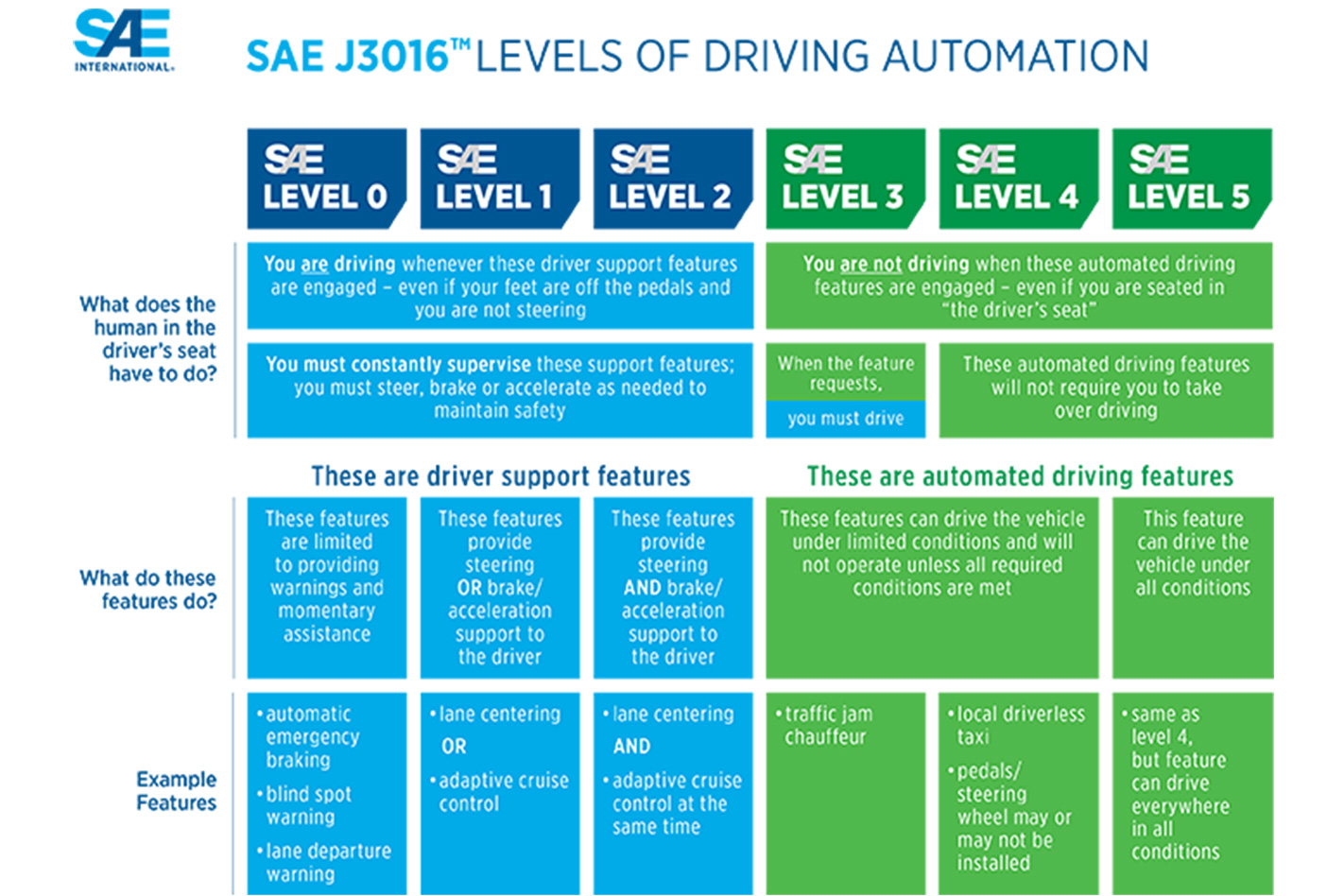
When it comes to understanding the apples and oranges of our autonomous future, the Society of Automotive Engineers has leaped to our rescue with a comprehensive rundown of the various features which car companies tout as autonomy, and just how ‘autonomous’ they really are. You may have already heard of “Level Three Autonomy” and “Level Five Autonomy”, or even “Level 2.5” – well, the above chart tells you precisely what defines each level.
And, in case you were curious, it’s the stuff on the green side that is what is regarded as self-driving – everything in blue is merely a driver-assistance system.
This handy matrix gives non-engineers like you and me a really good overview of the different levels of autonomy, from Level 0 (no autonomous systems at all) to Level Five (can drive itself everywhere in all conditions without human intervention). How far are we from Level Five? If you ask the automotive industry, most are pessimistic we’ll even get to Level Four. Even Toyota, which has invested and continues to invest significant sums in autonomous research, says “nobody is even close” to a workable Level Five capability, and likely won’t be for quite some time.
For a more thorough rundown, you could download SAE report (J3016), but be warned, it’s very technical – as you’d expect from the Society of Automotive Engineers!
How do you rate your knowledge of autonomous systems, and what do you think about a future with driverless cars? Let us know below!
As motor journalists, we are happy to talk about the high-performance cars you should buy… often without being asked in the first place. But the fundamental flaw in our ‘if it were our money’ argument is it never is our money.
On todays chat, Andy, Dan and Scott discuss how to create the best driver’s car for no more than $30,000 – this is the first WCW built-not-bought challenge and it probably won’t be the last.
After we all propose the most obvious and ‘sensible’ solution, independent thinking prevails and some truly ridiculous suggestions are put forward. You may even see them come to fruition as it was close to beer-o-clock.
With the subject of affordable driver’s cars fresh in our minds, we turn the attention to the polar opposite of the spectrum, and a brand that doesn’t get a huge amount of airtime on WCW but we’ve vowed to change that.
Easy to pronounce but utterly impossible to spell, Koneing… Coneg… Konnn…what is this enigmatic Swedish company, where has it come from, and how has it lasted where so many others have failed?
From the insanity of the very first CC8, Koenigsegg has maintained its disruptive and innovative trajectory through brilliant technology that always results in fantastically fast and beautiful machines.
A recent revelation though, suggests the company is heading in the direction of a new ‘affordable’ entry-point previewed by the Raw concept. If only journalists had the kind of cash Koenigsegg considers ‘affordable’, because our DIY pet projects would be a lot more impressive.
You can find WhichCar Weekly on all manner of podcast apps including iTunes and Podbean. Please rate, subscribe and leave a review!
You can also follow the day-to-day happenings of the WhichCar team on Facebook, Twitter and Instagram @whichcar
Listened to or watched the WhichCar weekly podcast? Help us out!
- Leave a note in the comment section below
- Leave a review on Apple Podcasts/iTunes
- Subscribe to our podcast
If you own a Classic Porsche and want some more modern capability in terms of your infotainment system, you’re in luck.
Porsche has announced a new system for classic models, right back to the beginning of the 911, and for cars up to the 996 911 and 986 Boxster, called Porsche Classic Communication Management, or PCCM.
PCCM units are designed to slot right into the old stereo head unit’s place on the dash, though the interface was designed with the surrounding elements in mind to avoid clashing styles. No more bright green lights and silver plastic dials.
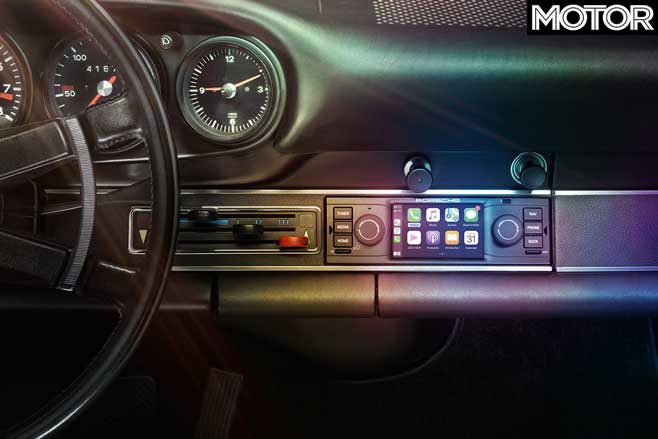
Two rotary knobs, six buttons, and a slim 3.5-inch wide touch screen allow the use of digital radio and Apple CarPlay without disrupting the style of the original interior.
Porsche says PCCM is most suitable for models from the first generation of 911 up to the 993 generation but says installation in “earlier front- and mid-engine models is also possible.”
Additionally, Porsche has announced a PCCM Plus unit which is able to be installed in the aforementioned 996 911 and 986 Boxster.
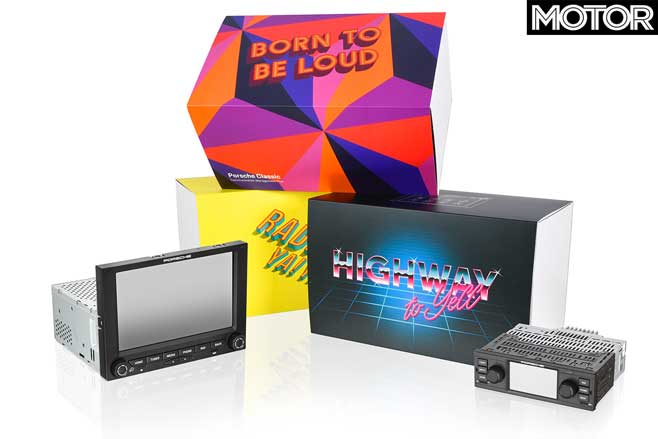
The Plus features a larger 7-inch screen which is also able to be used with Android Auto.
The new systems can be bought from Porsche dealerships for $2643 for PCCM and $2968 for PCCM Plus, though installation may incur additional charges.
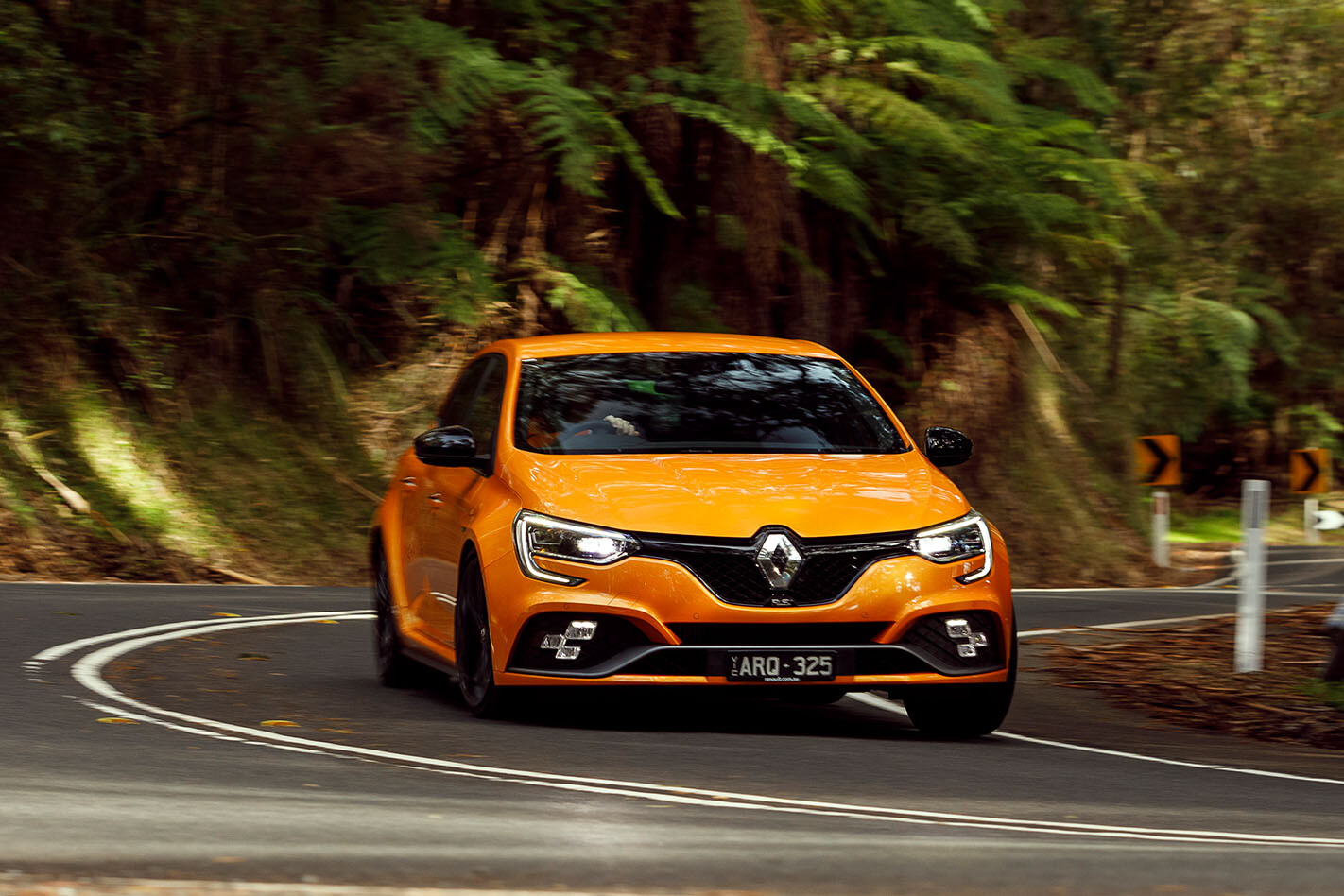
Renault Australia insists that the next Megane is on track and fans of the RS models Down Under won’t be left in the lurch – contrary to reports surfacing out of the UK.
Renault Australia’s corporate communications manager, Andrew Ellis, told Wheels there had been no talks about axing the Megane from the line-up.
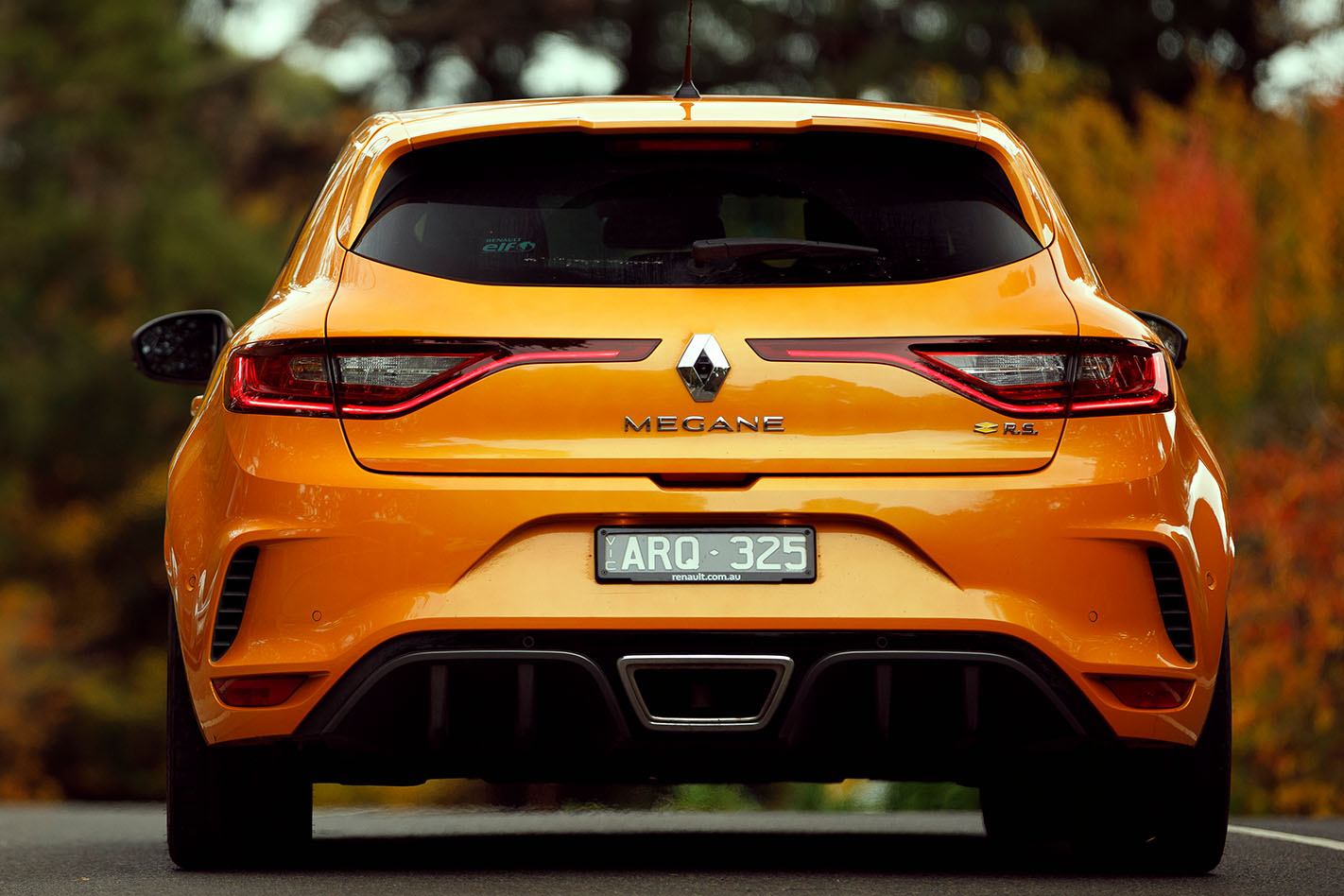
“There is a new one coming – the Megane will always be a part of the line-up here in Australia,” Ellis said, before jokingly adding: “I think we’d have the Megane fans lining up at the front door of our head office if we suggested anything else.”
Power outputs for all Megane RS variants now sit at the Trophy’s 221kW level with Ellis emphatic on the future of the French hot hatch in Australia.
“I can guarantee it – definitely the RS, but there is the new GT-Line that we’ll have a look at as well.”
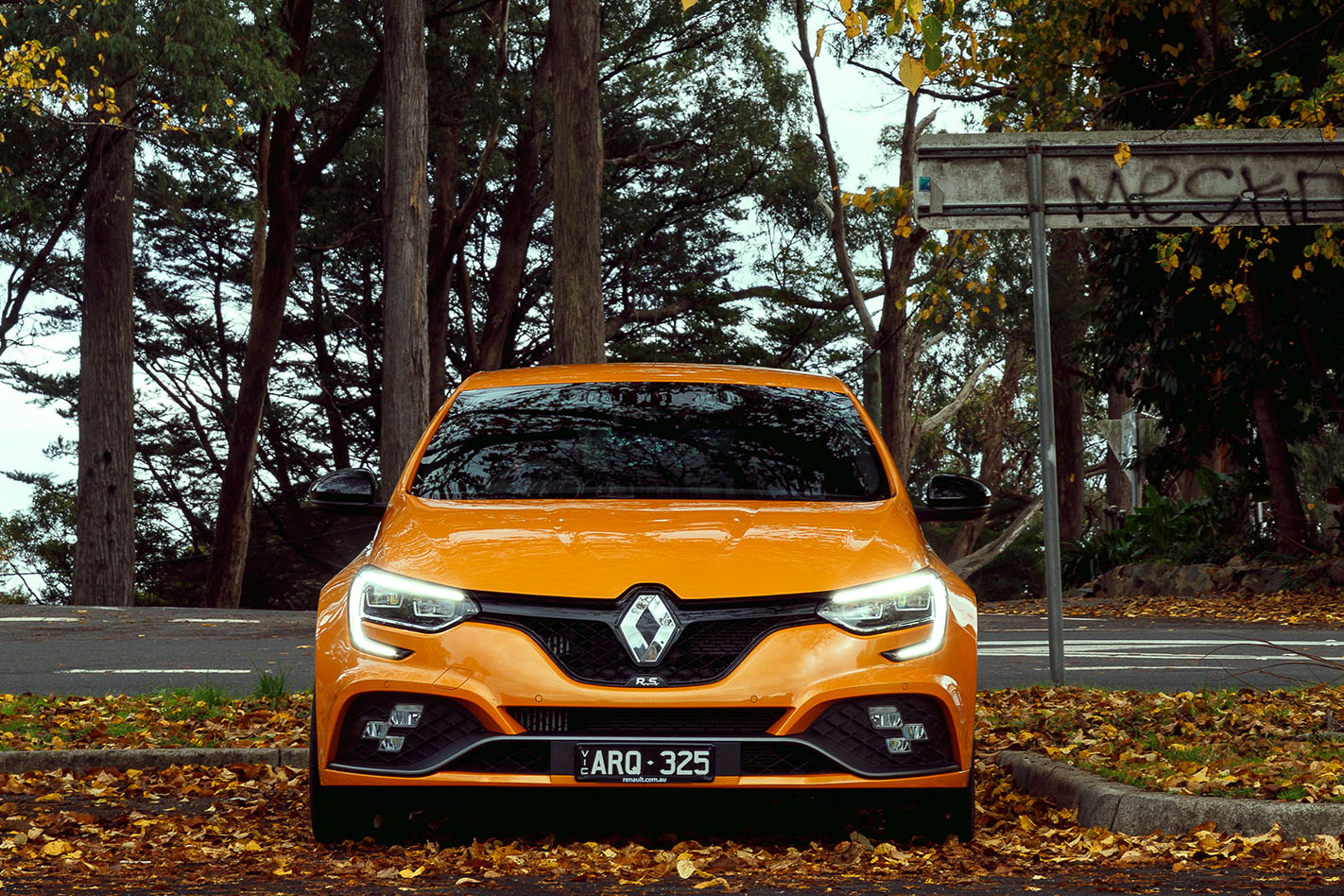
Asked if the next-generation RS was still in development, Ellis said it remained all systems go.
“Obviously with COVID-19 and things being shut down there is currently a delay, but when things clear, we will definitely have RS into the future,” he said.

On the flipside, British outlet Auto Express interviewed Renault’s design chief, Laurens van den Acker, who said that the future of the Megane was under threat due to the EV shift.
“Inevitably, once we’re starting to add a range of EVs to our line-up, some of the other vehicles are going to have to go because we just can’t afford to develop all of this at the same time,” van den Acker said.
“The Megane is in a segment that’s increasingly under pressure. You have to put your money where the future of the market is.”
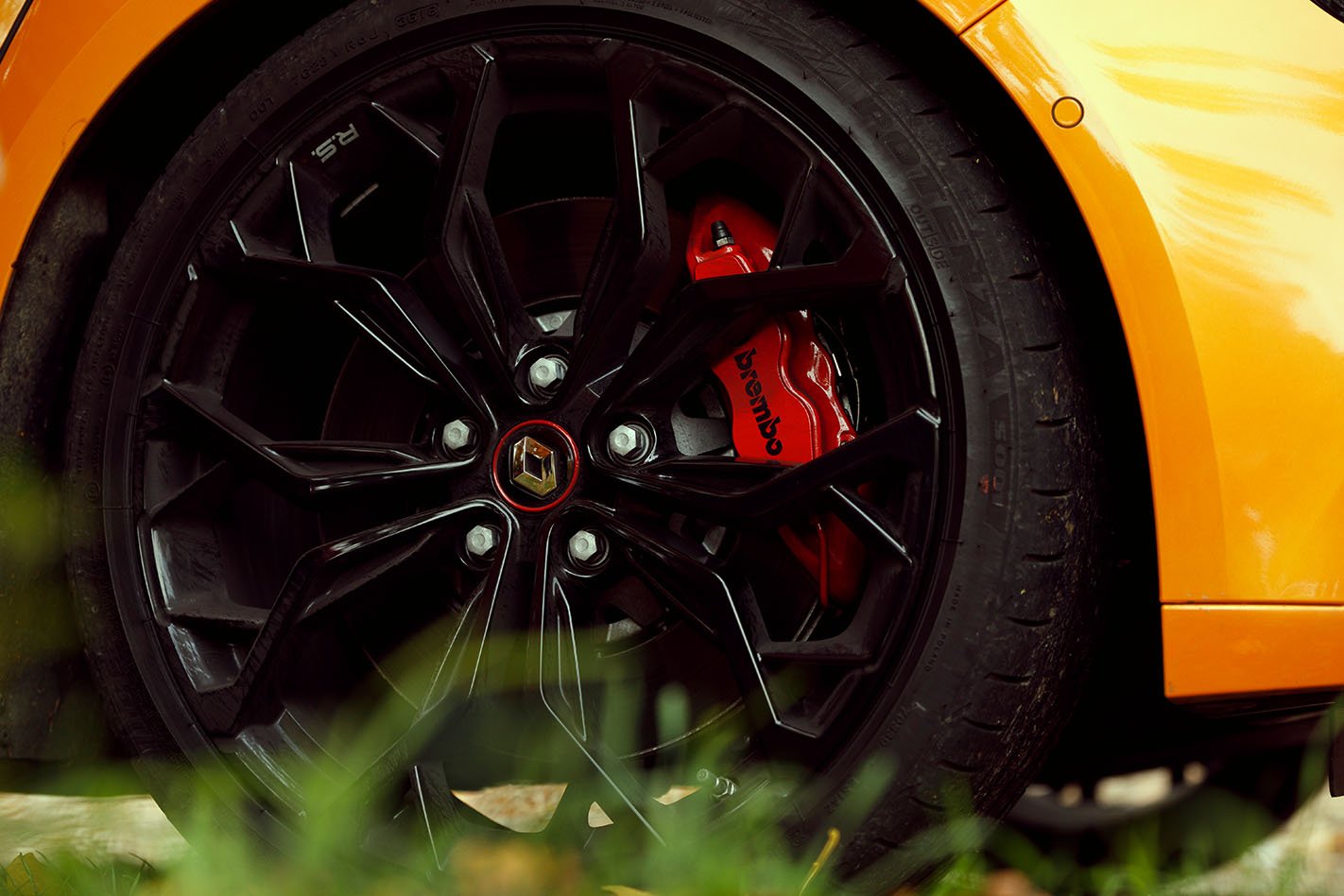
On that EV and hybrid shift, Ellis said that the current plan for Renault Australia was to stick with just the RS, but accessing other options wasn’t out of the question.
“We’ll definitely look at everything – we have to. However, it has got to make a business case,” he said.
“We have already been pretty bold bringing in the Zoe and the Kangoo ZE, so we’re a brand that definitely looks at those things, and if it’s the right fit we’ll bring it in.”
One of those models in question is the Megane E-Tech PHEV, which uses two electric motors and a 9.8kWh lithium-ion battery pack for a WLTP-rated range of 48km in pure EV mode.
WHAT YOU NEED TO PLAY DIRT RALLY 2.0
Dirt Rally 2.0 is compatible with the Xbox One, Playstation 4, and PC platforms, and while you can have a decent experience with a gamepad, we thoroughly recommend the use of a wheel to get the most out of this game. We’ll explain why further down.
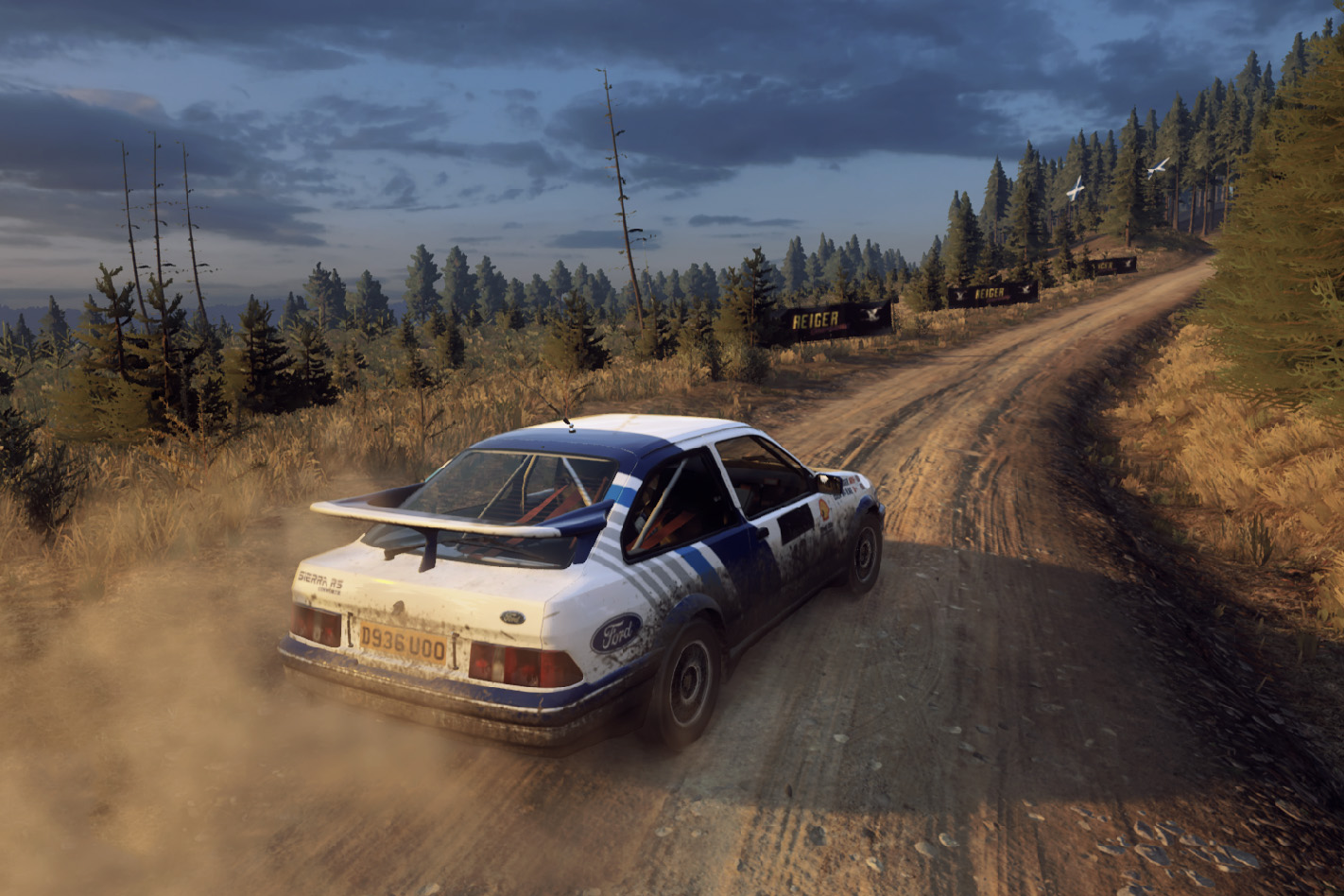
HOW MUCH DOES DIRT RALLY 2.0 COST?
If you subscribe to either Xbox Gamepass Ultimate or Playstation Plus, we have good news: the standard version of Dirt Rally 2.0 is free for users of those services right now.
Otherwise, the standard game currently costs $67.45 on Xbox, $56.95 on Steam and $62.95 for Playstation at undiscounted retail prices. Discounts are frequent, however, so keep your eyes peeled and you could pick it up for significantly less. DLC ranges in price for a few dollars for individual cars, to $15-20 for a season pass that gives you access to multiple DLC modules in one hit.
WHAT’S DIRT RALLY 2.0’s GAMEPLAY LIKE?
Remember how we said you really need a wheel to enjoy this game? Well that’s not just because racing sims generally deliver a more immersive experience when you’ve got a tiller to twirl, but because Dirt 2.0 features one of the best implementations of force feedback ever.
From the second you pull off the starting point in your first race, you’ll know exactly what I mean. The wheel tugs left and right, reacting not only to the engine’s torque but also the camber of the road and telling you precisely what’s going on underneath your front tyres. Ruts will pull the car into them, while putting one wheel on grass while the other stays on gravel will deliver an appropriate response to your hands
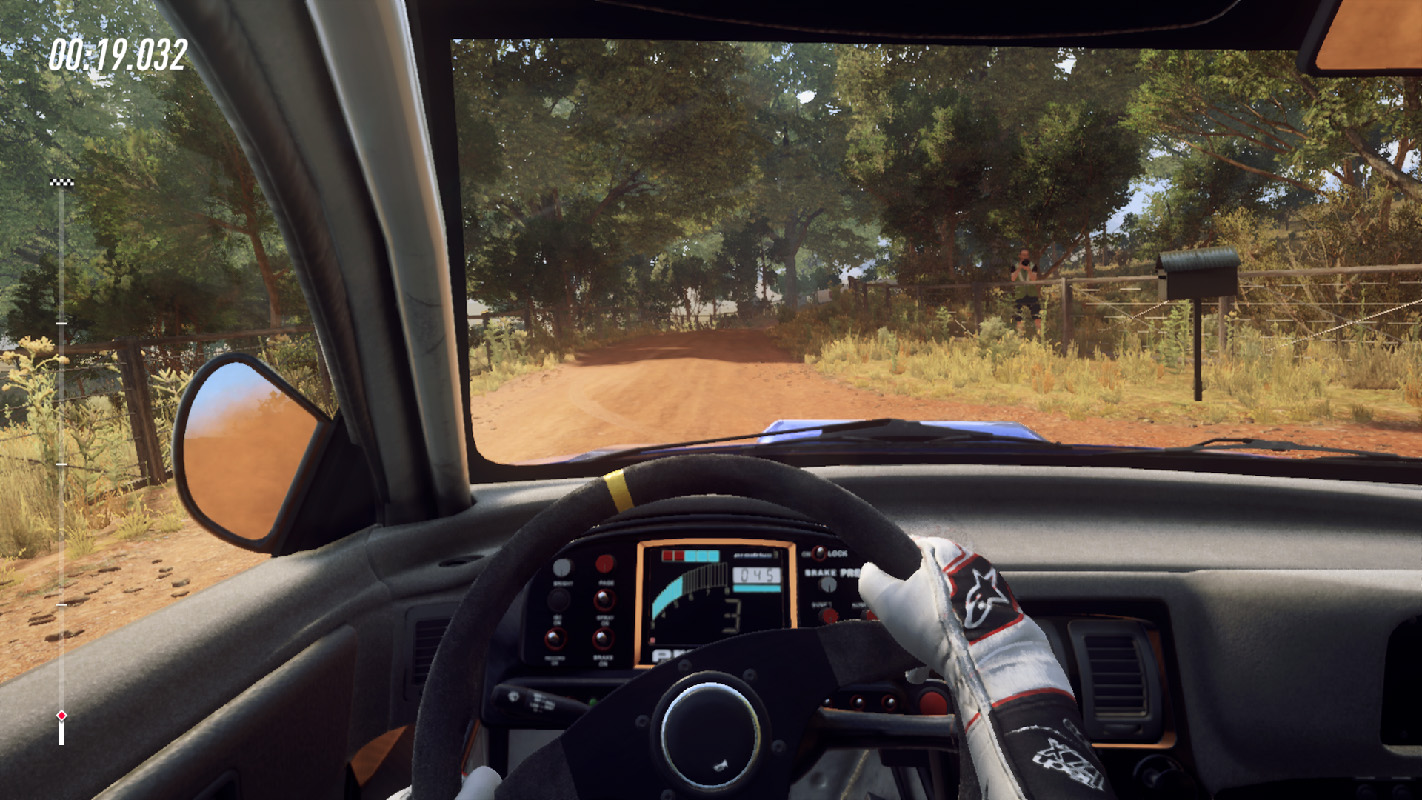
Even on our Logitech G920 – a mid-range wheel that’s not quite at the hard-core level of e-sport spec Fanatec units – Dirt Rally 2.0 delivers more feel and feedback to your fingertips than any other game I’ve experienced to date, and for a rally game that’s vital to not just winning, but even just surviving a stage in the first place.
And Dirt Rally 2.0 is hard. With a capital H. You’ll need every advantage you can get, and practice really does make perfect. Do NOT expect to do well in your first rally. It’s difficult to just keep your car out of the scenery, let alone beat the talented AI which, even on the ‘easy’ setting, are ruthlessly quick.
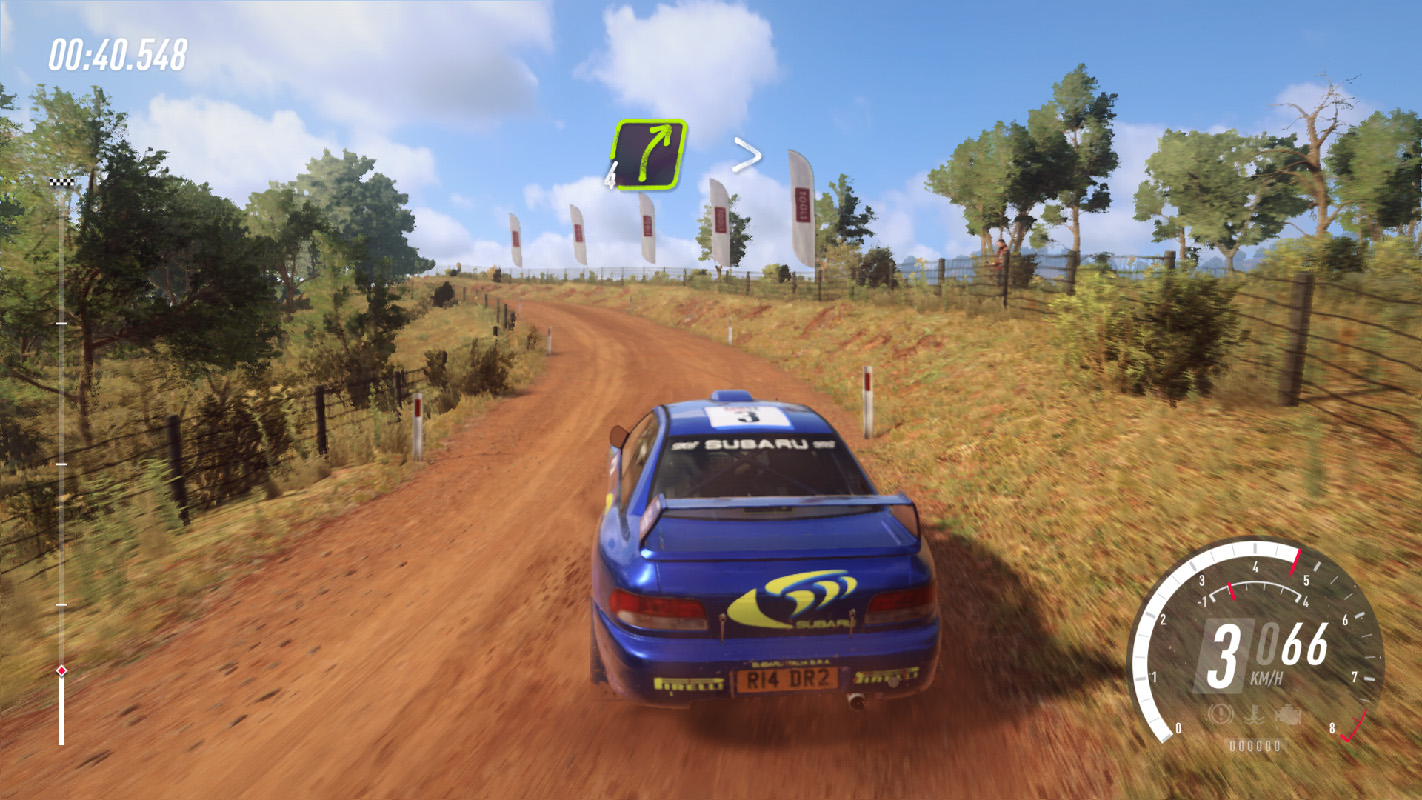
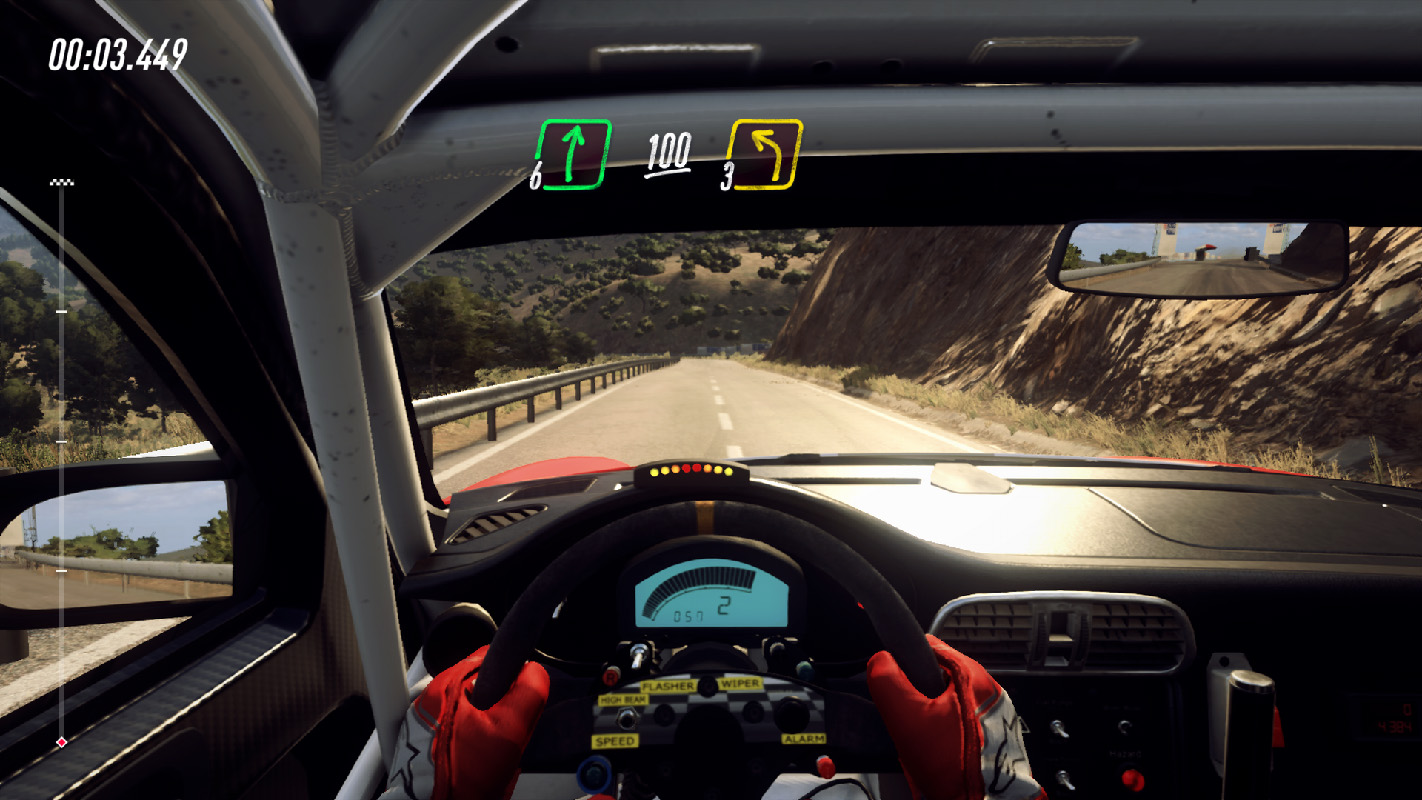
Decoding the calls of your co-driver are central to doing well. Pace notes are something you don’t find in any other racing game genre, and it’s that extra element of having to keep track of spoken cues that will separate average drivers from excellent ones in Dirt 2.0.
Called by veteran co-driver Phil Mills, the pace notes tell you what kind of turn is coming up; how fast you can go through it; and what danger factor there may be from rocks on the road, steep drop-offs to the side, etcetera. Learning the code and paying close attention to them effectively allows you to ‘see’ each corner before you arrive there, allowing you to set the car up ahead of time to not only stay on the road, but to be as fast as you can be.
The surface degrades as more vehicles go over it, which gives you an incentive to stay at the top of the finishing order throughout the rally. Lagging down the bottom? You’ll need to endure more rutted surfaces and the compromises to traction and steering authority they bring.
Just as in real life rallying weather plays a big part in Dirt Rally 2.0 and there’s genuine tension when the weather starts to close in, or night begins to fall. Rain adversely affects grip levels and the stages are almost entirely pitch-black at night if there’s no moon, and the game will often throw BOTH of those conditions at you in the same rally stage.
The upshot is that the AI drivers tend to drive much more conservatively in the wet and dark, so if you’re able to adapt to the danger you might find yourself having an easier time getting to the top of the time sheet.
Just don’t run off the road and smash your lights like I did one time. Completing the rest of the stage with just the dim glow of a single low-beam to guide me was the very opposite of fun.
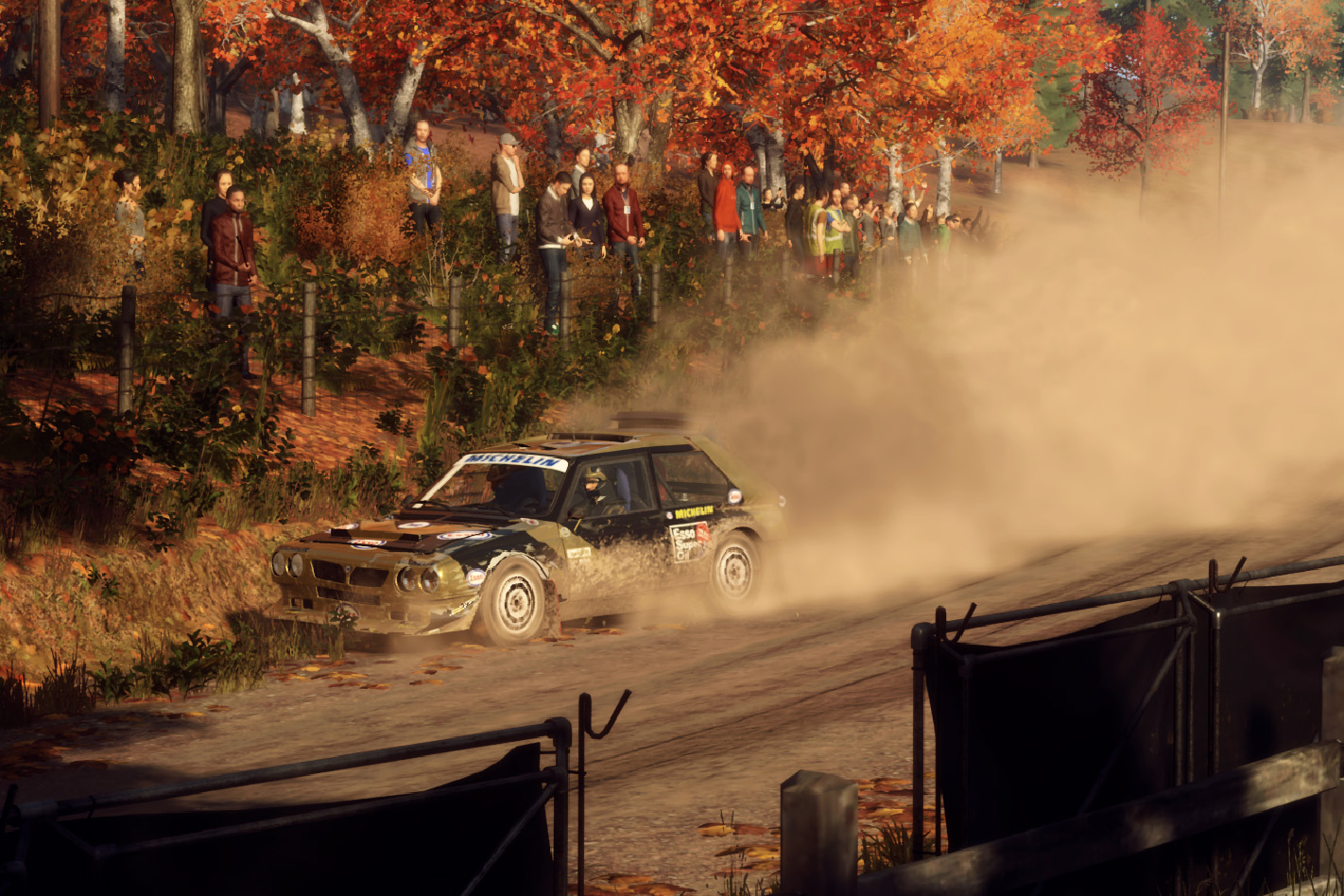
The graphics work well from the cockpit view, which, if you’re a die-hard rally simmer, should be your viewpoint of choice, with plenty of scenery detail whizzing past and distinct visuals for each rally environment. You won’t see any tree or shrub assets from New Zealand popping up in Spain, for example, and the fast dusty stages of Australia look especially authentic.
From the outside, the cars boast plenty of authentic detail and accurate 3D models, and also accrue dust, dirt, mud and grime as you progress through the rally – and damage too, if you’re having trouble following the pace notes. Rainy stages look fantastic too, with glossy puddles and dark, sticky-looking mud not just adding to the visual ambience, but giving you clues about where the grip is.
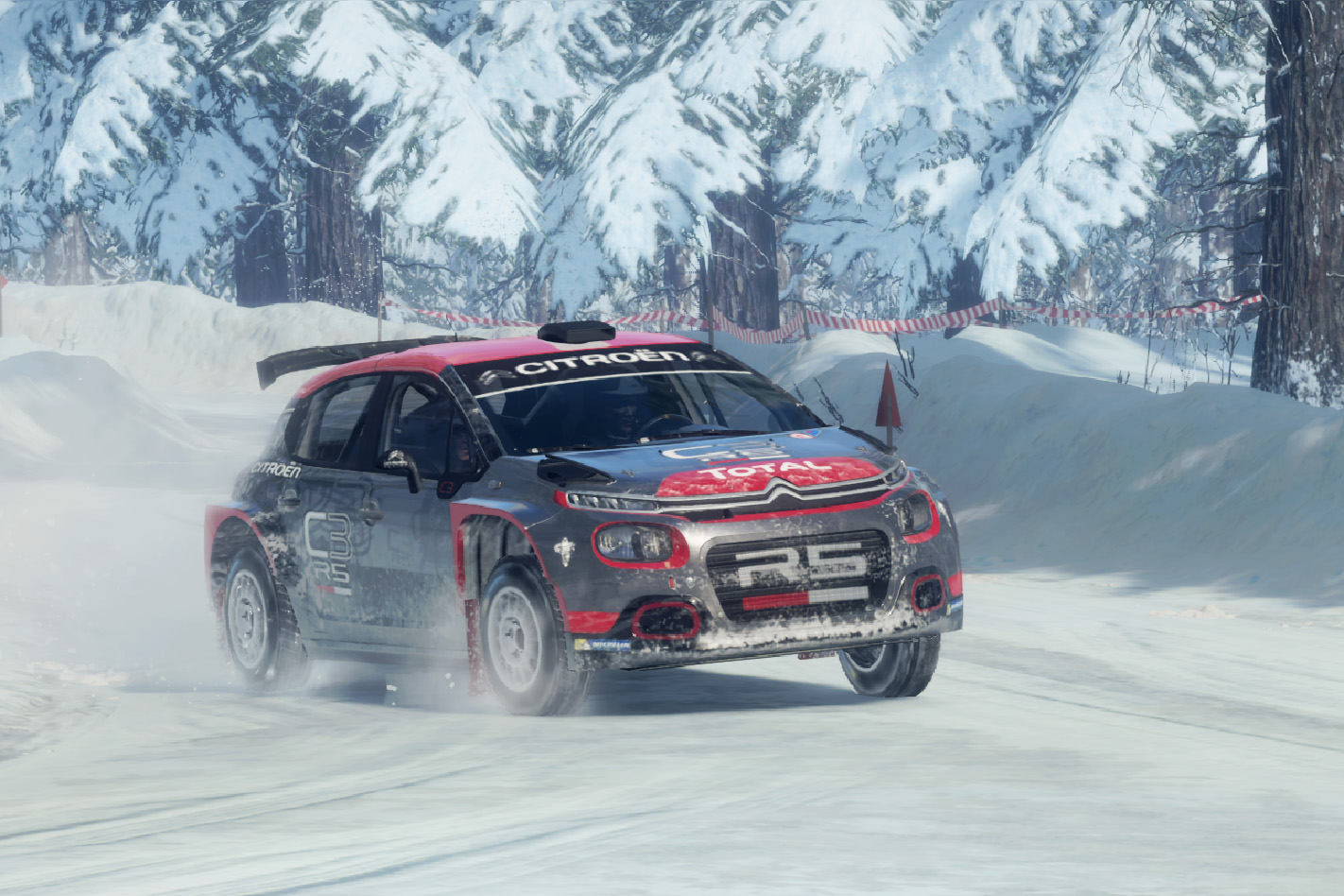
Those true-to-life graphics are matched by authentic sounds. The pops, bangs, and turbo sounds of Dirt 2.0’s rally heroes are overlaid with the sound of gravel and mud ricocheting around your wheelwells, and again the sounds offer you another sensory input about what’s going on at the road surface. Does it sound wet and splashy, for example? You’re on mud now, so take that into account.
Get good, and this game will teach you much about how to handle a car sideways. Managing the high-powered rear-wheel drive sports cars of the R-GT class takes particular finesse, but let them loose on the tarmac stages of Spain and you’ll have a ball. On gravel, mud and dirt, you’ll eventually become a master at exploiting the dynamics of front-drive, rear-drive and all-wheel drive, and those dynamic differences are also something that Dirt 2.0 models well.
IS THE COLIN MCRAE DLC WORTH IT?
The late Colin McRae is inextricably linked to the Dirt franchise, having lent his name to the first game in the series, Colin McRae Rally. That game was a hit, and led to six more McRae-titled rally games before it was rebranded to Dirt.
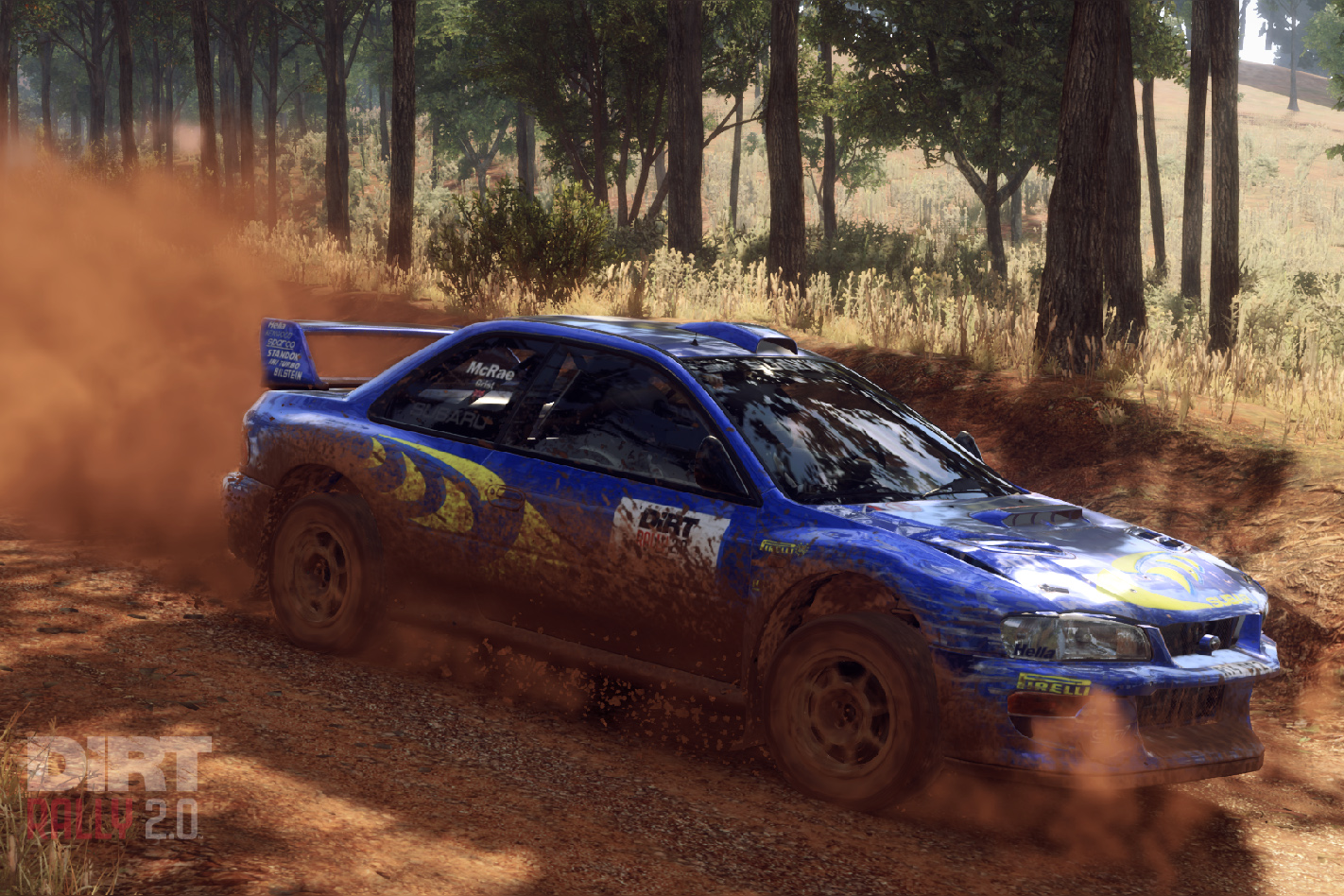
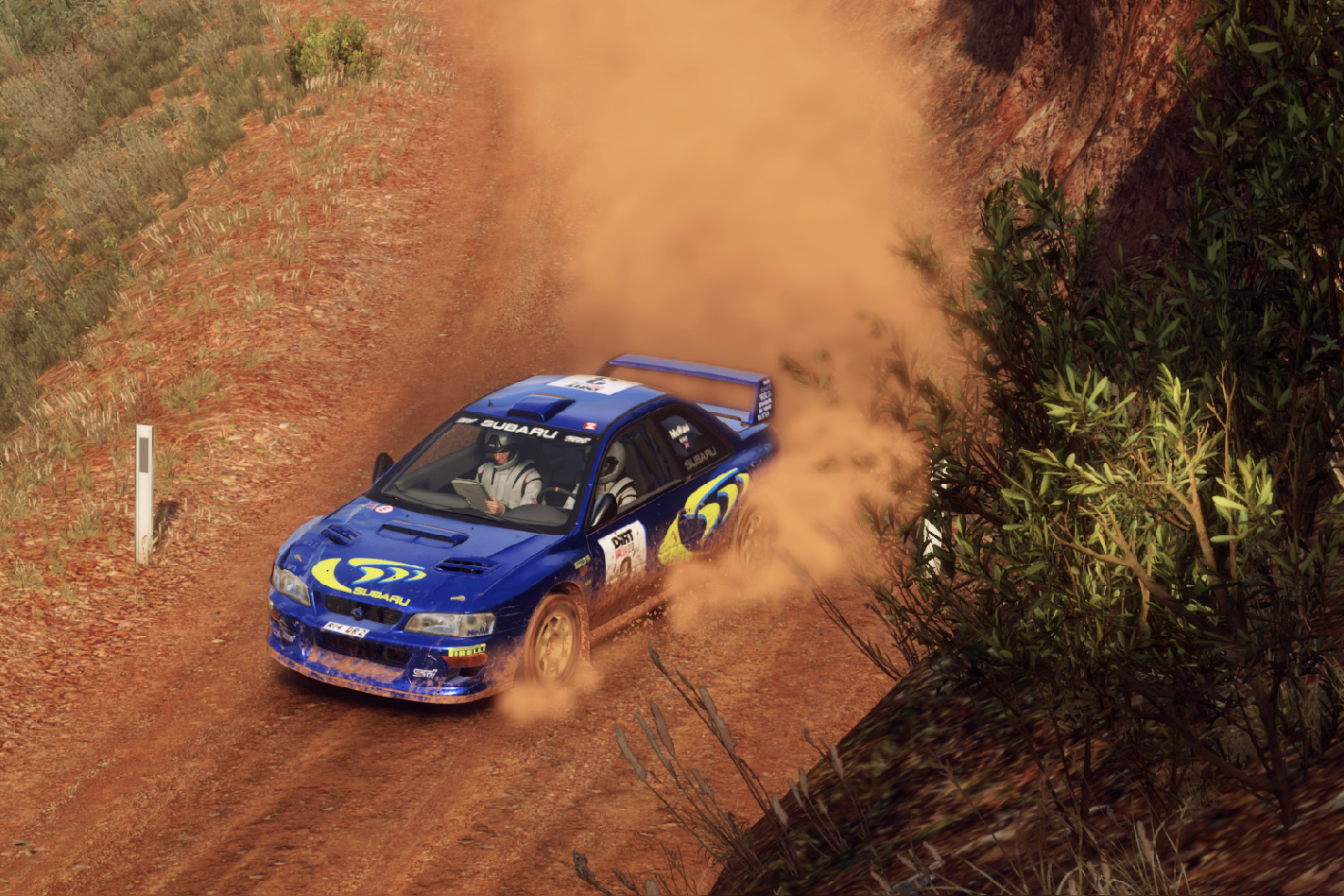
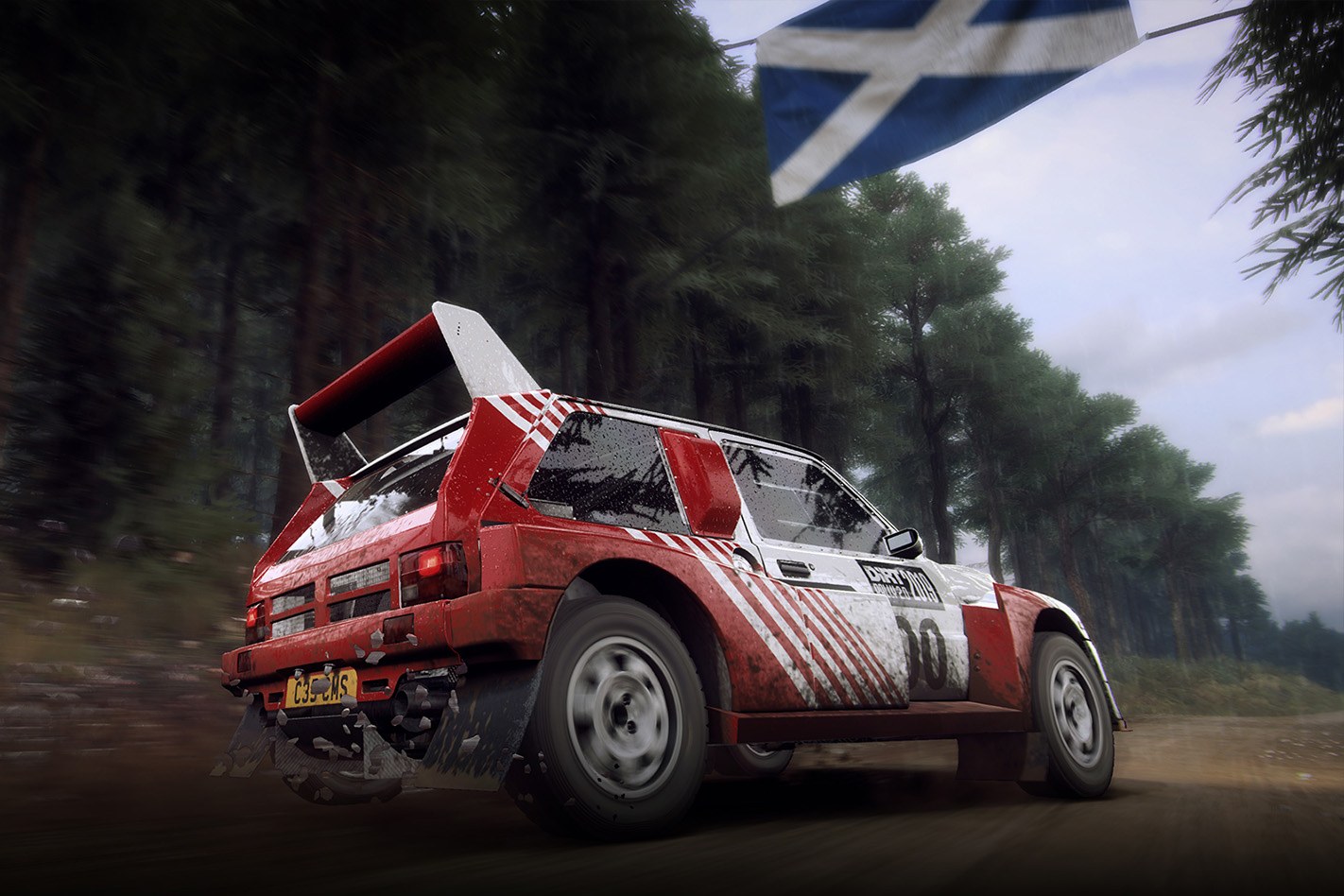
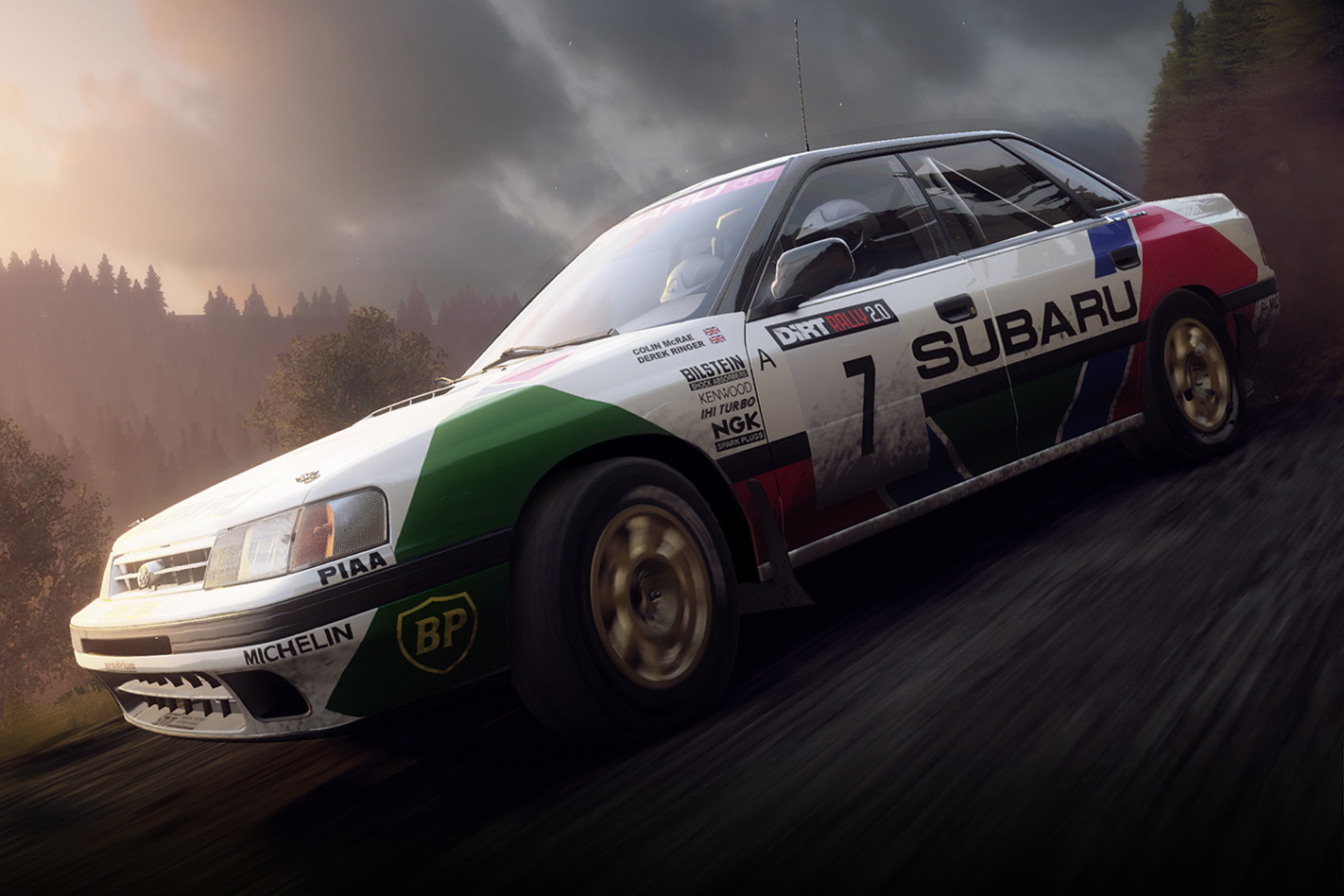
Now McRae is once more part of the series, with a DLC dedicated to the Scotsman’s career now available. Called Flat Out, it brings two new cars – his iconic Subaru WRX S4, and the Subaru Legacy RS from earlier in his career – and a new map set in his homeland of Scotland, along with a bevy of races that retrace the man’s tyre tracks.
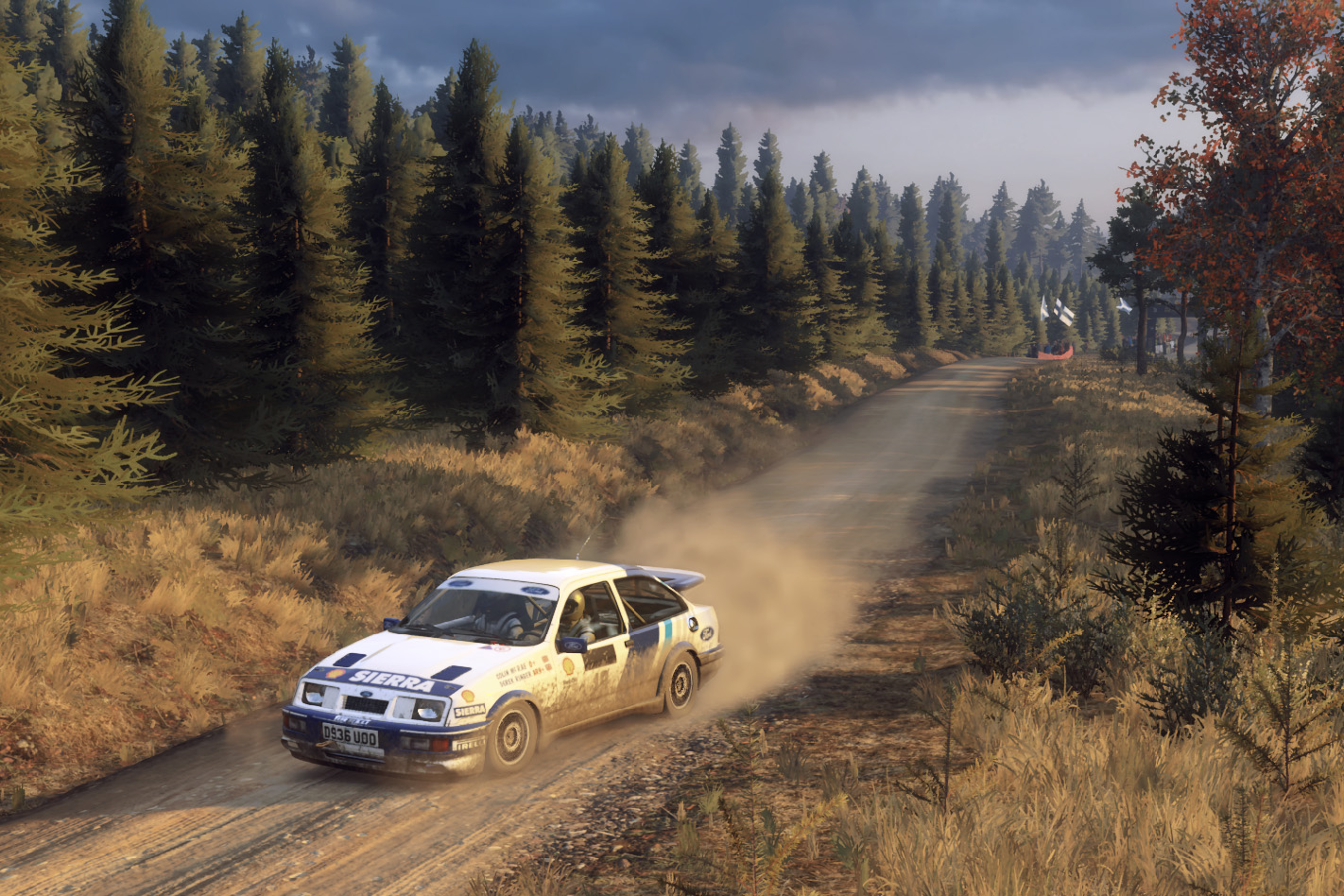
But rather than simply have you complete a whole rally at the helm of something McRae drove (besides the Subarus, the Flat Out DLC also makes use of other cars already in Dirt 2.0 like the Mini Cooper, Peugeot 205 and Ford Sierra Cosworth), Flat Out plays more like a ‘greatest hits’ album.
You’re instead put into a number of scenarios where the victory conditions aren’t always just ‘finish first’. Sometimes all you’ll need to do is place second to win the championship, or even just survive the stage without terminal damage. It’s just as challenging as the base game but also a little less frustrating given the variety of cars, stages and tasks you’re put through.
Would we recommend getting it? Absolutely – even if only to pay our respects to one of rallying’s great names.
ARE THERE ANY DOWNSIDES TO DIRT RALLY 2.0?
To some, Dirt Rally 2.0 might seem more like hard work than genuine fun. To others, the reward of seeing that work pay off is where the actual enjoyment lies. It’s like crossfit – brutal punishment from an objective point of view, but boy is there a rush of endorphins when it’s all over.
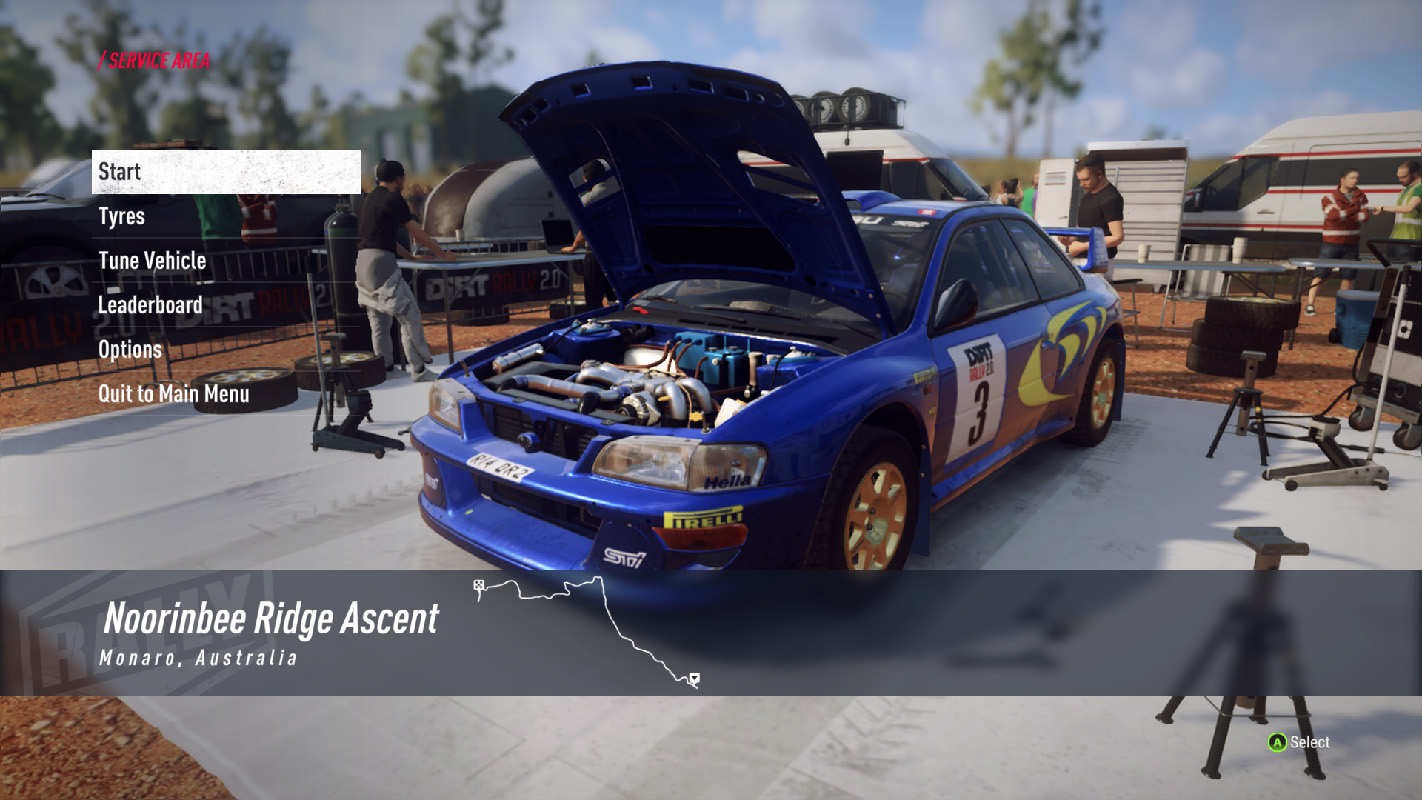
Unlike Forza Motorsport 7 and Grid, there is no rewind system in Dirt Rally 2.0. Did you mess up a corner? Flipped your Impreza into a stack of logs? Too bad: either limp to the finish, or restart the entire stage. With stage lengths often being anywhere from five to 15 minutes, those prone to ragequitting may want to keep the Valium close by.
The standard game only has six rallies to choose from – Argentina, Australia, New Zealand, Poland, Spain and the USA – and after a while it can start to feel a bit limited. The rallycross mode gives you the opportunity to mix it wheel-to-wheel with AI, but to be honest it just feels like a sideshow in Dirt 2.0.
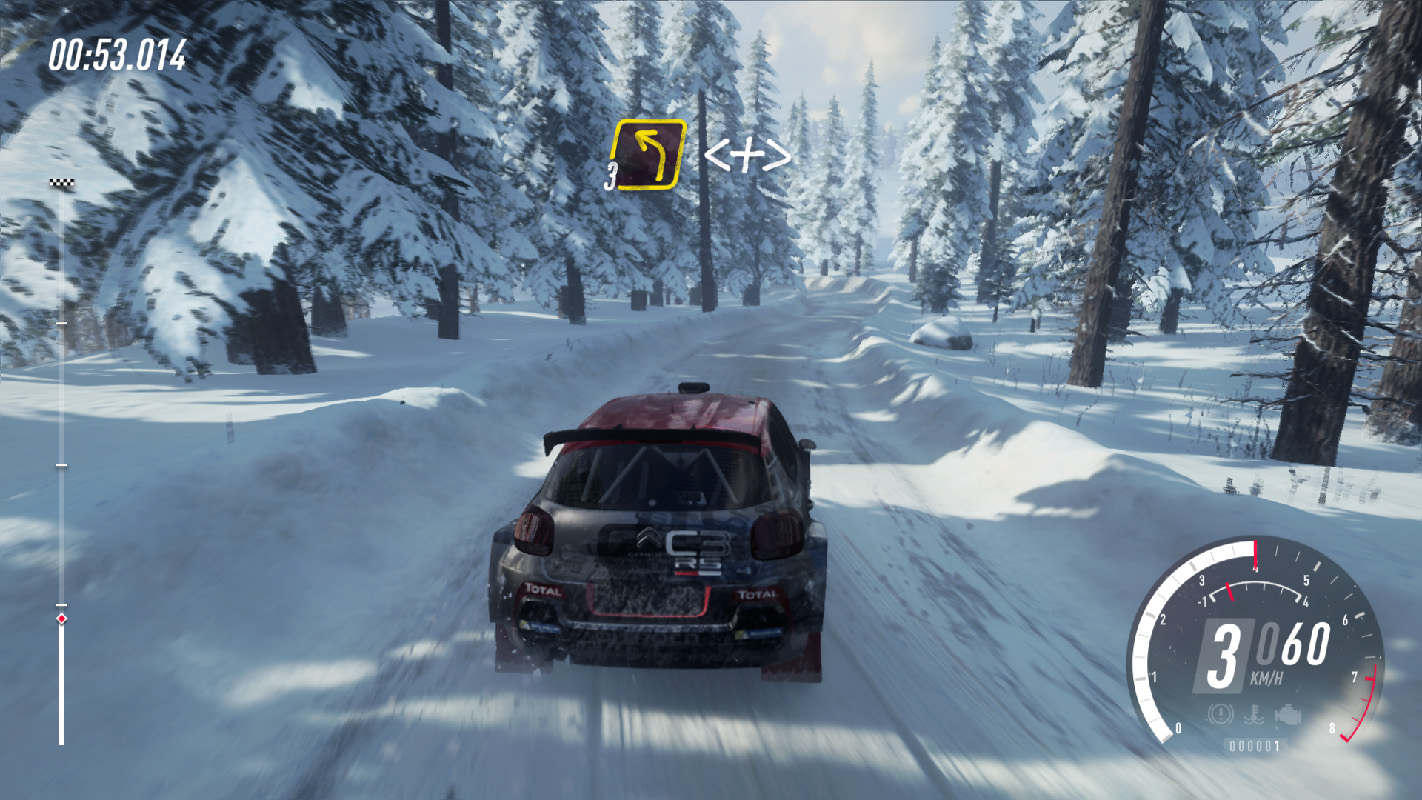
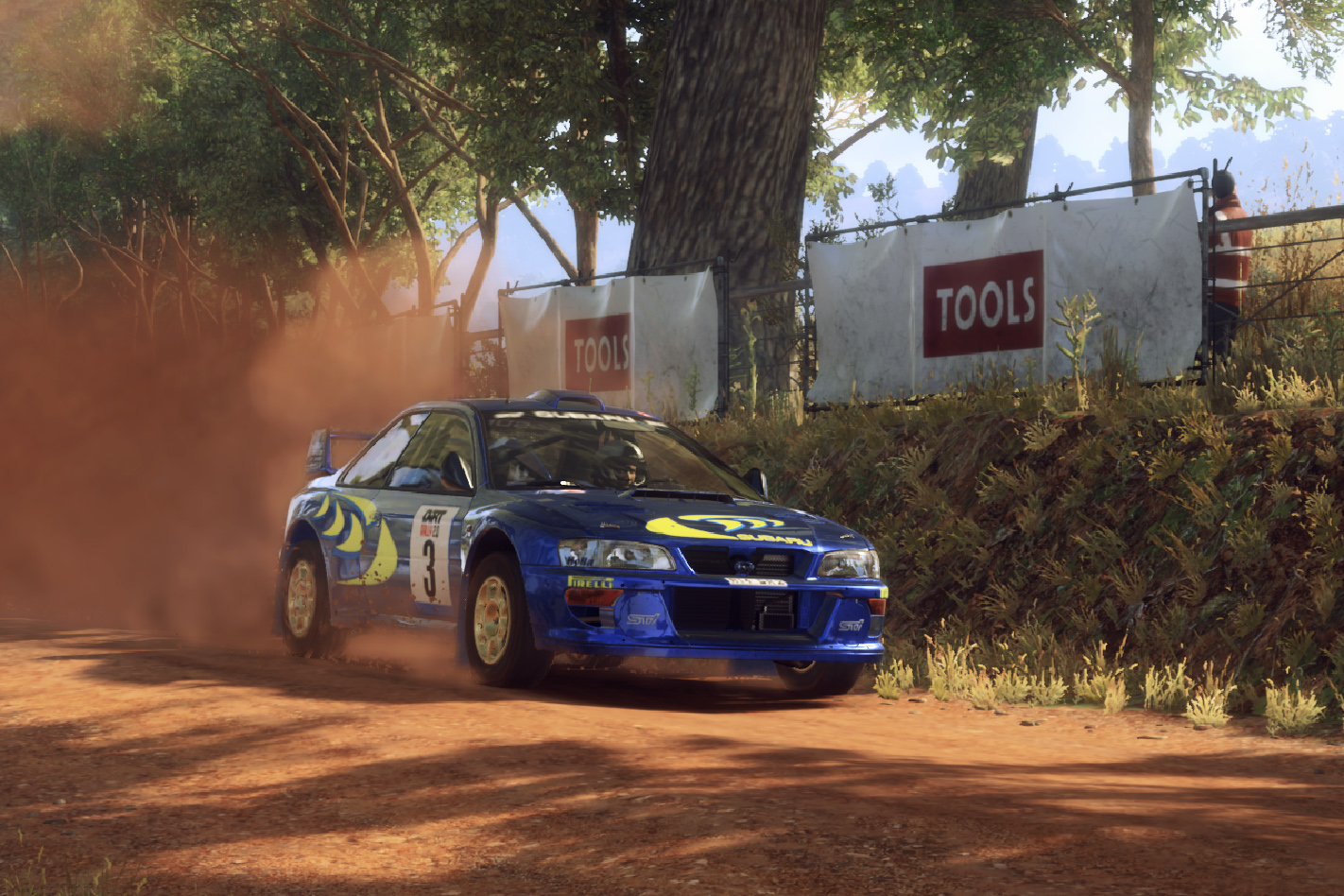
Happily, there’s a vast menu of DLC for Dirt 2.0 now. Including the Colin McRae Flat Out DLC we talked about above, there’s 44 individual downloadable content items for you to choose from, ranging from individual cars like the Peugeot 306 Maxi, 2001 Subaru Impreza WRC, Lancia 037 Evo 2 and Porsche 911 SC RS.
There are also new rally environments, including Wales, Greece, Finland, Monte Carlo, Sweden, and Germany, plus a handful of rallycross arenas too. Buy the Game Of The Year edition, and you’ll get all of the above for roughly $30 over the standard game’s pricetag.
The graphics are great on PC, but just a little soft-edged on the Xbox One S we used for the bulk of our testing. You still get the same awesome weather effects, water reflections and colour depth, but on bigger monitors and TVs the textures look noticeably low-res. That’s not so much a fault of the game but really a hardware limitation, and at least the framerate stays appreciably high no matter what.
VERDICT – 8/10
If you’re starting to get bored of racing games that just have you go around circuits again and again, or you prefer a more solitary experience where you don’t have to share the road at all, or you just want a game that encourages you to go sideways as much as possible, then Dirt Rally 2.0 is worth taking a look at.
Be warned though, for this is one of the most difficult racing games you can buy right now. For those who feel like they’re ready for a new challenge, that’s probably a good thing – just make sure you have a wheel in front of you to fully appreciate its high-fidelity experience.
Revealing photographs of the up-and-coming two-door BMW 2 Series Coupe were leaked on Instagram over the weekend, free of camouflage.
The shots were found on Instagram user @wilcoblok’s account, showing the incoming G42-bodied 2 Series inside what appears to be a vehicle lift in Germany. It surprisingly doesn’t feature the exaggerated grille that’s quickly becoming commonplace in BMW’s range, but does receive a new set of clear lens taillights at the rear.
Also on the rear is an accentuated spoiler lip and a more-squared-off rear end as opposed to its predecessor, while a chunky black rear diffuser features down below. The front fascia cops some angular vents which strike downwards towards the lower grille and the tapered headlights complete the slicked-back look.
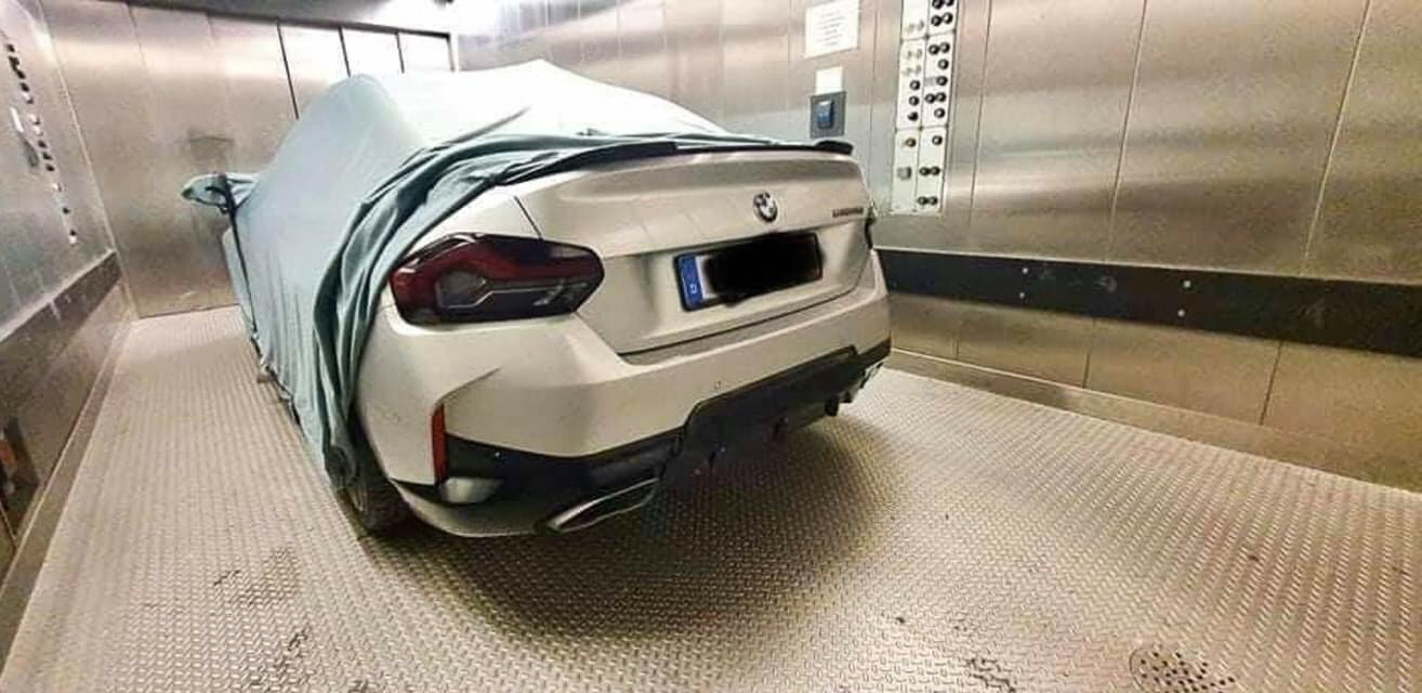
Owing to the M badges tacked on the front and rear, this car is likely to be sporting an M Sports bodykit, if not being the sports-oriented M240i Coupe itself.
The car does feature actual number plates so we’d hazard a guess that this is a real car rather than a clay model, so what we’re looking at here is likely the real thing.
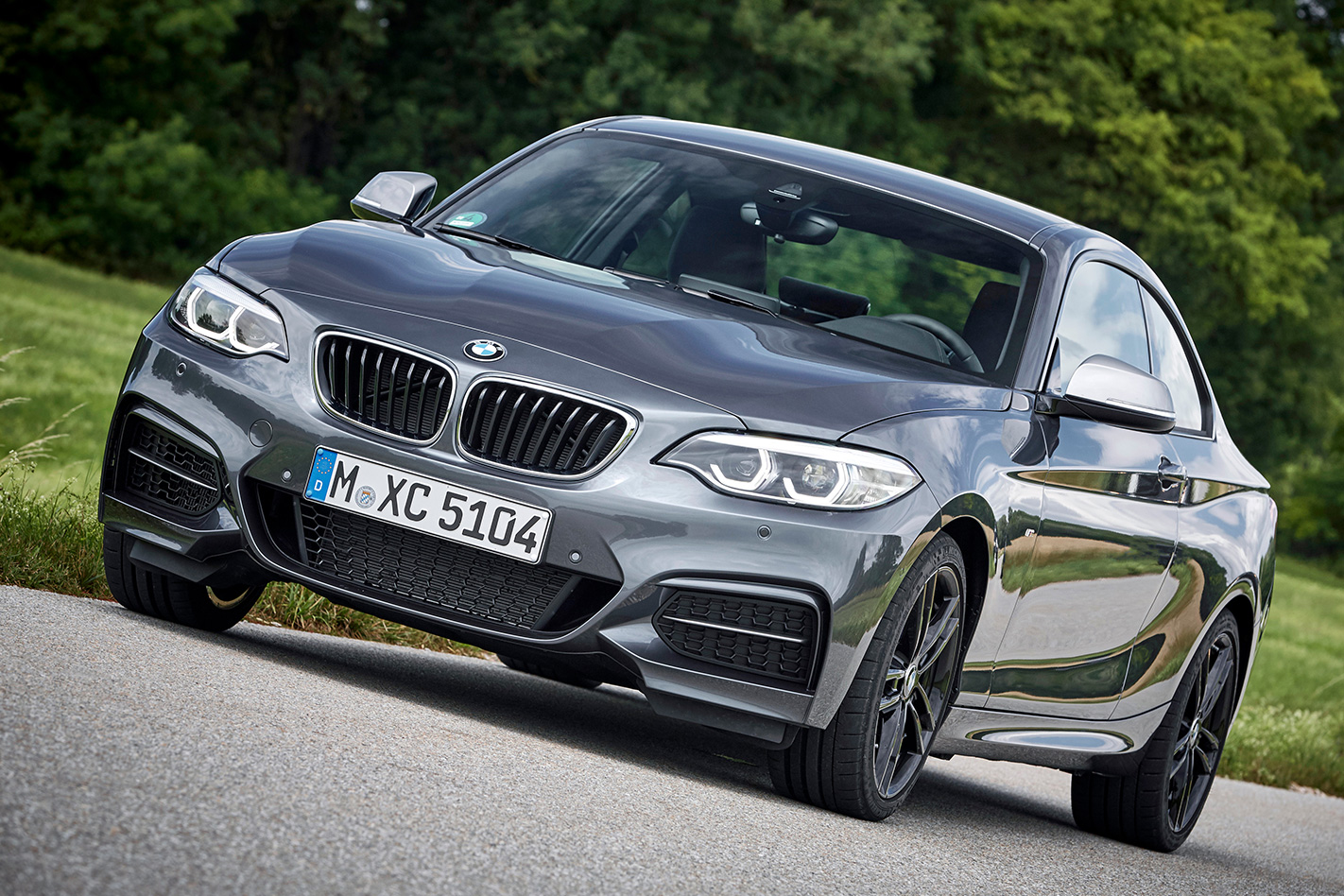
The next generation 2 Series is expected to be based upon the same CLAR architecture that underpins the 3 Series, which is a change from the 2 Series Gran Coupe with which it shares its name. That means a longitdinal engine and rear driven wheels for what will be the sole remaining, compact-sized, RWD BMW.
It’s expected to be revealed in full once 2021 comes around, and will be followed eventually by an M2 flagship at a later date. For now though, we’re just glad to see from these pics that BMW hasn’t equipped the double-coffin kidney grilles that were spied on the upcoming 4 Series Coupe.
Dear WhichCar,
We are thinking of upgrading my Lexus CT200h. I have loved having a hybrid but it’s hard to get our daughter into her child seat and we have another on the way!
We thought a medium SUV would make sense. Nothing too fancy because it will be parked outside and will get a rough run from kid mess.
We are thinking about the Nissan X-Trail, Toyota RAV4, Hyundai Santa Fe, Mazda CX-5, Kia Sorento, Volkswagen T-Roc, Audi Q3 and Volvo XC-40.
If the Mazda was available as a hybrid, I would get it straight away! Do any of these suit and should we rule any out? I don’t want to spend more than $50,000.
Thanks!
Victoria, Melbourne.
WhichCar says
Thanks for getting in touch, Tors. You’ve already made a great start by doing plenty of research and establishing a shortlist. You even have a spreadsheet!
Deciding exactly what you want and need in a new vehicle is essential before you start browsing showrooms and classifieds to avoid being distracted by hot deals, persuasive sales staff and dollar signs.
MORE The future of online car buying
Your shortlist is comprehensive but also diverse and there is lots to like about your options.
Nissan X-Trail
Nissan’s X-Trail is hugely popular for very good reasons and with your budget you could potentially shop right up to the most premium all-wheel drive Ti and TL variants.
The only difference between the top two options is the choice of 2.5-litre petrol or 2.0-litre turbo diesel respectively – the diesel won’t necessarily give you the economy of your CT200h but it will come close depending on the type of driving you do.
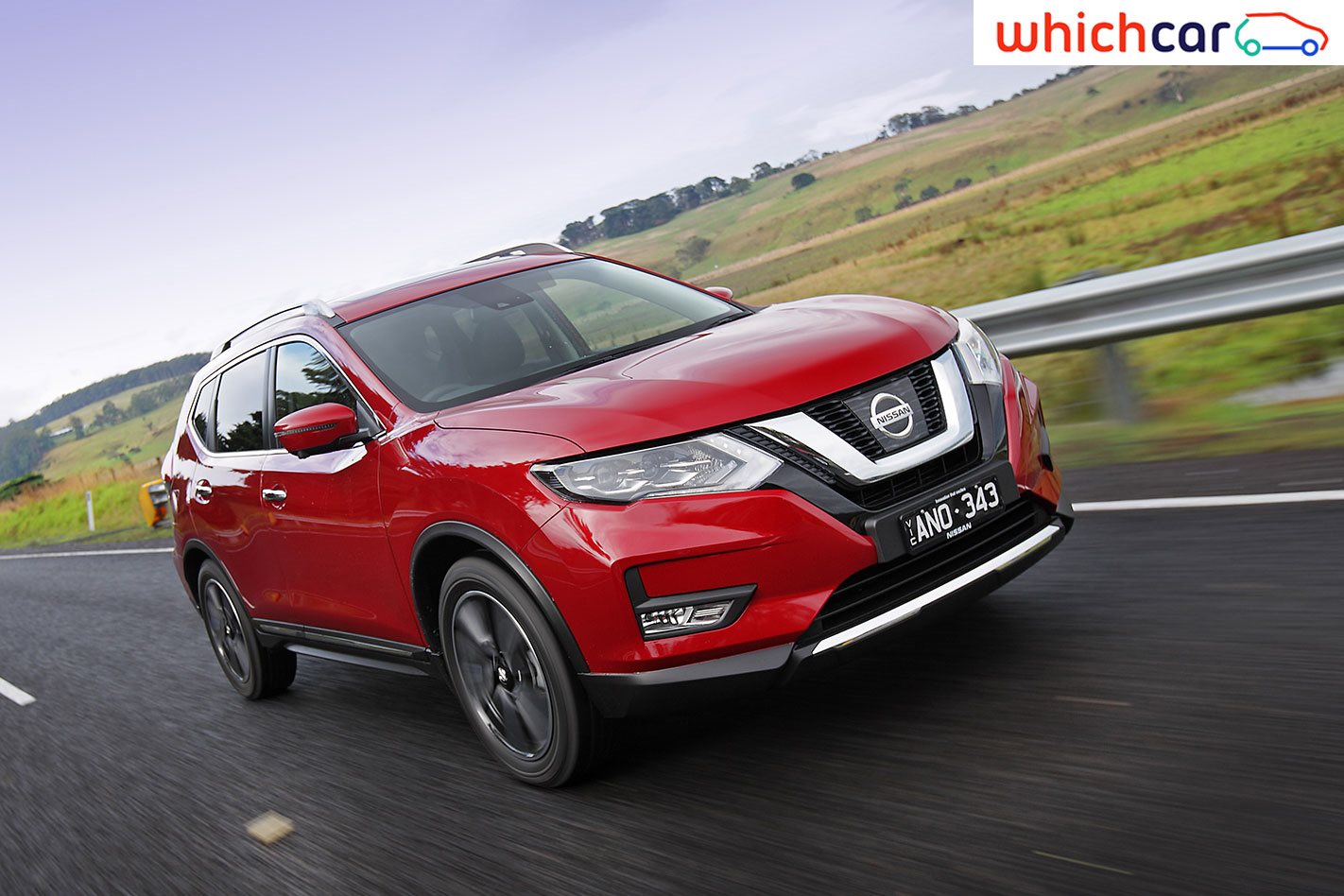
All X-Trails are generously equipped but the real sharp value is in the middle of the range TS and ST-L where you can even have a seven-seat version for if you decide to add yet more kids to the growing family.
Our pick for your budget is the ST-L seven-seater which gets leather upholstery, a larger touchscreen and a good selection of driver assistance and safety tech from $39,700.
The only real drawback is that the Nissan will never feel particularly prestigious when you are comparing it with some European players on your list, nor is it the most rewarding to drive in the same company either.
More essential reading: What’s the best mid-sized family SUV?
Toyota RAV4
The RAV4 is an excellent option offering a great balance of on-road comfort and refinement, a broad selection of variants to fit your price and level of specification, as well as the trusted Toyota badge that’s not too far a leap from Lexus.
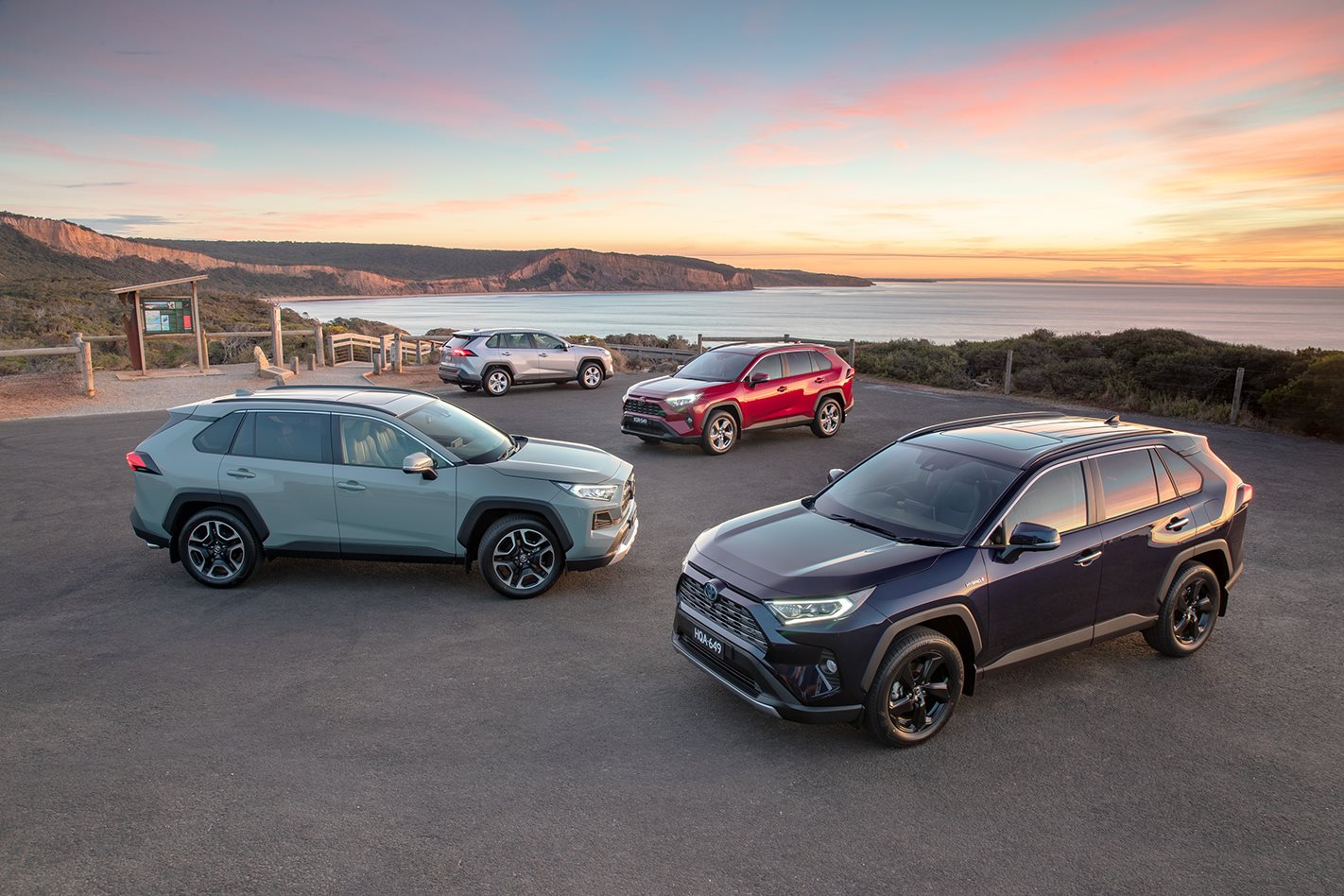
Perhaps best of all – there’s a hybrid variant that fits your budget and its the pick of the line-up.
For $42,000 you could jump in the Cruiser Hybrid which pairs the excellent petrol/electric drivetrain with four-wheel drive and a high level of specification.
It’s also roomy and has surprisingly good off-road ability – especially if you opt for the Edge version, although this range-topper is unfortunately not available as a hybrid.
Hyundai Santa Fe and Kia Sorento
This pair of genetically similar South Korean siblings are also an excellent choice, particularly at the premium end of the range. They offer surprisingly good driving dynamics, excellent interior fit and finish, great value, and have never looked as handsome.
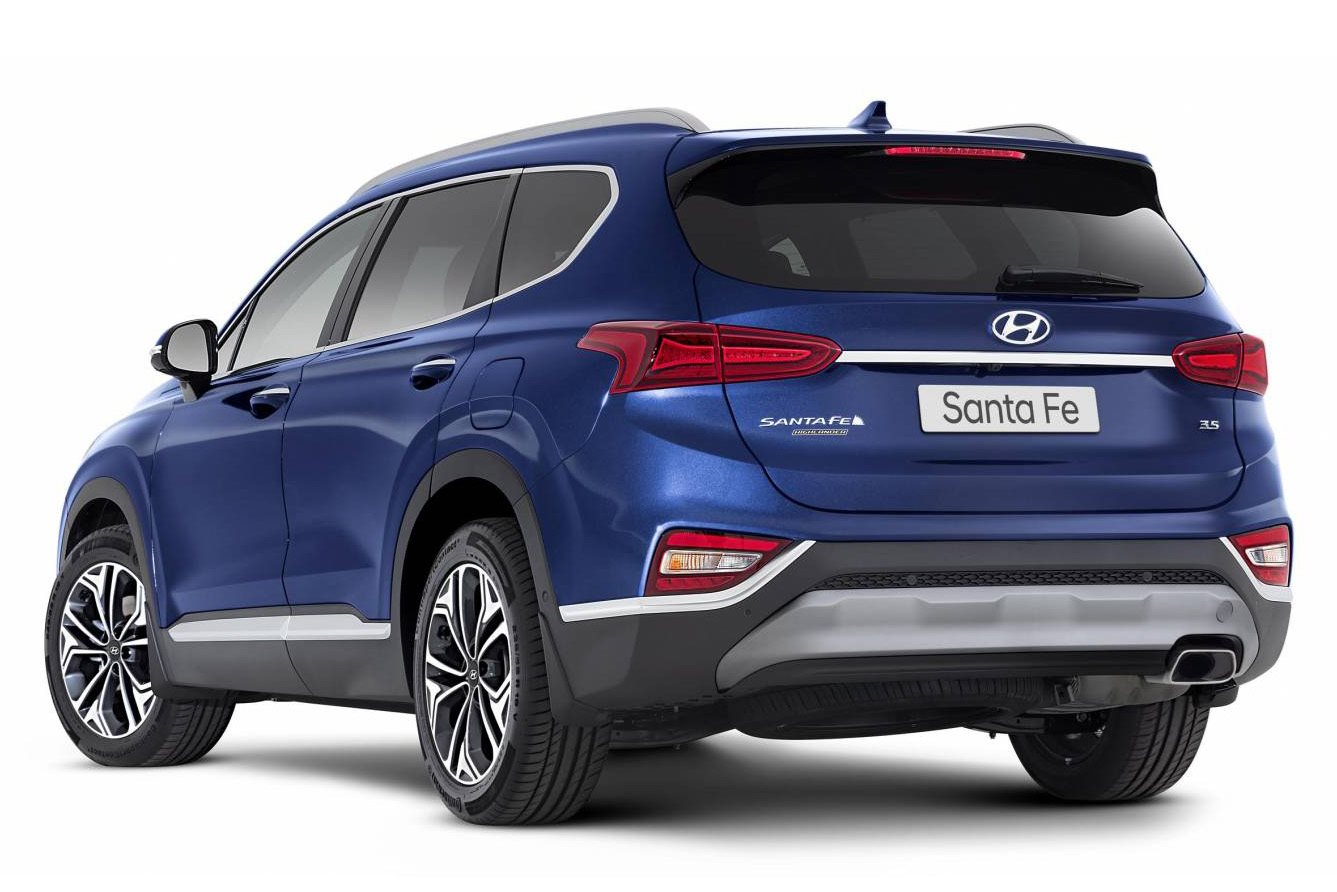
However – this pair competes in the large SUV market and, while that means you’ll get bags of space inside with seven comfortable seats and a huge boot, it also has the fuel consumption and exterior dimensions that come with the territory too.
That said, the pick of the range Santa Fe Highlander and Sorento GT-Line diesel flagships are powerful and frugal for something of their size and jam-packed with kit.
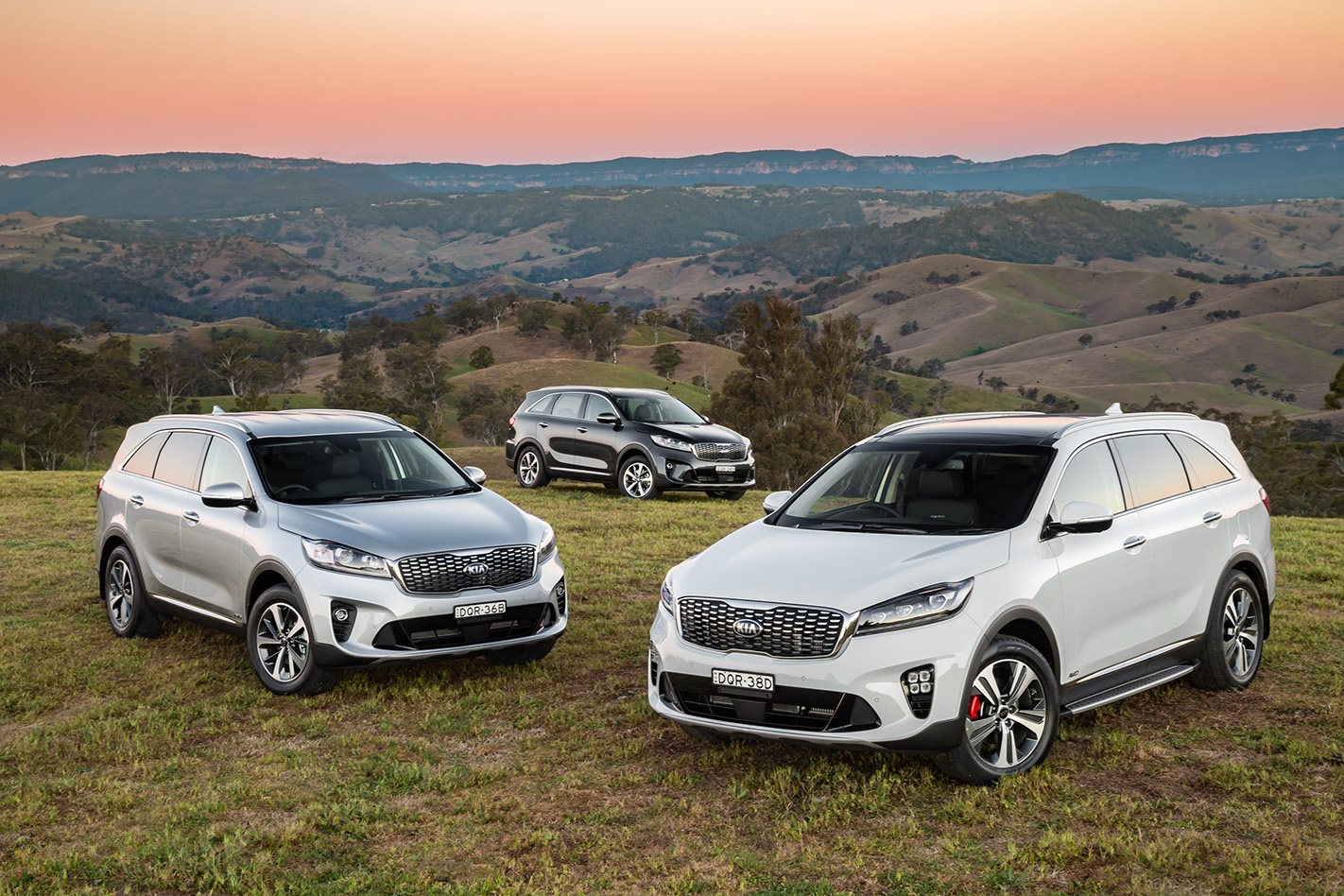
One last point to consider is Kia’s unrivalled seven-year warranty which is a big selling point, especially if you sell it on with some cover remaining. The Santa Fe gets five years of coverage.
Mazda CX-5
We agree that the Mazda CX-5 is a tempting proposition and always scores well in comparison testing but it has a notable disadvantage for your circumstances with only combustion power on offer.
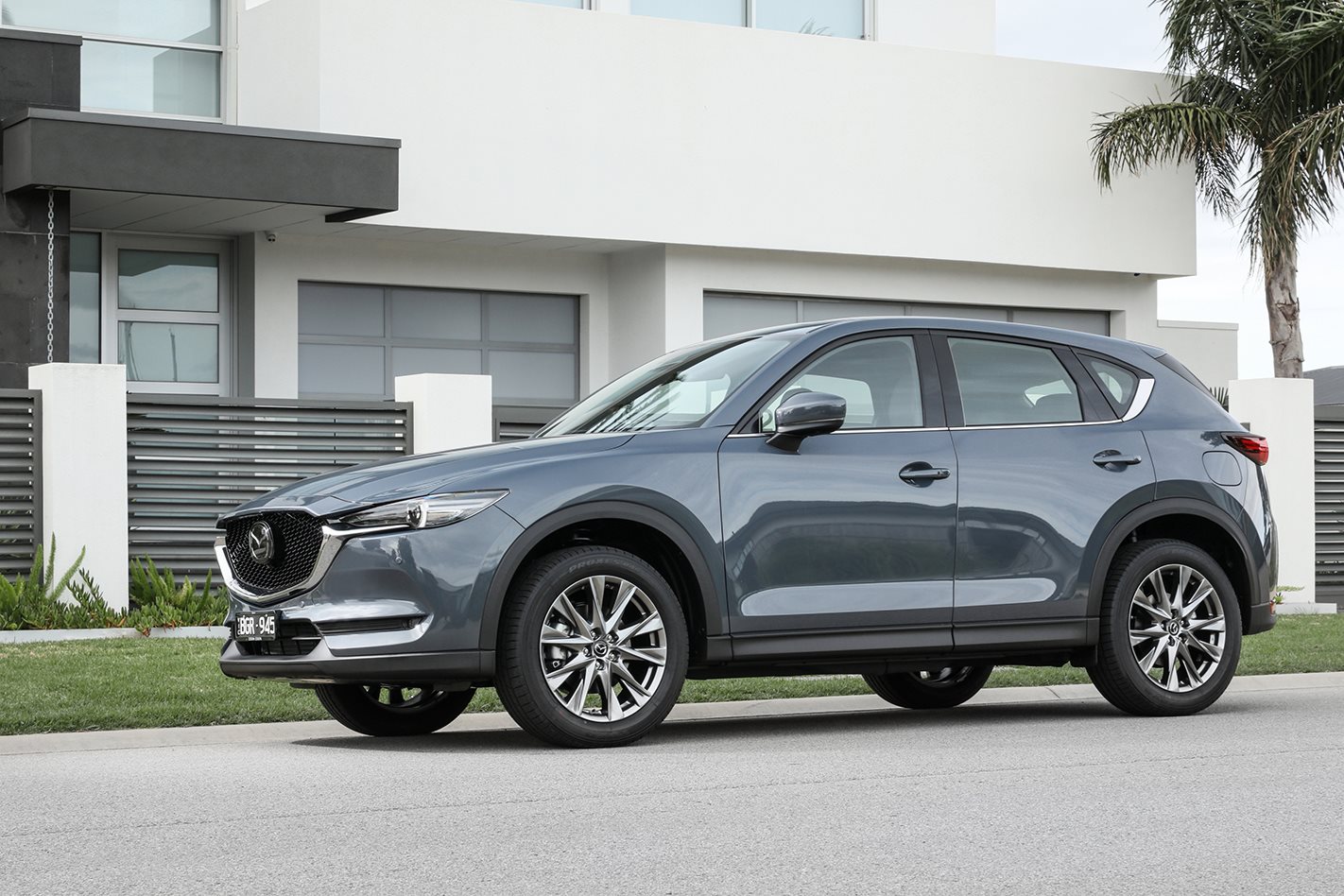
That said, with claimed average fuel consumption of about 6.0-litres per 100km, the diesel is very efficient. Our pick, however, has to be for the 2.5-litre turbo petrol which is one of the most powerful in its class but still manages to return about 8.0L/100km.
There really isn’t a bad pick in the wide CX-5 range and with your budget, all options are on the table.
Volkswagen T-Roc
Let’s get into some of the more premium brands on your list, Tors. We are really excited about Volkswagen’s newest SUV as the T-Roc promises to bring typical VW ergonomics, leading technology, sharp styling and rewarding dynamics to the small SUV realm.
It’ll also be joined by a smaller T-Cross as well but that might be a bit small for your purposes.
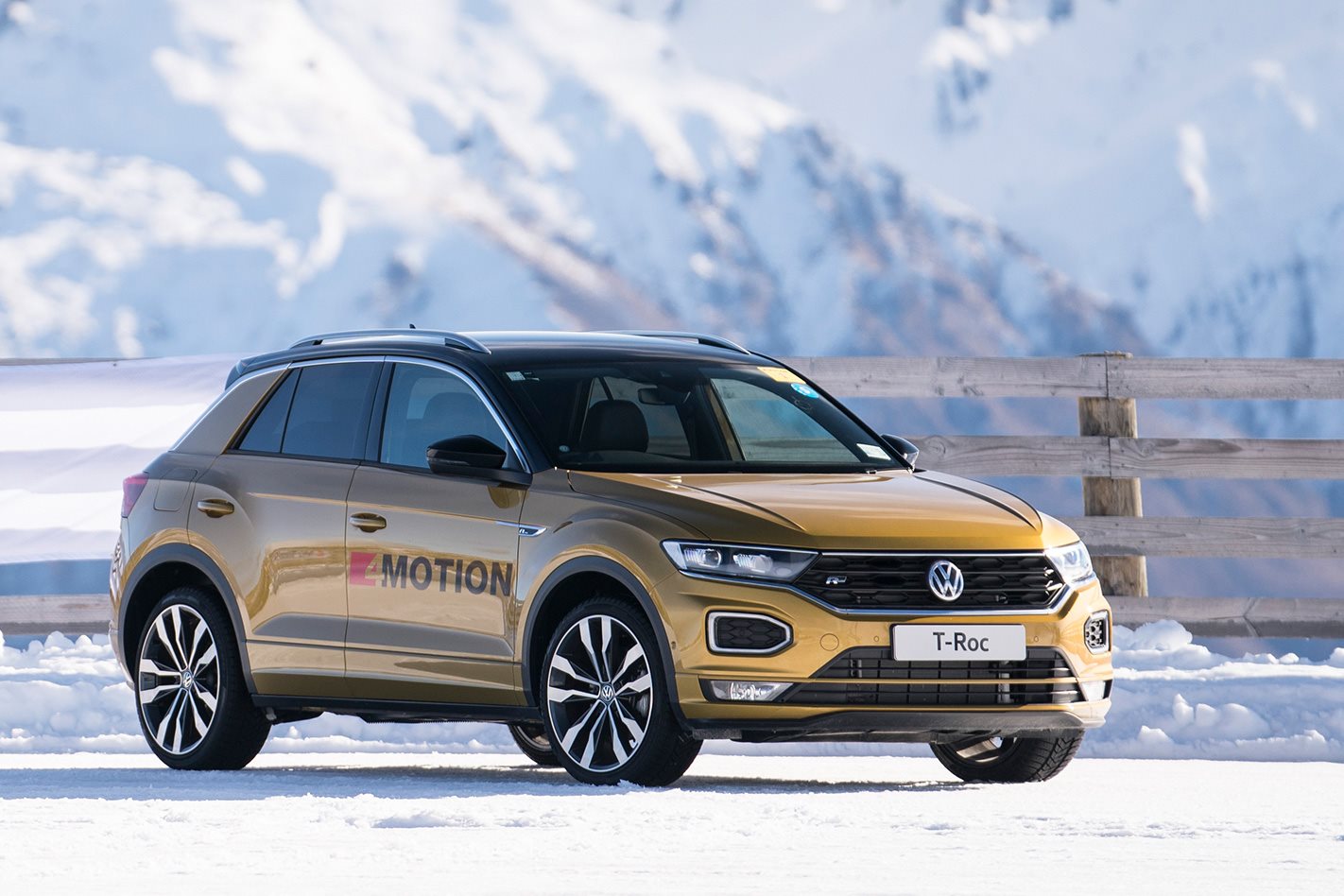
However, you’ll have to wait until early next year to get your hands on one and you’ll likely have to fight a lot of other Australians who are getting just as excited.
In the meantime, the Tiguan is still a manageable size, fits your budget and has all of the Volkswagen desirability mentioned above.
Here’s what we recommended Peter who was also shopping with similar requirements.
Audi Q3
The Audi Q3 is a great little SUV from one of the leading brands in the premium segment offering German build quality and engineering and a flavour of the interior styling and cabin ergonomics of its bigger siblings.
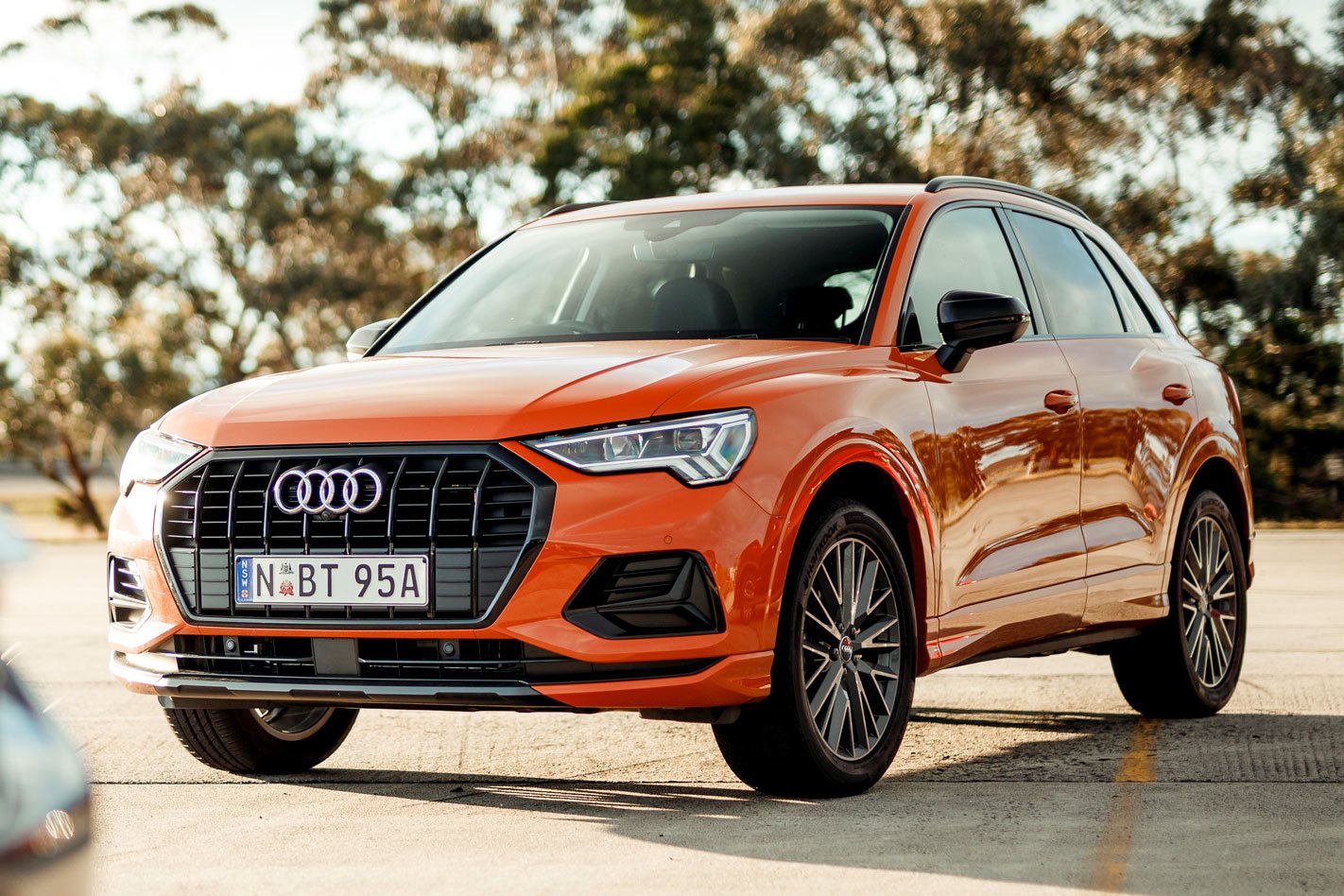
The second-generation version that arrived last year represented a huge step up over the original Q3 with more space, technology, safety systems and less awkward styling.
Unfortunately, as the range is so new, that you don’t have much choice with only a 35 TFSI representing the entry point, while the more attractive Launch Edition is out of your price range.
Audi will likely roll out more options as is typical over the life of a model but for now, there’s only a pair.
For a little more style over substance, you might also look at the Q3 Sportback which has a more elegant coupe profile but it sacrifices interior space, although it does offer more variant choice including a more sporty S Line.
Volvo XC-40
A car does not win Australia’s most coveted automotive award by luck and Volvo’s littlest SUV is no exception.
The reason this little gem took out the Wheels Car of the Year in 2019 was a combination of its standout styling, exemplary safety standards, rewarding drive and high levels of equipment.
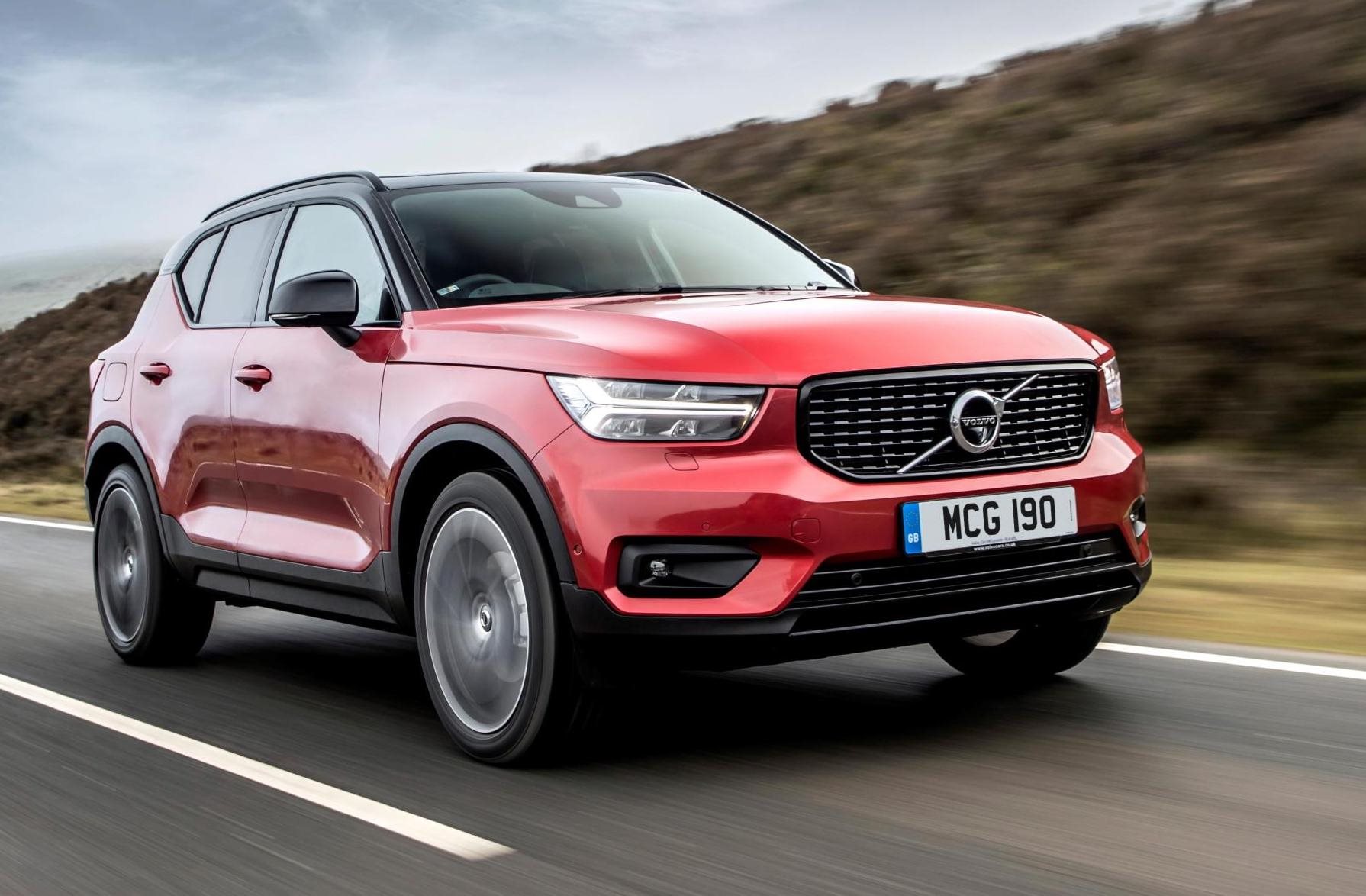
Only stretching to the entry T4 Momentum is not necessarily a bad thing although you’ll be getting close to your spending limit when you add the optional adaptive dampers which are highly recommended to soften its somewhat sporty ride.
ADD TO THE LIST
To answer your question Victoria, there’s certainly nothing on your list that we think you should remove. You’ve got options that cover all bases but there are certainly a few more you should seriously consider:
Mazda CX-30
Like the excellent CX-5, Mazda’s newest arrival has many of the compelling features including superb interiors and practical features but in a niche-filling segment.
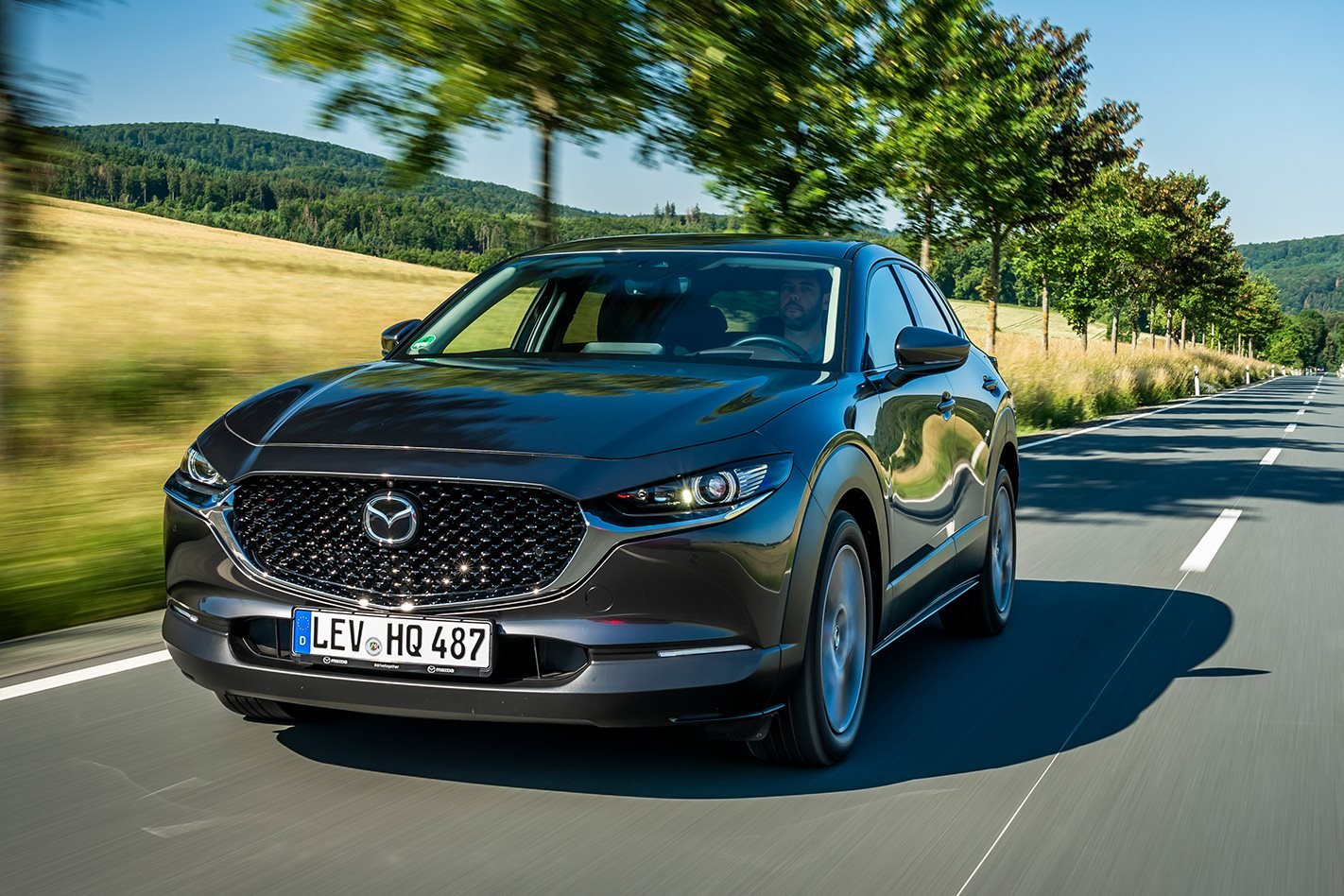
The CX-30 slots between the CX-5 and Mazda3 as a slightly smaller and more car-like SUV. You get more space and ride-height than a hatchback for easier loading, but some of the driving advantages of a small hatch that will remind you why you liked the Lexus so much.
There’s no hybrid, unfortunately, but there is a new and very efficient petrol engine, called the SkyActiv-X, coming to Mazda models including the CX-30 later in 2020, which offers diesel-like torque and efficiency.
Subaru XV and Forester Hybrid
Subaru has just made its foray into hybridisation and its timing could be perfect for you. At the smaller end of the scale, the new XV Hybrid kicks-off from $35,990 and couples a 2.0-litre petrol engine to an electric motor for claimed fuel efficiency of 6.5 litres per 100km.
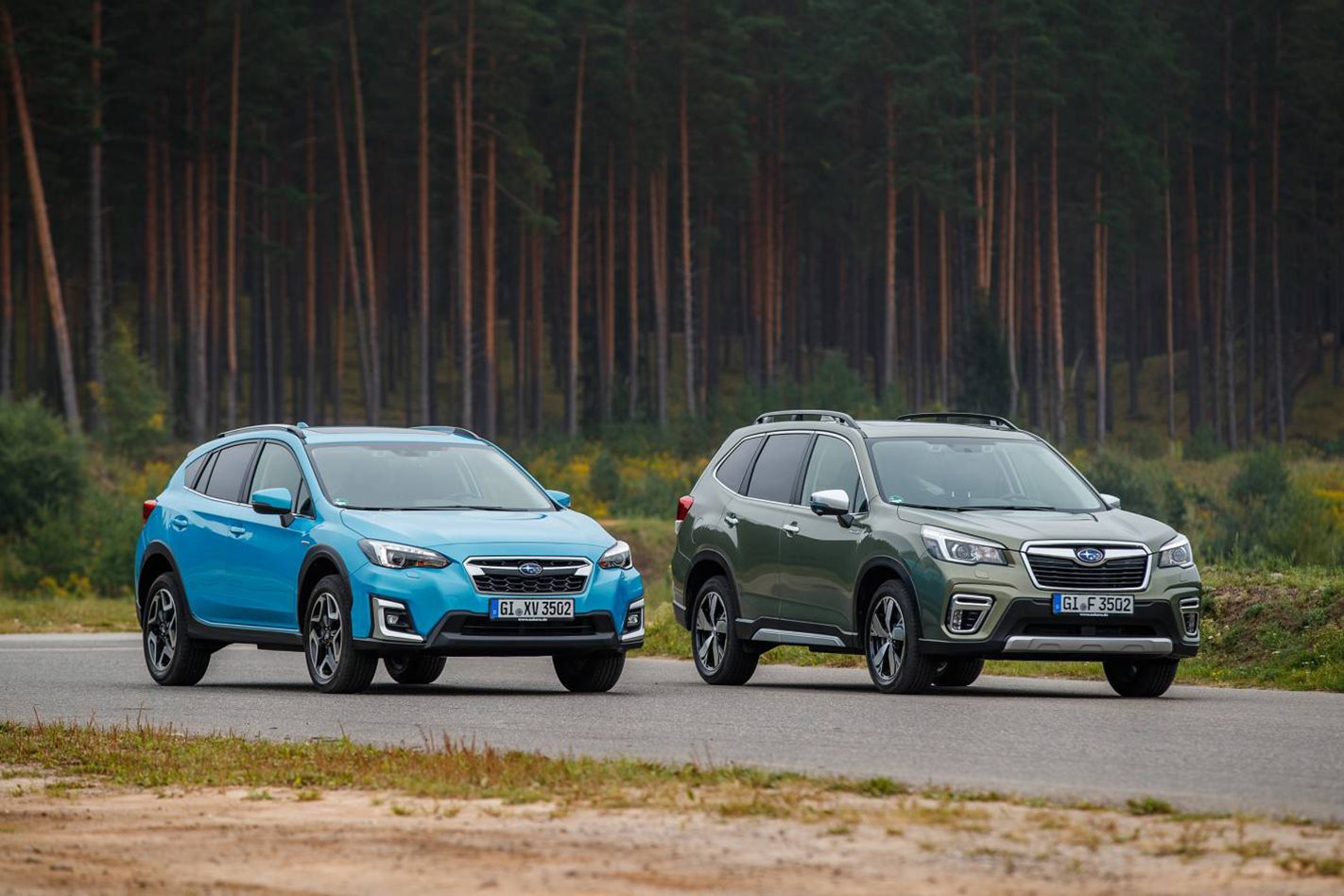
For a lot more space and some unique technological features, the Forester Hybrid uses the same hybrid drivetrain for an only slightly more thirsty 6.7L/100km.
Like all four-wheel-drive Subarus, the hybrids have the same go-anywhere versatility that the brand prides itself on along with impressive safety standards. That said they don’t offer the fuel savings like, say, the RAV4 Hybrids, so the top-spec petrol versions of each model are also worth a look.
Lexus UX
Serendipitously, we finish at Lexus and if you were happy with your CT200h then you may like to know that the Japanese luxury car maker can now offer a small SUV that fits your budget – and it’s a hybrid.
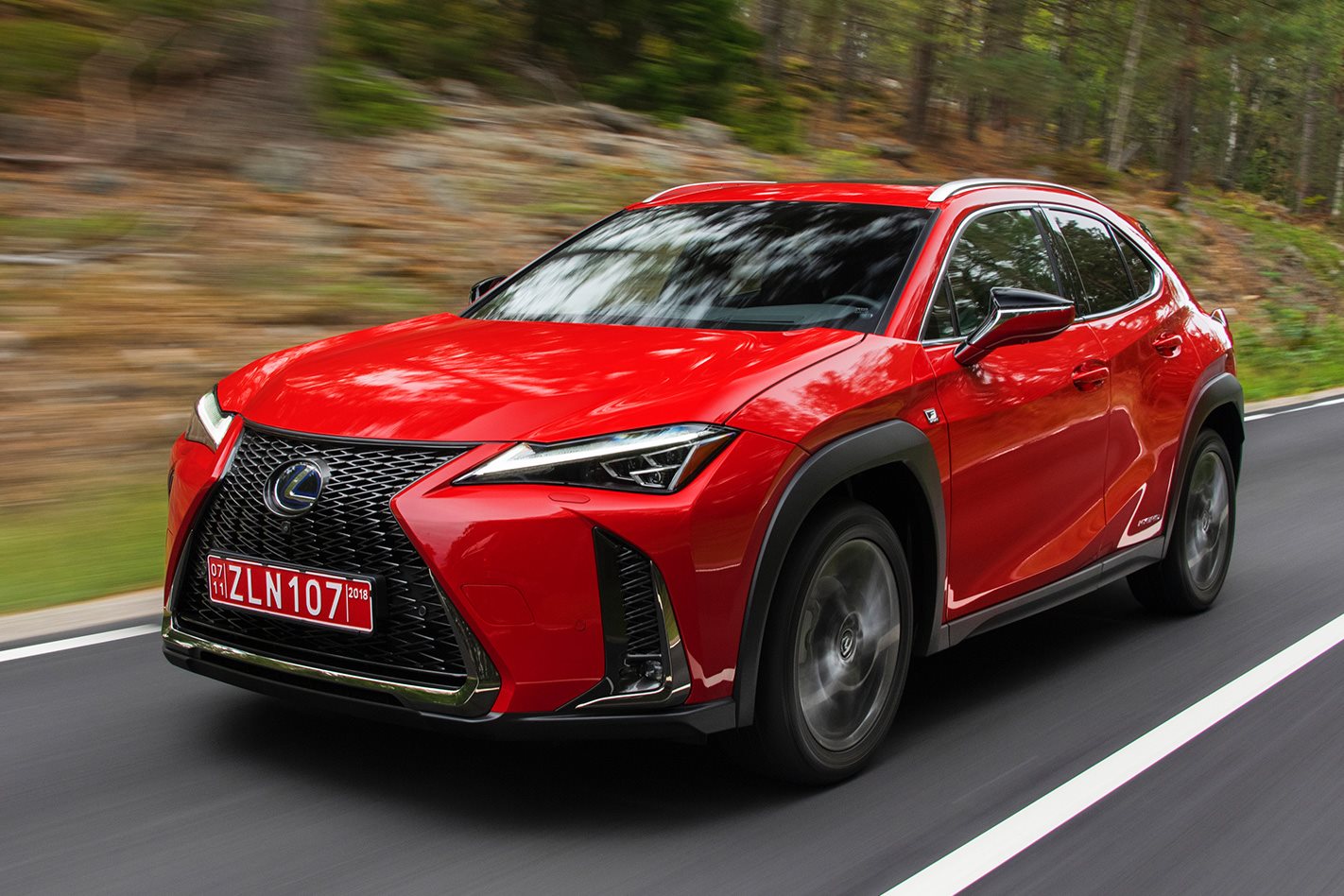
Your cash won’t quite stretch to the entire UX line-up but the mid-range UX250h Luxury is easy to recommend. It uses the same TNGA platform that rolls under the RAV4 and its hybrid credentials can brag a claimed fuel economy figure of just 4.5L/100km.
It’s arguably the most closely related relative of your beloved CT200h that’s grown up to be an SUV.
As with all new car purchases, the most important element is to do your research – which you’ve started brilliantly, but don’t stop now. The next step is to refine the list down and start booking some test drives. Good luck!
Toll the bell for the loss of another V8 sedan, the Lexus GS F is to be axed this year, along with the rest of the Lexus GS range.
The announcement comes in the form of a Japanese press release announcing a special edition series of GS called the Eternal Touring, a name to signify Lexus’ continuing commitment to building grand touring cars in the future.
As none of MOTOR’s core staff speak fluent Japanese, we contacted Lexus Australia to confirm the end of the GS was imminent.
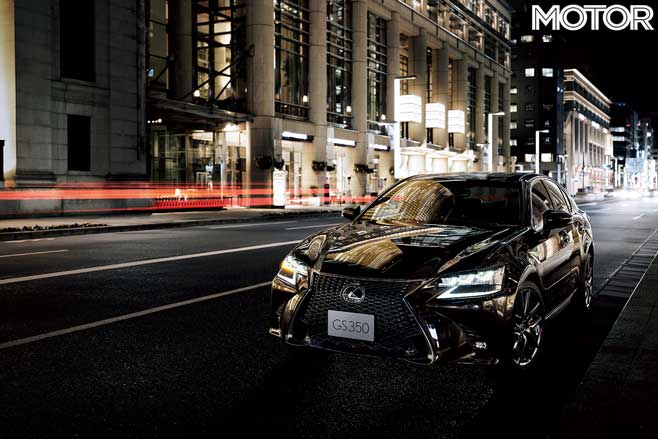
“Lexus has confirmed production of the GS and GS F will cease later this year,” a Lexus Australia spokesperson told MOTOR.
“The GS and GS F remain available in Australian dealerships.”
The GS production line will be switched off in August 2020, with the final cars to be built in Eternal Touring specification in GS450h, GS350, GS300h, and GS300 F Sport variants.
These models aren’t confirmed as Japan only, so there’s a chance they (or a similar send-off special) could be made available in Australia.
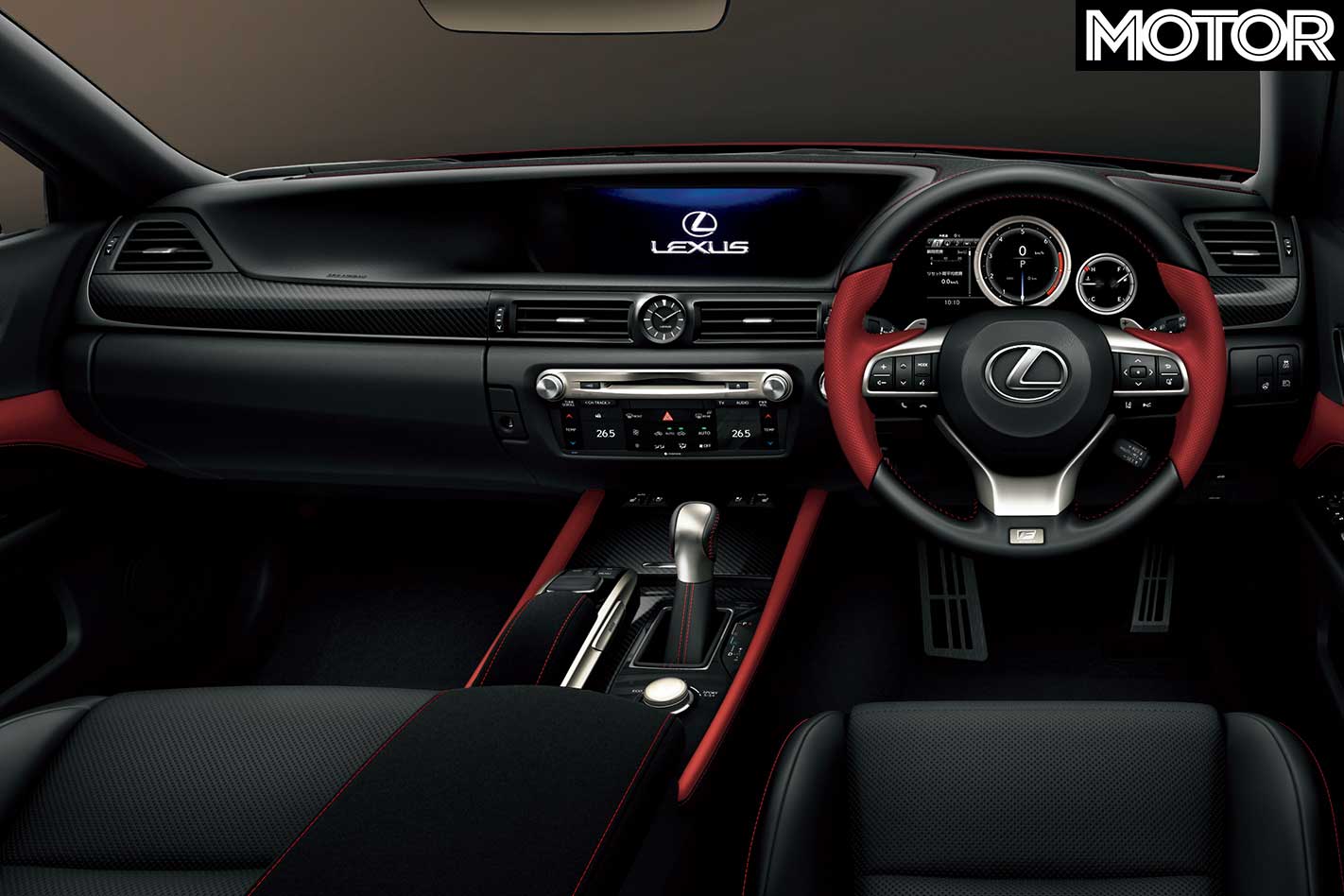
The Eternal Touring, which won’t be available as a GS F, features a black spindle grille, aluminium wheels, door mirrors, a black rear spoiler, and orange brake calipers. Inside, the interior uses Alcantara and carbon-style trim to mimic the GS F’s interior.
As the Lexus GS will remain available in Australia until stock is depleted, there’s still a way to land yourself a 351kW V8 in a four-door, for now.
The Lexus GS has been around since the early 1990s, officially in 1993 though based on Japan’s Toyota Aristo which had preceded it by two years.
Even from the first generation, the GS was available with a V8, then in 4.0-litre 1UZ-FE form.
Holden is gone but its parent, General Motors, will live on in Australia as part of a deal that is set to be announced imminently, with the Walkinshaw Group expected to represent GM in Australia.The plan was flagged when the axing of Holden was announced on February 17, with references made to GM Specialty Vehicles (GMSV) in a media release and a press conference.
“Although it’s not firmed up formally, our intent and desire is to stay in the market, albeit in a different format and a different model with the GM Specialty Vehicles,” GM International Operations Senior Vice-President Julian Blissett told the media.
While the Walkinshaw Group wasn’t named specifically, the company itself and the family it’s named after have deep ties to both Holden and GM.
The late Tom Walkinshaw created Holden Special Vehicles and took over the brand’s touring car efforts after Holden’s polariser split with Peter Brock. Walkinshaw’s Australian lieutenant John Crennan built the road and racing business into an amazingly successful enterprise.
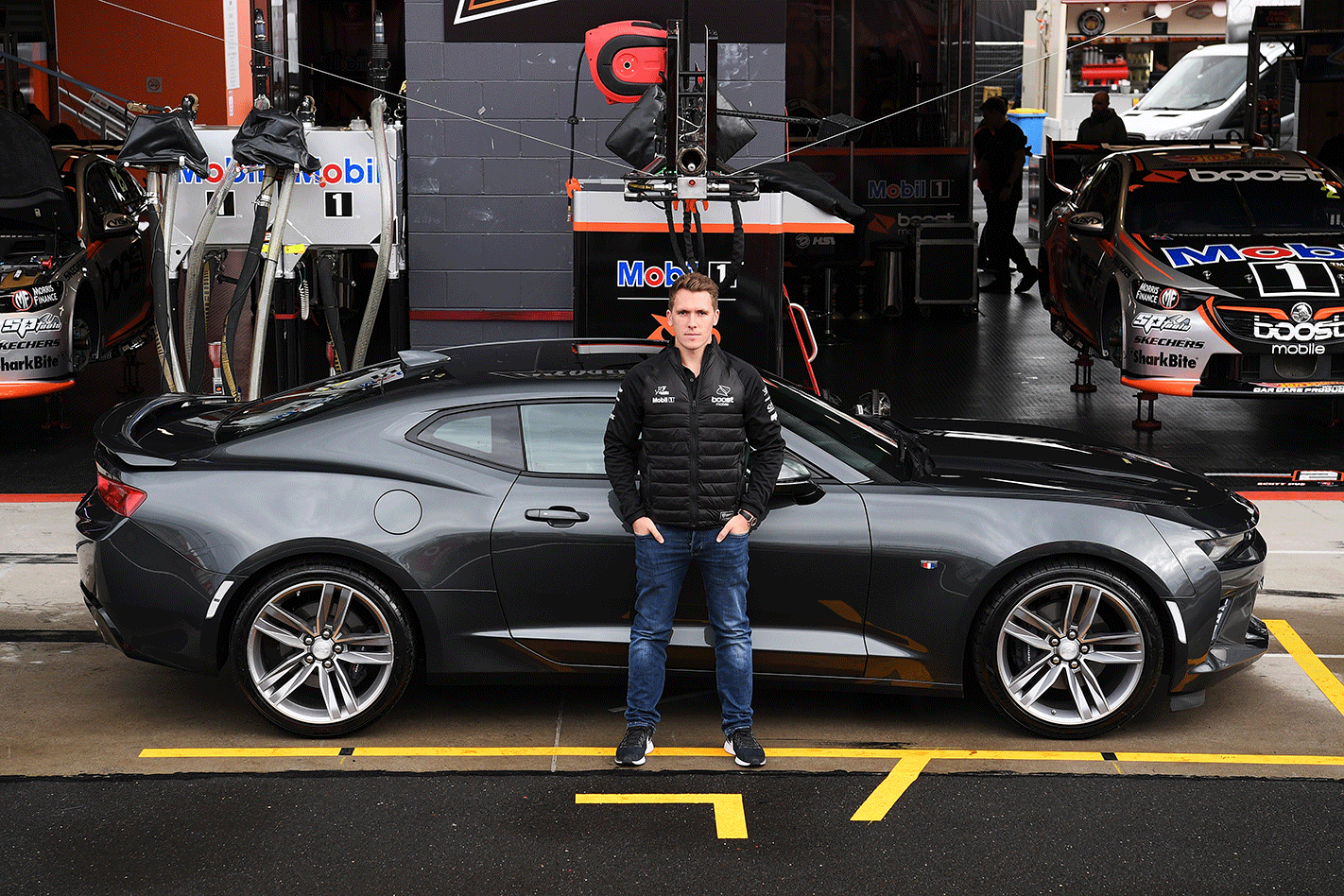
In more recent times, since the closure of local manufacturing in 2017, Tom’s son Ryan Walkinshaw has led the evolution of HSV into a converter (or remanufacturer) of left-hand-drive GM products to right-hand drive.
So far it’s converted several different models of the Chevrolet Silverado pick-up as well as the Camaro V8 coupe. It also converts Ram trucks under contract for Neville Crichton’s ASV (American Special Vehicles).
Significantly, when the time came to figure out what GM would do in Australia post-Holden, former Holden boss and now GM President Mark Reuss would have undoubtedly played a role.
He voiced his support for GMSV when the Holden announcement was made: “We do believe we have an opportunity to profitably grow the specialty vehicle business and plan to work with our partner to do that.”
GMSV is expected to be a joint venture between Walkinshaw Group and GM and its task initially will be exactly what HSV does now; take North American-built, left-hand-drive GM product and convert it to right-hand drive in Melbourne.
Those vehicles will then be distributed through a revised, slimmed-down dealer network. Currently, HSV has 56 dealers nationwide.
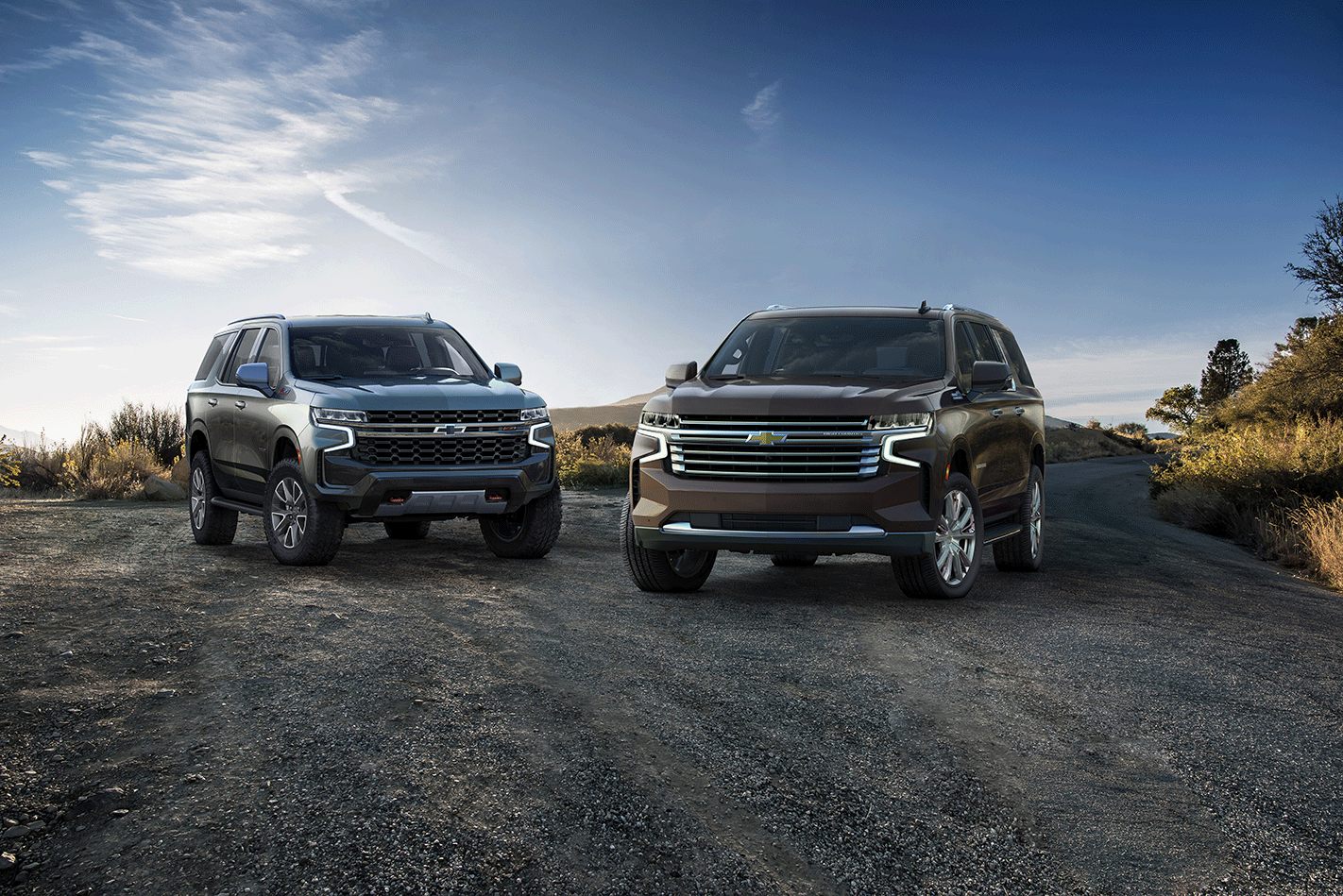
GMSV’s focus will initially be on Chevrolet pick-ups, SUVs and performance vehicles. The new mid-engine C8 Chevrolet Corvette is expected to be part of the line-up.
There’s the capability at Walkinshaw Park to remanufacture more than 10,000 vehicles a year, but Walkinshaw Group CEO Tim Jackson warned that every potential future product sits on the negotiation list right now.
“In our view our range continues, but what form that takes and the point at which it brings in new model years, and that sort of thing; that conversation is wrapped up in a lot of our discussions with GM.”
One thing to realise is that these vehicles are not going to be cheap. Importing them fully built from North America, stripping them down, converting them and then rebuilding them adds a heck of a lot of cost.
Throw in the poor exchange rates that importers currently face and the whole thing gets a bit knife-edge.
The most obvious example of that is the Camaro. Jackson says there are no plans to remanufacture any more than the last few supercharged ZL1s that have now ceased local production.
Clearly, the hope from the Australian side is that GM will provide some assistance on purchasing costs so the Camaro can be part of the line-up.
“We are working with them [GM] on what the new world might look like,” said Jackson.
The announcement of HSV’s transformation into GMSV is expected to be imminent. However, with the global COVID-19 pandemic, the situation has become fluid, potentially delaying plans for the official rebranding.
One thing’s for certain: HSV is going to look very different.
Can the Camaro make the grid?
Complicating the future of the Camaro in Australia is the push to make it the replacement for the Holden ZB Commodore in Supercars racing.
The Walkinshaw Andretti United racing team – in which the Walkinshaw family has a share, along with Michael Andretti and Zak Brown’s United Autosports – has researched the development of a Supercar based on the Camaro exterior.
It says it can’t retain its visual integrity without modification to the roll-hoop; otherwise you end up with a humpy version caricature. Think what the Ford Mustang Supercar looks like compared to the road car.
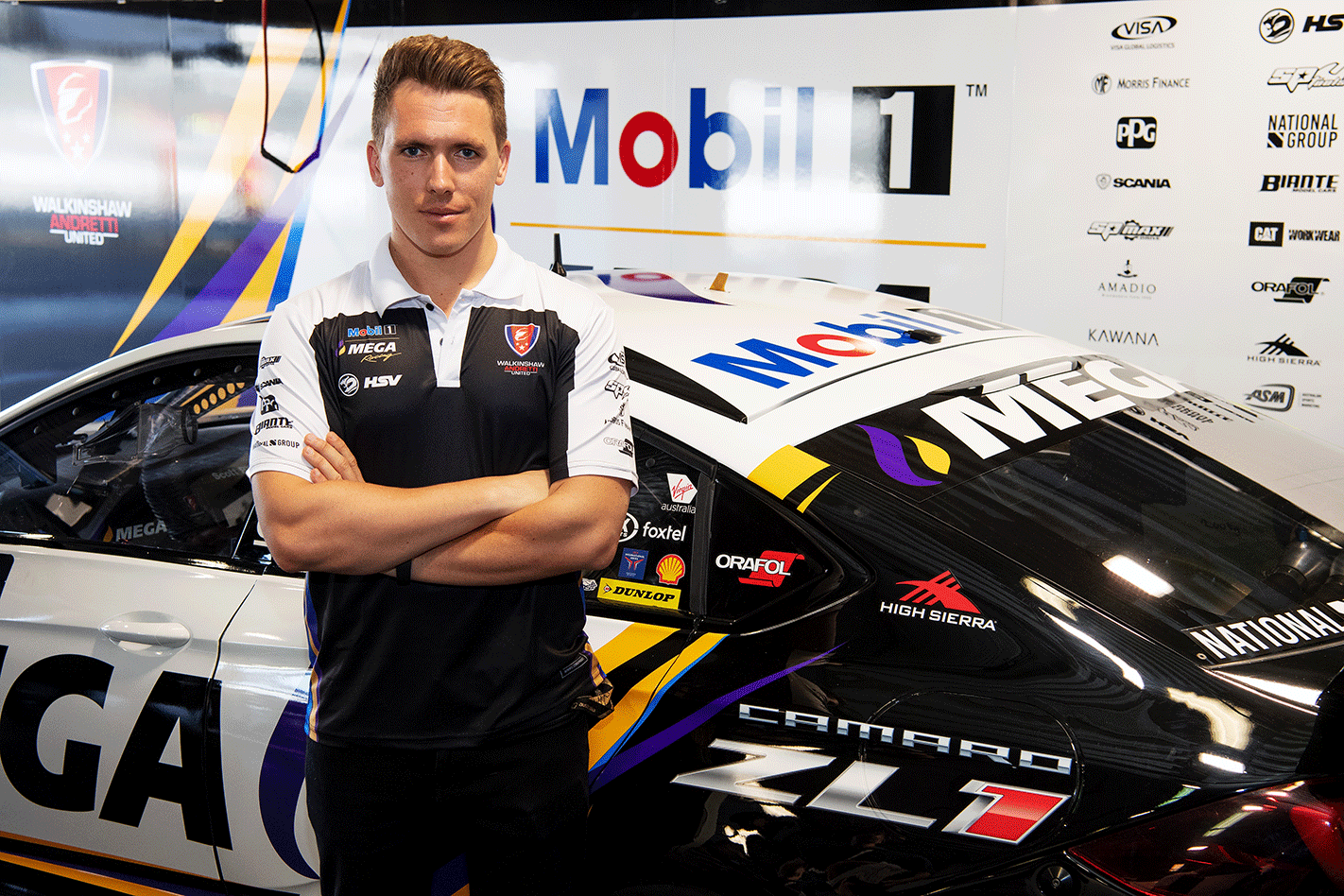
So, getting the rules changed is one challenge; the other is who would control the homologation program for the car.
Back in the good old days, the Walkinshaws ran the Holden Racing Team and ruled the Supercars world. But they were gradually usurped by Roland Dane’s Triple Eight Race Engineering, to the point the Queensland team took over the whole Holden factory deal.
Do the people who build the road car and have done the groundwork on the race car get the gig? Or does it go to the operation that has proved itself the best in the Supercars business and delivered for GM time and again?
Tough choice…
Update: GMSV page appears on Facebook
A page claiming to be an officially ‘licenced’ (sic) retailer of GMSV merchandise has appeared on Facebook, with a link to a website and using imagery of a Camaro ZL1 to generate interest.
The page appears to have caught many off-guard with comments from users treating the page as legitimately associated with GM, Walkinshaw, or HSV.
But a spokesperson for HSV says the owner of this page has “absolutely no affiliation” with Walkinshaw Group or GM.

The page, created on May 13, has made no effort to distance itself from HSV or GM. -Chris Thompson
