
In-car infotainment systems can impair your driving more with the maximum blood-alcohol limit of 0.05, according to a recent study conducted by a UK-based driver training advocate.
Using a smartphone mirroring system like Apple CarPlay and Android Auto can also result in drivers keeping their eyes off the road for extended periods of time – something that these systems are supposedly engineered to prevent.
A study was conducted with 20 participants over three simulated journeys: one where the driver didn’t interact with any system; a second when the driver only used voice controls; and a third where the driver only used touch control.
Findings show that driver reaction times decrease by up to 45 per cent more when using Apple Carplay on a multimedia screen than if your blood alcohol limit is 0.05 (41 per cent for Android Auto).
It has long been a myth that texting is one of the biggest driver distractions on our roads; however, statistics from this experiment show that this was much further down the list.
Texting makes a driver react 35 per cent more slowly, with voice-controlled Apple Carplay higher on the list and the good old handheld phone at a whopping 46 per cent.
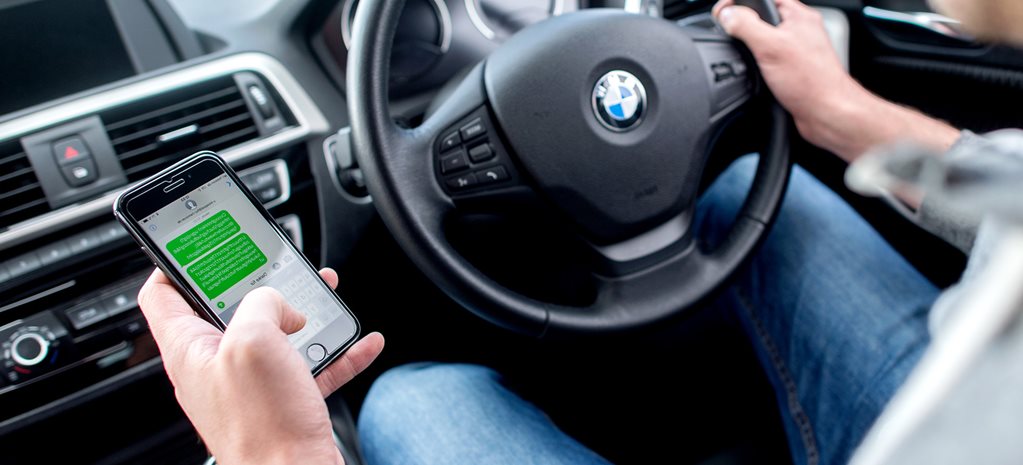
As well, participants underestimated the time they thought they spent looking away from the road by as much as five seconds when engaging with Android Auto and Apple CarPlay via touch control. Use of either system via touch control caused drivers to take their eyes off the road for longer than 12 seconds at a time.
“While previous research indicates that Apple CarPlay and Android Auto perform better than more traditional buttons and controls, the results from this latest study raise some serious concerns about the development and use of the latest in-vehicle infotainment systems,” said Neil Greig, the policy and research director at IAM RoadSmart.
“Anything that distracts a driver’s eyes or mind from the road is bad news for road safety. We’re now calling on industry and government to openly test and approve such systems and develop consistent standards that genuinely help minimise driver distraction.”
In the meantime, drivers are encouraged to set up their systems prior to the vehicle moving to ensure that all safety measures are being exercised.
- Plans finally firming for 86 replacement
- Leaked presentation reveals July 2021 launch date
- Rear-wheel-drive will continue
- Turbocharged Subaru engine the hot tip for powerplant
Leaks from within a Toyota dealer conference in the USA reveal that the next-generation Toyota 86 will be revealed in July 2021.
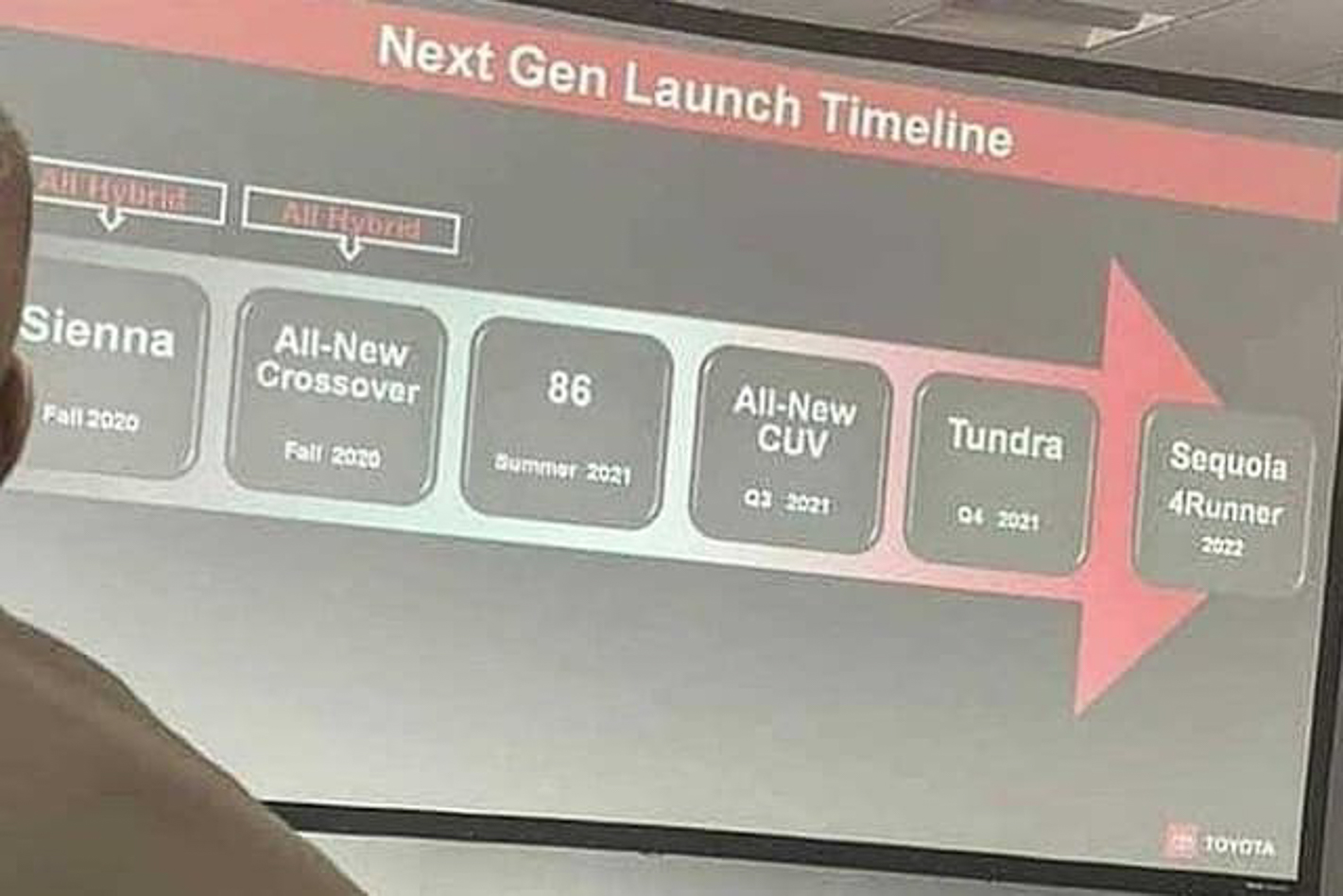
The closed-door dealer presentation got away from Toyota when a full suite of future products was detailed on online forum GR86.org. The slides from the presentation show a (North American) summer 2021 unveil, and reports from the conference support the rumours that the next-gen GR86 will come with up to 200kW of turbocharged power.
Despite a seeming eternity since the Toyota 86 and Subaru BRZ were launched upon the world in 2012, both brands are now ramping up development of a successor that would see the next-gen model receive turbocharged power to the tune of 200kW.
No word is given on Subaru’s iteration, but it’s entirely likely that’ll lob at the same time as the Toyota GR 86 mid-next year.
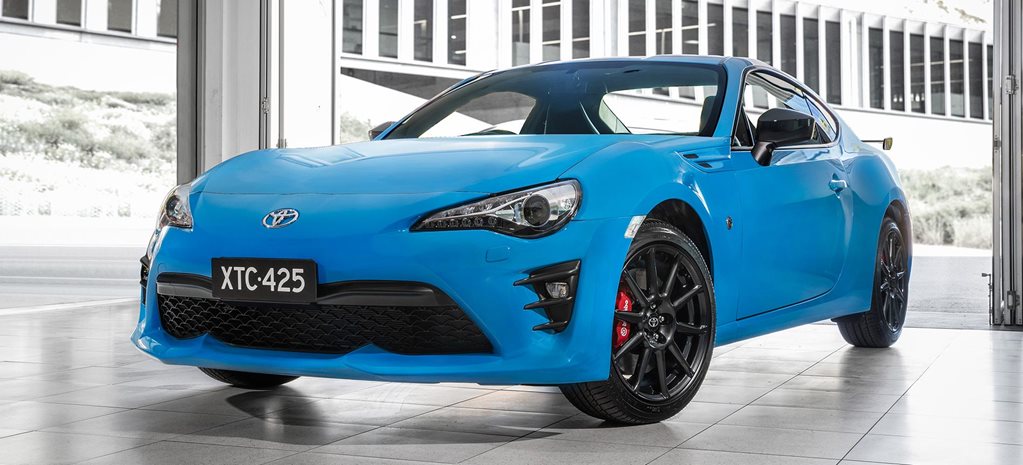
According to Autocar, Toyota and Subaru have committed to launching a second-generation successor that Toyota is expected to brand as the GR 86, dropping the GT86 and 86 names in favour of Toyota’s new GR nomenclature that will be applied to the automaker’s growing performance car line-up, which now includes the GR Supra and GR Yaris.
It’s also reported that the sports car duo will be based on a Toyota-derived platform rather than following in their predecessor’s footsteps by utilising Subaru-sourced underpinnings.
There are no rear-wheel drive-suitable models available in the Subaru stable currently, so the move to a TNGA platform will ensure the new sports car’s dynamics come alive – though Subaru is expected to continue to supply the powerplant.
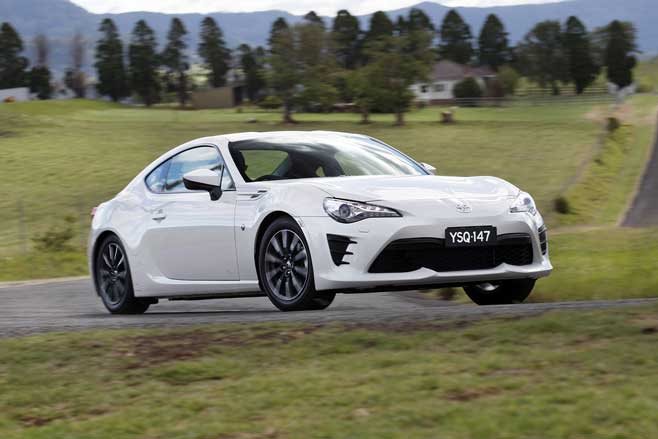
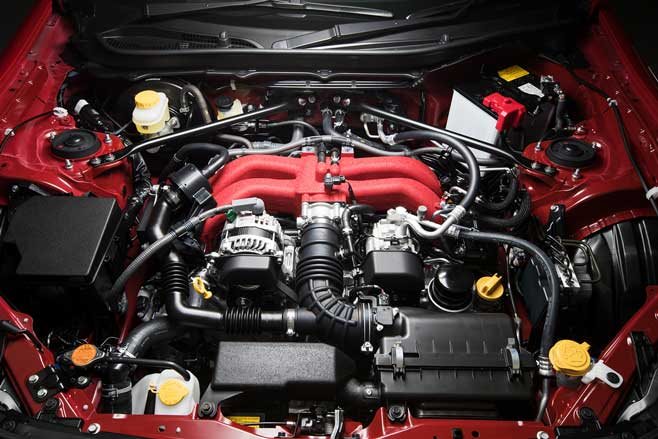
It’s understood that the car is likely to retain a boxer-style flat-four-cylinder engine but the 2.0-litre version we know will be swapped out for a larger capacity 2.4-litre turbocharged unit that’s currently used in Subaru’s range.
Subaru’s hulking US-market Ascent SUV ekes out just over 190kW from the engine – known as an FA24 – so we wouldn’t put it past Toyota/Subaru to nudge it up to 200kW when the engine is put into service in a performance car.
Forced induction is something 86 fans have been longing for and the pronounced torque hole of the current car’s 2.0-litre naturally-aspirated flat-four is well documented, so the superior torque of a turbo alternative should be welcome.
Both Toyota and Subaru are expected to improve the tangible aspects of the 86/BRZ successor to approach a broader range of sports car buyers, too.
Where currently the car is focused on no-frills, no-nonsense, driving purity mixed with affordability, its replacement is expected to bring a lift in safety technology, materials and fit and finish that could see the car positioned slightly more upmarket than it is currently.
Of course, we’re not sure what that will do to the price point, but Toyota won’t want to tread on the toes of the rest of its GR-performance range which already includes the Supra (which already has a budget-oriented turbo four-cylinder in some markets) and GR Yaris.
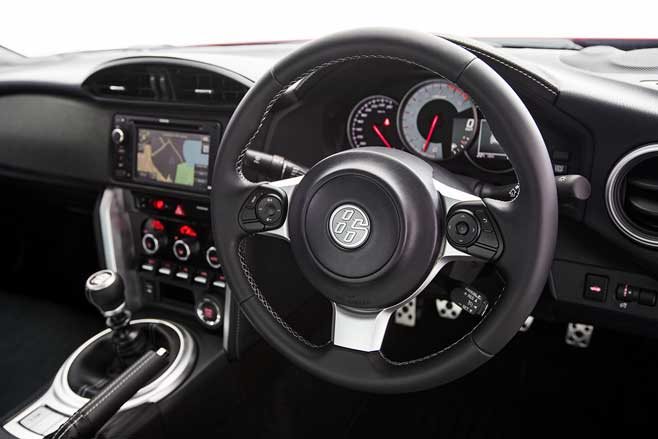
Toyota’s renewed focus on performance is starting to see the Japanese auto giant shed its ‘cars as whitegoods’ reputation, a stance driven by CEO Akio Toyoda who is a keen car enthusiast himself.
The recent push to market Toyota through its GR performance arm is largely attributed to Toyoda’s desire to see his company recapture some of its past glory, and if it can add another feather to its cap in the form of a turbo-motivated GR 86, we imagine Akio would be a happy man.
Is adding more power and performance to the next 86 a good move? Let us know below!
Lugging soccer balls and car pooling doesn’t have to be boring, as proven by these nine station wagon utility warriors that gloriously pack more horsepower than luggage capacity.
This was originally published in MOTOR during July 2015.
Novitec Rosso Ferrari FF
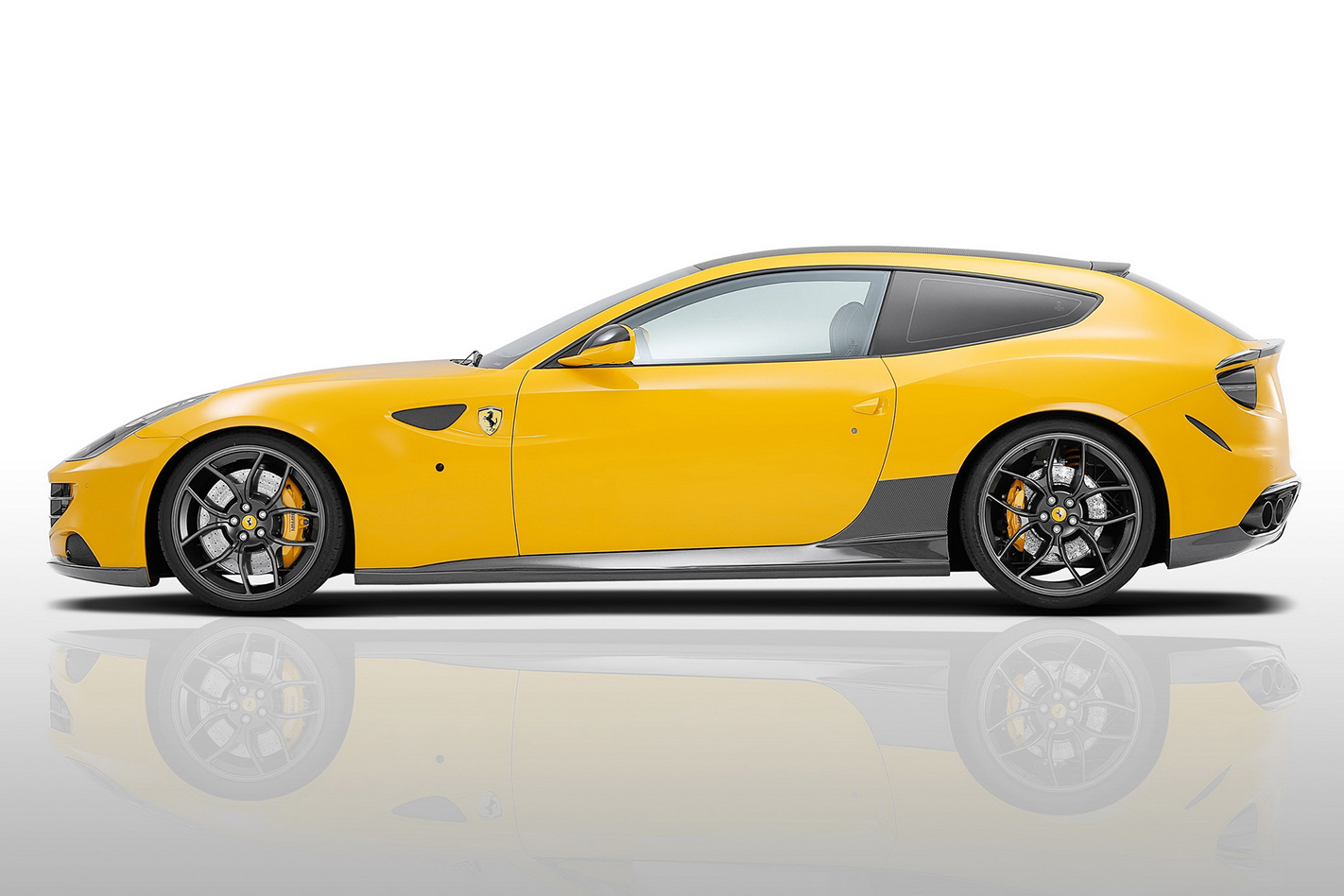
With 516kW and 714Nm, this tuned breadvan-styled Fezza will blitz the weekend shopping run quicker than red cordial spikes toddler energy levels. But if passengers aren’t, for some reason, impressed by its charging acceleration, drop the windows and let its exhaust note cut down criticism. Shame it doesn’t look as good as it sounds.
Jaguar XFR-S Sportbrake
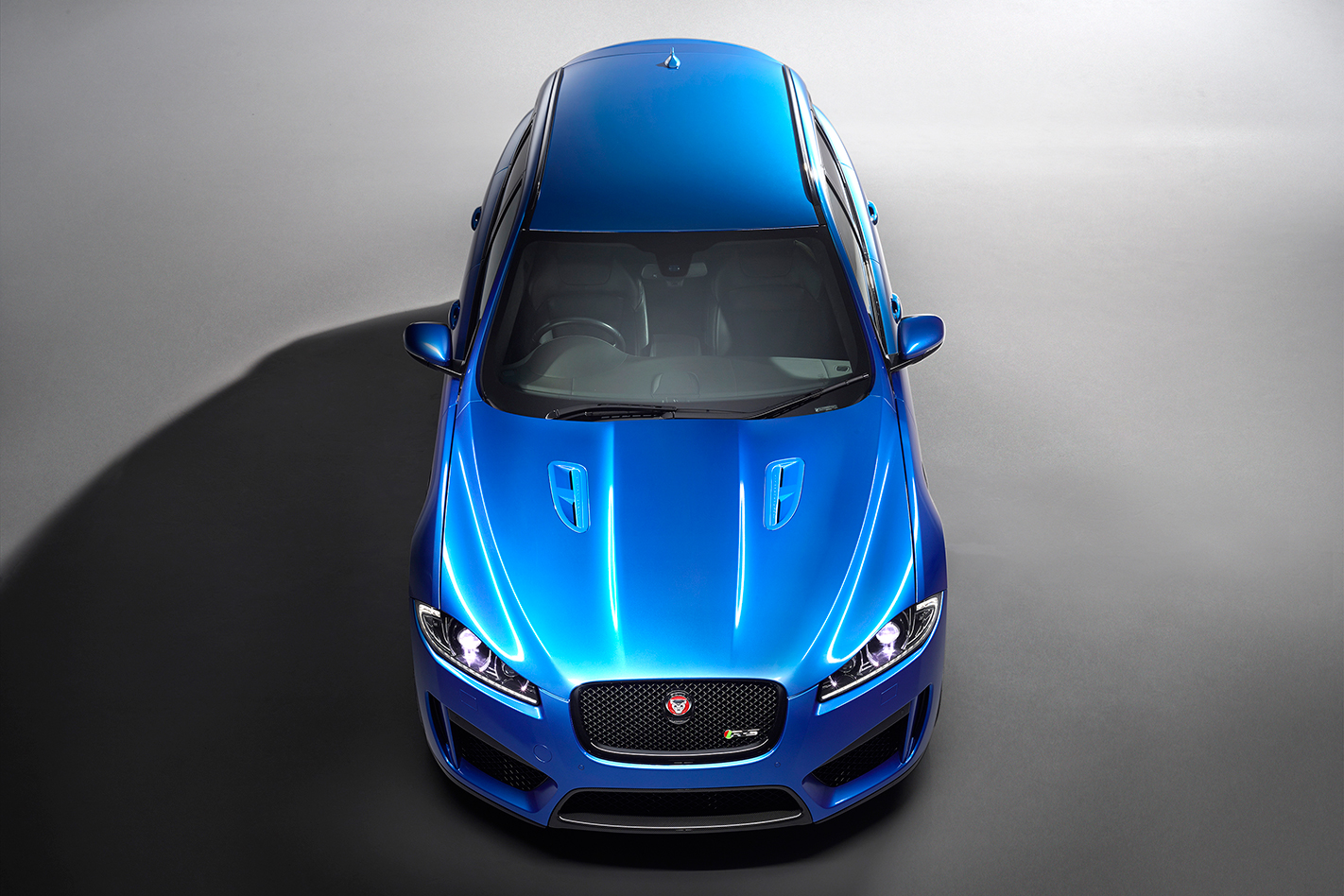
A big sign Jaguar’s got its fangs back is its 404kW/680Nm XFR-S Sportbrake. Because while it’ll carry your skis to the snow, you won’t need ’em. The thunderous concert from its 5.0-litre supercharged V8 is loud enough to bring down an avalanche. And thanks to relevant chassis tweaks, it should corner quite well when running from it.
Mercedes-Benz Brabus 850 E63
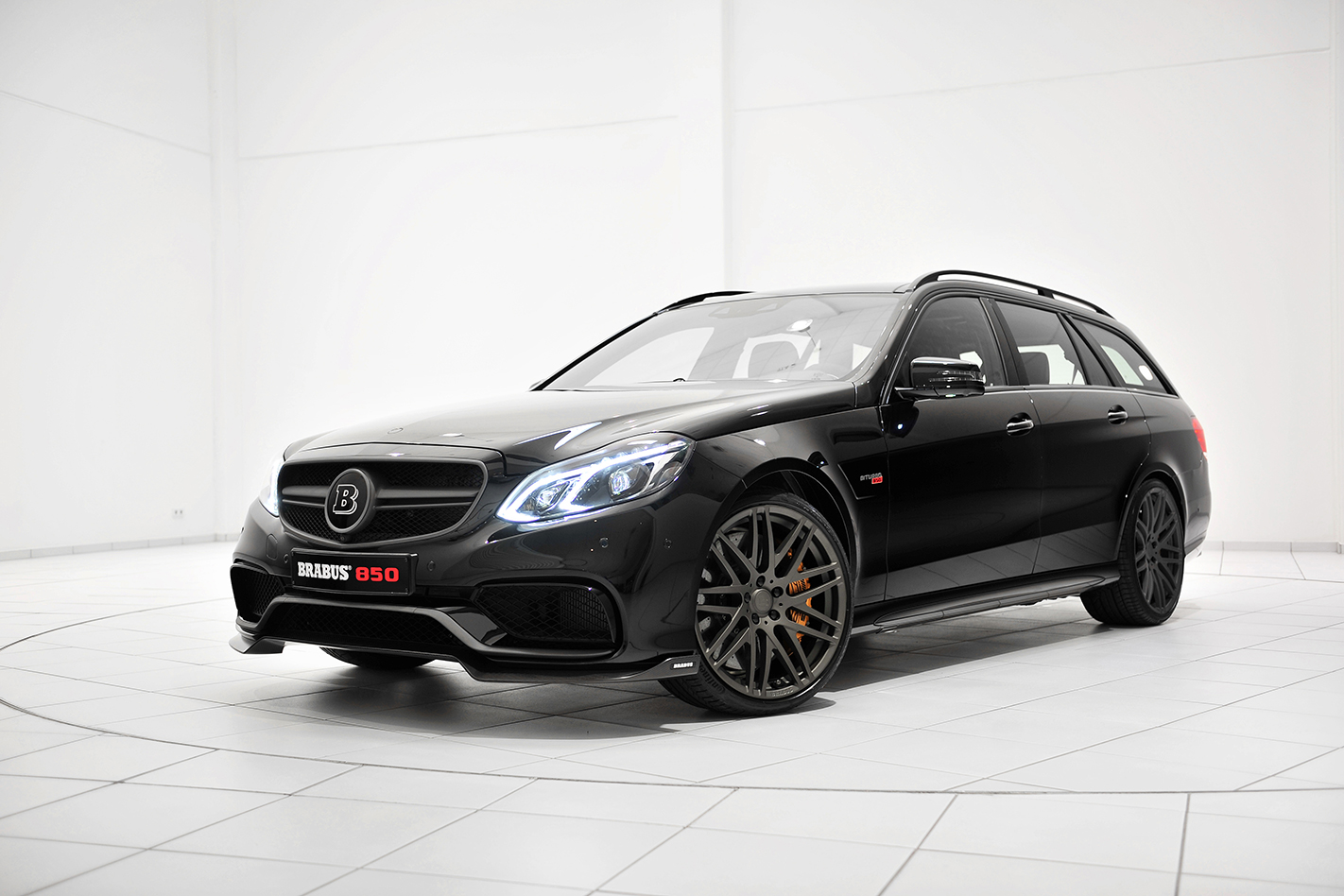
What do you need if you’re always late but commute via the Autobahn? Probably an alarm clock, but we suggest a Brabus 850. With 625kW/1450Nm from its bored and balanced 6.0-litre turbo V8 , making up lost time should be a breeze. Top speed is quoted as “in excess of 350km/h”, possibly because no one’s been brave enough to find out.
As with another Benz-badges entrant on this list, there’s a newer and faster version… but for pure cool points the big V8 takes the cake.
HSV R8 Tourer
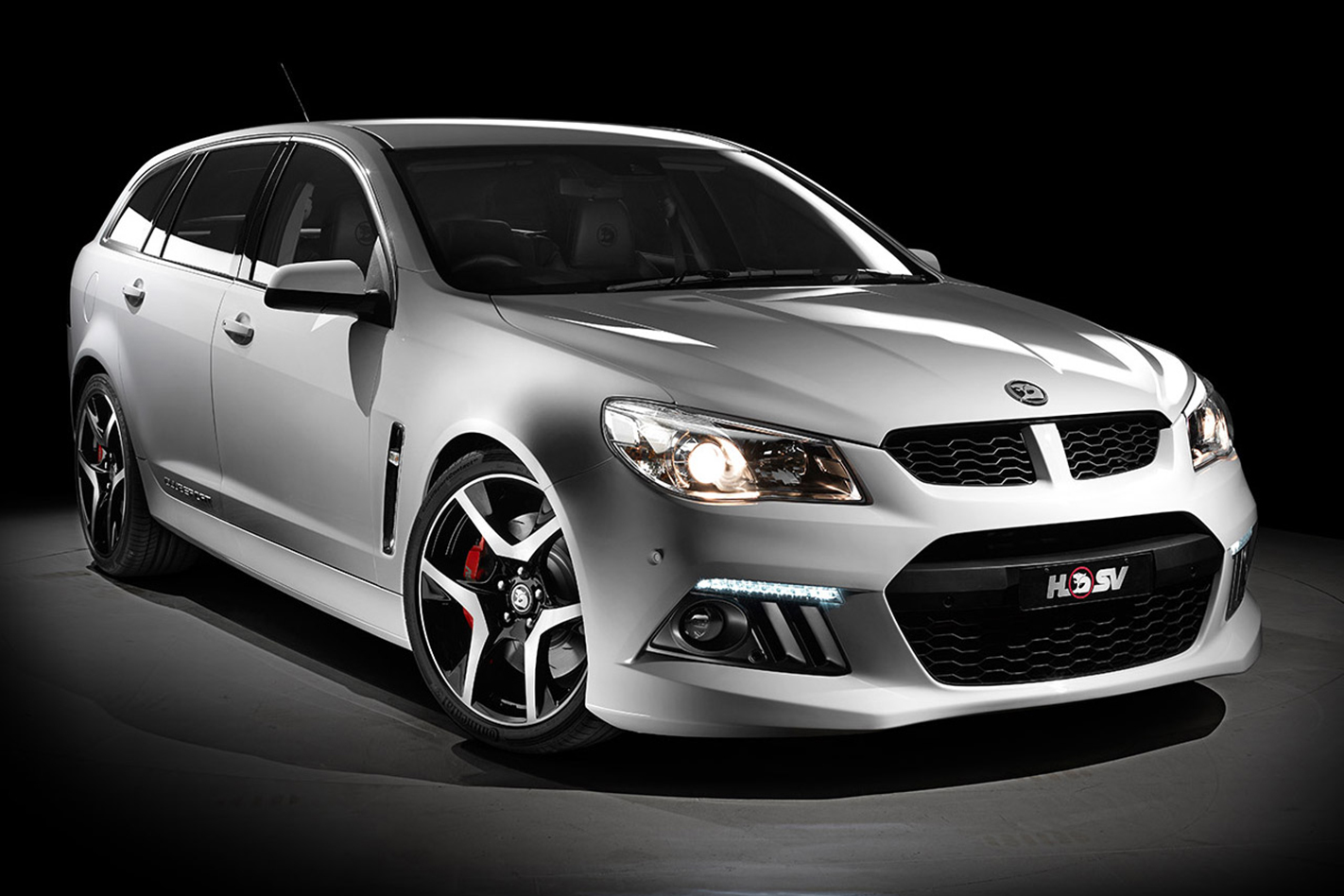
While there’s plenty of exotic wagonistas with more power than a nuclear reactor, it’s the R8 Tourer that makes the idea of parenthood more comfortable. It’s affordable, it’s fast (325kW/550Nm), and sounds bloody mean too. Prickly neighbours? All taken care of by its bi-modal exhaust. And, providing soccer’s on Saturday, it’ll lap up Sunday track days too.
Cadillac CTS-V Wagon
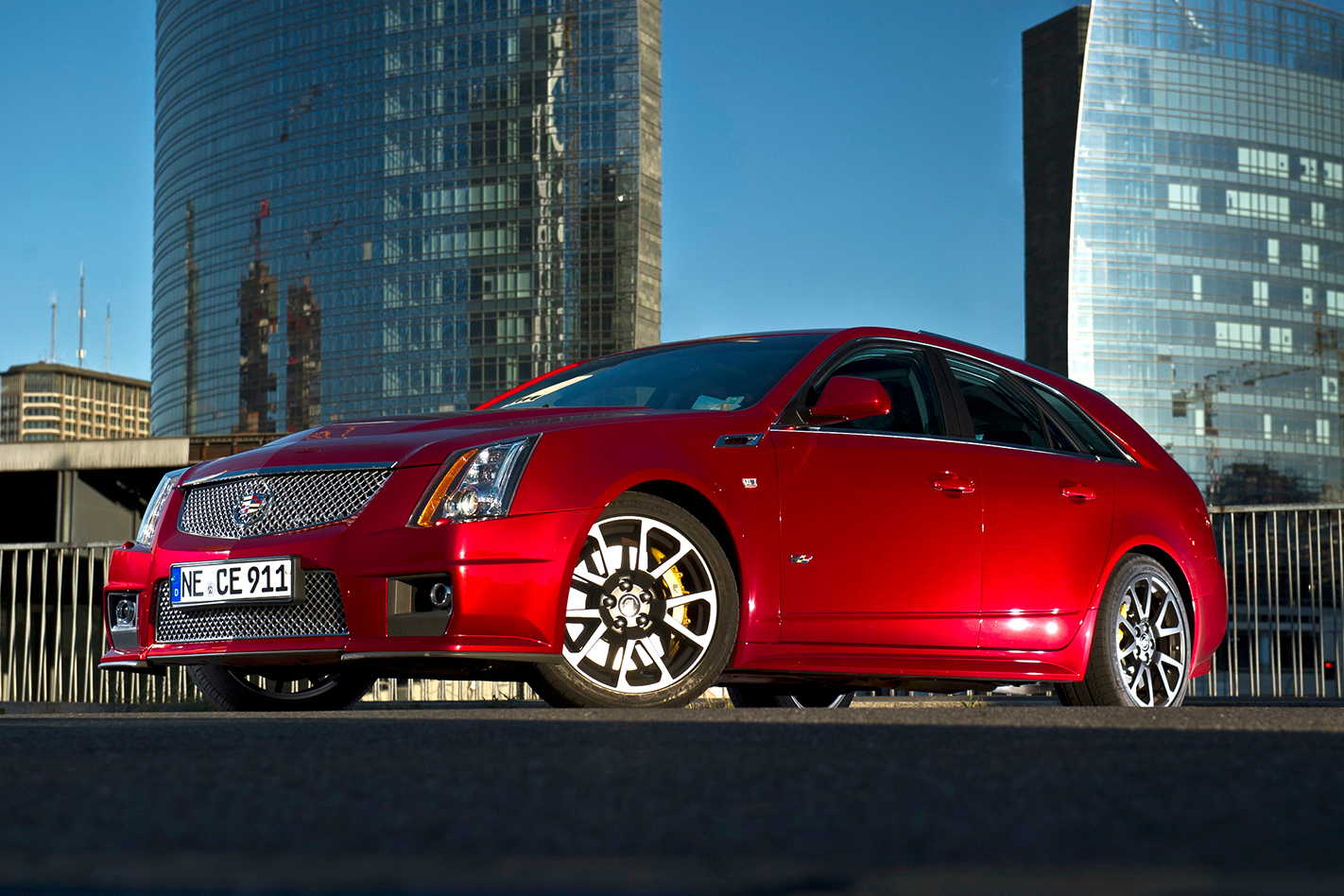
If there’s good reason to envy left-hand drive, it’s this car. The CTS-V, a 415kW/747Nm four-pillared colossus that features the same Eaton supercharged LSA found in the HSV GTS. Adding to its salivating hardware are Brembos, magnetic dampers and Michelin tyres, topped off by the optional Tremec six-speed manual.
Mercedes-AMG C63 507
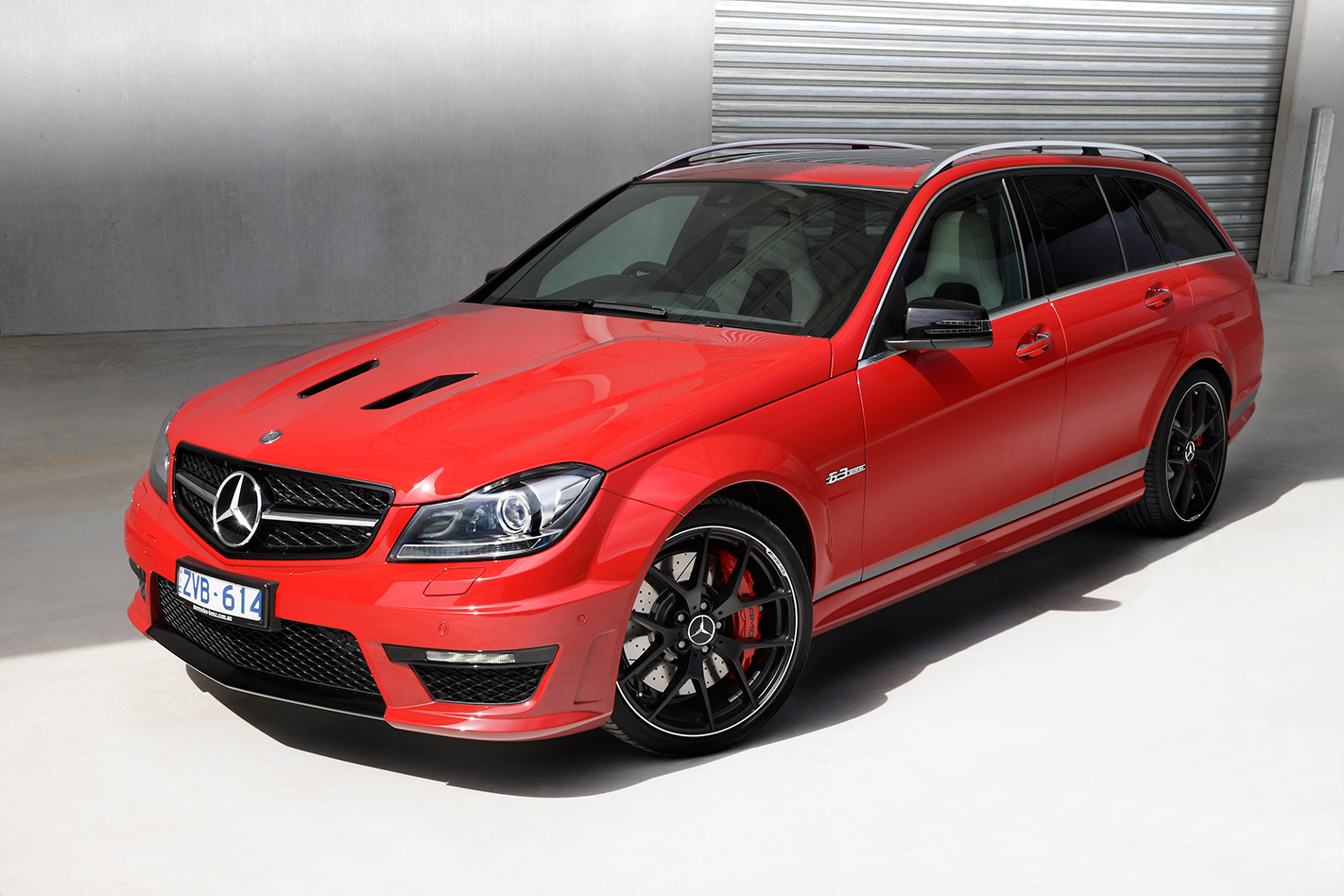
Using all the best bits from AMG’s now discontinued SLS supercar, the 507 wagon makes 373kW thanks to that mighty 6.2-litre atmo V8 which uses the forged pistons and lightweight crankshaft from the SLS. It’ll hit 100km/h in 4.3 seconds while producing one of the meanest V8 notes in the business. Handy when you’re cutting laps or trying to make the wife and kids ill.
As with the Brabus, the older (and in this case atmo) engine still beats the newer one for cool points.
Audi RS6 Avant
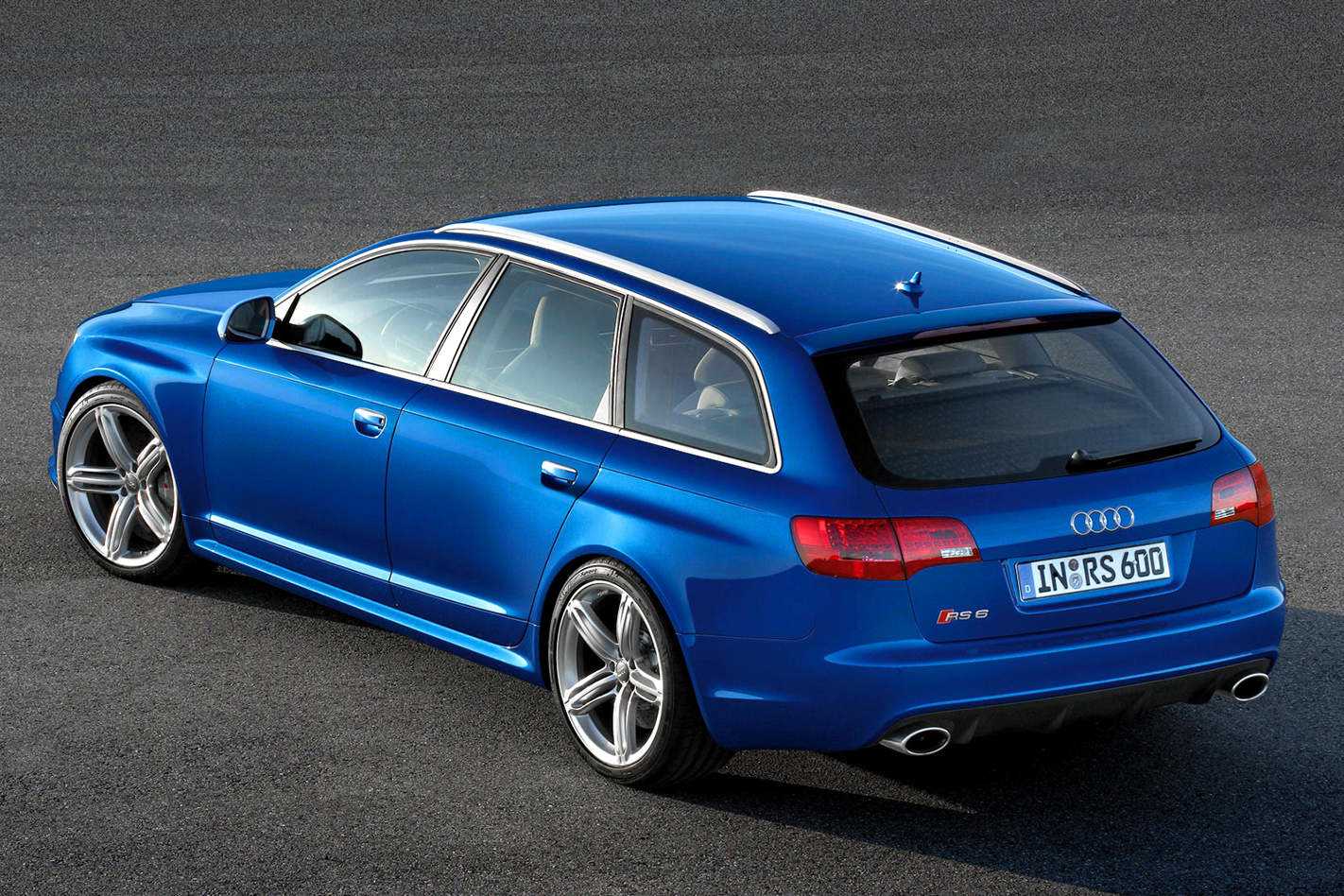
The only difference between the RS6 Avant and a rocket-sled is nice leather. Since 2002 the RS6 has pasted the Audi luxury experience to an all-wheel drive system that could warp time. We were tempted to mention the more recent twin-turbo V8 version, but the twin-huffer V10 (C6) is cooler, because, well, it has a 426kW V10.
Sure, Audi has since developed two more RS6s with twin-turbo V8s, but is that really cooler than a V10?
Subaru Legacy S402
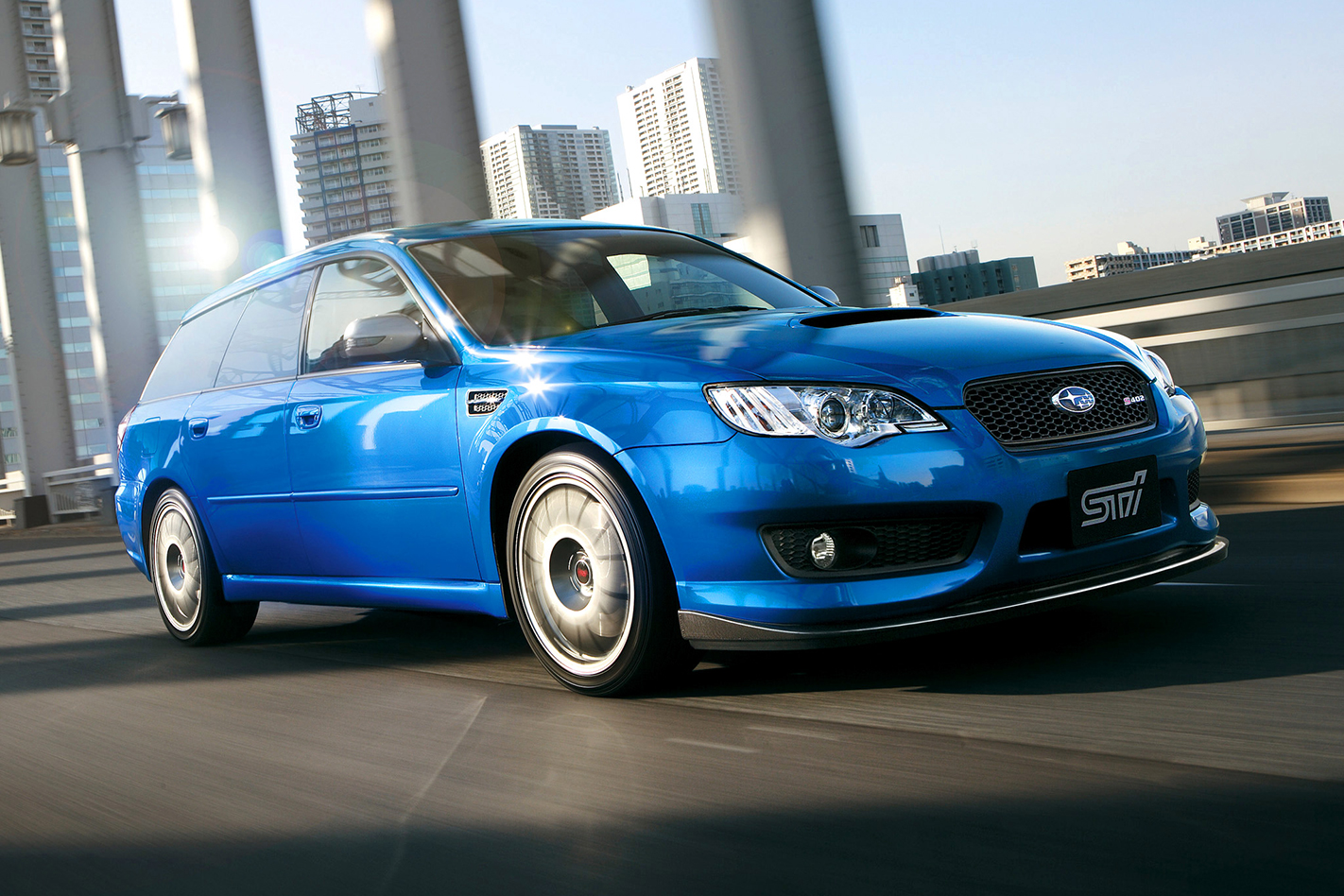
The 2008 S402 was the ultimate Legacy (Liberty in Oz) parts-bin special. Know-how from the WRX STI was applied with a twin-scroll turbo helping the 2.5-litre boxer four make 210kW/392Nm, along with pillow ball suspension links, Brembos and wider tyres and guards. Unfortunately, only 402 were built exclusively for the Japanese market.
BMW M5 Touring
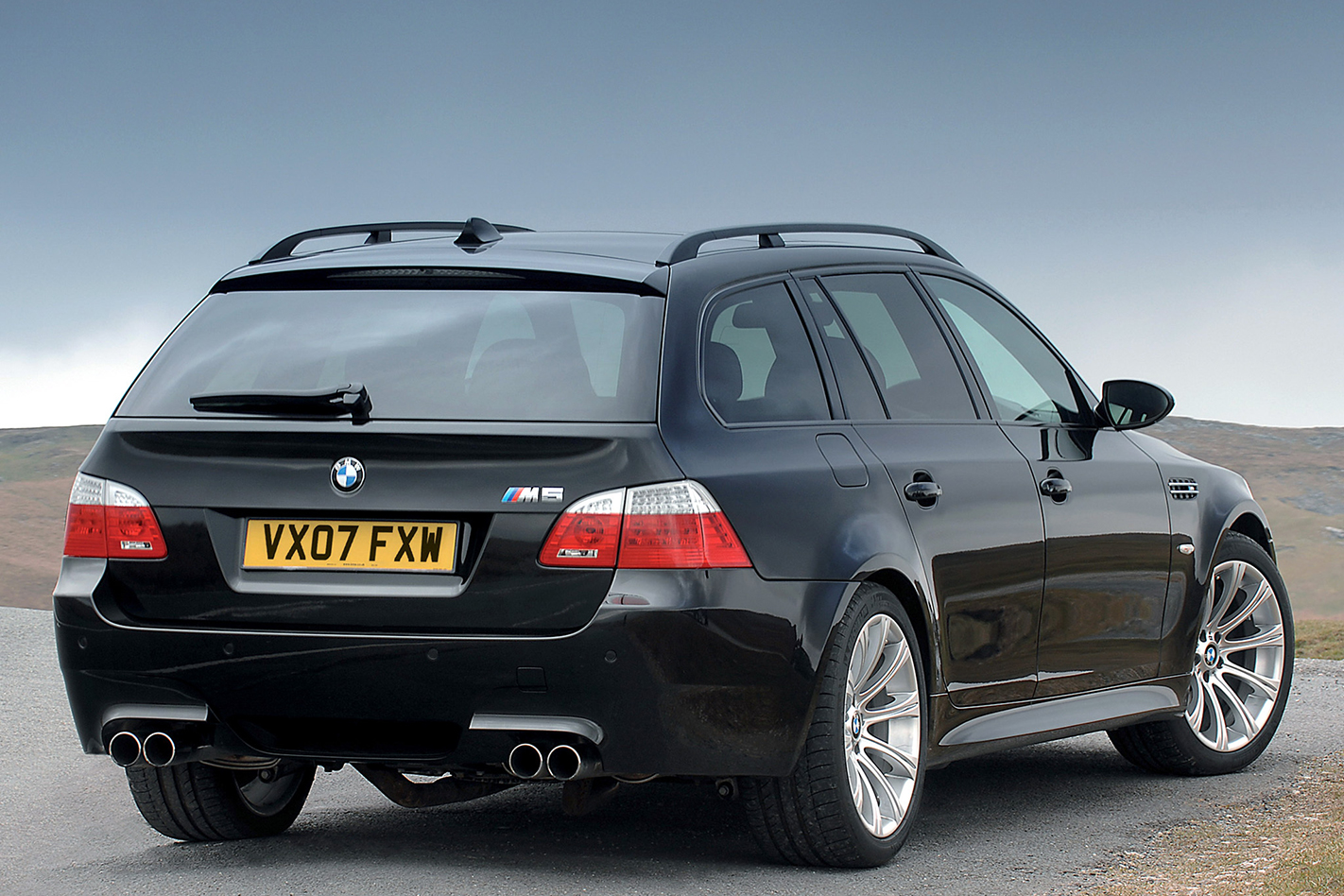
It’s cars like these that help restore our faith in humanity. As the global financial crisis gripped the world economy in 2007 it was BMW that, bravely, built a station wagon that could empty your savings account after one fill-up. With a 373kW race-bred V10 up front and the ability to haul dogs in the back, it’s a four-door smile-fest that unfortunately never made it here.
Bentley Flying Star
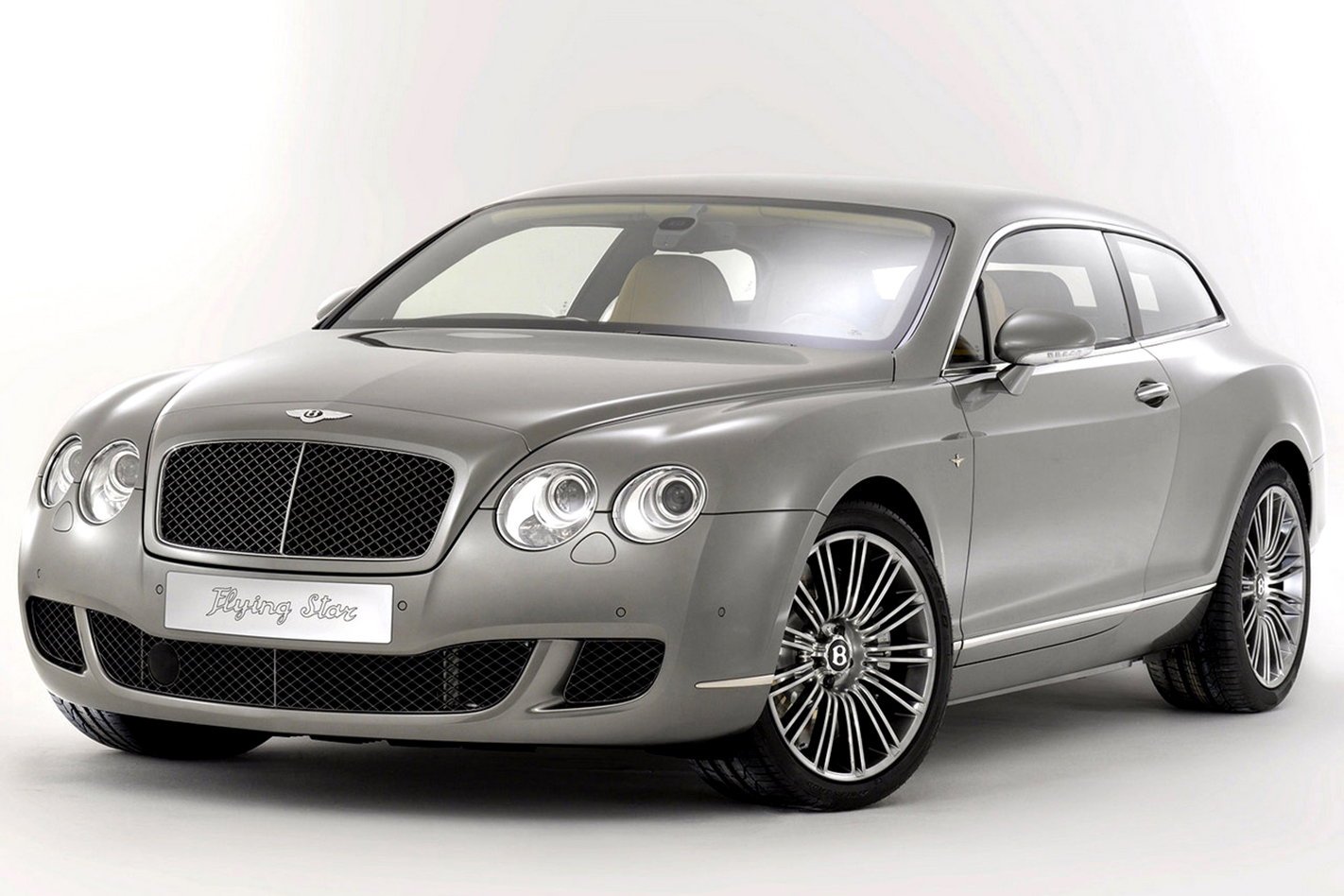
Carrozzeria Touring, the same blokes who made the gorgeous Alfa Disco Volante 8C and, more recently, the Mini Superleggera, happen to also re-body Continentals by hand. From the A-pillars backwards, they create the most opulent chariots ever suited for soccer balls. In ‘Supersports’ top-spec the Conti Flying Star uses a 463kW/800Nm W12 to haul its 2295kg.
It’s normal to find a straight-six up the front end of a BMW, especially in an E46 3 Series coupe.
What’s not normal is if that BMW E46 is powered by an Australian Ford Barra straight-six.
It would seem then, that Pontus Hartman’s drift car is not normal. The Swedish drift driver was set to compete in this year’s Drift Masters GP European Championship, but as with most events worldwide being axed over the ongoing COVID-19 pandemic, that’s no longer going ahead.
https://www.instagram.com/p/B9K0fCcnyTT/?utm_source=ig_embed&utm_campaign=loading
The good news is that the Barra-powered Bimmer will likely see action once hosting motorsport events are possible again, with its roughly 600kW and 1000Nm (at the wheels!) allowing it to turn tyres into clouds.
Originally fitted into the E46 in late 2018, the car was used to run throughout the 2019 season of the Swedish Drift Championship.
Is there another Barra-swapped E46 out there? We’d love to know if you’ve heard of or seen one.
https://www.instagram.com/p/Bp-INtNAwBs/?utm_source=ig_embed&utm_campaign=loading
The humble V6 engine is undergoing a resurgence.
It’s never been the most popular performance engine configuration, but the need to meet increasingly stringent emissions regulations is forcing manufacturers to downsize and the latest technology means power need not be compromised.
To give the V6 its moment in the sun here is our list of the greatest V6 engines in history in reverse chronological order. We’ll update it once new examples, such as the Aston Martin Valhalla and Mercedes-AMG One, reach production.
Alfa Romeo Giulia Quadrifoglio (2016-Current)
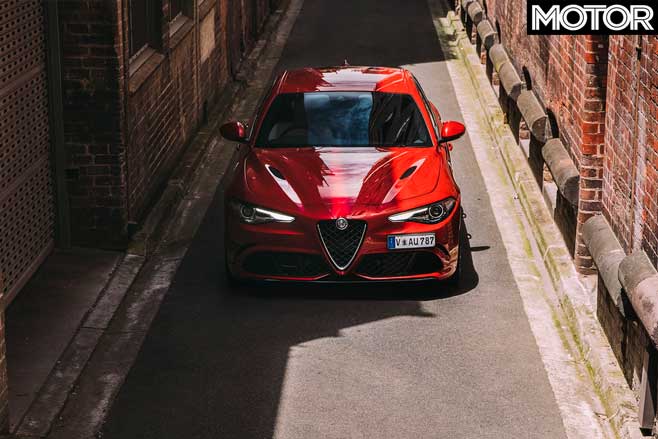
If you’re going to cut down a V8 to make a V6, then starting with one as accomplished as Ferrari’s F154 is a wise choice. That’s an oversimplification, but the Alfa Romeo Giulia QV’s 2.9-litre twin-turbo V6 shares its 86.5mm bore and 82.0mm stroke with Ferrari’s 3.9-litre V8.
A pair of single-scroll turbochargers integrated into the exhaust manifold inject up to 20psi (1.4bar) of boost to produce a healthy 375kW at 6500rpm and 600Nm from 2500-5000rpm. That’s almost 130kW/litre!
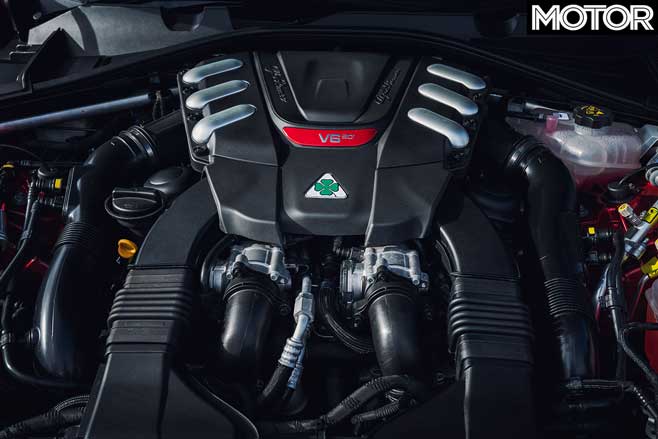
Flick the DNA selector into Race mode and the engine emits a deep growl and the Giulia rips through each of its eight gears, crossing the quarter mile in the low-12sec bracket.
Honda NSX (2016-Current)
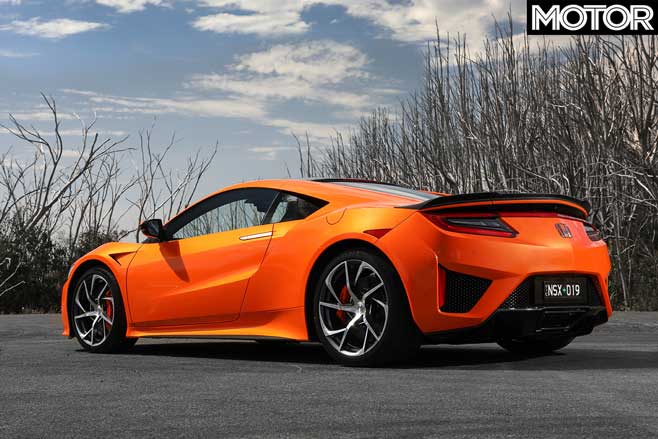
Honda’s latest NSX is an engineering masterpiece, packed full of the latest technology. So much so that the internal combustion engine is frequently overlooked in favour of the hybrid technology and the by-wire nine-speed dual-clutch gearbox and more.
However, the 3.5-litre twin-turbo V6 is still worthy of recognition. It revs to a healthy 7500rpm and produces 373kW from 6500-7500rpm and 550Nm from 2000-6000rpm, an incredibly broad spread of power.
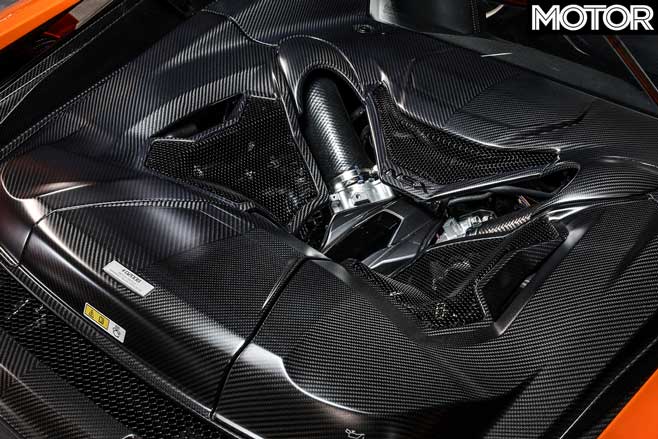
Dry-sump lubrication puts the crank 61mm lower to the bottom of the engine and the twin single-scroll turbos – chosen for their smaller size and lighter weight – use electronic wastegates. Response is improved by a direct-drive electric motor attached to the crankshaft, which also feeds juice back to the lithium-ion battery pack.
Ford GT (2016-Current)
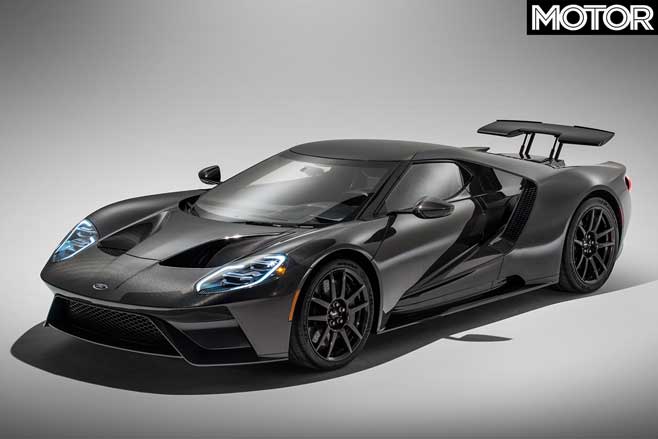
V6 supercars are few and far between, most manufacturers prioritising the more exotic sounds of eight, 10 or 12 cylinders. Ford took a different approach with the most recent GT, as racing success was a driving factor for the program.
To ensure the GT’s packaging was as small and aerodynamically efficient as possible, Ford’s 3.5-litre twin-turbo V6 was chosen. Remarkably, it shares 60 per cent of its parts with the engine in the F150 Raptor.
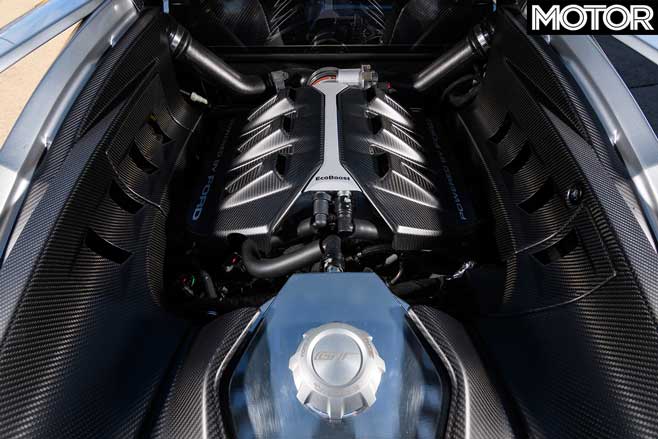
But that 40 per cent makes all the difference, as the GT produces a mammoth 482kW/746Nm, which has risen to 492kW with a broader torque band for the 2020 model year thanks to better cooling, higher energy ignition coils, a standard Akrapovic exhaust and 50 per cent greater airflow.
Lotus Evora (2009-Current)
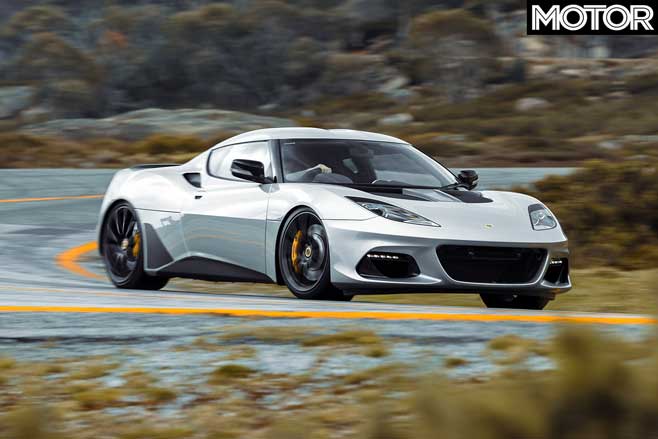
Speaking of humble origins, Lotus has been using Toyota’s 2GR-FE for more than a decade now in its Exige and Evora models. It began life in virtually standard guise producing 206kW and 350Nm, which rose to 257kW/400Nm with the addition of a Harrop supercharger.
A further decade of development has seen this engine rise to heights of 321kW/450Nm in the latest ’430’ models thanks to a new Edelbrock supercharger and titanium exhaust. However, even the standard Toyota engine has forged con-rods and a cast aluminium intake manifold.
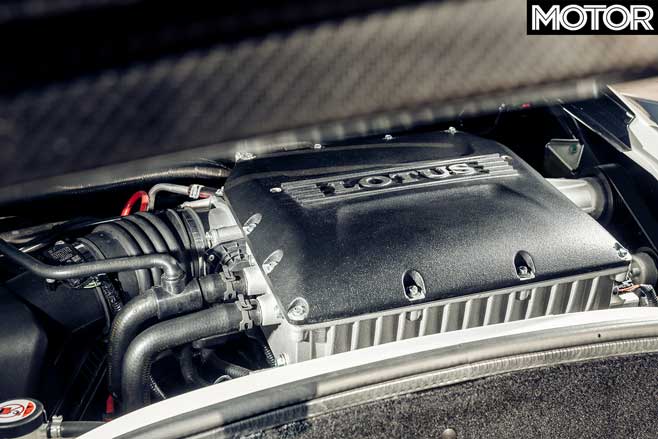
However, the Lotus-tuned 2GR-FE earns its place on this list because of its noise. It’s pure music and makes this engine one of the best-sounding on-sale today.
Nissan GT-R (2007-Current)
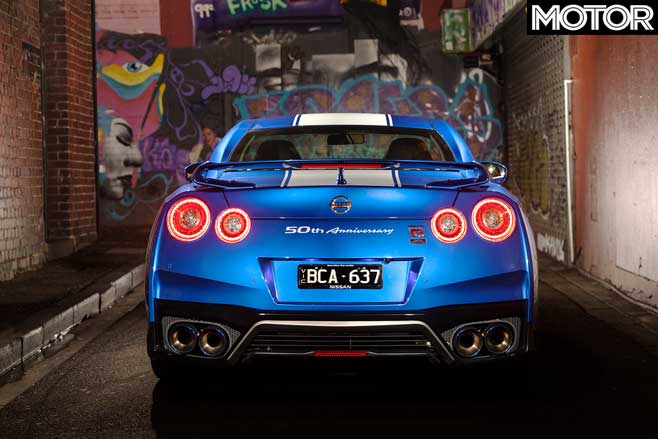
It was going to take a special engine to succeed the venerable RB26DETT. The VR38DETT is just such an engine. Nissan takes its construction seriously, a handful of master craftsmen building the engine’s in a hermetically-sealed clean room.
What’s most impressive about the R35’s powerplant is the headroom that was designed in. when the R35 debuted way back in 2007 it thumped about 357kW and 588Nm, which seemed plenty, but in the latest GT-R Nismo the same engine produces 441kW and 652Nm.
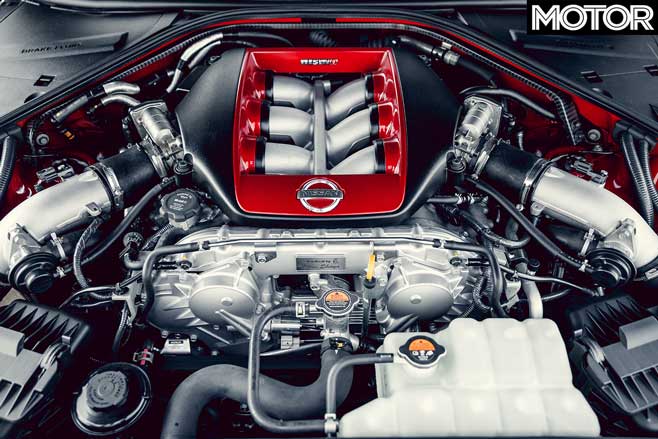
Yet there’s still more, as the limited edition, mega-bucks GT-R50 lifts this to a hefty 529kW/780Nm. The VR38 was one of the first engines to use an ultra-thin plasma lining on the cylinder walls in place of a traditional steel liner.
Alfa 156 GTA (2001-07)
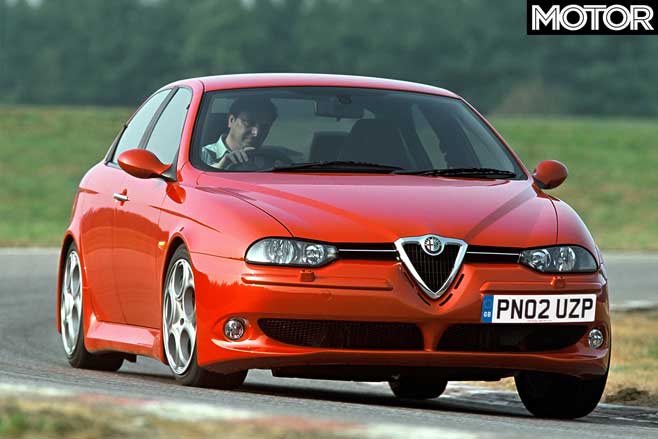
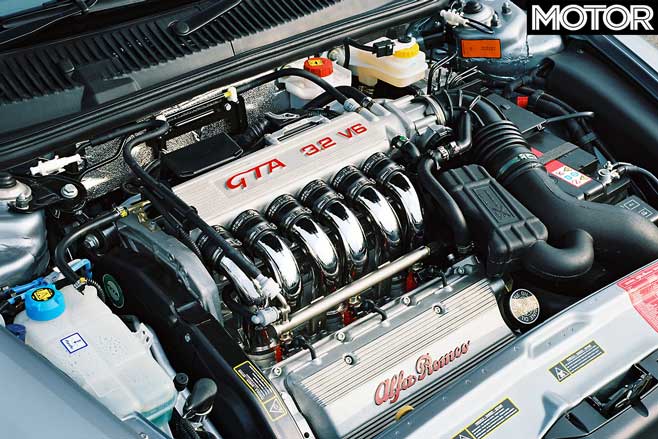
Starting life in 1979, Alfa’s 3.2 was the ultimate expression of its long-running V6 engine seeing service in the 147 and 156 GTA, GT coupe and others. It’s certainly the most beautiful engine to look at on this list with its six chromed intake pipes.
It makes an incredible noise, too, rich and soulful, yet had plenty of performance producing 184kW and 300Nm; more than enough when you consider its front-wheel drive applications.
Sadly, it struggled to find a worthy home, Alfa’s GTA models tending to be rough-riding, torque-steering understeer fiends that were fond of a breakdown. Still, the engine was great!
Jaguar XJ220 (1992-94)
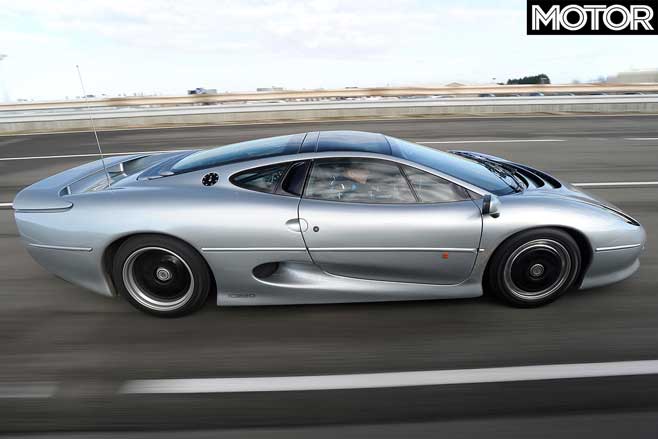
The Jaguar XJ220’s V6 was seen as a bitter disappointment. The original concept featured a 522kW 6.2-litre V12 and all-wheel drive, but the concept car was never intended to go into production. The V12 made it too big, too heavy and too thirsty.
The V6 solved all those problems. Derived from the 3.0-litre V6 in the back of the MG Metro 6R4 rally car, it was enlarged to 3498cc and a pair of turbochargers added to produce 404kW at 7200rpm and 644Nm at 4500rpm.
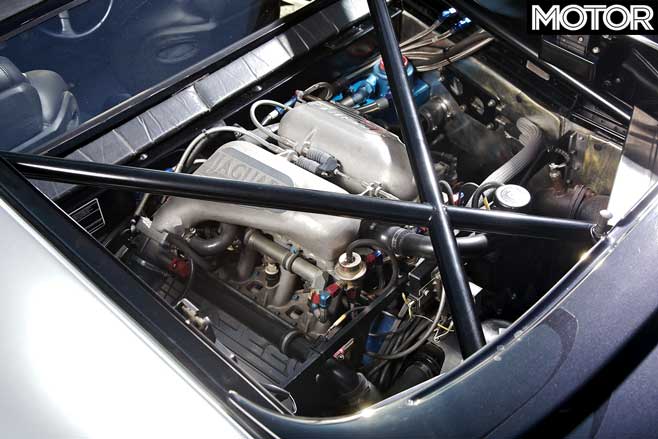
It still had a race heritage, too, as it began life in the Jaguar XR-10 and XJR-11 endurance racers. The XJ220 would also taste success, winning its class at Le Mans in 1993 before being disqualified over technicalities.
It pushed the mighty Jag to 342km/h despite having just five gears (1st: 106km/h, 2nd: 163km/h, 3rd: 224km/h, 4th: 292km/h, 5th: 342km/h). Buyers didn’t care, though, some XJ220s taking almost a decade to sell.
1987 Buick GNX
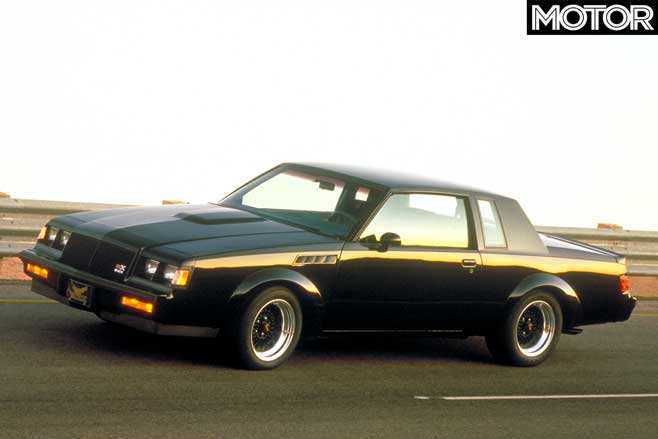
Australia is plenty familiar with the 3.8-litre Buick V6, for in LN3 guise it did service in Holden Commodores from VN onwards, but we never saw one like this.
It’s the exact opposite of some of the exotic engines on this list: cast iron blocks and heads, pushrod valve actuation, two valves per cylinder and peak power produced at just 4400rpm. But while it wasn’t clever, it was effective.
A ceramic ball-bearing turbo, larger Garrett intercooler and revised programming with boost-by-gear produced 224kW at 4400rpm and 569Nm at 2400rpm and made the GNX the fastest thing on four wheels and proved you didn’t need eight cylinders to dominate the drag strip. Just 500 were built.
Lancia Stratos (1973-78)
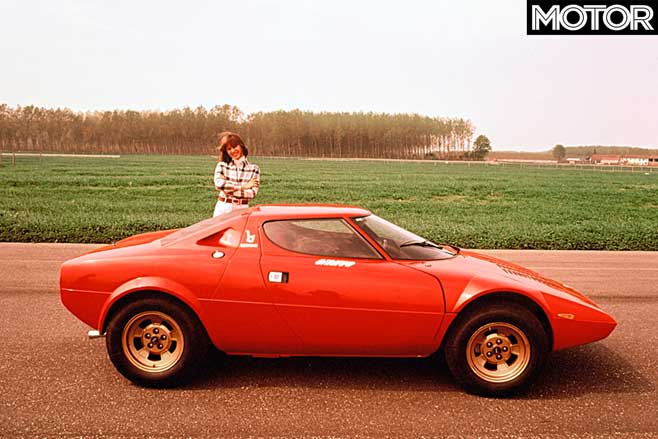
While in most race series a 2.4-litre V6 would be considered small, in rallying it was serious firepower. When the dominant machinery of the day made do with four cylinder engines of between 1.8 and 2.0 litres, the Stratos and its Ferrari V6 completely rewrote the rulebook.
Ferrari had moved to V8 engines, so the V6 was made available to Lancia for its rally supercar. In road tune it produced 140kW at 7000rpm and 226Nm at 4000rpm, plenty for a car that weighed well under a tonne.
In competition guise, however, it became a monster, screaming out 205kW in 12-valve guise and 239kW in 24-valve guise. What’s more, it sung one of the all-time greatest tunes, turning rally stages into concert venues, the Stratos able to be heard for kilometres.
The Ford Falcon was a dead car driving for longer than you think.
A fateful decision taken more than 15 years ago may have spelled the end of the road for Ford’s last ever rear-drive sedan long before the company decided to quit manufacturing in Australia.
It happened during the development of the S197 Mustang, the retro-styled edition of Ford’s iconic ponycar launched in the US in 2004.
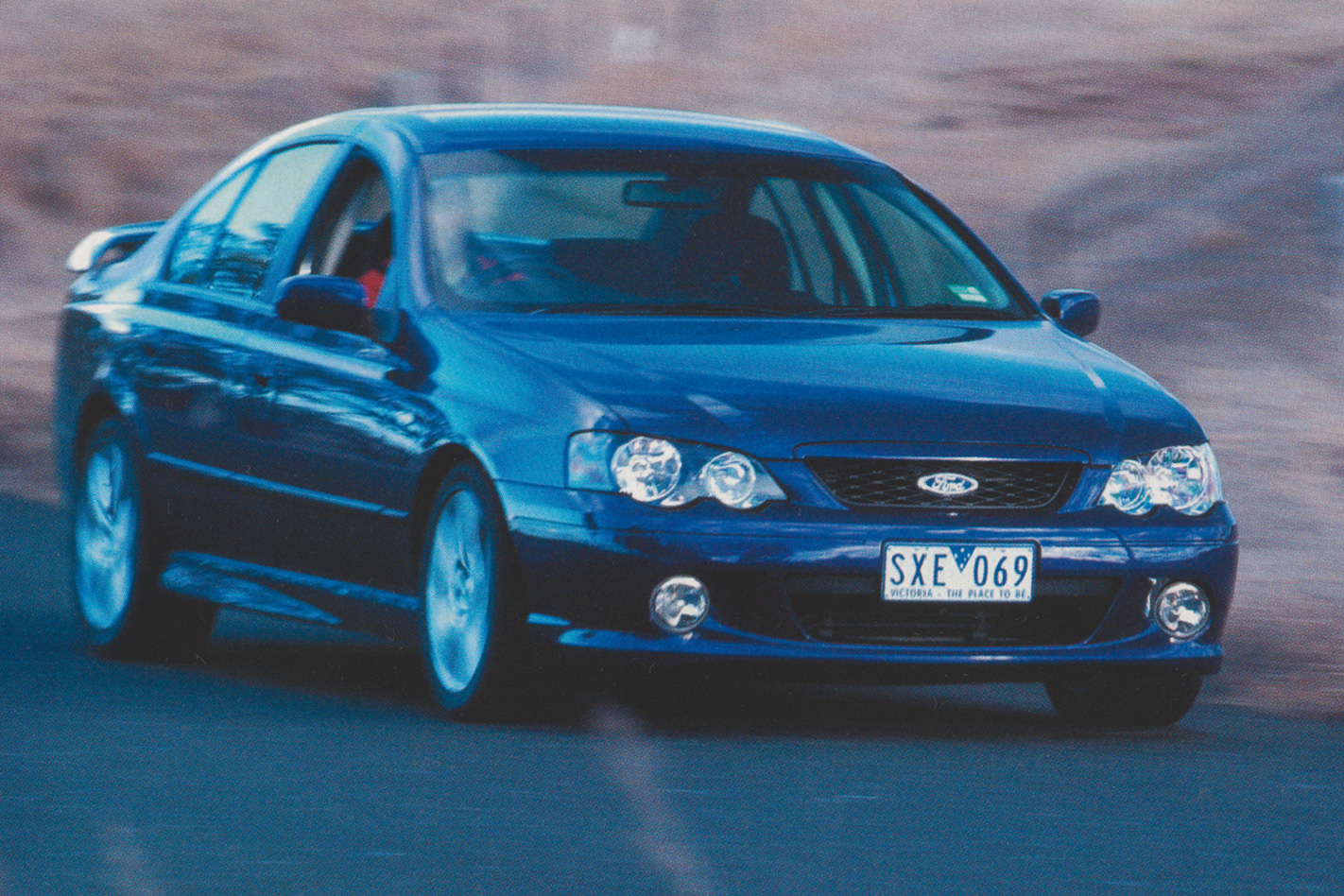
That Mustang and the BA Falcon were originally planned to share the rear half of the S197 platform, with control-blade independent rear suspension.
Eventually, the Falcon would later pick up the front half of the S197 platform when Ford Australia could afford to switch to the imported 3.5-litre Duratec V6 engine.
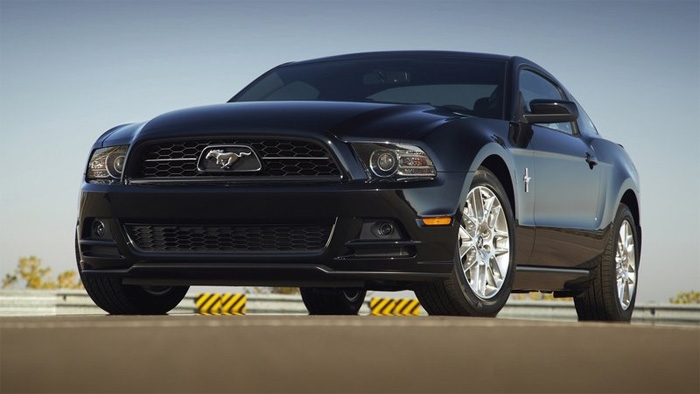
The development programs of both cars diverged when Ford Australia engineers and their Mustang counterparts disagreed on the configuration of the control-blade set-up.
The Mustang team wanted the rear suspension isolated to reduce NVH, but that would have made it almost impossible to package the three-abreast rear seating needed in the Falcon.
With the clock ticking – the Falcon was due to begin production before the Mustang – Ford Australia decided to develop its own, non-isolated control-blade rear end.
Ironically, the Mustang team later gave up on an isolated rear suspension for cost reasons and developed its own non-isolated set-up similar to the Falcon’s.
At a very late stage in the S197 program, though, Ford product chief Phil Martens convinced CEO Bill Ford Jr the company could save a hundred dollars per car by switching to a live rear axle. Ford’s 21st century Mustang consequently launched with a 1960s rear suspension.
When Falcon and Mustang went separate ways, Ford lost the opportunity to develop modern, flexible, relatively low-cost rear-wheel-drive vehicle architecture before its collapse into financial chaos in 2005.
In the year after the Mustang launched, Ford burned through a staggering $US4 billion in cash; only by mortgaging the entire company in 2006 – including rights to the Blue Oval badge – for $US24 billion, was it able to escape bankruptcy.
Developing a common platform for Falcon and Mustang – which may have later helped the business case for Falcon – was the least of the company’s priorities.
Failing to do so now looks like a strategic error, and it’s not because of Falcon, but Lincoln. With Jaguar, Land Rover, Aston Martin and Volvo sold to pay down debt, Lincoln is Ford’s sole remaining luxury brand.
And Ford execs are now realising, with mounting horror, that Lincoln, a brand so cruelly abused that by 2005 it had become a plastic chrome trim package on a Ford F-150 pick-up, is now its only option in an automotive business environment where mainstream brands are struggling and luxury brands, while accounting for just 10-12 percent of sales worldwide, are delivering 50 percent of profits.
Ford’s frantic attempts to revive Lincoln include plans for a new flagship model, the Continental. But forget notions of an extravagant sedan with a bonnet that stretches off into the horizon like the elegant Kennedy-era cars. Because it failed to give Mustang and Falcon a common vehicle architecture, Ford no longer has the hardware to build a Continental like that.
This article was first published in the June 2015 issue of Wheels magazine.
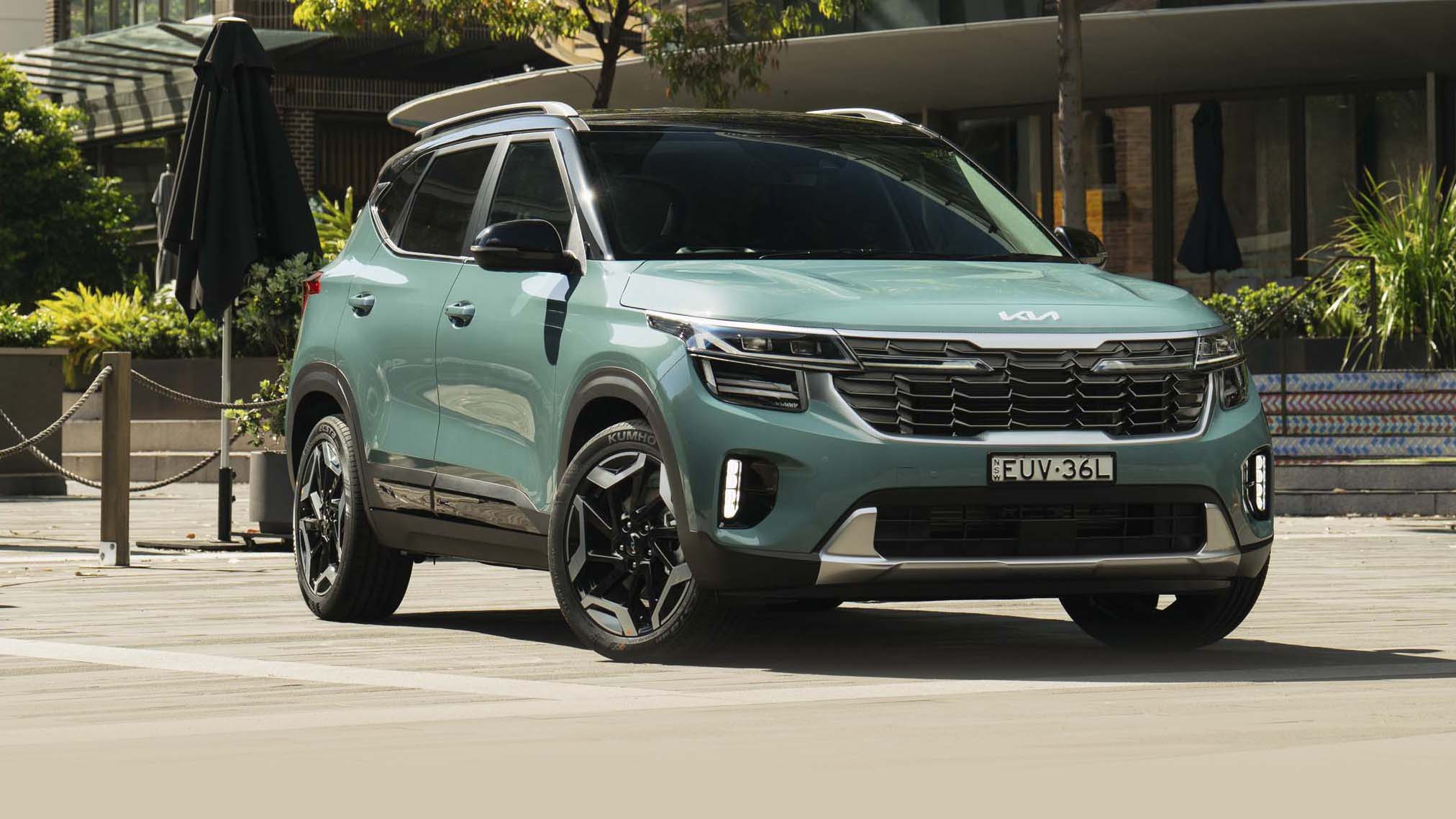
UPDATE, November 25, 2022: Updated 2023 Kia Seltos now in Australia
Kia’s updated 2023 Kia Seltos range is now in Australia, and we’ve driven it. Get the full story, and video, at the link below.
Story continues: 2020 Seltos pricing and review
As far as getting it right the first time goes, Kia has done a noteworthy job with the Seltos. So much so, that it finished second, but equal on points with the Toyota C-HR, in our latest SUV megatest.
Sales in Australia have reflected this, too, with the Seltos amassing 1595 registrations by the end of February. That’s more than the likes of the C-HR (1345) and Subaru XV (1321) , while it’s nipping at the Hyundai Kona’s tail (1939). Keen pricing and abundant standard features have made it a first-up success.
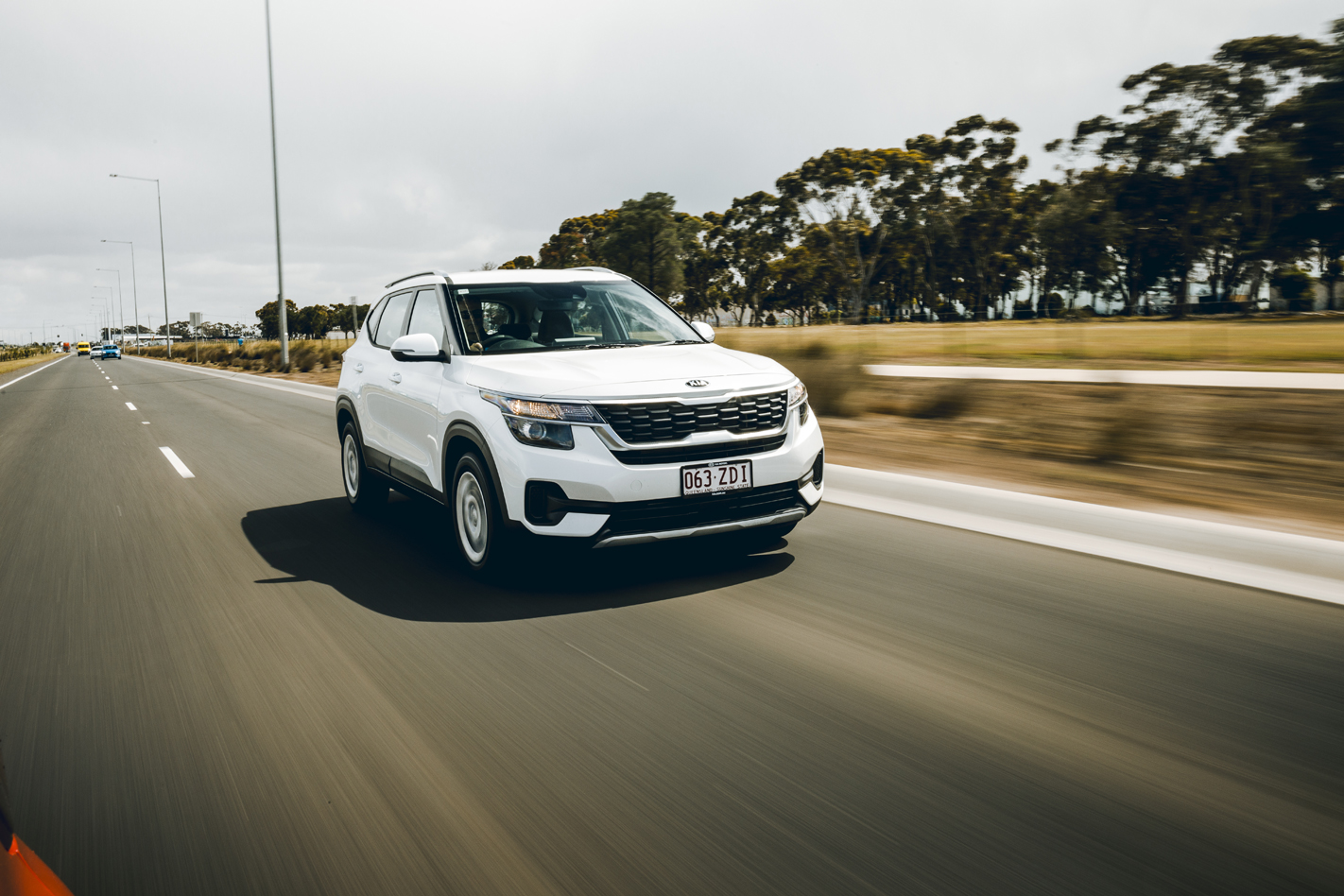
WHAT ARE THE KIA SELTOS VARIANTS?
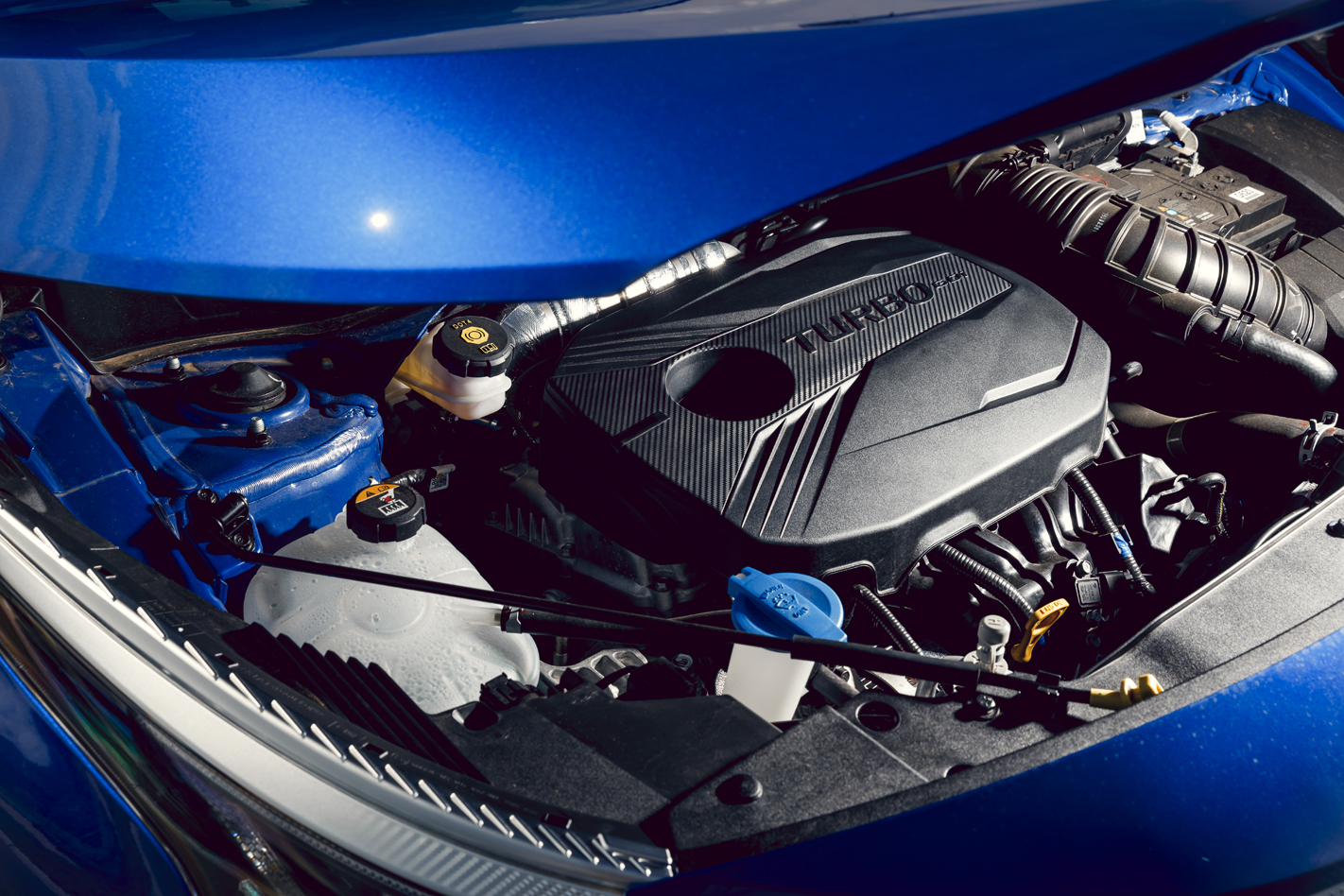
The Kia Seltos comes in five model grades. The base-model S and the Sport and Sport+ are front-wheel drive with a naturally aspirated 2.0-litre four-cylinder mated to a CVT. Sport+ also is available in all-wheel drive, as is the range-topping GT-Line. Both use a 1.6-litre turbo four and a seven-speed dual-clutch transmission.
HOW MUCH DOES THE KIA SELTOS COST?
Prices start at $24,990 for the S, which despite being the entry level variant is still feature-packed – with hubcaps to boot. The front-drive Sport and Sport+ come in at $27,990 and $31,490 respectively, while access to the more powerful all-paw 1.6-litre turbos (you also get the dual-clutch ’box plus multi-link rear suspension) costs $34,990 for the Sport+ and a rather lofty $40,400 for the GT-Line, with all the bells and whistles.
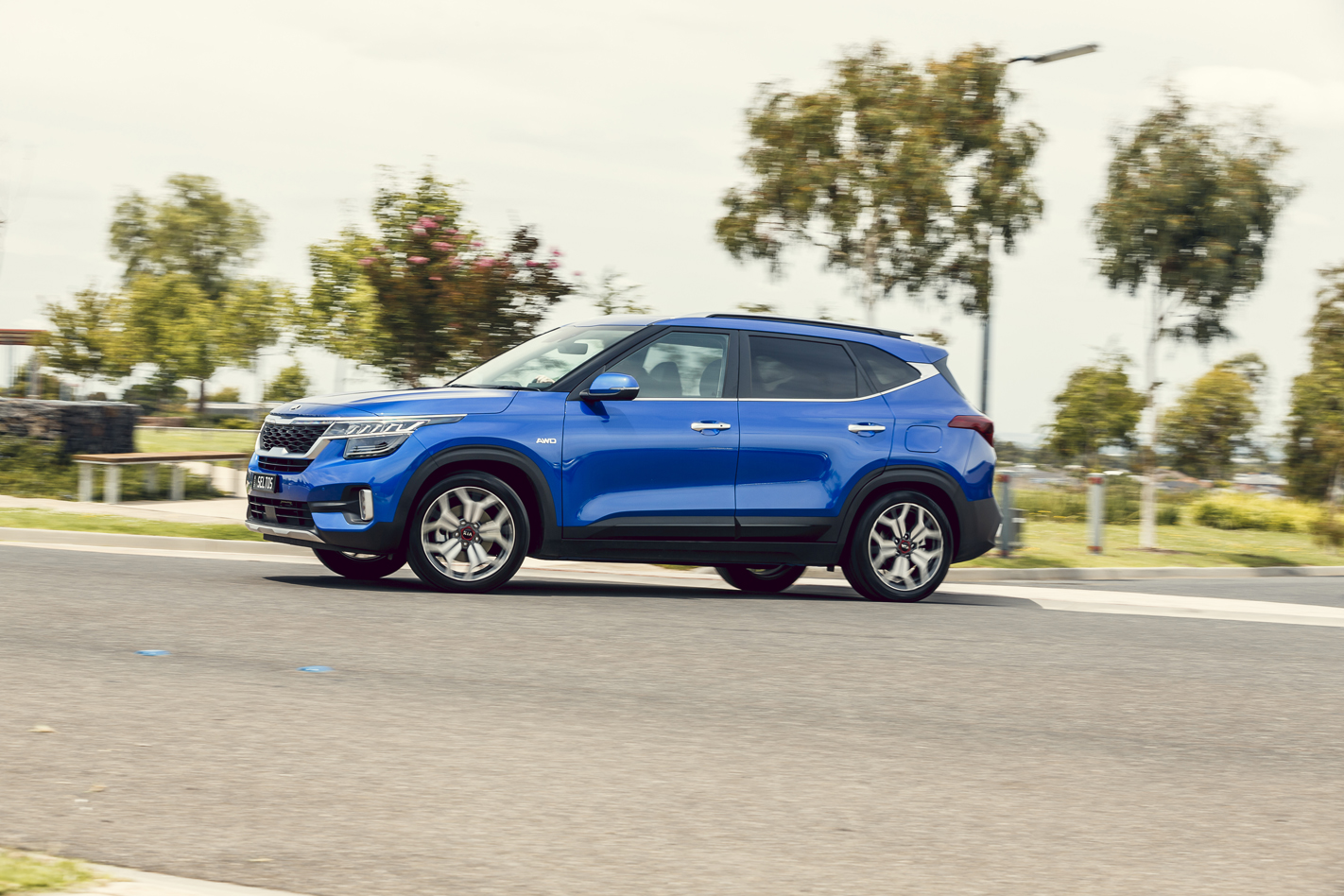
IS THE KIA SELTOS FUEL EFFICIENT?
The Seltos’s claimed figure of 6.8L/100km for its base 2.0-litre engine is significant given it easily beats the claimed 7.2L/100km of its stablemate the Hyundai Kona with the same-size donk. We achieved 8.0L/100km in the megatest, which included performance testing. The 1.6-litre turbo is thirstier, at a claimed 7.6L/100km, but pips the 7.9L/100km claim of its turbo Kona cousins.
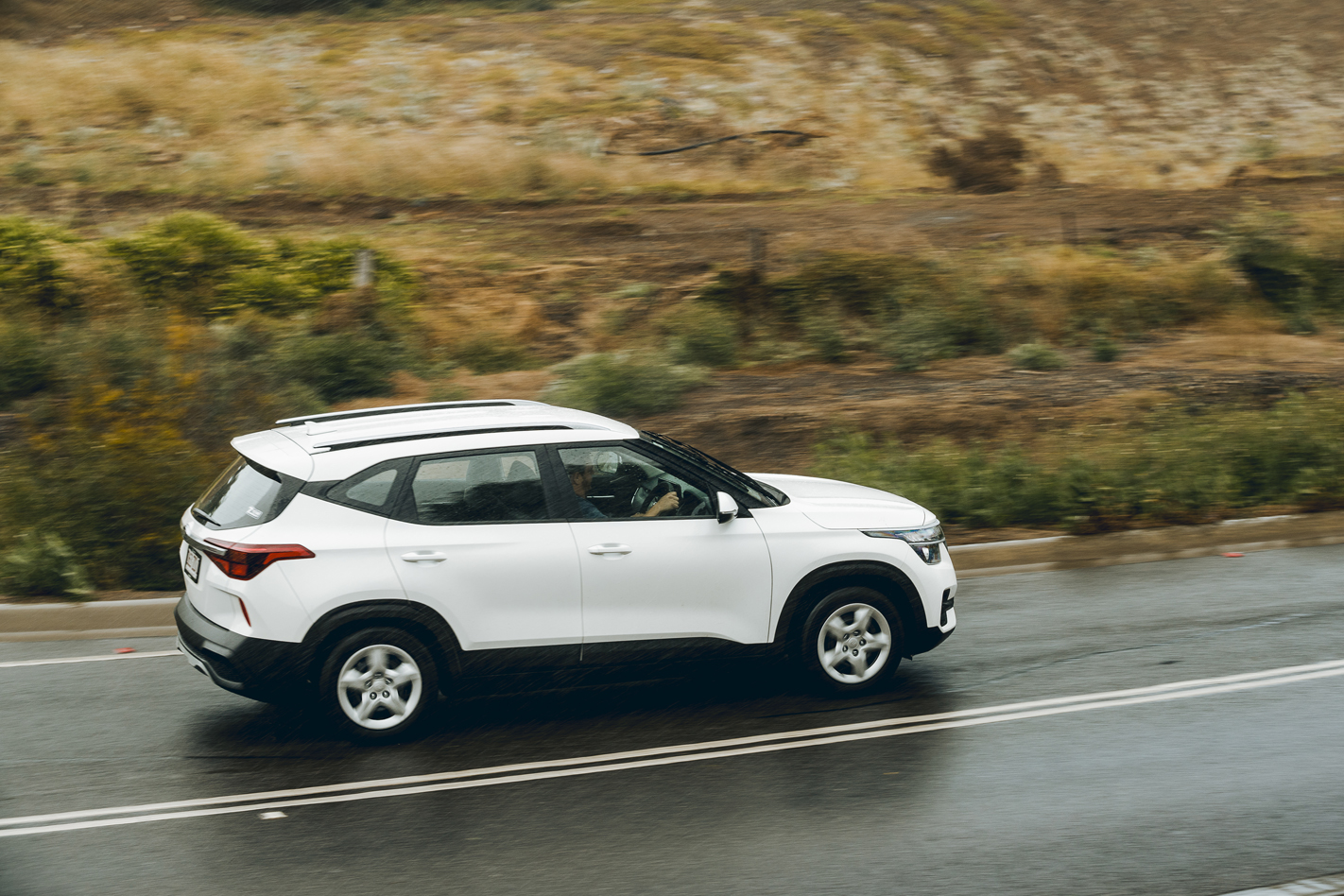
DOES THE KIA SELTOS HAVE GRUNT?
Choose the higher-spec 1.6-turbo and you’ll be rewarded with 130kW and 265Nm – well above average in this segment. We achieved a 0-100km/h time of 8.3 seconds, which is ahead of the 9.1 seconds claimed by segment rival Mazda CX-30 when fitted with its 2.5-litre SkyActiv-G four-cylinder.
DOES THE KIA SELTOS HAVE APPLE CARPLAY AND ANDROID AUTO?
Yes, it does. And it’s displayed on a generous touchscreen display. However, if you don’t want to use smartphone mirroring, the standard infotainment system is commendably good.
IS THE KIA SELTOS SPACIOUS?
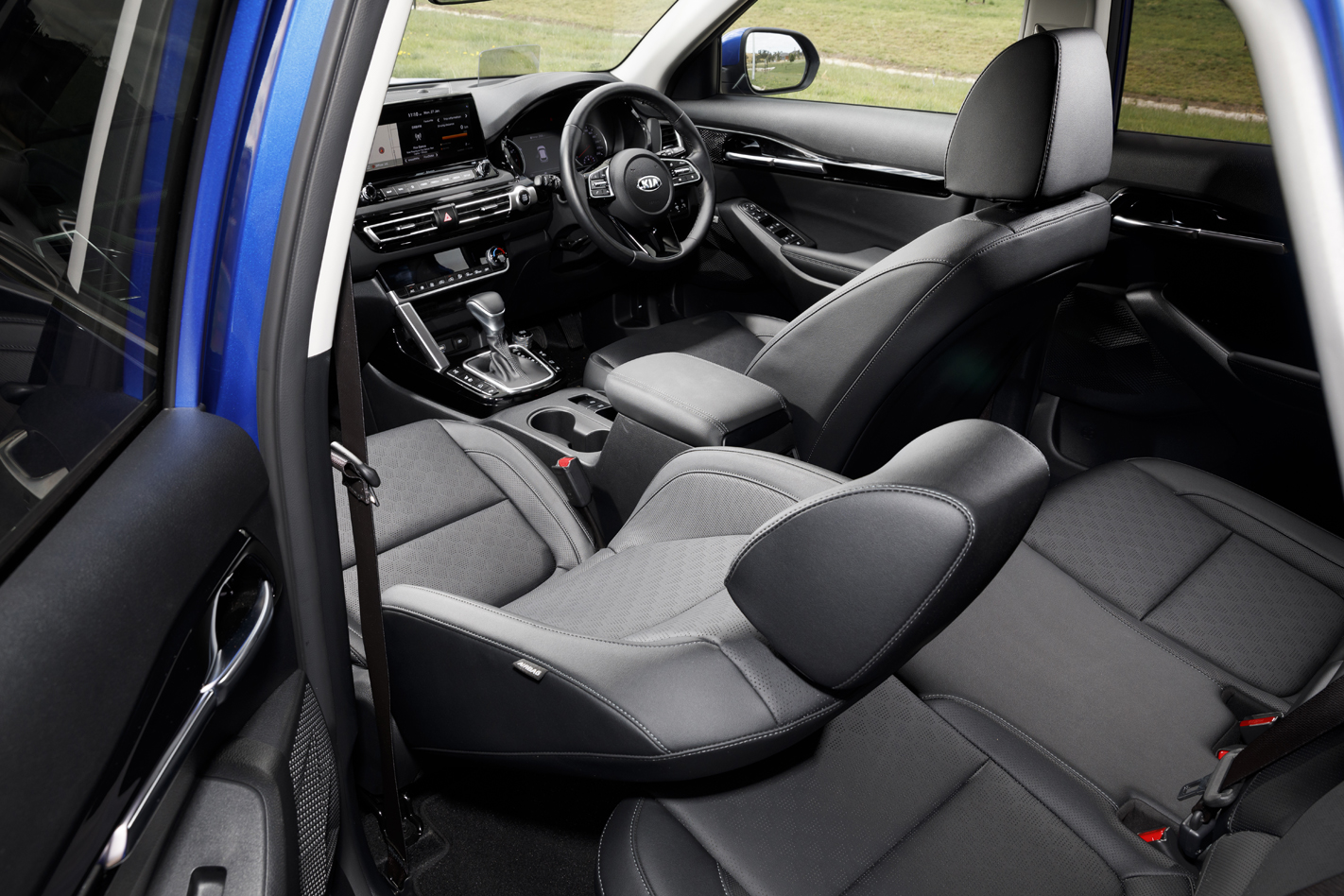
While it’s deemed a small SUV, the Seltos is dimensionally bigger than a lot of its rivals. With head-, leg- and toe-room. The tallboy bodystyle not only affords the headroom, but generates an airy feel with impressive all-round vision.
DOES THE KIA SELTOS HAVE A BIG BOOT?
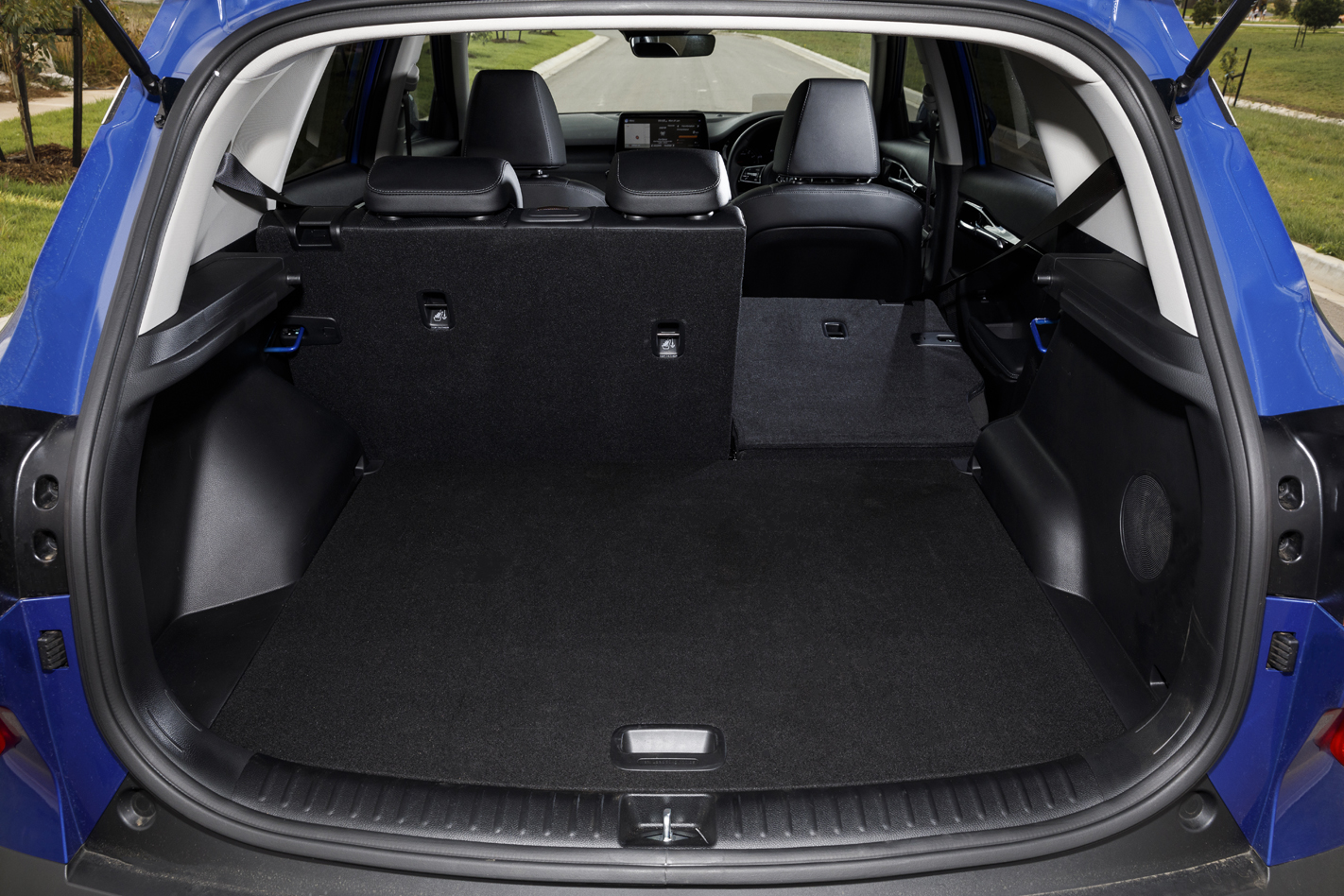
With 433 litres of cargo space with all seats in place and a massive 1393 litres with the rear pews stowed, the Seltos has one of the most commodious boots in the segment.
DOES THE KIA SELTOS HAVE GOOD WARRANTY?
The simple answer is a resounding yes. Kia’s seven-year/unlimited-kilometre warranty has raised the bar for the industry.
WHAT DON’T WE LIKE ABOUT THE KIA SELTOS?
It’s a case of diminishing returns. The Seltos is better the less you spend – although the base S does need the $1500 safety pack. The range-topping GT-Line is asking a bit much at $41K despite an inspired engine offering and upgraded suspension. We’ve also found that the S can get a bit noisy on the run with niggling ride issues, while the GT-Line’s DCT can be a little indecisive off the line.
Sign-up here to get the weekly Wheels highlights
Electric vehicle take-up is quite low in Australia, but a handful of very wealthy enthusiasts are keen to add the 1470kW Lotus Evija to the current ranks of Teslas, Nissans, BMWs and Mercedes.
CEO of Lotus Cars Australia, Lee Knappett, said the company had “three to five expressions of interest” but converting them to actual sales of the AUD$3m+ electric hypercar depended on getting an example to Australia for customers to try.
David McIntyre, Lotus Regional Director for APAC and China, said: “We need to bring the [Evija] here if we want to sell the car. I’m fully aware of that and that’s my challenge to get the car out here, because these types of customers, quite understandably, want to see the car and won’t all travel halfway across the world because they have lots of options.”
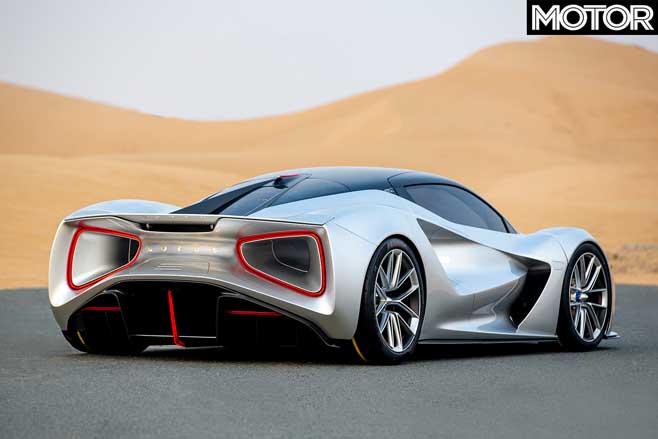
Knappett and his team are working with authorities to ensure the super-powerful EV meet local regulations: “We’ve got a little bit of work to do with the Department of Transport. We’ve been working with them and they’ve been very supportive of the program and they want to see the car here but given our low-volume import restrictions we face here in Australia they need some navigating.”
Once any regulatory hurdles have been cleared and the vehicles built, customers wouldn’t have to wait long to take delivery. “It’s the kind of car that would be airfreighted,” said Knappett, “There’s no freight lag time, it’ll be here in 24 hours from the UK.”
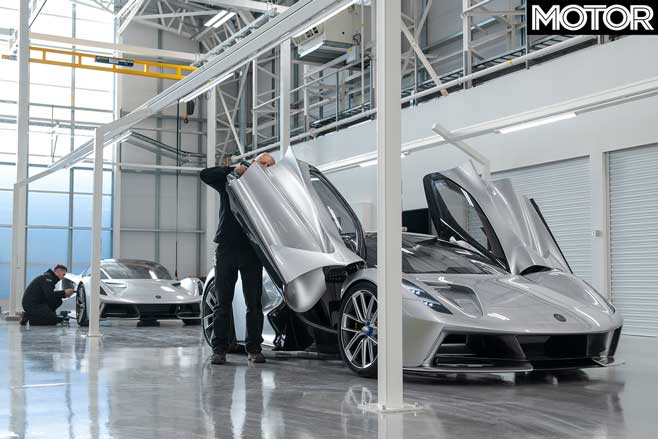
The final Evija prototypes are currently being built in a new factory at Lotus’s Hethel base with production examples originally due to be produced in the UK summer, however this is likely to be pushed back due to the current global situation.
Just 130 Evijas will be built in total. It’s set to become the world’s most powerful production car, producing 1470kW/1700Nm from its batteries, supplied by William Advanced Engineering. The sprint from 0-100km/h is claimed to take less than three seconds, as is the sprint from 100-200km/h, whereas acceleration then slows, 200-300km/h taking less than four seconds. Top speed is 322km/h.
Who’d be a politician during these difficult times?
Before Holden announced its departure from the Australian automotive landscape, the government was criticised for pouring too much support cash into an ailing industry. But now the lion brand has departed, our nation’s leaders are copping flak for not doing enough to save it.
Whether the government did the right thing pumping good money after bad into the Holden coffers will be debated for many years, but could the money have been better used to rescue a motoring icon?
Perhaps, but the strategy would have been drastic.
At its peak of support, the government was dishing out $300m per year in car manufacturing subsidies (sounds like a lot until you lay it alongside the $3bn per year that ships and submarine manufacturing get).
For about the same amount, however, we could have driven home one Friday night on the left side of the road and gone to work the following Monday on the right side.
Not politically speaking – we’re talking about actually changing the side of the road we drive on almost overnight.
In 1967, Sweden did exactly that and it changed their auto industry overnight – literally. Most Swedes drove left-hand-drive cars, while its biggest carmaker, Volvo, also supplied cars to the local market in left-hook form, and driving on the left was increasing the accident rate in the country drastically.
The project took about a year in planning but was executed in a single night and at the cost of 301,457,972 Swedish kronor, which, conveniently enough, translates to about A$300m in today’s money.
Had Australia followed Sweden’s ‘Dagen H’ example and made the switch sufficiently early, our automotive landscape would be looking quite different today – and Holden is quite likely to still be a significant part of the furniture.
For a start, potentially lucrative and attractive models from General Motor’s global portfolio – never even considered for right-hand drive production – would be a relatively simple business case for the Holden showroom.
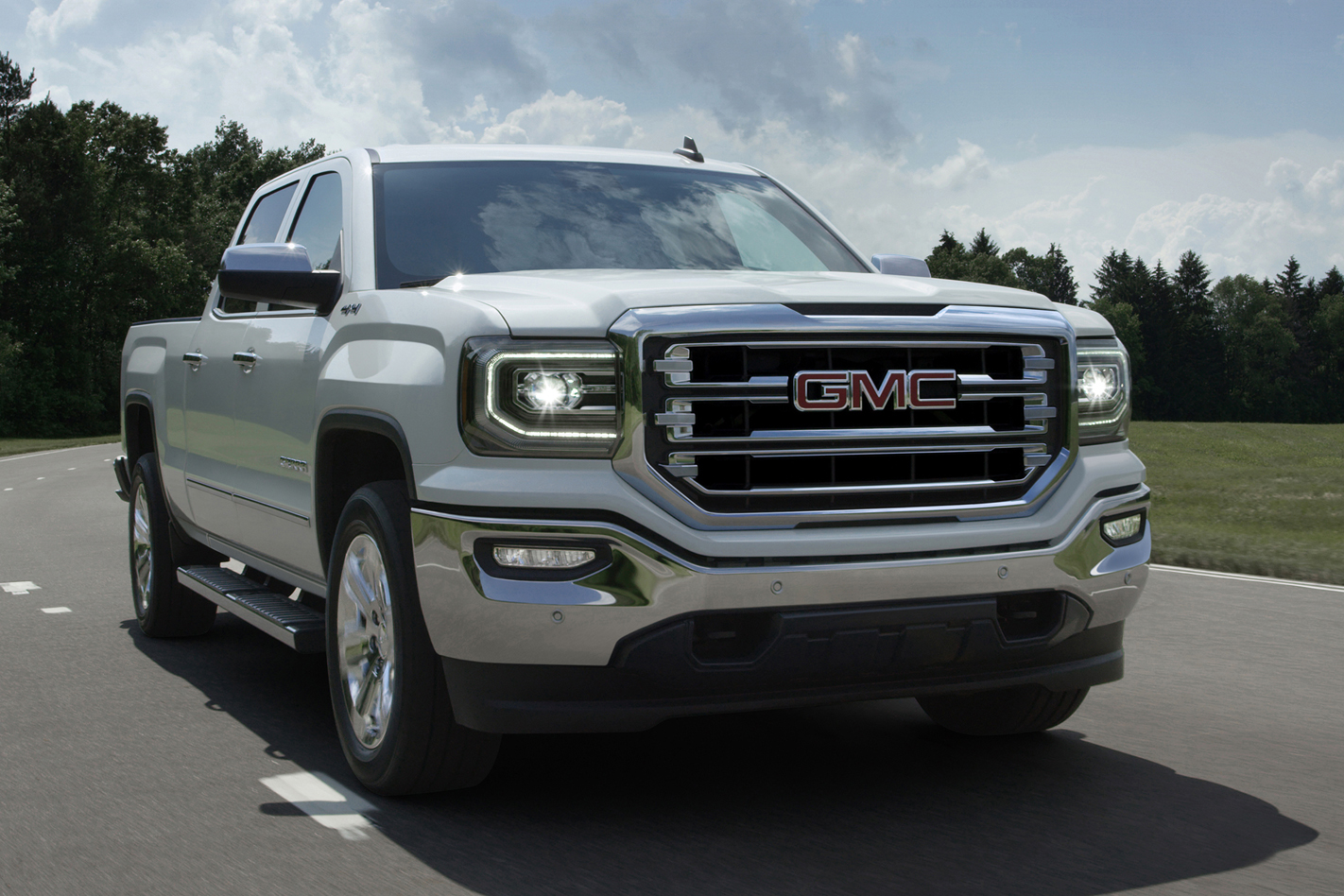
The GMC Sierra (above) would satisfy Australia’s appetite for plus-sized utes, the Cadillac Escalade would offer a large luxury SUV competitor to vehicles such as the Volvo XC90, the Chevrolet Blazer would slot into the incredibly popular mid-sized SUV market and the Cadillac CT5-V would give other premium performance sedans something to worry about.
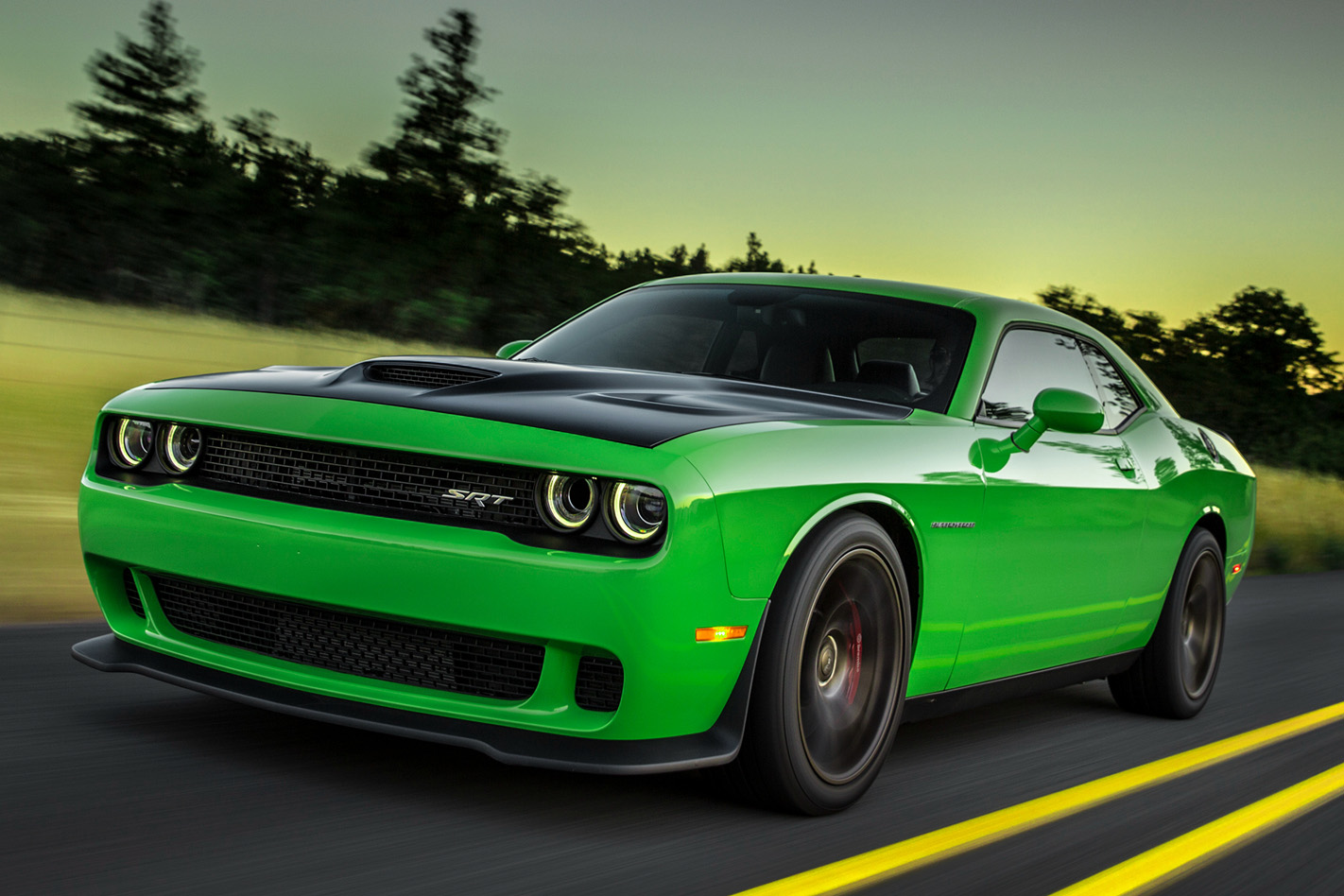
Furthermore, models such as the Chevrolet Silverado and Camaro (above) that are converted to right hand drive here in Australia by HSV would cost significantly less without the need to swap the steering wheel.
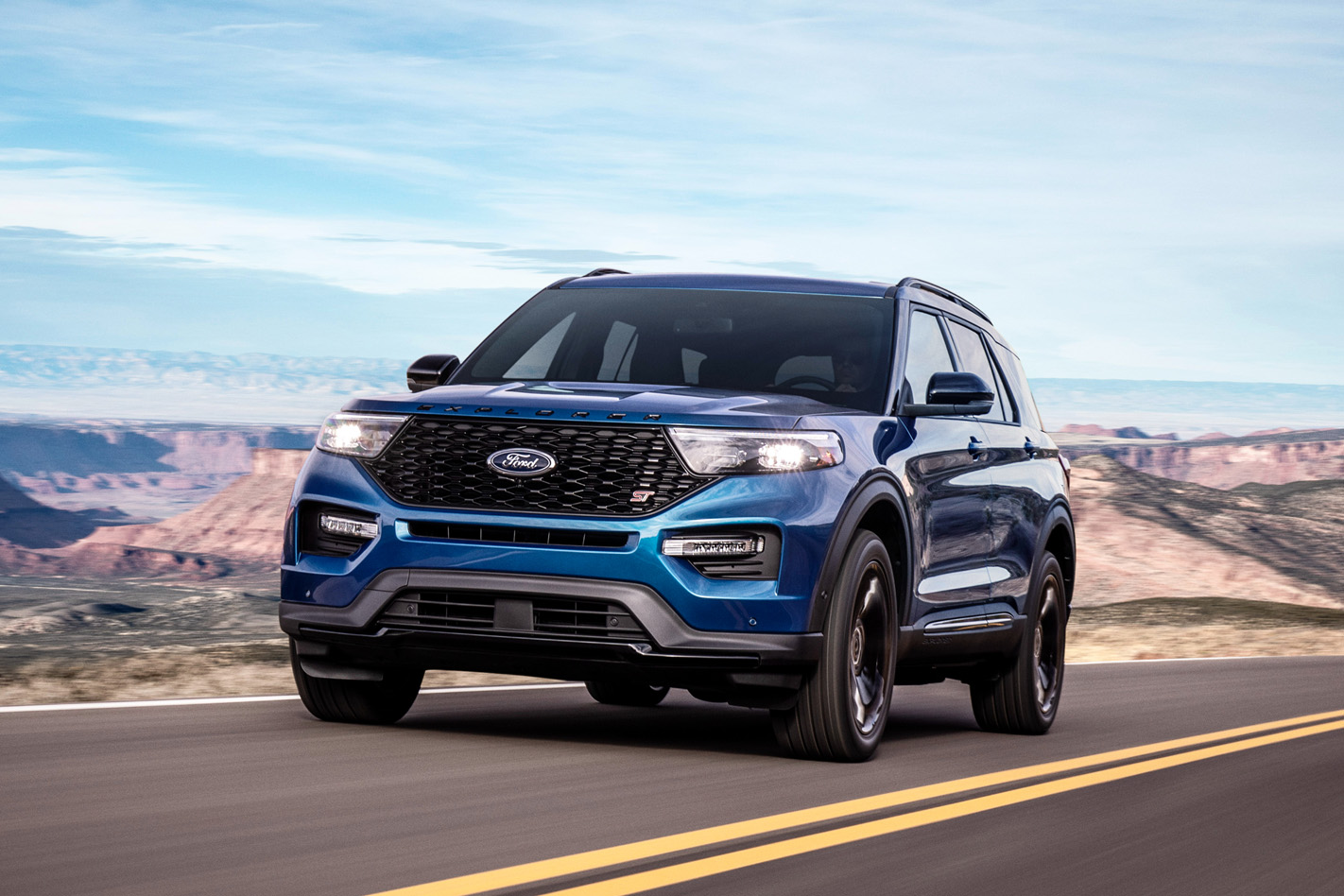
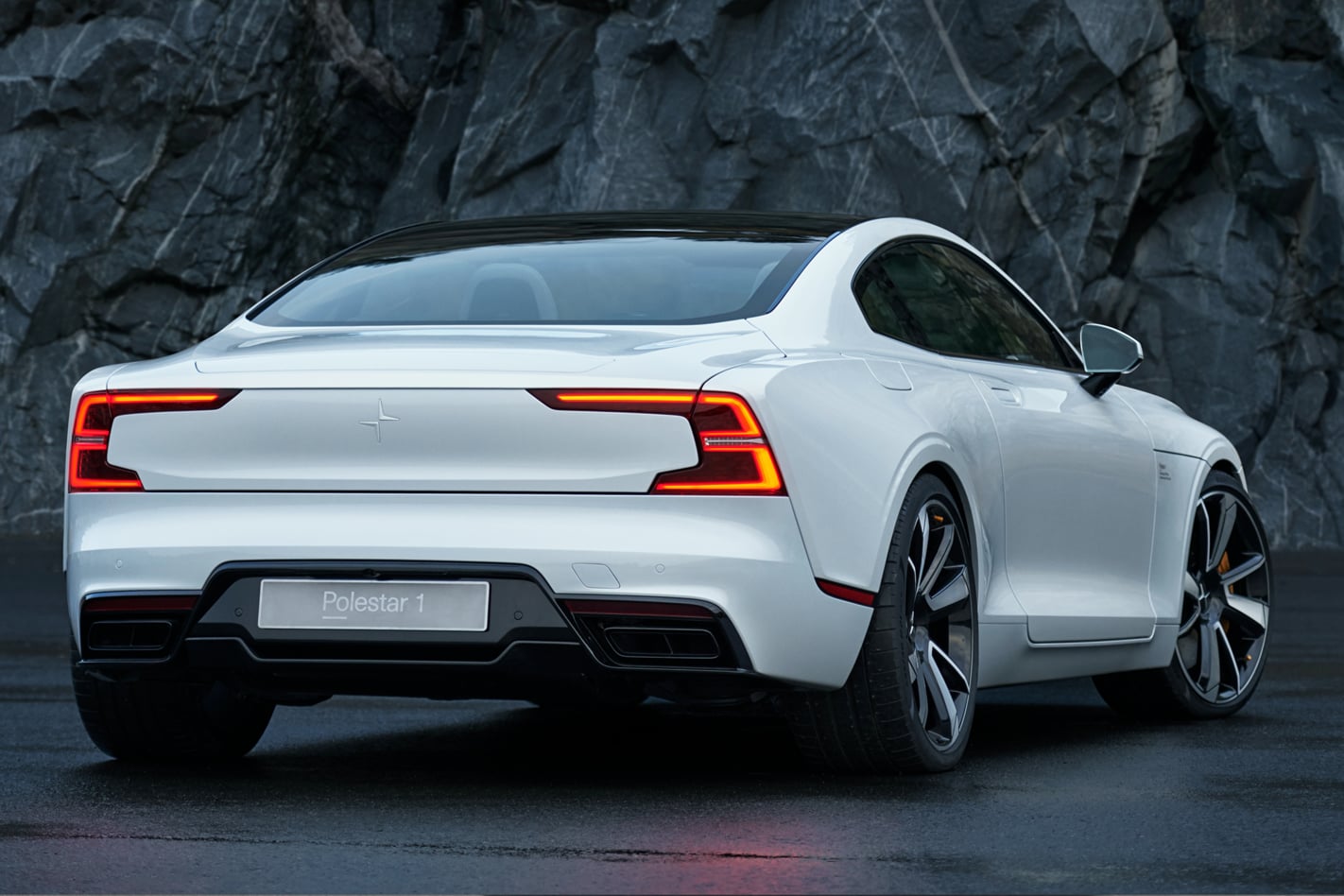
And the good news wouldn’t just be limited to Holden showrooms with all manner of exciting products suddenly viable for our market that have been tantalisingly ruled out previously. Ford’s Mustang Shelby GT350 R and GT500, the Dodge Challenger and Charger, Ford Explorer and even entire brands such as Polestar – all now viable.
Sadly, the move to the other side of the road would not have saved the beloved Ford Falcon and Territory and the Holden Commodore, which were designed and built almost exclusively for the local market, and no LHD models could have been saved from the factories in Victoria and South Australia. Locally built Cruze? Who knows?
In fact, if Australia had flipped the road ten years ago, for example, the Commodore as we know it would have probably died out before it made it into VE generation, which would have meant missing out on arguably the finest Commo ever.
What is known, is that when GM announced Holden would depart Australia and New Zealand indefinitely, one the main deciding factors was the cost of producing esoteric left-hand drive vehicles for a relatively tiny market, whether that be on Australian dirt or anywhere else in the world.
It might sound like a lot, but 75 of the world’s countries currently drive on the left. However, the remaining 165 countries account for about five-sixths of the planet’s area, a third of the population and a quarter of the roads, so it’s easy to see how small the potential market is for right-hand drive vehicles.
For a company struggling with losses like GM, it was only a matter of time.
There’s no doubt, therefore, that if Australians were already driving on the right, GM would have had one fewer reason to target our diminutive market as a potential cost saver when revising its “investment priorities” and Holden would still be alive and well.
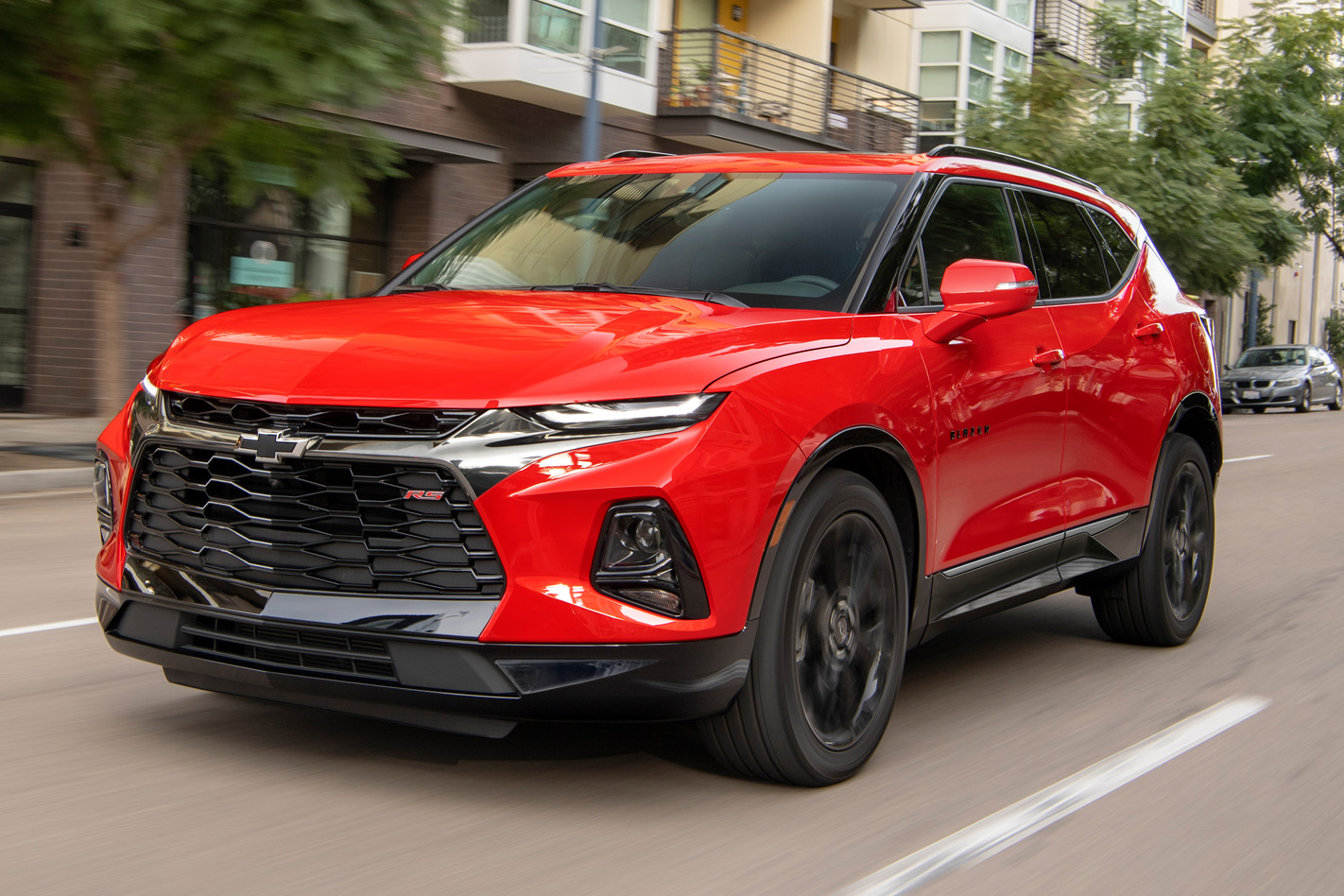
The Chevrolet Blazer
Of course, there’s a little more to a modern-day left-to-right road conversion compared with Sweden 50 years ago, but the most important question is this – would you have been prepared to switch sides to save Holden?
If vehicular travel on the African continent conjures up images of an open-top or boxy white Land Rover bumping along muddy tracks then you might be left wondering where the British marque’s new Defender fits into the scheme of things. The Defender nameplate is, after all, the successor to the Series Land Rovers that were instrumental in exploring Africa and used by institutions such as the Red Cross, UN and other NGOs to transport their personnel through the untamed terrain of the Dark Continent.
Ever since Land Rover stopped making the old utilitarian Defender in 2016, people have wondered what a new Defender could be in an era where the brand’s products have moved noticeably upmarket. Can a new luxury Land Rover live up to the Defender name and the 70 years of heritage behind it?
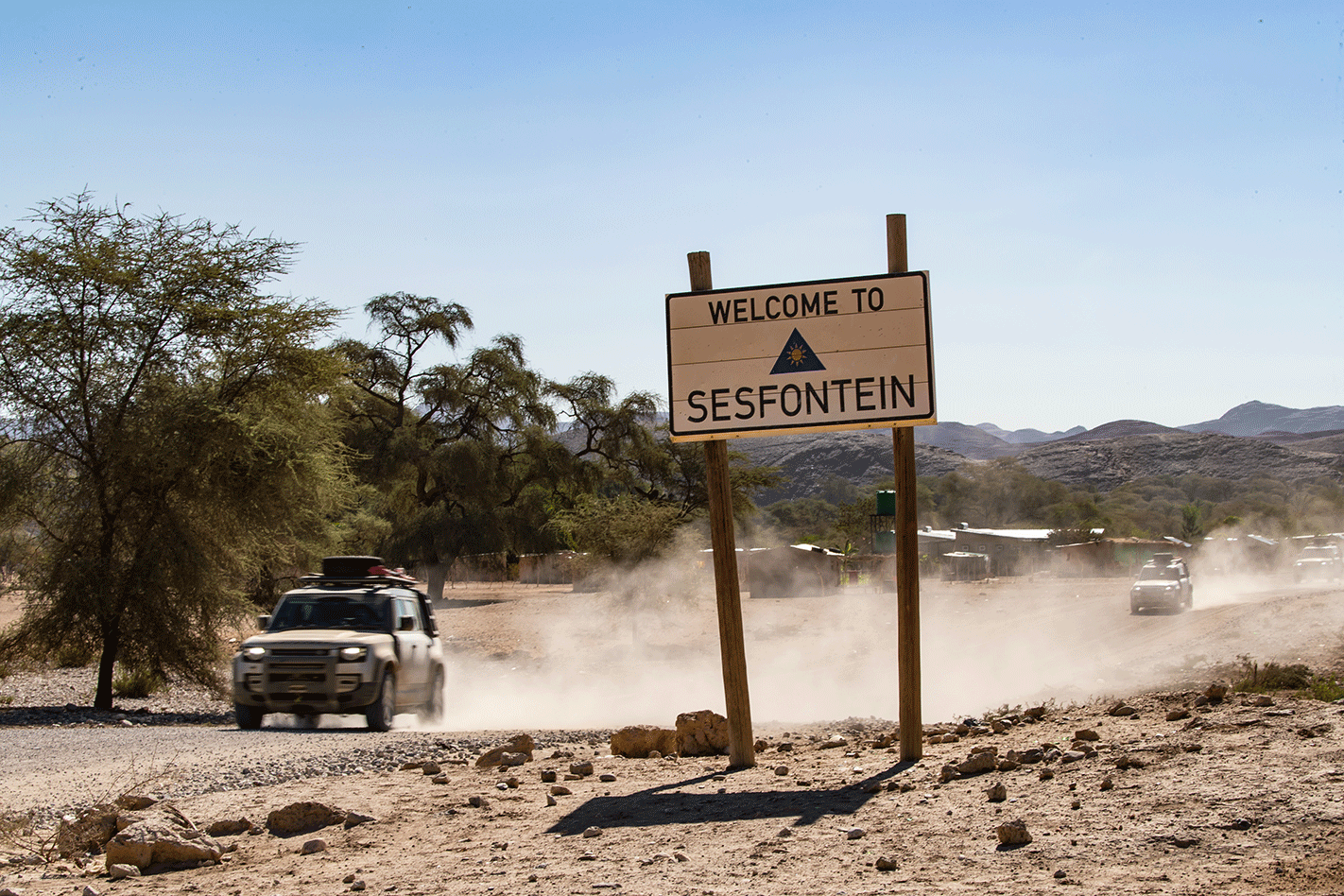
The 680-kilometre route takes us down the treacherous Van Zyl’s Pass and along the Skeleton Coast on the South Atlantic seaboard in a part of the country known as Kaokoland. It’s an area that is largely unpopulated due to its harsh environment, with only small villages of the Himba and Herero people scattered around the desert scrub.
The vehicles on this trip are long-wheelbase five-door Defender 110 wagons with either D240 four-cylinder diesel or P400 in-line six-cylinder petrol powerplants. The Defender will also be available in short-wheelbase three-door 90 variants from later this year.
With the 2020 Defender just months from our shores, it’s no coincidence that Land Rover has brought us to Africa for our first drive of the all-new vehicle. This is not a traditional model launch drive but a true expedition over rugged terrain in the far north of Namibia.
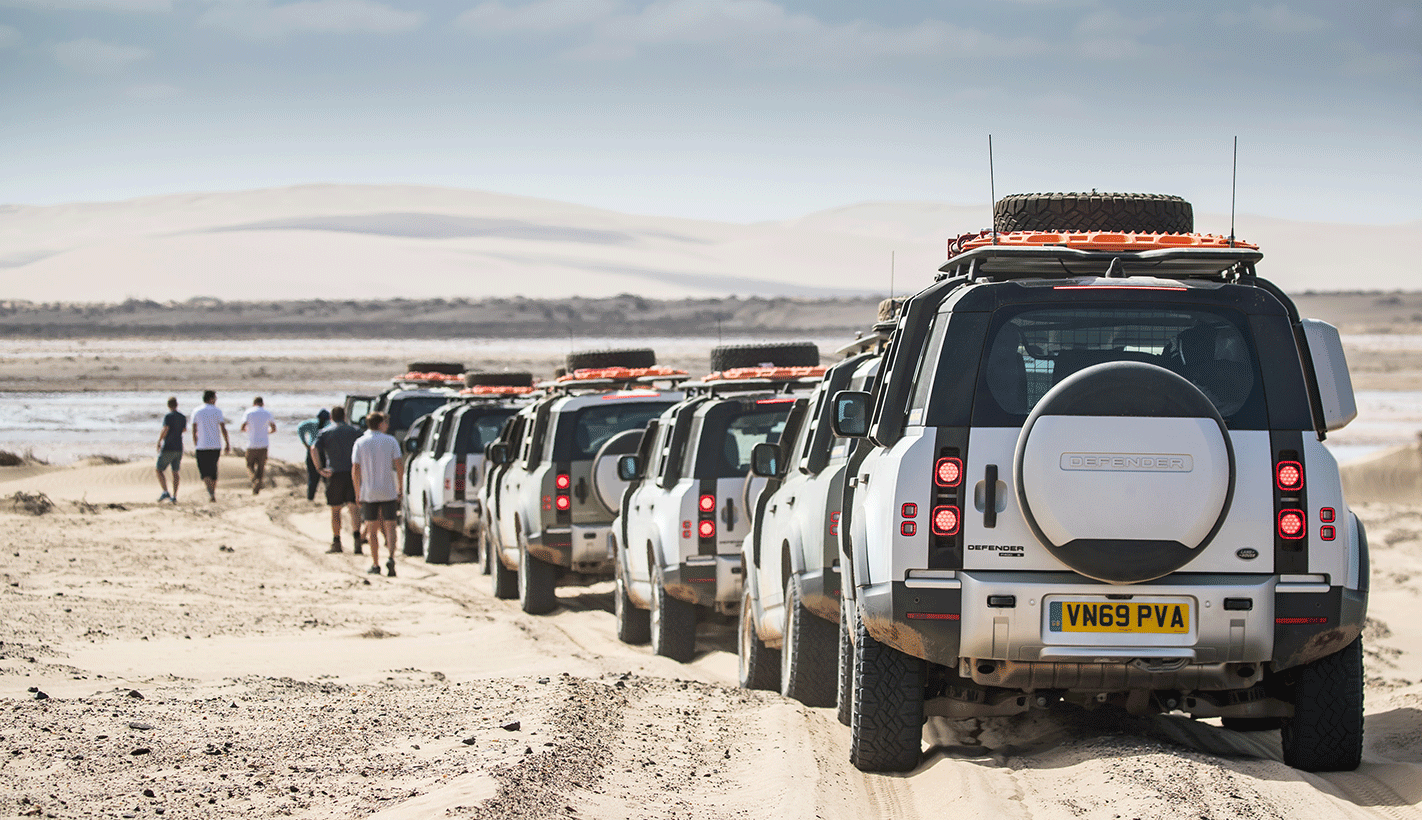
Our first taste of the new Defender is in a D240 looking very traditional in its Pangaea Green paint with white roof and white steel wheels. The overall look of the new vehicle takes no prisoners, with a design that is modern while incorporating hues of the classic Land Rovers of the past.
The sawn-off rear of the vehicle carries a spare wheel on its door and the roof features ‘alpine light’ windows at each side that allow light into the cabin. There’s a distinct shoulder along the hipline of the vehicle where the sheetmetal meets the extensive glasshouse, while the front end has a unique and modern appearance.
All the Defenders on this trip are fitted with the Expedition package, which includes a raised air intake snorkel, expedition roof rack, a ladder to access the roof on the passenger’s side and a storage box on the driver’s side. They are also fitted with Goodyear Duratrac all-terrain tyres to conquer the sharp, rocky tracks with confidence. The silver P400s have 19-inch alloy wheels and the green D240s are on 18-inch painted steel rims.
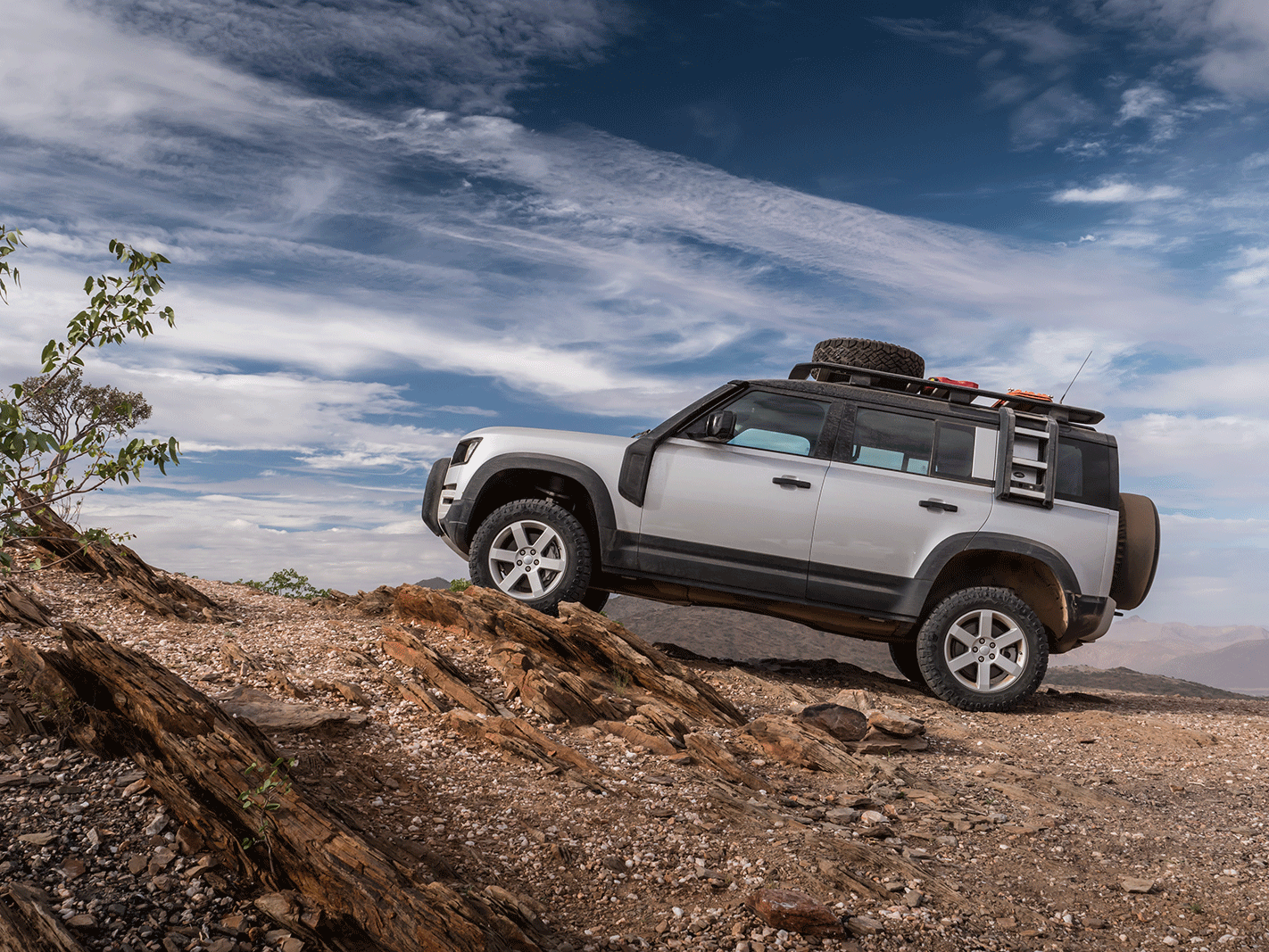
Our D240’s 2.0-litre Ingenium diesel produces a sprightly 177kW and 430Nm to make light work of the steep terrain and sandy tracks. Eight-speed automatic is the only choice offered – in contrast to the old manual-only Defender – but it is perfectly matched to the modern powerplant.
The 110 Defender is large at 5018mm long and 2105mm wide (with mirrors) on a 3022mm wheelbase (up 233, 113 and 228mm on the 2016 Defender), but at 1967mm high is 214mm lower than its predecessor. It proves surprisingly agile as we snake along the tracks and through bushes that scrape down the vehicle’s sides. The road surface changes between loose sand and shaley rocks, but the constant four-wheel-drive system and Terrain Response 2 management system ensure surefooted progress.
The coolest homage to the old Defender comes once you get inside the new model and see the dash. Land Rover has reconfigured the handy dashboard shelf and grab handle and integrated it in the all-new cabin. The Defender doesn’t have the multiple massive touchscreens of other new Land Rovers, just a relatively small one on that dash shelf that shows the sat-nav, audio and Terrain Response settings.
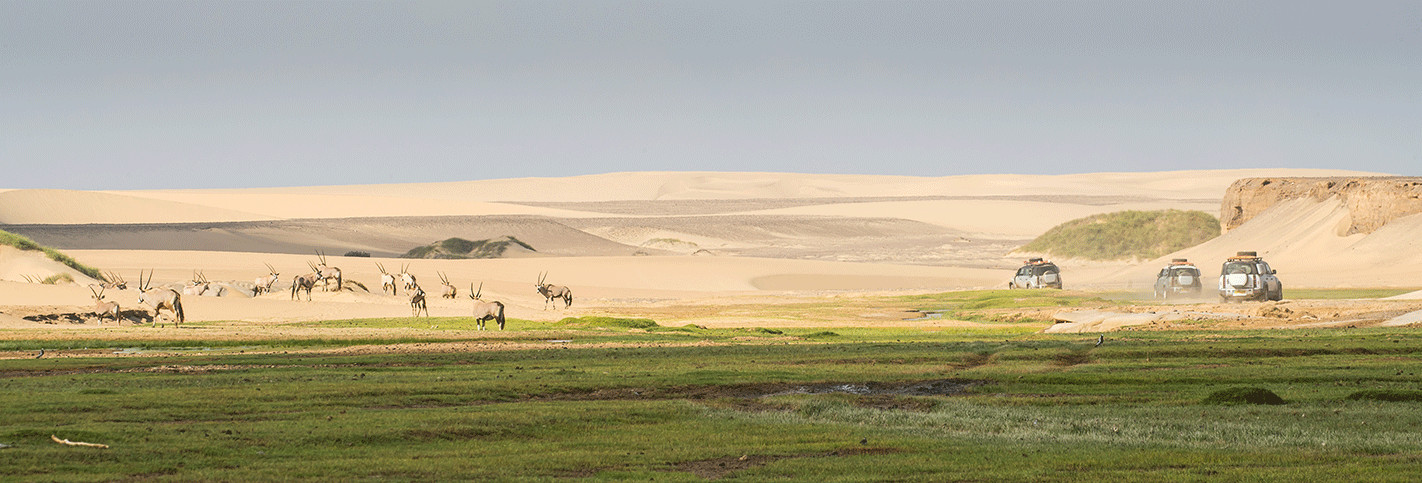
The cabin is much wider than the old model, so the driver’s shoulder doesn’t hang out in the wind anymore, and it is much more comfortable both in the front and back seats. The 110 has a third-row seat, but we didn’t get to sample it. The front-row seat can be confined with a centre pew for three-up touring. It folds down to became an armrest with cupholders when not being used as a seat.
Day one takes us north-west from the Kaokoland capital Opuwo to a bush camp in a dry river bed. The region has been in drought for six years, ensuring most creeks and rivers are dry, but as we leave the capital, dark storm clouds brew and we skirt the worst of the rain that falls behind us.
With us in camp tonight is John Kasaone, executive director of Integrated Rural Development and Nature Conservation (IRDNC). John is a native Himba and he tells us of IRDNC’s work to halt poaching and the killing of wildlife, and to protect the environment in Kaokoland, aided by Land Rover’s support of the IRDNC and the tusk conservation program. Land Rover recognises its strong association with Africa and continues to support these organisations to protect the fauna.
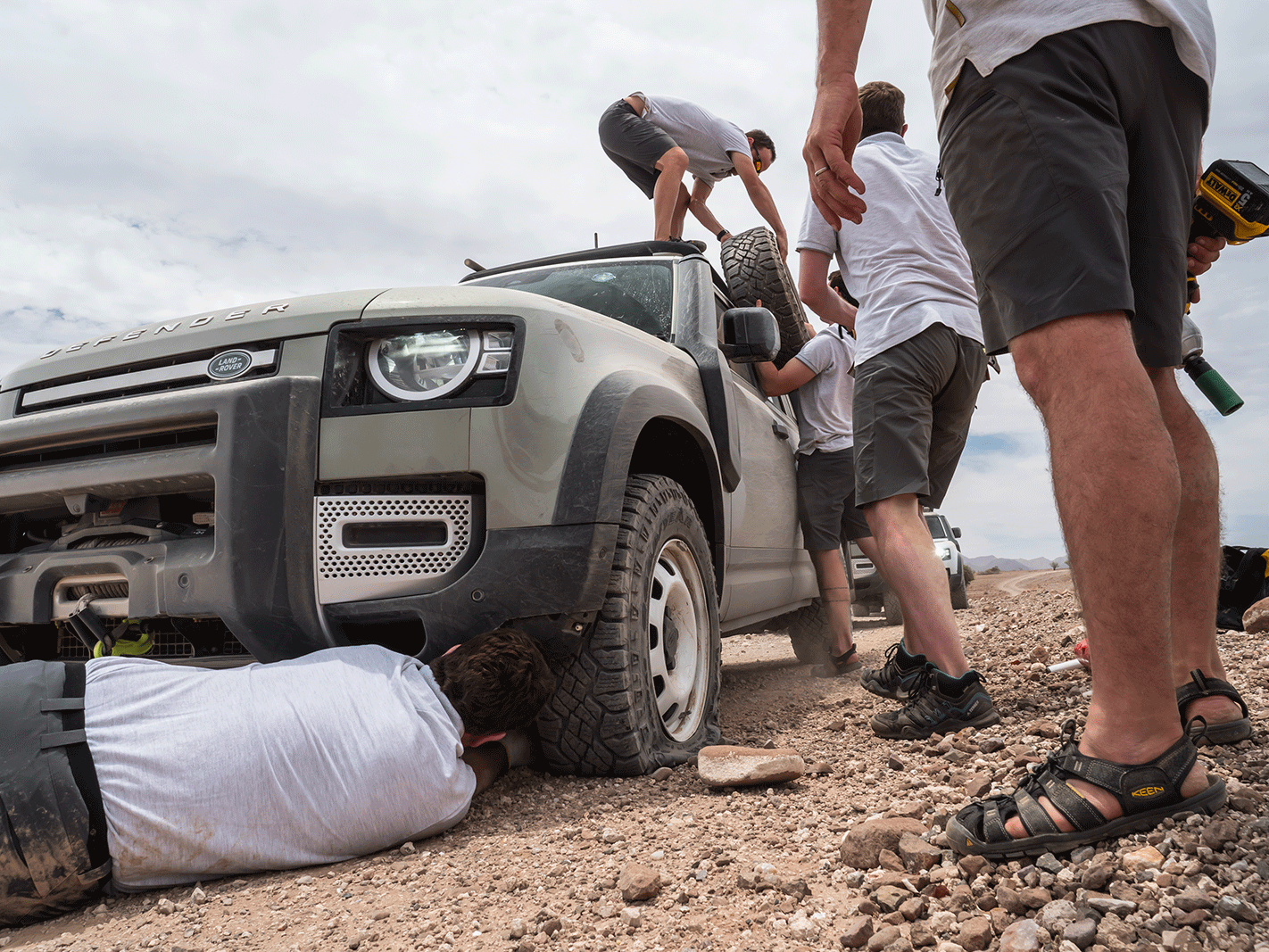
Day two begins with the challenging Van Zyl’s Pass, a steep and rocky descent from atop the escarpment, down towards the west coast. Even though we’ve been on gravel roads since the start, this is the first real off-road obstacle. With the Defender’s four-wheel-drive system locked in low range and Terrain Response 2 set in Rock Crawl mode, the vehicles edge their way down the tricky slope. The 360-degree cameras afford the driver a view in front of the vehicle and to the sides of the front wheels – helpful in terrain where a sharp rock can easily slice the sidewall of a tyre.
The 600-metre descent to the valley is daunting and there is much high-fiving when we reach the bottom, but our feat is put into perspective when you consider that the track was originally cut in the 1960s by Dutch explorer Ben Van Zyl using local labour and a Ford Model T. Today, negotiating the pass is a badge of honour for modern explorers.
The pass opens out onto the wide expanse of the Marienfluss and its multicoloured sands, providing us with our first chance to open up the Defender’s performance. Again the diesel engine and eight-speed transmission provide the power to shoot the wagon across the sand, but most revealing are the stability and dynamics of these high-riding vehicles.
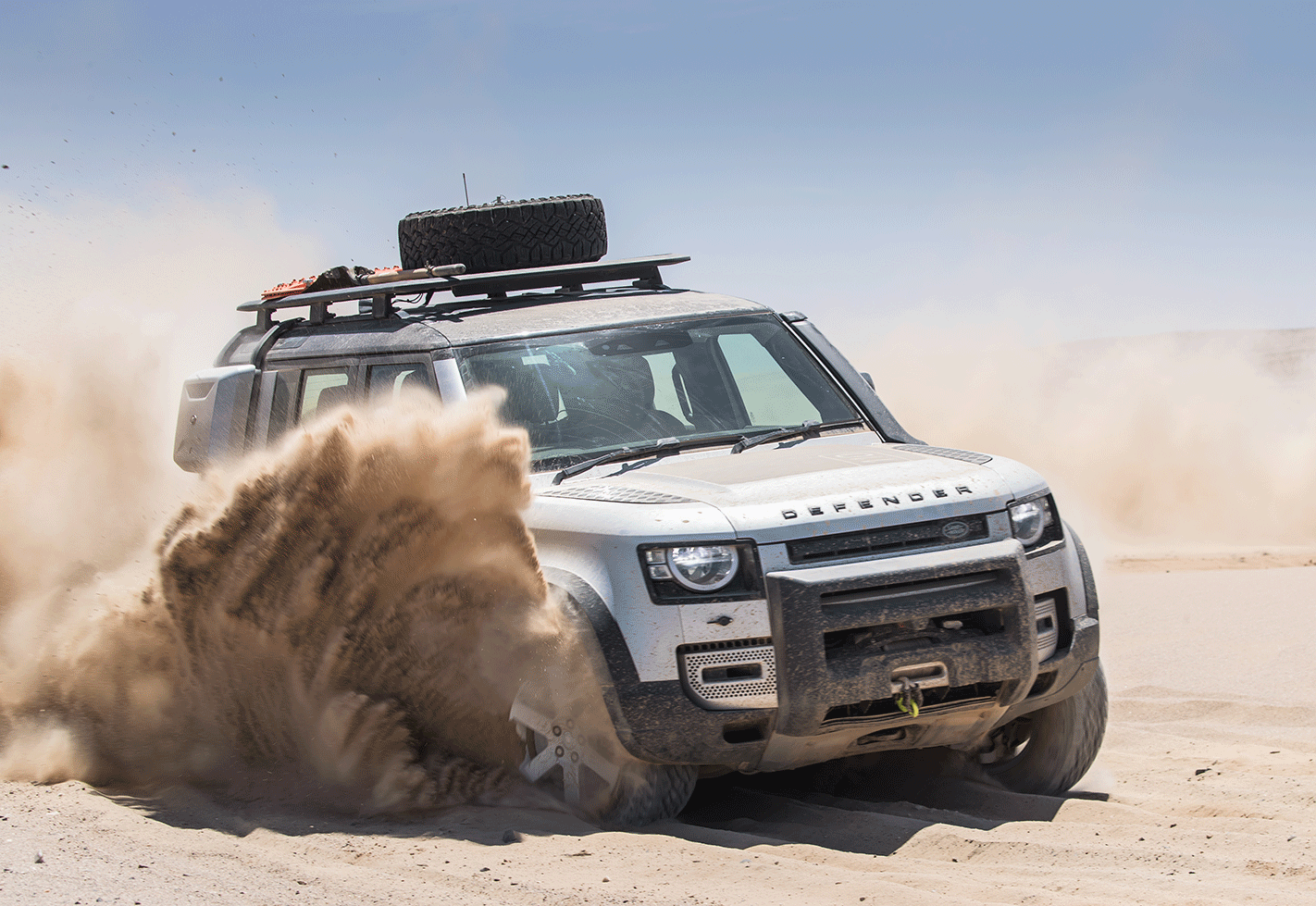
Land Rover put a lot of effort into making new Defender as impressive on-road at speed as it is off-road – unlike the old Defender, which excelled off-road but left a lot to be desired on tarmac. Much of this work was around the stiffness of the aluminium monocoque chassis, which the company claims is the stiffest platform it has ever made.
The D7X platform is derived from the D7U chassis that underpins the Range Rover, Range Rover Sport and Discovery models but has been significantly strengthened with steel subframes in lieu of aluminium on the other SUVs. On these are mounted the suspension components, using larger mounting points, bushes and knuckle joints.
“Making Defender not just good over off-road disciplines, but not numbed down on road as well, that was the biggest challenge,” says chief engineer Steven Frick. “A lot of it comes from the stiffness of the body and suspension being a known (from D7U), and that allows us to tune it for all conditions. It should be a pleasure to drive over everything.”
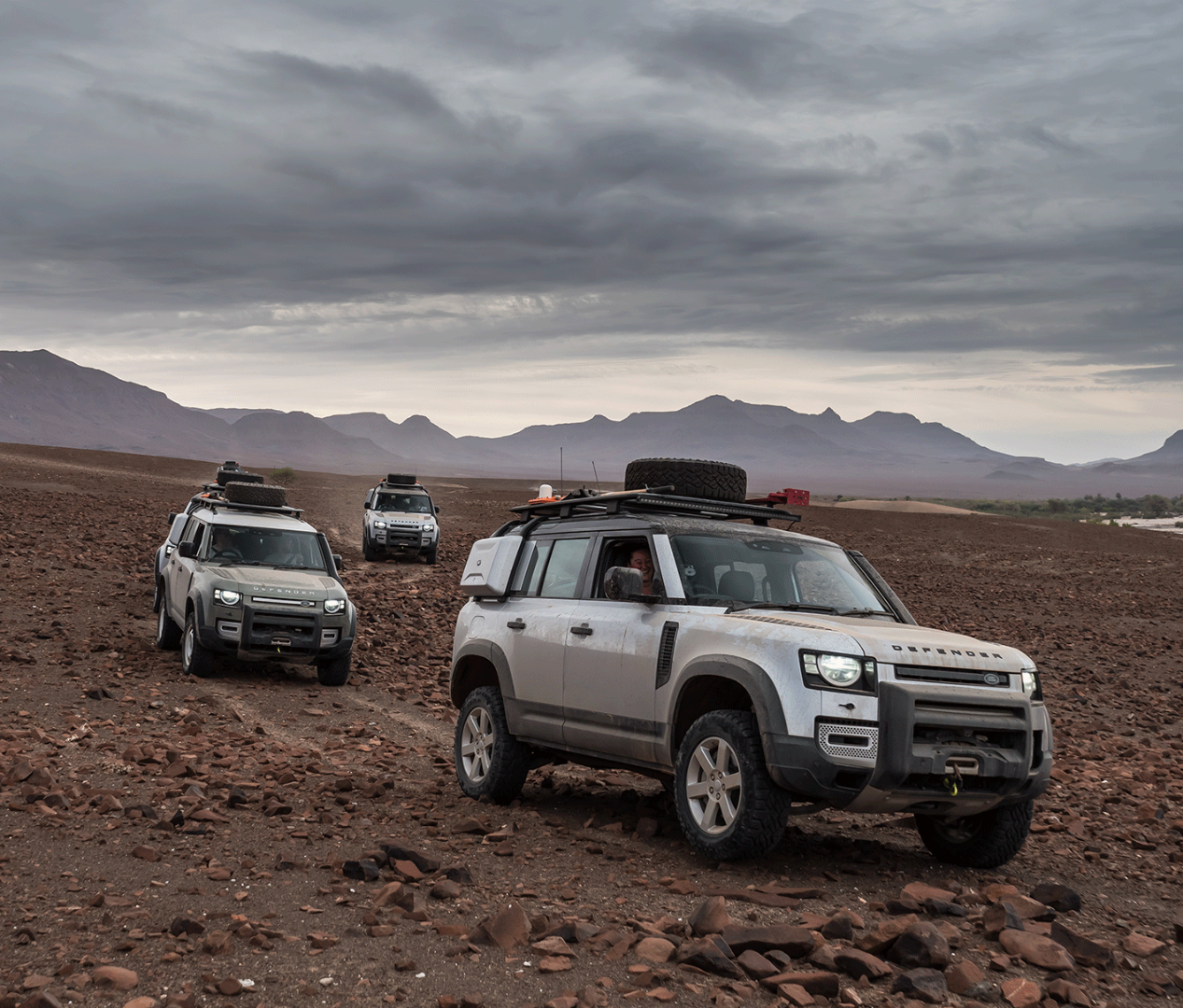
New Defender inspires confidence in the driver on- and off-road, whether rock crawling or blasting through the desert. Its forgiving platform is rewarding to drive in all conditions like nothing that has worn the Defender nameplate before.
Travelling north until the mountains of Angola are within view, we swing southwards across more open country towards our overnight stop near a traditional Himba village, Purros.
The road includes a crossing of the Hoarusib River, which is usually dry. It was dry when another group of Defenders crossed it that morning, but remember those storms of 36 hours ago? Those waters have moved down from the highlands over a fall of 900 metres and the river now flows fast enough to have the Land Rover Experience team questioning if we can cross it. The new Defender has a class-leading wading depth of 900mm, even without the raised air intake fitted to these cars. The river’s not that deep but is dangerously rapid.
Our team leader, Dougie Dale, wades across on foot with a rope fastened to him and can barely keep his footing. He determines that we should be able to cross in the Defenders and he leads the way in his vehicle with the raging torrent licking over the bonnet. However, a satellite radio call from the team already in Purros tells us the river there, just 20 kilometres downstream, is flooded beyond crossing and we won’t be able to make it.
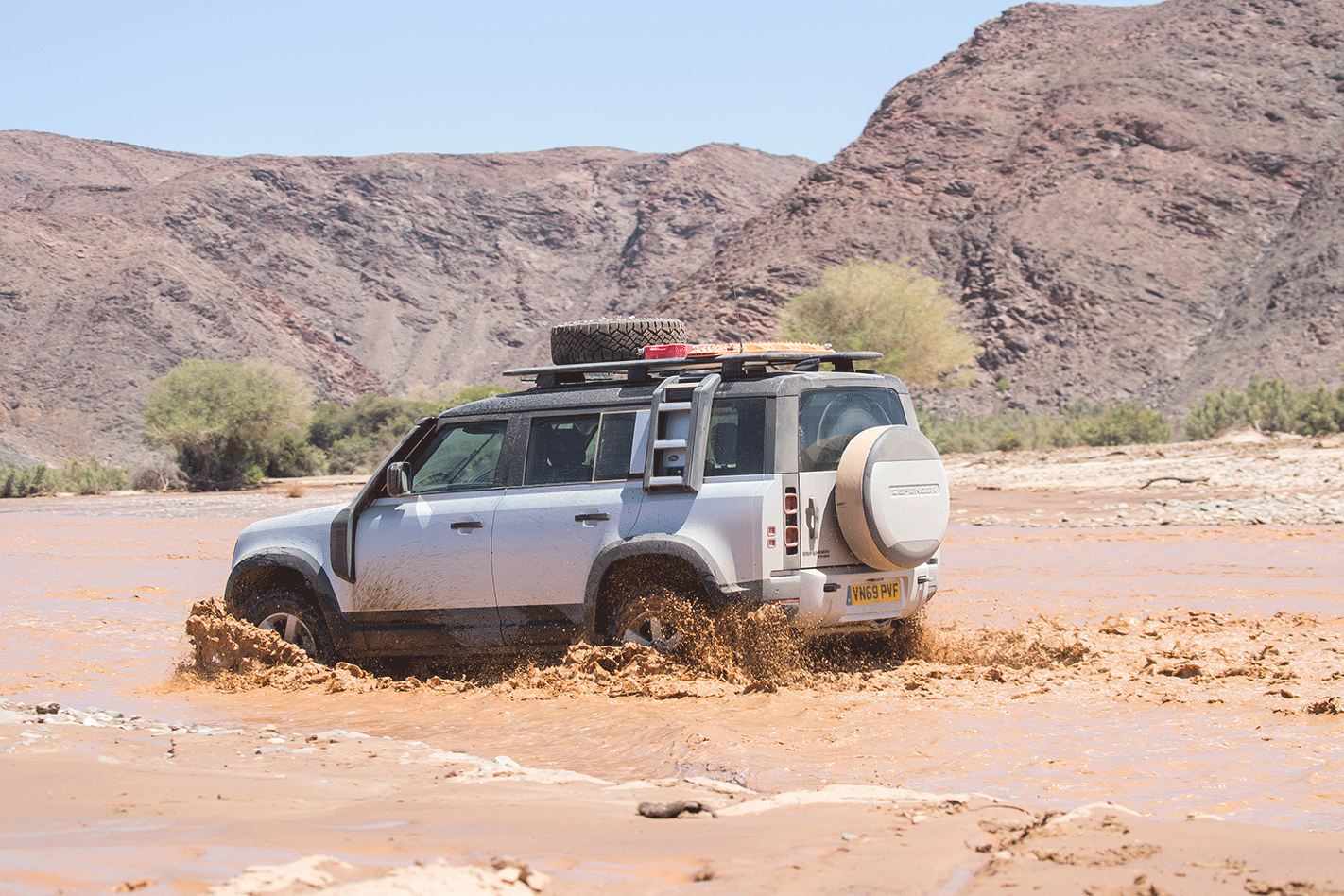
This means a cross-country detour along the western bank of the river over undulating terrain that is rocky on top but quickly breaks through to soft sand if you spin the wheels, providing a true test of the Defender’s off-road systems. With spotters running ahead of the convoy to find a path where there are no roads or tracks, we make slow progress, and it isn’t until well after dark that we make our accommodation.
As quickly as the river had risen, it falls, allowing us to cross next morning, but it has prevented us taking the planned route further up the riverbed, back to our start point at Opuwo. We’re back on gravel roads that wind through mountain ranges, sometimes opening up to cross sandy stretches.
Today we’re in the 3.0-litre petrol-engined P400 Defender. With 294kW and 550Nm on tap, this is the true performance model of the Defender range and it makes the most of the new model’s dynamic chassis and inspiring handling. The turbocharged in-line six benefits from a 48-volt electric supercharger; this provides extra grunt at low engine speeds, replicating the torque of a diesel down low while retaining the turbocharged surge of power in the top end.
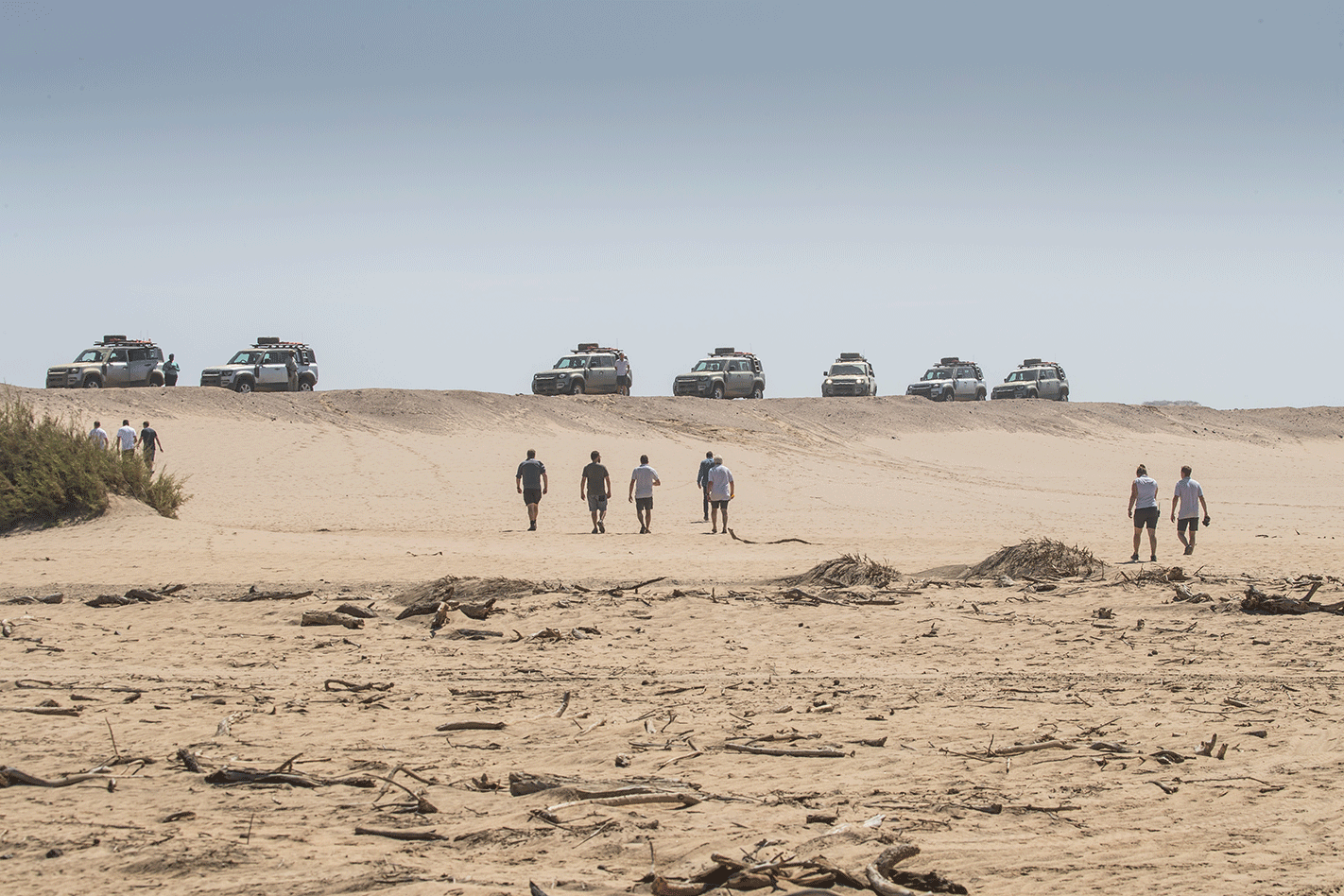
Only four of our 680 kilometres were on sealed road, making this a true test of the new Defender’s ability off-road and on gravel. It’s a far more user-friendly proposition than before, which is sure to boost its popularity around the globe.
Choose your weapon: It’s a spec and trim fest
The Defender 110 is due in Australia in August, followed by the Defender 90 First Edition in October and the rest of the range by year’s end. At the time of writing, launch dates were subject to change due to the coronavirus.
So far only prices for the 110 range have been released, but we expect the 90 to come in around $4-5K less than the five-door wagon. Interestingly, the price range almost doubles across the line-up.
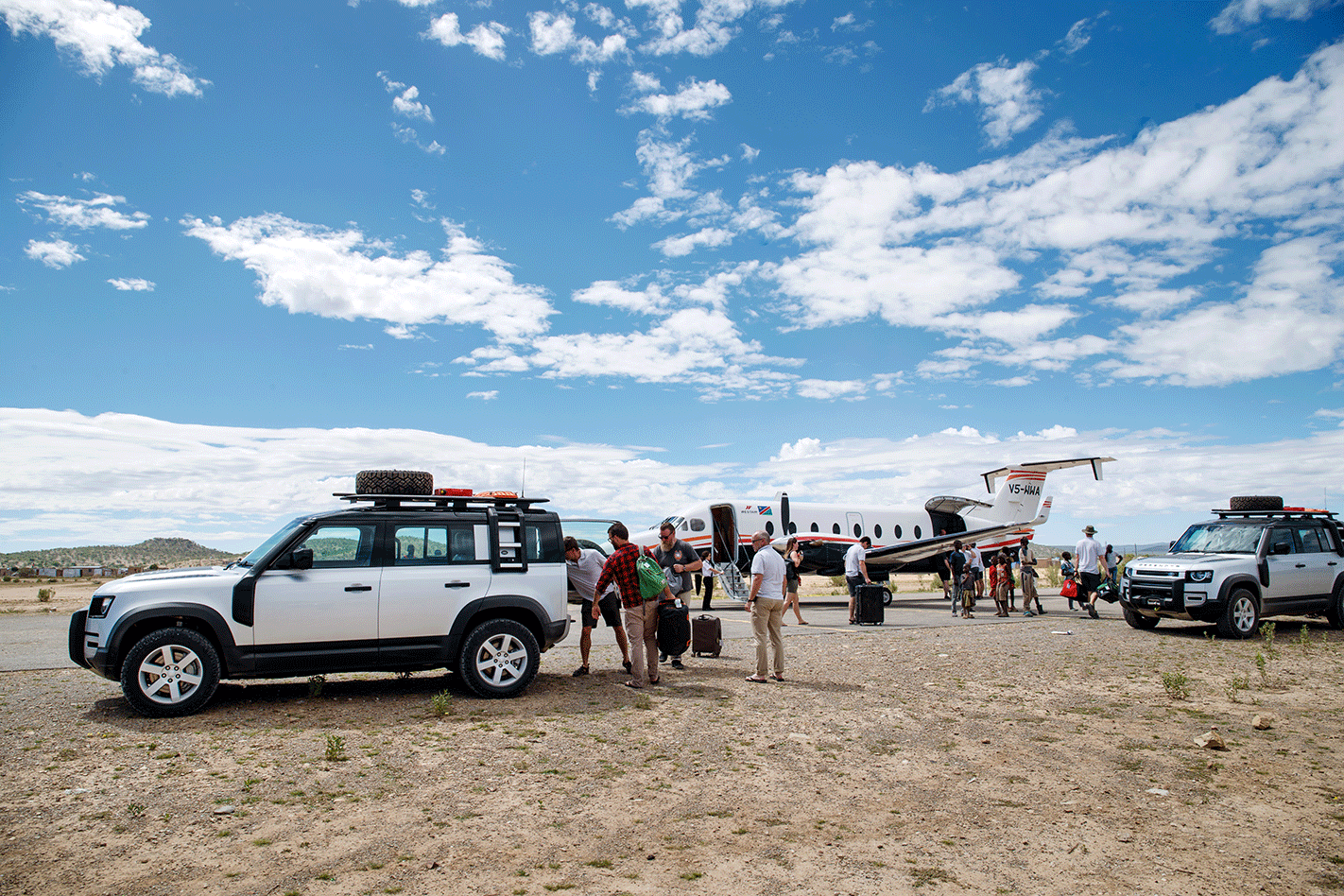
The new Defender range is extensive for such a niche vehicle, available in three engine specs and six trim levels, if you include the First Edition variant. And that’s just for the 110!
D200 – $69,990 D240 – $75,900 S D240 – $83,800 S P400 – $95,700 SE D240 – $91,300 SE P400 – $103,100 HSE P400 – $112,900 First Edition D240 – $102,500 X P400 – $137,100
Land Rover Defender 110 D240 specs Engine: 1999cc 4cyl, dohc, 16v, turbo-diesel Max Power: 177kW @ 4000rpm Max Torque: 430Nm @ 1400rpm Transmission: 8-speed automatic Weight: 2323kg 0-100km/h: 9.1sec (claimed) Economy: TBC Price: $79,000 On sale: August 2020
