
Ferrari is not usually short of inspiration when it comes to naming new models. It’s used places (Modena, California), people (Dino, Enzo), engine displacement (355, 488 et al) or even everyday nouns that sound impossibly exotic in Italian – ‘Redhead’ isn’t quite as evocative as ‘Testarossa’.
When it comes to its latest V12 Grand Tourer, it seems Maranello either ran out of ideas or has adopted a new policy of stating the obvious – hence the 812 Superfast. Jokes aside, this being Ferrari, there is of course a historical precedent. ‘Superfast’ first appeared on a 410 Superamerica, built for the 1956 Paris Auto Show.
A further three styling concepts were shown based on a 400 Superamerica before the badge reached production on the 1964 Ferrari 500. A two-door GT powered by a 294kW 5.0-litre V12, the 500 Superfast was claimed to hit 280km/h – only 36 were produced.
In layman’s terms, the 812 is a mid-life update of the F12. In reality, it’s a complete re-engineering, incorporating lessons learned from the limited edition F12tdf. The result is spectacular, catapulting the 812 up MOTOR’s ‘Best Cars’ list. How far up is unclear and also largely irrelevant; we’re living in a golden era for fast cars. The oil may be running out, but we’re certainly making effective use of what’s left.
The Superfast begins to burrow its way into your affections before it’s moved a metre. There arguably hasn’t been a truly beautiful Ferrari GT since the 550 Maranello; even that had an unsightly nostril in its bonnet, which gives the nod to the 456 and that’s 25 years old.
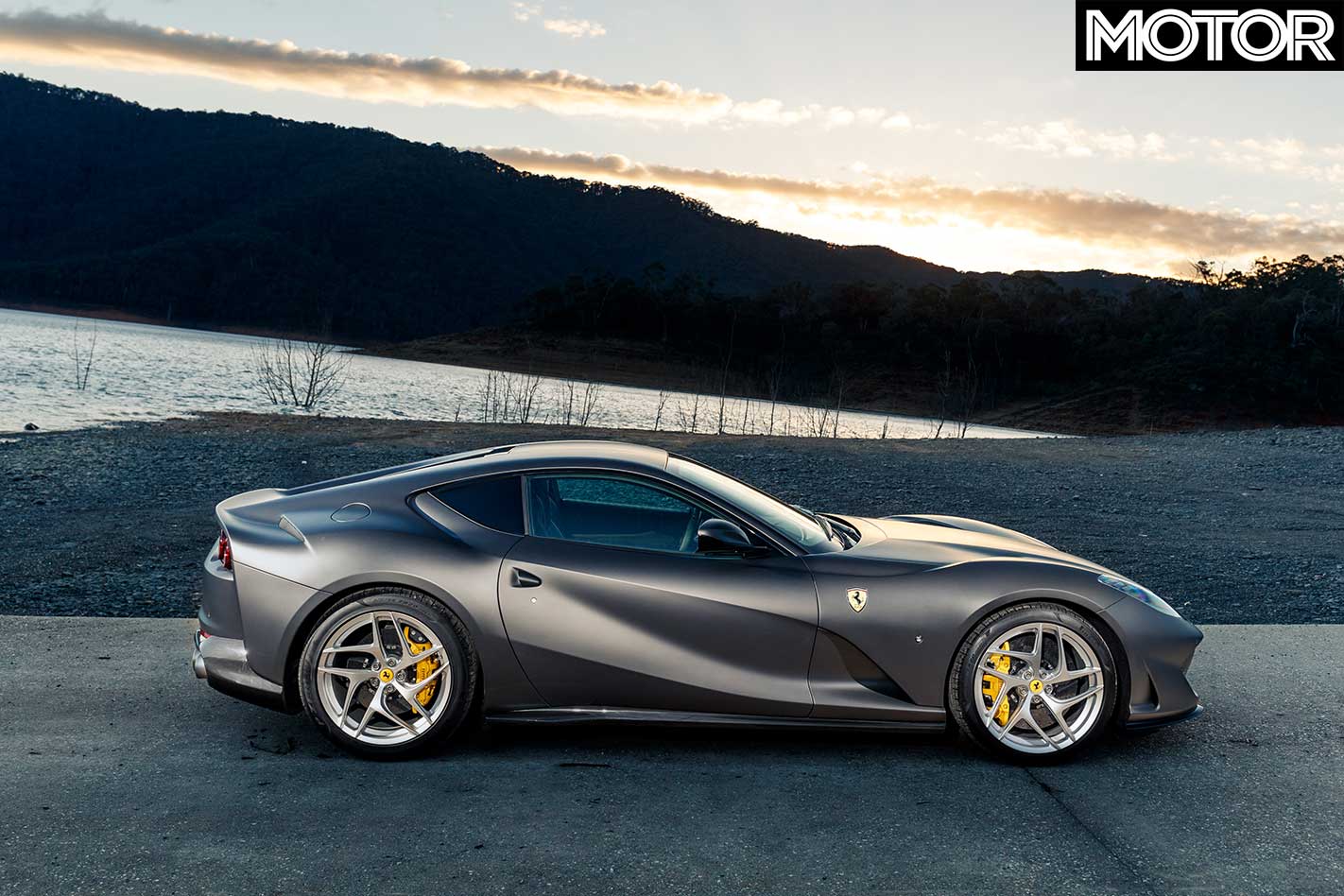
The F12 was and is incredibly striking with massive presence, but aerodynamics dictated sharp edges and creases everywhere, like the bodywork had eroded from being left in the wind tunnel too long.
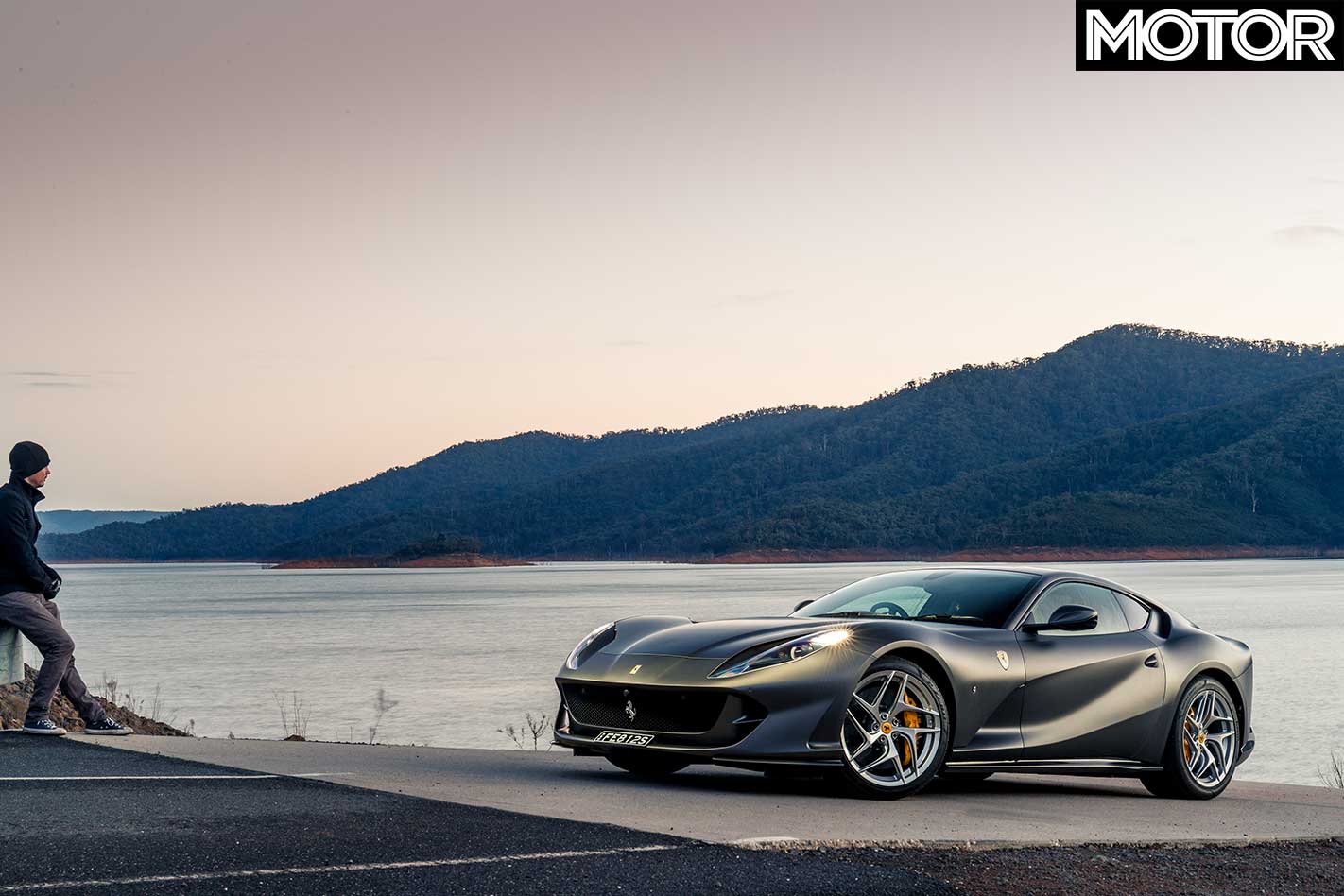
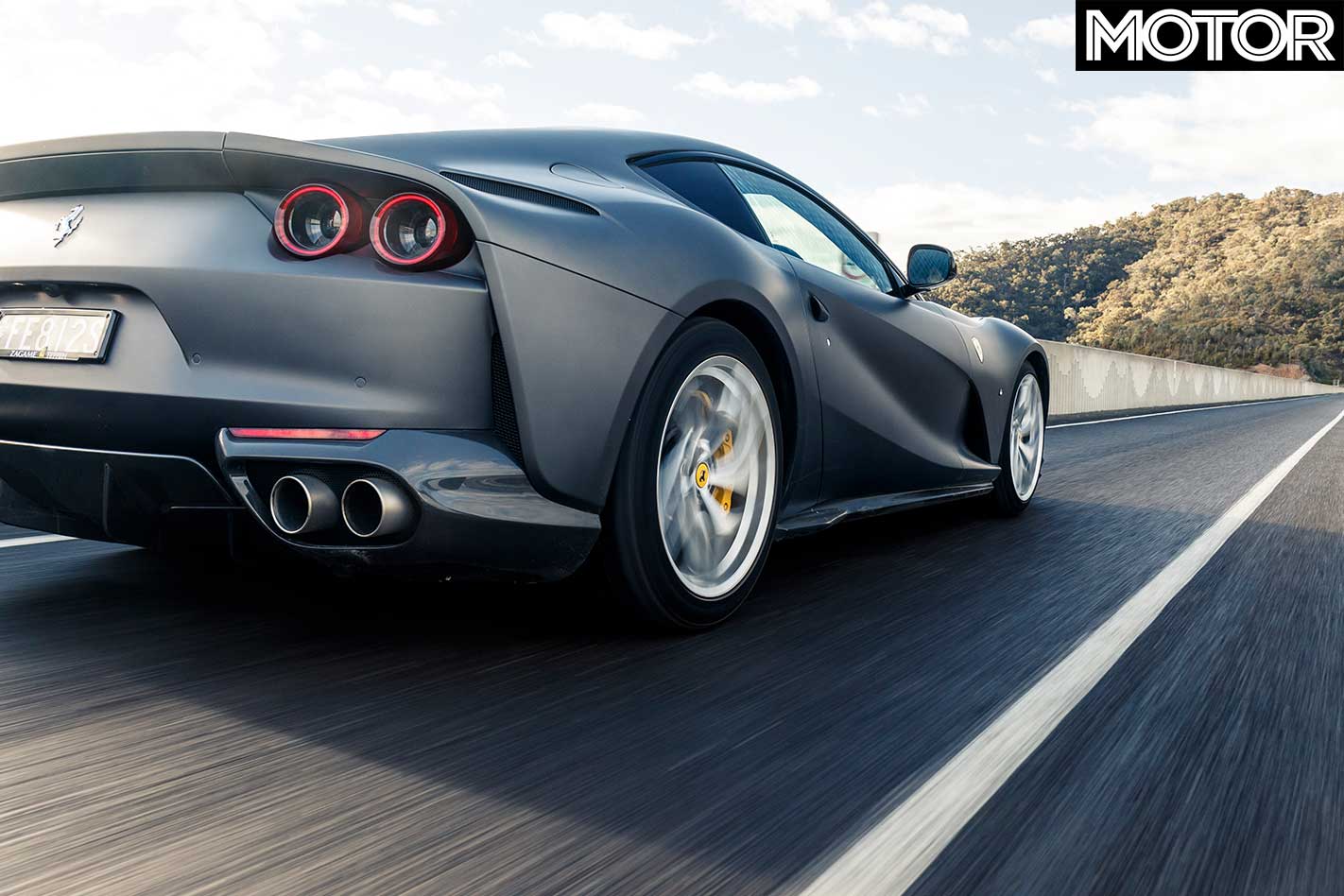
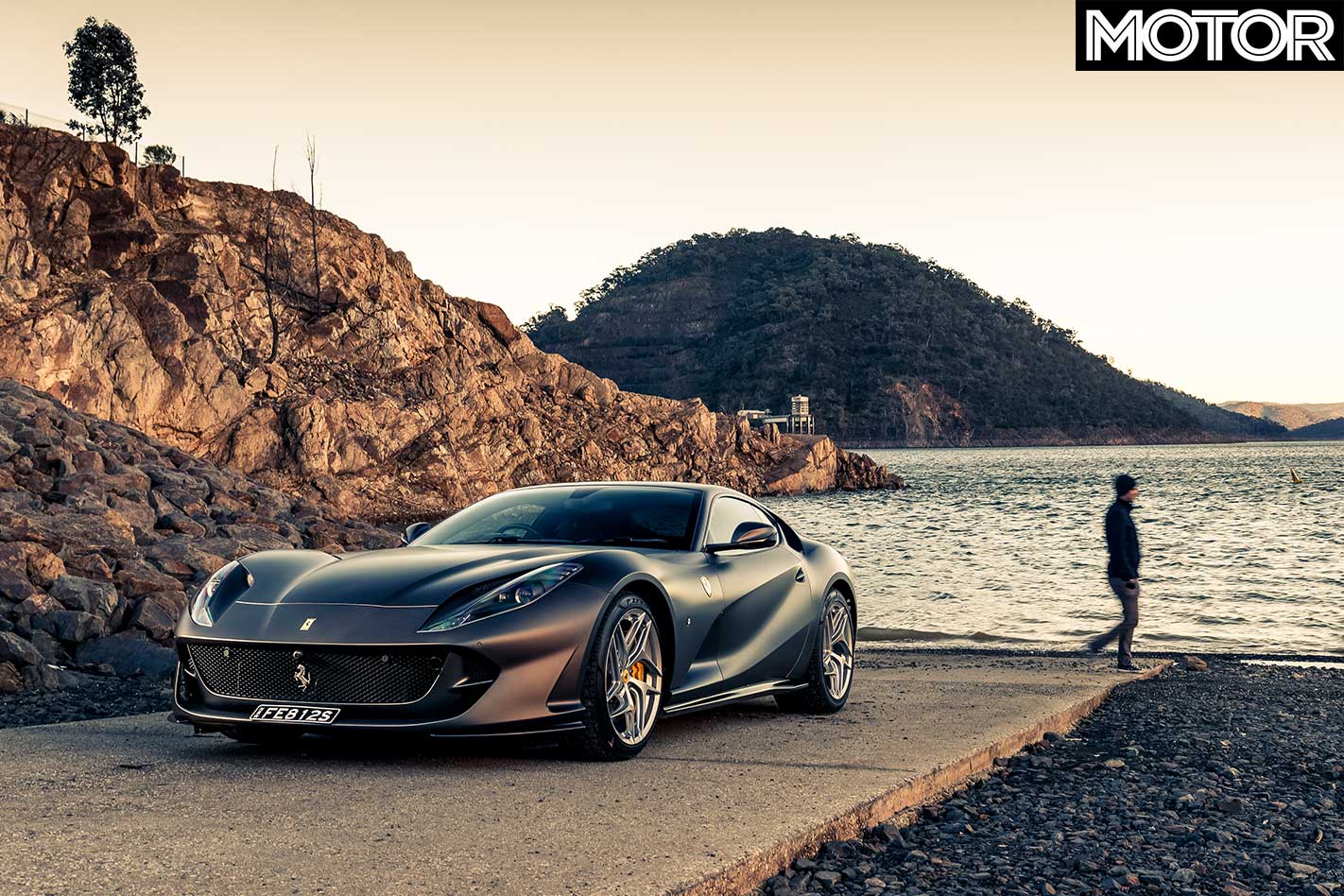
A generation on, Ferrari has managed to marry the demands of art and air. The 812 is a more organic shape, yet generates 10 per cent more downforce than its predecessor. Active aero helps, electrically operated flaps underneath the front bumper and rear diffuser activating at 180km/h to increase downforce or shed drag as required. Plenty of creases and curves remain, accentuated by our test car’s $52,937 Grigio Opaco (yes $53K) paintwork.
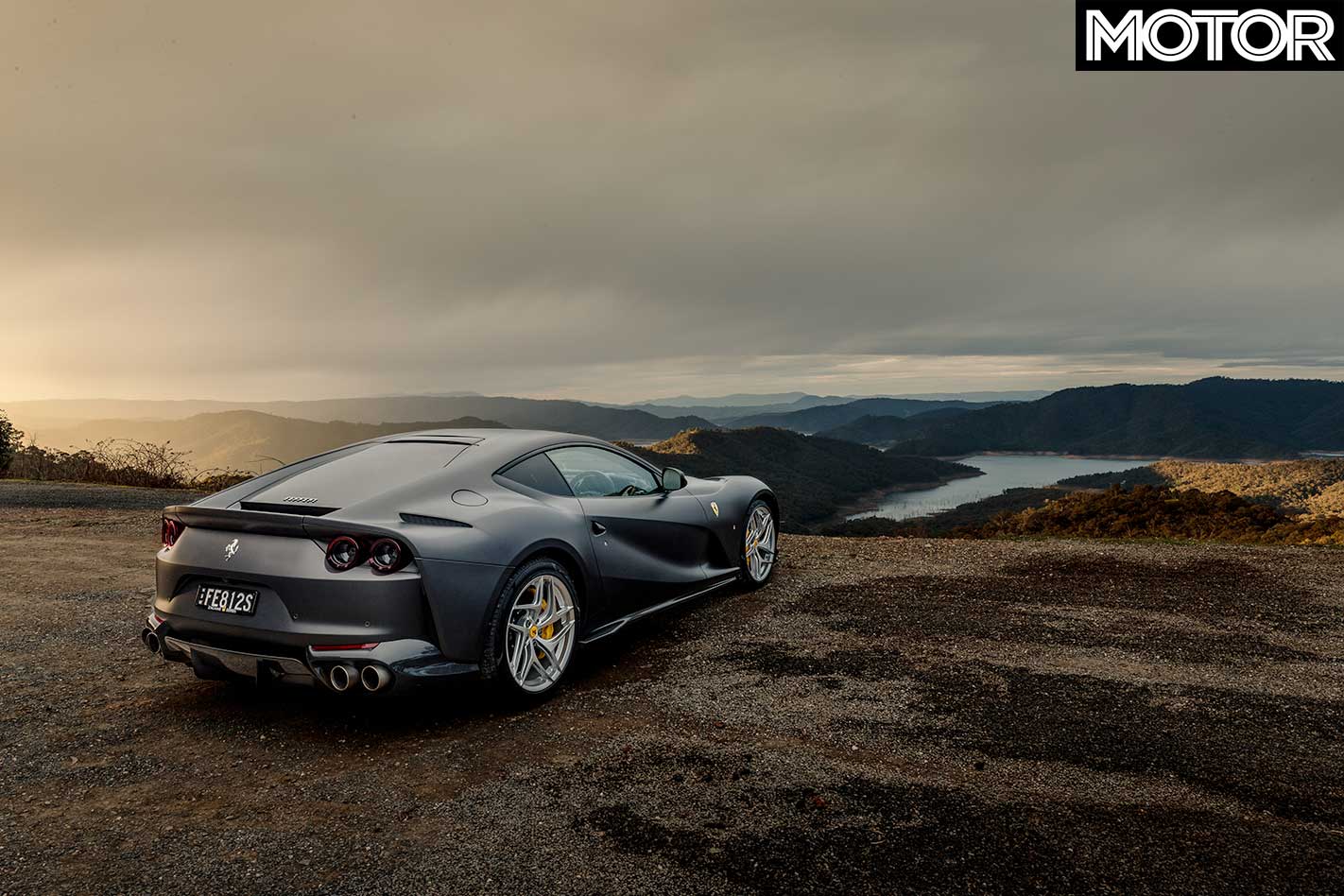
Initially a disappointment, particularly in comparison to the glamour of Ferrari Melbourne’s bright red demonstrator, the matte grey’s appeal grows to the point that it might be the 812 colour of choice. Then again, dark blue is nice, as is yellow, or black…
The closer you look the more details there are to absorb; photographer Ellen frets constantly for two days, anxious to capture every angle, but there are only so many photos allowed before the driving must commence.
Unlike some mid-engined competitors, you don’t need to be an Olympic medallist in gymnastics to enter the 812 gracefully. The standard seats are comfortable and electrically adjustable, making it easy to find the ideal driving position. Ellen’s gear is swallowed by the boot with relative ease and there’s an extra shelf behind the seats for coats or bags.
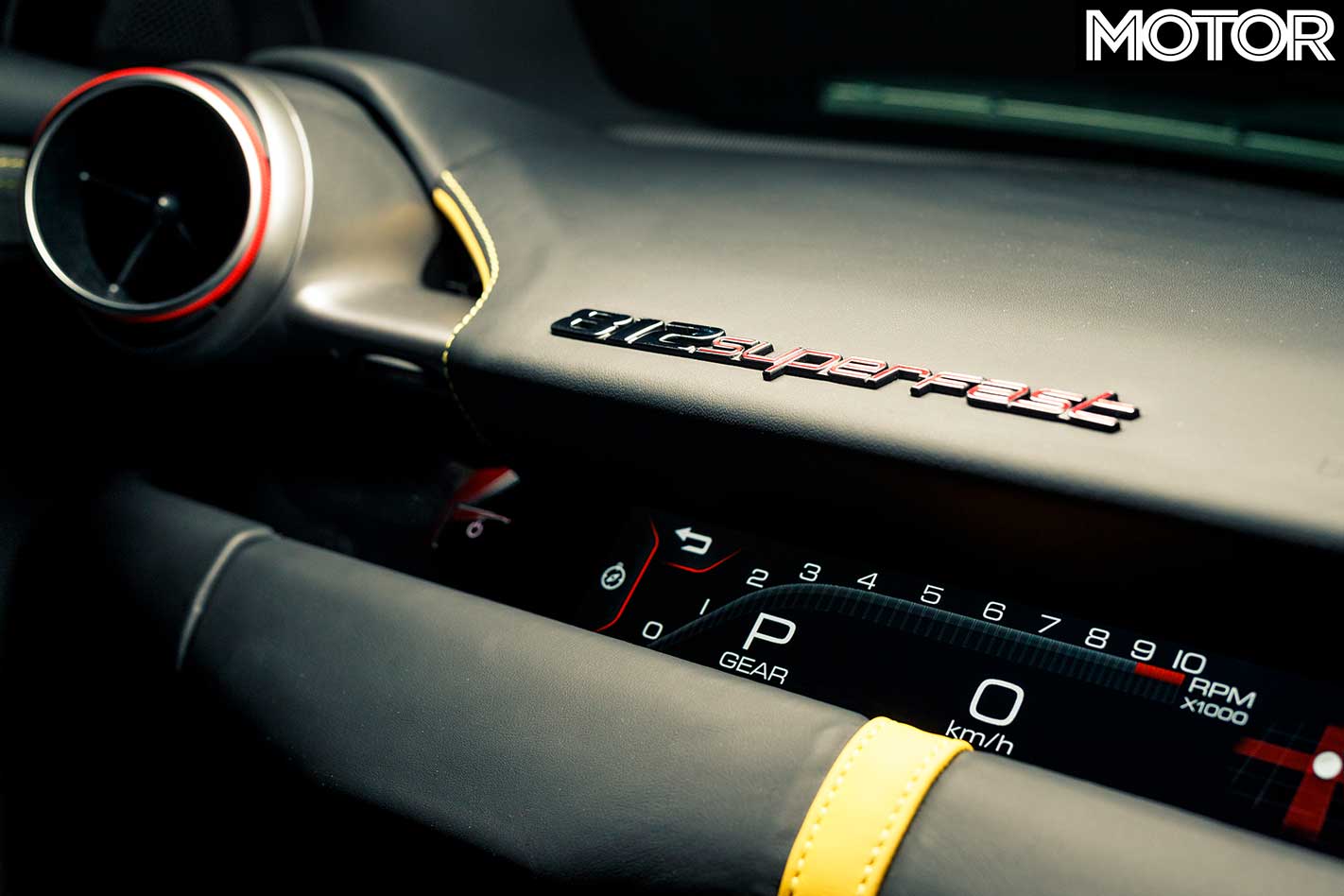
The steering wheel is festooned with buttons and switches; intimidating at first, it soon becomes second nature to find everyday controls by feel. Less intuitive are the dual controls housed either side of the steering column that operate the twin digital screens – one side trip data, the other infotainment.
It’s all a bit fiddly and while Ferrari continues to make strides forward in interior quality and presentation, there are still a few steps to take. The leather, carbon and Alcantara are lovely, some of the plastic switchgear and trim not so much.
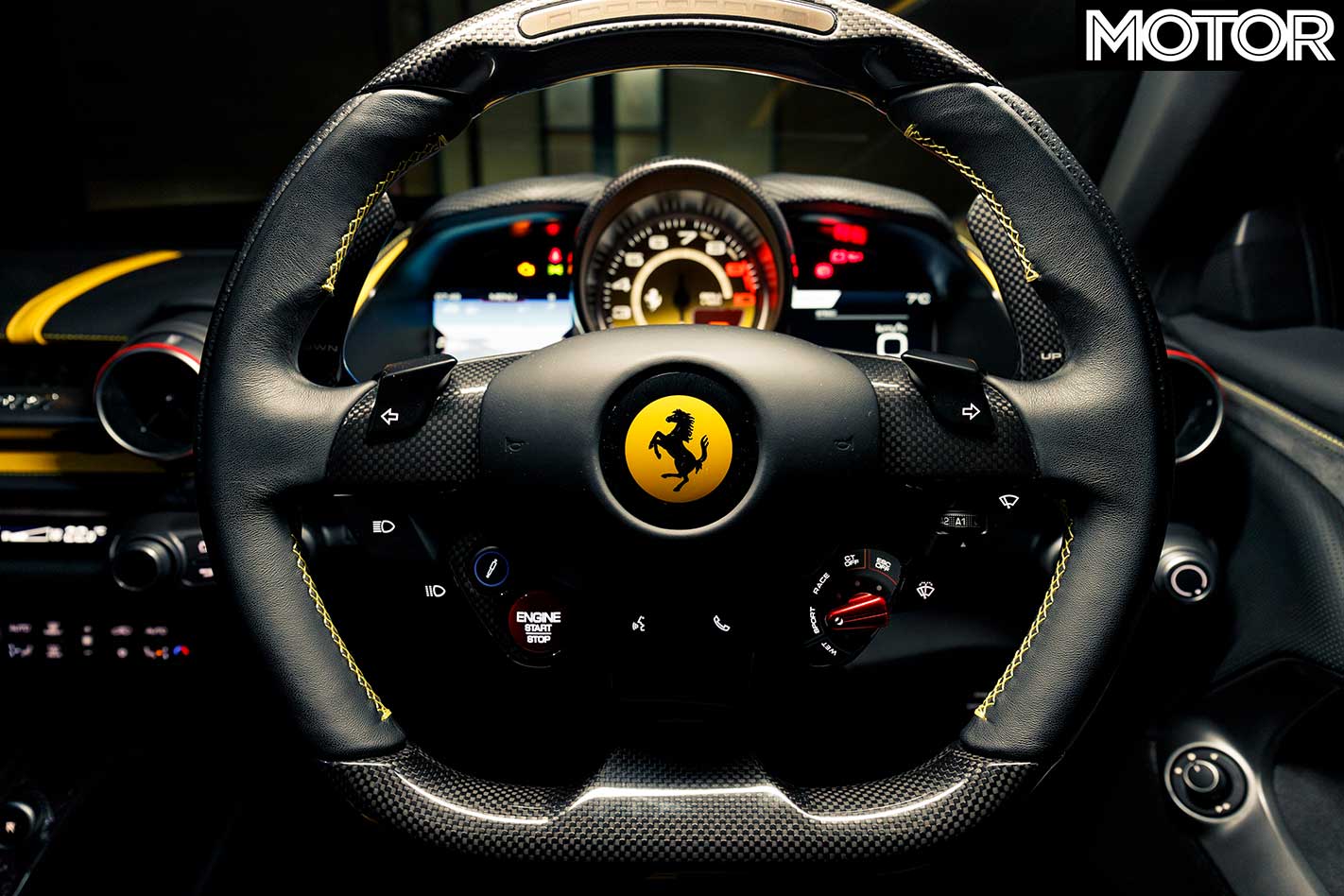
But who cares? You won’t. Not from the moment you press and hold the bright red starter button on the steering wheel. A theatrical whirr is quickly followed by a massive flare of revs as the 6.5-litre V12 wakes from its slumber, the exhaust valves staying open long enough to ensure every neighbour has woken from theirs. A click of the right-hand paddle engages drive, another button lifts the nose clear of the pavement and you’re away.
Ferrari never wants to hear its cars described as unremarkable, but that’s what the 812 is like to drive every day. The engine is quiet, the dual-clutch gearbox shifts unobtrusively and engages smoothly from standstill. The steering is light and the ride is acceptable before you press the ‘Bumpy Road’ button, improving to commendable afterwards.
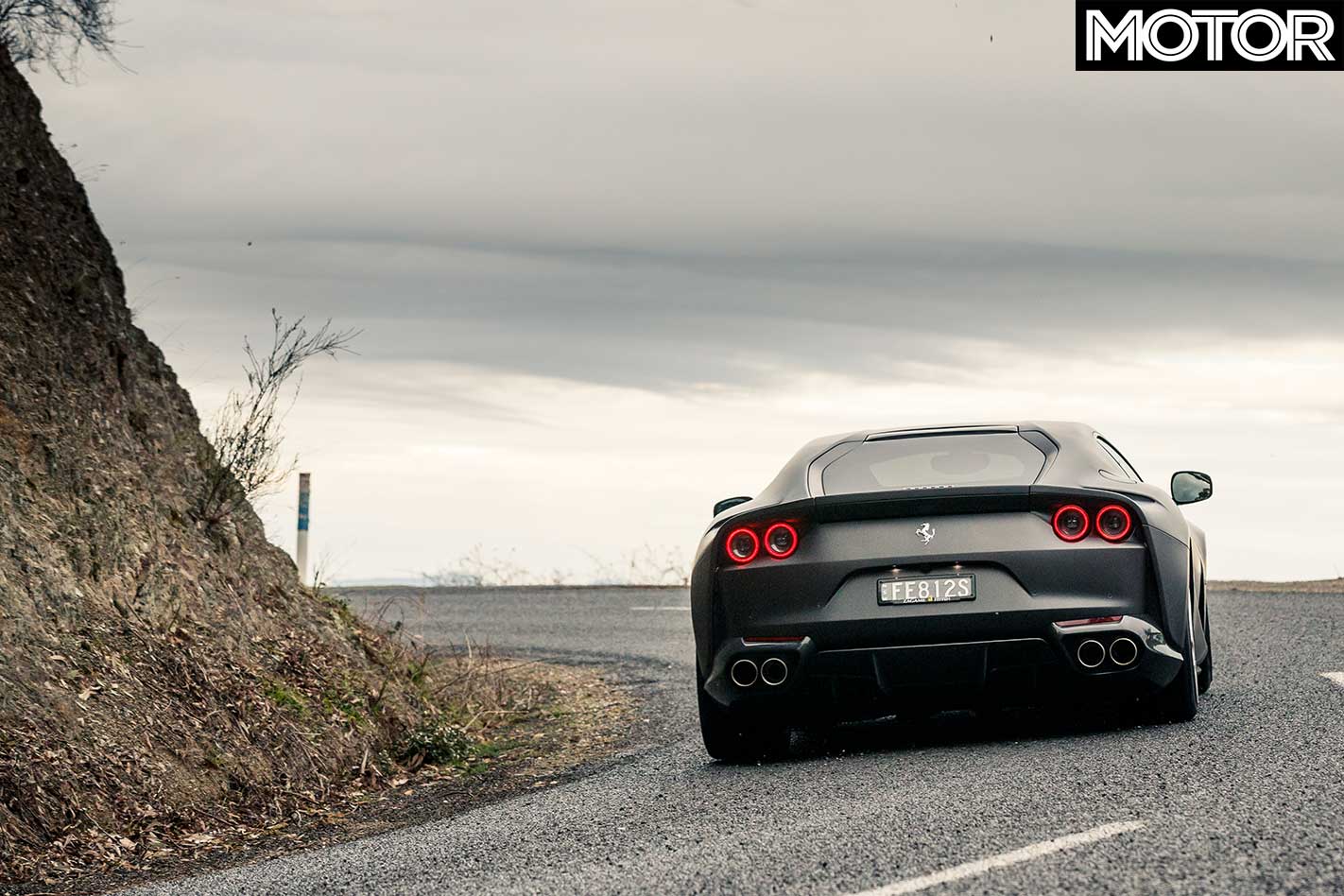
The 812’s steering doesn’t chase bumps and cambers in the road to the same degree as the F12’s, either. The two-hour drive from Melbourne to Eildon is completed in peace, comfort and even with reasonable economy. Only when you want to pass the car in front do you remember almost 600kW lurk under the bonnet. Overtakes are completed very swiftly in a Superfast.
We visit Eildon for the scenery, but hang around for the roads. Virtually every sort of surface, corner, bump and gradient can be found on the many stretches of tarmac surrounding the immense body of water that is Lake Eildon.
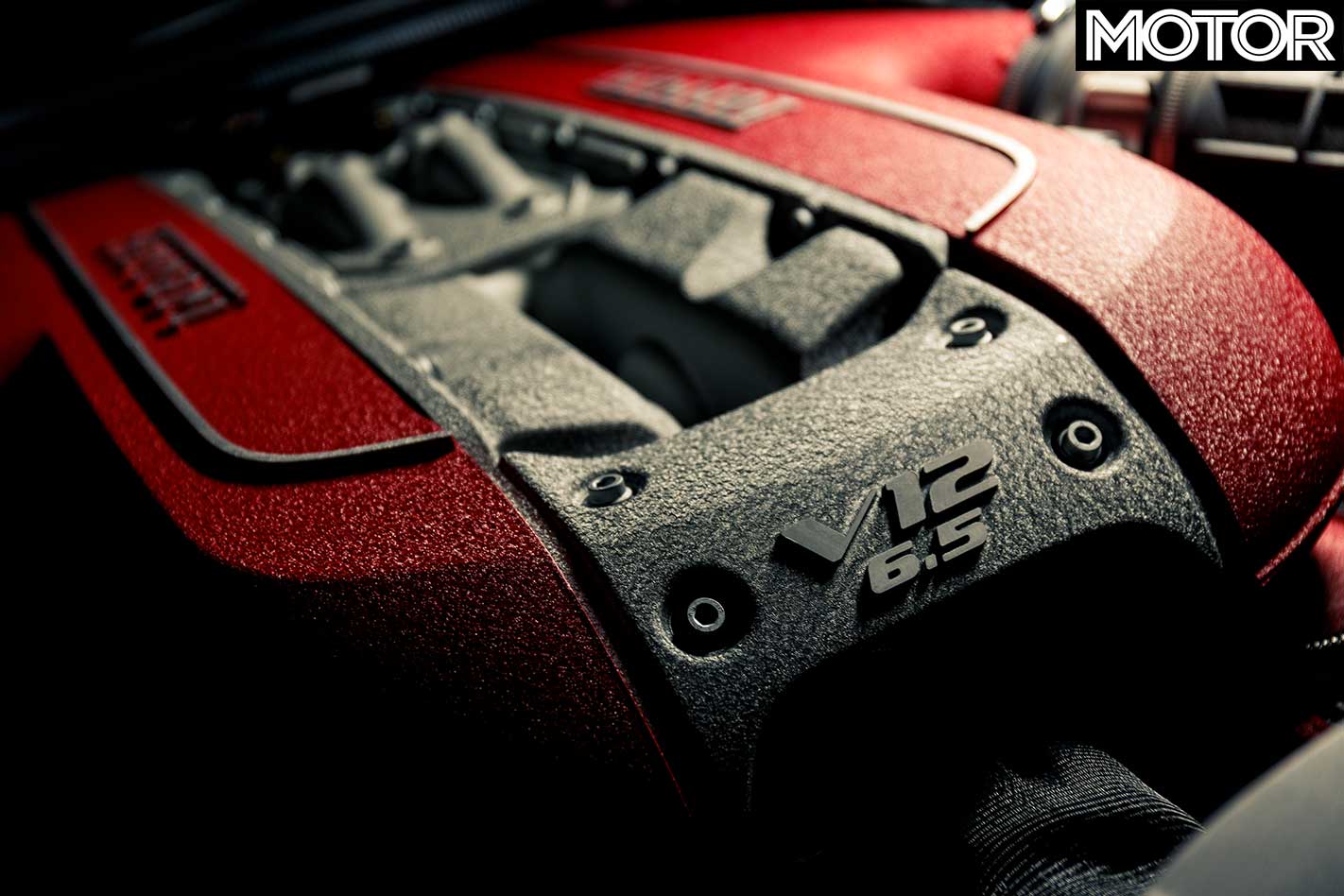
Immense is an equally apt adjective to use when discussing the 812’s engine. I fear we’ve become so accustomed to reading about 673kW McLaren P1s, 1000kW Koenigseggs and 1103kW Bugatti Chirons that the prospect of a 588kW/718Nm V12 Ferrari doesn’t carry the same weight it once did.
To provide some context, the spectacularly quick Audi RS4 Avant manages 185kW/tonne, the mindblowing Porsche 911 Turbo S 259kW/tonne – the 812 Superfast produces 361kW/tonne.
Ferrari says the 2.9sec 0-100km/h claim is the limit of what’s possible with rear-wheel drive and the 812’s 7.9sec 0-200km/h claim is more indicative of its pace. Probably not coincidentally, that’s exactly the same time McLaren claims for the 720S.
The two cars provide a fascinating comparison, for they illustrate the difference between forced induction and naturally aspirated power. The McLaren’s turbocharged torque feels to give it a slight edge in outright acceleration, but it can’t match the insane ferocity of the Ferrari’s atmospheric V12.
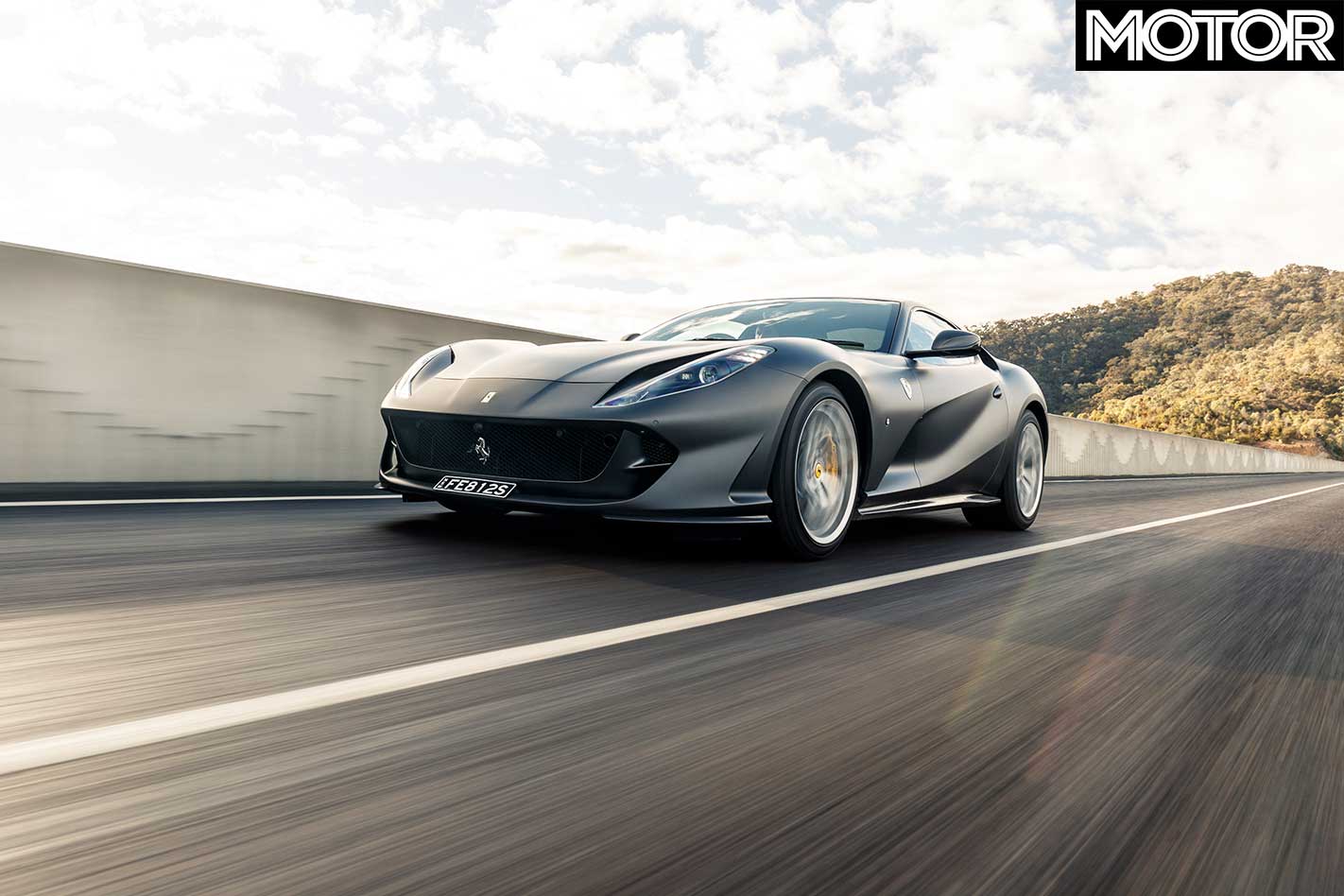
Opportunities to even reach full throttle are rare, as on most roads you’ll have reached another corner by the time you do, not to mention waving speed limits goodbye. Ferrari has shortened the gearing by 6.0 per cent compared to the F12, but the lower ratios are still very tall; in something like a 2018 Mustang this limits your cog-swapping opportunities, but the 812 devours its initial gears so quickly that the upshift paddle has barely returned to its stay before another pull is needed.
At maximum attack the gearbox itself is flawless; Ferrari claims upshifts are 30 per cent quicker and downshifts 40 per cent, but they were already so quick in the F12 that I might as well claim I can blink 30 per cent quicker than you.
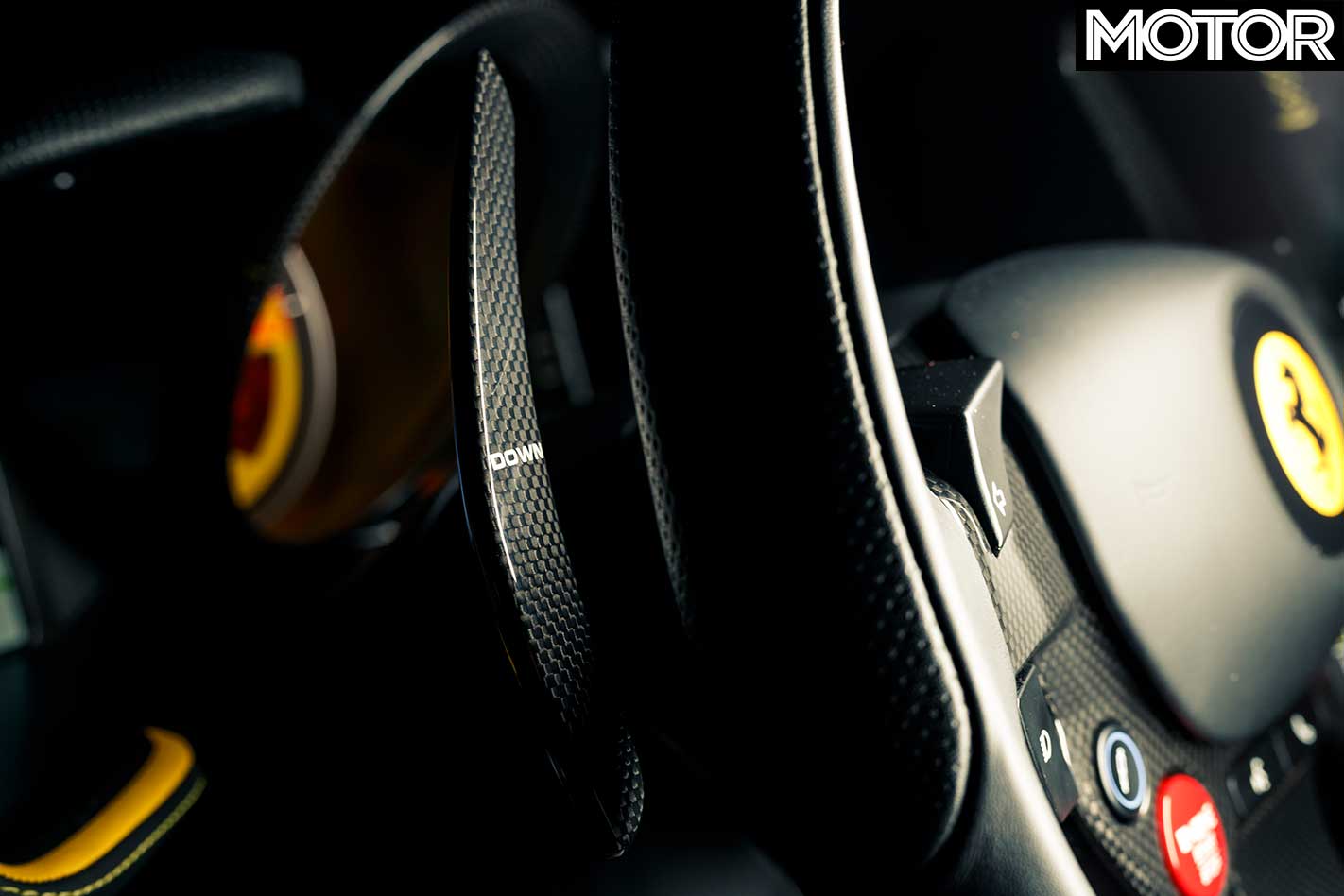
A neat party trick is the ability to hold the left paddle and have the seven-speed dual-clutch drop each ratio successively as soon as it’s able, each change producing a noise that wouldn’t be out of place at the end of Le Man’s Mulsanne Straight.
I was critical of the 720S’s coarse, industrial soundtrack and the 812 illustrates why; full throttle provides a rich sound that morphs from a low-rpm growl to a mid-range bark to a furious mechanical scream as the 8900rpm rev limit approaches, along with acceleration of increasingly terrifying intensity.
At 3500rpm the 812 is already producing more torque than a BMW M4 can muster in total, yet it goes truly berserk beyond 6000rpm. If the giant 315/35 Pirelli P Zeros aren’t warm (or are too warm) they’ll give up in first and second in the dry, or the first four gears in the wet.
That might sound intimidating and it is – you have to respect this much power – but it’s not at all scary. In fact, the 812 is one of the friendliest cars at the limit I’ve ever driven. It incorporates a lot of technology introduced in the F12tdf, primarily ‘Passo Corto Virtuale’, Ferrari-speak for all-wheel steering, used to counteract the dynamic instability introduced by using wider 275/35 front tyres. It works brilliantly. The only clue the rears are actively involved is just how little lock is required to negotiate a given corner.
With such wide front rubber, understeer simply doesn’t exist on the road; driving an 812 quickly is all about oversteer management. Traction is incredibly strong, and the linear nature of the naturally aspirated power delivery makes feeding the throttle in progressively no chore. However, equally, there is so much power on tap that you can break the rear wheels free at will.
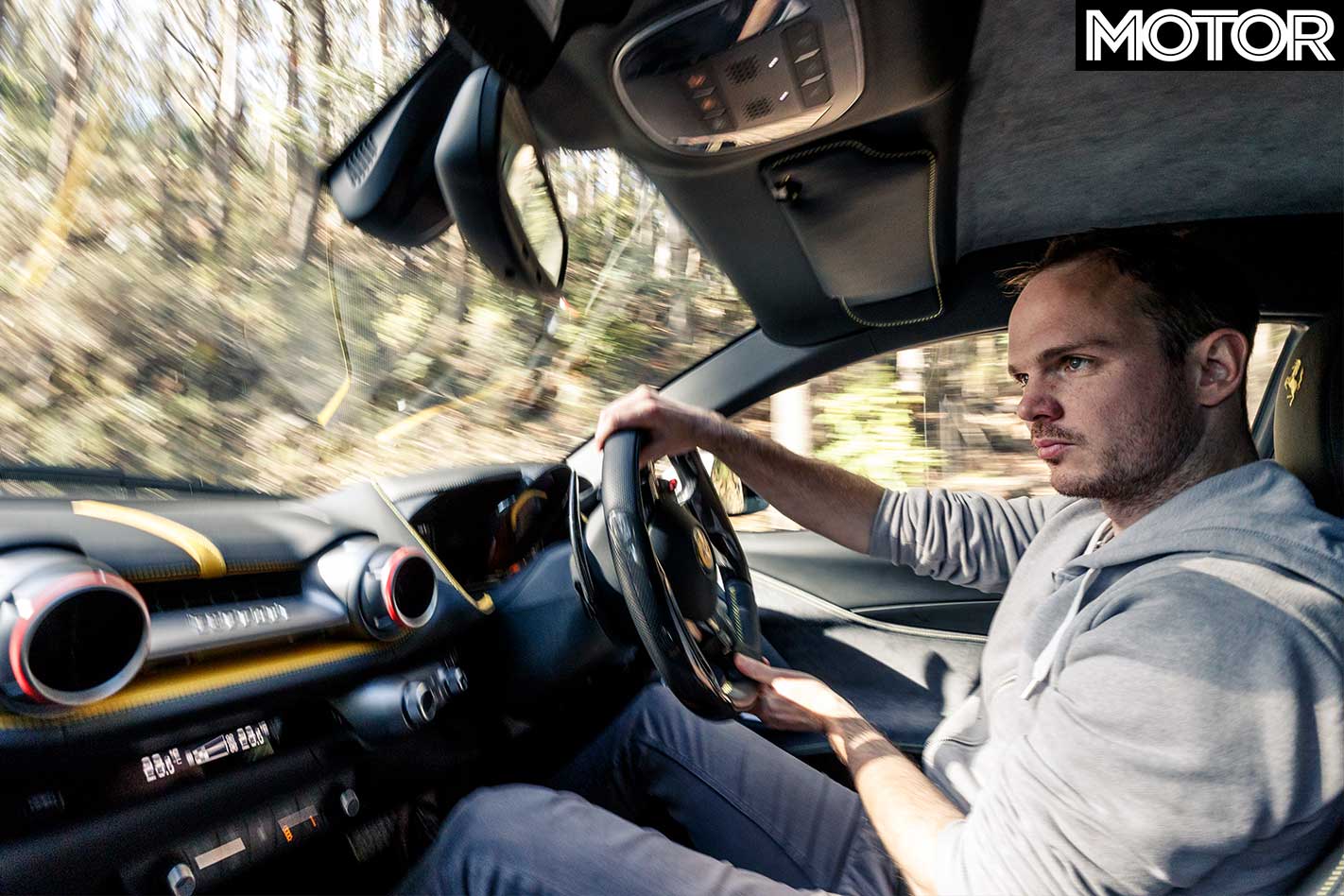
If the manettino – the steering-wheel mounted drive mode selector – is set to Sport or Race, this will be managed electronically by the stability control. It’s not overly intrusive, but a glance at the dash reveals it’s almost constantly active.
One click further activates Side Slip Control. SSC is basically a Sports ESP setting, but with the steering now electrically assisted (the first Ferrari to use EPAS) it has control over every facet of the car, constantly adjusting the differential, engine, steering and suspension to provide the optimal balance between grip and slip. It’s perfectly judged, lenient enough to let you leave two black lines on corner exit but always subtly mopping up any excesses caused by an over-eager right foot.

The Eildon-Jamieson road is 60km of driving nirvana and the 812 is utterly intoxicating – the speed, the balance, the adjustability but, more than anything else, the noise. Grip levels are incredible and the speed and accuracy with which changes of direction are completed makes the 1630kg kerb weight seem at least 150kg too much.
Its greatest attribute, though, is despite the incredible amount of computer technology making countless decisions every metre of the journey, the driving experience feels completely natural and organic.
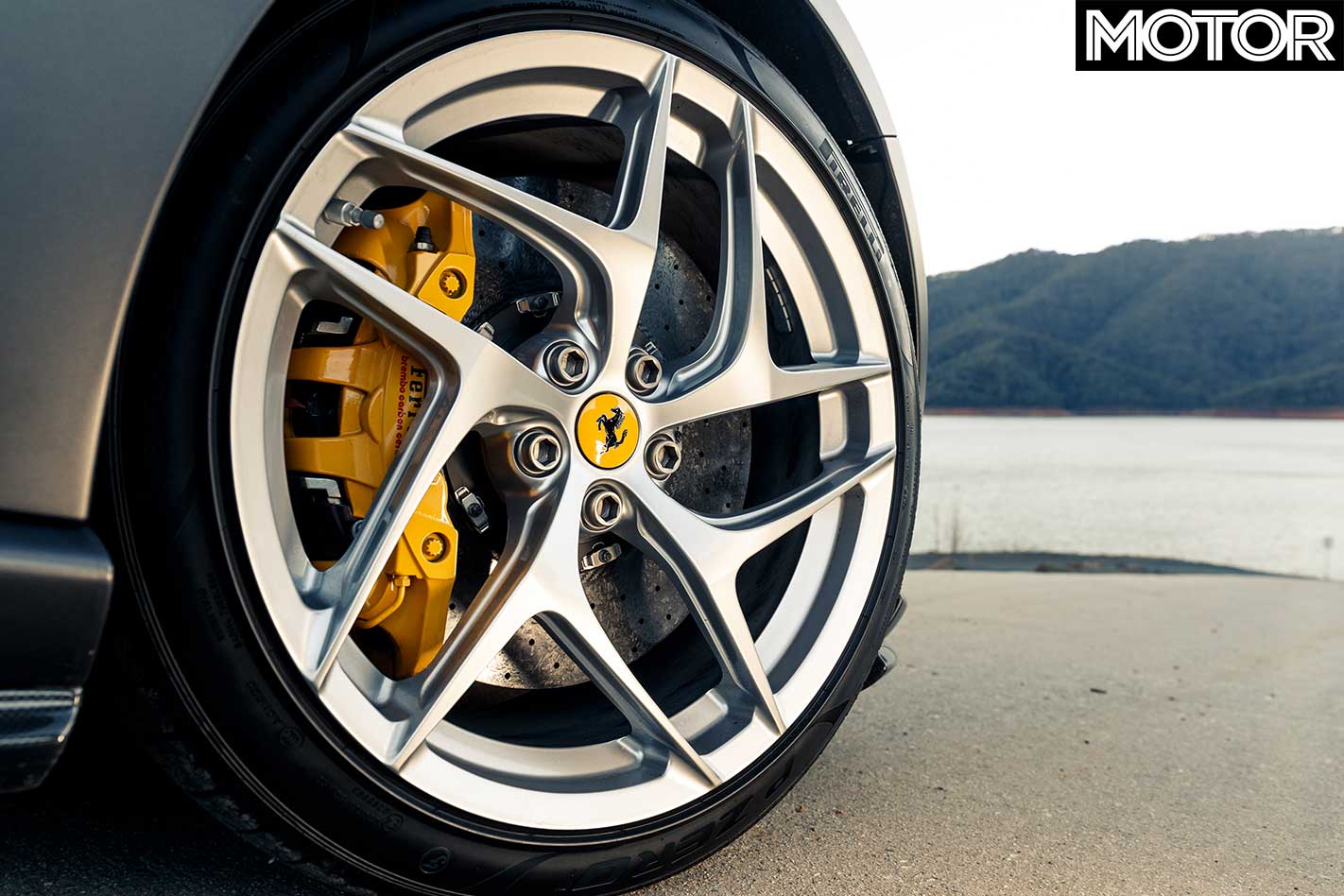
Only the brakes mark themselves out as having room for improvement. There’s nothing wrong with their power or stamina, but the initial pedal feel is quite soft; this doesn’t necessarily hurt confidence once you’re used to it, but it doesn’t help, either.
The other attribute of note is the 812 demands to be driven very, very accurately. Inputs are answered immediately and when you have 588kW and extremely quick steering – just 1.8 turns lock-to-lock – those inputs better be the right ones. However, this only enhances the 812’s charm. This is a supercar, it should test the driver and demand some level of excellence to deliver its best.
In return, it will provide one of the world’s most exhilarating driving experiences. I’m still unsure whether it’s the ‘best’ car I’ve ever driven, but it’s almost certainly my favourite. To marry such savage speed – after more than 1000km the shock still didn’t fade – with such a beautifully exploitable chassis and stunning looks in a practical, relatively comfortable package makes the 812 a masterpiece.
Then there’s the noise, which makes me want to start a campaign to force non-enthusiasts into electric cars, just so engines like this can live on. Superfast might be an accurate name, but it’s not the most appropriate – F***ing Awesome must have been taken.
FAST FACTS: 2018 Ferrari 812 Superfast
BODY: 2-door, 2-seat coupe DRIVE: rear-wheel ENGINE: 6496cc V12, DOHC, 48v BORE/STROKE: 94.0mm x 78.0mm COMPRESSION: 13.6:1 POWER: 588kW @ 8500rpm TORQUE: 718Nm @ 7000rpm WEIGHT: 1630kg POWER-TO-WEIGHT: 361kW/tonne TRANSMISSION: 7-speed dual-clutch SUSPENSION (f): double A-arms, adaptive dampers, anti-roll bar SUSPENSION (r): multi-links, adaptive dampers, anti-roll bar L/W/h: 4657/1971/1276mm WHEELBASE: 2720mm TRACKS (f/r): 1672/1645mm STEERING: electrically-assisted rack-and-pinion; rear-wheel steering BRAKES (f): 398mm ventilated/drilled carbon-ceramic discs, 6-piston calipers BRAKES (r): 360mm ventilated/drilled carbon-ceramic discs, 4-piston calipers WHEELS: 20 x 10.0-inch (f); 20 x 11.5-inch (r) TYRES: Pirelli P Zero TM, 275/35 ZR20 102Y (f); 315/35 ZR20 106Y (r) PRICE: $609,888 ($795,183 as-tested)
EILDON TO JAMIESON Amazing scenery, awesome road
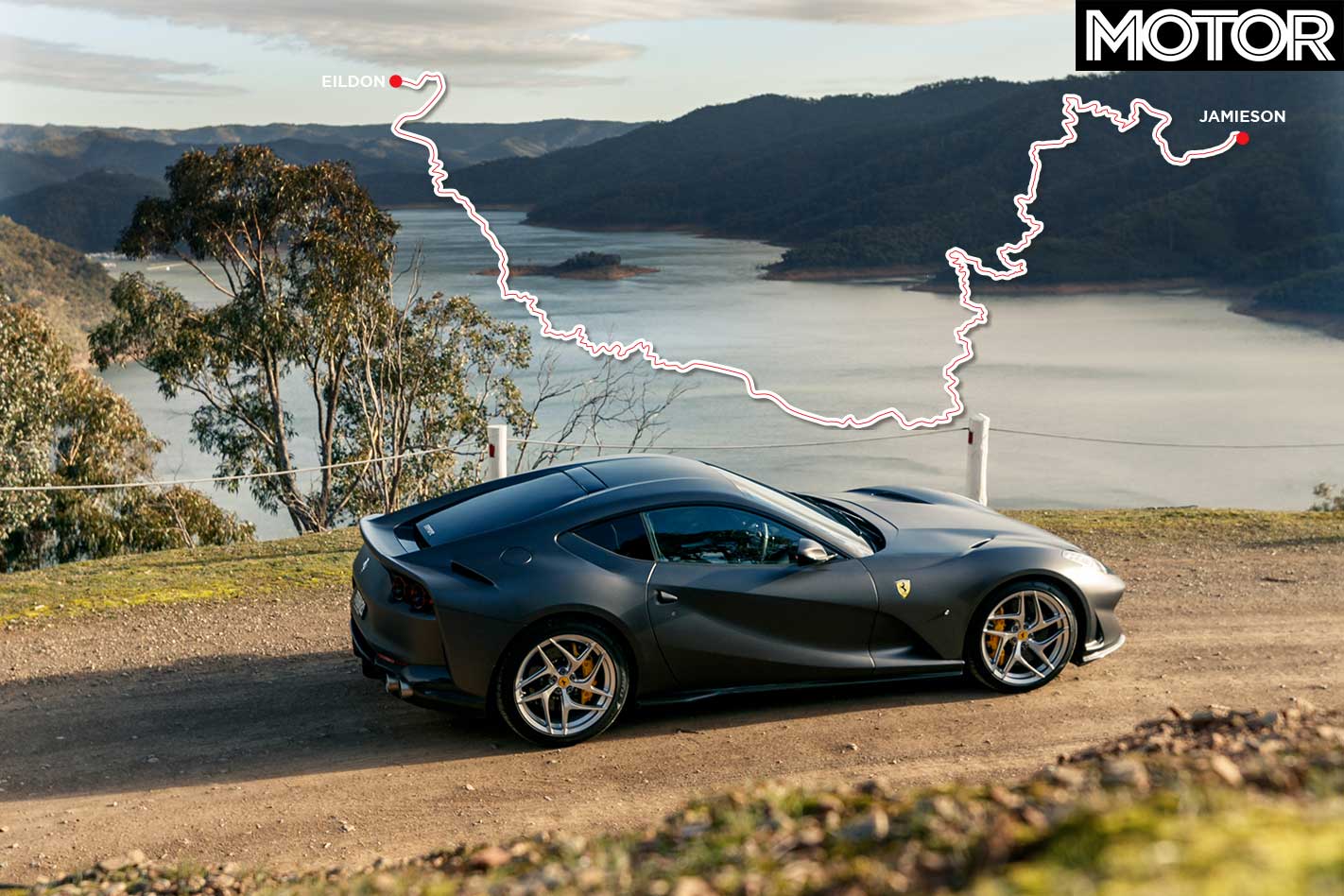
You’ll have to zoom in a long way on Google Maps to find it, but it’s there. The twisting 66km snake of tarmac that is the Eildon-Jamieson road is by far the shortest route connecting the two towns, but while the highway alternative is exactly double the distance, Google says it only takes nine minutes longer.
That should give you an idea of the number of corners you’ll have to tackle, among everything from lush rainforest to riverside valleys to alpine climbs. It’s epic, but the surface is extremely abrasive, so take care if you’re on soft rubber.
THE BEATING HEART Aero is for those who can’t build engines
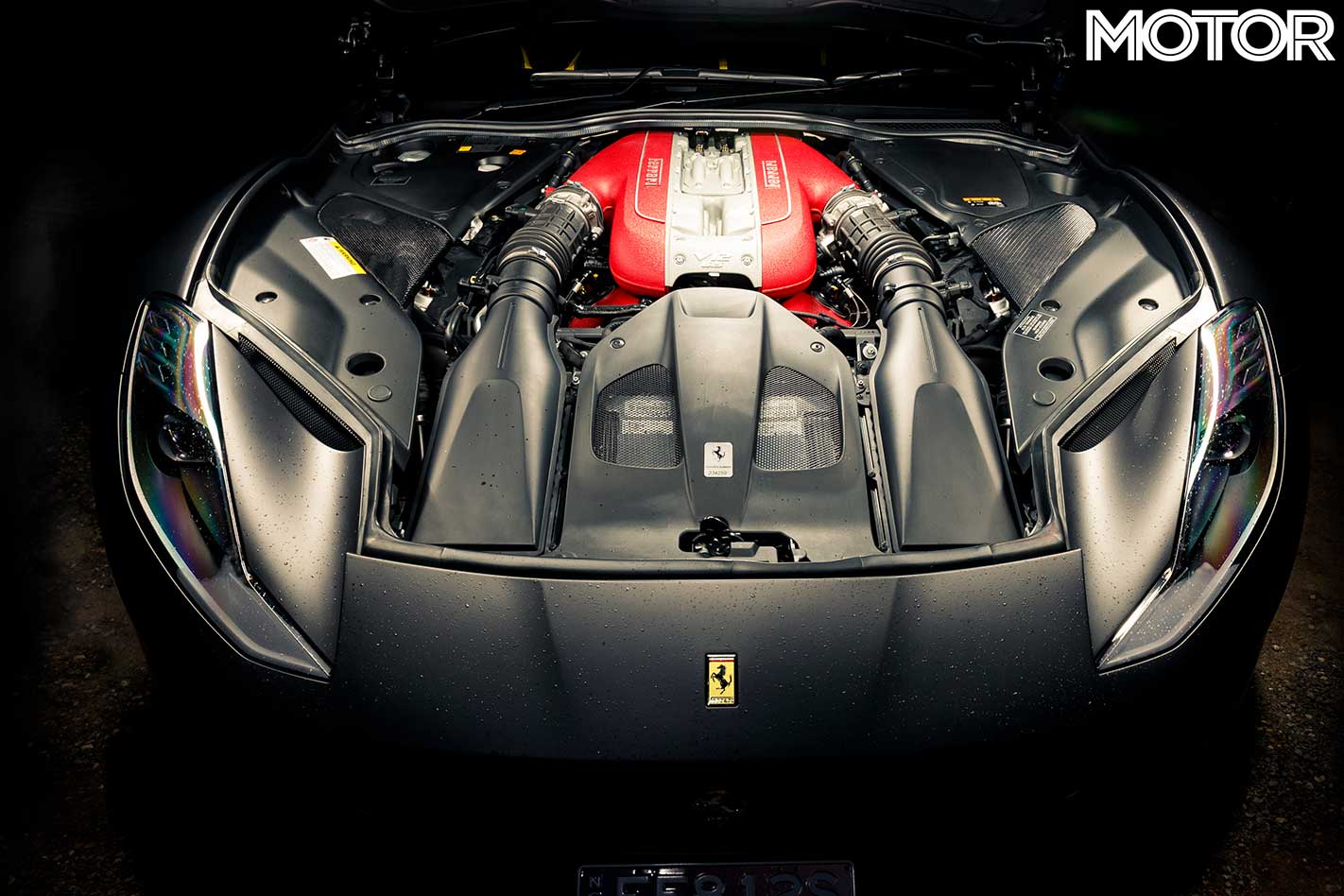
Despite starting with a pretty incredible base, the 545kW/690Nm 6.3-litre V12 in the F12, Ferrari went over its biggest engine with a fine-tooth comb, altering 75 per cent of the components to come up with the Superfast’s 6.5-litre unit.
An extra 2.8mm of stroke increases capacity from 6262 to 6496cc, yet most of the focus was on increasing power at the top end of the rev range, the 812 making its 588kW at 8500rpm versus the F12’s peak of 8250rpm.
Not that low-end grunt has been sacrificed – 80 per cent of the 718Nm torque peak is available from 3500rpm thanks to a variable-length intake system, redesigned inlet and exhaust ducts and a direct injection fuel system capable of 350bar of pressure.
As a result, the 812 shares the honour of housing the world’s most powerful atmo production engine with its hypercar sibling the LaFerrari. All backed by seven years free maintenance and 20,000km/12 month service intervals.
If there are few things more enjoyable than spending someone else’s money, there’s possibly nothing better than spending it on cars: classics, supercars, racing cars, whatever takes your fancy. That’s pretty much what car consultant Ken Grindrod, 74, has done for the past four years, as the curator of the mammoth Gosford Classic Car Museum on the NSW Central Coast. Part of the Sydney motor trade for decades, Grindrod’s industry connections made him a natural fit for the museum.
“I was born in Melbourne, but we moved to Gundagai, worked on the land for a while, then I came to Sydney when I was 17 to try my luck,” he says. “There’s never been anything else but cars, going way back with Dinky Toys … my first job was as a sales cadet at Larke-Hoskins, then I joined P&R Williams, selling MGs, those sorts of things.
“Then I worked for some years at Bryson’s, when it was distributor for Jaguar. Sales, always in sales.”
Grindrod opened Wagon Wheels, a landmark used-car dealership on Sydney’s Parramatta Road, with fellow country boy, the late Ray Lintott. “Ray and I had been best mates back at school; we used to muck around in old MGs out in the country.”
Grindrod had started racing in 1963, on the smell of an oily rag. “I bought a Triumph Herald, the only car I could afford. I did a lot of hillclimbs, and I raced it at Bathurst in Easter ’64 … there’s a famous photograph of it rolling over at Warwick Farm.” After several years’ absence, in the 1980s he raced an EH Holden in the revived Appendix J category, then rounded out his racing days in a VL Turbo production car.
“So, yeah – done a bit of racing, a bit of rallying, done a bit of everything. But classic cars are really the thing now, and it’s such a big thing because [of] international buyers.”
Grindrod had been loosely following the trends of the classic market when he got a call from Prague. Tony Denny, an Aussie expatriate who’d built a large used-car retail network over 24 years in Czech Republic, was moving home, bringing with him a significant collection of Iron Curtain cars.
A car kook to the core, Denny figured he’d have someone on the ground look for some other interesting cars, and find somewhere to keep them.
“Really, it was just going to be a private collection,” says Grindrod. “And next thing, this empty Bunnings building came up and I suppose he had to say, ‘Well, how do we fill this?’
“We went from zero to, at the highest point, close on 600 cars … but to get those 600 cars, we probably looked at a couple of thousand.”
Grindrod says there wasn’t a wish-list, as such. “We had an open mind. We weren’t looking for one brand, although at one stage we had close to 50 Ferraris. We had Lamborghinis. We had two Jaguar XJR-15s, which have both now gone to the States.”
Stumbling onto incredible finds became simply a part of the process. “There was the ‘barn find’ Falcon GT [Phase III] we bought – it hadn’t been driven since 1981 when I looked at it, sitting in a carport, covered in blankets … It makes the chase worthwhile when you find something like that.”
The Gosford museum inevitably started selling cars as well as buying them. Grindrod retired in March of this year, though he’s using his international network to buy and sell independently.
Does he ever get it wrong? “Due diligence is a major part of it and people can make mistakes. Classic cars are a bit like art – a painting is a painting and people in this market know what’s around. Part of what I do is knowing these people; being part of this operation worldwide.”
BEHIND CLOSED DOORS
Classic car consultant Ken Grindrod moves among private owners often with large, little-known collections – like one in NSW reputed to hold 1200 cars and 600 motorcycles. “The high-end people like to keep their stuff pretty private,” he says. “You know who they are, they’ll turn up at Pebble Beach with their concours cars… They’re the people that I deal with.”
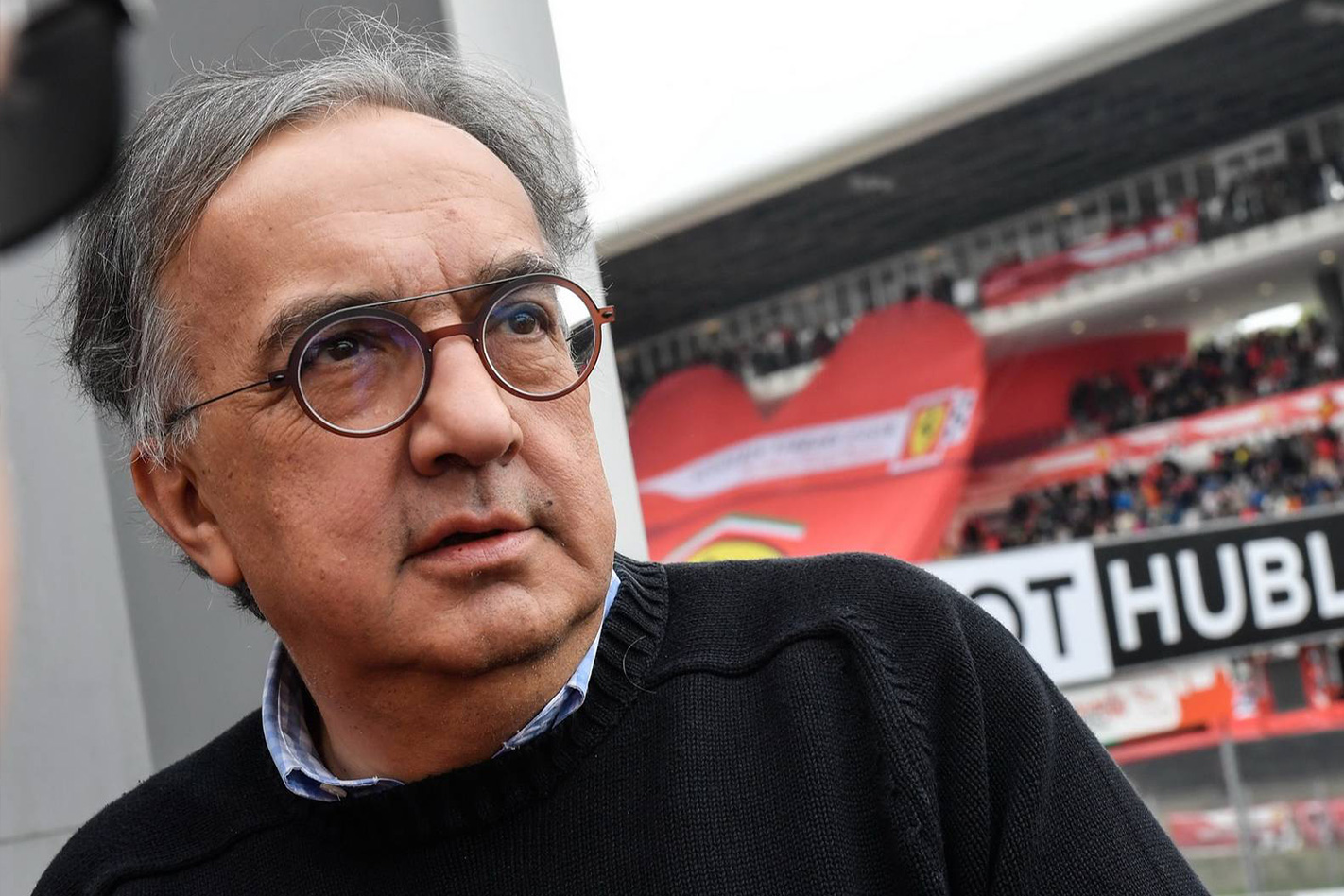
Sergio Marchionne had just 54 days left to live when he arrived at Balocco Proving Ground in early June. That day at Fiat Chrysler Automobiles’ immaculately groomed test facility in northern Italy was the last time I saw the chief of the world’s eighth-largest carmaker in action.
Balocco, coincidentally, was also the place I first encountered the executive I came to think of as Sweater Man. That was back in 2010, at the international launch of the Alfa Romeo Giulietta. No-one there that day could ignore the black Ferrari Enzo loudly lapping Balocco’s handling track during the lunch break.
The driver was Marchionne, but we didn’t know that until he climbed out of the supercar. Wearing, of course, a black sweater. Chances like this are too good for any journalist to ignore. Myself and another Australian got to him first, and, if I remember rightly, to some quotable quotes on what was happening with the replacement for the Alfa 159. Soon he was the centre of a multilingual huddle, firing sometimes acidic answers to questions in both English and Italian.
It was an impressive performance. Some senior auto industry leaders would have been uncomfortable in such a situation. Marchionne instead seemed to relish it. His erudite wit and gruff candour made him a rarity, but journalists asking insipid or insolent questions ran the risk of sarcasm or scorn from Sweater Man.
But the serious side of Marchionne was on display at Balocco back in June. He was there to ringmaster FCA’s Capital Markets day. Held every five years, these are big, carefully orchestrated, day-long events designed to build confidence among institutional investors and analysts in the company’s financial health and future plans.
While the herd of investors and analysts watched the series of presentations by Marchionne and other FCA execs in the auditorium where they were made, the media mob had to make do with a feed to a big screen in a nearby Balocco workshop temporarily converted into a press centre. But later, Marchionne came to join the journalists for a bit of quick-fire Q and A.
There was consistency during the latter years of Sweater Man’s 14-year reign. The 2018 to 2022 plan keeps the focus on Jeep, FCA’s only truly big-time brand at present, and aims for further expansion of high-profit Alfa Romeo and Maserati. Basically more of the same. The real news from Balocco was an FCA-wide shift towards electric and electrified vehicles and away from diesels, and the bigger role planned for pick-up maker Ram.
FCA is a weird corporate critter, difficult and different. It’s a bunch of specialist brands unlike any other global group or alliance. Marchionne’s sensible strategy was to invest most in brands with the best chances of making money, and to trim back those brands whose time is past, like Fiat and Chrysler.
Marchionne was a man unafraid of change. Tellingly, the two brands baked into the very name of the company he shaped are now relatively unimportant parts of FCA. But the decisions he made before dying in a Zurich hospital after shoulder surgery in late July will continue to affect the futures of Alfa, Maserati and Jeep for decades to come.
Leaving his light on
Sergio Marchionne was 66 and had planned to retire in April 2019. FCA chairman and great-great-grandson of Fiat founder Giovanni Agnelli, John Elkann, made a point of praising Sweater Man’s work at Balocco in June. “My family has aimed to strengthen this company,” the 42-year-old told us in the post-event press conference. “I have never seen a brighter future.”
Life’s tough at the top – or so I’m told. Apparently it’s much more stressful being the hunted than the hunter, the pressure building with every new challenger that aspires to the throne.
Sustaining excellence is difficult, but the third-generation Mégane RS managed just that. The limited edition (and much more expensive) Ford Focus RS stopped it vaulting straight to the head of the class on its introduction, but from the initial Sport 250 to the final RS275 Trophy R it consistently ranked as our favourite front-driver.
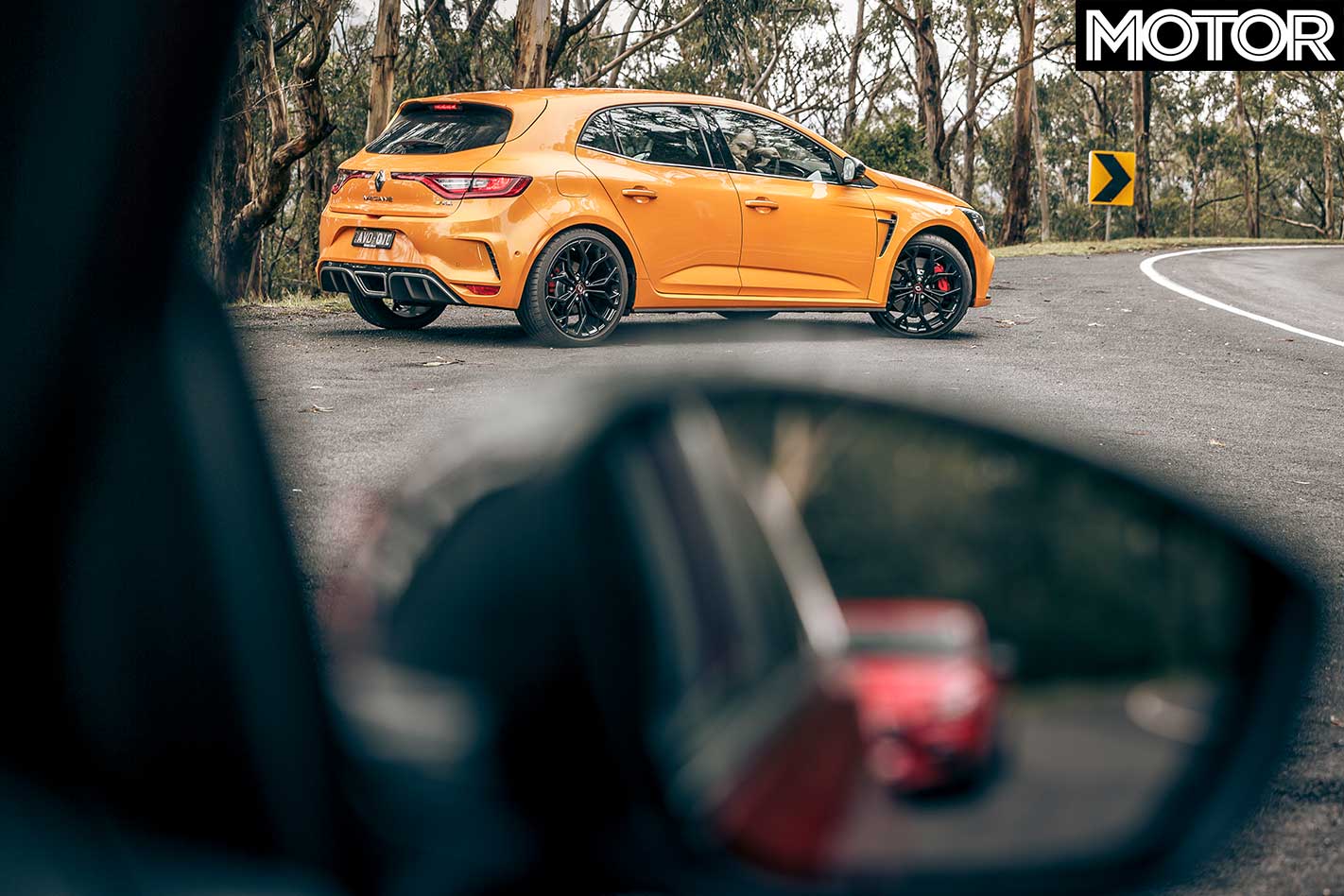
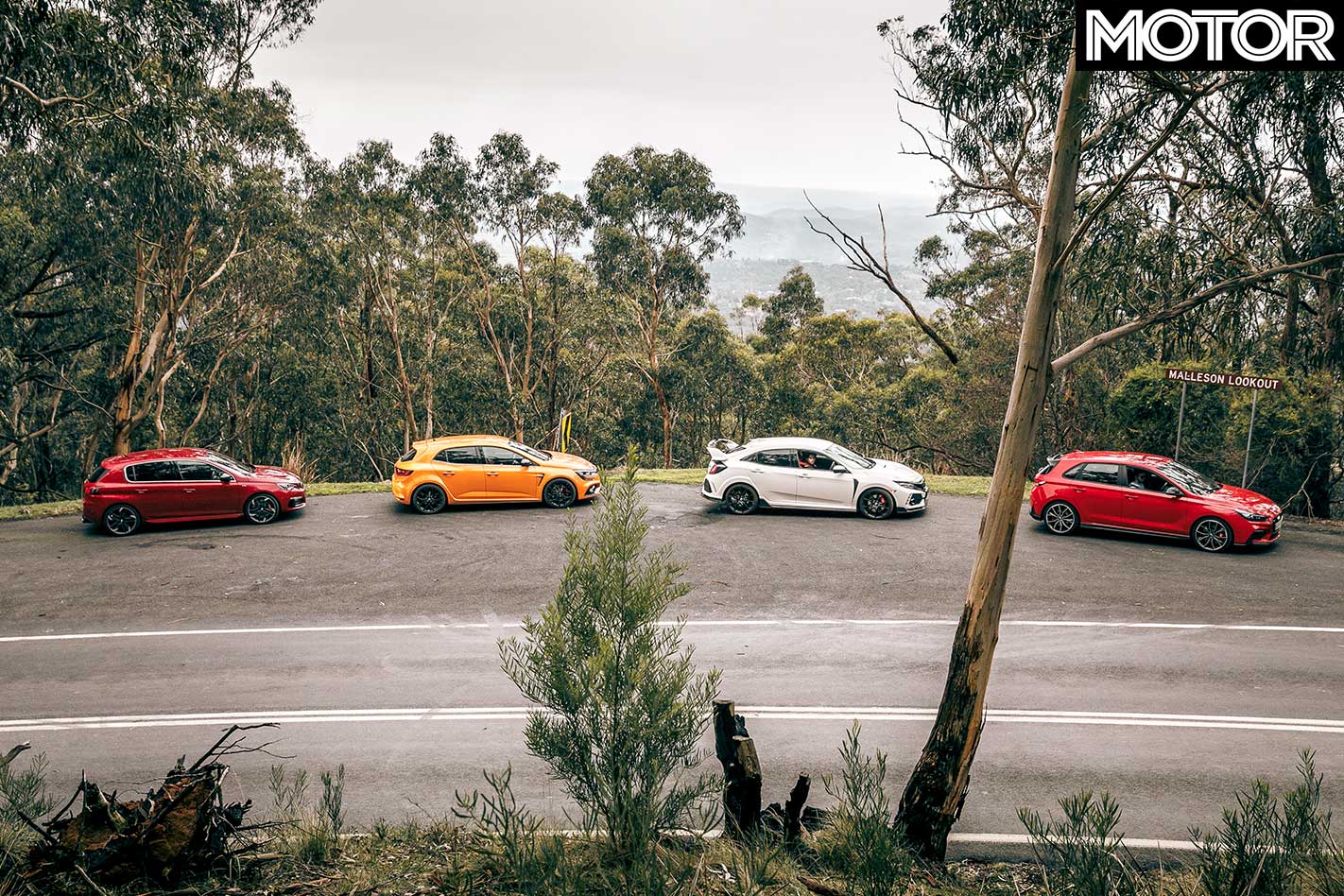
Now there’s a new top dog. The Honda Civic Type R has swept all before it, winning Performance Car of the Year and Bang For Your Bucks in the same year, an unprecedented achievement. It’s re-written the rulebook on what’s possible with driven front wheels, but has done so without the presence of a rival from Renault Sport. No longer, though this fight is a little premature.
Renault’s true Type R Competitor, the Mégane RS Trophy, is still almost 12 months away from Australian shores, but if the standard RS280 can give Honda’s hot hatch a run for its money, it bodes well for a return to Renault supremacy.
But this isn’t just a head-to-head. The Honda is present as the current benchmark, but at $51,990 it’s easily the most expensive car on test. And with 228kW/400Nm, it’s also the most powerful. Mere fractions separate the other three contestants, on the spec sheet at least.
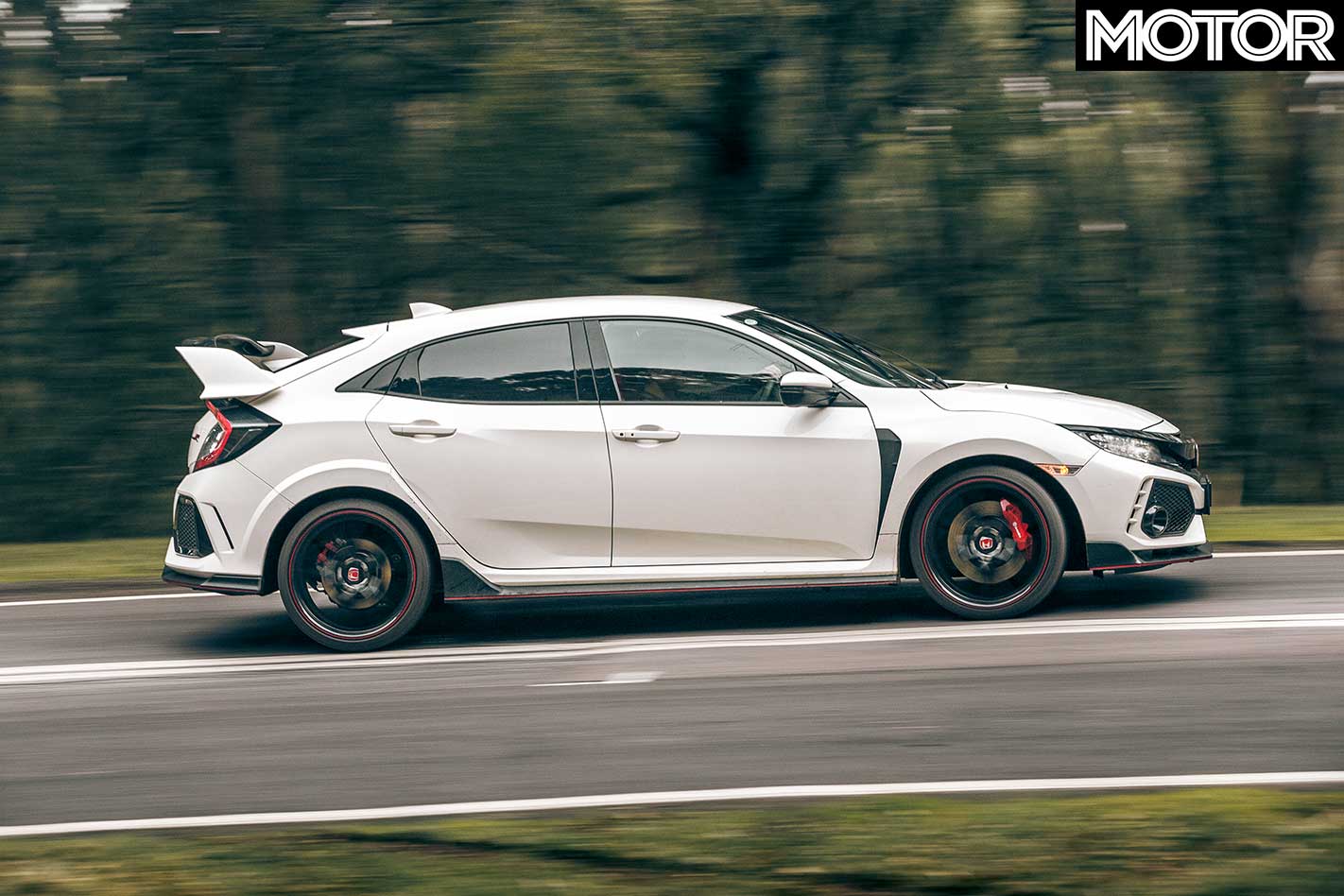
Like the Civic, they all use turbocharged four-cylinder engines, send power to the front wheels through a six-speed manual gearbox and limited-slip differential and have five doors. That in itself represents a major shift for the Mégane, as the Gen III RS was available only as a three-door quasi-coupe.
In an effort to broaden the appeal of its sporty best-seller, Renault has added a pair of doors and the option of a dual-clutch gearbox, the only car here to do so.
As you’d expect, we have a manual, fitted with the Cup chassis, which stiffens the suspension, adds a limited-slip diff and $1490 to the base Mégane’s $44,990 price. Despite losing 200cc, outputs swell to 205kW/390Nm from the 1.8-litre turbo four, shared with the upcoming Alpine A110 sports car.
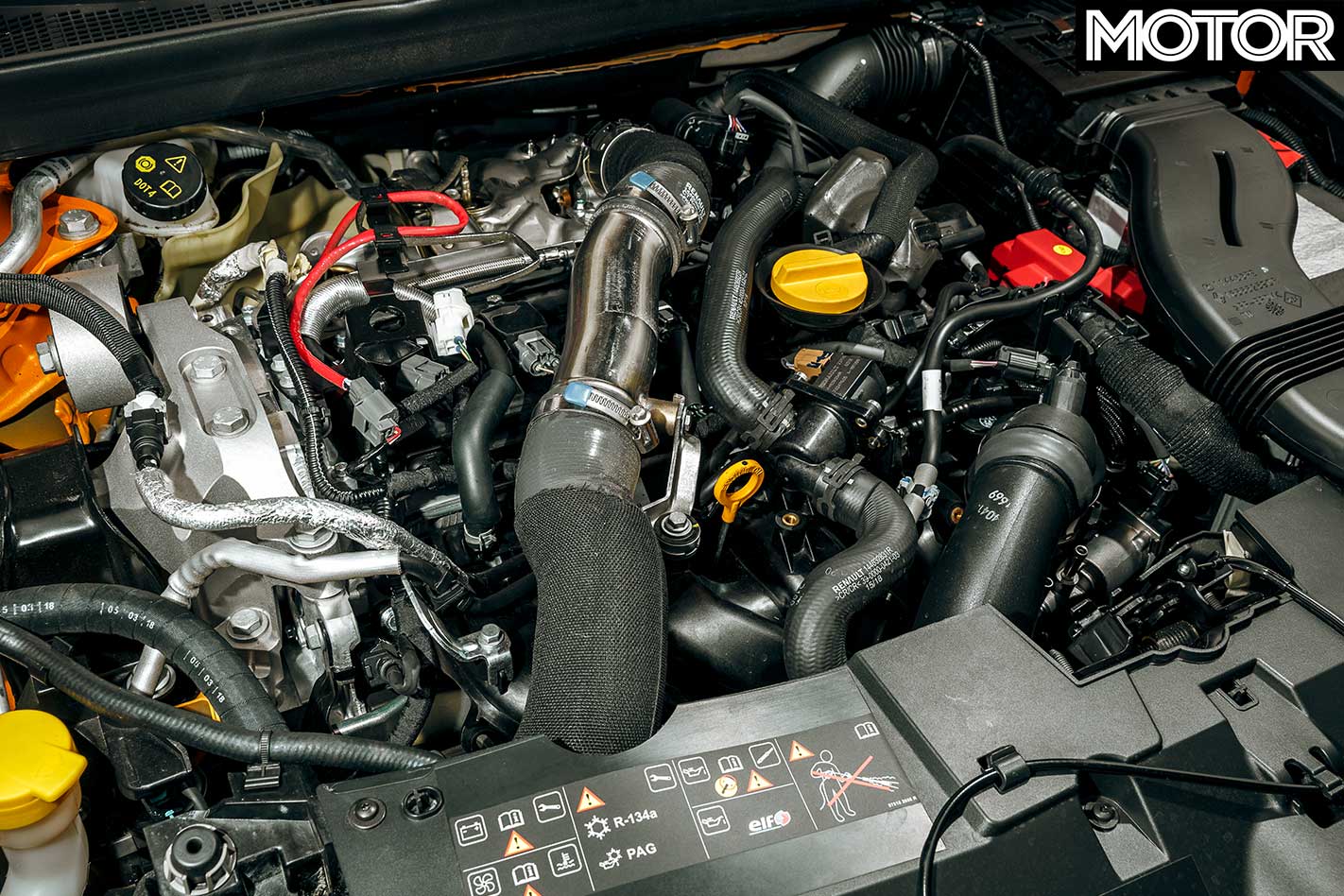
When it comes to doing more with less, however, its fellow Frenchie, the $45,990 Peugeot 308 GTi 270, leads the way by extracting 200kW/330Nm from just 1598cc. Last, but also least, from a dollars perspective, anyway, is the $39,990 Hyundai i30 N, a fresh young fish wading into shark-infested waters, albeit with a 202kW/353Nm (378Nm on overboost) bite of its own.
The key to a successful hot hatch is a dual personality, commuting comfort as important as potent performance. It’s why fast Golfs are so successful. Speaking of which, why no GTI? Simple, MY19 models have not yet arrived and there’s no longer a manual available. We’ll tackle that one in a future test.
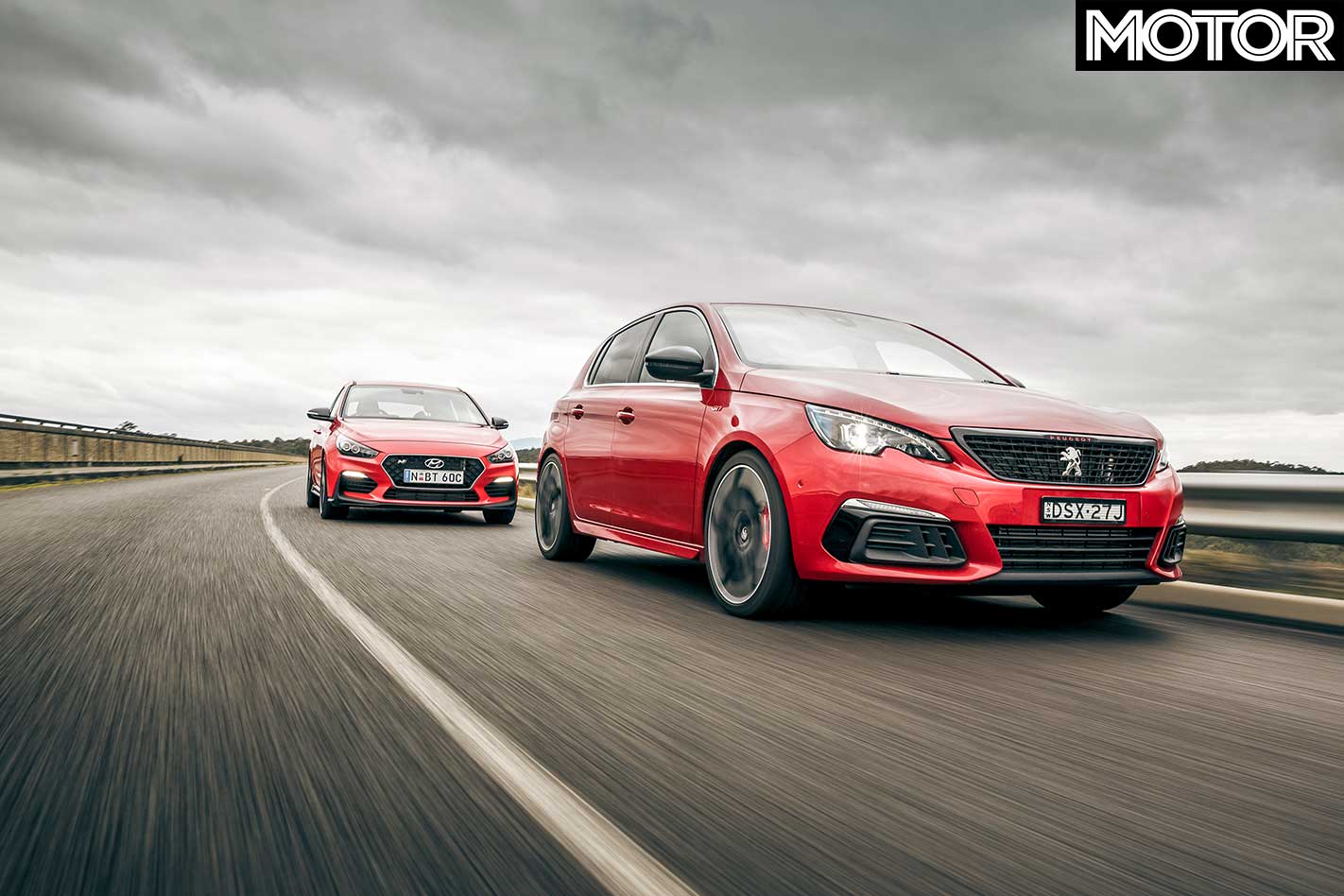
Our hot-hatch quartet is split evenly on the appropriate solution to the ‘best of both worlds’ conundrum: Peugeot and Renault subscribe to simplicity, offering only the option to alter engine response, whereas Honda and Hyundai believe multiple modes are a better bet.
On the evidence presented here, the latter method is the pick. Being able to soften the dampers endows the Honda in particular with a brilliant ride, cushioning impacts and absorbing blows with a grace that many manufacturers could learn from. The Hyundai isn’t as comfy, but its Normal mode offers crucial compliance that rounds the edges off the nastiest bumps.
Both French cars react to the road more frequently, the Renault in particular constantly fidgeting on a poor surface. Whether it’s too firm will likely be down to personal opinion, but if you’re planning on daily driving your Mégane RS, be sure to test drive the Cup chassis before ticking the box.
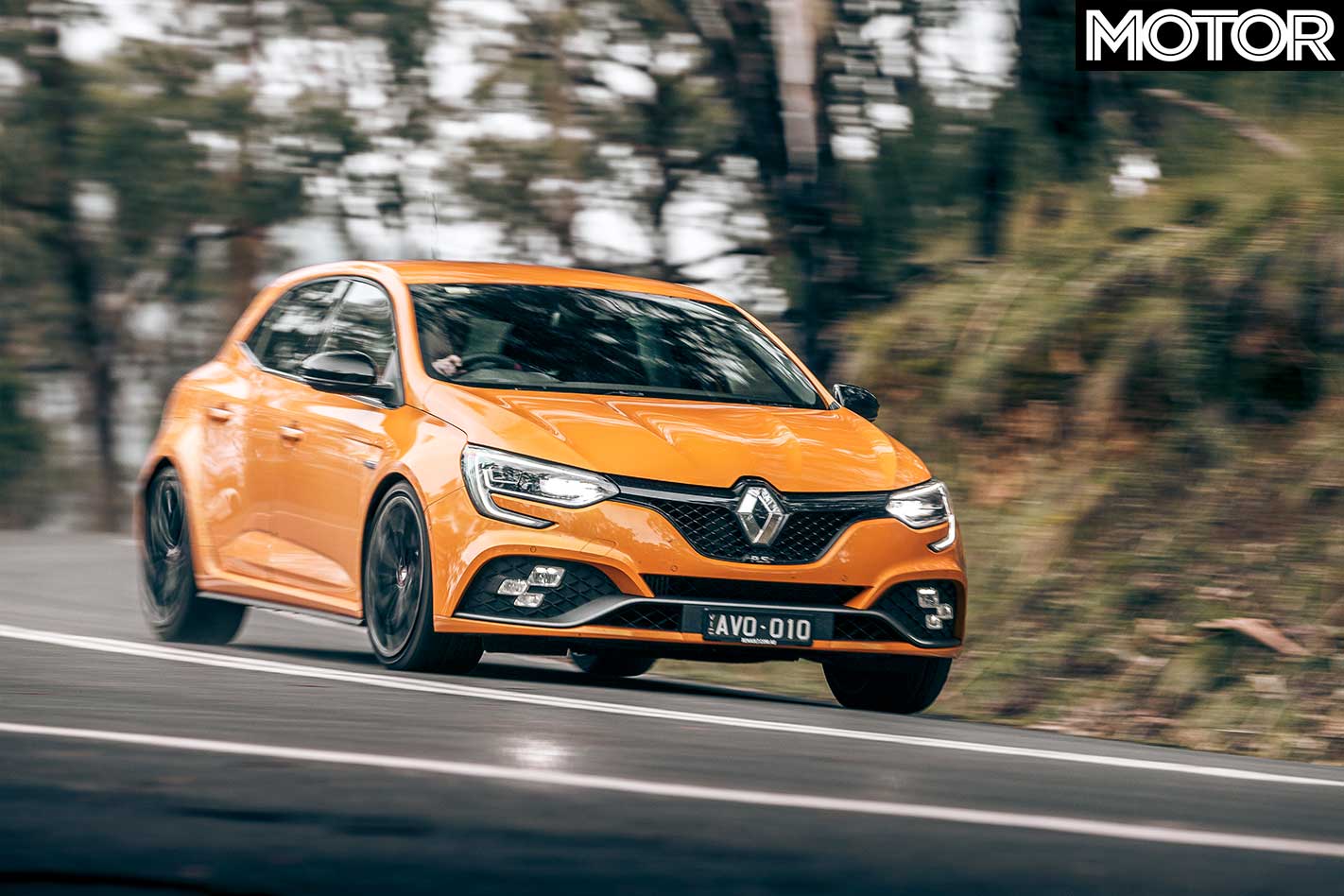
Of course, the Cup raison d’etre is handling precision. A Renault Sport product that doesn’t handle brilliantly is a pub with no beer, a gig with no music. Thankfully, the new RS delivers. As well as the introduction of the Torsen mechanical LSD, the Cup option brings 10 per cent stiffer dampers and bi-material brake rotors that shave 1.8kg per corner of unsprung weight and improve cooling.
In addition, hydraulic bump stops and all-wheel steering are standard, the rear wheels working in contrast to the fronts up to 60km/h and in concert above this speed to aid agility and stability respectively. In Race mode, the threshold increases to 100km/h.
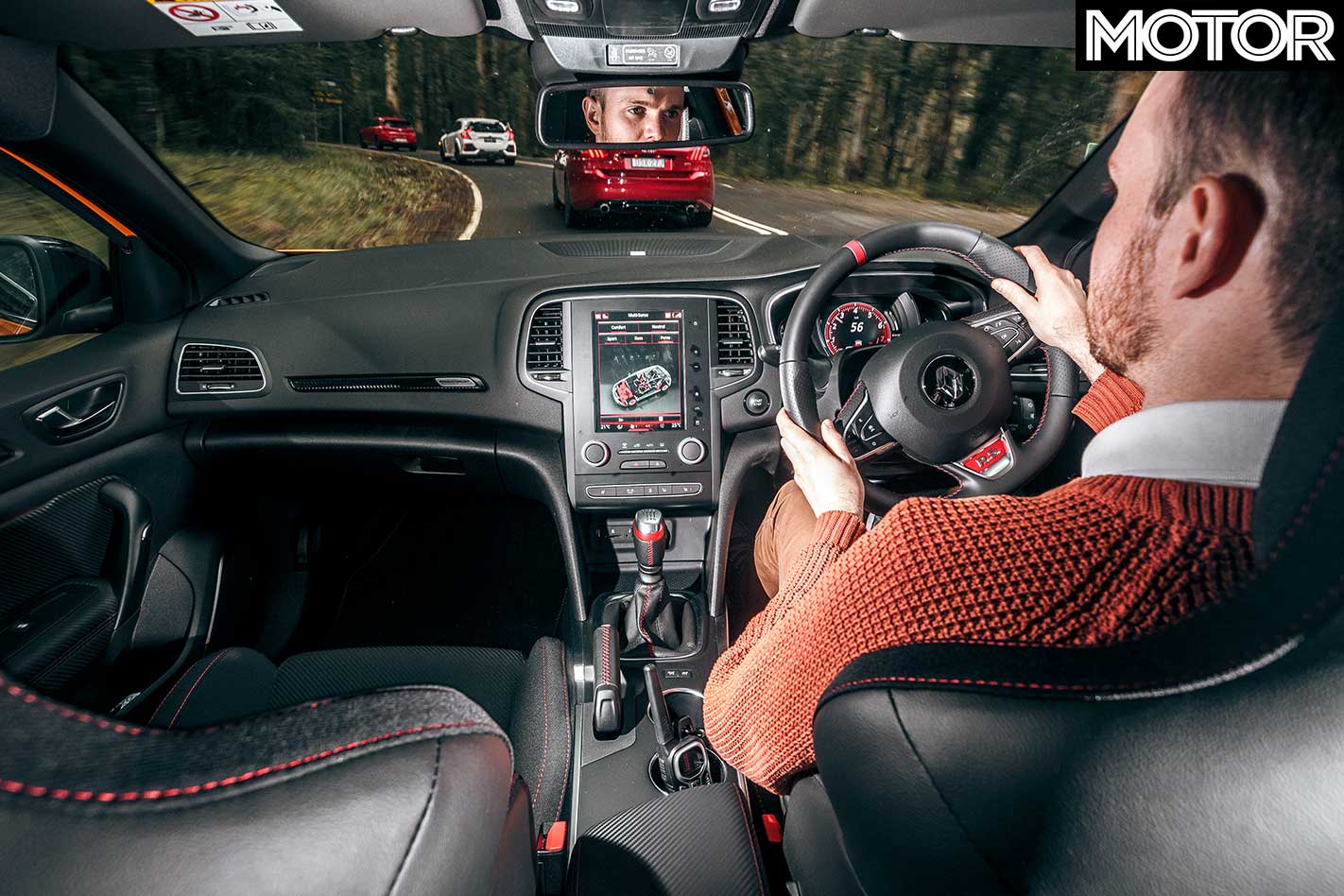
It works – this Renault relishes being driven as hard as possible. Outright grip levels are enormous, but there’s ample adjustability if you’re willing to push hard enough to find it. With the ESC set to Sport the Mégane will happily dance around at the limit, oversteering a little on a lifted throttle and a lot with a trailed brake.
There’s genius in the damping, the way the chassis soaks up big compressions at speed with total control. The RS feels to almost glide across the surface, the light, accurate steering providing just enough feedback and rear-wheel steering aiding turn-in. All this with the supposed handicap of a torsion-beam rear-end.
Traction on dry roads is strong once the 245/35 Bridgestone Potenza S001s are up to temperature, but in the wet keeping the nose pointing straight can be a struggle in the first three gears. Sadly, the vaunted bi-material brakes feel awful. Their outright performance is fine – the Mégane’s 34.63m 100-0km/h stop is second-best on test – but pedal response is such it’s like marshmallow pads are fitted.
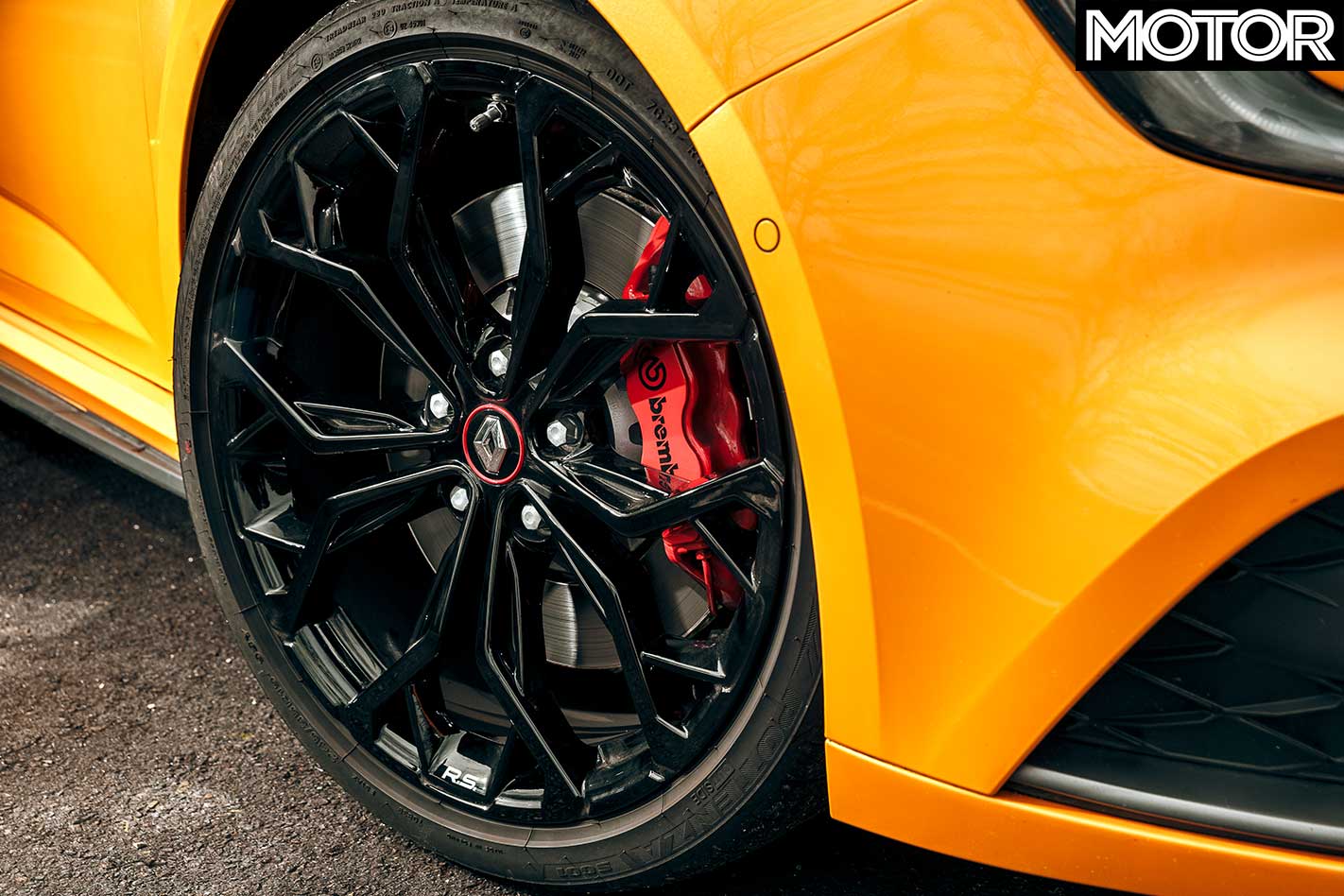
Jump on them hard and there’s a disconcerting hesitation as the system struggles to cope with the sudden change in pressure. Even in lighter use the soft pedal saps confidence and lengthens braking distances. It may just be this car, so some judgement will be reserved.
The Peugeot’s brakes offer greater response, though it’s not without its own issues. The slow steering – three turns lock-to-lock, though the turning circle is very good – is slightly compensated for by the tiny steering wheel, but the lack of feedback robs the driver of that crucial connection with the front tyres. Combine this with the too-high driving position and you constantly feel half a step behind what’s actually happening, preventing the ultimate exploitation of what is an excellent chassis.
Like the Mégane, the 308 GTi eschews the multi-link rear-end of the Honda and Hyundai, instead using a deformable torsion-beam setup to no real detriment other than a sideways shimmy when hitting mid-corner bumps under heavy load.
The steering could be quicker, but the passive suspension setup is a good compromise, understeer is strongly resisted and a well-timed dab of brake will step the rear out slightly in true French hot-hatch style. Steering aside, its biggest downfall is an unruly amount of torque steer in the wet.
The i30 N is much more composed. It’s easier to keep the Hyundai’s front end in line on slippery surfaces and in the dry traction is rarely an issue, the clever electronically controlled LSD continually shuffling power to where it’s needed most. In contrast, it’s the rear end that needs taming in the wet, the i30 N keen to wag its tail under brakes. In the dry this translates to a chassis that’s stable when you need it to be, but playful when you want it to be.
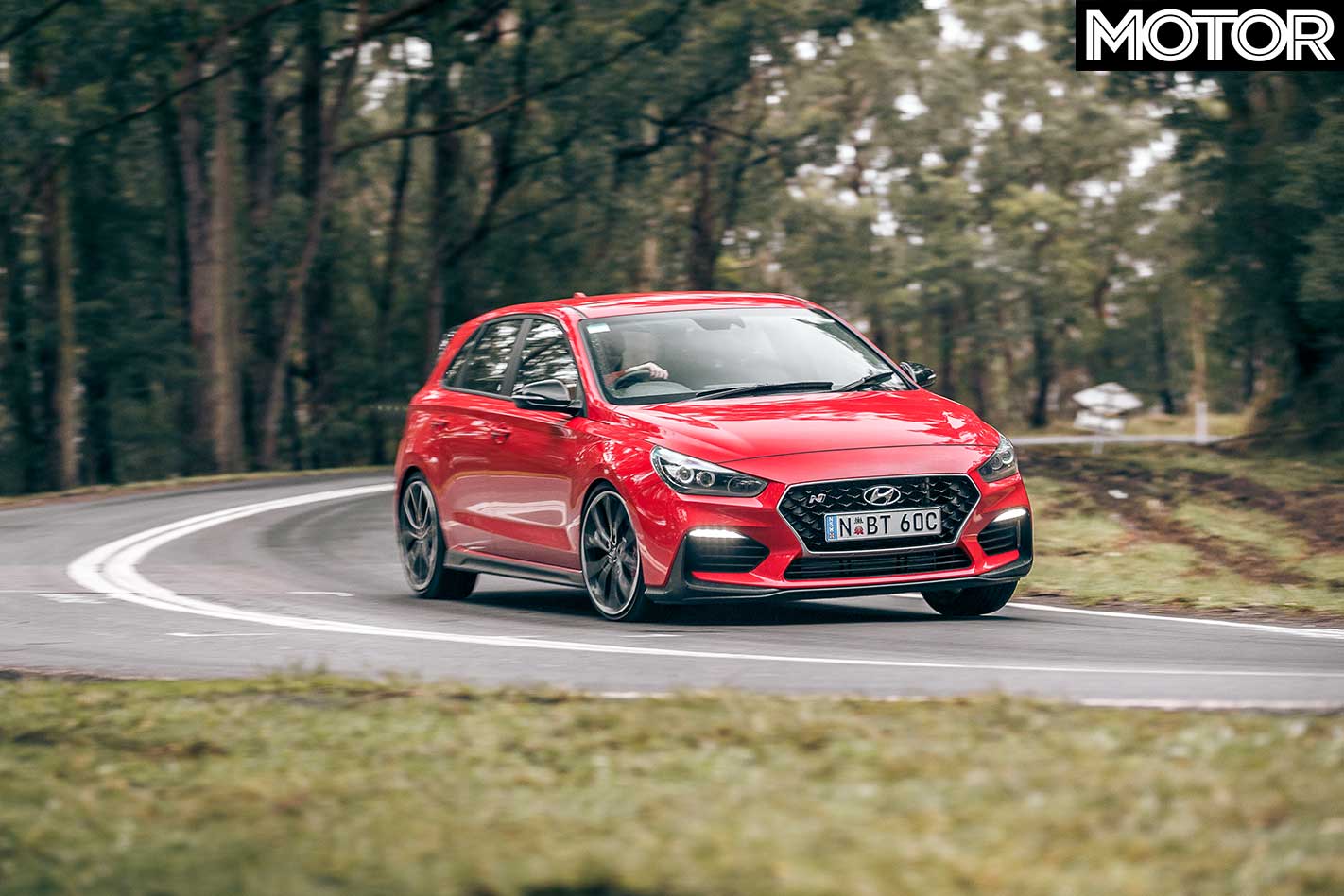
In contrast to the Peugeot, the steering offers plenty of feedback, while the Hyundai’s responsive brakes are superior to both French cars. In Normal mode the adaptive dampers breathe with the road nicely, a switch to Sport only necessary when severe mid-corner compressions test the bump stops, compressions which tax the Peugeot but are shrugged off by the Renault, it must be said.
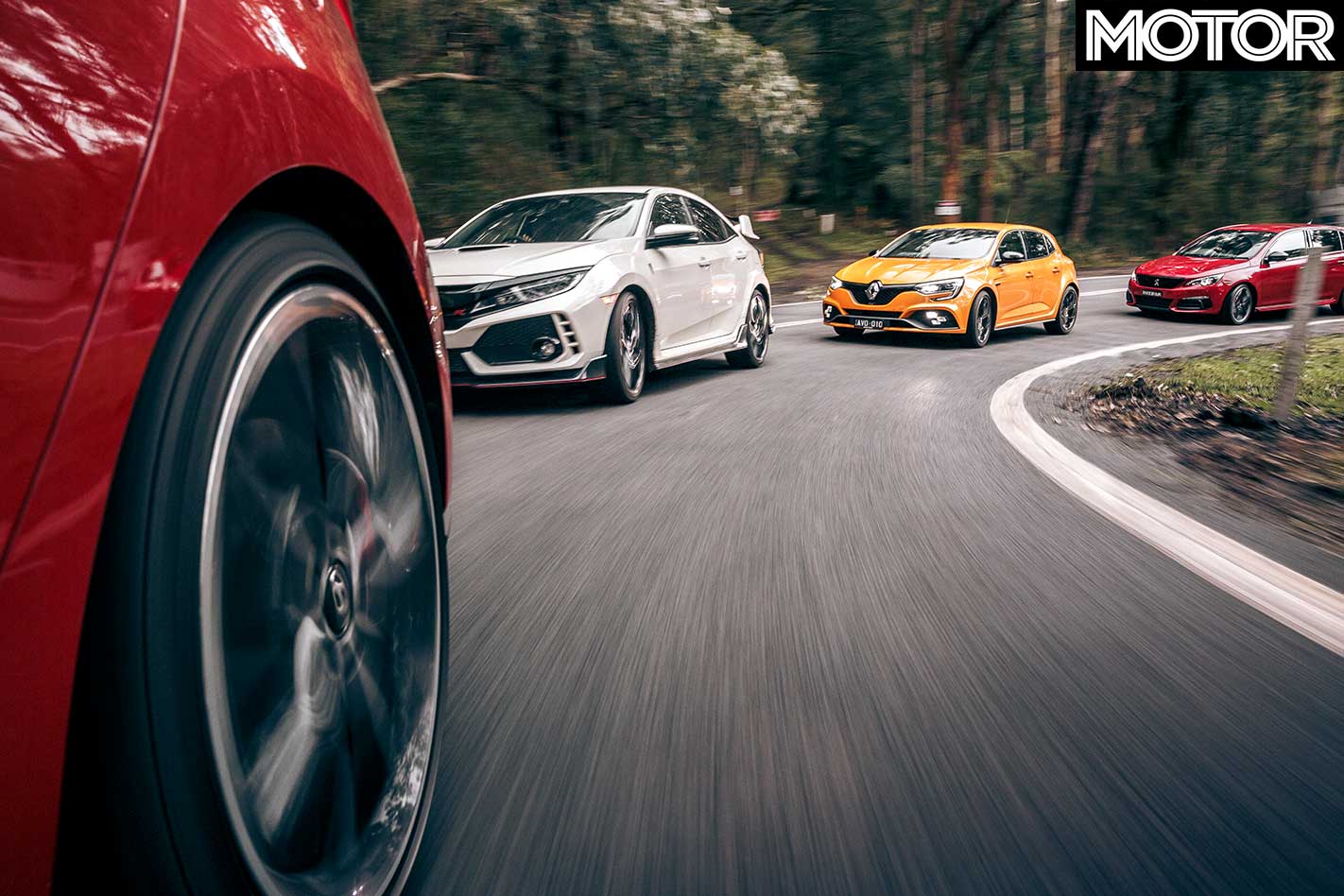
Giving all three a lesson is the Honda. It’s not as playful as the Mégane – in fact, it’s the least likely of the quartet to move around – but that’s primarily because it’s going so much quicker than anything else. Its biggest drawback is the inability to alter the suspension, steering and engine modes individually – ideally you’d match Comfort steering to Sport damping and Sport Plus engine and ESP.
Nonetheless, the default Sport mode is enough to establish superiority. The Type R soaks up road irregularities with uncanny compliance, can be placed with millimetre accuracy, stops with unparalleled power and feel, hauls out of tight corners with virtually no wheelspin and offers grip – wet or dry – that only the Mégane has a hope of matching.
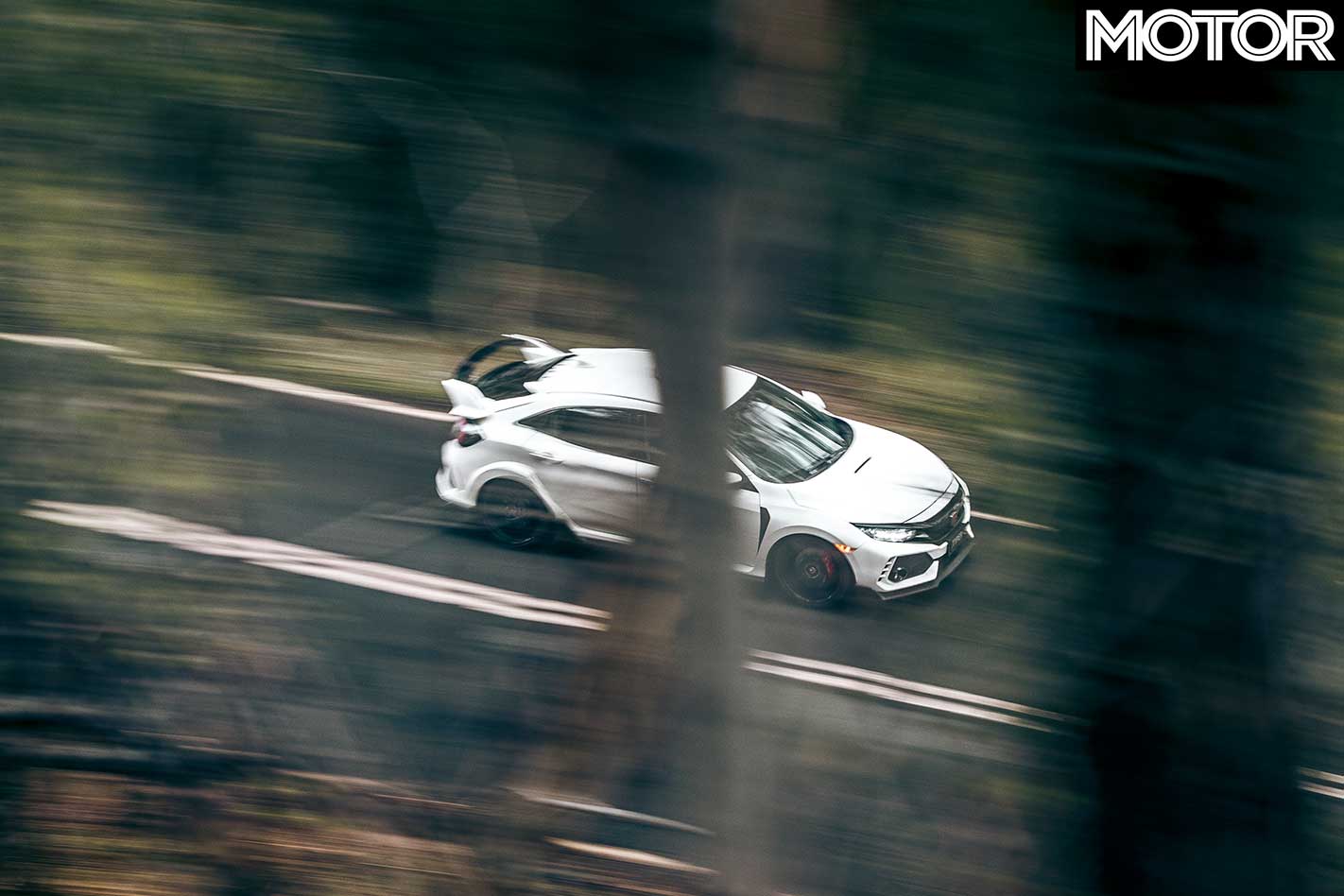
Sadly for its rivals, the dominance continues in a straight line. Times of 5.7sec 0-100km/h and 13.73sec at 173.98km/h are a fraction slower than our bests, but still enough to put relative daylight between it and the other contenders. Its buzzy engine note isn’t particularly appealing, but combine 228kW/400Nm with short gearing and a light, laser-accurate gearshift and you have roll-on acceleration that’ll give theoretically much quicker machinery a real headache.
The Peugeot comes closest. It may only have 1.6 litres to work with, but according to Peugeot the 308 has around a 200kg weight advantage, its 166kW/tonne power-to-weight ratio edging the Civic (164kW/tonne) and smashing the Mégane (145kW/tonne) and i30 (141kW/tonne). The numbers suggest its superiority isn’t so pronounced, but it definitely punches above its capacity, hitting 100km/h in 5.99sec and crossing the quarter in 14.04sec at 167.22km/h.
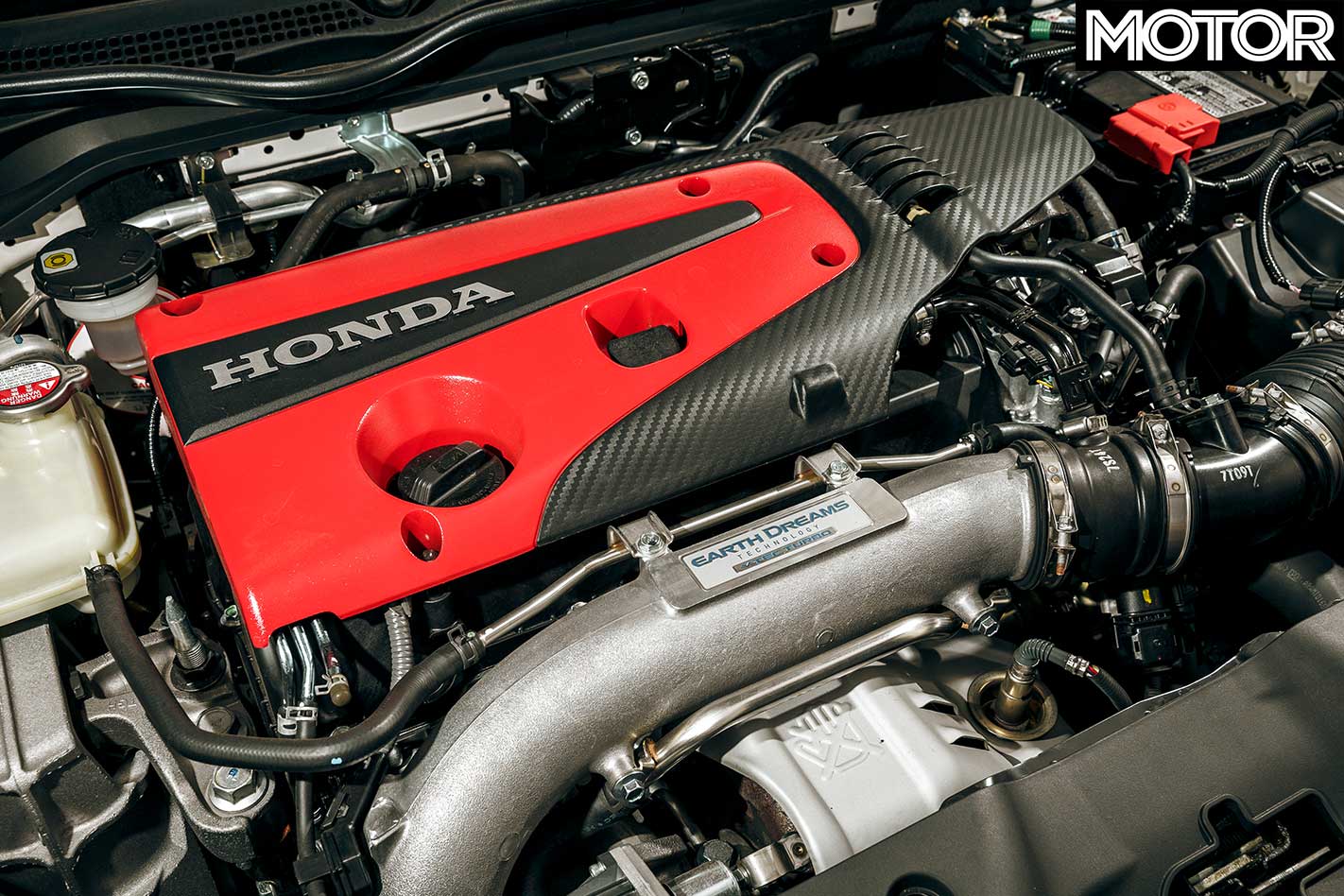
The Pug’s drivetrain is fantastic. There’s power everywhere, excellent response, a keenness to rev to almost 7000rpm and a pleasing, if obviously artificial, engine note in Sport. Not everyone is keen on the Peugeot’s long-throw gearshift, but I like the theatre it adds to each change and the action is refreshingly slick.
Mere fractions separate the French duo. Recording a 14.07sec quarter mile at 166.08km/h, the Renault trails the Pug by just 0.03sec and 1.14km/h. However, while its downsized turbo 1.8 is every bit as effective, it doesn’t feel as polished.
Power is plentiful and a 7000rpm cutout gives impressive reach, but everything from the throttle response to the engine note to the slightly apologetic pops on the over-run feels slightly contrived. It’s almost like distinguishing between the different modes was a higher priority than just providing the best possible connection with the driver.
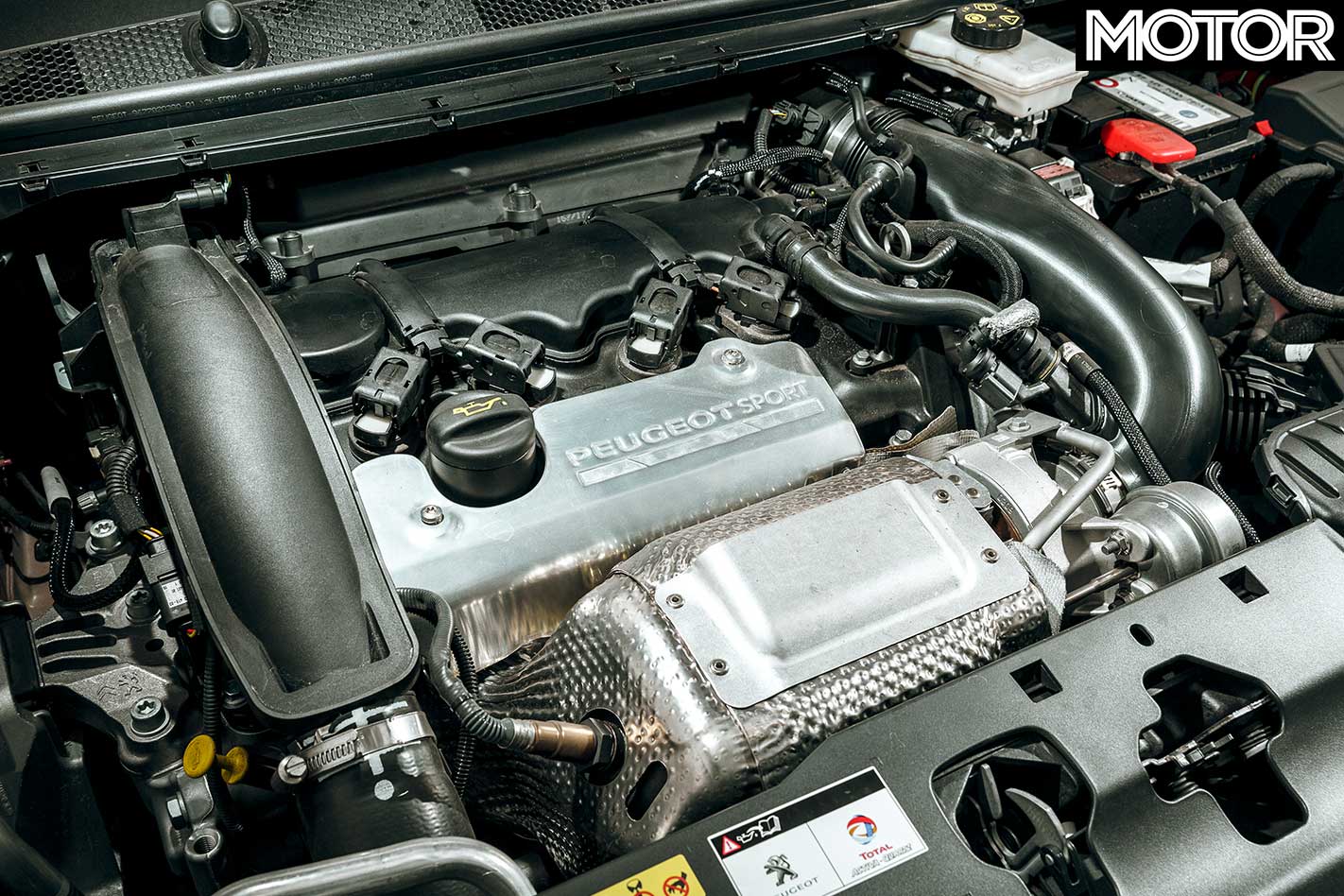
The Mégane’s quickest 0-100km/h effort of 5.94sec actually slightly bests the 308, but every other speed increment is slower than the run we’ve included in the data. Second gear runs to 102km/h, so nailing the best possible time requires wringing out every rev without hitting the limiter.
Performance testing quirks aside, the gearing complements the engine nicely and works very well on the road, while the shift itself is fine, shorter of throw than the Peugeot’s, but a little grittier.
Straight lines aren’t a happy hunting ground for the i30 N. It doesn’t help its own cause against the clock with non-killable traction control cutting power in first gear to control axle tramp. To be honest, its best times of 6.24sec 0-100km/h and 14.26sec 0-400m are a fluke, with times more commonly in the 6.5sec and 14.4sec regions respectively thanks to incessant electronic intervention.
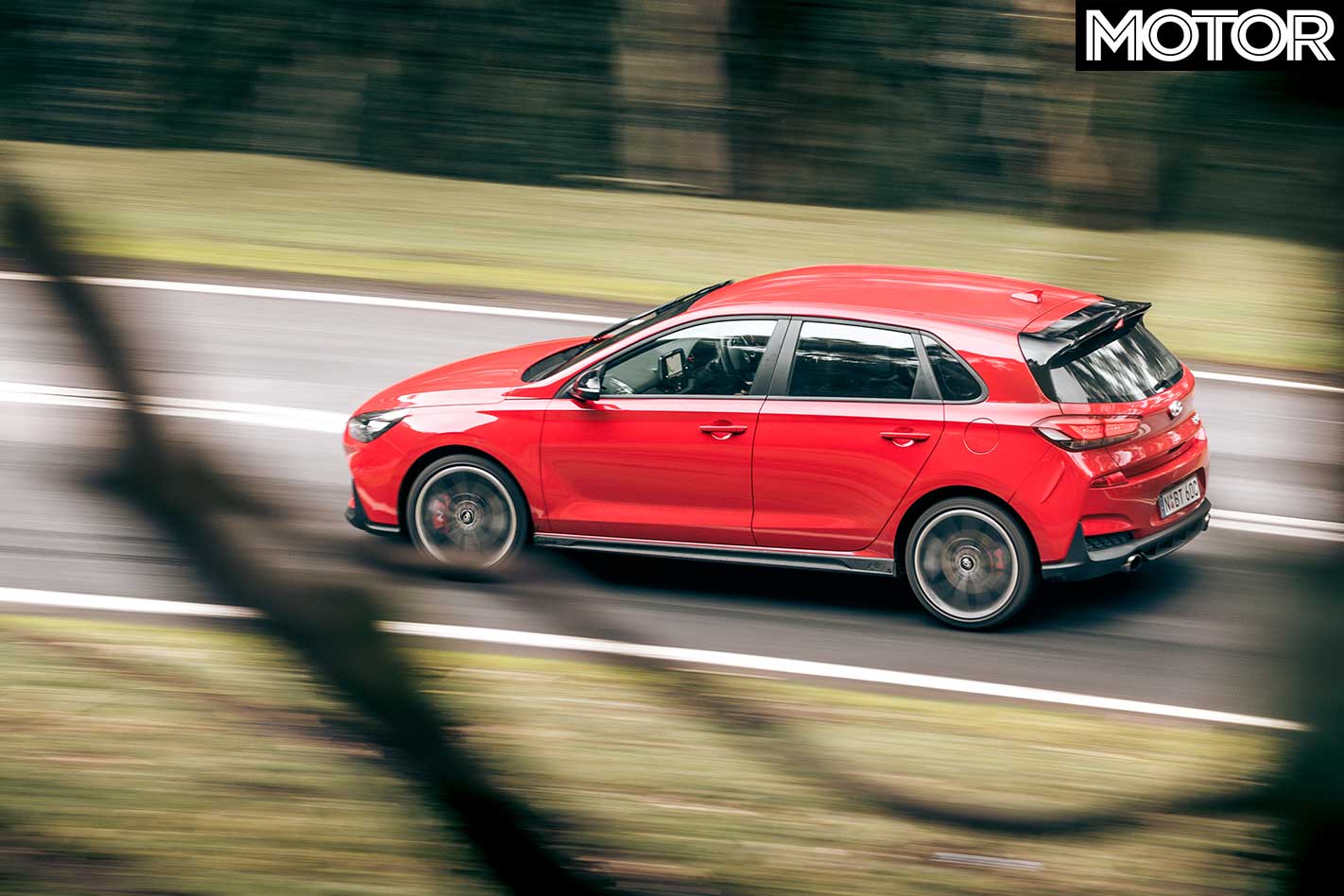
Once rolling, it’s further handicapped against the clock by unusual gearing. Second gear is short, running out at 98km/h and necessitating another time-sapping shift to 100km/h, yet every other gear is relatively tall – trickery to optimise the 0-60mph (97km/h) time?
With no traction control issues and a slightly longer second gear, the i30 N would probably dip below 6.0sec 0-100km/h, for traction is strong and the gearbox, while notchy, allows for quick, accurate shifts.
The Hyundai is a fast enough car in its own right, but is the slowest car here and lacks the potency its outputs suggest. It’s still in the game at 100km/h, but by 170km/h it’s 0.58sec behind the Renault, 0.76sec behind the Peugeot and whopping 2.21sec behind the Honda.
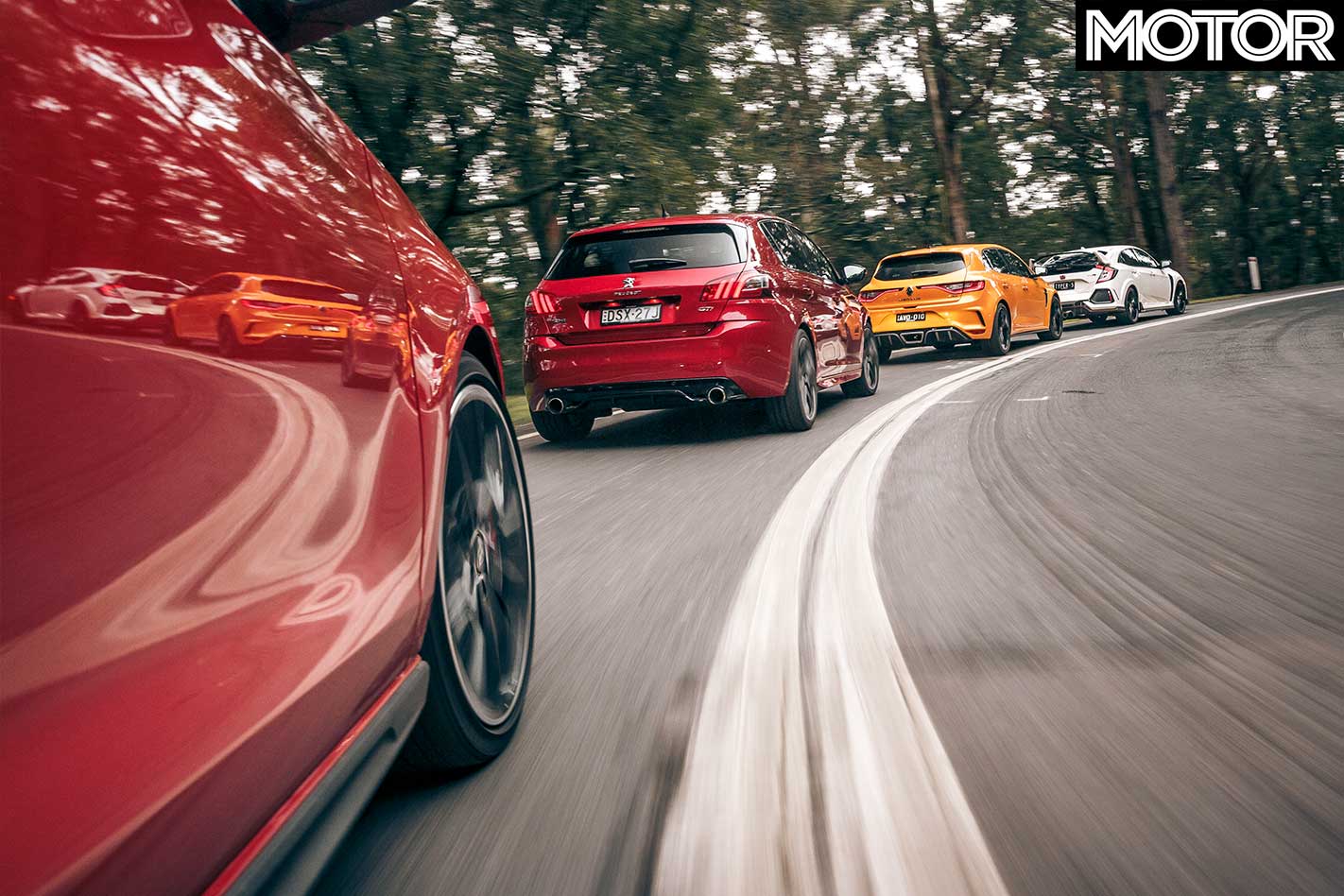
Mid-range torque is strong but power drops off dramatically beyond 6000rpm as the turbo runs out of puff – it feels a bit like they’ve installed the World Rally Car’s inlet restrictor. That said, it’s like they installed the anti-lag system, too, with each upshift accompanied by percussive cracks of unburnt fuel escaping the exhaust. Childish, yes, but addictive.
The i30’s trump card is its configurability, allowing drivers to save their favourite combination of settings – and there are a lot of choose from – to the ‘N Custom’ mode. For reference, my preference is engine, diff and exhaust set to their sportiest settings (with rev-matching most definitely off) but the steering in Normal, ESC in Sport and dampers in Normal with occasional forays into Sport.
As you’d expect from a hot hatch based on a best-seller, the i30 N nails the ergonomics. The driving position is a little high, but large, well-marked buttons and a responsive touchscreen make completing day-to-day tasks a breeze.
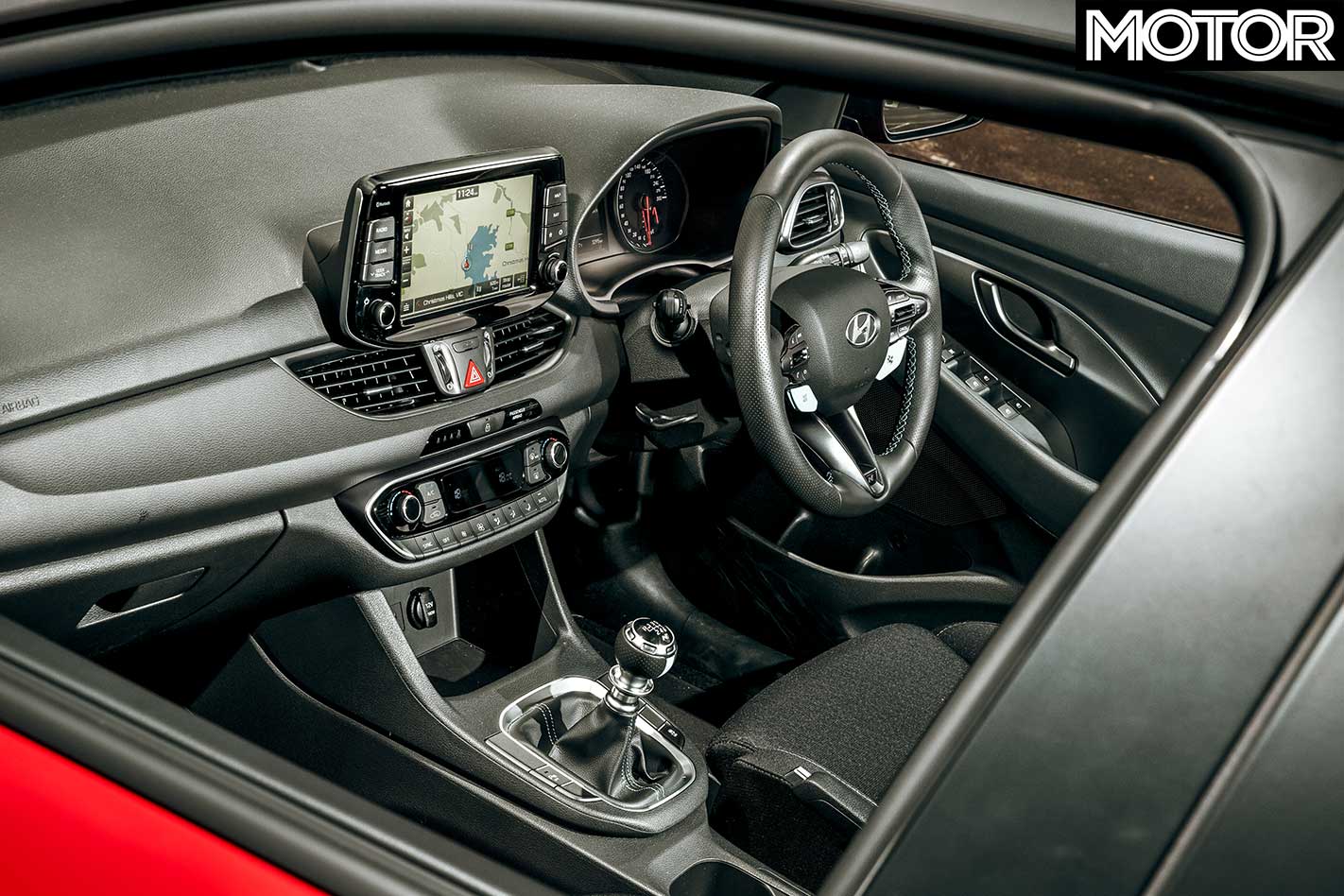
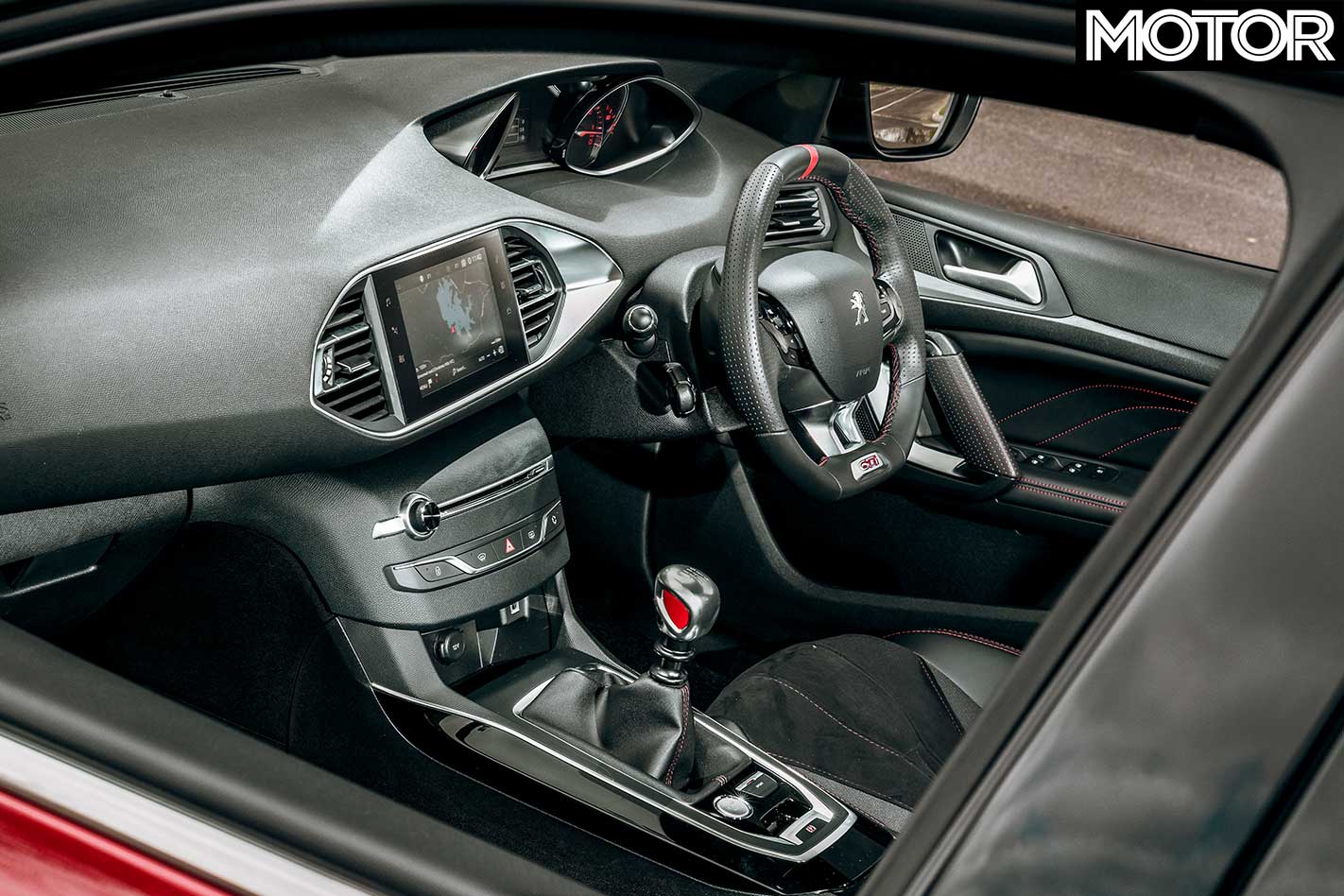
The Peugeot takes a different approach, moving virtually every control to the touchscreen to create a minimalist look. It’ll probably split opinion, but for me it works, the 308 GTi having the classiest interior on test. Unlike many, I can read the dials just fine with the steering wheel in its highest position, but you can keep the backwards tachometer.
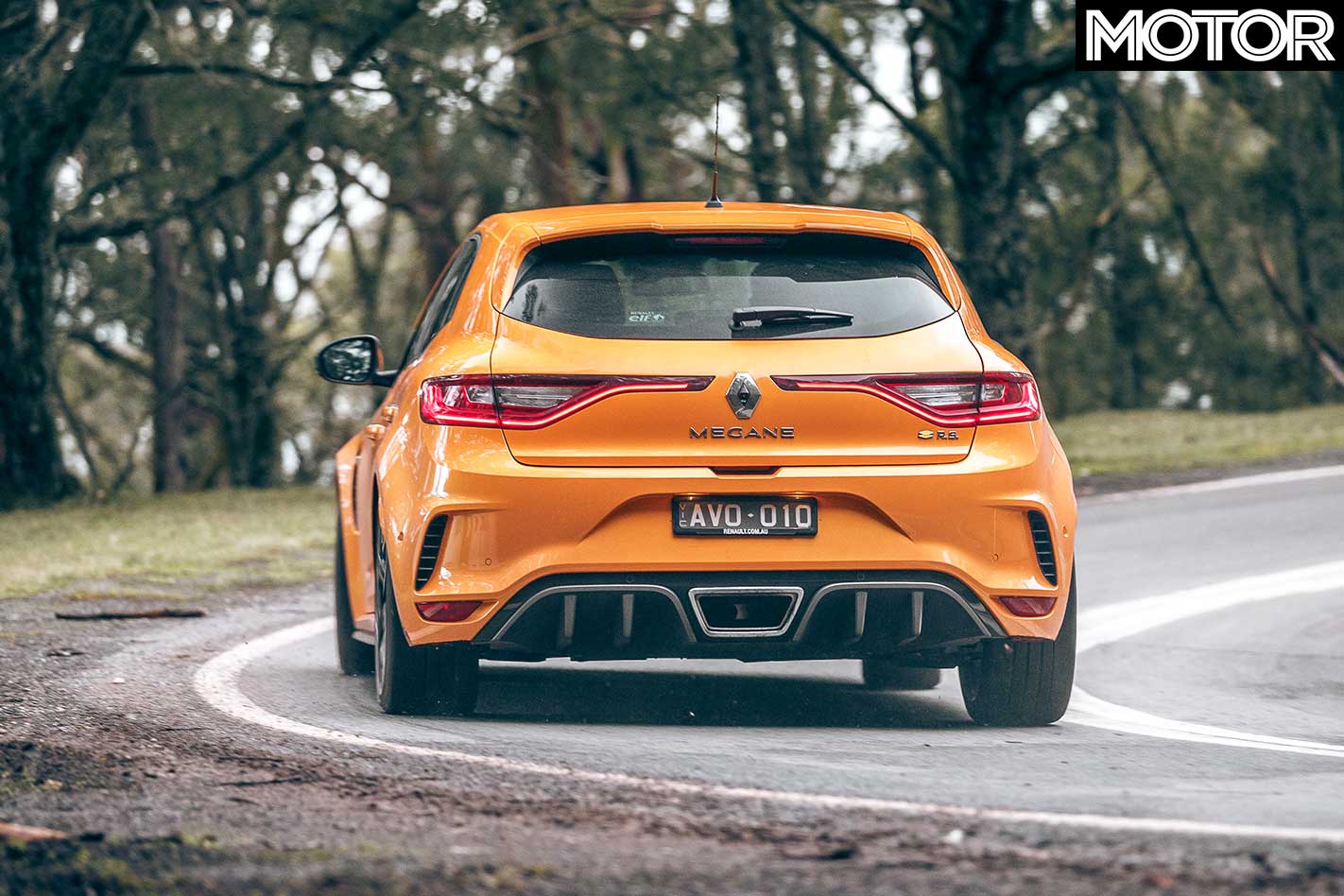
Renault adopts a similar method, moving all controls bar HVAC to the portrait touchscreen. It looks cool, but doesn’t work as well as the Peugeot. The screen isn’t as responsive and is harder to navigate.
Helpfully, the R.S. Drive button in the centre of the dash allows the selection of a sportier drive mode with one touch. The Mégane looks great, however, the wider tracks giving it a proper bulldog stance, with menacing black 19s and neat touches like the giant rear diffuser and Aventador-like single exhaust outlet. It’s the looker of this quartet.
The Honda is not. We’re growing more accustomed to the Civic’s styling but it’s still far too busy. Its weakest link, though, is definitely its interior. The seats, wheel and gearshift are great, but the plastics are cheap and scratchy, the USB port a pain to access and the touchscreen infotainment plain irritating.
Despite this, it’s the clear winner of this test. Simply put, it’s the quickest with the most power and grip, has the best gearshift, the most comfortable ride, the most accurate steering and the most responsive and powerful brakes. It’s also the most expensive, so it should be the best, but the margin of victory is significant.
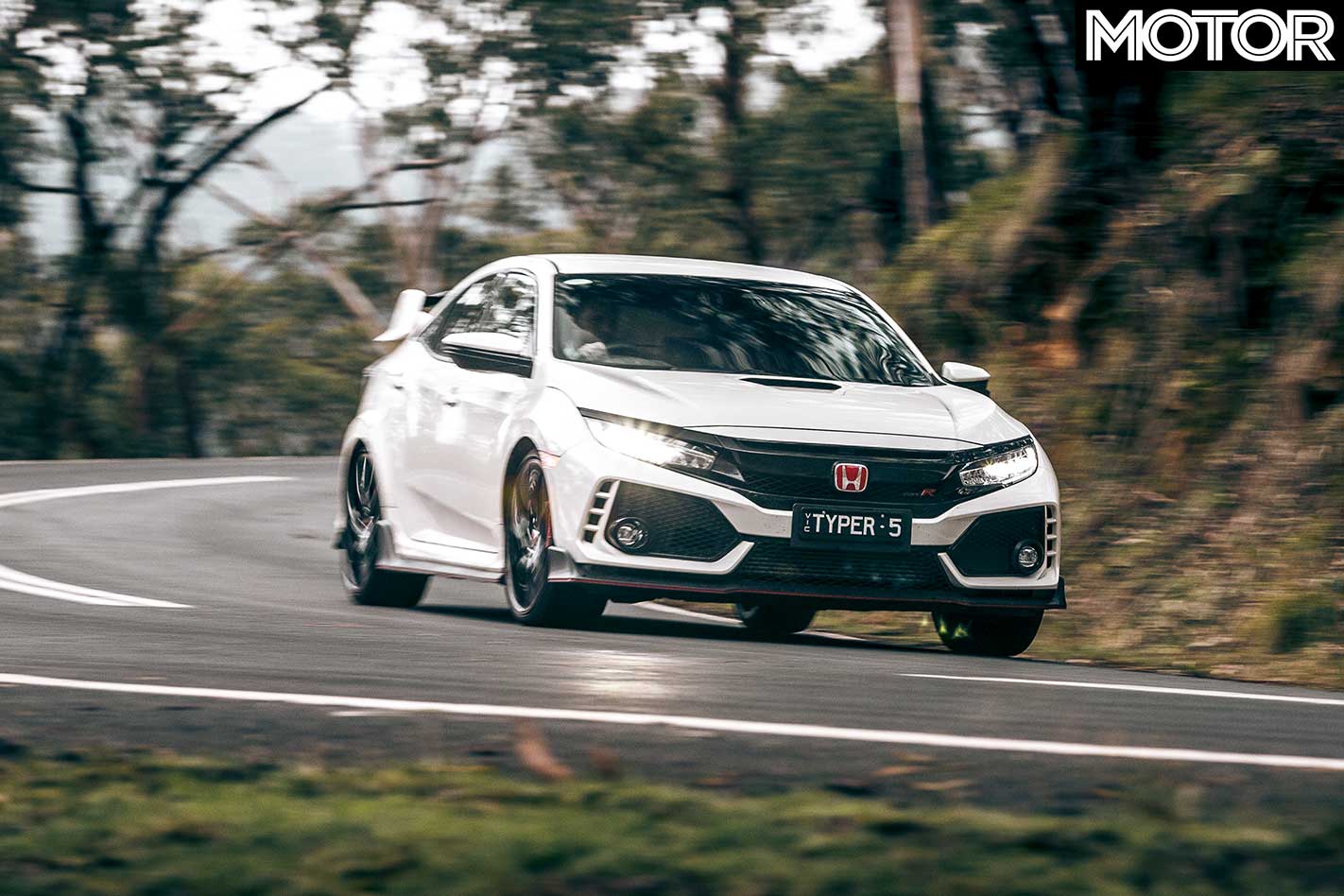
Hyundai secures second place on value, but that sells its impressive abilities short. It does exactly what a hot hatch should – it does everything. It doesn’t have the ultimate handling ability of the Renault or the engine character of the Peugeot, but is very close in both regards while being more comfortable and asking for less money. It’s a great car.
Splitting the French duo is very difficult: the order in which they finish will depend on your priorities. The Peugeot makes a strong case, for you will enjoy its drivetrain superiority far more often than the Renault’s on-limit handling advantage.
But the Renault’s peaks are higher and it comes alive on a difficult road just at the point the Peugeot begins to frustrate – if only the brakes were better. What is clear is that it’s no longer the benchmark.
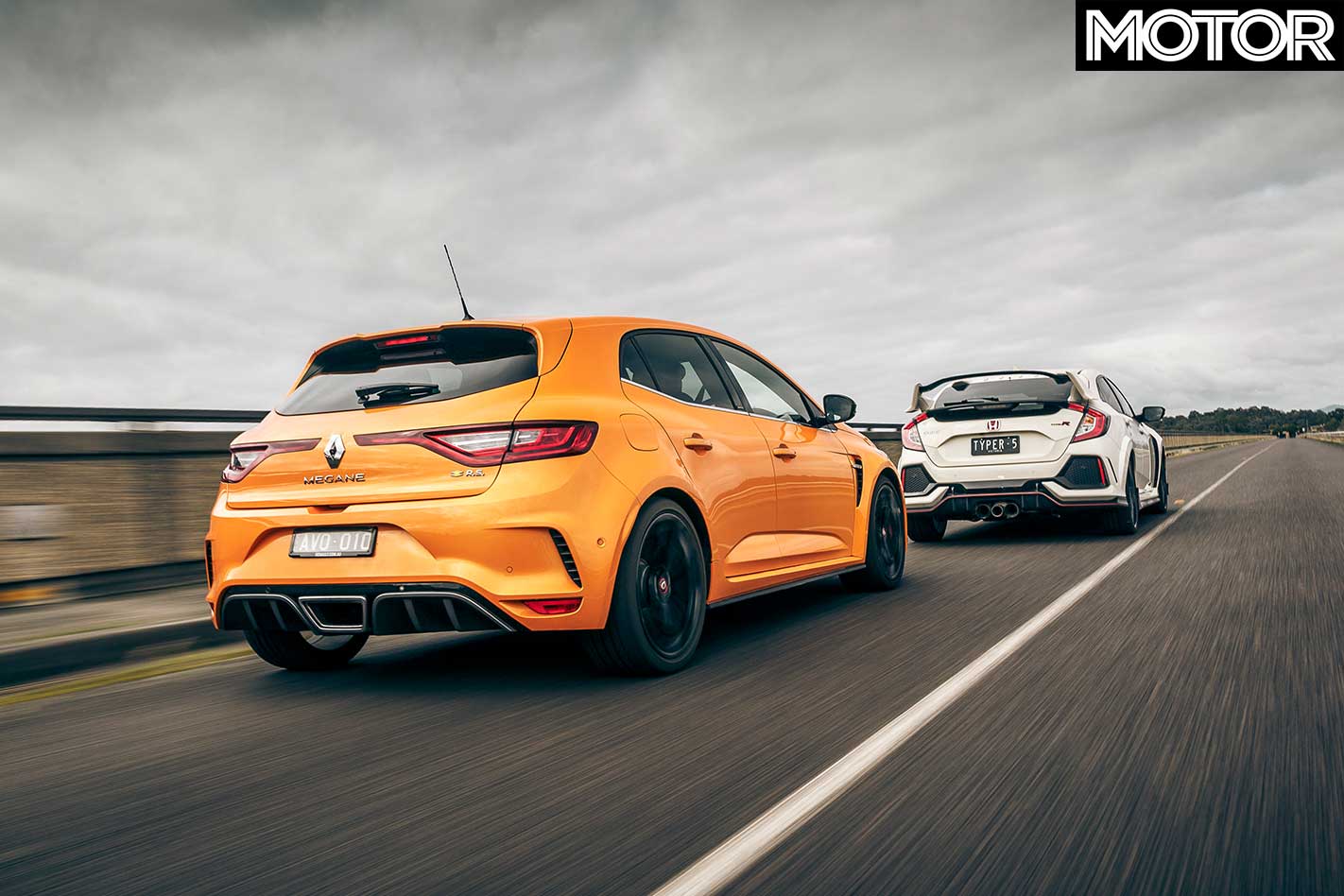
It’s good, even great in very specific circumstances, and Renault has broadened the Mégane’s appeal without sacrificing its core competencies more successfully than it did with the Clio RS. But the end result is similar: remarkable on-limit handling that comes at the expense of ride quality and an engine that’s effective rather than inspirational. Perhaps the more compliant Sport chassis is the pick for road use, but it’s a shame the softer setup deletes the limited-slip diff.
This is the very beginning of the fourth-gen Mégane RS story and there’s certainly the potential to be great. Nonetheless, the Trophy is going to have to be a solid improvement if it’s to become the hunted, not the hunter.
Fast Facts
| u00a0 | Peugeot 308 GTi 270 | Renault Mu00e9gane RS 280 Cup | Honda Civic Type R | Hyundai i30 N |
| Body | 5-door, 5-seat hatch | 5-door, 5-seat hatch | 5-door, 4-seat hatch | 5-door, 5-seat hatch |
| Drive | front-wheel | |||
| Engine | 1598cc inline-4, DOHC, 16v, turbo | 1798cc inline-4, DOHC, 16v, turbo | 1996cc inline-4, DOHC, 16v, turbo | 1998cc inline-4, DOHC, 16v, turbo |
| Bore x Stroke | 77.0 x 85.8mm | 79.7 x 90.1mm | 86.0 x 85.9mm | 86.0 x 86.0mm |
| Compression | 9.2:1 | 9.9:1 | 9.8:1 | 9.5:1 |
| Power | 200kW @ 6000rpm | 205kW @ 6000rpm | 228kW @ 6500rpm | 202kW @ 6000rpm |
| Torque | 330Nm @ 1900-5500rpm | 390Nm @ 2400-4800rpm | 400Nm @ 2500-4500rpm | 353Nm @ 1450-4700rpm (378Nm overboost) |
| Power / Weight | 166kW / tonne | 145kW / tonne | 164kW / tonne | 141kW / tonne |
| Transmission | 6-speed manual | |||
| Weight | 1205kg | 1407kg | 1393kg | 1429kg |
| Suspension | struts, coil springs, anti-roll bar (f); torsion beam, coil springs, anti-roll bar (r) | struts, coil springs, adaptive dampers, anti-roll bar (f); multi-links, coil springs, adaptive dampers, anti-roll bar (r) | ||
| L/W/h | 4253 / 1804 / 1447mm | 4364 / 1875 / 1428mm | 4557 / 1877 / 1421mm | 4335 / 1795 / 1447mm |
| Wheelbase | 2620mm | 2669mm | 2700mm | 2650mm |
| Tracks | 1520mm (f); 1540mm (r) | 1615mm (f); 1596mm (r) | 1599mm (f); 1593mm (r) | 1556mm (f); 1564mm (r) |
| Steering | electrically assisted rack-and-pinion | |||
| Brakes (f) | 380mm ventilated discs, 4-piston calipers | 355mm ventilated discs, 4-piston calipers | 350mm ventilated/drilled discs, 4-piston calipers | 345mm ventilated discs, 4-piston calipers |
| Brakes (r) | 268mm solid discs, single-piston calipers | 290mm solid discs, single-piston calipers | 305mm solid discs, single-piston calipers | 314mm ventilated discs, single-piston calipers |
| Wheels | 19.0 x 9.0-inch (f/r) | 20.0 x 8.5-inch (f/r) | 19.0 x 8.0-inch (f/r) | |
| Tyres | 235/35 R19 (f/r); Michelin Pilot Super Sport | 245/35 R19 (f/r); Bridgestone S001 | 245/30 R20 (f/r);u00a0 Continental SportContact6 | 235/35 R19 (f/r);u00a0 Pirelli P Zero |
| Price | $45,990 | $44,990 ($46,480 as-tested) | $51,990 | $39,990 |
| Pros | Great drivetrain; slick interior | Magic handling; looks great; very quick | Pace; ride; handling; brakes; gearshift | All round excellence; fun chassis |
| Cons | Driving position; slow steering | Stiff ride; soft brakes; engine just OK | Fussy looks; hit-and-miss interior | Engine lacks top end; gearshift |
| Rating | 3.5 out of 5 stars | 3.5 ouf ot 5 stars | 4.5 out of 5 stars | 4 out of 5 stars |
The Strip
| u00a0 | Hyundai i30 N | Honda Civic Type R | Renault Mu00e9gane RS 280 Cup | Peugeot 308 GTi 270 |
| 0-10km/h | 0.51sec | 0.51sec | 0.52sec | 0.49sec |
| 0-20km/h | 1.09sec | 1.00sec | 1.01sec | 0.99sec |
| 0-30km/h | 1.58sec | 1.49sec | 1.47sec | 1.47sec |
| 0-40km/h | 2.04sec | 1.97sec | 1.95sec | 1.95sec |
| 0-50km/h | 2.52sec | 2.74sec | 2.43sec | 2.52sec |
| 0-60km/h | 3.27sec | 3.21sec | 3.18sec | 3.26sec |
| 0-70km/h | 3.81sec | 3.68sec | 3.72sec | 3.76sec |
| 0-80km/h | 4.42sec | 4.18sec | 4.33sec | 4.38sec |
| 0-90km/h | 5.10sec | 4.74sec | 5.00sec | 5.03sec |
| 0-100km/h | 6.24sec | 5.70sec | 6.04sec | 5.99sec |
| 0-110km/h | 7.16sec | 6.44sec | 6.89sec | 6.82sec |
| 0-120km/h | 8.14sec | 7.23sec | 7.80sec | 7.71sec |
| 0-130km/h | 9.19sec | 8.34sec | 8.80sec | 8.97sec |
| 0-140km/h | 10.37sec | 9.47sec | 10.26sec | 10.17sec |
| 0-150km/h | 12.15sec | 10.56sec | 11.69sec | 11.43sec |
| 0-160km/h | 13.64sec | 11.76sec | 13.12sec | 12.85sec |
| 0-170km/h | 15.33sec | 13.12sec | 14.75sec | 14.57sec |
| 0-400m | 14.26sec @ 163.87km/h | 13.73sec @ 173.98km/h | 14.07sec @ 166.08km/h | 14.04sec @ 167.22km/h |
| 80-120km/h (3rd – 6th) | 3.8 / 4.6 / 5.8 / 7.0sec | 2.9 / 3.5 / 4.7 / 6.5sec | 3.5 / 4.4 / 5.7 / 7.6sec | 3.3 / 4.3 / 5.5 / 6.8sec |
| 100-0km/h | 35.26m | 33.65m | 34.63m | 35.99m |
| Speed in Gears | ||||
| 1st | 62km/h @ 6750rpm | 58km/h @ 7000rpm | 64km/h @ 7000rpm | 56km/h @ 6800rpm |
| 2nd | 98km/h @ 6750rpm | 99km/h @ 7000rpm | 102km/h @ 7000rpm | 104km/h @u00a06800rpm |
| 3rd | 149km/h @ 6750rpm | 137km/h @ 7000rpm | 142km/h @ 7000rpm | 138km/h @u00a06800rpm |
| 4th | 199km/h @ 6750rpm | 187km/h @ 7000rpm | 192km/h @ 7000rpm | 180km/h @u00a06800rpm |
| 5th | 247km/h @ 6750rpm | 231km/h @ 7000rpm* | 242km/h @ 7000rpm | 226km/h @u00a06800rpm |
| 6th | 250km/h @ 5700rpm* | 272km/h @ 6650rpm* | 255km/h @ 6100rpm* | 255km/h @u00a06500rpm* |
Heathcote Raceway, 12˚C, dry. Driver: Scott Newman *Manufacturer’s claim
IT’S EARLY on a Saturday morning in Coventry, England, the spiritual home of British sports car maker Jaguar. Spring sunshine bathes the verdant English countryside in a golden hue as our entourage pulls into the car park of a large industrial complex.

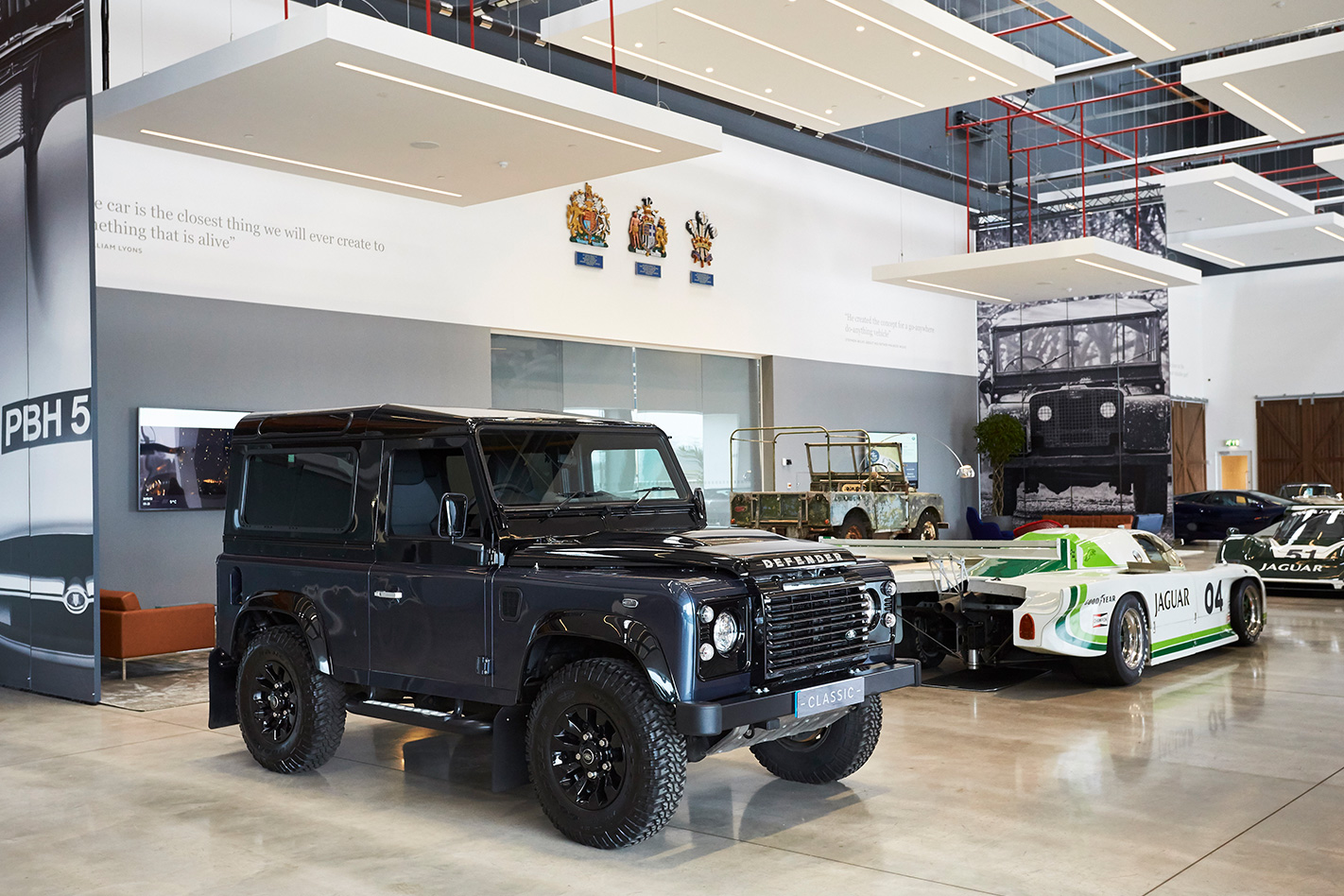
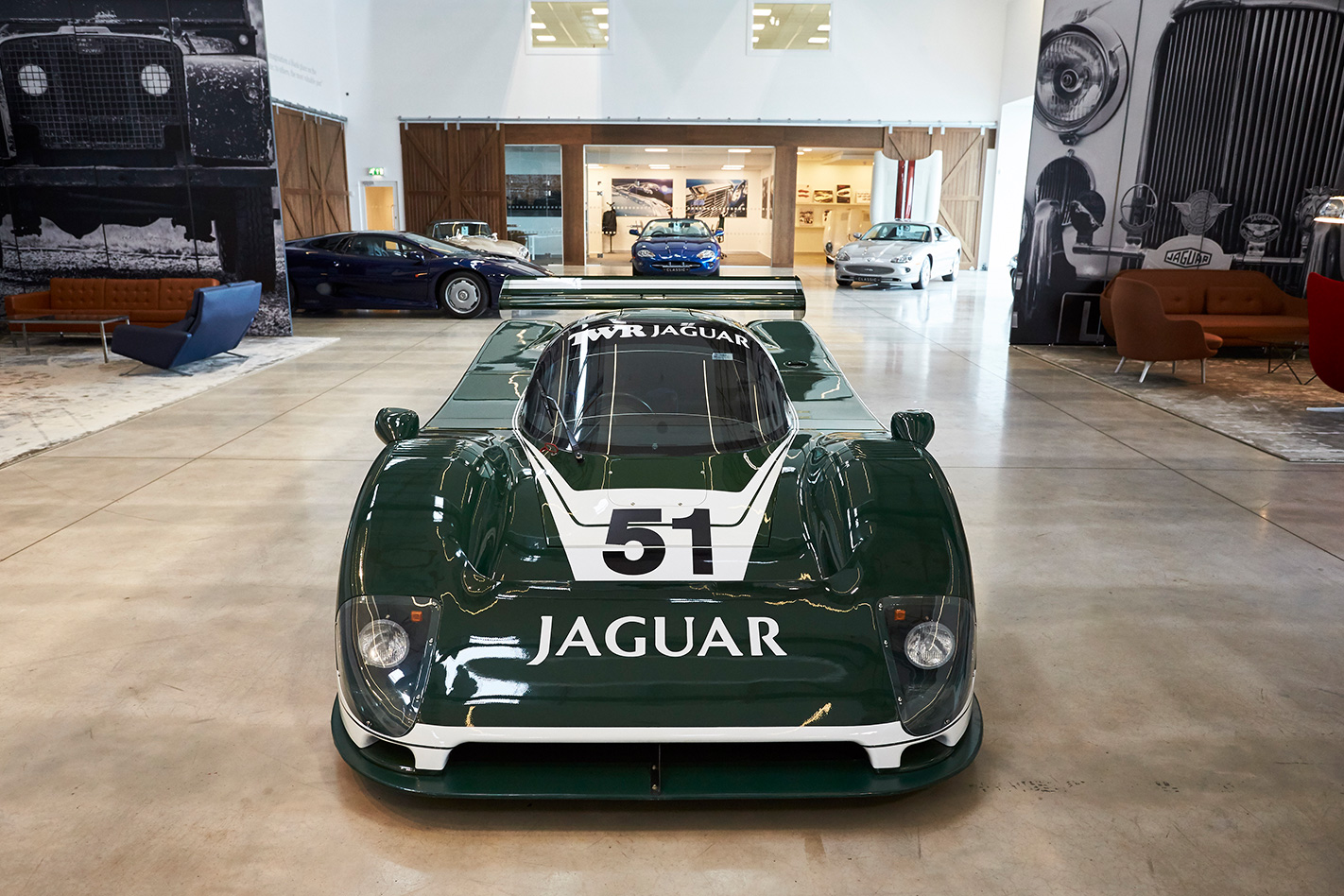
The modern but otherwise unremarkable architecture could be the shop front of any mid-size engineering firm, but step through the glass doors and the first thing to greet you in the large, open-plan foyer is the sleek, low silhouette of a XJR-9 TWR Silk Cut Racing Jaguar.
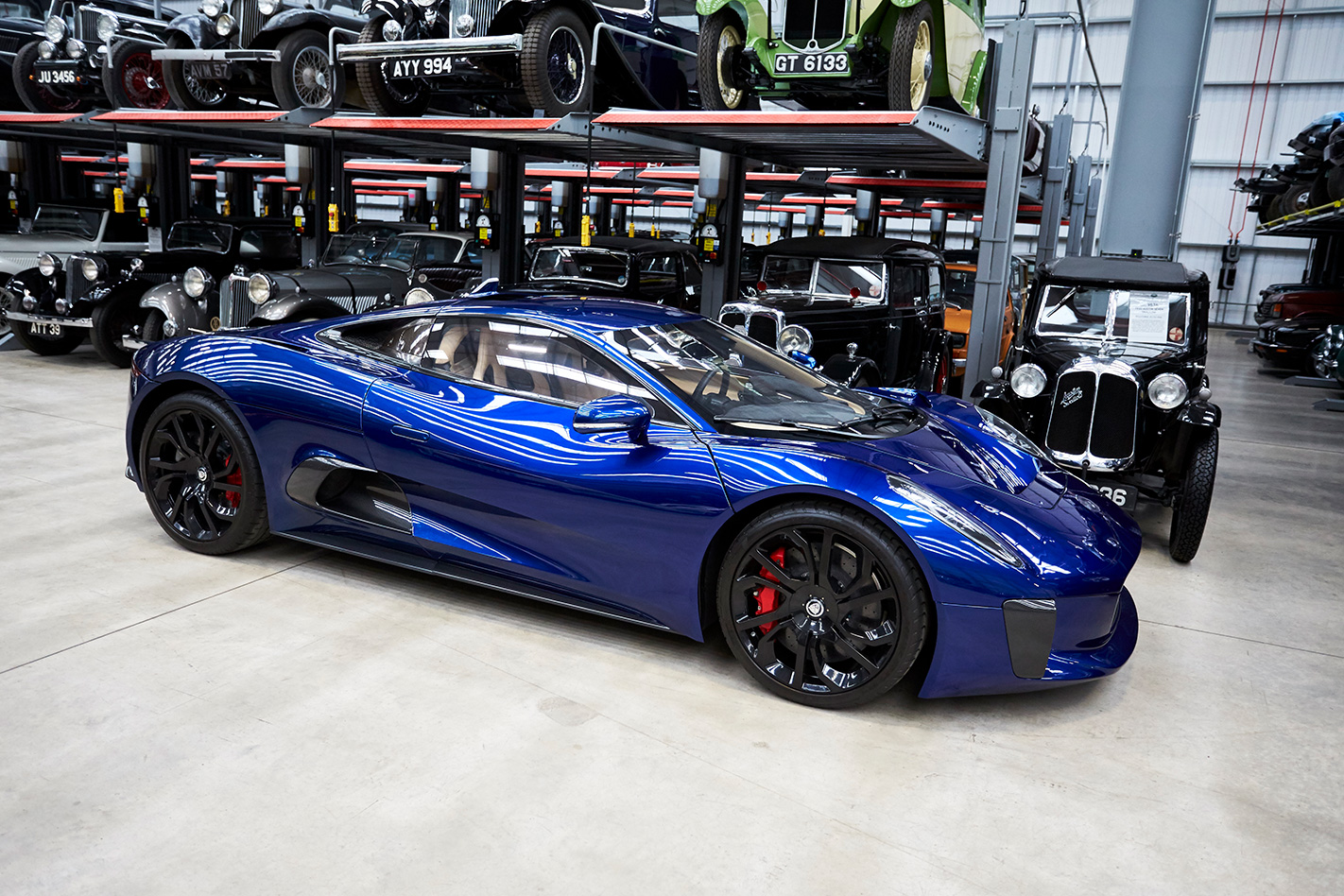
Not far away is the equally distinctive shape of a Jaguar XJ220 supercar, in royal blue, flanked by an immaculate, meticulously restored E-Type roadster. On a turntable in the centre of the room and holding pride of place is a severely distressed-looking Series 1 Land Rover, slowly revolving on a turntable to allow viewers to take in the full glory of its mish-mash of dented panels and decades of hard-won patina.
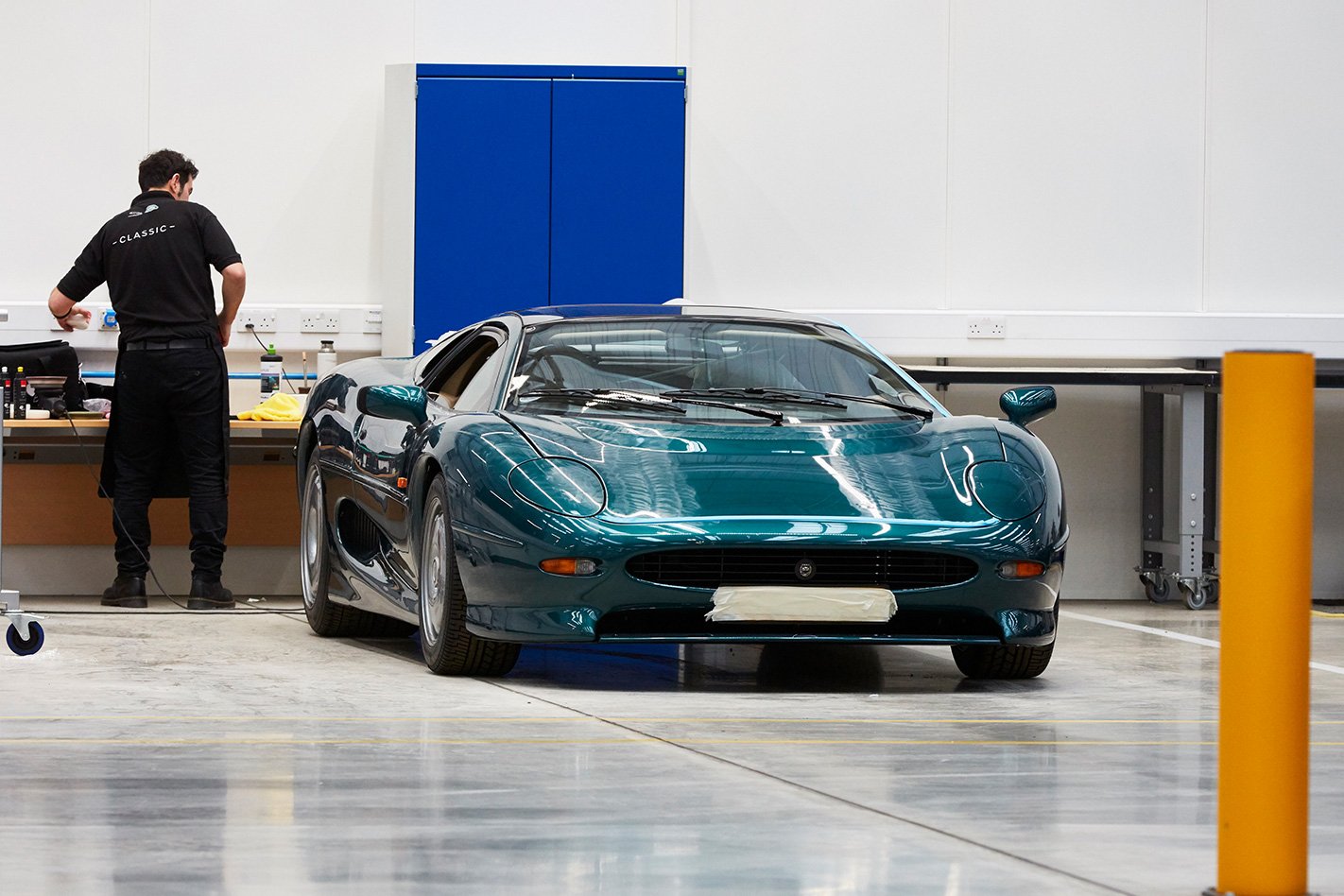
Large photographs of iconic Jaguars and Land Rovers adorn the space, lending the look and feel of a particularly well-curated automotive museum. But unlike museums which are places where cars go spend their twilight years, this is a place that’s dedicated to restoring Jaguars and Land Rovers to their former glory and sending them back out to the road.
This is Jaguar Land Rover Classic Works, and its Director Tim Hannig soon arrives to meet us, dressed casually in blue jeans and a dark sports jacket. German by birth, he greets us warmly in precise, Western European English, and our tour begins.
Hannig’s path to the directorship of JLR’s restoration business is not that of your typical auto executive. In fact, prior to taking the reins of the purpose-built facility in September 2015, he’d spent more time working for a German forklift company than for any auto-maker.

But Hannig agrees; this was a remarkable opportunity for a car enthusiast and Jaguar fan to head up the fledgling operation that was tasked with offering rebuilt cars, servicing, parts and experiences for owners and enthusiasts of Jaguar and Land Rover vehicles, at a brand-new, multi-million pound, purpose-built facility.
“The company had the intention to support the enthusiasts of classic Jaguar and Land Rovers a lot better than in the past,” Hannig says.
Jaguar Land Rover Classic Works is part of Jaguar’s Special Operations, which Hannig explains: “It’s everything that doesn’t really fit into the core business. The intention was to create a dedicated team that specialises in taking care of anything that has been out of production for ten years or longer. So anything where the core business wouldn’t actually focus on it anymore, we take it on and try to cherish that.”
Hannig admits that when he was first hired it wasn’t even clear what the new business division would or should look like, and that they initially had a lot of discussions about what it should and should not do. He readily admits that at this formative stage there’s still a lot of “educated guesswork” in establishing what customers want.
However Tim and his team recognised relatively quickly that there is an enormous demand for spare parts for classic Jaguars and Land Rovers, and this has quickly become “the backbone; the foundation of the business.”

But the journey to develop an operation that could supply these rare and often increasingly hard to find parts helped them recognise that there is also a market for people who would like an operation such as JLR to restore their cars, and others who would like to buy a fully restored car from such a trusted source.
“That is because there are lots of customers and clients out there that are enthusiasts but who don’t really know how to do it. We resolved this with the Reborn Program; we go out and buy cars that are good, bring them back, restore them and sell them for a fixed price.”
Hannig acknowledges that price is not low: “We can do a lot of things; but we can’t do cheap,” he says with a grin, pointing to the fact the company pays a labour premium in using Jaguar-Land Rover employees for its restoration work.

“Compared to other restorers who do it in their sheds, we have higher costs. Plus, we restore them to factory-restoration specification.”
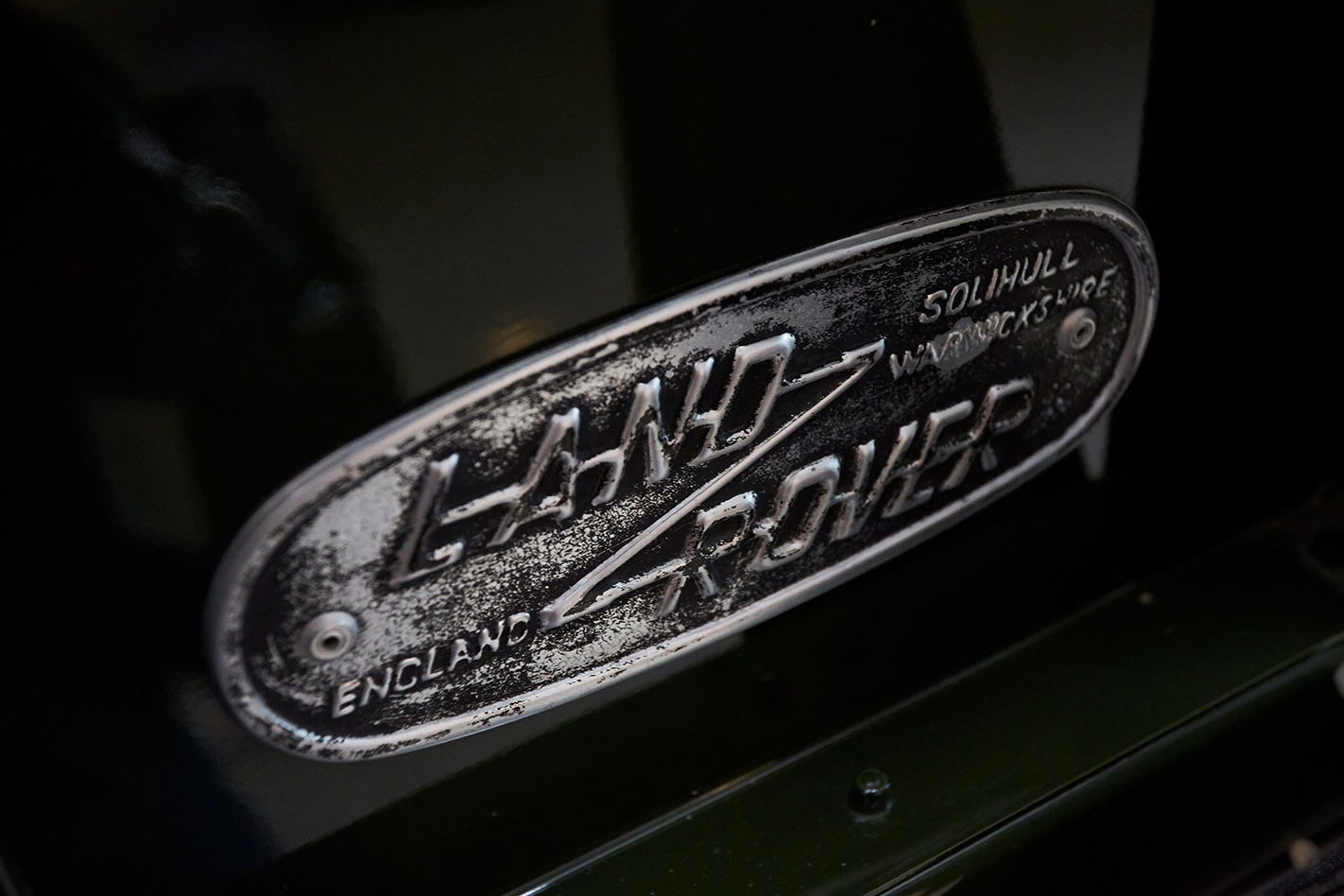
Surrounding us in the showroom are multiple examples of the Reborn program, including the aforementioned XJ220 supercar and an immaculately restored Series 1 Land Rover that I’ll warrant looks better than it would have done when it first rolled off the assembly line in 1948.
Hannig believes the extraordinary success of the Reborn Program comes down to the fact customers appreciate the transparency of the model.
“We can explain why it costs what it does, and [that] it’s not cheap but it’s worth the money, and people like this simplicity and the risk-free [nature of the] transaction,” he says.

Tim explains that the business also encompasses a Reborn program, which sees Jaguar Land Rover Classic sourcing and restoring select classic models to authentic specifications. This project was launched in April 2016 for Land Rover Series I, followed in 2017 by the original two-door Range Rover Classic, and more recently a Jaguar E-Type program featuring a batch of 10 Series 1 E-Types.
Stepping through the sliding timber barn doors that lead from showroom to workshop, we see a Jaguar E-Type that’s part of the Reborn program sitting somewhat forlornly in one bay, its seats and interior already removed and its parts being meticulously extracted, catalogued, tagged and boxed, nut by painstaking bolt, for replacement or reassembly. It’s a process that will take a single dedicated specialist an estimated 2500 hours to complete, as Tim explains that the same person who strips the car must also rebuild it.
That said, various specialist work, such as paint and panel, engines and gearbox, are sent off for completion before being returned to the technician for reassembly. Tim adds that JLR has invested heavily in sourcing and sustaining traditional manufacturing skills, with an estimated 120 specialists, many with decades of experience working solely on the models catered for, employed at the new facility.
“Knowledge is the muscle. In this organisation, everybody together knows so much, but you don’t find one specialist who knows everything. It’s a team approach,” he says.
So while Jaguar Land Rover Classic has built an already solid reputation in fully restored cars, the business has also diversified into the lucrative field of ‘Continuations’, as Hannig explains.
“We do a very small number of continuations, like we’ve done the lightweight E-Type [and] we’re now building the Jaguar XKSS, which is technically a brand-new vehicle, but identical to the 1957 specification. We jokingly say we paused for a very long tea-break; we did stop building them; but now we’re doing the rest that we never built,” he laughs.
“It takes an extraordinarily high effort to make them, because you need to make everything from scratch.”
Hannig explains that building these classic cars from scratch entails a much higher level of complexity than even the best restoration, “because in order to build a vehicle you need to understand it in its entirety.”

Hannig and his team go back through the archives of these cars, digitising old blueprints, converting the drawings to CAD data, and even scanning parts to find the details within. The process is incredibly painstaking and laborious, first bringing the drawings and other technical information into a modern technical documentation phase, then creating every single component, then building the cars to exacting standards, and ensuring they run properly and drive in a manner that justifies their eventual price tag – including a shakedown by 1988 Jaguar-driving Le Mans winner Andy Wallace, who is Jaguar Land Rover Classic’s chief test driver.
“With the lightweight E-Type we managed to completely activate the E-Type knowledge … I would say now proudly, the team can master anything,” Hannig says.
JLR first produced a batch of six lightweight E-Type racers in 2014. The cars pay homage to the coveted 60s ‘Special FT’ lightweight E-Types, of which there were originally meant to be 18, but only 12 were built. The continuation cars are referred to as “the missing six.”

Having learned the ropes of Continuation from that program, the team then turned its hand to another legendary Jaguar, the XKSS. The March 2016 announcement that Jaguar Land Rover Classic would faithfully recreate the batch of XKSS roadsters destroyed in the infamous Browns Lane factory fire of 1957, really got collectors buzzing.
The XKSS was originally created as a road-going sports car in the wake of Jaguar’s multiple Le Mans-winning D-Type. It retained the latter’s race-ready running gear, including a 195kW 3.4-litre straight six, topped by a trio of Weber DCO3 carburettors, but eschewed the D-Type’s distinctive rear fin, while adding a higher windscreen and a passenger-side door.
A mere 16 units had been built and delivered, including one to actor Steve McQueen, with another nine ready for shipment when fire tore through the Browns Lane plant, prematurely ending the XKSS model’s production run and instantly marking it as among the rarest of classics.
In a posthumous nod to legendary predecessors, each of the continuation cars would carry the chassis number of one of the nine lost originals, and each would be faithfully recreated right down to hand-wheeled magnesium-alloy body panels, bronze welding, imperial measurements, Smiths gauges and brass dash knobs.
The first of these rare road-going sports cars made its debut at the Petersen Museum in LA in November 2016, with Jaguar Classic declaring each would take an estimated 10,000 man hours to build, while simultaneously cruelling many a millionaire’s dreams by declaring the cars had all been pre-sold to “established collectors and customers.” Pundits estimated an unconfirmed price tag of circa-A$2million.
“But is there anything JLR won’t do, such as adding sat-nav or other modern features to a period-perfect continuation car?
“I want to say we are in the business of fulfilling dreams, not judging them,” says Tim, before adding that ‘no’ is a word they prefer to use sparingly. “Still, there are things we advise upon, and specifically on things like continuations, we are very, very careful about modifications.”
Two changes they do happily make to the original configuration of the continuation cars is the use of a more ethanol-resilient fuel tank material, and a different brake line material, because the brake fluid today is more aggressive than it was in the period. They also instal hazard lights, and offer the options of a more modern starter motor and seatbelts integrated with the car’s safety structure.
“So we do deviate, but sympathetically,” says Tim.
In terms of the customer type, Hannig says there is a wide variety, ranging from wealthy collectors for whom money is no object, to far more humble enthusiasts for whom it is a stretch to restore a car. But the common denominator is their passion for the marque, says Tim, and it’s this that’s paying the wages of the 138 people employed at Jaguar Land Rover Classic.
As we walk around the workshop space, featuring 53 bays, and organised into dedicated strip-down, remanufacturing and assembly zones for the Land Rover Series I, Range Rover Classic and Jaguar E-Type Reborn restoration programs, it’s impossible not to be impressed by the clean, clinical organisation of the operation.
There’s also an engine shop, and the build line for the Jaguar XKSS continuation cars, while in another area is a dedicated servicing zone for the rare XJ220 supercar, the turbocharged, 340km/h monster that was at one point the fastest production car in the world. Tim explains that the latter bays are operated by specialist Jaguar supercar technicians, some of whom have supported the XJ220 program since it entered production 25 years ago.

With more than 1.5 million classic Jaguar and Land Rover vehicles in existence worldwide, the company’s bet on investing in traditional manufacturing and restoration skills appears a sound one to, as Tim says, “ensure enthusiasts are able to give cars with a glorious past, a glorious future.”
FIVE-HUNDRED-AND-SIXTY-THREE kilowatts.
That’s the big headline-grabbing figure that puts clear air between the Corvette ZR1 and other track-focused supercars like the Porsche 911 GT2 RS, McLaren 600LT and even the Ferrari Pista. It’s a hell of a headline. But the figure that blows my mind and gives a hint of what this car actually feels like is the peak torque number.
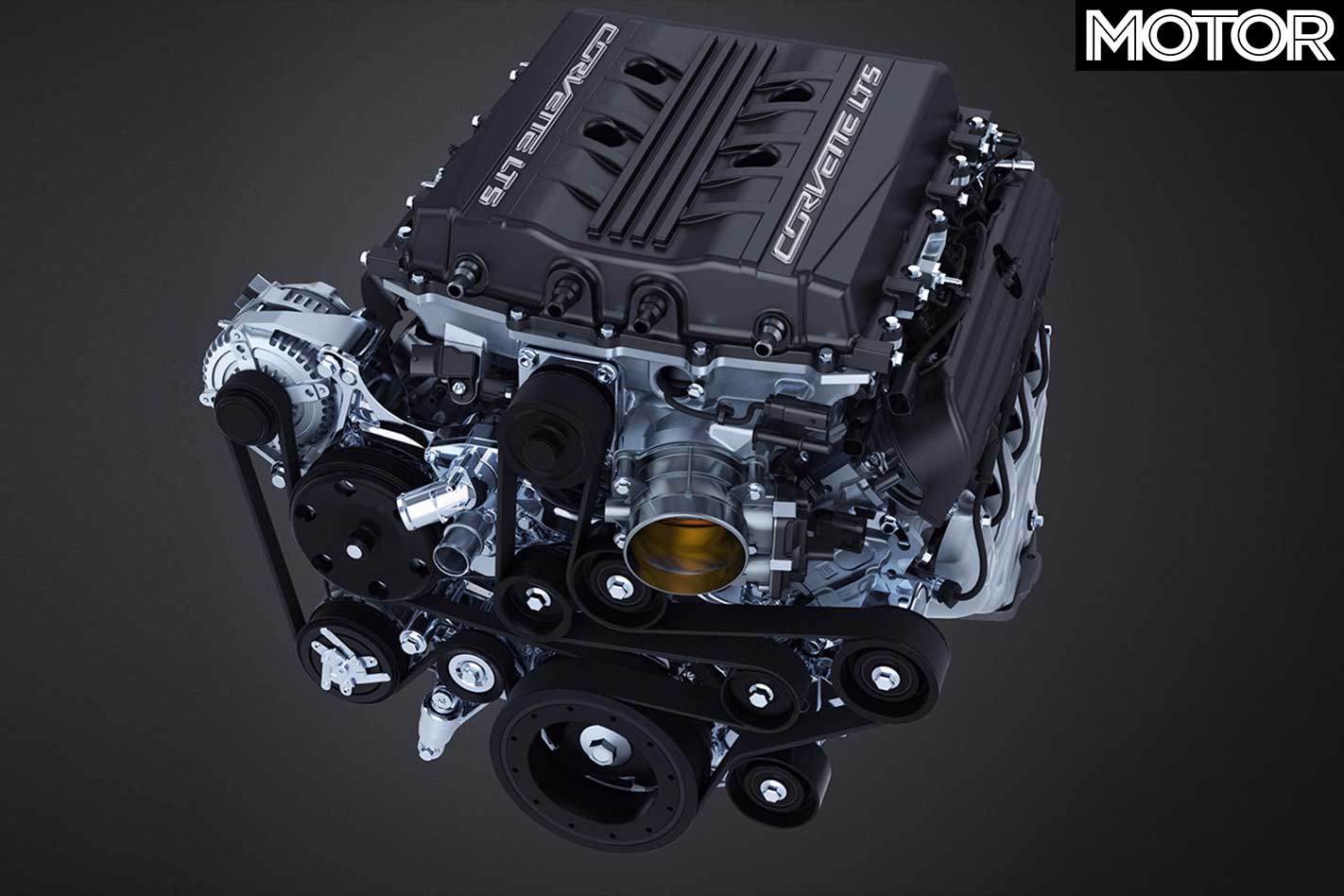
The ZR1’s LT5 6.2-litre supercharged V8 generates 968Nm at 3600rpm. Big cubes plus a 2.65-litre Eaton TVS Roots-type supercharger simply laughs in the face of these highly strung European contenders.
Brands like Ferrari, Porsche and McLaren have proven that circa-520kW can be exploitable, predictable and almost feel entirely natural. But what hope does a front-engined, rear-drive Corvette have of doing the same?
The Corvette guys have thrown more than just grunt at the ZR1. Brakes are monster monobloc Brembos – six-pots at the front, four-pots out back – biting down on 394mm and 388mm carbon-ceramic discs respectively.
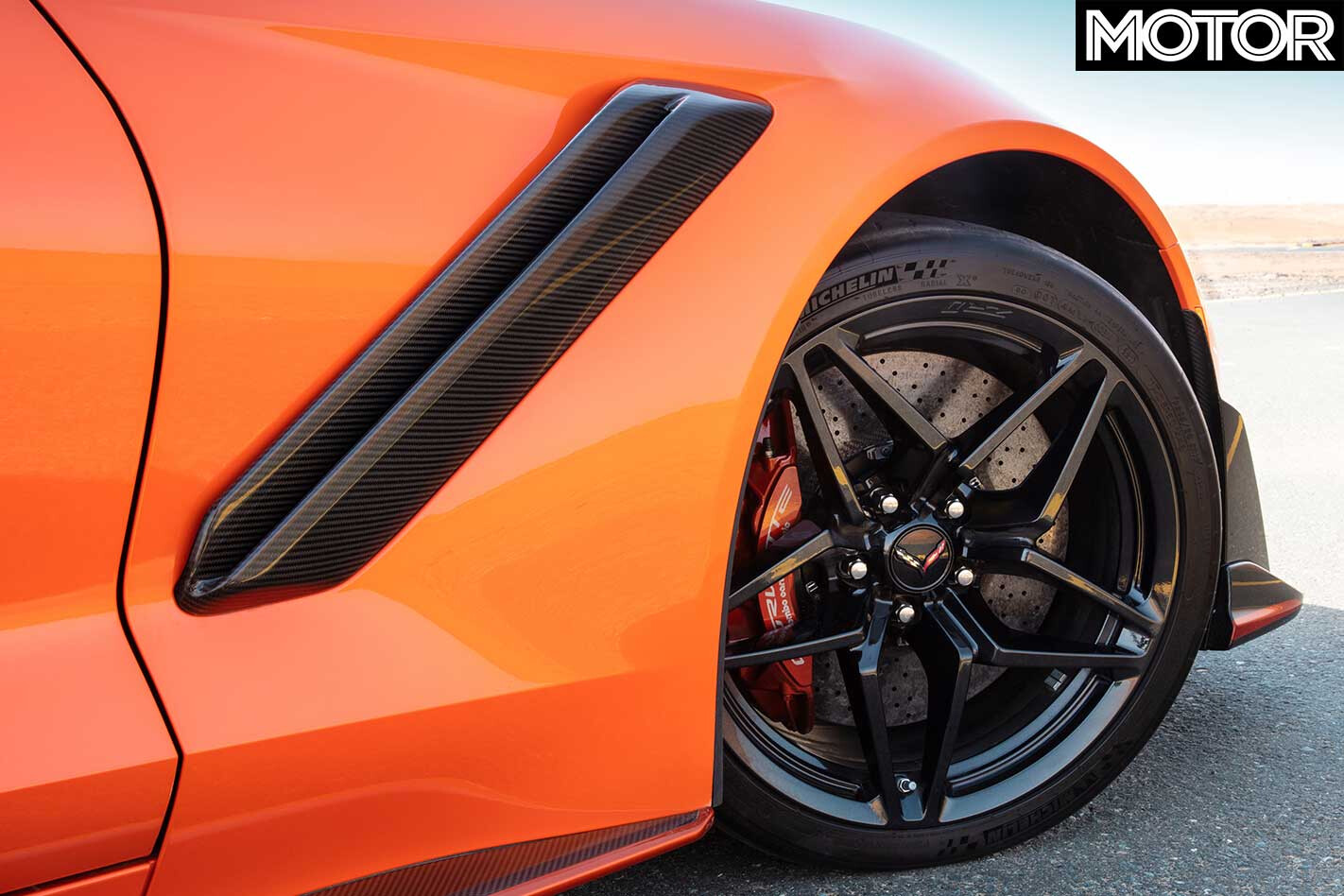
Like the Z06 it features magnetic dampers and an e-diff, although the hardware is retuned for the ZR1. To make up for the size and mass of the engine and its 13 heat exchangers, carbon-fibre wings, roof, bonnet and engine cover, rear quarter panels, rear hatch, front splitter and rear wing feature. The front-end flows 41 per cent more air, too.
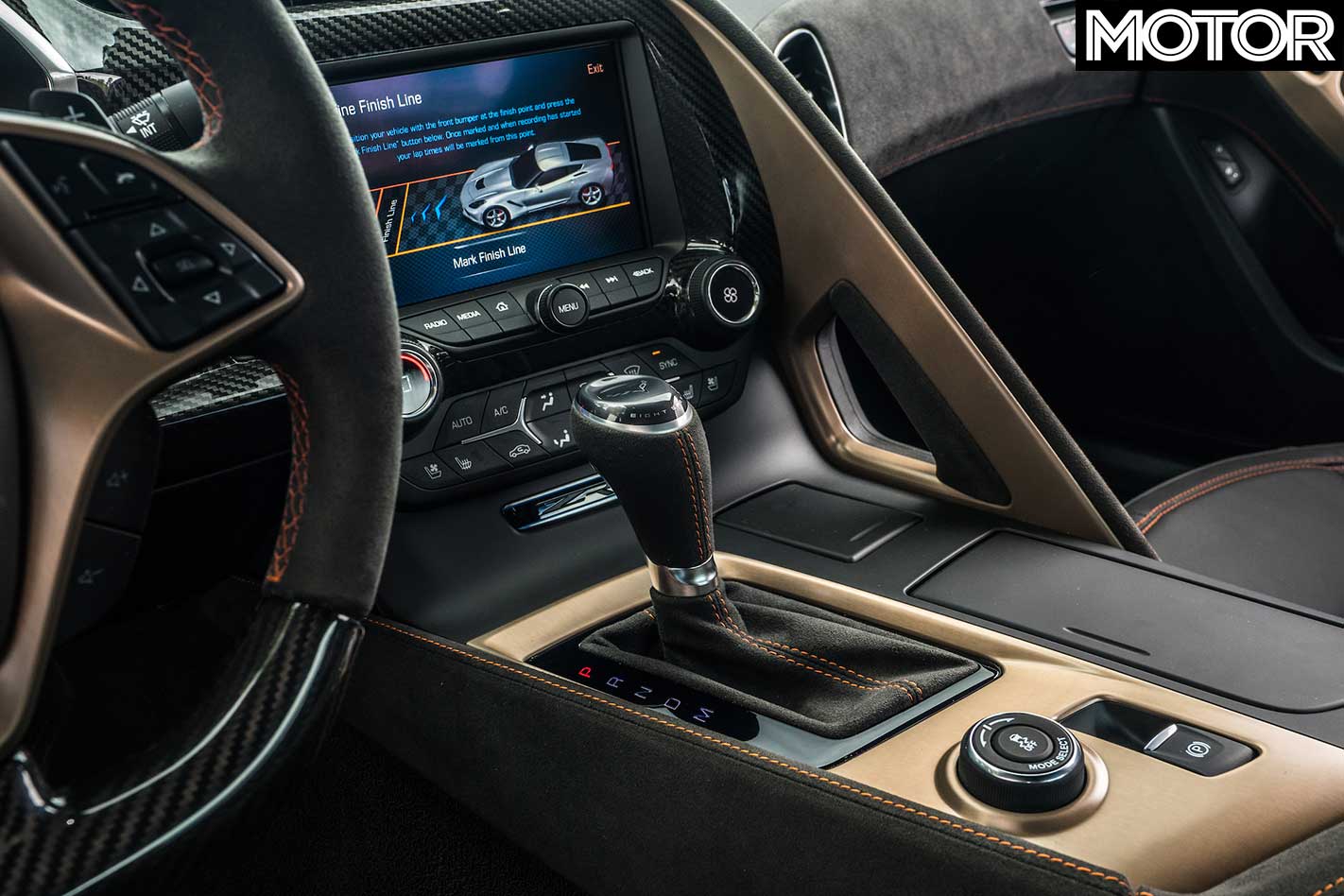
The final piece of the jigsaw is down to you, the customer. Want the fastest ZR1? Tick the box for the eight-speed automatic. It’s not a dual-clutcher, sadly, but it’s still quicker than working the standard seven-speed manual. Either way you’re still looking at 0-100km/h in around 3.0 seconds.
Top speed? That depends. Go for the low-wing car and the ZR1 tops out at 341km/h, but most people are opting for the ZTK Performance Package. It comprises Michelin Pilot Sport Cup 2 tyres, uprated springs, retuned dampers and a radical aerodynamic upgrade including a big rear wing. So configured the ZR1 runs out of juice at 325km/h but produces up to 430kg of downforce.
Let’s start in the ZTK-equipped machine because… well, you would, wouldn’t you? It looks deliciously OTT from the outside with the LT5 literally bursting out of the engine bay and carbon flicks, slashes and wings everywhere you look.
It’s not exactly elegant, but it sends out a message. As do the 335-section Cup 2s, which appear to have even less tread than usual. They’re half-slick, like the barely-there tread pattern has been tattooed onto the rubber rather than carved into it.
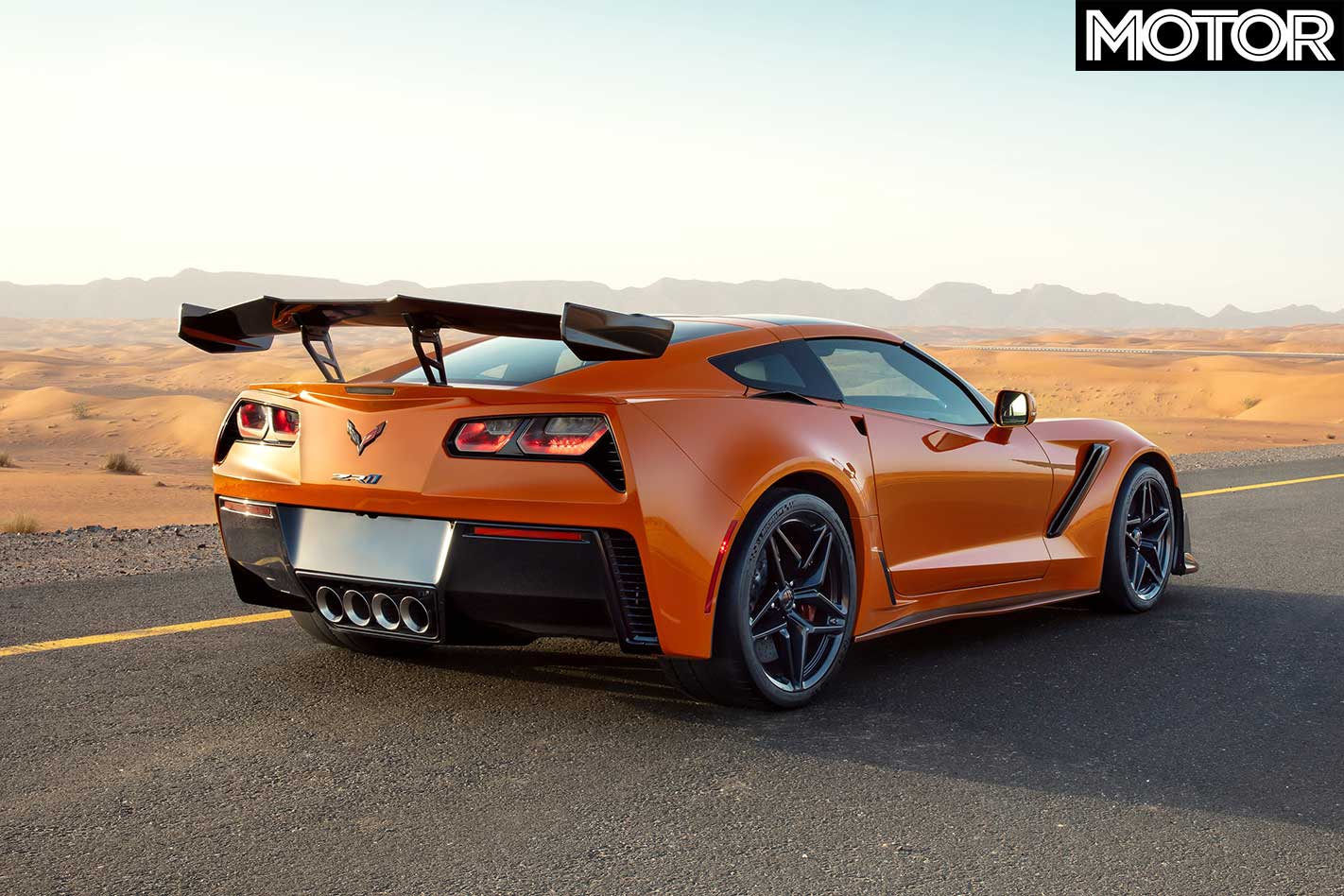
Part of you wants to run away and hide, yet you find yourself opening the door and dropping down into the driver’s seat with a grin and sweaty palms ready for the event.
The view over – scrap that, beside – the carbon-shrouded motor feels immediately restrictive. You want to crane your neck to see up and over the power bulge. However, it takes just a few seconds to adjust and pretty soon you feel at ease.
You can never forget or ignore that huge structure, but you learn to enjoy that it’s there. I’d say it’s a nice reminder of the power under your right foot, but you don’t need one. The noise and response is so extreme that the ZR1 always feels absurdly, wonderfully potent. It’s brilliant.
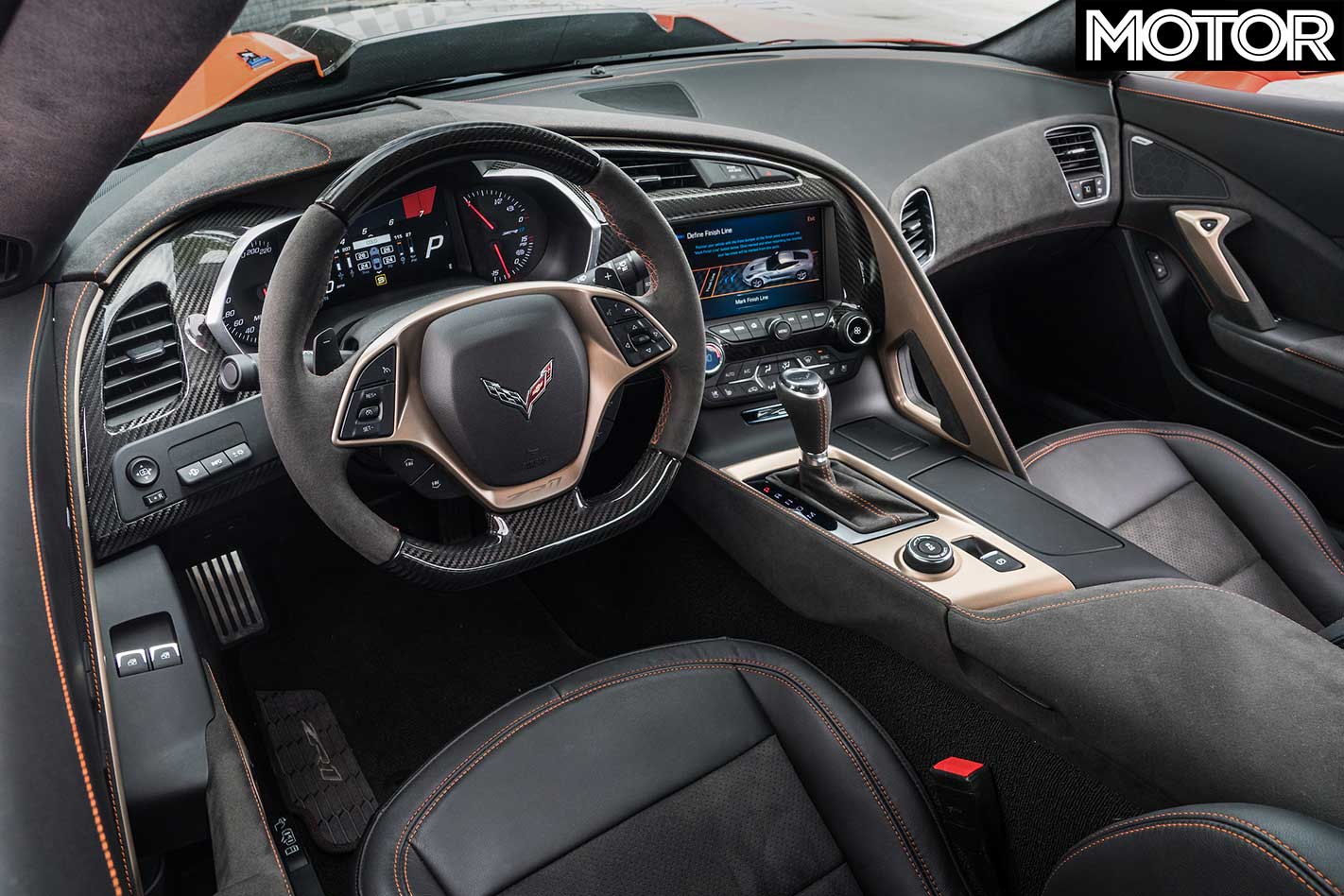
The engine is simply stunning. It hauls hard from idle, feels vicious through the mid-range and then morphs again as you rip up into the upper reaches. Perhaps it doesn’t have the frenzied feel of a McLaren 720S – the ZR1 weighs 1615kg, remember – but the weight of its punch feels so heavy and the reach is endless.
I’m in the eight-speed auto and it adds to the sense that the ZR1 just doesn’t ever slow-up. Give me the manual gearbox any day, though. This ‘box is quick, but it lacks the wonderfully sharp upshifts of a Porsche PDK or any other dual-clutch.
Of course, that a 563kW car is fast is not news. Can the C7 chassis handle it? Mostly, it can. The ZR1 has fantastic turn-in and carries huge mid-corner speed, the brakes are nothing short of fantastic and the car also communicates nicely through its quick, well-weighted steering.
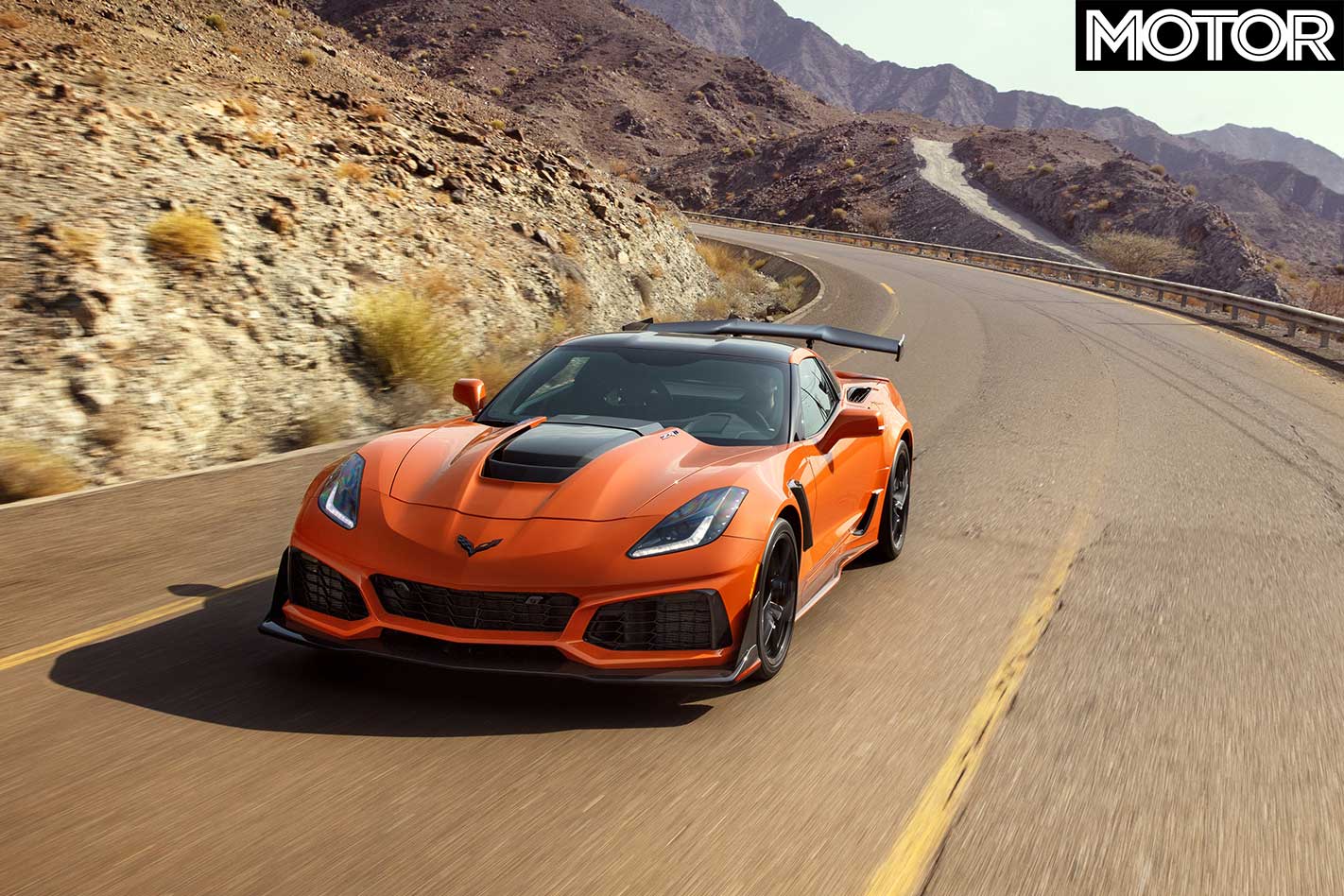
It also puts its power down pretty well on the road. So much so that soon your confidence grows and then, suddenly, the ZR1 starts to unravel: big bumps catch it out and the car’s body control loses its consistency.
Try to get on the power early and the electronics have to step in smartly. The PTM (Performance Traction Management) actually works with real subtlety in Sport and Race modes, but even so the ZR1 does seem to be fighting the road rather than flowing over it.
If you’re really brave and push through these signals the ZR1 is a pretty sharp-edged device. Understeer is simply not an issue on the road, but the onset of oversteer is sudden and extremely intimidating.
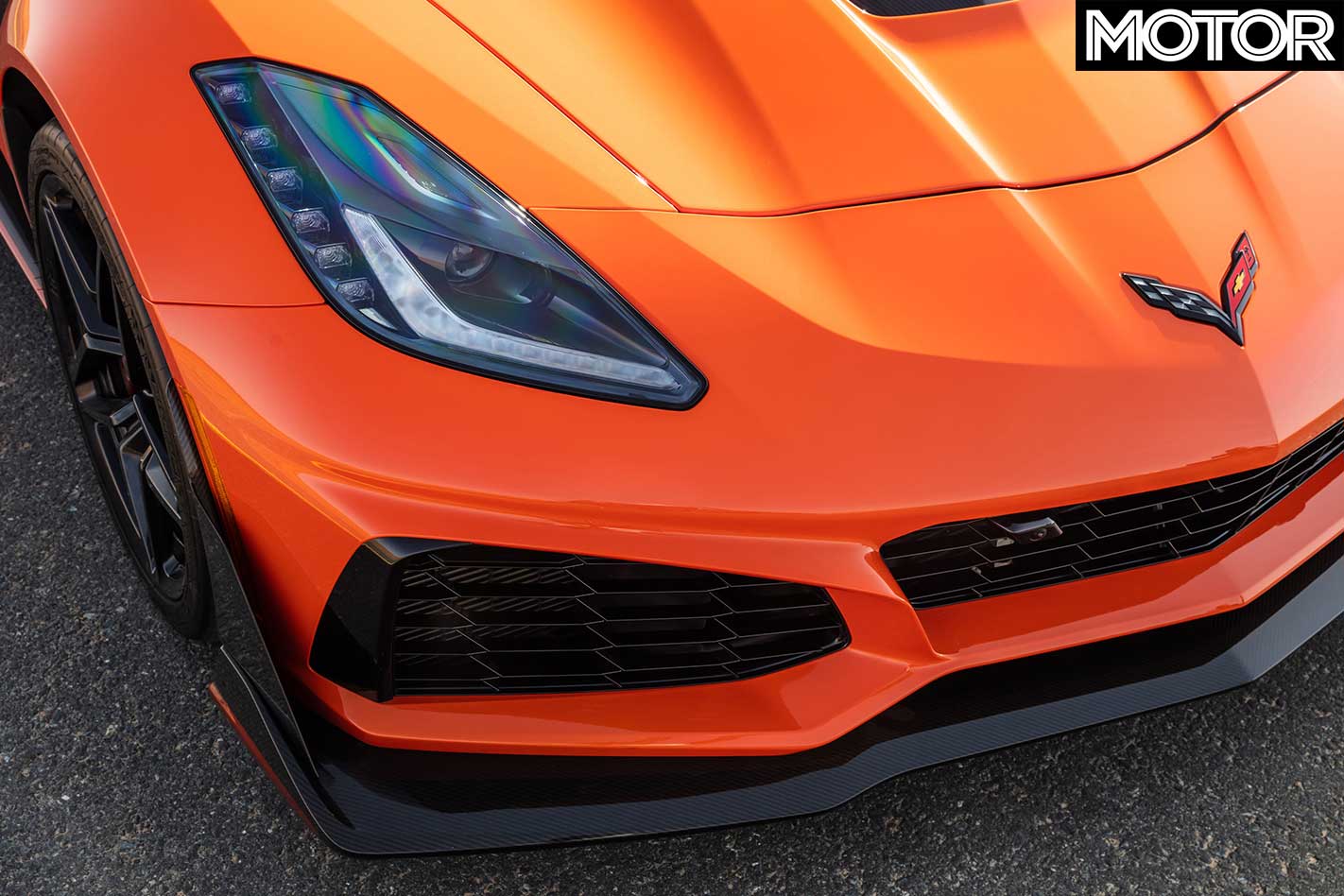
On track things improve and there’s no question the aero kit provides real high-speed stability, but in slower and medium-speed turns the ZR1 still feels uncomfortable beyond the limit of the tyres’ grip. It never settles down and requires a lot of work at the wheel to extract a quick time.
In the end the Corvette ZR1 is a source of frustration. I adore the engine, love the brakes and appreciate how much speed it can carry through a corner. Yet I can’t help thinking that a front-engined/rear drive car should be friendlier and more playful at the limit. And that a car aiming to offer an extreme driving experience along the lines of a GT3 RS, but with way more performance, should be more composed on challenging roads.
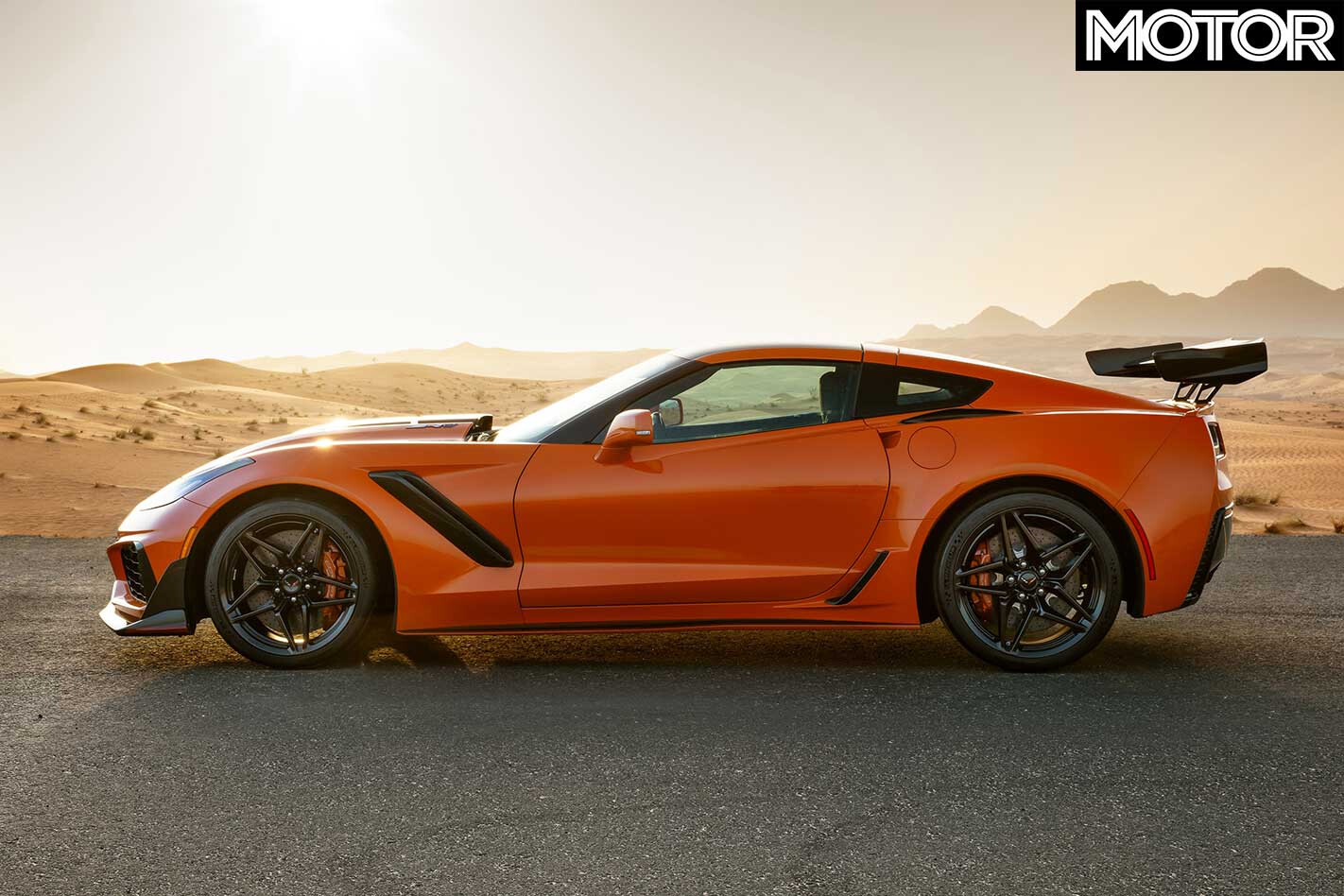
Funnily enough the low-wing car with less aggressive suspension settings and more conventional Michelin Pilot Super Sport tyres is the much sweeter road car. Still slightly rough around the edges, but more poised, less edgy.
In the end you can only conclude that the ultimate ZR1 is the one that doesn’t try to stand toe-to-toe with the likes of the GT2 RS and Pista. In the context of those cars the ultimate Corvette lacks polish and feels heavy and clumsy. The low-wing car puts those comparisons out of your mind though, and frees you up to focus on and enjoy the incredible LT5 engine.
The ZR1 really is all about those headline numbers and when the V8 is a full cry I’m pretty sure you’ll be fine with that.
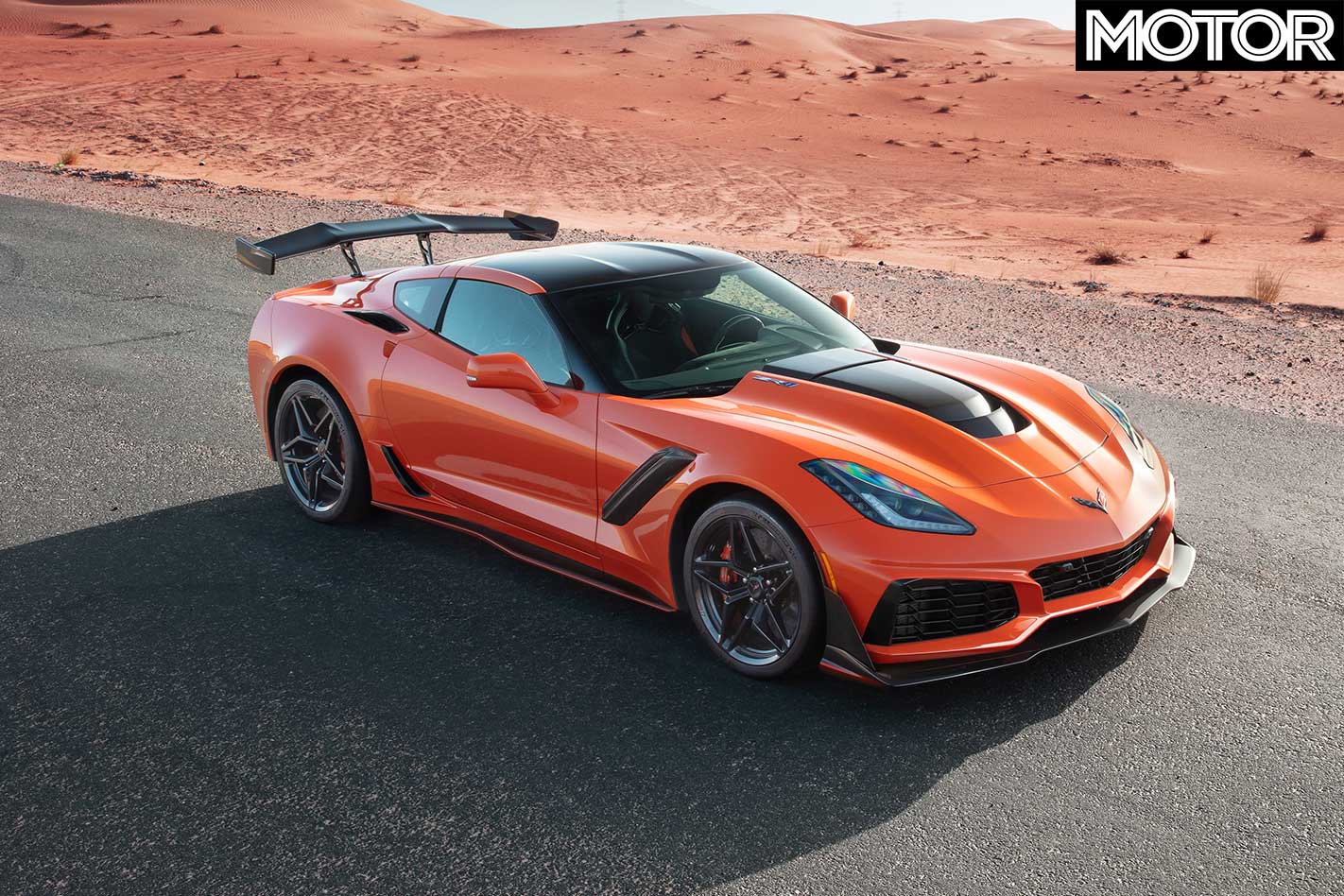
2018 CHEVROLET CORVETTE ZR1 SPECS: Engine: 6162cc V8, OHV, 16v, supercharger Power: 563kW @ 6300rpm Torque: 968Nm @ 3600rpm Weight: 1615kg 0-100km/h: 3.0sec (est.) Price: $300,000+ (est.)
Like: Take-your-breath-away levels of stonk; glorious soundtrack; track focus Dislike: The ‘lesser’ car is the car to have; won’t be cheap to get your hands on one in Oz
Rating: 4 out of 5 stars
The Nemesis
Mercedes-AMG GT R 4.0-litre twin-turbo V8, RWD, 430kW/700Nm, 0-100km/h 3.6sec 1555kg, $351,130
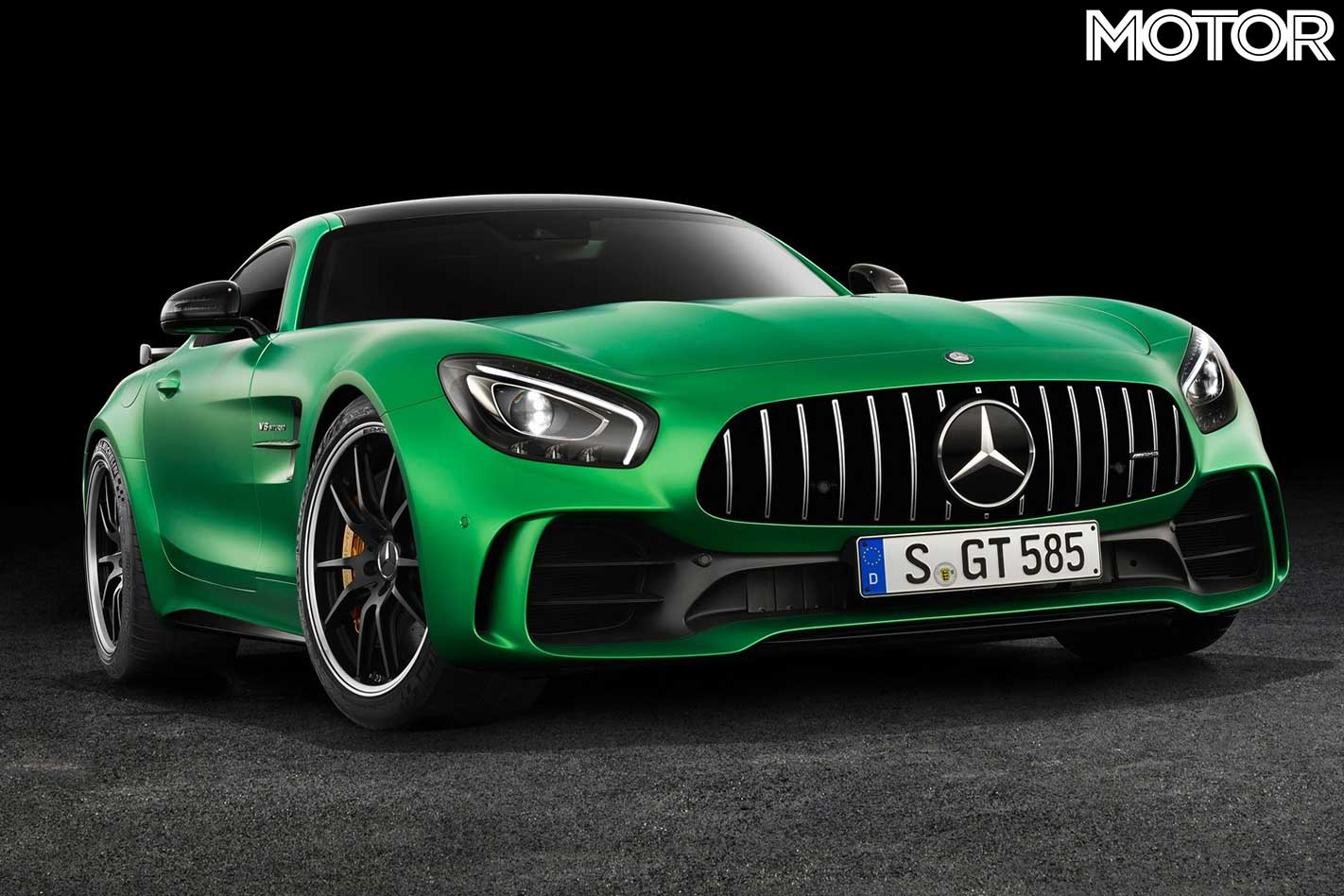
AMG’s bruiser might lose out on cubes, but it sounds as angry as the Corvette and is undoubtedly as capable on a racetrack (maybe even more so). It’s also packed with tech and more readily available to buy in Oz.
The shot, taken over driver Mel Nichols’ left shoulder, first appeared with the tacho needle at 6700rpm and the speedo re-touched to just shy of 100mph (160km/h), as if the Falcon was in third gear. Nichols’ ‘Biggest Stick’ story, published in the October 1971 issue of Wheels, played it straight down the line, and didn’t mention the top speed achieved.
It was only four years later, when Nichols’ published a story-behind-the-photograph piece titled ‘HO Down the Hume’ in the October 1975 edition of Wheels’ sister magazine, Sports Car World, that readers learned the truth. Upon seeing the original photograph, speedo just above 140mph (225km/h), Wheels’ managing director insisted – despite massive opposition from the editorial staff – that it was not to be published in that form.
The real photograph was first highlighted in that SCW yarn, though it’s since appeared on T-shirts, been ripped off by numerous websites, published without permission in other magazines, and offered as a limited-edition print signed by Nichols and Kuessner.

Twenty-five years after Nichols’ exclusive first drive in the Phase III, Michael Stahl talked to the people responsible for the legendary Falcon, plus the two blokes behind that photograph.
Stahly started with Ford Competition Director, American Al Turner, and went on to gather the memories of Ian Stockings, Special Vehicles Engineer; racing drivers Allan Moffat and Fred Gibson; Special Vehicles Manager Howard Marsden; Max Ward, Ford’s brilliant public relations manager; Bill Santuccione, whom Stahl called the nuts and bolts man; and Peter Jeffrey, who worked on the Falcon race cars.
Turner remembers, “That time will probably never happen again. We were very fortunate; it was just a great bunch of people and we all really loved what we were doing. It was the best group of guys I’ve ever worked with, and I had a free hand to do whatever was required.”
Max Ward reminisced that the GT-HO he most remembered was the Phase I, “When we went to register 200 of them to qualify for Bathurst the local motor registry just listened to the exhaust and laughed us out of there. Al Turner had the idea to stuff the exhausts with chicken wire to quieten them down. We took them back to the registry, and that’s how the whole GT-HO era started.”
In the early 1970s Fred Gibson ran Ford’s NSW press car fleet from his Randwick workshop. “Every week, the Phase IIIs would come back in with the tyres burned off. I’d throw on another set of Dunlop Aquajets or whatever the hell they were, and send ’em out again.”
Moffat, filled with regret said, “Back then I didn’t have the wisdom to keep one. Anyway, I was just the driver and none of that stuff belonged to me. I don’t have any souvenirs from the GT-HO at all. But I sure wouldn’t mind a dollar for every lap of Calder and You Yangs that I did in them.”
Open and shutter case

Uwe Kuessner told Stahl, “I’ve taken millions of pictures, before and since the Phase III, but even today I still get people saying to me: ‘Hey – you’re the guy who took that photo.’”
Nichols, meanwhile, declared, “That test still stands among the best two days of my life. In fact, on the wall of my office I have only three framed photographs of cars I’ve driven; one is of me driving a D-Type, another is in a Porsche 959; and the other is Uwe’s picture of me at the wheel of the GT-HO.”
The Toyota Corolla has been the consistent leader in the passenger-car stakes, staving off hot competition between the Mazda 3 and Hyundai i30 year after year. The Corolla’s reputation for reliability has been a big sales driver in recent years, though the well-equipped fourth-generation i30 stole a march on it in several metrics – not least of which being driver engagement – when it arrived in May 2017.
The launch of the 12th generation Corolla brought the generational pendulum back, however, and the playing field between Korea and Japan’s top-selling hatchbacks is now a lot more level as a result. To see how the two measure up, we brought together 2.0-litre automatic petrol versions of the entry-level Corolla Ascent Sport and the similarly-priced i30 Active to find out.
HOW AFFORABLE ARE THEY?
Toyota Corolla:
Priced at $24,370, the Ascent Sport is the cheapest automatic option in the new Corolla range, attracting a $1500 premium over the six-speed manual.
As well as a more convenient continual variable transmission (CVT), the Ascent Sport auto also gains three driving modes (Eco, Normal and Sport) adaptive cruise control that works at low and high speeds, and lane-keeping assist.
View the full pricing and features for the 2018 Toyota Corolla range here
The vehicle we tested was the Ascent Sport auto in Glacier White, which is the only paint option not to incur an additional cost – the other seven colours attract a $475 premium. Optional extras included satellite navigation, digital radio (DAB+) and rear privacy glass, which are bundled together as part of a $1042 package, which took the retail price of our Corolla to $25,412.
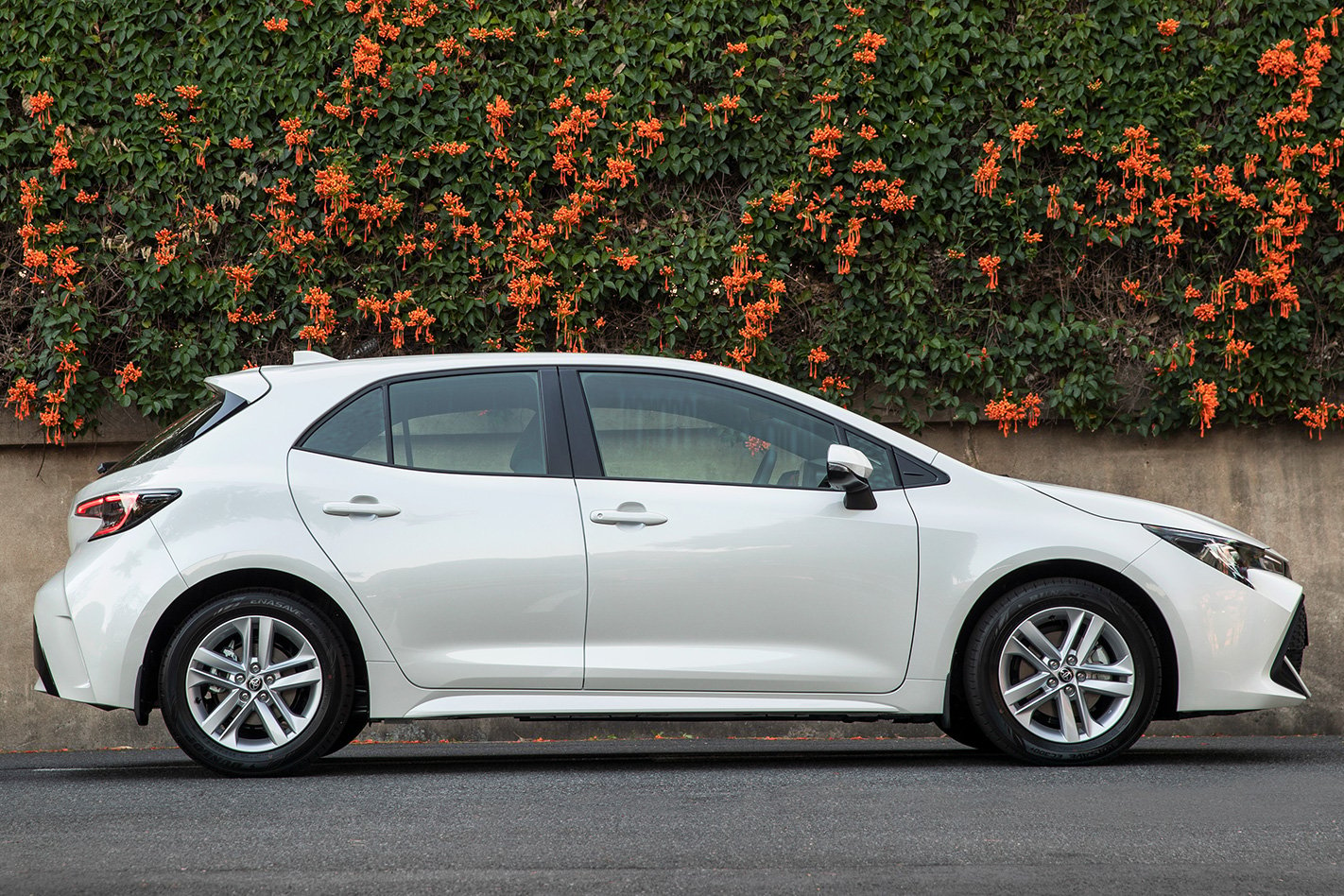
The Corolla’s highly efficient 2.0-litre petrol engine has a frugal official fuel consumption rating of 6.0-litres/100km when coupled with the automatic transmission. Our real-world testing showed 8.1L/100km with a mix of highway and inner-city driving.
The petrol Corolla requires a service every 12 months or 15,000km, which is about average. Each service between from 15,000km to 75,000km is capped at $175 with Toyota Service Advantage.
The Corolla is covered by Toyota’s three year/100,000km warranty.
Hyundai i30:
Priced at $23,390, the i30 Active 2.0-litre petrol automatic we’re testing here costs $2300 more than the manual version. The same grade can also be had with a 1.6-litre turbo diesel version in manual or automatic form, for $23,590 and $26,090 respectively, if you’re looking for a more fuel-efficient option.
However, if you’re looking for the most affordable i30 outright, there’s another variant below the Active called the i30 Go that starts at $19,990 for the manual, or $22,290. If feature-count matters not, then the Go is the one for bargain-hunters.
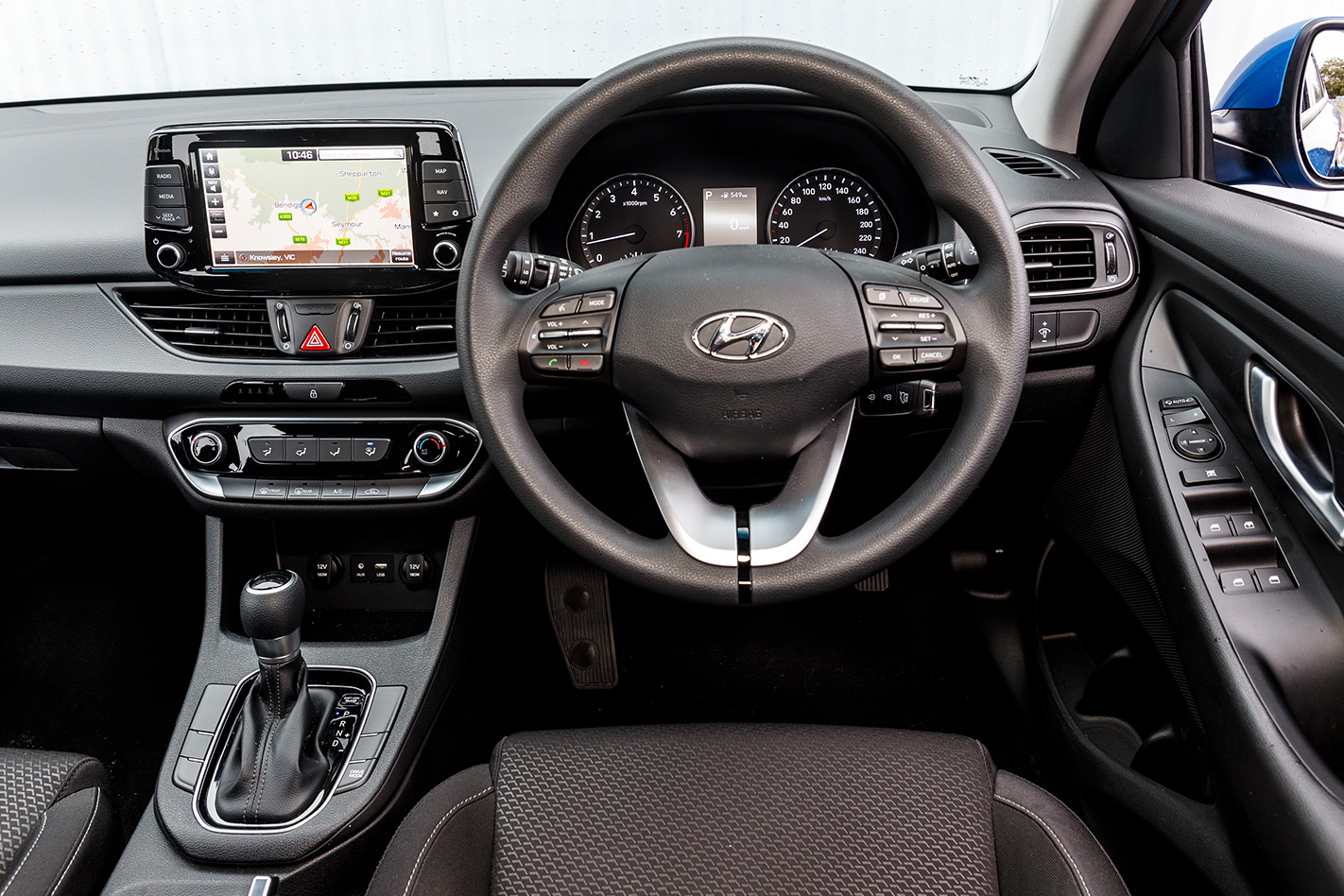
The vehicle we tested was standard, with the only extra on top of the six-speed automatic gearbox being the Marina Blue paintwork for an extra $495 that took the total retail price to $23,885.
The 2.0-litre engine’s claimed average fuel consumption is 7.4L/100km with the automatic, which is a little thirsty for a small hatch – the similarly powered Mazda 3, for example, sips unleaded at a rate of 5.8L/100km.
As for servicing, the i30 tested here has 12-month/15,000km service intervals. Scheduled services within the first five years are capped at $259 a visit, except for the 45,000km major service which will cost you $359. The i30 is covered by Hyundai’s five-year/unlimited kilometre warranty.
WHAT FEATURES DO THEY HAVE?
Toyota Corolla:
The Corolla Ascent Sport Auto is the most advanced entry-level variant in its class, and comes with advanced safety features that were unheard of in small hatchbacks just a few years ago. These include adaptive cruise control, autonomous emergency braking with pedestrian and cyclist detection, lane keeping assist, and speed-sign recognition.
You also get a big 8.0-inch touchscreen with voice recognition, which clearly displays a reversing camera image with fixed guidelines. Infotainment includes AM/FM radio and connectivity with your mobile device via Bluetooth or USB for phone calls or music streaming. For an additional $1042 you can add satellite navigation with SUNA traffic information and digital radio DAB+ to .
Other features include cloth seats, and there’s an electric parking brake that frees up space on the centre console, LED headlights with auto high beam, LED tail-lights, LED daytime running lights, rear fog-lamps, and power-folding heated exterior mirrors.
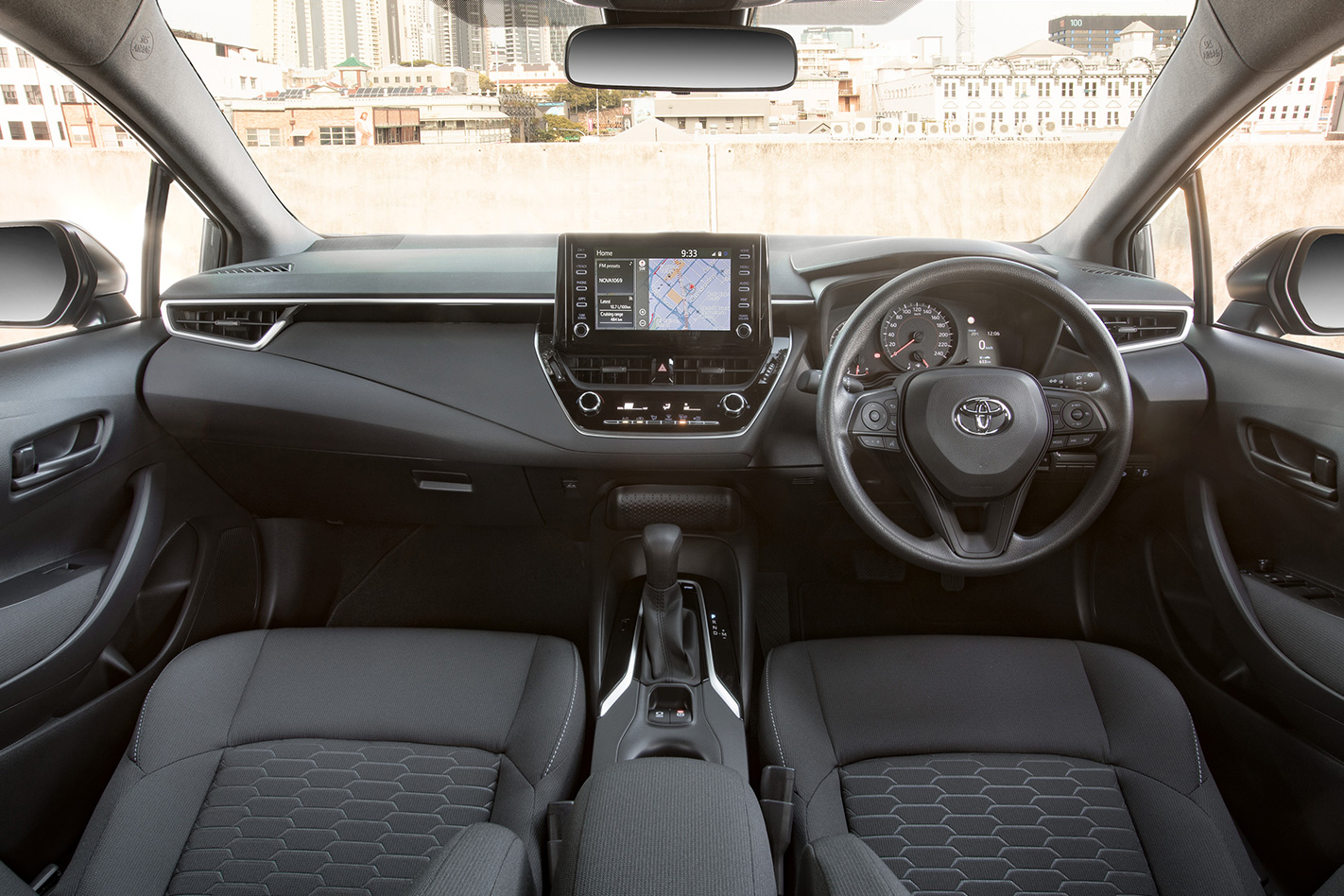
The Ascent Sport rolls on 16-inch aluminium-alloy wheels and you get a full-sized spare alloy.
Hyundai i30:
You’ll find things in the i30 Active that are options in far more expensive cars, such Apple CarPlay and Android Auto smartphone pairing, satellite navigation and digital radio (DAB+), which are controlled via an 8.0-inch touchscreen.
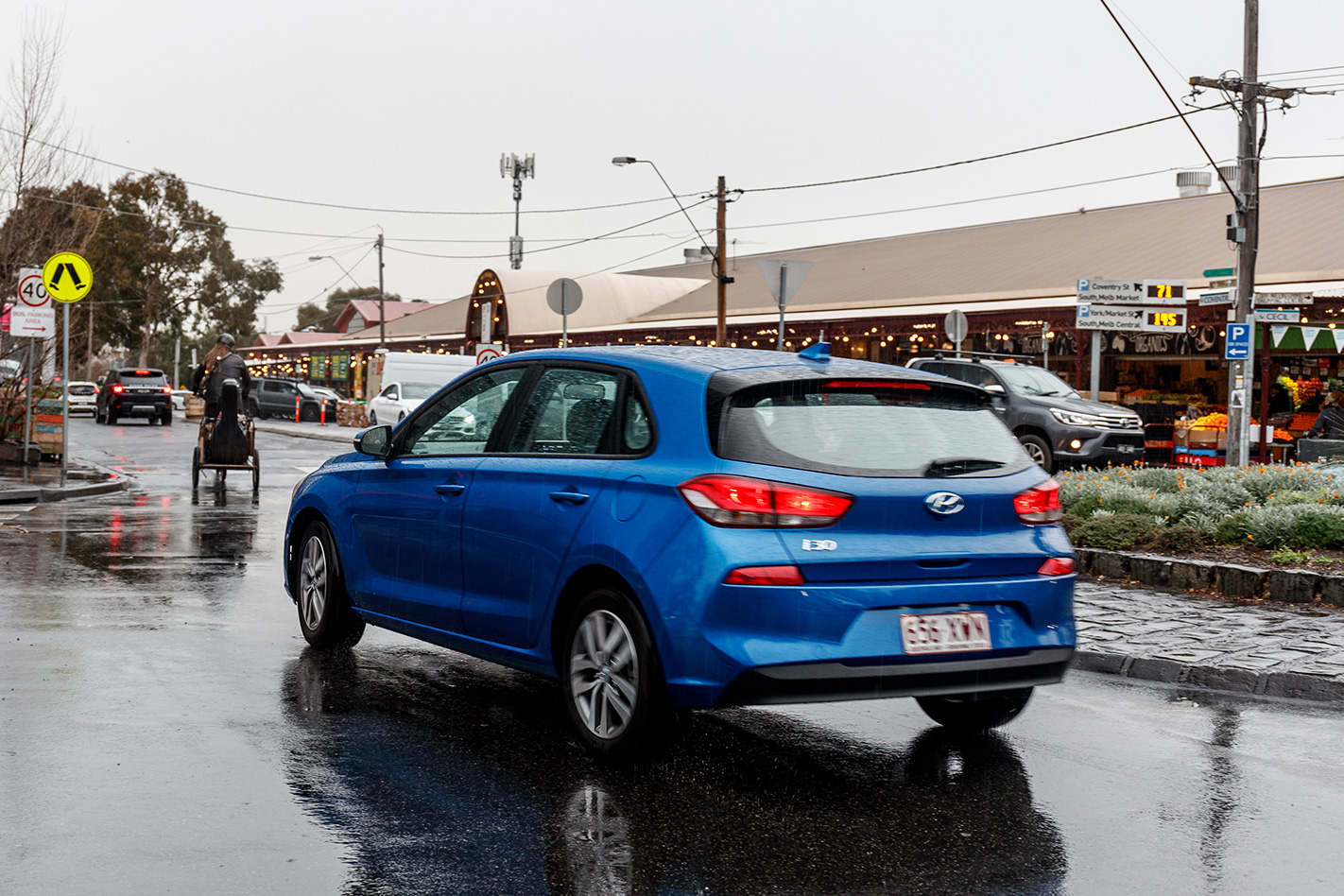
It also comes with LED daytime running lights, power-folding electric mirrors, cloth seats and cruise control. 16-inch alloy wheels are standard, and you get a full-sized spare alloy wheel as well – something that’s often a cost option in this segment, or replaced by a space-saver.
HOW PRACTICAL ARE THEY?
Toyota Corolla:
The 2018 Toyota Corolla is a five-door hatchback that seats up to five people.
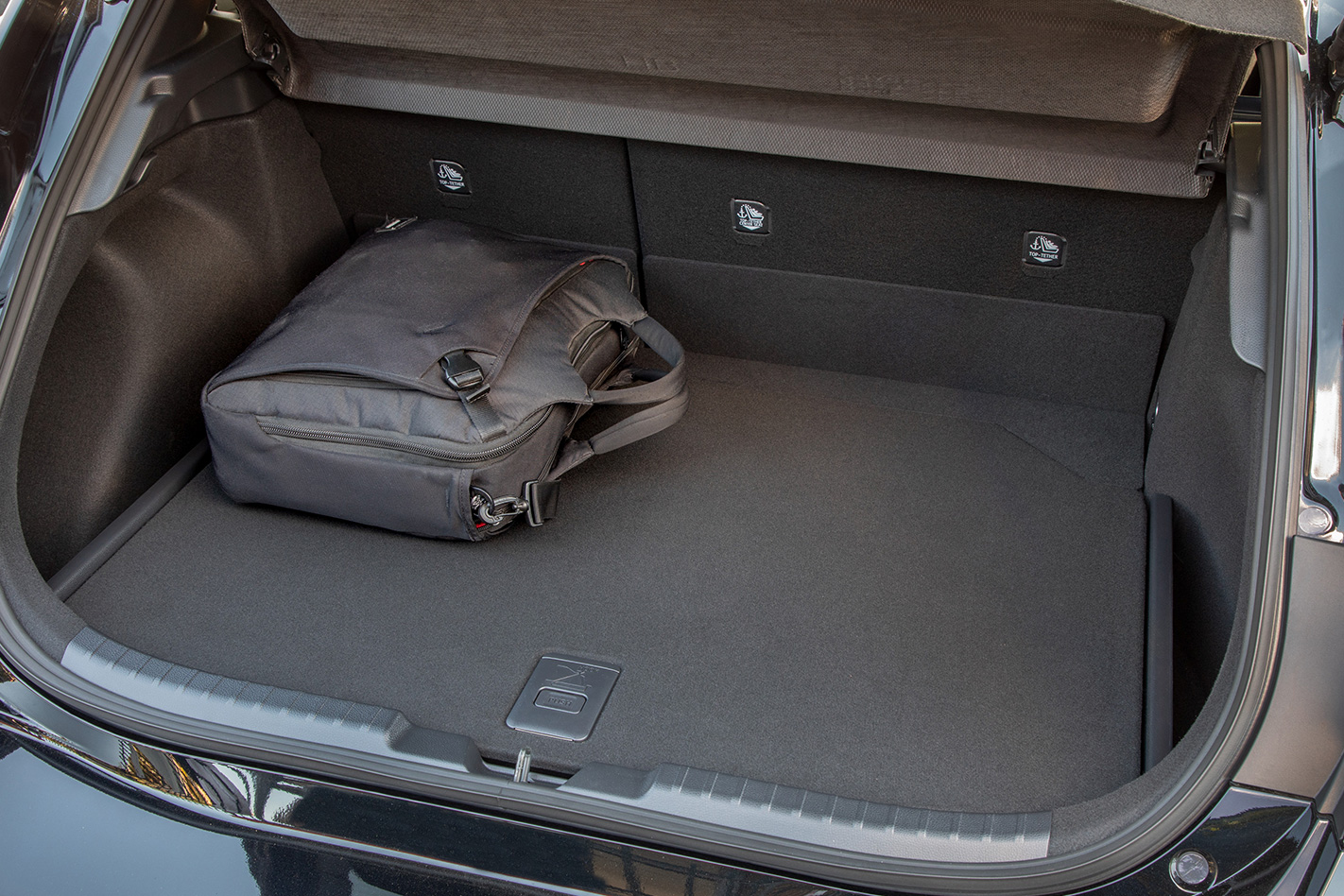
Measuring 4375mm long by 1709mm wide, and weighing in at 1340kg, the Corolla Ascent Sport auto is average sized for its class, however the boot space is very small, with a miniscule 217-litre capacity that’s 142 litres smaller than the previous model Corolla and 69-litres less than the Yaris.
Hyundai i30:
The Hyundai i30 Active is a five-door hatchback that seats up to five people.
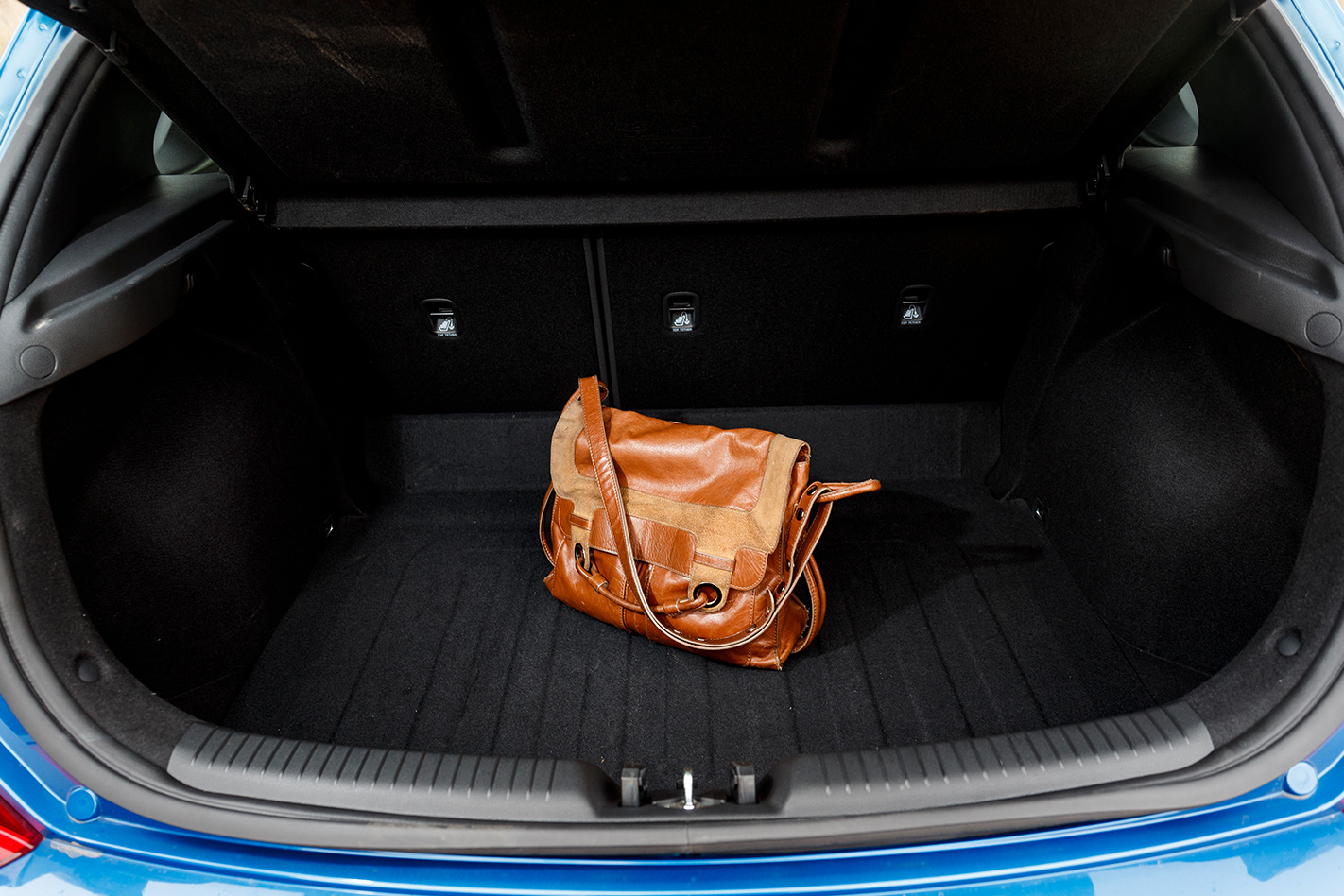
It measures just 4.34m length with a 2650 wheelbase that accommodates a spacious interior and practical 395-litre boot space that expands to 1301 litres with the rear 60:40-split seatbacks folded down.
HOW SAFE ARE THEY?
Toyota Corolla:
The new Toyota Corolla hatch was awarded a five-star ANCAP safety rating in August 2018 thanks in part to its active safety features, including autonomous emergency braking (AEB) with cyclist and pedestrian detection, and lane-keep assist.
It scored well for crash protection – 96 percent and 86 percent for adult and child occupant protection respectively – and is equipped with seven airbags (front, front side, full length curtain, and driver’s knee), ISOFIX child seat anchors in the rear seats, and seatbelt warnings.
Hyundai i30:
The Hyundai i30 was awarded a five-star ANCAP rating in April 2017. It’s a safe car in terms of crash protection, with seven airbags including a driver’s knee bag and full-length curtain airbags to protect your head.
Other safety features include a reversing camera, rear parking sensors, auto-on headlights, LED daytime running lights, seatbelt reminders on front and rear seats, and electronic stability control that all cars are required to have.
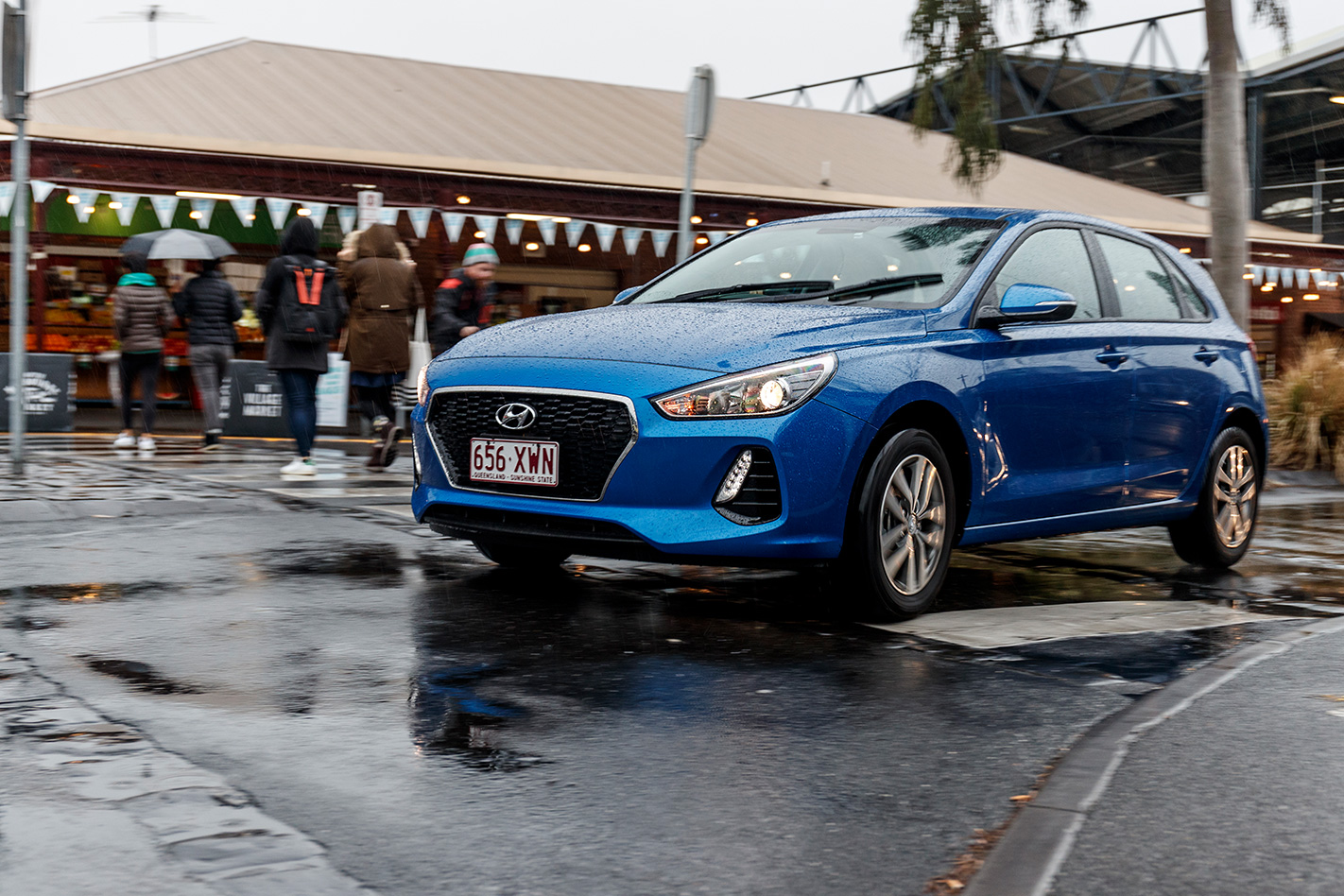
Active safety features including autonomous emergency braking aren’t included on the standard spec sheet, however it available as part of Hyundai’s SmartSense package that for around $1700 adds active cruise control, auto-braking, lane keeping assist, driver attention alert, blind-spot detection, and rear-cross traffic alert.
HOW COMFORTABLE ARE THEY?
Toyota Corolla:
The 12th-generation Corolla has a fresh and ergonomically sound cabin design. Build quality is hard to fault and the materials used also have a high quality feel.
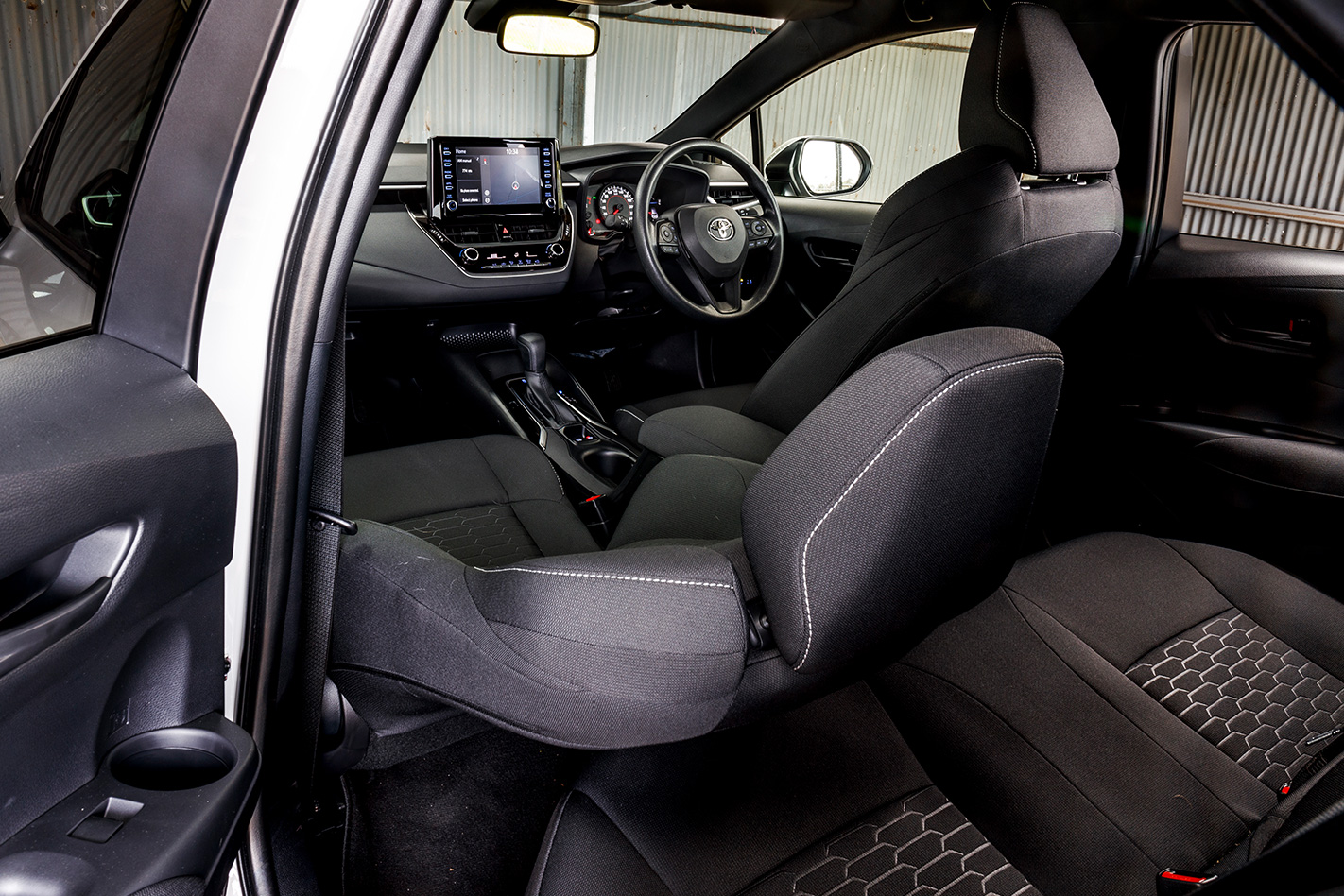
That said, the Ascent Sport’s plastic steering wheel isn’t as pleasant as the leather wrapped tiller in higher-spec SX and ZR Corollas, or similarly-priced Mazda 3 Touring, but the buttons are laid out intuitively, including the cruise control switchgear, which are mercifully no longer located on a separate stalk.
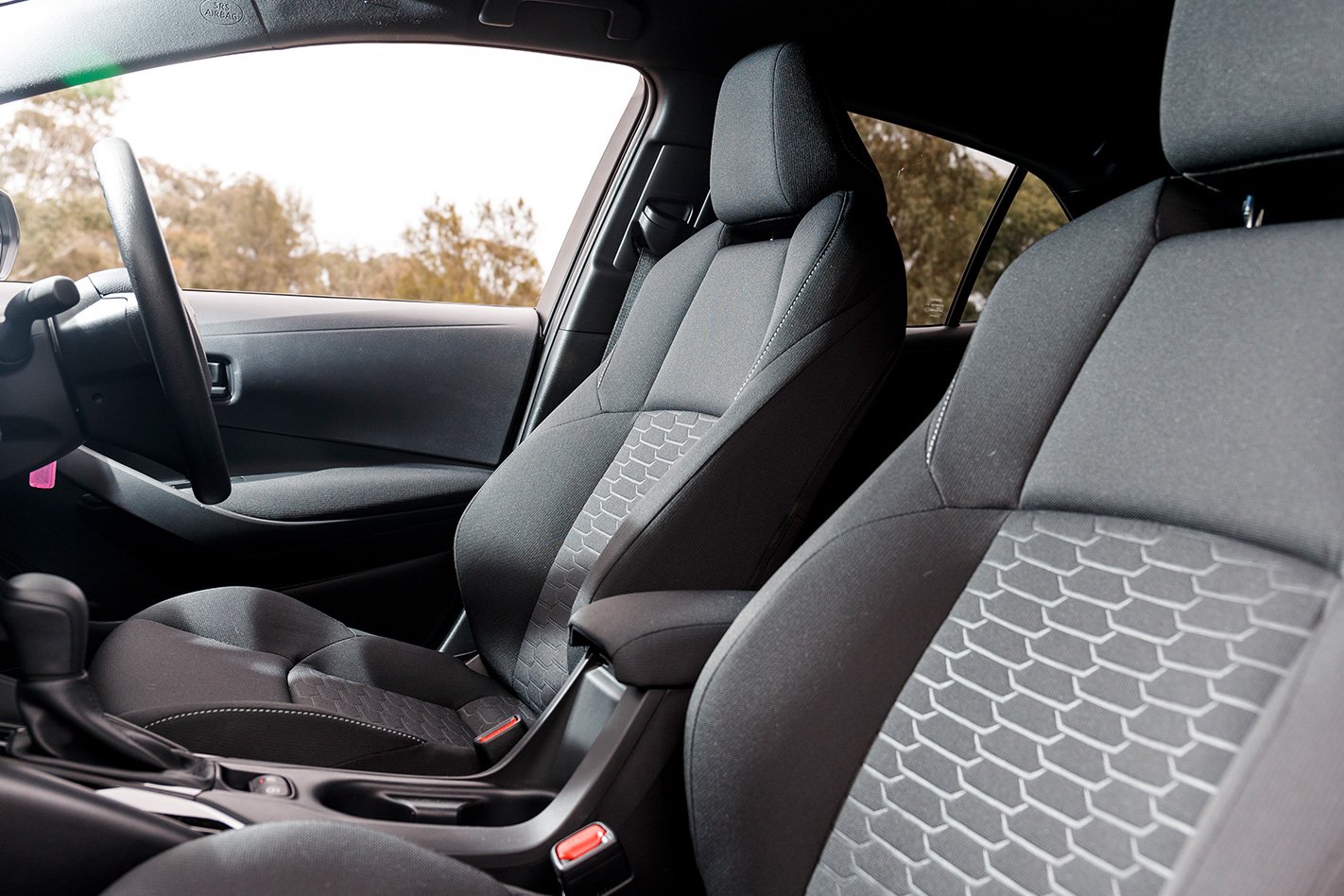
The cloth upholstery also feels durable and the front seats have deep cushions and great lower- and upper-back support.
The back seats are comfortable too, however leg and headroom is tight, with the shins of the average sized adult touching the front seats. A centre armrest has two cup holders, and there is also a handy cup holder on each of the rear-door armrests.
Rear storage is confined to a map pocket behind the front passenger seat and there are no air vents or USB and 12v sockets for rear-seat occupants.
The ride down back is pleasant though, thanks to the Corolla’s advanced multi-link rear suspension that handles lumpy rural roads in a composed manner.
Hyundai i30:
The i30 Active’s cloth seats are comfortable and there’s good leg and headroom throughout, though the rear seat is a little too narrow to comfortably seat three adults – though that’s common for this segment.
The smaller 16-inch wheels provide it with a better ride than the up-spec models that roll on 17s and 18s, and the locally-tuned suspension has a composed ride over bumps.
The conservative cabin design is a little bland and hard plastics abound, but the dashboard looks neat and uncluttered and the controls, particularly the switches on the steering wheel, are intuitively laid out.
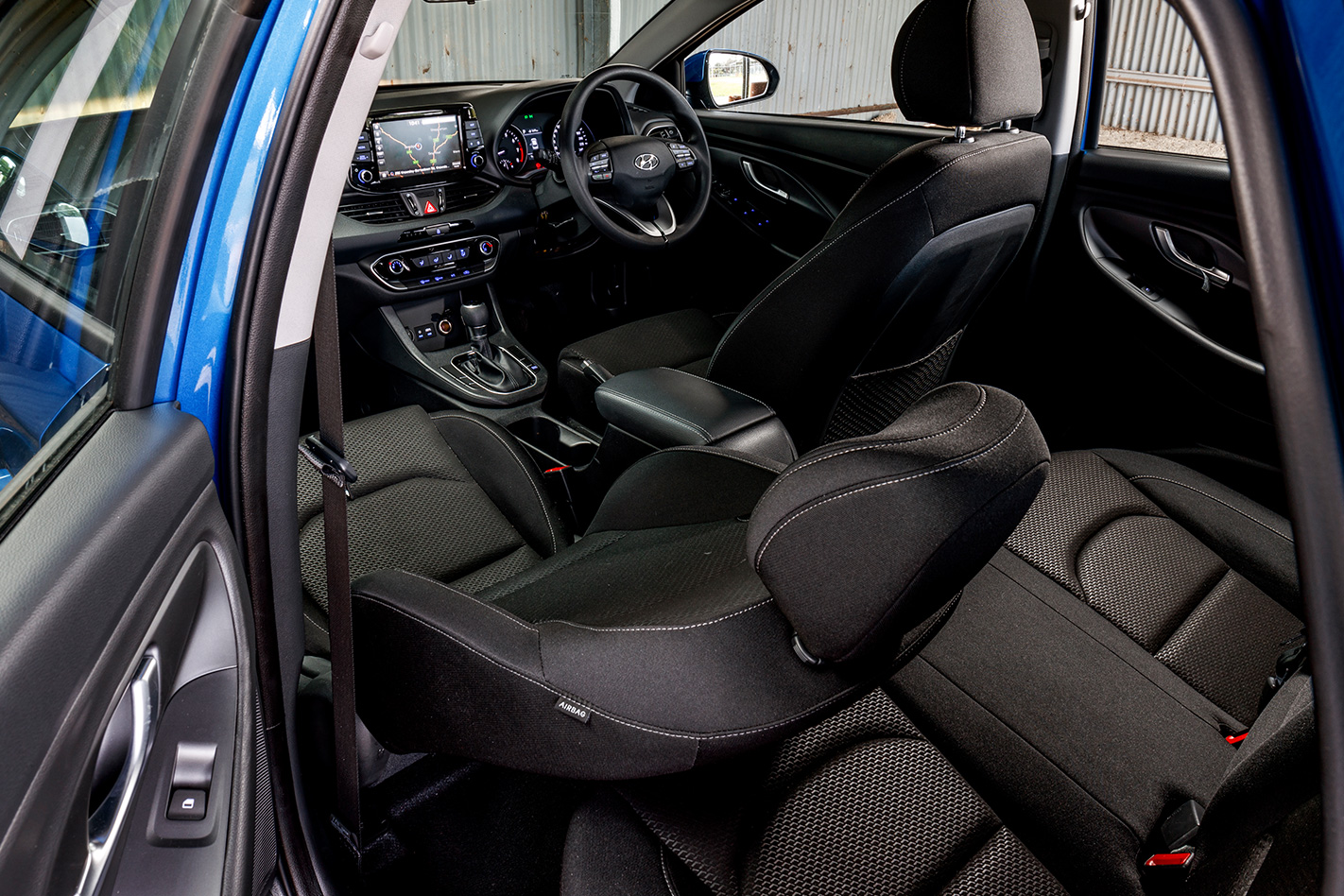
The 8.0-inch touchscreen, which is a staple across the Hyundai and Kia range, looks good, works well and the infotainment system is very easy to navigate.
Rear-seat passengers miss out on their own air vents or USB/12v charging sockets, but if their phones go flat they can enjoy the view with good side and forward vision through the i30’s generous glasshouse.
WHAT ARE THEY LIKE TO DRIVE?
Toyota Corolla:
The new Corolla was built with the driver in mind, and has been re-built from the ground up on a new longer, wider and stiffer chassis with a sophisticated new multi-link rear suspension.
The well-balanced chassis combines with nicely-weighted and direct-acting steering to make cornering surprisingly good fun. It handles bumpy roads great too, with the multilink suspension feeling like it’s cutting through road imperfections rather than merely rolling over them.
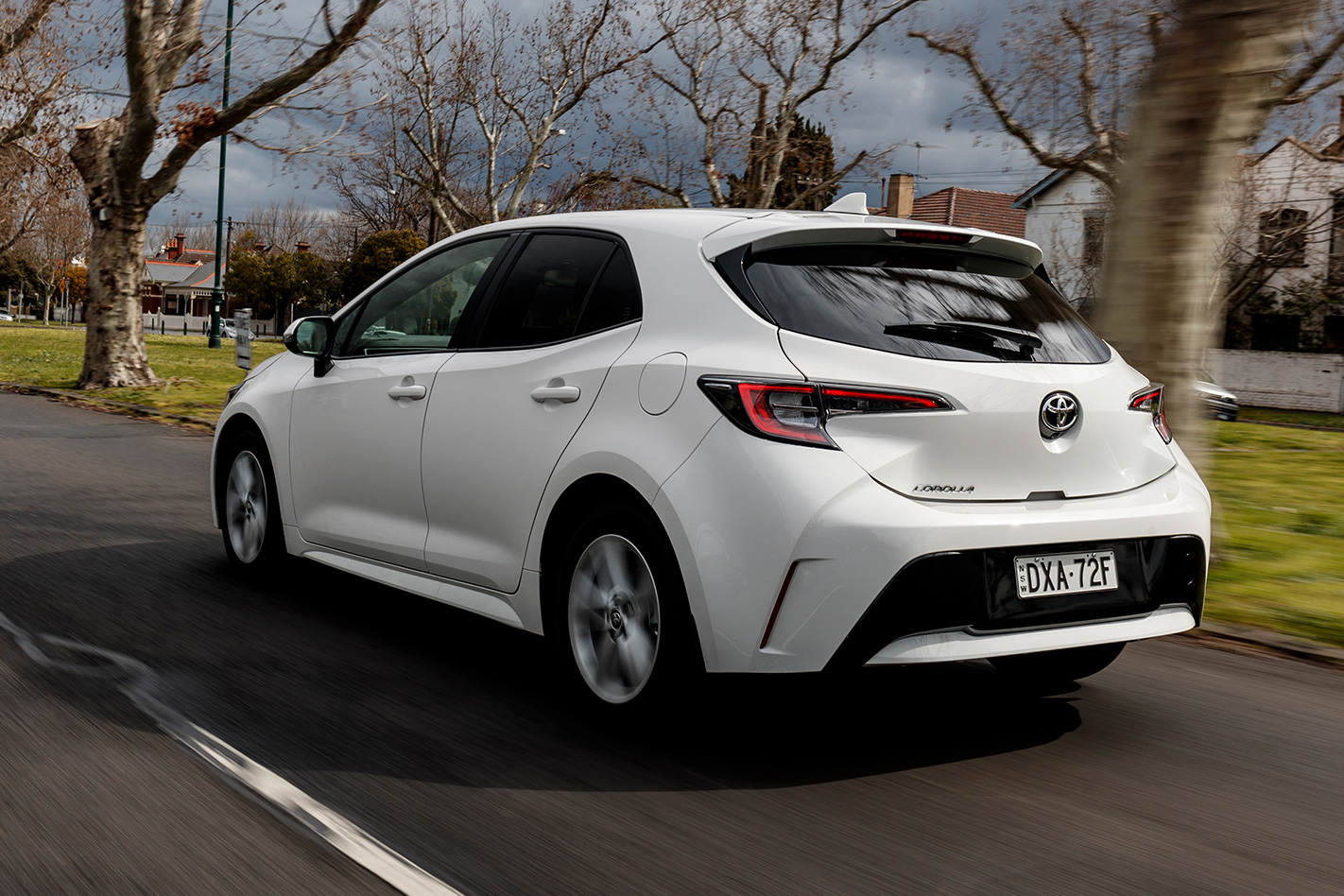
While CVT autos usually have a revvy but sluggish rubber-band feel, the 2.0-litre Corolla’s has a ‘launch gear’ that steps through the gears like a traditional automatic gearbox. This helps it take-off sharply from a standstill, while also offering responsive acceleration while on the move, such as when overtaking.
Hyundai i30:
While it’s not intended to be as spirited or dynamic as the sportier i30 SR at the upper end of the range, the Active certainly feels nimble enough around town. Hyundai has honed its chassis and suspension for Aussie roads resulting in a great ride and body control on a broad range of road surfaces, which makes it feel like a bigger, more mature car.
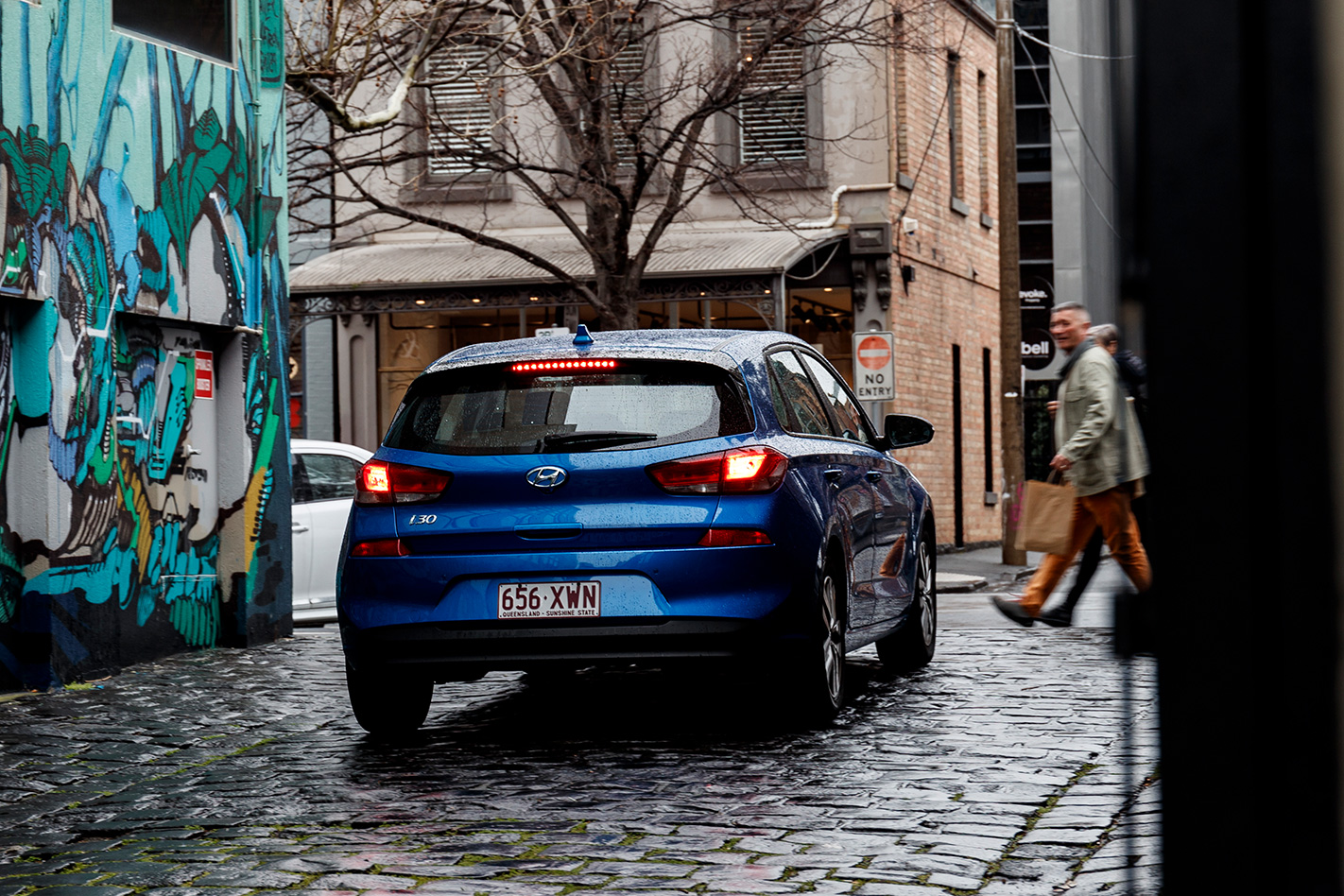
Meanwhile, the 120kW/203Nm 2.0-litre petrol engine responds quickly to throttle inputs and the six-speed torque converter automatic gearbox shuffles smoothly between steps. It may be a comparatively thirsty engine, but it also produces more power than many others at its price point. For those that don’t like to dawdle, that’s worth noting.
OUR OPINION
Sharp styling and vastly improved performance and handling has certainly seen the pendulum swing back the Corolla’s way. The Corolla Ascent Sport costs around $1000 more than the i30 Active, but we reckon its highly efficient powertrain, multilink rear suspension and standard active safety represent better value, with only that tight boot space letting it down.
However, there is still plenty going for the Hyundai, not least its superior versatility and smartphone mirroring-capable infotainment package.
A US car enthusiast has built a supercharged rally-spec Mazda NA MX-5 and filmed the entire process.
In a six-minute timelapse video, the MX-5/Miata/Roadster owned by Caleb Sandlund (or ‘Gingium’ on YouTube) goes from being a rather rough-looking NA to a rather tough-looking off-roader.
Starting in early 2017, the first step of the process is the raise, which gives us a few close-ups of the seen-better-days suspension and underpinnings of the Mazda.

Next, the front and rear bumpers come off, which makes space for the baja buggy-style bars which take their place later on. Pretty much everything freshly exposed is covered in a layer of black paint.
Lights are swapped for high-powered replacements, and then the surface rust is cut and filled in, the roof is sanded, and the whole car gets ‘plastidipped’ olive green before black bolt-on guards and a roof rack are added. A spare tyre is mounted to the bootlid.
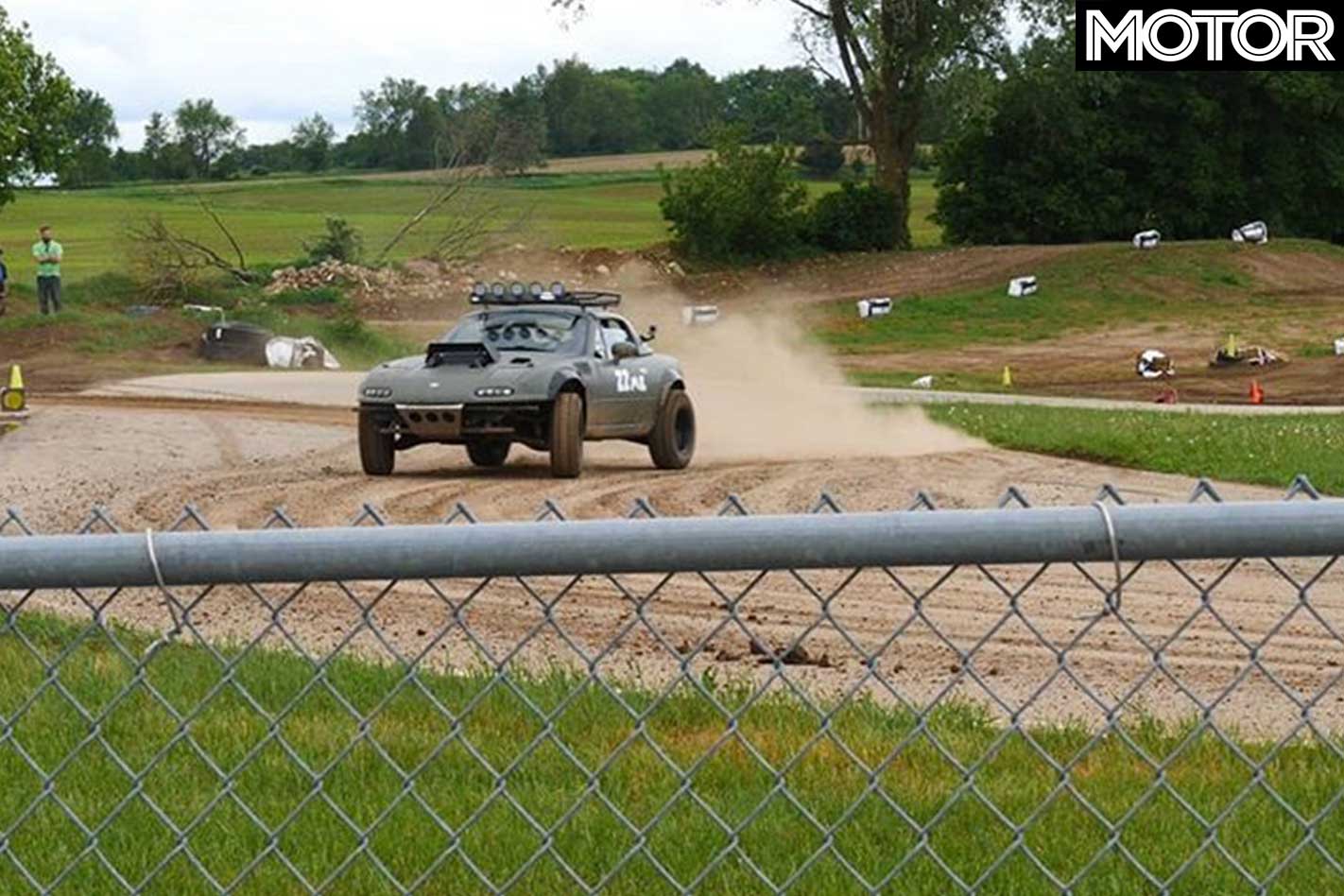
The interor also gets a toughen-up, which means its stripped and seats are replaced with aluminium bucket seats.
Then comes the supercharger, with a top-mounted intercooler and a very makeshift hood scoop to feed it air.
Thankfully, it doesn’t end there. There are a few clips of the ‘Rallyata’ taking to the mud, following a Toyota FJ Cruiser though the tracks. It’s not sped-up like the rest of the video, mercifully. Gingium also has several more videos of the MX-5 at events and driving various courses.
Along with all the usual new car figures and statistics such as power, fuel economy and performance, emissions data is playing an increasingly important role in new car information, particularly since the diesel emissions scandal that continues to trouble German car maker Volkswagen.
But what exactly are vehicle emissions and how do they affect you? Here’s the lowdown on what happens when you put your foot down.
Tailpipe emissions can be generally categorised into two types; greenhouse gasses and pollutants.
Pollutants
Pollutant emissions are the parts of car exhaust that can contribute to poor air quality and can even be found contaminating water sources as well. Thick smog in cities and choking fumes are caused by these pollutants and minimising them limits the problematic impact on human health and the environment.
Carbon Monoxide (CO)
This invisible gas is the product of incomplete combustion and is very toxic to humans. Most modern engines only produce minute amounts of CO thanks to efficient combustion processes, but tired engines with older technology are bigger offenders.
Nitrogen Oxides
Three different gasses – nitric oxide (NO), nitrogen dioxide (NO2) and nitrous oxide (N2O) all fall under the same oxides of nitrogen categorisation, but have different effects when it comes to their pollution of the environment.
Nitric oxide has a minimal effect on the environment and health by itself but is highly reactive and can contribute to smog when combined with other airborne chemicals. Its relation NO2 is a brown irritant gas and can aggravate the respiratory tracts of humans, particularly those with medical conditions such as asthma. N2O is an anaesthetic and is used by drag racers in large quantities to allow the combustion of more fuel in highly turned engines. It is also produced in small quantities during normal combustion and has a minimal pollutant effect, however it is a greenhouse gas.
Nitrogen oxides are the emissions that got Volkswagen into hot water in 2015, when it was found to be using a so-called defeat device that allowed some of its diesel vehicles to pass strict lab testing, despite producing many times the maximum limit when in the real world.
The scandal prompted the introduction of a new testing system which assesses vehicles on the road in realistic conditions rather than simulated static rolling roads.
Particulates
These tiny particles suspended in exhaust gasses are the visible plumes of black smoke sometimes produced by large trucks on acceleration. Generally speaking, diesel engines produce far more particulates than petrol engines and diesel exhaust is recognised as a group 1 carcinogen.
Clearly, all pollutant emissions are of concern but the good news is that modern technology has almost completely eliminated their release into the environment.
Diesel particulate filters, as fitted to the latest engines, trap the tiny pieces of carbon and other materials in a complex filter in which high exhaust temperatures actually burn the particles off and release them as less harmful gasses.
Catalytic converters use expensive noble metals and chemical reactions – also triggered by high exhaust temperatures, to convert the nasty gasses into less harmful and problematic components.
Exhaust gas recirculation or EGR is also another relatively new idea that recirculates a small amount of combustion gas back into the engine’s combustion chambers. This reduces the oxides of nitrogen content of the exhaust.
Generally speaking, the newer the vehicle, the more modern and effective the pollutant emissions control technology reducing the environmental impact of the vehicle.
Greenhouse gasses
Greenhouse gasses are largely harmless to humans in normal emissions quantities, but have a significant impact on a global level and are the major contributor to rising global temperatures. Unlike pollutants, which can be converted to less harmful products through clever chemistry, greenhouse gasses are an inevitable product of combustion.
Many gasses exist that contribute to the greenhouse effect including methane and nitrous oxide, but the main offender in transport is carbon dioxide (CO2).
Australia is a little behind the rest of the modern world for emissions standards and while Europe is already conforming to the toughest Euro 6 standard, Australia is lagging behind on Euro 4.
The amount of CO2 a vehicle produces is directly linked to the amount of fuel it burns and the type of fuel. The only way to reduce vehicle CO2 emissions is to increase fuel efficiency.
Significant progress has been made reducing fuel consumption and, in turn, reducing carbon emissions through the use of hybridised powertrains. Ultimately, fully electric vehicles are the solution to all vehicle emissions, but many argue the problem in many cases is merely shifted from the vehicle to the power station, so while much of Australia’s power generation comes from fossil fuel combustion, EVs offer little advantage in lowering overall CO2 emissions.
