
Holden has provided a progress report on the local development of its all-new fully imported Commodore, which has so far undergone 100,000kms of testing here.
Holden has been adapting the German-built Opel Insignia to Australian conditions to ensure the Commodore-badged model meets local expectations in terms of ride and handling.
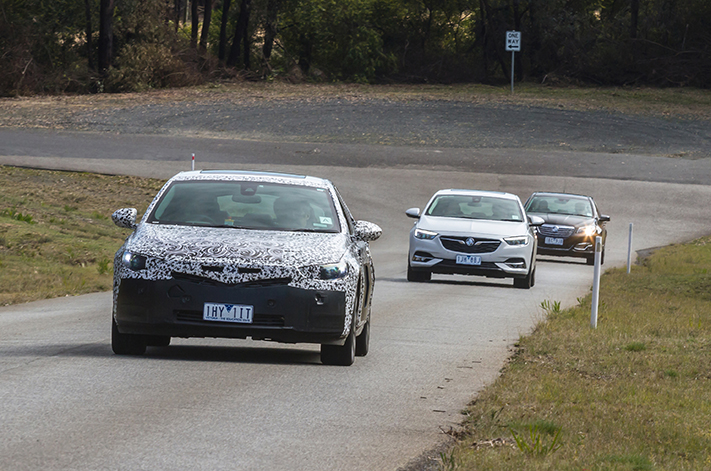
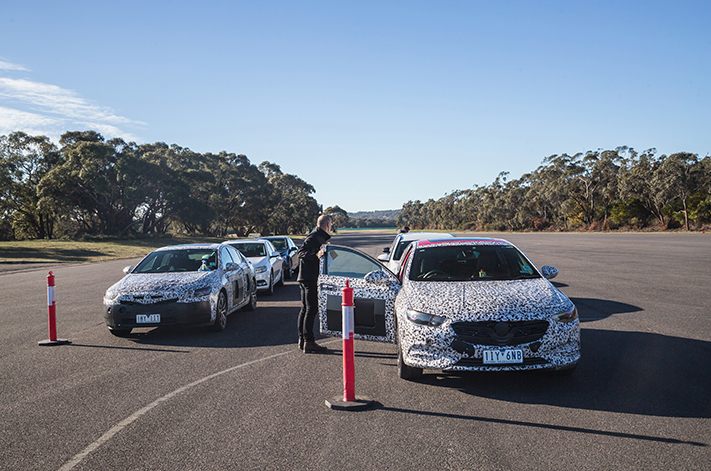
As well as a gruelling testing regime at Holden’s Lang Lang proving ground and rural roads, Holden has been testing the ZB Commodore in real world conditions as part of its Captured Test Fleet (CTF).
CTF cars are driven by Holden employees as daily drivers so they can report on everything from shakes and rattles to poor radio reception to try and weed out all possible bugs.
Holden’s Lead Dynamics Engineer, Rob Trubiani said his team was collaborating with GM Europe to draw on its 30 years of experience in developing Australian-built Commodores.
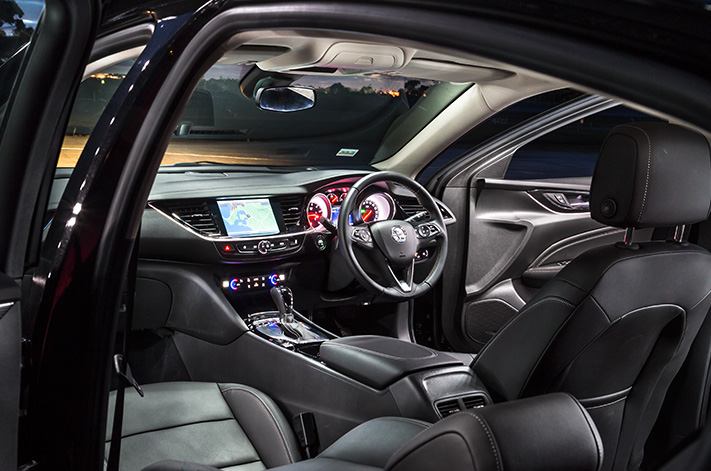
“We’ve worked on a more direct and responsive steering feel to give drivers greater confidence and a more engaging experience behind the wheel,” Trubiani added.
“That’s in addition to changing the dampers and suspension tune on both 3.6-litre V6 and 2.0-litre turbo variants so the car feels planted and well-balanced.”
Trubiani said he has been surprised with the performance of the entry-level 191kW/350Nm 2.0-litre four-cylinder petrol engine and nine-speed automatic transmission, which he says is quicker than the current V6 Commodore Evoke and more fuel efficient.
Trubiani’s confidence in the ZB Commodore 2.0T and V6 AWD seems justified. The Wheels reviews of each model show that, while there’s still some work to be done, they’re on the right track.
However, going by the reaction of the Holden faithful on each review, it seems developing a new kind of Commodore will be a lot easier than selling it.
LANE departure warning systems are saving lives in the US, research from one of the country’s top safety advocates has found.
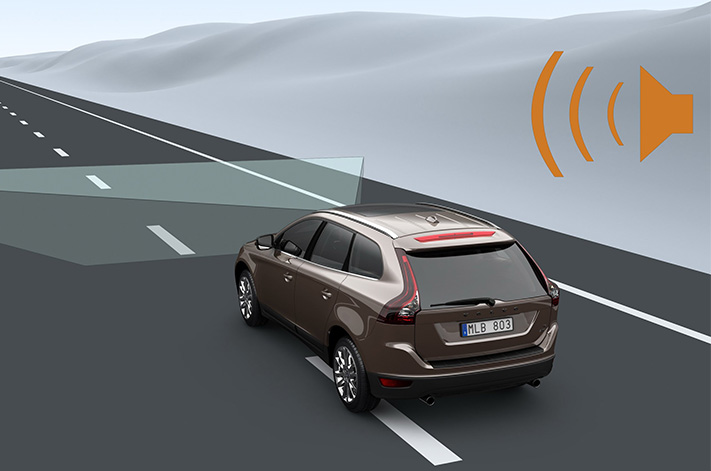
The US-based Insurance Institute for Highway Safety (IIHS) says the technology, which can prevent a car from unintentionally running off the road, had lowered the rate of single-vehicle sideswipe and head-on crashes – the most common cause of death – by 11 percent.
More importantly, though, the rates of injury resulting from those crashes, recorded in 2015, fell by more than 20 percent if the warning system was working.
| Aftermarket dash cams bring active safety features to any car
The US study could have huge resonance here in Australia. In Victoria alone, figures for 2015 show of the 179 drivers or passengers killed in single-vehicle crashes on the state’s roads, one in every two deaths involved hitting a tree, telephone pole or other objects that aren’t on the road. In NSW last year, 58 people died after running off a straight section of road, while another 74 died after their vehicles strayed into oncoming traffic.
“This is the first evidence that lane departure warning is working to prevent crashes of passenger vehicles on US roads,” IIHS research vice-president Jessica Cicchino said. “Given the large number of fatal crashes that involve unintentional lane departures, technology aimed at preventing them has the potential to save a lot of lives.”
The IIHS estimates that if all vehicles on US roads in 2015 had lane departure technology installed, as many as 85,000 crashes could have been avoided. A more simplified analysis predicted the technology could have avoided almost nine out of every 10 crashes.
The US study follows a similar one conducted in Sweden that found about two in every five crashes caused by cars inadvertently leaving their lanes could have been avoided had the drivers had warning that they were about to drift out of them.
| Autonomous Emergency Braking explained
The IIHS believes that part of the problem with the technology in the US is that up to half the drivers sitting behind the wheel of vehicles equipped with lane departure warning systems switch it off – because they find it annoying.
Lane departure warning systems vary from brand to brand. Some will beep when a car gets close to the lines that either marks the left-hand margin of the road or the broken line marking the next lane, some will shake the driver’s seat or steering wheel, while others will automatically apply the brakes to one or more of the car’s wheels to drag it back on line.
The Australasian New Car Assessment Program, which independently rates the crash safety of new cars sold in Australia, awards up to three bonus points in its scoring system for those that include lane-support systems.
THE Toyota 86 continues to defy all manner of conventions.
Its fun first, numbers second philosophy is a breath of fresh air in an industry where power and performance continue to climb and it’s apparently a mantra that resonates with customers.
Traditionally, sports car sales shine brightly for a fleeting moment then fall off a cliff once they’re no longer the latest thing, but the 86 and its Subaru BRZ twin are flying in the face of conventional wisdom, ticking along at a combined 200-odd sales per month. Ford sells roughly an equivalent number of Mondeos!
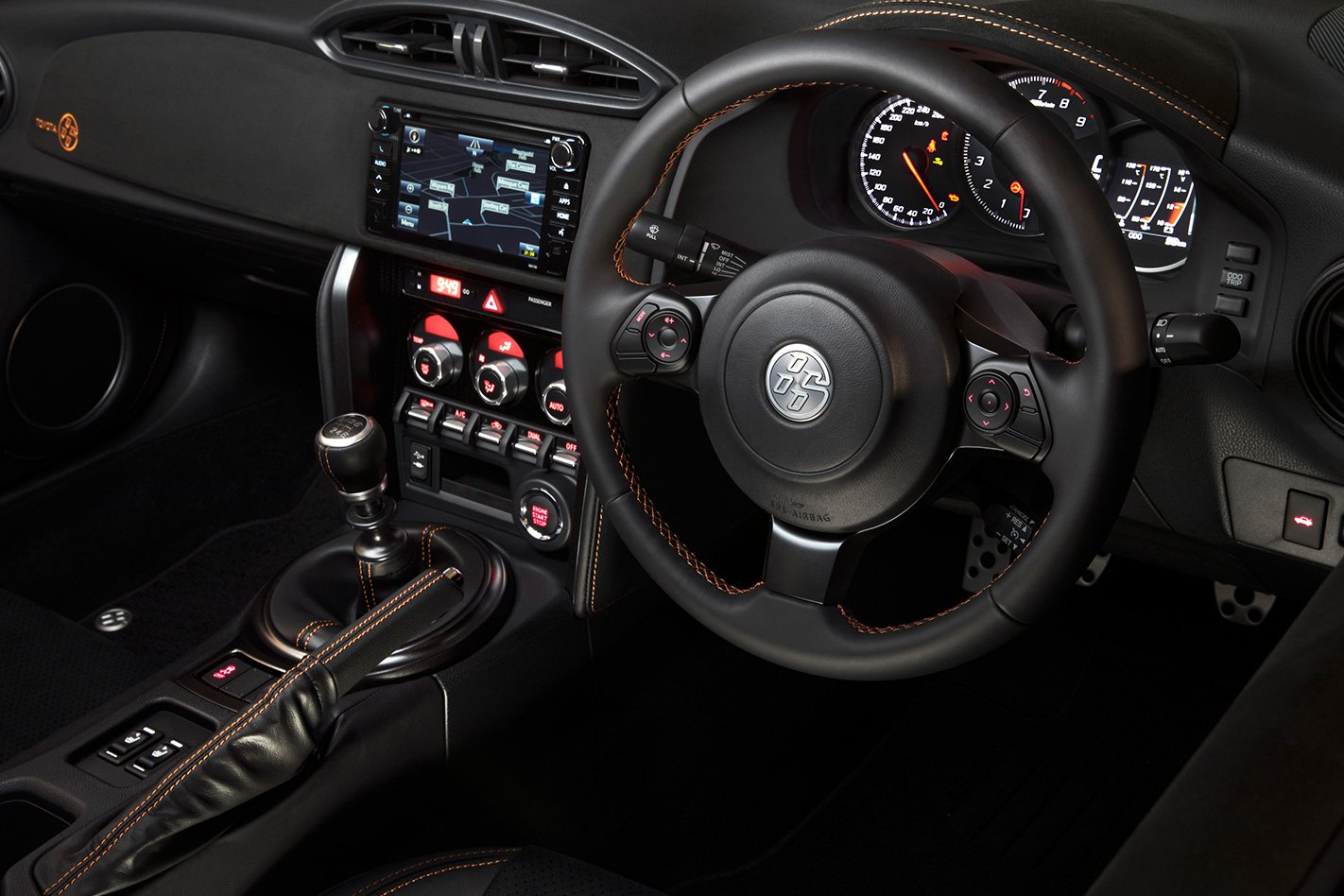
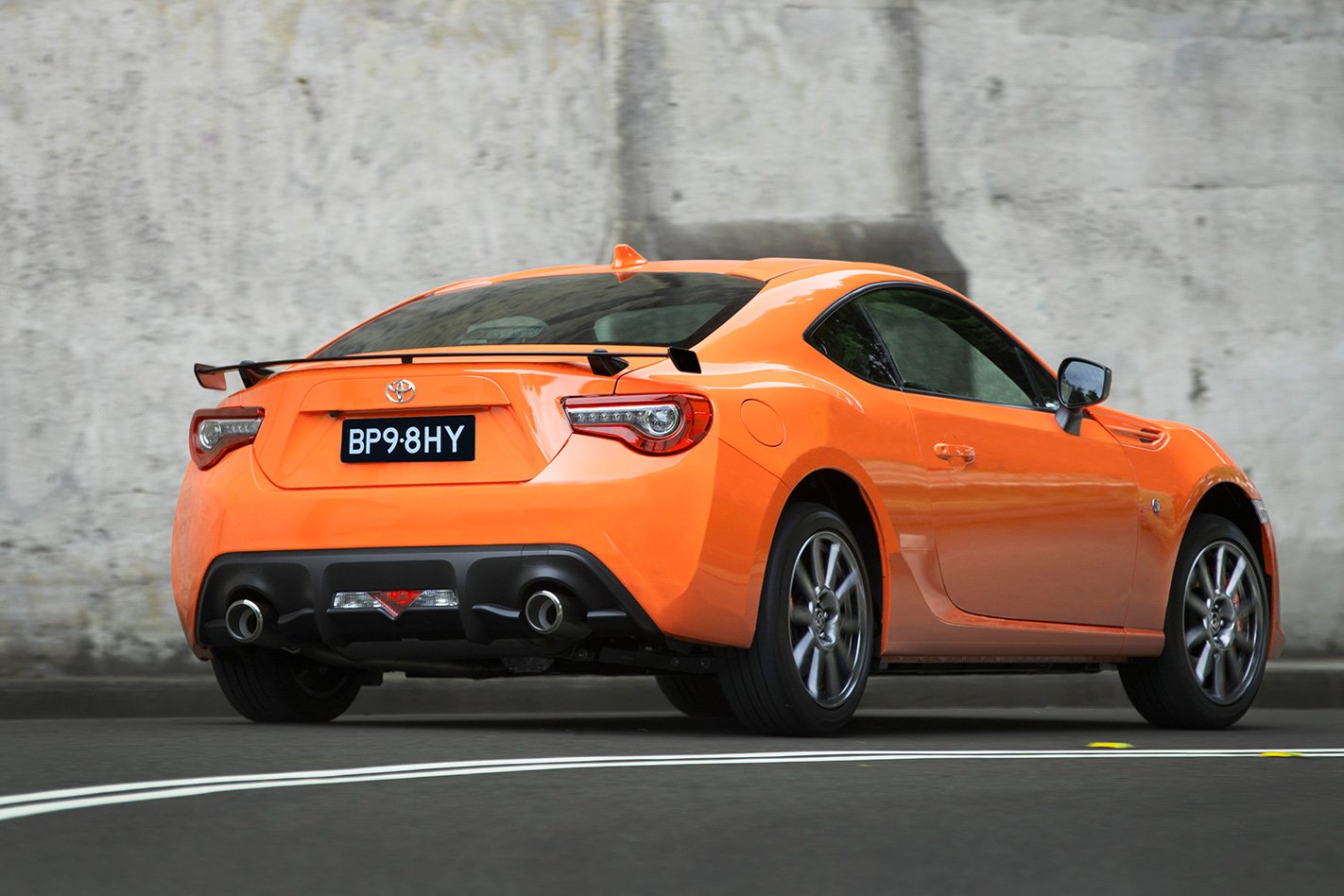
Just 60 will be built, all based on the top-spec GTS manual and all in retina-scorching Solar Orange; you’re guaranteed never to lose it in the supermarket car park. The look is topped off by a black spoiler and mirrors and 10-spoke 17s.
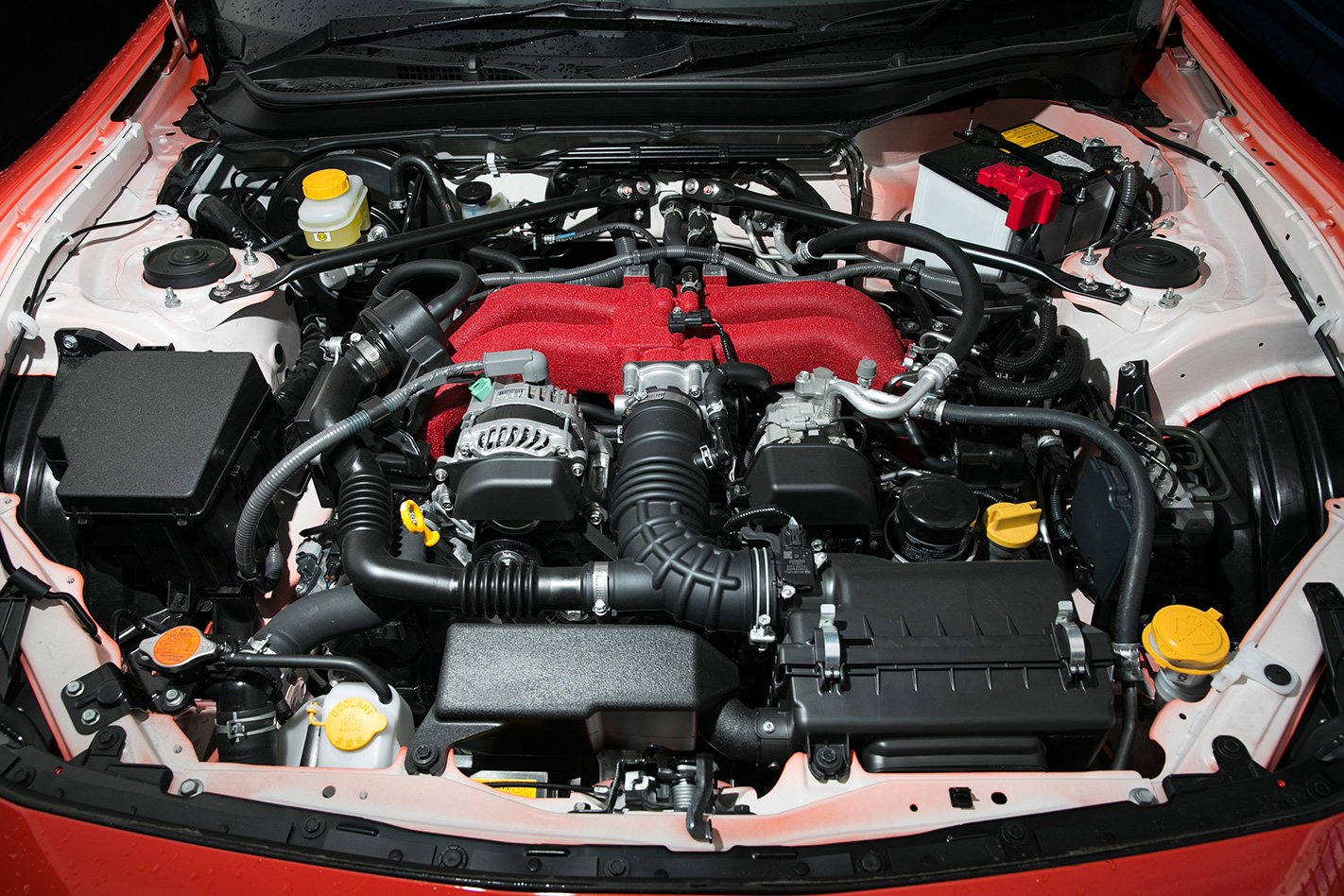
An odd visual quirk of the 86 Limited Edition becomes apparent when you open the bonnet. The 2.0-litre boxer four is unchanged, but the engine bay itself is white. According to Toyota orange is not a good masking colour so a white primer is required, however production processes prevent the paint being applied to the whole bodyshell.
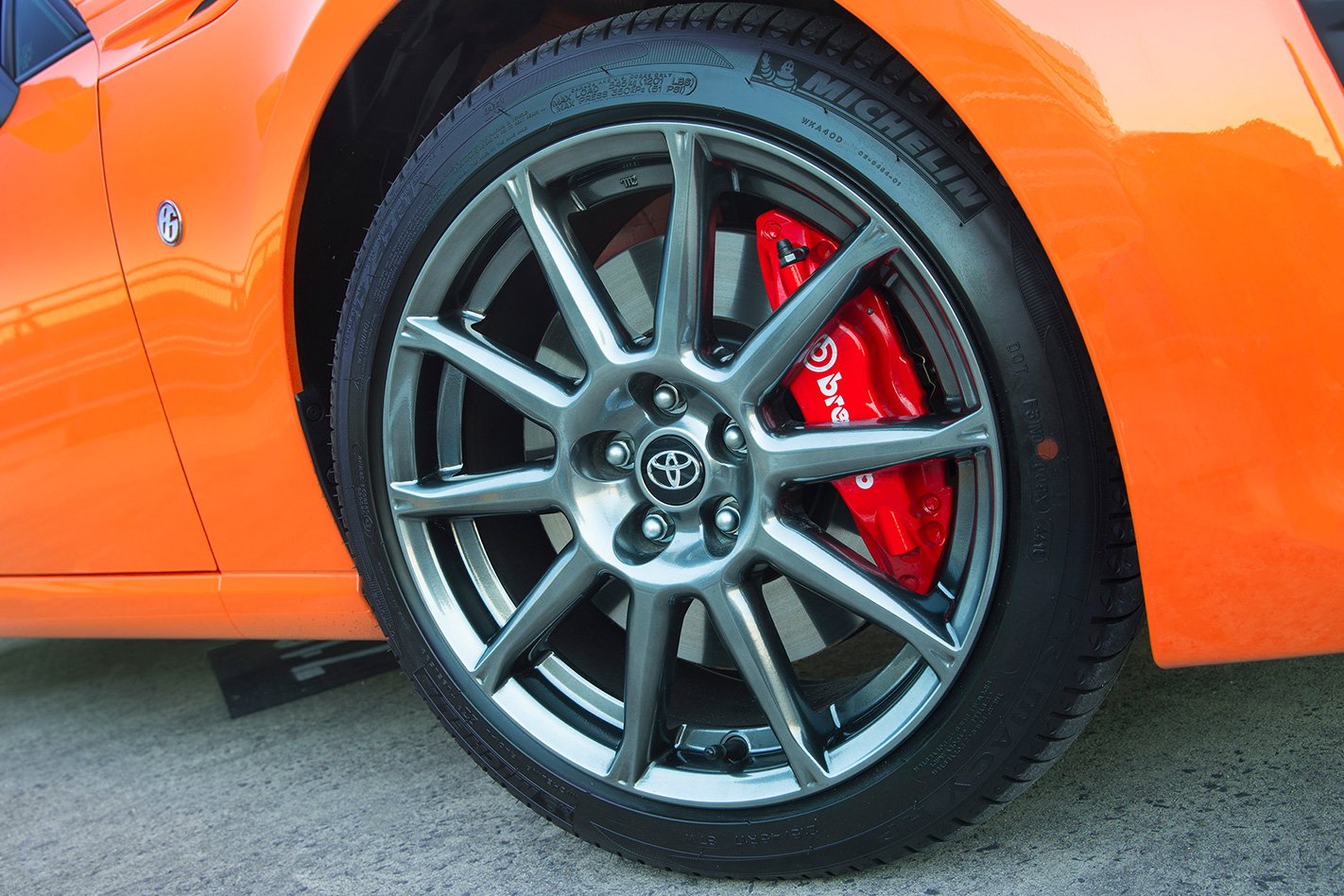
Thankfully, the rest of the package is a bit more professional. Brembo brakes consisting of 326mm front rotors and four-piston calipers at the front and 316mm rotors with two-piston calipers at the rear are a substantial upgrade over even the GTS’s uprated stoppers, while specially tuned dampers from German suspension expert Sachs live under those bright-orange wheelarches.
Toyota has arguably tweaked the areas the 86 needed least help in, however driving the Limited Edition back-to-back with our long-term 86 GT does illustrate its improvements. The Brembos offer a firmer pedal and better retardation than the soft, dead-feeling standard brakes and the suspension setup tames some of the Toybaru’s waywardness.
Of course, how much is down to the new Sachs dampers and how much is down to the 17-inch wheels and different tyres on the GTS-based LE isn’t clear, but it’s an improvement nonetheless.
Whether or not it’s enough of an improvement to justify the $4550 premium is another matter. The 86 isn’t quick enough to overly task a standard GTS’s brakes and for better or worse the suspension changes don’t fundamentally alter the 86’s character, so $41,490 – turbo hot hatch money – is starting to look a little pricey.
The 86 LE is still a brilliantly engaging and entertaining sports car, but the same can be said of the cheaper GTS, which won’t make you think your mate painted it every time you open the bonnet. While there’s some quality gear fitted to the LE, any 86 chassis tweaks are going to be limited in their effectiveness as long as Toyota insists on fitting rubbish eco-spec tyres.
The 86 Limited Edition isn’t without appeal, but we’ll stick with the GTS, thanks.
4 stars out of 5 Like: Dynamic improvements; turns heads Dislike: Erodes 86’s value; paint job
2017 Toyota 86 Limited Edition specs: Engine: 1998cc flat-4cyl, DOHC, 16v Power: 152kW @ 7000rpm Torque: 212Nm @ 6400-6800rpm Weight: 1258kg 0-100km/h: 7.4sec (claimed) Price: $41,490
THE next Porsche Cayenne could sport an all-electric drivetrain alongside hybrid and conventional powerplants when it has its official reveal on August 29.
The luxury sports car and SUV maker will next Tuesday reveal its third generation of the car that helped to turn Porsche from a niche seller to the highly profitable brand it is today. A sketch released this week shows the Cayenne will adopt a design heavy with influence from the smaller Macan, as well as 911-style tail lights that wrap around the rear.
Based on the Audi Q7, the “E3” Porsche Cayenne is expected to use a similar engine line-up, including the sport car maker’s own spin on the twin-turbo, electrically supercharged 4.0-litre diesel V8 that powers the SQ7. However, expect Porsche to build on the Audi’s 320kW/900Nm performance.
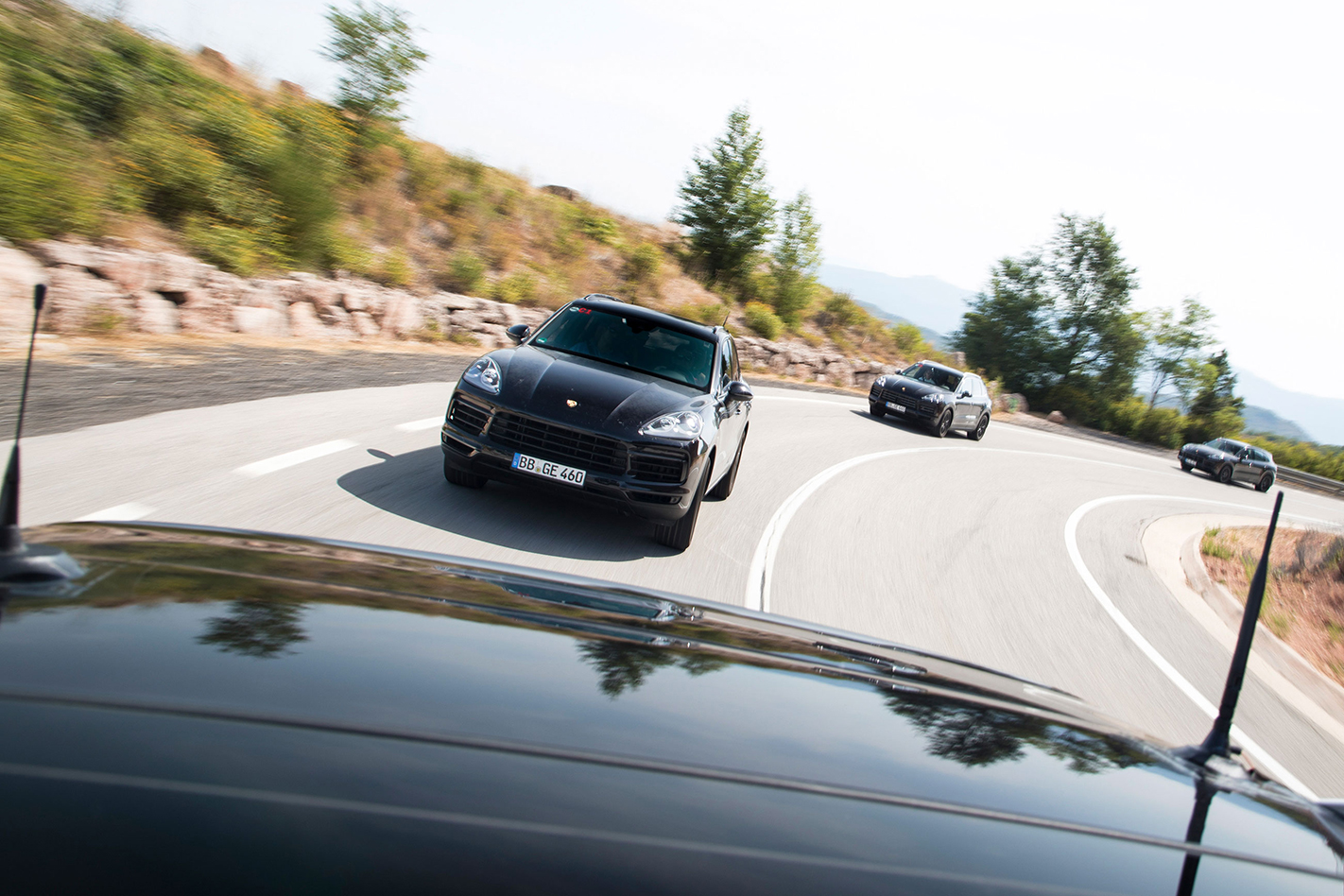
The Cayenne is expected to carry over the 3.0-litre V6 petrol and diesel engines that have traditionally powered it. However, there is the likelihood that a more cooking model of the SUV could downsize to a turbocharged 2.0-litre four-cylinder engine used in the Macan range – Porsche was quick to add a more affordable version of its smaller SUV once the hero models had settled in to showrooms. It also gives Porsche the opportunity to further exploit the turbocharger technology it developed for the 911.
The Cayenne should also gain the latest-generation Porsche Communication Management (PCM) system rolled out in the 911, and recently added to the Macan. That will add features such as real-time routes for the satellite navigation system, a more simplified operation and an integrated Wi-Fi hotspot.
Rumours hint that this generation of the Cayenne will be optimised to patch in parts developed for Porsche’s Mission E project, an electrified four-seater concept unveiled in 2015 and showing the path to a 440kW electrically powered four-seat sports car. Porsche has previously said it would use the technology developed for its now defunct Le Mans LMP1 campaign, with its more recent announcement that it would join the Formula E electric open-wheeler series hinting that it is on the cusp of revealing its road-going electric plans.
The Cayenne should also spawn another plug-in hybrid version using a similar 4.0-litre V8-powered petrol-electric drivetrain to the 500kW/850Nm system rolled out for the Panamera Turbo S E-Hybrid.
Porsche’s Cayenne may have a bit of a task ahead of it, though; Aston Martin’s stunning DBX and the potentially more visceral Lamborghini Urus are yet to show their hands.
Talk about deja vu: back in 1989, HSV built a model called the SV89.
It was based on a VN Commodore and it was white with a fuzzy, veloury, vaguely burgundy interior called Mulberry. Sounds awful, but it was kind of cool. Different. Unusual.
So you can understand why I thought I might be having a junk-food flashback when I stepped into the W557 and clocked the burgundy Alcantara that stretches across the dashboard and door trims. And I don’t know if it’s deliberate or not, but I’ll be damned if the W557 doesn’t even smell like an SV89. Spooky.
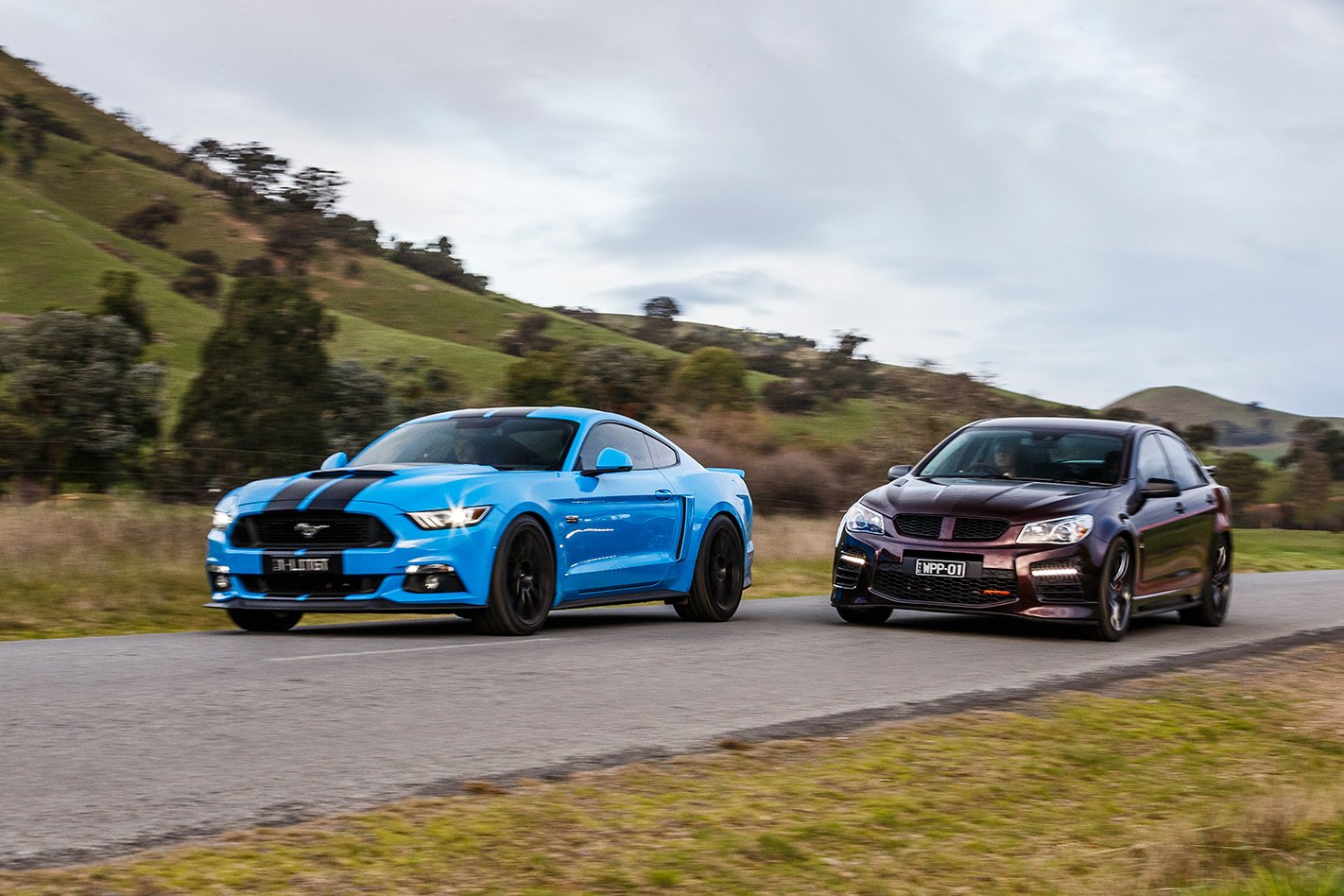
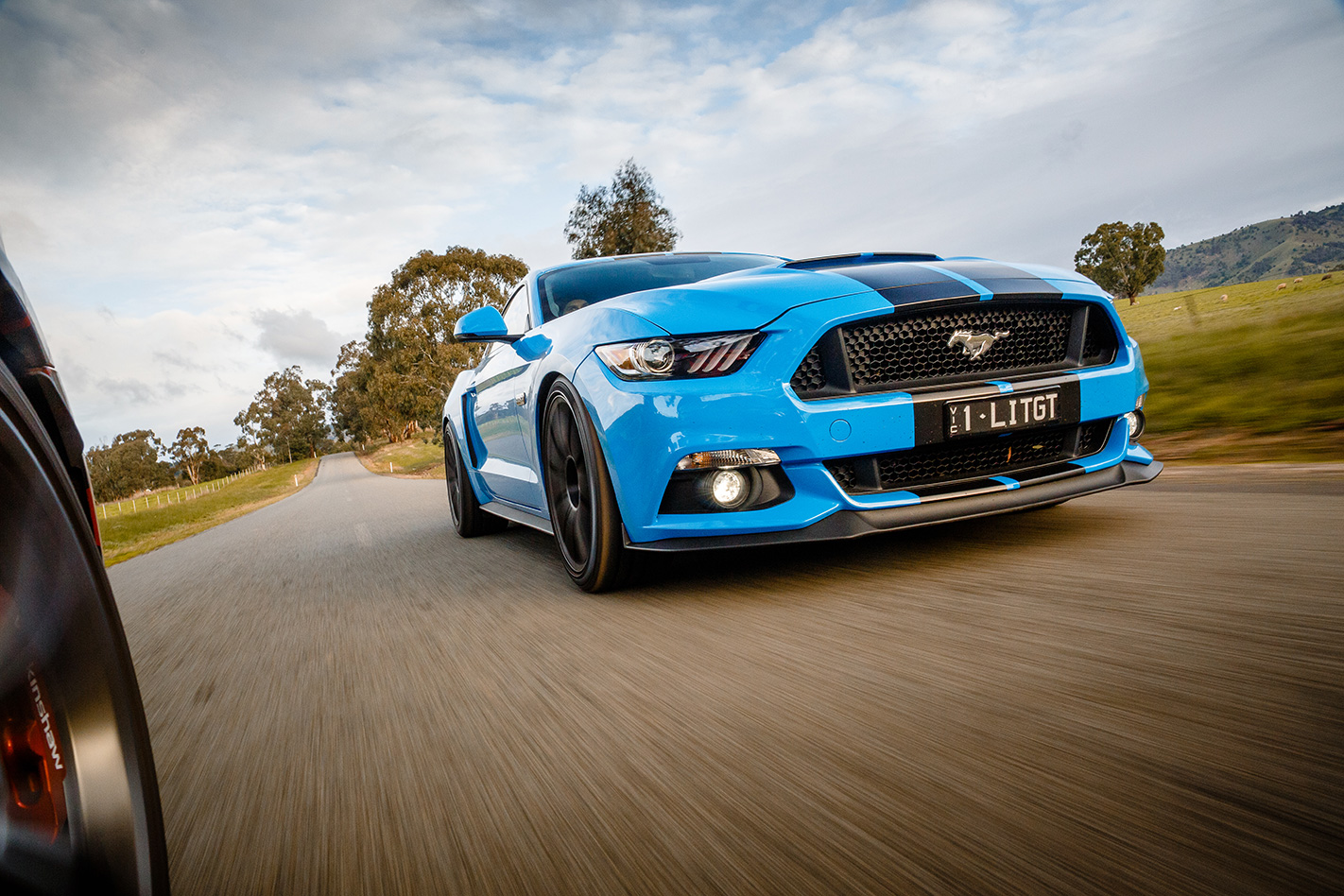
This, of course, has nothing to do with the Herrod treatment, but it’s still a feature you can do nothing about, short of handing the ’Stang over to a reality TV show for a quick, sponsor-approved ‘makeover’.
No thanks. But the Mustang will become even more familiar, trust us. Now that the Falcon lives in an urn on the mantelpiece, fans of Blue-Oval performance will be gravitating to the ’Stang en masse.
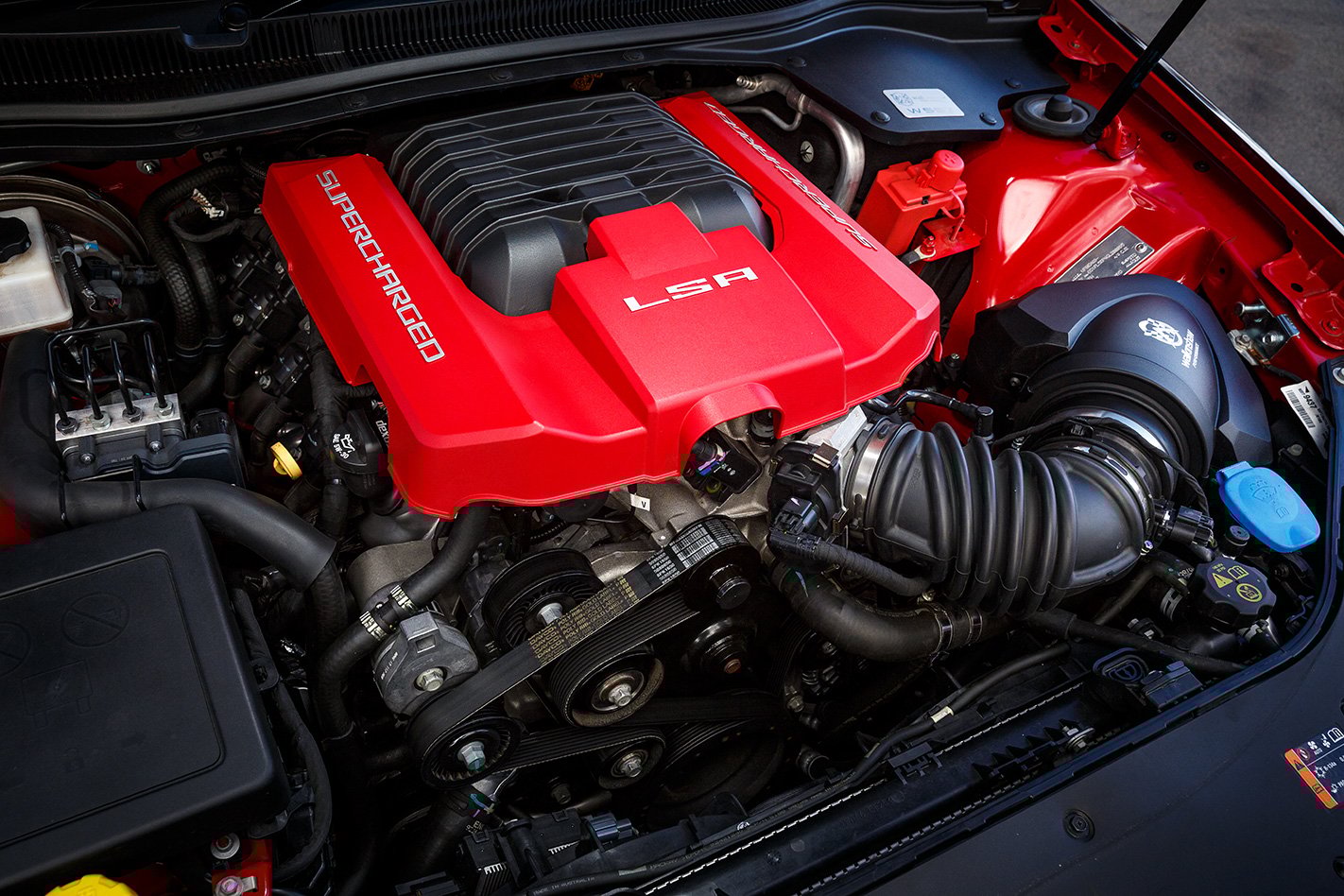
Now, taking the HSV GTS from its standard 430kW and all the way to 557, is a reasonably involved process. The stock supercharger remains but Walkinshaw adds a set of ceramic-coated headers, a cat-back exhaust with an active yodel-flap, a cold air intake, specific ECU calibration and a solid isolator coupling, whatever that is. (Turns out, it’s a tougher blower pulley, ’cos we checked.)
You also get 1000cc injectors and a pretty aggressive camshaft and a tougher set of beehive valve springs. That cam change also involves a new cam sprocket and a bolt kit to marry the stick to the cog. And if the car you’re presenting for the W557 treatment has done more than 20,000km already, WP will insist on also selling you new head gaskets, head bolts, lifters and lifter guides.
The other thing that’s been done is to fiddle the ECU to partly unlock the torque converter in the first four gears. The idea is to take some of the shunt out of the driveline as the hammer falls, but it also makes the car behave as though it has a 2500rpm stall converter fitted. WP swears it’s just software, but it gives the car an old-school hot-rod feel.
Over at Herrod Performance, the stock five-litre Coyote lump in your Mustang GT gets a similarly serious boot up the ginger. But instead of opening the engine and changing cams and stuff, Herrod starts with a couple of little mods to the engine (machining some bosses, etc) for it to accept the 2.3-litre Eaton blower.
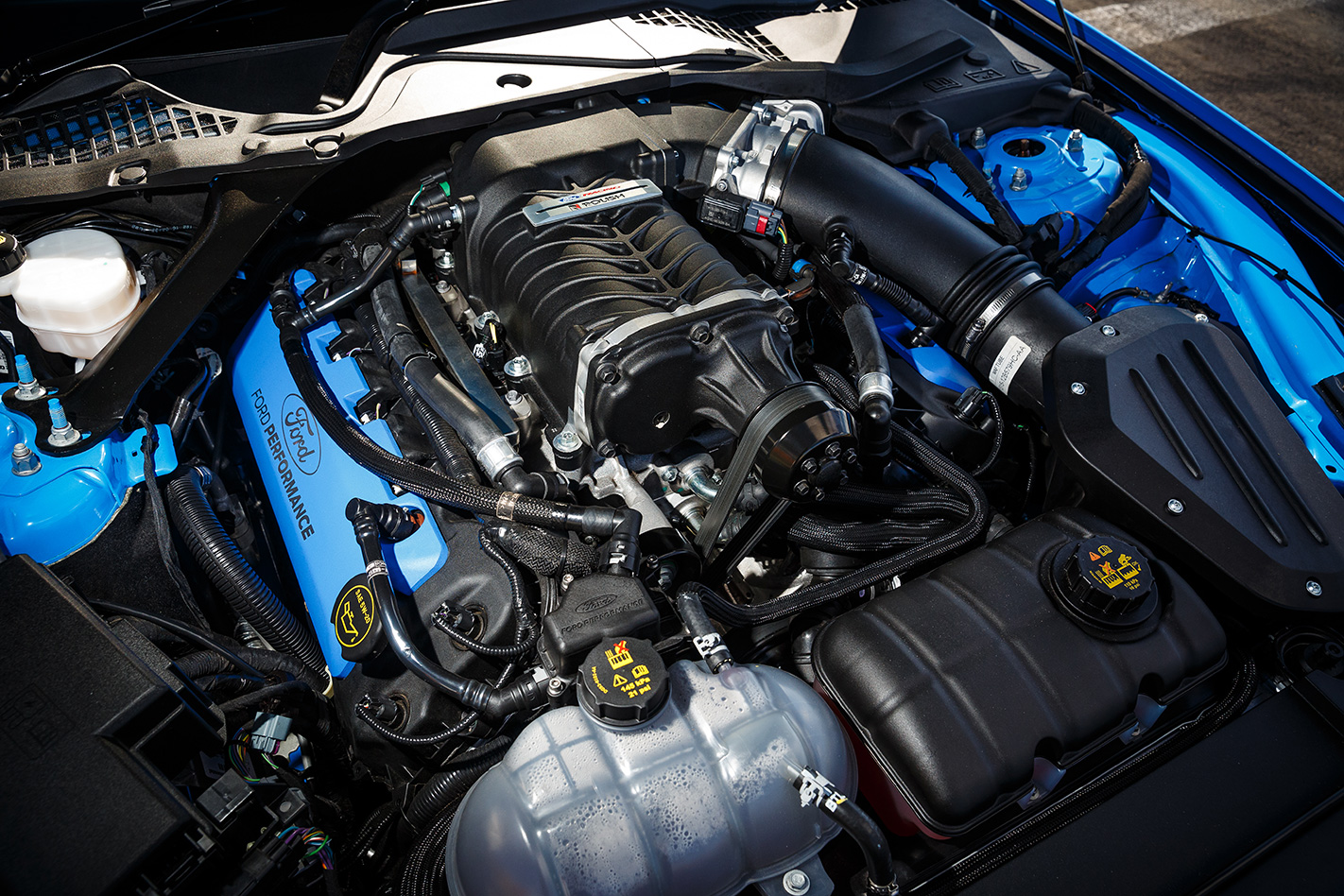
Typically for a Herrod car, though, it hasn’t just been the engine that’s been fiddled with, there’s also a whole new suspension set-up as well as a means of making sure the overall package doesn’t have any shortcomings or rough edges.
So, in this Base Compliance Pack (as Herrod calls it) you also get a Ford Motorsport-developed kit that includes new sway bars, shocks, springs and even the entire front strut assembly complete with new top-hats. There are new, stiffer rear bushes and the kit drops the ride height by about 25mm. In manual-transmission cars, you also get a Ford Motorsport short-shifter as part of the $23,500 happy meal.
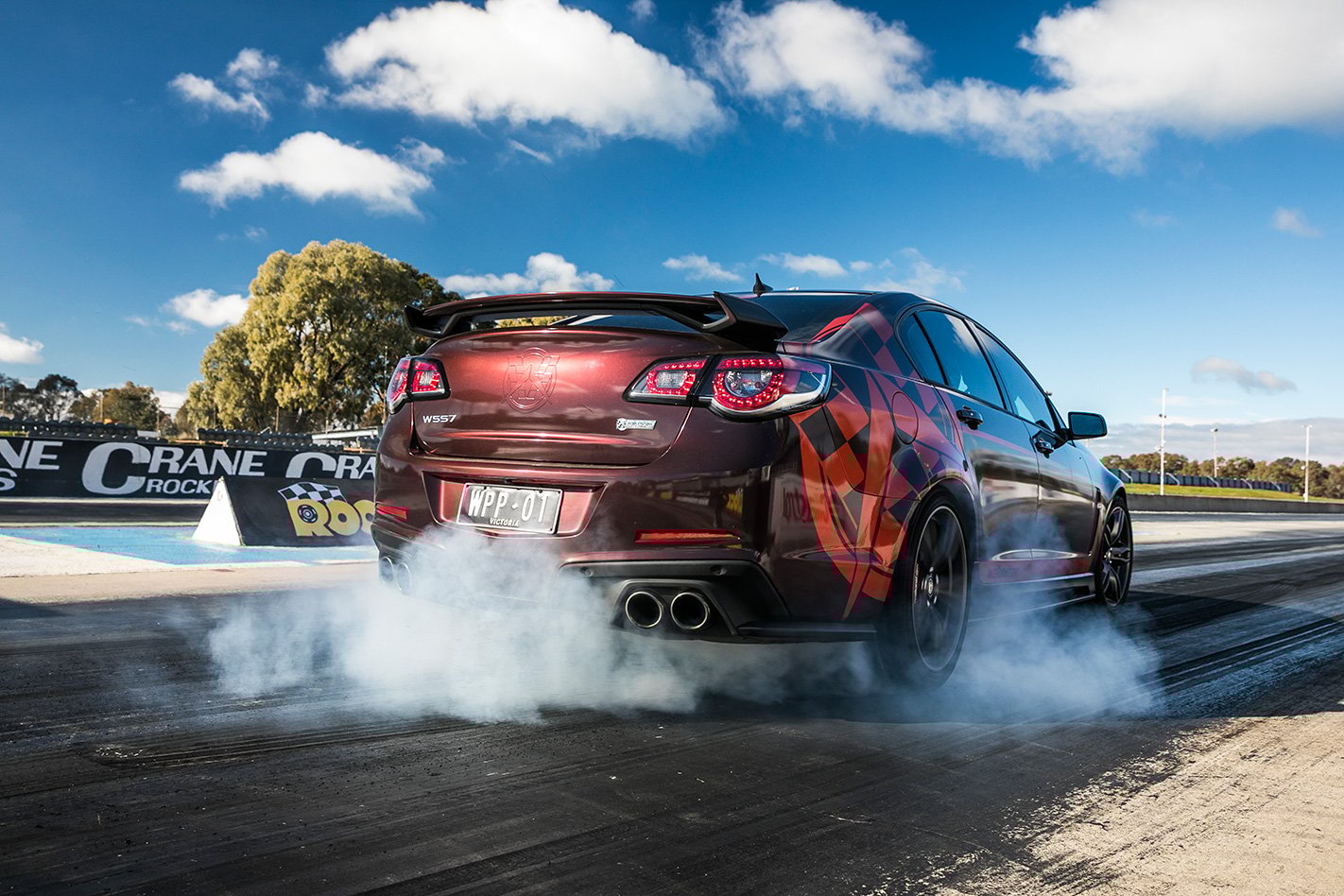
Our best was an 11.69sec at 201.56km/h dead and while a lot of cars would have you fiddling with tyre pressures and holding your tongue a particular way to get down to that, the W557 did it time and time again.
There was no appreciable heat-soak buggering things up and no hint that any component was getting sick of being beaten on. So, not only is it hella fast, it’s also super consistent. Part of that is in the way the tranny works but it’s also down to the fact that the GTS seems to have a pretty tactile set of controls that allow you to dial in a bit of finesse with your right clog.
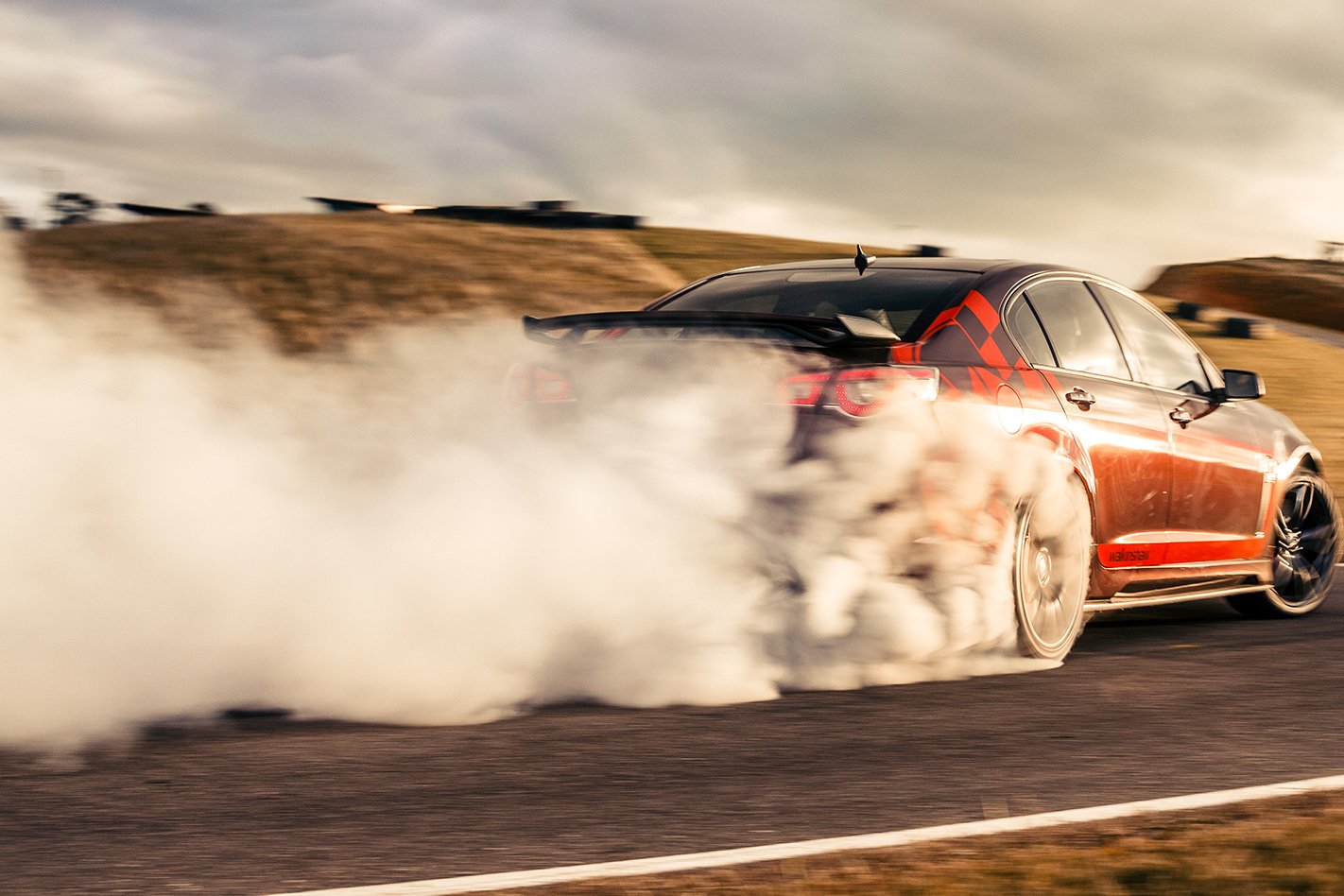
We also tried it with the traction-control left switched on and, while it’s a soft kind of intervention, it was still quicker with traction off and a driver paying attention. And your attention will be grabbed, particularly at the top end of the strip where the GTS felt anything but nice.
Dunno whether it was the aero or a crosswind on the day or what, but even at 200-plus, the Walky still has its snout in the air and feels intent on waving its front wheels around under you. It never actually strayed from the lane, but confidence inspiring it was not.
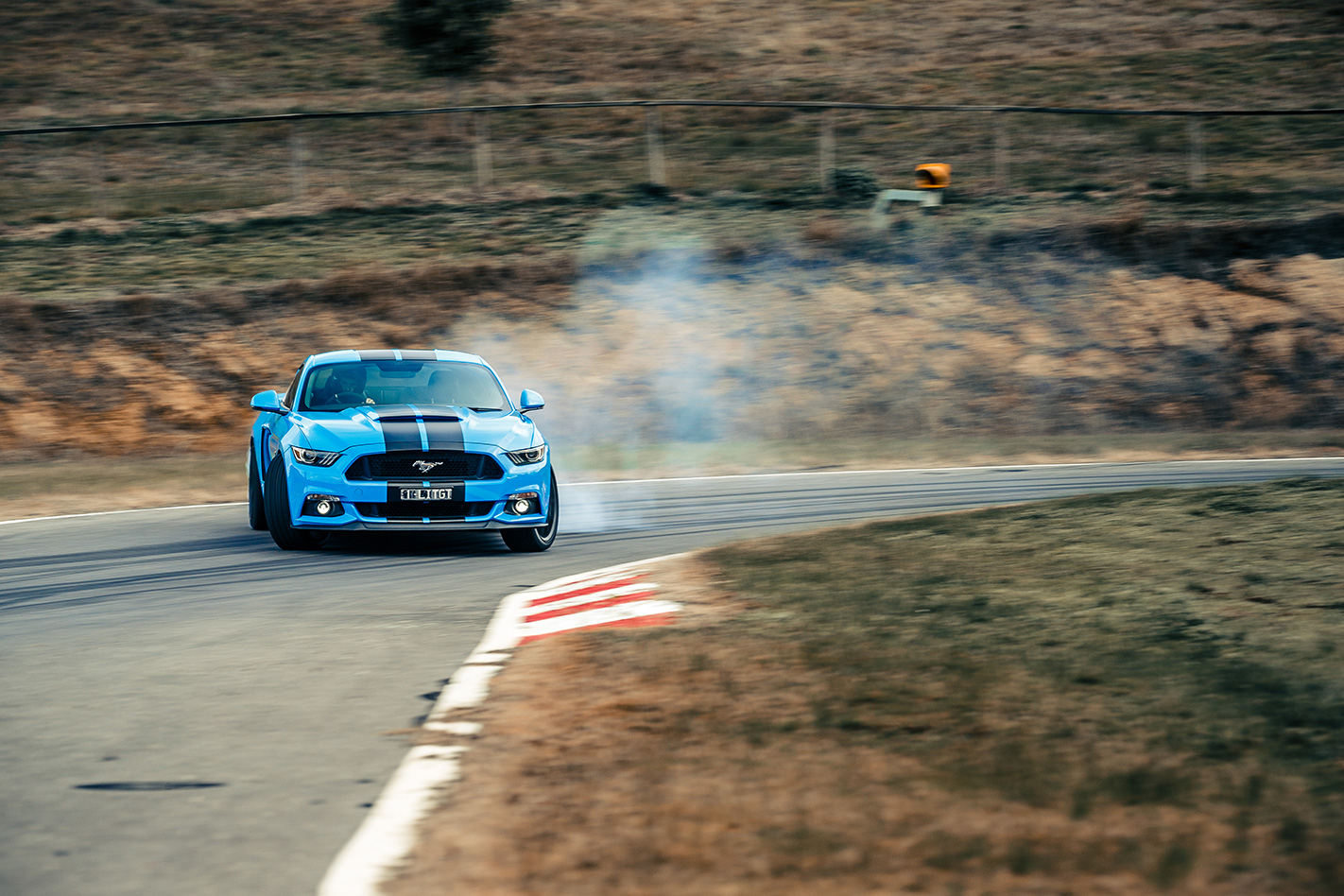
Throw in a manual gearbox, a shifter that strikes me to be more about form than function and gearing that just doesn’t suit quarter-miling, and you have yourself a car that has the heart, but not the legs to beat 12.59sec at 195.8km/h and 0-100 in 4.99sec.
Let me explain. The clutch in this thing is sharp. Has to be to cope with the urge. But it also means there’s no percentage in trying to slip it out. (A) It won’t do it and, (b) you’d just shag it anyway. So you’re stuck with trying to find a rev point that allows the clutch to bite and not bog the engine, but that also prevents the back tyres from turning into dervishes.
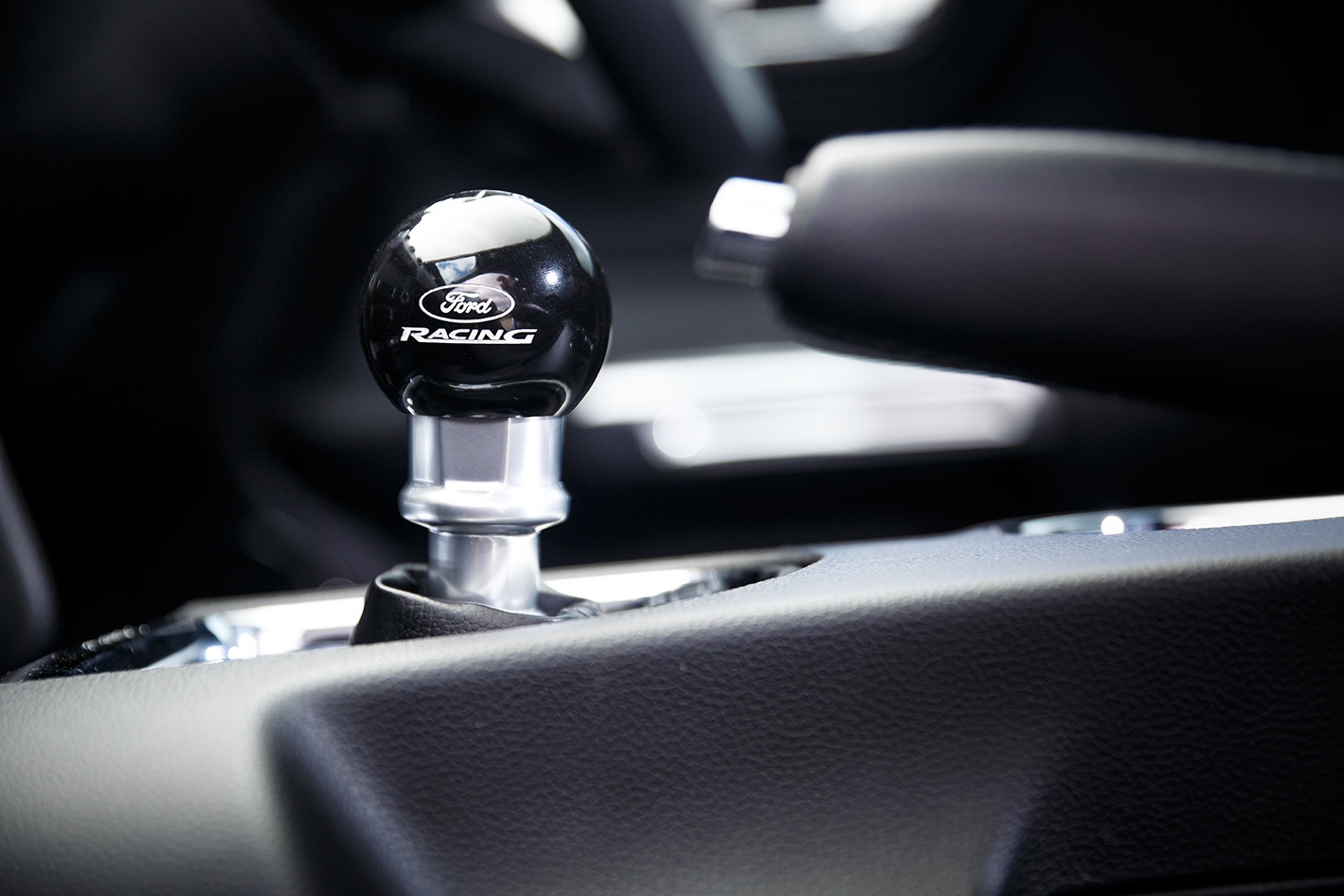
Now, that shifter. I know little stumpy gearsticks suggest raciness and snap-shifting, but this one seems to me to do nothing more than reduce your mechanical advantage (by moving your leverage point) on what starts as a manly sort of gearbox in the first place.
Sometimes the shifter didn’t want to find fourth for me in a hurry; Scotty had trouble with fifth. And even when it does slot in, it’s a slow, grumpy, sticky action that just refuses to be hurried. And then there’s the gearing which, combined with a pretty savage ignition cut at redline, ensures there’s no point in pushing your luck.
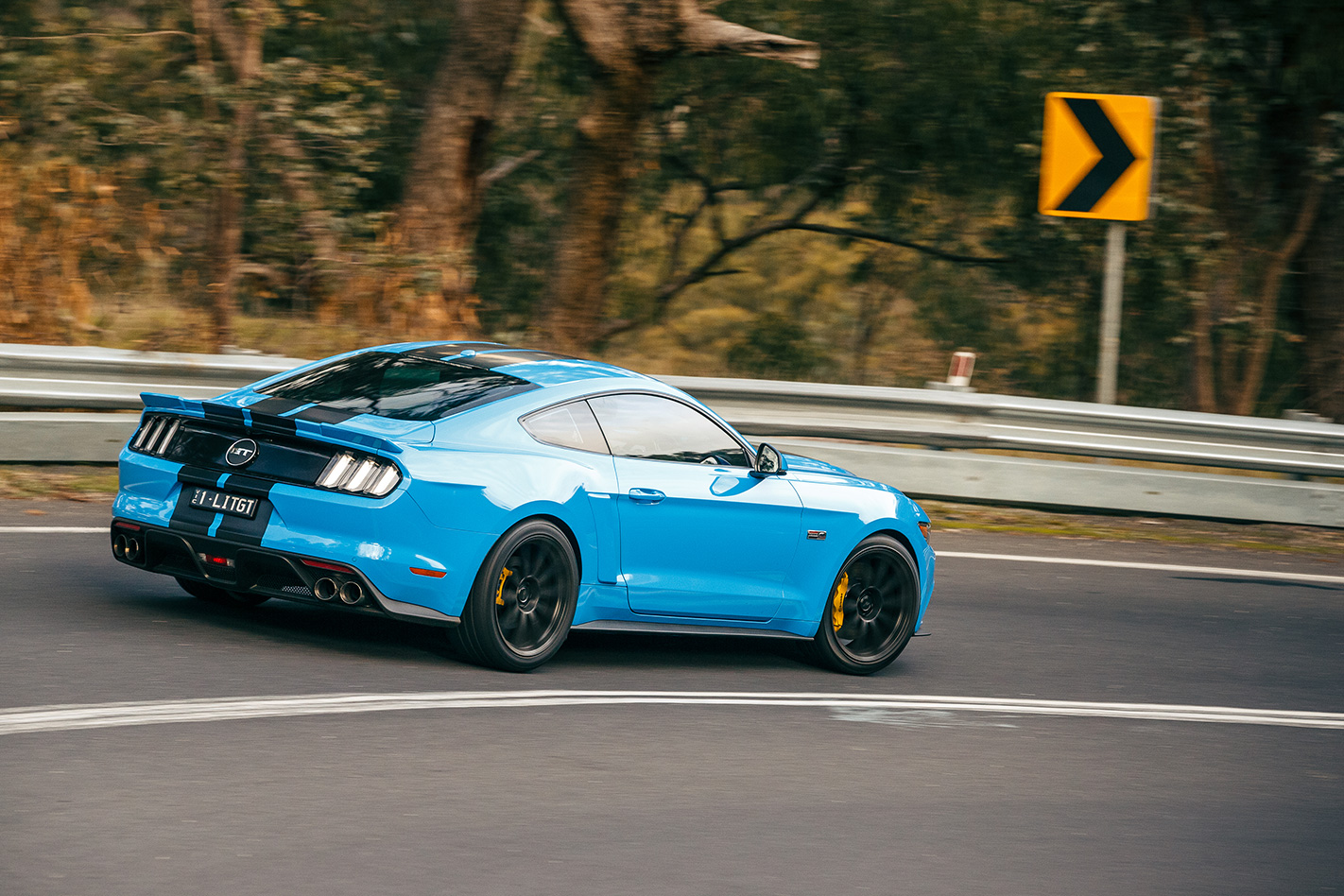
Four, slow, clumsy gearshifts. And that is why the Mustang runs 12s and not 11s. And it’s the only reason. And we know that, because we drove a Herrod ’Stang with the same engine package and an auto box this time last year and it ran 12.1 on a cold, greasy track. As it is, though, with the manual box, the gearing, the limiter and the box-of-hammers gearshift, a 400m run turns into a quarter mile’s worth of driver errors.
Of course, quarter-mile blasts aren’t the point of the Herrod car, so we pointed it at some corners to see what all that suspension work achieves. And the answer is plenty. While the steering hasn’t been directly altered, the firmer set-up gives the Mustang more pointiness.
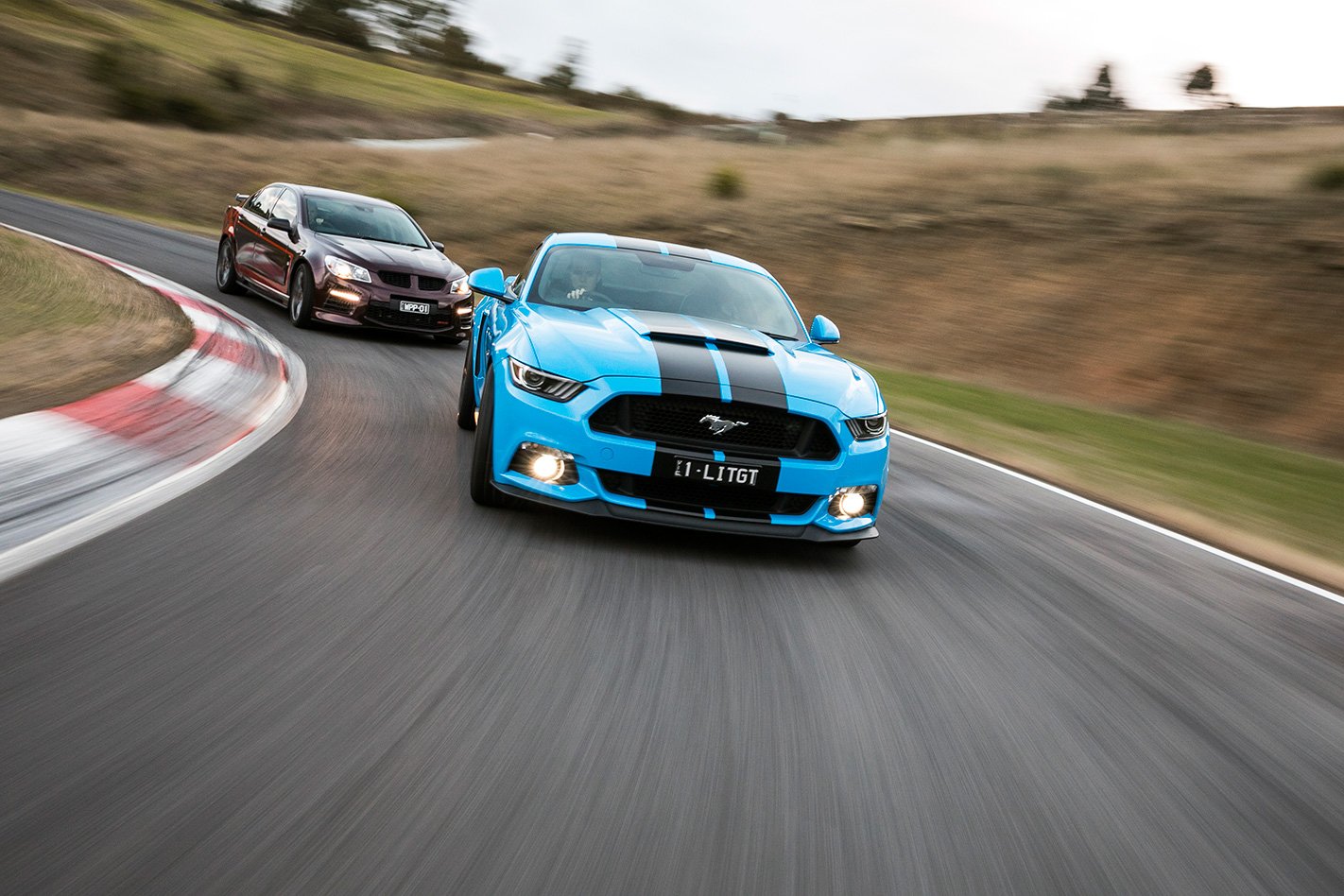
The Mustang also lacks the adaptive dampers of the GTS, but the reality is that it doesn’t need them. The ride is firm, but beautifully controlled and, for once, it doesn’t need to be doing 200km/h to start making sense. And to be honest, the W557’s suspension is really only tolerable in Tour mode, and switching the rotary dial beyond that to Sport or Perf or Race sends ride quality packing.
On a circuit, the extra control enabled by the Ford’s manual ’box would possibly give it the edge going into corners, especially since the Walky’s auto box doesn’t comply with paddled downshifts in any particular hurry.
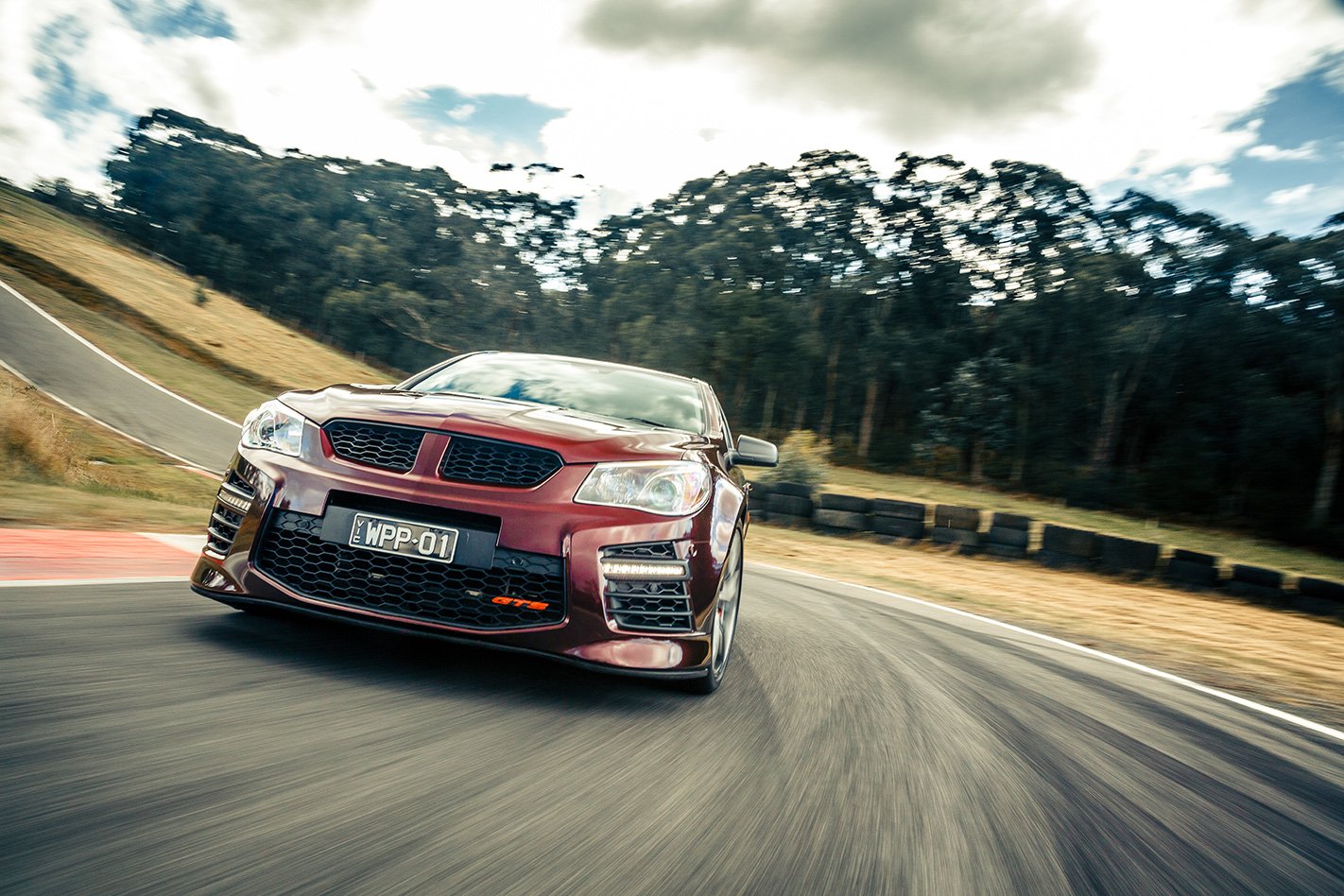
In fact, while the Mustang stopped in a decent 37.1m, the W557 hauled down from the same 100km/h in a staggering 33.5m. And the Walky’s brakes don’t just stop better, they feel better, and it remains that the Mustang has a stiff pedal that gives nothing back in terms of info about what’s going on.
On the road, Nth-degree setting up for corners is all a bit academic, and it’s in this scenario that the W557 really starts to run away with things here. Literally. Even relatively small throttle inputs give a huge payback and the sensation is one I’m calling speedboating.
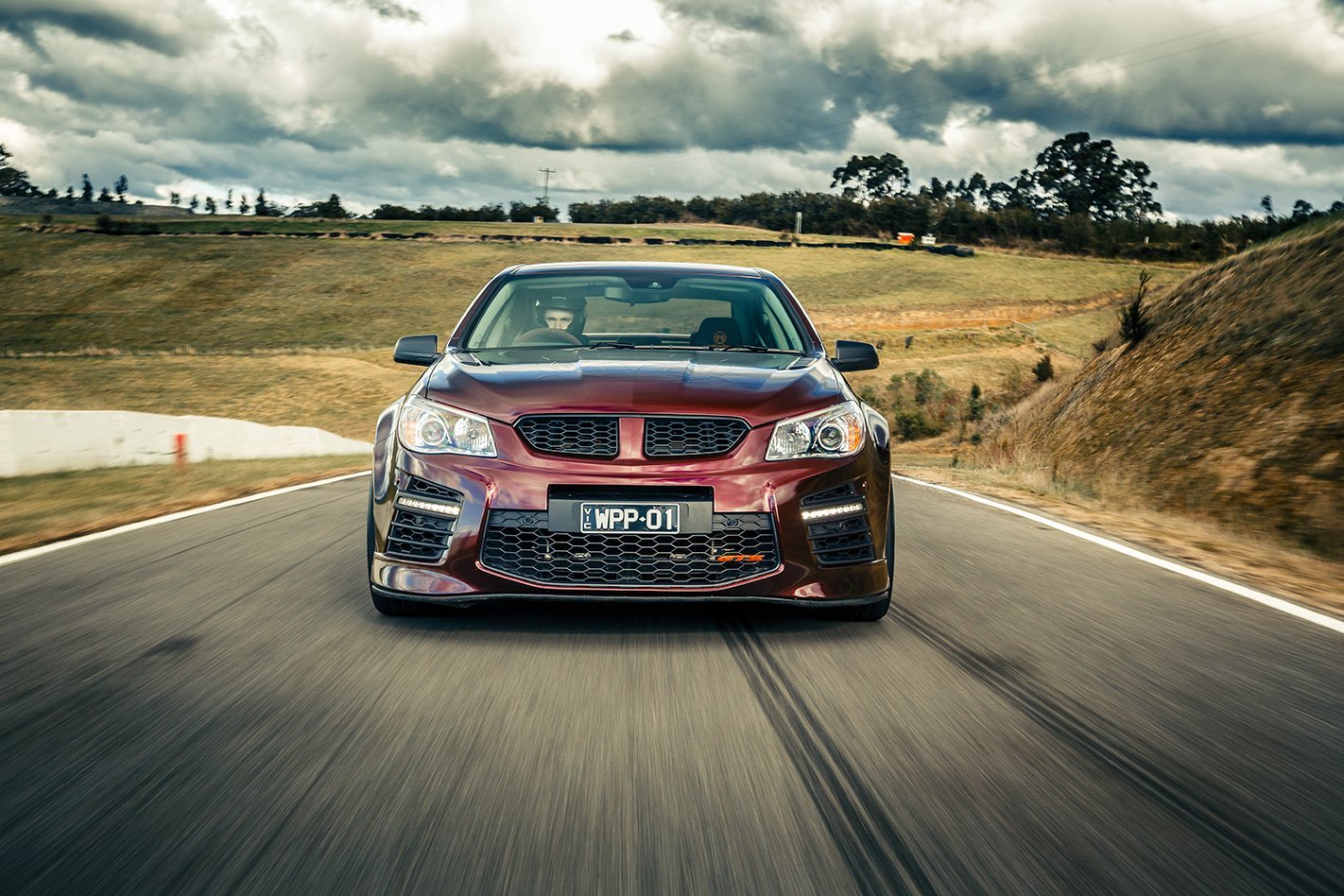
Well, that’s just how the W557 feels taking off from the traffic lights. It’s difficult to recall the last time we experienced part-throttle and mid-range stomp like this thing generates and even though the Mustang is fearsomely fast, the W557 is always a step ahead. It’s not that you can get on the noise any earlier, but when you do, the effect is seismic.
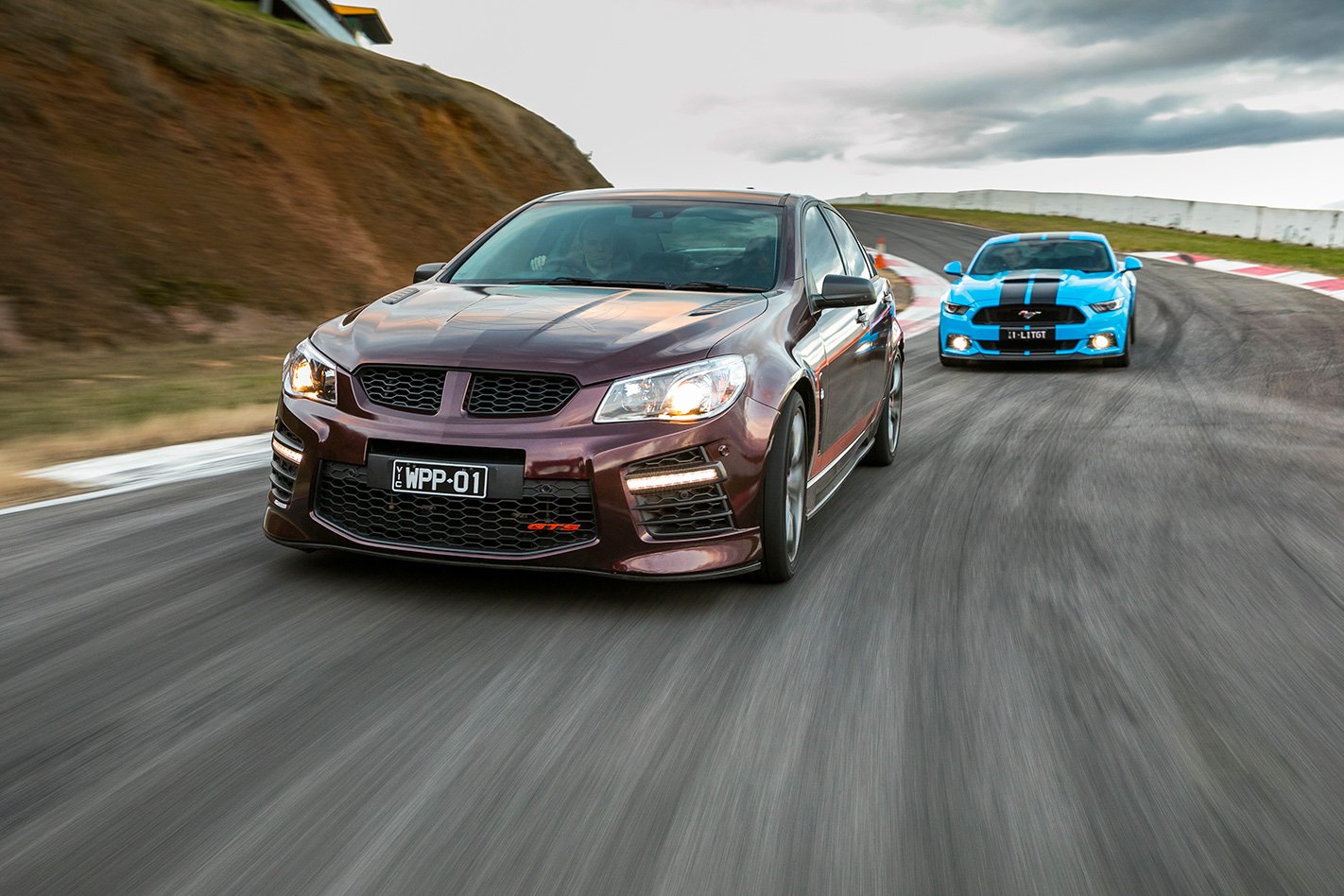
If you like ’em big, loud and fast, then a W557 is where it’s at. For now.
THE NUMBERS
| u00a0 | 2017 Walkinshaw W557 | 2017 Herrod Mustang GT |
| 0-100km/h | 3.81 | 4.99 |
| 0-400m | 11.69sec @ 201.56km/h | 12.59sec @ 195.81km/h |
| 80-120km/h | 1.9sec | 2.4sec |
| 100-0km/h | 33.50m | 37.08mu00a0 |
THE STRIP KINGS
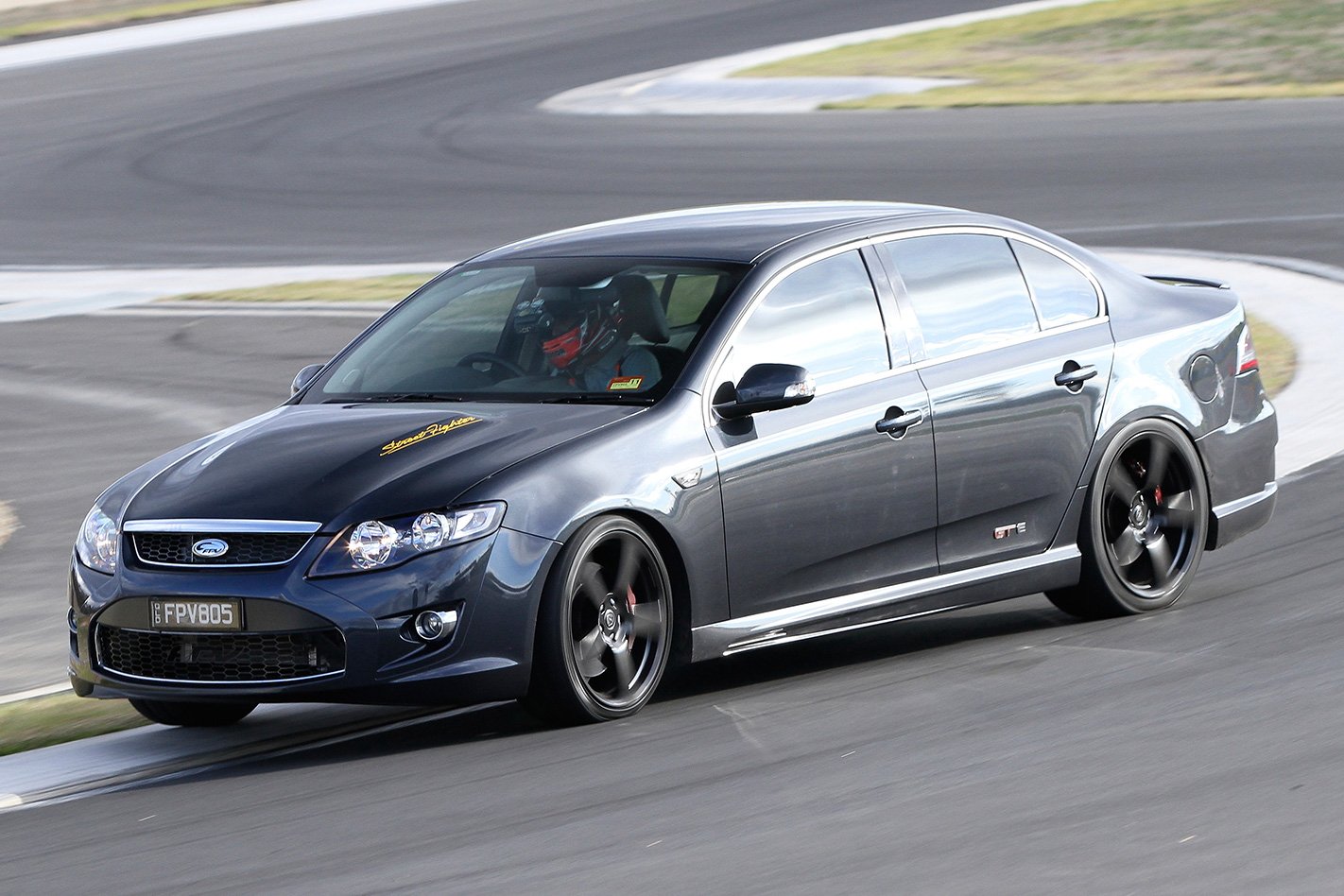
THE Walkinshaw W557 is the fastest Aussie car MOTOR has ever tested to 100km/h, but the quarter-mile honours go to the Streetfighter FPV GTE tested at Hot Tuner 2012. While it trailed the W557 by a mere 0.02sec to 100km/h (3.83sec) it more than made up the difference over 400m with a stonking 11.54sec effort.
Our second-fastest Falcon ever represents the turbo six brigade, Herrod’s G6ET clocking 0-100km/h in 4.31sec and a 12.35sec quarter at 188.06km/h at Hot Tuner 2009. – SN
SPECS
| u00a0 | 2017 Herrod GT Mustang | 2017 Walkinshaw W557 |
| Body | 2-door, 4-seat coupe | 4-door, 5-seat sedan |
| Drive | rear-wheel | rear-wheel |
| Engine | 4951cc V8, DOHC, 32v, supercharger | 6162cc V8, OHV, 16v, supercharger |
| Bore/Stroke | 92.2 x 92.7mm | 103.1 x 92.0mm |
| Compressionu00a0 | 11.0:1u00a0 | 10.7:1 |
| Power | 507kW @ 7000rpm | 557kW @ 6200rpmu00a0 |
| Torqueu00a0 | 730Nm @ 3600rpm | 930Nm @ 4000rpm |
| Power/Weightu00a0 | 280kW/tonneu00a0 | 303kW/tonneu00a0 |
| Transmissionu00a0 | 6-speed manual | 6-speed automaticu00a0 |
| Weightu00a0 | 1813kg | 1841kgu00a0 |
| Suspension (F)u00a0 | struts, coil springs, anti-roll bar | struts, A-arms, adaptive dampers, anti-roll bar |
| Suspension (R)u00a0 | multi-links, coil springs, anti-roll baru00a0 | multi-links, coil springs, adaptive dampers, anti-roll baru00a0 |
| L/W/Hu00a0 | 4784/2156/1331mm | 4988/1899/1457mm |
| Wheelbaseu00a0 | 2720mmu00a0 | 2915mmu00a0 |
| Tracksu00a0 | 1570/1637mm (f/r)u00a0 | 1616/1590mm (f/r) |
| Steering | electrically assisted rack-and-pinion | electrically assisted rack-and-pinion |
| Brakes (F) | 380mm ventilated discs, 6-piston calipers | 390mm ventilated/drilled discs, 6-piston calipers |
| Brakes (R) | 330mm ventilated discs, single-piston calipers | 372mm ventilated/drilled discs, 6-piston calipers |
| Wheels | 20.0 x 9.0-inch (f); 20.0 x 9.5-inch (r)u00a0 | 20.0 x 8.5-inch (f); 20.0 x 9.5-inch (r)u00a0 |
| Tyre Sizes | 265/35 R20 (f); 285/35 R20 (r)u00a0 | 255/35 R20 (f); 275/35 R20 (r) |
| Tyres | Pirelli P Zero | Continental ContiSportContact 5P |
| Price as tested | $80,990u00a0 | $113,490 |
| Pros | Feels unmodified until you spank it, then it goes troppo; compliance | O. M. G. The fastest of its breed. Ever; impressive brakes; handling |
| Cons | Interior quality is still not a Mustang strong suit | Purple wrap on our test car blew, and no, you donu2019t have to wrap yours |
WHAT IS IT?
An atmo 3.6-litre V6 that drives all four wheels via one of the cleverest drivetrains around is a good basis for a performance sedan, and the latest six-pot Commodore builds on those underpinnings with a whole host of smart decisions. It pays to temper your enthusiasm a little, though. Expect an SS replacement and you’ll be disappointed. Instead, Holden has delivered something smarter, safer and slicker. Is that enough? You’re going to be the ultimate arbiter there, not us.
WHY WE’RE TESTING IT
Australia insisted on a 3.6-litre V6 in this Holden Commodore and has undertaken the brunt of the development work as a result. If there’s really anything in Holden’s claim that this ZB generation car can carry the VFII’s mantle, the V6 is the car that’ll demonstrate it. Plus, we had free rein of Lang Lang, so it would have been rude not to.
MAIN RIVALS
Infiniti Q50, Kia Stinger, Skoda Superb 206 TSI, Subaru Liberty 3.6R
THE WHEELS VERDICT
If you judge a sporting Commodore on its ability to immolate its rear tyres, make a suitably menacing burble and be manlier than an SAS survival instructor chewing the head off a taipan, then the latest V6 could well be a little subtle in its execution. Underwhelming if you’re a really harsh marker. As an all-round package rather than something trying to live up to yesterday’s hero, it makes a whole lot more sense. It’s quick, entertaining and sweetly finessed, with a well-judged balance between real-world performance and practicality. For a car that’s fighting a fight it can never win, the ZB Commodore V6 emerges with a lot of credit.
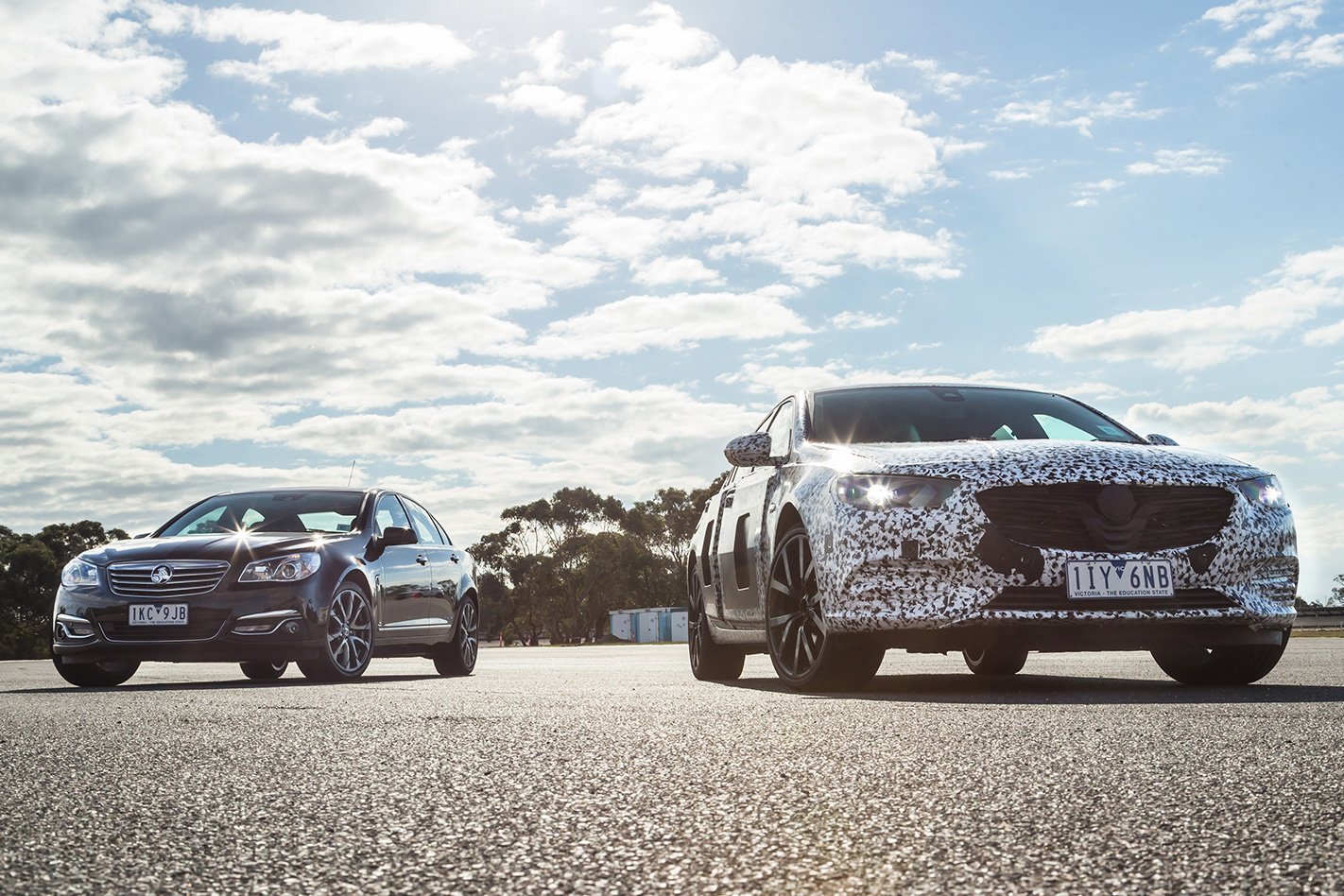
MINUS: Needs a few revs to get up on its toes; makes you appreciate the benefits of forced induction
THE WHEELS REVIEW
THERE’S a moment when driving the latest Commodore V6 where it all makes sense, where you realise that things are going to be okay. It doesn’t last long and you’ll be fully engaged when it happens, but it’s enough to paint a big grin on your face. It’s that moment right at the apex of a bend when you give the accelerator pedal as much as you dare and feel the torque vectoring send drive to the outside rear wheel, while the inside front gets an almost imperceptible nip at the rotor to induce a degree or so of yaw. Your hands almost instinctively open the steering but the feel through the seat of your pants is reassuring.
The car’s onside, it’s got this. More throttle. More again. Go flat chat out of the corner, and you’ll leave blurred elevens on the bitumen.
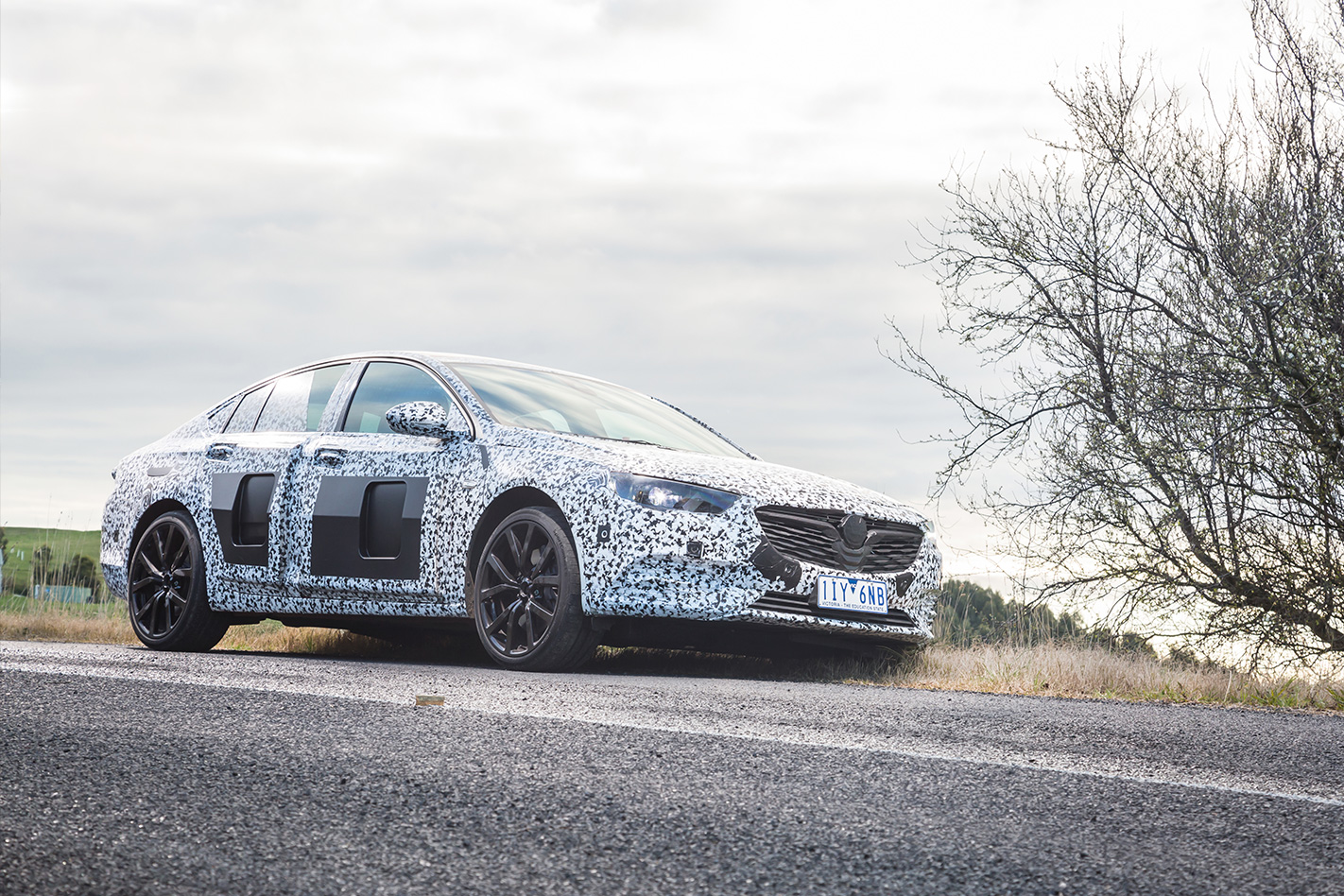
Asked why the 3.6-litre V6 carries no form of forced induction, engineer Jeremy Tassone explains that it would have proven too difficult to package. “In order to accommodate a turbocharger and the V6 engine, the front end of this car would have had to have been bigger. That introduces what we call ‘scar weight’ that the rest of the range would have had to carry,” he said, highlighting a similar issue with the outgoing VFII and its requirement to house a V8 that, in turn, impacts the efficiency of V6 models.
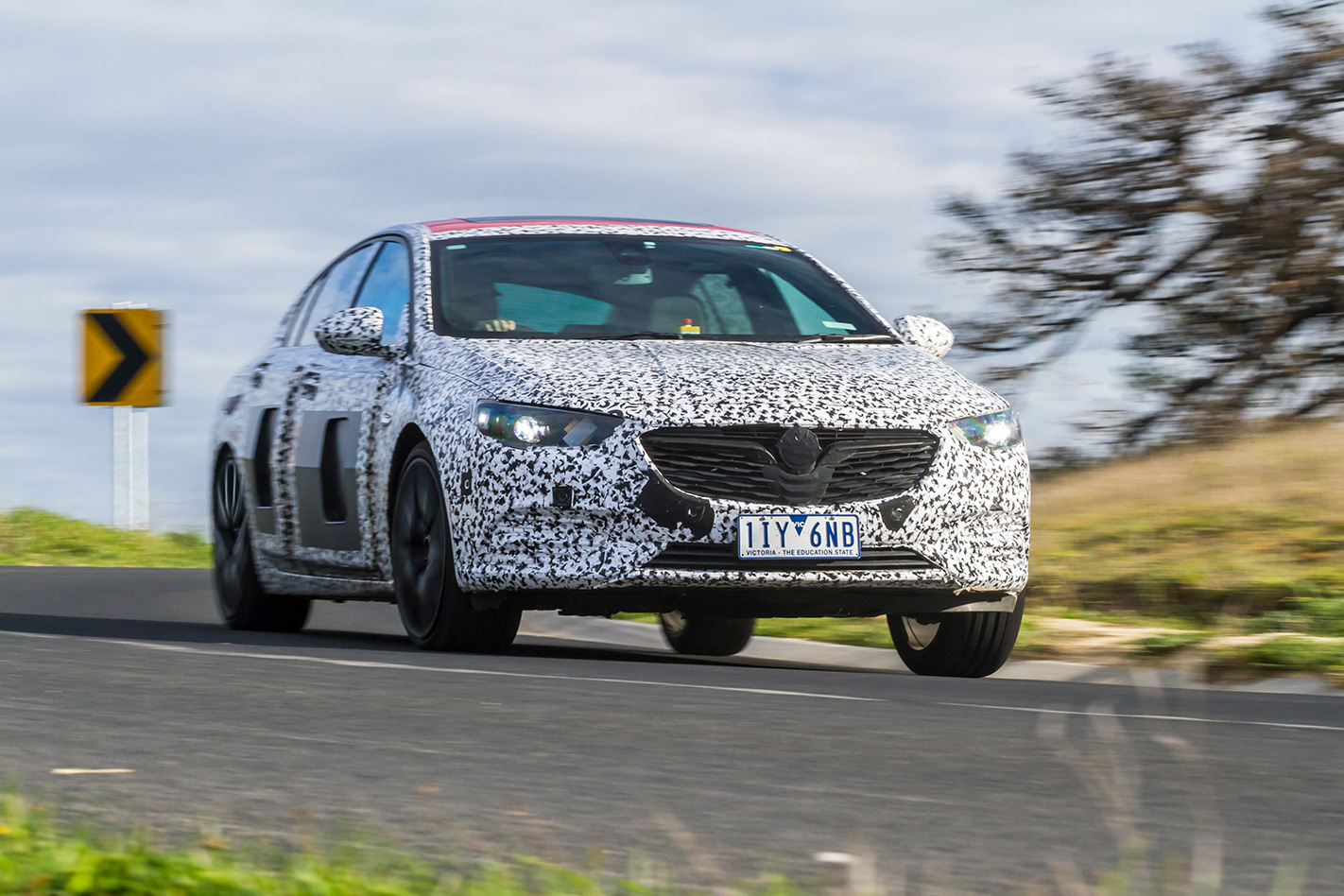
While the V6 is an engine that requires a bit of working to give of its best – you’ll need around 2750rpm on the board before it starts to feel interested – there’s reward in the form of a unique exhaust system for the Aussie market. An underfloor catalyst is removed to give a bit more voice and attitude to the note, helping to make up for the powerplant’s lack of aural fireworks, even as it zones in on its 7000rpm redline. This all needs to be qualified against what Holden performance buyers have been traditionally accustomed to, but given what’s in the works – not necessarily with a Commodore badge – those looking for eight-pot excitement aren’t about to be short-changed.
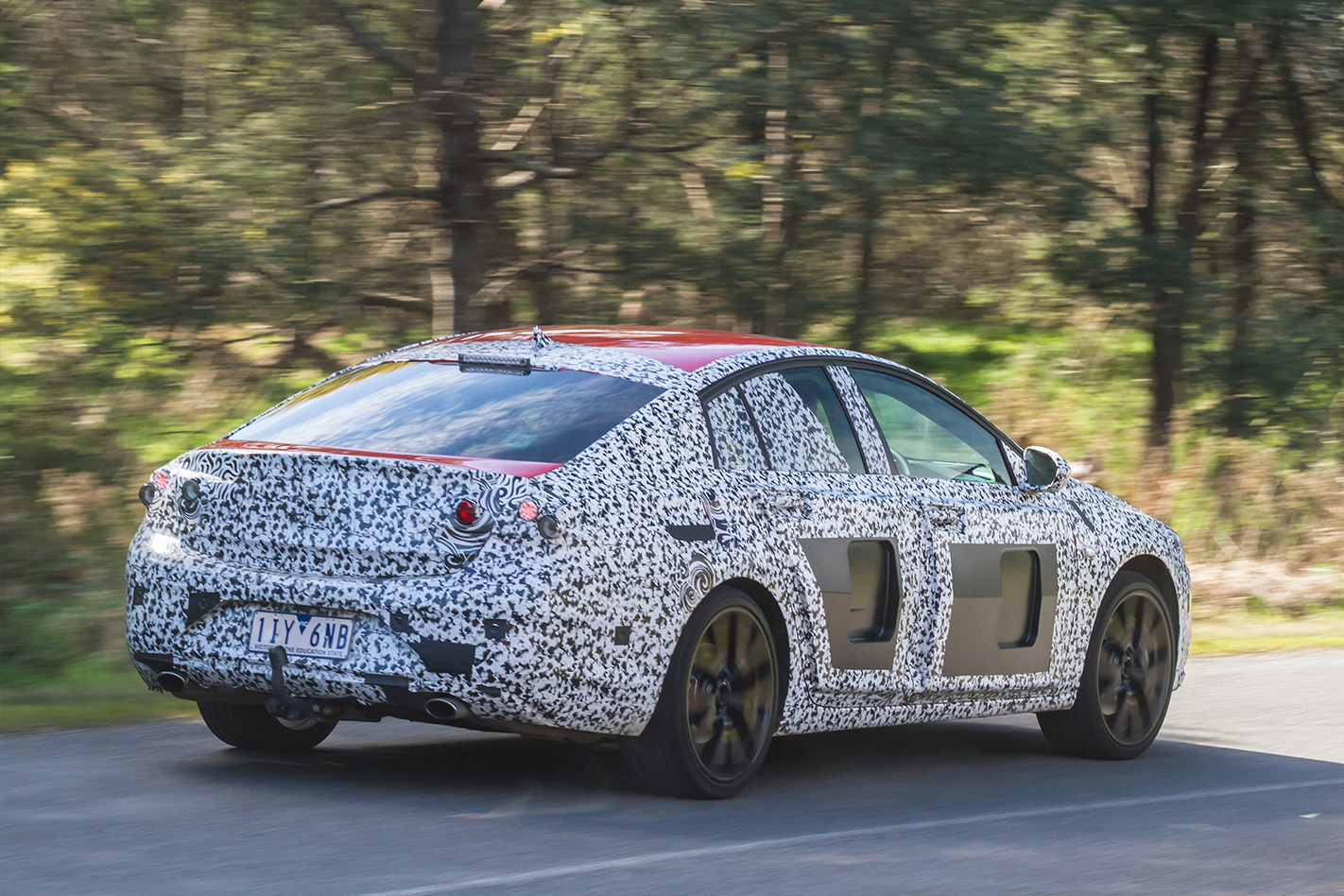
They rarely feel 230kW worth, though, despite Holden claiming that more than 200kg was taken out of one of these compared to an equivalent VFII. The spec sheets claim 100km/h in the low sixes, which seems credible given that drive goes to each corner and the nine-speed ’box does a great job of keeping you in the meat of the torque band, but there are times when, despite our love of most things atmo, you yearn for the full-bodied surge of a bit of forced induction.
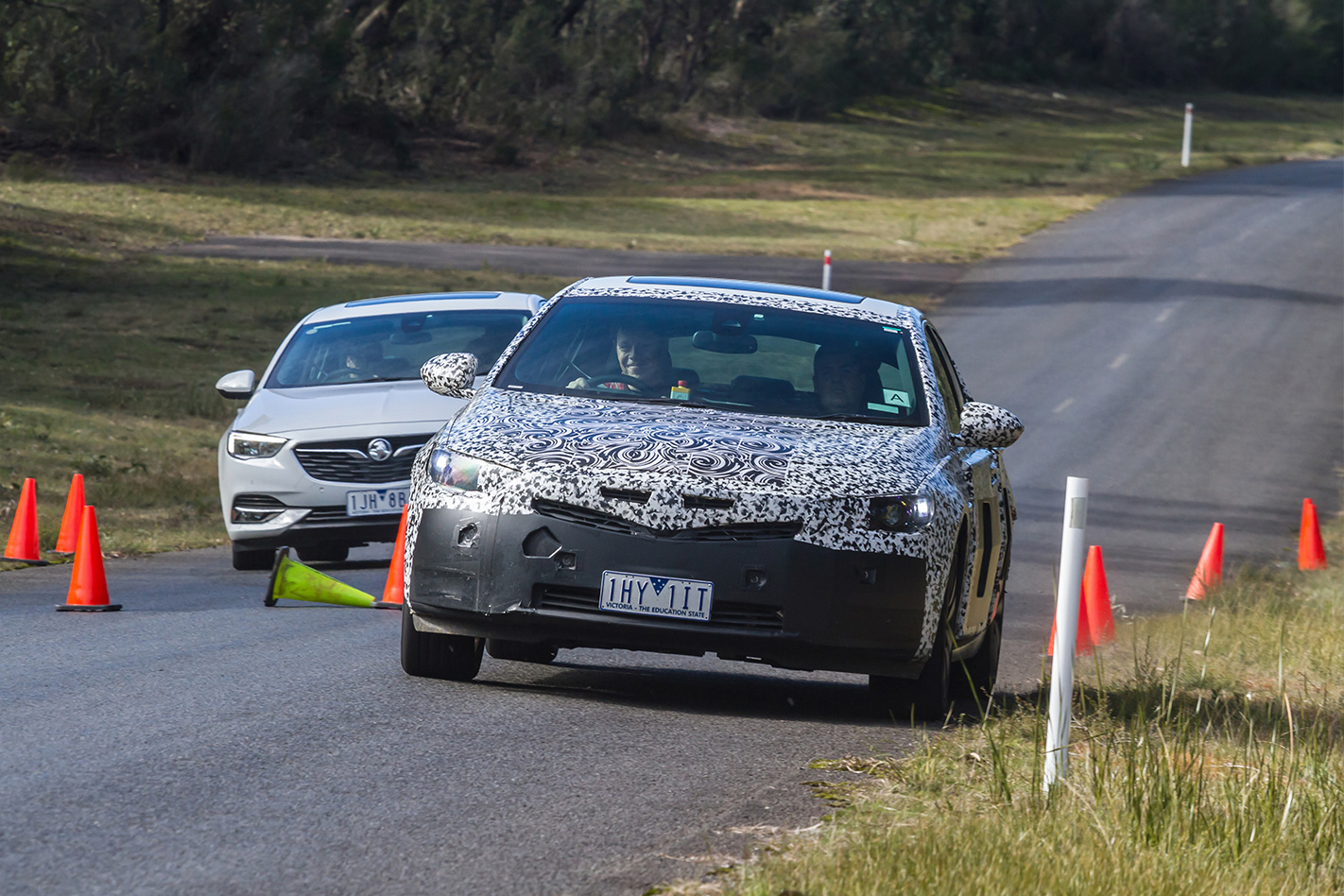
Likewise, a lot of work has gone into the adaptive damper setup and also the steering, which is a highlight in this car. At 2.7 turns lock to lock, it’s slightly quicker in the V6 than the 2.0T, and there feels like a bit more heft on the way into corners. You feel the additional weight over the nose and need to manage the kind of aggressive turn-in the 2.0T revels in, just finessing the transition to understeer.
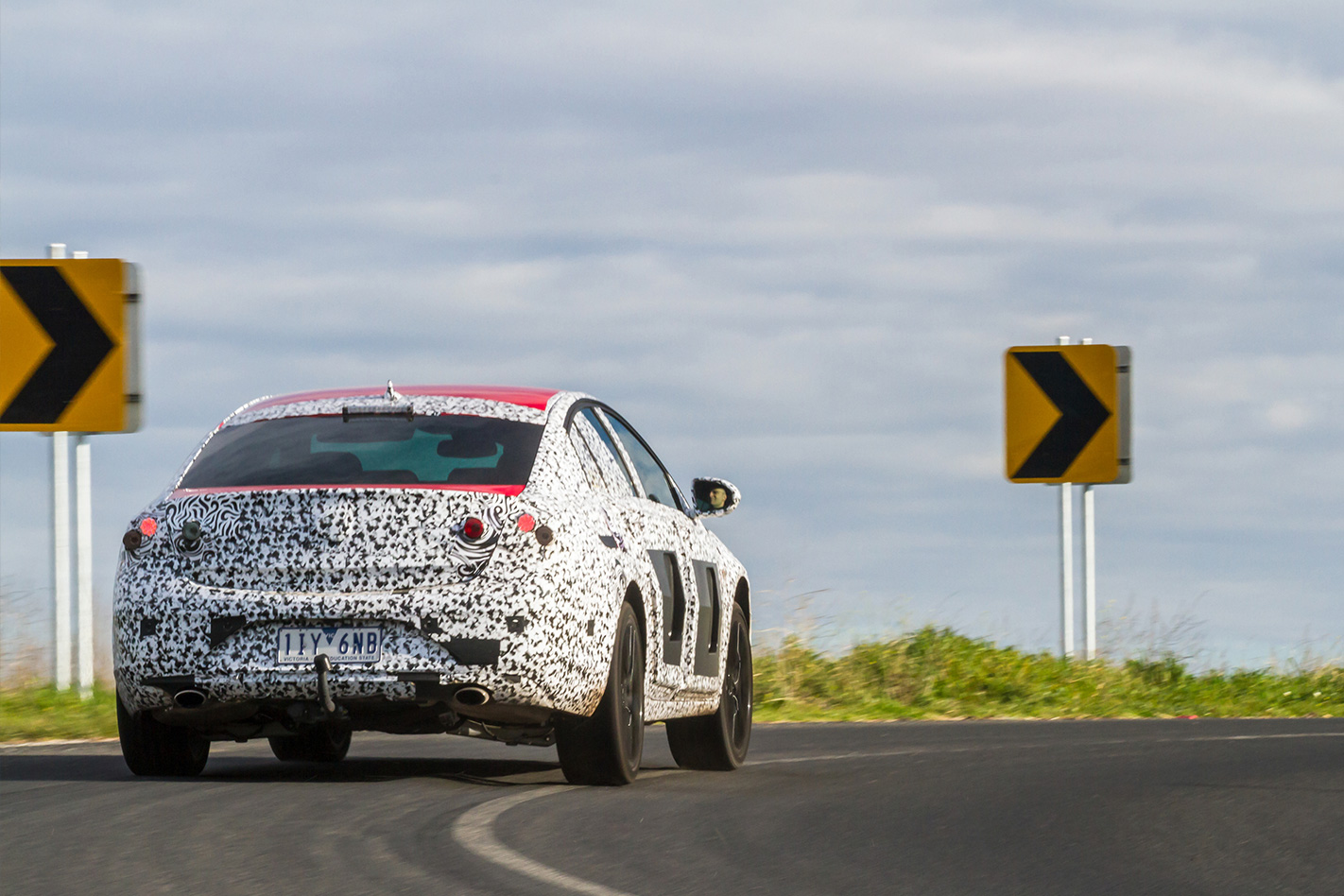
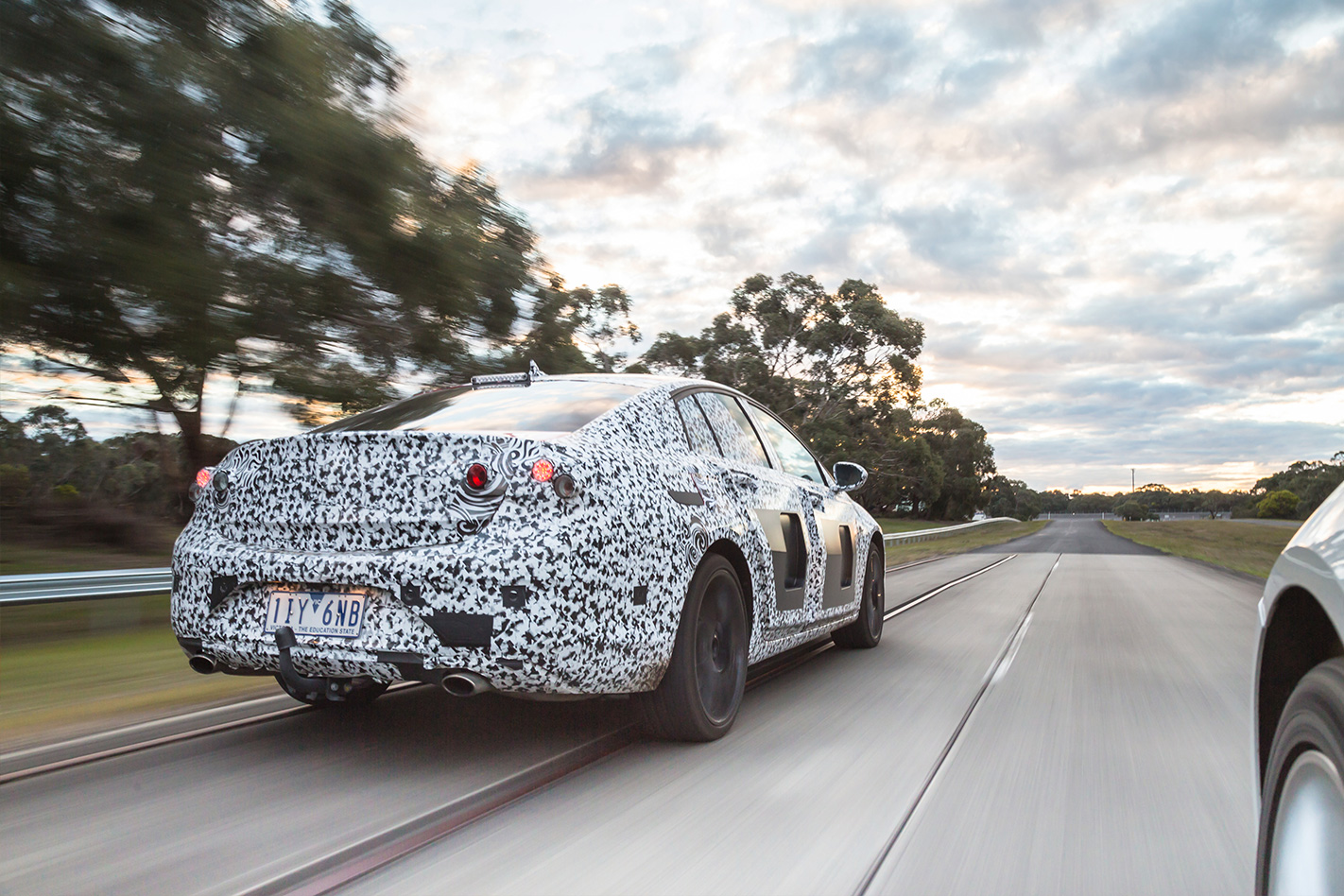
I’d love to be able to tell you about the new V6’s interior specifications and materials choices, but that will have to come later. These well-used development hacks were anything but representative of what customers will receive but the cabins were decently proportioned and the semi-virtual TFT dashboards of the V6 cars are excellent. Holden claims that space inside the car is much akin to VFII apart from two key dimensions, rear headroom and overall width, both of which are inferior. Rear legroom certainly felt at least as generous and the big boot offers more floor estate than the old car’s, which will make it more useful to many.
SPECS
Model: 2018 Holden ZB Commodore V6 Engine: 3564cc V6, dohc, 24v Max power:230kW Max torque: 370Nm Transmission: 9-speed automatic Weight: 1650kg (estimated) 0-100km/h: 6.2sec (estimated) Fuel economy: Less than 9.0L/100km Price:$tba On sale: Q1 2018
WHAT IS IT?
The 191kW/350Nm liftback and wagon deliver significant efficiency and performance increases over what we’ve come to expect for an entry-level petrol Commodore. The macho stance of the old VFII might have gone, but in its place comes something slicker, albeit more generic.
WHY WE’RE TESTING IT
We needed to know whether this latest car, after a lengthy process of Australianisation, still felt like a Holden Commodore or if it had morphed into something else entirely. And if so, what?
MAIN RIVALS
Ford Mondeo, Kia Stinger, Mazda 6, Peugeot 508, Skoda Superb, Toyota Camry
THE WHEELS VERDICT
Driving pre-production cars always carries a certain caveat when forming a verdict, but there’s a lot of promise here. While we’ve all fixated on the V6 flagship versions and their attempt to fill the void left by the V8s, the 2.0-litre turbo petrol might just have sneaked in as the quiet achiever. If Holden can create a compelling price/equipment point for this car, it could have the drop on its mainstream rivals. If you appreciate a well-sorted sleeper, this could be right up your street.
THE WHEELS REVIEW
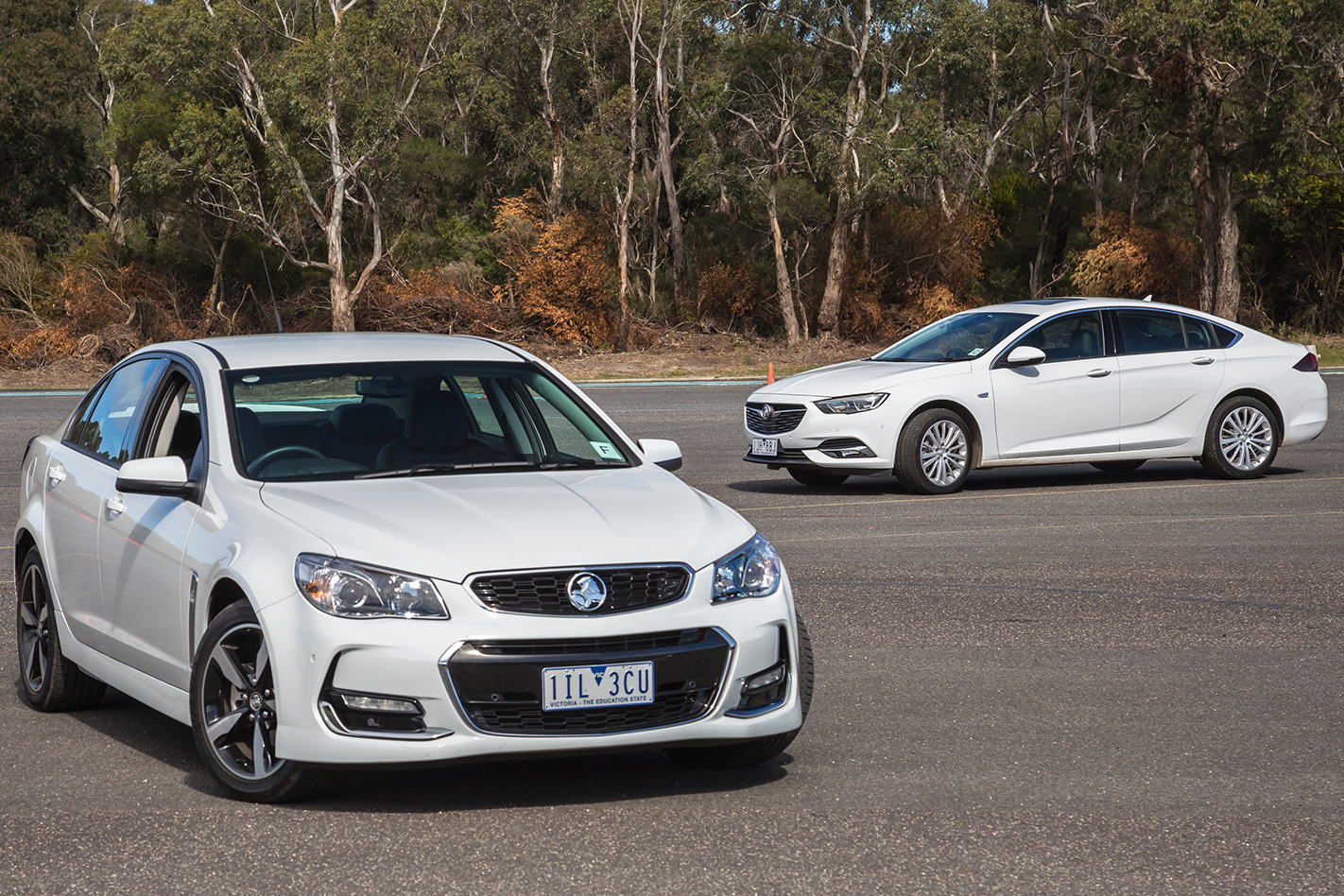
THE entry level petrol Commodore has a 250km/h speed limiter. Let that sink in for a moment. Admittedly it doesn’t look anything particularly potent with its apologetically underwheeled styling and disappointingly generic styling, but appearances can be deceptive. We’ve just had the opportunity to drive the car back-to-back with a VFII Calais V6 and the results are a bit of an eye-opener.
The elephant in the room first. Yes, it’s badged a Commodore but it feels nothing like a Commodore. You’ll need to be the judge of whether – philosophically at least – that’s going to prove a significant impediment to purchase. Many of you will not be able to overcome this corporate cynicism and will turn your back on the badge. We can understand that position entirely. In all but the most dogmatic, though, there will be a spark of curiosity, keen to discover whether a different Commodore, or what Holden calls “a European car made great for Australia” really can replace the hugely endearing VFII.
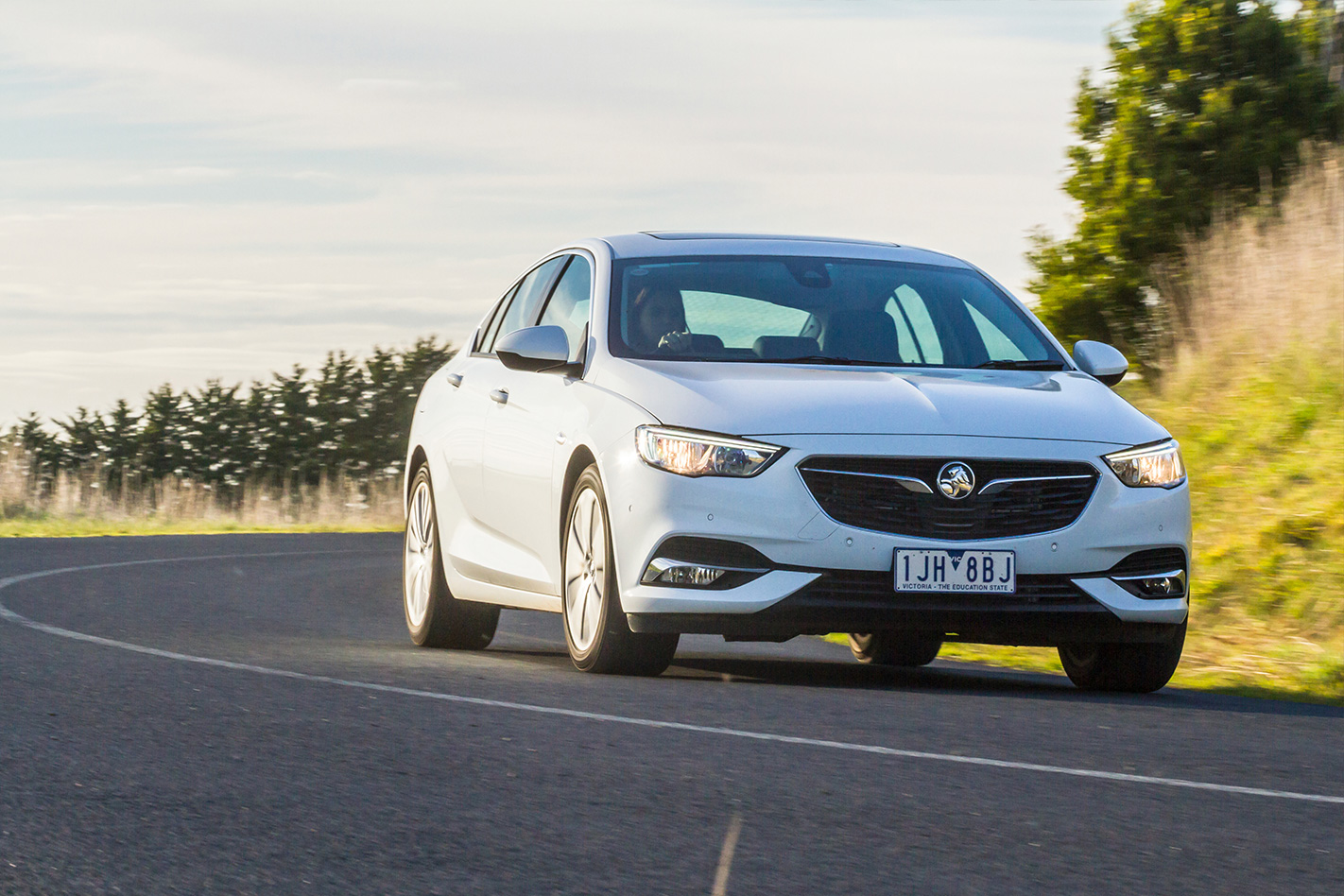
Given a clean sheet of paper, that brief isn’t particularly difficult to fulfil. You need plenty of interior space, supple ride quality, barn door engineering and sensible gearing. Holden’s problem is that with the ZB it hasn’t had that clean-sheet freedom and in fact only conclusively nails one of those four criteria. So if you’re going to view it as a like-for-like replacement, it falls short. It’ll be a fairly easy target for red-jacketed die-hards to take pot shots at, but that ignores its other qualities.
With 191kW and 350Nm, it’s quick. Expect 100km/h to come and go on a blink over seven seconds, which makes it way quicker than the old 3.0-litre V6 and not far behind an SV6 in terms of straight-line go. Introduce corners to the equation and the lighter ZB will decimate the old car. Front end grip is massively superior and the instant urge from the turbo four sees it deploying all 350Nm at a point where the old SV6 would be hawking up around 100Nm less.
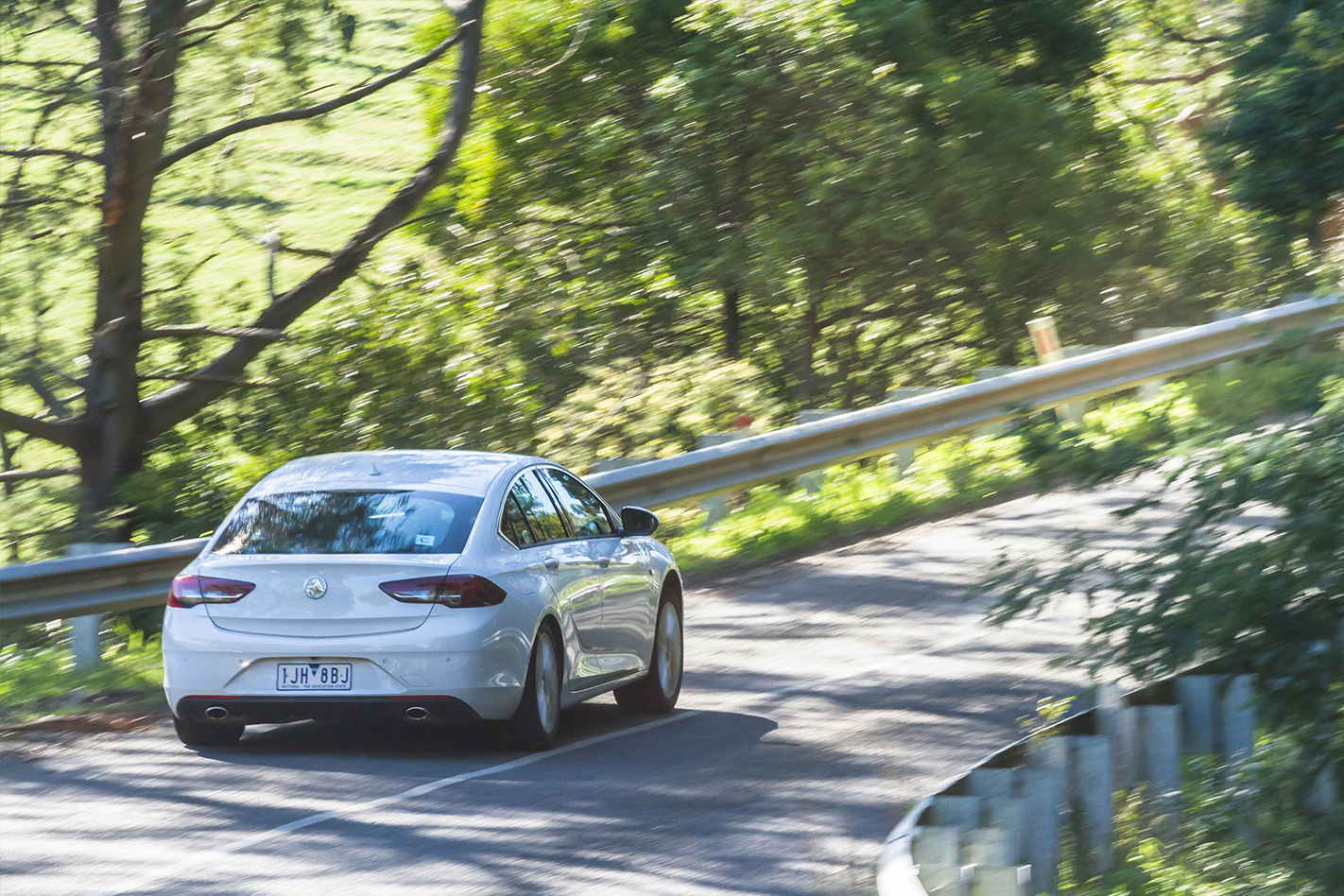
There’s a slight wriggle of torque steer out of the tighter corners at Holden’s Lang Lang test facility, but it’s far from unruly, the ESC calibration being soft and effective. The steering is meaty and well-juiced with feedback and it’s been calibrated to offer a more consistent transition of weighting as speed rises, one of many changes to Opel’s European tune. “Look, we’re not Opel-bashing,” explains Rob Trubiani, Holden’s chief chassis engineer.
“The tune they have is one that works really well for Europe. We just understand what Holden customers are looking for and what works well for local conditions.” As well as changing the steering, there have been a number of suspension changes to the 2.0T, largely bushing and damper valving decisions that target a more tied-down feel.
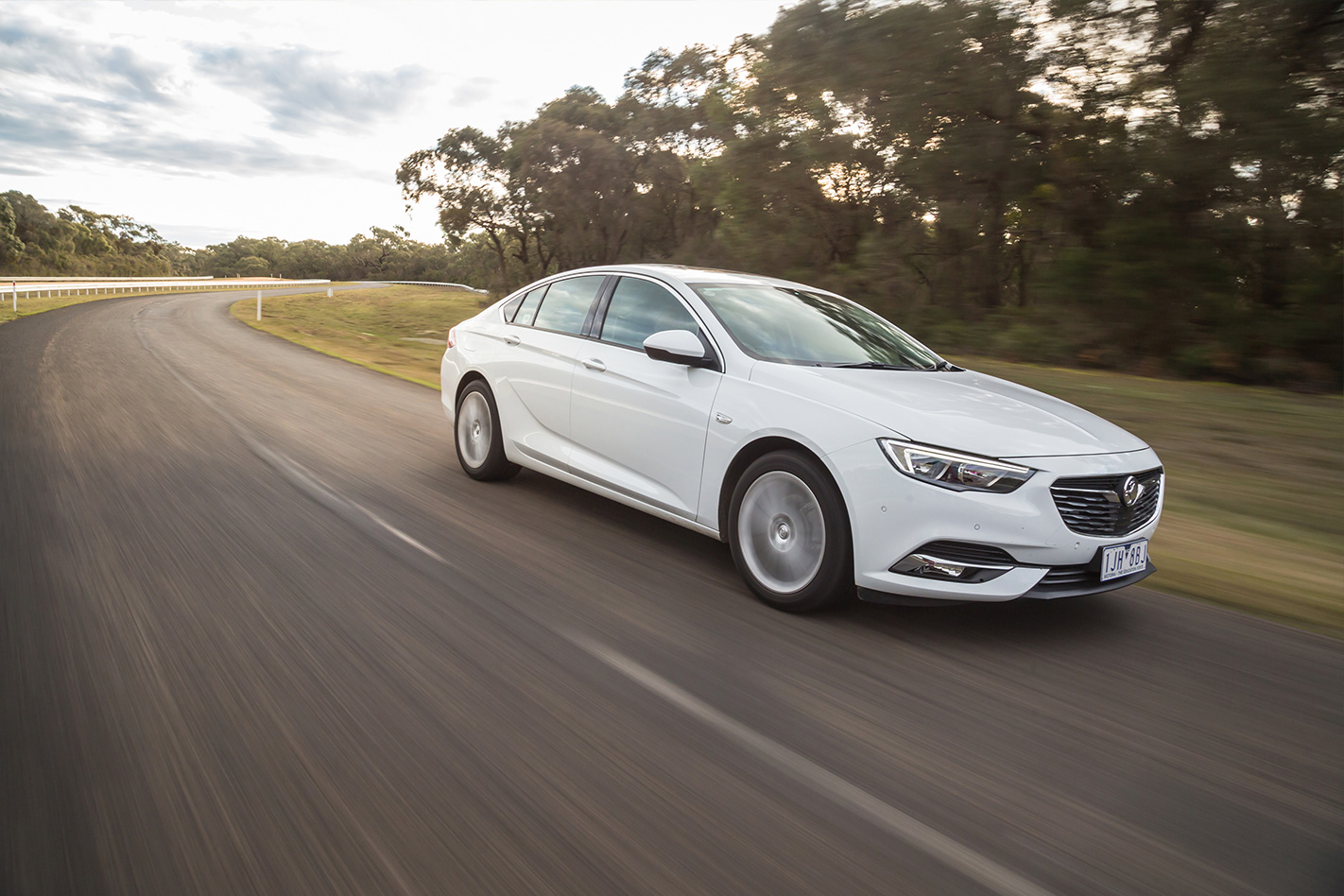
Drive a Euro-spec car after pedalling the Holden-tuned vehicle and it feels looser, floatier and less urgent. “That’ll totally work when driving along an autobahn at 240km/h but we were looking for something different,” says Trubiani. While the car we drove on 18-inch wheels nails a decent compromise between suppleness and sportiness, the Commodore on 20s errs on the firm side of the ledger.
That suppleness that underpins a Commodore’s benign cross-country utility evaporates as soon as you introduce this unwelcome brittleness into the ride. Again, we need to temper this criticism with the fact that the final sign-off on production dampers is yet to be conducted, but it’s something we’d want to take a look at when customer-ready vehicles are available to sample.
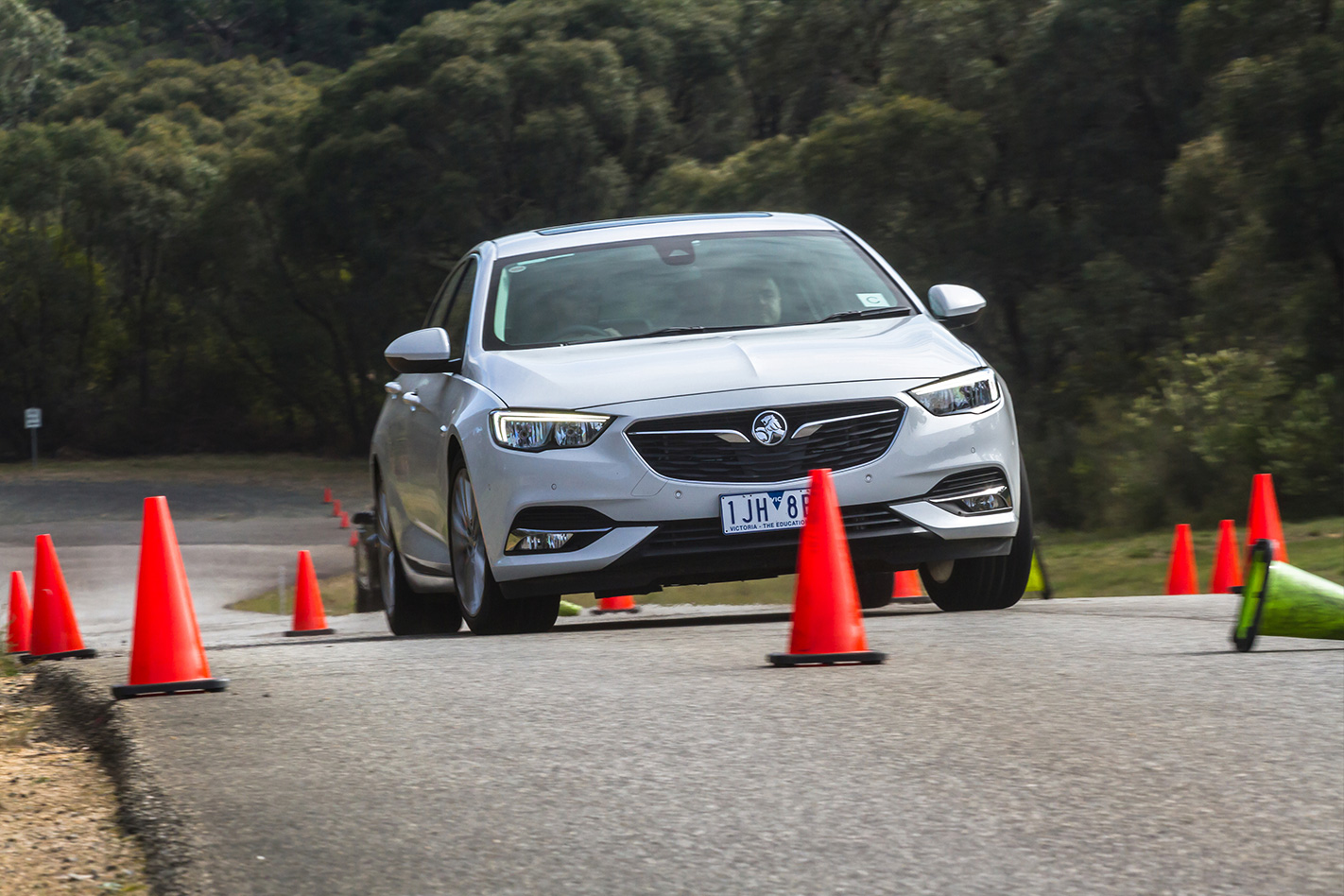
It’s really hard to argue with the way the ZB takes a corner, though. Pitch it in hard, and you’ll feel the steering effort slacken off as it tips into neutrality and then a grin-inducing hint of yaw. After that it’s a big commitment from the throttle as you open the steering to give the front rubber every chance. In other words, you drive it like a big hot hatch and all the action comes on corner entry rather than exit, but it’s still fun. Jump into a VFII afterwards and it feels archaic, largely due to carrying more weight, delivering less chassis rigidity and having a transmission that feels two generations less sophisticated.
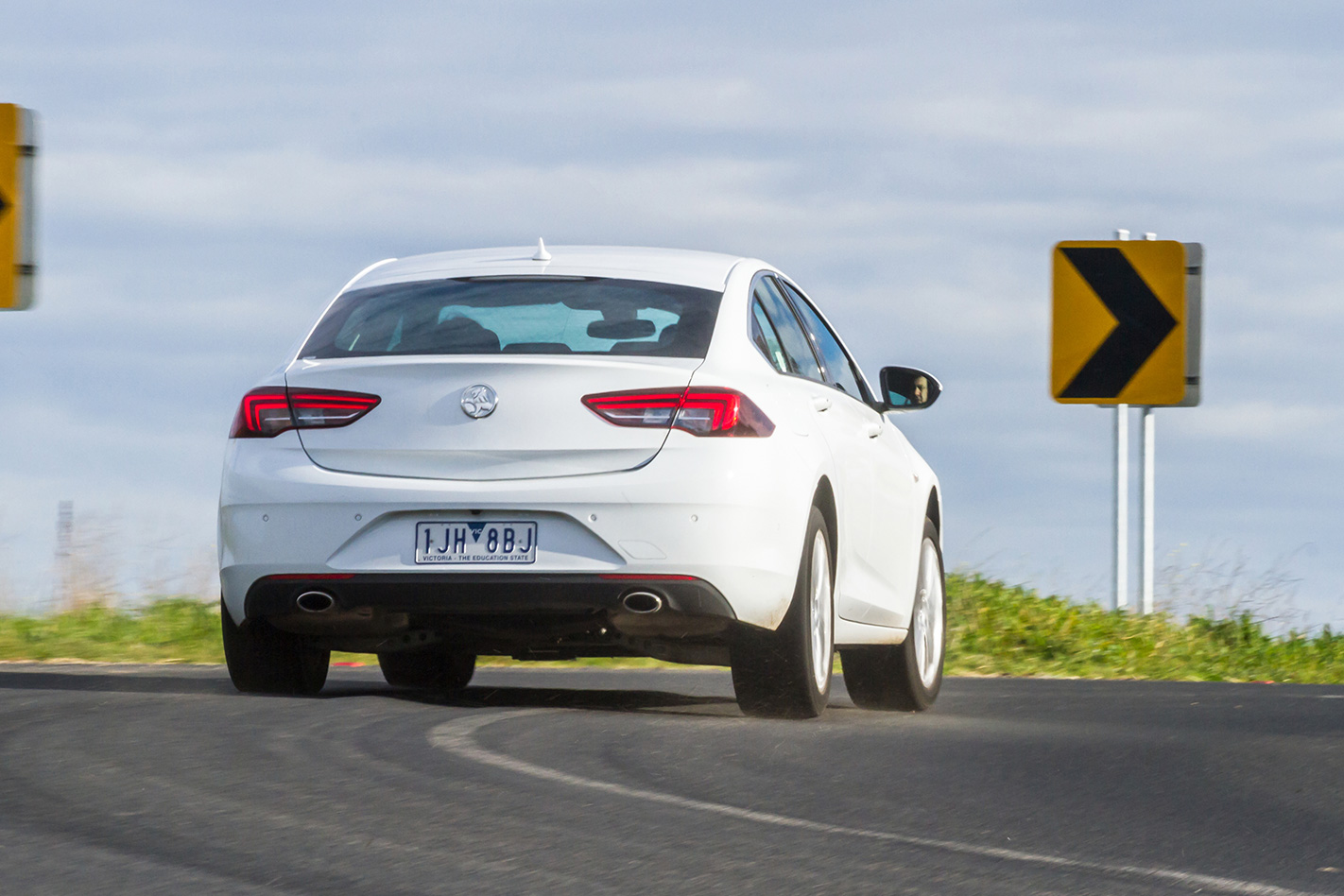
The nine-speed ZB auto never seems to run out of answers when you’re on it, with the only dynamic demerit being a tendency to upshift too far on downhill stretches, denying you throttle authority at times. That issue is compounded by the fact that the cars we drove had no paddles and that the tip shift is the wrong way round (push forward to change up) and sited way too far back on the centre console for comfortable use.
The way the turbo pours on torque takes a little time to finesse, which isn’t helped by a pedal with a very pronounced detent that you really need to determinedly kick through to provoke the gearbox to kick down. Otherwise this drivetrain is fairly hard to fault. Visibility out of the car is good, with the thick B-pillars not proving too much of an issue. The cabin treatment is low-key but well executed, with about the quality you’d expect for an upper-tier mainstream product. The interior is marginally narrower than the VFII; that’s not so apparent up front but you’ll notice it if you try to squeeze three into the back.
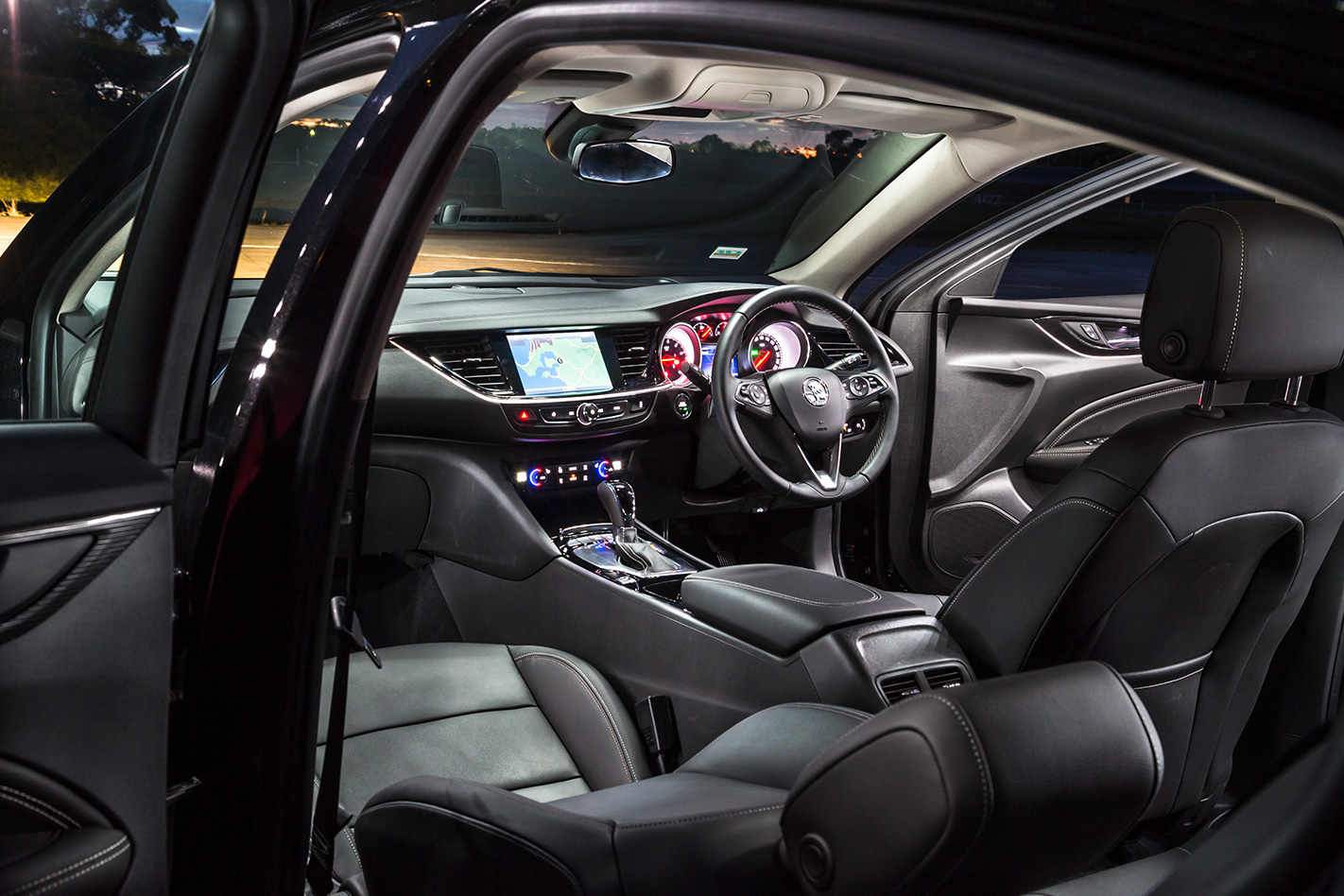
The rear seats aren’t shy of legroom, but that sloping roofline will pinch headroom for taller occupants. Go for the handsome wagon and that issue disappears altogether. A big, slightly shallow luggage bay with folding seats offers decent utility. There’s also no shortage of stowage areas in the cabin, including a brilliant rubberised phone gripper in the centre console that’s about the best solution for securing a mobile that I’ve yet come across. The three-spoke steering wheel is a thing of loveliness, although the base and mid-spec analogue dashboards, with the crowded 270km/h speedo, aren’t a triumph. The upper-spec cars get a TFT virtual dial pack and smart head-up display which is far preferable.
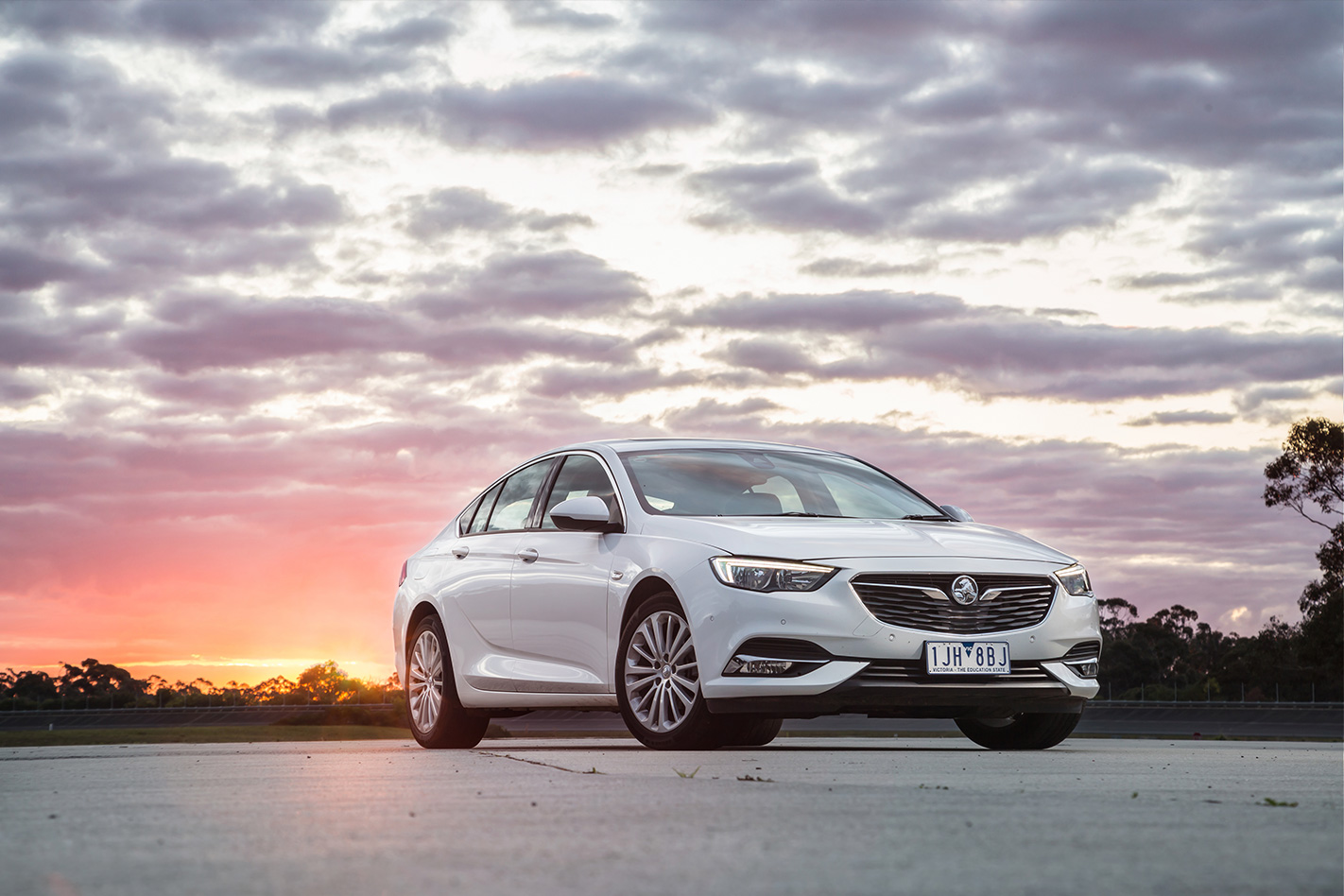
As far as first acquaintances go, it’s easy to be impressed by the ZB Commodore. We’ll miss the brilliant VFII when it cashes in its chips, because as good as the ZB is, it’s not a like-for-like swap. As much as Holden insists it has continued the DNA of the Commodore in this car, it hasn’t, and you’re not far wrong thinking there’s more marketing spin here than continuity of bloodline. That said, it is a very good car, the shame of which is that where the old Commo competed in a class of two that became one, the latest ZB gets pitched straight into a shark tank with a huge welter of competing attractions. And that’s why, despite building a better car, Holden’s sales aspirations have been pared back. We’ve exchanged something flawed but special for a more polished generic. That makes me sad, but as they say at Opel’s Russelsheim plant where the cars are built: “Alles hat ein Ende, nur die Wurst hat zwei.” Everything has an end. Only a sausage has two.
SPECS
- Model: 2018 Holden ZB Commodore 2.0T
- Engine: 1998cc 4-cyl, dohc, 16v, turbo
- Max power:191kW @ 5400rpm
- Max torque: 350Nm @ 3000-4000rpm
- Transmission: 9-speed automatic
- Weight: 1525kg (estimated)
- 0-100km/h: 7.1sec (estimated)
- Fuel economy: Less than 8.0L/100km
- Price: $tba
- On sale: Q1 2018
There’s a lot of buzz around utes in the Aussie market at the moment. Dual cab 4x4s are fast becoming the best-selling cars in this country. But, there’s a lot more to the modern ute than a top of the range fourby.
A blinged up 4×4 ute may look cool but is it really practical as working wheels? And even if you do want a cushy hauler, do you really need four-wheel drive?
Take the Nissan Navara for example. There are 27 basic variants to choose from in the range, encompassing work-focused single cab 4×2 trayback utes through to fully kitted-out 4×4 dual cab utes with the comfort of a passenger car.
With such an extensive array of models on hand, how do you choose the right ute for you?
WHAT STANDS OUT
The Navara ute range starts with the work ready DX model. It sits on 15-inch steel wheels and like the rest of the Navara line-up comes with seven airbags for better accident protection. Towing across the Navara range is 3500kg with trailer brakes fitted.
The single cab Navara RX 4×4 uses the same 2.3-litre single turbo diesel as the other vocationally focused Navara models, and makes 120kW and 400Nm of torque. Behind it sits a six-speed manual transmission. Rear suspension comprises dependable leaf springs, which isn’t new technology, however it works well if lugging a load is your thing.
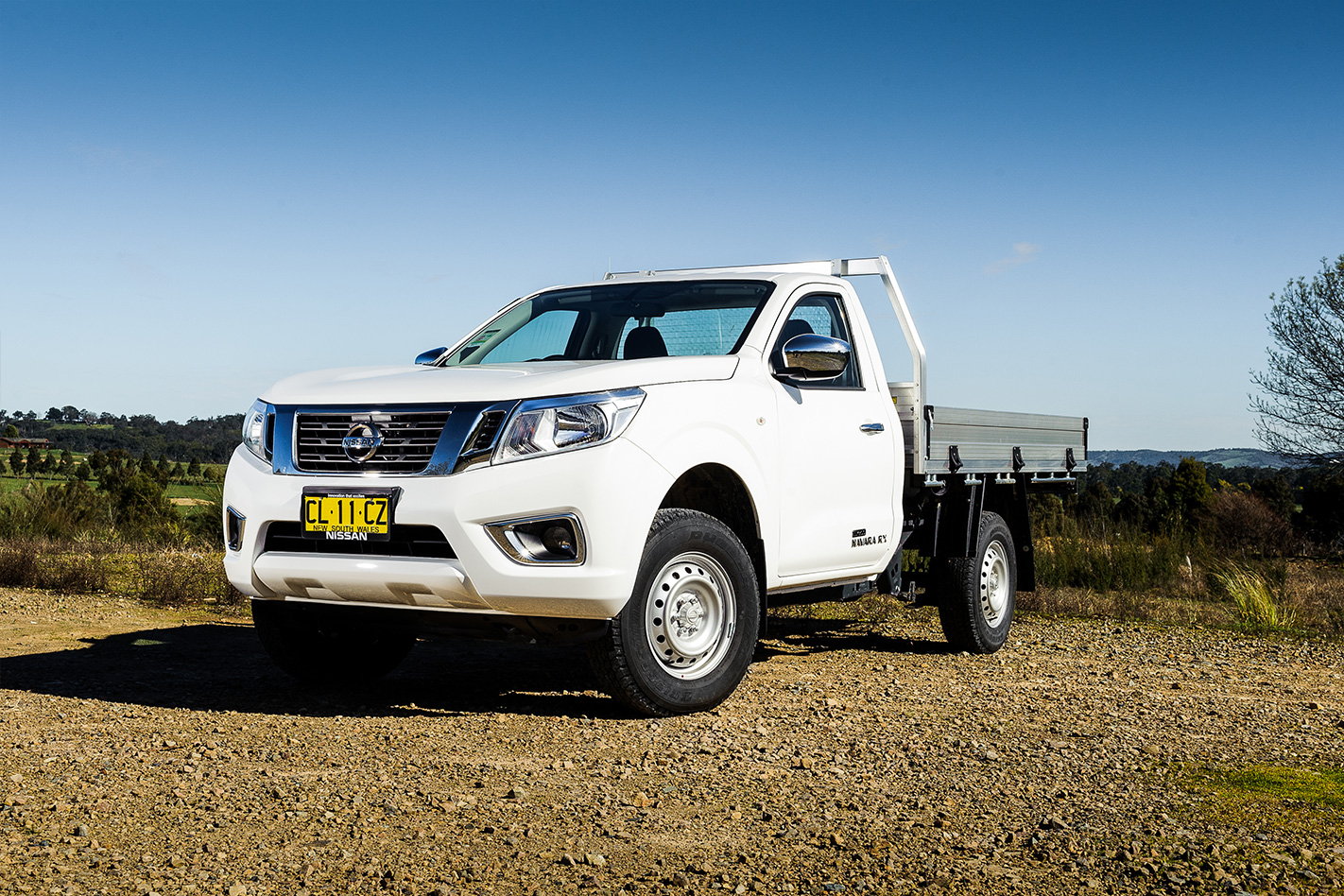
You still get steel wheels, which are less attractive and heavier than alloy wheels, but these ones are 16-inch in diameter. You also get keyless entry, a rear window demister and some splashes of chrome.
As you’d expect for a work-ready ute, the inside is fairly commercial with its swathes of plastic, practical rubber floor mats and a lot of easy to clean hard surfaces.
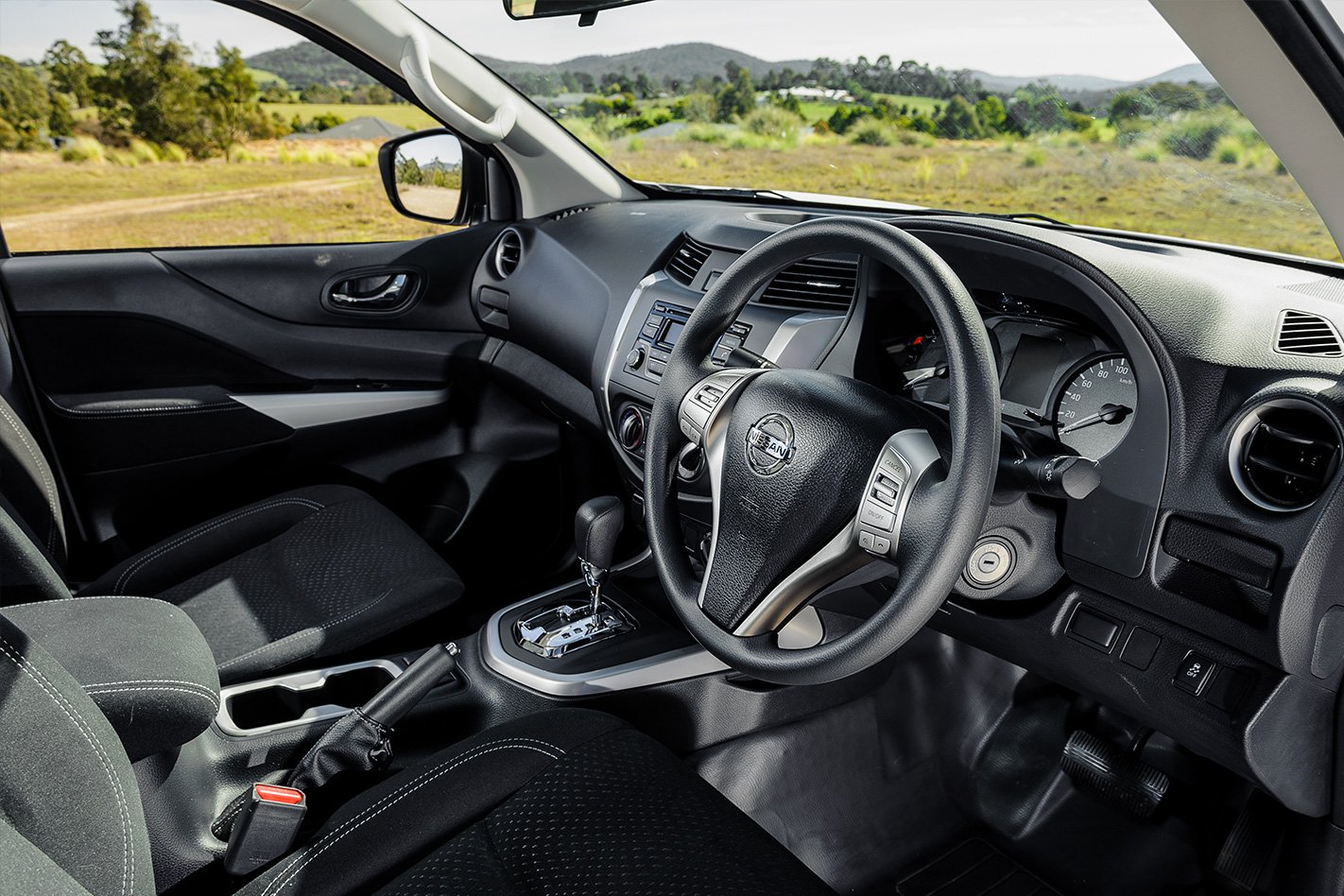
But if your priority in life is carrying cargo away from the road, then this is the Navara you’re after. One bonus of these work orientated models is a higher payload than more expensive variants
The King Cab configuration however, is an often-overlooked option.
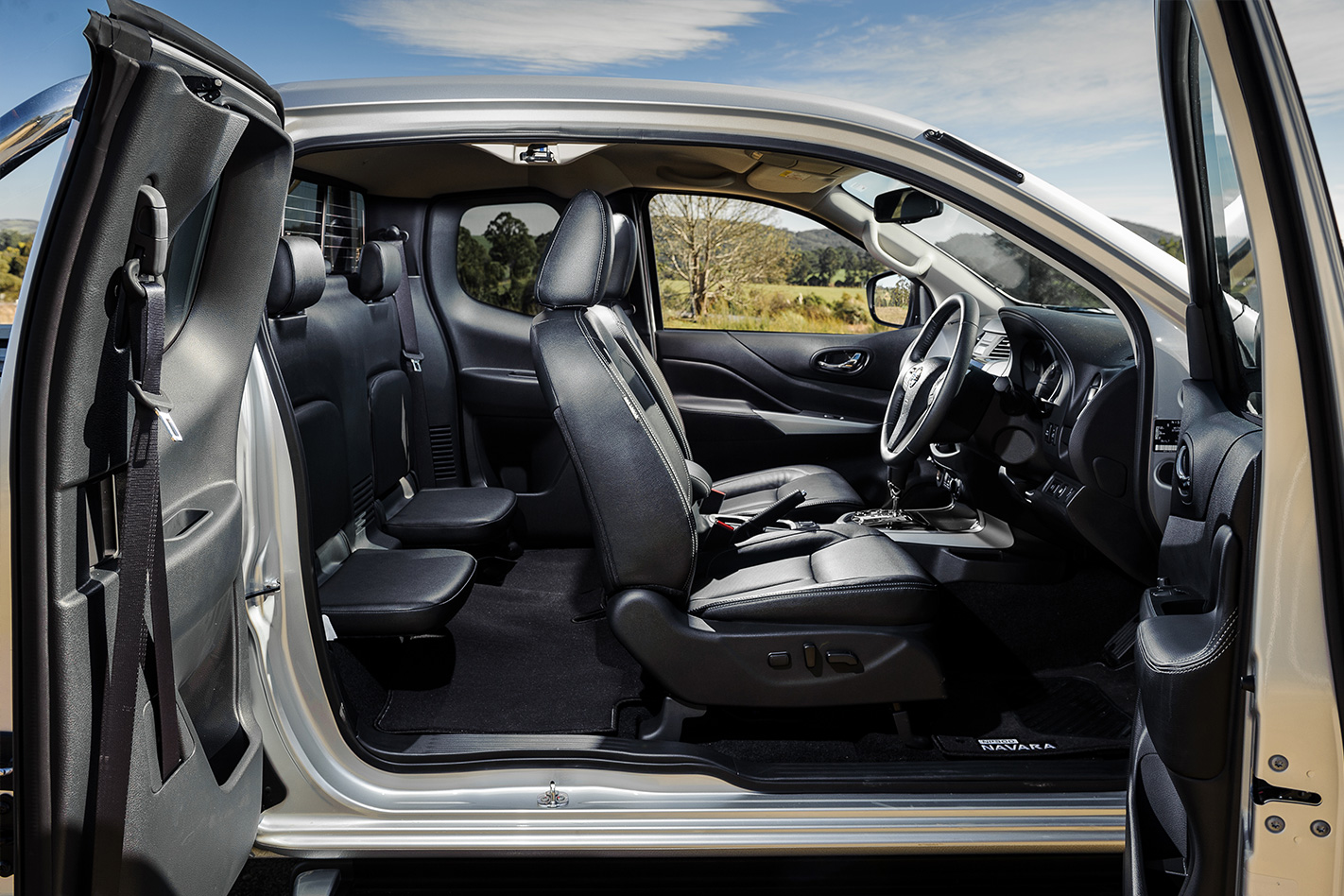
Navara King Cab models feature extra cabin space behind the front seats for secure storage, and there’s even enough room to seat a couple of passengers if needed. Though anyone on the large side may get uncomfortable on a long trip
The Navara 4×4 ST-X King Cab comes with a lot of creature comforts. The 2.3-litre diesel engine also gets an extra turbo which bumps power up to 140kW and 450Nm of torque. Inside you get heated front seats with leather, a 7.0-inch touchscreen, climate control push button start and reversing sensors. It also sits on 18-inch alloy wheels.
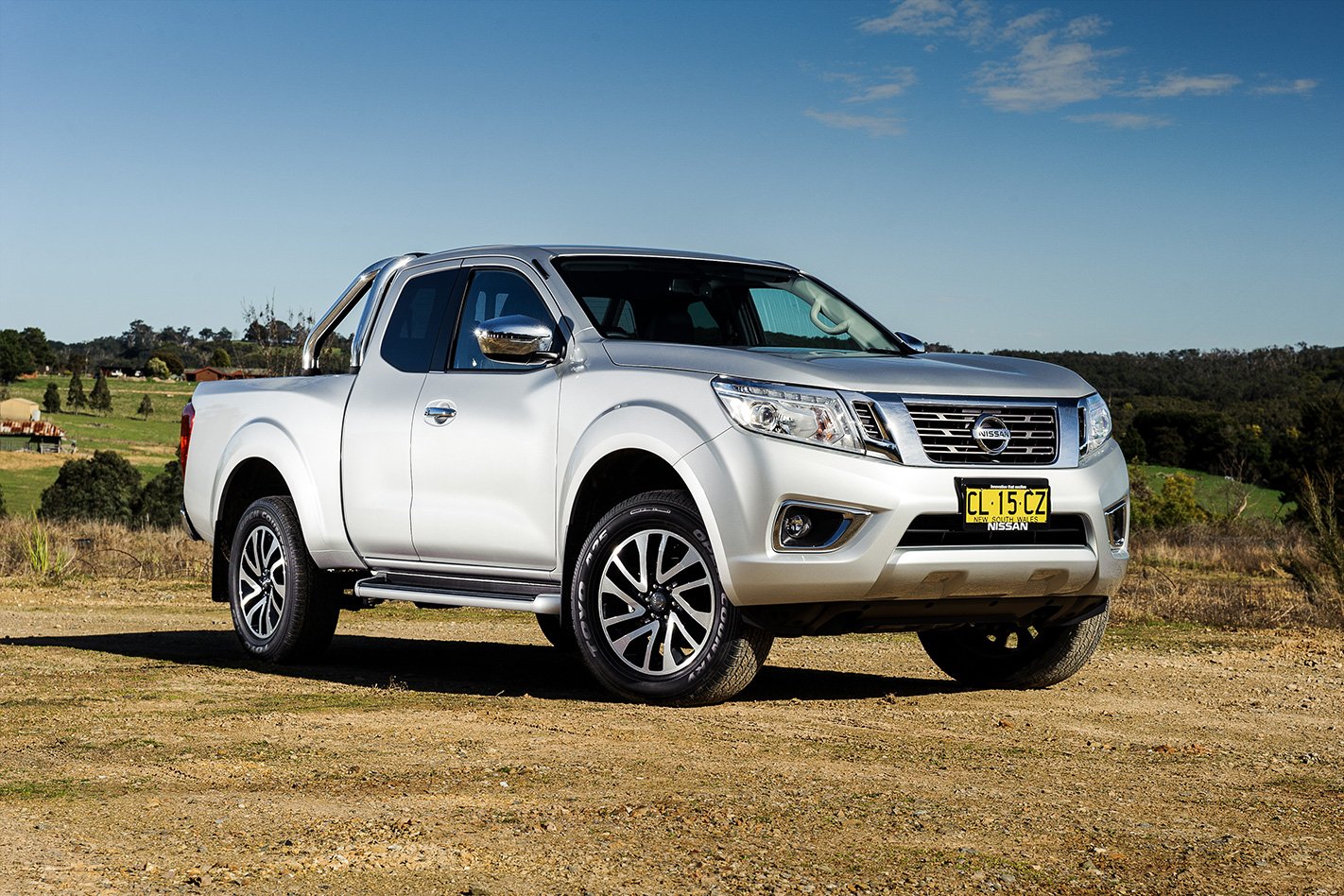
King cab and single cab utes are much better at lugging a load than dual cab utes mainly due their lighter weight, which makes for a higher payload rating, as well as having more load area behind the cab. The load is also carried between the axles rather than on top of, or behind the rear axle.
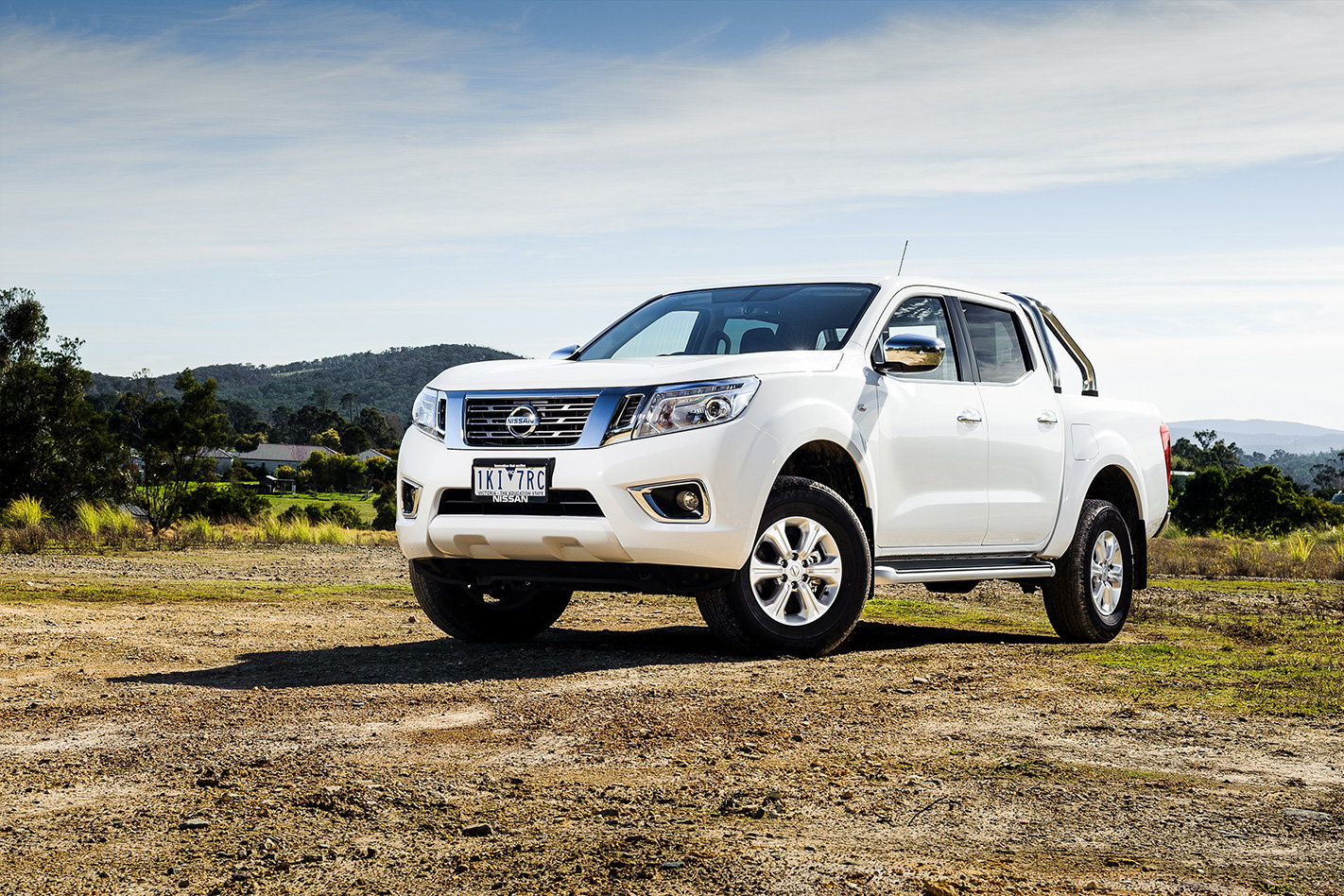
The mid-spec dual cab Navara ST featured in the video here is actually a 4×2 model. Under the rear, instead of leaf springs there’s a multi-link coil sprung rear end to provide a little more refinement on road, especially when unladen.
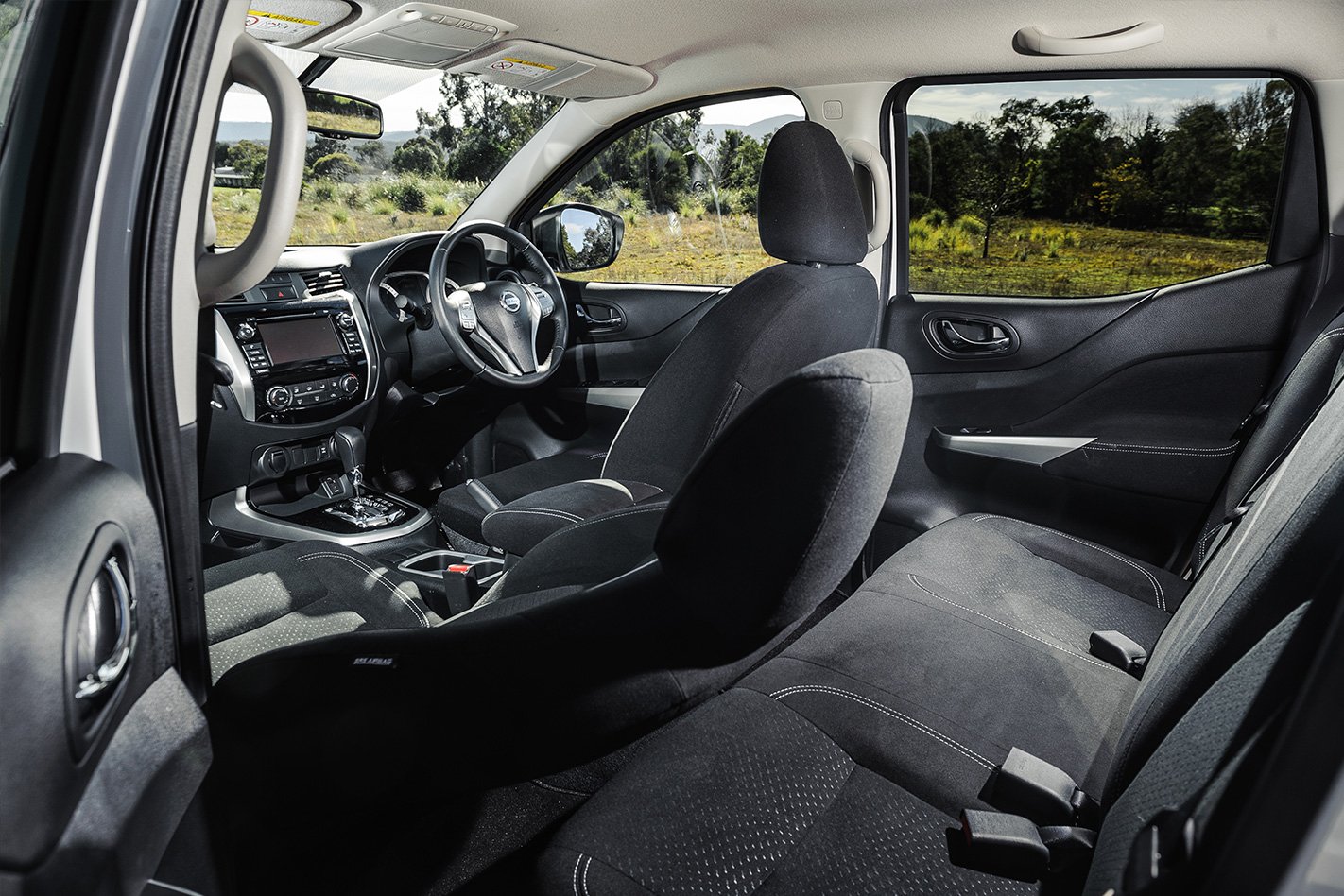
The obvious advantage of the dual cab ute is the ability to seat five people comfortably.
CHOOSING YOURS
A potential sweet spot of the Navara ute line-up is the plain jane SL 4×4 variant. The SL gets the high output twin-turbo engine, five-link rear suspension, a reverse camera, side steps and a rear diff-lock as standard equipment. It’s the value option dual cab ute with sensible real world features, without the shiny add-ons of variants further up the price tree.
SUMMING UP
Dual cab utes are a versatile vehicle, they offer near car-like levels of comfort and performance, and can carry a load as well as passengers. Opting for a two-wheel-drive variant saves you money on the purchase price as well as ongoing savings in terms of fuel and servicing costs without sacrificing load or towing capacity.
If your requirements are purely commercial then it’s hard to go past a single cab ute for strictly working wheels, just bear in mind that things are a little more basic inside. These utes perform much better under load than their dual cab stablemates.
If you’re after a compromise between these two and passengers aren’t a priority then a King Cab ute isn’t a bad option. It’ll give you the flexibility to fit a couple of extra passengers inside at a pinch, without sacrificing load capability.
Really, It’s all about the way you carve up the work/play equation.
AUDI is changing the way it names model variants, with its new numeric system emphasising performance rather than engine size. Pay attention now, because Audi’s new nomenclature is not exactly intuitive.
Primary model names such as A3 and Q7 will remain, but the variants within each model line will now be differentiated via a two digit number. That number will represent where it sits in the power output hierarchy, with additional suffixes to indicate engine type (including hybrid or electric powertrains), along with familiar terminology such as quattro or Sport.
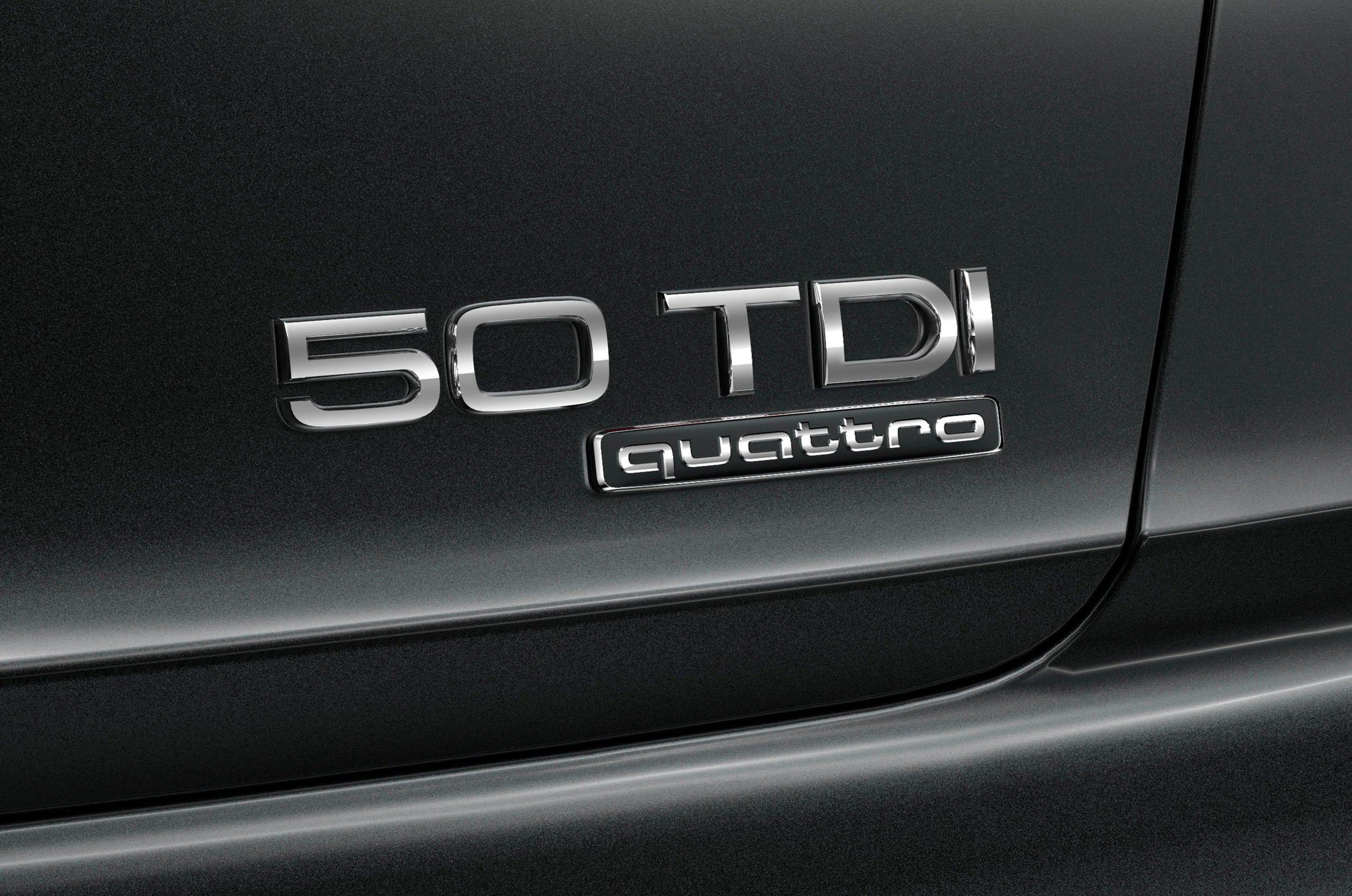
Increasing in increments of five, the number combinations are designed to create a defined hierarchy in each model range by identifying performance levels of both combustion and electrified powertrains.
“As alternative drive technologies become increasingly relevant, engine displacement as a performance attribute is becoming less important to our customers,” explained Audi AG sales and marketing board member Dr Dietmar Voggenreiter.
“The clarity and logic of structuring the designations according to power output makes it possible to distinguish between the various performance levels.”
The good doctor didn’t explain why the system starts at 25 or how the numbers relate to their power range, though it seems to be more an arbitrary move with no hard rules about how the power brackets are staggered.

Existing models will also change for the 2018-19 European model year beginning in July 2018.
Performance designations such S and RS will remain in reference to their top position in the model range.
New Audi variant code
- 25 = up to 80kW
- 30 = 81-96kW
- 35 = 110-120kW
- 40 = 125-150kW
- 45 = 169-185kW
- 50 = 210-230kW
- 55 = 245-275kW
- 60 = 320-340kW
- 70 = 400kW+
A new Volkswagen Tiguan variant could be on the horizon if spy videos from Germany are to be believed.
A Tiguan with minimal camouflaging was spotted lapping the famed Nurburgring Nordschleife with some serious haste with a distinct exhaust note that to our ears sounds remarkably like an Audi RS Q3.
The 2017 Audi RS Q3 Performance has a 2.5-litre turbocharged five-cylinder engine under the bonnet, which sends 270kW and 465Nm to all four wheels via a seven-speed dual-clutch automatic transmission.
If that engine and drivetrain package is what is lurking underneath the skin of the aforementioned Tiguan, it gives us a delectable hint an R version of VW’s mid-size SUV could be in the works.
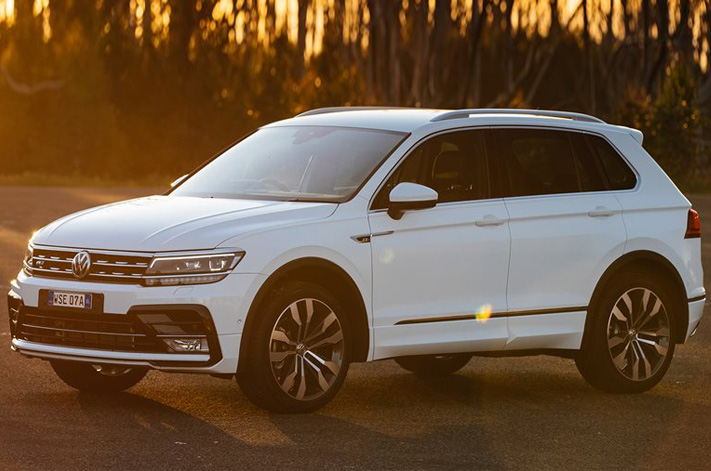
A Tiguan R would likely have a slightly detuned version of the Audi engine (which VW has access to via its ownership of its German sibling), but would sit above the current flagship of the range, the 162TSI Highline (pictured above).
The 162TSI Highline makes 162kW and 350Nm from a 2.0-litre turbocharged four-cylinder mated to a seven-speed dual-clutch automatic sending power to all four wheels. It is the same engine found in the current Mk7.5 Golf GTi.
The current Tiguan range-topper costs $48,490, while the Audi RS Q3 Performance will set you back $84,216. If it does become a reality, the Tiguan R would sit in between these two models in terms of both price and performance.
WhichCar has sought comment from Volkswagen Australia.
