
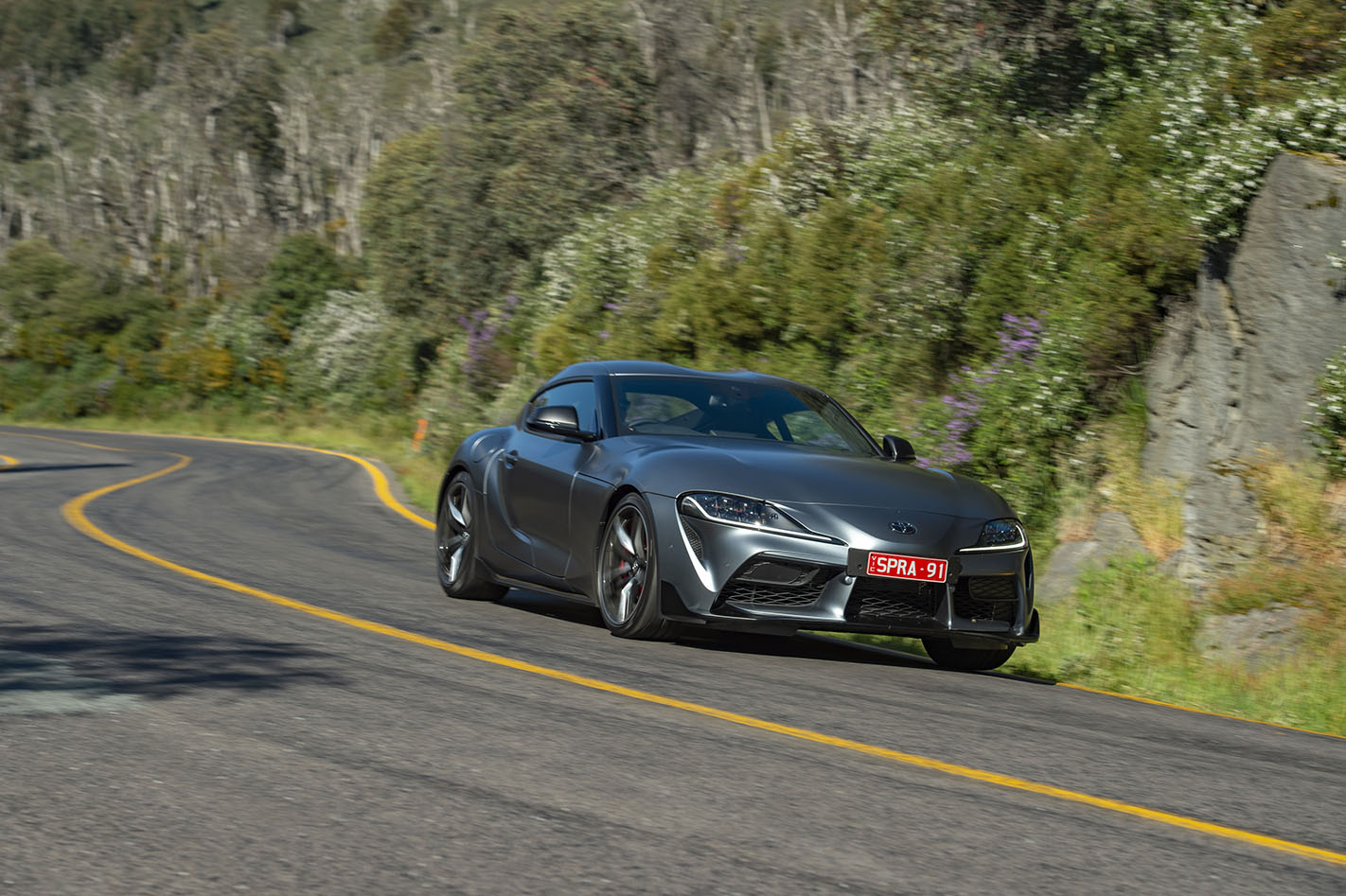
Apologies in advance for being anti-climactic, but the Toyota Supra is a damn good sports car. If you are in the market for a driver’s car that gets your adrenal glands pumping, can be driven regularly, and stands out from the crowd, the reborn MkV Supra is one of the best options available today.
At PCOTY 2019 the Toyota Supra finished a worthy third, beating the likes of the HSV Camaro ZL1, Renault Megane RS Trophy R, and Lotus Exige Sport 410. Stiff competition.
It is interesting, then, that Toyota has felt the need to update its flagship sports car just over a year after it was launched locally. What’s changed, then?
Thanks to some fiddling from BMW, the German-sourced 3.0-litre turbocharged straight-six-cylinder engine now makes an extra 35kW (for a total of 285kW), and there have been tweaks to the chassis to add rigidity.
Thing is, the Supra didn’t really need any extra grunt or stiffness. It was already plenty fast in the real world, and Toyota had tuned in a sweet ‘Goldilocks’ suspension tune that was not too stiff, not too soft. So, has Toyota broken the sacred ethos of “if it ain’t broke don’t fix it”? Spoiler alert: no.
It’s all too easy nowadays to give a sports car a little too much power, which you can’t tap into on some of Australia’s best back roads without turning your licence into a critically endangered species. Thankfully, the changes made to the Supra’s engine have only served to make it more accessible, more of the time.
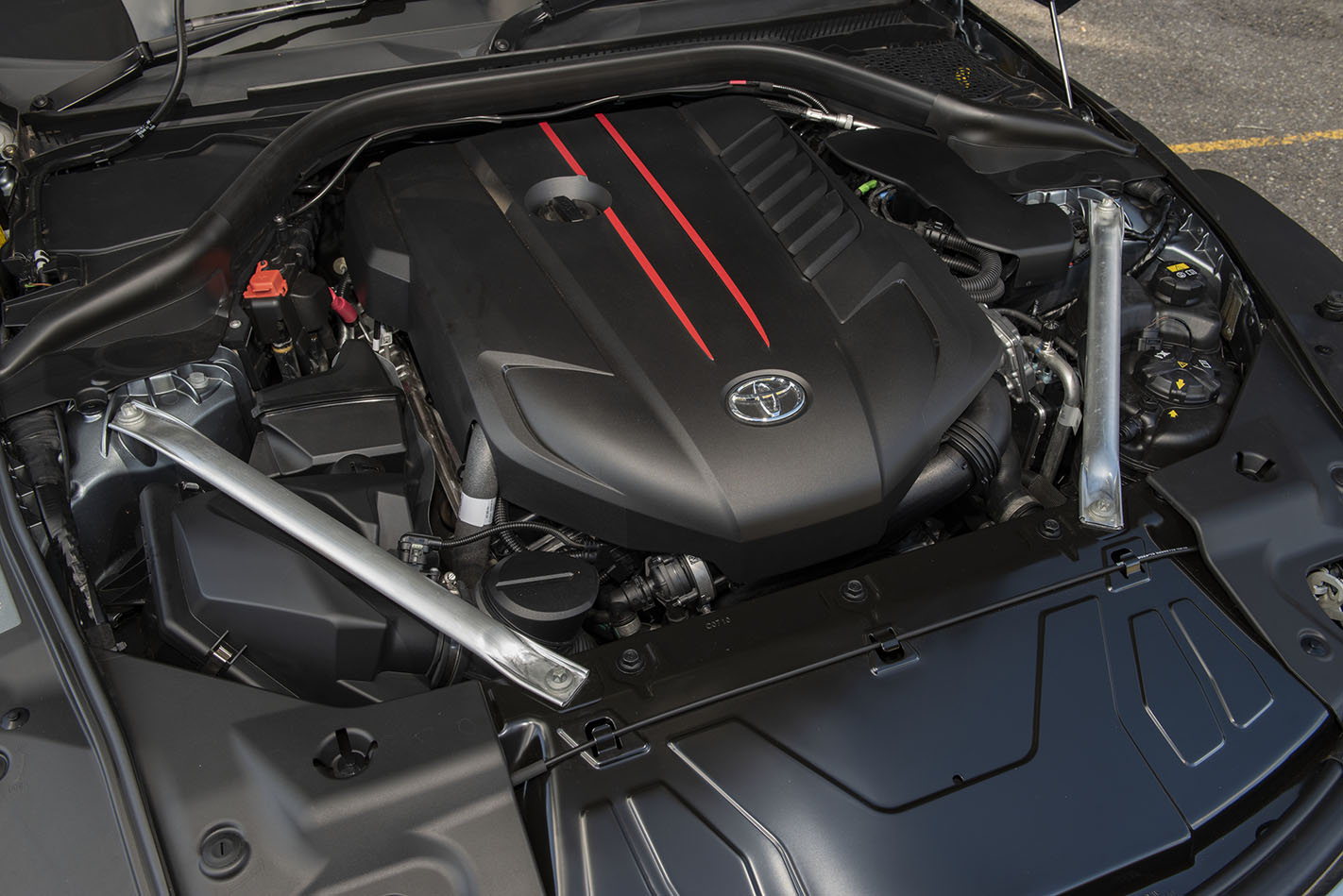
Peak power is not simply increased at the top of the rev range, with the extra kilowatts on offer earlier and across a wider spread of revs, shunting the Supra toward the horizon between 5800-6500rpm. Torque remains capped at 500Nm, but is now spread between 1800-5000rpm (previously 1600-4500rpm).
Having peak torque on tap for more than 3000rpm means the Supra always feels muscular, without the driver needing to search for the right ratio in the eight-speed automatic gearbox to get meaningful acceleration.
Toyota claims the new powertrain will drop the 0-100km/h sprint to 4.1 seconds. Our short time with the flagship GTS variant means we haven’t had the opportunity to verify the claim with independent performance testing.
Our best time with the 250kW version was a stout 4.44sec from 0-100km/h, and the patented butt dyno tells us the extra 35kW of grunt and wider powerband will shave a tenth or two from that.
Kudos to Toyota for making the more powerful powerplant available on both the base GT and more expensive GTS variants of the Supra, with prices rising $2000 across the board as a result. The engine isn’t the only area that has been fettled for this update, with new strut braces fitted in the engine bay to help improve rigidity.
For the anoraks, the only external way to differentiate this new more powerful version from early MkV adopters is the addition of a Supra logo on the front brake calipers on GTS badged versions. GT variants, with their unpainted calipers, remain visually indistinguishable unless you pop the bonnet and see the additional strut braces.
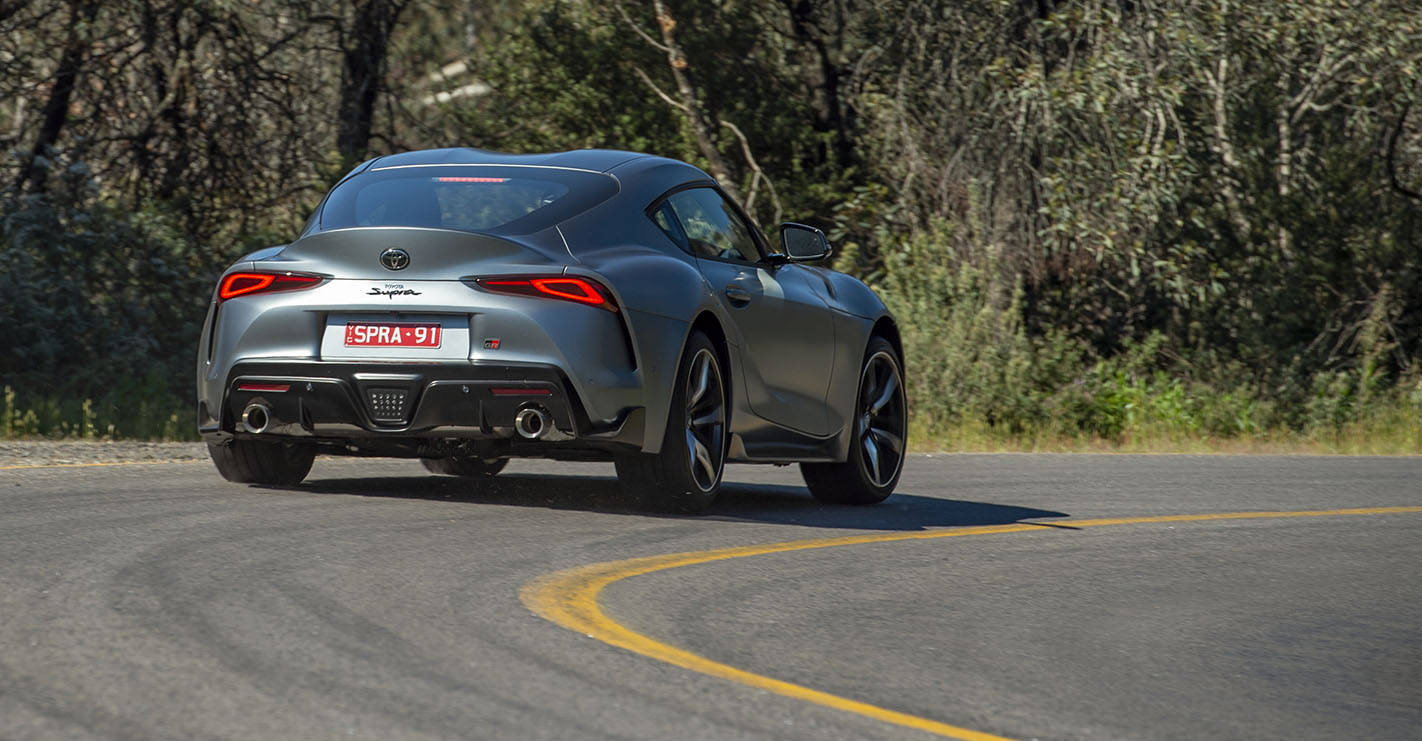
It’s not all about power with the Supra though, as the mid-corner speed you can achieve in the MkV is staggering, helped in no small part by the Michelin Pilot Super Sport rubber (255/35/R19 up front and 275/35/R19 at the rear).
Chassis balance is beautifully judged, with keen turn-in, and an eagerness throughout the middle part of the corner that inspires you to start employing your right foot early. Square up the exit, press the throttle against the firewall, and the Supra places its newfound power to the ground with aplomb.
Take this as your one warning though: don’t get aggressive with the Supra. It performs better with a smooth hand, and is at its most rewarding (and fast) when flowed progressively from one bend to another. Snap oversteer awaits those with jerky inputs.
The brakes perform well, with strong pedal feel that doesn’t step over the line of being artificially overservoed. There is enough travel in the pedal that you aren’t stressed against the belts on the mildest of applications, but strong applications still shed speed rapidly.
The wheel is nicely sized at 373mm, has a well-judged rim size, and is thankfully fitted with a judicious selection of buttons – mainly for controlling the cruise function and media.
Now for the downsides, which I’ll preface by saying don’t come anywhere close to spoiling the Supra’s giggle-inducing positives. Firstly, the ZF torque-converter automatic is crisp and smooth on the way up the ratios, but can be clunky coming back down, particularly at slow speeds around town.
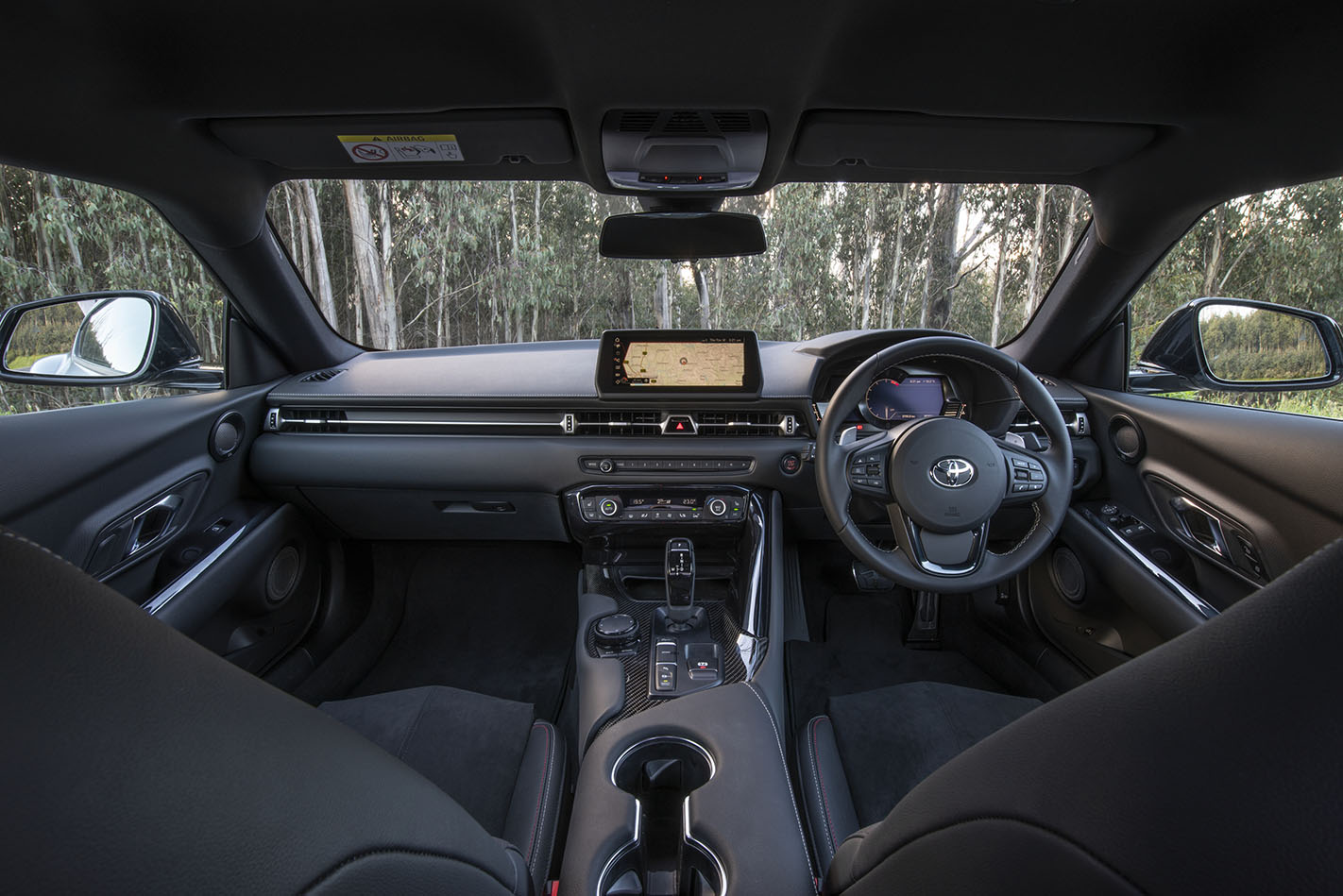
A grand tourer the Supra decidedly is not. With less than 1000km on the odometer, our test car had already developed an incessant and incredibly annoying rattle in the dash. That brings our tally of Supra press cars with rattles to three (out of three), each developing a problem in a different area of the cabin. Toyota needs to send someone to Graz with a stern finger and a new set of ratchets.
Then there is road noise. On the highway, tyre noise is a pervasive problem. You need to have the JBL speakers cranked to drown out the drone. Long stints on the highway in the Supra can become tiring.
However, the biggest sticking point with the Supra remains its pricing and model structure. I struggle to see a reasonable justification for the extra premium that the GTS demands over the base model.
If you opt for the GTS you gain 19-inch wheels (up from 18 inches), wrapped in the same Michelin Pilot Super Sport tyres as the GT, larger rear brakes with red calipers, metal pedals, a head-up display, JBL sound system, and the ability to option Alcantara interior trim and matte grey pain at $2500 a pop (both of which were fitted to our test car).
The value just isn’t there.
Our test car was priced at $102,126 before on-roads, a full $15,000 more than a base GT, for no real performance gain. Yes, the GTS gets larger rear brakes, but you won’t notice that in the real world, and track day enthusiasts are going to get more benefit from more aggressive pads. The extra tinsel doesn’t necessarily improve day-to-day liveability either, with the JBL speakers not adding a significant level of extra fidelity or clarity, and the small convenience of a head-up display just isn’t worth the extra outlay. Ultimately, unless you are desperate for the bigger rims or access to the paint and trim options, save yourself the money and pass on the GTS.
Regardless of which variant you opt for, if you are willing to put up with its niggles, the Toyota Supra will reward you with one of the most enjoyable driving experiences you’ll find in any new car on sale today.
Long live the legend.
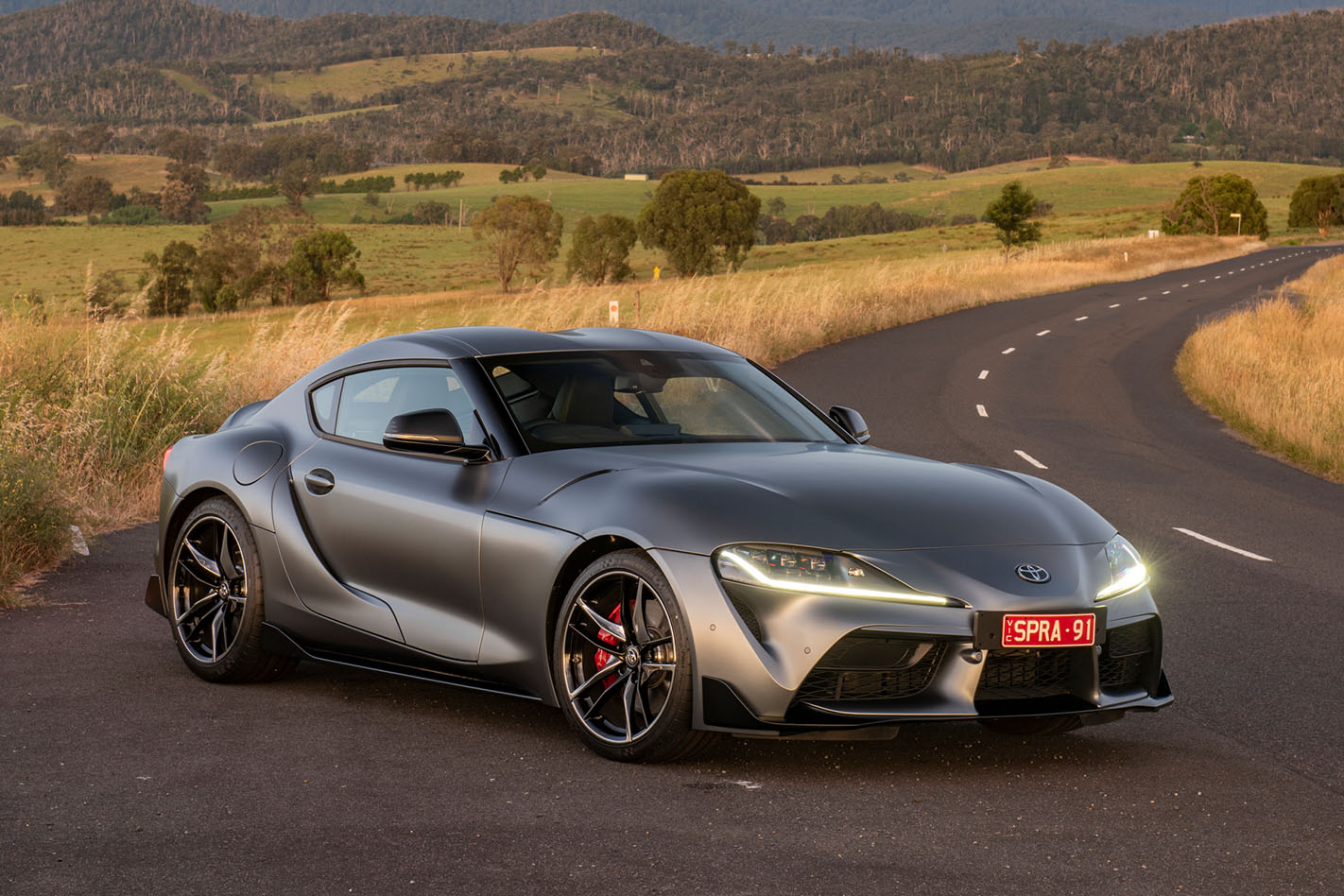
TOYOTA SUPRA GTS SPECS
Engine: 2998cc inline-6, DOHC, 24v, turbo
Power 285kW @ 5800-6500rpm
Torque 500Nm @ 1800-5000rpm
0-100km/h: 4.1sec (claimed)
Weight: 1495kg
Price: $97,126
Star rating: 4.5/5
Like: Accessible performance, prodigious chassis, head-turning looks
Dislike: Clunky downshifts, tiresome road noise, persistent rattles squeaks
Porsche’s upcoming Taycan Cross Turismo electric crossover has been spied undisguised by an Instagram user in the United States.
Photographer @noobtographer snapped a revealing look at the wagon/SUV hybrid while it was undergoing testing in Los Angeles, California.
Gone is the camouflage of previous development cars, revealing a close look at what will likely be the Taycan Cross Turismo in its production specification.
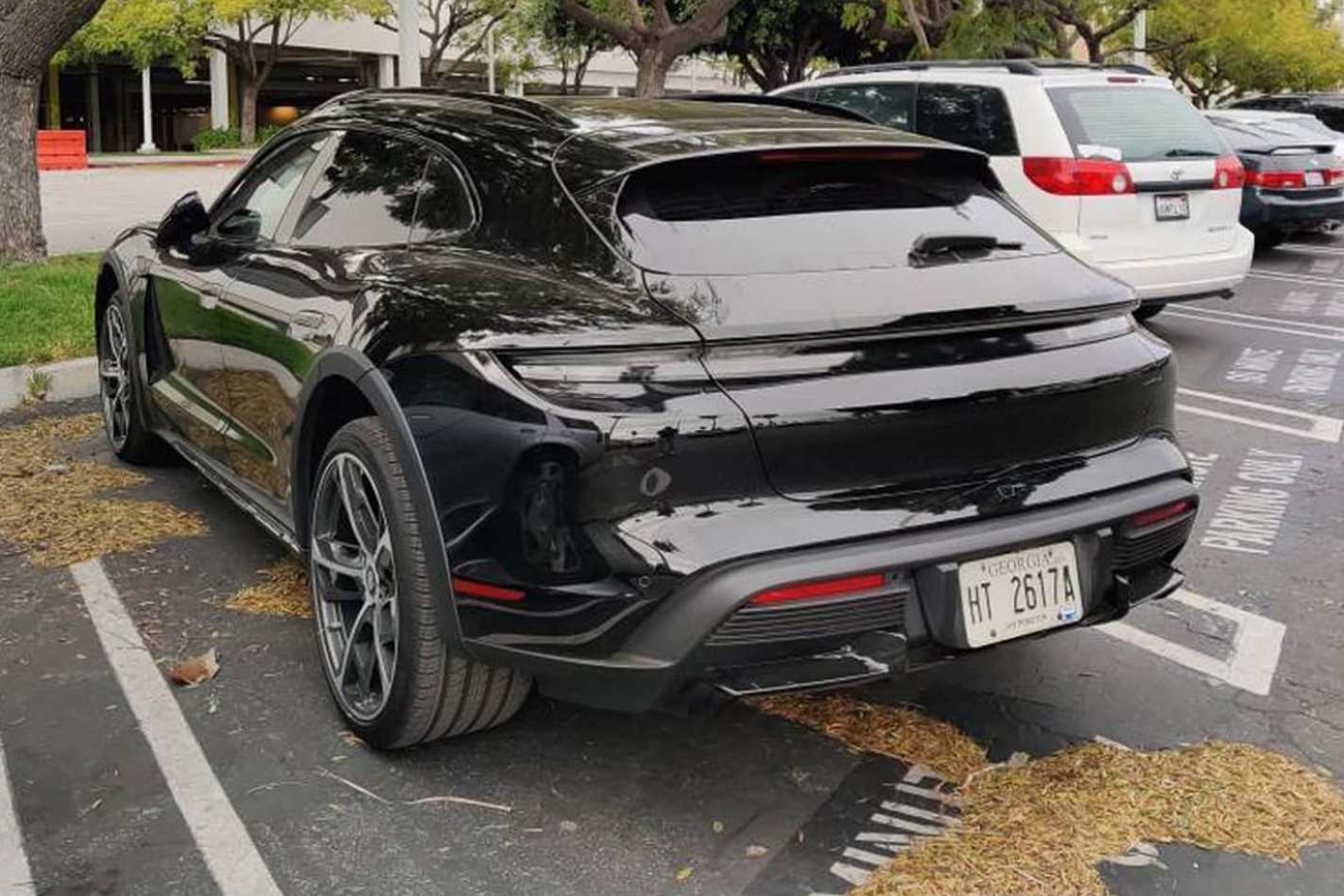
It’s expected that the Taycan Cross Turismo will make its worldwide debut mid-way through 2021, before joining the Taycan sedan in Australian showrooms later this year.
From the images, we can glean that the design remains largely true to the Mission E Cross Turismo concept that was shown at the 2018 Geneva Motor Show.
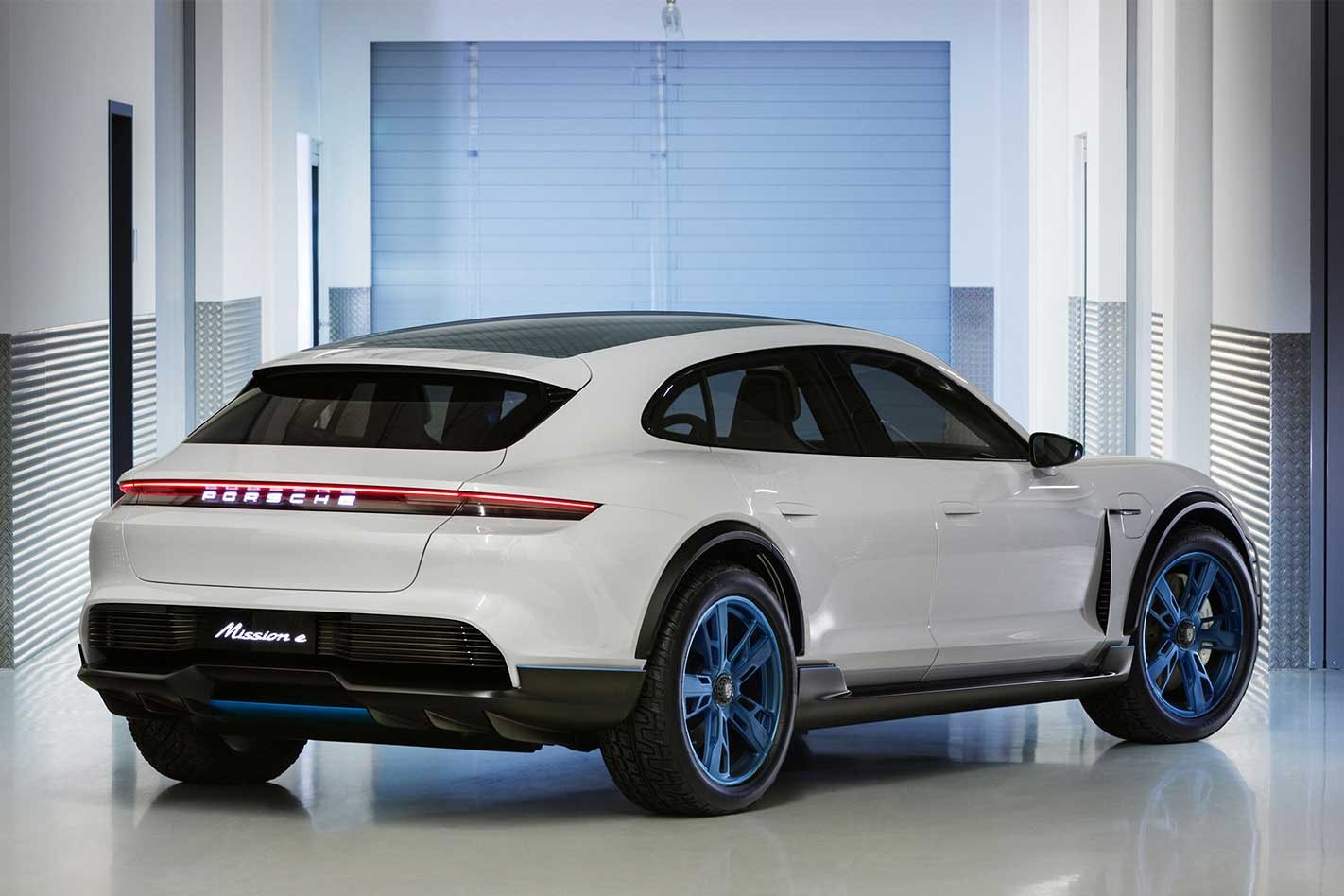
It features a taller ride height, black cladding along the wheel arches and a taller roofline that should not only fit more luggage, but address headroom issues in the second row – a common criticism of the Taycan sedan.
Spy photos of the front end show a similar design to the normal Taycan.
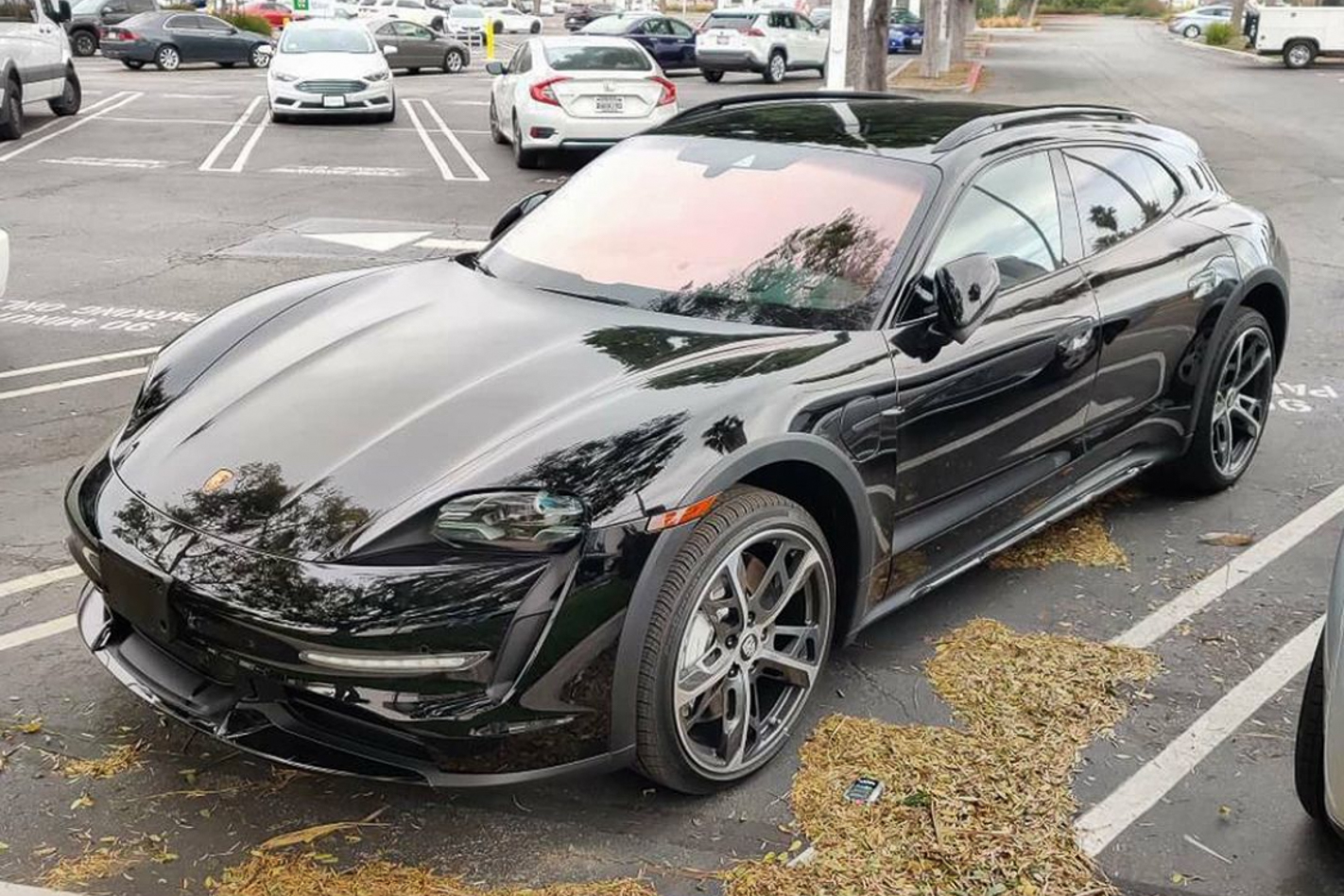
This development car also sports a set of new windmill-style five-spoke wheels, a design not previously seen on any Porsche.
2021 Porsche Taycan confirmed for Oz
A sneak peek through the window of the test vehicle reveals a cabin mirroring that of the Taycan sedan, which features a 16.8-inch curved instrument cluster display, a 10.9-inch infotainment screen and a display integrated into the centre console for key interior amenities.
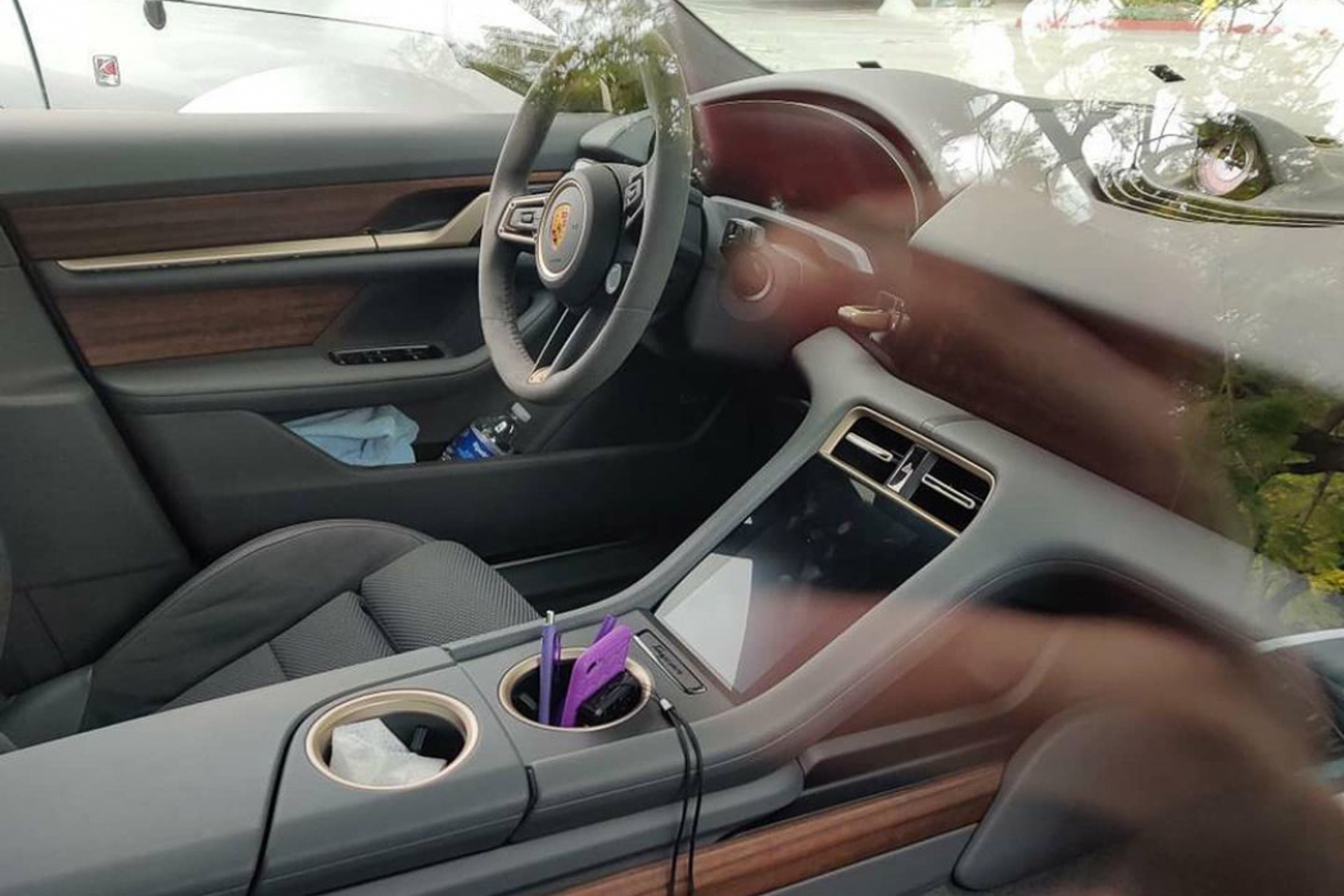
It’s likely that the Taycan Cross Turismo will score many of the same powertrain options as its Taycan sedan sibling including the 4S and Turbo, though it’s uncertain whether the recently-announced rear-wheel-drive variant will be on offer for the off-road-style Cross Turismo.
https://www.instagram.com/p/CKTYl42Foij/?utm_source=ig_embed&utm_campaign=loading
Stay tuned for further information on the Taycan Cross Turismo crossover as it is revealed.
In the meantime, flick through the gallery above for our best look at the Porsche Taycan Cross Turismo yet.
Jeep aims to bolster its environmentally-friendly credentials in Australia by becoming a leader in vehicle electrification.
That’s a big call from the recreational SUV specialist, whose current Australian range – which includes the supercharged V8 Grand Cherokee Trackhawk, and Gladiator ute – has an average combined fuel consumption of just over 10 litres per 100 kilometres.
But Jeep’s global president, Christian Meuniér, stressed the company is adamant it won’t be a follower with battery power, pointing to its plans to electrify its full line up by 2022.
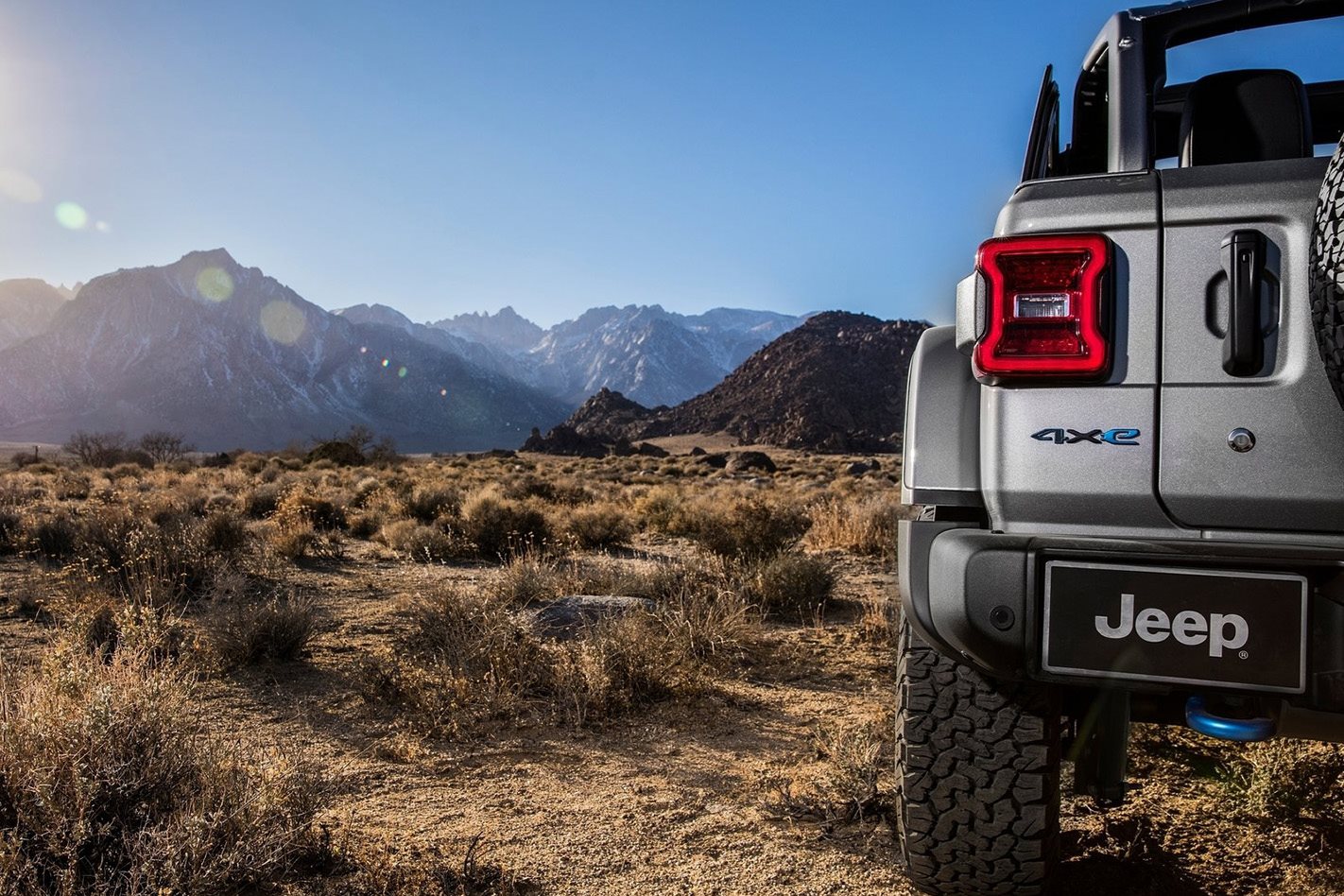
To be clear, when Meuniér says Jeep wants to be a leader in electrification, he is referring to the off-road and recreational SUV markets.
That said, if you’re waiting for a full battery-electric (BEV) Jeep to grace Aussie roads any time soon you better not hold your breath, with Meuniér echoing the concerns of his motoring industry counterparts about the lack of Australian government incentives to assist BEVs viability.
“There’s no point in trying to push something without the support of the government,” he told Australian journalists. “It would need the Australian government to support and the government is not going to jump on it.”
However, he does see an appetite for BEVS in Australia and believes the market will look very different by 2025.
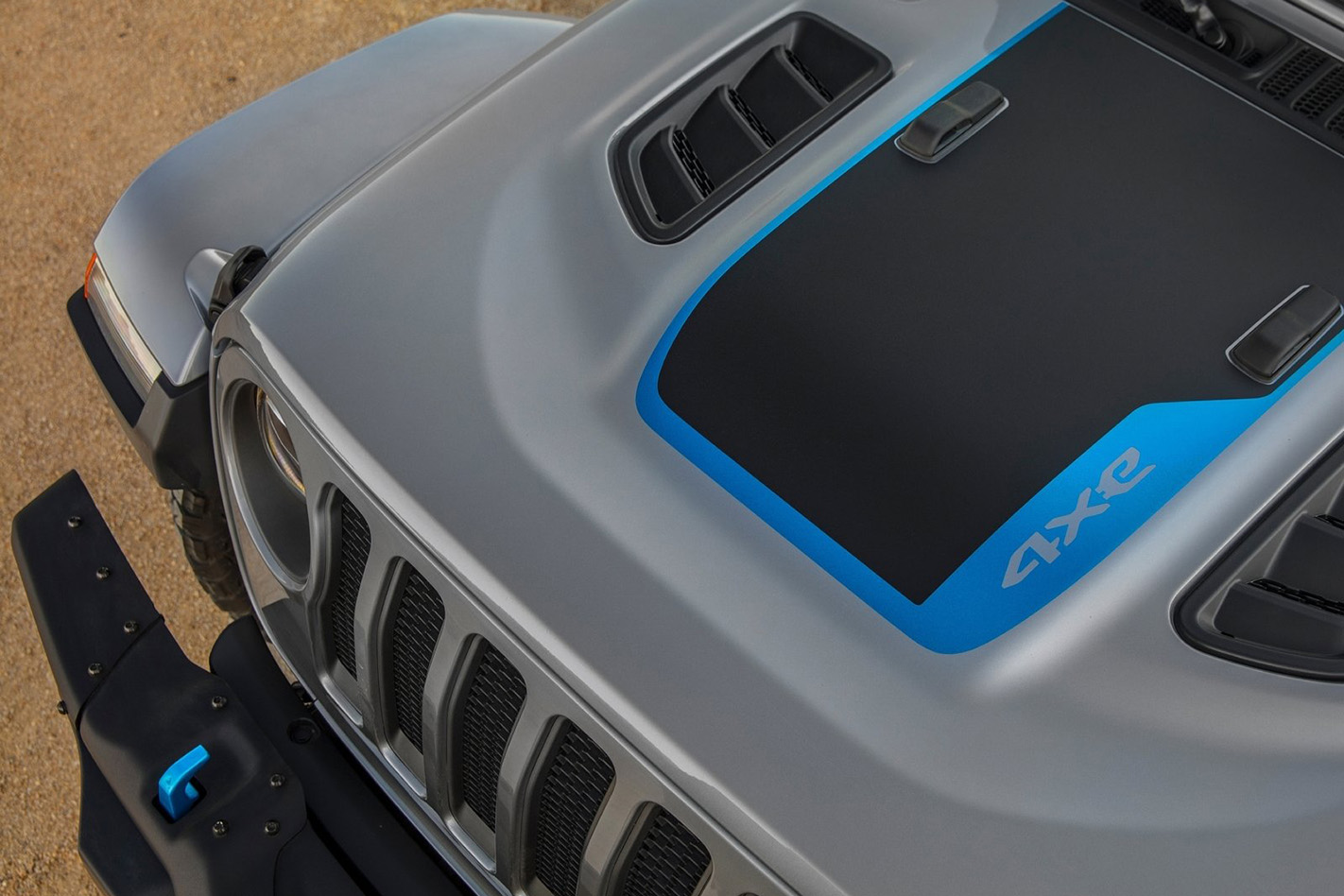
Until then, Jeep is putting its energy into hybrid technology including its new 4xe plug-in hybrid (PHEV) powertrain that’s expected to debut here in the Grand Cherokee during 2022, with work underway for the Wrangler 4xe to follow.
According to Meuniér, PHEV powertrains are an excellent fit for Jeep vehicles as their strong torque can deliver additional off-road capability, driver enjoyment and towing capacity.
“Towing is core to Jeep, so we wouldn’t compromise on it, but we’ve tested Wrangler 4xe and Grand Cherokee 4xe and towing is at least as good as with ICE (internal combustion engines) so we’re going forward,” he said. “It belongs to the future including in Australia.”
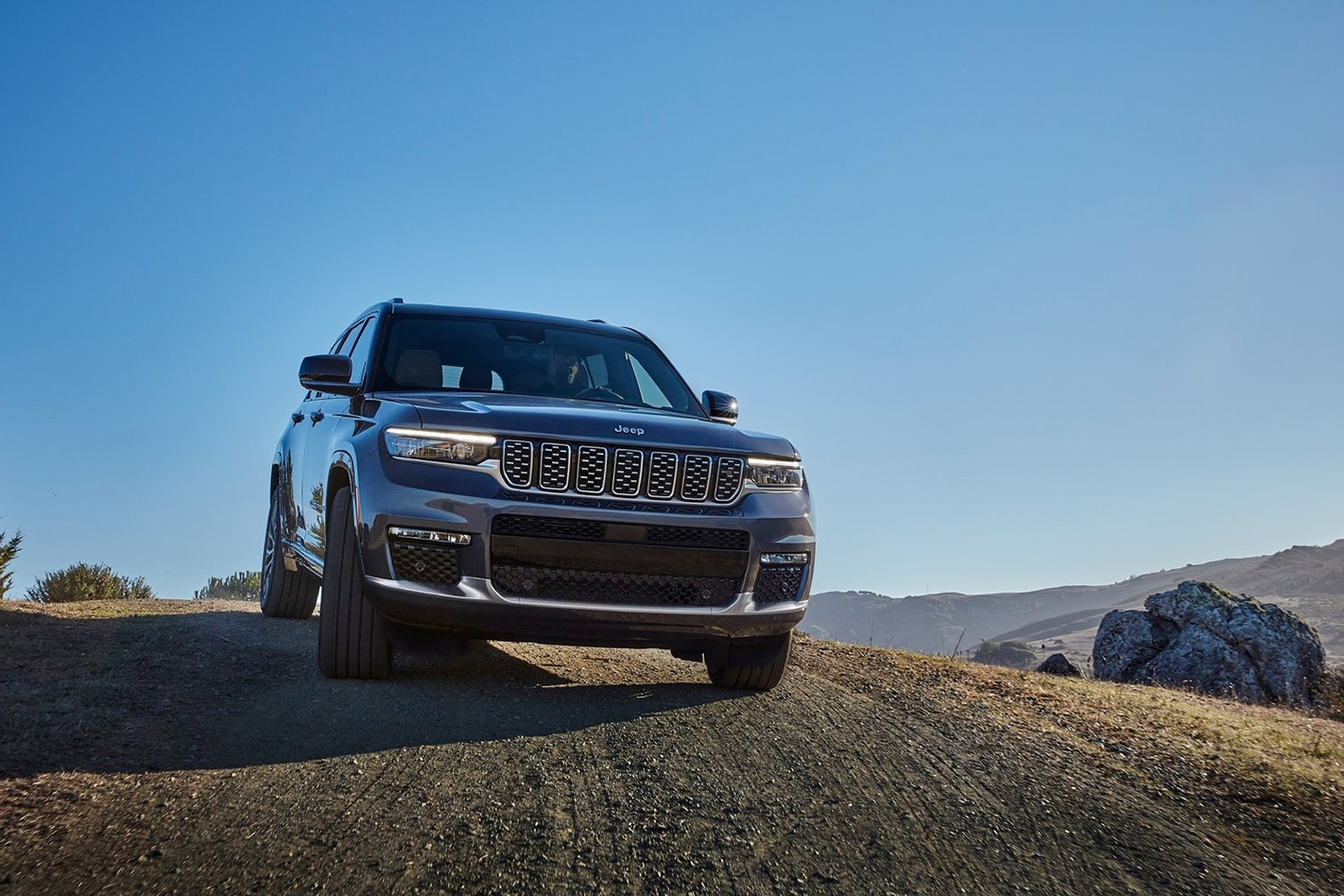
He said he’s convinced the Grand Cherokee 4xe will do well in Australia, despite our preference large off-road SUVs with diesel or V8 petrol engines.
“It’s going to be a way also for Jeep to differentiate and to show that we’re really advanced on technology. The capability off-road is outstanding, people are going to love it, I have no doubt,” he said.
Plug-in fast Jeeps
Meuniér also hinted that electrified powertrains will also make their way into a new generation of performance-orientated Jeeps such as the Grand Cherokee SRT and Trackhawk (below).
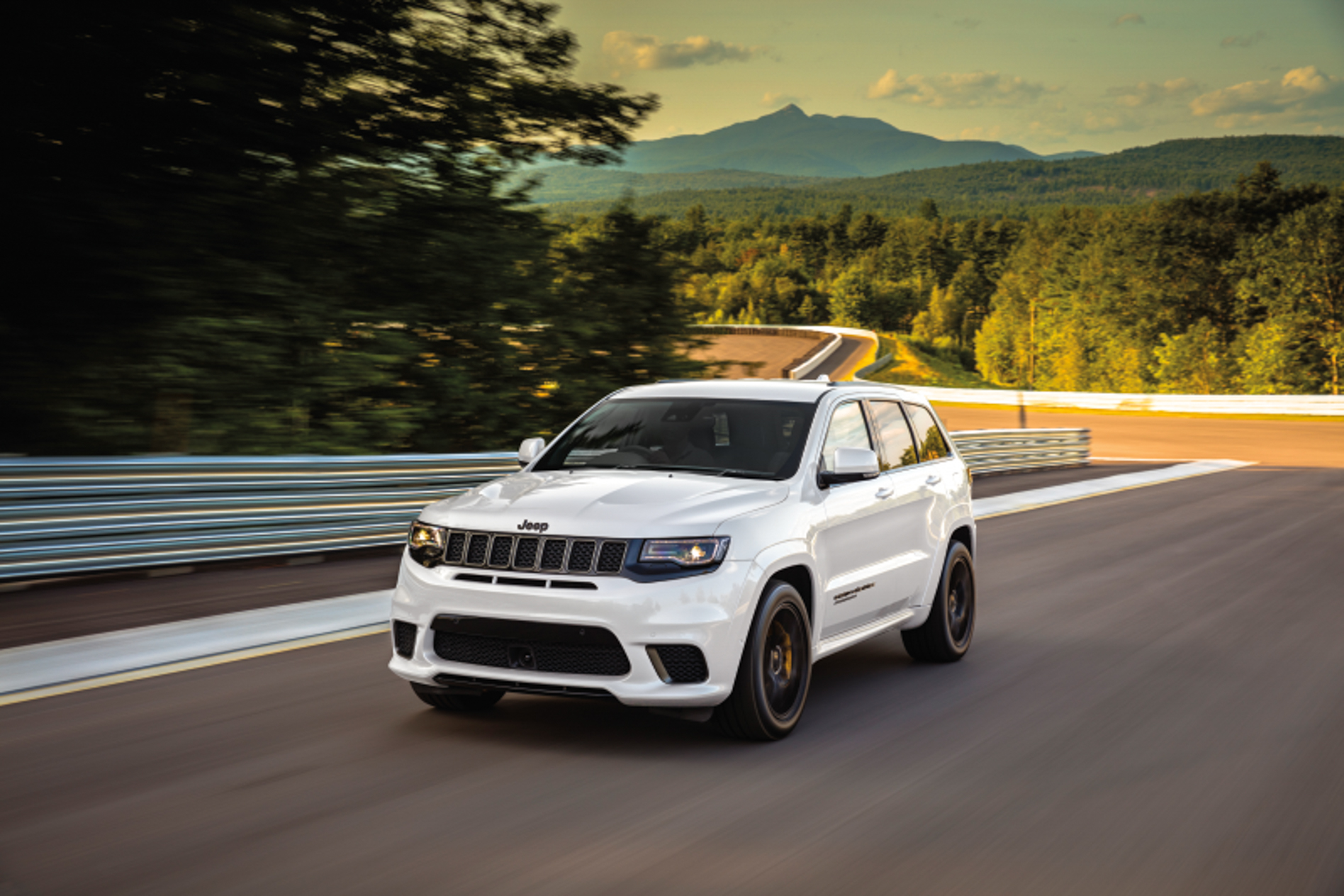
“With electrification, there is limitless access to performance,” he said. “It’s a new world that is opening to us.
“The sky’s the limit with electrification, we can do a lot of different things that meet the Jeep DNA.”
Jeep’s global president Christian Meunièr has conceded the company “messed up” in Australia, but is confident it can become a top-10 brand here.
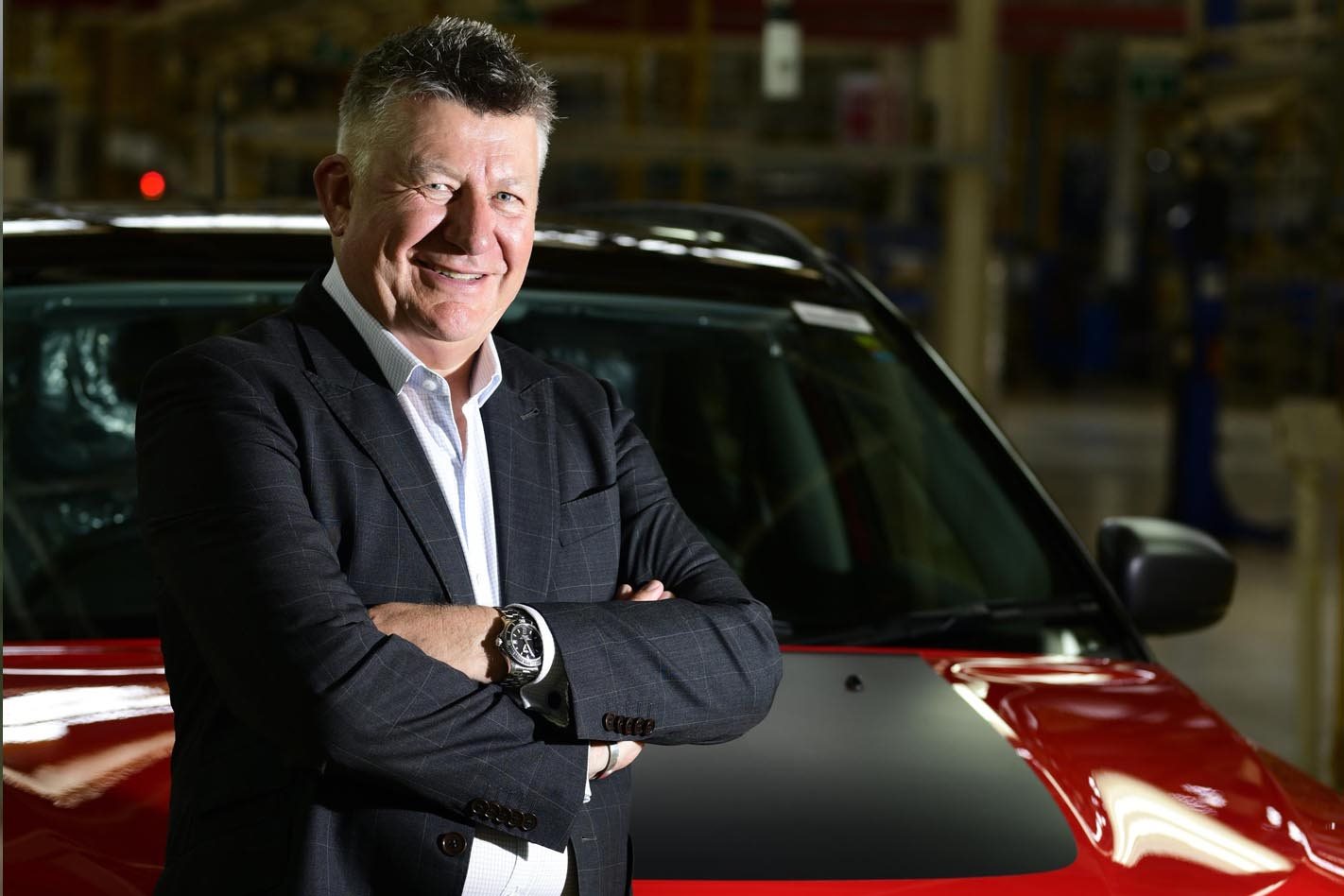
Speaking to local journalists during an online conference from the United States, Meunièr (pictured above) said he was “heartbroken” to see the brand downgraded here, after its surge in popularity a decade ago spurred on by the iconic ‘I bought a Jeep’ ad campaign.
“We messed up,” he admitted. “We’re fixing it, and we’re going to take care of you.”
Meunièr, who has led Jeep since May 2019 after a short stint as global president of Infiniti, said he’s a lot more upbeat about the future after seeing changes being implemented under FCA Australia Managing Director and CEO Keven Flynn.
The experienced Englishman took the reins in 2019 after successive company bosses failed to turn around the company’s fortunes after a series of scandals and failed recovery strategies.
“I have spent quite a lot of time with the team there with Kevin, and I’m very pleased that all the things that we talked about when I was in Australia and New Zealand have been implemented,” Meunièr said.
“Obviously the pandemic has been a disaster at one point in time at the beginning of the year and had really slowed down the ramp-up and the implementation of the plan, but I think the team has been able to overcome it.
“I was in Australian in February just before the pandemic started spreading, and we launched the plan with the dealers who were really pumped up, and they believed in the plan and I think we’re on the right track.”
That plan, says Flynn, is rebuilding the Jeep brand in Australia in a way that’s sustainable.
“We want to rebuild this business and not have it at risk of falling over because it grew too fast, or it was maximising opportunity from exchange rates and those type of things,” he said from Melbourne.
“That’s where it broke before – we went up on big volume, quality probably wasn’t where it is today, and we were not equipped or had the appetite to really fix that.
“That’s completely changed here, so I believe we’ve got the foundation. The key thing for us is building a sustainable business and, with the volume of vehicles we sell, we are capable of delivering first-class service of this to our clientele.”
Flynn said rebuilding customer trust was also a core part of the strategy.
“It’s all been about rebuilding trust, and that’s why we’re seeing this change in momentum.
“I am absolutely focused now on after-sales care, technical competence and making sure that the elements we’ve put in we can actually soundly deliver.”
Meunièr said Australia is considered a key market for Jeep, which is why the company committed to testing the fifth-generation Grand Cherokee in Australia with an emphasis on tweaking the local chassis tune and towing ability.
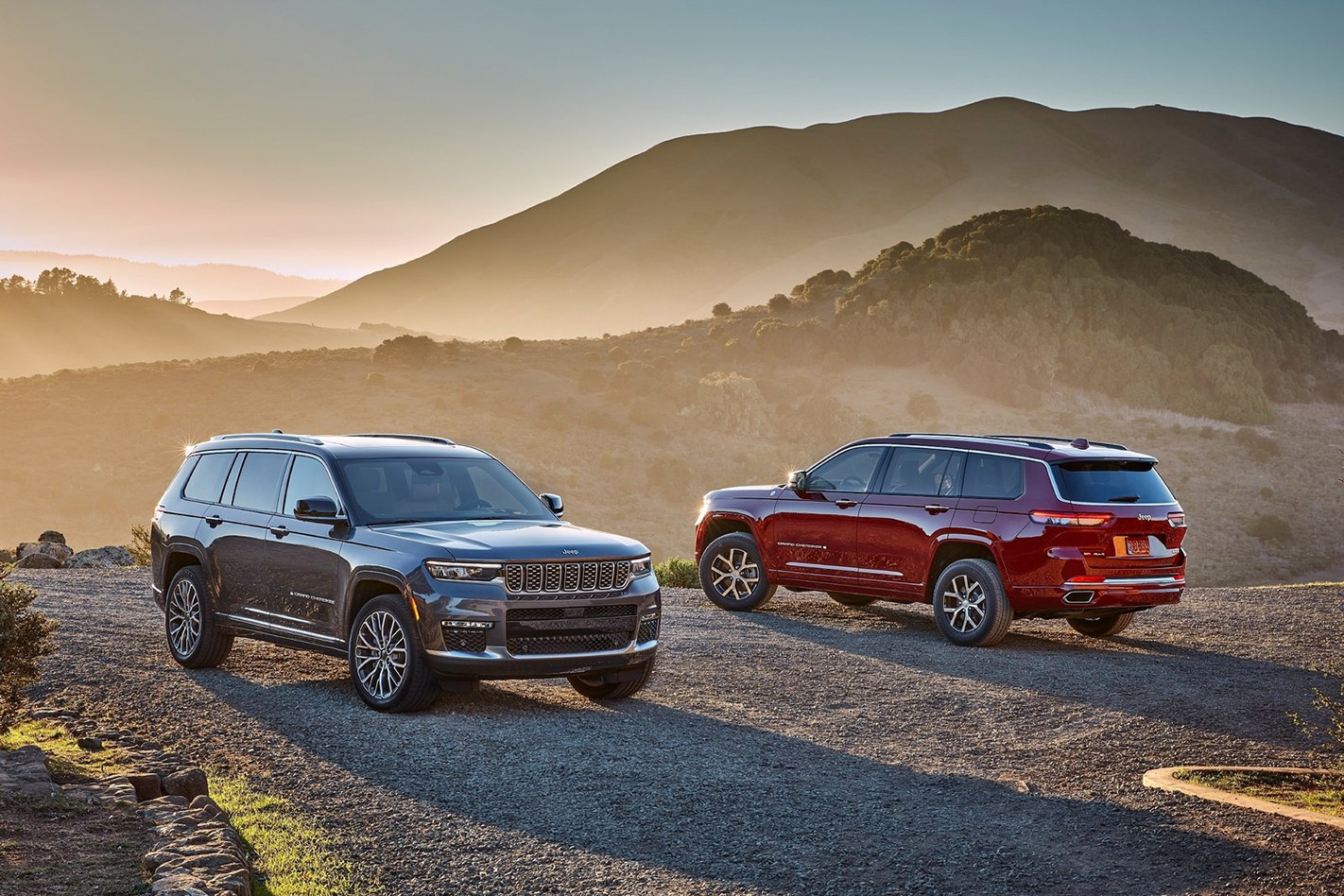
He added that Jeep was committed to right-hand-drive markets with new products including electrified models, including the 2022 Jeep Grand Cherokee 4XE plug-in hybrid.
“I have all the evidence, all the research that Australians love Jeep, they love the brand, they like the product, but there were some issues that we had fixed.
“We’re going to keep being really focused on fixing the product and making it very, very appropriate for your market.
“The third component is the customer experience. We need to treat the customers well, take care of them whenever there is an issue they needed to be heard they need to be listened to, and I think if we do the three things the sky’s the limit for Jeep in Australia.
“Top-10 for me is a no-brainer.”
The online roundtable occurred three days before the official announcement of the Stellantis merger between FCA and Group PSA. When asked about the impact of the merger on Jeep, Meunièr said it was too soon to know the impact on individual brands.
Kia Australia says its acceptance of the four-year-old five-star ANCAP safety rating given to its new Stonic light SUV does not suggest the Stonic would not have performed as well under more stringent safety testing introduced last year.
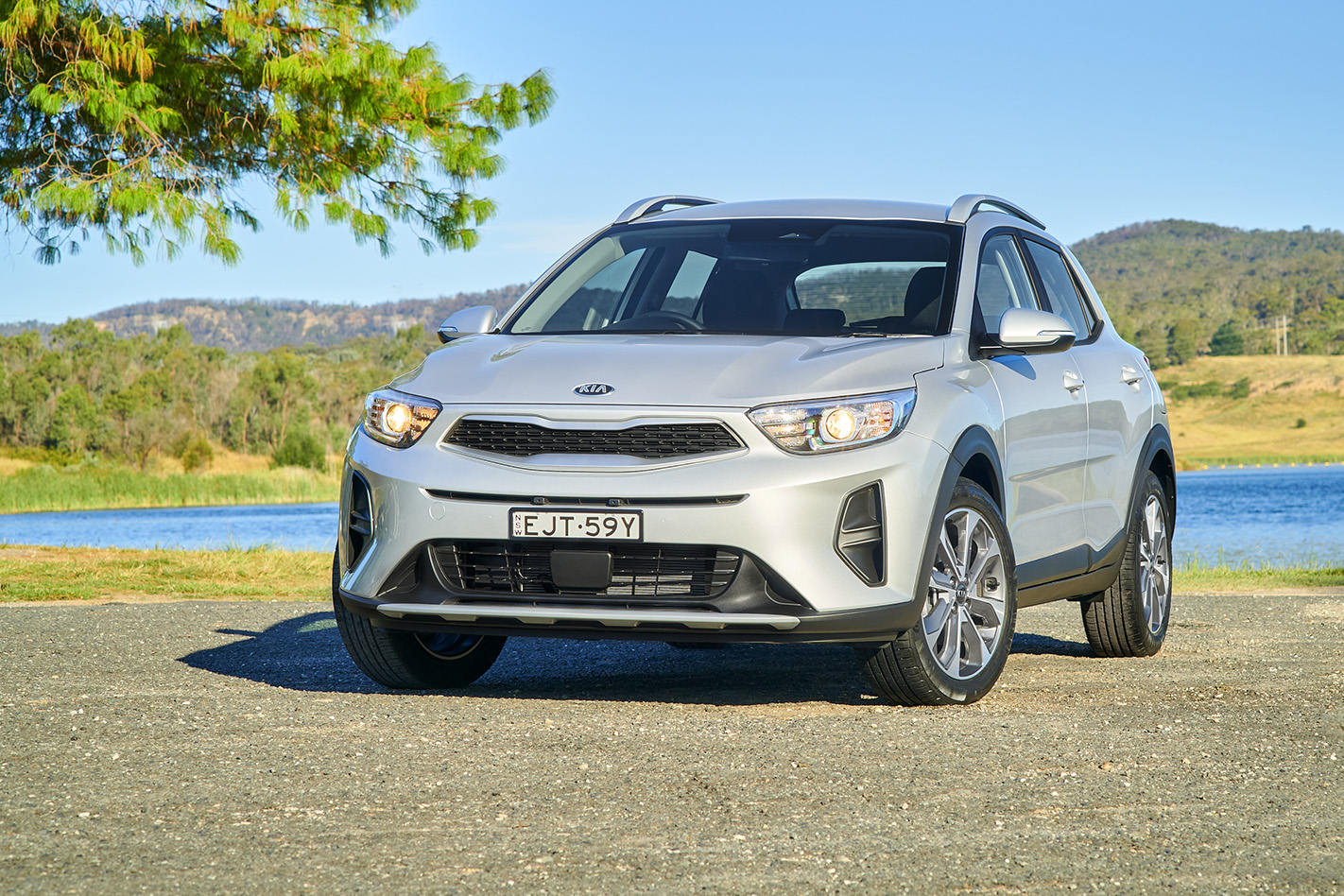
ANCAP announced that the 2021 Kia Stonic, which first launched overseas in 2017 and has since had a mid-life facelift, would share the five-star rating given to the Kia Rio on which it’s based as it is technically a variant of the hatchback and has the same Identification Plate Approval.
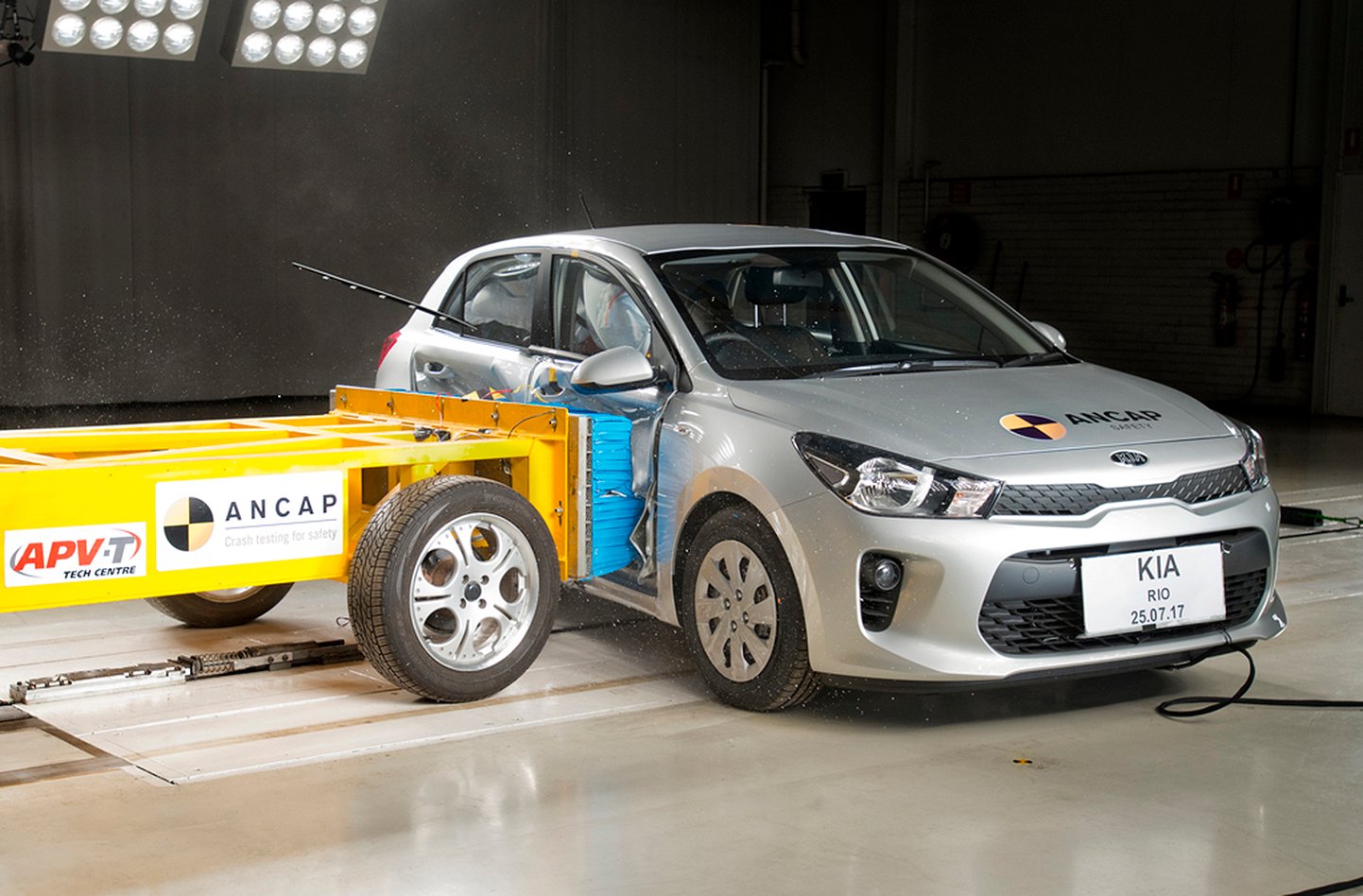
The 2017 testing of the then-new fourth-generation Rio applied to all 1.4-litre versions meaning that it transfers across to the Stonic S and Sport variants, that share the same engine, performance, safety equipment and internal structure, but not the range-topping 1.0-litre turbo Stonic GT-Line.
Kia Australia’s general manager for product planning Roland Rivera said carry-over ratings weren’t unusual and were not an admission the new arrival would not have done as well under the 2020 testing regime.
“No I wouldn’t say it’s an admission … it was what we decided to do from a launch perspective and a resource perspective and a cost perspective,” he said during the Stonic’s online launch on Monday.
“Where there’s an opportunity to piggyback or carry over a rating we will go that path first and foremost. Crash testing is not something that’s relatively simple to execute. It’s a big job, it’s resources intensive, and it’s not cheap either. It’s quite expensive.
“We are at the midway point in the life of Stonic and as much as possible we’d like to launch it without having to spend a huge portion of dollars to get it through. It’s no different to what Europe did, they carried over the Rio rating and we’re doing the same thing.”
When asked if he thought the Stonic would pass 2020 ANCAP testing Rivera said he wouldn’t want to speculate.
“I couldn’t answer that because we don’t have a test result under the current protocols,” he said.
“We always won’t speculate on how it would perform under 2020 protocols because their guess and our guess is as good as anyone else’s.”
He believed buyers will accept the ANCAP rating and that the Stonic will raise Kia’s profile in the light SUV segment.
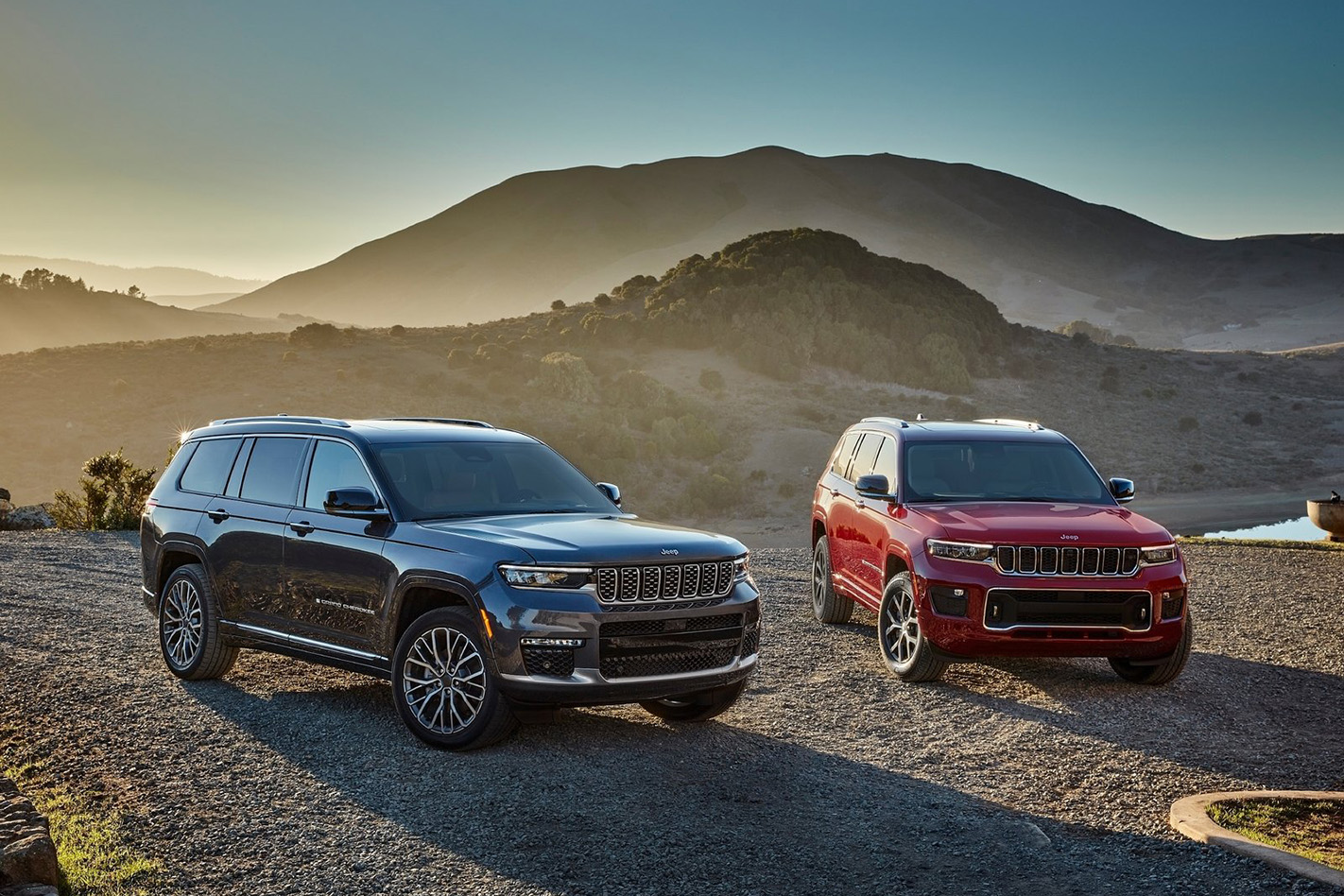
The 2022 Jeep Grand Cherokee large SUV is undergoing extensive testing in Australia that will result in a locally tuned suspension and towing capability, according to the US carmaker’s global president Christian Meuniér.
Speaking to Australian motoring journalists via Zoom from the US, Meuniér said putting the Grand Cherokee through its paces in Australia represented an opportunity to subject it to extreme conditions and “perfect” it for the local market.
UPDATE, May 12 2022: The new Jeep Grand Cherokee L is now in Australia, and we’ve driven it. Read and watch our review at the link below.
The story to here
“Your market is quite different from other markets that’s why we decided to bring the product (for testing),” he said. “We want to prove to the customer that we care, and we want to make the product perfect for them.
“We’re going to see how it behaves… with your own fuel and everything that comes with Australia, and we’re going to tweak it, make it better – we’re going to make it perfect.”
Meuniér admits that during his visits to Australia he had been “completely brainwashed” about the importance of towing to the local market.
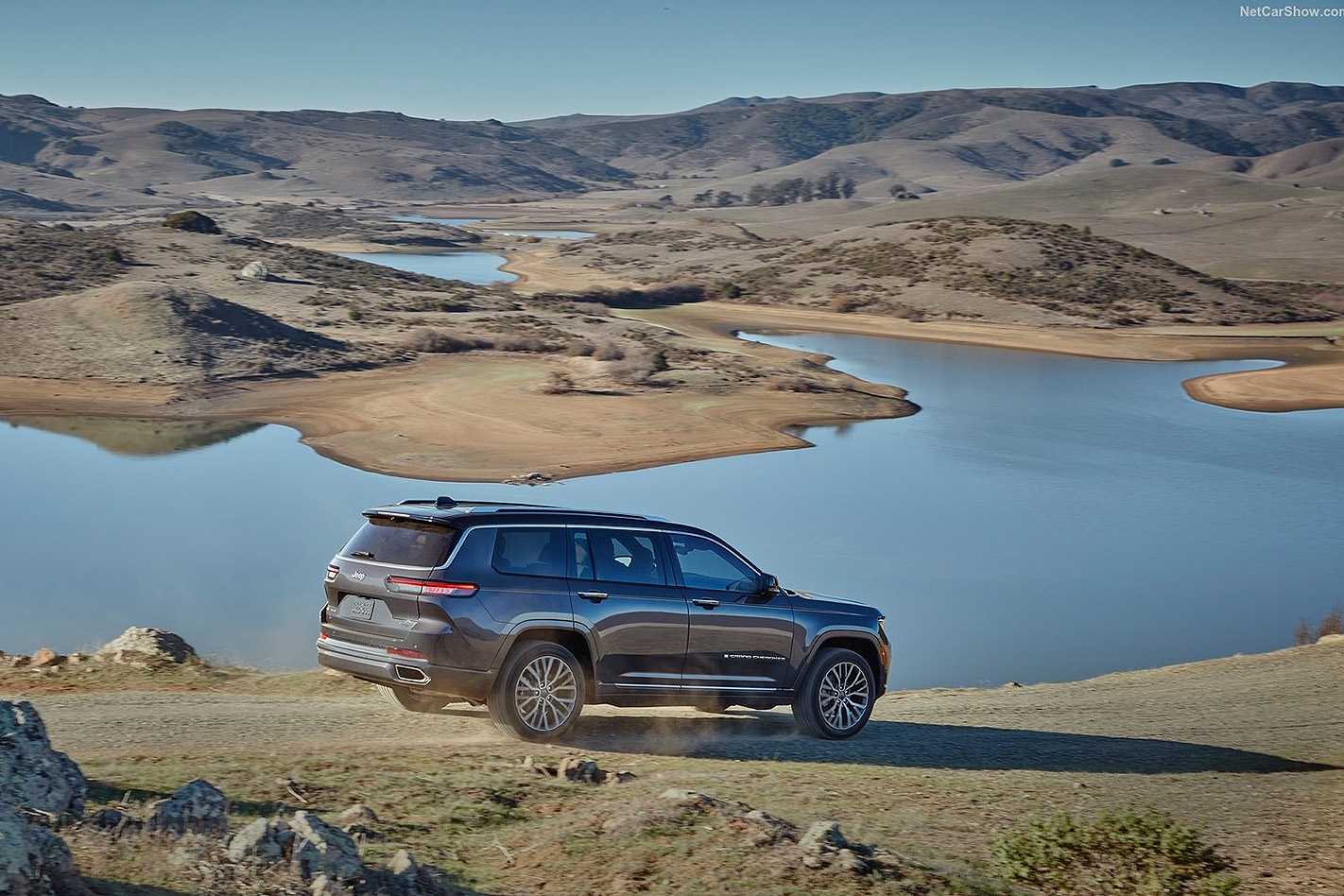
“It’s all about towing. If you can’t tow enough it’s not going to work.
“Towing in North America is not a thing, people don’t tow the same thing, they don’t tow the same trailers, they don’t do it the same way and the roads are not the same.”
Plug-in hybrid push
Meuniér confirmed the fifth-generation Grand Cherokee won’t come with a diesel option, adding that while he appreciates this may deter some Australian large 4×4 SUV buyers, he believed the new 4xe plug-in hybrid version to be revealed early next year will be a superior alternative in terms of economy and pulling power.
“Electrification really provides a lot of benefits torque-wise, acceleration-wise and towing is good – towing is core to Jeep, so we wouldn’t compromise on it.
“I’m convinced we’re going to do well with Grand Cherokee 4xe in Australia, it’s going to be an alternative. It’s going to be a way also for Jeep to differentiate and to show that we’re really advanced on technology.
“The capability off-road is outstanding, people are going to love it, I have no doubt.”
But while Jeep’s move into electrification has come at the expense of diesel powertrains, the big petrol V8s are safe for now.
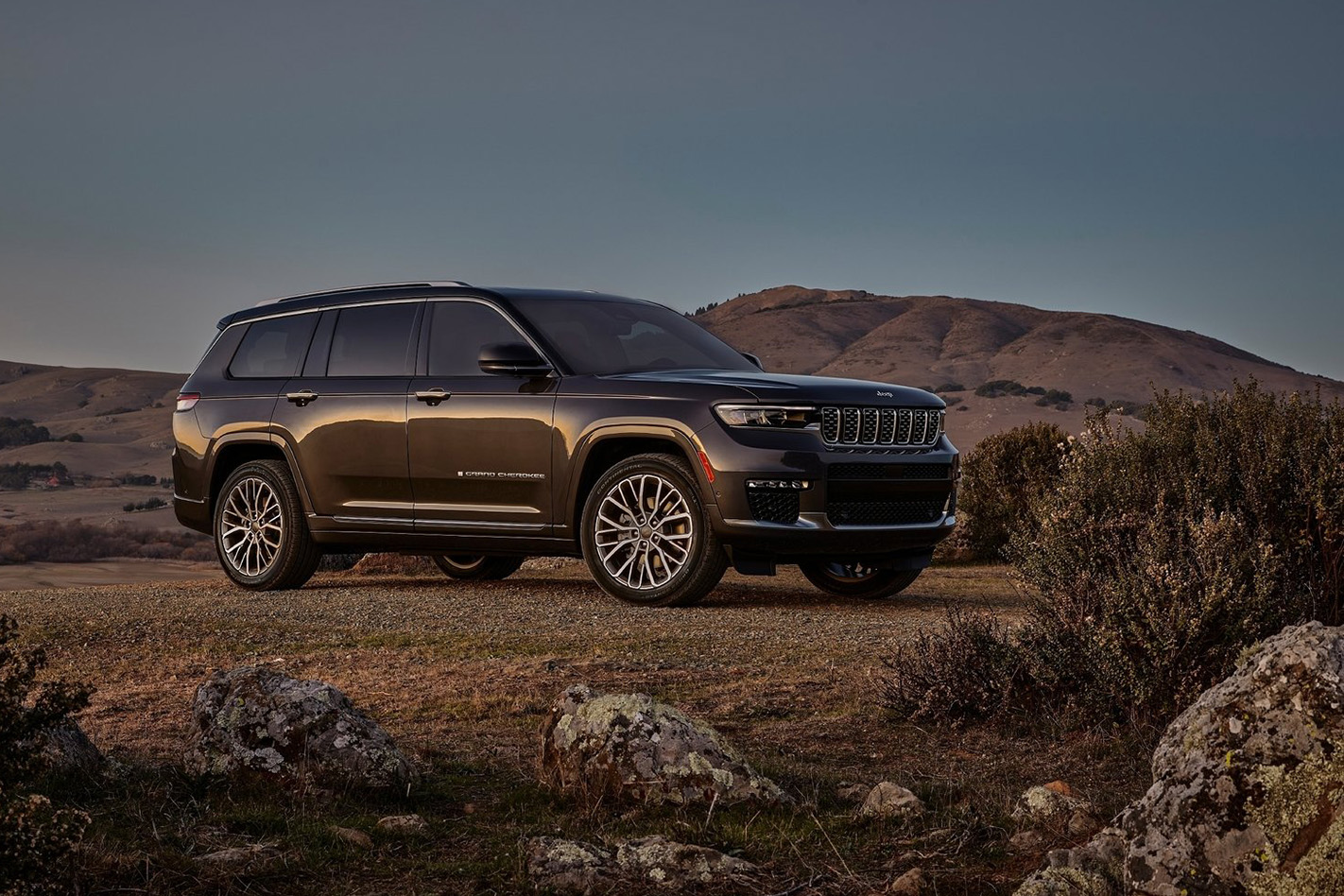
“The 4xe at the end of the day in terms of capability torque and everything is as competent as a V8 and obviously fuel economy and everything there is no comparison, so we’re looking towards the future.
“(But) it doesn’t mean the V8 doesn’t remain. Obviously, there is still a market around the world especially in North America.”
Kia Australia has officially revealed pricing and features for the new Stonic compact SUV range.
Pricing starts at just $21,490 for the entry-level Stonic S in manual, with the auto version of the same car costing $1500 more at $22,990. Both come with sharp driveaway pricing of $23,990 and $24,990 respectively.
The mid-spec Sport is also available in manual at $24,490 driveaway, jumping to $25,990 for an automatic-equipped version, while the range-topping turbocharged GT-Line is priced at $29,990 including on-road costs.
The Stonic S and Stonic Sport are powered by the 1.4-litre four-cylinder engine shared with the Kia Rio and is available with either a six-speed manual or six-speed automatic transmission.
The S ships with a host of features, including 8.0-inch central touchscreen, Android Auto and Apple Carplay, multi-device Bluetooth connectivity, autonomous emergency braking with pedestrian and cyclist protection, reversing camera display with guidelines, lane-keeping assist and lane following assist.
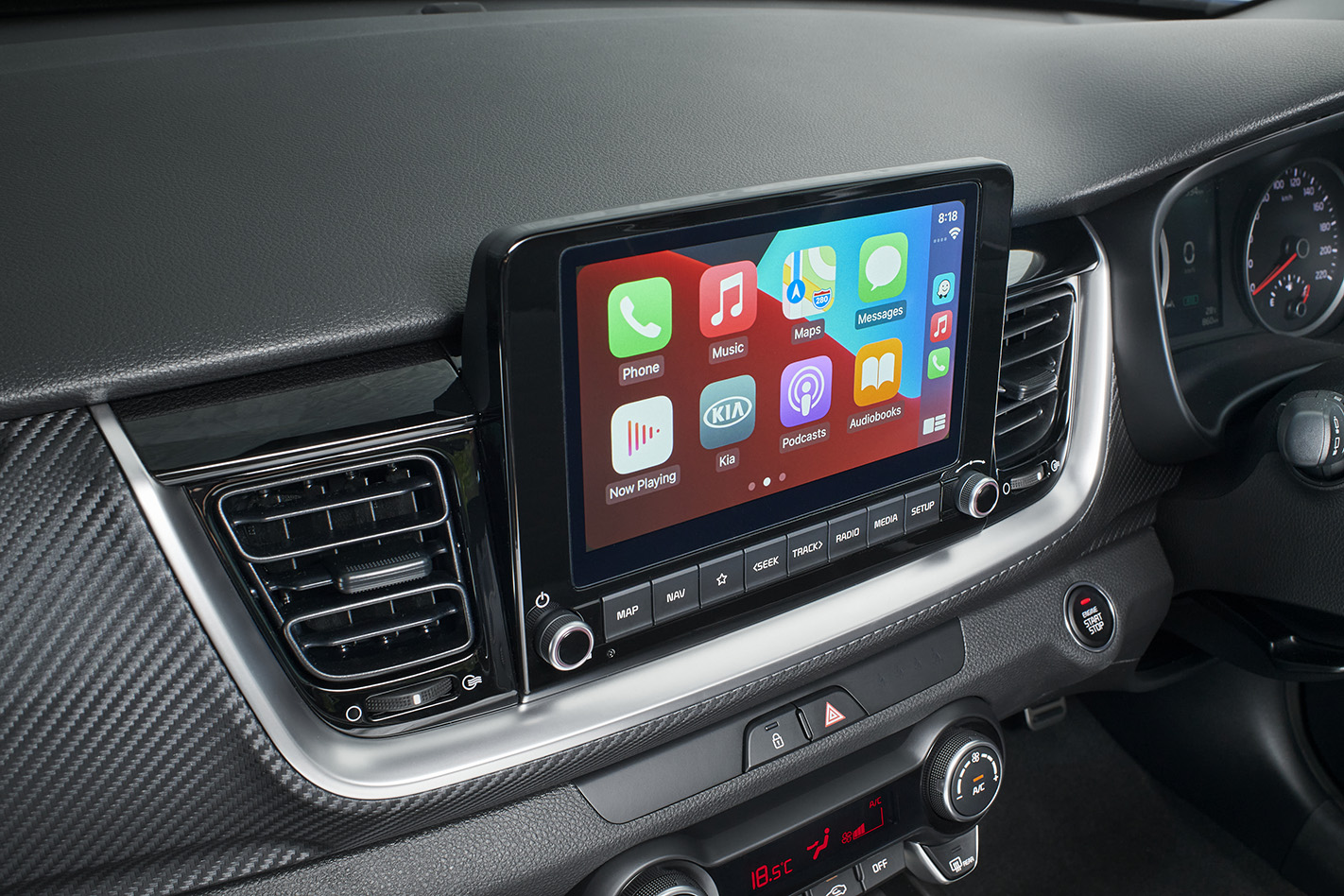
The S also comes with wireless Apple CarPlay, which interestingly is not available in the pricier Sport and GT Line due to them having in-built satellite navigation that’s backed by 10-year Mapcare and SUNA traffic services support.
Rising to the Sport nets 17-inch alloy rims in place of 15-inch steel wheels, smart key with push-button start, heated power-folding door mirrors and satellite navigation.
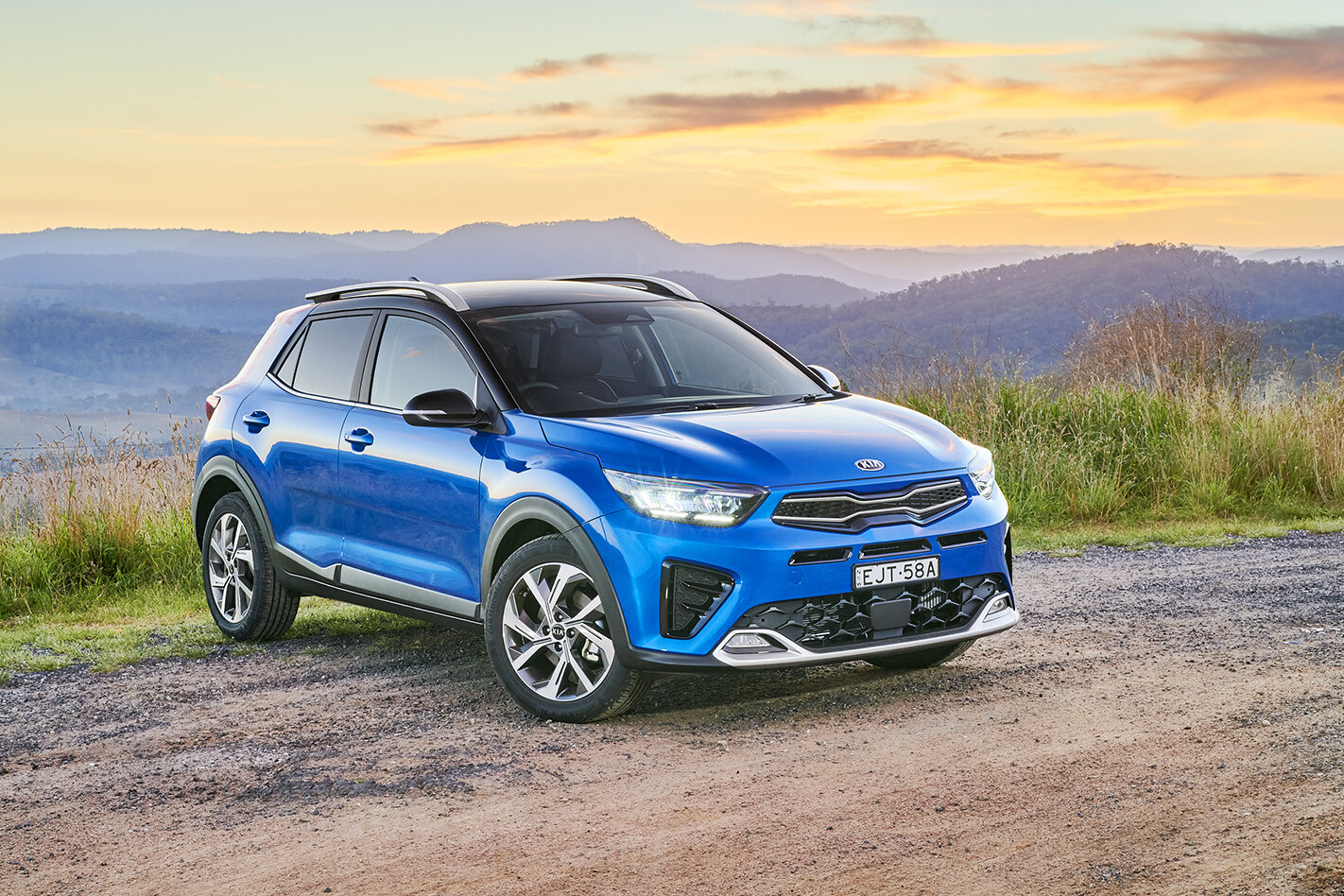
The Stonic GT-Line brings the punchier 1.0-litre three-cylinder turbocharged engine – as found in the Rio GT-Line – that’s mated to a seven-speed dual-clutch transmission.
It also brings few extras over the Sport such as a sportier body kit, Eco, Normal, Sport drive modes, premium seats, sports steering wheel, LED headlights, LED daytime running lights, LED front fog lights, and climate control air-conditioning.
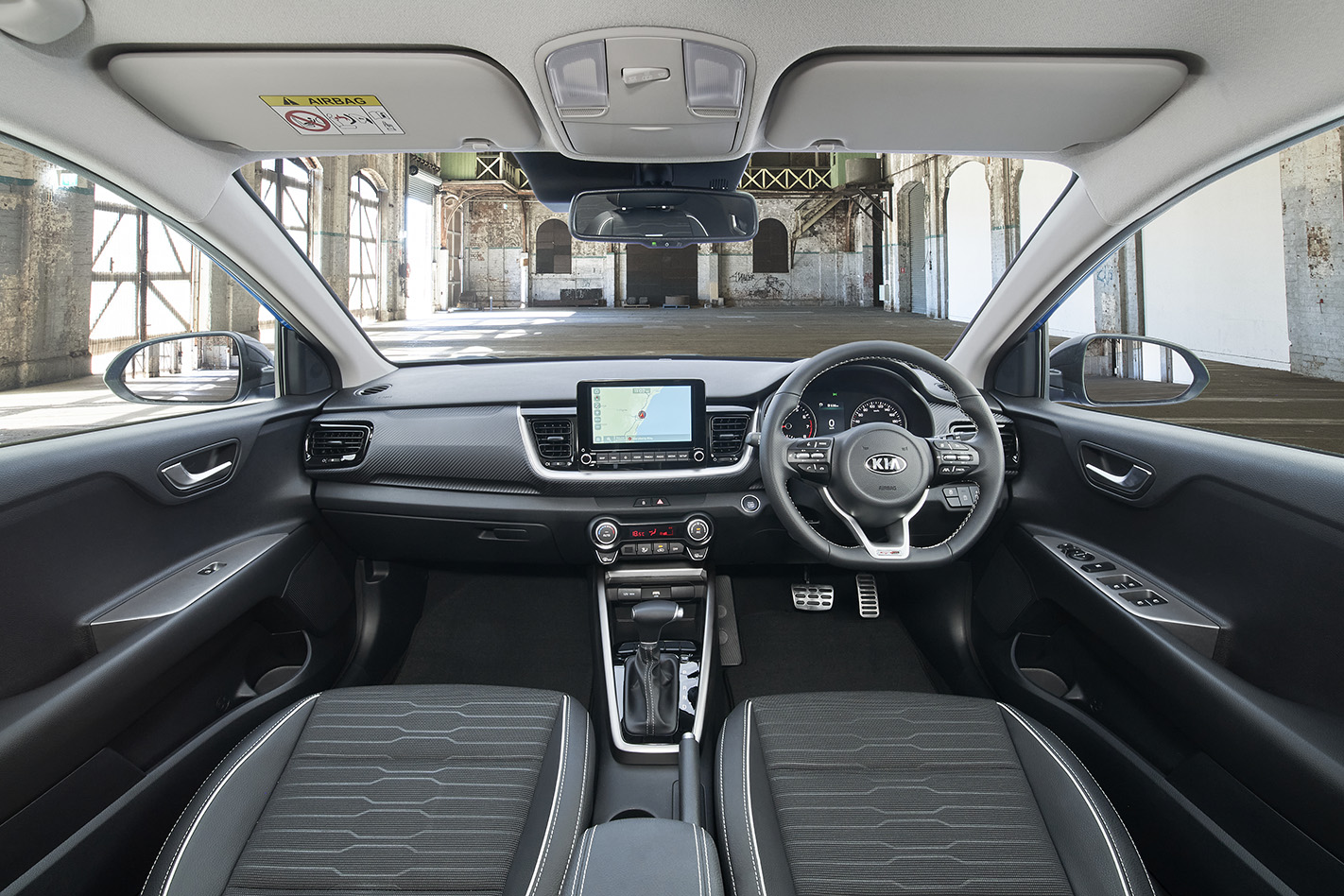
While it’s new to Australia the Stonic has actually been available overseas since 2017. It’s arrival Down Under coincides with a significant mid-life upgrade that included Kia’s latest styling and features.
Australians will miss some things, however, such an electrified powertrain. Like the next-gen Sportage, other global regions will get hybrid versions of the Stonic.
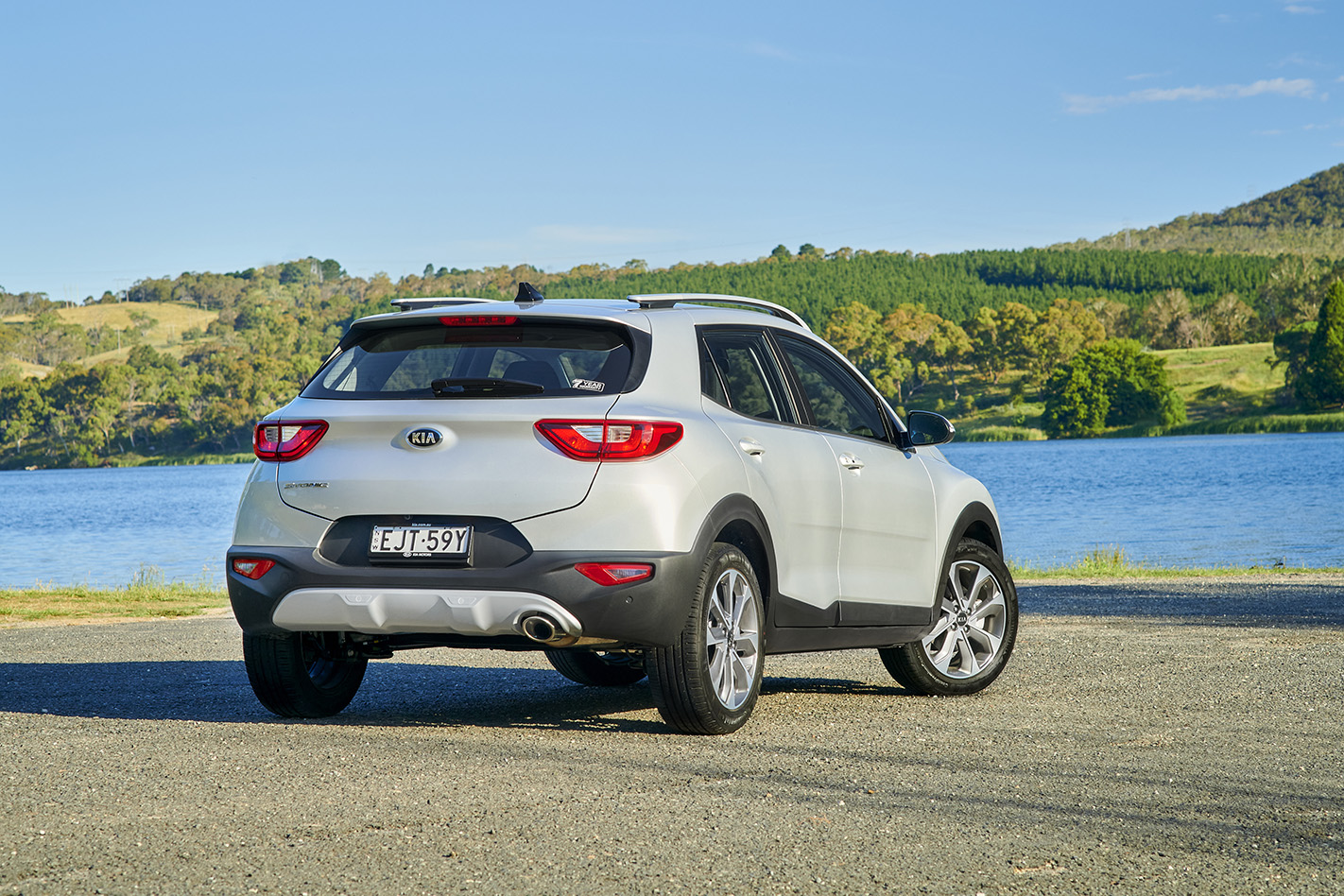
Measuring just on 4.1 metres long and 1.8 metres wide, the Stonic is the new baby of the Kia SUV range, slotting in under the Seltos, which measures about 4.4 metres in length. It’s also shorter, with a 1.5m height compared to the Seltos’s 1.6m.
Kia Stonic pricing
- Stonic S manual – $21,490 ($22,990 driveway)
- Stonic S auto – $22,990 ($23.990 driveway)
- Stonic Sport manual – $24,990 driveaway
- Stonic Sport auto – $25,990 driveaway
- Stonic GT-Line auto – $26,990 driveaway
Don’t be fooled by the ‘all-new’ tag given to Kia’s latest addition to its Australian range. The Stonic has actually been available overseas since 2017.
However, it recently underwent a significant mid-life facelift and has been dispatched Down Under with everything you’d expect from any new small Kia – and some.
Priced from $21,490, the Stonic range matches that of the Kia Rio on which it’s based, with entry-level S, mid-grade Sport and top GT-Line versions.

It also shares the Rio’s engines, with the S and Sport powered by the 74kW/133Nm 1.4-litre four-cylinder petrol engine, with a choice of six-speed manual or six-speed auto.
The sportier GT-Line, meanwhile, is equipped with a punchy little 1.0-litre three-pot turbo that’s coupled with a seven-speed dual-clutch auto.
It also produces 74kW but dishes out 172Nm of torque from as low as 1500rpm..
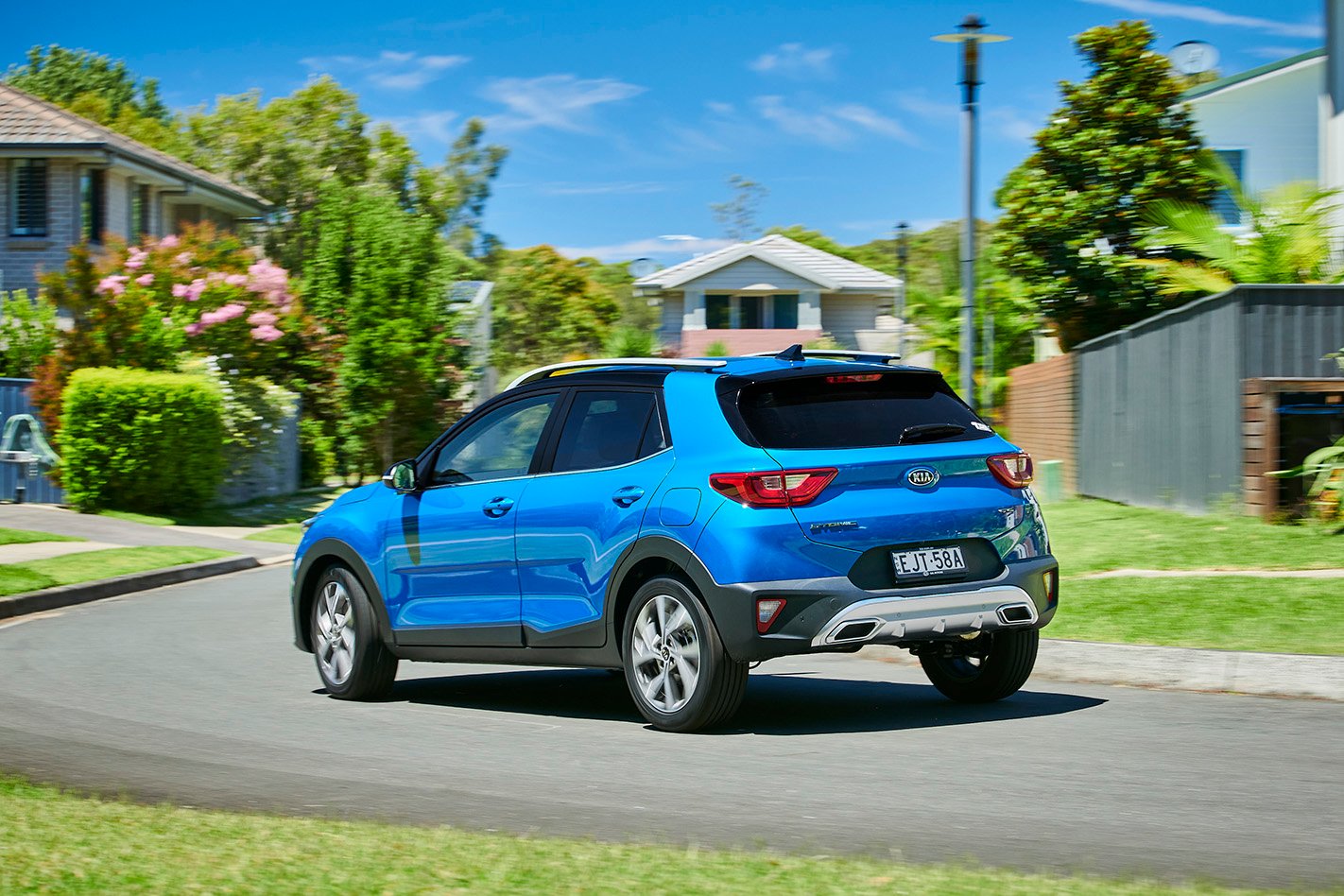
How does the Kia Stonic GT-Line drive?
As we discovered with the Rio GT-Line, this is a lively powertrain that offers up a bit of fun. In its native urban environment, it fulfils its mission as a zippy and practical runabout well
It steers nicely, helped by Kia’s engineers doubling the number of teeth on the serrated steering column shaft, resulting in the tiller feeling more responsive and direct without being too light.
This helps with negotiating tight spots while feeling composed out of town.
On the open road, the GT-Line benefits from having three driving modes – ECO, Comfort and Sport- which alters the DCT’s rev-mapping.
At speed, the Normal mode can feel a little sluggish, but selecting Sport perks things up a bit by allowing the revs to increase to 6000rpm between ‘up-shifts’.
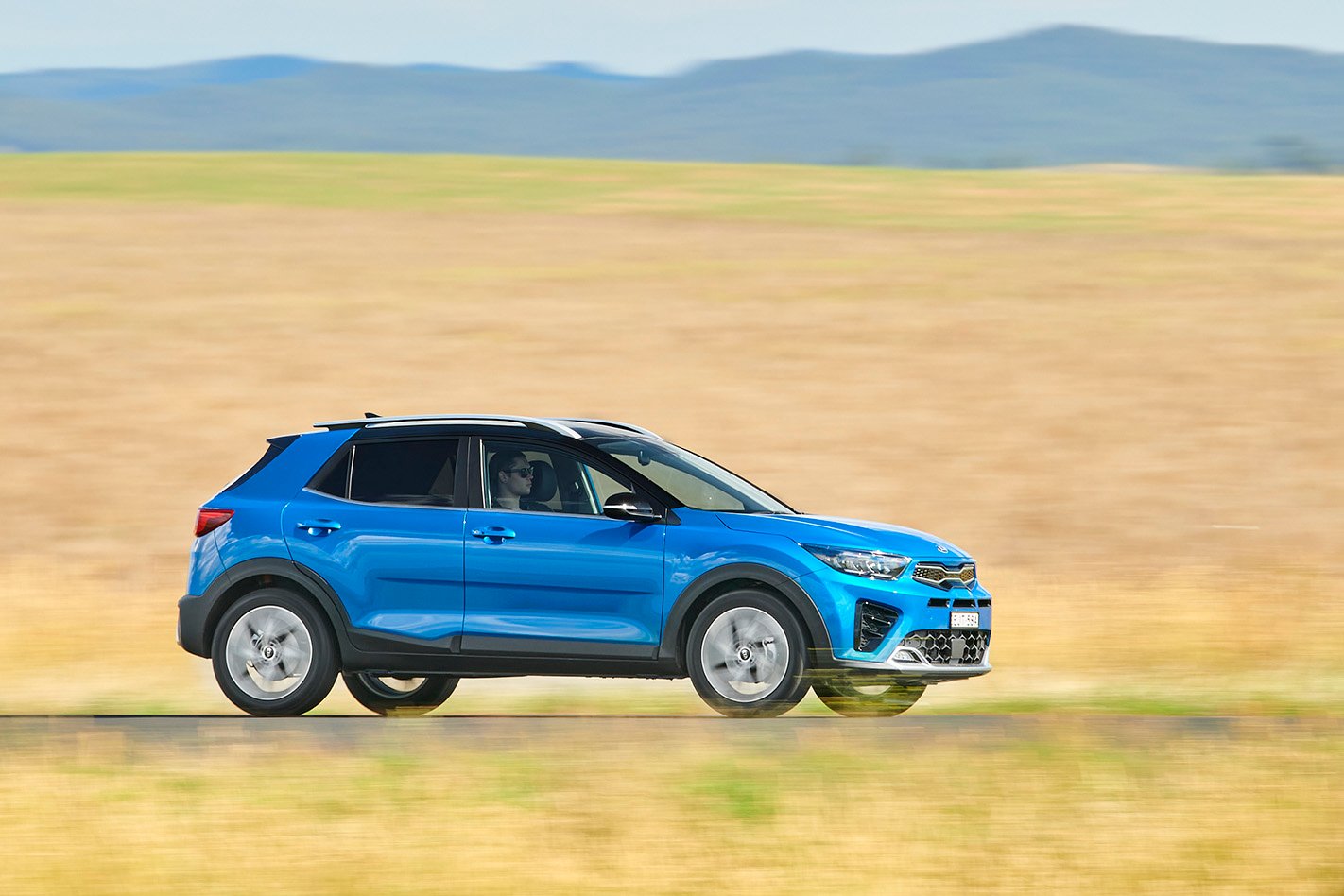
It’s not incredibly quick – 0-100 km/h is about just shy of 11 seconds – but it does give you a nice push along at mid-revs which makes accelerating out of bends rather enjoyable.
The suspension has been tuned to Australian conditions, and the torsion beam rear set up is more upright than the Rio’s – fitted 8.4 degrees off vertical as opposed to the hatch’s 25 degrees, which allows the rear end to compress and extend more freely.
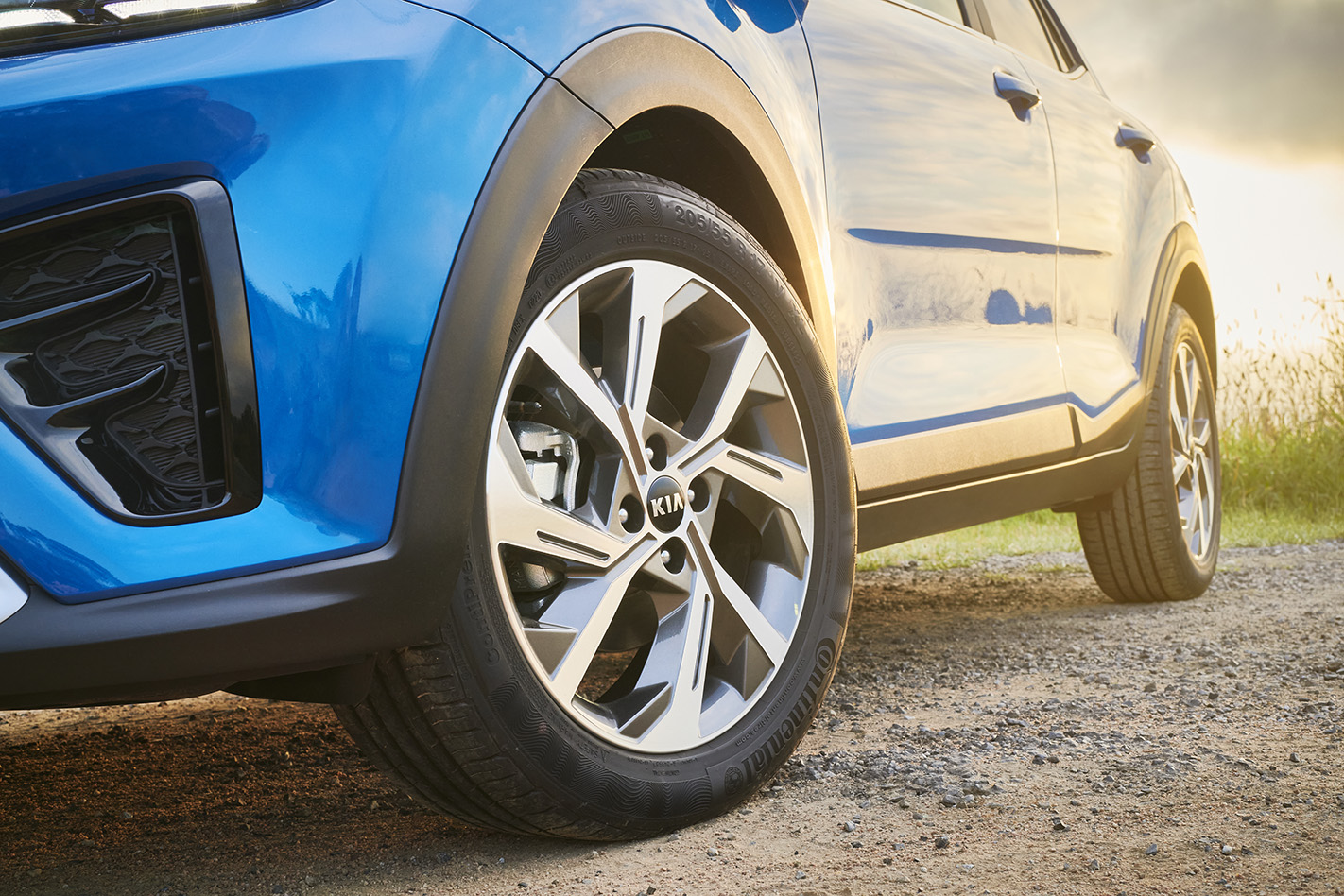
This has made for a very good balance between dynamic handling and ride comfort on the biggish 17-inch alloys that are fitted with 205/55 R17 Continental ContiPremium rubber.
It doesn’t exactly glide over road imperfections, but it feels composed, and it takes a decent sized pot-hole to feel any jarring.
This was a smart move by Kia. It would have been tempting to stiffen the GT-Line’s dampers to go the badge – like it did with the Rio – but to do that would be to wrongly assume why people are attracted to crossovers like this.
So what will attract buyers to the Stonic over the similar but less-expensive Rio and rivals such as the segment-leading Mazda CX-3, cheap and cheerful Hyundai Venue and the Toyota Yaris Cross with its optional hybrid powertrain?
Well, the Stonic is a looker. Unlike some light SUVs designs that rely on quirkiness to stand out, the Stonic is rather handsome with a broad appeal extends beyond its youthful target market.
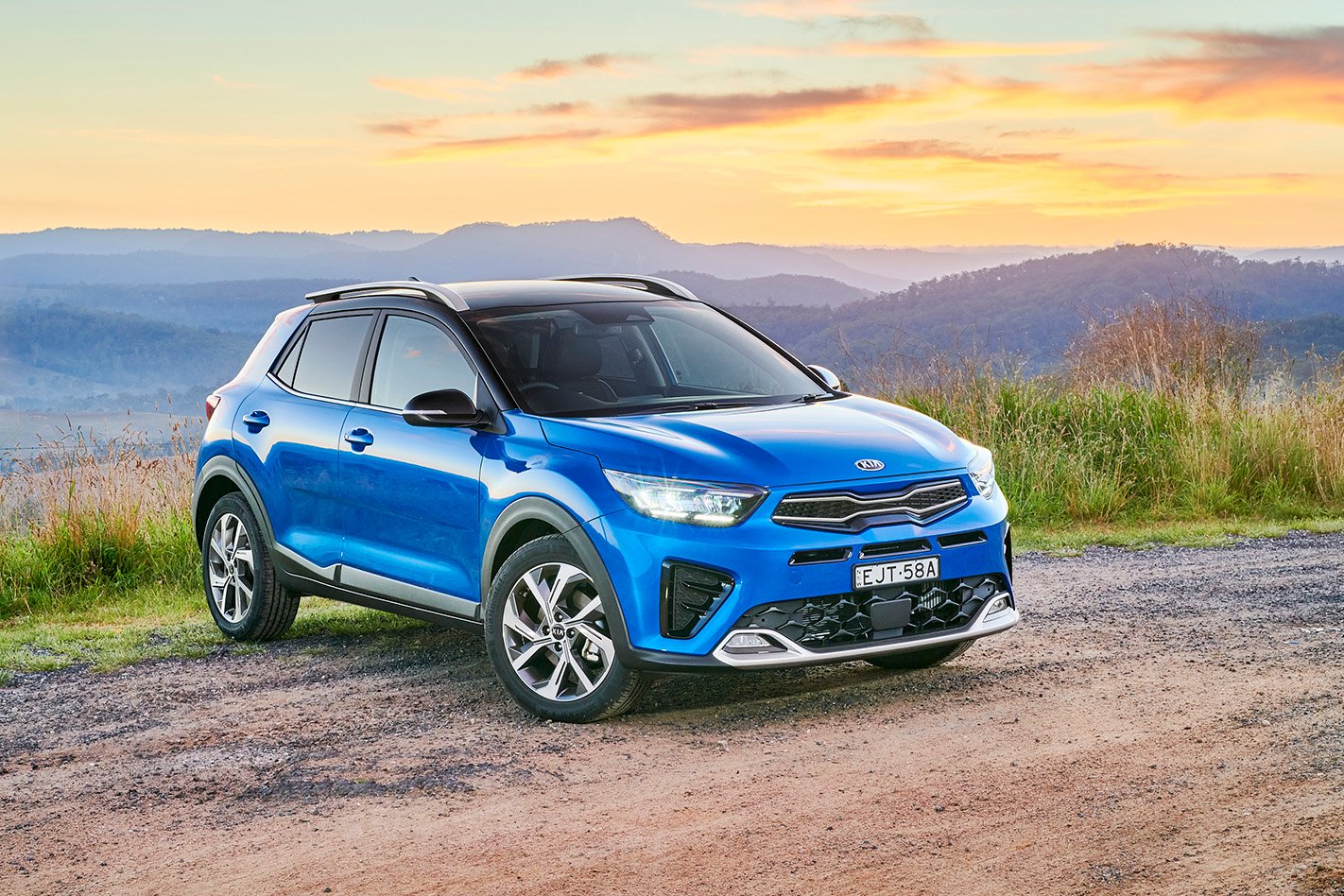
Kia’s designers have done well to make it look like an SUV rather than a high-riding hatchback, with its bold wheel-arch surrounds, thick C-pillar and silver-painted rear diffuser and scuff plate.
That said, it still has a sleek profile that should make CX-3 buyers take a second look.
The GT-Line gains a little more garnish to make its front look a little more aggressive including a chrome-trimmed Tiger grille and silver-lower bumper plus sharper-looking LED bi-function headlamps, LED daytime running lamps and LED strip fog-lamps.
Step inside and the attractive cabin is where you’ll find the most similarities to the Rio.
Living with the Kia Stonic
The interiors are the same size and virtually identical, though the Stonic’s dashboard has been raised a little for more knee room and the centre console doesn’t protrude as far back to make it easier to slide across the rear bench.
Like the Rio, the cabin is well put together well but there are the usual hard plastics on the doors.
Each Stonic version has an 8.0-inch infotainment system that can sync to two phones via Bluetooth, which allows one person to use theirs for music while the other takes calls.
There is the now-usual Apple CarPlay and Android connectivity too.
The good news there is the Stonic is one of the few cars to have wireless Apple CarPlay – the bad news is it is only available in the entry-level Stonic S but not yet on the pricier Sport or GT-Line.
Kia says this is because those variants have in-built satellite navigation with 10-year Mapcare and SUNA traffic services support, though there’s also talk of some kind of licensing issue with a certain phone manufacturer.
The front seats are comfortable, particularly the GT-Line’s which have a soft but supportive backrest and good hip bolstering.
The driver’s seat only had basic manual settings, but I found it easy enough to find a good driving position.
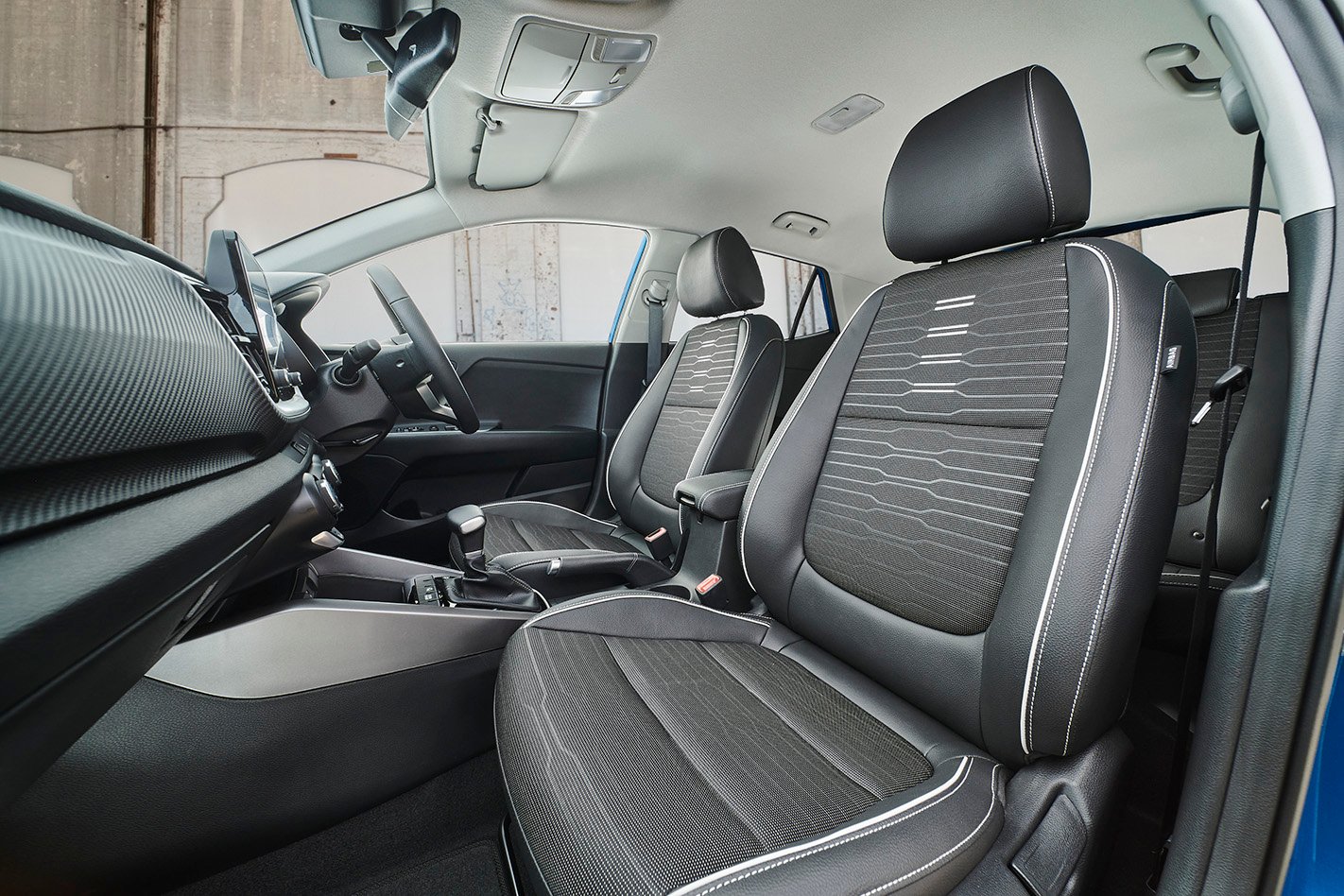
The rear seats offer reasonable legroom for a car this size as long as those in front aren’t too tall. It feels a little airier back there than in the CX-3 with the raised bench providing good forward and side vision.
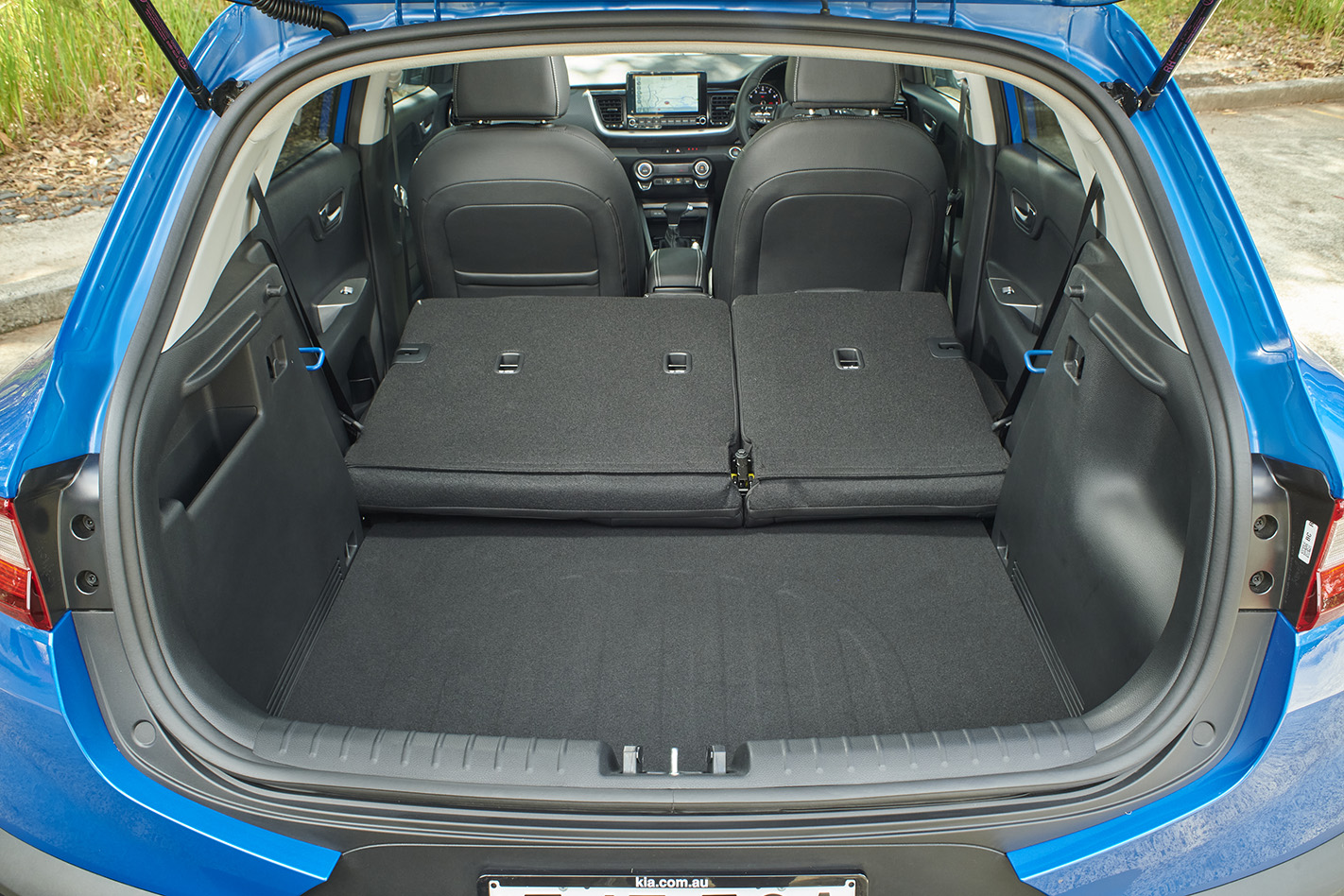
There’s a 353-litre boot, which is 28 litres bigger than the Rio’s, 91 litres bigger than the CX-3’s and just two litres shy of the Venue’s.
Putting both 60/40 split/fold seats down means you can fit up to 1155 litres of stuff.
The boot space itself has a deep floor due to only having to fit a space-saver spare wheel underneath.
Safety
Safety-wise, each version comes with a driver assistance suite that includes autonomous emergency braking with pedestrian and cyclist detection that works to prevent or mitigate a collision at speeds up to 180km/h; lane keep assist; lane following assist; driver attention alert, and leading vehicle departure alert that gives you a hoy when the car in front of you drives off from the lights while you’re daydreaming.
Interestingly, it has a five-star ANCAP safety rating from 2017 that was achieved by technically being a variant of the Kia Rio.
This only applies to the 1.4-litre S and Sport variants as it predated the introduction of the three-cylinder turbo to the range.
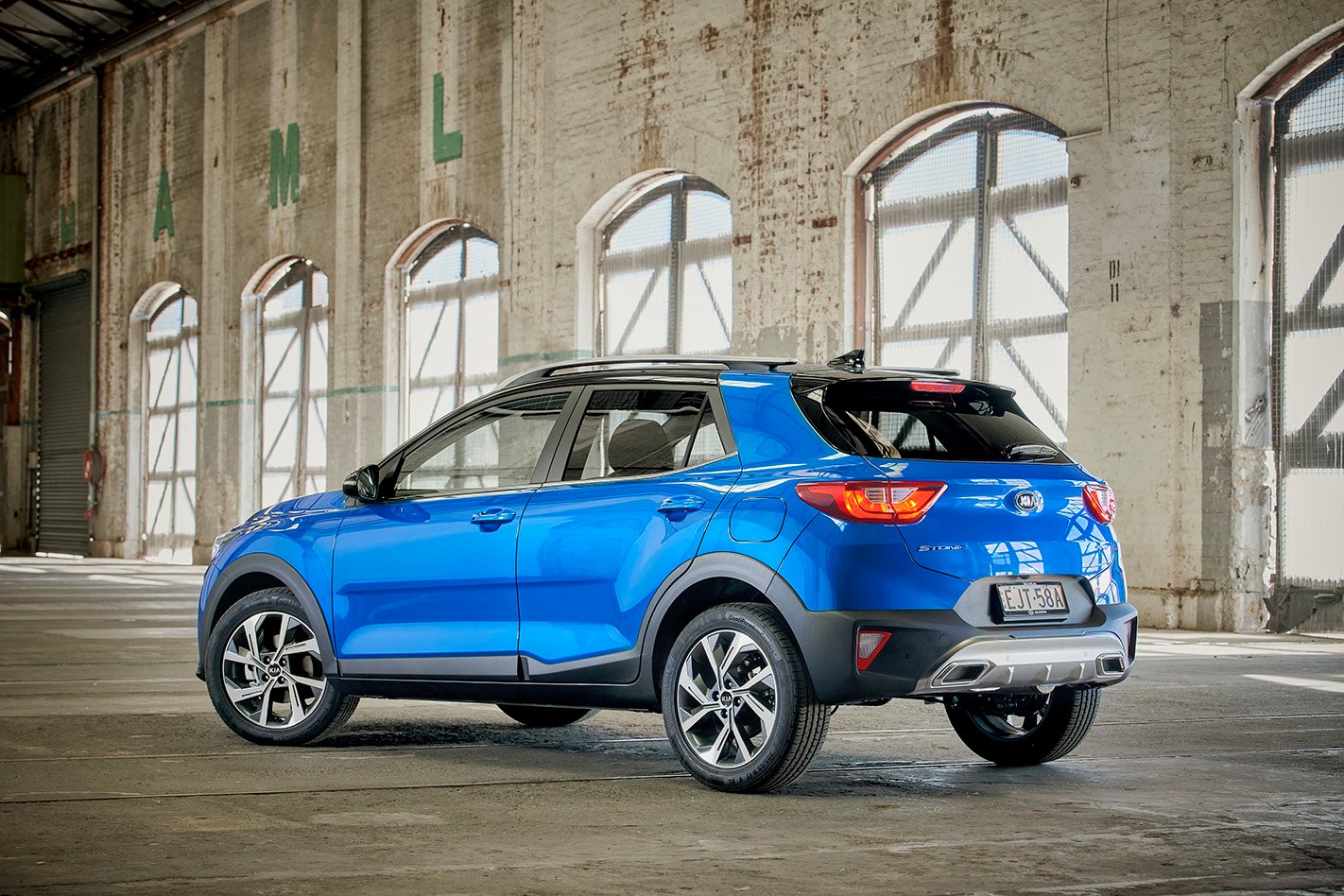
How much is the Kia Stonic?
It doesn’t do too badly in terms of value, with the $21,490 entry-level pricing sitting between the Venue and CX-3 and each variant scoring sharp driveaway pricing that takes the S manual and auto prices to $22,990 and $23,990 respectively.
The Sport and GT-Line versions have no mark-up between their retail and driveaway price, with the Sport manual and auto costing $24,990 and $25,990 and the GT-Line $29,990.
Interestingly, while Kia Australia expects all three versions to sell in similar numbers, it expects sales to slightly favour the range-topper.
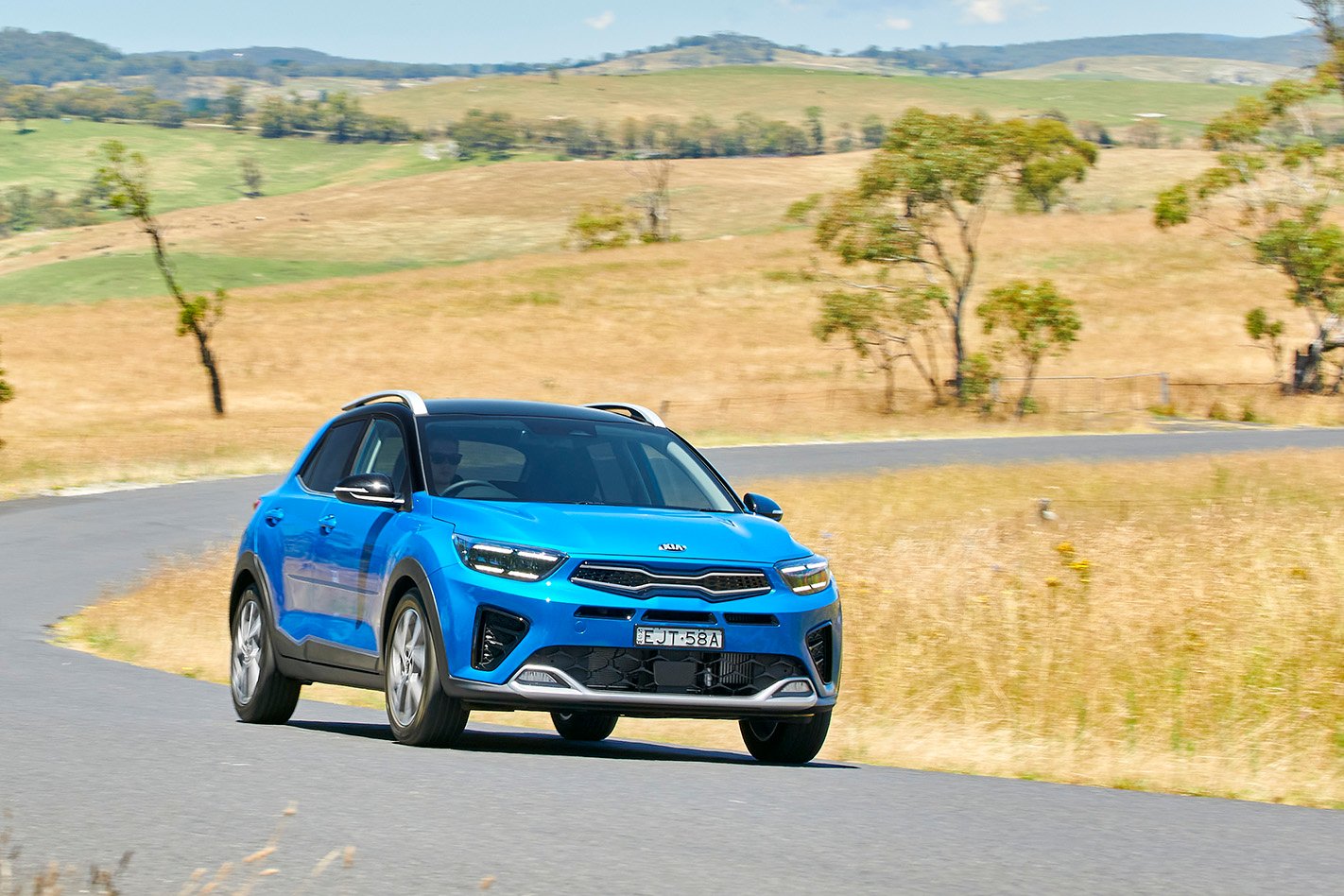
VERDICT
So is all that enough to knock the CX-3 off its perch? Probably not – the Mazda, which has been the leading crossover since before they became cool, has a much broader range with a bunch of upmarket features as well as AWD options.
But unlike the Rio, whose current model never quite lived up to expectations, expect the Stonic to make its presence felt, both in the Kia line-up and the ever-growing light SUV segment.
RATING
4/5 stars
KIA Stonic rivals
Mazda CX-3, Hyundai Venue, Toyota Yaris Cross, Ford Puma, Suzuki Ignis
KIA Stonic specs
- Model Kia Stonic GT-Line
- Engine 998cc 3cyl, dohc,12v turbo
- Max power 74kW @ 4500-6500rpm
- Max torque 172Nm @ 1500-4500rpm
- Transmission 7-speed dual-clutch auto
- Weight 1227kg
- 0-100km/h 10.7sec (estimated)
- Economy 5.4L/100km
- Price $29,990
- On sale Now
Toyota has partnered with Stanford University in America to create an autonomous drifting Toyota Supra to showcase and develop its advanced driver assistance features.
The prototype can hold a respectable slide without driver intervention and was jointly-developed between Stanford University’s Dynamic Design Lab, which created the self-drifting Delorean DMC-12 in late 2019, and Toyota’s Research Institute (TRI).
Toyota Racing Development was said to play a part in making the widebody GR Supra into a drift machine, though no technical upgrade details were divulged.
More than just a showy boast of Toyota’s programming power, the self-drifting Supra was designed to morph the handling instincts of professional drivers and automated driving tech. The goal is to use the learnings from this study to further develop Toyota’s active driver assistance features to avoid crashes.
“What if every driver who ran into trouble had the instinctive reflexes of a professional race car driver and the calculated foresight of a supercomputer to avoid a crash?” the Toyota Research Institute asked.
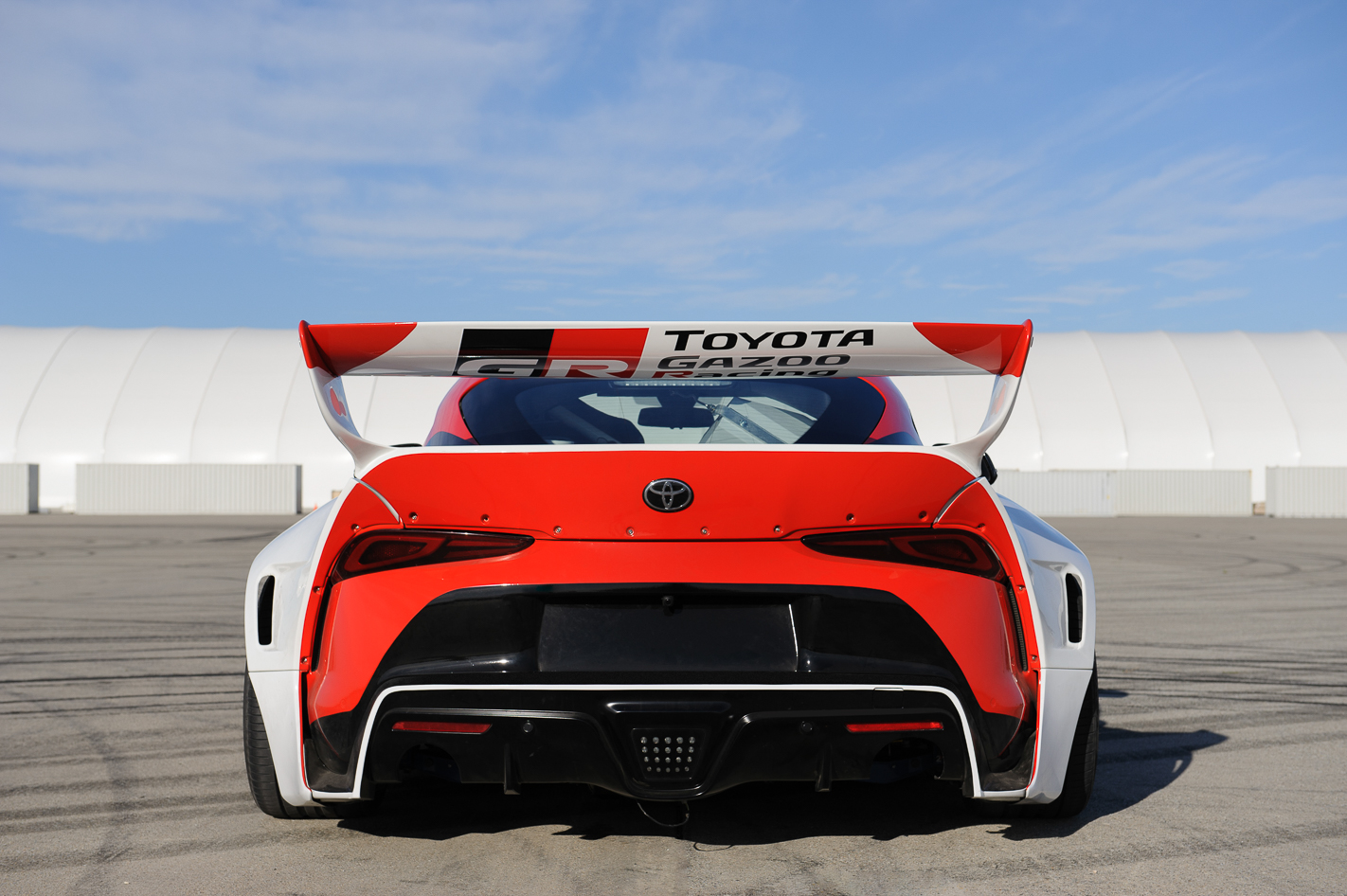
Stanford University’s involvement brings the tech from its drifting Delorean experiment to the GR Supra, which is capable of controlling the rear-wheel-drive sports car’s brakes, steering and acceleration to produce a controlled drift.
Toyota notes that while most crashes occur in mundane situations, other scenarios can involve manoeuvres that exceed the “normal limits of handling”. In those circumstances, Toyota wants to develop a car that can catch a slide with little to no driver intervention – which is the reasoning behind the self-drifting prototype.
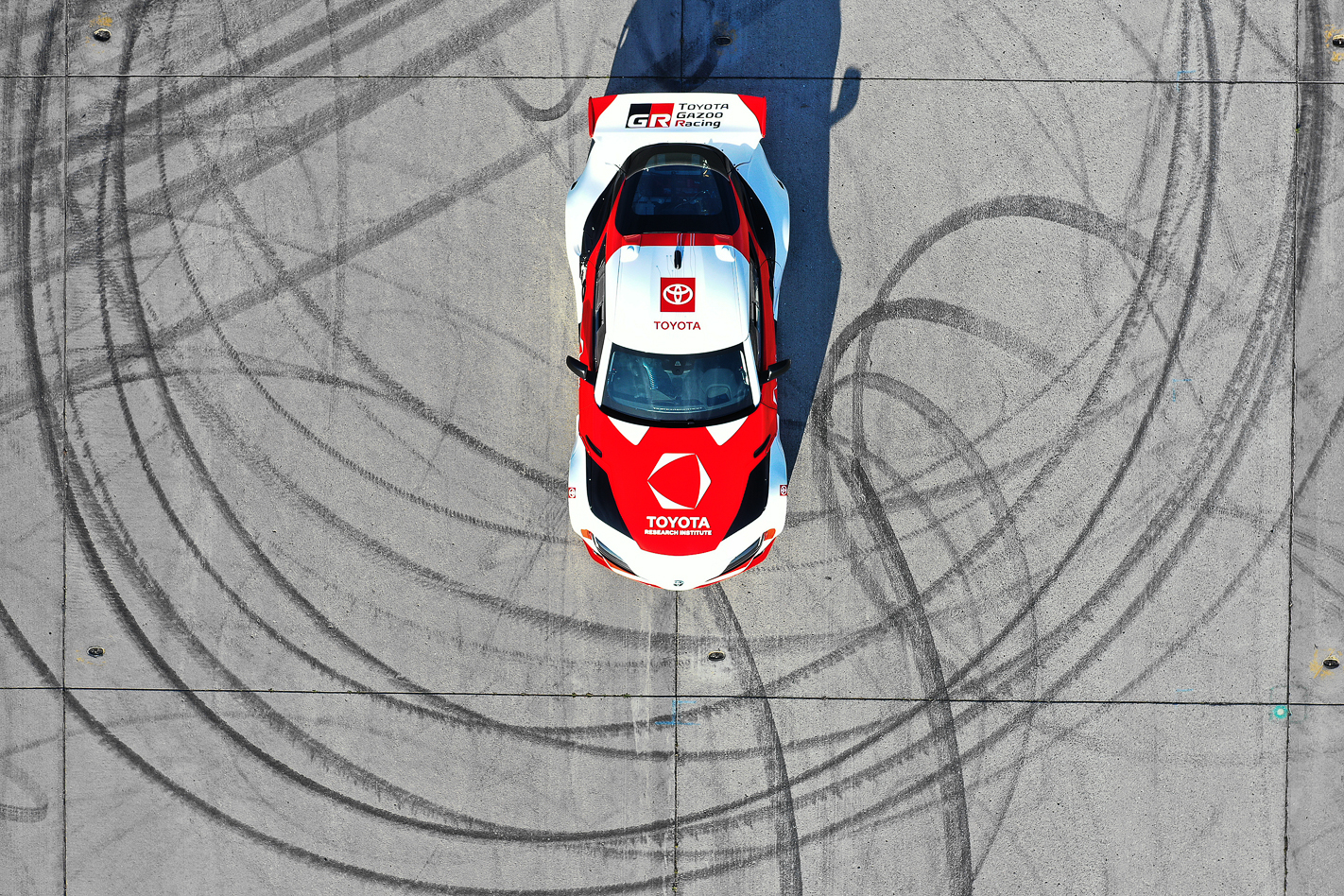
“The reality is that every driver has vulnerabilities, and to avoid a crash, drivers often need to make manoeuvres that are beyond their abilities,” said Toyota Motor Corporation chief scientist Gill Pratt.
“Through this project, TRI will learn from some of the most skilled drivers in the world to develop sophisticated control algorithms that amplify human driving abilities and keep people safe.”
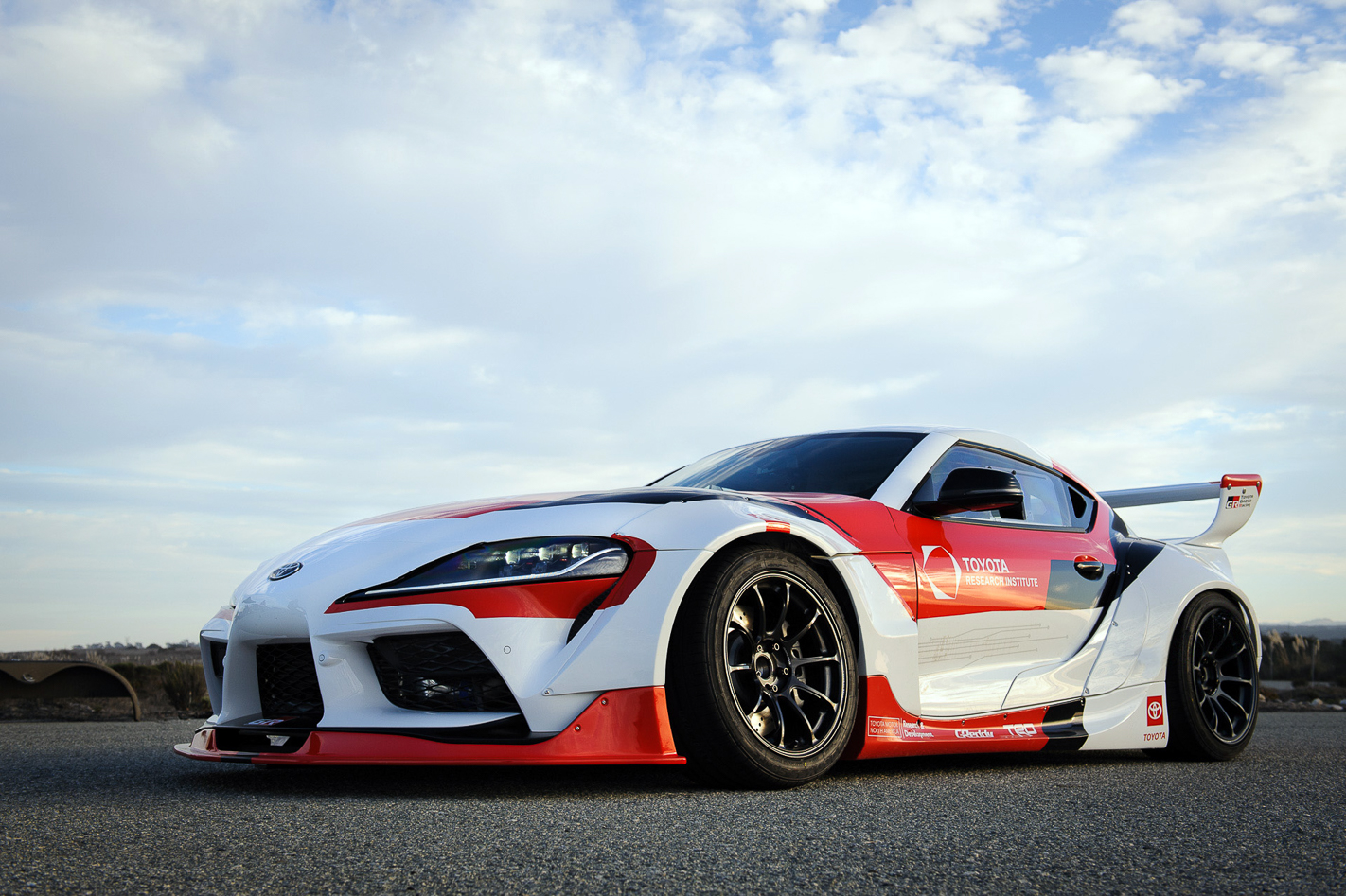
Toyota hasn’t said how close the technology is to finding its way into its production cars, though insists the tech will be “shared so broadly that Toyota and other auto manufacturers can deploy it on the road.”
If nothing else, it makes for pretty entertaining viewing for the time being.
NOW WATCH Tesla Model S goes drifting
We’ve got a challenge for any performance car worth its salt. If you think you have what it takes, it’s time to take part in the 2021 MOTOR Shootout.
What is The Motor Shootout? It’s a no-frills hot lap challenge that sorts the true track heroes from the wannabes.
With a professional racing driver at the helm, we’ll be putting the fastest cars in the country through their paces in a closed course environment.
The location of the MOTOR Shootout will be Winton Raceway, with the 3.0km circuit being well suited to testing the current crop of road cars.
It presents a suitable technical challenge for each of our contenders, without favouring one type of vehicle.
The first cars to take part in The Motor Shootout are our 2021 Performance Car of the Year contenders, including big hitters like the Porsche 911 Turbo S, Mercedes-AMG GT R Pro, and Audi R8 – along with more accessible and affordable performance pocket rockets like the Toyota Yaris GR and Ford Fiesta ST.
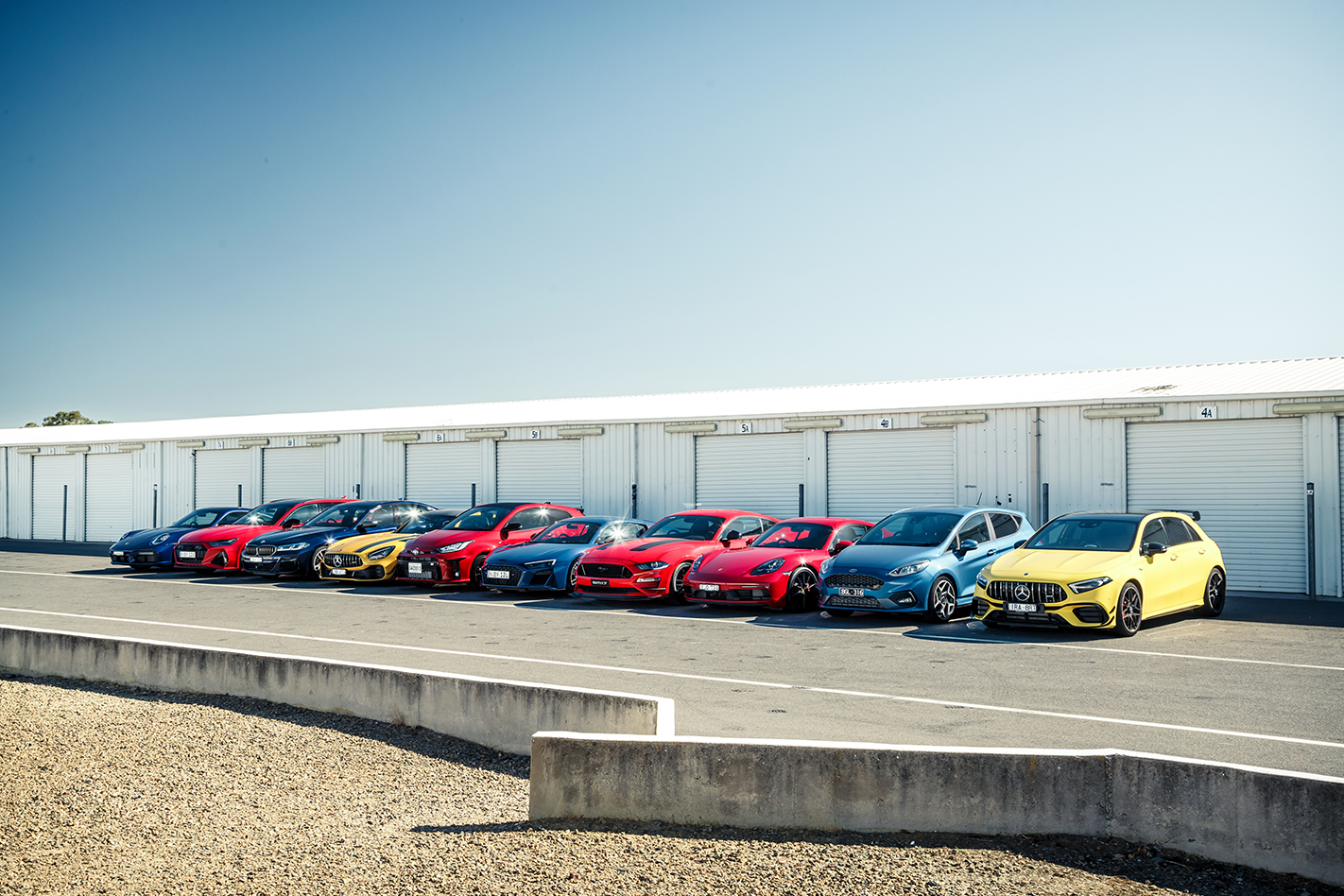
Want to know if a BMW M550i can keep up with a Porsche Cayman GTS 4.0? How close is a Yaris GR to a Merc-AMG A45 S around one hot lap? The Shootout is the challenge for you.
It’s not just our PCOTY contenders that will be getting a track workout, either.
Throughout the year we’ll be returning to the track on a regular basis with a fresh batch of contenders to see how they stack up.
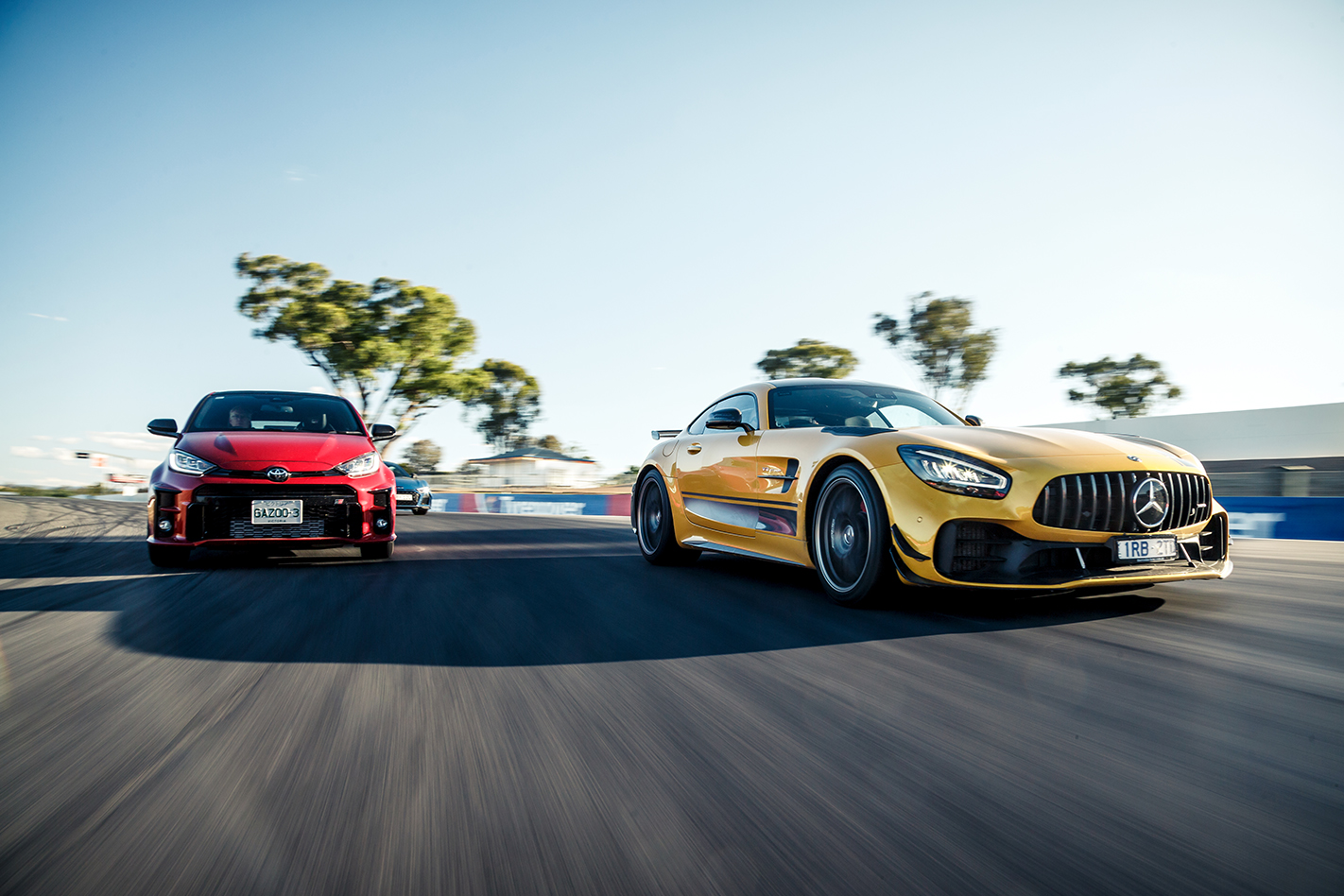
The rules are wonderfully simple. Each car will be given the same chance to perform at the hands of a gun professional racing driver.
There will be two timed laps back-to-back, the best of which will become that vehicles time in The Shootout leaderboard.
We’ll be posting the fastest lap of every contender to our YouTube page, so make sure you subscribe to keep up to date.
Check back here regularly to see where your favourite performance car ranks on The Shootout leaderboard.
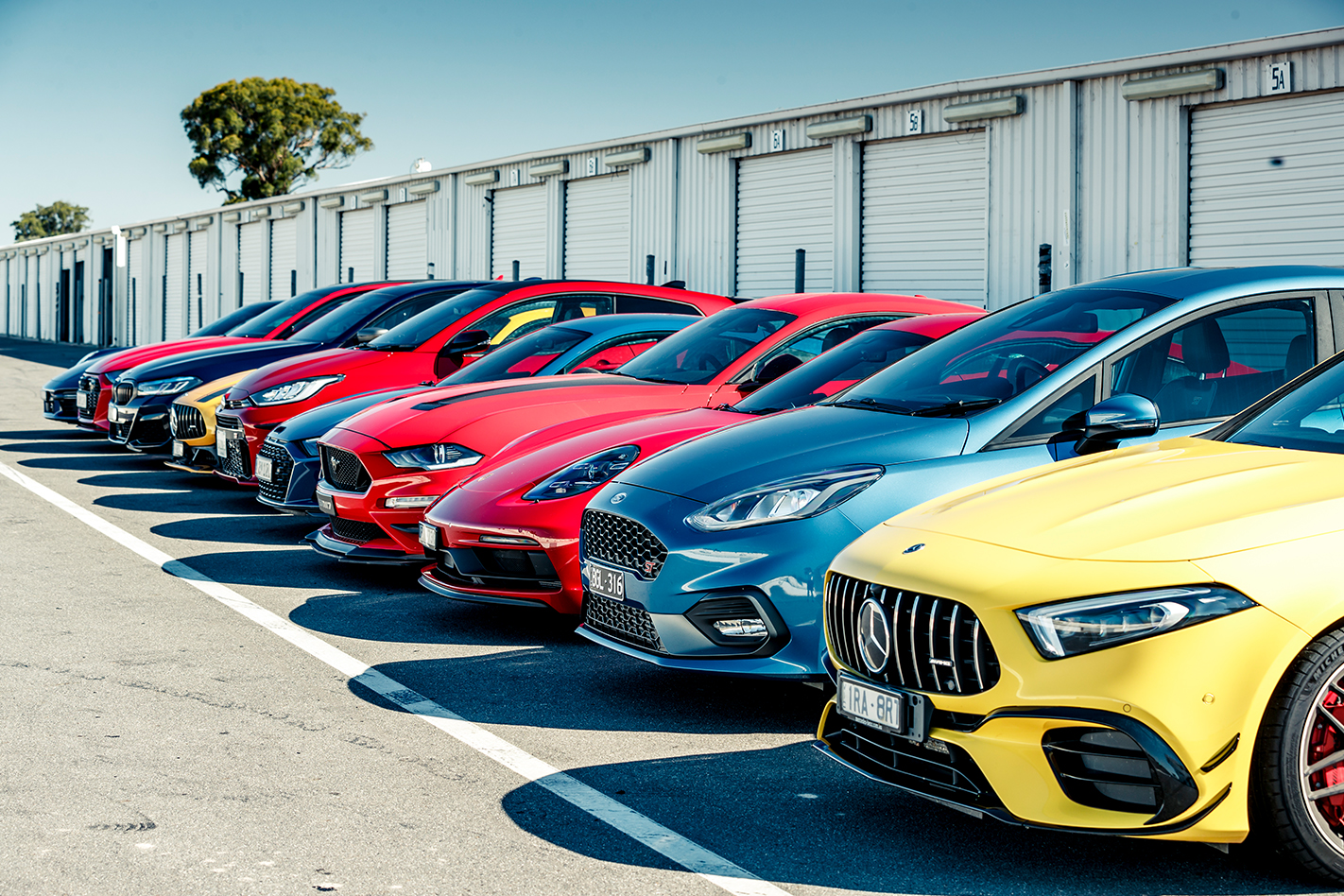
2021 MOTOR Shootout leaderboard
- Audi R8 V10 Performance: 1:32.9 – watch the video here!
- Herrod Ford Mustang SM17: 1:33.7 – watch the video here!
- Mercedes-AMG A45 S: 1:34.9 – watch the video here!
- BMW M550i: 1:35.4 – watch the video here!
- Audi RS6: 1:36.2 – watch the video here!
- Ford Fiesta ST: 1:43.7 – watch the video here!
