
On the back of Lewis Hamilton clinching his extraordinary seventh F1 world championship in 2020’s pandemic-stricken winter of discontent, we leaf through CAR’s 60-year back catalogue to pick out an early interview with the motorsport ace. It’s a damp bank holiday morning at Brands Hatch in 2002 and CAR’s go-to motorsport reporter Jeremy Hart is spending the day with Hamilton and his family to uncover the steely potential of this precocious talent. Read on for the full interview.
The full CAR magazine interview with the young Lewis Hamilton, July 2002
Defining moments in sporting history normally come wrapped with the pomp of a coronation, the aural barrage of a boy band gig and the chest-thumping excitement of gladiatorial combat. They don’t normally come cloaked in a damp spring mist soon after a battleship grey dawn in a tented village just off the M20 motorway in Kent, UK.
It’s lucky, then, that Hertfordshire teenager Lewis Hamilton doesn’t care whether there is a crowd of one or 100,000 there to bear witness to his first world-class drive as a professional racing driver. This is the most important day of the 17-year-old’s meteoric rise up the motorsport ladder, and that’s all that matters.
Except… it isn’t all that matters. Because Hamilton is special. The champion kart racer is the protégé of McLaren Formula One boss Ron Dennis, who believes he will soon be a grand prix driver. Hamilton is also black. And there has never been a black F1 driver.
If Hamilton makes it into F1 (and Dennis is not known for being careless with his cash), then this dull day near the Dartford Crossing will have been historic. If not, the early start will have netted nothing more than a bacon buttie.
Few of the early birds in the Formula Renault paddock at Brands Hatch know that Hamilton has barely slept. Most don’t care. They are preoccupied with finding that bacon sarnie and a mug of tea for breakfast. Hamilton’s stomach is churning too much to think about food. For the first time he is consumed with stage fright, opening night nerves. ‘I’ve never felt like this,’ he says. ‘Maybe it’s the damp, or the new clutch. I’m worried about stalling on the start.’
But Hamilton isn’t the only rookie trembling beneath the shadow of Brands’ blind walk-the-plank-at-100mph Paddock Hill bend. The grid of 36 cars is peppered with testosterone-charged teenagers trying to make the grade. Most barely look old enough to drive a pedal car. But this is the kindergarten from where Kimi Raikkonen smoked into the high-octane high school of F1.
What’s the hardest motorsport record to break?
Hamilton is not in Formula Renault by accident. He, his manager father Anthony and McLaren have picked it as the ideal launch pad to stardom. Running winged chassis and capable of 150mph, they are effectively mini F1 cars.
‘We will have to see how he develops, but right now I would imagine the plan is a year or two in Formula Renault, Formula 3 and then Formula 1,’ says McLaren managing director Martin Whitmarsh. ‘We have an expectation that he will drive an F1 car for us one day.’
Hamilton is not the product of positive discrimination. Black or not, he is arguably Britain’s brightest driving hope of his generation. Ever since he slipped behind the wheel of a kart at a holiday resort in Ibiza 12 years ago, Hamilton has left his rivals eating the dust and inhaling the burned rubber left in his wheel tracks. ‘When we got back from that holiday, Dad took me to a track near home,’ says Hamilton. ‘I was hooked.’
Like many West Indian families, the Hamiltons had no connection with motorsport. Buying Lewis a racing kart was a massive risk. ‘Before I knew what was happening, I had spent £10,000 on the kart, engines and equipment,’ Anthony recalls. ‘That was my annual salary at the time, so I was relying on credit cards and an overdraft. Luckily Lewis started winning from the first day he got into the kart and we have kept moving up.’
Hamilton’s career would have crashed as fast as it took off, were it not for the fact that Dennis happened to see Hamilton in action in a kart race five years ago. There and then, the multi-millionaire boss pledged to nurture Hamilton all the way to F1.
We spent the day with Lewis and Anthony Hamilton at Brands Hatch as part of a feature on the up-and-coming talent
On the day Dennis’s offer came chuntering out of the fax machine, Hamilton just shrugged his shoulders and went upstairs to do his homework. ‘I was happy. I was excited. But I had no say,’ he recalls.
The material benefits of the deal were soon obvious. For five years the whole family travelled with Lewis to tracks in Britain and Europe aboard a luxurious American motorhome. It was not only a home from home but also acted as Hamilton’s classroom when racing meant missing days at school. Hamilton is now finishing off his A-levels, just in case. It is on the advice of both Dennis and Dad, who keeps working in his own computer company, should Lewis fail to lay the golden egg.
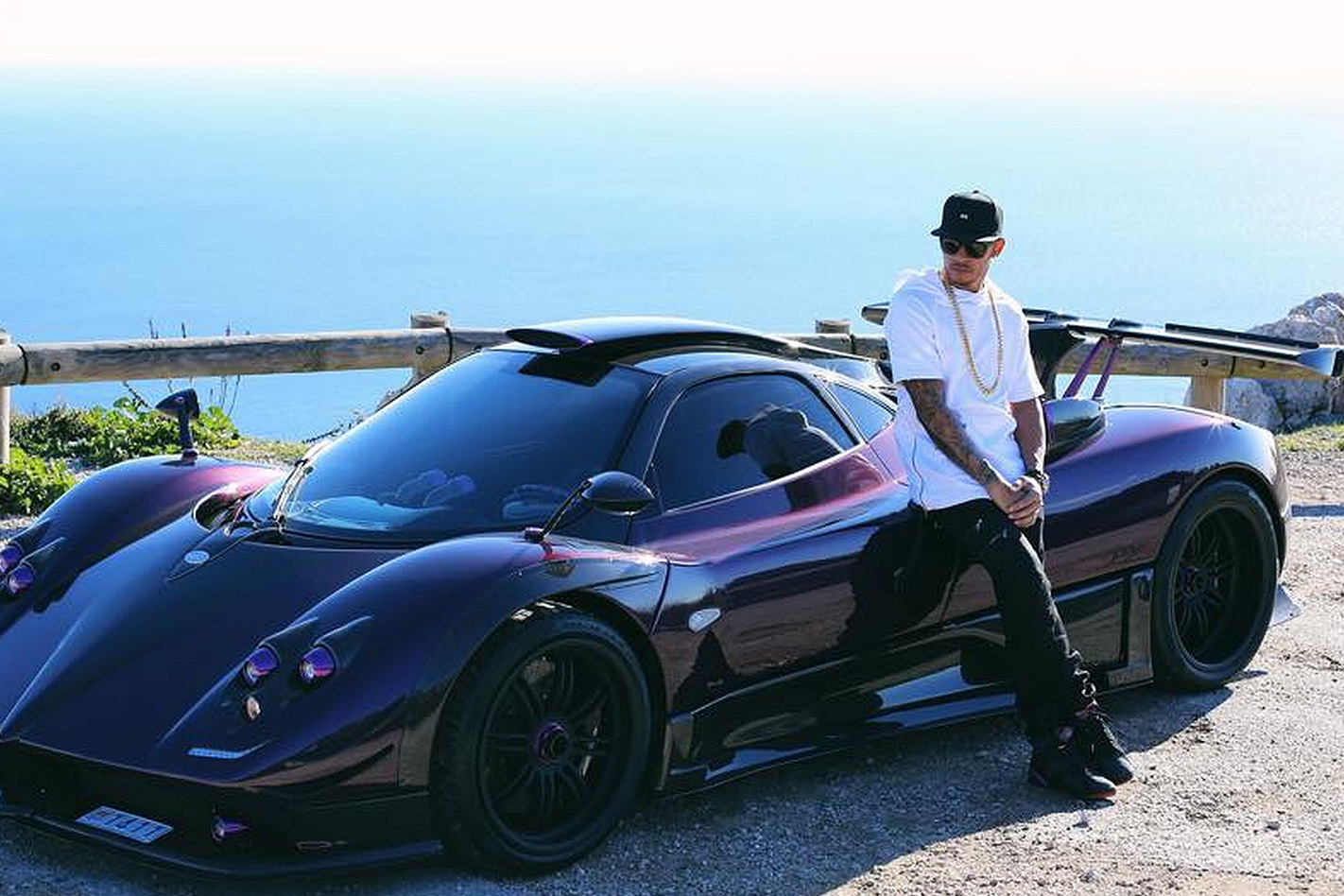
Anthony Hamilton is Lewis’s shadow. Some have called him the archetypal ‘touchline dad’, getting more wound up behind the barriers than his offspring in the thick of the action. But even with McLaren’s backing, motor racing is a shark pool. And at Brands Hatch, Anthony says he feels as if he is in the deep end.
‘In karting we knew everyone and everything, but this is the big time and it will take us a while to find our feet,’ he says, trying to exude some calm in a family clearly tensed up by Lewis’s apprehension. ‘The difference is, we know this step is a big one.’
Neither Anthony nor Lewis are shy about their racial roots. They make no attempt to exploit or suppress its bearing on the future. Both know it is not just family dreams weighing heavily on their shoulders.
‘If Lewis gets into Formula One, it will be as significant as Tiger Woods making it to the top in golf,’ claims Rodney Hinds, sports editor at The Voice, a newspaper for Britain’s Afro-Caribbean community. ‘It will hopefully open the way for other young black drivers.’
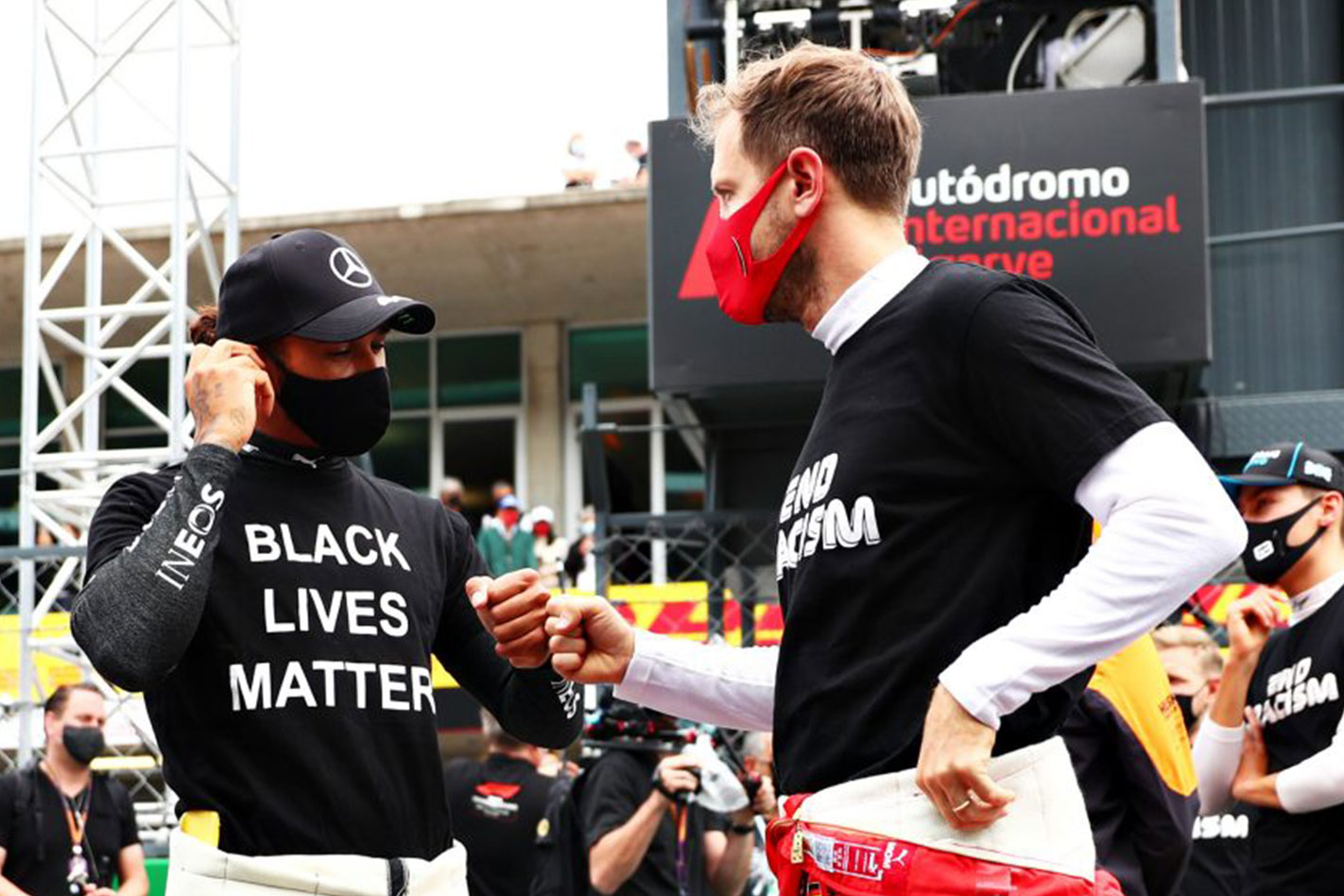
Brands Hatch is hardly a bastion of black sport. In the crowd the number of black faces is minuscule. In the paddock I spot only one other black face.
‘In five years of racing I think I might have come across one other black driver,’ Hamilton says before leaving us to slip into his car and the warm-up laps. ‘If I do make it to F1, I think it will influence a lot of other black talents. For so long it has been white dominated and right now a lot of young black kids are afraid to come into racing because no-one else has.’
No black driver has ever competed in Formula One. American Willy T Ribbs once had a test with Brabham in the 1980s, but he was slow and returned to Indy racing.
Running the Brabham team at the time was (then) current F1 supremo Bernie Ecclestone. Ecclestone remembers very little of Ribbs’ test but is keen to have a black driver in F1.
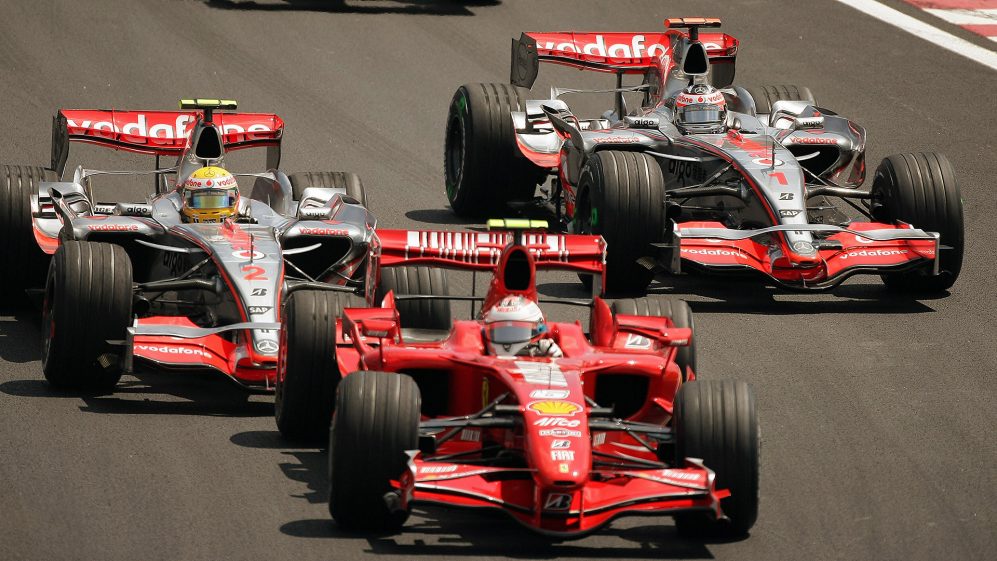
‘Black, Jewish, gay, a girl… hey, why not all in one! To be honest I don’t give a damn where a driver comes from, but we have never had a black driver in F1 and so, of course, that would be great,’ says Ecclestone. ‘It might then act as a catalyst for other coloured kids. But only if this Hamilton kid is good. If he’s not then it will make it even harder for coloured kids in the future.’
McLaren has nominated Hamilton as its chosen one on talent alone, but the marketing benefits of managing the world’s most successful black driver take little analysis. Hamilton is a potential gold mine.
‘From the team point of view, the fact he is black is of no relevance,’ says Martin Whitmarsh. ‘But there is a lack of black drivers generally in motorsport, and if Hamilton is successful then the implications culturally and as an icon would be considerable.’
Hamilton won so many kart races and championships between 1995 and 2001 that McLaren’s money has already reaped rewards. One of the highlights of Hamilton’s karting career was racing last year against his idol and reigning F1 world champion Michael Schumacher at the German’s own kart track near Cologne. Hamilton held off the best racing driver in the world.
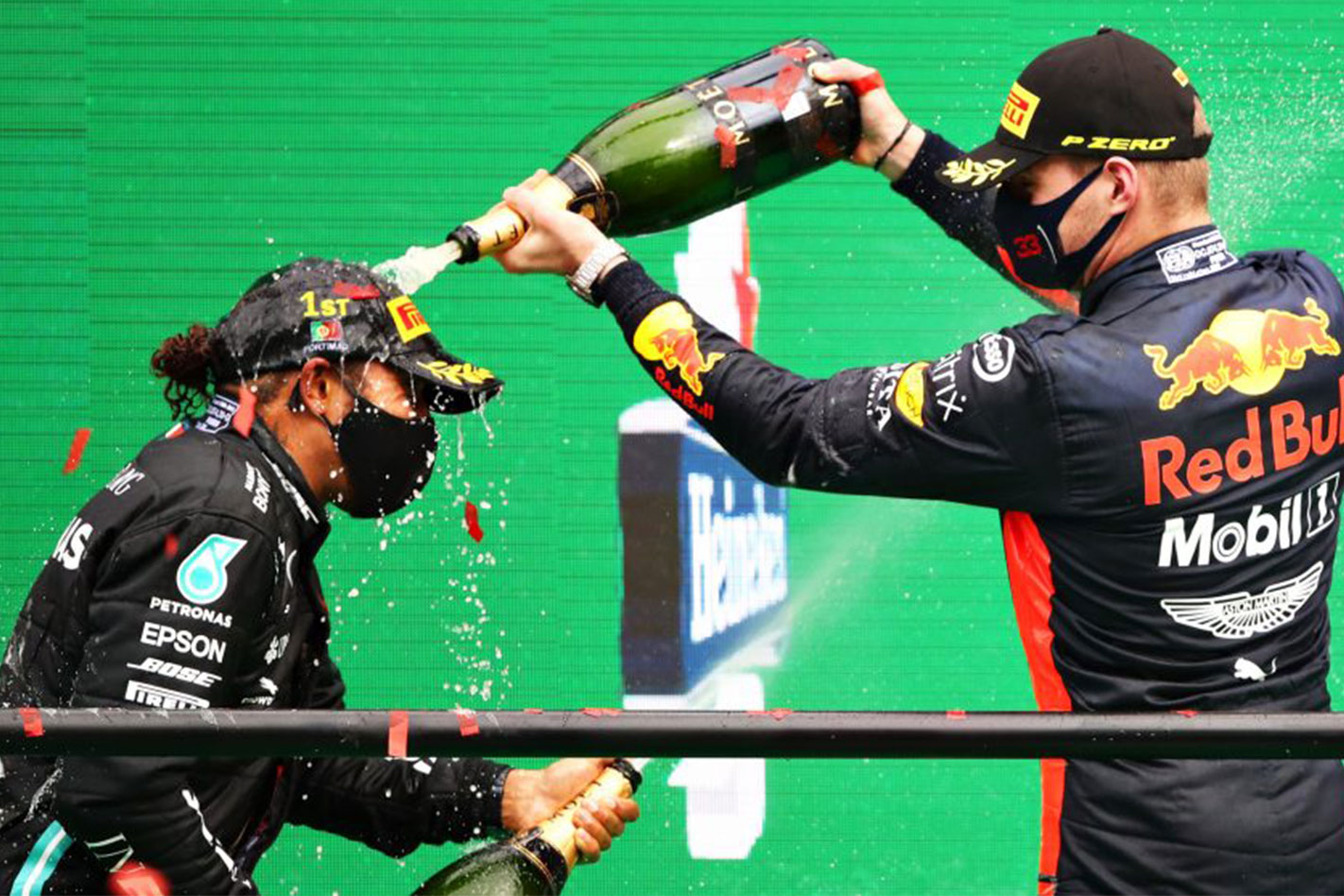
‘Schumacher said he had been keeping an eye on me, that I was very focused and that I was very talented and that I was a star of the future,’ smiles Hamilton. ‘Which was great for me.’
The clock clicks past 9am. It is a bank holiday Monday. Most sensible people are in bed. A conga of three dozen Formula Renaults, each costing around £100,000 to race this summer, snake onto the undulating grid at Brands.
Hamilton is on the second row. He is chuffed to have qualified fourth. So he should be. The lights go green. Hamilton gets the start just right. He yanks into line as the three machines ahead tumble over the imaginary waterfall at Paddock and career towards Druids. Hamilton immediately slips through to third. Sixteen laps later, he crossed the finish line in the same place. Result.
‘The two guys ahead are already on their third season in Formula Renault,’ says someone in the press room. ‘Give it another race or two and Hamilton will be winning.
On the podium, Hamilton is a new man. No nerves now. And no sweat, either. Just the start of a grin. The sort of grin the rest of the field will learn to loathe.
‘It wasn’t easy,’ defends Hamilton as we walk back to the paddock. His disabled younger brother Nicholas follows in his wheelchair. ‘It felt like the big league out there. The noise on the grid was immense. My heart was thumping. But it was great. I am so happy to have finished third. I hope a win won’t be too far away.’
If Hamilton’s career continues on its current near vertical rate of climb, then by the time he is 19 or 20 he can expect to become one of the youngest ever drivers to start a grand prix. But the fastest driver into F1 is not always the fastest driver in F1.
‘I am not expecting to be in F1 in two years,’ he says. ‘My goal is not to be the youngest in F1. It is to be experienced and then show what I can do in F1.’
This interview was originally published at carmagazine.co.uk.
The Governor of California recently announced that internal combustion engines will be banned in new cars by 2035. It puts California on par with the UK, Germany, India and more, all of whom have announced a ban on petrol and diesel cars in the next 15 years.
And a lot of brows were knitted, moustaches were bristled, and harrumphs were harrumphed at the news.
And a lot of reasons were trotted out why it’s a deranged pipe dream: The electrical grid won’t be able to handle it. The power stations will melt down. Consumers won’t stand for it. The state will grind to a halt. Or, simply, that it’s ridiculous, and impossible, and will never happen.
In some ways, it does seem like an optimistic timeframe – 15 years to not only replace the primary power source for California’s million new cars a year, but retool the auto factories, and rebuild the infrastructure, and replace the petrol stations, and redistribute a massive slice of the economy?
And what about people who invested their super in asthma inhalers and fire insurance? What are they supposed to do now, invest in trees? Fifteen years, harrumph. I’ve owned cars for longer than that.
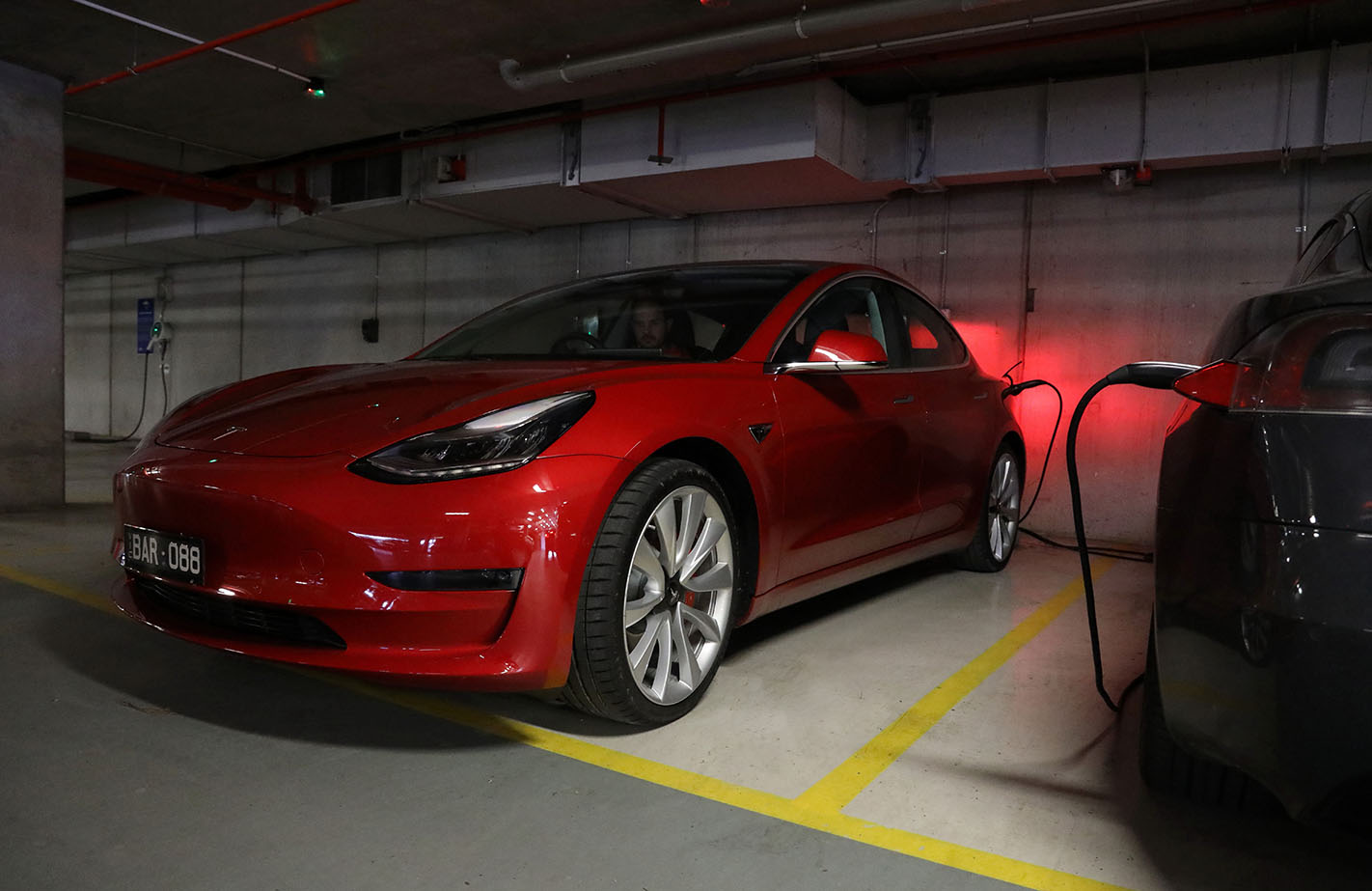
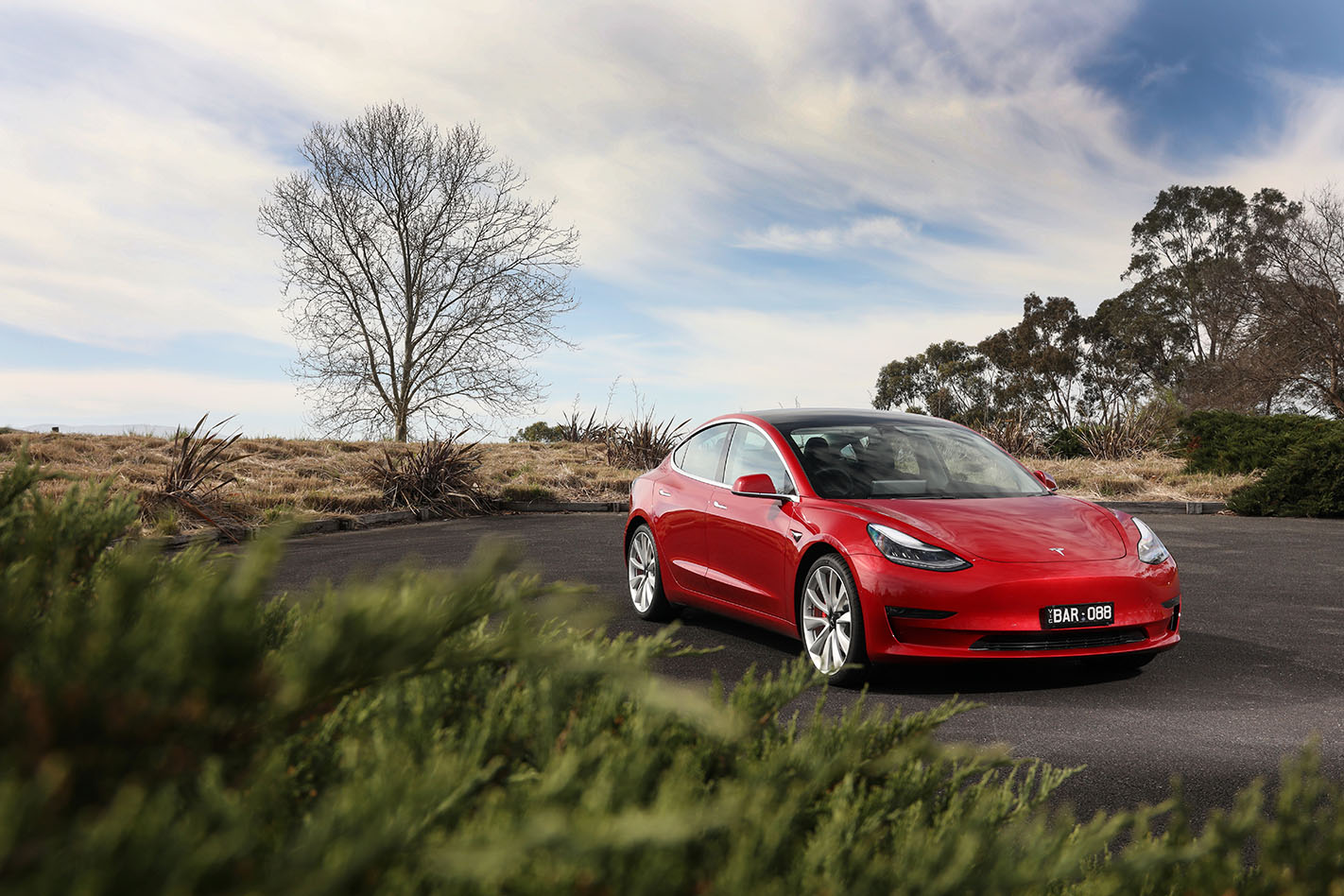
But by 2035, banning the ICE might be a moot point, because electric cars might be so good by then, that consumers have made the switch on their own.
And if that seems far-fetched, think about this: 2035 is as far from today, as today is from 2005.
Remember 2005? I do, sort of. It was a banner year for Carlton Draught sales, thanks to me, so it’s a little hazy in parts.
But John Howard was the prime minister. Scott Morrison wasn’t even a politician yet, he was still the boss of Tourism Australia. Schapelle Corby was convicted of drug smuggling in Indonesia. Remember that? Schapelle Corby got convicted, served her time, got parole and returned to Australia faster than the ICE ban will take effect.
2005 was a heady time on Australian dealer lots. Holden produced 153,000 cars in 2005, and a quarter-million locally made vehicles were snapped up by Australian drivers. The VE Commodore was a year away from release. The BF Falcon hit the streets. The Ford Territory was brand new.
In 2005, the Holden Commodore was Australia’s best-selling car, and Holden was the second-biggest-selling car company.
Imagine telling people in 2005 that you were going to ban all new Holdens by 2020: it would have seemed impossible, unthinkable, laughable. But now, it would be tragically irrelevant.
By the time our hypothetical new-Holden ban was due to come into force, the company would have already ceased to exist, in this instance due to market forces, not a government ban.
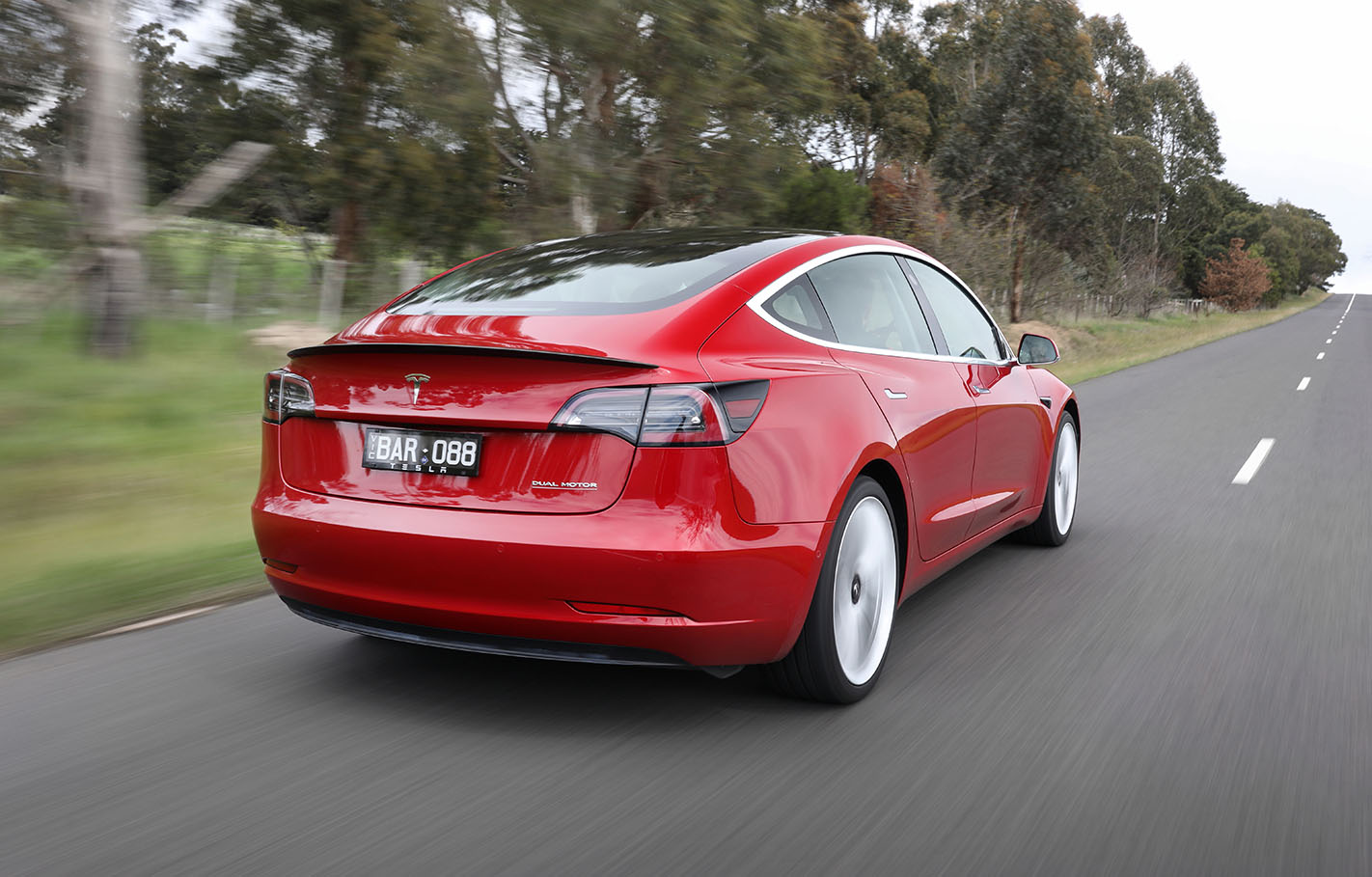
Technology can make once-dominant brands, even whole industries, redundant in just years.
In 2005, the very first iPhone was still two years in the future. The top-selling phone in the world in 2005 was the Nokia 1110, one of those old brick phones with the squishy buttons. It operated on a 2G network and had five hours of battery life.
It also sold 250 million units in 2005 alone.
Of the ten top-selling mobile phones in 2005, the Nokia 1110 sold about as many as numbers two to ten combined – and five of those were also Nokias. Nokia was everything.
If you had told people in 2005 you were going to ban Nokias by 2020, people would have gasped and said it was impossible.
Fast forward to now, and Nokia owns about one per cent of the mobile phone market. One per cent. No ban necessary. Just new technology, changing tastes, and customer choice.
Maybe it’ll be a better battery. Maybe it’ll be a better power station. Maybe it’ll be something we haven’t even imagined yet. But come 2035, I bet we’ll be saying, “Petrol engines? Oh yeah, I remember those.”
Then we’ll teleport home to watch Tenet on the movie classics channel.
NOW CHECK OUT Toyota AE86 turned into electric drift car
Choosing the right Ford Ranger in 2020 is proving to be quite the challenge. There are more than 30 different variants in the Ford Ranger line-up (talk about a growing family!), each with a different combination of engine, suspension set-up, or body design.
However, there are some versions that bring a little extra to the table in the battle for your hard-earned money.
Of the 2020 Ford Ranger line-up, there are five ‘special editions’ that add their own unique offerings compared with the regular variants.
Standing out from the run-of-the-mill are the XL, XLS, XLT, Wildtrak, and Raptor variants. Could one of these be the perfect Ford Ranger for you?
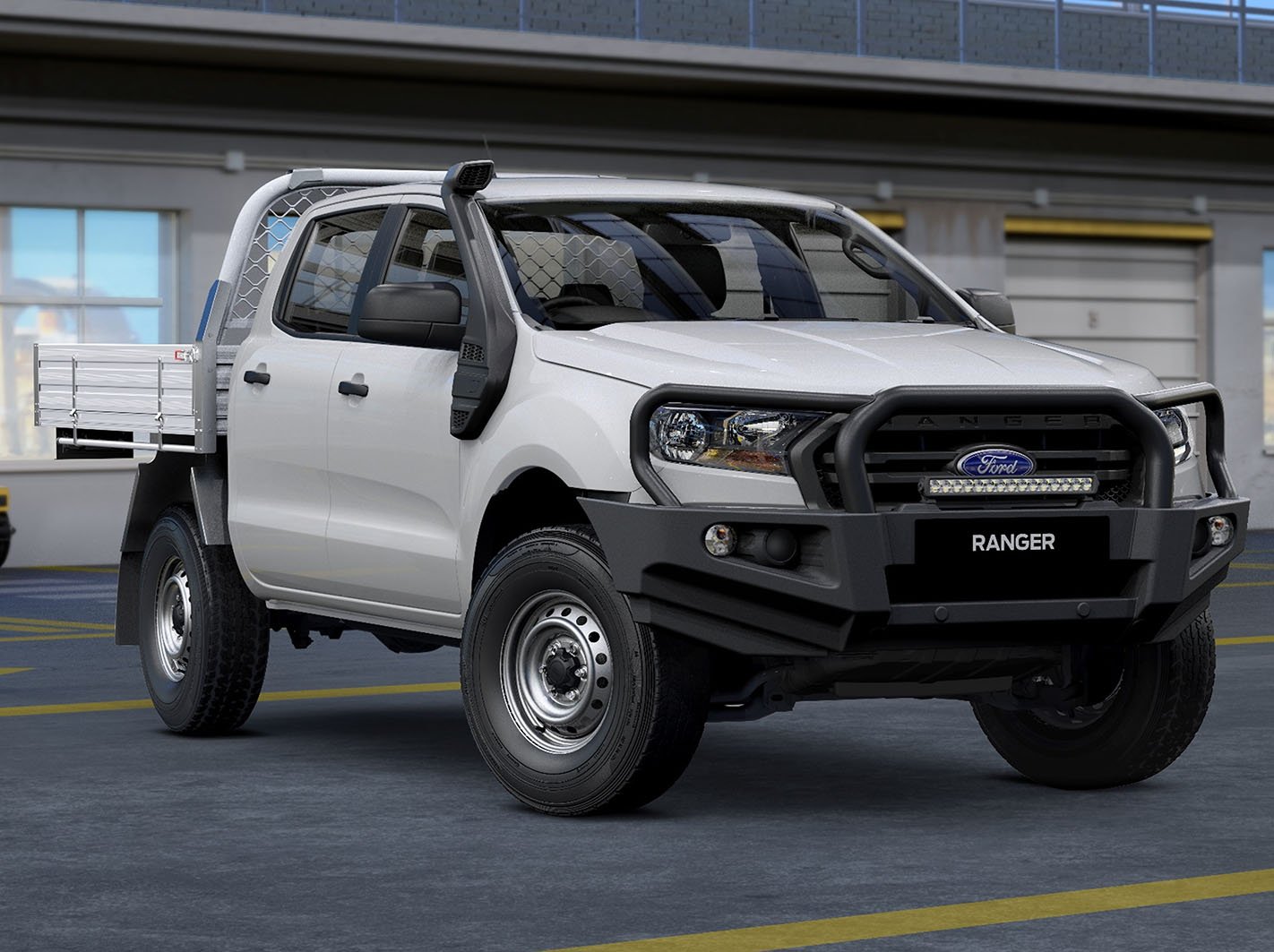
XL SPECIAL EDITION
Look, it has special edition right there on the name. This Ford Ranger variant does pretty much what it says on the tin, taking a regular XL and adding some extra equipment.
Available only as 4×4 dual-cab cab-chassis, the XL Special Edition is powered by the venerable 3.2-litre turbo-diesel five-cylinder engine that many Australians are familiar with, producing 147kW/470Nm and mated to a six-speed automatic.
With a keen driveaway price of $49,990, the XL Special Edition adds a factory-fitted steel roo bar, LED light bar, and fixed-head snorkel.
A standard automatic XL Ranger will cost you $48,790 before on-road costs, making the Special Edition good value for someone wanting an entry-level model with some factory-fit equipment.
XLT FULLY LOADED
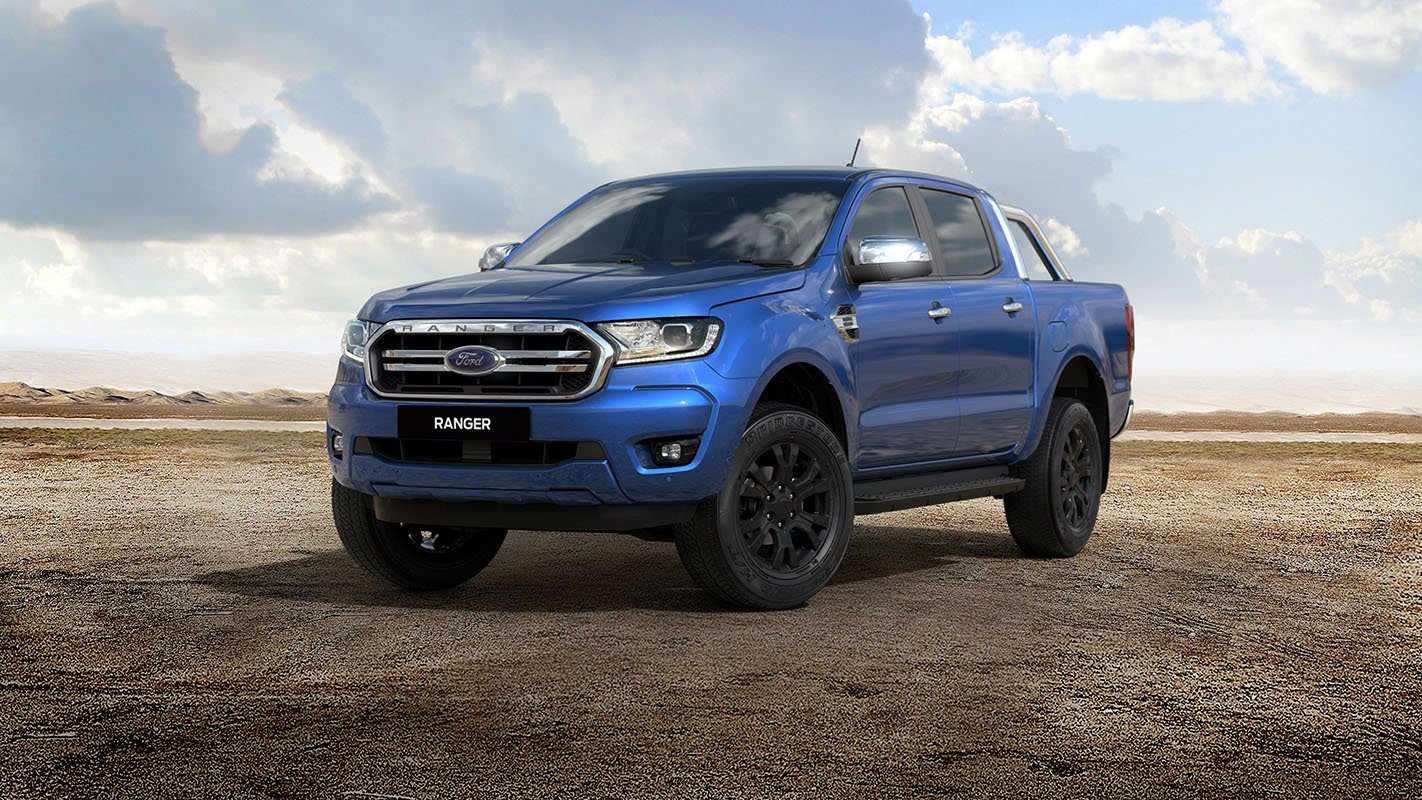
Ford’s marketing department was playing with a straight bat when deciding the name for this variant, and the Fully Loaded is essentially a ready-made option pack for XLT 4×4 dual-cab pick-up variants, costing an extra $1500.
For that, Ford adds gloss-black 18-inch alloy wheels, leather accented upholster, adaptive cruise control and park assist. What you choose to load it with after that is up to you.
Unlike the XL Special Edition, the XLT Fully Loaded pack is available for both the aforementioned 3.2-litre five-cylinder and those fitted with the 2.0-litre twin-turbo four-cylinder unit, which produces 157kW/500Nm, and is mated to a 10-speed automatic transmission.
A six-speed manual XLT with the 3.2-litre engine costs $57,240 before on-roads, while the automatic with the same engine is $59,440. An XLT with the 2.0-litre diesel will cost you $60,940.
XLT DOUBLE CAB CHASSIS
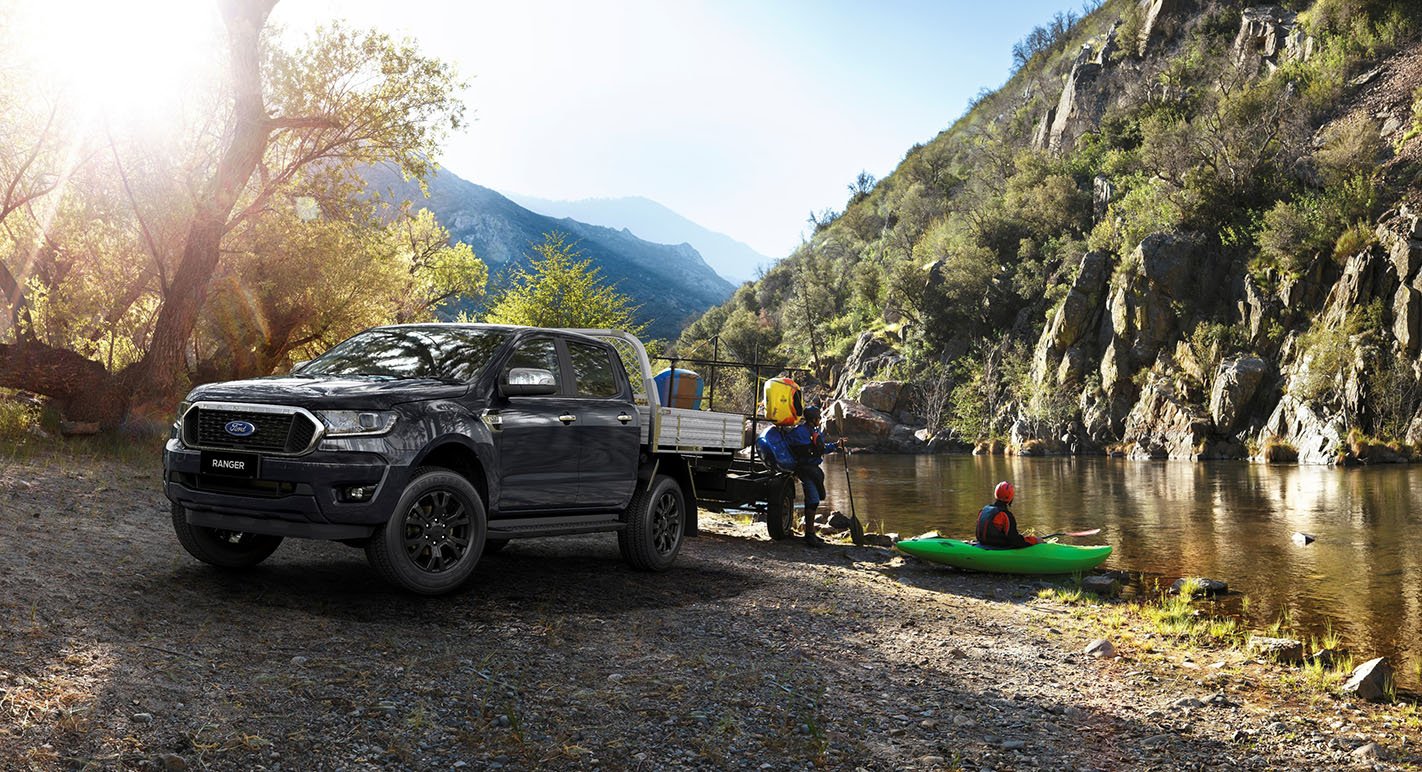
Adding to the XLT Ranger family, the Double Cab Chassis pairs a workhorse utilitarian tray with the popular dual-cab body style.
The Double Cab Chassis mirrors regular XLT variants in specification, but instead of a pick-up body, is a cab-chassis (i.e. a tradie-style aluminium tray replaces the uniform body you see on pick-up variants).
That means you get AEB, Apple CarPlay and Android Auto, an 8.0-inch infotainment screen, dual-zone climate control, 17-inch wheels, and a tow-bar tongue as standard.
XLT Double Cab Chassis models cost $1000 less than the respective pick-up equivalents (listed above).
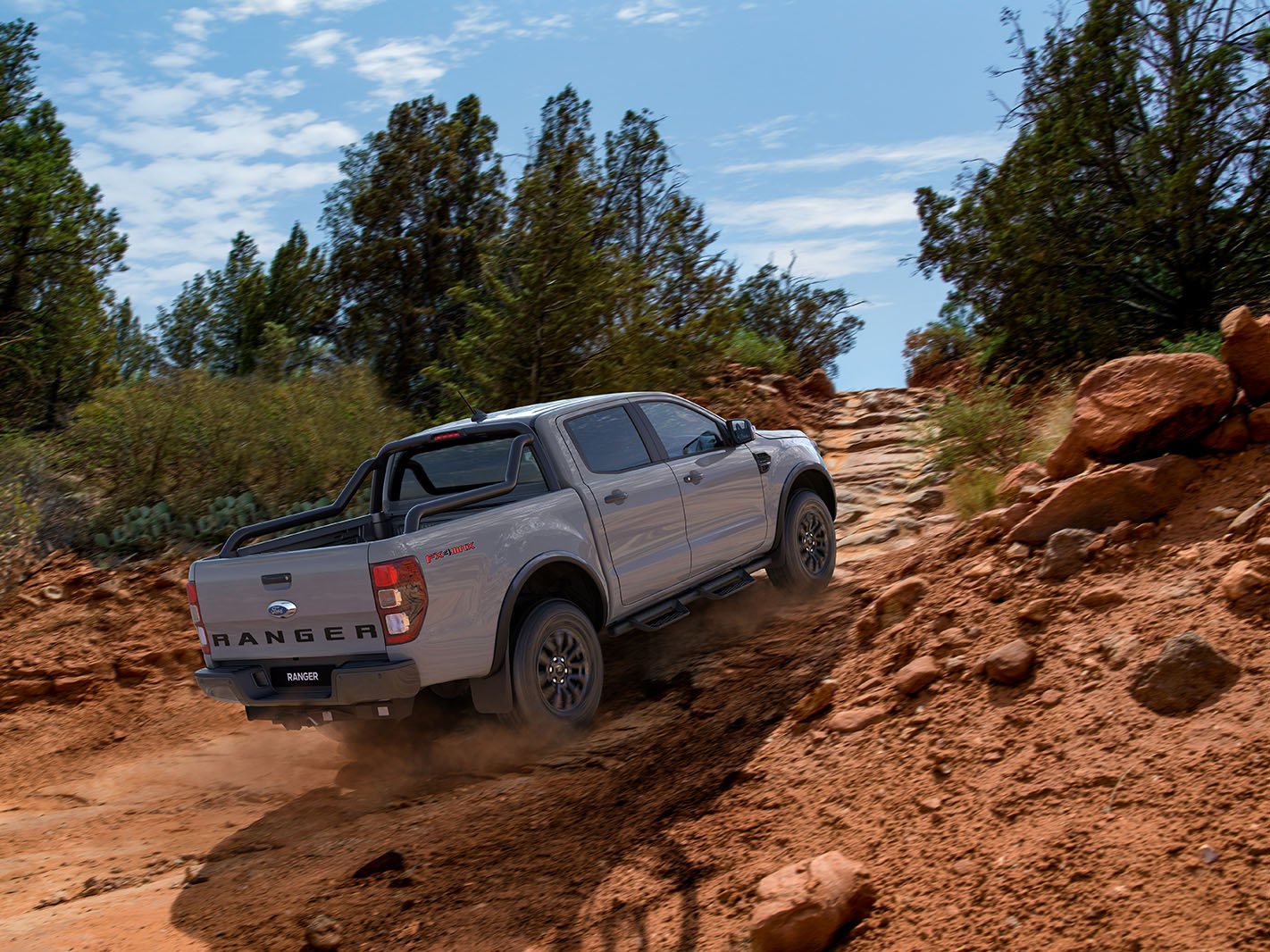
FX4 MAX
This is the newest special edition to come from Ford Australia, and it sits between the XLT and more expensive Wildtrak and Raptor variants.
The FX4 Max costs $65,940 before on-road costs, and is only available as a 4×4 dual-cab pick-up model. Just a single engine is on offer with the 2.0-litre twin-turbo diesel standard for all.
For the extra cost over an XLT, the FX4 Max’s main benefit is a raft of locally developed suspension upgrades.
The highlight of which is 2.0-inch monotube Fox dampers both front and rear, with those at the back gaining a remote reservoir for hardcore off-road use. Think of it as a Raptor-lite chassis.
Despite its new dampers, the FX4 Max has the same coil spring suspension up front and leaf spring set-up out back that all Rangers have, while the Ranger Raptor has coils and different geometry on each corner. However, the FX4 Max layout has been tweaked slightly by Ford Australia engineers to improve the ride and refinement.
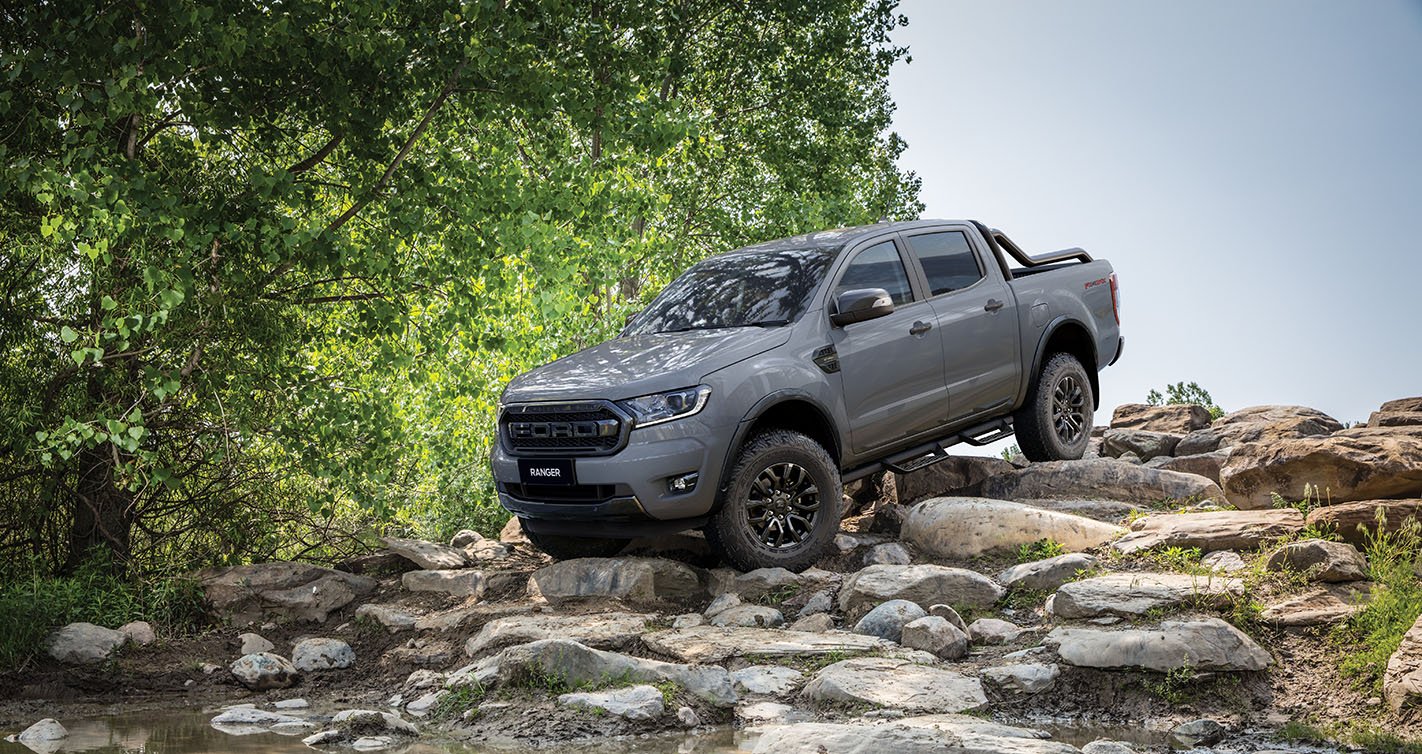
Complementing the suspension is the same BF Goodrich All-Terrain K02 tyres used by the Raptor, wrapped around 17-inch alloy wheels.
All-up, the FX4 Max gains an extra 19mm of ground clearance compared to the XLT, with improved approach and departure angles for the off-roading anoraks.
So, why should you go for the FX4 Max? Well, it is essentially a cut-price Raptor, getting beefier suspension and tyres, without sacrificing hauling ability.
Due to its coil spring suspension front and rear, the Ranger Raptor has a maximum braked towing capacity of just 2500kg and maximum payload of 758kg, whereas the FX4 Max has a 3500kg maximum braked towing capacity, and maximum payload of 981kg.
The FX4 Max also gains a new grille treatment, as well as grey bumper inserts, front skid plate, grey wheel arch mouldings, grey side-mirror caps, and grey doorhandles. It also gains a body-mounted side steps, in-tub lighting, a tow bar, and full-length sports bar.
Inside, the FX4 Max matches the XLT in specification, with the exception of leather and suede seat upholstery, all-weather floor mats. The addition and control of accessories is made more seamless with uprated alternator and associated dash-mounted switch pack that allows you to control retrofitted extras such as light bars and winches from the driver’s seat.
WILDTRAK X
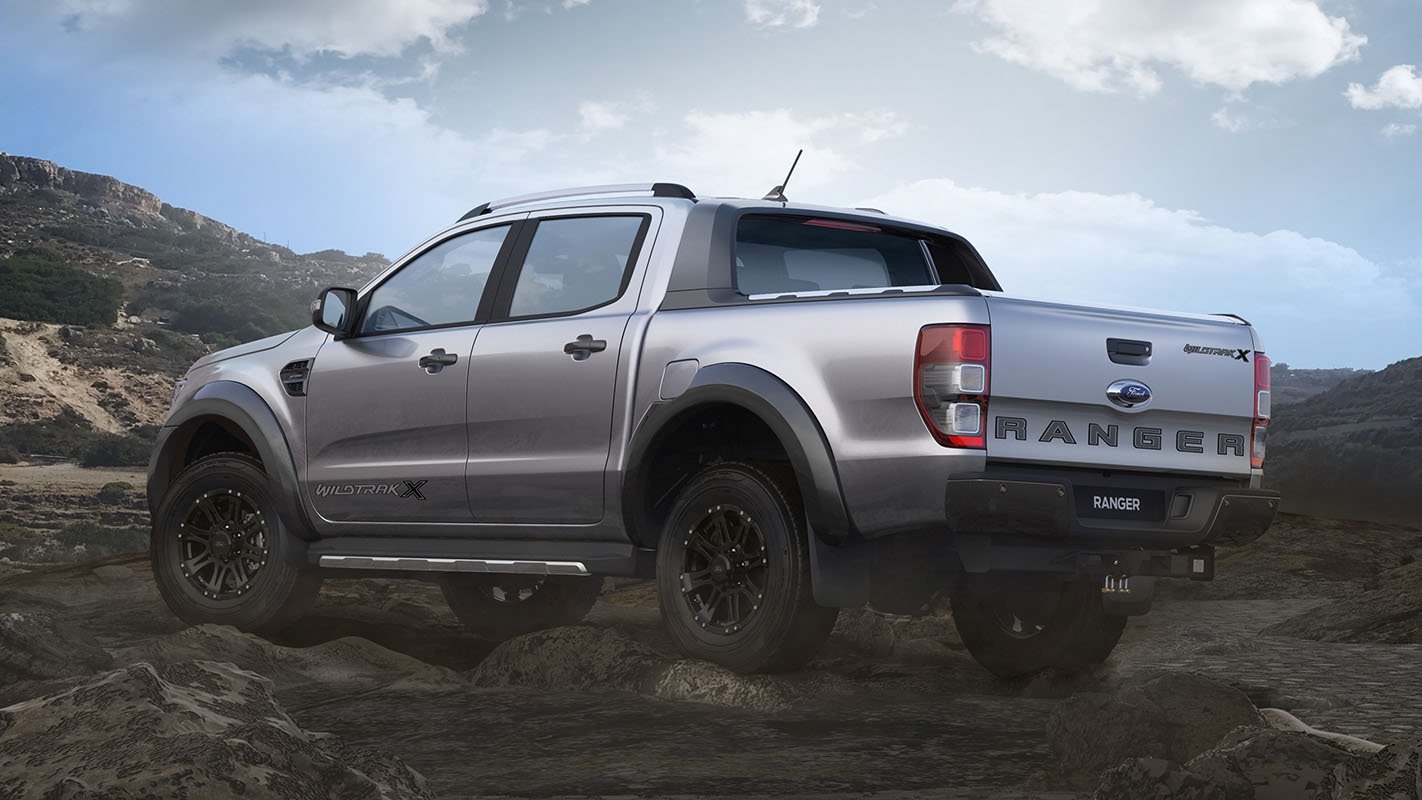
The most expensive special variant offered by Ford, the Wildtrak X, takes what makes the Wildtrak one of the most popular Ranger variants on sale, and adds a slew of extra equipment.
Two engines are available, starting at $66,490 for the 3.2-litre, while the 2.0-litre costs $67,990.
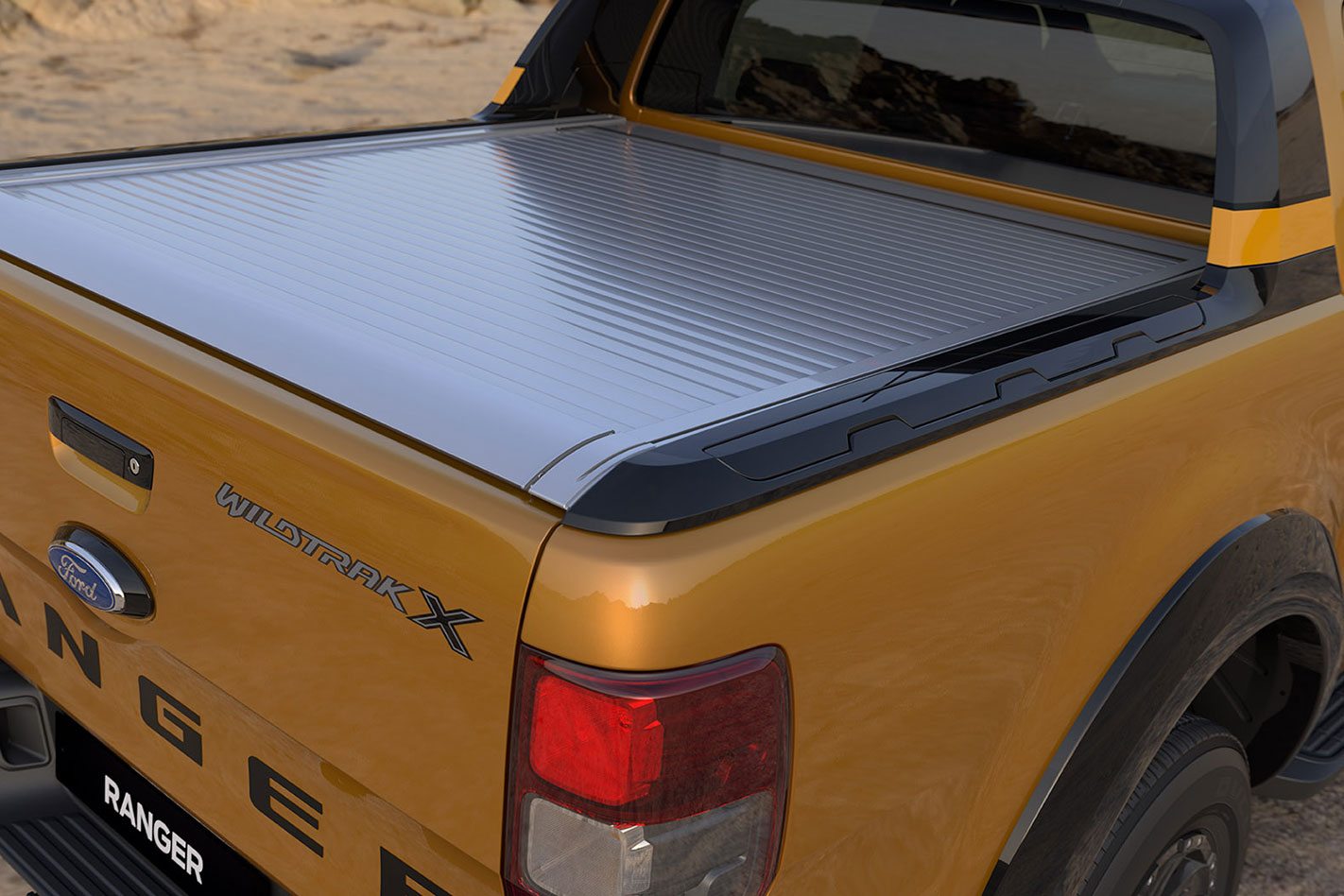
For that, you get bi-LED headlights, a power roller shutter on the tray, FordPass Connect for remote vehicle start/stop from your smartphone, 18-inch wheels, fender flares, nudge bar with LED light bar, and a unique grille with Sabre orange accents to match the sailplane and interior stitching.
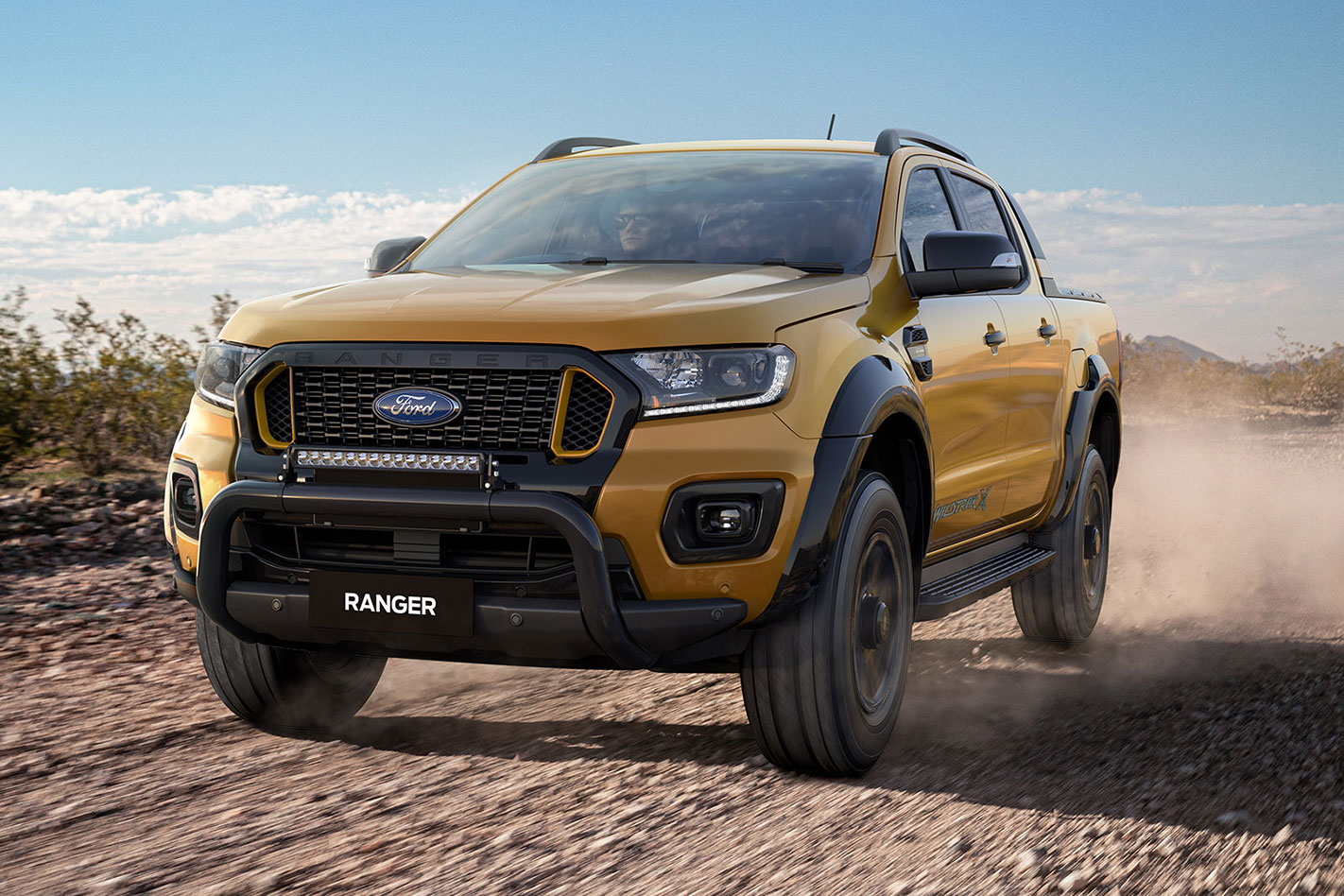
That amounts to a lot of extra kit over a regular Wildtrak, but the X only adds $2200 to Ford’s asking price.
As standard, the Wildtrak already comes fitted with AEB, reversing camera, hill-descent control, hill-start assistance, tyre pressure monitoring, adaptive cruise control, an 8.0-inch infotainment screen, Android Auto and Apple CarPlay, keyless entry, push-button start, and a leather-accented interior trim.
The Wildtrak and Wildtrak X can only be purchased as 4×4 dual-cab pick-up models.
If you want a flash Ranger but can’t stretch to the flagship Raptor model, the Wildtrak X makes a compelling case for itself.
Lego is gearing up for a busy holiday period, churning out two new Technic models to celebrate the World Endurance Championship GTE class-winning AF Corse Ferrari 488 GTE, and has also found reason to recreate the hardcore track-only McLaren Senna GTR in nylon brick form.
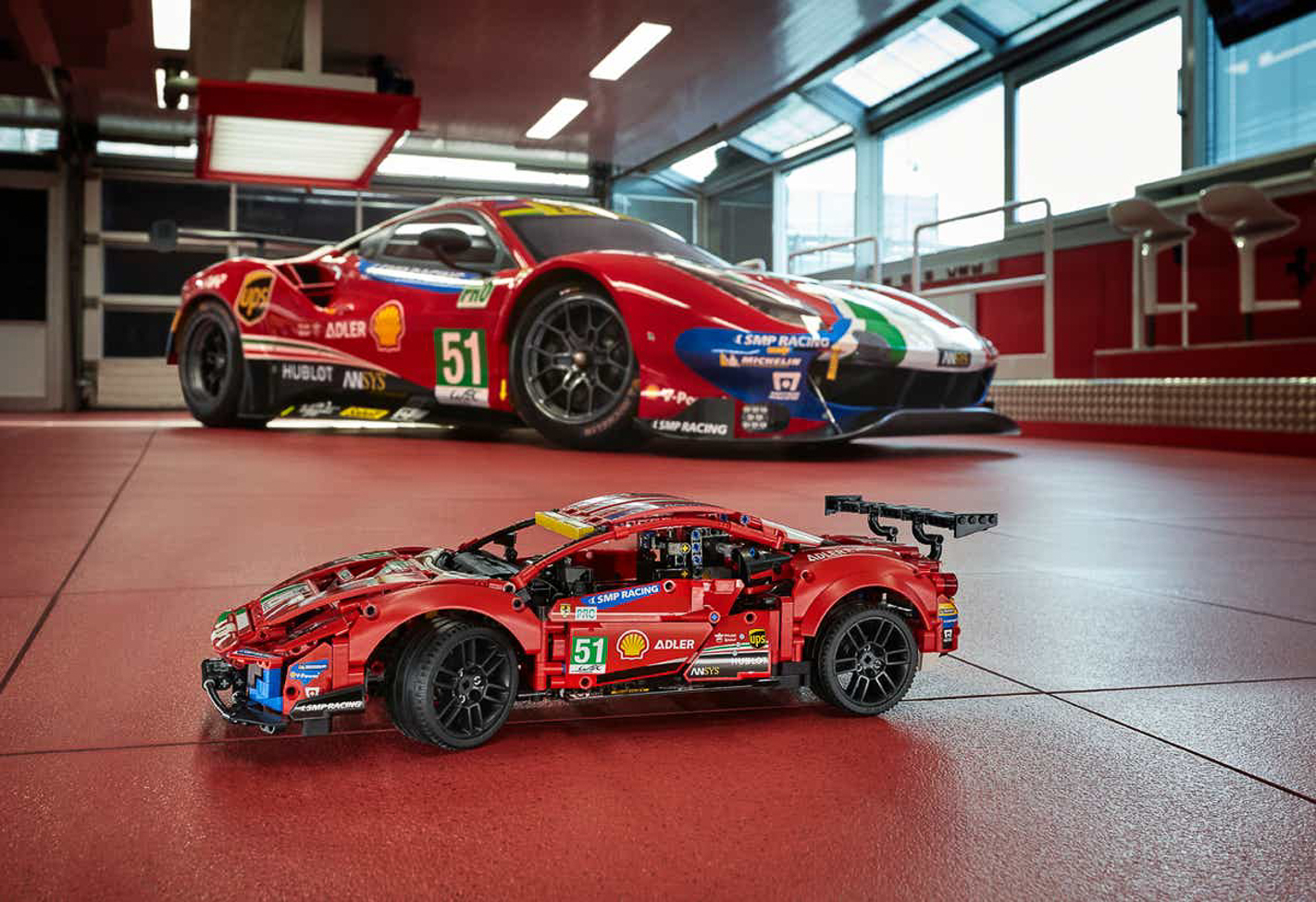
The Ferrari 488 GTE rendition is the bigger model of the two, measuring 48cm in length and built using a whopping 1677 pieces.
Cool features include moving pistons within the mid-mounted V8, opening doors, working front and rear suspension systems, an AF Corse number 51 livery and working steering wheel.
In the box you’ll also find a special build booklet with exclusive details about the AF Corse 51 team and the car itself.
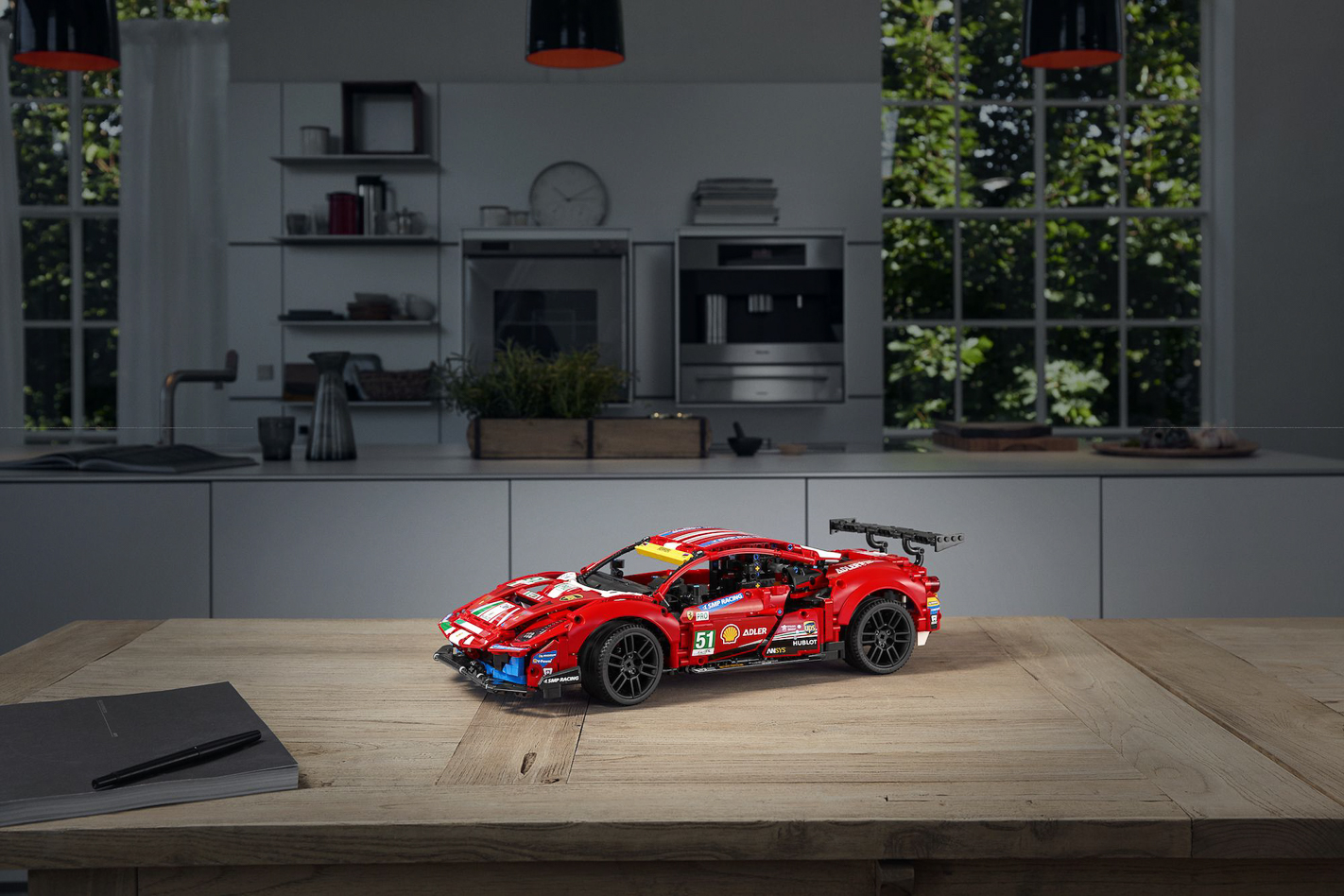
If you’re more of a McLaren fan, Lego’s got you covered too. The McLaren Senna GTR Technic model is smaller in size, but shares an equally-cool amount of attention to detail as the Ferrari.
Also like the Ferrari, the Senna GTR model sports a mid-mount V8 with working pistons, working dihedral doors, working steering system and faithful original McLaren graphics.
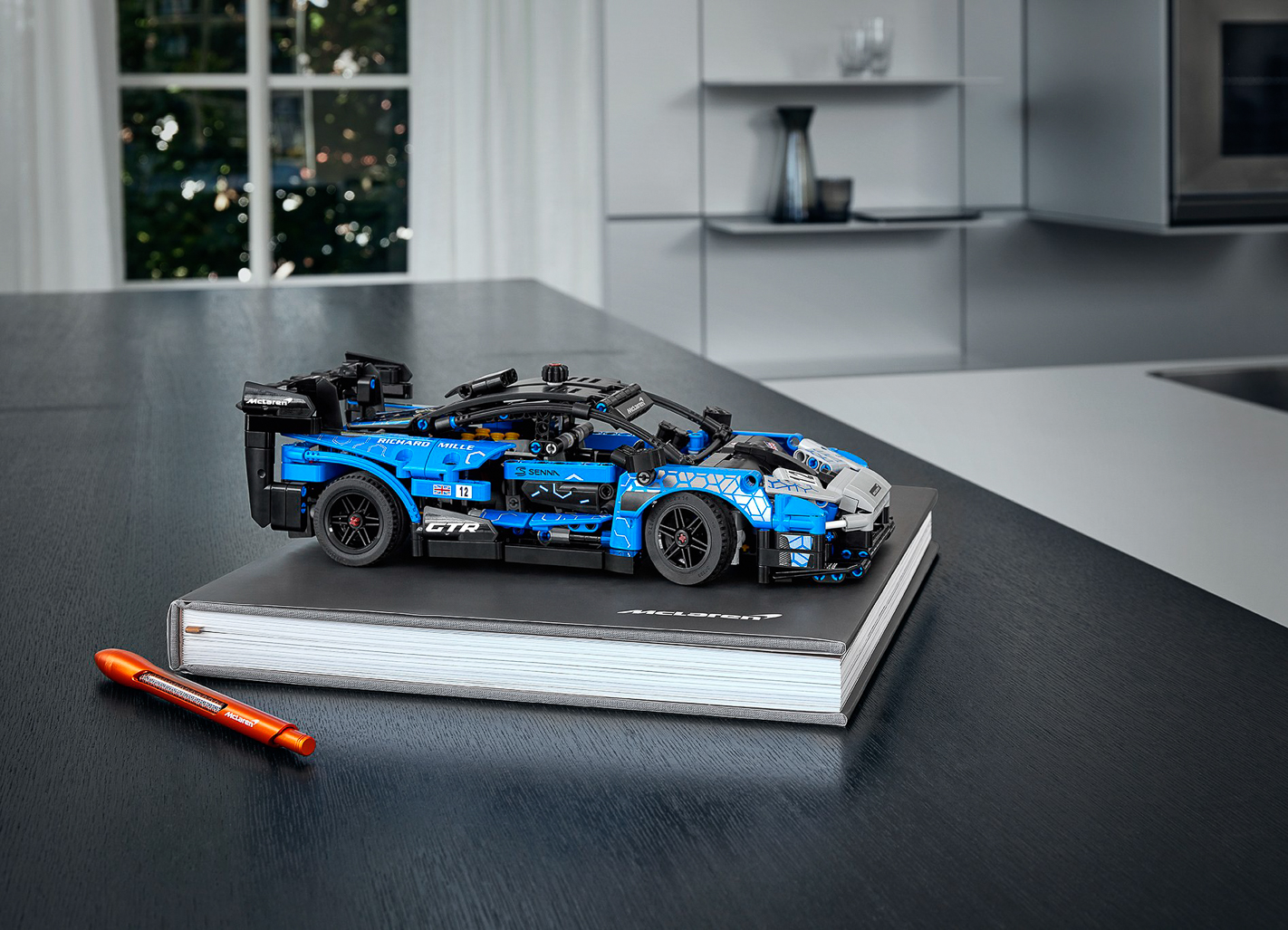
It’s 32 centimetres long, built from 830 individual pieces and features the signature rear wing architecture unique to the GTR track-only variant.
Sadly both Lego Technic models won’t be available in time to sit under the Christmas tree in 2020 (what a surprise), as they each go on sale in January 2021 worldwide.
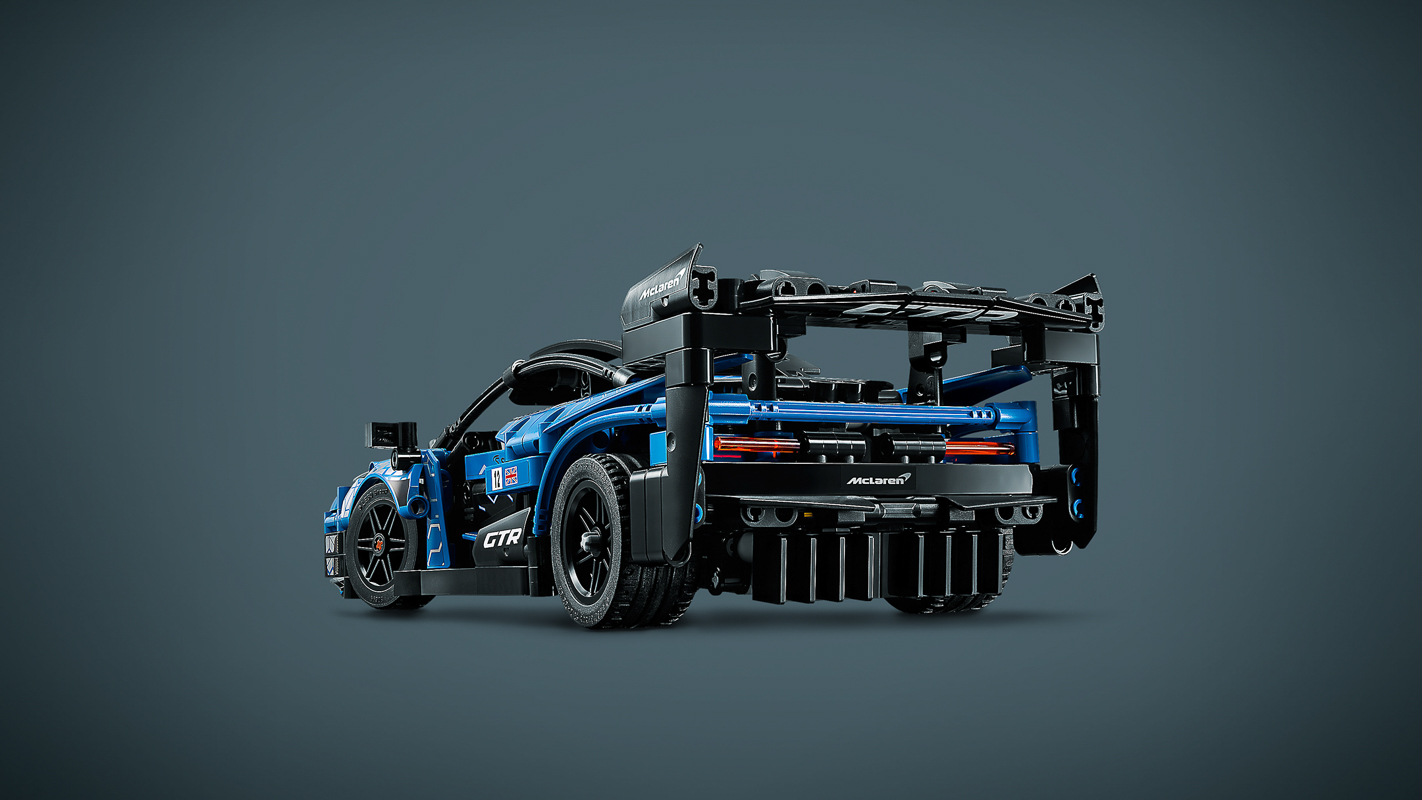
Considering the 75-example production run of the $2 million real McLaren Senna GTR is already spoken for, this might be your only chance to be able to call one your own.
Now check out our full Lamborghini Sian Lego Technic build!
Car designers are an innovative bunch – you’ll struggle to visit a studio at any car maker around the world and not find it stuffed with non-automotive objects. Here we gather some of the craziest brand extensions, from the devilishly cool to the downright cringeworthy. Judge the results for yourselves – and be sure to leave your comments below!
The Aston Martin apartment – DBX SUV included

Aston Martin is engaging with the ultimate brand extension – a swanky waterside residence in Downtown Miami designed to reflect the British sports car brand’s values and due for completion in 2022.
The sail-shaped luxury condominium tower stretches 66 storeys high above the waterfront where the Miami River meets Biscayne Bay and buyers of the 391 residences will get a free DBX thrown in to sweeten the deal.
Prices for the luxury flats start at A$1.3 million and rise beyond $50 million for the 27,000sq ft triplex penthouse. But if you’re splashing that kind of cash your DBX miraculously transforms into the final Vulcan, the 1-of-24 hypercar.
The Bugatti watch with its own W16 engine inside

Any timepiece bearing the Bugatti name is going to be, well, the Bugatti of watches. So the new Jacob & Co Bugatti Chiron Tourbillon (above) is as astounding in its technical make-up as the hypercar that sired it: the movement has 578 components making up a model W16 engine – press the right-hand crown and the crankshaft turns and the 16 pistons pump up and down.
Yes, really. And if you have to ask about the cost of this top-end watch…
The AMB001 motorbike by Aston Martin and Brough Superior

Thought Aston Martin specialised in four wheels only? Think again. This new AMB001 motorbike is a collaboration between Aston Martin and Brough Superior and is a track-only, limited-edition racer whose genes are split between Milan and Gaydon.
Unveiled at the EICMA motorcycle show this week, the AMB001 has a carbon fibre body, double wishbone front fork suspension and more exotic materials than you can shake a Vantage at, numbering titanium, billet aluminium and a host of composites in its construction.
With a turbocharged 178bhp V-twin and a 180kg dry kerbweight, this Aston motorbike is going to be devilishly fast… and expensive – just 100 will be made.
Rolls-Royce Champagne chest

Rolls-Royce’s engineers are at it again; this time they’ve created a bespoke chest exclusively for champagne and caviar.
It’s another solution that solves a problem about 0.005% of people have, but it does look rather good. And to be fair, on a Venn diagram of Rolls-Royce owners and people who need Champagne chests, there’s probably quite a lot of overlap.
As you’d expect there’s Tudor Oak wood, stainless steel, natural-grain leather and carbon fibre featured. A caviar configuration adds two cassions and two Mother-of-Pearl spoons.
One more thing, we did ask, and it turns out you’ll be able to buy one of these even if you’ve not got a Rolls-Royce on your drive. The catch? It’s cost you A$67,000 – the same price as a Mercedes-AMG A35, a Volkswagen Golf GTI TCR – or a Honda Civic Type R with change for a decent bar tab…
McLaren flip-flops

Did you know there was a world flip-flop day? Nor did we. But supercar giant McLaren does and they celebrated in style by getting all the staff at the Woking HQ to don the new limited-edition McLaren flip-flop, designed in partnership with Gandys.
There’s substance to this partnership: the two brands are donating all profits to a new children’s home in Brazil run by Orphans for Orphans. It’ll be painted in McLaren’s colours of orange and blue – just like the flip-flops. What’s the link? F1 cars’ new Halo head protection device is said to mimic the shape of a flip-flop…
The Mercedes-AMG GT R-inspired bike

What is it with car makers and teaming up with bicycle brands?! Mercedes has partnered up with Rotwild to create this: the Rotwild R.S2 ‘Beast of the Green Hell’ bike. It’s a handbuilt racing bicycle, which ustilises a carbonfibre frame, 29-inch Crankbrothers Cobalt 11 wheels and a load of Shimano running gear. Yours for A$11,500. Ouch.
Renault’s F1-inspired teapot

When Renault entered Formula One in 1977, its cars wore a distinctive yellow livery and often returned to the pits steaming and whistling thanks to over-worked turbos.
Team boss Ken Tyrrell dubbed it ‘the yellow teapot’ and the nickname stuck for La Regie’s F1 cars. So what better way of celebrating four decades in top level motorsport than launching an actual yellow teapot?
Designed by the company’s design team and sporting the same yellow paint as the RS17 racer, it’s sure to deliver a speedy cuppa.
The Lamborghini boombox

Can you put any more angles on a Bluetooth speaker? This is the Lamborghini Esavox from iXoost – a massive boombox with enough speakers to blow out your windows and plenty of Lambo design touches.
The on/off button is operated by a starter button switch a la the Huracan and the quad exhaust pipes look like they’ve been lopped clean off an Aventador SV. Available in four different colours and a steal at A$40,000 a pop.
The Ferrari office chairs
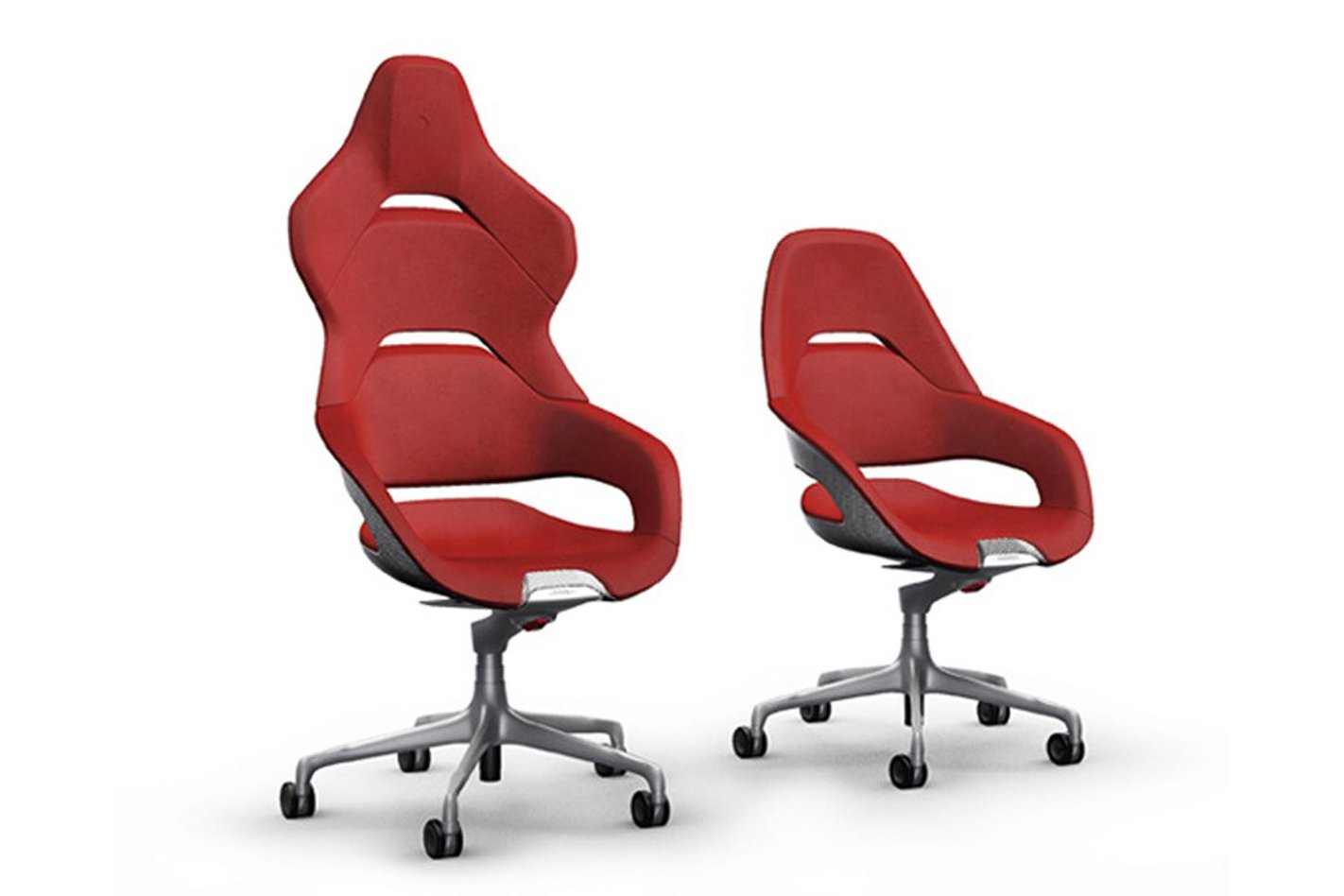
‘Neither a car seat nor a pure piece of furniture or design’ claims the press bumf, but these are definitely office chairs that have been designed to within an inch of their life.
These come to you from Ferrari Design and have been sculpted from carbon fibre or ‘alutex’, which is a blend of aluminium and glass fibre. Two shapes are available; the Executive seat has the shorter backrest, while the taller President version is for the high flyers of office life.
The Aston Martin sofa

Aston has a long history of dabbling in merchandise. A decade ago, they even made black leather underpants.
But now they’ve shown off the new Aston Martin furniture collection with partner Formitalia at the Salone del Mobile during Milan Design Week. Handcrafted using Nubuck leather and muted colours, they’re ‘developed with the same quality and attention to detail as Aston Martin sports cars.’ Sofa, so good…
The Pininfarina bicycle
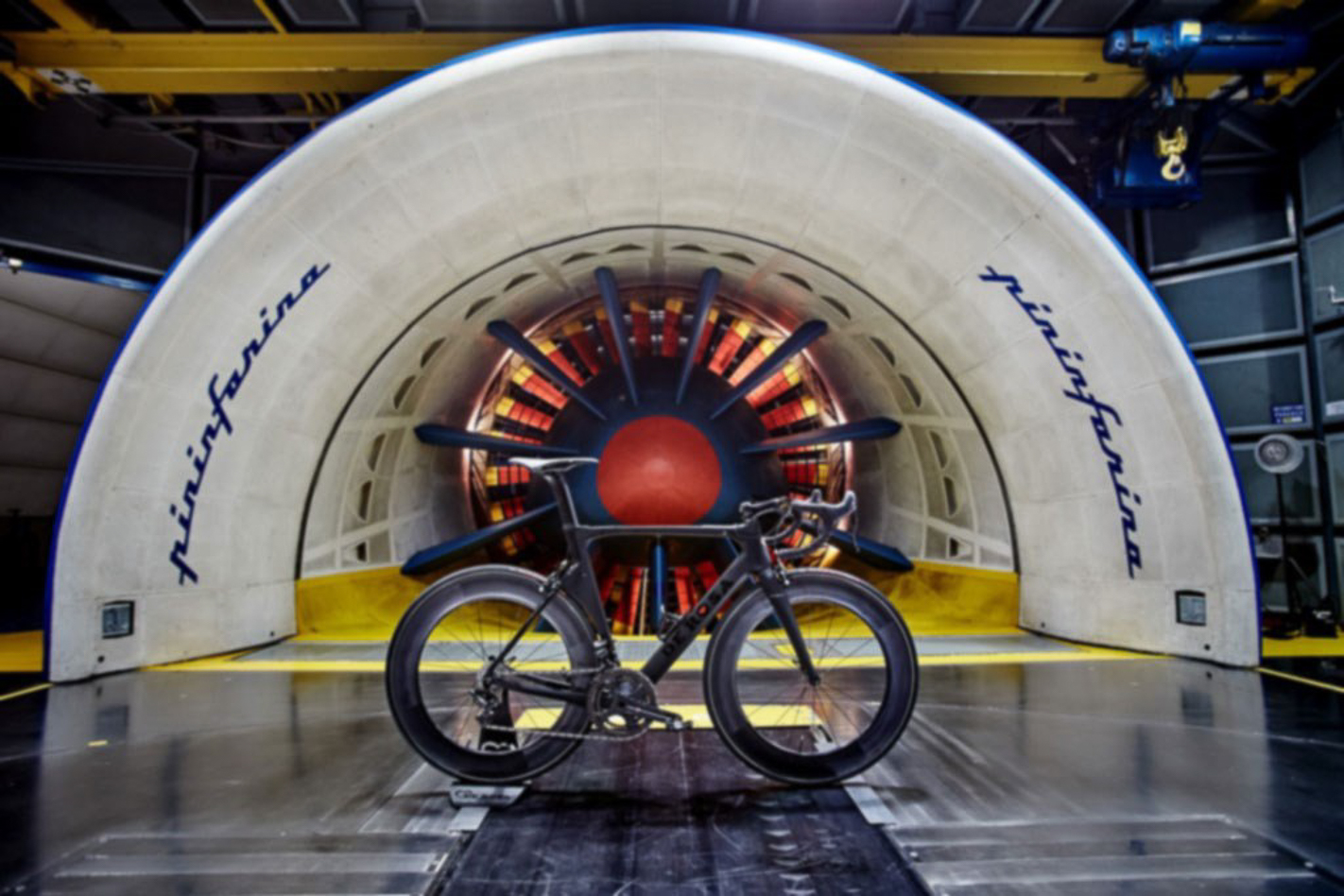
Pininfarina loves dabbling in non-car stuff – it even had a hand in designing the new Eurostar coaches soon to be whizzing underneath the English Channel.
In August 2015 it showed off its new SK Pininfarina bicycle, developed with Milan-based artisan bike maker De Rosa: weighing just 6.7kg, it’s a low-drag machine honed in the wind tunnel, made from carbonfibre and cog-swapped by a Campagnolo eletronic gearset. How to compete in the Tour in Italian style?
The Pininfarina-designed mega-yacht

Fabled Italian design house Pininfarina doesn’t just design cars and bikes, you know.
On 21 September 2015 it unveiled a luxury mega-yacht at the 2015 Monaco Yacht Show: developed with shipbuilder Fincantieri, the Ottantacinque is 85 metres long, has five decks, twin swimming pools and accommodation for 14 passengers and 19 staff. One for oligarchs only, perchance?
Ford electric guitar
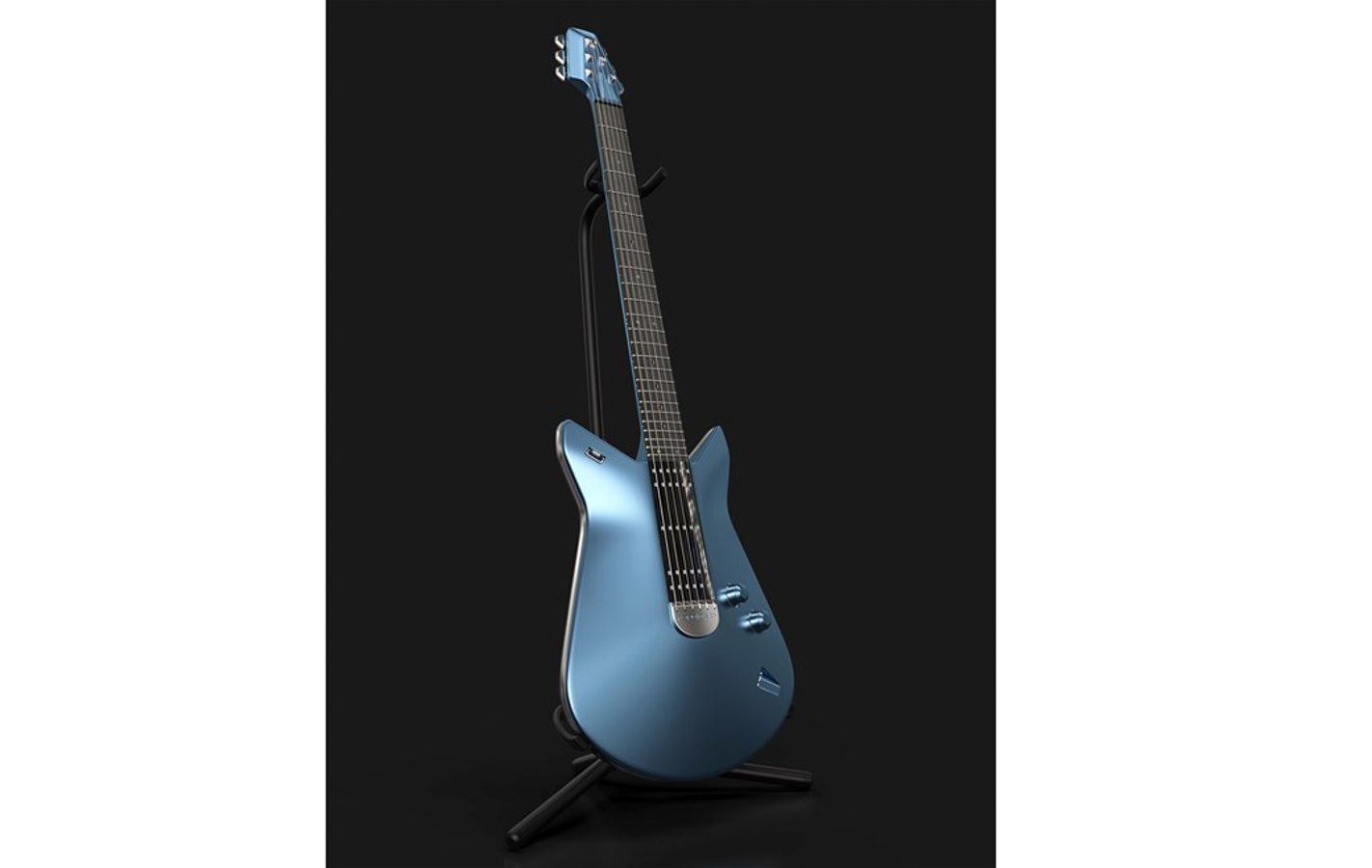
Made from aluminium and wood, and painted Liquid Blue like the GT show car. Neither paint nor guitar are for sale.
Mazda bicycle
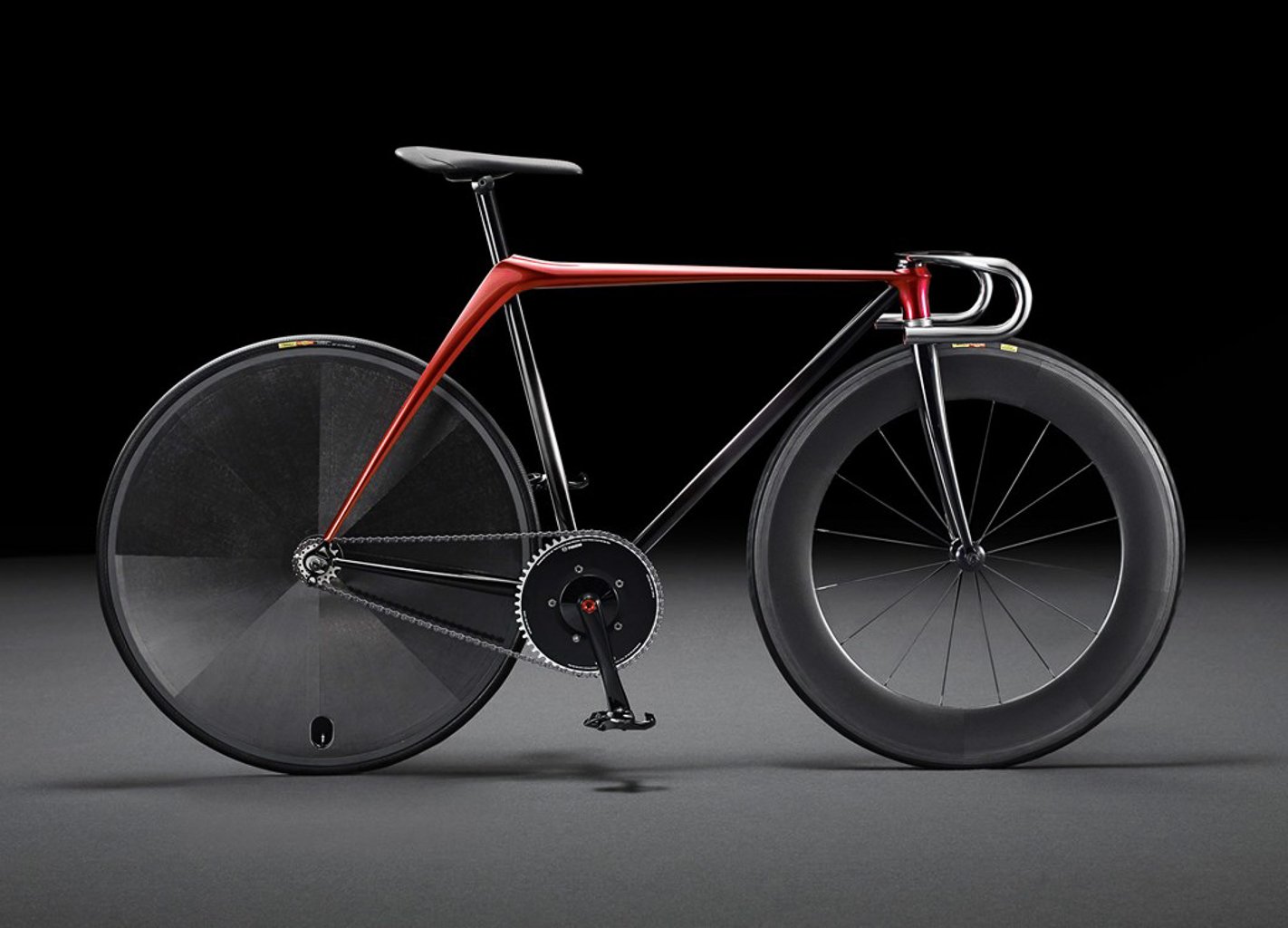
Intended as an exercise in minimalism, the frame is hand-hammered from a single sheet of steel! Seat and stitching are inspired by new MX-5 interior.
This article was originally published at carmagazine.co.uk.
Update 1: Emerging from lockdown in style
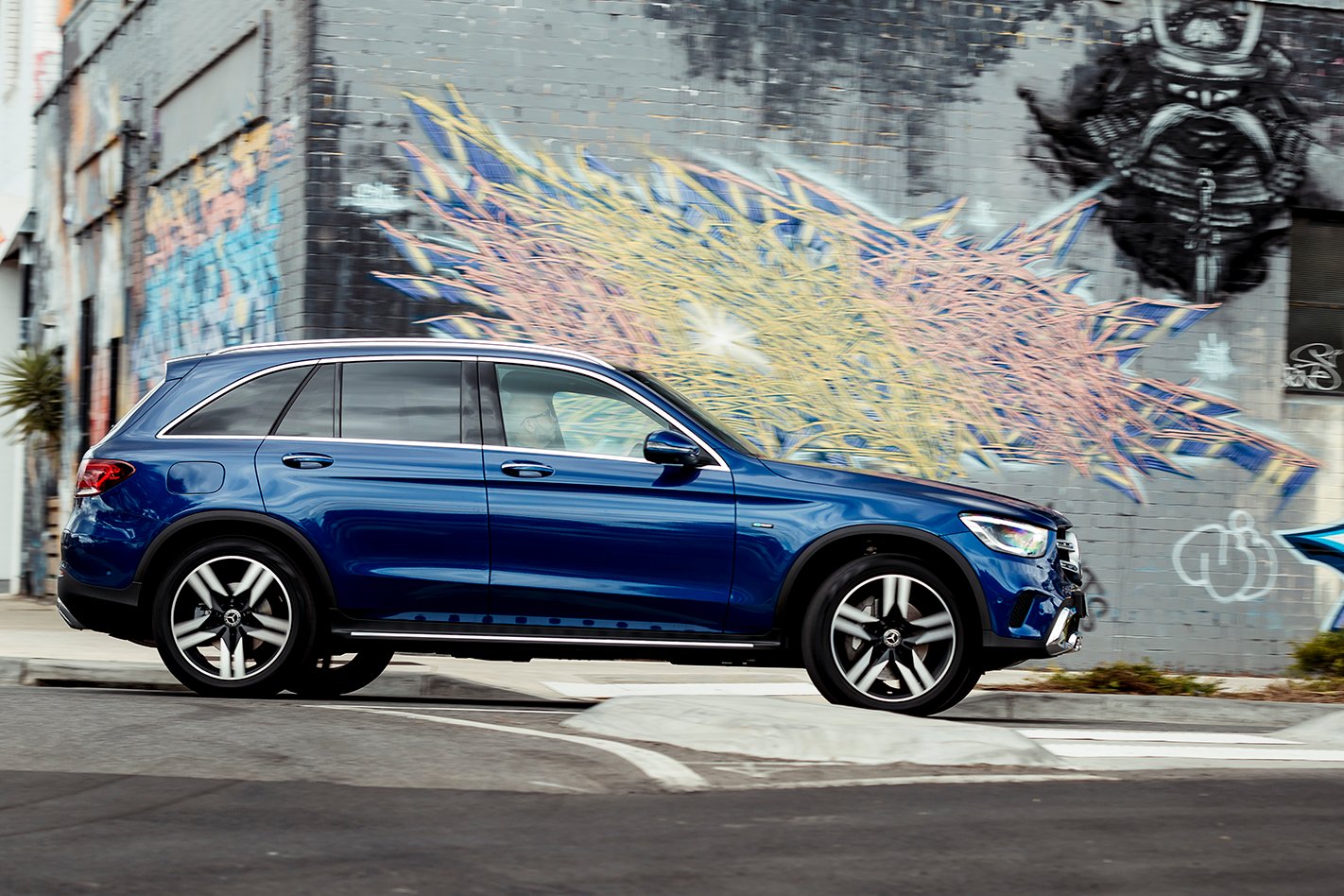
The most surprising thing about the Mercedes-Benz GLC 300e plug-in hybrid SUV is that its $86,300 starting price is just $4800 more than the petrol GLC 300.
That’s a very reasonable price to pay to gain Benz’s excellent EQ electrification and about 46km of emissions-free driving between charges.
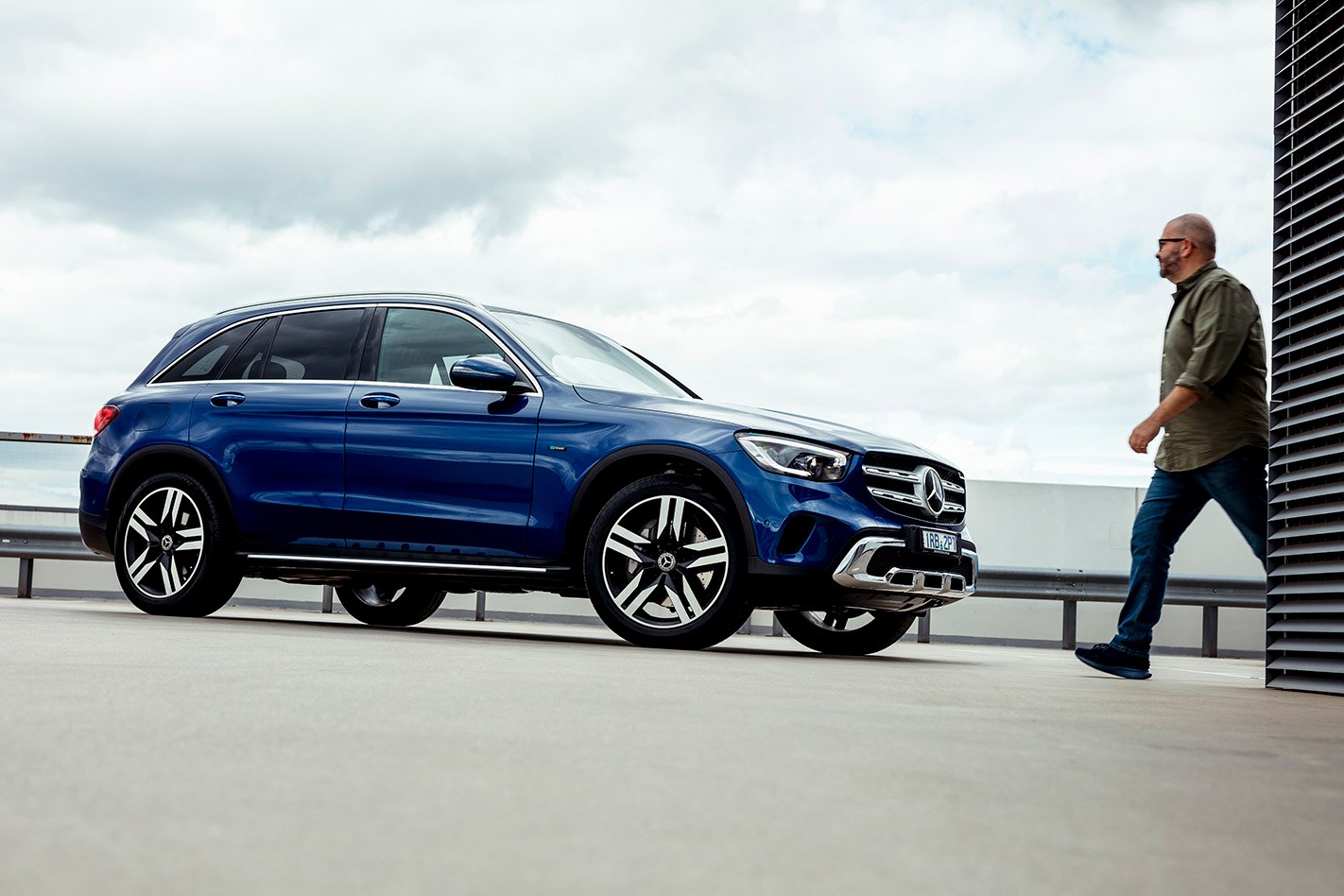
For someone like me, who lives in inner-city Melbourne, 46km is enough for daily running around, particularly during COVID-19 restrictions that see me working from home.
In theory, I’d also be able to make the return trip Oakleigh office, which is just inside my 25km limit, on electrons alone.
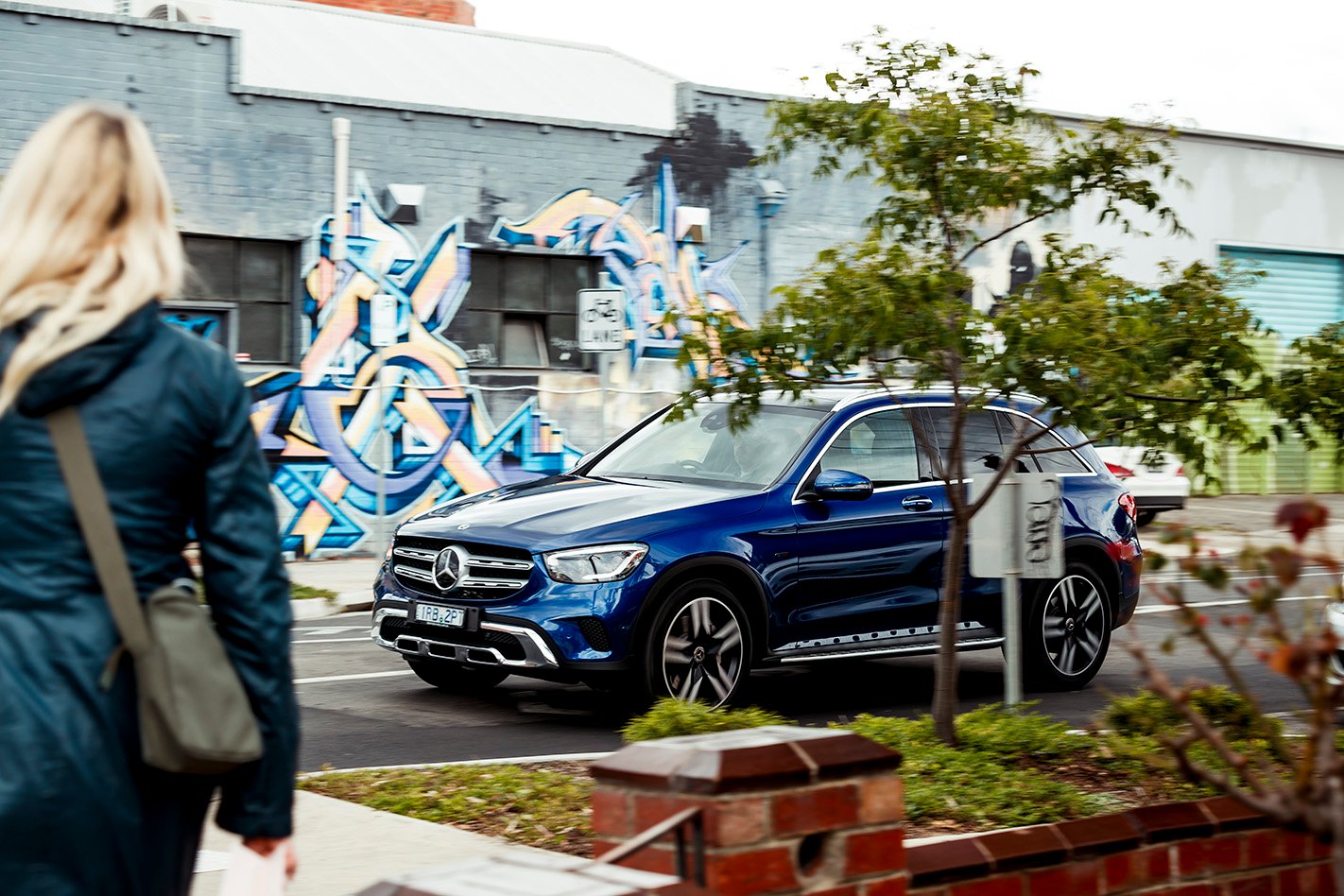
But – and it’s a big BUT – I also have that inner-city problem of no off-street parking so charging the battery overnight isn’t an option.
Plugging in during the day is possible, provided I can get a park out front of my house and can run a cable safely and securely – which isn’t easy.
So I have to rely on public chargers which aren’t exactly prolific in my neighbourhood – I’ll discuss this in the next update.
Mercedes-Benz GLC 300e equipment levels
This is a handsome looking premium mid-sized SUV and the 300-spec brings plenty of bells of and whistles including the fully digitised dashboard, and Benz’s MBUX infotainment system with ‘Hey Mercedes’ voice command.
One thing I liked when I first hopped in this car was how it automatically found my Bluetooth connection without me having to fiddle around with settings on the screen or my phone.
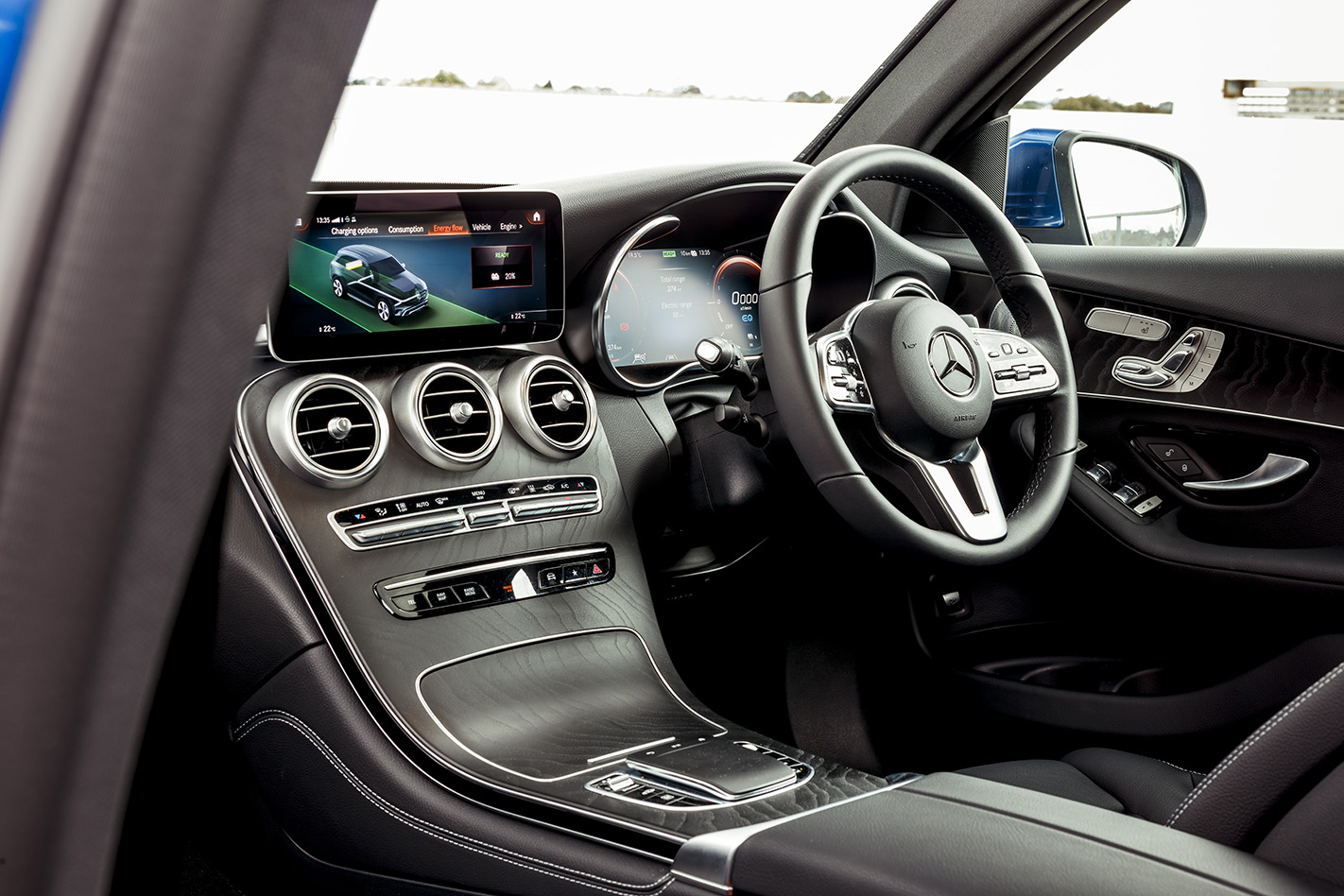
It also has Apple CarPlay/Android Auto via USB which can be a pain as Benz now uses micro-USB sockets so it requires an adaptor cable if you have a standard USB charging cable.
And occasionally there’s a bug where Apple CarPlay can only be operated via the phone (when parked of course), which kinda defeats the purpose.
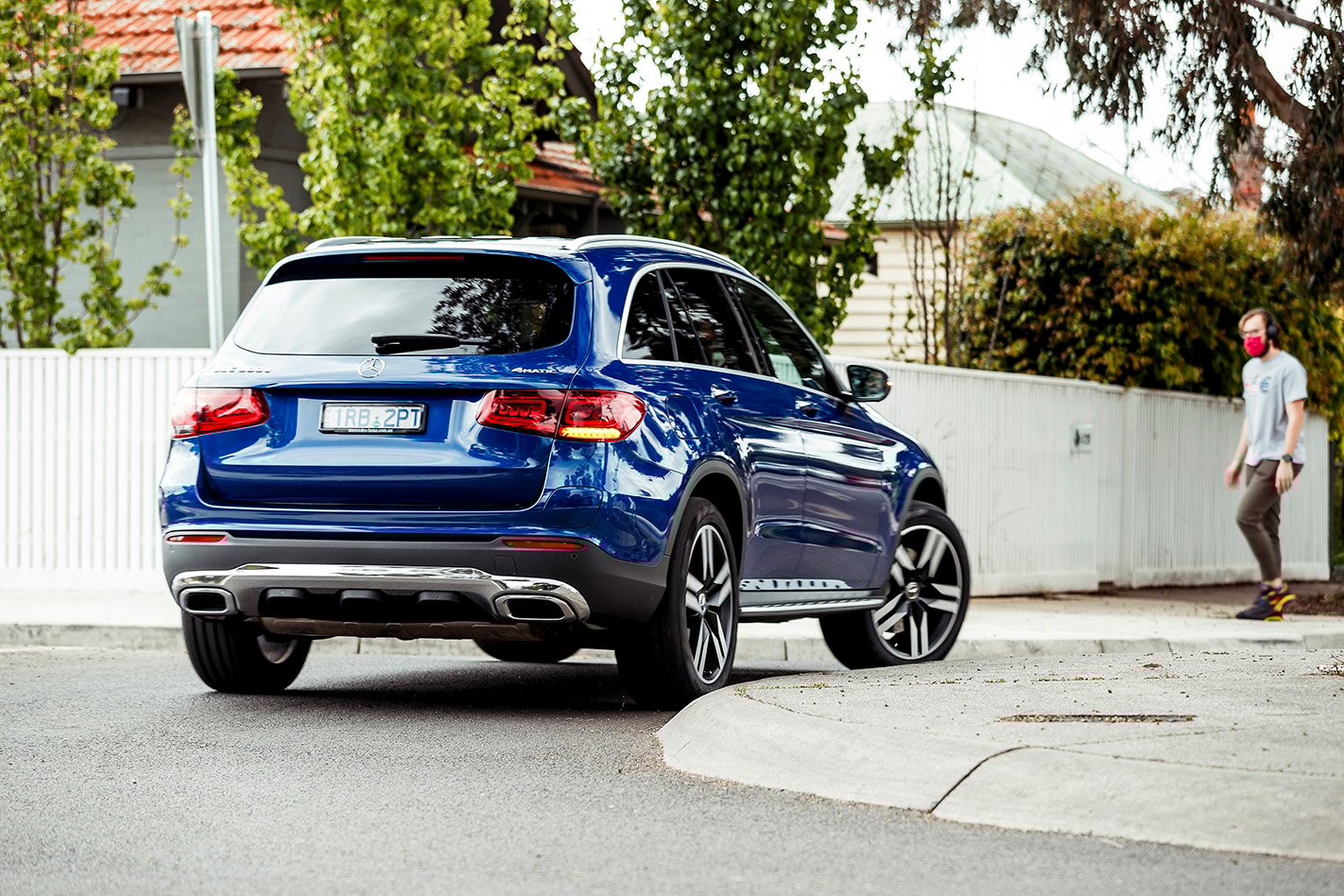
As well as all the GLC 300e’s scrolling list of standard features, the car we’re testing comes with $11,000 worth of extras to take its retail price to $97,300. These include:
- Brilliant blue premium paint – $1600
- Black leather upholstery – $2900
- Seat comfort package; driver’s seat/door mirror memory function, heated front seats and additional power adjustments – $1300.
- Vision Package; with panoramic sunroof; head-up display and Burmester surround sound system – $5500.
I look forward to trying this out on country roads should restrictions further ease soon.
GLC 300e economy figures
Much of the driving I’ve done so far has been with the batteries charged.
I have travelled 110km, 83km of which was in EV mode. The remaining 27km saw premium unleaded petrol consumed at a rate of 3.6L/100km around town.
That’s a little more than the official 2.6L/100km combined rating, though that has all been around town in Melbourne traffic that’s slowly getting back to normal.
Battery consumption has been 16.4kW/100km.
I’ll be able to provide a better idea of how GLC 300e performs and drinks with the 2.0-litre engine running, and how it stacks up with the standard GLC 300’s official combined 8.1L/100km combined fuel consumption, in the next update.
GLC 300e specifications
- Engine: 155kW/350Nm 2.0-litre, 4-cylinder turbocharged petrol
- Motor: 90kW, 440Nm
- Battery: 13.8kW
- Fuel economy: 2.6L/100km combined (with 46km battery range)
- Emissions: 59g CO2/km
- Transmission: 9-speed automatic with all-wheel drive
- Fuel: 98 Ron
Update 2: Plugging away
You’d think the City of Melbourne would have public chargers everywhere – nope, the only charging the council is good at is the exorbitant rates placed on CBD parking.
So, because I don’t have off-street parking, I have to drive a few kilometres north to Brunswick to access free public chargers kindly supported by the City of Moreland, which you connect with via the ChargeFox app for no additional cost.
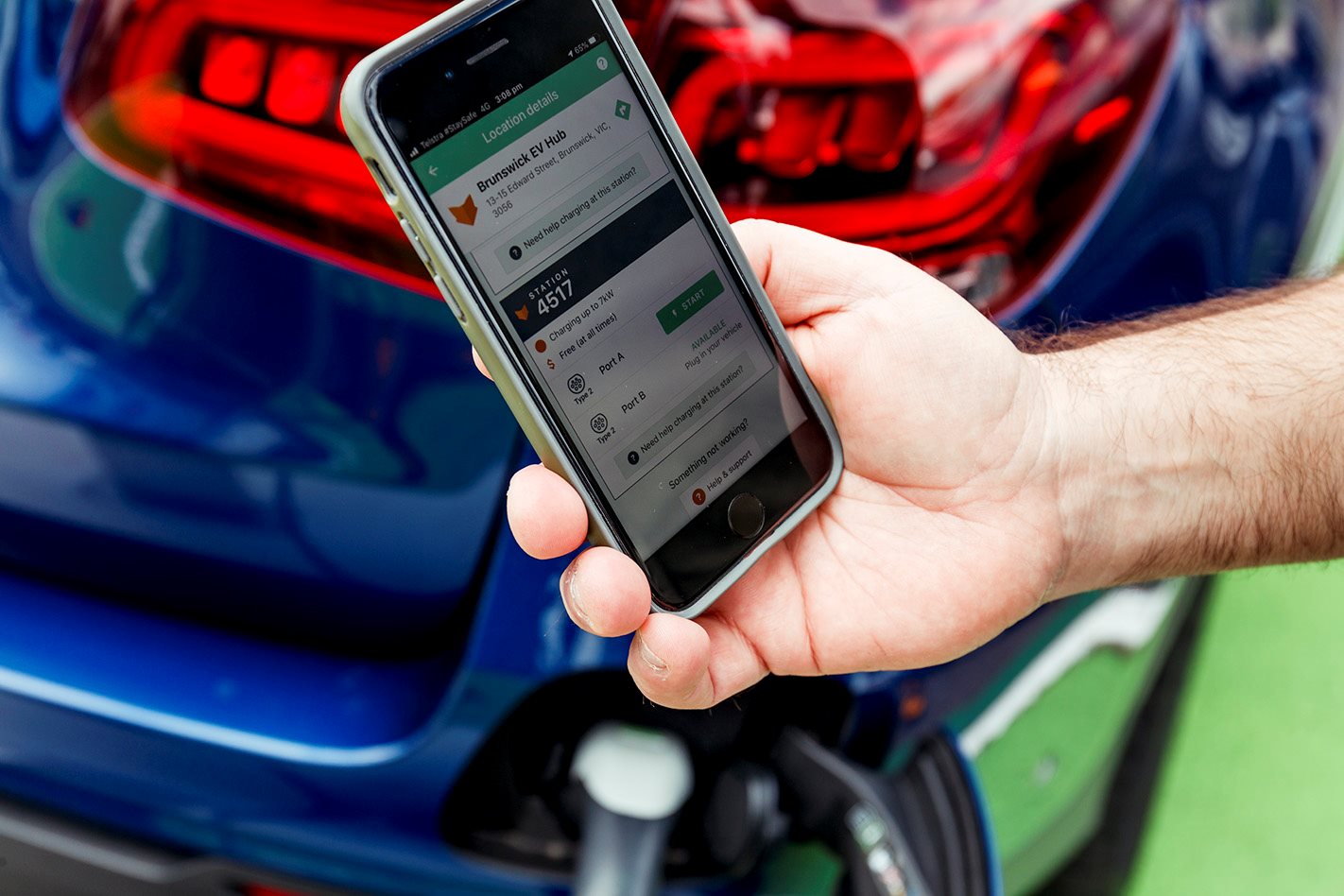
With a bit of planning this could be a pleasant experience. Park the car, do a bit of shopping, grab some nice Turkish food for lunch and drive away. I even sat in the car working on my laptop one time, which was a nice change from my home office.
But I can’t be spending 90 minutes doing this every couple of days. It would be great to park the car nearby by home, walk back, do some work, and return to the car when it’s finished charging.
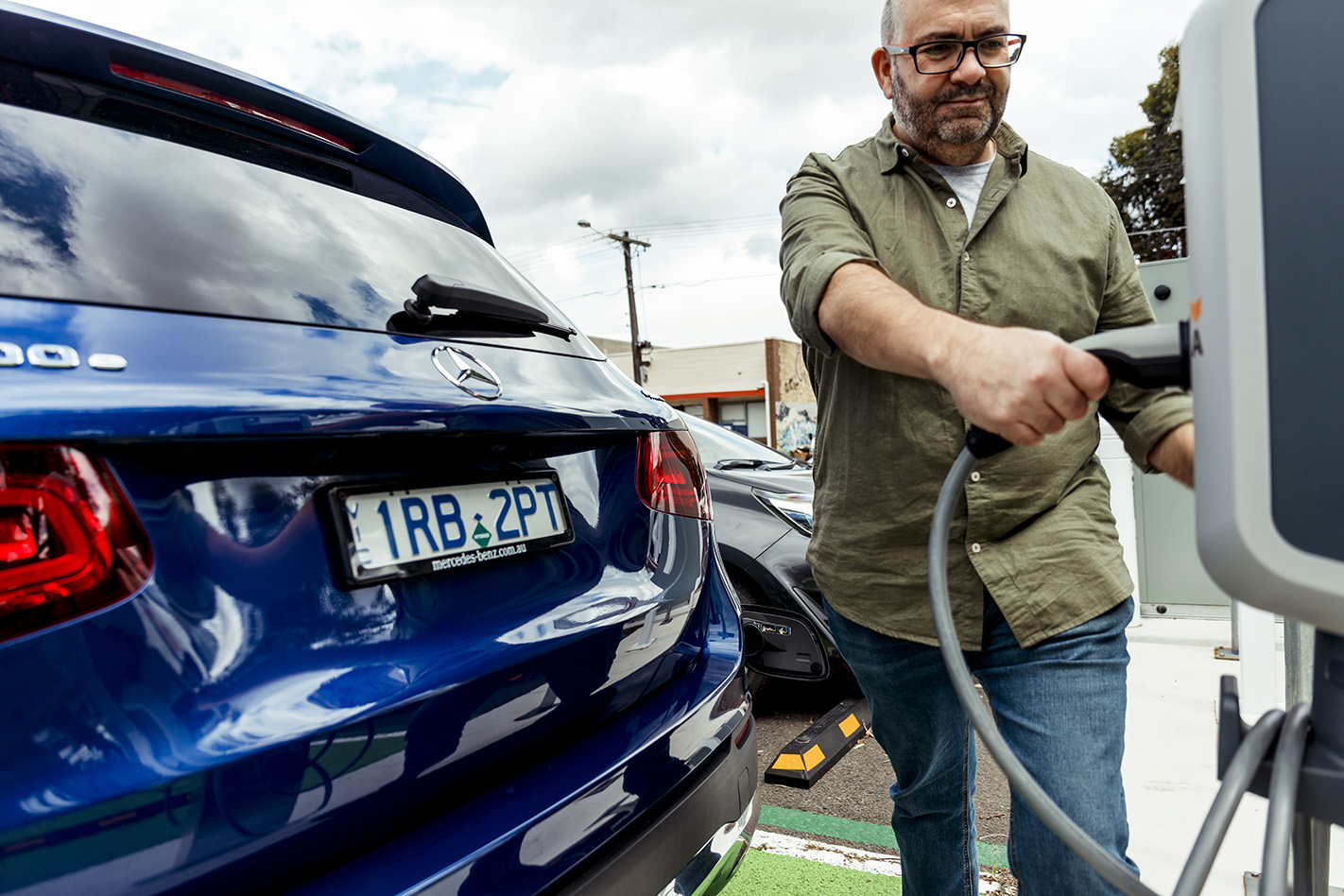
Another issue is how, like most plug-in hybrids, the GLC 300e only has a maximum charging capacity of 7.6kW AC (alternating current) even when plugged into a 22kW AC charger that offers three-times quicker charging. This means it will take just under two hours to charge the 13.8kW battery from flat – only to then lose about 5km of the valuable 46km battery range to return home.
Of course, it’s not the GLC 300e’s fault that Australia lags behind much of the developed world with EV infrastructure or that I don’t have a garage to plug in overnight.
But it’s certainly worth considering if you’re thinking about buying this or any other PHEV and don’t have a handy power source. This is less of an issue for battery electric cars (BEVs) that have much longer ranges requiring fewer trips to a charging station.
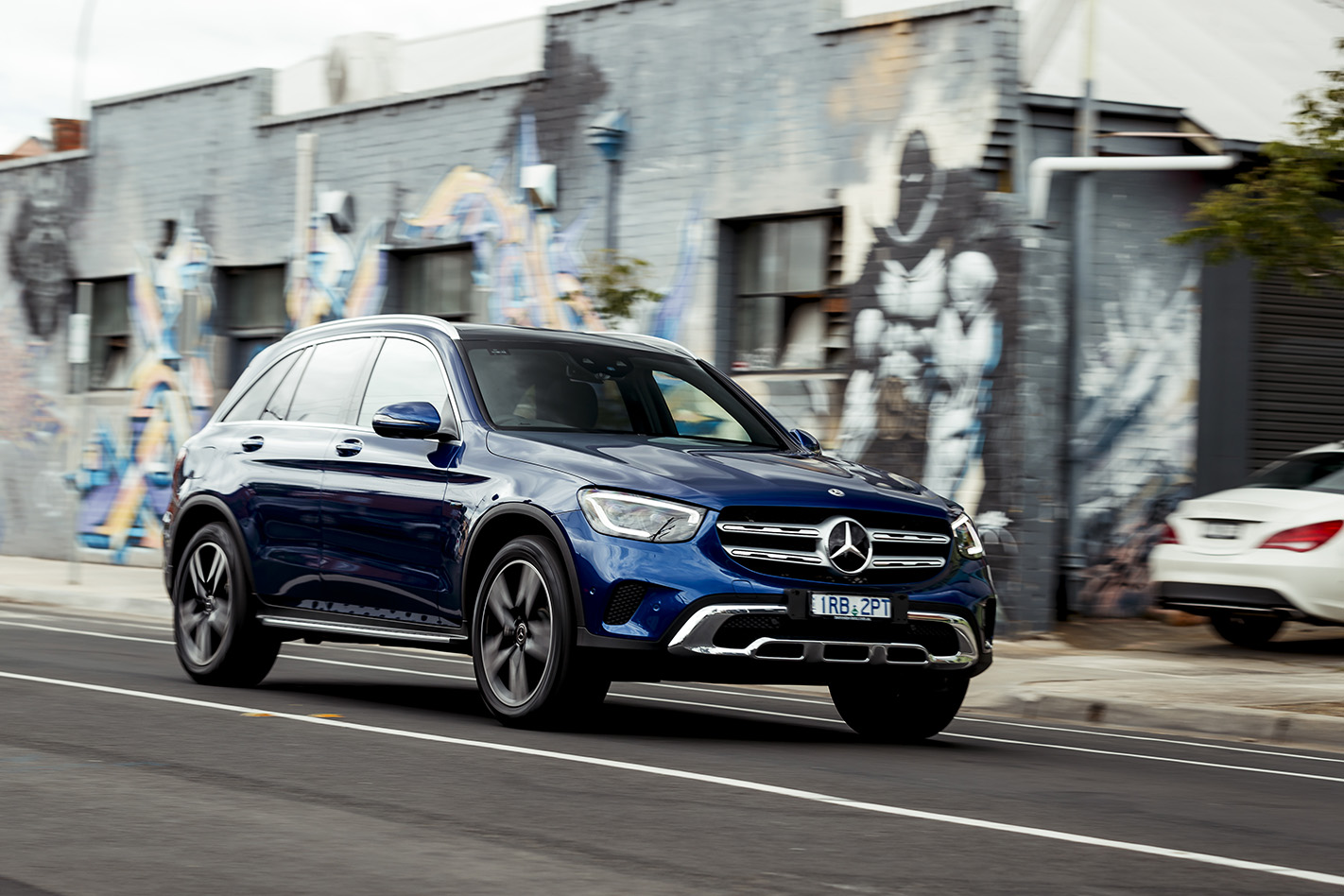
On the plus side, if the GLC 300e battery isn’t charged you can still drive it. It has the same gutsy 2.0-litre turbocharged engine as the GLC 300 and feels pretty perky around town even with the additional 225kg that comes with the hybrid power train.
However, carrying the equivalent of a couple of All Black front-rowers does affect performance. On engine power alone it feels a little sluggish. This can be overcome by using Sport or Sport+ driving modes, but that will end up bringing mid-teen 0-100km fuel consumption.
I have been experimenting with ways to keep fuel consumption down, even when the batteries aren’t fully charged, which we’ll look at in the next update.
Update 3: Keeping lean
One thing I’ve learned is not to obsess too much about being able to drive totally on batteries all the time and being a slave to charging. Plug-in hybrids are about compromise after all, so the key is keeping your average fuel consumption to a minimum rather than going for all or nothing.
Driving a fraction of your journey on batteries alone will help keep overall consumption to low levels – for a vehicle this size anything under 6.5L/100km is good going.
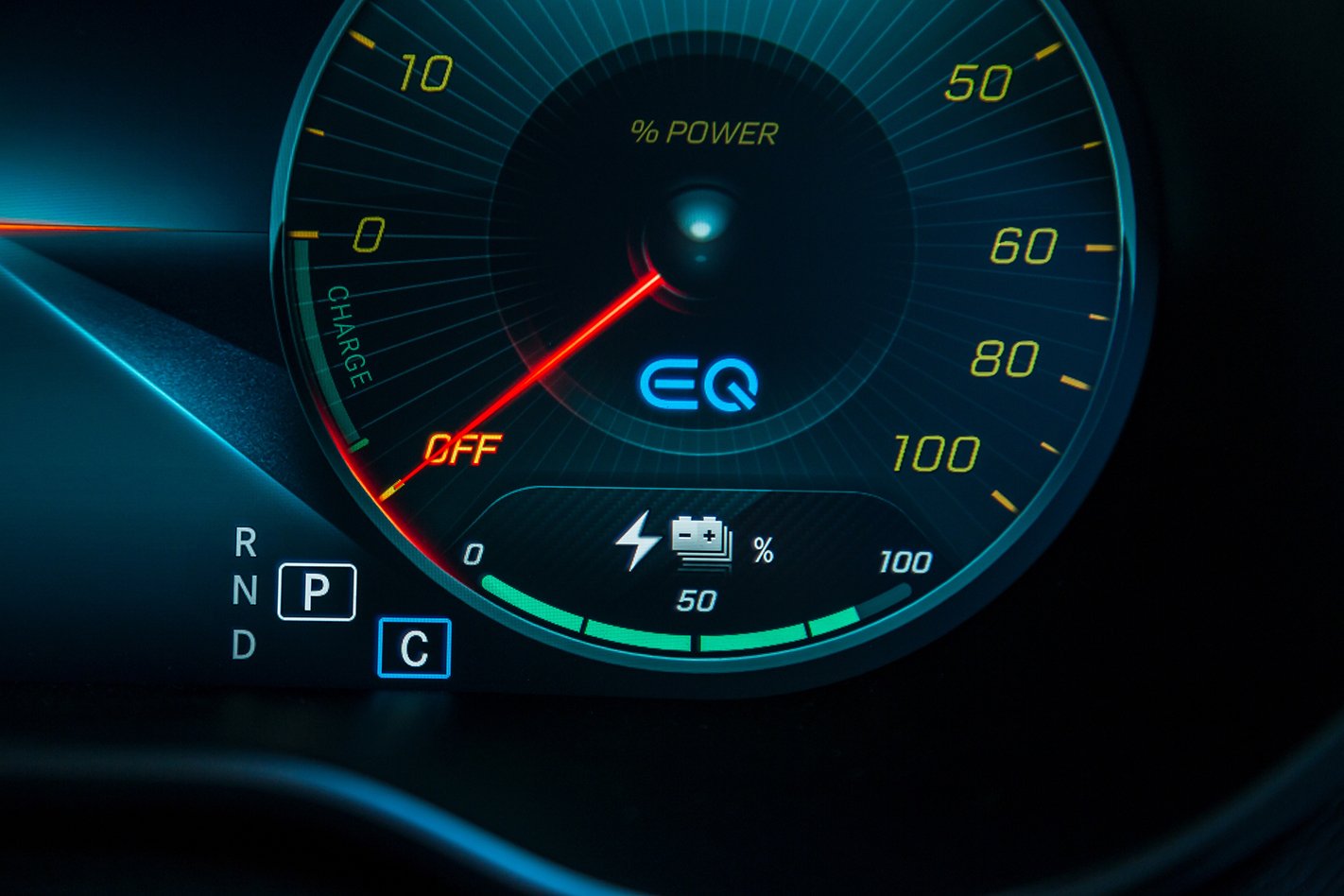
This is where the ‘Dynamic Select’ driving modes come in, which range from Battery Level, Electric. Comfort and Sport.
Okay, scrub Sport for the purposes of this exercise, unless you’re aiming for the same 12.5L/100km fuel economy as my old V8 VY SS Commodore.
‘Comfort’ is the default hybrid mode that defaults to battery power but will kick the engine in when needed. It will even use the satellite navigation data to identify when you’ll be driving up hills to kick in a bit of engine power.
Switching to ‘Electric’ mode runs the GLC 300e solely on batteries unless you double pump the accelerator pedal. It also allows you to set regenerative braking strength using the paddle shifters to help conserve battery charge.
Battery Level mode is for when you’re getting low on charge but want to protect what remaining EV range you have. It drives on the engine alone but also lets you adjust the regenerative braking strength to make up some charge.
I found this handy on the highway where the engine consumption is leanest and you’re better off saving the electrons for when you hit town, to keep reduce fuel consumption in heavy traffic.
Update 4 – Is the hybrid worth the extra cost?
My relatively brief time with the GLC 300e is coming to and end and I have to say I’ll miss it. It’s a wonderfully elegant medium SUV in terms of looks, ride and features. The airy cabin is a very nice place to be and the ride on the air suspension is comfortable to the point of soothing.
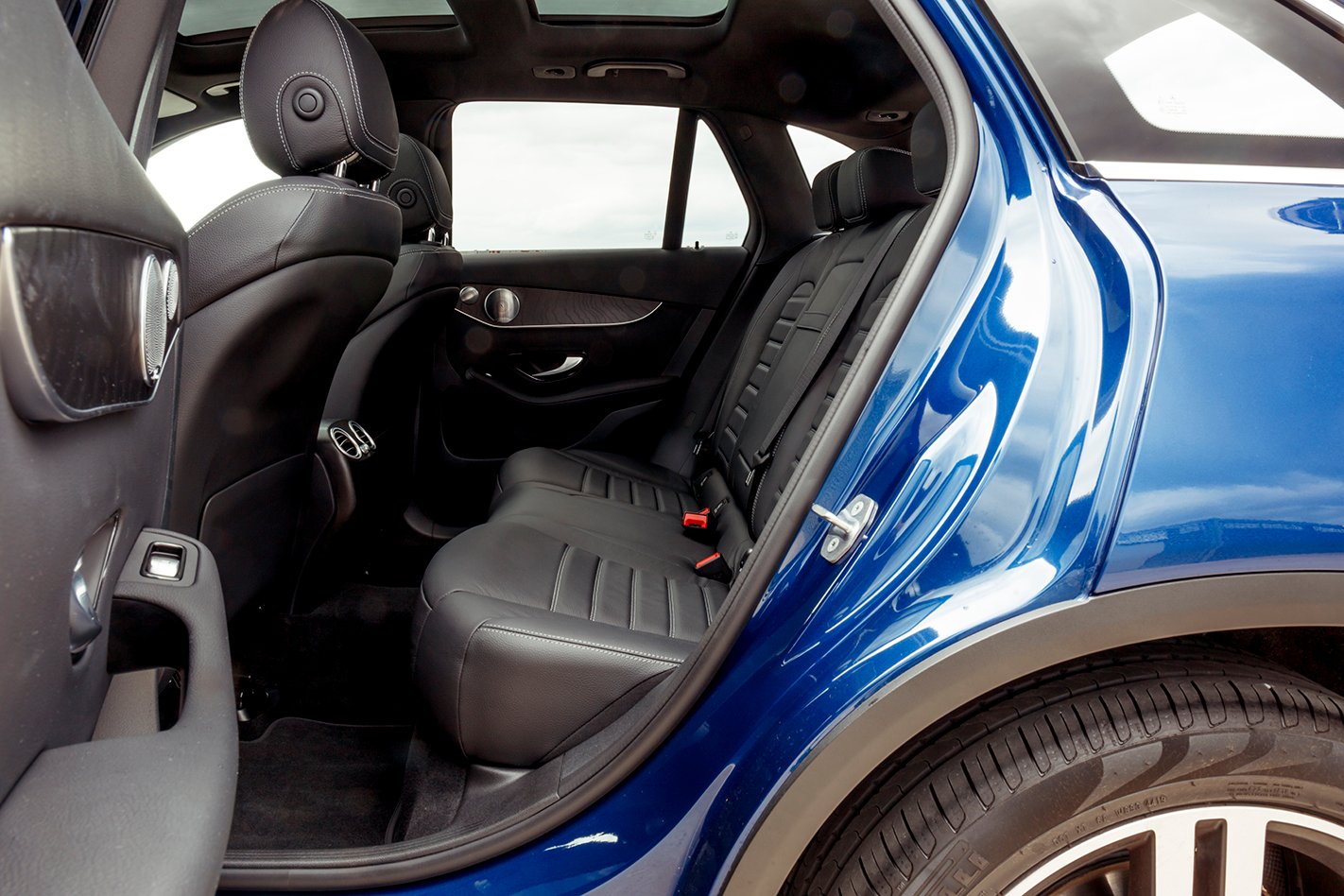
It ticks all the boxes for space and comfort. The rear seats have plenty of room for longer legs and there’s plenty of space under the front seats to put your feet and wriggle your toes.
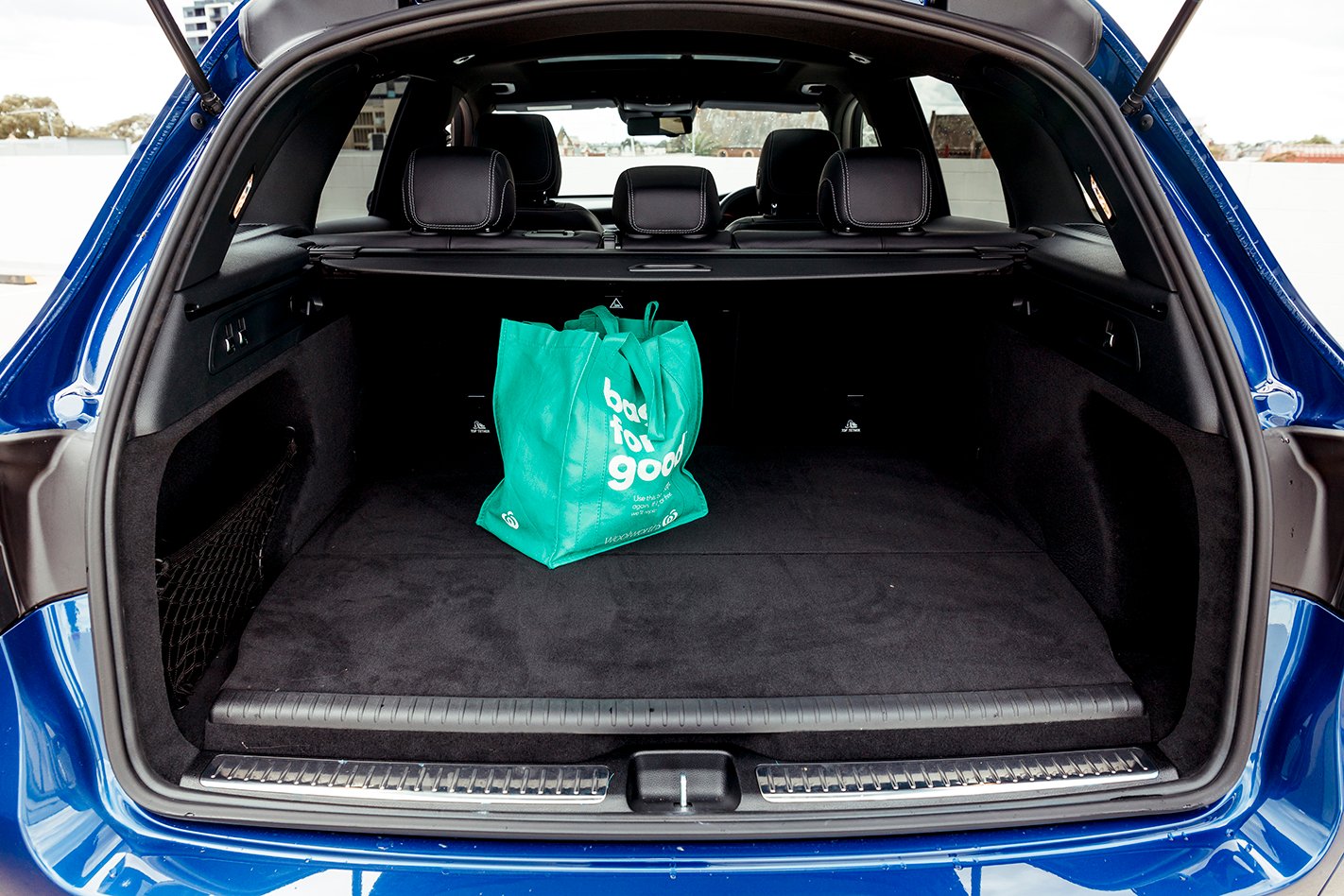
One downside over the non-hybrid GLC 300 is the smaller boot space, down 155-litres from 550- to 395-litres because of the way the lithium-ion battery is stored under the boot floor. But it’s still spacious enough to be useful.
It also has a smaller 50-litre fuel tank, though that shouldn’t be an issue if you’re able to keep the battery charged.
There is plenty to justify spending the additional $4800 over the non-hybrid GLC 300 – as well as the battery and motor, the money brings the excellent air suspension as standard plus pre-entry climate control and a 4.0-metre charging cable with plug Type 2 for home charging.
Because of the difficulties I face with being able to charge at home, I initially wouldn’t have justified spending the extra cash. But having learned to manage the battery power to keep fuel economy and visits to a charger down, I’ve really learned to appreciate the advantages that plug-in power brings.
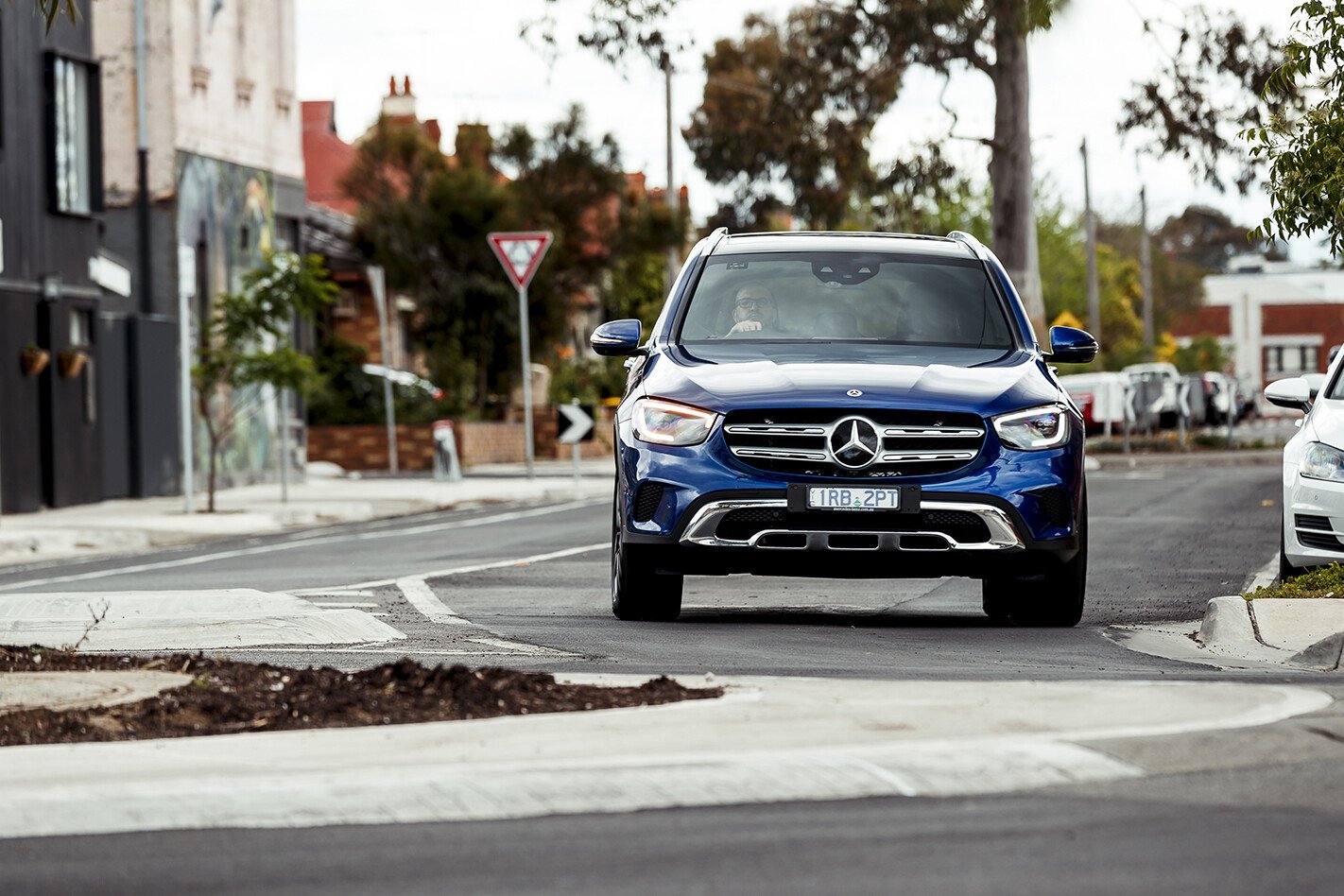
My three weeks with the GLC 300e saw me visit a charger four times, but I didn’t use a petrol bower once.
Most of my driving was around town and my average fuel economy for the entire period was 6.2L/100km without the benefit of overnight charging.
I dare say this will be Mercedes-Benz’s biggest electrified model here for some time.
Pros: Less than $5k premium over standard GLC 300; comfortable ride and handling; emissions-free driving range Cons: Petrol-only fuel consumption; smaller boot than GLC 300
An amateur racing driver has obliterated the production car lap record at Mount Panorama in a road-going Porsche 911 GT2 RS.
Jeff Morton was at the helm of his personal 2018 Porsche 911 GT2 RS (nicknamed Red Thunder RS), which he steered to a stunning 2:14.238 lap time during the Challenge Bathurst event.
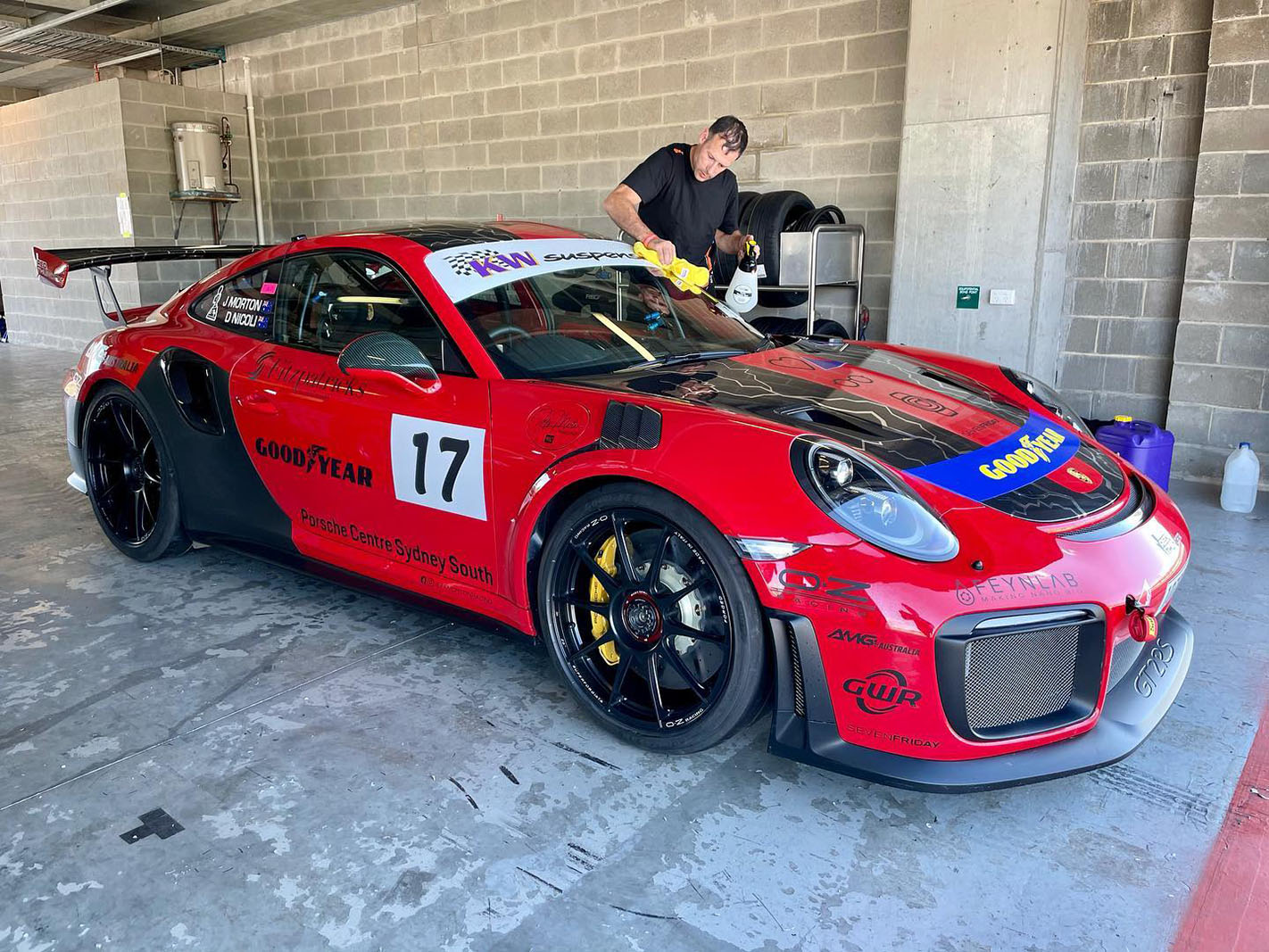
That lap blows the existing production car record for the 6.213km circuit out of the water by more than two seconds.
The previous benchmark is a 2:16.5, set by factory Mercedes-AMG ace Bernd Schneider in a Mercedes-AMG GT R in 2017.
Despite being prepped for Targa competition, Morton’s GT2 RS is still road registerable (though it is technically ‘rally registered’) and remains relatively stock.
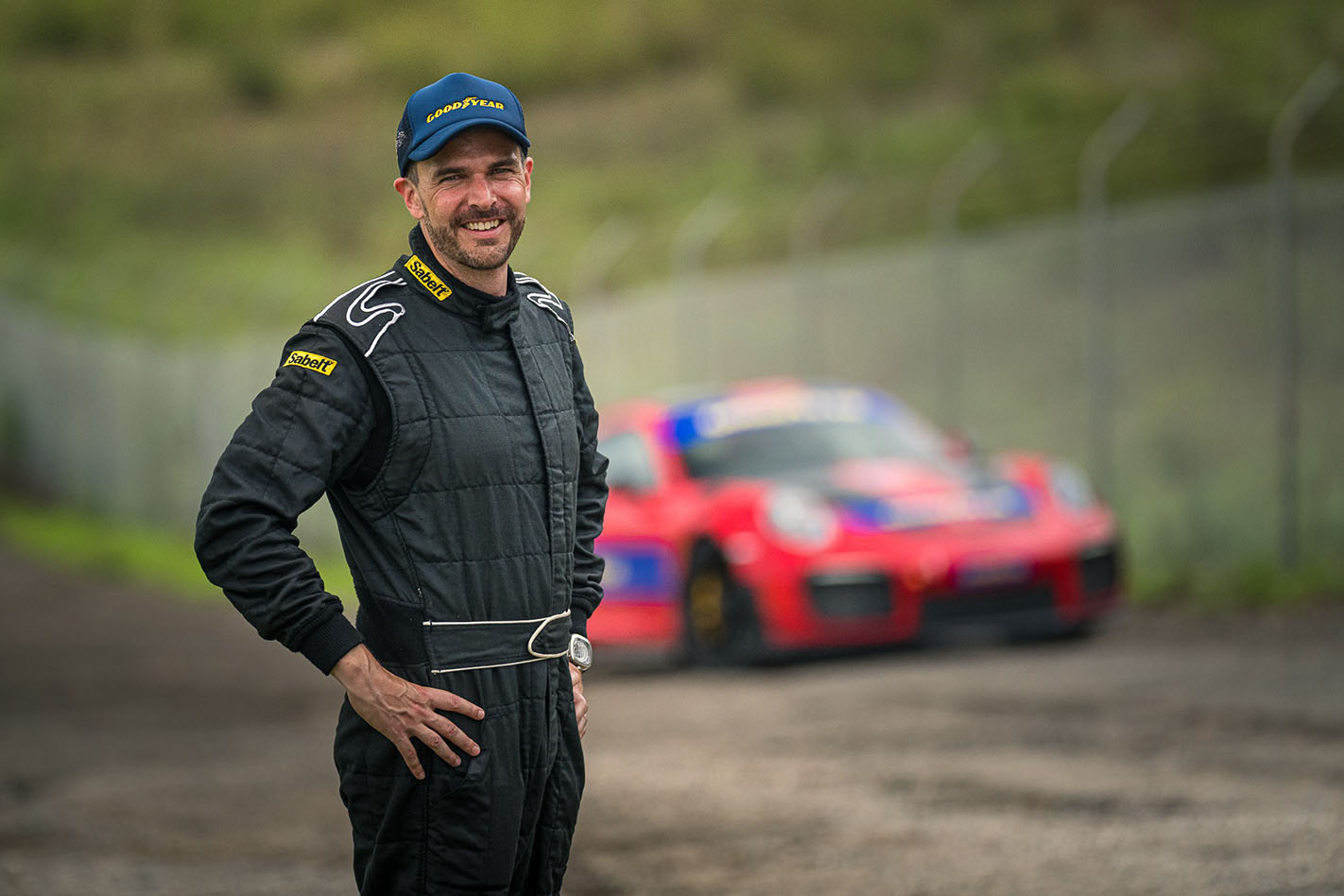
The GT2 RS’s twin-turbo 3.8-litre flat-six remains unchanged, producing 515kW/750Nm.
The only changes to Red Thunder RS compared to a factory GT2 RS is a full steel cage (necessary for tarmac rallying), some track-focused brake pads, OZ Racing wheels and Goodyear rubber instead of Porsche-supplied Michelin Pilot Sport Cup 2s.
Being sponsored by Goodyear, Morton opted to use the brand’s super sticky (and importantly, road legal) Eagle F1 SuperSport RS tyres.
Morton had the passenger seat removed following the first session at Challenge Bathurst to shed some weight.
However, he estimates that the full steel cage (the back half of which was a no-cost option to replace the titanium unit fitted as standard on Weissach pack cars) means Red Thunder RS is on par with every other GT2 RS in terms of mass.
Technically, Morton’s lap time won’t be recognised by Motorsport Australia as an official record, with a change made late last year preventing official lap records from being set during time attack-style events.
However, even without bureaucratic approval, it’s clear that this 40-year-old amateur racer has reset the benchmark for production cars at Mount Panorama.
Before heading to this year’s Challenge Bathurst event, Morton had the record-breaking lap time in his sights.
“I was thinking about what an interesting target would be to have, and I thought the idea of the 2:16.5 lap by Bernd Schneider would be a good challenge,” he told MOTOR.
“I didn’t put pressure on myself, but thought it was an interesting idea, and I wondered if not just the car, but myself as an amateur, would compare to a pro.”
Taking part in two different sessions yesterday on used rubber, setting a best time of 2:18.603, Morton realised he was in with a shot at resetting the benchmark.
So, for today’s sessions he bolted on a set of green tyres and went for it.
In the first attempt of the morning, Morton was able to record a best time of 2:15.810. However, despite going under Schneider’s record time, Morton wasn’t done yet.
“I got blocked at the end of the lap,” he explains. “So I knew I had beaten the lap record, which is great, but there was also some frustration as I knew I could go quicker.”
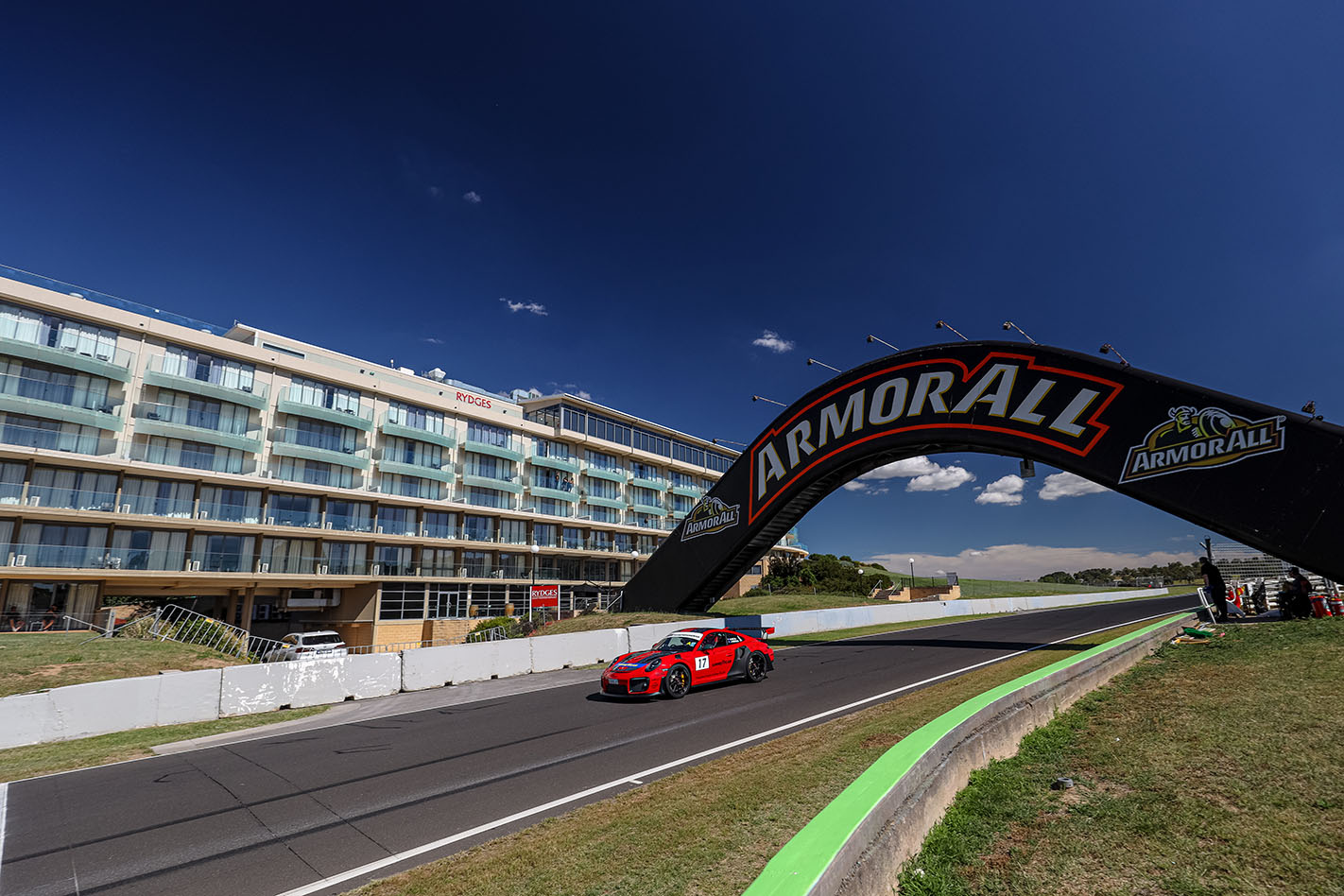
For the second session of the day Morton managed to put in a clean run, completing three sub-2:15 laps in a row, the best being the record-setting time.
Morton also set himself the challenge of cracking 300km/h down Conrod straight. However, with the GT2 RS set to its maximum downforce setting, he fell just short of the triple tonne, with his best speed so far being 299.6km/h.
Porsche now holds a pair of production car lap records in Australia, with Warren Luff teaming up with MOTOR to set a 3:24.079 benchmark on Tailem Bend’s full 7.77km layout.
MORE The Bend’s new West Circuit record is stupidly fast
What is the Honda CR-V?
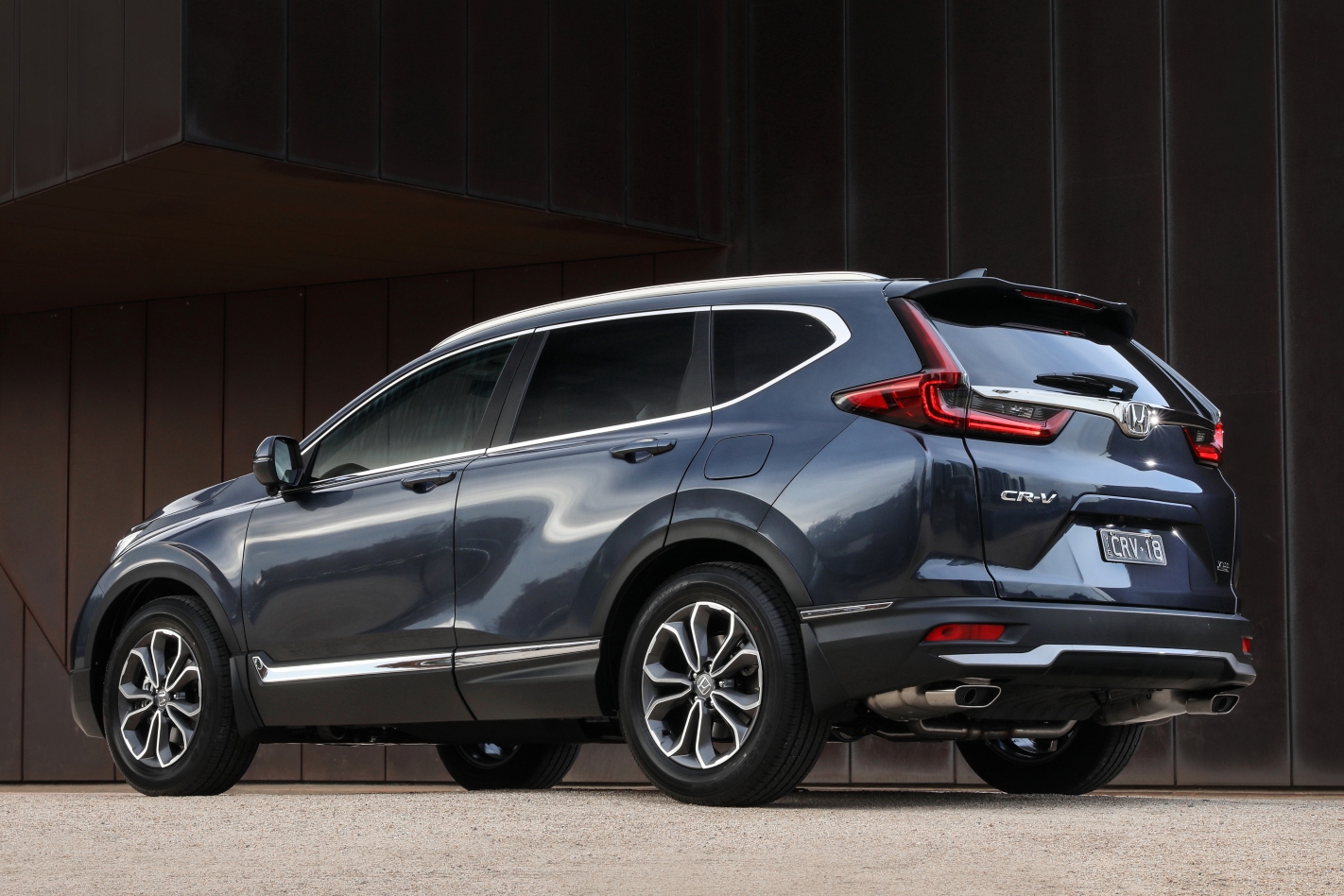
Honda’s CR-V mid-sized SUV was introduced in 1997 and the current fifth-generation model arrived in 2017.
With consistent improvements and shifting consumer demand, the CR-V has established itself as Australia’s favourite Honda.
And after four years of consistent sales in its current generation, the Japanese manufacturer has given the CR-V a light update that leaves the major mechanicals unchanged but adds a dusting of extra equipment and a subtle but effective aesthetic redesign.
The range remains comprised of seven variants that offer two-or four-wheel drive, five or seven seats, and a choice of two petrol engines with a single automatic transmission.
A minor reshuffle of the variant order and a slight change to the nomenclature are the only line-up revisions.
Price and value
Opening the CR-V range is the Vi priced from $30,490 before on-road costs. It stands out as the only version in the line-up to have a naturally aspirated 2.0-litre petrol four-cylinder engine, while all others have the more sophisticated VTEC Turbo 1.5-litre.
Opt for one of the six variants above it and you’ll get 140kW and 240Nm of grunt versus 113kW and 189Nm as well as more mileage out of a tank.
Honda says the 1.5-litre can use as little as 7.0 litres of fuel per 100km compared with 7.6L/100km for the 2.0-litre.
With the update, there have been price increases across the board ranging from $1500 to $4500.
The entry Vi is $2200 more expensive but offers a light increase to equipment with the larger 7.0-inch central touchscreen offered in the rest of the range, dual-zone climate control and smartphone mirroring – as well as the facelift offered range-wide.
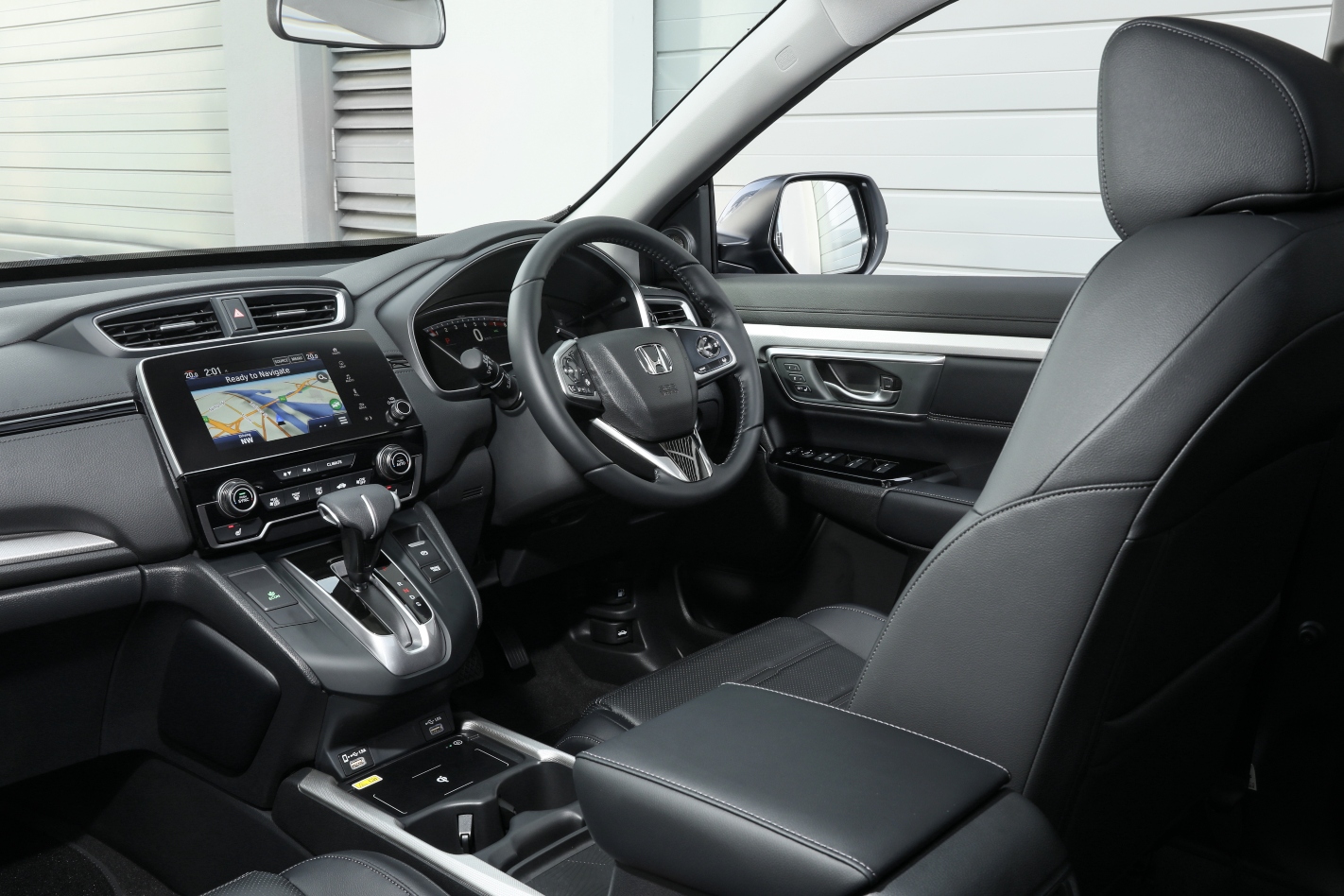
Moving up the range there are a list of additions depending on the grade including wireless device charging, LED headlights and fog lights, and leather appointed upholstery.
Competitiveness is key in this incredibly busy sector of the SUV market and the updated CR-V goes up against strong rivals that include the Hyundai Tucson from $29,640, the Kia Sportage which starts from $28,690, and the $30,980 Mazda CX-5 to name just a few.
For our look into the refreshed CR-V, we focused on the mid-range VTi X and the more premium VTi L7.
Living with the Honda CR-V
If you’re a fan of the existing CR-V then the good news is that all the features that made the fifth-generation car attractive are carried over and the 2021 additions only add to the enjoyment/ease of ownership.
It’s a mid-sizer with cabin space that appears to defy its exterior dimensions, and if Tardis-like space is high up your list the CR-V should definitely be in your sights.
The front seats are roomy while deep glazing and skinny A-pillars offer a great view out without detracting from the sharpened exterior looks.
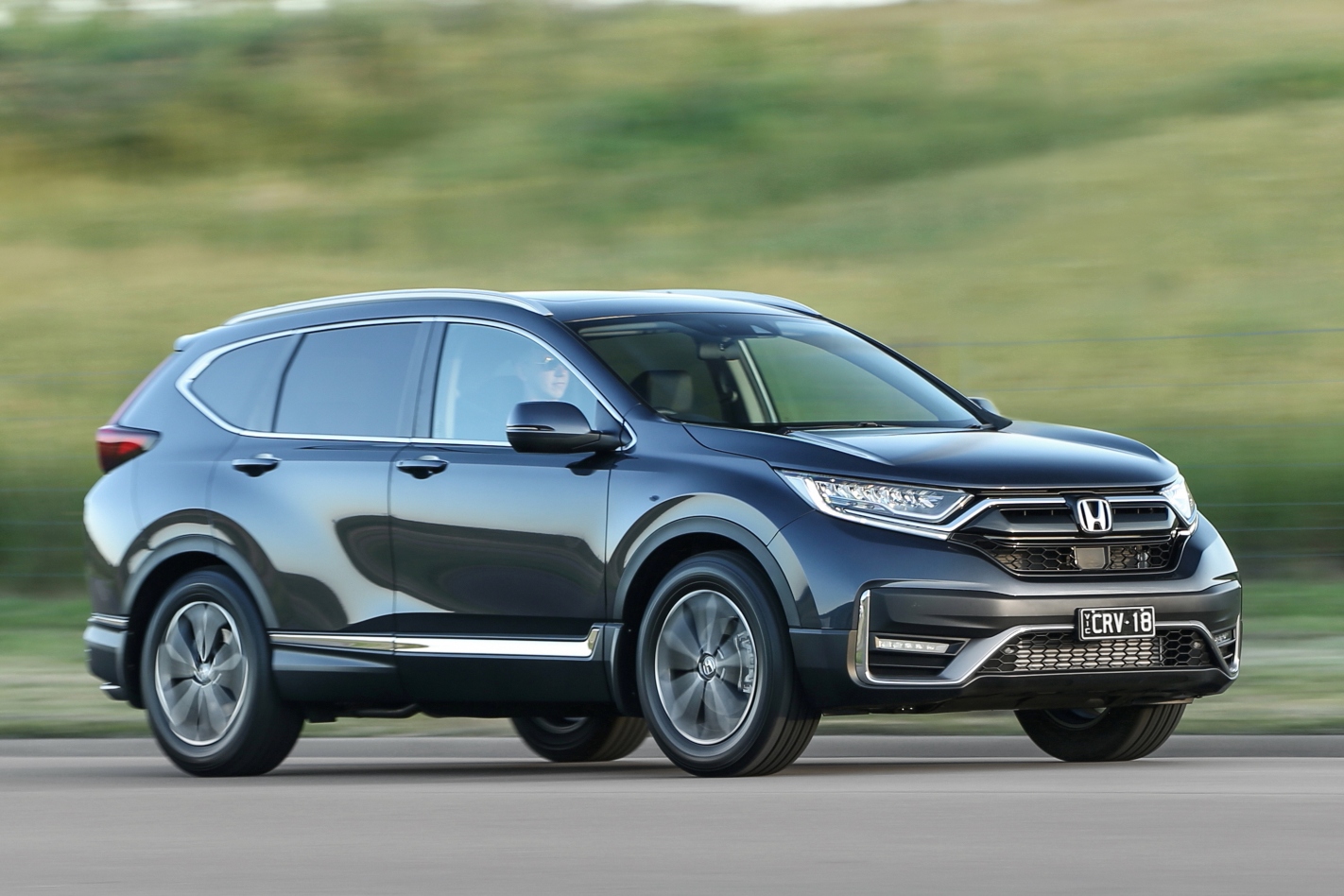
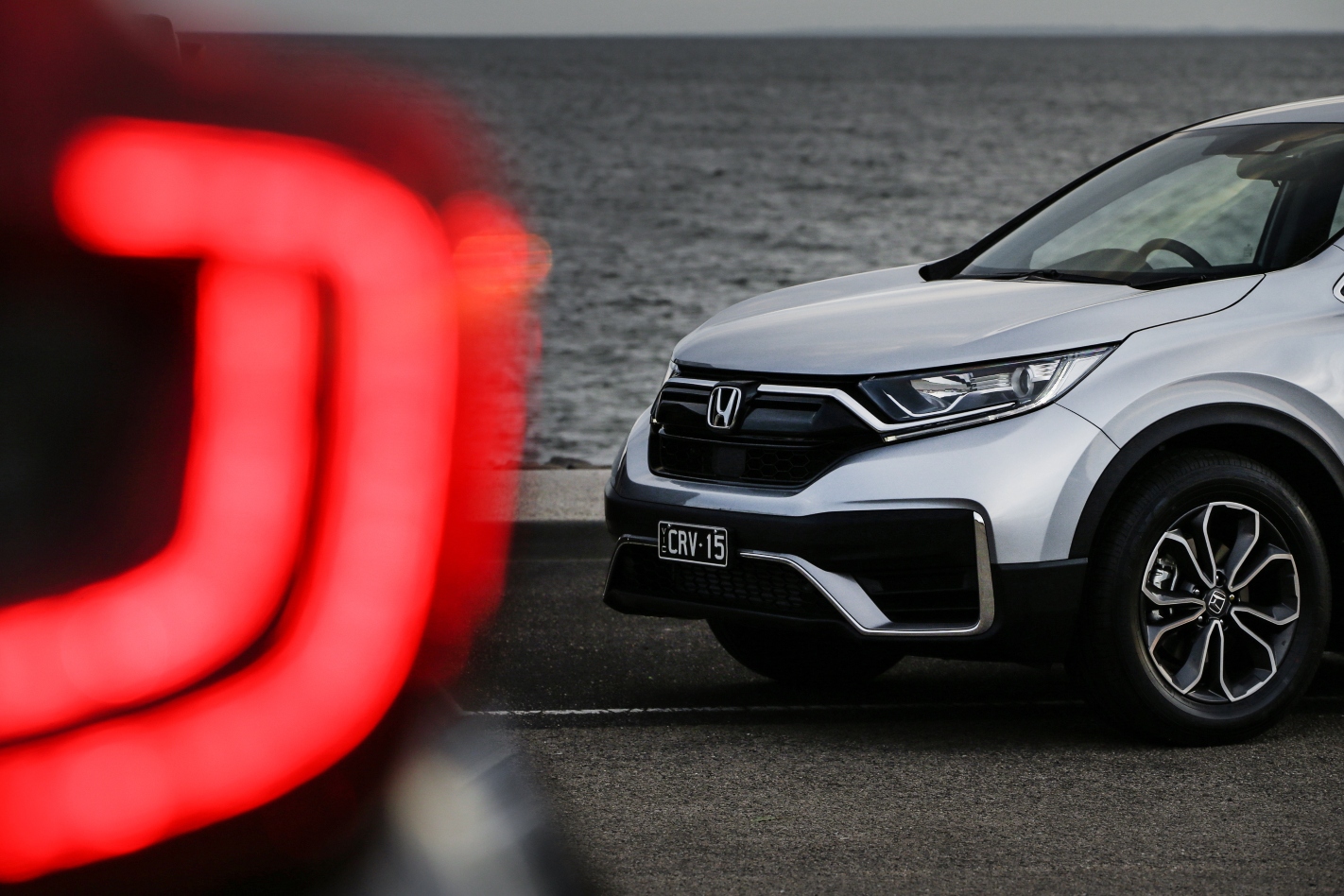
Speaking of which, while the exterior redesign may have been limited to a bumper and wheel update, the result is very effective.
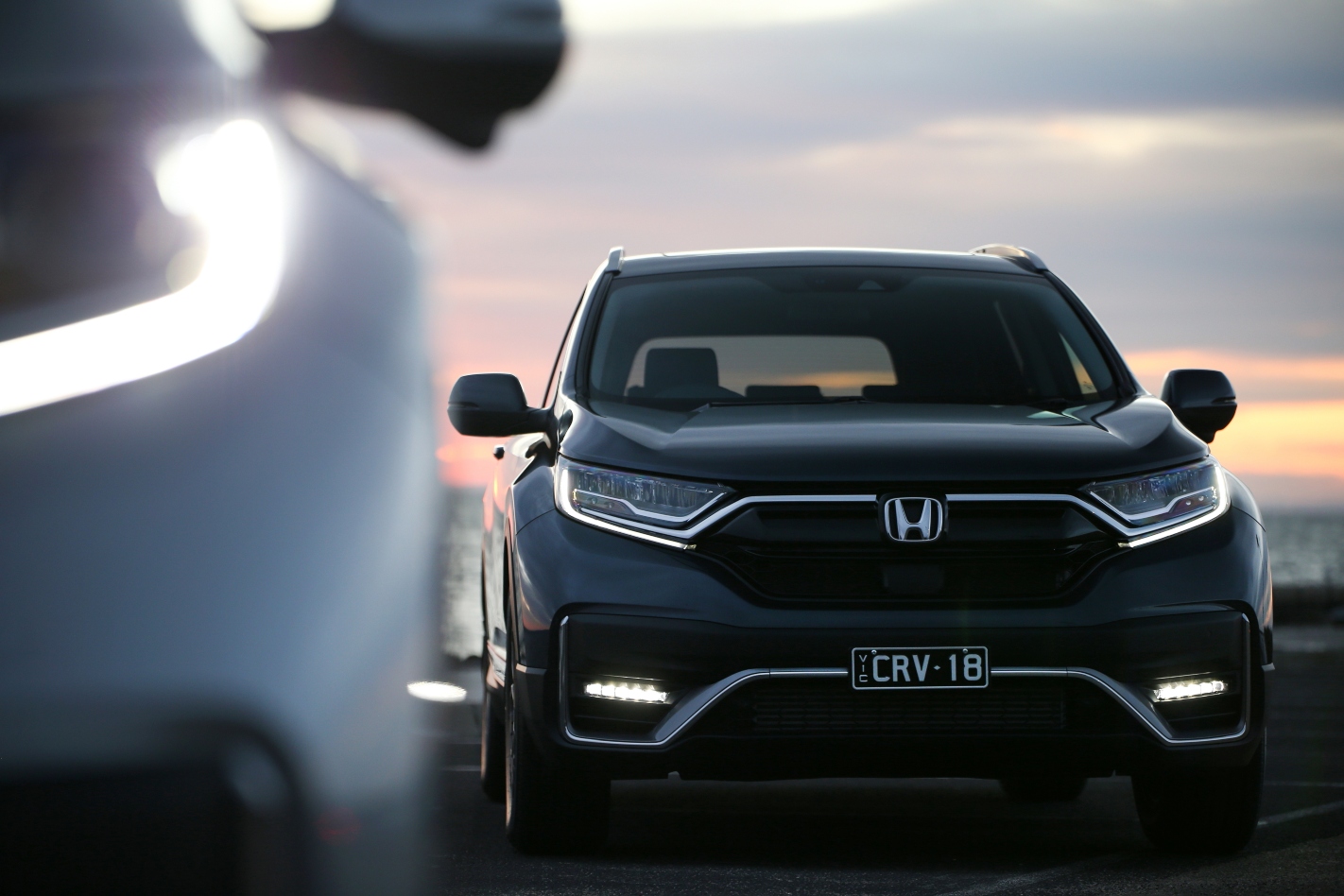
More black and dark chrome in place of gaudy bright chrome effect has added and air of sophistication and a new full-width chin-fin in titanium-effect finish looks commanding and more sporty.
We also particularly like the new headlight design which incorporates LED technology for the higher-grade versions.
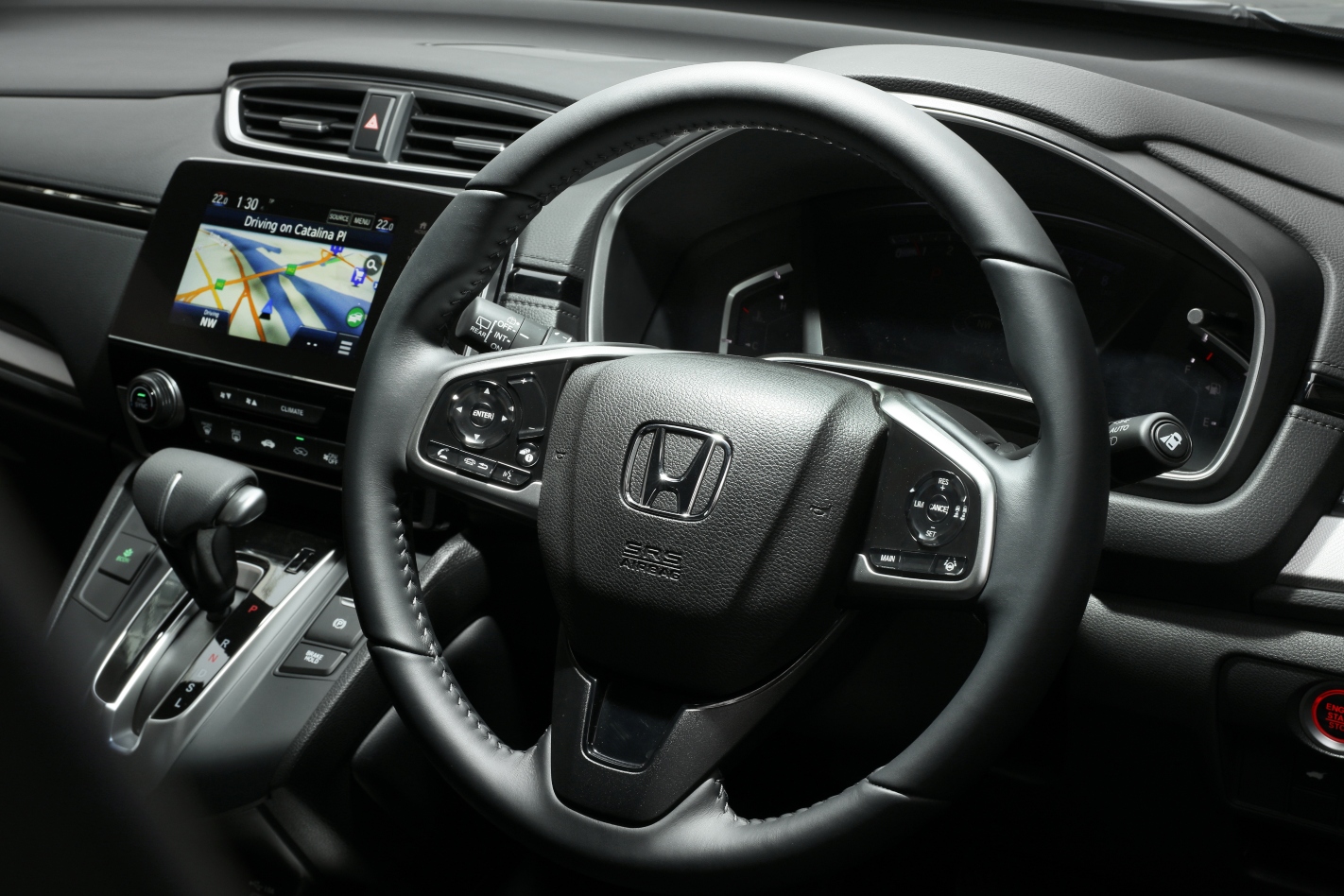
Inside, not a lot has changed which needn’t be a bad thing. There’s tons of storage spaces and clean design with the introduction of some new materials.
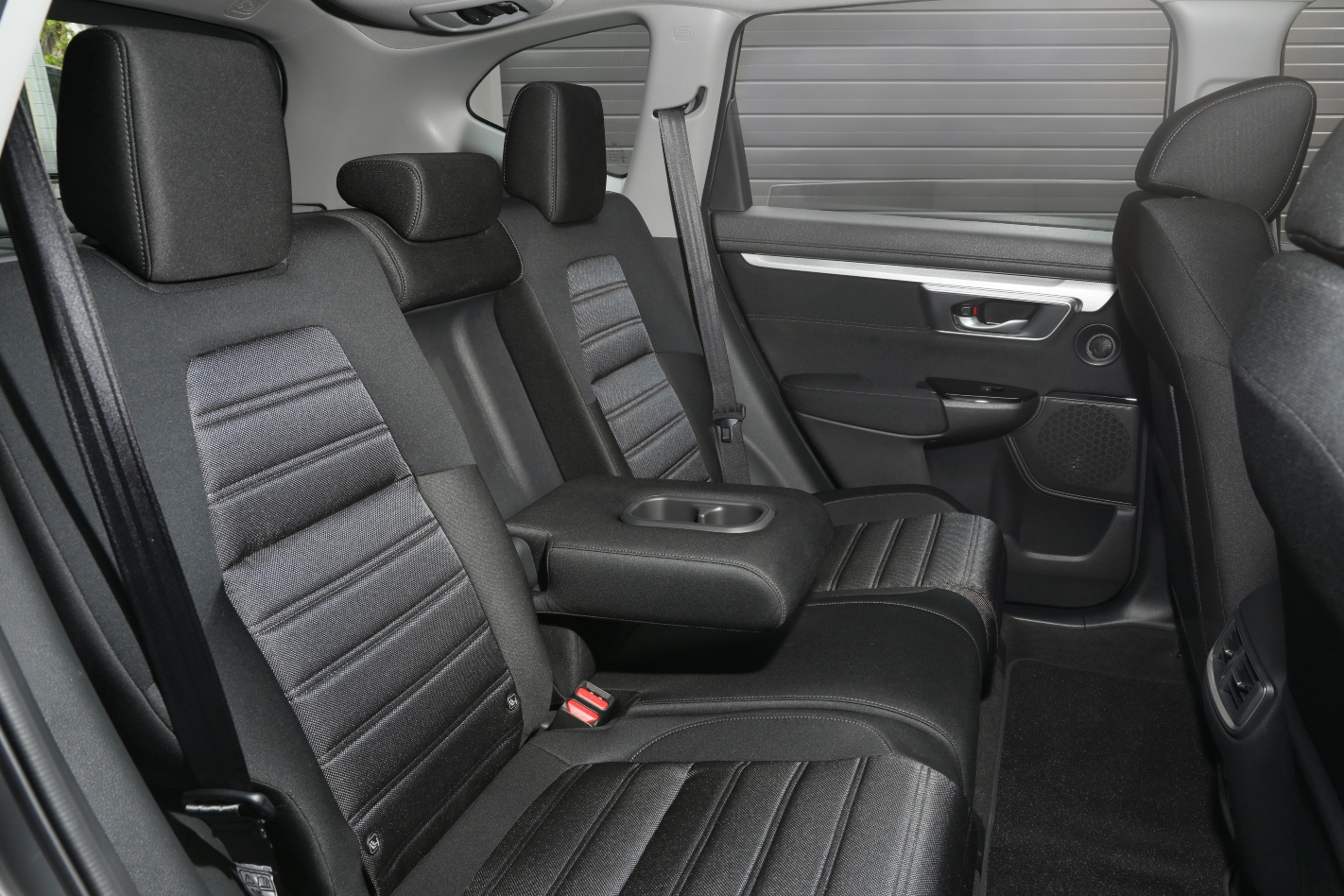
Second-row accommodation doesn’t offer the same lofty headroom as the front seats. It’s still adequate for adults, though, with plenty of leg, elbow and knee room.
Perhaps the best part of the CR-V’s interior, though, is its load bay flexibility.
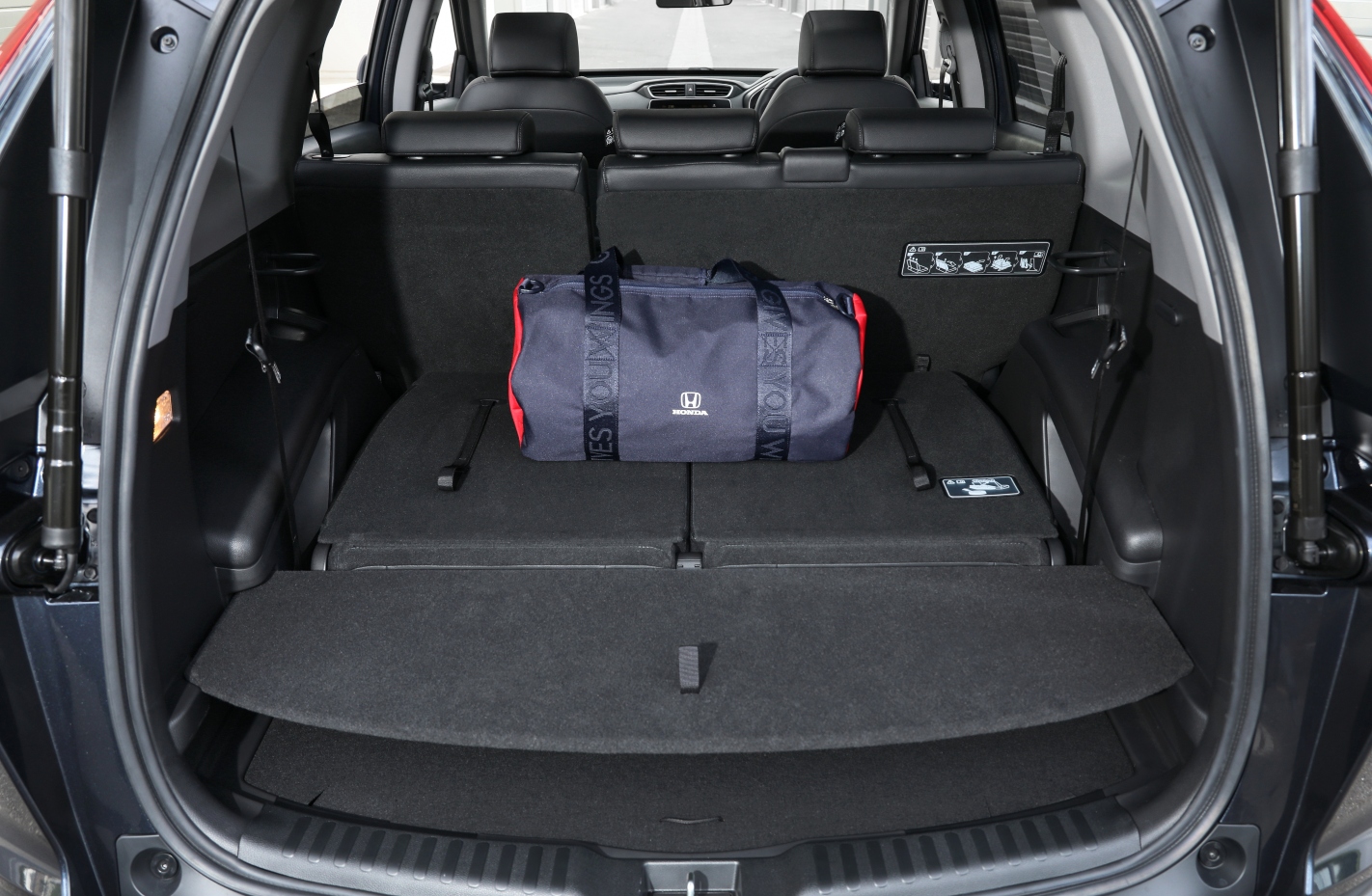
A height-adjustable boot floor offers two positions for maximum volume or easier loading and, underneath, is a full-size spare wheel.
The second-row seating has tilt and slide adjustment and will also fold flat for a boosted boot but can also roll forward to free up more full-height loading space.
Add to that rear doors that open to 90 degrees and a powered tailgate with (a somewhat temperamental) hands-free foot sensor and you have one of the most versatile and accommodating mid-size SUV boots on the market. But it gets better.
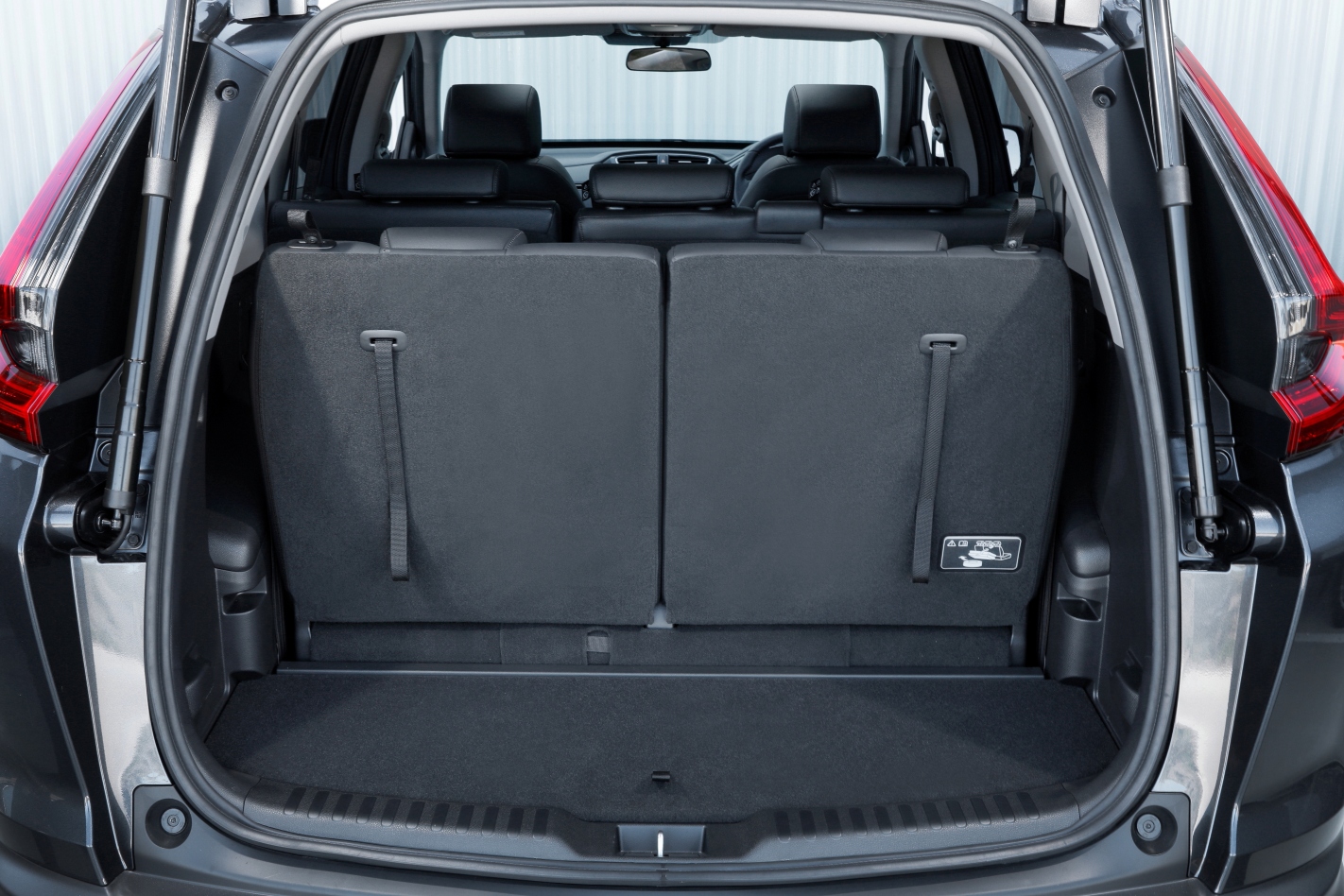
Opt for one of the two CR-V variants with a 7 in its name and you’ll get one of the most compact seven-seat SUVs on the market.
It’s fair to say the third row is not as spacious as some, nor would you inflict the pair of little pews on people much bigger than children for very long, but the option for short rides is there and genuinely useful.
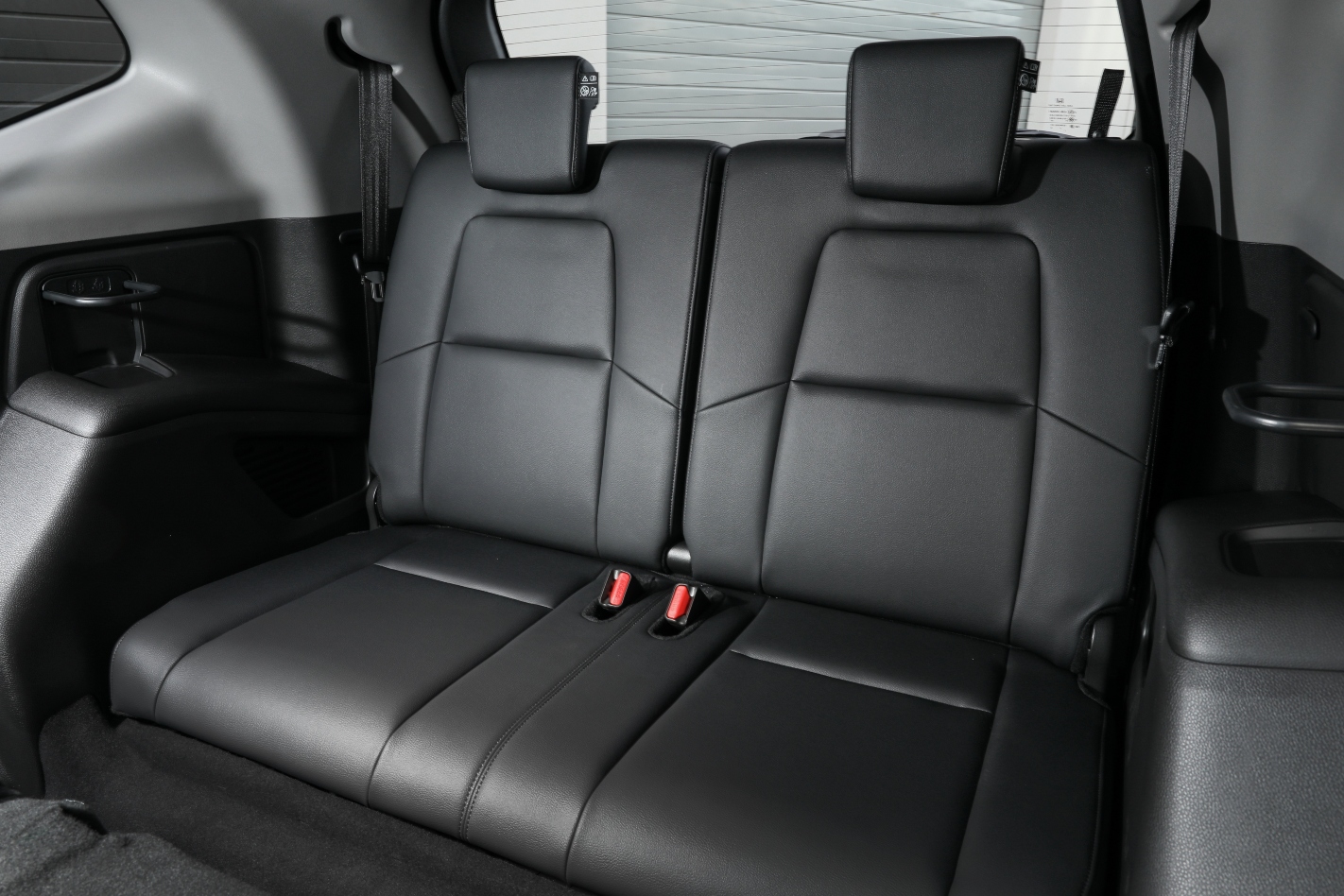
When not in use, the seats fold flat and rob a little boot space (but not at the expense of the full-size spare wheel), and there’s even privacy glass that extends to the second-row windows, dedicated cup holders and air-conditioning vents.
Best of all, Honda is not screaming SEVEN-SEATER from its brochures, instead admirably referring to its VTi 7 and VTi L7 as a 5+2.
The 7.0-inch touchscreen that’s now common to all CR-Vs is a little deceptive hiding behind a much larger single-piece fascia, and is a little anticlimactic when it comes alive.
Access to its systems is intuitive and easy, however, including now range-wide Android Auto and Apple CarPlay as standard.
Engine and transmission
We have yet to get our hands on an entry-level version of the CR-V and the Vi which uses a relatively conventional 2.0-litre petrol engine with no turbo.
If the figures on paper are anything to go by, though, the 1.5-litre turbo engine standard to all but the entry point is the one to go for.
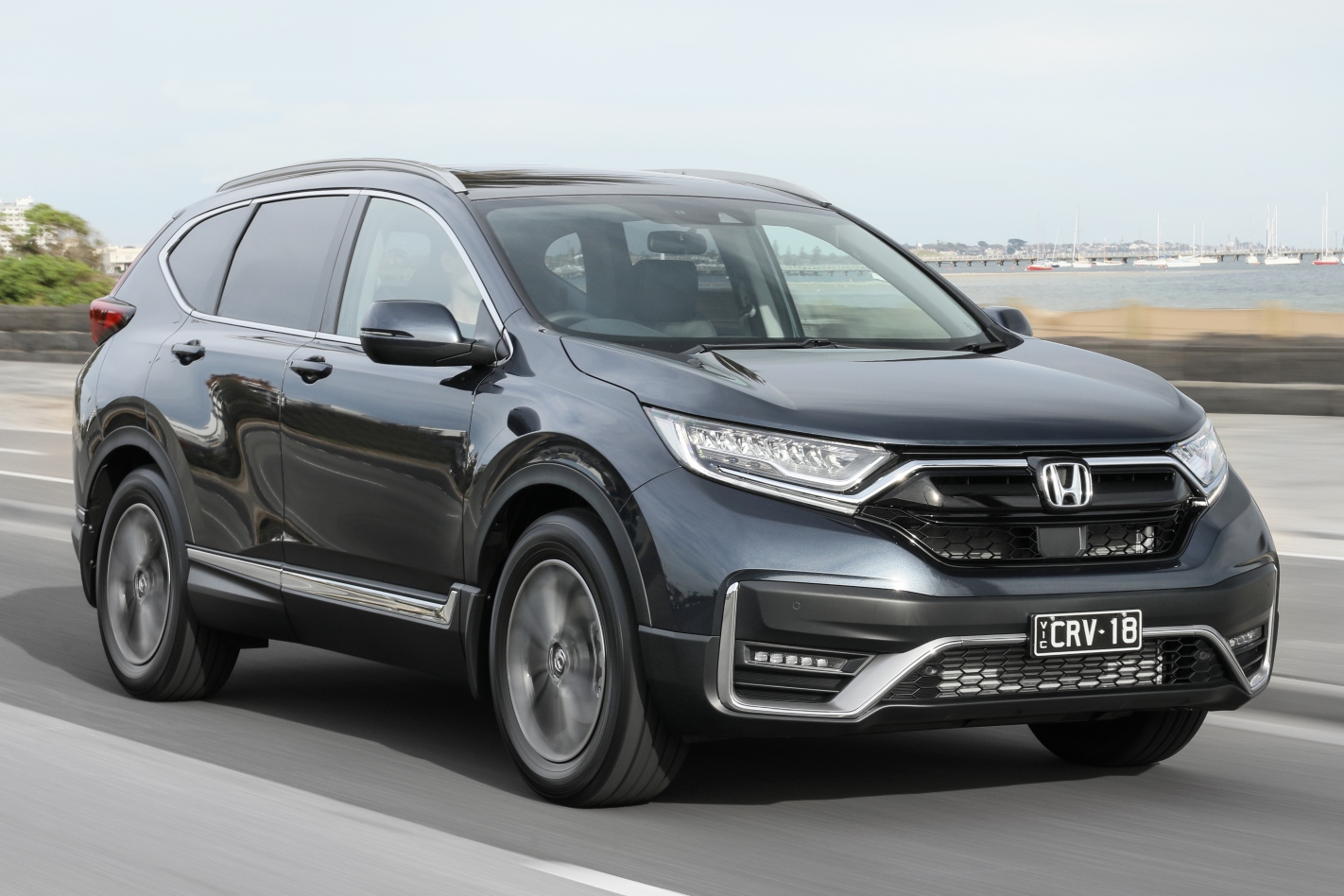
Other than a little hesitation off the mark, the VTEC Turbo unit is surprisingly lively once up and rolling with the sweet spot right in the middle of the rev-range.
There’s no diesel-like torque at the low end as you might find in a German SUV powered by a similarly sized petrol engine but the mid-range punch is still very accessible and useful for overtaking as well as nipping around town.
Revving to the rev limit is not as satisfying as some previous Honda VTEC units with noise and vibration building to a din rather than a song, accompanied by performance less meaningful than it is about the 3000 to 4000 rpm region.
A continuously variable transmission (CVT) auto is standard for all CR-Vs and is a simple but effective pairing.
There are no simulated gear ratios as you will find in Subaru’s CVT interpretation for example, which means the Honda drivetrain labours and moans unglamorously when worked hard and is best left, like the engine, to mid-range duties.
For a relatively small-capacity engine in a mid-sized SUV, the 1.5-litre returns excellent fuel economy and we managed a figure right on the claimed 7.3 litres per 100km.
Driving the Honda CR-V
With so many impressive mid-sized SUVs in Australia’s market, it should come as no surprise that an offering from a trusted Japanese brand can offer something that is fun to drive even if it doesn’t push that as its main selling point.
But the CR-V is exactly that. It’s certainly no Type R, but the combination of adequate power where you need it and a surprisingly obedient steering and chassis setup is an unexpected feather in the Honda’s cap.
Finding a good driving position is easy – particularly in the VTi L7 which has electric seat adjustment – and the model is most enjoyable negotiating the urban jungle with its nimble low-speed nature.
The CR-V is also at home on the open road, too, with long legs for cruising and all occupants will appreciate the view out.
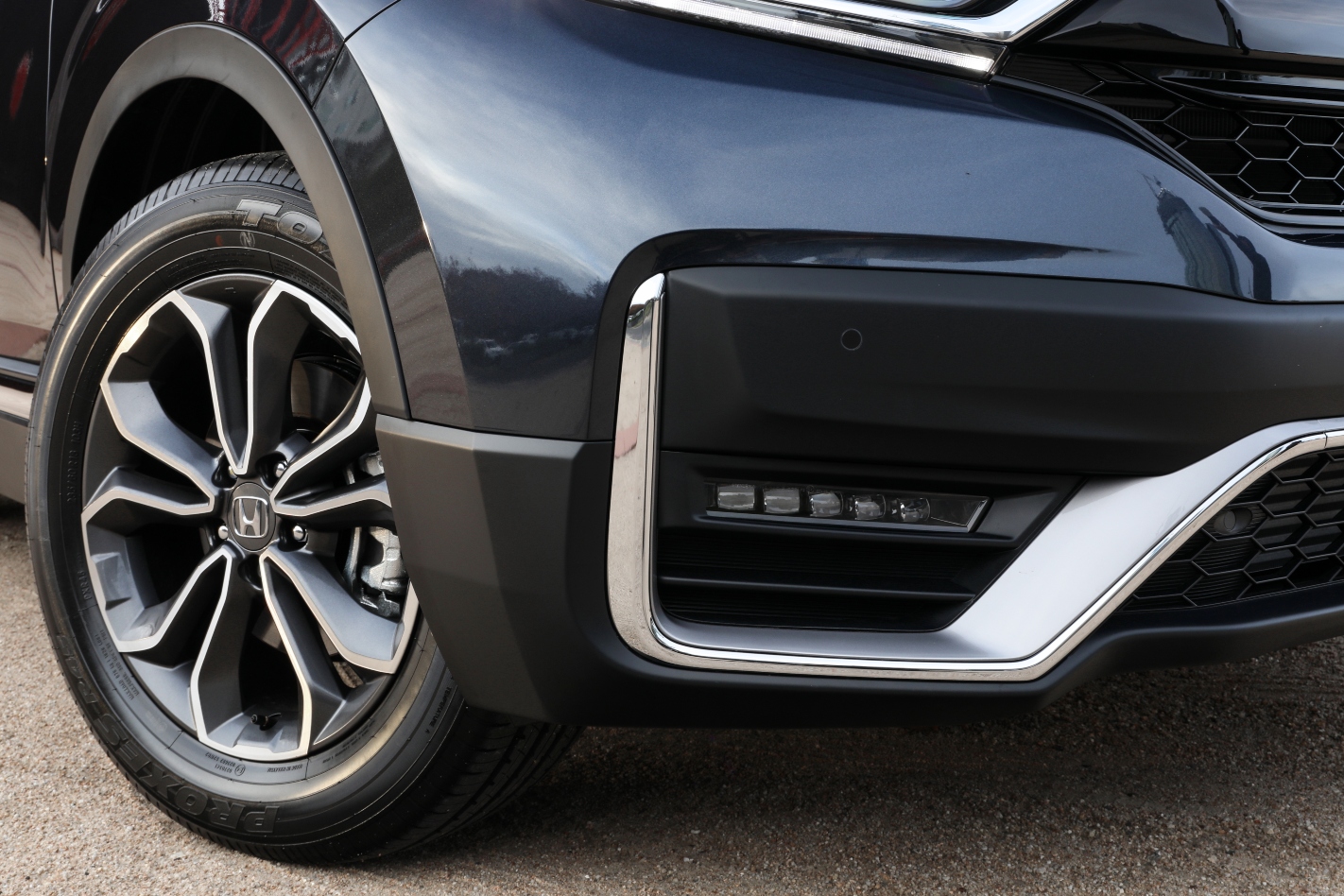
Despite sharp-looking 18-inch machine-finished alloy wheels with lower-profile tyres fitted as standard to the VTi L7, the ride quality is commendable on average roads but can come a little unstuck on choppy surfaces.
Its controls are just a little too sensitive, however. The steering would benefit from just a touch more weight, the brakes are just a little over-assisted and the accelerator hard to modulate for lighter duties and smooth driving.
These characteristics would probably suit an older driver or would take only a little getting used to if not.
While the driver’s seat initially felt supportive and comfortable, it didn’t take too long for an undesirable trait to emerge.
Without wishing to put too fine a point on it, it gave our reviewer cramps in the bit you sit on. Yes, you could argue he has a strange or precious derriere or something physically unusual and that may be the case, but he certainly won’t be the only one.
How safe is the Honda CR-V?
One of the most significant elements to the 2021 CR-V update relates to its safety offering and the addition of Honda Sensing to all but the entry Vi.
Previously, only the top two variants had the company’s suite of driver assistance and safety kit as standard but now it’s applied to six out of seven.
On top of the model’s ISOFIX child seat anchors, driver attention monitor, full-length curtain airbags, and Vehicle Stability Assist, Honda Sensing adds lane keep assistant, lane departure warning, forward collision warning and braking, and adaptive cruise control.
It goes without saying that with normal attentive driving you will probably never know the new technology is included and it will only step in if a hazardous situation is unavoidable by the driver.
The only exception to this is the collision warning which is a little paranoid and overactive at times.
Its standard rear-view camera does not offer the sharpest resolution image and seems prone to a grubby lens although three switchable camera views are a welcome feature offering an impressive wide option.
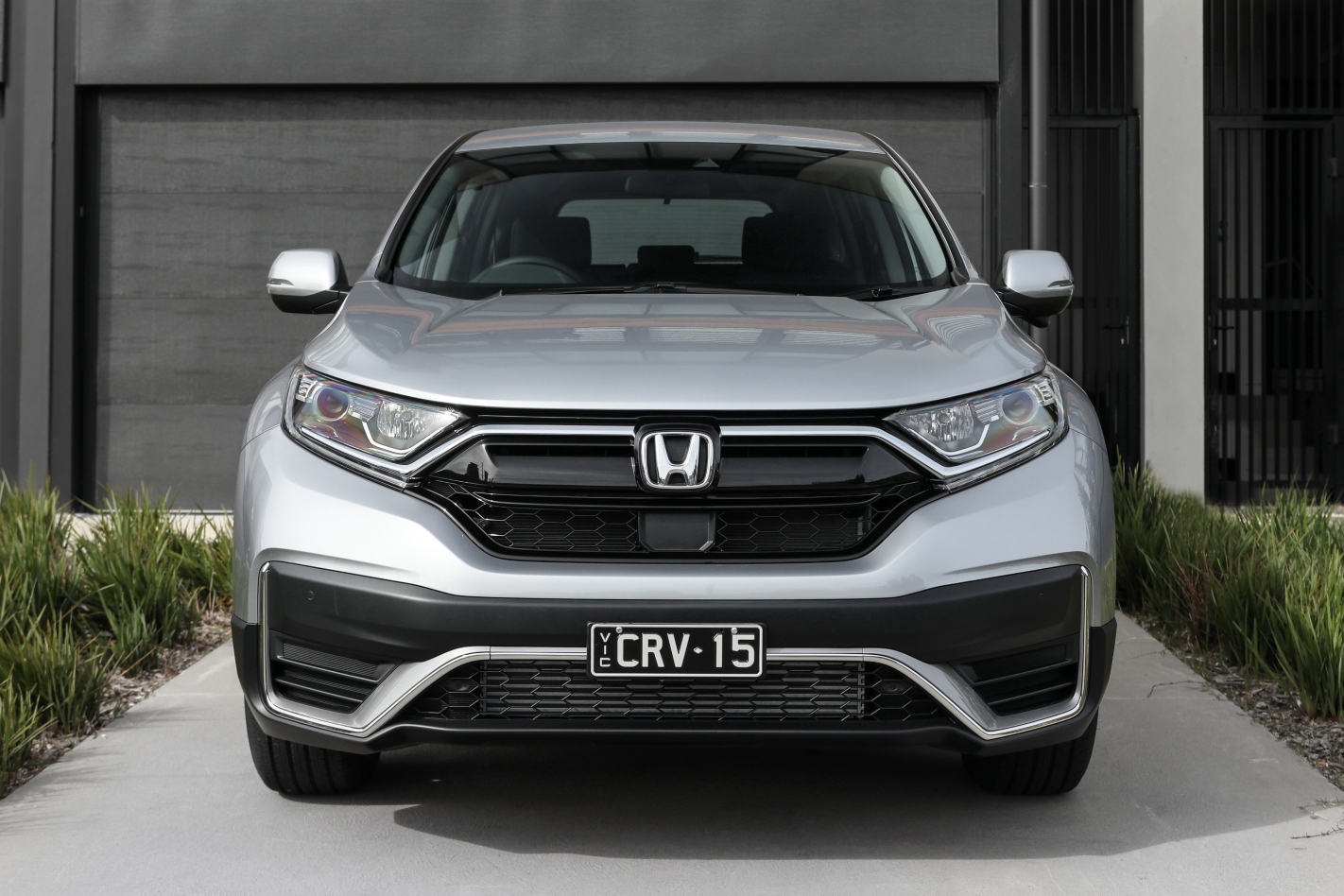
ANCAP five-star safety rating that was awarded in 2017 carries over thanks to the safety enhancements that add to the already high standard of occupant protection and pedestrian protection that was rated as ‘acceptable’.
How much does it cost to run the Honda CR-V?
Scheduled servicing for the CR-V is required every 10,000km and will cost $312 as part of Honda’s capped-price servicing that it refers to as Tailored Servicing.
This offers customers transparent pricing for scheduled maintenance over the first five years or 100,000km, including additional ‘adaptive items’ that need attention depending on the distance travelled and the conditions in which the vehicle is typically used.
All new Hondas are sold with a five-year unlimited-kilometre warranty, which can be optionally extended to seven years and is transferable if the car is sold to a new owner for no extra cost.
A six-year corrosion warranty is also standard for all models.
Unlike many rivals, roadside assistance is only included if the customer extends the warranty to seven years.
Despite its more advanced turbo engine for all variants above the Vi, the CR-V does not require high-grade fuel, with 91 RON the recommended minimum.
Our test car returned an average fuel consumption bang on the manufacturer’s claimed 7.3L/100km.
Verdict – the 2021 Honda CR-V
You don’t need us to re-run the old fable of fixing things that aren’t broken when talking about Honda’s updated CR-V.
It wasn’t exactly falling off a sales cliff before the 2021 version arrived and nor was there any sign it was about to if left unchanged.
In that regard, its light makeover makes a lot of sense especially the more handsome front and rear bumper design to keep the model looking showroom fresh. Likewise, the addition of technology to bring connectivity and safety up to Australia’s unceasingly high demands will keep punters coming.
And like the 2017 version, the 2021 iteration is still easy to recommend from a packaging, performance and standard equipment perspective.
However, Honda is clearly exploring a new saying that if it ain’t broke, increase the price.
While some price adjustment is expected with any updated model, Australia’s most competitive car segments – of which the mid-size SUV market very much is one – are occupied by incredibly fickle and price-driven customers and that audience will waste no time talking with their wallets if they think the 2021 CR-V has priced itself out of the competition.
Flush from the success of selling out its first batch of 1200 GR Yaris hot hatches, Toyota will bring in its faster, more talented sibling under the same discount plan.
The GR Yaris Rallye will add high-performance limited-slip diffs front and rear, lighter rims and stickier tyres, with the first 200 units priced at $56,200 driveway.
This is around $6000 more expensive than the current $49,950 MSRP of the sold-out Yaris GR before on-road costs – or around $16,000 more than the first 1000 units which were sold at $10,000 under the current retail price.
Arriving in March next year, there will be one colour choice – white – and no other options.
“Once that initial allocation is spoken for, the price of the Rallye will move to its recommended retail price position of $54,900 plus on-road costs,” said Toyota Australia’s Sean Hanley.
MORE ON THE TOYOTA GR YARIS
- First production drive of the GR Yaris
- We busted the GR Yaris before anyone else
- Toyota hints at GR Corolla
Toyota Australia was initially not planning to add the Rallye to the local mix in any form, but changed its mind after much outcry from local fans.
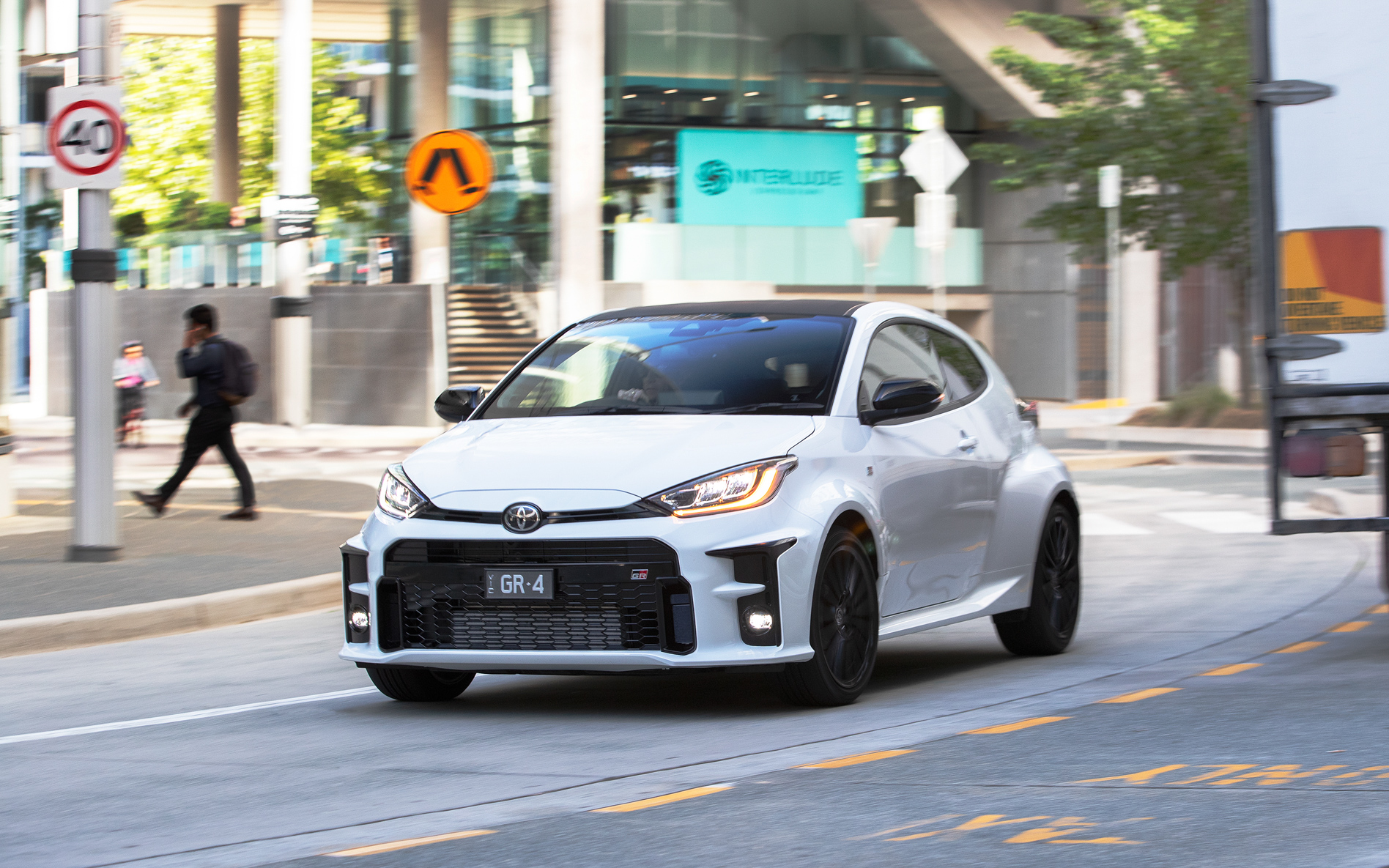
Interestingly, Toyota was not as forthcoming as rival brands when it comes to extending its warranty coverage to track usage.
Hyundai, for example, offers no-compromise coverage on its high-performance i30 N hot hatch even if it’s used on a racing circuit.
Hanley was more circumspect about warranty issues on the GR Yaris arising from on-track use.
“We will assess each of the situations on a case-by-case basis on warranty,” he told reporters, “but our desire is that we wouldn’t leave our customers stranded, particularly as we approach the Rallye version, which is typically a track car.”
It’s been a long time coming, but Toyota’s GR Yaris is finally here.
And unfortunately for us, it’s all sold out – at least for the moment.
The $49,950 car was initially offered at $39,950 for the first 1000 customers, then Toyota offered up a hundred or so other examples at $44,950 to see out Australia’s initial allocation.
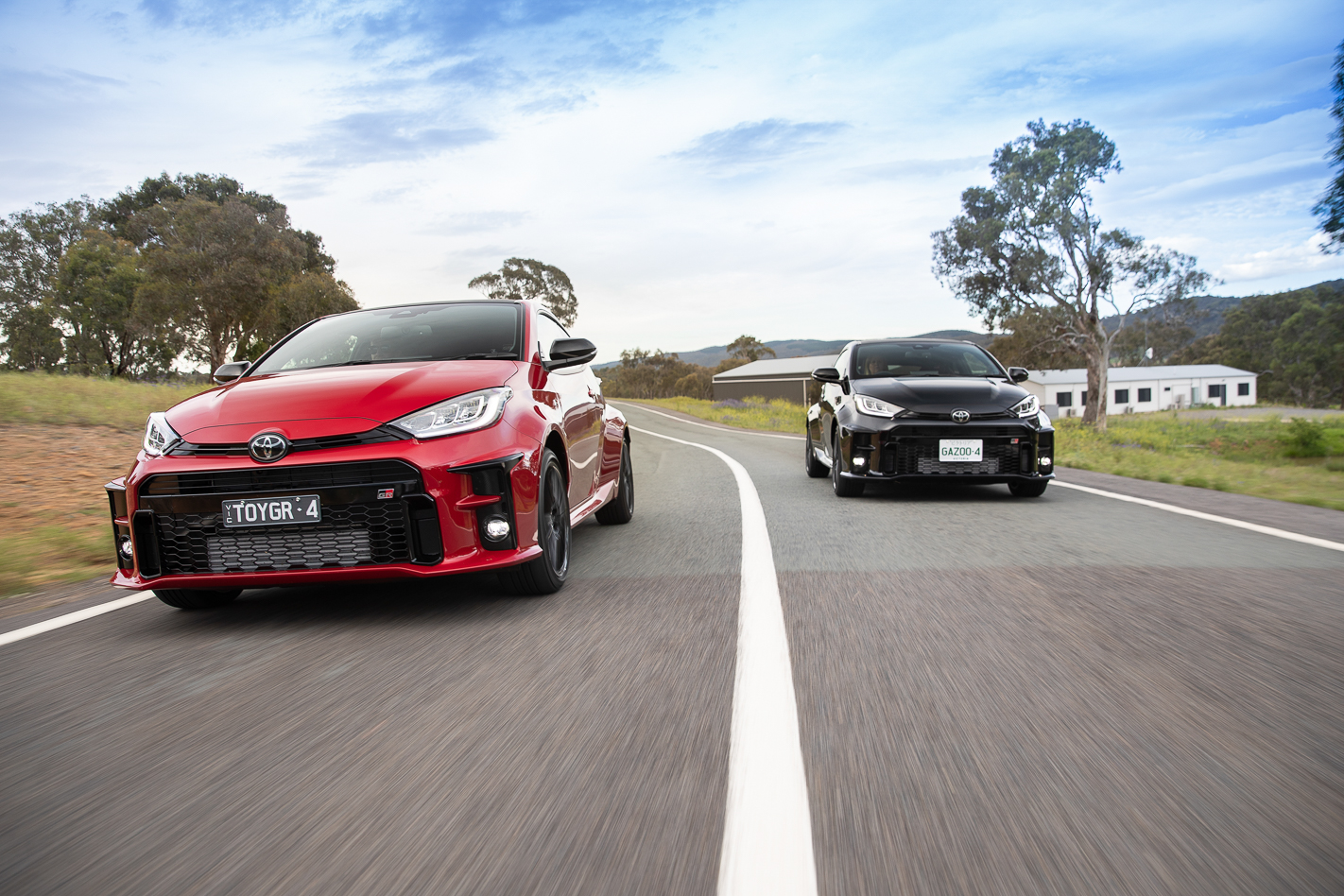
There’s a desire for Toyota to request another allocation sometime in 2021, though it’s unsure which variant and specification level would be on the cards.
In any case, the car arriving on our roads imminently will be a cracker.
The Toyota GR Yaris stocks a 1.6-litre three-cylinder turbocharged engine producing 200kW and 370Nm in a 1280kg body, resulting in a 0-100km/h claim of just 5.2 seconds.
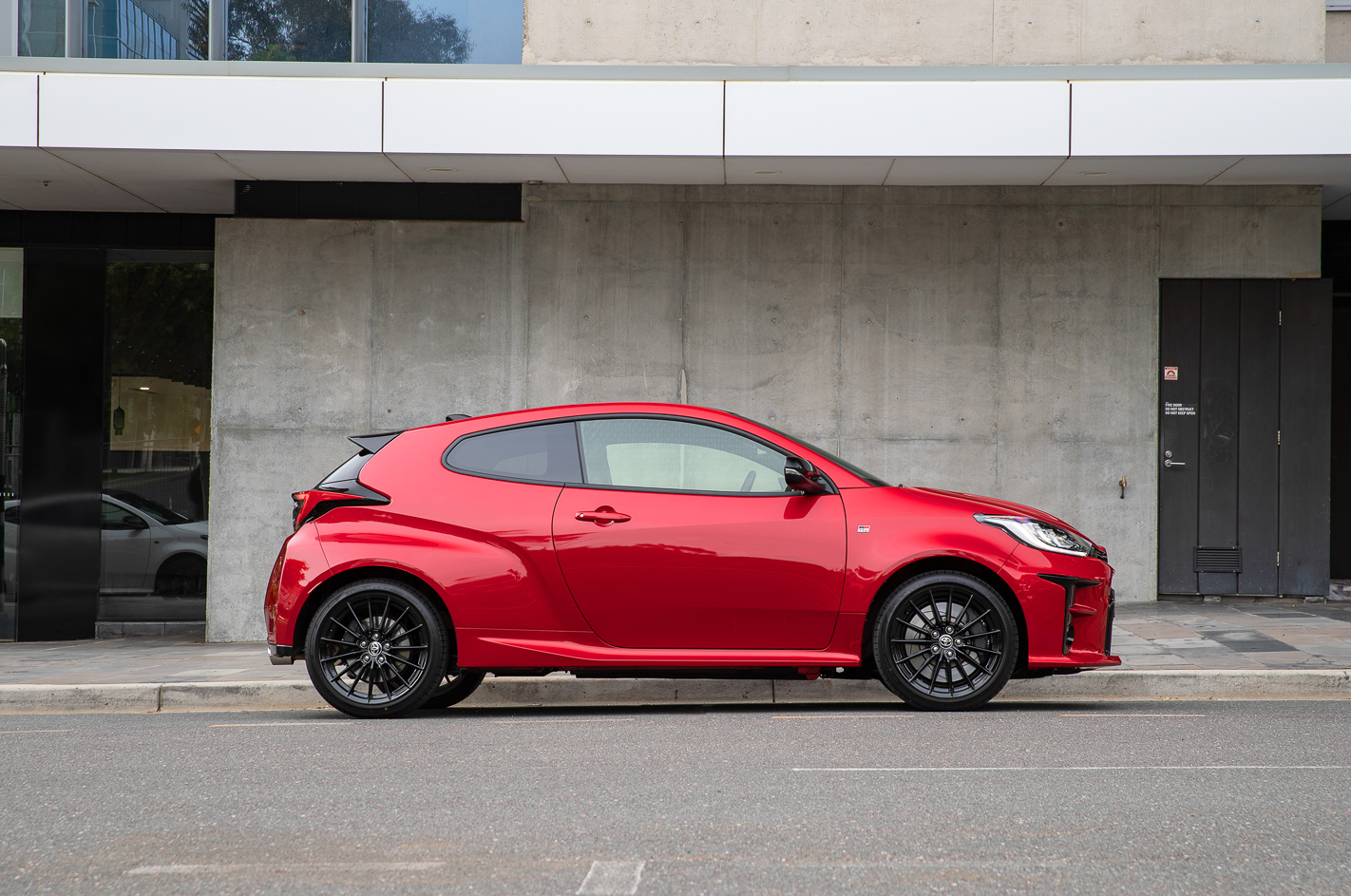
It shares just three exterior components with the normal Yaris small hatch, the headlights, taillights and mirrors, with the rest of the body a bespoke widebody affair featuring aluminium panels for the doors, bonnet and boot, while sporting a carbon fibre roof.
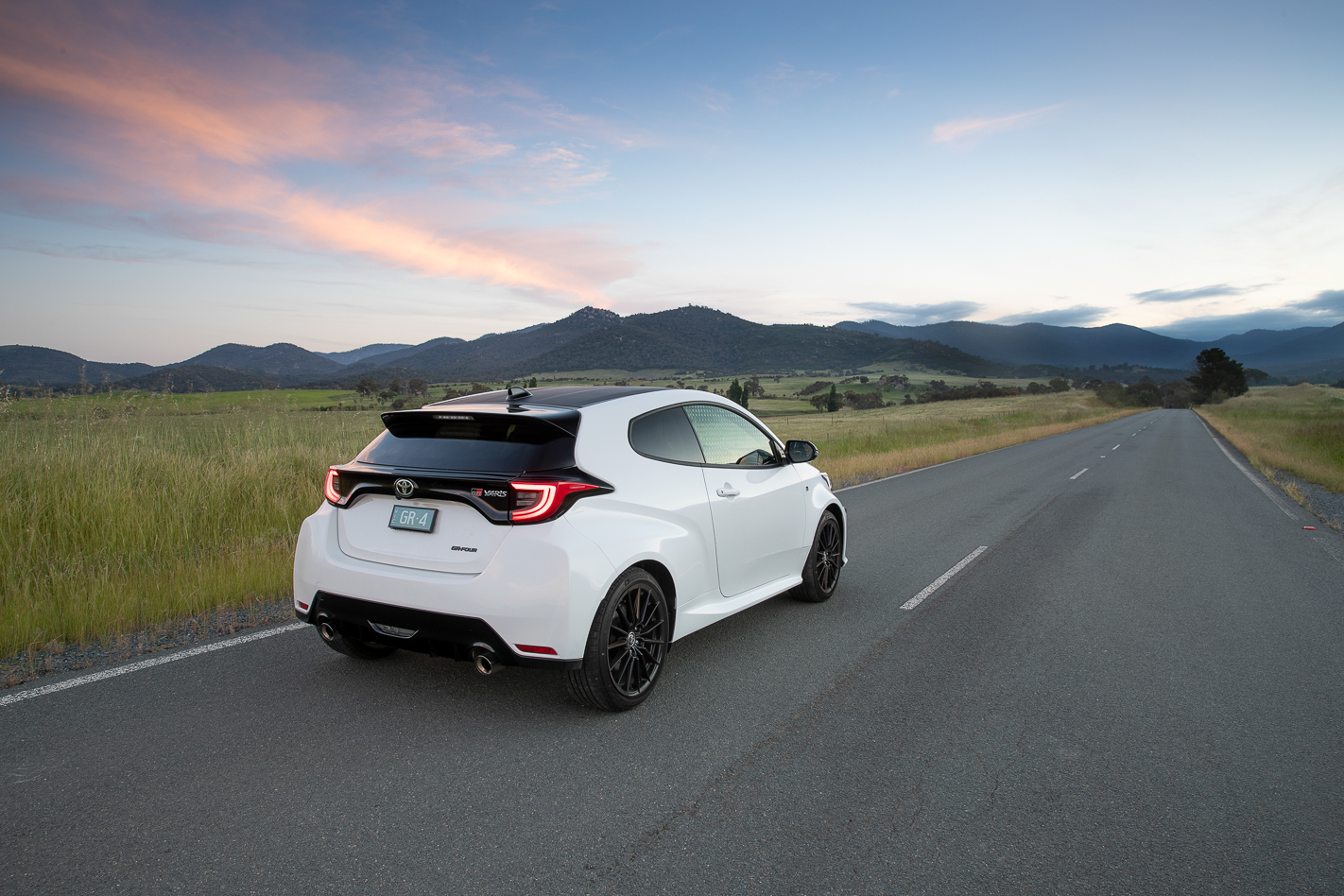
It’s a manual-only affair, equipped with a six-speed intelligent manual transmission that can rev-match shift between gears and is geared for a 230km/h top speed.
The GR Yaris combines the front end of Toyota’s GA-B platform (Yaris) with the rear of the GA-C platform (Corolla) for a dedicated standalone architecture that houses a special suspension design and bespoke GR-FOUR all-wheel-drive system that can theoretically send up to 100 per cent of torque to either the front or rear axle.
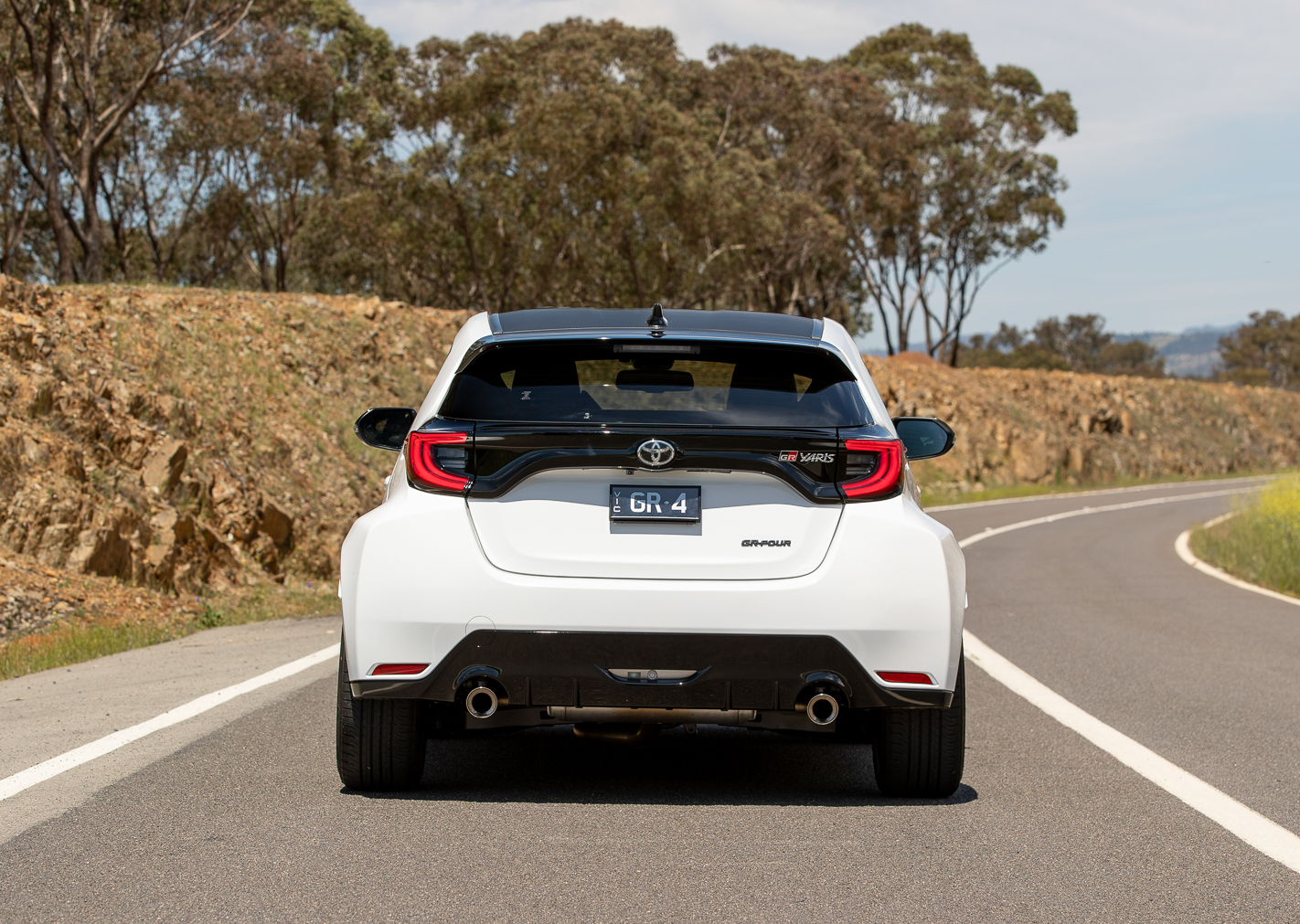
Safety was high on Toyota’s engineers’ minds throughout development owing to its sports intent.
As a result, the GR Yaris includes autonomous emergency braking, lane-keeping assist, adaptive cruise control, intersection assist, blind-spot monitor, a head-up display, reverse camera and six airbags as standard.
MORE TOYOTA GR YARIS GOODNESS
- First production drive of the GR Yaris
- We busted the GR Yaris before anyone else
- Toyota hints at GR Corolla
It comes in just three colours; black, red or white.
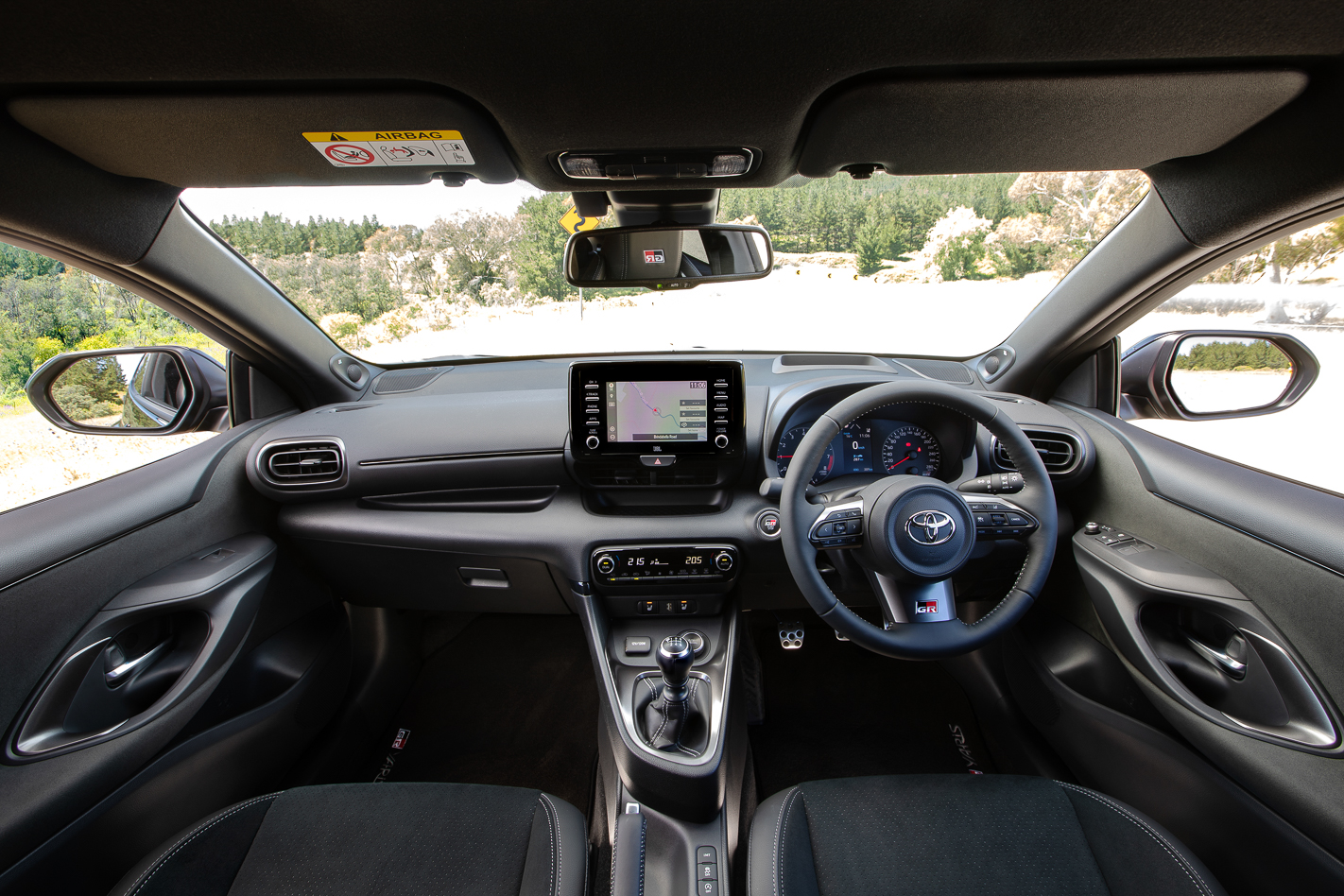
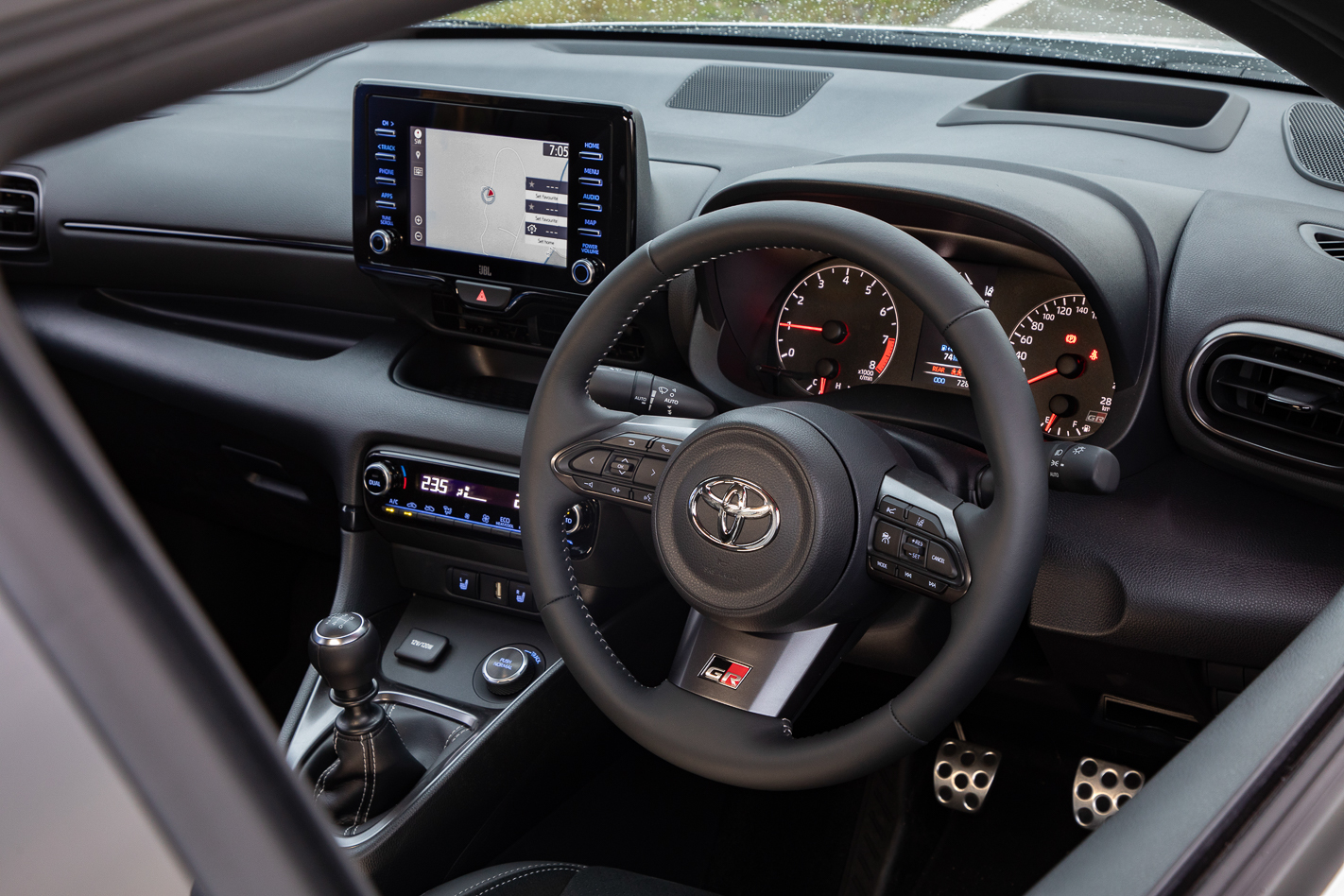
Inside, the GR Yaris gets a unique small-diameter leather steering wheel, leather short-shift gear knob and handbrake, aluminium pedals and suede-insert/leather-accented heated sports seats.
Screen-wise, there’s a 7.0-inch main infotainment unit with Apple CarPlay/Android Auto capability, joined by a smaller 4.2-inch display nestled within the instrument cluster that provides information such as turbo pressure and shift lights.
Other standard equipment includes dual-zone climate control, an eight-speaker JBL sound system, keyless entry and start-up, satellite navigation and digital radio.
As with many sports cars, this one doesn’t feature a commodious boot size.
Toyota says the GR Yaris can only fit a miserly 141 litres of luggage, though the seats fold in 60/40 split/fold fashion to bolster that somewhat.
The GR Yaris is serviced a five-year/unlimited-kilometre warranty, with seven years for engine and driveline, while capped-price servicing for the first six dealer visits costs $260 each with 6-month/10,000km intervals.
The GR Yaris is just another step forward in the Gazoo Racing Australian onslaught; Toyota is committed to adding new models in due course like the C-HR GR Sport, on top of the established GR Yaris and GR Supra.
Click through the gallery at the top of this story for a 50 image gallery of the Toyota GR Yaris.
