
What is the Mazda 3 X20 Astina?
As well as the first model to gain Mazda’s revolutionary compression ignition petrol engine, it is quite possibly a contender for the title of Australia’s longest car variant name.
Refer to it with its full moniker and you’ll need enough page space for Mazda 3 X20 Astina Skyactiv X M Hybrid.The variant sits at the top of the model range with a $40,590 asking price or $1000 more for the auto, and shares all other mechanicals beyond the engine and transmission with the more conventionally powered – and $3000 cheaper – Astina.We’ve already given that car the full review so you can read all about it here. For this first drive, we’ll be focusing only on the new powerplant.
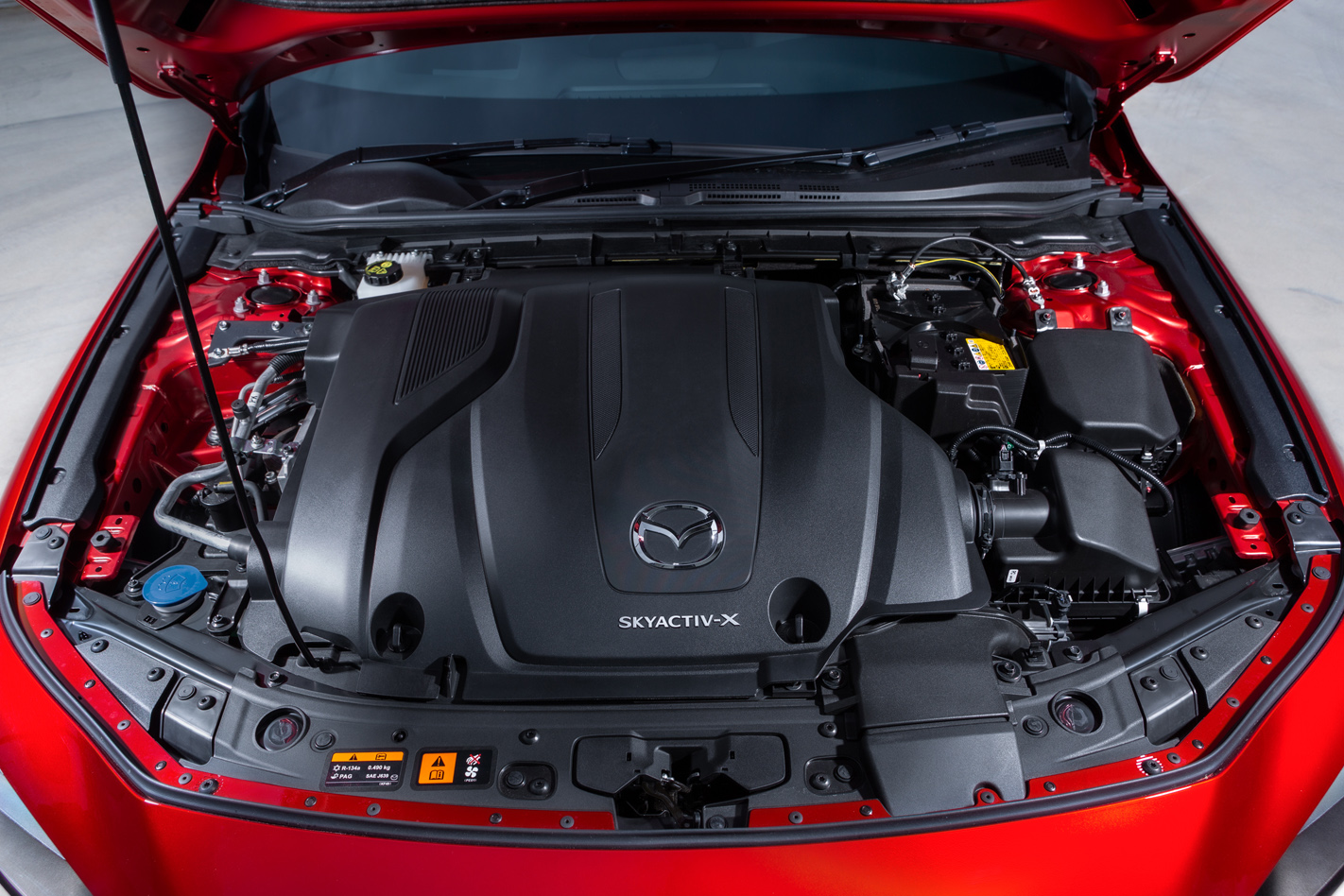
The same engine will also be joining the CX-30 line-up from September and, while you can expect similar performance, you’ll have to wait until we’ve driven the crossover equivalent for the lowdown.
What is the Mazda 3 X20 Astina like to drive?
Perhaps we were going into a brief test drive with too many expectations but, if we hadn’t been told there was something different about the Mazda 3’s engine, we may have mistaken it for any other mild-hybrid petrol.
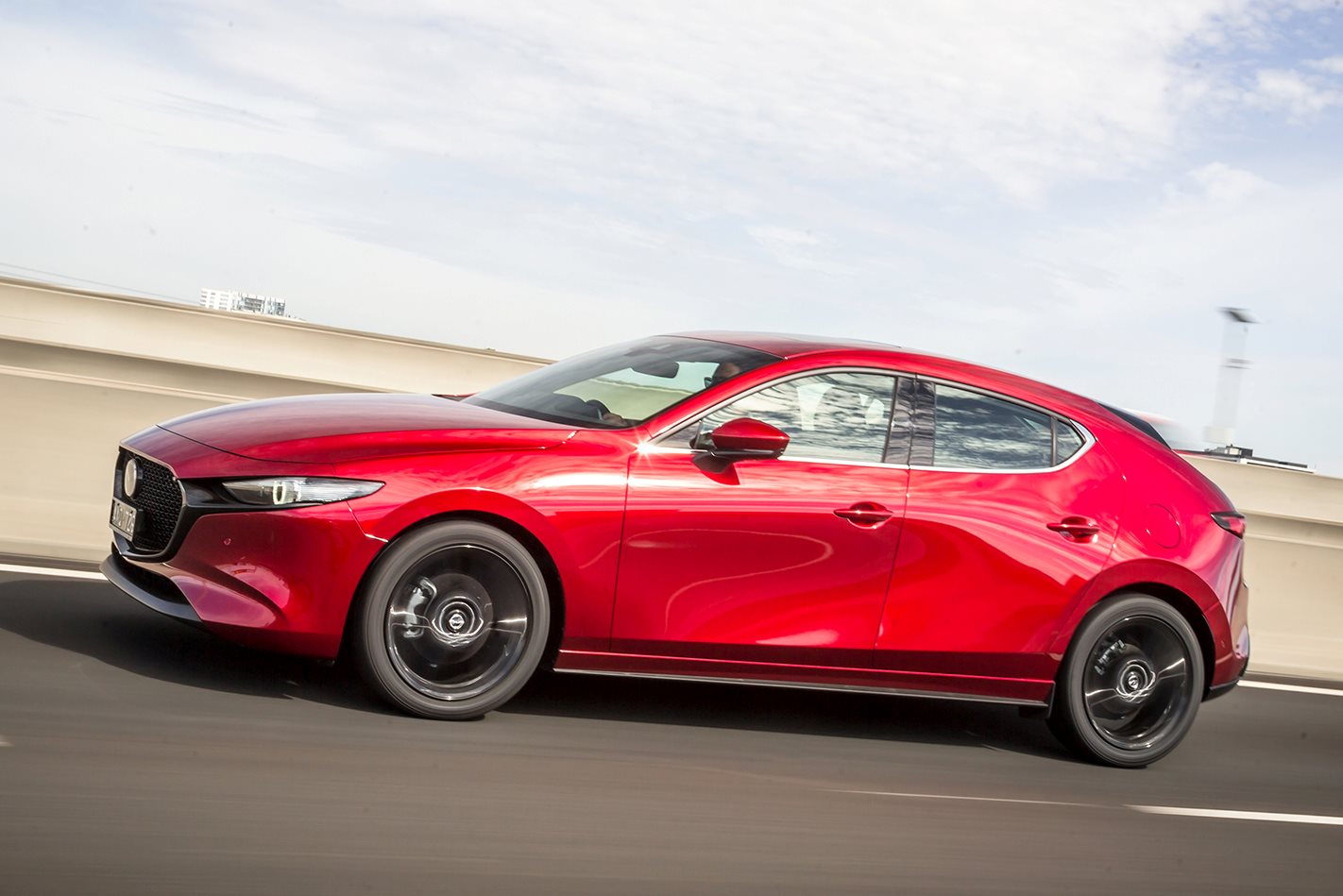
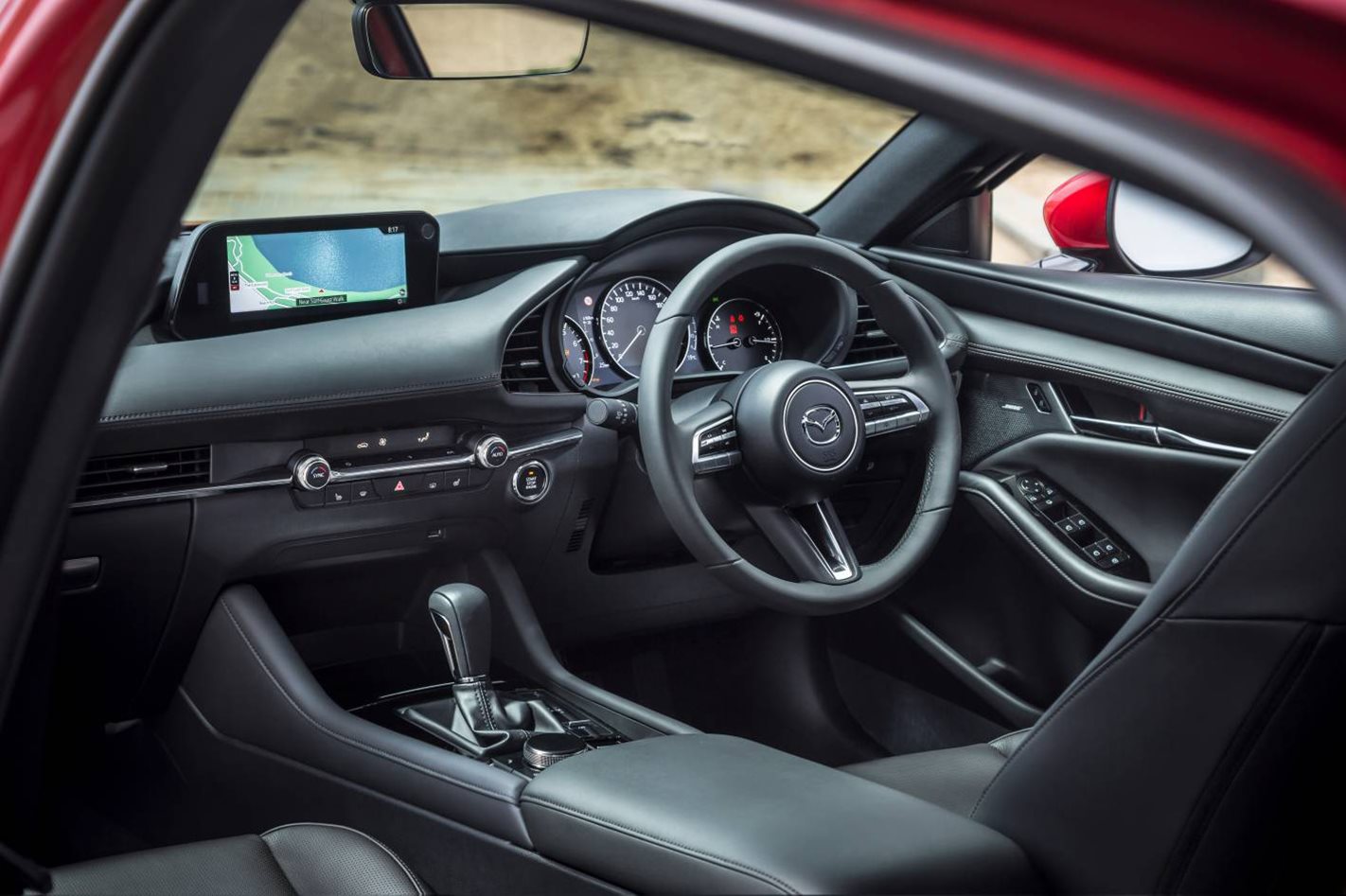
There aren’t many other supercharged petrol engines on the market to compare like for like, but the smaller 1.8-litre that powers the Lotus Elise produces 250Nm.Fortunately, Mazda’s claim that the new unit has all the advantages of a sophisticated petrol engine are certainly true. The 2.0-litre four-cylinder is most happy near the high 7000 rpm redline and is satisfying to send it there. The 132kW of power it produces at 6000 rpm is respectable but still not game-changing.Acceleration is strong at higher engine speeds, throttle response is excellent and the versatility of the power is impressive, but it’s still not the performance hero we were hoping for.
It’s probably unlikely to find its way into a full Mazdaspeed model but that doesn’t stop the newest engine being impressive if for nothing other than its incredible normality.Although we would be happy to be wrong about that because it would mean this fascinating engine has a lot more up its sleeve.
That said, the success of this engine should be gauged not on its performance credentials but on its economy, says Mazda.
What is the Mazda 3 X20 Astina like to live with?
Despite its diesely intent, the Skyactiv X engine is not clattery or rattly. It sounds largely like, in fact, one of the more conventional naturally aspirated Mazda engines.
Part of that noise is piped in via electronic enhancement, but it’s not unrealistic or fanciful as some other augmented sounds are.
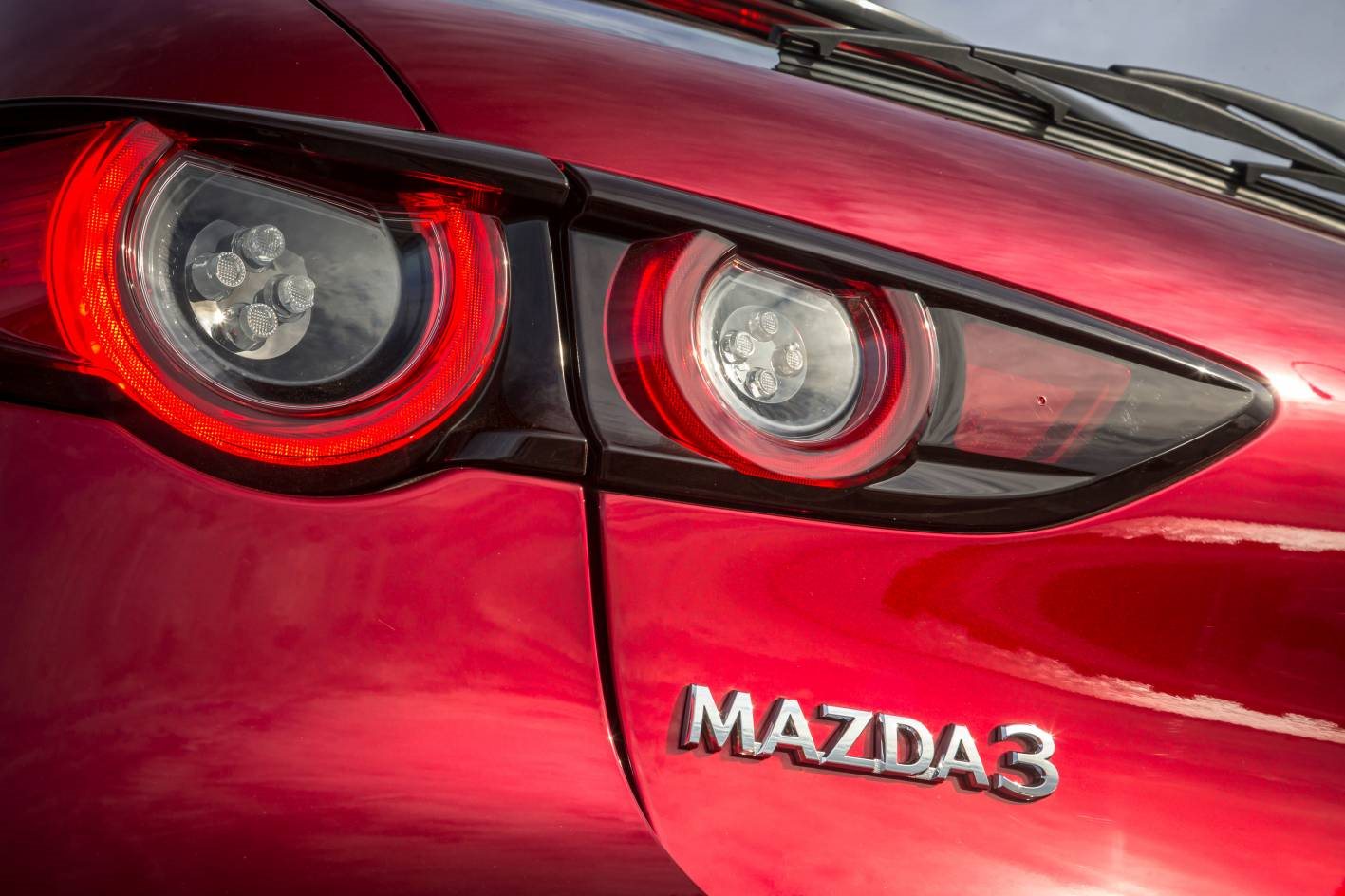
That’s a few drops above the company’s claimed 5.5L/100km (auto) but certainly in the ballpark if a lighter foot is used.On the contrary, with an added boost of electric assistance improving stop and start traffic negotiation, as well as the fuel consumption benefits that come with it, the Skyactiv X engine may well be the pick from a practicality perspective.We will reserve that verdict until a longer-term test, however.
Is the Mazda 3 X20 Astina worth the money?
Good question. If the new Skyativ X engine doesn’t offer a significant performance advantage, then surely its claimed efficiency is the key selling point?
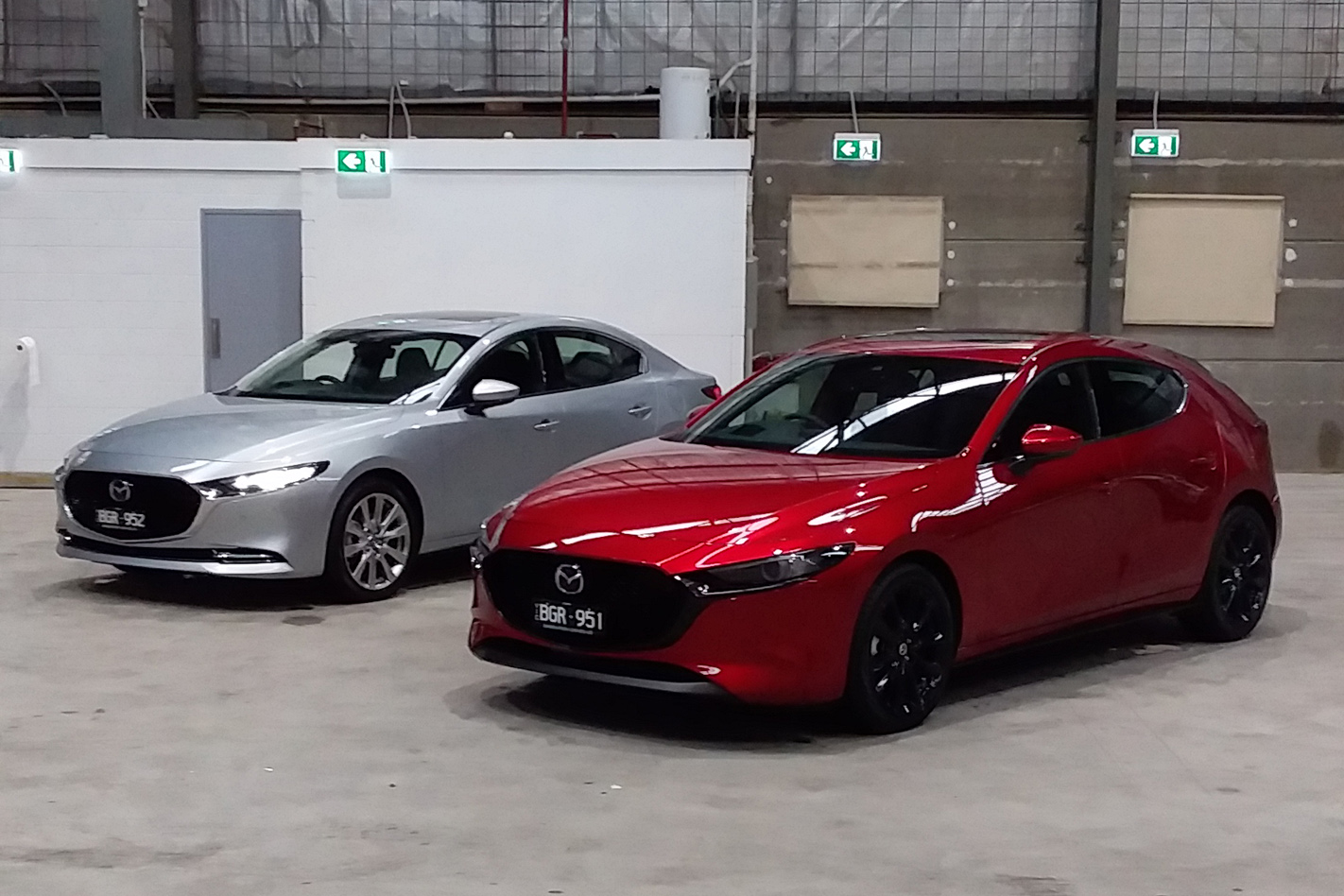
If the best claimed economy is achievable the savings could be significant. If not, it’s hard to see the price premium justified.
Although the true value proposition is disguised to some degree by the new engine only being offered in the highest grade Astina variant.If you’re shopping around the premium end of the Mazda 3 range – and you absolutely should if the budget allows – then the new X20 option is probably the most efficient version in the line-up. And it manages that with a welcome power and torque boot over the 114kW/200Nm entry version 2.0-litre.
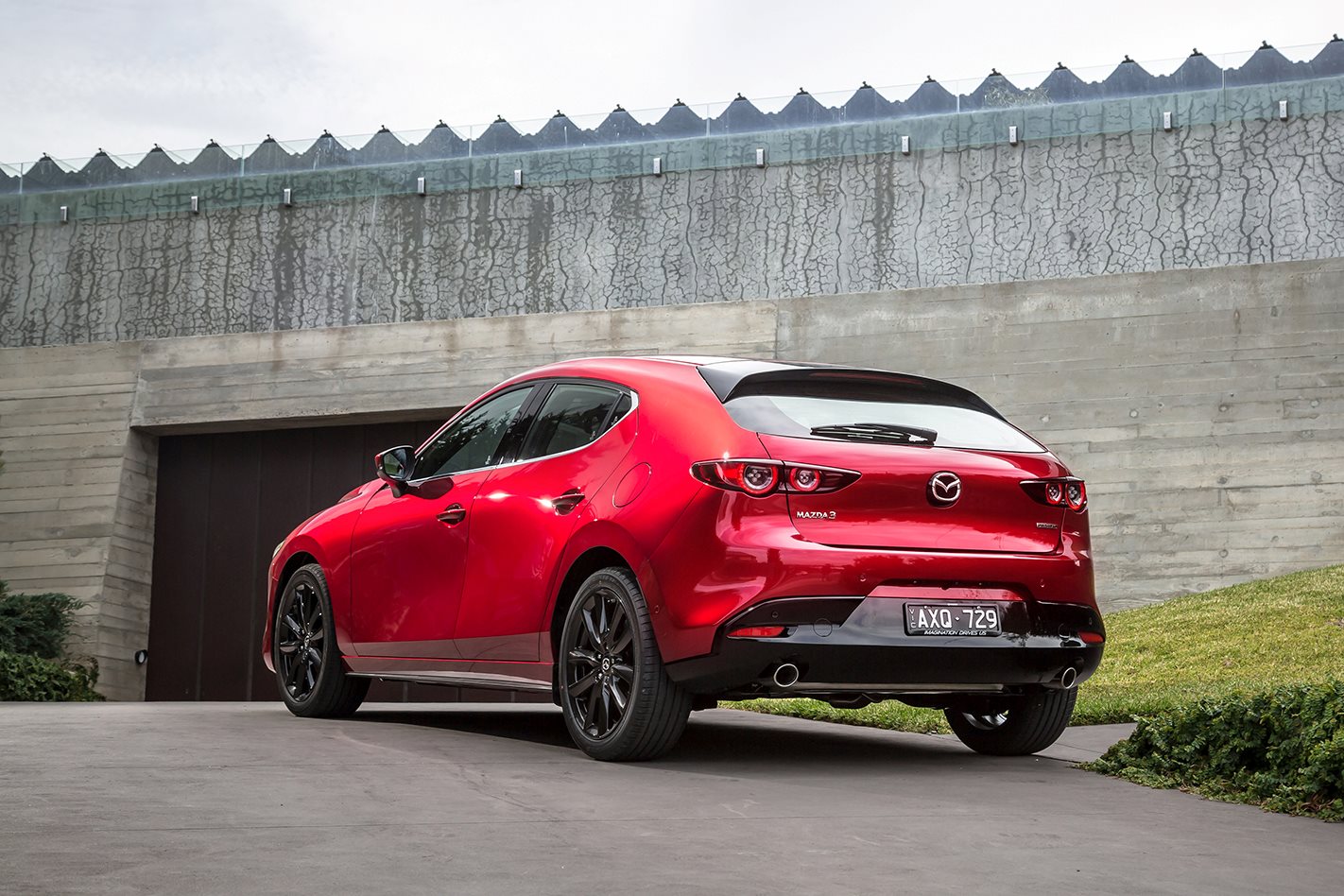
But now to clear up that abbreviation blizzard we mentioned at the start…
Mazda Skyactiv X glossary
HCCI – Homogenised Charge Compression Ignition
Unlike a diesel engine, which injects fuel into the cylinder at the exact moment combustion is required, the Skyactiv X engine introduces fuel and air already mixed or homogenised.
Mazda says this approach allows faster combustion and leaner mixtures of air and fuel – the principle behind its efficiency claims.
SPCCI – Spark Controlled Compression Ignition
While true diesel engines have no spark plugs (they initiate ignition purely by squeezing air until it supports spontaneous combustion) confusingly, the Skyactiv X engine still needs spark plugs.
That’s because compression ignition can only occur under very specific conditions. For the rest of the time, the engine runs as a normal petrol engine.

However, even when the conditions permit, spark plugs still play a role, and the ignition caused by compression is actually initiated by a spark still.
You’d be forgiven for arguing that the Skyactiv X engine isn’t, therefore, a true compression ignition engine. On a physical level, though, its type of combustion is different and only possible by the rapid combustion caused by compression ignition.
ISG – Integrated Starter/Generator
This is the core component of the Skyactiv X’s hybridisation. It replaces the separate components of a starter motor and alternator with a single component.
Unlike either of the more conventional items, the ISG is capable of applying a small amount of braking and acceleration to the car’s wheels via a belt connection with the crankshaft.
At low speed and accelerator applications, the X20 can use electric-only power, as well as regenerating power through braking.
GPF – Gasoline Particulate Filter
Like the ISG this component is not unique to the Skyactive X engine and is finding its way into many more modern petrol engines.
Particulate filters remove fine pieces of carbon from the exhaust gasses reducing the amount of pollutants released into the environment.
They have been commonplace on diesels for years but now finding greater relevance in petrol technology as emissions standards become more strict.
Verdict
Mazda’s vigil to make each drop of petrol go that little bit further is admirable and we respect the engineering challenges it has identified and clearly solved. This latest offering is proof that the Japanese manufacturer is still a leader in engine technology.
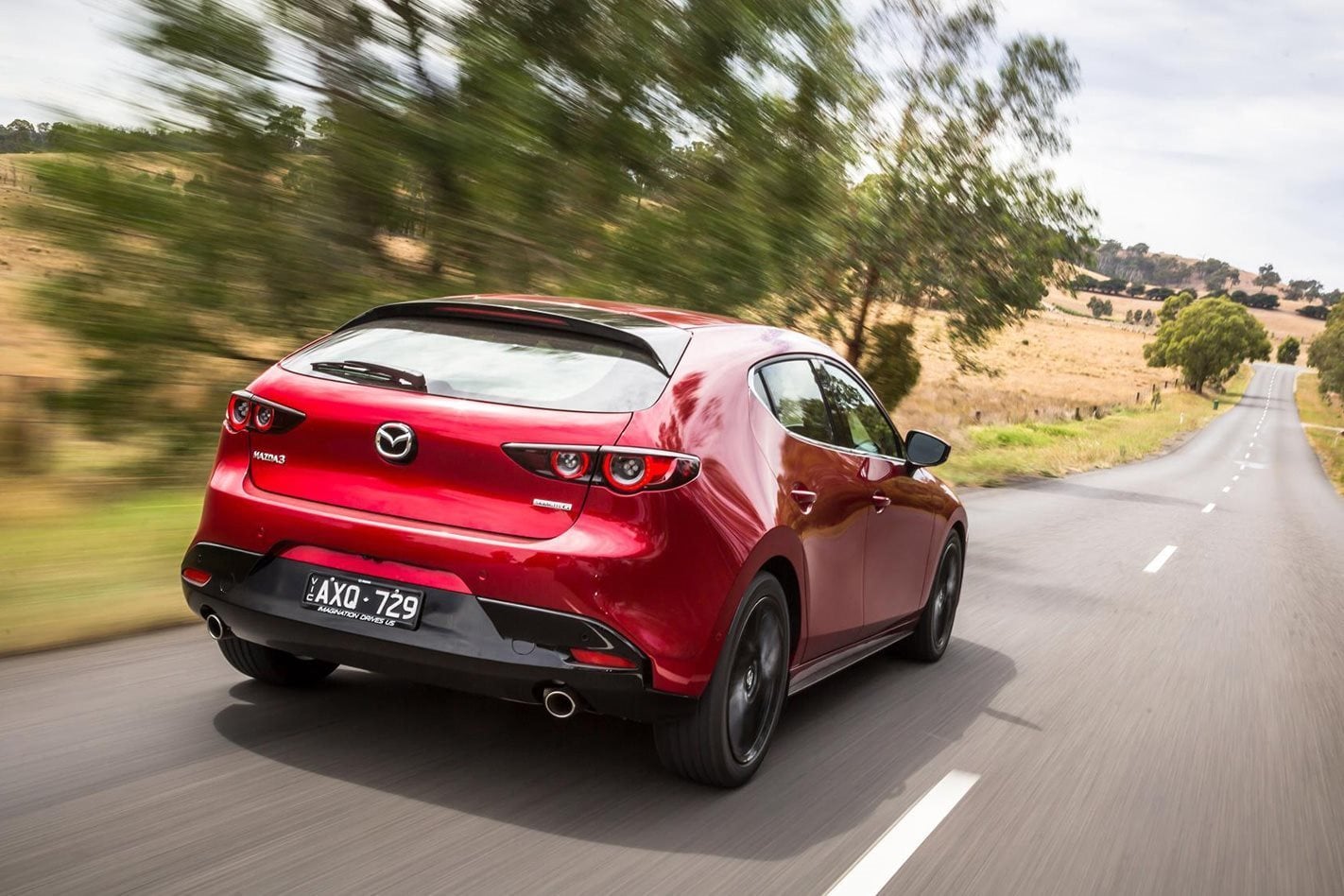
But the Skyactiv X engine is a case in point that pursuing combustion efficiency is a thankless game of diminishing returns.
At a time when many manufacturers are pumping resources into electrification and pure EVs, Mazda’s efforts to preserve petrol power seem a little late, but that doesn’t stop the car enthusiast in us breathing a little sigh of relief.
Amidst a pandemic-plagued 2020, eSports and competitive virtual racing gained a huge uptick in exposure and popularity.
Earlier in the year various official racing disciplines temporarily held virtual races in lieu of physical events, and various outlets around the world reported surging demand and subsequent supply shortages for all things sim racing.
NASCAR driver loses race after daughter kills simulator
Aston Martin is the latest to join the party, having recently revealed its AMR-C01 Racing Simulator.
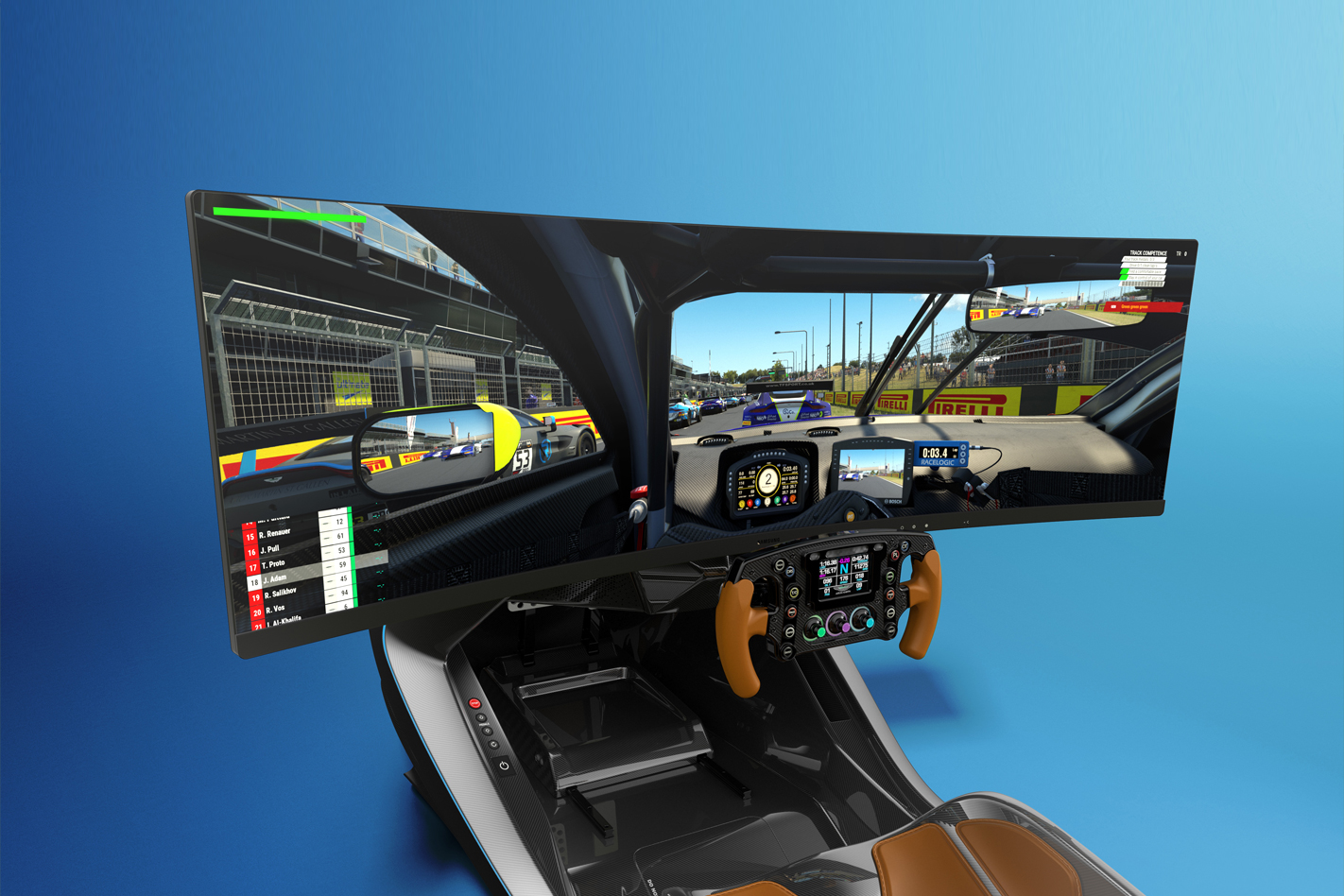
Described as the “ultimate luxury home simulator”, the Aston Martin-branded sim-rig is developed in conjunction with Curv Racing Simulators, a British firm led by Aston Martin works driver Darren Turner.
Designed by Aston Martin’s own design team, the rig centres around a carbon-fibre monocoque while the front invokes the signature Aston Martin Racing grille.
The seating position mimics that of the Aston Martin Valkyrie while the overall package was designed to “exude the same elegance… and balance of proportion as any Aston Martin with racing lineage”.
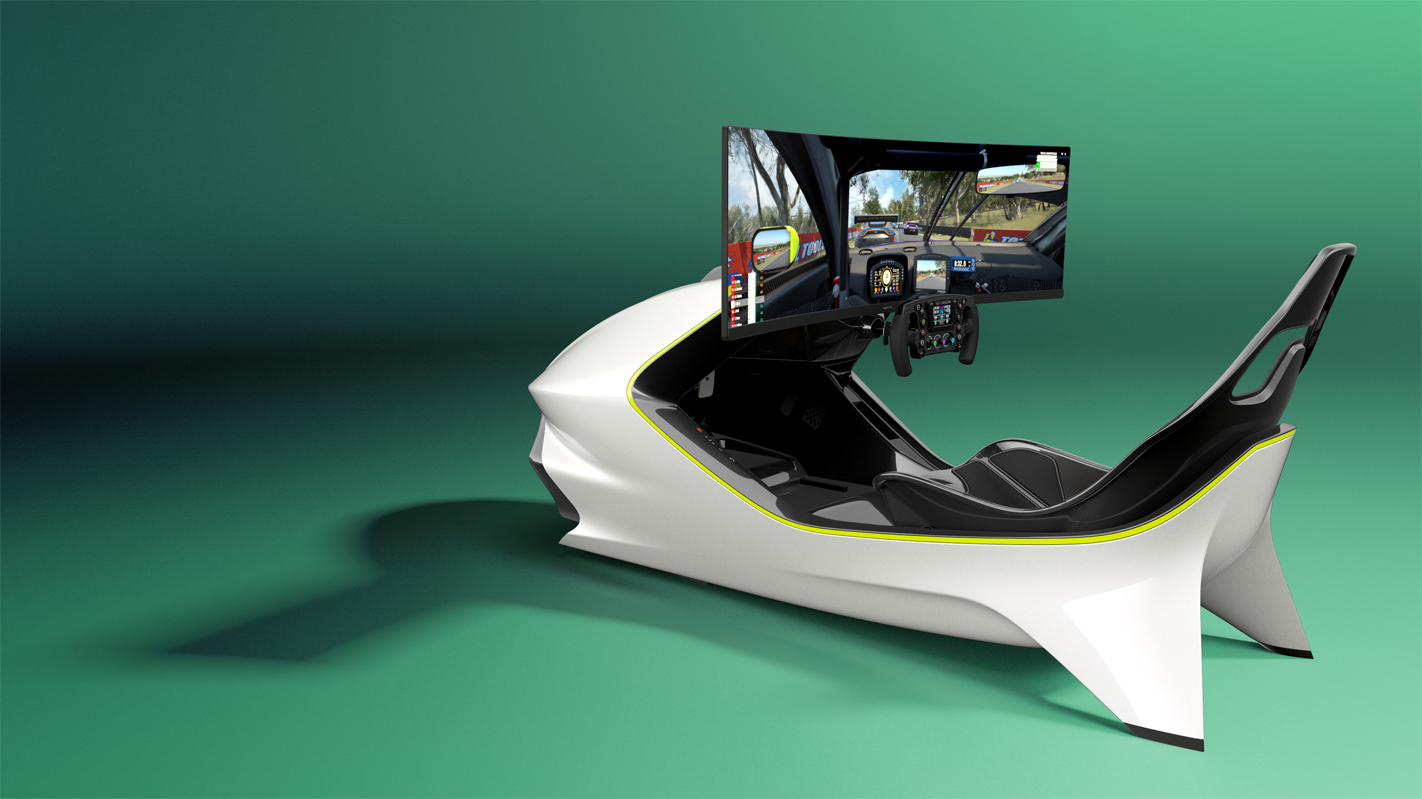
Limited to 150 units, Curv Racing Simulators will hand-assemble each rig using the highest-quality components and comes pre-loaded with the latest Assetto Corsa software.
The order book is currently open with a base RRP of GBP£57,500, which equates to a whopping AU$104,000.
There’s a vast array of colour, livery and seat trim options, which will no doubt incur extra charges.
A quick scan of the classifieds, though, reveals that it’s possible to secure an actual Aston Martin for the same money.
There is a secondhand DB9 or DB7 Vantage currently listed with our friends over at Unique Cars.
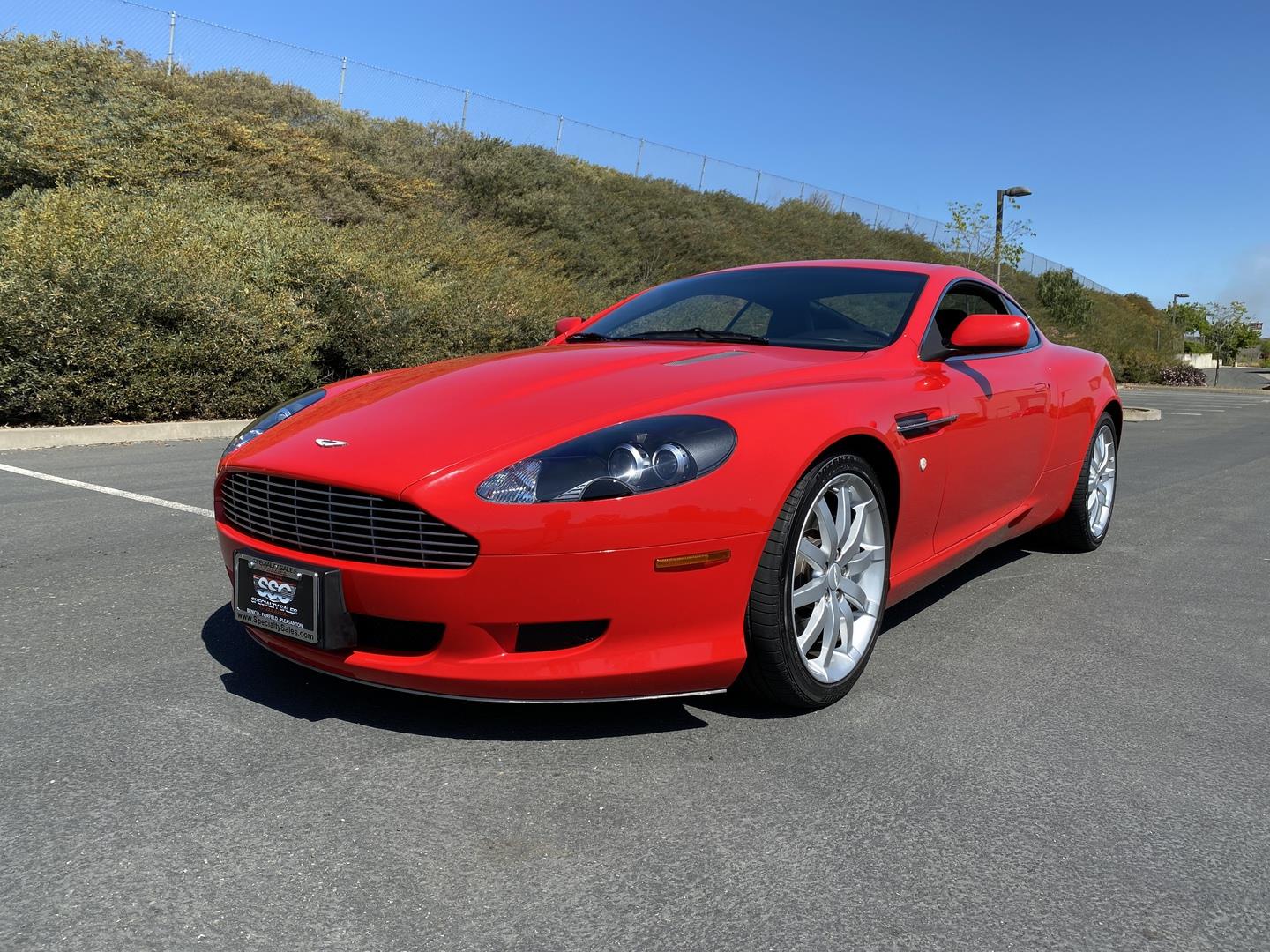
Or how about a nice 2008 V8 Vantage, or even a V12-powered Vanquish, as seen in James Bond’s Die Another Day?
If you’re still keen on the digital realm, then you can book your sim build at curvrs.com
If it were up to us, however, we’d eschew Aston Martin’s flashy six-figure sim and opt for something a little more affordable like Logitech’s new G923 set up and buy ourselves the real thing.
Which would you rather stick in the garage? A secondhand Aston Martin, or a flashy new racing simulator?
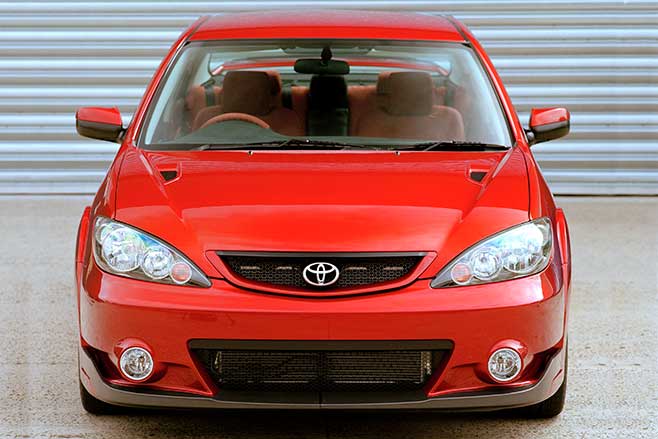
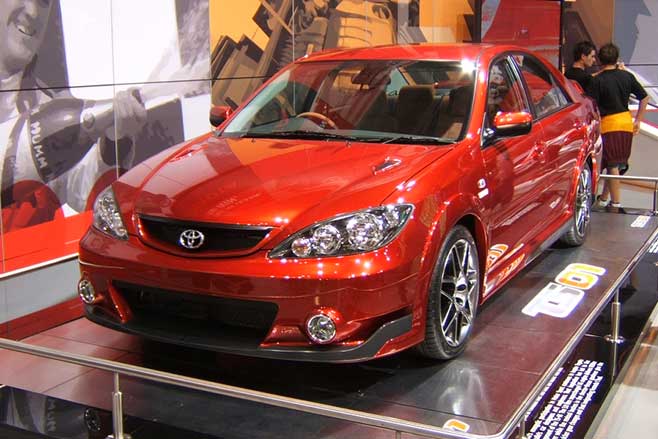
Has any car in history suffered from greater stigma than the Toyota Camry? Synonymous with cardigan-wearing, bowls-playing septuagenarians, Toyota Australia attempted to spice up the Camry’s image with the TS-01.Unveiled at the 2005 Melbourne Motor Show, the TS-01 featured some serious re-engineering, starting with the addition of a supercharger to the 3.0-litre V6. Outputs lifted from the standard 145kW/284Nm to 185kW/320Nm thanks to 0.5bar (7psi) of boost and a new cat-back exhaust, while the ECU was remapped with the assistance of Toyota Japan.
Specifications
Engine: 2995cc V6, DOHC, 24v, supercharger Power: 185kW @ 5200rpm Torque: 320Nm @ 4400rpm 0-100km/h: 6.5sec (est.) Price new: N/A
What is wireless phone charging?
Newer Apple and Android smartphones can be charged on induction pad without the need to plug it in to a USB socket.
In simple terms, an induction pad uses a coiled electrical conductor to produce an electromagnetic field that is transmitted a bit like a radio frequency. When you place a suitably equipped phone on the pad, the electromagnetic field is energised within the phone to produce an electric current that provides enough power to charge it.
Is a wireless phone charger magnetic field dangerous?
No. The magnetic field is very weak and has a tiny range that’s just enough to reach the phone sitting on the charging pad. It’s much like the cordless charger used for an electric toothbrush.
Does a wireless phone charger affect battery life?
There is some debate about this, but recent research suggests the impact on phone life is no more than a plug-in battery charger.
You can’t overcharge a smartphone but constantly charging it from 0 to 100 percent will hasten the lithium-ion battery degradation. This is because the ions that create the charge have to travel back and forth along an electrolyte between a positive cathode when giving off electricity, and a negative anode when being charged.
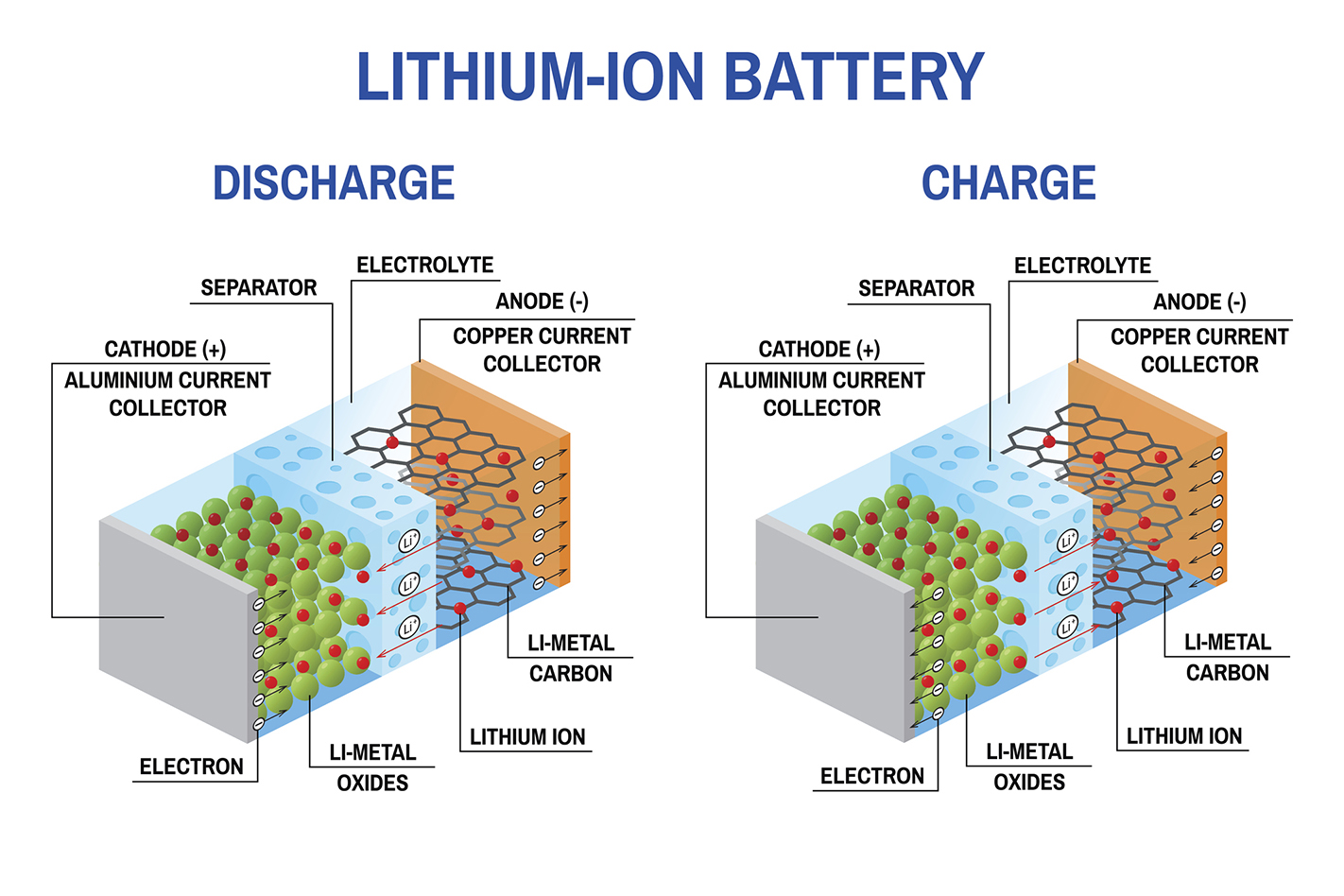
Charging a battery from 0 to 100 percent charge means the ions have to travel more which wears out the electrolyte quicker than if the charge shifted between say 30 and 80 percent charge. At the same time keeping your phone constantly topped up, or keeping it between 50 and 100 percent charged also reduces ion movement and slows electrode degradation.
Ideally you want your phone mostly charged between 50 and 80 percent. If you’re going for a long drive it’s worth turning the charging pad off from time to time.
Do wireless phone chargers cause smartphones to heat up?
Wireless charging creates energy, including heat, which can reach around 30 degrees Celsius around your phone.
This sounds hot, but it’s actually not much more than the heat generated from the palm of your hand.
Ways to avoid the phone gradually heating up include taking it out of its protective case for better ventilation.
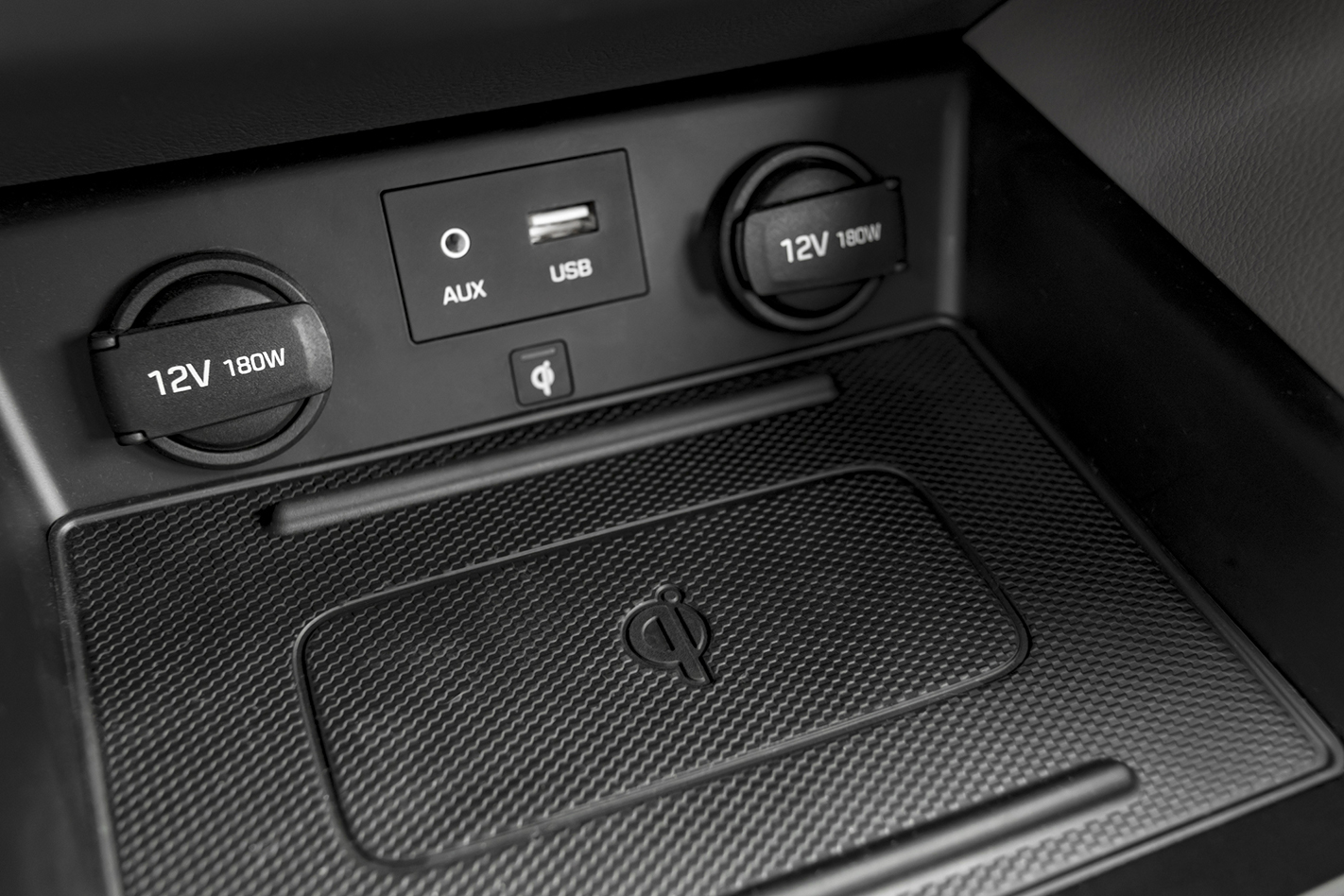
Also, make sure the phone is properly seated on the charging pad so the magnetic field is aligned with the phone’s charging coil. If the phone is off centre, the magnetic field will have to travel a little further, which means more energy and heat.
Make sure the phone is set to darken or turn off the screen when operating such as when making a phone call or linked to your infotainment system. And stop unwanted apps running in the background.
As well, make sure the phone isn’t sitting in direct sunlight. Most wireless charging pads in cars are located in a nook underneath the dashboard or in the centre console, so this should be less of an issue than having a phone mounted on the windscreen.
If the phone is over-heating it’s more likely a sign the battery is degenerating and has lost charging efficiency, meaning more energy is required.
Phones should switch themselves off when they get too hot, but if yours doesn’t do this, be sure to put it on a heat-proof surface. In fact, it’s time for a new phone.
Do wireless phone chargers damage credit cards?
Because wireless charging uses magnetic induction to charge your phone, it could potentially affect the information stored in the magnetic strip of a credit card and the like, or things such as key cards, passports. Does a phone wipe your hotel key? We’ve had it happen to us before!
Don’t place such items between the charging pad and the phone. This includes if you have a phone case that doubles as a wallet.
Footage of Robert Kubica thrashing a modified BMW M4 on the Nurburgring has emerged online, offering us a rare glimpse at what an F1 driver can do at the famed circuit in a street car.
Now, you may have seen a few laps of the most fearsome circuit left on the planet, but trust us… this one tops them all.
Shot from the point of view of Misha Charoudin, who sits in on the lap as a student rather than his usual role as a ’Ring instructor, Kubica displays a level of raw speed and on-limit yet in-control commitment you’d expect from a grand prix winner.
Sadly, there’s no lap time accompanying the effort. Kubica is flat out from what is known as the bridge to gantry (a shortened lap) and encounters traffic on multiple occasions, including a Porsche 911 GT2 RS.

But the video also dispels doubt over the Polish driver’s ability, long the subject of conjecture after a life-changing rally accident in 2011 almost severed his right arm and leaving him with a functional but compromised right hand.
It’s clear from the first corners that his skills extend far beyond the BMW M4’s limits, as he rarely misses an apex or opportunity to use every last available inch on track. It’s breathtaking.
Yet, Kubica – who’s also competed in the top echelons of the World Rally Championship – described the pace as “safe”.
At the video’s end, Charoudrin admits he would have been asking to get out if it was anyone else driving the car that hard.
https://www.instagram.com/p/CFZy93InWnD/?utm_source=ig_embed&utm_campaign=loading
Apex Nurburg rental shop owner Robert Mitchell has joked on the video’s comment section that the car might need a few days before anyone else can hire it as they need “a few days to rebuild it”.
It’s startling to learn in the video’s first minutes that it’s basically still a sighting lap for Kubica who’s only done 15 laps prior at the joint.
He admits he’d practiced on iRacing over lockdown and the track is actually quite different from the virtual reality.
“The track actually reproduces pretty well,” he says. “Some corners I thought they are faster than on the game, some are probably a bit slower.”
But the story gets better. Kubica says he ended up at Charoudin’s rental shop after other outlets insisted the DTM racer and Alfa Romeo Sauber test driver needed to carry an instructor onboard as a passenger.
Kubica drove for Williams F1 during the 2019 season but was replaced this year after failing to keep on his teammate George Russell’s pace.
We all know what the new 2021 BMW M3 looks like by now, but what’s it like under the skin when you hold it up to scrutiny against its biggest rivals, the Mercedes-AMG C63 S and the Alfa Romeo Giulia Q?
We grabbed data from a few of the main categories across these cars and compared them, using the top-spec M3 Competition and C63 S sedan as specific variants.
Need to catch up first? Read the new M3 and M4 details in full
Engine
The BMW M3’s new S58 is pretty similar in terms of philosophy to previous BMW inline sixes, but this 3.0-litre twin-turbo unit makes as much power as AMG’s venerable 4.0-litre twin-turbo V8 and Alfa’s Giulia Q’s 2.9-litre twin-turbo V6. – that’s 375kW. The Bimmer’s peak shows up at 6250rpm, the AMG at 5500, and the Alfa at 6500.
Torque figures for the M3, C63, and Giulia come in at 650Nm at 2750-5500rpm, 700Nm from 1750-4500rpm, and 600Nm between 2500-5000rpm respectively.
Drivetrain
The M3 comes in both 6-speed manual and 8-speed auto, and with rear drive or AWD, but the Competition spec is expected to be at its meanest with the latter of both. It will only be available in auto, but will come first in RWD before the AWD model arrives later. BMW’s xDrive system is able to be switched to rear-drive mode for ‘dynamic’ driving. Its auto is a first for the M3 in that it’s a torque converter and not a BMW SMG or DCT.
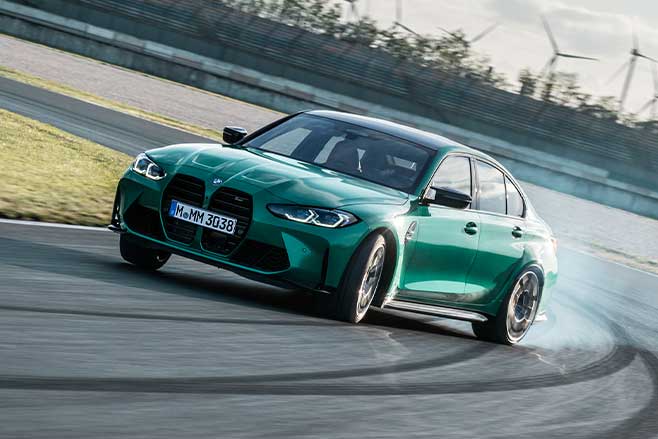
The AMG and Giulia are both rear-drive only, with a 9-speed auto doing the shifting in the former and an 8-speed in the latter.
Dimensions
The new M3’s slightly longer, wider, and taller than the previous (4671x1877x1431mm to 4794x1903x1433mm), and now even longer, wider and taller than the C63 (4756x1839x1426mm). The Giulia (4639x1873x1426mm) is the shortest, though not the narrowest (that’s the C63).
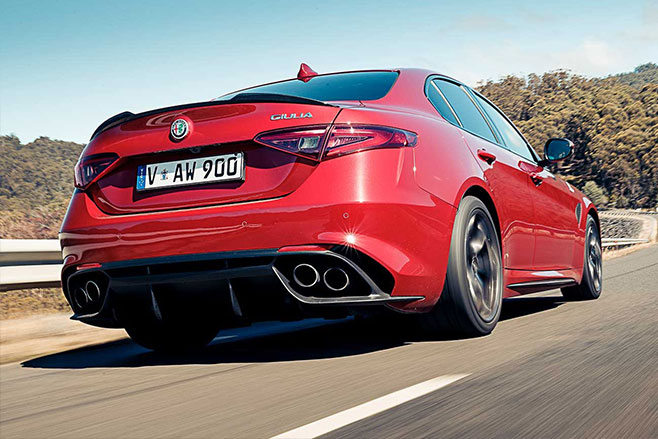
The new M3 is now a heavy hitter at 1730kg, which will increase again with xDrive AWD bits, so the C63 and Giulia seem positively featherweight at 1680kg and 1585kg respectively (just kidding, that’s still quite heavy).
Brakes
The BMW M3 Competition now has 380mm discs and six-piston calipers at the front and 370mm with single-piston calipers at the rear, on account of its extra weight and previously somewhat inadequate brakes. The C63 S as standard comes with 390mm discs with six pistons at the front, though the its optional 402mm ventilated and drilled carbon-ceramics dwarf even them. The AMG has 360mm single pots at the rear, while the Giulia’s got the smallest at both front and rear – 360mm 6-pots and 340mm 4-pots respectively.
Performance
The last generation M3 Pure actually went head to head with the C63 S sedan and Giulia Q in a fast sedan test for MOTOR Magazine and topped both with a tested 4.15 second sprint to 100km/h from standstill. The AMG managed 4.21sec, and the Q 4.44sec.
BMW says the AWD 2021 M3 Competition will now hit 100km/h in just 3.9sec, and that’s with rear-wheel drive. AWD will likely drop this into the mid-3sec range.
Price
The ‘old’ M3 Comp’s $146,529 asking price, when compared to $165,900 for the AMG C63 S or $145,900 for the Giulia Q, meant it was at the lower end in terms of pricing.
BMW has now confirmed local pricing for both base and Competition spec M3, and there’s good news.
The base M3 with rear-drive and a manual gearbox starts at $144,900, while the Competition starts at $154,900. In each case, the M4 sibling is $5k higher in price.
This puts the new M3 Competition bang in the middle of pricing for the C63 S and the Guilia Q,
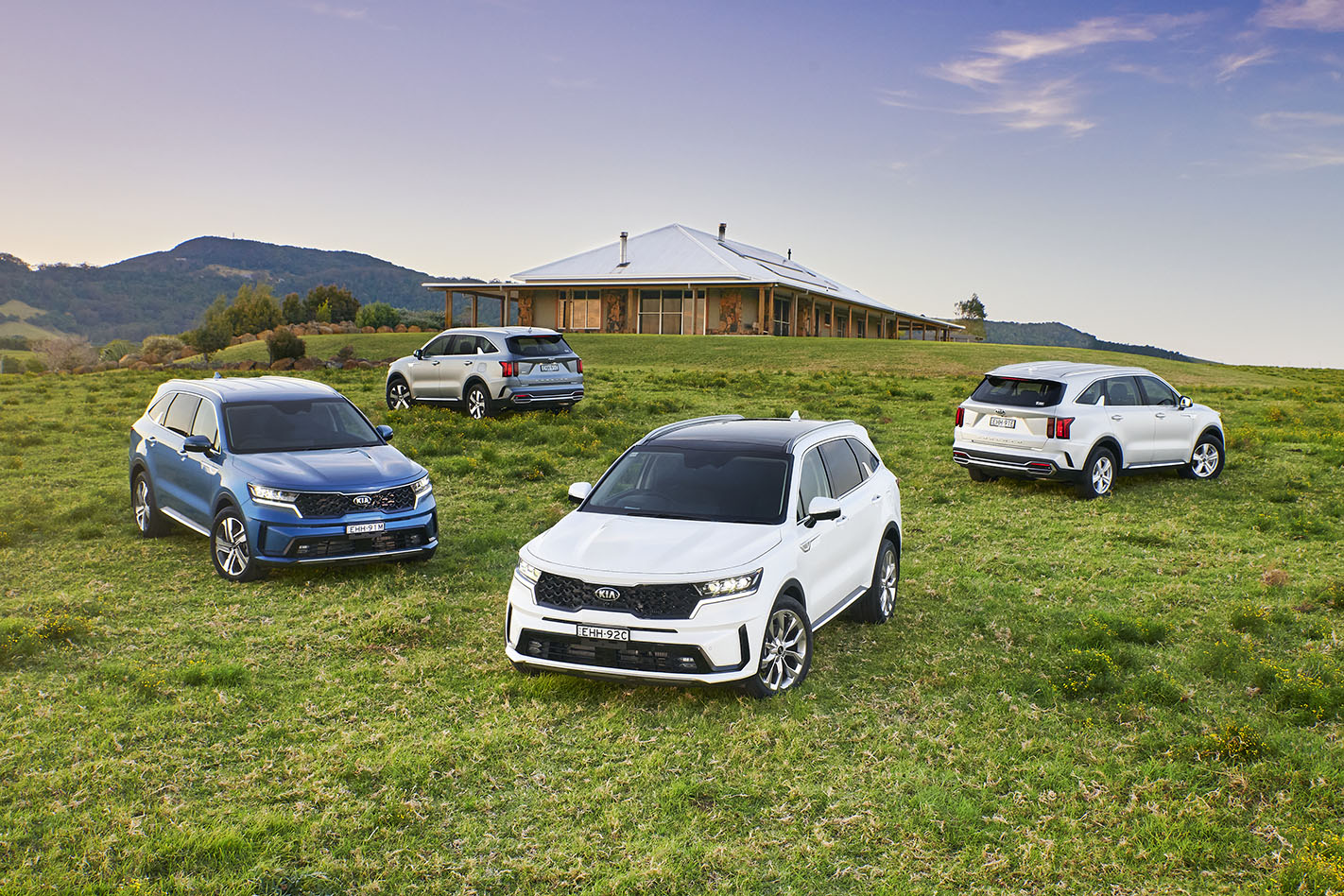
Kia’s SUV range might only appear to be a three-pronged assault at the moment, but we still field a number of questions from readers wondering which Kia SUV is the best fit for them.
The line-up is only going to grow larger as well, with the Kia Stonic compact SUV joining the range later this year and Kia’s on-again, off-again threat of bringing the Niro cross-over EV to Australia.
For the avoidance of doubt, let’s run-through the range, detailing the purposes and features of each model in Kia’s SUV range.
Kia Seltos
Kia’s arrival to the small SUV category can only be described as ‘fashionably late’, swanning in with the stylish Seltos in late 2019.
Despite the late arrival to the category, the Kia Seltos has already garnered a decent following and has notched up some respectable sales in the process.
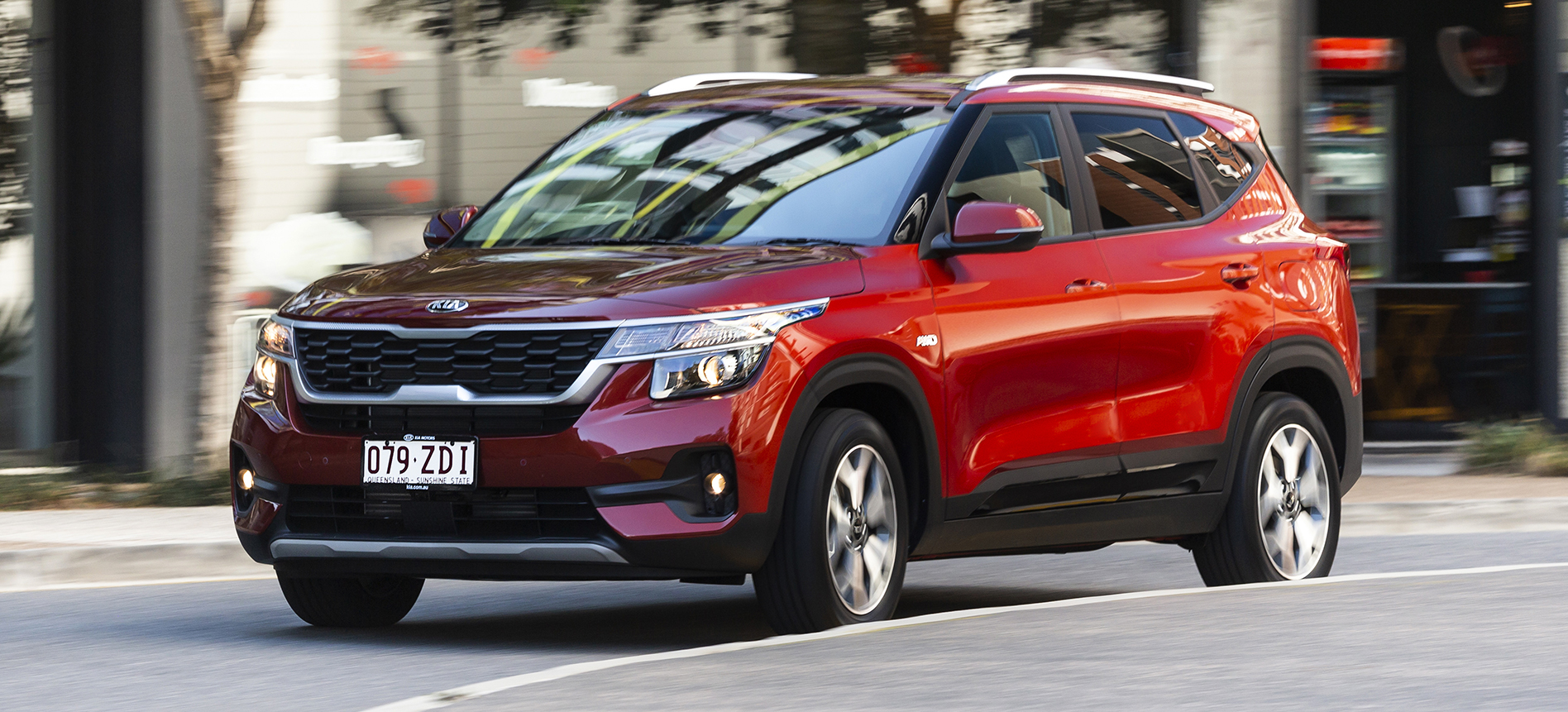
In ideology, the Seltos is aimed at technologically-minded young people with a penchant for good design, as demonstrated through Kia’s groovy marketing campaign.
The Seltos is also well suited to new families with young kids, though, with seating for five and a decent-sized 433-litre boot.
Pricing for the Kia Seltos starts at just over $25,000 and then extends up to $40,000 for the most expensive variants.
Popular variants within the Seltos range include the Seltos S, Seltos and Seltos GT-Line.
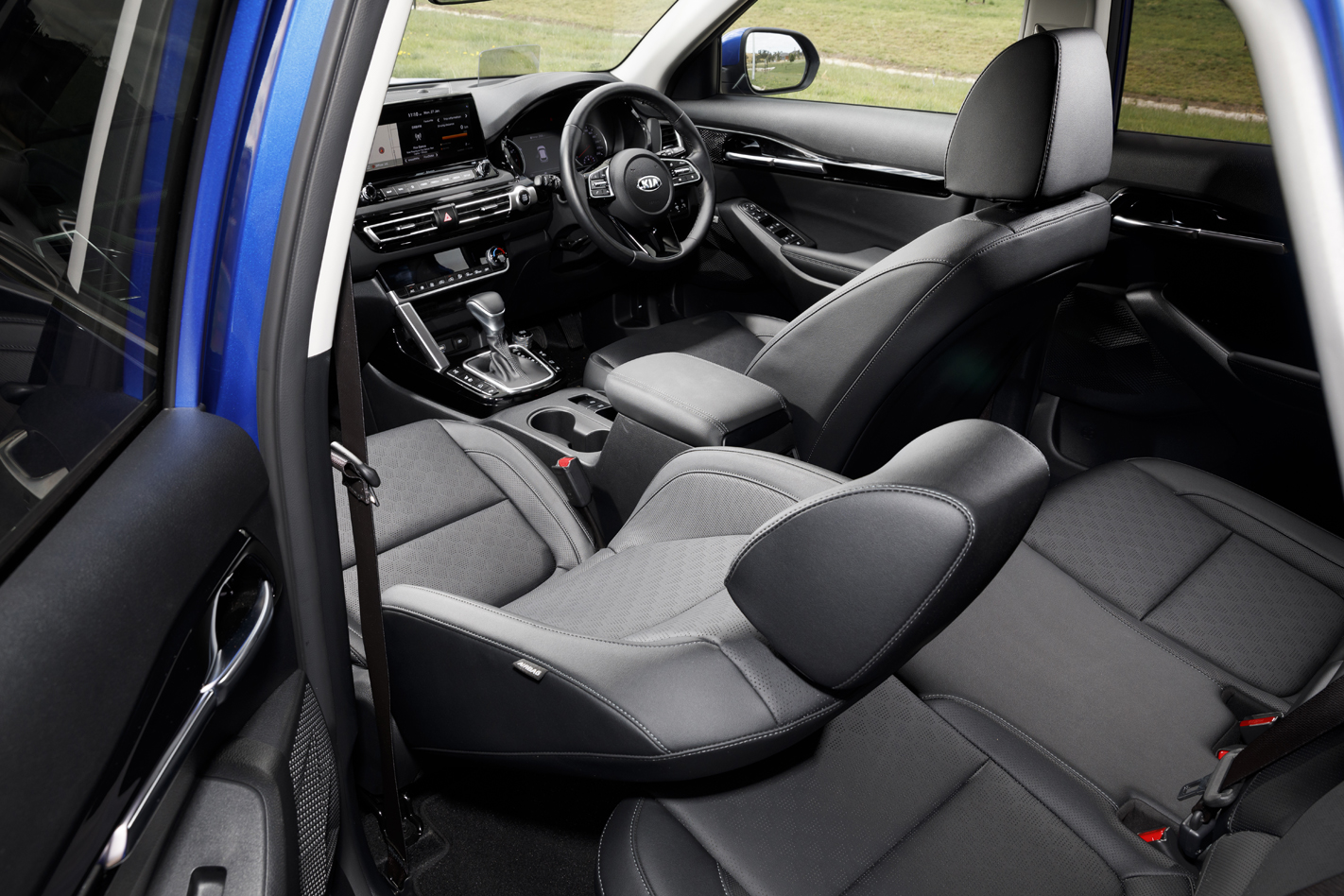
While Kia sells the Seltos with the option of an all-wheel drive drivetrain (in addition to a front-wheel-drive layout), the Seltos is unlikely to go far off-road.
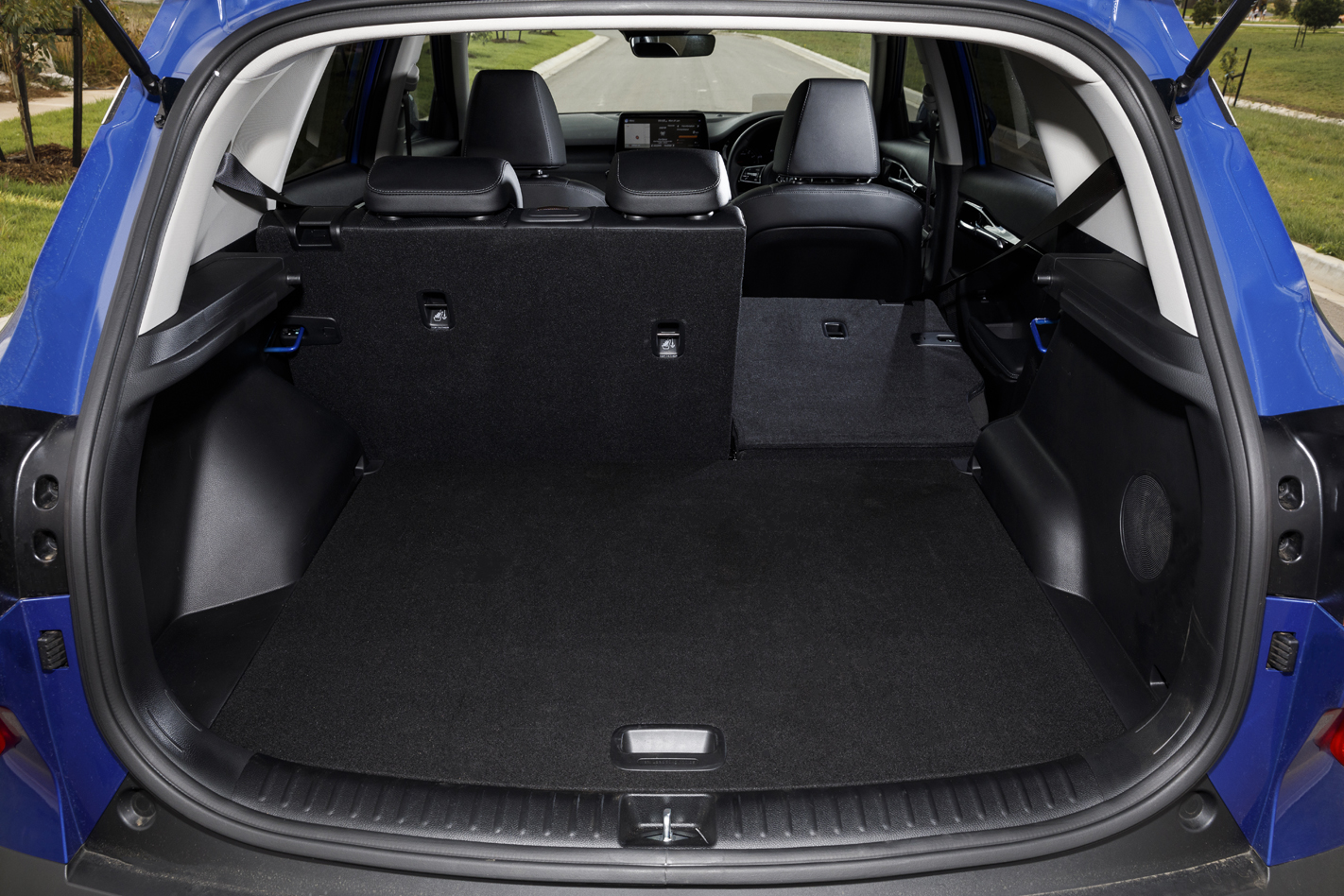
The Kia Seltos competes against rivals such as the Nissan Qashqai, Mazda CX-3, Mitsubishi ASX and Toyota C-HR.
Kia Sportage
Next rung up in the Kia SUV range is the Kia Sportage medium SUV which is a step-up in almost every aspect.
The Kia Sportage is physically larger than the Seltos, features more powerful drivetrains, more equipment is added as standard – and you guessed it: it’s also more expensive.

That said, the Sportage is better suited to families, more comfortably fitting up to five occupants.
The 466-litre boot is accessed through a wide-aperture opening which can swallow-up prams with ease.
Prices begin just below the $30,000 mark and extend up to mid-$40,000 range for more expensive variants.
Both diesel and petrol powertrains are available and the option of all-wheel drive could see you venturing out for some light off-roading.
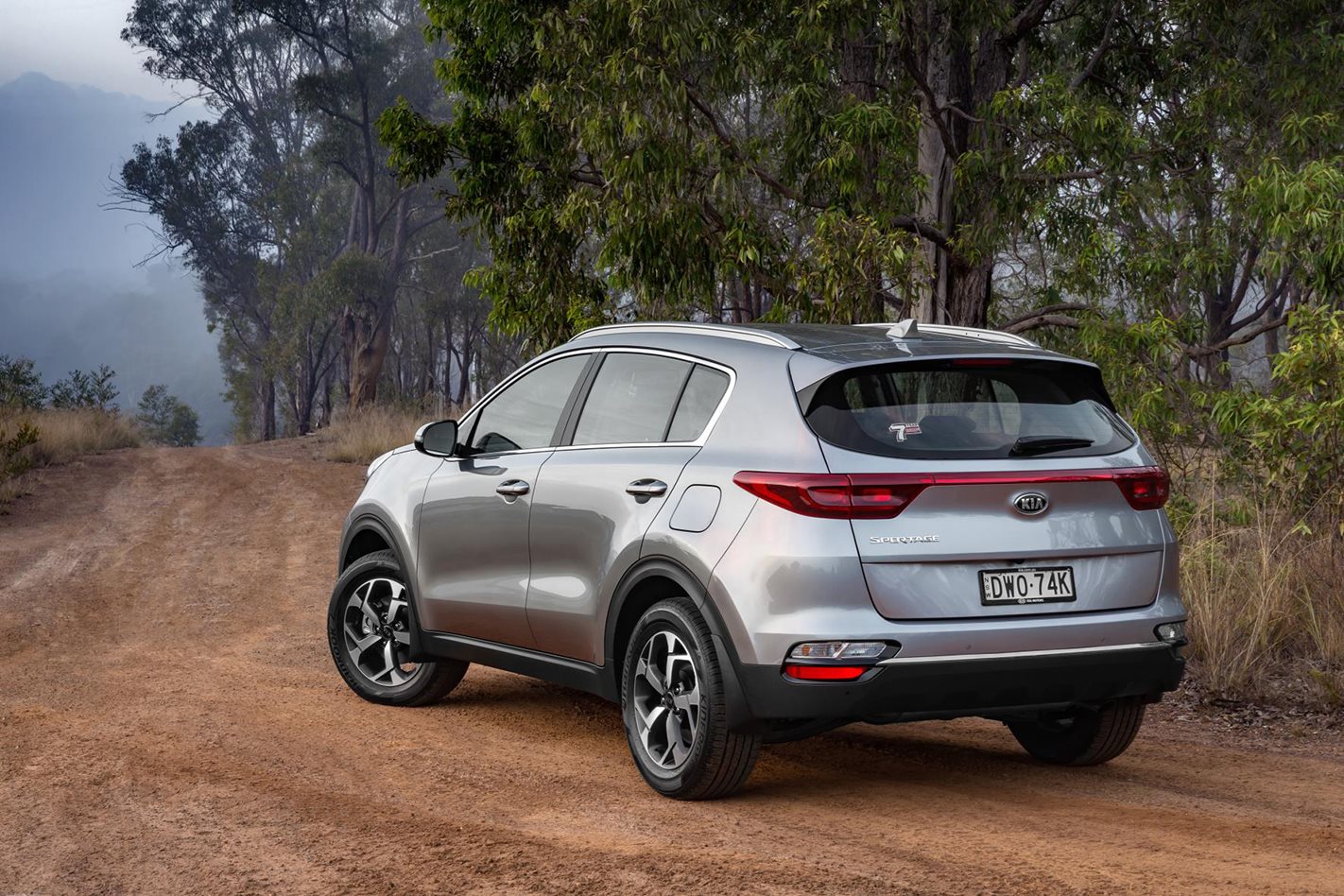
Standard equipment on the Kia Sportage includes dual-zone climate control, reversing camera with rear-parking sensors, Android Auto/Apple CarPlay smartphone connectivity, autonomous emergency braking, forward collision warning, and lane-keeping assist.
The Sportage medium SUV competes with the likes of the Ford Escape, Mazda CX-5, Hyundai Tucson, Mitsubishi Outlander, Toyota RAV4 and Nissan X-Trail.
Kia Sorento
The flagship of the Kia SUV range is the recently-updated Kia Sorento, which is classed as a large SUV with seating for up to seven people.
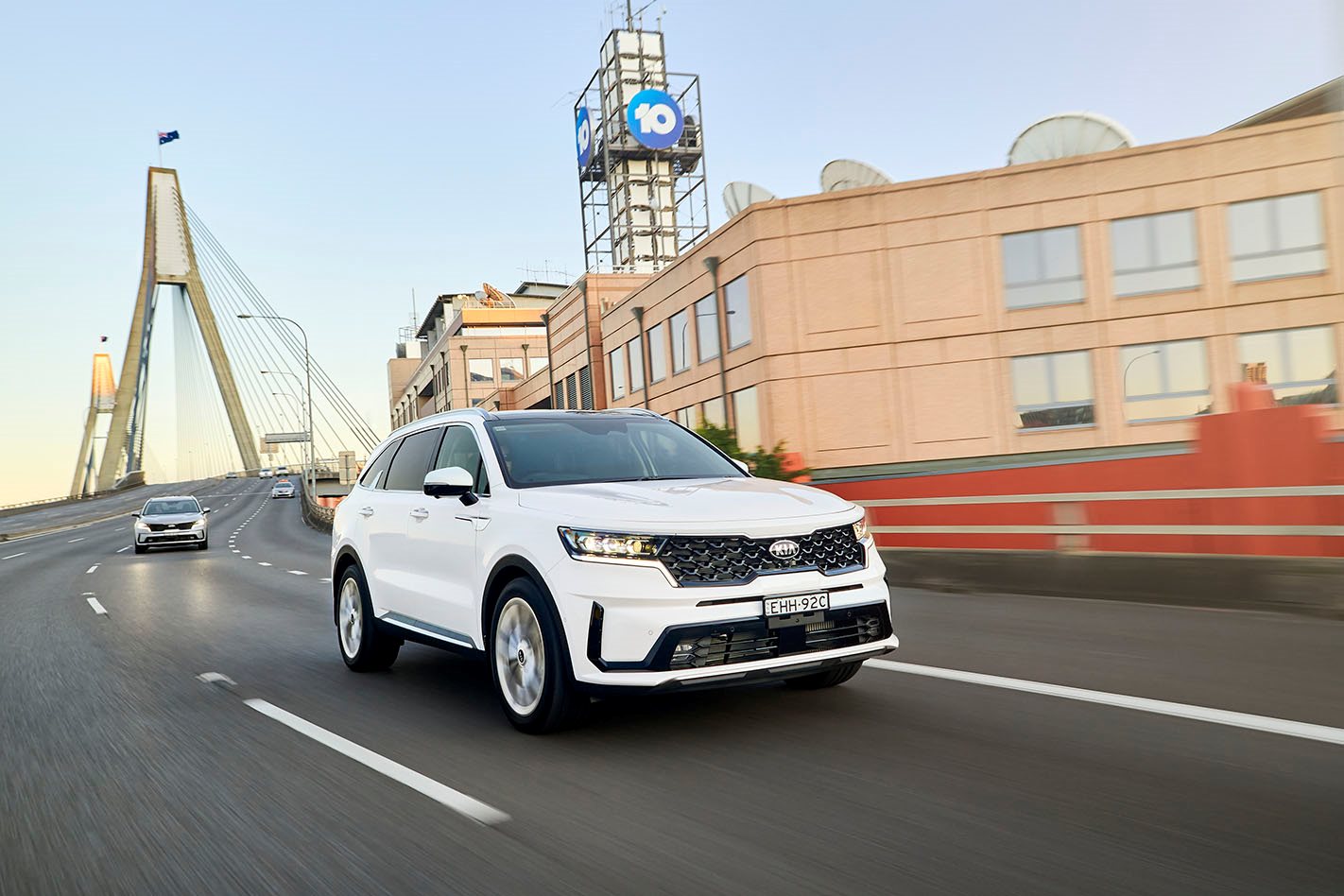
Not only is the Kia Sorento uniquely suited to cater for large families, it’s also the newest car in the Kia SUV range, featuring all the latest technology and equipment which will trickle down the line-up in time.
The Kia Sorento costs between $45,000 and $65,000 (before on-road costs), dependent on specification and engine choice.
There are three rows of seating for passengers, and the whopping 821-litre boot is well-poised to swallow whatever you throw at it. Even with the third row of seats in place, the Sorento’s boot is still 187 litres.
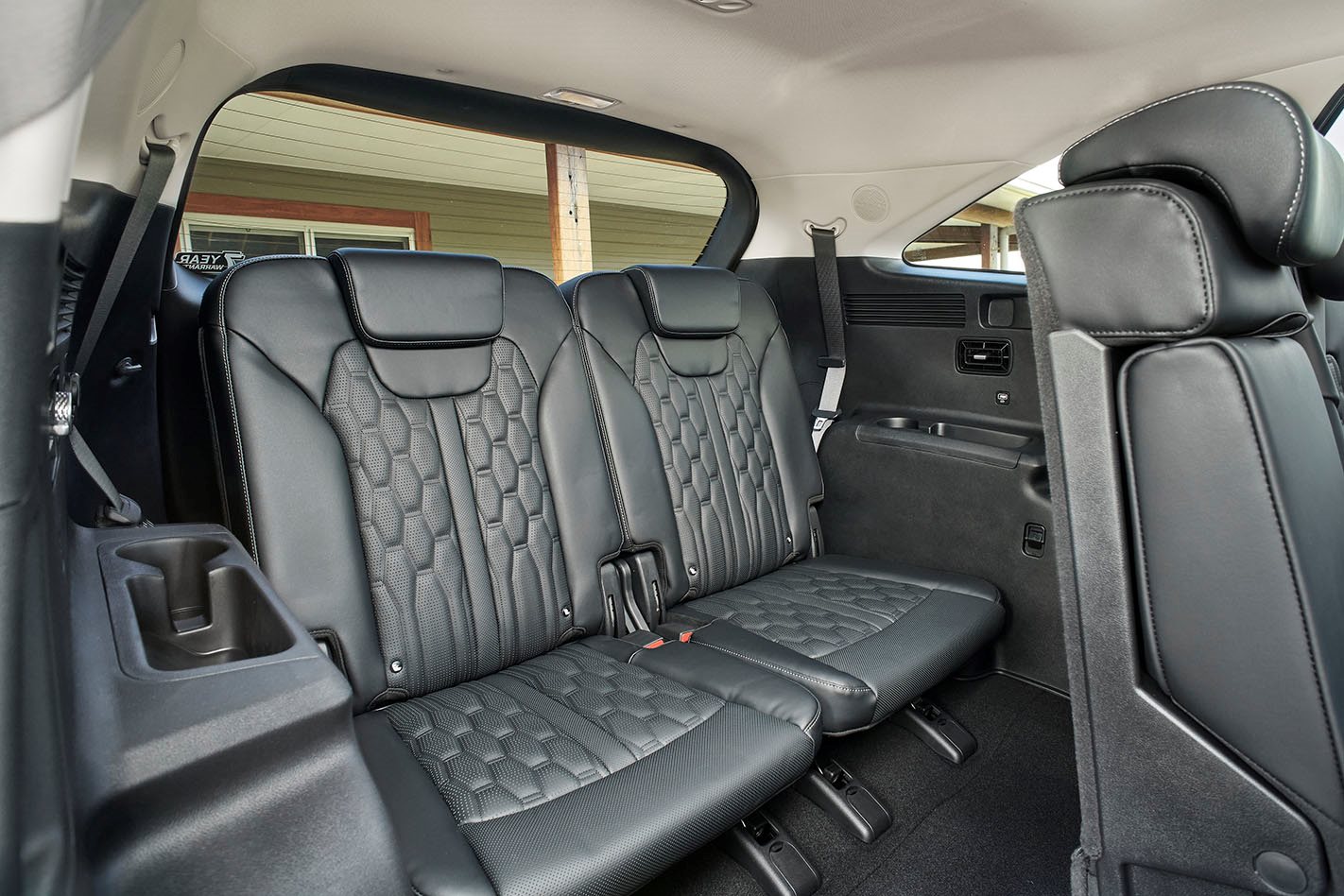
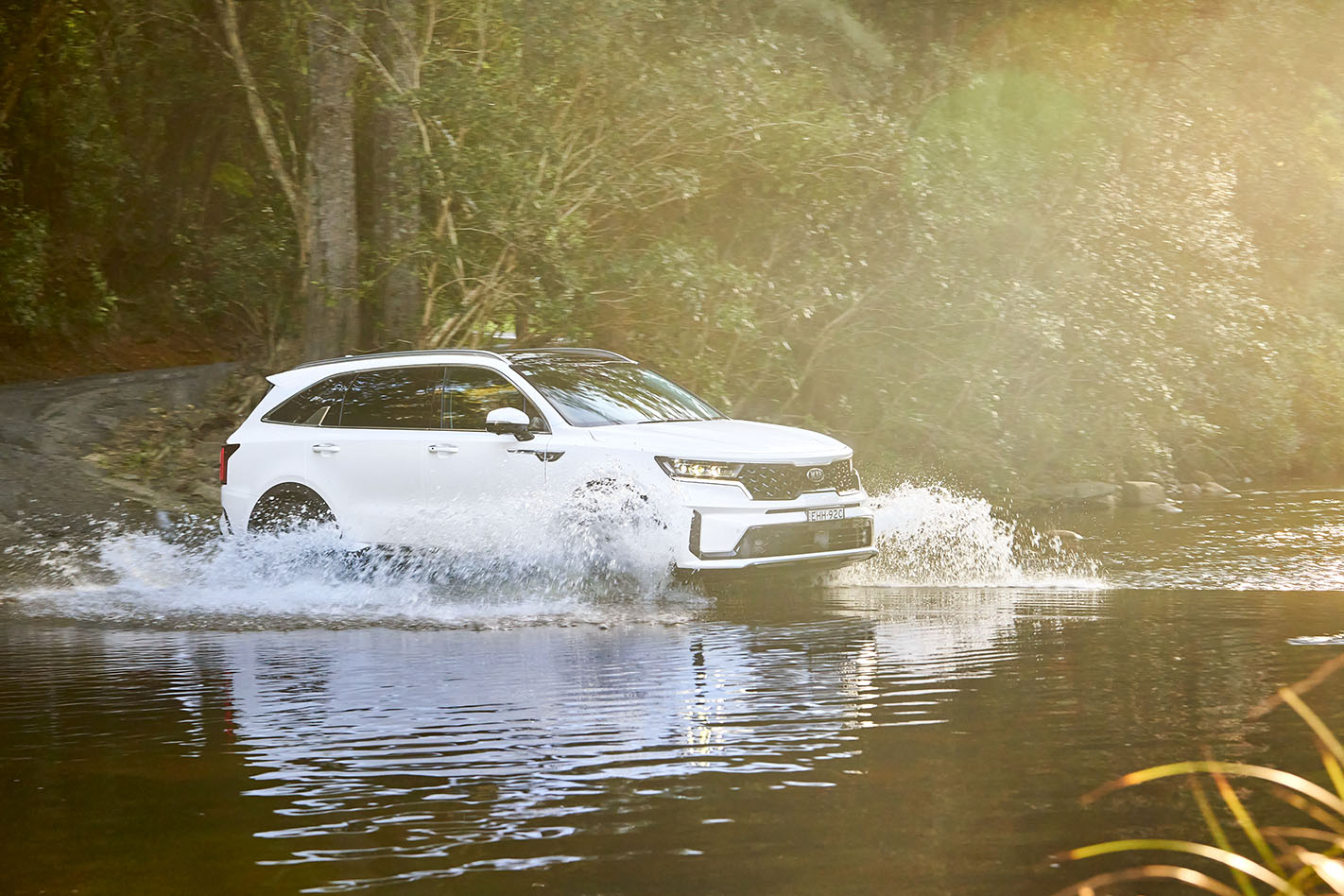
The new Kia Sorento features both front- and all-wheel drive depending on which specification you choose, and is the most off-road friendly SUV in the Kia line-up.
Both petrol and diesel engines are on offer for each and every specification in the range, meaning you can take your pick of petrol or diesel regardless of specification.
The Kia Sorento is a large SUV that competes against rivals such as the Mazda CX-9, Toyota Kluger, Nissan Pathfinder, Hyundai Santa Fe and Ford Endura and Skoda Kodiaq.
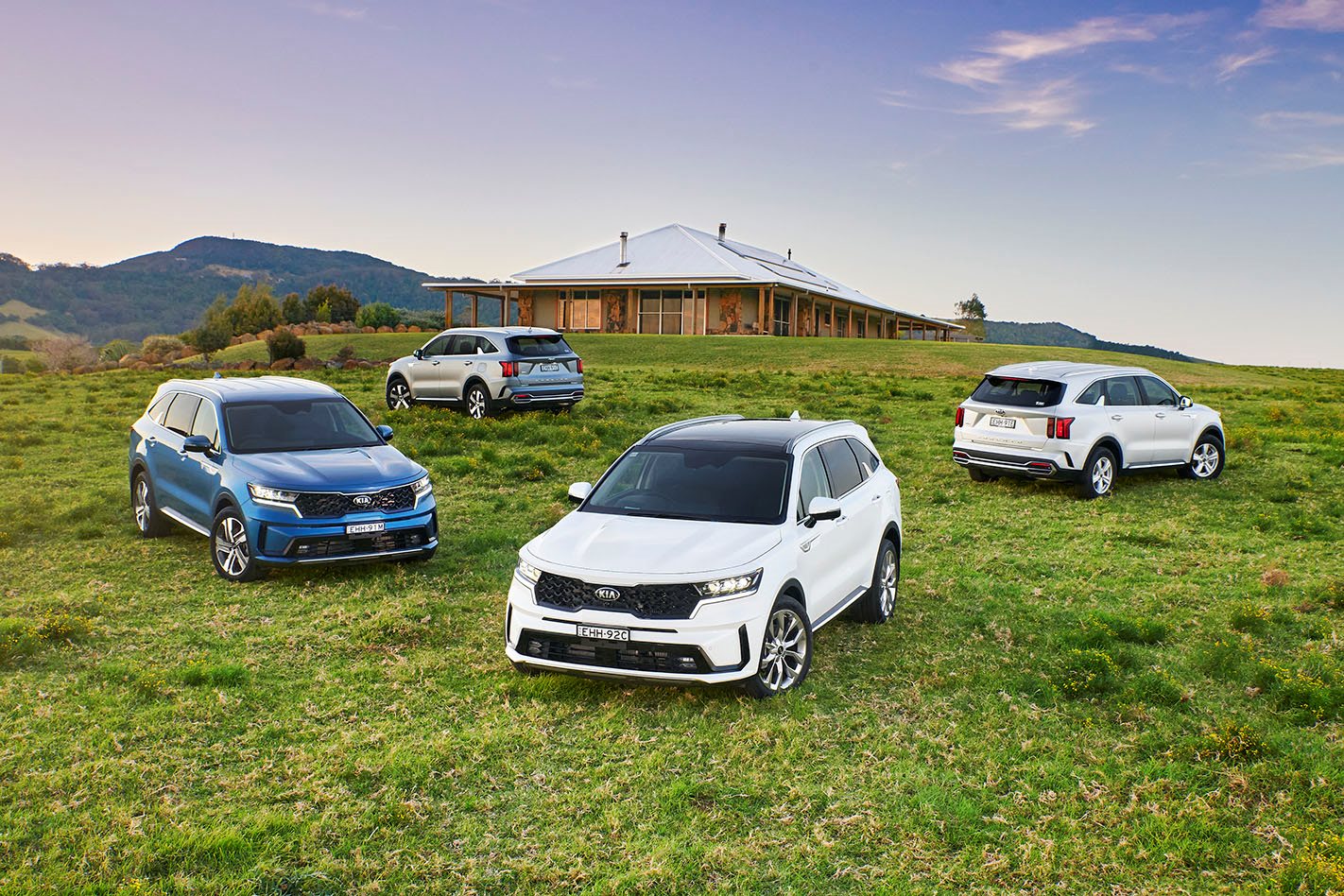
As for the future of Kia SUVs, we can expect the line-up to accept one more at the end of the year.
Although it’s been on sale in other markets since 2017, the Kia Stonic will fill a small-SUV-sized hole in the range with the facelifted version arriving in Australia from late 2020.
Full local pricing and specification will be detailed closer to the launch.
THE WHEELS VERDICT
Nailed it! The 2020 Kia Sorento is a hugely persuasive large SUV, thanks to the ease and completeness with which it fulfils its intended function.
More than that, though, the new Sorento imparts a feel-good factor thanks to the use of quality materials and cool design; higher pricing feels reasonable given what it delivers.
WHAT IS THE KIA SORENTO ?
The fourth generation of Kia’s flagship large SUV with seating for seven, offered in a choice of four specification levels, and powered by either a petrol V6 or turbo-diesel four.
WHY WE’RE TESTING IT
The Kia Sorento is a hugely significant model for the brand, introducing a new platform, previously unseen levels of comfort, convenience and safety technology, all packaged with an upmarket aesthetic (in top-spec GT Line) that should have rivals worried.
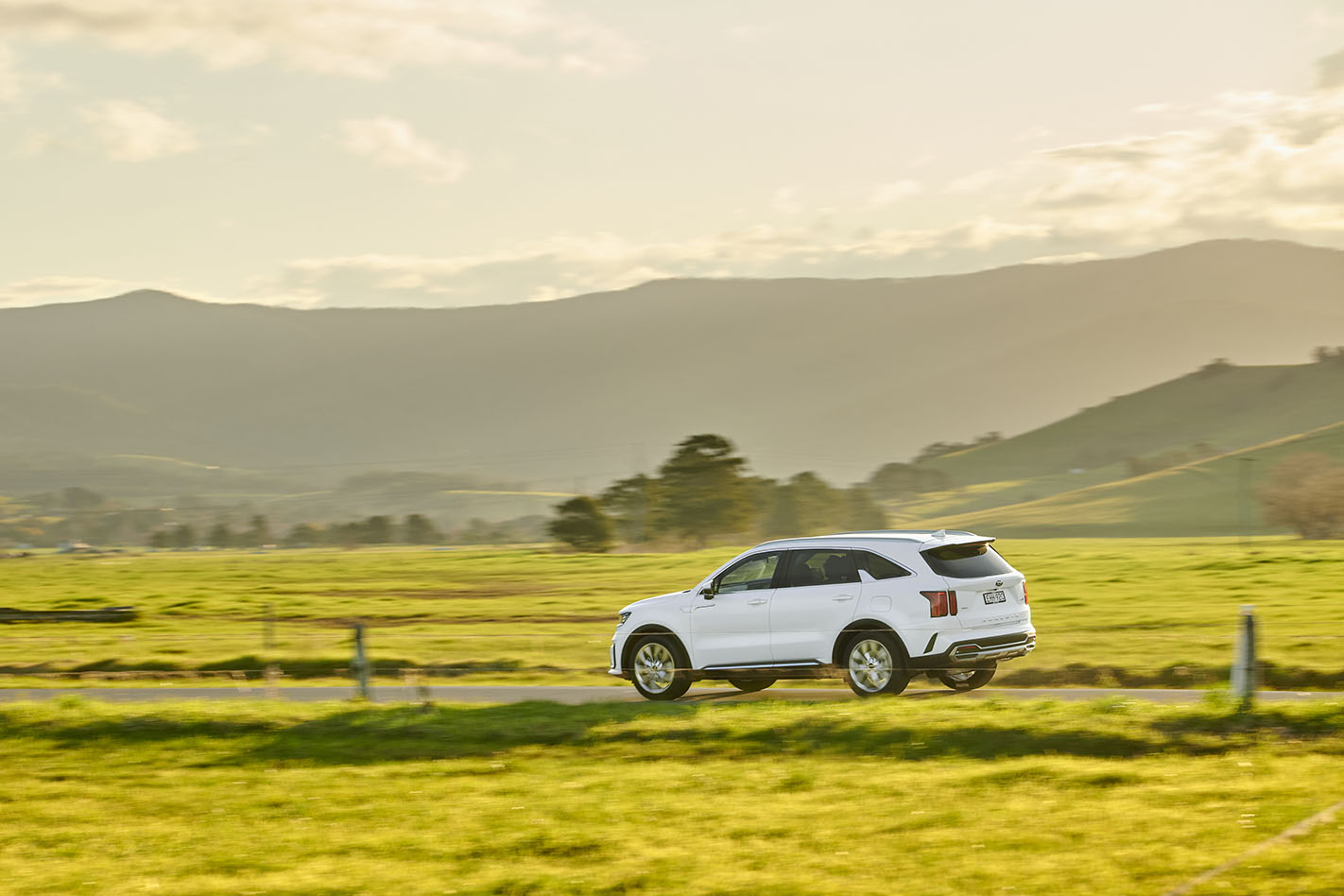
THE KIA SORENTO GT-LINE REVIEW
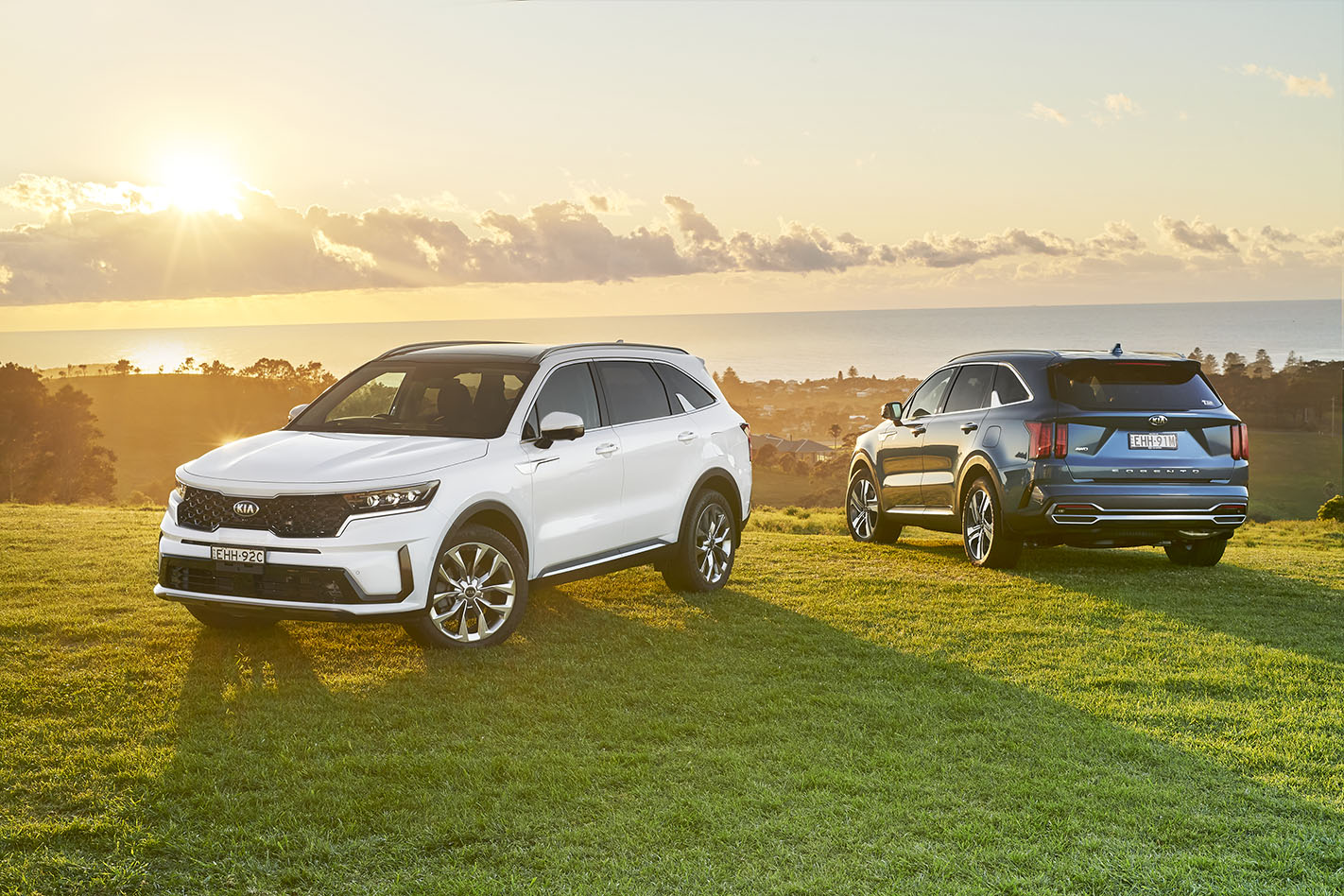
If the Stinger sports sedan launched 2017 was a pivotal car for Kia, then this, the all-new fourth-generation Sorento, is a true landmark for the Koreans. From its chiselled, masculine exterior design, to the premium, tech-driven feel of the cabin, this is an SUV that instantly feels like the beginning of a new chapter.
Our drive was of the top-spec GT Line, crowning an eight-strong range andpowering all four wheels via a new iteration of the company’s 2.2-litre diesel hooked to a new eight-speed dual-clutch transmission, so that will be the focus here. But the four spec levels are also offered with a 3.5-litre petrol V6 (200kW/332Nm) driving the front wheels. The petrol variants arrive in a month or so, with the base petrol S model yours for $46,990 drive-away (diesel with AWD adds $3000 regardless of spec).
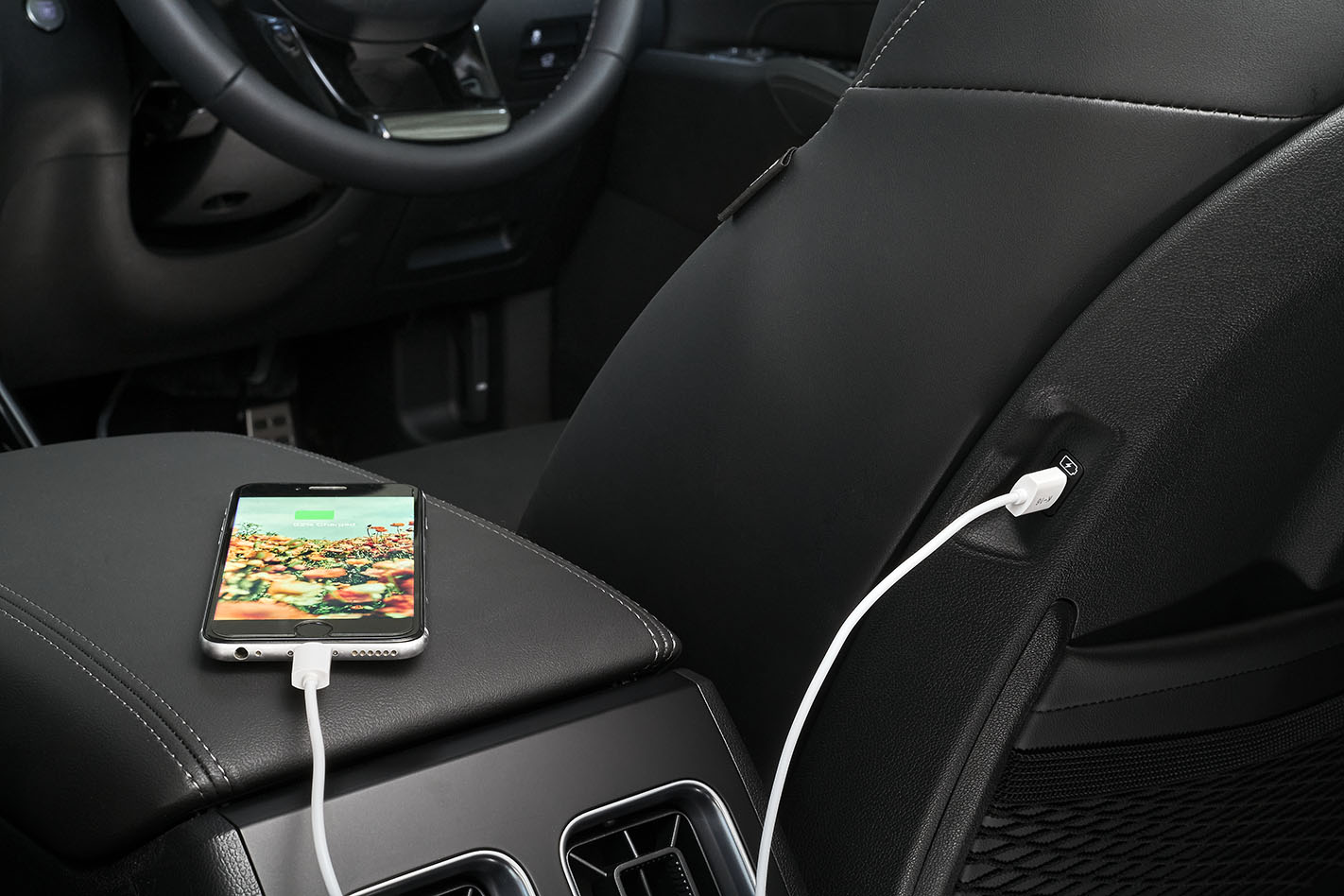
Instantly, new Sorento feels spacious, upmarket, and intelligently designed, with evidence of comfort and convenience equipment everywhere you look. Admire the crisp resolution and cool graphics of the big 10.25-in touch screen; the way it seamlessly merges with the 12.3-inch digital instruments; count the USB ports (seven, across all three rows), sniff the aroma of the quilted Napa leather seats. Annoy your partner by reclining them in their seat by using the secondary controls located on the inboard side bolster.And if you’ve parked it in a tight space hindering door opening, just extract it with the driverless ‘remote park assist’ function while standing outside using the key fob.
Fire it up, and about the only negative I can find presents itself. Despite the significant extra measures to cut NVH, the diesel engine (now 19kg lighter than the previous version thanks to aluminium construction, rather than cast iron) delivers a tiny, faint tremor through the wheel and pedals.
Maybe it’s so slight it’s only noticeable to paid-to-be-picky journos.On the move, the hint of vibe and faint clatter disappears and a strong, lag-free well of torque is there to access, making the big rig feel eager and lively.
The available powerband spans from under 1500rpm to over 4000, which is actually ample, even for spirited driving. As for the transmission, the highest compliment I can offer is that I didn’t pick it as a dual-clutch in low-speed manoeuvring, instead just super impressed by its crisp, intelligent calibration on the move. Comfort sees it respond instantly to a light foot, using the torque to shuffle quickly up the ratio set.
Switched to sport, it doesn’t hold a cog unnecessarily, instead just grabbing gears up or down with near-perfect intuition. Sport also adds weight to the steering, without it feeling gloopily unnatural.
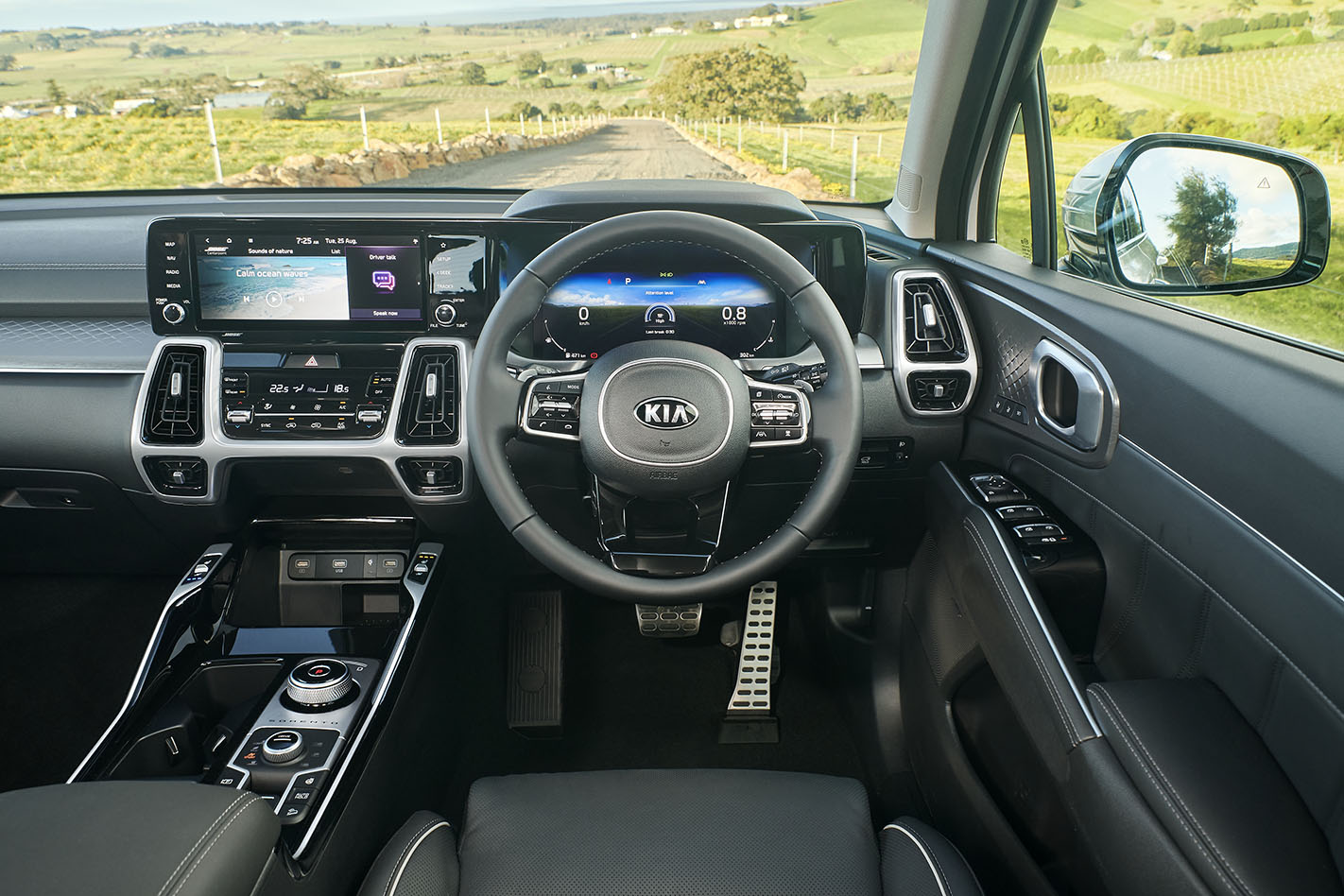
Ah, the steering. It’s a responsive, 2.5-turns lock-to-lock helm connecting you to an all-new platform, known as N3. Sorento is the first model to use it, and instantly, you know it’s a good ’un.
The wheelbase is 35mm longer than the outgoing Sorento, and while the fundamental layout carries over – struts up front, multilink at the rear – there have been significant improvements to both stiffness and NVH-reducing isolation, along with new, more sophisticated (passive) dampers from ZF Sachs.
Weave in the local tuning work, and even on the 20s of this flagship (wheels run from 17 to 20s across the four grades) it all gels superbly. There’s palpable composure and confidence in the way it tackles bumps and turns into bends, again marking a new high for a chassis tune from Kia. Bigger brakes, too, even though they’re tasked with hauling down slightly less weight, due to great use of lighter ultra-high-strength steel.
As for space and comfort for those in the second and third rows, again, a great execution. Second-row seats are able to slide 45mm further, creating the option for more legroom, and providing a wider point of entry to the third row.
In terms of ventilation, storage and connectivity access for passengers, it’s all hard to fault.
Boot space has also grown. With the third row of seats folded, it’s up from 605 litres to 616L. With the third row in use, available cargo space jumps 45L to 187 litres. Aussie Sorentos also stow a full-size spare wheel under the boot floor.
Safety-wise, the advanced driver assist system (ADAS) brings Kia’s latest autonomous emergency braking technology with pedestrian, cyclist and vehicle detection. It can also spot oncoming traffic when making a turn at a junction.
The blind-spot monitoring in GT Line displays a camera image in the instrument panel when the indicator is activated; more driving time needed to figure if this is a real advance. Otherwise it’s all current best-practice: surround-view parking display, intelligent speed limit assist, smart cruise control with Stop & Go and speed sign recognition, lane-keeping assist, and driver attention warning.
But surely it can’t be all sweetness and light? Okay, well prices are up across the range, but not astronomically, and the extra $2800 this flagship charges over its predecessor (now $64,990 driveaway) seems entirely reasonable given the overall polish and the fact it’s loaded with more fruit than a barrow at Spain’s La Tomatina festival.
Yep, for the reigning benchmark in this segment, our 2017 COTY-winning Mazda CX-9, life suddenly just got a whole lot harder.
2021 KIA SORENTO GT LINE DIESEL SPECS
| Engine | u00a02151cc 4cyl, dohc, 16v, turbo-diesel |
|---|---|
| Max power | u00a0148kW @ 3800rpm |
| Max torque | u00a0440Nm @ 1750-2750rpm |
| Transmission | u00a08-speed dual-clutch |
| Weight | u00a01908kg |
| 0-100km/h | u00a08.5sec (estimated) |
| Economy | u00a06.1L/100km |
| Price | u00a0$64,990 (driveaway) |
| On sale | u00a0Now |
2021 KIA SORENTO RANGE AND PRICING
| Variant | Price |
|---|---|
| Sorento S petrol | u00a0$46,990 drive-away |
| Sorento S diesel | u00a0$49,990 drive-away |
| Sorento Sport petrol | u00a0$49,990 drive-away |
| Sorento Sport diesel | u00a0$52,990 drive-away |
| Sorento Sport+ petrol | u00a0$54,390 drive-away |
| Sorento Sport+ diesel | u00a0$57,390 drive-away |
| Sorento GT-Line petrol | u00a0$61,990 drive-away |
| Sorento GT-Line diesel | u00a0$64,990 drive-away |
Mazda’s revolutionary Skyactiv X petrol engine has been added to both the Mazda 3 small hatchback and sedan line-up, as well as to the mechanically related CX-30 crossover range, bringing a frugal but lively option at the most premium end of the spectrum.Priced from $40,590 for the manual or $41,590 for an auto, the X20 Astina is the new flagship of the Mazda 3 line-up sharing is identical in specification with the G25 Astina but offers a technological tour de force under its bonnet in place of the G25’s more conventional petrol engine.Mazda’s 3 X20 is on sale now and the same engine will be made available for the CX-30 from September. Like the Mazda 3 X20, the CX-30 X20 is also at the top of the pile in Astina AWD grade and priced from $46,490.
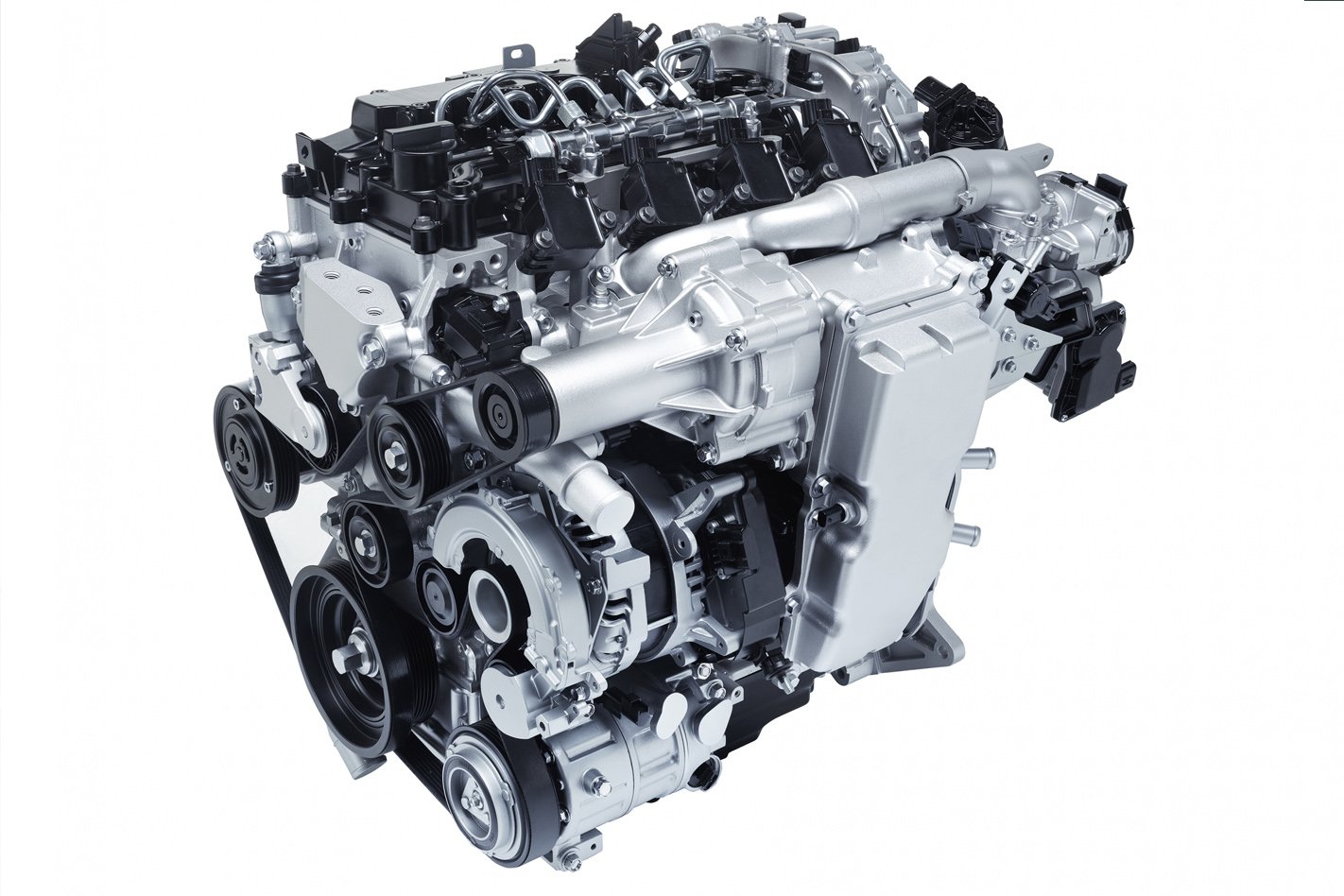
You can read our first-drive review to see how we got along with this intriguing engine here.Displacing 2.0 litres, the lightly supercharged four-cylinder produces 132kW and 224Nm but thanks to a little Mazda engineering wizardry uses just 5.5 litres of petrol per 100km on the combined cycle.It manages the frugal figure through a combination of its proprietary compression ignition technology, coupled to its M Hybrid mild electric assistance.
In short, the Skyactiv X engine can, under certain conditions, combust petrol in the same way a diesel engine does, bringing the same high torque and efficiency characteristics.
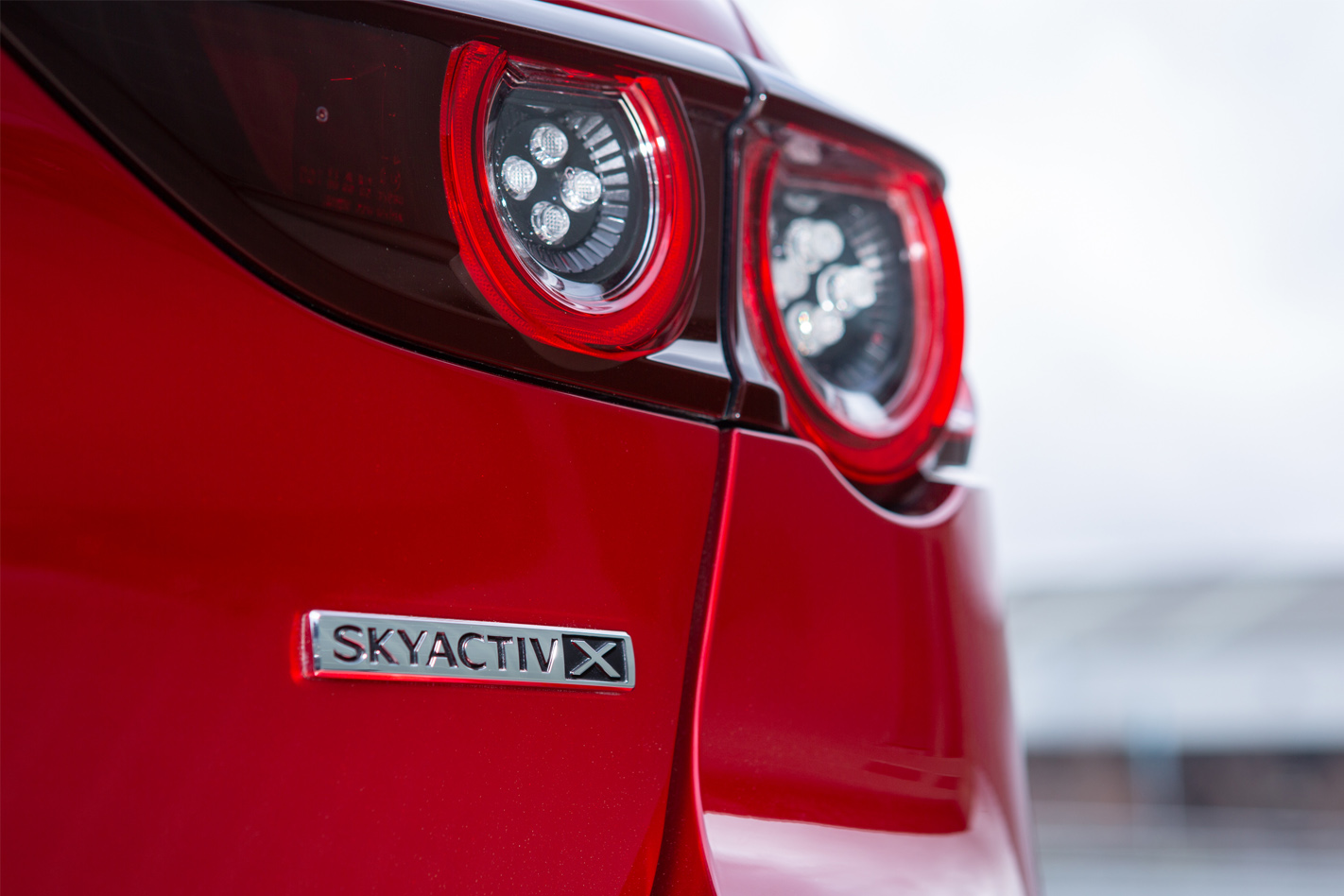
While Mazda isn’t yet confirming any other models destined to get Skyactiv X power, marketing and product director Alistair Doak said the arrival was just the start of the technology for the company.
“It’s to add it to the portfolio and get the mild hybrid conversation started for us,” he said. “It’s an important thing for us, even though it’s only in high-end Mazda 3 and CX-30 at this point.
“This is just one small step in the Skyactiv story, but it’s very much a key technology for us.”
Hyundai has revealed the full extent of its 2021 i30 N improvements, with an engine retune, weight reduction, brake upgrade and interior enhancements accompanying the previously announced dual-clutch automatic option and slick exterior redesign.
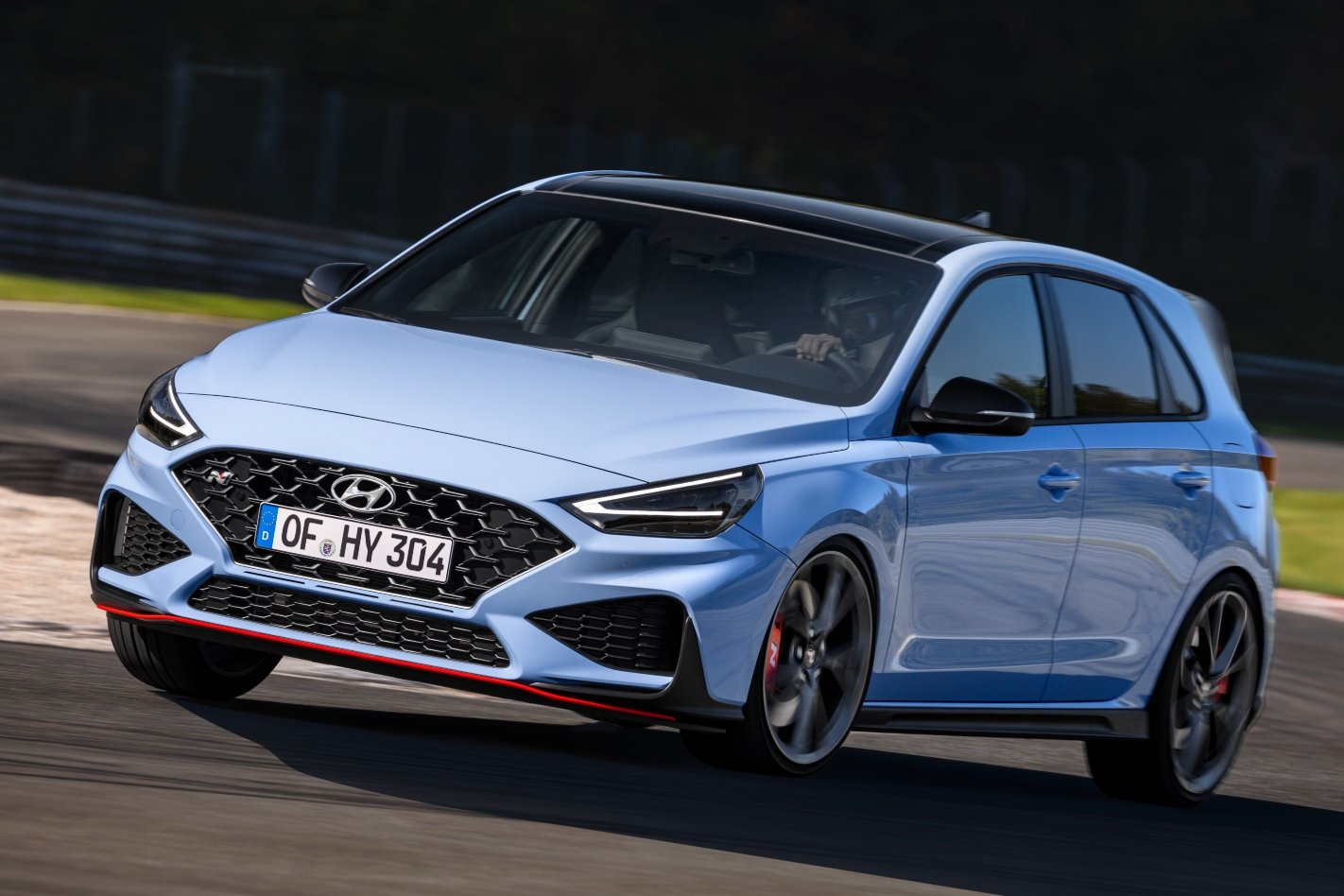
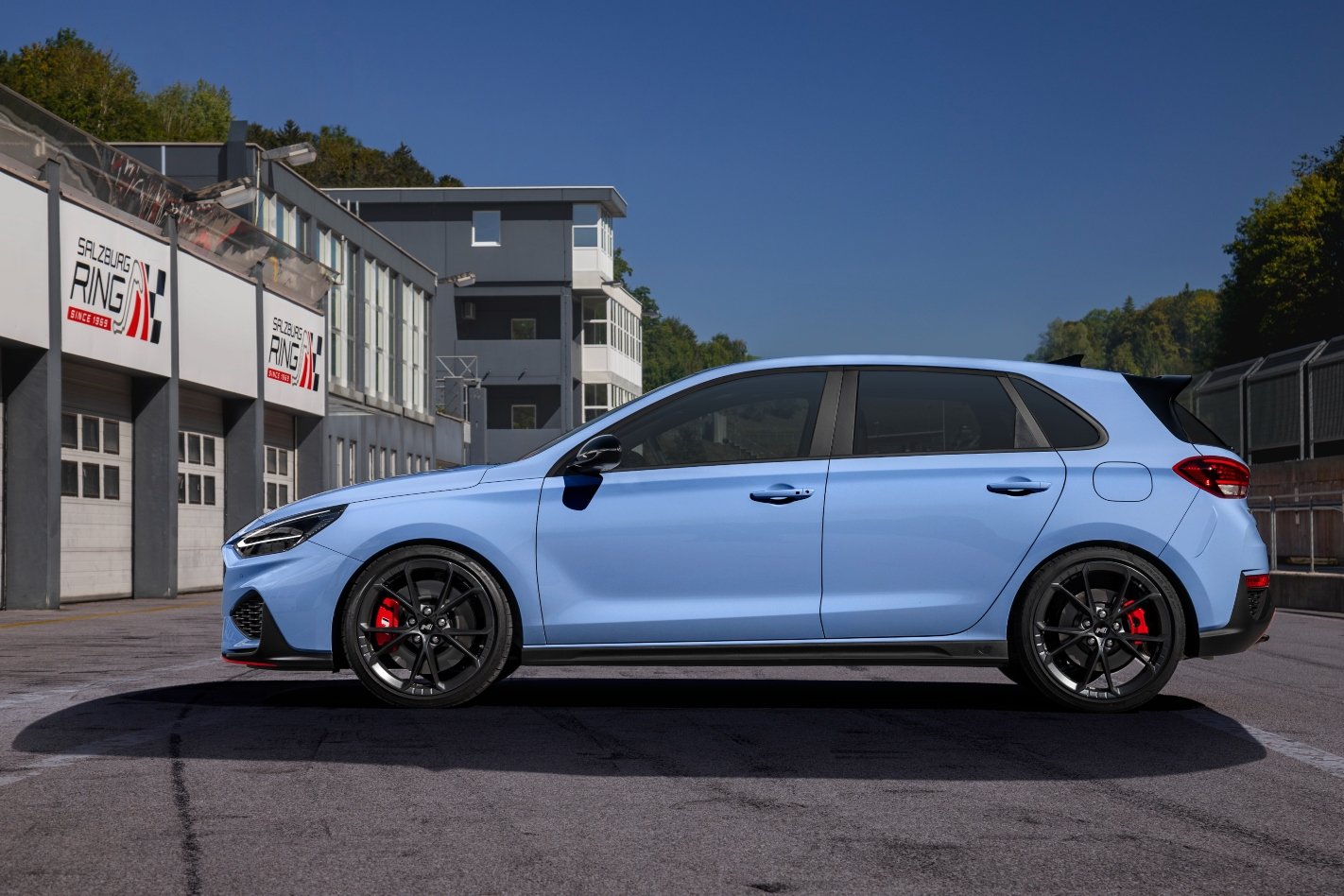
Due to arrive in Australia in the first half of 2021, the facelifted and updated i30 N hatch wears a new look that incorporates sharper LED lighting headlight and taillight accents, revised front and rear bumpers with aerodynamic improvements and fat exhausts bolted into unchanged metalwork.
The fastback shares all of the upgrades except the tail end aesthetic changes including the hatchback’s spoiler which produces useful downforce. It shares the new exhausts however.
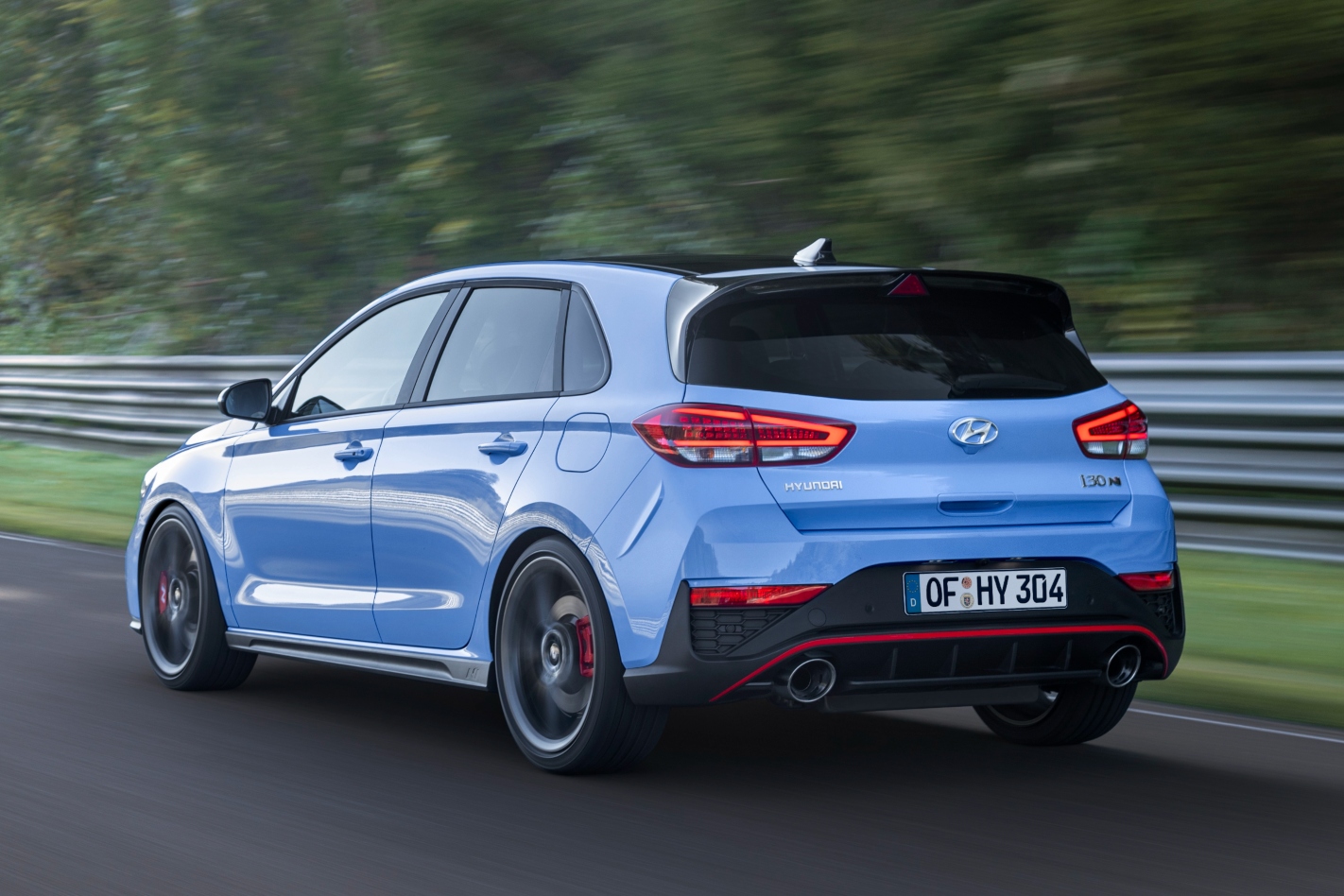
But more significantly, there’s genuine performance enhancements to get excited about.
For a start, the 2.0-litre turbocharged four-cylinder petrol engine has been gently squeezed to liberate more torque, with the peak figure jumping by 39Nm to a new maximum of 392Nm. There’s also a small increase of power, creeping up by 4kW to 206kW.
The output boost has chopped two tenths of a second from the i30 N’s zero to 100km/h acceleration with the milestone dash now over in 5.9 seconds. A flattening of the torque curve also improves mid-range acceleration and at the top end too, says Hyundai.
Traction off the line is thanks in part to the carry over limited-slip differential (LSD) but also the addition of new 19-inch forged alloy wheels that wear sticky Pirelli P Zero rubber.
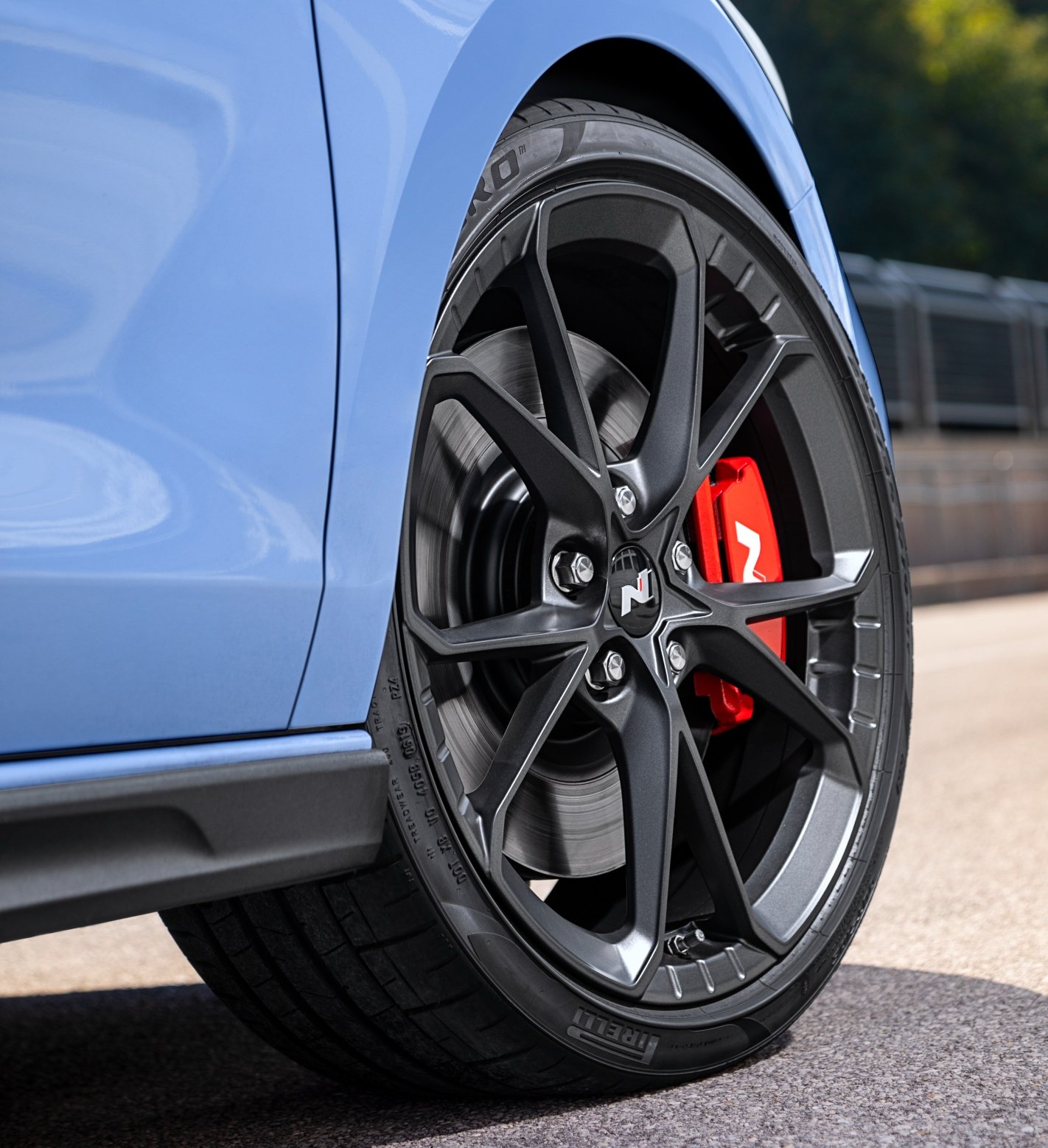
The more skeletal design rims remove nearly 15kg of unsprung weight from the i30 N which will directly improve handling and road-holding along with retuned steering and suspension settings, which is electronically controlled as before.
Customers in other global regions will be asked for extra cash for a new Performance Pack but Australians will be offered the extra performance potential as standard. It includes more powerful brakes with front disc diameter increased from 345mm to 360mm, while the LSD gains electronic control.
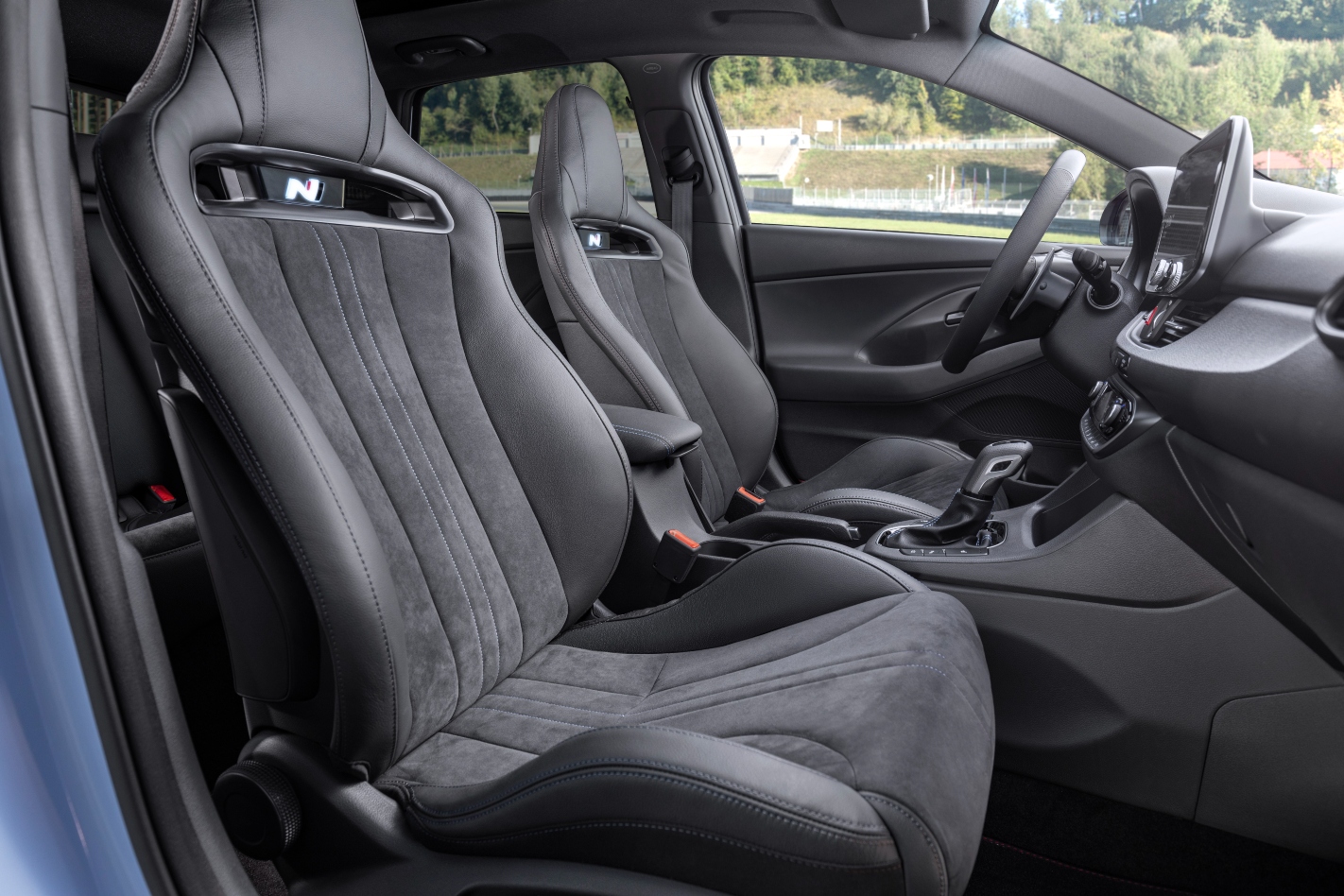
Inside, the weight reduction continues with N Light seats available optionally, offering greater support, a combination of leather and Alcantara synthetic suede upholstery, highlighting blue stitching and another 2.2kg of weight saved.
Australian auto fans have been getting excited about the introduction of an eight-speed dual-clutch transmission since it was confirmed for the model last year, but the South Korean manufacturer has now offered more details about its function.
As you would expect, paddle shifters are provided behind the steering wheel for manual gear shifting or with the gear selector lever which has been oriented for down-shits by pushing forward and upshifts with a pull back.
The transmission also has three driving programs tailored with a couple of more frivolous modes. Least surprising is the N Track mode which does everything it can to improve lap times but there are a pair of more fun-focused functions.
N Power Shift mode engages when more than 90-percent acceleration is used and does not reduce torque between gear shifts. The result is maximum acceleration and sensation of an extra kick when the next gear takes over.
Finally, the N Grin setting unleashes the maximum power and torque for 20 seconds for peak performance that is more about putting a smile on the driver’s face than outright lap times, says Hyundai.
The N Grin mode is itself split into five further more typical modes including Eco, Normal, Sport, N and N Custom.
A raft of new safety gear arrives with the updated i30 N courtesy of the Hyundai Smart Sense suite. New to the i30 N fastback are forward collision avoidance than now detects vehicles and pedestrians/cyclists, and lane-following assistance.
Hatchback versions add to the new safety tech with blind-spot collision warning and assistance, and rear cross-traffic warning and avoidance assistance.
Published September 16 2020
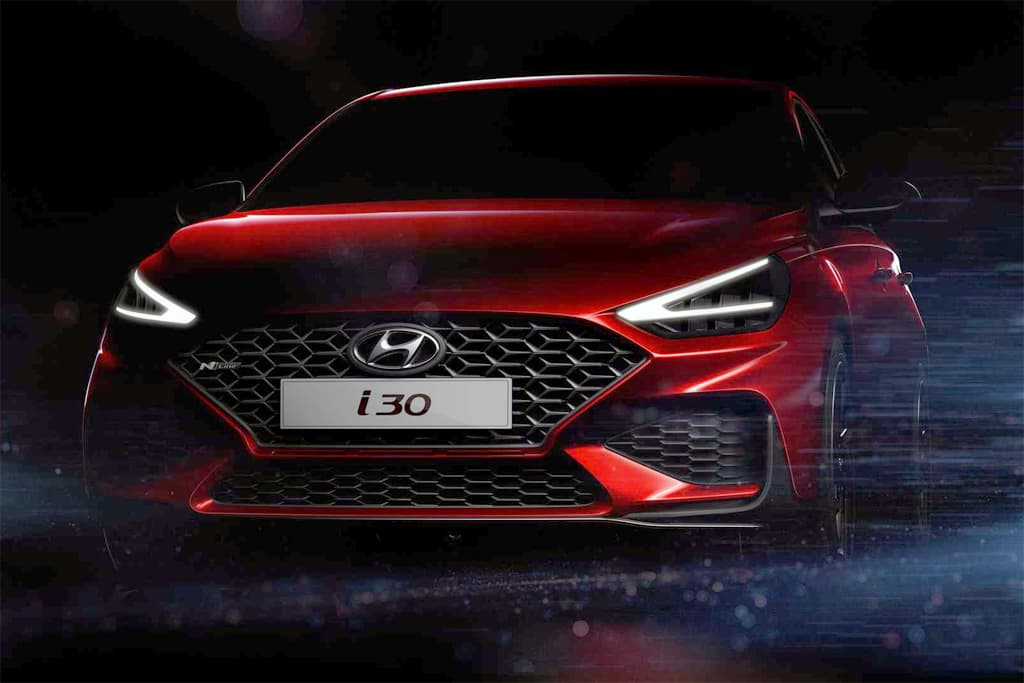
Hyundai has released a handful of images that hint at what was under the wraps of the vehicle our spy shots captured in July, when a prototype of the company’s updated i30 N fastback was spotted testing on public roads.
These latest low-lit images aren’t enough to reveal the full impact of the facelifted i30 N but there’s certainly enough to get excited about.
Not only are the fatter twin tailpipes retained as a production detail, but the new bodykit appears to be as aggressive as previous renderings promised.
The release also confirms the massive skeletal wheels bolted to the disguised Hyundai i30N prototype will be a production feature, too.
According to Hyundai, the 19-inch rims are of the stronger and lighter forged variety and save a significant 14kg of unsprung mass from the i30 N chassis.
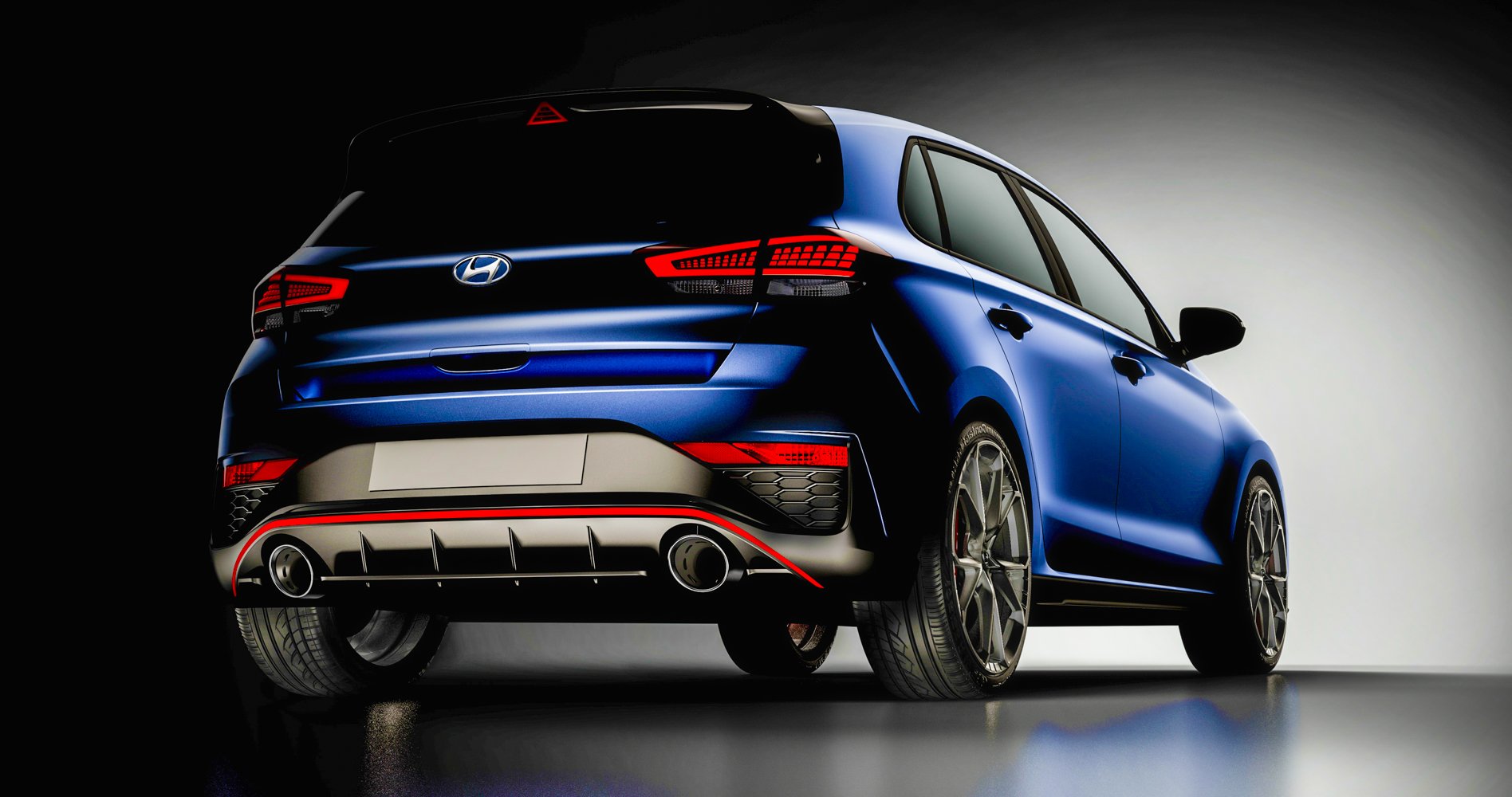
Perhaps more significantly though, when it arrives on Australian turf in production form early next year, the updated i30 N will introduce a long-awaited automatic transmission for the model, with eight ratios and sporty dual-clutch technology.
Pricing for the i30 N DCT is yet to be confirmed but it’s safe to say it’ll be the most affordable eight-speed dual-clutch car on the market – If you want something else fitted with a DCT offering as many gears, your only options are Mercedes-AMG, Porsche and Ferrari.
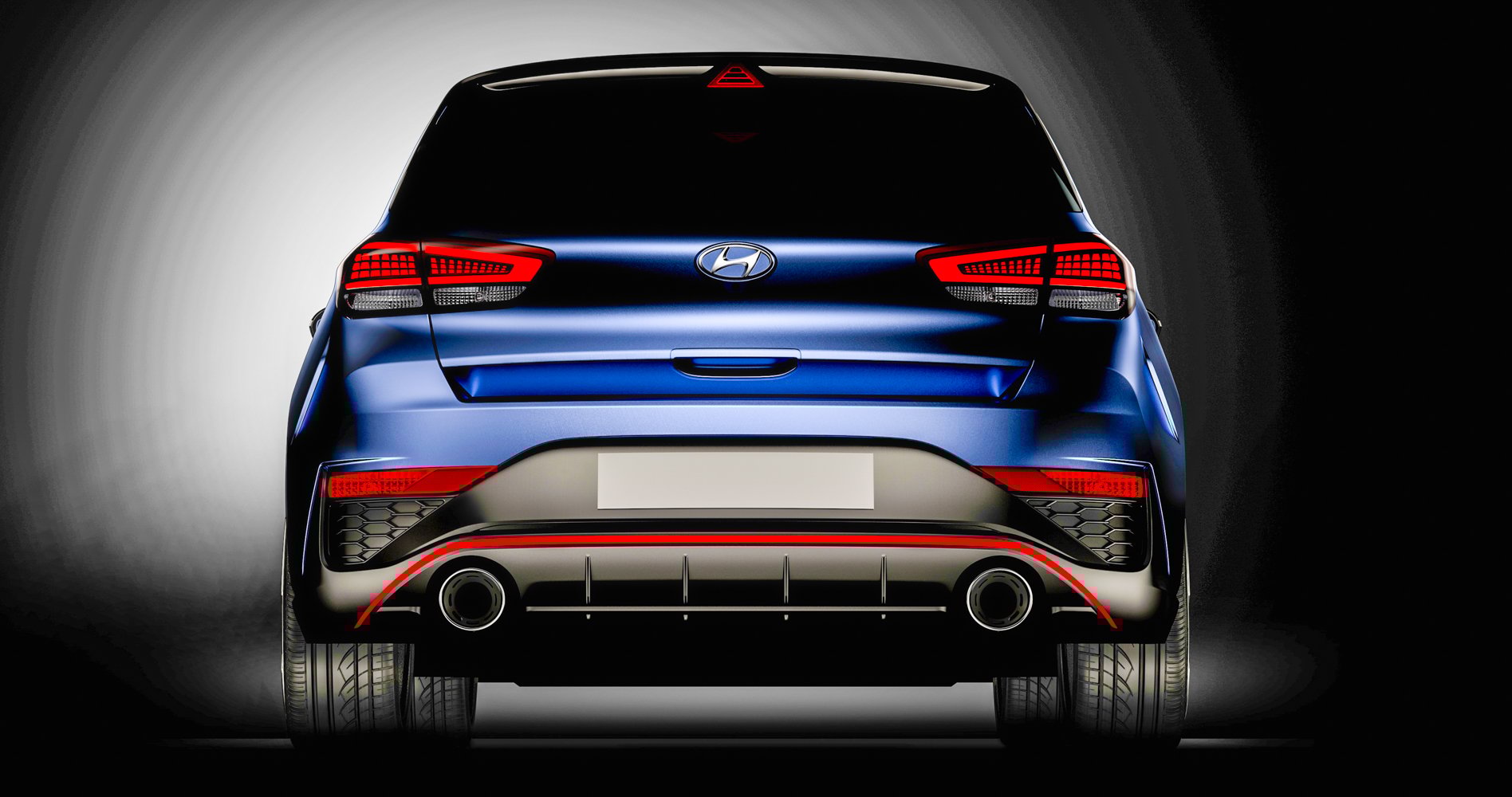
In fact, to own a car driven by a DCT with more gears you’d have to stump upwards of $400,000 for the Honda NSX, which has nine.
The addition of the automatic i30 N is likely to give local sales of the model a serious lift, which has been popular with Aussies despite only being available from launch in 2018 as a six-speed manual.
The transmission will be a version of Hyundai’s dual-clutch automatic that can be found bolted to numerous other models, albeit with a maximum of seven speeds.
Hyundai has already revealed its N-Line facelifted look for the i30, but this is the first look at the full-fat N design applied to the range-topping high-performance variant. Compared with the mid-range performance i30, the new N will have a marginally more purposeful stance on the road.
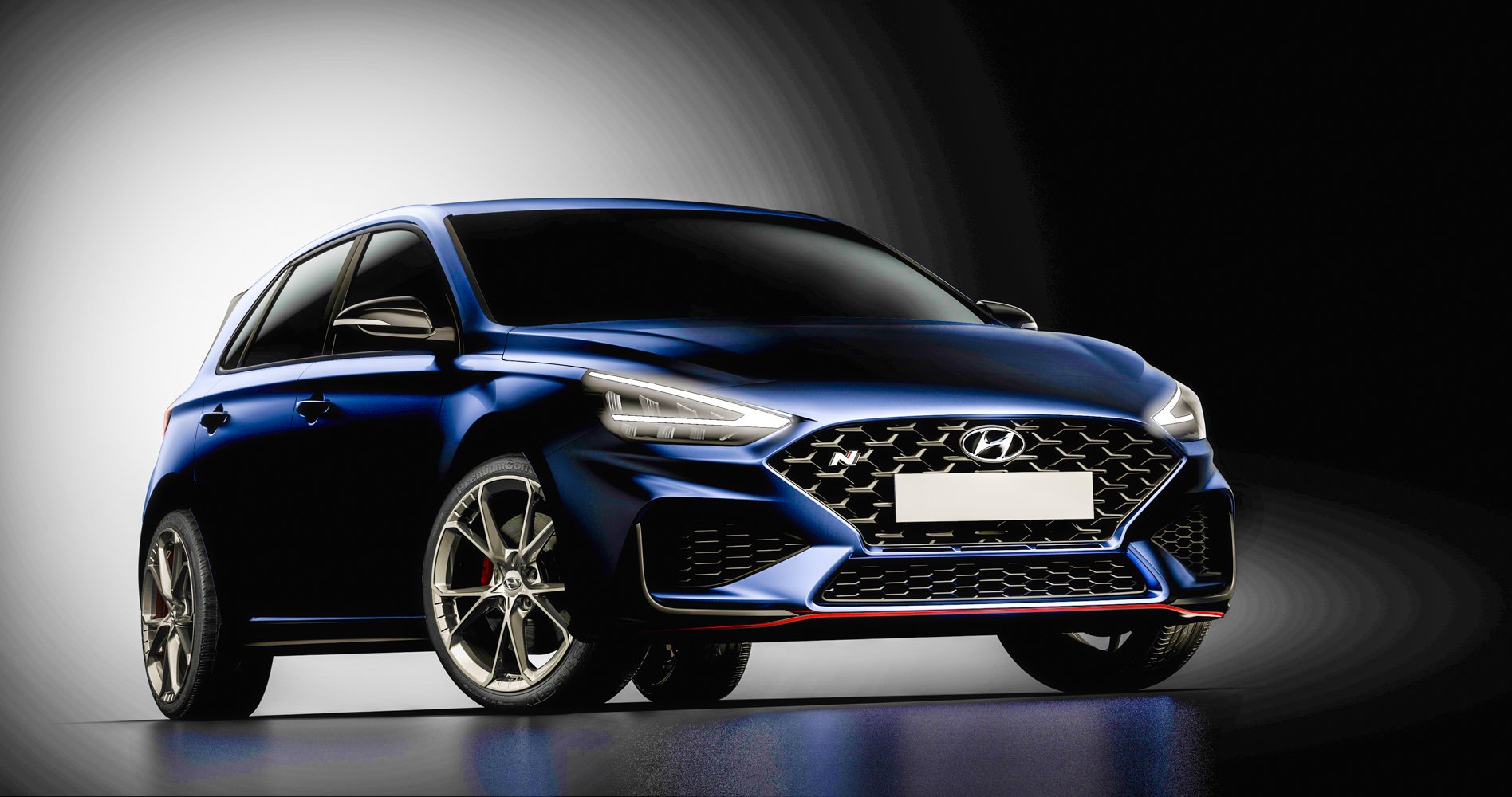
The dimly lit front valence (we’ve tweaked the photo’s contrast a bit to improve the view) appears to have the same size and number of air vents and grilles although the N has a different mesh, while at the tail end there’s a more noticeably different bumper with diffuser fins and the bigger exhausts.
There is at least one example of the DCT-equipped i30 N already rolling on Australian roads with the development car we captured below.
Original story published July 21 2020
Hyundai’s updated i30N has been spotted undergoing testing on Australian roads and while its facelift looks are still heavily disguised, the telltale exhaust note of a lightning-fast dual-clutch automatic cannot be so easily hidden.Spied lapping Sydney’s suburbs, the prototype i30N is the Fastback variety and in left-hand drive, but the wrapped and padded test car heralds the arrival of production versions in early 2021.
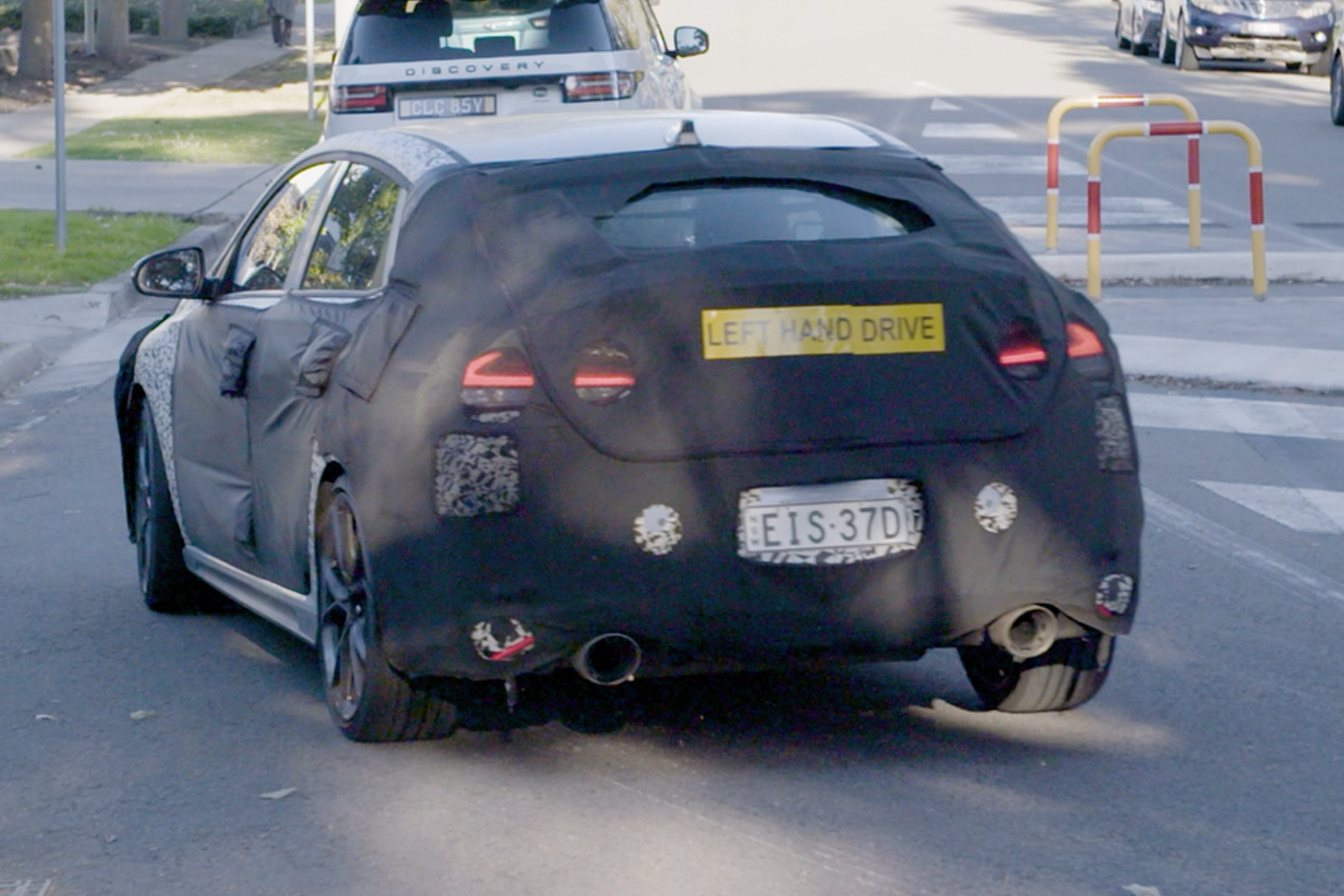
While we’re looking forward to seeing the hottest N’s new look, it’s the pivotal eight-speed DCT automatic that lies beneath which is the really big news for the model. Listen to the exhaust bark captured in our video to confirm the characteristic shifting of a dual-clutch auto.
Since it was introduced in 2018, the company’s first full-fat hot hatch has garnered a solid following, despite its availability only as a six-speed manual, but a performance-focused eight-speed auto is likely to far exceed the popularity in Australia’s auto-prevalent market.
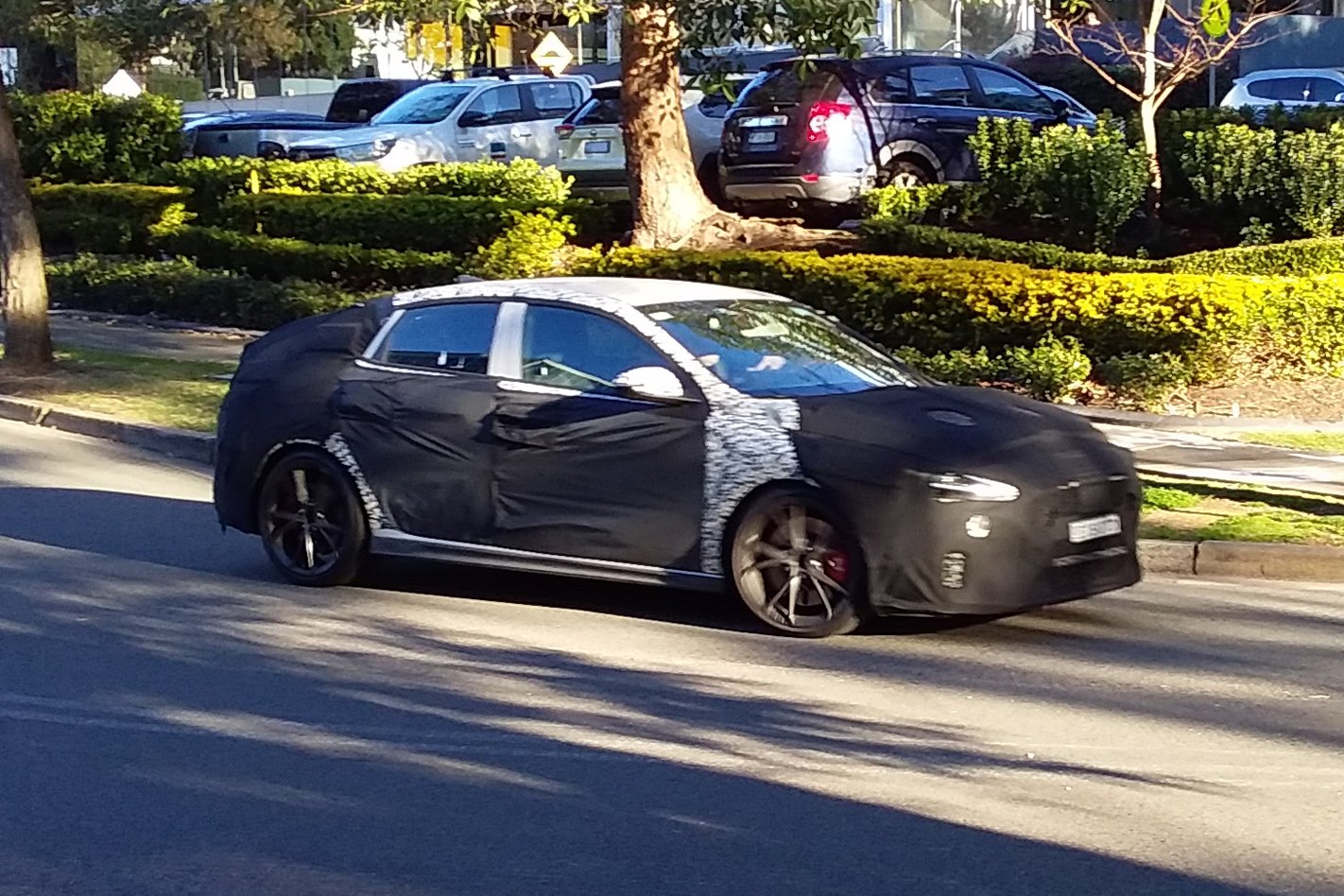
Hyundai Australia has confirmed the enigmatic vehicle is the upcoming 2021 i30 Fastback N and is here for “evaluation and testing by the local tuning team”.
As is the case with all Hyundai models, the i30N has a chassis and suspension set-up unique for the Australian market and tailored for Australian tastes.When it arrives early next year both the spied sedan-like Fastback and more traditional hot hatchback are expected.
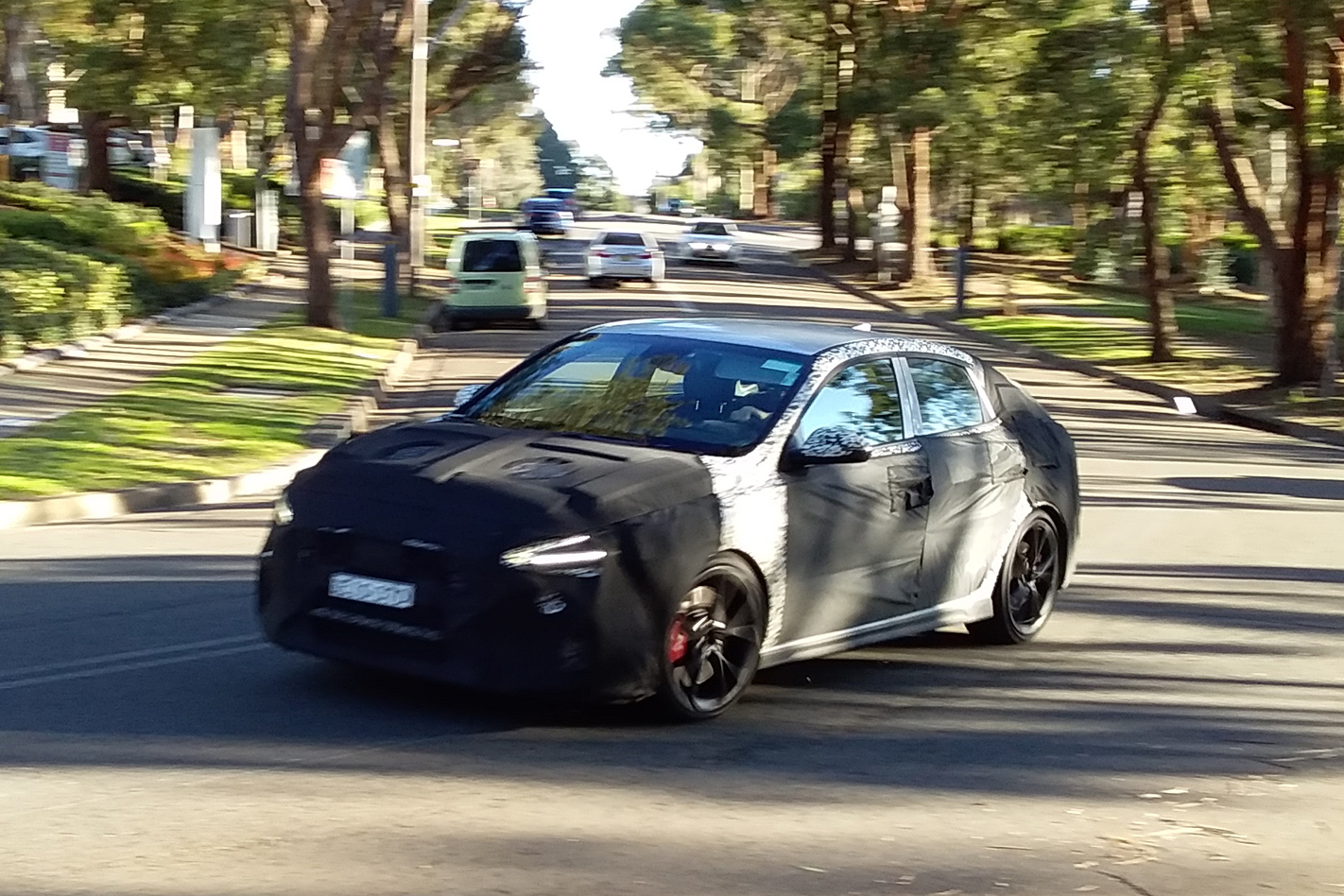
Little is revealed by the test car regarding the new look i30 apart from redesigned headlights that are peeping through the heavy camouflage, picked out by a new V-shaped daytime running light pattern. The light signature confirms that this is the updated version.
However, the car maker has only revealed the facelifted look of the entry-level variants and the mid-range N-Line. The test car rolling around in Sydney still hides the most hardcore version of the update and all the big vents and spoilers we are expecting.
A number of other enhancements are expected along with the significant redesign and DCT foray.
