
Hyundai has revealed the first images of its new-generation Tucson medium SUV, and it’s set to take the fight right up to its front-running rivals from Mazda and Toyota.
An incredible screen array and bold exterior cues point to a quantum leap for the Tucson, which has trailed in the sales race.
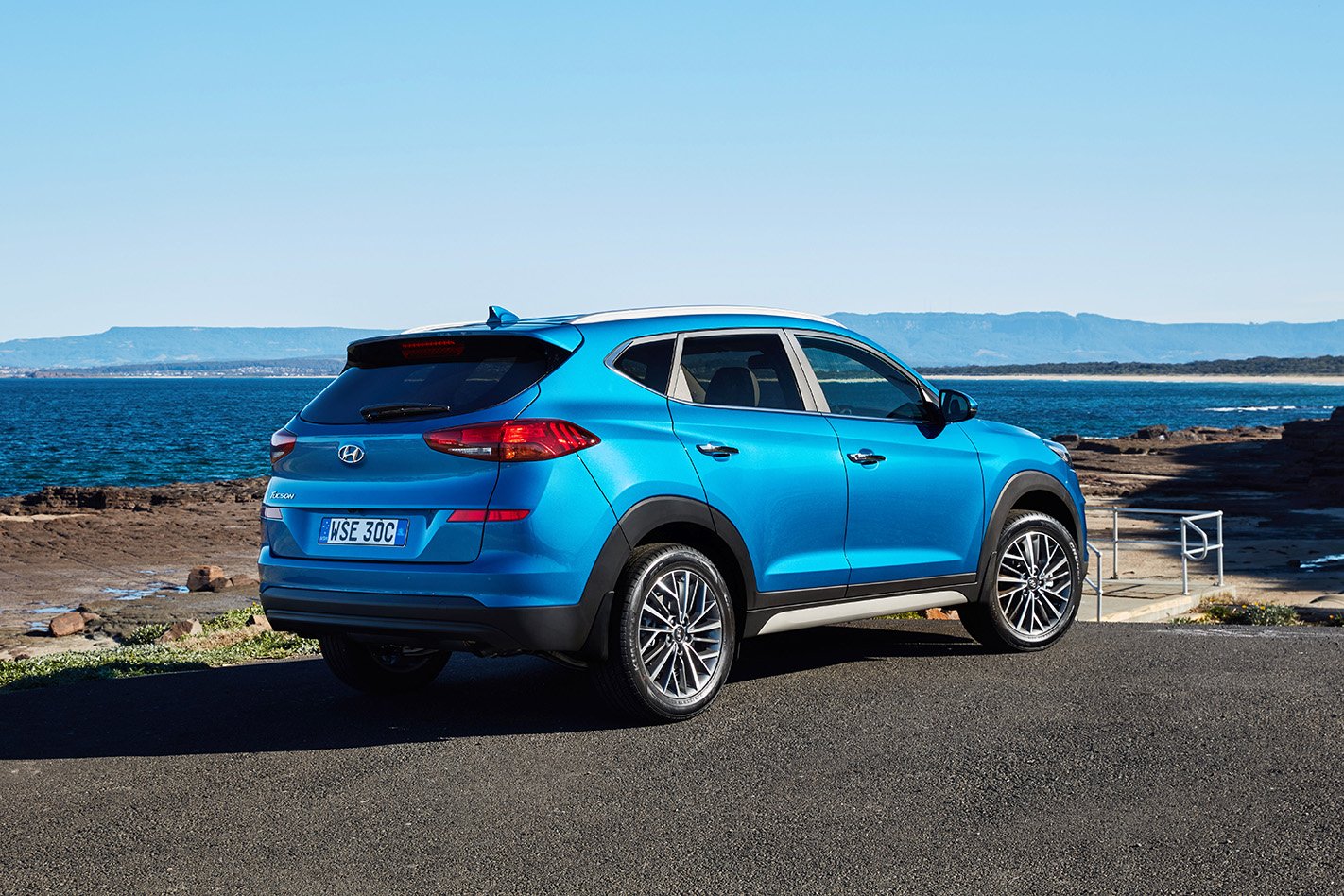
The radical new design highlights, for example, include a new signature headlamp architecture called ‘Parametric Hidden Lights’, with daytime running lights seamlessly integrated into the grille and only revealed when they are turned on.
A rear LED light bar stretches the width of the tailgate (below), with prominent prismatic taillights finishing the look.

The new Tucson’s body is bigger and wider than previous-generation models, sporting a long bonnet and short overhangs, along with chiselled lines that give it a coupe-like character.
There’s little in the way of mechanical detail about the Tucson, save that it will be offered in both short- and long-wheelbase versions; expect the next Tucson, then, to be offered in five-seat and five-plus-two seat configurations, a la the Volkswagen Tiguan and Tiguan Allspace.
Inside, the new Tucson features a dual-cockpit layout and an elongated dash which seamlessly flows into the doors, with a large, cascading central screen that dominates the centre console (below).
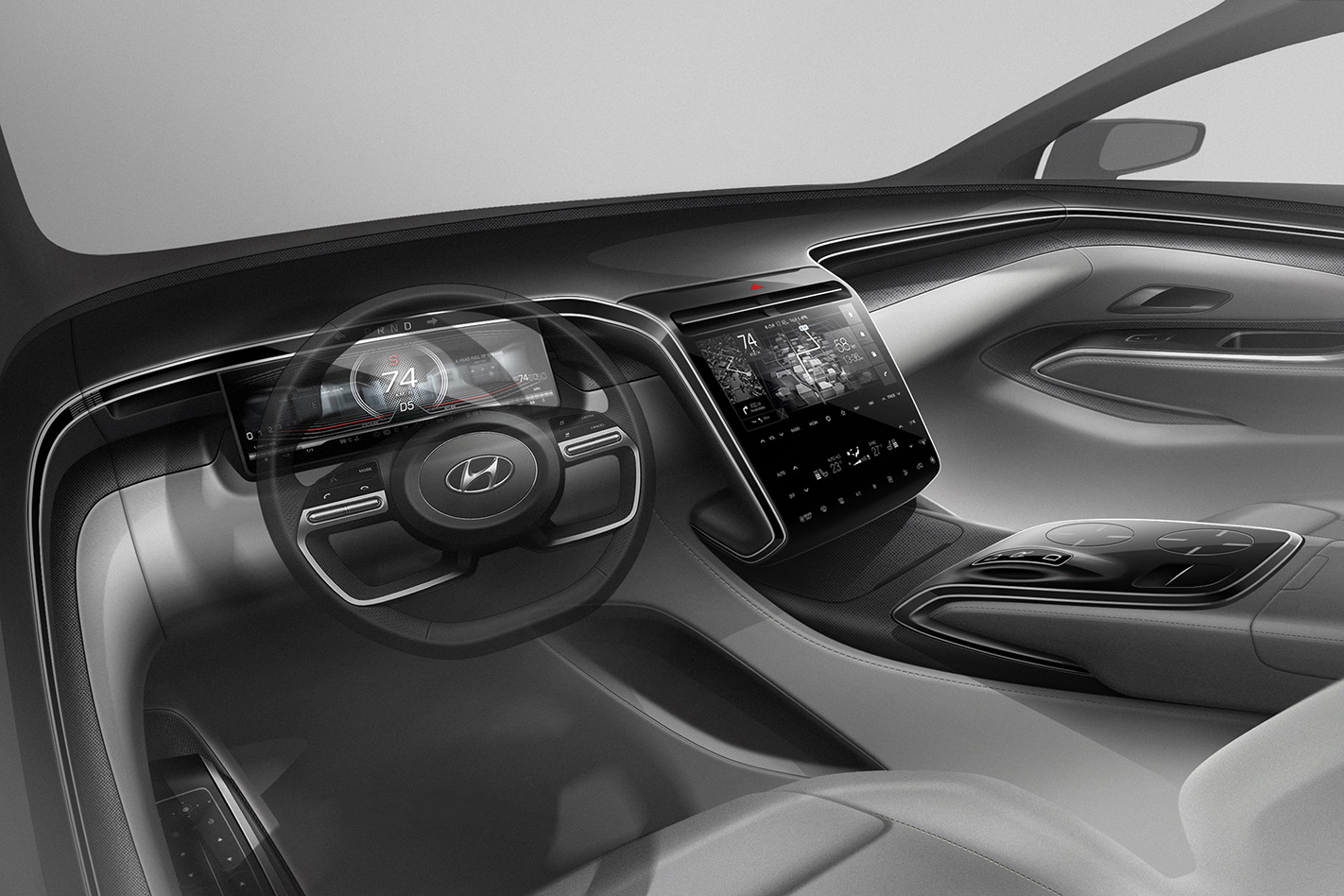
It will adopt the same flat-button automatic transmission switches that feature in the new Sonata and Palisade, and will likely be the beneficiary of Hyundai’s new eight-speed dual-clutch transmission on certain models.
No word on powertrains, but like the 2019 Hyundai SUV Concept on which it’s based, it’s likely to offer a hybrid version alongside front- and all-wheel-drive variants.
Given these stunning looks and this amount of tech, we’d guess that prices will likely rise, too.
We’ll know more on September 15 when the 2021 Tucson is revealed on a global live stream.
High hopes for new Tucson
The Tucson is currently the fourth-best seller in the medium SUV category and only a handful of sales behind the Nissan X-Trail, which itself trails the Toyota RAV4 and Mazda CX-5, but Hyundai’s product planning manager Andrew Tuatahi has previously expressed confidence the next Tucson will move the game forward for the company.
“It can’t come soon enough,” he told WhichCar late in 2019. “It’s very interesting visually, it’s going to appeal to a very broad audience, I think. Probably the biggest shift for the car is going to be style and design.
“Expect to see materials more in line with the Santa Fe [below] across the Tucson range. We’ll introduce some new elements with our material design in terms of layout and configuration, things like entertainment and [instrument] clusters will be quite different in that vehicle.”

The surge of the SUV has shifted slightly away from the ‘everyday’ mid-sized SUV in favour of more compact crossovers and premium-brand products, but Tuatahi reckons Hyundai has the right answers.
“So much has happened since we launched the current generation,” he said. “I think right now it feels like it’s the oldest car in the segment, but it’s only three and half/four years old. It’s amazing. But yeah, there have been some shifts in terms of expectations.”
Safety basics have moved a long way in three years and Tuatahi confirmed that the new Tucson will reflect those change.
“There have been two fundamental NCAP changes in terms of scoring criteria since we’ve launched that car and we’ve gone from your minimum requirement being stability, control and a couple of safety technologies through to compulsory autonomous emergency braking,” he said.
“For the next year, you’re going to need a centre [air]bag and cross junction and collision avoidance.”
Though Tuatahi wouldn’t be drawn on which platform the Tucson would be based upon, it’s almost certain that the company’s new Third Generation Platform will underpin the new car, which opens the possibility for the addition of a variety of hybrid-assisted drivetrains, as well as front- and all-wheel-drive options.
What stands out?
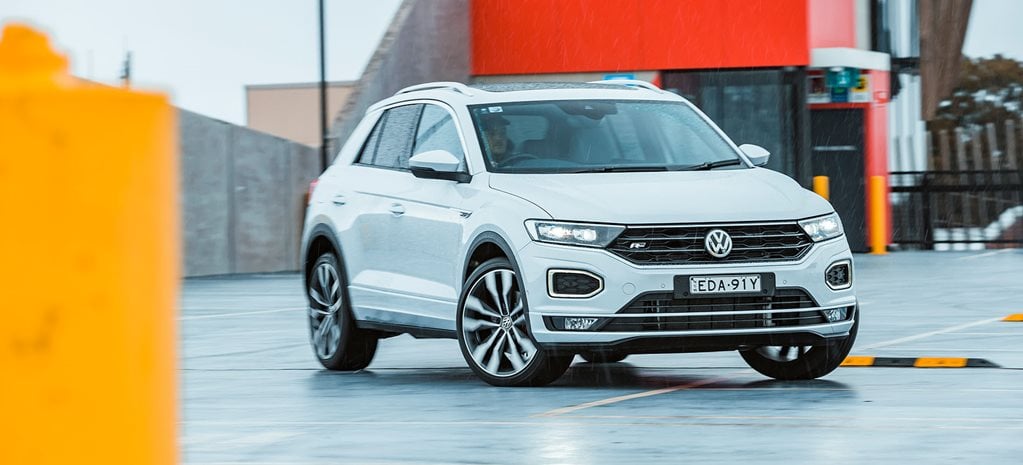
Based on the Golf hatchback, the T-Roc is the sportier of Volkswagen’s double-pronged entry into the small-SUV market along with the T-Cross. It’s propelled by a powerful 2.0-litre turbocharged petrol engine and handles bends incredibly well. It comes with excellent smartphone integration and a safety suite that includes autonomous emergency braking.
What might bug me?
Driving after a puncture. The T-Cross has a space-saver spare wheel, which limits the recommended top speed to 80km/h.
Paying more for fuel: the turbo engine requires premium unleaded, which costs more than regular unleaded.
What body styles are there?
Five-door wagon only.
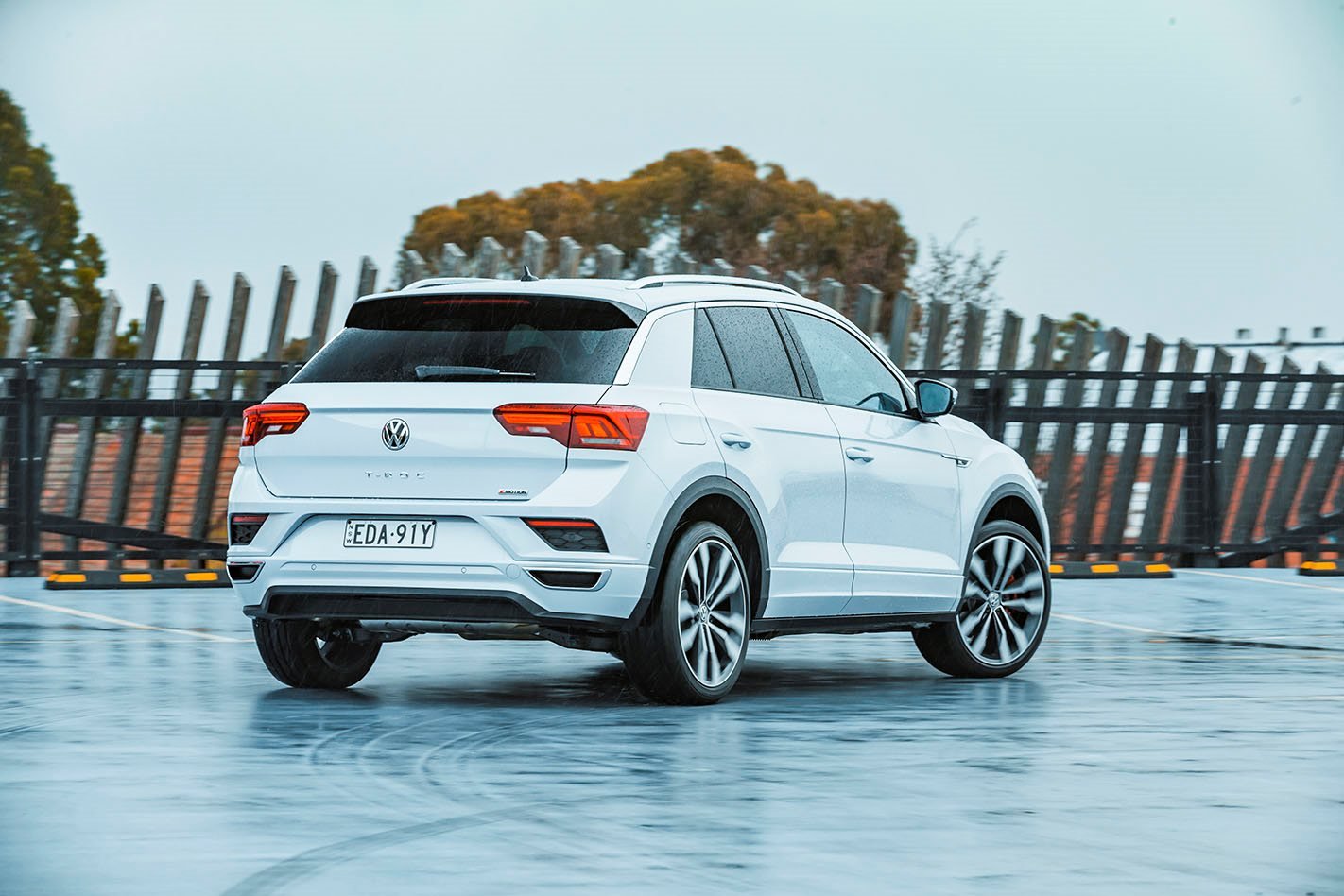
The T-Roc is currently only available in Australia with all-wheel-drive only, with a front-driving version arriving in November 2020.
It is classed as a small SUV lower priced.
What features do all T-Roc versions have?
The more affordable T-Roc 110TSI will arrive in Australia in November 2020, until then there is just the highly-specced 140TSI which brings a myriad of features including:
- An 8.0-inch colour touchscreen from which you can control the sound system and other cabin functions.
- A six-speaker sound system with an AM/FM radio, a CD player, an SD card slot, Aux and 4 x USB inputs, and Bluetooth audio streaming.
- Support for Apple CarPlay and Android Auto. If you plug in a compatible iPhone or Android smartphone, some phone apps – including mapping and music – are mirrored on the touchscreen display and can be controlled from there.
- A reversing camera with guidelines, and parking sensors front and rear.
- 10.25-inch digital gauge cluster with customisable displays.
- Active safety including autonomous emergency braking, lane-keeping assist, lane departure warning, driver fatigue detection, blind-spot monitoring, rear-cross traffic alert, and vehicle distance warning.
- Adaptive cruise control with speed limiter.
- 7-speed DSG (direct-shift gearbox) automatic transmission and 4MOTION all-wheel-drive.
- Keyless start and entry.
- Rain-sensing windscreen wipers.
- LED headlights that switch on automatically in low light, LED daytime running lights, LED tail-lights and fog lamps.
- LED ambient interior lighting.
- Auto-dimming rearview mirror, and power-folding heated door mirrors.
- Dual-zone climate control air-conditioning, and rear-seat air vents.
- A leather-wrapped steering wheel that carries buttons for operating the cruise control, the audio system, and your phone.
- Cloth sports seat with front lumbar support.
- 18-inch aluminium alloy wheels, which are lighter and more stylish than steel wheels.
- A space-saver spare wheel (with a recommended top speed of 80km/h).
- Tyre pressure monitoring, which alerts you if a tyre is losing air.
- Six airbags. Electronic stability control, which can help control a skid or slide (all new cars must have this feature).
The T-Roc comes with Volkswagen’s five-year, unlimited-kilometre warranty.
Which engine uses least fuel, and why wouldn’t I choose it?
So far there is only the one engine available in a T-Roc – the 2.0-litre 140kW four-cylinder turbocharged petrol engine that consumes 7.2 litres/100km on the official test (city and country cycles combined).
It is coupled with a seven-speed DSG (for direct-shift gearbox) automatic transmission. DSG autos work much like a manual gearbox with robotic control. They shift very smoothly and quickly and save fuel, but cannot match the fluid take-off from rest that you get with conventional or CVT autos.
A more economical engine will become available in November 2020 when the T-Roc 110TSI Style arrives with a 1.4-litre turbocharged engine matched to an eight-speed torque converter (conventional) automatic transmission with front-wheel-drive. This will consume about 6.2 litres/100km.
One reason you wouldn’t choose the 110TSI is that you’d prefer 140TSI’s sharper performance and all-wheel-drive traction.
What key features do I get if I spend more?
With the just one version of the T-Roc available for now, the only extras are option packs and premium paint. The T-Roc comes with two standard colours, Flash Red and Pure White, with Atlantic Blue Metallic, Indium Grey Metallic, White Silver Metallic and Deep Black Pearl Effect cost about $600 extra.
Option packs include the Luxury Package that for about $3500 adds Vienna leather-appointed seat upholstery, heated front seats, panoramic sunroof.
For about $2000 you can the Sound & Style Package, which brings adaptive dampers with driving profile selection to suit different conditions, bigger and fancier 19-inch wheels, progressive steering that tightens to suit sporty driving, and a 300W beats premium sound system.
Does any upgrade have a down side?
How comfortable is the T-Roc?
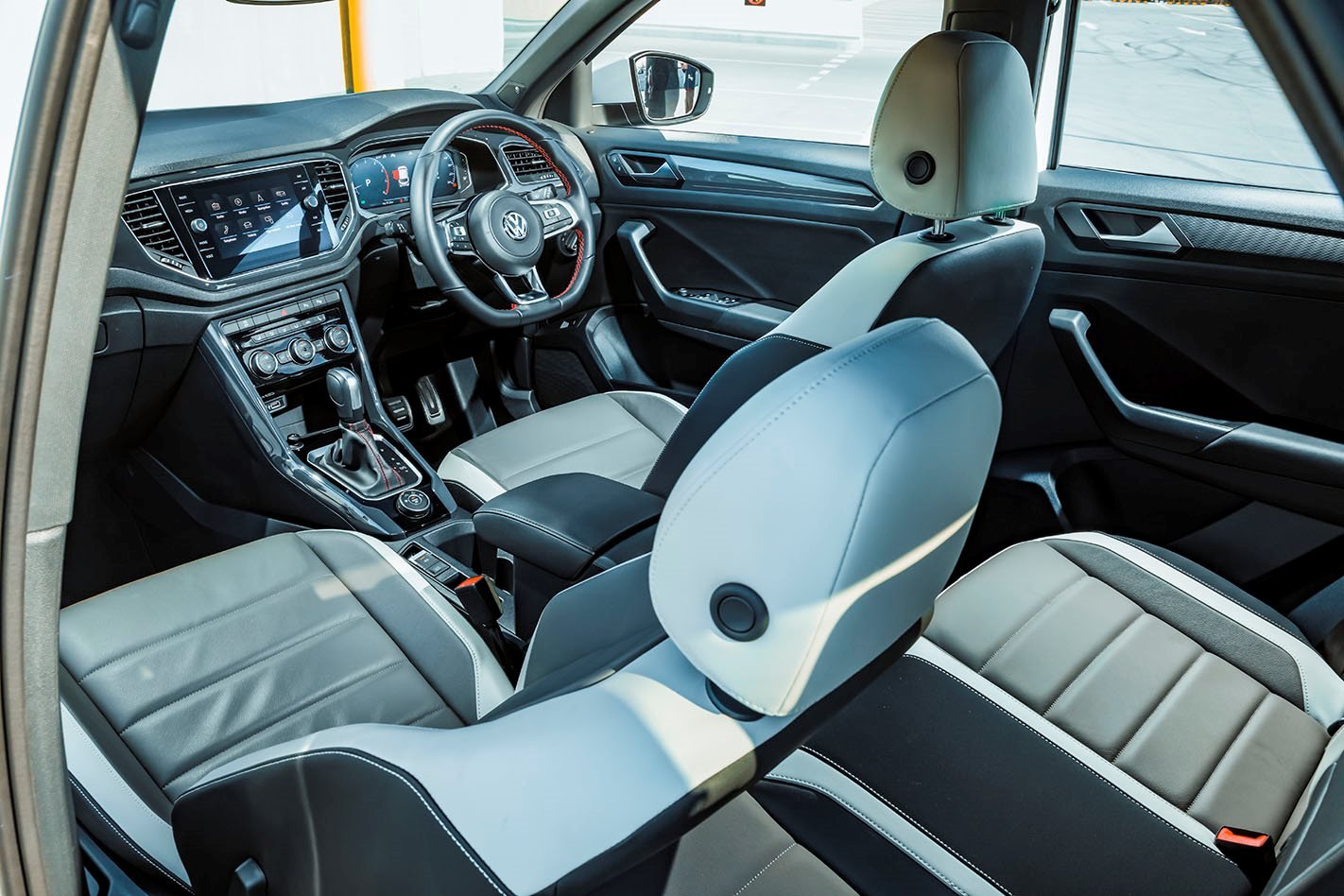
The T-Roc’s dash layout is neat, logical and fairly easy on the eye, but is tainted by hard plastic surfaces around the cabin. It looks ultra-durable but after stepping out of something like a Mazda CX-30, the T-Roc’s scratchy materials and hollow door slam sounds have you wondering what the margins on this $41K car must be like.
But the touchpoints are pleasant; the steering wheel is upholstered in fine leather, the central touch screen is not excessively proportioned and presented with sharp graphics.
Look beyond the superficial and there is substance here. The packaging is fundamentally good, with decent space upfront and reasonable kneeroom and headroom (for a relatively compact crossover) in the rear.
The driver’s seat is easily adjusted for a tall (leggy) driver and the view from the helm is very good.
The 2596mm wheelbase is actually 41mm shorter than a Golf Mk7, so temper your expectations if you regularly carry long-legged adult passengers. Thoughtfully, the optional sunroof doesn’t impinge on rear passenger headroom, and as a result, there are bulging recesses in the headlining for taller passengers.
The suspension has a sporty tune and with the 18-inch rims and low-profile tyres will feel jarring over smaller ruts. If you opt for the Sound and Style pack you gain adaptive damping that offers a softer-riding comfort mode.
What about safety in a T-Roc?
Every T-Roc has the mandatory electronic stability control, auto wipers, a reversing camera, front and rear parking sensors, daytime running lights (which help other drivers see you), and six airbags.
In addition, each T-Roc version has city-speed autonomous emergency braking, a highway-speed forward collision alert, lane-keeping assistance, and a driver fatigue monitor.
Two airbags protect the driver and front passenger’s upper bodies from frontal impacts, and a third protects the driver’s knees. One outside each front seat protects at chest level from side impacts. And curtain airbags extending down each side of the car at head level protect front and rear passengers from side impacts.
The T-Cross’ standard driver assist systems use radar and camera sensors to monitor the roadway ahead when you’re driving. Its autonomous emergency braking, which Volkswagen calls Front Assist with City Emergency Brake, operates at speeds up to 30km/h and can automatically brake the car if it concludes a collision is imminent (typically with a sharply slowing vehicle ahead).
Lane-keeping assist uses the camera to monitor lane markers. At speeds over 55km/h, if it concludes you are drifting out of your lane – perhaps from distraction – it will gently adjust the steering in an attempt to bring you back. If you continue to drift, it will vibrate the steering wheel and flash a warning.
Fatigue Detection monitors your movements of the steering wheel. If it suggests you might be falling asleep, it proposes you take a break.
Should none of this prevent a crash (perhaps because you have been hit from behind), Multi-collision brake acts to prevent your T-Roc drifting into the path of another vehicle after impact, automatically applying the brakes.
The T-Roc 140TSI also has blind-spot monitoring and rear-cross traffic alert – both relying on rear-facing sensors. The former helps you avoid changing lanes into the path of an adjacent or overtaking vehicle, warning you with a light in the exterior mirror and even seeking to steer you away from danger. The latter works when you are reversing, looking to either side behind you for vehicles crossing on a collision course.
The Australasian New Car Assessment Program (ANCAP) has rated the T-Roc at five stars for safety, most recently in April 2020.
I like driving – will I enjoy the T-Roc?
The T-Roc is entertaining to drive but can also be comfortable and relaxed. While higher-riding than the Golf it feels very much like the hatchback on the road.
The 140kW turbo isn’t the most refined at idle, but it’s a fundamentally good engine. Pair it with the T-Roc’s all-wheel-drive system and you have a combination that’s capable of deploying almost all of that power out of tighter corners.
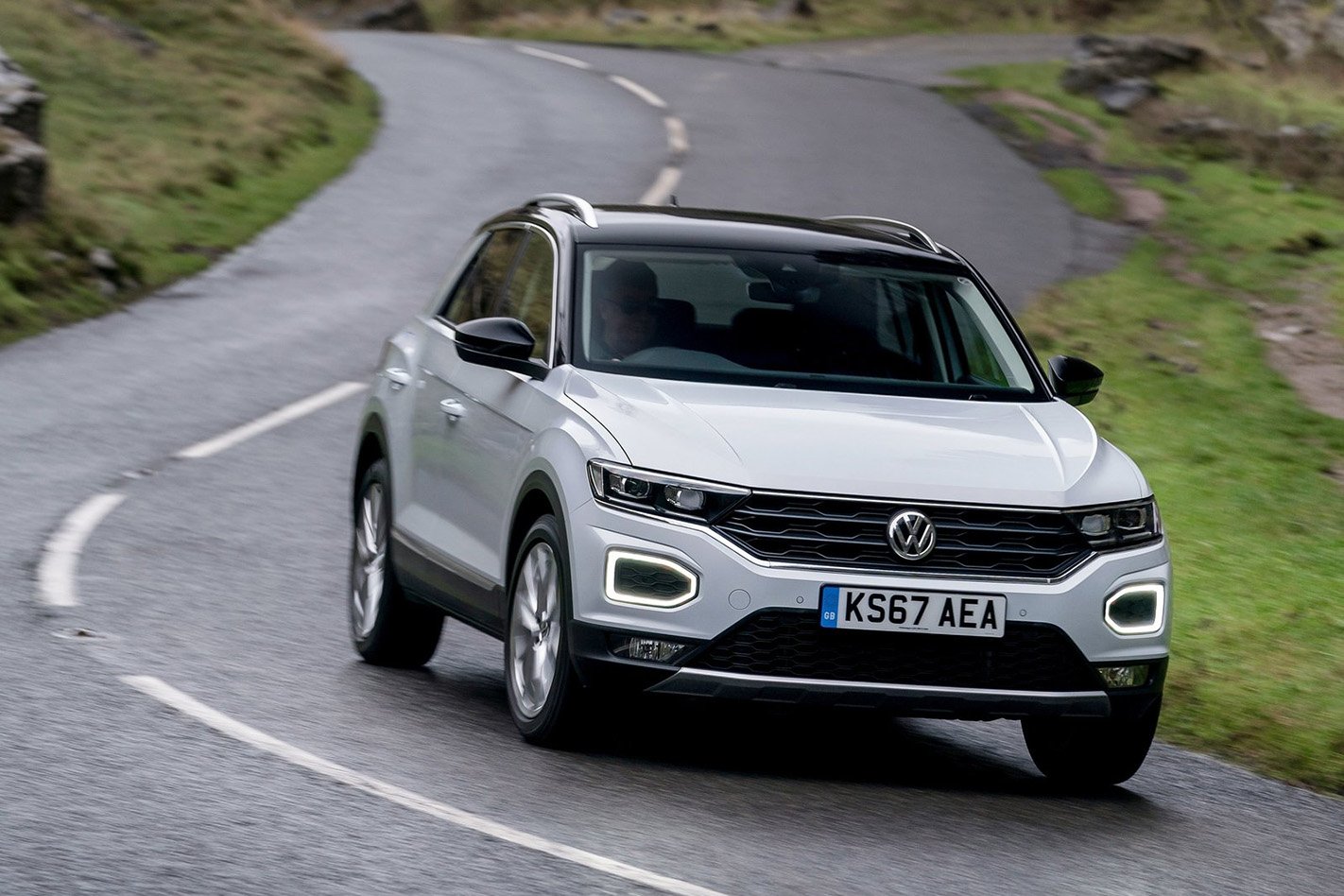
The seven-speed dual-clutch automatic is a willing participant and is helped by the fact that body control is very good indeed.
The adaptive dampers, available with the Sound and Style pack has a slick Custom mode where you can specify damper rates (suspension settings), gearbox response, steering weight and so on. Besides that, it’s easy enough to shuttle between the two other drive modes that you’ll probably use – Comfort and Sport.
How is life in the rear seats?
Legroom is tight for taller people but there’s and excellent head even with the optional panoramic sunroof.
There are air vents in the back, a fold down centre arm rest with two cup holders, rear door bins, and storage pockets on the back the of the front seats.
Child car seats are well catered for with two ISOFIX anchor points and three top-tethers.
How is it for carrying stuff?
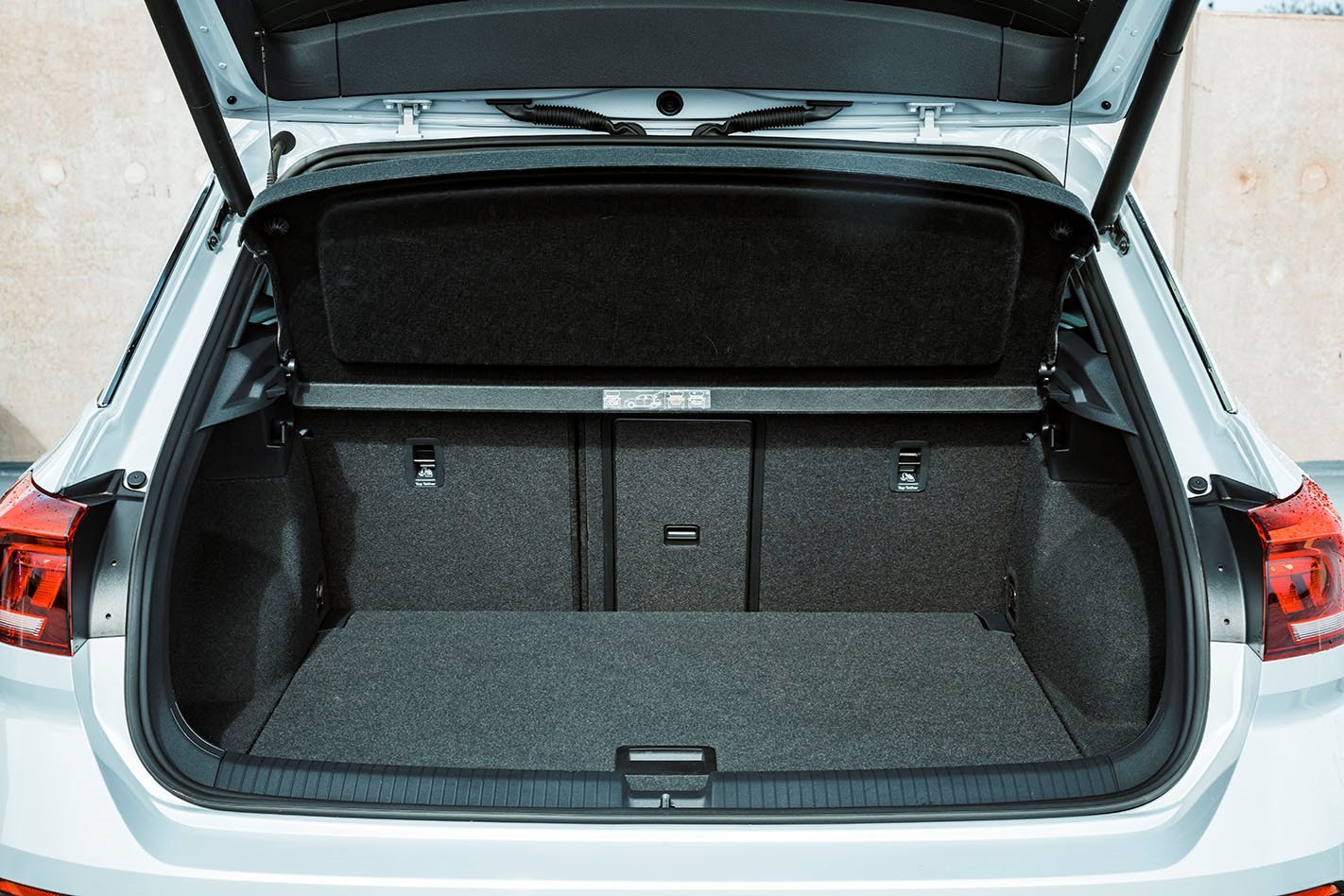
The all-wheel-drive T-Roc has a 392-litres boot space and up to 1237 litres with the 60:40-split rear seats folded down.
With the rear seats upright the boot space is 830mm long and you can an item up to 1532mm long behind the front seats with the back seats folded down.
The T-Roc has a handy braked towing capacity of 1700kg or 740kg unbraked. The owbar load limit is 80kg.
Where is it the T-Roc made?
The Australian-market Volkswagen T-Roc is manufactured in Portugal.
What might I miss that similar cars have?
The T-Roc is one of the newest and better equipped small SUVs on the market and one of the most powerful too, so there isn’t too much that it misses out on, compared to its rivals.
A notable omission, for now, is the lack a more affordable front-wheel-drive option, as available with its sportier, the Toyota C-HR, Hyundai Kona, Mazda CX-30 and Kia Seltos.
This will be rectified when the T-Roc 110TSI arrives at the end of 2020, or you can check out the less sporty Volkswagen T-Cross.
It’s also worth noting the Skoda Karoq, which is another close relative is already available with both 110TSI FWD and 140TSI AWD powertrains.
The upper-spec AWD versions of the C-HR, CX-30, Kona and Seltos have a more refined interior trim.
I like this car, but I can’t choose which version. Can you help?
The 140TSI Sport is the only version available at the moment.
That said we recommend spending the extra $2000 for the Sound and Style pack with adaptive chassis control brings noticeable improvements to ride comfort and handling, along with the fancier 19-inch wheels, progressive steering and the 300W beats premium sound system.
Are there plans to update this model soon?
The T-Roc arrived in Australia in July 2020 with 140TSI Sport, and a 140TSI X launch edition that brought additional features for an additional $2000.
A more affordable front-wheel-drive 110TSI version is due to arrive in November 2020.
Don’t expect an update before mid 2022, though we may see more special edition versions before then.
Munich has finally decided to build a BMW M3 Touring. After decades of waiting, BMW announced plans for a five-door estate version of the M3, delighting fans of wicked wagons everywhere (except maybe Alpina, who’s been hoovering up these customers these past few years).
The next M3 saloon will be revealed later this year, but BMW says the M3 Touring is still in the early stages of its two-year development process, so expect the finished car in 2022. Our new spy photos capture the louche load lugger on test near its Bavarian HQ.
It’s clear to see the M3 staples will stay: a butch bodykit nestling just the right side of lairy, large 20-inch alloy wheels and the regulation quad exhuast pipes nestle under the more practical bootlid.
Testing the water: BMW’s E46 M3 Touring prototype
Huge, dustbin-lid-sized ceramic brake discs will be available as an option, as evidenced by the large composite rotors and gold brake callipers visible on this prototype caught in our latest spyshots.
A recent post on BMW M’s Facebook page shows the M3 Touring out and about. BMW says it’ll endure lengthy endurance tests at the Nürburgring, as well as testing on public roads, so we’re going to see much more of it in the next two years.
It’s not the first M car to get an extra dose of practicality – BMW produced an M5 Touring in 1992 and 2007 – but this is the first time the formula has been applied to the junior M3.
BMW says the M3 estate will feature ‘wide axles, conspicuously large front air intakes, and four exhaust pipes at the rear.’ And now the more controversial news: at the front we’re expecting the same elongated grill as the M3 prototypes we’ve spotted, as well as the new 4-Series. It’s certainly a divisive look, but whether it’s divisive enough to affect sales of a long-awaited BMW M3 Touring remains to be seen.
How fast will the new M3 be?
BMW has confirmed M3 Touring will use a six-cylinder M TwinPower turbo block. The boss of BMW M division, Markus Flasch, has already confirmed the next M3 saloon will be powered by the same engine as Munich’s high-performance SUVs, boasting power outputs of 480bhp and 510bhp.
‘The next BMW M3 will have the brand new S58 engine that we’re launching in the X3 M and X4 M,’ he told us in a 2019 interview. ‘It will have 480bhp in the standard version and 510bhp in the Competition version.’
There’ll be several variants of the next M3, some featuring rear-wheel drive and others with a manual transmission, though it remains to be seen if the Touring will offer the same choice.
This story first appeared on CAR Magazine’s website.
- Even sharper look for smallest Audi SUV
- LED lights and other standard kit upgrades
- On sale mid-2021
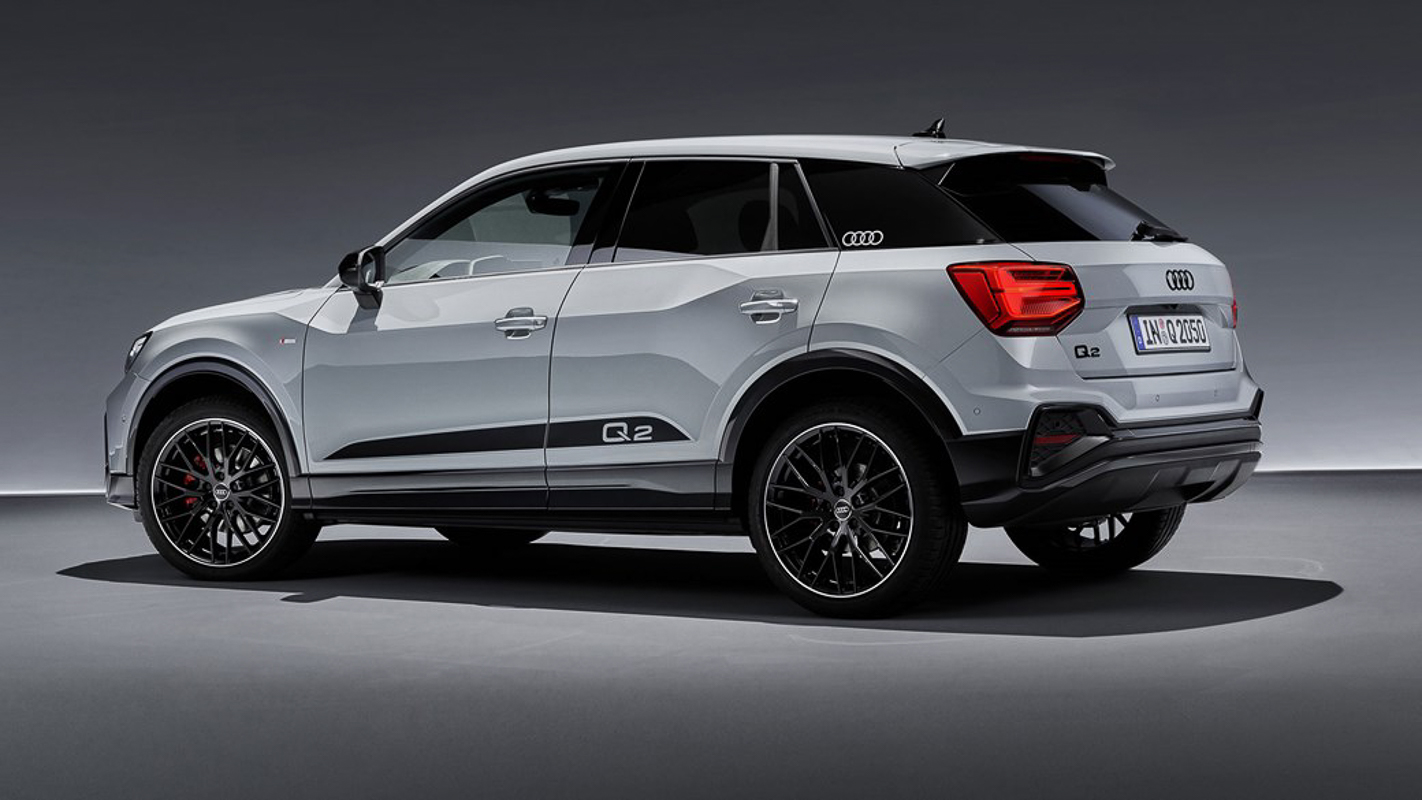
Did somebody have an accident with a chisel?
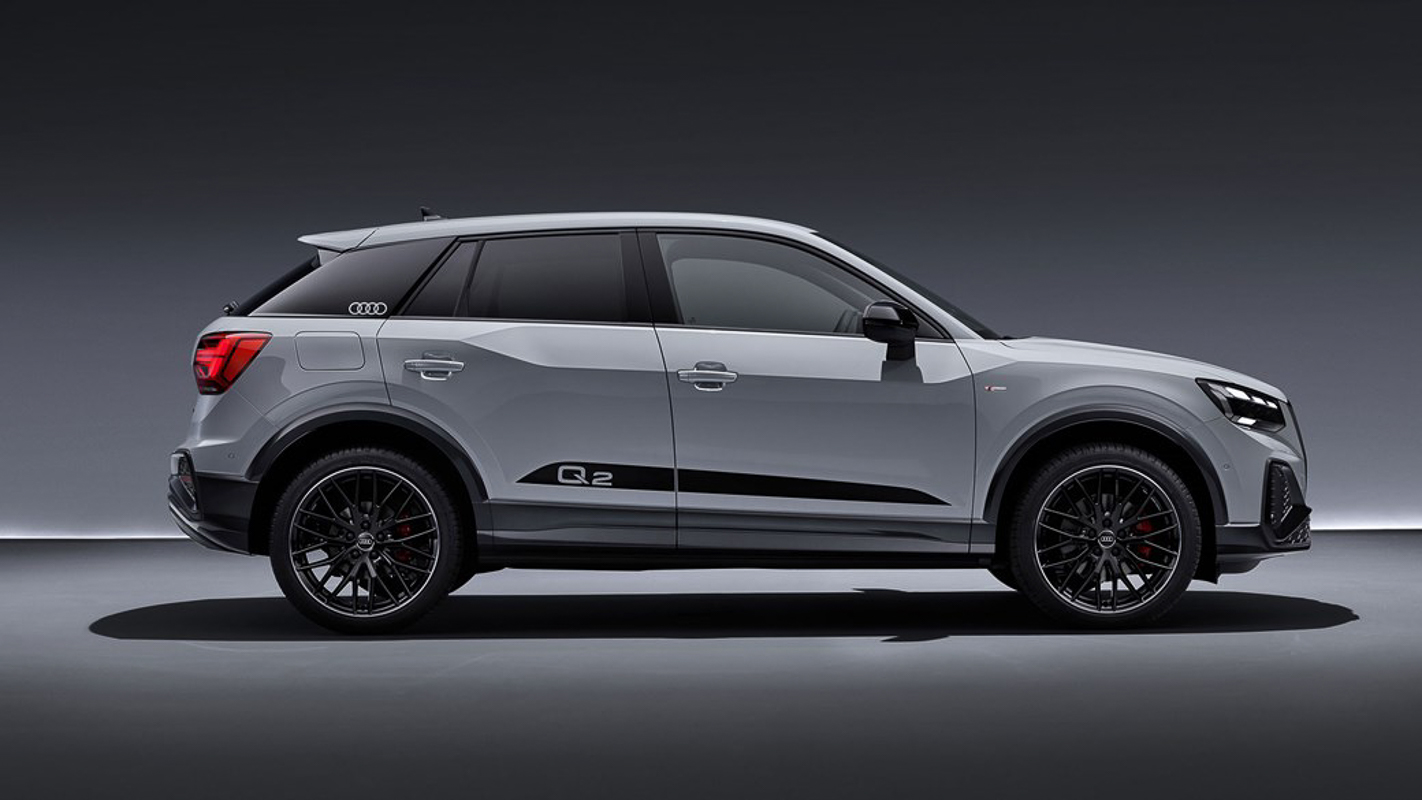
It might just be the lighting in these official pictures, but the Q2 certainly looks like someone’s poly-gone mad with the angles on the exterior refresh, as if the designers were pre-empting a Lego version or something. The new front and rear bumper treatment has kept the set-squares busy as well.
The result is striking, if not actually attractive – it has always been thus for the Q2, we fear, which Audi has deliberately positioned as an outlier from its more mature Q-range of SUVs – and also marginally longer than the original version.
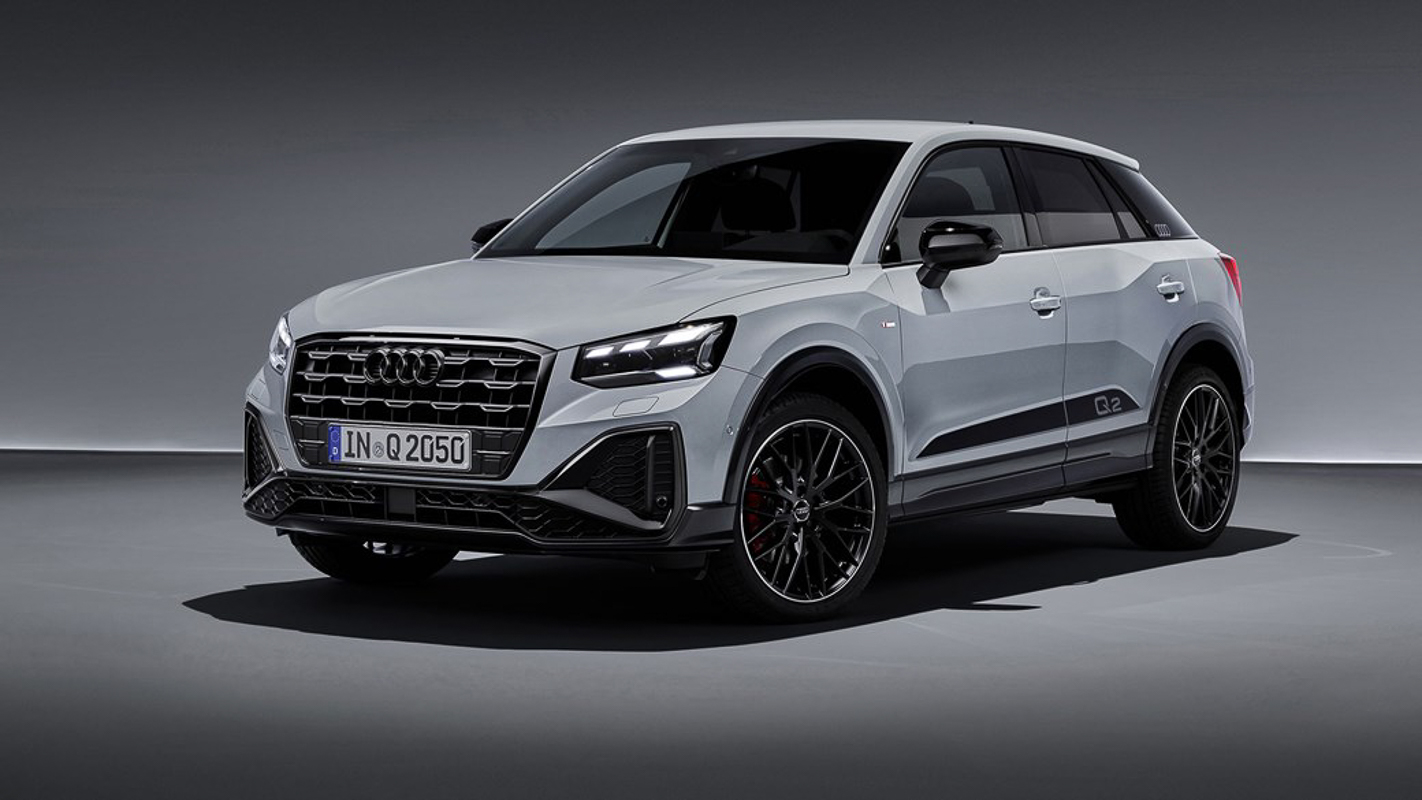
We’re still only talking about a 4.21m car here, though, and the height and width remains unchanged from the pre-facelift model – ditto the 0.31 drag coefficient (where sport suspension is fitted). That’s the most-slippery-in-class, should junior crossover buyers be concerned.
The entire range gets LED headlights now, while top-spec variants are fitted with LED Matrix lamps as standard. These also get adaptive sports suspension, Nappa leather, dual-zone climate, Bang & Olufsen stereos, panoramic roof, a rear-view camera and all of the safety systems Audi could pack into the car.
This includes a new ‘adaptive cruise assist’ system, which will speed up and slow down according to the road signs it reads (watch out for those including speed limits written on the back of trucks), as well as keeping the thing in lane. The usual pseudo-self-driving stuff for 2020.
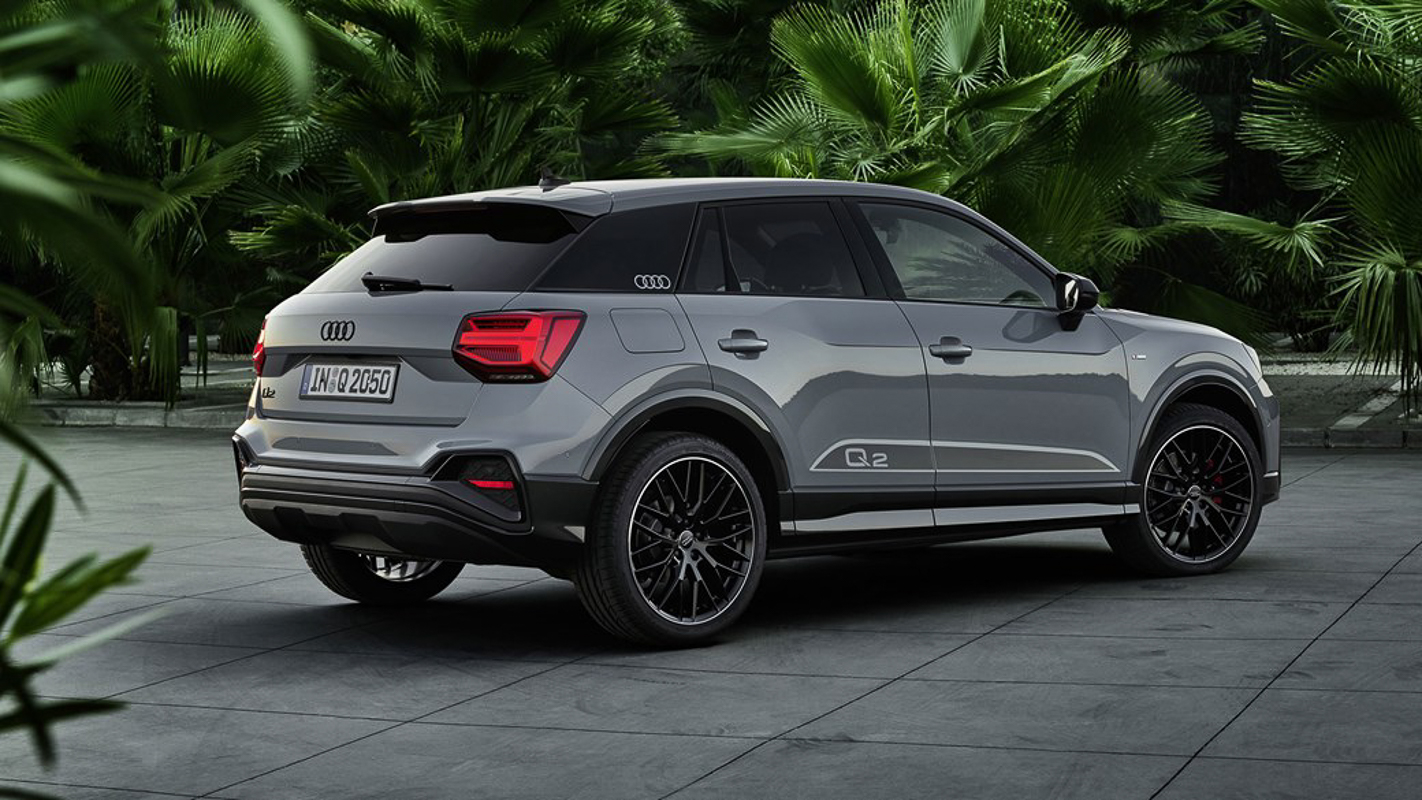
Five new exterior paint colours are available, including the intriguing Apple Green, which makes its Audi debut here. The blades on the C-pillars continue to be offered in body colour, black, grey or silver, while the lower sections of the bumpers are also coloured in different ways, depending on spec.
Any changes inside?
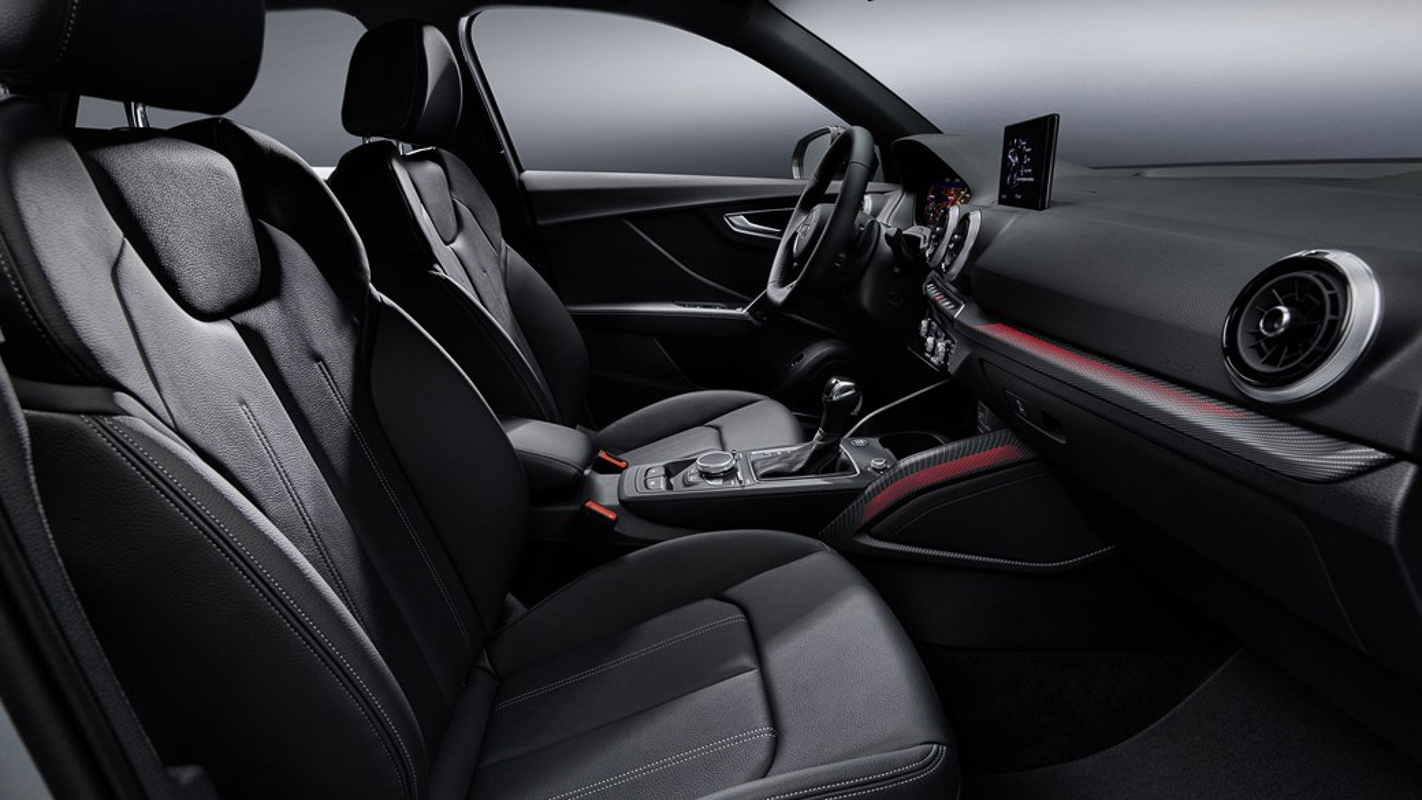
Not a massive amount – which is a shame as, generous space aside, this is one of the Q2’s weakest areas. Buyers do get new-look air vents and gearknobs, though, plus new fabrics for the door trims and – best of all – four-way electric lumbar support for the front seats as standard.
Sport models and up also get 12.3-inch virtual cockpit instrumentation, and ‘MMI navigation plus’ on an 8.3-inch central screen. This isn’t a touchscreen, which is a novelty, instead controlled by the usual MMI rotary dial or ‘natural language’ voice.
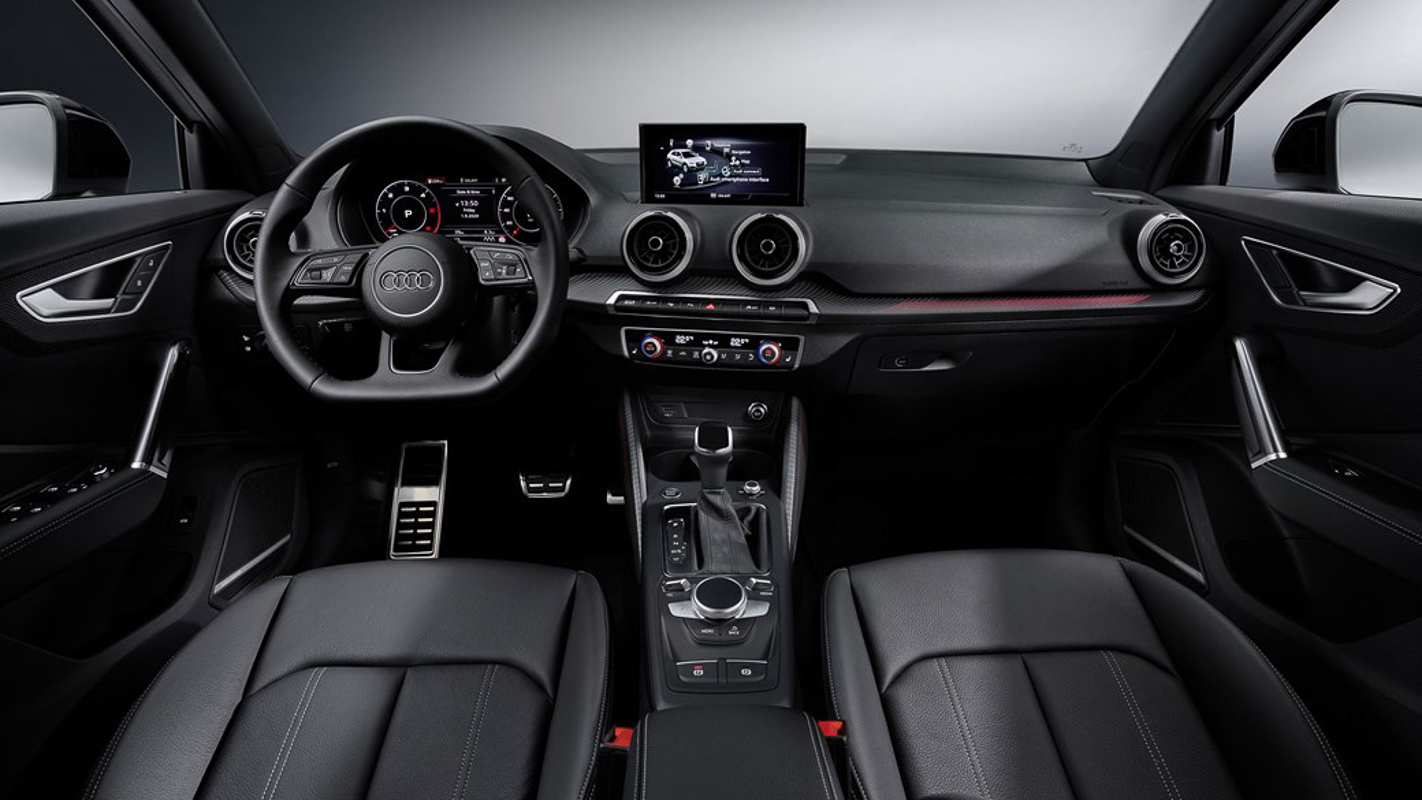
The MMI navigation plus system can enable a bunch of online services including traffic, Google Earth mapping, weather and fuel pricing. ‘Audi connect emergency call & service’ and ‘Audi connect remote & control’ also come as part of the package – the latter giving you remote access to the car, including locking, via the myAudi smartphone app.
What’s the engine line-up for the new Q2?
Audi’s being somewhat vague about this. ‘At launch’ you can definitely get a 1.5-litre TFSI turbo petrol, with more TFSI and some TDI engines expected to join the range down the line.
How much and when?
Pricing for the 2020 Audi Q2 facelift hasn’t been announced yet, we’ll know more when it goes on sale mid-2021.
This article was originally published on carmagazine.co.uk.
Dozens of modern classic cars, including several Toyota Mk4 Supras, Nissan Skyline GT-Rs, and BMW E46 M3s, have been found in a stash during a police raid in the US.
Information about the nature of the raid, the reason, and the owner of the cars, is available through reporting from Massachusetts outlet MassLive, but our interest lies in the garage collection.
Reports reveal an old fire station in small town Holyoke, Massachusetts was housing a secret collection of high-value machinery, many of the cars stored are currently experiencing price booms.
Another (epic) collection of GT-Rs, here in Australia
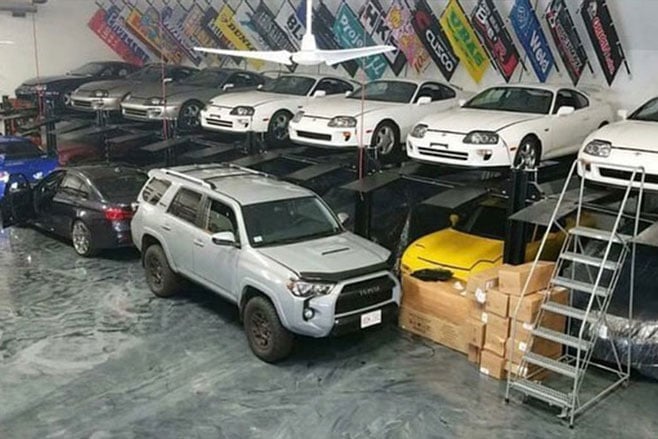
By our count, there are at least nine fourth-gen Toyota Supras, becoming increasingly desirable in what looks to be stock form.
Also in the lockup are at least eight different BMW M3s, primarily of the E46 generation but with a couple of later generations.
Speaking of M3s… here’s Paul Walker’s car collection
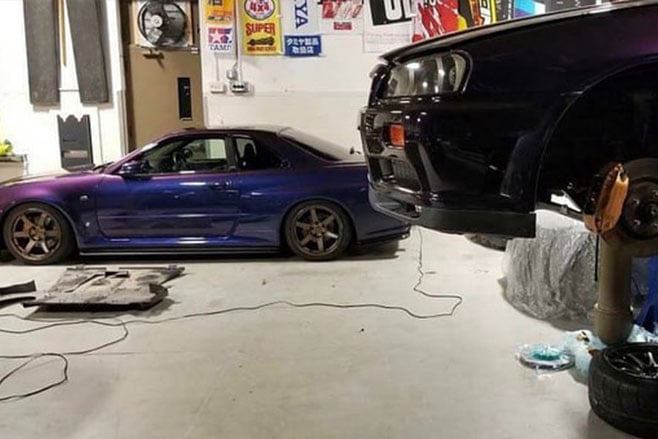
At least three Nissan R35 GT-Rs can be seen in the garage, while further images show three more R34 GT-Rs in a workshop.
Also in the collection are at least two relatively late (VII-IX) Mitsubishi Lance Evos, though the images aren’t focused on those.
Also tucked away under a hoisted Supra, is one Mazda FD RX-7, inarguably the most revered and sought after of the rotary-powered Mazdas.
These images posted to Facebook are also joined by a video which sees several of the cars leaving on tray trucks.
I’m taking the Midnight Purple Skyline ? out of all the cars in this video which one you having dropped at your house?!…Posted by The Sauce Spot on Monday, 31 August 2020
While we can’t speak to the situation surrounding the cars and the warehouse raid, we can very comfortably call this collection a dream garage… and potentially one hell of a police auction.
Skoda’s long-awaited Enyaq SUV has rolled out in Europe and the UK. The brand’s first battery electric vehicle to be based on the Volkswagen Group’s modular electric vehicle (MEB) platform, the Enyaq promises a complete EV package – with a sharp SUV styling, low starting price, long range, fast charging, and the practicality and clever touches that Skoda owners love.
With the basic model on sale in the UK at a snip above £30,000 ($A54,600) after the British government’s plug-in car grant, yet offering a claimed 390km of range on a single charge, the Enyaq could give established volume EVs such as the Kia e-Niro, Nissan Leaf or, dare we say, the Tesla Model 3 a run for their money.
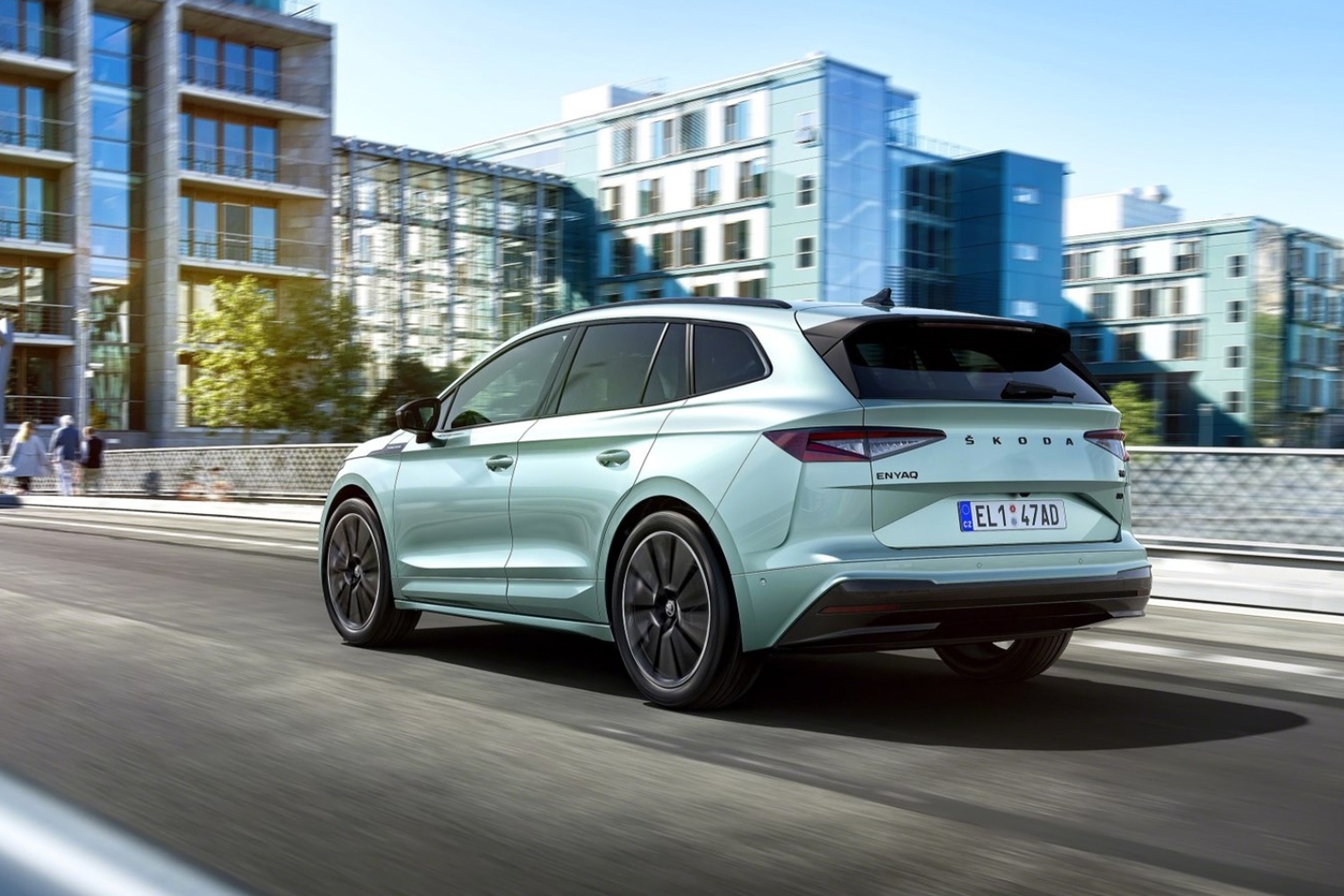
It’ll also provide plenty of competition for its in-house rivals, sister brand Volkswagen’s ID.3 hatch and ID.4 SUV.
Not yet for Australia
Australia is slowly gaining its own collection of EVs on sale, but it plays second or perhaps even third fiddle to the infinitely larger European markets – a case in point when it comes to Skoda’s Enyaq.
While Skoda Australia says the Enyaq is “certainly regarded as desirable” there is no news regarding a local launch or even consideration for showrooms.
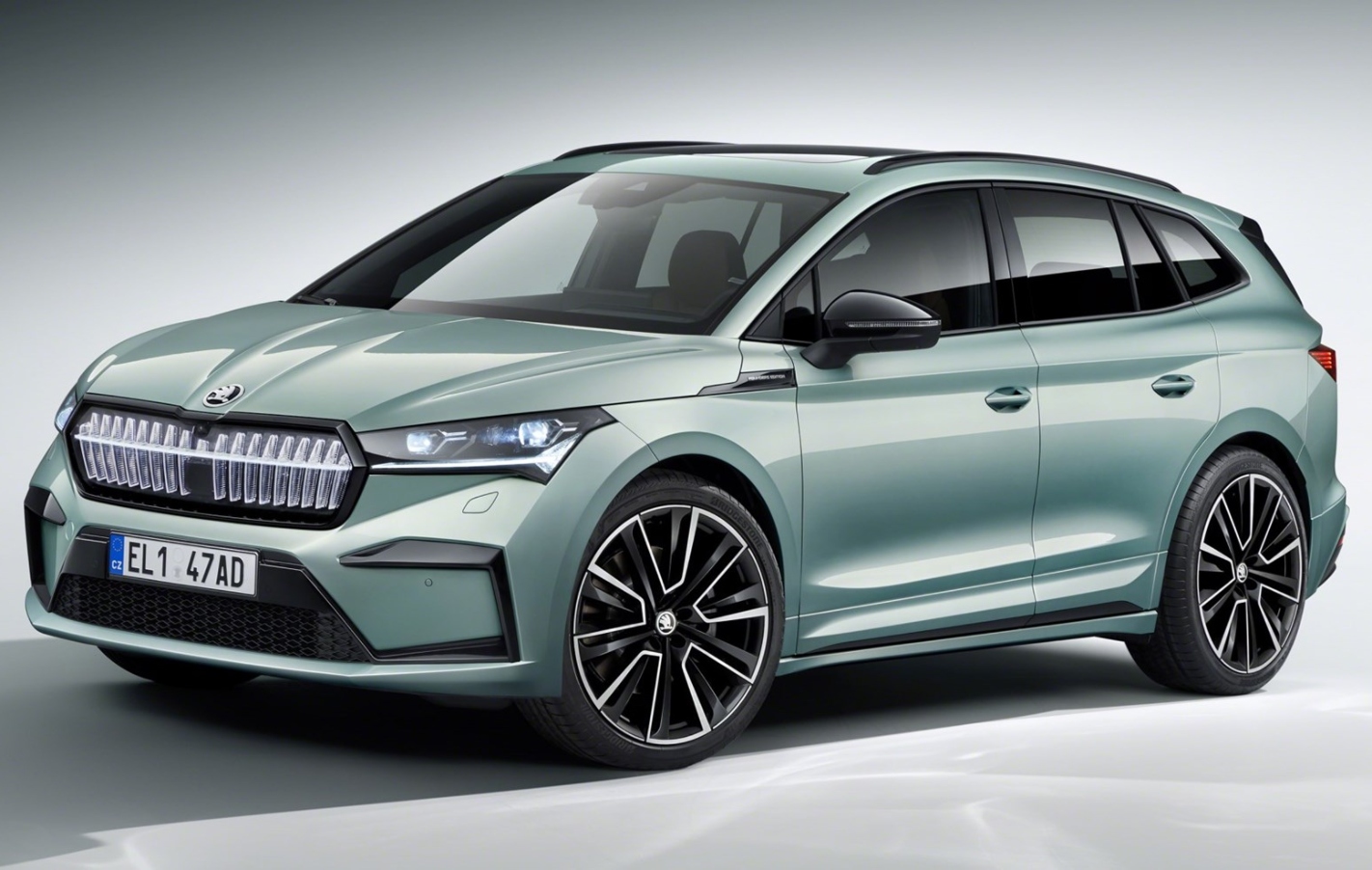
If Skoda’s greenest vehicle to date is given the green light to come Down Under, it’s unlikely to be before 2022 and not until the larger markets have been given first dibs.
What’s with the name?
It’s the usual Skoda nomenclature that disobeys English grammar, but at least it’s consistent. The Enyaq name is derived from the Irish words Eithne and Enya, meaning source of life. Appropriate, as this SUV is the pioneer of Skoda’s all-electric line-up.
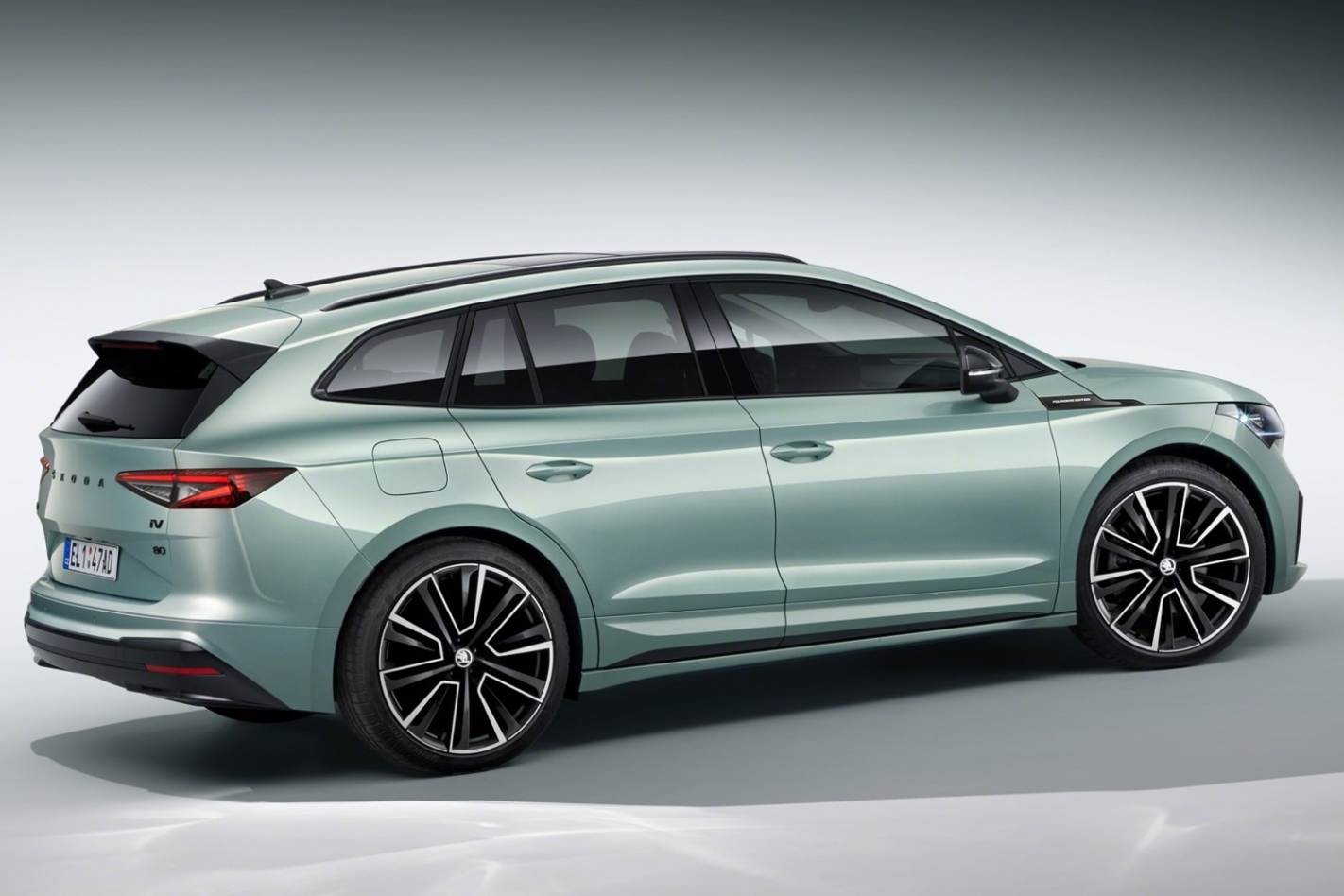
The Q final letter trend is adopted from existing Skoda SUVs – Kamiq, Karoq, Kodiaq – but it starts with an E, because, well, electric.
What battery does it have?
The Enyaq will sit on the VW Group’s MEB platform. Also known as the Modular Electrification Toolkit, this collection of components will underpin just about every new EV any of the Volkswagen Group brands build.
In Skoda’s case, it’s opted for a choice of two battery packs, 62kWh or 82kWh in capacity.
The base 62kWh model – named the Enyaq iV 60 – pairs that battery with a 133kW electric motor and rear-wheel drive. That’s good for 0-100km/h in 8.7 seconds, and a WLTP combined range of 390 kilometres.
The next rung on the latter is the iV 80, with a more powerful 1576kW electric motor good for 0-100km/h in 8.5 seconds and an impressive range of 510km.
Later on, two further models will join the range. The iV 80x gains all-wheel drive, courtesy of a second electric motor bringing total power output to 195kW and bringing 0-100km/h down to just 6.9 seconds. The RS performance model, meanwhile, ups that once more to 225kW. It’ll make the milestone 100km/h dash in 6.2 seconds. Both of these models have a WLTP range of 459km.
All models are limited to a top speed of 159km/h, apart from the RS, which has a higher limit of 178km/h.
Rapid charging with a 50kW charge rate is standard – but customers will be able to spec higher 100kW or 125kW charge rates as options. The highest of these should mean a 10 percent to 80 percent charge in just 38 minutes.
Skoda’s gone a bit BMW with that grille…
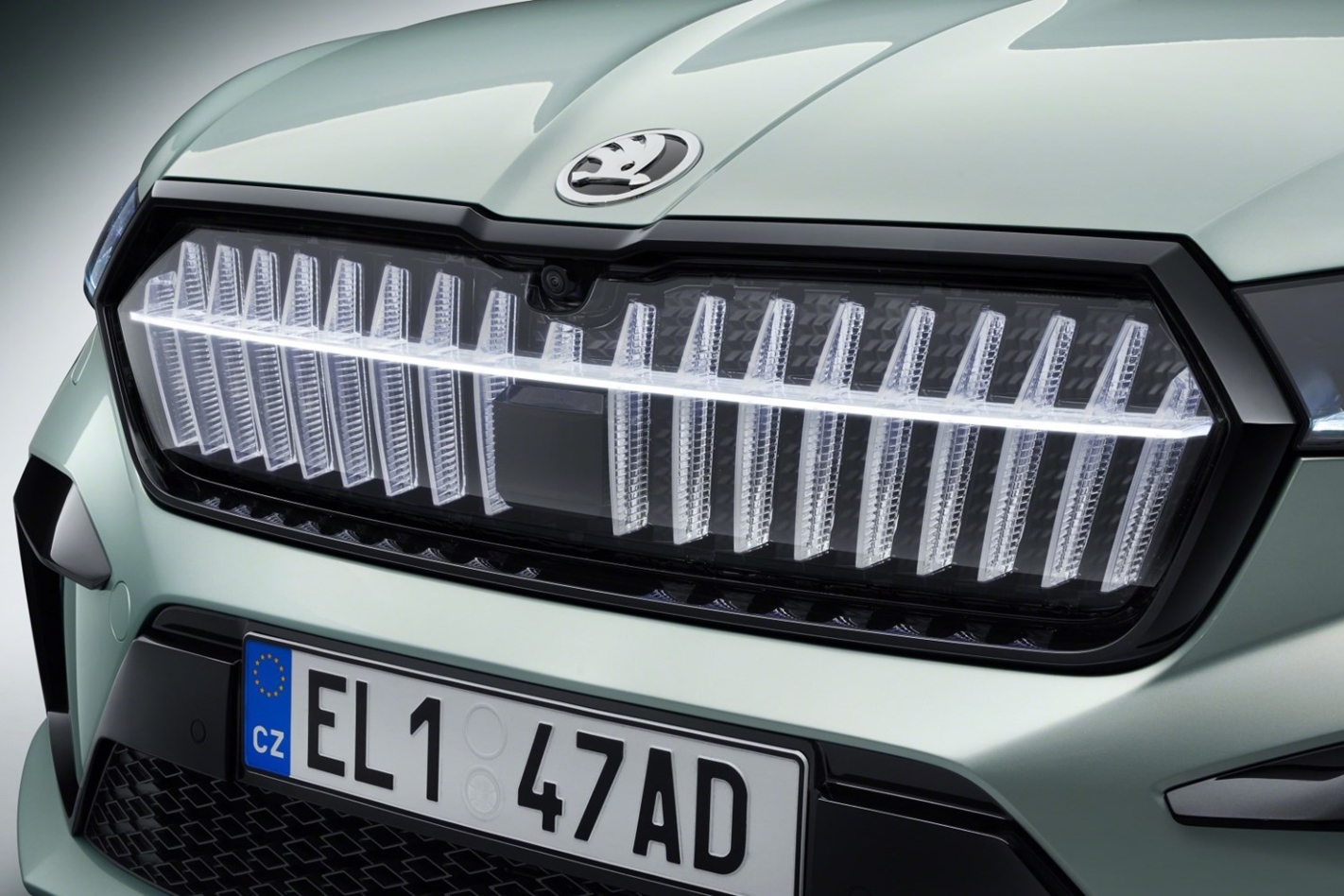
That crystalline motif Skoda’s been sneaking into its headlights of late? It comes to a head with the Enyaq.
The car’s overall shape is very familiar – it looks rather like a Karoq with a more upright tailgate and larger wheels – but with a blank canvas to play with at the front, the Enyaq’s designers have gone a bit mad with the grille.
It’s larger than ever, with a surround that connects to the headlights at either end, and all but the base model will enjoy 130 LEDs illuminating its vertical slats.
It’s undeniably effective, though it’s limited to just top-end Founder’s Edition models. A slightly less ostentatious option will be available if customers want it – the basic car gets a plain version.
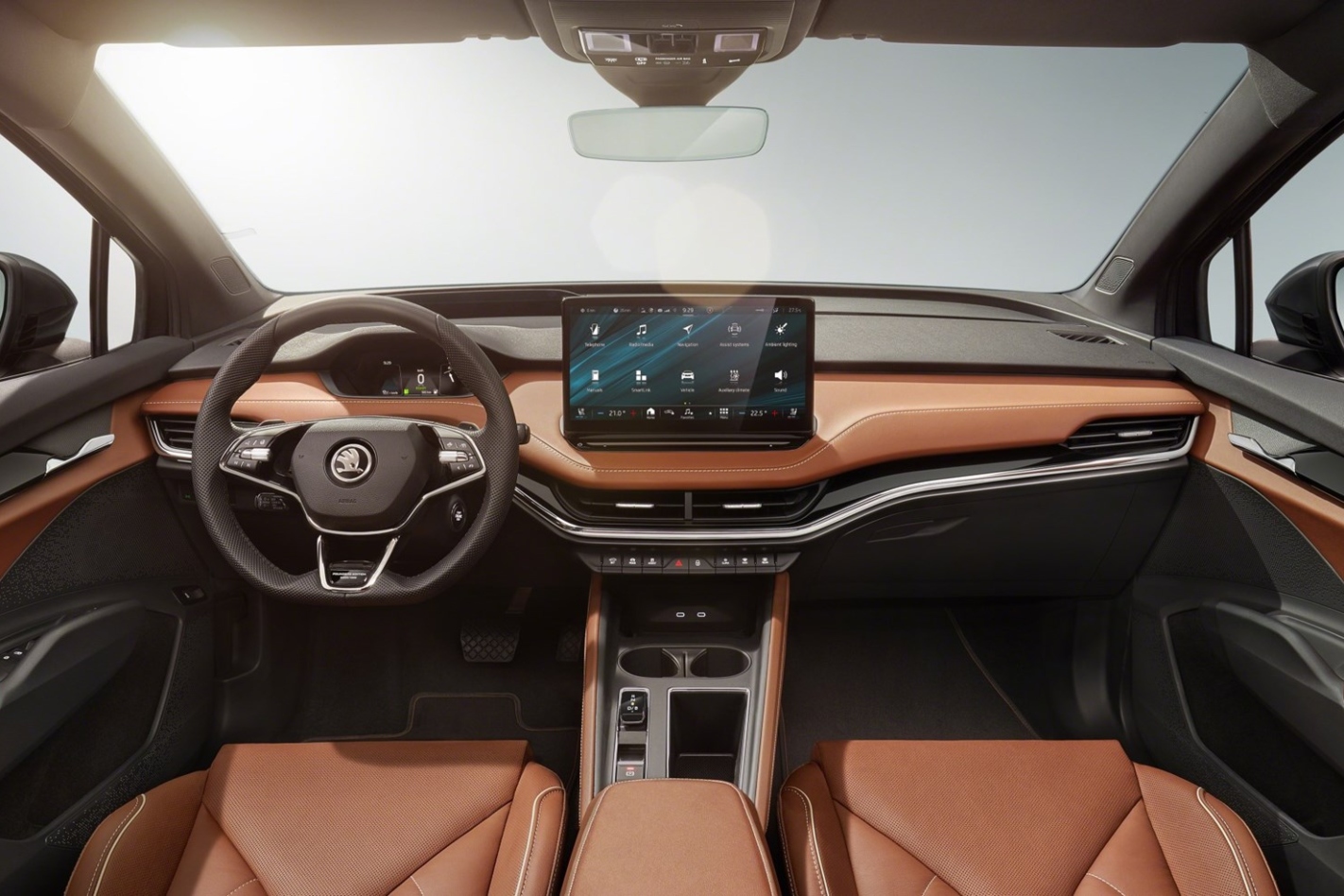
The interior’s very much a step forward as well, taking the new cleaner button-lite environment found in the latest Octavia and stepping it up with a massive 13.0-inch touchscreen dominating the centre console.
Like the Octavia, the Enyaq looks to be immensely practical. There’s a massive, 585-litre load bay, and the back seat appears spacious – if a bit compromised by the high floor.
The Skoda digital assistant, Laura, is present and correct, as are a digital dashboard, wireless Android Auto and Apple CarPlay and a companion app capable of remotely scheduling, charging or pre-conditioning the climate control.
How much is it going to cost?
Skoda’s revealed UK pricing so far for the iV 60 and iV 80 in their rear-wheel drive forms. Rather excitingly, the range kicks off at just $33,450 ($A60,885) or £30,450 ($A55,425) after the plug-in car grant, which wouldn’t apply to Australian sales.
That price gets you an iV 60 with ‘Loft’ interior spec – bringing the biggest screen, rear parking sensors, dual-zone climate control and keyless start, a combination of fabric and artificial leather seats with brushed aluminium trim inserts.
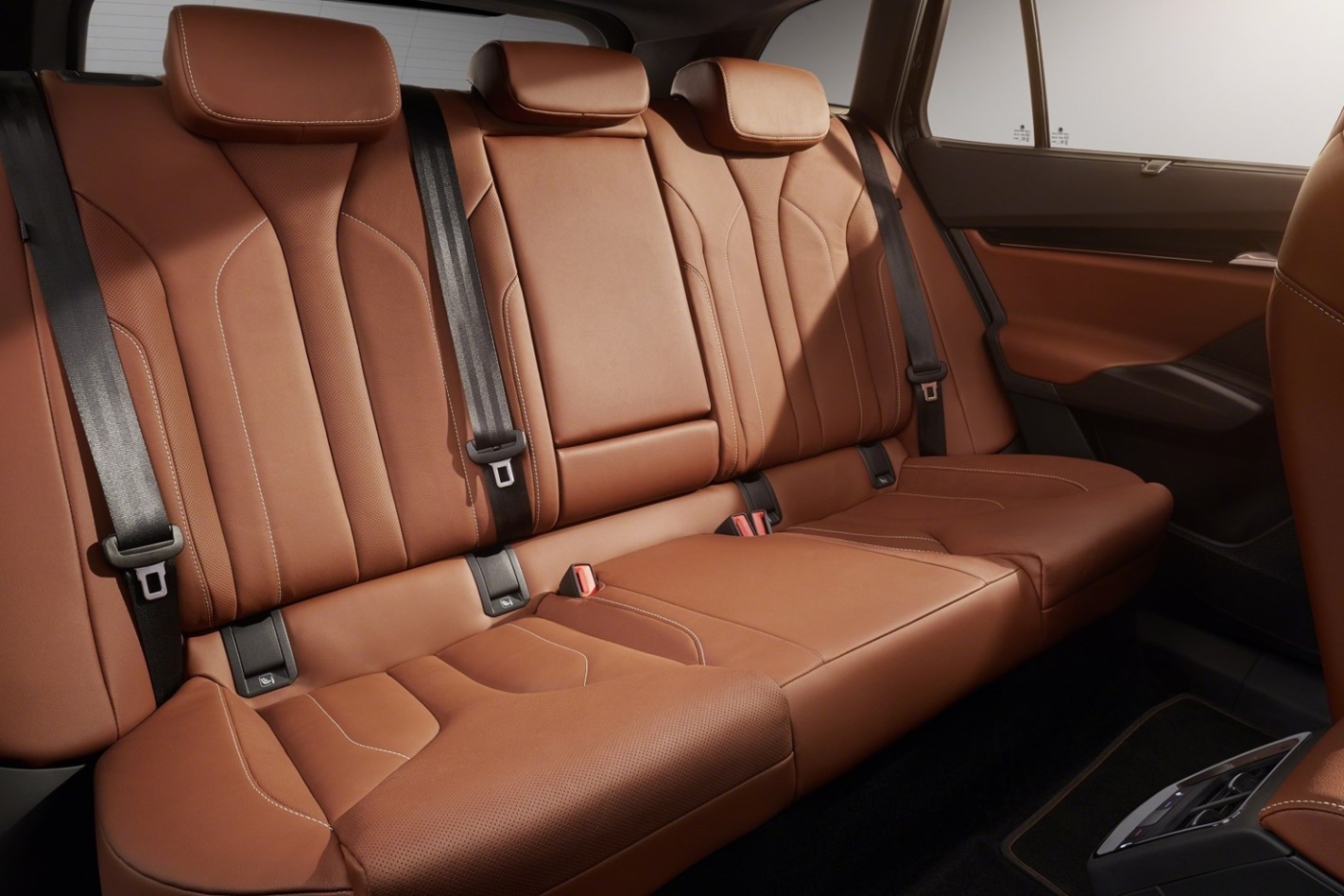
Further upgrades option it to ‘Suite’ specification, adding full leather trim and piano black décor, or ‘Lounge’, with light grey leather and mustard yellow stitching.
Enyaq iV 80 models start from £35,950 ($A65,400) and add front parking sensors and a rear-view camera, plus built-in navigation. The same packs can be applied.
The current range tops off with the 80 Founders Edition, which comes in at £46,995 ($A85,500). In addition to the illuminated grille it features 21-inch alloy wheels, black leather interior trim and 125kW charging as standard.
What’s on WhichCar TV this week?
Hot hatch showdown!
This Sunday we’re looking at the humble hot hatch. Come with us as we explore the sports car for everyone.
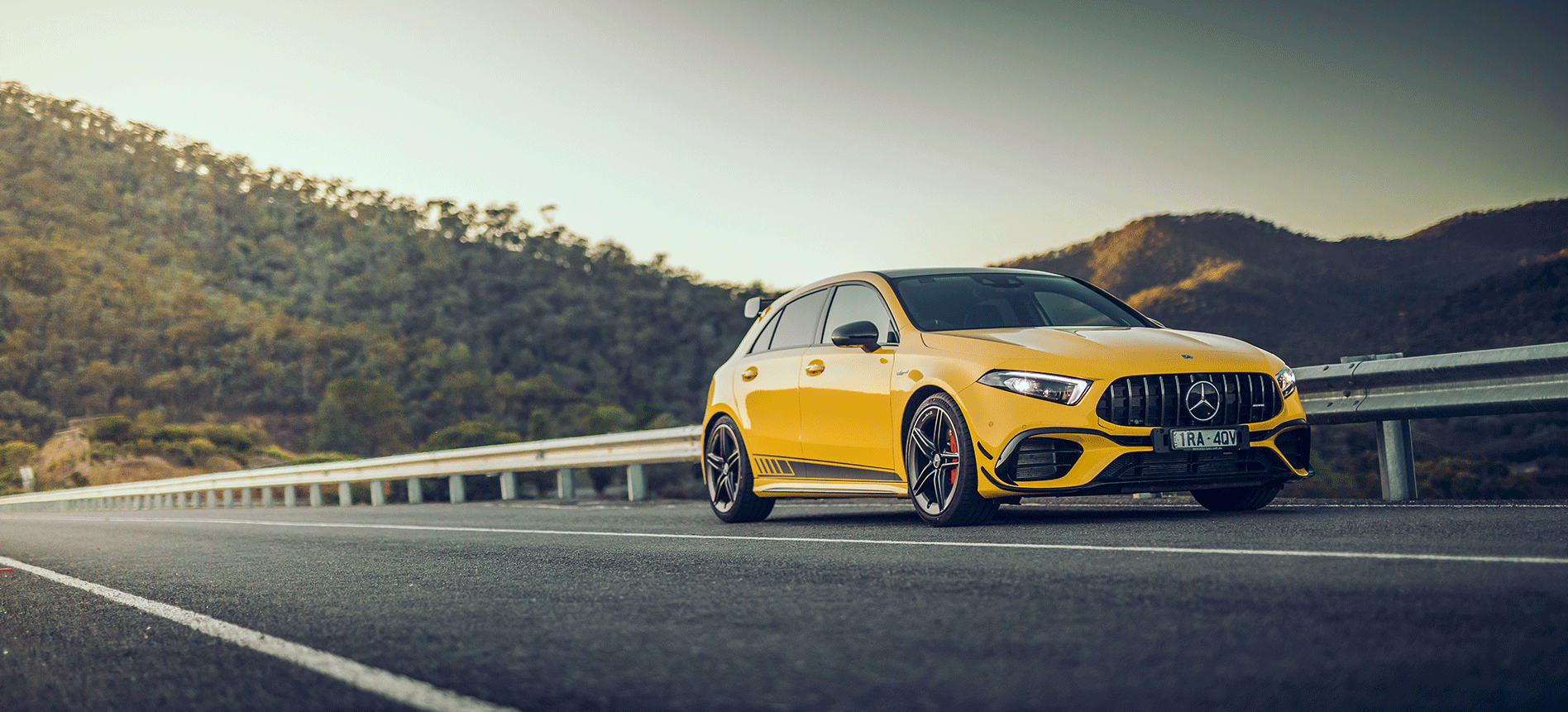
Mercedes-AMG A45 review
This hyped-up hatch hero is arguably one of the hottest performance cars on the market right now. Has Mercedes-AMG found the perfect blend of power, handling and tech in this pint-sized package? Tune in this Sunday as we put the new A45 through its paces.
The class benchmark
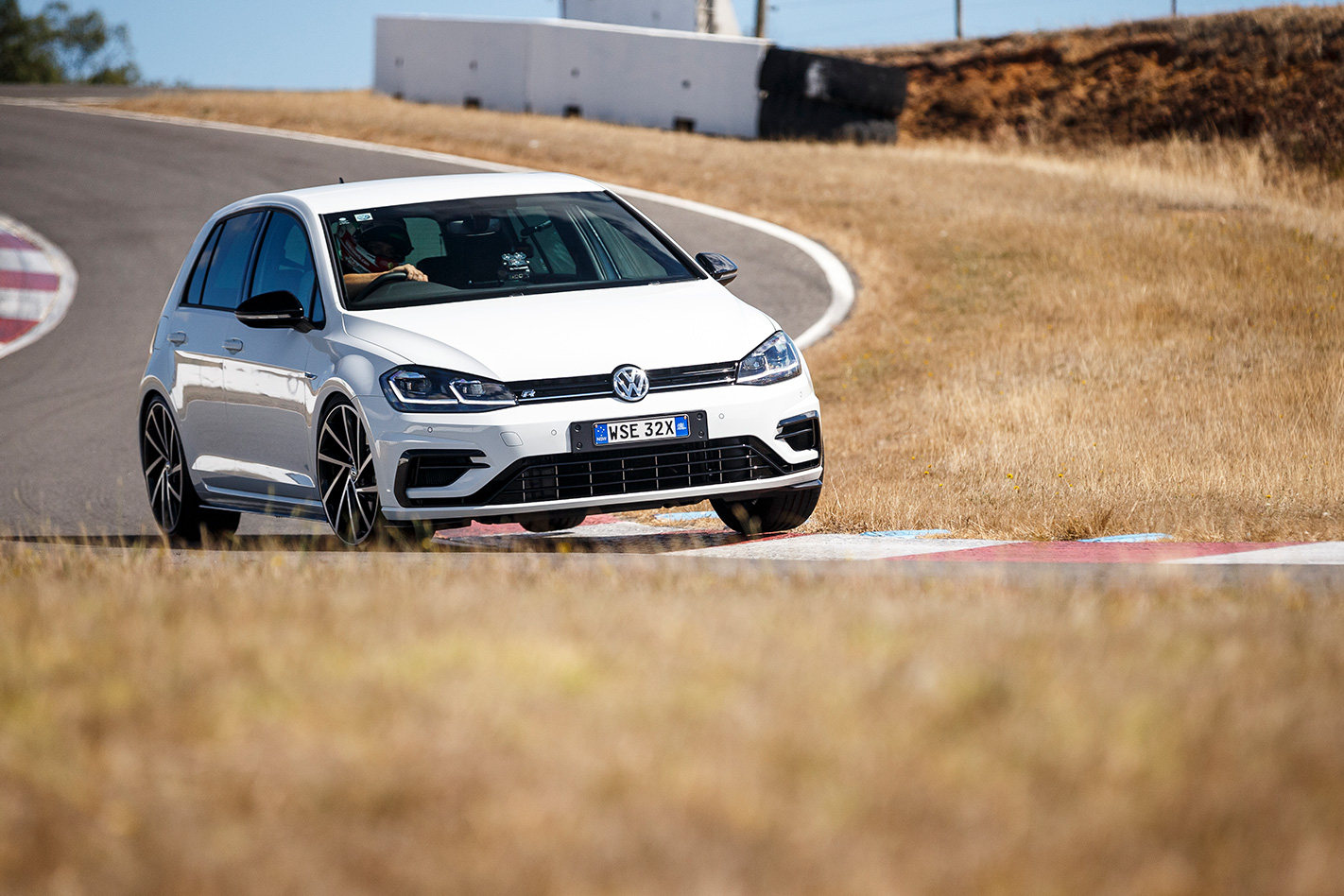
Few others can straddle the line between performance and practicality as well as the venerable Volkswagen Golf R. We test it back to back on road and track to find out whether it still remains the best of the rest.
Civic duty
If you’re in it for outright lap times and sheer entertainment, few come close to the Honda Civic Type R. Is this one of the best hot hatches ever? Find out this Sunday when we spank it around a racetrack.
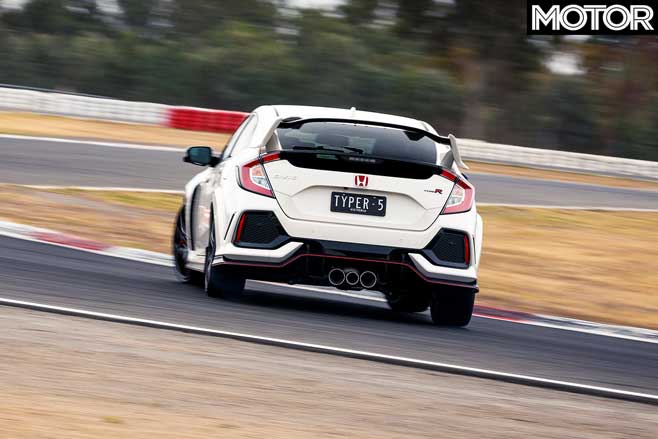
Sensibility is key
While the Honda Civic Type R is a certified weapon, it’s not so easy to live with. Toning down the performance needn’t make a hot hatch boring, as the new Renault Megane RS and Volkswagen Golf demonstrate…
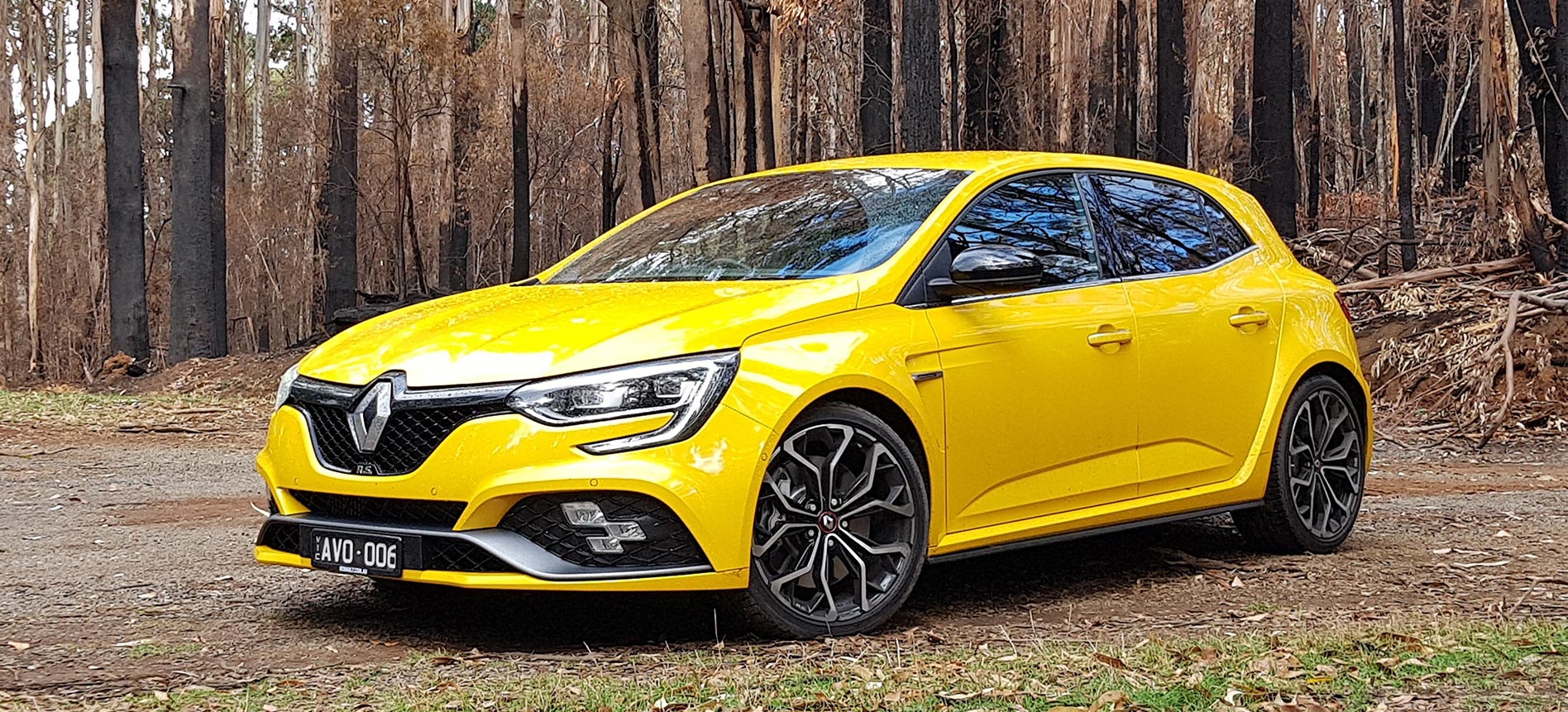
WhichCar TV Season Two Episode 27
3:30pm Sunday September 6, Channel 10
WIN A TRIP TO THE MALDIVES WITH WHICHCAR
For season two, we’re also offering an amazing prize for our viewers. How does a trip to the Maldives sound? Pretty awesome, right?
The competition is open NOW so make sure you tune into WhichCar TV on Channel Ten at 4pm Sunday AEDT.
And, if for some reason you can’t (and it had better be a good reason!) then there’s a host of ways to catch up on the show, check out behind-the-scenes stuff and find out more about the cars Aussies want to buy.
For example, our weekly podcast, our Facebook page and our YouTube channel are standing by 24/7.
MISSED THE SHOW? Catch up at Ten Play
Cyan Racing – triple World Touring Car Champions and Volvo factory racing team – has stopped playing with Lync & Co for a few moments and produced a new project that pays homage to one of the real milestones in Swedish automotive history. We’ve become used to seeing restomod Porsches and Jaguars, here we have a sensational updating of the Volvo P1800.
Simply called the Volvo P1800 Cyan, it marries the classic lines of a car that predates the E-Type, 250 GTO and Porsche 911 with modern technology, including a bespoke chassis, body made from high-strength steel and carbon fibre and a 308kW engine out of a title-winning racing car.
It’s beautiful, isn’t it? Starting with a 1964 P1800, the changes to the bodywork are more extensive than they might first appear. Not only is wider, with larger wheels – forged 18-inch alloys – even the glasshouse has been repositioned.
Cyan and Lync & Co at the Nurburgring
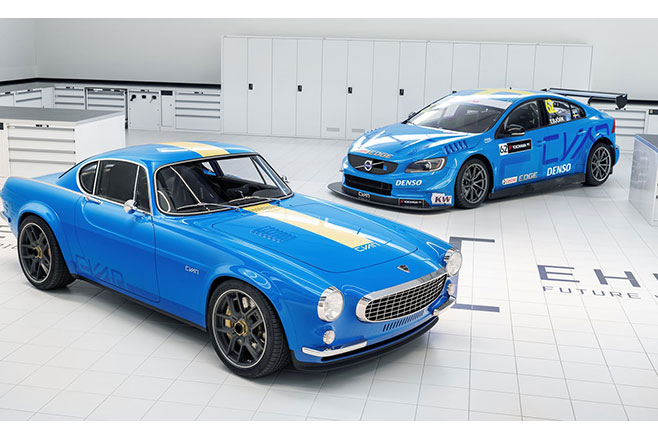
Weak points in the existing structure have been reinforced and triangulated, which is where the high-strength steel and carbonfibre comes in. Compensating for the steel quality when the car was originally built, not to mention the time that’s passed since, means a great deal of flex has been taken out of the chassis as a result, while the carbonfibre panels are bonded back to the new steel to provide additional strength as well.
The result is not only beauty and strength, but a car that weighs just 990kg.
Underneath the suspension has been replaced by bespoke components, featuring Cyan-tuned two-way adjustable dampers, double-wishbones with aluminium uprights and new anti-roll bars – adjustable at the rear. Gladly, this also means the original rear live axle has been pitched into the bin.
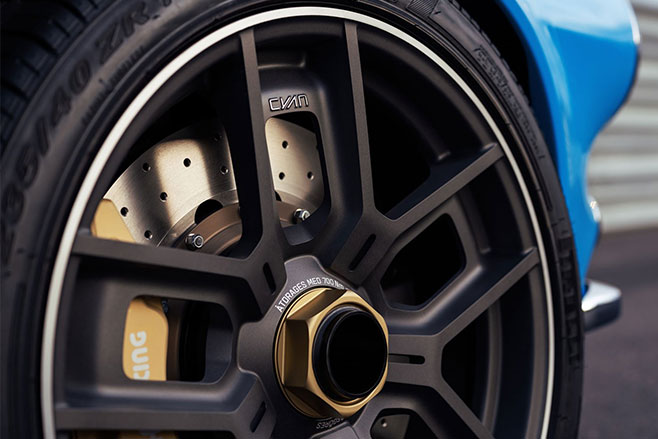
A torque-biasing limited slip diff with customisable ratio helps control the rear-wheel drive power delivery, while the brakes are four-piston calipers and steel discs with no booster or ABS – add these to the lack of any other electronic driver aids and this is clearly a car that will require you pay some attention.
Especially given the engine is based on that from the S60 TC1 racing car.
A 2.0-litre four-cylinder turbo unit tuned for linear response, this provides 308kW, 455Nm and spins to 7700rpm. Cyan considered a number of other classic Volvo powerplants – and even an electric conversion – but in the end went with the racing unit it’s been familiar with since 2011.
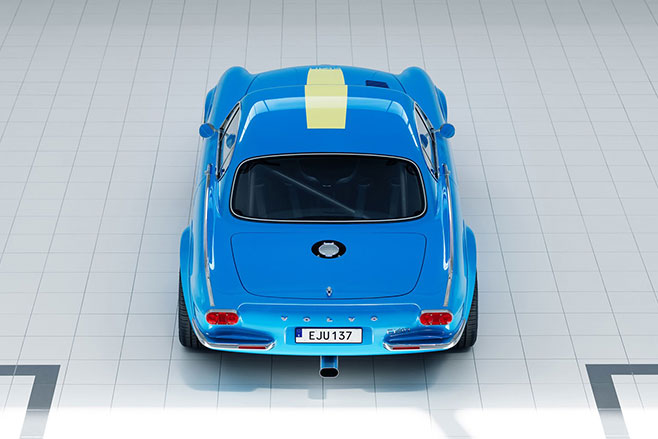
With a late power peak and hunger for revs, it apparently suits the ‘engaging rear-wheel drive experience’ Cyan was hunting for. A five-speed manual gearbox by Holinger completes the mechanical upgrades, while a set of Pirelli P Zeros does its best to try and keep you pointing in the right direction.
Remember when Volvo quit V8 Supercars?
The whole thing has been benchmarked against the manic C30 Polestar Performance Prototype, Cyan Racing’s first road car.
This is usually the point where we say something like: sounds great, but you can’t have one. Not this time.
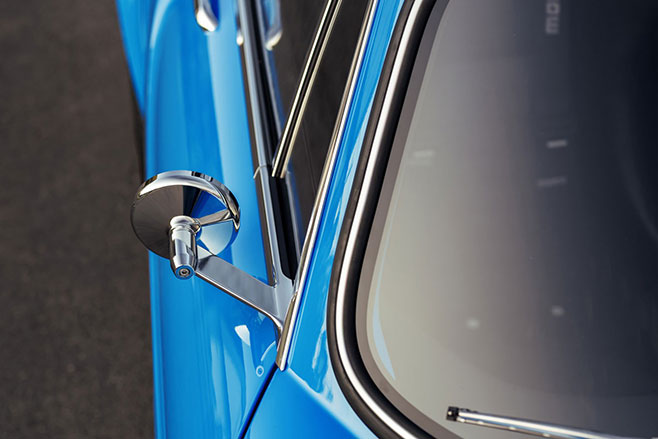
Inserted right at the end of the press release is the single line ‘Pricing and specification is available to prospective clients.’ So if you feel the need, the need to really show up those common or garden Singer and Emory Porsche owners at the next highfalutin cars and coffee, direct your enquiries to the Cyan Racing website now…
In the meantime, see the gallery above for more delicious details.
This article first appeared on the CAR website.
Get your free weekly MOTOR report!
In the grips of an unrelenting COVID-19 crisis, MG is targeting commuters who would prefer the safety of their own vehicle in favour of public transport, but struggle to afford a new SUV.
Instead of dropping base-model variants from the roster, the Chinese-owned budget brand has pivoted the relaunch of its ZS small SUV, repurposing the entry version as a cut-price covid cocoon.
The entry level Excite – granted, not the world’s most exciting or powerful car – now sells for $21,990 drive-away, a drop of $1500 over its previous RRP.
It’s not quite the cheapest SUV on sale in Australia – technically, that honour goes to the smaller $18,990 Suzuki Ignis – but it’s still a lot of car for the cash.
“We are under way to be successful, but what’s the goal? Building a respected company that is welcome, but also gives back to the community,” MG Australia CEO Peter Ciao told journalists.
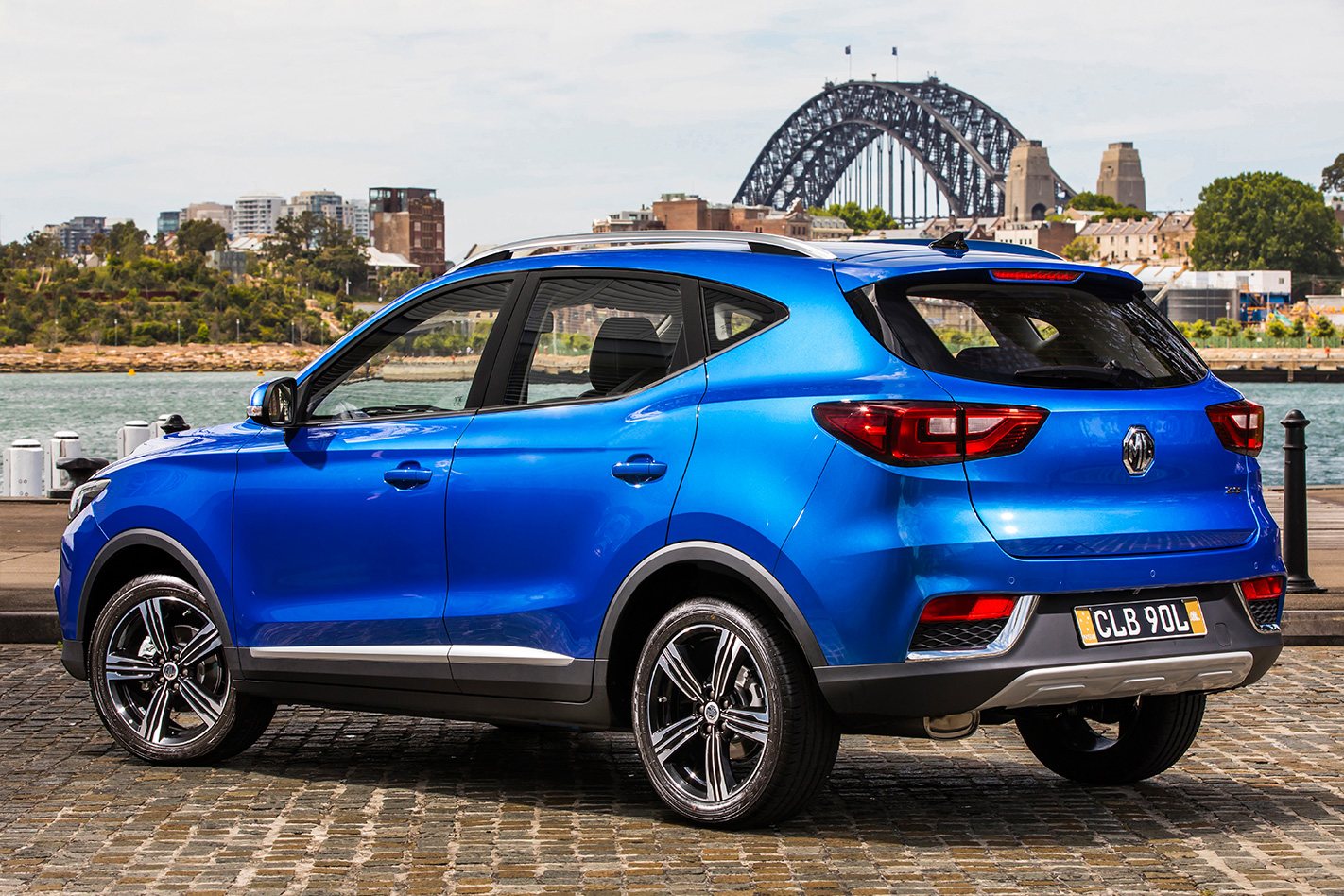
“After much discussion internally, we have decided to only launch half the new ZST line today, and the current model will continue for one more year.
“What will people want after the pandemic? They will want to replace public transport [affordably]. That is how MG will respect its customers.”
MG Australia’s director of marketing and products, Danny Lenartic, agreed with his boss.
“The ZS is selling well,” he told WhichCar. “We could have easily dropped that [product] line and brought out the whole ZST range out, but obviously, being loaded up with MG Pilot and the specs, the prices would have gone up.
“Peter was right; he said that we still need to have a car that’s accessible to the people in this current environment that is a brand new car with a strong warranty that is well specced, so let’s keep this going for another year.”
He added that the ZS is still built for several other right-hand-drive markets.
Lenartic refuted suggestions that the brand would find itself trapped in a cycle of cheap drive-away pricing, arguing that market conditions were an important consideration.

“We’ve always listened to the market,” he said. “People need to get out of public transport in the current climate. We can’t manufacture a brand new product just for the current climate, but we actually have the MG3 and the ZS that sits in that sweet spot.
“It’s not about creating a value proposition out of the blue, it’s about listening to customers, looking at market conditions and responding to them.”
The 2019 model ZS now starts at $21,990, with – somewhat inexplicably – two versions of the 1.5-litre powered Excite with different wheels.
A 1.0-litre three-cylinder powered ZS starts at $23,990, a $1000 drop, while the Essence also drops by $1000 to $26,490.
The limited-edition Essence Anfield – named after the football grounds of English Premier League team Liverpool – is an extra $500.
MG ZS Australian pricing
- 1.5L ZS Excite – $21,990 driveaway
- 1.5L ZS Excite (new alloy wheel) – $21,990 driveaway
- 1.0L Turbo ZS Excite Plus – $23,990 driveaway
- 1.0L Turbo ZS Essence – $26,490 driveaway
- 1.0L Turbo ZS Essence Anfield – $26,990 driveaway
AS we predicted early last year, the brand new Subaru Legacy – or Liberty as it’s known here – will not make it to Australia.
Confirmation that the Liberty sedan will no longer be sold in Australia came from Subaru, which hailed the car as a cornerstone of its growth strategy.
More than 153,000 Liberty sedans and wagons have been sold in Australia since its launch in 1989, though only 395 have been sold until the end of August this year.
The Toyota Camry has, by way of comparison, sold more than 6500 in the same period.
Built on Subaru’s new billion-dollar platform that sits underneath cars like the Forester and Impreza, the all-new version of the Legacy (above) went on sale in the US earlier this year.
SUBARU LIBERTY TIMELINE
1989 First-generation Liberty launches in Australia.
1991 10,000th Liberty sold in Australia and RS Turbo version launched. Winner of Wheels‘ annual quality award.
1994 All Libertys get dual front airbags.
1995 Liberty wins Wheels Car of the Year.
1999 Liberty wagon wins Wheels Car of the Year.
2001 Liberty B4 reintroduced turbocharged technology to the range.
2004 New generation Liberty and Outback awarded the best ever five-star crashworthiness ratings in independent testing performed by ANCAP.
Introduction of six-cylinder 3.0-litre options, including the Liberty spec.B and Liberty GT tuned by STI.
2006 Premium versions of Model Year 2007 Liberty and Outback feature the revolutionary SI-Drive system. Subaru Intelligent Drive offers the option of three different drive experiences in one.
2009 Liberty passed the 120,000 sales mark in Australia. Fifth-generation Liberty launched.
2012 Subaru introduces the sophisticated EyeSight driver assist system on Liberty and Outback 3.6 Premium variants.
With sedan sales sliding across the world in favour of SUVs, time finally ran out for the Australian-spec Liberty.
Sales figures of the current model, which launched in 2014, have been in solid decline, with the drop taken up by SUVs like the XV and Forester.
Even the venerable Outback – based on the Liberty – has outsold the Liberty almost six to one over the last year.
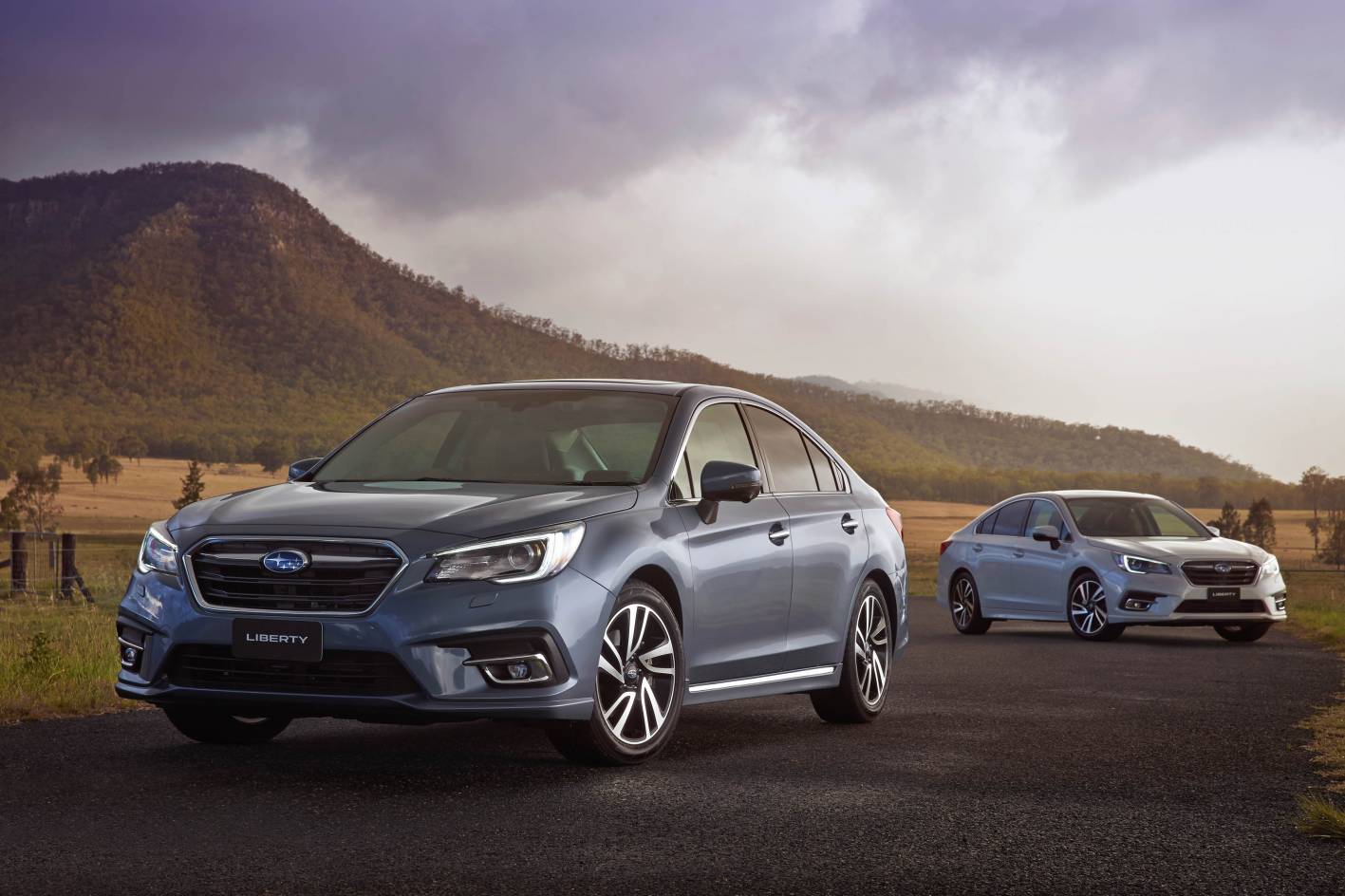
Subaru Australia’s new managing director, Christian Dinsdale, said that the Liberty has been a pivotal part of the brand’s Australian success.
“While customer preferences have moved on to other vehicles in our range, Liberty has played a hugely influential role in the brand’s growth and reputation for engineering, safety, durability and retained value,” he said in a statement.
“It was our first model with global appeal and moved the brand away from its utilitarian roots to becoming a respected automotive company.”
The medium sedan sector itself is off almost 30 per cent over the same time last year.
Medium car sales numbers are a sea of red ink, with Ford’s Mondeo biting the bullet earlier this year, the Kia Optima down 20 per cent and even the mighty Toyota Camry slipping back some 35 per cent.
Even the seemingly untouchable Mercedes-Benz C-Class is losing its shine, with sales down nearly 60 percent since August last year.
It’s not a blanket rule, though; Skoda, for example, says it’s backing its next Octavia mid-sized sedan to the hilt as it tries to pick where the top of the SUV popularity curve will peak.
Equally, Hyundai hopes to revive the fortunes of its Sonata sedan with an all-new model due later in 2020.
