
Even as COVID-19 restrictions begin to lift around the country, many Australians believe border closures should remain in place.
This is the result of a study undertaken by the Australia Institute, which found more than three-quarters of respondents strongly support the closure of borders between states like NSW and Queensland, South Australia and Western Australia, and Queensland and the Northern Territory.
Support for Australian border closures is strongest in the state which introduced the most rigorous shutdowns, with support in Western Australia at 88 per cent, while 78 per cent of Queenslanders support state border closures.
Interestingly, there is strong support for the notion of state border closures in both Victoria (76 per cent) and NSW (70 per cent) despite the fact that neither state imposed any kind of COVID-19 border restriction at the height of the pandemic scare.
The study also found that people from all sides of the political divide supported the notion.
“It is the role of the Premiers to act in the best interests of their states, and while public health measures should not be subject to popularity contests what this research does show is that state border closures are a winner with the public,” said Ben Oquist, Executive Director of The Australia Institute.
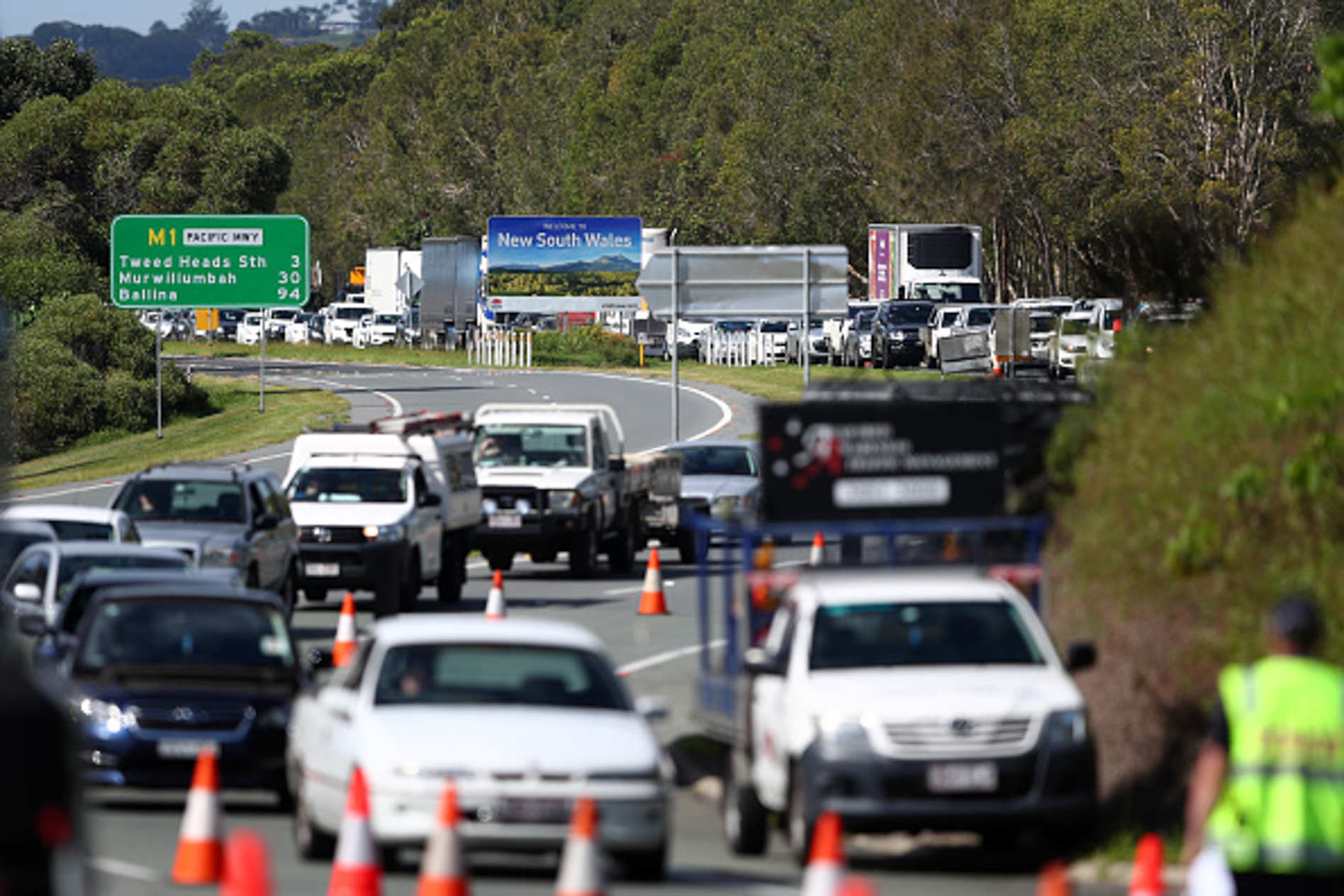
The notion of border restrictions in Australia has divided state leaders, but Queensland premier Annastacia Palaszczuk is adamant that the state’s borders will remain closed, especially between NSW and Queensland.
“Let me make it very clear, the border will remain closed for the month of June,” she told journalists during a news conference to announce travel restrictions lifting within Queensland.
However, NSW Premier Gladys Berejiklian has publically derided Palaszczuk over the border closures, saying it was “ridiculous” and that it was costing jobs.
“I don’t think it’s logical to maintain the border closures for a prolonged period of time,” said NSW Premier last week.
Ironically, the residents of the Gold Coast might agree, as well, after figures were released suggesting the closure is costing the area more than $300 million a month in lost revenues.
Intra-state travel in all states and territories has been relaxed, with overnight travel and holiday travel allowed in NSW, Victoria and Queensland, while travel within the nine zones of Western Australia is now easier.
Do you agree – should Australia’s borders remain closed? Let us know below!
If you, like many of us, place stock in the wondrous abilities of old takeaway wrappers, discarded socks and forgotten water bottles to get you out of a car jam, allow us to suggest a few more useful items to keep in your car in case of trouble.
A few simple and inexpensive items that live in your car can prevent a minor inconvenience from turning into a serious situation. Think of it as a bug out bag for your car.
Here’s our essential car kit list that allows you to expect the best but plan for the worst.
1. UMBRELLA

As the saying goes – if you don’t like the weather in Melbourne, wait 10 minutes, but Victoria isn’t the only state with unpredictable conditions, and there’s nothing worse than getting caught outdoors in nasty weather.
Keep an umbrella or emergency poncho in stowage for those times when you must leave the comfort of the cabin in harsh weather. Pro tip – a small stash-away type can live in a small plastic shopping bag, giving you somewhere to stash said umbrella when it’s wet. But don’t forget to dry it.
Why? You’ll find out if you don’t… pew!
2. HI-VIZ VESTS
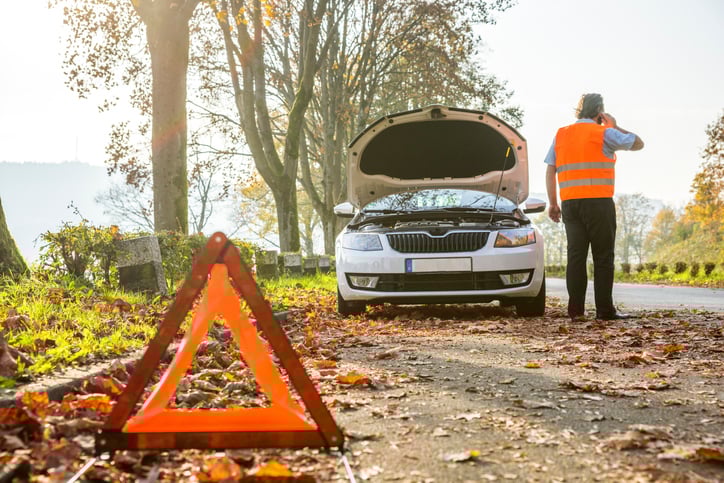
Some European countries like France require by law that cars have enough high-visibility vests on board for every occupant. That’s just how important these simple safety devices are regarded.
If you have to get out of the car for any reason in unexpected circumstances, it makes a lot of sense to make yourself as noticeable as possible to other road users.
And, like life-jackets in a boat, it’s best if you have enough for more than just the captain.
They’re, cheap, compact and readily available so make sure you have this simple item with you at all times.
3. SPARE TYRE/ TYRE REPAIR KIT
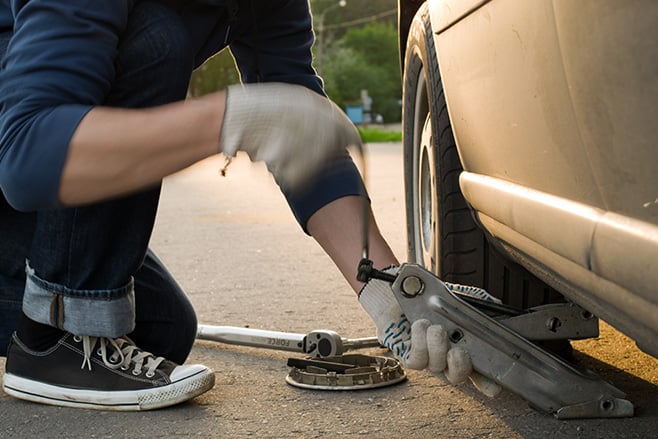
Every car should carry a method of moving the car to a safe place in the event of a puncture. In some cases, this is a full-size spare wheel or smaller space-saver type.
Either way, make sure it’s pumped up and roadworthy, otherwise it’s nothing more than dead weight, like that troublesome ex or your deadbeat boss.
A warning triangle is also a great idea. Most European cars have them stashed in with the jack, so see if yours has one – otherwise, they are around $15 from a main street automotive parts supplier.
As well, throw a pair of gardening gloves or cheap mechanic’s gloves in the wheel well, because wheels get really grotty.
Alternatively, some modern cars are supplied with a mobility kit, which attaches to the valve of your tyre and pumps in goo to seal minor punctures and re-inflate the tyre, allowing you to at least drive the car to a safer place than the roadside.
Aftermarket versions are available and can be a wise addition to your car kit, especially if you frequently venture into remote areas.
Be warned, though, they can be messy to use, so stash it in another plastic bag with an old rag. You’ll thank us later.
4. OWNER’S MANUAL
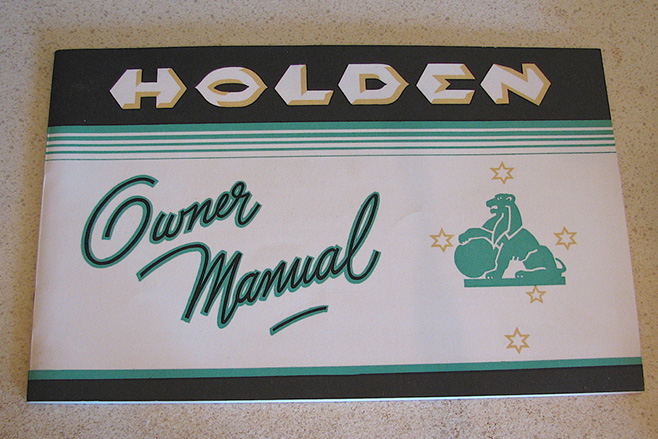
An owner’s manual is an essential item to have in your car. It contains vital information about servicing, emergency procedures, parts, fluid capacities, and countless other important facts and figures.
Increasingly, car manufacturers are electronically incorporating the owner’s manual into the information and entertainment systems – and there’s always Google – it but it’s a good idea to make note of a few specific functions just in case the on-board systems are unavailable.
Knowing how to charge a flat battery is one good example, or resetting the tyre pressure indicator light.
5. Fire extinguisher
Yes, we know, you’re not trained to be a fire fighter. However, with very decent extinguishers popping up on sale at stores like Aldi and Anaconda with amazing regularity, the addition of a small extinguisher in your car boot is not the silliest idea in the world.
For as little as $30-40, an extinguisher can… well, extinguish a small fire before it becomes big and ugly and impossible to put out without the help of pros.
And if you think fires are a rarity, park on top of long grass on a hot day and see what happens… just make sure the extinguisher is firmly secured, though, and that you know how to use it.
6. TORCH
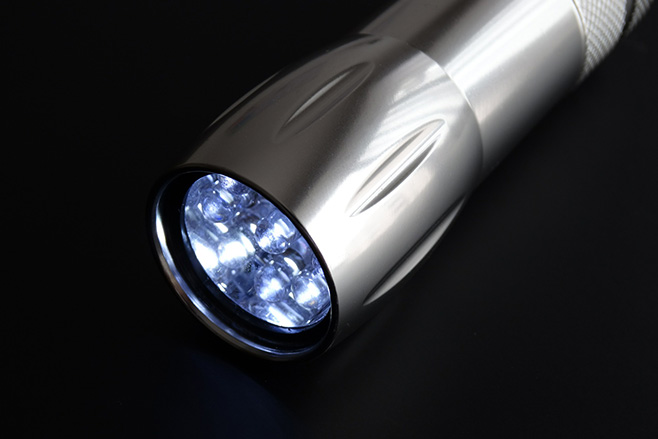
Whether its’ your phone’s flash, a high-quality LED flood light or a cheap torch, this vital tool can shine a light on a plethora of predicaments.
Whether it’s tricky night-time breakdown, a twilight puncture or a lost contact lens, you’ll be happy this gadget is in the car. It’s a good idea to keep some spare batteries with it, too.
Torches are not just useful to see with but also allow you to be seen easier at night. If you’re trying to attract attention after dark, a torch is very effective.
Snap-light sticks are a variation on the same theme with similar advantages. While these chemical sources of light are not as bright or directional as torches, they are cheap, need no batteries, have no electrics/electronics to fail, are completely waterproof and will remain active for many years.
Squirrel one away in a storage pocket and you’ll be delighted if you’re ever caught in a dark fix.
7. FIRST-AID KIT
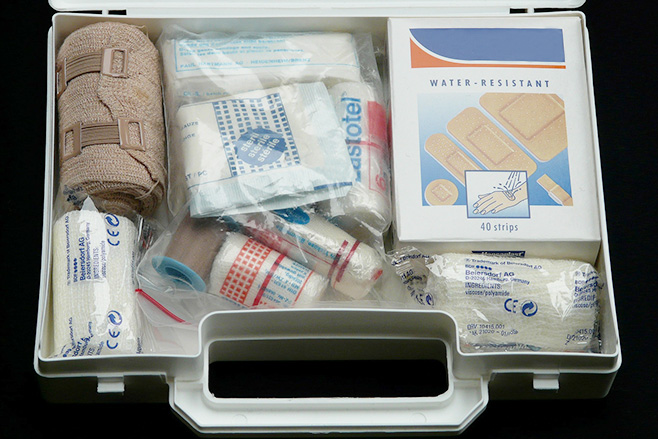
One of the most important things to store in a car, a first-aid kit is also a legal requirement in some countries.
Some manufacturers provide these in new cars, some don’t. If you don’t have a first-aid kit, get one, because having the essentials on-hand to provide basic medical assistance can go a long way, particularly if you’re on the road a lot.
8. WATER

Most four-wheel drivers will never go out bush without plenty of spare water for engine problems or to drink if you’re stranded miles from anywhere, but this addition doesn’t just apply to off-roaders.
Even something as small as a 2.0-litre bottle thrown in with the spare wheel can be the difference between life and death in serious situations. And if you do go bush, make sure your washer bottle contains only water, and not screen-cleaning soap.
9. USB CABLE/POWER BANK
Smartphones aren’t very smart with a dead battery. Keeping a dedicated charge cable in the car is not just convenient day-to-day, it also means your phone will have power in an emergency.
Keeping a small power bank (above) charged and in the vehicle is also smart.
If the car suddenly loses its electrics, you’ll still be able to power phones and other electrical items.
10. SOMETHING TO WRITE WITH
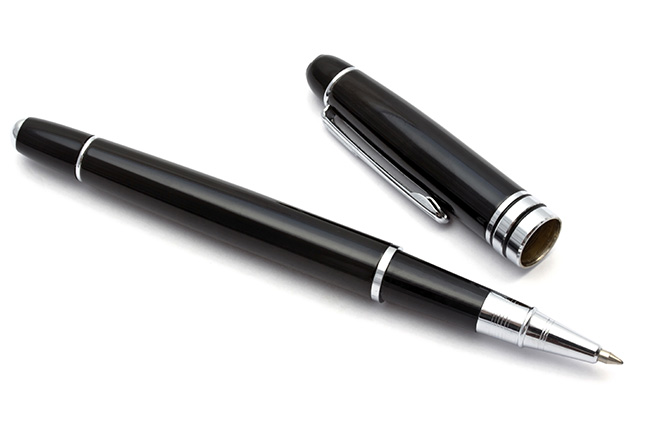
How many times have you been in a situation where you’ve desperately needed a pen or pencil? The details of people involved in an accident, the number plate of a vehicle involved in something suspicious, or just the web address of an ad you’ve heard on the radio… keep a good pen in the glovebox and it’ll save you from using your good lipstick to write on your hand. Hey, we’ve all been there.
WHAT NOT TO KEEP IN THE CAR
Spare keys kept anywhere in the car are not only useless when you really need them, but also one of the most common ways cars are stolen. Spares should be kept securely away from the car but not so securely that you can’t remember where.
Mobile phones are the modern day Swiss army knives but never rely exclusively on a phone as your only lifeline. You can be sure that when you need it most, the battery will below or worse, flat. Make sure you have alternatives to all your essential phone functions such as emergency numbers, maps and addresses.
Whatever you choose to keep in your car, make sure every item has a place. Don’t leave any item that even looks vaguely valuable on display to opportunistic criminals and large or heavy objects should be secured to prevent them from becoming a hazard in the event of a crash.
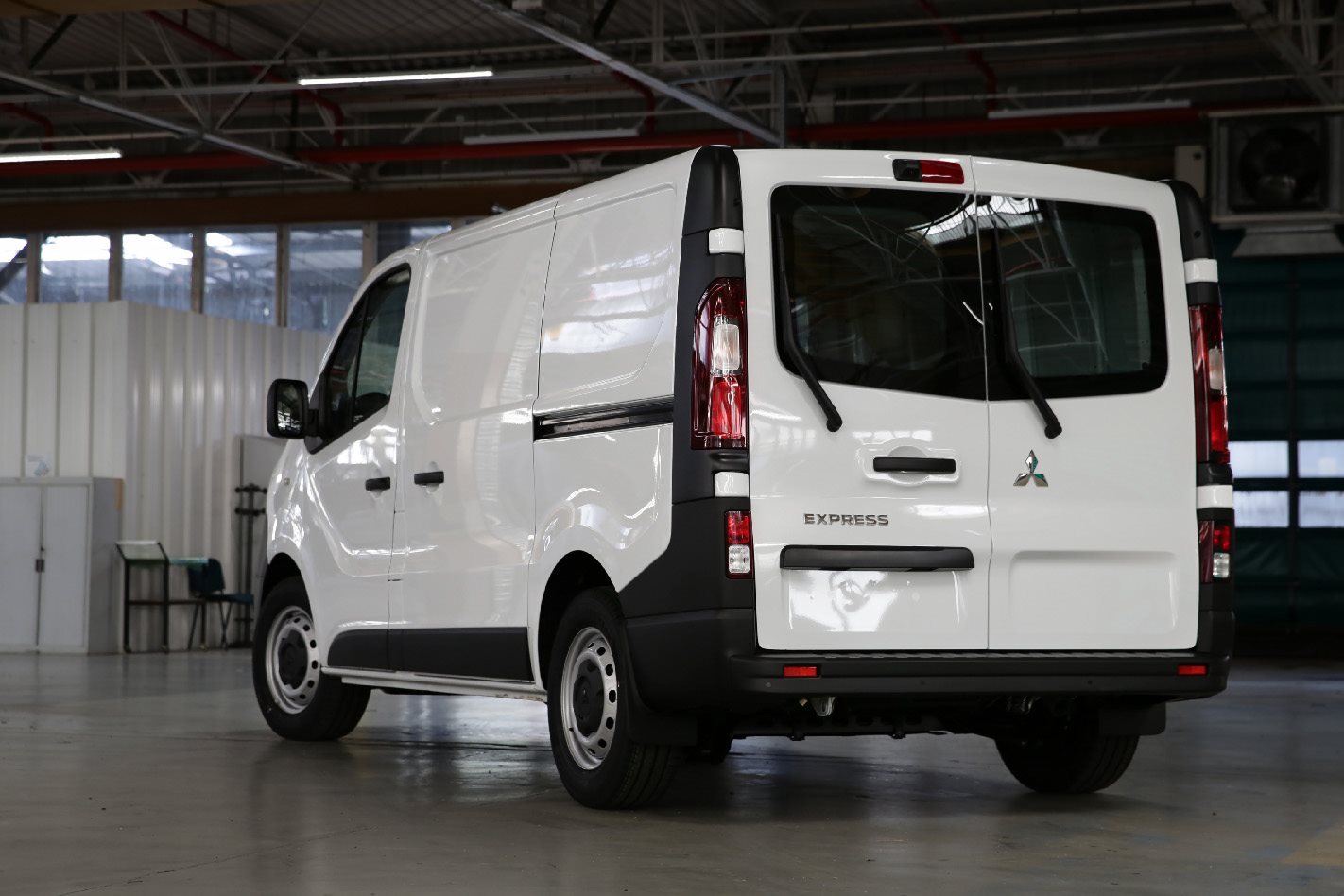
Mitsubishi will bring the Express nameplate back to Australia in July, with the Japanese company leveraging its alliance with Renault to launch its own version of the French company’s Trafic medium van – albeit with a few key differences.
Mitsubishi Australia has confirmed that the Express will launch with a four-variant range encompassing both standard- and long-wheelbase versions, with an automatic and manual version of each.
Two engines will be offered: a 1.6 litre twin-turbo diesel for vans with the six-speed manual and a 2.0-litre single-turbo diesel with Adblue for those fitted with the six-speed dual-clutch automatic.
Full specifications for power, torque and fuel economy have yet to be announced, but we would expect them to align closely with those of the Renault Trafic, which makes 103kW and 340Nm with the twin-turbo 1.6-litre and 125kW and 380Nm with the 2.0-litre. Average fuel economy for the Renaults comes in at 6.2L/100km and 7.3L/100km respectively.
Load space comes in at 5.2 cubic metres for the short wheelbase and 6.0 cubic metres for the long wheelbase, with tow capacity topping out at 2000kg for manual models, 1715kg for the SWB auto and 1630kg for the LWB auto.
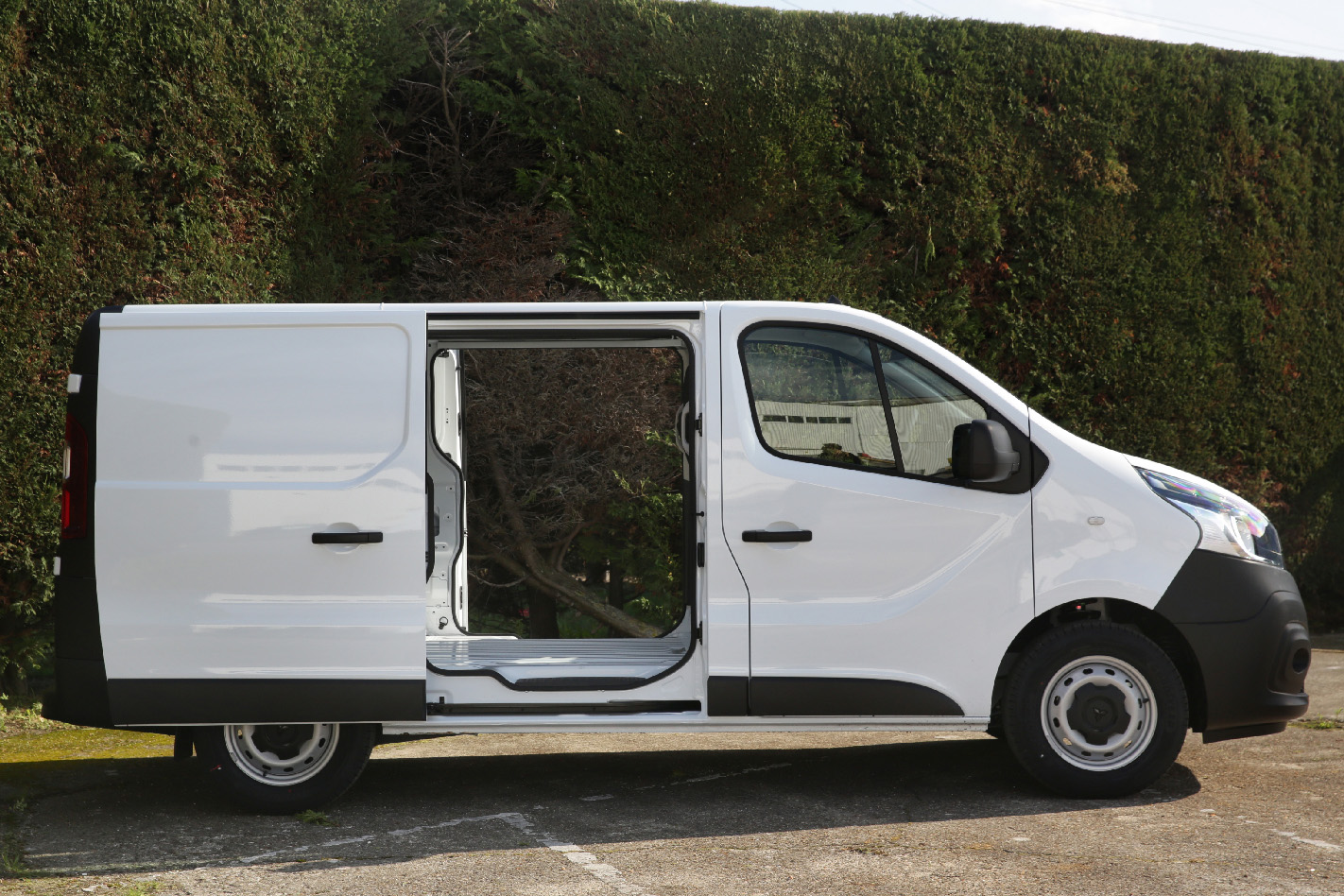
Express v Trafic differences
So what will set the Express apart from its Renault-badged cousin? The Mitsubishi will come in as the more affordable alternative like-for-like, given its less generous standard equipment list. Dual sliding doors and rear barn doors will be factory-fit on all Express variants, but don’t expect a two-row crew variant or alloy wheels.
Photos of the European-market Express also suggest it won’t come with the cargo bulkhead that’s available in the Trafic.
Safety-wise, stability control, five airbags (including side and curtain), dusk-sensing headlamps and rain-sensing wipers will be standard, but only the automatic model will get a reversing camera. The camera’s display is located in the rearview mirror, which indicates to us that the infotainment head unit for Australia will be more basic than the integrated navigation system used in the Trafic, and will likely be similar to that shown in the below photo.
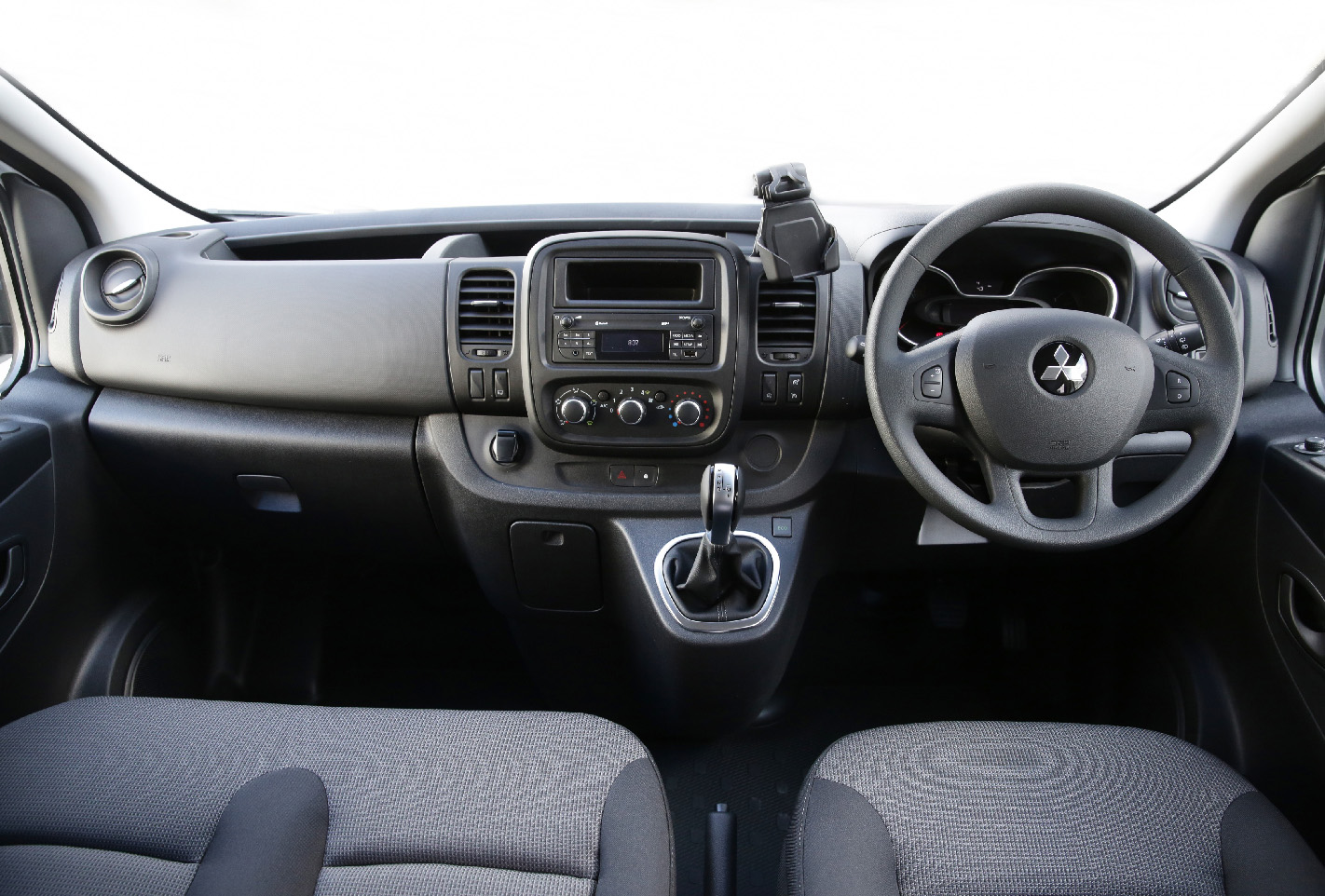
As is usual for commercial vans, just a few colours will be offered: red, black, silver and the perennial favourite, white. Upholstery will be basic black fabric on all Express variants.
The Express will be backed by Mitsubishi’s five-year/100,000 kilometre warranty, and is backed by capped price servicing for the first three years.
The Express will be on sale from July 6.
MITSUBISHI EXPRESS AUSTRALIA PRICING
- Express GLX 1.6-litre twin-turbo manual (short wheelbase) – $38,490
- Express GLX 2.0-litre turbo automatic (short wheelbase) – $42,490
- Express GLX 1.6-litre twin-turbo manual (long wheelbase) – $40,490
- Express GLX 2.0-litre turbo auto (long wheelbase) – $44,490
This segment was always going to end in a fight. In the blue corner there was Dan – a 40-year-old motor journalist who still thinks Tik Tok is a Ke$ha track from 2009, while in the red corner there was Emma – a twenty-something reporter and TV presenter with an honorary doctorate in selfies.
Nonetheless, Emma’s concept and quest to identify the best cars for young professionals was one we simply had to explore, even if it meant a scrap.
Actually, Whether we liked it or not, finding the most suitable vehicles for successful young Australians was going to be a team effort, drawing on Dan’s sometimes agonising analysis of cars and Emma’s style and insight into an age bracket that Dan departed long ago.
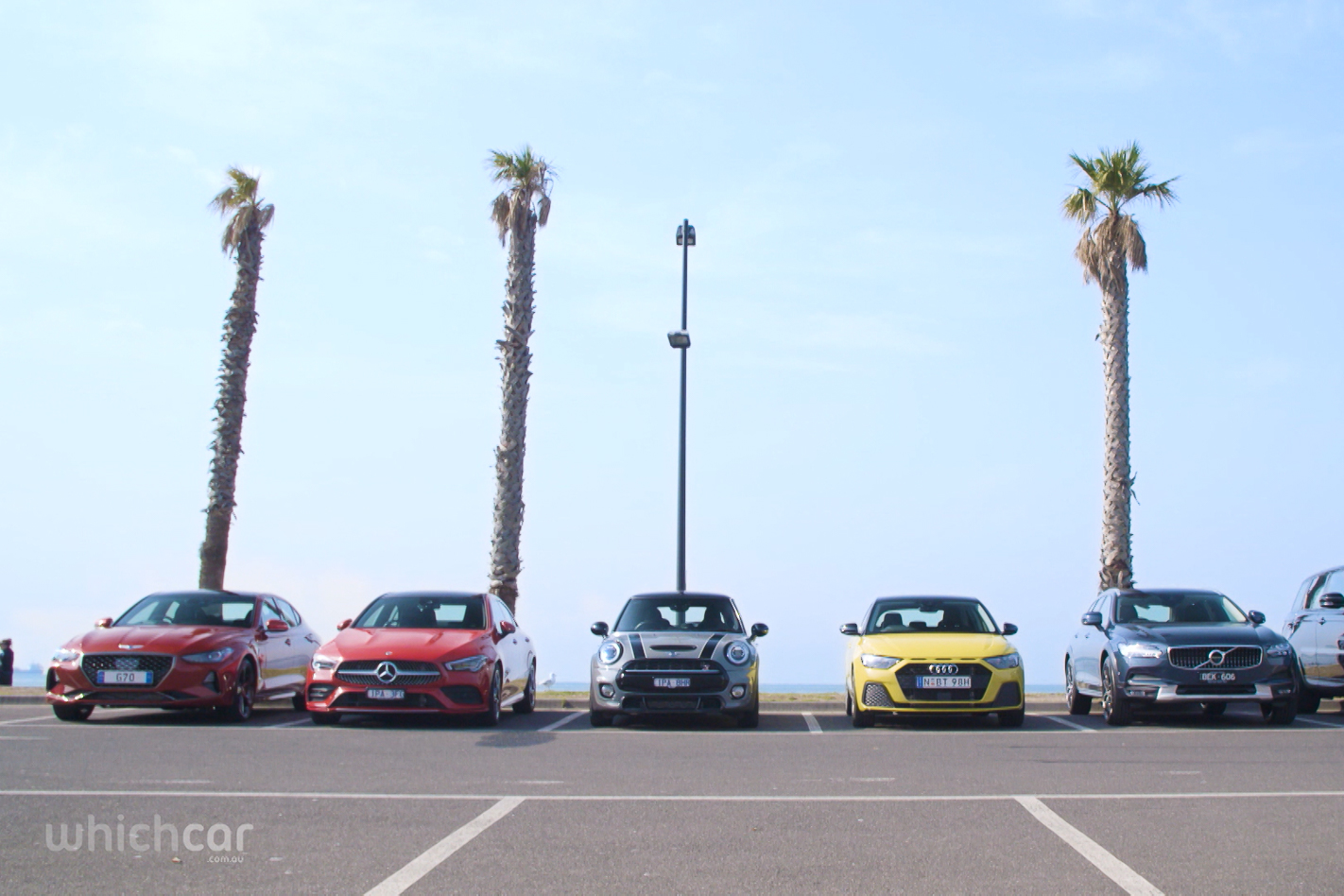
The brief was simple – pick the perfect car for a 25-35yo city slicker to fit three different approximate budgets – $50,000, $70,000 and about $100,000.
Emma’s choices were, shall we say, a little predictable. Go to any AFL training ground carpark and I guarantee you’ll find a Mercedes, an Audi and a Range Rover.
I, however, in the interest of offering some less obvious, left-field consumer advice picked three options you might not immediately think of – a Volvo, a Mini and a Genesis.
Watch the video to see how it turned out.
The intro scene was shot on the eighth story overlooking Bourke Street in Melbourne’s CBD. Modex’s super-cool premises provided the perfect backdrop for our corporate kick-off and you can be absolutely certain the cringeworthy business-speak phrase ‘think outside the box’ has never once been uttered in this particular boardroom.

The role expertly played by Oz is that manager every organisation has, perfectly setting the scene so many executives find themselves in, gazing into space and longing for the meeting to end. The escape was our fleet of six premium machines waiting on the shores of Williamstown.
In the interests of sticking to a standard-length double feature, we simply didn’t have time to include all six reviews, but rest assured the Mini and the Merc got as much attention as the others.
Almost as much attention as the police gave us. According to one of the many officers that stopped by for a chat, our particular chosen location is popular with the wrong kind of car enthusiast and can attract big groups on warm sunny Friday evenings similar to the one we had been blessed with.
MORE Behind the scenes with the Skoda Kodiaq RS
Our unofficial police escort was very keen to give us their review of the squad vehicles. Perhaps we’ll run a special law-enforcement special soon but, in the meantime let’s just say it was a big tick for the Toyota Kluger, Renault Traffic, not so much.
Like the police, numerous passers-by were interested in our fleet of cars and, as you might expect the big-ticket items got a majority of the enquiries.
Was Emma right after all? Well, that can only be answered by the discerning professionals we were speaking to in this episode – and with their own hard-earned cash.
Although revealing that the Range Rover was the car we all wanted to take for the weekend is probably the most insightful and professional response I can offer.
This article was first published in the February, 1985 issue of Wheels magazine.
Setting high average speeds across great distances has been a source of challenge, enjoyment and achievement since the birth of the car. Doing it illegally, on public roads, has been just as popular since the day officialdom first started making rules and regulating races.
Rules are there for all the right reasons, of course, but they also frustrate the competitive urge in a lot of drivers who have high performance cars and perhaps the driving skills, but not the inclination to partake of organised, sanitised motorsport — that is, officially sanctioned motorsport.
On a population basis, there are a lot of high performance cars on Australia’s roads and thus a lot of people who would like to use them, if not in anger on a race track, at least in illegal urgency across this challenging continent. The only really surprising thing about this is that it took until 1984 for such an event to be organised, and then there were two…
You will probably have heard of one of the two ’84 ‘Cannonballs’ in some incredibly inaccurate and sensationalist newspaper and TV reports which claimed the entire field of the Melbourne to Fremantle event had been booked for speeding. The other event from Surfers Paradise to Perth, was a very quiet affair, to the point where the organiser will only talk of the cars which finished first, second and third; he won’t even acknowledge that there were any other cars involved.
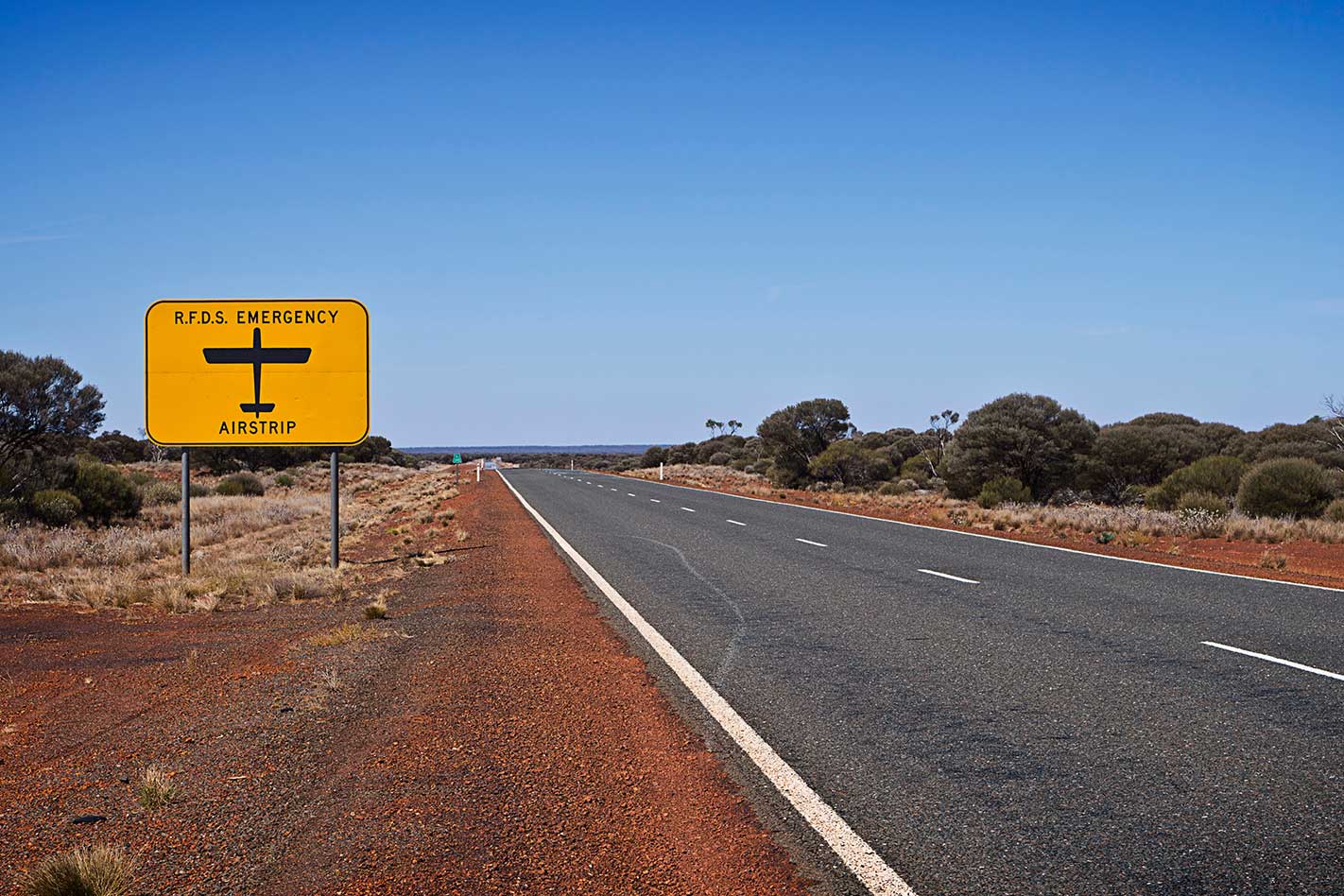
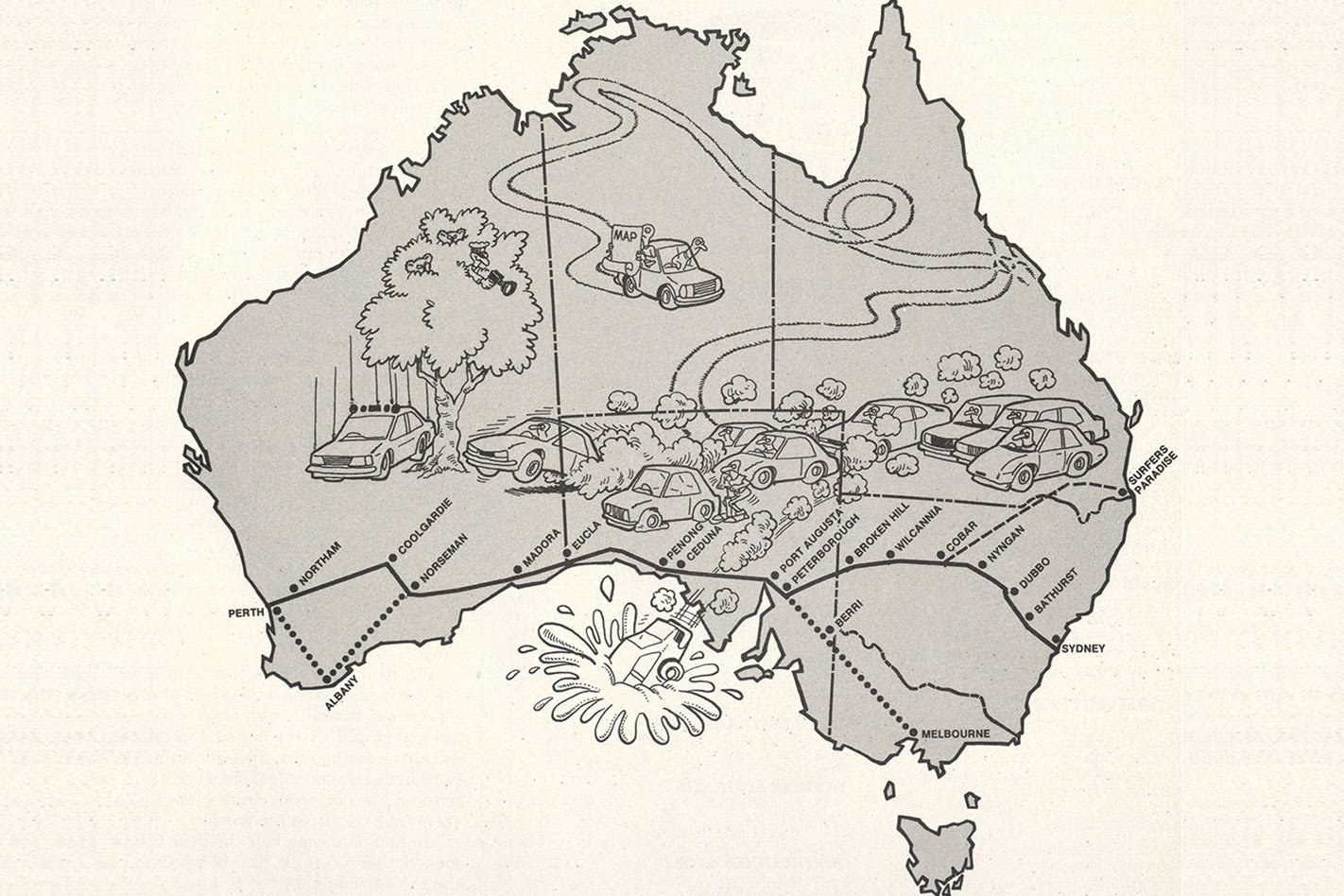
Surfers Paradise to PerthThe Cannonball Sea To Shining Sea Paradise to Perth Trophy Dash competitors left Surfers Paradise, Queensland, on October 22 and exactly 31 hours later, the winning Pontiac Trans Am and its crew of three pulled in to the finish at Westos Hilltop Inn, Perth. Just 15 minutes behind the Trans Am was a Mazda RX-7 (driven solo, with a dog in the passenger’s seat), followed by race organiser Jeff Denmeade, in a Group Three Brock Commodore, in a time of 31 hrs 45 min.
While the Paradise to Perth run didn’t attract the attention the Melbourne to Fremantle event copped, the competitors were worried at the start (in the main street of Surfers Paradise) but no reporters or police showed up. There was plenty of excitement during the race, but no real drama with the law, according to Jeff Denmeade.
“At the sound of the horn we were off, tyres spinning, chasing each other down the street and left at the lights. We were side by side with the Trans Am, with the RX-7 right behind, overtaking and undertaking at the same time, giving old people heart attacks as we flew past on either side.
“The Trans Am took the first turn to Nerang, but we were going so fast and concentrating on catching the Trans Am that we missed the turn, so decided to keep going.
“The times were good: from Surfers to Beaudesert took one hour 15 minutes. The roads are good, there was very little traffic and plenty of corners to enjoy in the mountains between Nerang and Goondiwindi. They’re signposted at 40 km/h but we went through most at about 110 km/h.
“We went through Goondiwindi like it wasn’t there and after that it was down through northern NSW and straight to Cobar, which is where we saw our first police. It was a clever hideout, off to the right in the bush; we didn’t see them but our Escort detector picked them up on X band, the hand-held frequency, which is rare in NSW. We slowed to 115 km/h and drove past behind a truck and when we could see them clearly, there they were laying back with their feet up on the doors, waiting for something to happen.
“We wondered about the threats before the race, when I was told they’d watch our every move.”
Cobar was the site of the Commodore’s third fuel stop, at 3.00 pm, eight hours after leaving Surfers Paradise, and about one hour ahead of their planned schedule. They were also between 30 minutes and one hour ahead of the RX-7 and Trans Am, which were travelling close together.
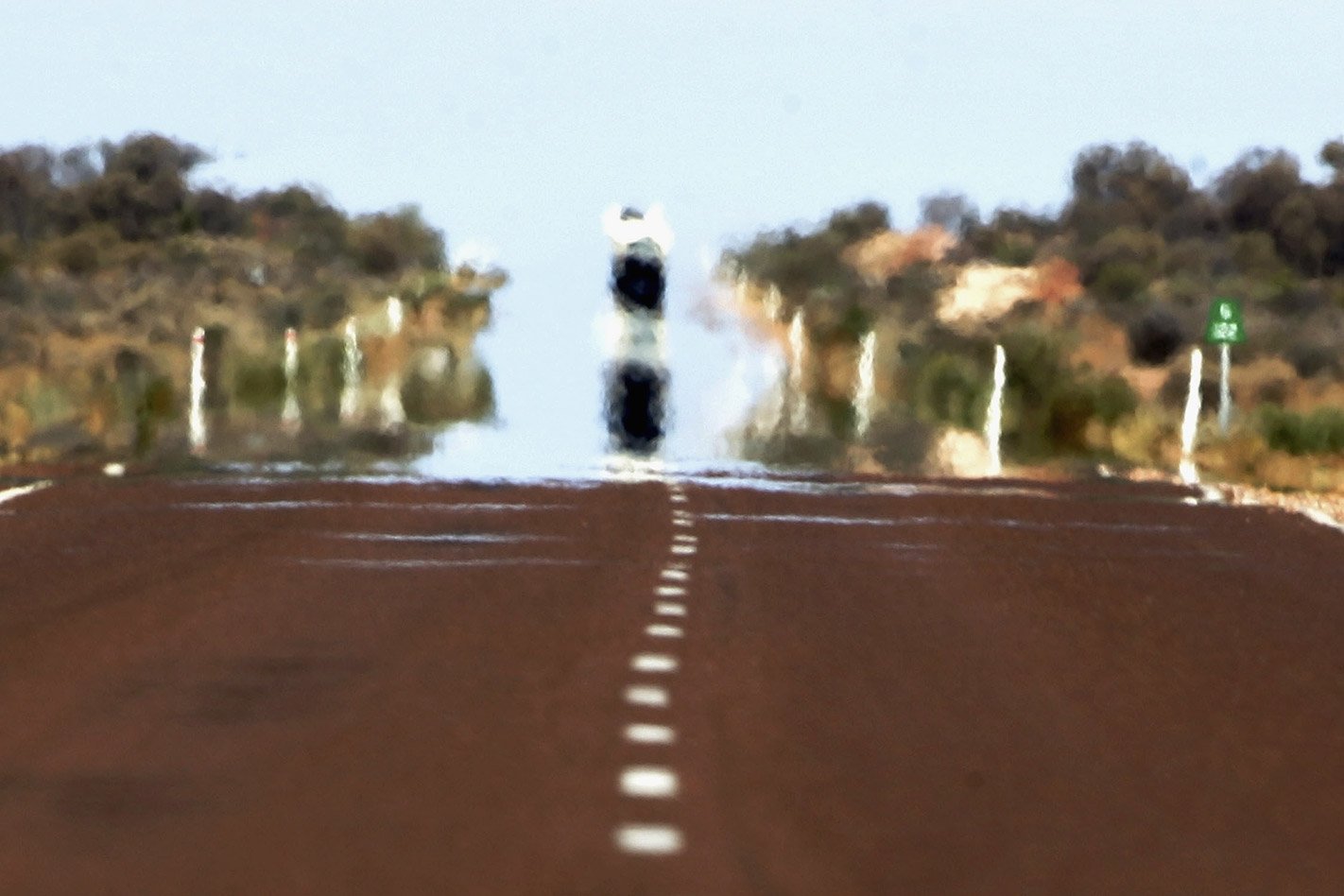
“It’s almost a straight line from Cobar to Broken Hill and that leg was no drama, but we had three red lights in Broken Hill, and then were driving into the setting sun.
“Well into the night we turned right into Peterborough and then on to Port Augusta and we still hadn’t seen the Trans Am or RX-7. We also didn’t see any police in South Australia.
“Just past Port Augusta we ran out of fuel and while we were emptying jerry cans into the Commodore by the side of the road I heard way off in the distance a high-pitched roar, then a set of lights appeared. I knew it was the Trans Am because its 403 engine has a noise all its own, and it was howling. They backed off when they saw our emergency flashers because they thought it might be the law. When they saw it was us they switched on the nitrous oxide and wound it up to warp speed as they went past. It looked like a low flying fighter plane.
“We took off straight after them and had the Commodore on the redline at 5700rpm and then up to 6000rpm in fourth about 250 km/h.”
Running flat with the Trans Am meant fuel consumption rose dramatically and at the next fuel stop, with the Trans Am running too hot, the service station took on some of the appearance of a race pit bay.
“We pulled up in a cloud of tyre smoke and the Trans Am was away a second later, sideways out of the driveway. The manger came over to us, one bloke on the pump, the other doing the screen laughing, her guts out, saying: ‘What’s going on here? I haven’t had so much fun since we dry cleaned and tumble-dried the cat!’ She said the Trans Am was getting some fuel surge according to what she had heard, so that was a chance for us.”
The Trans Am pulled over near Ceduna and the Commodore team stopped to help them repair a fuel line and during the 45-minute job the RX-7 and its wide-eyed solo driver pulled in.
Once on the road it was three metres apart at 200km/h until the Commodore got a flat going into the next service station. A fast gaining Mercedes-Benz slowed the Commodore further (they thought it was the police) and gave the Trans Am its 45 minute lead. “It’s doing 200mph,” said one trucker.
Eighty km from Perth the Commodore was caught at 143km/h by the radar in a police Commodore (“with more aerials than a Dick Smith shop,” according to Denmeade). When asked if he had seen the Trans Am the police officer said he had booked it for doing 153 km/h. The Commodore crew also asked what the legal limit was and the officer said 110, but that he was going back the other way and there were no more police for at least 50km.
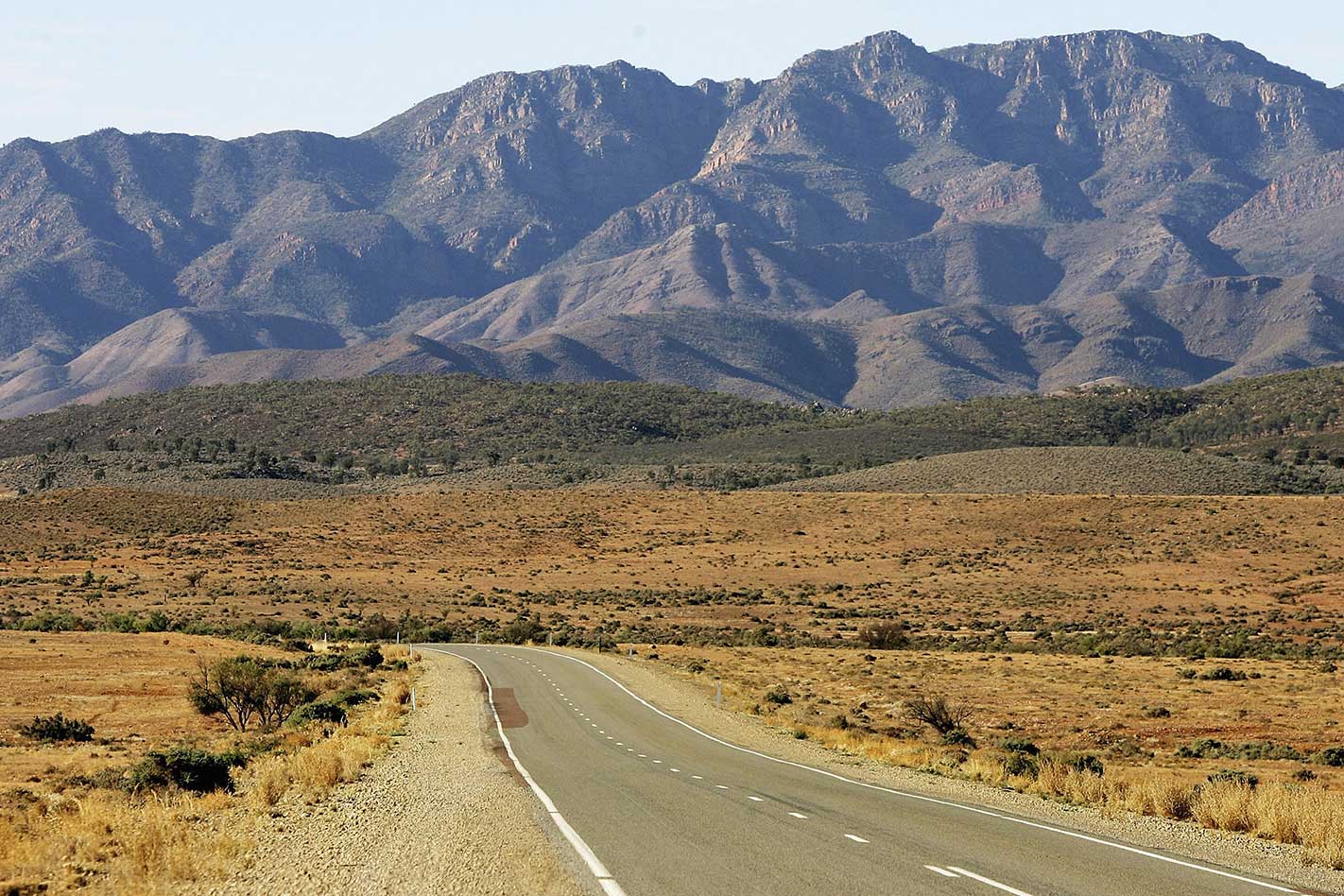
One other driver was booked for doing 184km/h, despite WA newspaper reports that five people were booked at speeds of more than 180km/h.
Organiser Denmeade said after the race that “no money in the world could buy the amount of fun we had. We had a ball. There were three bookings — all in WA — and the cars needed a lot of stone chips touched up, so bras will be the go for the next race.
“It’s on again late in ’85, for up to 30 cars; we’ve had 15 firm entries on the strength of the ’84 run so far.”
Melbourne to Fremantle
The Australian Cannonball Cup, from Melbourne to Fremantle, started off on the wrong foot when the organiser David Adamson’s office was broken into and the phone numbers of all competitors were stolen.
“But only 10 entries withdrew, leaving 100 cars, most with three drivers, in the event,” said Adamson.
“All of those, including the ones that withdrew from the ’84 event, have entered for this year, which definitely won’t be going into Western Australia. It will still be coast to coast though.”
The Cannonball Cup, held in early November ’84, was won by a truck driver in a six-wheeler Holden five-litre utility with the tray holding a huge petrol tank. His time was 32 hours, 22 minutes, 6 seconds, so despite the fact that entrants “were expected to obey the traffc laws”, the winner didn’t. Second was a VH Group Three Brock Commodore and third a five-litre V8 ex-police pursuit Commodore.
“It wasn’t an illegal event because it was pointed out that road laws were to be obeyed and that it would be obvious if people had disobeyed the laws and arrived in less than the estimated time of the event according to the speed laws. If anyone chose to disobey the road rules they did so at their own risk,” David Adamson said.
“The idea was to get across the country in the best time without doing anything illegal. We contacted the police in Victoria, South Australia and Western Australia a month before the event with all the information about the race. The idea was to establish it as a legitimate event, like the Redex or Round Australia trials, rather than as anything like the Cannonball movie.
“Obviously it didn’t work out that way; the WA police weren’t interested when I told them about the event and they were by far the worst. The police were okay in South Australia and they were very good in Victoria, in that they did their job without going to some of the ridiculous extremes of the other states. Like having police hiding in trees with radar equipment.
“We’re changing the event for ’85. It must be done so that we can work with the police, within the law, so it will probably be broken up into sections.”
Adamson wasn’t impressed with the way the media handled the event and pointed out that although most newspaper and TV reports said all the entrants were booked, some for doing more than 180km/h, and six were arrested for dangerous driving, this was a long way from the truth.
“In fact, less than half the field was booked: there were 18, four of whom had to go to court. But of those 18, 14 were relatively minor offences, like travelling at 115km/h in a 110 zone. One entrant, in a Porsche 365B, had a police pursuit car on his bumper for 300km and he wasn’t booked.”
One report, in a Sydney newspaper, said: “Chief Inspector (Victorian Police) Ralph McMenomy said at the outset of the race that it did not have police backing. ‘Some speeds have been excessive but basic driving in Victoria has been orderly due to visible police presence,’ Mr McMenomy said. The race organiser, David Adamson, refused to comment.”
David Adamson’s comment: “There’s not much I can say about it now that all the sensational reports are accepted as fact by the general public simply because they believe the media reports. It’s too late to point out that I ‘refused to comment’ should have been ‘we didn’t contact him’.”
Organiser Adamson didn’t compete in the race, but flew along the route, stopping to film a documentary on the event that he hopes to sell around the world as a one-hour TV special. “There really is some terrific stuff there: the lengths the police went to made for good film,” he said.
The original Cannonball and its many copies
American journalist Brock Yates started it all, even though the Cannonball’s image with the general public is very much Hollywood and Burt Reynolds tinted.
Yates conceived the run as a way of attacking the US Government’s 1971 “Speed Kills” campaign. He named the run for Ernest G. “Cannonball” Baker, a truckie who crossed the USA on motorcycles and in trucks in the ’20s and ’30s in 50 to 60 hours. Heroic stuff considering there were no real interstate highways.
No entrants showed up for the inaugural May ’71 race, but Yates did the run and wrote about it in Car & Driver and planned the second Cannonball for later that year. Yates announced there would be no more Cannonball runs after ‘79 because the race was gaining an air of being an “official” event and he considered it had made its point that America’s highways could be used efficiently and safely by fast cars with safe drivers. This he backed with the fact that 107 cars had travelled a total of more than 480,000 km at an average speed of 120km/h, without anyone being injured.
The following is a list of the runs which followed Yates’ first Cannonball.
- Cannonball Baker Sea-To-Shining- Sea Memorial Trophy Dash, November ’71. Manhattan New York to Redondo Beach California. Won by Brock Yates and Dan Gurney in a Ferrari, 35 hours, 54 minutes
- Cannonball, 1972. Won by 972 Cadillac de Ville Coupe (whose owner paid the drivers to transport his car across America), in 34 hours 16 minutes. Thirty-four cars competed. No races in ’73 and ’74 because of the fuel crisis.
- Cannonball, April 23, 1975. Won by Ferrari 246 Dino, in 35 hours 53 minutes. Eighteen cars competed.
- The last Cannonball, April 1, 1979. Won by a Jaguar XJS, in 32 hours 51 minutes. Forty-six cars competed and Yates used the race as the basis for his script for the movie, The Cannonball Run.
- First US Express, 1980. Won by a Mazda RX-7, in 33 hours, 39 minutes.
- Cannonball Europe, 1981. Won by a Mercedes-Benz 500SEL, at an average speed of 180km/h, from Holland to the south of Spain.
- US Express 1981. Seventeen cars competed in the event.
- Cannonball Europe, 1982, from Denmark to south of Spain.
- US Express, 1982. Sixteen cars competed in the event.
- First Michael A. Preston Memorial Four Ball Rally, June ’82. Won by Mercedes-Benz 380 SEL in 37 hours 18 minutes at an average speed of 128km/h. Twenty-seven cars competed.
- Four Ball Rally, June 1983. Won by ’78 Porsche 911 SC, in 36 hours 10 minutes at an average of 138.0 km/h.
- First Cannonball Paradise to Perth, 1984. Won by Pontiac Trans Am in 31 hours even, Surfers Paradise to Perth.
- First Annual Australian Cannonball Cup, November ’84. Won by six-wheeler five-litre V8 Holden utility, in 32 hours 22 minutes 6 seconds, Melbourne to Fremantle.
Wheels Editor Peter Robinson and (then) Assistant Editor Steve Cropley have felt the urge often, and twice crossed Australia from Sydney to Perth. The first, in 1977 in a fully- optioned 4.9 litre V8 XC Falcon GS, produced a cross-Australia time of 32 hours 58 minutes to cover 4041 km: an average of 123.9km/h and an average fuel figure of 4.25 km/l (12 mpg).
The reason for the trip can be found in Cropley’s introduction to the story (Wheels, July ’77): “Our plan is to drive to Perth non-stop provided it can be done without nervous breakdowns and open warfare in the cockpit. We don’t make a lot of noise about that side of it because we reckon it will guarantee further ‘friendly’ accusations of madness, of needlessly wasting energy resources, creating a public nuisance and, for all we know, disturbing the slumber of wild camels west of Eucla. We particularly want to see how quickly the trip could be done by a pair of competent drivers in a good car and we also want peripheral information like the frequency and attentiveness of the police on the crossing, the state of the roads and the behaviour of the car at a ton-up cruise with the air on all the time. We also want to enjoy ourselves.”
The second Wheels “one-car Cannonball” was in 1980, when Robinson and Cropley drove a specially prepared Alfetta two-litre sedan for a time of 29 hours 14 minutes and 5 seconds, for an average speed of 137.5km/h. The Alfa’s preparation included an extra 70 litre fuel tank, Koni suspension and a set of giant Cibie Super Oscar driving lights. Of this marathon, Editor Robinson said (Wheels, November 1980): “If I’m honest I’ll admit we did it for no other reason than because we wanted to. Oh, I can justify it on moral, ecological and newsworthy grounds and will do so, just wait and see. But the reality is nothing so boring. It was to be an adventure, a giant self- indulgence of the very best kind, for the simple fact is Steve Cropley and I wanted to see if we could drive across Australia more quickly than we did three years ago in a 4.9 litre Falcon.”
That they did, and the urge has been submerged since.
In our Fast Facts series, WhichCar delves deep into the history of automotive brands to bring you fascinating facts and intriguing information.
Here we focus on Mazda, the small Japanese brand that has consistently punched above its weight with products, and is most famous for its MX-5 sports car and the distinctive Wankel rotary engine.
MAZDA UNCORKED
Toyo Cork Kogyo Co was formed in 1920 and, under president Juhiro Matsuda, shifted from the struggling artificial-cork business to machine tool manufacturing by the end of the decade.
The first Mazda vehicle was a three-wheeler truck called the Mazda-Go (above).
HYDROGEN BOMB
Toyo Kogyo production was interrupted by World War II – dramatically so when the US dropped an atomic bomb on the company’s home city, Hiroshima, in August 1945.
The main factory and headquarters, however, was largely spared from the blast, thanks to its geographical position behind a mountain.
FIRST PASSENGER CARS
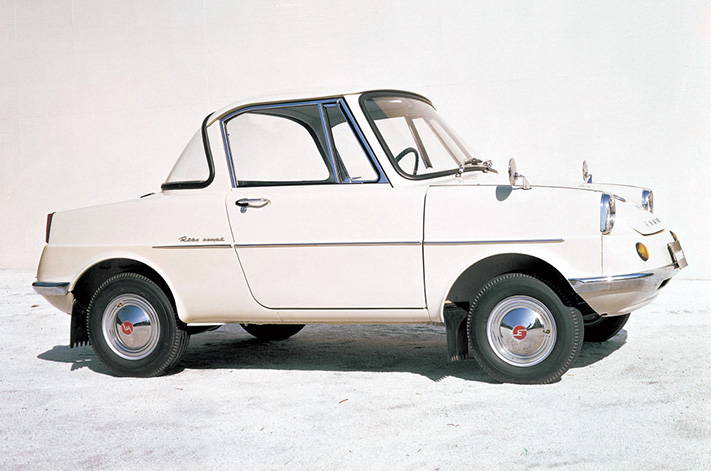
After Mazda built its first four-wheeled vehicle – the Romper truck – in 1958, the next four years saw the birth of the first Mazda two-door and four-door passenger cars, the R360 Coupe (1960) and Carol 600 (1964).
WHO NEEDS PISTONS?
German engineer Felix Wankel developed an alternative internal combustion engine while working for German car maker NSU in the 1950s – a motor that eschewed pistons for a triangular rotor that turned within an oval-shaped combustion chamber.
Appreciating the advantages of the distinctive engine – light weight, compact, super-smooth and capable of high revs – Mazda signed up to produce and develop the Wankel rotary in Japan.
RX LEGEND BEGINS
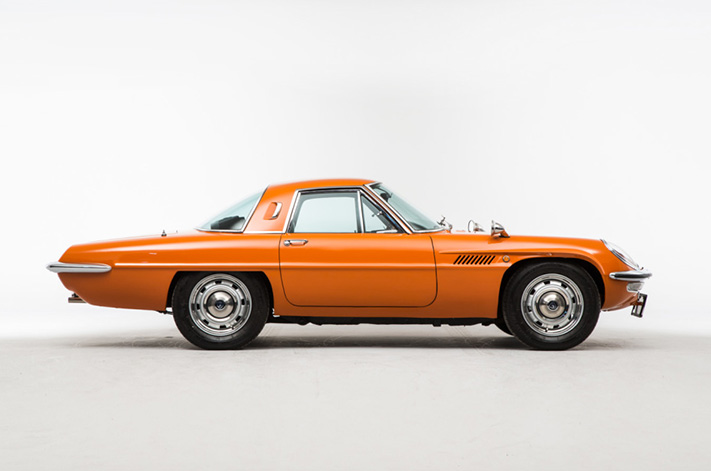
Mazda’s first rotary car was the 1967 two-seater Cosmo Sport (or 110S), but the company would start a cult following for piston-less cars with its 1978 RX-7.
The compact, four-seater twin-rotor sports car proved Mazda’s commitment to the engine long after NSU and other makers had been scared away from the thirsty rotaries after the 1973 oil crisis.
THE WORLD’S FAVOURITE ROADSTER IS BORN
By the late 1980s, the affordable British sports cars pioneered by the likes of MG and Triumph were a faded memory.
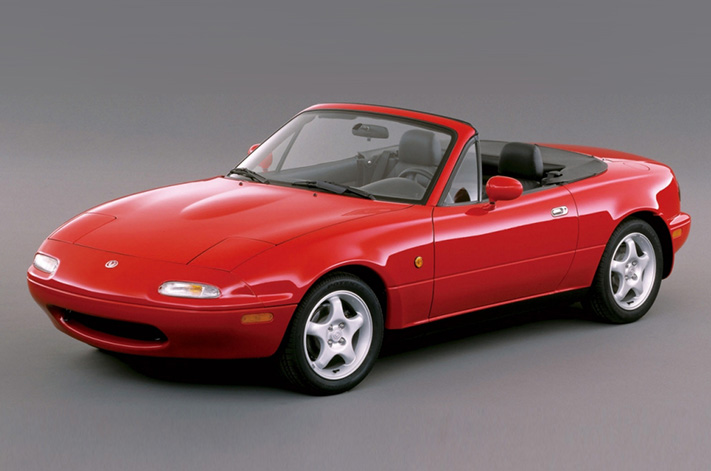
Their spirit, however, was spectacularly revived in 1989, when a former journalist of Wheels magazine encouraged Mazda to build a model that would be called the MX-5 – or Miata in the US where it was first launched.
Its perfect recipe of open-seater layout, affordable price tag and fun, rear-wheel-drive handling made it an instant hit and established it as the world’s best-selling sports car.
Now in fourth-generation form, more than one million MX-5s have now been sold.
POSHER MARQUE
In the same year the MX-5 launched, Mazda decided to copy Toyota’s move with the Lexus luxury off-shoot.
It created Eunos as a marque for its most luxurious models, and Australia was introduced to vehicles such as the Eunos 30X – a small coupe based on the 323 hatchback but featuring more radical styling and a tiny (1.8-litre) V6 instead of a four-cylinder.
The Eunos brand struggled, though, and was dropped just years later.
LE MANS SUCCESS
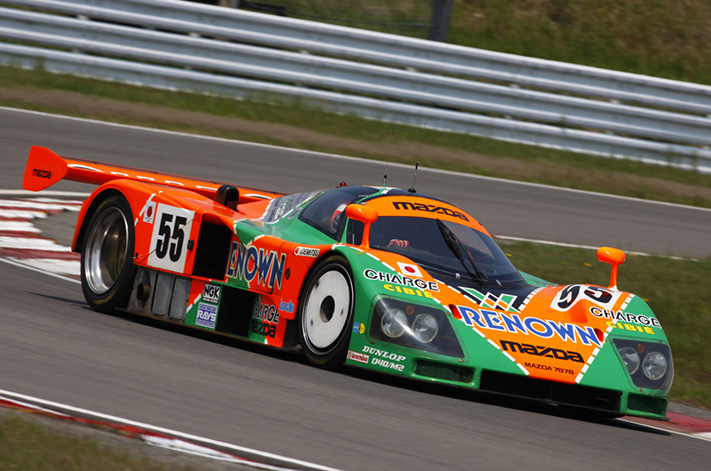
1991 brought Mazda’s biggest success in motorsport as it became the first Japanese manufacturer to win the prestigious Le Mans 24 Hour endurance race.
Although regulations for the year had aided its cause, the victory was still an impressive feat – achieved with the 787B racing car powered by a quad-rotor engine.
A V12 MAZDA
Amati was the highly ambitious plan to take Mazda – a small, independent car company determined to punch well above its weight – into the premium segment.
It was officially announced to the world at an August 1991 press conference, with Mazda claiming it would launch its bold new premium-segment contenders in the first quarter of 1994.
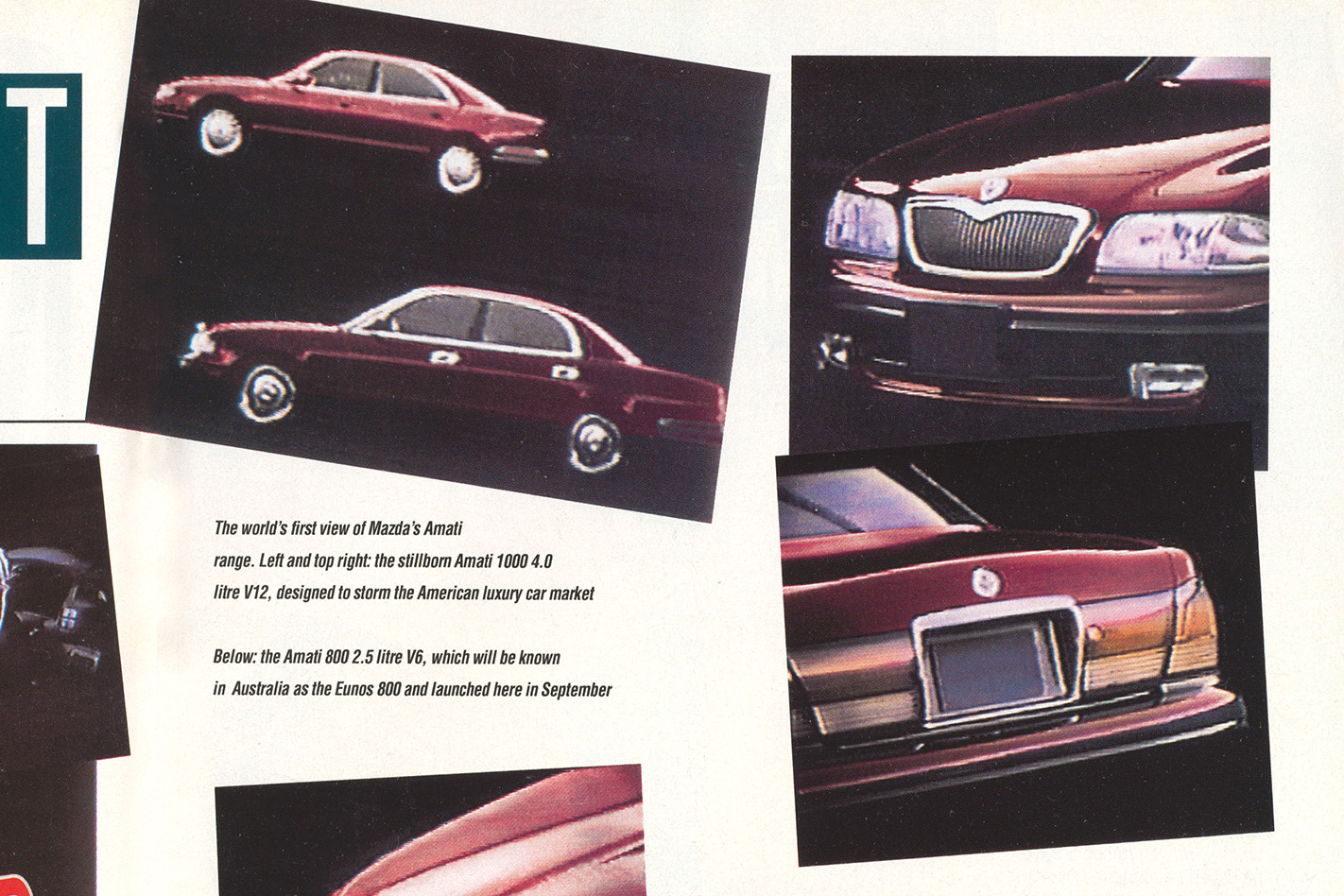
It was a bold, brilliant plan – right up until the Japanese yen imploded, the financial bubble burst, and the whole program tumbled like a near-finished high-rise tower razed with demolition dynamite.
FORD LINK
Mazda started a long association with Ford in 1969, when the companies formed the Japan Automatic Transmission Company (JATCO) along with Nissan.
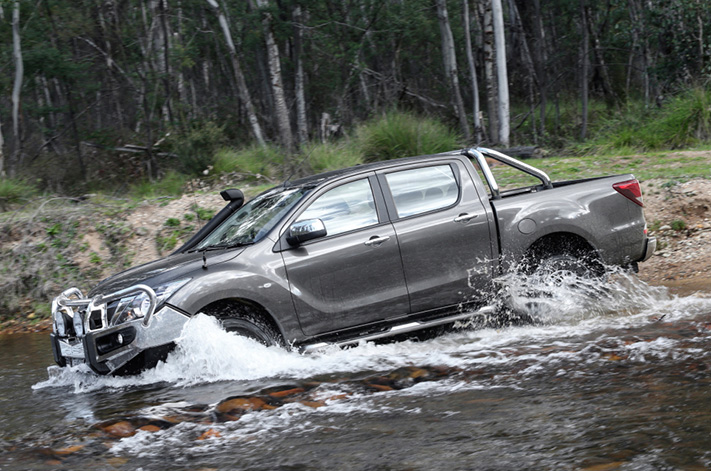
Ford would eventually buy a sizeable 33.4 per cent stake in Mazda, and an alliance produced a raft of twinned models including the Mazda 121 and Ford Laser city cars, Mazda Tribute and Ford Escape SUVs, and more recently the Mazda BT-50 and Ford Ranger utes.
Ford dramatically cut its shareholding after the 2008 global financial crisis, and the capital tie-up has now ended – leaving Mazda a far more independent company today.
HORSLEY AUSTRALIAN SPECIALS
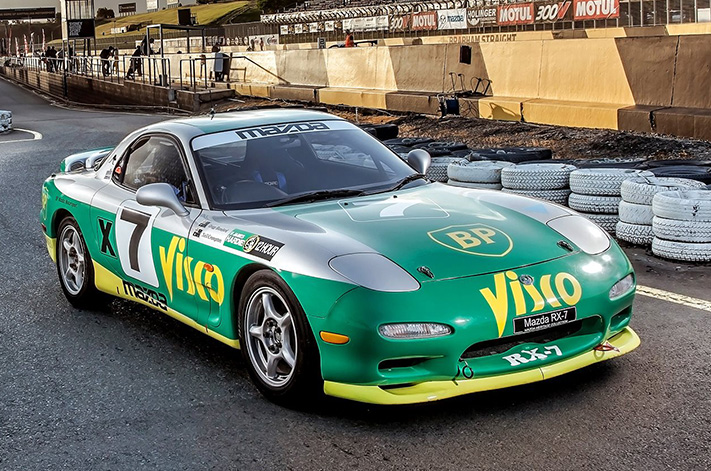
Former Oran Park track manager Alan Horsley was signed by Mazda in 1981 to start a successful period for the brand in Australian motorsport.
Major achievements included the 1983 Australian Touring Car Championship and four consecutive Bathurst 12 Hour races from 1992 to 1995, all with RX-7s (below).
Horsley, who retired in 2012, also created some locally modified road cars – including the 2002 MX-5 SP that was notable for using a turbocharged engine.
ON/OFF ROTARY
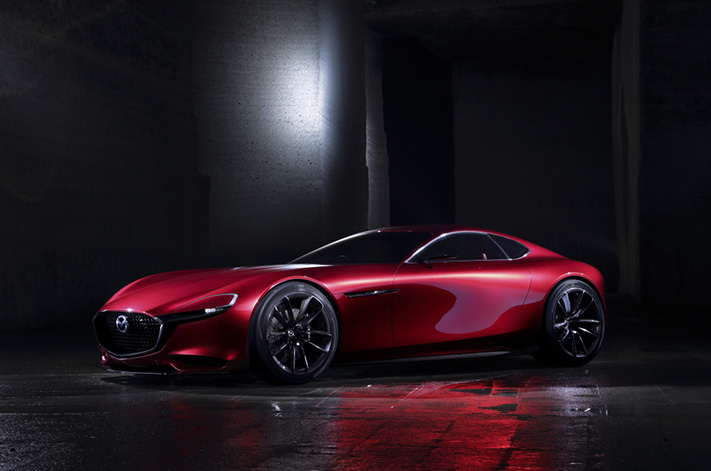
Rotary-powered Mazdas exited showrooms in 2012 with the discontinuation of the RX-8 sports car, which after nine years was unable to keep pace with the latest emissions regulations.
Mazda has since been sending mixed signals about a production return for its iconic engine and has talked about a rotary engine being used in the context of a range-extender device that could also double as a portable power pack.
However, it did tease sports car and rotary fans with a concept called the RX-Vision in 2015.
In lieu of the now-cancelled Special Olympics (as well as the actual Olympics); and with bans on competition, travel and training ongoing, the Special Olympics has partnered with Xbox to host an online Forza Motorsport 7 Tournament to be livestreamed from May 30.
Viewers will be able to tune in on Microsoft’s official YouTube, Mixer and Twitch accounts to watch 35 athletes from 11 US states compete on the virtual tarmac.

The Special Olympics decided to hold the eSports event whilst “looking for new ways to connect, compete and just have fun” while many of their athletes are under local stay-at-home orders.
It’s not the first occasion that Xbox and the Special Olympics have partnered up, with Xbox having hosted the first video game tournament at the Special Olympics USA back in 2018.
It may also prove to be another step towards eRacing being included within larger cornerstone sporting events worldwide.
The notion of eRacing on the Olympic stage in particular isn’t a new idea, as the International Olympic Committee stated back in 2017 that: “competitive eSports could be considered as a sporting activity”.
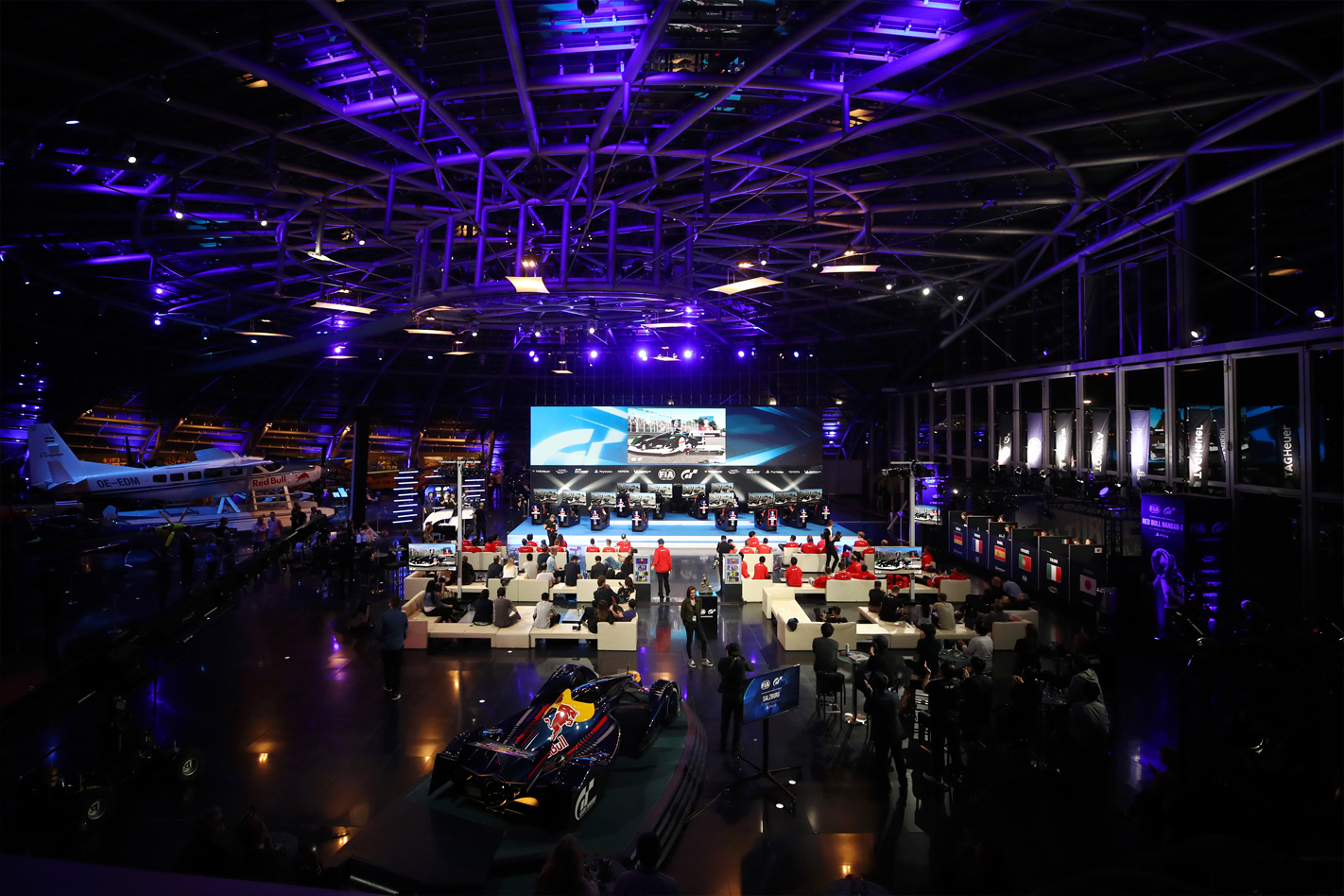
The 2018 Asian Games also trialled a competitive eSports inclusion, and Gran Turismo Sport is currently an ongoing feature within Japan’s annual National Sporting Festival.
Over the past few months especially, we’ve witnessed various real-life racing disciplines turning to online alternatives, which has certainly accelerated eRacing’s visibility to a far wider populous.
Virtual racing’s Olympic future may not be here yet, but in light of recent trends, it may soon be on the horizon – whether you like it or not.
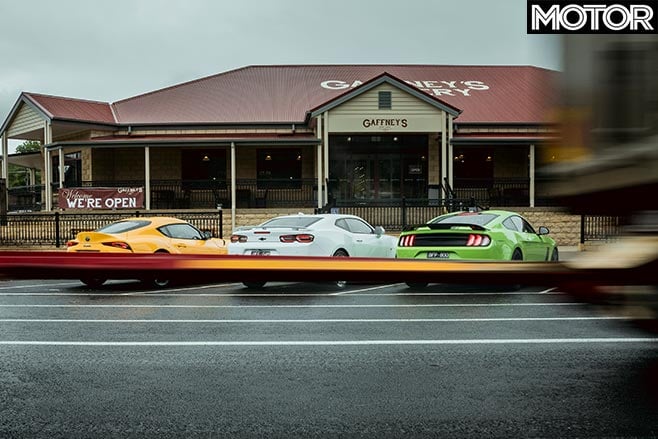
Australia’s car culture was built on muscle cars. Ever since the XR Falcon GT finished one-two at the 1967 Bathurst 500, bestowing the beautiful gold road cars with a winning pedigree, Aussie enthusiasts have voted with their wallets.
We want powerful, rear-drive performance cars, preferably with eight cylinders under the bonnet. This lust lasted as long as it could, until Ford, then Holden, then HSV wrote their respective final chapters in the book of Australian manufacturing.
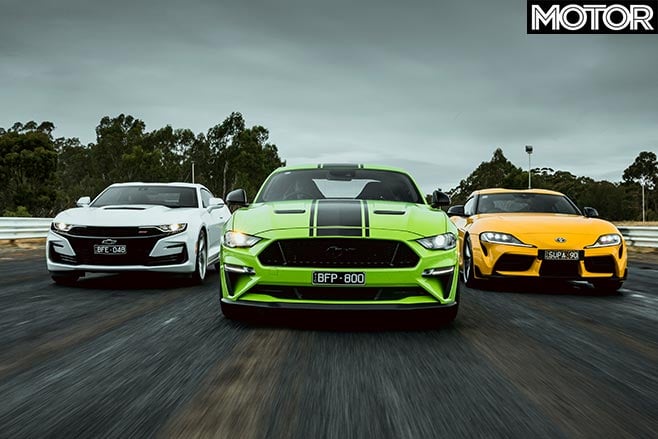
The departure of our homegrown heroes left a huge hole in the motoring landscape, but thankfully the rest of the world has stepped in to at least partially fill the void – America, principally, given its similar proclivity for high-powered rear-drivers. Ford was first into the fray with the Mustang and boy did it reap the rewards, the iconic pony car proving more popular with Aussies than toilet paper in a pandemic.
More than 26,000 Mustangs have been sold here at the time of writing, making it far and away Australia’s favourite performance car. Not one to sit idle, HSV began converting the Mustang’s arch-nemesis, the Chevrolet Camaro, to right-hand drive in 2018. The blue versus red rivalry would continue, albeit with fewer doors. Camaro hasn’t enjoyed anything like the popularity of its Detroit neighbour, selling around 1500 units, but it’s been a welcome addition to the market.
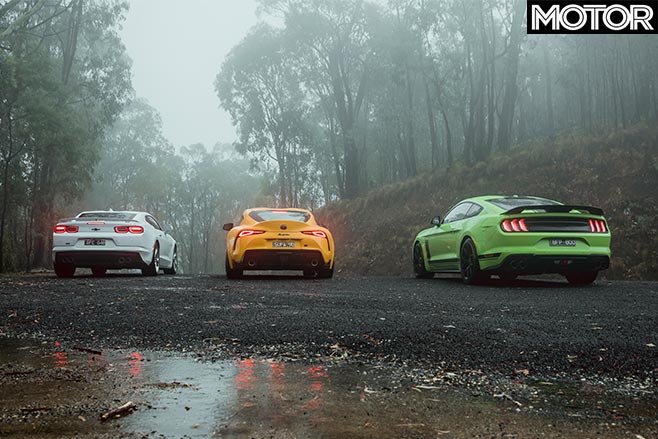
The final participant in this muscle car flex-off might raise a few eyebrows, but it shouldn’t. In standard guise, the Toyota Supra has always been basically a Japanese interpretation of a muscle car; the latest iteration has slimmed down and sharpened up, but it still adheres to the same recipe: plenty of grunt, rear-wheel drive and a focus on everyday usability over the lowest possible lap time. To anyone wanting to play the “it’s not a V8” card, let me just say the following: Torana GTR XU-1, Charger E49, VL Turbo, XR6 Turbo.
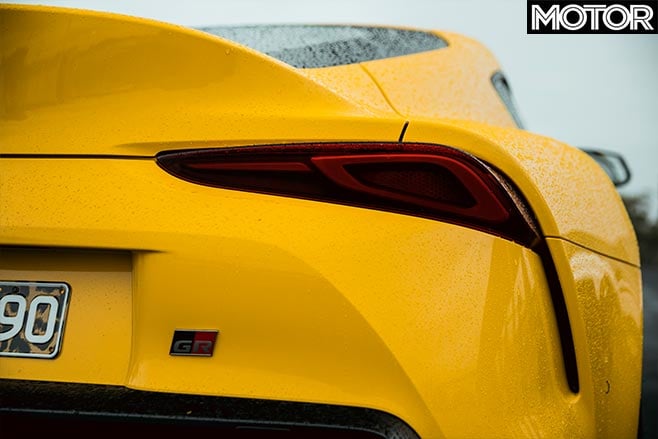
The Supra is a little outgunned on paper, though; its 3.0-litre straight-six is boosted by a turbocharger but musters only 250kW/500Nm. At 1495kg it has the least weight to move, but its power-to-weight ratio of 167kW/tonne looks a little lean compared to its competitors. The Camaro has literally twice the engine and then some, its brawny 6.2-litre LT1 V8 producing 339kW/617Nm and 196kW/tonne.
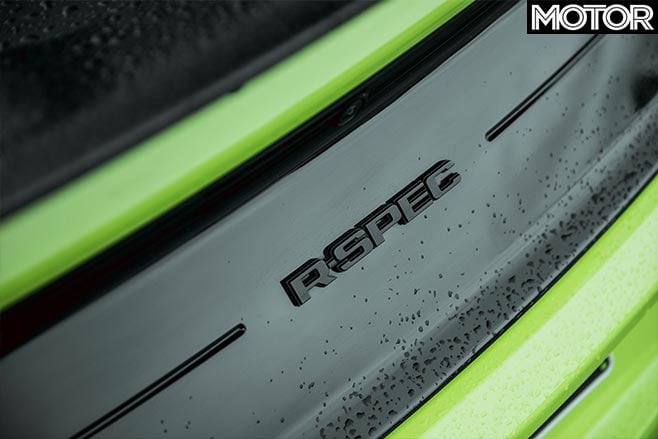
But the Mustang R-Spec sneers at such figures with disdain. A supercharger nestled atop the otherwise standard 5.0-litre V8 boosts outputs to 522kW/827Nm, or 293kW/tonne, which slots it between the Mercedes-AMG GT R (277kW/tonne) and Aston Martin DBS Superleggera (315kW/tonne). Impressive company for a car that costs just $99,980, though that’s well north of the Supra ($94,900) and Camaro ($86,990 as a six-speed manual).
It’s also a $36,290 premium over the manual Mustang GT that every R-Spec starts life as. So what do you get for the extra outlay? It’s pleasing to note Ford didn’t just install the supercharger and call it a day; there is more to the R-Spec than the extra power.
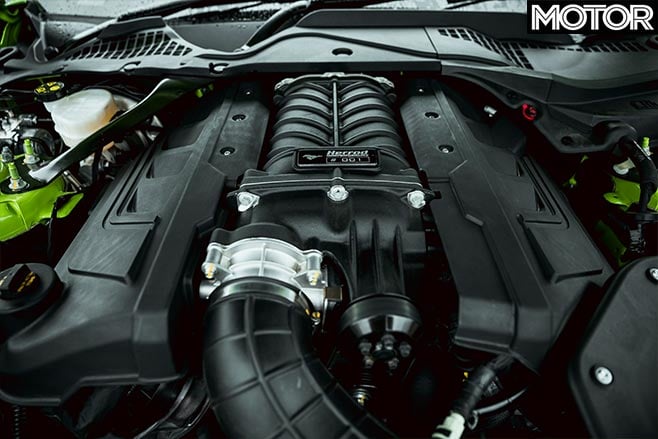
The Ford Performance supercharger kit is naturally the main attraction, consisting of a Roush R2650 blower, 87mm electronic throttle body, air intake system and fuel rails, as well as a new exhaust. The chassis benefits from wheels a half-inch wider than standard (9.5-inch front; 10.0-inch rear), new progressive-rate springs that drop the ride height 20mm, adjustable anti-roll bars and a recalibration of the MagneRide adaptive suspension.
The latter modification is an unexpected highlight of the R-Spec, for it rides beautifully. The suspension feels better than standard, remarkable given that the ride height drop and stretched tyres (the wider wheels wear the regular Michelin Pilot Sport 4S tyres 255/40 front, 275/40 rear) would suggest a compromise. In addition to the light clutch and gearshift, and smooth, tractable engine, it makes the R-Spec an excellent everyday proposition. It’s a really enjoyable car to drive without even dipping into that 700-horsepower well.
More so than the Camaro. The Chev’s gearbox isn’t as slick, the steering requires more effort, it’s harder to see out of and, bereft of the Magnetic Ride Control available as an option in the US, the ride isn’t as settled.
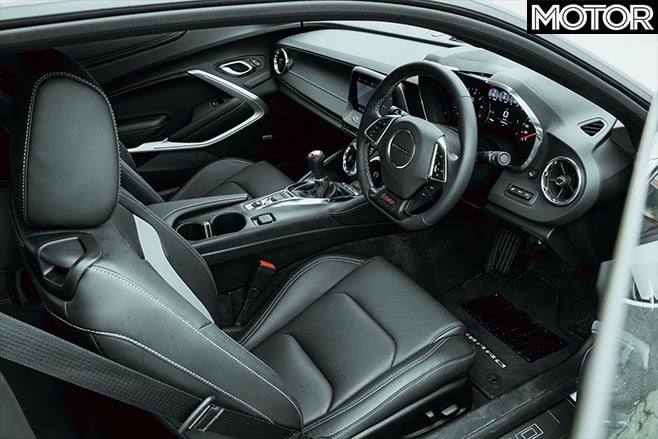
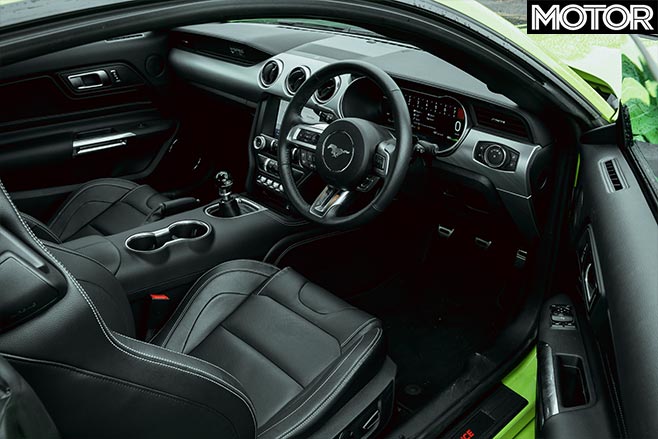
It’s not bad by any means, but you’re aware of imperfections in the road that don’t ruffle the Mustang. In manual guise, both cars are hampered by the right-hook conversion; neither Ford nor HSV flip the centre console, making gearchanges difficult if there’s any sort of beverage in the cupholders. A slight but frequent annoyance.
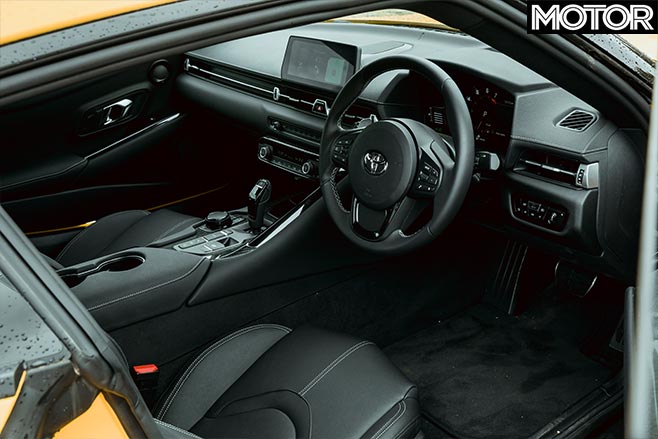
No such drama in the Toyota, as it’s only available as an eight-speed automatic. The Supra sits neatly between the two Americans in terms of ride comfort; it’s a little more reactive than the Mustang but there’s a surprising level of compliance. The biggest day-to-day hurdle is getting in and out of it – care must be taken not to hit your head on the roof sill – and getting comfortable once seated, as it’s a fairly cosy environment. Larger folks may struggle.
Our initial experience of the R-Spec last issue was tainted. To get Ford’s full five-year warranty, the ECU is somewhat of a helicopter parent, constantly buzzing around looking for signs of trouble. If the fuel quality is a little off or temperatures a bit high, it will quickly and dramatically reduce power – good for peace of mind, bad for performance. With the mercury reading north of 30C, by the time we conquered the R-Spec’s launch difficulties – it’s a right pain to get off the line – we were dealing with perhaps 400kW and a best quarter-mile time of 12.78sec at 189.47km/h, not at all representative of its potential.
It appears MOTOR is doomed not to extract the R-Spec’s potential, as today’s forecast projects heavy rain. If that’s not enough, the clutch is slipping under full throttle; no slight on the car, as this particular example has been performance-tested by at least four media outlets and completed a number of track tests, probably equivalent to 20 years of regular driving. Thankfully, both the weather and the clutch hang on long enough to record 0-100km/h in 4.59sec and a storming 12.30sec quarter mile at 195.24km/h. Much better.
Yet nothing about the R-Spec is optimised for the drag strip; despite torque being limited in the first two gears, it will happily blow the rear tyres off if you’re clumsy with the throttle, the gearbox doesn’t like to be rushed, and the gearing couldn’t be worse. On a good run the trap speed will vary between 196-198km/h, but third gear runs out at 194km/h, forcing a time-sapping shift to fourth. Nevertheless, 4.4 and 12.1sec feels possible and high-11s are there for the taking using drag strip timing (one-foot rollout).
To be honest, it’s Mustang first, daylight second. Its superiority is illustrated in a brutal 1.8sec 80-120km/h time, a figure more commonly associated with the likes of BMW M5 or Porsche 911 Turbo. The Camaro, likewise in second gear, takes 2.7sec to cover the same increment and the Supra 2.6sec in Drive. Knock the Mustang into third and it’s still quicker (2.4sec) than the others at their optimum.
Full disclosure, though: the immediate arrival of rain means the Camaro and Supra numbers are from different days at different locations, but all three are representative figures recorded in similar conditions. The Toyota is simultaneously the quickest and the slowest car here, as impossible as that sounds. Launched with slight wheelspin, it’s the first to 100km/h (4.44sec) but from there its relative lack of power shows as the V8s either gradually (Camaro) or quickly (Mustang) reel it in, crossing the quarter mile in 12.62sec at 181.16km/h. It will be interesting to see the effect the recently announced updated Supra’s 285kW affects these numbers.
An automatic Camaro 2SS would knock off the Supra on the strip, but the manual is slightly slower. It’s not particularly difficult to launch and 0-100km/h in 4.7sec and 12.8sec at 182.1km/h for the 400m isn’t shabby. The LT1’s punch is dulled by extremely long gearing; first runs to 87km/h, second 129km/h and third 177km/h. Like the Mustang, a frustrating shift to fourth is required just prior to the quarter mile line.
Of far more relevance is the effect the gearing has on real-world driving. The math is easy enough: in a country where 110km/h speed limits prevail, you can effectively enjoy the Camaro until 5500rpm in second gear. While Australia’s hatred of speed isn’t Chevrolet’s problem, when such limits are fairly common worldwide (including in the US) and a key part of the enjoyment of a manual muscle car is changing gears, choosing gearing that effectively denies the driver the opportunity to do so feels odd. The good news is that the Camaro’s V8 has a fat mid-range, doing its best work by 6000rpm at the most, so short-shifting doesn’t impede progress.
There’s much more to enjoy in the Chevrolet than just the engine, though. Anyone who’s driven a performance Holden of the past 10-15 years in anger will recognise the way the Camaro goes about its business. Steering aside, that is. The tiller is excessively weighty in Tour mode and only gets heavier from there, but you can lock in the lightest setting and it gets better with familiarity.
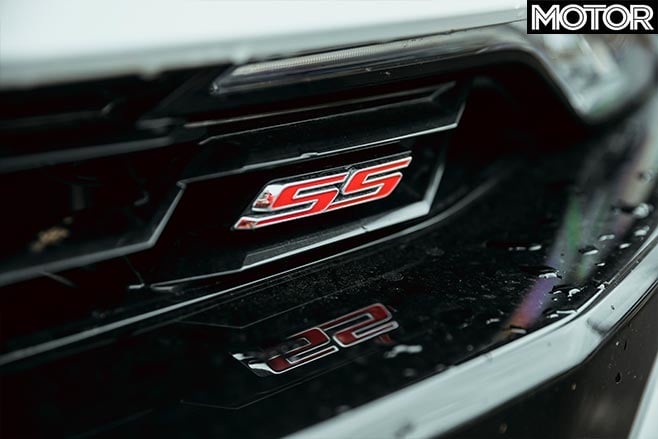
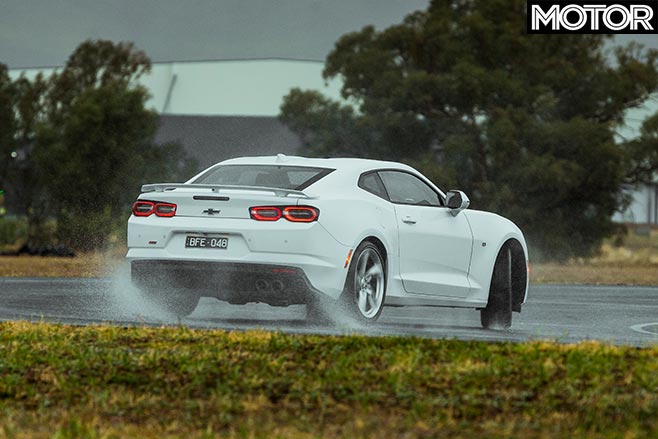
There’s never a worry about driving the Camaro quickly, even as torrential rain continues to hammer down. The Competitive Mode ESP is brilliantly judged but also rarely troubled, as any grip loss usually happens progressively and is telegraphed clearly. With the electronics banished, the Camaro displays fantastic balance; there’s a great chassis here, and the ride even smooths out as speeds increase.
Even with its suspension upgrades, the R-Spec isn’t as dynamic. Make no mistake, it’s still a capable, enjoyable performance car in the corners, but there isn’t enough feedback. On the plus side, it’s remarkable how much power can be deployed on a slippery surface, but that’s more a tribute to the smoothness of the power delivery.
A trait inherent in every Mustang is that once the lateral purchase of the tyres is exceeded grip levels fall off a cliff; the Michelin Pilot Sport 4 S tyres that arrived with the MY18 update mitigate the effects slightly (the old Pirellis were diabolical in the wet), but it can still be a snappy beast. Like the Camaro’s Competitive Mode, the Mustang’s Track ESP is extremely well-judged, but disengage it and opposite lock has to be applied extremely quickly to avoid an embarrassing spin.
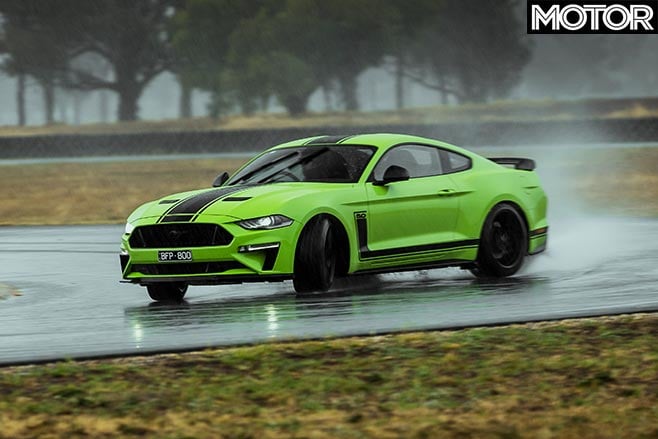
Another similarity between the Camaro and the Mustang is ludicrous gear ratios. As a consequence of its higher rev ceiling – 7400rpm vs 6500rpm – the Ford stretches even further between changes. It’s less of an issue than in the standard ’Stang, as the R-Spec undoubtedly has the grunt to pull the gearing, but imagine what a rocket it would be with a shorter diff!
There is an appeal to selecting third, flooring the throttle and feeling the power build and build and build all the way to almost 200km/h, but it’s a thrill you’re never going to feel on the public road. It’s a great gearshift, albeit one you will rarely touch on a twisty bit of tarmac (or even on the track).
Toyota Supra: Facts you might not know
The Supra almost has the opposite issue. With such a broad spread of torque, two or three of its eight closely stacked gears are probably redundant. Ironically, the exception is the super-short second, available only to 78km/h; it’s the gear you often want in tight corners, but the large gap to third often leaves the downshift paddle being clicked ineffectually. It’s one of few complaints. In outright ability the Supra is clearly the best car here because of, well, physics. It’s nearly 250kg lighter than the Camaro and 300kg lighter than the Mustang yet has a similar footprint, so little wonder it hangs on when the others have let go.
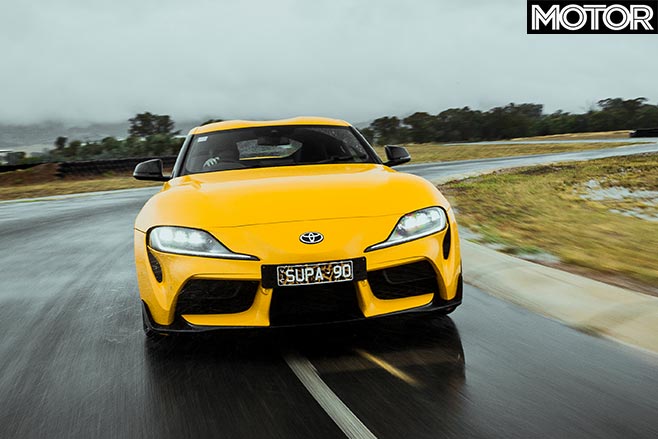
Strong brakes and great steering are further Supra attributes, though on a wet track it has a tendency to abruptly fall into oversteer, particularly if you trail the brakes on corner entry. Outright grip disguises this in the dry, but it can be a handful if you’re not expecting it. The only other issue is the slightly soft top-end power delivery, but presumably this will be rectified once the 285kW tune arrives. At any circuit with more corners than straights, it’s almost certain the Supra would be the quickest despite its power disadvantage.
But do muscle car buyers care about lap times? If the criteria is putting a smile on your face then the Supra falls short because, for all its excellence, it’s a serious car. Driving it very hard isn’t the only way to enjoy it, but it’s how it gives its best and, while it’s perfectly capable of cruising, it doesn’t necessarily remind you that you’re in something special while doing so. It’s unfair to criticise a car for being too polished, so we won’t, but while the Toyota adheres to the muscle car recipe in terms of ingredients, it doesn’t have the right seasoning when it comes to attitude.
The R-Spec takes on the Supercharged Camaro ZL1
The Mustang R-Spec certainly does. It looks great, makes a good noise (though is better outside than in) and has a simply immense amount of grunt in the right circumstances. For many, the $100K-equals-522kW equation will be enough; the fact the R-Spec is such an enjoyable road car is icing on the supercharged cake. But its limitations are its downfall. Some of those are inherited from the base car, but the gearing and the way it develops its power means opportunities to exploit its performance are few and far between on the road.
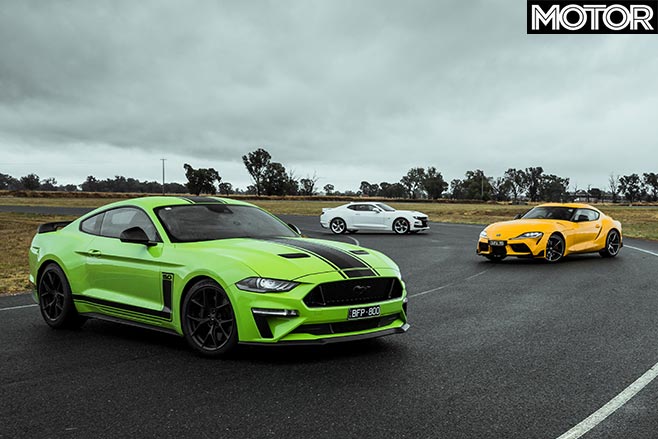
There’s always the track of course, and on a cool-to-mild day the Friday night drags or some short-circuit sprint sessions should be no problem. Simply creating the R-Spec was an amazing achievement and the end result is credit to those involved, but in offering a warrantable supercharged Mustang, Ford has created a beautiful sword then blunted the edge to make it less dangerous. Still a lovely object, but not quite as exciting.
Simply put, of this trio, the car that is the most enjoyable across all disciplines is the Chevrolet. There’s an element of ‘jack of all trades, master of none’ at play here; it’s not the sharpest or the quickest or the most comfortable, but it is the most fun.
Whether you’re squirming away from the traffic lights, blasting through corners on a mountain road or belting the hell out of it on-track, the Camaro always makes you grin. It’s an honest, uncomplicated car with a sense of humour and the closest thing we have, in concept and execution, to our former Aussie heroes.
Fast Facts
u00a0 | Ford Mustang R-Spec | Chevrolet Camaro 2SS | Toyota Supra GTS |
Body | 2-door, 2+2-seat coupe | 2-door, 2-seat coupe | |
Drive | Rear-wheel | ||
Engine | 5038cc V8, DOHC, 32v, supercharged | 6162cc V8, OHV, 16v | 2998cc inline-6, DOHC, 24v, turbocharged |
Bore x Stroke | 93.0 x 92.7mm | 103.25 x 92.0mm | 82.0 x 94.6mm |
Compression | 12.0:1 | 11.5:1 | 11.0:1 |
Power | 522kW @ 7200rpm | 339kW @ 5700rpm | 250kW @ 7800rpm |
Torque | 827Nm @ 4500rpm | 617Nm @ 4600rpm | 500Nm @ 1600-4500rpm |
Power/Weight | 293kW/tonne | 196kW/tonne | 167kW/tonne |
Transmission | 6-speed manual | 6-speed manual | 8-speed automatic |
Weight | 1779kg | 1728kg | 1495kg |
Suspension | struts, adaptive dampers, coils, anti-roll bar (f); multi-links, adaptive dampers, coils, anti-roll bar (r) | struts, dampers, coils, anti-roll bar (f); multi-links, dampers, coils, anti-roll bar (r) | struts, adaptive dampers, coils, anti-roll bar (f); multi-links, adaptive dampers, coils, anti-roll bar (r) |
L/W/h | 4789/1916/1367mm | 4784/1897/1348mm | 4379/1854/1292mm |
Wheelbase | 2720mm | 2811mm | 2470mm |
Tracks | 1618/1636mm (f/r) | 1600/1597mm (f/r) | 1594/1589mm (f/r) |
Steering | electrically assisted rack-and-pinion | ||
Brakes | 380mm ventilated discs, 6-piston calipers (f); 330mm ventilated discs, single-piston calipers (r) | 345mm ventilated discs, 4-piston calipers (f); 339mm ventilated discs, 4-piston calipers (r) | 348mm ventilated discs, 4-piston calipers (f); 345mm ventilated discs, single-piston calipers (r) |
Wheels | 19 x 9.5-inch (f); 19 x 10.0-inch (r) | 20 x 8.5-inch (f); 20 x 9.5-inch (r) | 19 x 9.0-inch (f); 19 x 10.0-inch (r) |
Tyre Sizes | 255/40 ZR19 100Y (f); 275/40 ZR19 105Y (r) | 245/40 ZR20 95Y (f); 275/35 ZR20 98Y (r) | 255/35 ZR19 (f); 275/35 ZR19 (r) |
Tyres | Michelin Pilot Sport 4S | Goodyear Eagle F1 Asymmetric 3 | Michelin Pilot Super Sport |
Price | $99,980 | $86,990 | $94,900 |
Pros | Bang for buck; styling; ride comfort; warranty | Playful chassis; grunty engine; ESP calibration | Sharp handling; torquey engine; steering; ride |
Cons | Snappy handling; silly gearing; engine sensitivity | MY19 face; firm ride; long gearing; vision | Soft top-end power; tricky in the wet; no manual |
Rating | 4 out of 5 stars | 4 out of 5 stars | 4.5 out of 5 stars |
The Strip
u00a0 | Ford Mustang R-Spec | Chevrolet Camaro 2SS | Toyota Supra GTS |
0-10km/h | 0.42 | 0.4 | 0.39 |
0-20km/h | 0.86 | 0.9 | 0.77 |
0-30km/h | 1.26 | 1.3 | 1.12 |
0-40km/h | 1.63 | 1.7 | 1.48 |
0-50km/h | 2.04 | 2.1 | 1.84 |
0-60km/h | 2.47 | 2.5 | 2.24 |
0-70km/h | 3.29 | 2.9 | 2.71 |
0-80km/h | 3.71 | 3.7 | 3.25 |
0-90km/h | 4.14 | 4.1 | 3.83 |
0-100km/h | 4.59 | 4.7 | 4.44 |
0-110km/h | 5.04 | 5.4 | 5.10 |
0-120km/h | 5.60 | 6.3 | 5.85 |
0-130km/h | 6.51 | 7.1 | 6.72 |
0-140km/h | 7.14 | 7.9 | 7.62 |
0-150km/h | 7.78 | 8.9 | 8.81 |
0-160km/h | 8.44 | 10.1 | 9.83 |
0-170km/h | 9.15 | 11.2 | 11.08 |
0-180km/h | 9.94 | 12.5 | 12.46 |
0-190km/h | 11.60 | N/A | 14.01 |
0-400m | 12.3sec @ 195.24km/h | 12.8sec @ 182.1km/h | 12.62sec @ 181.16km/h |
80-120km/h | 1.8sec (2nd) | 2.7sec (2nd) | 2.6sec (Drive) |
100-0km/h | 33.2m | 33.9m | 32.6m |
Speed in Gears | |||
1st | 85km/h @ 7400rpm | 87km/h @ 6500rpm | 50km/h @ 6500rpm |
2nd | 131km/h @ 7400rpm | 129km/h @ 6500rpm | 78km/h @ 6500rpm |
3rd | 194km/h @ 7400rpm | 177km/h @ 6500rpm | 121km/h @ 6500rpm |
4th | 250km/h @ 6700rpm* | 230km/h @ 6500rpm | 152km/h @ 6500rpm |
5th | 250km/h @ 5450rpm* | 265km/h @ 5530rpm* | 199km/h @ 6500rpm |
6th | 250km/h @ 4170rpm* | 265km/h @ 3750rpm* | 250km/h @ 6200rpm* |
7th | N/A | N/A | 250km/h @ 5100rpm* |
8th | N/A | N/A | 250km/h @ 3970rpm* |
Heathcote Raceway/The Bend, dry. Driver: Scott Newman
Official timing Partner www.vboxaustralia.com.au
*Manufacturer’s claim.
At 10:45am on Friday 20 October 2017, the last Aussie-built Holden Commodore rolled off the Elizabeth production line to great fanfare.
Fitted with every extra, the Redline-optioned, black-roofed sedan was primped, preened and prepared for a life of museum-based adulation, ostensibly the 7,687,675th and final Holden built on our shores.
Even with the 2020 cessation of the Holden brand and General Motors exiting Australia entirely, the famous Red Hot Redline ‘Last Car’ was always going to lead a sheltered existence.
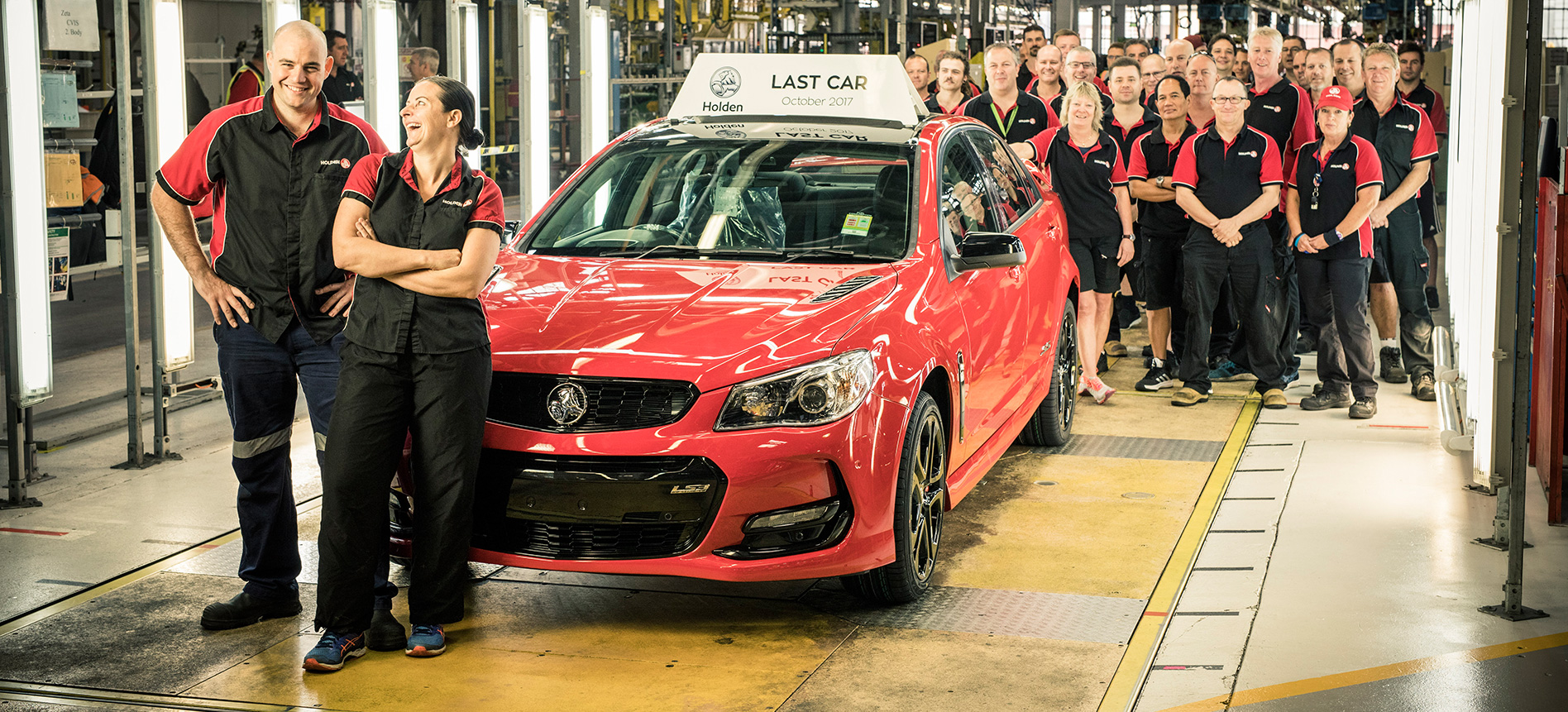
Surely, already one of the most photographed non-racing Commodores in existence, its status as Holden’s Last Car is immutable. Look at the pictures… there was a sign on the roof and everything!
Prepare to have your mind blown, though, because although the roof sign was 100 per cent accurate, the Last Car wasn’t actually the final car constructed by the 164-year-old manufacturing plant.
How can there be two final Commodores?
More specifically, it was not the last car to be ‘framed up’ and structurally completed in the body shop, it was not the last car through the paint shop, and most crucially in terms of its provenance, it was not the last car to be allocated a Vehicle Identification Number (VIN).
Former Holden employee Alex Kyriakopoulos is the proud owner of the car that made the final pass of the production line; another, almost identical Commodore SS-V Redline sedan, in the same Red Hot paint albeit with a red roof (in lieu of black) and a VIN ending in 333644 (the last allocated to any VFII).
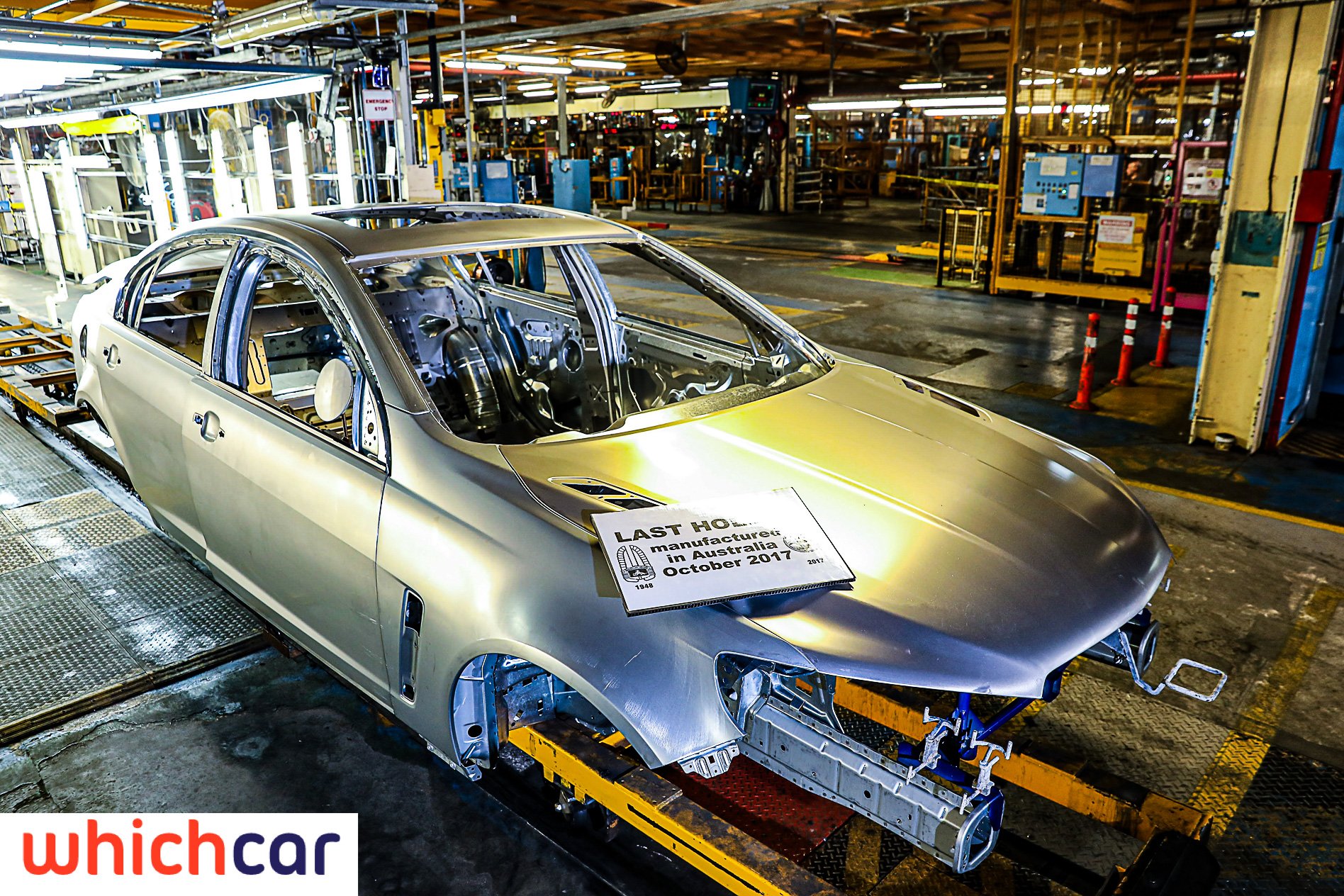
After it was pieced together and turned into a complete but empty shell, Alex waited anxiously for the body-in-white to enter the Pre-Treatment/Electrocoat Plant (PTEC).
“On the last week we were being dismissed shop-by-shop. The Body Shop closed on October 11 and we closed on October 16,” Alex tells WhichCar.
“As all our work in paint was finished for the day, we were free to go home earlier than normal, but I hung around knowing this would be the final body to ever enter the PTEC.”
Rolling slowly through the almost deserted workshops with no cars following, it certainly gave 333644’s gestation a sense of surreal occasion, even though it was not destined for an existence of celebrity and reverence.
333644 – a well-known secret
Well, not unless Alex could do something about it. “Everyone working in the paint shop with a camera or phone took a heap of pictures and videos of it, as did I, not knowing I would own the last car just days later,” says Alex.
It was in the paint shop where the media-prepped Last Car and number 333644 switched roles.
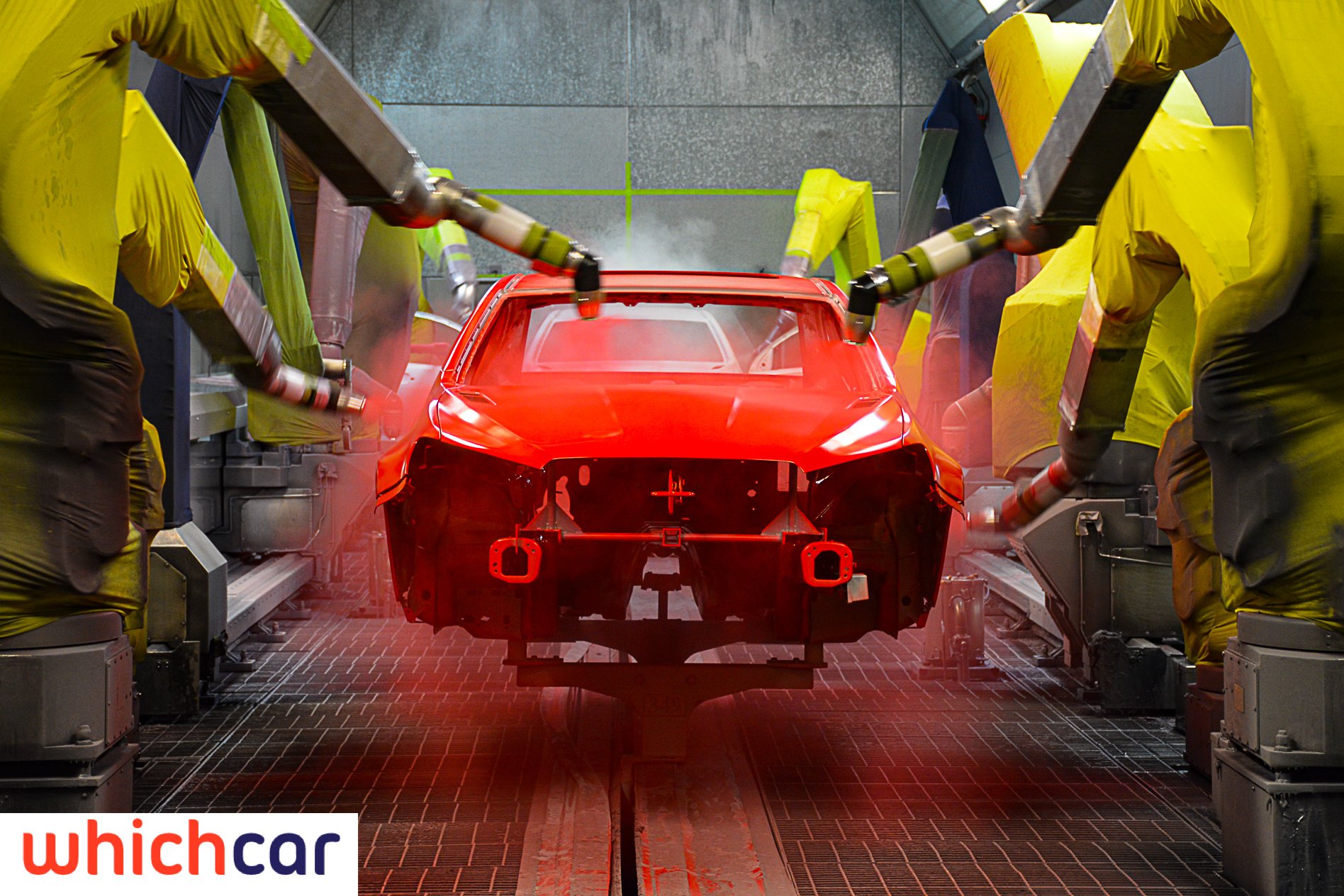
“Once painted, vehicles typically go to the Automated Storage and Retrieval System (ASRS), a multi-level indoor car park, then to E8 before heading over to General Assembly, but the Last Car 333542 was inspected closely to make sure it had zero paint defects, covered and then put aside within the Paint Shop,” explains Alex.
“I worked at Holden’s paint shop as a process engineer, solving technical problems, specialising in the pre-treatment and anti-corrosion electrocoating process,” Alex recalls, noticeably impassioned. “I was with Holden for 14 years and 14 years with Mitsubishi before that, but with degrees in both chemistry and metallurgy, this role was my favourite.”
As an aside, Alex’s contributions were vital for those who bought Commodores and Utes at the end of the production run. Just 12 months out from the scheduled close of production, Alex championed to replace 30 per cent of the Paint Shop’s electrocoating bath.
“The ute bodies were starting to come out a bit ordinary; the drop in production volumes over the course of 2016 meant that the ECOAT, a combination of resin and paste used in rustproofing, wasn’t being turned over as often,” he says.
“Sixty thousand litres of resin, 4,000 litres of the paste and the cost to discard 120,000 litres of the old stuff was going to set us back $316,000.”
That’s not chump change, given the beloved VF Commodore was circling the same drain the old ECOAT went down, but a testament to the passion within Holden, the upgrade was approved.
“It wasn’t all passion,” argues Alex. “We were cutting open test bodies and finding some had areas with unacceptable coverage in the box sections and other concealed areas. We chucked out a few ute bodies because of that and there would be more to come if we didn’t fix it. So, it was a business decision as well.”
The project was completed just ten months before the 2017 plant closure, but at least Alex could take solace in knowing that the final-run VF and WN products won’t be prematurely rusting out, including, as it would turn out, his own.
The last Commodore comes down the line
Alex retells the story of his last day at the company.
“We went to work on October 20 2017, entering the Elizabeth plant flanked by hundreds of Holden fans lining Philip Highway.” Alex says. “There was no actual production that day. The Last Cars; a Caprice, Sportswagon, Ute and the Red Hot VF SS-V were already complete.
“They conducted dynamic vehicle testing on the rollers and then drove them out through the door.”
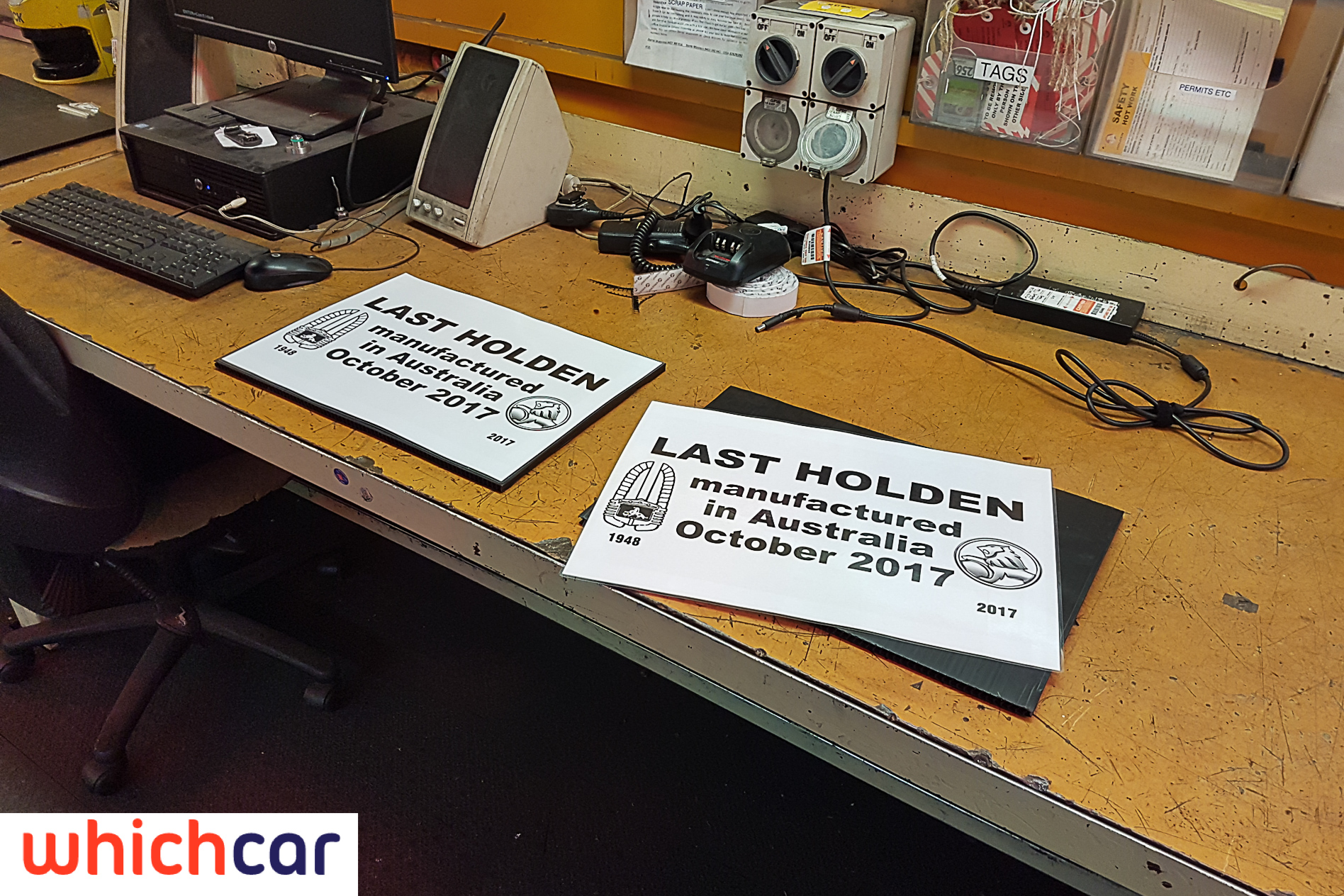
After some pomp and ceremony, the plant’s entire workforce was bussed to Adelaide Oval for a private gig with former Elizabeth boy Jimmy Barnes.
A big arvo turned into a big night for some, with Alex and plenty of colleagues kicking on at the Strathmore Hotel – and it turned into a night that may have well changed the future of last-ever Australian-made Holden.
Finding the last Australian-made Holden Commodore
“I was having drinks with some engineers from Melbourne, ‘DJ’ David McLean and Joseph Sawyer, when one of them piped up and told me that 333644 had been allocated a dealer but did not yet have a buyer,” Alex recalls.
“I made it my goal to find the dealer and save that car from obscurity.”
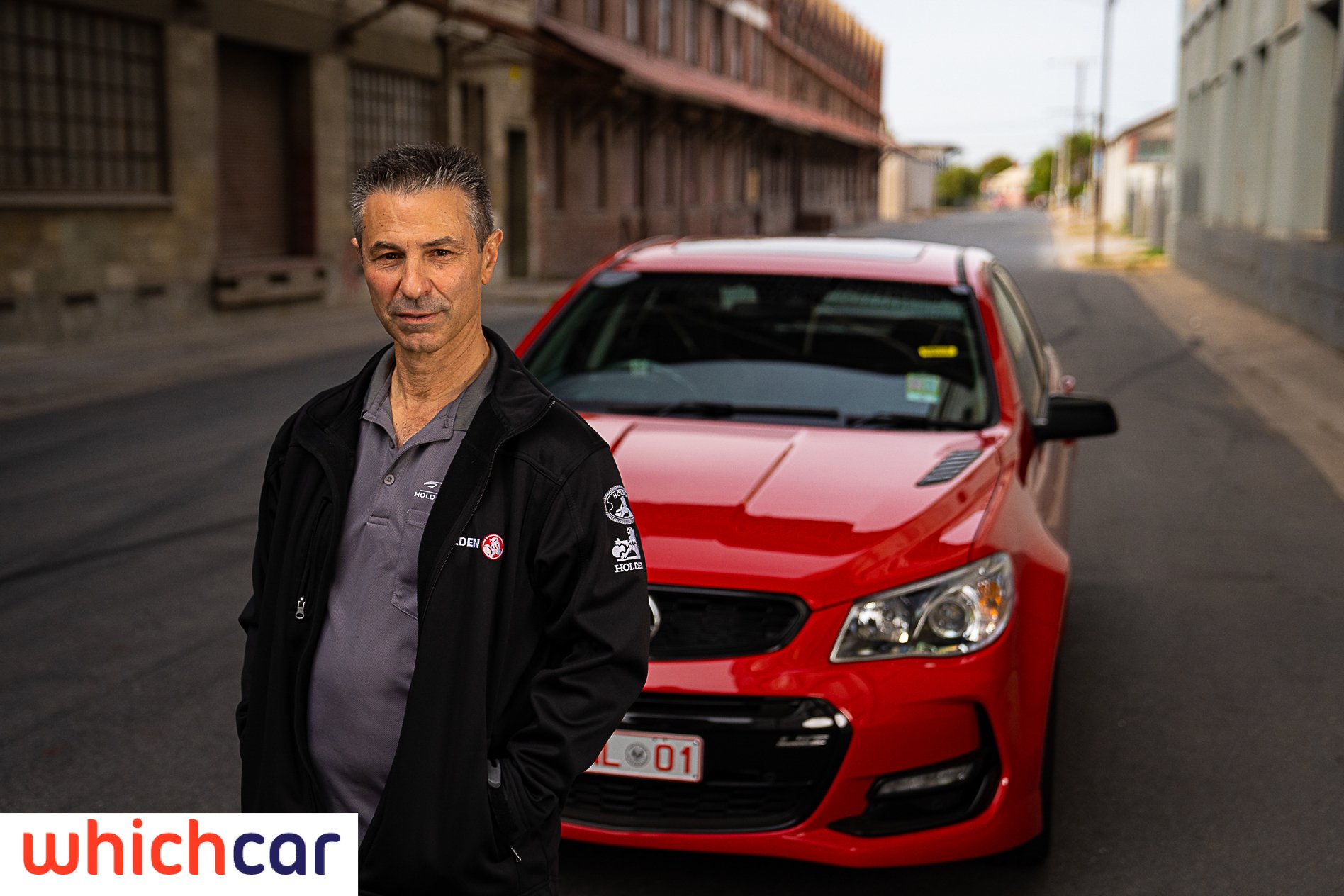
Alex Kyriakopoulos in Adelaide last month with his pride and joy
Alex’s cause was certainly noble. Imagine owning the final car ever constructed by Holden in Australia, but never knowing it? Or not knowing until it’s too late, 20 years later when it’s driven into the ground?
“It had come off the line on October 18 and I tracked it down en-route to Booran Holden in Victoria. I called them and said I’d buy it sight unseen, stating that I worked at Holden and wanted it for ‘sentimental reasons’,” says Alex, before he pauses for a second. “Which wasn’t a lie, really.”
It’s a story oft-repeated in Aussie motoring history and too many significant-build cars have been lost over the decades, but Alex wasn’t letting that happen to 333644.
“I’m sure the dealer has sold cars sight unseen by the buyer before, but it’s pretty unusual for it to be sold sight unseen by the dealer itself,” Alex laughs. “I signed the contract ‘subject to wife’s approval’.
“Jenny has been very good about this but she was outvoted. Our kids Angelique and Anthony insisted we had to have it. I’ve also got a white Reserve Edition, so Jenny missed out on a kitchen renovation for two cars that I never drive.”
Where is the final Aussie-built Holden Commodore now?
Alex’s final-body VFII SS-V Redline remains in the condition it left the factory; the dealership was requested to conduct no pre-delivery, so it retains all the factory stickers, plastic seat protector, plastic steering wheel protector and original destination label.
Alex isn’t suggesting that his car has a greater claim over the title ‘Last Car’ than the media car retained by Holden and he’s certainly not trying to rewrite recent history. But there’s no doubt that his car is a greatly important example of final-run Holdens, despite not wearing special edition badging or immortalised in ceremony.
“With my car the last to be framed up, last to be allocated a VIN and last through the paint shop, and the media car being the final vehicle to be completed and come off the line, both are the ‘Last Car’ in their own respects,” Alex says.
“Some would argue the media car holds that title, some would say it’s mine. All I know is that together, both cars are for the workers, Holden fans, car lovers and anyone interested in Australian automotive history.”
The Last Car was kept for important reasons, but it was feted for greatness the moment it was created, then treated and revered as such during the entire production process.
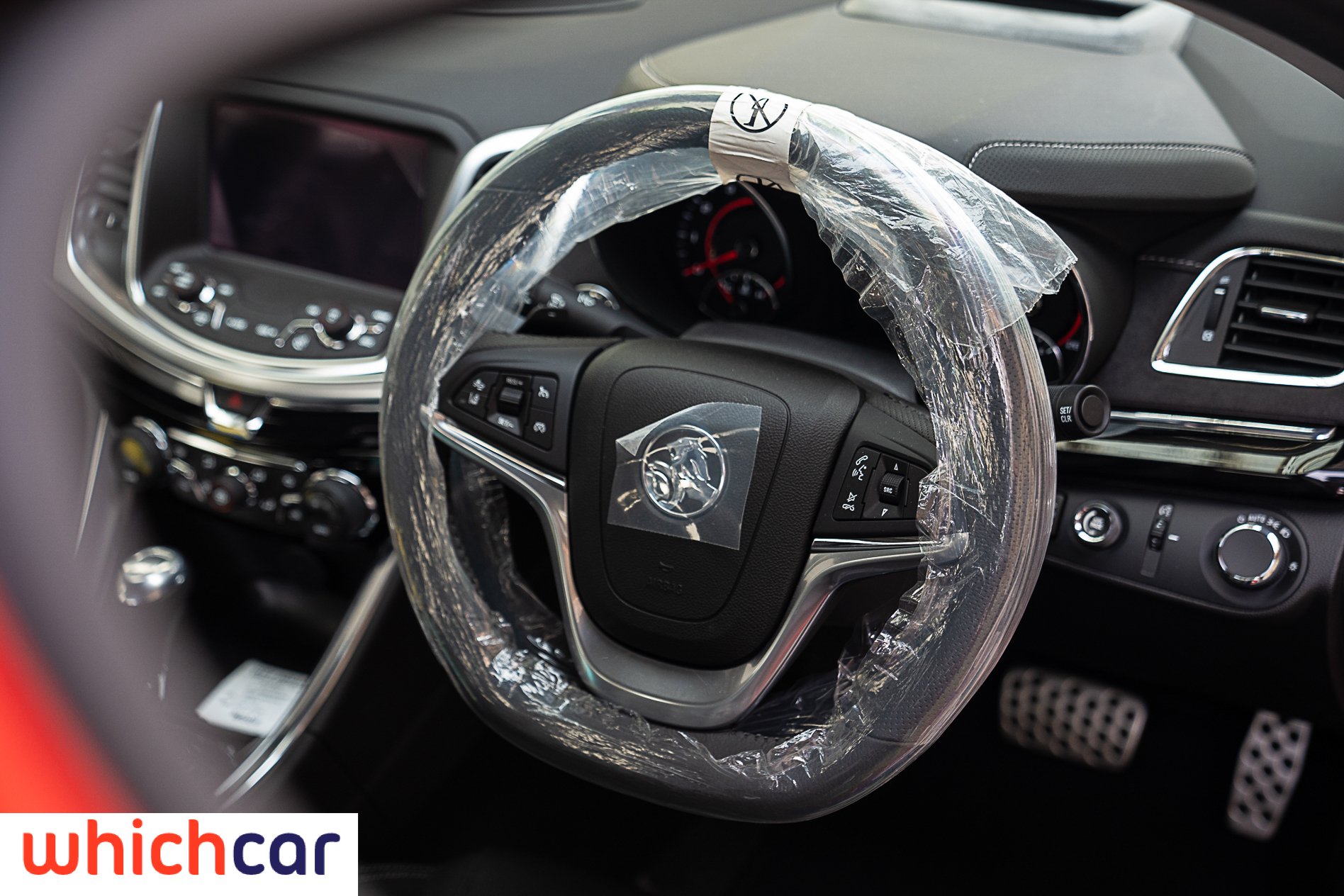
The dealership was asked not to perform any pre-delivery work, so the steering wheel and badge are still covered
VIN 333644, though, is the organic last car from a construction perspective, literally the last of the line.
“This car is for all those workers in the background who didn’t get the recognition that General Assembly got,” Alex says. “GA was always termed ‘the shiny bits’ as they got all the attention. For many Holden workers, 333644 was it – tools down, job finished.”
It could have easily disappeared into obscurity, but thanks to Alex Kyriakopoulos, it will not.
“I still pinch myself that 333644 was able to fall through the cracks, allowing me the chance to own a piece of Australian automotive history.”
A big thanks to Dave Carey, Troy Barker, Andrew Broadley and WhichCar/Street Machine for capturing this history. I would also like to acknowledge all my Holden family who provided me with the rare footage, and documentation of this car on every occasion I requested it, with special mention to Jeremy Pickering. Also, a big thanks goes out to my wife and kids for letting me fulfil this dream. – Alex Kyriakopoulos
A thick mob has formed rapidly, building around a plain white Renault Koleos. It’d be a strange sight if it wasn’t for the fact that a beaming, mile-wide smile is clearly visible in the back seat.
The trademark grin of Daniel Ricciardo is unmistakable, and it’s drawing people closer with seemingly magnetic force. The Honey Badger is making a sponsor appearance at a Renault event before the Aussie GP and local fans are desperate to get a glimpse of their hero – it would be one of the only interactions members of the public would have with Ricciardo all weekend.
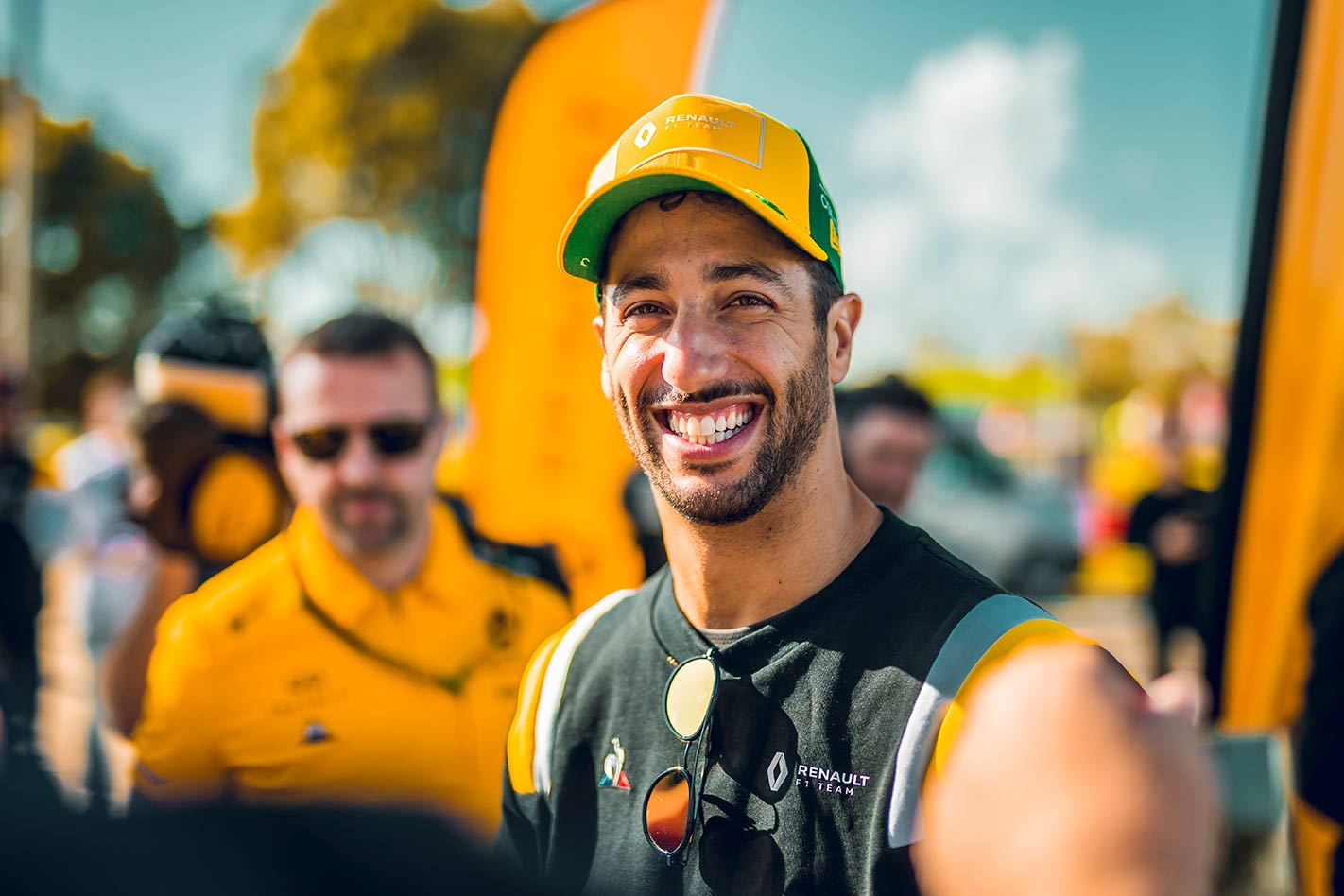
As the affable West Australian saunters with effortless cool into the shade, the excited fans are hot on his heels, held back only by Ricciardo’s entourage of helpers. He begins a Q&A with fans, and they hang on his every word.
Off to the side, idly admiring a TCR race car, is a young man being completely ignored by the gathered F1 fans. It’s Esteban Ocon, Ricciardo’s new Renault teammate.
Cutting a tall and wiry figure, he has an almost awkward, gangly stance thanks to his lengthy limbs. His teenage appearance is mimicked by a sleep schedule that regularly exceeds 14 hours a night. Dressed in full Renault merchandise with designer-ripped jeans and accompanied by one or two people in similar garb, you wouldn’t give him a second glance if you didn’t know better.
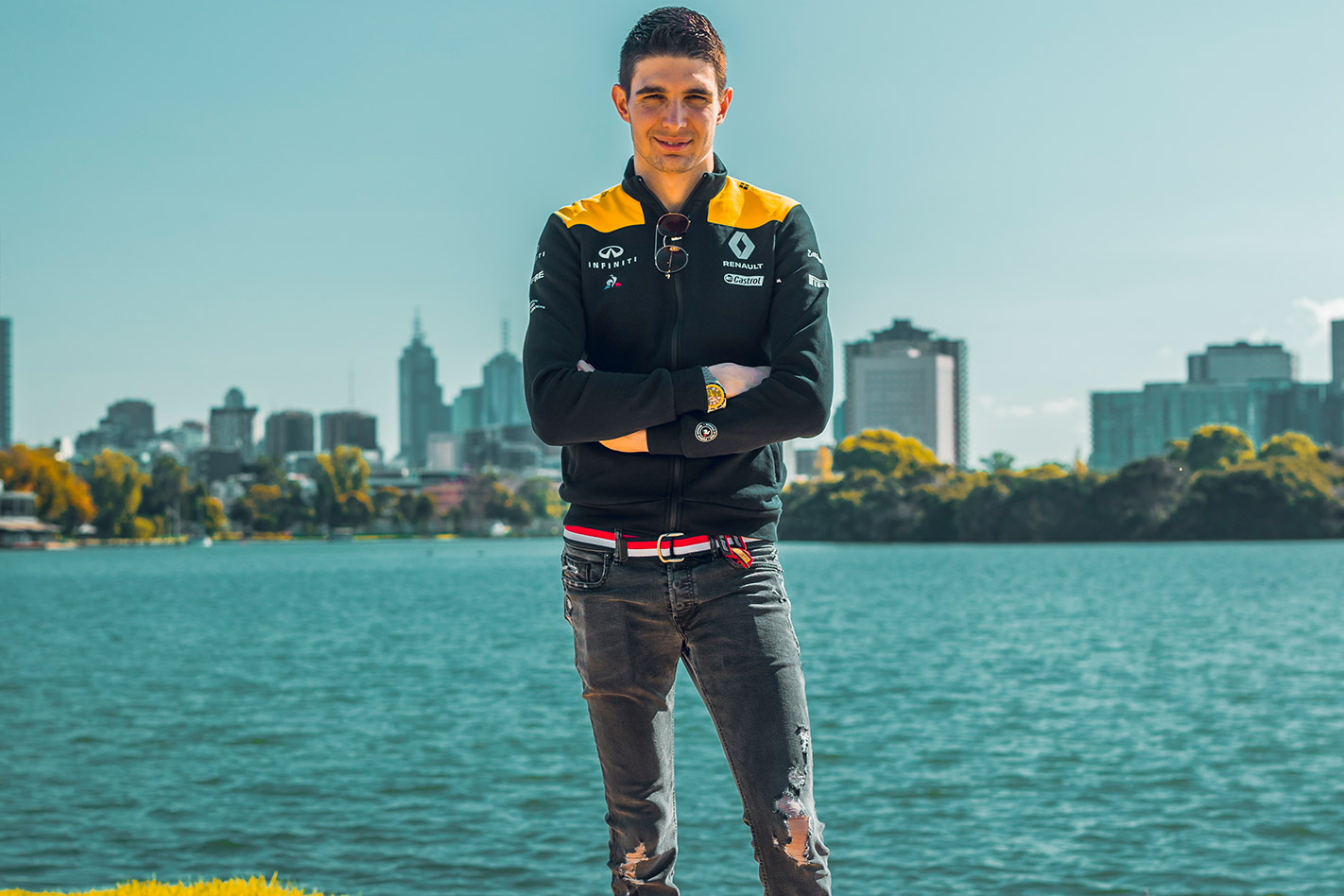
As Ricciardo’s ever-growing throng obscures him from view, Wheels sits down with Ocon to find out what makes the Honey Badger’s worst nightmare tick.
Ocon speaks with confidence, each word released with purpose, wrapped in a thick French accent. Up close you realise just how tall he is: at 186 centimetres, he’s one of the tallest drivers on the grid. However, his silhouette is not imposing, with ultra-thin limbs in contrast to the more gym-toned, physique commonly associated with F1 drivers.
Born in Évreux, Normandy, the Ocon family didn’t have much wealth – his father was a mechanic in their hometown – nor any involvement in racing when Esteban first got behind the wheel. A smile spreads across his face as he recalls the early days of his career, absently picking at a thread on his jeans.
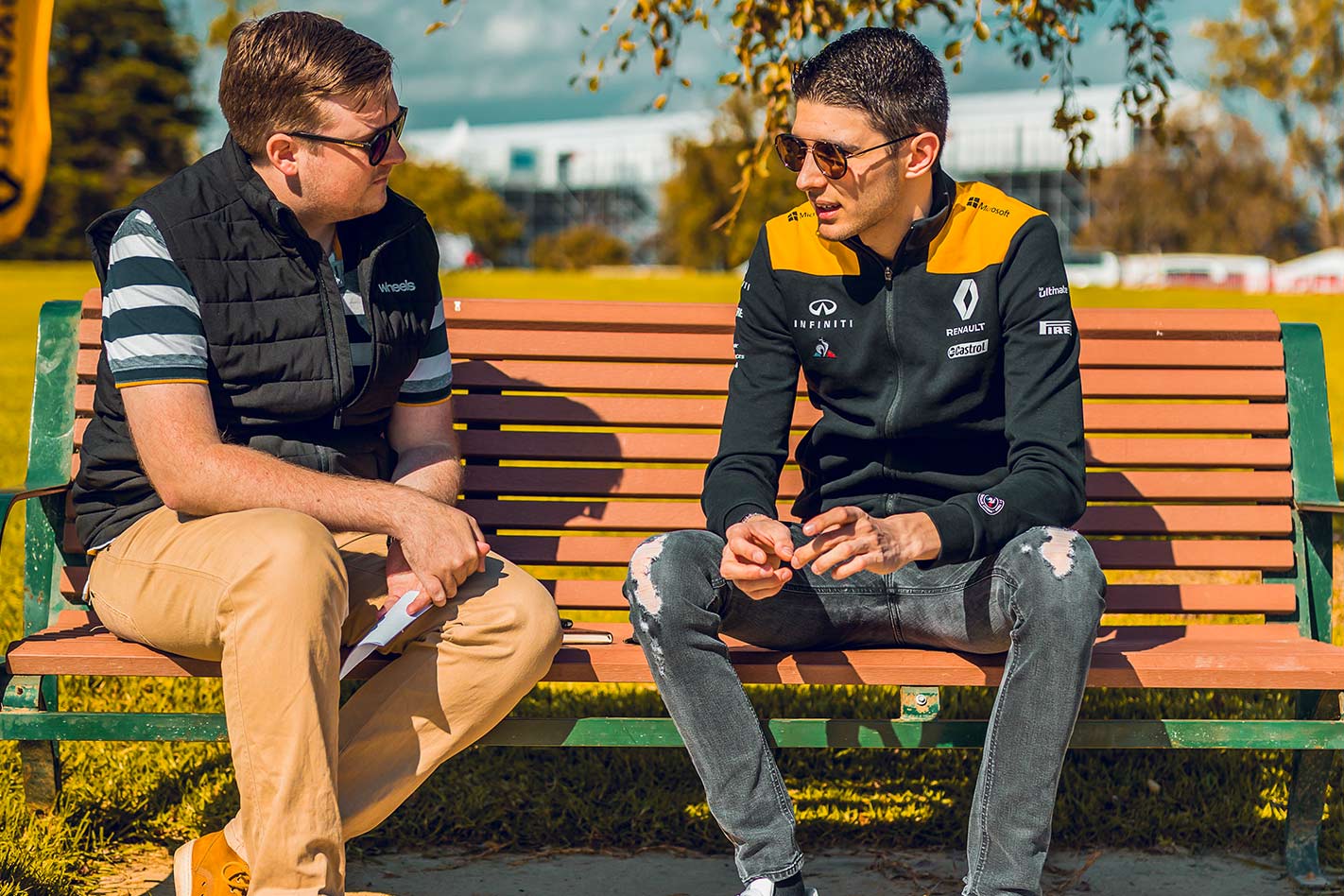
“My dad is a mechanic, so he works on cars, and runs a little garage by himself. No involvement really in motorsport, but a lot of passion,” he recalls.
Passion. It’s an Ocon personality trait with deep roots, the first seeds planted by his hard-working father.
“I was going to sleep in the evening and one car was not starting, and in the morning I was waking up and the car started. It was the passion developing in me the whole time,” Ocon continues. “My dad is still doing the same things that he was doing back in those days.”
Ocon’s career started in karting, with his raw, unrefined talent enough to win a national championship in his second year of racing. At 14 years of age Ocon’s trophy cabinet was swelling with silverware, and he attracted the attention of Gravity Sports management, an associate of then Renault F1 team which ran its junior driver academy. Chosen by F1 team principal Eric Boullier, Ocon’s career had been granted a lifeline, and brought funding his father would never have been able to provide. Esteban’s family had given up almost everything to support him until that point. But with opportunity, comes challenges.
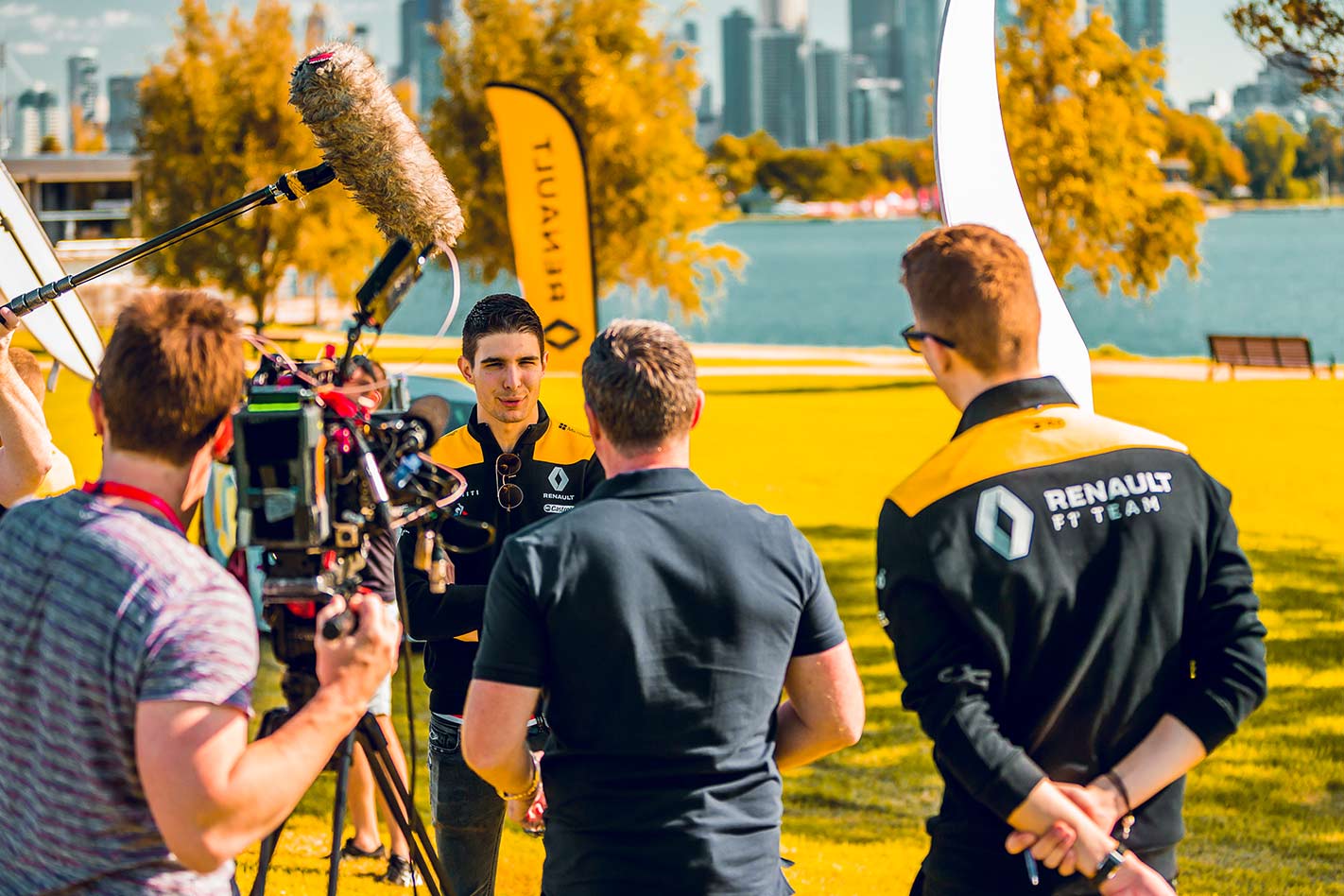
“I had pressure very early on in my career as a kid. In around 2008 I signed on with Gravity, which was the Renault Academy of the past, and I had to deliver,” Ocon recalls.
While he had backing, the support was devoid of broader performance context, meaning results on a spreadsheet became more important than impressive displays of talent at the track.
“In karting, [key] people were not often there at the track, watching what I was doing, so I had to deliver on paper,” he explains. “It was all about results, and I had a lot of weight on my shoulders as I was supporting the future for my family. It was not easy as a young guy to live like that.”
Diamonds are made under pressure, and Ocon rose to the challenge. His junior career peaked in 2014 when he won the European Formula 3 Championship in convincing fashion. Leading the title fight from the season opener against rivals like Max Verstappen, Tom Blomqvist and Antonio Giovinazzi, Ocon never conceded his position and was crowned champion with a round to spare. He says he relished the win-or-bust situation.
“If I had to do it again, I would. I’m living my dream at the moment, so it’s fantastic to have help from people like [Boullier],” Ocon concludes.
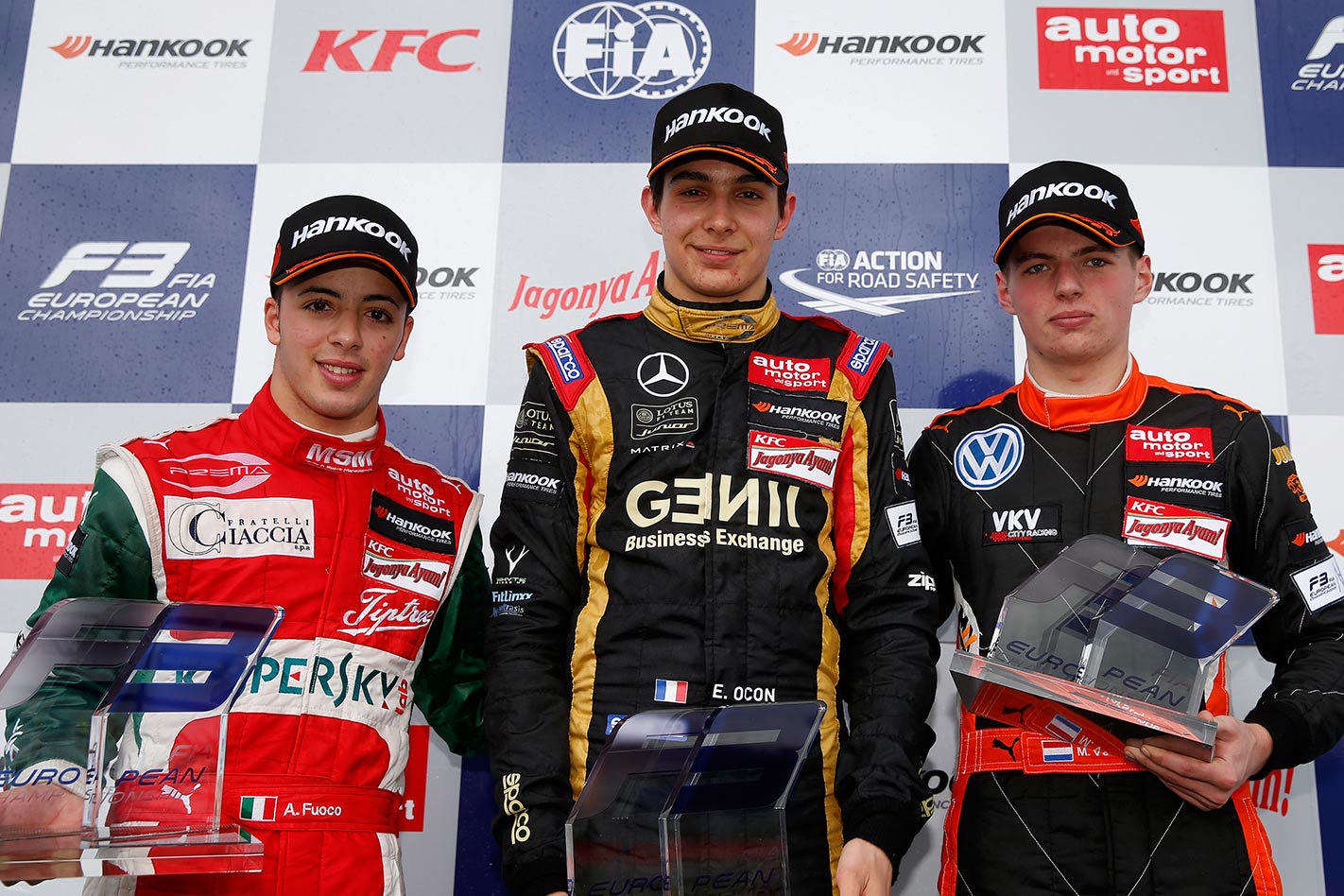
Following his ’14 F3 title, he claimed the GP3 crown the next year and was poached by Mercedes-Benz to join its driver development program. It became rapidly apparent to all that Ocon’s speed was no flash in the pan. He was seriously quick and imbued with the kind of fierce natural talent and passion that would eventually propel him to the gladiatorial pantheon of F1. Joining the grid in 2016, he rose from minnow Manor to join midfielder Racing Point (nee Force India) in 2017, and began giving veteran teammate Sergio Pérez all kinds of hell.
At Racing Point the now 23-year-old earned a reputation for being a brutal, stubborn racer unwilling to concede his position – even if it meant putting a teammate into the wall, or spinning a race leader. His style of driving was a sharp wake-up for grid veterans who thought they could bully the new kid off track.
But when he wasn’t smashing carbonfibre wings, he was ragging an underdeveloped chassis to within an inch of its life, impressing many in the paddock with his speed. However, as any motorsport follower knows, raw talent isn’t enough and when the cash-strapped Racing Point team hit the skids, Ocon was collateral damage.
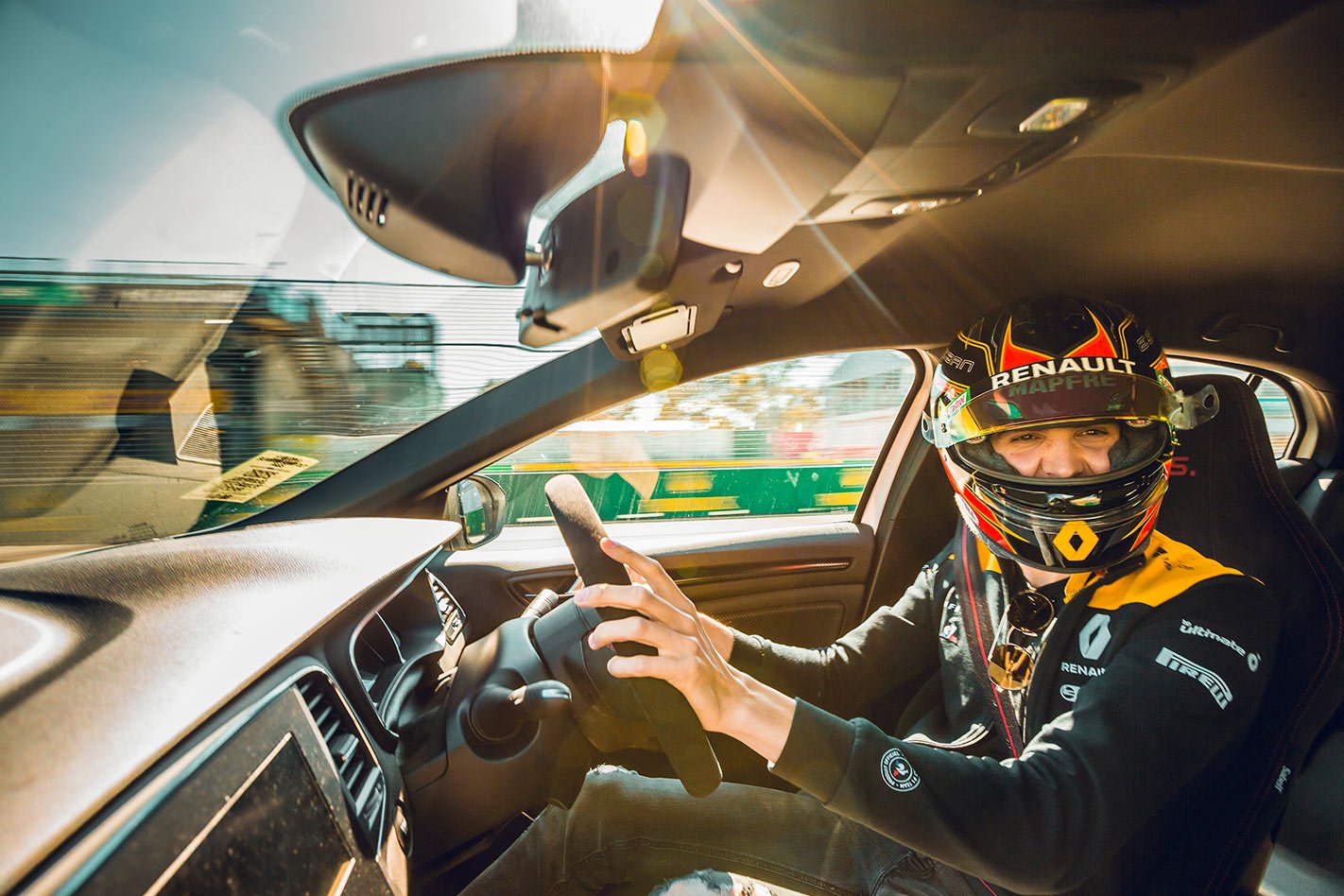
Having an F1 drive yanked from beneath his feet seems to have humbled Ocon somewhat. A victim of the vicious backroom paddock politics, Ocon was left high and dry during 2018’s silly season musical chairs.
When it ran out of funding, Racing Point was saved from bankruptcy by billionaire fashion magnate Lawrence Stroll. It became immediately clear that nepotism would be inevitable and Stroll’s son Lance would join the team, leaving a single seat over which Ocon and Pérez would fight. The Mexican driver was one of the investors that saved the team from going under, forcing Ocon to pack his bags – so the hunt for a new home began.
Talks were initiated with Mercedes-Benz as a potential replacement for Valtteri Bottas. However, despite Ocon being contracted to the German manufacturer on a multi-year development deal, the switch was vetoed by team principal Toto Wolff personally. Wolff thought Ocon too young to be vaulted into the top team just yet.
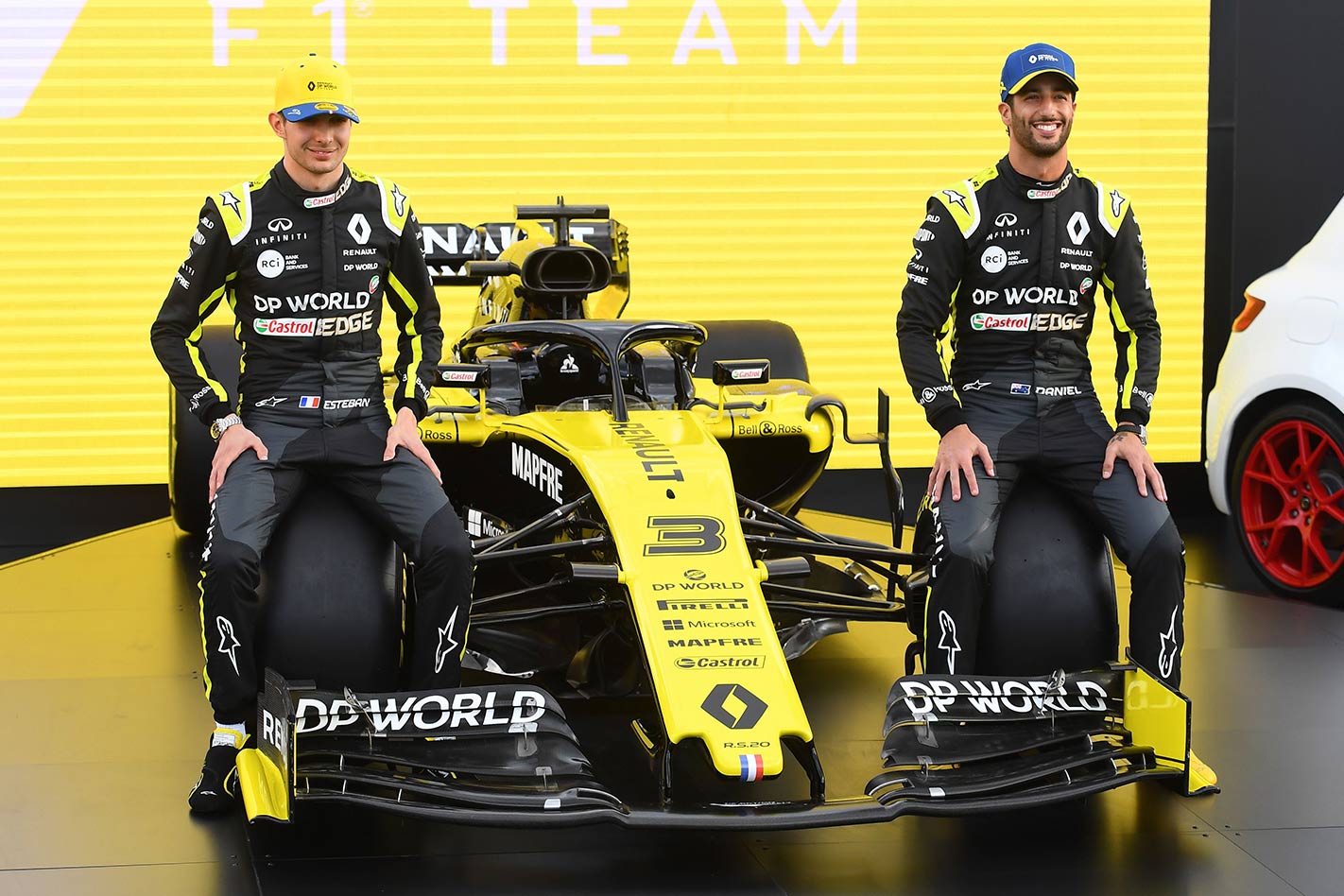
There was also a seat available at Renault. However, history will tell that Ocon didn’t wear black and yellow overalls in 2019, as Daniel Ricciardo made the shock move from Red Bull to join the French manufacturer.
The music stopped, and Ocon – one of the brightest young talents on the grid at the time – was left without a seat. He would spend the next 12 months as Merc’s reserve driver. That role might sound like a cushy job but it turned out to be hard yakka due to a gruelling simulator regime that Ocon readily admits almost “destroyed” him.
“I mean, the season I had was very, very demanding,” Ocon told Autosport last year. “I was not sleeping for two days [at a time], it was quite crazy – the amount of travel I was doing, and the amount of hours I was doing in the simulator and then travelling to the track, doing stuff for Mercedes. They used me well … but a lot.”
Long hours cramped in a hot simulator, cranking out a mind-numbing number of validation laps, staring at the screen; it was a significant mental challenge for Ocon but he remained singular in his focus. He needed to get back onto the grid.
“It was difficult. Last year I tried to apply myself 110 percent; I didn’t want any regrets,” he tells Wheels.
“I think regrets are the worst thing you can have in life.”
At this point Ocon pauses, clearly contemplating his next words carefully. It feels like there is more to be divulged but a Renault media minder suddenly hovers into view, prompting a more guarded, sanitised response.
“I wanted the team to see that I am hungry for a comeback, and it worked in the end. I’m here now, and that’s what is important.”
Despite coming out of F1 purgatory and finding himself a place on the grid, for Ocon navigating those off-track political skirmishes remains more of a challenge than piloting the fastest race cars on the planet.
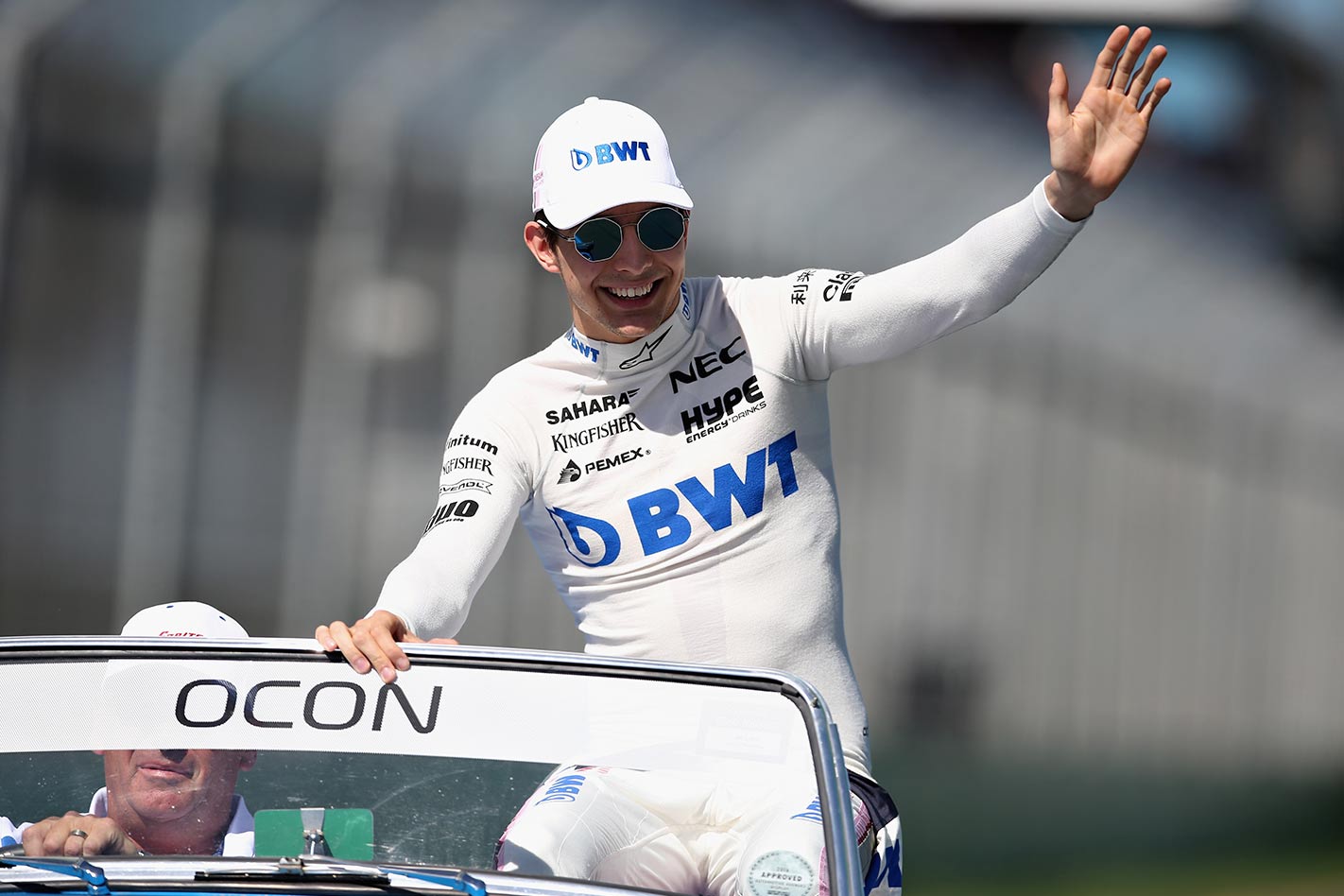
“Politics is more difficult than any on-track battle, definitely,” he states emphatically, staring out across Albert Park’s lake. “It was a big part of my last year, trying to sort out my future.
“This is something that made it difficult in 2018. We had the best opportunities possible and we missed out on a misunderstanding. It wasn’t a nice year but I really made sure with all of my management that I was involved in all of the discussions. We managed to get our future sorted and that was very important.
“Only once that has all been put away can you focus on the proper stuff, and that’s racing, and that feels good.”
Ocon’s relationship with his teammates in the past can best be described as rocky. He’s either been wiping the floor with them, or butting heads as he did with Perez at Racing Point. The two tore up so much carbonfibre that the team had to hand down a stern edict which banned the duo from racing each other on-track.
It’s well within the realms of possibility for Ricciardo and Ocon to fall into the same destructive trap, with both having a serious point to prove in an F1 midfield that’s more competitive than ever.
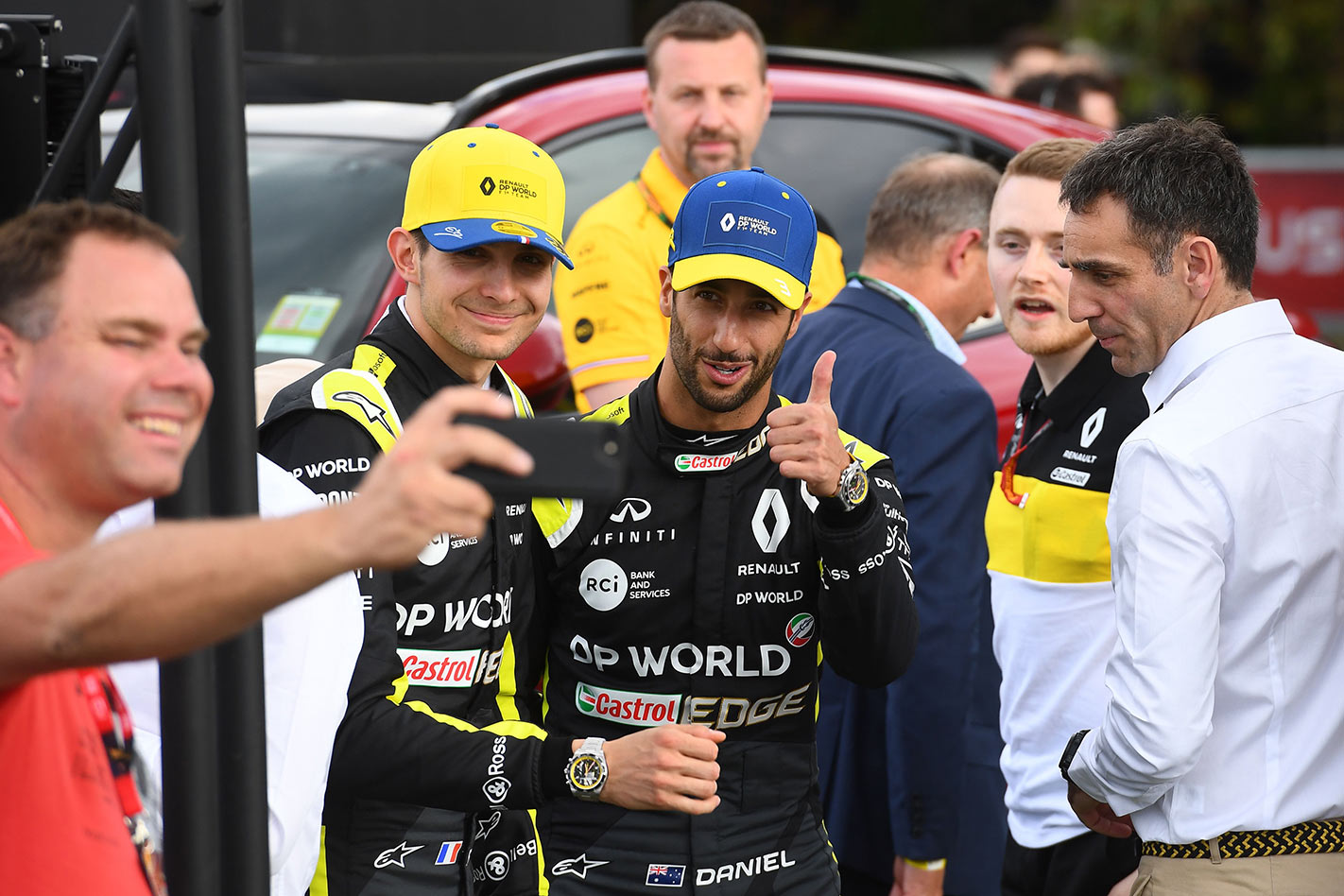
“If you speak with Daniel…” Ocon catches himself, before starting the sentence again quickly with a small adjustment.
“If you speak about Daniel he is one of the nicest guys in the paddock, so there is no problem with him at all,” he states almost matter-of-factly.
“We have a good relationship at the moment. He’s bringing a good energy to the team, and hopefully it will stay like that the whole year. He is one of the best, so it is a great chance for me to be teaming up with him, and I can’t wait to get started.”
So it’s all buddy-buddy for now, or until the green flag is waved. But we’ll have to wait until the second half of the year – at the very least – to discover how the pair’s relationship survives a truncated season of racing. F1 is on ice indefinitely and under a cloud of uncertainty as the COVID-19 pandemic spreads across the globe.
Until then, the Frenchman and the Australian are working together in an attempt to elevate Renault’s F1 team into a serious podium contender.
“We have weekly meetings. We are on the simulator quite a lot, and we have meetings on most of the performance and tech stuff at the factory,” Ocon explains. “We work very often together, and that’s why it is quite important that we get on with each other, just for us to be moving forward quicker than the others.”
Asking if they spend any time together outside of work prompts a laugh from Ocon, who doesn’t seem to gel with the Australian’s playboy lifestyle.
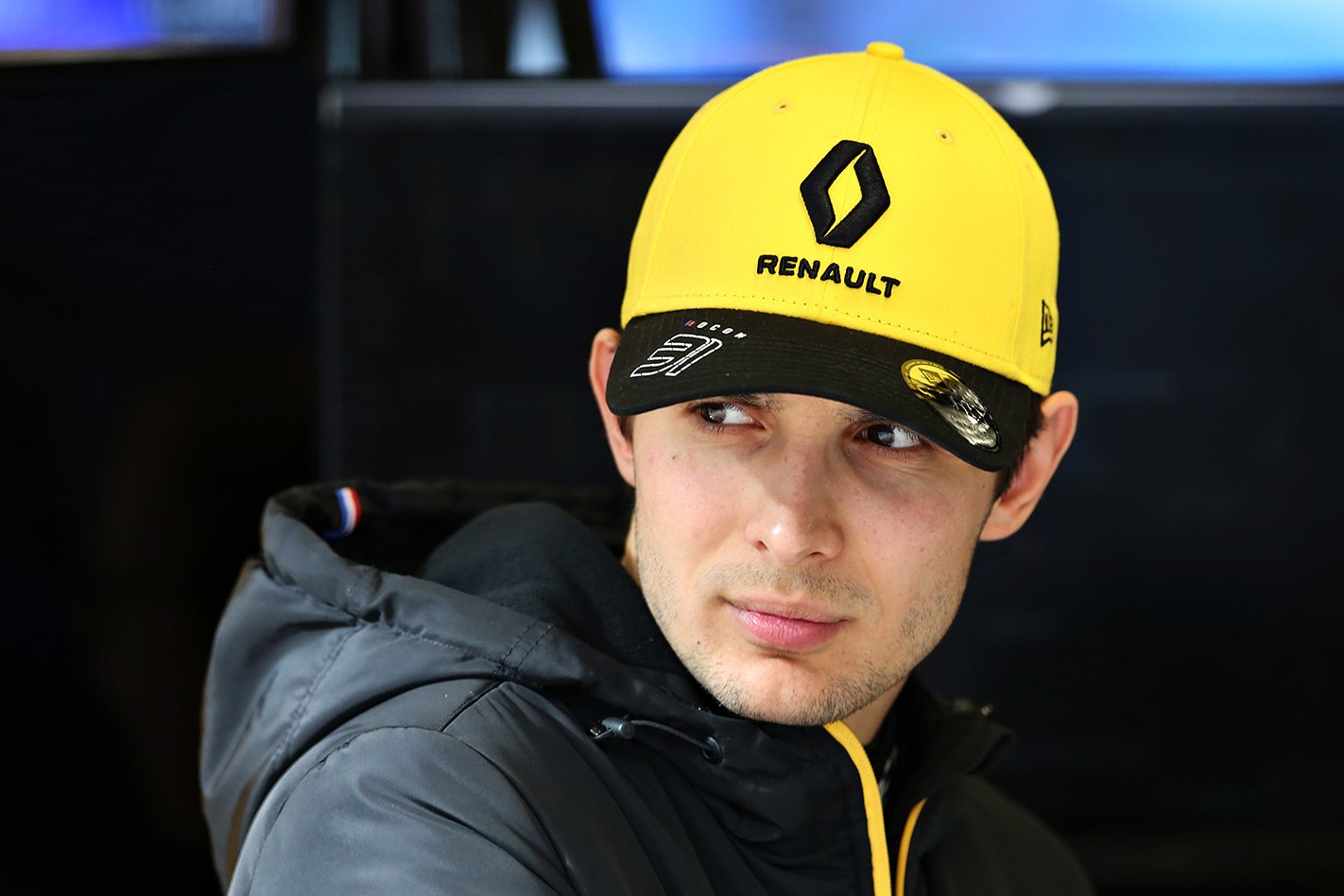
“He is living a very different life than I am,” he chortles. “Ricciardo is more LA, Miami and Monaco, and I am more … simple cities.”
Those ‘simple cities’ include Ocon’s hometown, where his father still works as a mechanic.
“It is the same garage, but I helped them build a bit bigger one,” he says with a wide smile. “He has all the nice tools, everything he needs … it looks like a racing shop, which is pretty cool.”
Our conversation by the Albert Park lake ends at this point, and it’s clear that Ocon is happiest talking about his family. His answers are honest and earnest, no longer shrouded with a layer of PR-speak.
No fans would sit in the grandstands at Albert Park that weekend, and Ocon would not be measured against Ricciardo on-track. He returned home to France, to continue his training surrounded by family, where he is happiest. And that’s a concern for Aussie F1 fans. A happy, focused Ocon could be Ricciardo’s toughest challenge yet, and if the F1 2020 season does begin, we have no doubt the two will be putting on one hell of a show.
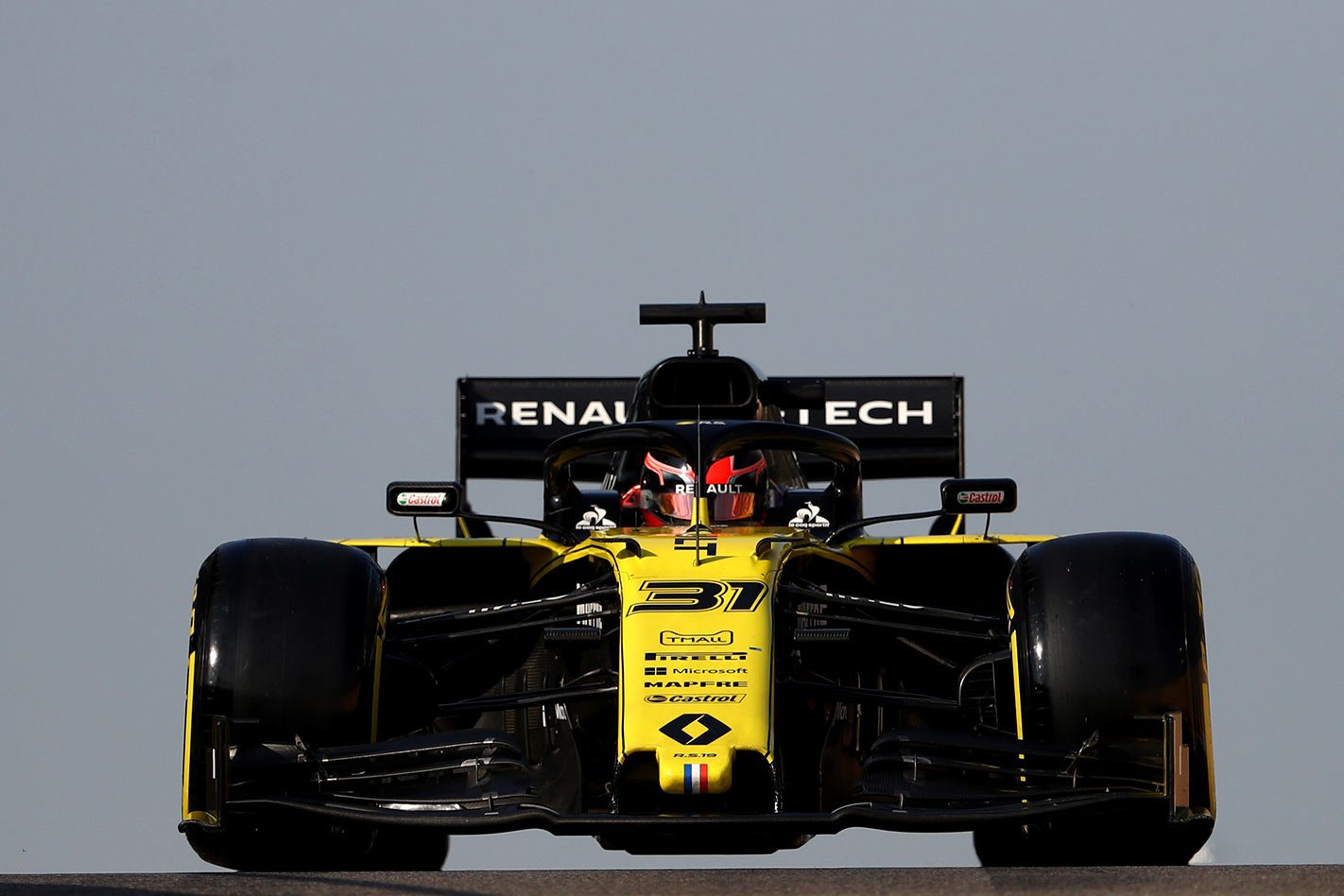
A thorn in Max’s side
When he first broke onto the world stage in 2014, Max Verstappen was lauded as the second coming of Ayrton Senna. His meteoric rise to F1 (which involved just a single year of car racing) prompted the FIA to rewrite the rules. However, there has been a French thorn in Verstappen’s side ever since, given Esteban beat Max in the 2014 F3 season when they competed in evenly matched equipment. Their relationship boiled over at the 2018 Brazilian Grand Prix, when Ocon collided with race-leader Verstappen while trying to unlap himself. The red mist descended upon the Dutchman, who instigated a post-race shoving match with Ocon.
Esteban’s journey to F1
- 2006: Starts karting career, aged 10. Wins French Minime Championship a year later
- 2008: Wins French Cadet Championship, signs with Gravity Sports management
- 2011: Wins French KF3 title and finishes runner-up in WSK Euro Series
- 2012: Begins car career in Eurocup Formula Renault 2.0
- 2014: Wins European Formula 3 Championship, drives F1 car for first time
- 2015: Wins GP3 championship, joins Mercedes driver development program
- 2016: Starts year in DTM, makes first F1 grand prix start at Spa for Manor
- 2017: Joins F1 full-time with Racing Point, scores career-best F1 result of 5th at two grands prix
- 2018: Career-best qualifying with 3rd at Spa
- 2019: Mercedes-AMG F1 reserve driver
- 2020: Joins Daniel Ricciardo at Renault F1
