
The word ‘turbo’ is a common one surrounding cars (and in their marketing) and most of us understand that it’s a positive thing, but what is it and how does it help?
Turbochargers increase the efficiency and power of an engine by forcing more air (and fuel) into the engine which causes a bigger explosion. Bigger bangs mean more power.
In turn, this means we can fit turbochargers to smaller capacity engines and still get the same power and torque, or even more, than a conventional naturally-aspirated larger capacity engine. Smaller engines typically use less fuel than larger ones, too.
The neat thing about turbochargers is that they turn an engine’s by-product – wasted exhaust gases – into a useful way of extracting more power out of an engine.
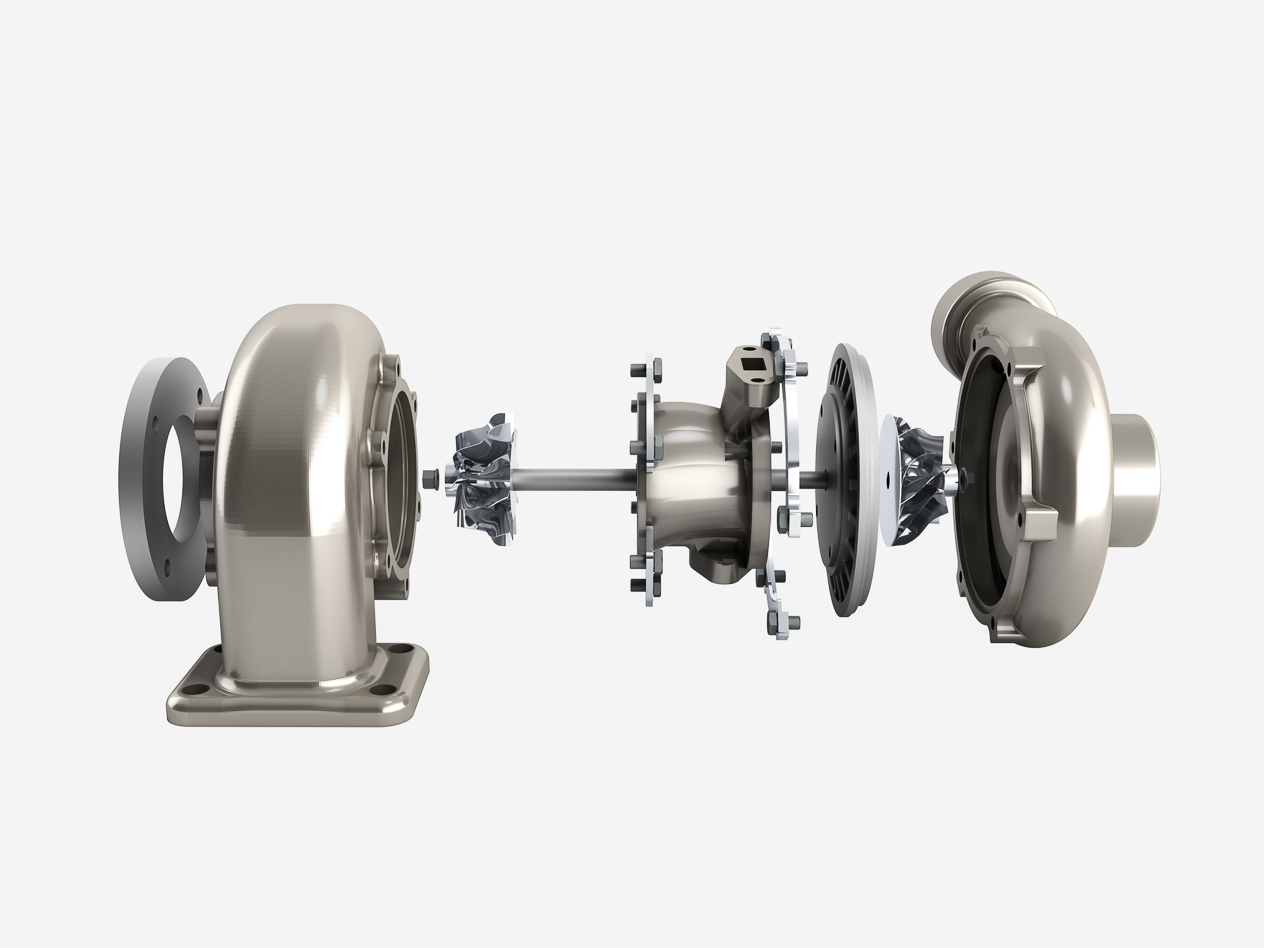
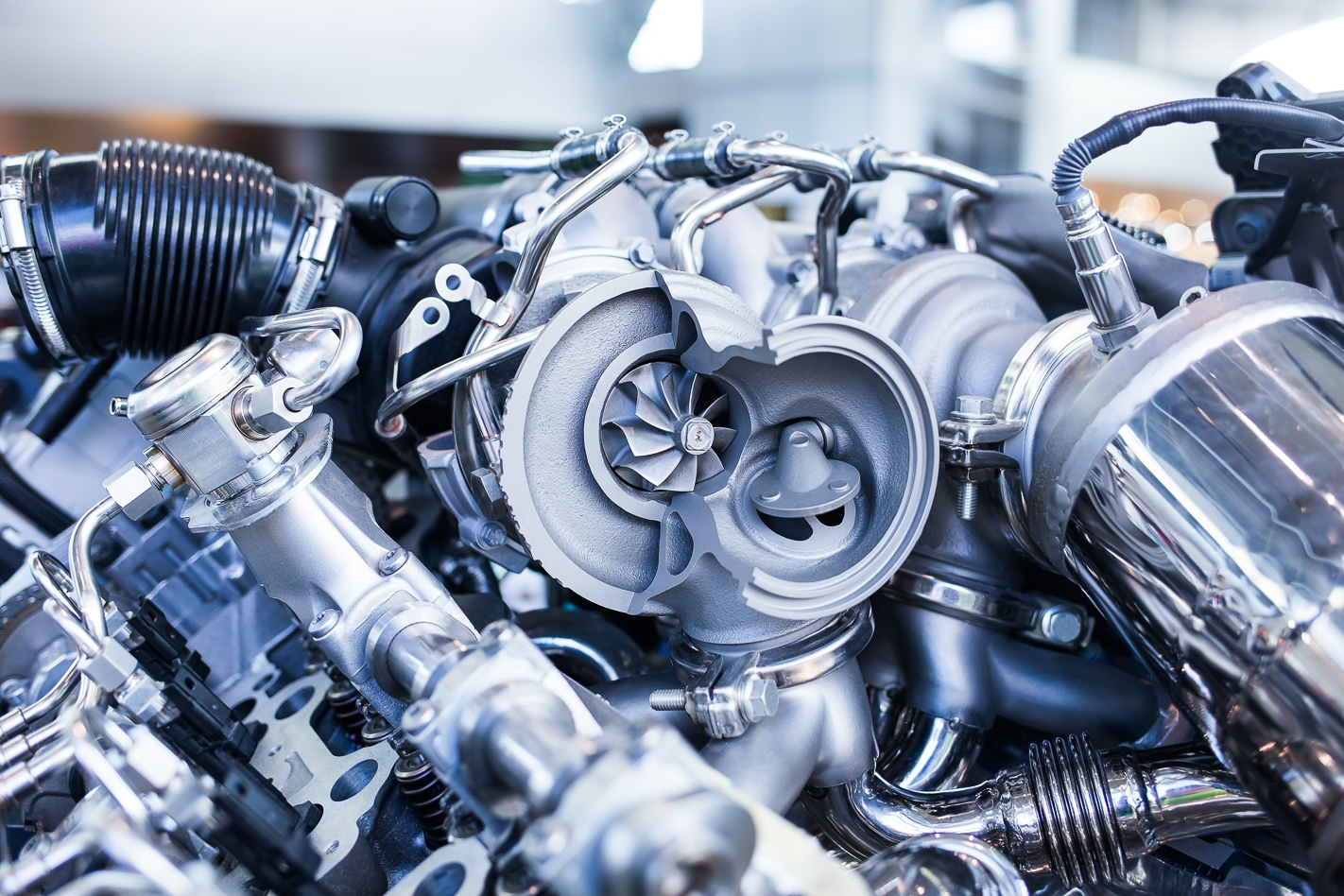
Allow us to get a little technical to explain how that works. Essentially a turbocharger is made up of a turbine and a compressor. The turbine’s housing accepts exhaust gases that would ordinarily be wasted and spins the turbine at speeds of up to 250,000 rpm. This then gets the compressor spinning which draws in air and compresses it before feeding it into an engine’s combustion chamber.
Normally the combustion chamber will only allow as much air as atmospheric pressure will allow, which is created by the vacuum when the piston goes down. But by forcing the air from the turbocharger into the cylinder this allows for more air and fuel to be ignited, resulting in a bigger explosion.
It works in much the same way as blacksmith’s forge. Ever watched a blacksmith making a horseshoe? If you have, you’ll know that just burning wood or coal in the forge alone is not enough; you’ll see the blacksmith also blow extra air on the fire via a set of bellows (or a converted leaf-blower these days).
The extra air means the fuel burns faster and hotter and is able to get the metal hot enough to soften and be workable. This principle is also why bushfires burn hotter and more destructively on windy days. A turbocharger uses precisely the same principle.
And because they only help burn more fuel when you want more power, the rest of the time they don’t increase fuel consumption at all.
History will tell you that the downside of turbos are that there was usually a delay between when you floored the throttle and the exhaust gas started rushing by and spinning the turbocharger. But modern engine management and smaller, lighter turbochargers have reduced that delay (called lag) and now turbo engines are hugely responsive.
In the constant battle against car crime, police forces around the world need the very latest and best equipment to stay one step ahead of road users that are out to do no good. And that includes the cars they drive.
Like most crime-fighting, prevention is better than cure and the right police presence will often diffuse a situation before it turns nasty. That’s why, every now and then, a police force will reveal a borderline ridiculous patrol car.
MORE This is the future of the Australian police car
Don’t expect to see these amazing crime-fighting cars engaging in a pursuit or real front-line battle unless they absolutely have to, but they do serve as an amazing visual deterrent for anyone thinking about bending the rules on roads around the globe.
Have a look at some of our favourite police cars from nine nations around the world and ask yourself – would you try your luck?
DUBAI
Perhaps the most ostentatious and arguably well-funded traffic police fleet in the world, Dubai is often front and centre when it comes to outrageous machinery wrapped up in the green and white livery. And while it can claim to have one of the world’s fastest cars in its ranks, if you read on, you’ll see that some other countries come close.
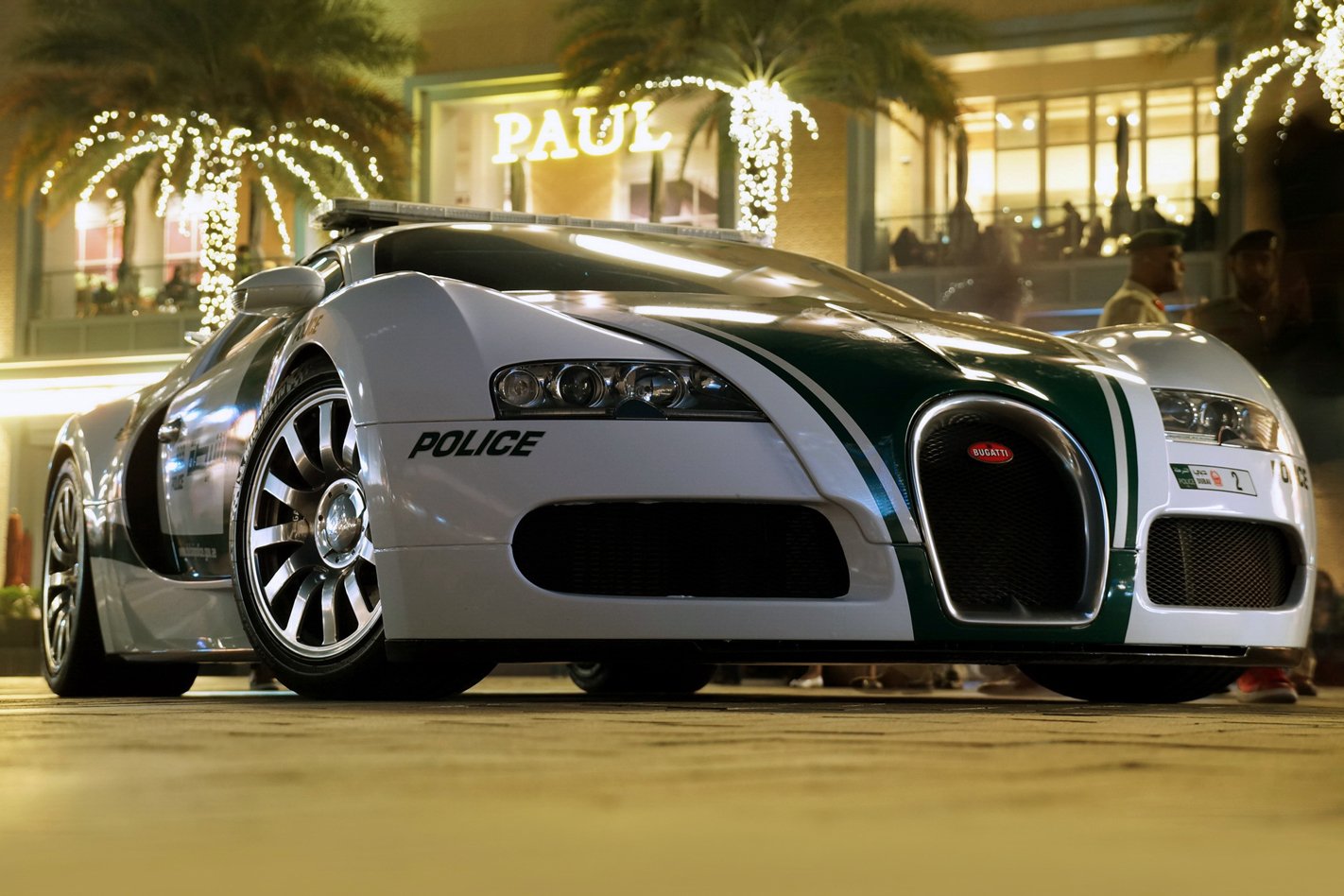
Top of the Dubai pack has to be its Bugatti Veyron – a multi-million dollar, ultra-exclusive dream machine that once held the title as the world’s fastest production car. Arguably useless as a law enforcement car but once this rocket locks on to your bumper, it’s safe to say you won’t be losing it.
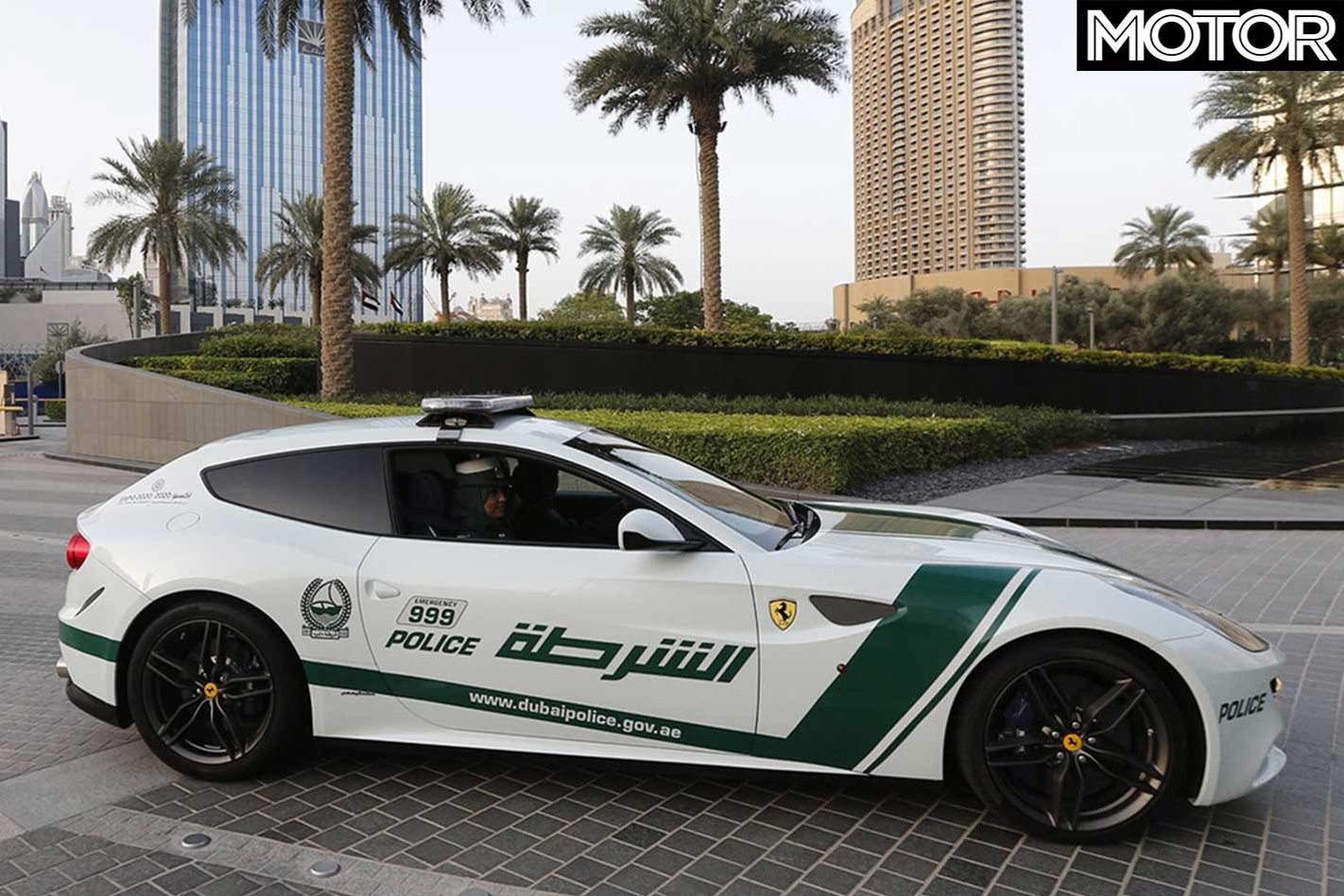
For something with a little more practicality, the Dubai police can call on a Ferrari FF. With a second row of seating, a decent boot with folding seats and monstrous V12 power, this iconic Italian is fast and versatile. Just don’t expect to see it used as a canine response vehicle or divvy van.
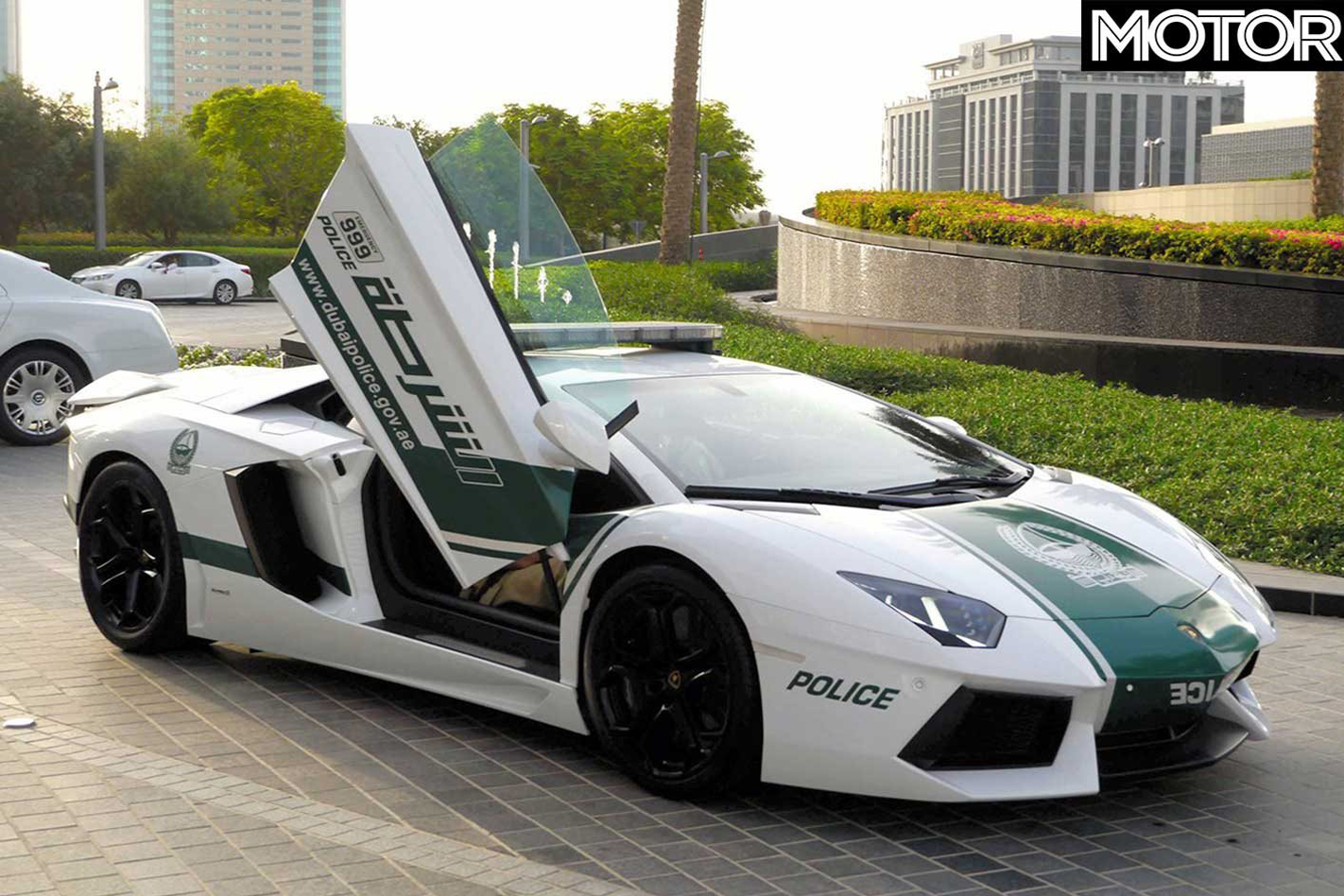
For those days when the Veyron is having its four turbos serviced, the Dubai coppers can call on a Lamborghini Aventador complete with ridiculously ostentatious scissor doors and 6.5-litre, high-revving V12.
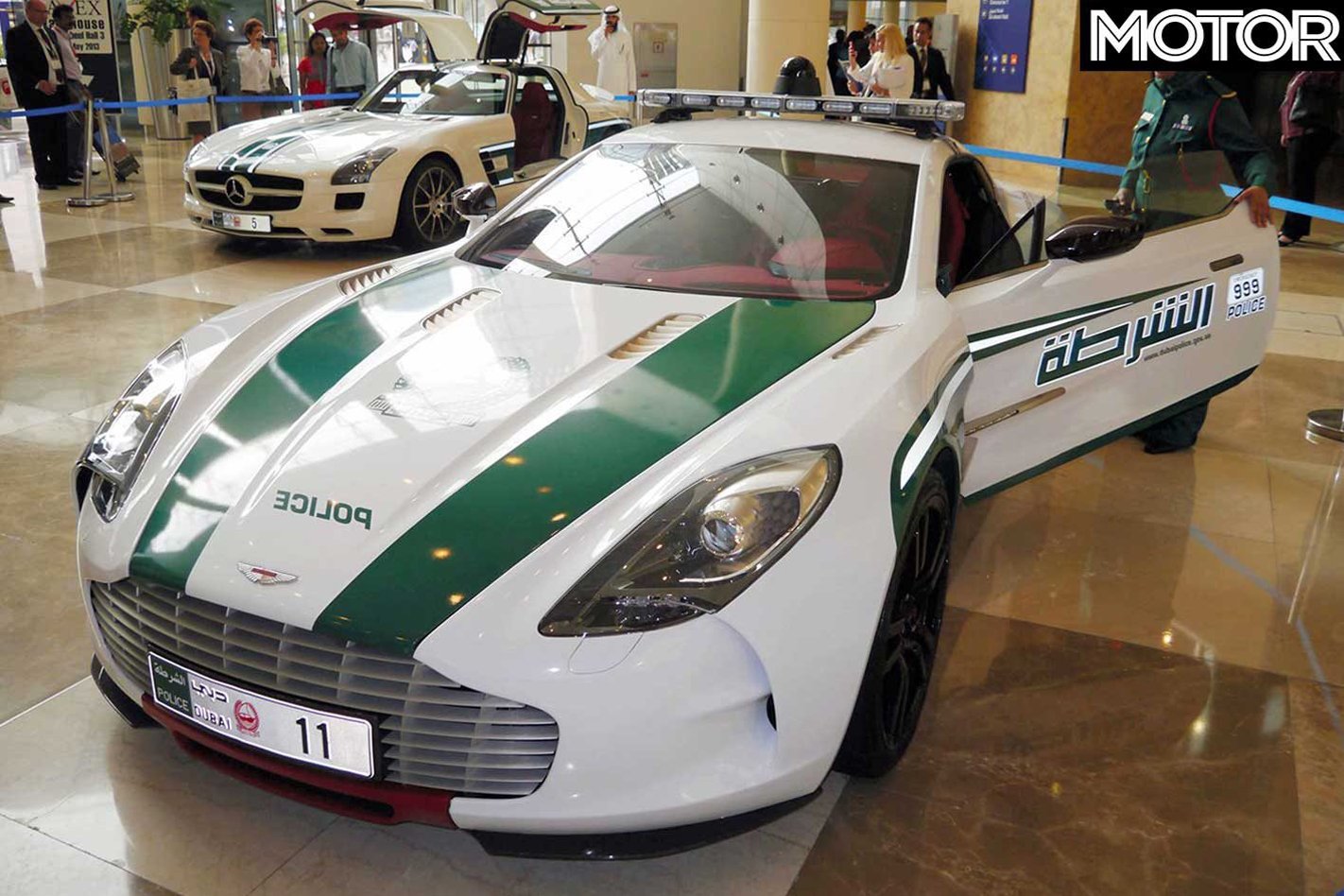
Or what about an ultra-rare Aston Martin One 77? With only 77 of these beauties rolling around the world, the Dubai force can certainly claim to have the most museum-worthy collection of cars dressed up in uniform.
But equivalent examples from fleets around the world might get you just as excited…
AUSTRALIA
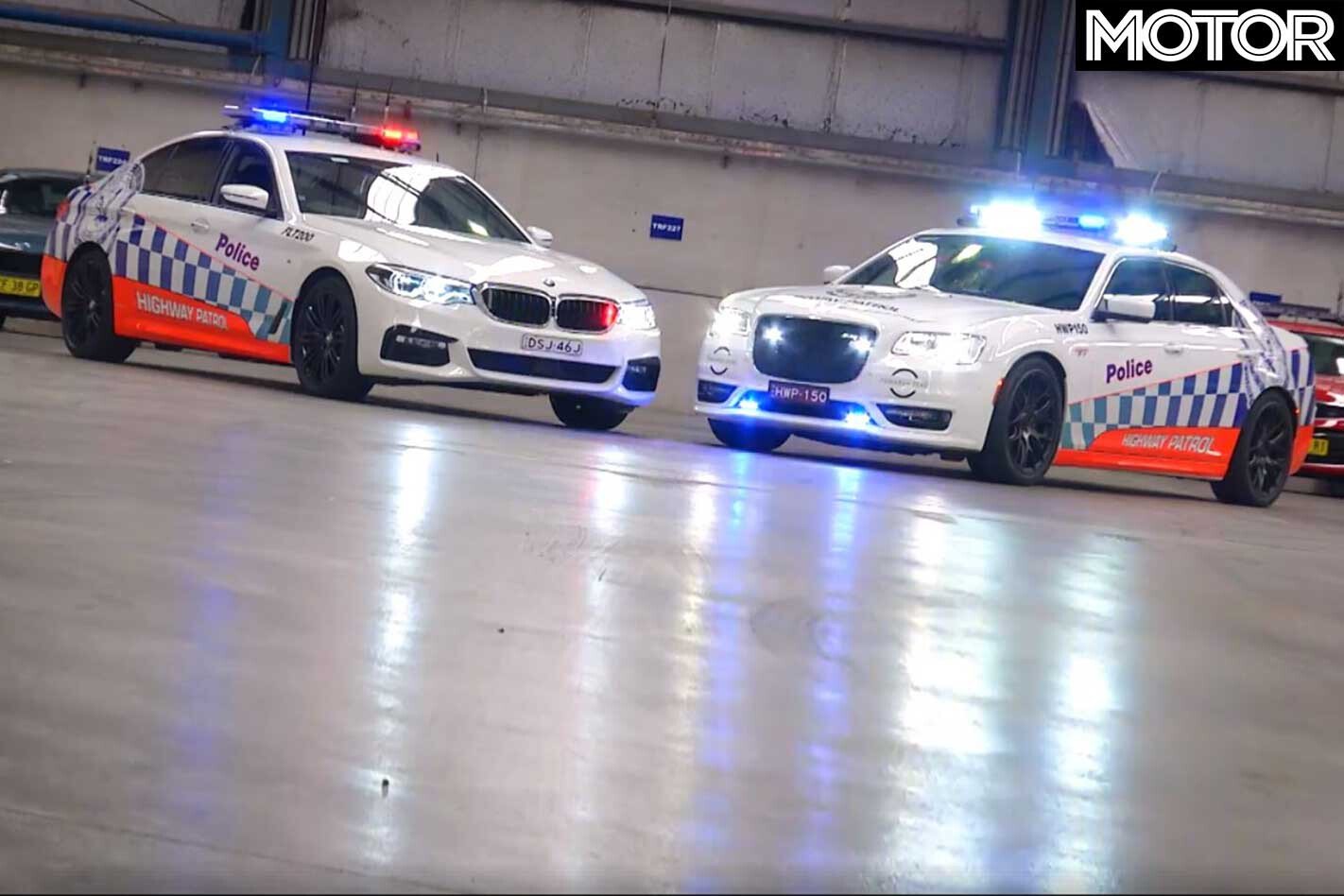
On home turf, of course, there have been the more recent high-profile police acquisitions made necessary by the end of locally made muscle cars, including a fleet of Kia Stingers, BMW 5 Series and the decidedly muscly Chrysler 300 SRT.
But what about some of the more exciting and lesser-known cop cars over the years? Lexus once got its flash of blue light and an RC-F that did a shift with the New South Wales police.
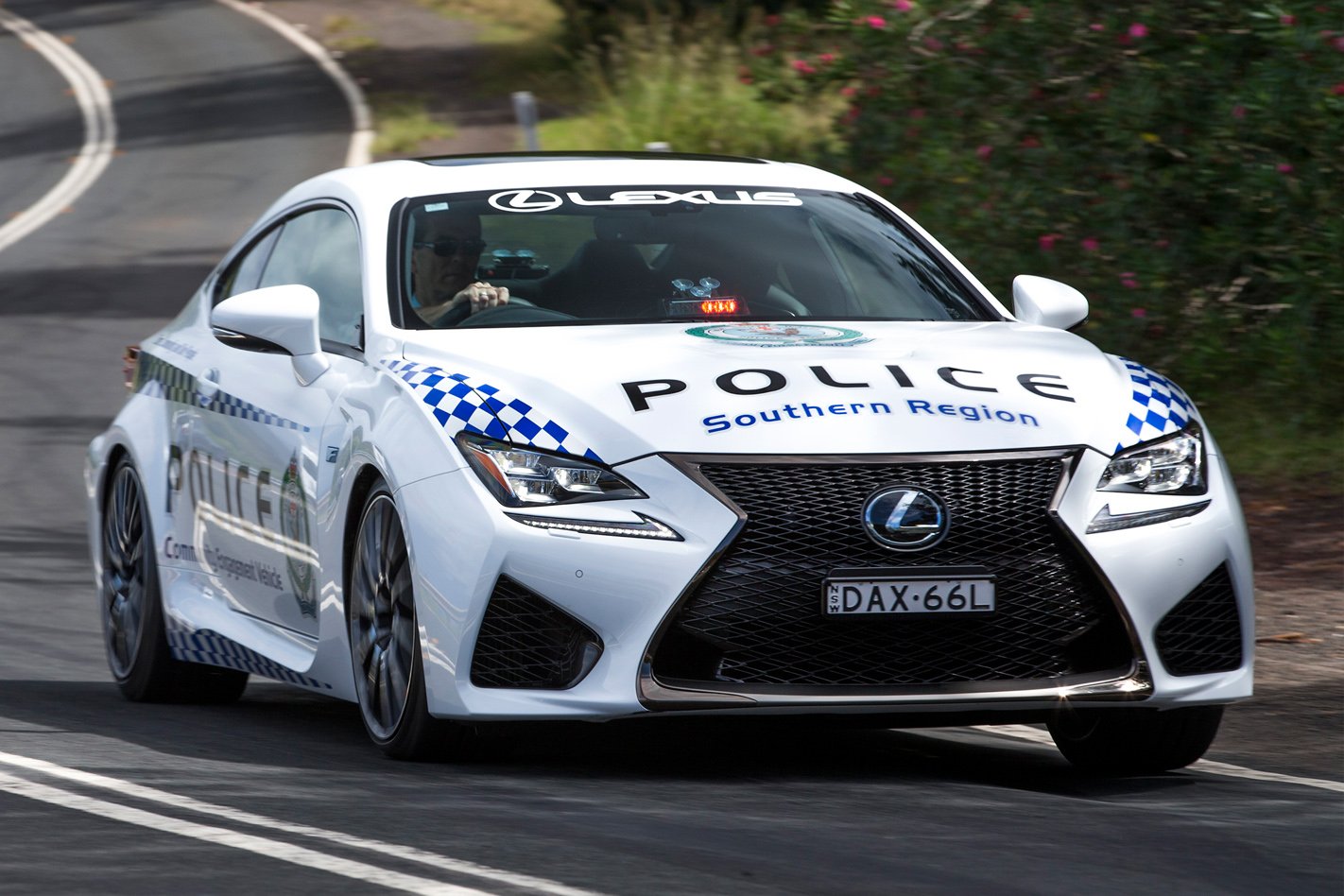
A 5.0-litre atmo V8 provided ample power to keep up with wayward Commodores and added a gorgeous soundtrack to it.
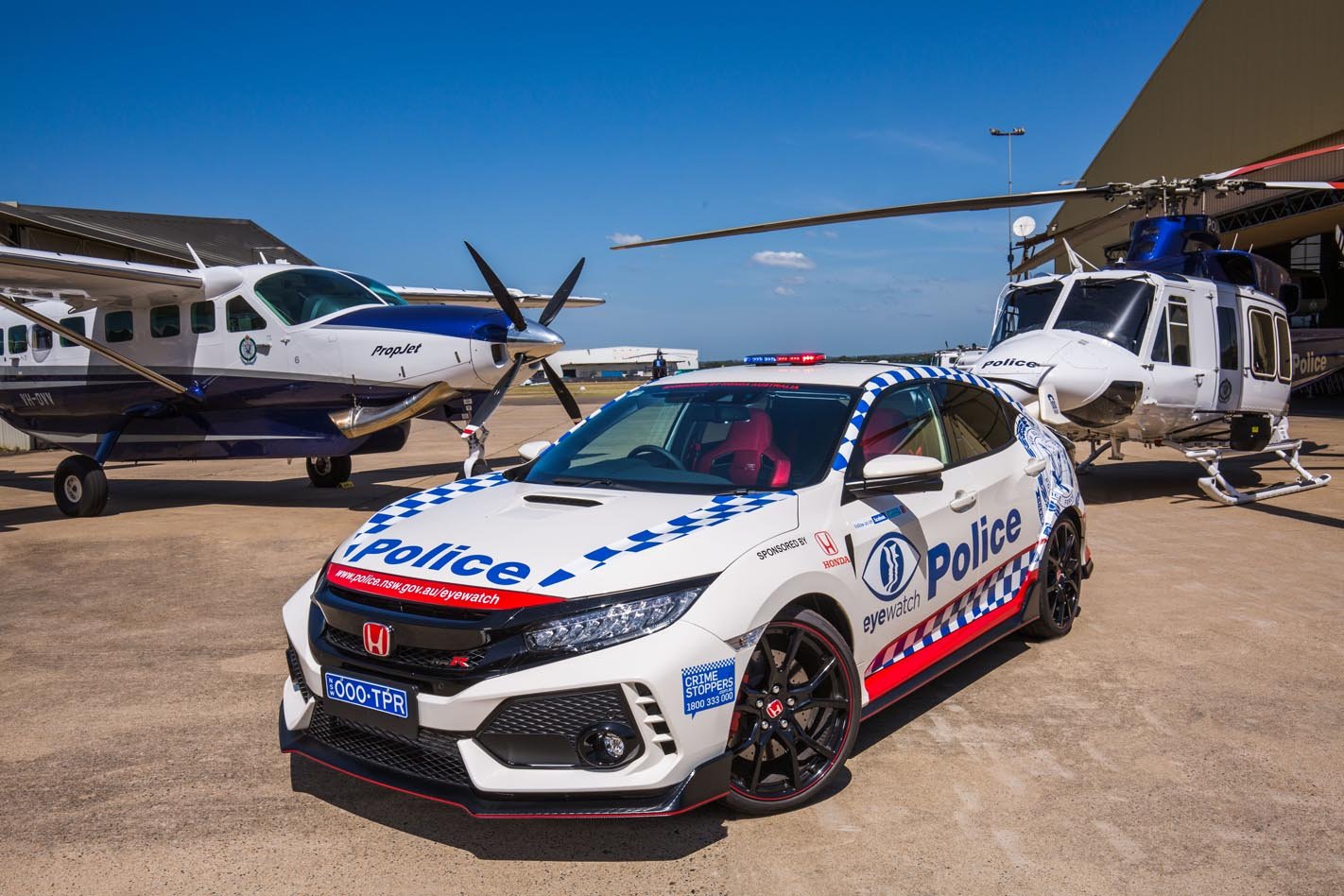
Honda also loaned a Civic Type R for community service. It might not have the outright power of the big V8s but its incredibly sharp chassis and 228kW 2.0-litre turbo engine would be very hard to lose in the right hands.
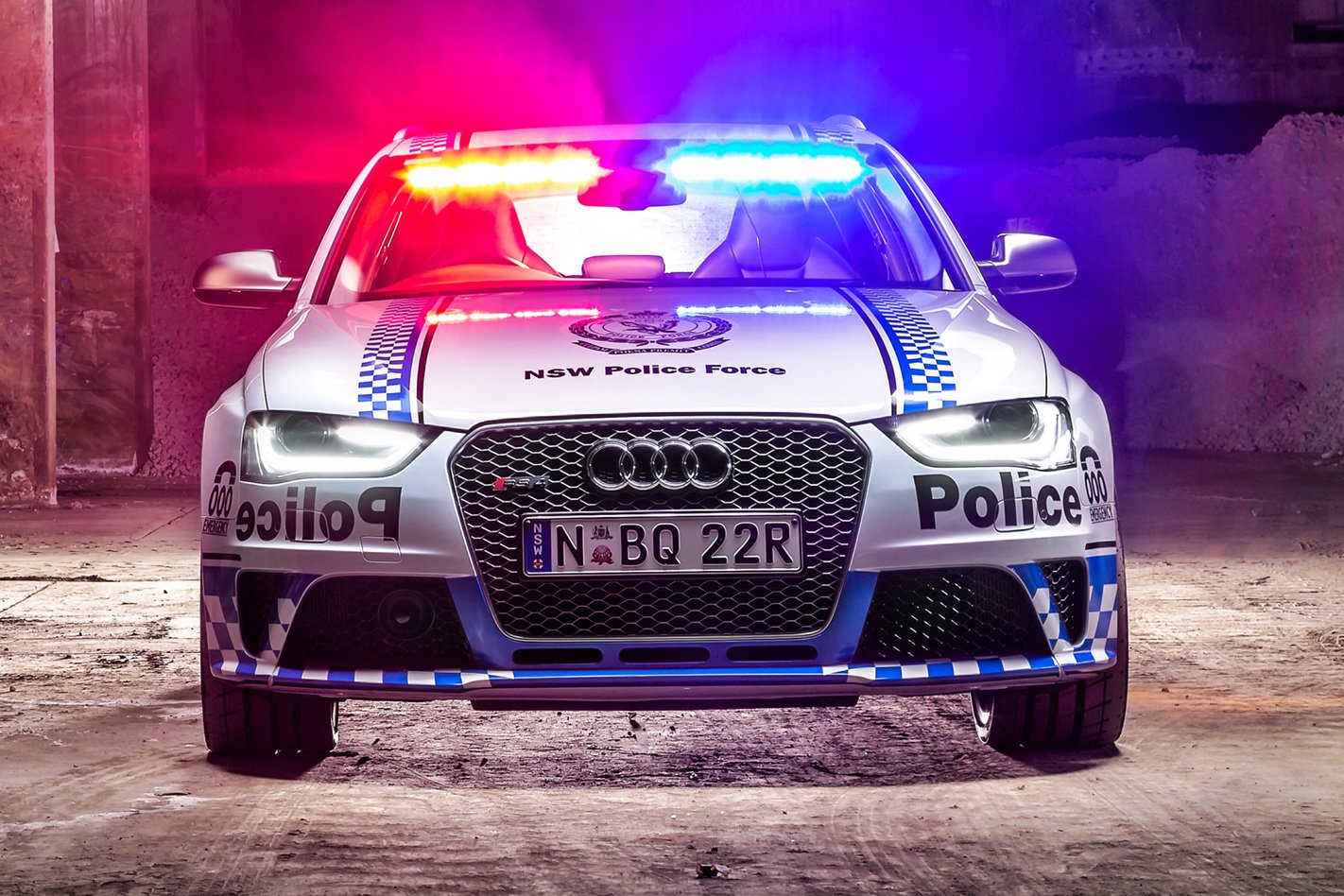
Speaking of which, Audi’s RS4 in the previous generation guise was perhaps the perfect all-rounder with a high-revving atmo V8, epic all-wheel-drive grip and a big boot for all that cop kit, but it wasn’t the most barmy cop car to roll on Aussie tarmac.
That title has to go to this car – the Giocattolo (below). This insane mid-engined, very low volume Aussie-made machine that took the Alfa Romeo Sprint as its basis and added a 2.5-litre Alfa V6 midship.
Later, supply problems meant the switch to a true blue 5.0-litre Holden V8.
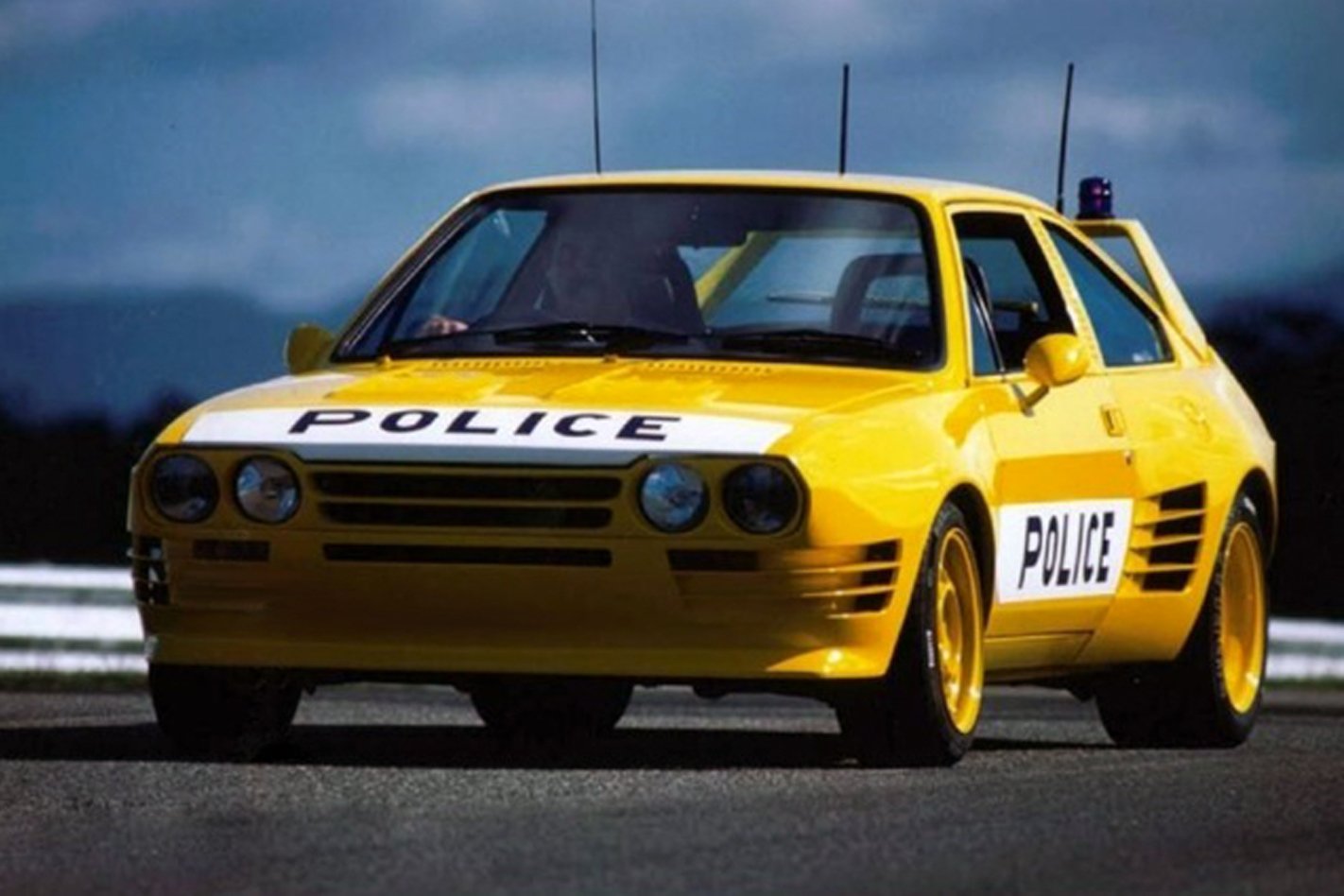
Only 15 were completed with one example enjoying a tenure in police livery. Probably best to keep these monsters out of the hands of all but the professionals.
Okay, full disclosure: The police wouldn’t have dreamed of taking on one of these manic machines and the one you see here was dressed up as a publicity stunt by the car’s maker and was strictly confined to the track.
Of course, Aussie cops didn’t have to go far to find the ideal highway patrol cruiser. The Holden VF Commodore SS-V and this HSV Gen F2 GTS offered an excellent mix of performance, range and practicality and terrified many drivers through their rear-view mirrors. Any wonder why police forces around the country are hanging on to them aslong as they can.
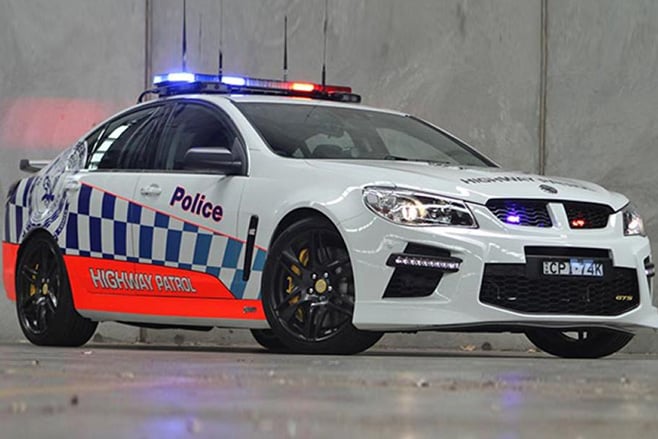
UNITED KINGDOM
The UK is a nation of car lovers and there are few better petrolhead barometers than the cars necessary to catch them. In the mid-1980s the Poms recruited a Ford RS200! This incredible car was an homologation special as part of the now outlawed Group B rally series.
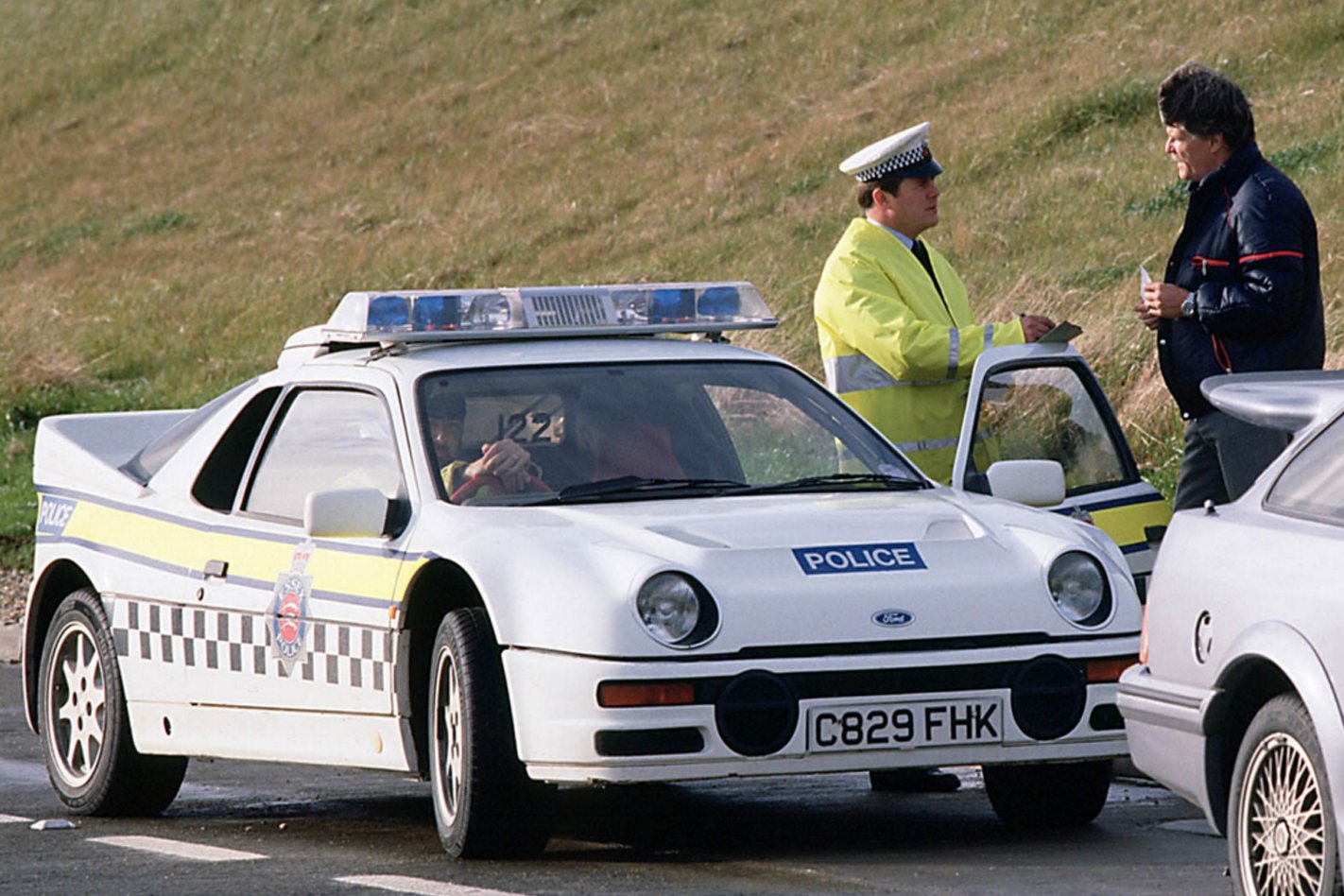
At the time it was motoring nirvana and is still wickedly fast as a point-to-point car to this day thanks to a mid-mounted turbo four-cylinder that pumped out 186kW and a kerb weight of just 1050kg. It’s amusingly seen here having pulled in a Ford Sierra RS500 Cosworth – another car the UK police have previously used.
At one point, the early 1990s Ford Escort Cosworth was the most stolen car in the UK. I guess that’s why the English police bought one of its own.
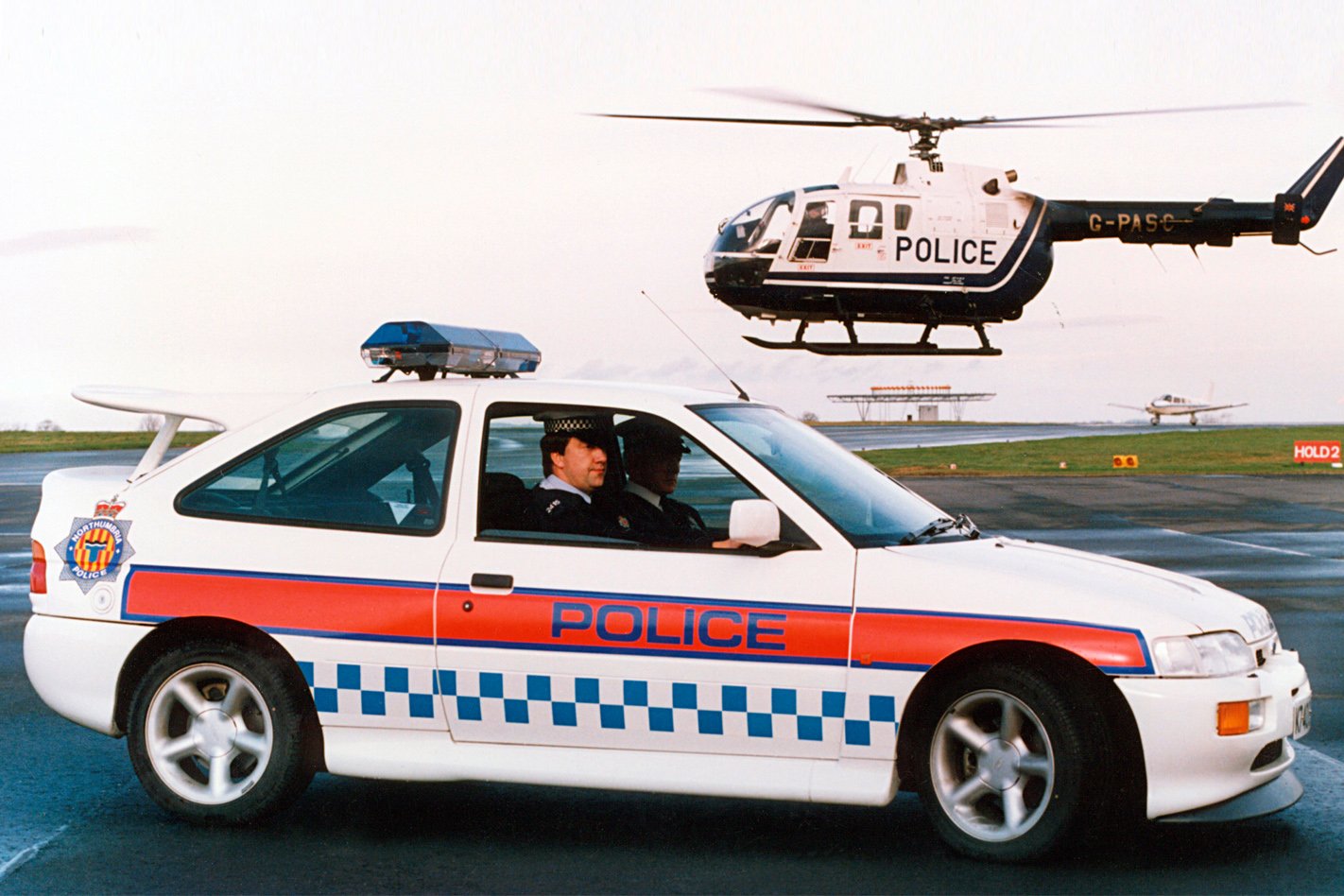
Also a rally homologation special but this time for Group A, the ‘Cossie’ was an icon to tuners and Ford fans all over the world. Some loved it, others loved to hate it, all respected it.
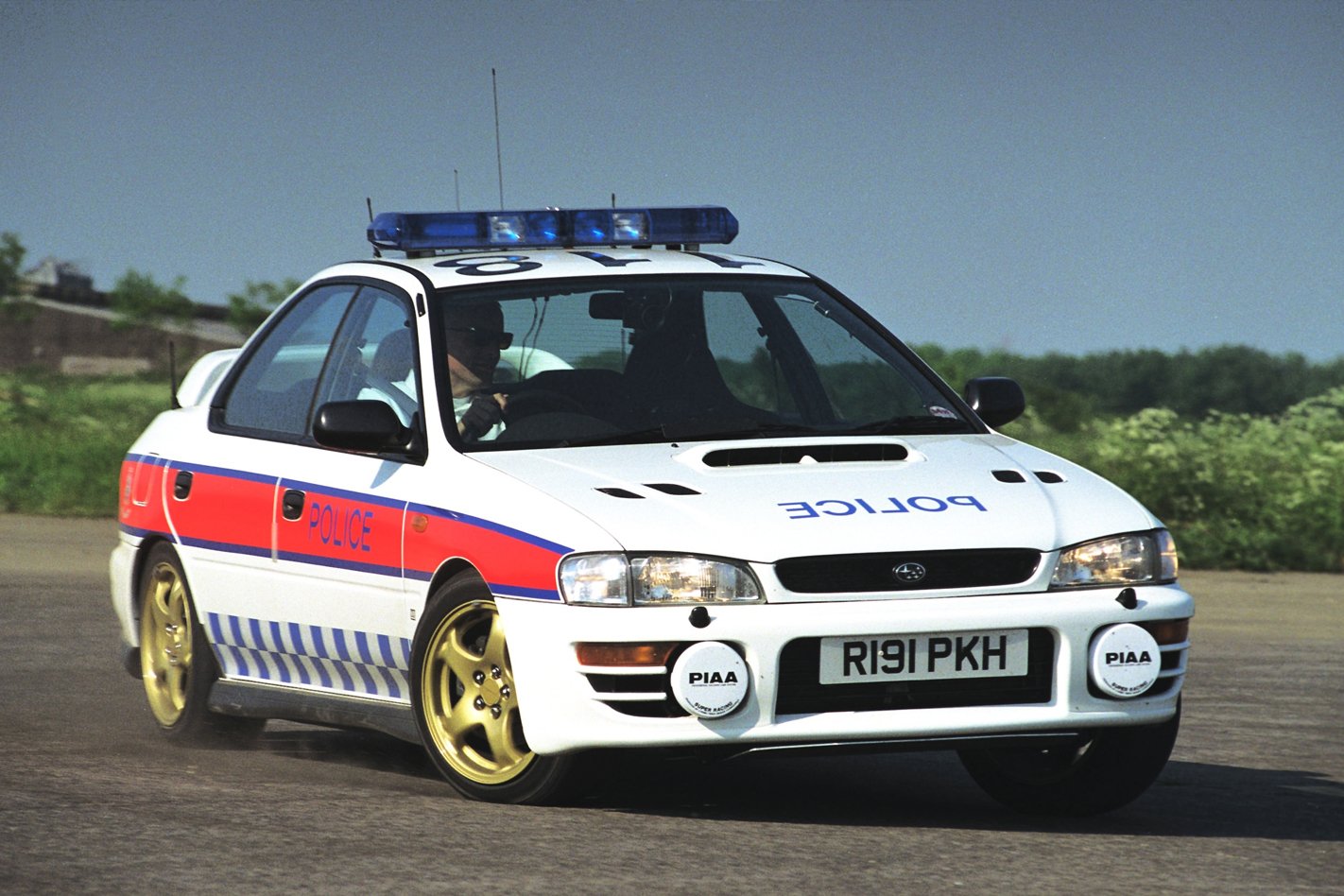
When technology and time superseded the Cosworth, the police moved on to other blisteringly quick turbocharged all-wheel-drive kit, including this Subaru Impreza WRX – another car made famous by rally success. That grip and poise translated to excellent pursuit potential on the public road.
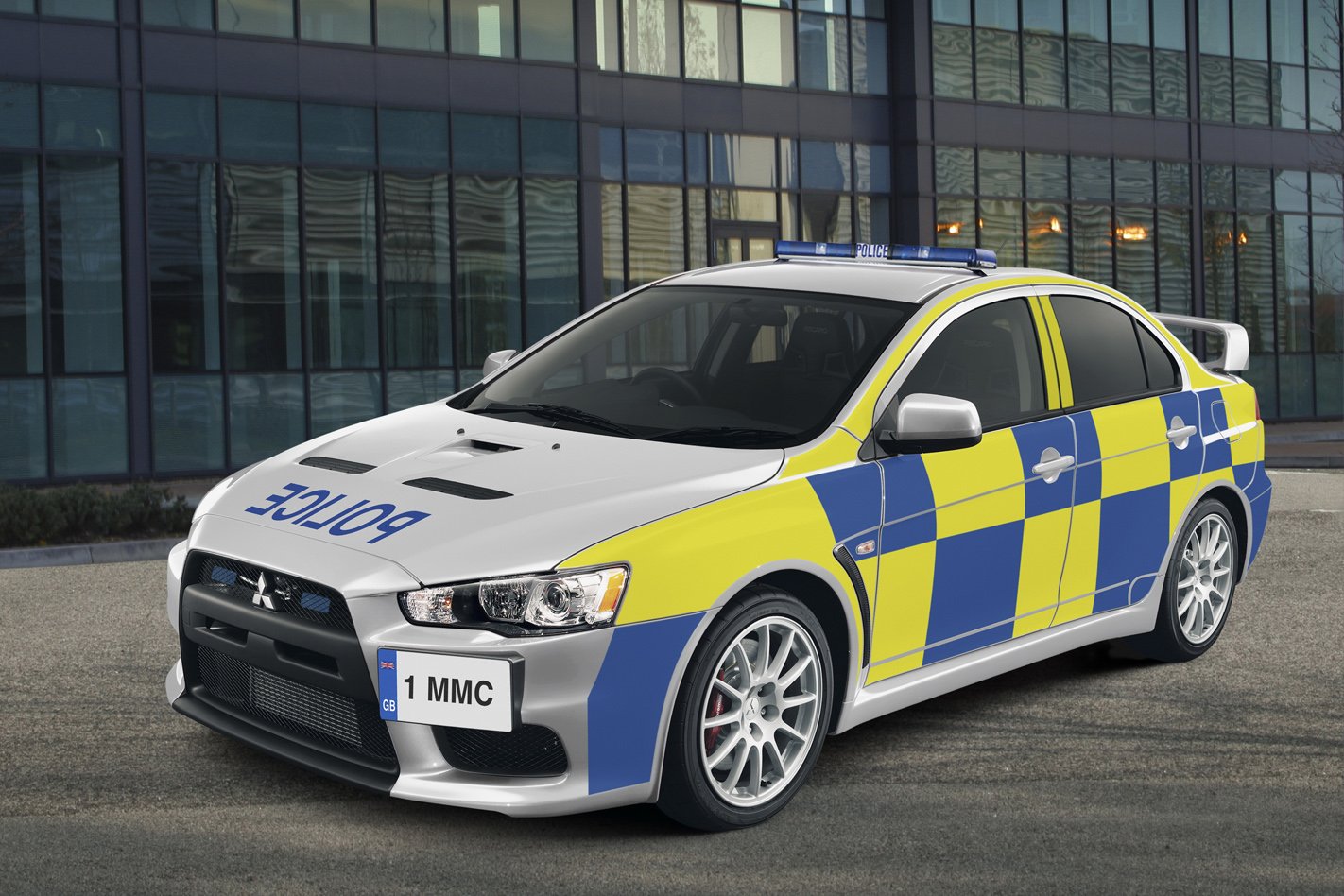
There can be few production cars as capable of evading unwanted attention than the incredible Mitsubishi Lancer Evo X. That’s why the ol’ Bill wanted it on their team. With such an affordable bang-for-buck price tag, this model was the perfect car for the UK police to go after fast crooks without attracting criticism of over-spending tax-payers money.
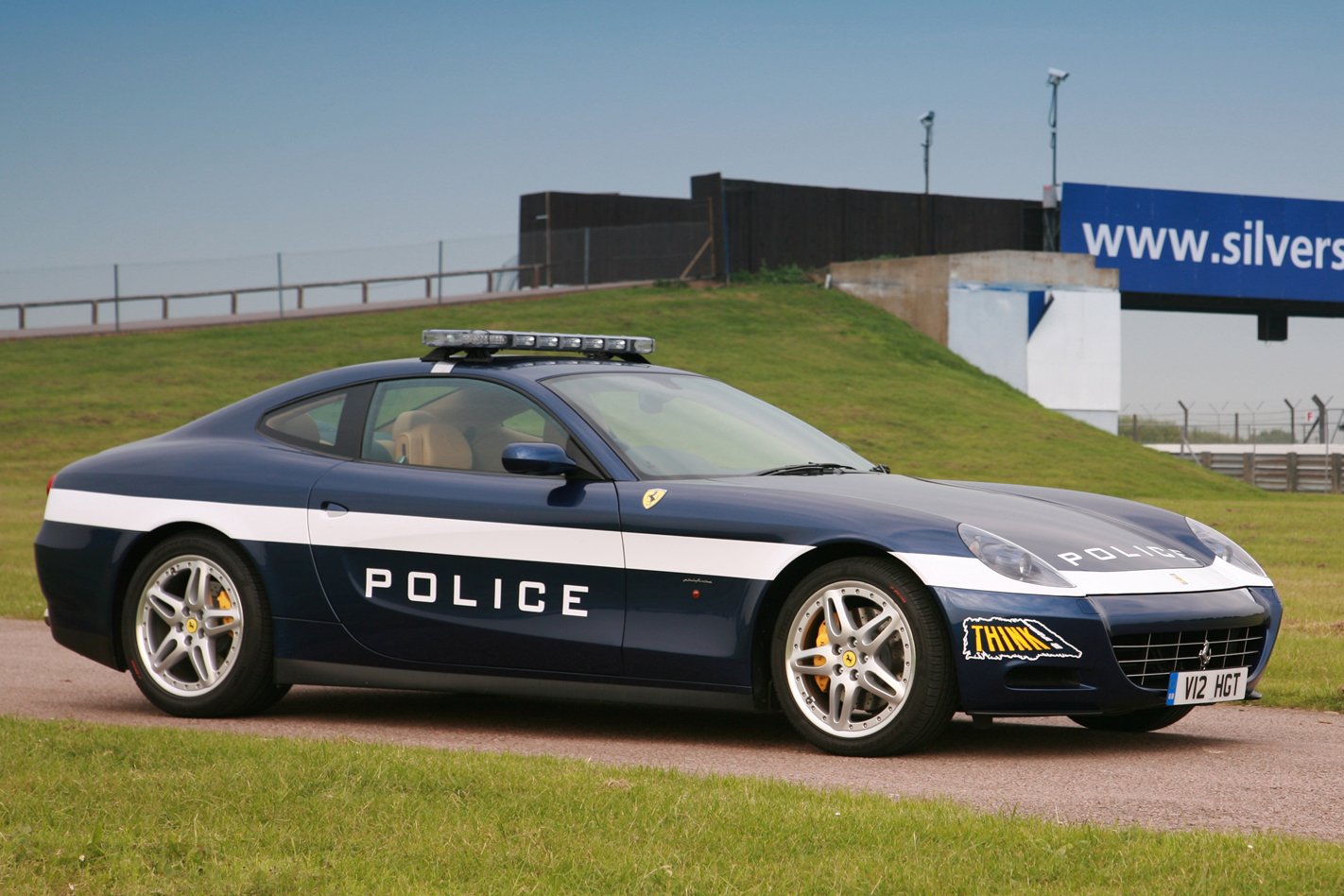
But it’s fair to say the budget did get blown a little with this next acquisition – a Ferrari 612 Scaglietti. Actually, like many of the most expensive cars in this series, this Fez was on loan as part of a road safety campaign and its job was to attract attention without having to break a sweat chasing criminals.
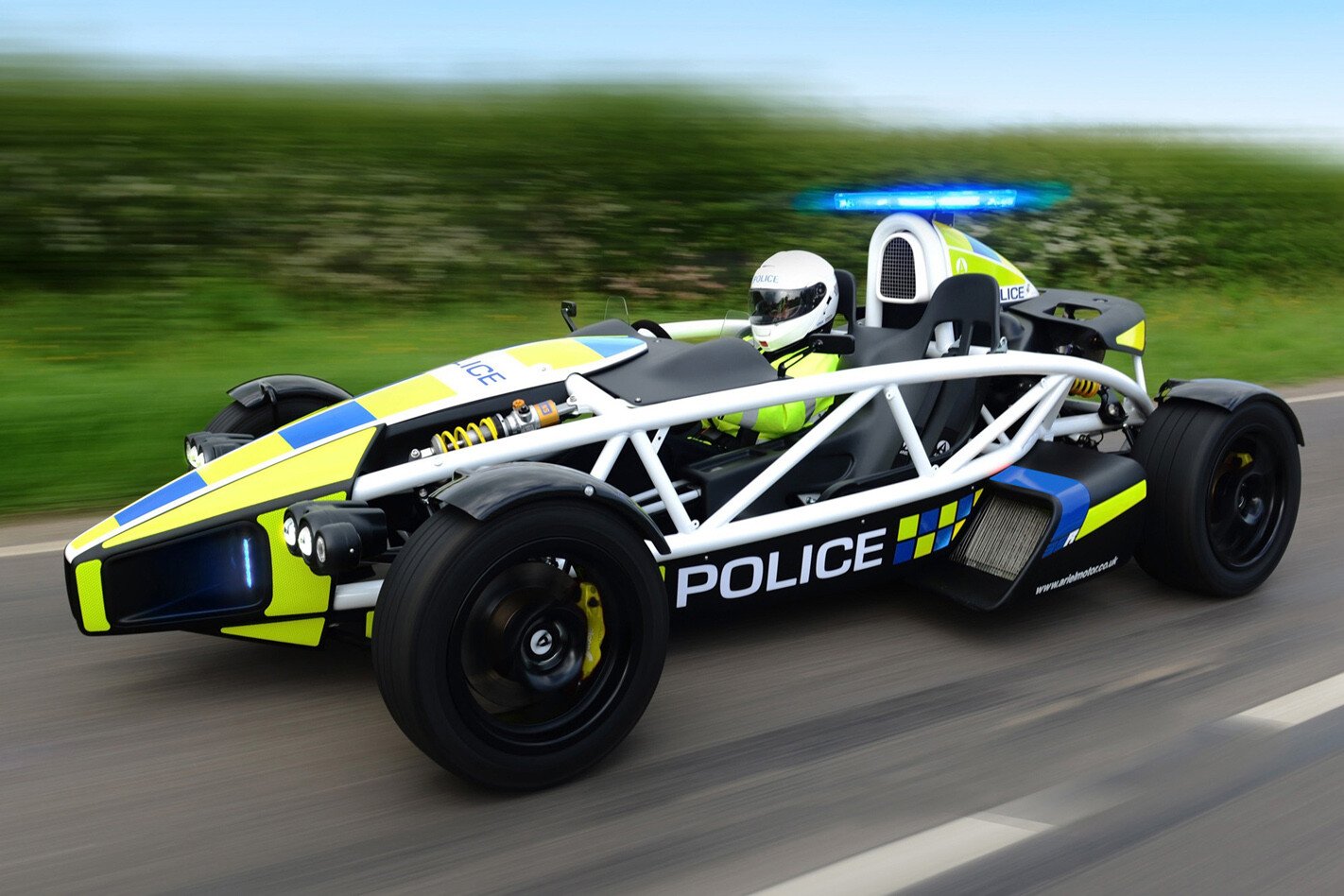
From the sublime to the ridiculous. Keen to show off the engineering excellence of England’s cottage sportscar industry, one police force dressed up an example of the ultra-bantamweight Ariel Atom. But even that was outdone.
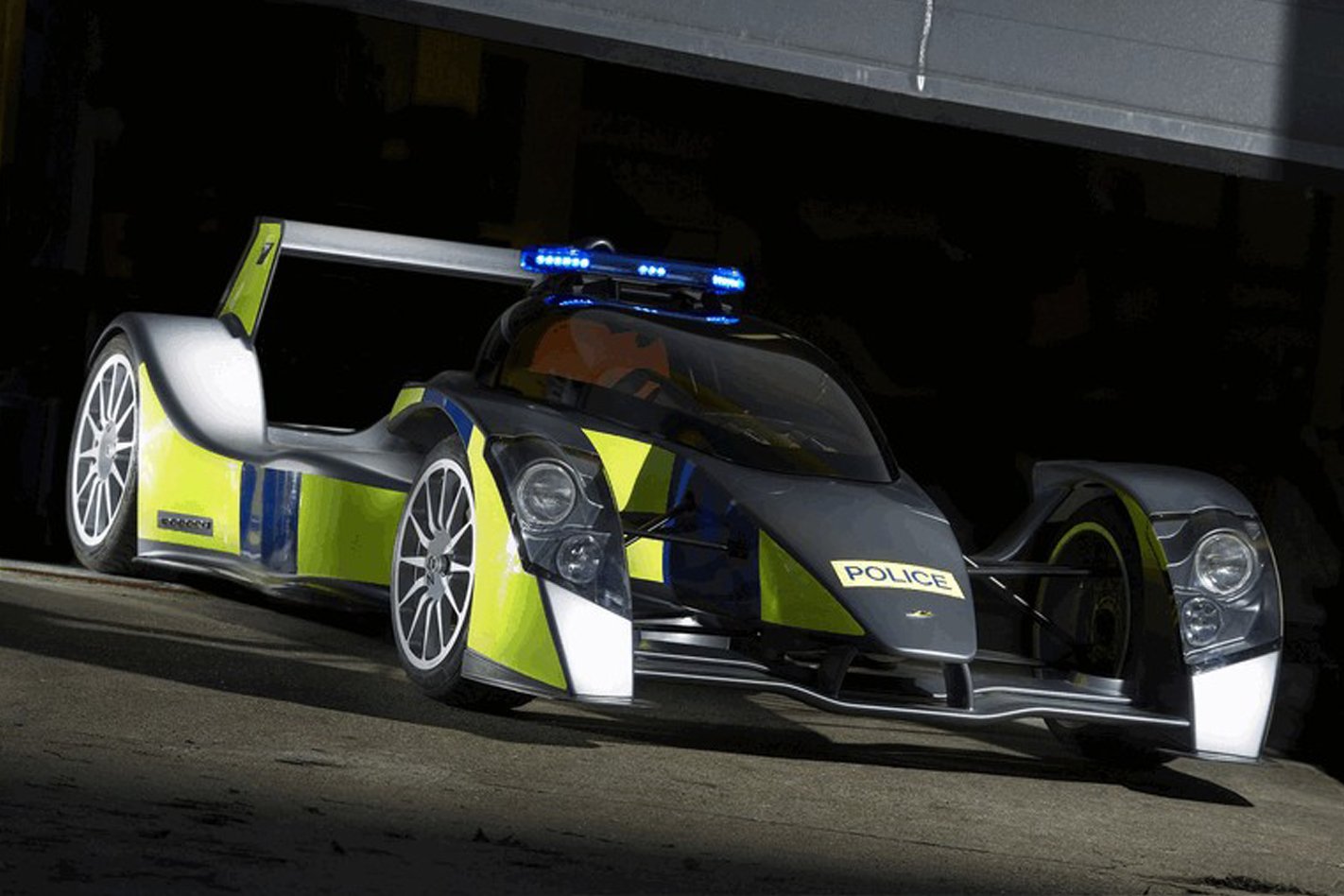
By this. The Caparo T1 is still one of the fastest ‘road’ cars to date, let alone to have been recruited into law-enforcement. With a Menard 3.5-litre race V8 developing 429kW and a kerb weight of less than half a ton, this is the fastest police car on track to date.
USA
There have been enough iconic US law enforcement machines to compile an encyclopedia all of itself so lets stick to some lesser-known and more surprising examples from America’s history.
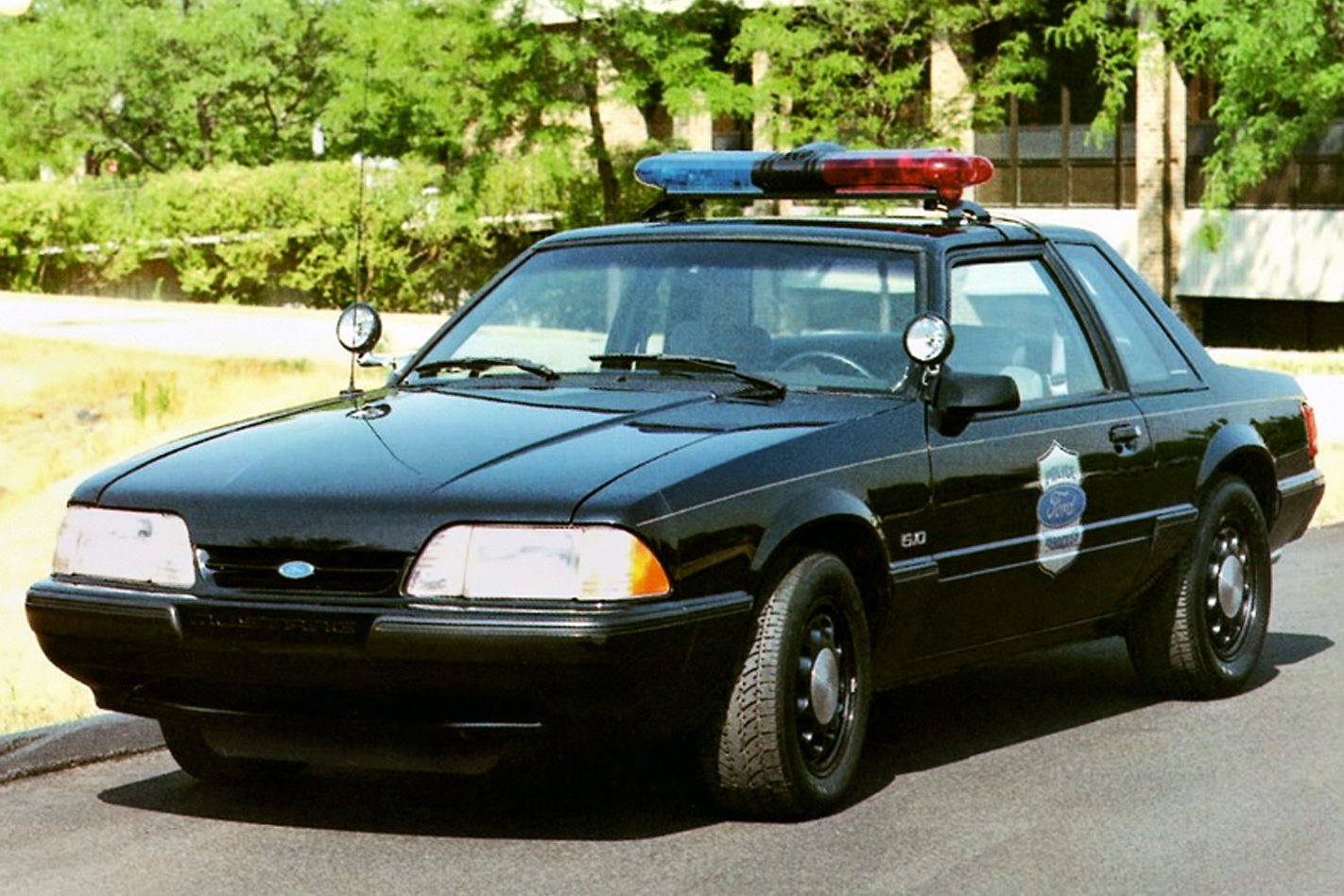
The Mustang hasn’t always been the sharp, high-performance sportscar it is today. There once was a time when it resembled little more than a boxy, two-door with the performance to match its dower looks.
Don’t worry, it got better.
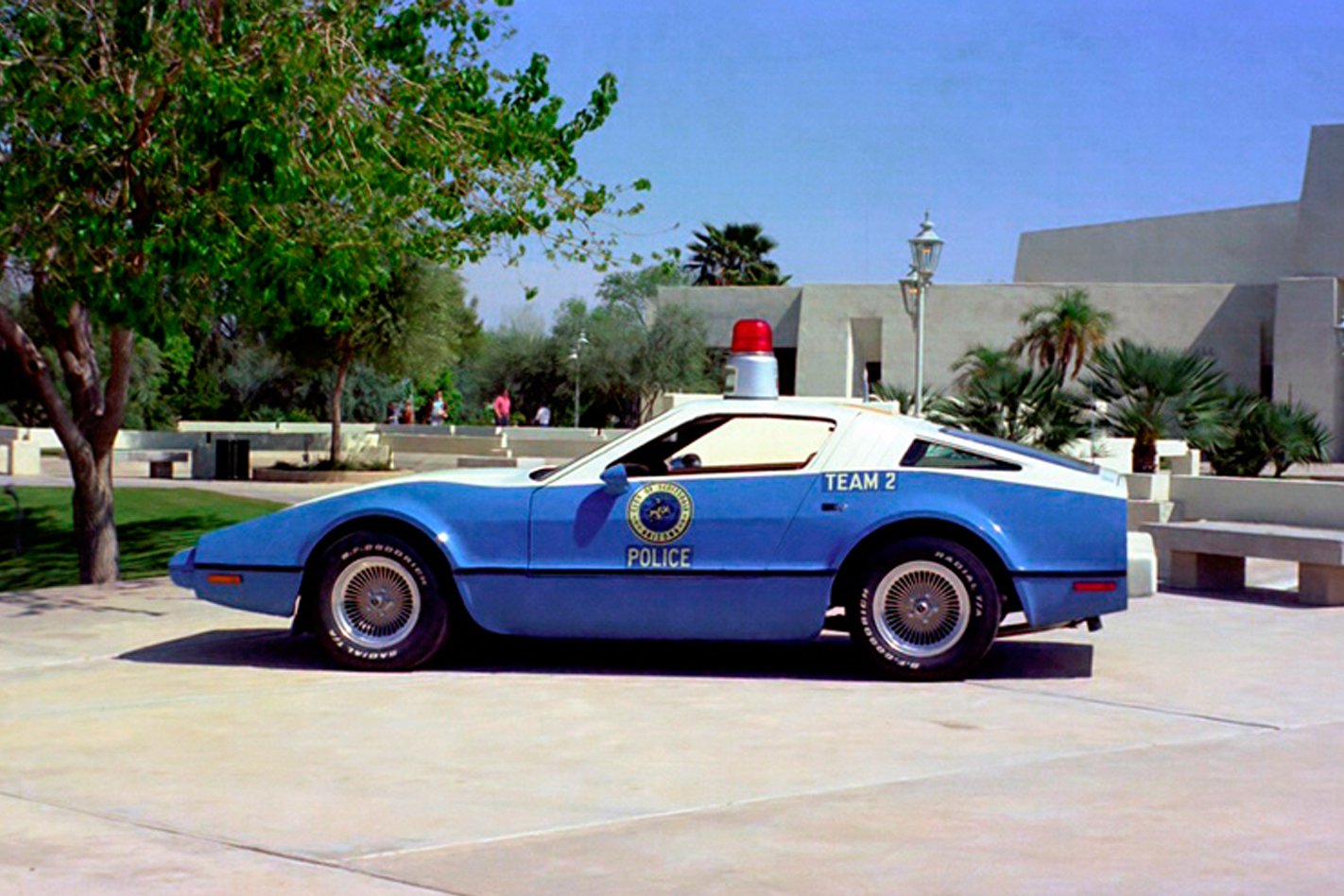
What the hell is a Bricklin SV-1? said everyone who ever saw one. With its unapologetically 19702 wedge styling, you’d be forgiven for thinking this low-volume US-made sports car was all about performance at the cost of everything else.
Actually, with a prominent safety cell, roll-over protection and high-impact absorbing structures front and rear, its designer Malcolm Bricklin touted it as safe first and foremost. SV-1 stands for Safety Vehicle.
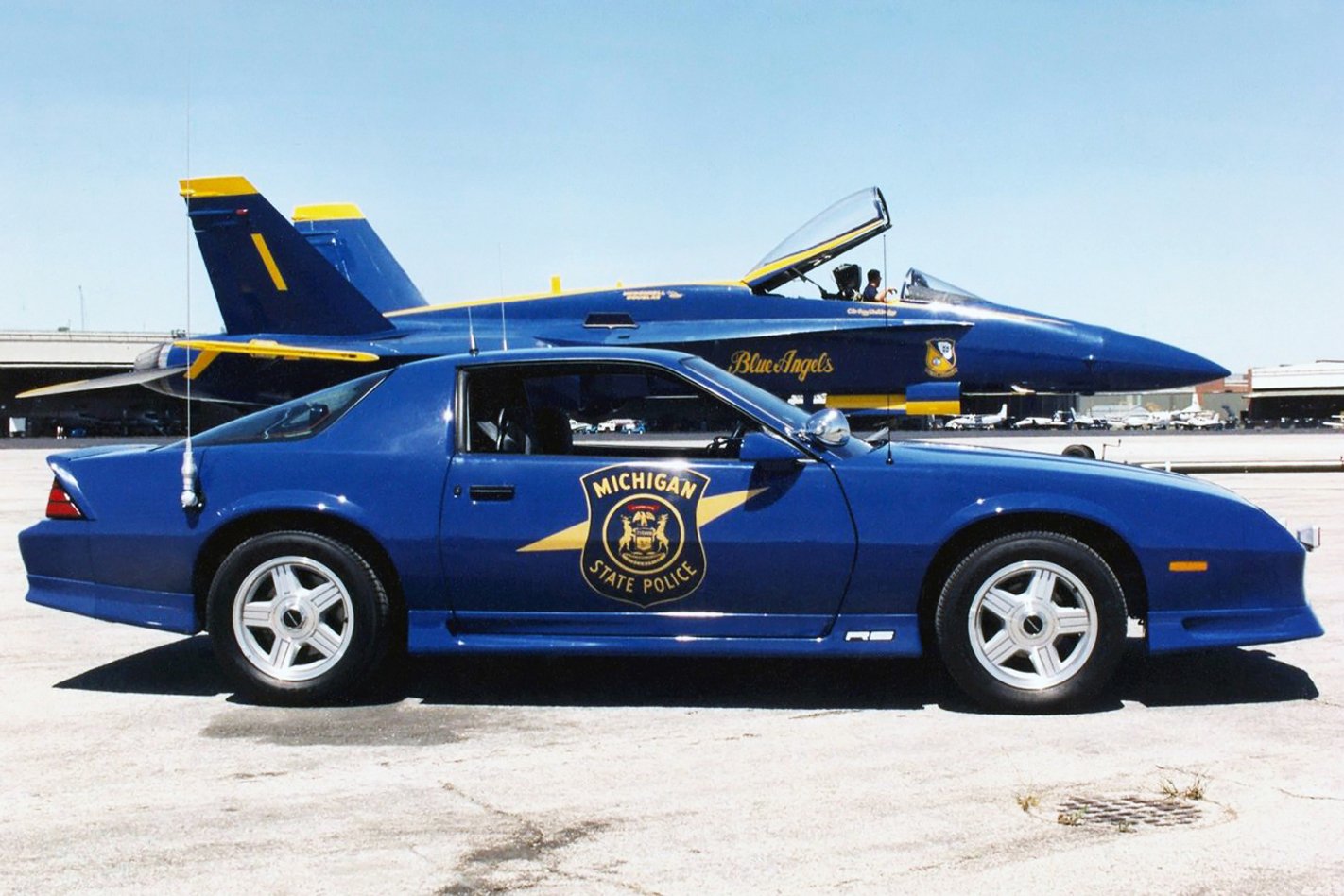
Unlike the Mustang above, at least when Chevrolet made its partnership with Michigan State Police, it was with the striking Camaro RS. It’s photographed here with a slightly quicker looking F/A-18 Hornet of the Blue Angels air display team.
Unsurprisingly, American cars feature heavily throughout police car history so how about this for a bit of balance? When sold in Europe this B2 Audi was the 90 quattro, in Australia, the 5+5 but in the USA it was the 4000.
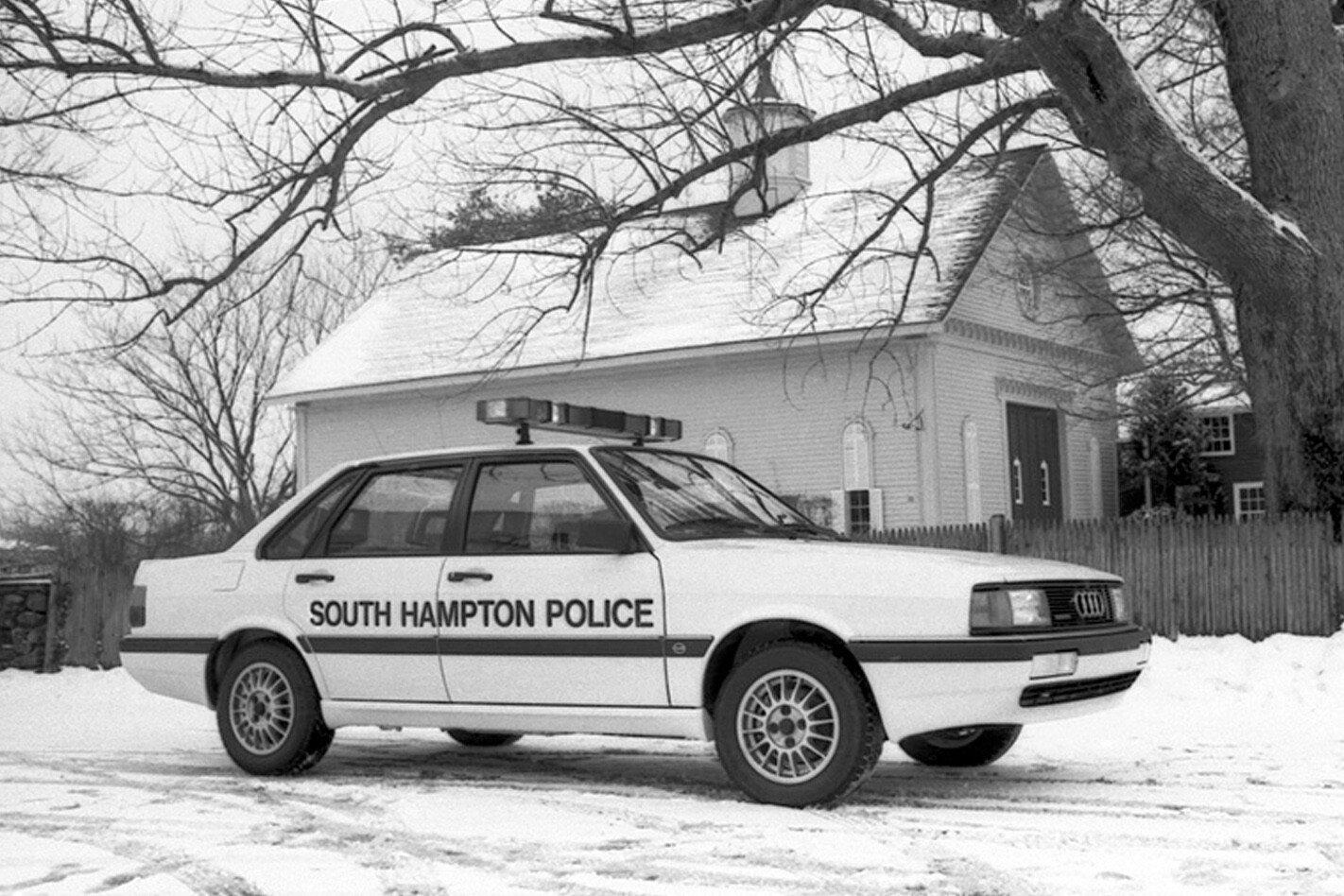
S versions got front drive and a 1.8-litre engine but the CS got quattro four-wheel drive and a 2.2-litre five-cylinder. Perfect for snowy police duty in chilly parts of North America.
Interestingly, this next concept was not developed as a general show car and then later dressed up in uniform. The Carbon E7 was designed and intended to only serve as a police car from the outset – much like a Geely London Taxi.
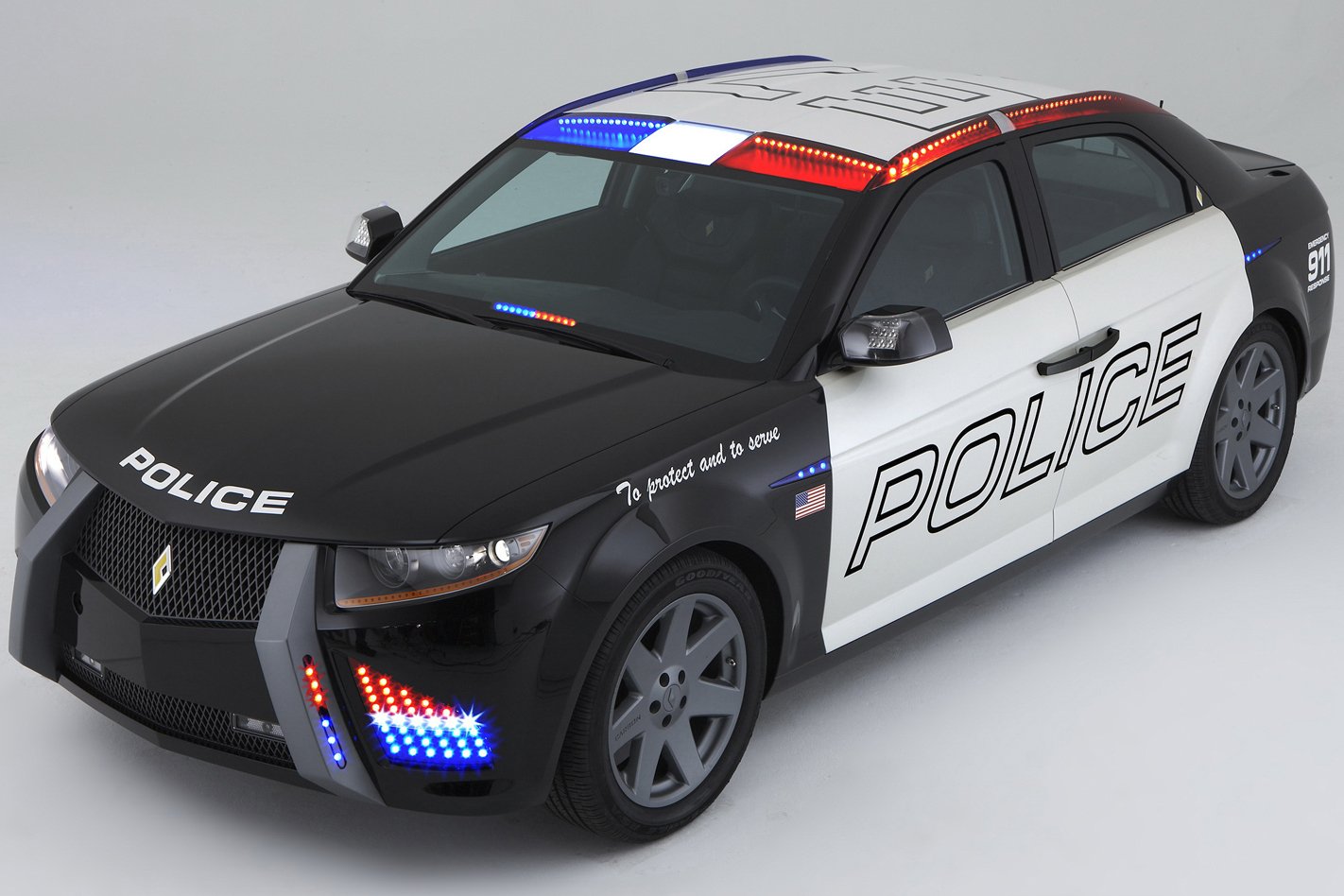
A former police officer and former Ford executive formed the Californian company and, if successful, the E7 would have been the world’s first purpose-built police car. Unfortunately the company failed to produce a production version despite some promising contracts and it folded in 2013.
And we’ve saved the best for last. Many Americans proudly watched this mighty law enforcer cruise by not realising it was Australian as Skippy marking a pig-skin at the AFL Grand Final.
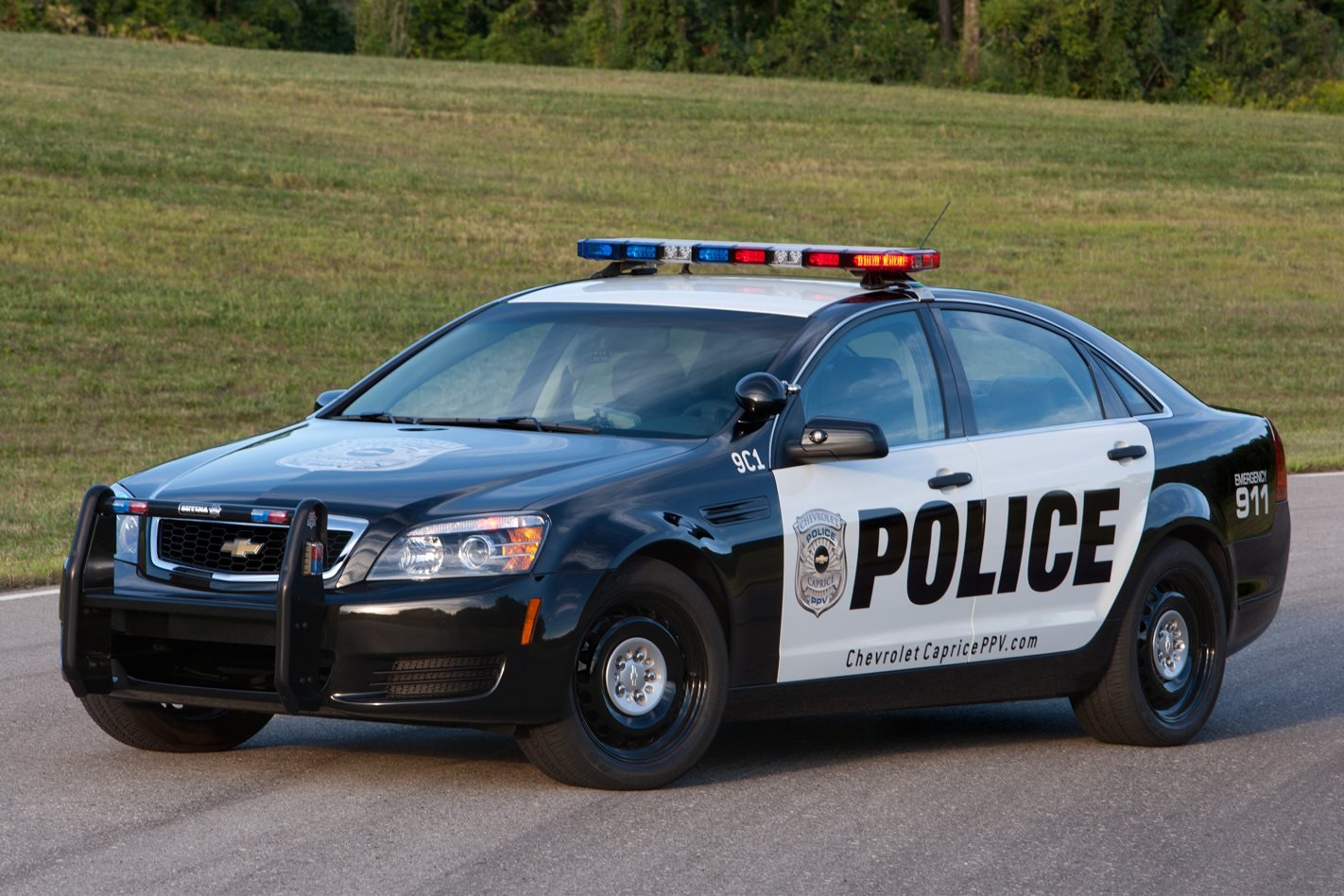
The Chevrolet Caprice patrol car that saw widespread service in the US was developed by Holden’engeneering team in Victoria and built in South Australia.
GERMANY
As one of the world’s leading high-performance car providers, you might expect some seriously cool cars patrolling Germany’s autobahns, and you would be quite right.
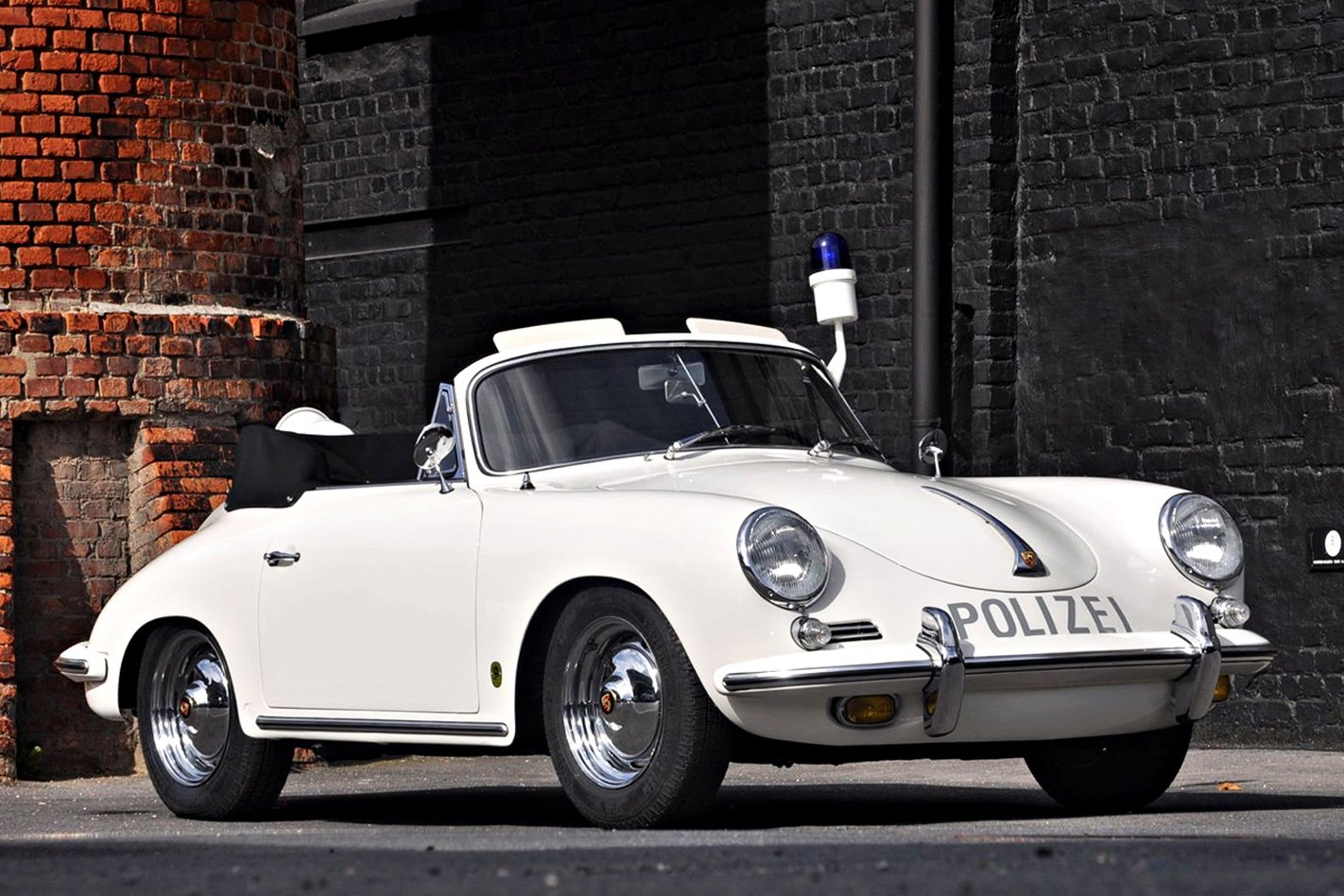
Porsche’s 356 B Cabriolet is a universal classic revered by fans from the day it rolled out as a new model in 1964. But how unbelievably cool is this version that was prepped as a police car in the same year?
Although this car is very German in origin (and the Polizei on its bonnet suggests is a German-serving version), 12 were bought by the Dutch police as highway patrol vehicles too.
BMW’s E36 M3 is still a potent and rewarding driver’s car to this day but a handful were converted into police cars in the 1990s.
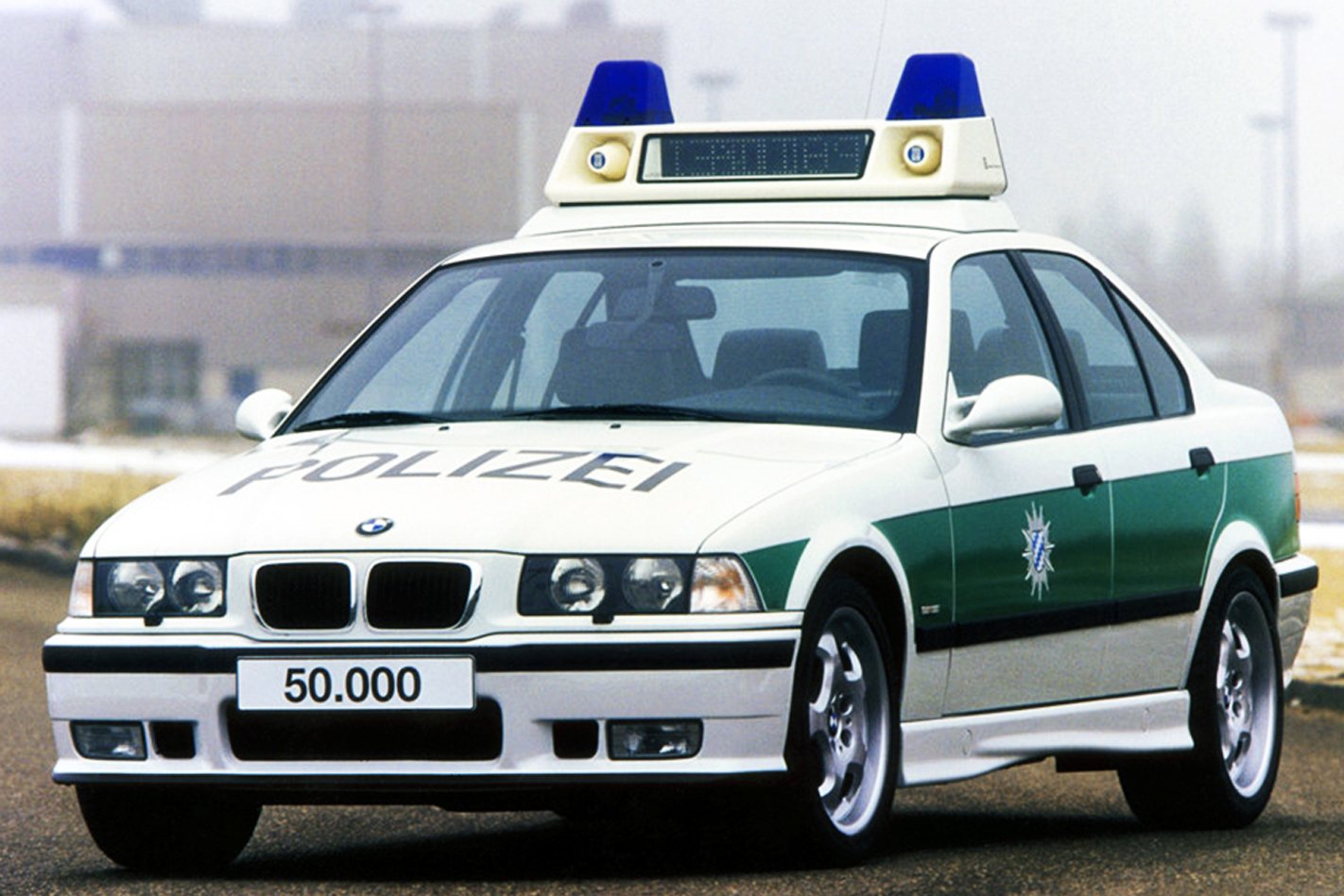
While Australia was only offered the Coupe and Convertible, the Europe and UK four-door sedan made for the perfect practical and ballistic autobahn-storming model.
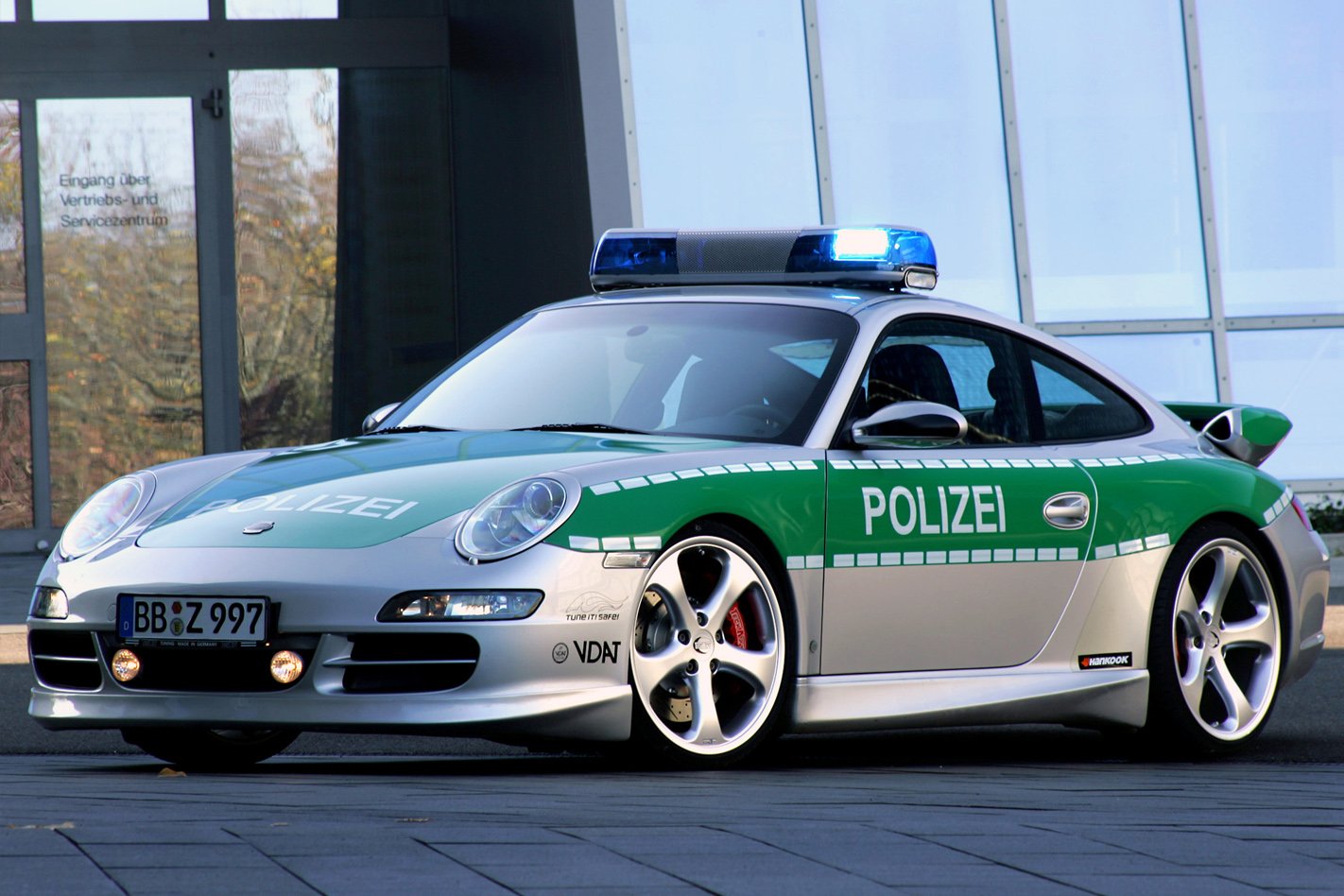
If you don’t already love German car culture and the nation’s attitude towards speed then how about this? Each year, the ‘Tune it! Safe!’ car show invites participants to show off responsibly modified cars.
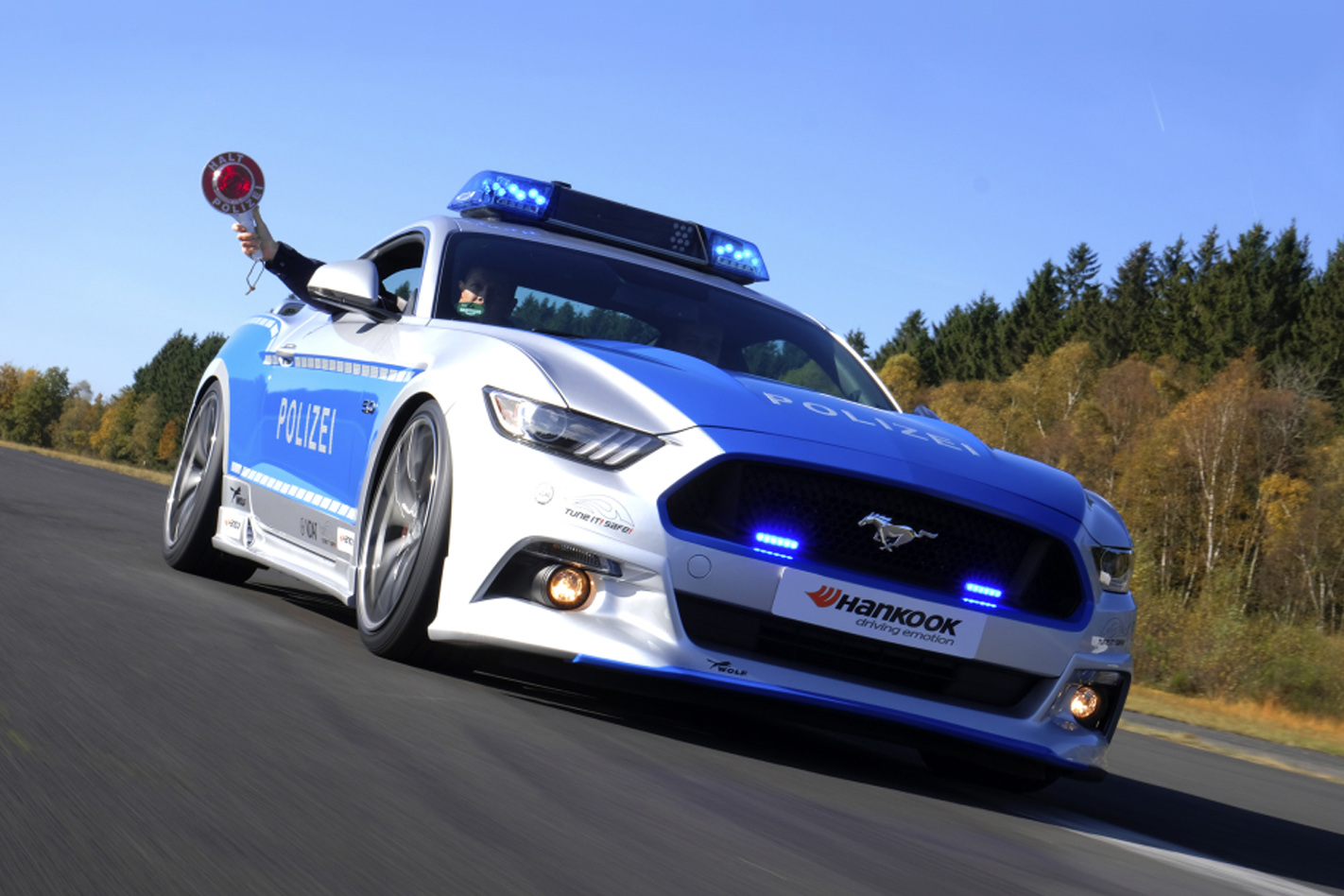
When the German police gets involved (and they are proud supporters and advocates) this is what results …
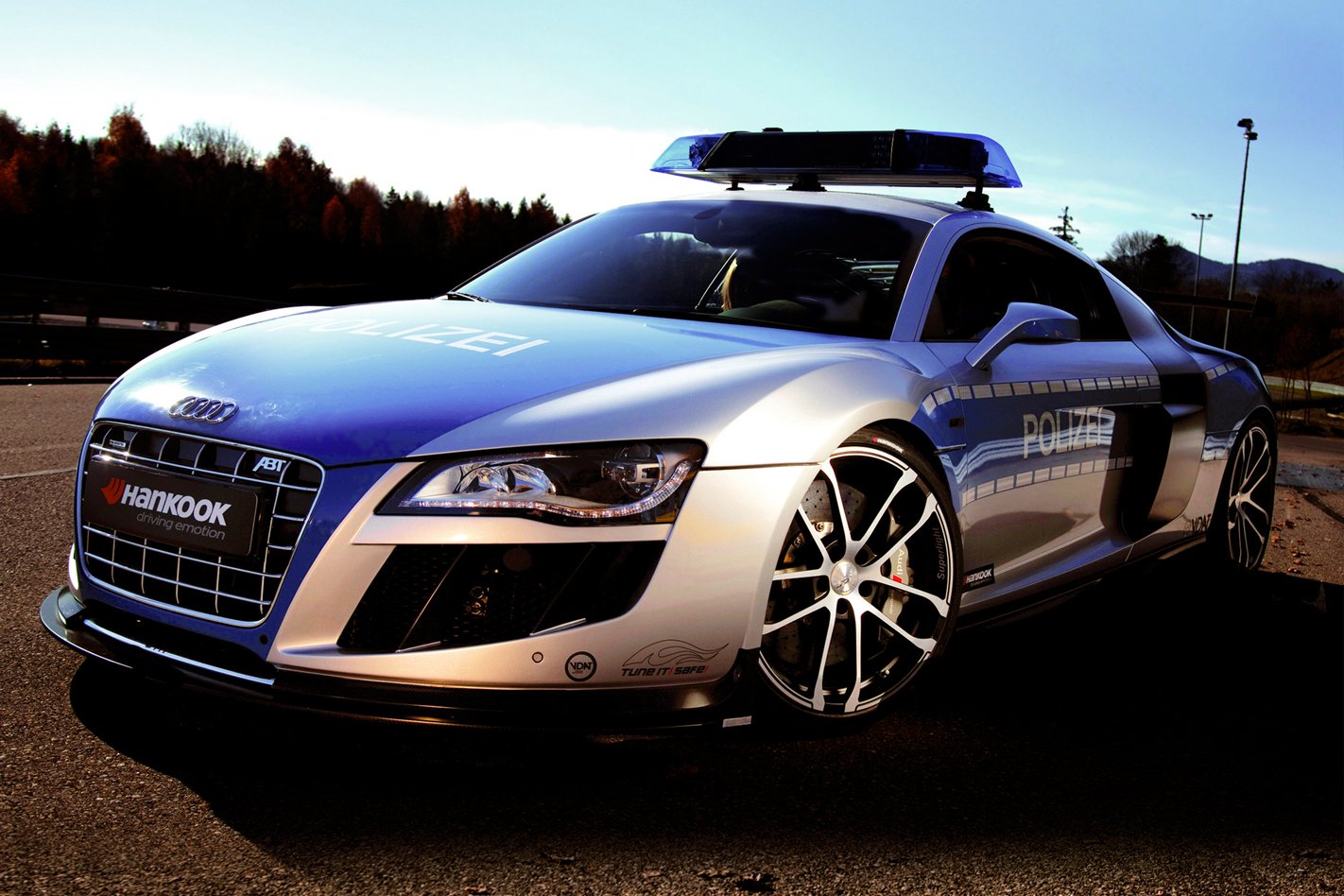
Running since 2005, the safe and reliable tuner’s event showcases some incredible car art. And all of it is road-legal and responsible.
ITALY
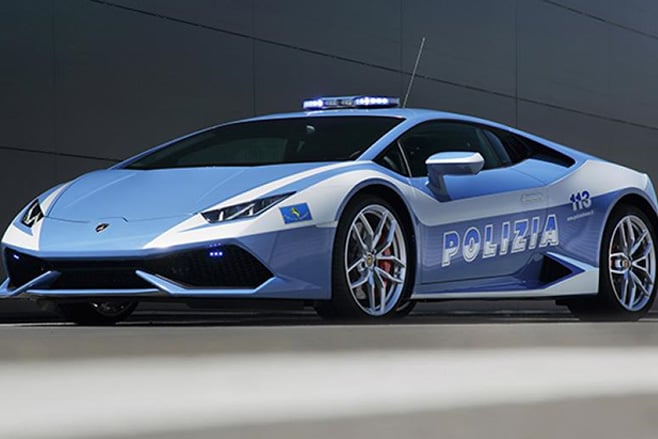
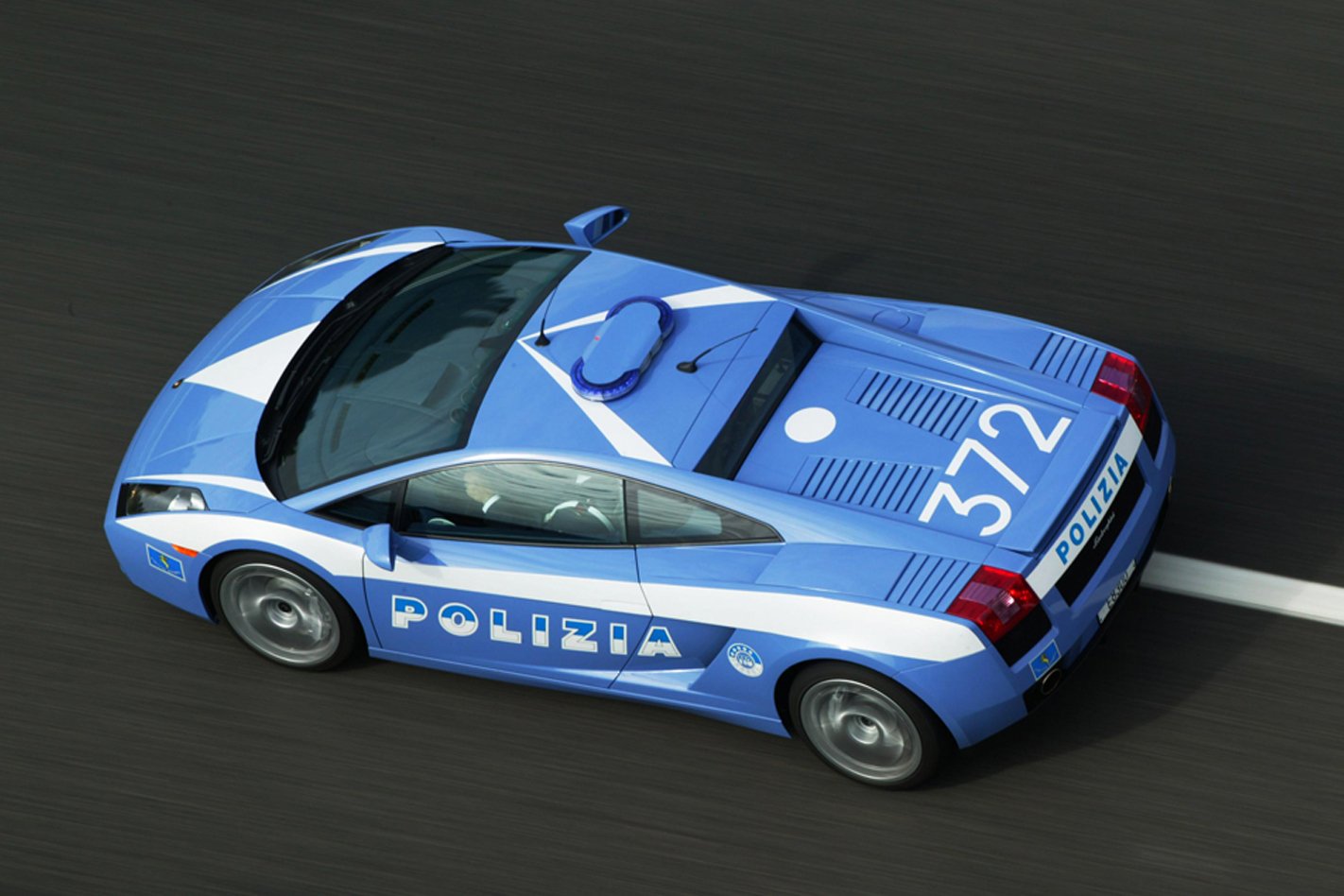
Before the more recent Huracan induction into the Carabinieri, its older Gallardo sister had already served.
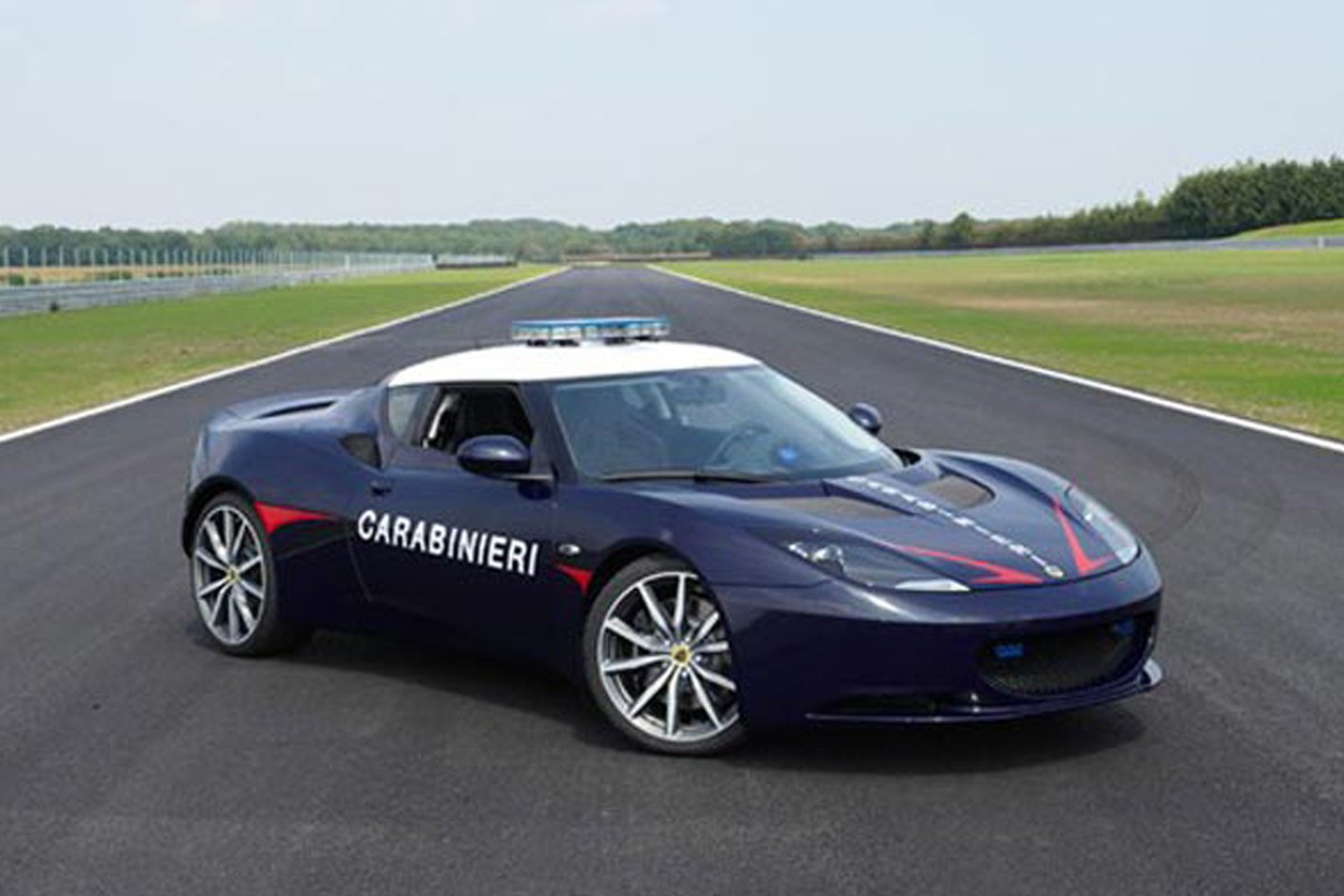
And while you might expect Italy’s pride to get in the way of good engineering sense, the military police once took delivery of a very British Lotus Evora S.
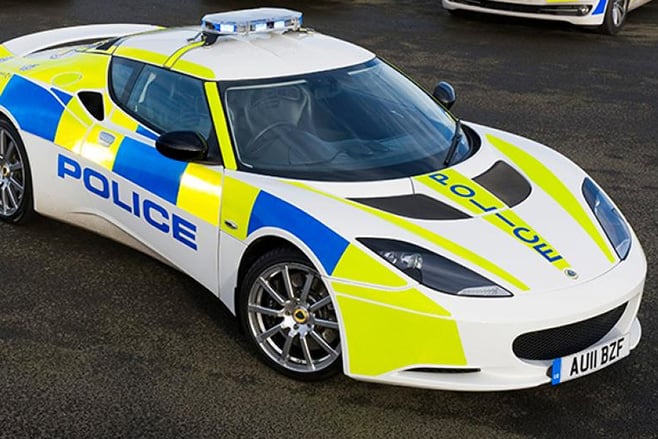
That said, so did the English cops.
SWITZERLAND
The Swiss might be more known for impartiality rather than octane-hunting rev-heads, but they still have a couple of notable automotive police appearances to their name.
While much is celebrated about the later 1970s 323i, the Swiss were among the first to welcome BMWs game-changing 3 Series into its police stables. This is the very early 320, which was powered by a carburettor version of the four-cylinder M10 engine in 1975.
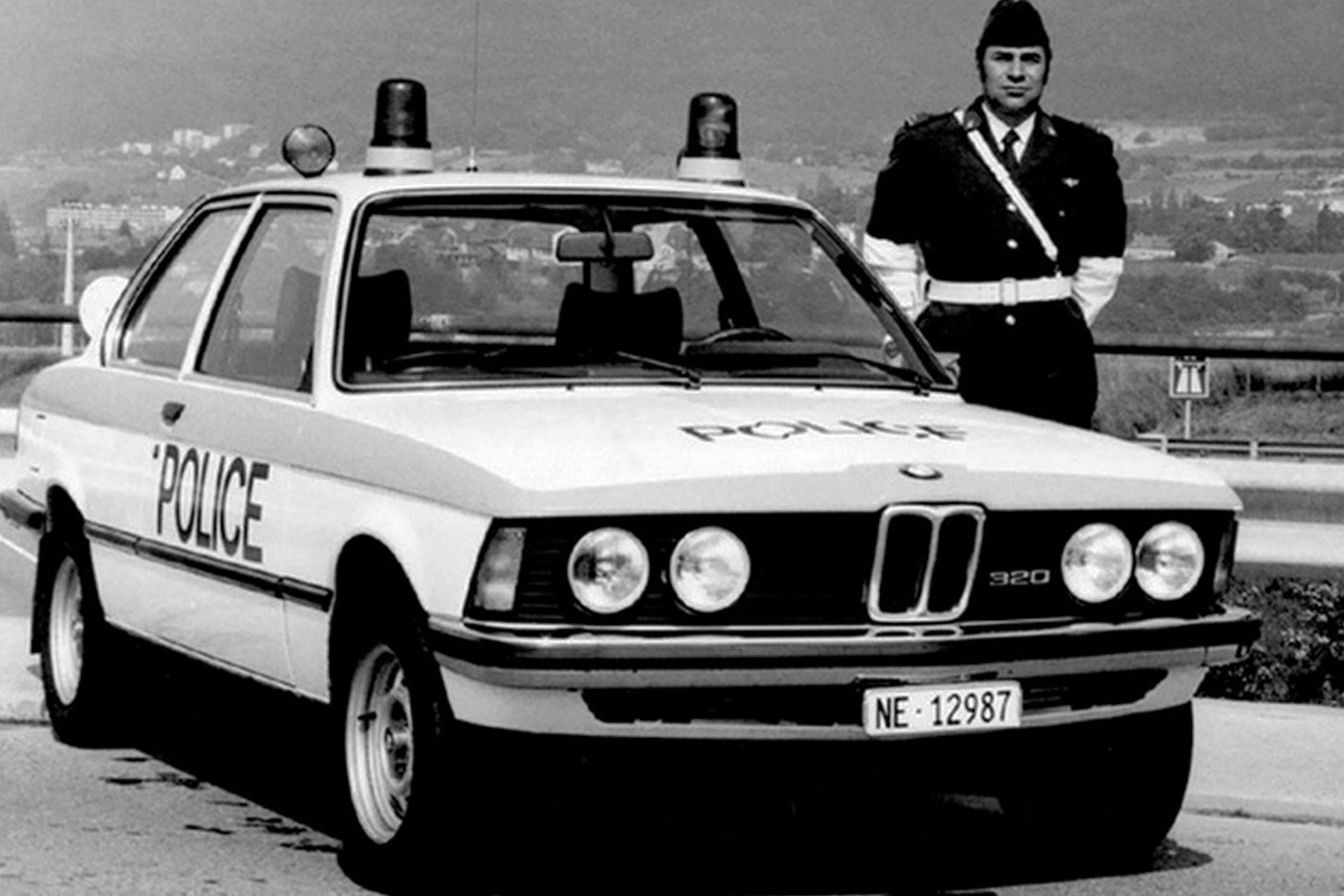
The model went on to define the high-performance executive sedan segment and the rest is history.
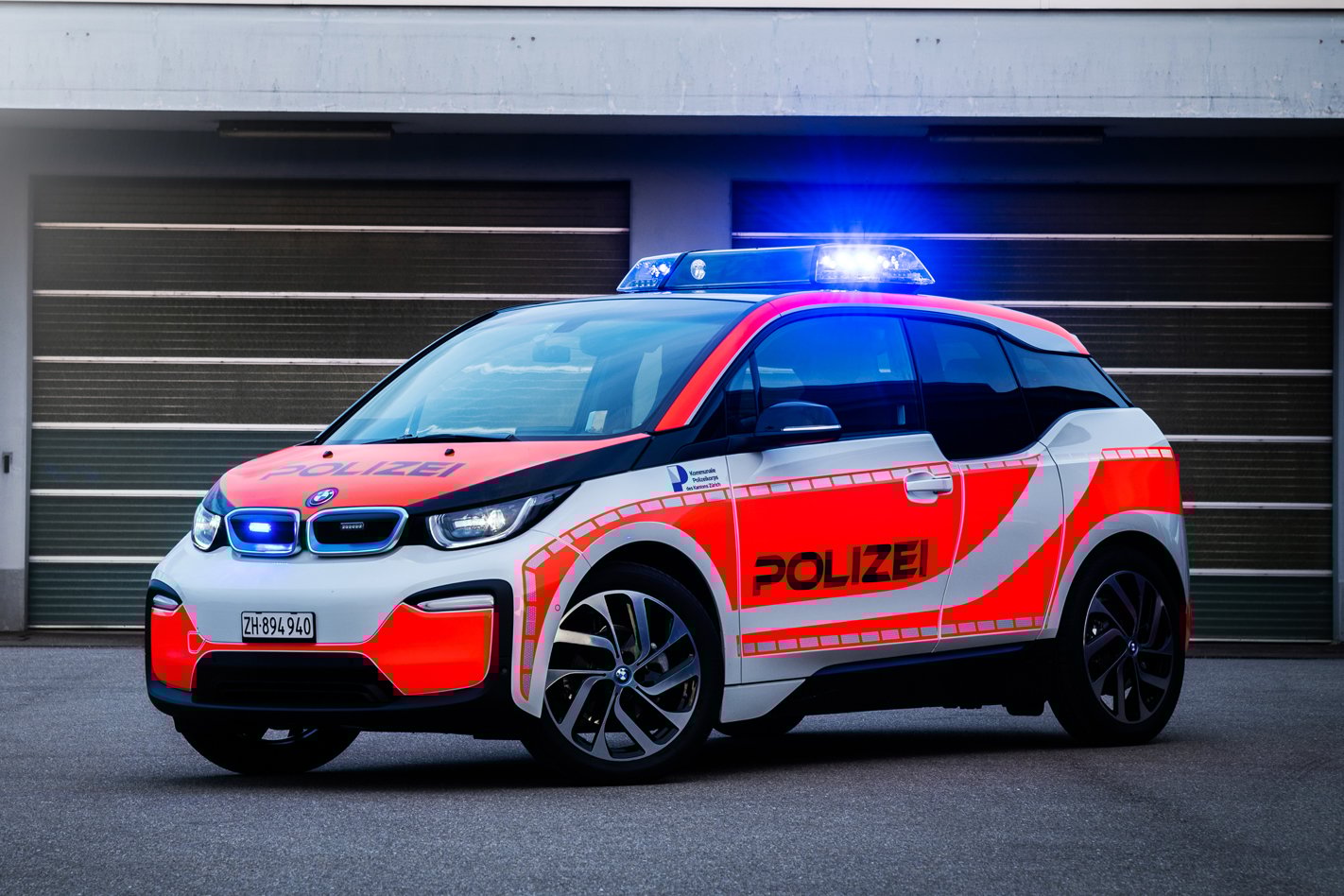
While a number of police forces have initiated examples of BMW’s i8 hybrid sports car into the ranks, the Swiss took its i3 baby brother instead.
FRANCE
You might have spotted a blue-lighted version of the Renault Megane RS flying around French streets, but the diamond badge’s relationship with the gendarmerie started many years ago.
Way back in the 1960s, an Alpine A110 served as a pursuit car, then the brand once again picked up its badge when the A310 launched in the 1980s.
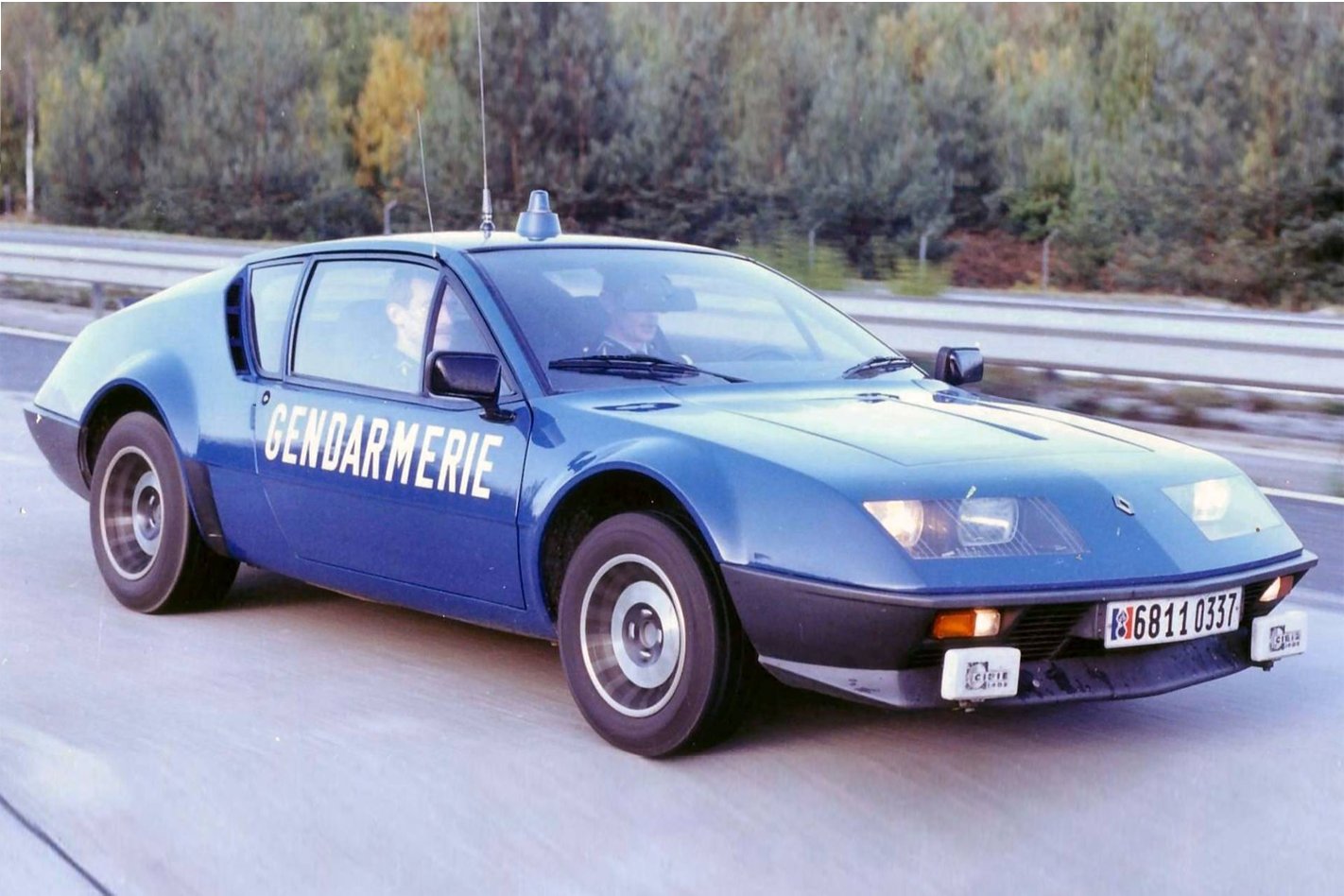
Some predict the police will once again join forces with the Renault-owned brand now there’s a new A110 homage in town. We think so too.
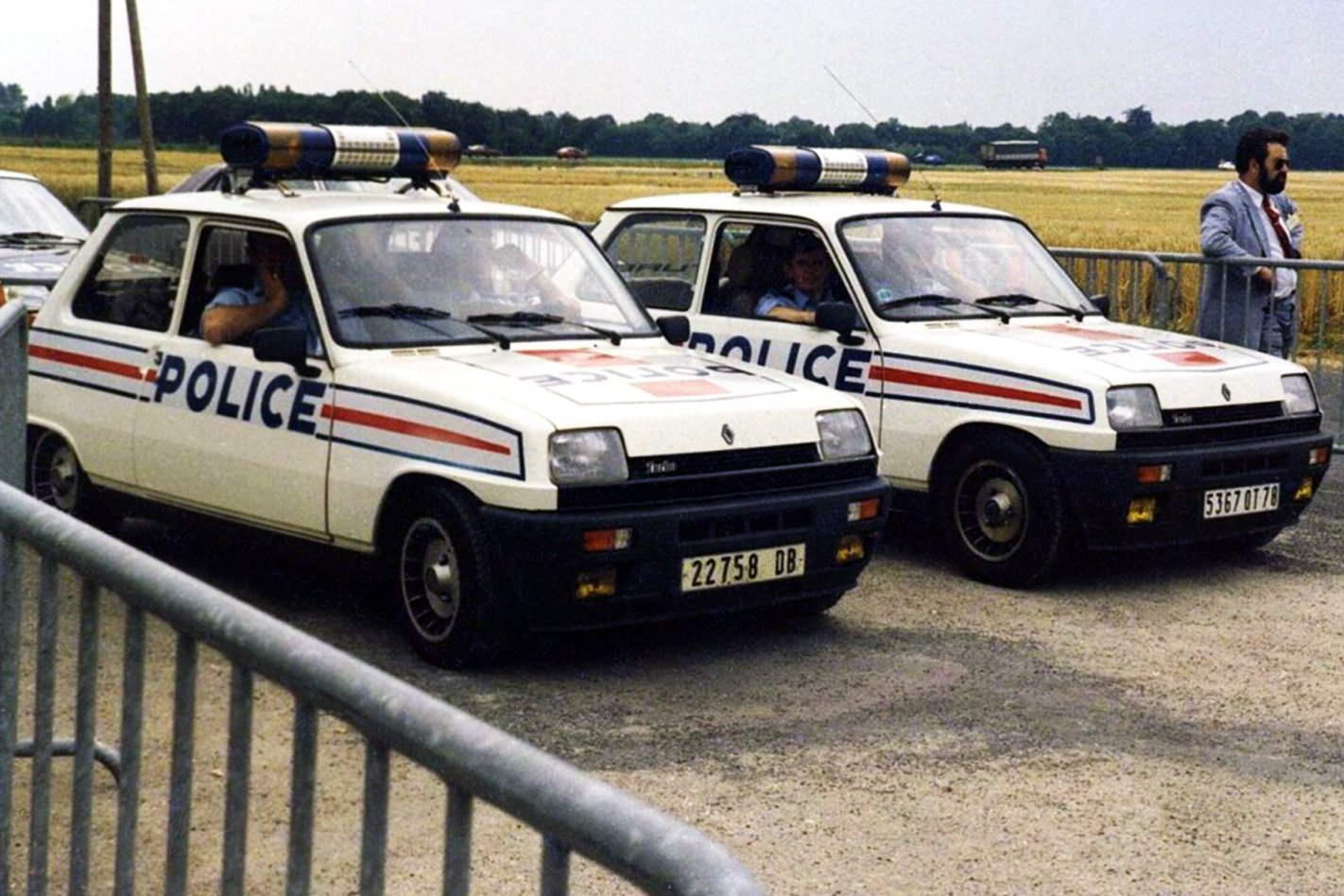
And the godfather of Renault hot hatches also once pulled on a uniform with the 1976 Renault 5 Alpine Turbo you see here. Along with these little feisty numbers, the GT Turbo and mid-engined 5 Turbo sparked a generation of affordable turbo hatchbacks.
JAPAN
Last and possibly most, Japan’s police forces can brag some of the most eye-opening law-enforcement models throughout history and not all of them from native manufacturers.
In the early years of the legendary 911, four examples of the entry-level 912 were acquired by the Japanese police to help curtail illegal street racing. The cars were retrofitted with loudspeakers, better rear-view mirrors, lights and increased safety through reinforced seats and belts.
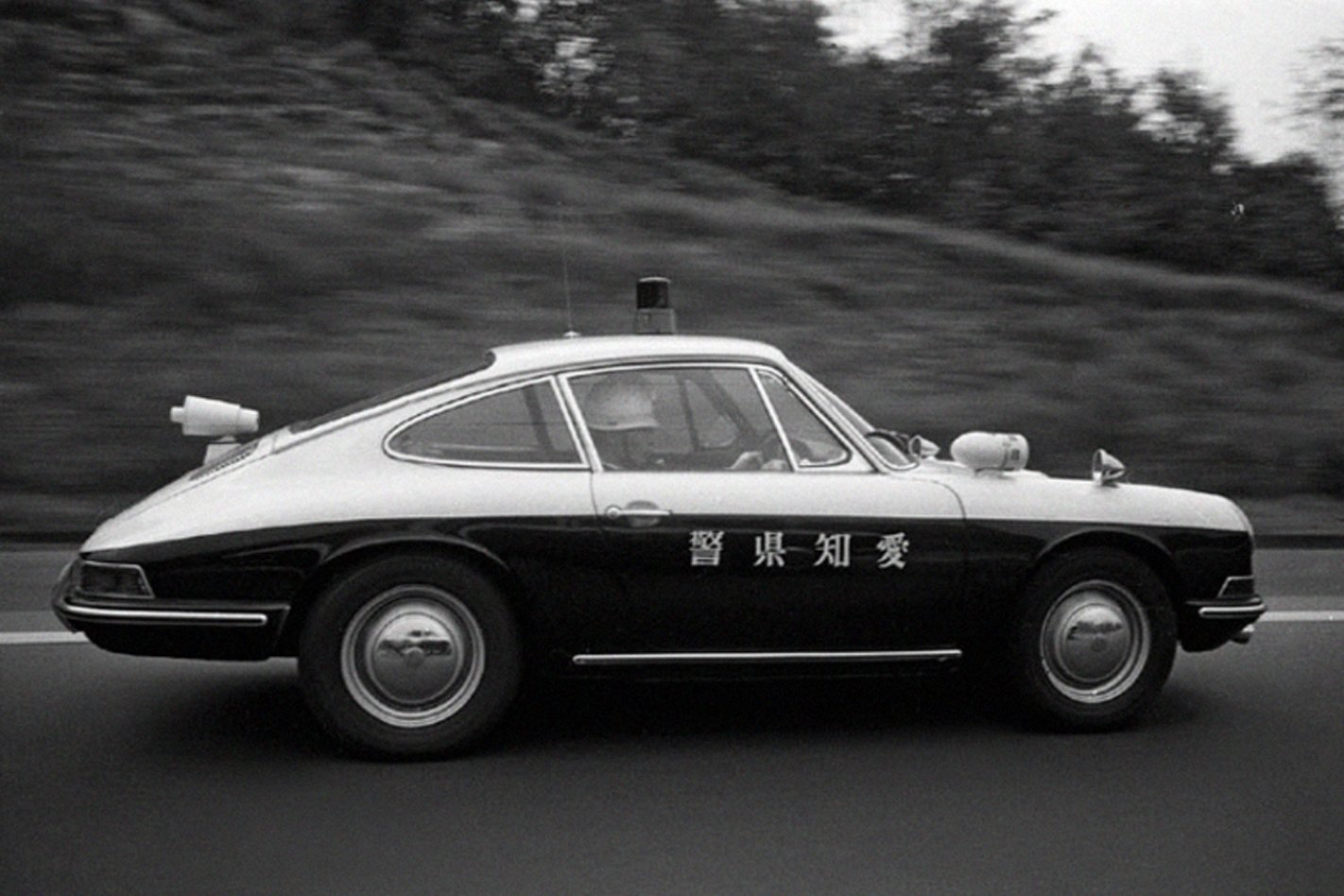
The Porsche had a Japanese partner in the force with a beautiful generation-one Nissan Silvia (CSP311).
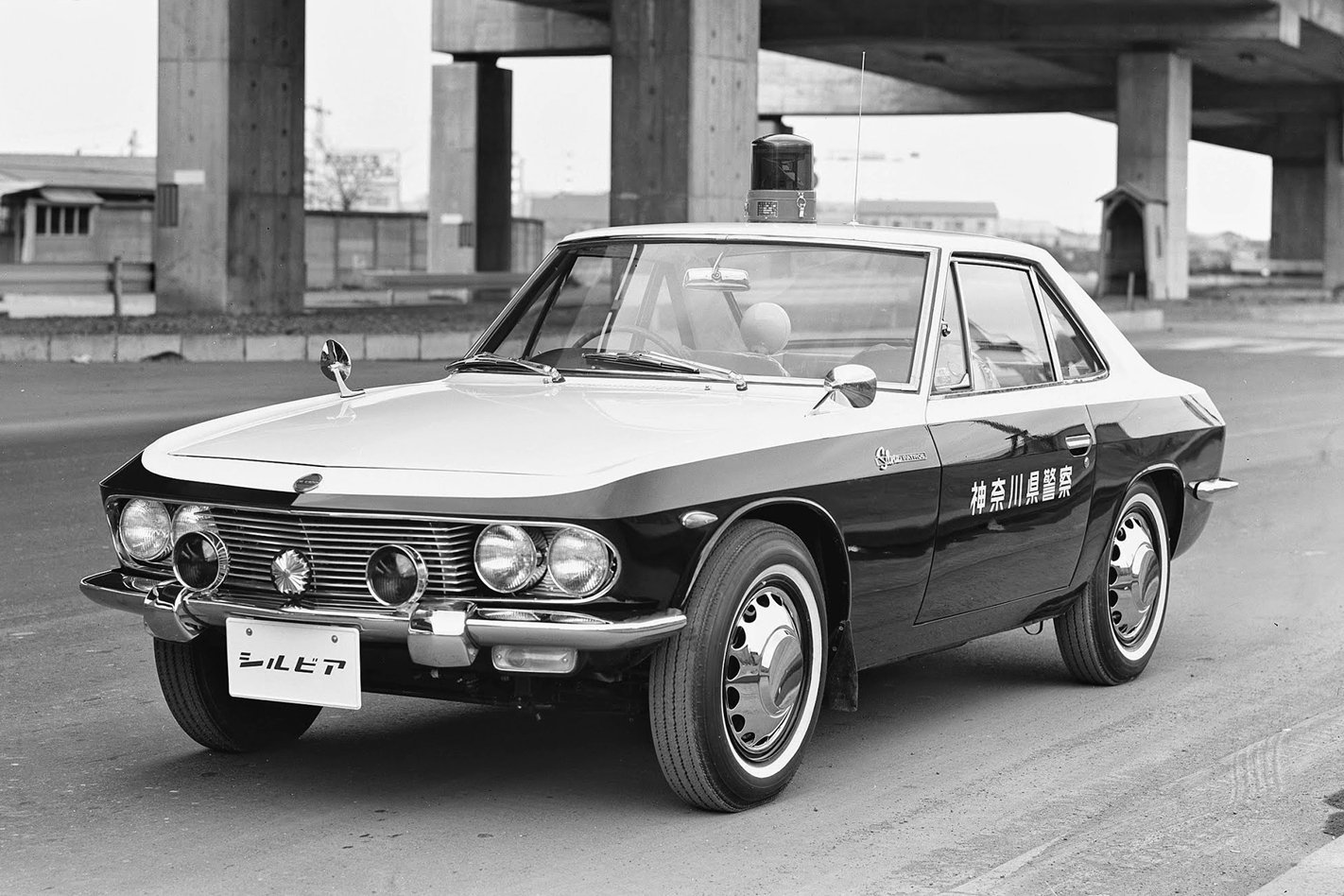
However, the high-performance German coupe and Japanese duo wasn’t enough to stop the street duelling and it was followed by a succession of potent cars marked in the striking black and white, to try and keep up with the advancing amateur racers.
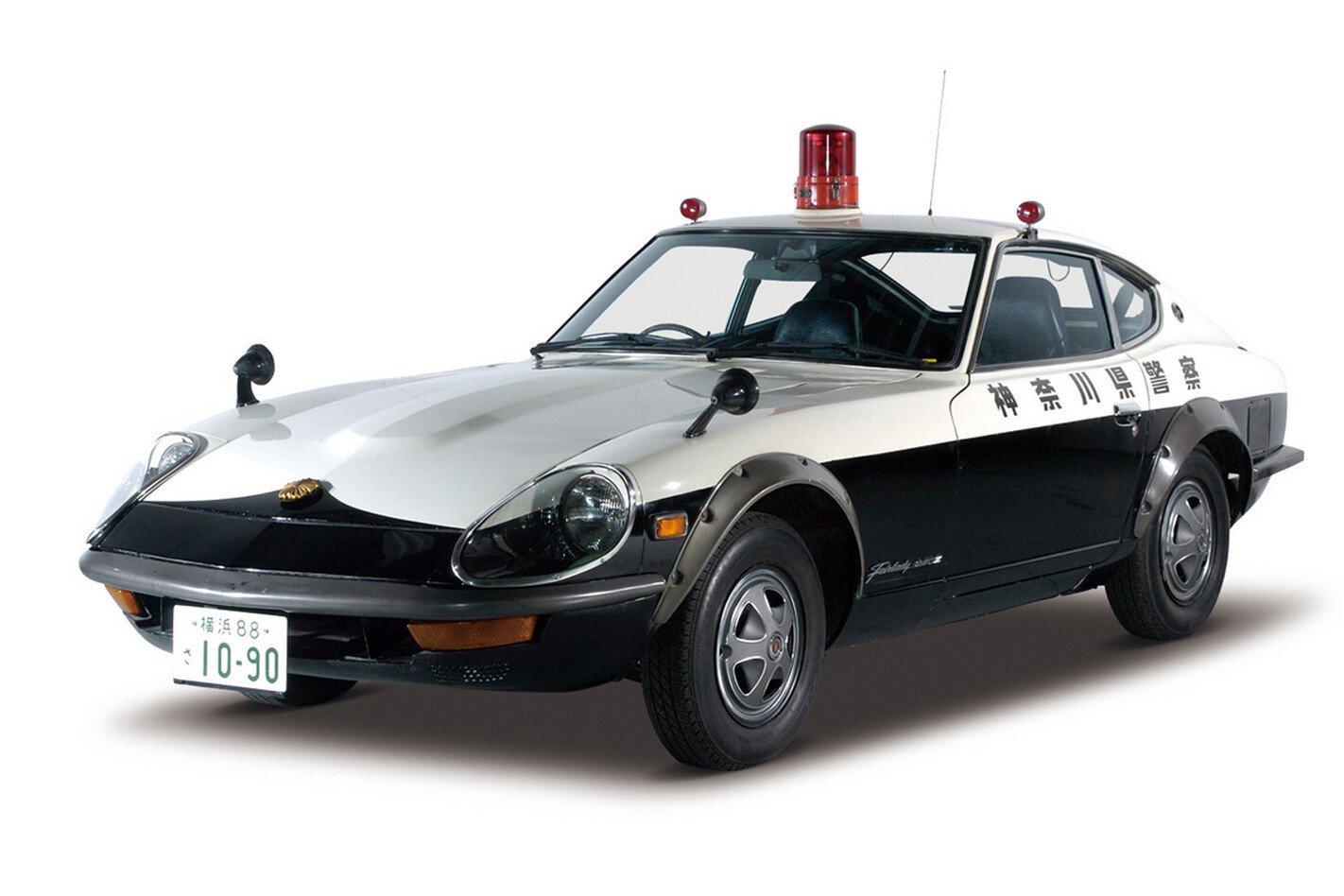
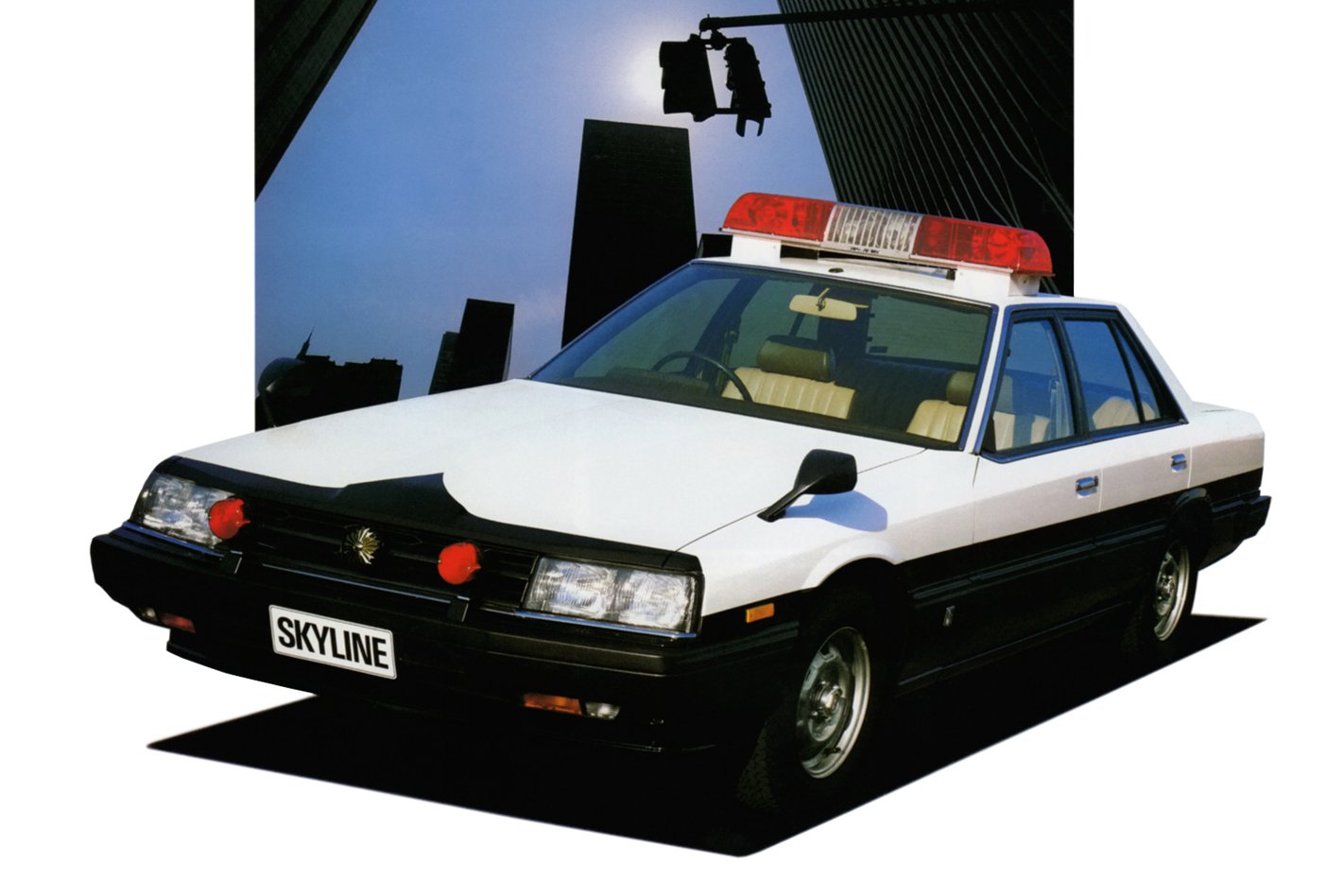
Not long after, this Nissan 240Z signed up, an R31 Skyline joined the fight later still. Not that you can immediately tell their brand with the original maker’s badge replaced by the Japanese national police gold star emblem.
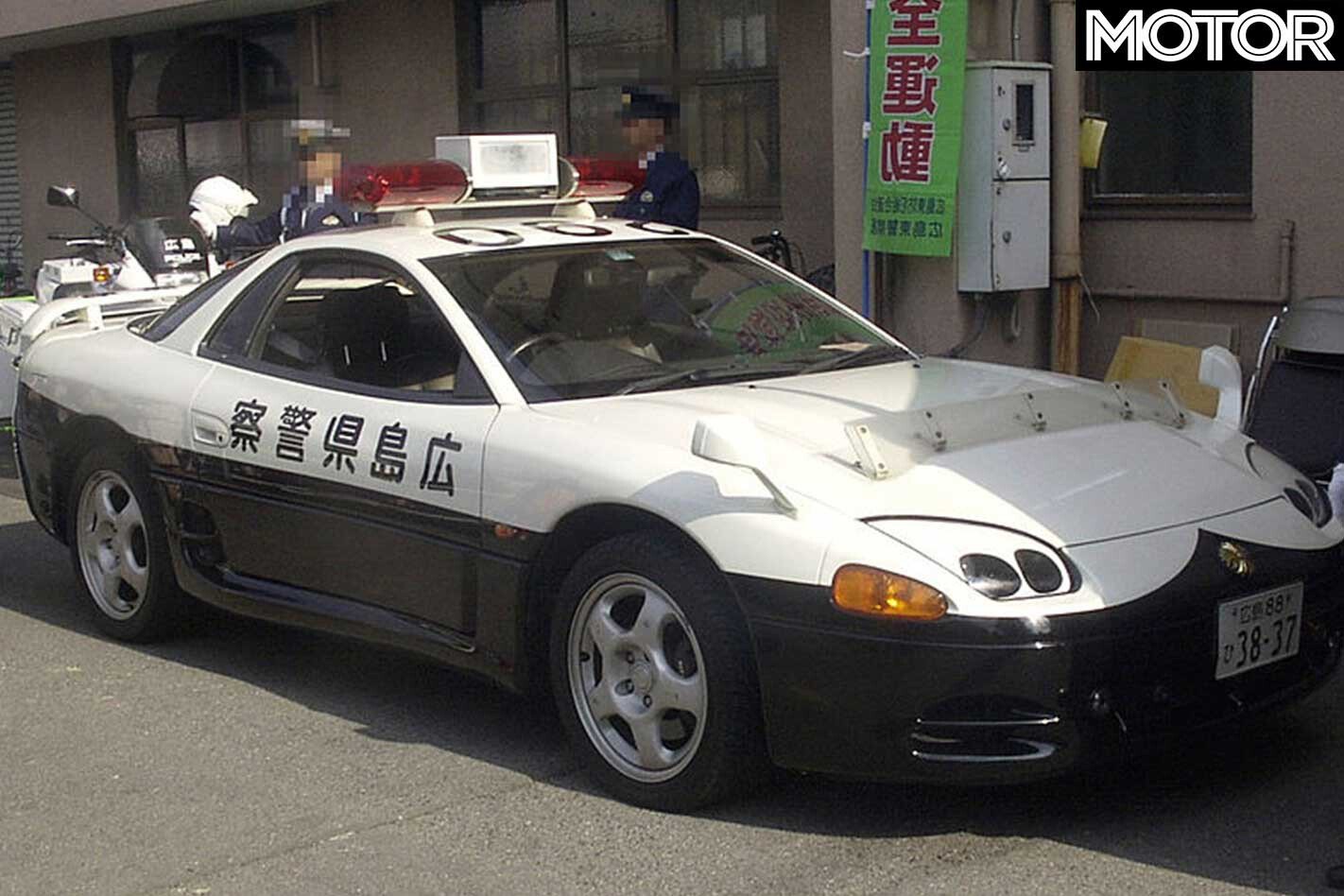
Other brands have lent high-performance hardware to the Japanese crime-stopping effort. Mitsubishi served with its technologically sophisticated 3000GT.
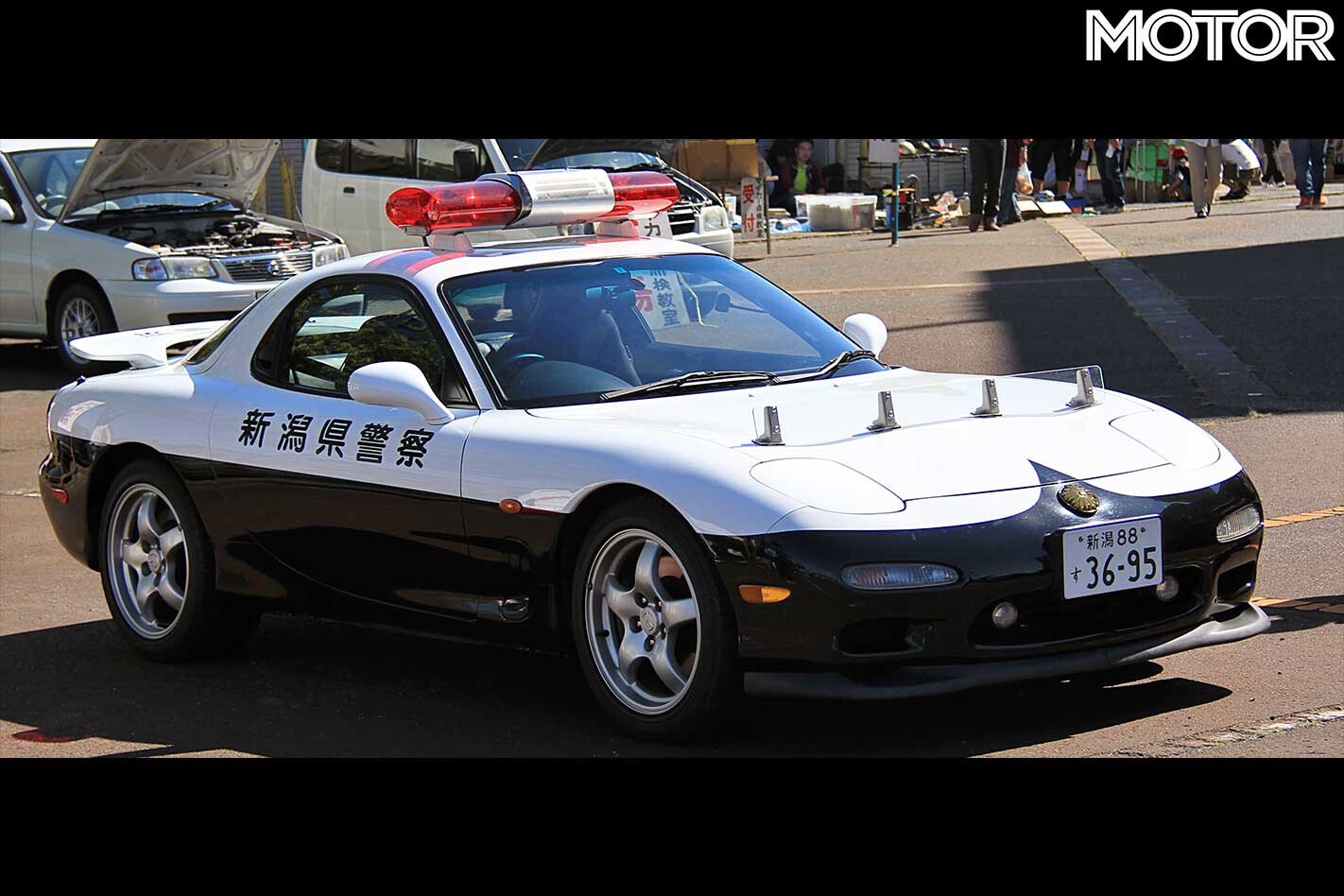
Mazda had a run with its FD RX-7 adding iconic rotary power to chase racers with sequential twin turbocharging and a very capable chassis.
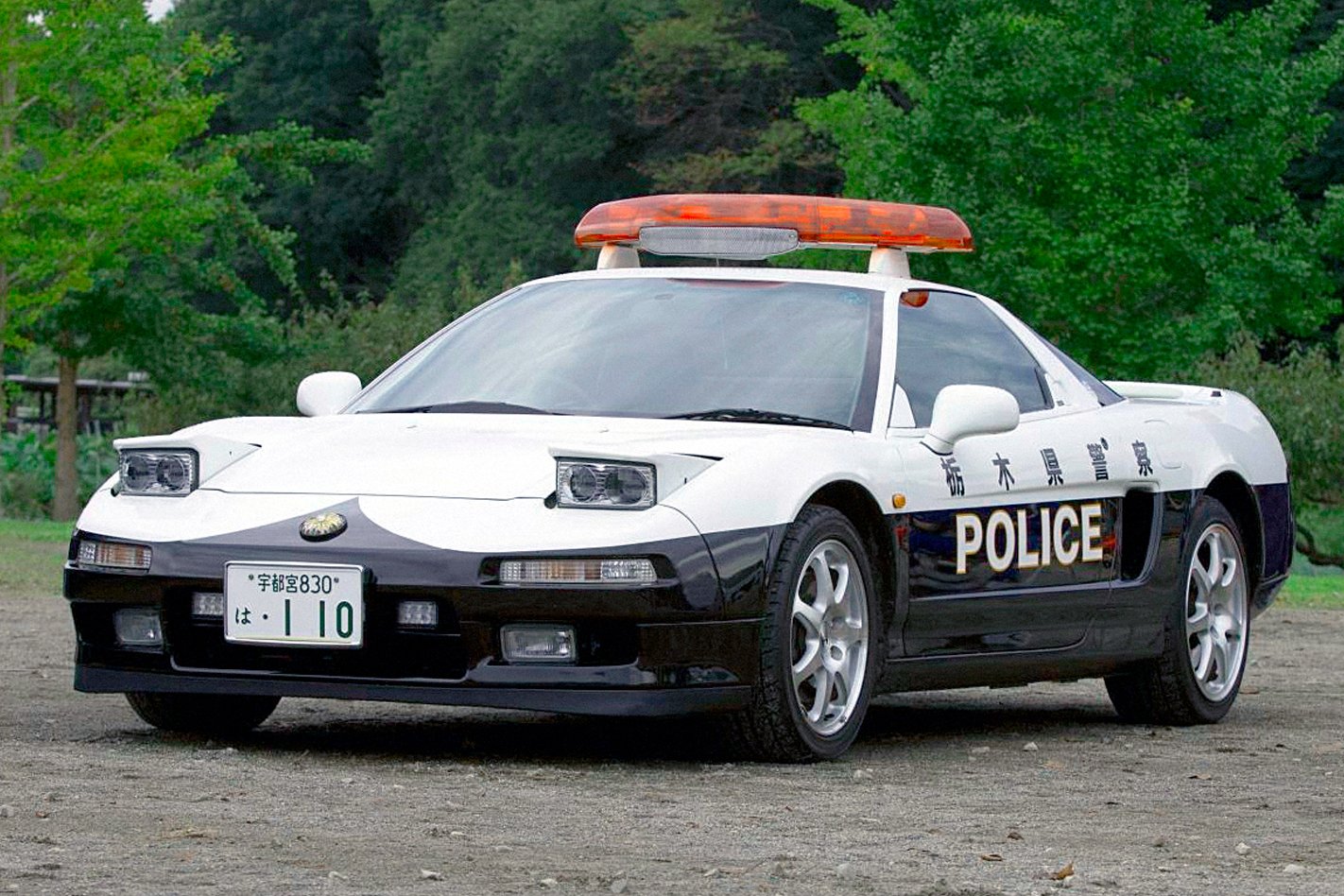
And even Honda did its national service with possibly the company’s most famous performance car royalty – the original NSX mid-engined supercar, developed in part by none other than Ayrton Senna.
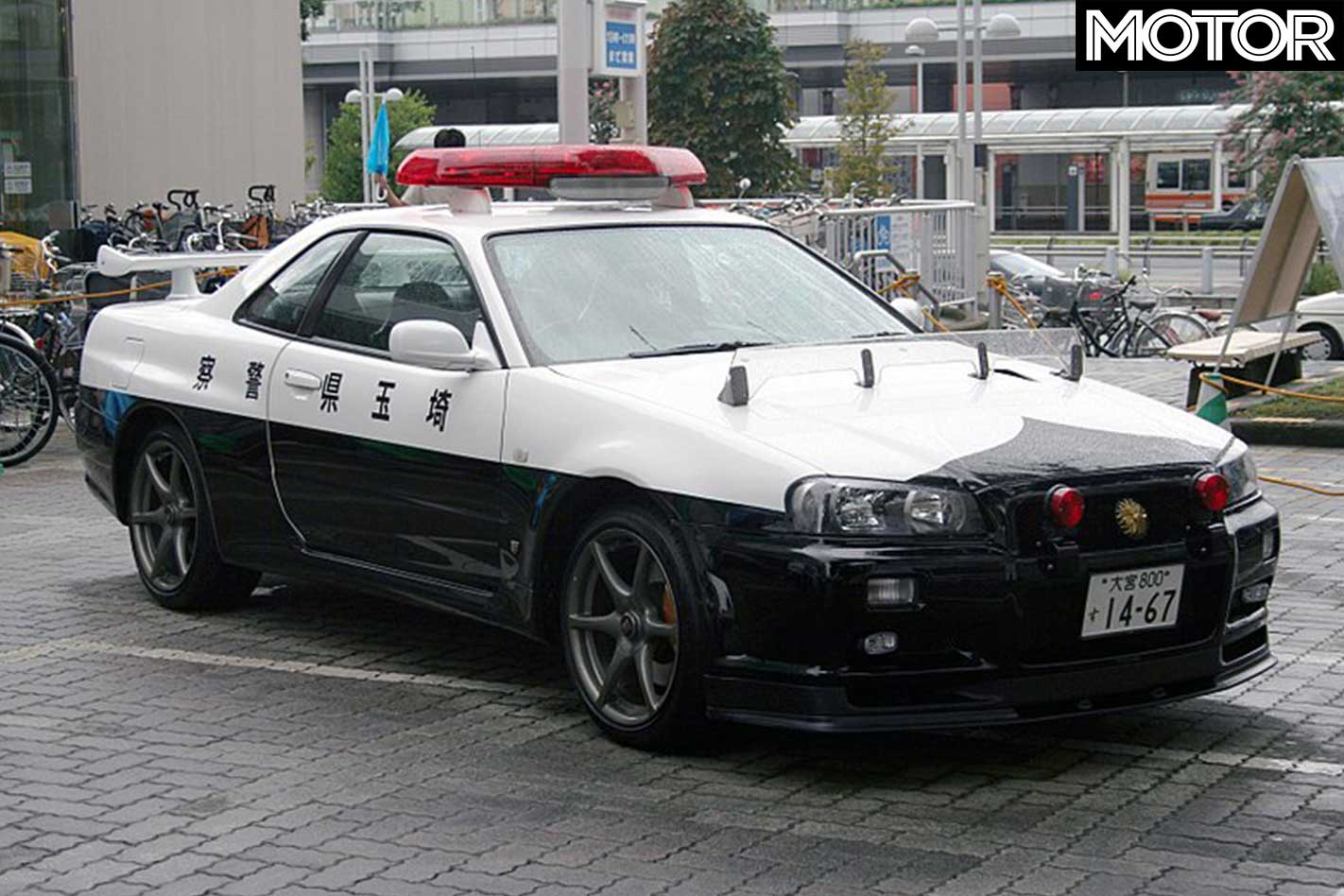
Add to that a Nissan R34 Skyline GT-R, and you’ve got some seriously legendary Japanese metal prowling the streets.
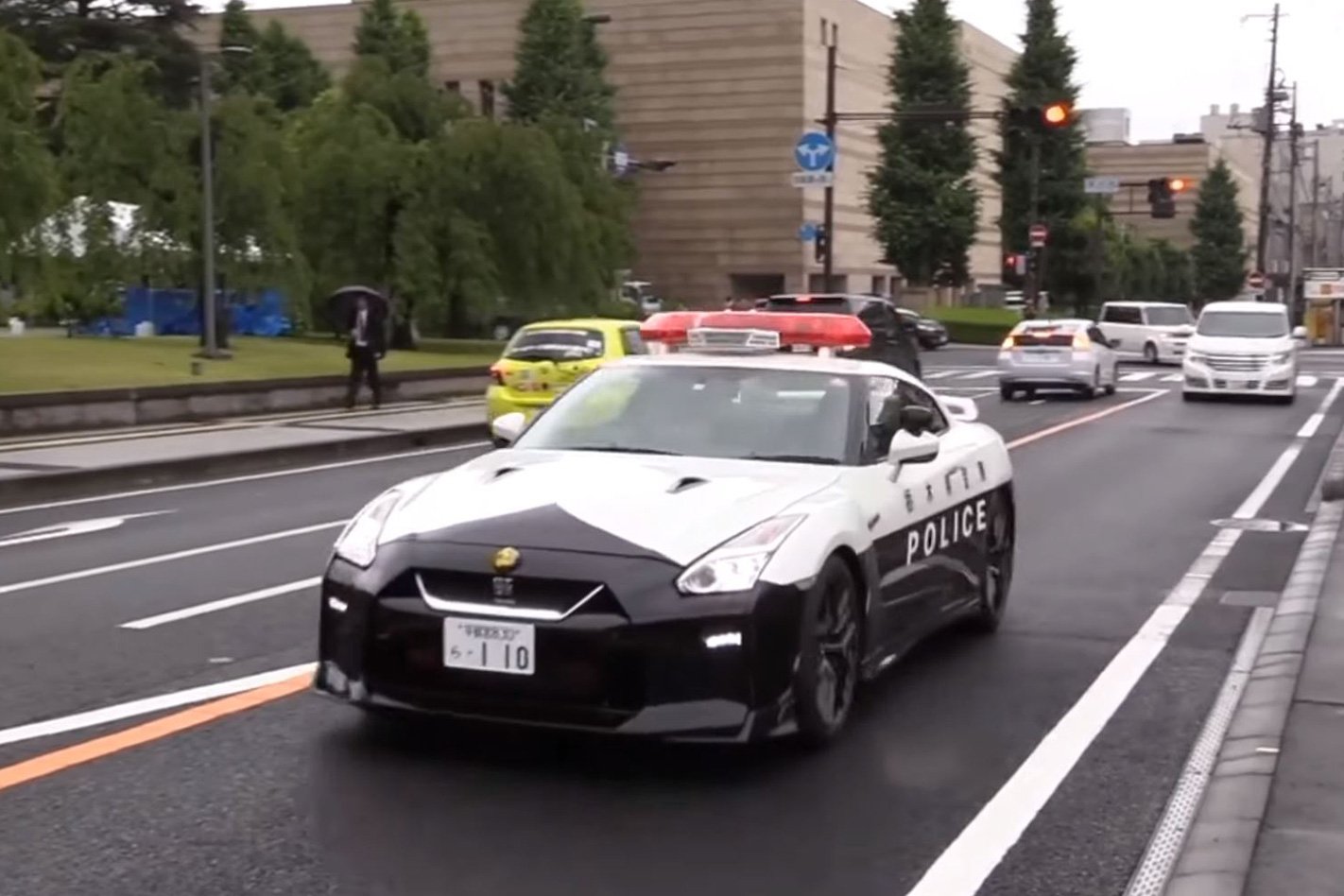
A more modern R35 GT-R has been donated to a prefecture north of Tokyo more recently, followed by a luxo V8-powered Lexus LC500.
But this is a comprehensive collection of the marked law-enforcement vehicles that we know of around the planet. When you’re out on the road anywhere in the world, behave.
You’ll never know if that hot car behind you is one of the incredible police cars that doesn’t give away its identity until it’s too late.
- Dutch F1 ace to join Australian Supercars virtual series
- Verstappen and Shane van Gisbergen are good mates
- Opens the door for more wildcard racers
The young Dutchman is easily one of the biggest names in world motorsport and will line up as a wildcard in the second round of the Supercars Eseries in a Holden Commodore.
Verstappen will compete against Supercars’ best drivers from Australia and New Zealand at Silverstone and Barcelona.
Verstappen’s virtual Supercar will run similar colours to his 2020 Aston Martin Red Bull Racing F1 car.
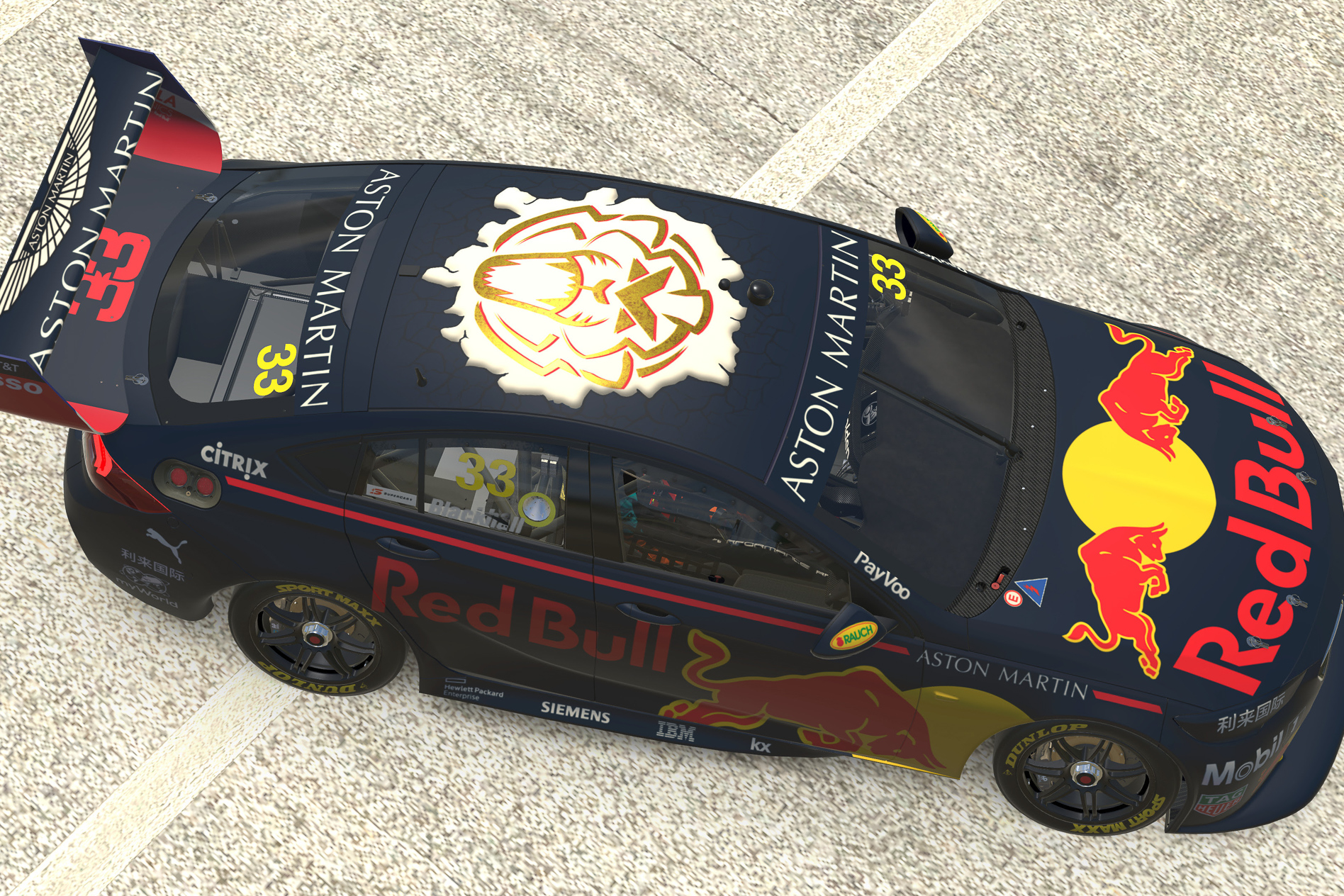
Despite Supercars not being one of his go-to iRacing Series, Verstappen says he’s looking forward to taking on the Supercars drivers this Wednesday.
“I’m looking forward to the race. It’s going to be a challenge as it’s not a car I’ve driven a lot on the sim, but they are pretty cool to watch in real life,” he told supercars.com.
“We always race with Supercars in Melbourne so it’s going to be interesting to see how I get on against all the regular drivers.

“I’ve tried the Supercar now a few times on iRacing and it’s a very tricky car to get right. I’m looking forward to racing alongside my mate Shane, or Pastor, as I call him – he’s a top shunter on the sim!
“We race online a lot together so hopefully we can do well for Red Bull and it should be a bit of fun racing against the other V8 drivers as well.”
Red Bull Holden Racing Team driver Shane van Gisbergen says he’s looking forward to going door-to-door with his online racing friend on Wednesday night.“It’s awesome that a driver of Max’s calibre will be on the grid to take us on in a Red Bull Supercar,” said van Gisbergen, who’s currently holed up in New Zealand under COVID-19 isolation conditions.“He’s fast and he knows these tracks well, so I expect to see him at the front.“He’s put in plenty of hours in a Supercar online. Just like he races in an F1, he’s aggressive and won’t back down against anyone, so it will be great to have him on the grid this week.”
While he is yet to drive one, Verstappen jumped aboard a current-generation Holden Commodore Supercar with seven-time champion Jamie Whincup at Albert Park in an exhibition lap at the Australian Grand Prix in 2019 (below).
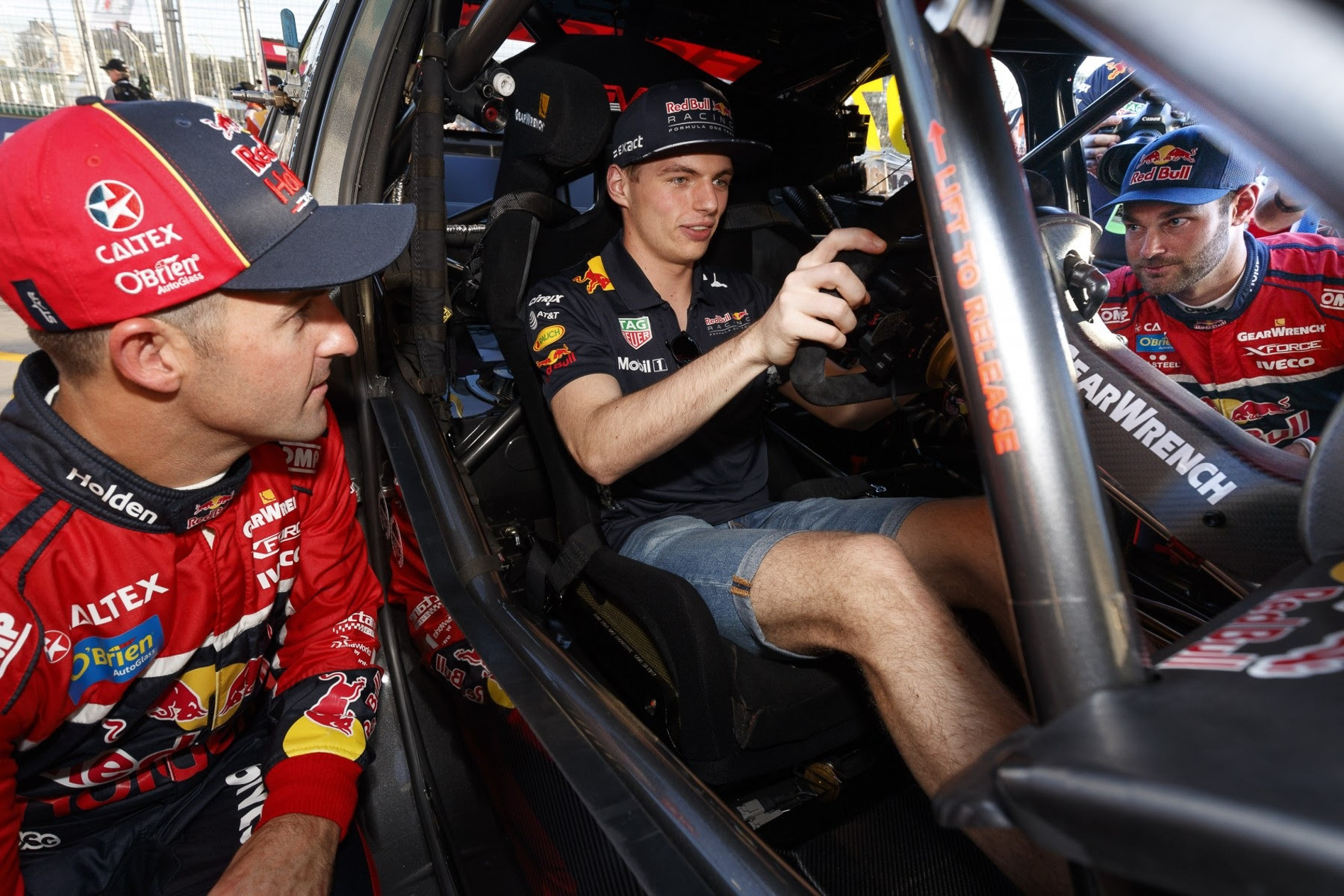
With the announcement that Verstappen will race in the Eseries, the door is now open for other racing superstars to make guest appearances in the series.
McLaren F1 driver Lando Norris is a noted sim racer, and has links to the series via Walkinshaw Andretti United Racing. Equally, DJR Penske can call on the services of racers like Indy 500 winner and multiple champion Will Power, who has acquitted himself well alongside Scott McLaughlin in the virtual version of IndyCar’s 2020 season.
The Supercars Eseries kicked off last week with two races around Phillip Island and two around Monza in Italy. All 25 drivers in the 2020 Supercars series are obliged to compete in the series, unlike F1’s virtual series, which has kicked off to a mixed reaction.
In fact, Verstappen has been reported as saying he will not compete in the F1 2020 series because he doesn’t like the game.
The #33 Red Bull Holden of Verstappen will compete in four races this Wednesday night (15 April); two will be held at at Silverstone and two at Barcelona.
The event will be broadcast live on Fox Sports, Kayo, Sky Sports (NZ) and 10 Play from 7pm – 9pm AEST, while overseas fans can watch on on Red Bull TV.
Australia’s car-manufacturing history is about much more than merely building Holdens and Fords.
Plenty of us forget that this Wide Brown Land previously built models for brands as diverse as Citroen, Datsun, and Jeep.
Here’s a round-up of a dozen of the lesser known models to roll out of Aussie factories.
Datsun 200B
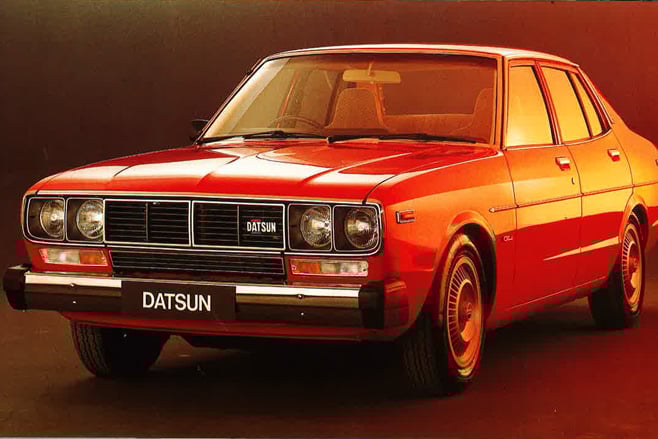
AH, the Datsun 200B. As with all 12 cars featured here, it was produced back in the days when Australia actually made things, yet the 200B goes down in history as an example of what could go wrong when global vehicles had to be altered to meet the old local-content requirements.
The 200B was largely maligned because of the sedan’s locally produced live rear axle made by Borg Warner in Albury. It was fitted in lieu of the Japanese independent rear suspension that made the Datsun 1600 and 180B such awesome rally cars. In all my time at grassroots rallies, I haven’t seen a 200B rally car. People would laugh and then throw rocks.
The 200B launched at the end of 1977, but Wheels archives suggest the car was not a steaming turd. Early on, Datsun offered IRS on the sedan and coupe but the suspension was ill-sorted. Live-axle versions were introduced in late-78 to increase local content, and testers felt it was actually the better car by far.
Even so, Nissan told Wheels at the launch of the 1980 update that it had “tidied up the vehicle’s characteristics”, including vibration, suspension, steering and brakes.
Despite its imperfections, the dull but dependable 200B was a sales success and even led its class until the Sigma knocked it off at the end of the decade.
AUSSIE PRIDE
- The live-axle version handled better than most people think.
IT’S A SHAME
- One of the most boring cars Australia has ever produced.
Ford Mustang

FORD Australia’s most colourful managing director, American Bill Bourke, was always prepared to think outside the square. That’s why, when it came to launching the 1966 XR Falcon, Bourke thought it would be a good idea to import a batch of 400 Mustangs and convert them to right-hand drive for local sale.
Bourke’s idea was to have a Mustang in every Ford dealership, sitting next to an XR Falcon and a sign that read: “The Mustang-bred Falcon”. Ironically, the Mustang was originally based on the Falcon platform, making it a Falcon-bred Mustang.
An initial batch of 48 Mustangs arrived and were converted to right-hand drive at Ford Australia’s Homebush factory in Sydney. These 1965 models were snapped up by keen dealers. The company then brought in 113 of the 1966 models for conversion. The total number was well short of the initial plan because some dealers were not confident they could sell the car.
All the local Mustangs were equipped with the 289 cubic-inch (4.7-litre) V8, wore Australian ID plates and had small metal decals mounted to the door sills that identified them as Australian.
Ford Australia didn’t convert any other Mustangs itself, but it commissioned Ford Performance Vehicles (which it owned in partnership with Prodrive) to convert imported Mustangs to right-hook in 2001 and 2002. Only 377 were produced.
Fast-forward to the current era, and the new-generation Mustang, built as a factory RHD model in the US, of course, has been a smash hit for Ford Australia.
AUSSIE PRIDE
- Theseu00a0very rare converted Mustangsu00a0are worth a mint.
IT’S A SHAME
- Ford Australia only converted 161 of the classic machines.
Hillman Gazelle
YOU might recall that Holden was located on Salmon St, Fishermans Bend, in Port Melbourne, but another car maker used to build cars on the same street.
That company was Rootes Australia, the local arm of the British Rootes Group. After building a factory on the corner of Williamstown Rd and Salmon St in 1946, Rootes became one of the first British manufacturers to set up shop here.
Its Port Melbourne factory assembled Humber, Hillman, Sunbeam, Singer, Commer and Karrier vehicles from CKD kits shipped from England, though production kicked off with the Hillman Minx. Rootes later purchased a 35-hectare site near Dandenong with the intention of building a full-scale manufacturing plant, but the plan never eventuated.
In late 1965, Rootes Australia merged with Chrysler Australia, though Rootes assembly continued in Port Melbourne.
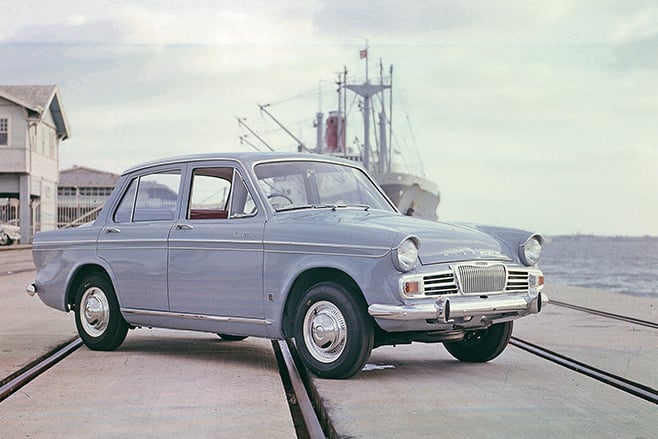
One of Rootes Australia’s more interesting models was the 1966-67 Hillman Gazelle. Mixing an upmarket Singer body and interior with a high-compression, alloy-headed 1725cc Sunbeam Rapier engine, the Hillman Gazelle was a unique Aussie variation on Rootes’ decade-old ‘Audax’ sedan. And it was easily the world’s best.
A robust 63kW gave the four-speed manual Gazelle almost 100mph (161km/h) performance, but it was simply a stop-gap measure before Hillman’s all-new Hunter launched in 1967.
Production ceased at the Port Melbourne plant in early 1973, burying the Hunter in lieu of Chrysler’s Adelaide-assembled Galant and forthcoming Centura.
AUSSIE PRIDE
- Upmarket version of the Minx, with genuine performance.
IT’S A SHAME
- Automatics were slugs; the design was from the mid-50s.
Willys Jeep
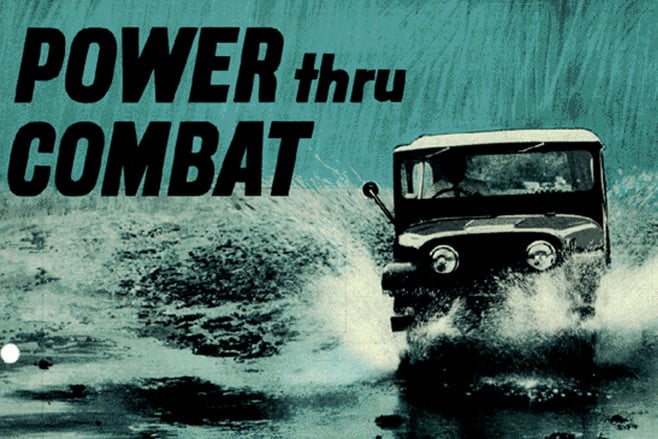
BACK in the 1960s, you could have a Geelong-made six-cylinder under the bonnet of your rugged Jeep, which was produced in Queensland for many years.
The basic Willys Jeep was developed at the tail end of WW2 with post-war administration in mind, thus the CJ designation, which stood for Civilian Jeep.
Some surplus army Jeeps came to Australia, but they were all left-hand drive. Only a few importers saw the appeal of the tough machine, brought them in and had them converted.
Then, in 1958, Kaiser Industries (which owned half of Willys) started producing the CJ3 Jeep at a plant in Brisbane. In 1965, it opened a new plant in Rocklea. Instead of importing the Buick V6 installed in US models, Jeep began fitting the Falcon’s straight-six, gearbox and pedal box to the longer-wheelbase CJ5 and CJ6 models.
This tie-up also led to Ford Australia purchasing the locally made Jeep chassis, which was used as a base for the peculiar XY 4×4 Falcon Ute.
The local Jeep producer started off with about 40 percent local content and aimed to reach 90 percent, but that wasn’t achieved before local production ceased in 1985, when the Australian dollar was floated. Jeep’s subsequent history as an importer was chequered until sales really took off under FCA’s Australian arm in around 2013.
AUSSIE PRIDE
- Go anywhere ability and Falcon grunt. Hurrah.
IT’S A SHAME
- Basic cars for basic folk and hard work to drive.
Renault 12

THE idea of Renaults and Peugeots being produced in the same factory is like pairing up Ford and Holden production, but it did happen right here in Australia. It came about because of Australian government policies aimed at growing the local car-manufacturing industry.
Continental & General assembled a range of vehicles including Peugeot, Citroen, NSU and Studebaker in the Melbourne suburb of Heidelberg West. In 1964, it was purchased by Renault and stopped producing everything else, except for Peugeot models; they continued to be built alongside Renaults in what was, as far as we know, the only place the two brands got into bed together.
Renault increased the number of locally sourced parts it used, in line with local content policy, reaching its peak with the Renault 12, the best known and most popular model the brand has sold in Australia.
It was launched in Europe with a 1289cc four-cylinder engine, but those local content regulations (it’s complicated) meant the capacity was dropped to 1251cc.
The Renault 12 won our 1970 Wheels Car of the Year award and was selling strongly, but controversy over French nuclear testing in the Pacific Islands in 1973 hurt the brand; sales dropped and unions even refused to unload ships with Renault parts.
Renault devoted some production space to building the Cortina wagon for Ford, but the operation was ultimately not viable and the French pulled up stumps in 1981.
AUSSIE PRIDE
- Looked good, had great seats and was economical.
IT’S A SHAME
- Renault was owned by the French government. Alors!
Volvo 200 Series

THE Holden Special Vehicles factory in Clayton, Victoria, didn’t always produce such powerful cars like the Clubsport, GTS, or more recently, Chevrolet Camaro. Back in the day, it was used to make (whisper it) Volvos.
The operation was called Motor Producers Ltd (previously Martin & King) and it began by assembling, then manufacturing, Volkswagen Beetles. As VW’s sales dwindled, production space was loaned to Nissan, then in 1972 a deal was signed to produce Volvos. Nissan took over the plant in 1977 and turned it into a full-scale manufacturing facility before shutting shop here in 1992.
Volvo recognised the potential of its car in Australia, and its local assembly operation ended up producing some 65,000 cars through to 1988.
It started with the 140 series and ended with the 760, but the 240 and 260 are best known to Australians. The big boxes were boring but safe and their customers earned a reputation as bad drivers who wore hats and were also desperately slow (leading to the infamous cry of “Bloody Volvo Drivers”).
The cars also had longevity on their side. Indeed, only five or so years ago, one Volvo Australia executive made a light-hearted suggestion that so many 240s remained on our roads that a bounty was needed for each one taken off in order to improve the brand’s image.
Finally, a fun fact: the second digit in the title refers to cylinders; the 240 had a four, the 260 a V6. Until 1982, the third digit referred to doors; the 245 was a wagon, the 244 a sedan. Then it became a zero.
AUSSIE PRIDE
- Solid, reliable and safer than many cars of its vintage.
IT’S A SHAME
- Itu2019s a box. Did they even have designers back then at Volvo?
Chrysler Royal
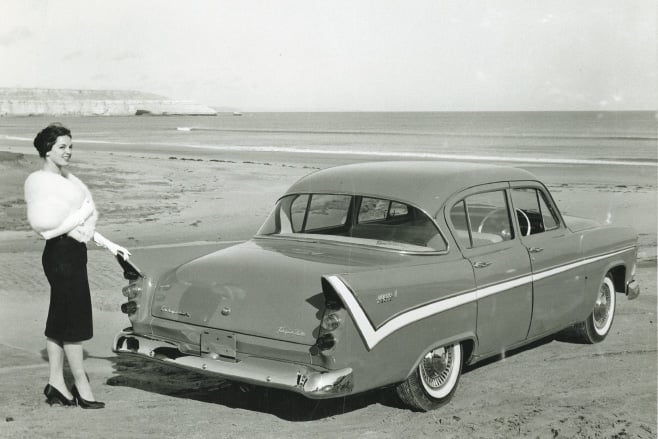
CHRYSLER is best known locally for its iconic 1960s and 70s cars, including the wondrous Charger, but it was building vehicles in Australia long before that. Adelaide’s T.J. Richards made its own bodies for Chrysler vehicles from 1922 until it was bought by Chrysler in 1951.
The new operation began by assembling American cars in Adelaide, but in an effort to remain ‘modern’ while trying to save its pennies, Chrysler decided to develop a local version.
What it did next was not far from Johnny Cash’s fictional song about an assembly worker stealing parts from Cadillacs he built over several years in order to assemble a car at home that he called a ’59-60-61-62 model.
To replace its dated Plymouth, Dodge and De Soto sedans, all of which were derived from the P24-series Plymouth of 1953, Chrysler Australia produced a single model called the Royal.
Launched in 1957, the Royal attempted to marry the ‘Forward Look’ styling of its dramatic US relatives to the frumpy centre section of the old 1953 Plymouth. Pronounced tailfins, a wraparound rear window and a full-width, forward-slant grille did their best to make the AP1 Royal look mod, only to be undermined by its carryover roof, doors, windscreen, bootlid, bumpers, interior and breathless 3.8-litre side-valve six.
The even chromier AP2 Royal of 1958 took the mis-match to a new level, stacking yet another tail fin on top of its existing one, but the final Royal – the 1960 AP3 – was much better, especially as a V8.
With stacked headlights, sharper fins, triple tail-lights and a cleaner grille, it was the car the Royal always should’ve been.
The arrival of Chrysler’s radical Valiant in 1962 buried the Royal six, leaving the V8 version to soldier on until 1964.
AUSSIE PRIDE
- Just look at those fins. And the AP3u2019s awesome tail-lights
IT’S A SHAME
- Too fat. Didnu2019t stop. Didnu2019t corner.
Volkswagen Beetle

MANY Australians don’t know that Volkswagen used to be a serious manufacturer in Oz.
Its factory in the Melbourne suburb of Clayton – later taken over by Nissan and (for now) the home of HSV – was a vast 365,000 square metres, and component suppliers including fellow Germans Bosch, VDO and Hella set up nearby in order to feed the plant. Volkswagen ceased production in 1977, while Nissan produced cars there until it also shut down its Australian production in 1992.
Examples of the German-made Beetle first arrived here in late 1953, featuring a 22kW 1131cc air-cooled flat-four, but in June 1954, Martin & King started assembling them in Clayton from imported CKD kits, complete with an upgraded 27kW 1192cc engine.
A shift in government policy encouraged car manufacturers to increase local content and by 1957 the Beetle was 51 percent Aussie. Volkswagen (Australasia) Pty Ltd was then formed and after some huge investment in the Clayton plant, VW began full local manufacture of the Beetle in 1959.
The following year, the Beetle became Australia’s second-best-selling car behind the FB Holden, and by 1965 it had reached 95 percent local content, but newer Japanese rivals had a crushing impact on Volkswagen sales. To survive, the factory reverted to CKD assembly in 1968 and began loaning production space to other manufacturers.
At its high point, VW’s factory had 40 presses and the largest aluminium and magnesium foundry in the country. The operation exported to New Zealand, New Guinea, Malaysia, Indonesia, Fiji, Western Samoa and the Solomon Islands.
AUSSIE PRIDE
- An iconic design that thrived in Australian conditions.
IT’S A SHAME
- By the late-60s, more modern rivals were outselling it.
Citroën ID Parisienne

ONE of the most beautiful cars of the last century was assembled right here in Australia.
The Citroen ID was a less complex version of the DS, a revolutionary car that stunned the automotive world when it was unveiled in 1955. Launched two years later, the ID lacked the DS’s trick steering, brakes and gear change, but it was still like something from another world.
Citroen originally sent ID kits from France to England, where they were assembled and then shipped to Australia. Then, in 1961, Continental & General signed a deal with Citroen to assemble the ID at its factory in the Melbourne suburb of Heidelberg West.
Most of the parts came directly from France, rather than through England, which led to the sophisticated ‘Parisienne’ tag being added to locally assembled cars. It did use some locally sourced components such as interior trim.
The ID might have been slightly dumbed down in order to make it more affordable than the expensive and luxurious DS, but it was still brimming with cutting-edge technology for the time. It shared the DS’s unique hydro-pneumatic suspension system that used hydraulic lines that filled small spheres on each corner of the car with gas.
Changing federal government policy encouraged companies to switch to full local manufacture, but that didn’t suit Citroen’s local assembly model. As a result, the last Australian ID was assembled in 1967 and the factory continued to make Renaults and Peugeots, so the smell of cheese remained.
AUSSIE PRIDE
- It was beautiful, practical and rode like a dream.
IT’S A SHAME
- Brakes, steering and suspension could all fail if the single belt came loose.
Chevrolet Bel Air

NOTHING says ‘America’ like a 1959 Chevrolet Impala or Bel Air with their wild fins and outrageous cat-eye tail-lights. However, the beautiful Bel Air, along with several other GM products, was also assembled by Holden in Australia.
Holden continued to import and assemble GM product after it introduced its own model in 1948, along with some Vauxhall models from Britain, and decided to make a bigger effort with the 1959 Chevrolet and Pontiac models, which represented a big step forward.
It wanted to offer a high-end luxury model at a reasonable price, and the Chevrolet product was perfect, so long as the company avoided high import duty by assembling it locally.
Holden sourced the parts from GM North America and the bodies were assembled and painted at its Woodville plant in South Australia. They were fitted with Holden-sourced interiors and coated in the same paint colours as their contemporary Holden siblings.
The bodies were then delivered to one of five Holden assembly lines dotted around Australia (Melbourne, Adelaide, Perth, Brisbane and Sydney) and mated to the chassis.
The 1959 Bel Air, with its four doors and thin central pillar, was the first car available here with a two-speed automatic transmission (which had been available in the US for nearly a decade) and ran a 3.9-litre Blue Flame in-line six. V8s came later.
AUSSIE PRIDE
- One of the most stylish American cars ever.
IT’S A SHAME
- Handling wasn’t good on its narrow-tracked chassis.
Mercedes-Benz 220S
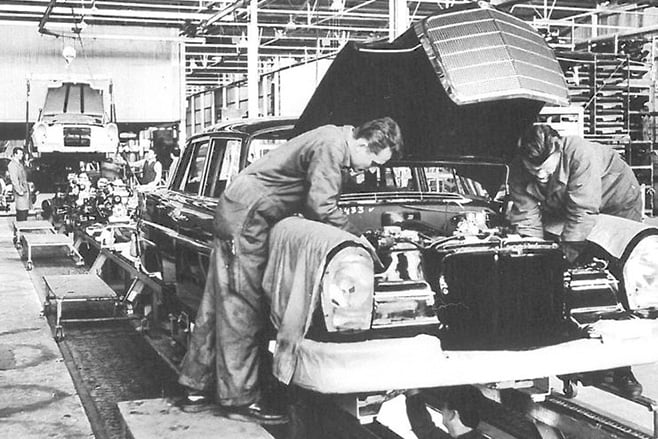
FEW modern Mercedes-Benz owners could imagine the vaunted three-pointed-star brand built cars in a Melbourne factory that also assembled Toyotas and tractors, but it did. And it built 7500 of them.
With Canberra introducing heftier taxes for wholly imported cars in 1953, Mercedes decided to assemble its cars locally. It teamed up with Standard Motor Company, which was based in Port Melbourne and was making a living assembling British Standard and Triumph models.
Mercedes sent most of the parts from Germany in a kit, with the engine and gearbox bolted together, ready for assembly. Some local components were sourced, including interior trim, batteries and tyres.
The cars were painted in Melbourne, and customers could choose from blue, green and black, or three shades of grey. A grey Mercedes? Some things never change.
The old round-shape Ponton series (German for pontoon) was available with a choice of four-cylinder or six-cylinder engines. The upgraded 220S, which Victorian Premier Henry Bolte helped launch in 1959, was fitted with twin Solex carburettors so it cracked the 100hp-mark (75kW) and was also good for 100mph (161km/h).
Standard Motor Company (which changed its name to Australian Motor Industries in 1958 and ultimately morphed into Toyota Australia) also made money assembling Triumphs, Ramblers, Toyotas and even tractors. At its peak, it employed 1600 people.
Unable to meet higher government local-content quotas, Mercedes-Benz switched to full importation in 1965.
AUSSIE PRIDE
- Large and graceful prestige car made in Australia.
IT’S A SHAME
- Build quality wasnu2019t up to German standards.
Rambler Javelin
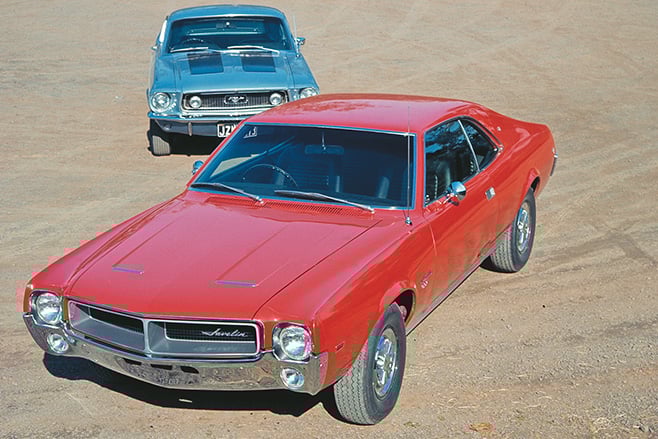
ONE of the rarest Australian-built muscle cars is the Javelin, from American Motors Corporation, a car best known for its exploits against the Mustangs and Camaros in the incredible US Trans-Am race series.
AMC produced kits in the US, shipped them to Port Melbourne and assembled them at the Australian Motor Industries factory not far from Holden’s headquarters. The Javelin and all other AMC models were sold here under the Rambler brand.
The Javelin coupe sold here for about $7500 in 1968, which was almost double the price of the XT Falcon GT and Holden Monaro GTS 327 at the time.
The top-shelf models ran a 343ci (5.6-litre) V8 engine hooked up to a three-speed automatic transmission.
AMI also produced the Rambler AMX, Hornet and Matador models – and one prototype of the Gremlin hatch, a quirky small hatch with a six-cylinder engine. This right-hand-drive car was recently shipped back to the US and fully restored by an American AMC fan.
The kits for Australia were produced at AMC’s Kenosha plant in Wisconsin, but certain parts were left out so they could be sourced locally in order to earn tax benefits under rules that encouraged local component production. They were painted in the US, which meant no unique Australian colour schemes. AMI sourced seat trim, carpet and a few other minor components from local suppliers.
Roughly 250 Javelins were built in Australia from 1968-72 and Rambler production at the Melbourne plant finished in 1978.
AUSSIE PRIDE
- Itu2019s a snorting two-dooru00a0V8 muscle car.
IT’S A SHAME
- It cost almost twice as much as a Monaro GTS.
So we move into another week of our ‘new normal’, but I reckon we are doing it under clearer, bluer skies!
WhichCar is putting together a more comprehensive story that you’ll see later in the month around how much less pollution has been produced while we’ve all been grounded – but some early numbers make for interesting reading.
For example, the Australia Institute reckons that 10 million tonnes of CO2 could be kept out of the atmosphere around Australia this year just in the reduction of jet travel alone, thanks to the coronavirus.
This amount matches the drop in CO2 emissions from the global aviation industry – reductions of just five per cent in February and 10 per cent in March – you can just imagine what the April figure is going to look like.
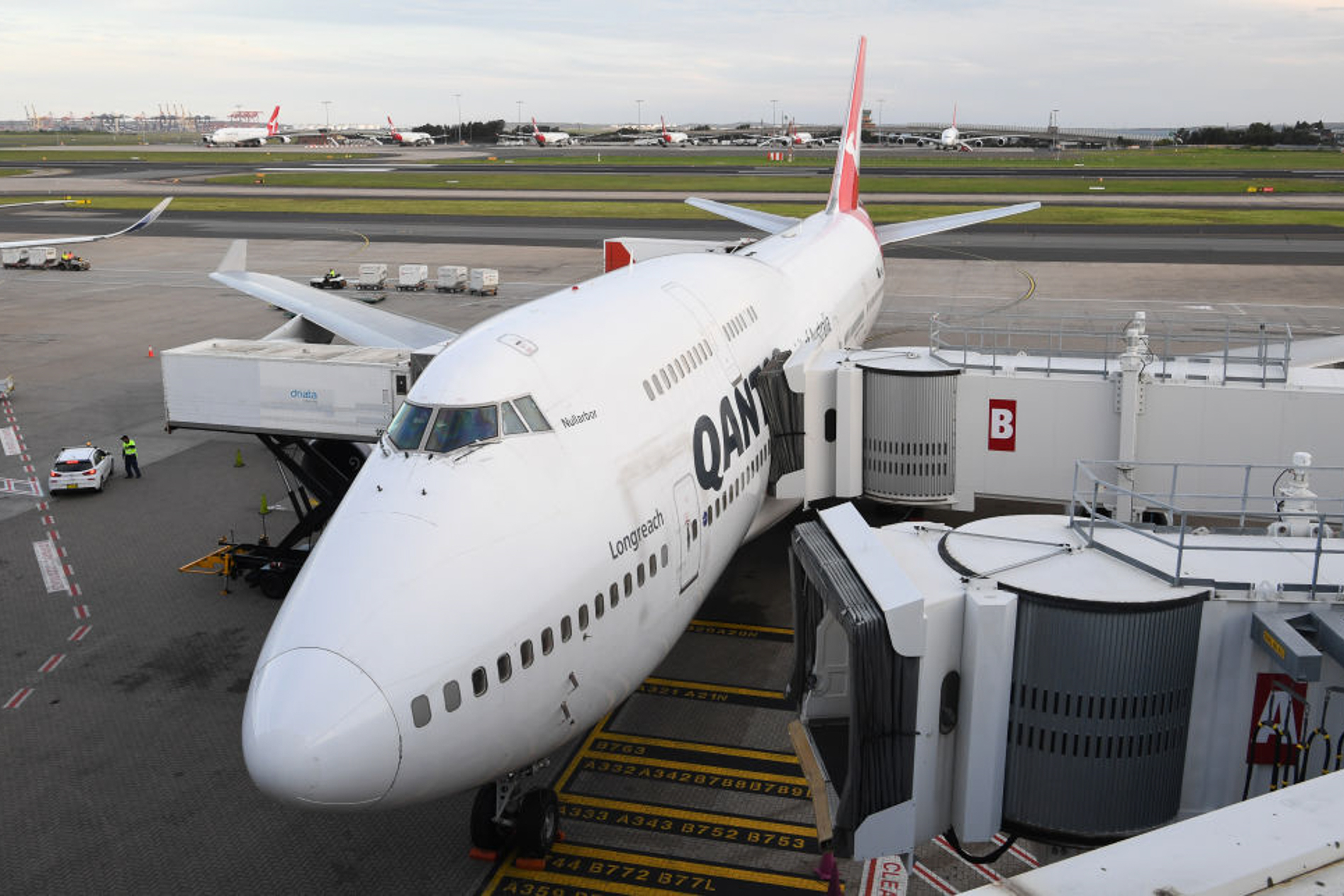
This 747 flight on March 29 marked the last international landing for Qantas
Locally, aviation makes up just seven percent of total annual transport emissions of around 96-100 million tonnes of CO2, with road transport accounting for about half of that figure, and private cars half of that again.
As well, levels of nitrous oxide – the most lethal component of vehicle emissions – are on the decline in countries like Italy and China in the wake of travel restrictions.
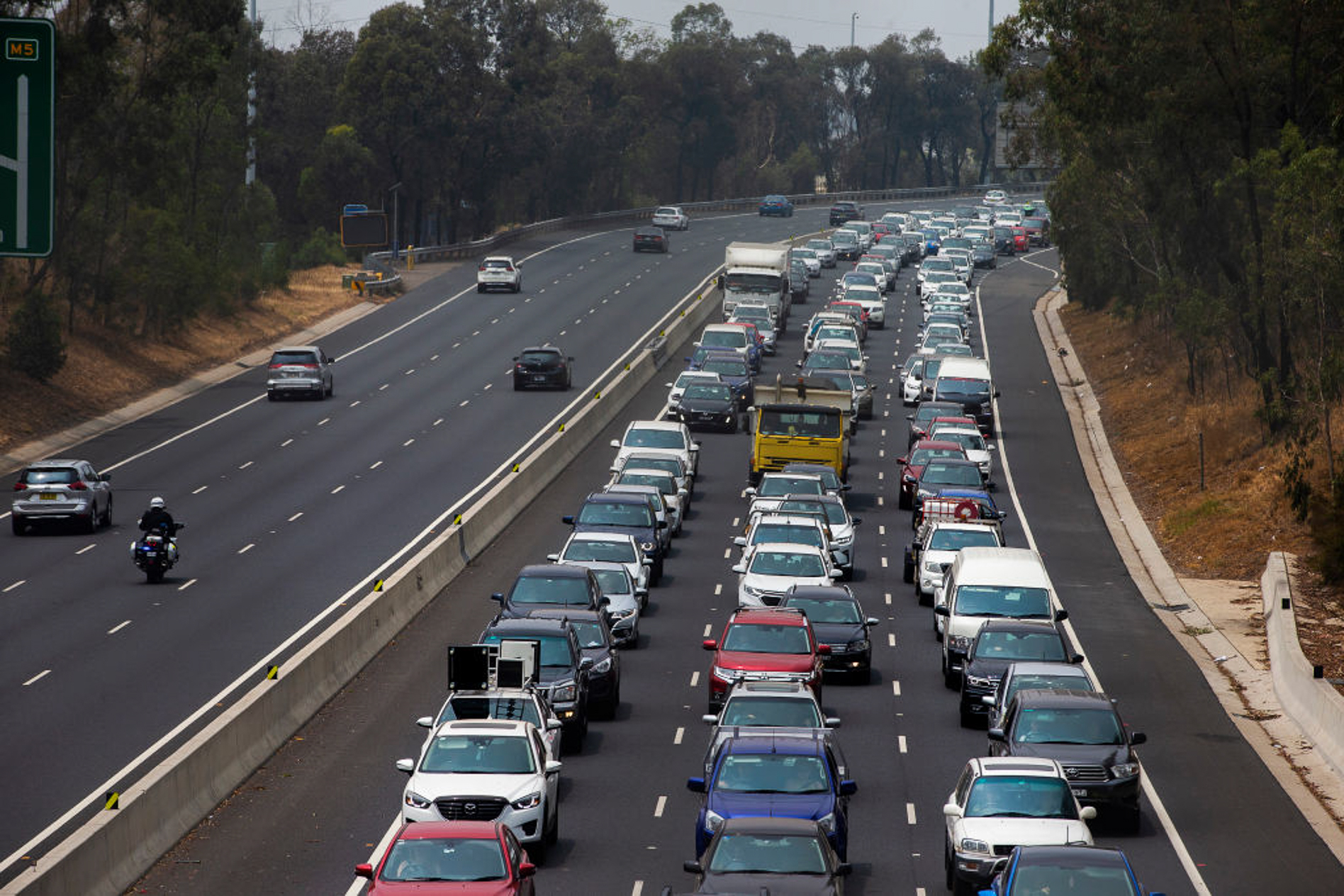
Thanks to the coronavirus, Australia has seen air travel come to an almost-dead stop – Virgin, for example, is down to one flight between Sydney and Melbourne a day, down from something like 16 – and so it follows that car commuting figures will be down by similarly vast amounts as those who are able to work from home.
Sure, there will be some offset with an increase in commercial deliveries, but a critical mass of car users aren’t using their vehicles anywhere near as much at the moment.
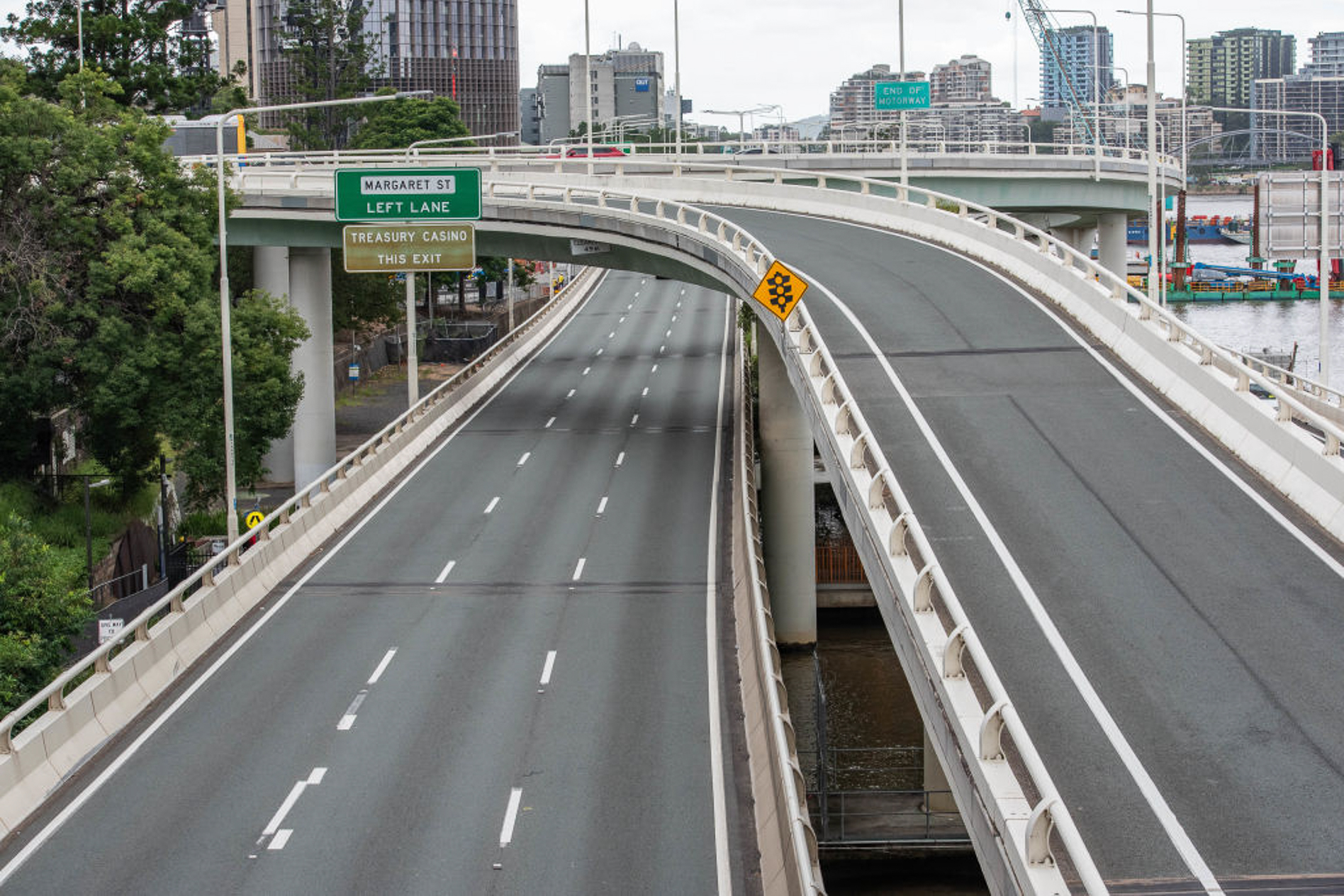
By the end of the pandemic phase of COVID-19’s spread, it’s not unreasonable to suggest, then, that passenger car emissions could be reduced by as much as 20 million tonnes this year alone. That’s a pretty significant number.
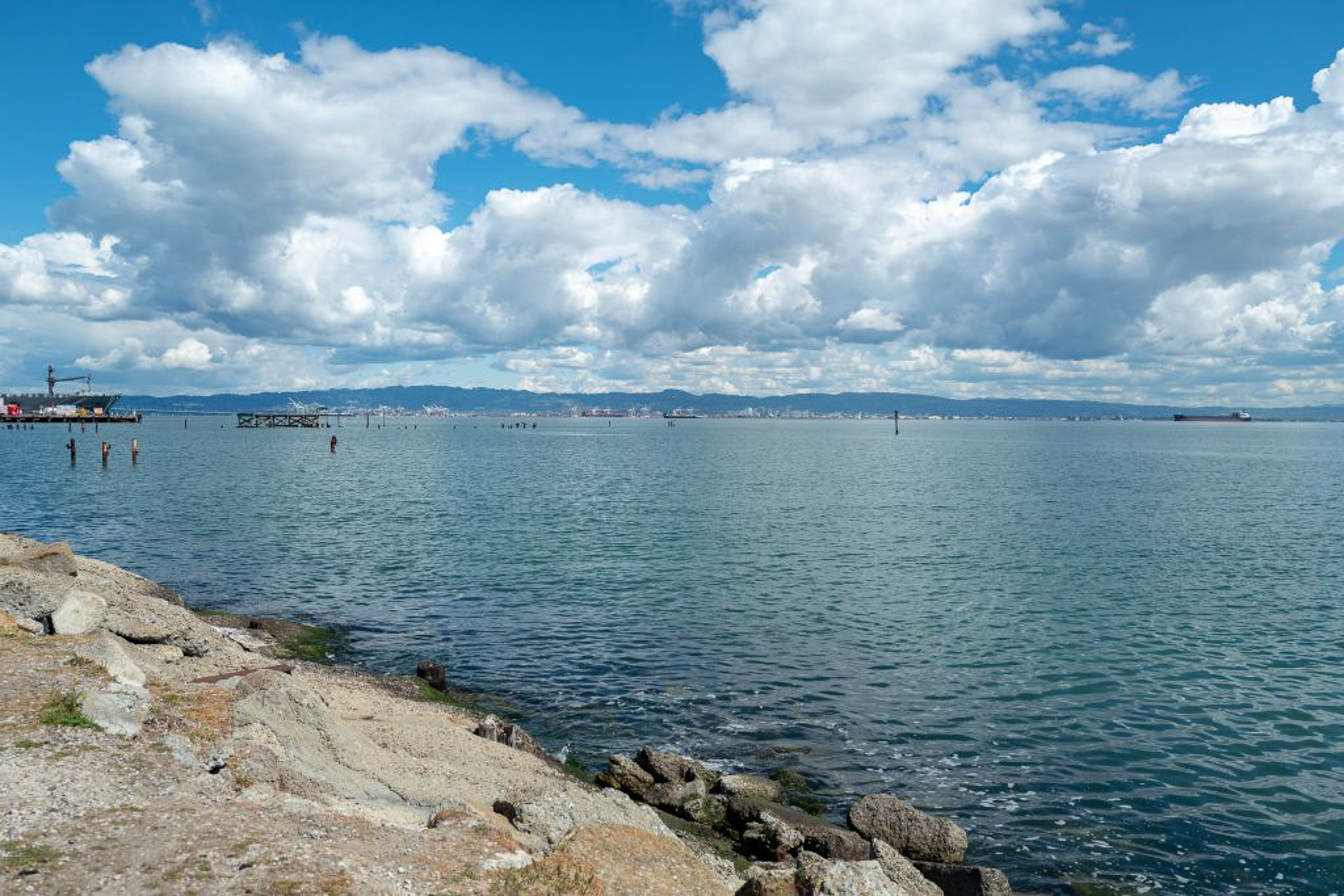
Shots from around the world show skylines that haven’t been blue for years, including San Francisco (below), Dehli and others.
At the very least, it should throw a spotlight on the fact that Australian vehicle CO2 outputs are pretty high, and haven’t come down significantly for a decade. Currently, the CO2 average across the Aussie carpark is still around 180g/km… and it was 190g/km in 2010.
And it also suggests to me that this event may be a catalyst for cleaner technologies like electric cars.
Yes, the arguments around lack of infrastructure and consumer desire still exist – and the fact of the matter is that not everyone is thinking ‘new car’ at the moment.
But this could be the very opportunity that the EV movement needs; a pause for thought, and a genuine chance to put forward a compelling argument for EVs in what will undoubtedly be a different world once this particular pandemic settles into the background.
Speeding fines. Parking fines. Defect notices. Cameras to catch you using your mobile. State governments pretty much have one way of enforcing the road rules, and that’s the stick: step out of line and you catch a whack, either cash or points or both.
It’s been that way for so long that it’s sort of jarring to be reminded that there’s another way – the carrot instead of the stick.
And by carrot I mean milkshake, for those among us who would rather be hit with a stick than eat carrots. Replacing carrots with milkshakes is not only an awesome cooking hack, it’s also how they reward drivers in Philadelphia, Pennsylvania.
Philly is trialling an app that rewards you for every minute you drive without looking at your phone, and the rewards include free milkshakes. As soon as the app detects that you’re in your car and doing over 15km/h, it launches and starts tracking your phone usage. Leave your phone alone and you gain points. Use your phone and you lose points. Get enough points and you can claim a free milkshake!
The app is regrettably called ‘This App Saves Lives’, which is sort of like renaming Google ‘This App Finds Porn’, or Facebook ‘This App Broke Democracy’. But the terrible name doesn’t even matter, since the app itself is paying you not to look at it. Paying you in free milkshakes!
The name will eventually become cruelly ironic when all the law-abiding citizens in Philly die of diabetes from endless free milkshakes, leaving only compulsively tweeting outlaws, who will all crash into each other until everyone is dead and the whole city becomes a ghost town filled with wolves gorging themselves on abandoned cheesesteak hoagies. But hey, that’s months away.
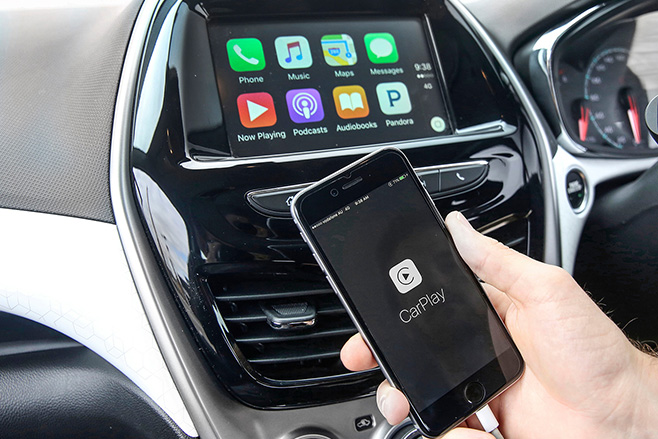
(The app also has some way of telling whether you’re gaming the system by using the app on the bus. But let’s be honest, riding on a bus is its own punishment.)
You can earn milkshakes while still using your phone to run GPS, play music and take hands-free calls – you just can’t touch it. Which is pretty much how I use my phone all the time, since I’m too old to floss the tiktoks in the meme cloud, even when I’m out of the car.
Anyway, it makes one wonder if the carrot method (henceforth known as the milkshake method) would be a better fit for Australian drivers than the stick, since it incentivises you to drive more boringly – I mean, safely – all the time, instead of in short bursts.
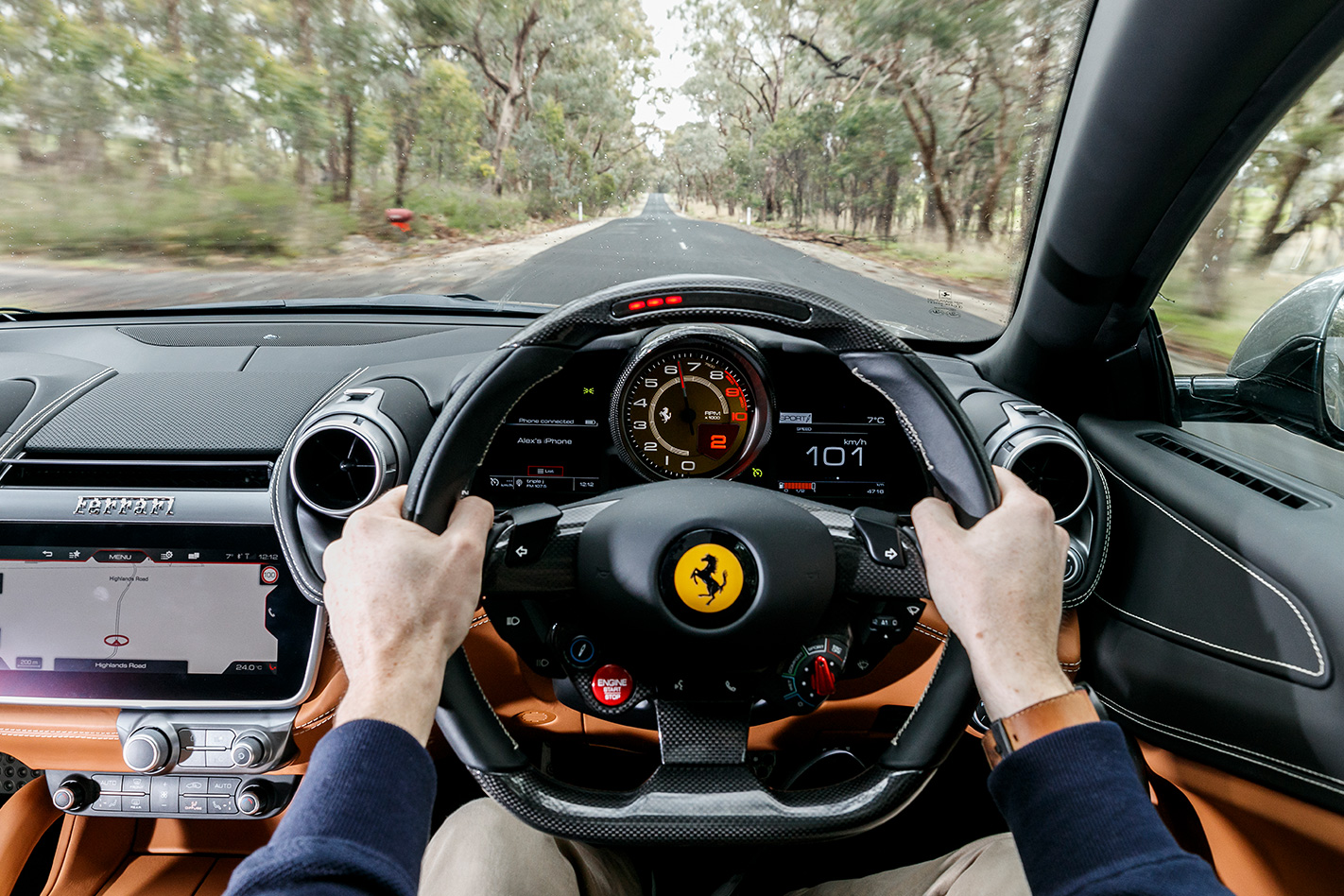
Preventing accidents and saving lives is an important, noble and worthwhile goal. But every time a state government announces some new crackdown, or installs additional cameras, or lowers the speed limit to below walking pace, there’s always the sneaking suspicion that they have their eye on upgrading their government cars to BMWs, instead of spending all that extra lucre on hiring more nurses or actually paying fire fighters or whatnot.
So consider this an unofficial referendum: would you work harder at sticking to the road rules if you got something for doing it, instead of shelling out when you got caught? Would you stay off your phone while driving for a milkshake? Would you stay under the speed limit if you got discounted petrol after a week of no speeding? Would you remove the ‘family stick figures’ stickers from your rear window in exchange for everyone not thinking you’re a knob?
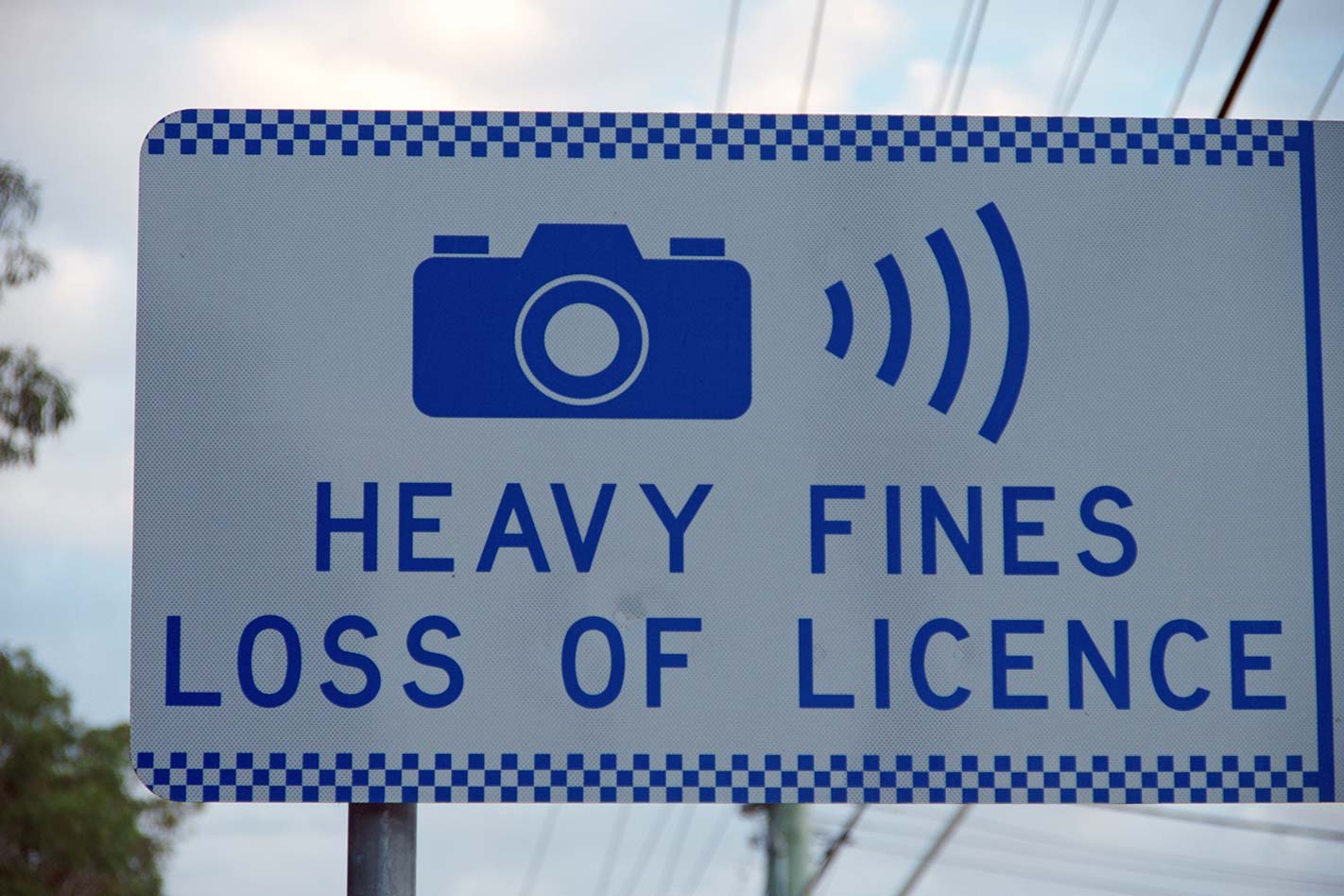
And while we’re flipping from the negative to the positive, how about having merit points instead of demerit points on your licence? Do the right thing for a period and you get a merit point. Get 13 merit points and you get a whole new licence, with a whole new name and identity, which you can use to flee your old life and start over in the tropics and forget the awful mess you made of everything.
So tell us. Would you speed less if you were rewarded with milkshakes? Or cheap petrol, or a new identity? Anything except actual carrots.
Ugh. Carrots.
Bathurst 1976 is better remembered for the racing comeback by Jack Brabham and Stirling Moss than Bobby Morris and John Fitzpatrick’s victory.
The build-up to the return to motor racing by Australia’s first world champion and the English legend Moss – surely the greatest driver never to win a World Championship – whipped the international press into a frenzy. For once Brock and Moffat were relegated to minor roles.
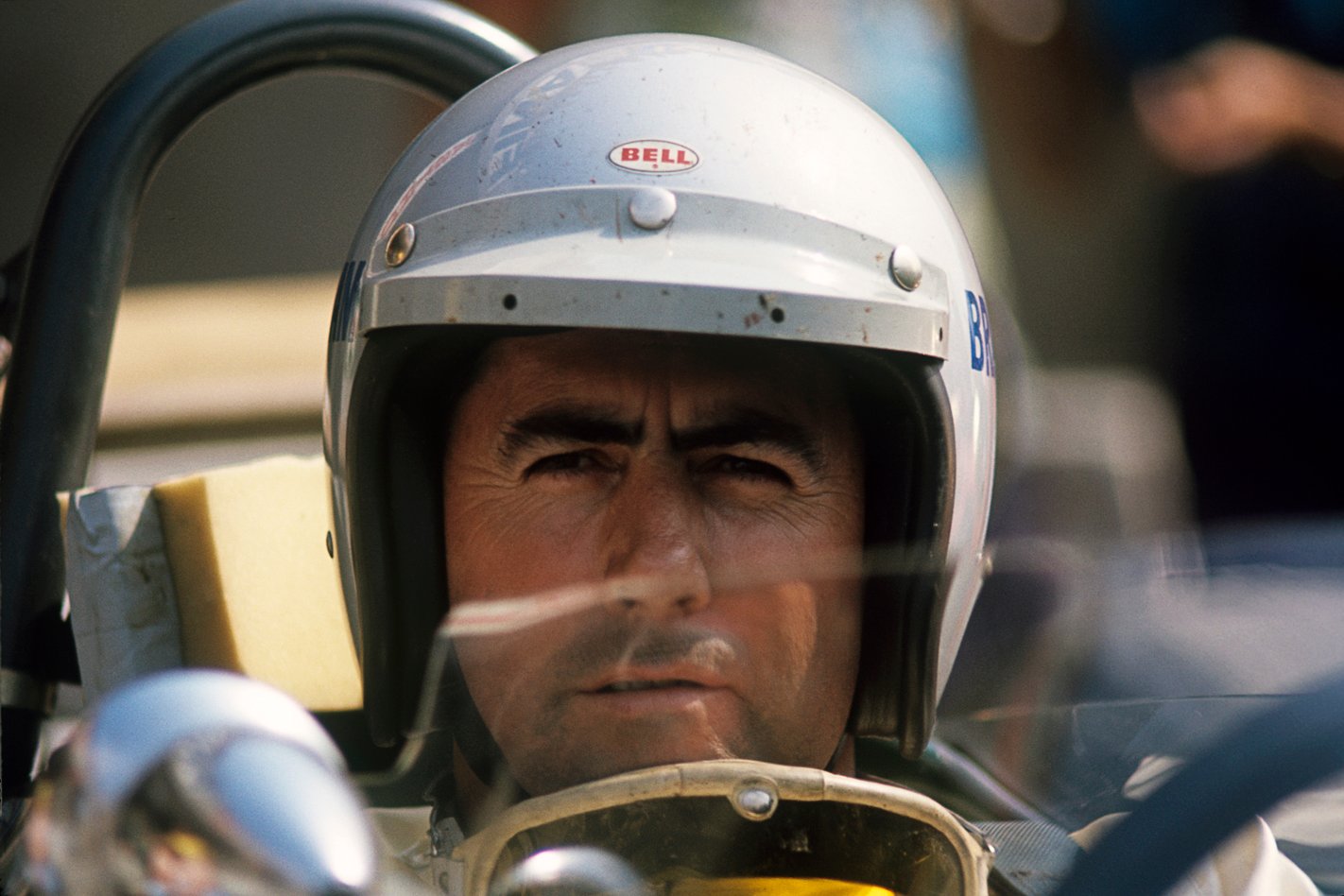
In perhaps the greatest anticlimax in Australian motorsport, the dream team’s race effectively came to a violent, shattering end when, on the starting grid, Brabham realised the gearbox on their Torana L34 was jammed.
As the leading cars streamed away up the mountain Brabham was left sitting in the middle of the track before, whack, he was hit from behind by a Triumph Dolomite Sprint. Bathurst, it seemed, had come to an end for both cars before it had started.
Moss sat disbelieving on the pit counter with Betty Brabham, his face wearing the despairing look of a man who’d lost everything. Or maybe not.
When news first leaked out that Gabriel Szatmary of Chequered Flag magazine had lured Moss to Australia for the race, who wanted only Brabham as his co-driver, I knew their comeback was perfect material for a Wheels feature.
Moss had not raced since his terrible accident at Goodwood, England, in 1962, which had forced retirement. Brabham retired at the end of the 1970 F1 season when, with a little luck, he might have won a fourth world title.
Sceptics greeted the news with laughter and claimed it was a publicity stunt. When it became clear that the two heroes really were going to the Mountain, enthusiasts divided into two camps: some worried that the Golden Boy of the 1950s would tarnish his reputation, others believed the Moss/Brabham team were potential winners.
Either way, photographer Warwick Kent and I decided to spend race day shadowing the two drivers.
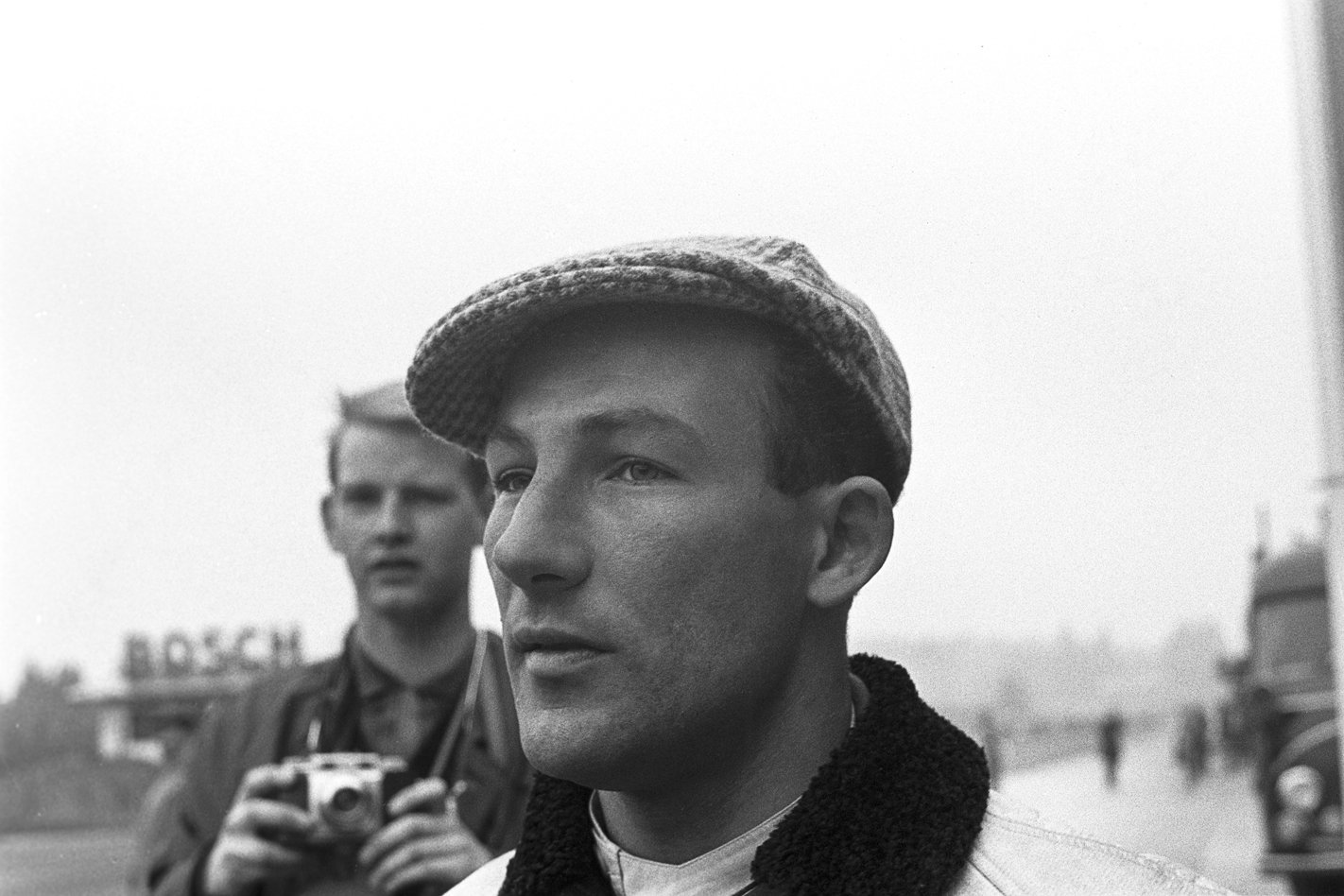
After missing out on Johnny Harvey’s race-winning Torana, another L34 Torana was found, but preparation only began three weeks before the race. Moss spent time at Oran Park learning the car and, more importantly, the modern tyres.
Accustomed to skinny treaded tyres that allowed his F1 cars to be thrown around, Stirling had trouble finding the limits of the slicks’ adhesion.
“On the slow corners, I have the courage,” Moss said, candidly. “But my threshold of fear is much lower than it was.”
So to Bathurst, a circuit he compared to Sicily’s Targa Florio. “It’s like a poem,” he said. “I don’t try to learn the whole thing at one time, I learn it line by line.”
Brabham eventually put the L34 10th on the grid. Then came the dramatic hit.
“I can’t wait 15 years for the next time,” Moss told me, fighting back the tears. “I’m too old. It took me 15 years to do this.”
As Jack and Betty hurried to their caravan, I asked if he would try again. Brabham snarled, “I wouldn’t have a clue.”
“Jack,” said Betty in the understatement of the day, “is pretty upset.”
Then word drifted back that the team believed the car could be repaired to re-join the race.
Sure enough, three hours later, pressure off, Brabham went out. Thirteen laps later it was Stirling’s turn. Eventually, Moss was into a competitive groove, but after 22 laps the V8 dropped a valve.
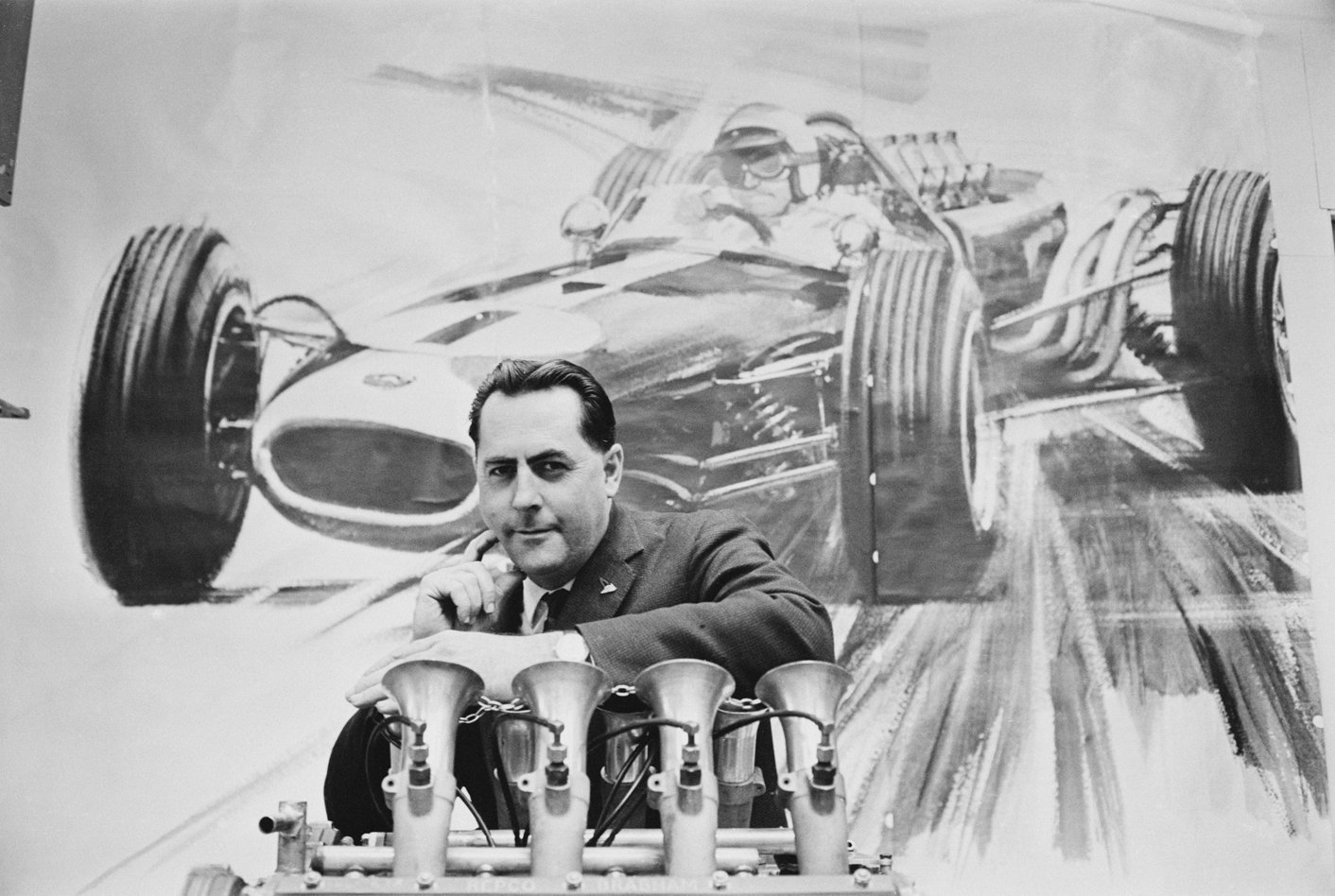
“I had a ball, boy,” he told me, eyes sparkling. “We all stop too early. I made a mistake; I should never have retired.”
It’s a moment of utter euphoria. Moss spent much of the rest of the day signing autographs and being photographed, still a legend.
A few weeks after Wheels, December 1976 appeared, I received a letter from Moss thanking me for writing such “a sympathetic, understanding” story on the race. “I really don’t know whether I shall ever do the event again…”
Moss did return to racing, but not at Bathurst. In 1980 and 1981 he raced in the British Touring Car Championship and later drove in Historic events.
Just like the gold-plated, priceless Samsung phone presented to Willy Bank in the film Ocean’s Thirteen, the one-off gilded Honda NSX that appears in this episode was, quite literally, “the one you couldn’t get”.
Except we did get it – an amazingly unique, gold-wrapped example of the incredible Japanese super car – for one very special day of filming.
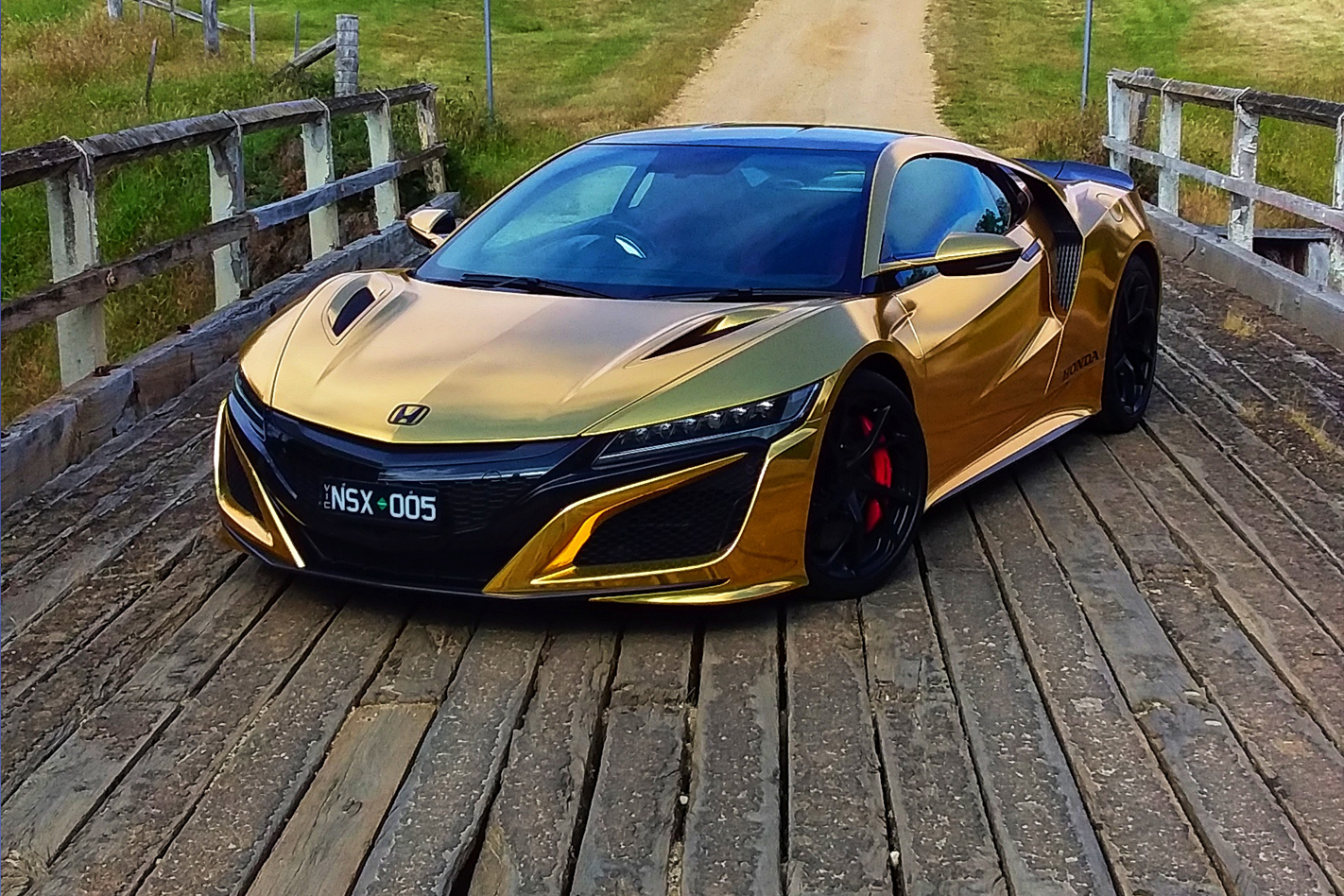
Understandably, Honda was somewhat precious about this particular NSX, which had been meticulously wrapped to celebrate 50 years of the brand in Australia, and while there was an orange one being lent to a selection of lucky outlets, it was only WhichCar that secured the most special version.
We were, however under strict restrictions as part of the deal. The car would be trucked to our location and we were limited to just a few hundred kilometres to get all the shots we needed for the show.
I’m happy to report, however, that in a twin-turbo, hybrid V6 mid-engined supercar, you can have a serious amount of fun without going very far at all.
The tongue-in-cheek metaphor (but one with a serious point) came together in the tiny ghost town of Steiglitz, about 30 minutes out of Geelong.
This historically rich town was the epicentre of two Victorian gold rushes but, from its heyday in the mid-1800s, there are now only a handful of occupied residences today.
For our purposes though, the ghosts and forgotten ruins were the perfect backdrop for the segment’s premise.
The opening scene was filmed on the site of a derelict processing plant with only a few footings and demolished walls to indicate there was ever anything previously occupying the location. Ironically, therefore, it was quite possibly the least likely place for kilometres around that I was going to unearth a nugget.
My metal detector was a Minelab X-Terra 505 with adjustable presets and various different functions for differentiating metal types at different depths, buried in different materials. And none of it meant a thing to me.
Nonetheless, I had done the right thing and acquired a prospector’s licence or ‘miner’s right’ as is required for any kind of gold-fossicking activity in Victoria.
According to the law, anyone caught gold hunting without authorisation can have any associated equipment confiscated, which doesn’t sound too serious until you read the small print and learn the car you turned up in can also be included.
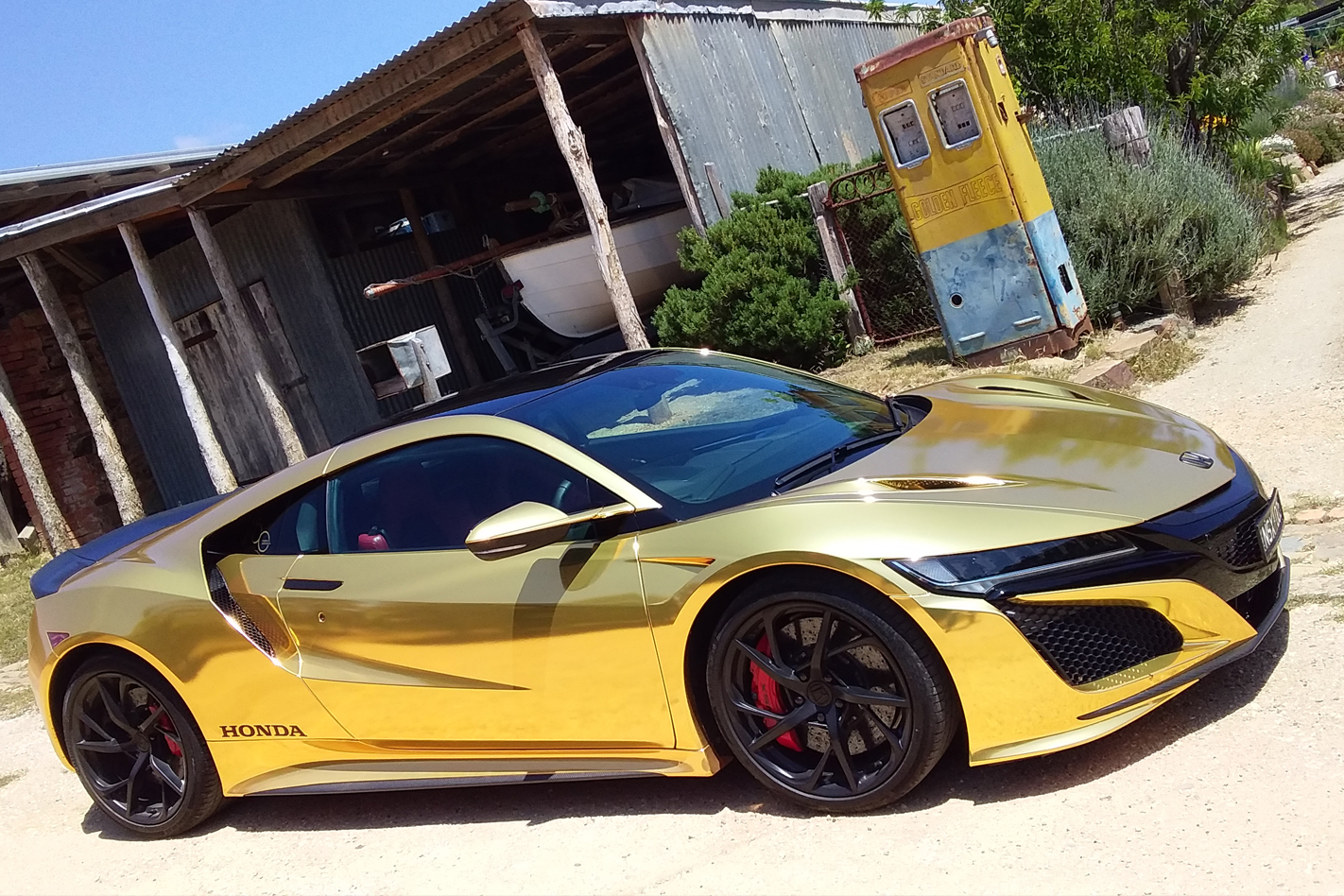
I cannot imagine how I would have explained to Honda that I’d had their one-off $420,000 supercar confiscated indefinitely.
You can understand why the NSX is so dear to the company when you learn that the gold wrap was specially developed for the job and the work took 90 hours to complete. It’s no ordinary wrap either.
The special material is three times thicker than normal vehicle wrap and is a special satin gold colour – not a plain mirror yellow finish which would have been too dazzling for road use.
The NSX is part of a fleet of seven vehicles and Honda machinery wrapped as part of the 50-year anniversary along with three motorbikes, a Civic Type R and even a lawnmower and portable generator.
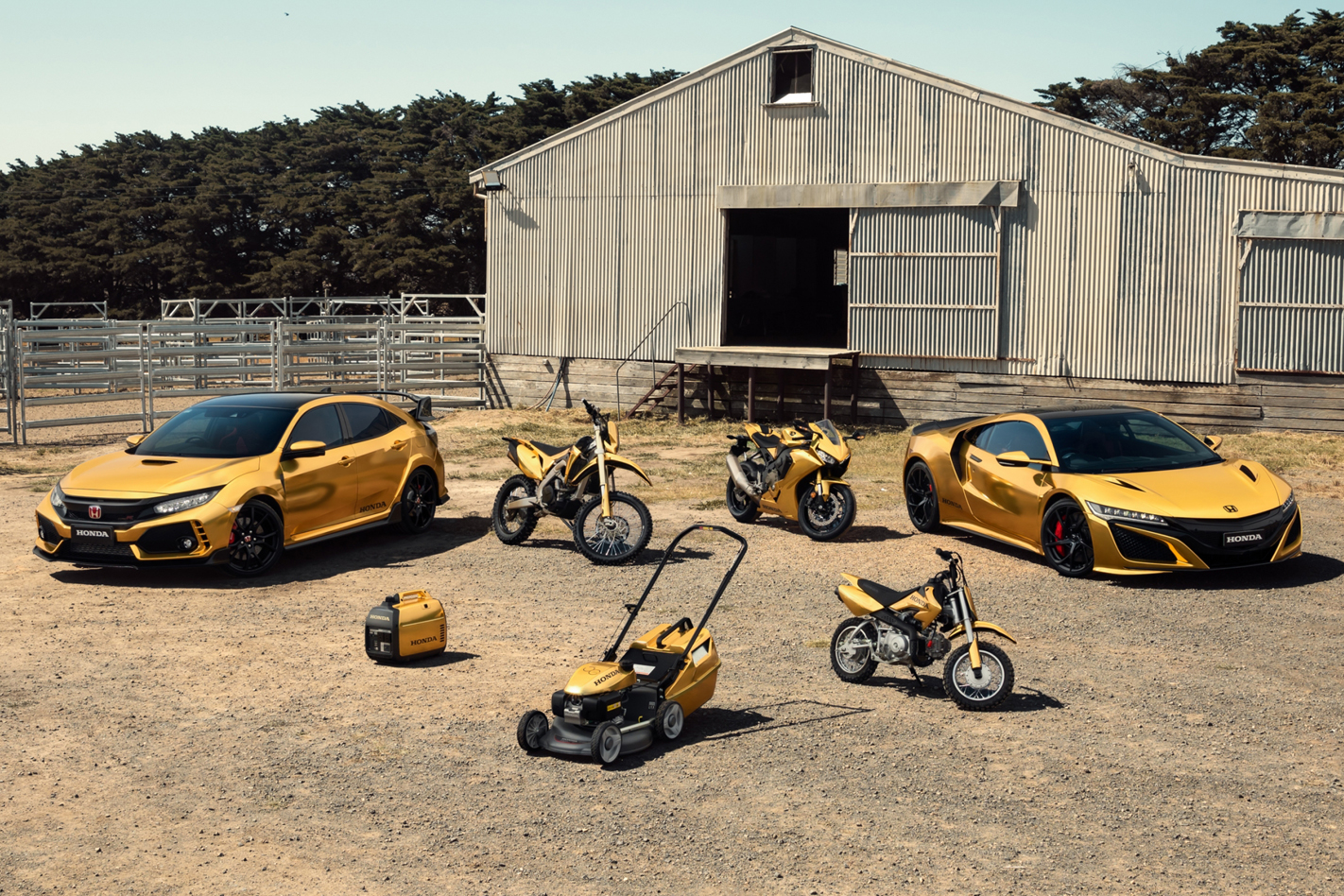
I was over the moon with how the segment turned out and to be such an intimate part of Honda Australia’s birthday celebrations. At the end of the shoot, giving back the key to the truck driver and watching the incredible car roll away under wraps was one of the toughest goodbyes I’ve ever had.
Gold fever is a condition that only gets better with time.
UPDATED 12/4 – NSW police have issued 19 more fines to drivers defying public health act order not to gather in public place
Highway Patrol officers from three commands were called to the Stockrington Conservation Area west of Newcastle, NSW, and saw up to 40 vehicles gathered within a closed area.
Police allege that drivers attempted to leave the scene when police arrived; however, 19 vehicles were stopped, with the rest escaping into surrounding bushland.
Police allege the group had gathered for the purpose of street racing and burnouts, with two cars brought to the site on trailers.
Nineteen people will now be issued with $1000 fines for breaching the Public Health Order, with 13 of those also being fined for being in the Conservation Area unlawfully.
The total amount of fines will exceed $25,000.
The presence of three children in the group will also result in police contacting child protection services.
Traffic and Highway Patrol Command’s Assistant Commissioner Michael Corboy said this was exactly the kind of incident his officers had been working to prevent.
“Gatherings of virtually any kind are breaching the current Public Health Order but gathering to conduct street racing and burnouts in a park is illegal, irresponsible and beyond my understanding,” Assistant Commissioner Corboy said.
“I am appalled at the fact that up to 40 drivers were willing to put themselves and others at risk on so many levels.
“And I am even more appalled by the fact three children – who have no choice in the matter – were also exposed to risk; my officers will be alerting the relevant authorities to the actions of their parents and caregivers.”
The incident follows a similar event in Queensland last week./Tim Robson
Queensland police say they are ‘disappointed and frustrated’ after handing out a staggering 58 coronavirus fines totalling more than $77,000 to a group of car enthusiasts last Saturday night after officers attended a south Brisbane car meet that was deemed illegal under recent crisis restrictions.
Both passengers and drivers alike copped a $1334 penalty for ignoring recently-introduced coronavirus laws, which prevents anyone from leaving their house for anything other than ‘essential’ reasons.
Attending officers weren’t able to apprehend and issue fines to all of the estimated 150 people who allegedly attended the impromptu car show, but a total of $77,372 of fines were still slapped on the 58 who held their hands up.
Some participants had tried to flee the event which had been arranged in a dead-end street but became bogged in the surrounding grasslands.
For the others, police simply waited at the cul de sac exit and systematically issued fines to those in the orderly queue.
“it is inexcusable what happened at Rochedale [on Saturday] and such blatant disregard for the lives of Queenslanders will not be tolerated,” said Deputy Commissioner Steve Gollschewski, the state’s disaster coordinator.
Gollschewski explained that the fines were intended to protect the lives and welfare of the public and to enforce regulations that are designed to limit the spread of the potentially deadly virus, and not merely targeting hoon behaviour.
“This is all about safety. About saving lives. About stopping the spread of COVID-19. We all, every single one of us, must do our bit. We are in this together,” he said.
As tarted-up Libertys go, it’s been a bit of a lean patch of late. Sure, the 3.0R Spec B is nice… okay, it’s pretty damn good, but it’s something that you’d think about recommending to your girlfriend’s dad rather than seeing yourself in one. right?
This review was originally published in MOTOR’s October 2006 issue
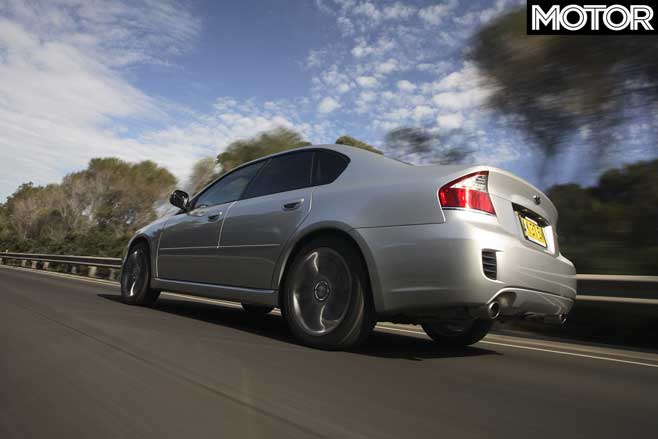
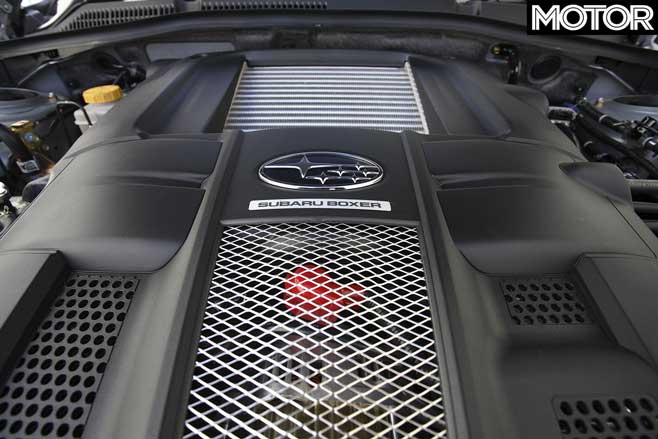
Well, the 2007 Subaru Liberty GT Spec B will fix all that. With a tweaked-up 2.5-litre turbo boxer, a STi-spec six-speed manual option, and matched Bilstein dampers, the reborn GT provides a drive worthy of the title.
Though it’s the billet-style 18-inch rims – unique to the GT Spec B – that catch the eye first, a litany of smaller details give the MY07 Lib a much more confident stance. Gone is the slightly fussy grille treatment, replaced instead by a firm swathe of chrome between a revised set of HID lamp clusters.
Eyebrow lines along the length of the front guards and a bumpier bonnet combine with a simplified front bar to furrow the Liberty’s brows, but the tougher front-end is spoilt somewhat by the oddball faux air vents on the rear bar. The new. smaller rear lamp clusters also look a little anaemic on a car with such sporty aspirations, but on the whole, this thing looks pretty damn sharp sitting in the driveway.
Settle into the excellent, supportive electric-adjustable driver’s seat and you’ll find a roomy work environment that’s easy on the eye. It’s still familiar to those cognisant with the MY05/06 layout. though the redundant centre console bin has been replaced with the Japanese-spec touchscreen control centre.
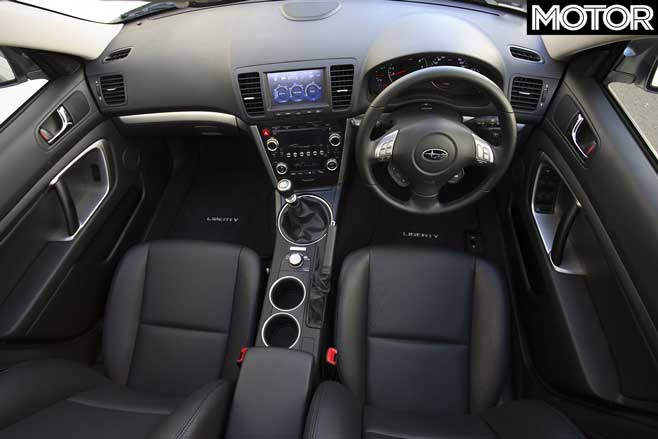
The most obvious difference, of course, is the rotary dial just aft of the gearstick that’s marked SI (Subaru Intelligent)-Drive. Cue rolled eyes and exaggerated sighs from the press corps… Fear not, however. Sl-Drive is simply a three-stage ECU map-swapping switch that features ‘Intelligent’, ‘Sport’, and ‘Sport Sharp’ modes that can be switched on the fly.
The default ‘Intelligent’ map is the economy setting, with a wispy, linear power delivery that will save you a few per cent of fuel on the freeway commute, but will fail to move you. The ‘Sport’ mode is where GT drivers will operate, with a noticeable bump in the mid-range torque oomph and more responsive throttle.
So what’s ‘Sport Sharp’? It’s, put simply, a fun button. Activated either by the dial in the centre console or, much more easily, by the paddle on the lower right of the steering wheel, the throttle livens right up, the engine wakes up (if it’s sufficiently warm – it won‘t activate until the engine coolant is up to temperature) and you’re ready to rip.
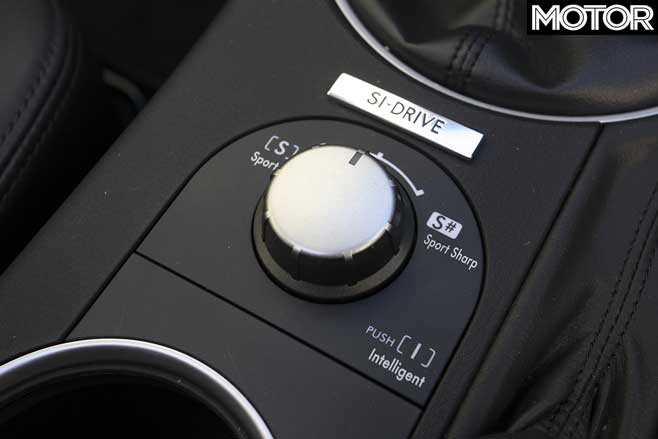
If you tire of it, simply tap the centre of the SI Drive button to drop into ‘Intelligent’ mode (it can all be seen on the dash) or flick the paddle to revert to ‘Sport’ mode. The in-dash upshift light will change its activation point according to the mode you’re running in, and if you go for the auto, the gearbox controller will also adjust its shifts to suit.
At 1545kg – some 170kg heavier than the base 2.0-litre car – it’s still lively and involving, with a well-spaced gearset inside the STi-derived ‘box that first saw duty in the 3.0R Spec B. With double syncros on first and third, second gear gets a triple-cone treatment which helps to soften the first-to-second slam.
Power is directed fore and aft in a 50:50 split via a viscous centre diff, with a Torsen LSD out back. You’ll find the clutch on the manual especially feelsome, but don’t get too cocky; it ain‘t you. The fly-by-wire throttle is linked to clutch actuation, providing fuss-free takeoffs, though the hill-hold function has disappeared from this model.
There’s been a few key bodyshell tweaks; the A-pillars have been beefed up at their base, a bigger firewall corner has been welded in and the engine bay strut mowers have been revised.
The Liberty’s steering is light yet has plenty of feel; it maybe a touch too light but it‘s still good, weighting up beautifully through its arc. The long-throw gearshift struggles to engage quickly when it’s not quite warmed to the occasion, but the shower first four ratios and longer-legged last pair works surprisingly well together.
Ride quality is great with the Bilsteins, though it feels a bit underdamped on low-speed rebound. Combining a newly stiffened chassis, a top flight set of matched springs and dampers and AWD is a recipe for one of the most sorted sleepers you’ll see this year. Turn it in with alacrity, and the levels of front end stick are astonishing. There’s a lot of mechanical grip, but it’s backed up by a sufficiently bolstered chassis that still allows a modicum of real-world feel. The engine is rarely caught off-boost, either.
It’s not all sweetness and light, though; the brakes simply aren’t up to the rest of the car, fading quickly after a mountain pass downhill attack. They came most of the way back, and the test car was a pre-production model, but the stoppers are prime targets to be upgraded by STi-spec items.
The Sube works well on the smooth stuff, but it really comes alive on rougher, slipperier tarmac. Toss it into the corner off the throttle and it backs in like a tarmac rally car, the rear LSD combining with that splendid front-end to maintain some pretty absurd levels of mid-corner stick. All the way, a delicious mechanical melody is resonating through the cabin, and the perfectly sized wheel and supportive seats really involve you in the experience.
The Liberty is an exec steeper of the highest order; subtle yet bold, subdued yet capable. Shouldn‘t be too much of a problem talking yourself into this one.
2007 Subaru Liberty GT Spec B specs: BODY: 4-door, 5-seat sedan DRIVE: all-wheel ENGINE: 2.5-litre DOHC flat-four turbo BORE/STROKE: 99.5 x 79.0mm POWER: 184kW @ 6000rpm TORQUE: 339Nm @ 3600rpm WEIGHT: 1545kg POWER-TO- WEIGHT: 119kW/tonne TRANSMISSION: 6-speed manual SUSPENSION: MacPherson strut, coil spring, Bilstein dampers, anti-roll bar (f); multi-link, coil springs, Bilstein dampers, anti-roll bar (r) BRAKES: ventilated discs WHEELS: 18.0-inch alloys TYRES: 215/45 R18 89W (f/r); Bridgestone Potenza 50A PRICE: $55,990
Subaru SI-Drive explained
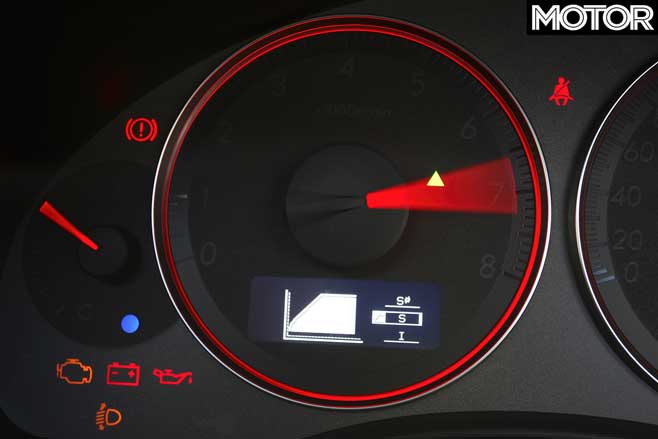
Flash programming engine and transmission computers is the meat and veg of the performance aftermarket. Manufacturers usually set a conservative state of tune in the car’s ECUs, so the aftermarket usually can make impressive gains by downloading new parameters into the ECU. With SI-Drive, Subaru has beat the aftermarket at its own game. Subaru is yet to reveal power or torque improvements but says a 10 per cent fuel economy improvement is possible in ‘Intelligent’ mode.
