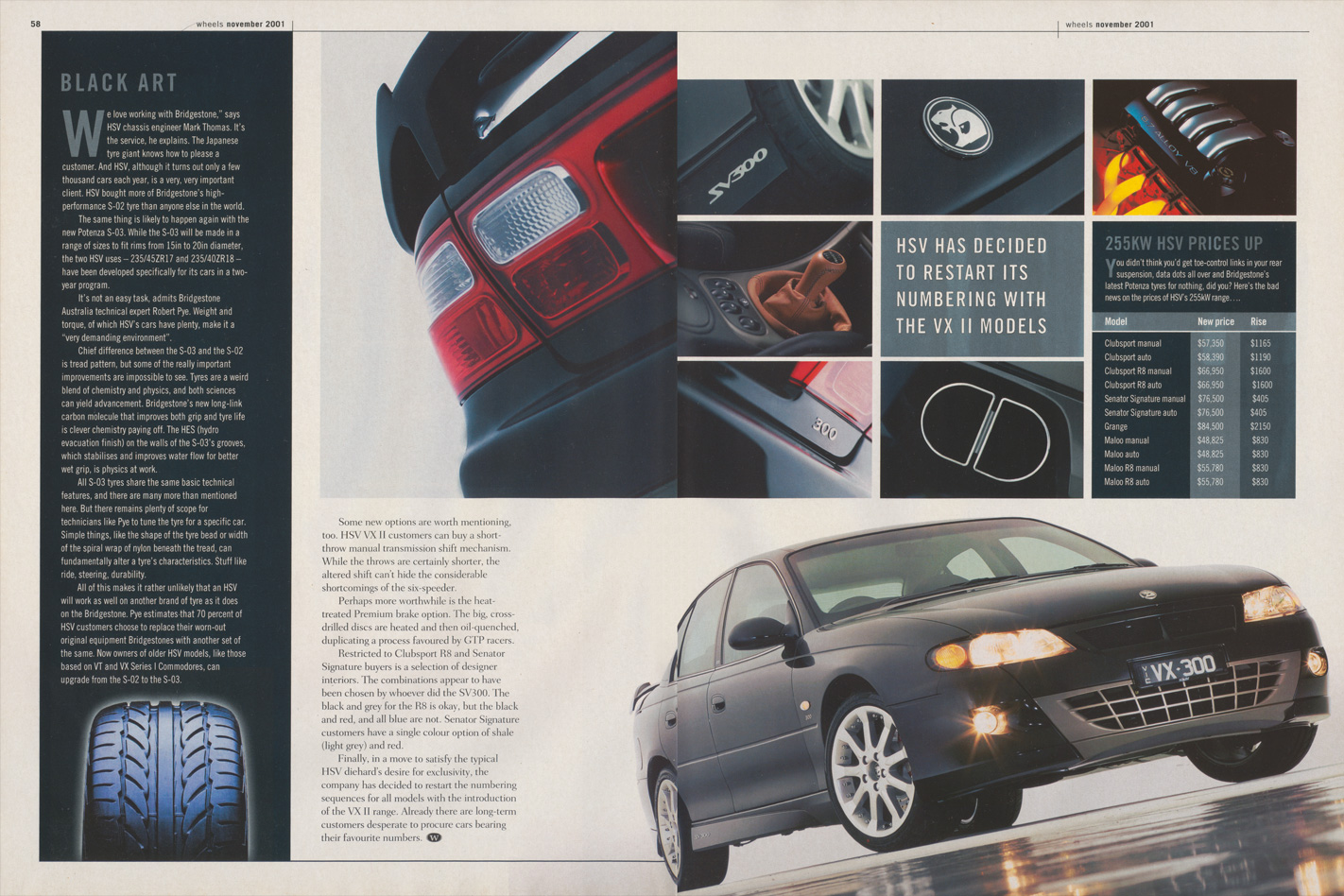
Track addicts rejoice. Hyundai has unleashed its i30 N with a suite of tuning goodies to boost the car’s lapping abilities.
Hyundai Germany will debut the ‘N Customised’ parts.
Hyundai Australia, meanwhile, has expressed interest to bring them into what is predicted to be the second biggest N market, but can’t reveal much else.
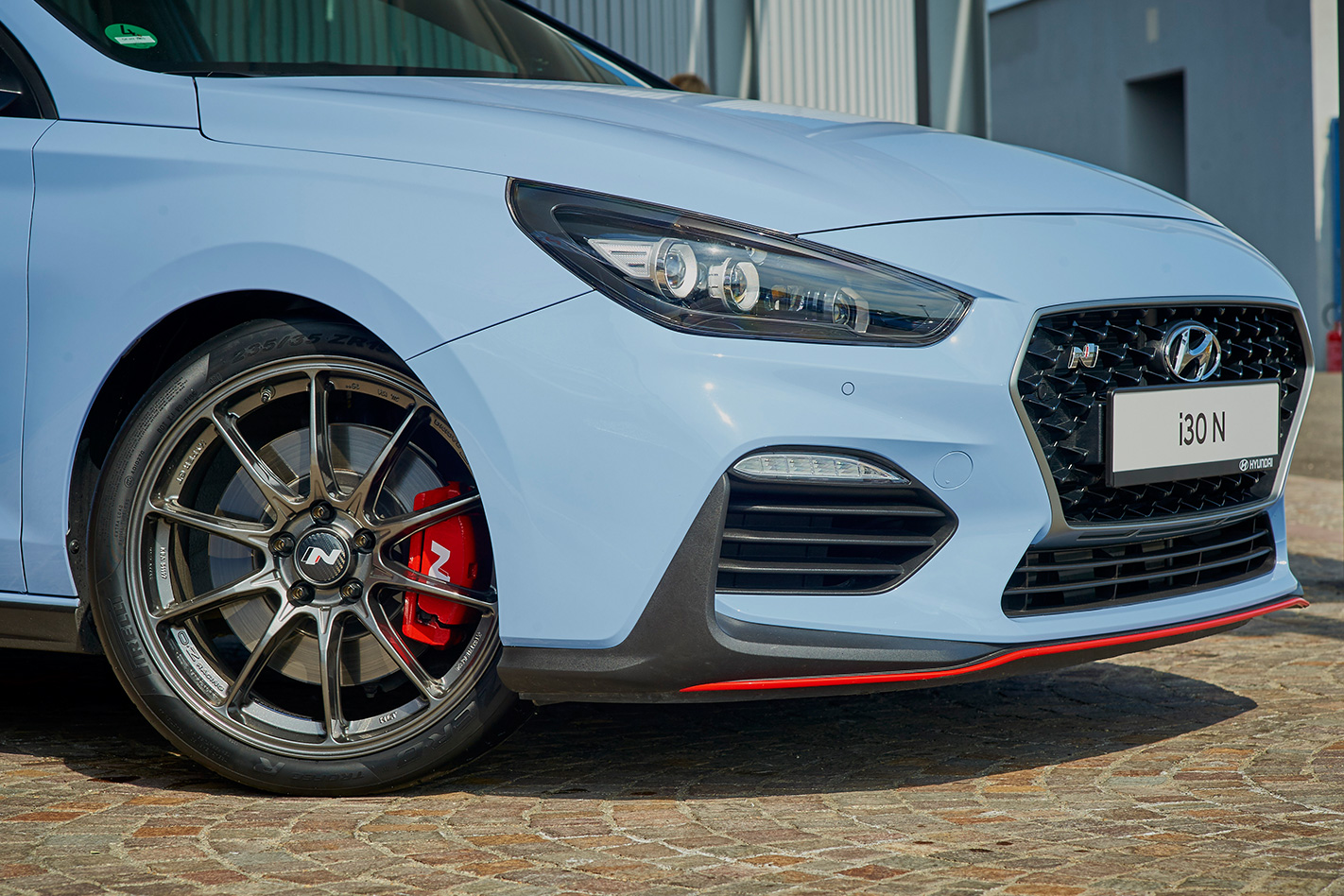
It wore a tasty looking set of O.Z Racing Hyper GT wheels. Measuring 19 by 8 inches, they weigh in at 9.4kg at each corner.
They come with lightweight racing nuts and wrapped in Pirelli P Zero Trofeo R rubber. Yes, the same tyre McLaren leaves as an option for its P1.
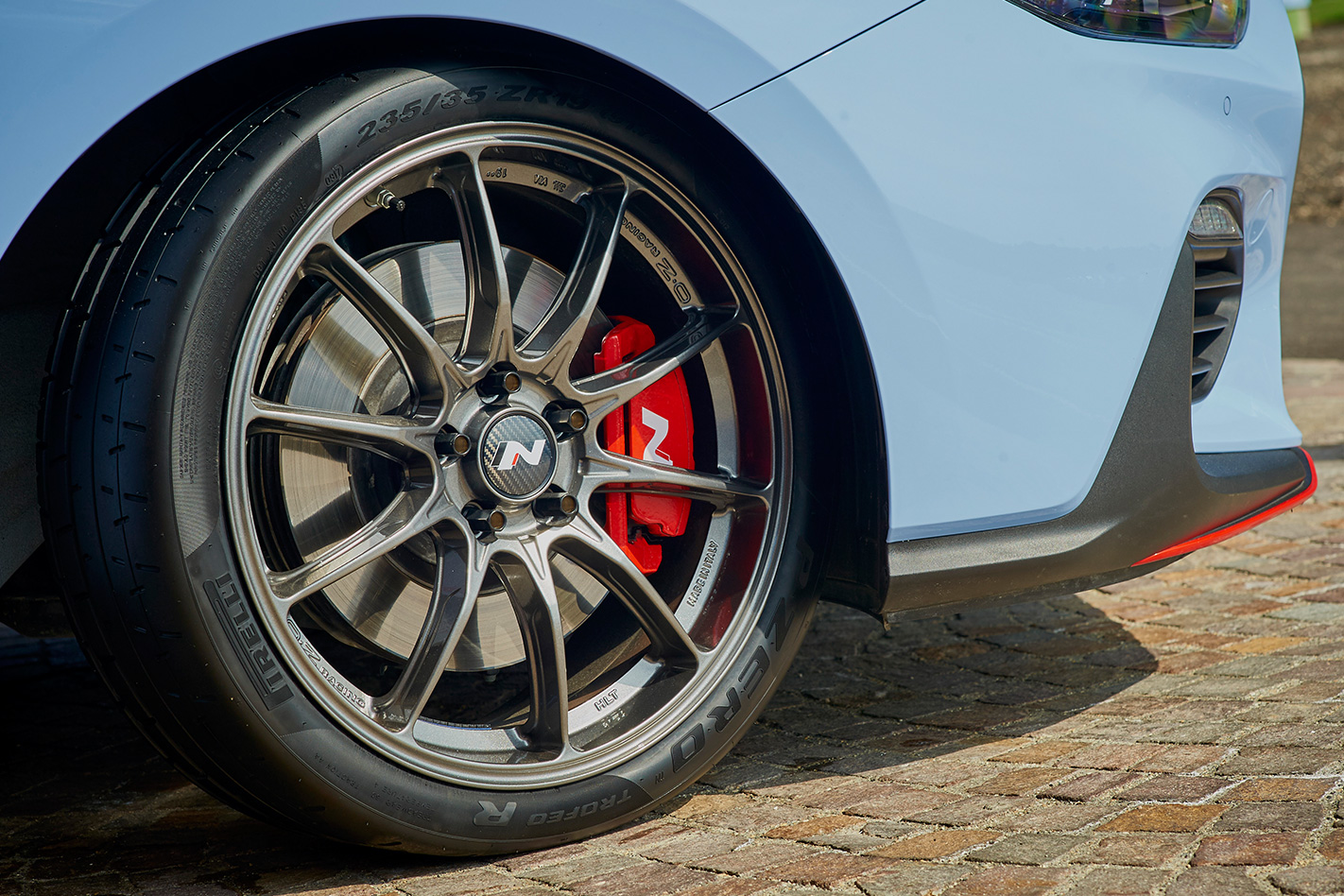
You can also ditch the stock ITT brake pads for PAGID items that will slide into the N’s single-piston calipers for added bite.
A three-way adjustable rear sway bar will be the next most effective upgrade after the tyres. We’re told its middle setting matches stock stiffness.
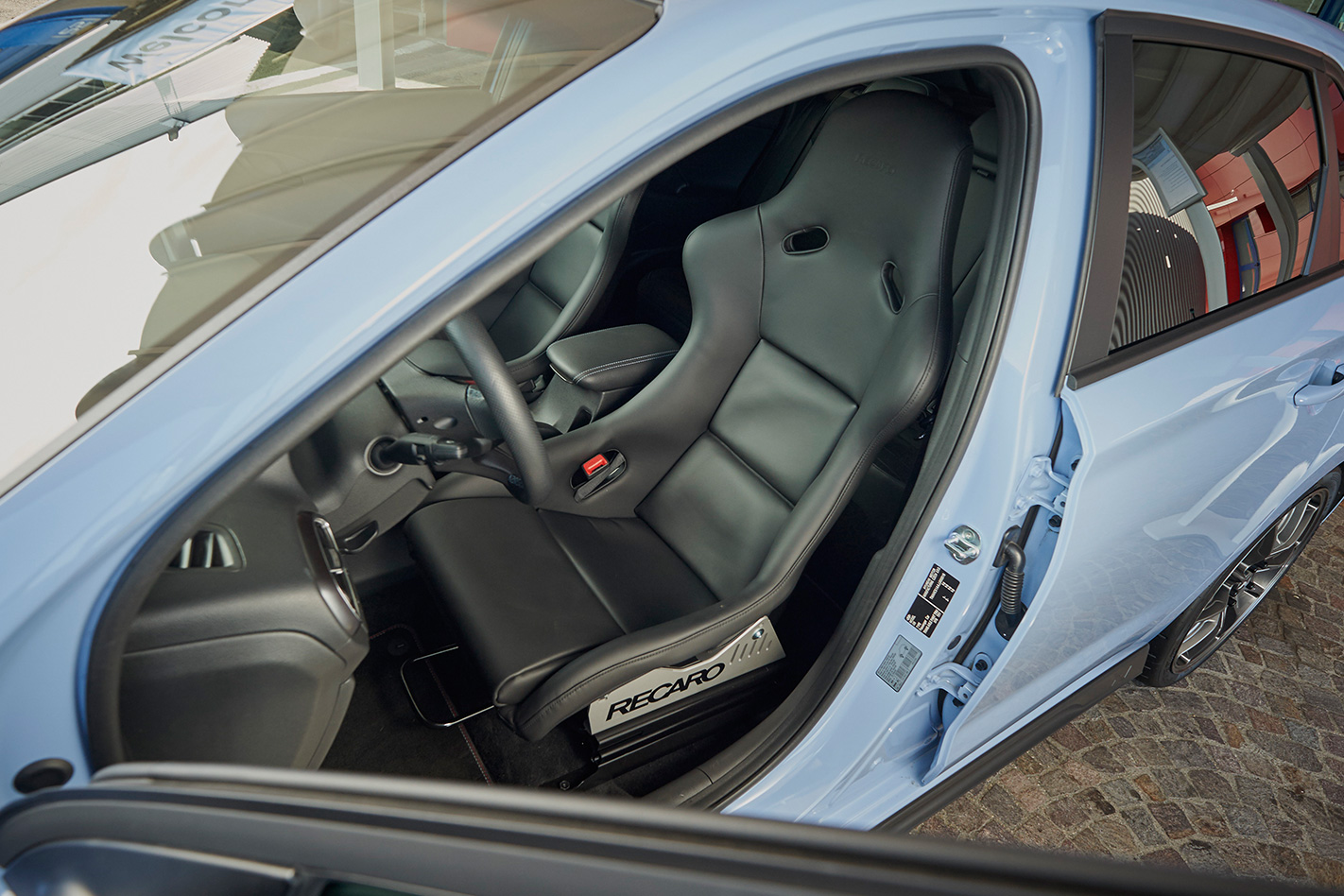
Germans will cough up €3348 (AU$5018) for the wheel, nut and tyre package; €349 (AU$523) for either pair of brake pads, and €289 (AU$433) for the swaybar. Overseas prices on the data logger and seats aren’t confirmed yet.
For an idea on how these parts might transform the car, stay tuned for our review on the i30 this Friday.
TOYOTA has shuttered its Altona production facility in Melbourne’s west, completing its transition to a full-line importer, but the major operational changes are only just getting started for Australia’s most popular car brand.
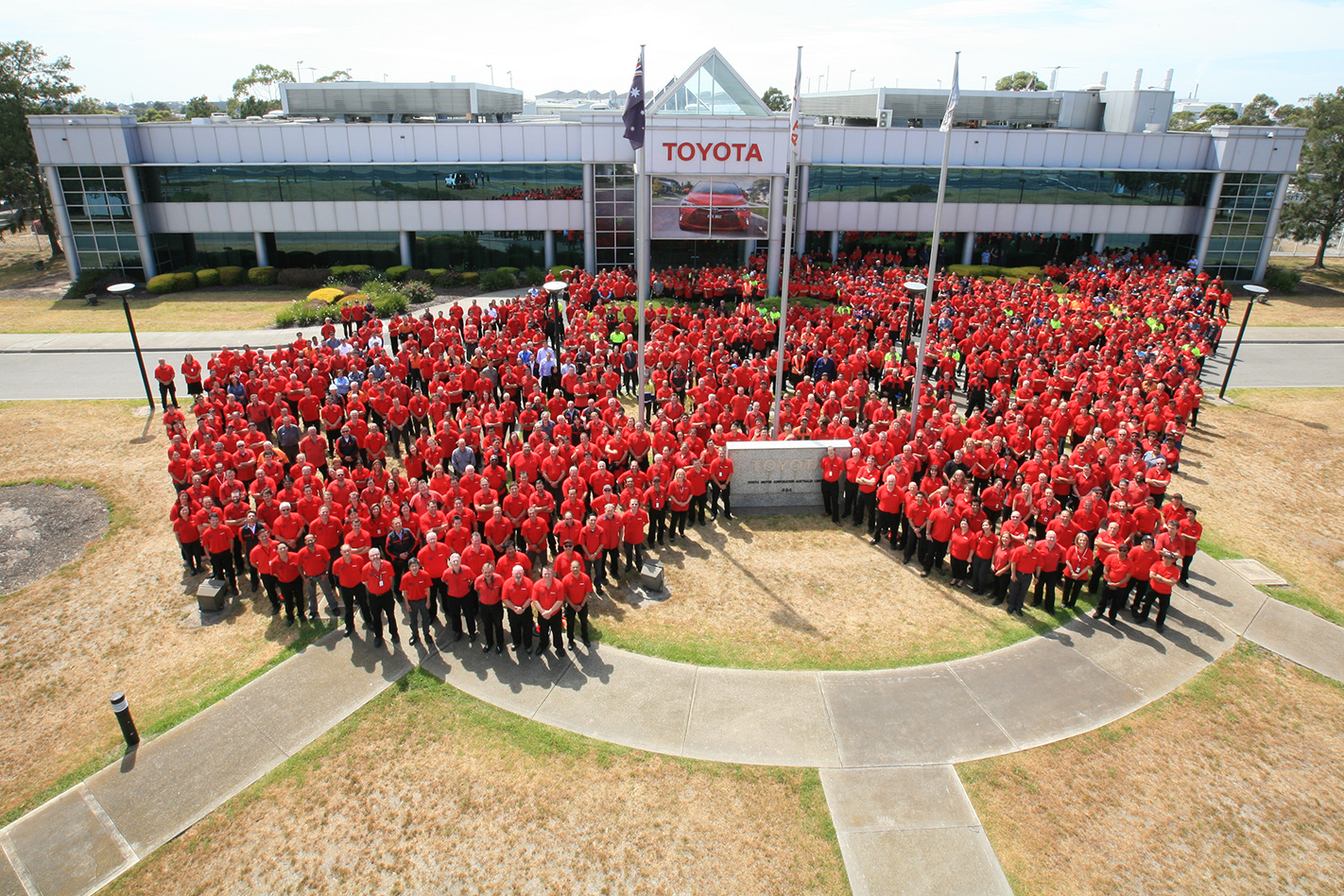
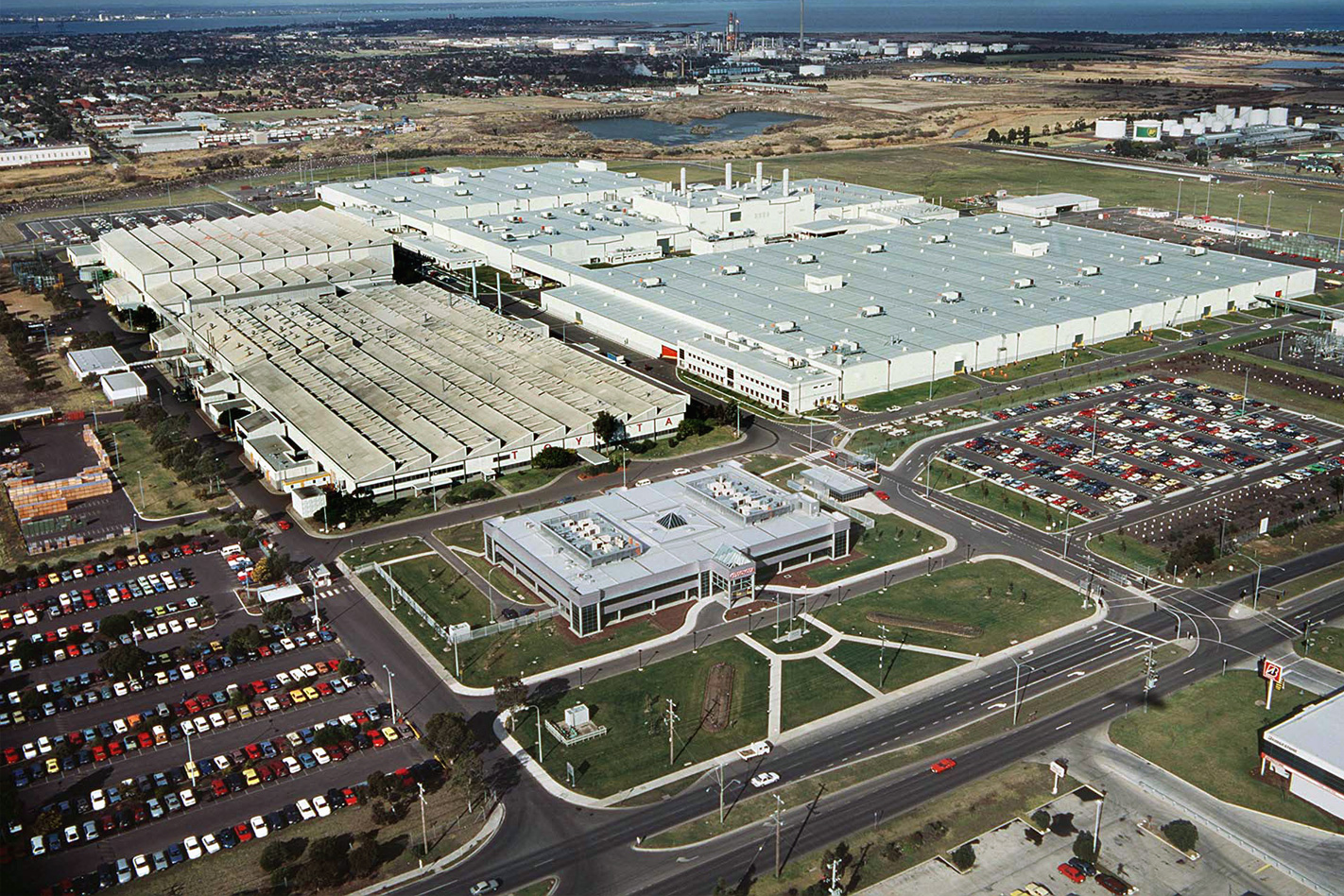
The company is already deep in the process of consolidating its Sydney and Melbourne branches into a single site in Victoria’s capital, the Altona factory premises will undergo a complete repurposing, and its workforce will shrink from 3900 to 1300.
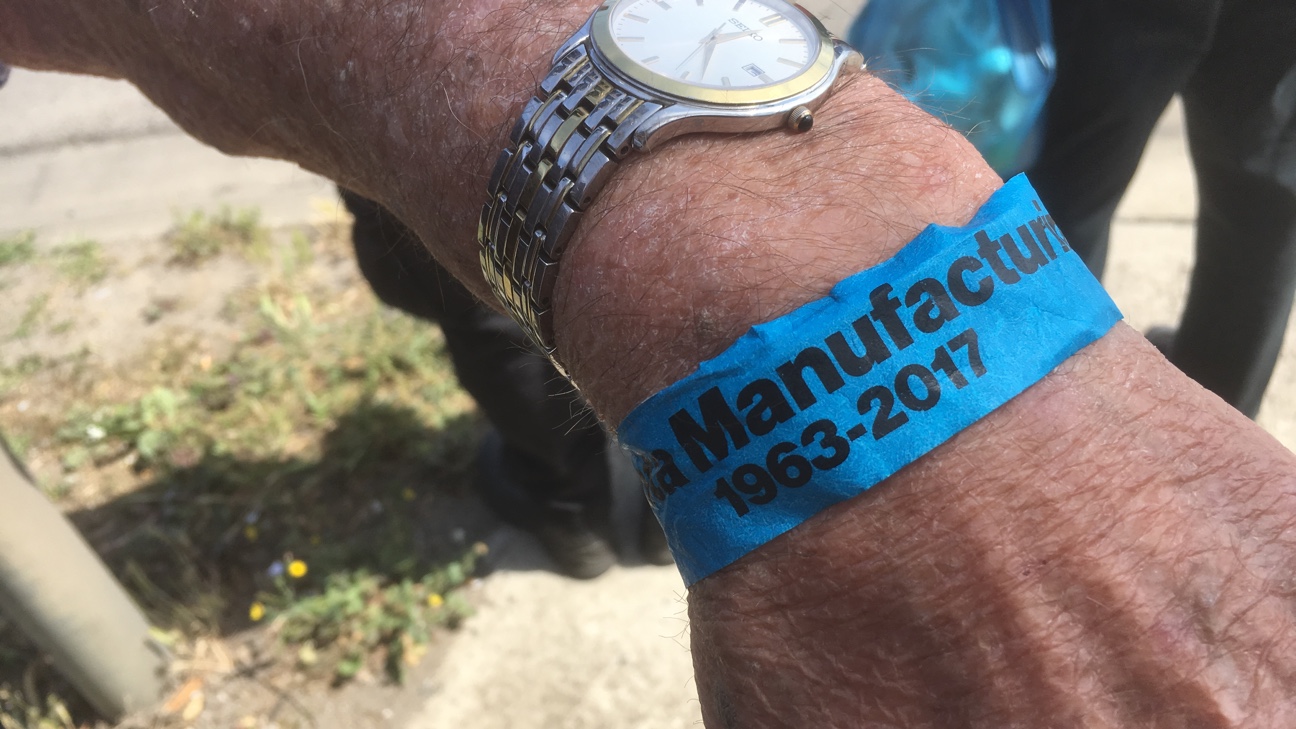
But despite the most significant evolutionary chapter in Toyota’s 54-year Australian story, the company says an unchanged and typically Japanese culture is critical to endure a turbulent upheaval.
The system has involved flying large numbers of team members to the Melbourne offices where a departing employee works alongside their replacement until they understand the role completely. Of the new 1300-strong team, about 150 have transitioned from other roles.
“Sydney and Melbourne airports on a Monday and Friday have lots of Toyota people in them,” said Toyota sales and marketing executive director Tony Cramb.
While some white-collar jobs were reshuffled to retain as many staff as possible, almost 2500 manufacturing employees will now be out of a job, but here too Toyota has been working over the four years since it made the announcement it would cease production to assist redundant team members.
Since 2014, three dedicated centres have helped workers to find new jobs after the plant shutdown.
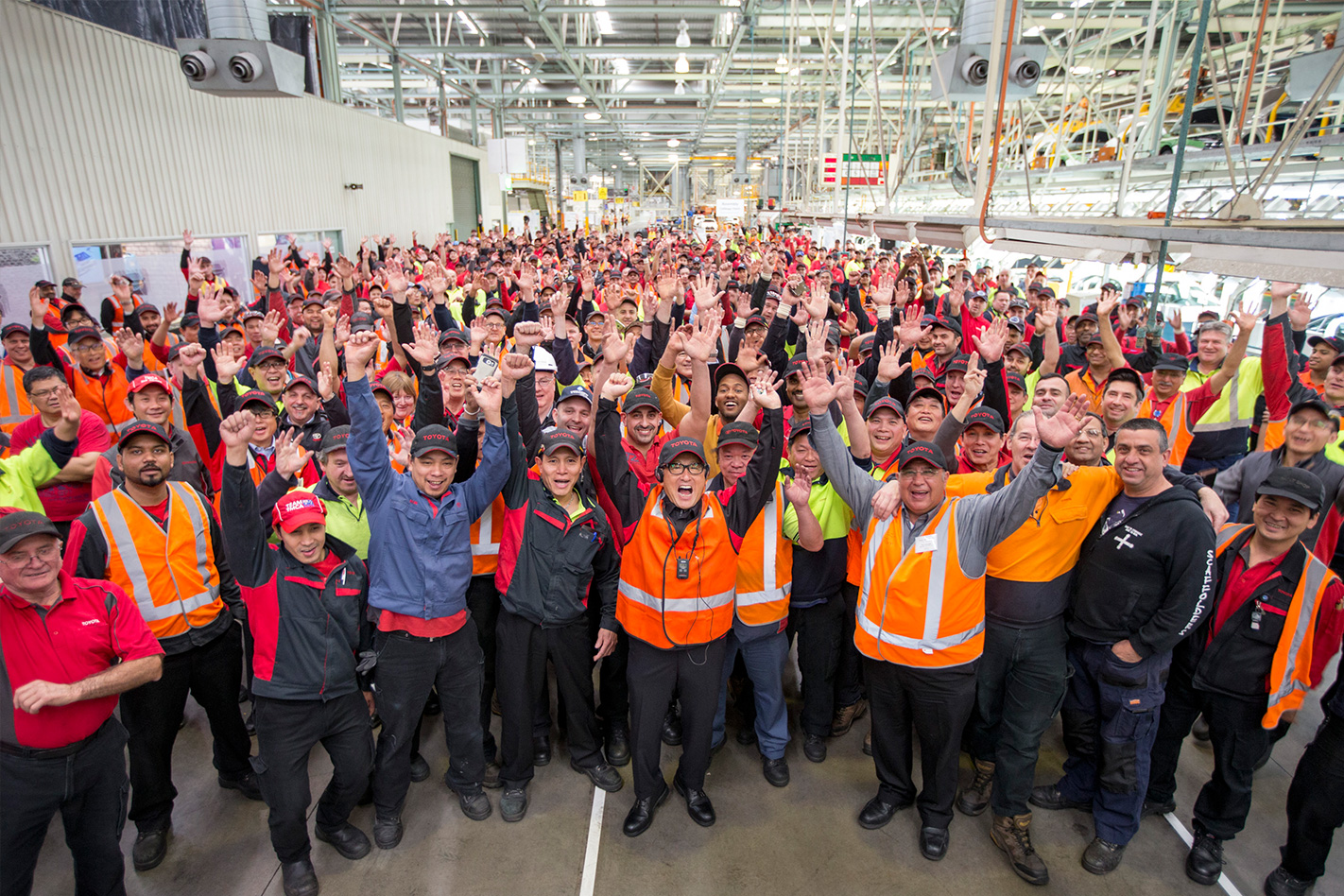
Unlike Ford and Holden, which made a number of staged production cuts ahead of the end of local production, Toyota was able to maintain normal production capacity until the last day, which prevented the redundancy of any full-time staff until yesterday, and supported suppliers.
“We made a very big commitment in 2014 to strive to maintain around 90,000 production units per annum,” Buttner said last week. “That was done for a number of reasons. We needed to support our local supplier base. If their volumes dived they wouldn’t cover their fixed costs let alone their variable costs. Because we’ve had that consistent volume, we haven’t had to divest ourselves. All of our manufacturing employees are still in-line.”
In December, Buttner will be replaced by incoming president Matt Callachor, who said Toyota Australia’s manufacturing legacy would continue to benefit the company.
“We have lots of good learnings out of having a manufacturing history – the way we approach process, the way we examine issues and root causes and find ways forward,” he said, “We want to retain that as much as possible.
“We want to be nimble and flexible and the automotive market globally is subject to many changes. Nimble and flexible is the way it needs to be.”
Without the weight of a manufacturing outfit around its neck, one of the areas the company is now able to focus more of its resources on will be local evaluation and design.
That critical evaluation process will be enhanced with a new test track to be constructed on the site of the now silent factory, bringing Toyota’s facilities more into line with rivals Ford and Holden, which will also continue to design and develop vehicles on red dirt.
According to Buttner, the facility will not be a half-cooked attempt and will offer “Banked tracks, ripple tracks, Belgian blocks, skid pans. The longest stretch is one kilometre,” he said. “It’s not a race track, it’s not a driver training track. It’s really an evaluation track. We want to make sure that centre of excellence is the foremost training facility for our employees.
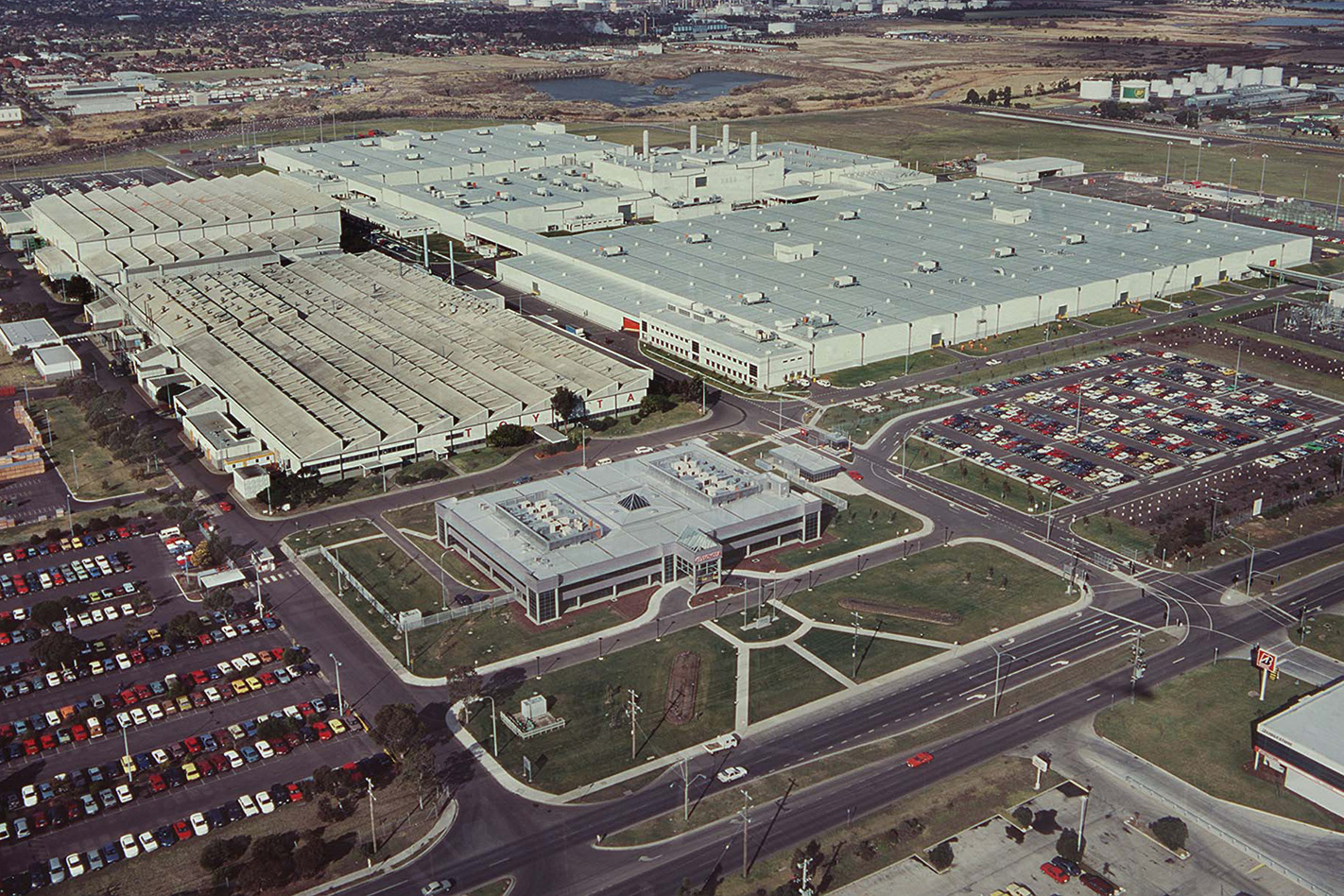
Until now the fate of the site has been hanging in the balance, but Buttner confirmed that only a “small proportion” is still under consideration for sale. “We will retain virtually all of it,” he said.
The dust is only just starting to settle on the dormant machines at Altona, but Buttner said the company’s focus on remaining Australia’s number-one car brand was unfaltering.
“We had a catch cry we put into place in 2004 when we became number one. We said ‘think like number one but act like number two’. There are a lot of people out there that want your mantle in the marketplace”.
TOYOTA is confident it can sell more than 200,000 vehicles in Australia each year without a locally made Camry – which accounts for 11 percent of the Japanese brand’s total volume on local soil.
Toyota officially marked the end of Camry production at its Altona factory in Melbourne’s West yesterday, and while the Camry name will live on in local showrooms, the next-generation version will be imported with a higher price tag.
According to the Japanese car maker, sales of the more expensive Camry will be harmed, but the rest of the range, including increasingly popular SUVs, will take up the slack as the company transitions to a full line importer.
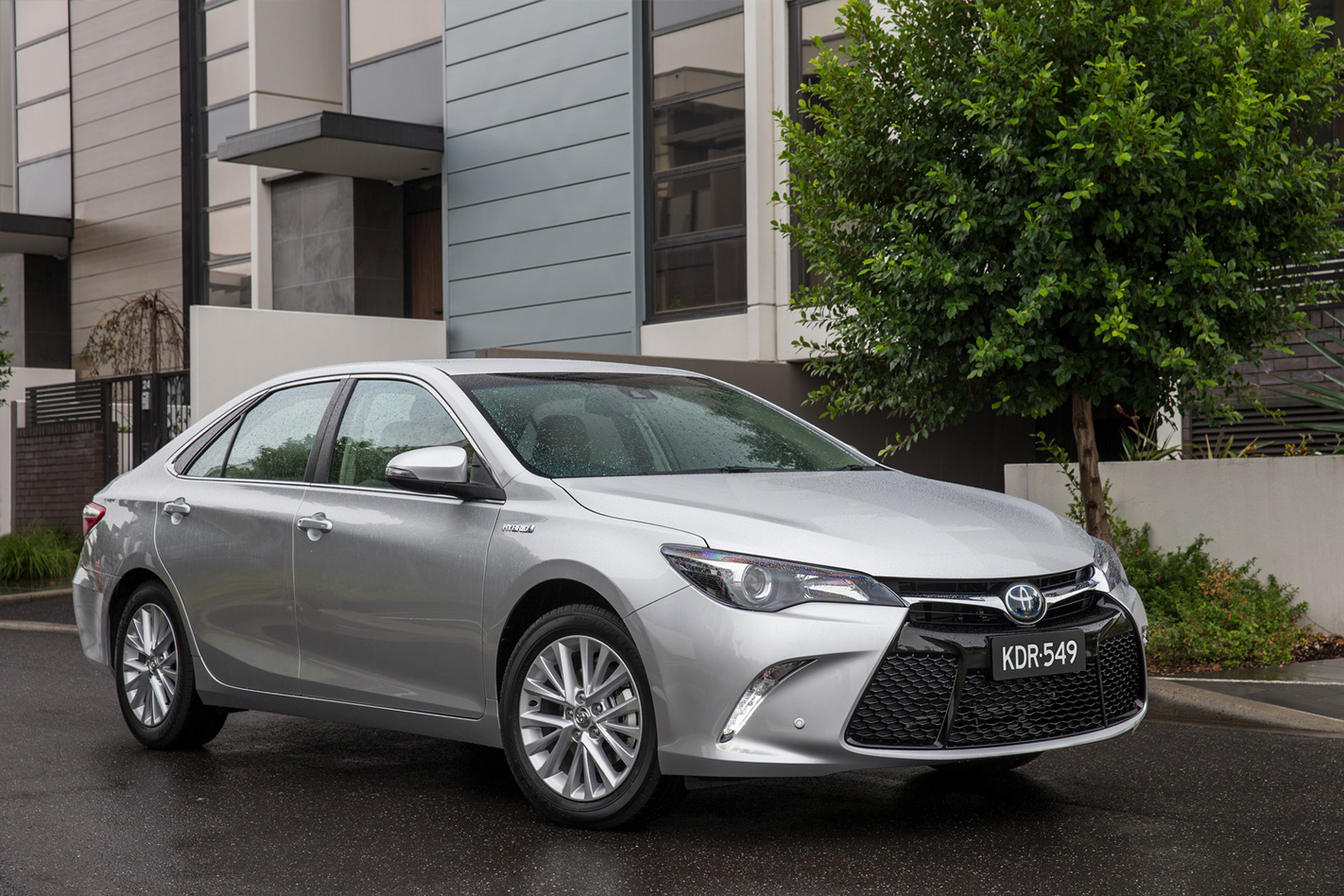
“Camry is one illustration where the vehicle changes as it moves forward. It’s clearly a more premium vehicle,” he said. “Premium vehicles bring a little bit of a premium (price) as well.”
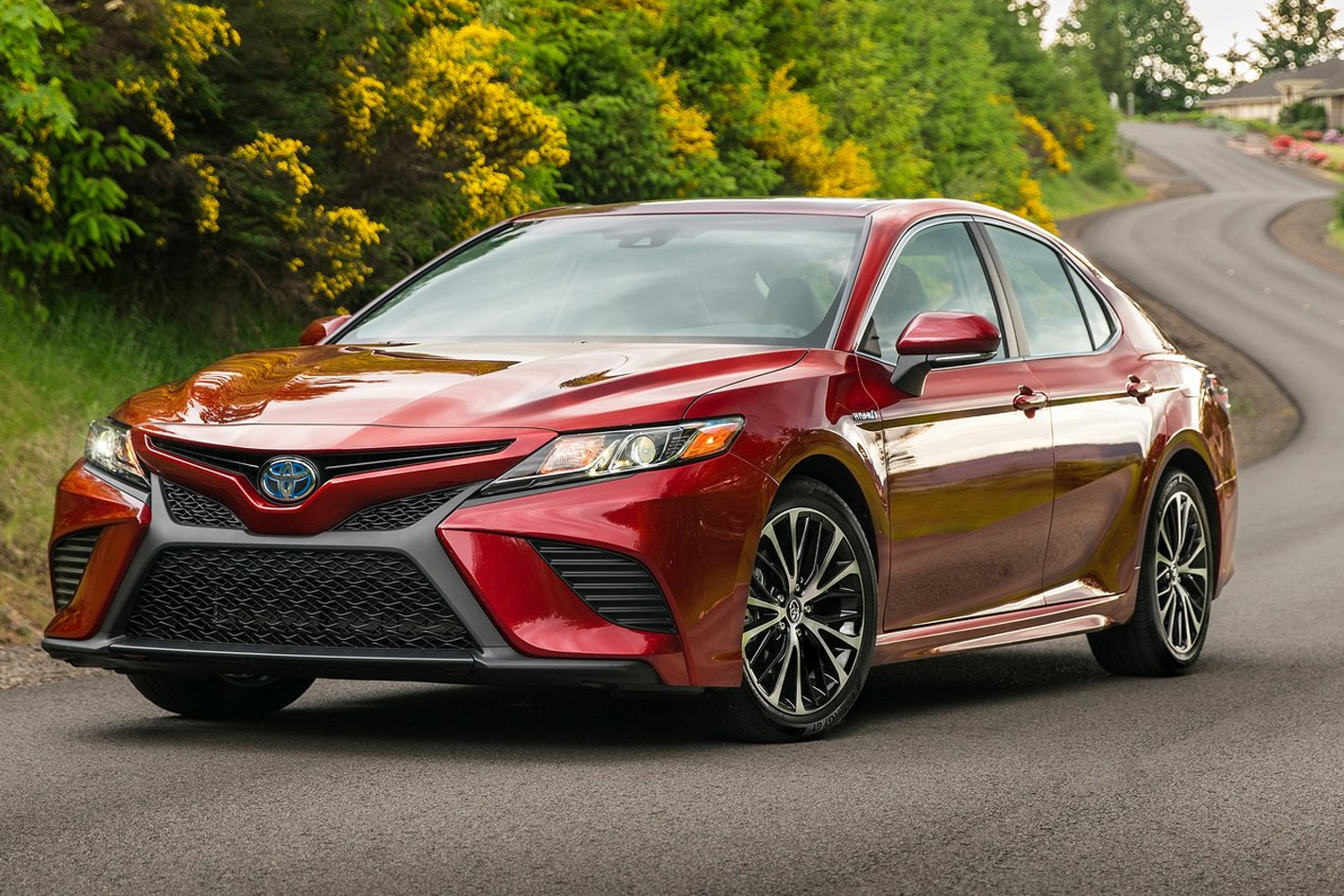
Despite the higher asking price for an all-new Camry (below), Buttner said the company’s diverse range of vehicles, combined with shifting buyer behaviour, would offset any dip in Camry sales and safeguard Toyota’s market dominance.
“We have Corolla hatches and Corolla sedans, and we will also have a range of Camrys as well so it’s not to say we won’t be able to take care of any requirement. But we feel confident … we’ll be able to cater for everybody’s requirements.”
A decent share of the Camry’s sales were driven by fleet buying policies favouring fuel-efficient Australian-made cars, which has resulted in a steady flow of the petrol- and hybrid-engined mid-size sedan into government ownership. This will now end with the imported Camry.
Buttner said the expired deal would cost some sales, but the company’s continued focus on fleet markets would continue to stimulate a large number of registrations.
“We will still be in fleet,” he said. “If you’re not, you’re not going to have the volumes that we aspire to.
“Yes, there will be a proportion (lost) there in government sales but once we don’t have the factory sitting there in the back garden, it does give us the flexibility to consider many other options and many other vehicle types to push through.”
Fellow local car manufacturers Ford and Holden suffered significant sales slides in the wake of their decisions to stop building cars on Australian soil, but Buttner said the company had observed its rivals’ approaches and would mitigate sales losses with a different strategy.
“We’ve examined quite carefully those local manufacturers that left the country in terms of manufacturing and it’s fair to say the market share losses were quite large in all of those cases,” he said.
“Having analysed why that was the case we’ve been able to develop strategies that we are confident will ensure minimum of 200,000 moving on. I don’t see that changing”.
“That kind of historical Aussie feeling towards a car company – we’ve never enjoyed that in that way,” he said. “We’ve enjoyed the rural community and the working community and we’ve never let them down. It’s part of the outback and part of Australia’s heritage, but not in the same way.”
On the contrary, Cramb said the company had struggled with the opposite.
“It’s a bit of a sore point between sales and marketing, and manufacturing, a bit of dirty laundry. We couldn’t get people to believe we manufactured them here.
“In Toyota we say this car is made in Toyota. Actually, where it is made shouldn’t matter. From our point of view we never focused on where it’s made.
“I don’t think we will find many people saying they won’t buy a Toyota because the factory is gone. They will still evaluate what is the best product for their requirements.”
If you want to buy one of the fastest Aussie cars MOTOR has ever tested, you’re in luck. Two of them are on sale now.
But if you’ve got yourself an FG-based FPV, we know a few folks who can help you out with that.
MOTOR recently tested the fastest Aussie car it’s ever had the honour of fanging, and it made us wonder how the ‘top 5 to 100km/h’ list actually looks.
So, quick as we can…
1. 2017 Walkinshaw W557 GTS – 3.81s
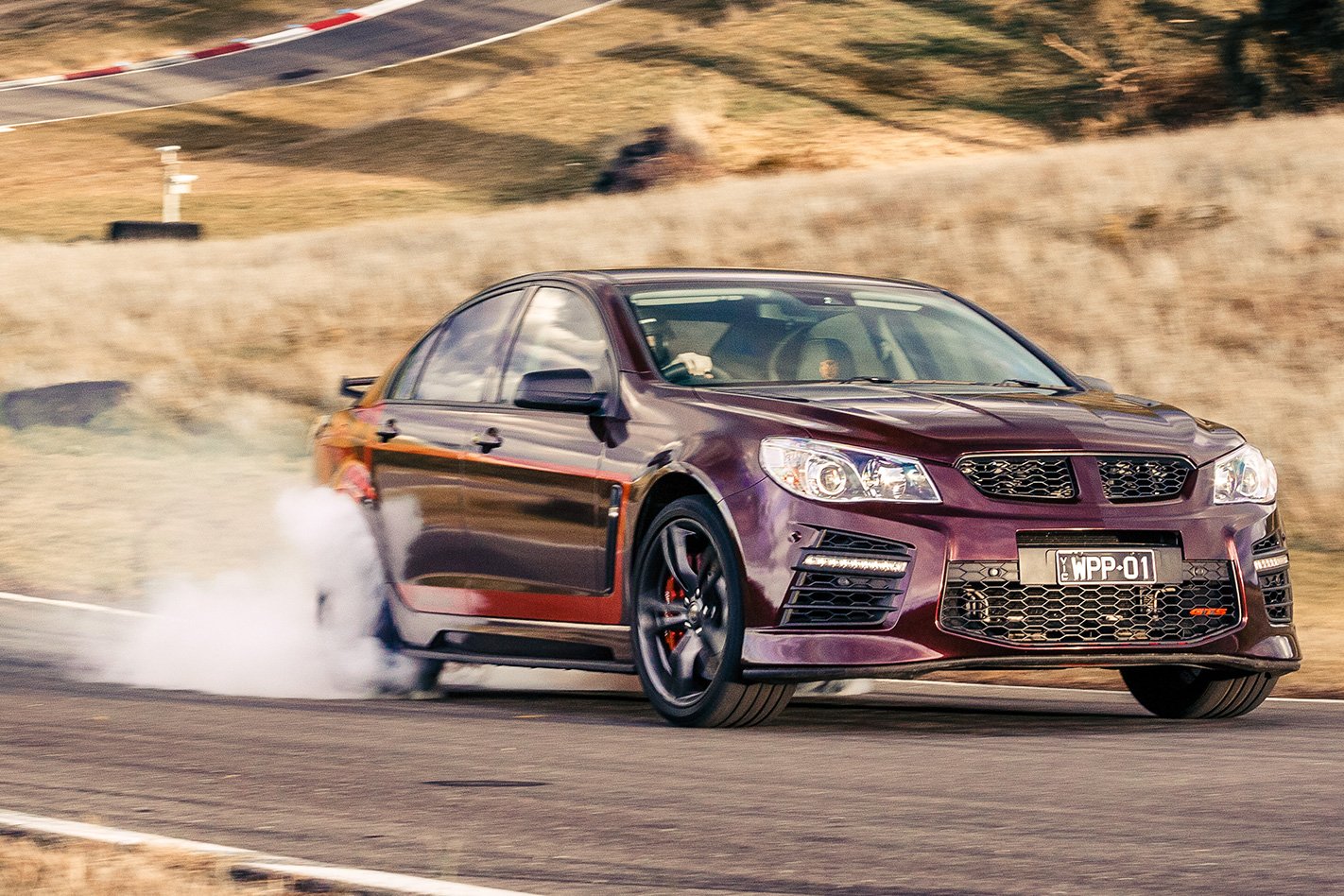
In just 3.81 seconds, the Walky will hit highway speeds, which is quick enough to embarrass a $295K BMW M4 GTS. Ouch.
That said, the Walky only holds the 100km/h sprint record, the quarter-mile winner wears a different badge…
2. KPM Motorsport’s Streetfighter FPV GT-E – 3.83s
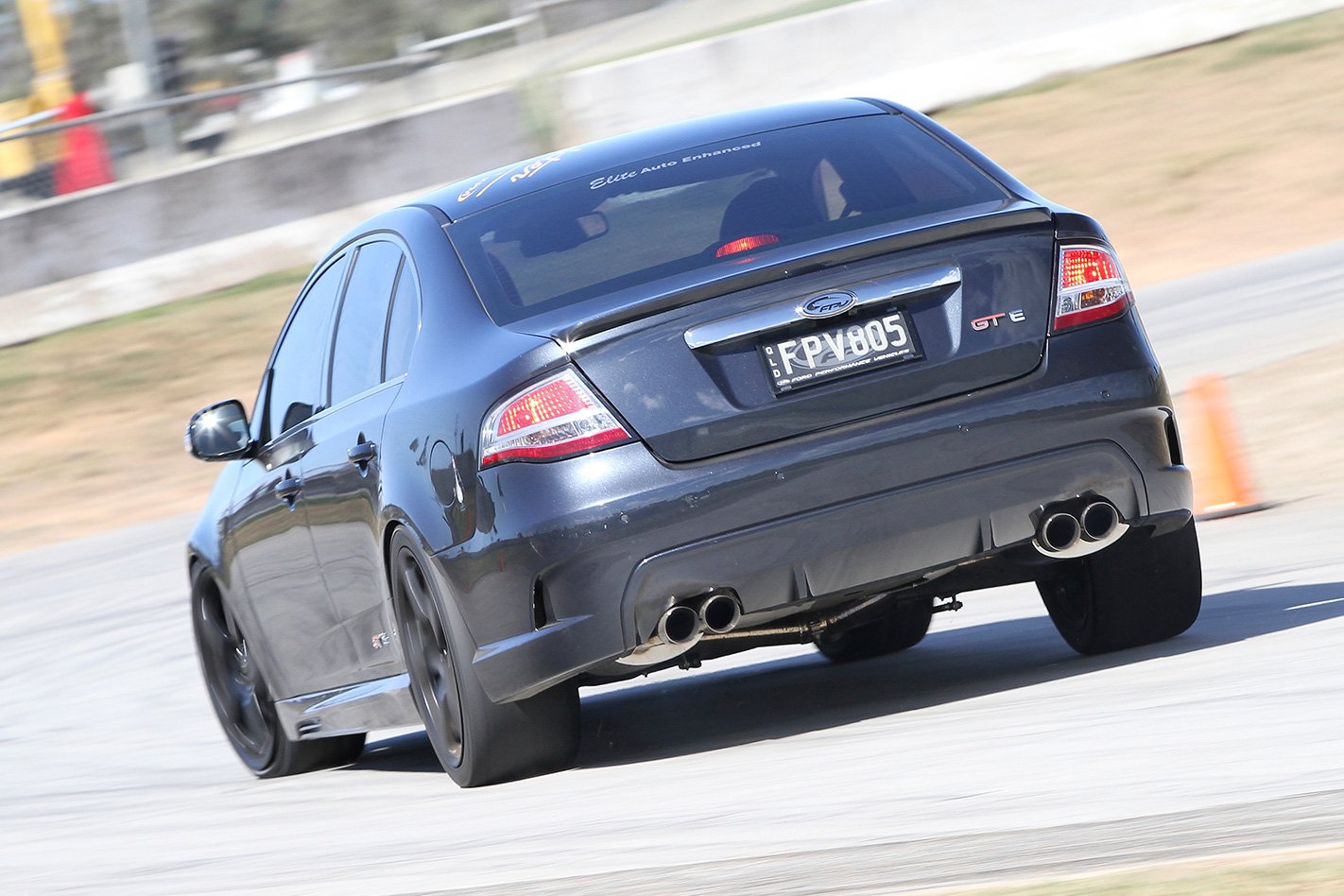
Trap speeds sadly weren’t published that year, but it would have had to be in the 205km/h region – serious speed.
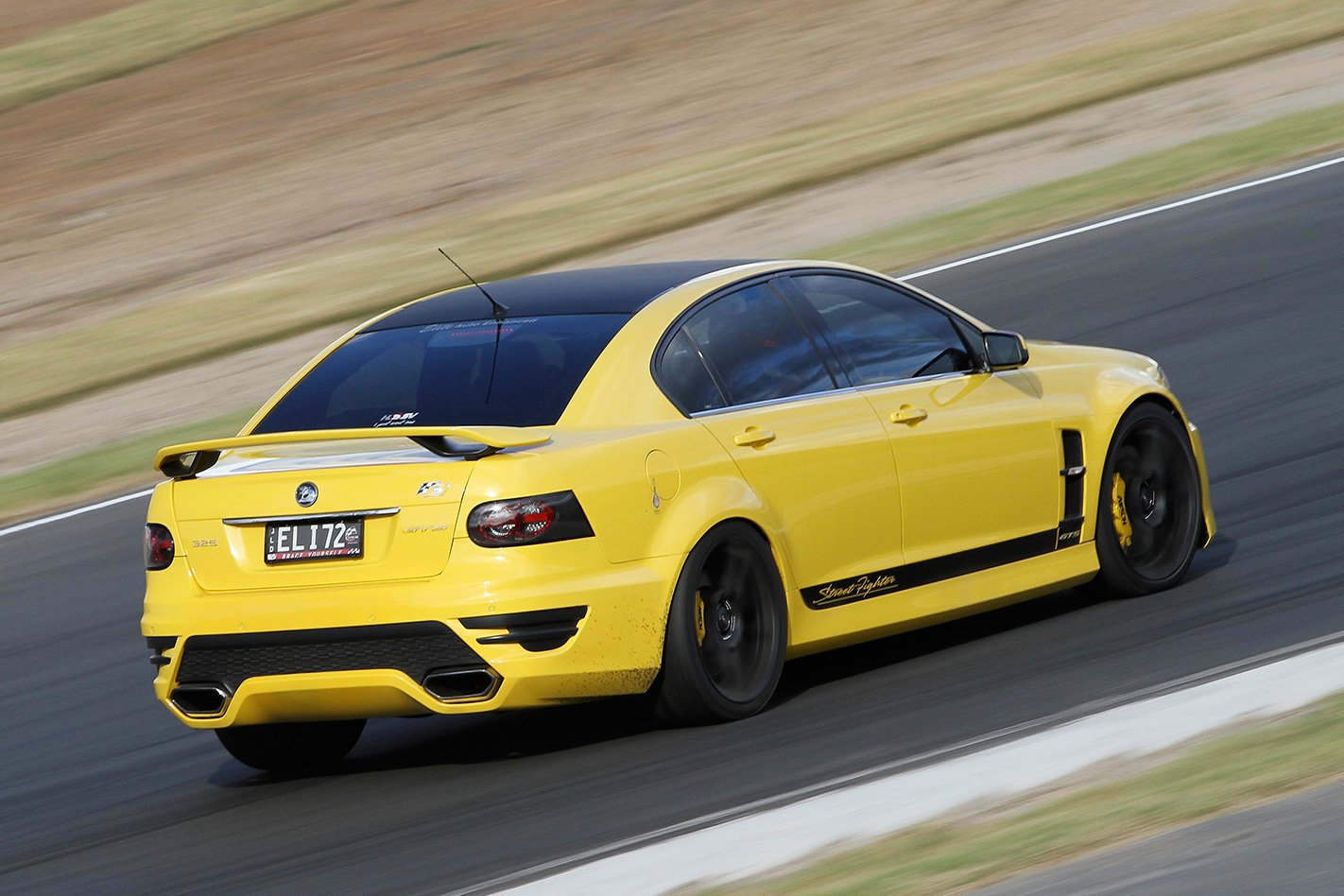
3. KPM Motorsport’s Streetfighter VE GTS – 3.91s
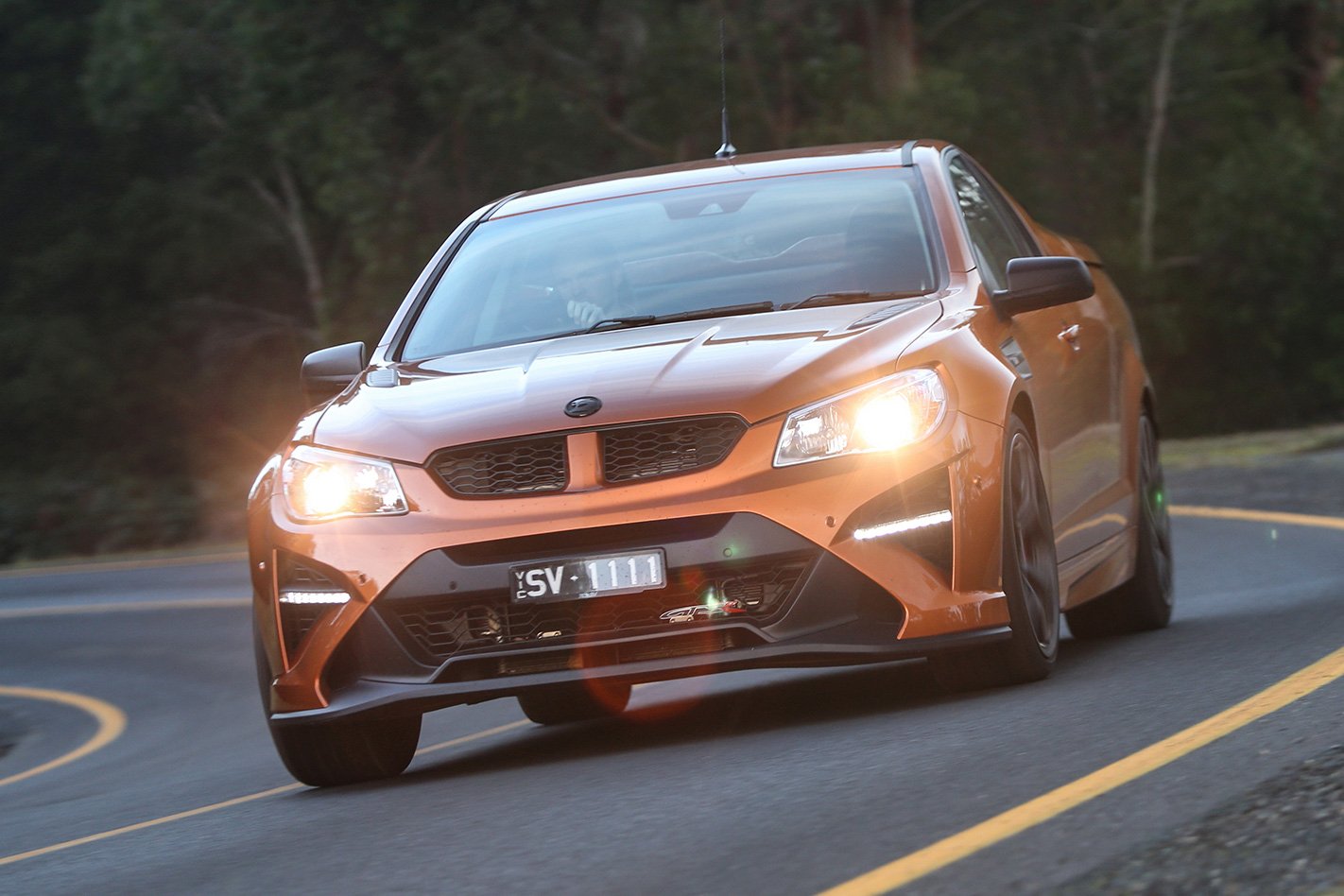
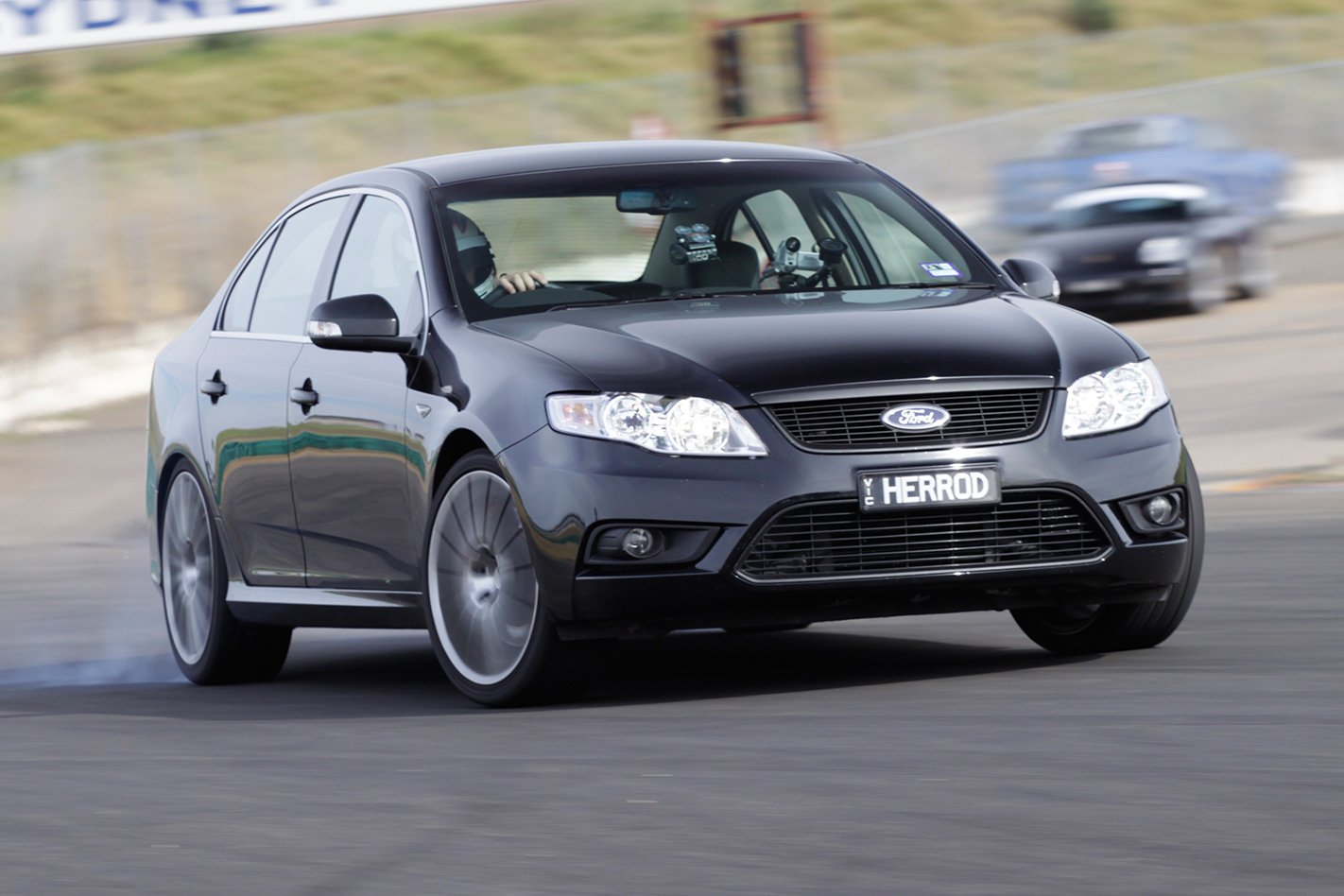
5. Herrod Falcon G6E Turbo – 4.31s
If you opened a wildlife magazine to a story where the opening photo included a barracuda, a bull elephant and a cocker spaniel on stilts, you’d be hoping there’d be a caption that explained all.
This review was first published in MOTOR Magazine March 2009.
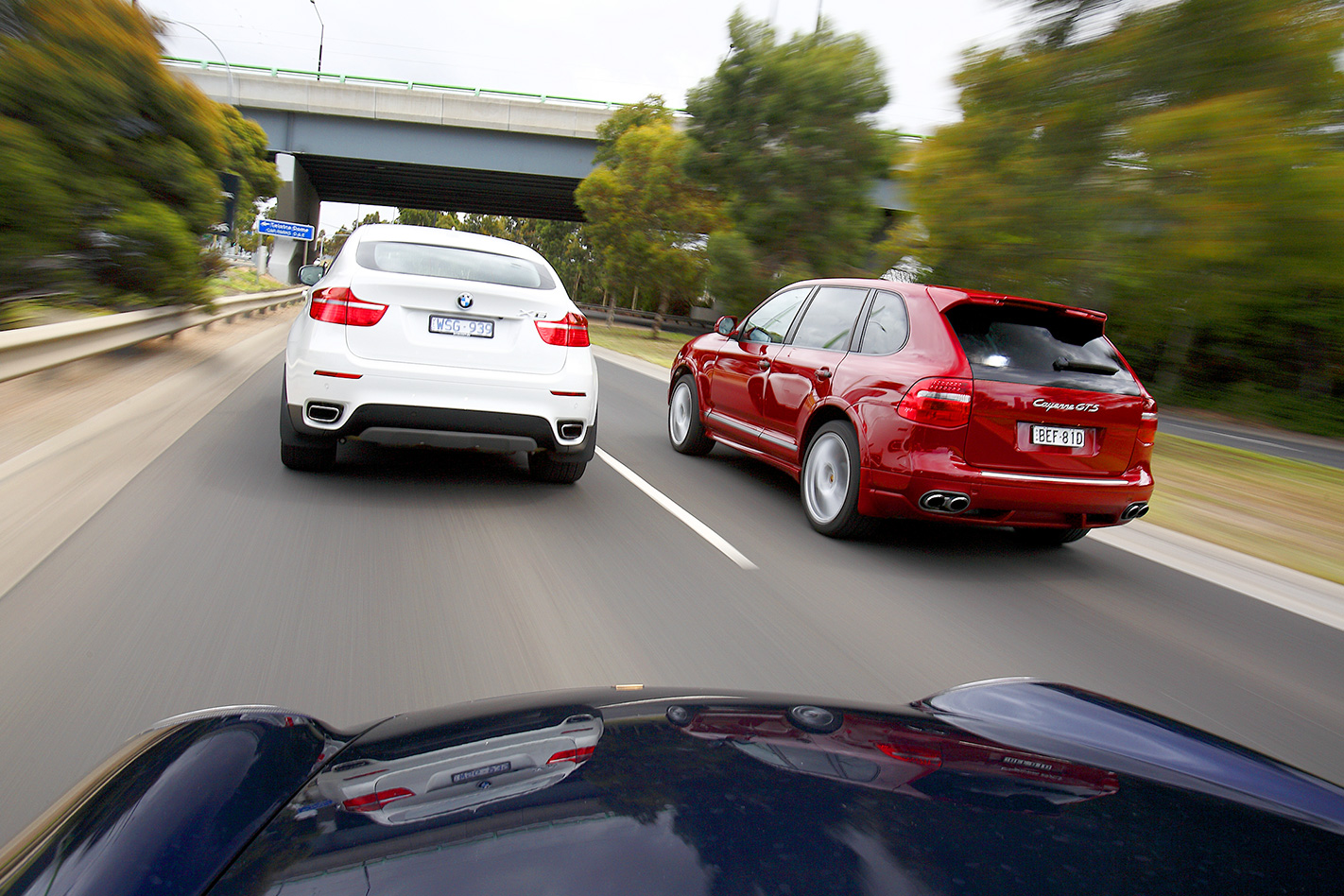
And I’m tipping you’re looking at this page and thinking pretty much the same thing. How the hell does a Porsche 911 and Cayenne end up on the same page of a MOTOR comparison? And can somebody please talk me through the inclusion of the BMW X6 in the same mix?
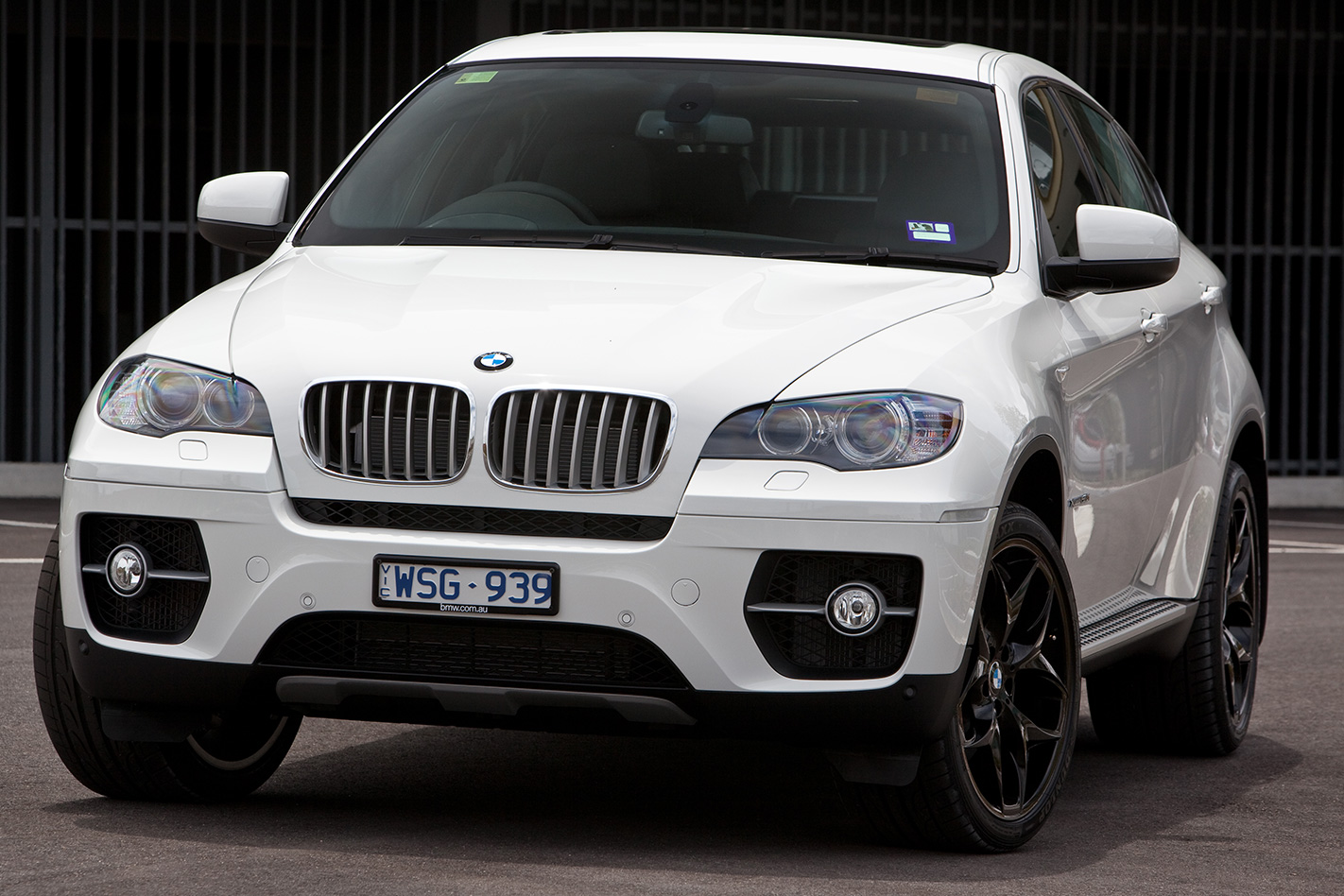
In fact, to hell with context, can anybody explain the X6 to me at all? See, if you listen to the folks at BMW, you’ll be told that the X6 (and I’m not making any of this up) is a four-wheel-drive, a coupe and (perhaps most intriguingly) “handles like a 911”.
Of course, we figured we’d give the X6 the best possible chance of living up to the claim, so that meant choosing the all-paw 911, the Carrera 4, in this case the S model with the all-new 3.8-litre, direct-injection flat six.
It’s no secret that the all-wheel-drive version of the 911 is not as pin-sharp on a racetrack as the rear-drive model, but it does have more grip for the other 95 percent of tasks owners will put it to and it’s a better technical match for the X6. And on that basis, we also opted for the new PDK dual-clutch seven-speed transmission.
So, to the X6 – the vehicle that has taken niche SUVs to new levels of nicheness. Looking for a car with M3 grunt and jacked-up, quasi-off-road suspension? Or what about an X5 with none of the luggage space? Then the X6 could be your buggy.
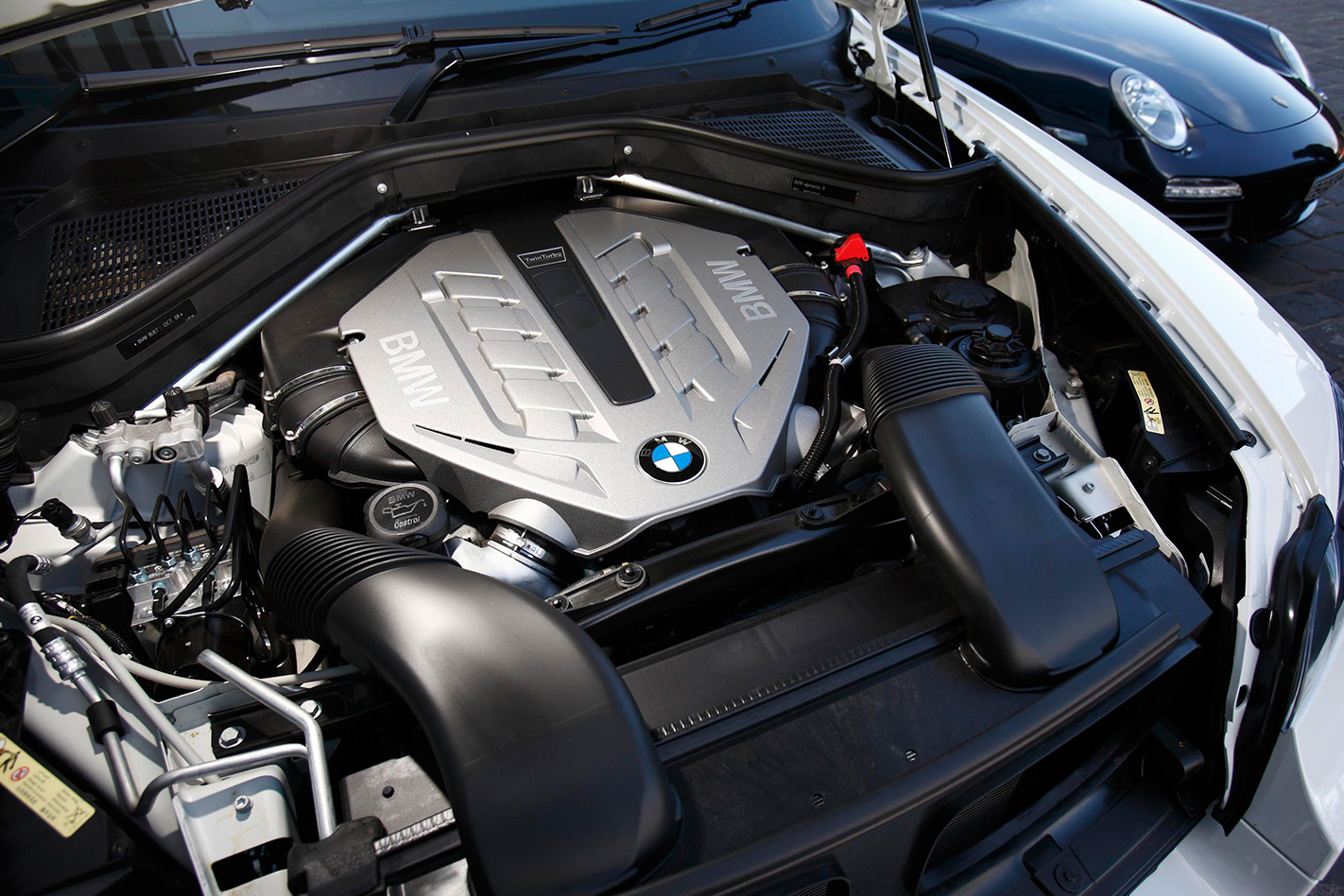
As well as the full suite of computer-controlled stability and traction functions, the V8 X6 also has Adaptive Drive (lesser models can be optioned with it) which amounts to active stabiliser bars and dampers that can be firmed up by pressing the Sport button on the centre console.
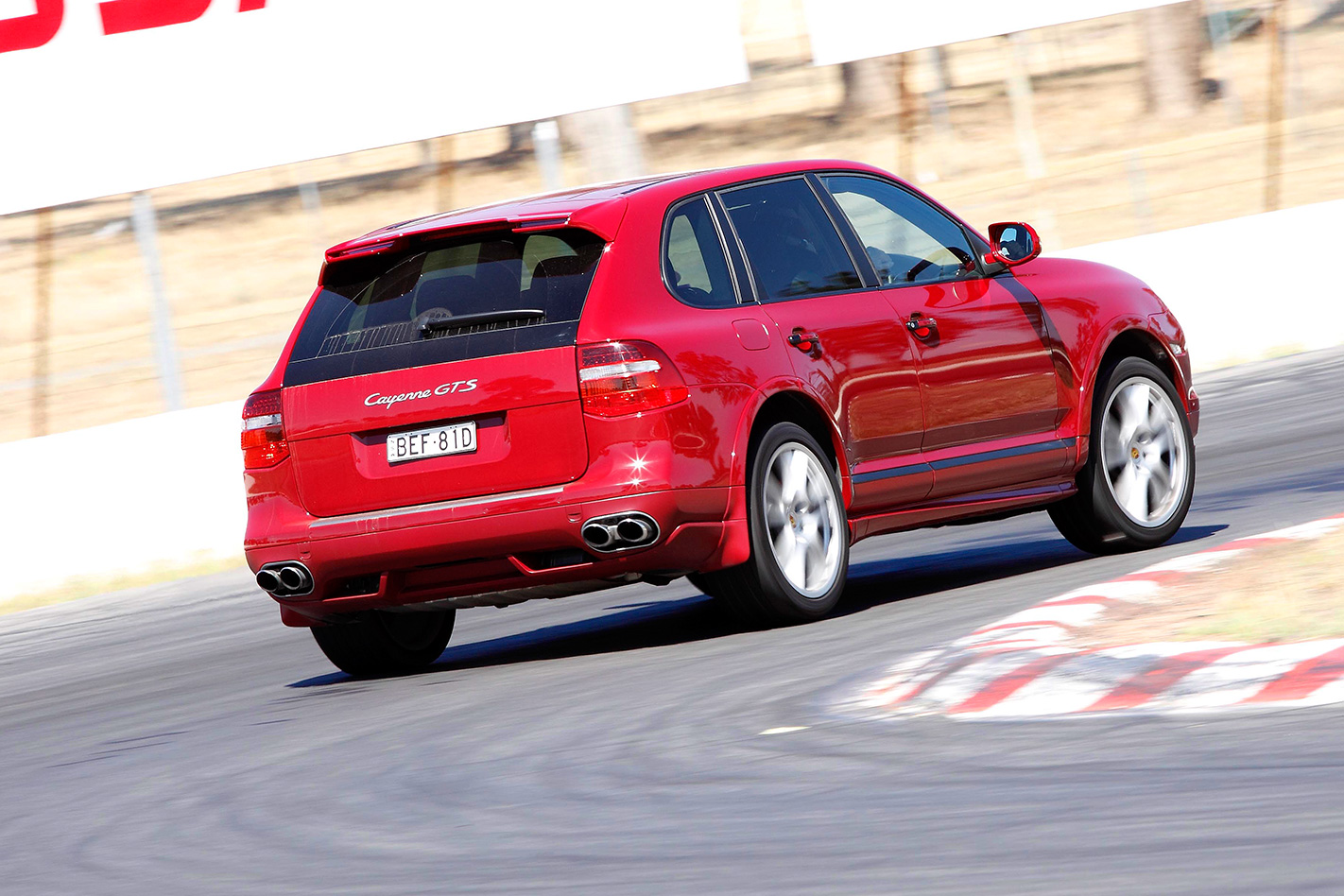
Now, comparing the X6 with a traditional Porsche is one thing, but let us not forget that Porsche also has a pretty convincing SUV of its own in the form of the Cayenne. So why not throw it in, too? We could have opted for the mega-expensive Cayenne Turbo, but instead we chose the GTS version which is a) cheaper and, b) a nicer car to use.
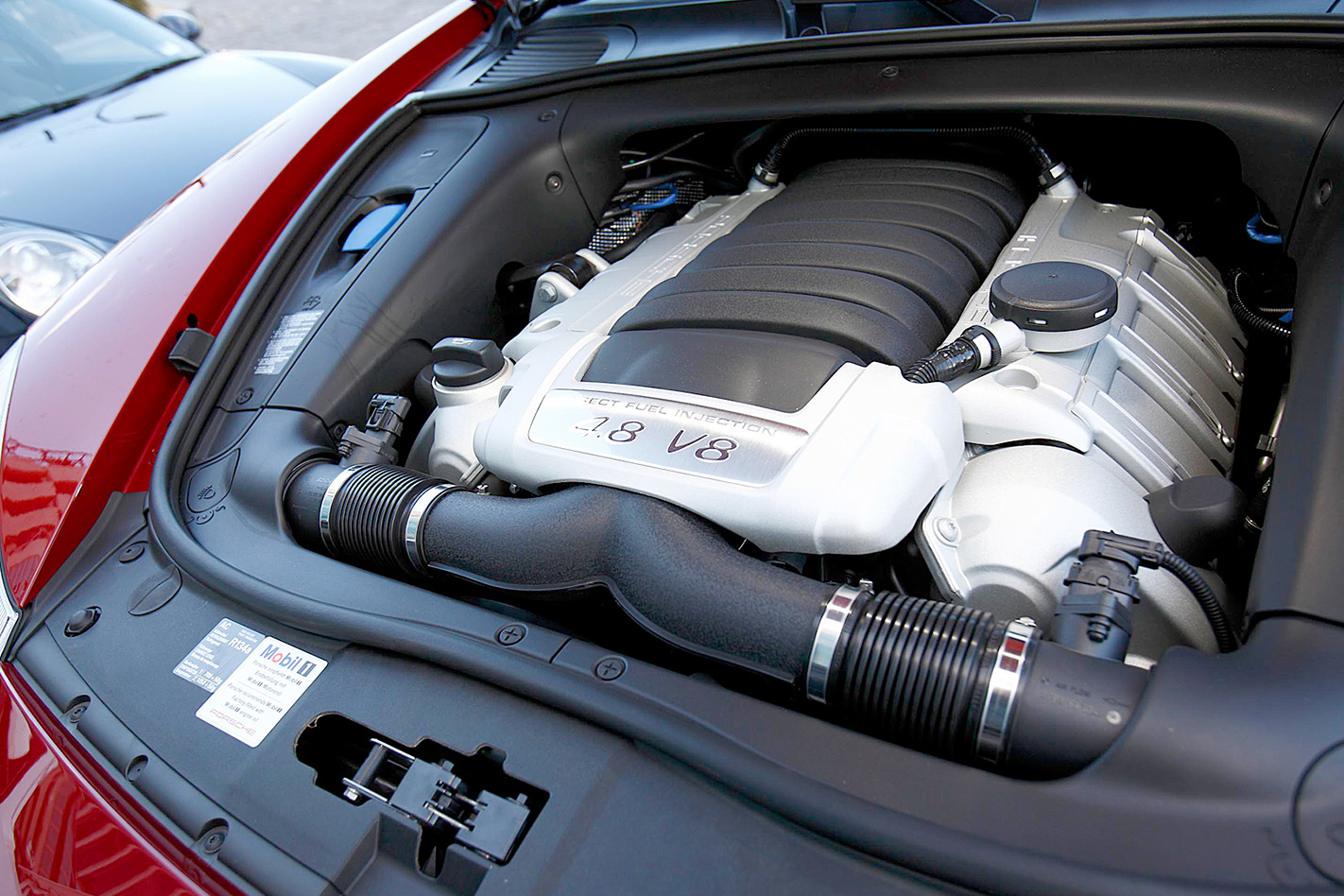
In the GTS, you’re more or less getting the Turbo specifications but without the turbo engine, so you keep the big brakes, tyres, firmer (and like the BMW, air-adjustable) suspension, seats and styling. But the Cayenne, even in its sub-Turbo GTS trim, is still a much more serious off-road package than the BMW thanks to a proper set of low ratios and a centre diff-lock.
If that’s your agenda. Ahem. All of which modifies our quest a little. Because as well as finding out whether the BMW X6 really is as handy a handler as a Porsche 911, we’re also aiming to find out – just in case, you understand – whether the BMW X6 is as handy as a Porsche Cayenne at being an SUV.
Actually, the second part is pretty easy to answer. Um, the X6 is actually not anywhere near as useful as the Cayenne. But then, just looking at the pictures here, you’ve probably worked that out for yourself. The big problem is in the way the BMW’s roofline falls as it sweeps back towards the big, one-piece tailgate.
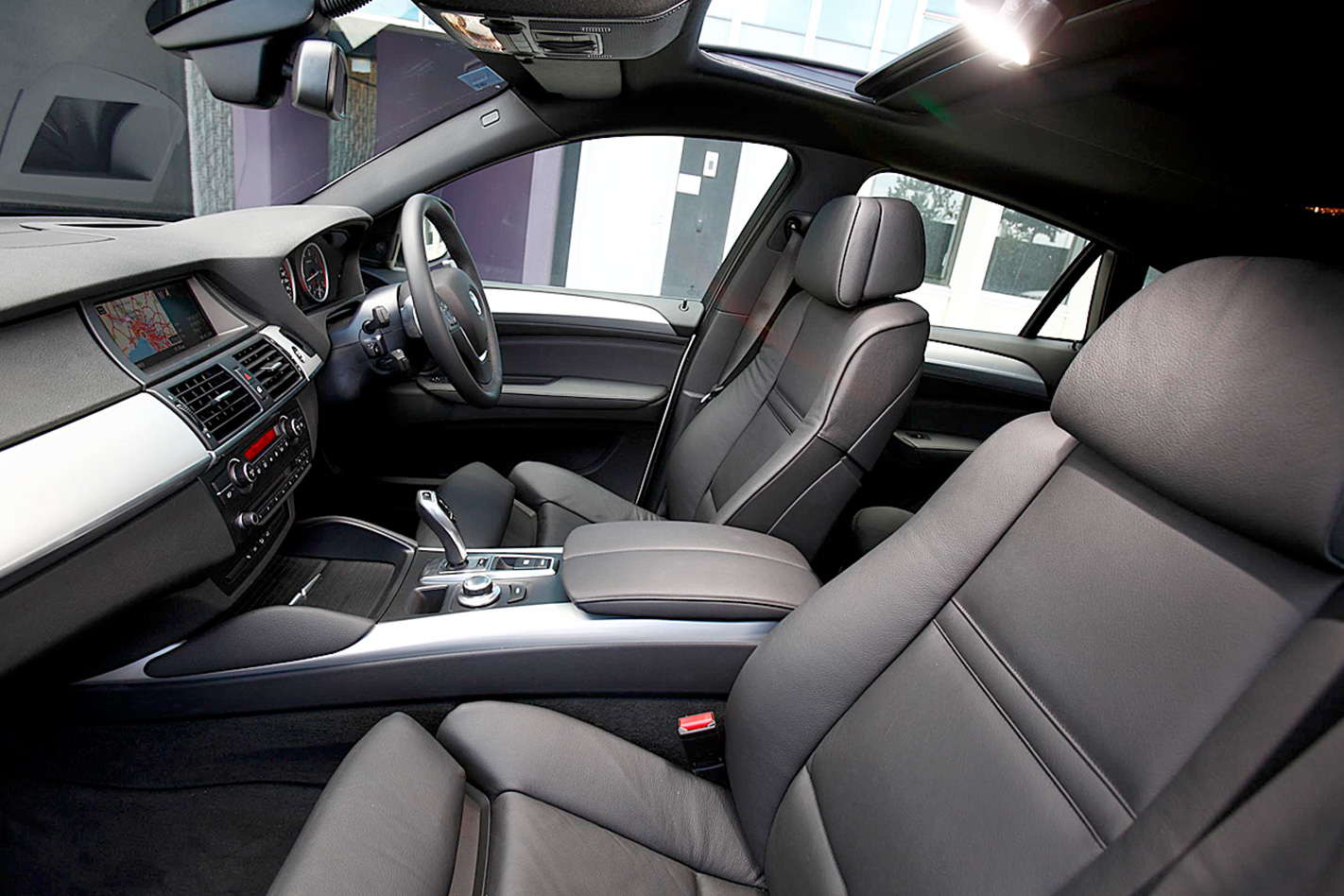
The rear windscreen is so shallow and angled so steeply, you end up with a slit to look out of. And since there’s no window wiper, it soon becomes a grimy or rain-spotted slit that leaves you with just the exterior mirrors to spot the cops sneaking up on you.
The luggage floor is also quite high, to the point where it’s an issue for short people bearing heavy shopping bags, but then that’s a criticism you could level at the Cayenne, too. It’s just that because the GTS actually has plenty of luggage and rear-seat space when you do heft the stuff inside, it’s easier to forgive.
That and the fact that the jacked-up ride height actually means something given the Cayenne’s off-road smarts (and it can be lowered pneumatically when parked). Of course, limited luggage and interior space is something the X6 shares with the Porsche 911 and, if the rear seat of the BMW is a bit of a smirk-maker, the back pew in the Porker is a true thigh-slapper.
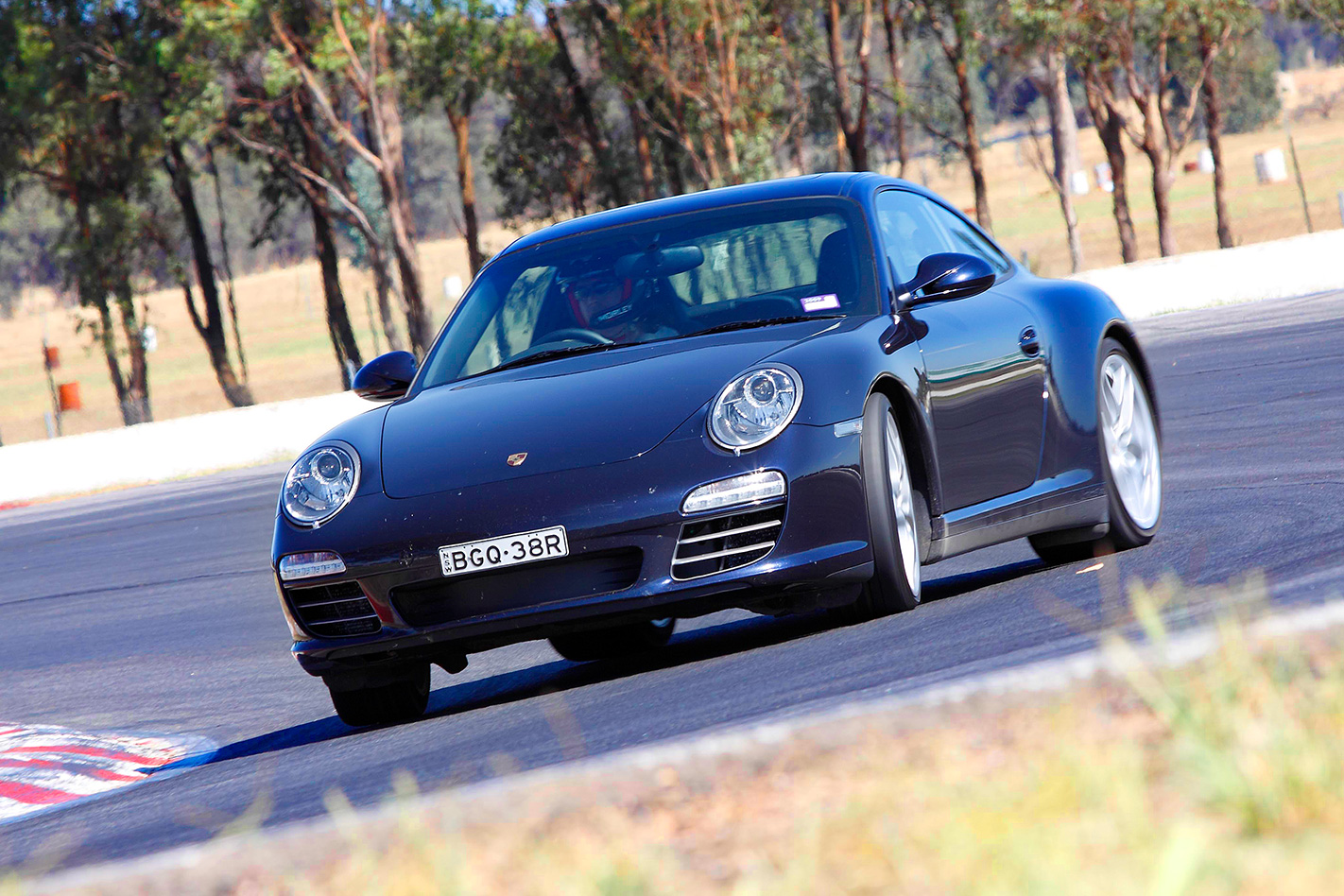
The active suspension means flat cornering and there’s no shortage of grip. But the steering feels a bit wooden and while it doesn’t extend to actually making the car hard to place on the blacktop, it does mean it’s less satisfying to punt around. But the engine is mega-strong (unless you were told it’s turbocharged, you probably wouldn’t pick it), and the gearbox beautifully fluid and sure of itself.
Against the X6, the Cayenne feels a lot bigger, heavier and simply more like an SUV. But it’s still disproportionately rapid for something that weighs the wrong side of two tonnes (so does the BMW) and it steers with a little more clarity, even if there’s a little body-roll in the final outcome.
The Cayenne also rides better and I remain unconvinced by the X6’s manners over sharp bumps and the tyre roar from those 21-inchers. And in any case, neither of them can satisfy a driver like the Porsche 911, even at mundane road speeds. Add some enthusiasm and the Carrera 4S is, simply, a thoroughbred.
On the dragstrip, the BMW tries hard but even with performance that would shade a supercar of just a decade or so ago, it can’t match the 911. The BMW reeled off a 0-100km/h time of 5.5sec (which, admittedly, is flying) and a standing 400m of 13.7 at 165.6km/h.
And good though that is, it’s clear that its two-plus-tonnes (and no doubt, greater aerodynamic drag) play against it, because the Carrera rattled off a lazy 4.5 to 100km/h and stormed the quarter-mile in 12.6 at 181.7km/h.
The Cayenne was still further back and although 6.8sec to 100 and 14.6 at 156.9 isn’t hanging around, it isn’t in the same league as the other two – despite its power-to-weight parity with the X6. Around the tight Winton circuit, the differences were pretty much maintained.
And the Cayenne? Not that far behind, really, with a best of 1:47.06. If your pockets are deep, but not too deep, then the BMW will claw back some ground. Starting at $145,000, the options including the sunroof (nearly $3.5K) and a stonking $9208 for the black, spoky wheels add up to $161,563 before it hits the road.
The Cayenne GTS wound up at $179,160 as tested, but that includes a cheeky six grand for the ‘special’ colour (it looked red to me) and nearly eight grand for the PDDC (dynamic chassis control). The 911? Erm, a rather scary $303,410 by the time you add $4000 for the adaptive sports seats and seven gorillas for the PDK gearbox.
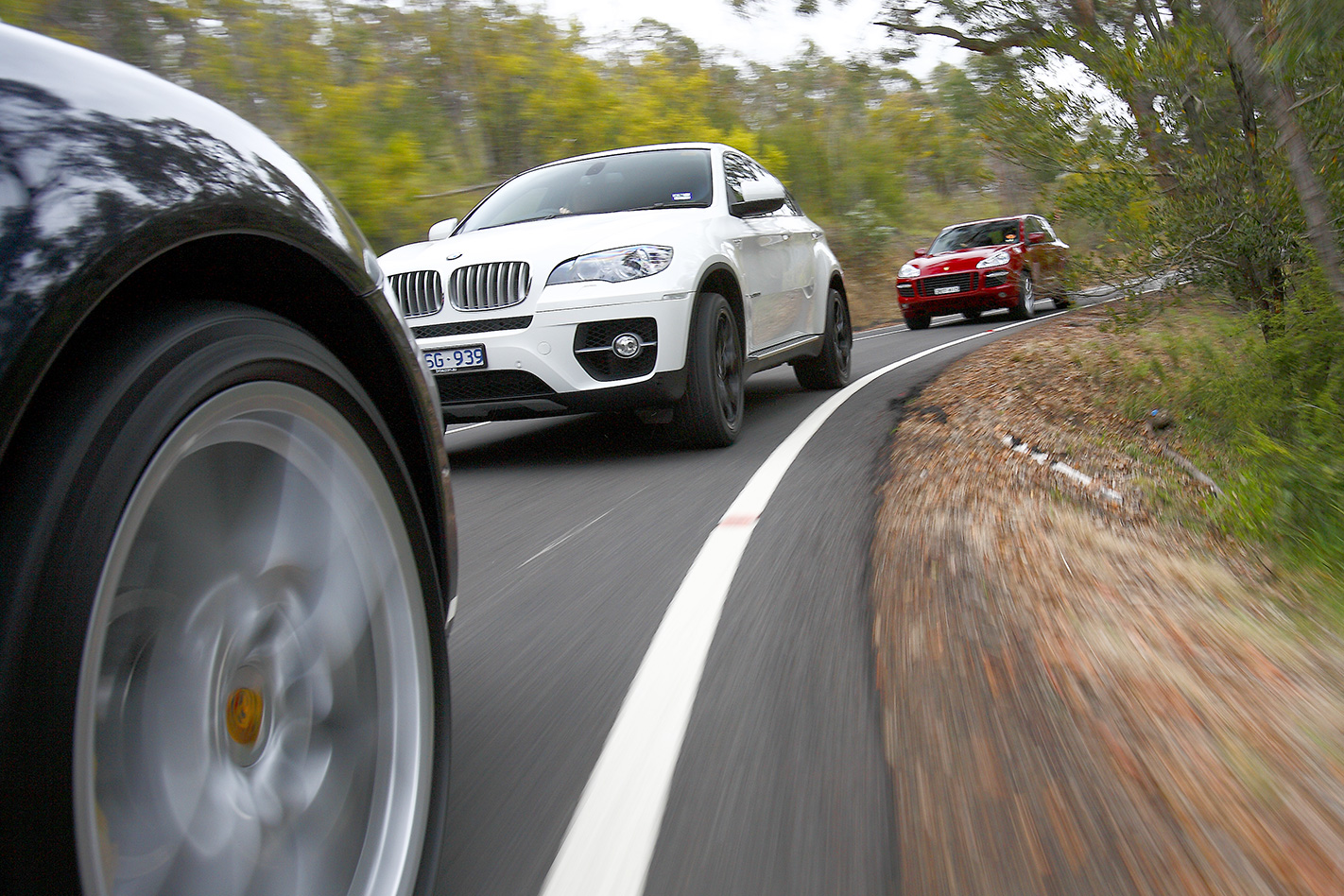
Ultimately, it falls somewhere between the 911 and Cayenne in pretty much every endeavour since it trails one on the road (or track) and the other off it. Even then you could cut it some slack for being big, tough and fast, if only you could fit people and gear in it. But as it stands, it’s hard to conclude that it’s anything other than fairly pointless.
Which is not to damn it, but if you’re looking for a real four-seat, four-wheel drive sports car nothing can beat – or handles like – a 911.
| u00a0 | u00a0Porsche Cayenne GTS specs | u00a0BMW X6 xDrive 50i specs | u00a0Porsche 911 Carrera 4S specs |
| Engine | 90-degree V8, DOHC, 32v | 90-degree V8, DOHC, 32v, twin-turbou00a0 | flat 6, DOHC, 24v |
| Power | 298kW @ 6500rpmu00a0 | 300 kW @ 5500-6400rpm | 283kW @ 6500rpm |
| Torque | 500Nm @ 3500rpm | 600Nm @ 1750-4500rpm | 420Nm @ 4400rpmu00a0 |
| Kerb Weightu00a0 | 2225kg | 2190kg | 1480kgu00a0 |
| Price (new) | $161,900 | $145,000u00a0 | $272,000 |
The mid-size SUV segment is the hottest one in Australia right now, as far as growth is concerned. While sales of regular passenger cars continue to gradually shrink, mid-strength SUVs are accelerating at a rate that’s ahead of most other vehicular segments in this country.
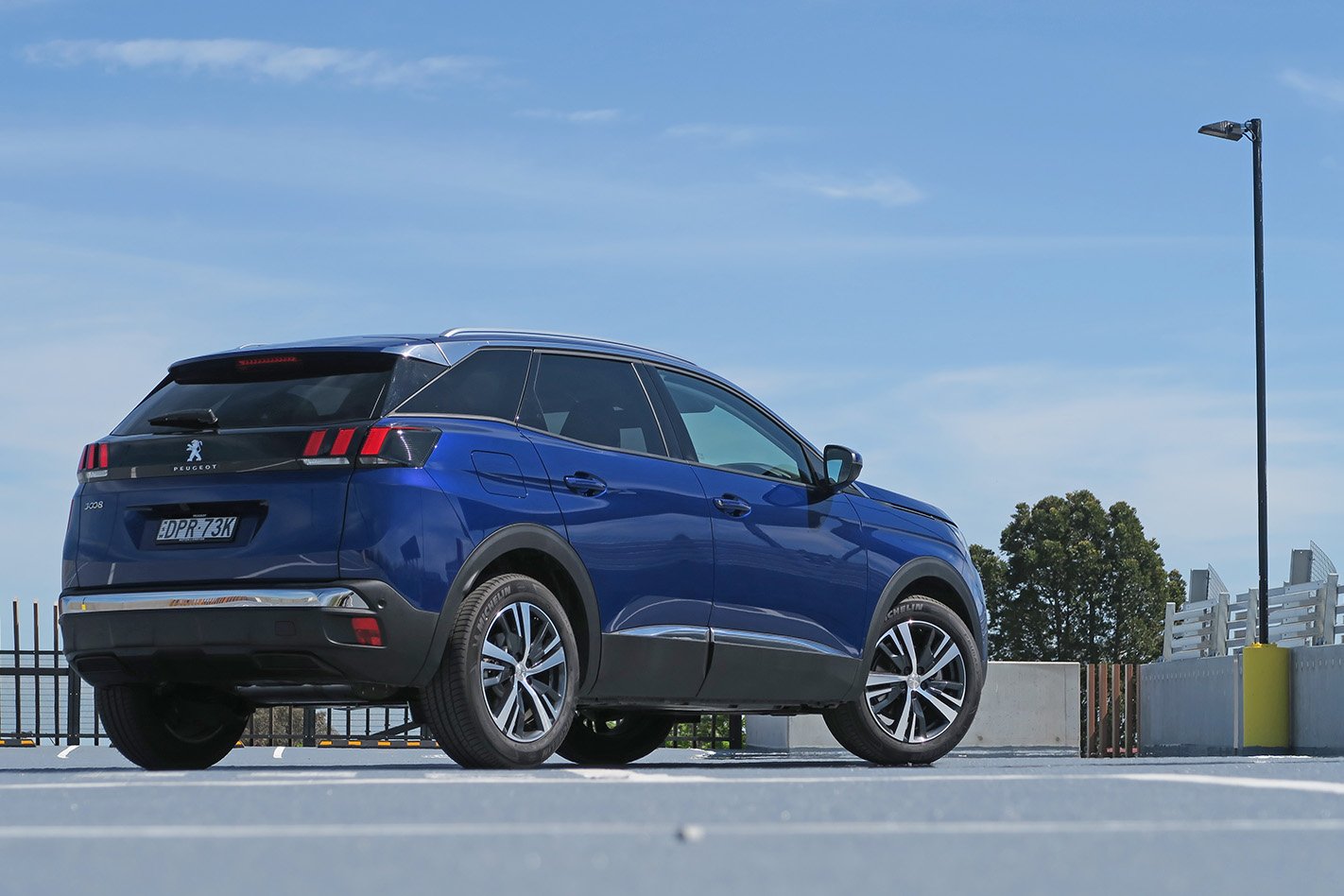
Which is why Peugeot’s 3008 is so important for the French brand. The time is ripe for Peugeot to capitalise on swelling demand for medium SUVs, but it needs the right product to win over consumers and make up for lost time. Peugeot isn’t exactly new to the world of SUVs, but its previous attempts – largely made up of reworked Mitsubishis – were lukewarm at best.
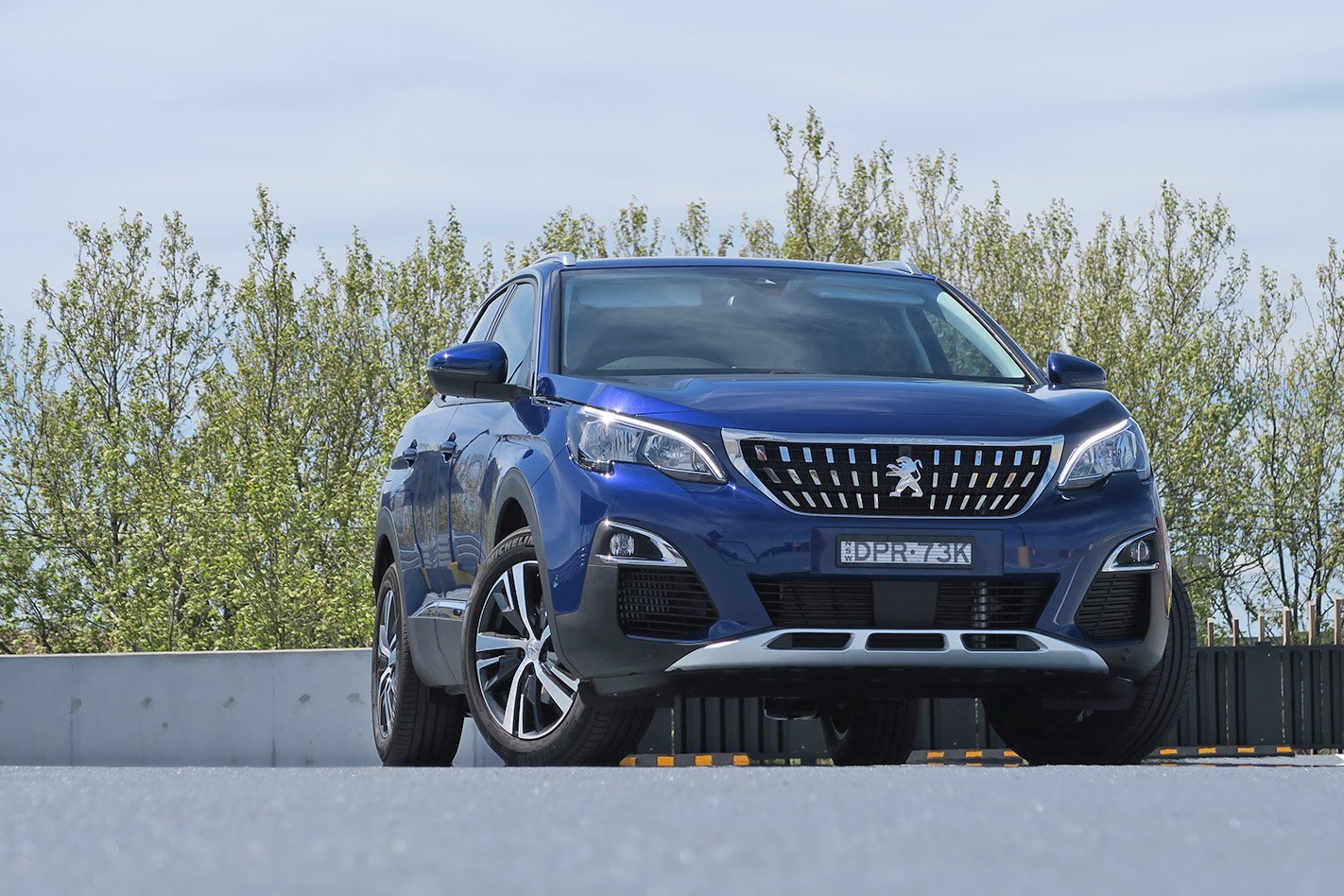
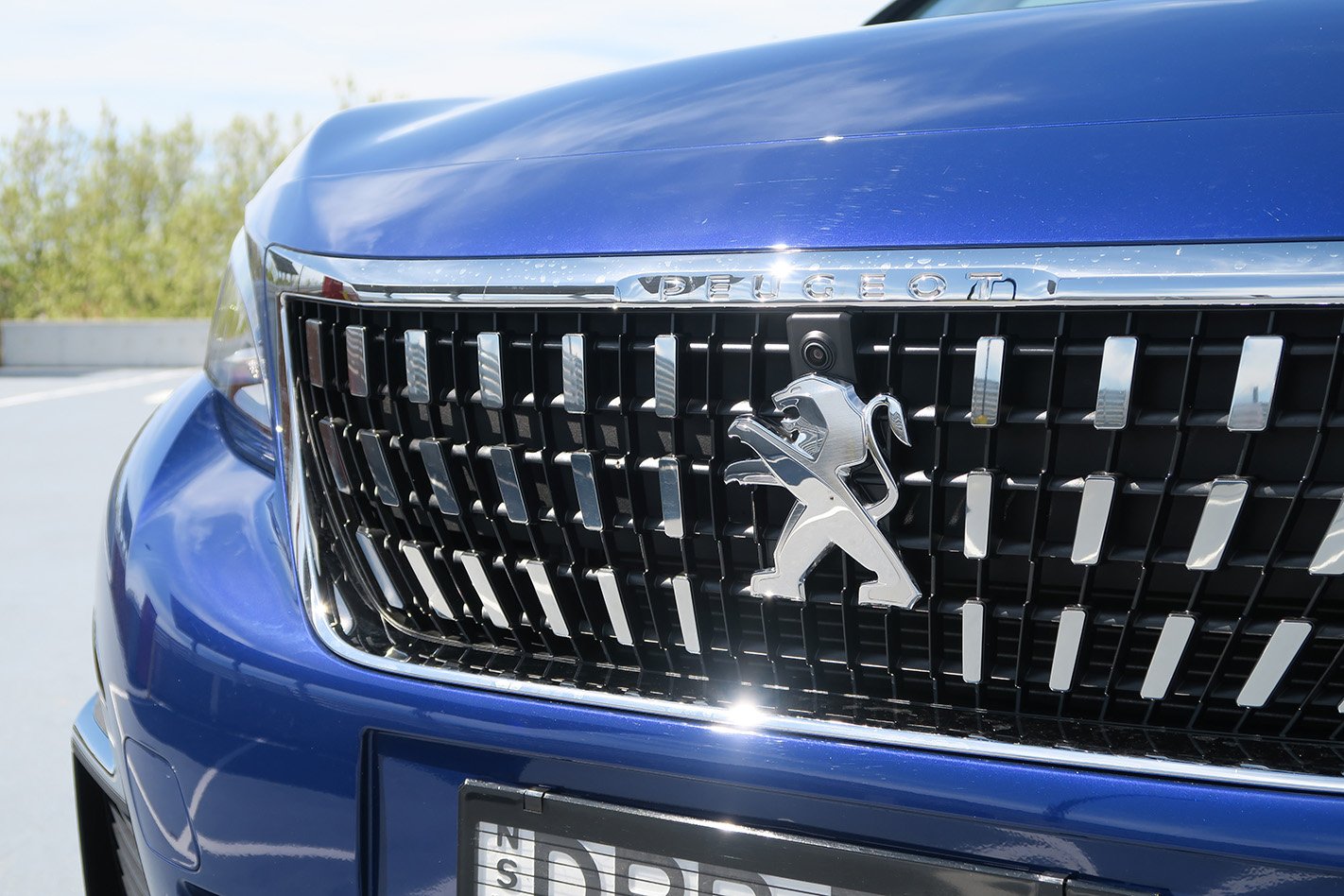
The new Peugeot 3008 is different though. It’s French, through and through, and it sets itself apart from the crowd not only through its design, but in how it drives as well. Europe can’t get enough of it, and our first taste of the $39,490 mid-grade Allure variant suggests the big Pug could take off Down Under as well.
STRENGTHS
- Design – it’s a standout feature of the 3008, especially so in the Allure variant. From the outside it looks dignified and upmarket, while on the inside it verges on concept car-like. The fabric dash trim looks and feels great, and is a welcome change from the leather-grained bare plastics and shiny silver-painted trim of many rival SUVs.
- Other concept car touches include that ergonomic gear selector (which works better than you may imagine) and the tiny, almost hexagonal, steering wheel and high-mounted all-electronic instrument panel. It doesn’t just look cool either – with the steering wheel adjusted properly (with the top of the rim entirely below the instrument panel), that display screen becomes the next best thing to an actual projected head-up display.
- While some European SUVs suffer from a ride that’s too sharp (we’re looking at you, Volkswagen Tiguan), the 3008 manages to deliver a supple ride on ordinary roads. That said, it does tend to crash into potholes and other sharp surface imperfections.
- The 3008’s steering is a highlight, boasting perfect weighting and a generally effortless feel. The tiny steering wheel also makes short work of the 3008’s 2.9 turns from lock-to-lock.
- It’s a car that accommodates people and their stuff very well. The front seats are exceptional in their comfort, conforming well around legs and torso to give excellent support. The rear bench can seat three at a pinch but is better with just two adults across it, while overhead map lights for the second row, rear face-level air vents and a wide fold-down centre armrest further improve cabin comfort.
- The centre console box is simply massive, reaching deep down and stretching underneath the cupholders. At the base of the centre stack is a useful tray for phones that also incorporates a wireless charging pad – perfect for throwing some extra volts into your smartphone without having to wrestle with cables.
- There are plenty of high-quality materials on display in the 3008, with the entire dash and front door card uppers being soft-touch plastic, the switches on the centre stack being finished in satin silver and the ‘Brumeo’ fabric trim panels boasting a fine texture that wouldn’t look out of place on Saville Row. Unfortunately the rear doors don’t get quite the same treatment – they’re entirely hard plastic.
- Driveability is better than you might expect for a tiddly 1.6-litre petrol. Its outputs of 121kW and 240Nm may seem on the low side, but the 3008 Allure pulls neatly from low RPM and steps away from standstill with plenty of urge. It runs out of puff in the upper reaches of its rev range, but the six-speed automatic does a great job of keeping the engine in the meat of its torque band.
WEAKNESSES
- Autonomous emergency braking is a cost option on the Allure – which is a little hard to stomach given its comparatively high cost of entry. It’s standard on the more expensive GT-Line and GT grades, along with a host of other driving aids like blind spot monitoring and lane keep assist.
- The suspension tends to crash into potholes, which takes some of the sheen off what is otherwise a very accomplished and supple undercarriage.
- Cruise control needs a rethink. Not only does the system flash up a deceptive “Active Cruise Control” message when you switch it on (active cruise is only standard from GT-Line grade and above), but the buttons are hidden behind the steering wheel on a stumpy paddle that’s only navigable by feel. Unless you’re familiar with it, it’s a pain to use.
- The infotainment system is one of Peugeot’s best, and physical shortcut buttons below the 8-inch touchscreen improve its usability massively. However, basic operations such as changing the climate control temperature can only be achieved through the screen, complicating a task that should be much easier.
- The glovebox is tiny, roughly half the size of what cars sold in left-hand-drive markets get. It’s a recurring problem for Peugeots sold in Australia.
ANY RIVALS I SHOULD CONSIDER
Absolutely. The closest rivals to the 3008 in the medium SUV segment include the Volkswagen Tiguan, the Honda CR-V and Mazda CX-5 – all are compelling alternatives, but none quite match the 3008’s upmarket feel and slick presentation.
If you’re going to conduct an interview with an F1 driver, why not do it where they feel most comfortable?
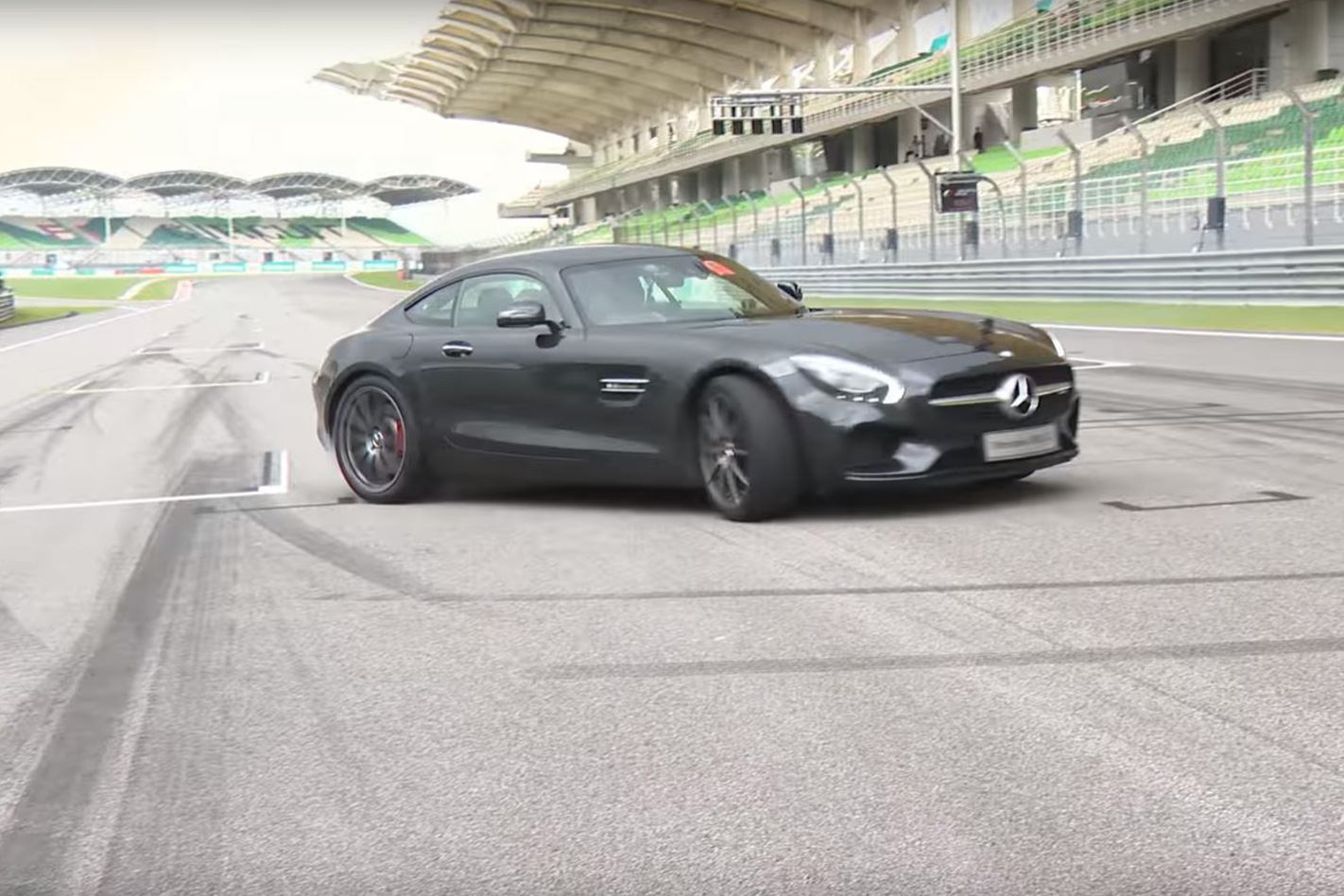
Before the Malaysian GP, F1 presenter Rosanna Tennant jumped into a Mercedes-AMG GT S with Hamilton at the wheel to ask him a few questions about his feelings toward the current season, and the then upcoming race.
Of course, it’s difficult to concentrate on asking questions when you’re being flung from side to side as Lewis Hamilton flicks the tail end out at most corners, but Tennant impressively carried on.
Of course, we know Hamilton didn’t win, Max Verstappen did, but Hamilton did come second to secure his ninth podium this season.
“It was a much better weekend than we had anticipated after our Friday, considering the issues we did have with the car this is a good result,” Hamilton said after the race.
“But still we have a lot of work to do with the car, some of the corners really magnified the issues we have.
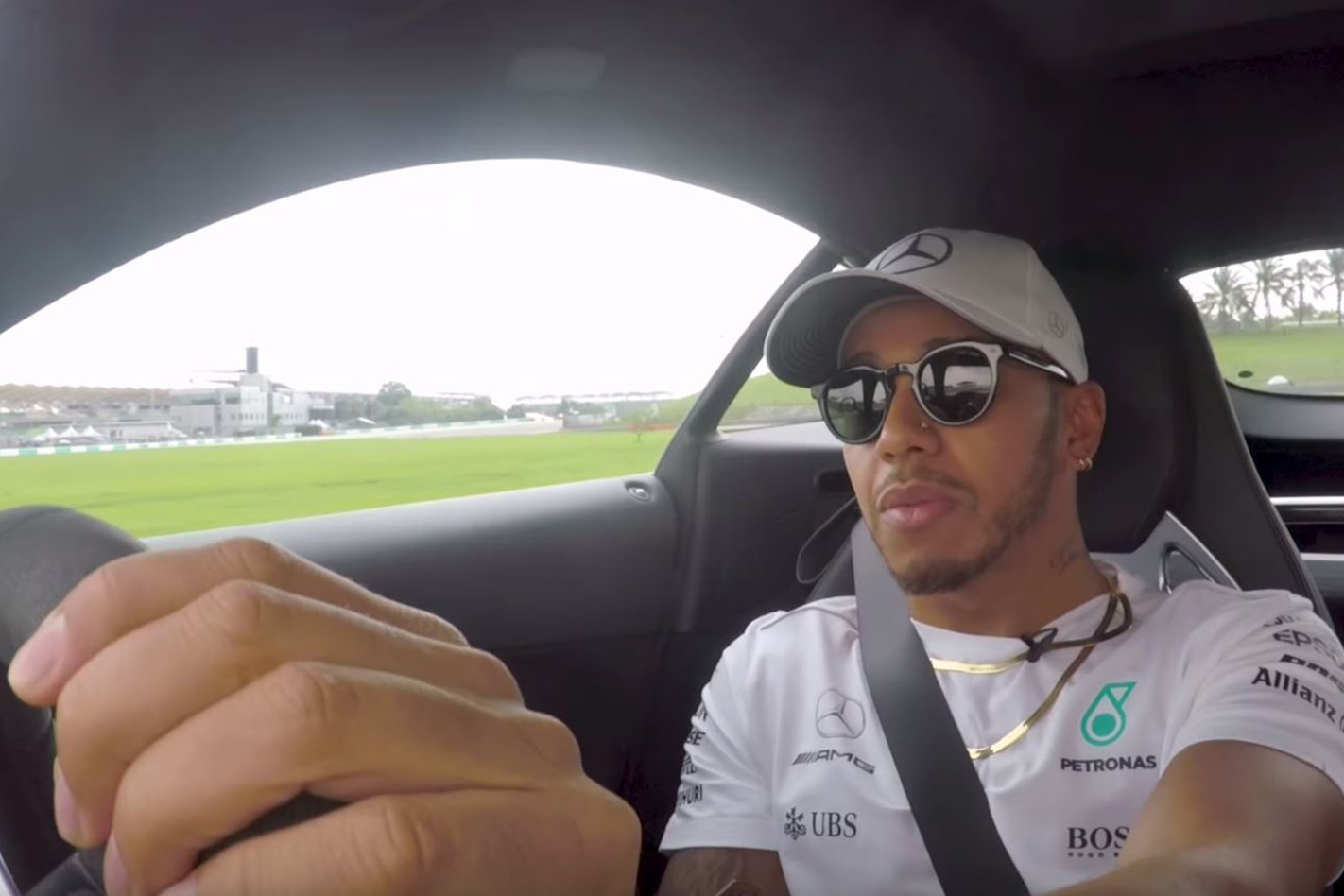
“I was having some problems with de-rates at the beginning of the race, so I was struggling with battery power.
“Valtteri seemed to struggle a lot more; I was able to pull a little bit more out of it. Naturally, I wanted to win the race, winning the races is still the goal.
“So even to be second is not that satisfying. Today was a step towards in trying to win the world championship and every point counts.”
HOLDEN has matched Kia’s seven-year factory-backed warranty with the new extended deal offered as standard for all vehicles purchased before December 31 this year, for up to 175,000km.
This includes the new-to-Australia Holden Equinox SUV, which goes on sale from December 1, as well as MY17 Commodores, which have previously been exempt from similar offers. The MY17 Commodore is the last Australian-built car available from Holden.
“Usually car companies reduce prices towards the end of the year as part of a plate clearance,” said Holden’s Executive Director of Sales, Michael Filazzola.
“Holden already has exceptional prices right across the board. This seven-year warranty offer across Holden’s range provides further tangible value to customers.

“This offer will hopefully instill confidence in those considering purchasing a Holden, and highlights our ongoing commitment to customers.”
Kia’s seven-year warranty remains the industry leader, as it is offered without a kilometre limit, unlike Holden’s 175,000km cap.
Toyota, Nissan and Ford offer three-year, 100,000km warranties, while Mazda provides customers with a three-year, unlimited kilometre guarantee.
Hyundai, Honda, Renault, Skoda, and Citroen offer five-year, unlimited kilometre warranties.
Holden also provides customers with lifetime capped-price servicing – something Ford, Mazda, and Hyundai also offer new car buyers.
Tiara with the unexpected sparkle
HAVING been impressed by the sturdy, powerful Datsun Bluebird and the beautifully finished medium-sized Prince — both well-known here in Rabaul — it was with more than usual interest that I lowered my frame into a pale blue Toyota Tiara, first of its kind to arrive locally.
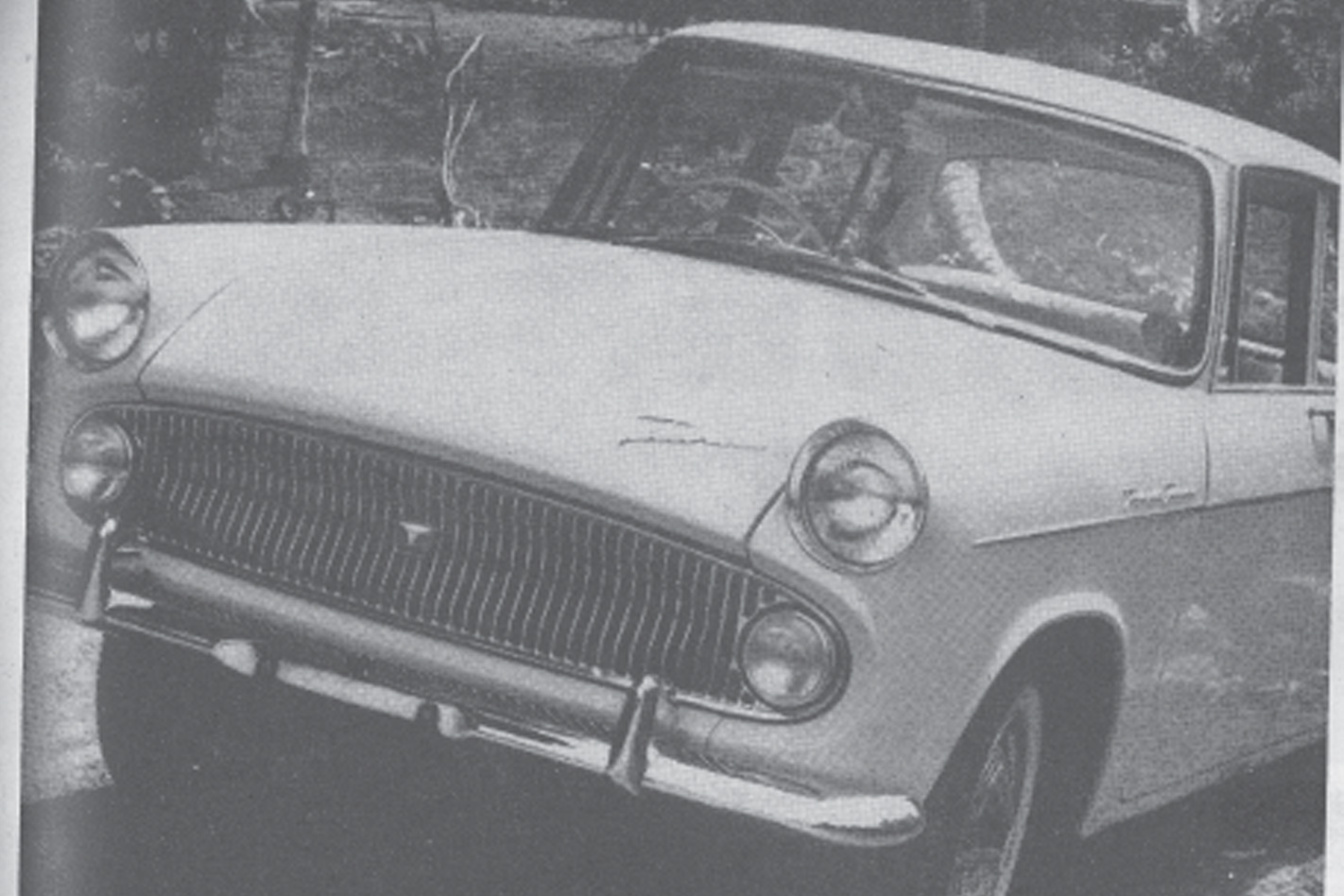
From first sight I’d admired its clean almost-Ford lines while its Rabaul selling price of £845 (a mere £50 above that of the Datsun) seemed to represent fairly good value.
I was, however, quite unprepared for the shock of discovering in the Toyota Tiara a bewildering succession of new, fresh ideas. I will list some of them shortly.
Basically the Tiara is a light four-five seater with trim lines, good ground clearance, top-notch finish and a big beefy four-cylinder engine that turns out bhp with almost free-loading ease. It is easy to see that Japanese manufacturers have been quick to answer Round-Australian trial criticism that their cars are over-bodied and underpowered.
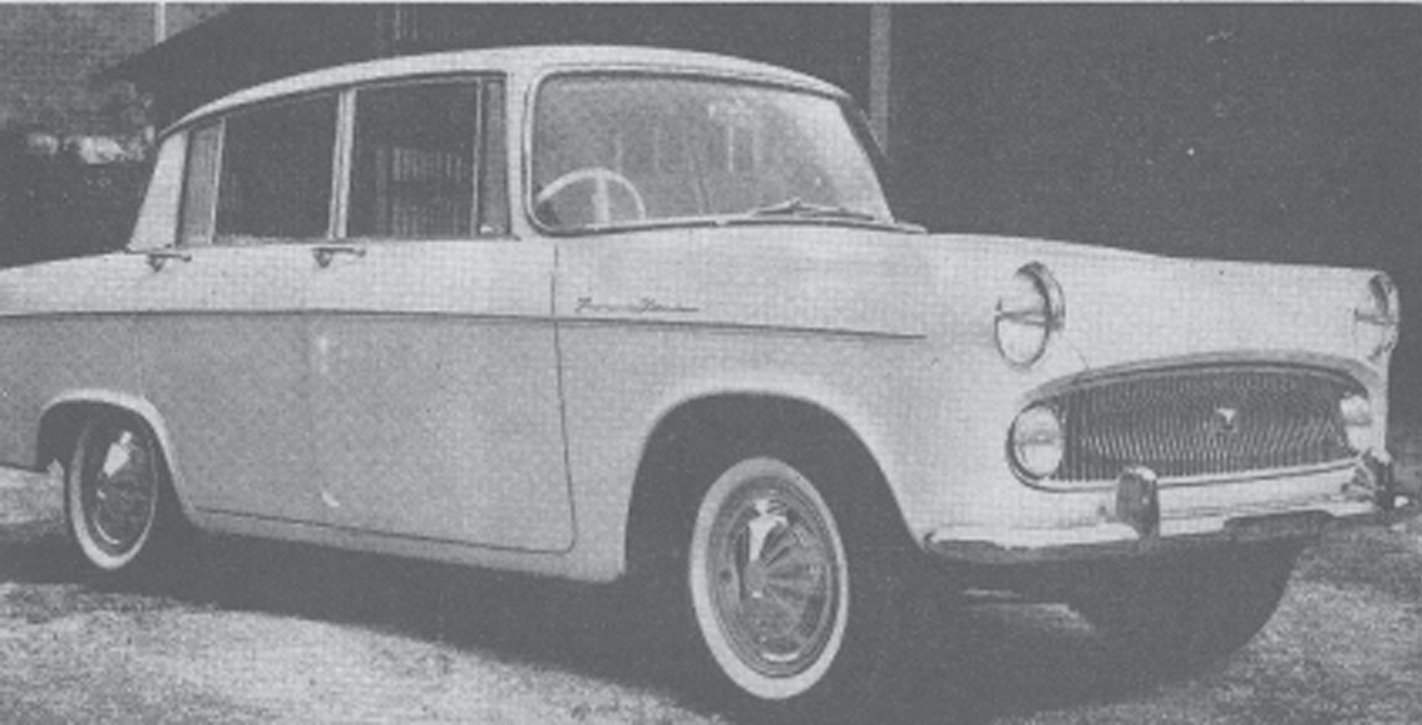
At a quick look, the Tiara is strictly orthodox. It has four wheels, independent springing, steering column gearshift, two bench-type seats, an orthodox instrument panel and – Hansa-like –a row of buttons to work the accessories. But there the orthodoxy ends.
Sure, its 13-inch wheels are sprung independently at the front, but hang from a longitudinal torsion bar and splayed tele-shock arrangement looks rather like a scaled-down version of that on a Chrysler and includes a man-size stabiliser
Rear is even more dramatically different — there are wide-leaf quarter-elliptic leaf springs supplemented by coils. And to cap the lot there’s that old sports-car favourite, a panhard rod – plus, again, splayed telescopics.
From a layout like this you’d expect either something quite erratic or something very good; you get the latter. In the departments of steering and handling the Tiara is one of the tautest little cars I’ve ever driven, and it copes with the roughest Territorian roads like a feather-bed.
Cornering is flat, definite and capable. There’s a trace of oversteer which helps tremendously if you’re in a hurry, while under deceleration the car understeers.
The steering (31ft turning circle, worm and sector) is one of the most shock free systems ever, regardless of road surface.
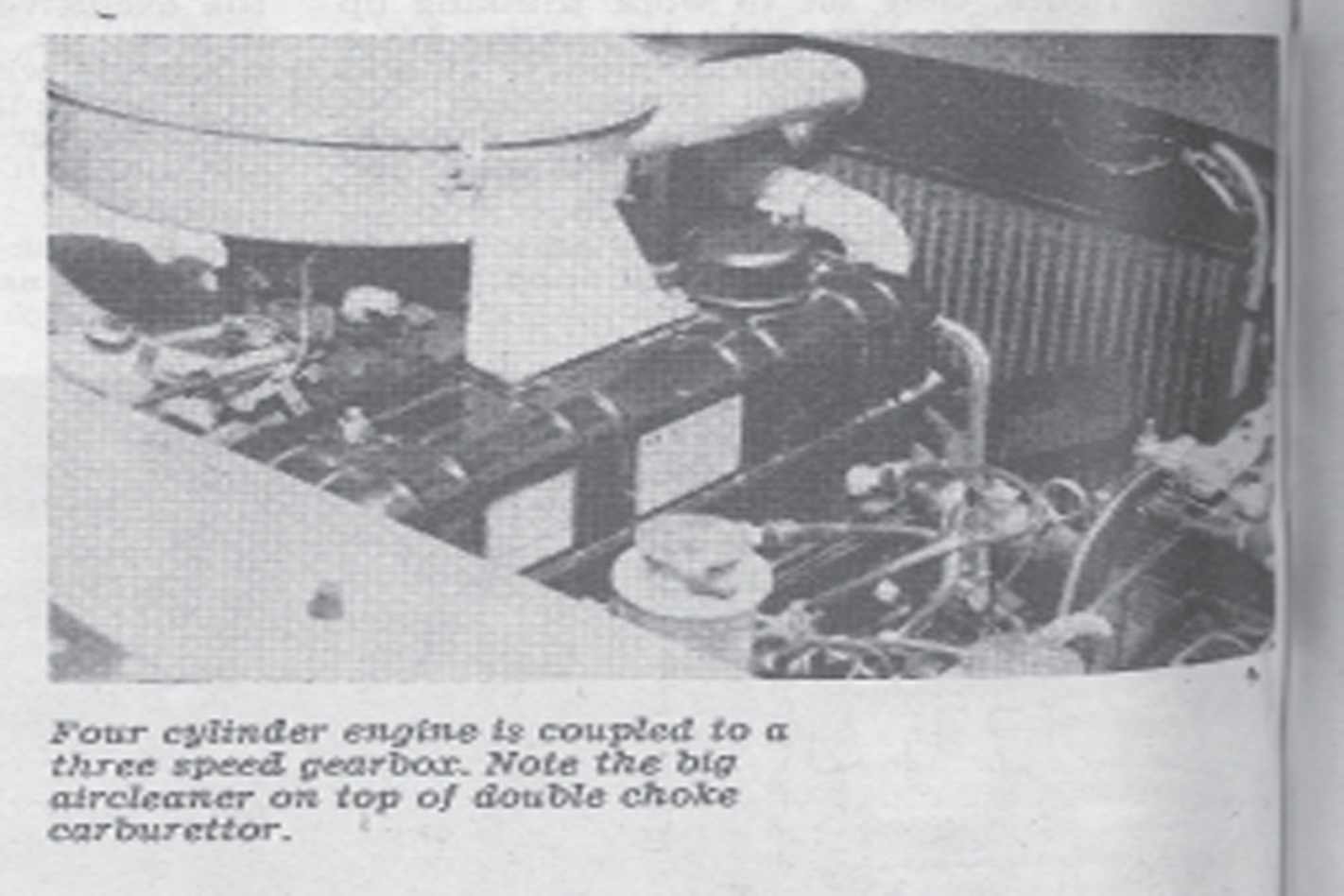
The big engine looks like that of a Vanguard four and is square in dimensions. It draws its nourishment from a 10.6 gallon tank via a large auto-choke two-barrel carburettor which sports a gigantic air cleaner.
It starts easily, idles smoothly in spite of its 8.4 compression, and will draw the car smoothly away in top gear from a mere four to five mph.
The two-barrel carb, though it looks rather strange by Western standards, is effective. The accelerator has two definite pressures – Go and Really Travel. When you take up the second pressure the second barrel cuts in and – wow!
Silence at all speeds is amazingly good and one cannot detect the four cylinder beat no matter how hard one attunes ones ear. Much of this must stem from the thick layer of undersealing which the Tiara wears, even under the bonnet and down the bulkhead.
Gearshifting is accomplished by an upstairs-type lever which works on the wobble rather like that of the old Citroen. Sounds queer and looks queer – but it moves accurately and snappily. I’d defy even a tyro to miss his gear on the Tiara.
Other controls include pendant pedals – a lovely light clutch and a brake which is feather-soft but most commanding. From which we pass to the row of push buttons along the lower edge of the dash.
Even the umbrella-type handbrake can be reached easily, snaps off quickly, works well and has a floating movement that has the driver pulling the cable in plane irrespective of the degree of brake applied.
Individually, there’s scarcely an orthodox item on the car that doesn’t, when investigated, reveal some completely new approach in its method of operation!
The pushbutton door locks work on an unusual non-slam system-and the doors close with the sound like those of a Bentley.
Even the horizontal strip-type speedo (up to 100 mph) has a gimmick. It shows a green line until you exceed 50 mph then switches to bright red so abruptly that you just can’t drive with the colours half and half. Don’t ask me how — that’s how things are.
The trafficators, self-cancelling, are operated by rotating the horn ring a notch in the required direction.
There is foam-filled safety padding throughout the car – top and bottom of the dash, across the roof, on both sides and beneath all door trim. The Tiara must be a comfortable car in which to be overturned.
A delightful gimmick is a dash-top ashtray which, when one raises the lid, lifts up a de-ashing grille to meet your cigarette.
Even the fuel filler is different. First you open the roomy boot, then depress a little lever inside, which lets the rear number plate drop down against spring pressure. There, behind the plate, you find the filler cap.
Same fresh approach to opening the bonnet. You tug (very lightly) a little lever under the dash, then raise the bonnet from the rear to reveal the engine in all its glory – and accessibility. Battery and brake/clutch reservoirs are also beneath the bonnet.
There’s a centrally mounted cigarette lighter, and even that has been revamped so that it lights almost instantaneously instead of after the customary 10 second delay.
Rabaul roads have a 40 mph limit which is as fast as anyone can travel with safety locally – thus I was unable to try for anything like the full performance available from the Tiara.
Nevertheless low gear or the three speed box gives you 30 to 32 mph, second 50 to 65 mph, and top should seem to be around the 715 to 78 mph mark, instead of the 85 mph claimed by the manufacturer.
Still – I could be wrong here, since my figure is only a formed guess.
Acceleration is strong in all gears and is especially praiseworthy in top.
The worst feature of the Toyopet Tiara, to my mind, is its lack of legroom at the back when the front seat is extended to the limit of its reach. Even so, it’s not quite as cramped as, for example, a Series 1 Morris Major; and is certainly wider and has more headroom.
Exclusivity guaranteed. Sky-high resale to follow.
These are things that mean as much to HSVs open customers as back-slamming acceleration, crush-the-breath-out-of-you brakes and neck-straining cornering ability. And what the HSV customer wants, the HSV customer gets. So now you understand why there’s a drip-feed of 300 kW models out of HSVs facility in the Melbourne suburb of Clayton.
Now comes the SV300. Only 100 will be made. At $94,950, it sits at the top of HSVs VX II-based range. No doubt it will be as easy to sell as the limited edition VX II- and VX-based GTS and Senator 300 models that preceded it.
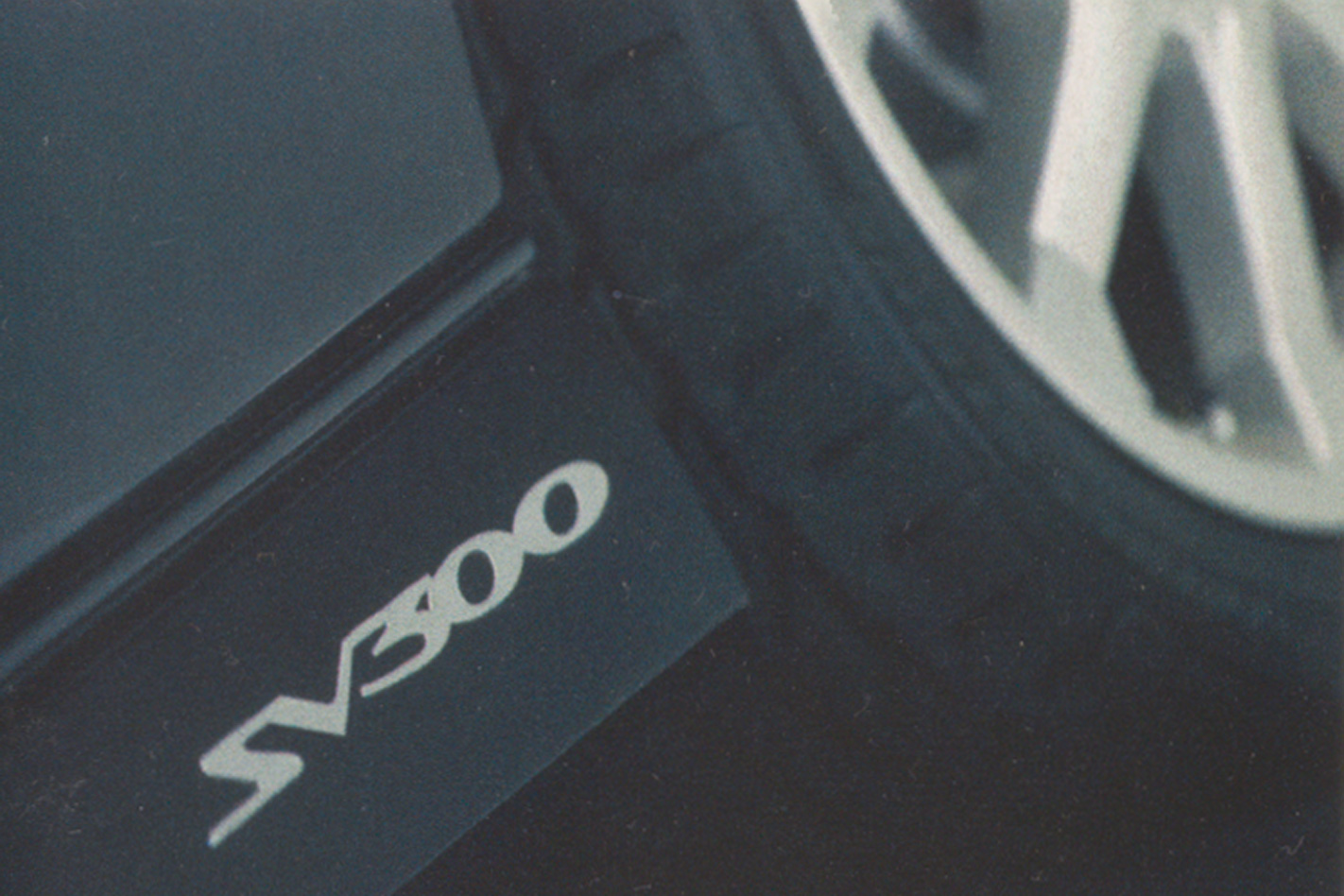
The SV300 is a familiar mechanical package of excellent C4B engine, awful T56 six-speed manual transmission and superb premium brakes. It’s left entirely to the stylists to set it apart from earlier 300kW models.
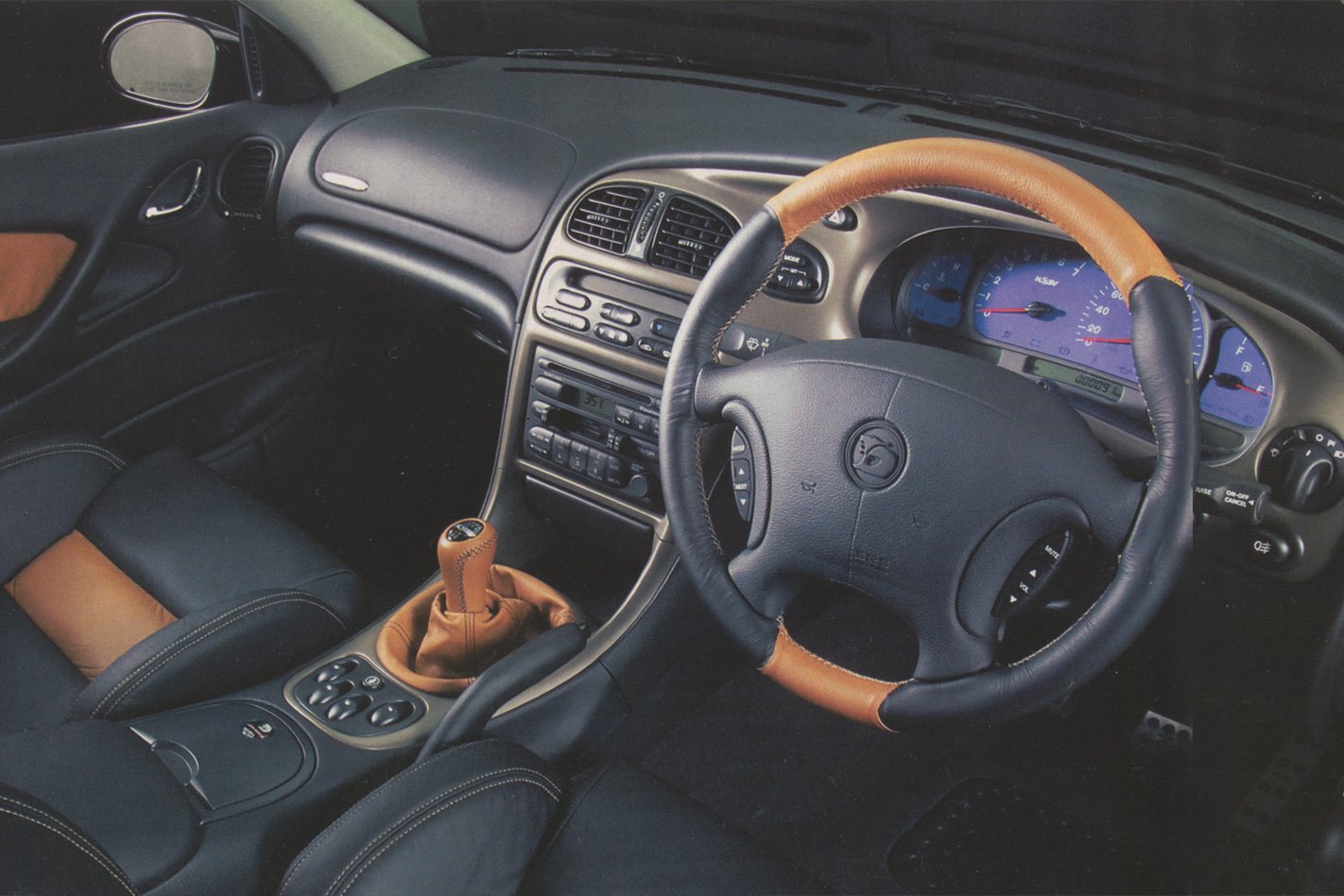
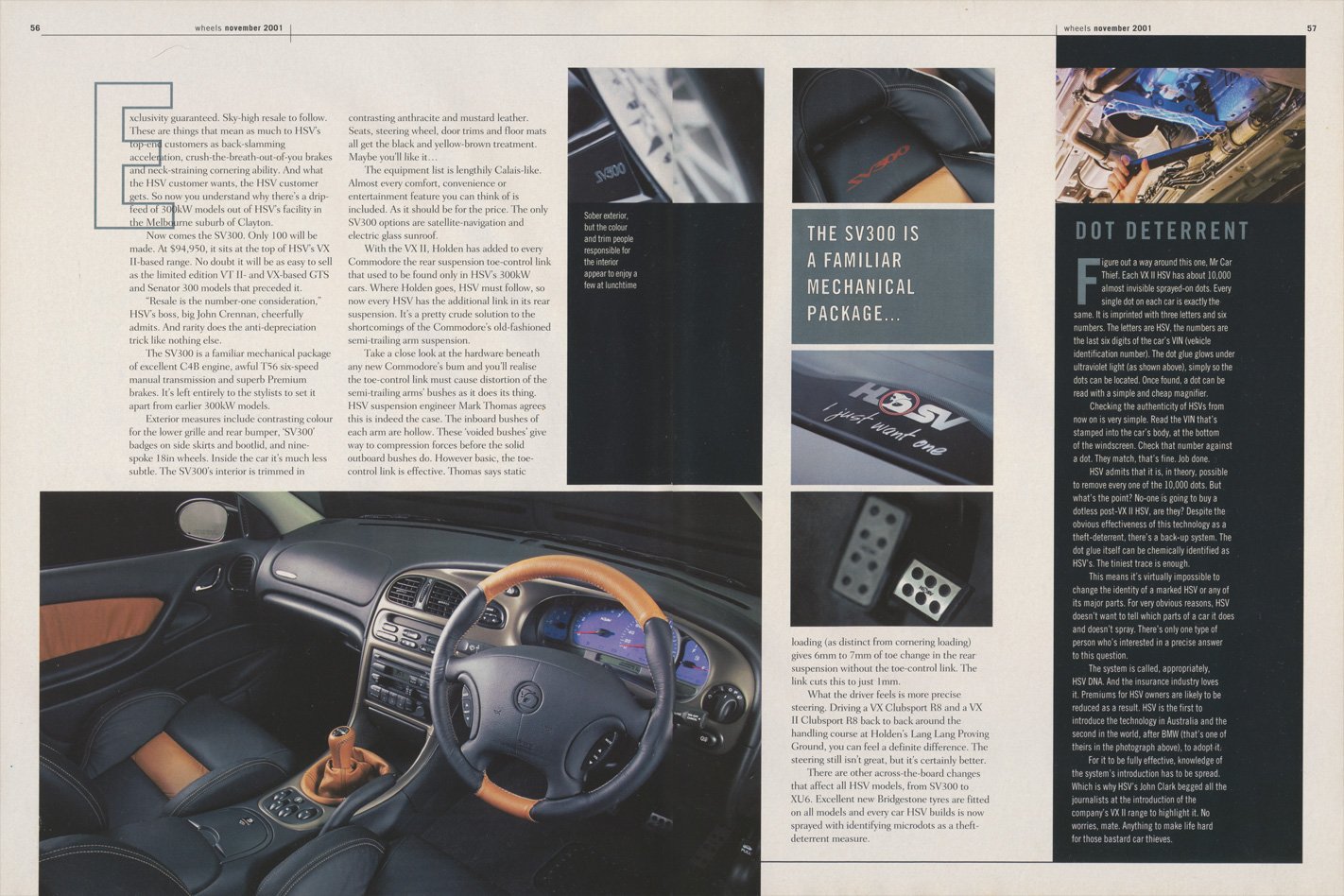
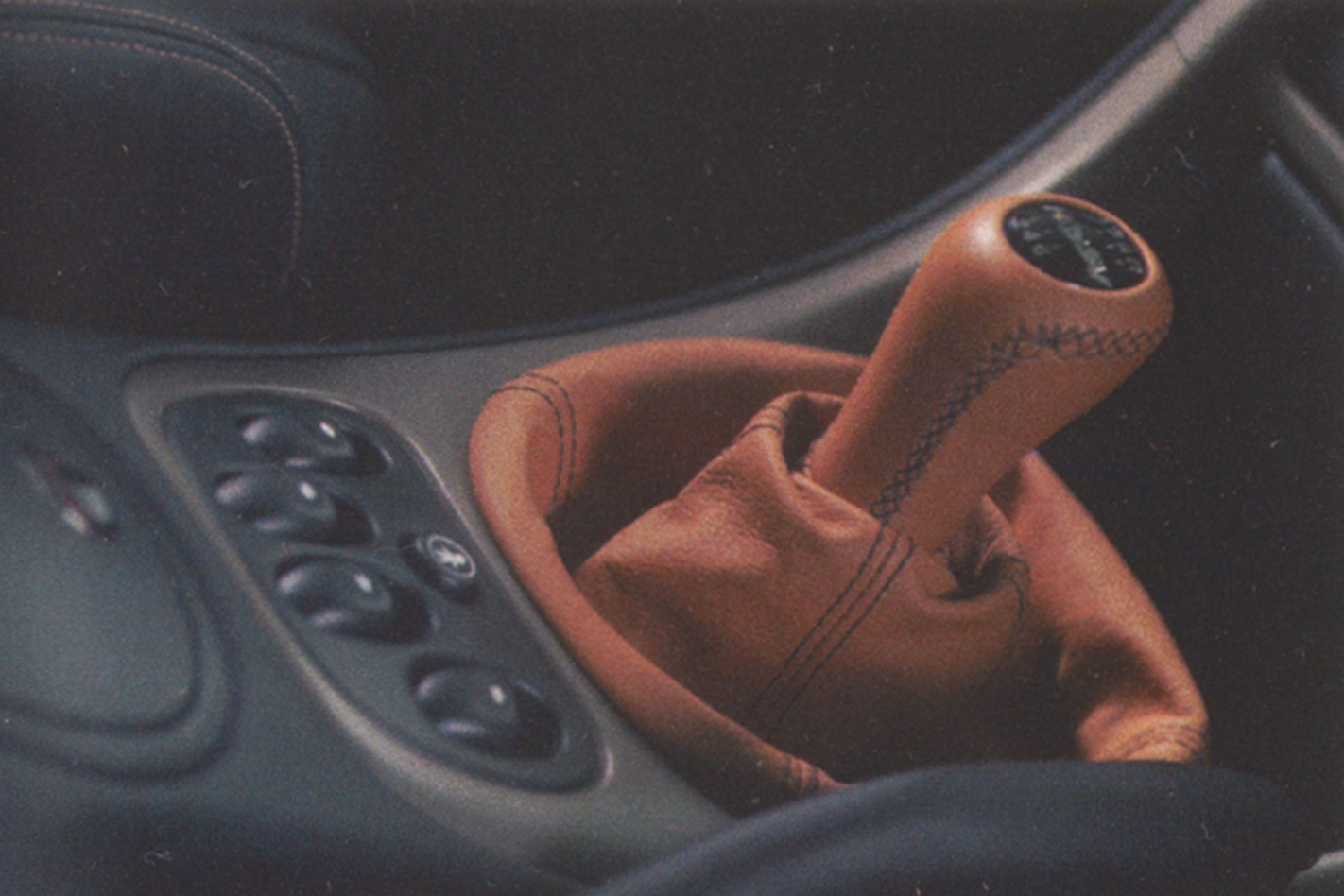
Exterior measures include contrasting colour for the lower grille and rear bumper, ‘SV300’ badges on side skirts and boot lid, and nine-spoke l8in wheels. Inside the car it’s much less subtle. The SV300’s interior is trimmed in contrasting anthracite and mustard leather.
The equipment list is lengthily Calais-like. Almost every comfort, convenience or entertainment feature you can think of is included. As it should be for the price. The only SV300 options are satellite-navigation and electric glass sunroof.
With the Commodore VX II, Holden has added to every Commodore the rear suspension toe-control link that used to be found only in HSV’s 300kW cars. Where Holden goes, HSV must follow, so now every HSV has the additional link in its rear suspension. It’s a pretty crude solution to the shortcomings of the Commodore’s old-fashioned semi-trailing arm suspension.
What the driver feels is more precise steering. Driving a VX Clubsport R8 and a VX II Clubsport R8 back to back around the handling course at Holden’s Lang Lang Proving Ground, you can feel a definite difference. The steering still isn’t great, but it’s certainly better.
There are other across-the-board changes that affect all HSV models, from SV300 to XU6. Excellent new Bridgestone tyres are fitted on all models and every car HSV builds is now sprayed with identifying microdots as a theft-deterrent measure.
Perhaps more worthwhile is the heat-treated Premium brake option. The big, cross-drilled discs are heated and then oil-quenched, duplicating a process favoured by GTP racers.
Restricted to Clubsport R8 and Senator Signature buyers is a selection of designer interiors. The combinations appear to have been chosen by whoever did the SV300. The black and grey for the R8 is okay, but the black and red, and all blue are not. Senator Signature customers have a single colour option of shale (light grey) and red.
Finally, in a move to satisfy the typical HSV diehard’s desire for exclusivity, the company has decided to restart the numbering sequences for all models with the introduction of the VX II range. Already there are long-term customers desperate to procure cars bearing their favourite numbers.