
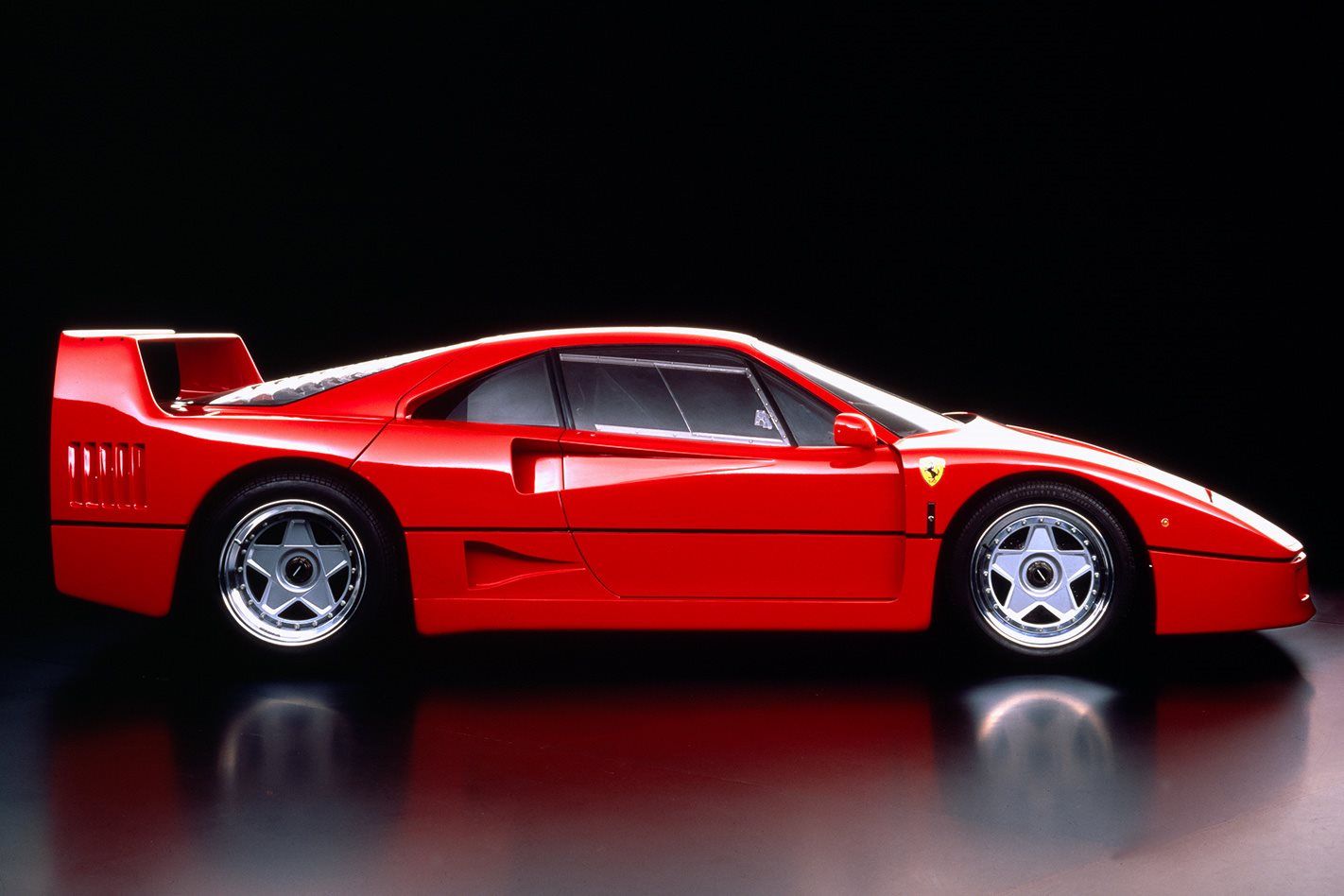
Wheels is saddened to learn of the passing of Nicola Materazzi, father of both the legendary Ferrari F40 and the 288 GTO before it, at the age of 83.
Our thoughts go out to his family and friends. He will be fondly remembered by all Tifosi and motoring enthusiasts around the world.
December, 2019: Wheels talks with the man before the F40 and the 288 GT0
Editor’s note: in honour of our lively chat with Signor Materazzi, the story below is presented in its original, unaltered form.
Have you heard of Nicola Materazzi?
He may well be the most extraordinary Ferrari engineer to have slipped under the media radar, for he is nothing less than the father of Ferrari’s turbocharged engines, but also the man behind legendary cars such as the 288 GTO and F40.
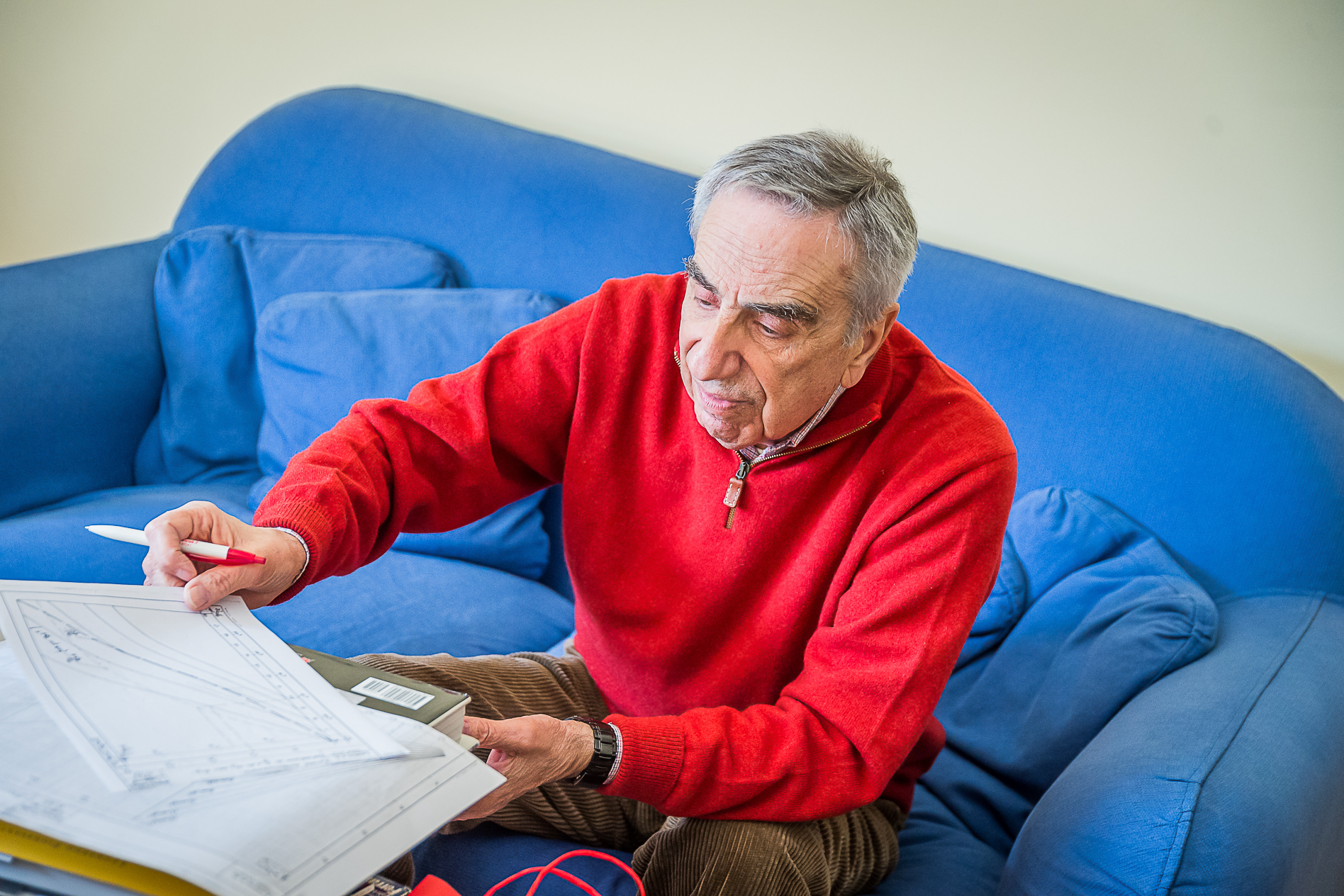
Today he enjoys a busy retirement at his house in the Salerno area south-east of Naples, surrounded by a collection of 12,000 books, 8000 of them car-related. It’s the region Materazzi (below) calls home, having been born in January 1939 in nearby Caselle in Pittari.
“I’ve always loved books ever since I was a teenager,” he says. “They are a source of inspiration. I have read all of these, and in reading them you learn. Learning every day is still the most important aspect of my life.”
From these books came ideas. “The turbo idea came from reading about aircraft engines during the wars and developing it with a book about fuel. This is why, at university, I spent two summers at Mobil’s oil refinery in Naples and spent hours reading books about the detonation issues.
“It’s often overlooked, but the real reason for the British success during the Battle of Britain is linked to the fuel. The creation of tetraethyl lead by an American company led the way to an amazing power increase in the Rolls-Royce Merlin engine. From 950bhp with 87-octane fuel before the war, it rose to 2000bhp with fuel of more than 100 octane at the end, while the Germans’ fuel stayed the same…”
Materazzi’s automotive career started at Lancia. The Turin-based company hired him in the early 1970s, after he left his position as a university professor in Naples because of the turmoil of the 1968 student rebellions.
“I was tired of being on the wrong side of the fence,” he remembers. “When I was a student, I had to be very respectful of the teachers. But as soon as I became a teacher myself, the 1968 youth revolution exploded. The power went to the students, totally disrespecting the figure of the professor.”
Materazzi knew it was time to change direction. “I sent a letter to Lancia, asking for a meeting. Cars had been my passion since my earliest years, and they invited me to Turin. They asked me to bring my degree certificate; they liked my approach, but it was so unconventional that they weren’t so sure that I really was a graduate!
“The meeting went well – so well that I missed my train back home, but by the time I was buying another ticket I was a Lancia employee working under Francesco De Virgilio, the designer of Lancia’s V6.” Materazzi had just become the happiest man on earth, but his father, a doctor, was the unhappiest. “He was losing his son, kidnapped by cars, in far-off Turin…
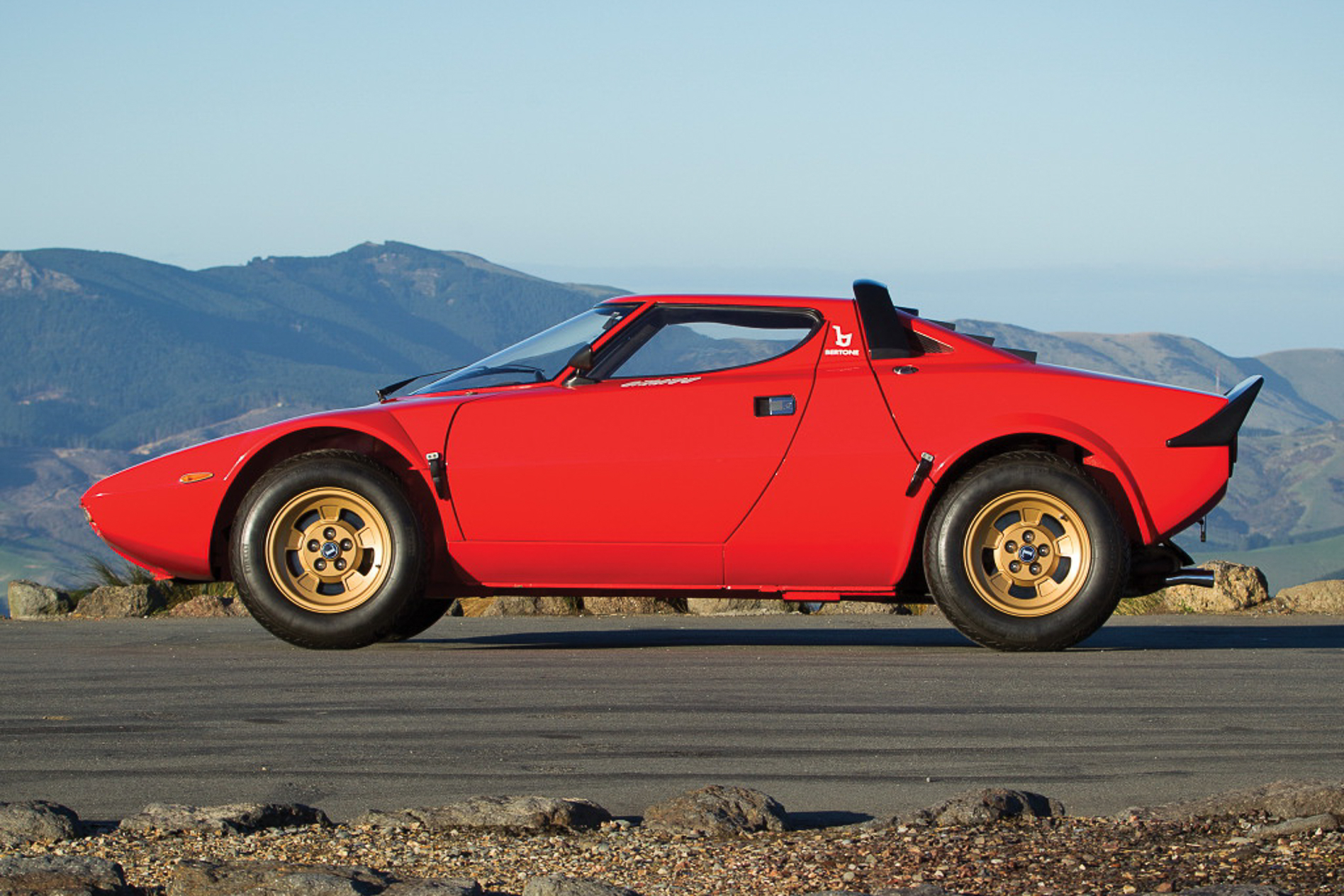
“One of my early successes – the one that opened the door to the racing department and the Stratos project, for which I did the chassis and the suspension – was with the Beta in the rally championship. We had a MacPherson suspension on the front, and the rules said we needed to keep the original mounting.
“I created a top mount with an eccentric hole, so we could modify the camber. We won and were legal, but the FIA changed the rules when they discovered it.”
“I sent a letter to Lancia, asking for a meeting. Cars had been my passion since my earliest years, and they invited me to Turin. They asked me to bring my degree certificate; they liked my approach, but it was so unconventional that they weren’t so sure that I really was a graduate!
The time of the turbocharger was drawing near, although it was by no means a new invention, as the former professor explains. “We tend to think the turbo engine is something relatively recent, but the technology was developed during World War I to help solve the power loss problems in aircraft flying at higher altitude. The first unit was tested in 1916, using a truck driving up Pikes Peak to simulate flying conditions at altitude without risking a pilot’s life.”
The moment came when Swiss racing driver Michael May, a friend of racer and engineer Mike Parkes who had an office next to Materazzi’s at Lancia, revealed during a visit that Porsche was preparing a turbo engine for racing.
“So it was easy to convince everybody that the car I was preparing – our new Group 5 Lancia Stratos ‘silhouette’ – needed a turbocharger,” Materazzi recalls. “More difficult was finding the components. Turbochargers were almost non-existent; the KKK company was still called Eberspächer, and the only three units they had were all for trucks.
“It was easier for Porsche, because they used bigger engines, but I had to adapt. I also needed to understand how far I could push the compression ratio before the turbo boost is added. One of the biggest issues was detonation, because with the turbo you effectively increase the compression ratio to a level where the octane of the fuel makes a big difference. For example, in the Ferrari Formula 1 turbo engine, the real compression ratio was growing from 7.5:1 to 19:1. We started with 380bhp and ended up at more than 500, so we did well.”
Lancia had been bought by Fiat in 1969, but its people did not really show up until 1975. For Materazzi, the first thing they then did was to postpone his promotion to management for three years. “Luckily, though, I was moved to the racing department away from the politics, the cost-cutting and what I call the Fiat managers’ policy of average. I stayed there until they unified the racing departments, and we, from Lancia, ended up in Corso Marche where Abarth had its operation.
“I wanted to leave but Stefano Jacoponi assigned me to the Formula Fiat Abarth project. One evening at dinner, I met Enzo Osella [the racing car manufacturer and later F1 team owner]. He had a wonderful engine for his Fiat 127 with a body by Fissore, but it over-revved in top gear of the four-speed gearbox. I suggested a five-speed unit, and he asked me to design it. It worked, and he sold a lot of cars until Fiat, two years later, offered an exact copy of my unit as standard.”
That rankled with Materazzi, but he was aiming for higher things. ‘With Osella we entered the Formula 2 championship, with a short-stroke engine. We did very well, competing for the championship until the very last race. This, and successes with the BMW M1 Procar, opened the door for us into Formula 1, but I left before that program was revealed to the public.
“That’s when I went to Ferrari, at the end of 1979. It was sad for Osella, but he understood my great opportunity. Enzo Ferrari was looking for someone to manage the Formula 1 technical department and he liked my experience. I told him I didn’t have a great relationship with Fiat’s people, but he reassured me that, being in the racing department, I’d report to him only.”
Materazzi had been at Maranello just three days when Enzo sought him out for urgent help. There was a problem with the new Formula 1 engine, the turbocharged V6 in the 126C, and Enzo knew who would have the answer. “There was an issue which caused the sealing rings in the heads to fail; I had already fixed this when working on the Ferrari V6 for the Lancia Stratos project,” says Materazzi.
“When those test engines were melting their pistons, I discovered that some cylinders were receiving a leaner mix. We solved it by adopting a conical air intake, and later we used the same solution on the F40, along with extra fuel to cool it down. That’s why the F40 runs richer above 5500rpm.
“Enzo Ferrari was looking for someone to manage the Formula 1 technical department and he liked my experience. I told him I didn’t have a great relationship with Fiat’s people, but he reassured me that, being in the racing department, I’d report to him only.”
“These were the months when Renault’s Formula 1 car was nicknamed the Yellow Teapot because of the many broken turbos. Enzo Ferrari was worried, but I told him [turbocharging] was the road for the future. The 12-cylinder boxer engine used in the 312 T5 car helped me to convince him about using a turbo; the boxer was too low and big to allow us to use ground effect and side skirts, the weapons of the 1980s.
“In 1980 we introduced the turbo in practice at Imola, but it was more for show than anything else because we were still looking for reliability. We won in 1982 but that was one of the unluckiest and saddest seasons of racing for Ferrari, with the crash that killed Gilles [Villeneuve] and another almost killing Didier [Pironi].”
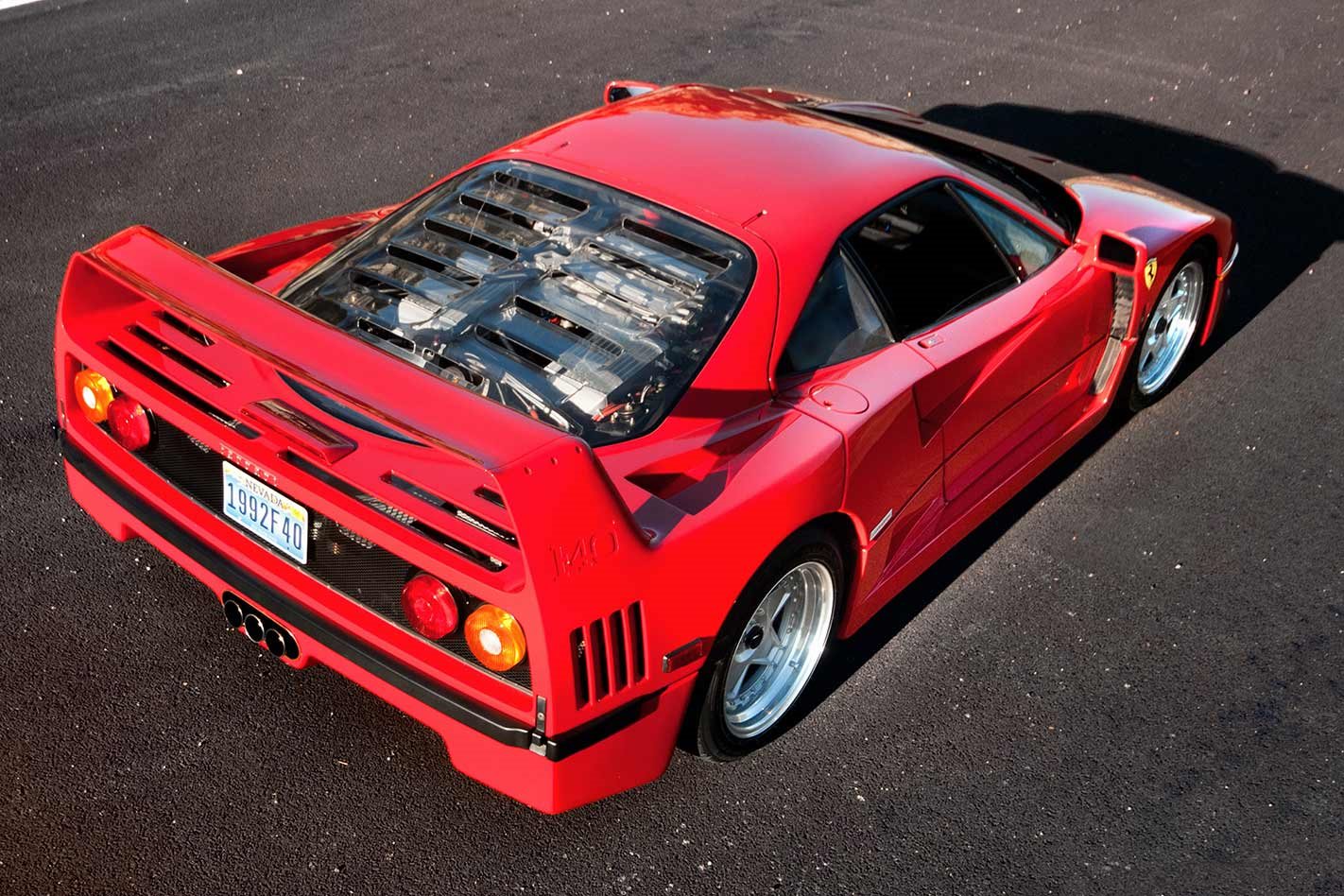
Soon afterwards, Materazzi left the rarefied world of the racing department to create a road-legal homologation car, the 288 GTO. “One evening, in the middle of 1982, Enzo Ferrari called me into his office,” he recalls. “Enzo showed me a report from the production department, which wanted to build a 3.0-litre V8 turbo engine with about 320bhp. I told him they were wrong, because an engine like that could easily develop 400bhp. He took back the piece of paper and wrote ‘400’ on it. ‘Enjoy making it,’ he told me, adding that if anyone bothered me during the process, I could return to the racing department.”
Materazzi found himself with a very tight schedule. As well as the 288 GTO engine, he had to oversee the enlargement of the 308’s V8 to 3.2 litres for the 328, as well as ensuring that the tax-busting 208 GTB Turbo’s 2.0-litre V8 proved reliable.
There were politics, too. “Enzo Ferrari was not happy when I told him that we would use Japanese IHI turbos for the 288 GTO. He was a friend of the KKK president and didn’t want to upset him. I asked Ferrari to invite this guy personally to test two cars, one equipped with a KKK turbo; the other with an IHI unit. The latter was two seconds a lap faster around Fiorano. After driving both, the KKK boss had to admit that the IHI turbos were better.
“IHI’s secret,” Materazzi continues, “was the material they used to build their turbines and the way they shaped the blades, with a dedicated shape and tolerance for each turbo size. Unfortunately, we couldn’t use the IHIs for racing: Honda had the rights to them, so we had to wait until the F40 Le Mans to use them in our race cars.”
“Enzo Ferrari was not happy when I told him that we would use Japanese IHI turbos for the 288 GTO. He was a friend of the KKK president and didn’t want to upset him.”
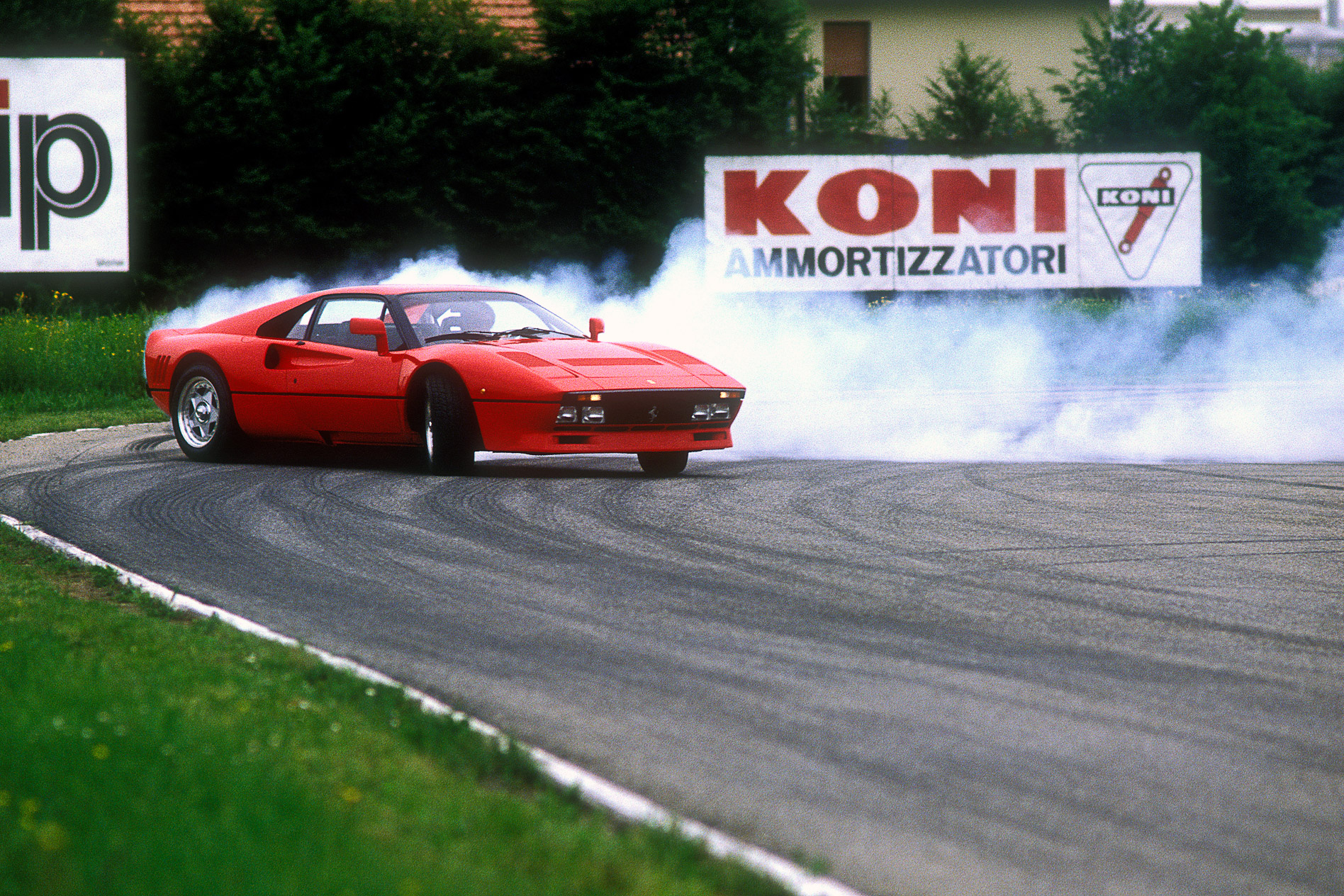
Some original thought went into the 288 GTO’s turbo installation. Materazzi remembers with a smile that other engineers considered him crazy in terms of the plumbing and wastegate design. And yet…
“If you look at the maximum torque [500Nm] of my 288 GTO engine and compare it to that of Ferrari’s current turbo cars, which are 35 years younger, you’ll see they are not so far apart in terms of torque per litre of displacement. To me, it means that my engine, without any electronic support, was definitely better.”
One of the purposes of the 288 GTO was to contest the planned Group B racing class. Materazzi was central to this project: “I was asked to work on it on Saturday mornings, so it wouldn’t affect my normal production work,” he recalls.
“I remember the first Saturday morning, entering the office at 8am. I thought I would be alone, because I had asked only a few of my team to come in and help at about 8.30. When I arrived, my whole team was already there waiting for me and excited about this new challenge. These were the people who made Ferrari great.
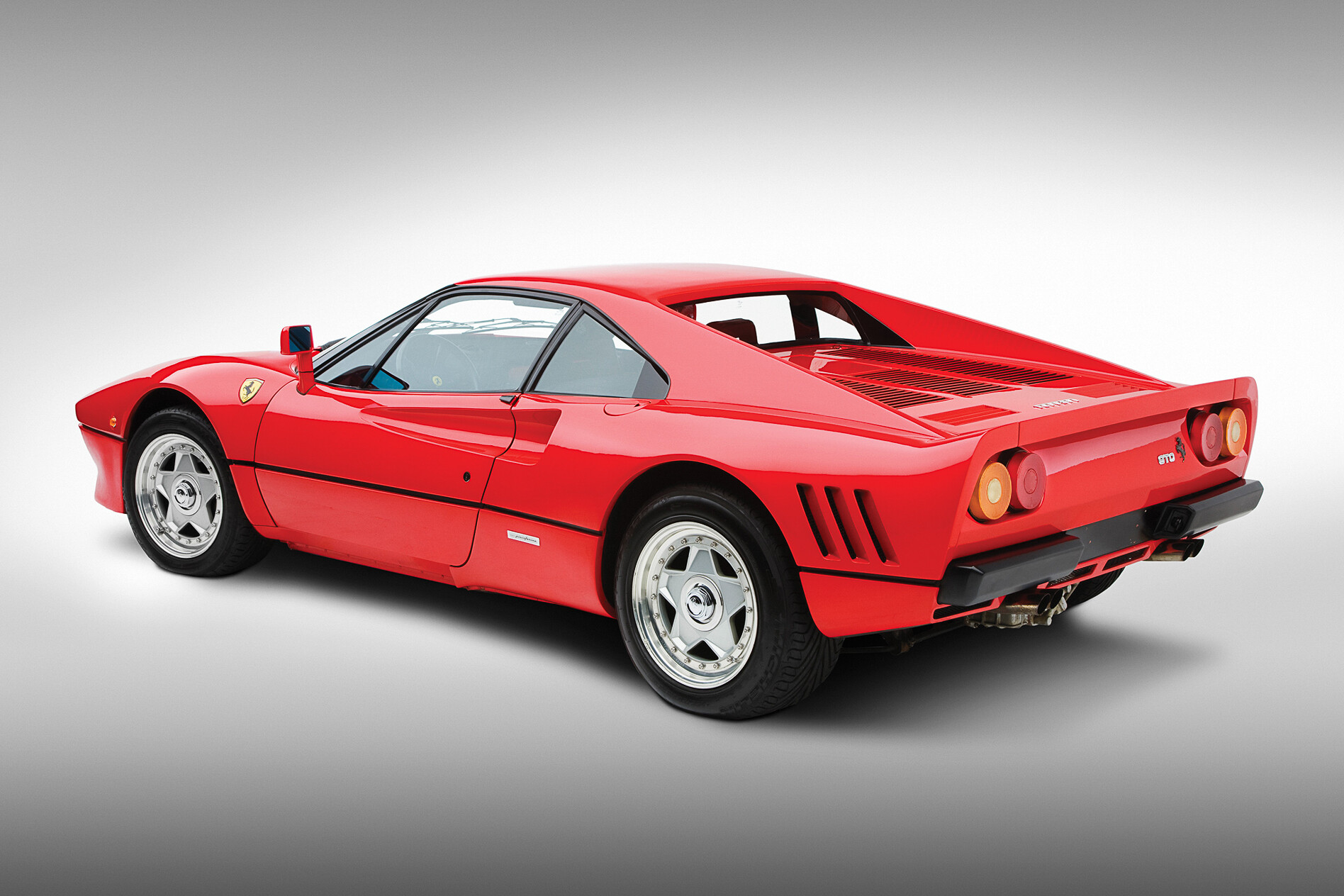
“We developed two versions, using the workshop of Giuliano Michelotto, an old friend from the Lancia period, because we could move faster if we used his people. The Evoluzione was a new car, with a new, more rigid, chassis. We had two engines, one coded 114 CR with 530bhp and maximum torque at 3800rpm for rallies, and another coded 114 CK with 650bhp for racetracks. After these two prototypes, collectors asked to buy six or seven Evoluziones, offering crazy money, and, through Michelotto and the Cognolato bodyshop, we built them.”
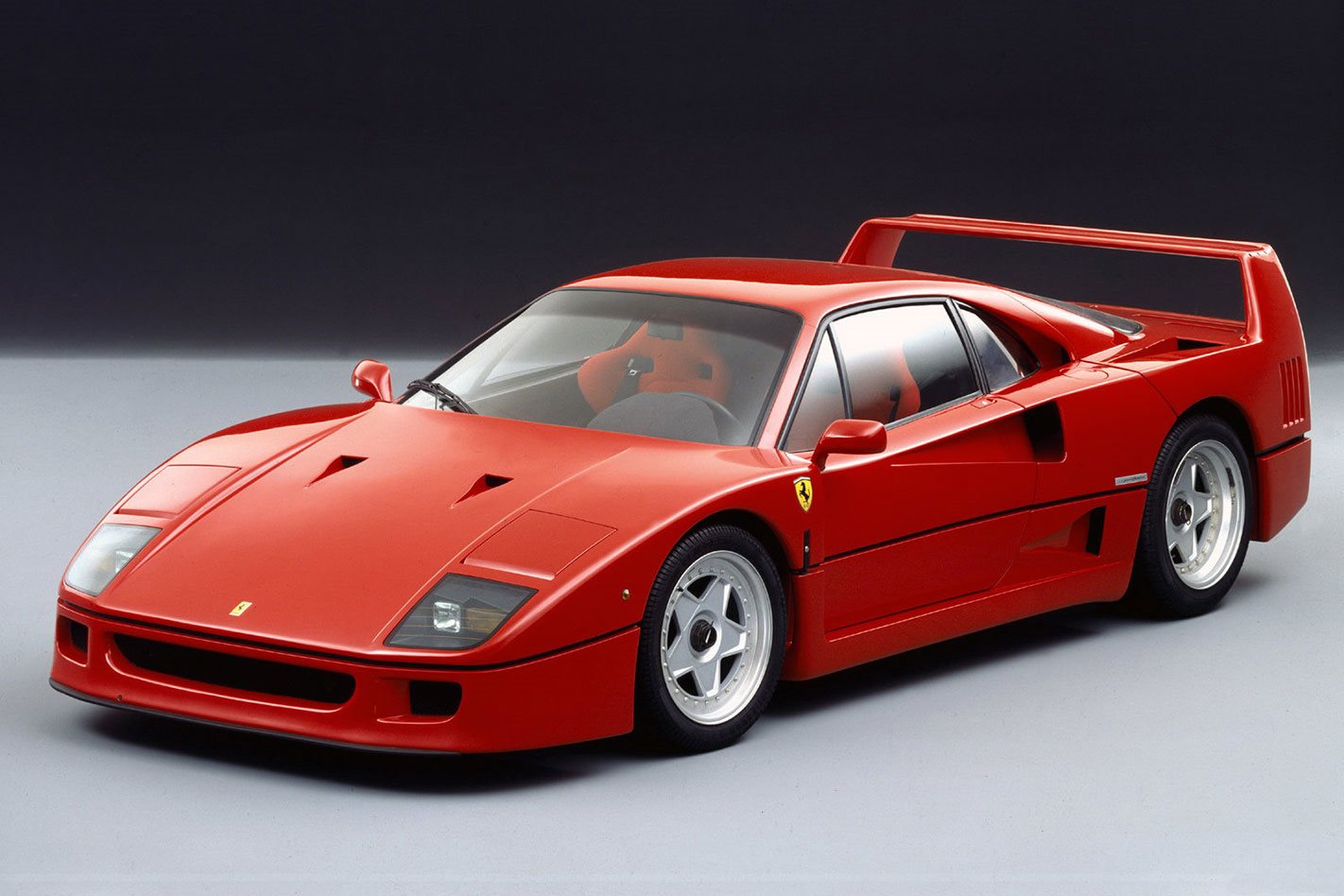
Production of the 288 GTO ended after 272 cars. The Group B category fell apart, so Ferrari, encouraged by the retail success of what was really meant as a competition car, decided to make a successor that would be intended from the start for road use. This, Materazzi reveals, was the origin of the F40.
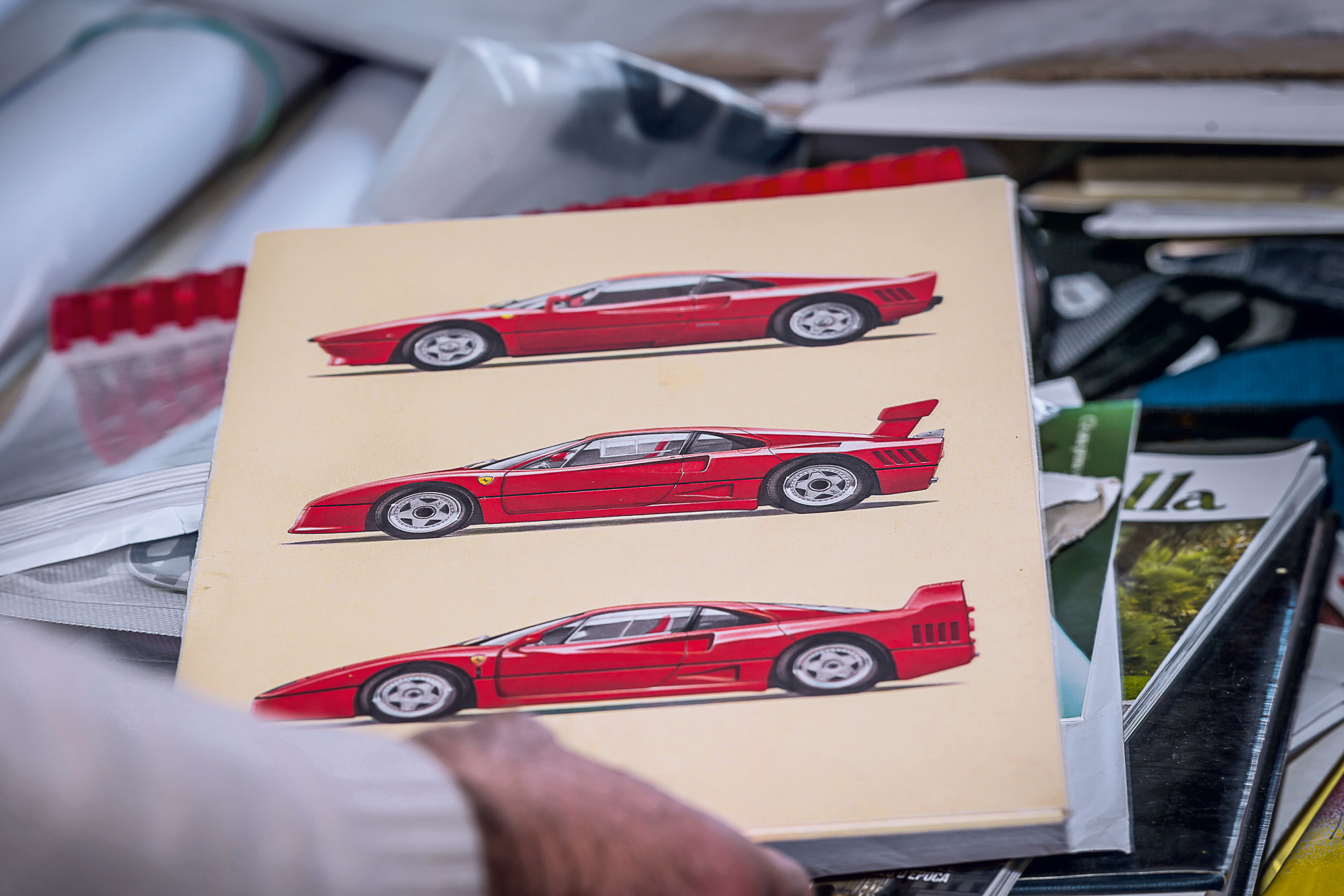
“The sign-off of the F40 was, for me, one of the last decisions taken directly by Enzo Ferrari. Soon after, his health got worse and worse, and he quickly lost the energy to manage the company. Fiat’s grey men soon took over, hiring a lot of new and foreign people but without a long-term view. We even had a Formula 1 engine with a cast-iron block, I think a sort of a first in Ferrari history.
“When we launched the F40, it was like a bomb exploding. The following morning the commercial director stormed my office, showing a pile of paper. ‘Look at this,’ he stated, pointing to the pile with a serious voice. ‘What a mess you have created. In less than 24 hours we have 900 confirmed orders.’ When discussing production numbers with Enzo Ferrari we imagined we would build 400 F40s…”
It turned out to be a fortunate problem, because Ferrari was heading for trouble. “The problem was that the 348 was a terrible car indeed, and was not selling. Customers were not happy with the products, chassis were so fragile that they twisted very easily, and overall quality was so low, buyers left us. We were losing turnover and cars, so to keep the factory running they had to increase the production numbers of the F40.
“Enzo was not happy. He would have preferred to stop the production well before, but he was no longer part of the decision process. And it was painful for me. When I started my career at Lancia, I used the calculations of the engineer who invented the first unitary body construction with the Lambda. If a car weighs 1000kg, it has to have a torsional stiffness of 1000kgm per degree to be acceptable. The Ferrari 348 was about 380-400; the Stratos, by comparison, was 1500… That was the result of Fiat managing the company, making Ferrari what it is today, an FCA subsidiary in Maranello, completely cheating on the original message given by Enzo.”
That’s a fairly incendiary assessment, and today’s Ferrari management would doubtless protest that it now operates independently, but the issue runs deeply in Materazzi’s spirit. “What I consider one of my biggest achievements is the unconditional trust Mr Ferrari gave me, and I couldn’t continue there anymore. I decided to quit. I was forced by my contract to stay an extra three months, but it was the worst time of my life. That’s when I offered myself with an advertisement in a car magazine: I was looking for a job in an automotive company – any company as long as it was not linked with Fiat.
“In 1990 I moved to [Italian motorcycle maker] Cagiva to manage the racing department before going to Bugatti to help in the EB110’s development. That was a car which, in the early 2000s, I further improved as the Edonis [the EB110-based supercar]. I’ve been lucky because I’ve done the work I’ve dreamed of doing. For me, looking for information is always a pleasure. I always want to know more.”
“When we launched the F40, it was like a bomb exploding. The following morning the commercial director stormed my office, showing a pile of paper. ‘Look at this,’ he stated, pointing to the pile with a serious voice. ‘What a mess you have created. In less than 24 hours we have 900 confirmed orders.’”
The F40 brains trust: the men behind the world’s first real hypercar
Project boss: Nicola Materazzi
“I was nervous and reluctant about the F40 proposal because I already had so much work to do. I only accepted because Enzo allowed me to progress the project on my own, without wasting time in meetings to share decision-making. At the end of our meeting, he wrote a note in his diary: ‘Materazzi; no pain in the ass’.”
Designer: Leonardo Fioravanti
“When Enzo talked to me about his desire to produce a ‘true Ferrari’, we both knew that it would be his last car. Extensive research at the wind tunnel went into aerodynamic optimisation, its style matches its performance — the low bonnet with a very tiny overhang, the NACA air vents, and the rear spoiler, all made it famous…”
Test driver: Dario Benuzzi
“The handling of the first prototypes was poor. To tame the power of the engine, we needed to subject every aspect of the car to countless tests and revisions, from the turbos, brakes, dampers, tyres. With no power steering, assisted brakes, or electronics, it demands skill and commitment from the driver, but it generously repays them…”

Australian Formula 1 star Daniel Ricciardo will leave the McLaren team a year early after struggling to keep pace with his team-mate.
The termination of Ricciardo’s three-year contract at the end of the 2022 season leaves the highly likeable and respected Aussie searching for a new F1 team for next year.
Ricciardo, an eight-time grand prix winner, is expected to be replaced by another Australian, rising star Oscar Piastri.
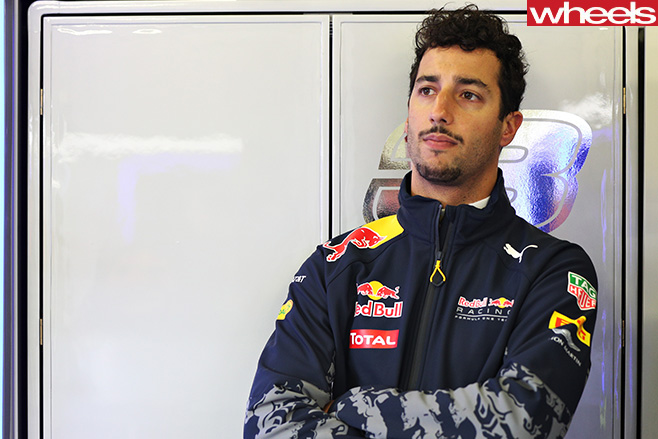
The news has been expected after months of speculation that McLaren had lost faith in Ricciardo’s ability to be competitive.
Ricciardo, who joined McLaren in 2021, is the only McLaren driver to have won an F1 race since 2012 after his victory in the 2021 Italian Grand Prix. His general form, however, has seen him struggle to get to grips with McLaren’s racing cars in both 2021 and 2022.
In 2022, Ricciardo has been several tenths slower on average in qualifying than his British team-mate Lando Norris. Ricciardo has also finished in the top six just once so far this season – in Australia – compared to four top-six finishes for Norris.
His best finish has been sixth place, whereas Norris has managed at podium – at the Emilia Romagna GP early in the season.
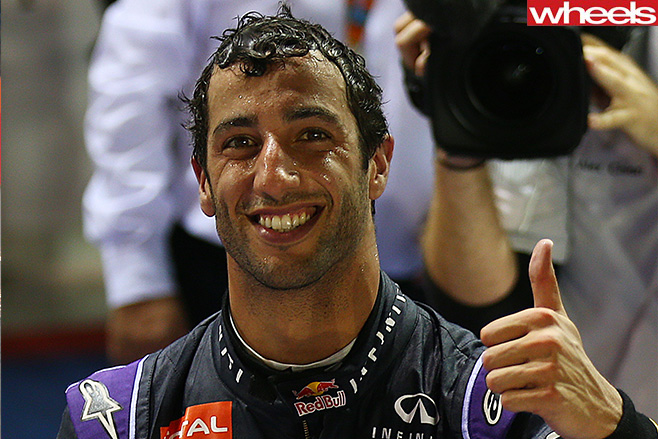
Ricciardo is 12th in the F1 driver’s standings on 19 points; Norris is in 7th place with 76 points.
McLaren is currently in a tight battle with Alpine for fourth place in the constructors’ championship, with four points separating the two teams in Alpine’s favour.
McLaren CEO Zak Brown has previously publicly acknowledged the team’s frustration with Ricciardo’s difficulties, as the Australian has tried to rediscover the form that made him one of the grid’s stand-out drivers during his spells with Red Bull and Renault.
In a statement, Brown said: “Daniel has been a great addition to McLaren, and it’s been a pleasure working with him. I’d like to thank him for all of his efforts over the last two seasons both trackside and back at base.
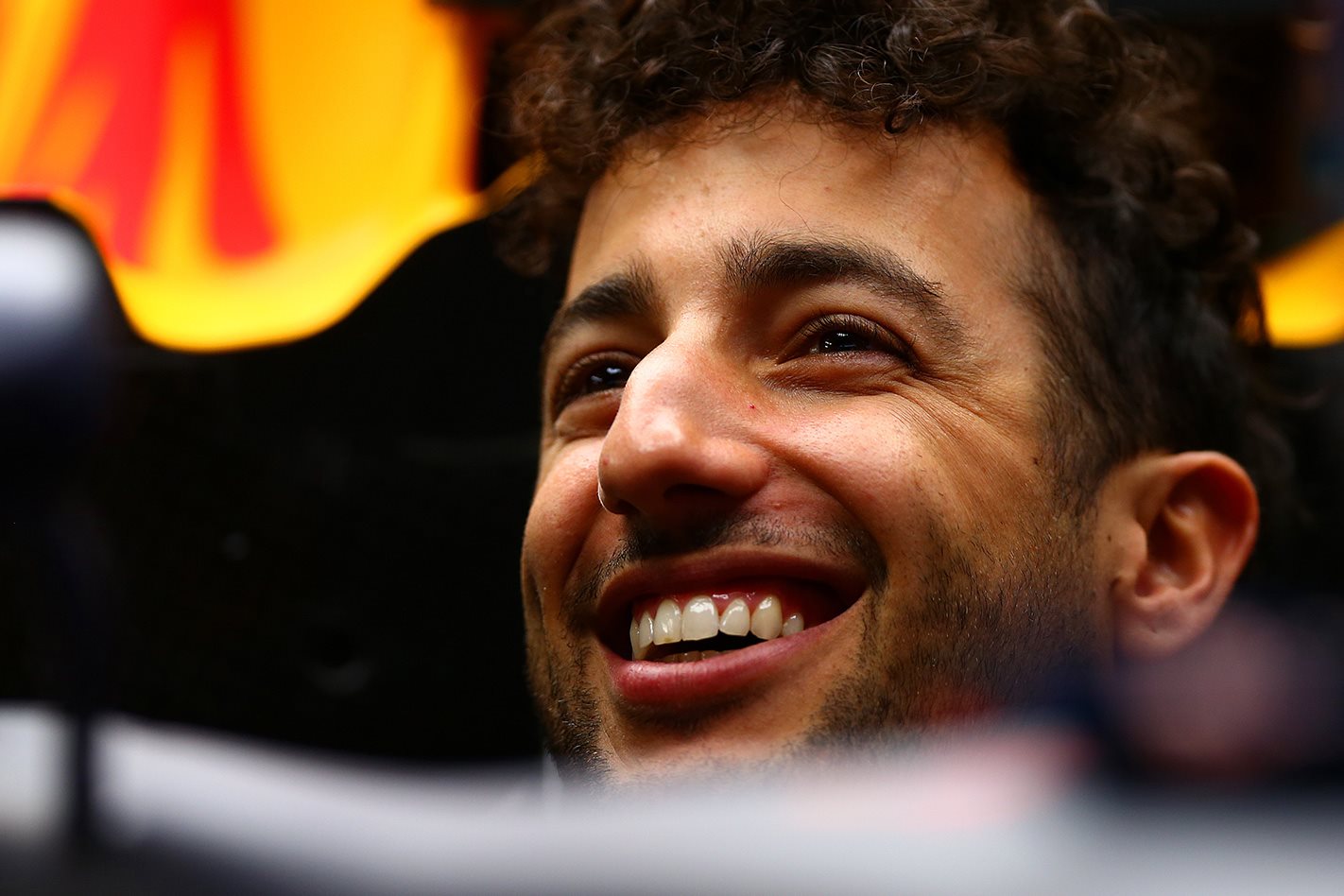
“It’s no secret that we hoped we could achieve more together, but seeing him stand on the top step of the podium as a McLaren driver was a highlight. We wish him well for the future and let’s go enjoy the rest of the season together.”
Ricciardo said he has every intention of staying in F1 beyond 2022.
“It’s been a privilege to be a part of the McLaren Racing family for the last two seasons, but following several months of discussions with Zak and Andreas [Seidl, McLaren F1 team principal] we have decided to terminate my contract with the team early and agree to mutually part ways at the end of this season.
“I’ll be announcing my own future plans in due course, but regardless of what this next chapter brings, I have no regrets and am proud of the effort and work I gave McLaren, especially the win in Monza, last season.
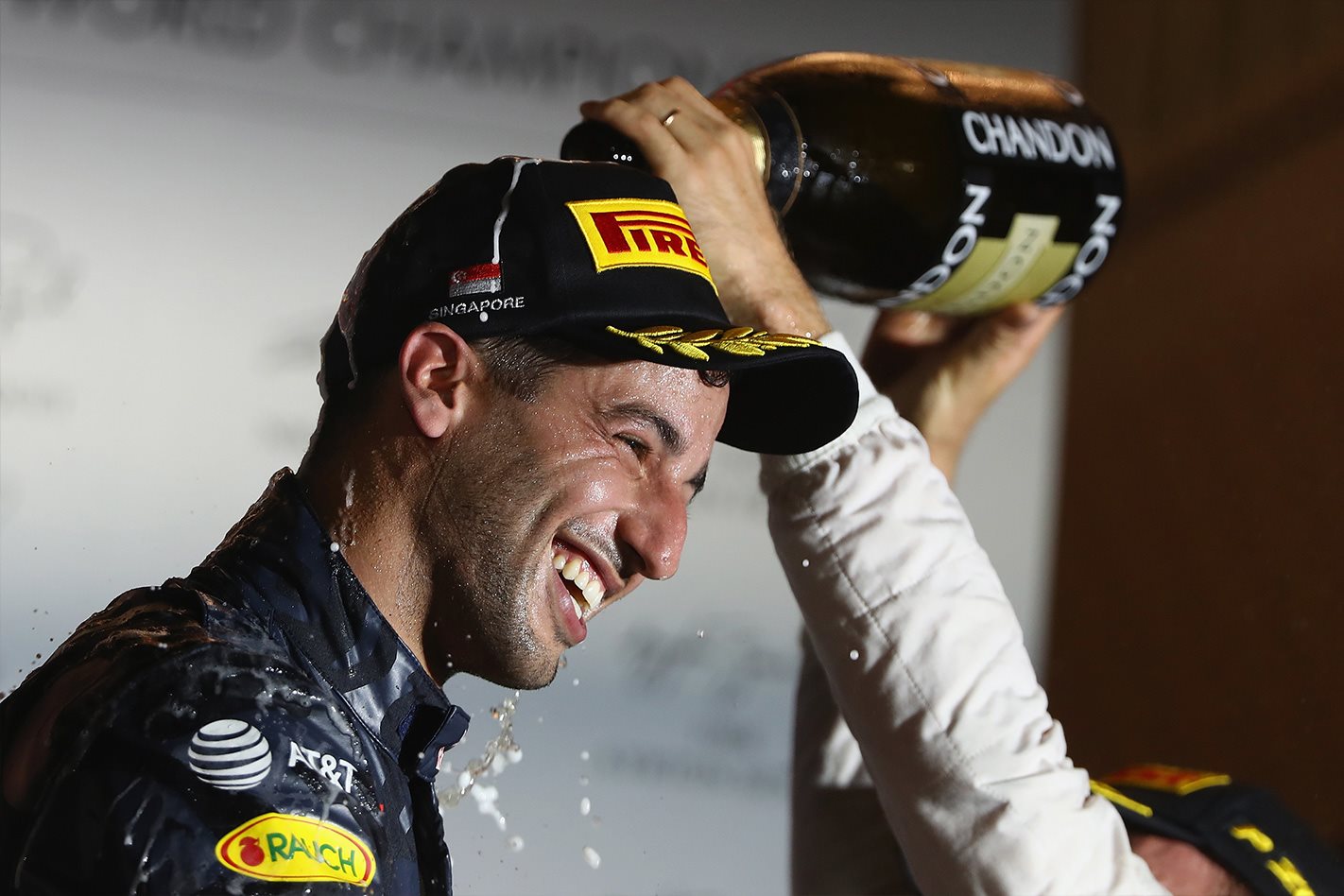
“I’ve enjoyed working with everyone at McLaren both trackside and back in Woking and will be giving my all, on and off track, as we enjoy the remainder of the season together. I’ve never been more motivated to compete and be a part of a sport that I love so much and look forward to what comes next.”
Alpine is tipped to be the team most likely to sign Ricciardo for 2023. The French team previously employed the Australian when it was known as Renault (Alpine’s parent company) before he moved to McLaren.
Alpine has a vacant seat after incumbent No.1 driver Fernando Alonso announced unexpectedly last month that he was signing for Aston Martin in 2023.
It did prematurely announce the signing of Piastri for 2023 before the Formula 2 champion and Alpine reserve driver declared on Twitter that he would not be racing for the team next year.
Alpine still believes it has a firm agreement in place with Piastri, with the contract situation to be resolved by a ruling by Formula 1’s Contracts Recognition Board.
UPDATE, August 24: Skoda Vision 7S concept sketches detail modern and bold design language
The forthcoming concept SUV from Skoda has been previewed, shedding light on the stylish Czech brand’s future design language.
The Volkswagen Group-owned brand has released sketches of its Vision 7S concept car, bearing a striking heavy duty-looking aluminium front fascia (mirrored with its seven vents at the rear) and thin headlights pushed outboard featuring a four-light eye cluster. The grille is wider and flatter.
It’s a chunky bottom-heavy design with clear side surfacing, a sloping roofline and gargantuan wheels, which Skoda says are aerodynamically optimised.
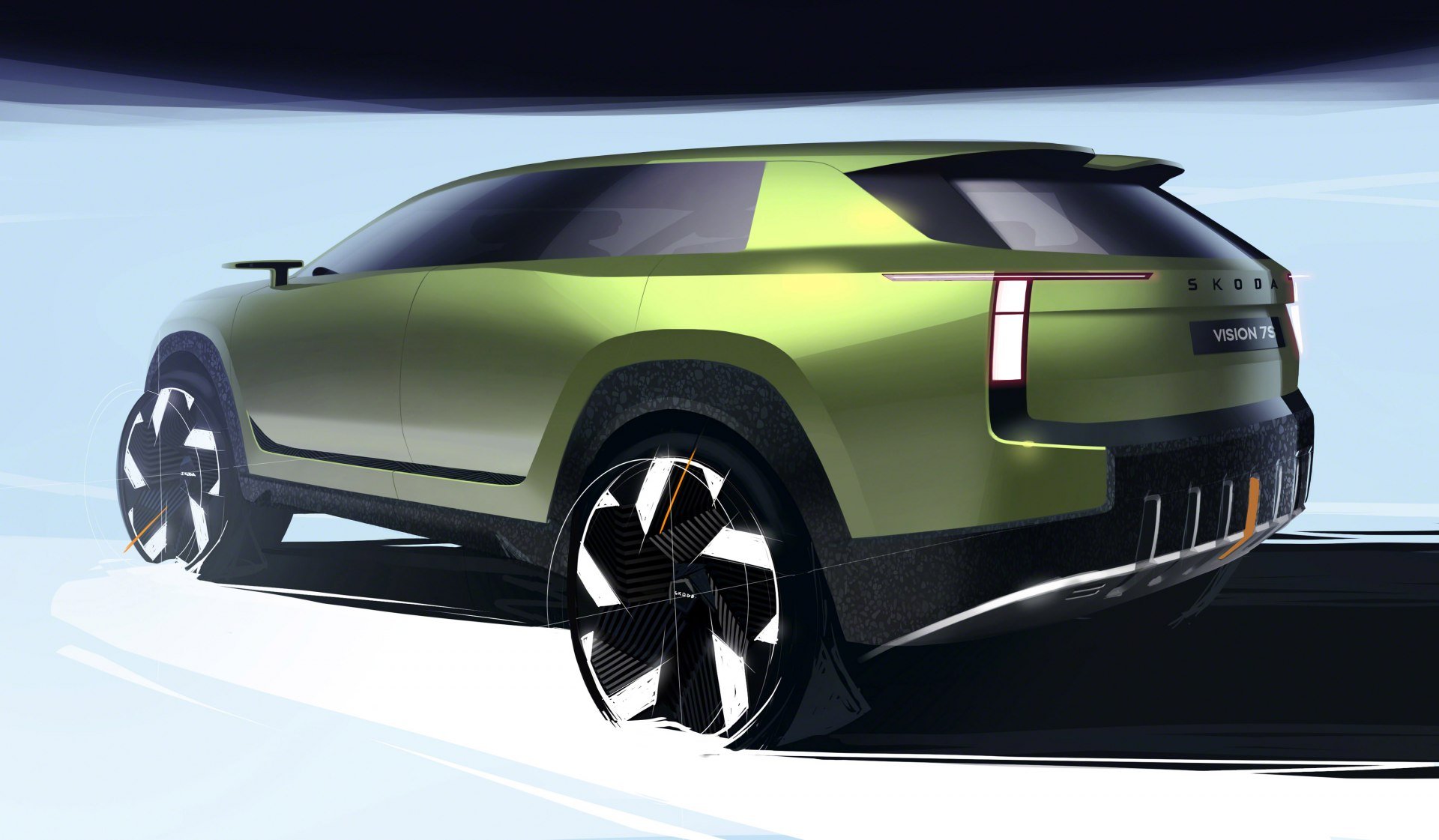
A daytime running light strip sits atop each new headlight cluster, forming a ‘T’ at each corner, leading a contoured bonnet with the signature Skoda valley.
Skoda says its new design language imbues its brand values, giving an air of “robustness, functionality and authenticity”.
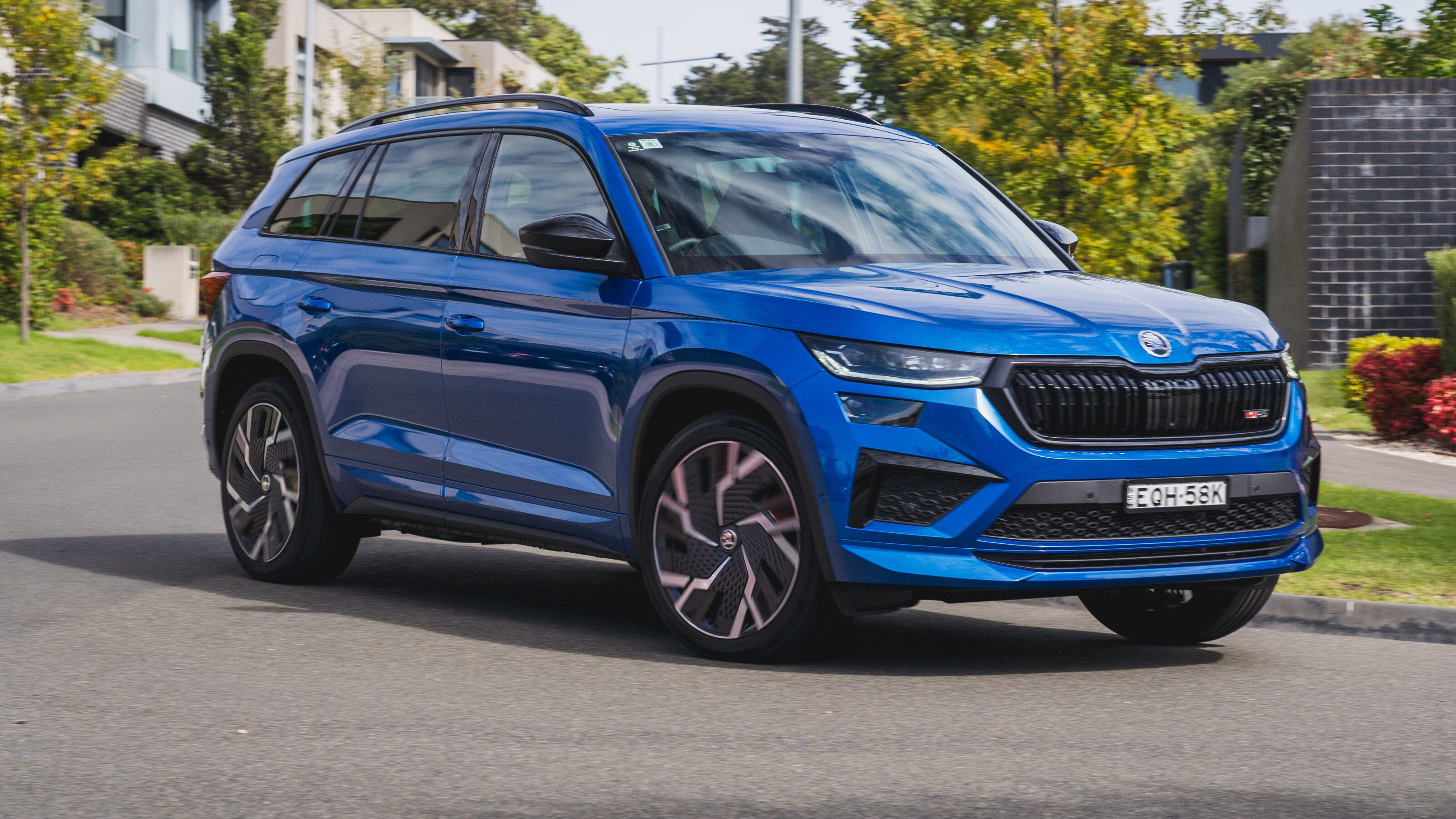
As mentioned in the initial interior story, below, it’s likely that this bold and modern three-row SUV will, at least partially, preview the future second-generation Skoda Kodiaq, expected after 2024 when the new Skoda Superb is due.
The story to here
July 19: Skoda Visin 7S interior teased
Skoda has teased the interior of its upcoming Vision 7S, an all-electric concept car with room for seven occupants – plus a unique child seat.
The concept will showcase the Czech marque’s fresh design language, expected to debut in production form with the all-new 2024 Skoda Superb flagship.
It will be followed by a second-generation Kodiaq large SUV, likely previewed by the three-row concept featured here.
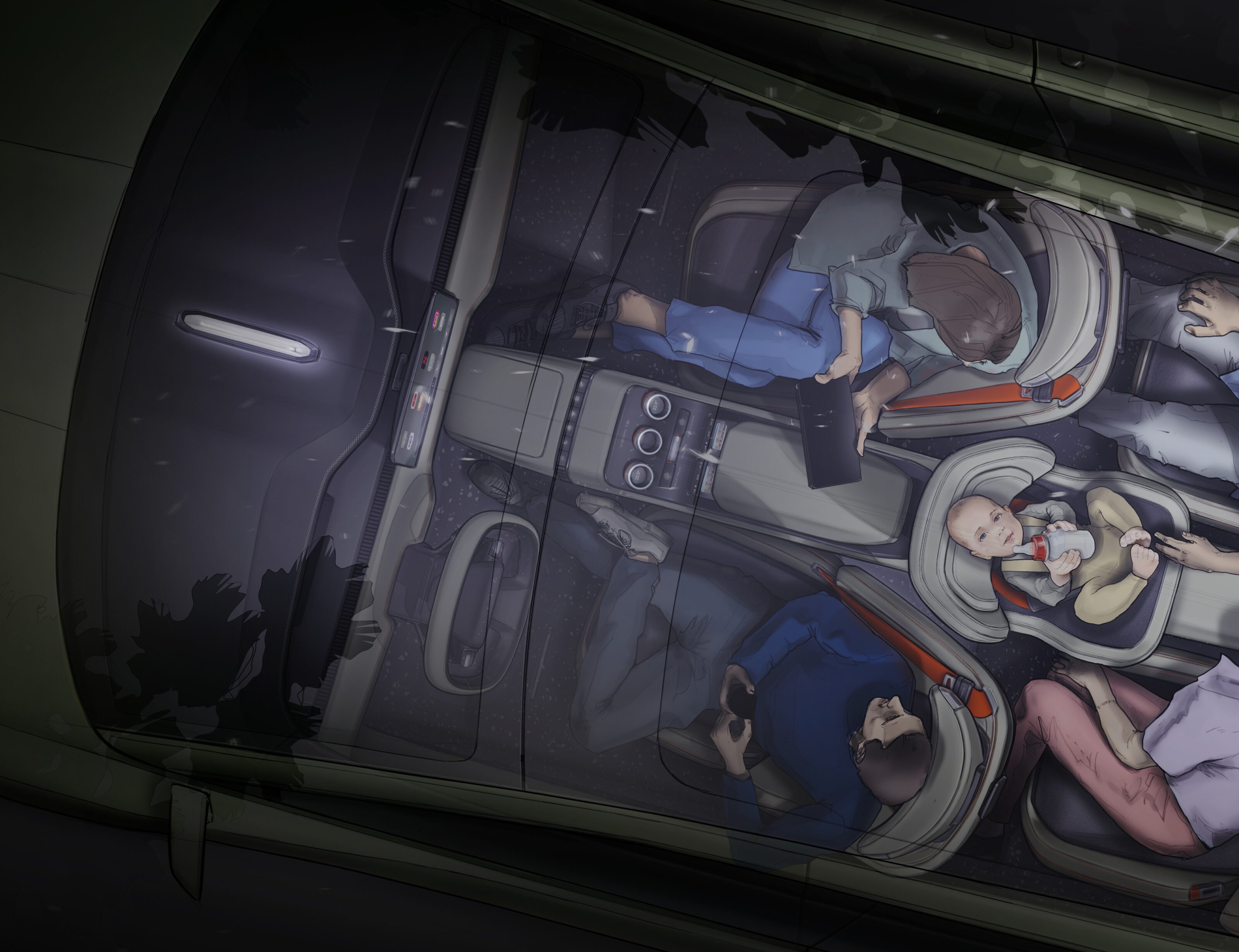
Skoda has only revealed a single bird’s-eye interior sketch of the Vision 7S thus far, with further details expected in the lead-up to its unveiling in the coming weeks or months.
Incorporating features true to the brand’s ‘Simply Clever’ tagline, the concept vehicle’s interior includes an integrated child seat on the centre console that, according to Skoda, is “the safest place in a vehicle”.
Underpinned by a dedicated electric platform, the Vision 7S has a completely flat floor to allow for the supersized centre console and a “symmetrical wrap-around design” for greater space.
Other highlights include tablet holders and removable backpacks on the front seatbacks, haptic and visual elements on the door panels, haptic controls for the steering wheel, a rotating infotainment system, and air-conditioning controls placed closer to the driver.
Skoda has developed two seating configurations for the Vision 7S
The first is for driving, with controls in an optimal location for the driver, while the second is for charging and resting.
When the vehicle is in charge or rest mode, the display will rotate into a landscape view, the steering wheel and infotainment system move forward, and the second-row seats will slide backwards for greater comfort.
The interior is produced from sustainable materials, with a focus on reducing clutter to enhance “the sense of space”.
Skoda previewed its latest corporate look, titled ‘Modern Solid’, at its annual conference in March 2022.
The blurred exterior of a concept vehicle, presumably the Vision 7S, was shown at the time wearing the new design language.
Stay tuned to Wheels for more information on the Skoda Vision 7S Concept and the brand’s future products.
If your dad loves cars, but can be a little tough to buy presents for, why not get him the Lego version of his dream whip? Whether the assembly process is a family affair or a time of solo enjoyment, you’re sure to be in the old man’s good books for a while!
And there are plenty of rad rides to choose from Lego has been releasing car kits in roughly 1:32 to 1:12 scale for a few years now as part of the Creator, Technic and Speed Champions series, and in that time it has come up with some particularly cool brick-built renditions.
Here are our current faves.
Optimus Prime
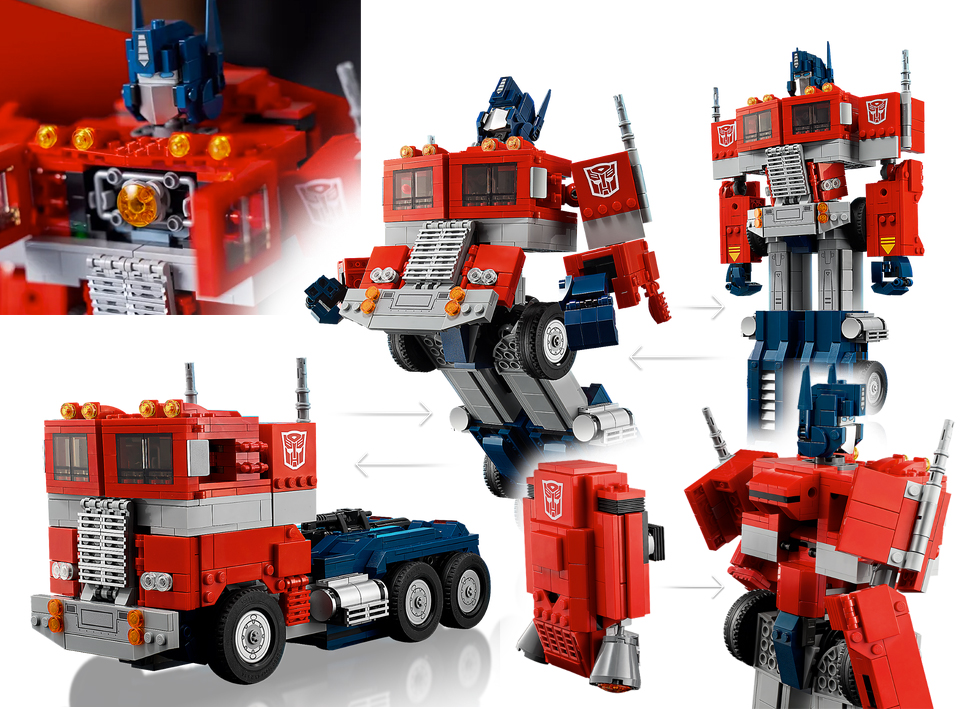
“Now, all we need is a little energon, and a lot of luck.”
Every dad identifies with Optimus Prime, so you can’t really go past this new model – and it actually transforms, without having disasessmble and reassemble. That is next-level stuff, and your dad is sure to lose his mind. (It even has an opening chest chamber with the Autobot Matrix of Leadership inside. Come on!)
1508 pieces, 18+ build rating. Can’t go wrong.
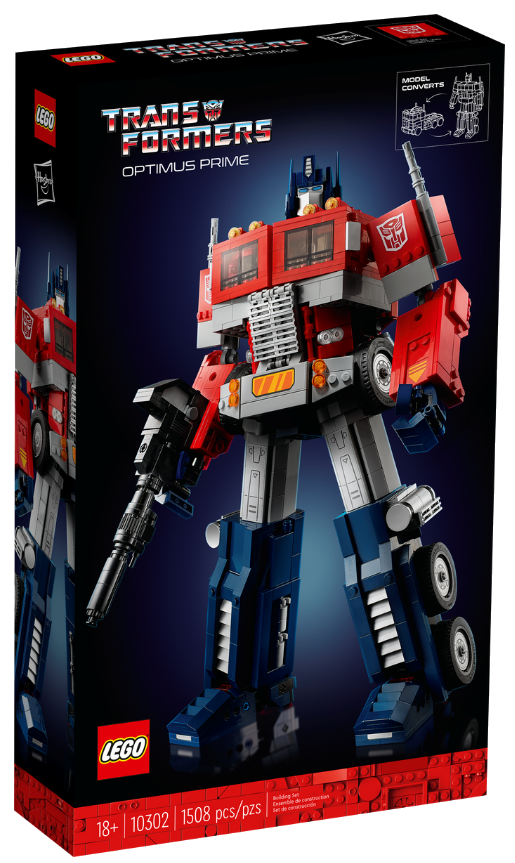
- In truck mode, the model measures over 5.5 in. (15 cm) high, 10.5 in. (27 cm) long and 4.5 in. (12 cm) wide. In robot mode, the model stands over 13.5 in. (35 cm) tall
- 1508 pieces
- In truck mode, the model measures over 5.5 in. (15 cm) high, 10.5 in. (27 cm) long and 4.5 in. (12 cm) wide. In robot mode, the model stands over 13.5 in. (35 cm) tall
- 1508 pieces
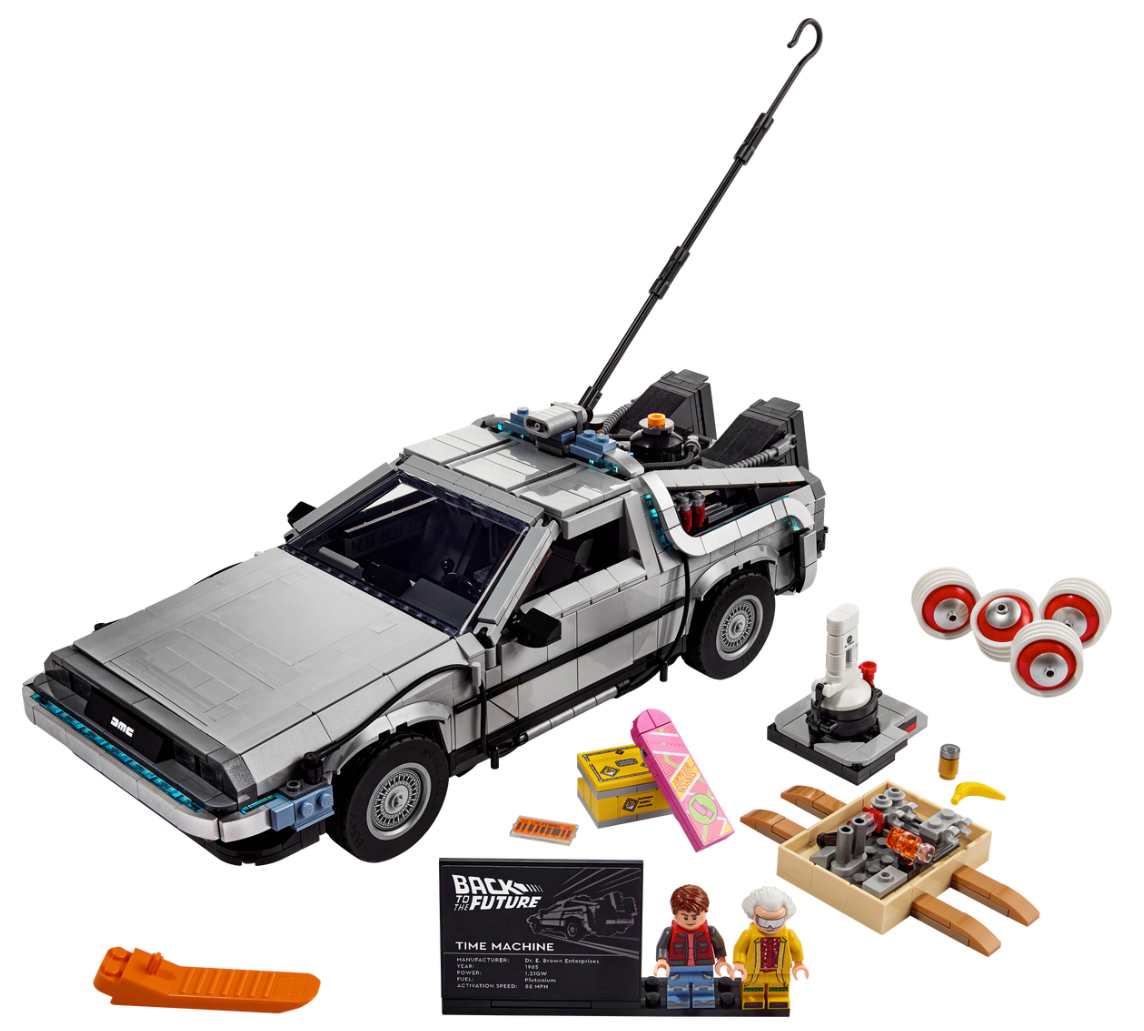
“Wait a minute, Doc, are you telling me…”
Dads love them some nostalgia, so what better way to send them back to the past with a bit of Back to the Future?
This ‘Back to the Future Time Machine’, which we guess they weren’t allowed to namecheck as a DeLorean, comes with all the parts needed to spec it out in films I, II and III modes. That is properly rad.
1872 pieces, 18+ build rating. Get in. (Don’t worry, the doors open.)
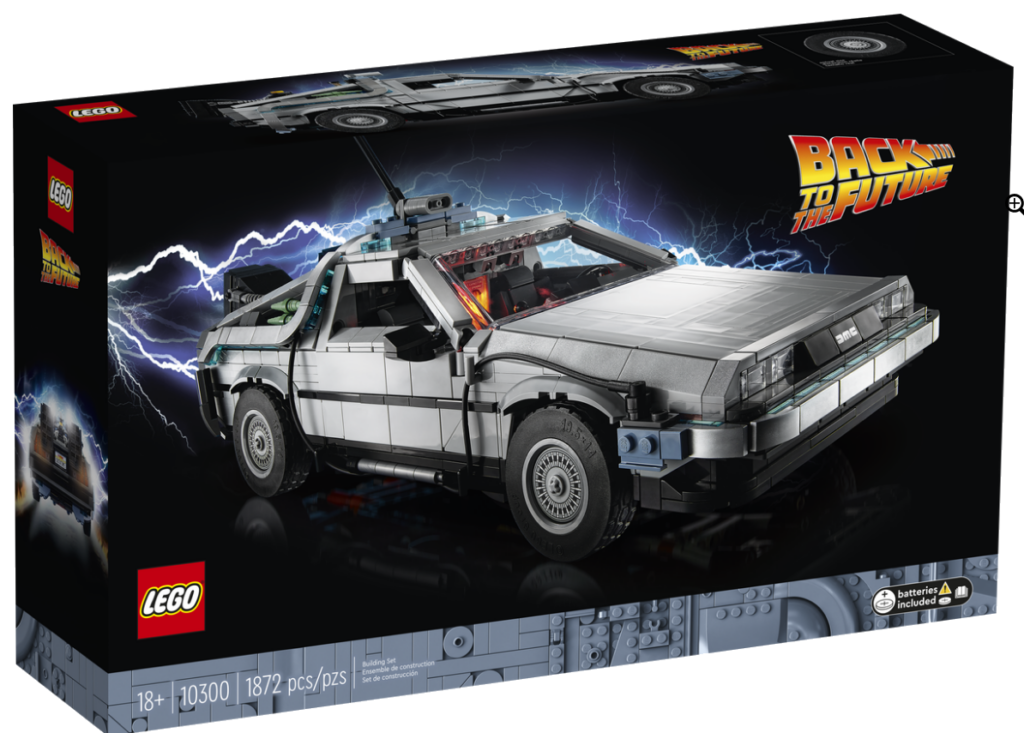
- The model measures over 4.5 in. (12 cm) high, 14 in. (35 cm) long and 7.5 in. (19 cm) wide
- 1350 pieces
- The model measures over 4.5 in. (12 cm) high, 14 in. (35 cm) long and 7.5 in. (19 cm) wide
- 1350 pieces
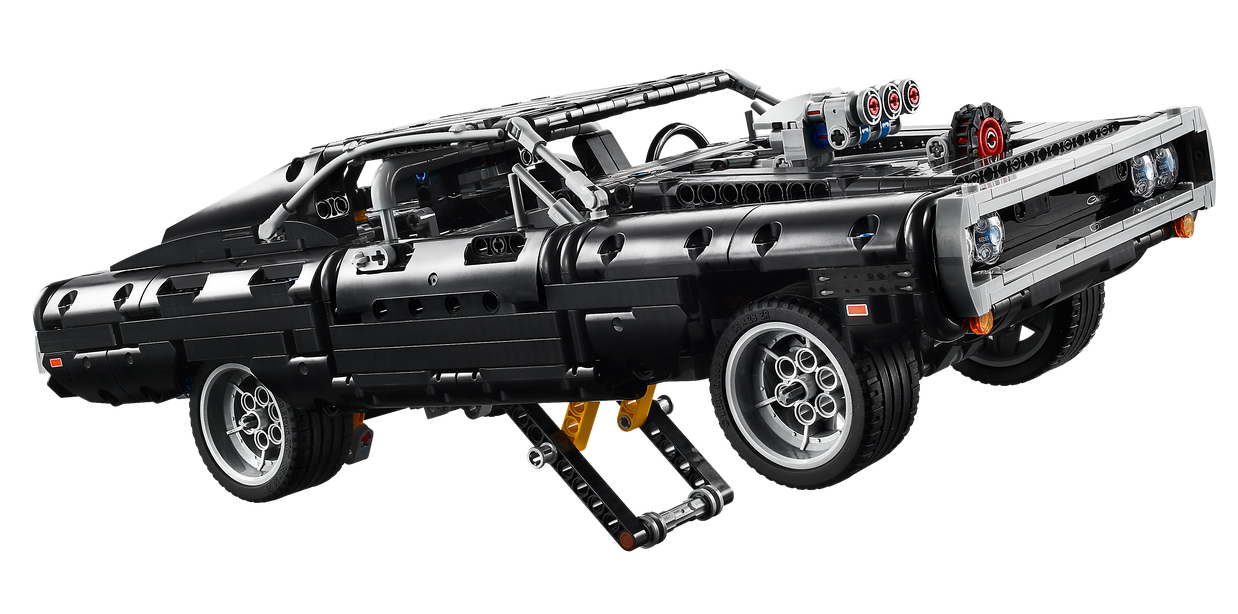
“I live my life a quarter-mile at a time.”
The Fast & The Furious hit cinema screens (remember those?) in 2001, so it’s actually possible your dad was just the type of young fella Universal Pictures was targeting with what would blow up into an insanely popular (and polarising) franchise.
Of course, along with Brian’s orange Supra, Dom’s Charger was without question one of the big stars of the film. So why not get one into Dad’s hands?
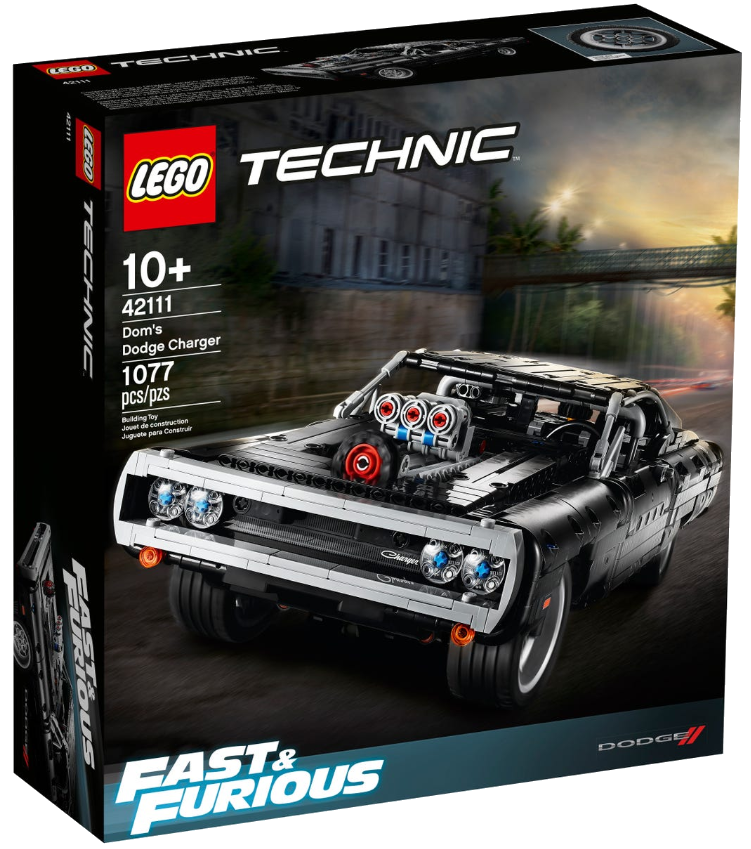
- Measuring 15” (39cm) long, 6” (16cm) wide and 4” (11cm) high
- 1077 pieces
- Measuring 15” (39cm) long, 6” (16cm) wide and 4” (11cm) high
- 1077 pieces
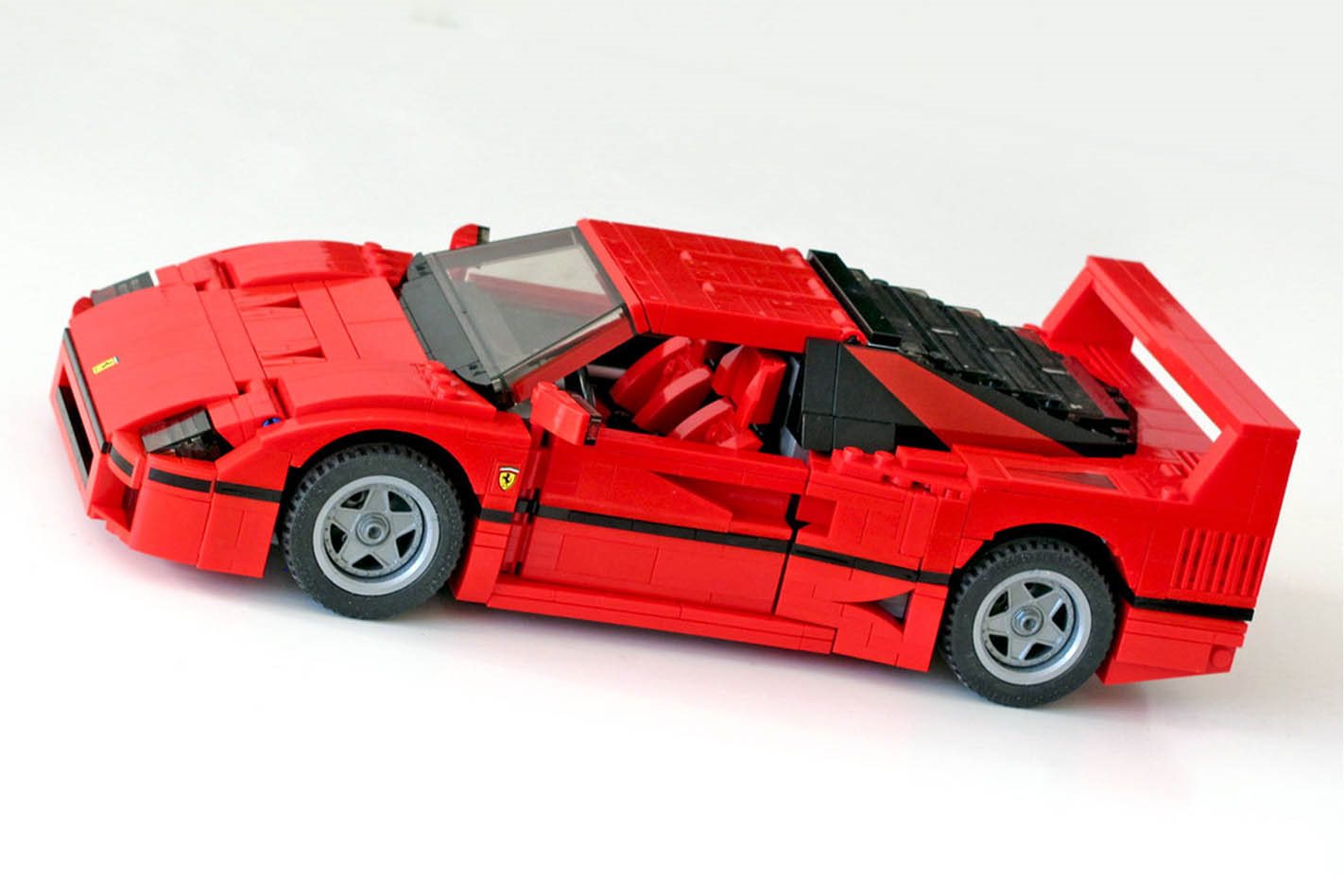
One of the kits to appear in Lego’s Creator series, the Lego Ferrari F40 comprises 1158 individual pieces and is roughly 25 centimetres long.
It features an opening clamshell engine cover that reveals the 90-degree turbocharged V8 like the real thing … almost. And you can even take the engine out to examine it.
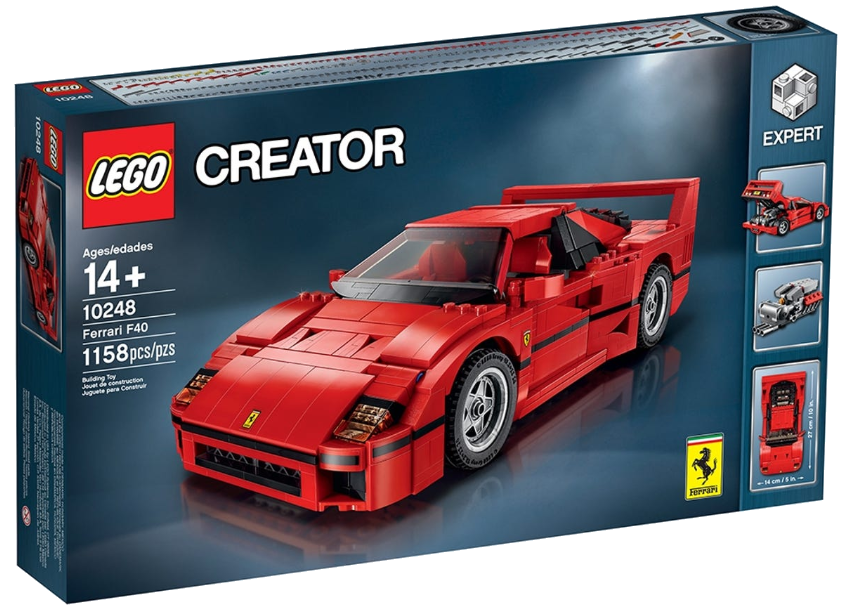
- The F40 is over 3” high, 10” long and 5” wide
- 1158 pieces
- The F40 is over 3” high, 10” long and 5” wide
- 1158 pieces
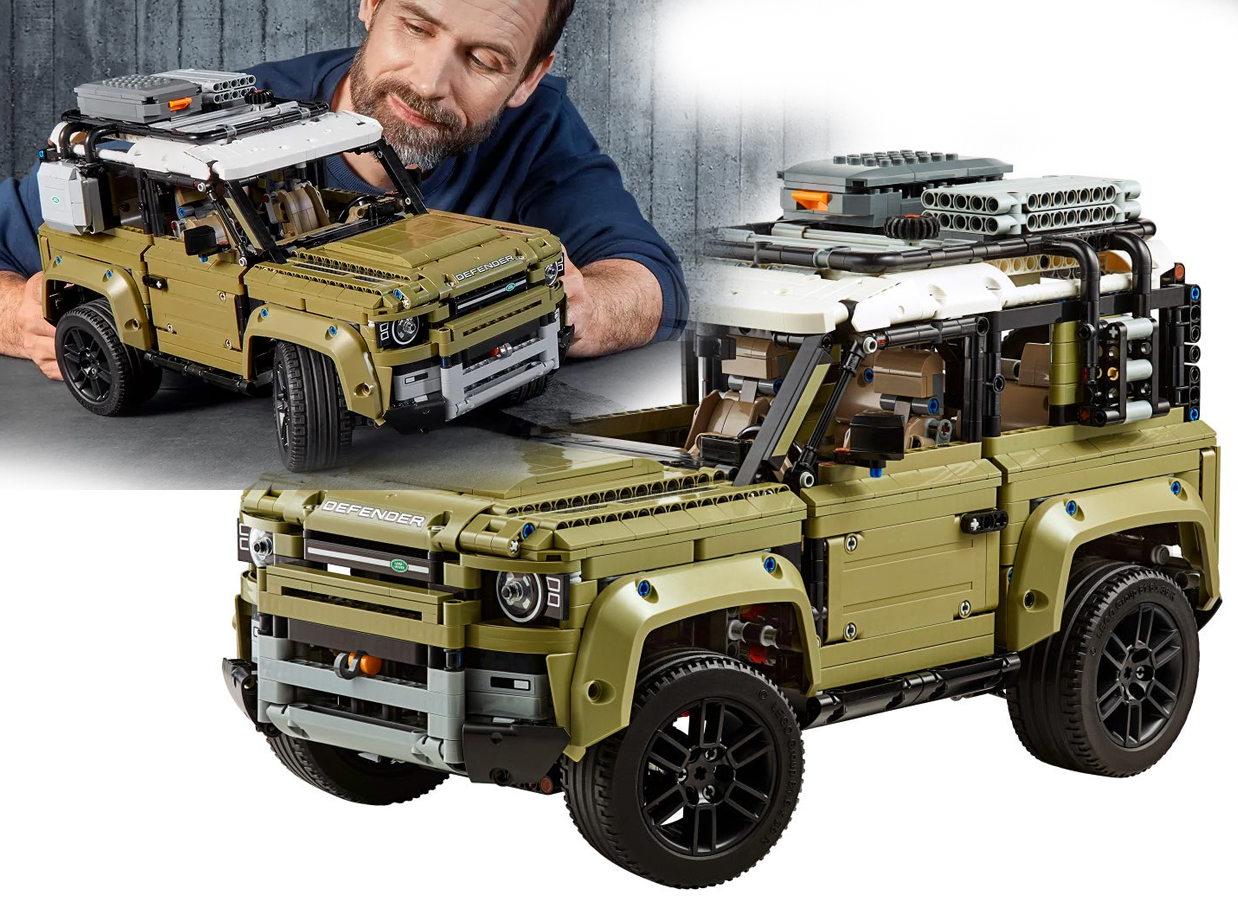
The Defender has always been an icon, and this Lego Technics piece is sure to be popular with dads and kids alike. Be warned, it’s a massive unit (just like dad), so you might need to clear a space in the garage…
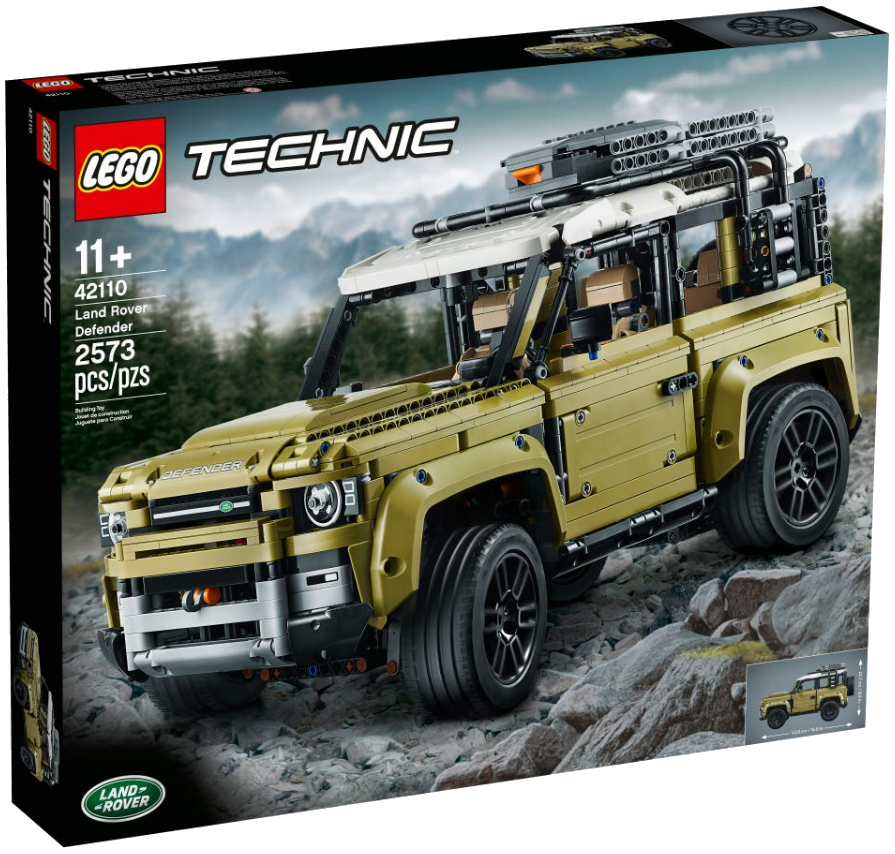
- Land Rover Defender measures over 8” (22cm) high, 16” (42cm) long and 7” (20cm) wide
- 2573 pieces
- Land Rover Defender measures over 8” (22cm) high, 16” (42cm) long and 7” (20cm) wide
- 2573 pieces
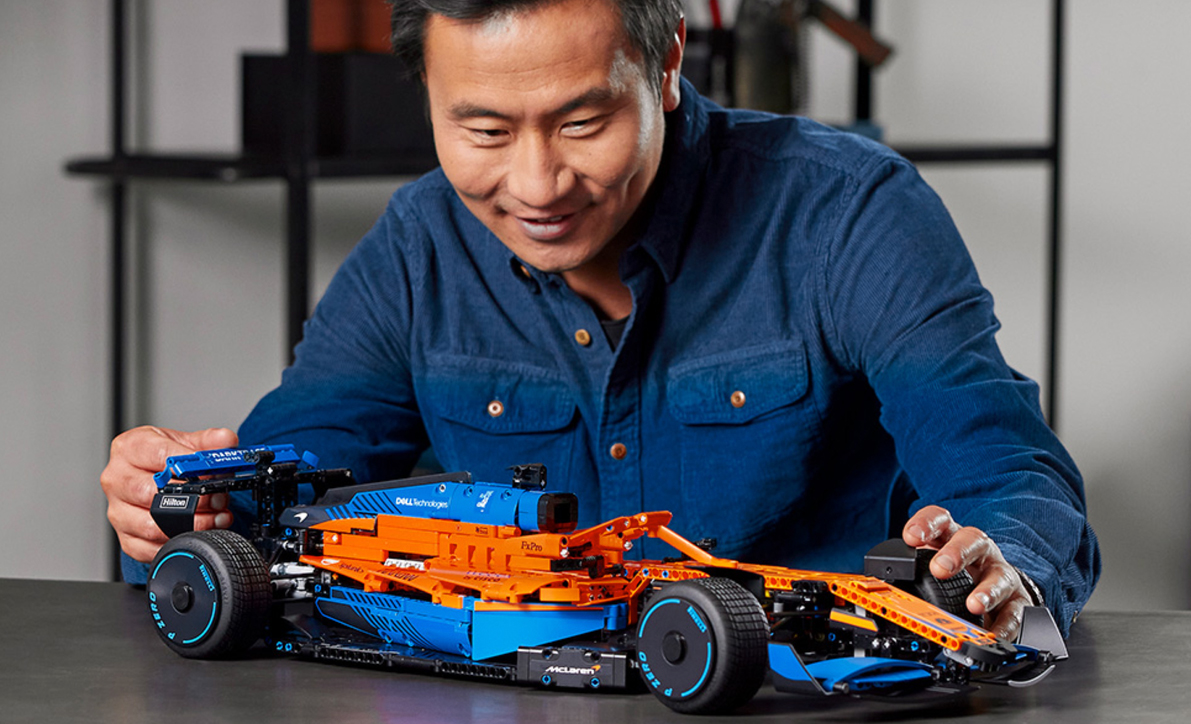
Did dad dream of being a racing driver? Come on, who didn’t? Well, if he didn’t get there, he can at least live his dreams at a smaller scale – although he’ll be more of an engineer than a driver by the time he’s done!
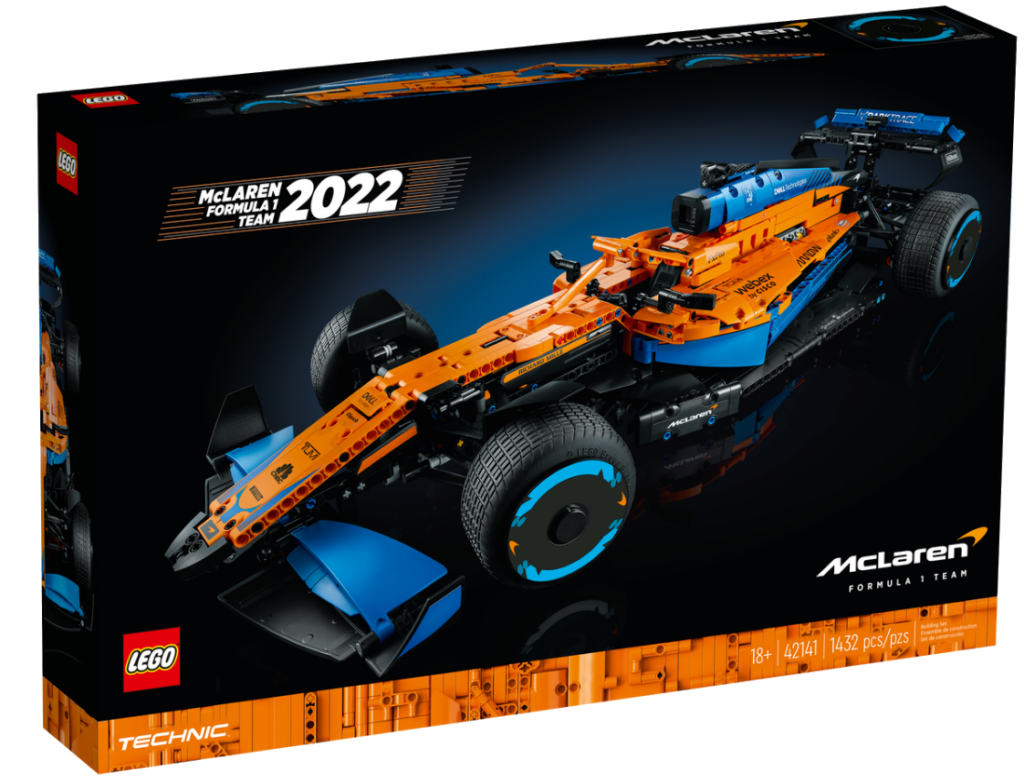
- Measures over 5 in. (13 cm) high, 25.5 in. (65 cm) long and 10.5 in. (27 cm) wide
- 1432 pieces
- Measures over 5 in. (13 cm) high, 25.5 in. (65 cm) long and 10.5 in. (27 cm) wide
- 1432 pieces

Continuing the Italian theme is the Fiat 500 Lego kit which includes an incredibly detailed interior, a sunroof and it even gets a suitcase mounted to a luggage rack above the engine cover on the back. La dolce vita!
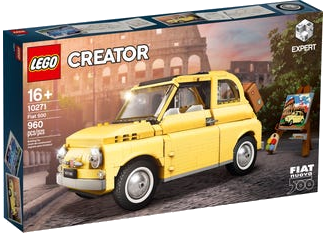
- Measuring over 11 cm (4.5 inches) high, 24 cm (9.5 inches) long and 11 cm (4.5 inches) wide.
- 960 pieces
- Measuring over 11 cm (4.5 inches) high, 24 cm (9.5 inches) long and 11 cm (4.5 inches) wide.
- 960 pieces
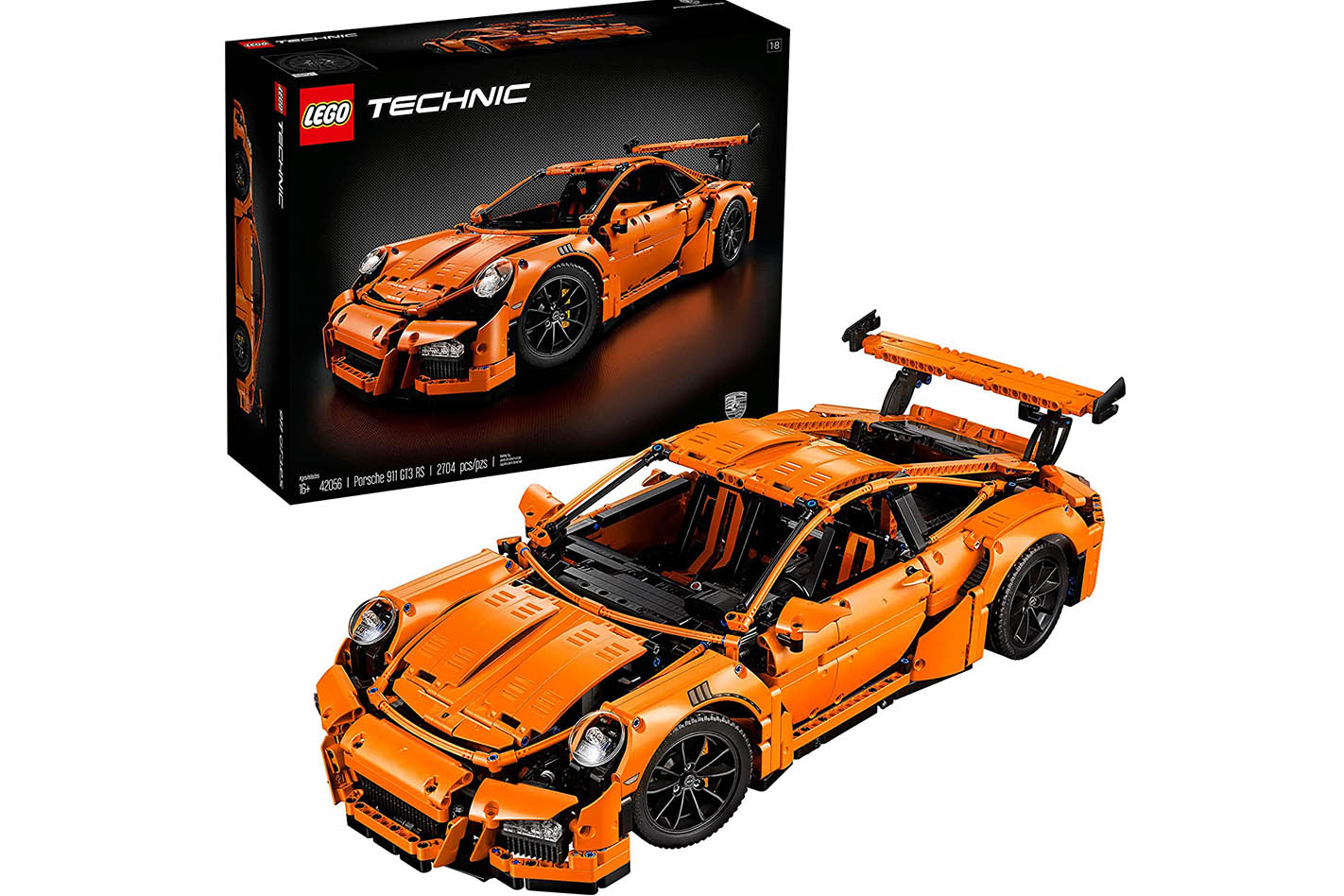
Stepping it up somewhat is the much larger, much more technical, and way more expensive Lego Technic Porsche GT3 RS. It gets a realistic working gearbox, an adjustable rear wing, red suspension springs and even an opening glovebox that hides a unique build number.
Lego also released a successor 911 GT3 RSR race car in similar form.
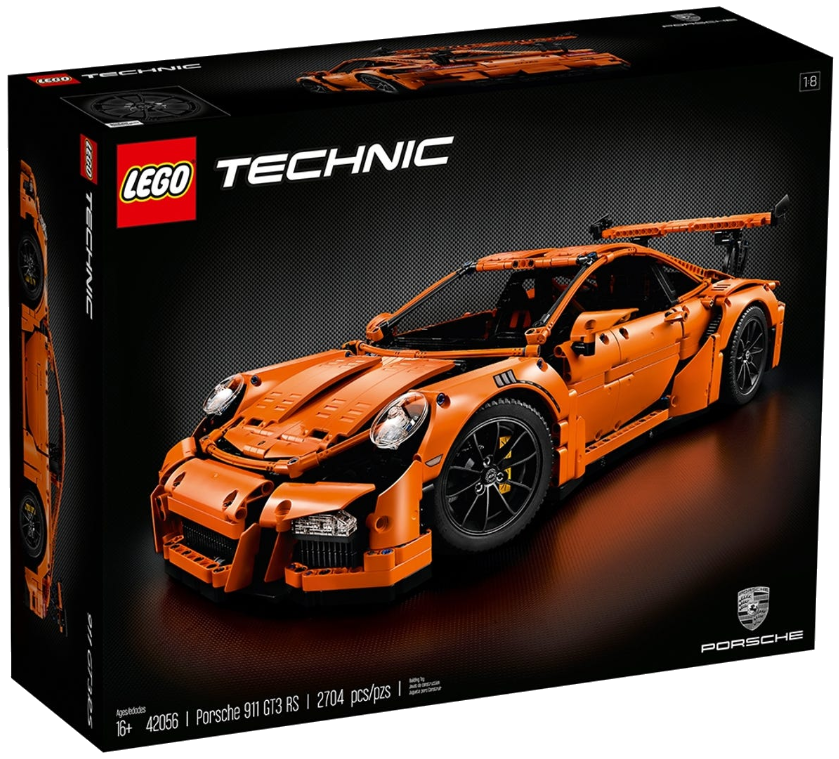
- Measuring over 6” (17cm) high, 22” (57cm) long and 9” (25cm) wide.
- 2704 pieces
- Measuring over 6” (17cm) high, 22” (57cm) long and 9” (25cm) wide.
- 2704 pieces
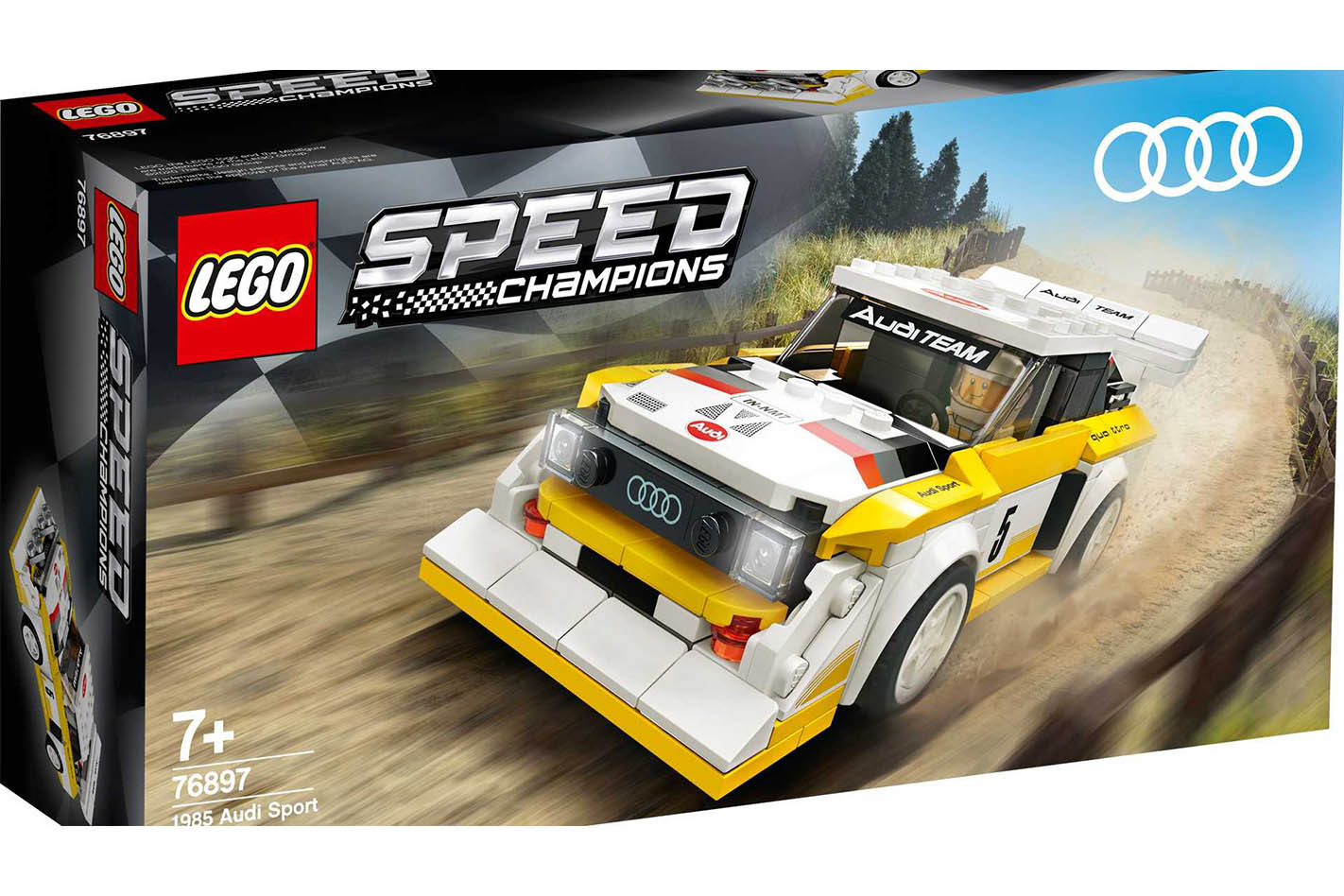
Unique Lego cars don’t get much cooler than this. The rally-dominating Audi Sport Quattro S1 of the 1980s looks genuinely epic in Lego form, complete with period correct stickers and colour scheme.
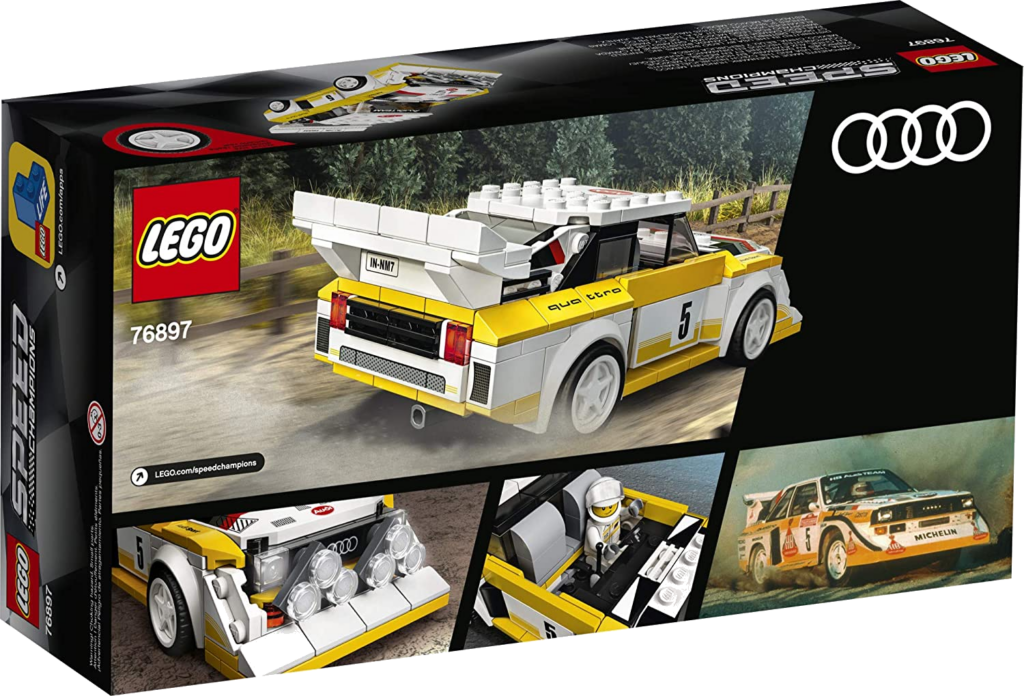
- The 1985 Audi Sport quattro S1 rally car measures over 2” (6cm) high, 6” (16cm) long and 2” (7cm) wide.
- 250 pieces
- The 1985 Audi Sport quattro S1 rally car measures over 2” (6cm) high, 6” (16cm) long and 2” (7cm) wide.
- 250 pieces
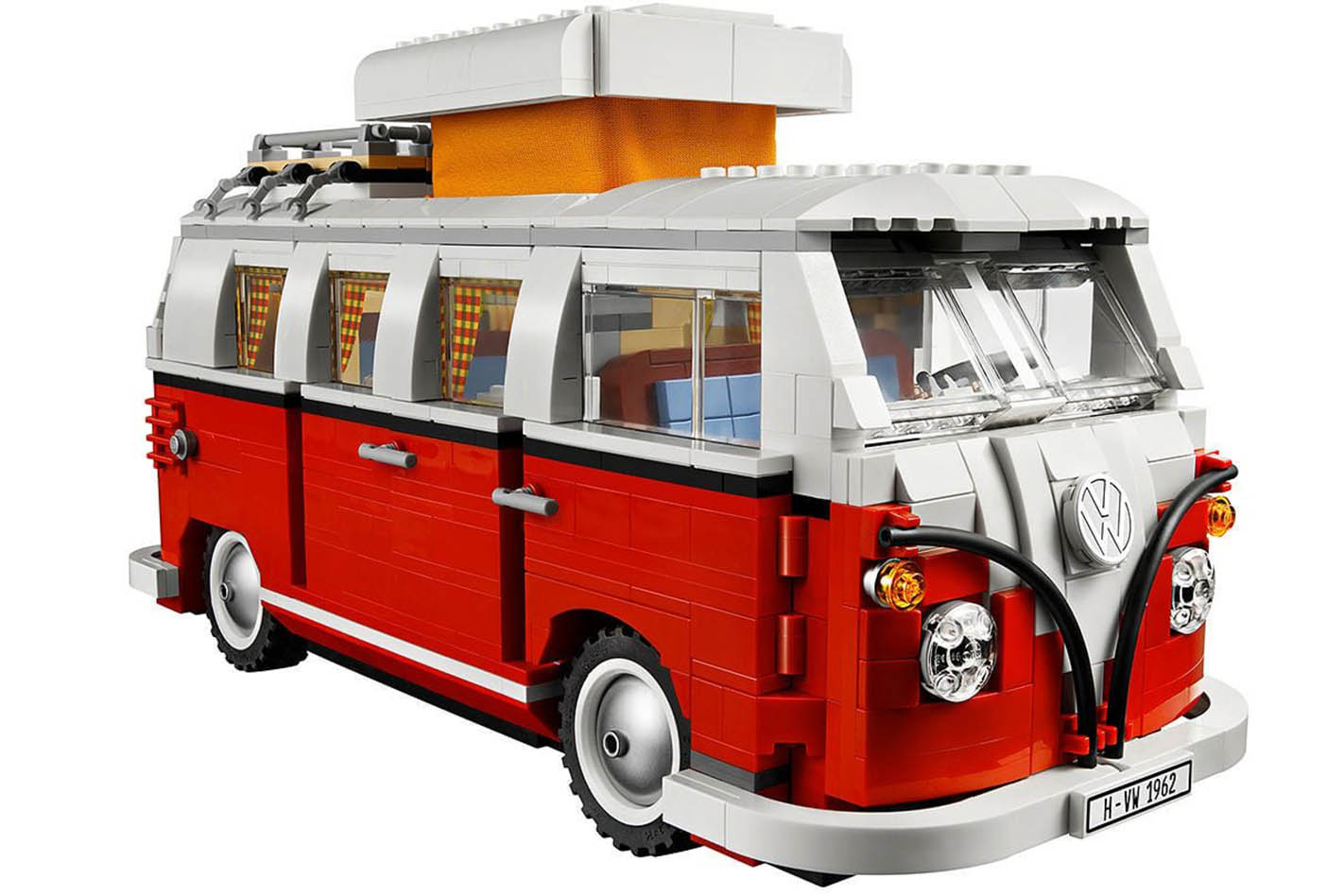
Authentic, faithful and iconic, the Lego Creator Volkswagen Camper Van invokes the spirit of the original bus from 1962, while tugging at the heartstrings and remaining incredibly cool in Lego form.
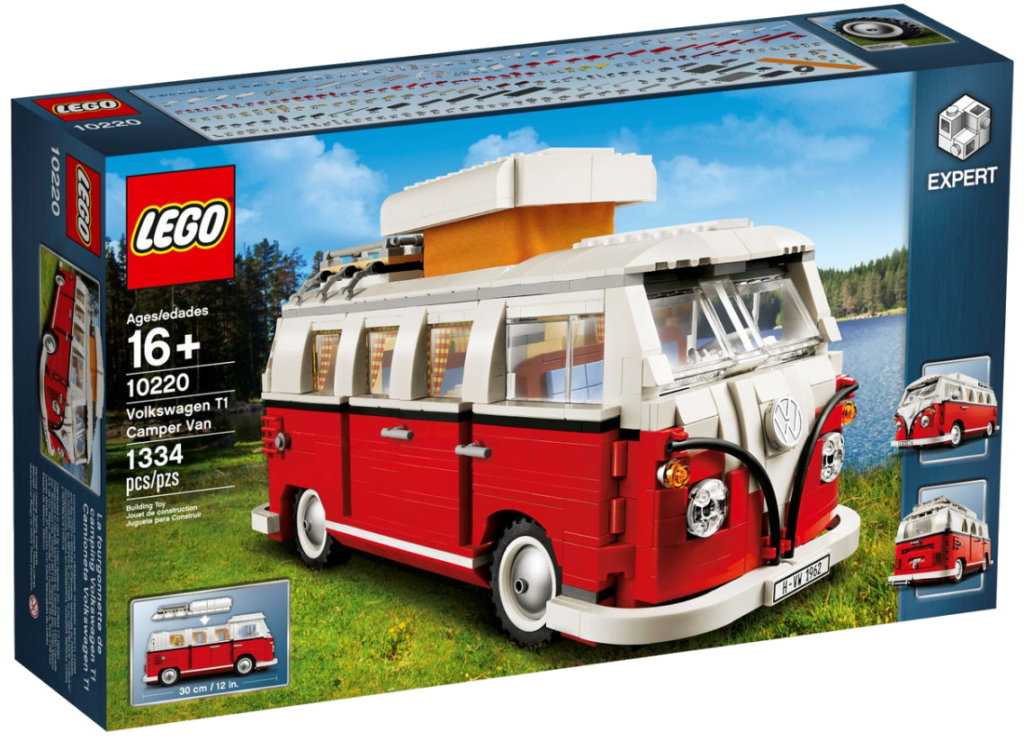
- Measures 11.8 inches (30cm) long and 5.5 inches (14cm) high.
- 1334 pieces
- Measures 11.8 inches (30cm) long and 5.5 inches (14cm) high.
- 1334 pieces
UPGRADE! Volkswagen T2 Camper Van
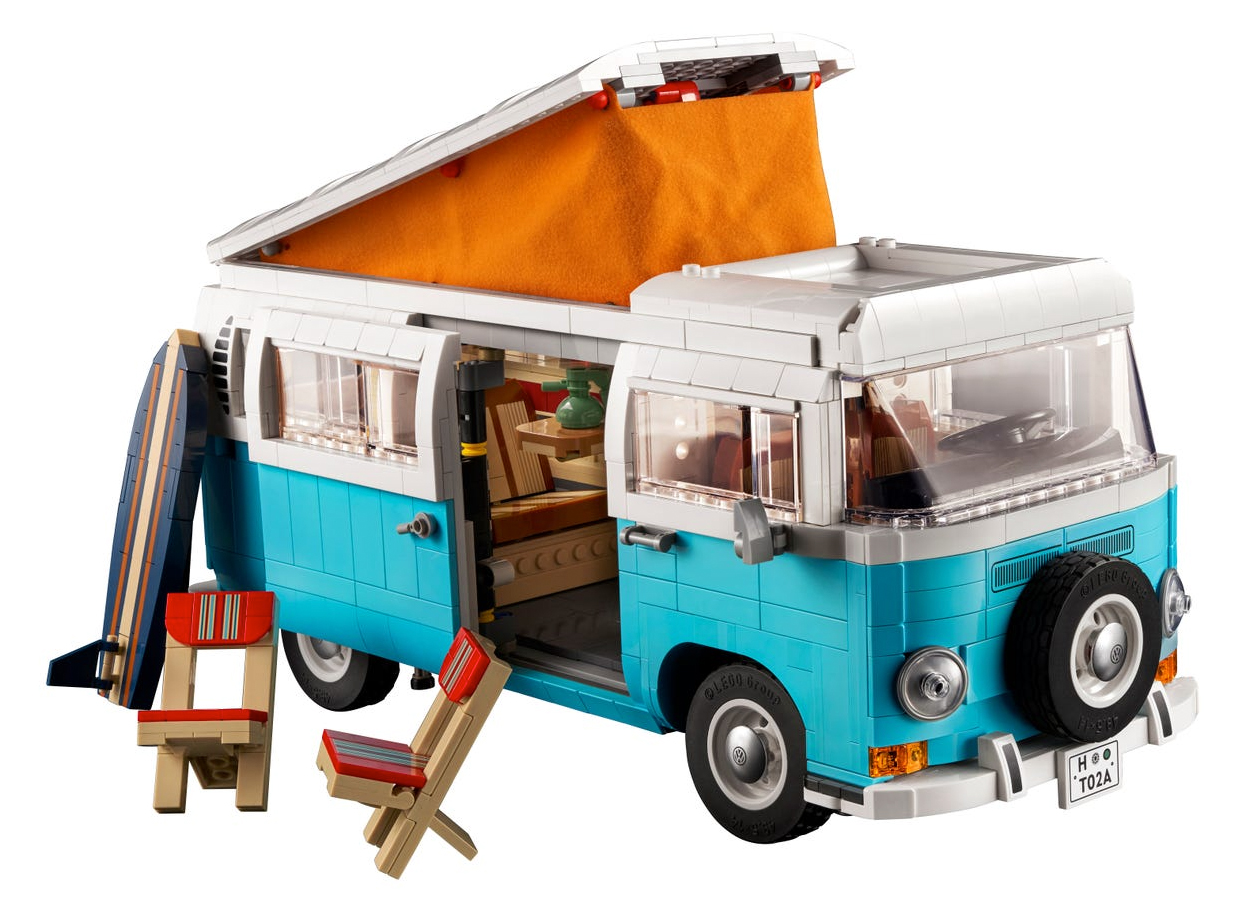
With more pieces (2207 instead of 1334) and a sleeker look, this new T2 version of the iconic VW bus might be more to dad’s tastes.
This one gets a refreshing new cyan blue shade, proper sliding doors, and a higher extending roof for your minifigs.
Either way… surf’s up.
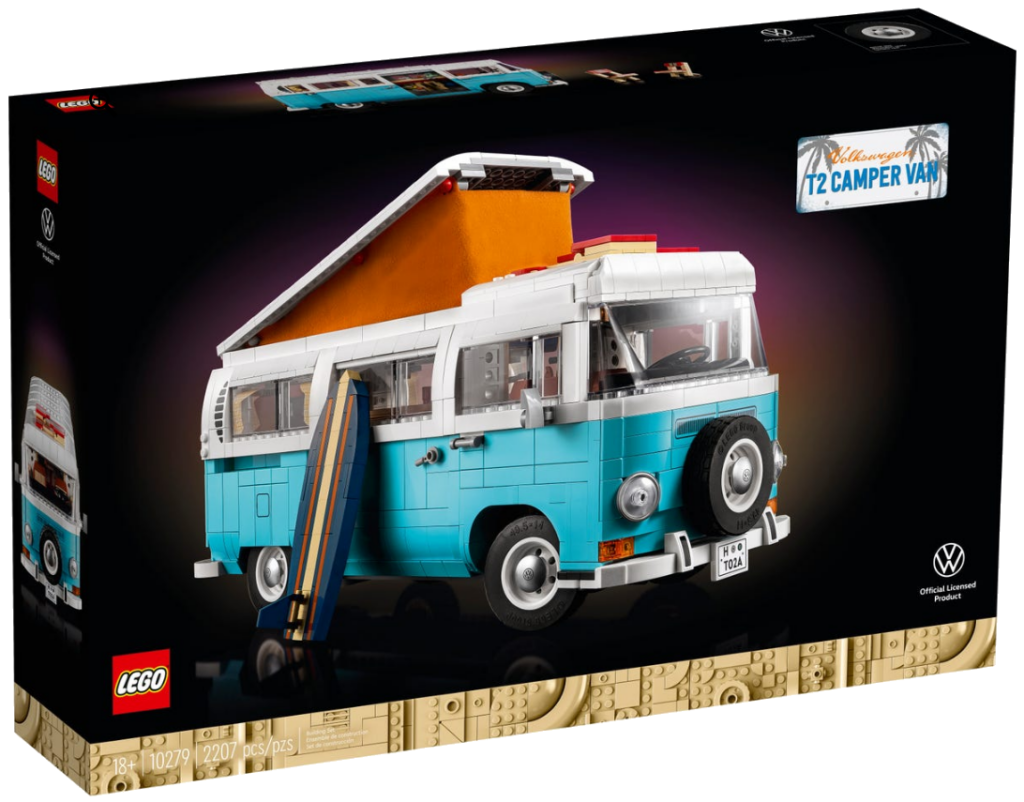
- Measures over 6 in. (15 cm) high, 13.5 in. (35 cm) long and 5.5 in. (14 cm) wide
- 2207 pieces
- Measures over 6 in. (15 cm) high, 13.5 in. (35 cm) long and 5.5 in. (14 cm) wide
- 2207 pieces
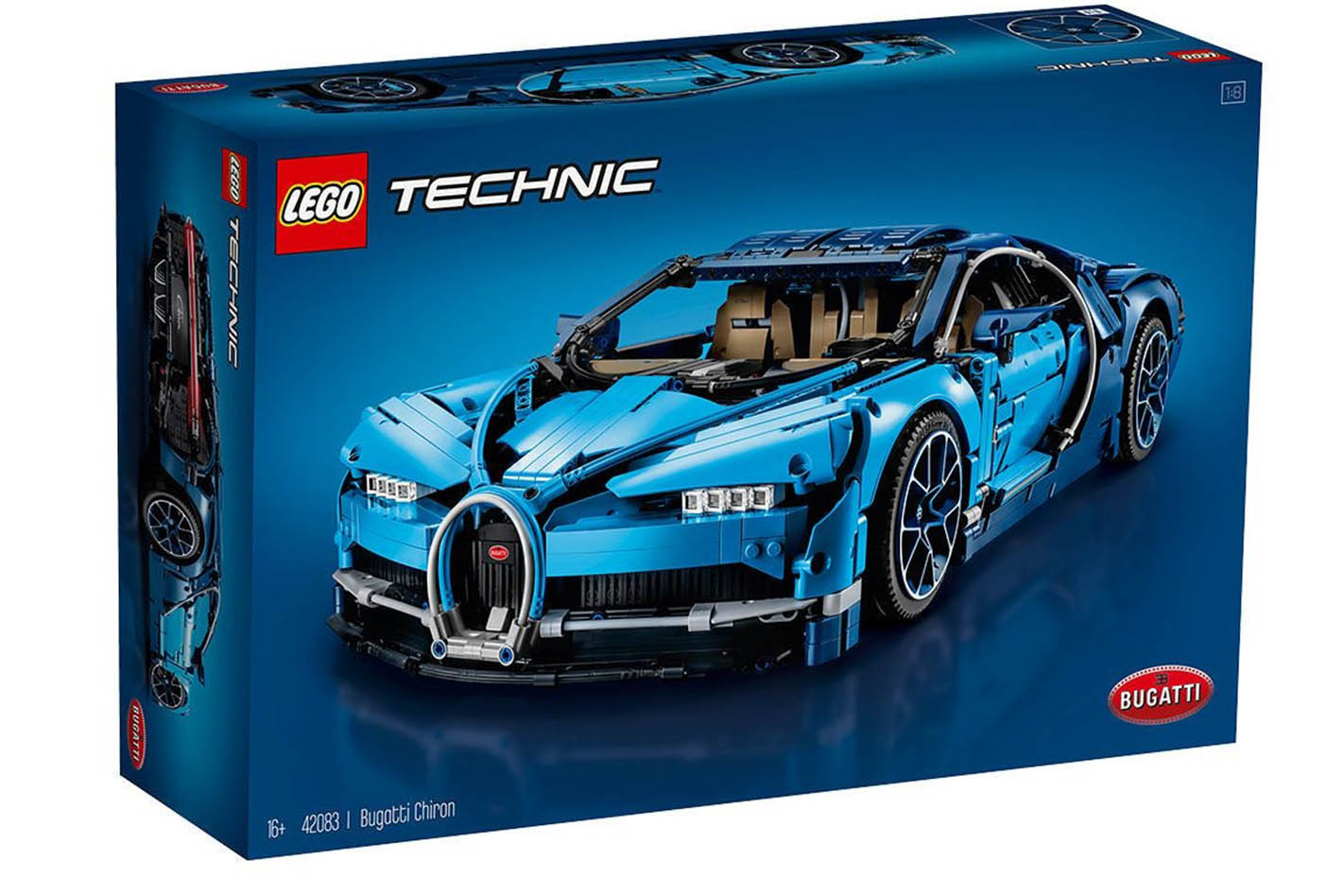
One of the biggest, baddest models in the Lego fleet to date, the Technic Chiron comes in at one-eighth the size of the real thing and is one of the most expensive models available too.
Lego says the Technic Chiron is built in much the same order as the life-size machine so you can follow the construction process just like a Bugatti engineer.
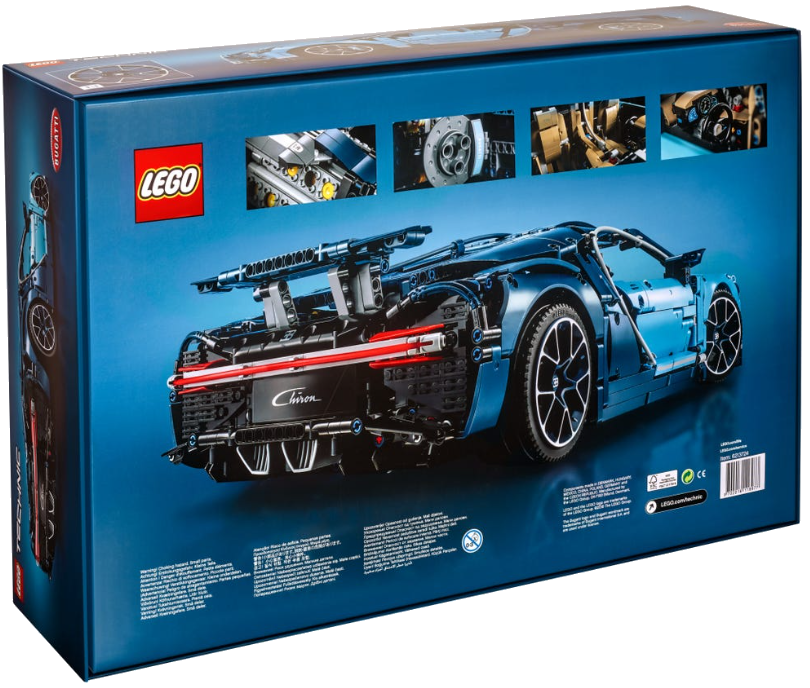
- Bugatti Chiron measures over 5” (14cm) high, 22” (56cm) long and 12.5”(32cm) wide
- 3599 pieces
- Bugatti Chiron measures over 5” (14cm) high, 22” (56cm) long and 12.5”(32cm) wide
- 3599 pieces
“Now, pay attention please. Windscreen, bulletproof. As are the side and the rear windows. Revolving number plates, naturally. Valid in all countries.”

Arguably the most famous of all James Bond cars, the Aston DB5 looks remarkably faithful to the real car while sporting some of the neat spy car gadgets such as pop-out machine guns, functioning ejector seat and rotating registration plates to thwart prying speed cameras … of which there weren’t any in 1964.
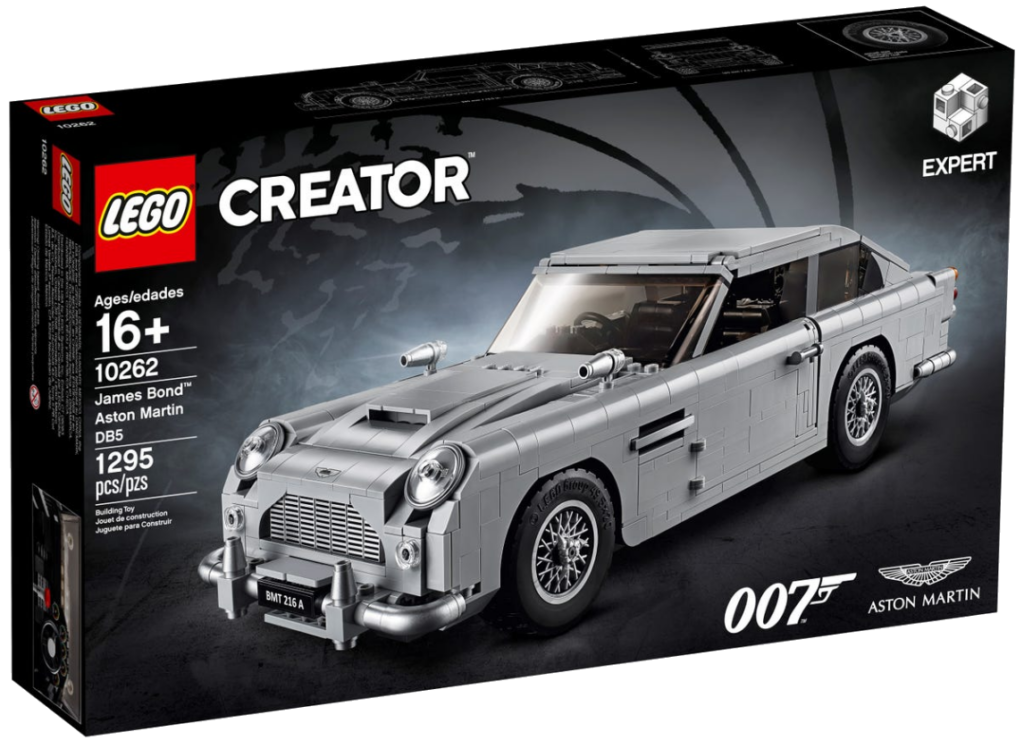
- Measures over 3” (10cm) high, 13” (34cm) long and 4” (12cm) wide
- 1295 pieces
- Measures over 3” (10cm) high, 13” (34cm) long and 4” (12cm) wide
- 1295 pieces
Lego Ideas Ghostbusters Ecto-1 (21108)
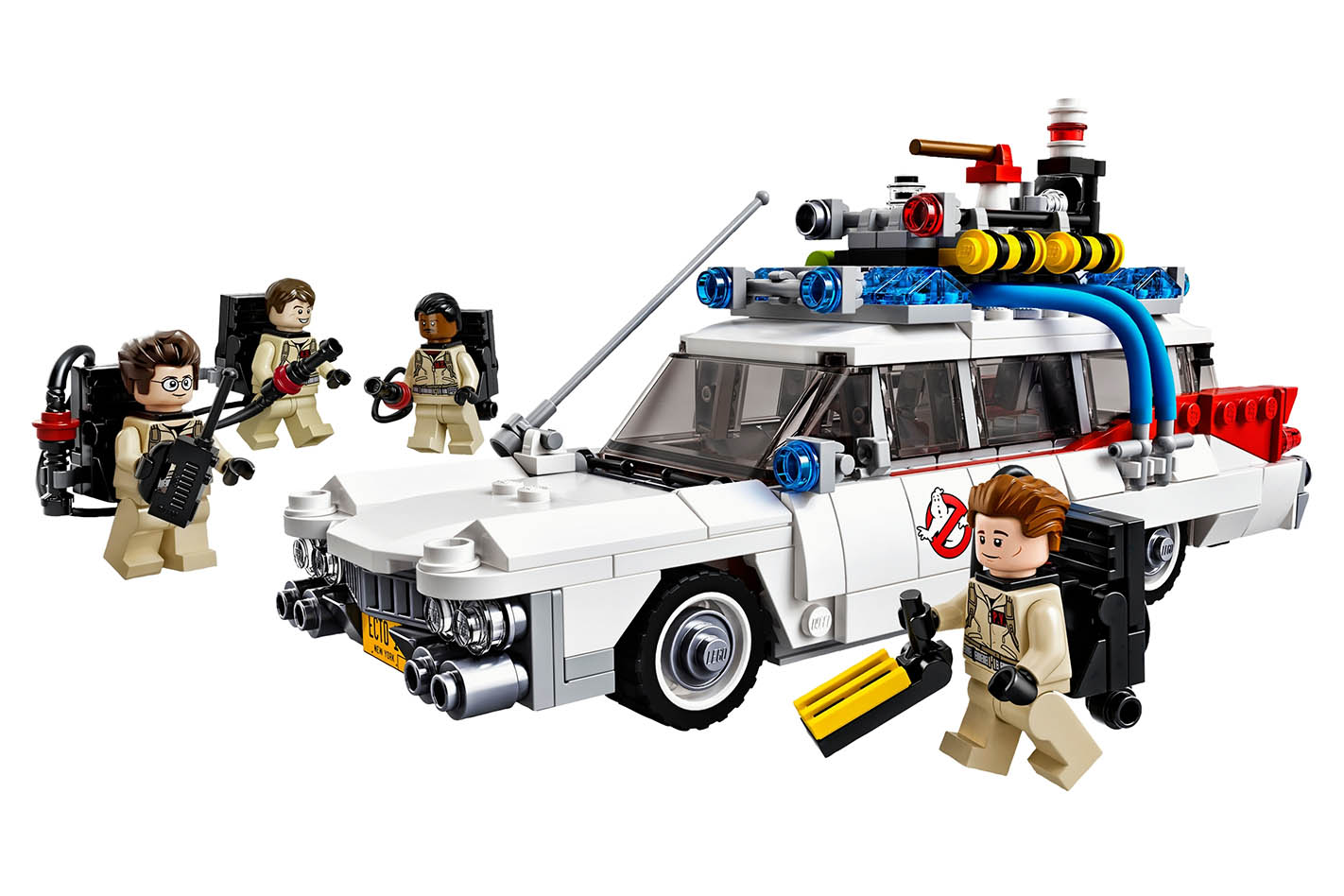
“WE GOT ONE!”
Lego minifigures and accurate Lego representations of real-life cars normally don’t go hand-in-hand. Luckily for Lego, its fans are all too willing to pitch their own ideas through the Lego Ideas platform.
Created by a Ghostbusters fan, the Lego recreation of the iconic Ghostbusters Ecto-1 car for the movie’s 30th anniversary is elegantly simple, yet faithful and well-detailed. A definite must for fans of the movie and the converted Cadillac.

- Ecto-1 vehicle measures over 3” (9cm) high, 7” (20cm) long and 2” (6cm) wide
- 508 pieces
- Ecto-1 vehicle measures over 3” (9cm) high, 7” (20cm) long and 2” (6cm) wide
- 508 pieces
UPGRADE! Lego Creator Expert Ghostbusters Ecto-1
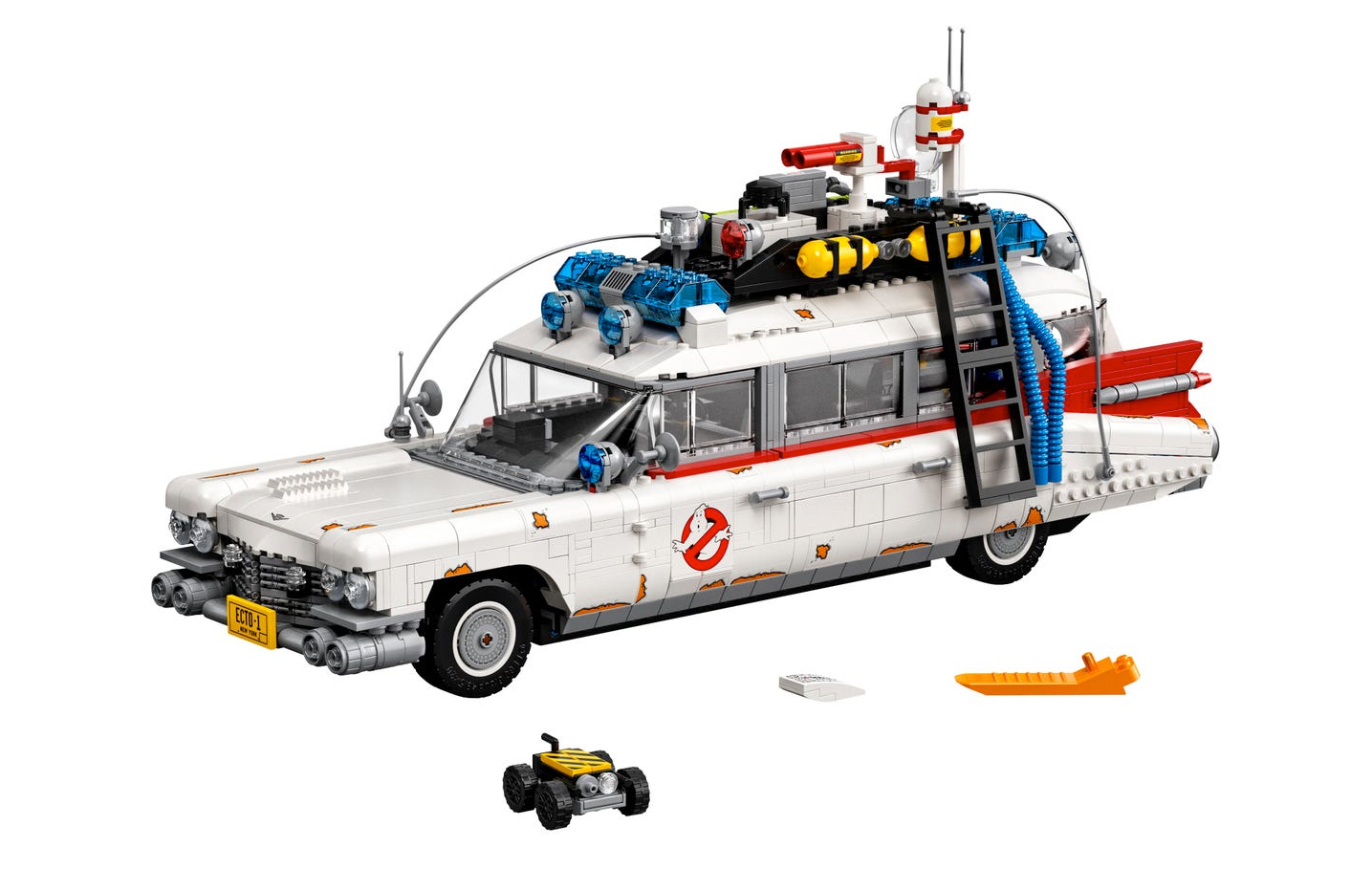
Now, that Lego IDEAS Ecto-1 is excellent, no question. But if your dad loves a more challenging build, and if you’ve got the budget for the project, this bigger Lego Creator Expert version of the Ecto-1 is where you wanna point your wallet.
With 2352 pieces and an 18+ build rating, this Ecto-1 measures 47cm long and 23cm tall – so make some room on that trophy shelf!
https://www.lego.com/en-au/product/ghostbusters-ecto-1-10274

- Measuring over 8” (22.5cm) high, 18” (47cm) long and 6” (16.5cm) wide
- 2532 pieces
- Measuring over 8” (22.5cm) high, 18” (47cm) long and 6” (16.5cm) wide
- 2532 pieces
Lego Technic Mercedes-Benz Arocs 3245 (42043)
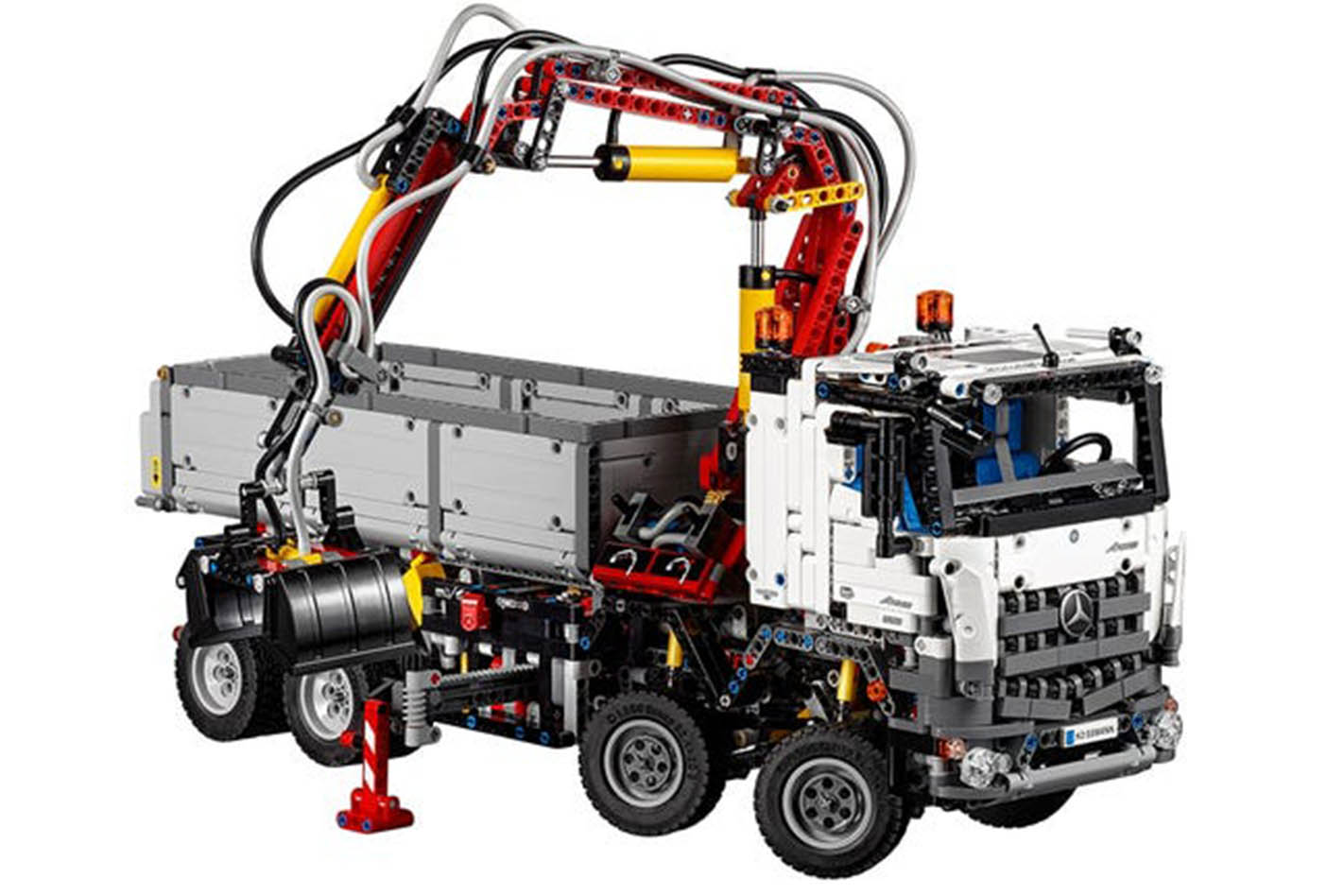
One of many officially-licensed Mercedes-Benz kits, the Arocs 3245 was also one of the coolest. For starters, at just over half a metre long it’s big in personality so the build process soaks up plenty of time and results in a physically substantial toy to play with. When it came out around five years ago, it was the largest Lego Technic model to date.
Secondly, its mechanical complexity was extraordinary. Not only did it have proper rack-and-pinion ‘twin-steer’ on the front two axles (with a different ratio for the second axle, just like the real truck), it also flaunted a 4×4 drivetrain, fully articulated independent suspension, a six-cylinder engine under the cab and an actual electric motor that drove a pneumatic pump for the powered crane, outriggers and tipping bed!
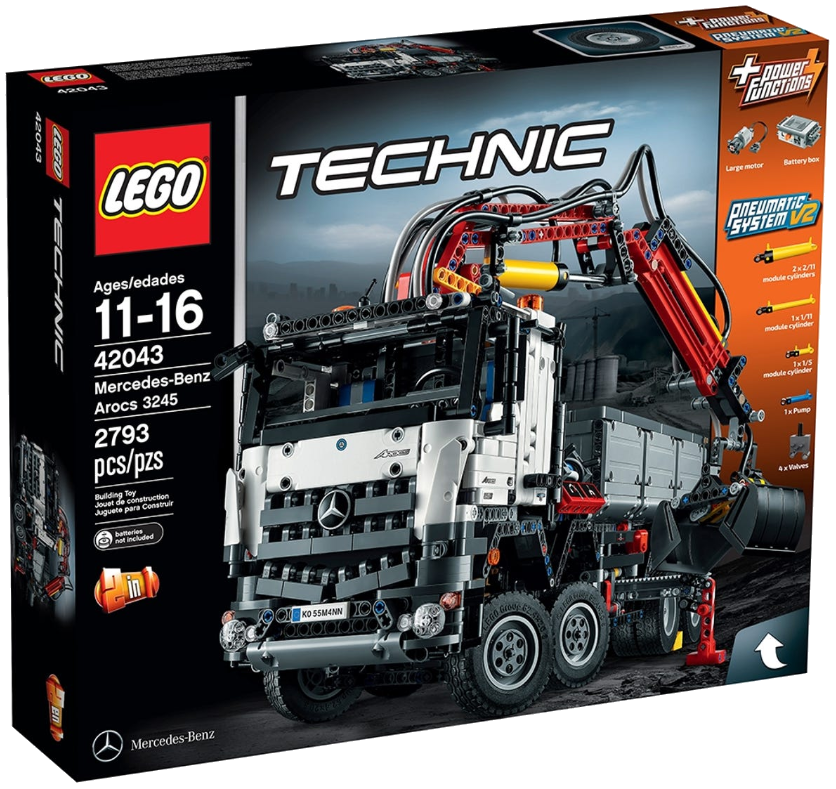
- The Arcos 3245 is over 12” high, 21” long and 5” wide
- 2793 pieces
- The Arcos 3245 is over 12” high, 21” long and 5” wide
- 2793 pieces
Disclosure: This article contains some affiliate links. WhichCar may receive a small commission from purchases made through select links on this page.
Nissan Australia is recalling almost 3000 examples of its Navara ute because its manual was issued incorrectly.
In total 2942 model year 2021 vehicles are affected by the notice, which states the wrong front and rear covers were used during the manufacturing process of the owner’s manual in all variants and therefore the content provided does not match the ute.
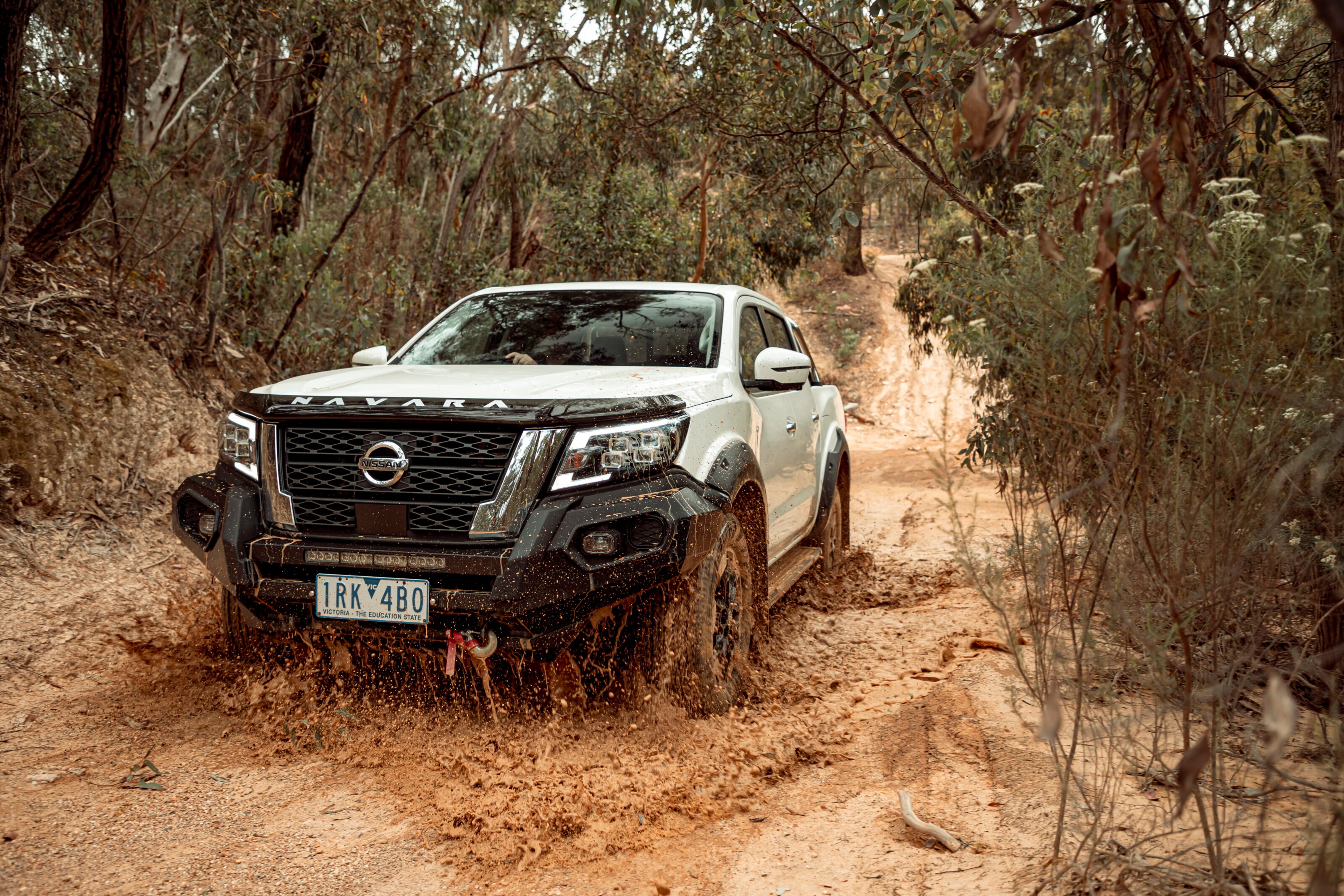
As a result, the owner’s manual may contain incorrect information relating to the vehicle’s jacking points and misuse of such may increase the risk of an accident causing injury to users.
A list of VINs for the affected vehicles is available here.
Owners can contact their local Nissan dealership to schedule an appointment to have their vehicle inspected for the replacement of the manual.
Alternatively, contact Nissan on 1800 035 035.
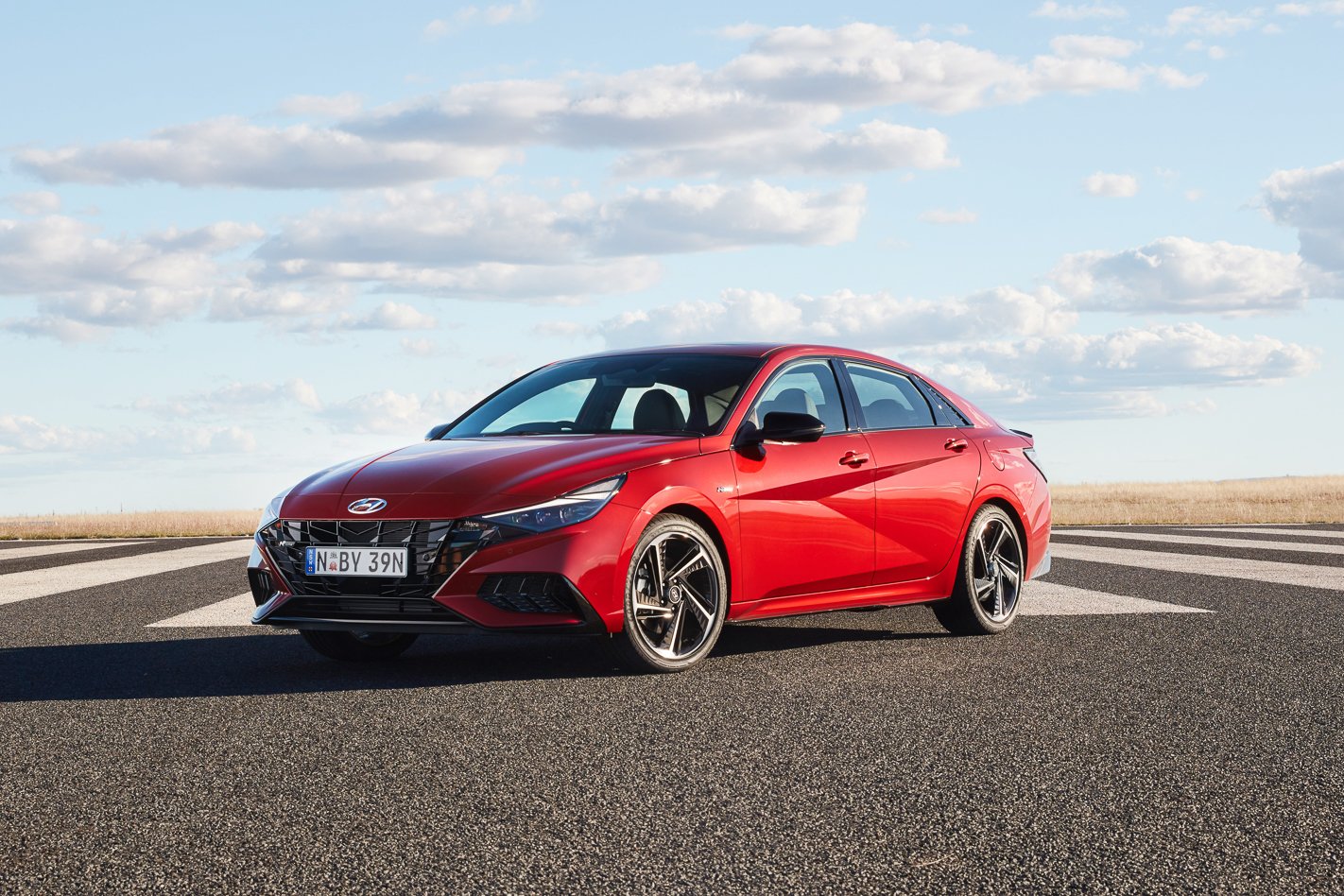
Hyundai Australia is recalling more than 5000 examples of its i30 sedan over a fault with the seatbelts.
In total 5211 model year 2020-2022 cars are under recall due to a manufacturing issue which means the seatbelt pre-tensioner inflator may fracture when deployed in the event of a crash.If this happens, metal fragments may be propelled at high speed towards the vehicle occupants causing serious injury.
A list of VINs is available here.
Owners of affected vehicles will be contacted by Hyundai Australia in writing, amd asked to make an appointment with their preferred dealership to have the component inspected and rectified, free of charge.
Alternatively, owners can contact the company on 1800 186 306.
Australia’s fastest permanent race circuit and a 700-odd horsepower SUV may seem like odd bedfellows on paper. Let me tell you, from heart-thumping experience, that the Aston Martin DBX707 and Phillip Island Grand Prix Circuit are certainly a peculiar pairing.
I don’t really have time to ponder this in the moment, as I’m hurtling down the Gardner Straight, windscreen wipers thrashing away the lazy drops of rain that continue to fall, speedo clicking two-hundred-and-forty-bloody-hell-that-corner-is-approaching-quickly km/h.
Unsurprisingly the DBX707 is a rocketship in a straight line, with this 2.2-tonne hulk adding pace in eye-opening fashion. As it should, with the 4.0-litre twin-turbo V8 under the bonnet producing 520kW and 900Nm.
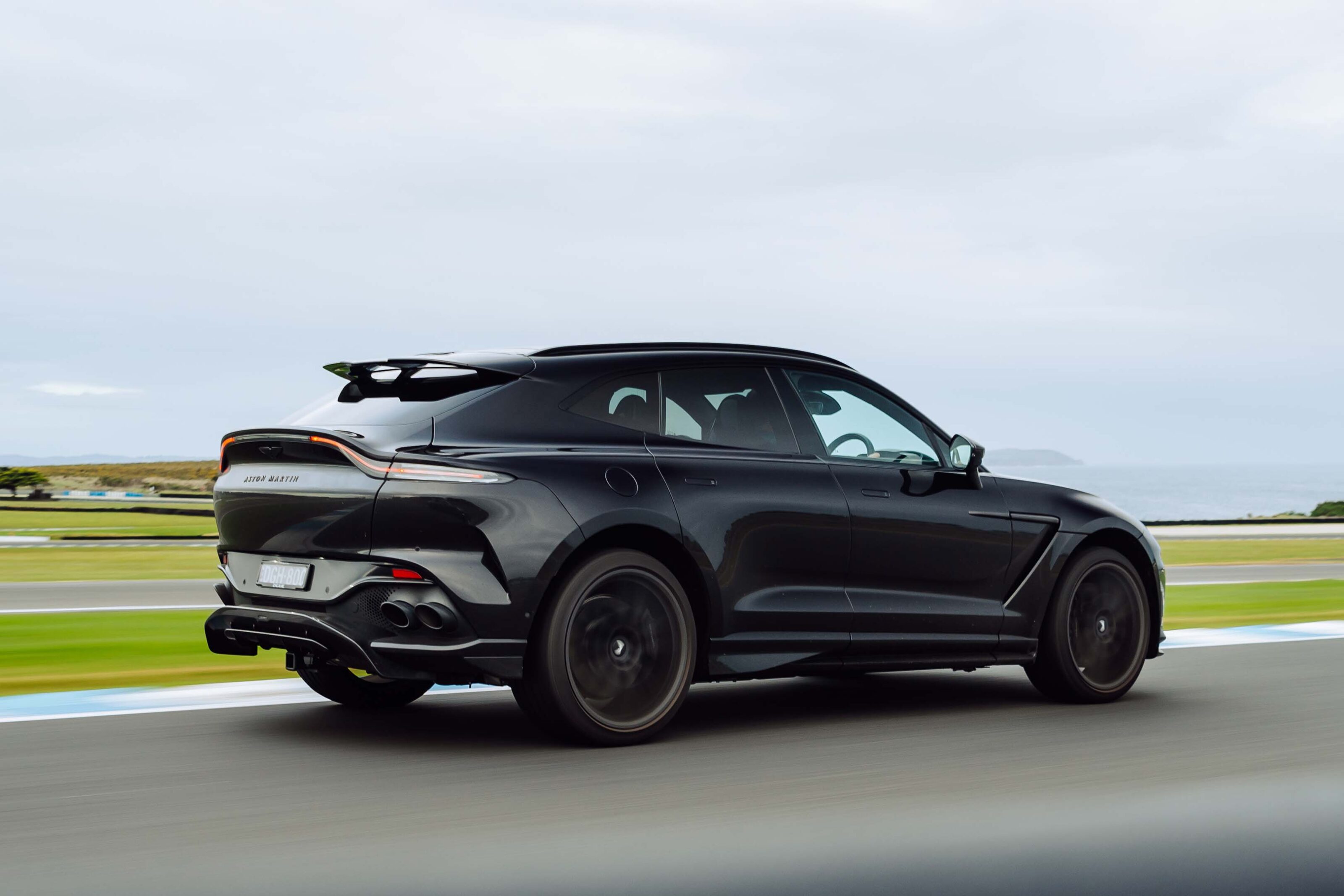
Those are figures usually reserved for the top end of the supercar field, but here they are in the shape of a swooping large coupe-inspired SUV body.
Added to the DBX range to serve as flagship, the 707 is likely to be the most popular variant in the two-car line-up. As a boon for Aston Martin’s bottom line, customers will pay the price for the 115kW/200Nm increase in outputs, with Aussie customers required to put $428,400 on the table for the privilege of owning a DBX707 – and that’s before factoring in options and on-roads, naturally.
It’s not just more power and an extra $53,702 added to the purchase price that differentiates the 707 from a standard DBX, though.
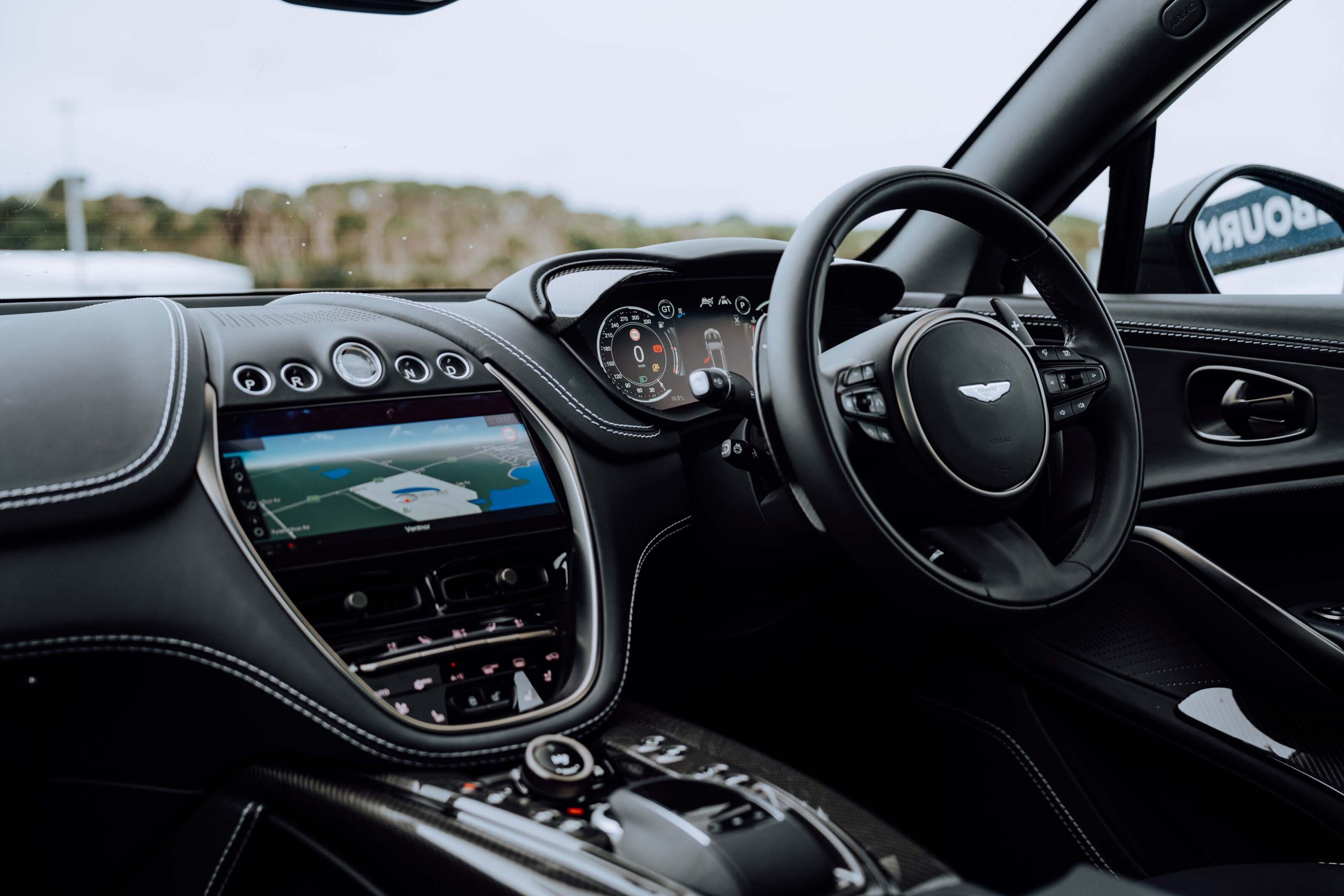
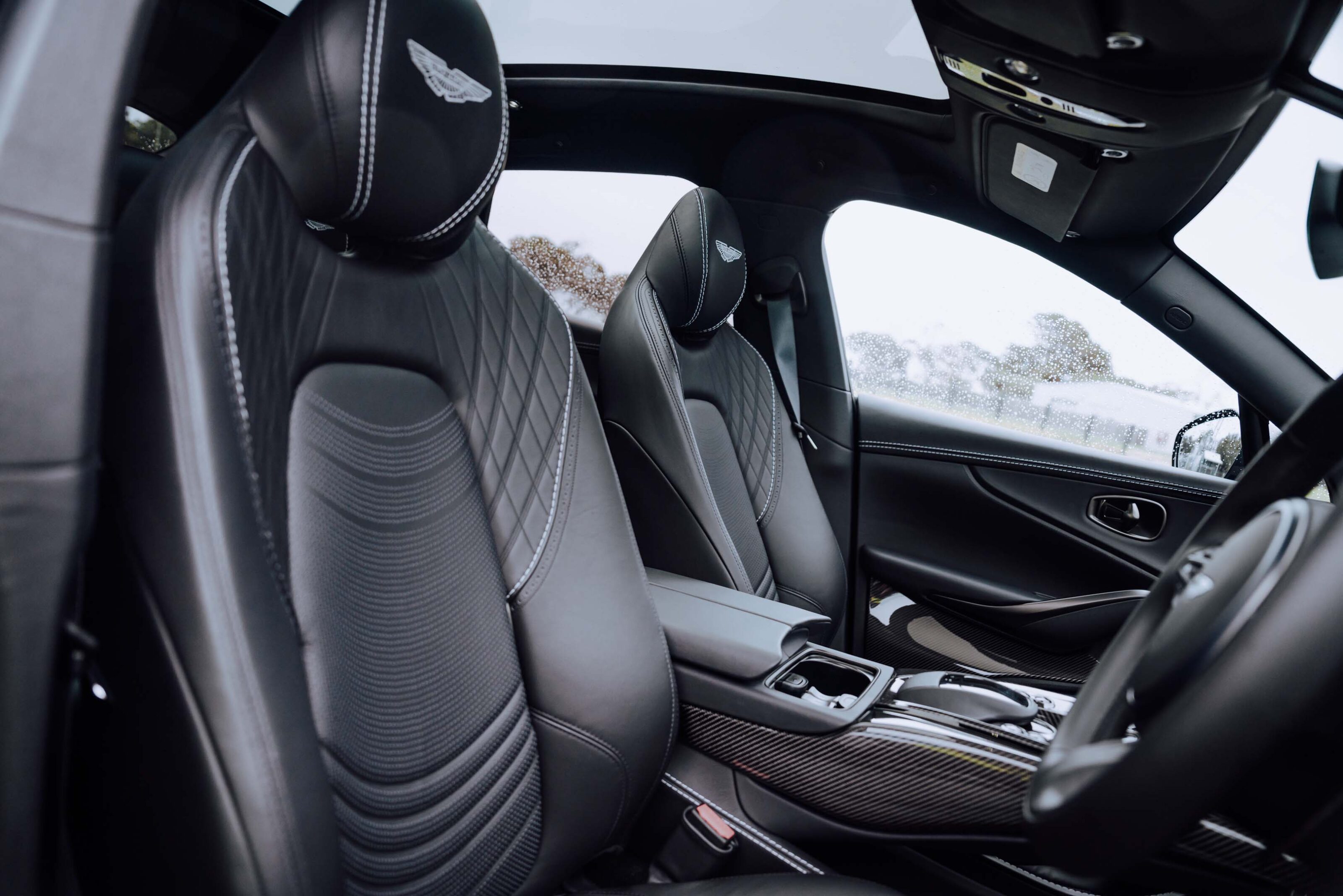
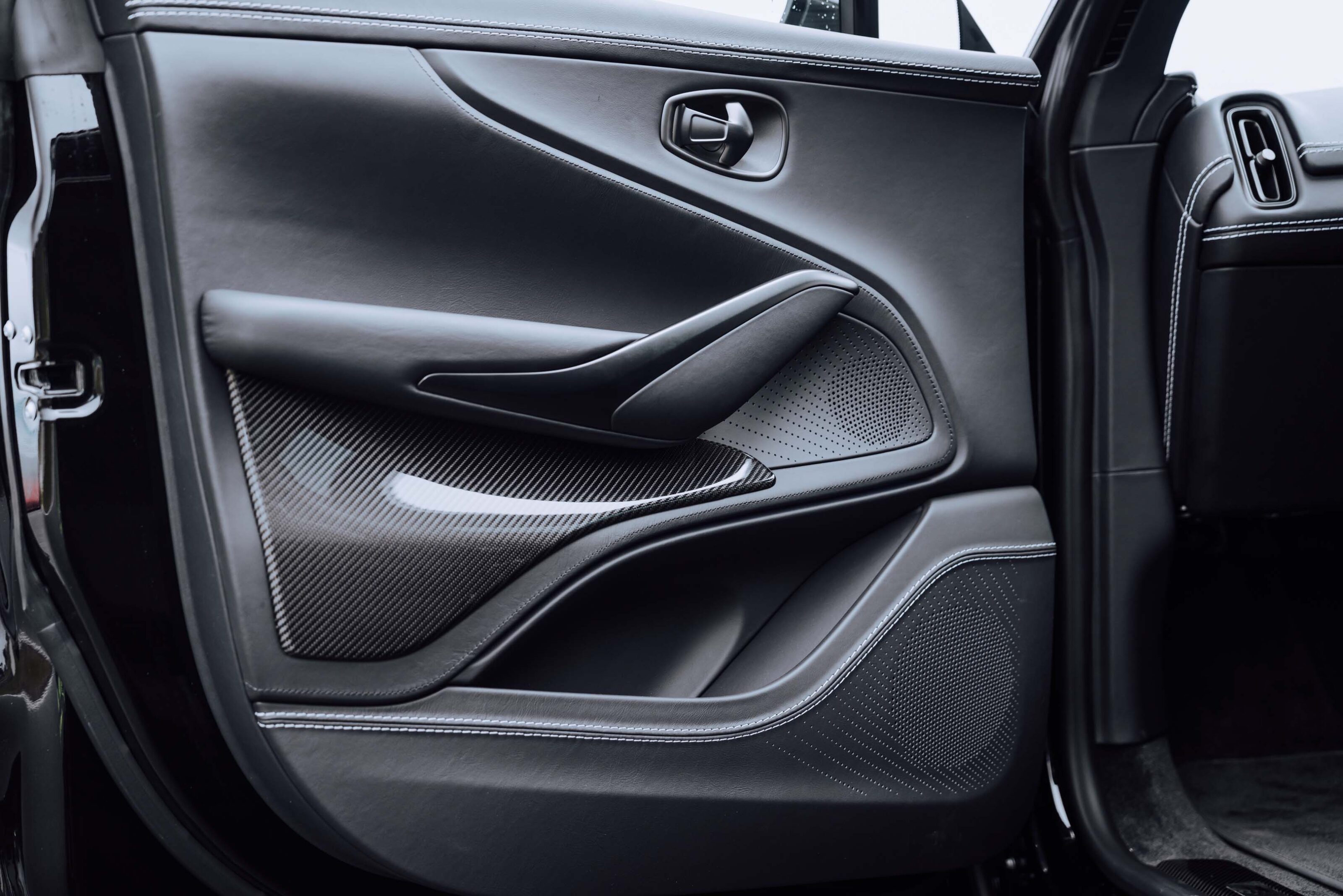
The flagship model gains an electronic limited-slip rear differential, the choice of either 22- or 23-inch wheels as standard (where the regular DBX only gets 22s), carbon-ceramic brakes, retuned air suspension, tweaked steering calibration, updated active anti-roll bar settings, a launch control system, lairier exterior styling, a redesigned centre console, and finally 16-way power adjustable sports seats for both front occupants.
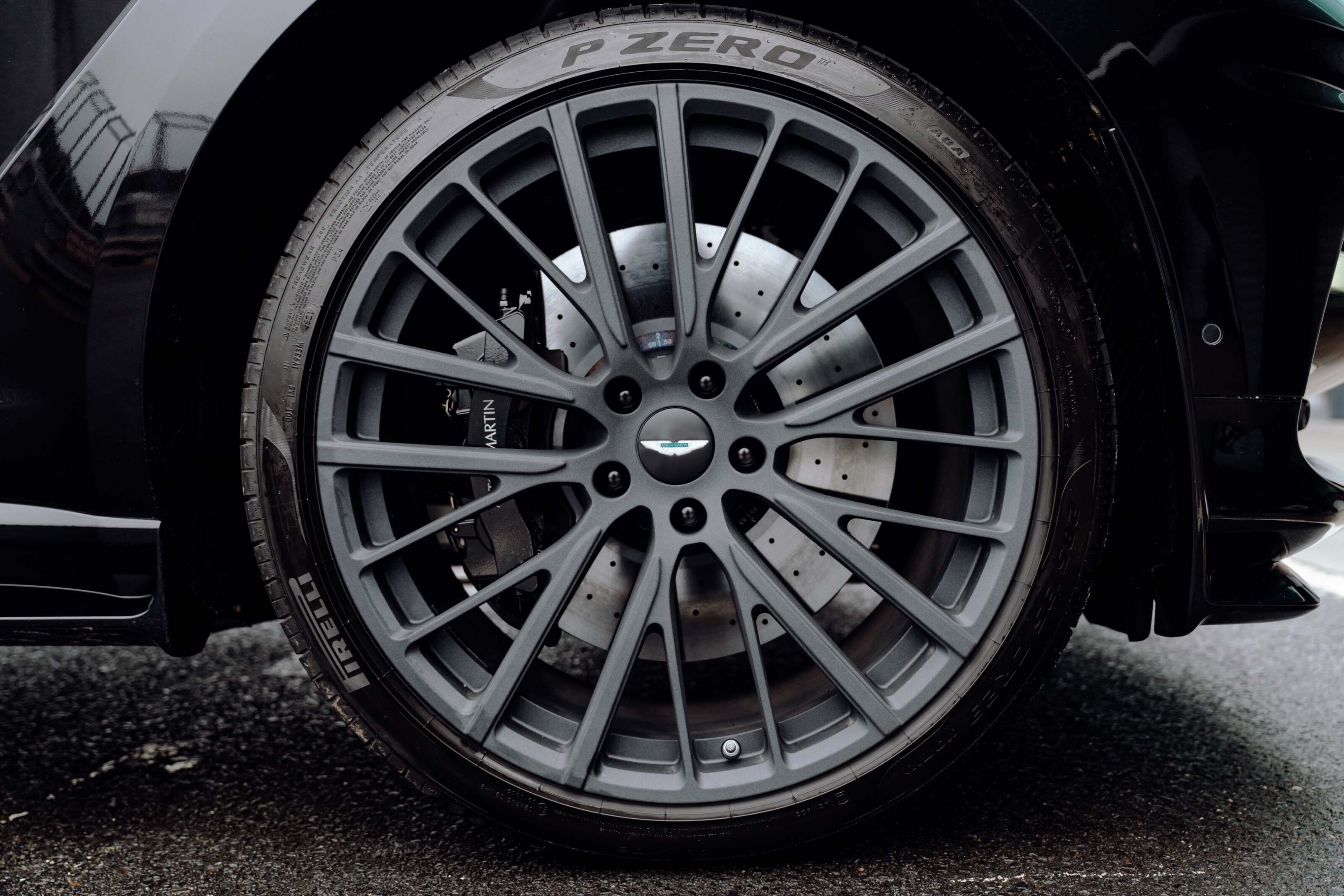
A nine-speed ‘wet’ multi-clutch automatic gearbox is responsible for transferring power from the charismatic V8 to all four wheels, while Pirelli P Zero rubber is responsible for getting everything to the ground. Pity the Pirellis as they have so much stacked against them, particularly during our brief test on road and track that was marred by the squalls typical to Melbourne’s south-east in late winter.
Before the on-track action, we took the DBX707 out of the gates of Australia’s fastest permanent race circuit and onto the open road. While our route wasn’t particularly a driver’s delight, it did provide important insights into this hyper SUV’s character.
What impressed us the most on-road was its cabin refinement. The route was familiar to Wheels, being a regular transit stage of our annual Car of the Year awards in Southern Gippsland. It’s memorable for a distinct reason – the horrific coarse-chip aggregate that makes up most of the road surface.
The imposing footprint that helps the DBX707 get its power to the ground had us thinking that tyre roar would be considerable. Quite the opposite, with the cabin retaining an impressive quietness even on some terrible road surfaces.
Under load, the V8 engine became pleasantly vocal without being brash but at cruising speeds it remained entirely subdued, ticking over at 1500rpm seemingly every time we peered at the tacho, regardless of speed. Wind noise was also suppressed nicely, giving the DBX707 impressive grand touring chops.
If you demand supreme refinement from your hyper SUV, and you should, the DBX707 more than lives up to expectations.
That plushness hits a slight snag with the ride and damping. Given the DBX707’s clear performance bent there is an understanding that it will have a muscular character, but the suspension tune goes a touch too far in our reckoning.
Even at sensible speeds on the public road while in the standard ‘GT’ drive mode, the suspension is working hard to keep the DBX707’s weight contained. It does this by retaining a firm damper setting that never seems able to breathe over the lumps and bumps in the road. Aston Martin has been able to prevent the DBX707 from feeling crashy, but the ride is busy on anything but smooth highway.
The flipside is that body control, particularly during cornering, is exemplary for a vehicle of this stature. There is very little in the way of pitching, with the DBX707 retaining impressive composure through bends.
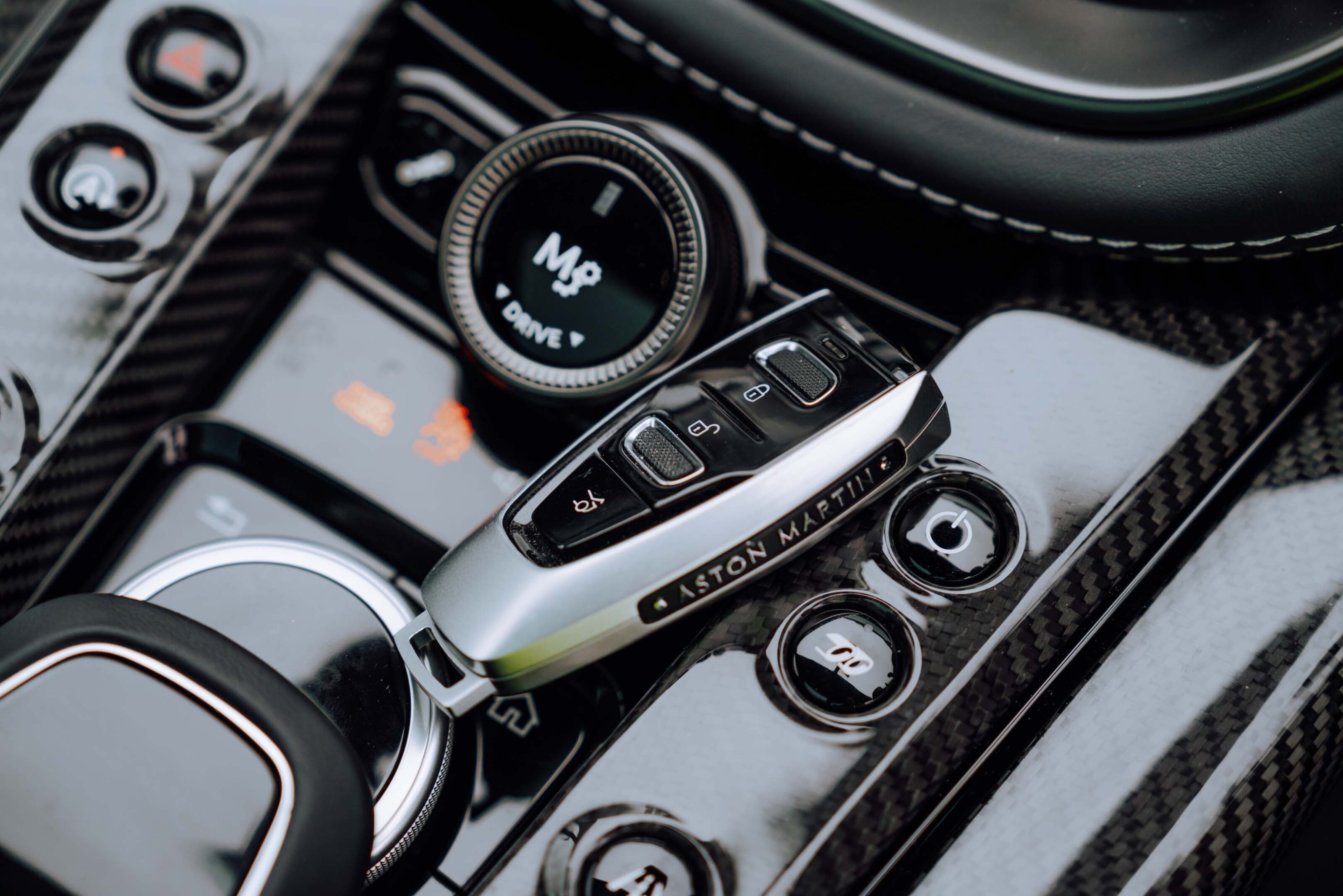
Inside, the cabin is filled with generous servings of lush leather but there are some ergonomic quirks that we found marred the driving experience a touch. The first is the fact that the engine start/stop button and gear selectors are mounted on the dash.
I’m of above-average height and reach, yet it was a stretch to press them. Then there is the central rotator and touchpad combo that controls the infotainment. It’s an effective if not very handsome solution for navigating the central screen, but can immediately be identified as a generation-old Mercedes-Benz part.
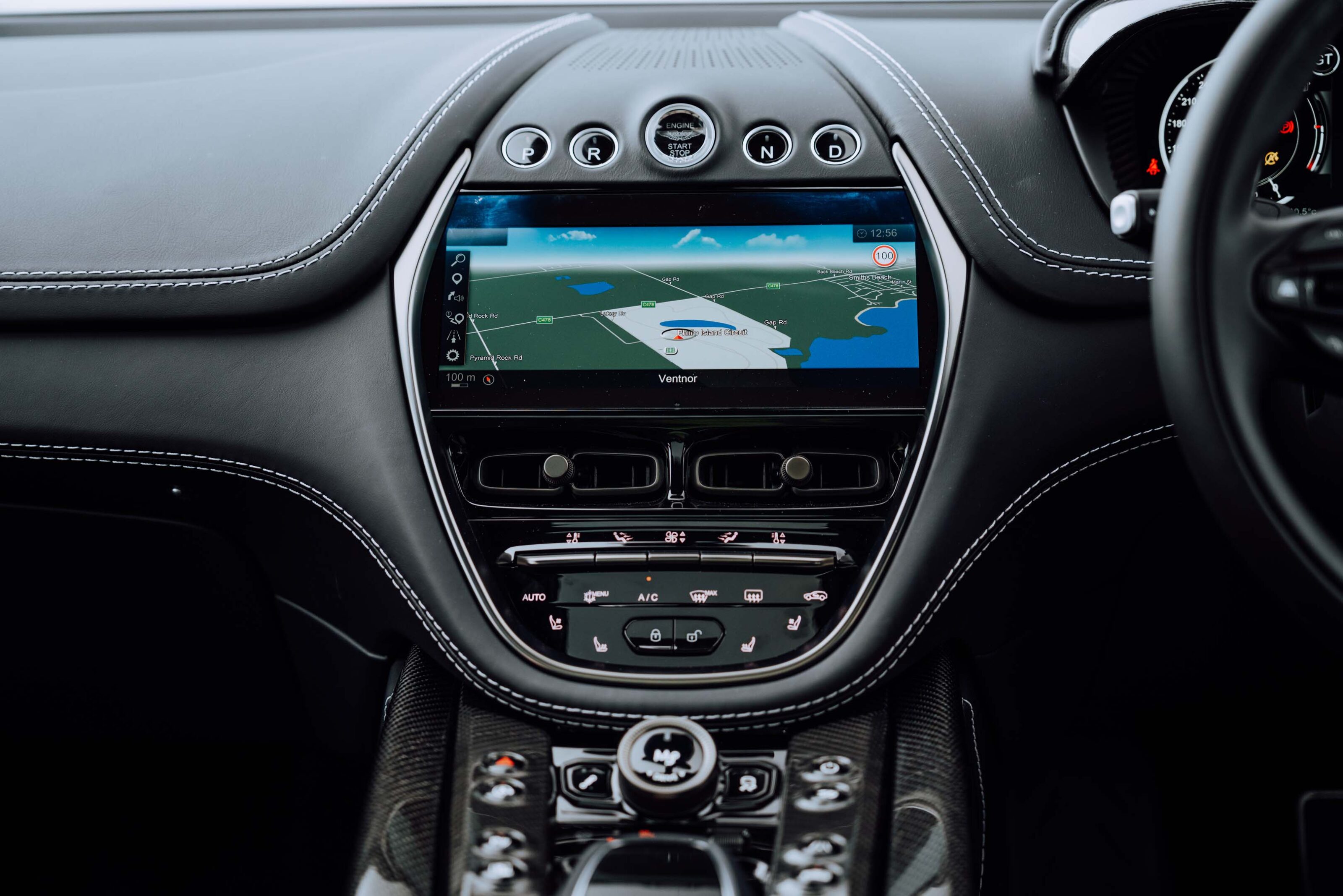
We don’t have an issue with the user experience – quite the opposite with the system being easy to key into and use on the fly – but the borrowed component puts a bit of a tarnish on the DBX’s substantial price tag.
Aston Martin likes to claim this is the most powerful SUV in the world, and it was within its rights to lay claim to that crown right until the moment it came to write this review. Dodge recently announced its deranged Durango SRT is going back into production to give the venerable Hellcat engine a send-off, meaning the Brits have been pipped by three measly horsepower to the title.
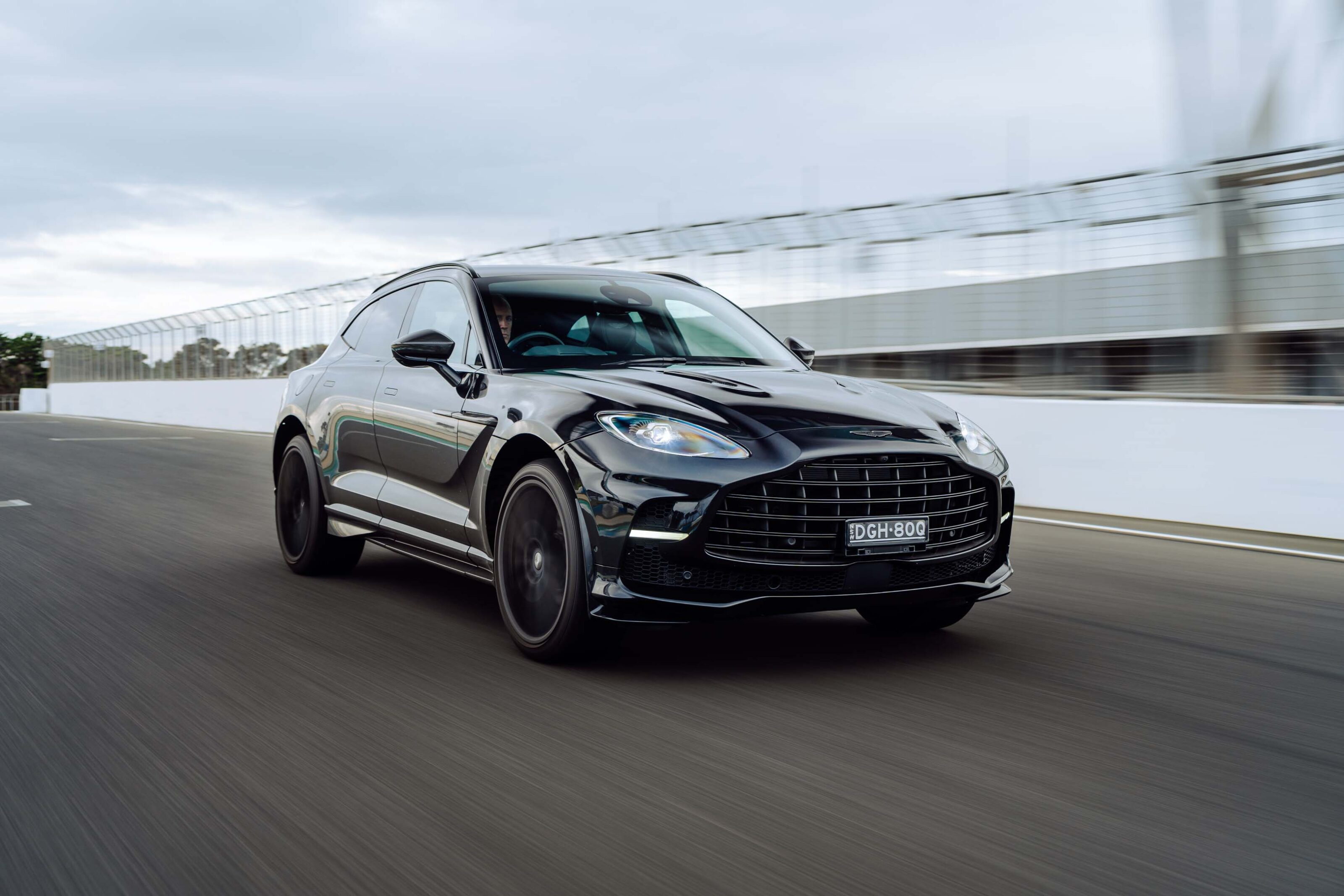
Those three extra ponies won’t make the difference today though, with Phillip Island’s surface being notoriously low-grip in these frigid and damp conditions.
Limits of the DBX707’s dynamic abilities and finer details of its high-speed grip can surely be found, but we won’t discover them today. Instead, we get an abundant understanding of its all-weather acceleration abilities, impressive body control, reassuring brakes, and genre-busting steering.
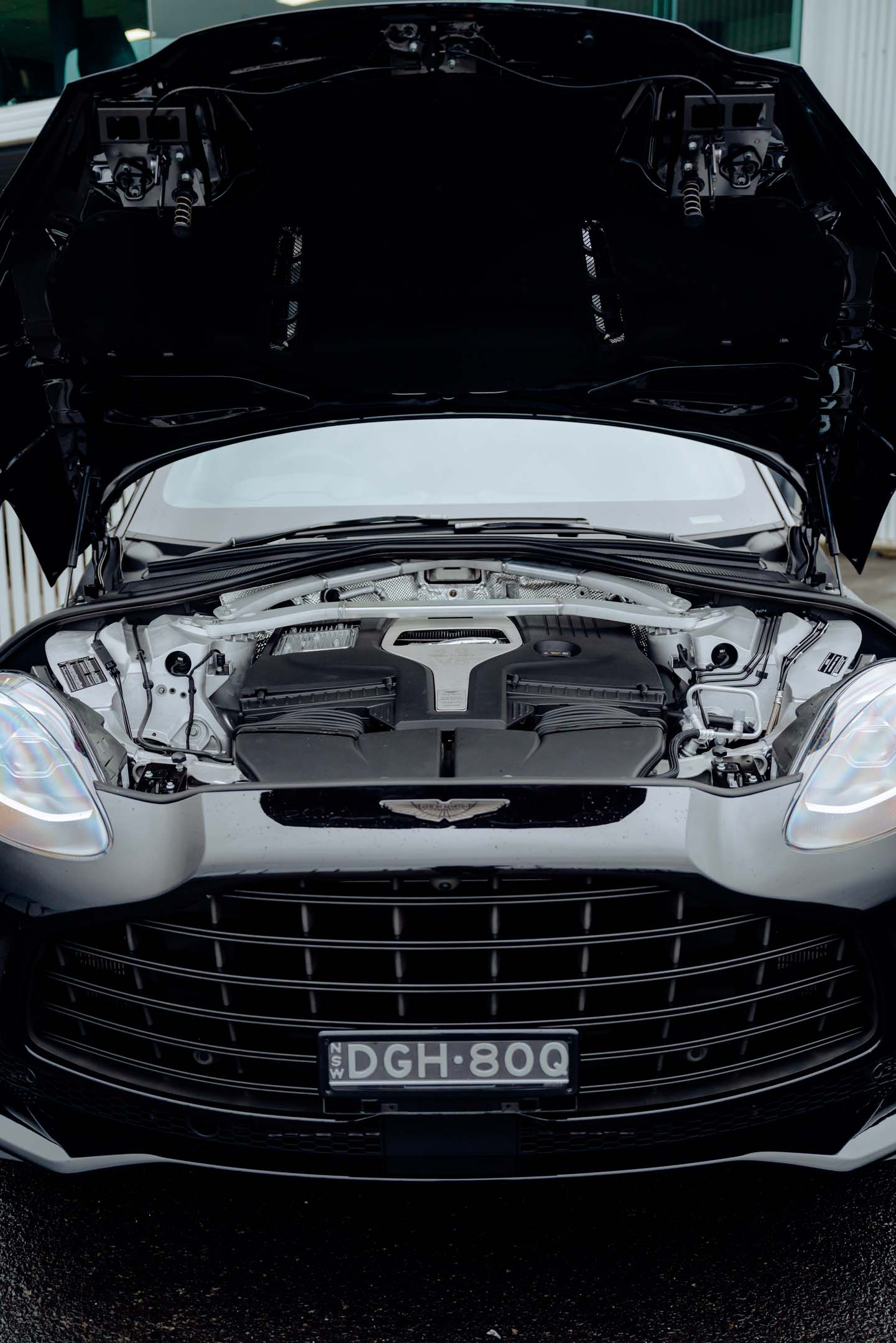
The real centrepiece of the DBX707 though is the engine, which has the fingerprints of former Aston Martin CEO Tobias Moers all over it. The 4.0-litre V8 is a Mercedes-AMG M178, which Moers led the development of when he was the leader of the German performance brand.
In fact, the DBX707 is where the M178 produces the most power, outgunning its in-house AMG applications. To achieve this, the V8 has received new ball-bearing turbochargers, as well as redesigned induction and exhaust systems.
Peak power of 520kW arrives relatively high in the rev-range for a turbo V8 at 6000rpm and while it’s the outright horsepower figure that gives the DBX its new numerical badging, the real hero of the equation is its torque output.
Maximum twist of 900Nm comes on song at just 2600rpm and carries all the way through to 4500rpm.
This gives the DBX707 a low-down thrust that feels more force of nature than mechanical. In practicality, it means the 707 never goes searching for power, with even gentle flexes of the throttle pedal adding numbers to the speedo in quick order. Remarkably, the M178, even in its most powerful guise (barring the cross-plane ‘LS2’ evolution in the GT Black Series) feels remarkably relaxed.
It has the aura of a heavyweight UFC fighter who limbers casually with supreme confidence but is able to shift rapidly on their feet to deploy firepower that will set you on your arse before you even realise what is happening.
Leaving the transmission to its own devices is advisable on-road, where we found it intuitive and smooth during calm driving. Turn the heat up and you can lock it into a full manual mode, which is great for track driving.
Such is the depth of the torque reserve that we moved to short-shifting at several corners – namely the run out of Honda toward Siberia, and the change of direction following MG.
Pirelli’s P Zero tyres were always going to have a hard time keeping 520kW contained, regardless of how damp the surface of the road, but we found they gave up the ghost a little earlier than we would have liked. A surface change during a full application of the throttle on the road resulted in all four wheels breaking into wheelspin.
On the circuit, they never provided us with enough reassurance to really press on. While cognisant that damp conditions aren’t ideal, the DBX707’s all-wheel-drive system was underserved by the P Zeros as they weren’t able to match the car’s performance.
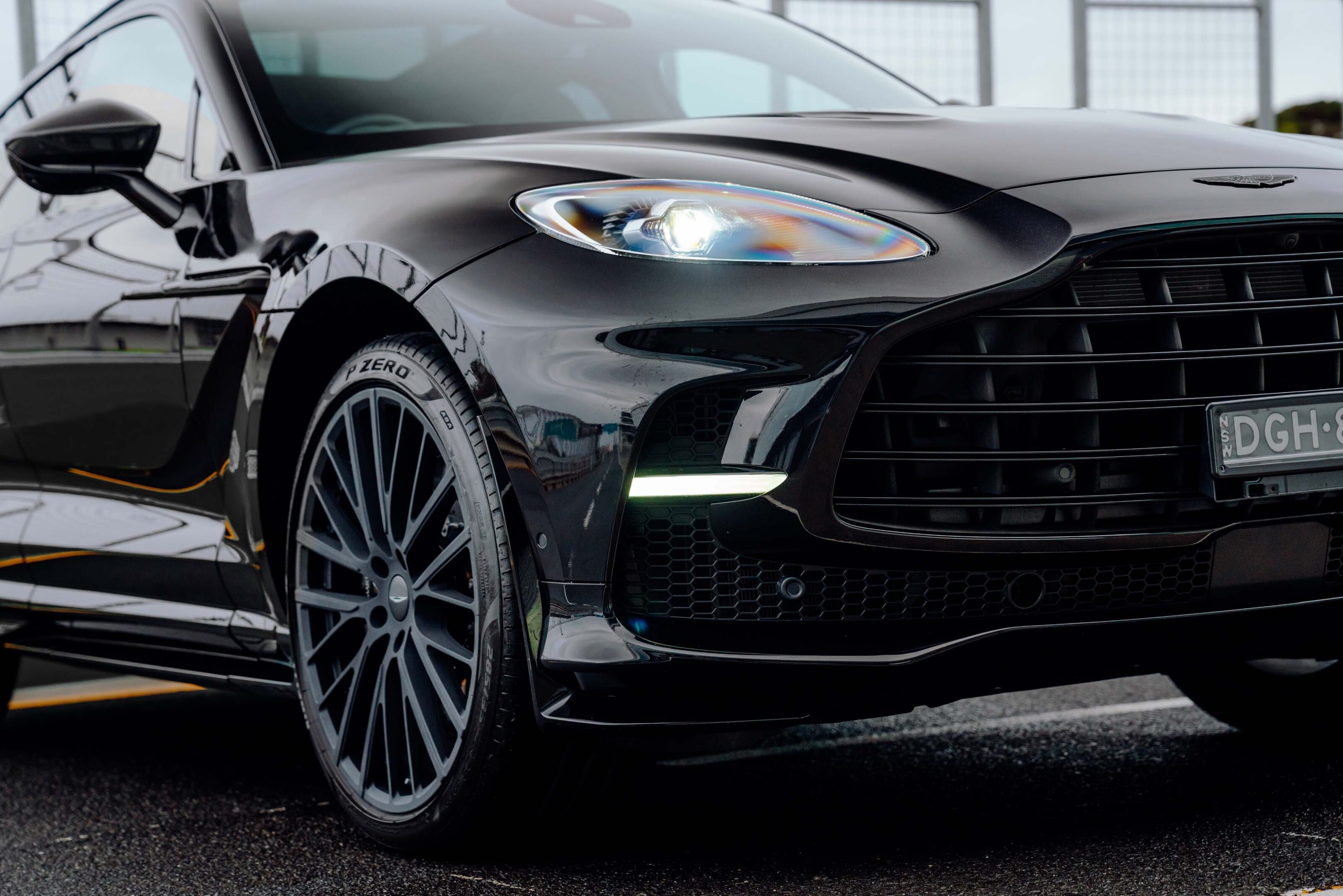
It is worth noting though, that when grip was relinquished, the underlying chassis balance was impressive, with a natural progression of yaw that was easy to predict and catch.
Where the tyres left us wanting more, we were mightily impressed by the standard carbon-ceramic brakes, which measure 420mm in diameter up front, and 390mm at the rear.
There is a wooden firmness typical of the compound on-road, but when pushed on track we found them reliable, reassuring and able to haul the DBX707 down from significant speed with remarkable efficiency.
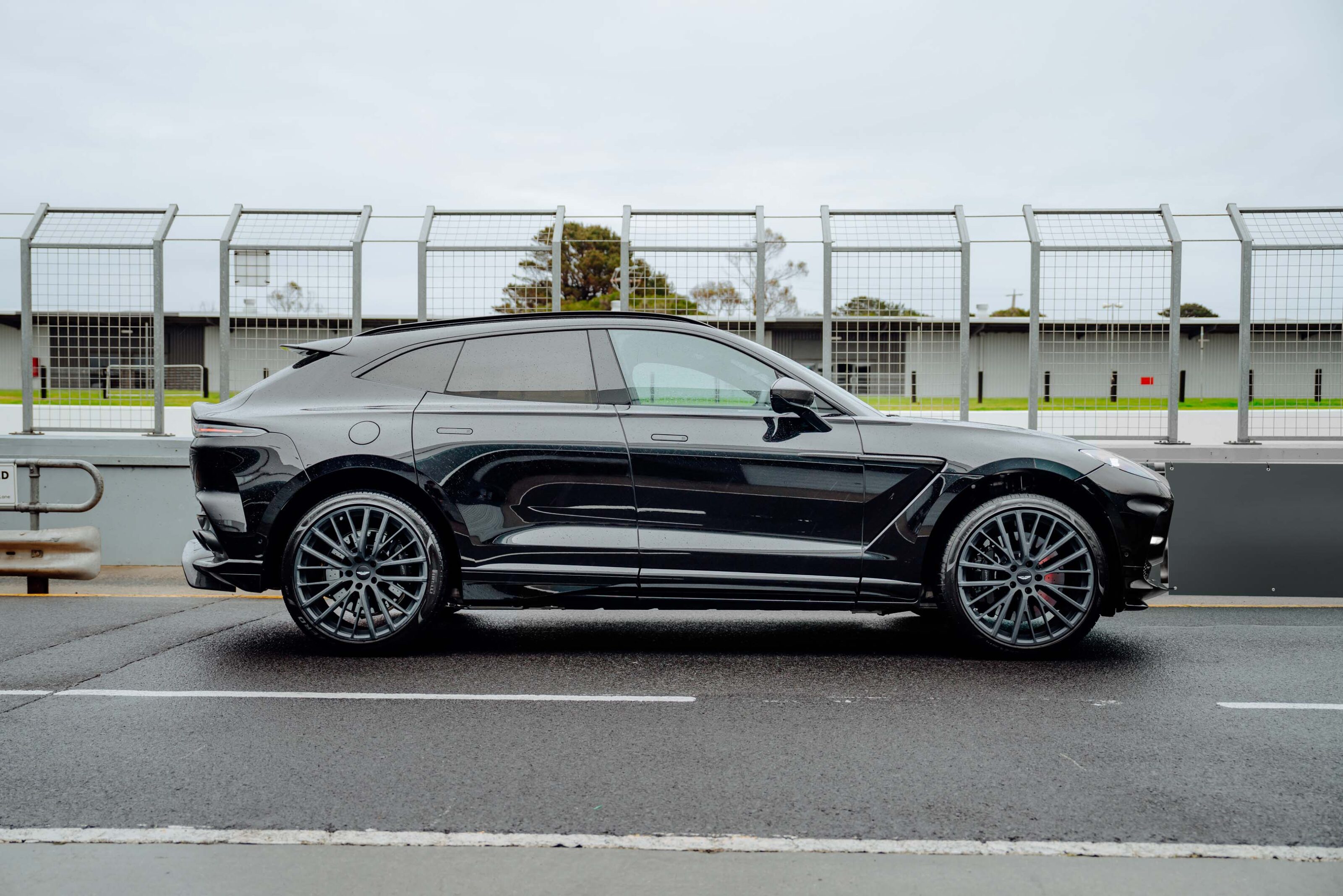
But the real jewel in the DBX707’s dynamic crown is the steering, which is completely out of character for an SUV. Feedback through the wheel is crisp and clear, and there is a just-right weighting that deserves kudos.
The steering is super direct, incredibly accurate and bolstered by a surprisingly quick rack. Much like the suspension tune, this hampers the DBX707’s grand touring chops but it more than makes up for it by giving the biggest Aston Martin you can buy an on-track character more akin to Gaydon’s sportscars.
Aston Martin hasn’t reinvented the hyper SUV genre with the DBX707 but it has managed to build a seriously compelling addition to the growing segment – and it just may be the financial saviour the company needs.
2022 Aston Martin DBX707 specifications
| Body | 5-door, 5-seat large SUV |
|---|---|
| Drive | all-wheel |
| Engine | 3982cc V8, DOHC, 32v, twin-turbo |
| Bore/Stroke | 83.0 x 92.0mm |
| Compression | 8.6:1 |
| Power | 520kW @ 6000rpm |
| Torque | 900Nm @ 2600-4500rpm |
| 0-100km/h | 3.3 seconds |
| Fuel Consumption | 14.2L/100km |
| Weight | 2245kg |
| Power/Weight | 231kW/tonne |
| Transmission | 9-speed automatic |
| Suspension | double A-arm, air springs, adaptive dampers, anti-roll bar (f); multi links, air springs, adaptive dampers, anti-roll bar (r) |
| L/W/H | 5039/2220/1680mm |
| Wheelbase | 3060mm |
| Tracks | 1698/1664mm (f/r) |
| Steering | electrically assisted rack and pinion |
| Brakes | 420mm carbon-ceramic discs, 6-piston calipers (f); 390mm carbon-ceramic discs, single-piston calipers (r) |
| Wheels | 23×10.0-inch (f); 23×11.5 inch (r) |
| Tyres | 285/35/R23 Pirelli P Zero (f); 325/30/R23 Pirelli P Zero (r) |
| Price | $428,400 + on-road costs |
When is Audi going full-EV? What electric models does Ford have? How many EVs is Volvo aiming to produce in the next few years?
As the world begins to rapidly adopt electric vehicles and move away from internal combustion engines, it’s easy to get lost and not know who’s doing what.
With Europe planning to phase out the sale of ICE vehicles by 2035 and the UK aiming to do so by 2030, the United States stands as one of the largest markets to not yet adopt a binding strategy – although the Government is now in talks with its local automakers to push for 40 per cent EV sales by 2030.
These are some questions we’ve aimed to answer, providing a brief breakdown of what each of the major manufacturers is planning to do – either proactively or reactively in the face of ever-tightening emissions regulations overseas.
Stellantis – Abarth, Alfa Romeo, Chrysler, Citroen, Dodge, DS, Fiat, Jeep, Lancia, Maserati, Opel, Peugeot, Ram, and Vauxhall
Aston Martin EV plans
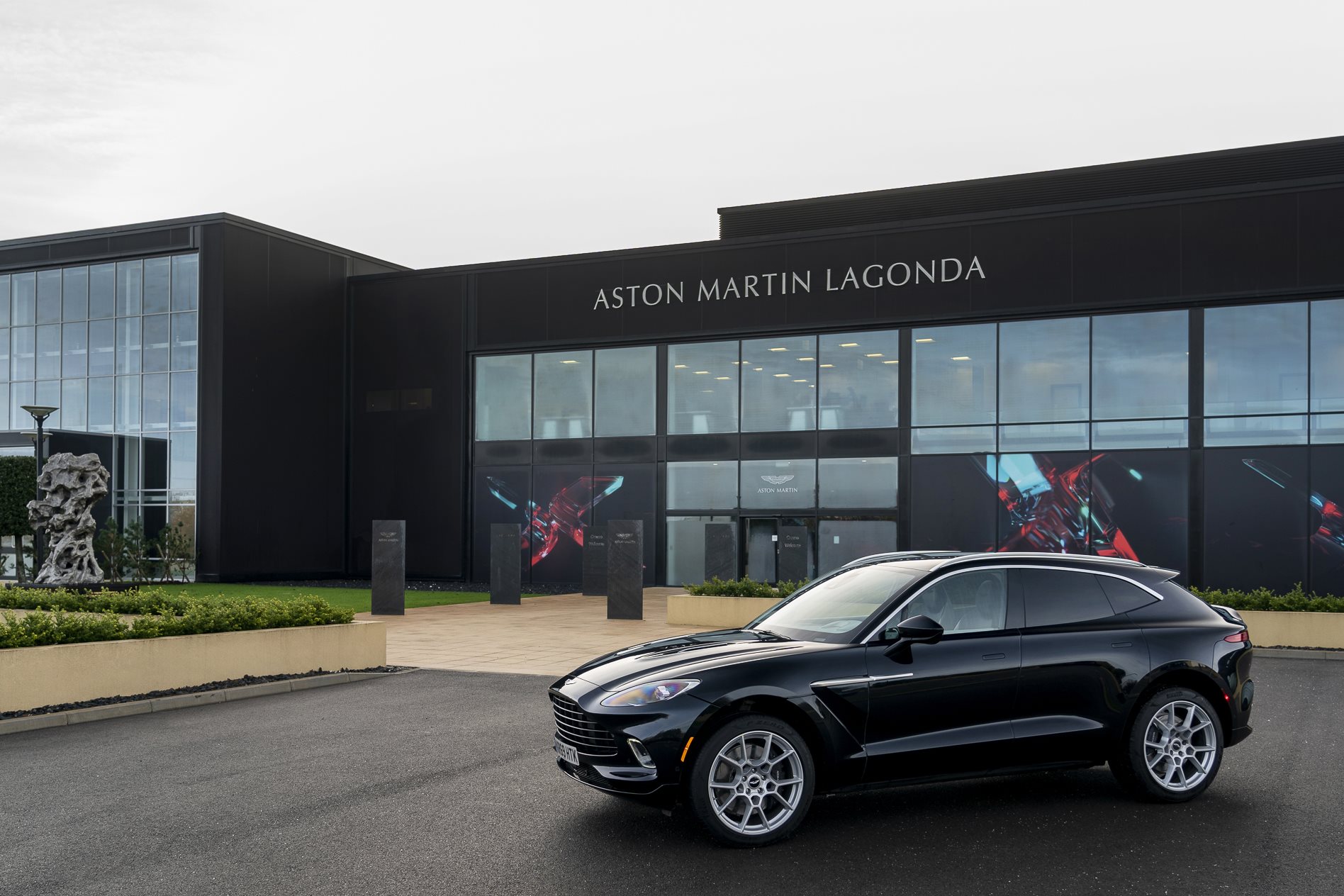
Aston Martin‘s Racing Green strategy will see the historic British marque transition to a PHEV-focused brand by 2024, as it transitions towards its first battery electric vehicle (BEV) offering expected in 2025.
The DBX mild-hybrid, available overseas in the Chinese market, and incoming plug-in hybrid mid-engined Valhalla, sparks Aston Martin’s path to electrification.
While plans had originally been floated to revive the Lagonda sub-brand as an electric-only marque, this was vetoed by Lawrence Stroll when the Canadian billionaire saved Aston Martin last year when he became a major shareholder and executive chairman.
All new models from 2026 are to be electrified in some fashion, with the British marque ultimately targeting an EV-only range by 2030.
Audi EV plans
One of the leading companies in terms of its commitment to move away from ICE-power, Audi is now entering its last generation of such vehicles as it has announced it will no longer invest in their research and development due to Euro 7 emissions standards.
Audi’s final non-EV model will begin production in 2025 for Europe, although some will still be produced for the Chinese market past this time, with Audi intending on boasting a 30 per cent electrified range by 2025. ICEs are ultimately planned to be phased out in 2033.
Expecting to have 20 EV models in its line-up by 2025, Audi will exclusively bring electric-powered vehicles to market from 2026, becoming a part of its wider plan to go carbon neutral by 2050.
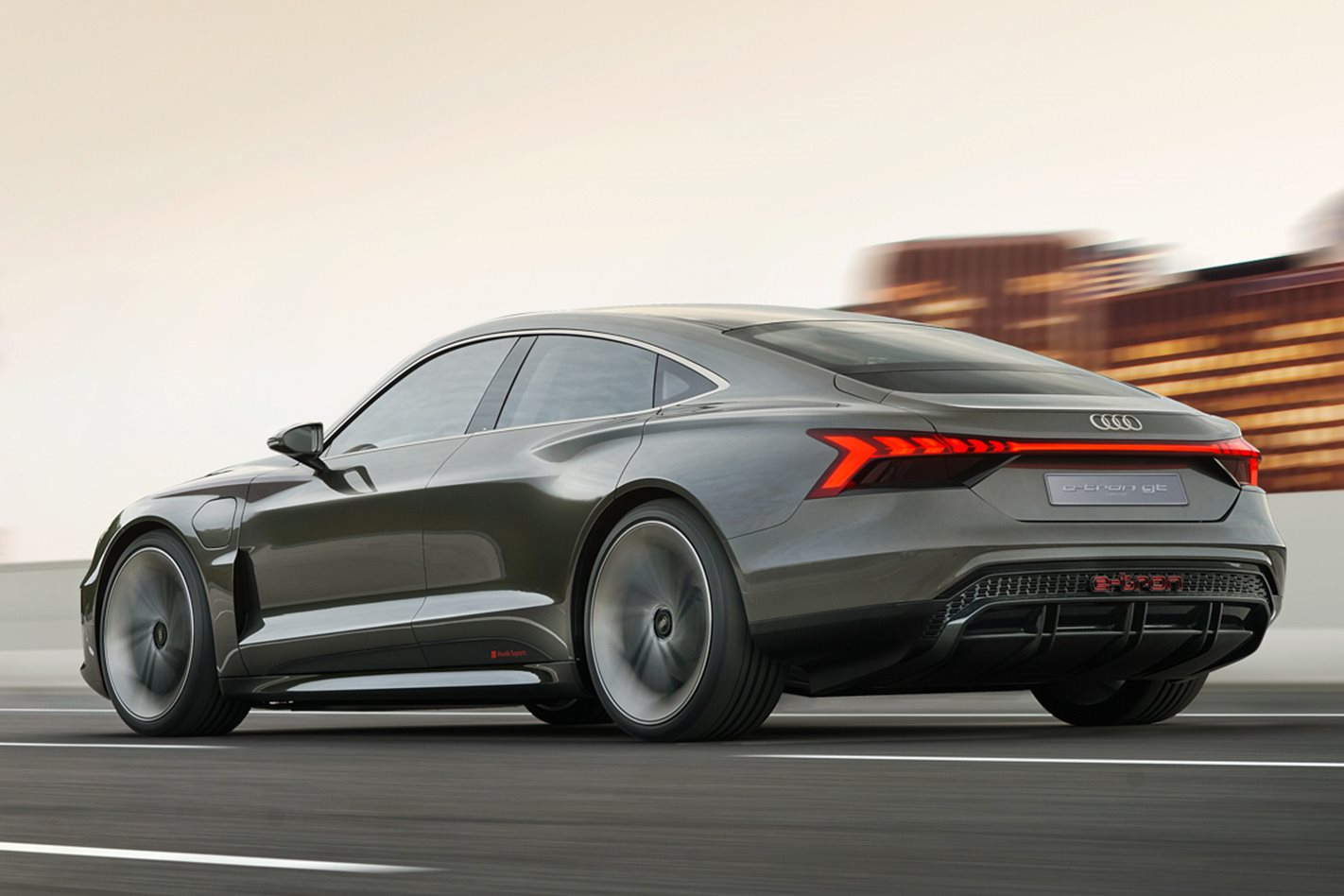
Currently Audi’s range of EVs in Australia comprises the the E-Tron SUV and incoming E-Tron GT – the sports-luxury grand tourer sharing a platform with the Porsche Taycan, expected to land later this year.
BMW EV plans
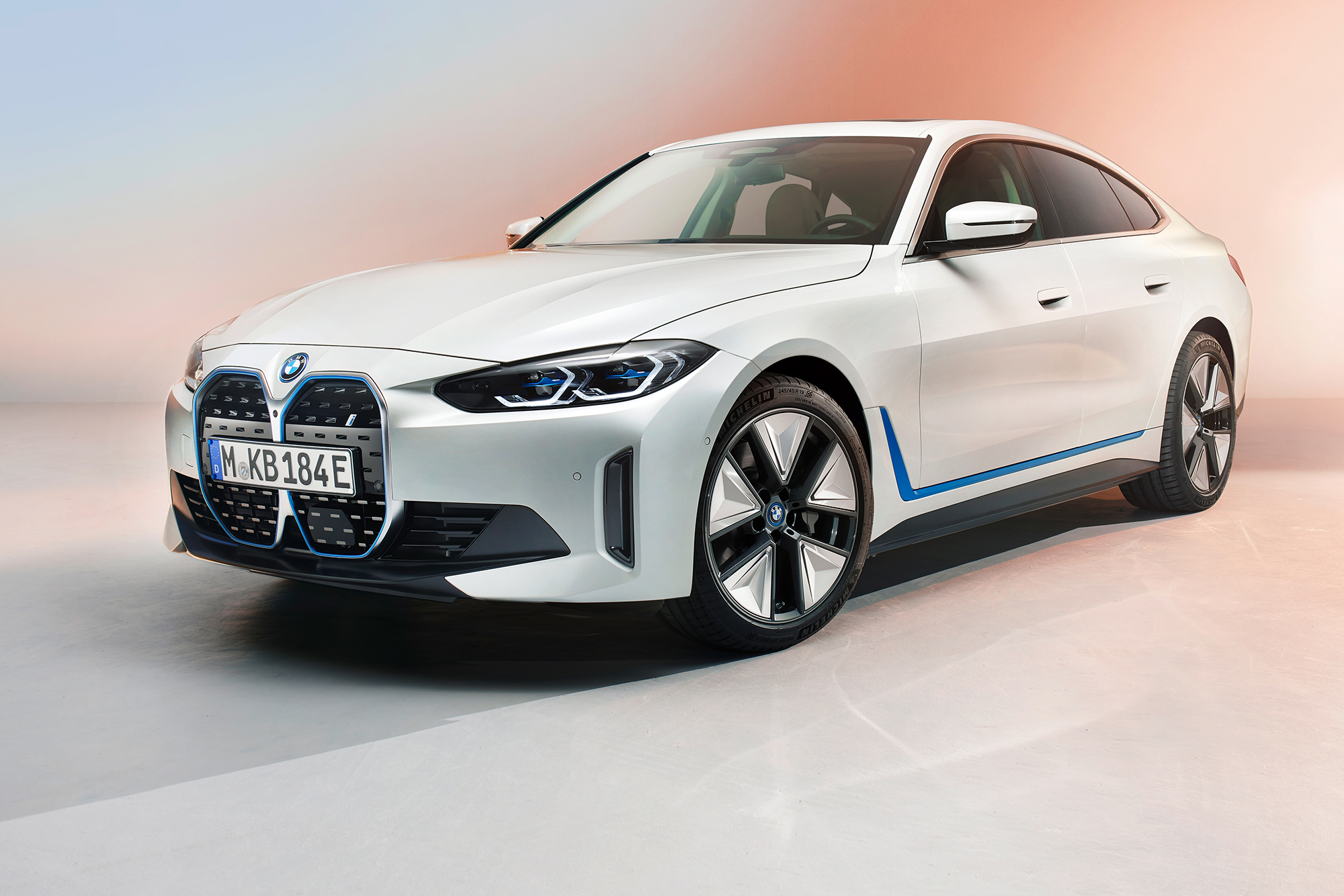
Many people forget BMW’s EV history but it’s important to note the Bavarian manufacturer was one of the first to bring electric vehicles to market.
After bursting out of the blocks with the i3 EV and i8 PHEV in 2013 and 2014 respectively, BMW didn’t bring another EV to the table until 2019 with the release of the iX3 – an electrified version of the X3 SUV – which has since been followed by the iX SUV and i4 sedan.
Setting a target of 50 per cent electrification across the BMW and Mini model ranges by 2030, the biggest push for EVs is coming from the Chinese market, with at least 15 fully-electric vehicles planned to be on sale in the country by 2023.
BMW aims to have 2 million electric vehicles on global roads by 2025, and expects annual sales of BEVs to exceed 1.5 million as early as 2030.
To cope with this, BMW announced it would be adding 60,000 additional chargers to its existing network of 300,000 this year.
In Australia, BMW is set to roll out the iX3 in local dealerships later this year, followed by the arrival of the iX and i4 in the first half of 2022.
Cupra EV plans
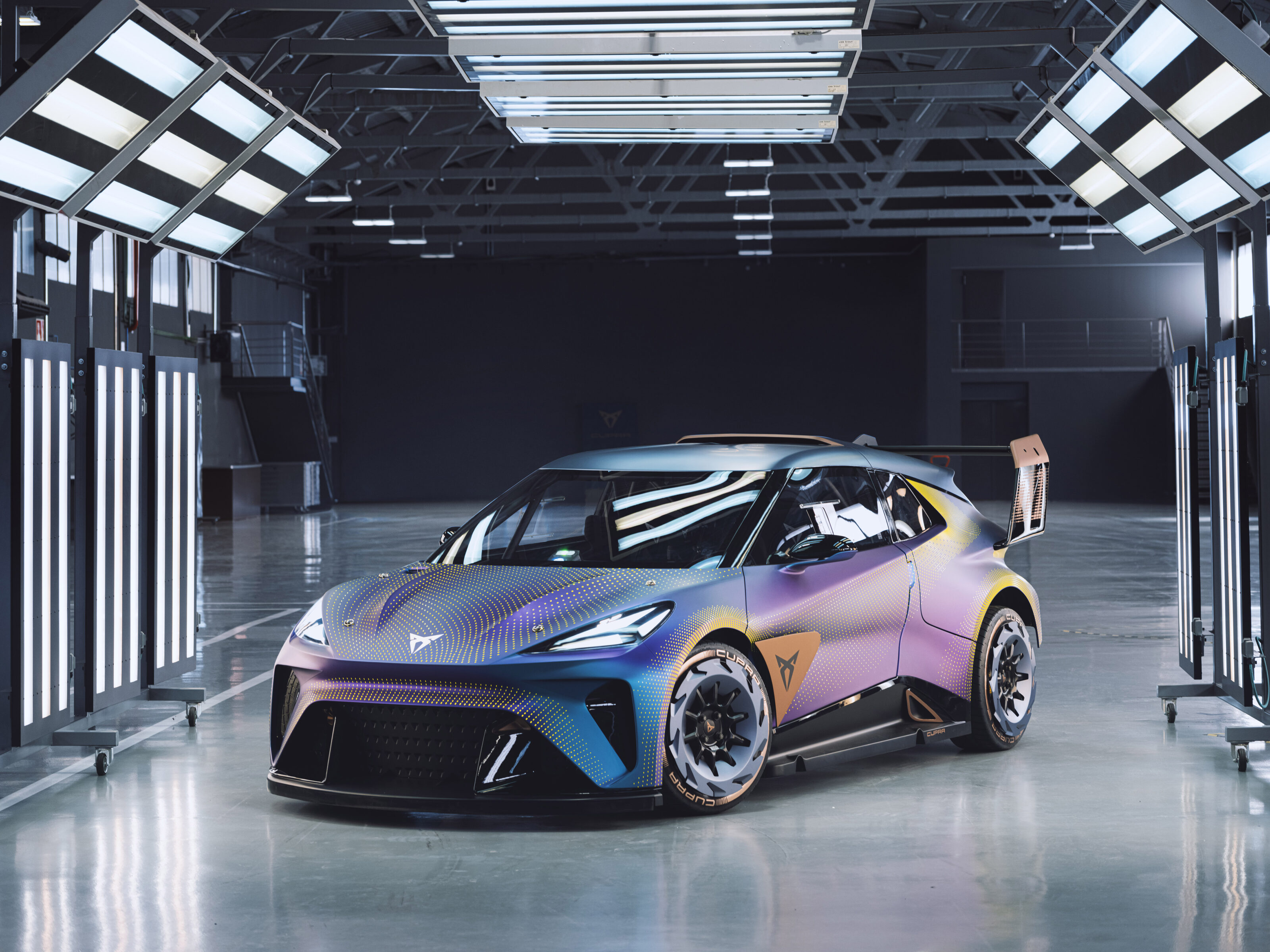
Spanish carmaker Cupra, originally a motorsport subsidiary of Seat but relaunched in 2018 as a standalone brand, has long-term ambitions as a leading battery-electric vehicle manufacturer.
Compared to Volkswagen Group owners, Cupra aims to target a younger demographic with brand values that rest heavier on bold styling and tech. The Spanish carmaker intends on being an all-electric brand by 2030, with the local arm previously stating that Australia “needs to speed up” its EV uptake as it lags behind other world markets.
The current range of combustion-powered Leon hatchback, Ateca SUV and Formentor Crossover will be joined by the Cupra Born EV hatchback in 2023, marking the brand’s first EV offering locally. The Born will be followed by the Terramar plug-in hybrid SUV, Tavascan electric SUV and Urban Rebel electric compact hatchback.
Ford EV plans
Having never sold an EV before 2020, Ford is a late bloomer in the electric game but is rapidly putting its money into the future – announcing a financial investment boost to US$50 billion (AU$72.7 billion) by 2025 – up from a previously-announced US$30 billion.
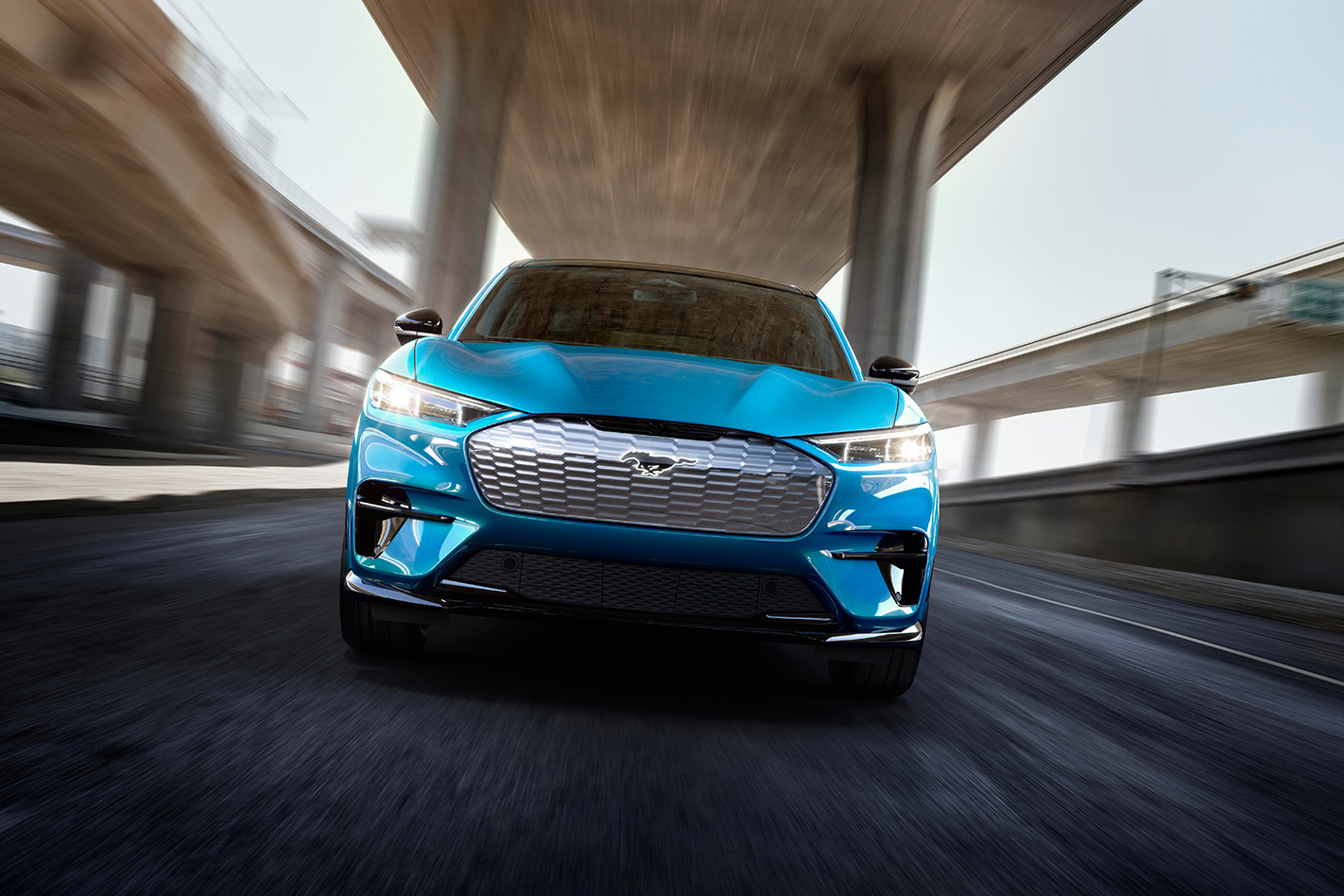
Releasing the Mustang Mach-E in 2019 and the e-Transit van in 2020, Ford has recently added the F-150 Lightning pickup – the first all-electric trucks in the US.
In the pursuit of reaching carbon neutrality by 2050, Ford is aiming at delivering an all-electric vehicle line-up in Europe by 2030, something it will achieve with the help of Volkswagen through a deal with the German manufacturer to utilise its EV architecture in European models. The European market will receive three new passenger EVs and four new commerical EVs by 2024, with plans to sell more than 600,000 EVs in the region by 2026.
Best Electric Cars Under $65k: Affordable EVs Rated
Welcome to part one of three price-based EV buying guides, this one focused on the most affordable electric cars available in Australia today
Predictably, its aspirations in the US market aren’t quite as lofty, targeting 40 per cent of Ford sales to come from EVs by 2030, however it is also looking to introduce two large-vehicle platforms in the near future to underpin its SUVs and trucks.
Ford may soon be introducing electric utes to the Australian market through a $500m investment in Rivian, bringing its R1T dual-cab and R1S SUV Down Under as early as 2022, the first Blue Oval EVs to reach our shores.
Outside of these two models, Ford Australia has not announced any more plans to bring EVs to Australia, instead standing by its existing line-up.
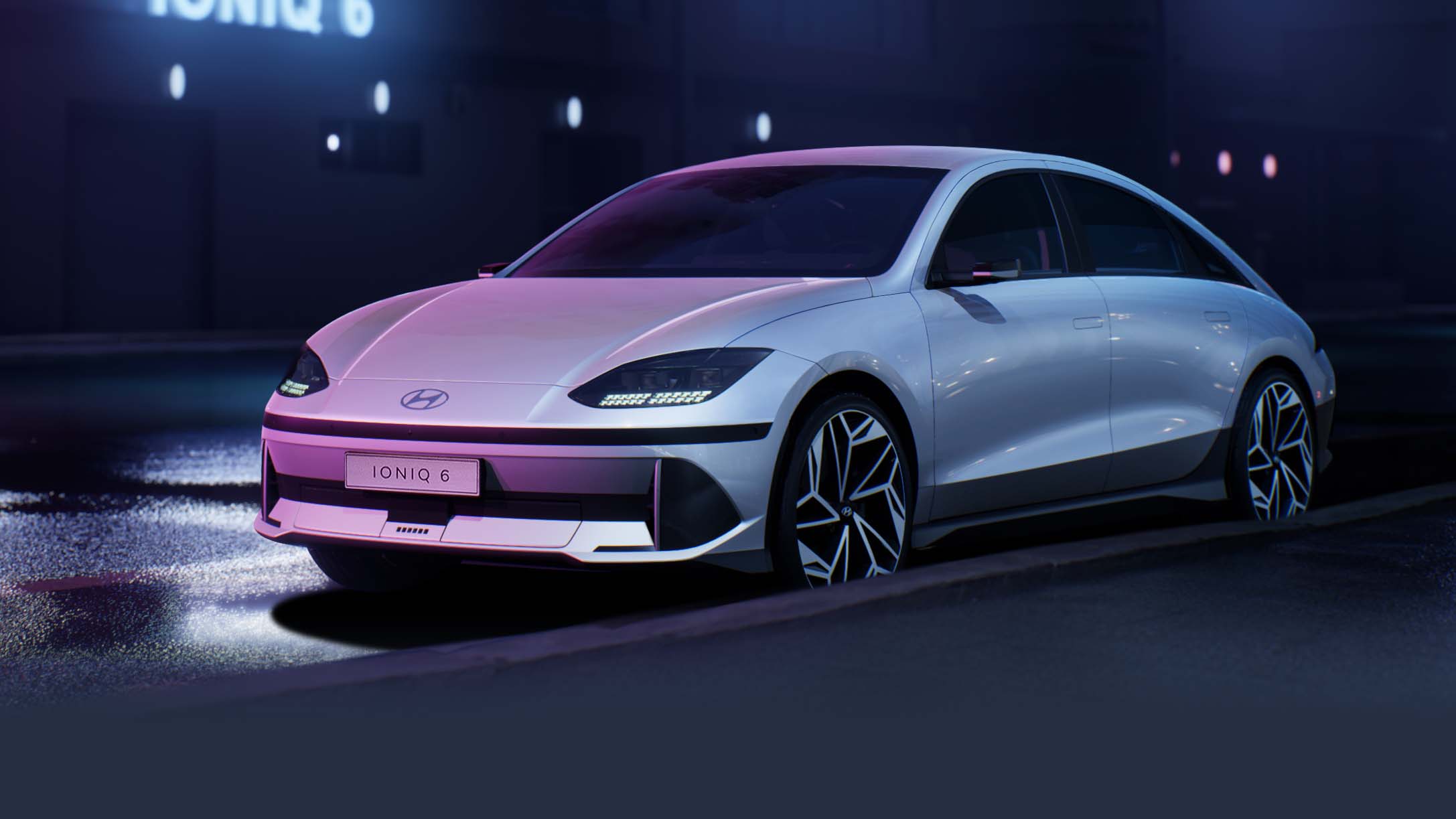
Hyundai EV plans
The biggest manufacturer of vehicles in South Korea has been putting forward an aggressive strategy of adding EVs within its model range, having introduced the electric IONIQ in 2016, the Kona Electric in 2019 and the Ioniq 5 in late-2021.
Two more models will join the Ioniq range in Australia, the Ioniq 6 (expected 2022) will be a low-slung grand tourer, the Ioniq 7 will be a large SUV (expected 2024), in the brand’s ultimate quest to only sell electric cars by 2040 – starting with 12 new EVs by 2025, comprising three sedans, six SUVs, one ‘new type model’ and one light commercial vehicle (ute or van). Hyundai is aiming for 560,000 sales in the same time frame.
Also in its local eco-friendly artillery is the Nexo – a hydrogen fuel-cell vehicle which has joined the Australian Capital Territory Government’s fleet, with 20 units now roaming Canberra’s streets.
Hyundai Australia supports EVs but believes the local market isn’t ready for the technology yet, lacking the infrastructure and government policy to support the industry.
Overseas, Hyudai’s American outpost has announced its own EV and battery manufacturing plant, located in Bryan County, Georgia, costing a projected US$5.54 billion. The plant will boast a production capacity of 300,000 vehicles, and is believed to be operational come 2025.
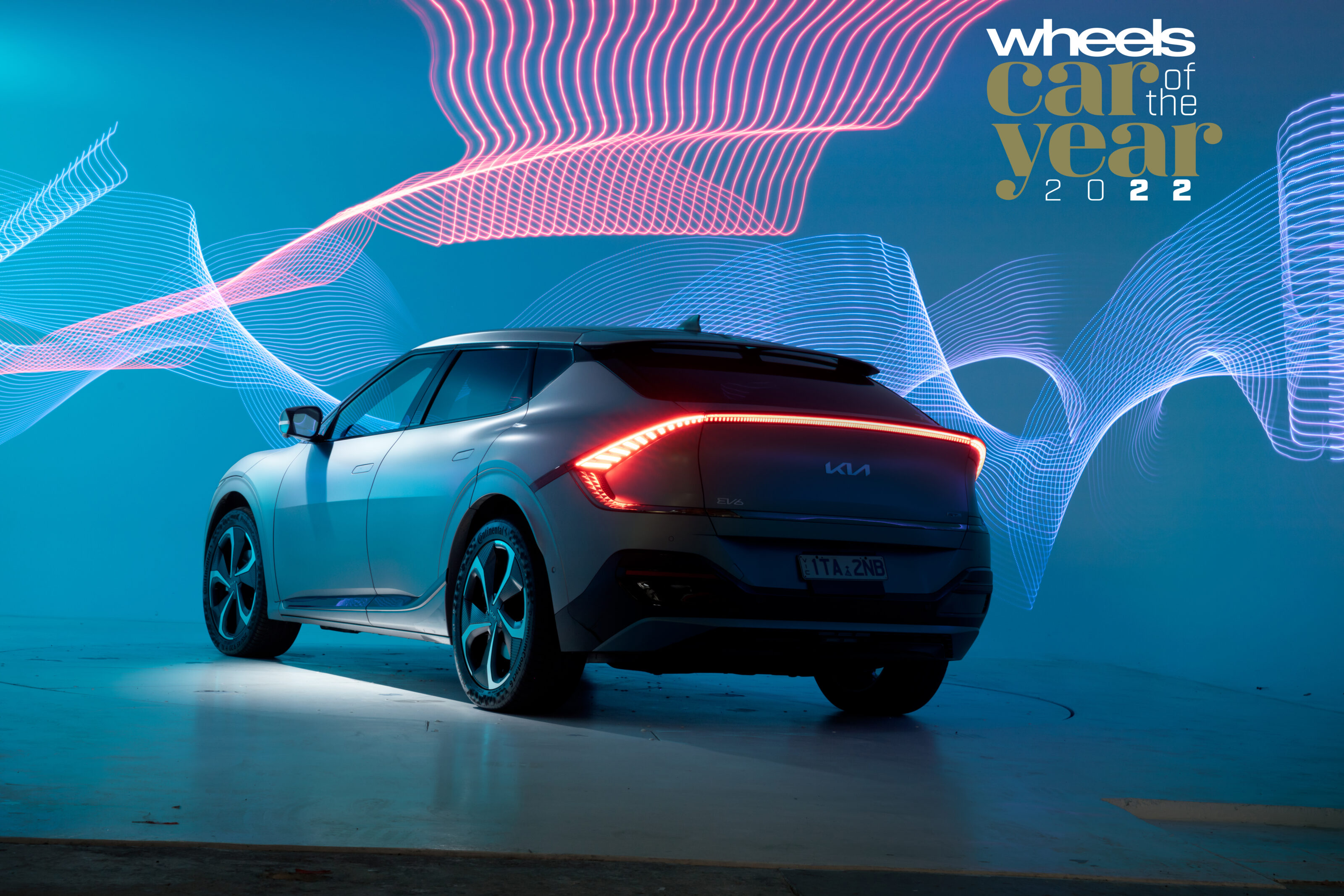
Kia EV plans
Underneath parent company Hyundai, Kia has been making its own plans to introduce electric cars to the market, with 14 dedicated vehicles (previously 11) expected to be launched by 2027 across multiple segments, including two new utes and a Kia EV9 seven-seat SUV. Kia has previously told investors that it plans to sell 807,000 electric vehicles globally by 2026.
Plan S was announced in 2020 and outlined the South Korean marque’s plans, followed by news of Kia adopting Hyundai’s E-GMP platform to underpin its range of electrified models.
In March this year, Kia released the EV6 crossover, its first dedicated EV model. Based on the same architecture as the Hyundai Ioniq 5, the EV6 won the most recent Wheels Car of the Year award..
The EV6 will join the Niro SUV as Kia’s only electric offerings Down Under, and although the Niro is also available as a mild-hybrid and plug-in hybrid, it is set to be moved to the E-GMP platform next year – doing away with combustion engines.
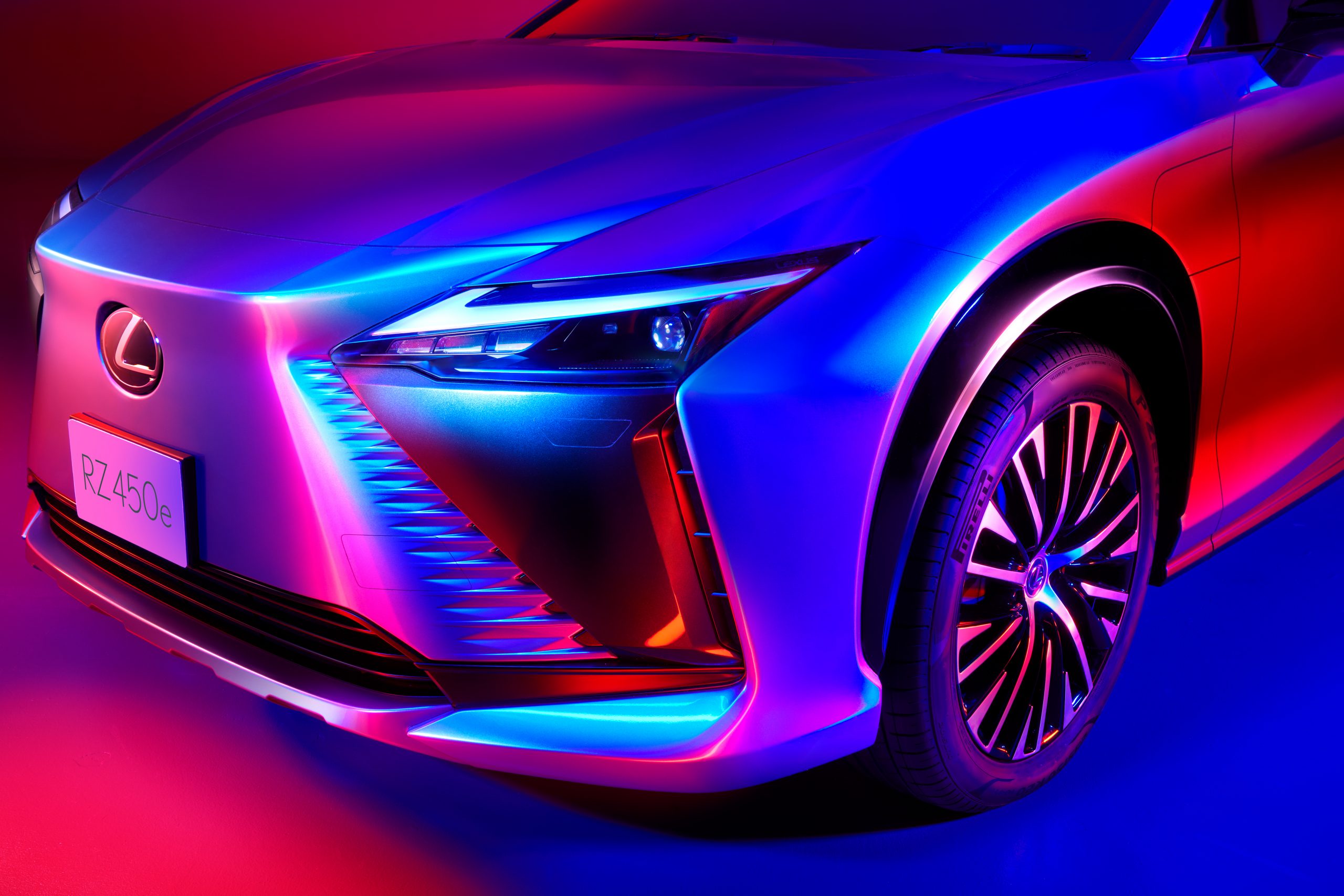
Lexus EV plans
As the luxury arm of Toyota, Lexus has often paralleled its parent company’s movements with adopting technology, being another early adopter of hybrid engines in the 2000’s and now beginning to introduce its first EVs. Parent company Toyota previously outlined a comprehensive electrification strategy, comprising 30 new electric models for both Toyota and Lexus, by 2030.
Lexus, in particular, will be an all-electric brand by 2035 globally – with the turnaround earmarked to come five years earlier in North American, Chinese and European markets.
The Lexus UX300e launched locally late last year, marking the Japanese brand’s first battery electric offering, underpinned by the same architecture as its UX combustion sibling.
The 2023 Lexus RZ will be the brand’s first bespoke-platform BEV, sharing its bones with stablemate Toyota’s BZ4X and joint-developer Subaru’s Solterra. The RZ remains under review for Lexus Australia who cannot yet confirm whether the vehicle will come to market domestically. Both the BZ4X and Solterra, however, are expected locally next year.
Its wider plans include a target of at least 10 hybrid or fully-electrified models on offer by 2025, with all models set to benefit from electric assistance in some form within the next five years.
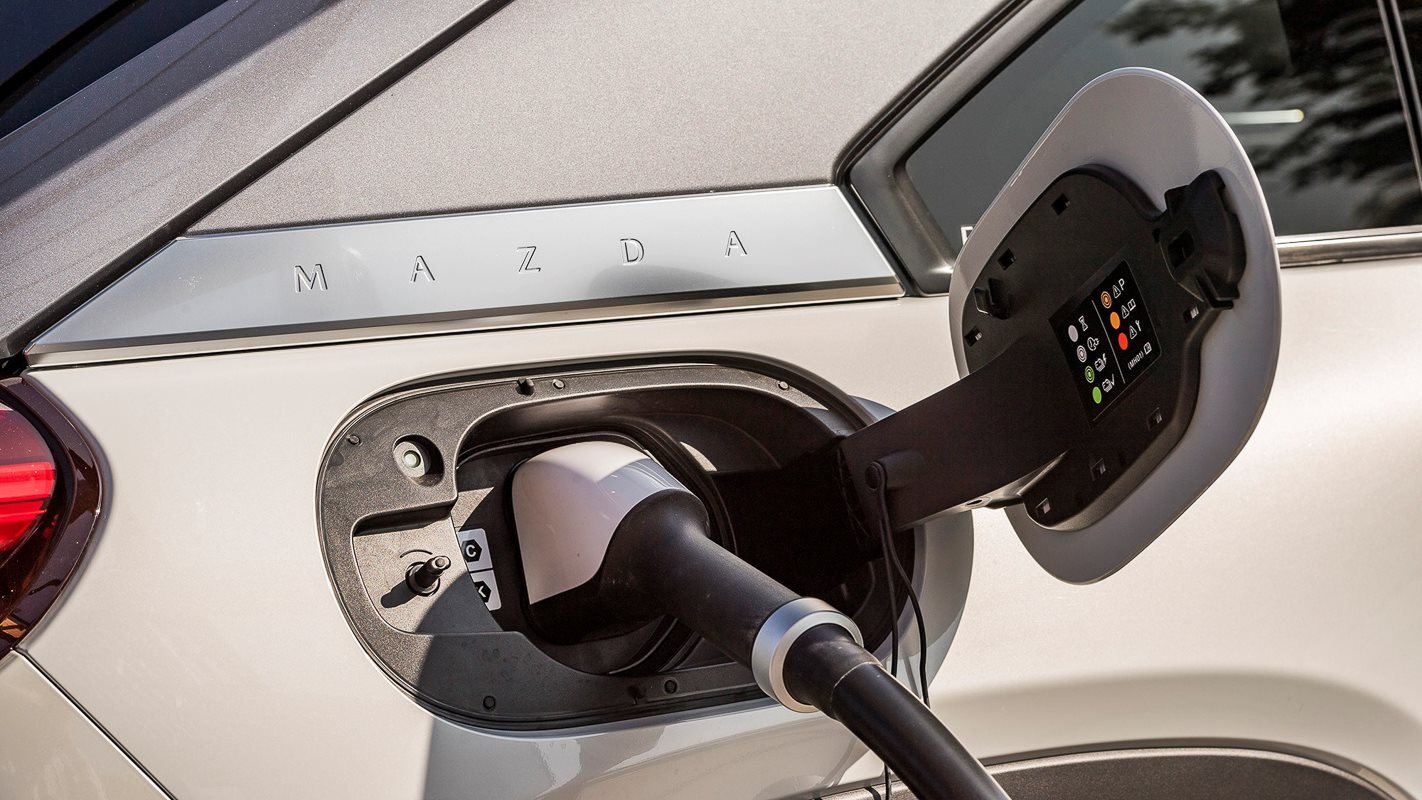
Mazda EV plans
Mazda is no stranger to bringing in radical technology to the automotive world – known for everything from the Wankel rotary engine to the Skyactiv ICE.
It might be surprising to hear it only released its first EV earlier this year in the form of the MX-30 crossover, a vehicle it hope will be one of many electric offerings in the near future.
In June, it announced 25 per cent of its model range would be EV by 2030, kicking off with three more electric cars to join the MX-30 by that time, as well as five hybrid models.
Plans also include the MX-30 to get a rotary engine range extender later this year. Unlike many other manufacturers, Mazda is keeping an open mind as the world rushes towards the age of electrification, continuing to invest and explore in ever-more efficient combustion engines, further development of hybrid assistance, the aforementioned range extender as well as investigating synthetic fuels.
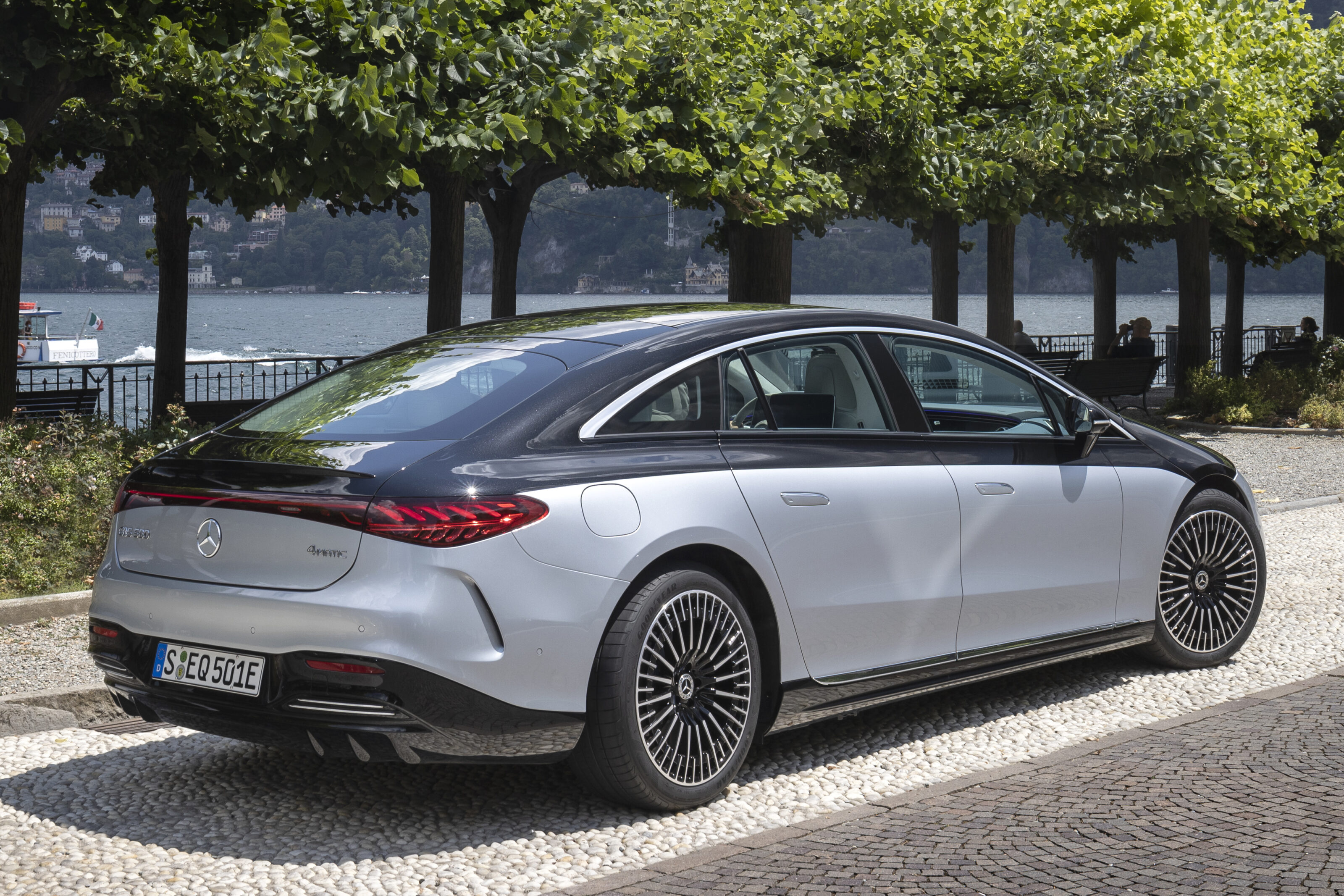
Mercedes-Benz EV plans
The world’s first automaker is continuing to be at the forefront of technological advancement, adopting a similar EV policy to Audi by releasing only electric cars from 2025 onwards, moving to a fully-electric line-up by 2030.
This target is mainly based around market conditions in Europe where government regulations are effectively forcing manufacturers’ hands, however Mercedes-Benz has said it will continue to sell ICE vehicles in markets which either haven’t adopted a suitable EV policy or where its electric cars are unsuitable for the time being.
Three new dedicated electric platforms are in the pipeline, with MB.EA covering all medium to large passenger cars, and providing a scaleable platform for other models to sprout from. The AMG.EA platform will be a dedicated performance EV platform, while Van.EA will underpin future generations of electric commercial vehicles.
Mercedes-Benz’s growing family of EQ cars are currently on offer in Australia – the EQA, EQB and EQC, taking after their GLA, GLB and GLC counterparts respectively. However, the recently-released EQS is being offered up as the flagship Mercedes-Benz EV with a strong influence from the S-Class.
The German marque’s local division is also currently at odds with the Australian Government regarding EV policies, believing the lack of a universal approach towards EV subsidisation is affecting the local market, with manufacturers unwilling to bring their full range of vehicles Down Under.
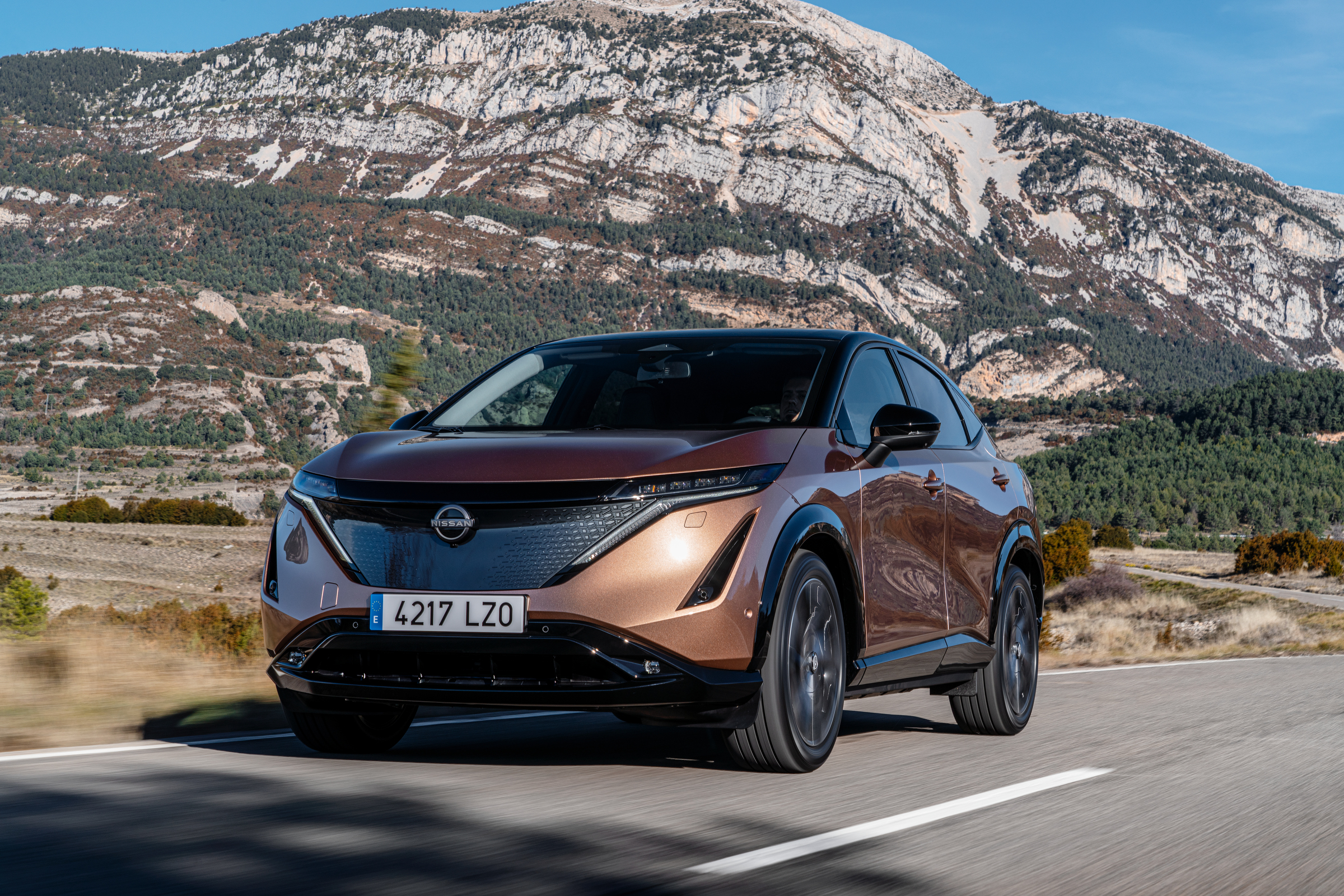
Nissan EV plans
Nissan is investing 2 billion yen (AU$21.2 million) over the next five years in order to accelerate its target of carbon neutrality by 2050, also saying it will make “100 per cent of all-new vehicle offerings electrified in the key markets of Japan, China, the US and Europe by the early 2030s”.
At the beginning of July 2021, it announced plans to build a new EV-dedicated production facility in the UK – featuring a 9GWh capacity at a cost of around AU$1.8 billion.
A pioneer of electric vehicles with the Leaf, Nissan didn’t then release another EV until the Ariya was unveiled last year.
The Leaf was given an update in 2019 before the e+ variant was released this year – scoring a power and torque boost to 160kW/340Nm, up from 110Kw/320Nm, and a driving range of up to 385km.
Further down the roadmap, Nissan has 23 electrified models in the pipeline, including 15 new EVs, with ambitions of reaching a 50 per cent product mix by 2030.
Sadly, Australia is a nation playing catchup in comparison to many world markets, and Nissan has stated it has no plans to bring the Ariya Down Under due to Australia’s inability to come up with universal incentives for EVs, claiming it would rather prioritise markets where the model will be more popular.
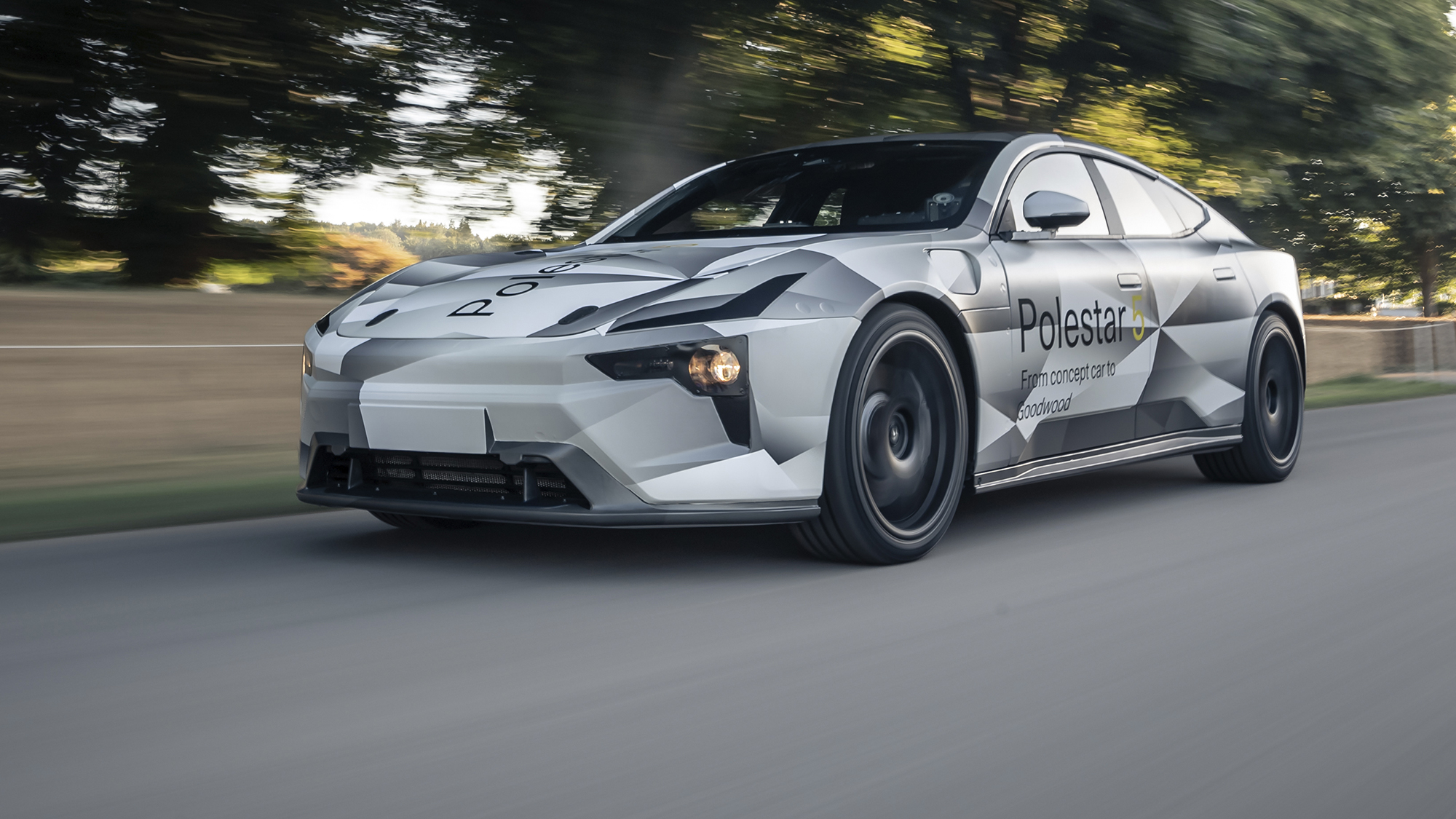
Polestar EV plans
Once the dedicated Swedish Touring Car team of Volvo, Polestar is now the Swedish manufacturer’s standalone EV brand, re-launched in 2017 as a Sweidh spearhead of electrified vehicles.
Following on from the launch of the Polestar 2 in 2019, the company announced it would be setting up shop in Australia, with its management team locked in before it officially starts operating towards the end of 2021, landing Down Under with the Polestar 2 range.
At the moment, all Polestar production is in China, however Volvo’s plant in Ridgeville, South Carolina will be home to production of the incoming Polestar 3, an SUV which will share a platform with the Volvo XC90.
Polestar 4 will be another SUV, this one wearing a more aero coupe-style roofline. The Polestar 4 is slightly smaller than the Polestar 3, and is expected to break cover in 2023.
Polestar 5 is slated as a sporty ‘four-door GT’, fitted with an 800V architecture producing 650kW/900Nm. It’s not yet revealed, but we have seen a camoflauged example sprint up the Goodwood hill.
Polestar 6, confirmed for production from 2026, will be the world’s first convertible EV, representing an open-top counterpart to the Polestar 5 as a low-volume two-seat roadster.
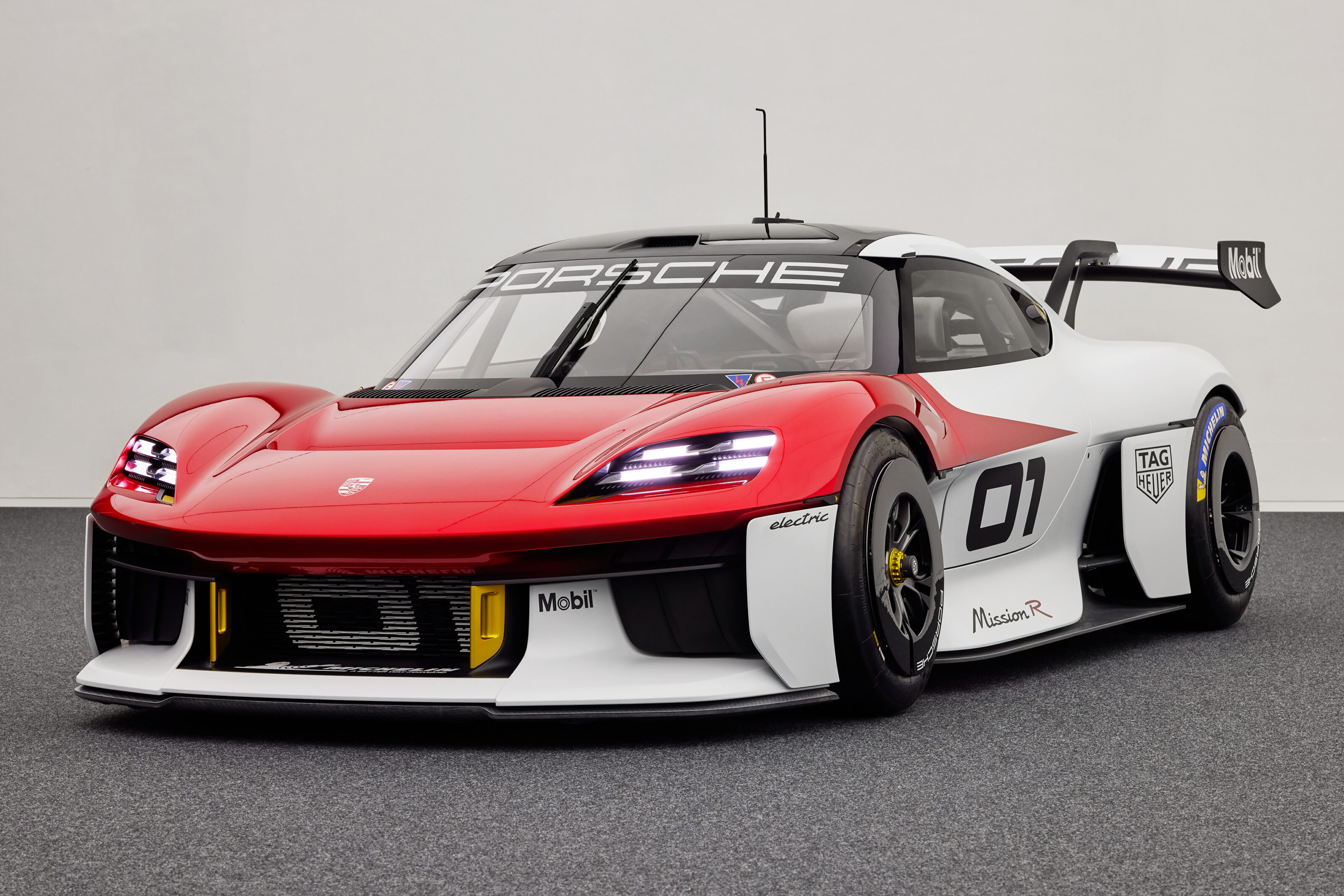
Porsche EV plans
Renowned globally for its motorsport exploits and strength in building sportscars, Porsche has positioned itself strongly in the transition to EVs, coming out in 2017 with a target of 50 per cent EV production by 2023.
By 2030, Porsche aims to be carbon neutral over its entire value chain and expects 80 per cent of its production output to be more than 80 per cent pure electric.
Far from the work of a moment, its first electric model was introduced in 2019 with the launch of the Taycan, a brand new vehicle based on the same architecture as the Audi E-Tron GT, currently sitting as the most expensive EV on sale in Australia.
Next-gen Macan will gain an electric variant, currently undergoing testing overseas with manufacturing expcted to begin before the end of 2023. Following Macan’s switch to electric powr, Porsche has also confirmed that the next-generation of its 718 sportscar will also be going battery electric, due by 2025. In July of this year, Porsche CEO Oliver Blume confirmed that a new flagship electric SUV is also in the works, and will be positioned above existing Cayenne and Macan models.
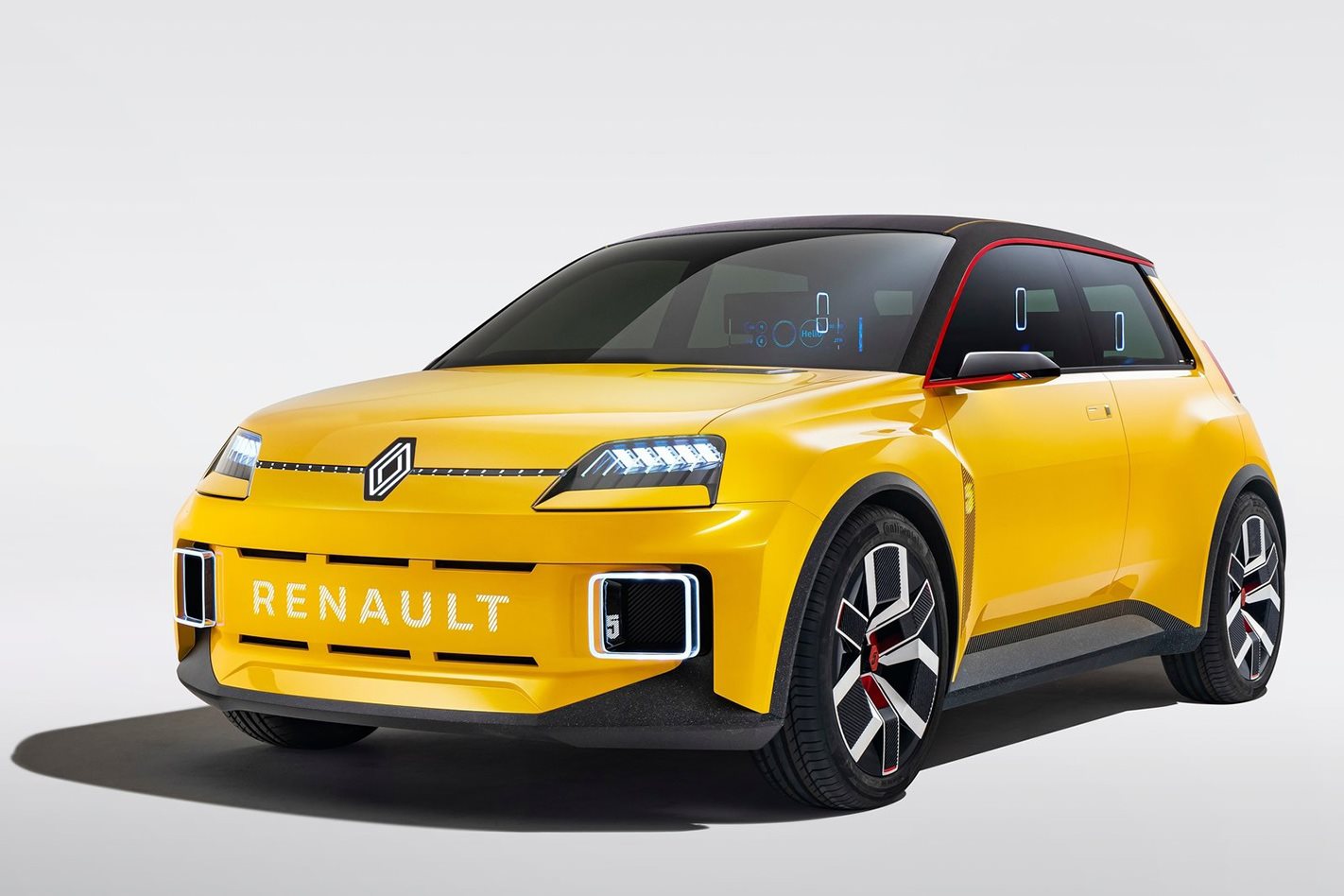
Renault EV plans
Renault, as part of the Renault-Nissan-Mitsubishi Alliance, is making a heavy push towards electrification, with all three members of the technical alliance pledging more than AU$31.55 billion in investment over the next five years,
The accelerated investment could spawn up to 30 models across the three marques, underpinned by a handful of platforms. Renault is pushing for 65 per cent of its vehicles to feature some form of electric power before 2025, before all Alliance members transition to electric vehicles-only by 2030.
Moving to a new EV platform is in Renault’s immediate plans, as its Zoe model nears the end of its lifecycle prompting wholesale changes through the French manufacturer’s architecture.
The Common Module Family (CMF) platform will be used across future Renault and Nissan models (see above), offering a 33 per cent reduction in production costs over the Zoe’s current base and also allowing it to be shared across a wider variety of vehicles in two scalable sizes.
CMF-BEV will underpin A and B-segment vehicles, while the CMF-EV will be adopted by larger C and D-segment models – starting with the Megané E-Tech, a crossover which will be unveiled at this year’s IAA Munich Motor Show.
Renault’s ElectriCity facility is set to be the largest EV manufacturing plant in Europe once it’s built, providing up to 40,000 jobs by 2025 and almost exclusively working with CMF-based vehicles.
Sub-brand Alpine, which recently took over from Renault Sport as the marque’s performance division, will be a dedicated EV-only brand in future – already planning to bring a hot version of the revived Renault 5 to market among others.
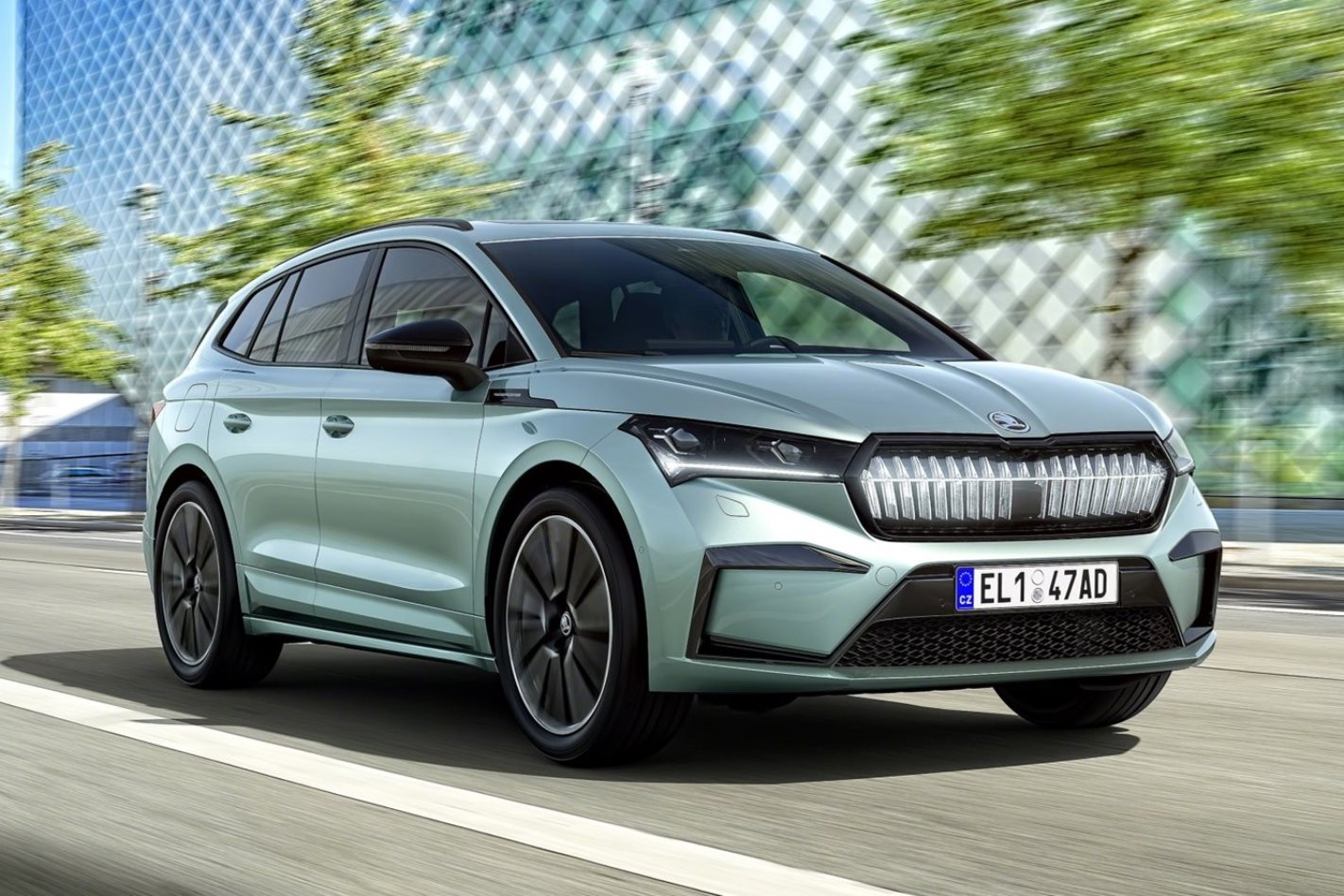
Skoda
By the end of the decade, Skoda is targeting a 50-70 per cent mix of EVs within its product portfoloio, and aims to slash its carbon emissions by more than half, compared to its 2020 levels.
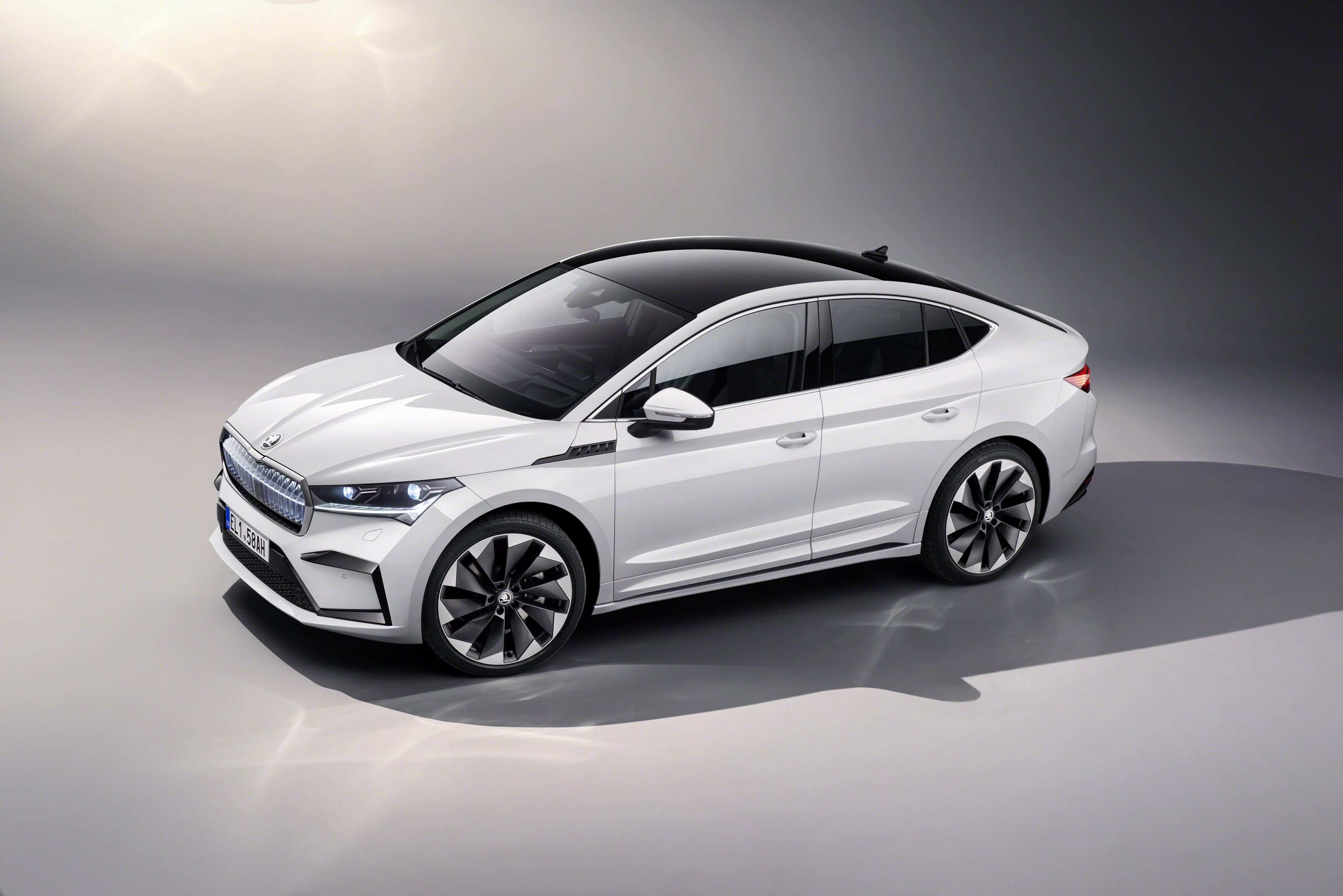
Skoda currently offers a handful of electric vehicles overseas in Europe, including electric versions of the Superb and Octavia, as well as its first bespoke EV which will be coming to Australia in 2023 – in both conventional SUV and ‘Coupe’ SUV-styled bodies.
The Enyaq is built atop Volkswagen Group’s tried and tested MEB platform and is sized between the Karoq and larger Kodiaq SUVs.
Exact local specifications remain, at this stage, unconfirmed, however the Enyaq is available overseas as a rear-wheel-drive with 109kW, 132kW and 150kW outputs, or all-wheel-drive with either 195kW or 225kW in the Enyaq RS.
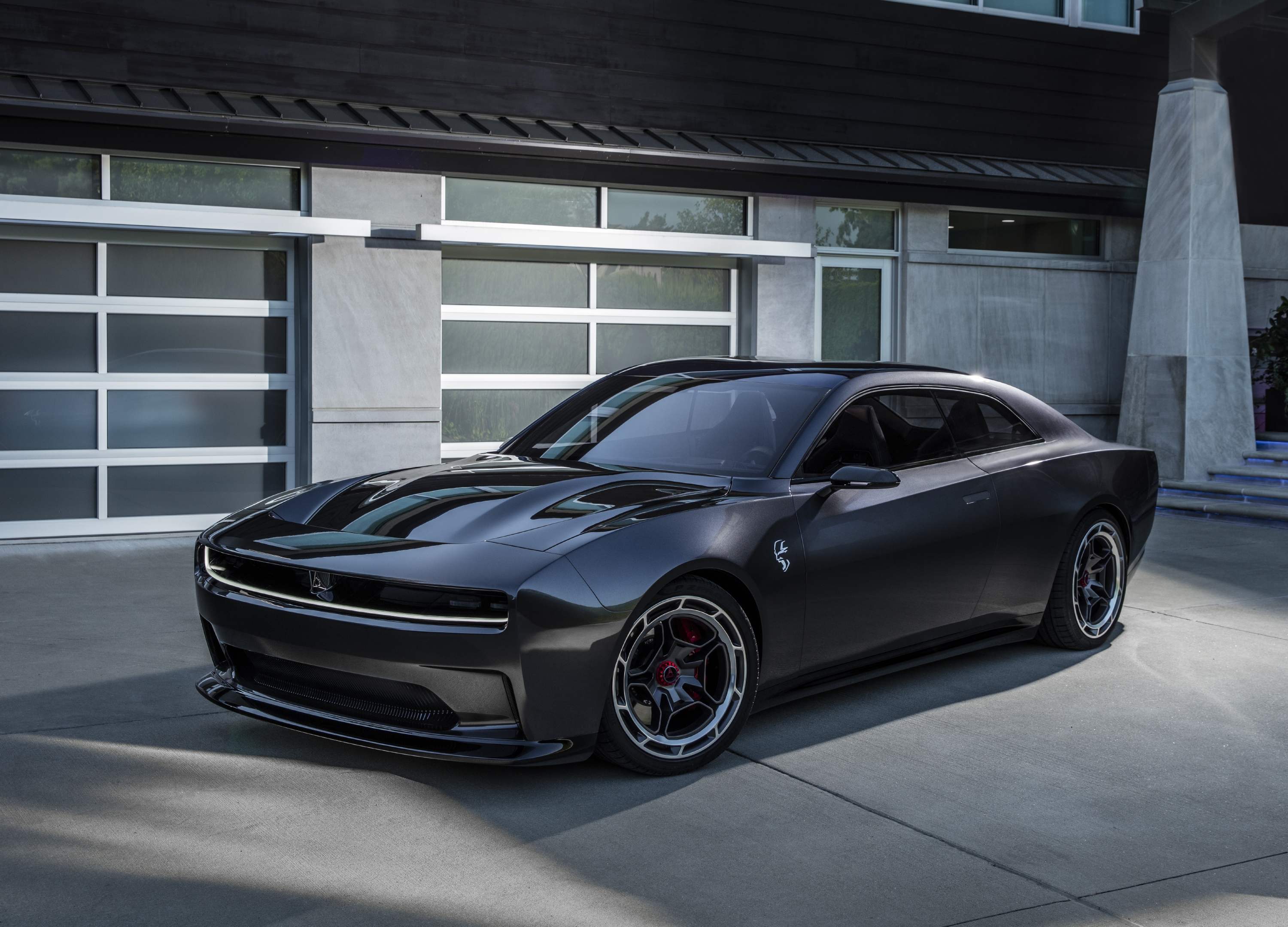
Stellantis EV plans
Abarth, Alfa Romeo, Chrysler, Citroen, Dodge, DS, Fiat, Jeep, Lancia, Maserati, Opel, Peugeot, Ram, and Vauxhall
Formed as a merger between PSA and FCA at the beginning of 2021, Stellantis has 14 brands under its umbrella and recently released its EV plans for each manufacturer – the majority of which are looking to fully-electrify their model range by 2030 in line with EU targets.
Its ultimate aim is for 70 per cent of vehicle sales to come from EVs by 2030 in Europe, although the target in the United States is lower at 50 per cent by the end of the decade.
With an investment totalling €30 billion (AU$47.8bn) over the next five years in EV technology, Stellantis also plans to introduce four EV platforms across its 14 carmakers; Abarth, Alfa Romeo, Chrysler, Citroen, Dodge, DS, Fiat, Jeep, Lancia, Maserati, Opel, Peugeot, Ram, and Vauxhall.
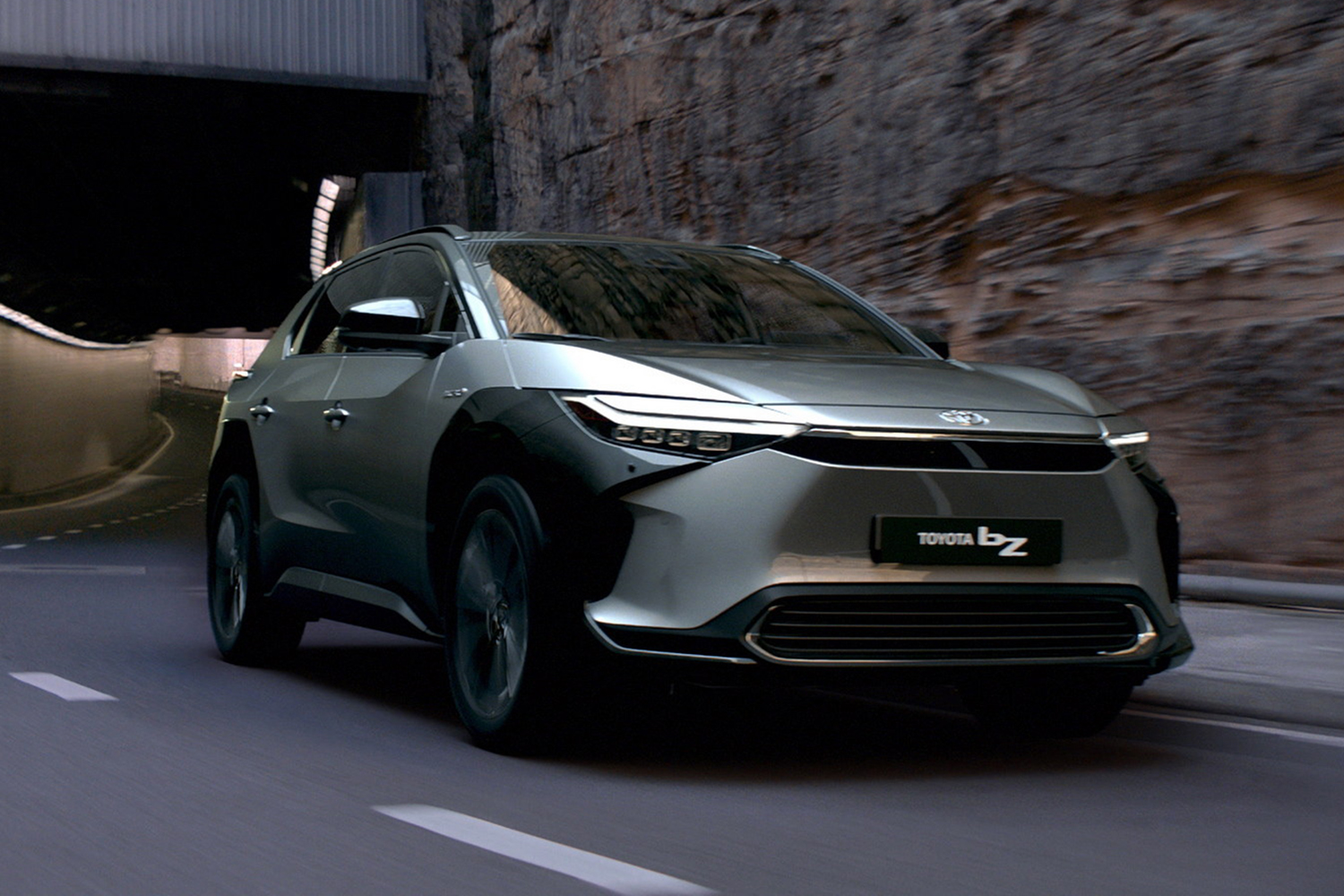
Toyota EV plans
The world’s second-largest manufacturer is surprisingly slow in its uptake of EVs in contrast to its early adoption of hybrid technology.
While Toyota has sold over 200,000 hybrid vehicles in Australia since 2001 and offers a hybrid variant of every passenger car and SUV in its range, it was a comparative latecomer when it came to its EV strategy, announced at the end of 2021. Toyota previously indicated that its hybrid technology isn’t a stepping stone and won’t be phased out in favour of full electric.
Toyota’s shock announcement hinted at 30 forthcoming electrified vehicles, 15 of which will be EVs, to be released by 2030. It also wants to sell 3.5 million BEVs globally by 2030, and will spin Lexus into an EV-only brand by 2035.
The ‘bZ’ (beyond Zero) name will adorn its future electric models, with seven to be launched locally by 2025. However, Toyota hasn’t specified how many dedicated EVs will be launched before the European ICE ban comes into effect in 2035.
As of 2022, Toyota sells no dedicated battery electric vehicles in Australia, but the long-awaited electric BZ4X is expected to arrive locally in 2023.
Volkswagen EV plans
The Volkswagen Group is the largest automotive manufacturer in the world, with control of 10 vehicle brands globally which contribute to over 10 million production units a year.
Volkswagen’s future strategy aligns with the Paris Agreement and the EU’s European Green Deal, targetting carbon neutrality by 2050, with a 40 per cent reduction in emissions by 2030 – compared to 2018.
Models from its European model line-up by 2035 will be electric, backing it up with an announcement in July 2021 to introduce a ‘Scalable Solutions Platform’ for its future EVs – potentially underpinning more than 40 million vehicles throughout its lifecycle.
The last purely internal combustion-powered platform will be developed in 2026, after which VW will be all in on EV development.
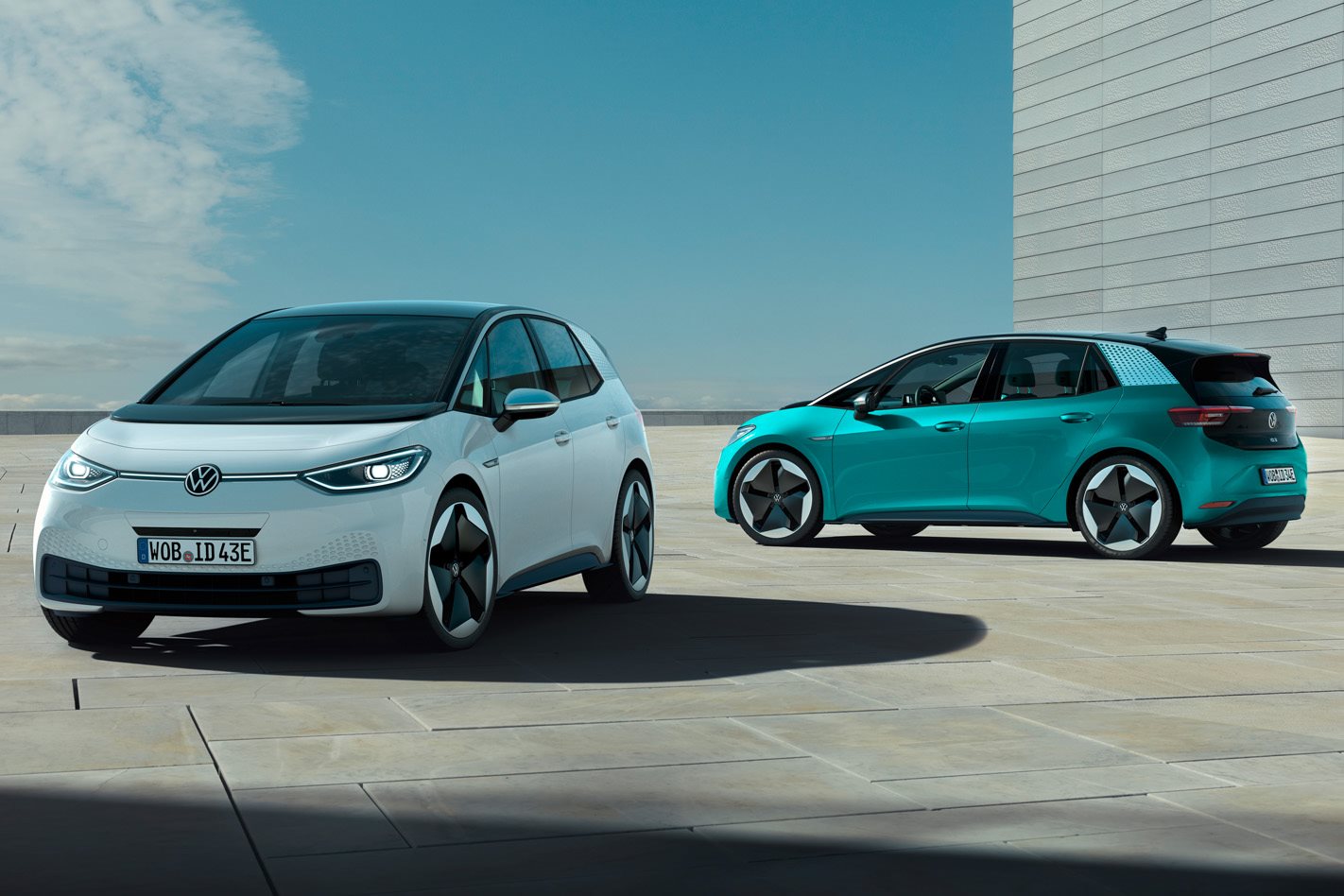
On sale overseas are the ID.3 and ID.4 EVs, introduced as electric substitutes to the Golf and Tiguan respectively. In August of 2022, however, Volkswagen Australia announced that its family of ID vehicles will be arriving Down Under from 2024. The Tiguan-sized ID.4 and more coupe-styled ID.5 are arriving first, then to be joined by the ID.3, sharing much of its underpinnings with the forthcoming Cupra Born.
Volkswagen is also nearing the global release of its retro ID.Buzz people-mover and van, which goes on sale in the US in 2024. It remains to be seen whether the reborn microbus will be coming Down Under.
Volvo EV plans
The Swedes have always proven to be innovative and the tradition continues on with Volvo, the manufacturer recently making a wide variety of investments in EV-related companies to become a key player in the future of electric cars.
Half of all Volvo sales will come from EVs by 2025 before the entire model line-up goes all-electric by 2030 – although Volvo recently announced it plans to continue ICE production through Aurobay, a joint venture formed with now ex-parent company Geely.
Wanting to bring more parts of the process in-house, or at least have a bigger say in the process, Volvo’s announcements in the past couple of months have included a joint venture to develop batteries, another to create fossil-free steel and the decision to bring development of its operation systems in-house – a significant investment in its autonomous vehicles.
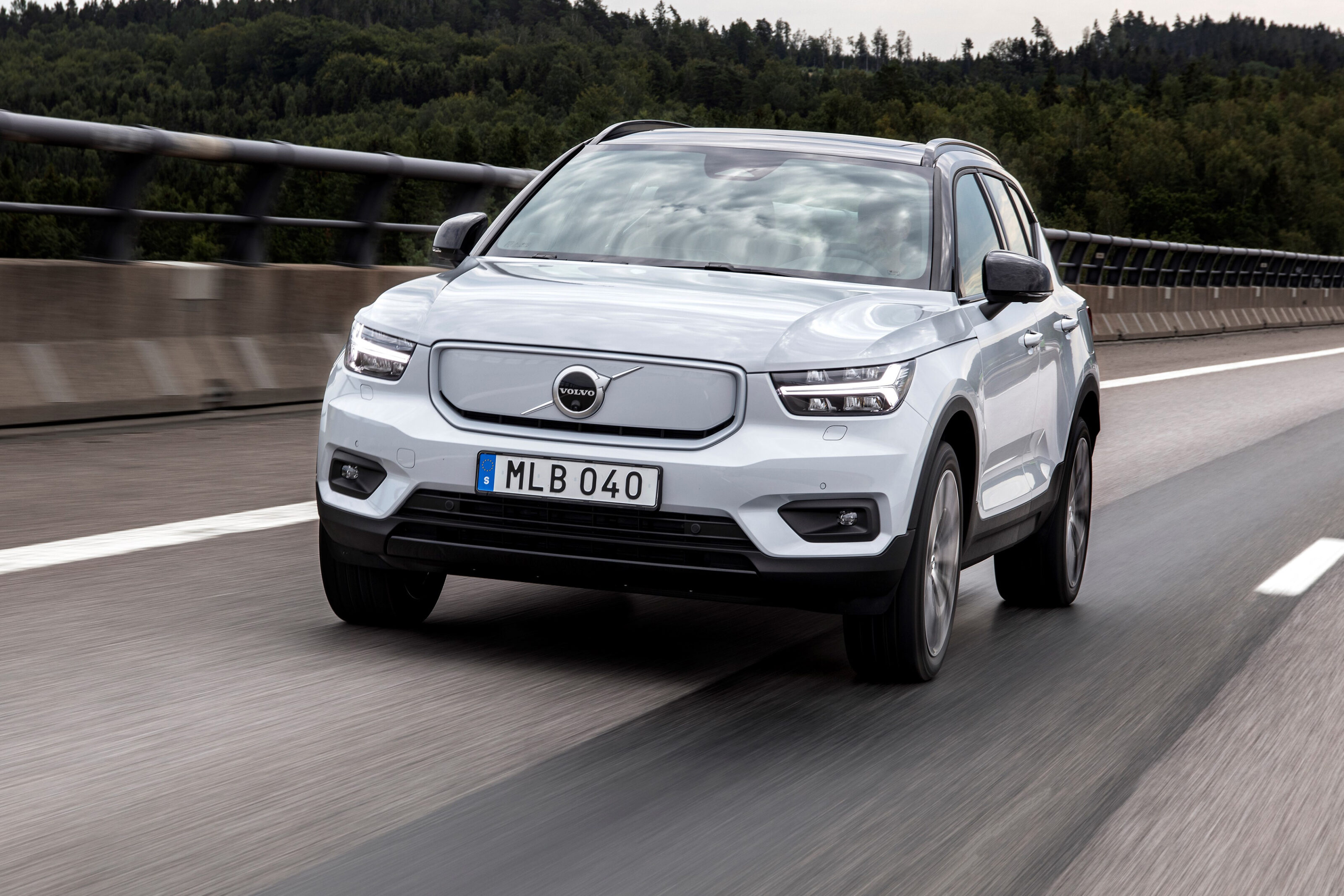
Currently only selling one EV in Australia, the XC40, Volvo plans to electrify a greater portion of its local vehicle line-up in the near future.
How does the keenly-positioned Hyundai i30 stack up after half a decade on the Australian market?
In its pre-updated SR-badged guise, the mid-range Hyundai i30 was seemingly the default answer to any warm hatch question.
It’s now a familiar and established player on local shores, but despite rivals since muscling in with a flock of younger competition, the updated 2022 i30 N-Line Premium is still worthy of consideration.
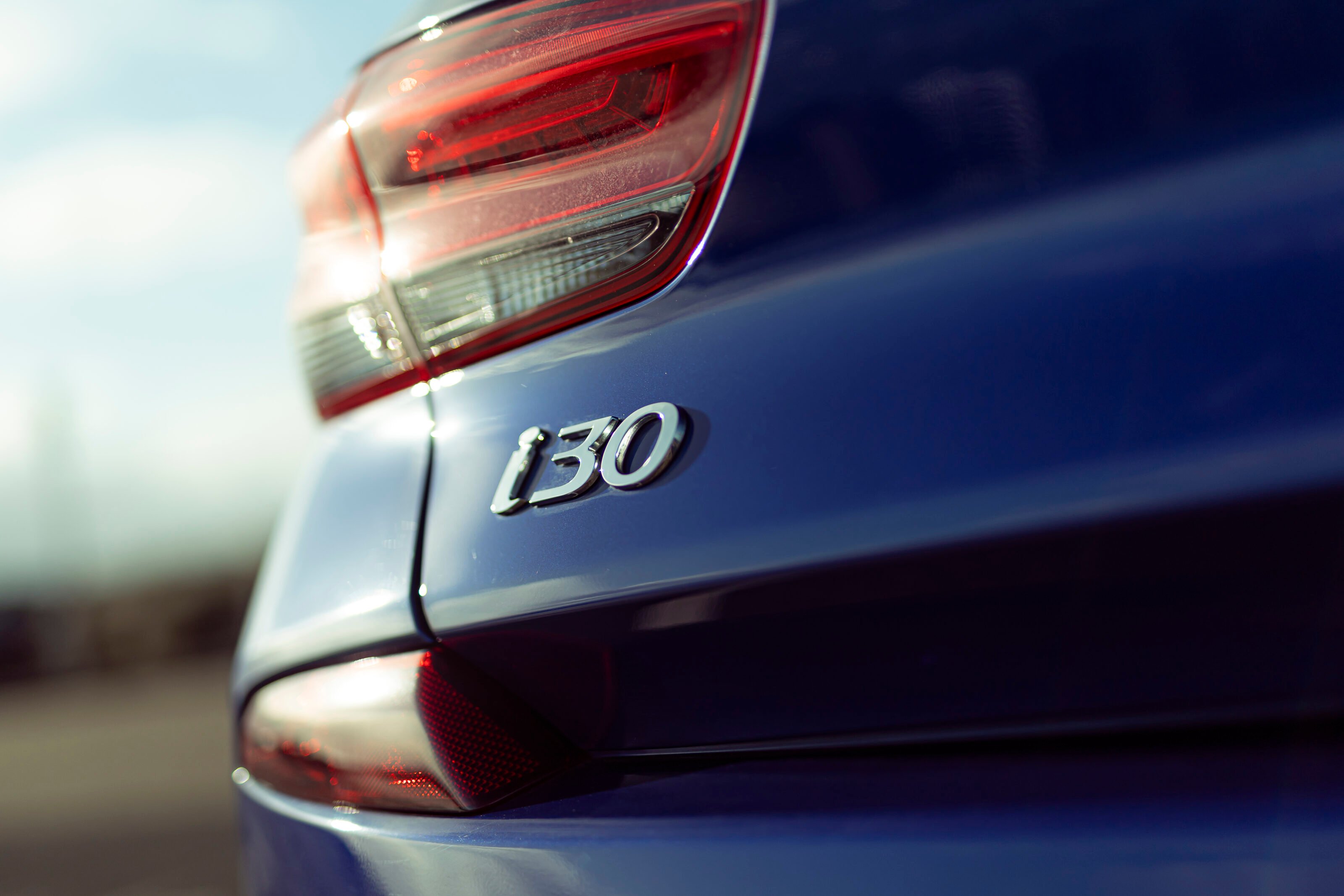
Positioned below the ballistic i30 N variants, the i30 N-Line delivers more rounded, polished and accessible urban dynamics bundled with a good level of standard equipment.
Even within the N-Line model, however, there are more choices to make. Premium, or non-Premium? Manual or dual-clutch auto?
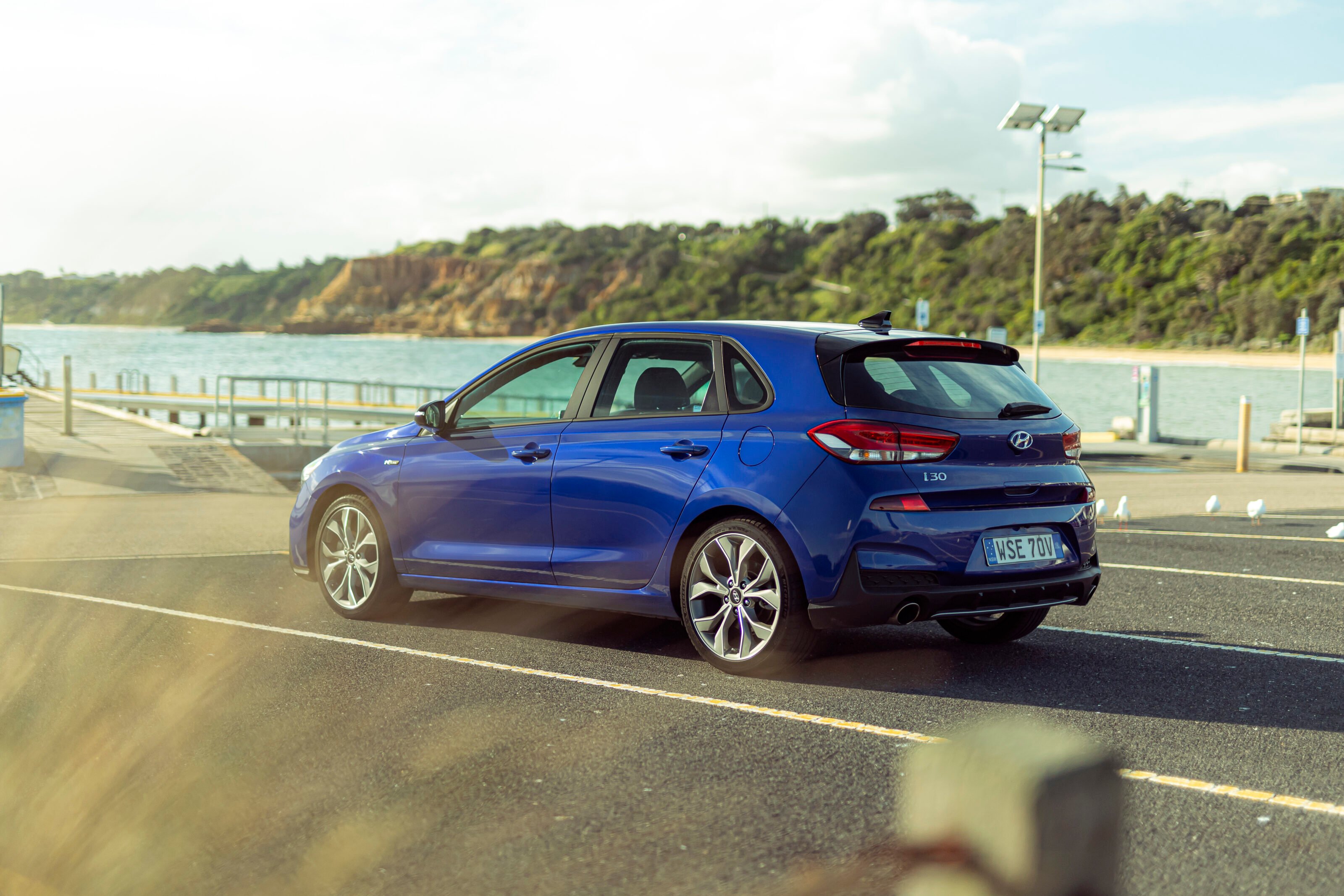
The car we’re driving today is an N-Line Premium Auto hatch and represents the most premium offering in the mainstream, non-N, i30 range.
Pricing and features
N-Line variants of the Hyundai i30 open at $29,420 before on-road costs for the non-Premium manual hatchback.
Add $2000 for the seven-speed dual-clutch transmission, or add $4800 to step up into the Premium manual vehicle.
The dual-clutch Premium car tested here tops the range at $36,220 plus on-road costs but undercuts the most affordable flagship i30 N by $8280.
Opting for the Premium-spec vehicles sees the standard 8.0-inch infotainment screen swell to a 10.25-inch widescreen, adds an Infinity seven-speaker premium audio system, panoramic sunroof, powered driver’s seat adjustment, heated and ventilated front seats and an auto-dimming electro-chromatic mirror.
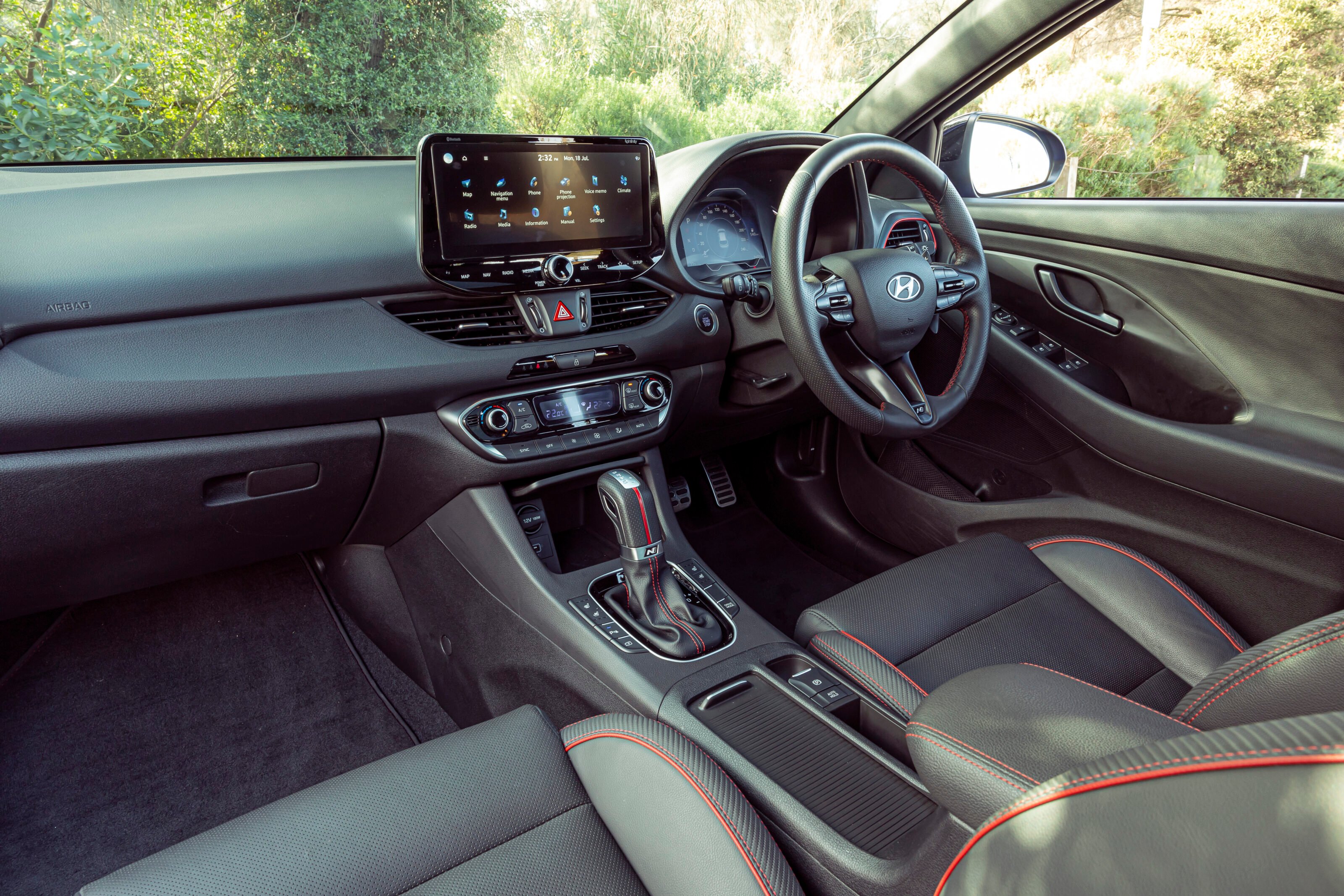
The N-Line doesn’t gain the i30 N’s bombastic 2.0-litre powerhouse, instead it’s powered by a smaller 1.6-litre turbocharged four-cylinder producing a stout 150kW/265Nm.
Key equipment fitted as standard includes: a 7.0-inch digital driver display, Apple CarPlay and Android Auto connectivity, 18-inch alloy wheels, Michelin Pilot Sport 4S tyres, sport alloy pedals, N-Line exclusive interior with leather-appointed trim plus N-Line gear knob and steering wheel, LED front and rear lights, and an N-Line exclusive rear diffuser.
All i30 N-Lines come equipped with seven airbags comprising dual front, front-side, full-length curtains and one for the driver’s knee.
They are also fitted with Hyundai’s SmartSense suite of active safety features, comprising driver attention warning, forward collision avoidance assist, lane-keep assist, lane following assist and adaptive cruise control with stop-and-go functionality (although the latter is not available on manual cars).
Comfort and space
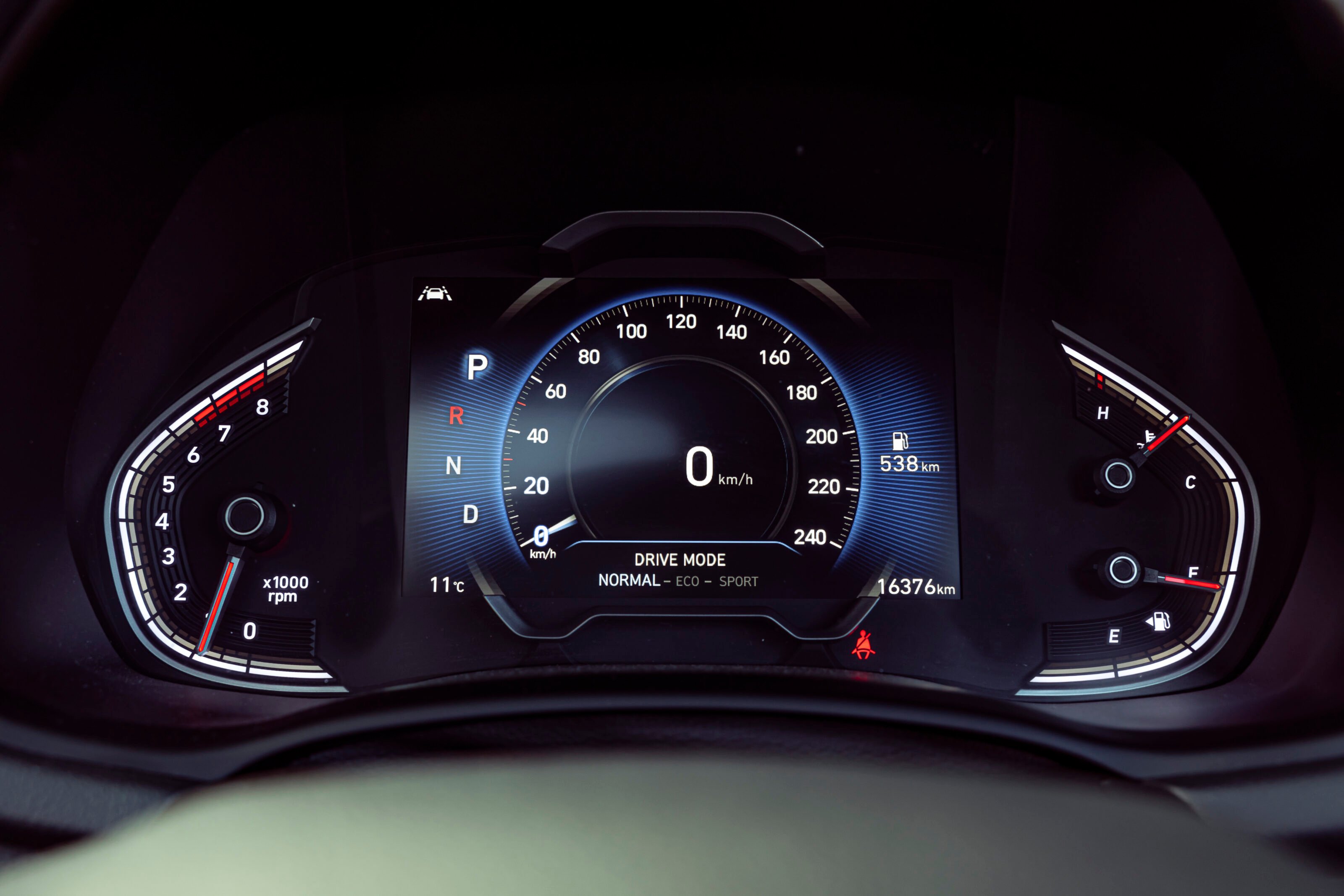
A prior mid-life update gave the i30 a helping of modernity, adding a 7.0-inch digitised information display to the previously analogue instrument cluster.
The widescreen 10.25-inch infotainment unit commands attention atop the centre stack but, elsewhere, there is a genuinely pleasing mix of switchgear shortcuts to virtually all essential functions.
Lashings of red around the air vents, stitching and on the seatbelts add some colour to the cabin atmosphere. It’s a nice place to be with decent quality materials as well as solid fit and finish.
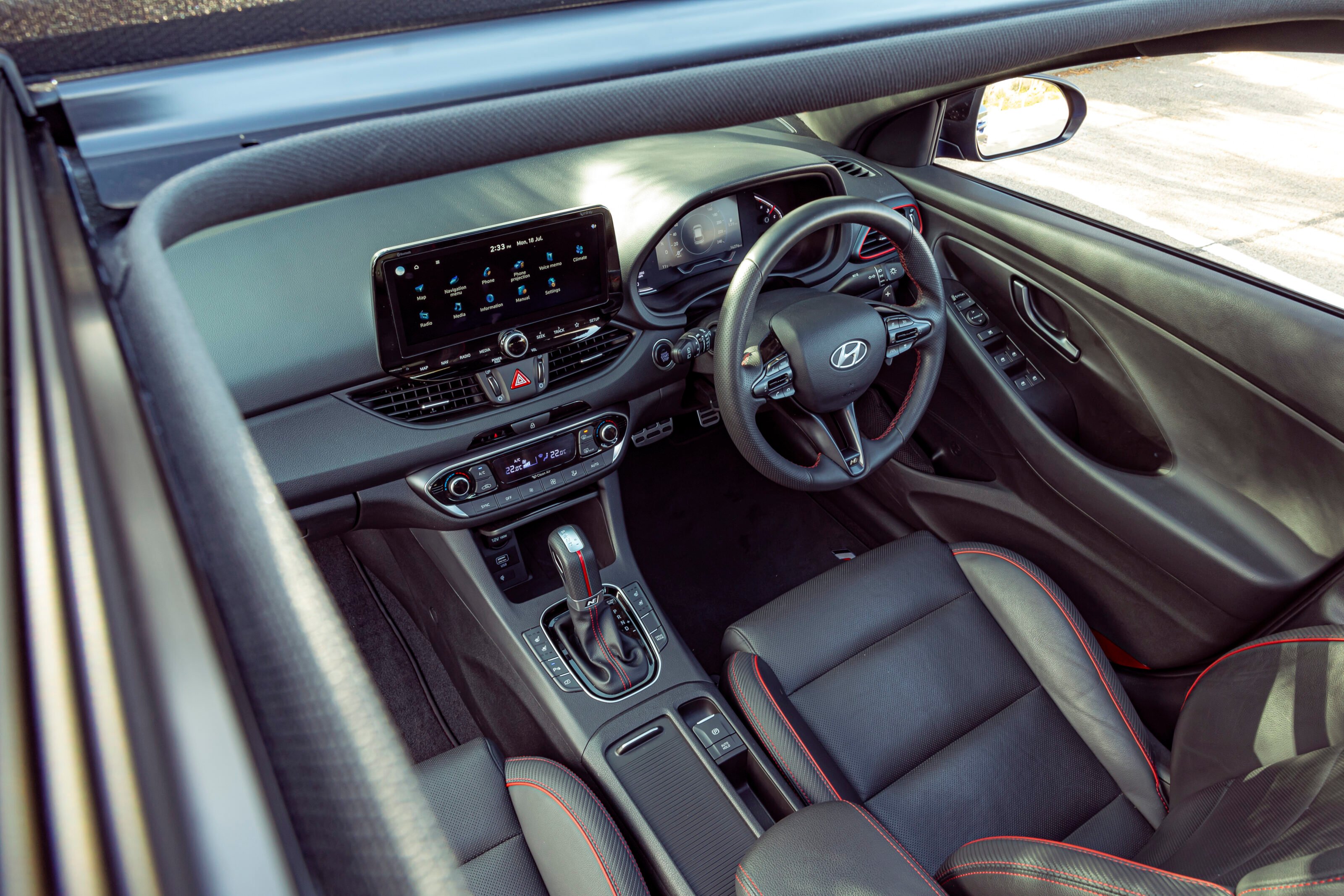
A leather-wrapped steering wheel adds a welcome dash of luxury and feels nice in the hands. The leather-trimmed front seats are supportive with some welcome bolstering, though not so much as to be cause for discomfort on long drives.
There’s a wireless phone charger under the centre stack along with a 12V plug and a USB-A plug for phone connectivity. There are two central cup holders plus a thin bottle holder in each door. Apple device owners can make use of wireless Apple CarPlay, though Android Auto remains a wired affair.
Moving to the second row, there is an agreeable amount of space for adult-sized passengers in the outboard seats. At 175cm tall, seated behind my own driving position, there is headroom, knee and toe room to spare, though taller occupants may risk their knees brushing against the plastic-sheathed seatbacks.
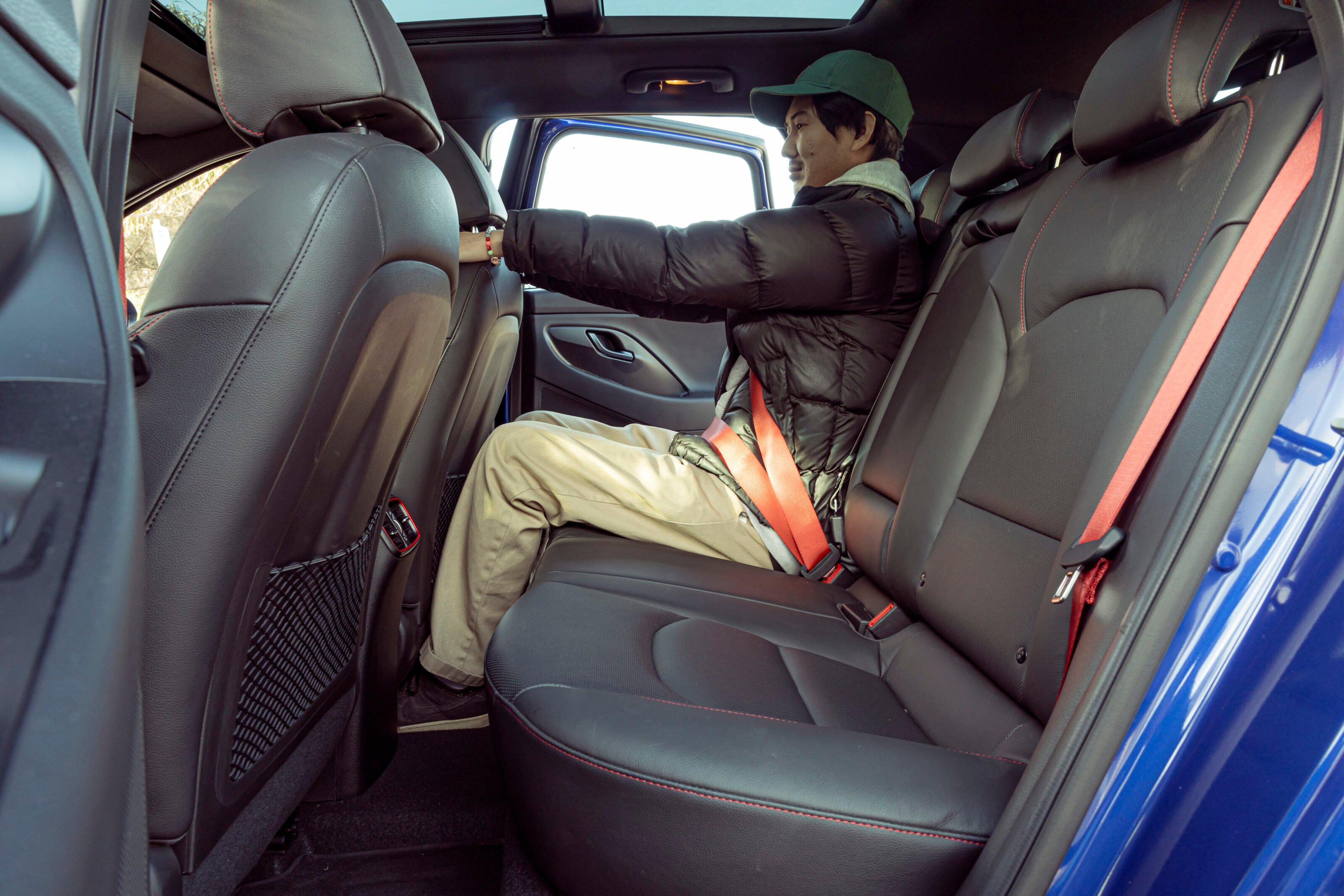
Rear-facing air vents are a welcome nicety, however, and there is another bottle holder to be found in each door pocket.
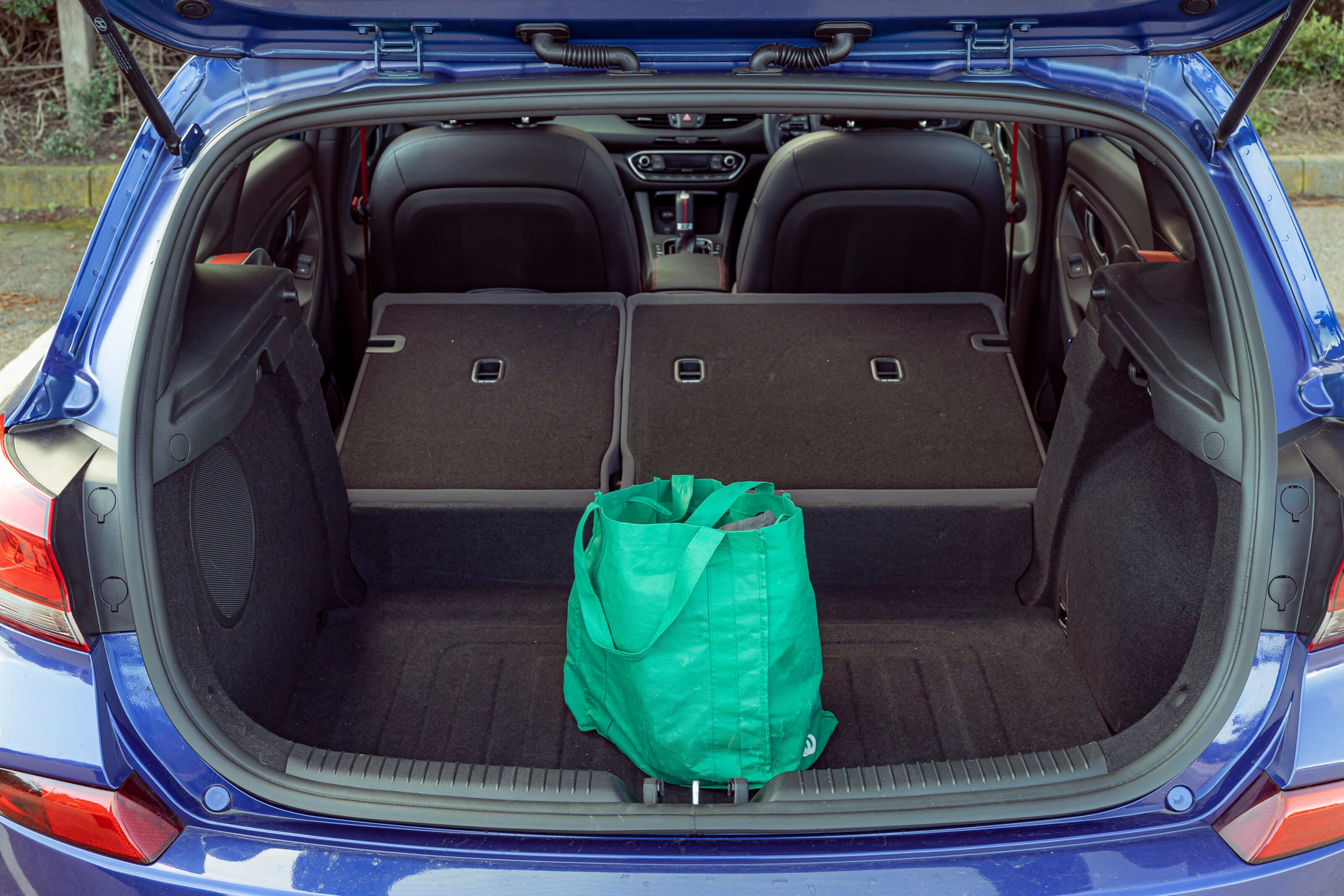
Further yonder, opening the rear hatch reveals a generous 395 litres of cargo space, 100 litres more than a Mazda3 hatch and 178 litres more than a Toyota Corolla hatch.
That’s also, perhaps counterintuitively, 21 litres greater than the Hyundai Kona small SUV. If that’s not enough, stowage space extends to 1301 litres with the 60:40 rear seats folded.
On the road
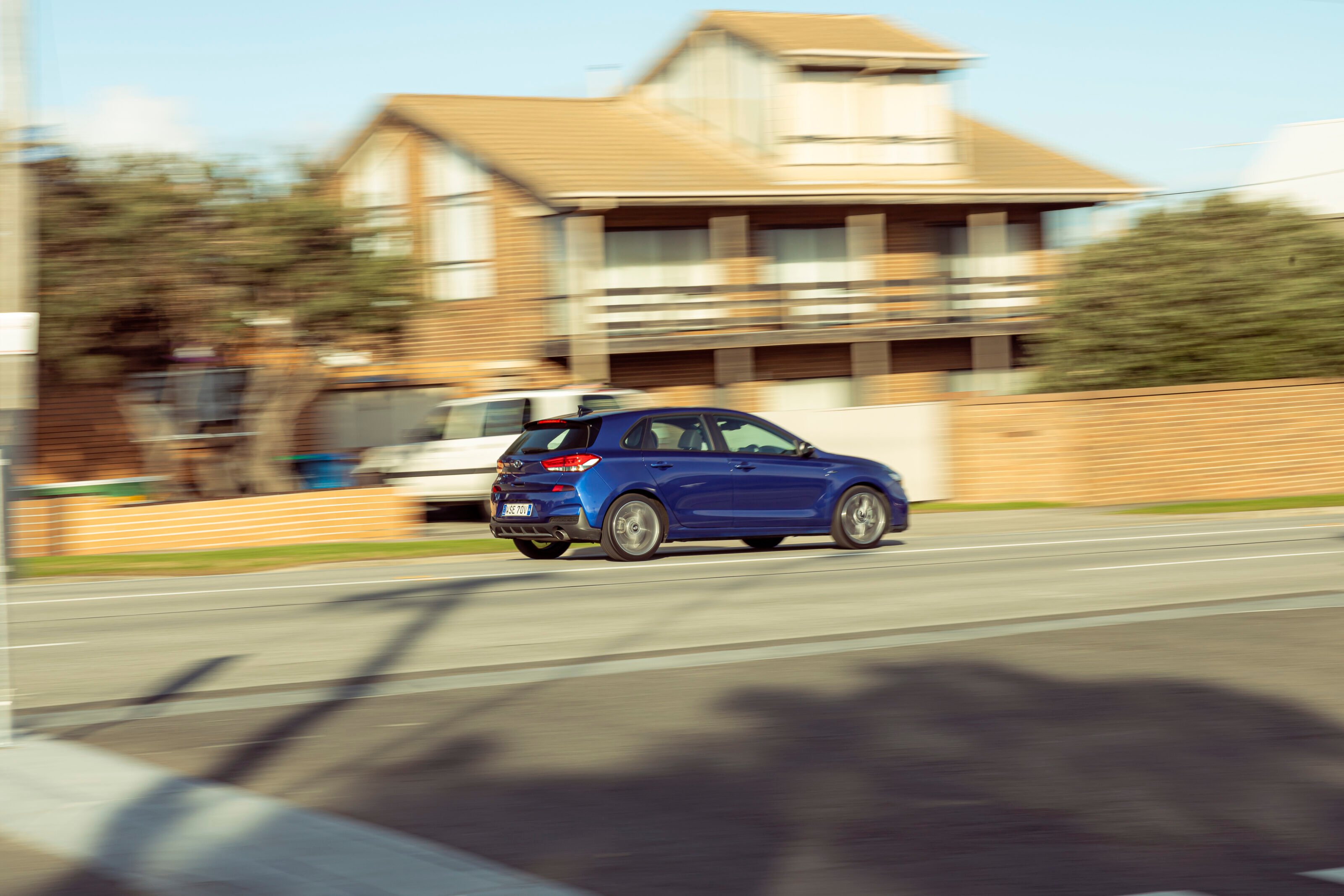
The turbocharged 1.6-litre engine, unique to the N-Line among the i30 range, produces a respectable 150kW at 6000rpm and a peak of 265Nm from as little as 1500rpm. It’s not the most charismatic unit around, with an agreeable buzzing engine note, but it’s tremendously effective.
A claimed 0-100km/h time of 7.5-seconds is decent for the class and there’s genuine fun to be found in sprightly zipping around town. The throttle is alert and responsive, with good powertrain calibration between the engine and gearbox.
There are some hiccups from the transmission at low speeds in the lower gears but, once up to a cruise, it’s a smooth and intuitive unit that will happily climb up and down cogs as needed.
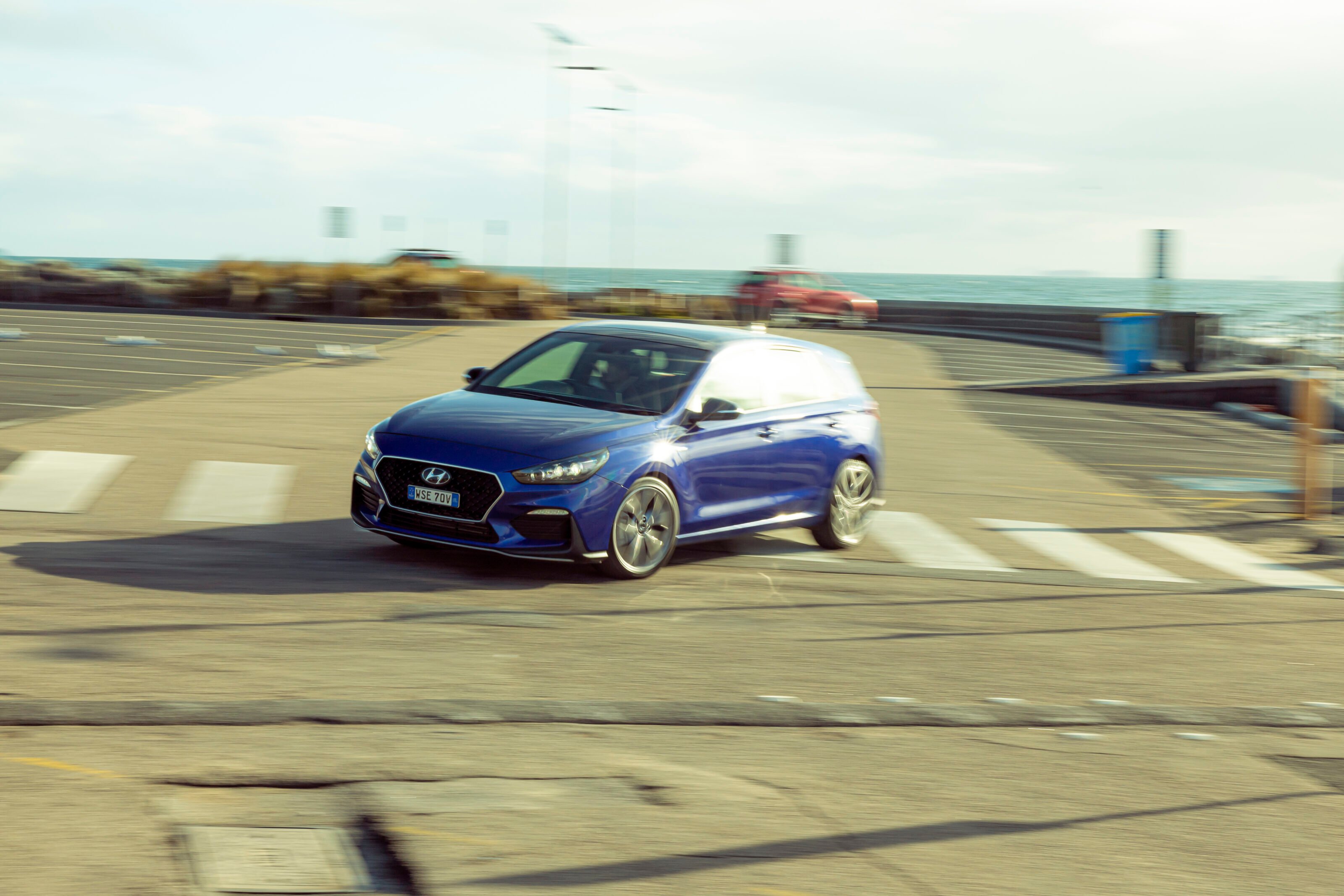
The N-Line’s sporty positioning has it fitted with stiffer springs that ride 5mm lower than the pedestrian i30 variants. Matched with a localised suspension tune and Michelin Pilot Sport 4S tyres, it’s a capable and effective package that’s genuinely fun to zip around town in.
While modern electronic steering systems are trending towards a light feeling in the hands, the N-Line’s steering is direct and nicely weighted, even in the default driving mode.
The tactile steering firms up progressively in your hands as you wind and unwind lock through a corner, and communicates the front end’s grip levels with clarity. Sport mode dials up the steering weight again, perhaps needlessly so as the default mapping feels rather good.
Brakes, too, are strong and well-matched to the N-Line’s pace, with larger 305mm rotors up front.
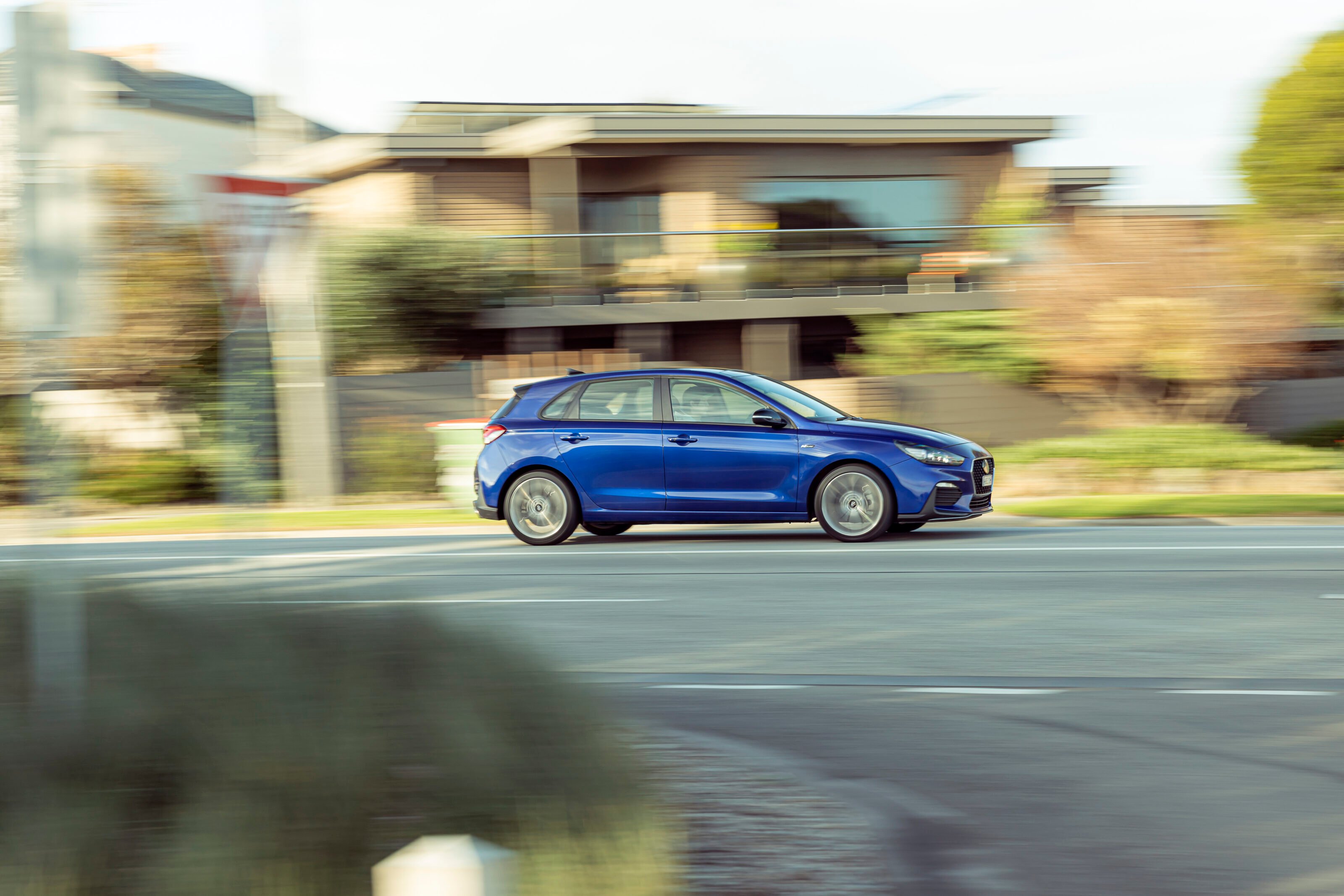
The damping has an underlying firmness that effectively mitigates body roll through corners and feels great when driving with a bit of verve. There’s sophistication there, too, with a nicely judged compression effect on large bumps with little crashing or overt harshness transferred to the driver and occupants.
Hyundai claims an official combined consumption figure of 7.5L/100km, however, our testing period registered 8.6L around town.
Ownership
All new i30s are covered by Hyundai’s five-year, unlimited-kilometre warranty, with various extra-cost schemes spanning pre-paid servicing (three years or 30,000km, four years or 40,000km and five years or 50,000km), roadside assist plans and even lifetime capped-price servicing schemes.
All new Hyundais include a complimentary 12 months of roadside assistance, which resets every time you visit a Hyundai dealership for servicing.
One downside to the N-Line’s turbocharged engine is shorter service intervals of every 12 months or 10,000km, as opposed to the 12 months/15,000km intervals of naturally aspirated variants.
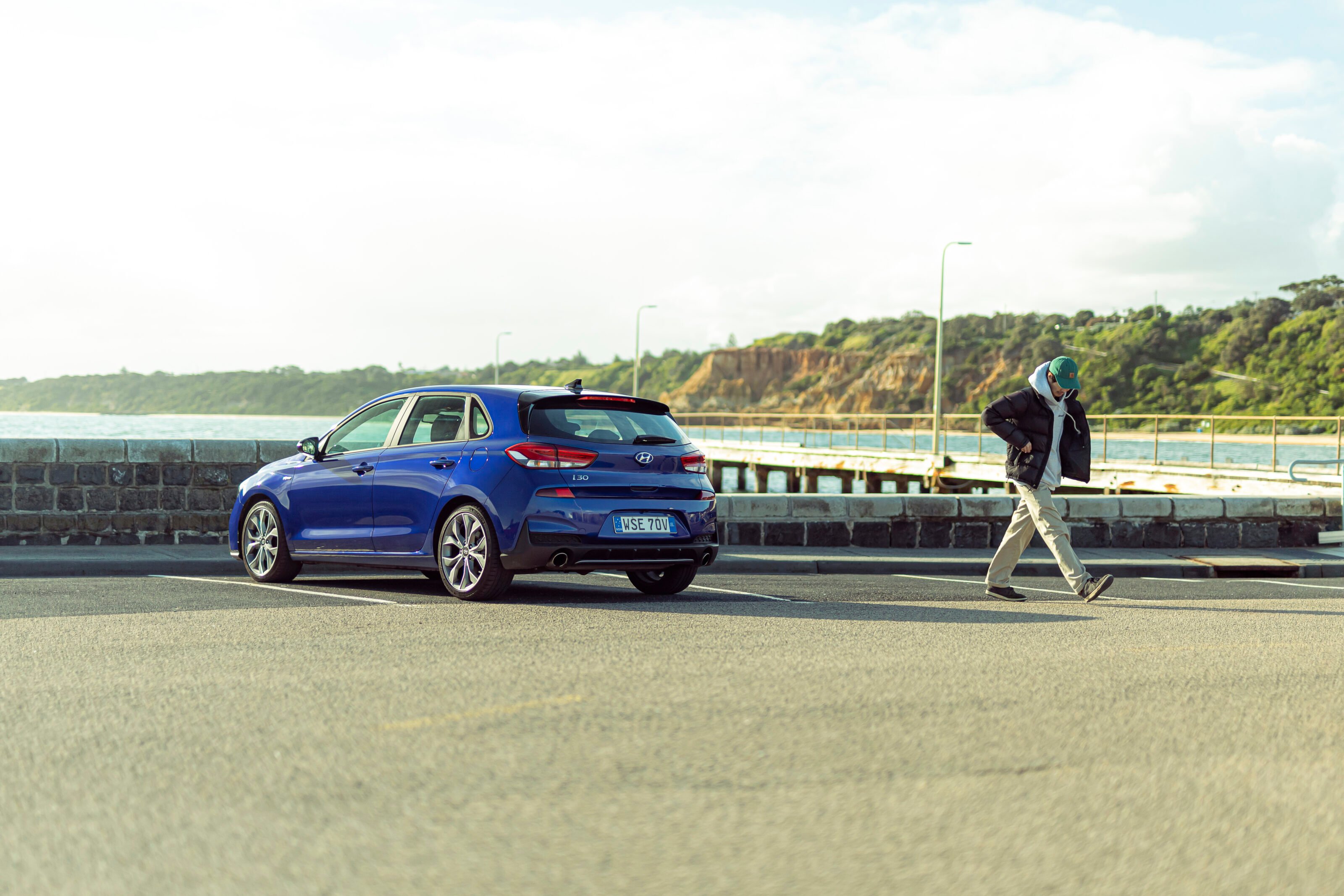
VERDICT
The 2022 Hyundai i30 N-Line remains a capable and compelling package for those who love driving. It’s not as sharp as the ballistic i30 N but cuts a finer line between daily useability, accessibility and friendliness with a genuinely fun dynamic package.
It’s an easy car to live with, particularly with the seven-speed dual-clutch, and will rarely fail to put a smile on your face. For a mid-$30K hatchback, the i30 N-Line delivers a good deal of tech and equipment and, despite there being younger rivals available, still represents a high watermark for warm hatch dynamics.
As a deeply considered package geared towards the discerning driving enthusiast, it more than delivers more than an air of Namyang magic for a significant cost saving.
2022 Hyundai i30 N-Line Premium hatch DCT specifications
| Specification | Value |
|---|---|
| Body | five-door, five-seat hatch |
| Drive | front-drive |
| Engine | 1591cc inline-4, DOHC, 16v, turbo |
| Bore/Stroke | 75.6mm x 89.0mm |
| Compression | 10:01 |
| Power | 150kW @ 6000rpm |
| Torque | 265Nm @ 1500-4500rpm |
| Fuel Consumption | 8.6L/100km |
| Weight | 1344kg |
| Power/Weight | 112kW/tonne |
| Transmission | 7-speed dual-clutch |
| Suspension | Strut, coil spring, anti-roll (f); multi-links, coil spring, anti-roll ® |
| L/W/H | 4345mm/1795mm/1453mm |
| Wheelbase | 2650mm |
| Tracks | 1549mm/1563mm |
| Steering | electrically-assisted rack-and-pinion |
| Brakes | 305mm ventilated disc, single-piston caliper (f); 284mm solid disc, single-piston floating caliper |
| Wheels | 18 x 7.5-inch |
| Tyres | 225/40 R18, Michelin Pilot Sport 4S |
| Price | $36,220 |
Snapshot
- M3 Touring boasts 1510 litre boot capacity
- Australian examples to be sold in Competition xDrive trim
- Local launch set for the first quarter of 2023
A BMW M3 Touring in Australia?
Yep, that’s right. Just a few months after its official unveiling at the Goodwood Festival of Speed, the first-ever (production) wagon version of the BMW M3 has arrived Down Under.
It’s a right-hooker, too, but you can park those dreams of taking it for a spin – this is one of the first examples to roll off the production line and it’s not registered. Instead it’ll be part of a BMW roadshow over the coming months.
So no driving time, yet, but before this car embarks on its promo duties, we did get a chance to grab a closer look. And BMW shared a few details about the Aussie spec…
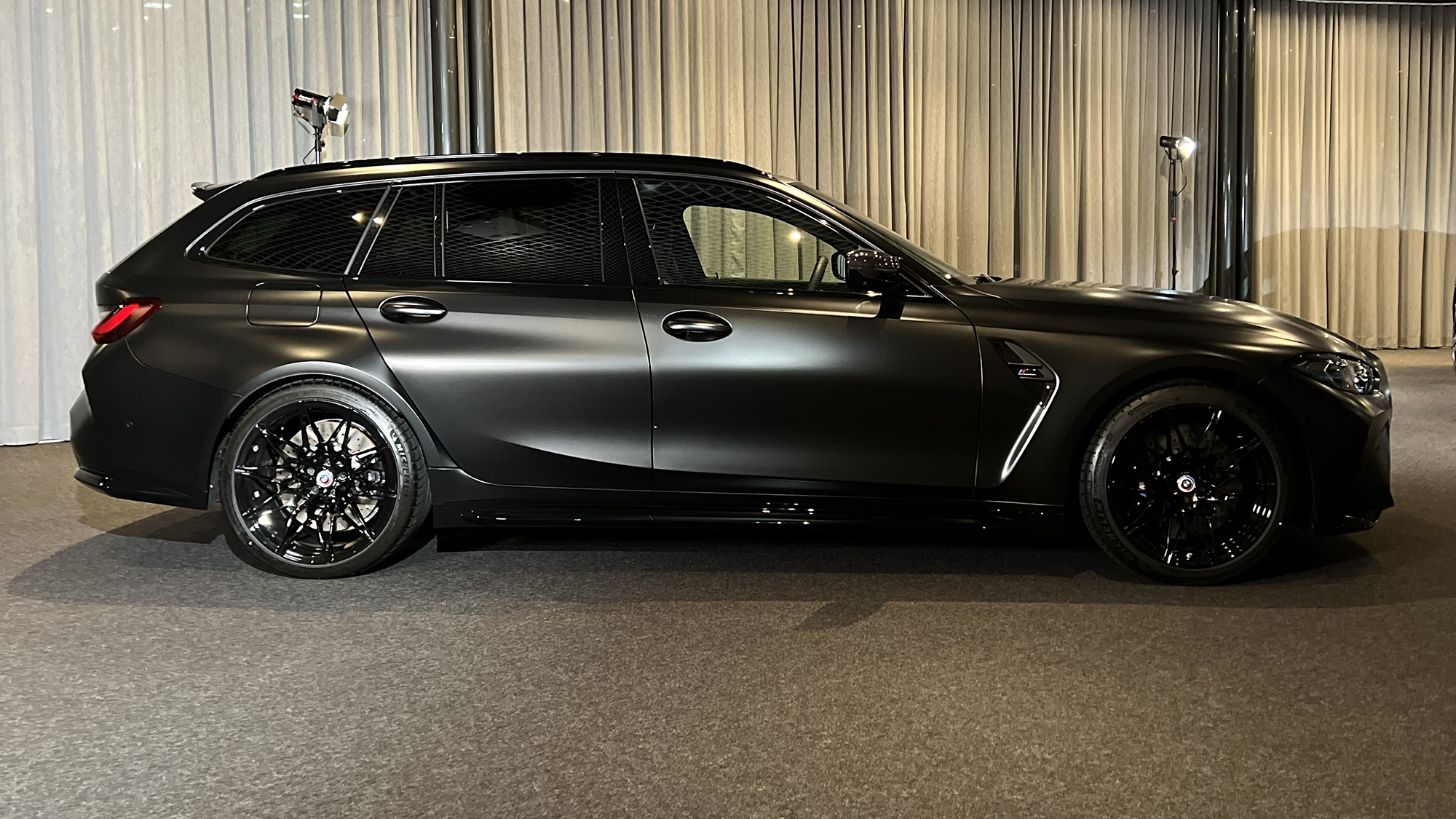
First impressions? It’s angry, isn’t it? This is the first ever M3 wagon and all I can think as I drink in the bulging rear guards and aggressive rear diffuser is, what took them so long?
The proportions, the longer glasshouse, the way the rear 20-inch alloys sit in the guards when viewed from the rear three quarter…. It just looks ’right’.
And in this ‘murdered out’ spec of frozen black with a black interior, it’s pretty sinister too. The best looking variant in the current M3/M4 range? I reckon this is it. (Nah, it’s the Twilight Purple – Mike.)
A couple of things to point out
The M3 Touring officially goes on sale early next year and is only available in top-spec Competition guise. It’s also be AWD only and there’s one choice for the transmission: an eight-speed automatic.
BMW is remaining tight-lipped on pricing for now, but did confirm our guess of around $180K was in the right ballpark. Aussie Tourings are also about 85kg heavier than an equivalent M3 sedan, but they should be just as capable to drive thanks to boosted strengthening and firmer springs/dampers at the rear.
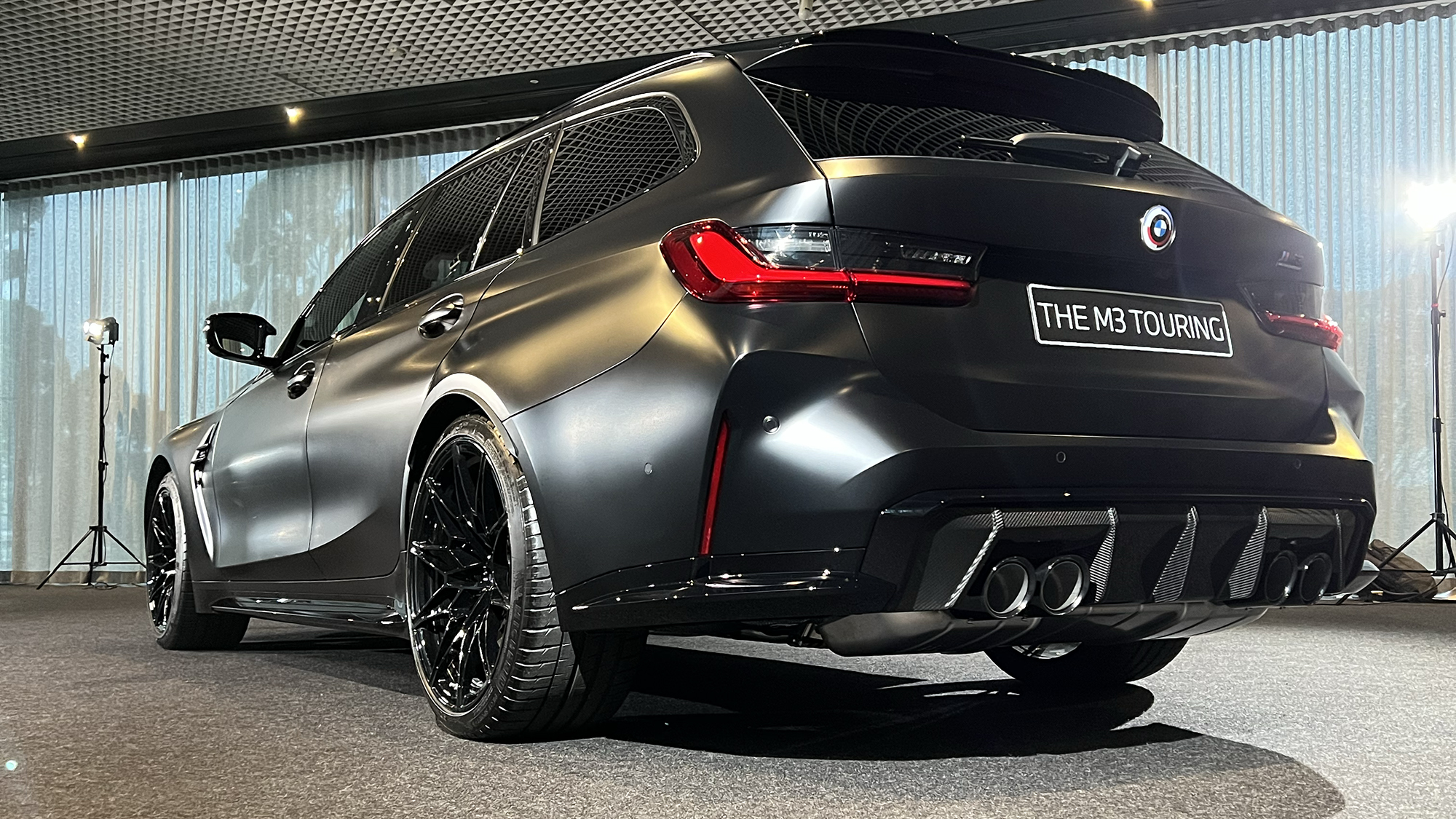
Interior options will include carbon bucket seats that save 12kg and include cut-out sections behind your kidneys.
Also likely to be optional? The carbon exterior details (mirrors, skirts, diffuser) are expected to form pack of a ‘carbon pack’. A final exterior detail worth noting: If you order your Touring this year it will wear the special white ‘M at 50’ badges.
Watch the video for a closer look at the exterior and cabin, but here’s something to ponder…
Is this the most compelling fast family car of 2022?
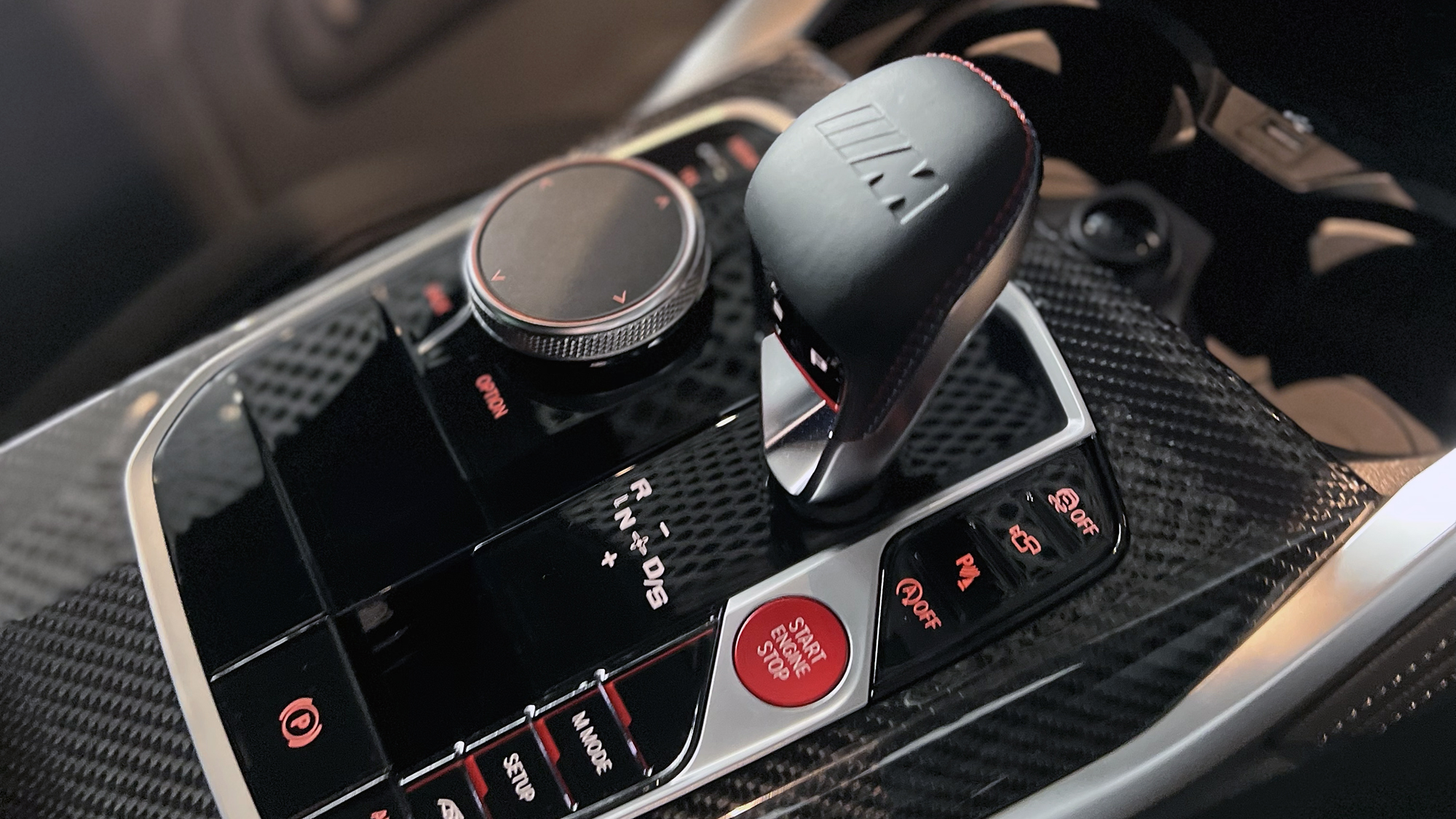
It also, and hear me out on this one, might just be the ultimate M3. Passionate Bimmer heads are likely already spluttering “But what about the E46!?”.
My response? Good luck fitting the kids, the dog and a pair of golf bags in an E46, which is a coupe only.
We’ll know more about pricing and spec closer to the M3 Touring’s official on sale date, but even without driving it, it’s hard to argue that this is probably the variant to buy.
