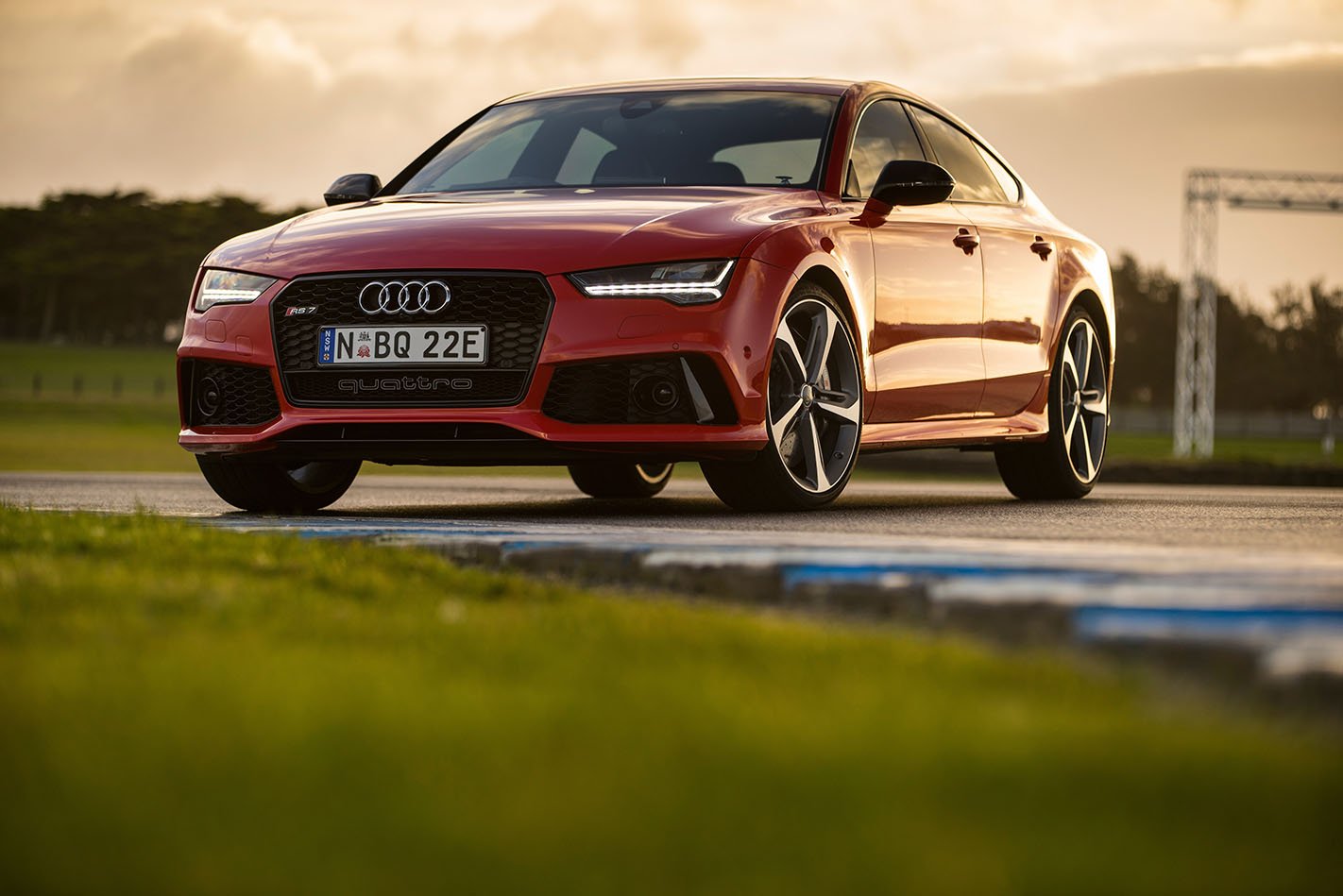
General Motors Special Vehicles, the brand risen from the ashes of HSV, has locked in Corvette and is eyeing the return of a cheaper Camaro as it looks to protect and grow the American muscle-car pipeline to Australia.
The Corvette is set to be priced at $149,990 when the mid-engined V8 Ferrari-fighter lands in Australia late 2021.
The price has been adjusted up to suit demand, which has been strong since local RHD availability was confirmed.
Wheels has learned the mid-engine C8 Corvette will be imported in strictly limited numbers of no more than 200 a year.
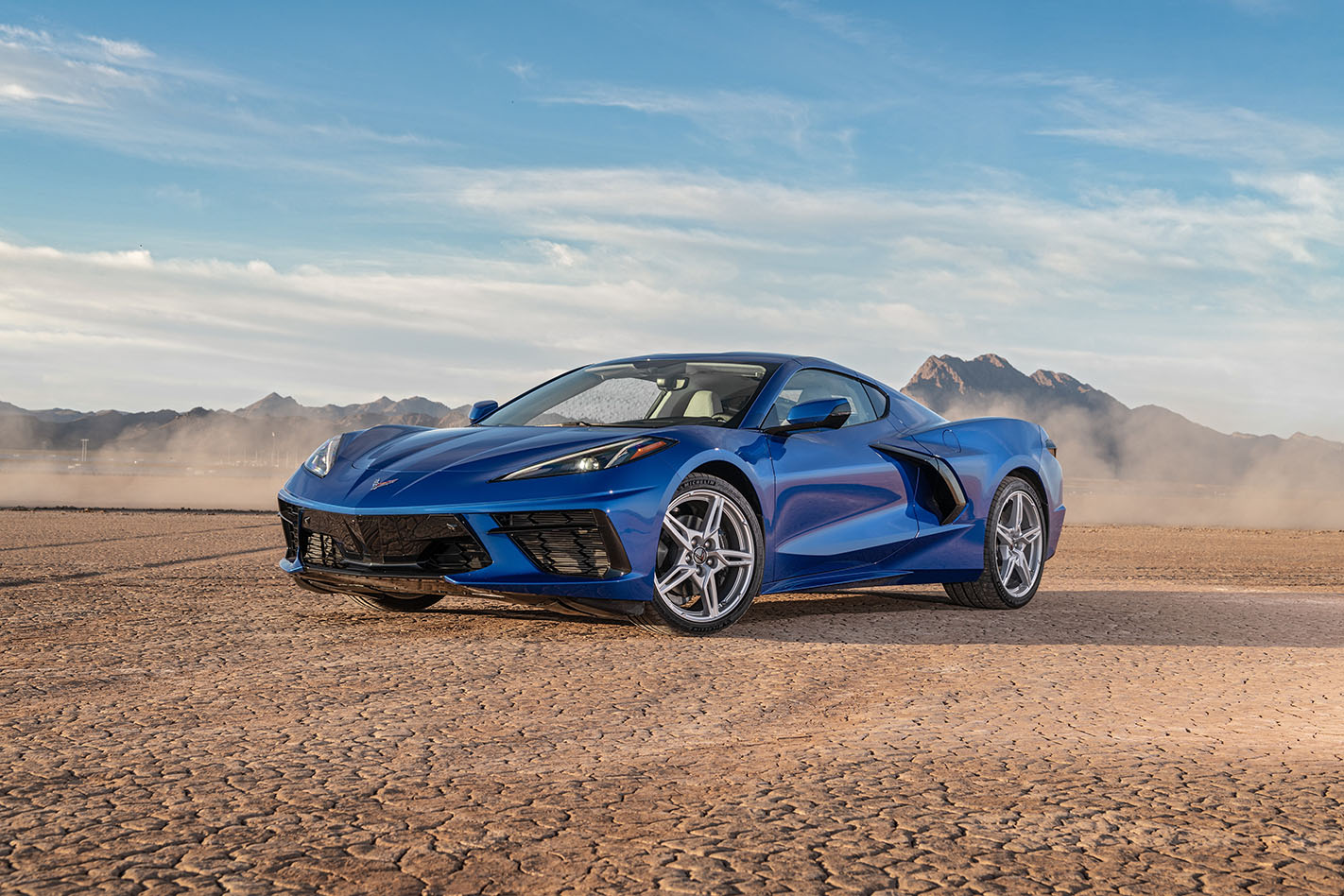
We believe it was originally pitched at $129,990 when Holden management was in charge, but since the creation of importer GMSV, it has been lifted to $149,990.
Higher performance versions will follow priced close to $200,000 – still a bargain for the massive performance on offer, and compared to Ferrari and Lamborghini rivals.
The C8 Corvette will be the showcase model of GM Speciality Vehicles, which is replacing Holden, and the only factory-made right-hand-drive GM model exported to Australia.
Chevrolet Silverados and other GM SUVs will be converted to RHD by the Walkinshaw Automotive Group, formerly producer of Holden Commodore-based HSVs.
The Chevrolet Camaro is also set for a comeback as a WAG ‘remanufactured’ model.
GMSV is also looking at local conversions of other GM SUVs, including Cadillacs, though Cadillac sedans, even V8 models, have been ruled out because of rapidly declining demand for performance four-door sedans.
According to informed sources, GMSV has plans to import the Chevy Tahoe SUV and Suburban multi-seater, which are based on the same architecture as the Silverado.
The Cadillac Escalade is a contender for the same reason. Its ‘gangsta rapper’ appeal is also a factor.
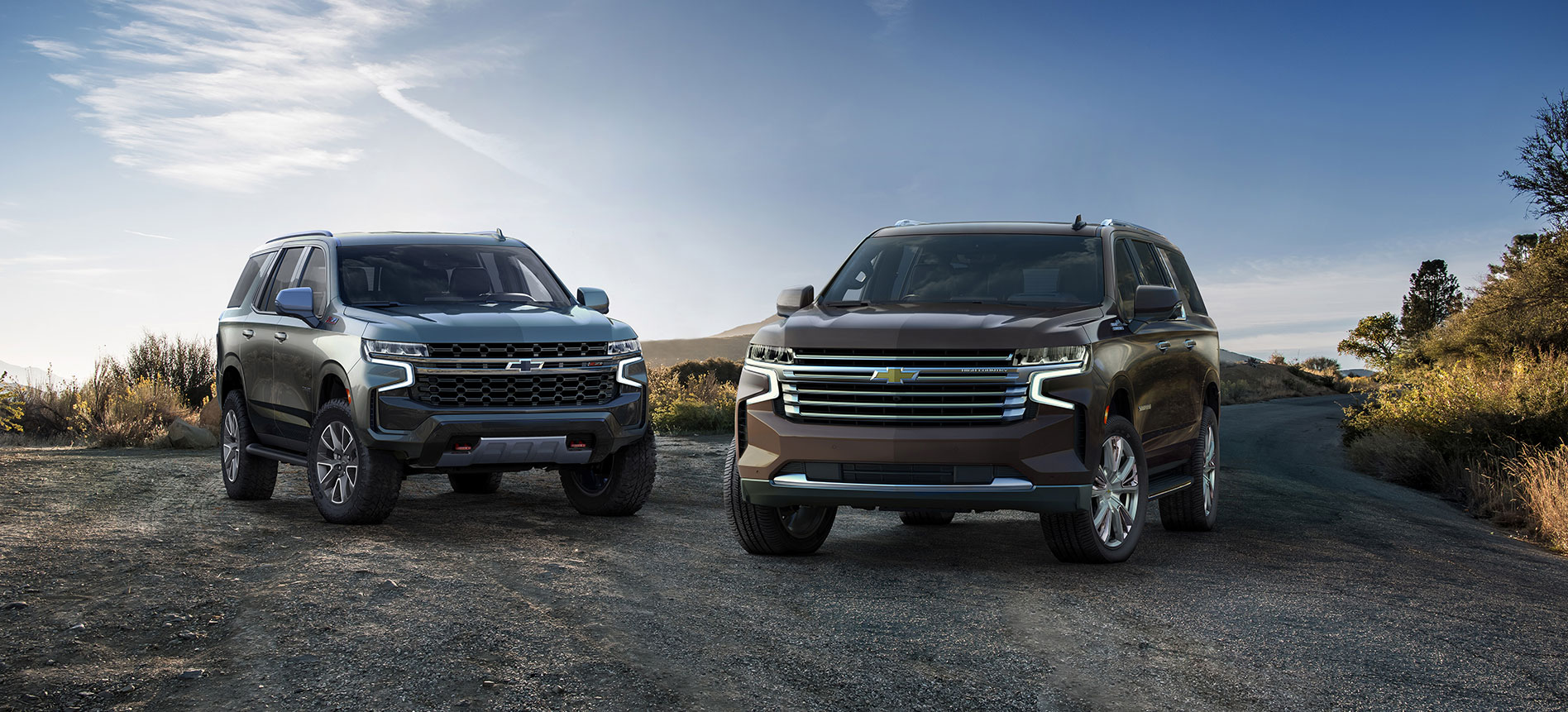
Local RHD conversions of Silverado-based big trucks would be enhanced by preferential transaction rates, while cheaper imports would also help the reintroduction of Camaros.
RHD conversions of Camaro SS and ZL1 have finished, but the V8-powered coupe could win a local reprieve because its life has been extended.
Wheels understands the end date of the current Camaro – which will be the basis of GM’s 2022 Supercars racer – has been pushed out from 2024 to 2026.
GMSV is looking at reintroducing RHD-converted Camaros in both SS and ZL1 spec as soon as 2021 ahead of competing against arch-rival Ford Mustangs in Supercars in 2022 under the new Gen3 rules.
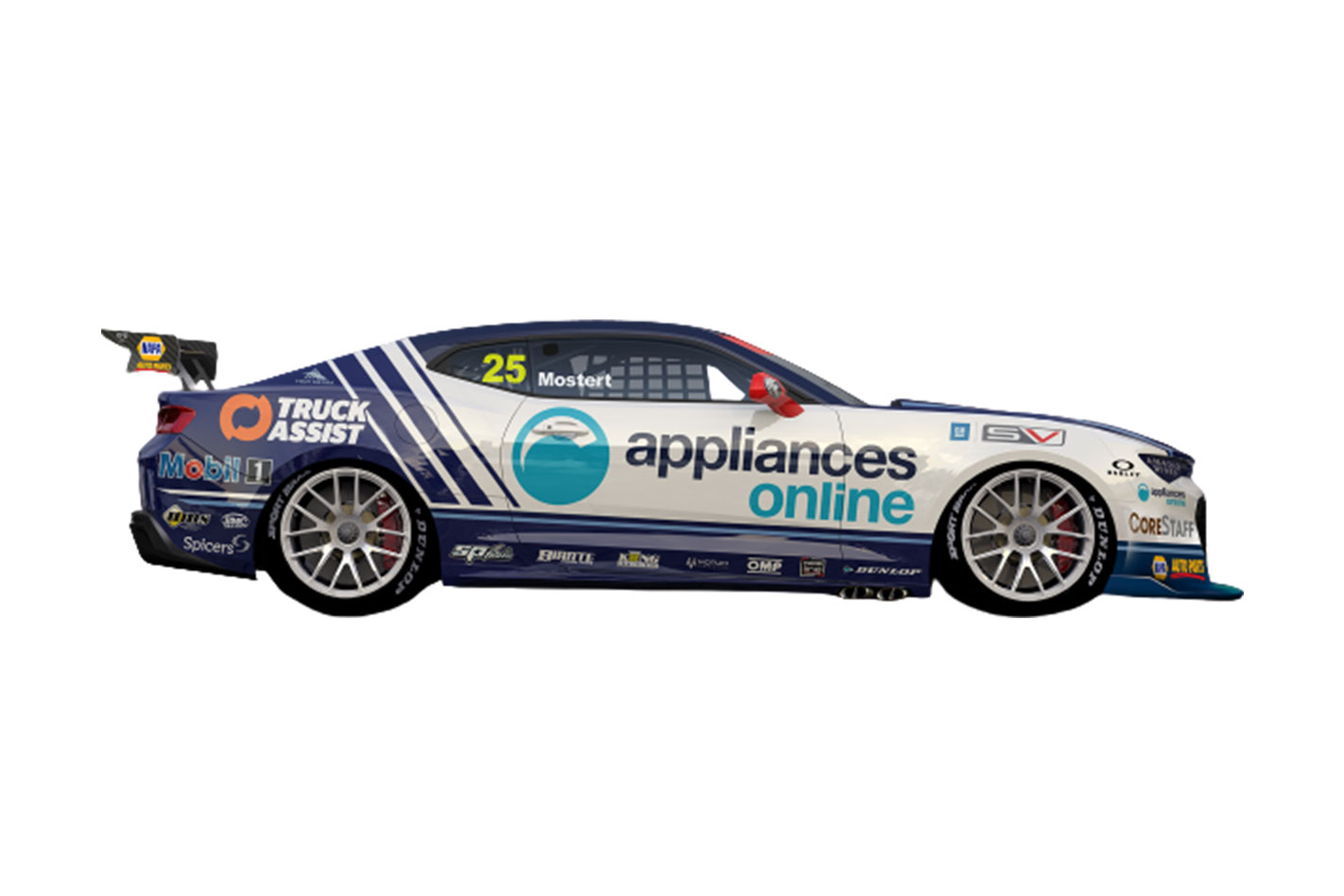
Under the GMSV umbrella, the Camaro should be much cheaper because of a better exchange rate deal with GM in Detroit.
More competitive pricing would put it on a closer par with the factory-direct RHD Ford Mustang, the world’s best-selling ‘sports car’.
Before the Camaro, the Tahoe and Suburban are next on the conversion list.
GMSV is also looking at importing and converting the GMC Hummer EV pick-up, which local sources think has great potential.
The Christmas/New Year period should be a good time to snare a good deal on a new car, with dealers looking to clear their inventory to make way for new model-year stock.
However, December/January is actually a time of high demand because people like starting the year with a new set of wheels and use their holiday time to shop around.
One car salesman, who didn’t want to be named, told WhichCar the Christmas period also puts people in a spending mood which keeps car dealers busy until February, meaning there’s no incentive for them to move on price particularly with brand-new or popular models.
That’s not to say there aren’t bargains out there, you just shouldn’t assume you’ll automatically have the upper hand when it comes to trying to land a good deal.
If you’re keen to get a Christmas/New Year bargain, look for dealer or manufacturer incentives such runout sales, ex-demonstrator models, or plate clearances.
“Buy when factory support is strongest,” says the anonymous salesman. “Watch out for incentive deals, especially low or zero percent finance if you’re borrowing to purchase the car.”
According to the car salesman, one of the best times to buy a car in Australia, apart from end of financial year (EOFY), is September.
“Last few days of September are usually the best, due to low foot traffic and willingness of dealers to move stock. Many dealerships have slim margins on September trading knowing they’ll make it back in November and December.
“The bottom line is, if you’ve already missed the boat by now you’ll have to wait until EOFY deals for your next chance for a bargain.”
If shopping for a car around Christmas make sure you do your homework, so you know about any recent updates and the key differences between the model years.
Most cars are already being sold as 2021 model year (MY21) even though they were built in 2020. In some cases they might look the same, but have had some significant equipment upgrades such as the inclusion of automatic emergency braking, updated infotainment and even improved performance.
Will Covid-19 make a difference this year?
There is no doubt that the coronavirus has had a big impact on car sales, which were already trending down. But November 2020 sales were up over previous months after the country emerged from lockdown.
That trend is likely to continue throughout the holiday period as consumer sentiment rises and the people fortunate to continue working through 2020 look to spend the money they saved by not being able to travel or do other non-essential things.
Where you might get lucky with a bargain is with any MY20 stock that was unable to be moved before the 2021 models arrived.
Ready to secure a deal, here are some mistakes you need to avoid when buying a new car.
In a world of SUV mania, Kia’s Stinger has been a breath of fresh air – and a surprisingly decent seller – for the brand in Australia – but a return for a second generation seems to be a matter of conjecture within the company.
Launched to much fanfare in 2017, the Kia Stinger has sold in numbers that belie its four-door sports saloon status in a market that still runs hot for anything with a tailgate and extra ride height.
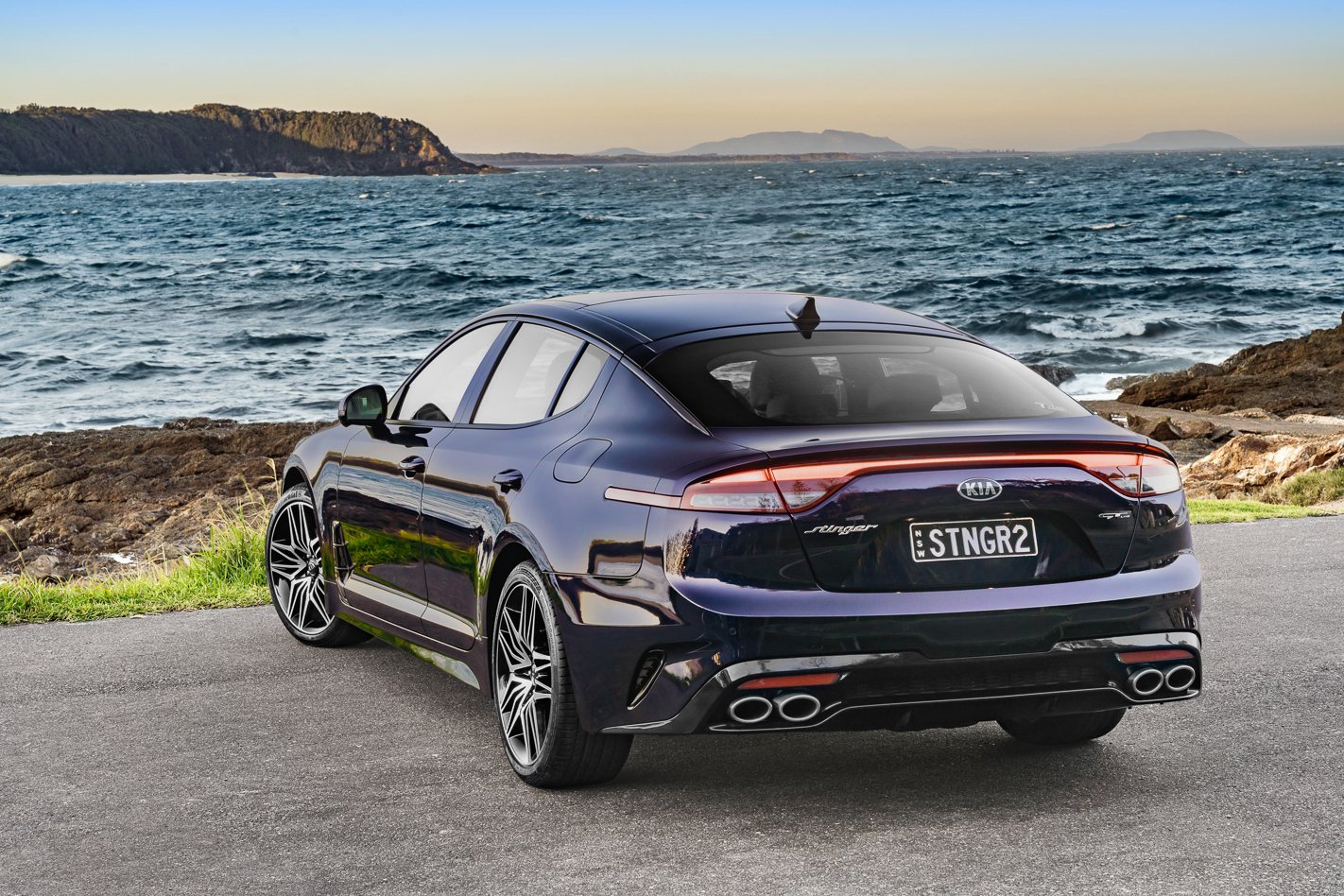
The 274kW/510Nm 3.3-litre twin-turbo V6-powered GT has been the darling of the four-variant lineup, but there was a surprise in the spec sheets for the 2021 update, with the 182kW 2.0-litre four-cylinder turbocharged engine carrying on for another year.
There were suggestions that an updated version packing 224kW might find its way under the bonnet – but given that more than 80 per cent of Stinger sales go to the $60,990 GT, it’s not that surprising that the status quo has been kept.
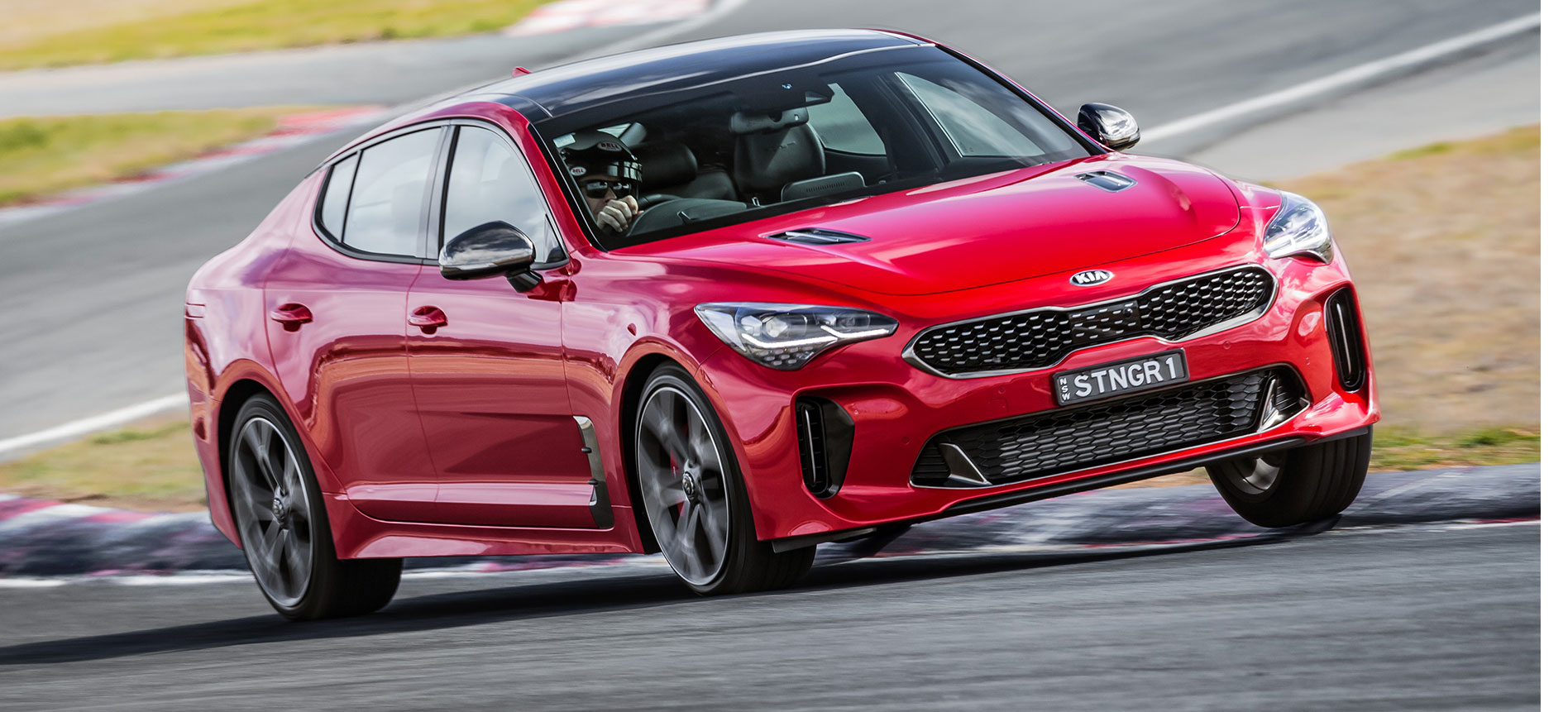
However, a recent conversation with Kia Australia’s chief operating officer was less than illuminating when it came to discussing a second generation of the Kia Stinger for Australia.
“I’m not quite sure what happens with Stinger, but if there isn’t – and I’m not quite sure if the answer is yes or no – we’ll stockpile two or three years!” he laughed, when asked about a second-generation car.
“It’s been great for us and we’d love for it to continue.”
A relatively specialist car like the Stinger can afford to have a longer run between generations, and even though the Stinger is nearing its seventh birthday in its current form, its platform can support the most up-to-date safety and emissions technologies.
As well, Australia’s annual contribution of around 1600 cars a year isn’t enough on its own to guarantee a return match; Kia will look to its other markets – in particular, the US – to ensure that a second-generation Stinger is viable.
If a second-generation car is inbound, we’d expect to see spy shots of a new Kia Stinger starting to do the rounds next year, so watch this space.
Hot hatches have long aimed for real-world usability alongside heart-pumping performance… but the Mini Cooper JCW GP laughs in the face of such nonsense.
Practicality, comfort and convenience? Hah! They’re just distractions on the path to going really fast in Mini’s view.
Just as well, then, that the latest iteration of the Mini GP is the most powerful, fastest Mini ever made.
What is the Mini JCW GP?
The $63,900 GP is the third time Mini has created a hardcore, track-ready hero based upon the Mini John Cooper Works, not deviating too far from the formula set by its 2006 GP1 and 2013 GP2 forebears.
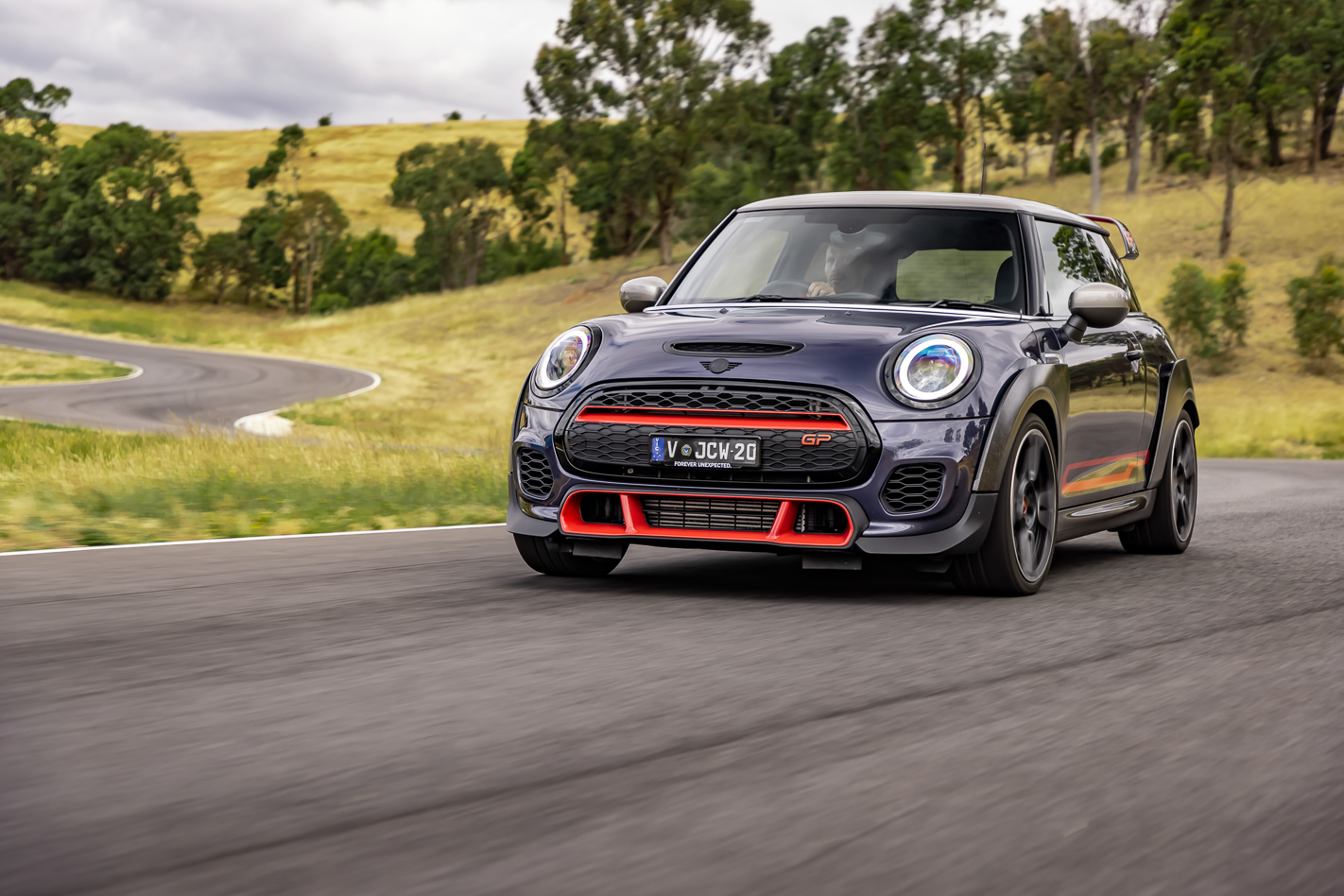
That GP recipe is simple on the face of it; add power, subtract weight and big-up the aero, in much the same way that the Porsche 911 GT3 goes above and beyond the regular 911.
But there’s a lot of nuance underneath the wild bodywork and eye-catching paint scheme.
Price and specs
It raises the bar through a laundry-list full of special additions, starting with the 2.0-litre turbo four-cylinder motor that’s borrowed from its M135i step-sibling.
Over the standard JCW’s powerplant, upgrades include a reinforced crankshaft, a larger oil sump, a redesigned intake and exhaust and numerous new cooling measures which add up to a substantial 55kW boost in power.
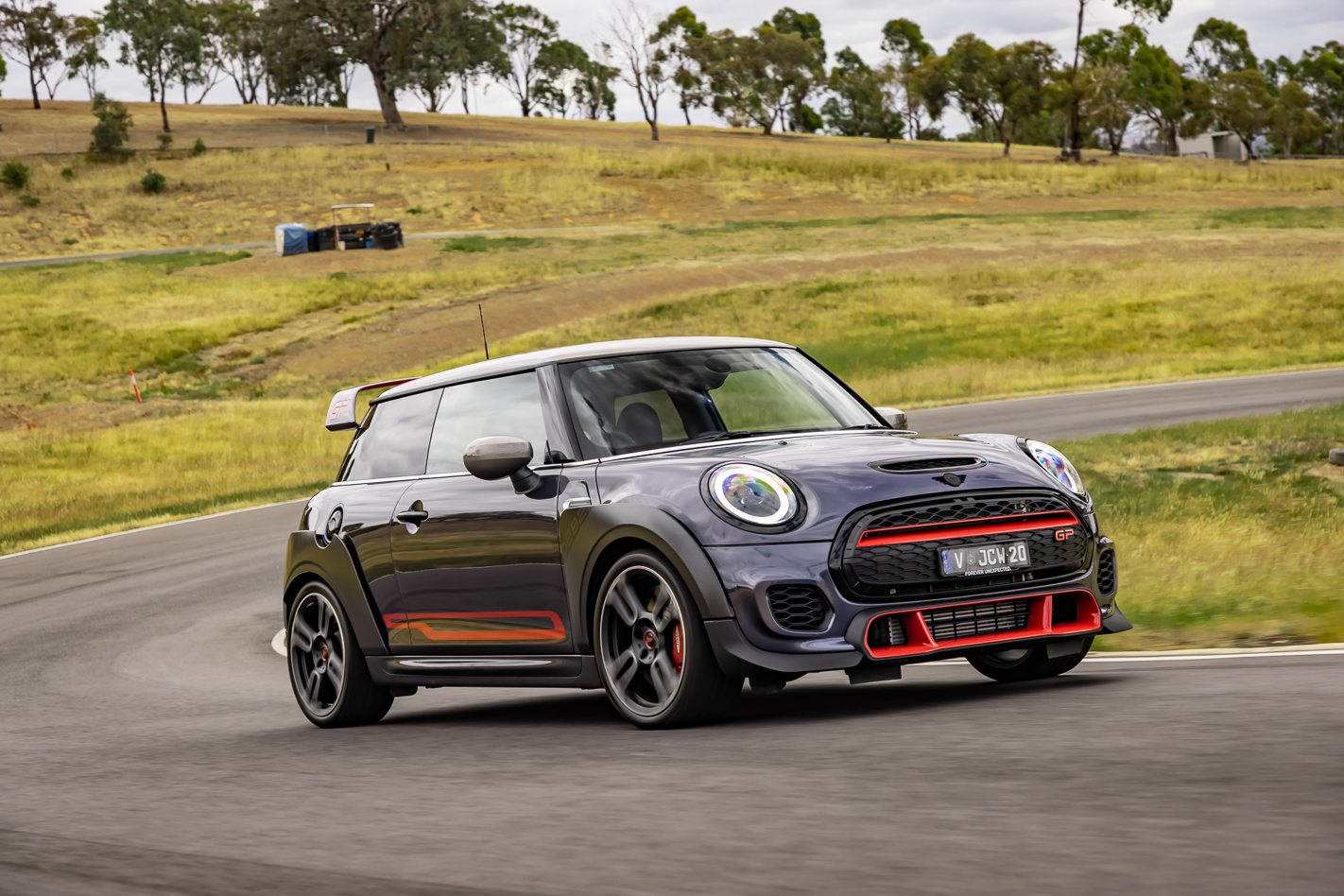
All-in, the Mini GP sends 225kW/450Nm to the front wheels. A notable change for the GP, though, is the use of an eight-speed automatic rather than the manual-only affair we’ve come to expect.
It’s a symptom of parts-bin raiding – the engine is mated with that particular transmission in BMW’s world, and a late-life refresh of a Mini wasn’t going to warrant the expense of engineering a manual gearbox into the mix.
Its ease of use aids its 5.2-second run to 100km/h and it goes on to a physics-limited 265km/h top speed – but it’s a polarising addition to such a focused car.
Elsewhere, the changes continue. The rear seats are thrown out, a Torsen mechanical locking differential is added, and bracing is installed in the engine bay and boot (though the latter is to simply hold luggage in place).
It gets a bespoke fixed suspension tune, too, with lighter single-joint MacPherson struts at the front and a multi-link axle at the rear, track widths are increased and it’s 10 millimetres lower compared to the standard JCW.
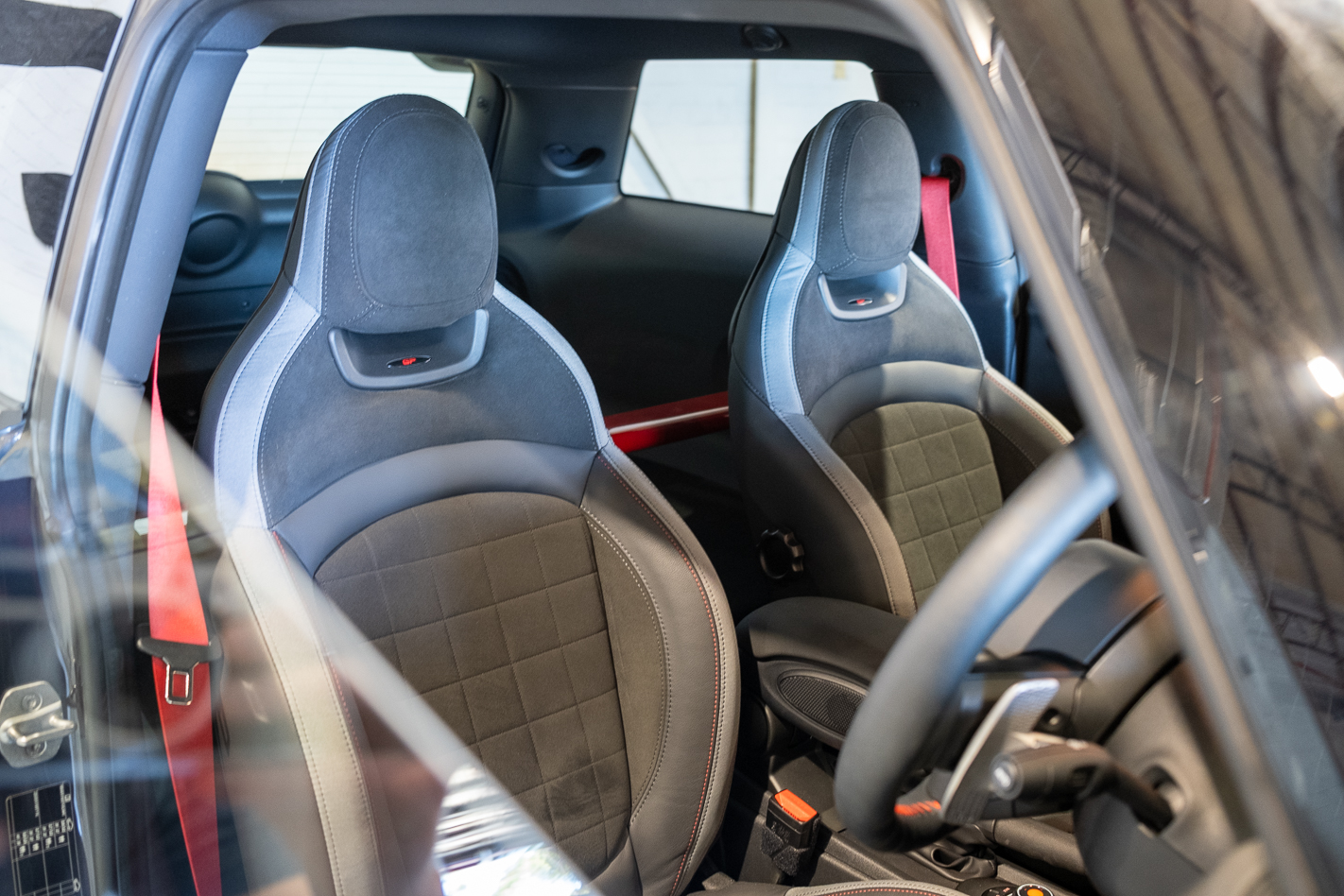
Those stand-out carbon-fibre reinforced plastic wheel arch flares were fished out of the BMW i3 and i8 parts bin and hide a set of four-spoke 18-inch lightweight wheels wrapped in a specially-developed 225mm wide Hankook Ventus S1 Evo tyre.
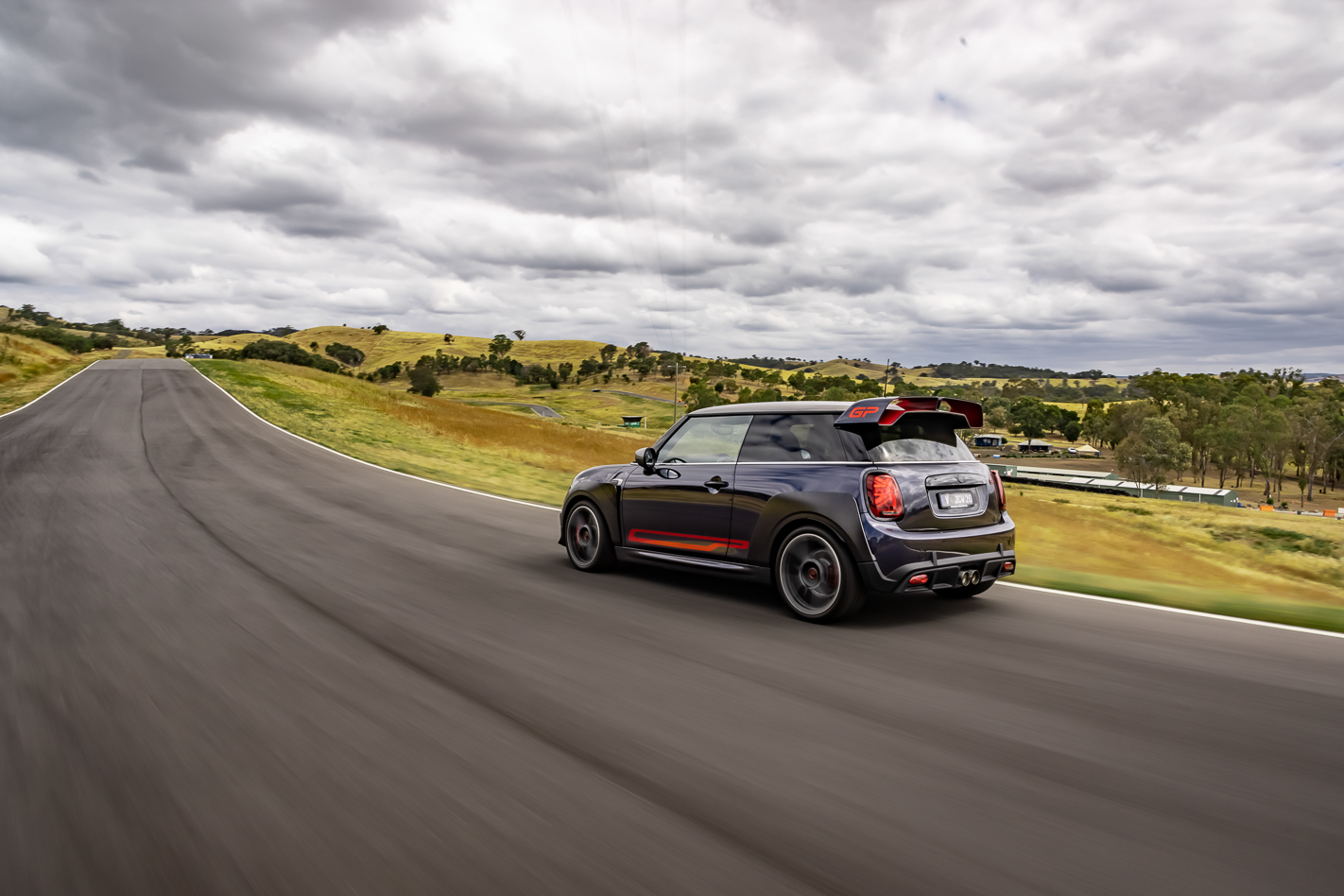
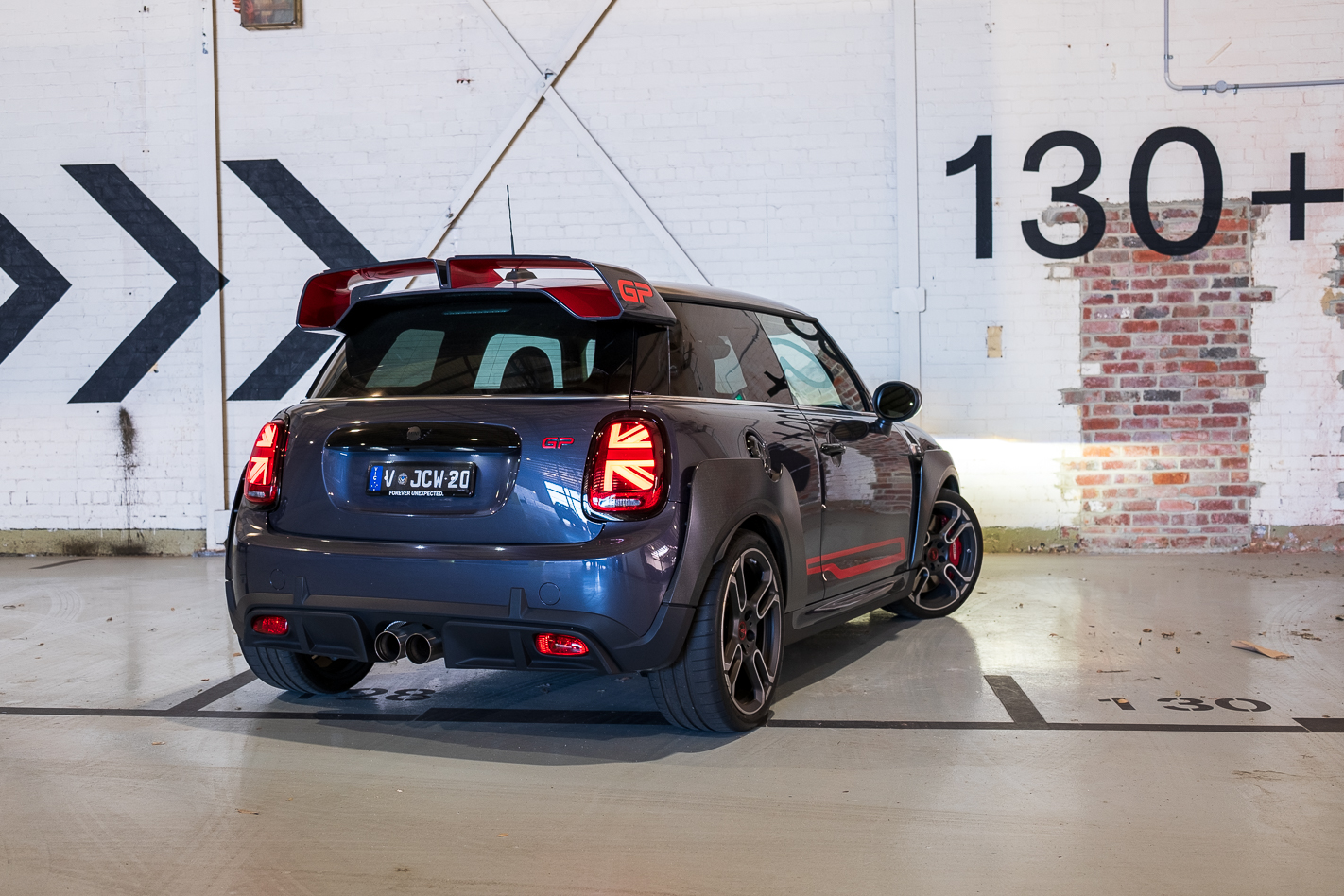
To set the Mini GP’s looks apart from its siblings it scores a large rear wing, a GP-specific bodykit with red accenting, 3D-printed trim inscribed with the car’s build number and GP badging throughout.
It all makes the GP feel very racey, though the omission of a set of dedicated fixed-back bucket seats is an oddity in an otherwise focused cabin.
It even bins daily practicalities like the reverse camera, parking sensors, radar cruise control and rear window wiper on its way to a 75-kilogram weight saving over the JCW.
A manual gearbox, though, could have saved another 30kg…
Driving the Mini JCW GP
Fire the GP up for the first time and the coarse exhaust note fills the sparse cabin with noise, hinting at rowdy times ahead.
The real character comes when on the move, though, with a raunchy roar under high load emanating from the twin 90mm wide stainless steel exhaust outlets.
While the engine might sound like a carry-over affair from parent company BMW on paper, there’s no denying it fits the character of the GP remarkably well – and it’s devastatingly effective when employed in a car with such a small stature.
Sending 225kW/450Nm through the front wheels seems like a tall order for a small hatch – and it is.
In fact, it’s the perfect recipe for an unhealthy serving of torque steer, which is pronounced and darts the GP3’s front end off line under hard acceleration.
Yet while you might not immediately go in a straight line, the mightiest of all Minis is impressively adept at putting its power down on the road, with the locking mechanical diff and grippy rubber going a long way in that department.
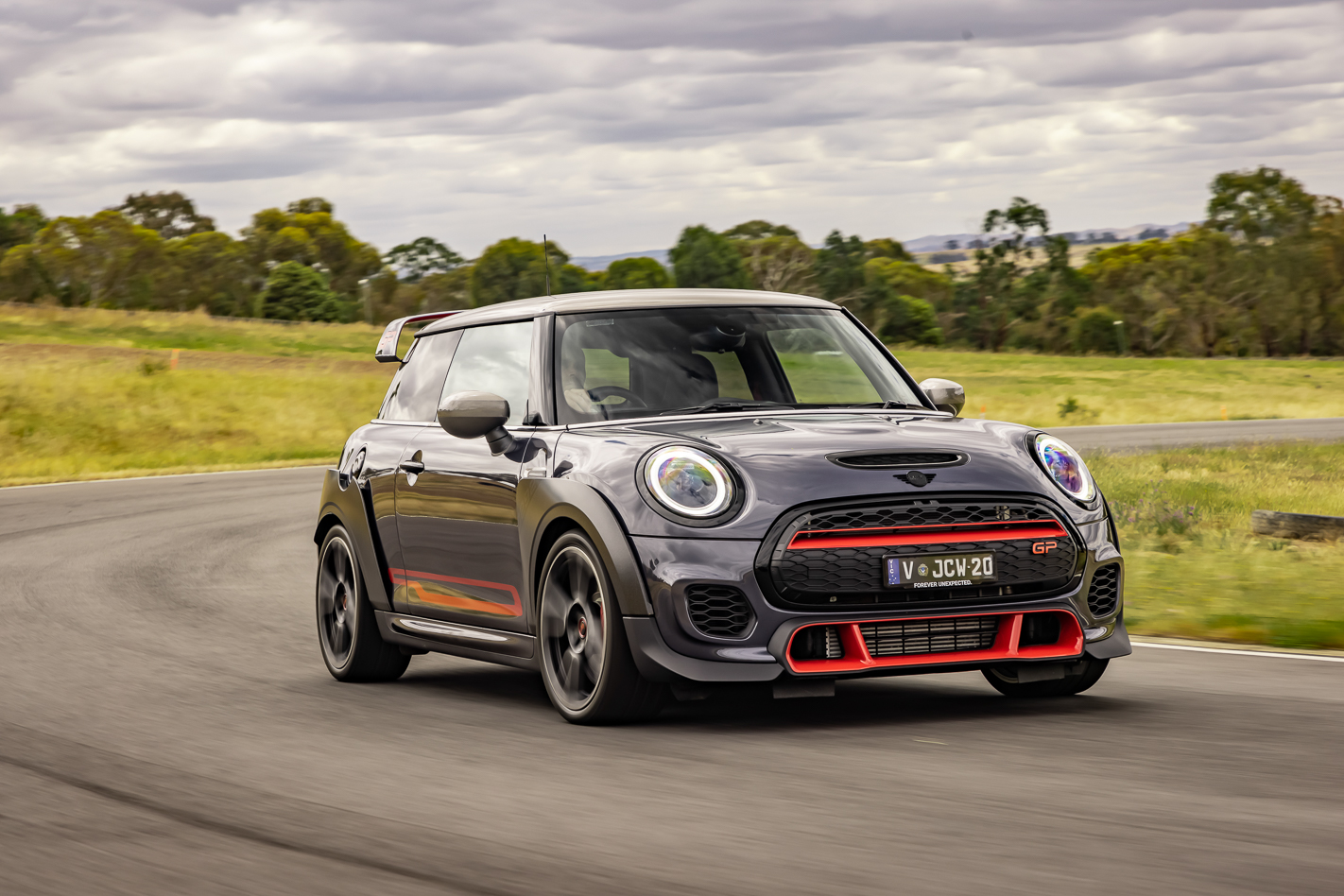
The grip continues into the corners too, the Mini devouring bends at an incredible clip without so much as a peep from its tyres.
The hefty steering weight makes for a satisfying and sharp turn-in, while delivering enough communication about what’s underfoot.
A loosened GP traction control setting is the sole switchable driving mode; otherwise, the GP is solely designed for maximum attack.
That means an unrelenting suspension tune that, while keeping the GP’s tall body impressively flat through bends and bashes obediently through mid-corner bumps, is a chore on anything but a twisty road.
That’s the price of admission when buying into a track-honed hot hatch.
Same too, the Steptronic eight-speed gearbox is deftly intuitive and rapid when driving hard, but could do with a relaxed mode for the drive home.
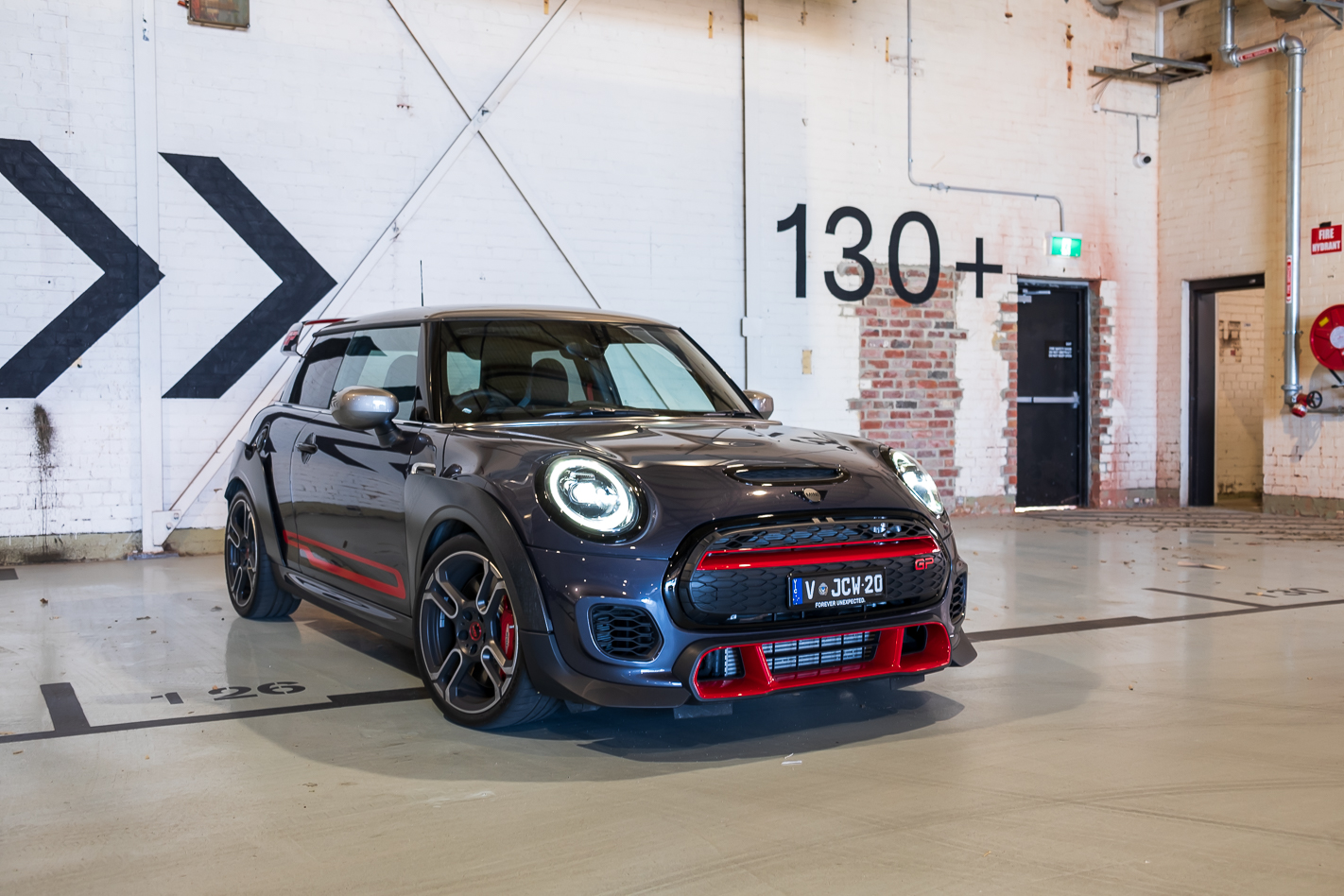
VERDICT
While it might have a one-track mind for an isolated back road or a circuit, there’s no arguing the GP means business when in such a predicament.
Savage acceleration, unyielding levels of grip and an unwavering determination to go fast are hallmarks of the latest Mini GP.
Whether other hatches like the Honda Civic Type R or Renault Megane RS Trophy can encapsulate that ability and also cater to your everyday needs is a question for another time.
4/5
Pros Grip; explosive performance; race car looks
Cons Laughable ride quality; underdone seats; auto only
Specifications Model Mini JCW GP Engine 1998cc inline-4, DOHC, 16v, turbocharger Max power 225kW @ 5000-6250rpm Max torque 450Nm @ 1750-4500rpm Transmission 8-speed automatic Weight 1255kg 0-100km/h 5.2sec (claim) Economy 10.2L/100km (tested) Price $63,900
Lamborghini has made another bespoke creation for a very keen and super-wealthy customer: this is the SC20.
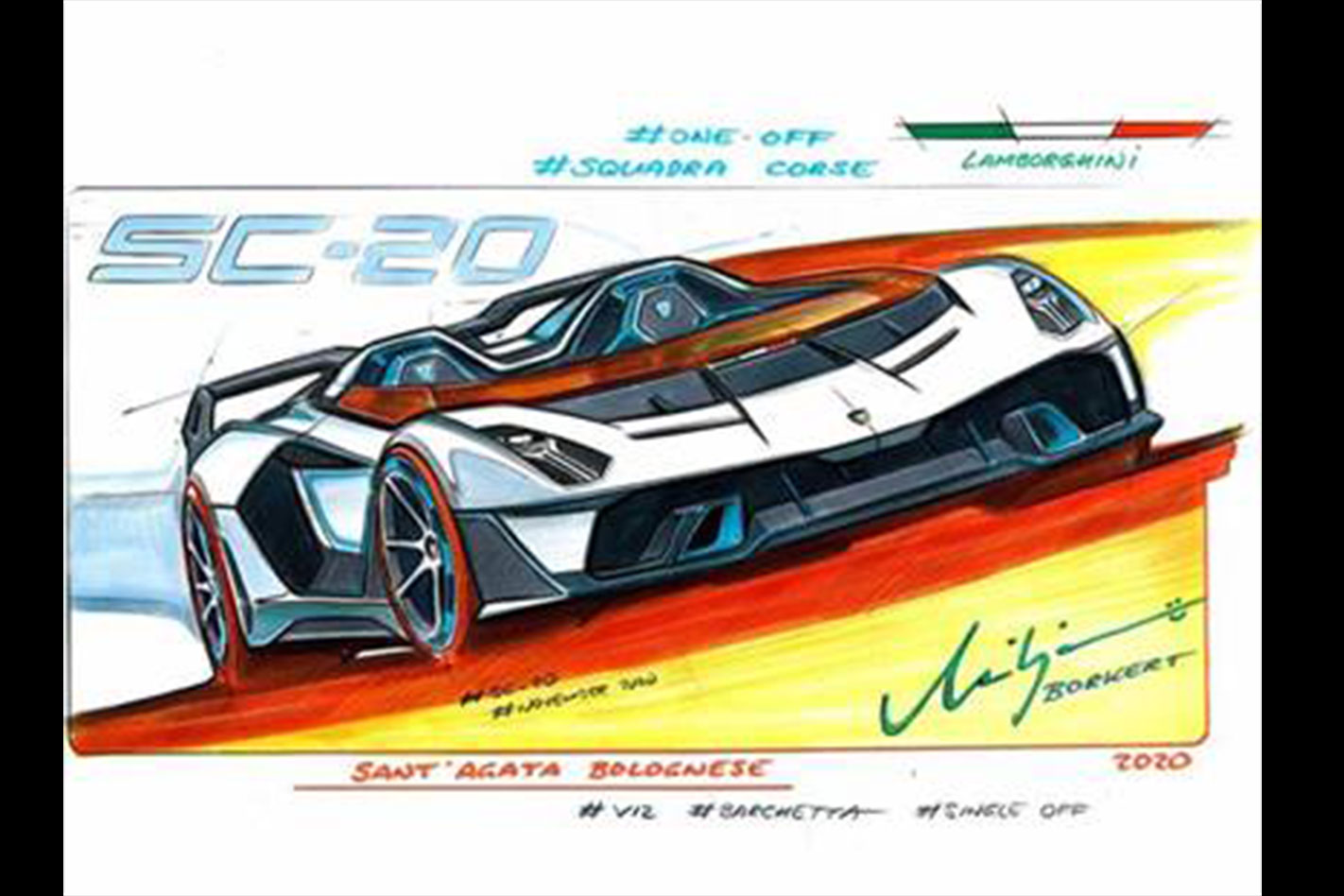
It’s the second one-off creation from the brand’s Centro Stile after the SC18, and a follow-up to motorsport department Squadra Corse’s Essenza SCV12 track weapon.
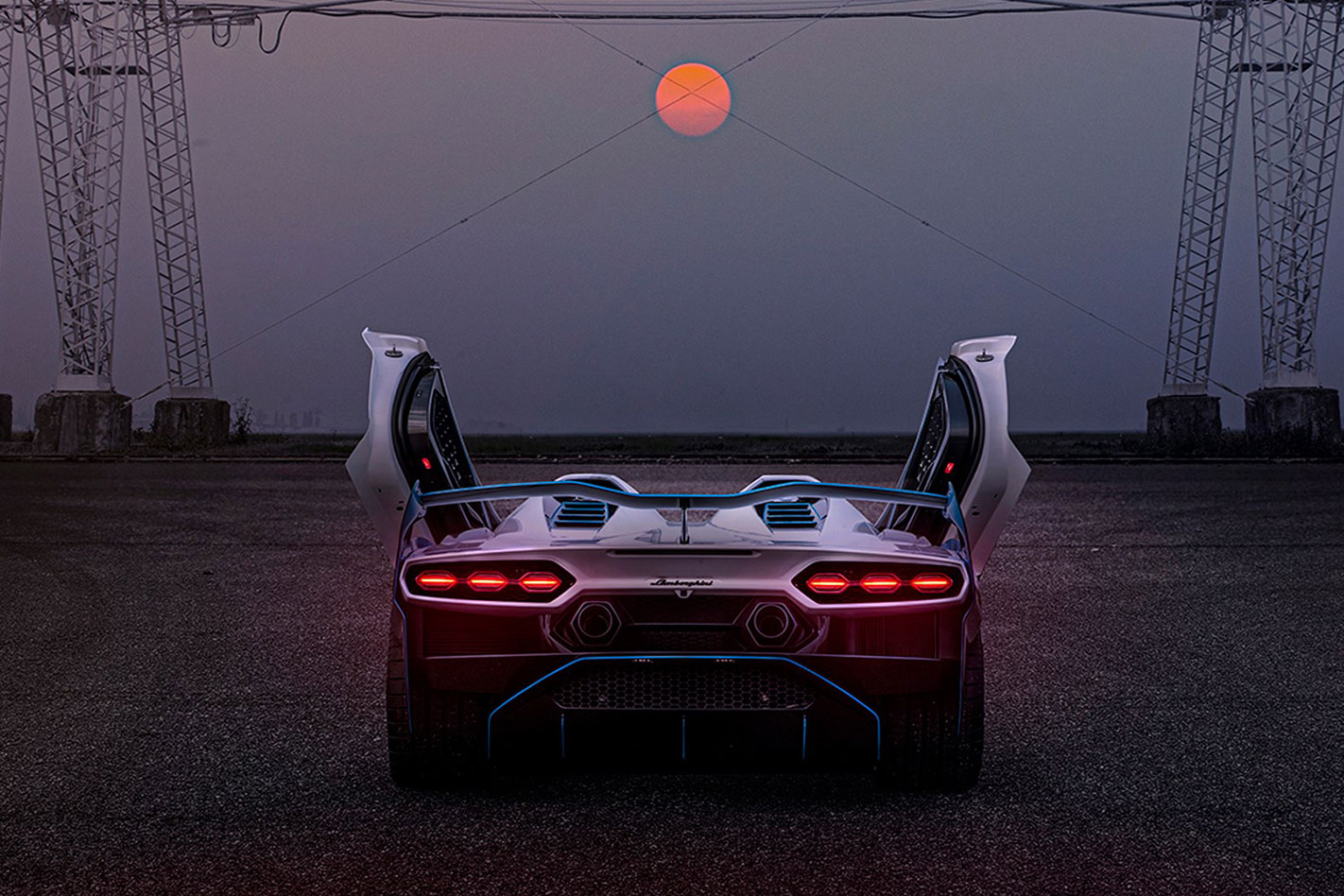
Clearly, it’s a super-aggressive, roofless hypercar designed for the road.
The dark weave is also used on the dashboard cover, the seat shells, rear wall, steering wheel trim and, as it is done at the brand, the chassis monocoque.
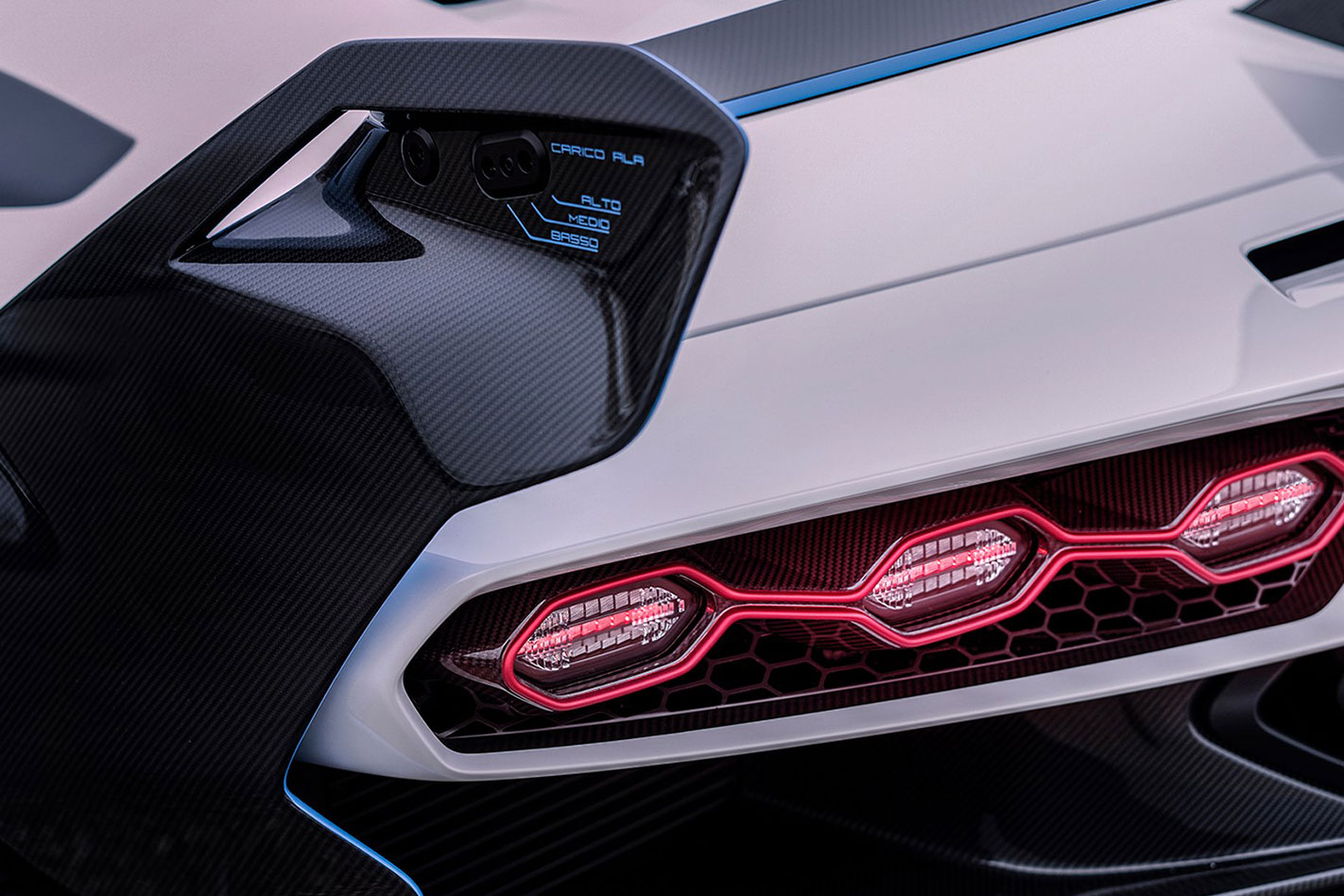
Up back, the carbonfibre rear wing is manually adjustable with three heights: low, medium and high load. The door handles, meanwhile, are machined from solid aluminium.
That’s sent through Lambo’s seven-speed ‘independent shifting rod’ gearbox (the same one used in the Aventador) to all four wheels.
Speaking of wheels, they’re staggered in diameter, with the fronts measuring 20-inch and the rears 21-inch.
Since it’s a one-off, Lambo hasn’t revealed the obviously large sum of money paid by the customer that approached them to make it. But the brand also says they were involved from the very beginning, looking over concept sketches from Lambo’s Centro Stile.
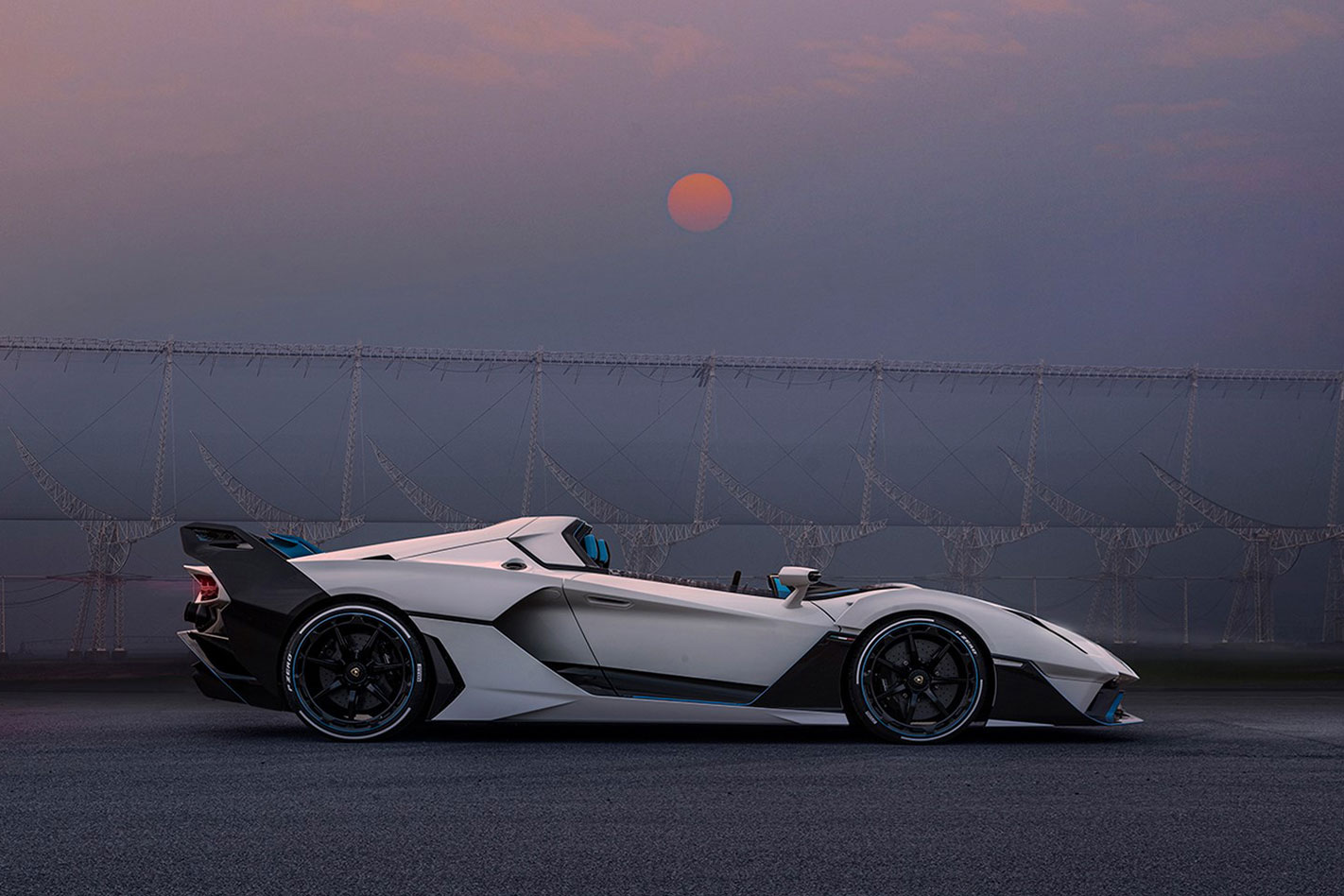
Lamborghini says it’s finished in an exclusive colour scheme, with a Bianco Fu (white) base that offsets the Blue Cephus livery.
For four decades the quattro name has been a cornerstone of Audi branding, but what makes it so powerful?
From storied motorsports success, to breaking barriers in technology and the new car segment; read on for fourty incredible moments of Audi’s groundbreaking technology.
1. The first mule (1977)
Known only as ‘Development Order 262’ the quattro story truly begins with the first ‘A1’ prototype. Jorg Bensinger took the VW Iltis’ AWD system and jammed it into an Audi 80, along with a five-pot from the 200 Turbo. Suspension was MacPherson struts all around, with the rear simply being the 80’s front set-up flipped.
2. A1 vs Europe’s steepest road (1978)
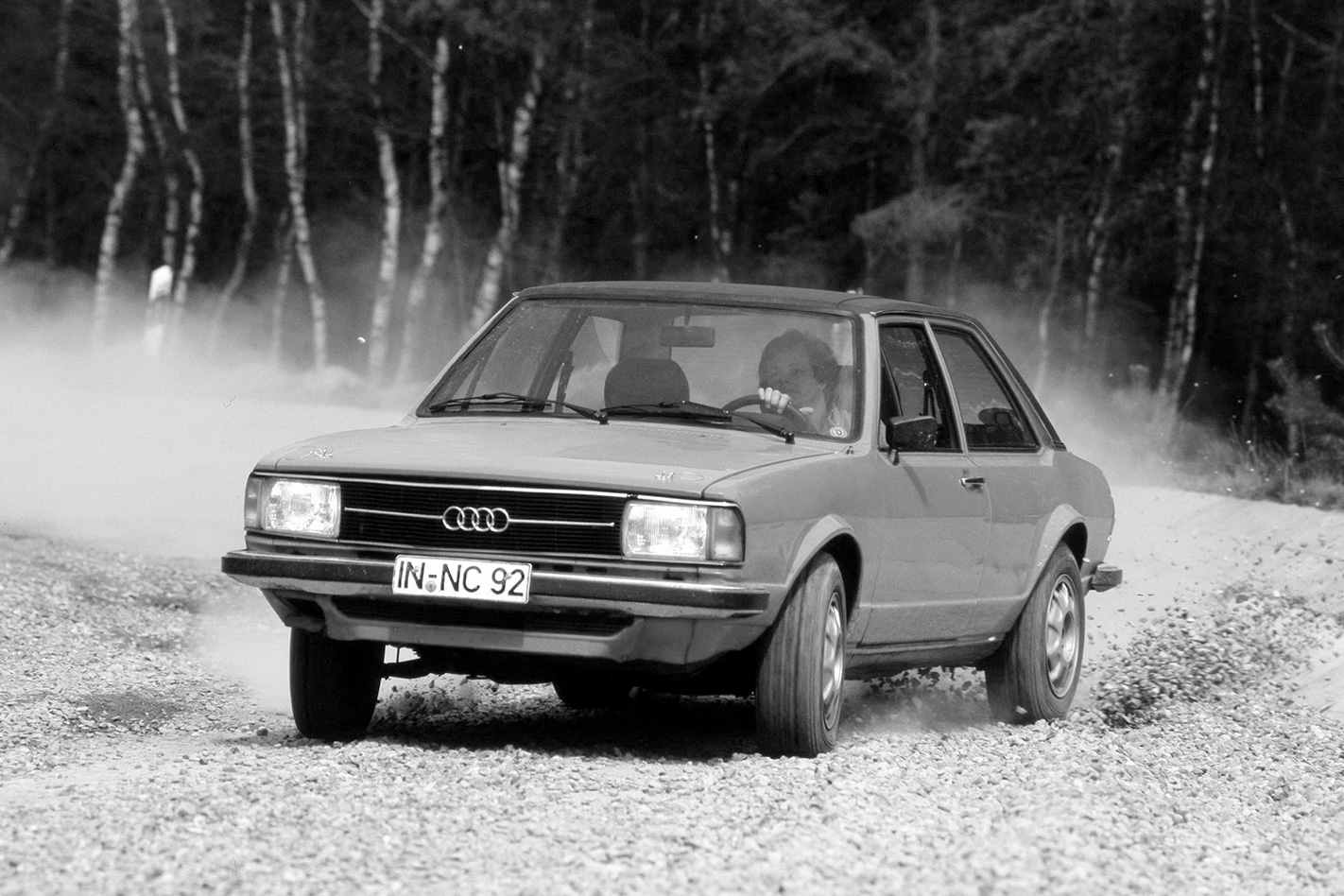
Before quattro production was approved the A1 was given the challenge of driving the Turracher Höhe pass in the Austrian Alps in winter. The steepest road in Europe with a gradient of 34 per cent, the A1 mule completed the task sans winter tyres or snow chains. Those present at the time were left stunned at its grip.
3. A brilliant (non) competitive debut (1980)
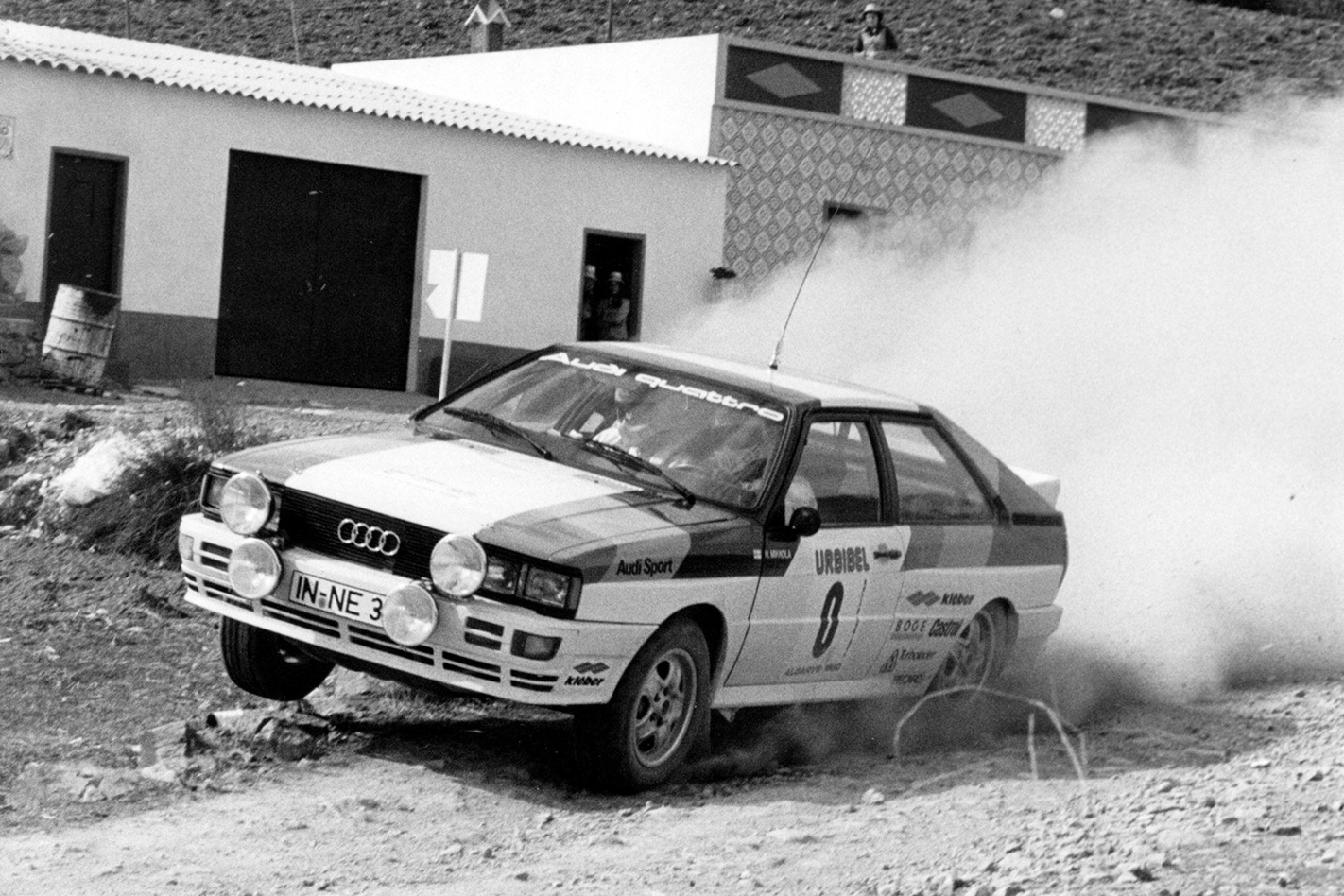
Audi knew the ur-quattro was special from its very first event. With Hannu Mikkola driving, Audi takes part in the Algarve rally as the course car because the company hadn’t yet met homologation requirements. In the car’s first competitive test, Mikkola would have won the event by 30 minutes if entered officially.
4. Record reset (1981)
The ur-quattro won in just its second WRC round, dominating the snowy stages of Rally Sweden. It was the first WRC win for an all-wheel drive car, and Finn Mikkola became the first non-Swede to win the winter rally. Autosport proclaimed “all the record books will have to be rewritten” following the victory.
5. Smashing the glass ceiling (1981)
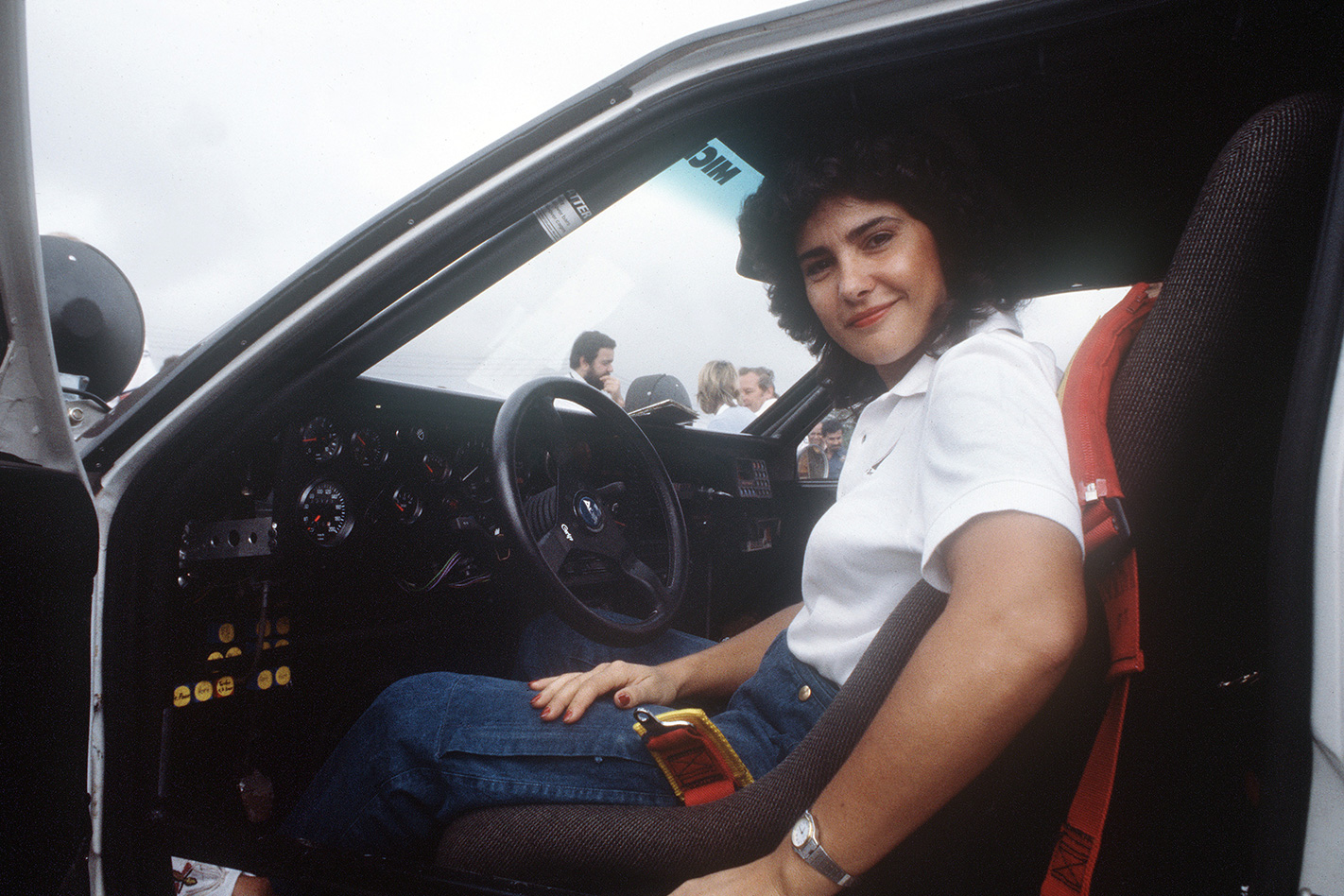
Audi’s signing of a young Michele Mouton rocked the rallying world, with pundits critical of the choice. She would claim her first WRC victory at the San Remo rally, silencing the critics. Earlier that weekend rival Ari Vatanen had claimed “Never can nor will I lose to a woman”. Eat dust, Ari.
6. A new name (1983)
In October ’83 Audi launches quattro GmbH, which is tasked with developing high-performance road cars. Taking over defunct manufacturer NSU Motorenwerke’s facilities gave quattro GmbH its own development and manufacturing ability.
7. The emperor’s new clothes (1985)
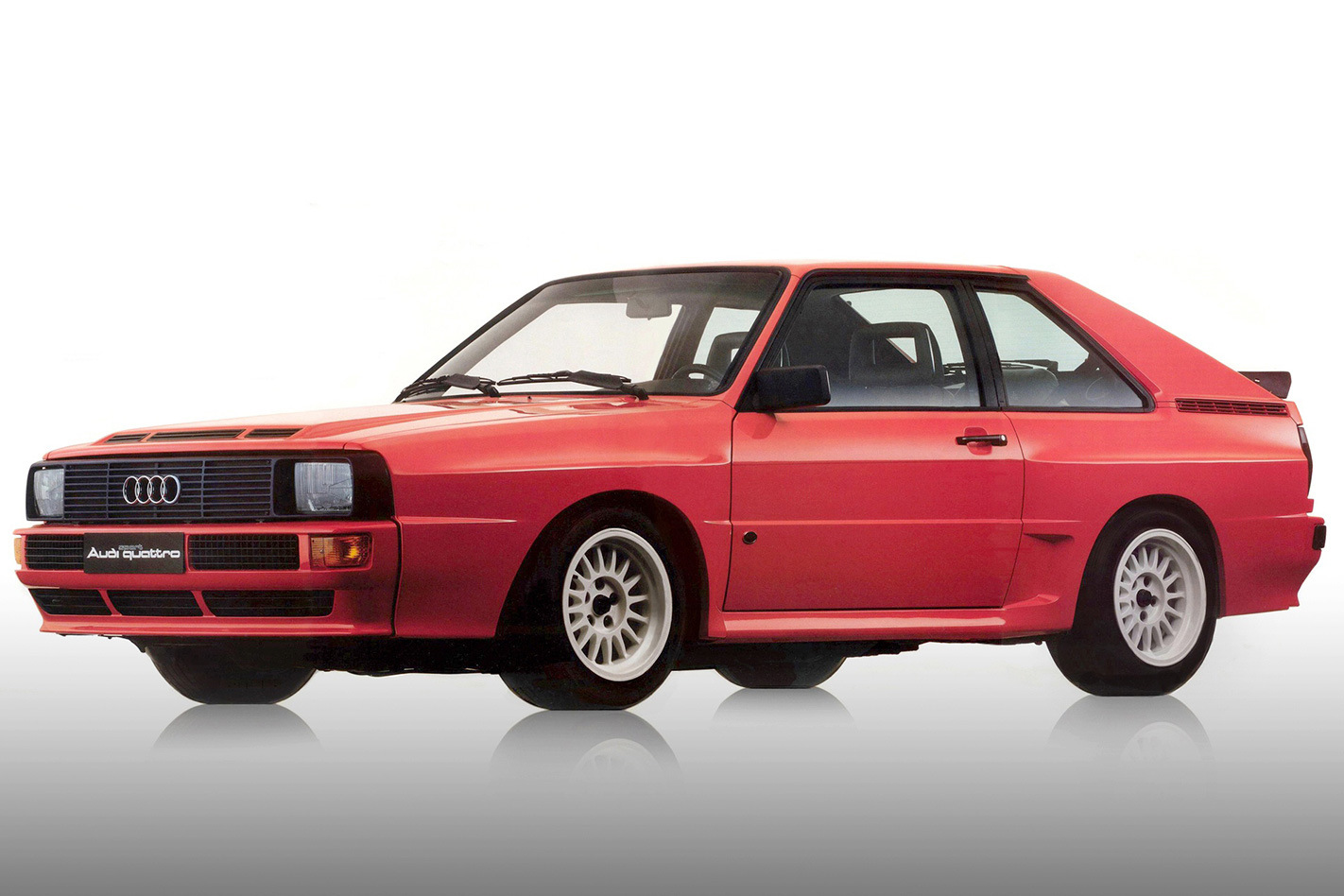
The Sport quattro was a Group B homologation special, selling for DM200,000 at launch ($188,994 or A$307,921 adjusted for inflation). Just 214 were made, with only 164 being built for road use, so a genuine example is now easily a million-dollar car.
8. Praise the mountain queen
Mouton took on Pikes Peak in ’85 in a slightly modified version of her WRC car, smashing the competition. Bobby Unser was unhappy his family’s record was beaten, to which Mouton retorted “If you have the balls you can try to race me back down as well.”
9. quattro 4 all
Realising it had struck gold, within five years of the ur-quattro’s debut every Audi on sale could be purchased with the all-wheel drive system. Four years of rally success was enough to sustain decades of motorsport-themed advertising for family sedans with Audi touting the quattro’s performance and safety benefits.
10. The last dance
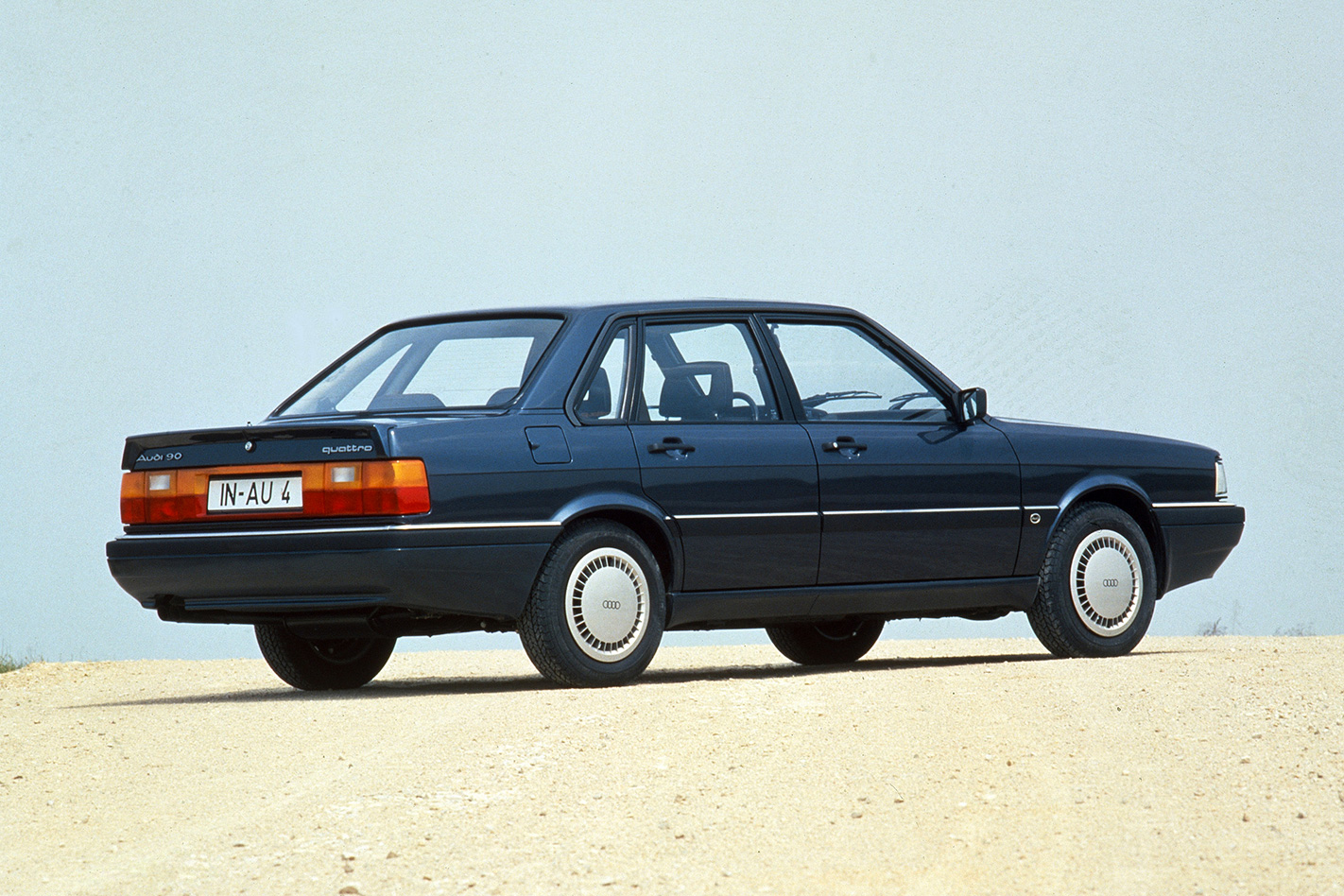
With Group B in its final years Audi had become outgunned by the Peugeot 205. Walter Röhrl claims victory at the ’85 San Remo rally to bring the quattro’s final WRC tally to 23 wins. Commonly known as the Sport S1, Röhrl’s steed was actually homologated as the E2.
11. The death of the widowmakers (1986)
No longer able to turn a blind eye to the ever-rising death toll of Group B, Audi pulls its factory cars from WRC after the third round of the ’86 championship.
12. Made for TV
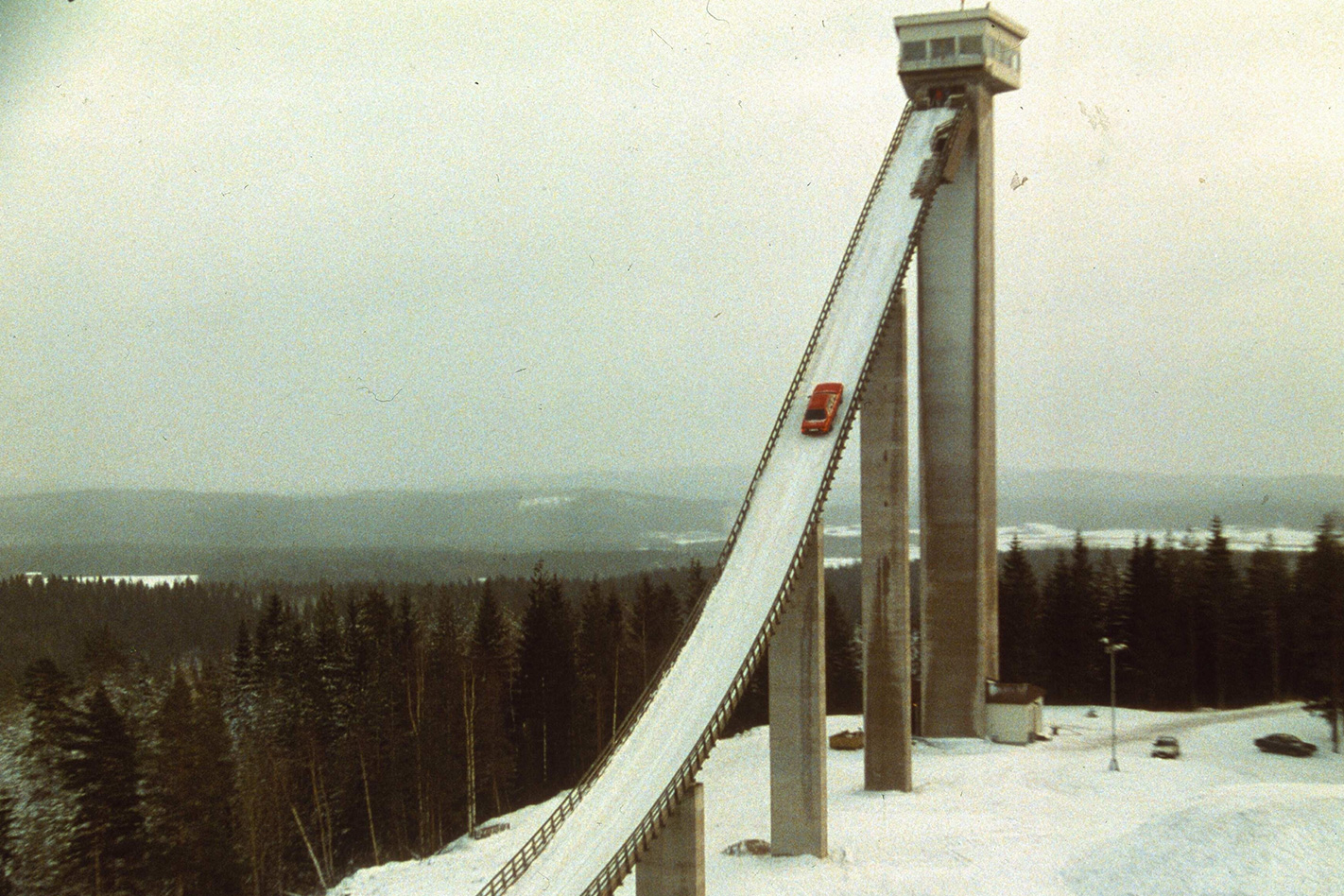
With its rally cars now collecting dust, Audi needed a new way to sell its quattro tech to the masses. It did so with an ad where Harald Demuth piloted a standard 100 CS on snow tyres up the 47 metre, 80 per cent gradient Pitkävuori ski jump in Kaipola, Finland to, ahem, drive home quattro’s all-weather safety benefits and ability.
13. A lost heir to the throne
The E2 wasn’t meant to be Audi’s fastest rally car, with the RS 002 destined to take that title in ’87. Built for the doomed Group S regulations, the RS 002 project was kept secret from Audi’s top brass, with testing conducted in the Czech Republic after shipping the cars in anonymous trailers.
14. The American gets his revenge
In ’86 Bobby Unser used all of his cunning and wile to force the fearsome Ferdinand Piëch to sub Walter Röhrl out of a factory-backed Audi drive at that year’s Pikes Peak, putting the American in the hot seat instead. His win was Audi’s second record-breaking victory in as many years.
15. The breed evolves
Audi makes the first major change to the quatto system since its inception in ’87. The ur-quattro’s mechanical-locking centre diff is replaced with a Torsen system, allowing torque to be split beyond 50:50. Now up to 80 per cent of power can be sent to the rear.
16. One final rally victory (1987)
Audi would return briefly to select WRC events in ’87 with a Group A-spec 200. Its sole victory would be at the ’87 Safari Rally in the hands of Mikkola. Röhrl would finish second, giving Audi an emphatic 1-2 finish. The best non-Audi entrant finished more than 50 minutes behind the winner in third.
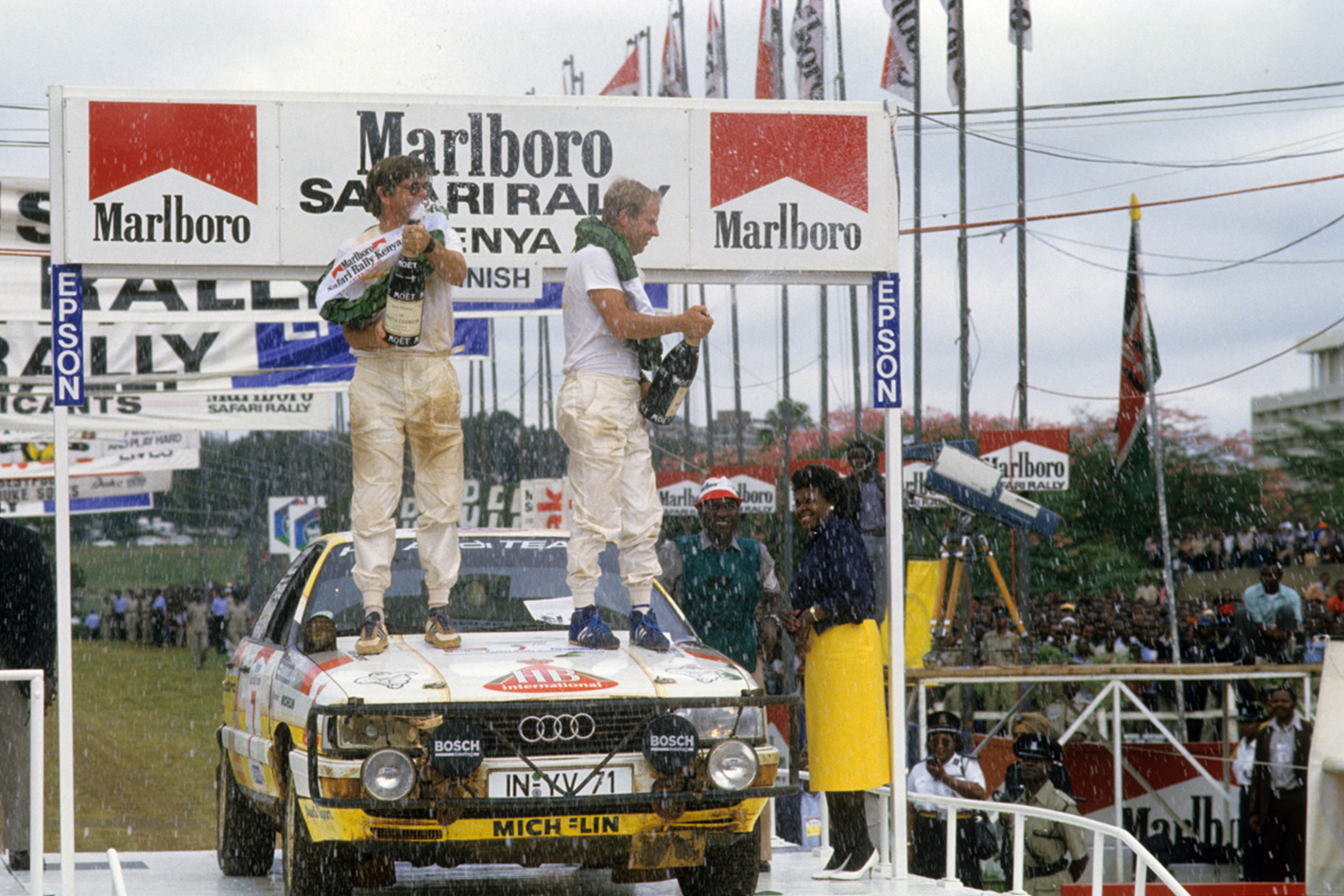
17. A final ascent
Röhrl would finally get his chance at Pikes Peak in ’87. Despite all his rallying success, the Race to the Clouds was a daunting task. “I had no experience. I arrived five days before the start. I rented a car and drove up with my wife,” he said. Röhrl needn’t have worried, securing Audi its third record-breaking victory in Colorado.
18. Ur-Quattro levels up
In ’87 Audi added 93cc to the ur-quattro’s engine, bumping capacity to 2.2-litres, with power and torque remaining the same, but with extra Newton metres lower in the rev range. Two years later a new DOHC 20-valve engine design was introduced, bumping power to 162kW.
19. Second gen (1988)
The second evolution of Audi’s quattro system is officially introduced in ’88, with C3-generation 100s and the ur-quattro receiving the tweaks first. Gen II quattro systems featured the improved Torsen centre diff, and a manually lockable rear differential.
20. Germany vs the USA: part 1
Taking the engines from its Group B machines, Audi goes racing in America. It enters a five-pot quattro 200 in Trans-Am. Audi wins eight of 13 races, prompting the Yanks to ban AWD systems at year’s end.
21. Germany vs the USA: Part 2 (1989)
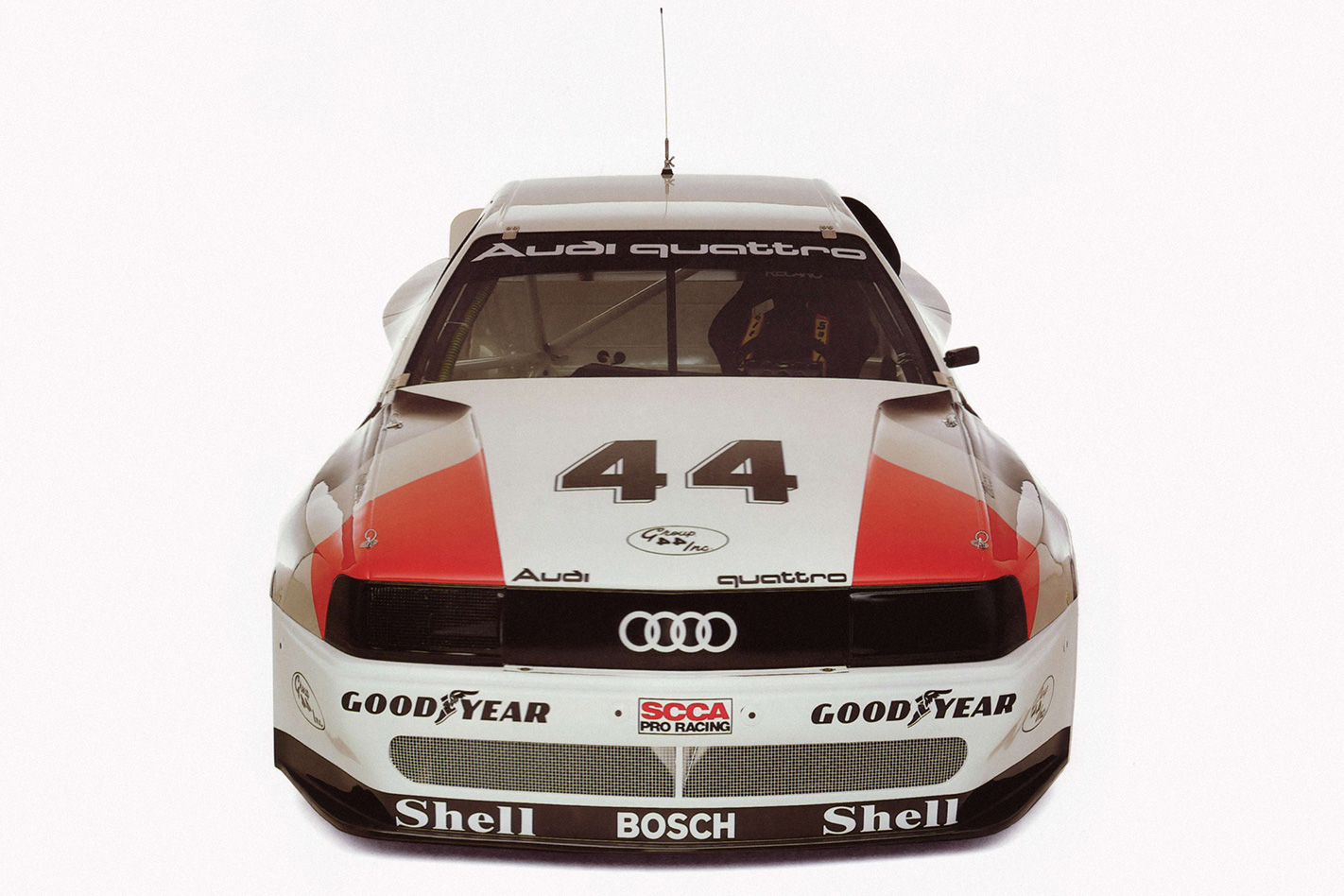
After getting kicked out of Trans-Am, Audi builds the indomitable 90 GTO for IMSA – a tubeframe chassis containing a monstrously powerful engine, draped in a body that only barely resembled a road car. Despite missing the first two rounds Audi finished runner-up in the constructor’s title.
22. Civil war (1990)
Having sufficiently pissed off/crushed the North American racing scene, Audi turned to its native DTM, which had outlawed turbo engines at the end of ’89. Audi fielded two V8 quattro models, winning back-to-back titles.
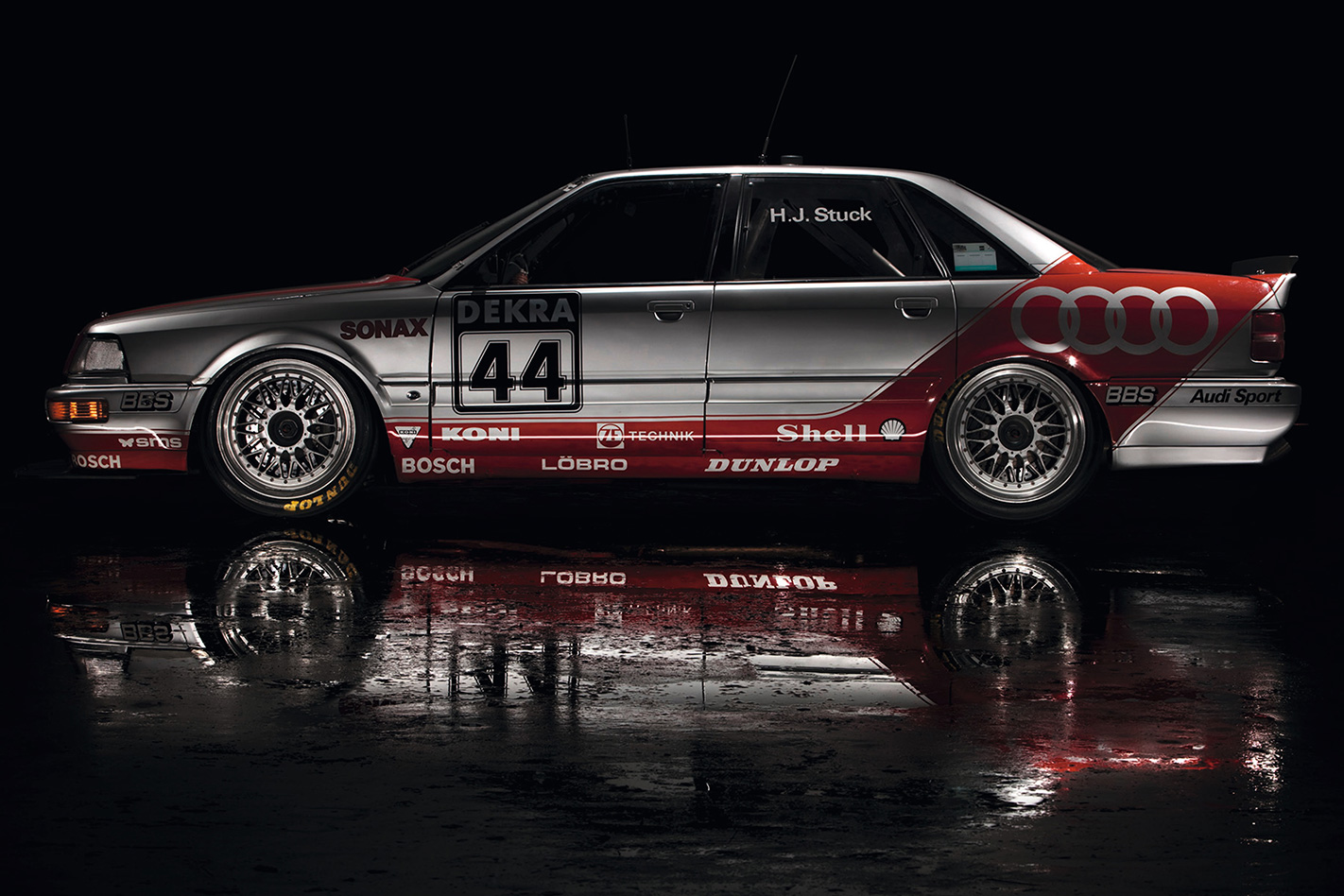
23. The end of Genesis (1991)
On May 17, 1991 Audi built the last original ur-quattro. Nearly 12,000 units were produced – impressive considering every single example was put together by hand.
24. A look into the future, today
Audi revealed the quattro Spyder Concept at the ’91 Frankfurt Show. Weighing 1100kg, a mid-mounted V6 from the 100 sent power to all wheels via a five-speed manual. The supposedly production-ready concept would never be built, but the idea of a mid-engined halo car survived in the form of the R8.
25. the supercar-killing wagon (1994)
Built in conjunction with Porsche, Audi used the RS2 to begin a new era of quattro performance. Powered by a 2.2-litre five-cylinder with 232kW and 410Nm, and capable of cracking 100km/h in 4.8 seconds, the RS2 redefined the concept of a quick family car. The original fast wagon is still the best.
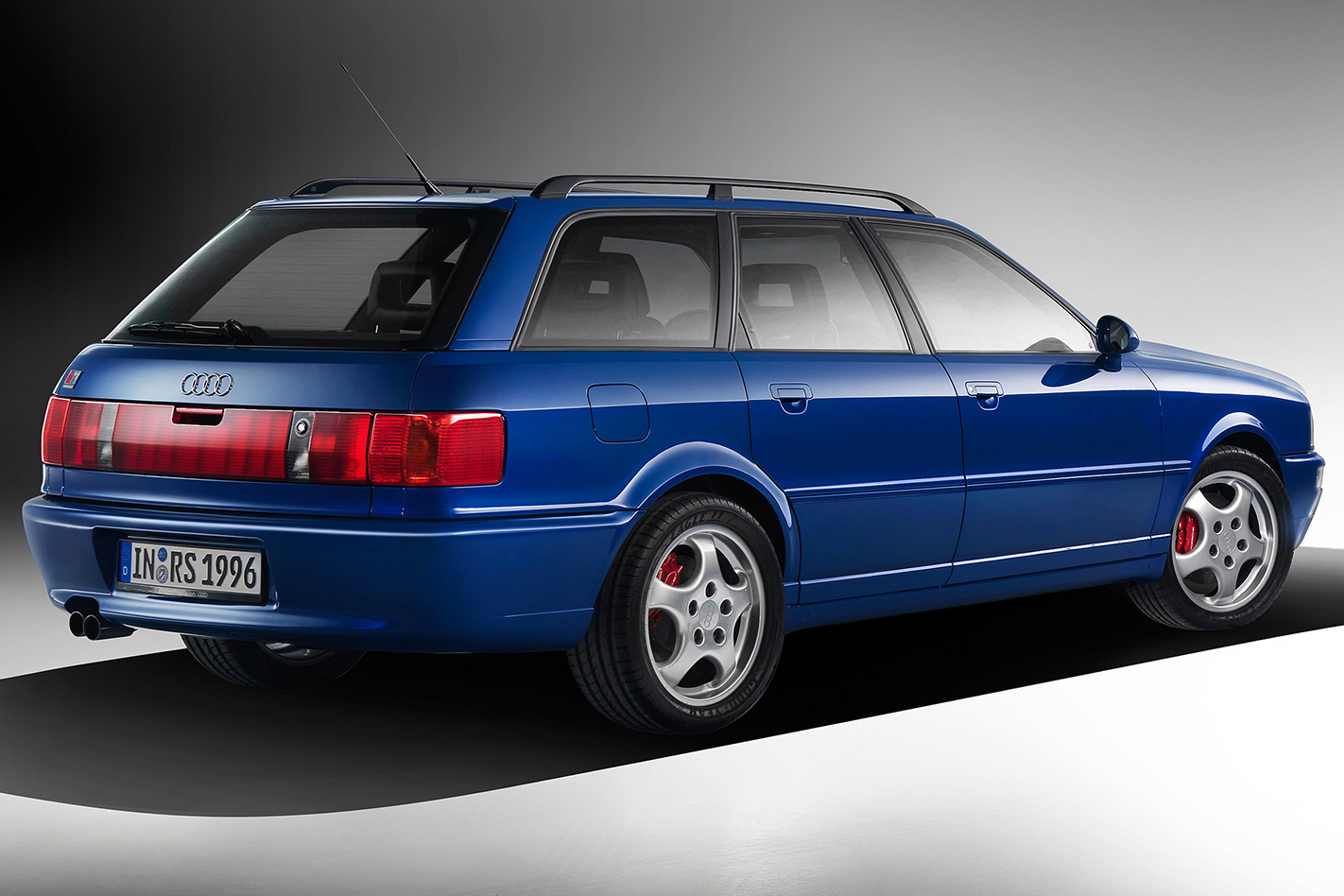
26. A4 takes on the world, wins (1996)
The Audi A4 quattro utterly dominated global touring car racing in 1996, winning seven different national championships thanks to its AWD quattro system.
27. quattro enters the electronic age (1999)
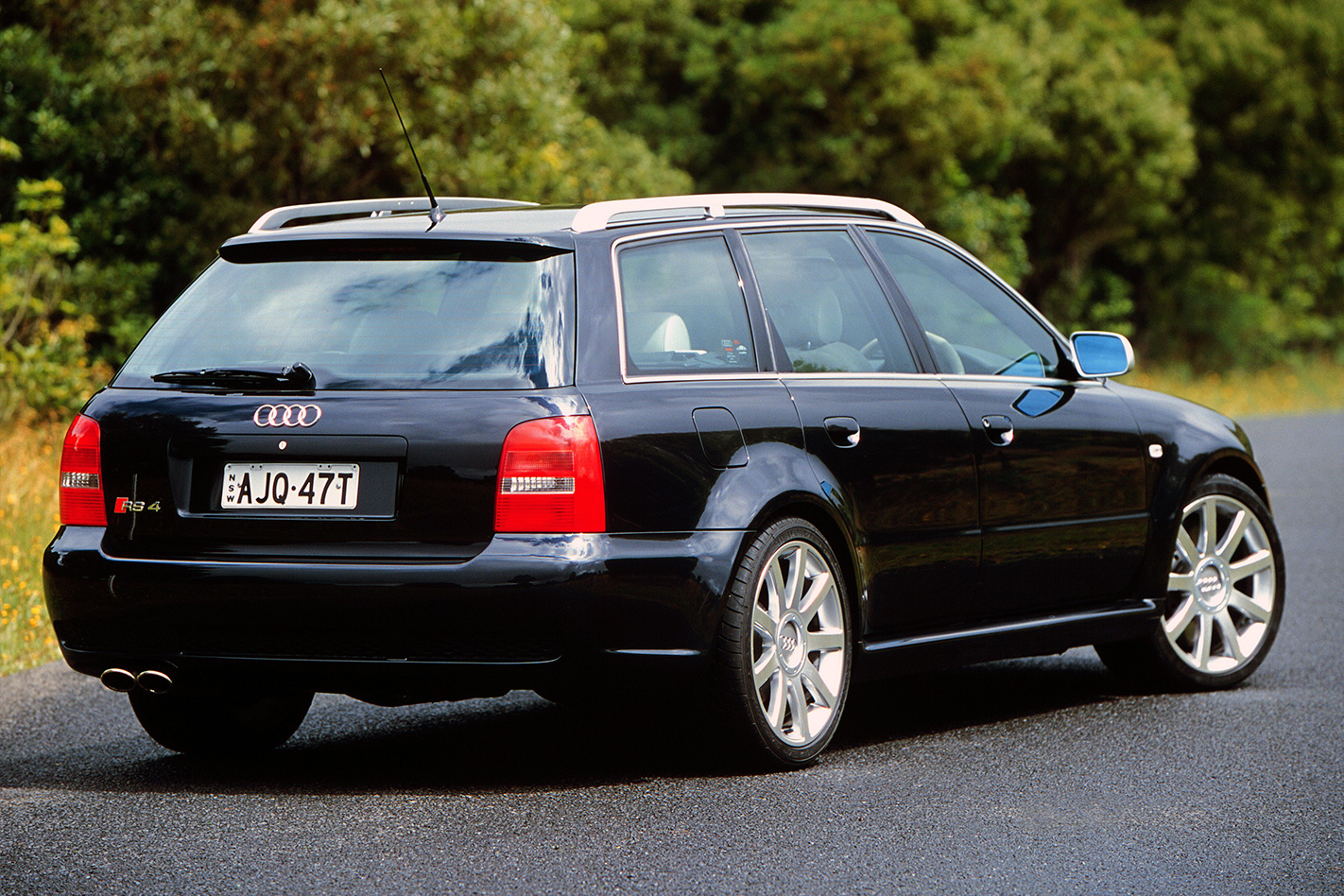
Audi launches the first RS4. Only available as an Avant, just 6030 examples were built. The B5 generation introduces the fourth evolution of the quattro drivetrain, replacing the manually locking rear diff with an electronically locking system on both axles.
28. The big daddy (2002)
Audi had found its niche in fast wagons and intended to make the most of it. In 2002 it created its biggest and most powerful Avant yet, the 331kW/580Nm RS6. Powered by a twin-turbo 4.2-litre V8, Audi stated an official top speed limit of 250km/h, but owners reported seeing speeds in excess of 270km/h.
29. PCOTY win #1 (2006)
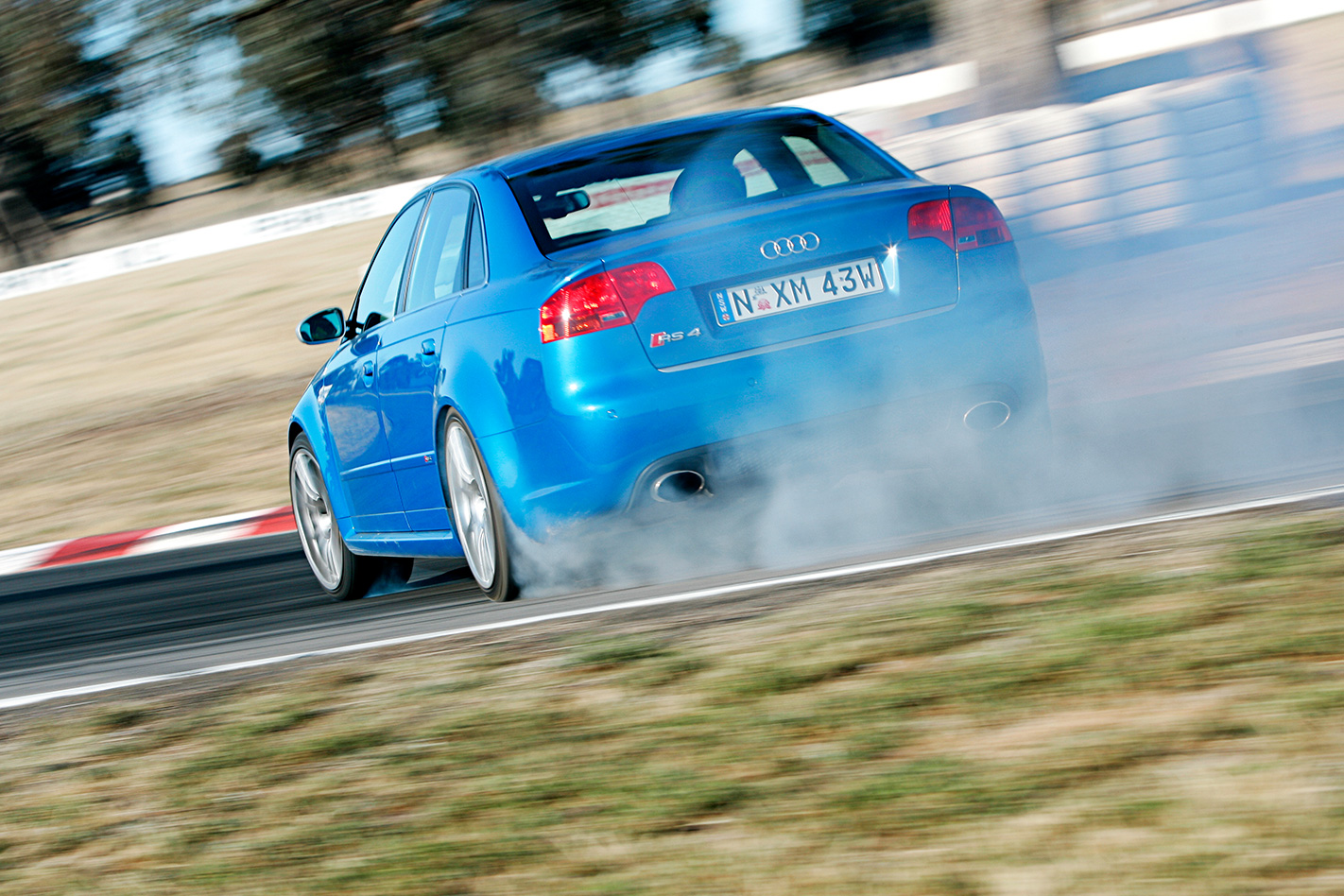
The B7 RS4 brought Audi its first Performance Car of the Year gong in ’06. “The RS4 is not just a competent car. Nor is it simply an intelligent or an efficient or a confidence-inspiring vehicle … it is much more than that. It’s a wolf in sheep’s clothing, it’s a Q-ship, it’s a proper muscle car,” crowed Morley. High praise.
30. R-Rated
Audi fulfilled the quattro Spyder Concept prophesy, putting the R8 into production. Codenamed Type 42, the R8 set a new high-watermark for quattro, and brought Audi out of a performance car slump. For the first time Audi had a hammer big enough to land a blow on the VW Group’s golden child, the Porsche 911.
31. Send it back
With the B7 RS4 came another significant change to the quattro system. The Torsen centre diff first introduced almost two decades earlier is upgraded to a ‘T3’ system. Instead of a 50:50 torque split in normal conditions, the quattro system now splits power asymmetrically 40:60.
32. Uber wagon (2008)
For the second generation RS6 Audi decided to take the 5.0-litre V10 engine from the R8, add a pair of turbochargers, and wedged it under the bonnet of its big wagon. In 2010, it was Audi’s most powerful production car.
33. PCOTY win #2 (2009)
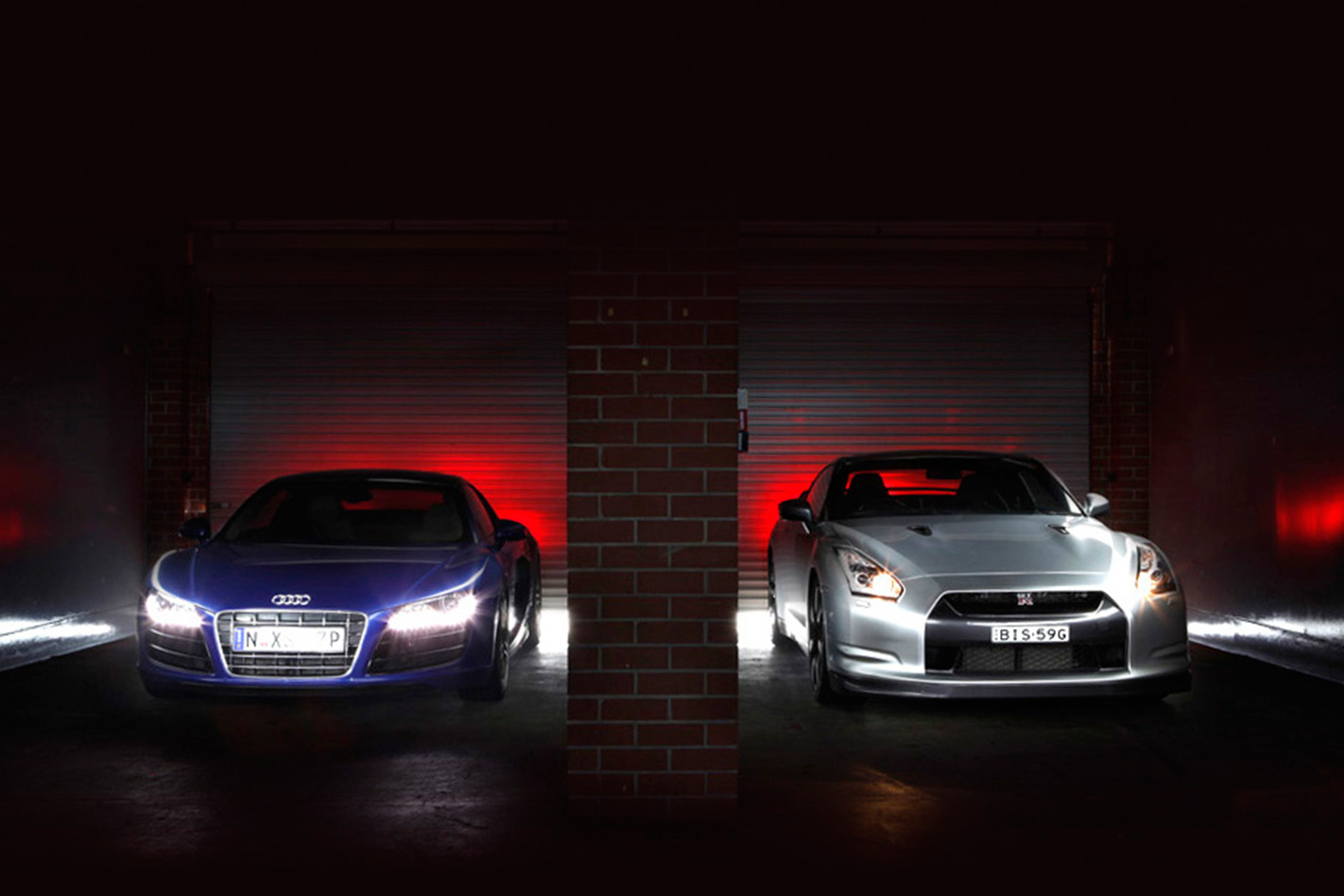
In ’09, for the first time in PCOTY history, we crowned two victors. The Audi R8 V10 shared a winner’s sash with the Nissan GT-R. Of the German, we said it’s “simply superb as a performance road car. It celebrates the romance of the automobile, from its glorious open-gated manual gearbox to its naked, mid-mounted V10.”
34. Crown jewel (2010)
Now in its sixth generation, Audi’s quattro system received a major update for the 2010 RS5. Gone was the Torsen diff, replaced with a new crown gear system that was able to lock regardless of torque split front or rear.
35. Legend reborn
Audi’s quattro concept celebrated 30 years since the original, with a 300kW 2.5-litre five-pot paired to a six-speed manual. A limited production run was considered but axed, with the money invested in Audi’s SUV range instead. Ouch.
36. quattro’s le Mans triumph (2013)
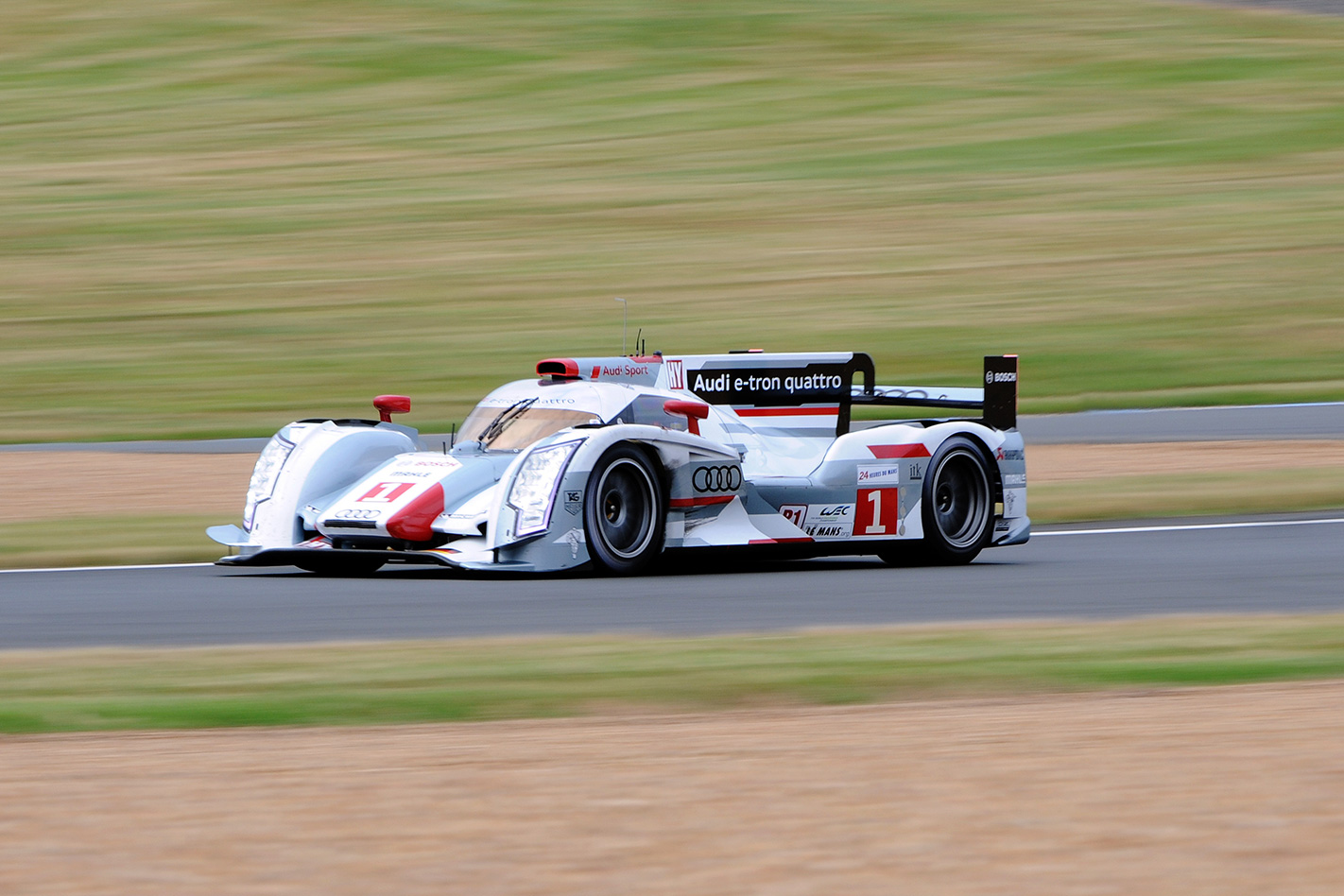
Despite Audi defining the 24 Hour of Le Mans’ modern era, it didn’t win with a quattro car until 2012 when new hybrid rules allowed the front wheels to be driven. The R18 e-tron quattro would go on to win three on the trot.
37. PCOTY win #3
A third PCOTY trophy was added to Audi’s trophy cabinet in 2013 with the R8 V10 Plus. Praised not only for brain-bending grunt and on-track ability, but its downright confounding liveability. Newman summed it up simply: “Ballistic performance, yet so accessible.”
38. Genre buster (2015)
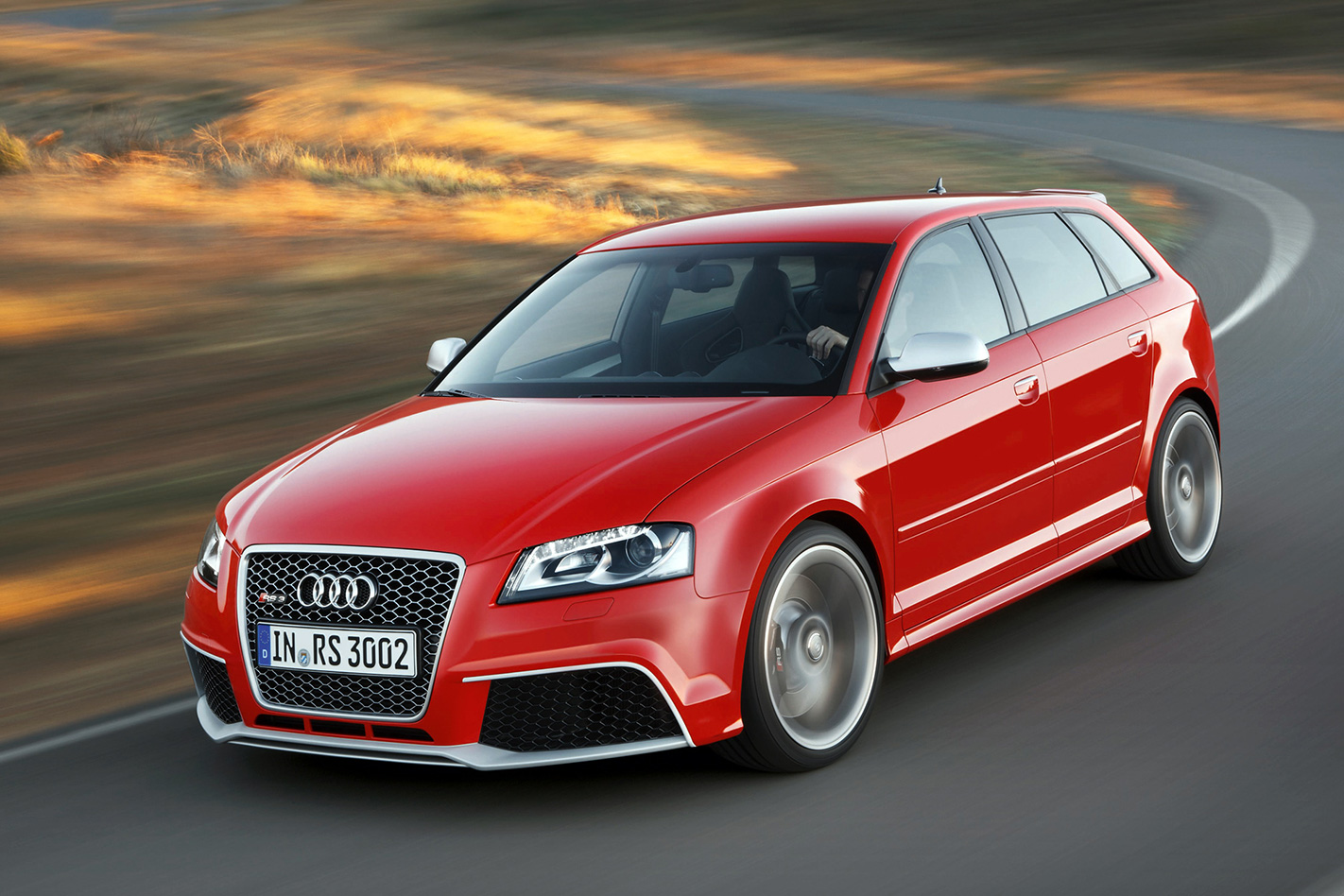
The hot hatch genre was nothing new when Audi decided its A3 hatch needed a high-performance variant. The resulting RS3 was an AWD terror that used a turbo five-cylinder to deploy 257kW, creating the brand-new the hyper hatch genre. Audi has been in an all-out power war with AMG’s A45 ever since. Long may they fight.
39. Hail to the king (for now) (2019)
Almost four decades after the ur-quattro was revealed, kilowatt counts of the most powerful Audi quattro model have more than tripled, and torque more than doubled. The current zenith is the 2019 R8 V10 Performance, which uses a naturally aspirated 5.2-litre V10 to send 456kW/580Nm to all four wheels.
40. An inevitable electric future (2020)
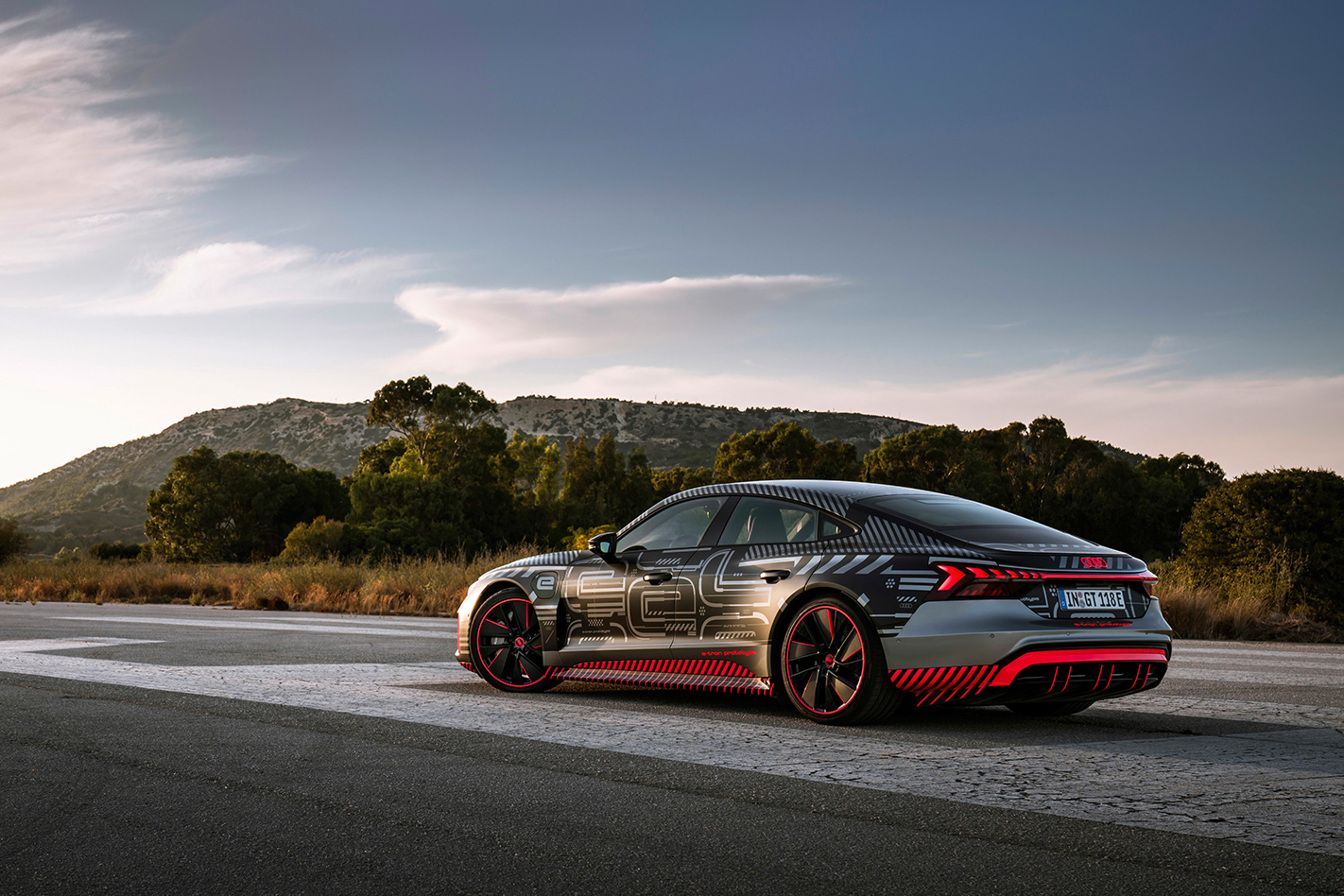
The fully electric Audi RS e-Tron GT prototype signals the future for both quattro and high-performance Audis, with a production version coming next year. A pair of motors deploy up to 475kW of grunt. The next era of quattro will be unlike anything that came in the four decades prior, but just as blisteringly fast.
We’re cruising through Night City, a sprawling metropolis of the future that seems to double down on everything wrong with the modern world.
Mankind has lost the fight with climate change, violence and crime hangs on every dank corner we pass, and billboards glow through the hazy pollution. Night City is the mood of Black Mirror with the looks of Bladerunner, and in Cyberpunk 2077, it’s your steampunk playground.

From mega-skyscrapers that shade the city centre, to flickering neon signs that serve to illuminate the alleyways and shady business of Japantown, it’s a fantastically detailed vision of what the future might hold.
And that’s why CD Projekt Red, the force behind 2020’s biggest game, has put just so much thought into getting around it.
“Vehicles are an important part of that world, along with architecture, characters, and weapons, and we wanted to offer players an immersive experience, so they could enjoy taking part in street chases or simply cruising through the streets of Night City.” says senior vehicle designer Paweł Breshke Czyżewski.

With literal gigabytes of Night City to explore, transport is just as important as the look and feel of the city itself. CD Projekt Red is no stranger to making big environments (it made the tremendously-detailed Witcher franchise) – but while that game had a horse, Night City requires an ambitious garage of automotive wonders.
“Designing and creating vehicles for a whole ‘universe’ is a very expensive, difficult, and time-consuming undertaking,” Pawel Mielniczuk, the game’s art director tells us. “It requires not only a group of experienced modelers, but also the involvement of designers who understand the language of car design. We wanted to create unique, original vehicles that would become one of the hallmarks of our game.”
Cyberpunk’s creators assembled an eight-person team to design cars that made sense within Night City and its troubled history. “The main principle was to make Cyberpunk 2077 cars look ‘weird’, make them look intriguing, attractive; believable, but not familiar — like they came from a parallel reality,” Mielniczuk explains.
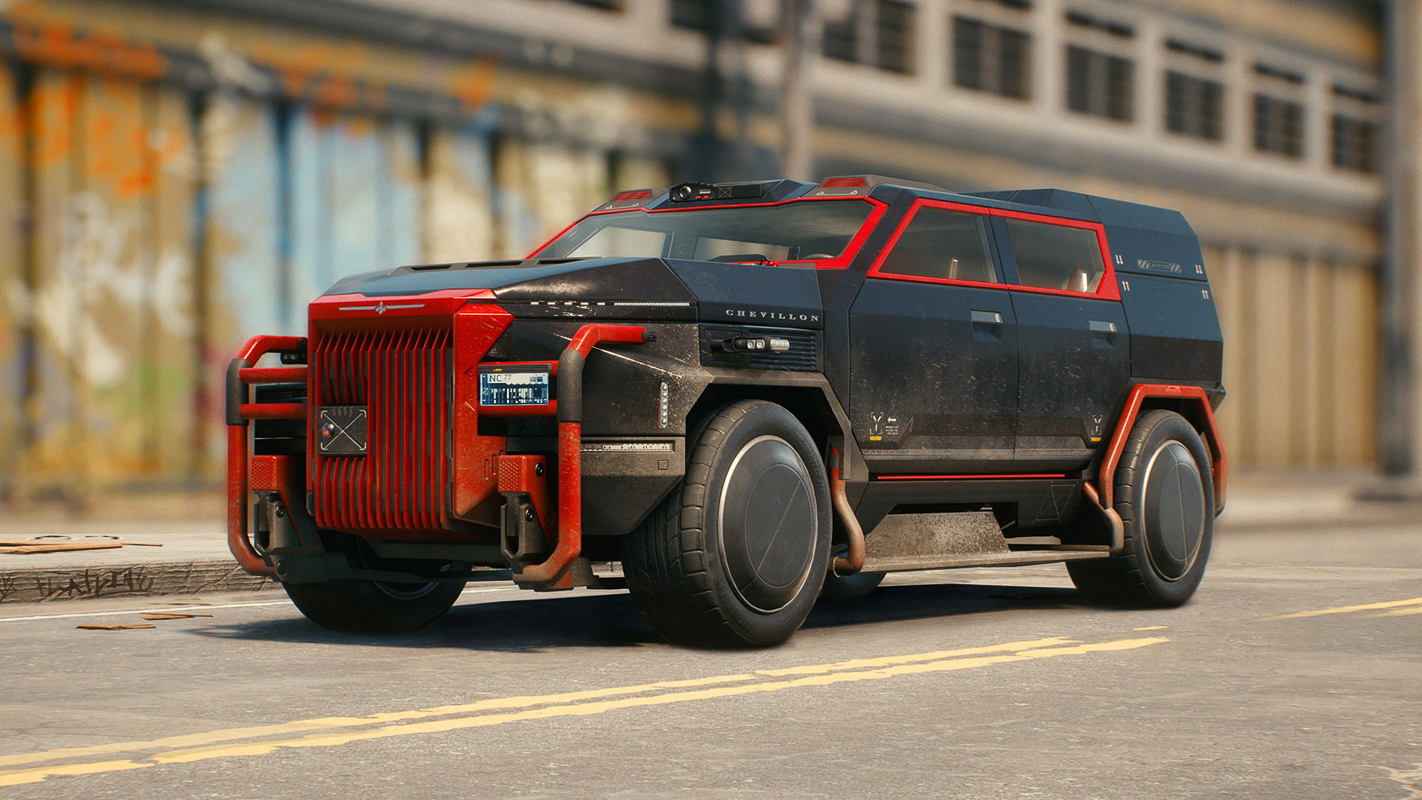
The design process used the ‘futuristic’ looks of the 70s to 90s as starting point and began to apply a century’s worth of climate crisis and technological development: “We analysed every single concept car that was created between the 1970s and 2000s,” he adds.
The work formed a thriving, diverse automotive market; Cyberpunk features over ten brands of vehicle, each with its own timeline of models and trims – and all of have oddly familiar backstories. For example, the Indian Mahir brand focuses cheap, mass consumer vehicles, while Villefort is an ambitious American brand with poor reliability.
“The six-wheel technology this car utilizes affected its proportions, causing the bonnet to be longer than normal, thus making it difficult to manoeuvre in the city and limiting visibility while driving,” Czyżewski tells us. “The Alvarado is powered by a huge 600-horsepower engine, which unfortunately, due to the weight of the vehicle, did not provide particularly high performance.” It’s also favoured by gangs.

And just like we’re seeing in the automotive industry, the creators of Cyberpunk have charted the impact of new and emerging technologies. First off, EVs haven’t won the battle for sustainable transport – synthetic fuel has. “CHOOH2, a synthetic, modified grain-based alcohol, was invented and quickly became the world’s main fuel,” says Mielniczuk.
“There are autonomous systems installed in each vehicle, interior mirrors with cameras coupled with screens, holographic licence plates and barcodes on the roof to facilitate identification via drones,” he adds. Besides the licence plates, it’s all very believable isn’t it?
Newer cars have the tech built-in, but older cars require retro-fitting a good deal of third-party accessories. Think about putting Apple CarPlay or AEB in a car before 2000, and you’re pretty much there.
“We wanted our vehicles to exhibit a mix of retro and futuristic elements. For that reason, we used weird proportions, asymmetry, sensors, lidars, and other accessories attached to the bodies,” explains Czyżewski. “You can typically see these on older models from the first couple of eras, but then if you look at the younger, more expensive models, their bodies are much sleeker and cleaner with few external accessories.”
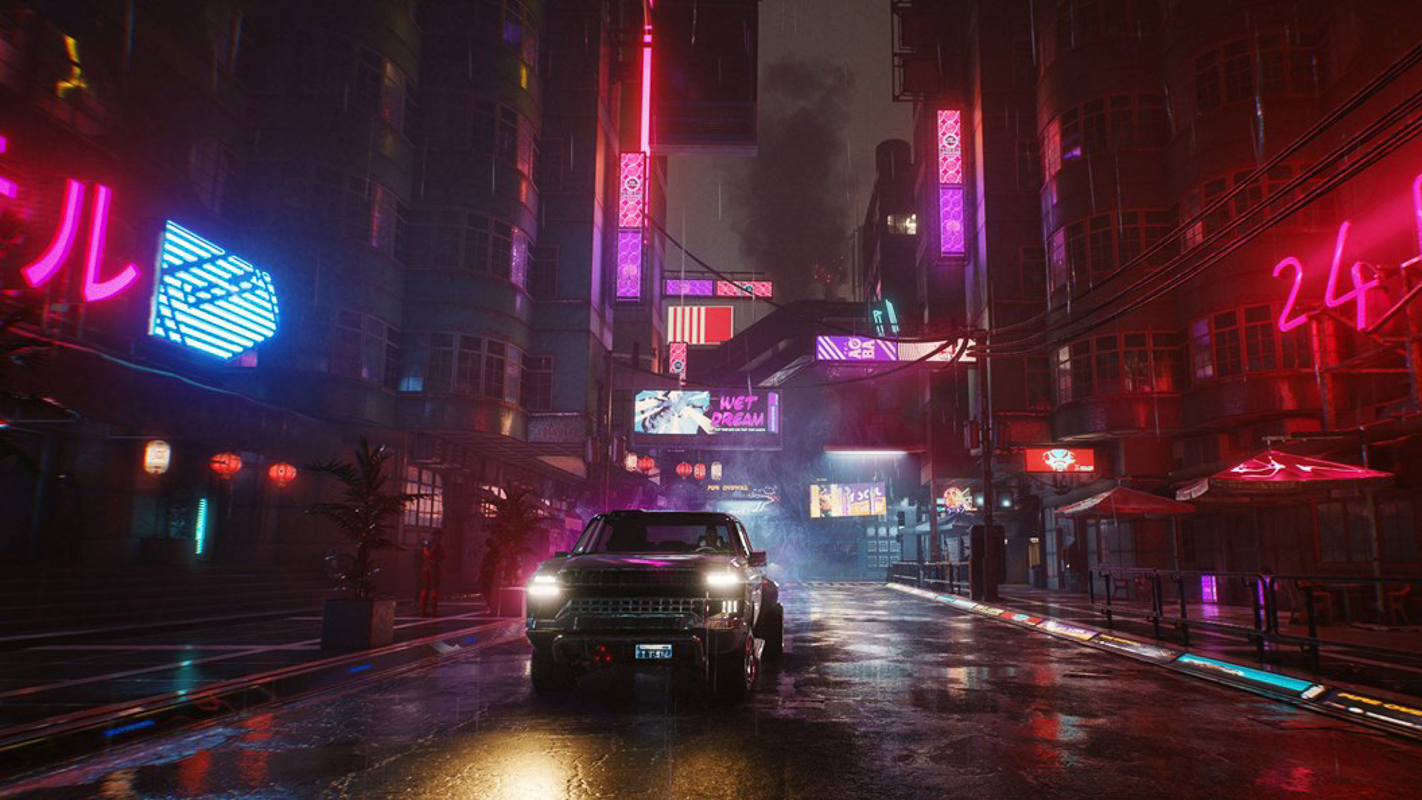
All that design is worthless if the cars don’t interact with the player as you’d hope, and it falls to Seamus Epp to ensure each car handles as it looks: “We needed to engineer “flaws”, aka character, for all of our cars,” he explains. “Each should have a center of mass that feels right for its drivetrain type and have some degree of the characteristics these types of cars typically have.’’
Want a simulation-grade challenge? Project Cars 2 is difficult, but rewarding
“For every car we tune, we try to decide first what its character is going to be, and what role it serves in our game. By the time we get to the handling dynamics, every car has a backstory and history in our universe, influences from real cars and a unique artistic vision, complete with fully detailed engine bays and interiors.”

So, the future is bleak, but there are still a number of varied cars to drive, and there are still petrolheads, too. Those interested in modern performance will drive things such as a the 2000hp, Militech performance car, and it appears the restomod bubble hasn’t burst by 2077 either.
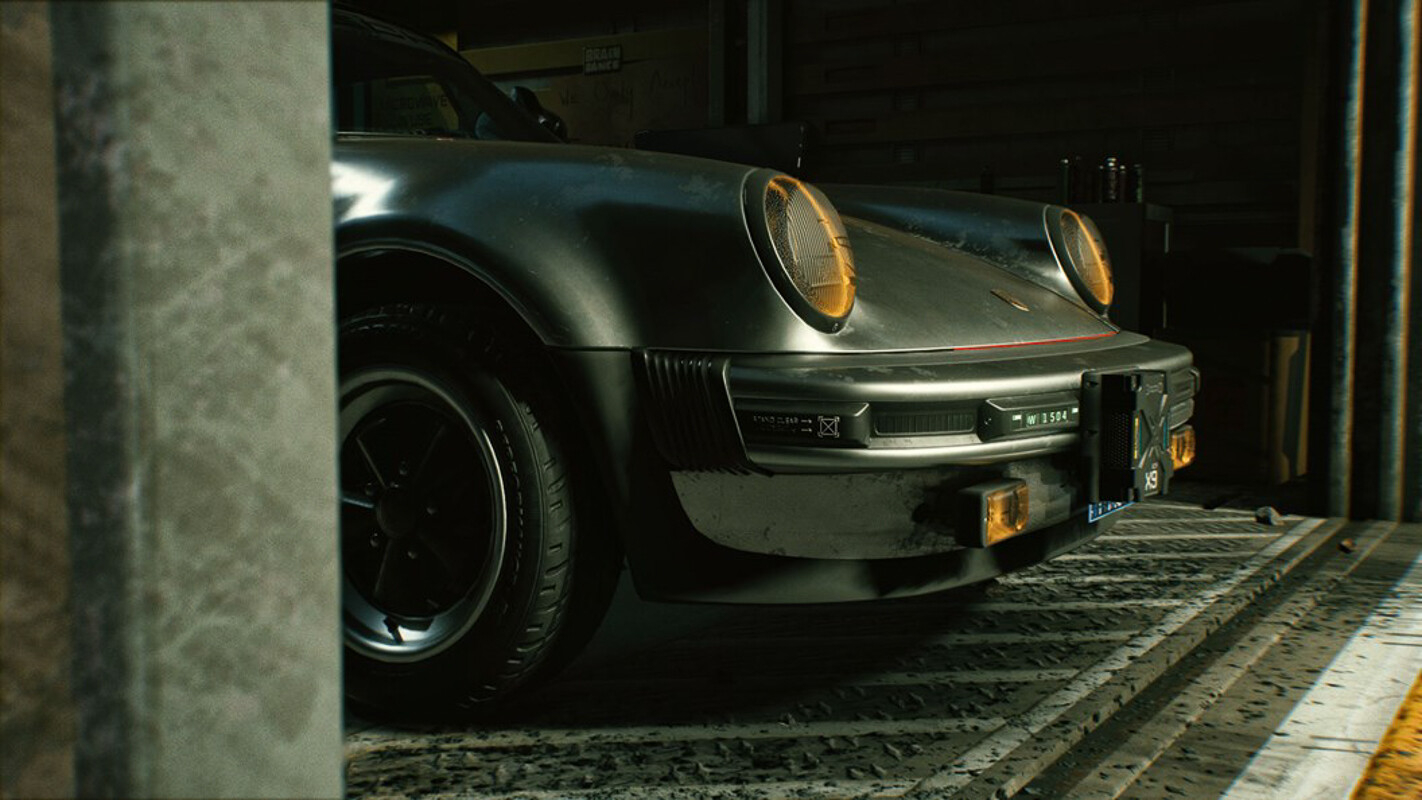
Cyberpunk’s main character, Jonny Silverhand (played by Keanu Reeves) owns a Porsche 911 Turbo, which is around a century old in the game.
“It was immediately obvious that his vehicle of choice would have to be just as iconic as he himself is,” tells us. “The answer could only be the classic 911 Turbo from the 1970s.”

“This 911 Turbo we created is a very unique car on many levels — it’s the only real-world classic in Cyberpunk 2077,” Czyżewski reminds us. “After completing the basic 3D model, we were ready to add all the cyber elements that were established in the concept phase, i.e. lidars, interior screens, fuel port, and futuristic number plates.”
You can drive the eFuel powered 911 Turbo and play the rest of the game now.
This article was originally published at carmagazine.co.uk
For a company with such a storied competition heritage, Audi’s sporting car stock was at its nadir at the start of 2006. Here in Australia, the cupboard was virtually bare, with no RS models on sale and just one S-badged vehicle, the creaky B7-gen S4. The Mk1 TT was eight years old, its once-strident style statement more of a mumbled apology.
Audi executives proclaimed that terminal understeer was a defining brand characteristic that customers were comfortable with as the company unveiled a series of cars with engines hanging forward of the front axle. It looked for all the world as if the expertise to build sweet-handling road cars had been exiled from Ingolstadt. Yet this was a company that had just won five of the last six Le Mans 24 Hour races. There was clearly an extravagantly deep well of chassis engineering talent within the business. It just needed the right platform to come to the fore.
The precursor to the Audi R8 was Audi’s stunning Le Mans quattro concept car, which debuted at the 2003 Frankfurt Show. This had its roots in a diktat from the Audi Board of Management in October 2002 that was stark in its simplicity: “Develop a mid-engined supersports model.”
Fresh off the build of the Pikes Peak concept study for the Detroit Motor Show, and the Nuvolari GT show car for Geneva, this project, developed with the innocuous-sounding F03 (for Frankfurt ‘03) designation was a closely guarded secret. The entire build process was deemed too sensitive for the main production facilities in Ingolstadt, instead being squirrelled away in one of Audi’s pattern-making plants on the outskirts of the city.
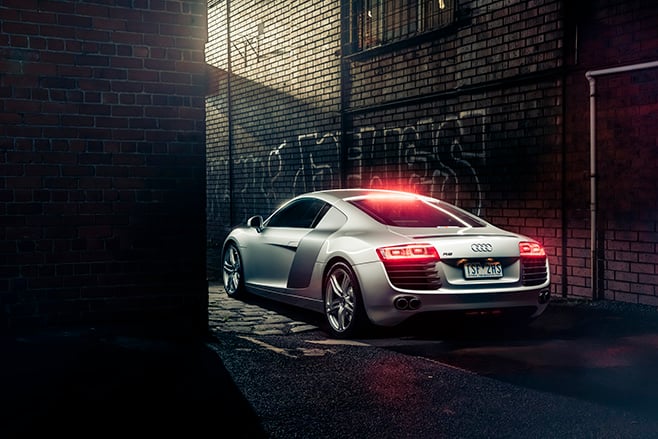
The development of the car was more akin to an old-school after-hours skunkworks project, with a close-knit team assembled by overall project manager Bernhard Voll (Technical) and comprising project managers Rüdiger Kiehn (Design), Frank Lamberty (Exterior Design) and Jens Sieber (Interior Design). Not only did virtually every new part need to be handbuilt from aluminium, but the car was to be a technological showpiece for inclusions such as LED lighting, carbonfibre reinforced outer skin, a digital cockpit display, magnetic ride suspension and the heart of the vehicle, a Lamborghini-derived 5.0-litre twin-turbo V10 engine with direct injection.
“We were able to take decisions quickly and directly, since we all worked in one large room,“ said Voll. “Every member of the team was normally available all the time and there were no multiple hierarchy levels to take into account.”
The exterior design freeze came in April 2003, whereupon the dimensions were scanned and digitised. Over the next months, the interior equipment, trim, paintwork and packaging issues were tackled, with the car being driven under its own steam for the first time for a photoshoot at Audi’s proving ground in Neustadt on August 9, a month ahead of the Frankfurt Show date.
Of course, Audi had form turning radical show cars into production models, and those picking over the details of the Le Mans quattro concept quickly realised that its fundamental proportioning was that of a viable production car rather than something merely designed to garner attention on a show stand. We didn’t have to wait long to find out. Spy photographers snapped pics of the production mule of the R8, named in tribute to the all-conquering racecar, throughout 2005 and Audi duly whipped the hanky off on the show stand at Paris in 2006. It was a testament to the rightness of the Le Mans quattro concept that the production version looked little different.
The first European drives were scheduled in 2007, and I recall one British title deploying a road tester to lurk just off the drive route in a Porsche 997 Carrera. As they admitted to me that evening, they fully expected to give the Audi a good trouncing, but it didn’t work out that way. Quite the opposite, actually. In fact, 2007 will be remembered as the year that the 911 was humbled not once but twice, the Nissan R35 GT-R also managing to best the oft-invincible Porsche. Zuffenhausen learned a lesson here, with the 997.2 version of the 911 adopting adaptive dampers, direct injection, dual-clutch gearbox, LED lighting, better infotainment and finally fixing the intermediate shaft problem that had long plagued water-cooled 911s.
Audi Sport was nothing if not frank about the car’s genesis. “At first we thought we could take a lot from the [Lamborghini] Gallardo,” admitted Jens Steingraber, the head of Audi Sport projects. But the R8’s specific requirements meant that the aluminium chassis shares very little with the Italian car, with just five minor common parts, one of which is the rear bumper hanger. A new casting process also meant that the build process was simpler too. The original 1994 A8 had 60 pressure-cast nodes joining the frame together. A Gallardo has eight per side and the R8, with its 90mm longer wheelbase, has just four.
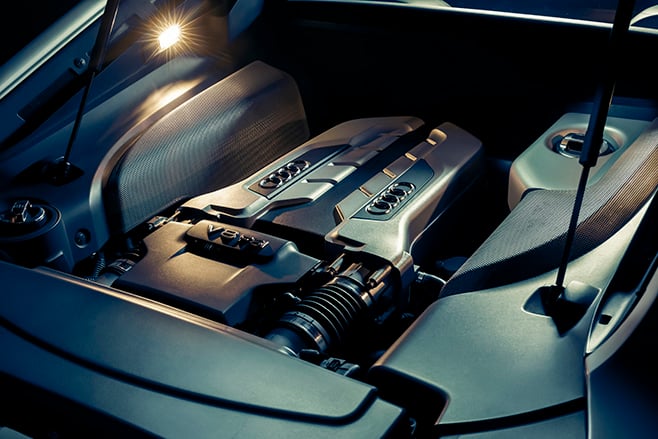
The 4.2-litre V8 was dry-sumped in this guise, with the 6.0-litre A8 V12 from 1997 being the only other Audi to use a similar oil-scavenging system. Making 309kW at a heady 7800rpm, breathing differed from that of the RS4 installation, with the R8 featuring a twin plenum induction and revised exhaust manifold. Aluminium double-wishbone suspension all round and a choice between a gated six-speed manual or the R tronic single-clutch robotised manual transmission further cemented the R8’s bona fides.
The Ricardo-developed R tronic ‘box was quicker than the manual, but some claim that it feels clumsy and dated compared to modern dual-clutches. Audi pondered fitting a dual-clutch to the R8 but realised that doing so would mean they’d need to extend the car’s wheelbase, which had several knock-on effects for the production timeline. In the end it was simpler to fit a modified version of the single-clutch ‘box seen in the Gallardo. Adapt to the system and drive it sympathetically, accept it’s of its time and it’s fine. Nevertheless, the manual transmission is preferred by most and values of used manuals are often in the realm of 20 percent higher than those of an equivalent R tronic.
Wheels’ first encounter with the R8 came when we sent Aaron Robinson to the US launch in Nevada. It was clear that this was something very different to the fare that Ingolstadt had been delivering.
“Corners are sucked in with flat, neutral handling and buttoned-down body control,” he said in our March 2007 issue. “Where a 911 is heaving and porpoising on its significantly shorter wheelbase, the R8 runs smoothly with buffed suspension strokes. Only serious on-off throttle stupidity will provoke the rear end to step out, and the car’s near-transparent stability control will slip it back in line again. Youcan turn that down to a lower setting for more sideways action, or shut it right off, but the R8 feels so naturally glued that you may never need it.”
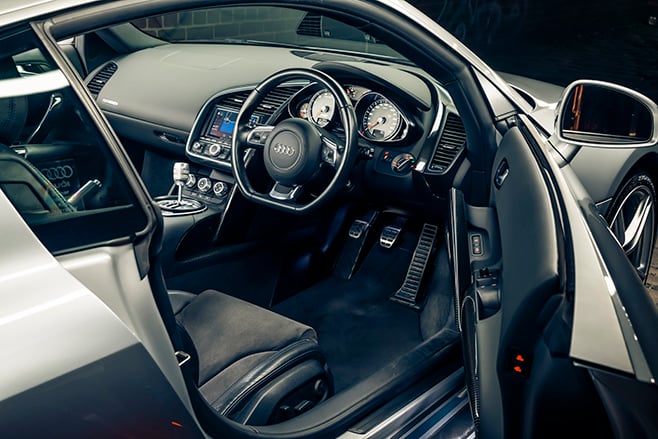
To tell the truth, the R8 still feels good today. Its uncanny ability to mop up surface imperfections without compromising its composure mid-corner still feel class competitive, and the interior still feels quality, albeit with dated sat nav and a few controls shared with more proletarian Audi models. The beady LED running lamps on the early cars betrays its age, while the optional magnetic ride adaptive dampers deliver very little in the way of difference between their normal and sport settings.
The R8 isn’t a particularly difficult vehicle to keep on top of as an ownership proposition either. Whether you prefer the original V8 or the shoutier 5.2-litre V10 introduced at the end of 2007 is largely a question of taste but, from a purely personal view, I believe the way to get the best of both worlds is to fit the sweeter eight-cylinder car with a slightly more strident exhaust. Milltek units are particularly popular.
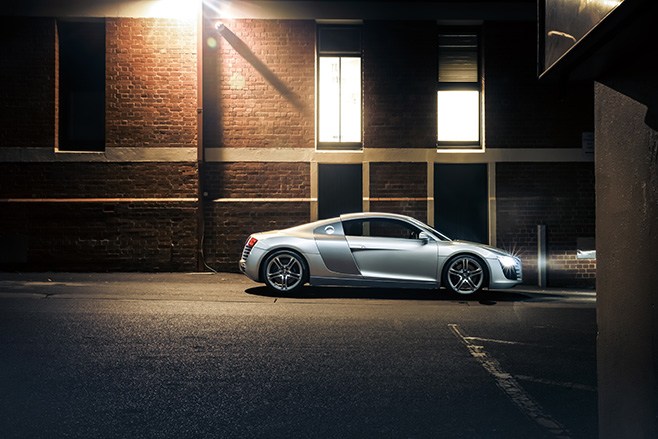
Look out for minor body damage as repairs to aluminium panels can be expensive. The V8 engine is generally tough and has far less of an appetite for oil than the V10 unit. Clutches last well on manual cars with many owners getting 60,000km from them but check for a high biting point or slippage when purchasing. R tronic clutches tend to be good for around 40,000km before replacement, with the later S tronic dual-clutch transmissions being a good deal hardier.
2012 Porsche 911 Carrera S vs Audi R8 vs BMW M3 vs Nissan GT-R comparison: classic MOTOR
Above all, that first 4.2-litre R8 is a milestone car. It still feels quick enough and charismatic enough today, and it’s hard to see values eroding from here. The reasons it changed the sector for the better in 2007 hold up with equal validity now. Maybe more so. As we increasingly seek authenticity and tactility over simple brute torque and a deafening vacuum where involvement ought to reside, the original Audi R8 is that moment when all the stars aligned. Just try one. You’ll see.
BLADES OF GLORY
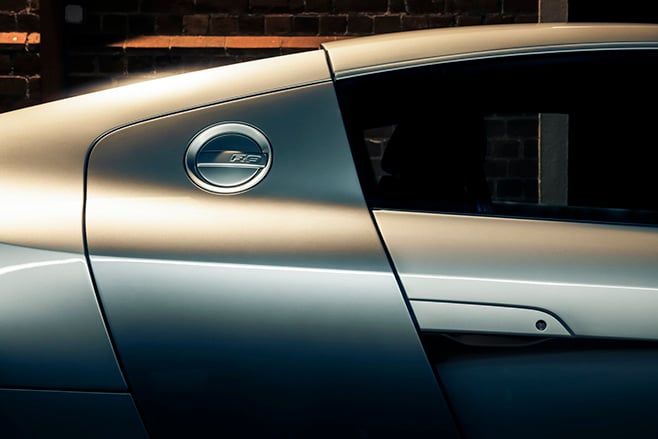
Designers Frank Lamberty and Julian Hoenig originally intended the side blades to extend upwards above the body into twin fins. That would prove a step too far for Audi which was unconvinced by the practicality of the raised blades.
Unlike most concept cars which are then watered down for production, Audi sharpened the R8’s details. “If I were to put the R8 next to the original concept, I’d actually say it looks even better,” said then-design boss Walter de’ Silva.
THE GOOD
Lithe, supple handling; bulletproof V8 engine; quality interior; shape has aged well; used prices are modest for such a landmark car; you’ll never see a mid-engined atmo V8 Audi again.
THE BAD
Its 309kW is now a hot-hatch power output; not a lot of luggage space; minor bodywork repairs expensive; R tronic not universally liked; LED daytime running lights now look a bit quaint
Audi R8 4.2 V8 Specs Engine 4163cc V8 (90°), dohc, 32v Max power 309kW @ 7800rpm Max torque 430Nm @ 4500rpm Transmission 6-speed manual Weight 1565kg L/W/H/WB 4431/1904/1252/2650mm 0-100km/h 4.6sec (claimed) Price from $120,000 (manual V8 value today)
On the face of, the quotes from Toyota’s top man – and the grandson of the company’s founder – read straight from the Terry and Karen playbook of anti-EV disinformation.
“The more EVs we build, the worse carbon dioxide gets…When politicians are out there saying, ‘Let’s get rid of all cars using gasoline,’ do they understand this?” said Toyota CEO Akio Toyoda in his role as chairman of the Japan Automobile Manufacturers Association at an end-of-year function.
He went on to say that if Japan moves too quickly to ban petrol-powered cars, “the current business model of the car industry is going to collapse,” resulting in the potential loss of millions of jobs in the world’s third-biggest economy.
He suggested, too, that Japan would run out of electricity in summer months if all cars were EVs, that it would cost upwards of A$500 billion to build sufficient EV infrastructure, and that because Japan’s energy is produced with natural gas and coal, the effect on the environment would still be negative.
So what gives?
On the face of it, Toyoda (below) is clearly putting Toyota’s cards on the table with the new Japanese prime minister Yoshihide Suga and his Liberal Democratic party’s recently mooted plans to ban the sale of ICE-only cars in the country.
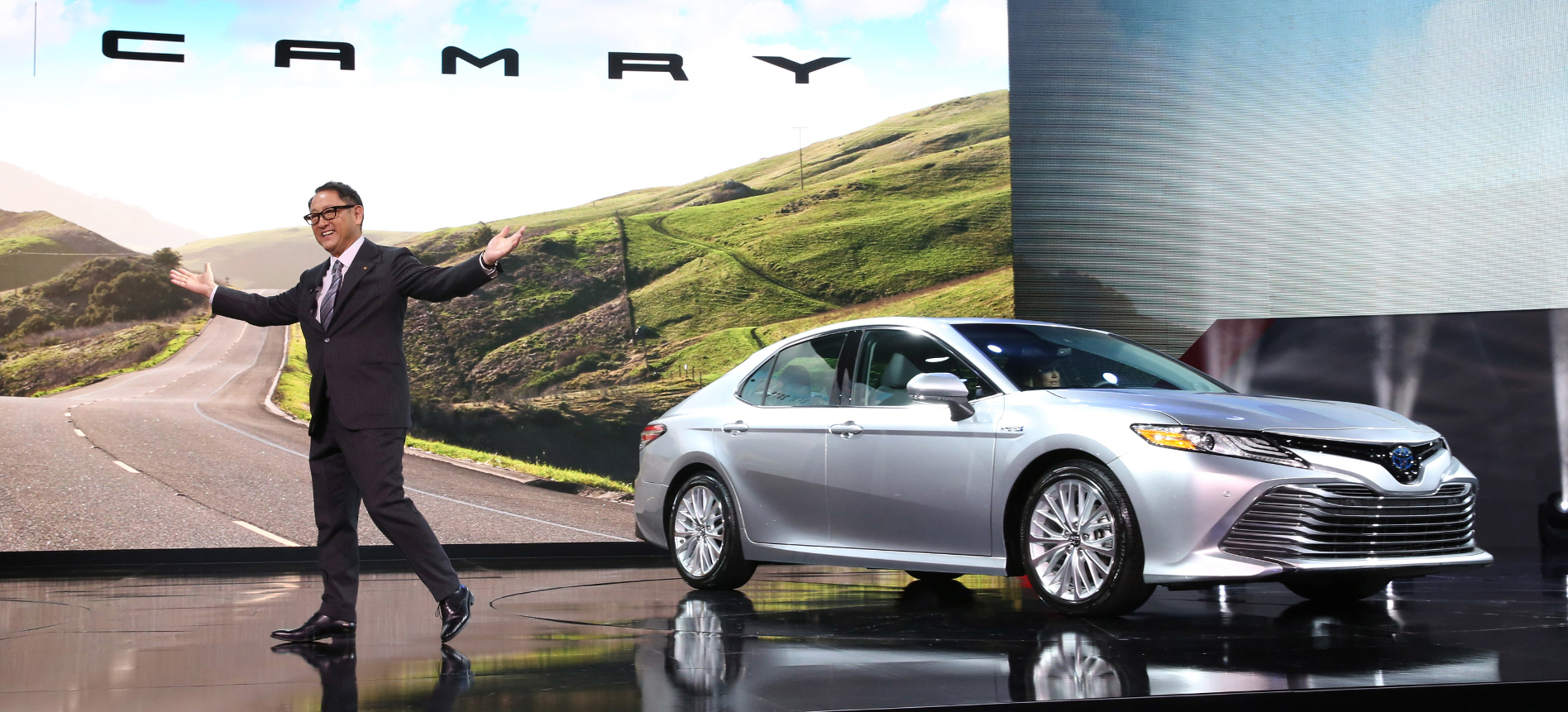
Underneath, however, it points to a car industry that’s trapped between two fronts; keeping the lights on in the face of declining demand and answering to the increasingly strident calls of governments around the planet to address the issue of climate change.
The state of EV play
While global markets are recovering, sales figures from 2020 will still mark an average decline of car sales across the globe in the order of 10 to 15 per cent.
Even though carmakers are enjoying currently healthy profit margins in the wake of pent-up demand, the bubble will likely pop as the bill for COVID-19 falls due in 2021 and beyond in the form of flattening sales in the wake of economic contraction from governments and employers.
This means less money on hand at a time when EV research and development costs are skyrocketing.
And while governments from Tokyo to London are loudly proclaiming that the car industry needs to adapt to climate change (despite the fact that personal transport’s contribution to greenhouse gas creation is far lower than, say, primary industry, transport or food production), the wider industry isn’t ready to roll out a fleet of affordable cars that can easily replace the ICE cars of today.
Reduce, reprice and recycle
Presently, an EV indeed does produce more greenhouse gases to build when compared to an ICE car – but studies have shown that this is offset within the first 10,000km of driving an EV, thanks to its lack of emissions.
The scales will tip further in the favour of EVs as carmakers are able to scale up production, figure out how to build lower-impact batteries and effectively re-life or recycle those batteries at the end of their working life.
As well, the crossover point where ICE cars and EVs are priced the same is approaching, with a report by Bloomberg New Energy Finance this week suggesting that the price of lithium-ion battery packs per kilowatt/hour will shrink to US$101 by 2023, and to as little as US$58 per hour by 2030.
Currently, they sit at around US$130 per kW/hr, from a high of $1100 just ten years ago.
At US$58 per kW/hr, an EV could be up to 40 per cent cheaper than an ICE car, according to the report.
Toyota’s investment in EV technology over the next decade – some A$20 billion) is at lower levels than some of its competitors.
Mercedes-Benz, for example, has announced it will pour more than A$110b into the space in the next four years, with the Volkswagen Group outlaying a similar amount over a slightly longer timeframe of nine years.
Interestingly, the remarks don’t come long after Toyoda’s pointed swipe at Tesla and its position in the global automotive landscape.
According to the Japanese giant, the Californian EV startup has not only grossly overestimated its value of $400bn (A$550bn), but is not yet adequately mature to be influencing global automotive trends – particularly in the electric technology space.
Toyota’s eggs are, for the moment, all in the hybrid basket, which won’t preclude it from selling cars in markets where bans on ICE cars are looming.
But if the boss of the world’s biggest carmaker isn’t singing the praises of the EV by now, where does it leave the industry as a whole?
Things just got pretty interesting.
Budget: $10K-$25K
2006-2013 Audi S3: Five doors and drives all fours, a great daily driver
If you want an all-wheel drive Audi with a bit of pep in its step, realistically $10,000 is your entry point, though a rare 3.2-litre V6 A3 for $7500 raised an eyebrow.
From here on in, however, you have myriad options. Early manual, quattro TTs in the early teens are stylishly tempting but we’ll recommend the second-generation S3.
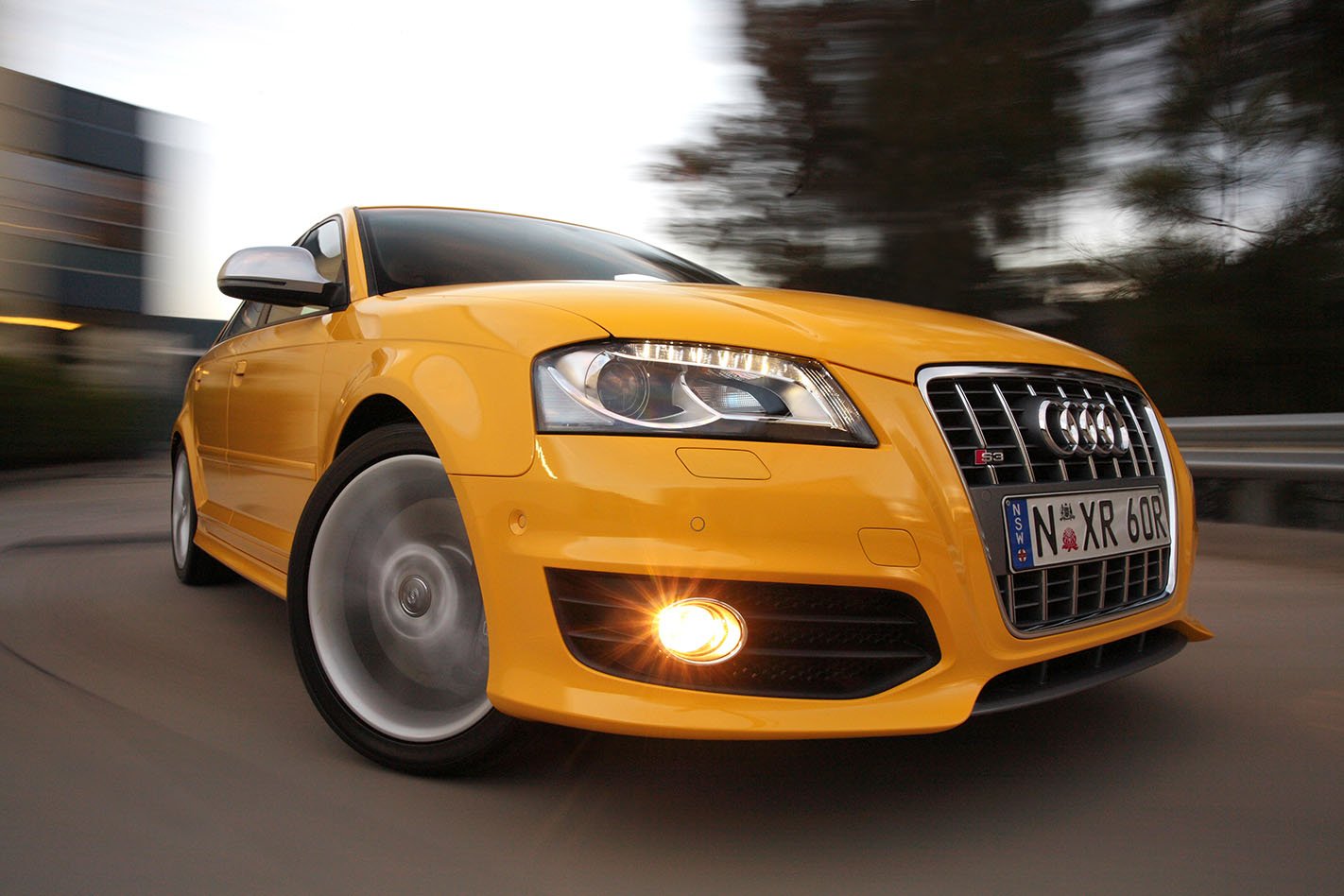
Australia’s ‘hot weather climate’ meant local S3s produced 188kW/330Nm rather than the European 195kW/350Nm, but this all-wheel drive hot hatch could still hit 100km/h in 5.7sec which remains respectable.
A six-speed manual was the only gearbox available initially but a six-speed DSG was also offered later, cutting a few tenths from the acceleration times.
Leggy examples can be had towards the lower end of this price bracket but if you’ve got $20K to spend you have the pick of the litter.
Unusual colours (yellow, blue etc.) appear to command a premium, as does the DSG gearbox, but we’d stick with the manual for the added driver involvement.
The S3 appears to be generally robust but like all premium cars regular servicing is pivotal, old oil soon causing headaches with engines, gearboxes and the Haldex all-wheel drive system.
These cars are eminently tuneable, so be aware of any modifications that have been made, particularly remaps of which there may be few, if any, outward signs.
While the chassis can handle the extra grunt, it will shorten the life of the transmission and take a toll on brakes and tyres.
Don’t panic if you can’t immediately find your perfect example, as the S3 was reasonably popular and there is a fairly wide choice in terms of colour, condition and kilometres.
It’s not the most exhilarating driver’s car but, as a quick daily driver, there’s a lot to commend it.

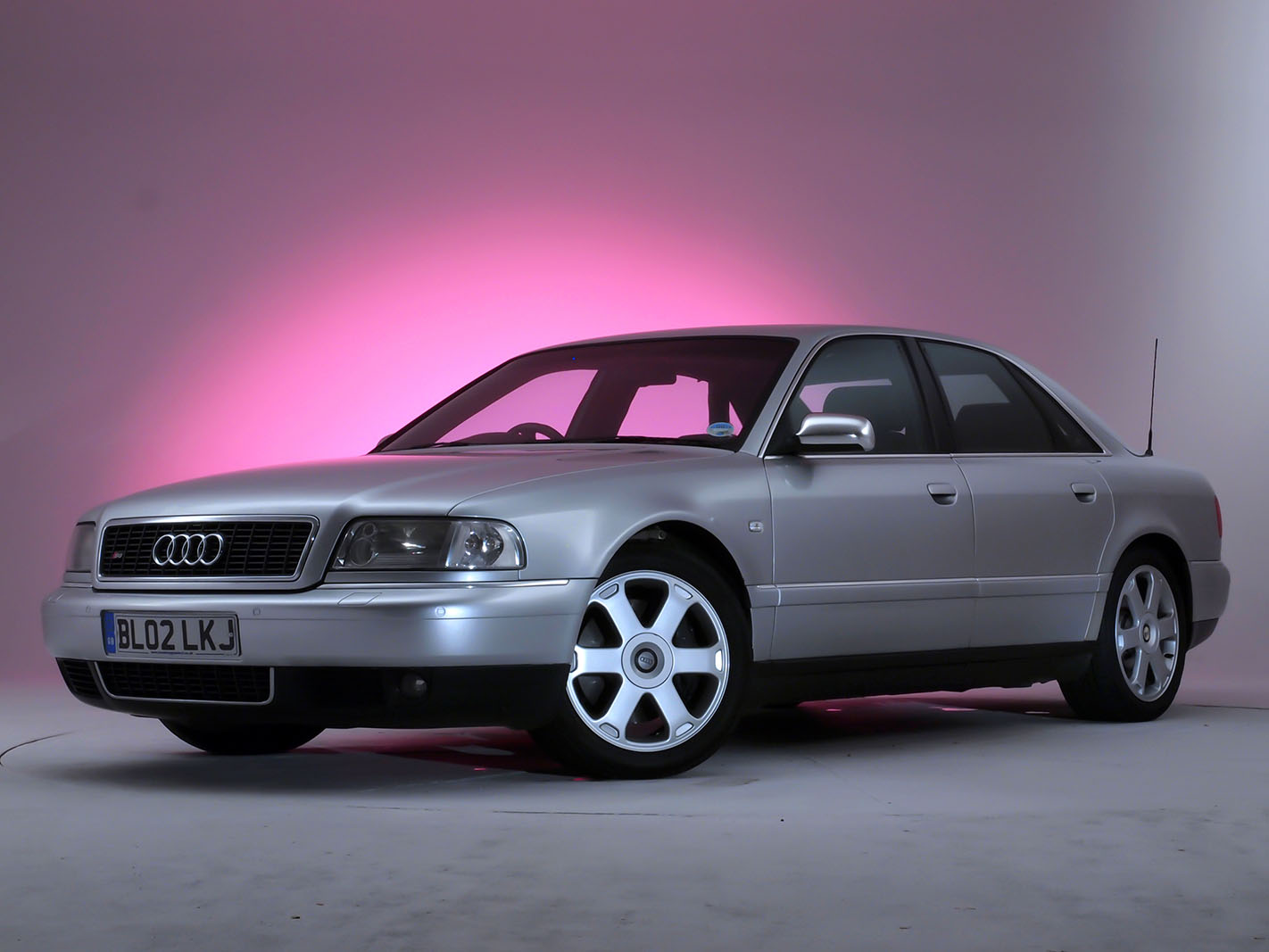
Also worth considering: 1996-2002 Audi S8
One word: Ronin. John Frankenheimer’s 1998 action thriller is almost single-handedly responsible for the cult status of Audi’s first-generation sports limo thanks to its sideways antics as a getaway car.
A number of examples are currently available around the mid-teens mark, with post-1999 cars receiving cosmetic upgrades and a five-valve version of the 4.2-litre V8 with 265kW/430Nm.
Budget: $25K-$50K
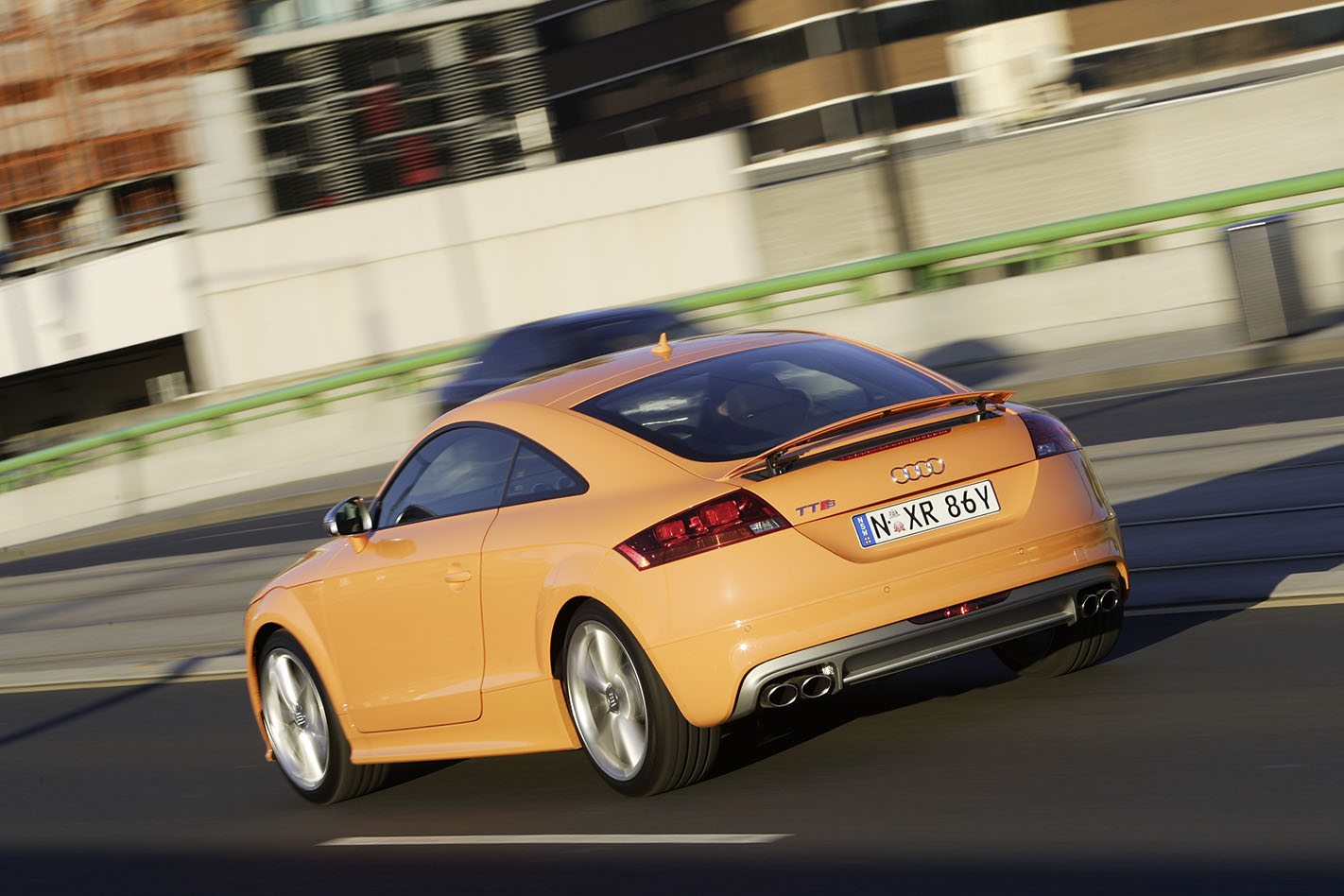
2008-2014 Audi TT S: Stylish but with plenty of substance
The TT S isn’t likely to appear on too many ‘Greatest Ever Audi’ lists but perhaps it should.
If the definition of automotive excellence is ‘performance of intended function’ then the TT S scores a gold star. Maybe two.
It didn’t set out to be a better driver’s car than a Porsche Boxster or as hairy chested as a BMW Z4 sDrive35is, but what it did set out to do – it did so brilliantly.

Rapid, fuss-free acceleration in all weathers? Tick, thanks to the 200kW/350Nm 2.0-litre turbo four-cylinder and slick six-speed DSG gearbox. The sprint to 100km/h took just 5.2sec and it kept pulling. At PCOTY 2008 the TT S matched the Mitsubishi Lancer Evo X over the quarter mile with a 13.83sec at 165km/h effort, but from there left its Japanese opposition for dead, hitting 200km/h 2.3sec quicker.
What was truly remarkable, though, is that the Audi matched the road-going rally weapon around Wakefield Park.
For years fast Audis had been great on road but fallen apart – metaphorically, of course – at the first sight of a ripple strip. No longer.
Granted, it wasn’t the last word in driver involvement but the front end now had accuracy, the brakes were strong and the quattro system actively involved the rear wheels in the meeting rather than just reading them the minutes after the fact.
Prices start at just over $25,000 but very low-kilometre examples – we’re talking fewer than 35,000km for a 10-year-old car – can be had for less than $35,000.
Like the S3, as long as servicing is up to date – double-check the aforementioned low-kilometre cars have all the requisite stamps –TT S ownership needn’t give you sleepless nights, but be aware that this is a high-tech car and gadgets like dual-clutch gearboxes and magnetorheological adaptive dampers aren’t cheap to replace should they die a premature death.
The most common issues seem to be dodgy power windows and sagging seat bases.
If you like the idea of the TT S but want something with a little more punch, then early RS models fall within this window, manual examples with around 100,000km on the clock scraping under $50K.
They offer huge performance and a great soundtrack, but aren’t necessarily any better to drive in the bends.
Also worth considering: 2010-2015 Audi RS5
There are some left-field choices in this price bracket, particularly early RS Q3s, though the rare and under-appreciated S1 is worth a shout. Great little car.
Our pick, though, is the RS5, complete with one of the world’s all-time great engines.
There are plenty to choose from starting at just over $40K, but be aware that continual steering and suspension updates mean the later cars drive better.

Budget: $50K-$100K
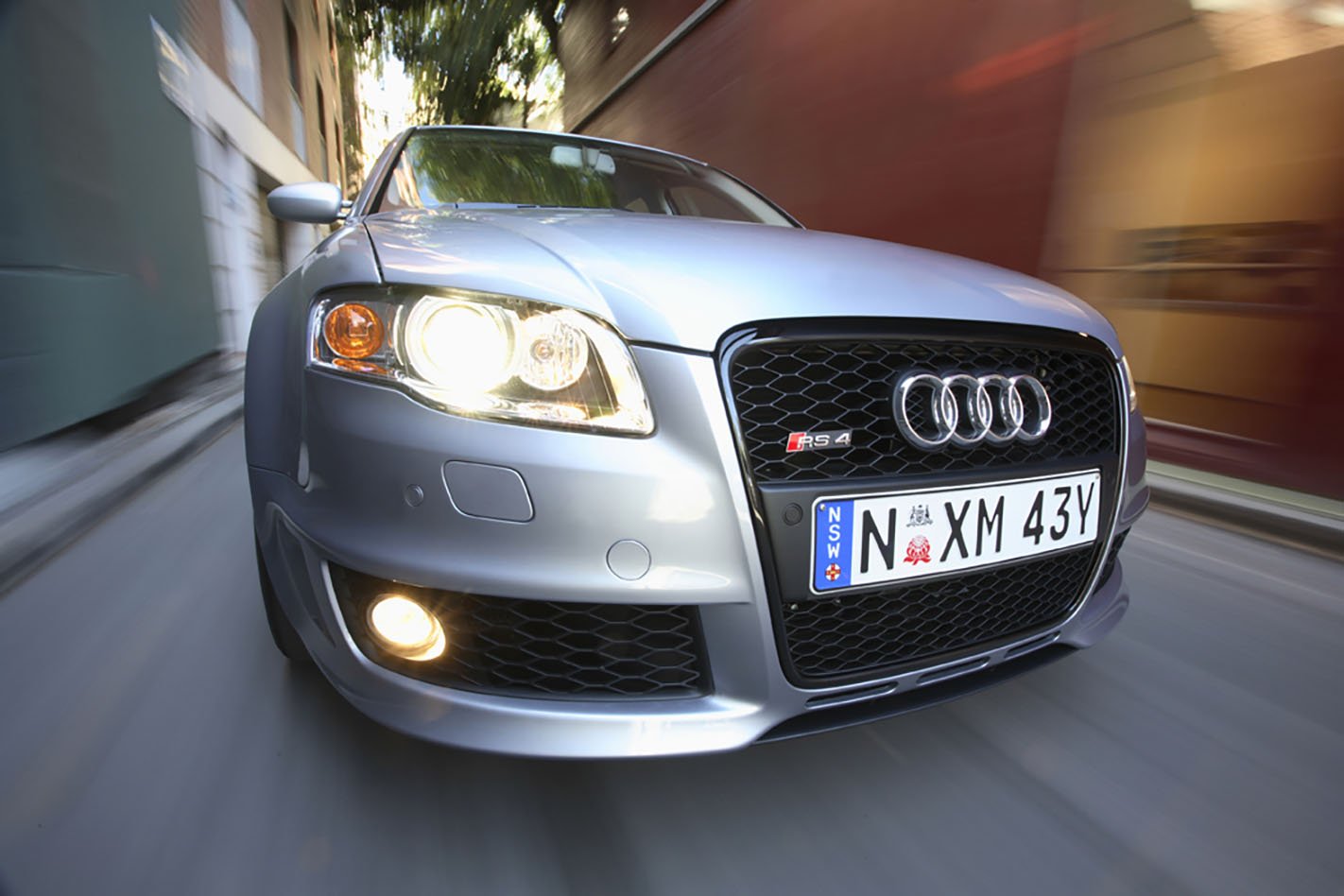
2006-2008 Audi RS4: Own a former Performance Car of the Year!
The obvious answer to the $50K-$100K question is RS3. Quick, comfortable and characterful with massive power potential should you be that way inclined, there are plenty to choose from so it should be easy to find one that suits your needs. But nah.
As nice as the RS3 is, it’s no match for one of the finest performance cars of the 20th Century, MOTOR’s 2006 Performance Car of the Year, no less.
Yes, the BMW E60 M5 and E63 M6, Lotus Exige S, HSV GTS and even the Porsche 911 Turbo were all beaten into submission by the B7 RS4.

To be honest, we probably would’ve chosen the RS4 for this category regardless, but with editor Andy and I having both recently sampled a beautiful example and emerged with mouths agape it became a no brainer.
This is a very special car to drive, with a droolworthy V8 that revs to 8250rpm, one of the best six-speed manual gearboxes you’ll ever use and a chassis that delivers confidence-inspiring yet entertaining handling and a fine ride to boot.
Speaking of boots, there is the choice of two, four or five doors for the B7 RS4, Audi offering a sedan, wagon and convertible.
The latter is probably better than you think, but it’s heavier, wobblier and slower than its siblings.
Prices actually start just below the $50,000 mark and increase from there depending on age and mileage.
You will hear horror stories regarding RS4 reliability, usually to do with an endless cascade of warning lights and faults, but in general they are hardy.
An up-to-date service history isn’t enough; the V8’s thirst for oil (up to three litres per 1500km) means regular checks are required to prevent fairly catastrophic engine damage.
Failed coil packs can cause a misfire but the most common issue seems to be carbon build-up due to the engine not being used hard enough, often enough.
The other major warning regards the clever diagonally-linked dampers, which can leak and are expensive, particularly as if one goes you really need to replace all four.
Some cars may have had regular coilover suspension fitted instead. This won’t be a cheap car to run, but go in with your eyes (and wallet) open and you’ll score something special.
Also worth considering: 2008-2010 Audi RS6
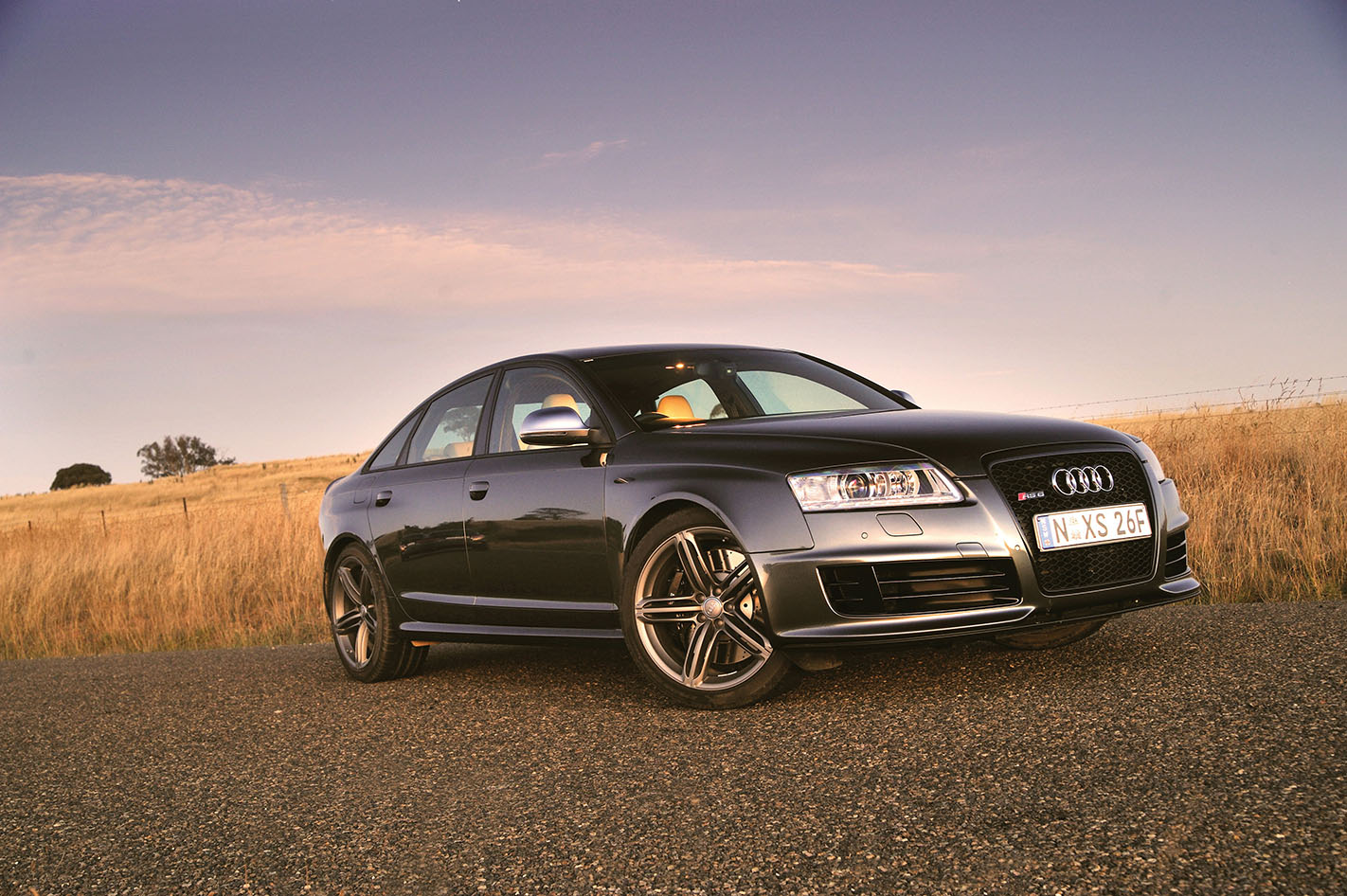
When it comes to speaking softly but carrying a big stick, the C6 RS6 whispered almost inaudibly but wielded an almighty Californian redwood.
Its demure looks required a second glance from even hardened petrolheads yet under the bonnet is a 426kW/650Nm 5.2-litre twin-turbo V10.
They’re rare, and you’ll need around $65,000 for an example with less than 100,000km on the clock.
Budget: $100K-$200K
2006-2013 Audi R8: A sexier, more sonorous 911 alternative
At the top end of town it has to be an R8 but that’s not as simple as it seems because there are plenty of variants to choose from.
The good news is that with one caveat there isn’t really a dud, each providing a more exotic looking and sounding alternative to the Porsche 911.
Some will argue that the lighter V8 is the sweeter handling car, while others are understandably seduced by the power and noise of the 5.2-litre V10.

The caveat is that the automatic option for most of the first-generation R8’s life was a robotised manual called R-tronic.
You might be tempted by this as it’s by far the cheapest entry point into R8 ownership but unless you really have to, don’t.
It would be too much to say that it spoils the experience but the slow, clunky shifts certainly don’t enhance it.
While early R-Tronic V8s can be found for less than $100K, manuals command a substantial premium – budget for around $125K.
Happily, in 2013 Audi saw the error of its ways and introduced a seven-speed dual-clutch automatic for both the V8 and V10 models.
Facelifted V8 Coupes start at $150K with Spyders an extra $10K on top of that. The premium for a V10 isn’t huge, a Spyder available for $180K and all dual-clutch examples, dubbed S-tronic, show less than 50,000km.
Our pick, though, is the car pictured, the last-of-the-line V10 plus.
Outputs increased to 404kW/540Nm, fixed-rate suspension replaced adaptive dampers and carbon-ceramic brakes appeared standard.
It was good enough to capture our 2013 Performance Car of the Year title, backing up the standard V10’s joint win in 2009, the honours shared with the Nissan GT-R.
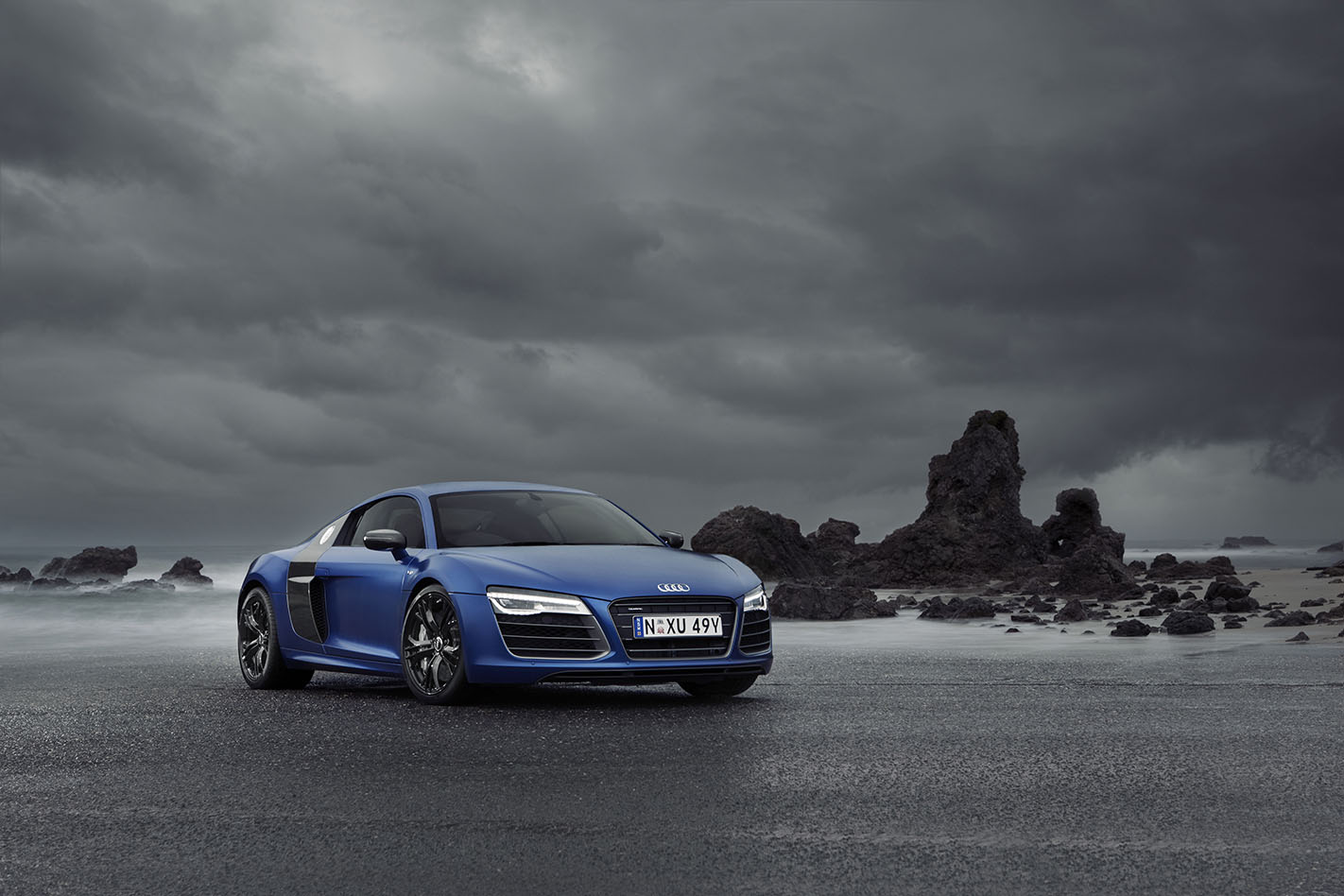
Prices started from $408,200 but at the time of writing an example is available in Victoria with just 24,600km on the clock for $189,000. That, ladies and gentlemen, is a supercar bargain.
The steering is a little slow but the chassis is certified gold and the engine to die for.
Also worth keeping an eye out for are a number of special editions such as the harder, faster GT (just 333 offered worldwide) and the laser-lighted, 419kW R8 LMX, of which just 99 were built and three came to Australia. You’ll pay a substantial premium for either!

Also worth considering: 2015-2017 Audi RS7 Performance
Of course, a low-slung, two-door supercar isn’t for everyone, but if you want the performance with added practicality, then there is the RS6 or RS7 Performance, offering 445kW/750Nm from a 4.0-litre twin-turbo V8.
Audi claimed 0-100km/h in 3.7sec and 0-200km/h in 12.1sec, but our test car made a mockery of this, clocking 3.37sec and 10.95sec respectively. Prices start at around $115K.