
Registrations for new premium SUVs boomed in 2023 as supply started to catch-up with demand.
And in 2024 there will be even more options for buyers with bigger wallets as new-generation and updated versions of established models are also joined by more than 10 nameplates making their debut in Australia.
From Alfa Romeo to Volvo, here’s Wheels’ comprehensive guide to all the posh sports utility vehicles heading Down Under…
JUMP AHEAD
- Alfa Romeo Milano
- Audi Q4 E-Tron
- Audi Q6 E-Tron
- BMW X2/iX2
- BMW X3
- Cadillac Lyriq
- Genesis GV80
- Lexus LBX
- Lexus GX
- Lotus Eletre
- Maserati Grecale Folgore
- Mercedes-AMG GLC63
- Mercedes-Maybach EQS
- Mini Countryman
- Polestar 4
- Polestar 3
- Porsche Macan Electric
- Range Rover Electric
- Tesla Model Y
- Volvo EX30
- Volvo EX90
Alfa Romeo Milano – timing TBC
The name of Italian brand Alfa Romeo’s baby SUV has been confirmed as ‘Milano’, ahead of a full reveal in April.
Milano is Alfa’s twin to the Jeep Avenger and will become its first electric model to be offered, though a hybrid powertrain will also be part of the mix.
The Milano will expand Alfa’s line-up of SUVs to three, joining the Tonale and larger Stelvio.
With details so scarce at this stage, it’s unknown whether the Milano will reach Australia before 2024 is out.
Audi Q4 E-Tron – mid 2024
Audi Australia expects its third electric vehicle, the Q4 E-Tron, to become its best-selling electric model when it arrives here in 2024.
The local arm has locked in pricing for its Tesla Model Y and Volvo XC40 Pure Electric rival – from $88,300 to $109,500 in a four-model range.
Sitting on the Volkswagen Group’s MEB platform, the Q4 is offered with a choice between traditional SUV and Sportback body types, and with either single or dual motors providing, respectively, 210kW and 250kW.
Audi Q6 E-Tron – timing TBC
This is Audi’s twin to the electric Porsche Macan also being released in late 2024.
Although the exterior has yet to be revealed yet for the five-seater luxury SUV, Audi did showcase the cabin at the 2023 Munich motor show.
This also confirmed plenty of technological commonality with the Porsche that also shares a new PPE battery platform.
This includes multiple digital dash displays, including optional front-passenger screen, and an optional augmented-reality head-up dispay.
As the model name suggests, the Q6 will slot into the Audi line-up above the aforementioned Q4 E-Tron and Q8.
BMW X2 & iX2 – Q1
The coupe version of the X1, the second generation ‘U10’ X2 was unveiled last October and comes in two petrol all-wheel-drive models, with the electric model badged separately as the iX2.
Larger than its predecessor, the X2 adds significantly more technology – including BMW’s ninth-generation iDrive system – but also adds weight and cost.
That sees more than a $10k jump for the entry-level xDrive 20i, which is now standard with all-wheel drive, while there’s a larger (570L) cargo area.
The fastest model is again the X2 M35i.
No surprises in that the iX2 uses the same 230kW/494Nm electric motors and 65kWh battery pack as the iX1, with its130kW DC charging capability providing up to 80 per cent of its 449km WLTP range – nine more than the iX1 – in 30 minutes.
Priced at $85k, the higher equipped eDrive 30 will arrive ahead of the xDrive20 later in 2024 at $83k – $4000 above the entry level iX1.
BMW X3 – TBC
In 2024, the ‘G45’ X3 will be revealed as the fourth iteration of BMW’s midsized luxury SUV since the nameplate debuted in 2003.
Spied frequently testing in Europe during the past 18 months or so, the X3 is expected to grow in size again and, based on prototypes photographed, will share more styling commonality with the latest X1 than the larger X5.
There will also be two platforms, with petrol, diesel and PHEV variants utilising an update of the current CLAR architecture, while a next-generation iX3 will switch to the German brand’s new Neue Klasse electric modular platform.
It’s unclear at this stage whether the fourth-generation BMW X3 will go on sale in Australia in 2024 or arrive for early 2025.
Cadillac Lyriq – Q4
Spearheading the Cadillac comeback – which will be an all-electric brand in Australia – is the $150k Lyriq, which despite its Large SUV measurements is being pitched as a mid-size luxury SUV.
With elegant styling and attention to detail inside and out, the Lyriq is the brand’s first foray into the luxury EV SUV segment globally.
It rides on General Motors’ Ultium scalable architecture which allows batteries from 50kWh to 200kWh capacity – the Lyriq uses a 102kWh version.
While the local line-up is yet to be finalised, the Lyriq is offered in three trim levels in the US, starting with the Tech, then mid-spec Luxury and range-topping Sport.
The Tech uses rear-wheel drive and a single-motor powertrain in the US.
The Sport shown to Wheels in November 2023 wore a ‘600e4’ designation, for 610Nm, electric and dual-motor four-wheel drive.
Cadillac claims a 505km range for the Lyriq rear-wheel drive, and 10km less for the all-wheel drive.
Genesis GV80 – Q2
The largest SUV from Hyundai’s luxury brand until the GV90 lands, the updated GV80 receives styling tweaks and will be joined by the new Coupe body style.
The GV80 Coupe gives an answer to the BMW X6, with its own front-end styling touches including a larger air intake and Active Air Flap, with Coupe-specific alloys up to 22-inches.
The Coupe’s has its own rear styling treatment and Berling Blue as an exclusive colour, with three new colours across the GV80 line-up.
Both present an opulent cabin with a continuous 27-inch OLED display stretched across the dash combining instruments and infotainment, while there’s no word on cargo capacity between the SUV and Coupe body styles.
Pricing is expected to be $120-130k, with Genesis expected to confirm the same 279kW/530Nm 3.5-litre petrol V6, which in the Coupe sees an electric supercharger bump to 305kW/549Nm.
Lexus LBX – Q1
The Lexus LBX (‘Lexus Breakthrough Crossover’) gives the brand a more affordable, smaller hybrid for Australian customers.
Using a modified version of the Toyota Yaris Cross GA-B architecture, the LBX is shorter, narrower but marginally taller than the larger Lexus UX. It uses the Yaris’ 1.5-litre three-cylinder petrol engine, teamed with a more powerful electric motor and nickel-metal hydride battery for a total output of 100kW/185Nm.
A twin-model range comprises a front-wheel-drive Luxury and an all-wheel-drive Sports Luxury. In addition to an extra (rear) electric motor, the more expensive variant also features a more sophisticated multilink rear suspension and a higher equipment level that includes a Mark Levinson audio system.
Pricing is yet to be announced, though expect a starting price in the mid-$40K region.
Lexus GX – Q2
The luxury version of the new Toyota Prado will arrive in dealerships before the vehicle it’s based on.
The first time the nameplate has been offered in Australia, the three-row GX sits between the RX – which no longer offers seven seats – and the LX in the Lexus line-up and will be priced accordingly.
The means a GX price broadly between $100-$150K, with the LX range kicking off at $156k.
The GX can be had in five-, six- or seven-seat guise, with individual captain’s chairs offered in the second row.
An Overtrail variant is a five-seater with all-terrain tyres, black wheel arches, skid plate and the Electronic Kinetic Dynamic Suspension System from the 300 Series LandCruiser.
The GX will arrive with a 3.5-litre twin-turbo V6 and 10-speed auto, ahead of a petrol hybrid expected to be added later on.
Lotus Eletre – timing TBC
Famed British sports car brand Lotus is making a genuine comeback – finally – and is showing it means business with the Eletre luxury SUV.
While it’s made in China, the Eletre – which means ‘coming to life’ in Hungarian (!) – uses the new Lotus-developed Electric Premium Architecture (EPA) and brings a convincing exterior and cabin finish.
Three variants – the $240k Eletre, $269k Eletre S and $315k Eletre R – use a 109kWh lithium-ion battery pack, with 450kW/710Nm in the entry level model bumped up to 675kW/985Nm for the Eletre R, which has a 0-100km/h claim of 2.95 seconds.
Eletre is uncharacteristically heavy for a Lotus, weighing up to 2640kg, but it also breaks with tradition with usable storage space in a 688-litre cargo area split between a boot and frunk (front-trunk).
Maserati Grecale Folgore – Q4
The first electric Maserati dons the Italian car maker’s ‘Folgore’ – meaning lightning – sub-brand nomenclature and is scheduled to arrive in Australia in late 2024.
The Grecale Folgore takes the Porsche Macan-sized SUV – Maserati’s most popular car here – and runs a quad-motor set-up (two on each axle) with 400V architecture and 105kWh battery for a suggested 400kW/800Nm output, with the final specs still to be confirmed.
On paper, that should give the all-wheel drive electric Grecale rapid pace and competitive driving range, with more recycled materials inside a car that will largely look similar to the existing petrol-powered versions already on sale.
Mercedes-AMG GLC63 – Q2
The fast SUV equivalent to the C63 sedan, the GLC63 uses the same 350kW four-cylinder petrol engine with an F1-dervived electrical turbocharger and a 150kW electric motor integrated into its limited-slip diff.
There are eight driving modes as well as four regenerative braking choices and three ESP settings. There’s all-wheel steering, adjustable damping and active anti-roll bars.
Despite weighing 2310kg – 150 more than its predecessor – it reels of 0-100km/h in 3.5 seconds.
Well balanced weight distribution makes it a lively handler, too – but it will come at a yet-to-be-confirmed price of more than $200,000.
Mercedes-Maybach EQS – mid year
The ultra-luxury Maybach brand’s first electric model, the 5.2-metre long EQS 680 SUV sports the signature two-tone exterior colour scheme, dripping with chrome accents and 22-inch wheels polishing its vault-like look.
The Nappa leather-laden cabin steps up Mercedes’ opulence by adding a Maybach mode that animates the digital instrument cluster, with the back seat serving up twin 11.6-inch touchscreens which allow passengers to modify the navigation, among other commands.
Maybach claims the all-wheel drive electric powertrain delivers 484kW/950Nm and approximate 600km range, with the price expected to be well above $400k – cheap for a Maybach, really…
Mini Countryman – Q3
The Mini Countryman revealed at the 2023 Munich motor show will be on sale in Australia by the third quarter of 2024.
The new Countryman follows the rest of the brand into the age of electrification and will not be offered with an internal combustion engine of any kind apart from the John Cooper Works (JCW) flagship.
As the most rugged Mini, the higher-riding five-door Countryman’s simplistic design is bolstered by more angular styling, scuff resistant body trims and unique pentagonal headlights.
Inside are wild textile finishes that can be customised – at extra cost – as well as the latest Mini Operating System 9 in the traditional circular centre display.
Polestar 4 – Q3
This handsome ‘SUV Coupe’ will triple the Swedish electric brand’s line-up in 2024.
While previous models have used existing Volvo platforms, the Polestar 4 is the first to use parent company Geely’s all-new Sustainable Experience Architecture electric vehicle (SEA).
Sitting between the Polestar 2 sedan and forthcoming Polestar 3 (see below) in terms of size, it will have a footprint similar to the Audi Q5 and Porsche Macan – though its sleek roofline gives it a visual distinction to both those Germans.
It will also compete more directly against the Tesla Model Y and Kia EV6 on price.
Starting from $81,500 in Australia, the range kicks off with a single-motor version with 200kW/343Nm and claimed 600km range. Spending another $10K and a bit accesses a 400kW/686Nm twin-motor model said to be capable of reaching 100km/h from standstill in 3.8 seconds.
Polestar 3 – Q2
The Polestar 3 is a large electric luxury SUV twinned with parent company Volvo’s EX90 (see further down), with both vehicles riding on the SPA2 platform as they weigh in on the Audi Q8 E-Tron, BMW iX and Mercedes-Benz EQE SUVs.
Offered in a single spec priced at $133K, the Polestar 3 uses a CATL 111kWh 400-volt lithium-ion battery pack providing energy to a dual-motor system – one motor at each axle providing all-wheel drive.
That brings an official 0-100km time of 4.7 seconds with 250kW DC charging topping up 80 per cent of charge in 30 minutes, or 11 hours for a full charge in a standard AC charger.
With a full battery, the 3 can cover 610km (WLTP) in Long Range form, which drops to 560km with the $9000 Performance Pack optioned – which increases power to 380kW/910Nm, 20kW and 70Nm.
Porsche Macan E – Q4
Porsche hasn’t delivered a hybrid Macan yet, so the leap to the new Premium Platform Electric (PPE) 800V architecture that the Macan E will share with Audi brings the car several steps forward.
It will also essentially replace the petrol-powered Macans, which will be dropped from sale in the third quarter of 2024.
The Macan E (its official name has yet to be confirmed) will use a 100kWh battery and is expected to use two electric motors across three spec levels – Macan E, Macan 4S and Macan Turbo – in the same format as the Taycan.
The handsome SUV has a core focus on handling – with passive four-wheel steering – and a sub-four-second 0-100km/h, with the 270kW rapid charging rate offering up to 80 percent charge in 18 minutes.
Full capacity even in the 477kW flagship Turbo is more than 500km.
Range Rover Electric – TBC
It will be Land Rover’s first ever fully electric vehicle, though for now the battery-only Range Rover has been teased only ahead of a 2024 reveal.
There will be an 800-volt architecture to bring advantages including ultra-rapid charging, though otherwise patience is required for details on battery size, power, performance, and range.
Australian prospects, however, can already pop themselves onto a waiting list to be among the first to pre-order the electric Rangie.
Tesla Model Y – timing TBC
Now one of the world’s biggest-selling vehicles, the Model Y will sometime in 2024 adopt similar changes seen to the Model 3 sedan in late 2023.
These are likely to include revisions to the interior, which for the Model 3 featured a new steering wheel that swapped stalks for indicator buttons, and an upgrade to cabin materials.
We’d also anticipate subtle tweaks to the exterior design, notably new-look headlights and tail-lights.
Volvo EX30 – Q1
The quickest vehicle in the Swedish brand’s 97-year history, the Volvo EX30 baby SUV is, paradoxically, also its smallest, most affordable electric vehicle.
The China-built EX30 brings a three-model range starting from $60,000 – a tad more than the petrol powered, slightly larger Volvo XC40, but $14,000 less than an electric XC40.
The EX30 will be offered two guises: the Single Motor RWD Extended Plus and range-topping Twin Motor Performance AWD Ultra version. It’s the hero EX30’s 0-100km/h claim of 3.6 seconds that sets a new performance benchmark for the car maker, but the Single Motor Extended Plus is also a strong performer.
Equipment levels see the Extended Plus equipped with Harmon Kardon audio, wireless phone charging and a digital key. The Ultra trim level brings features including Volvo’s Pilot Park Assist.
There’s a Cross Country version, too – but Volvo is yet to confirm if it will be sold in Australia.
Volvo EX90 – Q4
The Volvo EX90 is the electric alternative to the diesel-powered XC90.
It rides on the dedicated electric SPA2 architecture that enables a host of advances including bi-directional charging and a LIDAR scanner enabling full self-driving capability down the track.
The EX90 will launch here packing a single powertrain using a dual-motor system producing 380kW/ 910Nm with a 111kWh battery pack and all-wheel drive.
Volvo says it has a 600km range but is yet to confirm charging rate – or performance figures, both expected to be similar to the Polestar 3’s – but its bi-directional charging means it could power your home for set periods.
Pricing is expected to be around $140k.
ANCAP safety ratings will no longer apply to several new vehicles sold in 2024 following the expiry of scores first achieved in 2016 or 2017.
New cars set to enter the new year without a valid ANCAP safety rating will include the popular Mazda CX-5, Volkswagen T-Roc, Kia Picanto, Audi Q5, BMW X3 and Volvo XC60, with their results due to expire on December 31, 2023.
It is the second round of results to expire after ANCAP first implemented its six-year rating validity limit on December 31, 2022, which saw most vehicles still on sale that were tested before 2017 become ‘unrated’, such as the Toyota LandCruiser Prado (2011), Mitsubishi ASX (2014), Nissan Navara (2015), Mazda CX-3 (2015) and Volkswagen Tiguan (2016).
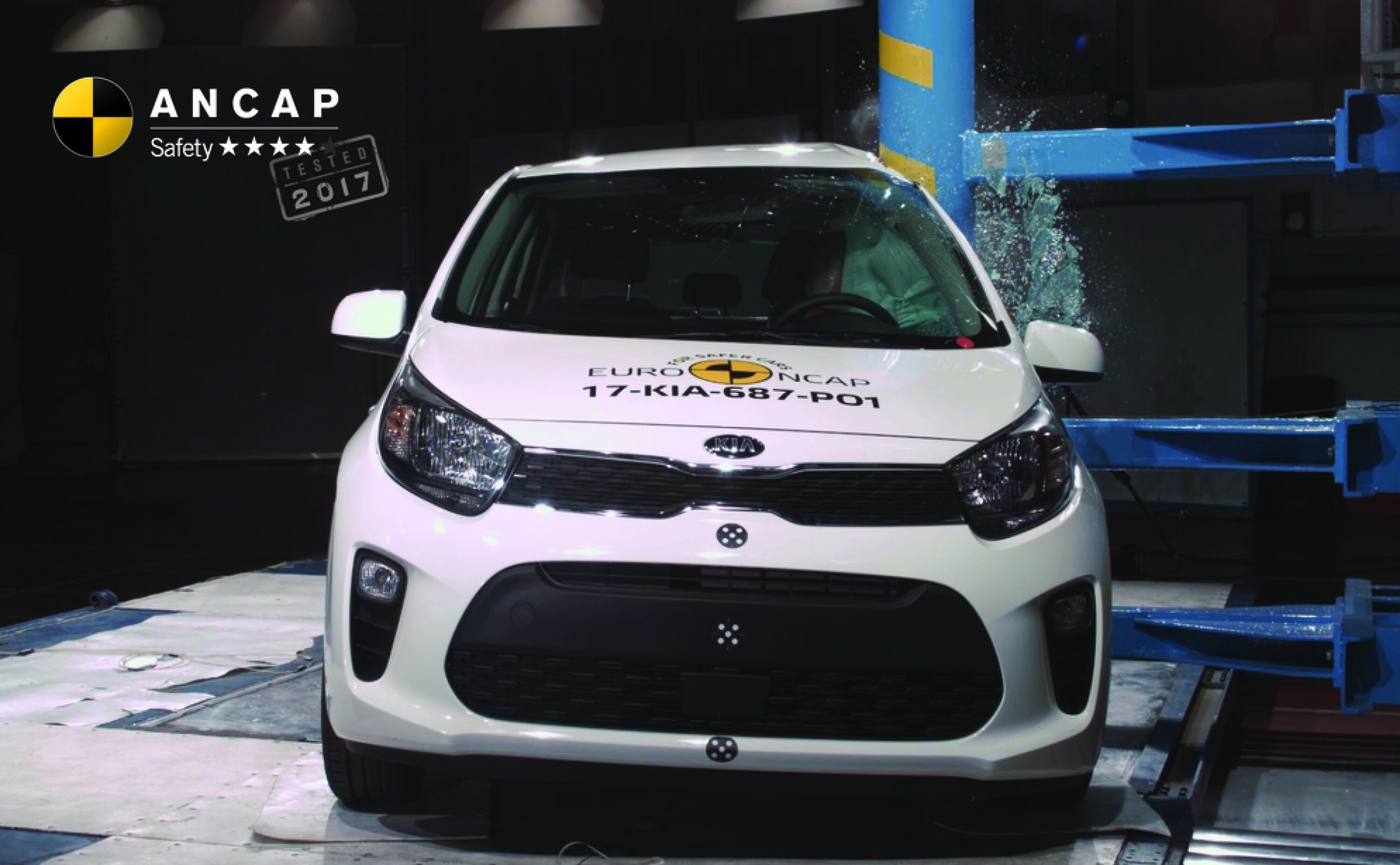
The expiry of five-star ANCAP safety results for certain vehicles sold after January 1, 2024, could threaten their status for some fleets that require top marks – and could require an exemption to be used as an Uber ride-share vehicle, which mandates a five-star result for most vehicles.
Versions of affected vehicles sold before January 1, 2024, will still be covered by their original ratings, which are based on testing conducted in 2016 or 2017.
Confusingly, some ANCAP safety ratings released in 2017 – including the MG ZS, Hyundai i30 hatch, Kia Stonic and LDV T60 – are not due to expire until December 31, 2024, when the ratings for vehicles tested in 2018 will also expire.
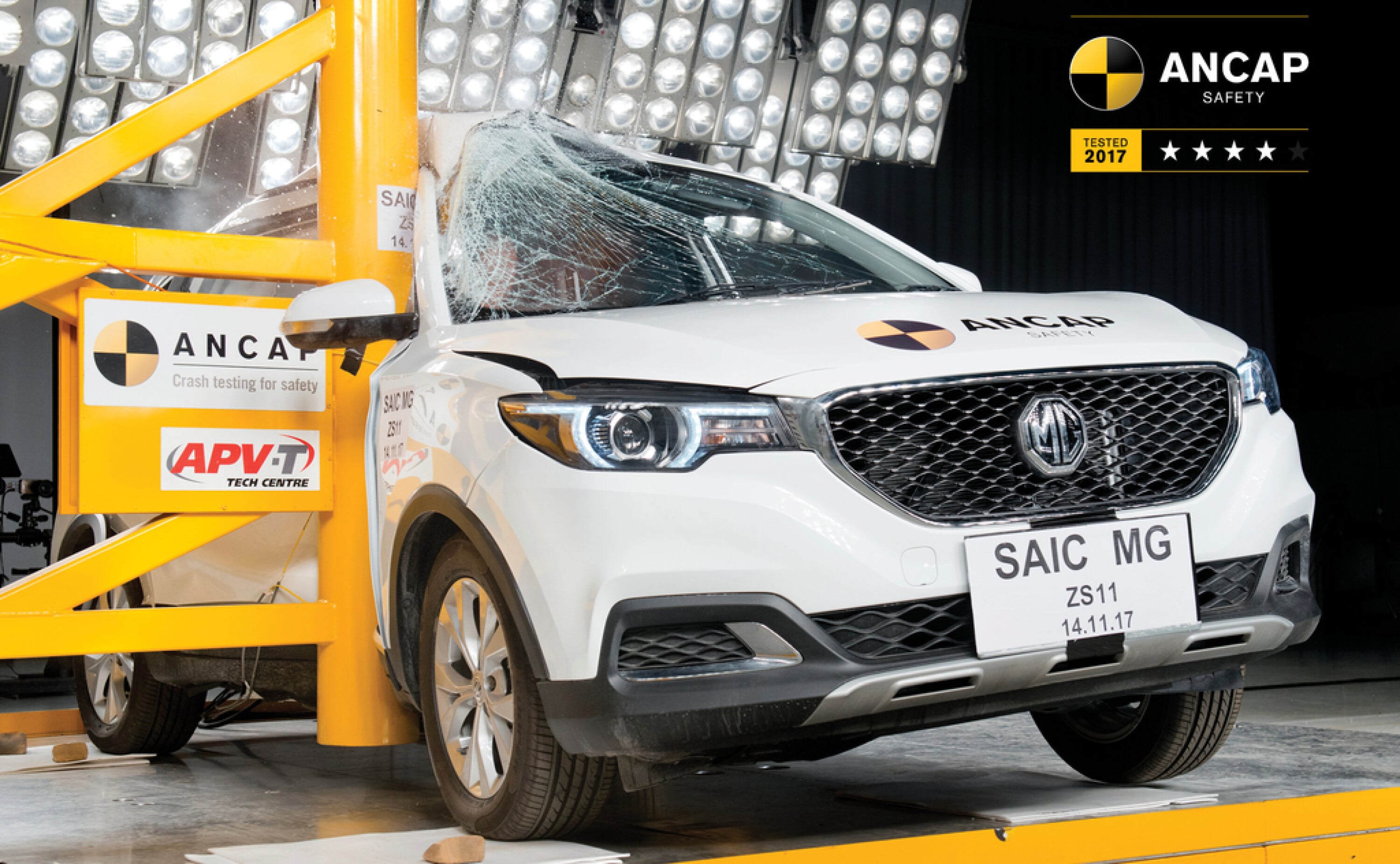
“If a model is not replaced or re-assessed to ANCAP’s latest rating criteria within the six-year rating validity period, the rating for that model expires and the rating status of newly-built units changes to ‘unrated’,” said ANCAP.
“ANCAP encourages vehicle manufacturers to update the safety features and technologies fitted to their vehicles throughout their model life – particularly if they are to remain in the market for six years or longer – to ensure they continue to provide the best levels of safety for new car buyers.”
When the changes were announced in 2021, ANCAP CEO Carla Hoorweg said the six-year system was to eliminate confusion for buyers, providing clarity so consumers can compare star ratings more accurately.
“What we will end up with is that all ratings will have a six-year validity, so then you’ll be able to see very clearly whether or not the rating is valid or expired,” said Hoorweg.
“It gives you that ability to compare how long this rating has to run versus one that’s more recent – you know it’s going to be valid for longer, so you’ve got that five-star rated car with a valid rating that’s going to last until the end of the sixth-year life.
“I think that gives you a way of comparing, and going, ‘well, if I’m buying a vehicle that has five stars from 2017 versus a vehicle that has five stars from 2019, I know that the 2017 one is older and the rating is going to expire [sooner]’.”

ANCAP safety ratings expiring on December 31, 2023:
- Jeep Cherokee – five stars, tested 2016 (vehicle discontinued)
- Mazda CX-9 – five stars, tested 2016 (vehicle soon-to-be-discontinued)
- Mazda MX-5 – five stars, tested 2016
- Subaru Impreza – five stars, tested 2016 (vehicle superseded)
- Toyota LandCruiser 70 Series single-cab cab-chassis – five stars, tested 2016
- Alfa Romeo Stelvio – five stars, tested 2017
- Audi Q5 – five stars, tested 2017 (replacement model due soon)
- BMW 6 Series GT – five stars, tested 2017 (vehicle discontinued)
- BMW iX3 – five stars, tested 2017 (replacement model due soon)
- BMW X3 – five stars, tested 2017 (replacement model due soon)
- BMW X4 – five stars, tested 2017 (replacement model due soon)
- Jaguar E-Pace – five stars, tested 2017
- Jaguar F-Pace – five stars, tested 2017
- Kia Stinger – five stars, tested 2017 (vehicle discontinued)
- Land Rover Discovery – five stars, tested 2017
- Range Rover Velar – five stars, tested 2017
- Mazda CX-5 – five stars, tested 2017
- Mercedes-Benz C-Class Cabriolet – five stars, tested 2017 (vehicle superseded)
- Mini Countryman – five stars, tested 2017 (replacement model due in 2024)
- Mitsubishi Eclipse Cross – five stars, tested 2017
- Renault Koleos – five stars, tested 2017
- Skoda Karoq – five stars, tested 2017
- Skoda Kodiaq – five stars, tested 2017 (replacement model due in 2024)
- Toyota C-HR – five stars, tested 2017 (replacement model due in 2024)
- Volkswagen Arteon – five stars, tested 2017 (vehicle soon-to-be-discontinued)
- Volkswagen T-Roc – five stars, tested 2017
- Volvo XC60 – five stars, tested 2017
- Citroen C3 – four stars, tested 2017
- Kia Picanto – four stars, tested 2017
- Ford Mustang – three stars, tested 2017 (replacement model due in 2024)
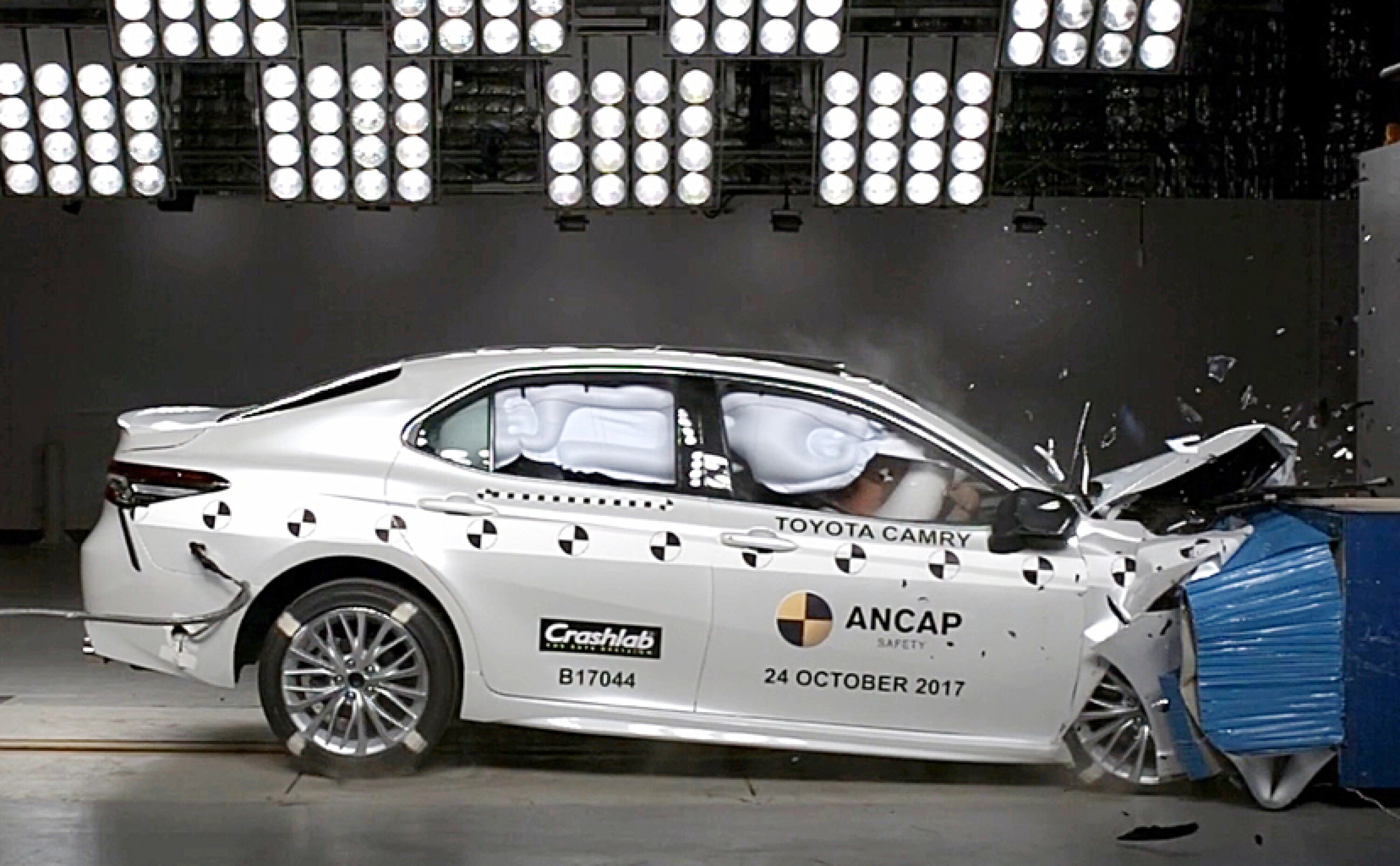
ANCAP safety ratings expiring on December 31, 2024:
- Hyundai i30 hatch – five stars, tested 2017
- Jeep Compass – five stars, tested 2017
- Kia Rio and Stonic – five stars, tested 2017
- LDV D90 – five stars, tested 2017
- LDV T60 – five stars, tested 2017
- Suburu XV – five stars, tested 2017 (vehicle superseded)
- Suzuki Swift (safety pack) – five stars, tested 2017 (replacement model due in 2024)
- Toyota Camry – five stars, tested 2017 (replacement model due in 2024)
- MG ZS – four stars, tested 2017 (replacement model due in 2024)
- Suzuki Swift (base) – four stars, tested 2017 (replacement model due in 2024)
- Audi A6 – five stars, tested 2018
- Audi A7 – five stars, tested 2018
- Audi Q3 – five stars, tested 2018
- BMW X5 – five stars, tested 2018
- Genesis G70 – five stars, tested 2018
- Hyundai Nexo – five stars, tested 2018
- Hyundai Santa Fe – five stars, tested 2018 (replacement model due in 2024)
- Jaguar I-Pace – five stars, tested 2018
- Lexus ES – five stars, tested 2018
- Mazda 6 – five stars, tested 2018
- Mazda CX-8 – five stars, tested 2018 (vehicle soon-to-be-discontinued)
- Mercedes-Benz A-Class – five stars, tested 2018
- Nissan Leaf – five stars, tested 2018
- Peugeot 508 – five stars, tested 2018
- Toyota Corolla sedan – five stars, tested 2018
- Toyota Corolla hatch – five stars, tested 2018
- Volkswagen Touareg – five stars, tested 2018
- Volvo S60 – five stars, tested 2018
- Volvo V60 – five stars, tested 2018
- Volvo XC40 – five stars, tested 2018
- Peugeot Partner – four stars, tested 2018
- Suzuki Jimny – three stars, tested 2018
This is your definitive list of all the new cars launched in Australia in 2023.
This year was big in Australia, with brand-new metal – all-electric, petrol, diesel or hybrid – finally appearing in the local market.
The highlights included the all-new Volkswagen Amarok, new electric cars – like the Hyundai Ioniq 6, Cupra Born, BYD Seal, Kia EV9, and three affordable sub-$40k hatches in the MG 4, BYD Dolphin and GWM Ora – and much-needed new ZR-V and CR-V SUVs for the struggling Honda brand.
Performance car fans were treated to the Toyota GR Corolla and Honda Civic Type R hot hatches, off-roaders had the Ineos Grenadier, GWM Tank 300 and a four-cylinder automatic LandCruiser 70 Series, and premium SUV buyers can now choose from a pair of Mazdas aimed at German rivals: the CX-60 and CX-90.
If you are struggling to keep up with all the vehicles that touched down in Australia this year, and when, our 2023 New Car Calendar has got you covered!
NOTE: A quarter refers to a three-month period of the year (i.e. January to March).
2023 New Car Calendar
JUMP AHEAD
New Cars First Quarter
- Audi E-Tron GT (pricing and features) – on sale now
- BMW 7 Series, i7 (pricing) (launch review) – on sale now
- BYD Atto 3 Standard Range (pricing) – on sale now
- Chery Omoda 5 FWD (pricing) (first drive) – on sale now
- Chevrolet Silverado facelift (launch review) – on sale now
- Cupra Leon V (pricing) – on sale now
- Honda Civic Type R (pricing) (track review) – on sale now
- Hyundai Ioniq 6 (revealed) (launch review) – on sale now
- Hyundai Tucson update (pricing and features) – on sale now
- Hyundai Venue update (pricing and features) – on sale now
- Jeep Grand Cherokee five-seat (revealed) – on sale now
- Kia EV6 GT (pricing) (track test!) (vs. Model Y Perf.) – on sale now
- Lexus RX (pricing) (launch review) – on sale now
- Mazda 6 update, 20th Anniversary (details) (launch review) – on sale now
- Mazda CX-5 update (pricing and features) – on sale now
- Mazda CX-8 facelift (unveiled) (launch review) – on sale now
- Mercedes-AMG C 43 (unveiled) (launch review) – on sale now
- Mercedes-Benz EQE; AMG EQE 53 (priced) – on sale now
- Mitsubishi Eclipse Cross MY23 update – on sale now
- Mitsubishi Outlander update (petrol) (PHEV) – on sale now
- Nissan Juke update (pricing and features) – on sale now
- Nissan Qashqai (pricing) (launch review) – on sale now
- Nissan X-Trail E-Power hybrid (pricing) (launch review) – on sale now
- Peugeot 308 GT Sport PHEV (pricing) – on sale now
- Tesla Model Y Performance (vs. EV6 GT); Long Range (pricing) – on sale now
- Toyota GR Corolla (pricing) (all reviews) – on sale now
- Toyota Kluger update (pricing and features) – on sale now
- Volkswagen Tiguan, Tiguan Allspace Monochrome Editions (details) (launch review) – on sale now.
New Cars Second Quarter
- Alfa Romeo Giulia, Stelvio updates (pricing) – on sale now
- Alfa Romeo Tonale (pricing) (launch review) – on sale now
- BMW M2 (revealed) (pricing, walk-around) – on sale now
- BMW M3 Touring (revealed) (Australian pricing) – on sale now
- BMW XM (pricing, walk-around) – on sale now
- BMW Z4 update (pricing and features) – on sale now
- Citroen C5 Aircross facelift (pricing) – on sale now
- Cupra Born (pricing) (launch review) – on sale now
- Cupra Formentor VZx Matrix Edition (details) – on sale now
- Cupra Leon V (launch review) – on sale now
- Ford E-Transit (pricing) (launch review) – on sale now
- Ford Everest update, Sport 2.0L RWD (details) – on sale now
- Ford Ranger update, Platinum (pricing) (Platinum details) – on sale now
- Genesis GV60 update (pricing) – on sale now
- GWM Haval H6 Lux Hybrid (pricing) – on sale now
- GWM Ora (pricing) (first drive) – on sale now
- GWM Tank 300 petrol (pricing) (launch review) – on sale now
- GWM Ute cab-chassis; Cannon-XSR (pricing) (Cannon-XSR details) – on sale now
- Hyundai Kona petrol, N Line (pricing) (N Line review) – on sale now
- Ineos Grenadier (pricing confirmed) – on sale now
- Lexus RZ 450e (pricing) (launch review) – on sale now
- Lexus UX 300e update (pricing) – on sale now
- Mahindra Scorpio (pricing) (launch review) – on sale now
- Mahindra XUV700 (pricing) (launch review) – on sale now
- Maserati Grecale (pricing) (launch review) – on sale now
- Mazda CX-60 (pricing) (launch review) – on sale now
- Mercedes-AMG C 63 S Coupe and Cabriolet, E 63 S Final Editions (detailed) – sold out
- Mercedes-Benz GLC (pricing) (launch review) – on sale now
- Mitsubishi Pajero Sport update (pricing and features) – on sale now
- Subaru Crosstrek (pricing) (launch review) – on sale now
- Subaru Forester, Outback, WRX 50 Years Editions (details) – on sale now
- Volkswagen Amarok (pricing) (launch review) (vs. Ranger) – on sale now.
New Cars Third Quarter
- Audi Q5 55 TSFIe plug-in hybrid (priced) (launch review) – on sale now
- Audi RS Q3 10 Years (launch review) – limited edition
- BMW iX1 (pricing) (launch review) – on sale now
- BMW X3 Sport Collection limited edition (pricing) – on sale now
- BMW X5, X6 facelifts (pricing) (M Competition details) – on sale now
- Fiat 500e (pricing) – on sale now
- Ford Everest Wildtrak (pricing) – on sale now, limited-run
- Ford Ranger Wildtrak X (pricing) – on sale now, limited-run
- Genesis GV70, GV80 updates (pricing) – on sale now
- Honda ZR-V (pricing) (launch review) – on sale now
- Hyundai Kona hybrid, 2.0L N Line (pricing) – on sale now
- Jaguar I-Pace update (pricing and features) – on sale now
- Lexus LC update (pricing) – on sale now
- Lotus Emira (pricing) – on sale now
- Mazda 2 update (pricing) – on sale now
- Mazda 3 update (local details) – on sale now
- Mazda CX-3 update (pricing) – on sale now
- Mazda CX-90 (pricing) (launch review) – on sale now
- Mazda MX-30 update (pricing) – on sale now
- Mercedes-AMG A 45, CLA 45 Edition 55 (revealed) – limited editions
- Mercedes-AMG SL 43 (unveiled) – on sale now
- Mercedes-Benz A-Class facelift (pricing) – on sale now
- Mercedes-Benz EQE SUV (pricing) – on sale now
- MG 4 (pricing) (launch review) – on sale now
- MG 5 (pricing and features) (review) – on sale now
- Mitsubishi Triton Xtreme (pricing; first drive) – on sale now
- Nissan X-Trail ST-L E-Power (pricing)
- Peugeot E-2008 (pricing) – on sale now
- Peugeot E-Partner (pricing) – on sale now
- Polestar 2 update (detailed) (launch review) – on sale now
- Porsche 911 Dakar (revealed) – on sale now
- Ram 1500 new variants (Big Horn) (Laramie Sport) – on sale now
- Renault Koleos Iconic Edition (pricing) – on sale now, limited-run
- Toyota HiLux GR Sport (revealed!) (launch review) – on sale now
- Volkswagen Golf R 20 Years special edition (pricing) (track review) – on sale now, limited-run
- Volkswagen T-Roc update, base CityLife (pricing) (launch review) – on sale now.
New Cars Fourth Quarter
- Alfa Romeo Giulia & Stelvio Quadrifoglio updates – on sale now
- Aston Martin DB12 (revealed) – on sale now
- Audi A6, A7 update (announced) – on sale now
- Audi Q8 E-Tron (pricing) – on sale now
- Bentley Bentayga Hybrid (international first drive) – on sale now
- BMW 5 Series and i5 (pricing) (launch review)– on sale now
- BMW i7 M70 (pricing) – on sale now
- BMW M3 CS (revealed, priced) – on sale now
- BMW X1 M35i (pricing) – on sale now
- BMW X7 xDrive40i petrol (pricing) – on sale now
- BMW XM Label Red (pricing) – on sale now
- BYD Dolphin (pricing) (launch review) – on sale now
- BYD Seal (pricing and features) (Model 3 spec battle) – on sale now
- Chery Tiggo 7 Pro mid-size SUV (pricing) – on sale now
- Ford F-150 (pricing) (vs. 2023 Ranger) (launch review) – on sale now
- Ford Mustang Mach-E (pricing) (launch review) – on sale now
- Genesis G70 update (pricing) – on sale now
- GWM Tank 300 hybrid (vs. Jeep Wrangler) (launch review) – on sale now
- Honda CR-V (full details) (launch review) (Best Large SUV Under $50K) – on sale now
- Hyundai i30 Sedan facelift (pricing) – on sale now
- Hyundai Ioniq 5 update ($65K base targets Model Y) – on sale now
- Hyundai Kona Electric – on sale now
- Hyundai Palisade update (details leaked) – on sale now
- Hyundai Sonata facelift (revealed; still N Line only) – on sale now
- Jeep Grand Cherokee 4xe Summit Reserve plug-in hybrid (pricing) – on sale now
- Kia EV9 (revealed) (first drive) – on sale now
- Kia Picanto facelift (pricing) – on sale now
- Lamborghini Urus S (revealed, pricing) – on sale now
- Land Rover Defender update, PHEV (pricing) – on sale now
- Land Rover Discovery Sport update, PHEV (pricing) – on sale now
- Lexus LM (pricing) (launch review) – on sale now
- McLaren 750S (pricing) – on sale now
- Mercedes-AMG GT 4-Door 63 S E Performance (pricing) – on sale now
- Mercedes-Benz EQS SUV (pricing) – on sale now
- Mercedes-Benz CLA facelift (pricing) – on sale now
- Mercedes-Benz EQS 450 (pricing) – on sale now
- Mercedes-Benz GLA facelift (pricing) – on sale now
- Mercedes-Benz GLB facelift (pricing) – on sale now
- Mercedes-Benz GLC Coupe (pricing) – on sale now
- Mercedes-Benz GLE facelift (pricing) – on sale now
- Mercedes-Benz GLS facelift (pricing) – on sale now
- MG 4 XPower (pricing) (launch review) – on sale now
- Mitsubishi ASX update (pricing) – on sale now
- Mitsubishi Outlander update (pricing) – on sale now
- Nissan Patrol Warrior (revealed) (launch review) – on sale now
- Porsche Cayenne update (pricing and features) – on sale now
- Range Rover Sport update, SV (pricing) (SV details) – on sale now
- Rolls-Royce Spectre (revealed) – on sale now
- Skoda Kamiq, Karoq, Kodiaq, Octavia & Scala updates (details) – on sale now
- Skoda Kamiq Run-Out Edition entry model (details) – on sale now
- Skoda Karoq entry model (details) – on sale now
- Subaru Impreza (pricing) – on sale now
- Subaru Solterra (pricing) (first look) – on sale now
- Suzuki Jimny XL five-door (pricing) (launch review) – on sale now
- Volvo XC40, C40 Recharge updates (pricing) (international review) – on sale now.
What was your favourite car launched in 2023? Let us know in the comments below!
Real drivers don’t rate the Audi TT. That’s what we’re told, isn’t it? That if you’re serious about driving, a Porsche Cayman or a Lotus Evora or one of many other alternatives was preferable to the rather fey TT. Yet those same voices would parrot eulogies about the Volkswagen Golf GTI, a car that was mechanically similar to some TT variants. How curious.
Still, sales have been healthy enough to support the TT across a quarter of a century, Ingolstadt only now culling the current run with Final Edition versions in the UK. That’s quite an innings, divided between the Golf Mk IV based original 8N (1998-2006), the second-gen 8J that sat on Golf Mk5 bones (2006-2014) and the final 8S (2014-2023) on the Golf 7’s MQB platform.
It’s hard to underscore quite what an impact the TT had. People would stop and stare in the street when it was new. There were elements of the Bauhaus design philosophy in elements of its execution, but it can also be argued that nothing as explicitly and deliberately styled as the TT could ever be truly described as adhering to Bauhaus’ strict economy of means.
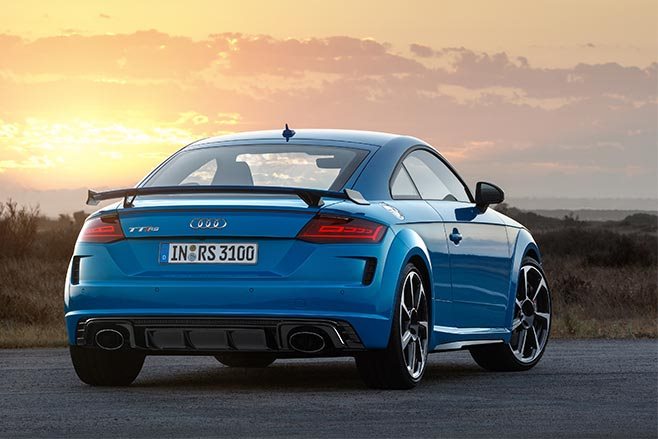
First seen at the 1995 Frankfurt Show, the TT Concept wasn’t launched for another three years due to difficulties in productionising the laser technology for the seamless body welds.
Its show-car styling was the main talking point until early adopters started crashing them at high speeds, Audi rushing a fix into place including a small rear spoiler, electronic stability control and remedial tweaks to the rear suspension.
Available in either front- or quattro all-wheel drive, coupe or roadster, four-pot or V6, the TT was also the very first right-hand-drive production car to be fitted with a dual-clutch transmission (2003).
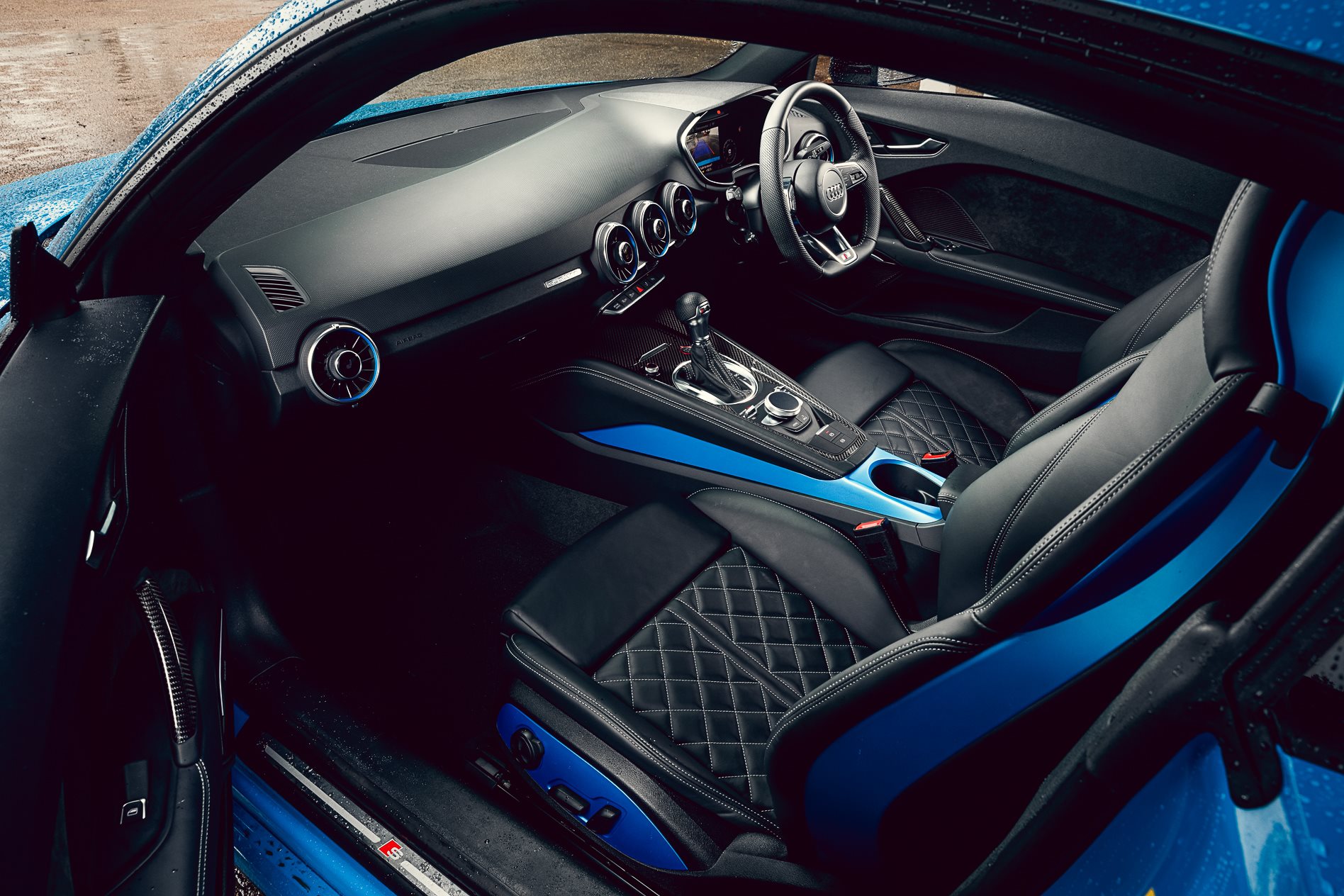
Audi introduced a better but lower-key second generation TT in April 2006. Although the arcing roof profile remained, the details were toned down by Walter de’Silva’s design team to create a less extrovert but more technologically progressive vehicle on a far more capable chassis. The third-gen 8S refined what had gone before, with the excellent MQB chassis acting as the foundation.
As a result, the last TT RS versions were a hoot as all-weather driver’s cars. The brakes were massive, the power mighty, the soundtrack stirring and the sheer grip hugely reassuring. They’re mechanically tough too. No wonder they fared so well at Targa rallies.
There aren’t too many bargains around in the sports car market these days, but a well-looked-after third-gen TT RS offers huge bang for your buck. It’ll be missed.
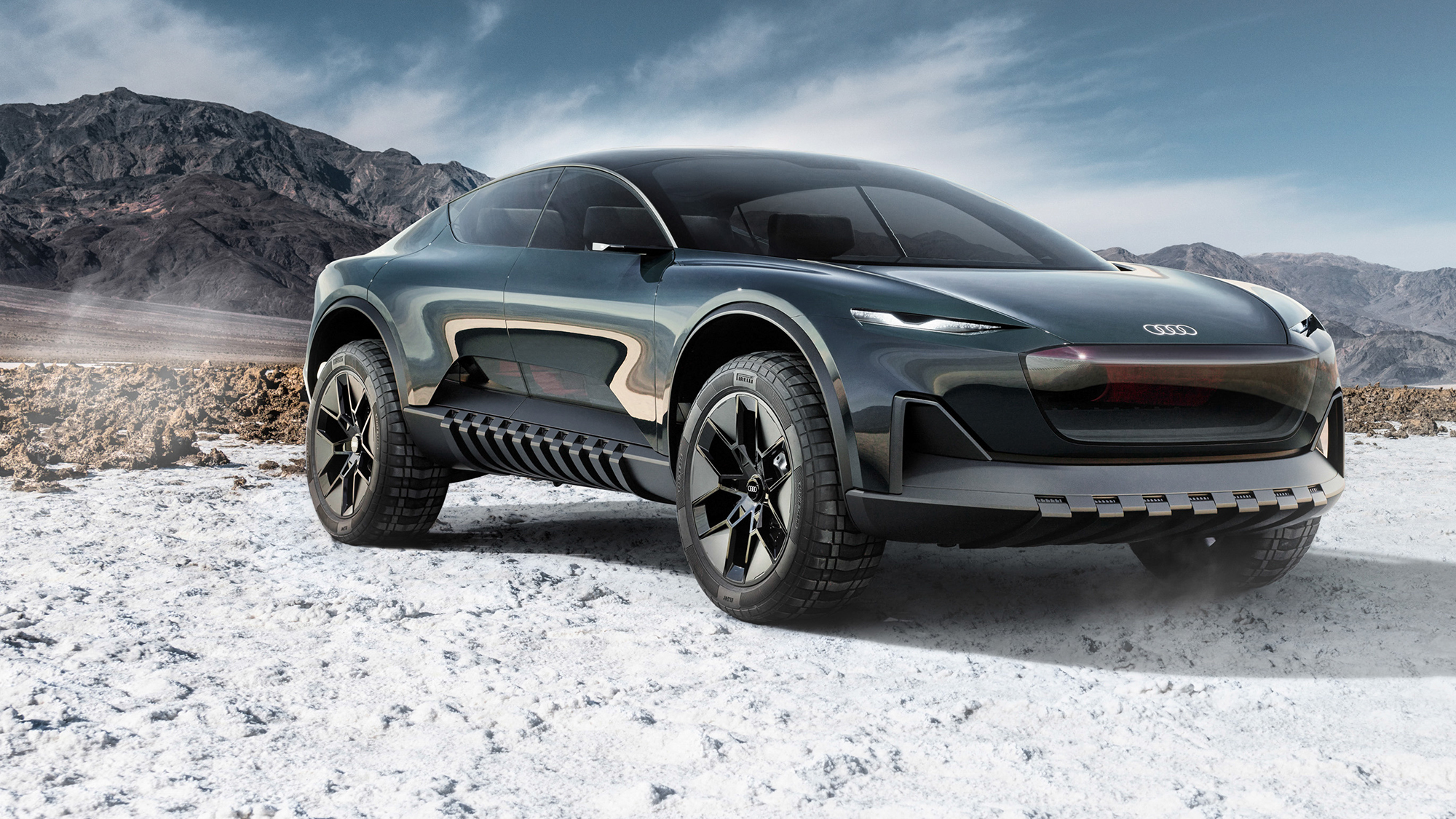
Will an electric TT cross over?
Audi’s board member for technical development, Oliver Hoffman, is on record noting that, “We want to add some very emotional cars to our portfolio, but a direct follower for the TT is not the answer. We can’t just say we’ll do the TT in an electric way.”
In other words, expect the next TT to morph into an electric crossover, possibly built off the Activesphere concept, with some speculating that the TT and A5 Coupe lines will merge into one five-door lifestyle vehicle.
| Aussie sales | |
|---|---|
| 999 | 399 |
| 2000 | 435 |
| 2001 | 437 |
| 2002 | 309 |
| 2003 | 395 |
| 2004 | 242 |
| 2005 | 217 |
| 2006 | 168 |
| 2007 | 933 |
| 2008 | 942 |
| 2009 | 646 |
| 2010 | 455 |
| 2011 | 432 |
| 2012 | 293 |
| 2013 | 184 |
| 2014 | 125 |
| 2015 | 651 |
| 2016 | 545 |
| 2017 | 252 |
| 2018 | 187 |
| 2019 | 79 |
| 2020 | 58 |
| 2021 | 42 |
| 2022 | 41 |
Lexus Australia smashed its sales record in 2023, surpassing 10,000 new-vehicle registrations for the first time in the process.
The Japanese brand’s growth was driven by new-generation versions of the NX midsized SUV and RX large SUV, and it’s not done there with luxury sports utility vehicles.
Its smallest SUV yet arrives in 2024, along with another large SUV in the form of the Prado-based GX.
We provide the lowdown on those models and others below, as well as looking a bit further into the future with the vehicles that will help carry Lexus towards a fully electrified showroom by 2035.
JUMP AHEAD
- LBX compact SUV
- GX large 4X4 SUV
- LM luxury people-mover
- UX small SUV updated
- LF-ZC electric sedan concept
- LF-ZL electric SUV concept
LBX – H1 2024
Set to be the most affordable Lexus model offered, the LBX will arrive in the first half of 2024 as the posh spin-off of the Toyota Yaris Cross baby SUV.
The LBX may share a platform and similar, 4.2-metre length with the Toyota but it features different styling treatment for its exterior and interior.
And while it utilises the same three-cylinder petrol engine under the bonnet, the Lexus adopts a bigger battery for its version of the hybrid set-up.
A twin-model range comprises a front-wheel-drive Luxury and an all-wheel-drive Sports Luxury. In addition to an extra (rear) electric motor, the more expensive variant also features a more sophisticated multilink rear suspension and a higher equipment level that includes a Mark Levinson audio system.
Pricing is yet to be announced, though expect a starting price in the mid-$40K region.
GX – Q2 2024
The second quarter of 2024 will see the first GX 4WD in 14 years – and a debut for the badge in Australia.
The GX is essentially Lexus’s upmarket sibling to the Toyota Prado (and the relationship is obvious from the A-pillar backwards).
Set to take on competitors such as the new Ineos Grenadier, Land Rover Defender 110, and Mercedes-Benz GLE, the GX will come with a seven-seater layout – or five seats with the Overtrail model that gains additional features for enhanced off-roading ability.
A 3.5-litre twin-turbo V6 petrol engine and 10-speed auto is the only confirmed drivetrain so far, with a hybrid variant possible down the track.
In the now-extensive Lexus SUV line-up, the GX will sit above the RX and below the LX (with which it shares its LandCruiser 300 architecture).
new-lexus-models-coming-gx-lbx-lf-zc-and-more
LM500h – Early 2024
Lexus released its first ever people-mover in late 2023 with its exuberantly styled LM.
It launched initially with the LM350h entry model, which costs from $165,888 before on-road costs, comes with either front- or all-wheel drive, and features a seven-seater (2-2-3) layout.
Early 2024 sees the addition of a $220,888 LM500h Ultra Luxury flagship fit for Succession’s Roy family.
Not only does it bring a more powerful hybrid drivetrain, but there’s a four-seater, first-class-style layout that features two rear ‘VIP thrones’, a 48-inch widescreen display with 23-speaker Mark Levinson sound system, and a glass barrier that can block out the chauffeur for absolute privacy.
UX300h – TBC
Lexus Australia added an upgraded version of its UX300e electric compact SUV in late 2023, though will 2024 also bring an updated hybrid UX?
The brand is tight-lipped for now, but a UX300h model has been confirmed for the US market for early 2024.
Replacing the UX250h, the UX300h switches its battery chemical from nickel-metal-hydride to lithium-ion in a debut for Lexus’s fifth-generation hybrid system.
Power improves from 131 to 146kW, while Lexus USA says the updated UX hybrid also brings fuel-efficiency improvements.
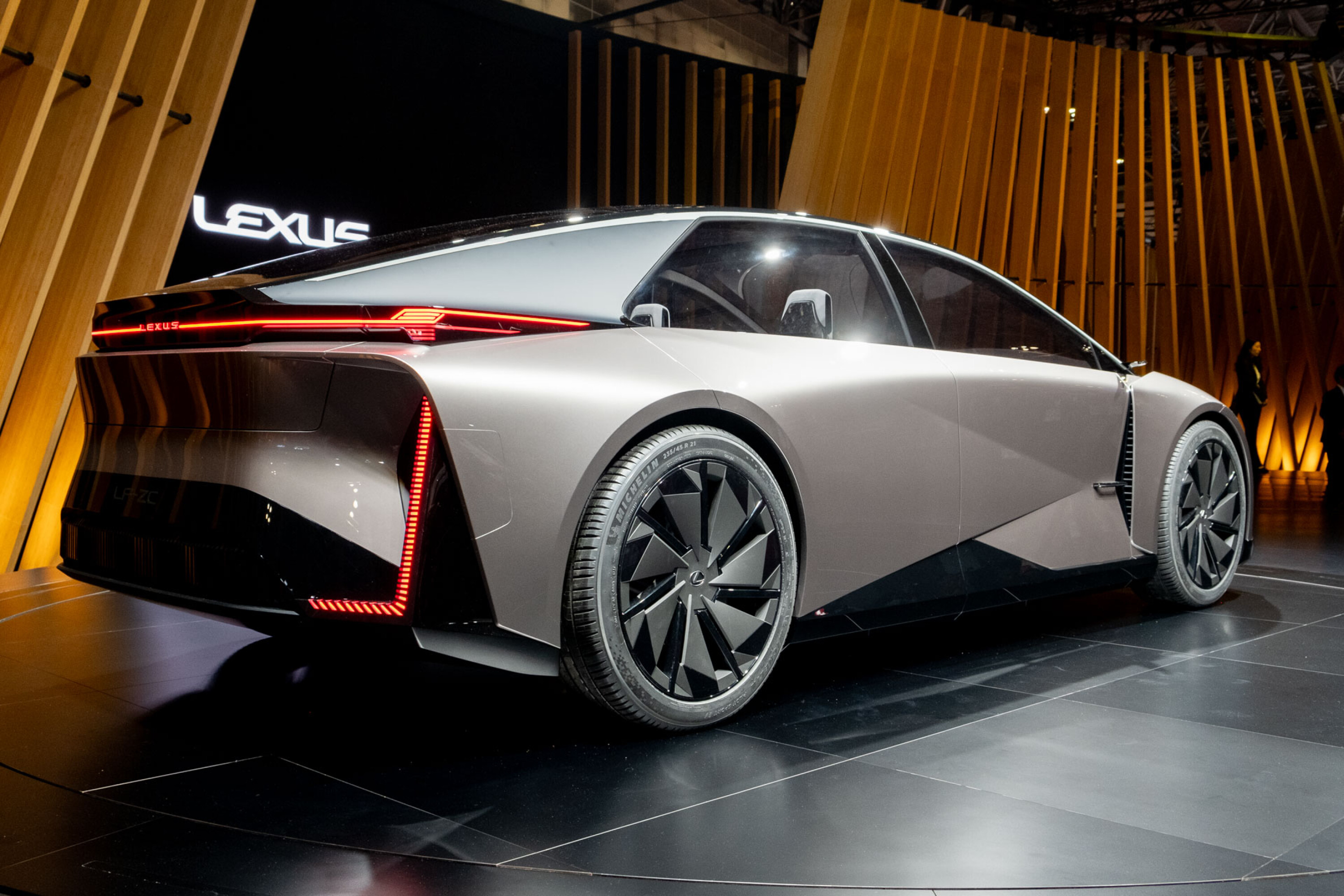
LF-ZC – 2026
An electric grand tourer confirmed for 2026 was previewed by the LF-ZC concept at the 2023 Tokyo motor show.
With initials representing Lexus Future Zero-emissions Catalyst, the production model is promising to bring a range in excess of 1000km.
The ultra-sleek, four-door GT – which has a height of just 1390mm, and a body length of 4.75 metres – has an ultra-aerodynamic, coefficient of drag target of 0.2.
LF-ZL – TBC
The Lexus Future Zero-emissions Luxury is a “flagship future model” that was showcased in Tokyo alongside the LF-ZC.
Sharing a new modular architecture with the ZC GT, the ZL concept is a limo-style SUV with a 5.3-metre length and enourmous 3.35-metre wheelbase.
Just don’t expect the B-pillar-omitting sliding electric rear doors for the production version.
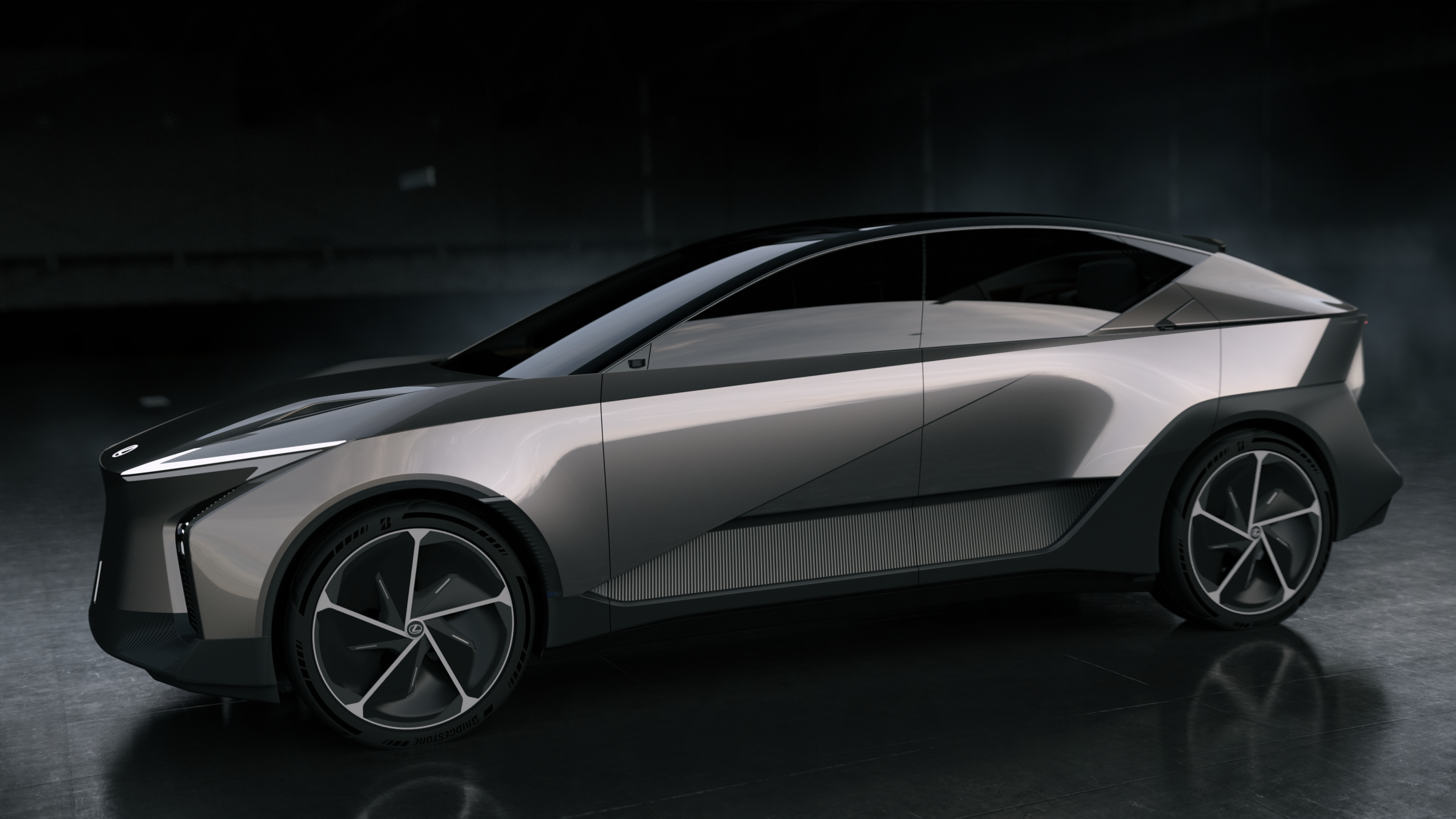
We’ll also have to wait to see how much of the concept’s interior carries over into reality. The LF-ZL features a yoke steering wheel flanked by smartphone-sized control/display pads.
Larger screens dominate the rest of the dash, including one for the front passenger.
Most fascinating, arguably, is the Arene operating system that Lexus says will bring AI voice command, OTA (over the air) updates, and the ability to connect Lexuses with the outside world.
Following the launch of the long-wheelbase Jimny XL, Suzuki will introduce at least two new models in 2024 as well as bringing its hybrid technology to Australia for the first time.
The brand’s lineup consists mainly of small cars and SUVs with a plethora of sub 4.3-metre options to consider.
Currently, Suzuki only sells petrol vehicles in Australia, though local general manager indicated that hybrid – be it mild or true petrol-electric – is likely to arrive in 2024. Suzuki’s first electric model, the production version of the eVX, is due in 2025.
Keep scrolling if you’re interested in Suzuki Australia’s upcoming product portfolio.
JUMP AHEAD
Fronx
The first model on Suzuki’s hit list is the Fronx, which was revealed in January 2023 at Auto Expo India as a Maruti Suzuki product.
Size-wise, the 3995mm long Fronx – described as a ‘coupe-style’ SUV by the brand – sits between the Ignis and Vitara monocoque SUVs in Suzuki’s range, and will be classified as a light SUV in Australia.
The brand’s Aussie arm has not confirmed powertrains yet, but overseas it is powered by either a 66kW/130Nm 1.2-litre four-cylinder – as found in the Swift(?) – or a mild hybrid 1.0-litre turbo-petrol producing 74kW/148Nm.
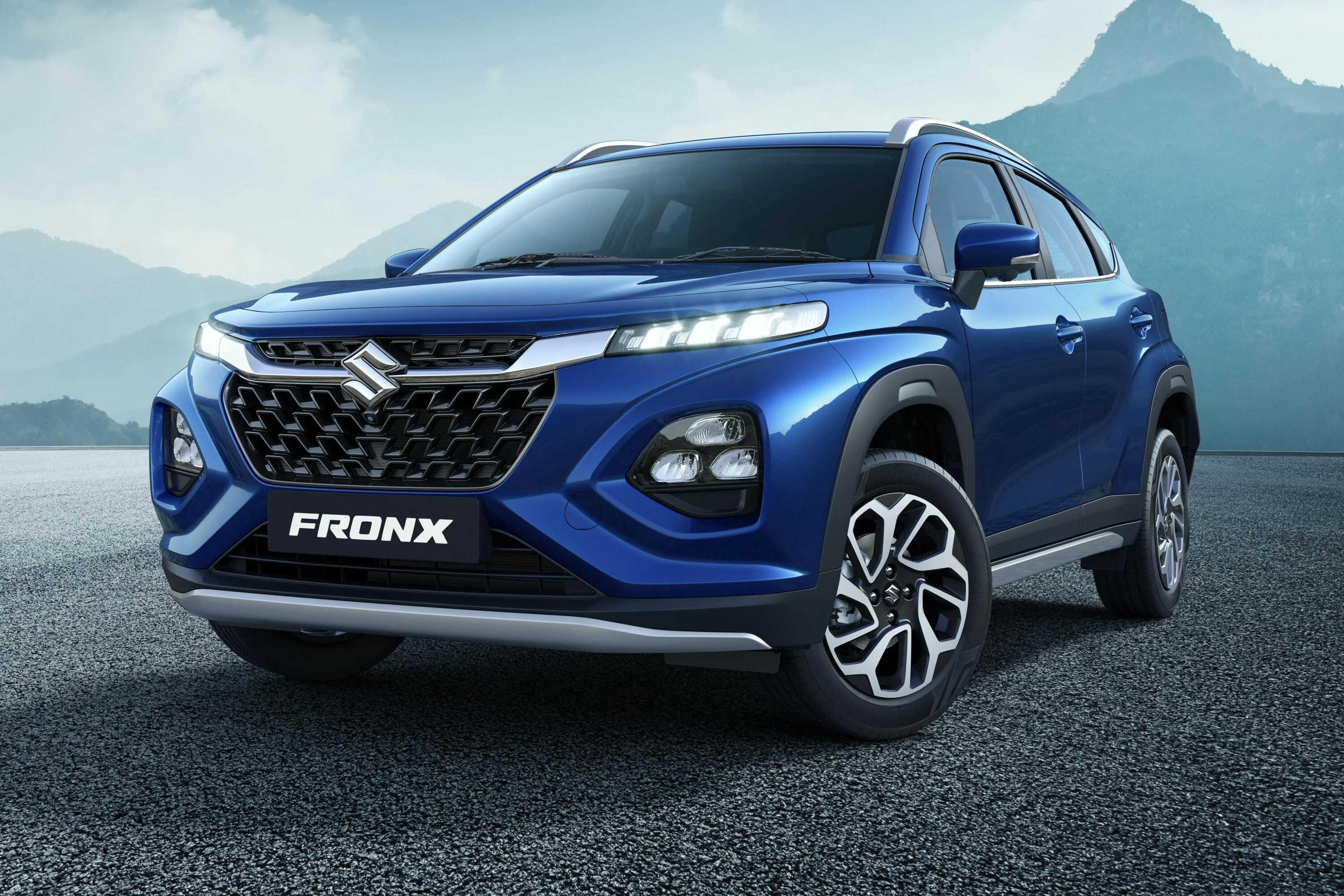
If Suzuki decides to bring the one-litre Fronx to Oz, it could be the brand’s first hybrid model. Something that general manager Michael Pachota is hoping will join the local portfolio in 2024.
Initial details confirmed by Suzuki include that the Fronx will be available with a 360-degree camera, head-up display, wireless charging and air conditioning vents for rear passengers. We expect pricing to start in the mid-low $30K bracket and climb above $40K for a fully loaded example.
eVX
First revealed at the Delhi Auto Show in January 2023, the Suzuki eVX concept previews Suzuki’s first all-electric vehicle.
At about 4.3-metres long, its yet another small SUV from Suzuki, and is about the same size as the existing S-Cross which was recently facelifted. According to the head of design, Suzuki is targeting a 500km driving range for the eVX ahead of a 2025 launch.
The small electric SUV will be manufactured for global markets, including Europe and Asia with Australia introduction likely in 2025/2026.
In its sheetmetal – which isn’t too far removed from production – there’s elements of Suzuki’s signature toughness, with Vitara-like volumes and details, while inside the concept’s glass crystal gear selector features a rhinoceros insignia which may carry into the finished product.
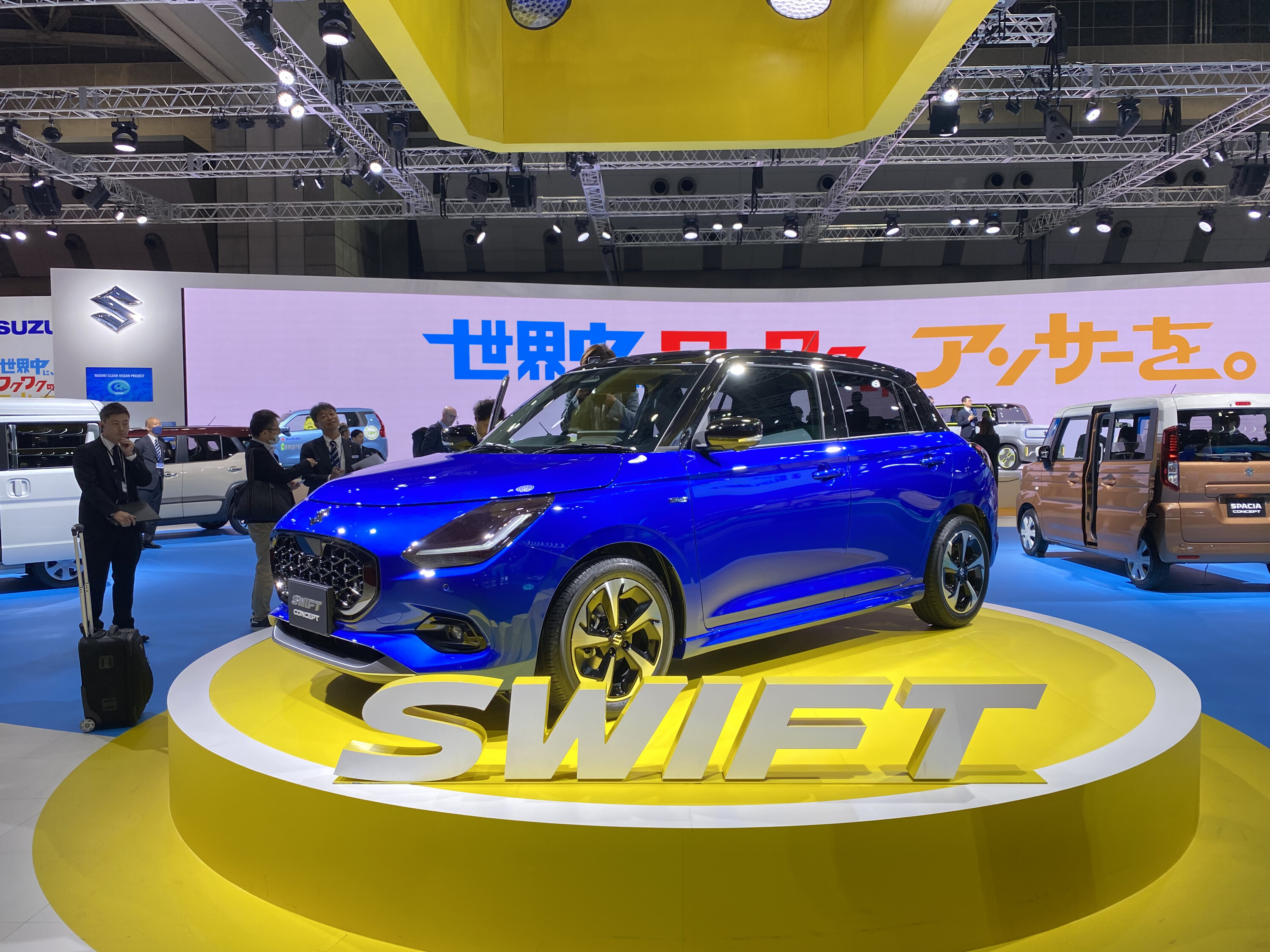
Swift
Referred to as a new generation Swift, the latest light car looks rather similar to the existing model with which it shares a 2450mm wheelbase.
The new car is also 40mm narrower and, while a new ‘Z12E’ 1.2-litre three-cylinder engine has been announced it doesn’t develop much grunt, at just 60kW and 108Nm. For Australian consumption, expect more powerful engine options mated with the car’s new CVT automatic. There’s no new-gen Swift Sport confirmed.
We know a mild-hybrid system is very much on the cards, potentially cutting fuel efficiency though without a true hybrid it won’t come close to the 3.3L/100km claim of the Toyota Yaris.
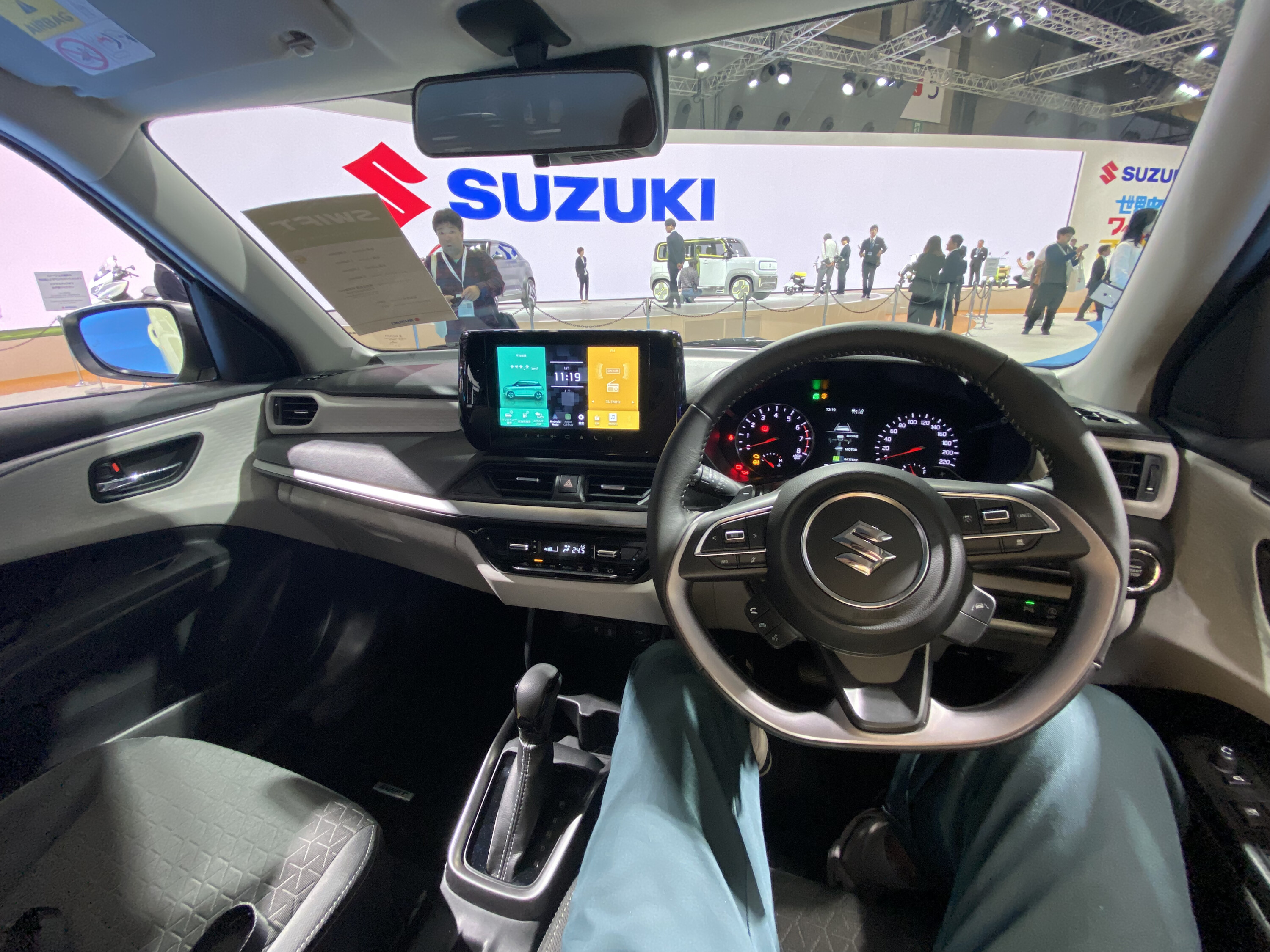
Inside, there are higher-quality materials mated with a 9.0-inch touchscreen. It may be the same size as Aussie Swifts currently get, but beneath the screen is a more powerful processor and the ability to run Apple CarPlay and Android Auto wirelessly, as seen in the five-door Jimny XL.
Pricing will be confirmed closer to the Swift’s 2024 release. Given the mild nature of the updates, we don’t expect the new light car to make huge jumps over the existing $22,490 (before on-road costs) start price.
Vitara and Grand Vitara
The current fourth-gen Vitara emerged on the global stage in 2015 and has been through a single facelift since then. Eight years into its sales life, Suzuki will be looking to replace the small SUV shortly.
However, there are precious few details on what could replace the regular Vitara, and with the more modern S-Cross on sale in Australia Suzuki has another slightly larger option in a similar price space.
One possibility is that the Vitara nameplate will be reserved for the production version of the eVX (though the ‘V’ there could be a red herring), another is that the Maruti Grand Vitara, revealed in India in 2022 could offer replacement.
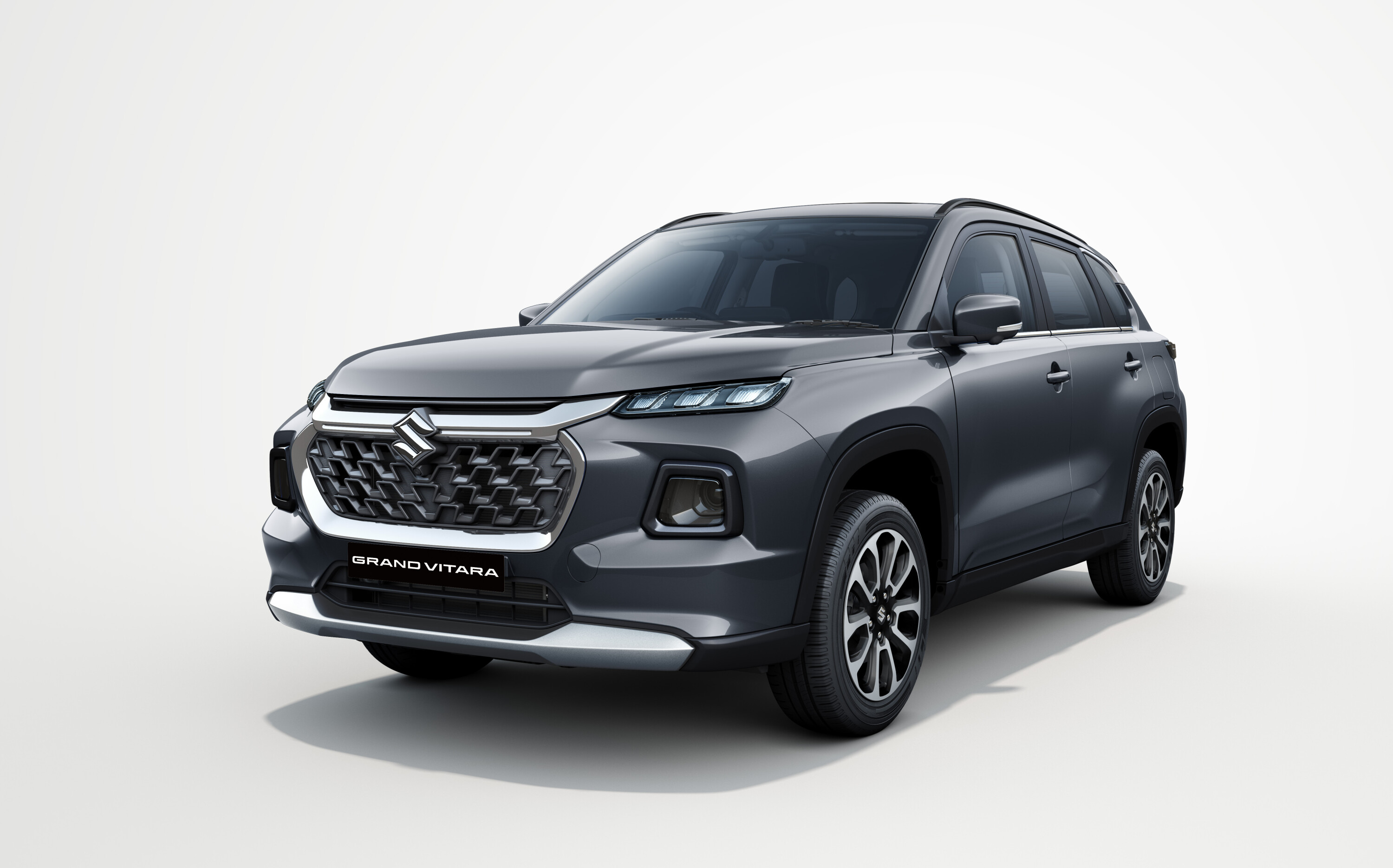
With styling more akin to the Fronx, the Grand Vitara could be suitable for our market – especially as it’s available with a 1.5-litre petrol-electric hybrid (not a mild one) developing a total of 85kW.
The only problem with Maruti Suzuki Grand Vitara is its proximity to the S-Cross, measuring only 45mm longer and 50mm taller than the existing SUV.
If you’ve been fortunate enough to attend the Goodwood Festival of Speed, you’ll know the magic of that event doesn’t really lie in watching the cars blaze up the hill.
The truly gleeful part about Goodwood, and the thing that blows the minds of first-time visitors, is wandering through the paddock. There you’re just as likely to trip over a Singer 911, or happen upon 12 McLaren F1s parked casually on the lawn, as you are to accidentally graze shoulders with Derek Bell as he slides into a Porsche 917 Longtail.
The proximity and trust afforded at Goodwood feels alarming at first, especially for an Australian, who are usually barricaded from such precious things by velvet ropes and self-important people in high-vis vests.
But at Goodwood you could actually climb inside a priceless Le Mans winner if you really wanted to. The thing is, you don’t, because you can get close enough to touch, smell and hear the cars without taking such risks.
Even Goodwood, though, pales in comparison to what’s unfolding in front of me now. I’m standing at the back of a pit garage at Mugello and with the confident gesticulation that only an Italian can pull off, a man is slowly twirling his hand in the air, his index finger pointed to the sky.
He’s sat in scarlet F1 car from the early noughties — an F2004 if I had to guess — and on his signal the single-seater fires into life, a puff of blue smoke rising into the air as the engine catches and the long starter motor is withdrawn from its gizzards.
It feels slightly improper to be this close to one F1 car — I could reach out and touch the rear tyre — but sitting next to it is another, slightly newer example. And to the right of that car, lies another, this one an F2008 driven by Kimi Raikkonen.
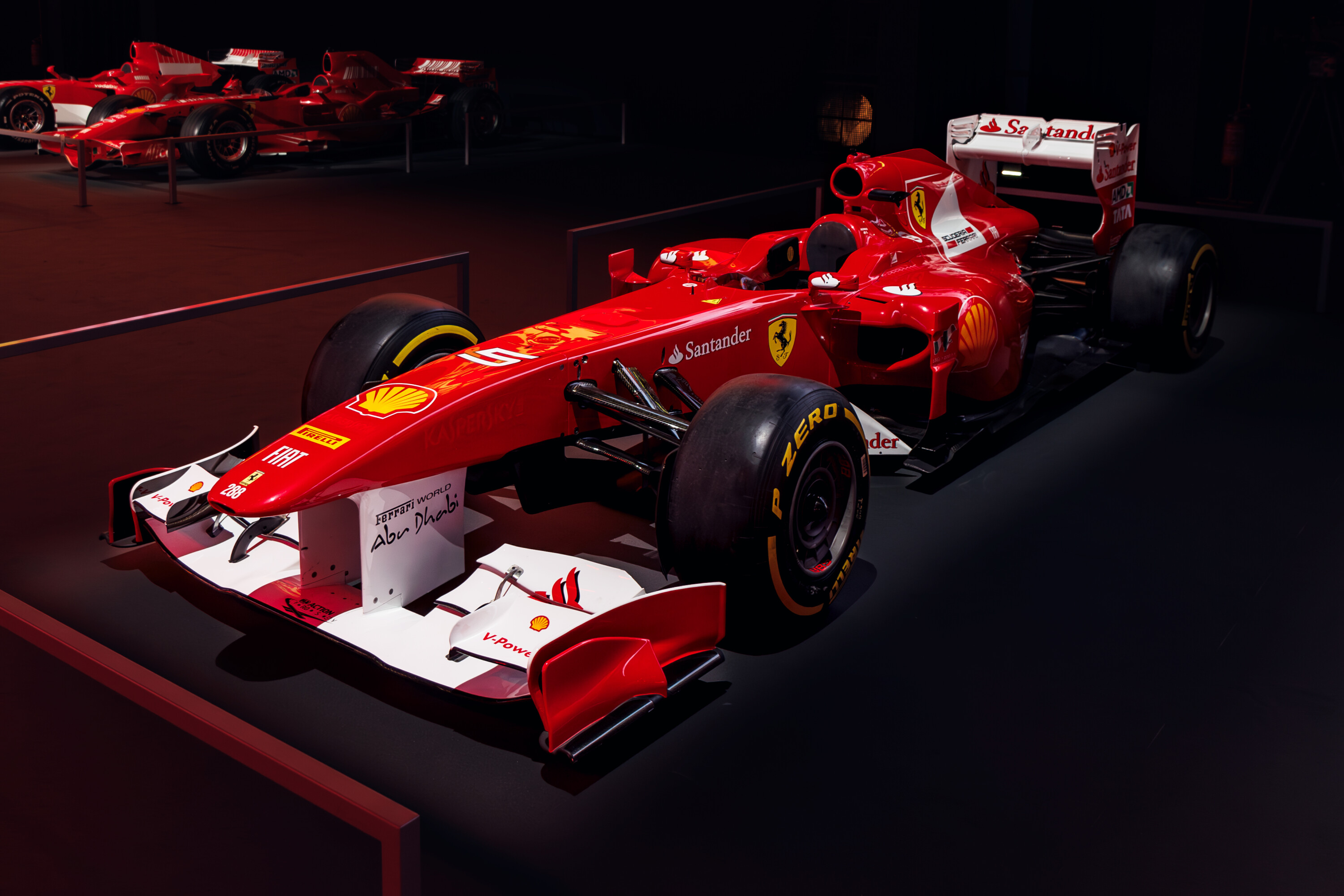
All up, Ferrari has 19 Formula 1 cars at Mugello — almost an entire F1 grid — ranging from a Schumacher F1-2000 which won both world championships, to a hybrid-powered SF79H from 2017 that took Sebastian Vettel to victory at the Aussie GP.
They fire up in sequence, the high-frequency, sowing-machine smoothness of their V10 and V8 engines creating a wall of sound that almost drowns out what’s happening on the track itself. Almost…
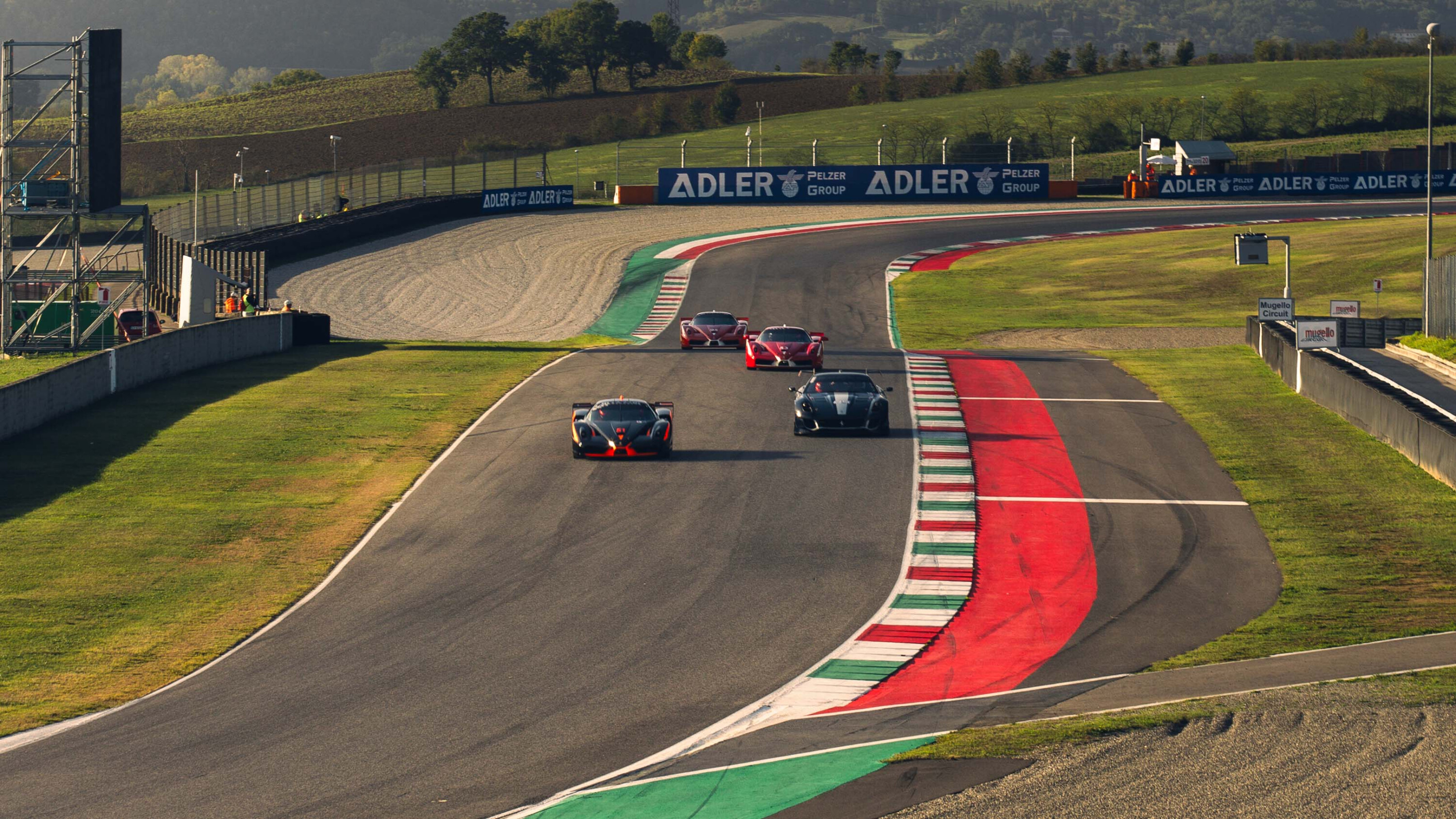
Out there, on the other side of the pit wall, blast a fleet of limited-edition XX cars, the scream of their V12s ranging in and out of earshot as they navigate a circuit that’s still drying from some morning rain.
Wait for your ears to adjust — and for the F1 cars to settle into a lower idle — and you’ll begin to discern the different soundtracks of the various models. Enzos, side-piped 599 XXs, FXXK Evos…they’re all out there, dicing and diving in front of a crowd that should nudge 40,000 people.
Chances are you mightn’t have heard about Ferrari Finali Mondiali. I know I hadn’t, which is what makes this introduction to the event so surprising. Held in October every year, Finali Mondiali has been running since 1993 — coincidentally, exactly the same amount of time as Goodwood — and it is, first and foremost, the final round of the various Ferrari Challenge racing series run around the world.
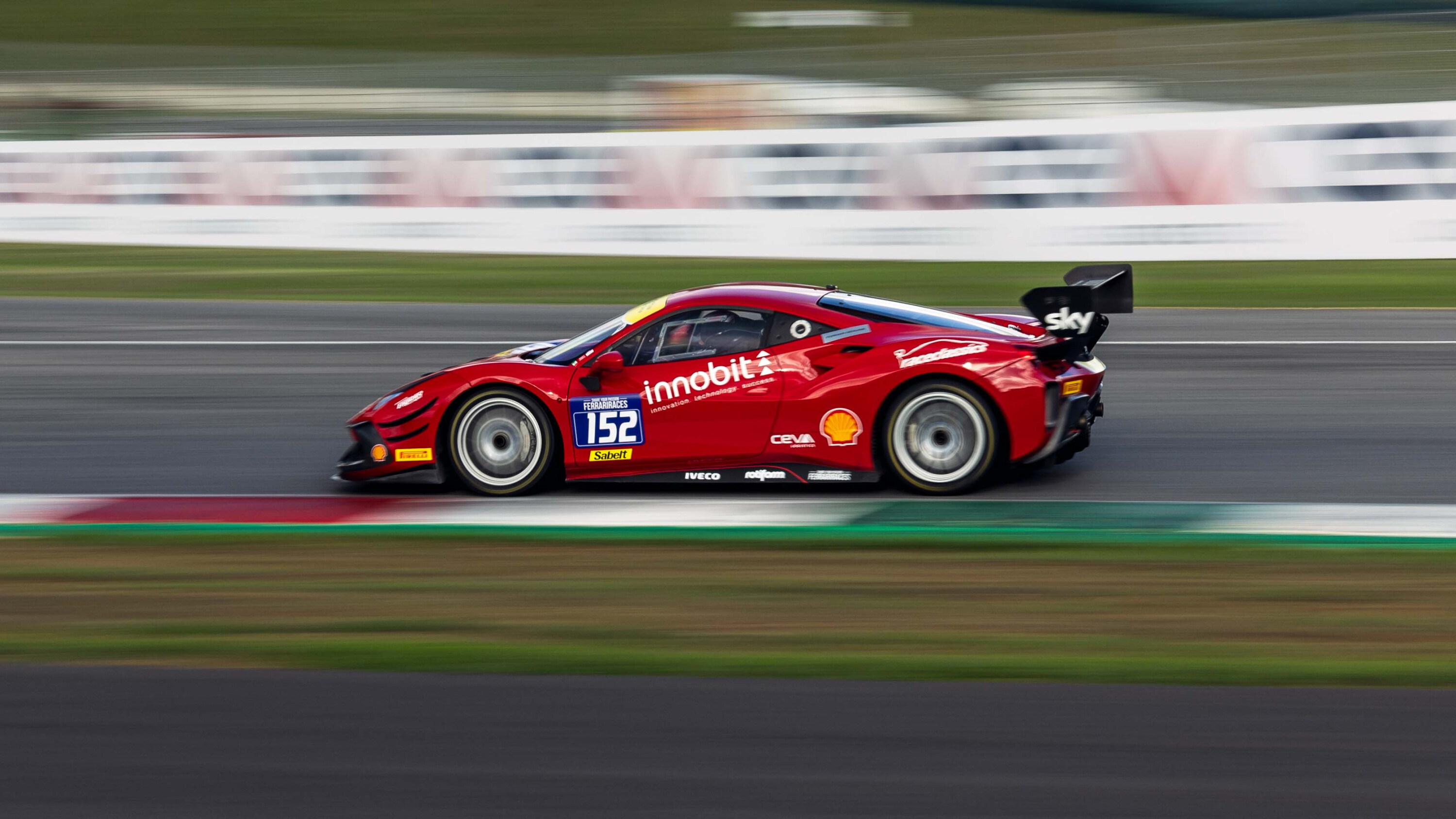
It also acts as a grand final of sorts (Finali Mondiali translates as ‘world final’) for the quickest drivers in each championship who get the chance to race together for ultimate bragging rights.
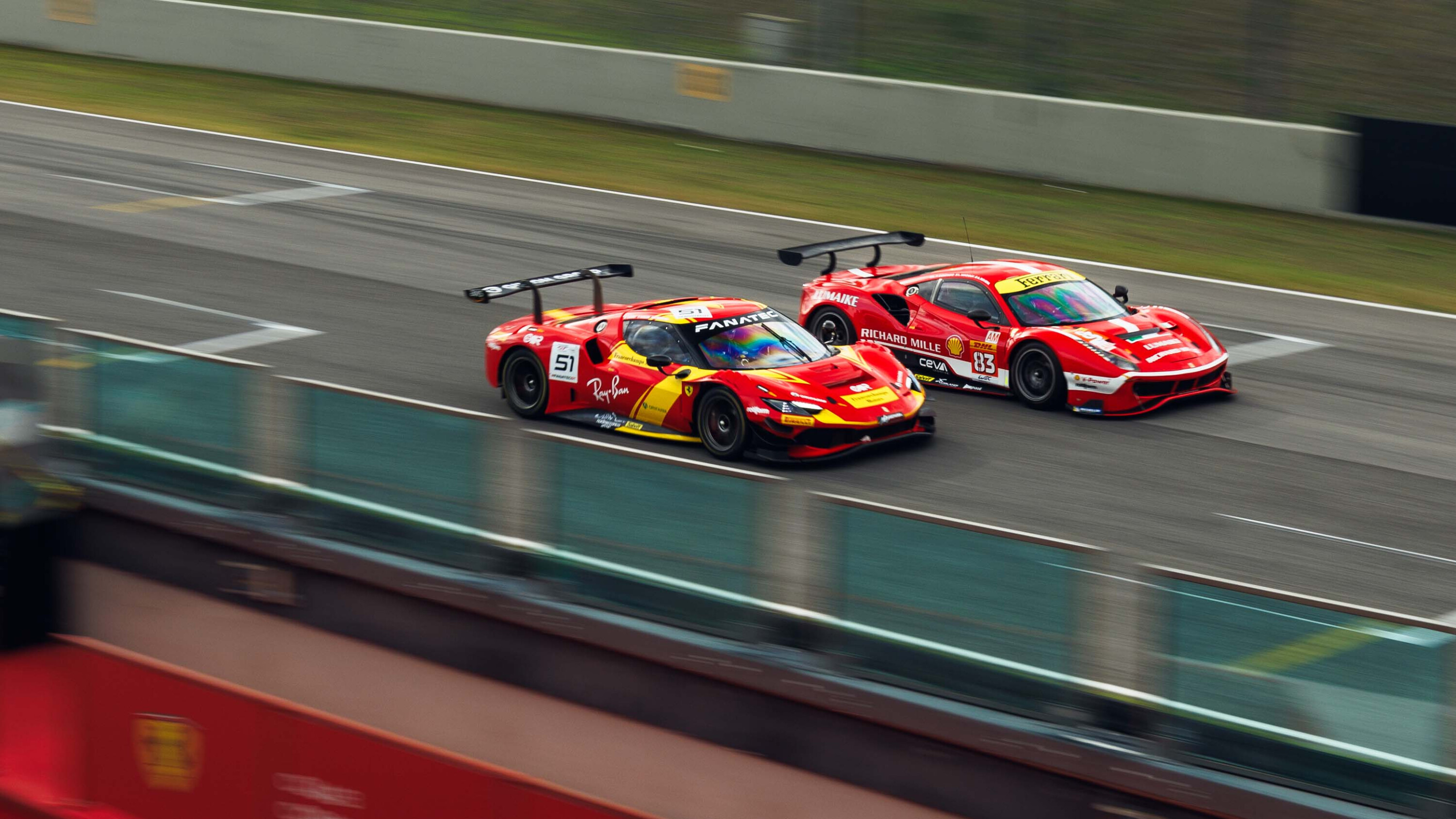
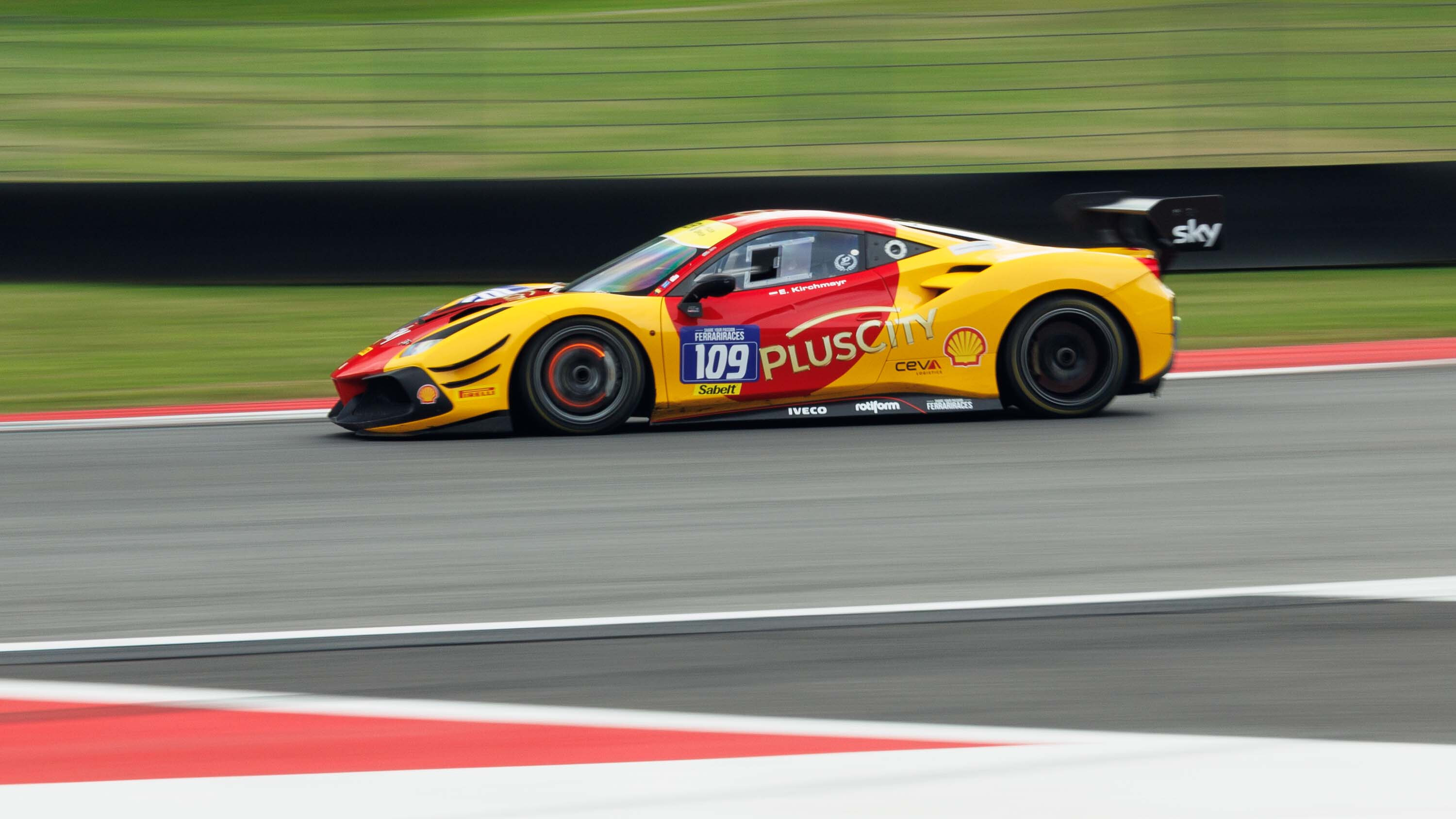
The racing is hard and close and the grids are positively enormous. There are 105 Ferrari Challenge cars in attendance and while the category is clearly targeted at wealthy gentlemen drivers, there’s nothing gentlemanly about how they go about their race craft — this is sheep station stuff.
You might think having so many Ferraris in one place could get a little dull but there’s a dizzying amount of variety to gawk over. Club Competitzioni GT, for example, is a melting pot of GT racers from the last 30 years where a carbon-bodied 550 GT1 can bang doors with a box-fresh 296 GT3.
The category also includes a yellow 360 Challenge car that is so incredibly loud, it sounds like it’s fuelled by exploding fireworks as it trundles down the pitlane.
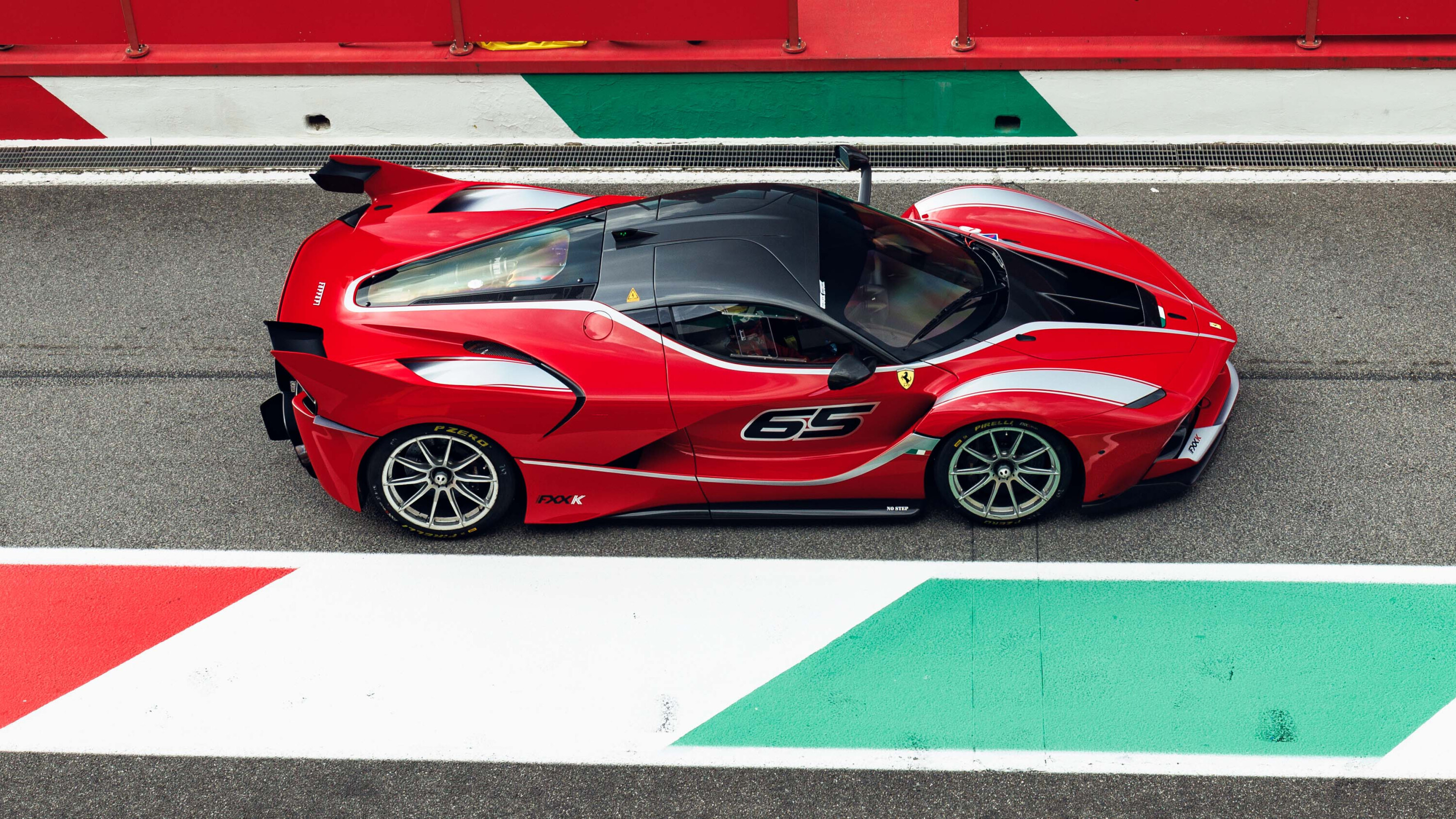
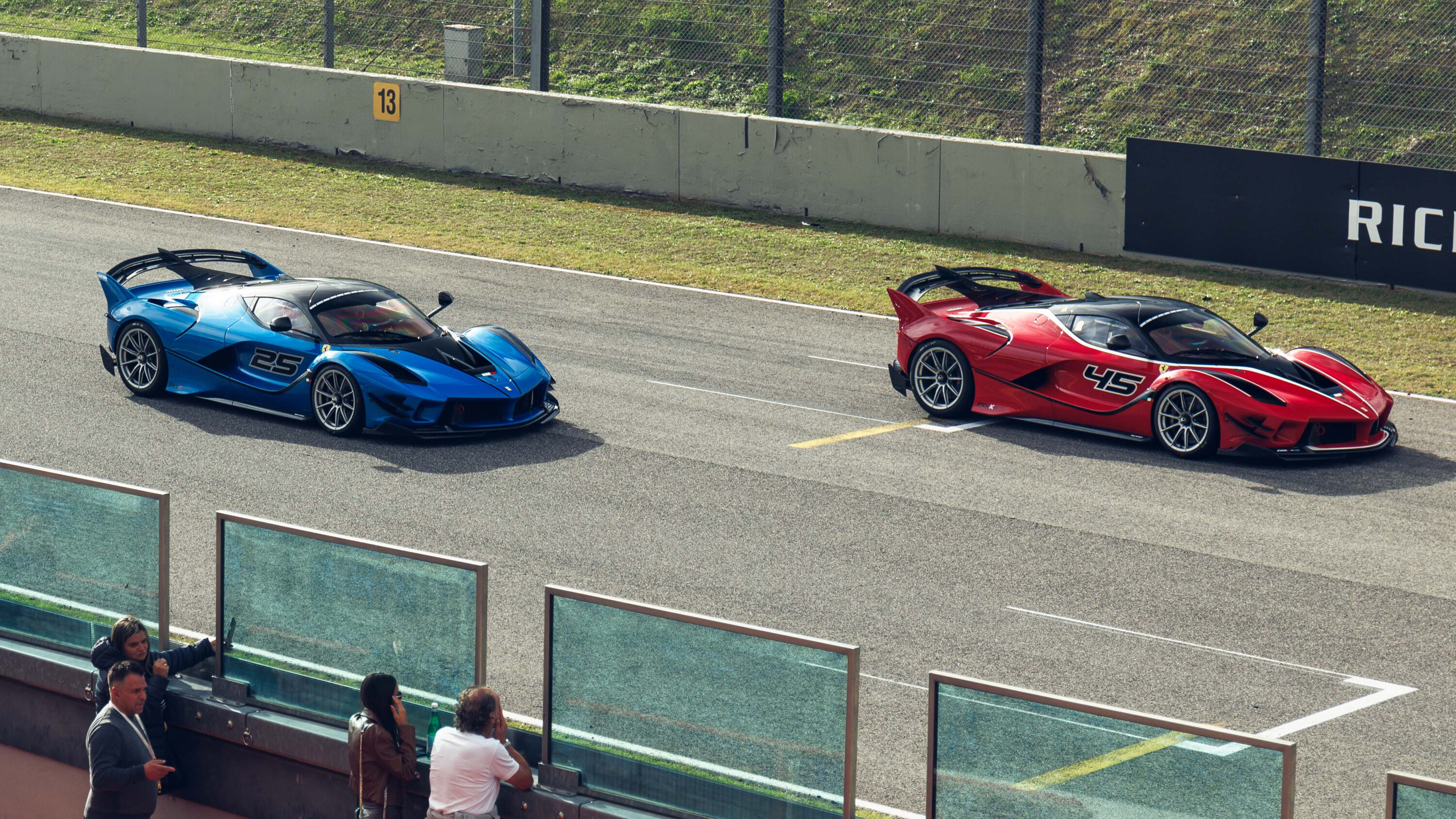
Then there are the Corse Clienti cars, which combine the XX program and Ferrari’s fleet of retired F1 prototypes. Both categories are a mix of old and newer machines and it’s intriguing to see how the XX concept has evolved from the boxy and wonderfully raw Enzo XX to the swoopier wedge of the 1050hp, hybrid-powered FXXK-Evo.
It’s the F1 cars that are the star of the show, however. Ferrari’s UK press officer proudly proclaims that only Ferrari could manage such an enormous fleet of old F1 cars “because we’re the only brand that has always made our chassis and the engine” and it is satisfying to see so many of the cars still being used.
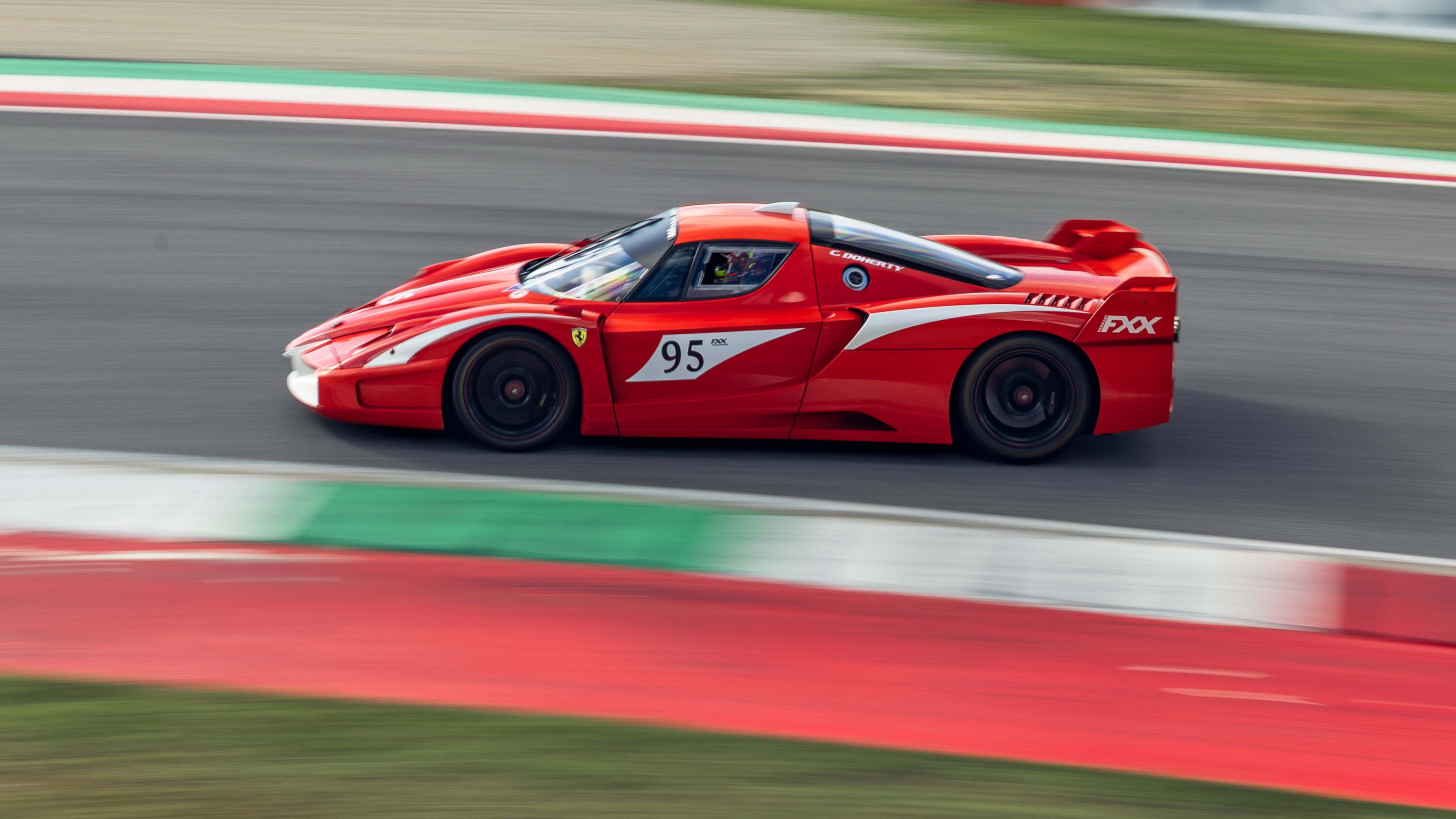
They aren’t coddled, either. Red flags and spins are a regular occurrence and one poor sod had a rear tyre explode at full noise down the main straight.
The cars look quick, though, and some of the owners are clearly talented drivers willing to push their ultra-expensive toys to the limit. Exactly what it feels like to turn up at Mugello to find your own Michael Schumacher F1 car ready and waiting, and to then drive it on track with other famous F1 cars, is a mystery most of us will never experience.
Happily, of all the places in the world to watch F1 cars, Mugello has to be one of the best. Ferrari has owned the iconic circuit since 1988 and it has hosted Finali Mondiali 16 times. It’s a doozy of a track built in the bosom of a valley, so it’s brilliant to spectate at because the natural elevation means you can see several sections of the circuit from one vantage point.
The valley acts as a natural amphitheatre, too, so the sound of the F1 cars bounces off the surrounding mountains.
And the best bit? Spectating at Finali Mondiali is absolutely free, with the circuit’s outer extremities open to the public for four days. You’ll need to be a Ferrari employee to access the grandstands, however, and the paddock is reserved for employees and Ferrari Club members.
That’s the best place to drool over the cars, though, and the paddock also houses a gigantic exhibition hall that is basically a section of the Ferrari museum. The room houses 40 significant models, ranging from a 1948 166MM through to the reigning Le Mans winner, the 499P, which is still covered in its racing muck from the Circuit de la Sarthe.
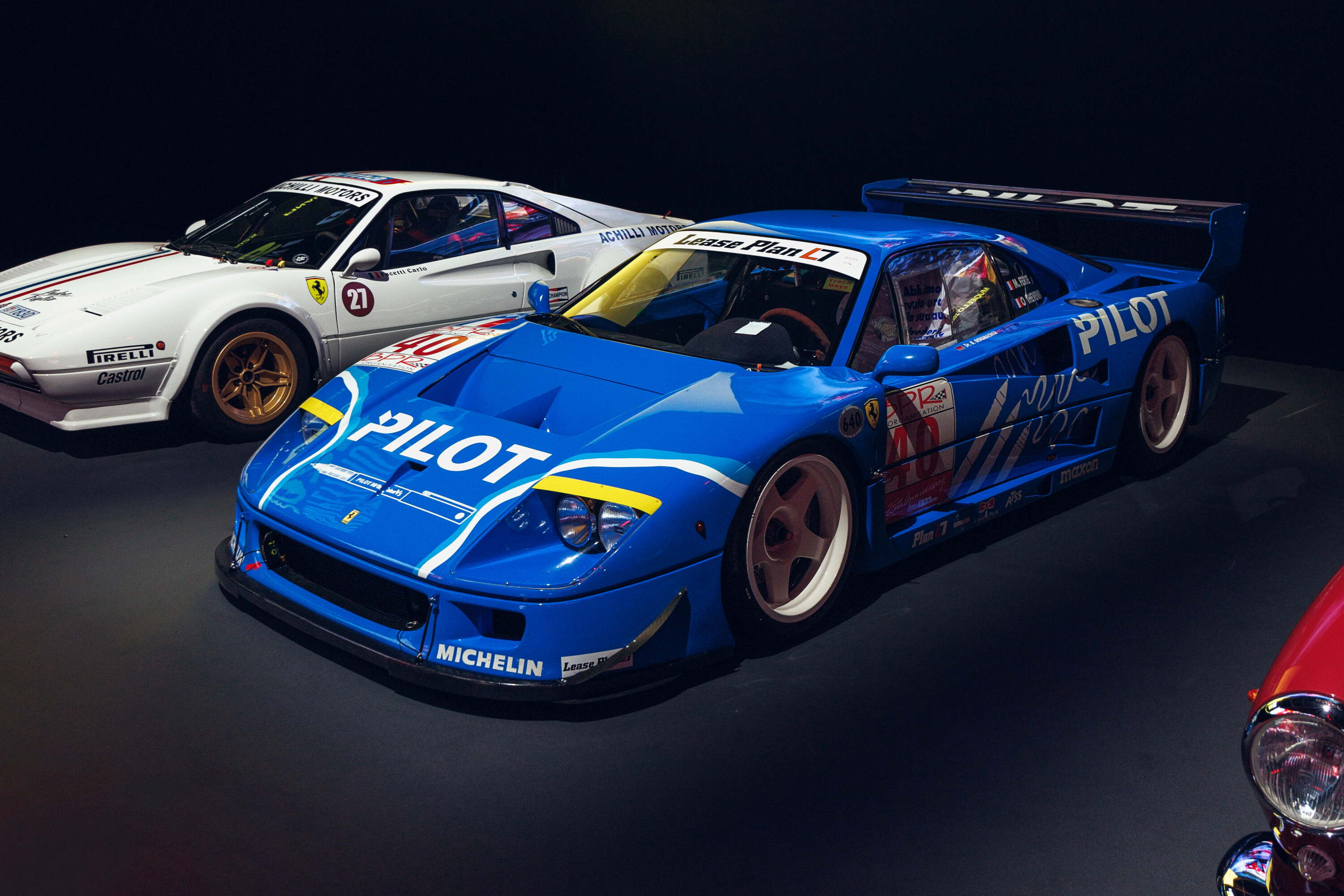
Various F1 cars and older Le Mans cars feature, too, as does a blue 1987 F40 LM which recently sold for 4.8 million euros. The most expensive car in the room? A silver 250 GTO from 1962 that fetched 38 million a few years ago.
On Saturday night the cars fade into the background as the same space is used for a huge gala dinner. More than 1000 people attend and the night doubles as a prize giving ceremony for Ferrari’s various racing categories. It also provides an opportunity for a sneak peek at upcoming models.
This year that meant the unveiling of the 296 Challenge car and the 499P Modificata, the latter being a version of Ferrari’s Le Mans prototype pitched at gentlemen drivers. You could almost hear the room scramble for its cheque books as the silk cover came off, despite a $5.1 million euro asking price.
If you can only attend one day at Finali Mondiali, make it the Sunday. There’s plenty of on-track action and the whole event crescendos with the ‘Ferrari show’ which is a group shot of all the cars on the main straight.
If that sounds a bit tame, it isn’t, because before the cars line-up Ferrari sends them around the track for some demonstration runs. Again, it’s the F1 cars that put on the best show courtesy of high speed flybys and donuts in front of the packed main grandstand.
Then, once the cars are assembled and the photographer gets the shot, the crowd is treated to a flyover by the Tuscania Carabinieri paratroopers. Their gigantic blue chopper hovers over the main straight as paratroopers repel out of it to hand over the Italian tri-colour flag, Le Mans style, before a soprano singer belts out a rendition of the national anthem.
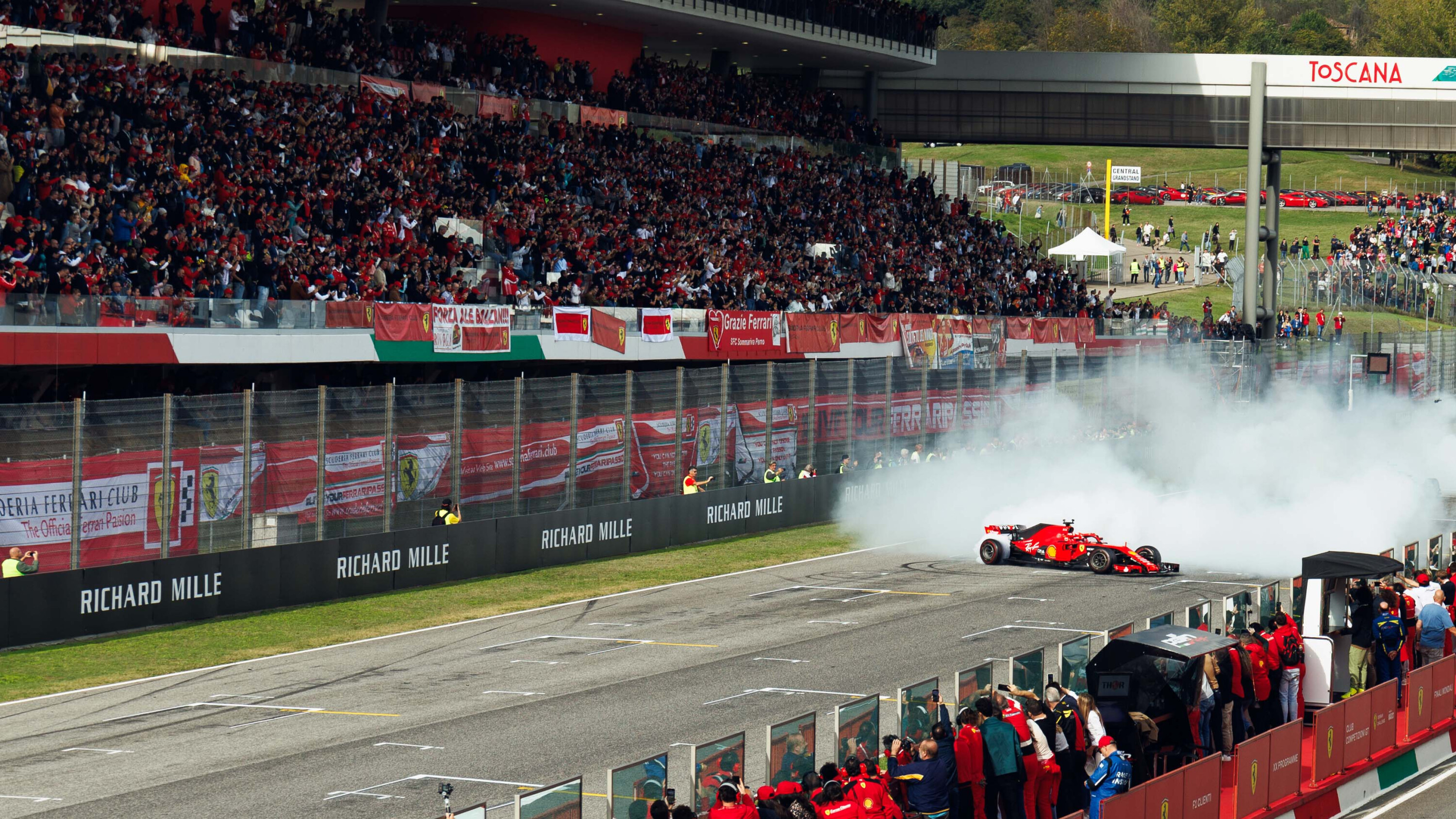
It’s overkill in the most spectacular way and, aside from a worrying few moments when it looked like the chopper might actually plow into the ground as it dipped its nose to fly away, it perfectly encapsulated the passion Italians have for Ferrari as a brand.
It’s easy to get a bit sniffy about Ferrari, to dismiss it as elitist, yet despite the obvious wealth on display at Finali Mondiali, there was also an authenticity I wasn’t expecting.
Ferrari is a brand that still places racing at its very core and at this event, just like at Goodwood, the cars and passion weren’t shuttered away — they were celebrated. If that sounds like your kind of thing, the next Finali Mondiali will be held at Imola from Oct 16-20, 2024.
This year was big in Australia, with brand-new metal – all-electric, petrol, diesel or hybrid – finally appearing in the local market.
The highlights included the all-new Volkswagen Amarok, new electric cars – like the Hyundai Ioniq 6, Cupra Born, BYD Seal, Kia EV9, and three affordable sub-$40k hatches in the MG 4, BYD Dolphin and GWM Ora – and much-needed new ZR-V and CR-V SUVs for the struggling Honda brand.
Performance car fans were treated to the Toyota GR Corolla and Honda Civic Type R hot hatches, off-roaders had the Ineos Grenadier, GWM Tank 300 and a four-cylinder automatic LandCruiser 70 Series, and premium SUV buyers can now choose from a pair of Mazdas aimed at German rivals: the CX-60 and CX-90.
To look back over the last 12 months, we’ve compiled a top-five list of comparisons that were read more than any others on WhichCar.com.au.
#1 – Best Medium SUV 2023: Family Car Comparison
As far as battlegrounds go, the medium SUV segment is akin to the Battle of Helm’s Deep in The Lord of the Rings.
#2 – 2023 Ford Everest Platinum versus Toyota LandCruiser 300 Sahara
With its step up in size and the addition of a smooth V6 diesel engine, does the Ford Everest now qualify as a genuine alternative to the venerable Toyota LandCruiser?
#3 – New 2024 Mitsubishi Triton vs Ford Ranger: SPEC BATTLE!
We run the ruler over the fresh Mitsubishi ute to see how it lines up against its key rival and the present dual-cab ute segment king, the Ford Ranger.
#4 – 2023 Ford Everest Trend v Isuzu MU-X LS-T comparison review
While the mid-size 4×4 wagon segment continues to be dominated by the Toyota Prado, the minor placings looked a bit more exciting in 2023.
#5 – All-New 2024 Toyota Prado vs 2023 Prado: SPEC BATTLE!
The new Prado arrives 14 years after the popular 4X4 SUV’s last generational change, so logic goes it must be in for some big changes.
The 2025 BMW M5 Touring hybrid performance wagon has been teased once again.
BMW M has announced that the M5 Touring will be “ready to be unwrapped” next year, as the car’s development continues on public roads, proving grounds, and racetracks.
In June, the performance sub-brand confirmed that the new M5 would have “a completely newly developed partially electrified drive system,” which is expected to be the 4.4-litre ‘S63’ twin-turbo V8 engine matched to a rear-mounted electric motor for a total system output around 590kW and 1000Nm.
“We are now also installing a hybrid drive system with typical M performance in other high-performance cars,” said BMW M head of development Dirk Häcker.
The M5 Touring was first introduced in 1992 based on the E34 5 Series. The E39 was skipped before the V10-powered E61 brought the more practical body style back in 2007.
BMW M did not offer the last two M5 generations (F10 and F90) with wagon bodies. The return of the M5 Touring follows the addition of the smaller M3 Touring in 2022, a first for the M3 nameplate.
The 2025 BMW M5 Touring is scheduled to be unveiled in the Northern Hemisphere spring (March to May 2024).
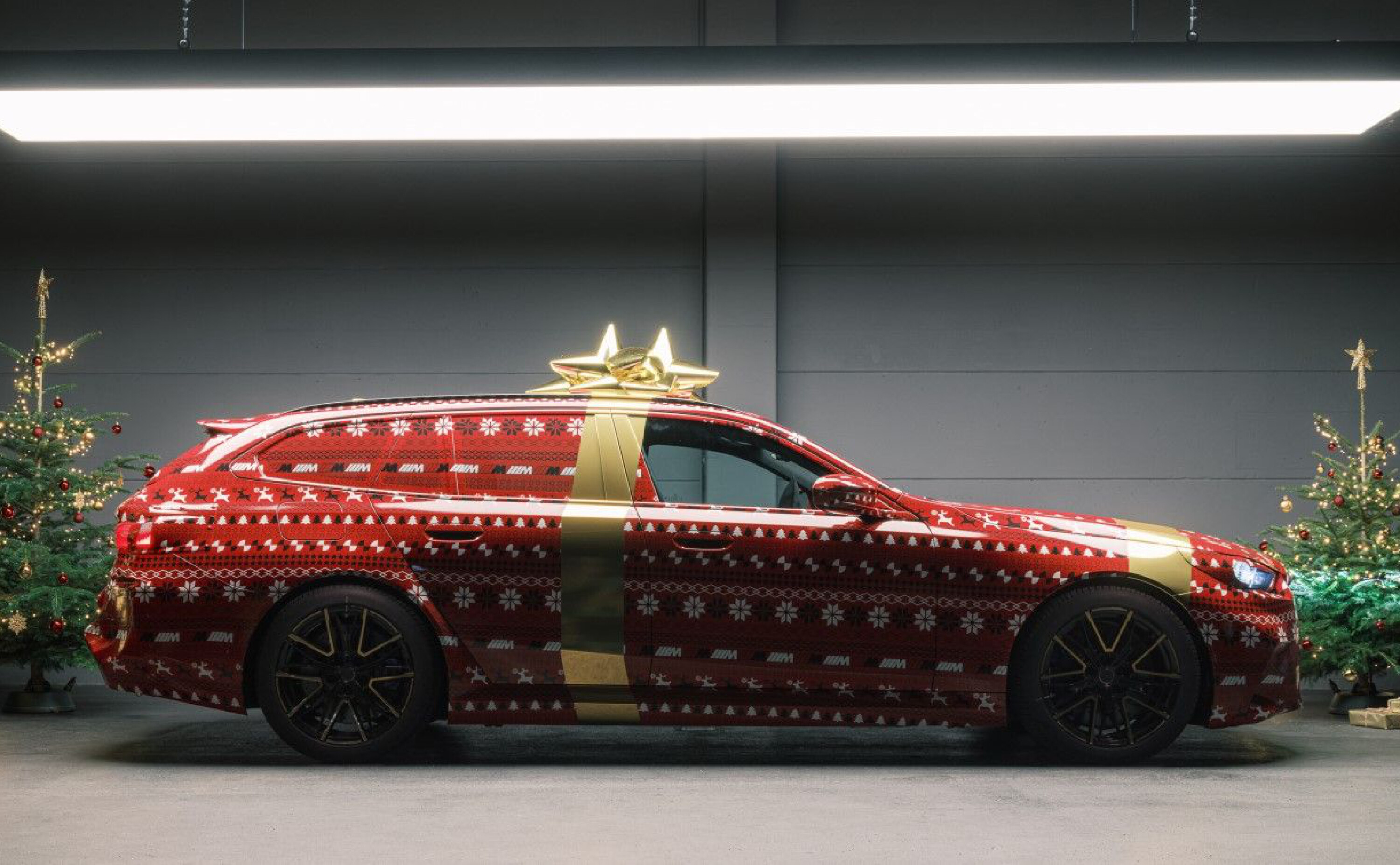
The latest BMW 5 Series Touring is also expected to be offered in all-electric i5 Touring form, although it is unclear if and when any 5 Series Touring models will reach Australia.
You can see our imaginative renderings of the i5 Touring by clicking the featured story linked below.
However, the M5 Touring will likely be offered in Australia as a competitor to the Audi RS6 Avant. It is expected to have a faster 0-100km/h acceleration time than the Audi’s 3.4 seconds and a higher price tag above $250,000 before on-road costs due to its electrified powertrain.
As the world’s obsession with SUVs and big truck utes continues unabated, it can be easy to forget that the iconic van is still a popular segment.
For those in the market for a big box, or perhaps considering a switch from something less capacious, here’s what is on the horizon.
JUMP AHEAD
- Ford E-Transit Custom
- LDV eDeliver 7
- Mercedes V-Class facelift
- Peugeot e-Expert
- Renault Kangoo E-Tech
- Renault Master
- Volkswagen ID.Buzz Cargo
- Volkswagen Transporter 7
Ford E-Transit Custom
Ford and Volkswagen make some of the most successful vans in automotive history, so who better to build you your first electric van?
The E-Transit Custom shares its underpinnings and electric powertrain with its Volkswagen Transporter equivalent, both coming from the same Turkish factory and going on sale in 2024.
E-Transit Custom will be the first of the brand’s electric vans sold here, with a previous gen sold in Europe.
The 2024 version is equipped with the electric Ford F-150 Lightning’s 74kWh battery pack and a 160kW/415Nm electric motor for a WLTP-rated range of 380km.
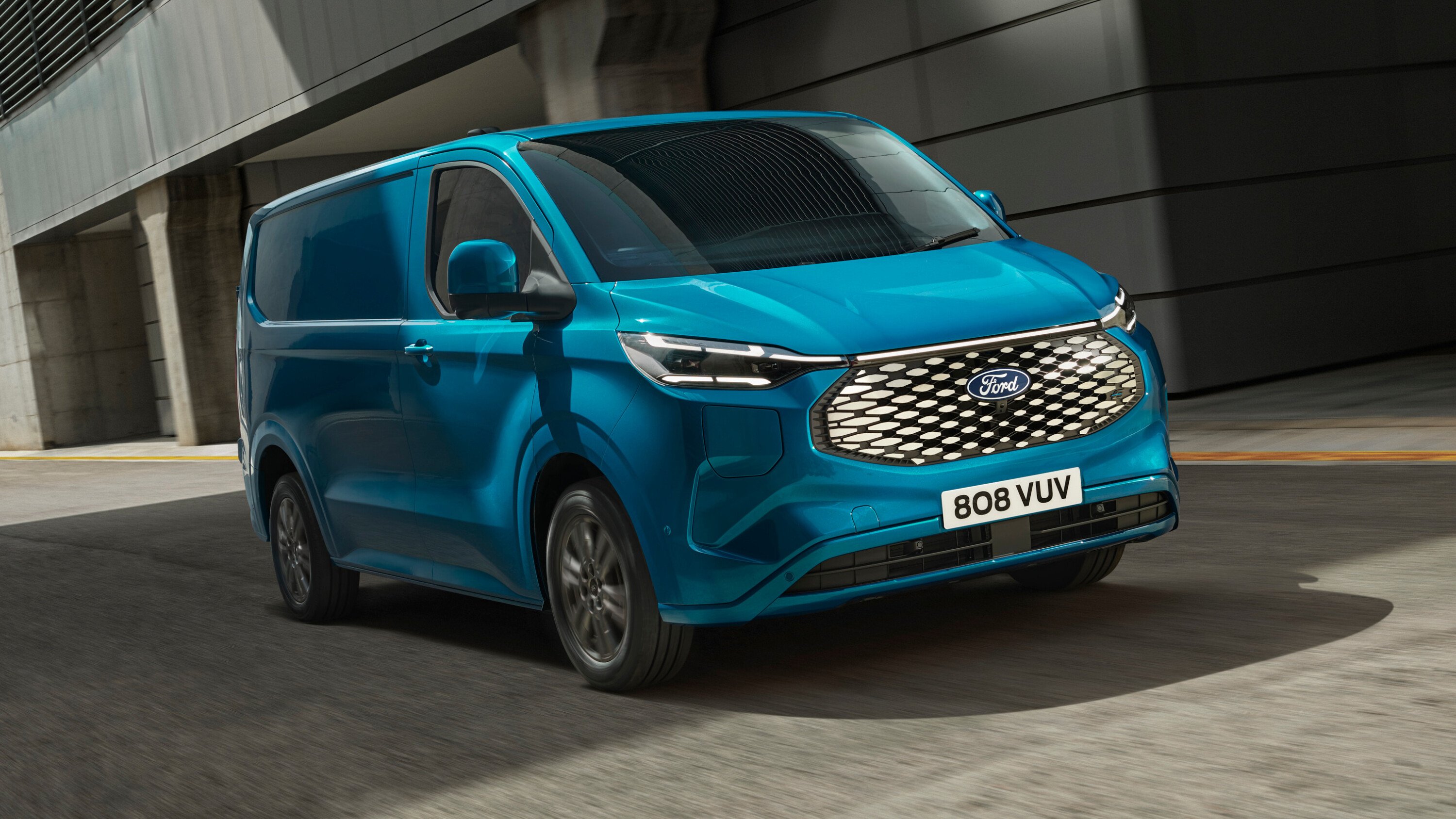
Critical to keep a working E-Transit on the road, Ford says the 124kW charging capability can provide an 80 per cent top up in 41 minutes (yes, 41…) and 38km of driving after only five minutes.
Cleverly, the floor is set 100mm lower than the previous diesel Transit Custom, and Ford’s specifications show no loss of cargo space between electric and diesel models.
That – and Transits reputation – should place it in good stead, although we’d advise seeing what your local Volkswagen dealer can offer, too….
LDV eDeliver 7
The Deliver 7 loses some if its fake-Ford Transit looks with a fresh look that will start off in electric form before a diesel version arrives in Australia down the track.
Replacing the LDV G10 that’s been on sale here since 2010, the eDeliver 7 is more Transit Custom size where the eDeliver9 rivals the larger Transit.
Locally, short- and long wheelbases will be on the menu, along with low and high roofs with the electric package offering an E-Transit matching 380km with an optional 88kWh battery.
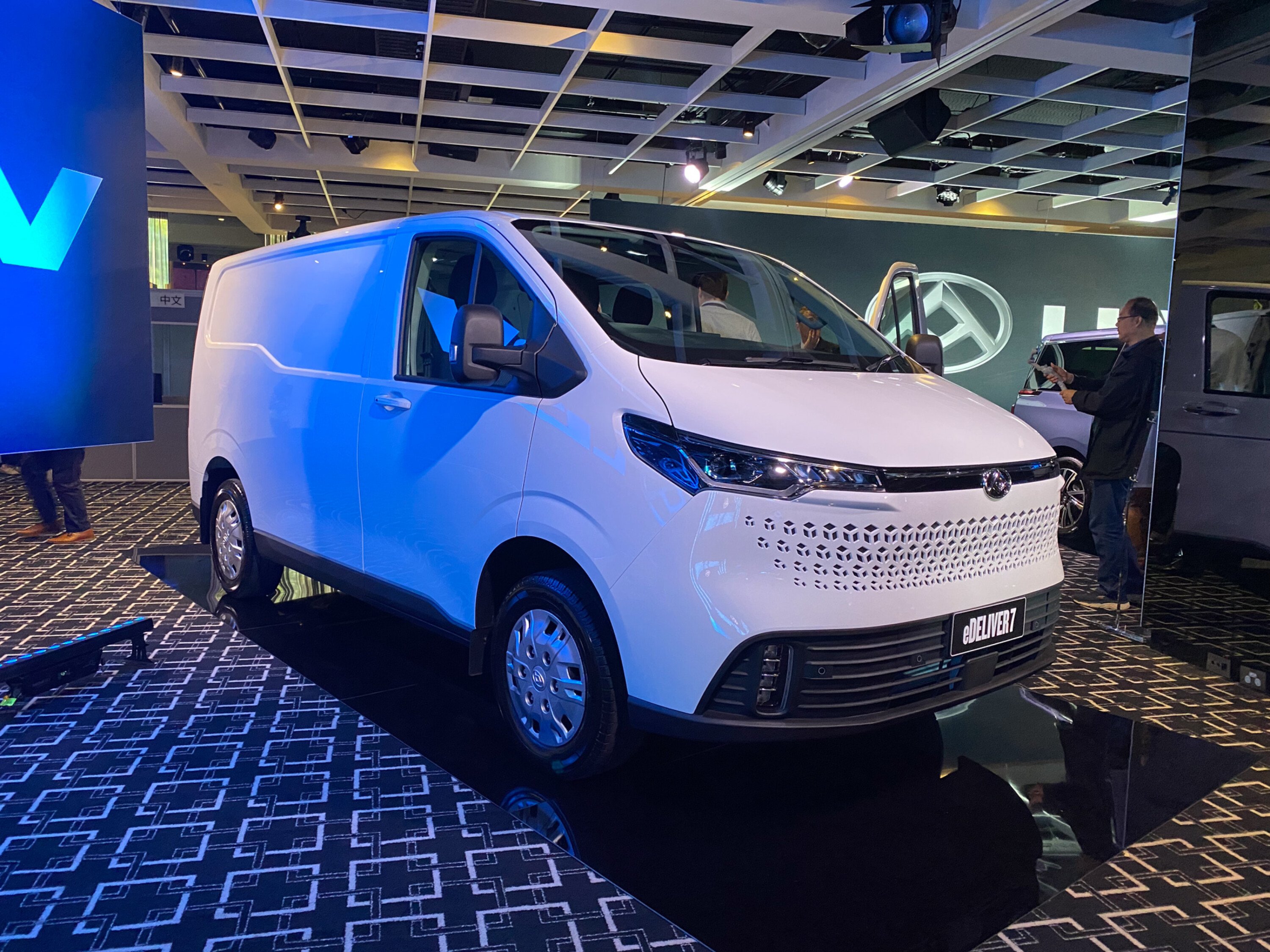
The standard spec with its 77kWh battery should deliver a claimed 300km range, using the same 150kW/330Nm motor.
For 2024, the eDeliver 7 will bring much better tech than the G10, including AEB, Lane Keep Assist and Adaptive Cruise, as well as better interior tech including a 360-degree camera.
It will face the electric vans including the Peugoet E-Expert, forthcoming T7 Volkswagen Transporter, and ironically the Ford E-Transit Custom that its design previously aped.
Mercedes V-Class facelift
The decade-old W447 V-Class will have a new flagship in the electric EQV as part of its broader 2024 update before an all-new platform lands in 2026.
That’s an issue for some fleet buyers, as its 5-star ANCAP rating expired in 2022 – and it won’t be retested to earn a newer rating.
Regardless, a new nose sees redesigned headlights and combined illuminated front grille cluster, while LED tail-lights, five new colours and fresh alloy wheel designs revitalise the V-Class’s exterior.
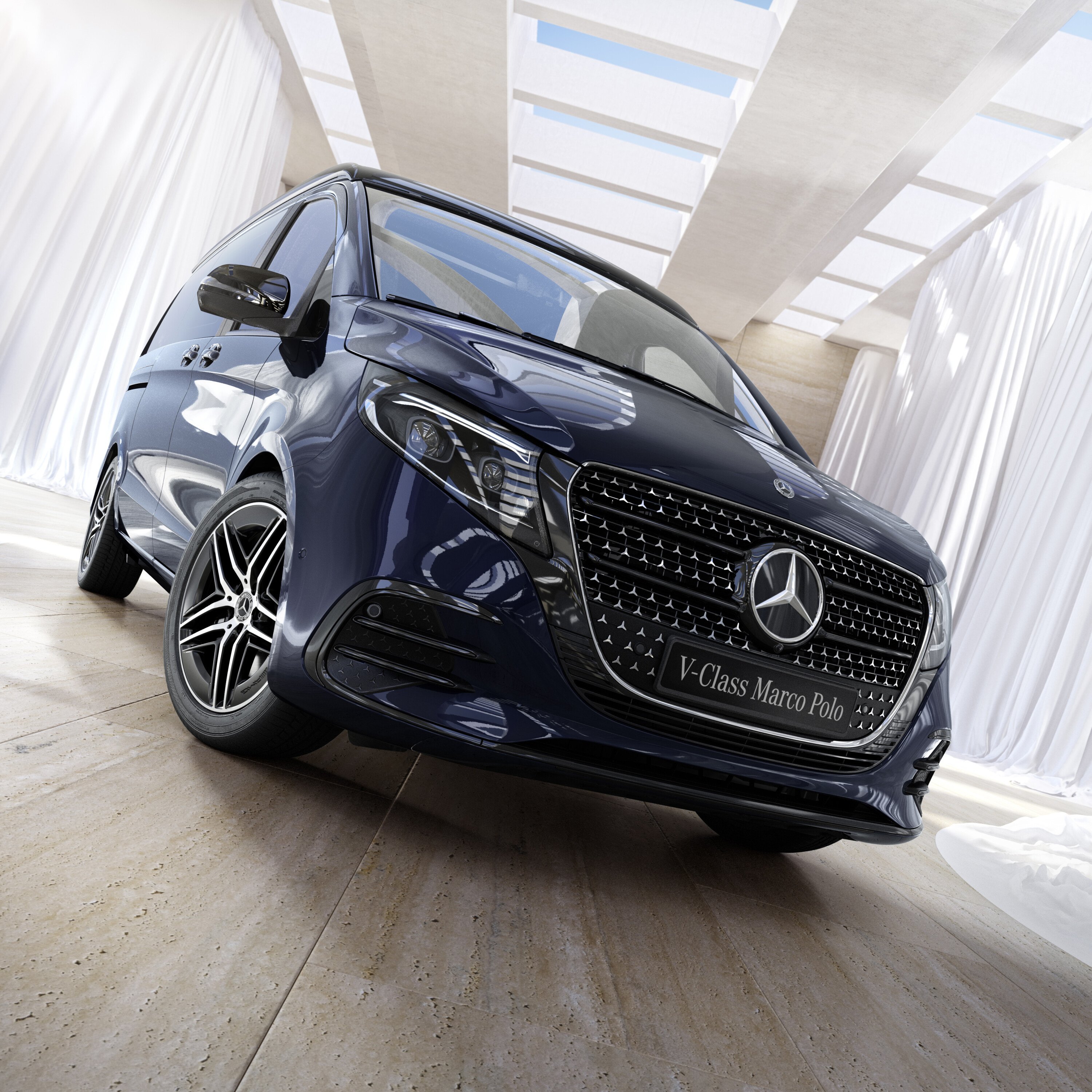
The cabin scores Mercedes’ a redesigned wood-look dash with twin 12.3-inch displays, 64-colour ambient lighting settings and a new steering wheel featuring capacitive controls, with seating options for up to eight.
The EQV will be offered in mid-spec Avantegarde trim, with three-tier line-up of Exclusive, Avantegarde and Style set to continue.
An optional AMG styling package will also remain on offer, now including a sports grille, with the same 2.0-litre turbo-diesel engines expected across the range.
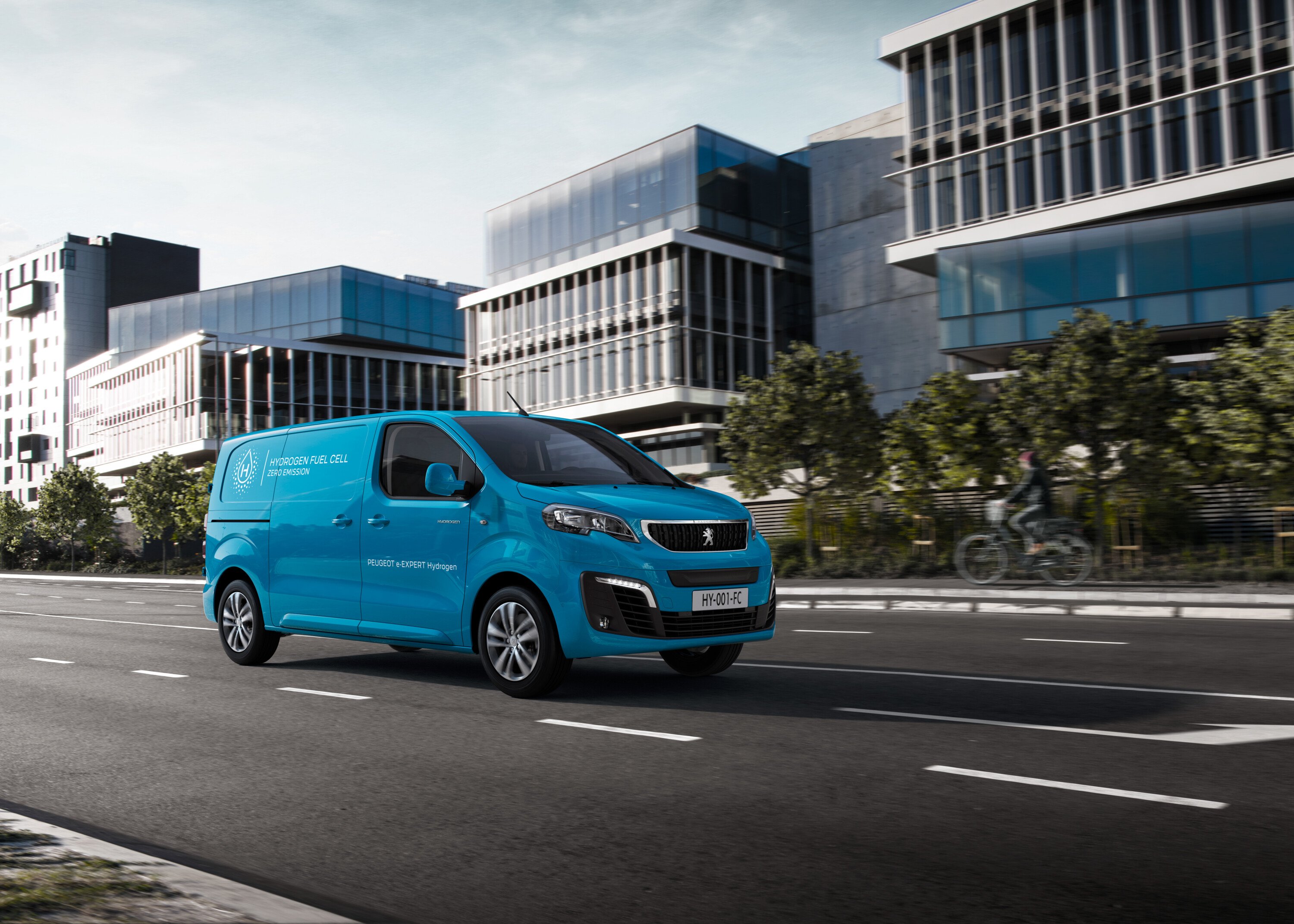
Peugeot e-Expert
Forgive the e-Expert’s awkward name as the mid-size van looks to add a dash of style to the electric van wars.
It will be Peugeot’s second electric van after the smaller e-Partner went on sale in 2023, and is expected to be offered in a single electric spec.
While Australian spec is not yet locked in, the UK version sees the e-Pug with a 100kW/260Nm motor – poached from the e-208 and e-2008 –driving the front wheels with 50kWh and 75kWh battery packs for a 230km WLTP range.
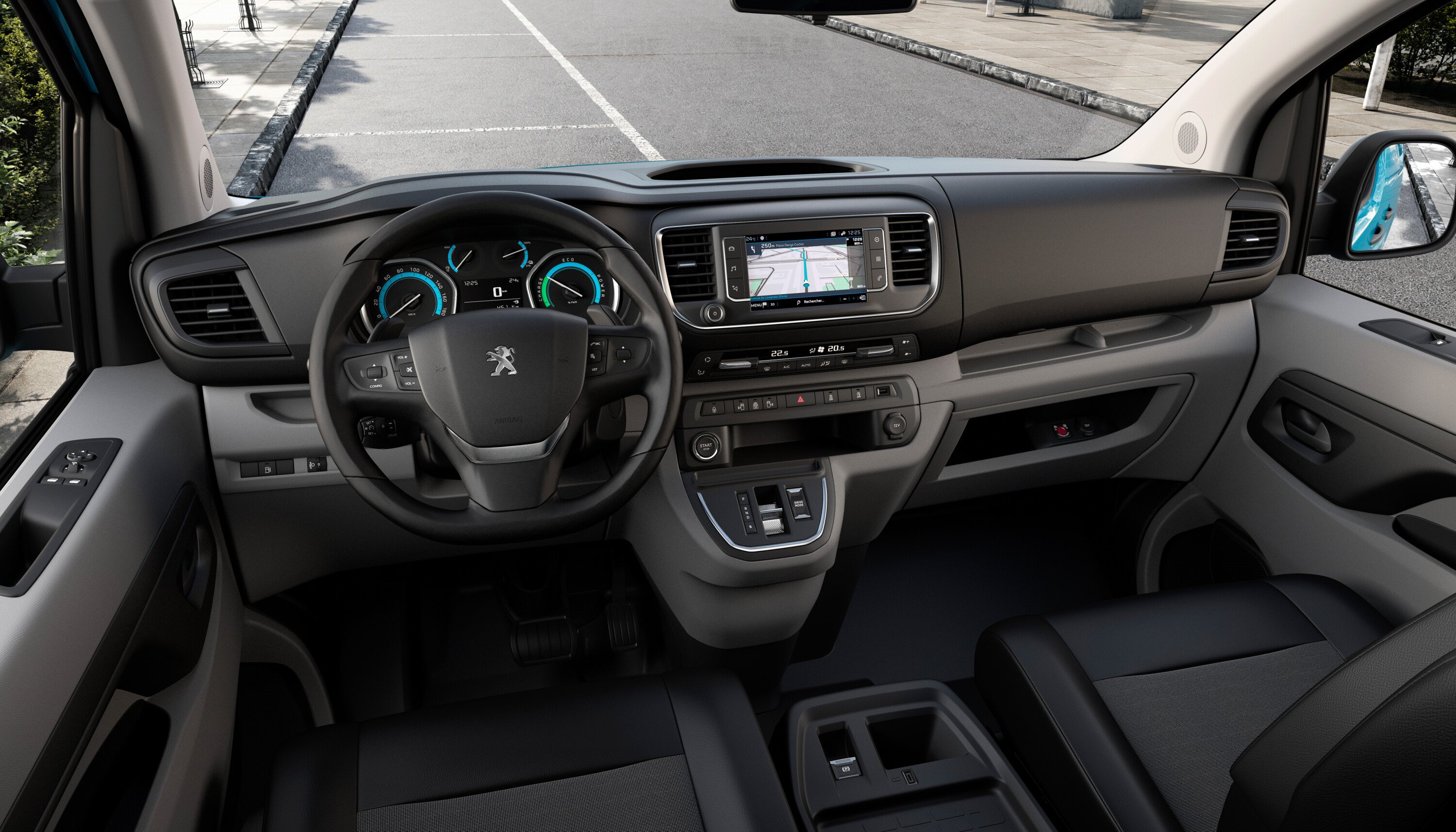
That’s not as far as the Ford/VW twin rivals, nor as powerful, meaning Peugeot will have to price the e-Expert keenly if it’s to make a name for itself Down Under.
Using the diesel versus electric premium for the smaller e-Partner would make the e-Expert around $70k.
Renault Kangoo E-Tech – Q1
The new-generation Kangoo E-Tech is the new name for the Kangoo ZE it replaces, and it comes with more than double the power and 20 additional Newton-metres for 90kW/245Nm. It also has a longer, 285km range, upping its practicality.
That increase is courtesy of a heat pump, which is also used to heat and cool the Kangoo’s larger cabin more efficiently.
Clever tricks include ‘Easy Side Access’, a system removing the B-pillar on the passenger side for easier access to the loading area – whose opening is twice the size of its predecessor with up to 3.9 cubic metres, or 4.4 cubic metres in a longer-wheelbase model.
The $61,990 short-wheelbase Kangoo E-Tech offers a 523kg payload, while a $2K premium for the long-wheelbase brings a 668kg payload.
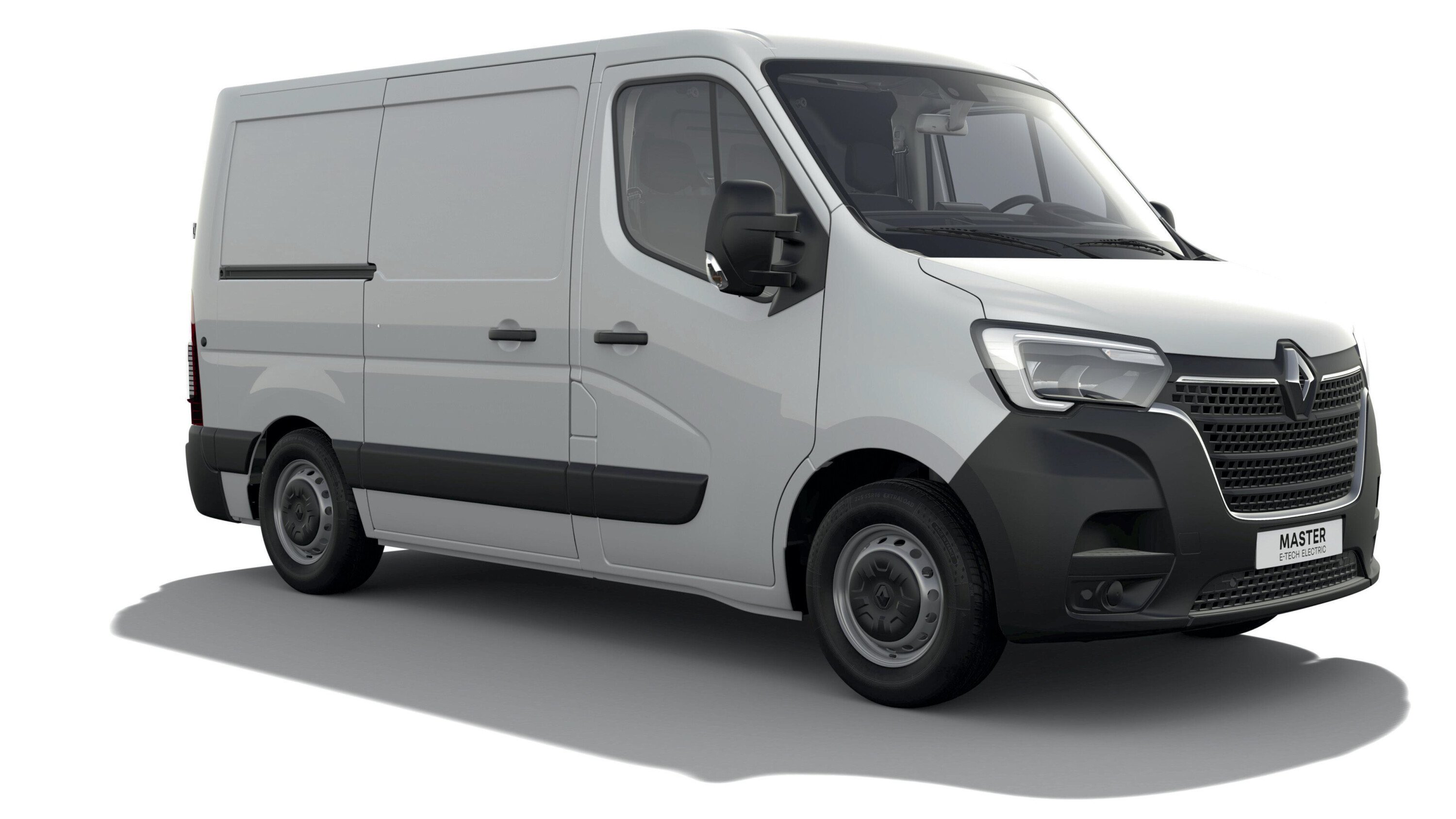
Renault Master – H1?
The 2024 Renault Master is all new, replacing the existing model that has been in showrooms since 2010 – and how the world has changed since then.
A contemporary digital-laden cabin with a 10.0-inch centre-screen angled towards the driver, a passenger-car multi-function steering wheel that is used for the automatic’s gears, saving space by replacing the need for a shifter.
Diesel, battery and hydrogen powertrains have been confirmed for Europe in a larger body that has been aero optimised to maximise fuel efficiency, whether you’re burning diesel or pumping electrons, which also helps make the cabin quieter.
That’s an achievement given the new Master’s body was too big for a full-size wind tunnel test, Renault using smaller scale models instead.
Renault claims best-in-class loading width and depth, despite the it being narrower.
Volkswagen ID.Buzz Cargo – Q4
VW’s 21st-century take on the classic Kombi will naturally feature a load-carrying spin-off in addition to a people-mover.
As with the ID.Buzz family transporter, the ID.Buzz Cargo will be fully electric – making it the German brand’s first ever all-electric van.
Details for Australia are yet to be confirmed but the Cargo is expected to come with a 77kWh battery, feeding a 150kW/310Nm rear electric motor.
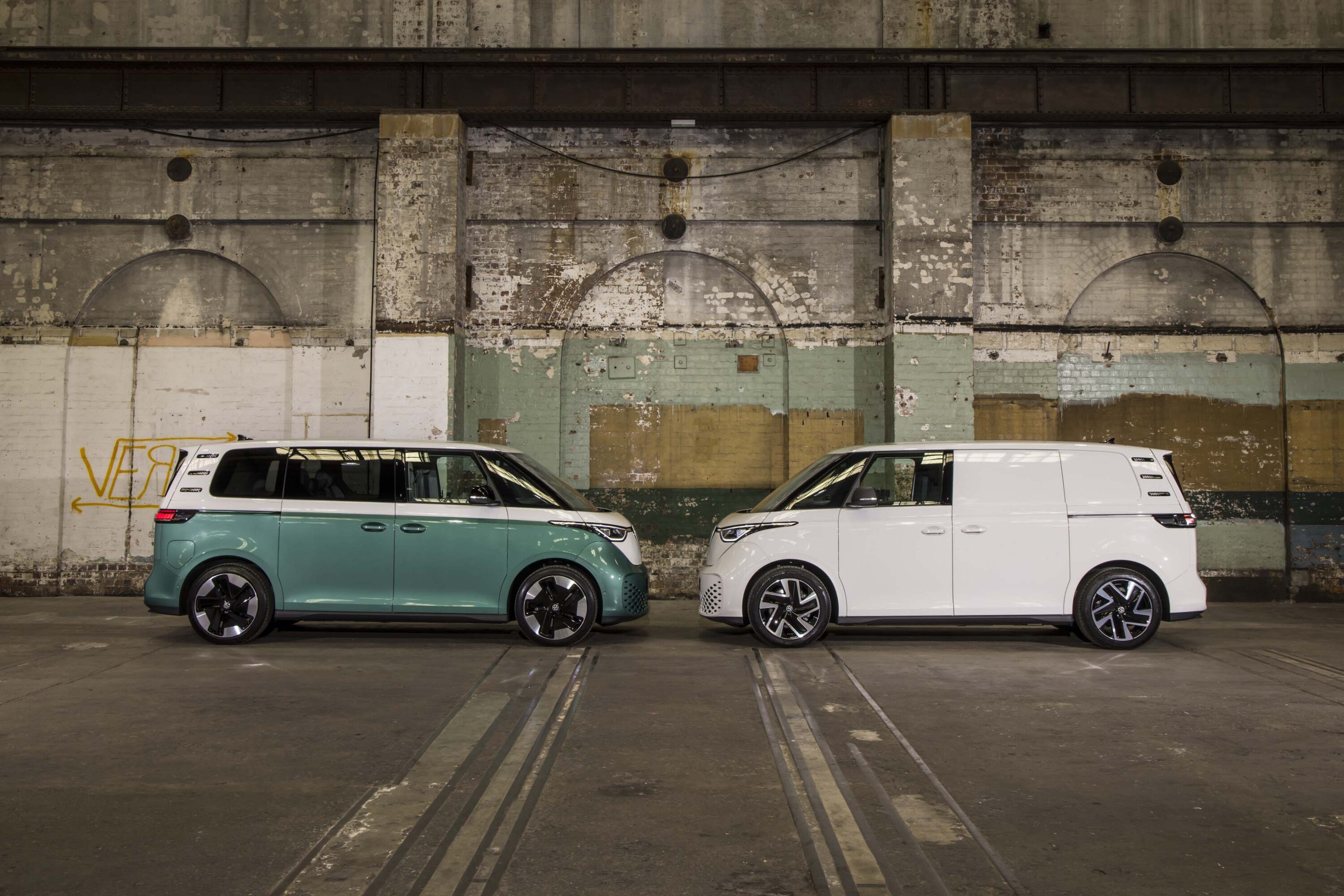
A range of more than 400km is quoted on the WLTP (European test) cycle.
To be offered only in short-wheelbase form, the 4.7m-long Cargo will provide a maximum cargo hold of 3.9 cubic metres with a maximum load length of 2.2 metres – enough space to accommodate two Euro Pallets, according to VW.
The payload is 650kg.
The work van will be easily distinguished from the people-mover, with different (read more durable/practical) interior trim finishes and window-less panels on the back.
Volkswagen Transporter 7 – Early 2025
We’ll see the latest generation of VW’s long-running Transporter series revealed in 2024, though Australian sales may not commence until early 2025.
For now, all we know is that the ‘T7’ will be a twin to the Ford Transit Custom as part of a commercial-vehicle alliance that has already spawned the closely related Volkswagen Amarok and Ford Ranger utes.
The new Transporter can be expected to share plenty of panels and components with the Transit Custom, with at least a differently styled front end bringing some differentiation.
Powertrains are expected to include a mix of diesel, plug-in hybrid and electric.
