
Ever since the last VFII Commodore SS-V Redline rolled off the Elizabeth plant production line, closing the book on Australia’s once-colourful manufacturing industry; homegrown classic cars have been surging in value and remain one of the most active sectors within the collectible community.
Cars which were treated with apathy and neglect only a few years ago have now reached values many past owners could never have imagined, and the big-ticket hero cars which were nigh on impossible to sell in decades past now frequently reach telephone-number prices at auction.
But what is still out there for the everyday enthusiast who want to own their own piece of classic Australiana, or just to recapture a bit of nostalgia?
Here are five Australian classic cars that you can find on the market right now, for less than a new Mazda 3.
Holden HZ Kingswood Panel Van – TAS – $25,000
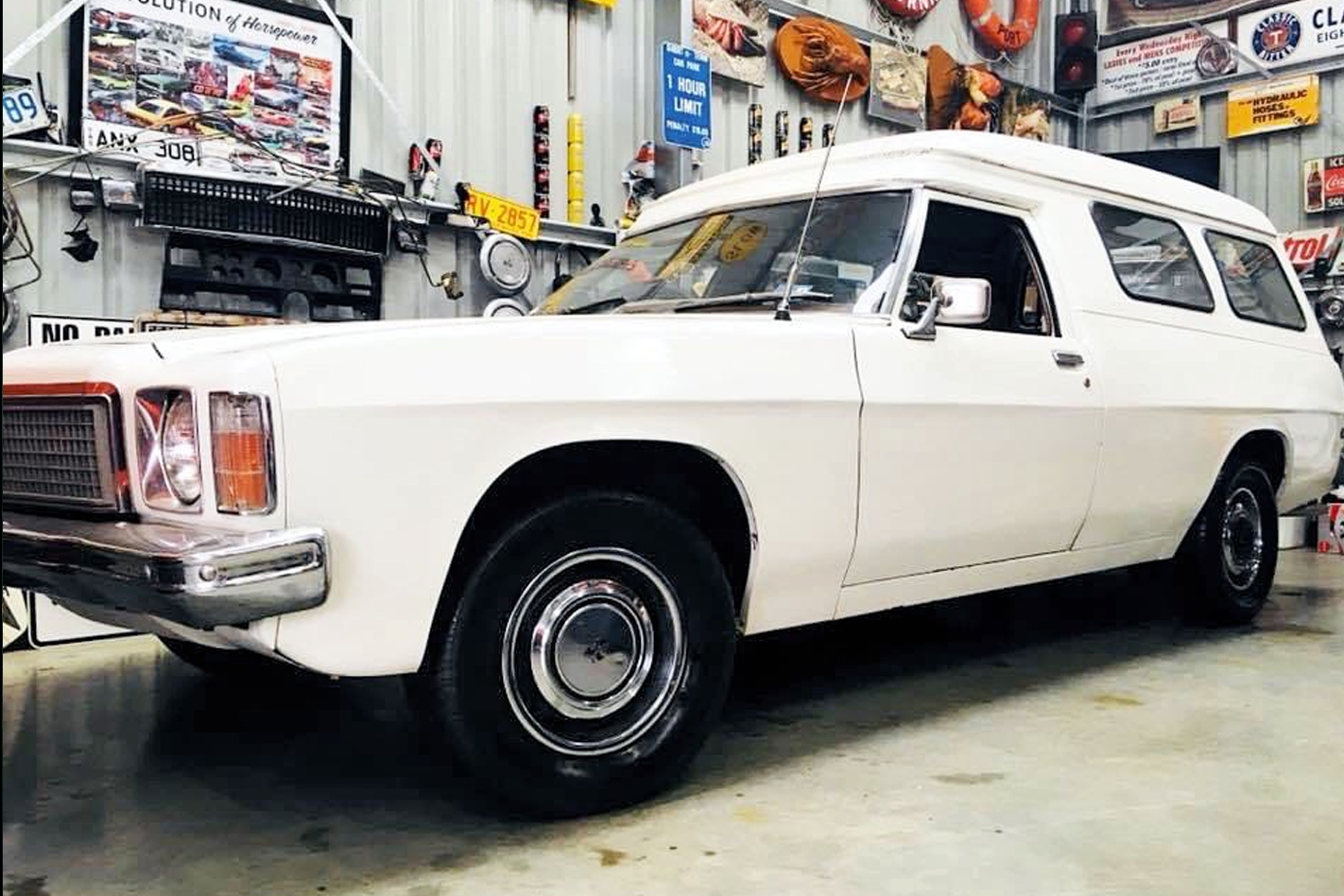
Surf, sand and… serenity by the beach is what you could be enjoying with this icon of 70s surf culture. Panel vans and utilities are hot property for collectors thanks to their utilitarian nature and youthful charm.
They are quite rare to find though as many of them lived full lives as workhorses, carrying ladders, tools and paint tins before they were unceremoniously left at the tip – or in rural paddock.
This example is the HZ-series of 1977-1980, which brought with it the transformative ‘Radial Tuned Suspension’; and is described as being in ‘very good original condition’. It retains its original 202ci (3.3lt) inline-six matched to a column-shift automatic.
Said to be in running condition, this is one of the most affordable ways into a desirable panel van.
View the Kingswood’s listing in full at UniqueCars
1961 Dodge Phoenix – NSW – $25,000
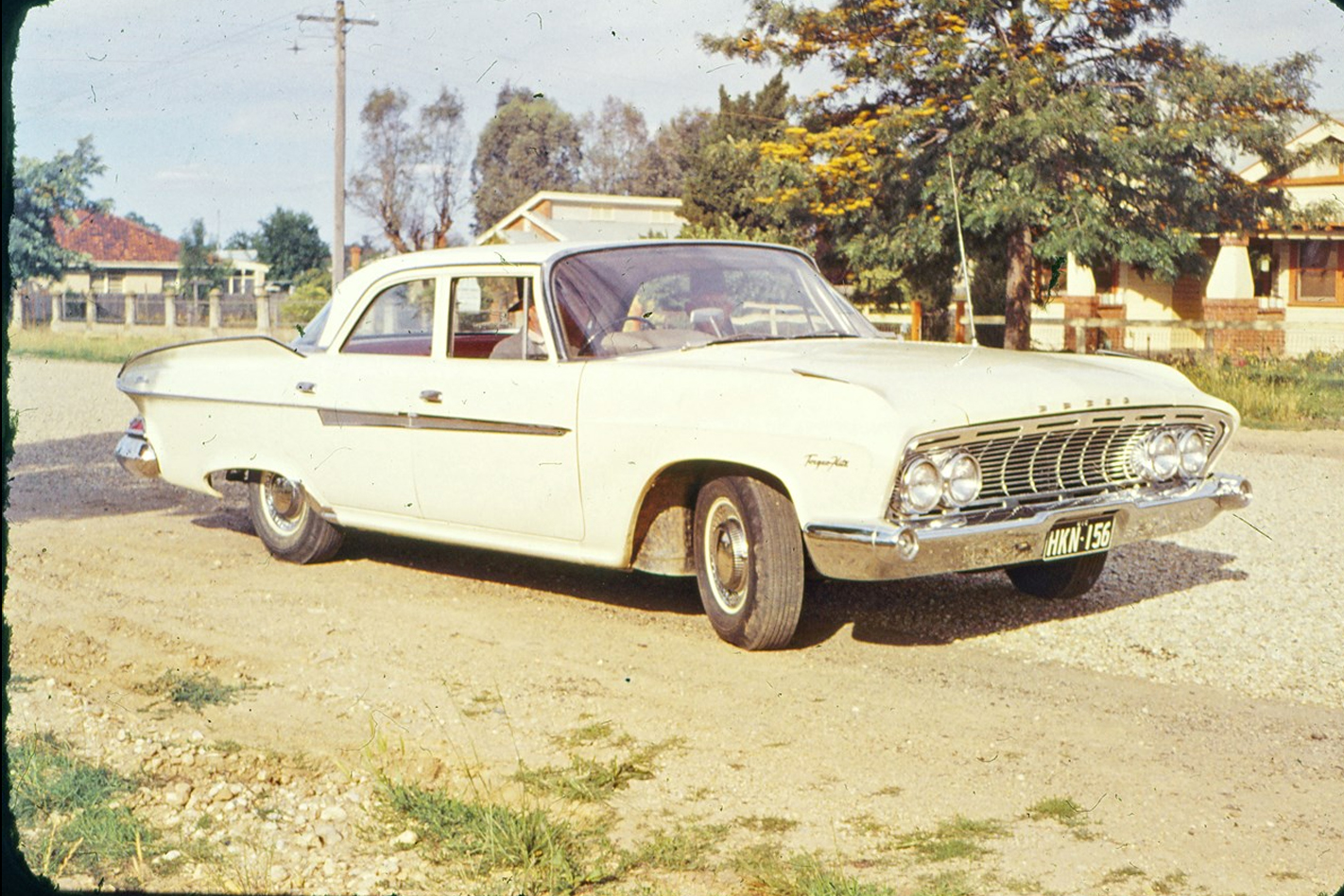
If you looked at the collecting community’s fanfare for the quintessential Holden or Ford, you’d easily be remiss to the fact that Australian factories once pumped out cars bearing badges from all over the world. In the late 50s and early 60s especially, the Aussie market had a healthy appetite for big American cruisers.
Foreign companies were rewarded with tax break for local assembly, and even more so if the CKD (complete knock-down) kits were imported from Commonwealth nations. Subsequently, the Dodge Phoenix we got in 1960 was distinctly Australian-ised; based actually on the Dodge Dart, with kits imported from Canada, and partly using components from Plymouth.
Five entry-level classic cars for under $15,000
It’s an oft-forgotten piece of local manufacture history, and offers a cheaper buy-in than the usual early Commodore and Falcon. This Aussie-assembled Phoenix seems to be a bit of a time-capsule, having been kept in the same family since new. The car has been in storage for years in rural NSW and unfortunately the sellers are not able to access the car currently due to Covid-19 travel restrictions for up to date photos. They do indicate, however, that the car is original to the condition presented in the photo. We assume it to be intact and complete although likely needing some mechanical refurbishment.
View the Phoenix’s listing in full at UniqueCars
1977 Ford Fairlane ZH – NSW – $22,500
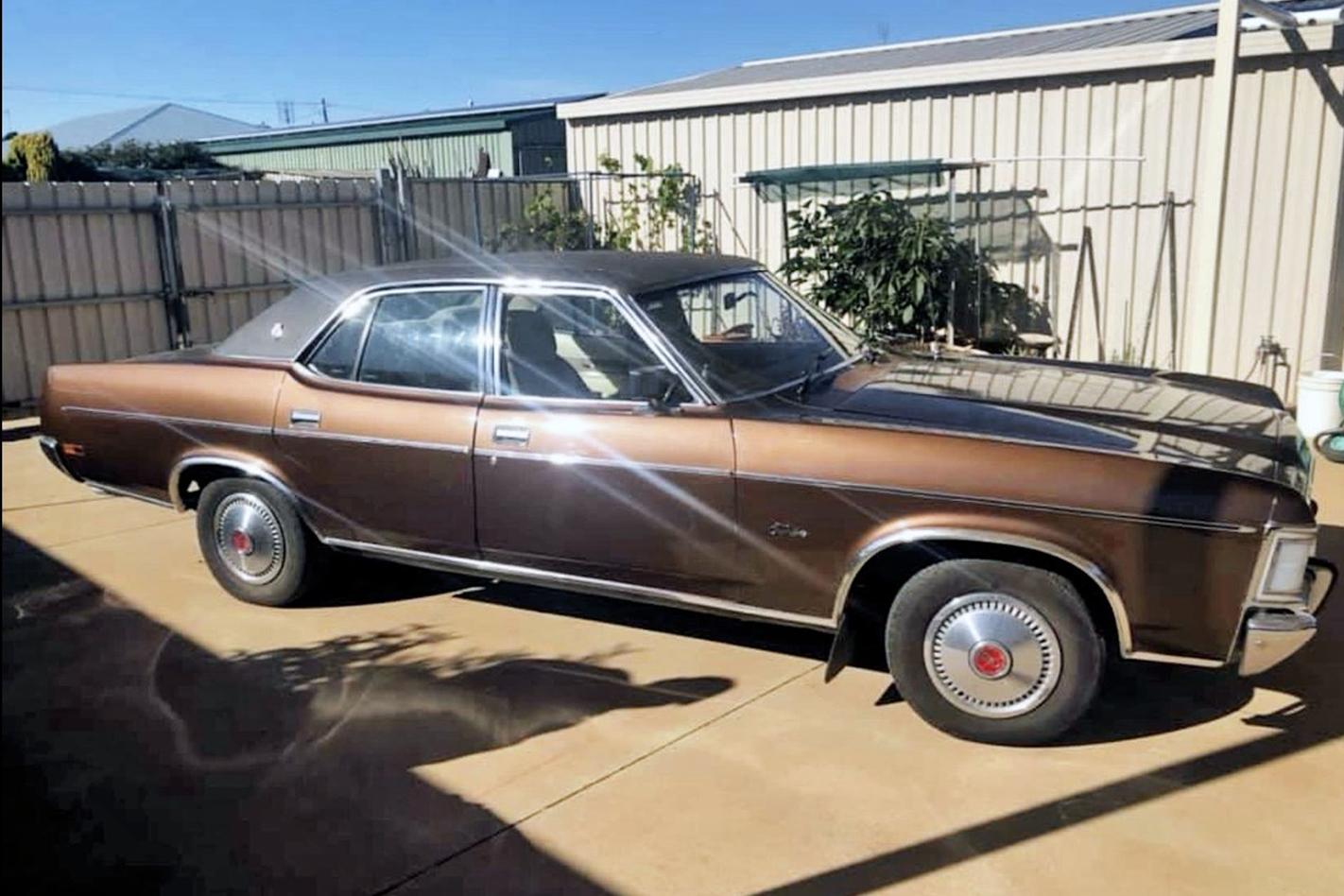
Ford’s ZH Fairlane was based on the XC Falcon’s midsection with generous amounts of metal added fore and aft. It’s blocky bold design was influenced by the US design of the period, which measured a car’s level of luxury by its size.
This one presents in top-spec Marquis trim and looks to be very original. The listing describes it to be a rust-free example and looks to be free of noticeable or significant blemishes to exterior and interior.
It’s fitted with the basic 4.9lt V8, has covered 247,000kms in its life and is fitted with a dual fuel system and twin exhaust.
1979 Chrysler Valiant CM Regal – VIC – $21,000
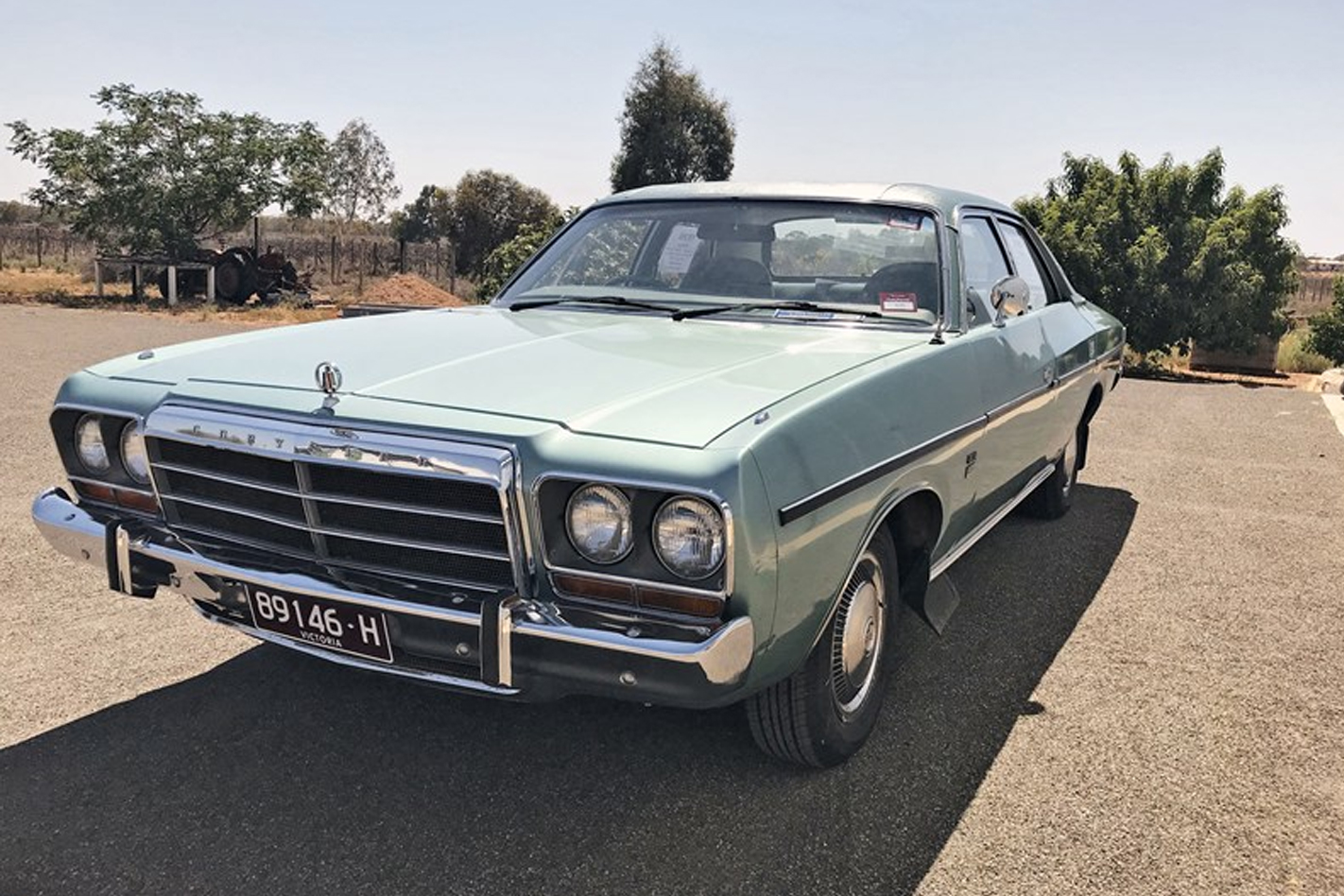
The CM Valiant had a tough time on the sales charts when new, with many critics believing it arrived a few years too late. Indeed, at the time, Chrysler was diverting much of its development resources into the very successful Sigma.
Four decades later though, the Valiant remains a handsome and capable family cruiser. The 265ci (4.3lt) Hemi was one of the best sixes in its days, and currently offers far more value compared to the equivalent HZ Holden or X-series Falcon.
This one is an automatic example and is described as being in very good and original condition, with no rust and no accident history.
View the Valiant’s listing in full at UniqueCars
1990 Holden VQ Caprice – VIC – $16,500
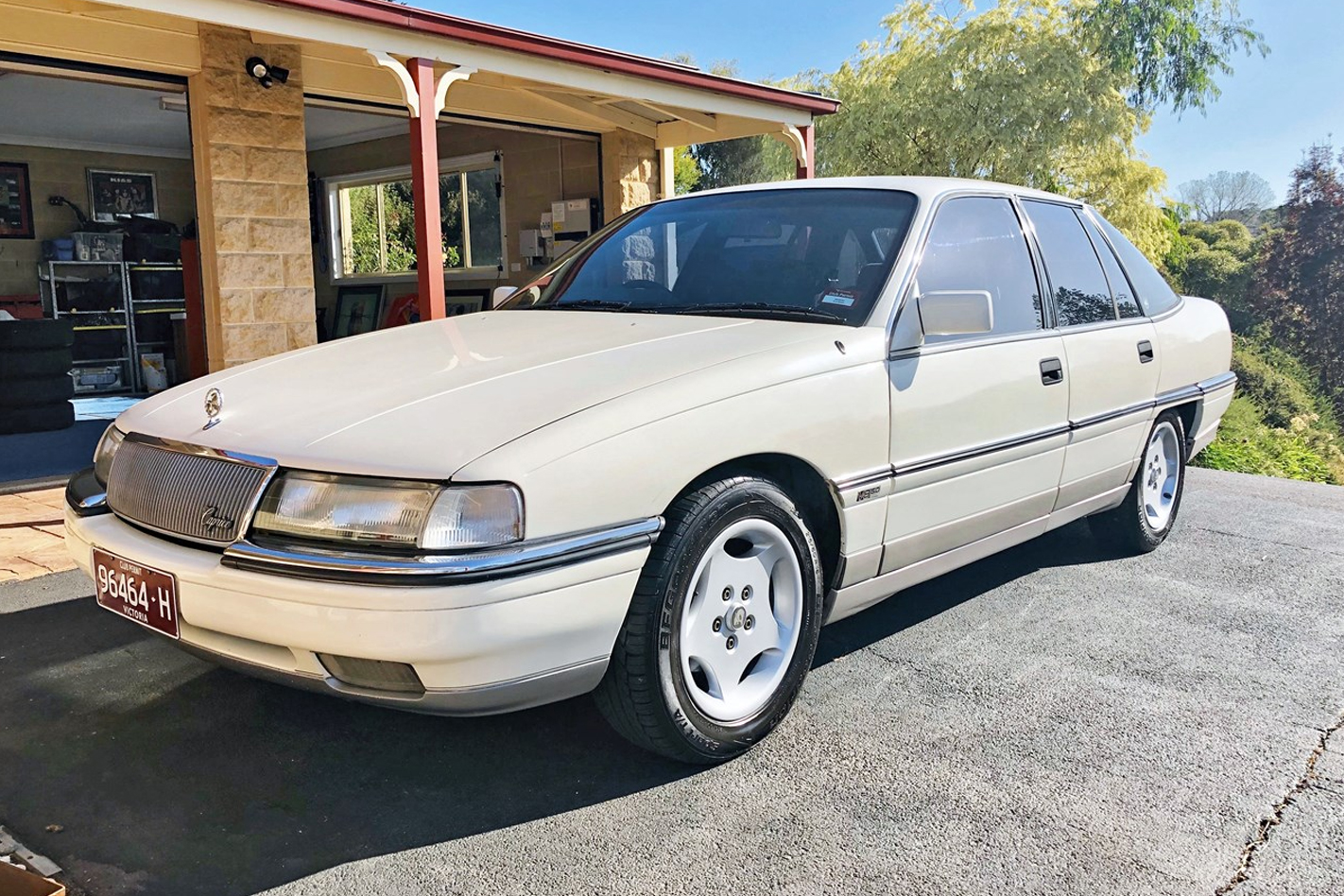
The long-wheelbase VQ of 1990 marked Holden’s return to the full-size luxury sector after the WB Statesman retired in 1984, allowing Ford to dominate the large luxury segment with its popular Fairlane in between.
The VQ Statesman and Caprice was more than a simple stretched-VN, and featured Australia’s first locally-made independent rear suspension system, a 5.0lt V8 and four-speed auto as standard, and every luxury Holden had in its arsenal.
This one is presented for sale on behalf of its third owner from new. It’s in very well-kept condition with a near-faultless interior and body. It’s been recently serviced and all electronics are said to be functioning.
While values of many of Holden’s sporty offerings of the 90s are steadily tracking north, these big luxurious cruisers haven’t popped on to the collector radar yet.
Have a car to sell? Advertise it for free in Unique Cars Magazine and on tradeuniquecars.com.au!
What is the Toyota HiLux SR5?
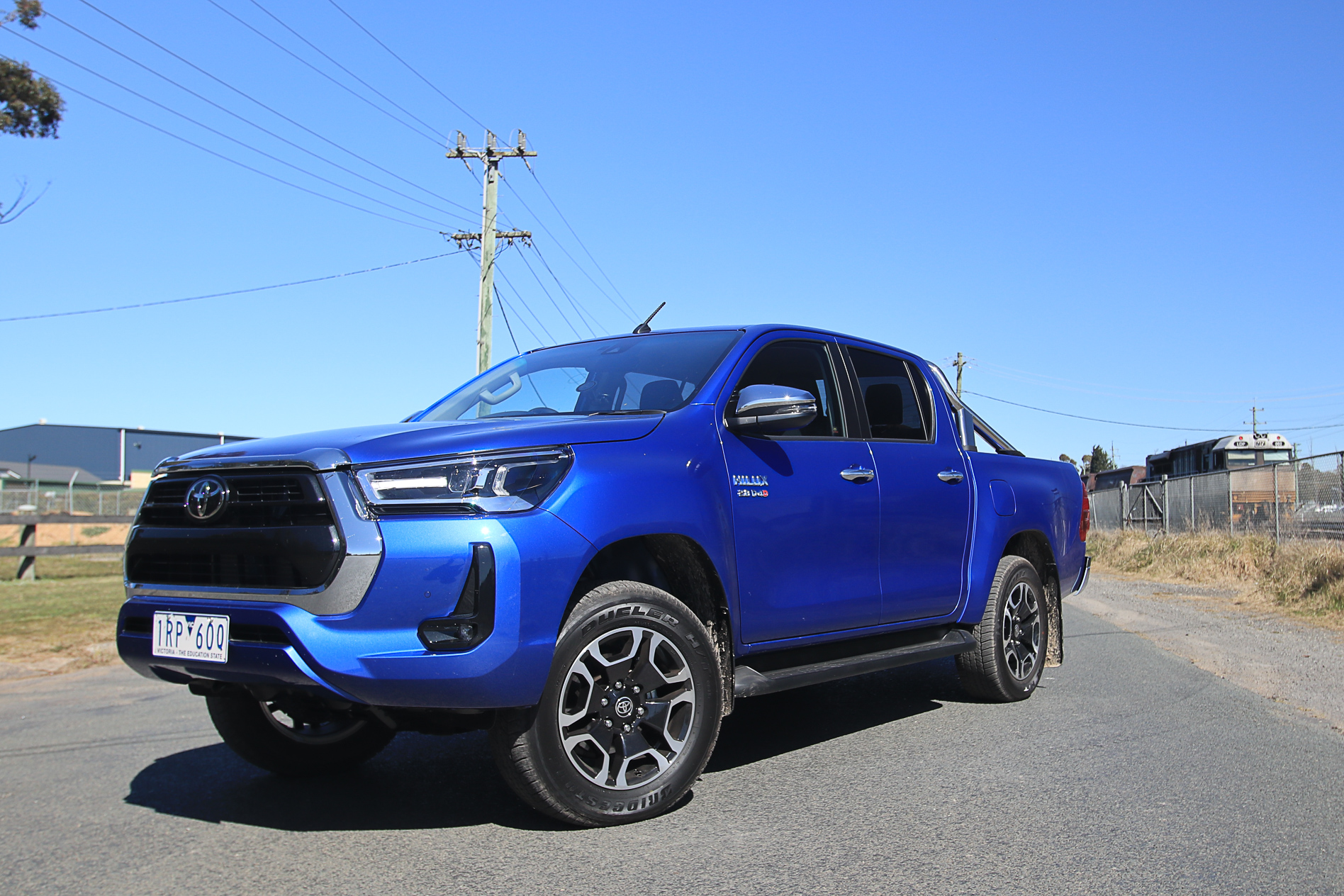
The Toyota HiLux is, by some odd twists of fate, one of Australia’s best-selling vehicles, despite the fact that it’s far from the perfect family vehicle. Built tough to endure mine sites and construction jobs, the HiLux’s most popular variant is the 4×4 dual-cab ute.
Formerly residing firmly at the top of the heap, the four-door, five-seat HiLux is now kept honest by the likes of the Ford Ranger, with upstarts like the Mitsubishi Triton and Isuzu D-MAX now nipping at its heels.
The eighth-generation HiLux launched in 2015 with new engines and technology, and the 2020 facelift addresses key areas like ride, handling and power output, where its rivals have been, one by one, stealing the march on the former king of the hill.
We put 750km on a new SR5+ in two days over a variety of terrain, even adding a heavy load to the tray for a brief test. How does the 2020 Toyota HiLux stack up?
Price and value
As pictured, the SR5+, equipped with a 2.8-litre four-cylinder turbo diesel and a six-speed automatic transmission, costs $62,420 plus on-road costs.
That’s a pretty sizable jump over the equivalent previous version of the HiLux; more than $9000 in real terms, in fact.
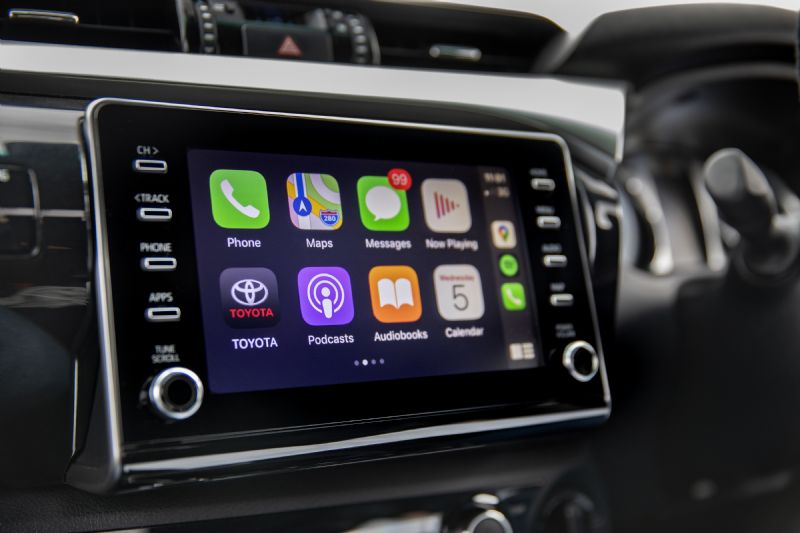
Dual-range 4×4 with hill descent control, adaptive cruise control, lane-keep assist, road sign ID and AEB with cyclist detection during the day, LED headlights and taillights, 17-inch alloys with highway-spec tyres, a new 8.0-inch multimedia system with Apple CarPlay and Android Auto and a small digital dash screen are standard, along with a 60/40 split base rear seat.
It does miss out on a few basics that would be reasonable to expect at this price point, including some sort of liner for the tray (be it spray-on or plastic) and vents and USB charging points for second-row passengers.
Does the Toyota HiLux have ISOFIX baby seat mounts? Sure does – two of them, in fact.
The SR5+ is two grand dearer than the SR5 by dint of its leather-faced heated seats (powered operation for the driver’s seat), and just over $10,000 dearer than the first 2.8-litre-powered double-cab, the SR.
By way of comparison, Ford’s 2.0-litre twin-turbo Ranger XLT costs $60,940 in auto guise, with the Wildtrak coming in four grand more expensive.
Toyota is cagey about how it has addressed the diesel particulate filter issues that have plagued the HiLux, but it says that both “software and hardware changes” have been made in an effort to solve the DPF blockage issues that can quickly kill the expensive filter.
Living with the Toyota HiLux SR5+
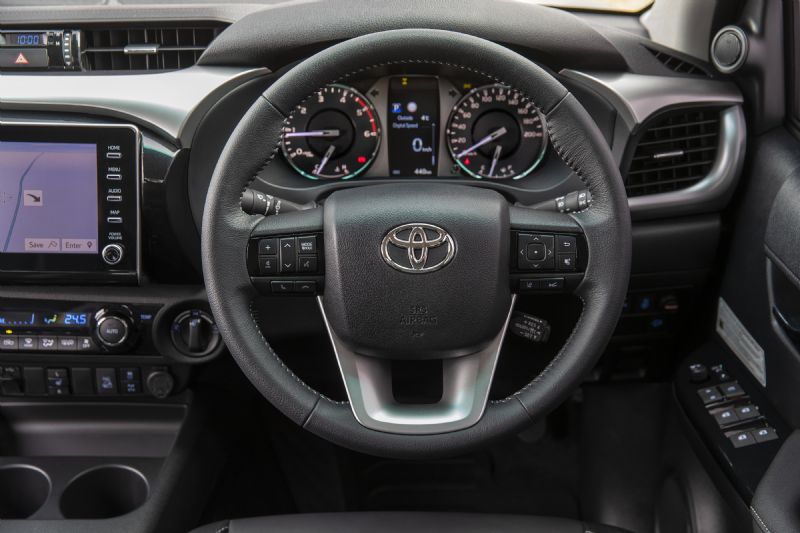
There hasn’t been much in the way of change when it comes to the interior of the HiLux. A new dash binnacle insert offers up redesigned speedo and tacho dials, but does include – hallelujah! – a digital speedometer for the first time in a HiLux. It also offers more data info for the driver, but not to the extent of things like engine oil pressure or temperature.
The other big change is the addition of a larger 8.0-inch screen to the centre console. The new system is compatible with Apple CarPlay and Android Auto, along with something known as myToyota. This will allow owners to use other apps like Stitcher and AccuWeather, some of which aren’t supported by either phone interface.
The screen can be used via capacitive touch, with larger icons making it an easy job. Each function can be accessed via buttons, and many owners will be pleased to hear that the volume knob has returned.
The seats are comfortable and supportive, and the steering wheel, while firm underhand, is comfortable over a longer journey. Rear seaters do sit quite vertically, but there is plenty of headroom, toe room and shoulder room.
A big tick for the flip-down hook on the back of the front seat to hang that plastic bag of pad thai and kung pow chicken from, too, Toyota.
Storage in the doors and in the centre console is adequate (just), but the rock-hard plastic that’s used to make the small trays and the two cupholders means that rattling is a real drama on rough stuff – we found ourselves stuffing napkins down the side of our regular metallic coffee cup for fear of going insane.
The tray of a dual-cab isn’t the best place to store stuff, and the HiLux is very bare-bones out back, with no power outlets, lights, or lining of any kind. The tailgate also lacks any form of soft-open mechanism, slamming down with a loud clank when unlatched.
We’ll talk about how it drives in a minute, but the changes to the suspension have also improved the quietness inside the cabin of the HiLux, too. Off-throttle, the engine quietens down nicely and aside from wind noise around the wing mirrors, the HiLux isn’t a chore to drive over longer distances. A six-speaker stereo system helps here, too – funny to write that about a HiLux!
Engine, transmission and drivetrain
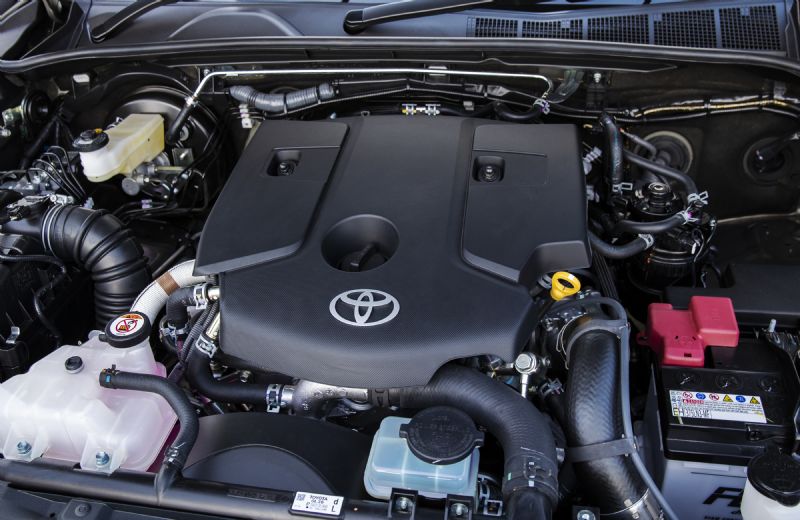
Under the bonnet of the HiLux, the 2.8-litre four-cylinder turbocharged diesel engine has been considerably overhauled.
A larger, ball-bearing-equipped turbocharger, a stiffer cylinder block, better exhaust gas management and improved cooling helping to boost outputs to 150kW (up 20kW) and 500Nm (up 50Nm) on the six-speed automatic version (though it’s still 420Nm for the six-speed manual version, despite what you might read elsewhere).
It’s still a handful of killer wasps down on the Ford Ranger‘s 2.0-litre twin-turbo’s 157kW, but the torque is now a match.
Another improvement; the updated six-speed auto can now handle 3500kg of braked trailer, up 400kg over the previous version. Toyota says it’s down to improved torque lock-up calibration.
The HiLux retains its dash dial-activated low-range 4×4 set-up, with the default drive mode being rear-wheel-drive. A hill control descent button and an old-school ‘idle-up’ button are the main electronic off-road aids.
Driving the Toyota HiLux SR5+
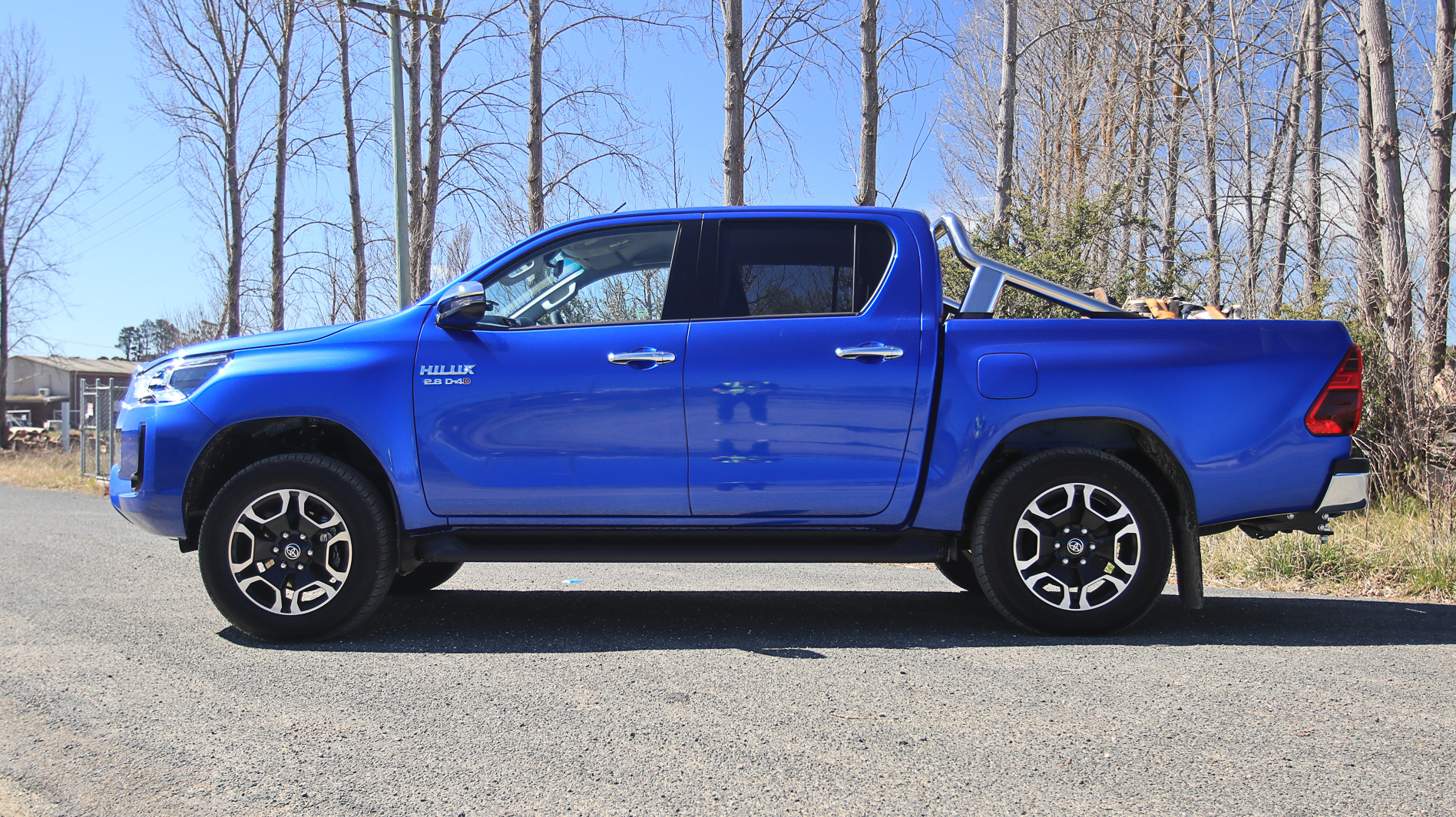
Toyota has worked hard to bring new updates to the HiLux. Chief amongst these are the changes to the suspension, which has been tweaked to improve the HiLux’s busy, buzzy unladen ride quality.
Revised low-friction (read: more expensive) shocks, revised bushings and new, longer and softer leaf springs work with updated bushes between the body and the ladder-frame chassis to give the HiLux a much more mature, controlled and generally nicer ride quality when it’s not carrying anything in the tray.
All changes have been made in simpatico, resulting in a HiLux that feels more grown-up.
Steering feel, too, has been improved. Toyota has kept the older-style hydraulic steering assistance for the HiLux because it claims it’s more reliable off-road. A variable ratio pump has been added to the system, which works harder at low speed to lighten the steering effort, conversely firming it at higher road speeds.
Overall, the HiLux ute is now quieter, much more compliant over small bumps and breaks in the road and it generally feels much more refined – and it needed to, given the quality of its opposition in this area.
We also briefly tested the HiLux’s ability to carry a load with the new suspension setting by adding a 650kg wheel unit from a mining shuttle car to the tray. The tray itself can’t carry a standard 1200mm wide pallet, though.
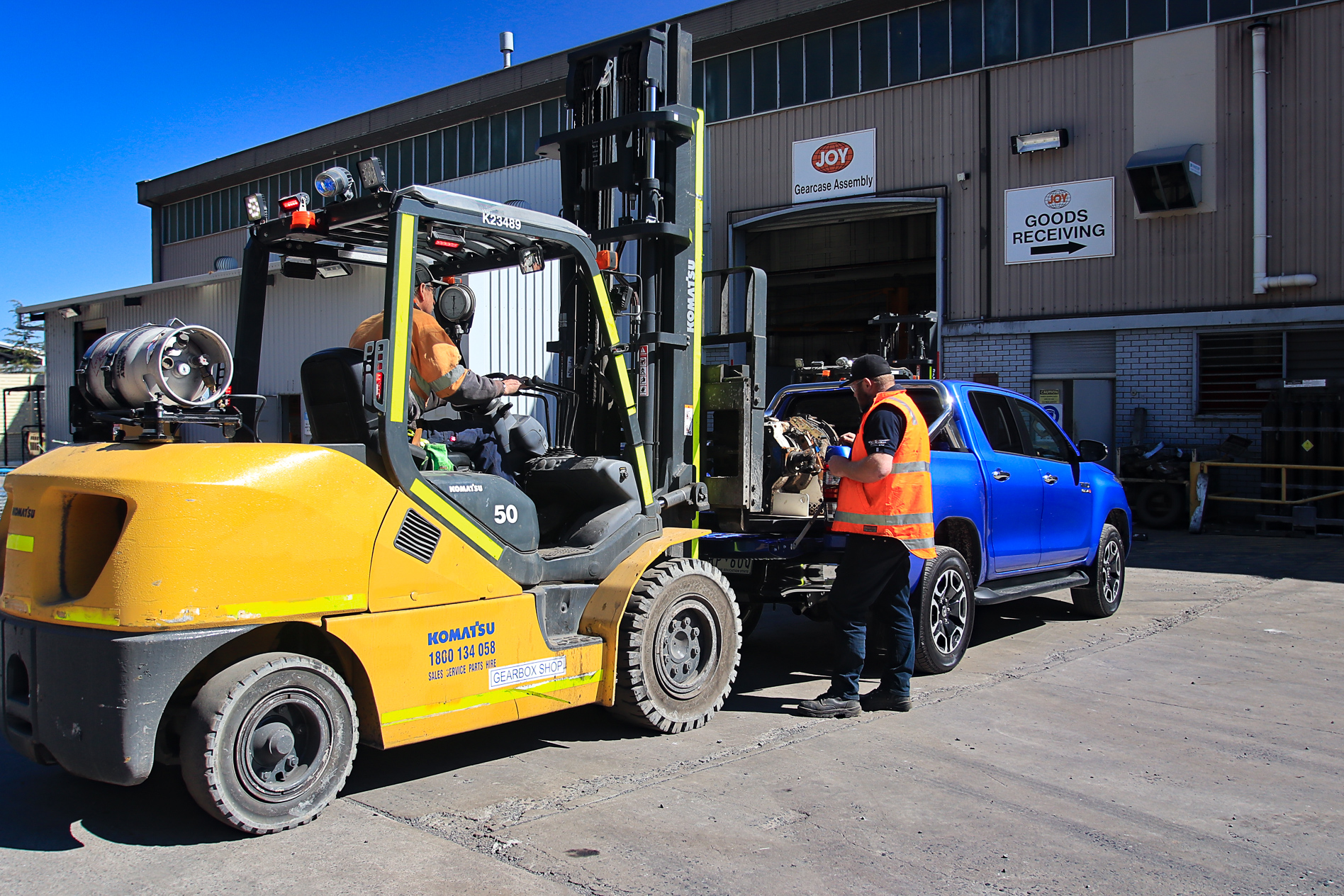
The HiLux can carry up to 1000kg of payload (which, don’t forget, includes driver, passenger and anything packed in the cabin, not just what you chuck in the back). In our case, total payload measured about 770kg, including the 650kg wheel unit and frame, the 110kg driver and 10kg of camera gear.
The revised rear suspension visibly sagged under the load, which was located a little too far towards the rear of the tray over the axle. However, it worked well over corrugated roads and railway crossings and steered perfectly well, though braking performance was definitely compromised, with longer stopping distances and a softer brake pedal underfoot.
As mentioned, the towing capacity of the HiLux is now higher for 4×4 automatic models, with all 4x4s able to tow 3500kg of braked trailer.
How safe is the Toyota HiLux SR5+?
There’s no change to the HiLux’s five-star ANCAP safety rating, which was a major goal during the development of the eighth-gen ute. Five-star cars are far easier to sell to large mining and construction outfits.
However, the active safety equipment level of the HiLux (including high-speed AEB with daytime cyclist detection, trailer sway control, lane-keep assist and adaptive cruise control) is being challenged by rivals like the new Isuzu D-MAX, which also offers rear cross-traffic detection and blind-spot warning.
How much does it cost to run the Toyota HiLux SR5?
Servicing intervals of six months or 10,000km are shorter than those on key rivals like the Ranger (15,000km/12 months) and are, consequently, more expensive when it comes to fixed-price service plans.
A capped-price service plan over five years will cost $3537, with the first four services capped at $250 each. The warranty for the HiLux extends to five years, but because it’s deemed a commercial vehicle, kilometres are limited to 160,000km.
The HiLux uses standard diesel and doesn’t need AdBlue to treat its exhaust system.
At a claimed combined fuel economy figure of 7.0 litres/100km, the Toyota HiLux’s 80-litre fuel tank allows a theoretical range of 1150km on one tank of diesel. Over 750km of testing, we burned 9.4L/100km over city and highway.
Verdict – the 2020 Toyota HiLux SR5+
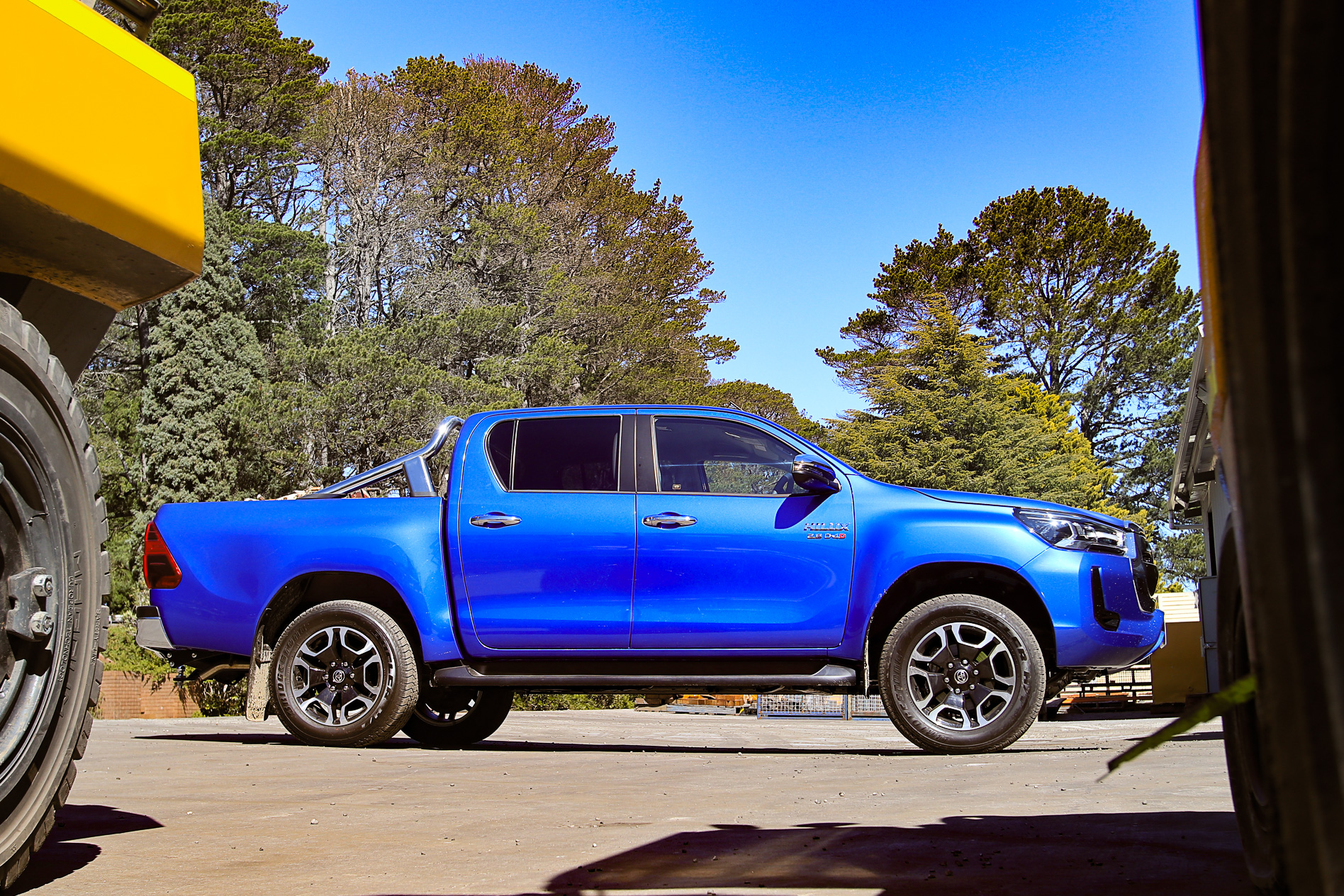
The HiLux is an important car for Toyota, but the brand has long been guilty of doing exactly enough to maintain its advantage and not a skerrick more.
Now, though, the competition is stepping up its game, and Toyota has responded with a meaningful update to its powertrain and suspension. Can it keep its number one spot? Only time will tell.
Rating 7.5/10
Rating breakdown
Value (judged on price, specs vs competitors) 7/10
Safety (ANCAP, safety inclusions, child seating) 7/10
Running costs (warranty, servicing, fuel consumption) 7.5/10
Comfort and practicality (all seat positions, cargo space, ease of use) 8/10
On the road (engine/drivetrain, ride and handling) 8/10
What you will like
Much more comfortable, smoother and calmer to drive
What you won’t
Expensive, loses out on spec to key rivals
Now read (link to best related content)
Specifications – Toyota HiLux SR5
Price: From $62,420 (6AT)
Engine/Transmission: 2.8-litre 4cyl turbo diesel/6AT, 4×4 w/ low range
Fuel consumption/CO2/Tank size: 7.0L/100km, 212g/km, 80L
Safety: 5 stars
Seats: 5
Warranty / Service Interval: five years/160,000km, 10,000km/6 months
Spare Wheel (type): full size
Weight: 2050kg
Returning to the virtual podcast studio, WhichCar editor Tim Robson and Motor Magazine associate editor Scott Newman join WhichCar senior journalist Daniel Gardner for a chat about the motoring world’s most recent developments.
Including one fellow in Germany who decided it was a good idea to give a speed camera ‘the bird’. It wasn’t. The ensuing fine was bumped up by a factor of 75 percent to the tune of about $2630 but is that fair? Dan thinks not.
Later, the chat turns to ‘spy’ photography. Why the inverted commas? Well it seems, in a bid to maintain control the process of new car reveals, manufacturers are even choosing and orchestrating when to release pictures of cars ‘caught’ in the wild.
Tim returns to the WhichCar Weekly chat following his first steer of the eagerly anticipated (and long drawn out) Land Rover Defender. Soft homage to the real deal, or the Landie it always should have been? Tune in to find out what we thought.
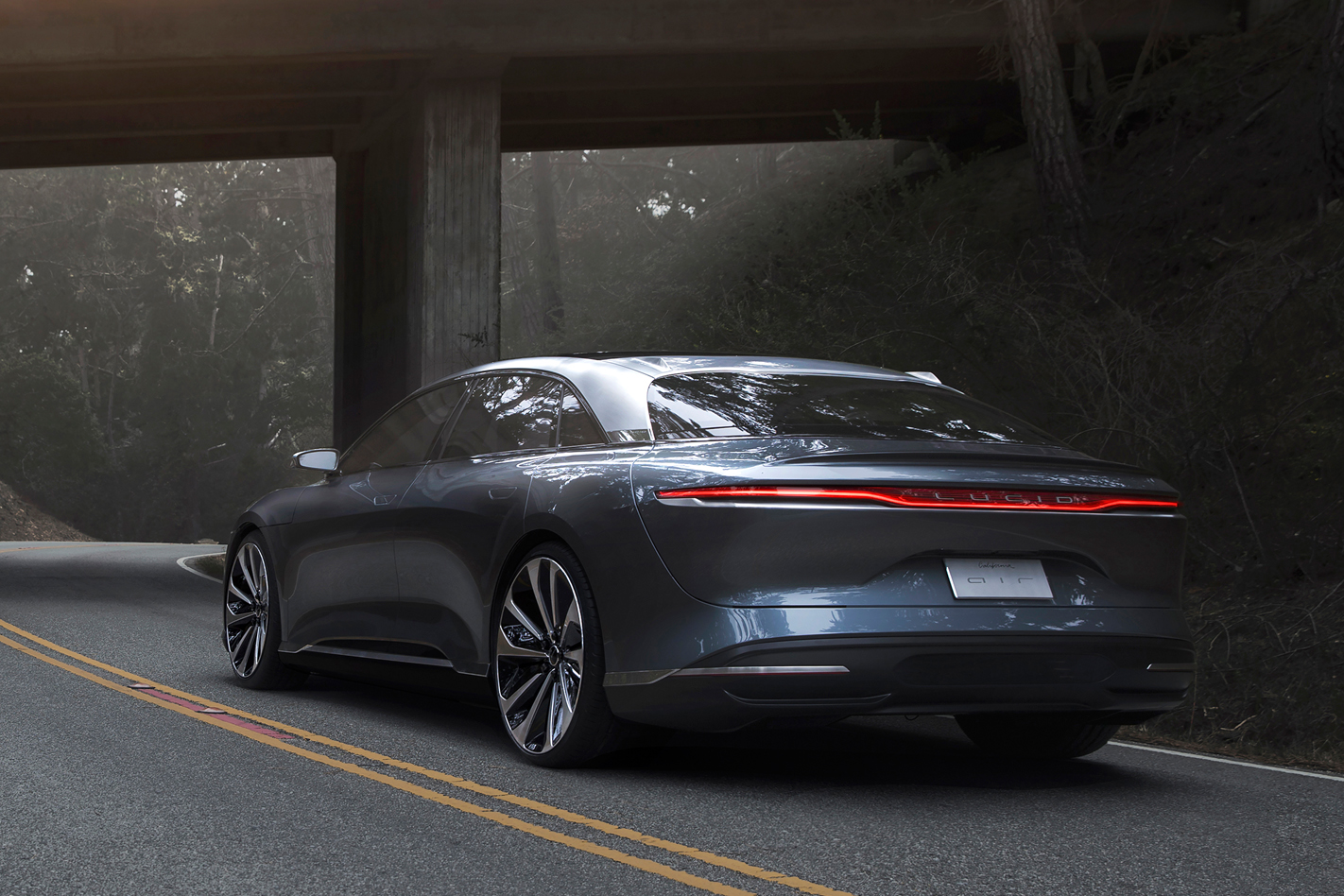
And finally, the talk turns to an emerging EV brand that appears to have what it takes to worry battery powered giant Tesla. If you’ve never heard of Lucid Motors, you have now and you’ll be seeing more about the Californian start up in these pages.
The team discusses whether this intriguing brand could be a Tesla toppler or too little too late. Oh, and will its fans be as ‘special’ as Tesla’s?
You can find WhichCar Weekly on all manner of podcast apps including iTunes and Podbean. Please rate, subscribe and leave a review.
If you want yet more WhichCar action whether it be behind the scenes insights or the very latest from the automotive front line, follow the day-to-day happenings of the WhichCar team on Facebook, Twitter and Instagram.
And if you really want to get involved, send us a question or auto anecdote of your own. We endeavor to answer all your messages.
Listened to or watched the WhichCar weekly podcast? Help us out
- Leave a note in the comment section below
- Leave a review on Apple Podcasts/iTunes
- Subscribe to our podcast
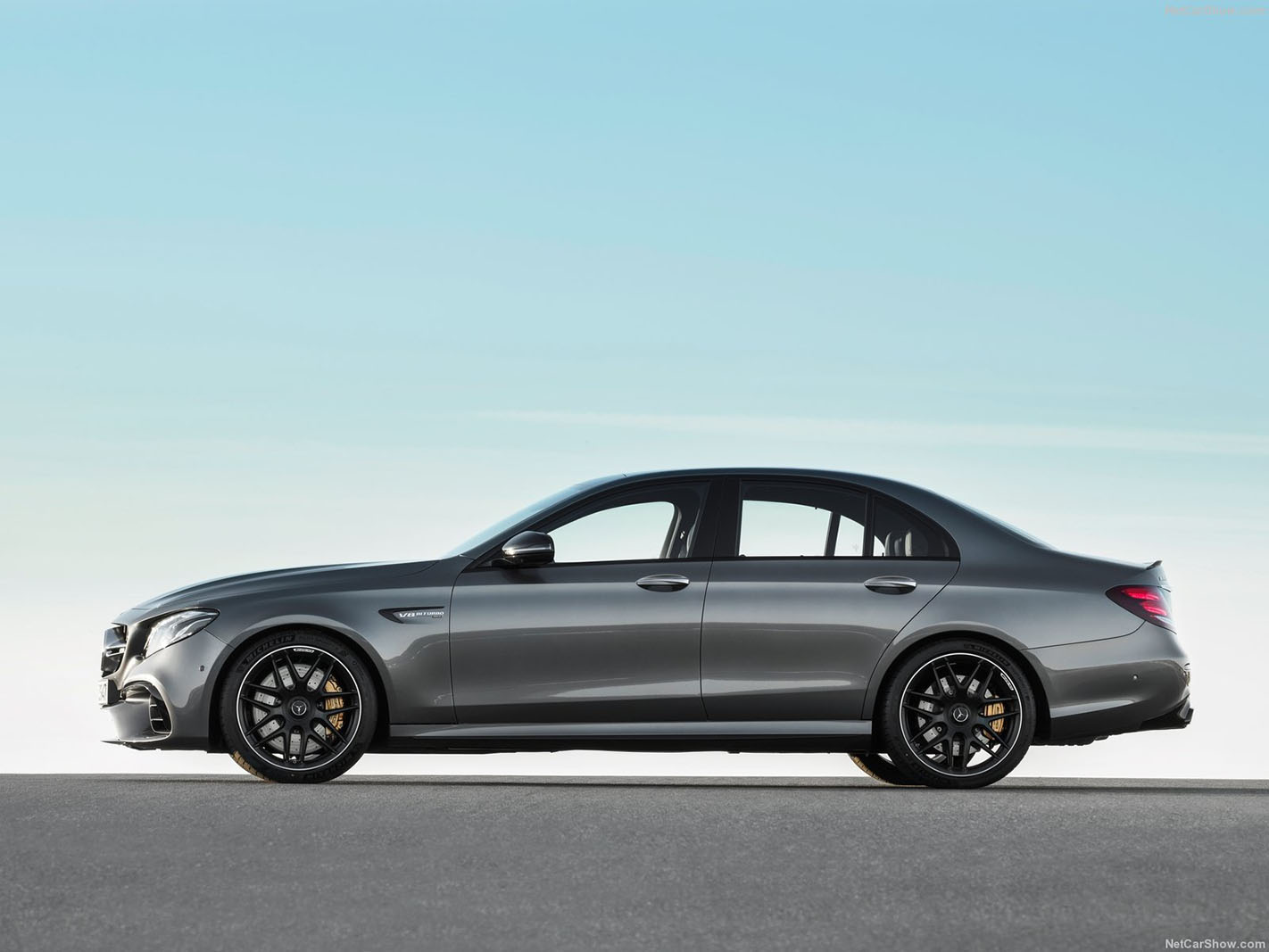
It’d be a braver person than I to attempt to predict the future residual values of the HSV GTSR W1. The very best of the delivery mileage examples are retailing at around $260K right now, so we’re effectively comparing two ‘new’ cars here. It’s just that one doesn’t have a warranty any longer.
The high water mark for domestic car manufacturing, if you want to truly guarantee your investment, a 474kW W1 isn’t going to cost you anything in consumables because you’re probably not going to drive it.
It has appreciated by an average of $30K per year, were you to believe that asking prices are representative of sale prices.
We tend not to and have heard of W1s changing hands for less than $200K. That makes the W1 far less of an attractive nest-egg but even if prices were to remain in stasis, series production car depreciation being what it is, it’s still a heck of a lot cheaper to operate than the 450kW AMG.
Glass’ quote a 45 percent three year residual for the big banger from Affalterbach, which means that after 36 months you’d have seen around $140,000 disappear into the ether.
There are some notable compensations though. It’s beautifully finished inside and feels a long way removed from the budget switchgear of the W1’s cabin.
One thing’s for sure though. If you ever rolled up to the lights in your W1 and eyeballed this AMG sitting next to you, you’d best pretend you’re not in any particular hurry.
The all-wheel drive chassis of the E-Class gives it unassailable traction off the line and only the most skilled W1 pilots will get within a second of the AMG’s 3.5s time to 100km/h.
Nevertheless, after driving the two cars, you can’t help but feel that while the AMG is undeni-ably a better car, more polished, quicker, and with more utility, there’s a definite X-factor about the W1 that never fails to grab your attention.
When you’re paying a quarter of a million dollars for a car, you expect something special, that’s elevated by some measure, however ephemeral, from the norm. And the W1 has that quality in spades.
There’s a gutsy charisma about it that would endure even if it didn’t represent the high water of Australian performance car manufacturing.
This one comes down to one crucial decision. If you’re intent on actually using the car, the Mercedes isn’t going to make you wince with every passing kilometre. Its depreciation curve is fairly resilient to use.
So where does your money go: Priscilla, queen of the garage or ballistic ‘bahn-burner?
As much as my head says AMG, I’m fairly certain that I’d get one huge kick out of opening the door to my garage and hearing an LS9 fire up.
HSV GTSR W1 SPECS
Engine: 6162cc V8 (90°), ohv, 16v, supercharger
Max power: 474kW @ 6500rpm
Max torque: 815Nm @ 3900rpm
Transmission 6-speed manual
L/W/H/W-B: 5044/1899/1468/2915mm
Kerb weight: 1895kg
0-100km/h: 4.5sec (tested)
Economy: 20.7L/100km (tested)
Price: circa-$260,000
On sale: Good luck…

MERCEDES-AMG E63 S SPECS
Engine: 3982cc V8 (90°), dohc, 32v, twin-turbo
Max power: 450kW @ 5750-6500rpm
Max torque: 850Nm @ 2500-4500rpm
Transmission: 9-speed automatic
L/W/H/W-B: 4988/1907/1460/2939mm
Kerb weight: 1880kg
0-100km/h: 3.5sec (tested)
Economy: 15.9L/100km (tested)
Price: $248,600
On sale: Now
“Martin, it’s Jesse. I met this guy on an internet chat site, and he’s invited us away to the Rock for a weekend. He told me he had a Ferrari… Oh, and when I say us, I mean you.”
Relayed to you by a mate this would normally ring alarm bells, but when Jesse informed me it was all above board and part of the inaugural ‘F-chat’ (www.ferrarichat.com) ‘Exotics in the Outback’ run, well, muggins here couldn’t resist a look.
Turns out it wasn’t just one bloke and a single Ferrari, but rather over two million bucks’ worth of precious Euro metal and a bunch of guys ready and willing to take their hard-hitting exotics to the limit, again and again, that stamped this meet as the most significant supercar gathering in Australia.
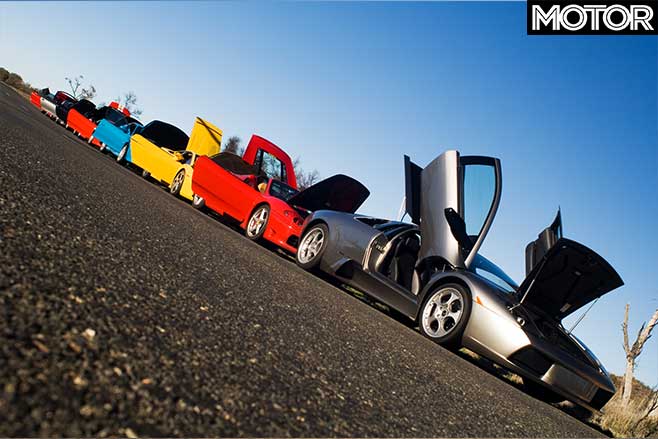
Waiting by the roadside in Alice Springs it became obvious that photographer Bowden and I weren’t the only strangers in this group. In fact ,with hearty welcomes and tightly clenched handshakes these blokes were making their first physical acquaintance.
That’s right, although they shipped their cars halfway across the country not one of these guys had ever met the other, only swapped car photos on internet threads bound their common interest, driving some of the world’s fastest cars flat to the boards.
As the cars rolled out of the specialised transporters (one ex-Melbourne, the other ex-Brisbane) their mega-dollar payloads had me salivating. Our Monaro – thanks Jesse – was looking well out of its depth.
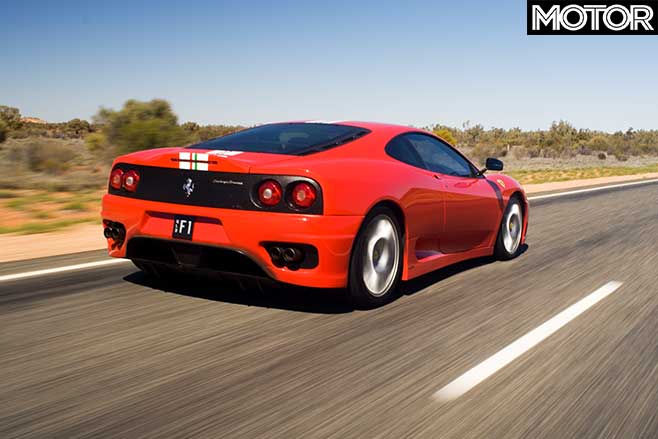
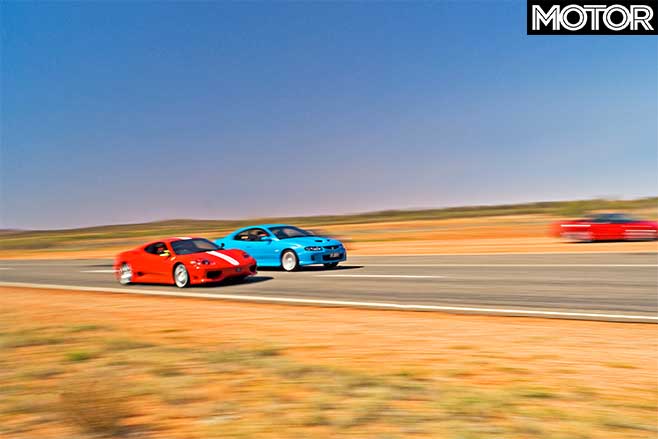
First up was a brand spankers 360 Challenge Stradale. Complete with optional racing stripe it was in stark contrast to its stable mate, a GT2, which Stradale owner Roger kindly brought along for his brother to try out. Oh yeah, he, by the way, just so happens to own a 360 Spider.
Track-focussed V8 Ferrari comparison
Not to be outdone the mob from Adelaide and Sydney offered up an E-gear Gallardo and a late model Boxster S. Completing the field was a ‘driven to Alice from Adelaide’ Honda NSX, and the big daddy of the open road, Neville King’s hard-hitting Murcielago which resides in Alice, proudly displaying its ominous 330-KPH plates.
48 Hours in a Lamborghini Gallardo
“This is not, I repeat not, a race” a point Ash Simmonds, the organiser of this thrash-fest, made very clear. “Remember guys, we are here to experience our cars at speed, not to race anybody, or do anything stupid.” Everyone agreed, nervously scratching at the ground with faux-race shoes, adjusting their sunglasses or fidgeting their hands.
LEG ONE – GLEN HELEN
Heading west from Alice Springs, Neville makes sure to keep the tightly-packed group at the sign-posted 50-70km/h speed limits. He wants to keep us safe, just like the guy in the silver BA GT-P who pulled over while the supercar pack fuelled in central Alice: “Don’t do anything stupid and ruin it for the lot of us”. The Cannonball Run tragedy, when two Japanese racers and two officials died, still burns brightly in the minds of the locals.
You wouldn’t expect Alice Springs to have such an interesting landscape. And roads. Forget about cliché images of red dust and desert, the track out west is instead full of ridges, rocky outcrops, and a road that links long de-restricted straights to bends with the sinewy curves of a dreamtime python.

Neville steps up the pace and a clear pecking order establishes out front. The Murcie leads the way, followed by the Stradale and Spyder, but it’s the GT2 that stamps its authority with raw overtaking firepower, coming past the Monaro at a rapid clip, all while we were accelerating full tilt in fourth.
LEG TWO – ALICE TO THE CANNONBALL RUN MEMORIAL
In rough terms it’s about a 120km jaunt from Alice Springs to the large rock monument on the Sturt Highway. It’s quite possible to knock this section off in just over half an hour, depending on the road conditions.

This would be the chance for everyone to test their top speeds on some dead straight, and pretty flat, roads. About the only concern are the huge road trains (some of which measure nearly 60m in length), but you can see them coming a long way off and have plenty of time to stop.
Roger is the first to break the seal, crackling over the radio that he’d touched the Ferrari’s rev limiter in top gear, his Challenge Stradale indicating 310km/h. Backing this up is the Gallardo, rowing along quietly in the pack, but still indicating a best of 298km/h, which put it a nose in front of the 360 Spyder, which amazingly enough hit 290km/h with the roof down.

Peak speed in the Monaro, using the digital dash readout, came in at 257km/h, with the shorter 3.7 rear end gearing of the VZ ‘nostril car’ forcing you to hold it on the limiter in fifth gear to get this number. A good show from the Holden, and one that was able to keep us well clear of the marauding, roofless Boxster.
LEG THREE – CANNONBALL TO THE LASSETER TURN OFF
Such was Neville’s raw pace in the Murcielago that after another 80km of driving he is able to pull over for his passenger to take a nature break, and it still takes us a while to catch him. “I like these roads and know them pretty well,” Neville laughs.

Refuelling the thirsty mob at the Mobil takes nearly half an hour, as each car waits in line for the Premium pump. This is where Neville leaves us, returning to Alice for business, but giving us fair warning that from Lasseter to Uluru the road is speed limited, and quite literally covered in wandering wildlife… something we very nearly find out the hard way.
LEG FOUR – LASSETER TO ULURU
Idle chat over the radios, and a few fly-bys passes from the nicknamed ‘Bogan Taxi’ (not a nice way to talk about the Monaro, guys) keeps everybody laughing, but it nearly turns to tears not long after I swap seats to give the photo ‘Guy’ a steer.
“Hey mate, you see that?” he squints looking around 400m down the road “Nope” I counter, “what?” “It was something really bi…” And then, like a thunderbolt, a pack of unkempt woolly cattle come charging from the bushy verge straight at the side of the Monaro. Using some stored driving talent which photographers often talk about yet rarely display, Bowden swerves and misses them by centimetres.

Eyes turn to the mirrors. The Stradale, next in line, musters all its carbon-braked, F1-inspired technology, bouncing hard against the ABS as the bovine boofheads pause their charge to check out the nose of the Prancing Horse.
Luckily a chain collision is avoided as these wildly over-braked cars all hunker down and claw into the blacktop. Thankfully we were leading the pack at this stage, as although the PBR Performance stoppers on the Monaro are good, they don’t make the cut in this field.
LEG FIVE – YULARA TO KATA TJUTA
The aboriginal owners of the Rock and its surrounds ask that you respect their ‘special place’, and we do so by adhering to the signposted speed limits on the perfect 40km run from the park entrance to Kata Tjuta (The Olgas).
There are still opportunities for fun though, as the wide, perfect sweepers switch back and forth with ever increasing fervour. I get a chance to rie shotgun in the Stradale here, and as you would imagine, its limber chassis and bags of mechanical and aero grip endow it with transcendental cornering power.
With the photography out of the way all discussion turns to the trip back to Alice, and the top speed test for the GT2 which hasn’t really stretched its legs in anger. When it does, how does 332km/h indicated sound?
LEG 6 – THE RETURN
We leave the ‘f-chat’ pleasure train here, turning off onto the Sturt Highway as they make their way back towards Alice Springs and some more 300-plus running.
Our trip back to Adelaide is uneventful and relatively slow. In 48 hours of ‘running with the bulls’ we had slurped down nearly 300 litres of fuel, and held full throttle for as long as the Monaro’s underpinnings, and our sensibility meters, could cope with the pace. It’s the best speed therapy we’ve had in ages.
THE GLENDAMBO LAMBO
Across the 48 hours of flat-out driving the performance of the Monaro started to carve a niche of respect by being able to stick with the flat-out runners, all without giving a murmur of a reliability problem. In fact, surprisingly, the much maligned Gen III LS1 was one of the few engines not to use any oil over the weekend.
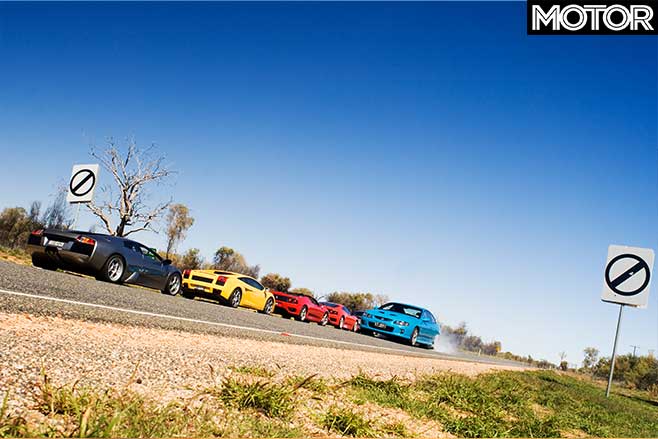
Then there was the frugal use of fuel. While the exotics were all pulling big rpm at high speeds, the tall sixth gear of the Monaro meant that even at 230km/h the tacho needle was sitting somewhere around 3500rpm. This open-road ratio gifted the Holden with fuel economy that matched the super efficient NSX down to the very last litre at every single fuel stop. Who would have ever picked that?
About the only shortcoming of the package was the lack of damper control in the suspension when running absolutely flat to the boards. Floodways and big corrugations unsettled the chassis and gave a few ‘quease inspiring moments, but never did it feel dangerous.

It also lacked the aero package that kept the Euros sucked to the road in 200km/h-plus sweepers, requiring a partial lift and some left foot braking to settle the chassis on turn in. And the brakes? Great for normal freeway speeds, but out of their depth washing off speed from 200km/h.
Running with the world’s best, and holding its head high was a fitting farewell for the iconic Holden coupe, one that earned it both our respect, and the nickname of ‘The Glendambo Lambo’. See you on the other side, mate.
If you’re in the market for a new car, ‘five-star safety rating’ is probably a term you’ve encountered umpteen times. It’s easy to assume all new cars will be relatively safe cars but, as the Ford Mustang, Suzuki Jimmy, and the Jeep Wrangler proved, when it comes to helping you avoid a crash or protecting you and your family in the event of an accident, not all new cars are created equal.
ANCAP has been providing Australasian consumers with independent safety assessments on new cars since 1993 when it simply tested a car’s ability to sustain a frontal collision. Today it’s of the most thorough vehicle testing regimes in the world and provides comprehensive (and downloadable) reports of hundreds of current- and recent-model vehicles.
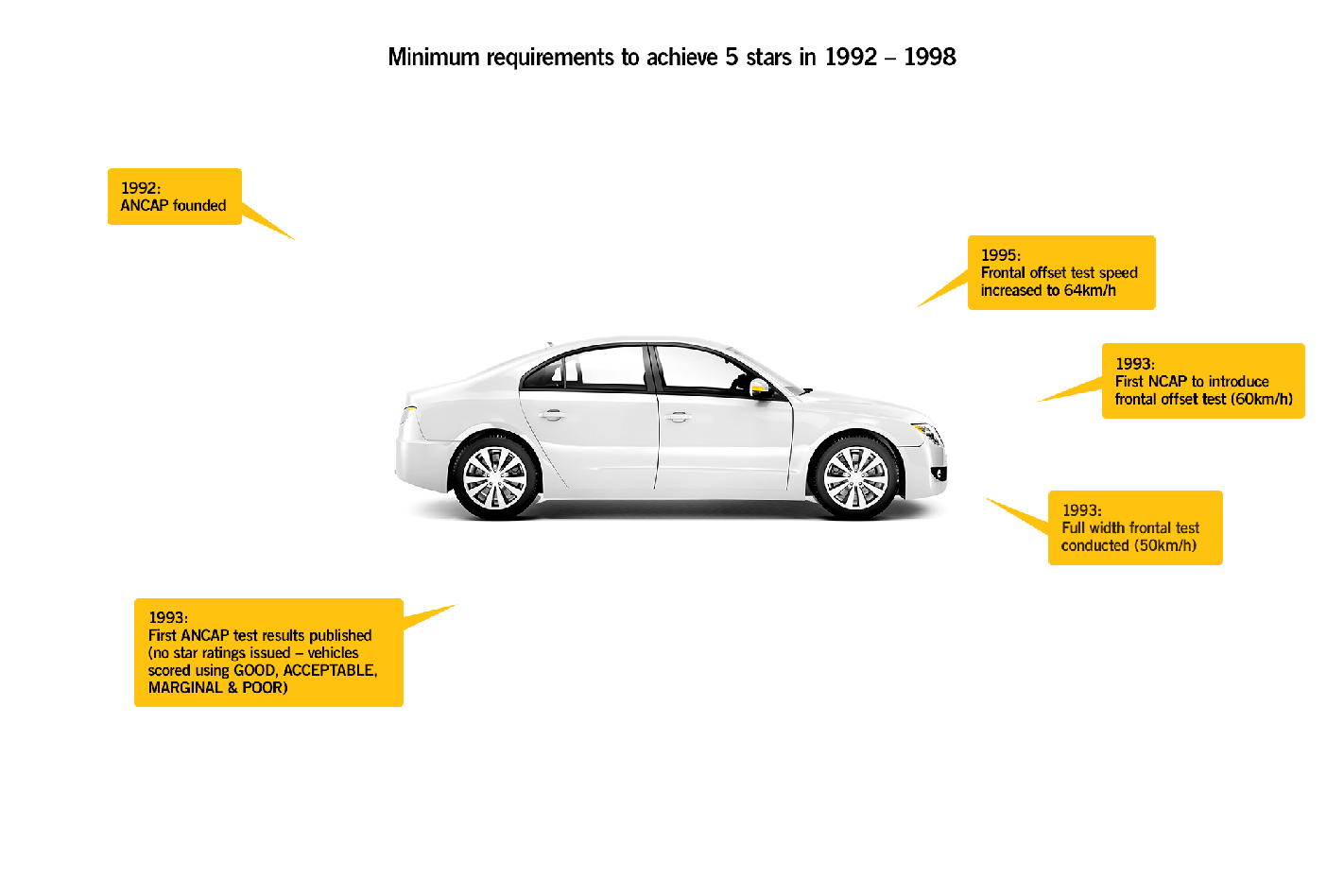
Images courtesy of ANCAP
The program takes a new vehicle and simulates a crash in five common scenarios (see below) before assessing the damage to both the vehicle and the dummy occupants inside.
Electronic safety aids also contribute to the overall score and each vehicle needs to meet or surpass a predetermined minimum score across each category in order to earn the coveted five-star rating.
In 2018 the stakes got even higher for manufacturers, with changes to the Australian testing process in a bid to bring it more in line with the European NCAP scheme.
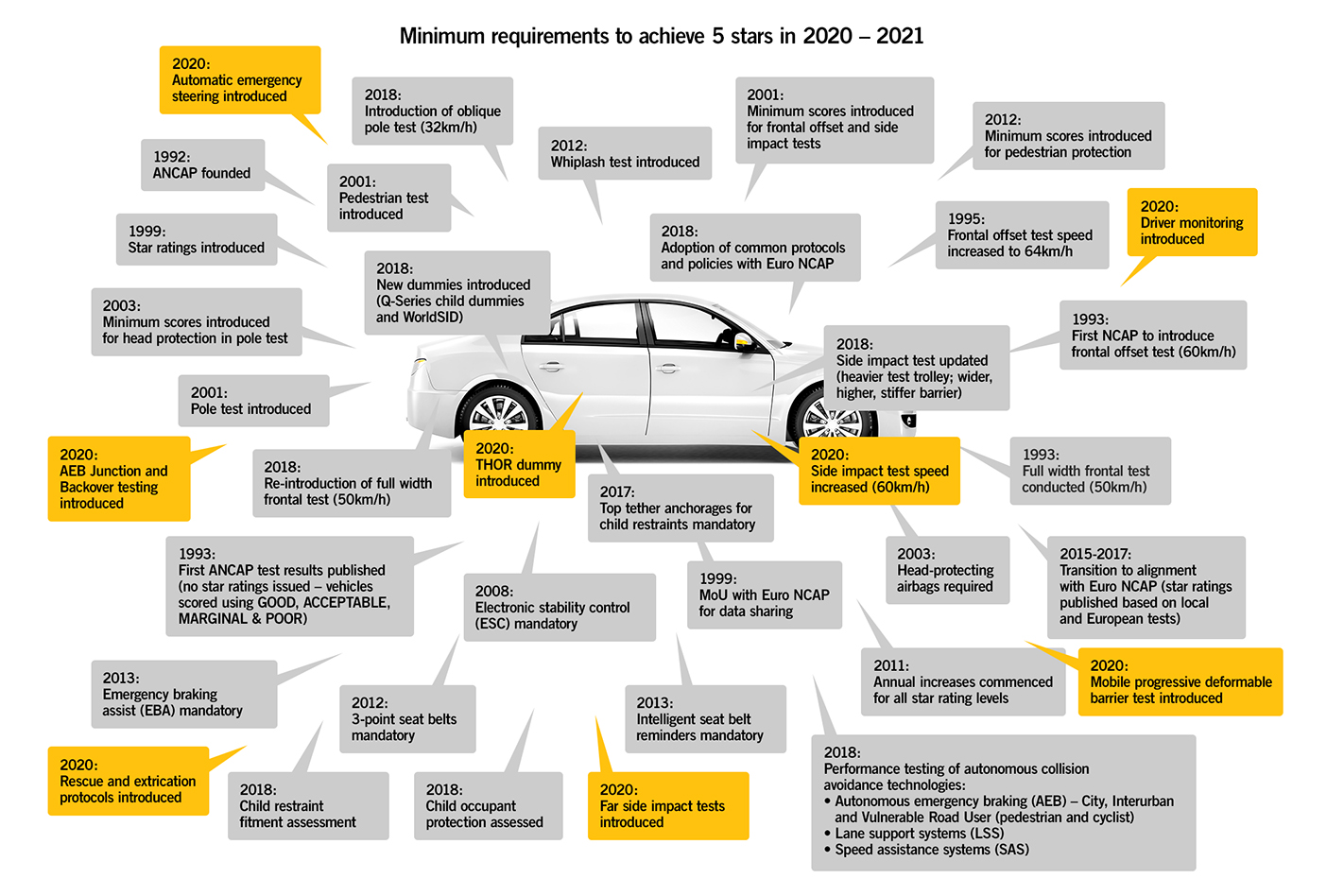
While the two programs are largely similar, the changes introduced a full-frontal crash assessment, while a greater emphasis was placed on a vehicle’s ability to protect kids and its crash-avoidance technology.
The testing regime became even more stringent for 2020 with the more active safety tests, while the side-impact testing speed was increased by 10km/h to 60km/h.
Below is the testing process the vehicle has been subject to in order to assess just how safe it is for you and your family.
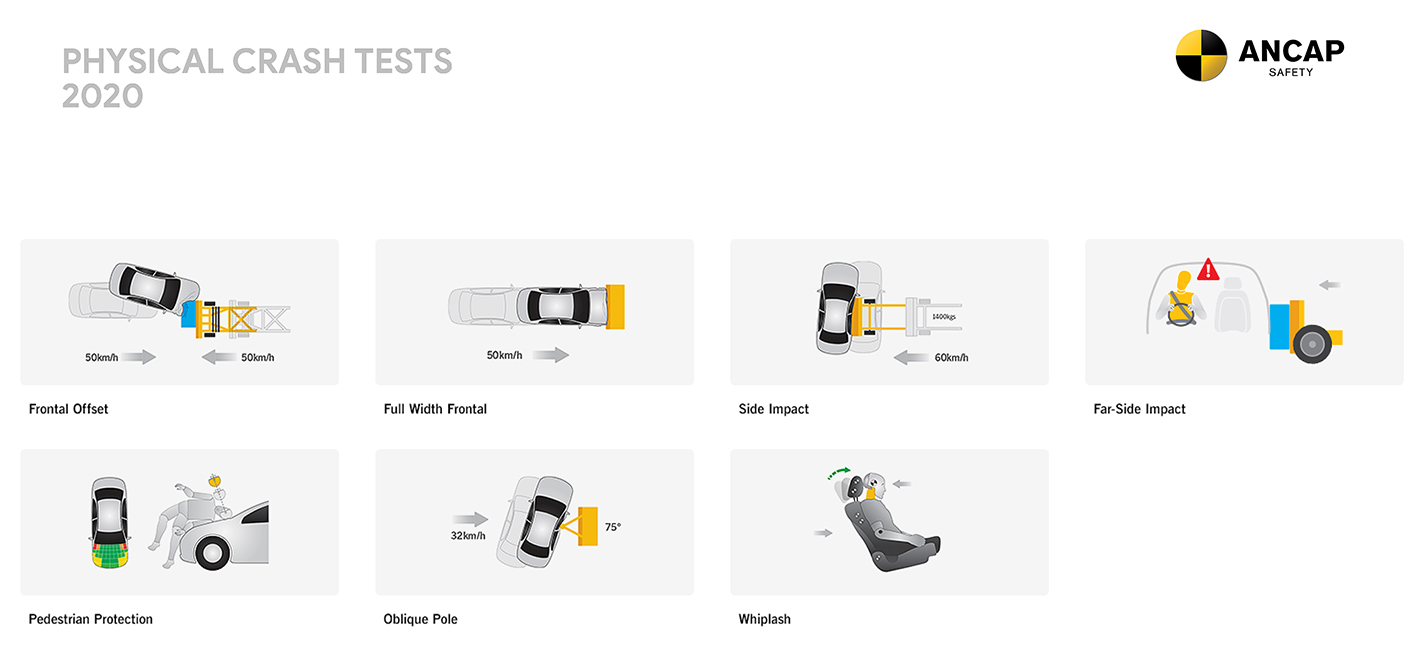
Full-width frontal test
This is conducted at 50km/h and sees the full width of the vehicle hit a solid wall with no deformable element. The vehicle is occupied by two adult female dummies, one in the driver’s seat and on in the rear passenger side.
The test is used to encourage vehicle brands to include enhanced restraints, such as rear-seat tensioners and load-limiters, for rear-seat passengers and smaller statured occupants.
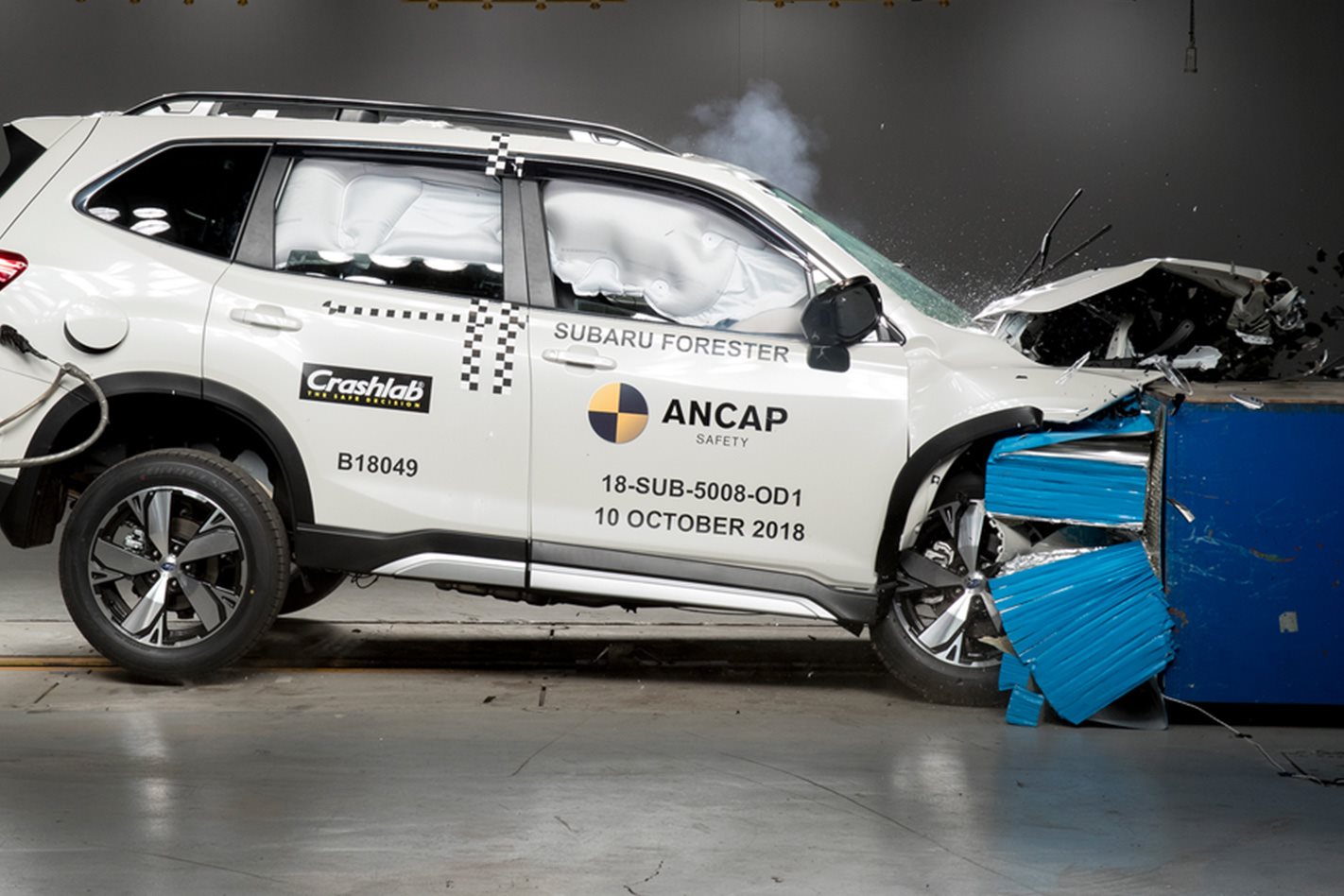
Frontal Offset Test
To mimic the scenario of a head-on style crash, 50 percent of the front of the car is forced into an aluminium barrier at a speed of 50km/h. Both the speed and the behaviour of the 1400kg crushable aluminium barrier simulate a collision of two vehicles travelling at the same speed.
During the simulation, two adult-sized dummies are properly restrained in the two front seats, while two child-sized dummies (a six-year-old and a 10-year old) are appropriately restrained in the rear of the vehicle. Sensors fitted to the dummies’ legs, knees, arms, head and neck all detect and record potential injuries which contribute to the car’s overall score.
Side Impact Test
As the name suggests, this test is designed to simulate two vehicles colliding at 90 degrees. Often referred to as being ‘t-boned,’ ANCAP’s testers ram a 1400kg trolley into the side of the vehicle being tested, with the impact point using the same crushable-type aluminium to mimic the crumple zone of the front of another car.
The trolley is travelling at a speed of 60km/h at the point of impact and the same four dummies are appropriately restrained within the vehicle.
Pedestrian Protection Test
A significant number of fatal road accidents in Australia and New Zealand are the result of a vehicle hitting a pedestrian. The outer design of the car can greatly influence the severity of injuries in such a scenario so is put through a series of pedestrian tests as part of the ANCAP assessment.
The tests simulate both a child-sized and adult-sized head hitting the vehicle’s bonnet and the subsequent injuries estimated, while the same is done with the simulation of both a child-sized and an adult-sized leg being hit by the leading edge of the vehicle in question. In all scenarios, the vehicle is travelling at a speed of 40km/h.
Oblique Pole test
This test sees the vehicle sliding into a fixed vertical pole at a speed of 32km/h at a 75-degree angle. The pole is narrow to mimic a tree or a telegraph pole and impacts the vehicle on the driver’s side and penetrates the side of the car aligned with the driver’s head.
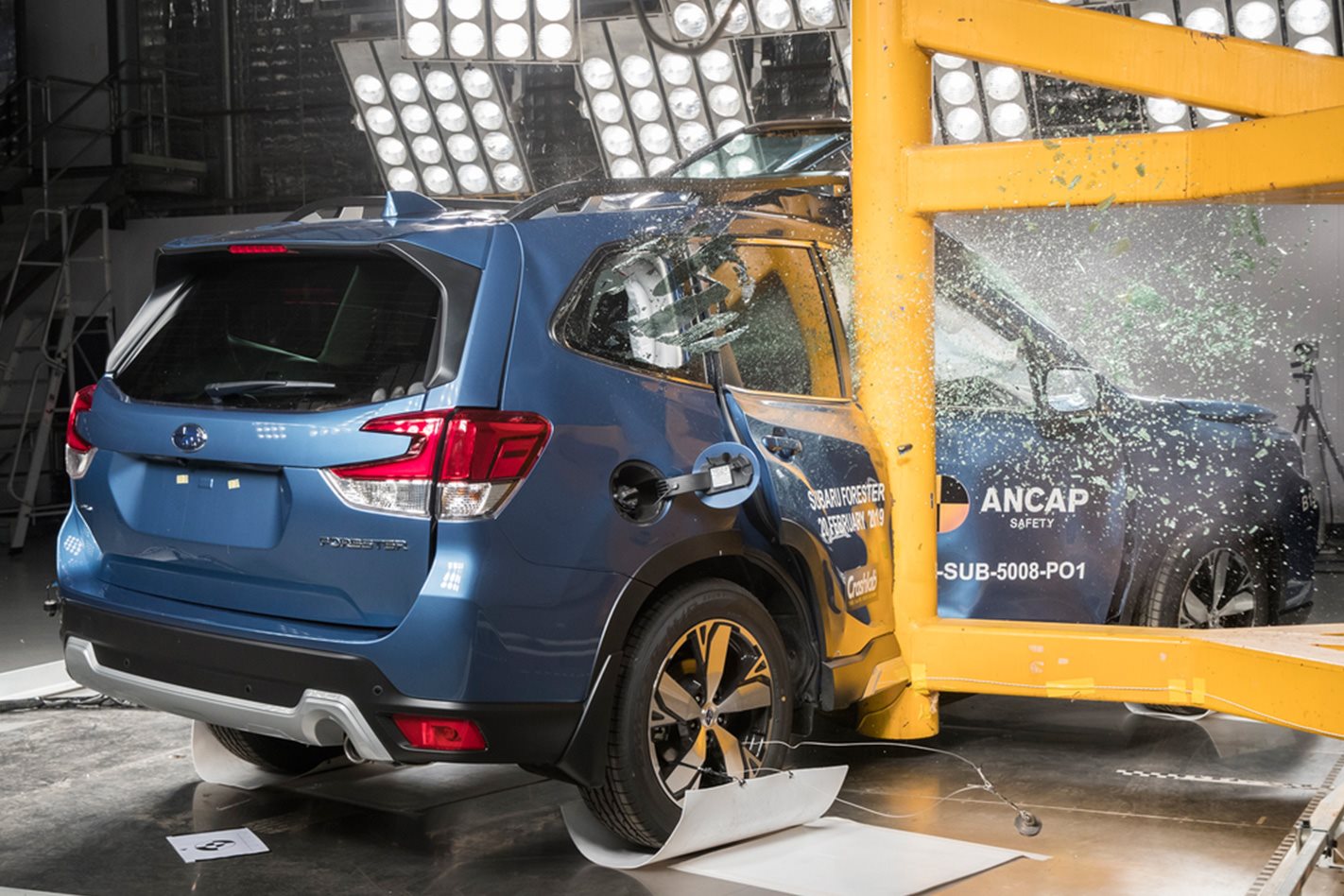
Three accelerometers inside the dummy’s head measure forces experienced by the would-be driver and vehicles fitted with curtain airbags typically score far better in the pole test than vehicles without.
Whiplash Test
Designed to measure the forces experienced by the occupants’ head and neck in the event of being rear-ended, the vehicle’s driver’s seat is removed and mounted to a trolley.
With a properly restrained adult-sized dummy placed in the seat, the trolley is propelled at a force which mimics a stationary car being hit from behind by another vehicle with an average acceleration of 4.9g and 6.4g.
As well as accelerometers mounted inside the dummy’s head, other sensors in the neck measure the bending, shearing and tension forces felt during the impact.
Active safety systems testing
Apart from testing cars to see how they protect occupants and pedestrians during a crash, ANCAP testing now places an emphasis on how the vehicles avoid accidents in the first place.
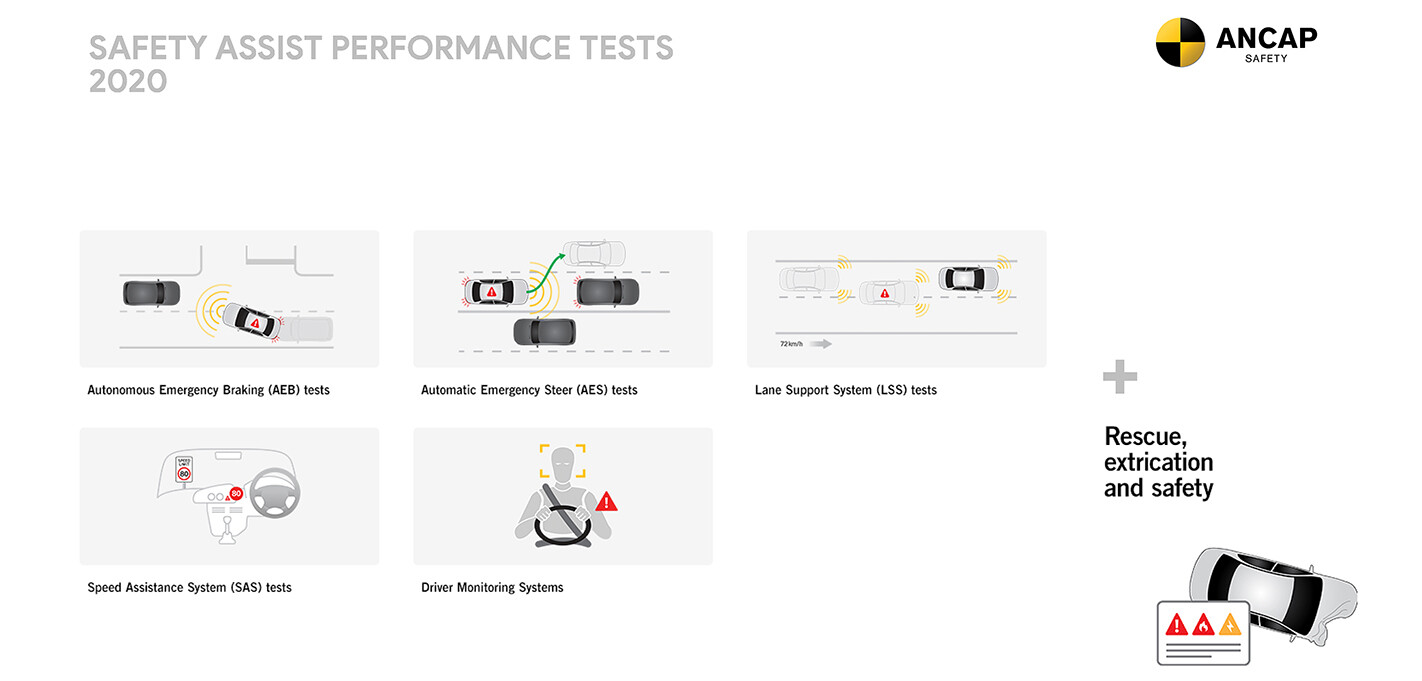
This has seen some newer vehicles missing out on the five-star rating despite having a good crash-protection score because they lack sufficient driver assistance technology such as autonomous emergency braking.
Active safety system tests include:
Autonomous Emergency Braking (AEB) Test
More than 100 different AEB test scenarios are included in ANCAP’s assessment of a vehicle’s ability to autonomously brake at city and highway speeds to avoid collisions with vehicles while stationary, moving or braking.
Vulnerable road users (VRU) such as pedestrians and cyclists are also considered including how they operate during the day and night. In 2020 the testing was extended to include AEB Junction (how a car detects a VRU during a 90-degree turn) and AEB Backover which tests reverse auto-braking systems.
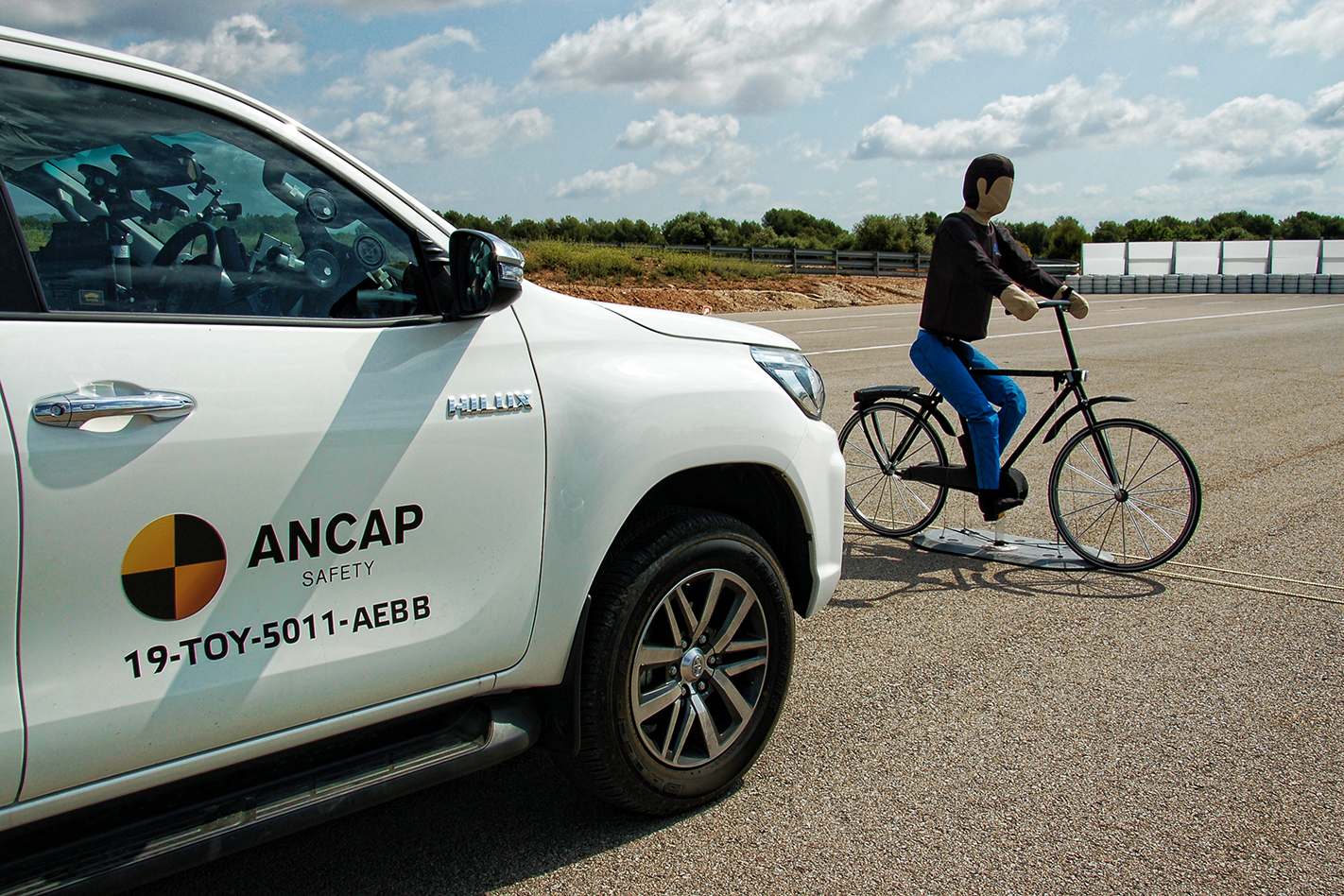
Automatic Emergency Steer (AES) Test
Another test introduced in 2020, this tests a vehicle’s this relatively new technology, which detects a potential collision with a vehicle braking in front and safely steers around it in an adjacent lane.
Lane Support System (LSS) Test
This assesses systems such as Lane Keeping Assist and Emergency Lane Keeping, including their ability to read various line markings to help avoid a run-off-road crash and, where applicable, prevent a collision with an adjacent vehicle or obstacle.
Speed Assistance Systems (SAS) Test
Manual speed limiters, speed-sign recognition and intelligent speed adaption systems are rated by their ability to inform the driver of the present speed limit; warn the driver if the vehicle’s speed exceeds the limit or set speed threshold, and how they actively prevent the vehicle from exceeding a set speed or posted speed limit.
Driver monitoring systems
Vehicles are assessed on their ability to monitor and alert the driver attentiveness or fatigue based on in-vehicle monitoring systems and driver vehicle inputs like steering, braking and acceleration.
The Porsche Turbo S E-Hybrid is not dead.
While Porsche’s new (or heavily updated and facelifted) Panamera was revealed this week, the brand’s Panamera product VP says there’s more to come for Panamera, namely the hybridised version of the beastly twin-turbo V8-powered Turbo S.
While the new Turbo S currently tops the range with a respectable 463kW and 820Nm, the previous Panamera Turbo S E-Hybrid boasted 500kW.
2021 Porsche Panamera Australian details and pricing
“There will be more to come. Just wait some weeks or some months,” says Porsche vice president product line Panamera Thomas Friemuth.
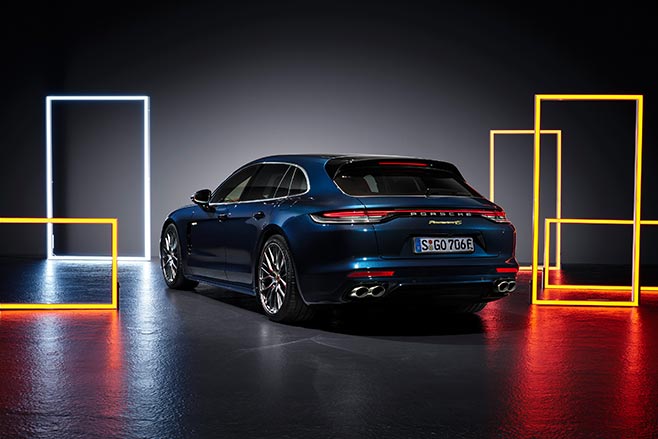
“The product line will, as you know from the past, have three hybrids. So, the base hybrid and the Turbo S E-Hybrid will come in the next month.”
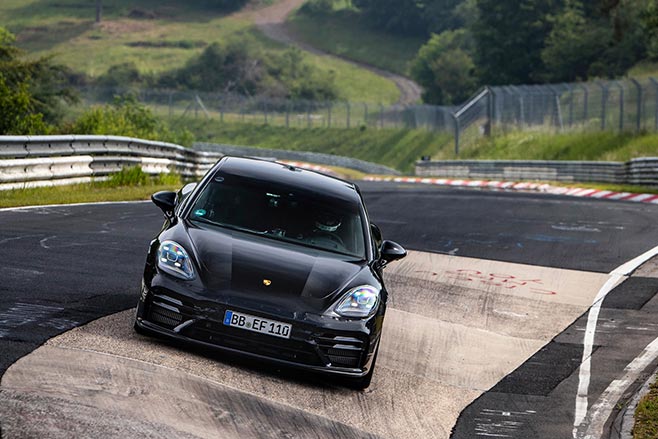
While the Turbo S set an impressive 7:29.81 lap at the Nürburgring, Friemuth says the electrified version will be more powerful, but not as fast on most circuits.
“The Turbo S E-Hybrid, on a track like the Nurburgring, will not be faster. It has more horsepower but in terms of the weight of the car, at the Nürburgring, the conventional Turbo S is faster. This can differ from racetrack to racetrack.
“I can’t say much about is because we haven’t launched it yet, but be sure we will increase the main data.”
Friemuth did, however, confirm the electric motors in each Panamera model will be good for 100kW, meaning if added to the 463kW Turbo S’s 4.0-litre V8, the new Panamera Turbo S E-Hybrid could have more than 550kW. This will place it among Porsche’s most powerful road cars ever, topping even the 911 991.2 GT2 RS which has 515kW.
Could there be more new versions of the Porsche Panamera?
Rumours of a two-door or cabriolet Panamera have circled for some time now, and Friemuth was by his own admission unable to put an end to the discussion.
“We have not finally decided yet,” he told MOTOR.
“We have been discussing this topic for several years, as you could imagine, since our competitors also have two-door cars. We’re not finally ready yet to decide whether to do this or not.
“We have quite a nice two-door car in our programme… it’s called 911.”
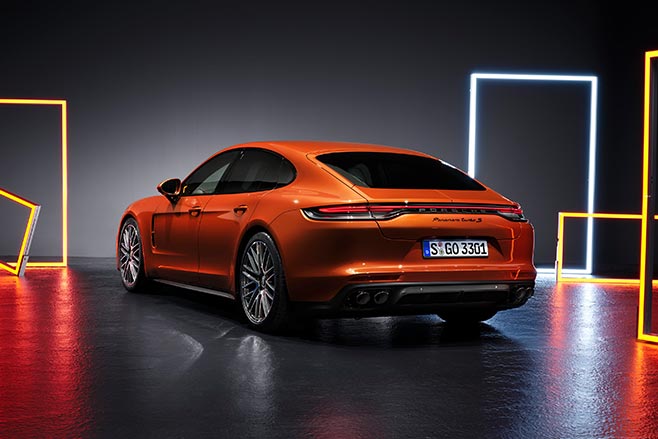
While he admits it’s not too late in the Panamera’s current model cycle to introduce something of the sort, he says the Panamera won’t likely become any more focused as a sports car than its GTS variant.
When we asked if there was something he would personally like to create as an addition to the Panamera range, Friemuth said “yes, I have a lot of ideas.”
We pushed to see if he was willing to share any but were told “not really.”
For now, the idea of a Porsche 944 successor remains an unknown.
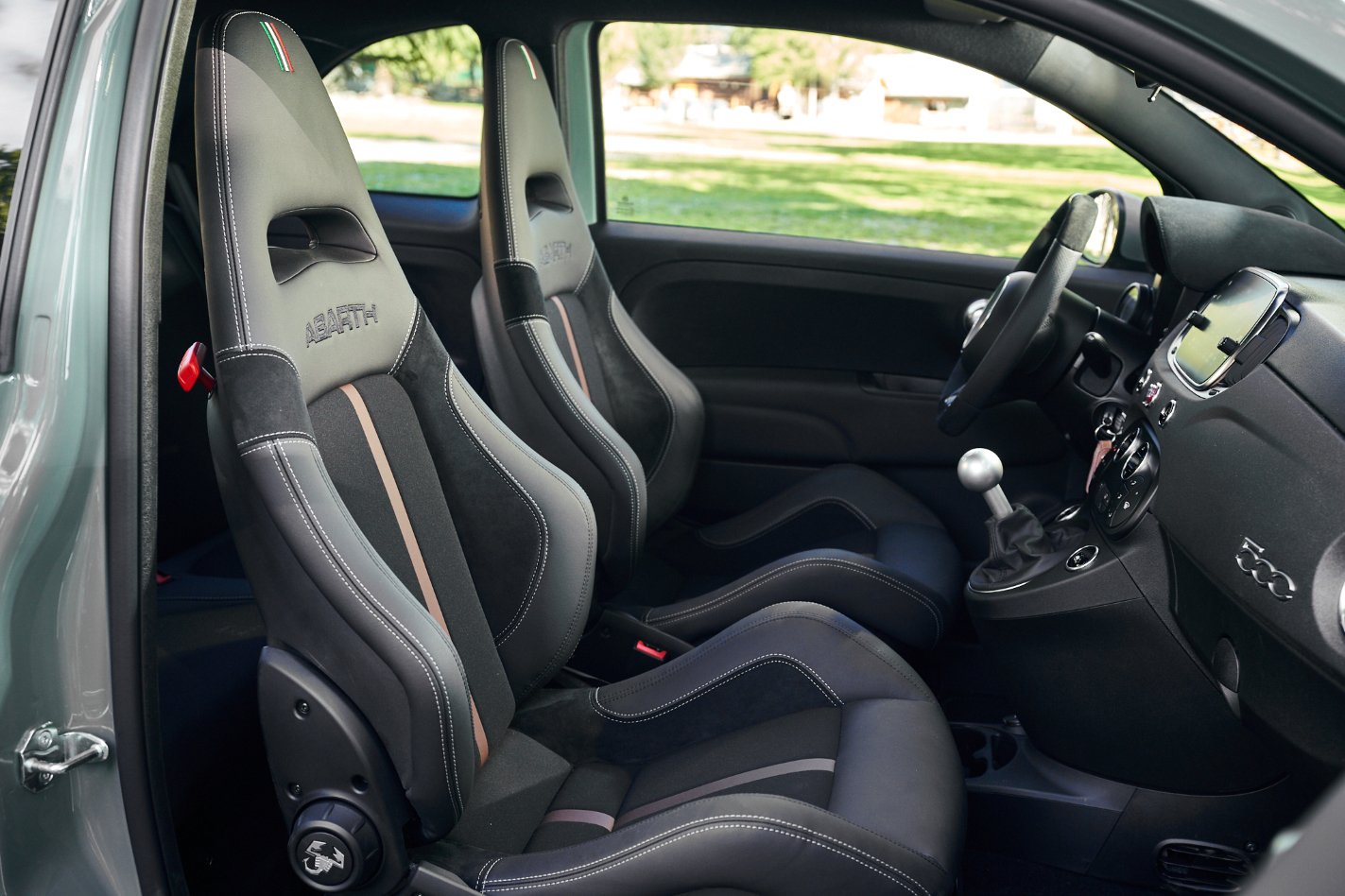
Fiat performance division Abarth has released a strictly limited version of its 500-based hot hatch, which has a searing price tag but is one of the cheapest ways into a car with performance-enhancing downforce.
Dubbed the 695 70th Anniversario, Abarth’s latest limited edition of the cheeky hatchback supposedly marks the 70th anniversary of the company’s foundation – which actually happened 71 years ago – and has been customised to reflect early racing successes of the brand.
Okay, so it was announced last year but Australia is only just getting its global allocation now with the Abarth order books now open.
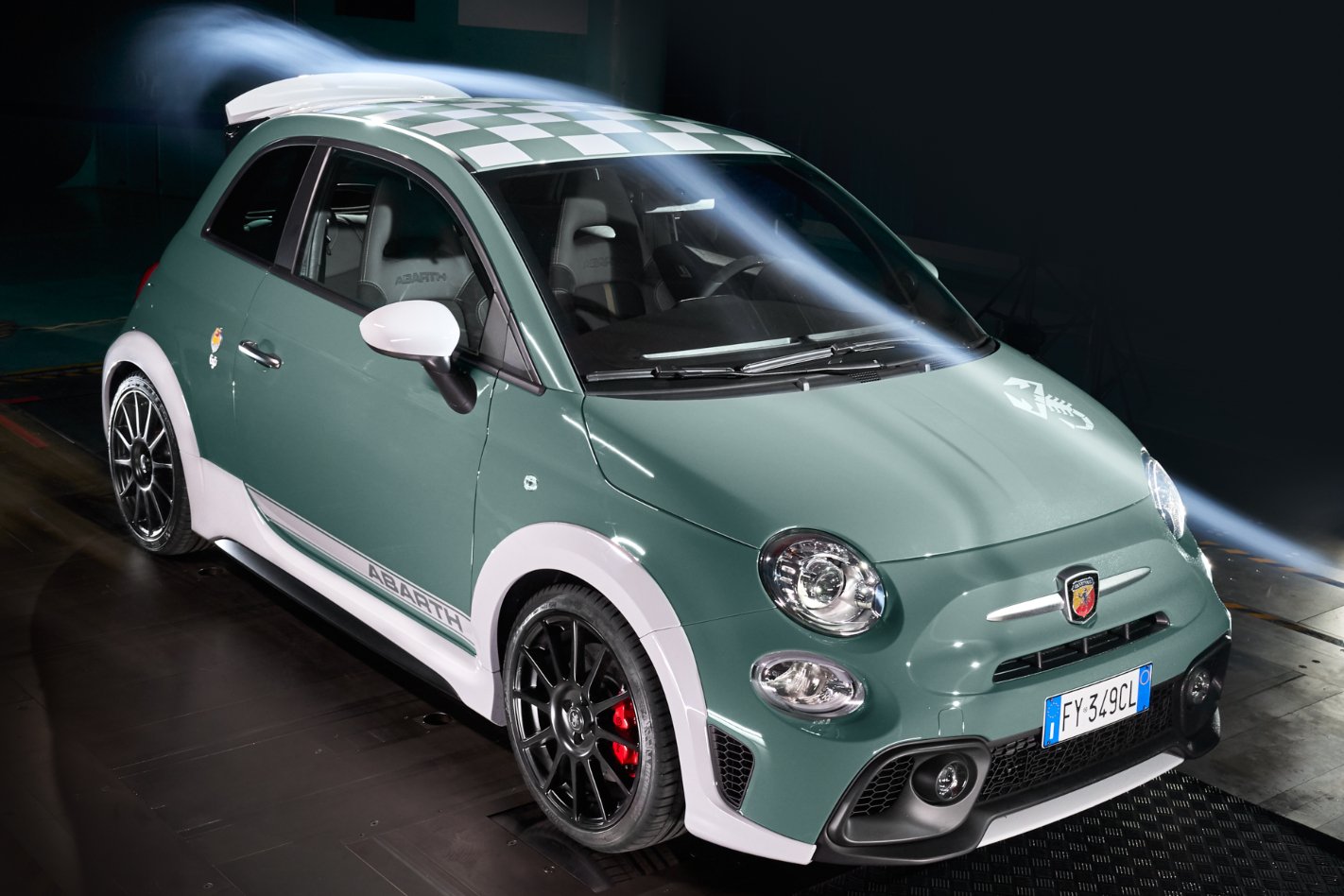
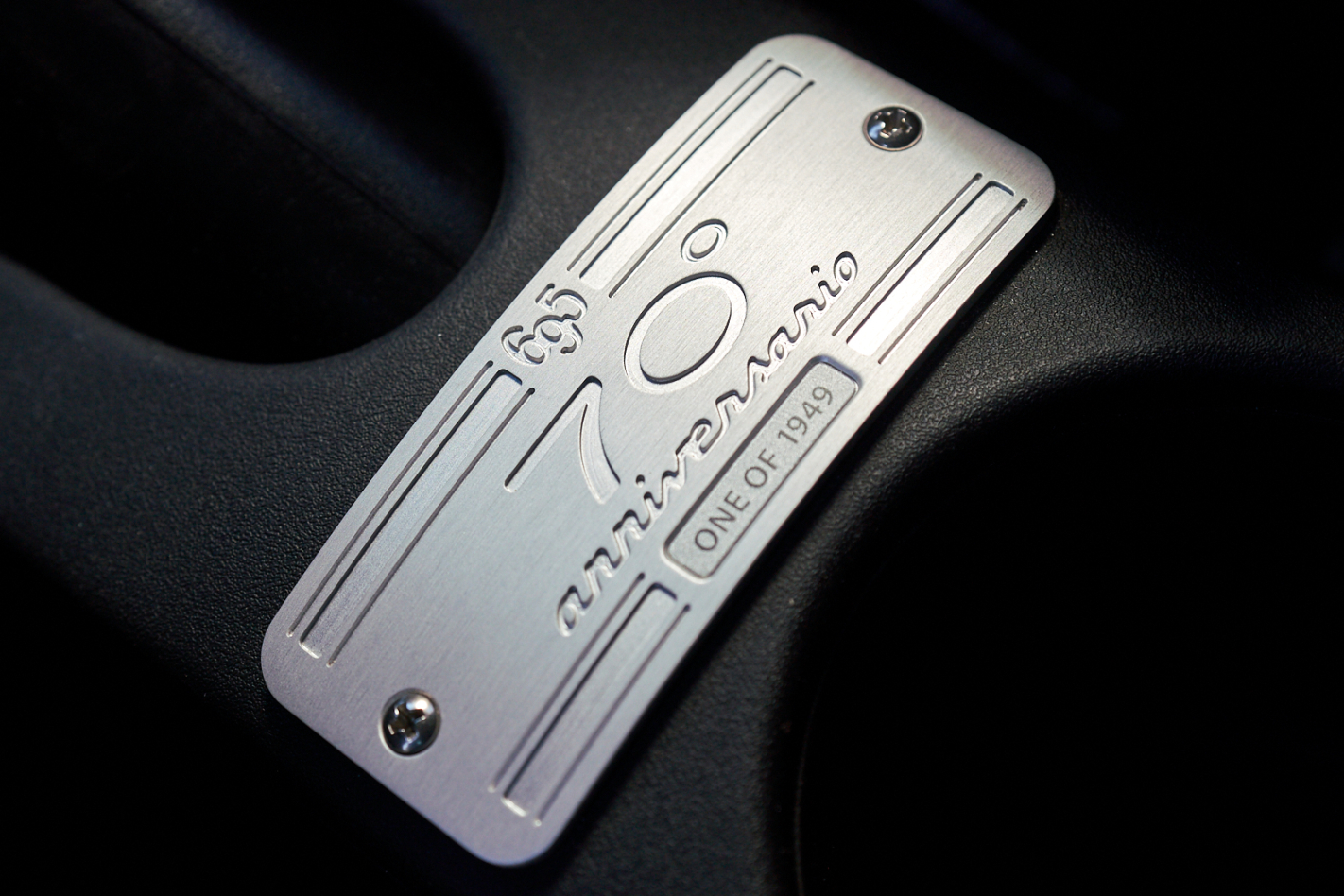
1949 examples of the 695 70 Anniversario will be produced – a nod to Abarth’s birth year – with just 40 of those finding their way to Australia, priced from $44,950 – almost $11,000 more than the 595 Competizione on which it’s based. A six-speed manual or auto is on offer for the same price.
A bundle of aesthetic additions set the 695 apart from its more commonplace 595 siblings but the most significant feature is its roof spoiler which has been developed in Fiat Chrysler Automobile’s wind tunnel near Turin, Italy.
The ‘Spoiler ad Assetto Variabile’ (variable trim spoiler) is adjustable through 12 positions allowing its pitch to be set at up to 60 degrees, altering the amount of downforce applied to the Abarth’s tail.
Hit 200km/h and the wing can contribute up to 42kg of downforce, increasing rear-end grip and stability. Don’t expect supercar active aero though with adjustment performed using hand tools and elbow grease.
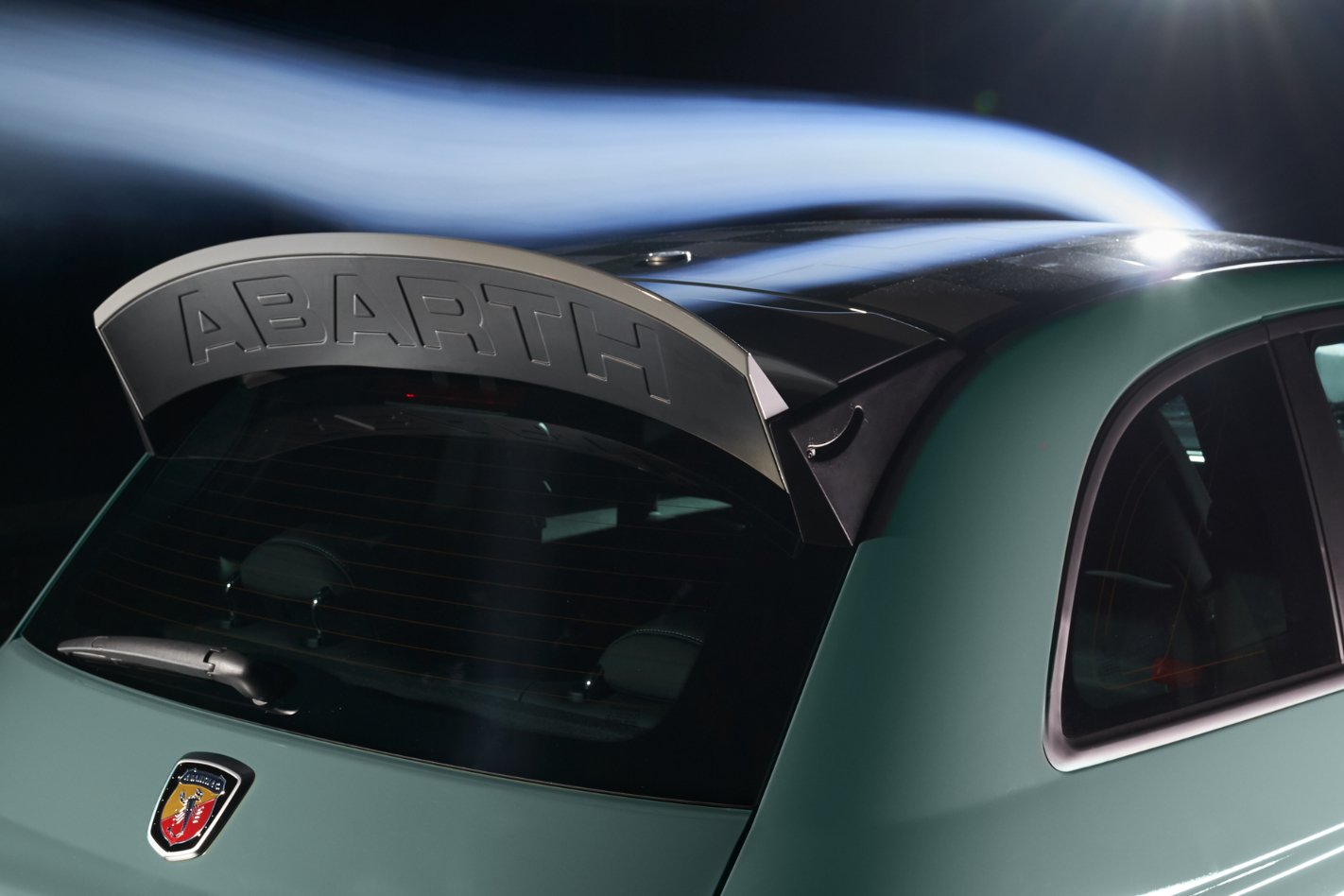
Many high-performance cars are offered with fins and spoilers attached as part of the deal but very few are more than visual accoutrements. The Abarth’s price tag is undeniably steep for something in the compact hot hatch market, but try finding anything with functioning aero for less.
And it’s not even the most expensive Fiat 500-based Abarth yet offered.
The 2015 695 Biposto cost an eye-watering $65,000 and it wasn’t even offered with its headlining feature as standard. To add the road-legal dog-ring gearbox at the time cost another $15,000!
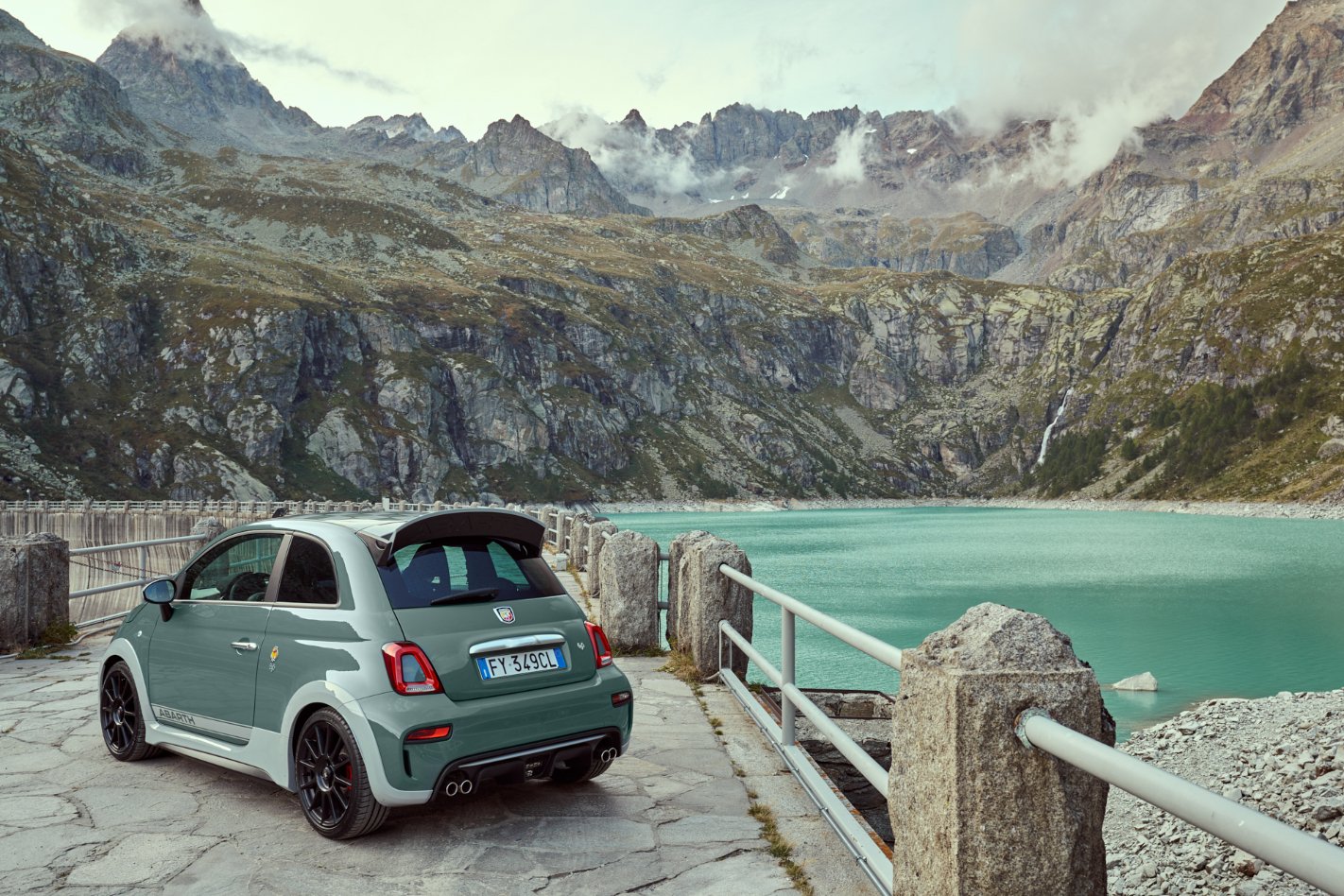
Before that, the 2011 Abarth 695 Tributo Ferrari was an almost unfathomable $70,000, which starts to make the latest version in a long, long line of Abarth specials appear more justifiable.
In addition to the functional and cool spoiler, the 695 gets a shouty Monza exhaust, beefy Brembo front brake calipers in red, hiding behind unique 17-inch Supersport alloy wheels, while the cabin gets Sabelt bucket seats in Tricolore trim.
For your cash, you’ll also get 70th Anniversario exterior badging, individual numbering in the interior, scorpion bonnet and chequered roof decals, and Campovolo grey highlights for the bodykit.
The visual enhancements are capped off with a choice of five paint colours including the same Monza green worn by the original 1958 Abarth 500 that set six international racing records at Monza during the same year.
The smart money is on the manual which costs no less than the automatic but gets a limited-slip differential included in the deal for enhanced traction.
Beyond that, the newest Abarth shares the same specification as the previous range-topping 595 Competizione, including its 132kW/250Nm 1.4-litre turbocharged four-cylinder petrol engine, front-wheel drive and sport suspension all round.
It costs nothing to be nice, but it definitely costs something to be nasty. That’s the lesson a BMW driver is left with after being fined at a rate 75 times the norm after flipping the bird to a traffic camera while on a German autobahn.
Most people will tell you that there are no speed limits on German autobahns, but that isn’t strictly true – only segments of these motorways are de-restricted.
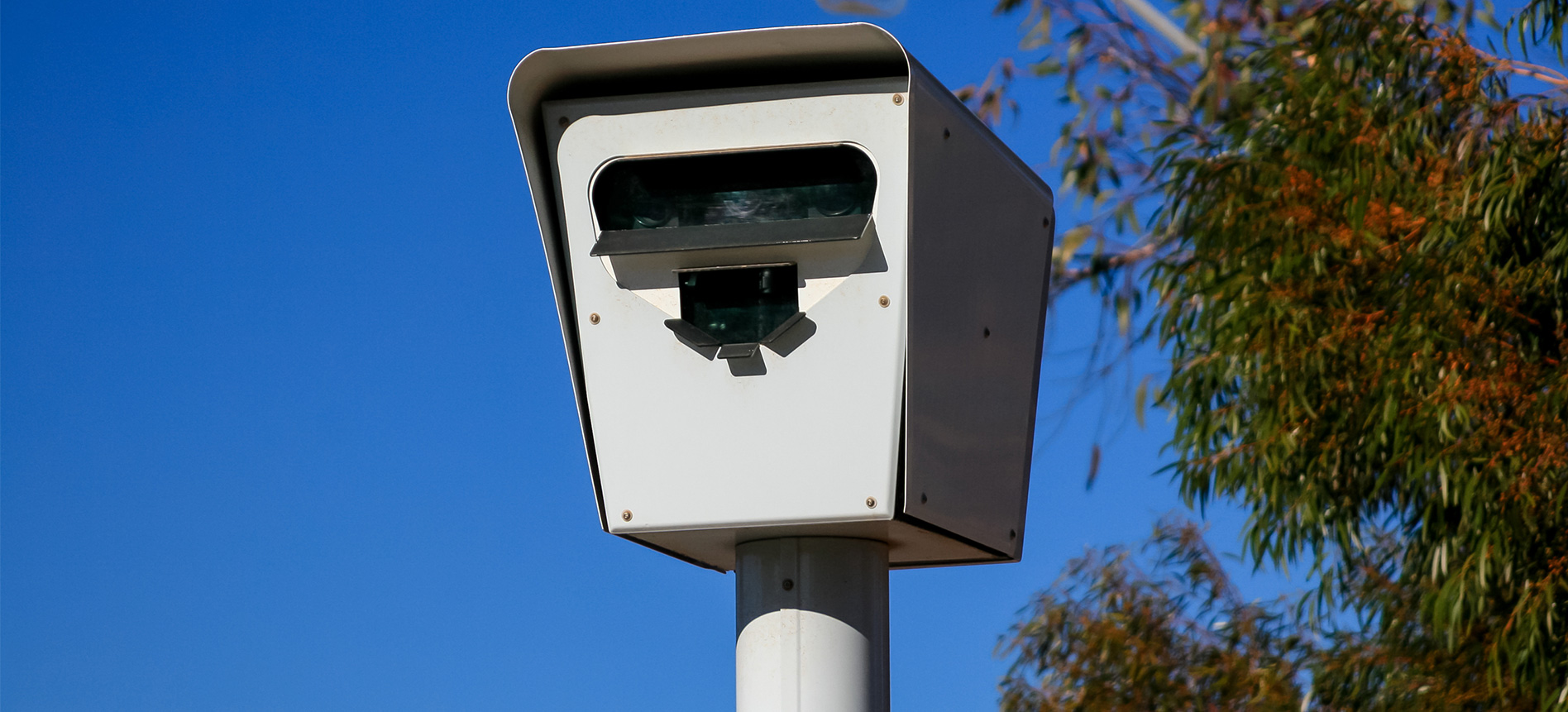
In any case, a 26-year-old BMW X5 driver found that out the hard way this month, speeding at 81km/h in a 70km/h speed-limited zone – a fine that would normally attract a €20 fine ($32 AUD).
However, in the split-second he was in the speed camera’s frame the driver decided to put his middle finger on display.
A little cheeky, maybe, but the result of the impromptu bird-flipping saw the €20 fine thrown out and replaced with a €1500 fine ($2627 AUD) and a one-month licence suspension.
It’s said that the Oberfranken police wanted to make an example out of the man, charging him with ‘being insulting in road traffic’.
After a penalty like that, it’s safe to assume he’ll pay closer attention to the speed limit and keep his hands to himself next time around.
Mind your manners.
Hyundai has drummed up enough reason to wedge in another SUV to its Australian range, with the Palisade eight-seat SUV also representing the brand’s flagship product.
Seldom often do we see eight-seater SUVs gracing the Australian new car market, marking a distinction between the Palisade and the current seven-seat load-lugger of Hyundai’s line-up, the Santa Fe.
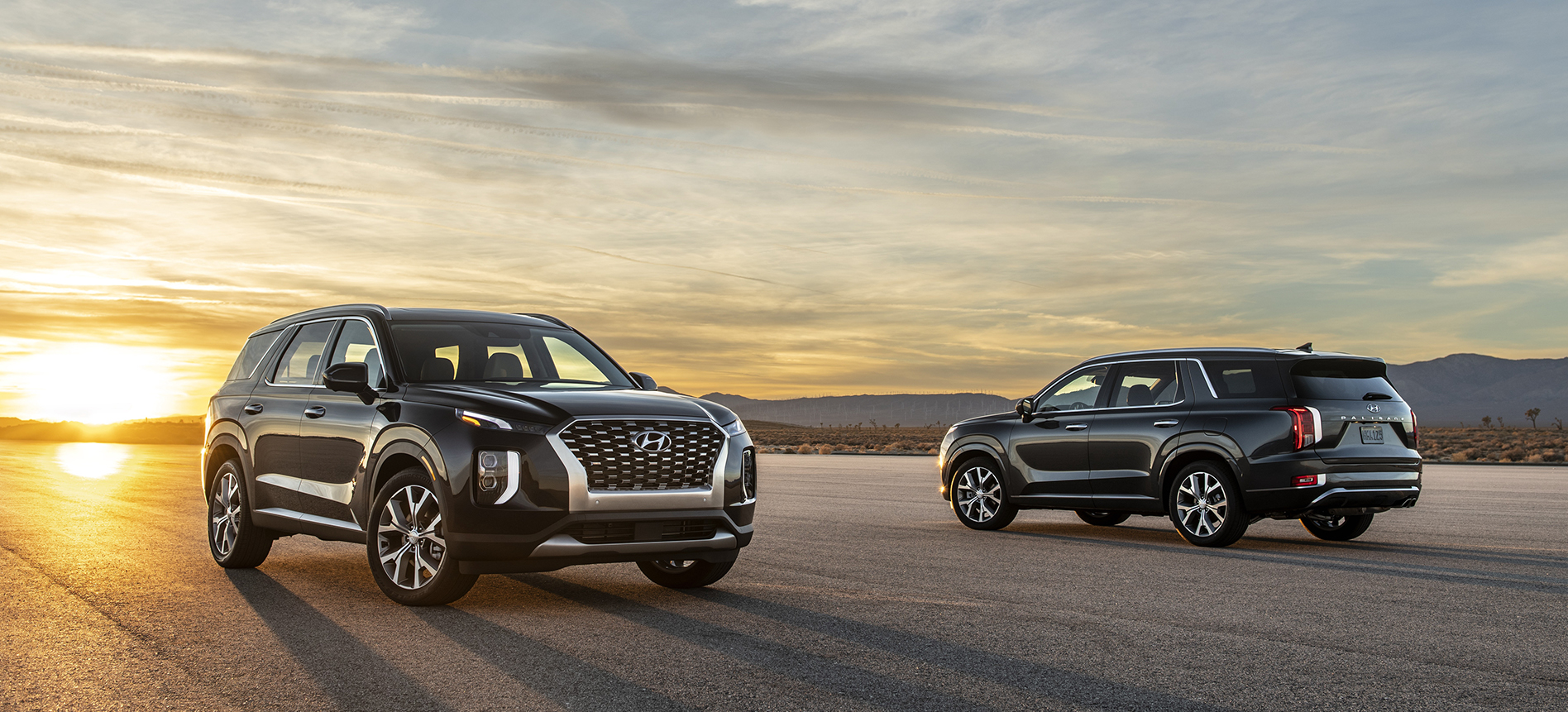
It may appear that there’s little difference between the two at first glance – save for the option of an extra seat – though Hyundai says the Palisade is noticeably larger than the Santa Fe and it will come better appointed.
Standing in its way of SUV range dominance, though, is Toyota, which is a brand that commands a comfortable lead over its rivals in the large SUV segment.
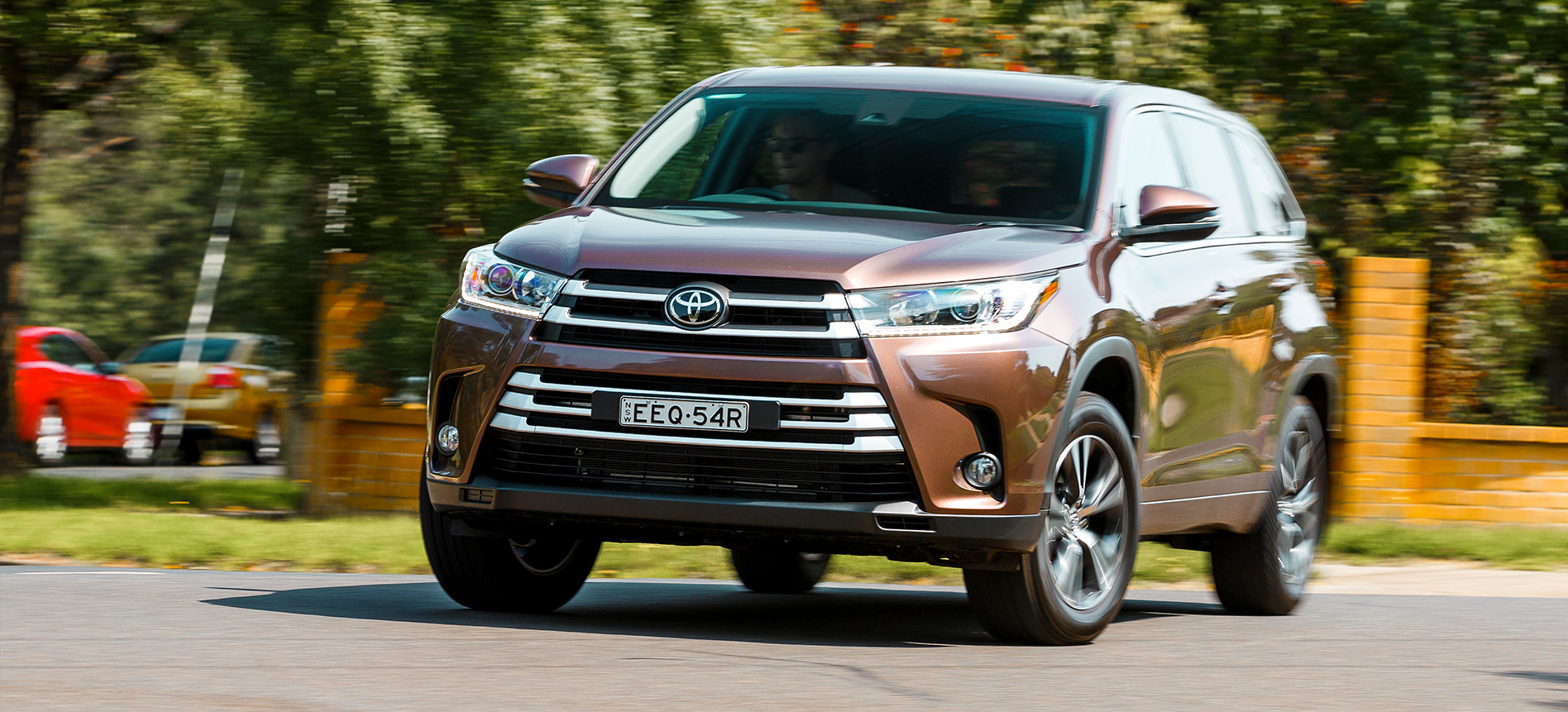
The model that the incoming Palisade really has to worry about is the Kluger.
Size/platform
One immediate way that the Palisade stands out among its competitors is that it offers both seven and eight seats; an uncommon occurrence in the large SUV market.
It’s based on the same platform as the Santa Fe, but presents 210mm longer and 85mm wider. That extra size translates to extra space inside for passengers, and extra storage space with 704 litres of volume in the boot with the third row stowed.
We’ll know more once we get hands-on with the new Palisade later this year, but space in the third row is said to be generous and not solely an afterthought to banish naughty kids to.
Eight-seat versions have a three-up second row (seven-seaters use two captain’s chairs in the second row), while the third row always has a three-wide bench in place.
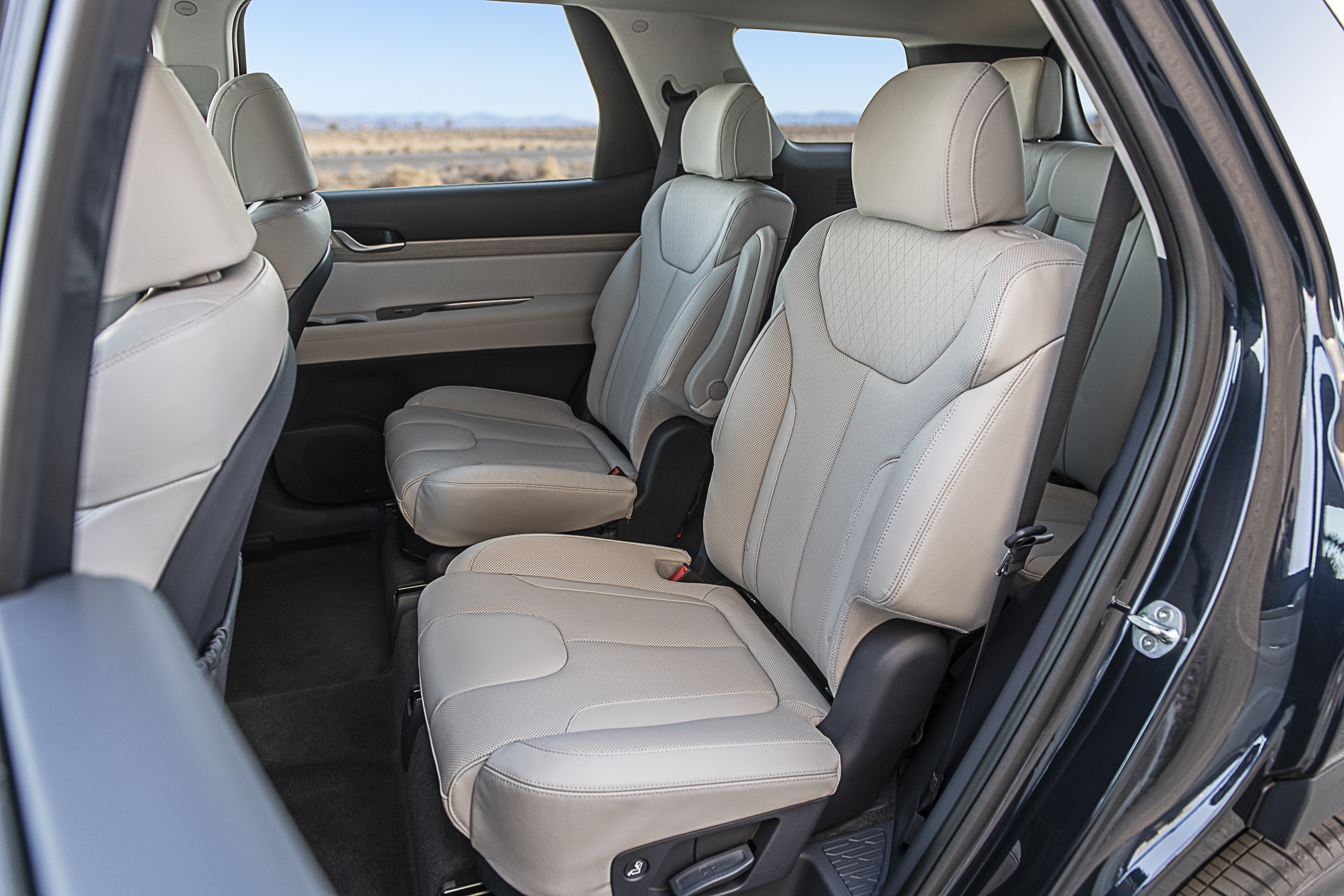
It’s a big car – expect nothing less for something designed for the American market.
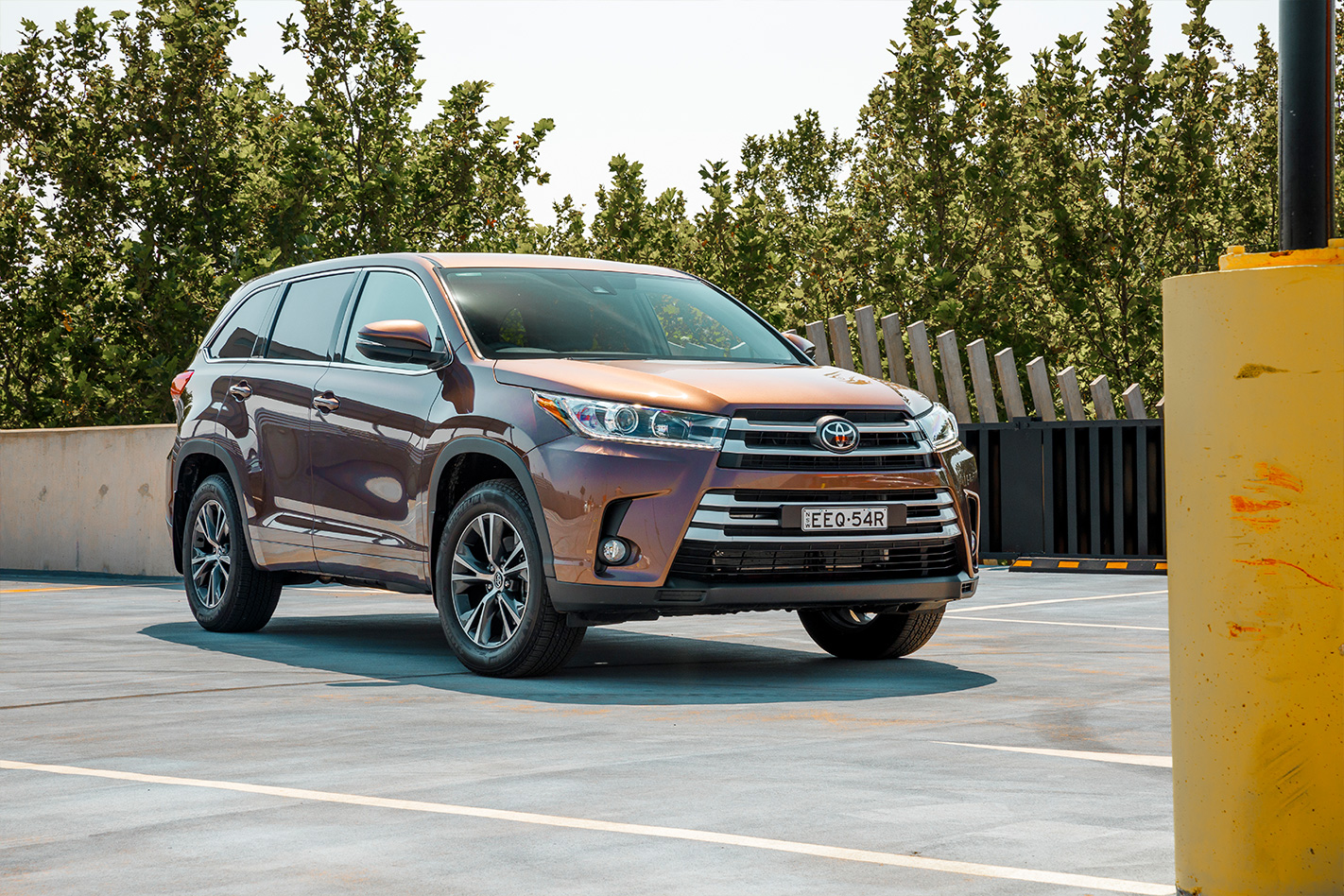
The Toyota Kluger is also designed for the American market, but still finds considerable success in Australia, regularly notching up more than 1000 sales a month.
While a new Kluger has been released overseas, we’ll have to make do with the current generation – near-on seven years old – until 2021.
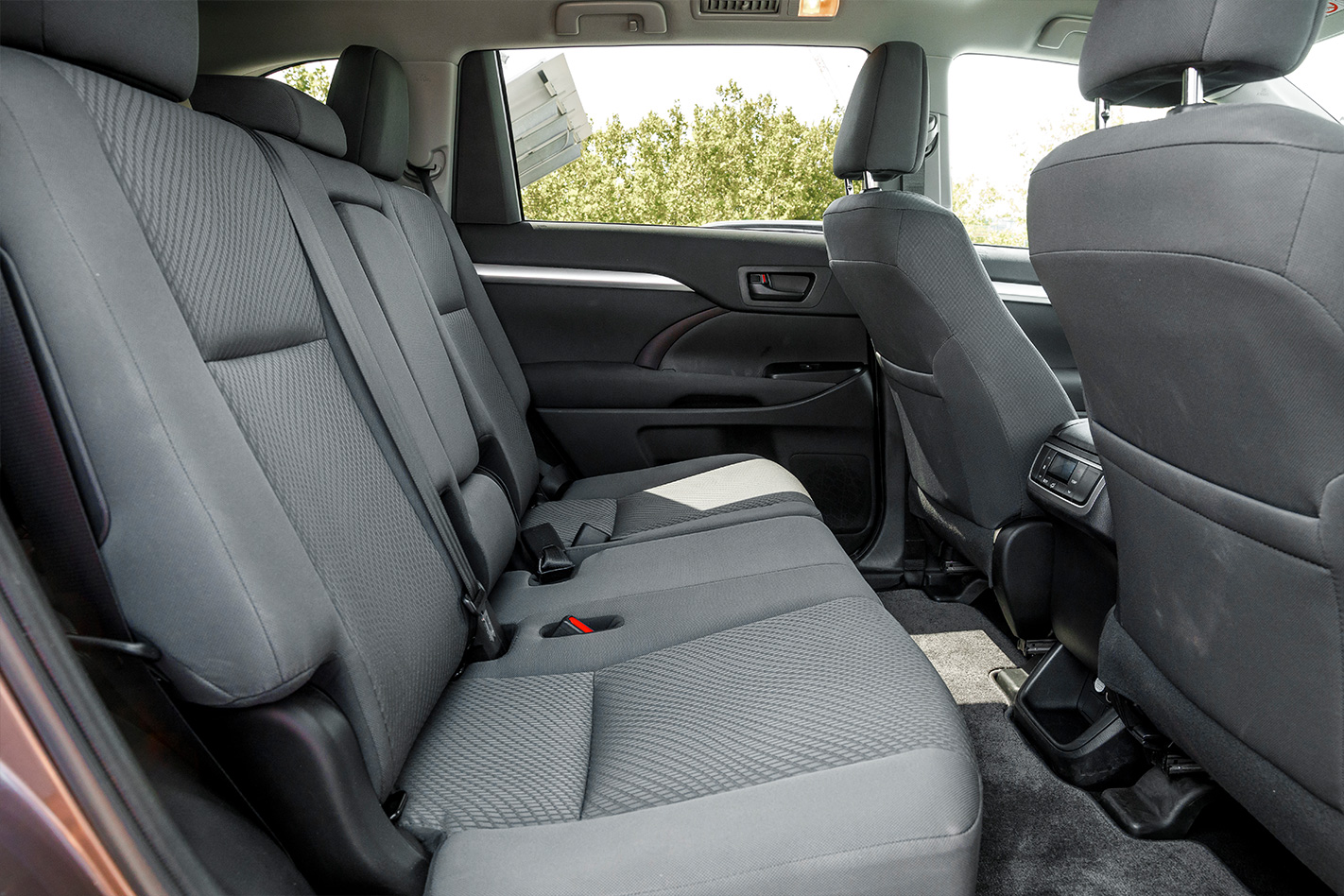
That said, it’s a value-driven proposition that fits seven people and has a deep enough boot with 529 litres of space with the third row flat.
Space in the Kluger is great for both first and second rows, but filling it full of adults can be squeezy.
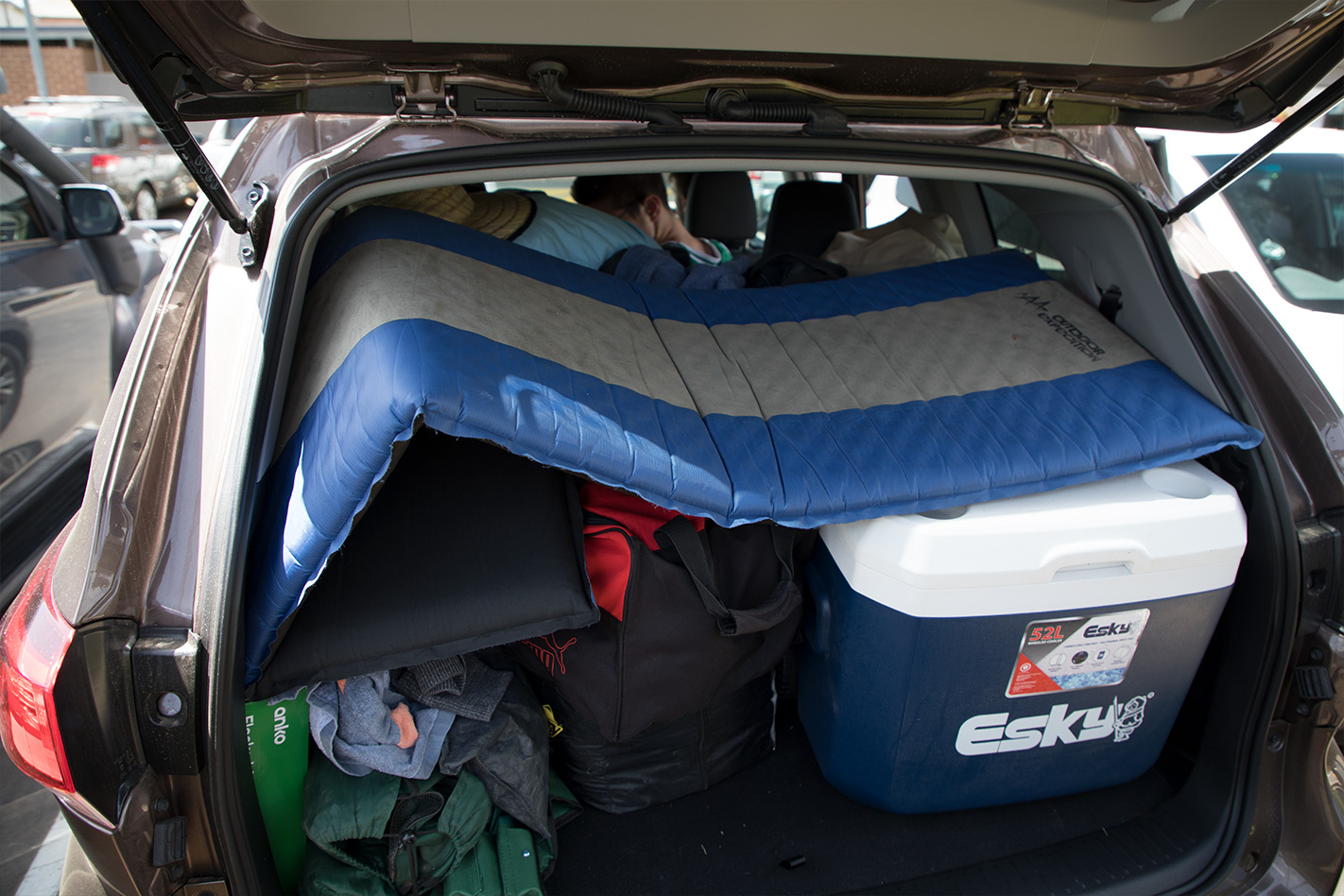
The Kluger is an accomplished cruiser and has an abundance of space for a family, though we reckon the Palisade might just pip it and cater more comfortably in terms of space – especially with that bigger boot.
Equipment/Technology
Hyundai is going big on catering for the whole family with the Palisade. It’ll get a whopping 16 cupholders, seven USB charge points, a push-to-talk intercom system to address wayward third-row occupiers and air conditioning for all three rows when it goes on sale.
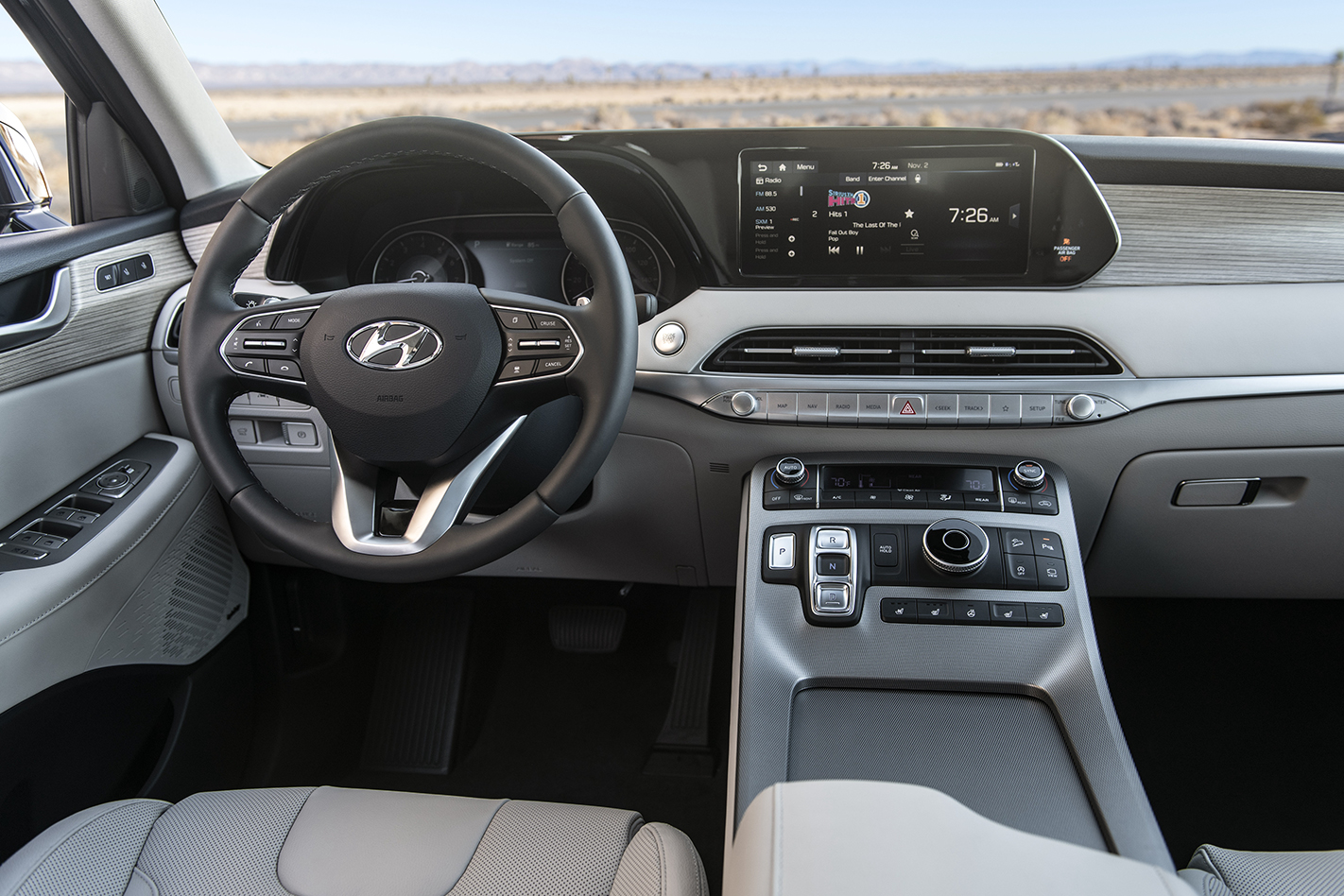
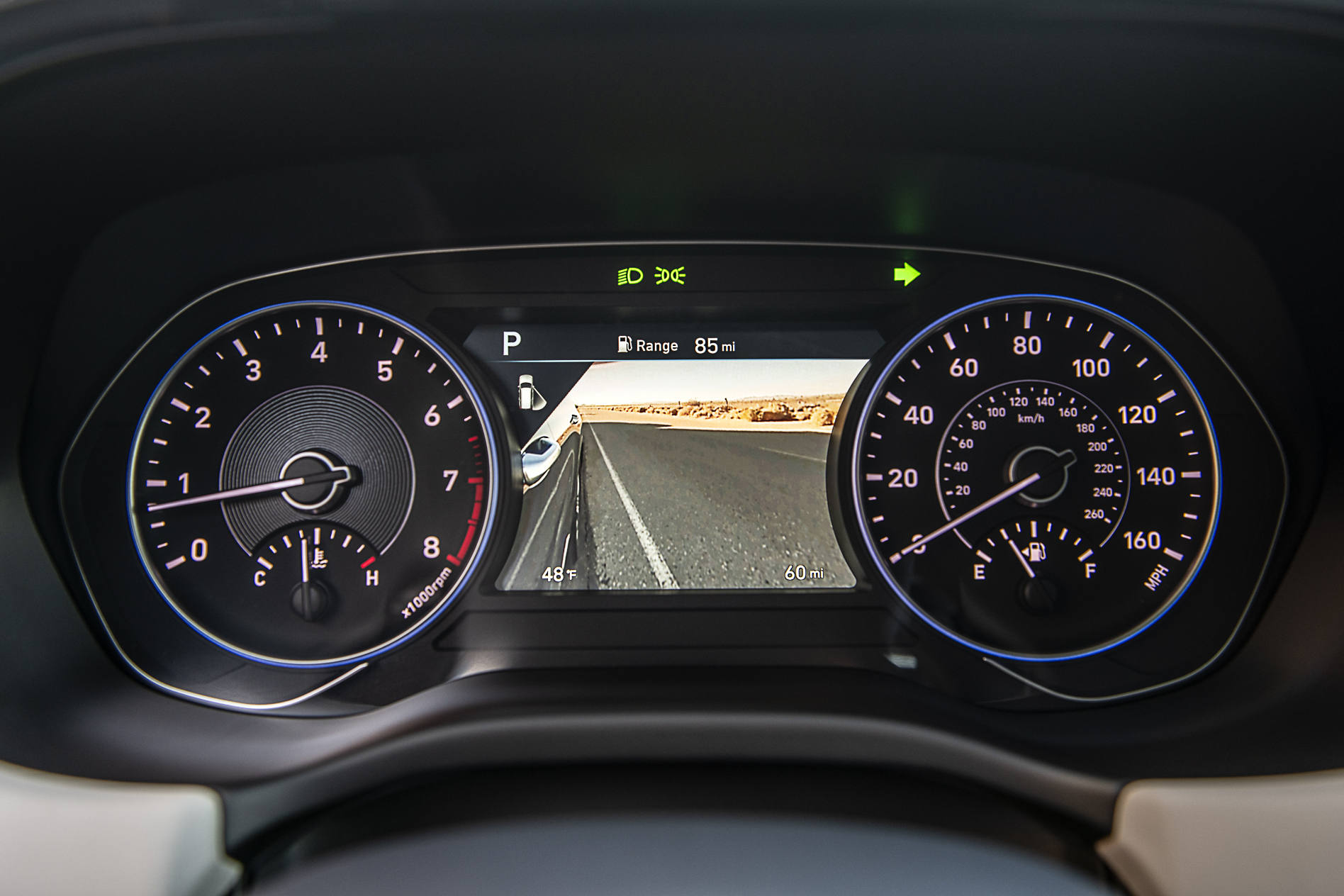
Additionally, it gets a 10.25-inch touchscreen infotainment system (with Apple CarPlay and Android Auto) and a 12.0-inch digital instrument cluster that can display side mirror images, prompted by the flick of an indicator to change lanes.
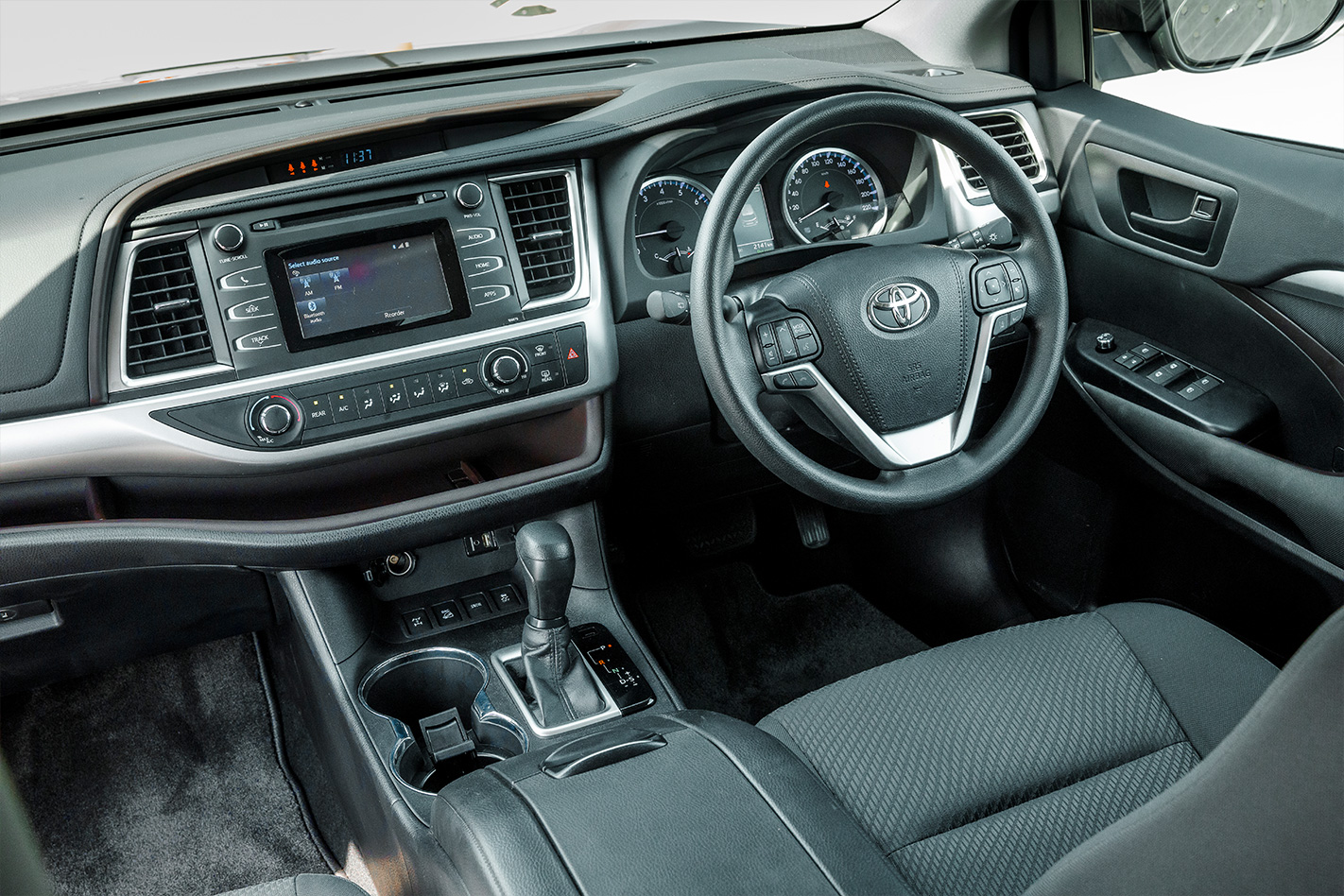
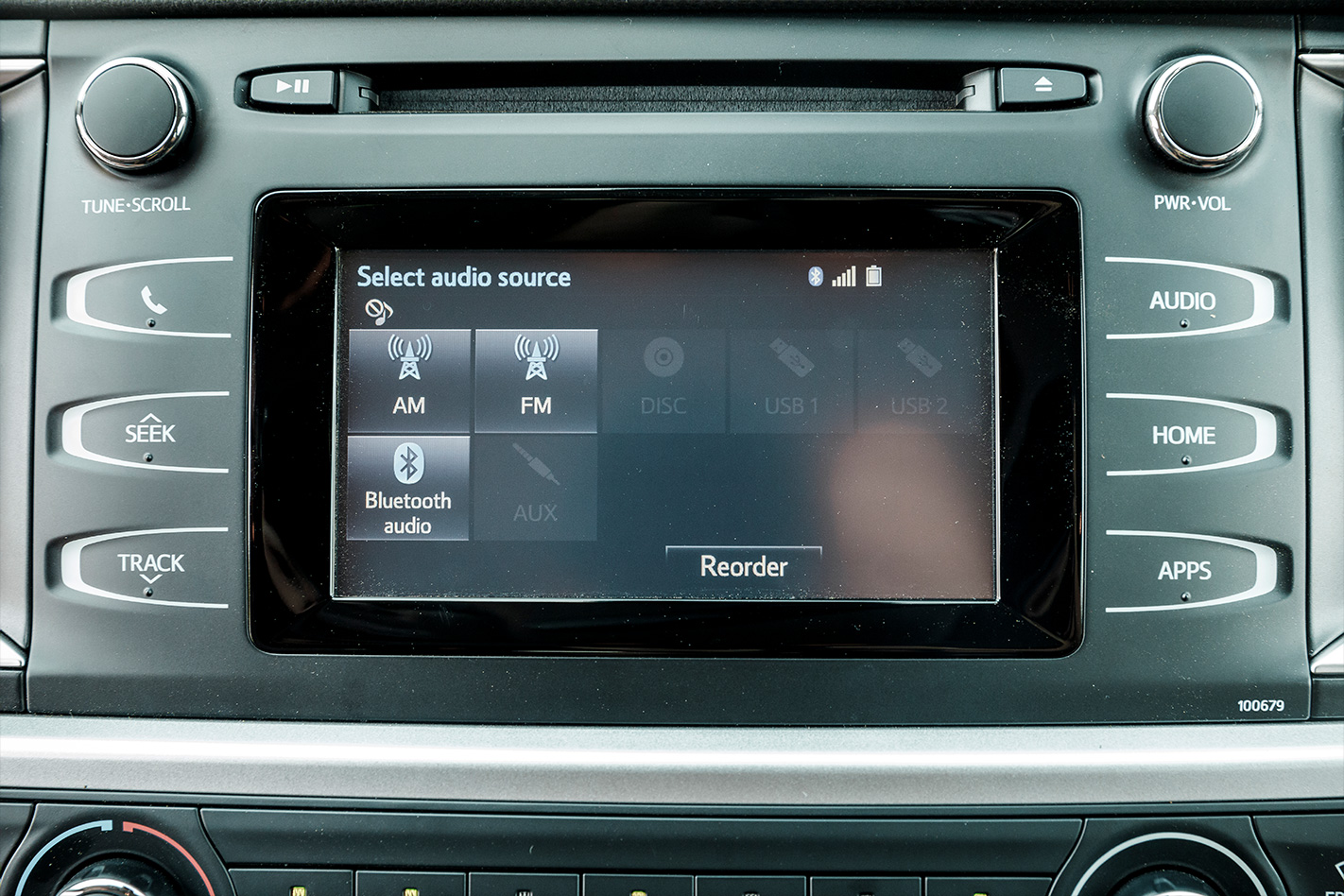
Comparatively, the Toyota Kluger looks a bit old-hat. Despite some mid-life updates it still makes do with an 8.0-inch infotainment screen for the top models, misses out on smartphone mirroring tech for Android Auto and Apple CarPlay and some of the materials feel a generation behind.
That said, it does have a respectable amount of safety equipment including rear cross-traffic alert, lane-keep assist, autonomous emergency braking and active cruise control on all model variants.
Engine/drivetrain
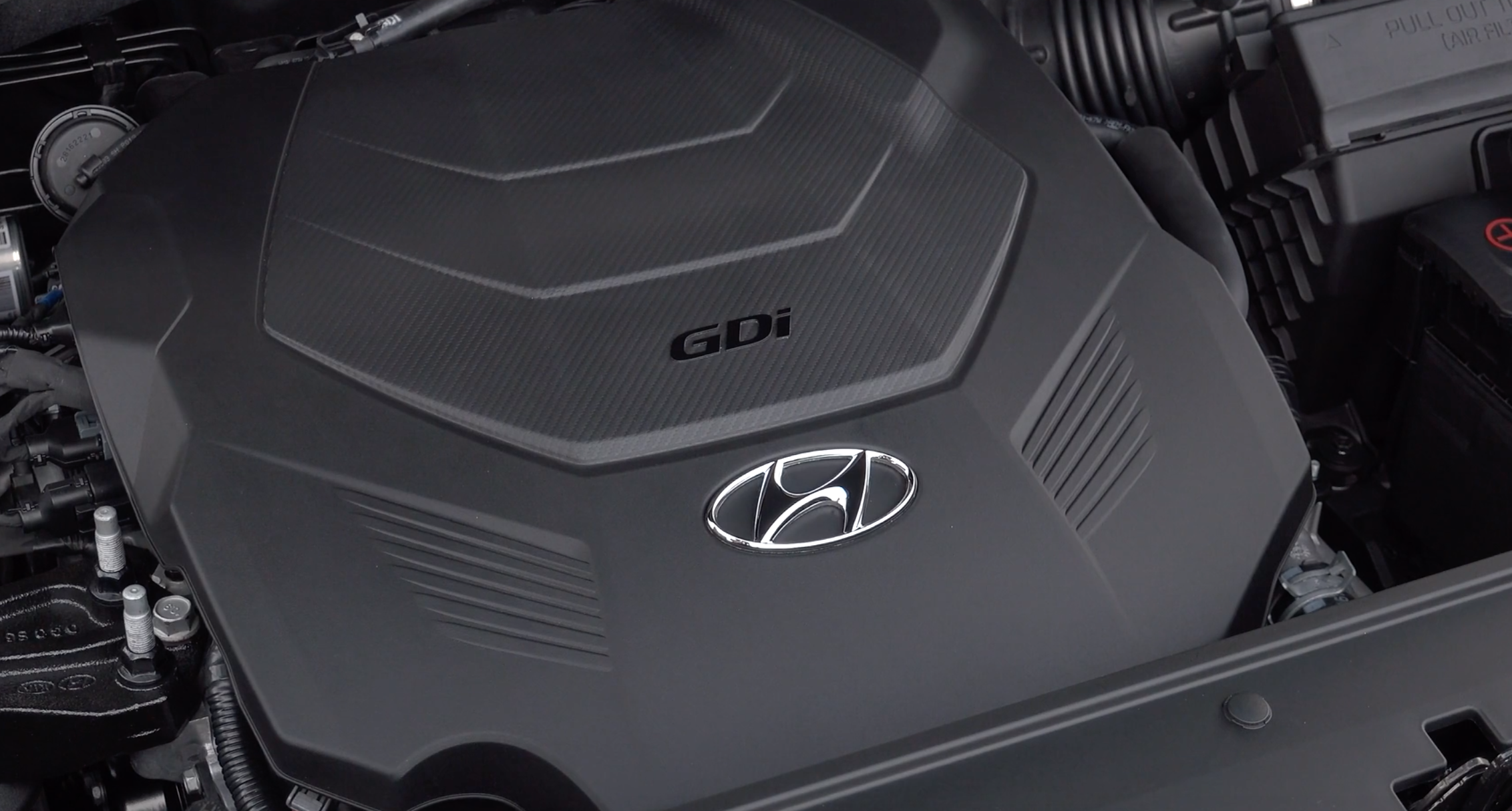
Palisade will come to Australia with a new naturally-aspirated 3.8-litre V6 engine with 213kW and 355Nm sent to the front wheels. That powerplant will be joined by a second diesel version which utilises a 2.2-litre turbo-diesel four-cylinder for 147kW/440Nm – that will power all wheels.
Both powertrains will use a traditional eight-speed automatic transmission; there will be no manual transmission offered in the Palisade range.
Usually, Hyundai Australia lends its local-tuning expertise to new models to tweak its cars for our unique roads, but Hyundai says the Palisade is already handling and riding at an acceptable level.
The Toyota Kluger uses just one engine across its range: a 3.5-litre naturally aspirated V6 that’s good for 218kW and 350Nm. An eight-speed transmission sends power to either the front or all wheels, depending on which model grade you opt for.
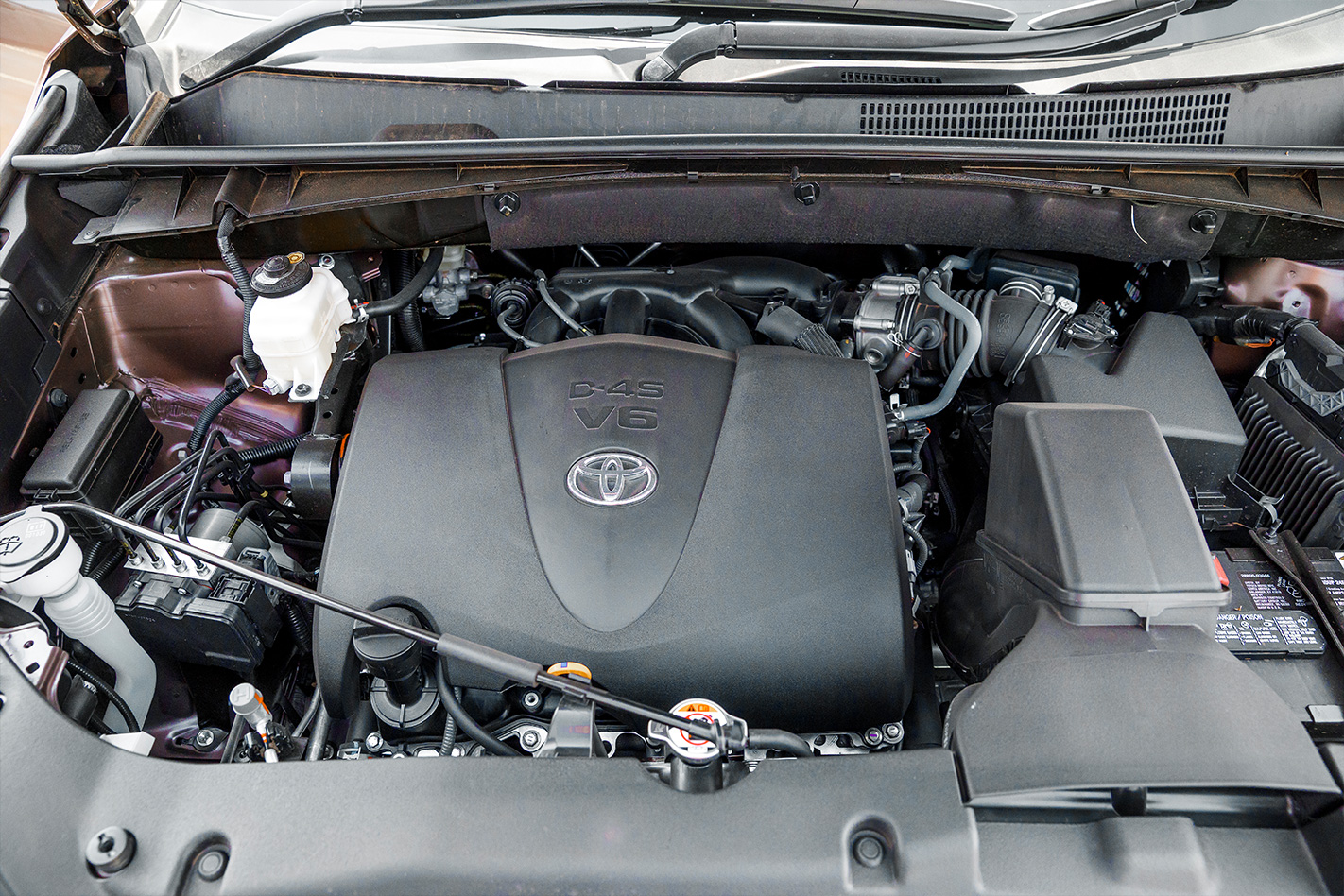
The Kluger’s 2FG-FKS powerplant is tried and tested, and will carry over to the new car in 2021. The Palisade’s six-potter is the newest that Hyundai has in the cupboard, so the two will be pretty evenly matched.
Pricing/warranty
The Hyundai Palisade is due to arrive on local soil closer to the end of 2020 and as yet, Hyundai hasn’t put out pricing or specification for the new model.
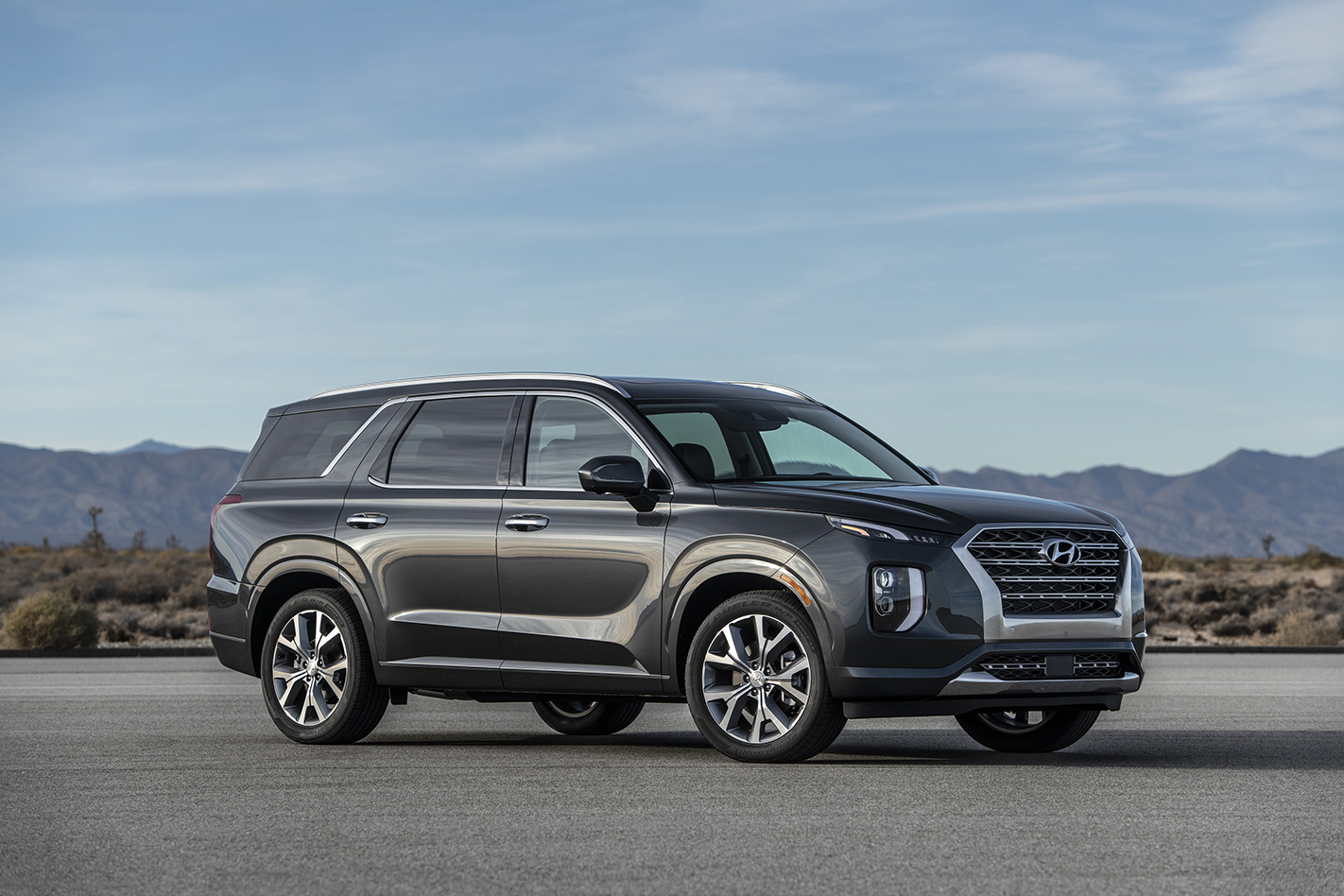
Expect the range to kick off close to the $50,000 mark, though, before extending to around $70,000 for high-spec versions.
Toyota is selling the Kluger from $44,850 for its entry-grade, right up to $68,574 for the top spec variant – though watch out for runout deals later in 2020 as Toyota ramps up to take the new fourth-generation car.
Both cars enjoy five-year, unlimited-kilometre warranties, and both companies offer competitive servicing packages.
Conclusion
Toyota trades hard on its reputation, reliability and dealer network, but looking at product alone it’s going to be interesting to see how it fares against the all-singing, all-dancing Palisade large SUV.
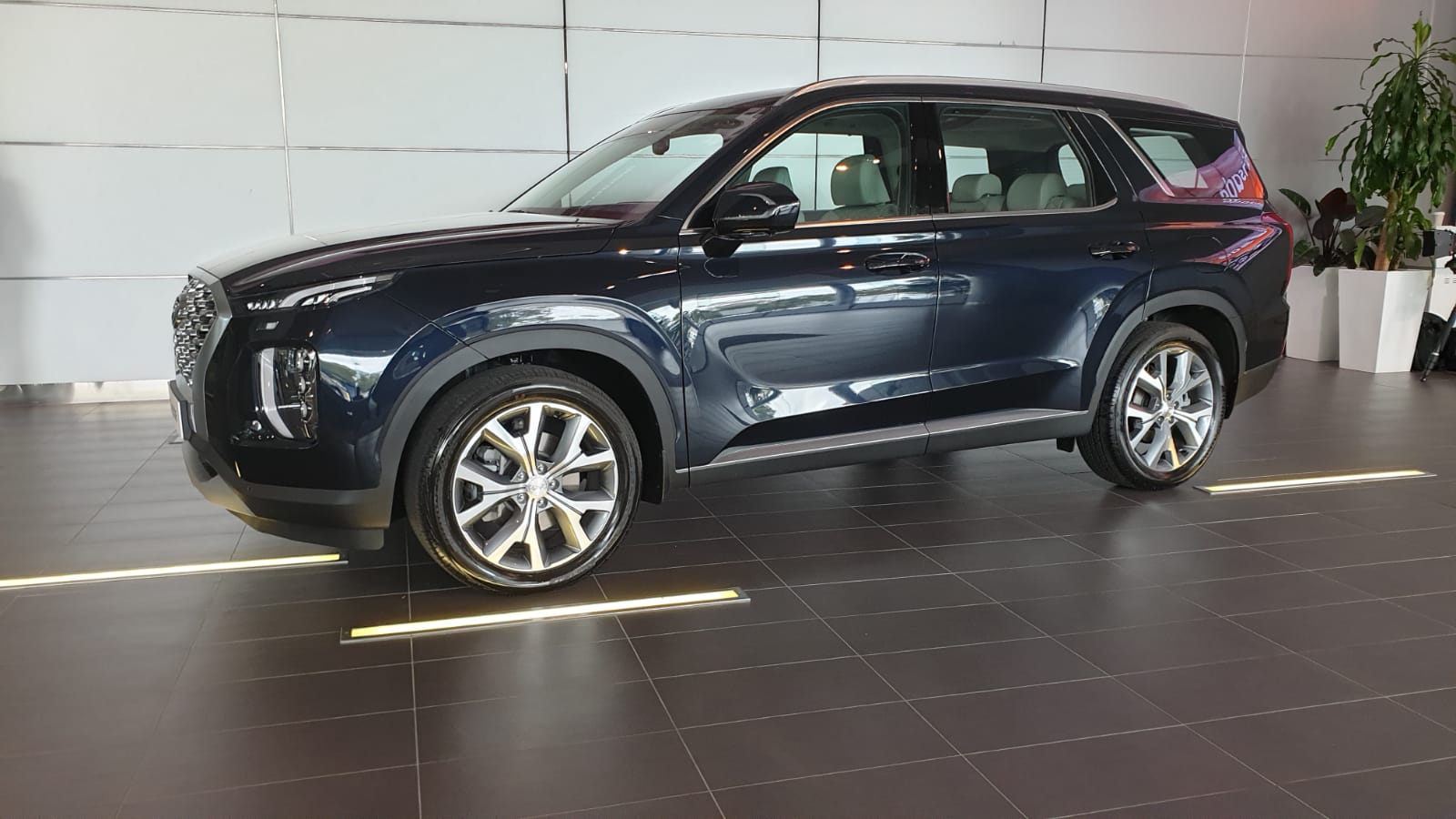
As long as Hyundai doesn’t price itself out of contention, we could be looking at a new king of the segment.
