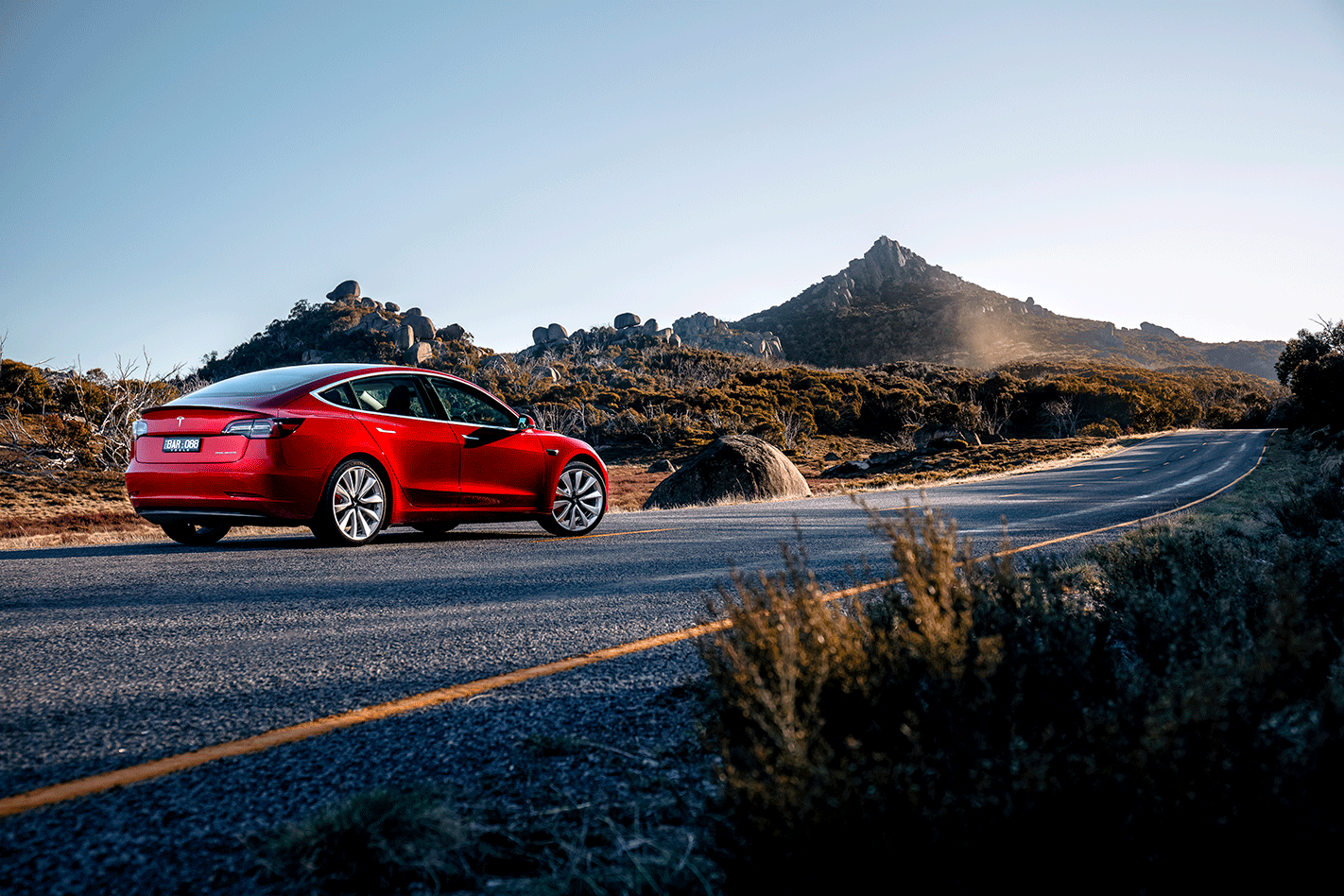
Wheels review
The Wheels Verdict: With its buff bodywork and thuggish engine, the Mercedes-AMG GLC63 S cuts a brutish character. Nevertheless, it’s a surprisingly fearsome corner carver. Playful dynamics are one of the biggest surprises in a display of all-round competence only marred by some minor niggles.
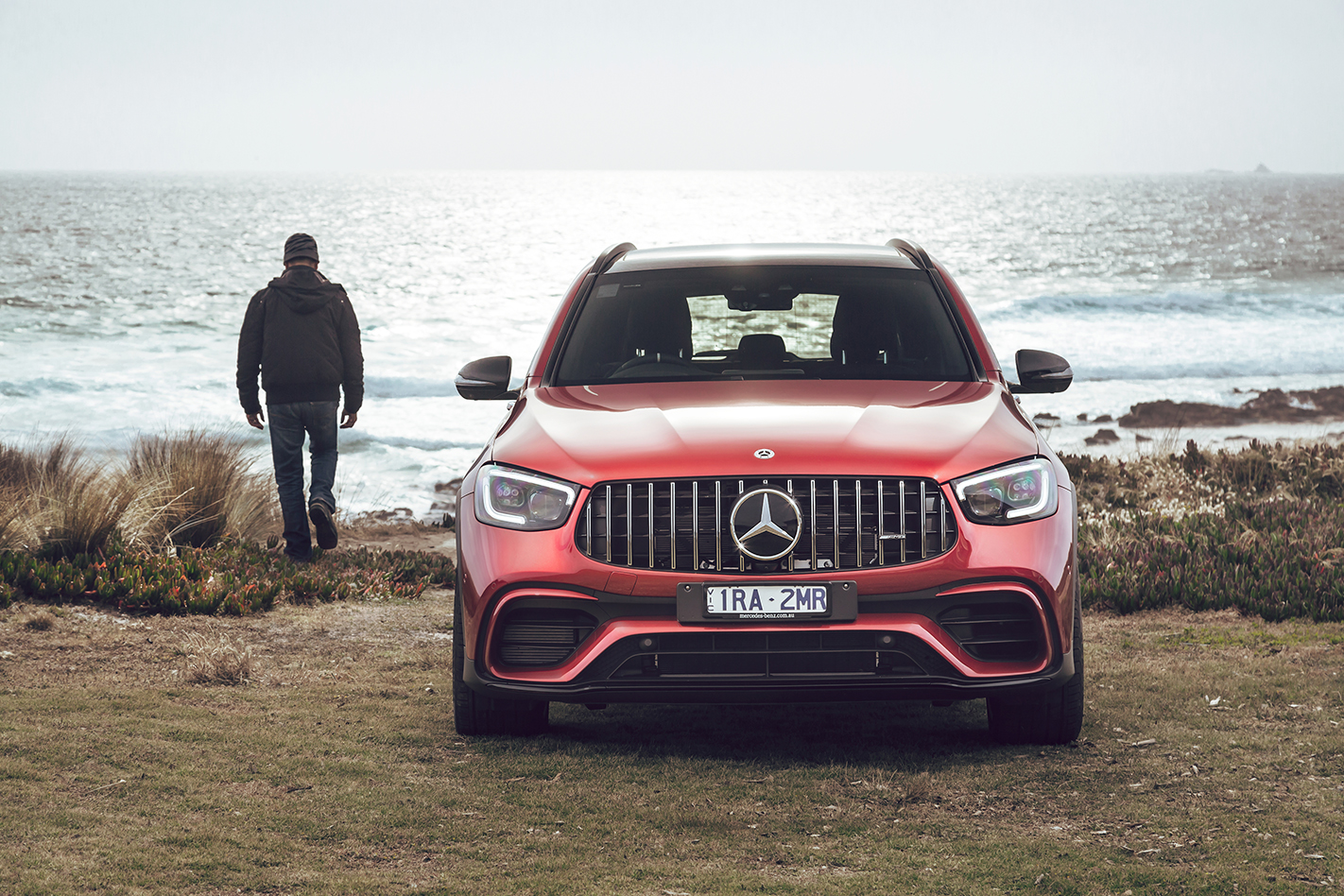
WHAT IS THE MERCEDES-AMG GLC63 S?
The flagship of the GLC range, the GLC63 S shoehorns the 4.0-litre twin-turbo V8 into the engine bay, creating a package that has all the raucous enthusiasm of the C63, paired with the practical body of a mid-size SUV. Available in Australia now with a mild mid-life facelift, this $164,400 super-SUV is riotous fun.
WHY WE’RE TESTING IT
When the GLC63 S first arrived it was one-of-a-kind, with no eight-cylinder mid-size SUV on the market. Now, JLR has entered the fray with both the F-Pace SVR and Velar SV Autobiography. Factor into the mix feral twin-turbo six-cylinder offerings from Porsche, BMW and Alfa Romeo, and the field gets pretty crowded. With some new minor upgrades for 2020, can the AMG hold its own against this stacked competitor set?
REVIEW
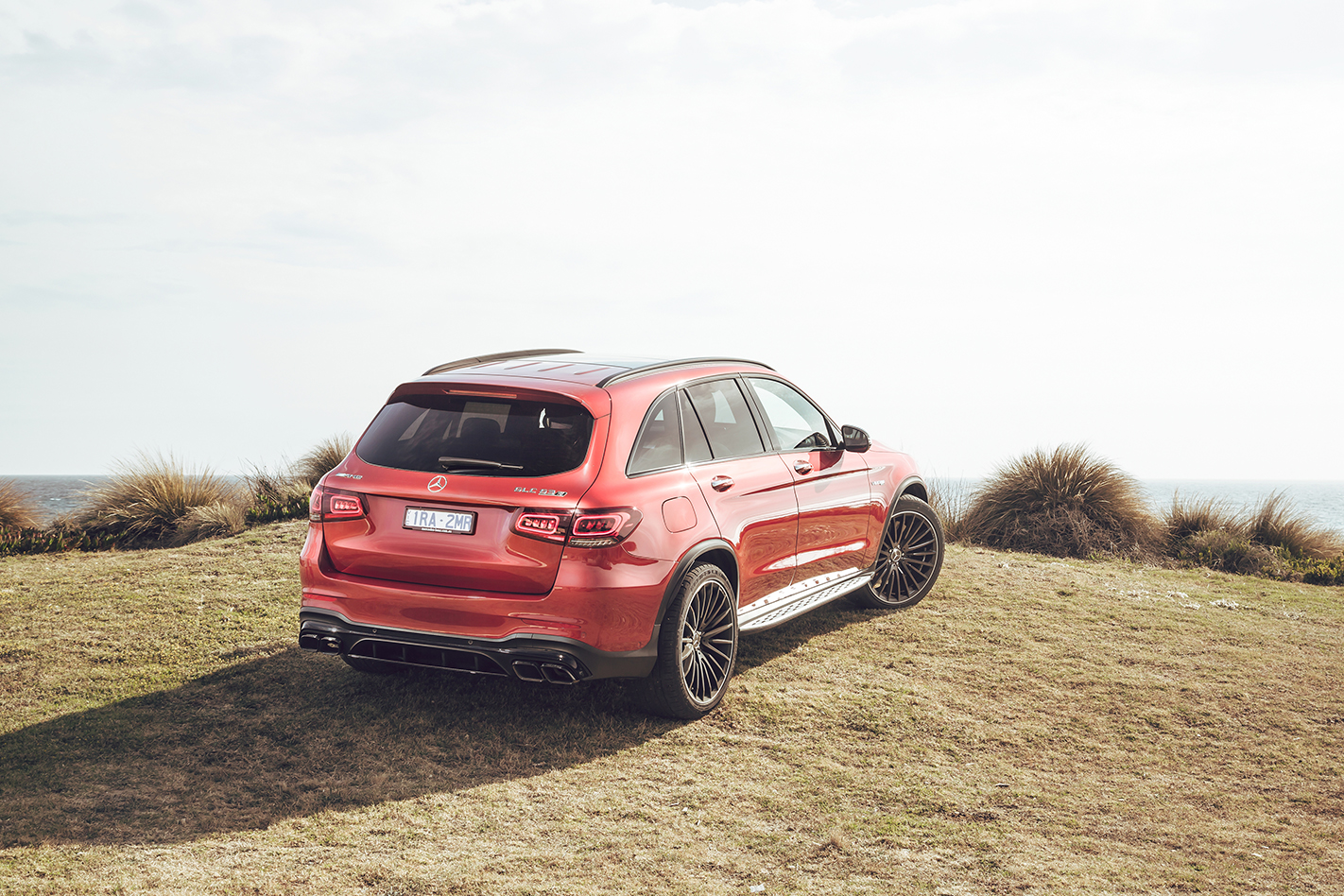
Force your right foot into the Mercedes-AMG GLC63 S’s firewall, and two things will happen in very rapid succession. First, the back of your head and the driver’s seat will be thrust together, and second is you’ll burst out with laughter at how this 1935kg SUV is ripping you into a new dimension.
The 4.0-litre twin-turbo V8 at the heart of the GLC63 S is the same wet-sump M177 unit found in other 63-badged AMG products, and has the same tune as the C63. However, unlike the C-Class based product, the GLC63 sends its 375kW/700Nm to all four wheels via a nine-speed automatic transmission, resulting in a claimed 0-100km/h time of 3.8 seconds. This prevents some of the ‘power down’ issues that plague C63 variants, with the V8 SUV clawing at the tarmac with tenacity as soon as the throttle is applied.
Peak torque is delivered from 1750rpm, and maintained until the tacho passes 4500rpm, with max power arriving from 5500rpm to 6250rpm. This combination of low down torque and top end power means you are never left wanting for more oomph in the GLC63 S. An AMG performance exhaust is standard kit, and sounds absolutely fantastic to boot.
The nine-speed gearbox is an impressive unit, but not without faults. There are some low-speed shudders around town, and the shift between first and second gear at full throttle is delivered like a kick to the head. However, the shift logic is such that it retains an element of dual personality, softening shifts at low revs and providing intuitive gear selections during dynamic driving.
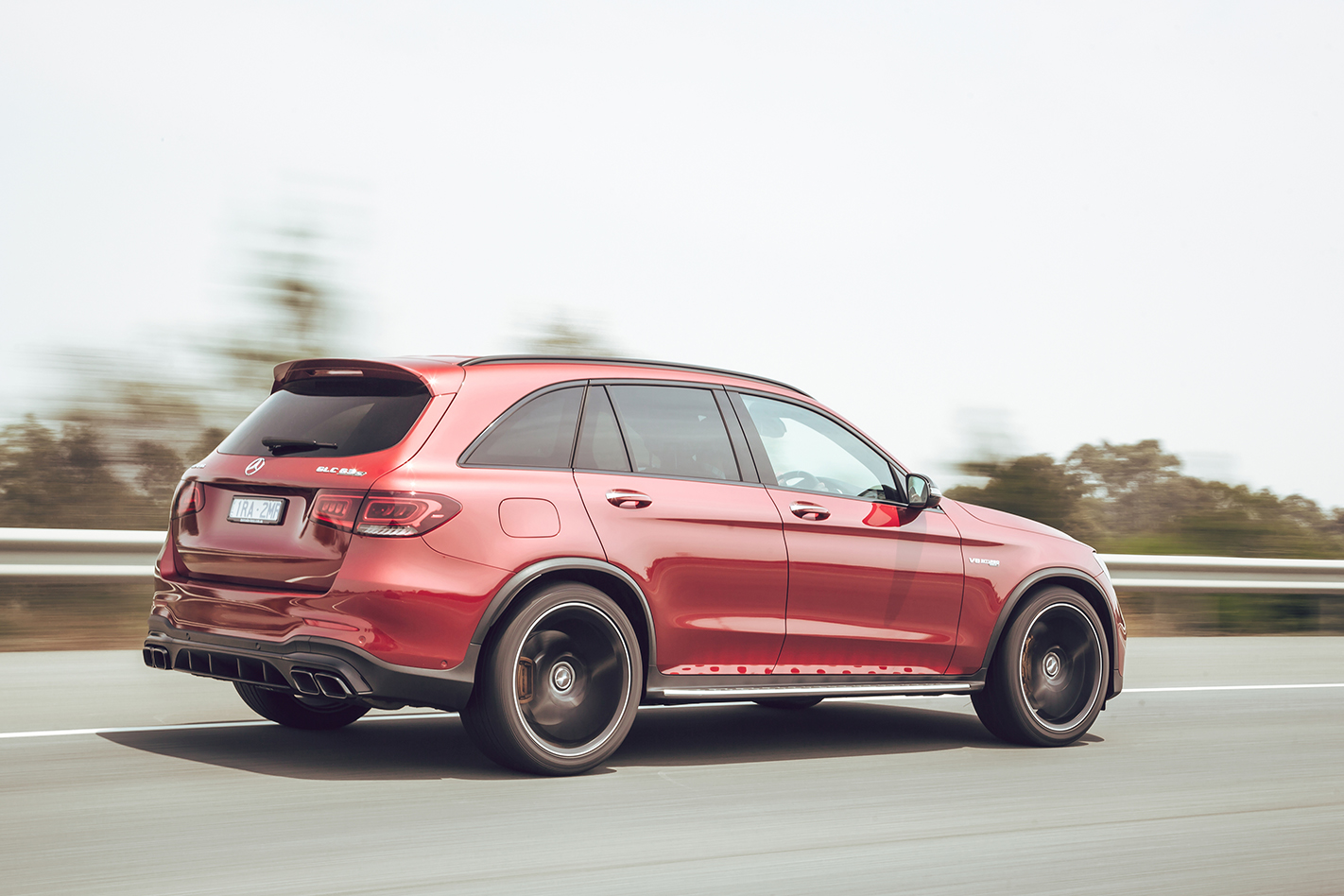
The updated 2020 model rolls on 21-inch rims as standard, shod in Continental Cross Contact rubber (265/40 front and 295/35 rear). Changes compared to the pre-facelift model are limited to redesigned front and rear lights, updated interior screens, new steering wheel with digital performance dials, and reworked centre console with the old rotary dial replaced by a sleek touchpad.
Inside, the instrument cluster is now a 12.3-inch digital screen, while a 10.25-inch touchscreen takes care of the multimedia. Apple CarPlay and Android Auto is now standard, along with Merc’s MBUX system, three-zone climate control, an AMG performance steering wheel and nappa leather upholstery.
The GLC63 S feels worth every bit of its $164,600 price tag, with a luxurious interior that feels modern thanks to the most recent updates. The only options fitted to our test car was the eye-catching Hyacinth Red Metallic paint finish ($800), and carbon ceramic brakes ($8300), the latter of which is wholly unnecessary unless you really hate cleaning brake dust off your rims.
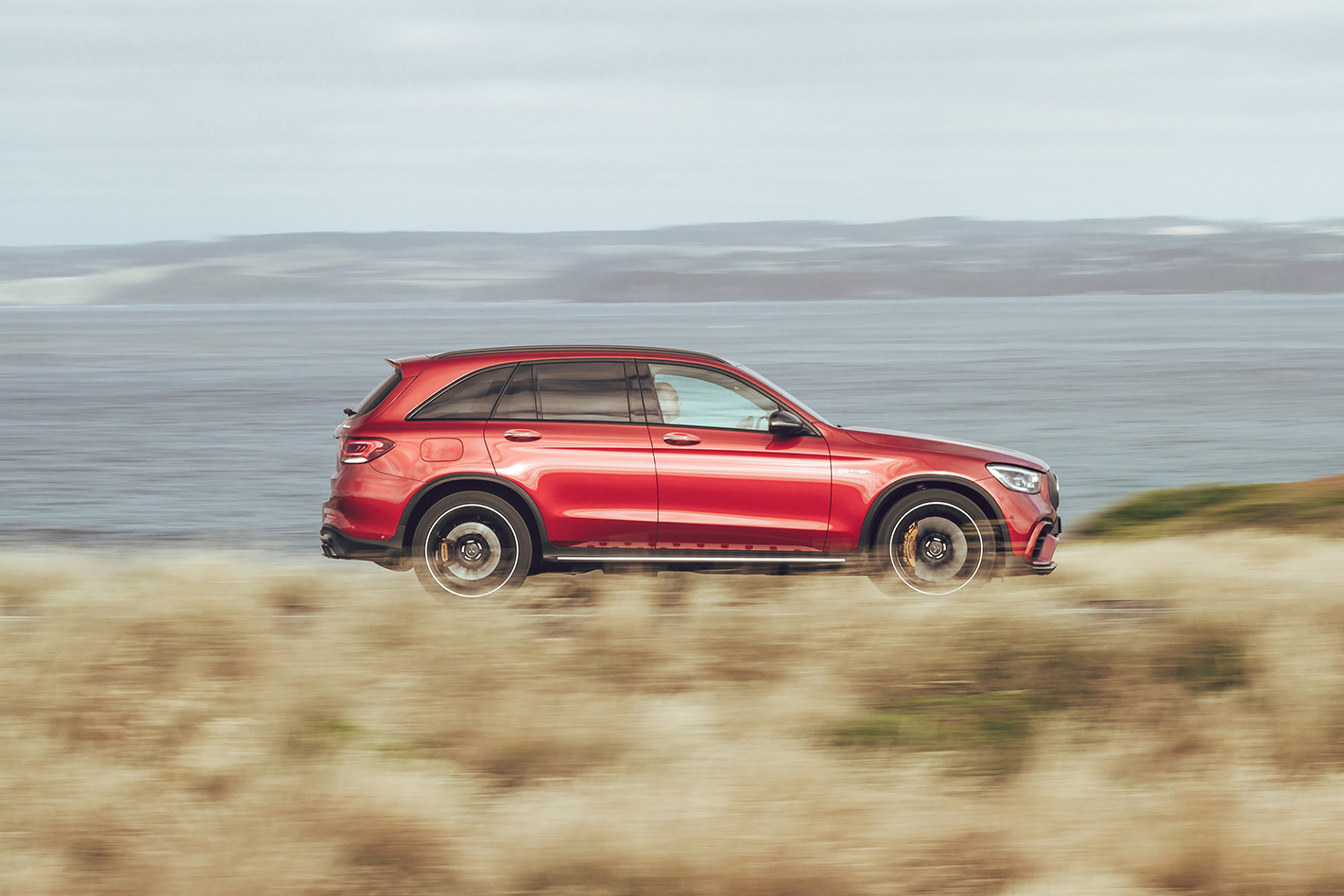
Straight-line acceleration isn’t the GLC63 S’s only party trick, it also corners like an absolute demon thanks to the all-paw traction and healthy contact patch providing judicious grip. When deliberately provoked, it’s possible to induce off-throttle oversteer in the early parts of the corner, while at corner exit the GLC63 just squats and rips towards the next set of bends.
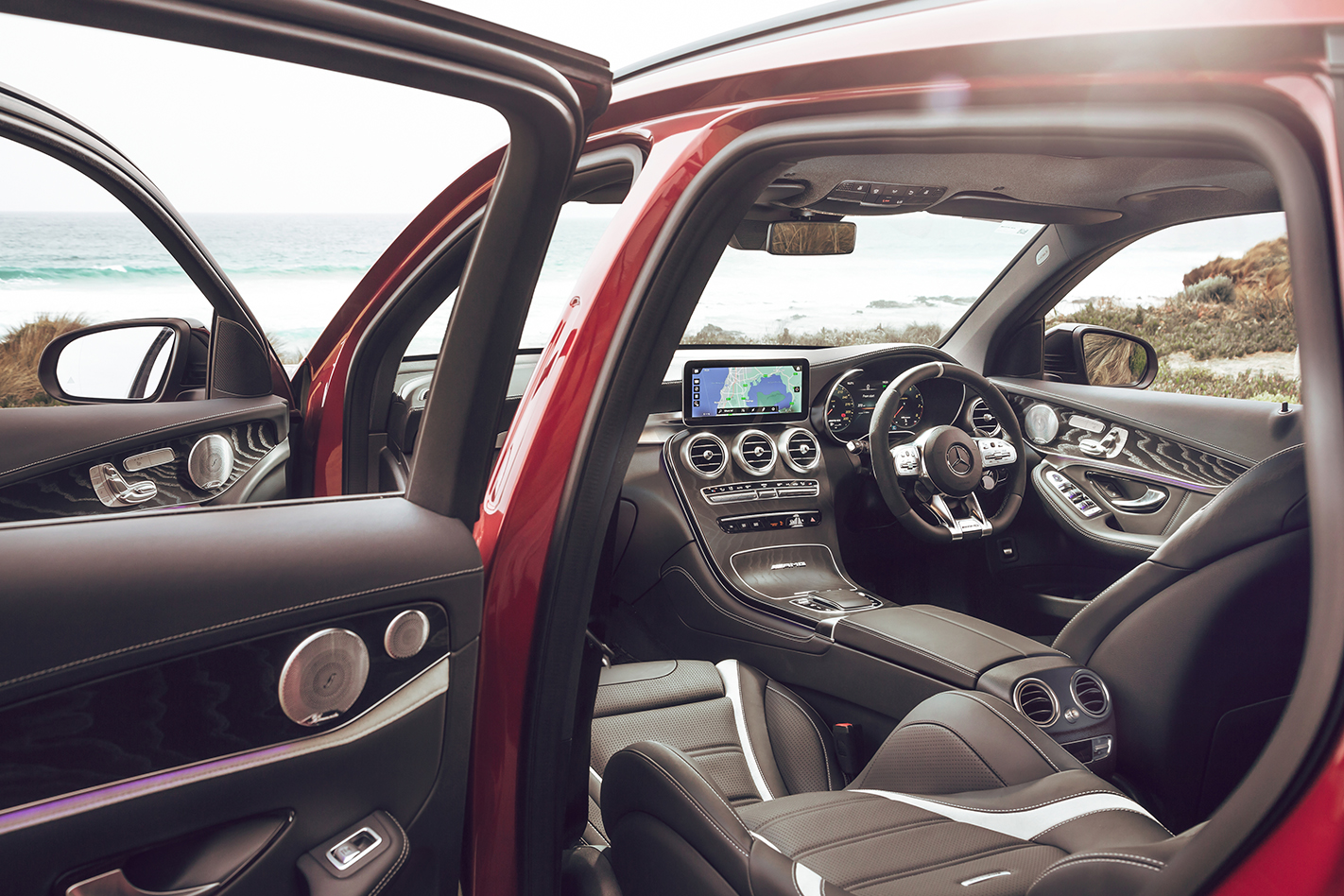
Air suspension with adaptive dampers is standard, and does a good job of finding the middle ground between sportiness and everyday useability. It is firm, with higher-frequency bumps felt in the cabin, but isn’t a punish around town.
Other faults for the GLC63 S are limited to a transmission tunnel that makes the footwell feel cramped.
But those issues are never enough to wipe the smile off your face when behind the wheel, and isn’t that more important?
RIVALS
Alfa Romeo Stelvio Q, BMW X3 and X4 M, Jaguar F-Pace SVR, Porsche Macan Turbo, Range Rover Velar SV Autobiography, or perhaps a fast wagon if you want to stand out from the crowd
MERCEDES-AMG GLC63 S PRICE AND SPECS
- Model: Mercedes-AMG GLC63 S
- Engine: 3982cc V8, dohc, 32v, twin-turbo
- Max power: 375kW @ 5500-6250rpm
- Max torque: 700Nm @ 1750-4500rpm
- Transmission: 9-speed automatic
- Weight: 1935kg
- 0-100km/h: 3.8sec
- Economy: 12.4L/100km
- Price: $164,600
- On sale: Now
Second Opinion: MOTOR review

Motor focuses exclusively on high-performance cars, offering a heart-stopping, hair-raising blast into the world of prestige and performance culture.
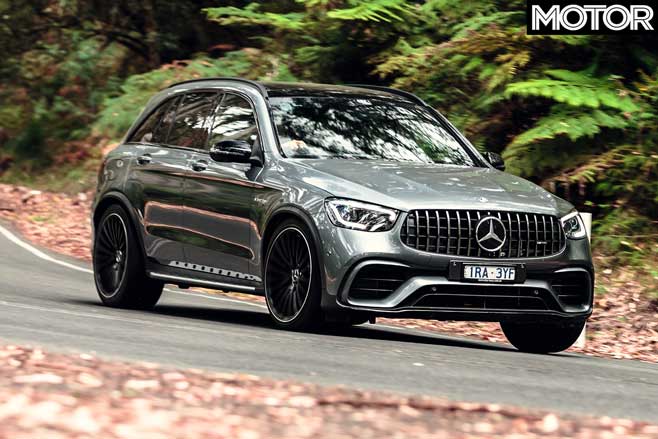
AMG’s $164,600 medium-size SUV marauds drag strips with ease By: Louis Cordony
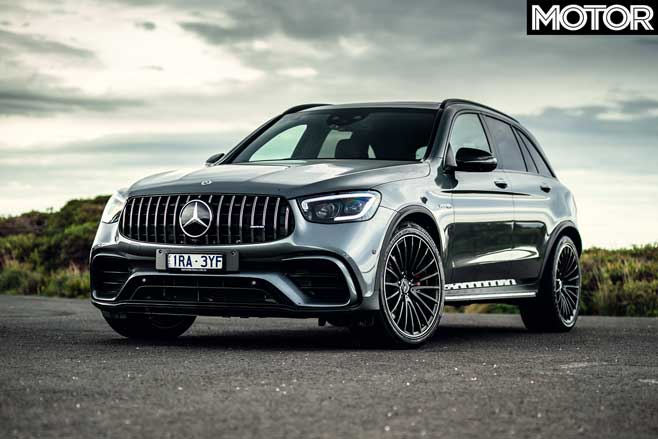
To say the refreshed-for-2020 AMG GLC 63 S drives like a jacked-up hot hatch would be the biggest complement you can pay any SUV. And while this road test will investigate if that’s the case, it can lay claim to that praise for another reason –that engine.
Yes, the twin-turbocharged V8 shoehorned in the GLC 63 S’s nose (which, by the way, has undergone surgery to reshape its headlights and grille) seems like its biggest point of difference to something like an AMG A45, or even its own natural segment rivals from BMW, Alfa Romeo or Porsche.
But its 3982cc V8, known as the M177, is inextricably linked to the turbo four-cylinder engine found in the original A45 hot hatch since its identical cylinder spacing, bore and stroke measurements imply it’s essentially two of them stitched together.
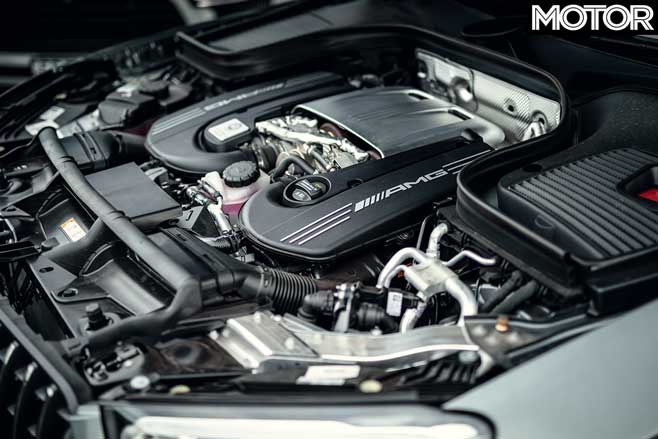
Here, the GLC 63 S shares the wet-sumped version with a C63 S, employing the same 375kW and 700Nm outputs (unchanged for 2020) that are also matched to a wet-clutch nine-speed automatic. It also scores an E63-derived all-wheel drive system, which gives the GLC63 S tarmac tearing acceleration for a true hot-hatch-on-stilts experience at least in a straight line.
AMG claims it hits 100km/h in 3.8 seconds from a standstill. And when we tested the car for an upcoming comparison between the GLC 63 S wagon and Macan Turbo it proved even quicker … by a smidge.
It’s so savage it’s almost physical. When unleashed from launch control you can feel the car’s chassis, suspension and drivetrain strain under the incredible forces until it almost twists. As the nose lifts and you try your best to steer it down a straight road it’ll tag 100km/h in 3.76 seconds and then eventually cross the 400m mark in 11.96 seconds at 185.49km/h.
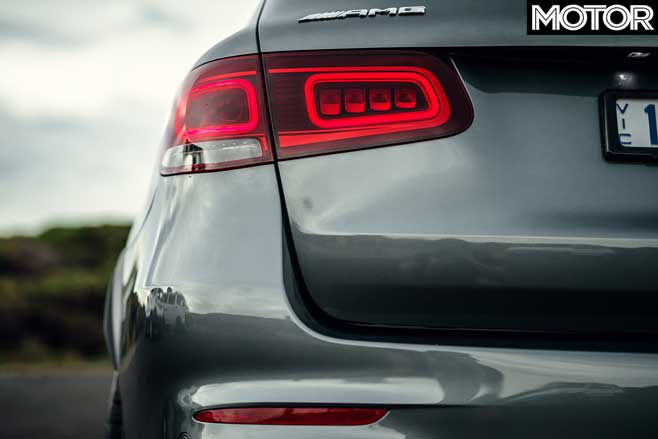
Right now, there’s only one SUV we’ve performance tested quicker than that – a 522kW Jeep Grand Cherokee Trackhawk that boasts respective figures of 3.70sec/11.80. Not much between them, really.
The accelerative grip is surprising given that the most significant change on the GLC 63 S wagon for 2020 are new Continental CrossContact tyres around new design 21-inch wheels. In corners we found the Continentals struggled to give the GLC 63 S’s fast, light-footed responses the grip they deserve.
The GLC 63 S would cut power and brake the inside front wheel, spoiling the potential to use its locking rear diff and fat 295mm rear rubber to drive it out of a bend. You’ll quickly have to dial down your commitment to try and avoid ESP intervention.
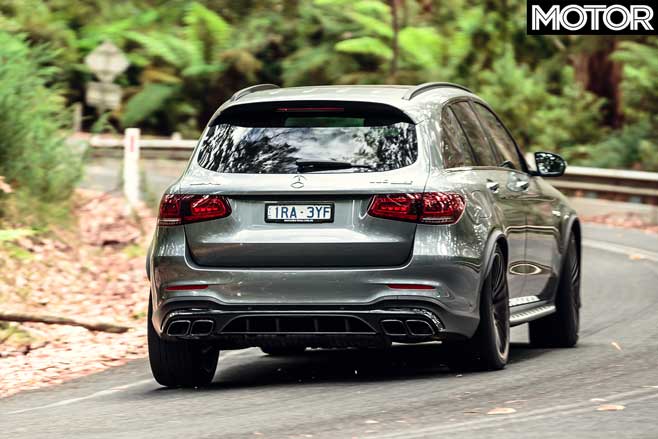
It’s also disappointing the new AMG Dynamics matrix (as found in the 2019 C63 S) in ‘Master’ mode does little to loosen the ESP’s strangle hold on cornering speeds. Especially given how much we enjoyed the GLC 63 S’s multi-link front and rear suspension setup on Michelin Pilot Sport 4S tyres with the pre-2020 coupe.
Granted, since AMG’s press release says the ‘Master’ sub-mode aims to keep an “extremely neutral” vehicle balance, it could be trying to nix oncoming understeer, but it felt premature. Thankfully, there’s still a lot going for the new GLC 63 S besides its monster grunt.
While the nine-speed wet clutch transmission can prove jerky around town from a take-off, it’s brilliant in action, offering instant throttle response and assuring gear changes under load – it’ll even hustle into low gears with little shunt.
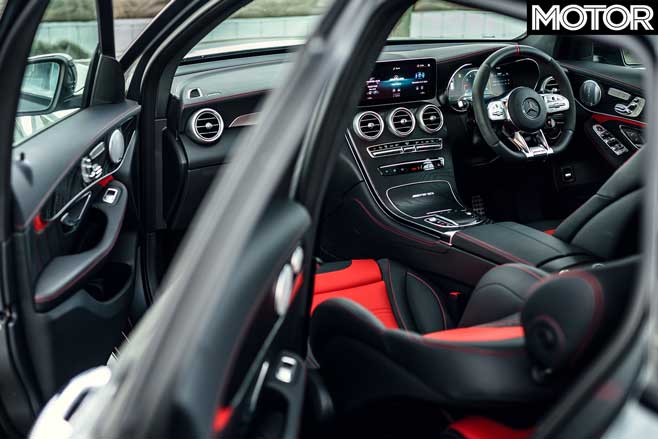
Shift speeds are quicker than any torque converter automatic, or fractionally slower than a dual-clutch transmission, and you’ll never tire of plucking the smooth, metal paddles behind the AMG steering wheel.
The powertrain’s intuitive when left to its own devices and can manage stop-start situations well, but it’s out on the open road that the GLC 63 S feels in its element. On part-throttle openings its V8 blows its significant-1950kg mass down the road with ease.
Comfort mode extends the stroke in the GLC 63 S’s air dampers. They unlock a genuine waft over undulating roads, even if the big 21-inch wheels heavily thud over potholes – which is becoming an increasingly common trademark in AMG products.
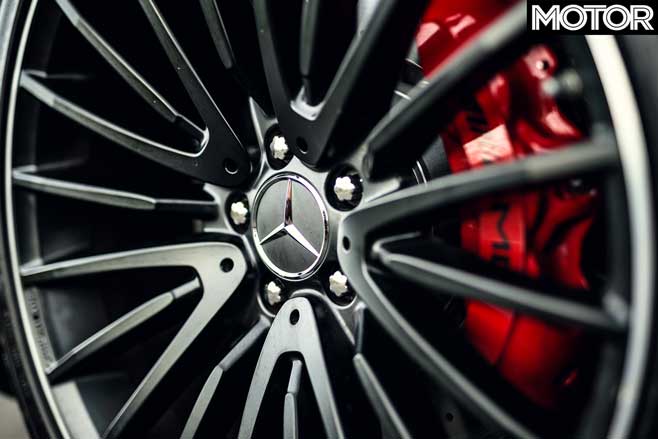
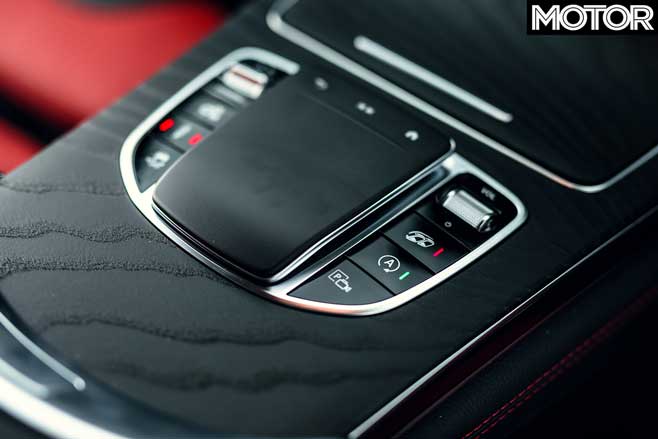
The GLC 63 S is also an excellent every day cruiser. In standard guise it feels exceptionally kitted out, with brilliant front power seats covered in Nappa leather that offer both bolster and support. And the updated MBUX system is more intuitively controlled through a new track pad that thankfully shuns a Lexus-style mouse pointer on screen.
We’re also in love with the AMG steering wheel’s one-touch drive mode buttons. They make it easy to unlock the V8’s delicious, deep growl from the standard fit AMG exhaust and shut it up quickly for more discreet cruising.
And that’s what the GLC 63 S feels so well suited to. Given the car’s broad, squat wagon looks that are backed by a deep, V8 bellow, you’ll get a kick out of its gangster vibe, as if you’re doing something wrong and getting away with it.
But you’ll be hurting the planet less than you think, since the GLC 63 drunk 13.8-litres per 100km on a less-than-well-behaved drive cycle. That’s commendable given it misses out on the cylinder deactivation smarts found in more expensive AMGs like the E63 and S63.
Speaking of, at $164,600 it’s way up there for price. And it’s easy to predict a $157,900 BMW X3 M would eat the GLC 63 AMG for brekky on most roads – which is slightly disappointing for the AMG since it was recently the fastest production SUV around the Nurburgring North Loop.
But really, is that what we want from a mid-size SUV? The muscle-packed GLC 63 S has enough merit to argue it’s worth the ask. Few other mid-size SUVs, except the Jaguar F-Pace SVR (which boasts a blown V8 for $143K), offer the novelty of all-wheel drive grip with V8 brawn.
So while the GLC 63 S might not handle like an A45 on stilts on its newest tyres, that V8 with all-wheel drive grip offers hot-hatch annihilating pace instead, which, considering the laws of physics, may be the best outcome for both car and driver.
2020 MERCEDES-AMG GLC63 S SPECS
- Engine: 3982cc V8, DOHC, 32v, twin-turbo
- Power: 375kW @ 5500-6250rpm
- Torque: 700Nm @ 1750-4500pm
- Weight: 1950kg
- 0-100km/h: 3.76sec (tested)
- Price: $164,600
Rating: 4 out of 5 stars
They say that desperate times call for desperate measure and, in a bid to continue the WhichCar Weekly conversation in these unusual times, Andy, Dan and Scott have regrouped in the virtual world.
What better way to mark our fiftieth instalment of WCW than with the exciting addition of the visual medium? Click on the Podbean link to listen in the conventional manner, or watch the full-motion, full colour, three-way video conference version above!
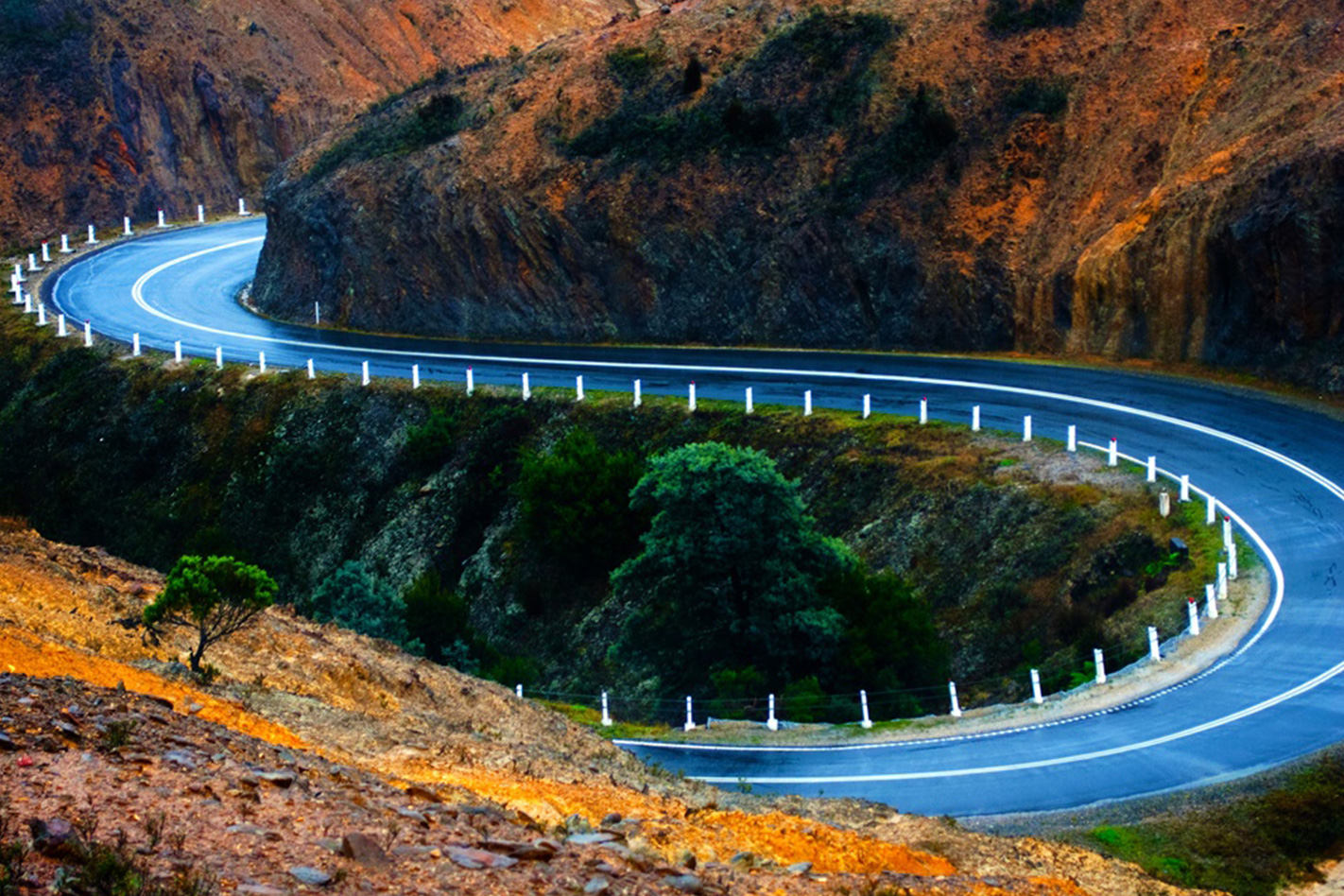
Up for chat today, the boys discuss their favourite driving roads from home – wherever home is or once was – and around the world.
From Scotty’s home stomping ground and the incredible roads of Tasmania, through incredible off-road adventures to Africa and beyond, European destinations and even to the other side of the planet and the green lanes of England. Tune in to find out our top five.
And as if that wasn’t enough, we match each drive with the perfect car. Like a fifteen-course degustation dinner complete with the best booze and company.
Lyell Highway, Tasmania
During these difficult times we will be endeavouring to keep bringing you all of the best from WhichCar Weekly, and if the new visual medium works for you then keep an eye out for more exciting developments.
You can find WhichCar Weekly on all manner of podcast apps including iTunes and Podbean. Please rate, subscribe and leave a review!
You can also follow the day-to-day happenings of the WhichCar team on Facebook, Twitter and Instagram @whichcar.
Listened to or watched the show? Help us out:
- Leave a note in the comment section below
- Leave a review on Apple Podcasts/iTunes
- Subscribe to our podcast
EVOLUTION, biologist Charles Darwin first proposed, is key to survival. Either adapt to change, or die.
With hatches, SUVs and, lately, dual-cabs squeezing medium and larger sedans inextricably towards oblivion, creating yet another Camry clone nobody wants no longer cuts it.
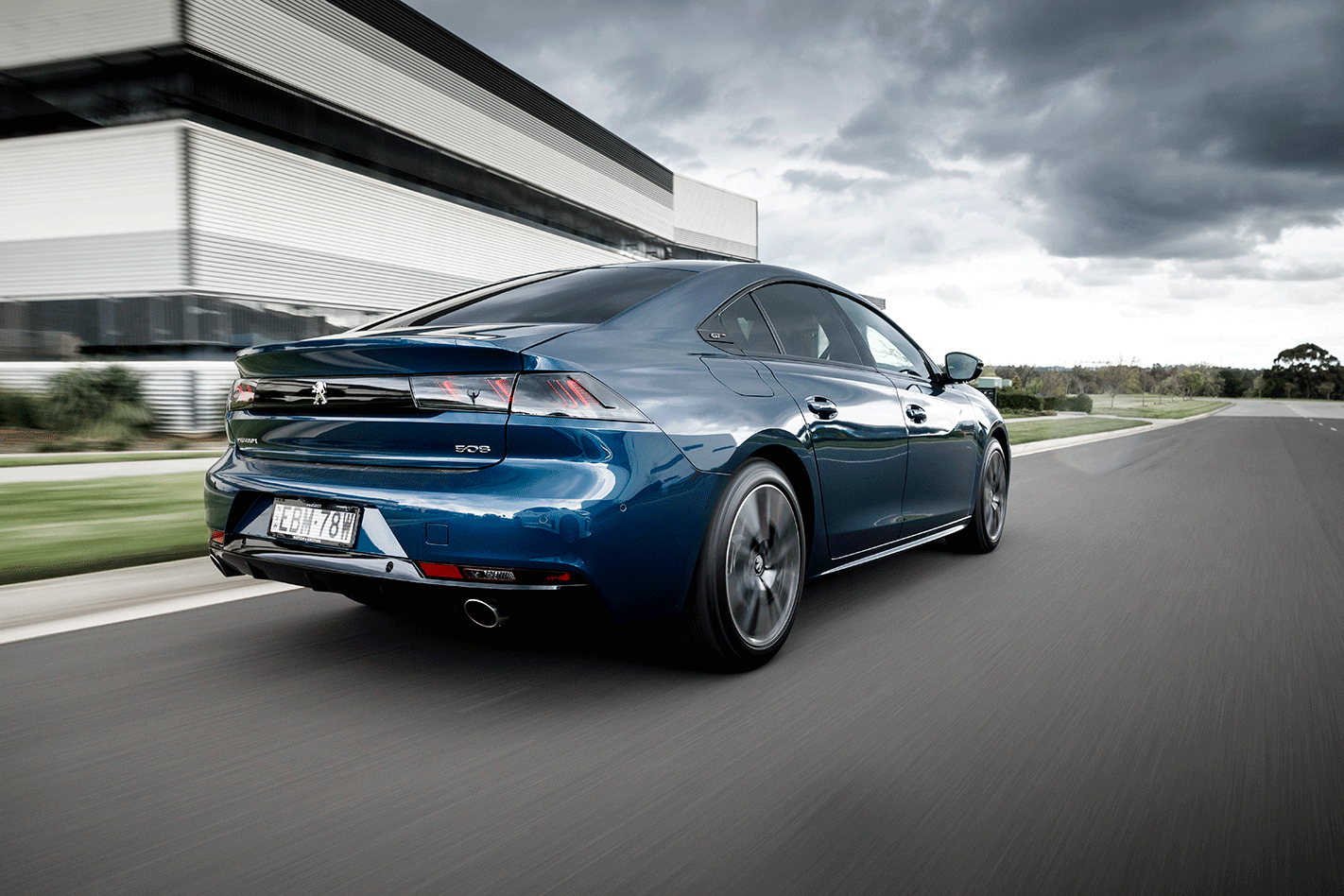
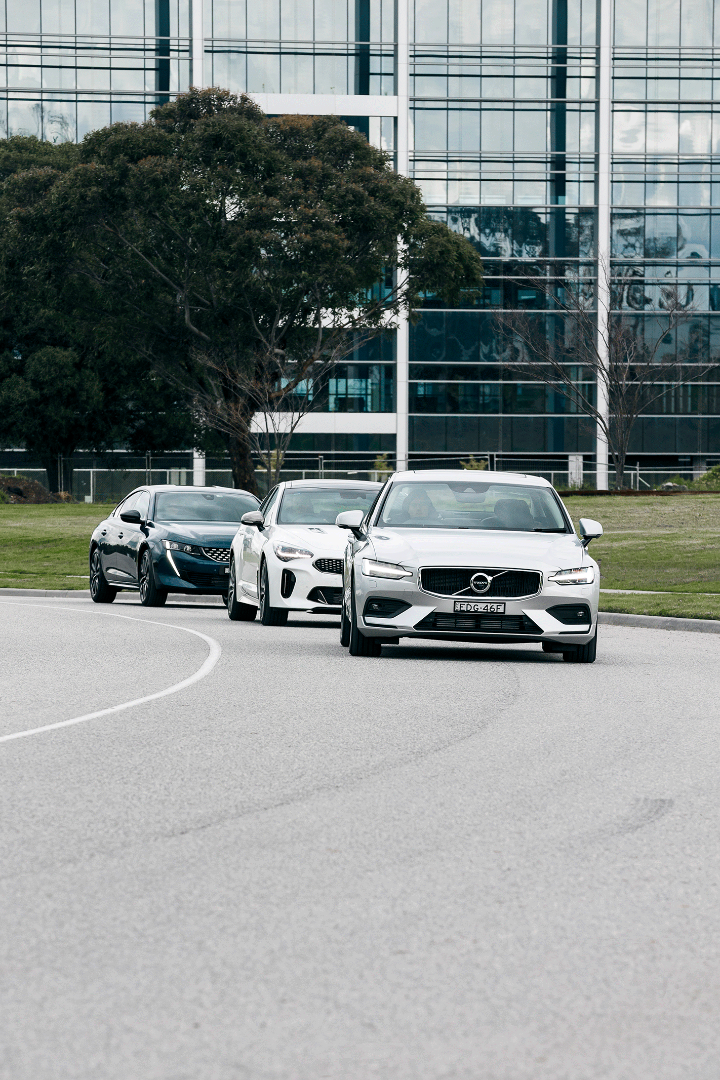
Peugeot finally gets it with the latest 508 – a front-drive mid-sizer so utterly different from its dowdy, underperforming predecessor that surely a new name is deserved. Shorter by 42mm, 53mm lower and lighter than the 2011 original nobody remembers, it breaks convention with a far sleeker silhouette, frameless doors, a tailgate and a fiercely bold interior. A switch to the company’s lightweight tech-heavy EMP2 platform enhances the makeover’s cred.
Inevitably there is a price to pay for such progress. From $53,990 before on-road costs, the 508 GT Fastback rises some $10K over the Volkswagen Passat 132TSI Comfortline that the old bus bumbled behind, but is also a similar amount under the popular Mercedes C200, placing it in a sort of ‘premium-economy’ no-man’s land. Is Peugeot deluded, or is it an Audi A5 Sportback from Sochaux?
We’ll see, but in the meantime, the French fastback is chock-full of features, with few options, to help overcome sticker shock, including stop/go adaptive cruise, auto parking, adaptive dampers, Nappa leather, massaging electric front seats with heating, and a gesture-activated tailgate. Strangely, though, no rear cross-traffic alert. And the engine’s a downsized 165kW 1.6-litre turbo.
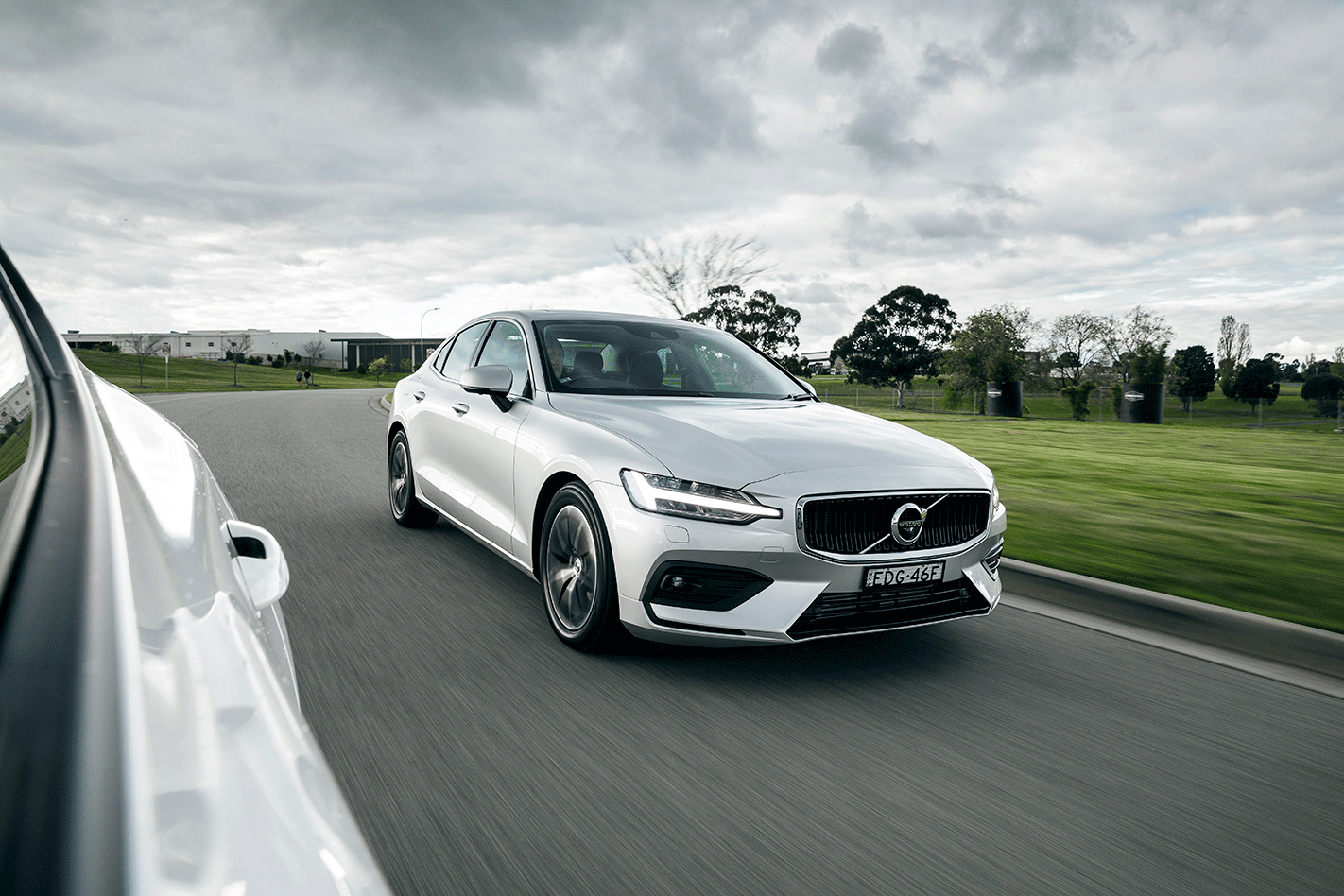
Brand spanking, too, is the Volvo S60, now in its third generation and also gunning to reverse a long-term sales decline. For decades, from the Amazon and 240 to the 850 and S70 that came before, the so-called Swedish Holden was all about the sedan, so it’s no surprise that the now American-made (and focused) series is sticking with convention. This time around, it echoes the styling of the larger S90 (albeit with a kinked hip to keep things interesting), and adopts enough upscale XC60 tech (sharing the scalable SPA underpinnings including its Haldex-supplied all-wheel-drive system) to give the formal four-door some premium cache.
Ours is the entry T5 AWD Momentum, starting from a keen $54,990; an Audi A4 quattro equivalent is north of $70K. And while this S60 misses most of the 508 GT’s aforementioned kit, there’s AWD, Volvo’s leading safety engineering ethos, a 400cc-larger engine and a posh badge. We’re not talking mere trinkets here.
Based on the Genesis-range platform and shared with the marque’s new G70 (Hyundai’s BMW 3 Series chaser), the likeable Kia Stinger, too, sports a 2.0-litre turbo-petrol four. A courageous statement for an economy-car brand, the Stinger evolves the American rear-drive sedan template that formed the backbone of our now-deceased car-manufacturing industry, and so is the closest thing we have to a Holden VF Commodore successor. Complete with the choice of six-cylinder power. Why more Aussies haven’t embraced this lauded low-slung liftback is a mystery.
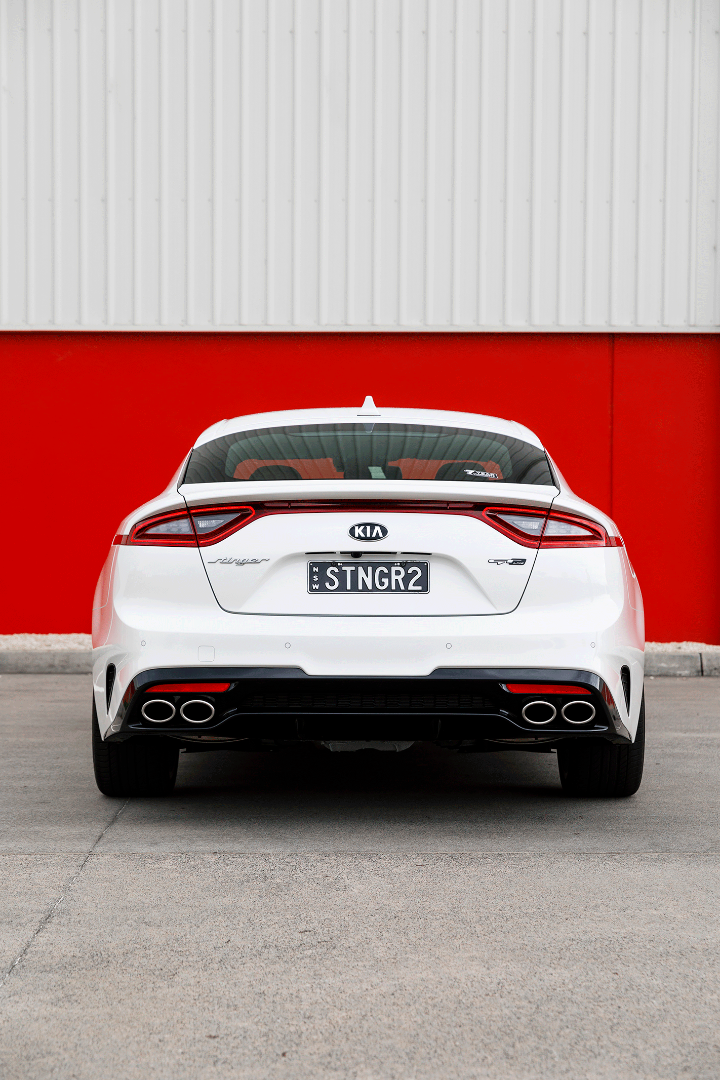
Except we’ve chosen the GT-Line from $56,290 with its 182kW turbo 2.0L rather than the hammering 272kW 3.3-litre twin-turbo V6, though there are cheaper ‘S’ versions of both (in $47K 200S and $50K 330S flavours). However, they lose the GT-Line’s vented/heated front seats, toasty steering wheel, head-up display and standard sunroof, as well as the 508-matching adaptive dampers, blindspot detection (BSD), front sensors, 360-degree camera, auto high beams, front bending LEDs, driver’s memory seat function, high-end audio, smartphone charging and more, making the jump to GT-Line worthwhile. BSD excepted, almost all of these items cost extra in the entry-level S60.
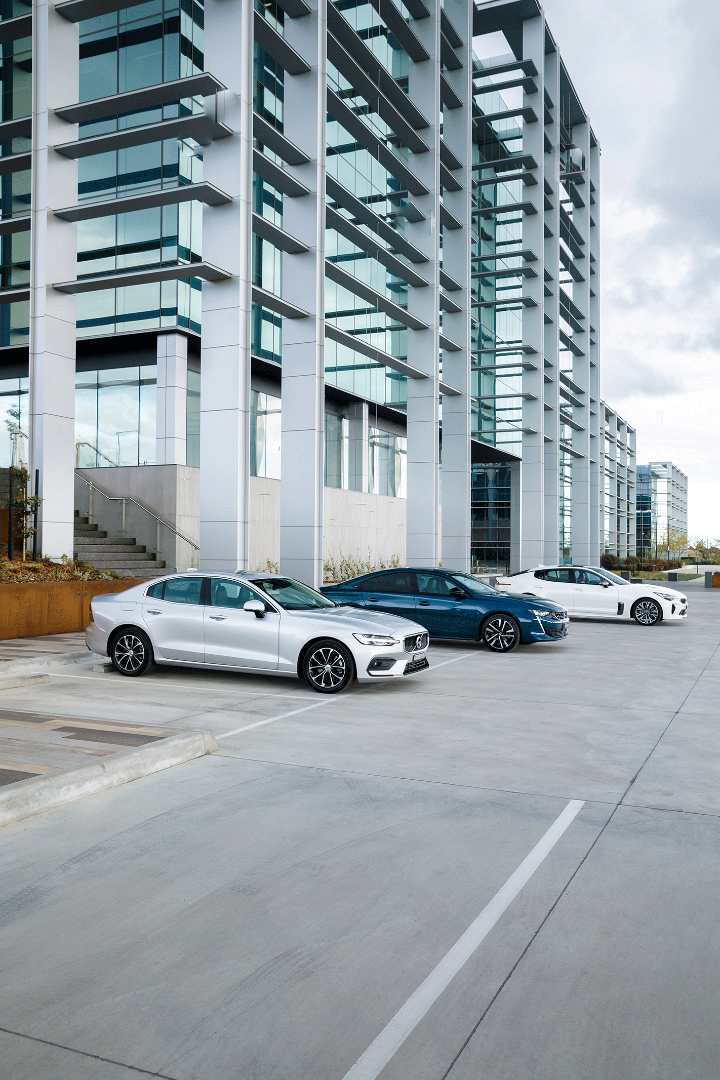
A trio of four-pot turbos, then, but with their eight-speed torque-converter autos differing on which wheels to drive. If nothing else, the modern mid-sized sedan market is no longer mundane.
Obviously, the Peugeot has its work cut out, with just 1598cc. Its BMW co-developed Prince engine just doesn’t have the cubic inches so feted by Aussies. However, what it lacks in size is made up for in smarts, since at 1430kg the 508 weighs hundreds of kilos less than the Stinger at 1731kg and the S60 at 1802kg, an advantage it ably exploits.
Eager off the mark with the least amount of lag, and punchy through the gears thanks to a tight set of ratios from the Toyota-supplied auto ’box, the sweet-spinning 1.6T feels – and sounds – up to the task of taking on the 2.0Ts, gaining speed rapidly and reacting to throttle inputs with instant, sizzling conviction. We even eclipsed Peugeot manufacturer PSA’s 0-100km/h claim by 0.4sec, the GT’s 7.7sec reflecting the car’s muscular flexibility. And while a second shy of the soaring S60, in the crucial 80-120km/h the 508 was just 0.2sec off and pulled ahead of the Kia. Only approaching 140km/h does the Pug’s limited capacity show, the French sedan falling behind both rivals by some margin. Otherwise, the lively 508 sizzles and sprints with surprising vigour, yet is also commendably muted and refined as required. Go France!
The 300kg-plus porkier Stinger demands a determined pedal prod to hustle – and finds no assistance from the auto’s lacklustre tune. It’s also comparatively vocal in Sport, due to a fake exhaust resonance droning away. However, once the tacho rises past 3000rpm, the 2.0T really hits its stride, reacting to the right foot without delay. Of its five driving modes – snoozy Eco, languid Comfort, driver-adaptive Smart, owner-configurable Custom and ‘Okay, I’m on!’ Sport – only the latter is up for a fang. Remember, though, that the twin-turbo V6 for forays into the 5.0sec sphere is but a tick-box away.
If the 508 is brisk and the Kia cruisy quick, then the S60’s performance is hungriest across the spectrum, its turbine-like power delivery reeling in the scenery with effortless ease, even from low revs. Not the most melodic of engines, the T5 nevertheless offers immediate, impressive responses, coming across downright rapacious in Dynamic mode, no doubt aided by the eager and slick auto gearbox. Quite an achievement given the Volvo’s nearly 400kg weight disadvantage over the Peugeot.
Ours was saddled with the fewest kilometres of the three cars on test, so fell short of Volvo’s 6.4sec claim to 100km/h by 0.3sec, but a few more clicks should fix that, meaning the figures should match the stirring seat-of-the-pants feel that’s palpably evident the moment you set off in the Gothenburg hot rod.
Though all three deliver a broadly similar performance experience, the Peugeot’s efficiency is revelatory, returning easily the lowest fuel consumption. A nod to the 508’s supermodel diet: achieving an 8.9L/100km average against the S60’s 10.1L and the GT’s 10.7L while being thrashed is quite the accomplishment.
Here’s another. Keen drivers will also likely revel in the Pug’s nimble dynamics, with those EMP2 underpinnings and the newly featured adaptive dampers enabling the 508 to bring a wider bandwidth of capability to explore and enjoy.
Let’s start in Sport mode. Sharp, fluid and full of feel, the steering provides the type of fast, flowing handling that you can really connect with on a favourite ribbon of road, backed up by a neutral cornering attitude displaying minimal understeer. No doubt quality Michelin Pilot rubber helps with grip and control here. A real livewire, then, the GT offers a painless stepping stone from hot hatch to family hack should life dictate.
Conversely, while a level of firmness remains in everyday Normal mode, Comfort introduces a level of plushness classic French car owners would appreciate – as well as associated bodyroll through tighter turns. Great for isolating yourself from the rough and tumble of decaying urban roads. That’s the rich tapestry of choice the 508 offers; having your cake and eating it too. Germany, take note.
After the Peugeot, the Volvo feels markedly detached. The steering is light and easy, without bothering to involve the driver with information overload, while the handling remains accurate and assured in most scenarios, turning in smoothly if a little wide and loose when hurried. However, even minor bumps upset ride comfort, with the taut suspension transmitting stuff through to the inside despite the T5 wearing the smallest wheels. Switching over to Comfort from Dynamic merely takes the edge off the throttle response. Disappointing.
Doubtless over wet or greasy roads its AWD hardware would transform the S60 into the most confident cornerer of the lot but, as it stands, the Volvo is just a little too remote and unsettled to be engaging or comfortable. For serenity, we prescribe stretching to the $2400 Versatility Pack with air suspension.
Aping the Peugeot with adaptive dampers, the Stinger’s ride is remarkable given its 19-inch alloys, while the steering is marvellously weighted, keen and balanced, but it, too, lacks meaningful tactility. At least drivers can revel in the chassis’ inherent poise and control, bringing fast and fun roadholding combined with pleasing levels of suspension discipline. But, as with the Volvo, pushing the Kia harder can see it become a little ragged and unruly. Maybe it’s a mass thing.
The Stinger’s larger size pays dividends inside, with ample space up front and reasonable rear-seat room. All outboard seat comfort rates highly, the driving position is agreeably sporty and the dash design is nicely executed. The Kia walks a fine line between form and functional practicality. Some of the switchgear is scattered, though, and the multimedia system looks dated and some trim quality is off the pace. But otherwise, with lots of pleasing detailing to discover, the interior remains quite a special place to be. We’re talking about a Kia, remember.
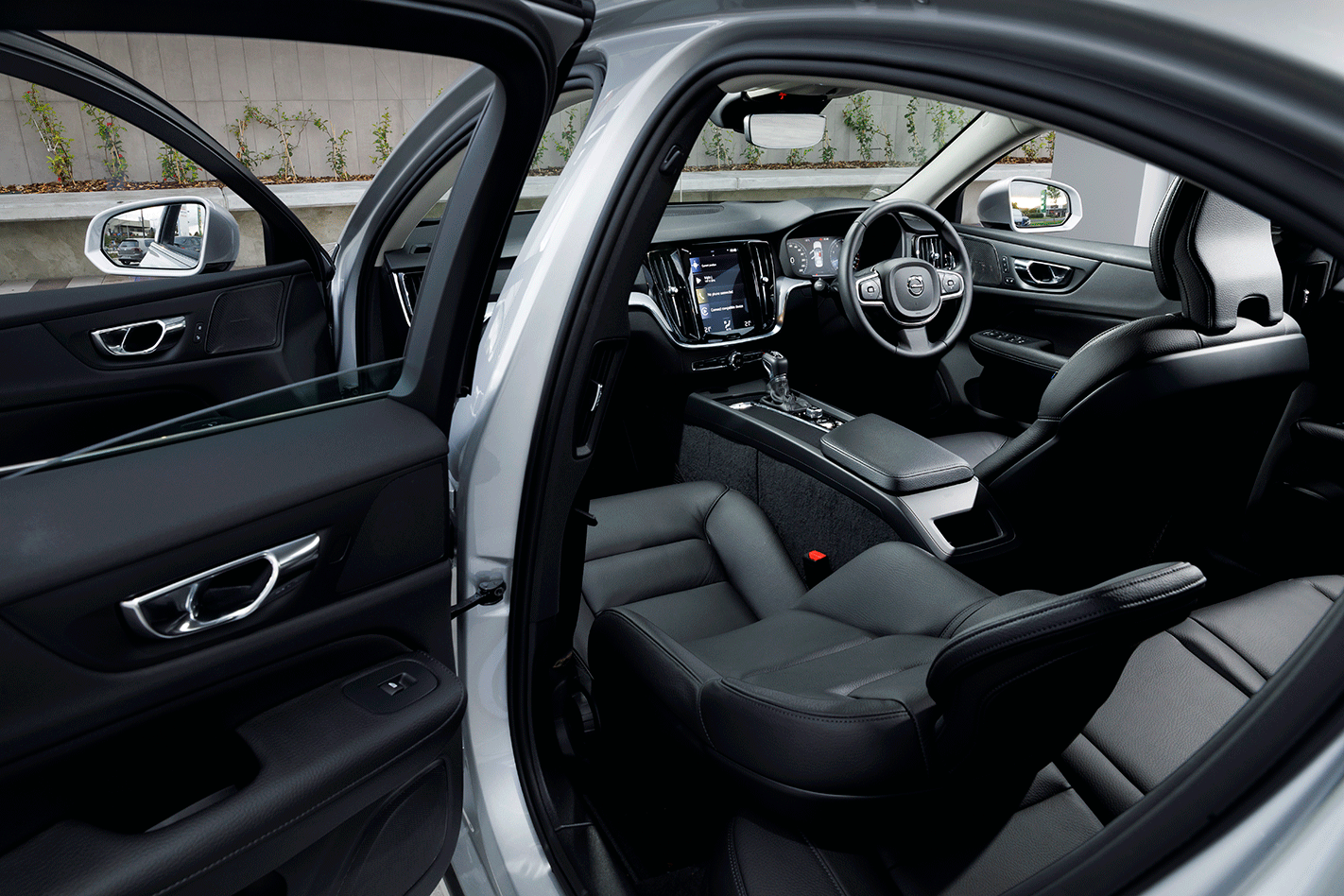
No bombshell to learn that the S60’s cabin is the most spacious, solid and elegant, brandishing a look and feel from the luxury class above, backed up by fine front seats, the roomiest rear and a sense of real craftsmanship in the switchgear. That said, the portrait tablet-style touchscreen interface is fiddly on the move; the Momentum’s ambience is too sombre in this company; the rear cushion is a little short on support, and there’s persistent road-noise intrusion, undermining Volvo’s positioning somewhat.
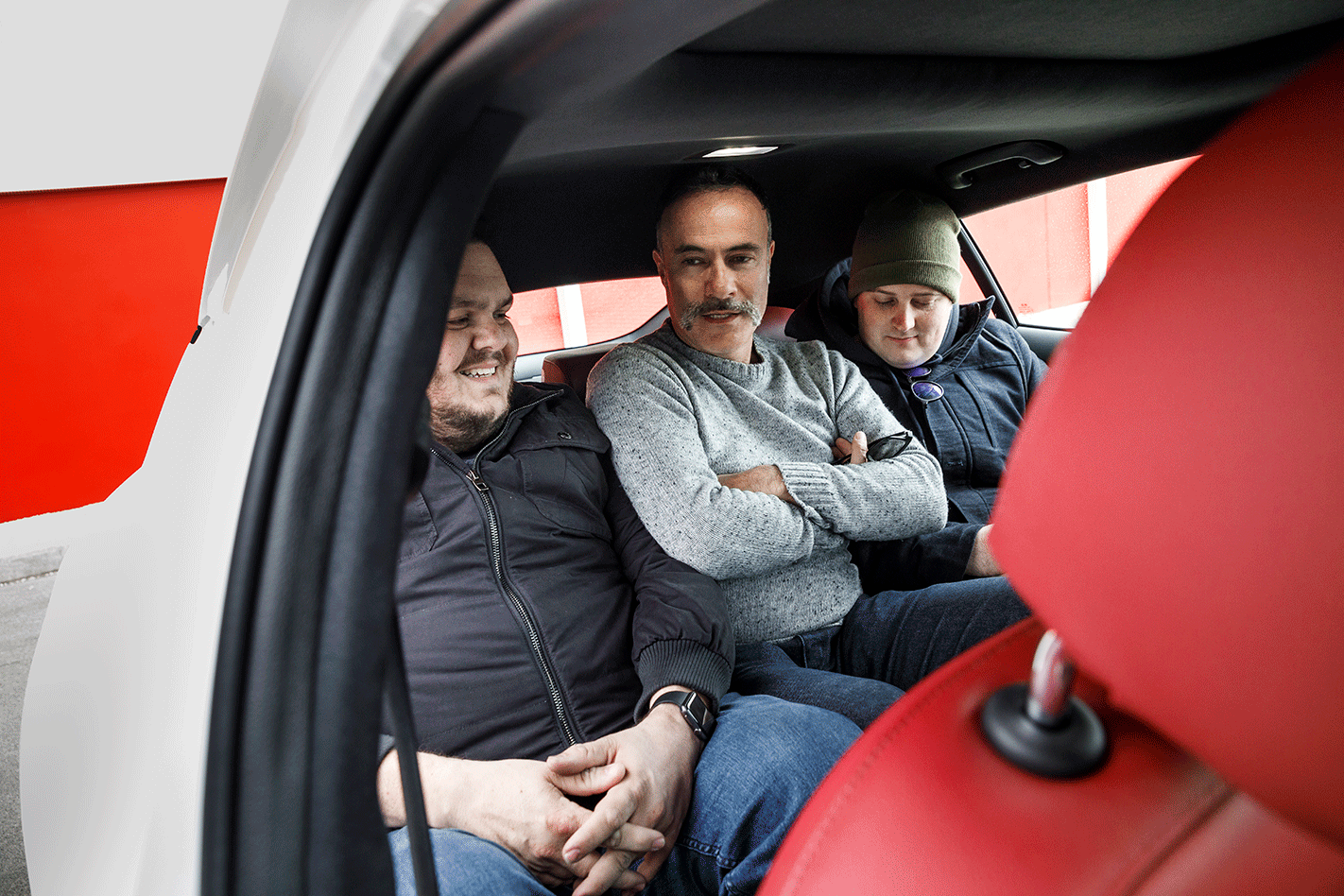
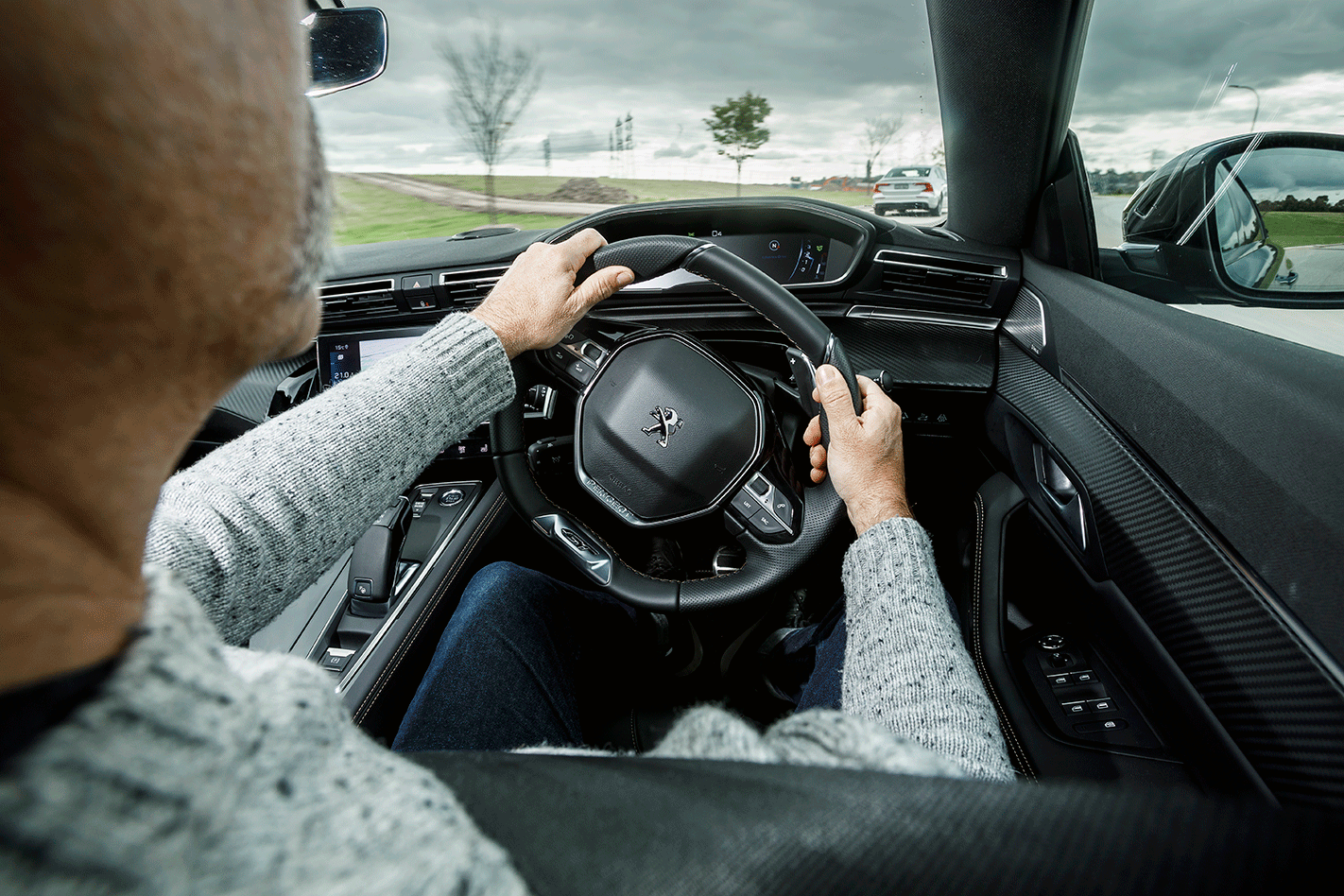
If the S60 is uptown conservative, the 508’s cabin is architectural, futuristic, minimalist and chic. Fit for a Citroen, in fact. Expansive, electronic and audacious, it demands familiarisation and an open mind, yet remains friendly and inviting. The low-wheel/high-instrument layout may not please everybody, but the materials are modern and lovely. Control placement is logical, seating is comfy yet supportive, storage is sufficient, there’s ample legroom out back and cargo capacity is the best on test. Foibles include tight rear-seat accessibility, limited headroom back there, a stubborn engine-start button and poor rear vision (like the Stinger), but overall, the quality, useability and execution of the Peugeot’s interior matches the visuals. Who’d have predicted that?
In fact, almost everything about the 508 challenges preconceptions about larger French cars and their competitiveness. Indeed, though adventurous, the GT is actually a return to old brand virtues of leading driveability, comfort, efficiency, value and practicality, and that’s something we haven’t seen since the 406… hell, maybe even the legendary 504.
The Volvo, in contrast, is more of the same – solid, stolid engineering, just cleverly updated for the 2020s. But despite being speedy, safe and secure, the S60 lacks the rounded refinement and dynamic appeal of the brand’s better SUVs like the XC60.
It may finish third, but the Stinger GT-Line provides verve and panache in a generously specified and rewarding driver’s car that also works beautifully as a big family sedan. Yes, it needs more polish, but we’re glad Kia has had the guts to develop a car so suited to traditional Aussie motorists’ tastes. It deserves much wider success. Just pick the V6 instead.
So, neither the Stinger nor the S60 look forward quite as courageously as the latest, high-flying 508. If any model can save the embattled medium sedan, it’s the evolved Peugeot fastback.
INSIDE LINE
Generic Kia switchgear and dated multimedia don’t diminish spacious Stinger’s racy appeal, with an excellent driving position, welcoming dash, cushy seating, and heaps of storage and gear. Choosing Sport mode squeezes driver’s seat bolsters. Shallow back glass limits already-poor rear vision, and wind noise can be intrusive. Back seat is family-fit, though cargo capacity is a smallish 406L despite liftback, extending to 1114L. Spare is a space-saver.
Lavish and loaded, 508 brings best iteration yet of Peugeot’s ‘i-Cockpit’ dash, though high-dials/low-wheel layout not to everybody’s taste. Full electronic instrumentation offers pleasing configuration choices. Touchscreen can get confusing. Pleated seating adds to ambience, front space is ample but rear headroom suffers due to fastback styling. Big tailgate reveals 487L cargo capacity, stretching to 1537L for wagon-like practicality. Space-saver spare.
Familiar fare aligns S60 with XC SUVs, with pleasing results, even if Momentum spec is a bit dour. Roomiest on test. Firm front seats are supportive, sturdy dash exudes quality, but portrait touchscreen requires familiarisation. Push-button rear headrest folds reminiscent of old Benzes. Nice. Gear lever brings Tiptronic-style control instead of paddles. Rear seat is a bit short, and where’s the in-built child seat? Conventional boot swallows 442L. Space-saver spare.
HYBRID FIREPOWER
Both the S60 and the 508 offer petrol-electric hybrids, though only Volvo’s is currently available. From $85,990, the T8 flagship employs a supercharged 246kW/430Nm 2.0-litre, paired to a 65kW/240Nm motor. Combined outputs soar to 311kW/680Nm for 4.3s to 100km/h. 50km of pure EV driving is possible, as is 2.0L/100km average in combined mode. Expected in the EU by 2021, Peugeot’s hybrid in Sport Engineered guise, using a 1.6-litre turbo/electric motor set-up, makes 294kW/500Nm but matches the Swede’s exemplary acceleration and economy efforts due to its lightness.
Why is Porsche pouring millions of dollars into a relatively unknown car maker in Croatia? It’s a question that recently drew us to the industrial outskirts of Zagreb, the capital of a nation best known for spotty dogs, medieval HBO blockbusters and stunning coastlines. It’s the home of Rimac, a company born from an old E30 BMW that failed to proceed and an admiration of Tesla (the man, not the company) with a generous smattering of YouTube viral magic to bubble things along.
Days before the 2019 Frankfurt motor show, Porsche confirmed it had lifted its stake in Rimac to 15.5 percent, deputy chairman of the executive board Lutz Meschke cryptically saying: “We quickly realised that Porsche and Rimac can learn a lot from each other.”
The unassuming factory on the outskirts of Croatia’s capital almost goes unnoticed by Google. Nondescript warehouses are surrounded by the occasional plot of unkempt grass and weeds. But follow the signs around the back of an industrial estate and professionalism sneaks in, with R-badged flags waving in a gentle breeze. A deep blue hue surrounding the top of the blocky building contrasts the dull sky and glass panels peppered with pictures of cars, the only clue to something special within.
The car park is devoid of any such exotica. There’s a Euro-grey sea of Opels, Volkswagens, the occasional Mercedes-Benz; a couple of Teslas with charging cables snaking from them. Not a single Rimac, which must make it the only car factory where at least some of the machines conceived within aren’t dotting the car park.
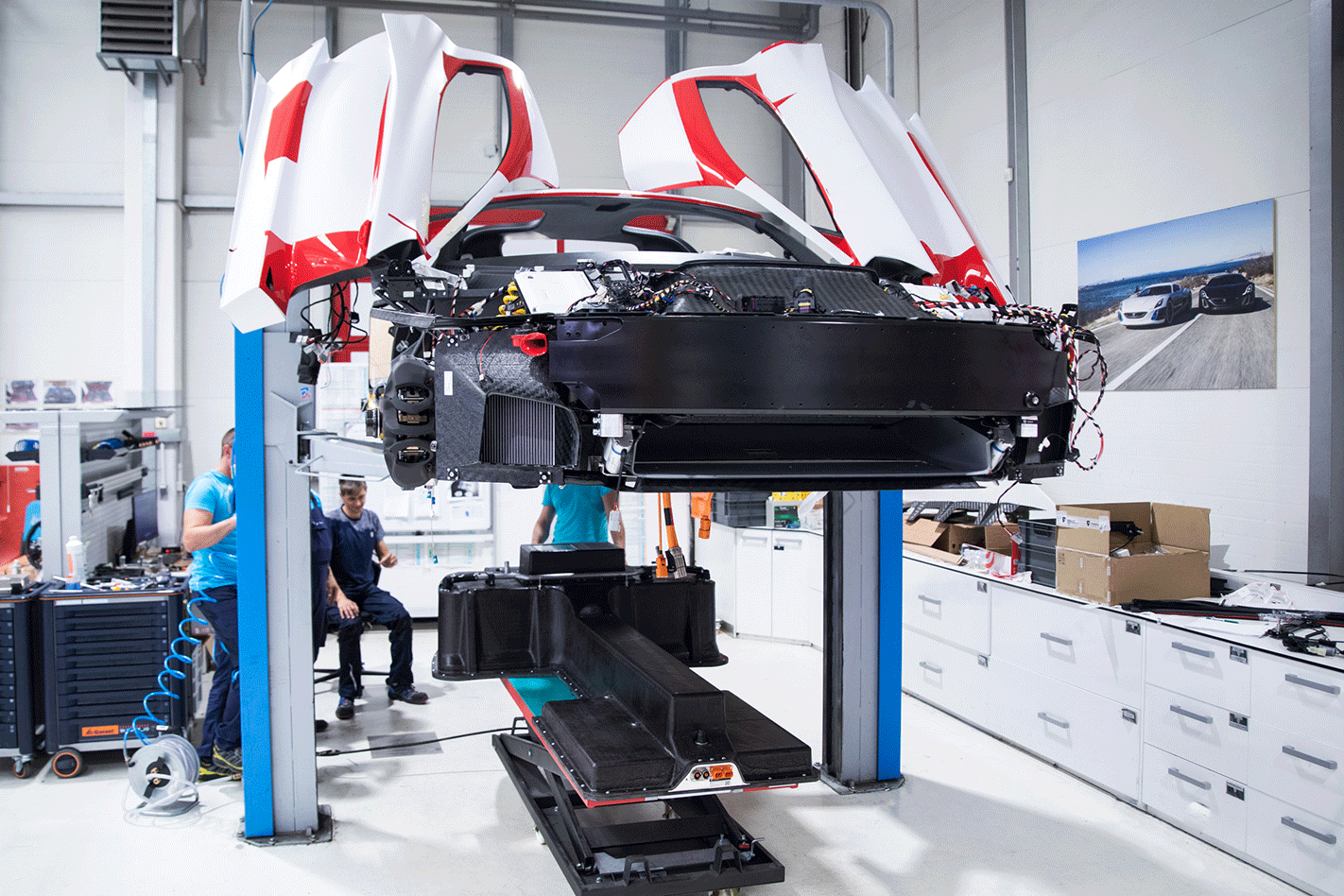
Blame it on volumes. Since producing its first vehicle in 2016, Rimac has completed only five cars; about 0.0036 of a car per employee per year. Even Ferrari manages almost three cars per employee per year, for a total approaching 10,000. A wave of productivity means another three are in various stages of construction during my visit, body panels stacked and awaiting fitment to complete the planned run of eight Concept_Ones. The car is a two-seater with batteries lining its floor and an electric motor on each wheel. While tyres and generic parts are sourced from suppliers, most components – including HVAC units, lights and bumpers – are produced in-house.
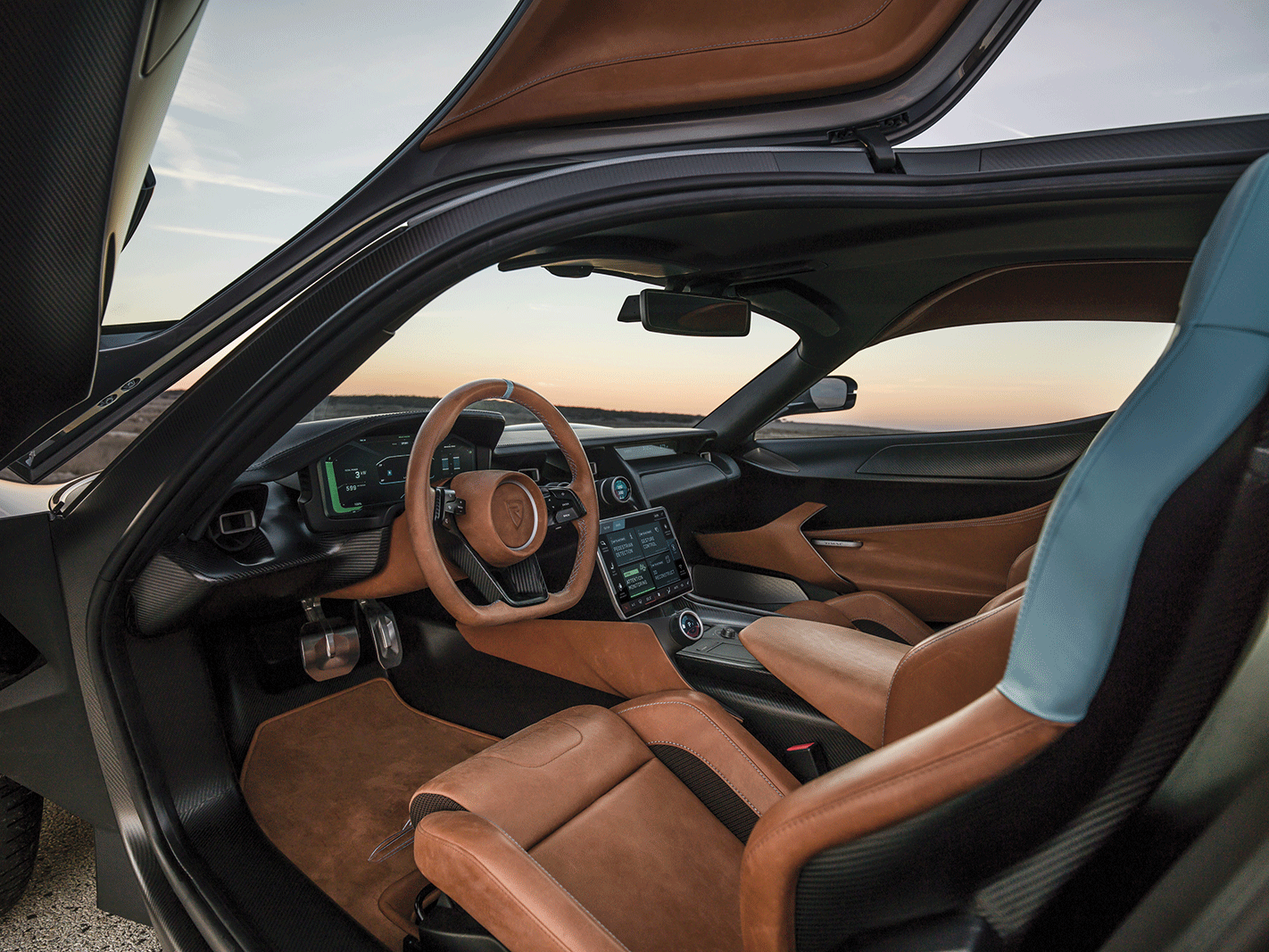
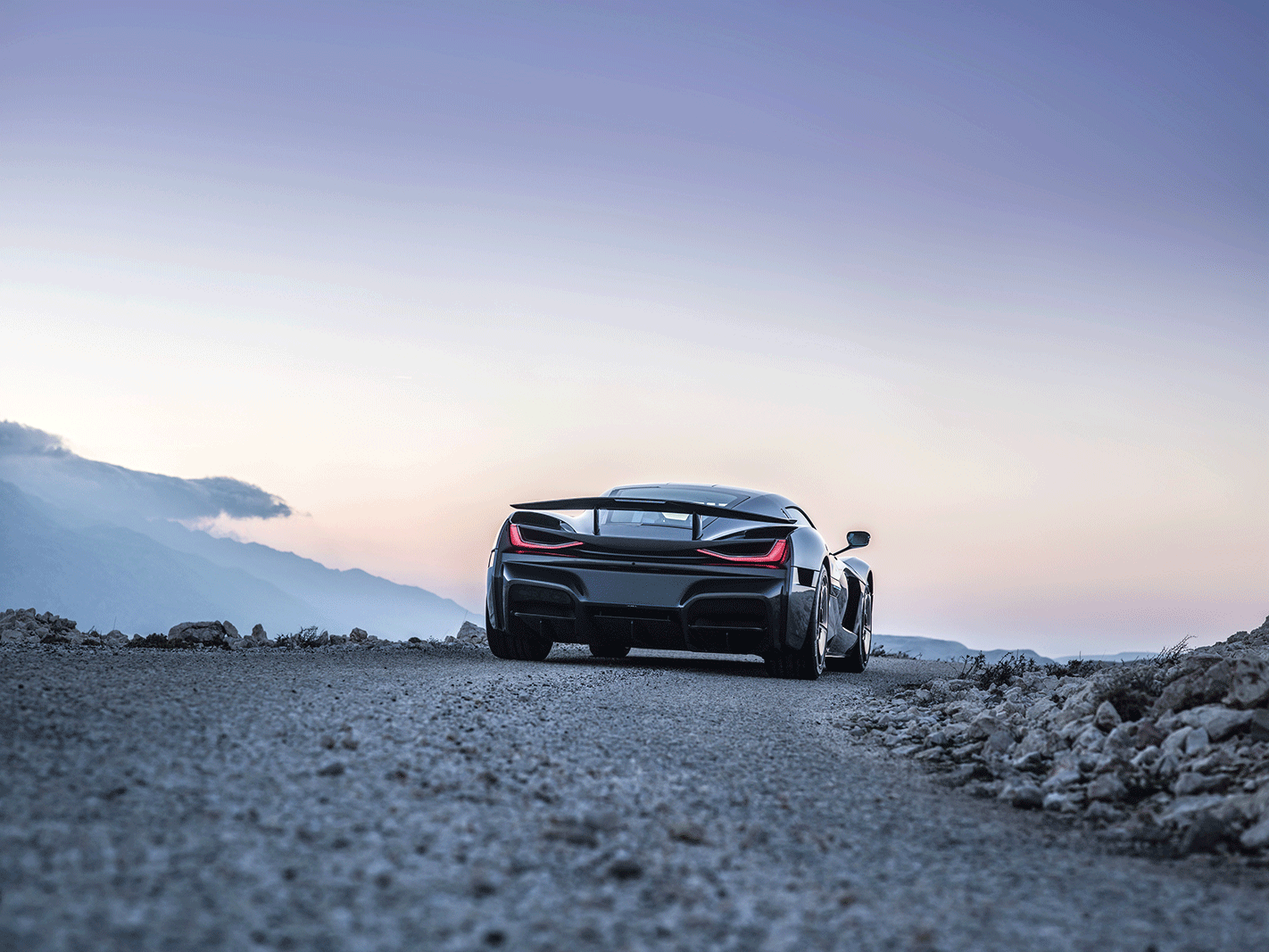
The result is a sleek sports car good for around 900kW. Company founder Mate (pronounced ‘mah-tey’) Rimac describes it as “an electric car built by petrolheads”, an insight into his headspace. For the trainspotters there’s even a hint of Croatian design – Mate, 31, is intensely patriotic – with the air intakes hugging the doors tapered like a necktie invented by the Croatian army. But it’s the upcoming C_Two that is planned to send more of a jolt through the hypercar world. The philosophy doesn’t change – big electric power in a two-seater sports car – but the execution does.
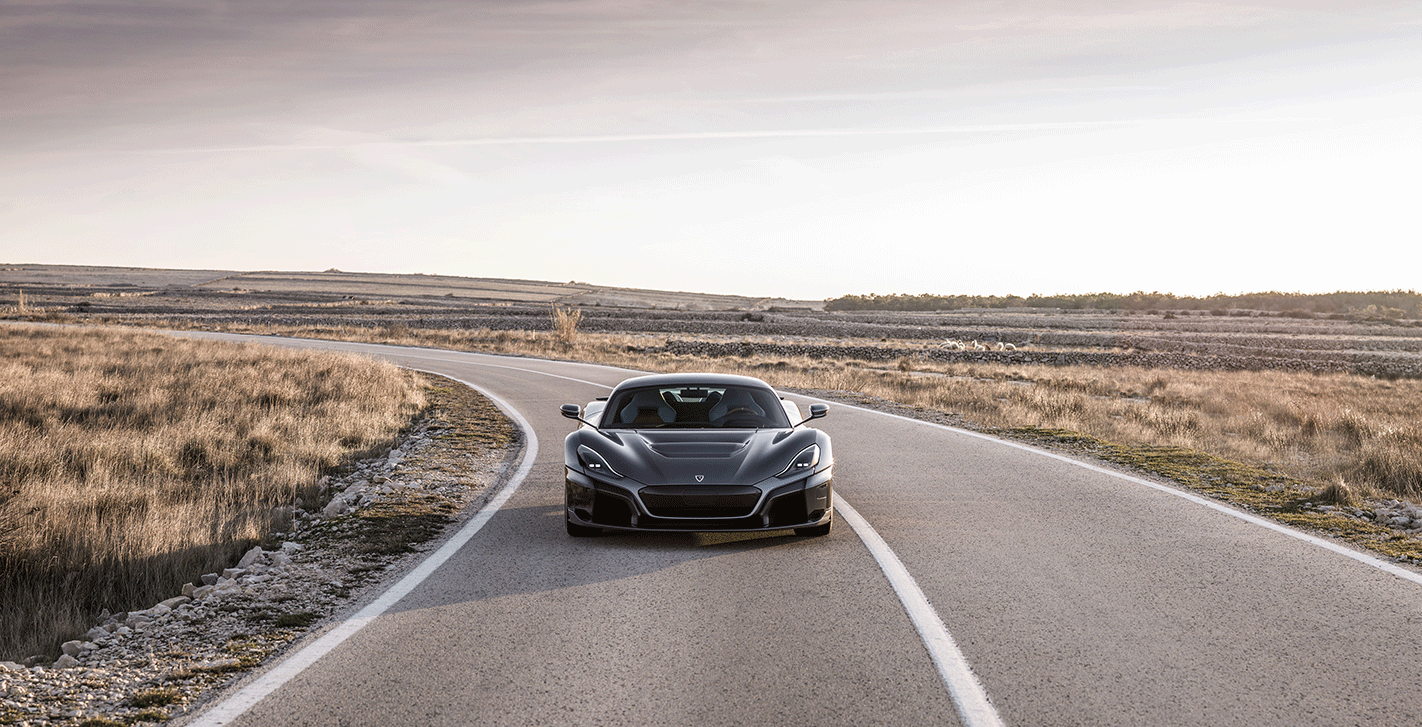
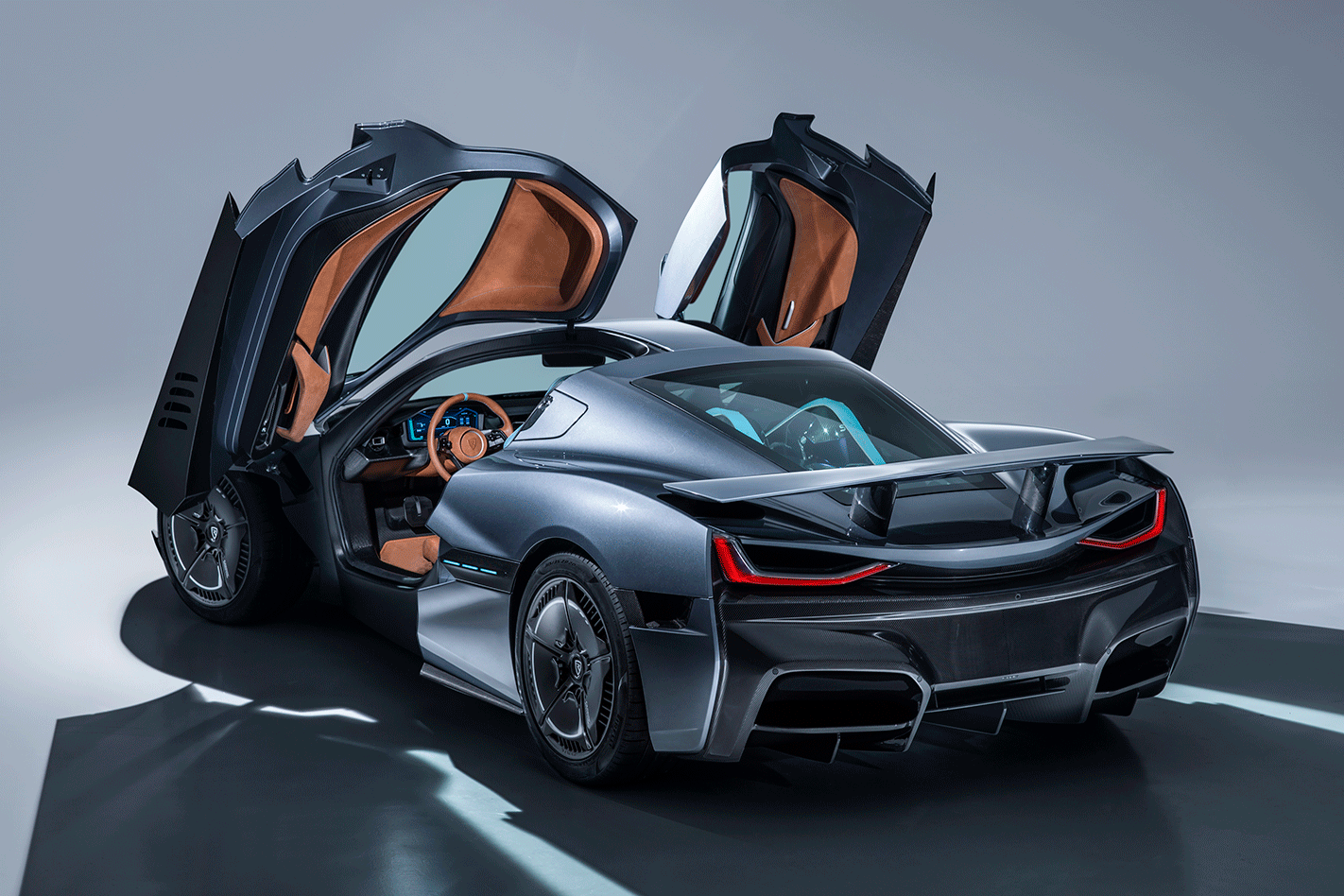
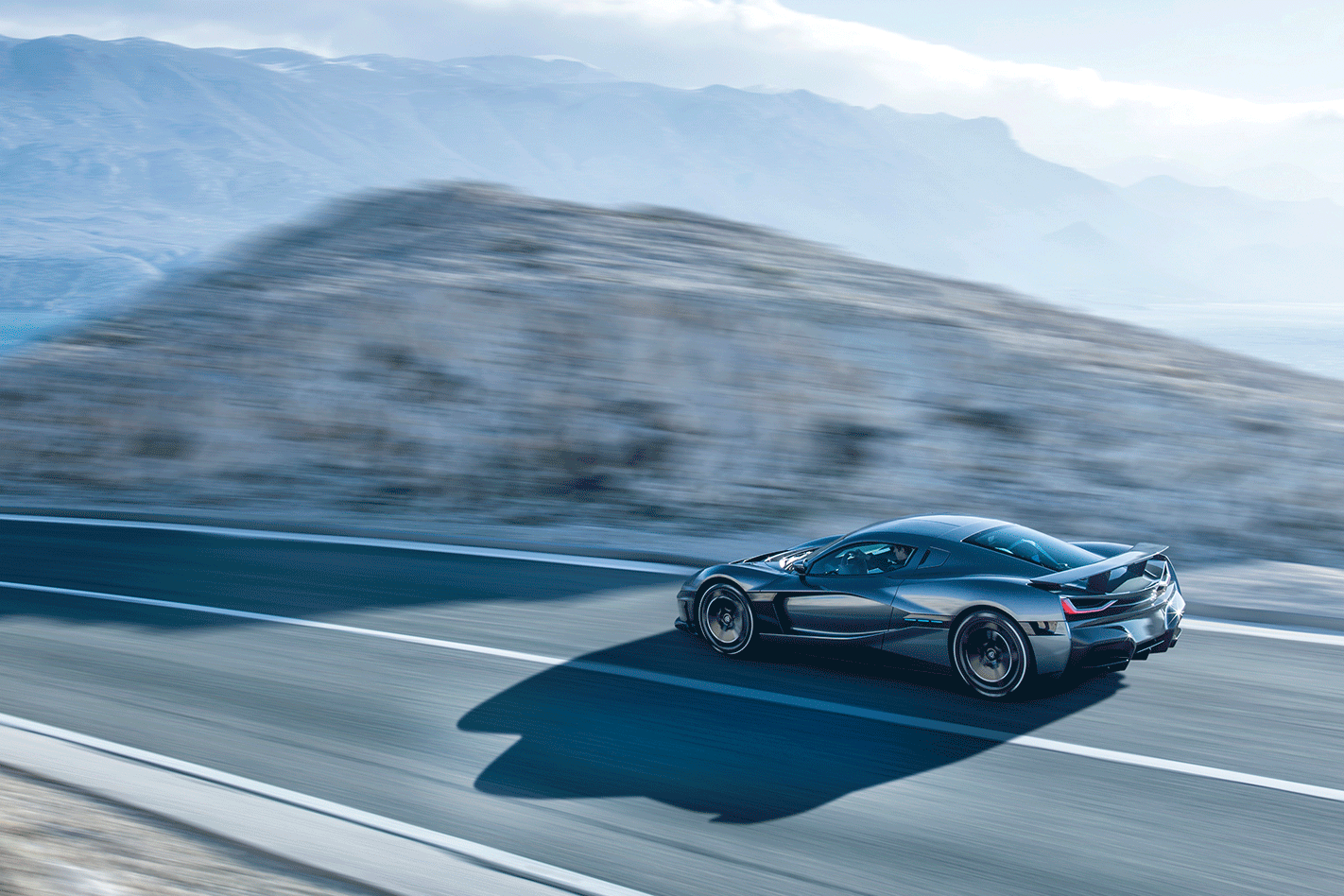
“The Concept_One was more of a learning project for us … the C_Two is light-years away,” says Rimac marketing chief Marta Longin as we wander the clinically clean facilities that are eerily devoid of cars. Claimed to make 1408kW, the C_Two promises new levels of electric performance, blitzing the 100km/h sprint in 1.97 seconds on the way to a Bugatti-like 412km/h. That it boasts a range of 550km reinforces the breadth of engineering beneath its active aero body shrink-wrapping what is claimed to be the single largest piece of carbonfibre on a production car; albeit one with a planned production run of just 150, tiny numbers even in the hypercar sphere. It will take more than four years to build the lot.
But it’s not complete cars that are the financial heartbeat, as Mate learned not long after registering Rimac in 2009. He describes the brand as “helping other companies to build interesting products and electrified, connected, smart vehicles”. Longin chimes in saying the vehicles are “a perfect showcase of what we can do”.
Tracing the Rimac history is radically different to any other brand. There was no bolshy concept car sprouting plans to knock Ferrari off its pedestal. No gazillionaire investor promising to shovel copious funds through the back door until success was guaranteed. And no mysterious alliance with a tech giant intent on showing car makers how to build cars. The one area Rimac did follow a more traditional path was in almost going broke. A Middle Eastern sheik promised investment money; the deal went sour. Mate was more visionary than finance guru. “We had no money, absolutely no money,” says Longin of those early years, recounting the time the electricity was cut off (somewhat of an issue for a manufacturer of electric vehicles). She blames it on various factors, including no investment rating for Croatia and the legal unknowns of doing business in a country not known for producing cars.
One thing Rimac was oozing from the start was innovation, something proudly on display in the trophy cabinet in the foyer. Wires and electronics poke from a glove that looks like something Arnold Schwarzenegger would have donned in Terminator. Called the i-Glove, it was one of Mate’s student creations of how he envisioned the keyboard and mouse could be replaced. Once he could drive, he turned his attention to going quick on wheels, making a garden variety 1980s BMW 323i into the hottest property on local race tracks (see sidebar p91). It was viral videos of his electric E30 making smokescreens that demonstrated the performance potential of electric motors and fired up YouTube. “These videos reached key decision makers and they came knocking, asking Mate how he did it and if he could do it for them,” Longin says.
Before he’d produced a single saleable vehicle, Mate had focused the company’s efforts on crafting the components and software he’d need to create his ultimate car. That justifies the hundreds working there. Every room I enter is buzzing with people, and the occasional dog, the Rimac workforce sitting at 550 and growing. Each employee has access to ‘relax’ rooms with beanbags and PlayStations. The sockless, headphoned folk of Silicone Valley would approve.
“The technology Mate wanted in the car wasn’t even available in the market,” explains Longin. “He wanted to revolutionise this whole industry and show people how exciting electric cars can be.”
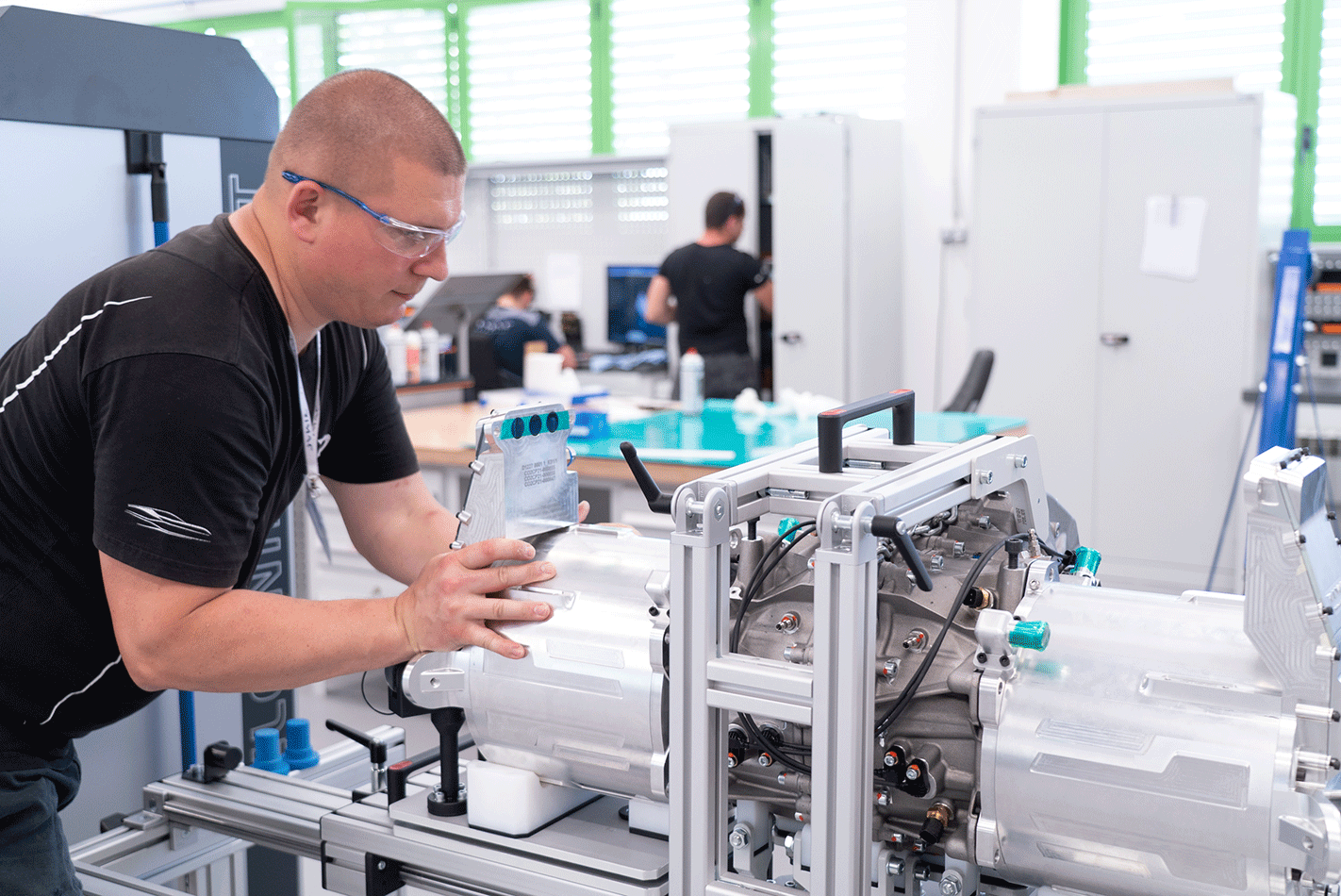
The business model is like no other, one where the vast bulk of revenue comes from outside car makers, the Rimac cars seemingly a sideshow. Not that the Rimac folk are sniffing for ways to fill their time. The place is tense with energy. Rather than robots and production lines there are rows of Dells and Lenovos and young folk tapping away with that chilled enthusiasm generation Z has nailed. On the factory floor you’re more likely to see battery components, crisply carved aluminium and immaculately finished carbonfibre fresh from the schmick autoclaves.
Longin hints of plans for Rimac models that could be produced in bigger numbers, relatively speaking. “We’re always going to be niche,” she stresses, reaffirming hypercars are the focus.
“Mate was very inspired by Tesla’s work and the electric motor and the potential of it,” she says, referencing the often gangly and experimental nature of early EVs that failed to capture mainstream love. Longin describes Mate as a “self-taught engineer” and “stubborn” while letting slip “lunatic” in describing his hectic style. It’s said in jest and with ample respect, but reinforces how different Rimac is to traditional car company chiefs.
The five buildings spread over almost 10,000 square metres are bursting, with meandering hallways and stairways leading to added-on rooms. Rimac in its current guise has reached capacity. An all-encompassing new ‘campus’ is planned nearby, Mate vehemently resisting any notion of relocating to a country better known for car making. Longin says he’s not the sort of person who takes kindly to being told something can’t be achieved, a philosophy that seems to have set the template for the company; that, and his tireless efforts selling Rimac tech.
One big win was in 2016, when Mate received a call from a man he lists as “top of my hero list”, Christian von Koenigsegg, a Swede who realised his dream of creating highly desirable, extremely fast sportscars. Koenigsegg admired the engineering work of Rimac, which could provide the batteries and software for those big electric pulses needed for stupendous acceleration. It helped that Rimac was fresh from raising the second-place silverware in the gruelling Pikes Peak hillclimb the year before with a one-off racer driven by Japan’s Nobuhiro ‘Monster’ Tajima.
Not long after, Aston Martin chose Rimac to produce the beautifully fabricated carbonfibre battery packs for the Valkyrie. Pininfarina followed suit for its upcoming Battista. In May, Hyundai and Kia tipped in €80m (A$129m) to leverage Rimac’s expertise. “Its start-up roots and abundant experience collaborating with automakers combined with technological prowess makes Rimac the ideal partner for us,” said Hyundai executive vice-chairman Euisun Chung at the time.
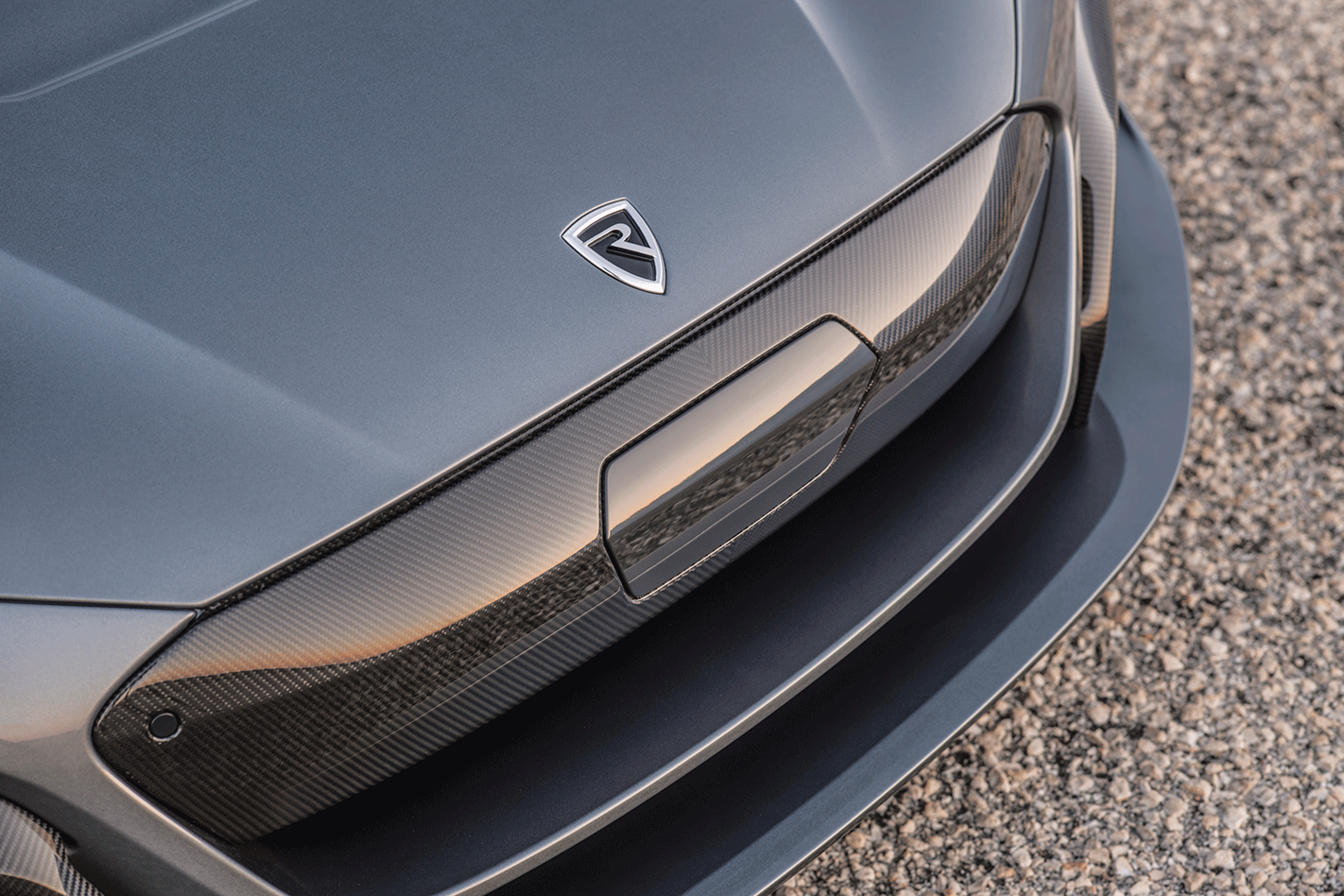
Other undisclosed car makers use Rimac components or software, including complete infotainment units.
The big question mark is Porsche, with that 15.5 percent stake. Where will the Rimac tech pop up in Stuttgart? The Taycan was largely completed before the Rimac deal was inked, and Porsche takes off-the-shelf Volkswagen Group componentry for its hybrid SUVs. Instead, it’s sports cars such as the 911 and Boxster where the Rimac expertise is being directed, something all but confirmed to Wheels in Frankfurt.
Croatian tech in the world’s most iconic sports car certainly would make a statement. All from a brand that started with a robotic glove, an electric BMW and a grand vision.
LIFE IN THE FAST LANE
A Kermit-green E30 BMW still holds the Guinness World Record for a quarter-mile time by an electric car, set in 2012 by Mate Rimac in his electrified 440kW rear-drive E30. The car covered the 400m strip in 11.85 seconds. That’s not far off a Porsche 911 GT3 RS, although the BMW was only travelling 122.23km/h when it crossed the finish line, an indication its initial acceleration was potent, its ability to maintain that enthusiasm into triple figures less so.
What was initially a 323i was converted after the engine gave up during a race meeting. Unable to afford a replacement engine, Mate looked at alternatives, electric being the obvious one to him.
“He was very inspired by Nikola Tesla,” says Rimac marketing manager Marta Longin on the Croatian-born inventor.
In a world of spark plugs and high-octane fuels, Mate’s electric BMW initially received the type of tepid welcome an Aussie politician would get. “Everybody laughed at him,” says Longin. “Everyone was saying ‘What are you doing with this washing machine, you’re never going to win anything, you’re never going to do anything with it’ … until he started winning.”
Rimac plans to restore the BMW that is four years older than him for the 10th anniversary, in 2021, of the Concept_One’s unveiling at the Frankfurt motorshow. “We just need to find time and people to work on that project,” Longin says.
A Singaporean Air Force pilot peels off his aviator shades (managing to look disturbingly like Tom Cruise in Top Gun as he does it) and casts an appreciative eye over the low, sleek yet bulbous profile of the new Porsche 997 911 Turbo. “You’ve got a pretty cool job, eh?“ he grins. Maybe so, but if I could have half a crack at your F-16… I think to myself.
This feature was originally published in MOTOR’s October 2006 issue
As his companions scream overhead in formation, our small, not-so stealthy million-dollar trio deploys from Darwin. Our mission: to run hard, fast, and low in Porsche’s devastatingly effective 997 Turbo on the unrestricted roads of the Northern Territory.
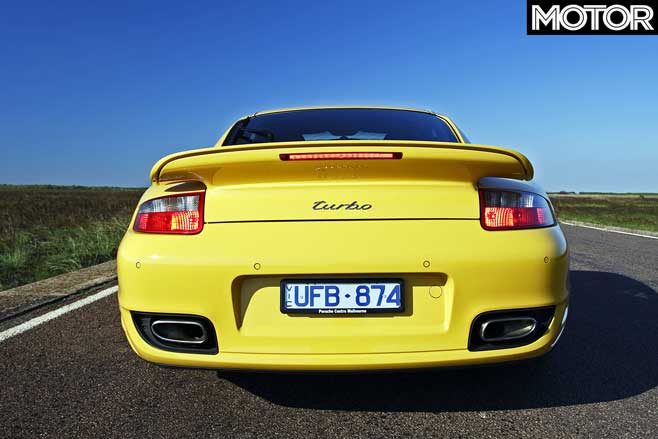
Launched to the public in Europe last month, 120 Aussies have indicated their desire to park the $337,000 ($345,000 in five-speed Tiptronic guise) Stuttgart screamer in the garage, but 40 are going to have to wait at least 12 months.
And, much like a modem fighter bomber, it’s a rolling testament to the depth of Porsche’s engineering talents. Based on the new Carrera 4 bodyshell, the Turbo, despite being wider and safer than the 996-gen 911 Turbo, is actually 14kg lighter than its predecessor, thanks partly to alloy doors, pressure-cast frame rails and trunk lid.
Powered by a worked-over version of the previous Turbo and GT3 3.6-litre flat-six, the dry-sumped boxer differs from the current Carrera engines in a number of areas, chiefly in its two-piece design (the Carrera‘s crankcase and cylinder block is cast as a single piece) and its cylinder dimensions (a wider bore and a shorter stroke).
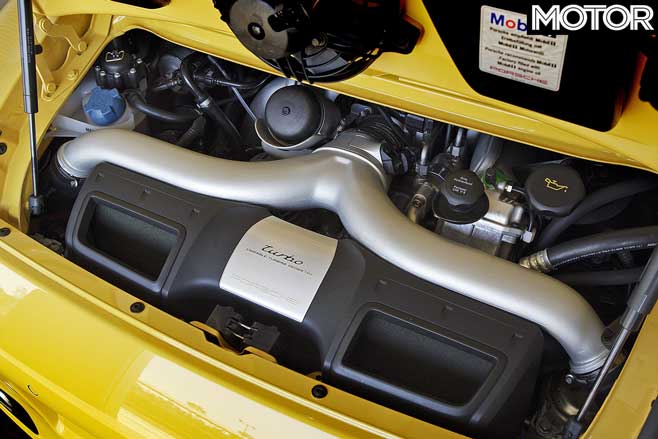
Unlike the previous turbomotor, the twin KKK K24 turbines are equipped with variable vanes on the inlet side. At lower revs, the vanes – capable of withstanding gas temperatures of 1000°C – close up to speed up exhaust gas velocities and wick up the boost more quickly, then open up as the revs build to provide oodles and oodles of lovely oomph.
It’s not all about horsepower, though; this thing packs a serious payload of computing power in its chassis management systems. Based around the Porsche Traction Management set-up, latitudinal and longitudinal sensors at various points on the chassis report back to the PTM computer, which in tum combines with the Porsche Stability Management System (PSMS) and the Porsche Active Suspension Management (PASM) two-stage electronic damping system.
Weapons of traction construction? Absolutely. In the normal setting, the Turbo is comfortable, despite its stiff chassis and large wheel diameter. Firm it all up, and it’s a bit skittish and nervous in low-speed, high-amplitude bumpy stuff. Press on a bit, and it makes a lot more sense, stiffening both the roll and the pitch/dive planes.
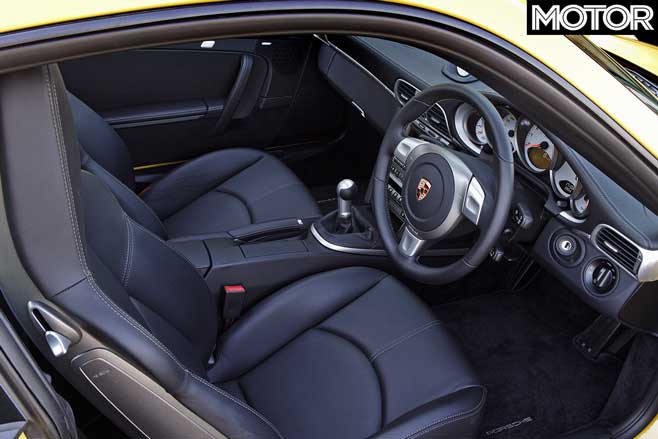
Its chief chassis weapon, though, is the electromagnetically controlled multi-plate clutch pack that replaces the previous model’s viscous unit. Able to divert torque on demand, all three systems (four if you could the antilock braking computer) work together in a surprisingly unobtrusive way to make this 353kW monster as easy to drive as a Golf GTI.
The heavily revised Tiptronic S box can make things even easier still. Still no PDK double-clutch box yet, you ask? Working on it, says Porsche (see below). In the meantime, the semi-automatic ‘box has been so heavily reworked that Porsche feels it can no longer ask buyers of its lower-end cars to pay the same amount as you’d pay to have Tip in your Turbo. And it’s not a bad thing, though, as the six-speed manual gearbox has been beefed up to handle the extra loads, and is a thing of beauty and precision to use. Clutch modulation can be a bit tricky, though.
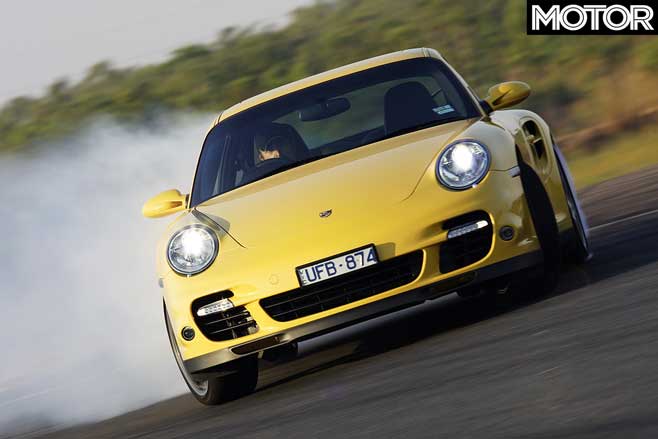
If there’s a better way to explore the abilities of such a machine than touring it in the Top End, I’d like to see it, get its address and move there. Time and again, as we traverse the vast tracts of unlimited speed-zone roads, the digital speedo rolls up to, on and past the 300km/h mark (there is about 6km/h difference in true and indicated in our test Tip-equipped Turbo, according to our Racelogic GPS-based DriftBox test tool).
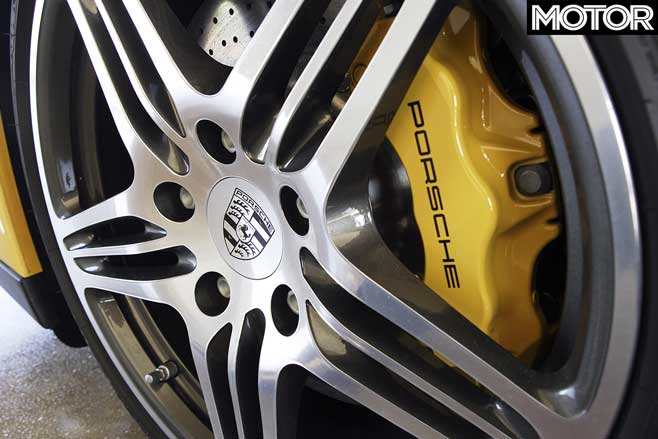
The tyre roar drowns out any chance of conversation and hands grip the wheel ever so gently as eyes widen, straining to see over the horizon. There’s the merest sense of the front-end lightening under power, but the significantly revised aero tweaks – the underside is impressively smoothed over and incorporates cooling vanes to direct air towards, not only the 350mm front brake rotors but the same-diameter rears, as well – are doing the job, forcing the Turbo to the rippled tarmac.
And it’s doing it all so ridiculously easily; steering inputs are minimal, the throttle answers the call whenever you want it, and there’s suspension travel left to absorb road joins and patches with aplomb. Enter a comer at the wrong end of 200km/h and ease off the gas a bit quickly in most cars, and it’s usually goodnight Irene. In the Turbo, it’s nothing. And I mean nothing. It’s a car that is as user-friendly and as sedate as a shopping centre ride-on toy but, in fighter-bomber terms, it can level cities when the desire takes you.
Straddling the crown of the road, eyes straining to see over the next horizon line, we’re covering more than 100 metres a second before traffic (it‘s still got to be 800m away, but I’m not taking any chances at these velocities) forces us to wash off almost 200km/h, the massive Michelins lifting rocks right out of the coarse chip road surface as the huge pads rip into the steel rotors, the clutch-pack centre diff, busy shuffling torque across the diagonal axes of the car, commands the rear diff to open up and the car sucks into the road to pull up straight and true with plenty in reserve. This thing is simply astonishing.
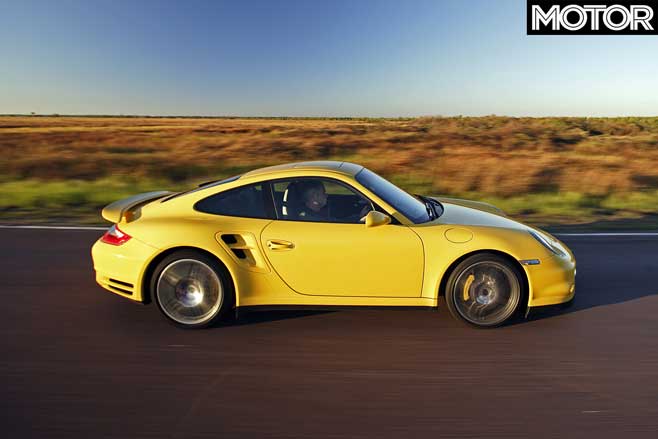
In fact, it’s so competent, so accomplished, that it’s possible to accuse the Turbo as being, well, too polished and too composed… too Mr Spock and not enough Captain Kirk, if you will. It’s a car that keeps some pretty serious company (think Lamborghini Gallardo and Ferrari F430, for starters) and its almost clinically capable abilities may pale in the bright light of a thoroughbred Italian sex-bomb.
Spend a bit more time with it, though, and it’s impossible not to come to sincerely admire the absurdly deep reserves of strength aid talent that the Turbo has. It’s an incredibly well-executed car in so many respects. It’s not perfect, by any means; tyre roar intrusion into the cabin gets annoying after a couple of hours on coarse chip macadam, rear three-quarter view isn’t great, and baggage stowage is a wistful dream; not a great asset in a car that’s as good at devouring vast distances as this one. For $350,000, I’d like my Turbo to look a bit more different than a stocker 911, too.
But it‘ll eat pretty much every Italian supercar for breakfast (Porsche claims a 3.7-second time to 100km/h in the Tiptronic S-equipped car, and we did it two-up, full of fuel and stuffed with luggage), and it’ll do it all day. Another sortie, you say? Tally ho!
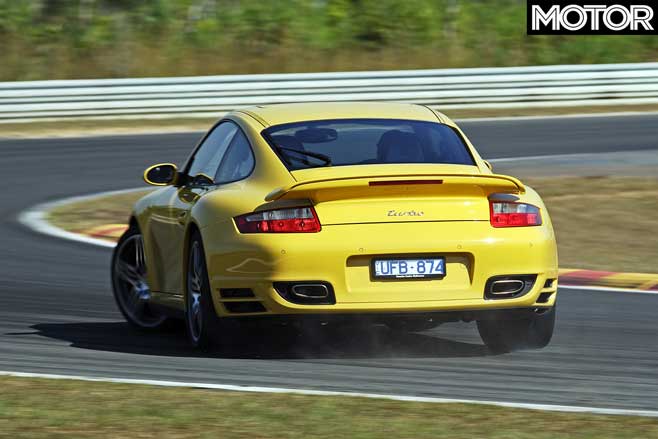
2006 PORSCHE 911 TURBO SPECS Engine: 3.6-litre flat-six, DOHC 24-valve, intercooled twin-turbo Power: 353kW @ 6000rpm Torque: 3620Nm @ 1950-5000rpm Bore x Stroke: 100.00 x 76.4mm Weight: 1585kg Power/Weight: 223kW/tonne Transmission: Six-speed manual/five-speed auto Suspension: MacPherson strut, coil springs, anti-roll bar (f); multi-link, coil springs, anti-roll bar (r) Brakes: 350mm ventilated & drilled discs, six-piston calipers (f); 350mm ventilated & drilled discs, four-piston calipers (r) Wheels: 19 x 8.5-inch (f), 19 x 11.0-inch (r) Tyres: Michelin Pilot Sport; 235/35 ZR19 (f), 305/30 ZR19 (r) Price: $327,000 (manual)
Box Setting
Ever since the Porsche Double Clutch (Porsche Doppler Kupplung, or PDK in official nomenclature) five-speed twin-clutch debuted in Porsche’s 962 endurance racer in 1985, people have been wondering when they would put it in a production car.
Well, they have, sort of. Thanks to its ties to the VW/Audi empire, the basic premise of Porsche’s twin-clutch layout debuted in the Audi TT 3.2 a couple of years ago, and now sees duty across the group, including in the uber-sexy Bugatti Veyron.
It was strongly rumoured that the 997-gen 911 Turbo would be the first Porsche to cop the new system, but instead it gets a heavily revised five-speed Tip ‘box.
“It’s not yet to a level that a Porsche customer would be happy with,” insists Dr Erhard Moessle, GM of the 911 Turbo project. “When it is ready, we will offer it.”
It’s thought that the ‘box’s biggest bugbear is its weight – rumoured to be almost twice as heavy as a Tiptronic ‘box.
- Disruption to car events across the globe
- No Formula 1 until at least June
- American events less affected
The majority of series and events were initially looking at simply postponing, but the rise of COVID-19 has kiboshed those plans. A lot of events will be simply waiting until 2021.
How seriously are organisers taking it? At time of writing, the 2020 Formula 1 season has lost eight races. And uncertainty is rising for the rest of the calendar. We’ll attempt to update this story as and when we hear of changes to schedules.
Virgin Australia Supercars Championship
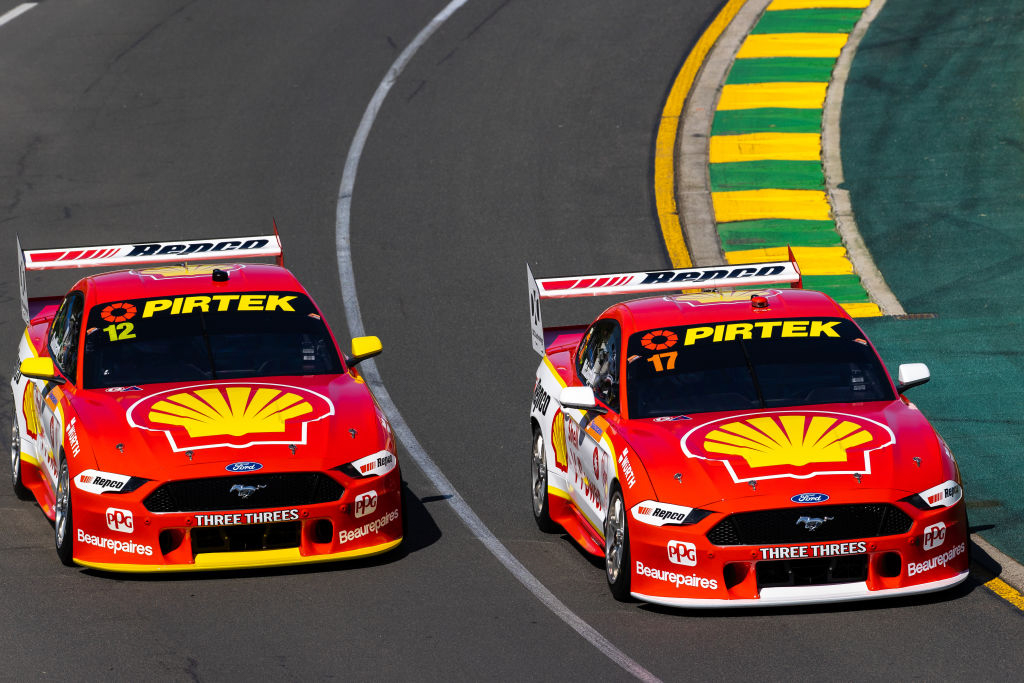
At home, there will be no Virgin Australia Supercars Championship racing until at least June, with fears the entire season is under threat. That said, they are trying to replace some of the action with an ‘Eseries’.
Adelaide 500 20-23 Februrary, event completed
Melbourne 400 12-13 March, event cancelled (new date unknown)
Tasmania SuperSprint 3-5 April, event postponed (new date unknown)
Auckland SuperSprint 24-26 April, event postponed (new date unknown)
Perth SuperNight 15-17 May, event postponed (new date unknown)
Winton Super400 5-7 June, unaffected
Townsville 400 26-28 June, unaffected
Darwin Triple Crown 17-19 July, unaffected
Sydney SuperNight 28-30 August, unaffected
The Bend 500 18-20 September, unaffected
Bathurst 1000 8-11 October, unaffected
Gold Coast 600 30 October – 1 November, unaffected
Sandown 500 20-22 November, unaffected
Newcastle 500 4-6 December, unaffected
Car events cancelled by coronavirus
Events across Europe and America are being cancelled at an alarming rate, as organisers react to lockdowns and public health warnings. Here we round up the car meets and events that hundreds of thousands of you were looking forward to:
Geneva Motor Show 5-15 March, cancelled. Read the full story on the cancellation of everyone’s favourite motor show here
Donington Historic Festival 24 March, postponed (new date unknown)
Techno Classica Essen 25-29 March, postponed (new date unknown)
Goodwood Members’ Meeting 28-29 March, postponed (new date unknown)
Detroit Motor Show 16-26 June, cancelled.
Bicester Super Scramble 23 June, cancelled
Yorkshire Motorsport Festival 26-28 June, cancelled
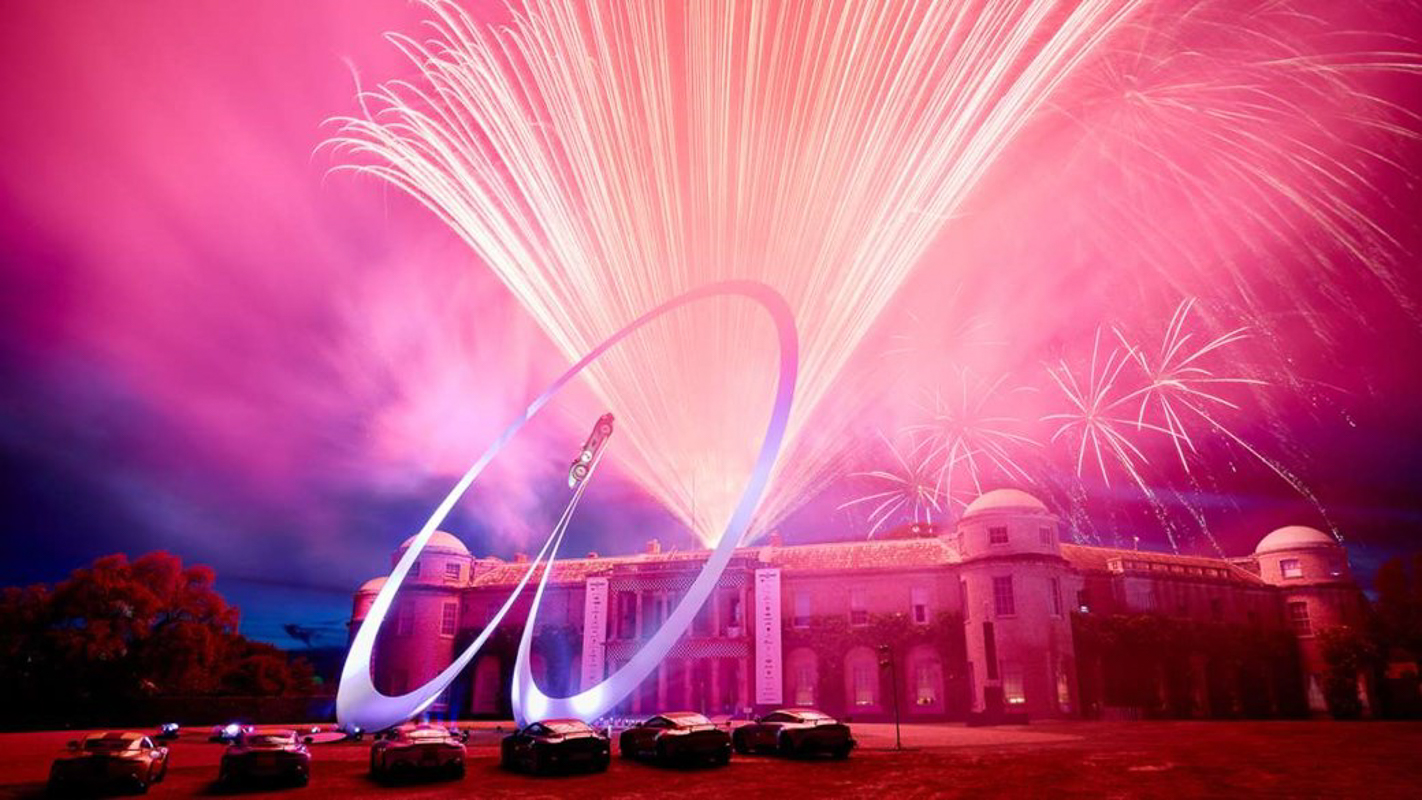
Goodwood Festival of Speed (above) 9-12 July, postponed (new date later in 2020 unknown as yet)
Goodwood Revival 11-13 September, unaffected
Paris motor show 1-11 October, cancelled.
Formula 1
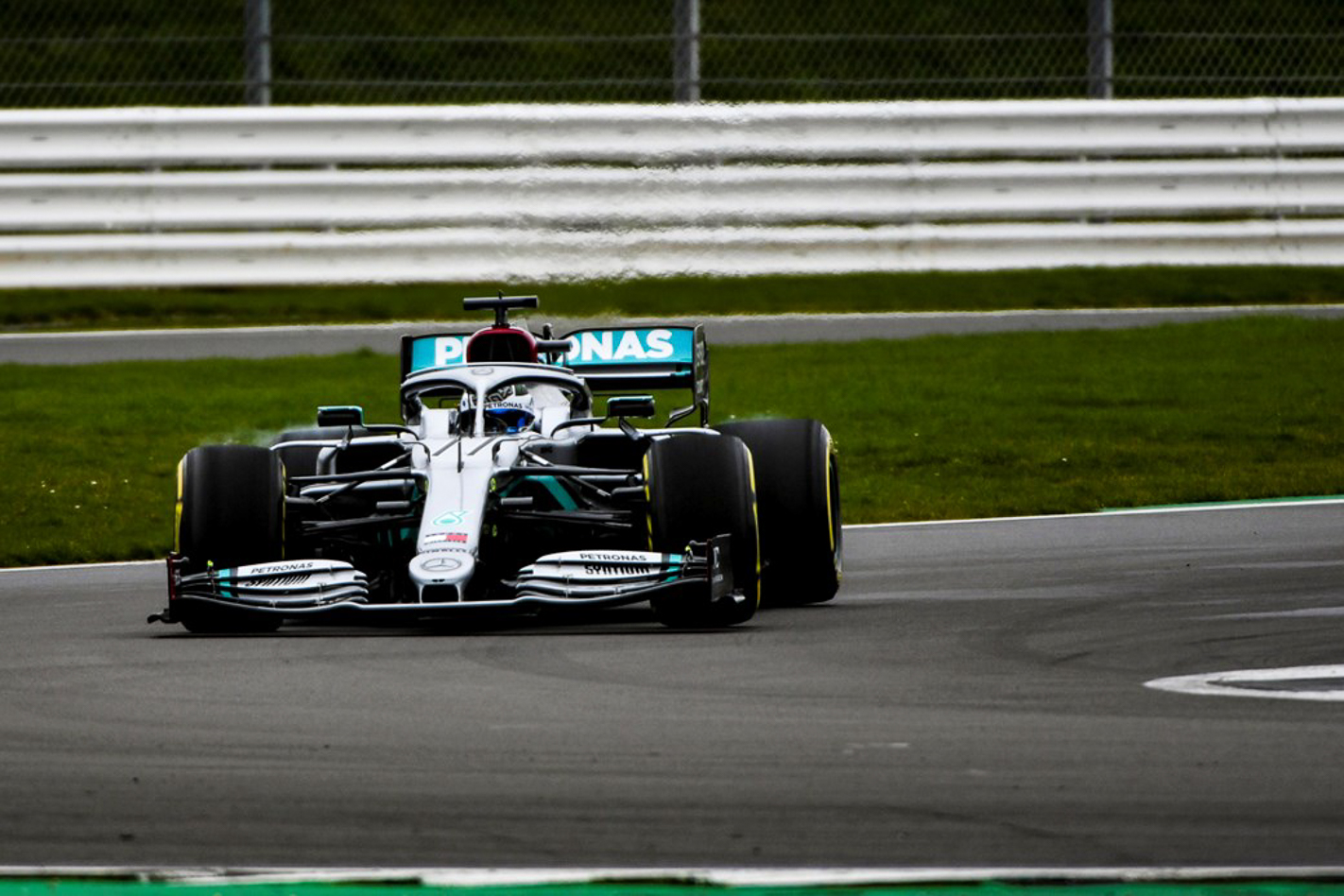
At time of writing, the Formula 1 calendar has lost eight races, and looks like it will start in June 2020, at the earliest. F1 head honcho Chase Carey expects the 2020 season to only consist of 15-18 races. He expects it to end much later than planned, too, as the grand prix schedule stretches into the winter months to make up for lost races:
Australian GP 13-15 March, cancelled
Bahrain GP 20-22 March, postponed (new date unknown)
Vietnamese GP 3-5 April, postponed (new date unknown)
Chinese GP 17-19 April, postponed (new date unknown)
Dutch GP 1-3 May, postponed (new date unknown)
Spanish GP 8-10 May, postponed (new date unknown)
Monaco GP 21-24 May, cancelled
Azerbaijan GP 5-7 June, postponed (new date unknown)
Canadian GP 12-14 June, unaffected
France GP 26-28 June, unaffected
Austrian GP 3-5 July, unaffected
Great Britain GP 17-19 July, unaffected
Hungary GP 31 July – 2 August, unaffected
Belgium GP 28-30 August, unaffected
Italy GP 4-6 September, unaffected
Singapore GP 18-20 September, unaffected
Russia GP 25-27 September, unaffected
Japan GP 9-11 October, unaffected
United States GP 23-25 October, unaffected
Mexico GP 30 October – 1 November, unaffected
Brazil GP 13-15 November, unaffected
Abu Dhabi GP 27-29 November, unaffected
British Touring Car Champtionship (BTCC)

The British Touring Car Championship will be suspended until at least July 2020. It looks as though Snetterton will be the first round of the season, which will drastically reshape the schedule. BTCC boss Alan Gow said the series is unlikely to run on a closed-door schedule:
Donington Park 28-29 March, postponed (new date unknown)
Brands Hatch 11-12 April, postponed (new date unknown)
Silverstone 25-26 April, postponed (new date unknown)
Thruxton 16-17 May, postponed (new date unknown)
Oulton Park 13-14 June, postponed (new date unknown)
Snetterton 25-26 July, unaffected
Formula E
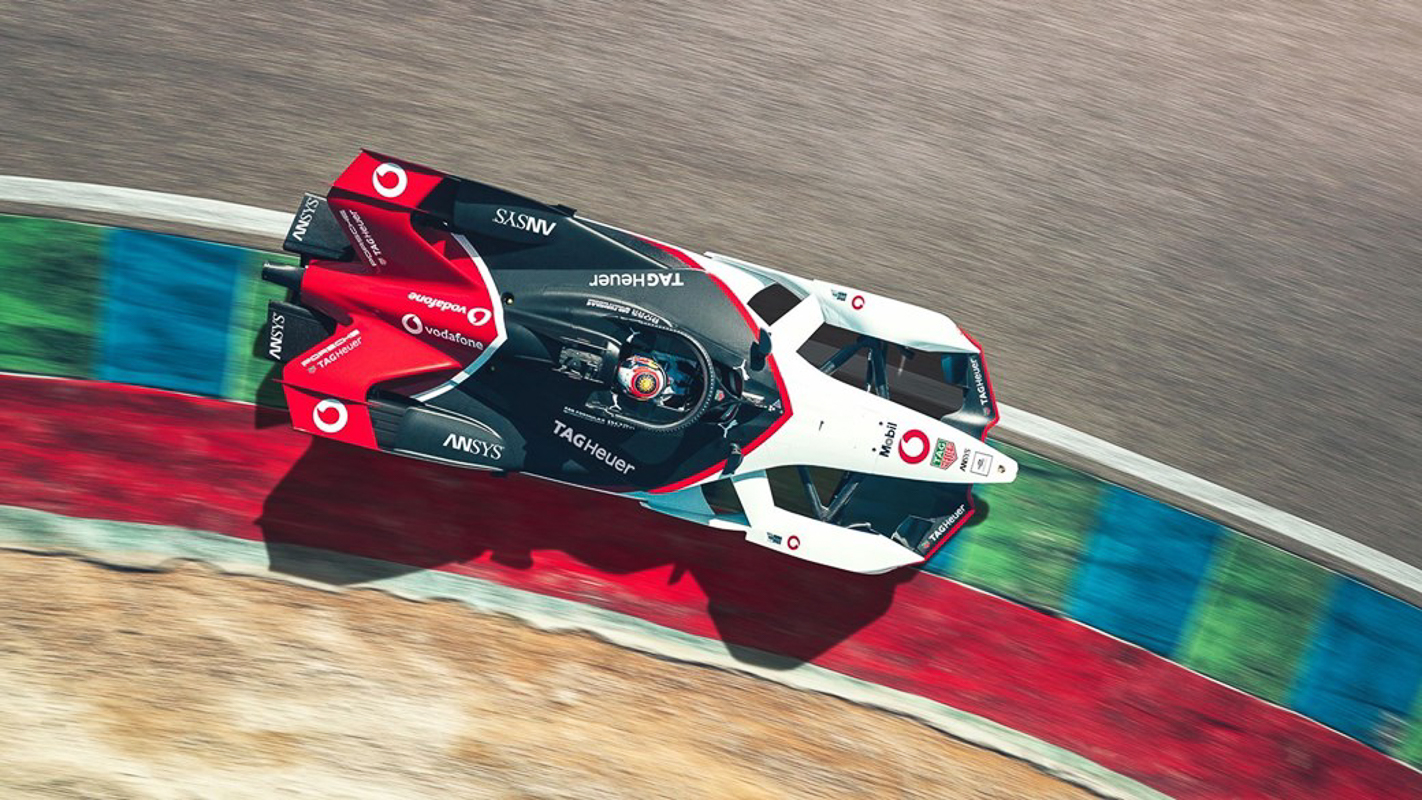
This season’s Formula E Championship is already five races down, with Antonio Felix Da Costa (DS Techeetah) leading Mitch Evans (Panasonic Jaguar Racing) and Alexander Sims (BMW i Andretti Motorsport) respectively. At the moment, there won’t be any more Formula E racing until June 2020. It’s unknown what will happen to the other races:
Rome ePrix 4 April, postponed (new date unknown)
Paris ePrix 18 April, postponed (new date unknown)
Seoul ePrix 3 May, postponed (new date unknown)
Jakarta ePrix 6 June, postponed (new date unknown)
Berlin ePrix 21 June, unaffected
New York ePrix 11 July, unaffected
London ePrix 25-26 July, unaffected
World Endurance Championship (WEC)
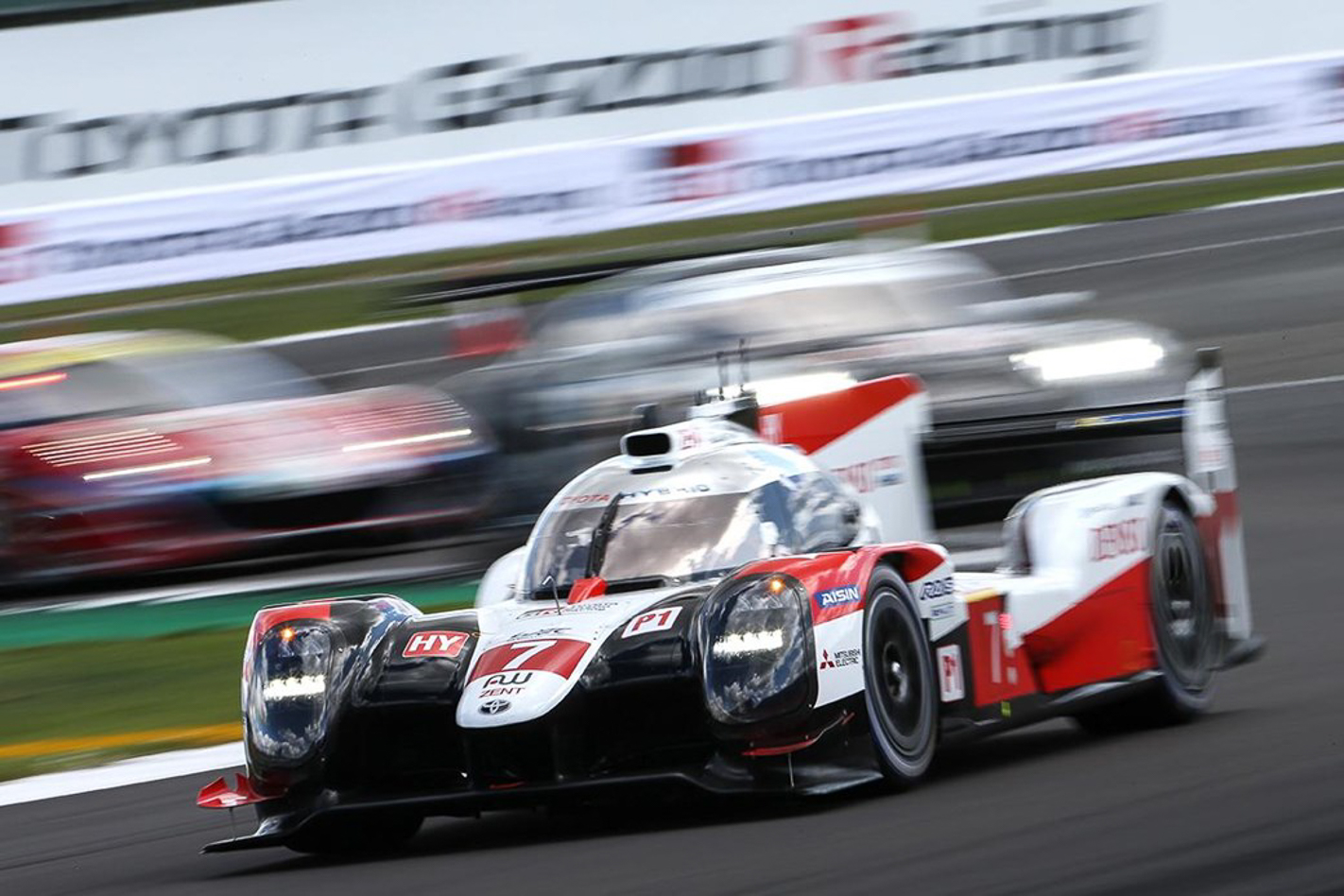
The big news here is that the Le Mans 24 Hours has moved from June to September 2020. And the 6 hours of Spa has been postponed, too. The revised calendar for the series is being worked on at the moment and we aim to update this story once we know more. But this does mean that next year’s season, which sees the introduction of the new hypercar category, will be delayed, organisers pledge:
6 Hours of Spa 25 April, postponed (new date unknown)
Le Mans 24 Hours 13-14 June, postponed to 19-20 September
World Rally Championship (WRC)
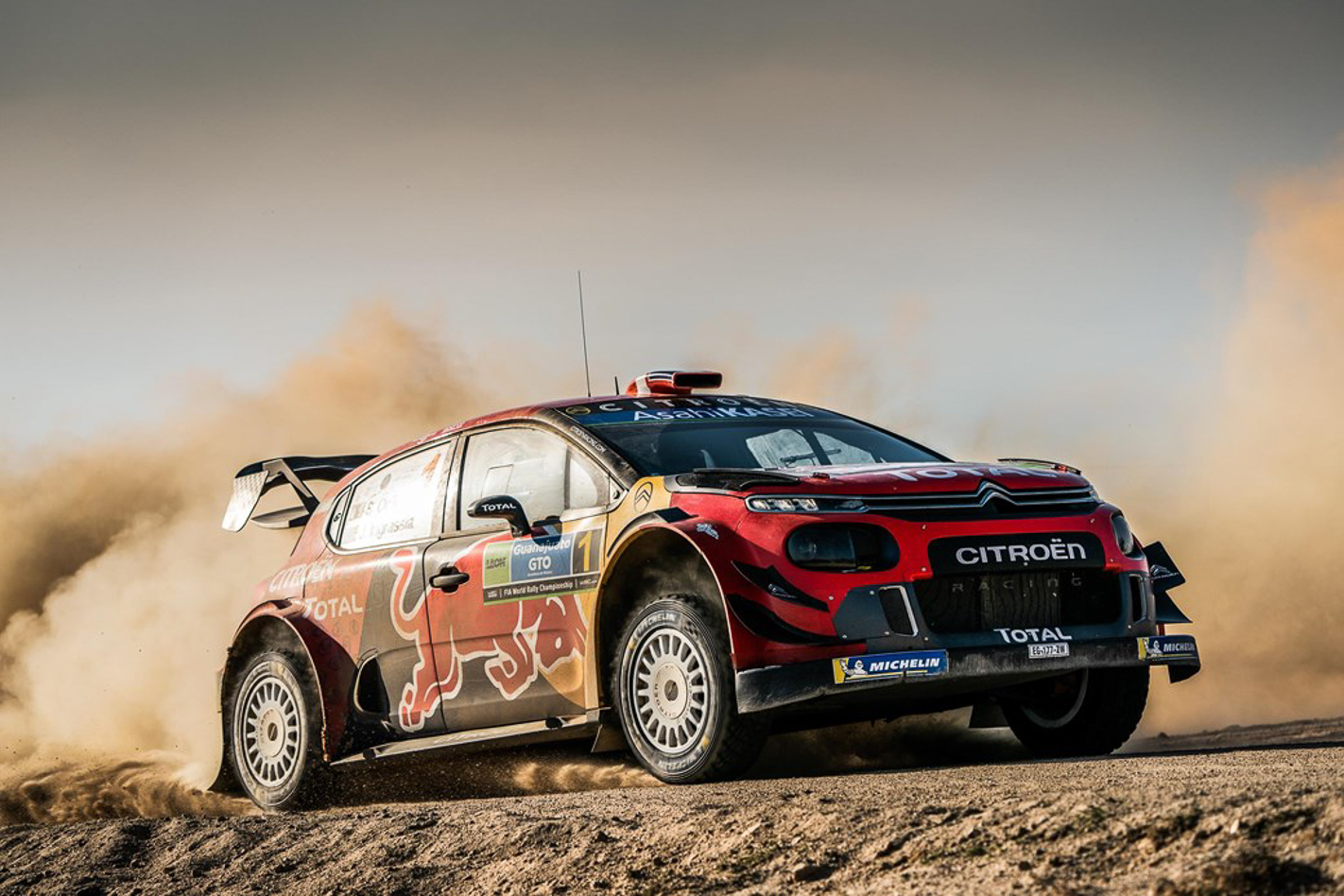
The next three rounds of the World Rally Championship have been postponed. But organisers are working on the championship starting back out in Kenya in July 2020, so fingers crossed that happens. So far, Sebastian Ogier (Toyota) leads Elfyn Evans (Toyota) and Thierry Neuville (Hyundai) respectively:
Rally Argentina 23-26 April, postponed (new date unknown)
Rally Portugal 21-24 May, postponed (new date unknown)
Rally Italy Sardinia 4-7 June, postponed (new date unknown)
Safari Rally Kenya 16-19 July, unaffected
Rally Finland 6-9 August, unaffected
Rally New Zealand 3-6 September, unaffected
Rally Turkey 24-27 September, unaffected
ADAC Rallye Deutschland 15-18 October, unaffected
Wales Rally GB 29 October-1 November, unaffected
Rally Japan 19-22 November, unaffected
IndyCar
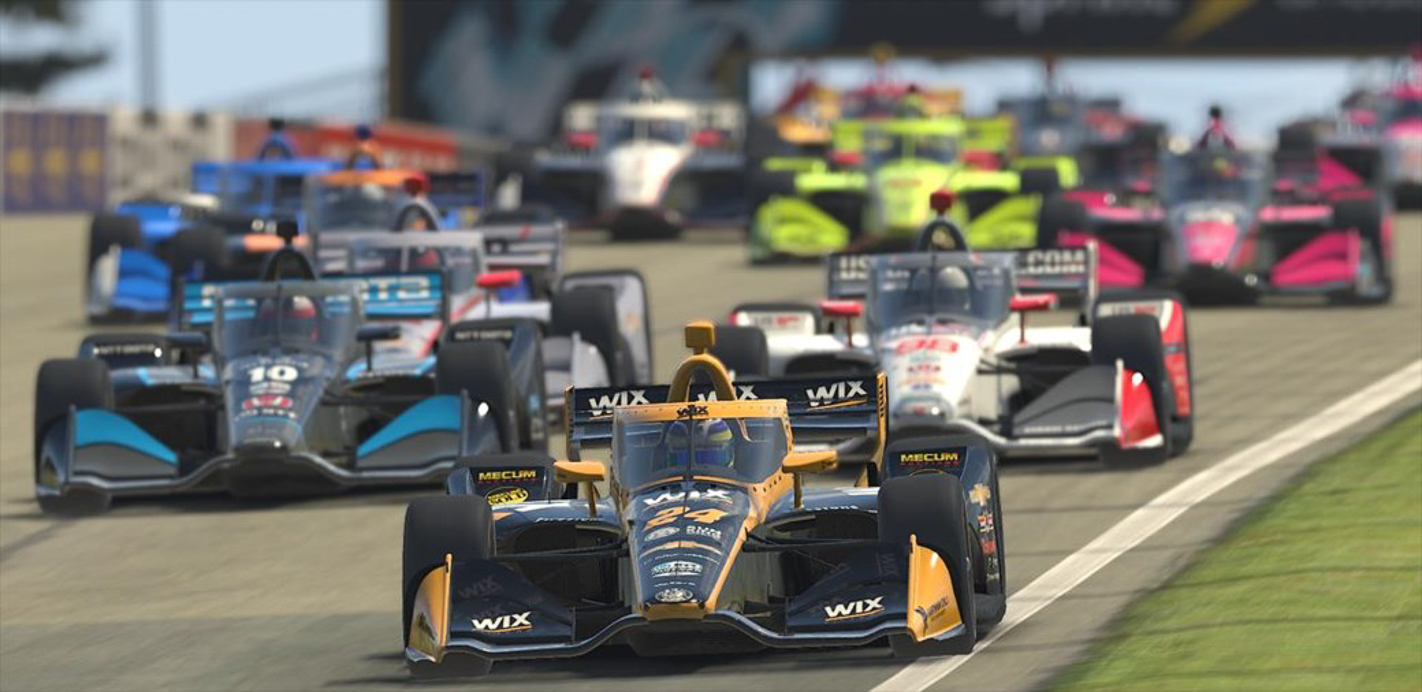
Initially penned to start racing with no spectators, the virus has reached a point where IndyCar officials have taken the decision to postpone the start of the season until the first round of Indianapolis. The circuit says it is prepared and it’s ‘planning for all contingencies’:
Barber Motorsports Park 5 April, postponed (new date unknown)
Long Beach 19 April, postponed or cancelled
Circuit of the Americas Postponed (new date unknown)
Indianapolis Road Course 9 May, unaffected
Indianapolis 500 24 May, unaffected
Detroit 30-31 May, unaffected
Nascar (cup series)
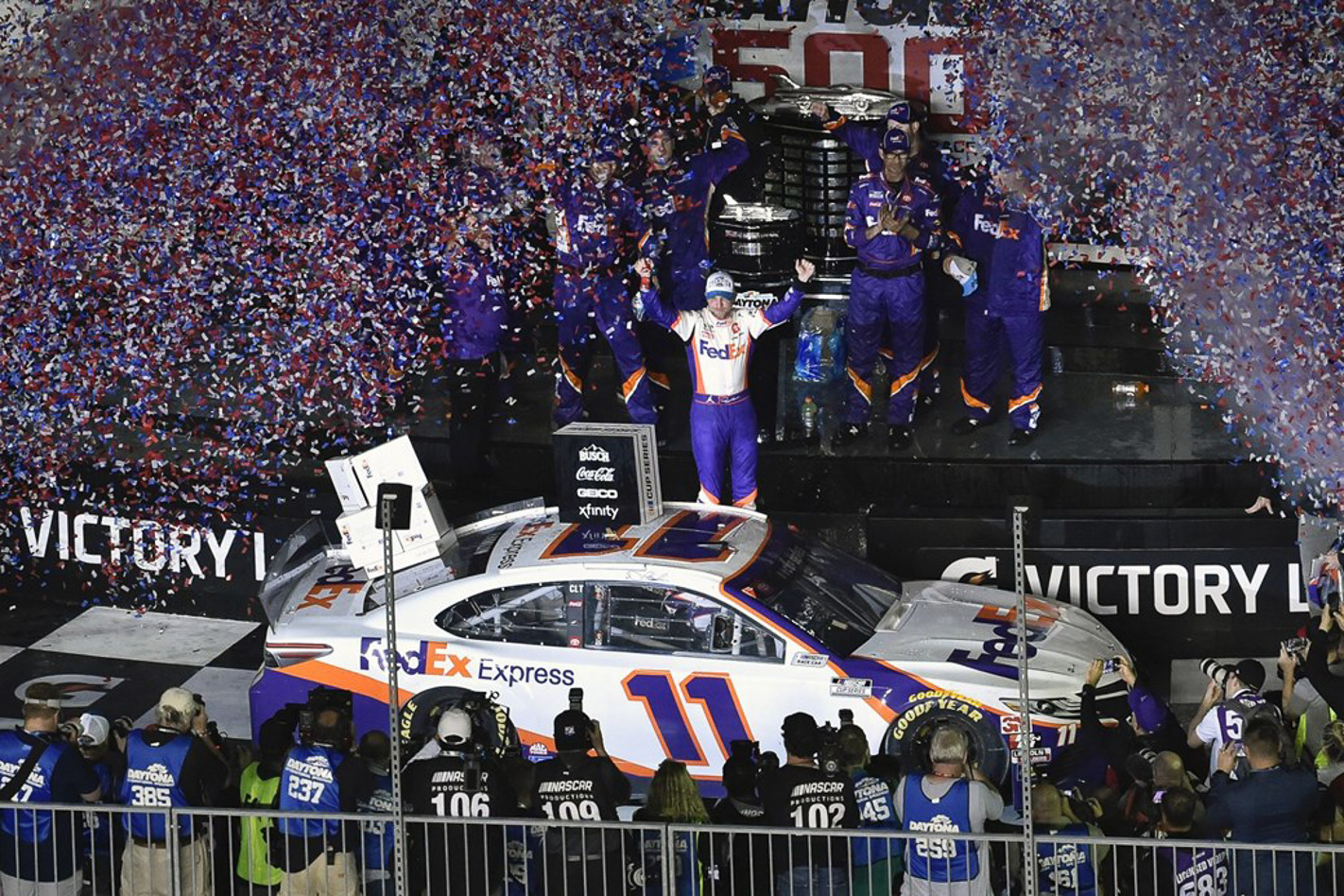
A lot of Nascar races, aren’t there? The season opener has been pushed back by nearly a month, with four events already postponed. However, organisers have assured fans that all 36 races will indeed be completed this season:
Bristol Motor Speedway 5 April, postponed (new date unknown)
Richmond Raceway 19 April, postponed (new date unknown)
Talladega Superspeedway 26 April, postponed (new date unknown)
Dover International Speedway 3 May, postponed (new date unknown)
Martinsville Speedway 10 May, unaffected
Charlotte Motor Speedway 17 May, unaffected
Charlotte Motor Speedway 24 May, unaffected
Kansas 400 31 May, unaffected
Michigan International Speedway 7 June, unaffected
Sonoma Raceway 14 June, unaffected
Chicagoland Speedway 21 June, unaffected
Pocono Raceway 27 June, unaffected
Pocono Raceway 28 June, unaffected
Indianapolis Motor Speedway 5 July, unaffected
Kentucky Speedway 12 July, unaffected
New Hampshire Motor Speedway 19 July, unaffected
Michigan International Speedway 9 August, unaffected
The Glen 16 August, unaffected
Dover International Speedway 23 August, unaffected
Daytona International Speedway 30 August, unaffected
Darlington Raceway 6 September, unaffected
Richmond Raceway 13 September, unaffected
Bristol Motor Speedway 20 September, unaffected
Las Vegas Motor Speedway 28 September, unaffected
Talladega Superspeedway 4 October, unaffected
Charlotte Motor Speedway Road Course 11 October, unaffected
Kansas Speedway 18 October, unaffected
Texas Motor Speedway 25 October, unaffected
Martinsville Speedway 1 November, unaffected
Phoenix Raceway 8 November, unaffected
This article was adapted from carmagazine.co.uk
Holden can bang on all it likes about how the VE Commodore was benchmarked against cars like the BMW 5-Series. But let’s get one thing straight right now: The real target in the VE’s cross-hairs is none other than old mate Falcon. Nothing is going to alter the fact that a good old Holden versus Ford stoush is what we now have on our hands with the launch of the billion-dollar VE.
This feature was originally published in MOTOR’s October 2006 issue
While the blokes in the baggy trunks might be from the same gym as before. the ring itself ain’t the same. Honest, hardworking. God-fearing folks are deserting the big car market.
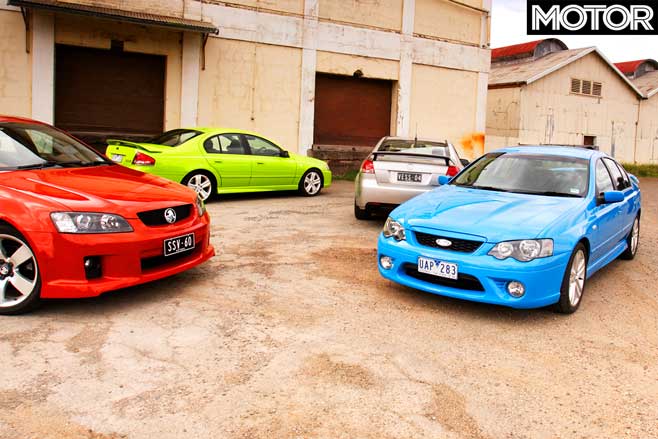
Without wishing to scare the horses, local big cars haven’t been in it this deep for a long time. But neither Holden nor Ford is giving up on the concept and the new VE is proof of that commitment. Not only is the VE a major improvement over the VZ, it’s also a damn good car in its own right. That stuff about Holden’s 5-Series benchmarking? Believe it.
Of most interest to tight-minded folks like you and me, of course. is the SS model which has been repositioned to better reflect the original concept; that is. a model that delivers all the performance you need but without the sticker shock.
And just to make sure that those with more cash to splash aren’t ignored, there’s also the better equipped SS V model which runs the same driveline but adds more fruit inside and externally it gets the 19-inch wheels and tyres over 18-inchers.
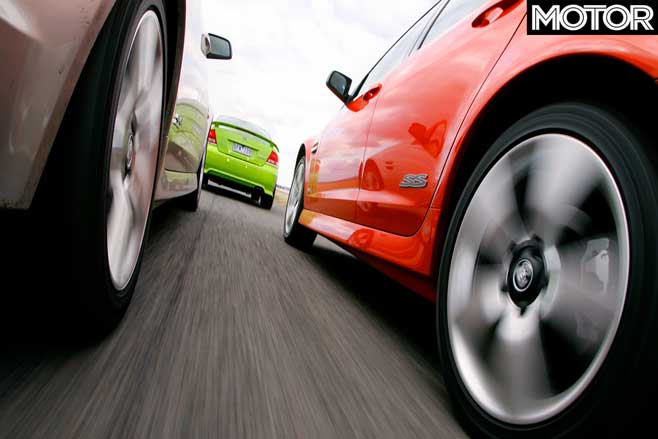
Down at Ford. meanwhile, the BF Series 2 is waiting in the wings. but mechanically, it’s not a real departure from the current BF. In fact. the performance versions have been deemed to be so spot-on. Ford hasn’t even bothered to alter the appearance fat the Series 2 as it has with the more pedestrian stuff.
So, buying a Series I XR now won’t leave you stranded with last year’s look before Christmas has even rolled around. On paper, the BF 2 that competes with VE SS most completely is the XR8. Like the VE, it’s a big V8 with tin this case) a six-speed manual gearbox. So we’ve snavelled one for this match.
But muddying the waters a little is Ford’s XR6 Turbo, which has been so well received that it’s a cult car long before it should have been. Straight six, blower, V8 performance levels; the XR6T has got it all with the promise of better economy and a more high-tech smell and taste to appeal to those who know that an X-Box has nothing to do with a former spouse.
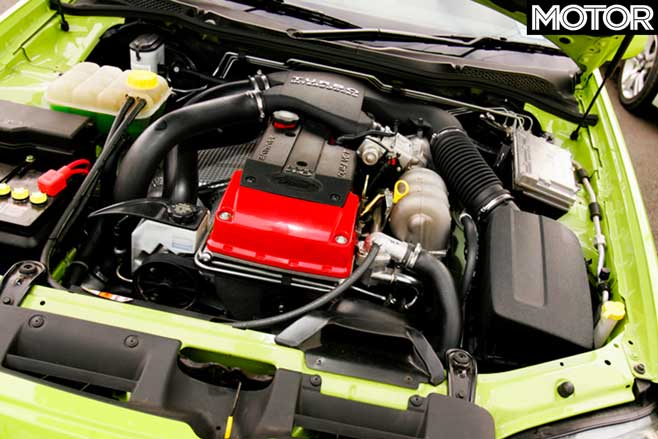
The turbo-motor pumps out 245kW of seamless urge with a torque curve that is flatter than the Hay Plain. The six is a much better unit when teamed with an auto; the way the engine makes torque almost from idle and the way an auto converter allows it to spool up boost when you’re not even looking makes it a cinch for a slushbox. Even in the old days when the auto du jour was a four-speeder, the XR6T was a happier camper without a clutch pedal.
Of course, while high-tech is the six’s middle name, the Ford V8 is also a pretty sophisticated piece of work. Gone are the pushrods and two-valve head of previous Ford bent eights, and in are double overhead camshafts on each bank and four valves for every cylinder. Call it 260kW with a whole lot of smoothness.
The Holden’s V8 is also a smoothie (albeit with a duff engine note thanks to the Gen 4’s el weirdo firing order) but it’s old school with those pushrods and two-valve heads. But 6.0-litre are 6.0-litres and with a whopping 270kW at its disposal, even a dinosaur spec sheet ceases to matter.
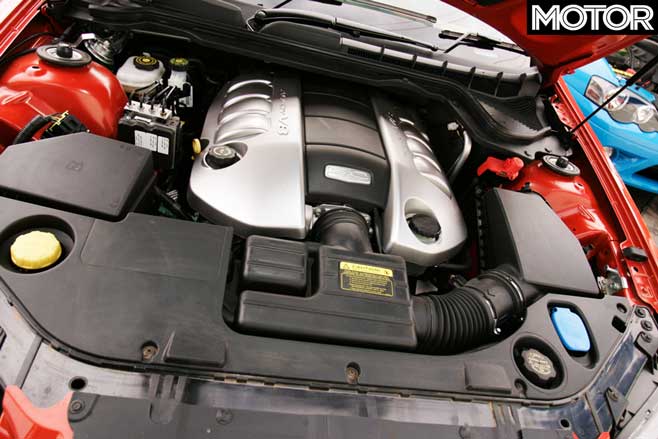
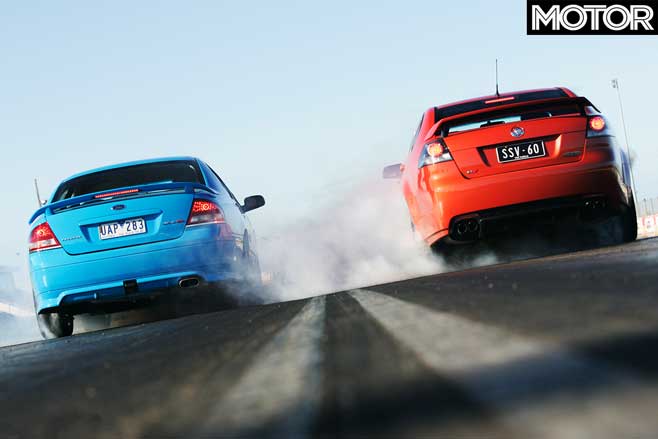
In fact, it ceases to matter in exactly 13.8 seconds, because that’s how long it took either Holden to blast down the quarter mile. Terminal velocity was 171.1km/h for the SS V and 171.4km/h for the SS, suggesting that GM’s Silao plant in Mexico, which builds the V8, isn’t having any poor-tolerance issues.
Along the way, you can expect a 0-60km/h time of 2.9 seconds and a 100km/h dash in 5.6sec. Launching the Holden requires a bit of finesse, though, as it’s all too easy to dial up too many revs for the launch and have the whole thing go up in smoke.
You’ve then got to deal with a pretty cranky gearshift action which is at its worst on the two-three shuffle. It’s way too easy to get the shifter hung up on the centre gate and buzz the engine in the process.
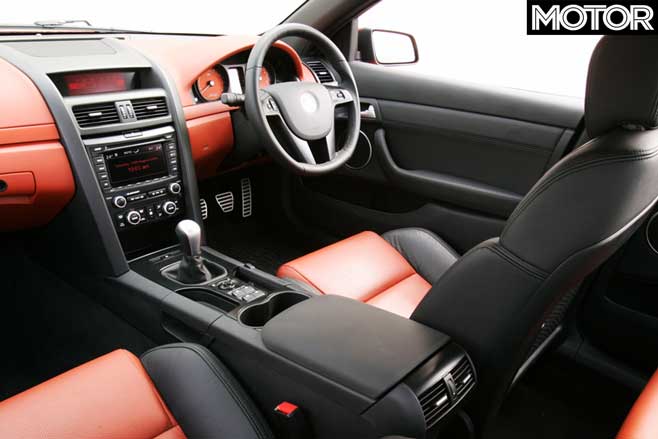
Even though it uses the same gearbox, Ford has spent a lot of time improving the shift action. The XR8’s shifter uses bearings instead of bushes and feels more positive and accurate as a result. The proof is in the shifting, too, and the Falcon never threatened to leave us stuck in neutral even during the fastest of gear changes.
Yet the Falcon can’t keep up with the Holdens. Even with repeated runs (that tested the clutch’s patience) we couldn’t get the XR8 down the quarter in anything less than 14.4sec with a terminal speed of 164.0km/h. From the same standing start, you’re looking at 3.2sec for the sprint to 60km/h from rest and then 6.25ec for the 100km/h.
The engine is clearly making plenty of power at the top end; it’s all stacked way up beyond 4000rpm. This doesn’t matter at all on the drag-strip once you’ve got it going, but it does mean the XR8 can’t launch as hard as you’d like. Too many revs and it wheelspins, too few and you’re out of the grunt zone.
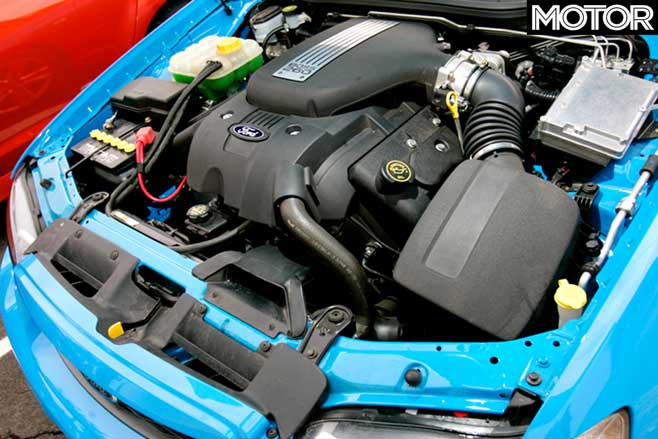
In the Turbo, however, the combination of that auto tranny and a 4500rpm spread of urge means that a 14.2 second quarter mile is as easy as standing on the picks, bringing the revs up and side-stepping the bake pedal just as the rears start to turn.
Time after time, you’ll end up doing 60km/h in 3.2sec, 100km/h in 6.1sec and you’ll be doing 167.6km/h at the end of 400m, still trailing the Holdens, but not by as much as the XR8. Oh, and don’t bother shifting gears manually; the auto transmission is smarter than you so leaving it in D for Drag is the way to go.
In a straight line, the XR6T falls somewhere between the Holdens and the XR8. But out in the real world, it’s a different matter because there’s just no substitute for having so many Newton-metres at call. In terms of having instant squirt, they don’t come much better than a blown XR6 and, combined with the smarty-pants gearbox, it makes the six easiest car to drive quickly in any situation.
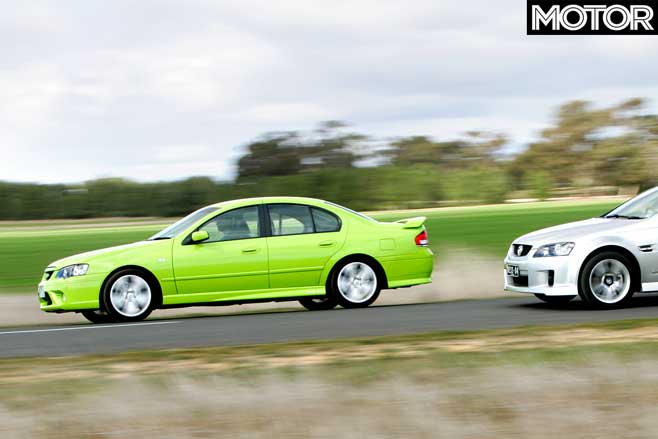
But the Holdens have closed the gap these days and while the old Gen 3 was never as torquey as it should have been, the new 6.0-litre mill is much, much handier. It still digs a rev and the pay-offs is thrust big style but there’s also plenty on tap on the first half of the tacho.
The gearing is still tall, but this time around, the sixth gear that sees doing 1500rpm at 100km/h is actually viable. These days a V8 Commodore will pull you around a B-double in top gear easily. It certainly wasn’t always this way.
This leaves the XR8. The lack of bottom-end tug means you’re constantly rowing through the box and it’s only when you’ve got the requisite 4000rpm dialled up that the V8 starts to make any sense. By then. of course, the other three cars have buggered off.
Throw in some twistiness and things get even worse for the XR8. It really does feel a generation older than the Commodore (which, of course, it is) mainly in its dull responses and feedback.
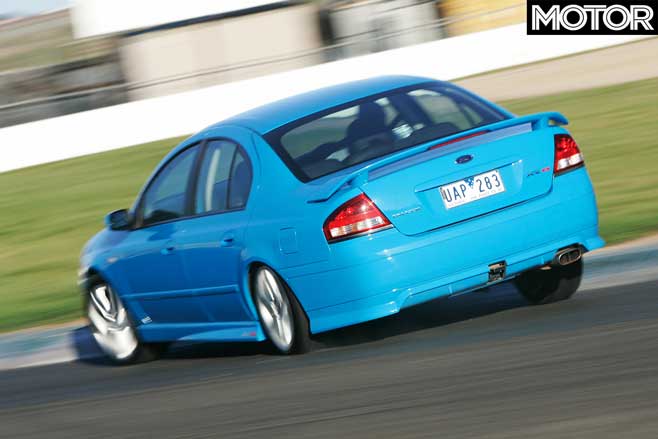
We don’t really have an issue with the rear end. but the steering is lifeless and refuses to relay any meaningful information about the status of the road or the car itself. There’s grip to be had, but you have to learn to trust the car rather than rely on it reassuring you at frequent intervals.
On a wet, windy road. it all translates to a more tippy-toe feeling; that it’ll probably keep turning in. but you won’t know it has until after you’ve apexed the thing. Throw in the too-thick steering wheel rim. and it’s a long way from perfect.
If there’s concrete evidence of the billion bucks Holden has thrown at the VE. it’s in the way the suspension works. Most notably, the front end is a million times better than any Commodore before it with good feel and lots of useful information flooding back through the tiller.
The VE sits flat and stays composed even when you provoke it but more than that, it just feels sharp and alert. It’ll change direction without protest and there’s so much info coming back at you that placing it in corners is not only easy, it’s a joy.
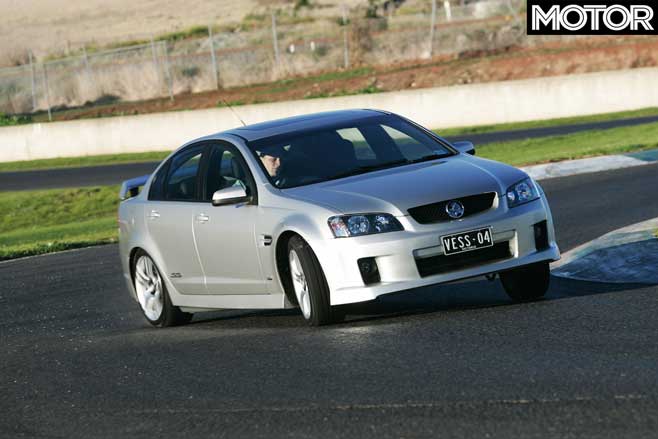
The ride suffers only marginally for this degree of control and while sharper bumps are felt (though not heard) the damping seems about spot on, cancelling them out on the first attempt. The only difference between the SS and the SS V comes down to tyres. the latter’s 19-inchers giving it an edge in the way it sits even flatter and conveys a tad more info about the road surface.
Somewhere between the SS and the XR8 sits the Turbo. While it shares the XR8’s lack of chat, it does steer more accurately, is easier to trust and has a much better sidestep due no doubt to having less mass over its front axle. But it is not as composed as the Holden over short, high-frequency judder-style bumps and it surely aint quite as reassuring to really punt hard.
And while it might sound like the XR8 struggles, it does come into its own on fast, bumpy back roads where its relatively soft springing and nose-heavy manners actually make it feel equal parts fool-proof and solid. Throw in the big brakes and it’s a hell of a mile-eater.
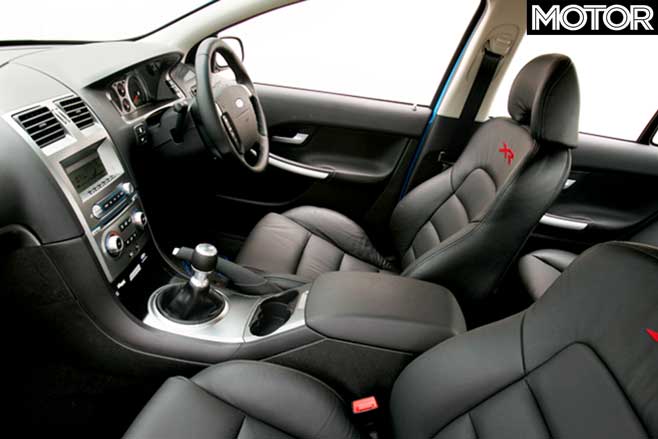
It really is as a tourer that the XR8 makes most sense and that’s only spoiled a fraction by some wind noise from the base of the windscreen (which the XR6T didn’t duplicate. so maybe that bonnet bulge is to blame). The ergonomics, meanwhile. are beaut and that’s one department where the Fords give the Holdens a thumping.
Frankly. ergonomics are one area where the VE doesn’t seem much of an advance at all. The power window switches in the centre console are in the wrong place and the temperature controls on the allegedly superior system of the SS V are confusing. And we’re still not sure about black headlining. Feels kind of enclosed to us.
The increasingly important question of fuel economy threw up some surprises. although there were no prizes for guessing that the six-cylinder Falcon was going to be up the pointy end of making the most of every litre. Even so, the Turbo’s 10.8 litres per 100km is a pretty damn good result and well ahead of anything else on test.
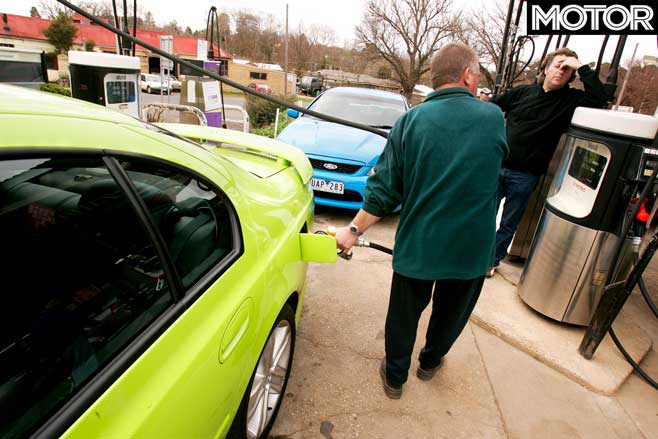
At the other end of the scale was the XR8 which gurgled premium away at a rate of 14.1 litres for every 100km. Not great at all. But the real eyebrow raiser was the difference between the two Holdens.
Driven at the same speeds over the same roads, the silver SS drank 11.2 litres per 100km while the orange SS V needed 13.4 litres every 100 kays. Weird, and it’s not a case of one engine being tighter than the other because their performance was on a par and the SS V had actually covered 1400km more than the SS.
So where does all this leave us? In a completely dispassionate. objective sense. the new VE Commodore in V8 form is the best local four-door performance car money can buy right now. The engine is right. the chassis is right and the driving experience is the best yet from a car bearing the Commodore badge. You’ll need $44,990 for the six-speed as tested here and at that price. the SS is also some kind of a bargain.
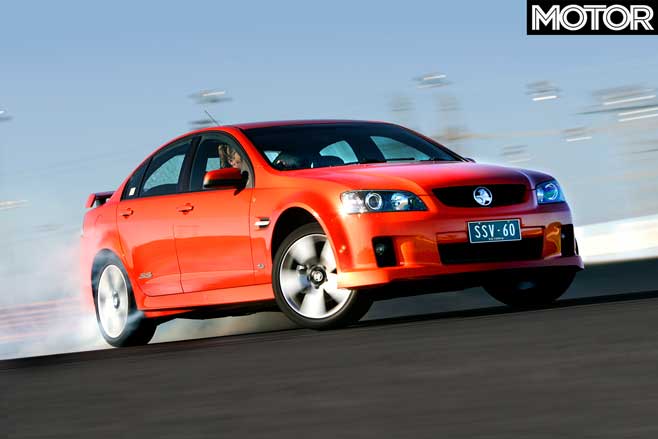
The SS V package adds curtain air-bags, a colour LCD dash display, extra gauges, a better stereo, the option of a colour-coded interior, projector headlights, climate control, sports seats and wheel, leather and the 19-inch wheels and it comes in at a much heftier $51,990. And, to be brutally honest, what it doesn’t add is any extra performance (the small amount of extra grip aside). But it is better value than the XR8, which weighs in at an almost-equally hefty $51,330.
We can’t really work out why you’d buy the XR8 and only the Ford V8-obsessed need apply. It’s off the pace and has been for some time and while the VE Commodore doesn’t change that, it certainly brings the Henry’s limitations into sharp focus.
And then there’s the Turbo. With a $47,655 price-tag in auto form (which is how you’d buy it, trust us) the XR6T is outgunned by the new Holden in some areas, but it’s still the one for anybody who gets off on a high-tech driveline that delivers a high-tech feet.
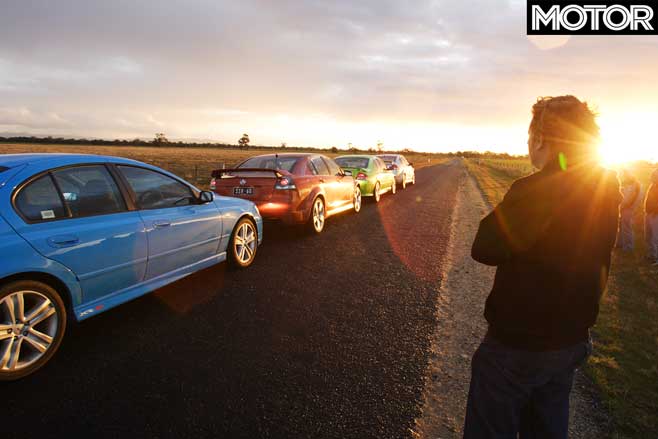
That our testers on this comparison were split about 50-50 between the SS and the Turbo gives you an idea of how good the XR6T still is.
But that doesn’t alter the final outcome which was a points decision to the SS over the Turbo with the SS V third (based on its price) and the XR8’s irrelevance earning it last spot. Wanna be king of the road? Then you need a Commodore SS, you do.
Fast Facts
| u00a0 | Ford Falcon XR6 Turbo | Ford Falcon XR8 | Holden Commodore SS | Holden Commodore SS V |
| Body | 4-door sedan | |||
| Drive | rear-wheel | |||
| Engine | 4.0-litre inline-6 DOHC turbocharged | 5.4-litre V8 DOHC | 6.0-litre pushrod V8 | |
| Power | 245kW @ 5250rpm | 260kW @ 5250rpm | 270kW @ 5700rpm | |
| Torque | 480Nm @ 2000rpm | 500Nm @ 4250rpm | 530Nm @ 4400rpm | |
| Power/Weight | 145kW/tonne (tare) | 145kW/tonne | 160kW/tonne | |
| Transmission | 6-speed automatic | 6-speed manual | 6-speed automatic | |
| Weight | 1684kg | 1795kg | 1690kg | |
| 0-100km/h | 6.10sec | 6.20sec | 5.60sec | |
| 0-400m | 14.20sec @ 167.6km/h | 14.40sec @ 164.0km/h | 13.80sec @ 171.4km/h | 15.39sec @ 171.1km/h |
| Suspension | Independent double wishbone (f); Control Blade independent (r) | MacPherson strut, coil springs, anti-roll bar (f); Four-link, coil springs, anti-roll bar (r) | ||
| Brakes (f) | 322mm ventilated discs, two-piston calipers | 321mm ventilated discs, two-piston calipers | ||
| Brakes (r) | 328mm ventilated discs, single-piston calipers | 324mm ventilated discs | ||
| Wheels | 17.0 x 8.0-inch (f & r) | 18.0 x 8.0-inch (f & r) | 19.0 x 8.0-inch (f & r) | |
| Tyre Sizes | 235/45 R17 (f & r) | 245/40 R18 (f & r) | 245/45 R18 (f & r) | 245/40 R19 (f & r) |
| Tyres | Dunlop Sport SP 9000 | Bridgestone Potenza | ||
| Price | $47,655 | $51,330 | $44,990 | $51,990 |
No More SV8
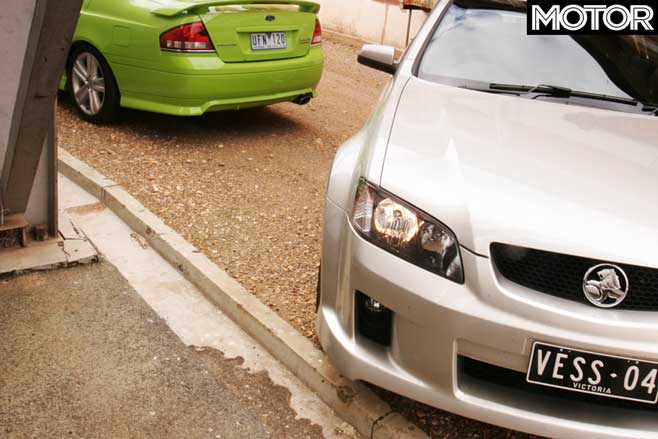
The trouble all started when Holden introduced the VY SV8. The SS had started to creep towards $50k, so Holden filled the low-$40k gap with the SV8. Naturally the SS had more gear than the SV8 to justify its price and carried more weight. The result? The SV8 was faster. Holden won’t fall for that one again; as with all VEs, the new SS is so sharply priced ($44,990, $600 more than the outgoing VZ SV8) that it makes the SV8 redundant.
And if you want your VE to have the performance theme but with a touch more luxury, you can buy the SS V for $51,990. The SS V adds 19-In rims, multifunction dash display, curtain airbags, dual-zone air and a 230W stereo tor the $6k over VE SS, but costs just $200 more than the outgoing VZ SS.
The Turbo Story
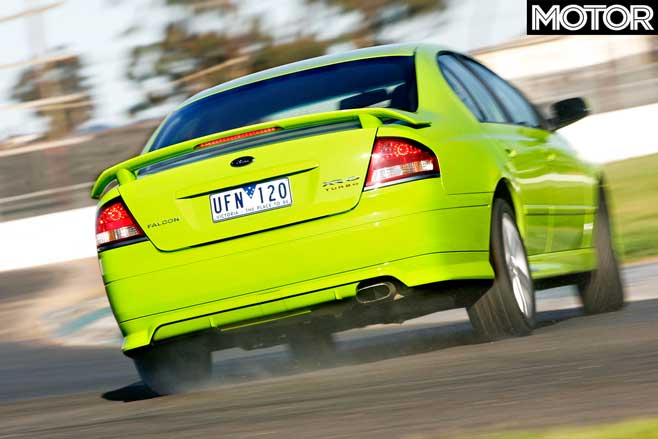
When the XR6 was introduced in the EB Falcon it barely caused a ripple. It wasn’t a home-grown hot six in the vein of Torana XU-1 or Charger E38. Even when the variable-valve timing atmo engine was introduced in the 1998 AU, the XR6 was not really the Ford to stick it up to the General’s best.
That all changed for the BA, where Ford bolted on a turbo to bump up power output from the atmo six’s 172kW to 240kW. Suddenly the rules changed and this is the hot Falcon you won’t be shy to tine-up against the General’s Commodore SS, and in fact it’s one of the best tout hot sedans you can buy.
Hot SS History
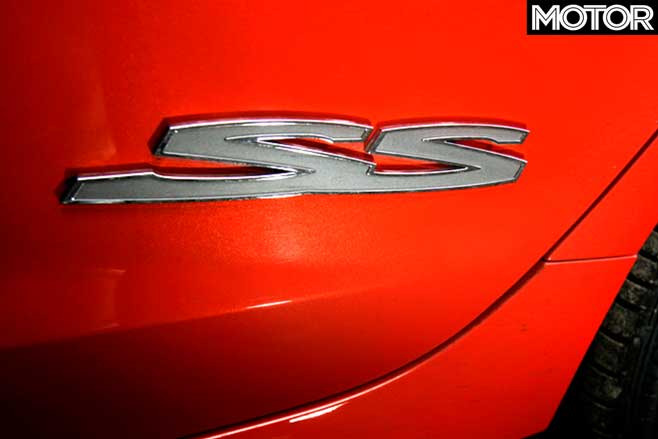
Holden borrowed the SS moniker from Chev to use on a limited run of HQ V8 sedans in 1972 (the Monaro SS), which was a precursor to the GTS sedan. Next, the LX Torana used the SS name, with the 5.0-litre V8 option the most interesting. When Commodore was released in 1978, there was no sizzling sports version.
It wasn’t until the 1981 VH that Holden introduced a performance model, reintroducing the SS nameplate with a car that was based on the 4.2-litre four-barrel-carb, electronic-ignition blue engine and four-speed box.
The SS disappeared in the 1986 VL series [except for the HDT cars]. The SS V8 returned in injected 5.0-litre form for the 1988 VN. The Aussie 5.0-litre continued on through VP, VR, VS and VT but was retired at the introduction of VTII when the 5.7-litre Gen III was introduced.
Lamborghini sandwich
These guys couldn’t believe their luck when they decided to film the Lamborghini Gallardo in front of them. The Lambo driver wasn’t so fortunate.
Watch next: Lamborghini Gallardo bursts into flames on the street
Rally driver loses steering wheel
Keep watching after the wheel comes off. Looks like a childhood spent using Atari paddle controls came in handy for this bloke.
Street Machine Carnage
Go back to episode one of Street Machine’s entertaining series about turning crap heaps into unlikely street heroes, starting with the legendary Turbo Taxi. We love the cameo from our old mate Ryan giving the old Melbourne taxi the WhichCar treatment.
1979 Bathurst 1000: Peter Brock’s epic final lap
If you’ve ever wondered why Peter Brock was crowned King of the Mountain watch this. Brocky was the clear leader on the final lap in ’79 but, instead of playing it safe, hammered his Torana A9X to the line just to prove he could and in the process providing a masterclass in apex chasing that’s worth putting up with dodgy video quality to marvel at. Related: How good does that A9X look?!!!
Lady vs petrol cap
It goes without saying that if you turn the car around the petrol cap will be on the correct side, right?
Train vs limo
No, this isn’t the end Eraser where Arnie says “he’s in the car”. This Chrysler 300 stretched limo became bottomed out on railway tracks in the US state of Indiana in 2015 while carrying a group of teens celebrating a birthday before being T-boned by a freight train. Luckily everyone was able to get out of the limo before the train collided, but the judging by how long it took the train to stop it looks like the car ended up in neighbouring Ohio.
Nürburgring, BMW M3 GTR, Hans Stuck
This vid might date back to 2004, but don’t let the lack of 4K resolution distract you. This is the seminal Nurburgring hot lap video, starring BMW’s mighty E46 M3 GTR, hotshoe driver Hans Stuck and a practice run for the Nurburgring 24 Hour in 2004. The audio is stunning, the car is a cultural icon in the endurance racing world and the lap itself is brave, committed and riveting to watch.
- MY20 Holden Acadia updates leaked
- Holden March sales strong
- Dealer group engages lawyers to negotiate with Holden
The MY20 Holden Acadia updates were minor in nature and were spread across the line-up. Released somewhat ironically on April 1, data supplied to WhichCar reveals that the Acadia – born of the US-made GMC Acadia in a bold attempt to re-establish Holden’s place in the Australian market – was set to score revised badging, a new rear fascia and stainless steel exhaust tips on the LT and LTZ.
A colour change was on the cards for the seven-seat Holden Acadia, too, with the Blue Steel grey deleted in favour of Satin Steel grey. The top two models, LTZ and LTZ-V, were also set to receive logo projection lamps on the powered tailgate, while the LTZ-V was set to score GMC’s novel rear-view camera mirror.

The rear-view mirror system (below) sources a video feed from a rear-mounted camera mounted at the rear of the vehicle and projects it onto the mirror surface, eliminating headrest obstruction, rear-seat passengers and grubby windows from the field of view, as well as giving the driver a perspective that’s four times wider than a mirror can provide.
All of these extras would have come at no extra cost. WhichCar has contacted Holden to see if any MY20 Acadias made it to Australia.
April 1 also marked the date when Holden’s sales data figures revealed a 30 per cent lift month-on-month, with the marque posting 4992 sales for the month, mainly off the back of strong performances from the Trax, with 815 sales marking 130 per cent jump for the unloved small SUV, and the Colorado 4×4 with 2186 sales marking a 40 per cent jump.
The 2019 Holden Acadia price helped it to find 352 homes in March, a lift of 161 over the previous month, while the seven-seat Trailblazer sold 304.
Commodore sales fell to just 92 cars against the previous month’s score of 423, while the Equinox only managed 39 extra sales in March over February’s 400 tally. This is a strong indicator that current stocks of both cars are depleting fast.
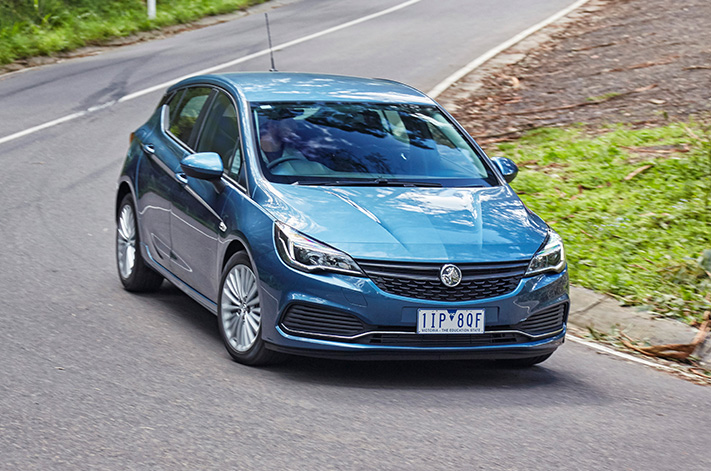
The Astra – discontinued in the months leading up to Holden’s closure – managed 596 sales, which tells us there were some strong dealer pricing offers for both it (below) and the Trax across the Holden network. But with forward orders for April set to be non-existent in the face of the COVID-19 crisis, expect Holden’s sales to plummet once again.
Holden dealers, meanwhile, have engaged a legal firm to speak with Holden regarding the contentious settlement packages allegedly on the table.
“Their offers have the potential to send many Holden businesses into financial ruin and do not meet on any level, a test of fair and reasonable,” reads a letter signed by Dave Reynolds, the chairman of the Australian Holden Dealer’s Council (AHDC)
The AHDC also accuses Holden of misleading the federal parliament, after Holden sent a letter to parliament to lay out its side of the negotiation process.
“Some dealers have indicated they wish to receive additional compensation and have enlisted the support of third parties such as accountants, lawyers and journalists to advance their case,” read the Holden letter in part.
“However, significant time and effort has been put into the compensation formula and we have used actual financial information provided by dealers to produce our offer. We remain of the view that it is a fair and reasonable offer.”
“We regard such assertions as a total mischaracterisation. We believe the letter was designed to convince Australia’s leaders that all appears headed to a reasonable settlement on mutually agreeable terms,” read a statement issued by the AHDC in response.
“This is regrettably not the case, and we are quite certain you can tell that this is full of falsehoods and is clearly self-serving and typical of how GM treats both the government and public.”
A real artisan of a wheelman, piloting a potent rear-driver like, say a Merc-AMG C63 S or an Alfa Giulia QV, could sure unleash a noisy, flamboyant flourish on a road like this. The climb to the summit of Mount Buffalo in the Victorian Alps is only 21km long, and the gradient never kicks much harder than around eight percent, but plenty of the tight turns have good sightlines, and the road, built in 1908 and still in excellent health, offers an intuitive rhythm in which to find a fast groove. Get up early, mid-week, as we have, and you’ll beat the slow-grinding lycra-ites and have the place to yourself.
I’m about as artistic as Mr Squiggle with a skinful, so my first run in this American-built EV disruptor is less of an expression session; instead this car reveals itself a glinting, tempered steel blade, enabling you to slash, clean and clinical, like a near-silent ninja. Holy crap, it is fast.
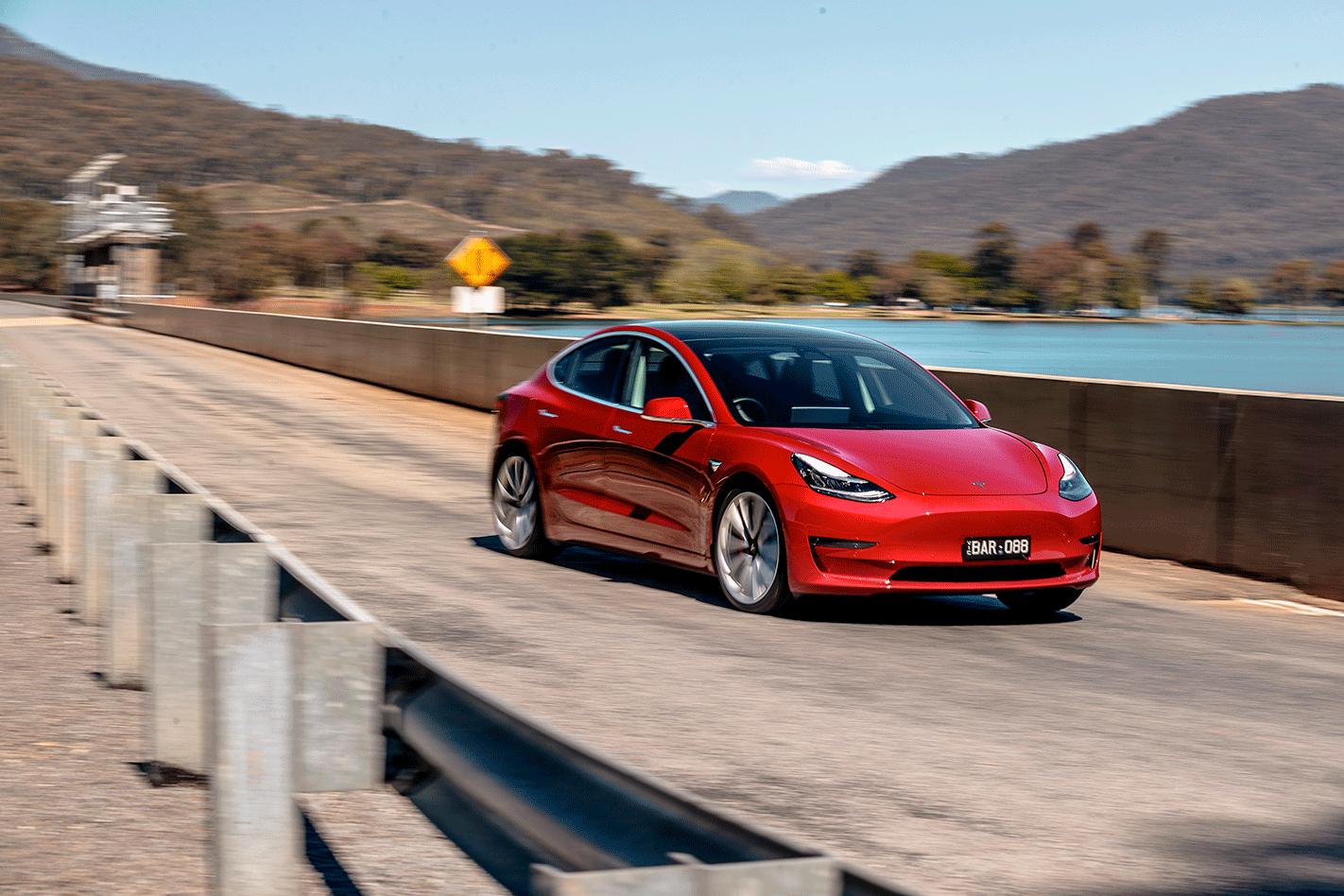
We’re in the top-spec Model 3 Performance, claiming outputs of 353kW and 639Nm, but the torque feels like much more. We know that twisting force from an electric motor is delivered differently to that of an internal-combustion engine, and this thing is giving me a graphic demonstration of that. With no ratios to shuffle through, and no boost to keep on the boil, the acceleration feels instantaneous and relentless. We’re firing uphill, but even with a claimed 1847kg to haul, this $92,900 mid-sizer seems energised by the task of soundlessly inhaling the ribbon of twisting bitumen like a class-A narcotic.
I brake as late and hard as I dare for the first hairpin at about the 4.5km mark, cautious that the bitumen is still cool from the crisp dawn and the shade of the snow gums. There’s virtually zero dive, just belt-straining retardation from the combination of big Brembos and adhesive Michelin Pilot Sport 4s. The steering is ultra-quick at 2.0 turns lock-to-lock, so no need to shuffle hands, just quickly roll the wrists over, glance for the exit, and feed the throttle in hard from somewhere approximating an early apex. There’s a chirp of understeer, but then just a borderline brutal unleashing of torque, so searingly delivered it would make even a twin-turbo V8 feel fleshy. It’s enough to make the rear end wriggle and squeal in protest, but the brain has barely registered this before the torrent of acceleration demands full concentration for the next bend that’s being sucked towards us like we’re in some kind of hyperloop vacuum.
Can this slightly dumpy-looking four-door really be so stunningly quick? Is the lack of any mechanical soundtrack messing with my mind, distorting the sensation of speed? Isn’t it supposed to be the other way around? Don’t loud cars feel faster? I thought I had a basic handle on EV performance, but this is the future, after all, so maybe it’s okay to be just a little confused.
But not on all levels. The drive along the Hume from Melbourne to the foothills of the Victorian Alps is a chance to really try and connect with this car in a touring role, and it does require some familiarisation. Before I attempt to get to grips with the does-everything touchscreen, I notice how the seats feel a bit squishy for a performance car, and there’s little under-thigh support. The tinted, fixed-glass roof is great at night, but punishingly hot under an Aussie sun, forcing the air-con to work harder. Whoever insisted that no blind be fitted needs a slap with a hot thong, especially as the vast black dash-top section also acts like a heat sink. Trim materials, too, are dour-looking and feel cheap. On the upside, storage is generous, and the audio system stunningly punchy and detailed. Just a shame it has to contend with a fair degree of coarse-chip noise from the 20-inch Michelins, which largely negates the electric NVH advantages over ICE when cruising. Where’s the in-cabin active noise cancelling, Elon?
The banishing of all buttons and switches except for the two multi-function controllers on the wheel won’t be to everyone’s taste, but you have to acknowledge that at least the design team had a clear vision as to what they wanted to achieve, in terms of a full rethink of how a customer interacts with their car.
The NEDC range for the 3 Performance is 560km, but we’re on track for more like 390km when we make it to the four Tesla Superchargers in the car park of our accommodation at the Happy Valley pub in the tiny town of Ovens. Our car has a charging account applied to it, and we’ve downloaded the app, so it’s a simple case of plugging in then going for a coffee while the electrons flow – 20 minutes if we’d been happy to take it to 80 percent, but we wait 40 minutes to brim the batteries to 95 percent, which is the new 100 percent, if you’re fast-charging. Yeah, ‘the future’, and all that.
RECENT SPRING RAIN HAS given this region a bucolic postcard quality, and any of the roads leading to either Mount Beauty, or to the ski resorts of Mount Hotham or Falls Creek, will sate the keen driver. But the hot tip is that Mount Buffalo is quieter at this time of year, and so it proves.
The climb starts at the now-defunct toll booth at the entrance of the Mount Buffalo National Park just a few kays from the town of Porepunkah. Flatten the throttle from standstill and 100km/h whips past in a claimed 3.4sec, though it’s the rolling response that’s just as startling – try 80-120km/h in a whisper over 2.0sec.
But the chassis composure will also get your attention. The fixed-rate dampers aren’t ultra-stiff, but the low, centralised mass makes the car feel super-planted and predictable. Unless Track mode is selected, it’s not what you’d call playful; there’s just so much traction from the incredible power-down ability of the dual-motor set-up. More steering feel would be nice, but the speed and sensitivity of the rack is brilliant, and with so little roll, and the lack of dive or squat, your hard-driving confidence rises to the next level. Eventually the raw speed at which you arrive into braking zones will start to soften the stopper pedal, but otherwise this thing is happy to be ragged like a Doberman’s soft toy.
We pause to give ourselves and the brakes a breather at the Mount Buffalo chalet, perched on the top of Bents Lookout. Constructed back in 1910 with public works funding, the vast timber building was Australia’s first ski resort, and once buzzed as a winter playground. It closed in 2007, so I wander across the road for a moment of reflection from the Echo Point lookout, which takes in the mountain’s plunging granite cliffs and the lush, fertile Ovens Valley below.
I’m frankly a bit head-scrambled by this car, wrestling to rank it for driving thrills and satisfaction against vaguely comparable ICE sports sedans. Is a crucial element – the aural thrill and stimulation of engine and exhaust – missing? Yes. Does the lack of a soundtrack detract from the pleasure? Yeah, for me it does. Then there’s the lack of a conventional gearbox, yet another typical prerequisite of ‘involvement’. Yet somehow the absence of these things does seem to tighten the focus wheel on the other elements of driving fast. Maybe it’s like the blind guy who develops a heightened sense of smell and hearing. You become even more deeply immersed in the process of car placement; of nailing braking points, of loading the outside tyres, and chasing the throttle ever earlier.
As car enthusiasts, I reckon we can all agree that nothing will ever replace the full-senses immersion of wicking a truly analogue performance car on a favourite road. Glorious noise, stick shifts and feelsome steering is immune to obsolescence. So I’m sure plenty of you will look at the Model 3 Performance and not care how quick and capable it is; you’ll dismiss it as some kind of digitised facsimile of true sports driving; a 1:1 Scalextric experience.
And that’s okay. I’m still trying to fully reconcile how I feel about it on an emotive level. But on a rational level, my overriding take-out is one of admiration for how this car nails its brief. Tesla has copped plenty of disdain, and with the Elon on Twitter sideshow, often with ample justification. However, use this car as intended – as a seamless, quiet five-seater that rides with reasonable compliance as it glides around the suburbs, then as a backroad demolition machine, theoretically powered by green renewable energy – and, well, you’re a tough critic if you can’t bow to its achievement.
We pause for more photography in the fold of the Cresta Valley, the idle ski-lift infrastructure looking dinky and dated. Towering above us, catching the last of the afternoon light, are the spectacular granite formations of the summit known as The Horn. These huge ancient boulders, many the size of a VW Transporter, seem knitted together by the stonemasons of the gods. They’ve sat like this for hundreds of millions of years, from when a rupturing mantle pushed them out of the Earth’s crust. They’re a reminder of the awesome potency of heat and compression and force; the very same formula engineers have harnessed for over 150 years to create internal combustion.
Fittingly, the Tesla Model 3 points in the opposite direction as the shutter clicks.
-BREAKOUT-
Your inbox contains Kilowatts
Expect to hear more about ‘over-the-air’ upgrades as the EV revolution advances. Tesla boasts that it is constantly improving not just functionality but also performance. The company’s VP of Technology, Drew Baglino, says: “We’re continuing to learn how to optimise the motor control systems in our vehicles. Thanks to an upgrade to firmware, Model 3 customers can soon expect a five percent performance improvement, and about three percent for S and X models.”