
Feast your eyes and ears on this YouTube clip which stars a B8 Audi RS4 Avant blasting its way through a few tunnels.
In the short clip, YouTuber ‘Marchettino’ goes along for the ride of his life, bracing himself as the driver limiter-bashes the V8 through a set of winding tunnels.
Once outside, rain begins to bucket down, but in typical rev-head fashion (and with the assistance of quattro all-wheel-drive); the driver gives it a boot-full of right foot anyway.
This particular RS4 is not completely standard, though, as some might originally think. Boasting a thundering set of straight-pipes from German exhaust manufacturer ASG, the Avant is significantly louder than stock, letting everyone in town (or the country) know a screaming V8 Audi is coming.
Whether or not it remains legal is another thing, but who doesn’t love a V8 at wide-open throttle?
Audi released the sleeper B8 generation in 2012, featuring a powerful (and immensely sonorous) 4.2-litre naturally aspirated TFSI V8 with 331kW/430Nm and a 7-speed sequential-automatic transmission.
The atmo donk revved to 8250rpm, propelling the RS4 Avant to 0-100km/h in just 4.7 seconds. As production closed on the B8 platform, MOTOR described it in 2015 as “a masterpiece of an engine.” Despite the fact that some AWD hot hatches in 2019 could give this Avant a good fight, the RS4 is still a quick car (considering it weighs almost 1800kg).
Around 7000 B8 RS4s were produced, making them a rare sight, especially in Australia.
As the current generation B9 RS4 has downsized to a twin-turbo V6 for emissions, the engine doesn’t quite have the character of the mighty 4.2-litre TFSI engine. When electric vehicles have taken over our world, this will be a V8 we remember.
Volkswagen has kicked the sand off a brand new generation of campervans, debuting the Caddy Beach as the cheapest campervan on sale in Australia.
Volkswagen Australia’s director of commercial vehicles Ryan Davies said at the launch that the $46,990 Caddy Beach is the “most affordable and the cleverest recreational vehicle on sale today”.
“It is a return to our roots – an inexpensive and fun campervan much like the original Kombi,” Mr Davies said.
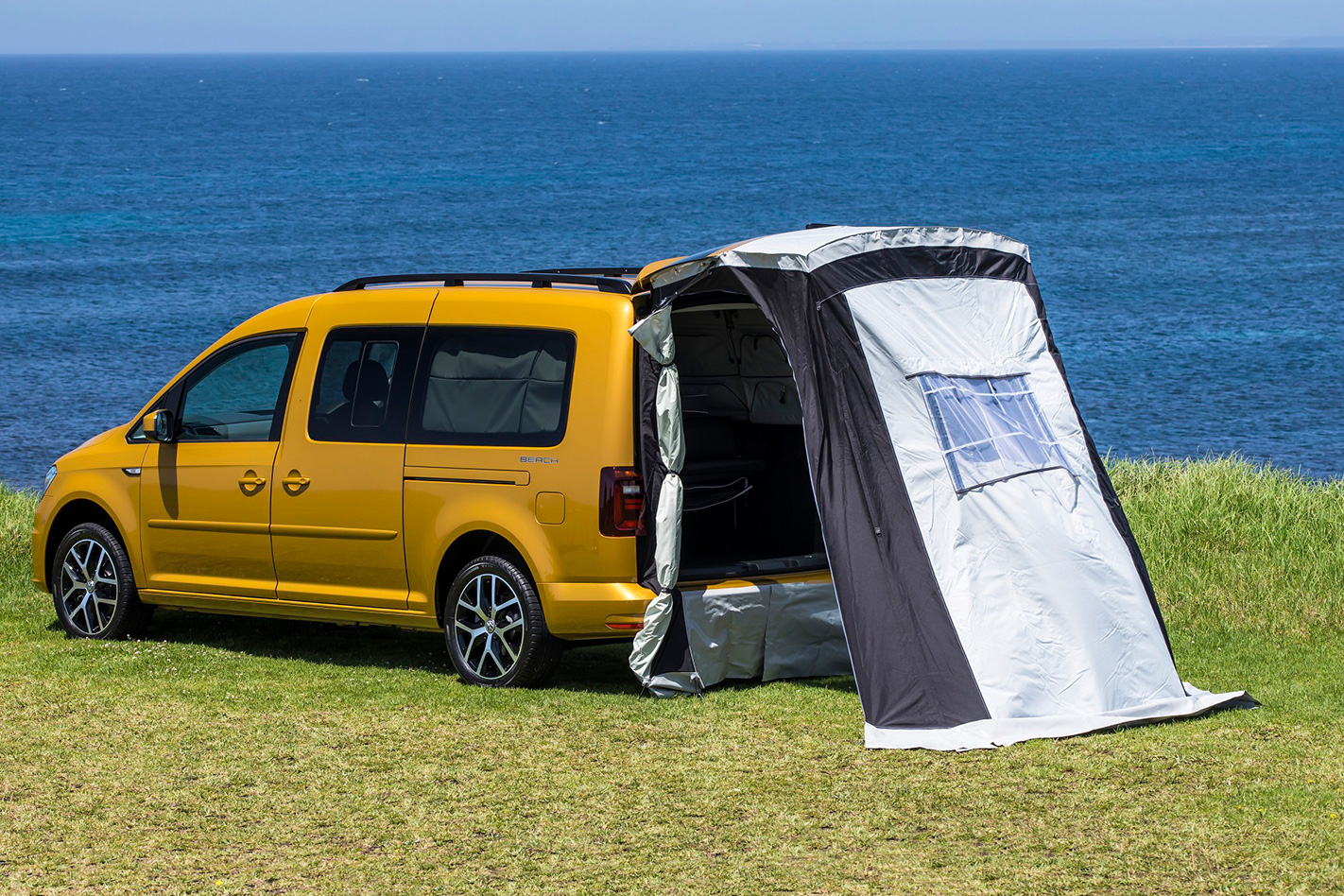
“The Caddy Beach will forge the same sort of connection with customers, whether they’re doing the school run, heading away for the weekend or going around Australia.”
Size-wise, the Caddy competes in the same space as the Citroen Berlingo and Renault Kangoo.
Based on the proven long-wheel-base Caddy Maxi Trendline, the Beach scores a fold-out bed, a walk-through tailgate tent, clever ventilation, block-out curtains, plenty of storage and bespoke compact camping equipment.
Best of all, and somewhat uncommon to camper fitouts, it remains a true five-seater thanks to clever folding rear seats.
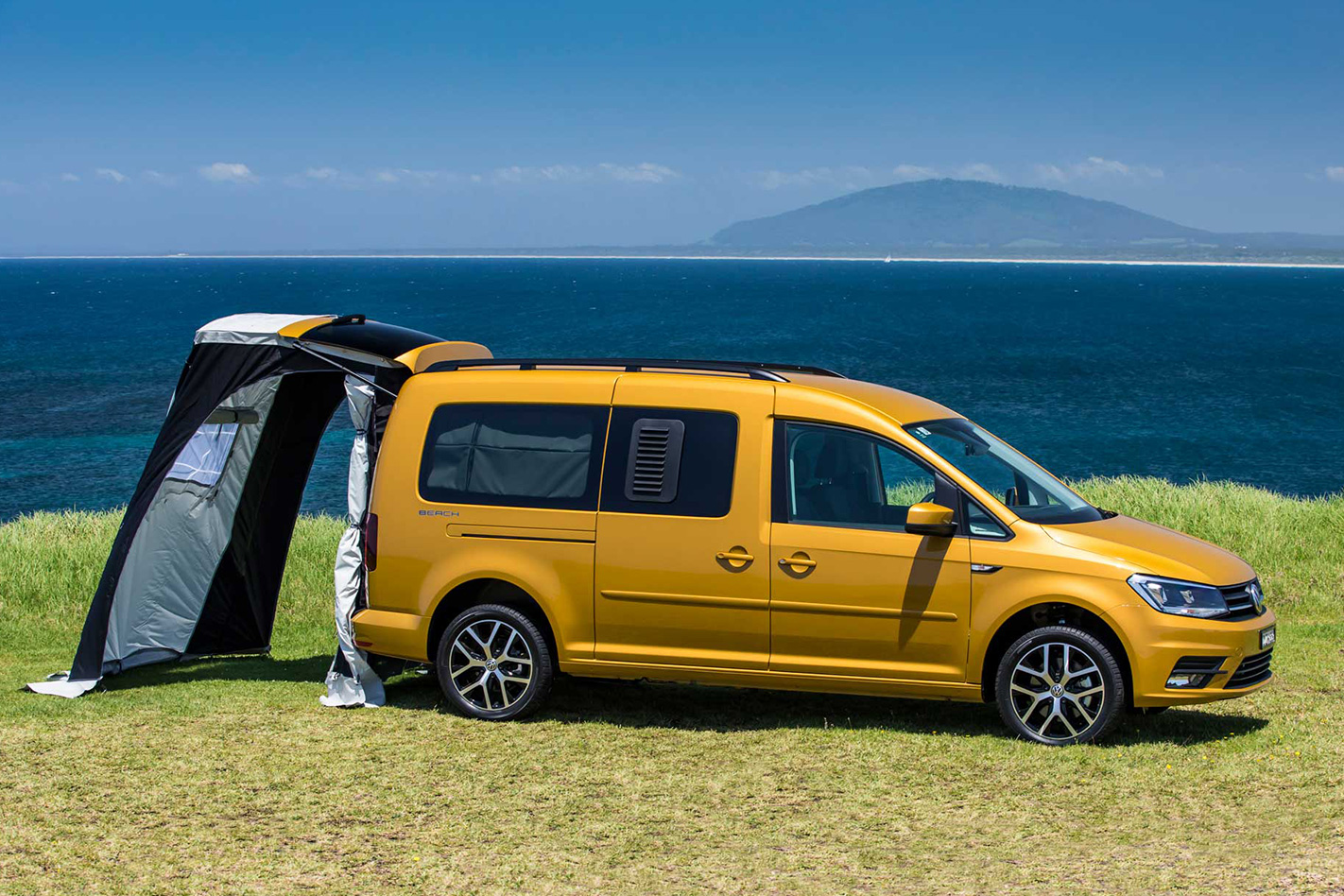
The modular layout offers a fit-and-finish as good, if not better, than any aftermarket option, and if you so desire it can all be removed, returning the Beach to a standard Caddy.
Volkswagen’s 1.4-litre turbocharged four-pot petrol engine drives the front wheels through a seven-speed DSG, putting out 92kW/220Nm.
The Caddy Beach also comes standard with plenty of tech including autonomous braking, adaptive cruise control, lane assist, and an infotainment system with Apple CarPlay and Android Auto.
Maintaining its commercial vehicle roots, the Caddy Beach will tow up to 1300kg while still offering up 3880 litres of cargo volume behind the first row of seats.
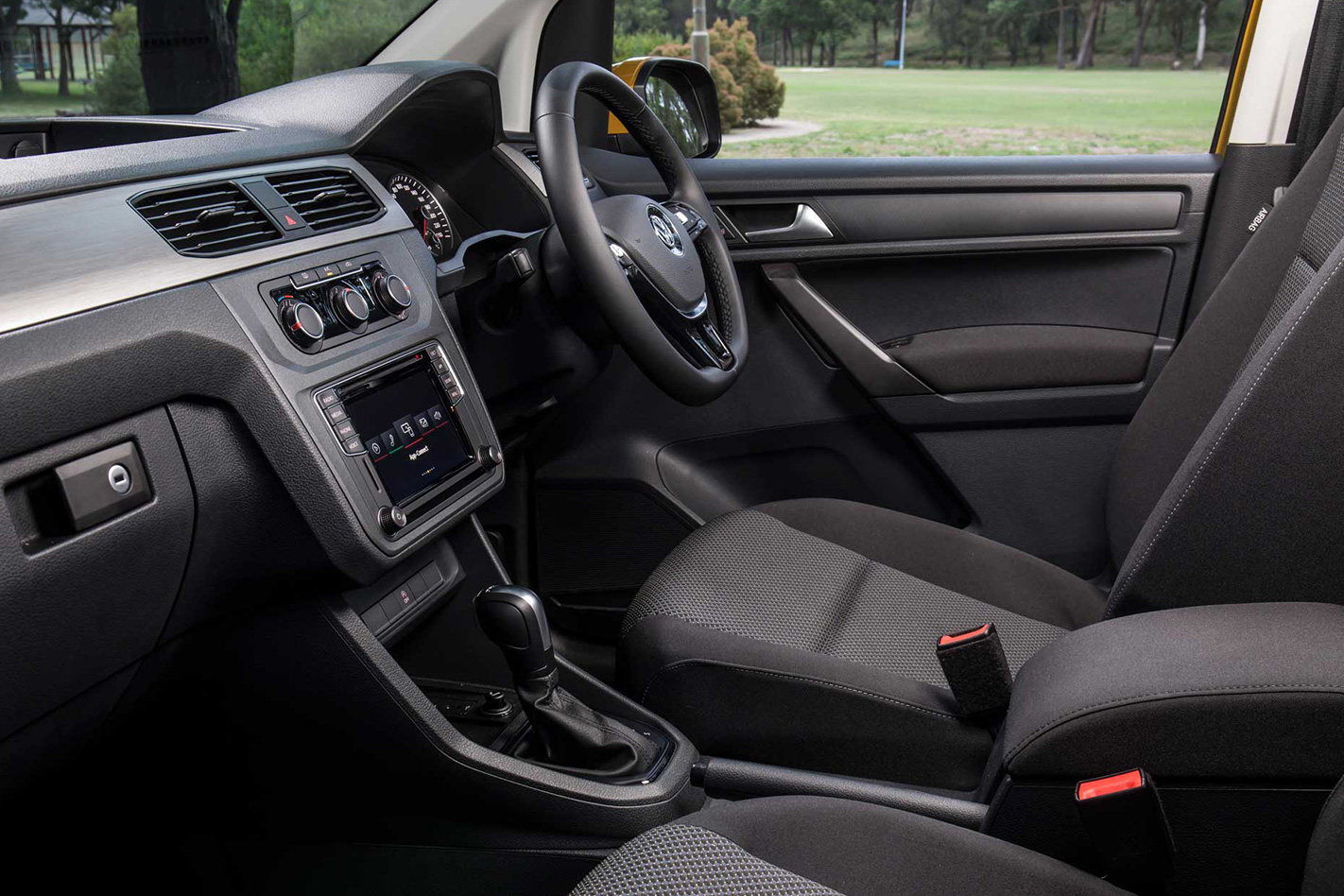
The Caddy Beach is an ode to the iconic Kombi’s versatility as both a camper and day-to-day passenger vehicle, but in a modern city-friendly package.
It arrives at a time when Australians are spending an average of 52 million nights caravanning and camping across a year.
This scaled-down camper is less about travelling Australia for months on end, though, and more about getting out of the city with the surfboard for a quick overnight escape.
- Next Subaru Outback will be all-new
- Timing isn’t locked in, but expect it in late 2020
- The Outback is one of Subaru Australia’s best sellers
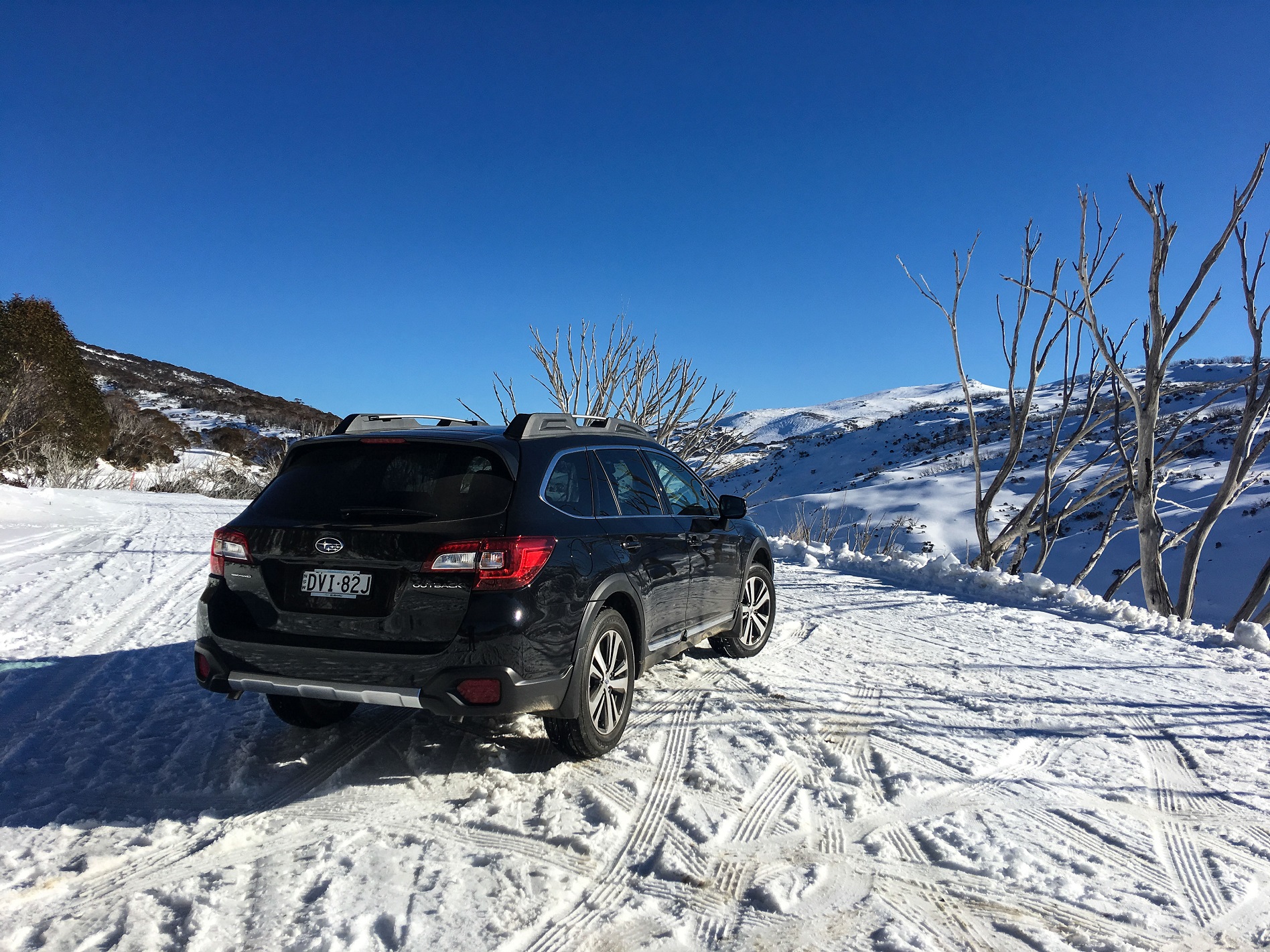
The current Outback went on sale in 2014, making it Subaru’s oldest model
The current Outback is one of Subaru’s most popular SUVs, with the five-seat, five-door station wagon outselling the Liberty – upon which it’s based – by nearly 10 to one. It sits in the large SUV category, which puts it up against a myriad of competitors including the Toyota Prado and Kluger, Mazda’s CX-8 and CX-9, the Holden Acadia and Ford’s Endura.
Given its ‘wagon on stilts’ form, though, it’s more closely related to cars like Volkswagen’s Passat Alltrack.
WhichCar understands that while timing for the new Subaru Outback hasn’t yet been locked down, it’s likely to make an appearance in Australia late in 2020.
Subaru USA spilled the beans on the forthcoming Outback which, like the current car, will use Liberty underpinnings and powertrains.
This means that the Outback will now switch to the company’s billion-dollar Subaru Global platform, which also underpins the XV, Forester and Impreza models. It should make the new five-seat, four-door wagon lighter and stiffer, with improved steering and a lower centre of gravity.
The new platform also allows Subaru to add more driver safety aids in the form of an updated version of its clever EyeSight stereo camera-based system.
The EyeSight suite of driver safety aids now includes a lane centring function, forward blind-spot monitoring and a camera behind the steering wheel aimed at the driver to assess fatigue levels.
Inside, the Outback is likely to incorporate a new design that centres on a huge 11.6-inch vertical tablet-style multimedia screen, a la the Legacy/Liberty.
Apple CarPlay and Android Auto phone mirroring are supported, and while many of the car’s functions are accessed through the screen, it’s great to see an external volume control and easy-to-access climate control switches located on the dashboard.
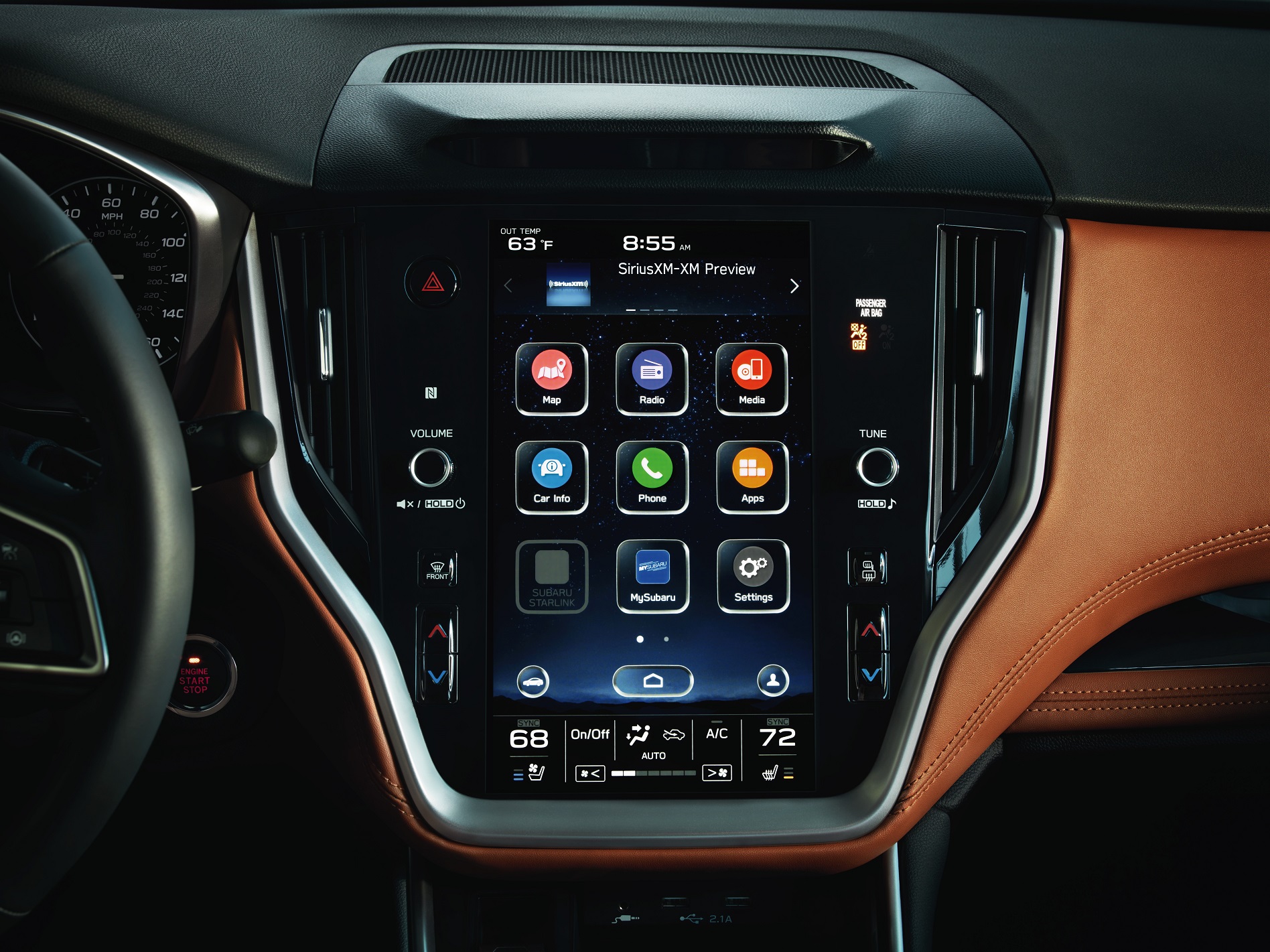
New Subaru Legacy/Liberty multimedia display is likely to make it into the Outback
First it was your computer, then it was your smartphone.
After that, it was your fridge and then your entire home.
Now information-hungry tech giant Google has found a way into your car as well.
Is it time to accept the cheerfully coloured logo in every part of your life like a happy and innocuous personal assistant, or slowly reach for the tinfoil hat?
I’m used to the accusations of paranoia each time I mention information farming and the lengths tech giants go to, to profile every aspect of your life. Paranoid… or aware?
Have you ever been chatting to a friend about your top five carbonated slushie drink brands, only to be served an ad for 7-Eleven Slurpees later that day? And what about that time you visited a tourist spot, only to be sent a survey about your experience shortly thereafter?
And remember… just because I am paranoid, it doesn’t mean people aren’t following me around.
Internet-connected devices are your portal into the web and a wormhole to the rest of the world, but they are also a spyglass looking straight back at you, and Google is just one of many eyeballs at the other end of the peephole.
And now, the global data harvesting behemoth has developed a native information/entertainment system for cars.
This is far from Google’s automotive foray, with Android Auto now a commonplace feature available in many modern cars, allowing the function of a smartphone to be mirrored on the vehicle’s central information display.
But for its new proprietary technology that it somewhat evangelically refers to as ‘powered by Android’, Google’s information and entertainment operating system is very much a part of the vehicle’s fabric. And I bet they don’t show you the ‘off’ switch.
That means a native version of Android doesn’t need your smartphone to connect to the internet, and it also means the system is plumbed into far more vehicle systems. Climate control, comfort and access systems, dynamics and security are added to the entertainment and navigation already offered by your phone when connected.
Should this bother you? And why does it definitely bother me?
Until now, our cars have been the ultimate freedom machine and the embodiment of human independence. When I get in any car, I feel like it’s the very last stronghold from the outside world, my refuge from the general public and a force field protecting me from everything I don’t want to be a part of.
But with a system that’s been hard-wired into your vehicle’s numerous computers at one end, the internet at the other, and the world’s largest information technology company ‘powering’ everything in the middle… who is getting the better end of the bargain?
Reports suggest Audi and Volvo are among the first to throw their hats into the ring, and they’ll be getting an infotainment solution that no doubt works as well as any Google product dressed up to seamlessly slot into the car company’s design language.
Customers will get a vehicle that costs less as more manufacturers jump on board, driving the unit cost south, and there’s likely to be over-the-air update and tailored service benefits, too.
Google, meanwhile is getting another incredibly rich source of largely untapped information from every user, and you can bet your last Bitcoin you won’t ever know the full extent of that information skimming.
Then there are aftersales sources of revenue or, in a word, advertising. I am happy to see adverts on the internet because the general public decided they wanted the internet to be free. Instead of an ad-free subscription service, the web is littered with promotions.
A car, however – for many people, the second most expensive single item they’ll ever buy – I can understand a sense of animosity when the central digital display flashes up promotional material every time you switch digital radio stations. Think it won’t happen? It will.
No doubt, Google will tell you can opt out. Just like any application, you’ll be invited to read the 45 pages of terms and conditions before signing the customer agreement – or not.
But we’re not talking about a simple smartphone application here; we are talking about a fundamental form of transport that many of us can’t do without.
There are plenty of car models on the market that do not integrate information collecting technology for now, but the choices will start to diminish, and as technology giants infiltrate virtually every industry, pretty soon you’ll have no choice but to comply.
Don’t believe me? Wander into any electronics store and try buying a TV that doesn’t connect to the internet.
In an age of smartphones, smart televisions, smart watches and smart fridges, I’d like my car to be just a little bit stupid.
This isn’t your grandma’s Hyundai. The i30 N TCR is a hot hatch turned racer that can best a Porsche GT3 RS on track.
WHAT IS IT?
Capable of shaming its road-car sibling to the tune of 10 seconds a lap, this is the fastest i30 you can buy.
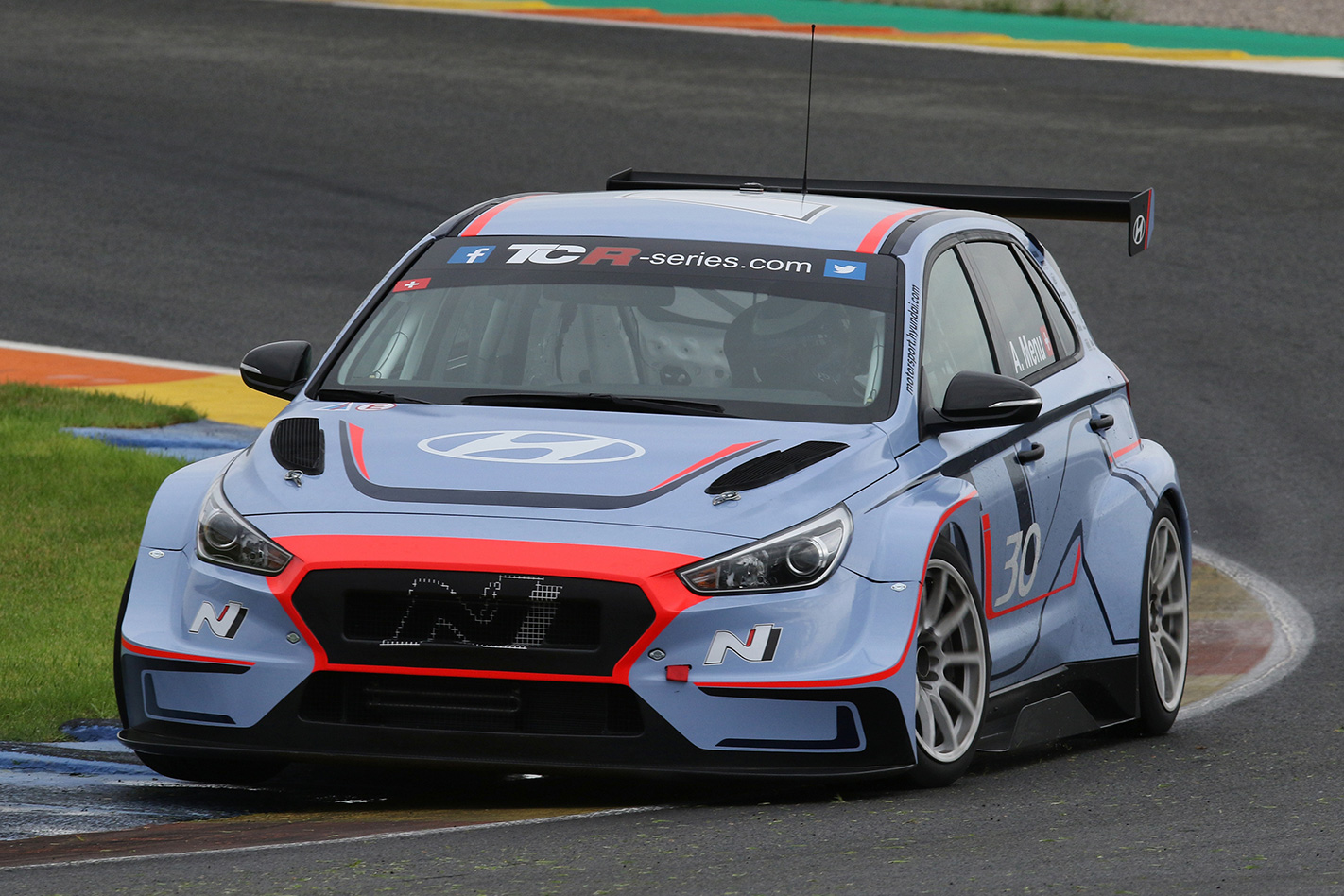
Starting life as a body-in-white i30 chassis that rolls off the production line in Korea, the TCR car is put together in Germany at the hands of the same people responsible for the company’s i20 WRC car.
The engine is production-based, sealed for its 5000km life, and restricted by regulations to 257kW and 460Nm.
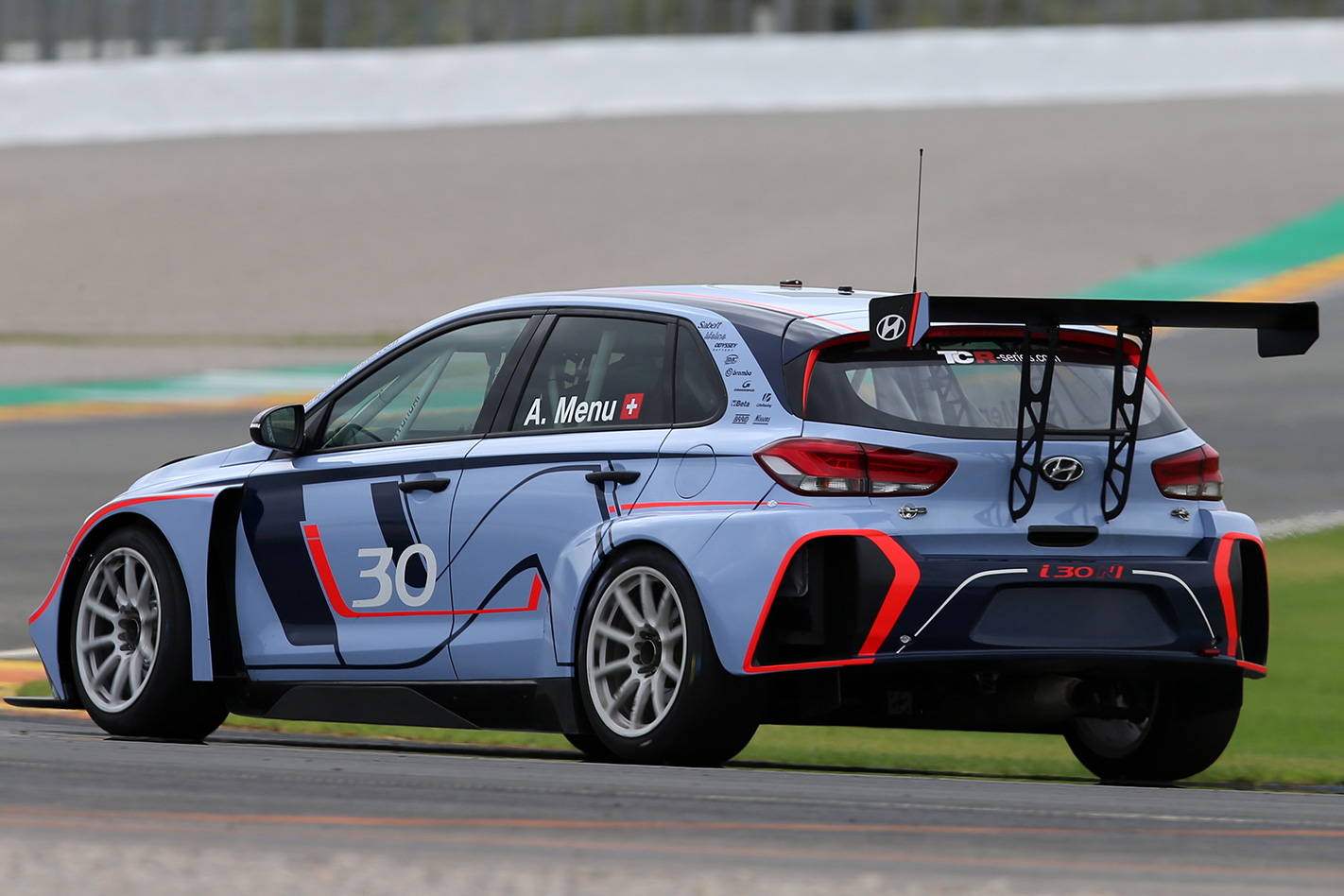
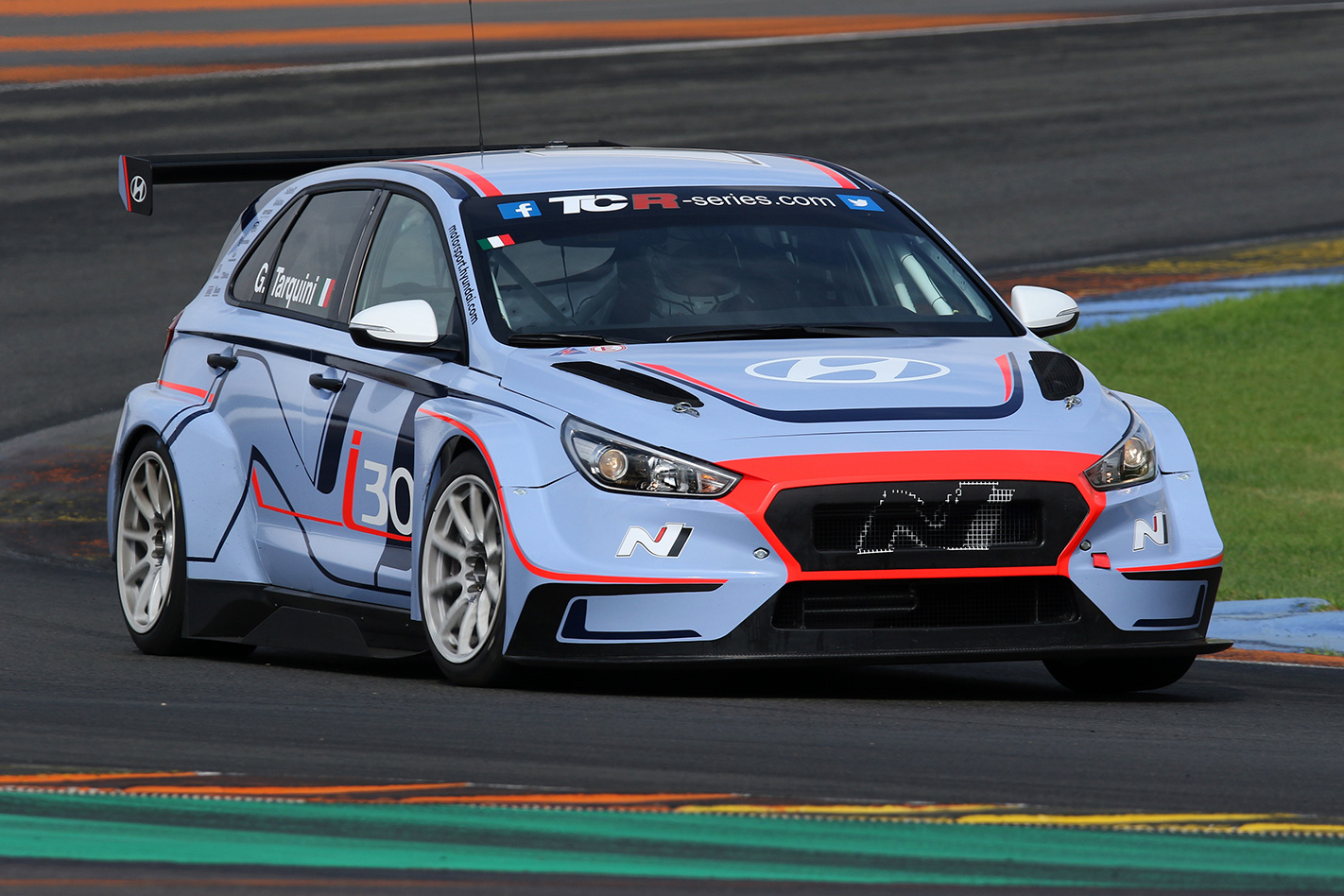
Finishing off the road-to-race transformation are beefed up guards, a stripped interior, Michelin slick tyres, and daunting aero additions front and rear.
A local TCR championship is slated to start mid-year, with at least three Hyundais expected to line up on the grid.
WHY WE’RE TESTING IT
We were offered the opportunity to strap into HMO Customer Racing’s brand-new TCR car at Wakefield Park, and weren’t about to say no – what better way to get a feel for a burgeoning racing series than to sit in the hot seat?
The i30 N is our reigning hot hatch champion and we also wanted to see what happens when you try to transform a winning road car formula which requires compromise, into a muscular, single-minded race car.
With this being the chassis’ official shakedown, the pressure was on to ensure everything came back to the pit lane straight and clean. No pressure then.
MAIN RIVALS
Currently 14 manufacturers have cars homologated for TCR globally. The Honda Civic Type R, Alfa Romeo Giulietta Veloce, Volkswagen Golf GTI, and Audi RS3 LMS are all confirmed to compete in the local TCR Australia series.
THE WHEELS REVIEW
DRIVING a racing car is a daunting process. You can’t approach it like a road car that performs at its best early on, with little in the way of warm-up.
A race car requires a lap of purposeful driving to cycle heat into the tyres and brakes, allowing them to perform as intended.
Road cars are also designed to protect the ham-fisted public with expertly calibrated computers able to guide and assist all of your go-fast ambitions – while doing a mightily impressive job of preventing you from careening through a bus-stop.
Not so with a race car that, with a hint of Darwinism, expects a base level of ability to perform at the best of its ability. The driver’s seat of a race car is no place for egotistical antics.
Knowing this, I’m fully expecting the Hyundai i30 N TCR to be a frightening beast to drive. I attempt to mentally prepare myself as I’m strapped into the sparse white cabin.
The ghosts of the TCR’s road-car origins can be seen from the driver’s seat (which is located on the left-hand side), including the wing mirrors and steering column adjuster lifted straight from the i30 you see on the street.
But beyond that, the familiarity well runs dry, with the rest of the cabin decidedly race car. There’s zero sound deadening, and an FIA-spec roll-cage fills much of the space that was once the back seats and boot.
I try not to let the category five hurricane occupying my stomach to burst upwards as I’m backed out of the pit garage. Nathan Morcom, the car’s regular driver, leans into the cabin, presses the ignition, and the 2.0-litre four-cylinder engine fires into life.
This isn’t the refined burble of the i30 N road car, with the noise more akin to what a billion baritone bees might sound like if they were trapped inside a Milo tin.
As the window net is set in place, and driver’s door slammed shut, I’m left on my own. An entire race team watches on as I sit inside their $250,000 car. The ghouls of anxiety that lurk in my mind remind me that it’d be awfully embarrassing to stall in this moment.
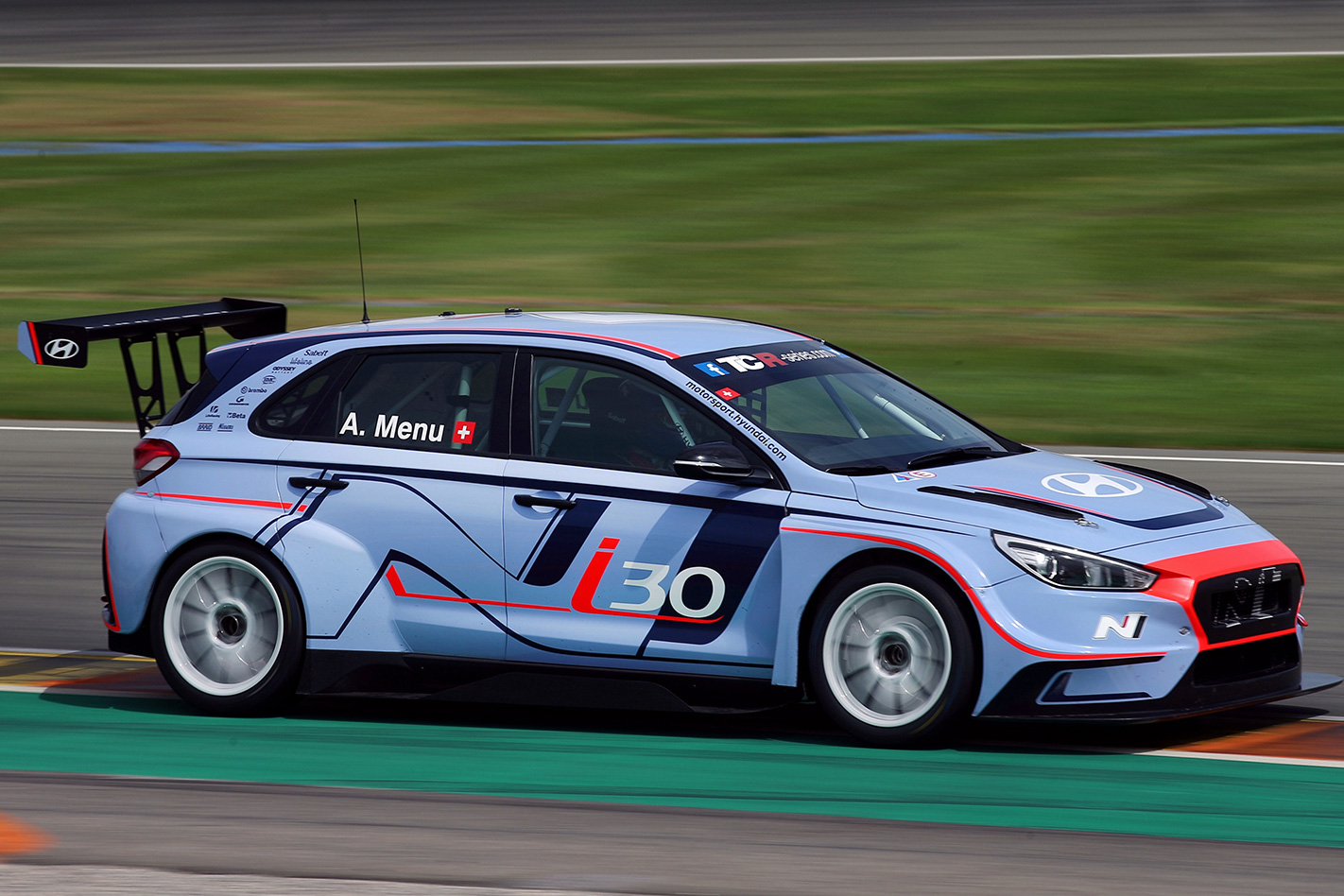
Thankfully, the Hyundai i30 N TCR car has a remarkably friendly clutch. Instead of the binary light switch I’m anticipating, it feels much like the road car, but heavier.
Rolling out on track, I spend my first tour attempting to put heat into the 10-inch wide Michelin slick tyres that are placed at each corner with repetitious hard acceleration and braking.
Both upshifts and downshifts are completed without a clutch thanks to the six-speed sequential gearbox and wheel-mounted paddle shifters. It’s incredibly satisfying to bang up the gears, timing shifts with a series of lights which illuminate on a column-mounted display, each change of ratio accompanied by a crisp BANG from the exhaust. Slotting down gears is seamless, the engine matching revs as it changes gears.
Steering the i30 TCR doesn’t require forearms like tree trunks due to an electrical power assisted rack and pinion set-up. With just a single turn lock-to-lock, finesse is a priority when handling the Alcantara-clad steering wheel.
Corner turn-in is potent; thanks to the powerful concoction of slick rubber, clearly functional aerodynamics and a rapid steering rack.
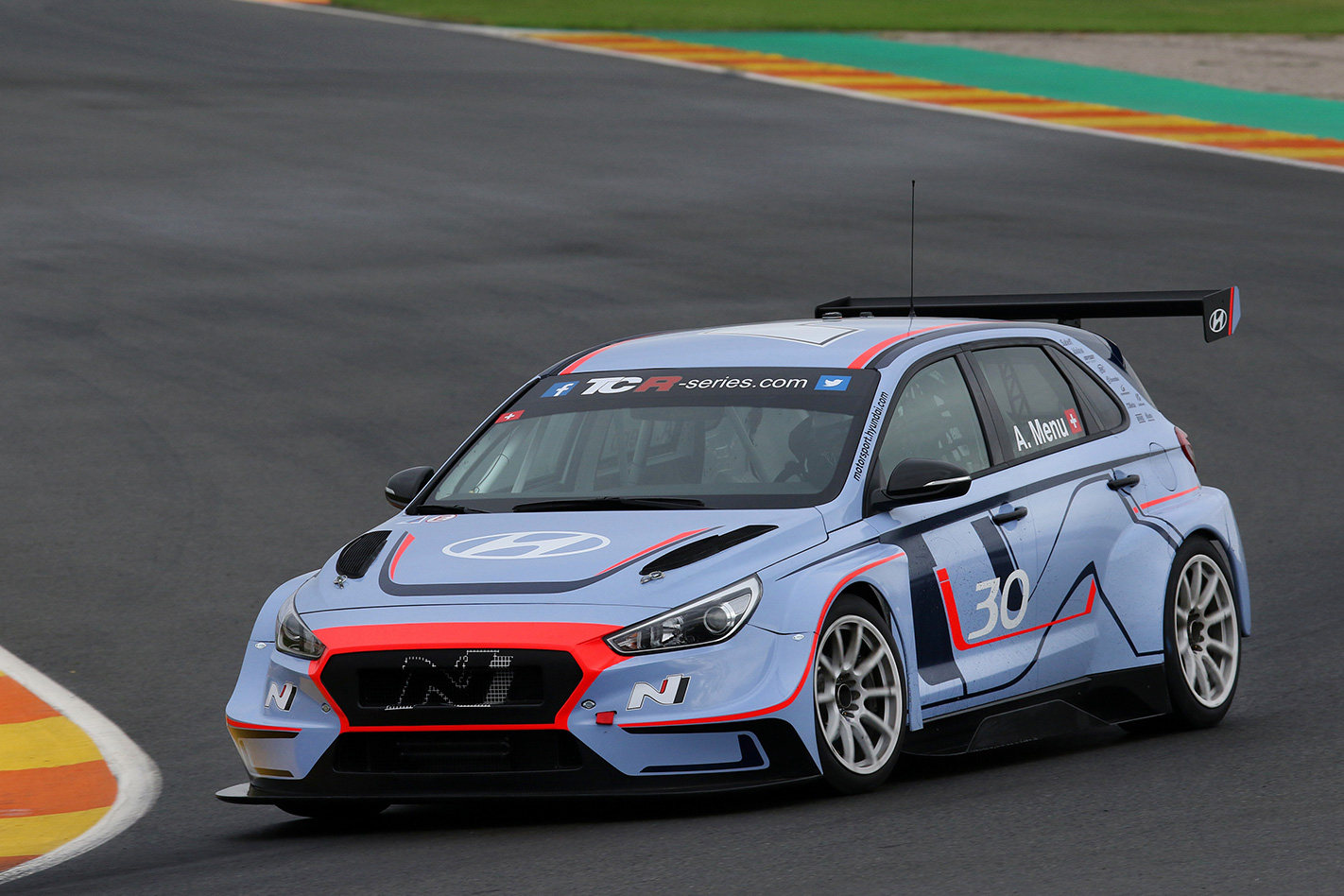
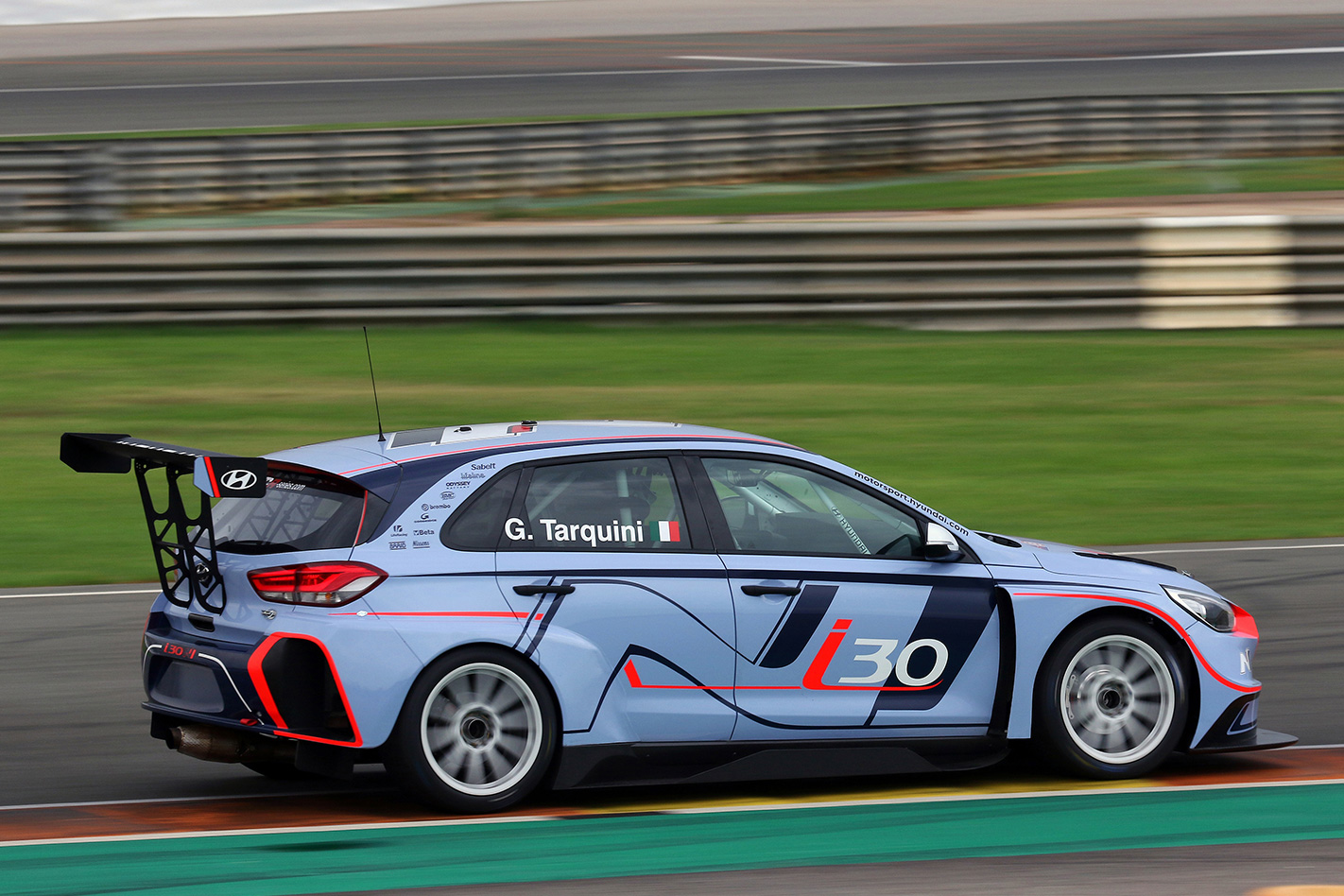
The nose of the car darts towards apexes with ferocious intent, the large front splitter and rear wing keeping the car hunkered down.
I was warned of the car’s propensity to lose rear-end grip before I exited the garage. Thankfully, this only became apparent once during my run, with the rear sliding wide while heading towards the apex of turn two. Swift application of opposite lock prevents an ego-battering rotation as the wide front rubber gripped, a bit of throttle helping to drag me out of the slide.
Powered by a 2.0-litre turbocharged four-cylinder petrol unit that starts life as a road-car engine, the TCR isn’t the most powerful race car around. Its 257kW/460Nm outputs are dwarfed by the likes of Supercars, but represent a healthy boost over the road car’s 202kW and 353Nm.
The added power hasn’t made the engine feel peaky, instead it offers superior low-down pull compared to the road car thanks to the extra 100Nm of torque. Peak power arrives just 200rpm short of the redline, but the power band is wide, allowing the car to pull hard all the way through the rev range.
Acceleration claims are a bit on the nose for a race car, but it’s estimated a TCR car could crack 100km/h from a standstill in approximately 5.2-seconds thanks to a fiendishly complex launch process. My bum dyno tends to believe that estimation, with speed piled on at an impressive pace.
Helping scrub all of that speed off are gargantuan 380mm steel ventilated discs up front, clasped by four-piston calipers, while the rear brakes are 25 percent smaller at 278mm.
There is no anti-lock braking system – or traction control for that matter – which is daunting to discover for the first time as the mechanics are trying to figure out how much circulation they can cut off in my legs while tightening the belts of a six-point racing harness.
To get the most out of the car’s impressive stopping power requires almost all the force I can muster through my leg. Even with the belts fastened to make it feel like my ribs are cracking; a forceful stop feels like the hand of god slapping you on back, forcing me forward in the seat.
Even my most ambitious attempts at stomping the brake pedal can’t cause the front tyres to lock.
Front suspension in Hyundai’s race car is a MacPherson strut set-up, with coil springs and gas-filled dampers, while a four-arm multi-link axle combination underpins the rear.
Ride is, naturally, incredibly stiff. However, even when bashed over sausage kerbs on the apex of corners, the racer remains poised. There is nary a skerrick of secondary movement as the car returns to having all four wheels planted on the asphalt.
While body movement hasn’t been completely expunged from the racer’s character, it is far more restricted than any road car. Lateral roll is near nil, while the most drastic movements are reserved for hard braking, when the nose dives towards the asphalt.
You sit low inside the cabin – practically on the floorpan. This inherently limits outward vision, but since you won’t be encountering any roundabouts in a race car, that’s not necessarily a bad thing.
Wing mirrors are lifted straight from the road car; while an extra-wide rear-vision mirror helps you locate on-track rivals.
Where the seating position does become a hassle though is while attempting to clip ripple strips on corner exit just so.
The electronic dash in front of me, which displays revs, gear selection, and speed for most of the lap, flashes a laptime with every crossing of Wakefield’s start-finish line.
With each tour of the circuit my lap times are shrinking, with multiple seconds being shaved as confidence builds.
That’s the most impressive thing about the Hyundai i30 N TCR car – its ability to allow even the unskilled to extract seriously impressive lap times.
Perhaps that’s not its primary function. After all, when we download the data, Morcom’s an easy six seconds per lap quicker than I am which demonstrates the potential in the chassis, but unlike most race cars, it’s not truculent or intimidating. With the right mindset the i30N TCR is friendly and great fun.
While I won’t be threatening for a race seat any time soon, my final lap in the TCR car is about on par with Warren Luff’s benchmark figure in a Porsche 997 911 GT3. I suspect that could be the only time I’ll be measured in the same league as Motor magazine’s resident hot shoe but I’ll take it.
THE WHEELS VERDICT
There is no denying the i30 N TCR’s race car credentials. Driving it is a brutal and physical experience, but most importantly, it’s quick enough to harass a Porsche Carrera Cup car at the right track.
However, all that speed hasn’t completely killed off the road-car’s approachability. You don’t have to be a professional racing driver to extract impressive lap times out of the i30 N TCR.
With braking akin to a Supercar, and cornering powers not far off a GT3 car, the TCR racer is not to be underestimated.
Even if joining the TCR series wasn’t on your radar, the i30 N racer is a bargain for those with a serious track day fetish. The Porsche GT3 RS, McLaren 600LT or Lamborghini Huracan Performante are all slower around a lap and at least $150,000 more expensive. And the appeal of demolishing these Euro blue-bloods in a four cylinder Hyundai? That’s priceless.
PLUS: Faster than supercars; affordable for a race car; incredible turn-in; forceful braking ability MINUS: Forward vision means spotting nasty ripple strips is mostly a guessing game; rear grip can be lacking despite massive wing
SPECS
Model: Hyundai i30 N TCR Engine: 1998cc 4cyl, dohc, 16v, turbo Max power: 257kW @ 6600rpm Max torque: 460Nm@ 3200rpm Transmission: 6-speed X-trac sequential with paddle shift Weight: 1265kg (including driver) 0-100km/h: 5.2 sec (approx) Economy: 40L/100km (est) Price: $250,000 On sale: Now
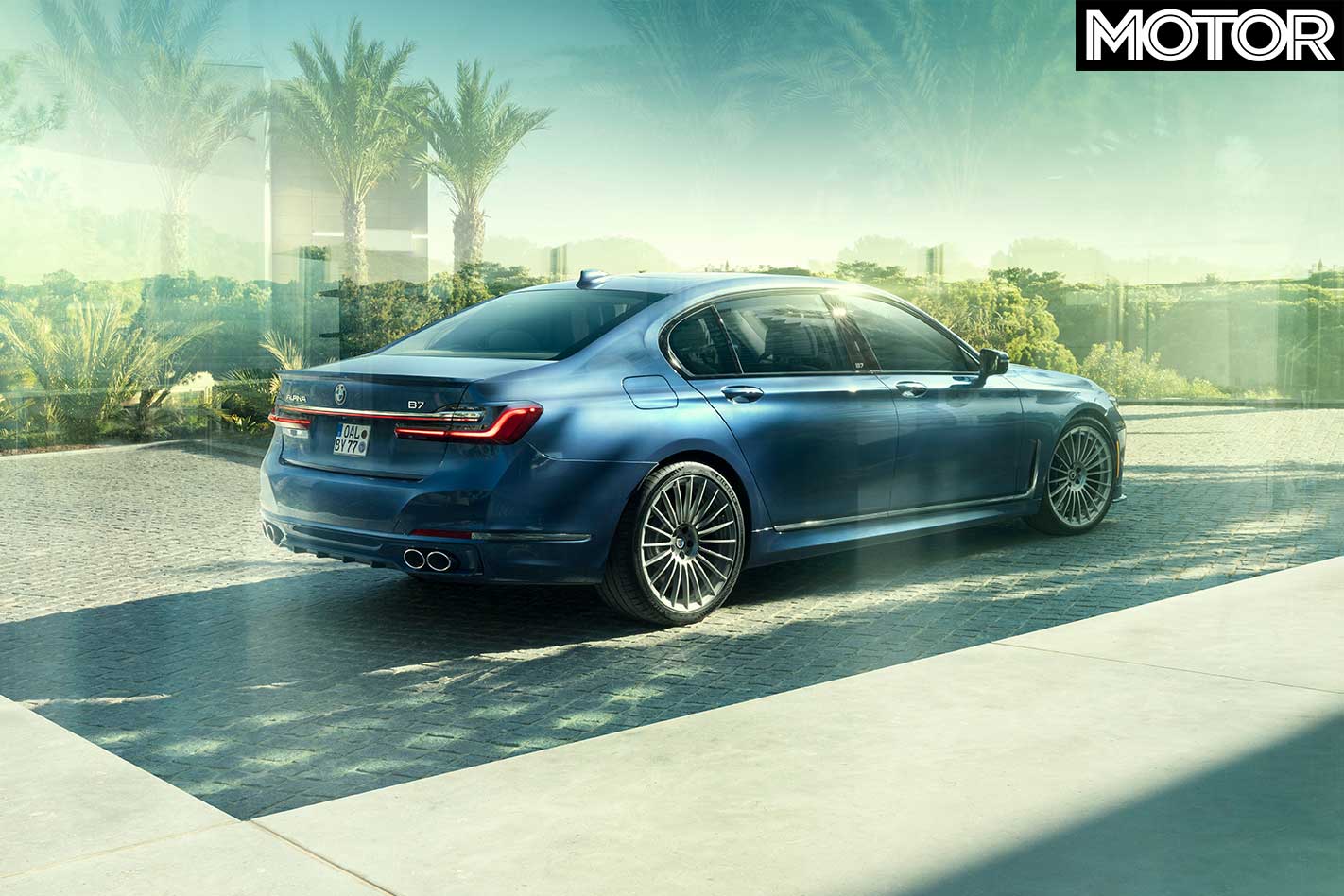
Alpina has today revealed it will release its sixth-generation B7 which is based upon BMW’s current 7 Series platform.
The B7 sedan will feature a 4.4-litre twin-turbocharged V8 which produces 447kW/800Nm. The 2202kg limo will do 0-100km/h in just 3.6 seconds (down from 3.7 secs from the previous generation). The B7 will be able to reach a maximum speed of 330km/h.
To compare, the current-gen BMW 740i features a relatively small 3.0-litre straight-six engine producing ‘only’ 240kW/450Nm, a difference of 207kW/350Nm from the new B7’s outputs.
To make that much power, the Alpina’s turbochargers have been slightly tweaked from the previous B7 with larger 54mm diameter impellers (up from 50mm). The Alpina-specific intercoolers feature interconnection pipes to reduce intake pulsations between the two banks of cylinders.
These changes, along with new engine management software, means that peak torque is now available from just 2000rpm and provides grunt right through to 5000rpm. Alpina says this gives better throttle response and a more effective performance gain.
The newest-generation B7 xDrive will feature an eight-speed ZF automatic transmission. Alpina says closer gear ratios provide higher levels of shift comfort and efficiency.
A stainless-steel Alpina exhaust system will feature on the car which will include active valves that open or close depending on whether the car is in Comfort or Sport, the latter likely the preferred option for die-hard rev-heads.
Two-axle air suspension will feature alongside Dynamic Damper Control and Active Comfort Drive to give the upmost level of driving comfort. The air suspension allows the ride height to be adjusted by a total of 35mm.
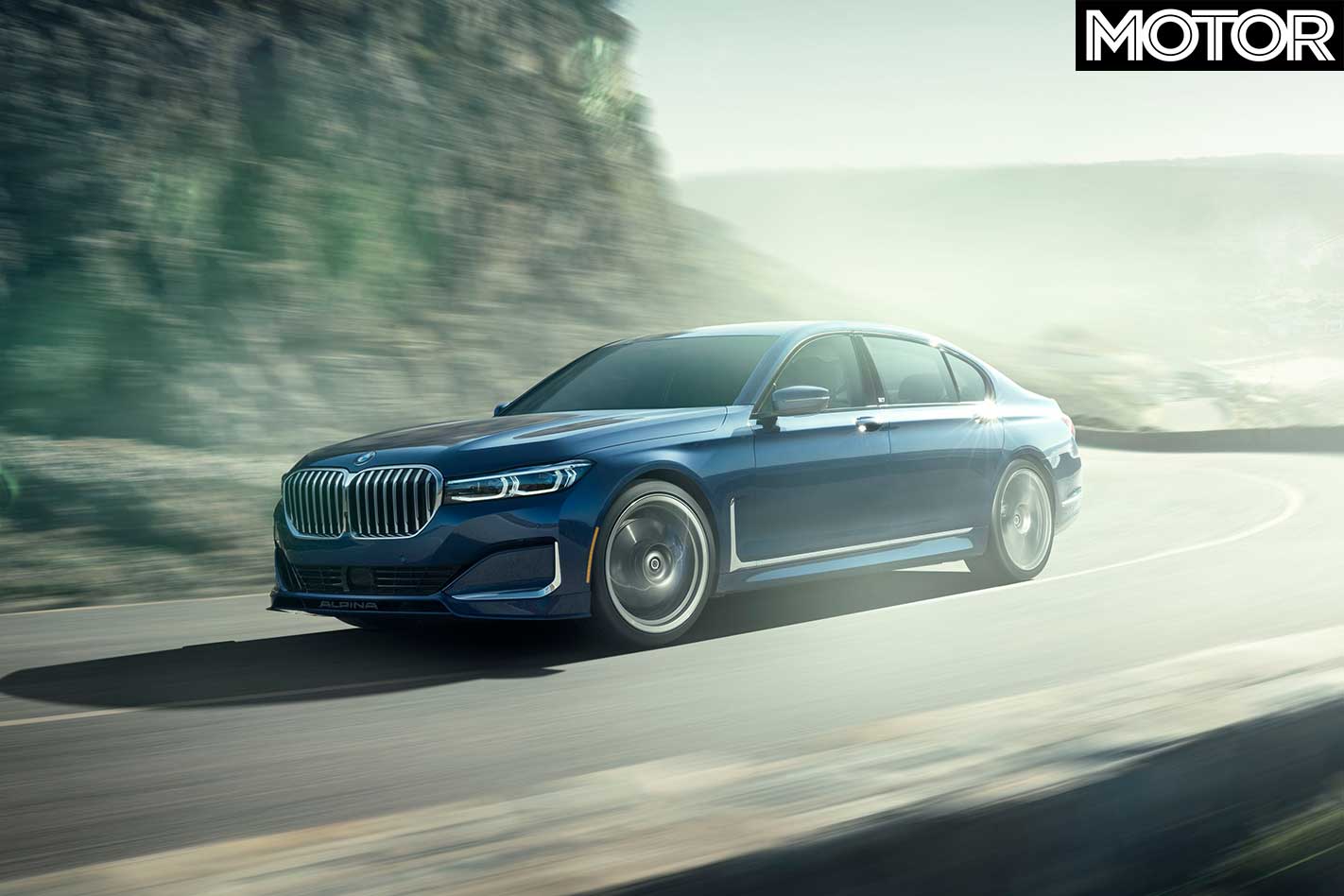
At speeds over 225km/h, the B7 will automatically lower the suspension for better handling and a lower centre of gravity.
The Alpina’s standard 20-inch wheels will be shod with Michelin rubber measuring 255/40 at the front and 295/35 at the rear. Optional 21-inch Alpina classic wheels will be available.
The B7 will feature BMW’s xDrive all-wheel-drive system which Alpina claims will “continuously distribute torque between the front and rear axle within milliseconds for maximum traction and control.”
Alpina has added further cabin refinement to reduce tyre noise by shielding the rear arches and including insulation in the B-pillar area. Thicker laminated glass will help give better interior sound deadening.
For those young ones lucky enough to riding in the back of a B7 limousine, there will be twin 10-inch HD displays running a Blu-ray DVD player to keep them well occupied.
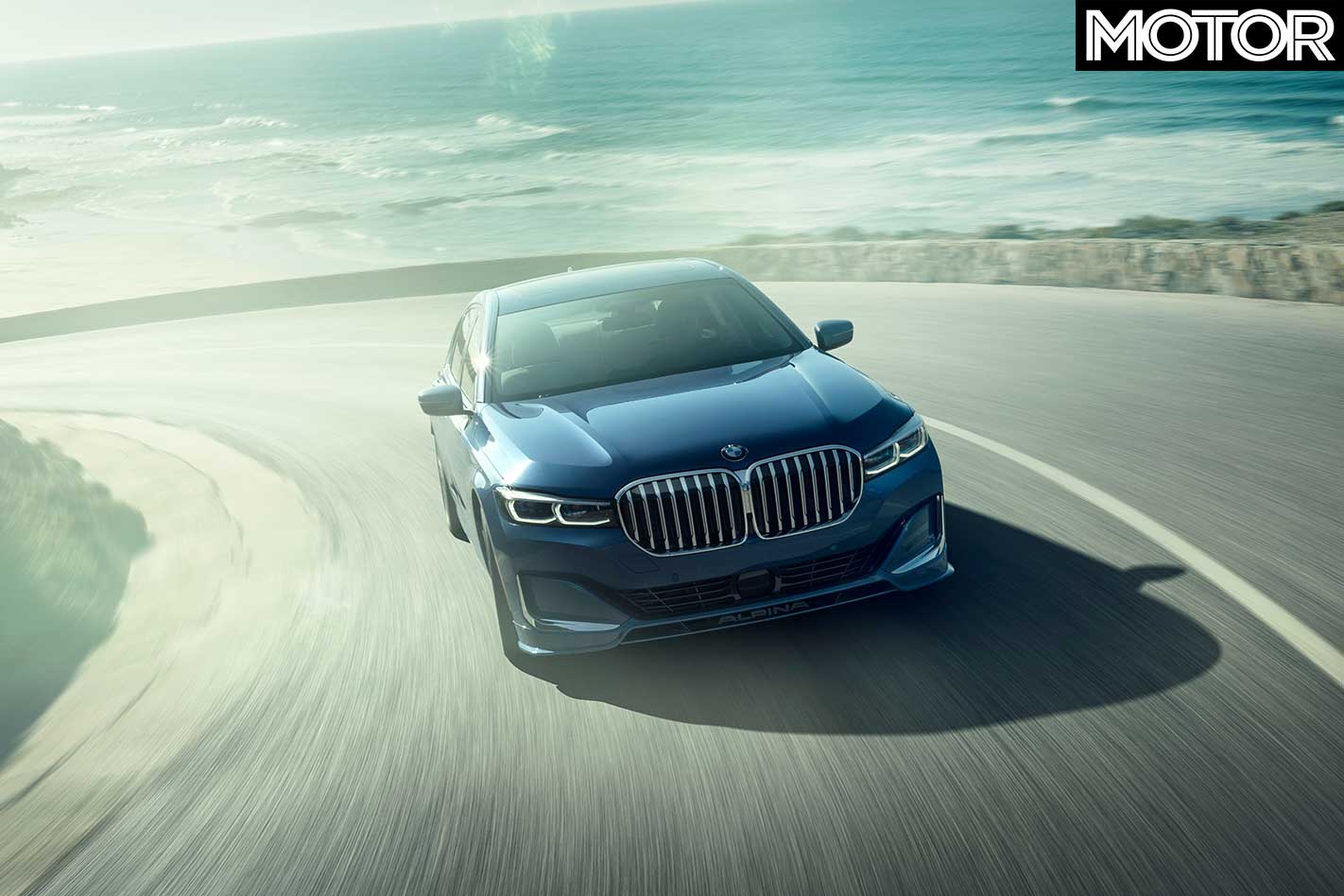
A BMW Touch Command unit (a removable tablet similar to an iPad) can be used throughout the cabin and allows occupants to operate comfort functions such as seat adjustment, interior lighting, climate controls, and navigation/communication systems.
The B7 xDrive will have several driver assistance systems on board. Features such as collision and pedestrian warnings, lane-departure warning, blind-spot detection and cross-traffic alerts are all standard.
The Professional Driving Assistance package adds to the standard features with traffic jam assist, active cruise control, lane-keep assist and an automatic lane change and evasion assistant.
The new sixth-gen Alpina B7 xDrive will go on sale in Q3 2019 in the US, with Australia yet to have a confirmed delivery date.
If the events of the past year have taught us anything, it’s that when it comes to bending Elon Musk’s ear, Twitter is his direct line of communication. So when Model 3 owner Josh Atchley tweeted a request to the Tesla Chief Executive for a petsafe ‘dog mode’, “Where the music plays and the ac is on, with a display on screen saying “I’m fine, my owner will be right back”?”, he probably didn’t expect that within four months, Tesla would be rolling out a dog friendly update for pet owners – but, this is 2019 and so of course it has.
Equally, in January, another Tesla owner, Andy Sutton sent a tweet Musk’s way suggesting Tesla implement a security system that takes advantage of the car’s 360-degree camera after discovering a dent in his car. After seeing the tweet, Musk replied “Tesla Sentry Mode coming soon for all cars with Enhanced Autopilot.”
Now, Musk has confirmed (via Twitter, natch) that ‘Dog Mode’ and ‘Sentry Mode’ are ready to roll out via an over-the-air-update pushed to Tesla vehicles at no charge. While locking an animal in a car is never a good idea, Dog Mode will at least put owners’ minds at ease for brief periods of time. It will likely make use of Tesla’s Cabin Overheat Protection, a feature that engages climate control to prevent extreme temperatures, but instead, keep the climate system running as normal. It’s not yet known if Atchley’s suggestion of a message on the screen has been taken on board – and it wouldn’t be a bad idea, at least to keep the public’s mind at ease.
Sentry Mode is designed to detect and record a robbery or damage to a car, using Tesla’s Autopilot camera system. Halfway through last year, we saw an update that introduced a dashcam feature using the front-facing camera and since then, there has been more and more talk about how to take advantage of the cameras, beyond parking and active safety assistance.
If being able to record those responsible for breaking-in and/or damaging your vehicle isn’t enough of a deterrent, Musk also tweeted that Sentry Mode will be fitted with an easter egg that would blast Bach’s dramatic Toccatta and Fugue in D Minor and, hilariously, “Keep Summer Safe” – from a cult episode of Rick and Morty that sees an AI-enhanced vehicle take security to chilling levels.
A new software update (Version 9 2019.4) is on the near horizon that adds a constant Blind Spot Warning Chime (currently Teslas only chime during a lane change) and Auto-Folding Mirrors Based on Location feature that integrates with HomeLink and GPS, however, it’s unclear if Dog Mode and Sentry Mode are included in this update.
- General Motors reportedly considering cutting Holden brand loose
- Holden could be imported by UK company Inchcape
- Neither party are denying multiple stories
- Holden’s Astra and Commodore will eventually be built by Peugeot
Reports emerged late last week that Holden’s parent company General Motors is fielding an offer from Inchcape to take over the importation of Holden vehicles into Australia.
Holden chief and former head of Toyota Australia David Buttner is reported as telling Holden dealers that there is no weight to the story. A Holden spokesperson told WhichCar that there was no more to add to the comments it made last week.
A request to clarify with Inchcape whether it intended to reboot the Opel nameplate for Australia also met with a noncommittal response.
“We are always assessing a range of opportunities and initiatives in support of our Ignite strategy and we do not comment on speculation,” said a spokesperson from the UK-based importer.
What about Opel?
More recent speculation suggests that the Opel nameplate will be revived as part of the shakeup.
In 2017, the PSA Group, which builds Citroen and Peugeot cars, bought General Motor’s European brands, including GM’s British arm Vauxhall, and the German-based Opel brand, fuelling those rumours.
Opel currently supplies Holden with two vehicles; the Astra and the Holden Commodore, but the future of both cars now looks considerably different in light of the possible ownership change.
PSA has managed to change the fortunes of Opel, turning the company around from a heavy loss-maker to turning a small profit in 2018 largely by curtailing research and development costs. The next step for Opel is to be brought into the fold of the PSA Group by way of platform and powertrain sharing.
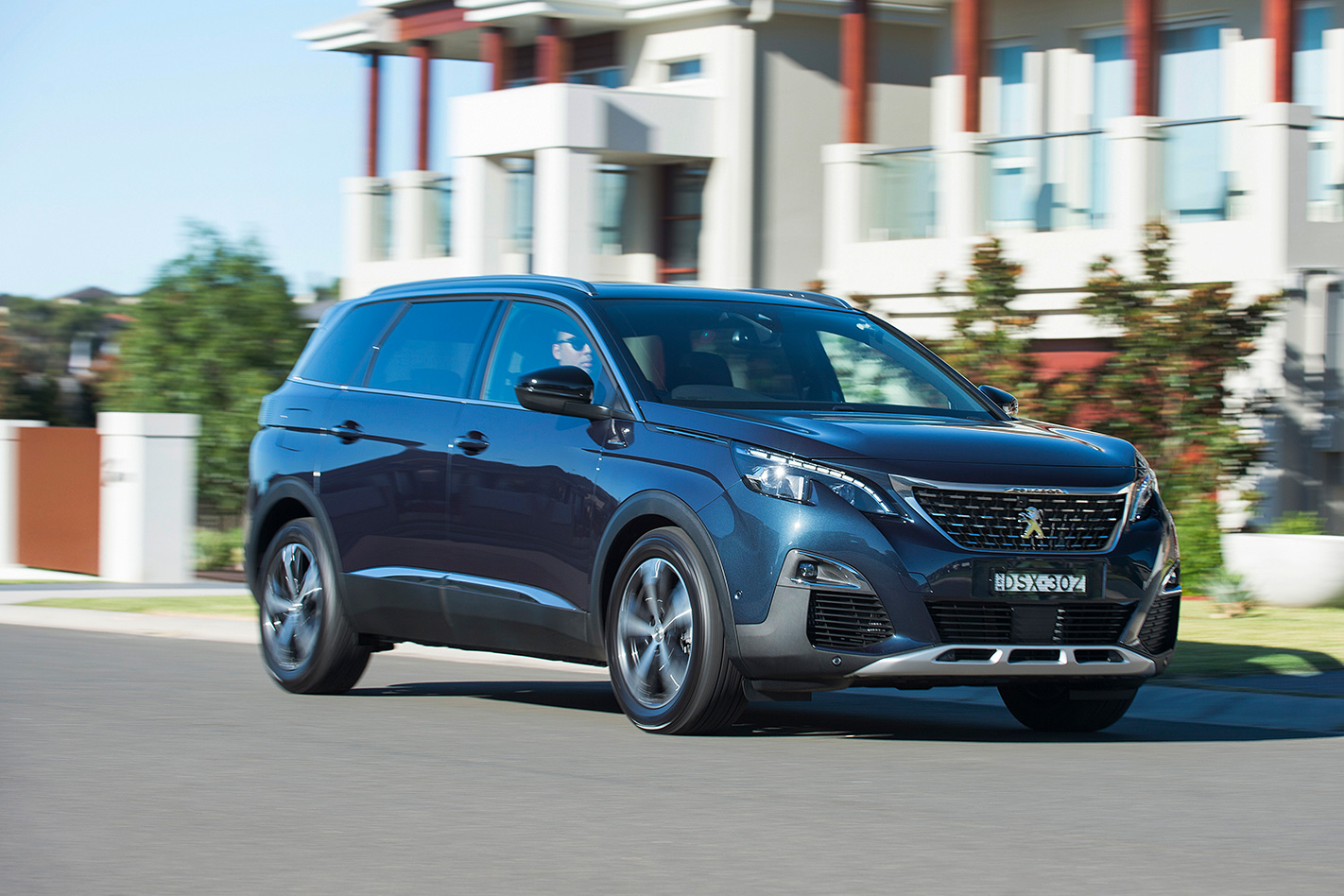
This means that all future Opel products – including the Astra and the Commodore – will be based on current or future Peugeot and Citroen architectures. For example, the group’s new EMP2 platform slots under cars as diverse as the Peugeot 308 hatch and the larger 5008 SUV (below), and will easily accommodate both the Astra and the Commodore.
Inchcape’s Australasian operation is the only one in the wider group that imports the French brands into a market, which in theory will give it access to new models coming out of PSA plants in the future, be they Peugeot, Citroen or Opel.
Opel an unlikely starter
WhichCar believes, however, that reports the Opel brand will be revived locally are wide of the mark. GM foisted the brand onto Holden in a failed experiment in 2012 that lasted just 12 months, while Australia’s uniquely crowded automotive marketplace makes it an expensive exercise to launch a brand.
As well, the waning fortunes of both the Commodore and Astra are such that basing a standalone brand on their sales success – even taking into consideration that additional Opel-badge SUV products may contribute to the mix – does not currently make for a strong business case.
As well, launching any brand without some form of SUV or dual-cab pick-up product to hold up its bottom line would make it a tough sell in our ute and SUV-mad market.
Holden design and engineering ‘safe’, said GM
As recently as November, Holden was given assurances by GM that its design and engineering portfolios were safe from a massive round of job cuts across the GM world, with more than 14,000 people set to lose their jobs across the company.
WhichCar has contacted several industry experts for comment, and we’ll update this story accordingly.
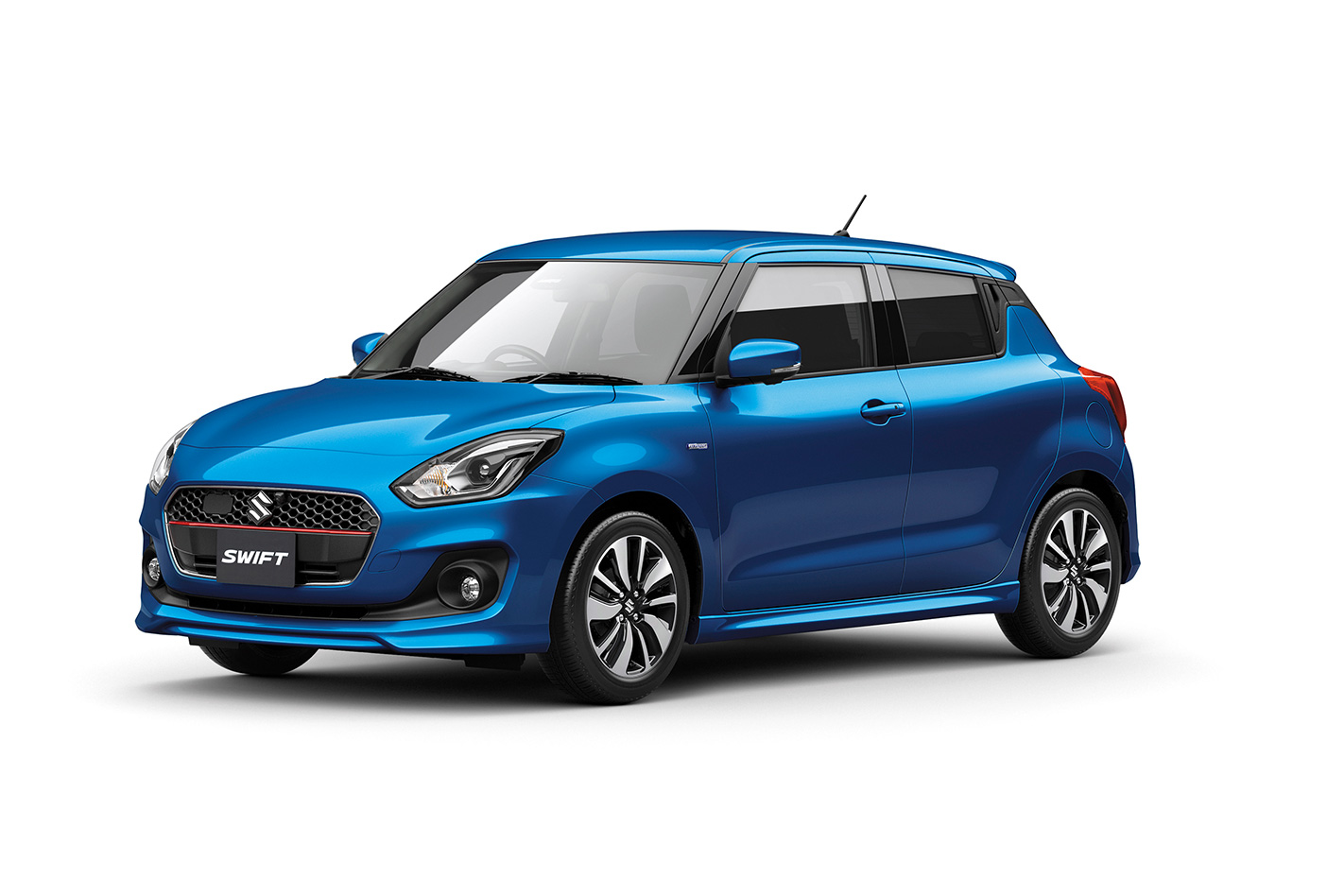
Plans are in motion at Suzuki Australia to bring a hybridised version of the Swift hatch to local showrooms. If those plans come to fruition, it could earn the small Japanese manufacturer the distinction of offering the most affordable hybrid car in Australia, potentially undercutting the $24,040 Toyota Prius C.
While Suzuki is rumoured to be working on a plug-in hybrid version of its Vitara small SUV for Europe, the outlook for that car is limited by availability – according the Suzuki Australia general manager Michael Pachota, a hybrid Vitara simply isn’t available in an Australia-appropriate configuration.
However, Pachota says Suzuki’s local arm has another hybrid model in its crosshairs.
“I’d like to look at that if the technology was available for Australia, currently it isn’t in terms of vehicles exported to this part of the world. We do have hybrid technology available in other vehicles globally however, and I’m looking at trying to introduce that to Australia.
“It’s very early stages, but we’ve done all of our study and research to try and get that in. It all depends on if it can be priced right, and if it can be tooled up for Australian-specification vehicles.
“If they can do that for us, I’d like to introduce it on a very iconic nameplate in our range,” he said.
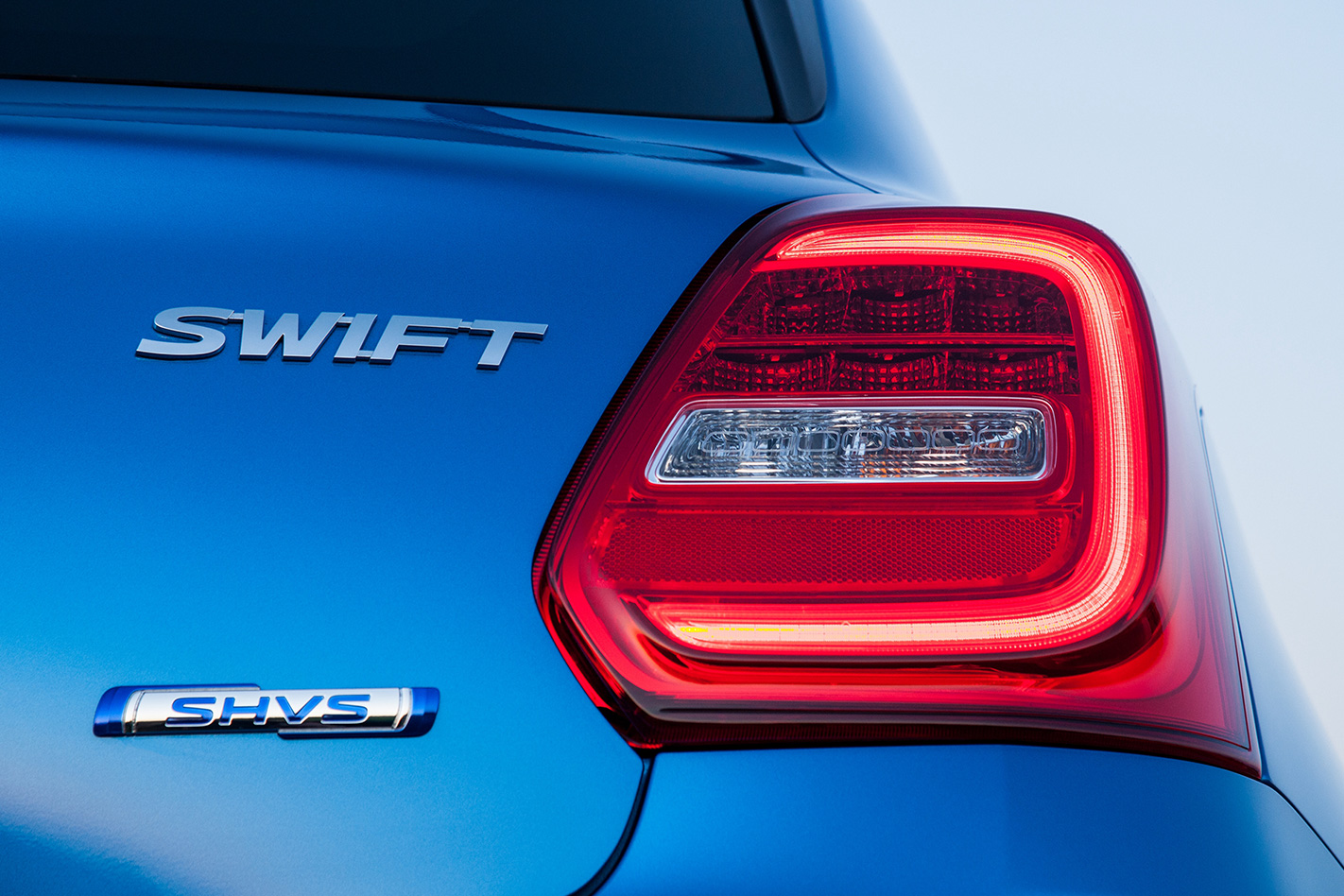
With virtually all of Suzuki’s current hybrid-capable offerings belonging to the Japan-specific kei class of microvehicles – cars that Pachota says are not on the immediate product plan for Suzuki Australia – only the Swift and Ignis have the potential to come here. Of the two, it’s understood that the Swift presents the better opportunity from an Australian perspective – its status as Suzuki’s top-seller Down Under may have something to do with that.
In Japan the Swift comes with the option of two different hybrid powertrains, both using a 1.2-litre naturally-aspirated petrol four-cylinder with 67kW and 118Nm. The cheaper of the pair features a ‘mild hybrid’ capability with an energy-savingsmart-alternator that can deliver a small amount of power to the engine to help with acceleration, while the other pairs the combustion engine with a 10kW/30Nm electric drive motor and a larger battery.
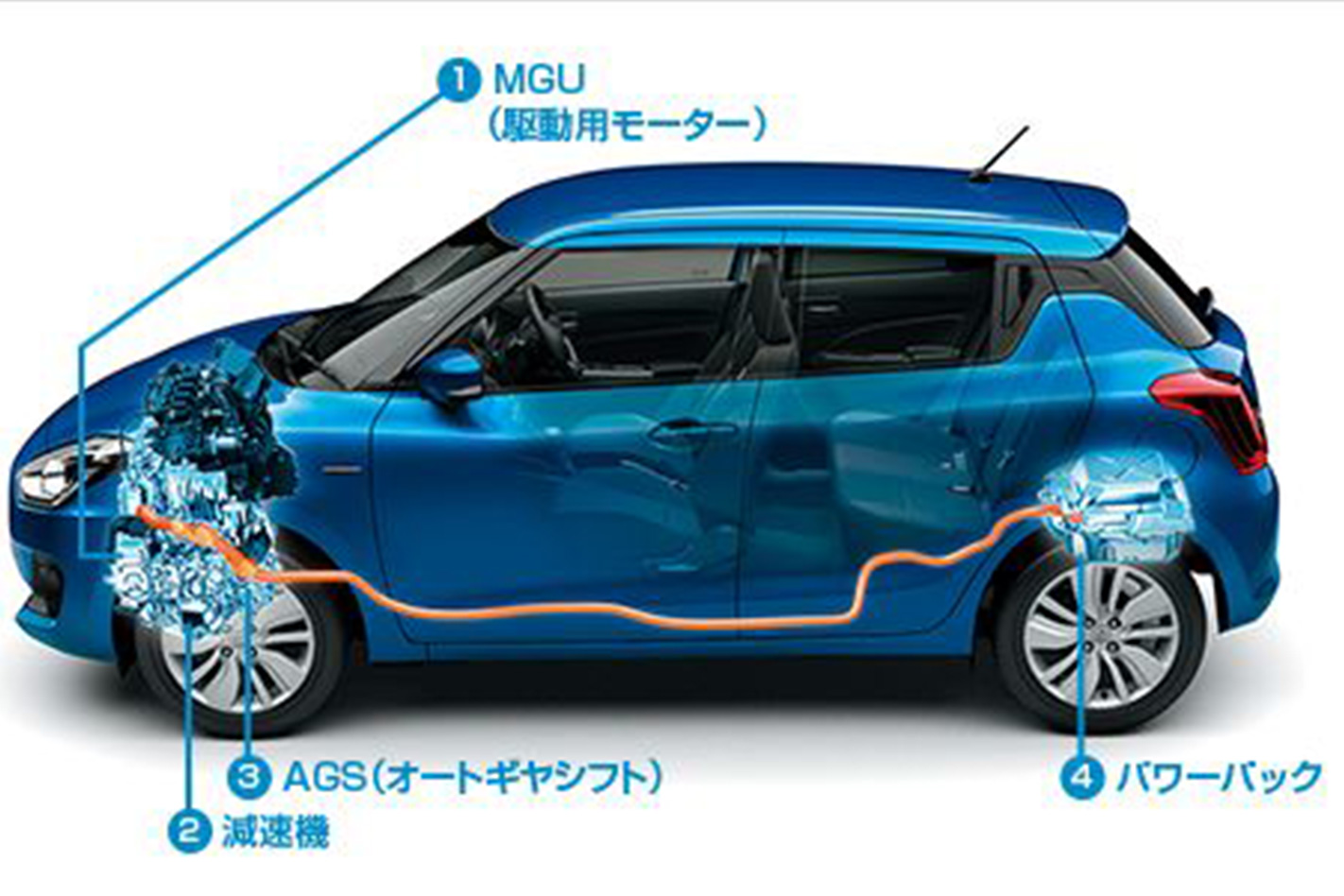
The mild hybrid setup predictably consumes more fuel, with a rating according to the Japanese test cycle of 3.65L/100km. The more conventional hybrid, meanwhile, sips an impressive 3.12L/100km – which compares favourably against the Prius C’s 3.9L/100km claim. The mild hybrid is also available in the Europe but only with a manual transmission, unlike the auto-only Japanese models that are a more likely fit for our market.
Currently, the fuel economy leader in the Australian Swift range is the base Swift GL Navigator with a five-speed manual, which consumes 4.6L/100km on the combined cycle.
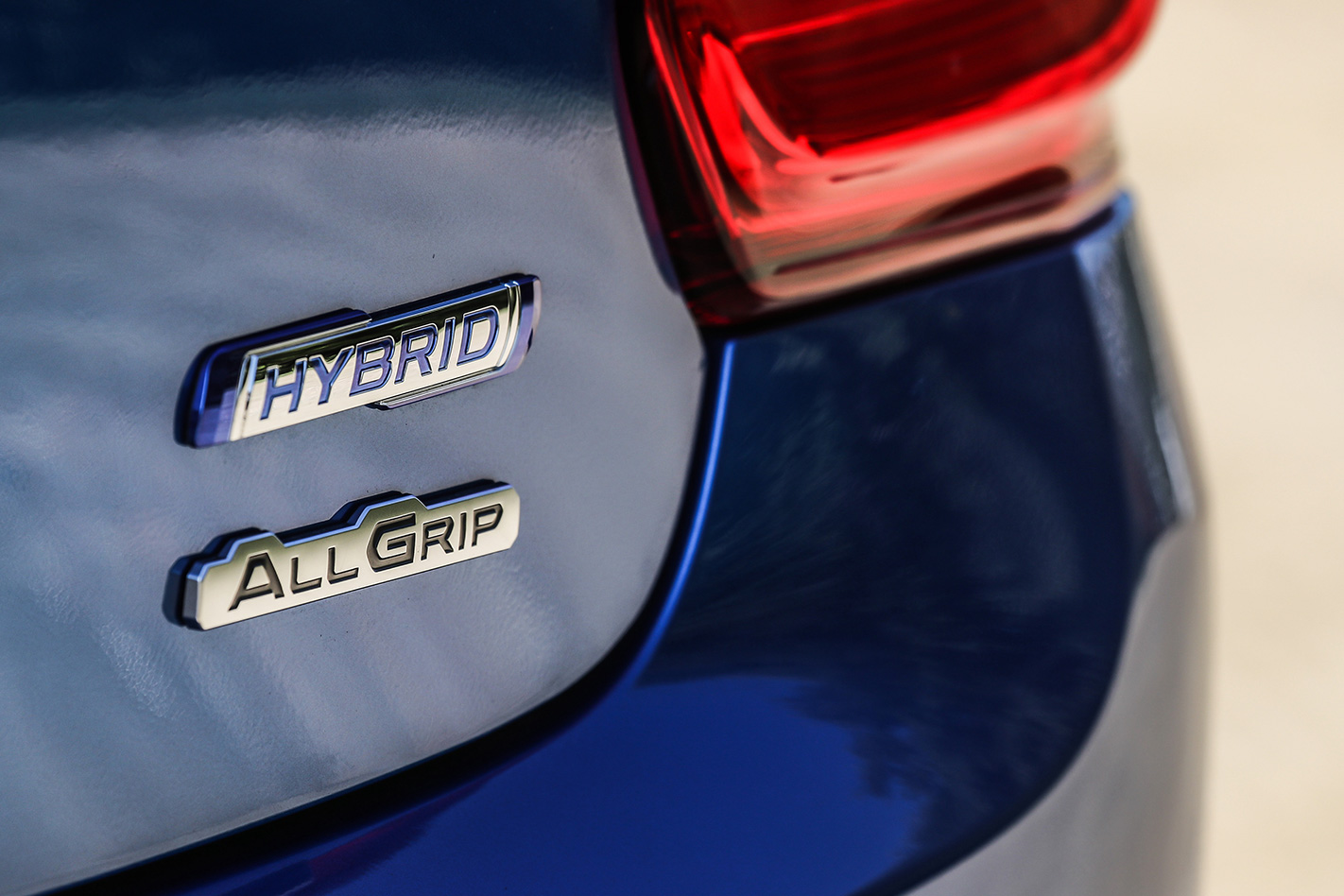
However, while Suzuki’s local office is bullish about the prospect of bringing a hybrid entrant to market, question marks still exist over timing and pricing. If the latter can be secured at a level which puts the hybrid at a sensible spot in the Swift’s model hierarchy (likely somewhere between the $22,990 Swift GLX Turbo automatic and the $25,490 Swift Sport manual, and quite possibly below the cost of the Prius C), then a local release date can be firmed up. According to Pachota, that business case has yet to be locked in.
ADMIT IT. We all felt a bit self-conscious sending the Aussie-designed Ford Ranger over to the US.
We feared that they’d point and laugh at its comparatively modest dimensions and tiny engines and decide that Australia wasn’t a nation of croc-wrestling larrikins, but latte-sipping milquetoasts who were terrified of anything resembling torque. Seems we needn’t have worried.
The American market has gone nuts for the Ranger. It’s only been on sale for about a month, but the Blue Oval is already scrambling to put on extra shifts at the Michigan Truck Plant in Wayne, MI, a factory that previously half-heartedly tumbled out a few Focuses for the American public to ignore.
“Based on the orders coming in, and based on the hand-raisers, we think the demand’s going to be so strong, that starting in February our assembly plant will be going into massive overtime,” admitted Kumar Galhotra, group VP, Ford North America.
The numbers are indeed dizzying. Ford has confirmed expressions of interest numbering over 300,000 and more are piling in every day. The biggest seller in this segment is the Toyota Tacoma, which hit almost 250,000 sales last year, with the Chevy Colorado/GMC Canyon twins managing a combined 170,000 units.
That’s the realistic target that Ford was aiming for with the Ranger, but it looks as if it could easily sail past General Motors.
Of course, the Ranger has history here. In its heyday in the mid-Nineties, the Mazda B Series-based pick up often sold in excess of 300,000 vehicles per year before sales of the third gen model tanked in the mid-2000s.
It’s been seven years since Ford has offered a Ranger for sale in the US, so there was naturally some trepidation about how well it would be received, especially at a higher price point than its GM competition. Relying on efficiency when gas prices are pegged low seemed a risky strategy but it’s one that looks to be paying off in spades.
“We think when you put a 10-speed transmission behind a 2.3 EcoBoost we’re essentially going to deliver a truck that gives capability, confidence similar essentially to the bigger engines in the segment with the efficiency of the smaller engine. That’s our target. That’s what we’re going to try and do,” Ford Chief Program Engineer Rick Bolt said during Ranger’s reveal.
The Ford’s not going to have things entirely its own way, however. The Jeep Gladiator pick up is incoming shortly, as is a refreshed Toyota Tacoma, just revealed at the Chicago Auto Show.
