
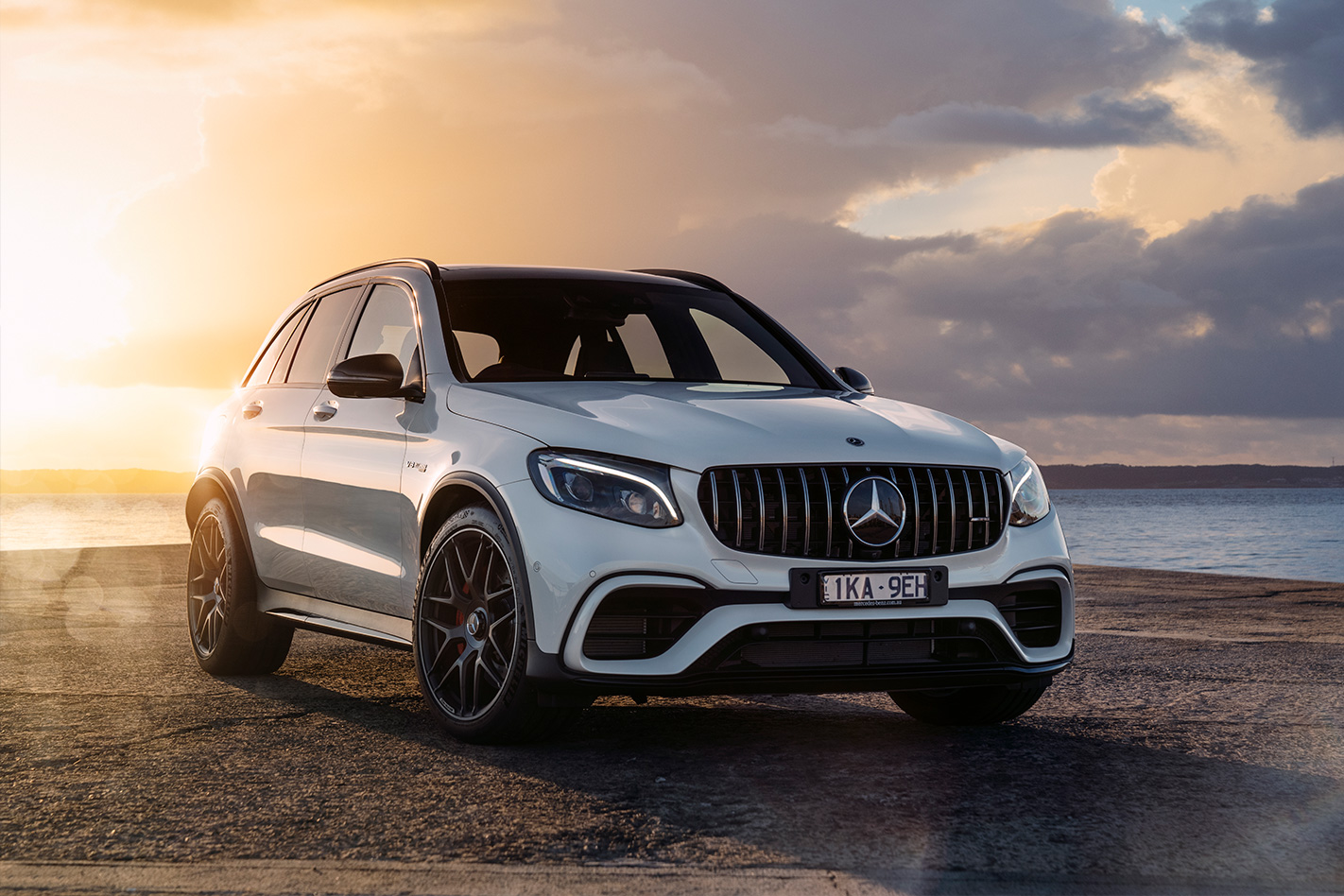
The 2018 Mercedes-AMG GLC63 S is about as aggressive as SUVs in this class get. Whereas its rivals have rather mannered downsized six-cylinder engines, Mercedes has managed to shoehorn a big V8 powerplant under the bonnet of the GLC mid-sized SUV, giving it enough swagger and attitude to face down the best of the rest.
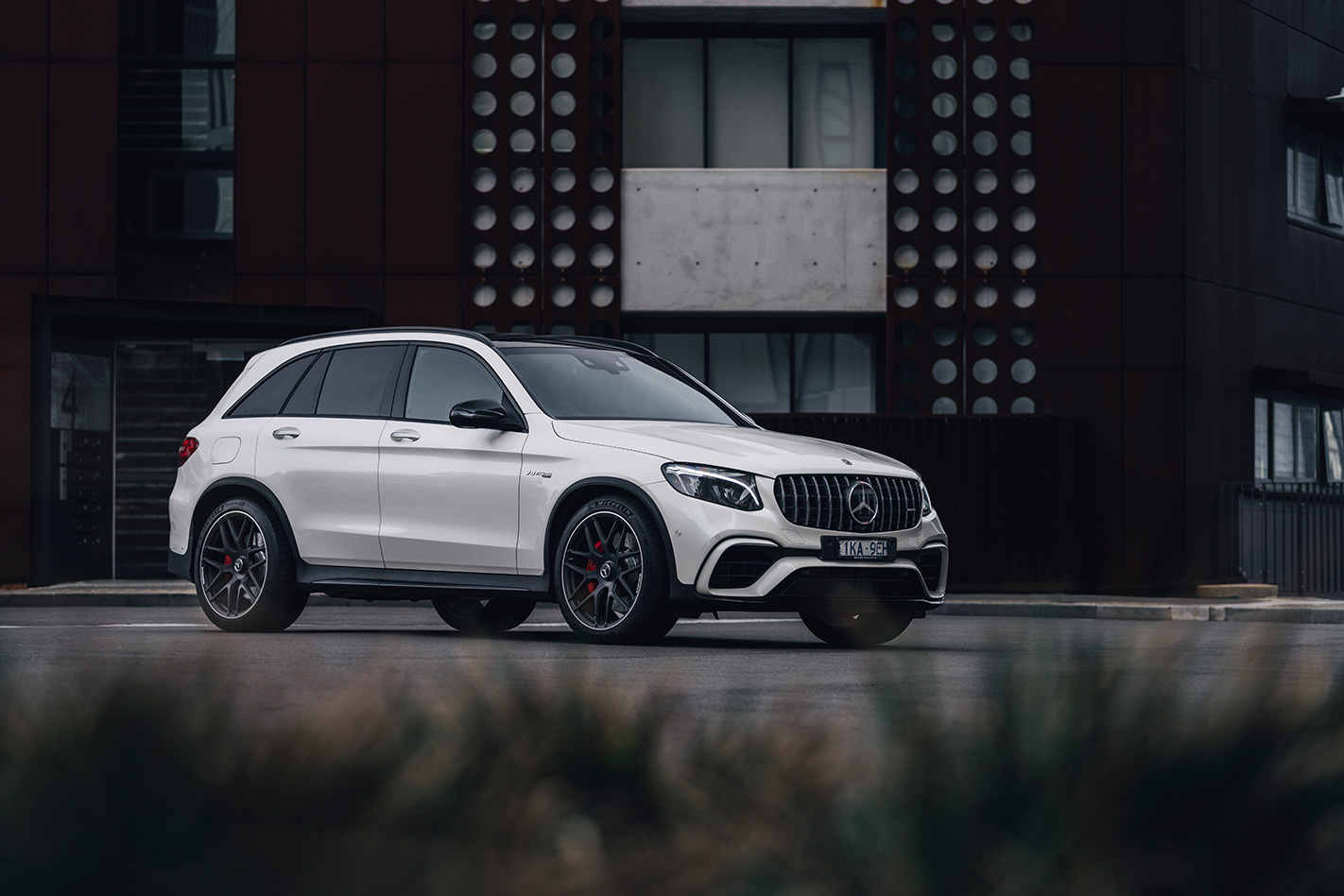
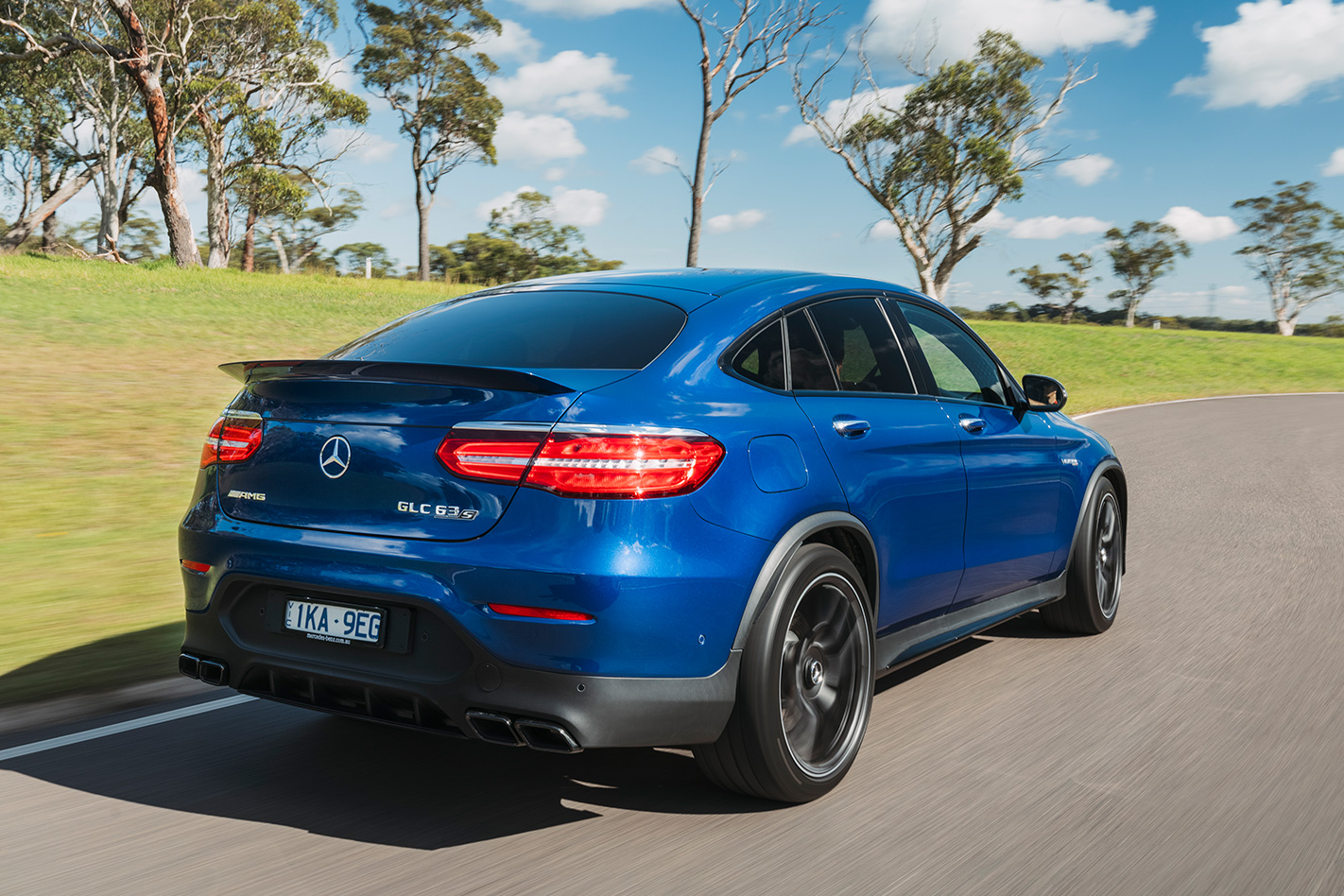
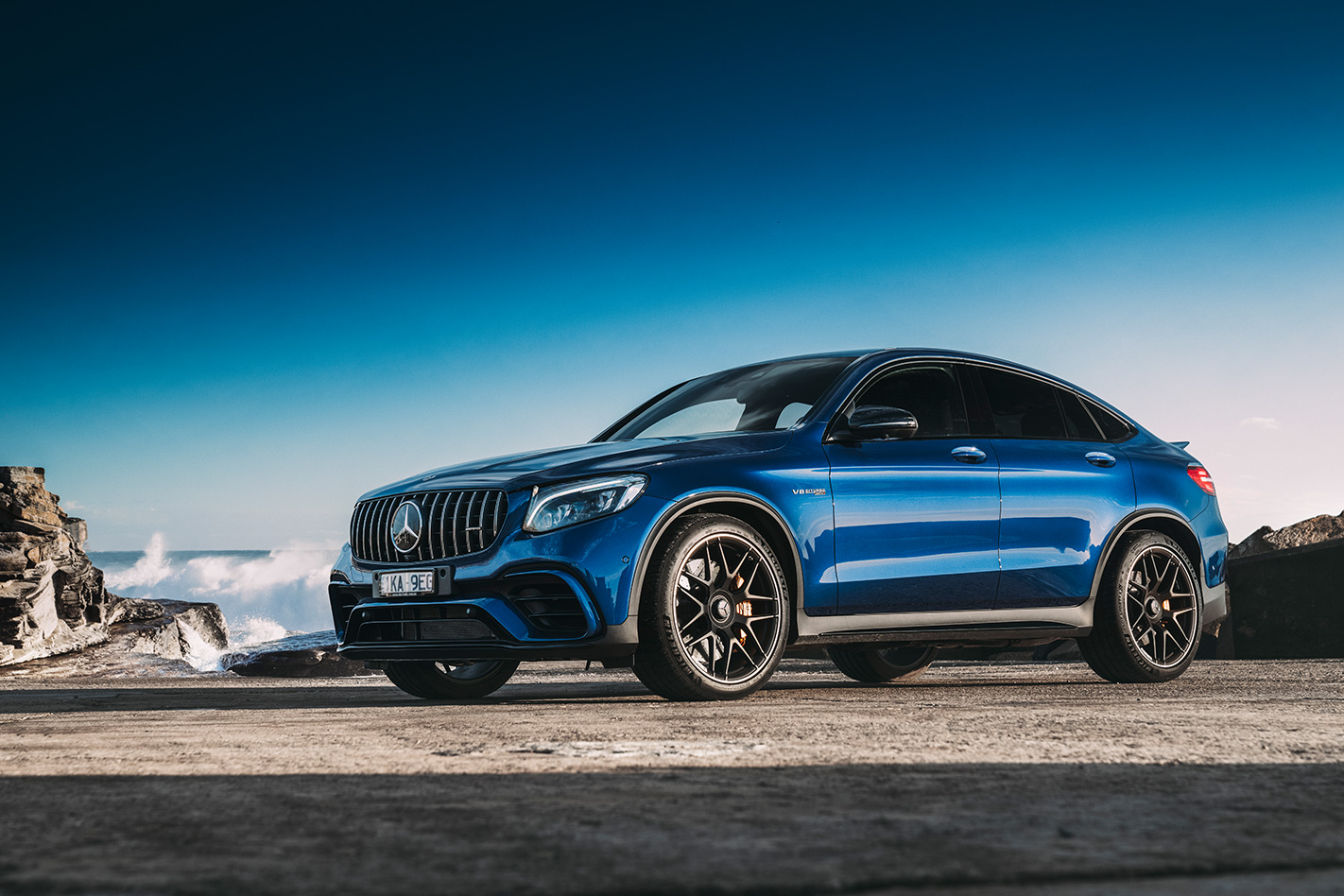
There are two body styles from which to choose. The more conventional SUV wagon is priced at $164,900, while the sleek Coupe version forgoes a few litres of carrying capacity (500 vs 550L) and wings in at $171,900. Both cars are mechanically identical, with the Coupe weighing 10kg extra.
Whereas our European colleagues get a non-S badged version of the GLC63, the Australian market tends to prefer the fastest and angriest AMG models, so the local importers decided not to bother bringing in the 350kW version and instead are solely shipping the full-strength 375kW S models.
That power output probably requires a little perspective. Other cars in the GLC’s class that we previously thought of as seriously quick, like the Porsche Macan Turbo, are now viewed in a rather different light. The Porsche makes 294kW and is more than $30,000 more affordable than the unashamedly high-end AMG. It also comes nowhere near matching the GLC’s 3.7 second sprint to 100km/h, lagging by over a second. That’s more than 25 percent slower, which really puts the AMG engine’s potency into sharp focus.
Clearly, the downside of running a bigger, more powerful engine is fuel thirst, and the GLC63 S returns a combined fuel figure of 10.9L/100km versus 9.2L/100km for the Macan, 8.7L/100km for the Audi SQ5 and a mere 2.1L/100km for Volvo’s virtuous XC60 T8 plug-in hybrid.
As you might well expect for a car that carries such a hefty price tag (the Volvo and Audi hover at around $100K), the GLC63 S is loaded with standard equipment. As well as a nine-speed automatic transmission, composite brakes and air suspension, there’s also a clever variable all-wheel drive system that helps transmit all that power to the road, the S model is fitted with many features that are optional in other markets.
The exterior details include:
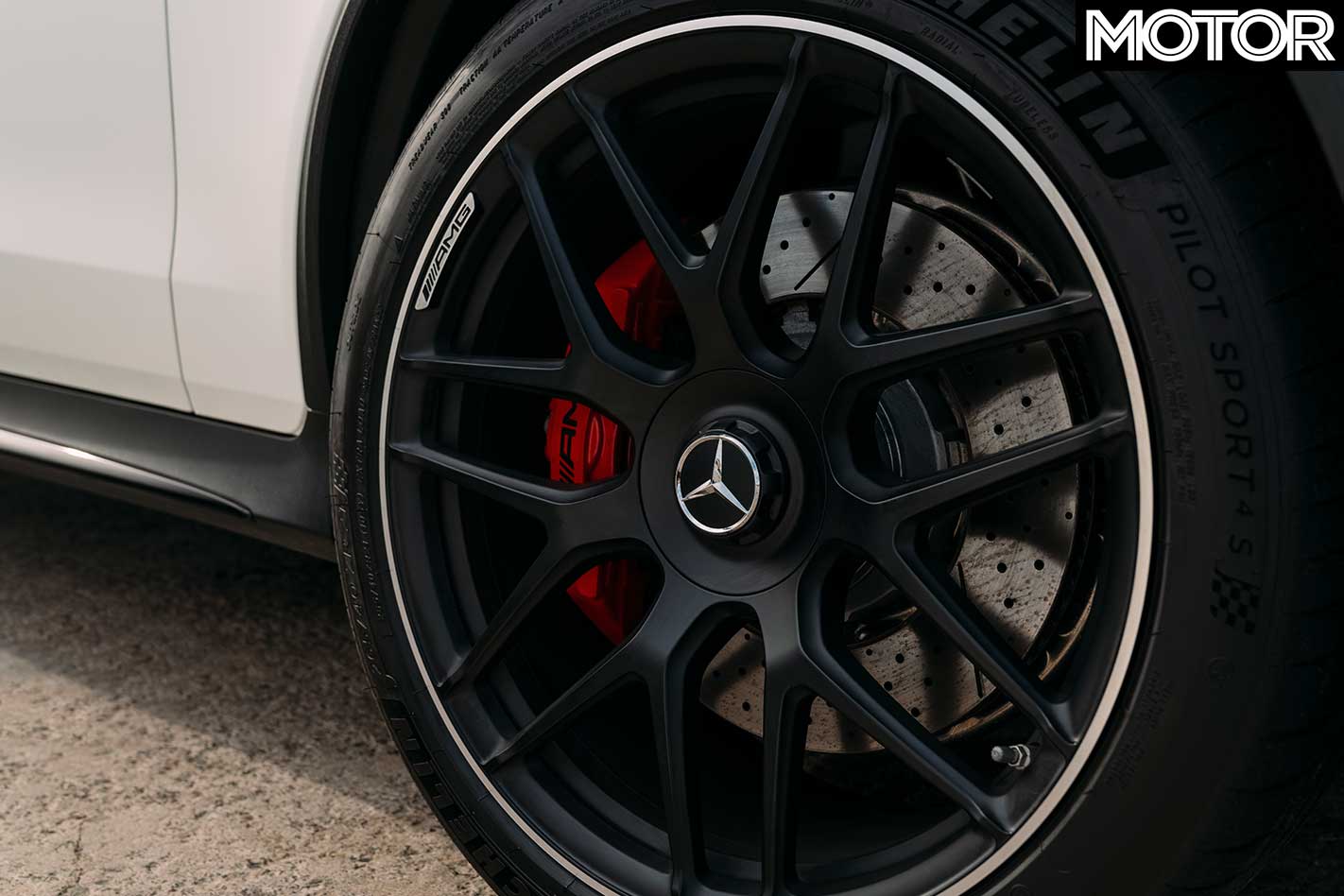
- 21-inch AMG alloy wheels
- AMG Night package
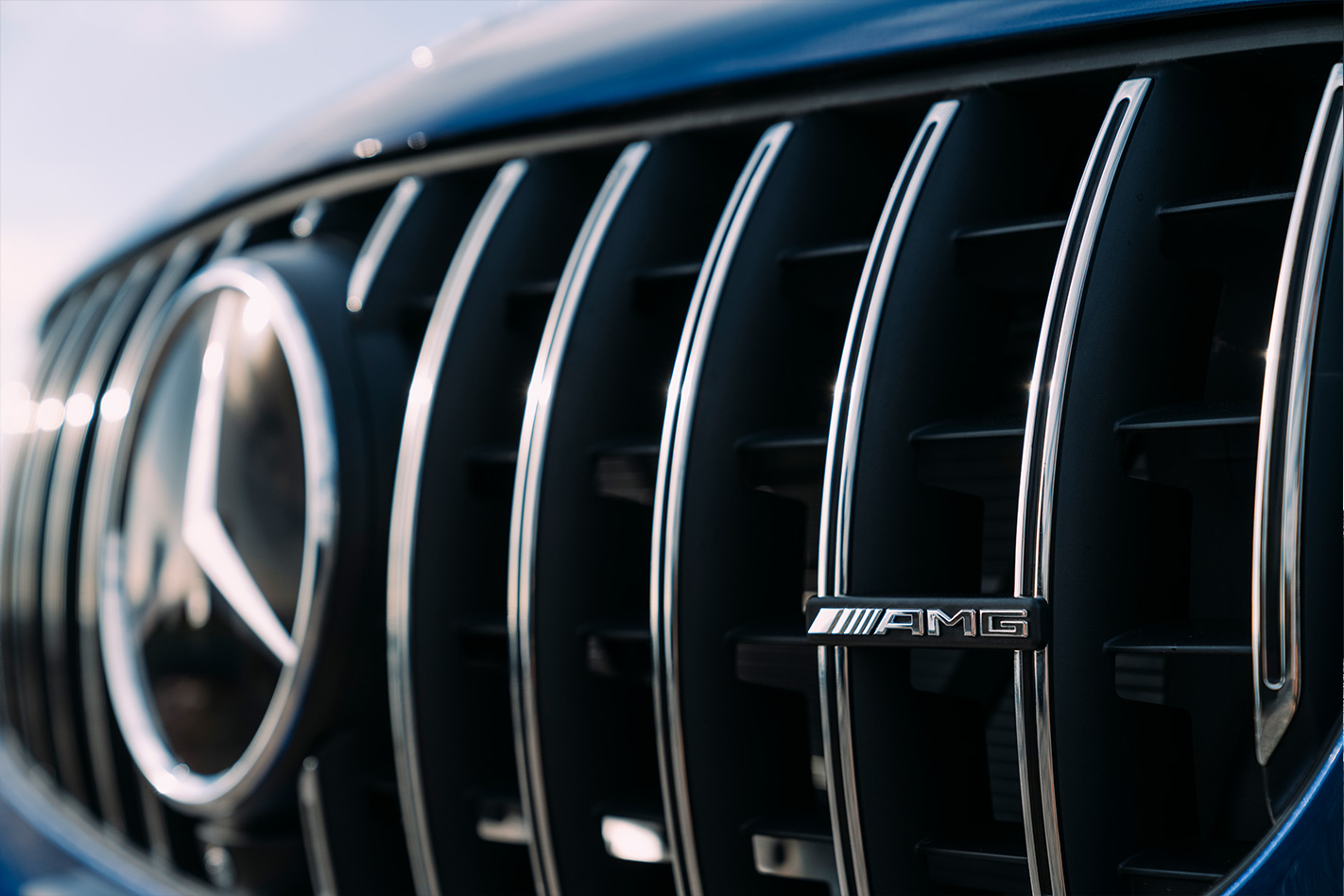
- AMG Panamericana grille
- AMG Front apron in a jet wing design with front splitter
- Flared wings with AMG cladding
- AMG Spoiler lip
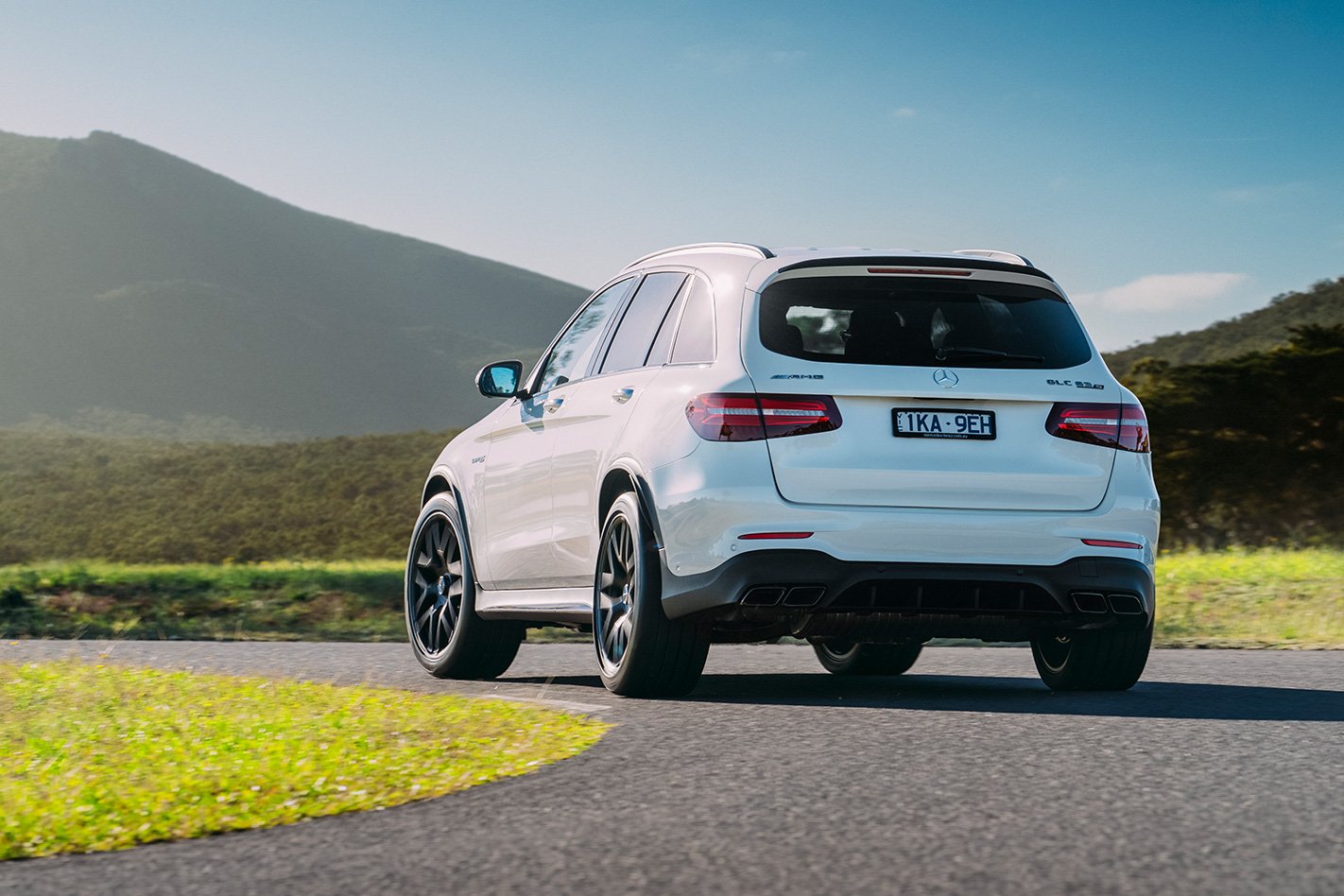
- AMG Rear apron
- AMG Performance exhaust system (selectable)
- AMG Side sill panels in black
Interior equipment also comprises the following:
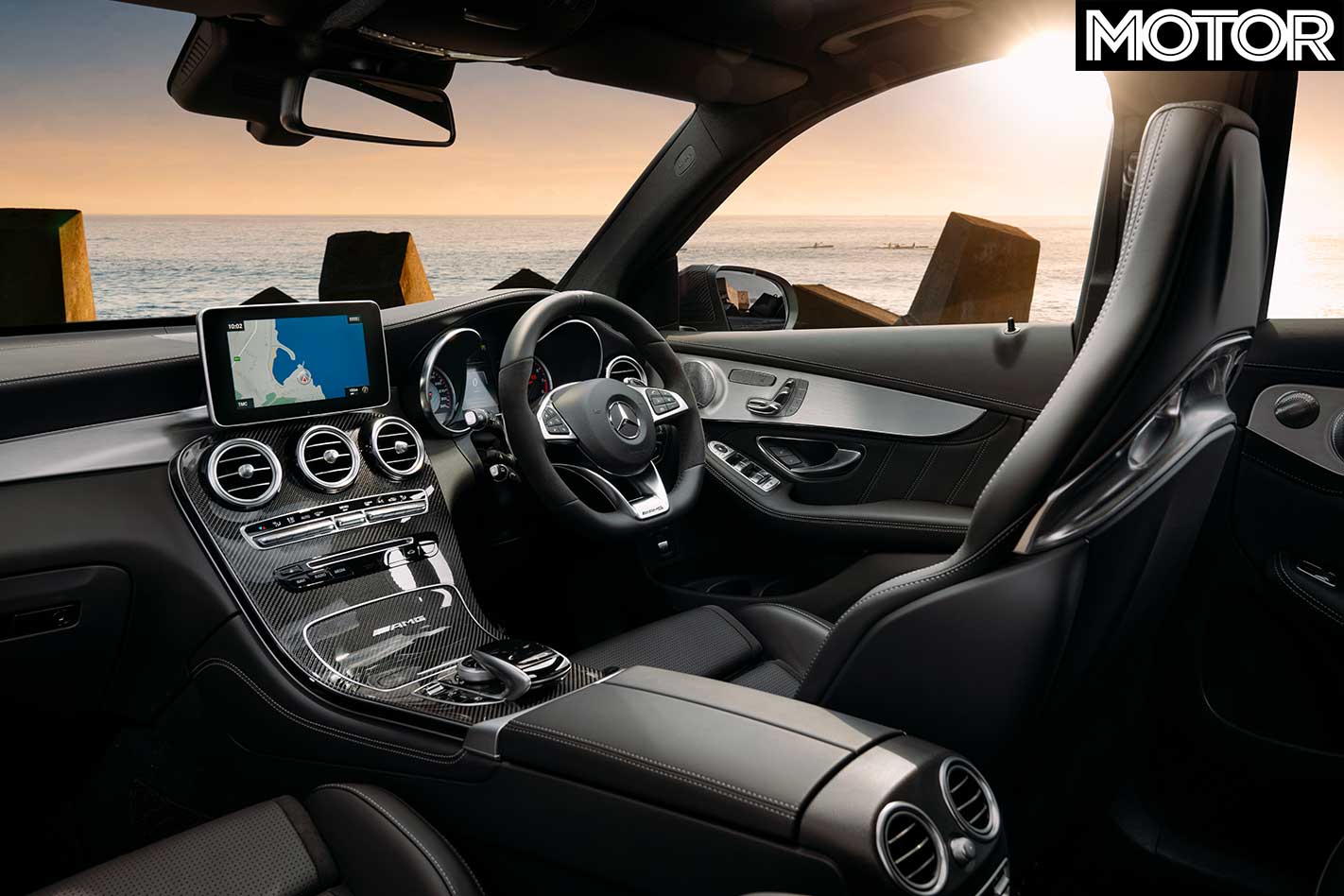
- AMG Performance seats
- AMG Performance steering wheel in nappa leather/microfiber
- Automatic climate control with three climate zones
- Digital TV Tuner
- Dashboard and beltlines in man-made leather in black with contrasting topstitching
- Air-Balance package including ionisation, improved air filtering and fragrancing
- AMG instrument cluster with AMG main menu and Race Timer
- Reverse automatic emergency braking
- Traffic sign recognition
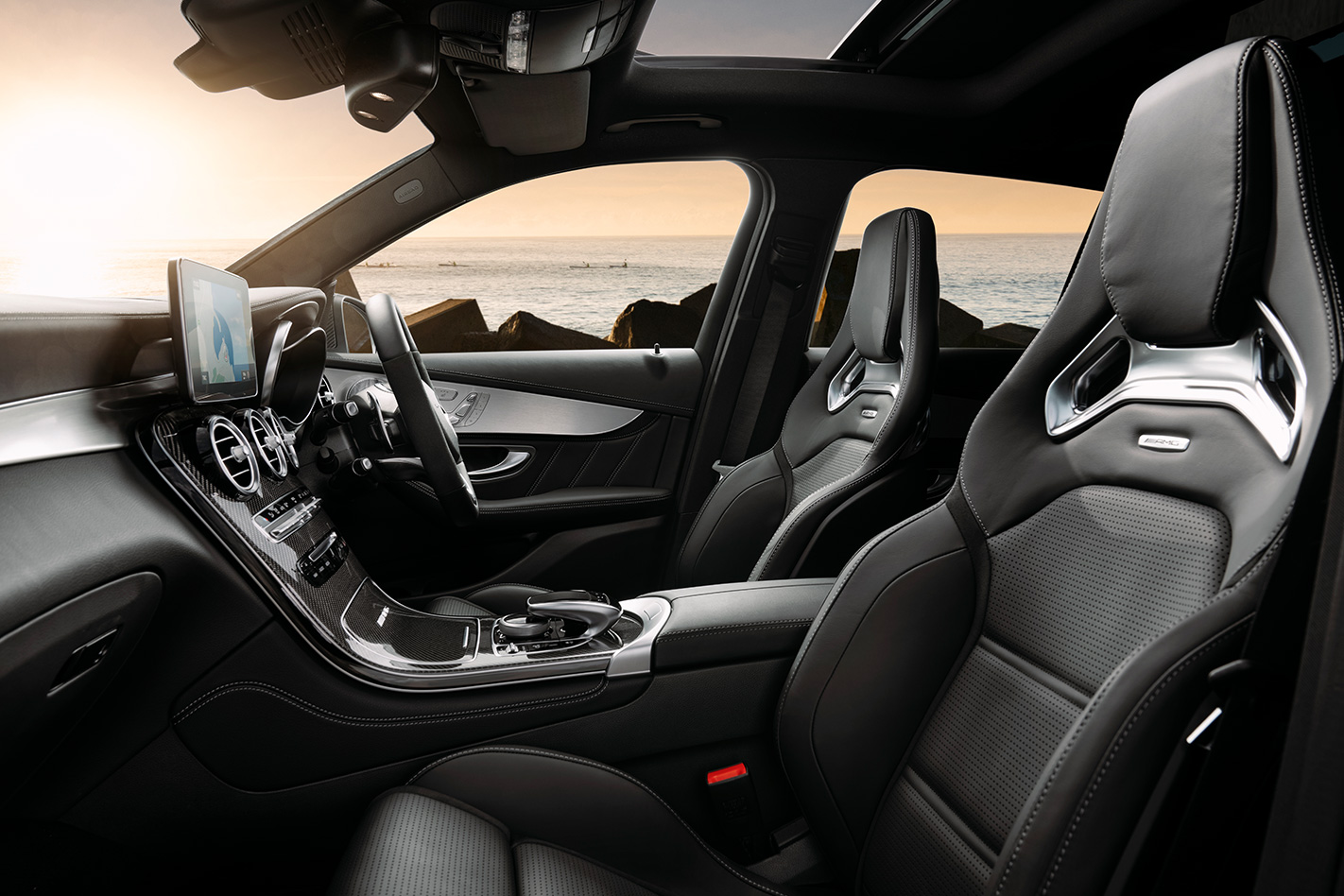
For an additional $10,900, Mercedes-AMG also offers the limited-run ‘Edition 1’ model in either wagon or Coupe guise. It’s mechanically identical to the other GLC63 S models but adds a whole host of model-specific trim parts. The Edition 1 pack will be available throughout the first year of GLC63 S production and includes the following exterior details:
- 21-inch AMG cross-spoke forged wheels, painted in matt black and with yellow rim flange
- AMG aerodynamics package, finished in black (exclusively for the S-Model with yellow AMG sports stripes), comprising additional large front spoiler, enlarged rear diffuser with diffuser spoiler lip and specific spoiler lip in the rear area in high-gloss black
- AMG ceramic high-performance composite brake system
- Selenite grey magno paintwork, exclusively for the Edition 1
- Yellow AMG sports stripes (decals) on the exterior mirrors and above the side sill panels
The interior also features the following points of differentiation:
- AMG Performance seats in a diamond design
- Upholstery in black nappa leather with yellow contrasting topstitching (sun-reflecting) for seats, armrests in the doors and centre console
- AMG trim elements in matt carbon fibre/light aluminium
- AMG Performance steering wheel in microfibre all-round, with flattened bottom section, yellow 12-o’clock marking and yellow contrasting topstitching, steering wheel bezel in silver chrome with ‘Edition 1’ lettering and silver-coloured aluminium shift paddles
- Upper part of dashboard and beltlines in man-made leather in a nappa-look finish in black with yellow contrasting topstitching
- Door centre panels in black nappa leather with yellow contrasting topstitching
- Yellow highlights on the instrument cluster
- AMG door sill panels in black with yellow LED illumination
- Floor mats in black with yellow ‘AMG’ lettering and yellow contrasting topstitching
- Seat belts in black
2018 Mercedes-AMG GLC 63 S pricing
- GLC63 S 4.0 V8 petrol – $164,900
- GLC63 S Coupe 4.0 V8 petrol – $171,900
- $10,900
“We wanted to create something so effortlessly stylish that you want to lick it.” That’s not usually advisable when it comes to electric appliances, but we’ll make an exception in the case of the Nobe 100, a three-wheeled EV built in Estonia. Nobe’s founder and CEO Roman Muljar might well have some rather unorthodox design criteria for his progeny, but it’s hard to argue with how delicious the vintage-themed trike has emerged.
The Nobe 100 features a top speed of 109km/h, a range of 219km per charge and a removable battery pack tucked under the dashboard that resembles a leather attache case. As well as being three-wheel-drive, it also seats three; two up front and one in the tapered rear. The body is constructed from lightweight composites and while we’re unsure how it would fare in a 50km/h tete-a-tete with a concrete block, the flipside of that is that it’ll zip to 100km/h in just 5.9 seconds, which would keep something like a Civic Type-R on its toes. Charging time is quoted at two hours.
As beautiful as the retro-themed Nobe 100 is, it’s still not officially a thing. A GoFundMe page exists to get the project off the ground and, at the time of writing, only 22 percent of the required capital had been raised. Inviting investors to take part “in making automotive history by making the first light, neo-retro EV” is obviously a tough gig regardless of design savvy.
What’s refreshing about the Nobe’s vintage Disco Volante curlicues, wind-up windows, whitewall tyres and Bakelite and chrome finishing is that it moves the electric car design trope forward. Think of an electric car and you’re probably considering something nerdy like a Nissan Leaf or something techy like a Tesla Model S: driven by university lecturers and IT consultants respectively and neither particularly cool.
The Nobe demonstrates that the days where electric vehicles had to be super-serious in order to be convincing are on the way out. An EV design can be quirky, it can be fun, it can look minimalist and it can reference the past. It’s like that breakout moment at the start of the Eighties when Japanese electronics manufacturers realised that they no longer needed to copy the American chrome and black design tropes of the 1960s and ‘70s in order to be thought credible. Suddenly manufacturers like Sony, Matsushita and Canon broke out into a riot of colours, designs and themes that created a design language all of their own.
The Nobe probably won’t create that critical momentum with electric vehicles. But we’re just beginning to witness the point of that particular spear. The days of the dorky EV are numbered.
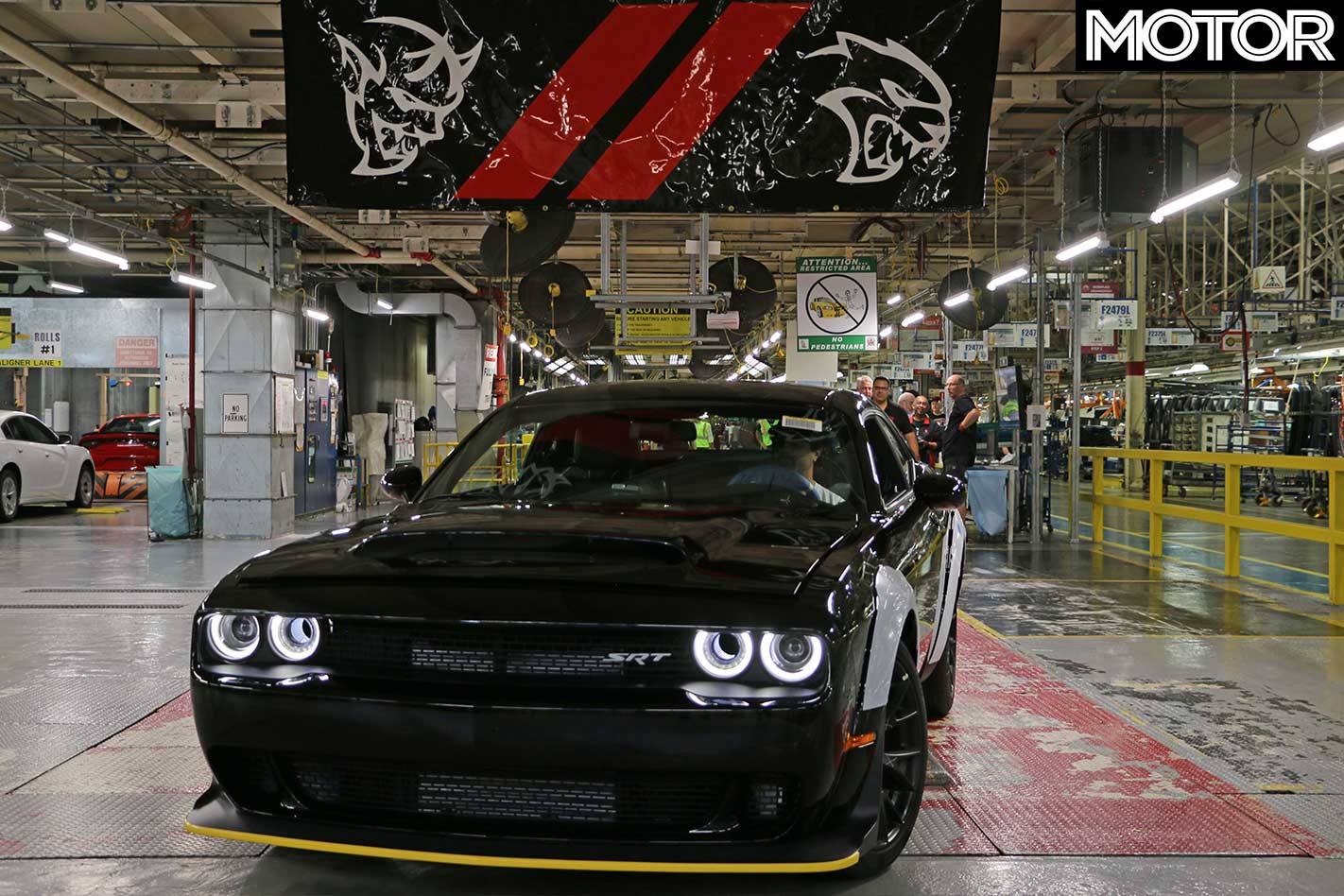
The last vehicle in a run of 3,300 Dodge Challenger SRT Demons has been built, rolling off the production line on May 30.
Though appearing in black in the images release by Dodge to mark the occasion, the car is said to be on its way to be modified into Demon-spec.
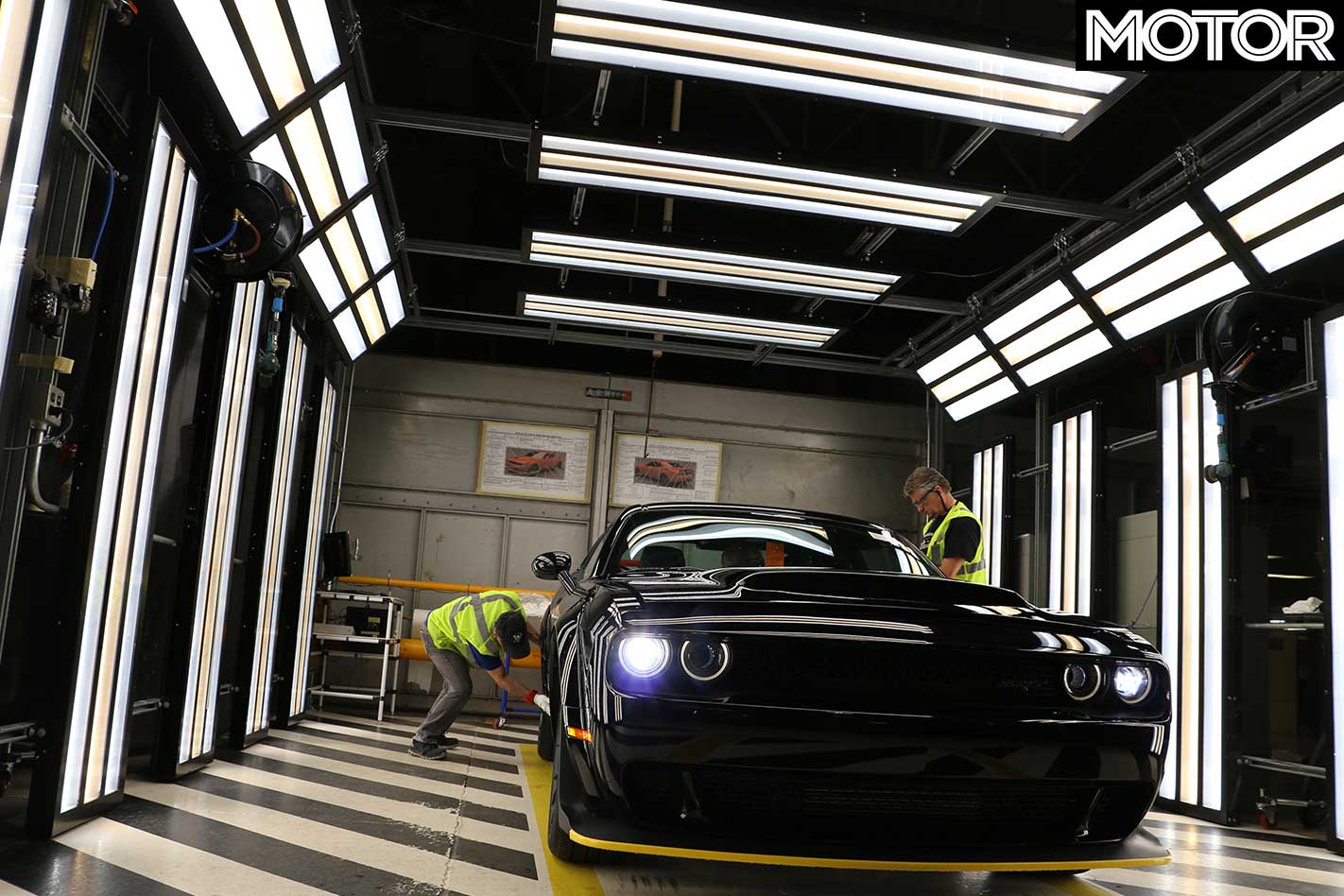
This means it’ll be hand-painted in Viper Red, given 18-inch aluminium wheels, Demon drag radial tyres, Demon badging, and VIN instrument panel badging.
To make the most of its final Demon, Dodge plans to pair it up with another ‘last’ in the form of the final Dodge Viper to roll off the production line.
These two cars will head to the next Barret-Jackson auction held in Uncasville, Connecticut, between June 20 and June 23.
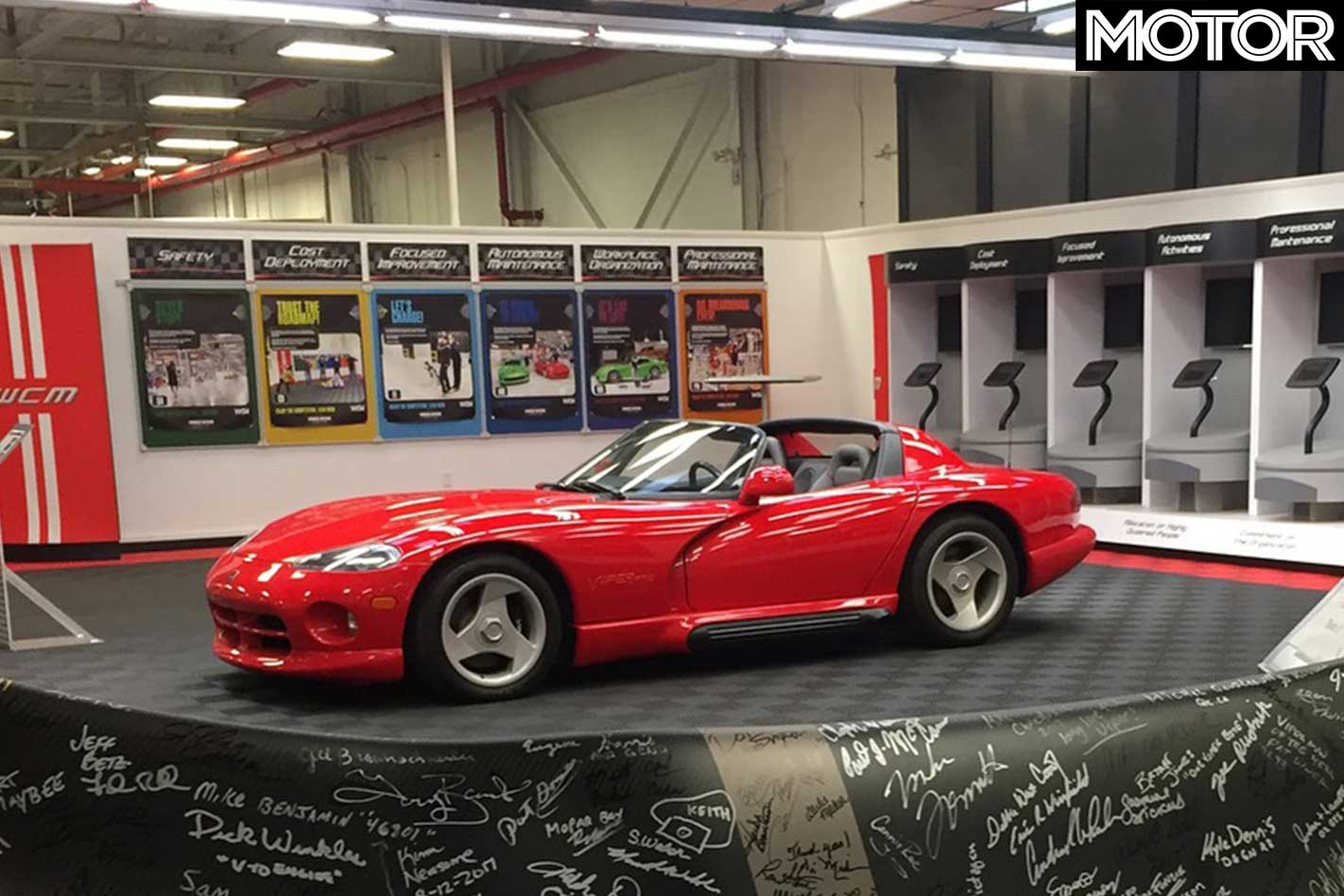
In an unusual move, the cars will both be auctioned off at once, so one bidder will go home the owner of the ‘lasts’ of two Dodge performance models.
Between the two cars, with the Demon producing 626kW from its 6.2-litre supercharged Hellcat V8 and the Viper’s massive 8.4-litre V10 pumping out 481kW, a total of 1107kW is up for grabs.
Given the prices other special Dodges have collected at auctions, it’s hard to predict what these two cars will sell for.
“Over the years, Barrett-Jackson has reached incredible milestones with Dodge,” says CEO of Barrett-Jackson Craig Jackson, “including the sale of a 2015 Dodge Challenger SRT Hellcat (VIN 001) that raised $1.65 million at our 2014 Las Vegas Auction to benefit Opportunity Village Foundation.”
The final Viper was built to resemble the first-gen version of the car, adding an extra layer of muscle car nostalgia to the car, and likely pushing up what will already be a massive final price.
Now included in Gran Turismo Sport is the famous Circuit de la Sarthe, which has been added in a recent update ahead of the Le Mans 24-Hour.
The track is the home to the 24-hours long WEC race, which sees several categories of endurance racers hit the track all at once.
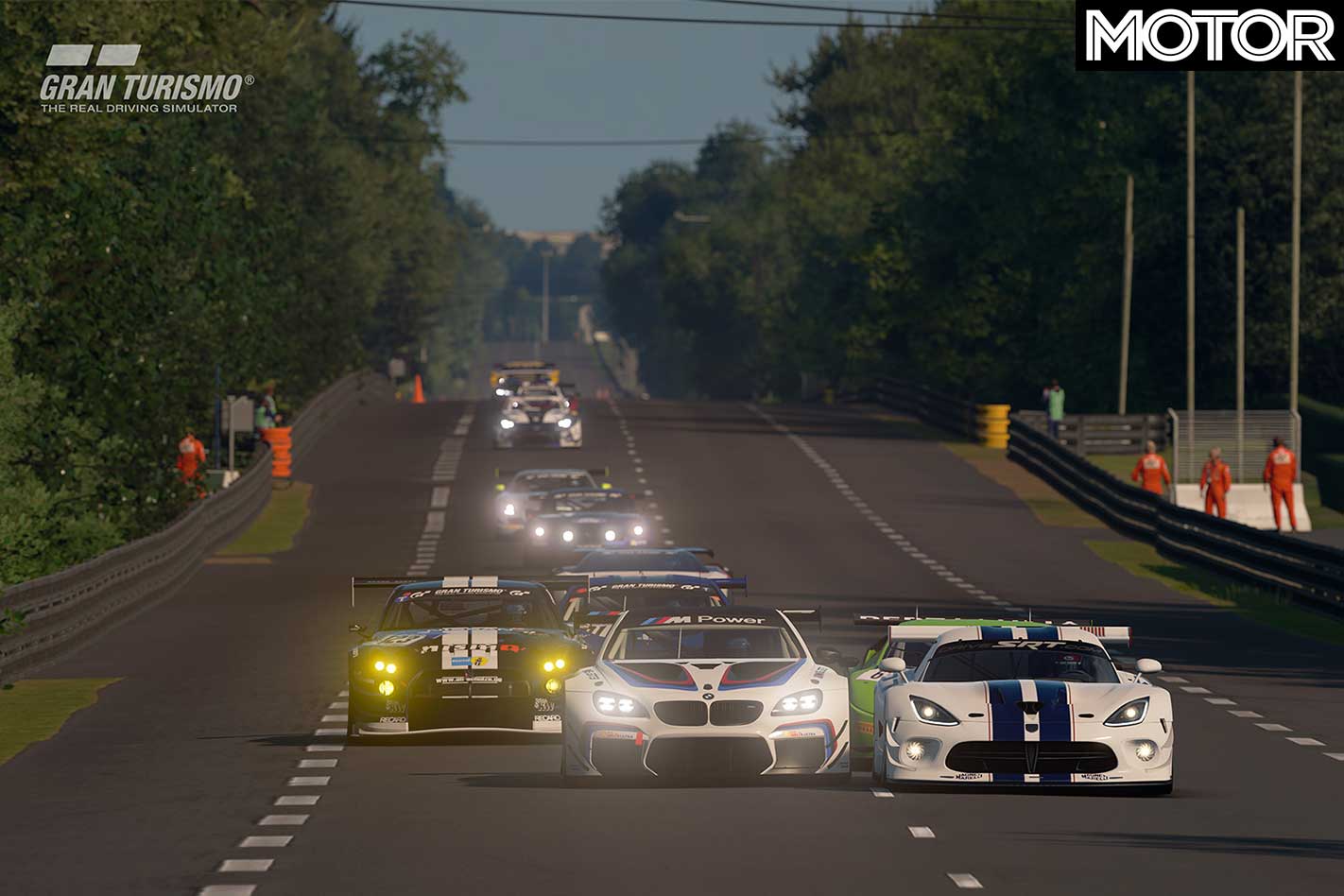
In addition to the track being added to the game, several cars have been included in the update, two of which were once seen at the famous French circuit, and another being closely related to a Le Mans racer.
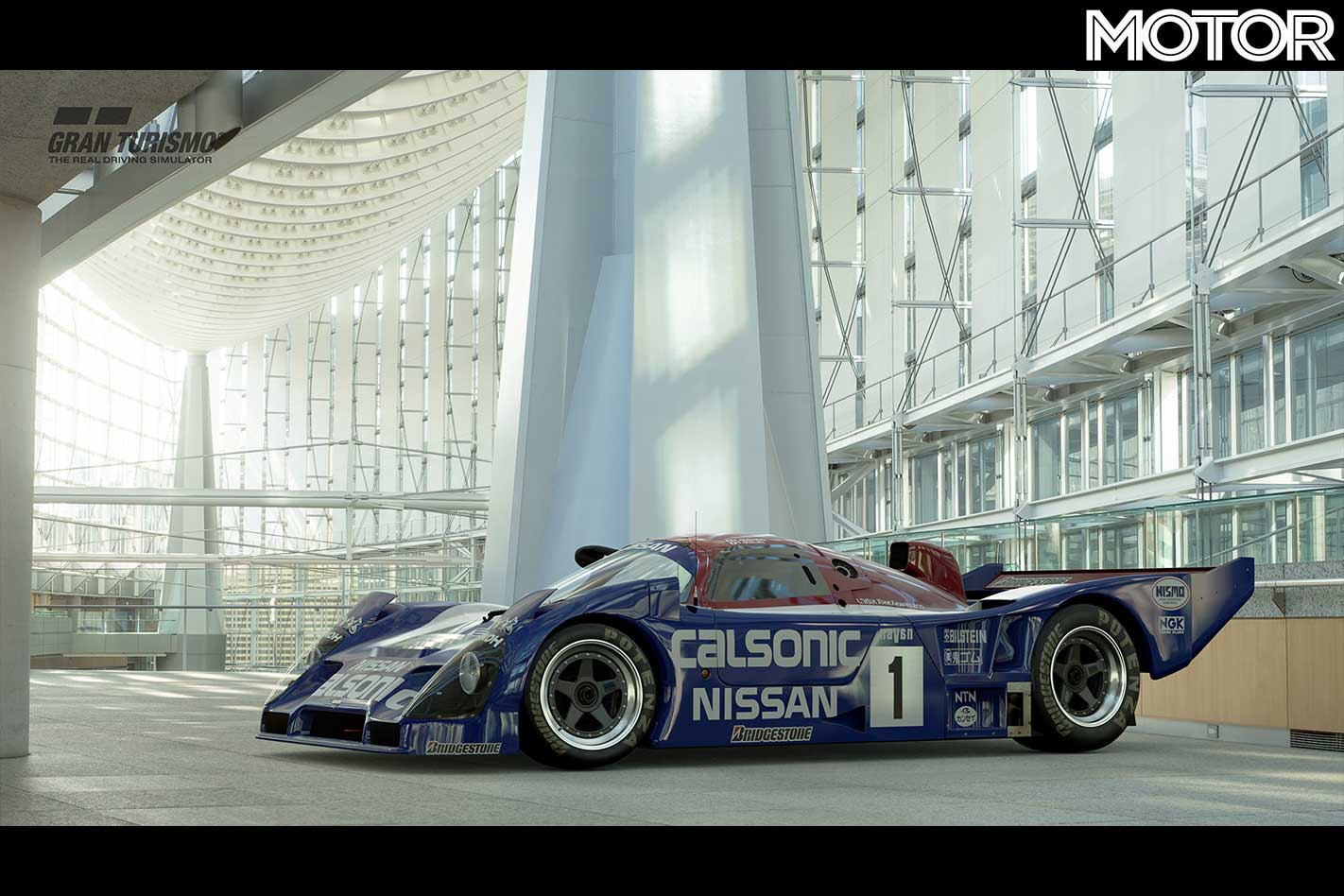
The three Group C cars are the 1988 Jaguar XJR-9, the 1989 Sauber Mercedes C9, and the 1992 Nissan R92CP.
While the XJR-9 and C9 both won the Le Mans 24-Hour, in 1988 and 1989 respectively, the Nissan R92CP is best known for dominating the 1992 All Japan Sports Prototype Championship.
However, the car is built on the basis of a Le Mans competitor from a couple of years prior, the R90C, which competed and came 5th in the 1990 24-Hour.
The other cars which added to Gran Turismo Sport this time around are the Mitsubishi Lancer Evolution IV GSR from 1996, Renault’s current-gen Clio RS and its 2011 Mégane Trophy racer, a Lambo Miura P400 Bertone, and even a Fiat 500 F from 1968.
The Subaru BRZ ‘S’ has also been added, though the Toyota 86 was already available in the game.
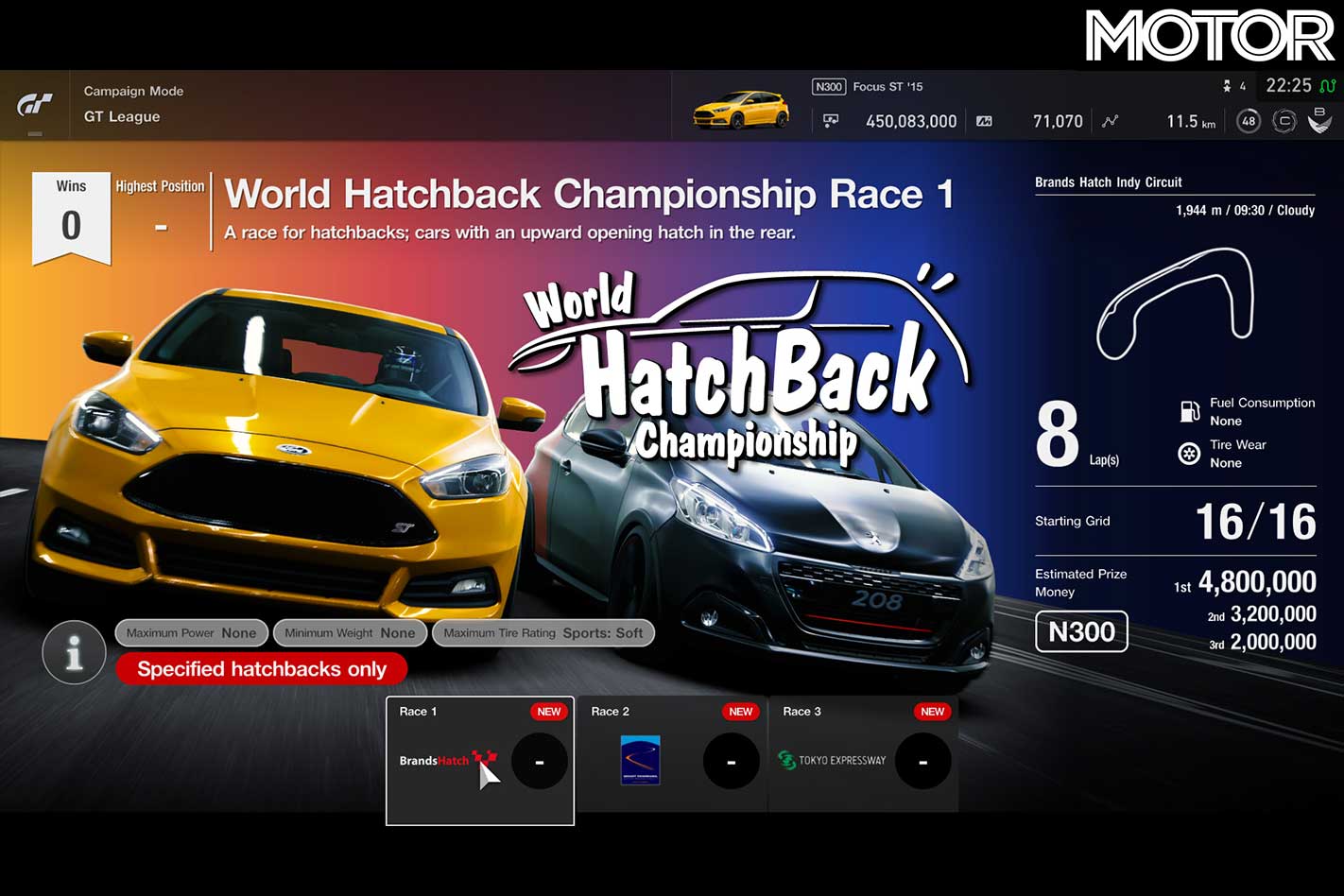
A few new race series have also been added in GT League, the game’s single-player mode, including a hot-hatch championship and a Lamborghini Cup.
Players are now also able to see their local ranking, and use new locations in the ‘Scapes’ photography mode.
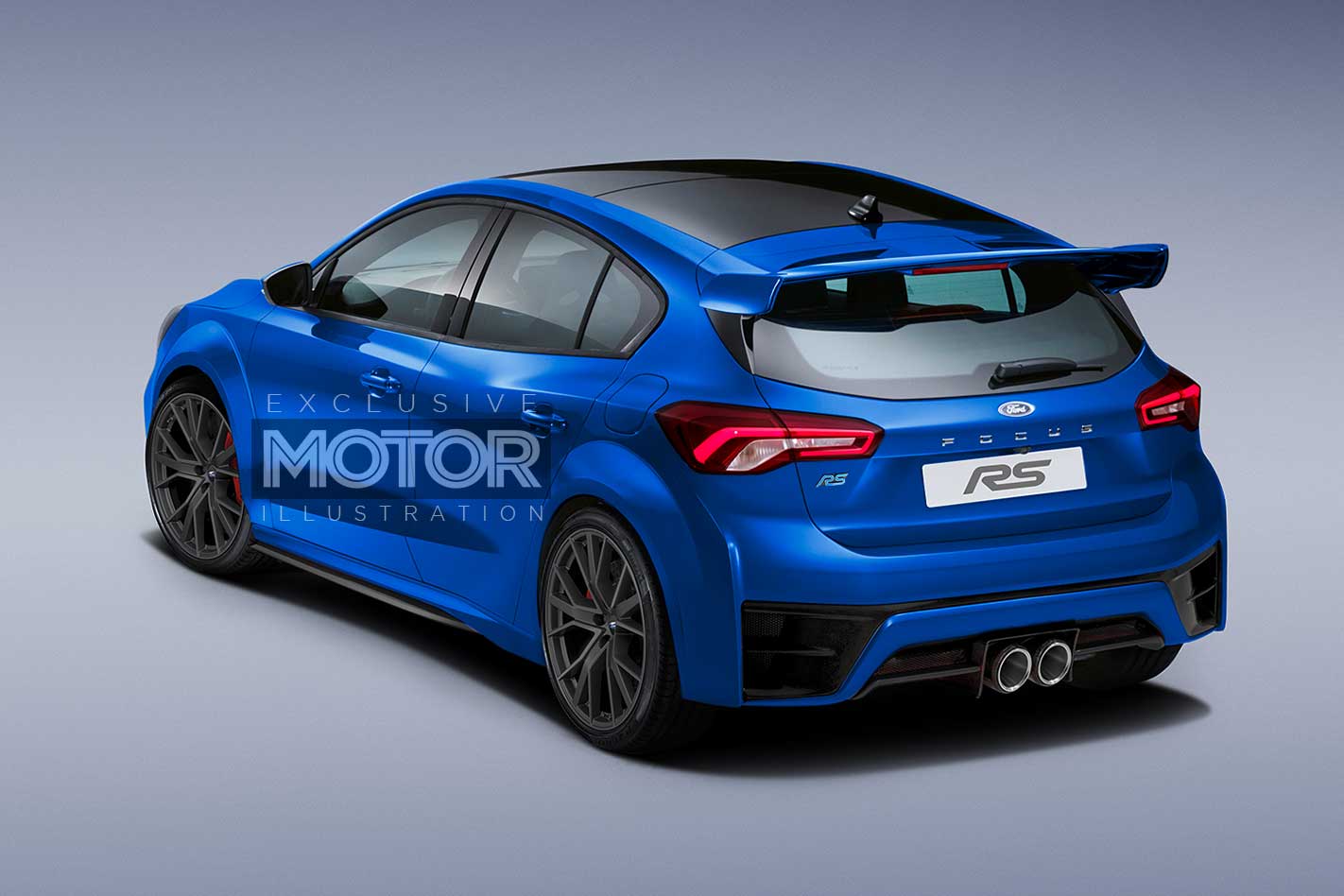
Ford is planning an even faster, more powerful and more efficient Focus RS for the 2020 model year and will use it to showcase a suite of 48V mild-hybrid technologies the company is introducing across its global medium- and large-car ranges.
With the combination of its combustion and electric motors, the car’s power output is expected to exceed 300kW, rivalling next-generation offerings from Mercedes-AMG and Audi.
While improving the RS’s already impressive acceleration times and driving characteristics, the model’s new-tech features should dramatically cut both CO2 and toxic emissions to meet rapidly tightening world demands. European regulations require car makers to meet a 95g/km CO2 fleet average by 2021 – a little more than half the outgoing Focus RS’s 175g/km figure.
Ford’s president of global markets, Jim Farley, is also one of the main architects of the Ford Performance division the firm now regards as a major asset. He revealed a new Ford plan to enhance the credibility of future electrification technologies by applying them first to iconic models, such as the Focus RS.
Ford of Britain chairman and CEO Andy Barratt reiterated the importance of the RS brand when he launched a final, Heritage Edition version of the fast Focus, marking the 50th anniversary of the appearance of RS on an Escort, the Focus’s predecessor.
“The RS brand is hugely important to Ford and is recognised across the globe,” he said. “It has a special place in the hearts of UK Ford fans. This latest RS is the best we’ve ever produced.”

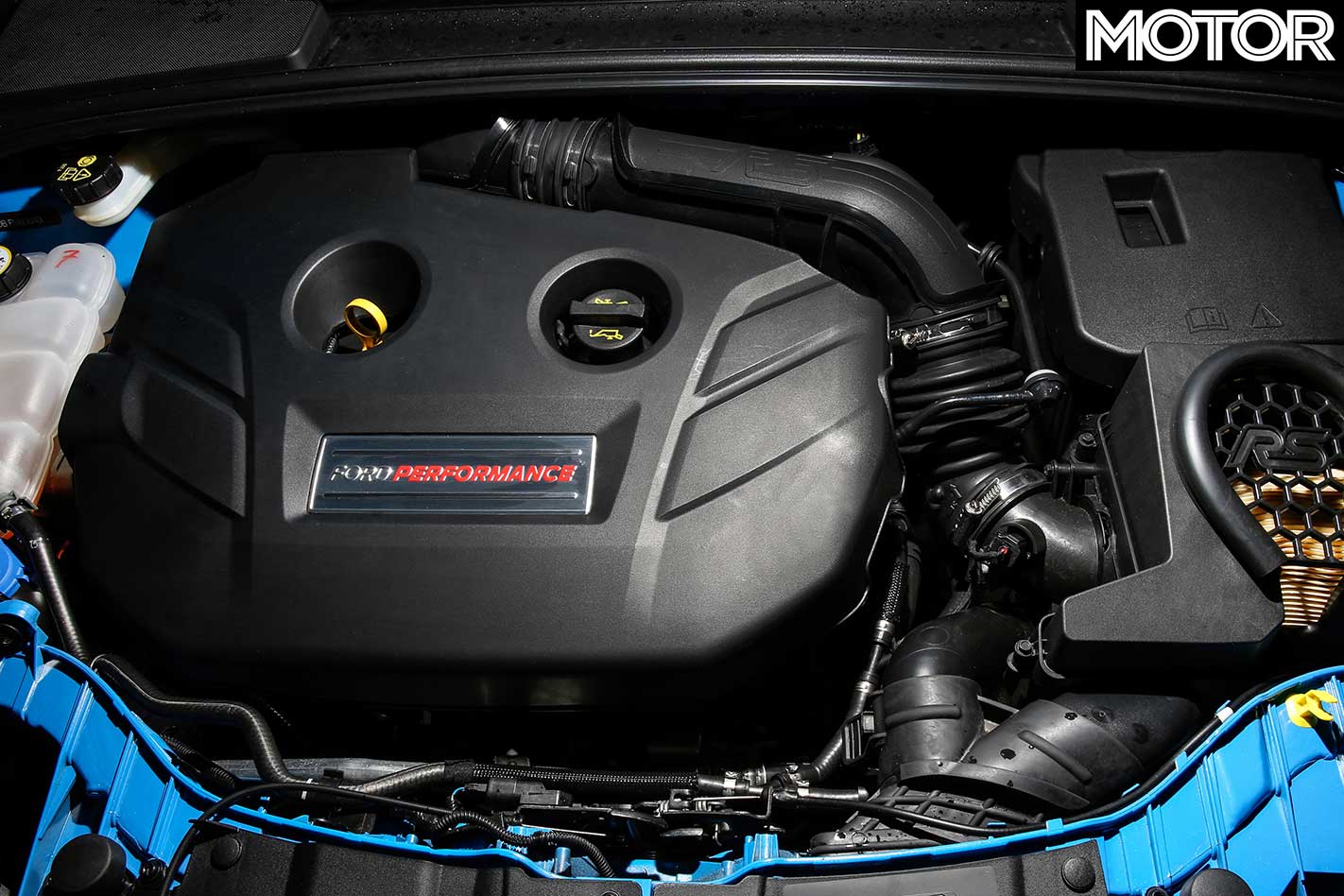
The next Focus RS, whose launch is likely to follow the April 2018 debut of new mainstream Focus models by at least two years, is tipped to use the outgoing model’s 2.3-litre turbocharged four-cylinder petrol engine.
This motor now produces 276kW and 510Nm of torque following a recent round of Mountune upgrades, thanks to a high-flow induction kit, an uprated turbo recirculating valve and calibration changes. Ford has a history of adopting Mountune ‘tweaks’ for later models.
The new Focus RS engine’s output of 276kW is likely to be augmented by a contribution of around 20kW – and, more important, between 80-95Nm of start-up torque – from a 48V integrated starter/generator (ISG). Its effortless restarting will save fuel and reduce CO2 by allowing longer engine-off periods, will more efficiently collect regenerated energy from braking and will sharpen the car’s low-speed accelerator response by contributing extra torque from standstill.
This will both improve acceleration times and allow the engine to operate more often in its most efficient power bands, a means of reducing emissions, especially NOx.
The total combined power and torque – an estimated 298kW and 576Nm – should allow the forthcoming Focus RS to match, and possibly beat, the new wave of top-end hot hatches from Germany. It should also enable Ford to cut the Focus RS’s 0-100km/h time from today’s 4.7sec to the 4.2sec of the current class-leading Mercedes-AMG A45.
Even more important than outright pace in a difficult era for high-performance cars are the impressive cuts in exhaust pollutants offered by the new ISG set-up.

It’s unlikely that the new Focus RS will use an electrically driven turbocharger – as recently showcased by Audi – although Ford is known to have been experimenting with these for at least four years. Estimates suggest that an ISG-equipped next-gen Focus RS should return cuts of 20-30g/km in its CO2 output, a vital contribution to reducing the fleet average.
All Focus RS editions so far have had six-speed manual gearboxes, but the fourth-generation version could offer a dual-clutch automatic option. This would take advantage of the ISG’s ability to provide ‘torque pulses’ to smooth gearchanges.
The availability of a self-shifter could also strengthen much-needed demand for the car in auto-crazy China and US markets. In the US, especially, the car is seen as costly for its size. Ford also has multi-speed automatics available, but they’re unlikely to be used because they’re heavier and bulkier in a car that already presents packaging difficulties.
Even the extra space required to house a shoebox-sized 48V battery (probably under the rear seat) is likely to have been hard-won: the new Focus sits on a modified version of the outgoing Focus C2 platform with a 50mm-longer wheelbase and a slightly increased 4.4m body length.
As with the current model, the next Focus RS will be a five-door hatchback. Three-door hatches are nowadays seen as unnecessarily costly as they sell poorly in cheaper guises.
Family-oriented versions of the next Focus are tipped to be around 50kg lighter, model for model, but the RS’s extra battery and electric hardware are likely to eat up the difference. Acceleration (and circuit lap times) should nevertheless benefit from the car’s better power-to-weight ratio.

The new Focus RS’s hardware similarity to its predecessor makes it almost certain that production will resume at the Saarlouis plant in Germany, where the current car has been made.
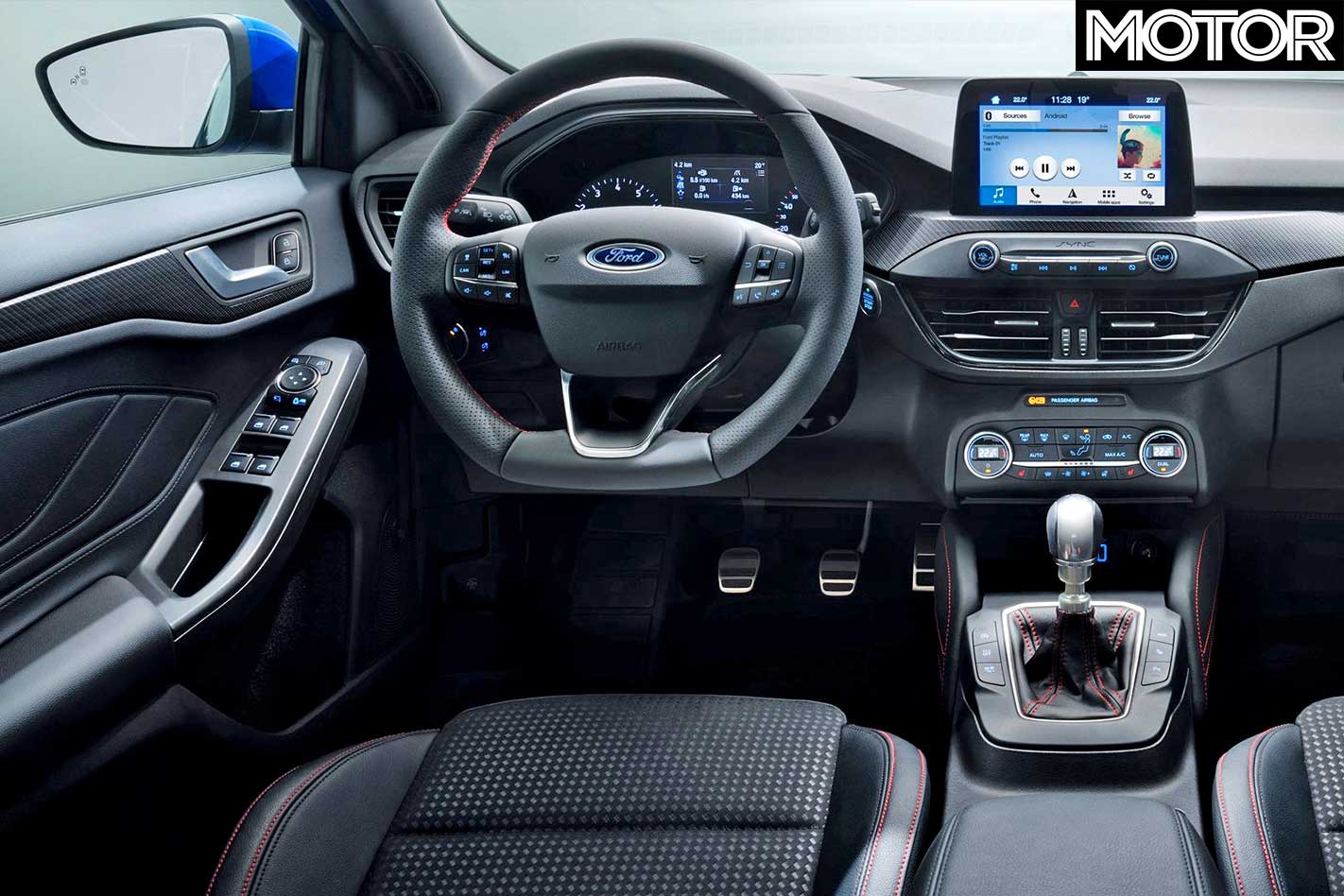
The new Focus’s cabin and trim are being redesigned along new Fiesta lines to simplify the control layout, increase interior space and improve visibility. There has also been special attention paid to quality enhancements across the Focus range. Ford is majoring on further improvements to switchgear and materials, and a better integrated central touchscreen.
Although Ford continues to regard an affordable RS as vital to its everyman self-image, the next generation of the fastest Focus is almost certain to take a price hike to help pay for its more sophisticated electrical hardware.
Ford has already taken half a step towards indicating this by pricing its outgoing Limited Edition at $56,990, around $6000 above the standard RS range-topper. By the time it reaches launch, the 48V car is likely to hit the early $60,000s, at which level it will still undercut the Germans and look decent value given the new-found ‘green’ power and performance.
What happened to the Focus RS500?
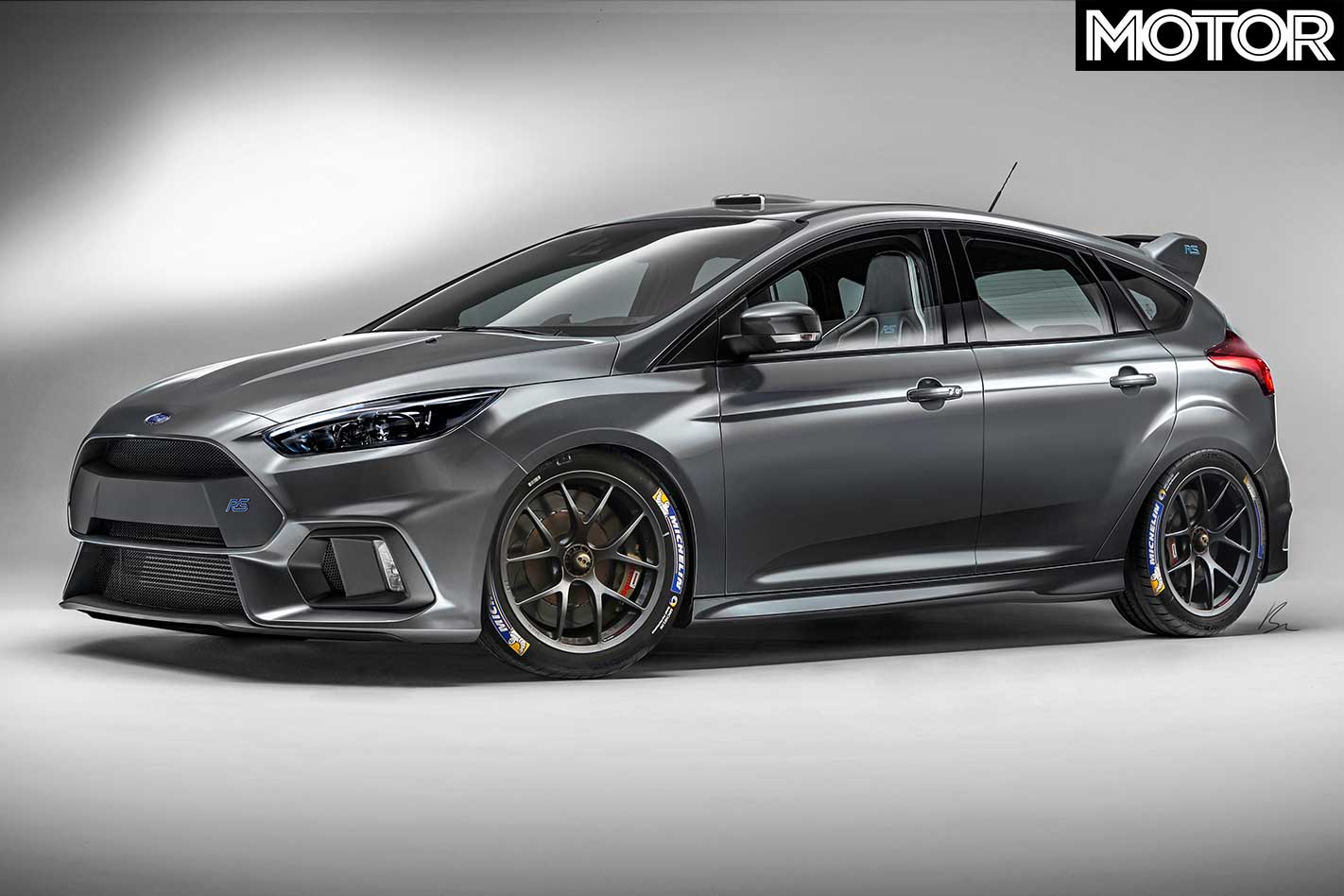
Those following the Focus RS story closely at home may remember rumours of a hotter RS500 version of Ford’s current hot hatch. MOTOR understands that such a car was in development and close to release, however, unlike the previous generation Focus RS, it never saw the light of day.
Nevertheless, the UK-only ‘Heritage Edition’ used a number of upgrades that were rumoured to be considered for the ‘RS500’ (it’s unlikely the production version would’ve been called such).
A factory-approved Mountune upgrade lifted outputs from the standard car’s 257kW/440Nm (470Nm on overboost) to 276kW/510Nm. In addition, a Quaife limited-slip front differential aided traction and standard-fit forged alloys with Michelin Pilot Sport Cup 2 tyres improved overall grip.
The chassis upgrades made it to local models as the ‘Limited Edition’, which comprised the final 500 cars imported into Australia. Focus RS production ended on April 6. – Scott Newman
The ‘Rallye Sport’ Dynasty – The six that made the Legend
1970-73 || Ford Escort RS1600/2000 BDA-powered Escorts dominated rallying in the early 1970s.

1975-82 || Ford Escort RS1800/2000 Mk II RS2000 won 1979 and ’81 WRC; remains world’s most loved rally car.

1984-86 || Ford Escort RS Turbo Turbocharging brought 97kW, but the chassis couldn’t keep up.

1992-96 || Ford Escort RS Cosworth An icon. Homologated for rallying, incredibly popular with car thieves.

2002-03 || Ford Focus RS Mk1 Rare, hugely modified and controversial thanks to wild torque steer.

2009-10 || Ford Focus RS Mk2 Epic engine note and brilliant front-drive chassis; just 315 came to Oz.
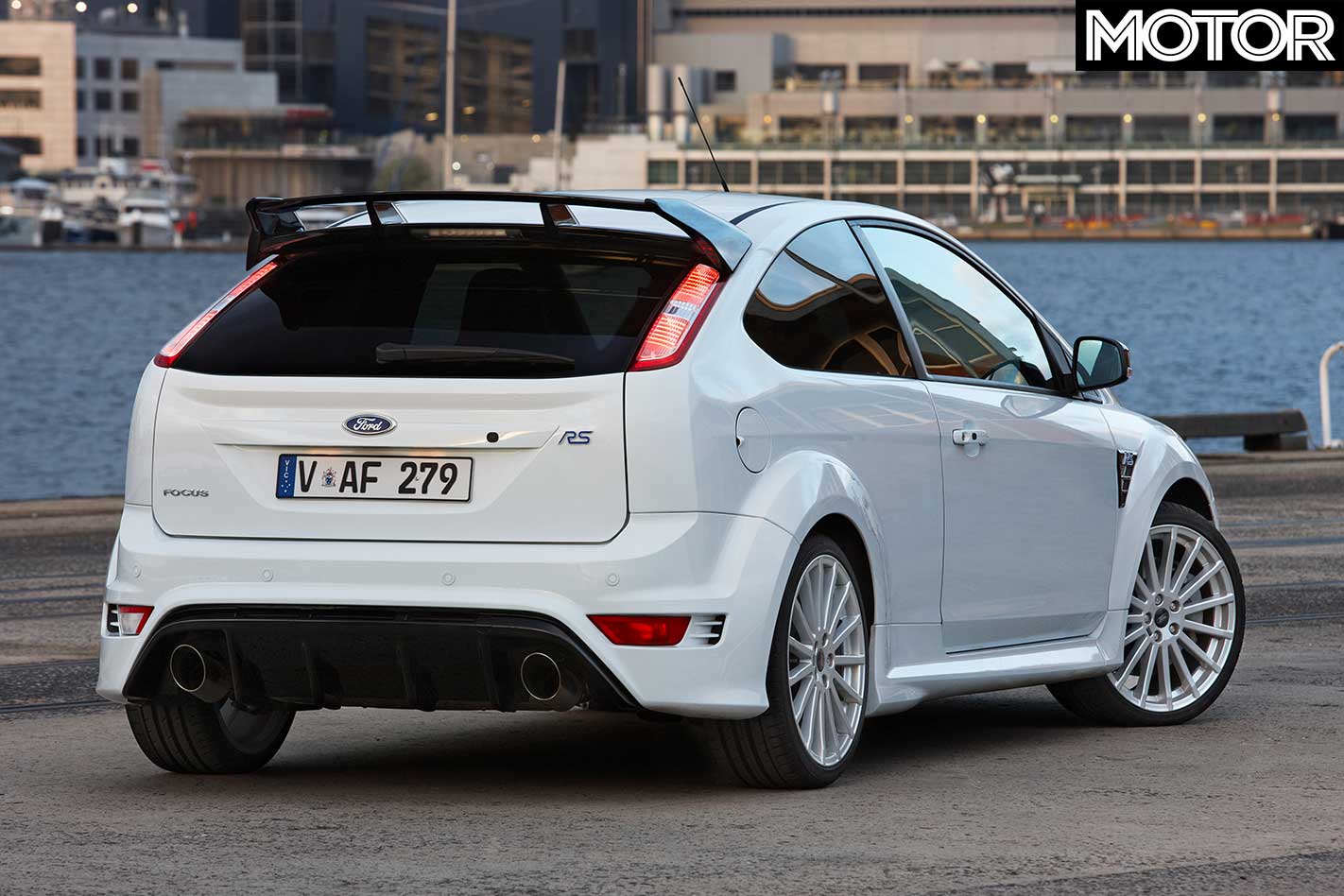
Trust AMG to light the touchpaper on the mid-size performance SUV segment.
Purists might recoil at their very mention, but there’s no escaping the fact these jacked-up fast family haulers are hot property right now.
Audi SQ5, BMW X4 M40i, Porsche Macan Turbo, even Mercedes-AMG itself with the GLC43 have dabbled with the concept but have so managed to restrain themselves to force-feeding only six cylinders.
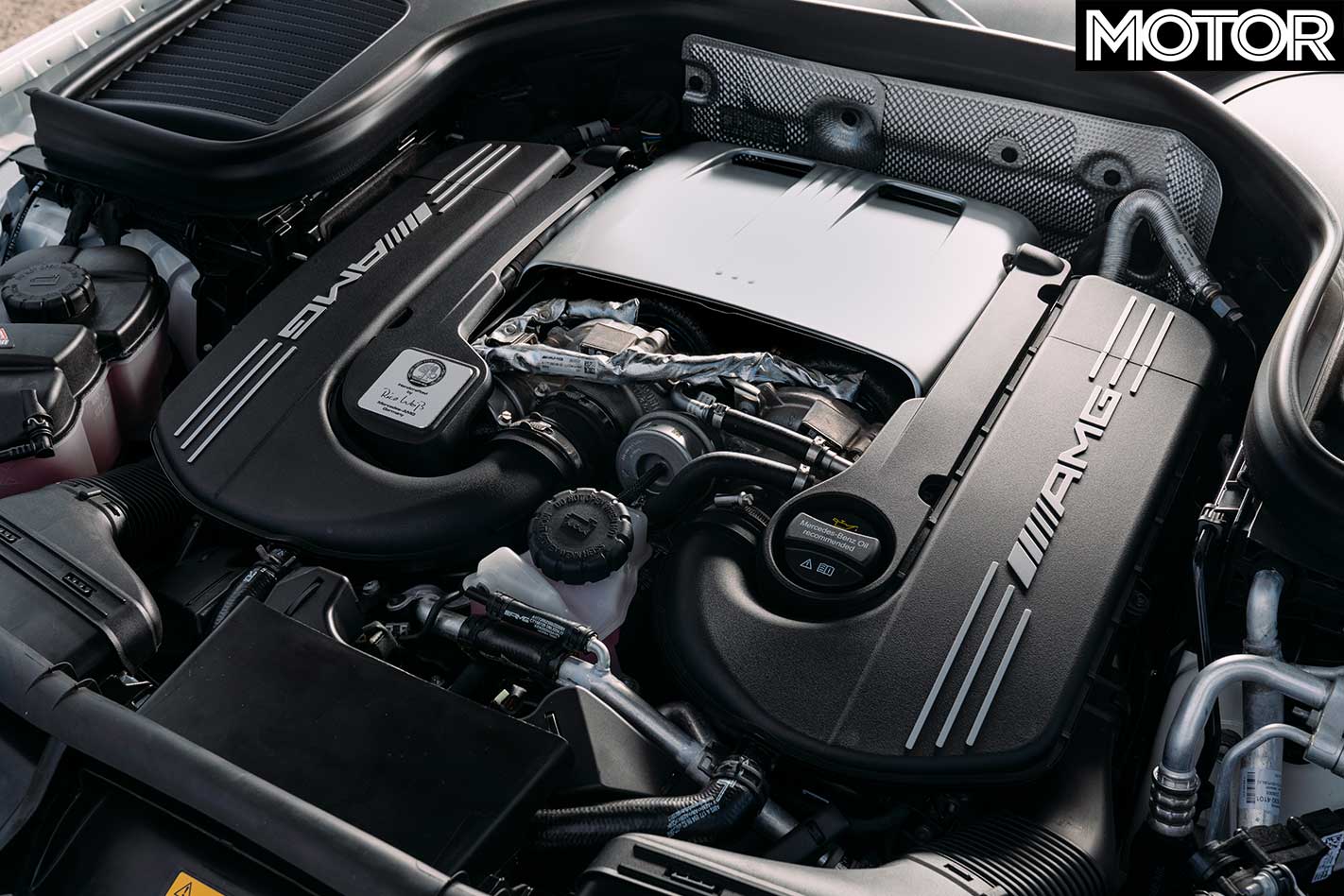
They’re going to have to be potent to match the Merc, though, as thanks to its prodigious power, nine-speed MCT auto and 4MATIC+ all-wheel drive the GLC63 is claimed to hit 100km/h in just 3.8sec.
We managed 3.92sec in independent testing, too much wheelspin (can you believe?) being the limiting factor using launch control, along with a 12sec-dead quarter mile at a tick under 190km/h. Serious stuff. On a grippier surface, the claim is 100 per cent achievable.
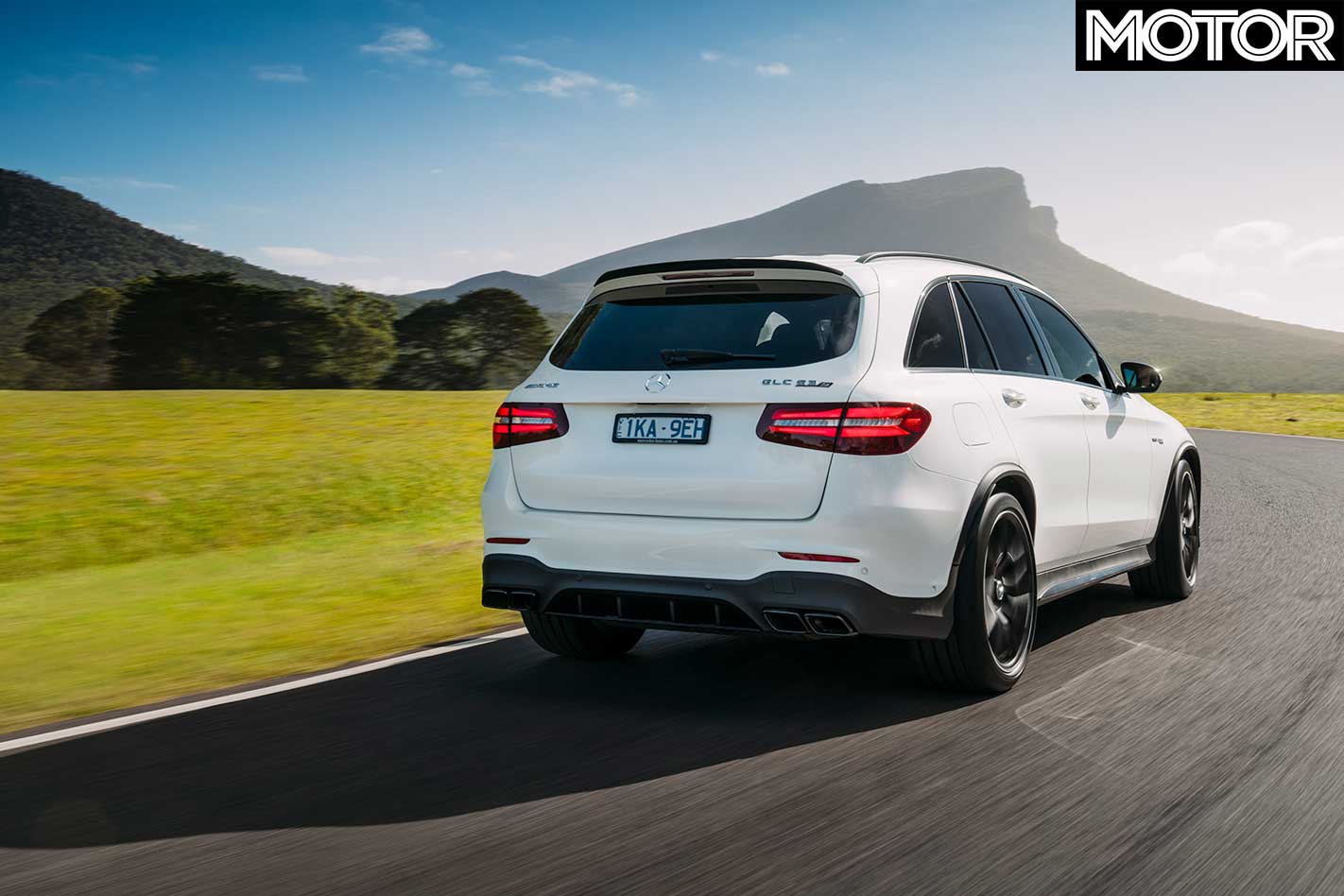
As you’d expect, the motor is a monster, utterly unfazed by the task of lugging 1935kg. It rips through its early gears with the ferocity of an enraged grizzly bear, sounding similar in the process. The gearbox is slick enough in this application, though best left to sort itself out in Drive rather than taking command via the paddles.
What you might not expect is the GLC’s ability in the bends. It ultimately can’t escape its weight and unfavourable centre of gravity when you try and really hustle it, but it’s happy to go harder than most of the SUV breed.
The steering has lost a little precision in the switch to all-wheel drive and the tyres and brakes work awfully hard to contain its mass, but rather than just falling into various degrees of understeer the 265mm-wide front Michelins (Pilot Sport 4S, if you’re curious) hang on gamely.
It’s in the second half of the corner where things get really interesting. The GLC63 uses the E63’s trick constantly-variable all-wheel drive system and a hefty helping of throttle send plenty of power to the rear, enough to edge the rear wide on exit.
It’s not ballet, but it’s a lot of fun, giving Merc’s mid-sizer an adjustability lacking in most of its rivals, though the Macan Turbo is similar in its attitude, if not its exhaust note. For most buyers, the fact the GLC63 goes and sounds like it does will be enough, but it has more to offer.
Nonetheless, it has the everyday stuff covered, too. The rear seat is nicer than the C63, there’s 550 litres of boot space (1600L with the rear seat down) and the ride is slightly softer than its sedan sibling, though don’t expect a magic carpet.
Of course, all this is true of the GLC43, which isn’t exactly a slouch and more than $60,000 cheaper; the GLC63’s price elevates it beyond the current mid-size SUV offering and into the air occupied by the Audi RS4 Avant – tough competition.
Nonetheless, buyers expecting a practical SUV that isn’t too big, goes like hell and sounds like Armageddon will find all their boxes ticked. The fact that it possesses a surprisingly level of dynamic nous is merely a bonus. The driver’s SUV remains a tough sell, but the Mercedes-AMG GLC63 S offers one of the most convincing cases yet.
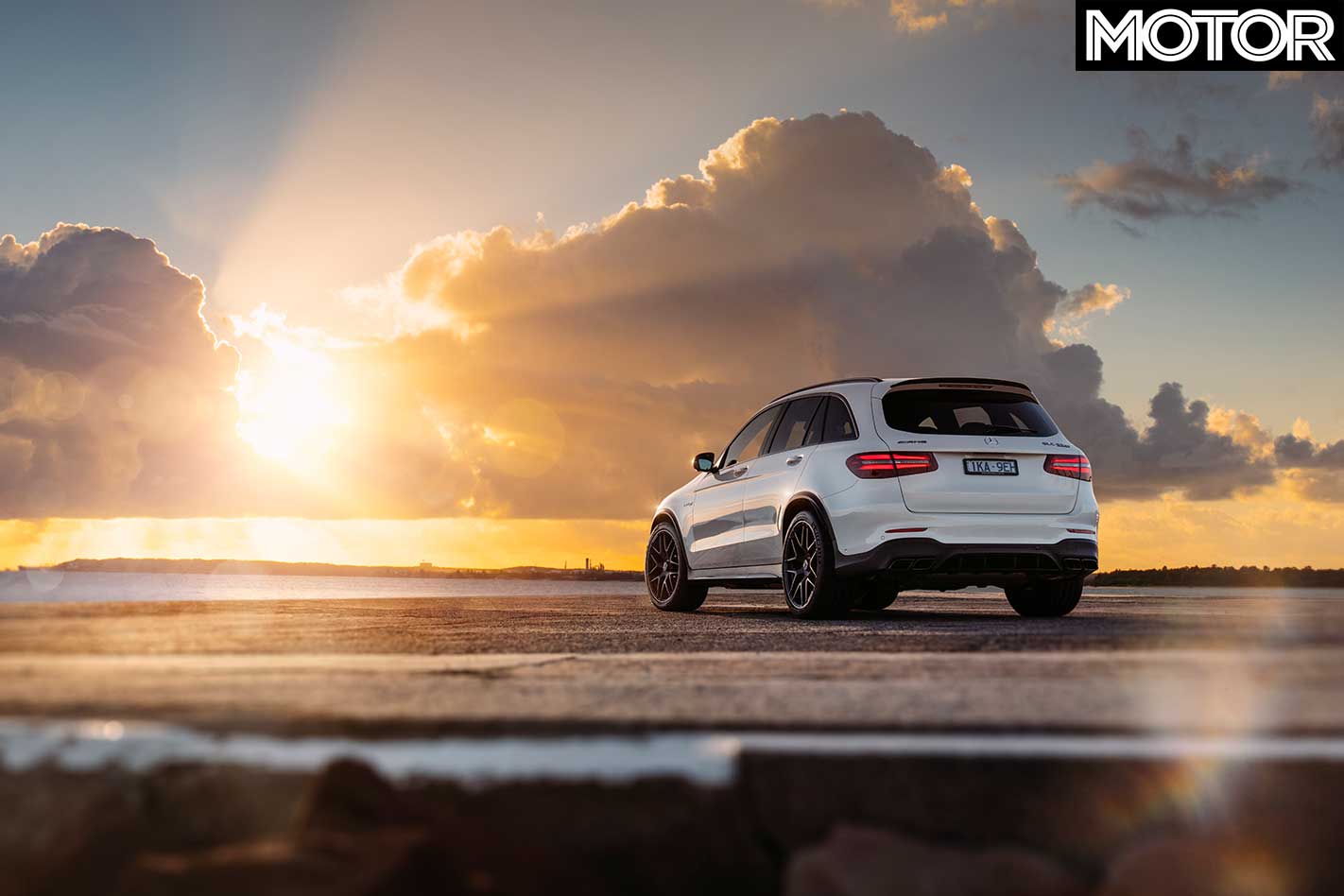
2018 MERCEDES-AMG GLC63 S SPECS Engine: 3982cc V8, DOHC, 32v, twin-turbo Power: 375kW @ 5500-6250rpm Torque: 700Nm @ 1750-4500rpm Weight: 1935kg 0-100km/h: 3.8sec (claimed) Price: $164,900 (wagon)/$171,900 Coupe
Rating: 4 out of 5 Stars Like: Power; engine note; handling adjustability Dislike: Lotsa money; Lotsa fuel
WHAT IS IT
Mid-sized premium SUVs are hot property right now and while the market has settled on responsibly downsized six-cylinder engines for the hot versions, Mercedes-AMG has gone all-in with the same M177 V8 engine you’ll find in the C63 S. That alone will be enough to put it on a shortlist of one for some buyers.
WHY WE’RE TESTING IT
We’d had a drive in the GLC63 S on its international launch in Germany last year. Now that cars have started to arrive in Australia, we took the opportunity to see how the heavy-hitting SUV shaped up in local conditions.
MAIN RIVALS
Audi SQ5, Jeep Grand Cherokee Trackhawk, Maserati Levante S, Porsche Macan S
THE WHEELS VERDICT
The attractions of the Mercedes-AMG GLC63 S aren’t hard to grasp. It’s loud, extremely rapid and looks and feels reassuringly expensive. Subtlety? That’s a trickier quality to unearth in this hot GLC, but there’s a lot to be said for hot SUVs that get better the harder you drive ‘em.
PLUS: Pace; aggro handling; soundtrack; interior finish MINUS: Can feel clumsy; expensive
THE WHEELS REVIEW
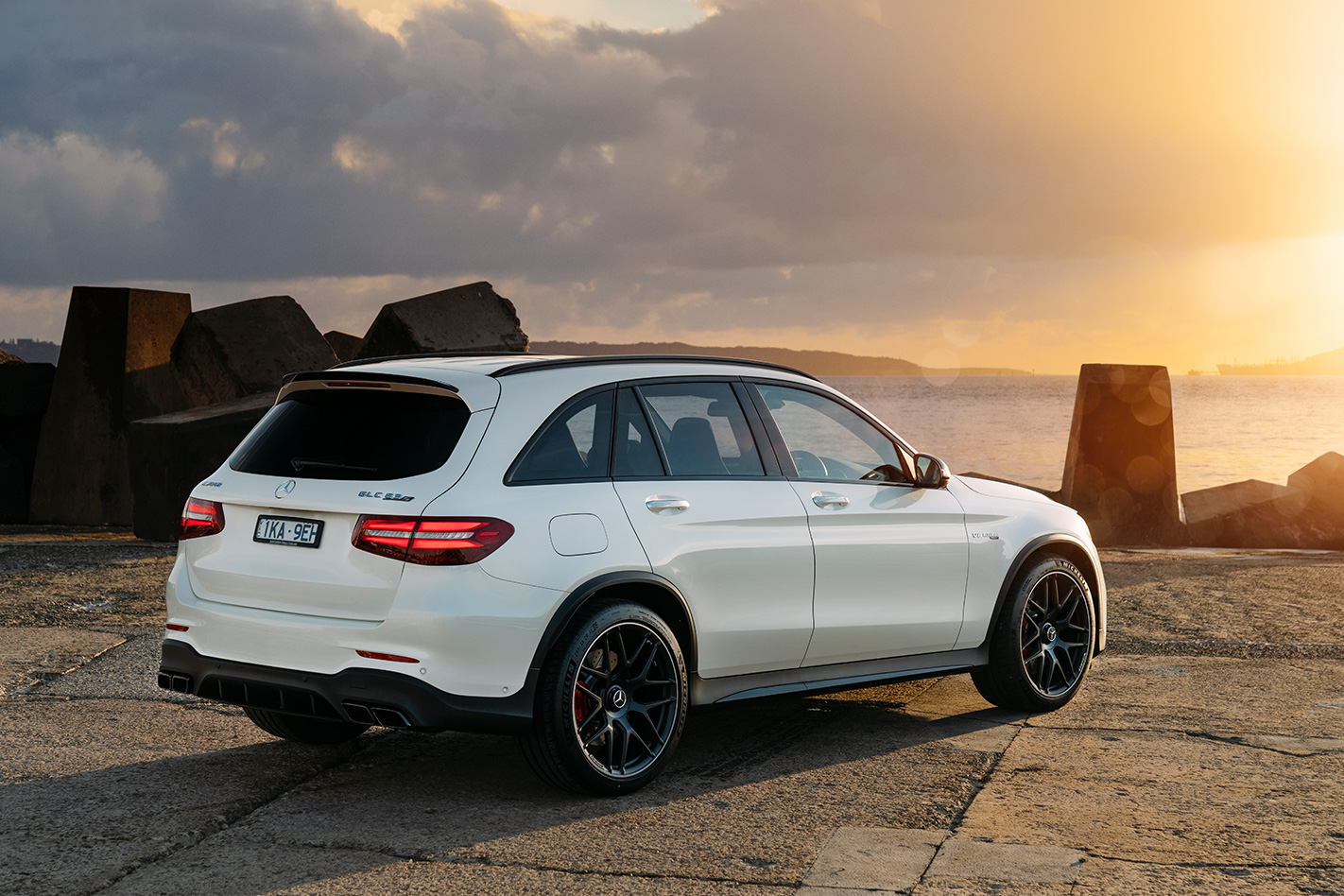
WE could talk at length about the details of the Mercedes-AMG GLC63 S, but just know this. Set the car into Race mode and you can slide the tail as if you were driving a Mustang, accompanied by a hammering V8 soundtrack and the smell of fiery death from its rear Michelins. That right there is the sell. Everything else is just peripheral benefits.
You see, SUVs just don’t do this. Those sideways shots you see in car magazines? I’ll let you in on a trade secret, they’re often performed with the stability control switched off and the driver’s foot nowhere near the right-hand pedal; pure lift-off physics at work.
The GLC63 S will power oversteer to quite extravagant angles before the stability control decides you’re in danger of punching a 2.1 x 4.7m hole in the scenery, or cars and coffee crowd. I’ve never encountered another high-riding vehicle with this sort of throttle adjustability. Whether that’s a good thing or not is another debate altogether.
Should you choose not to pilot the car as if every day is Sunday at Summernats, there’s still enough to fill Mercedes’ order books. The M177 V8 engine is something you’re probably well familiar with, and in this guise it’s making 375kW @ 5500rpm and 700Nm @ 1750-40000rpm.
Although meaningful torque arrives fairly quickly, the engine likes a few revs on the board to feel and sound as if it’s working in its happy place. Try about 4000rpm for starters, at which point you start to get that hardening of the sound signature, and some choral accompaniment from the exhaust.
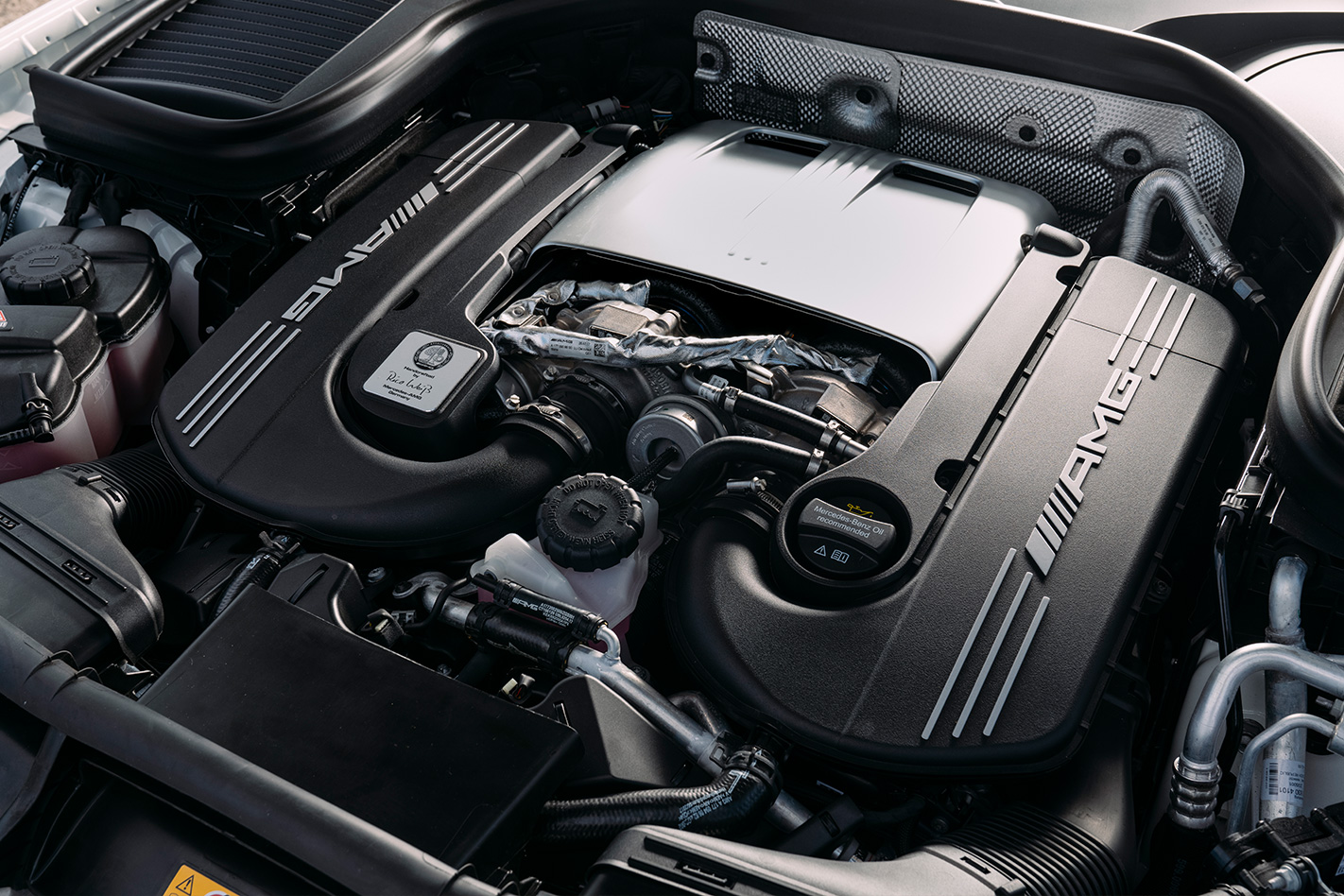
There’s a martial percussion of bangs and crackles on the overrun when the mode select switch is at the sportier end of its selection. Although you know that some of this sound engineering is exactly that, it’s enough to make its six-cylinder rivals sound a good deal more artificial in their aggression.
While the upfront appeal is easy to figure out, working into a seamless flow with a road isn’t quite so straightforward. The steering can feel heavy and slightly reluctant to join the fun. It’s accurate and has a consistent friction to its response, but this isn’t one of those ‘fingertip’ cars. Instead you find yourself manhandling it towards an apex and then letting the engine, stability control and rear e-diff figure the rest out between them.
The 4Matic+ all-wheel drive system has no fixed torque split, and body control, even when flung from one apex to another, is extremely good. The GLC corners flatter than many sports coupes, but it takes a bit of experimentation to find a suspension setting that allows the car to settle, especially into braking areas.
The Individual mode is often your friend here. While the engine, transmission and ESC can be set to angry in order to attack a tortuous country road, you’ll want to isolate the suspension, dialling it back a bit. In Comfort, it allows the car to breathe a little more easily with ruts and bumps. In any other mode it’s often too firm, unsettling the car unduly.
Expansion joints and surface imperfections send a booming jolt through the superstructure on anything other than racetrack-smooth hotmix. The throttle mapping also takes a little getting used to, lacking subtlety in the more aggressive modes. Poor road surfaces can have your foot bouncing off the pedal and flaring revs as if you’re doing an extreme caricature of taxi-driver foot.
Having nine gears also seems wholly superfluous in a car with 700Nm and a torque band wider than Moon River (claimed to be wider than a mile, which doesn’t narrow things down too much). There’s little in the way of shift busy-ness though and the shift logic settles unerringly and accurately onto the right gear on the way into a corner. Driven hard, it’s great. Part-throttle driving can occasionally have the wet-clutch ‘box clunking up a gear or sending a big flare of revs on downshift during a consistent cruise. It’s next to impossible to catch the GLC63 S off boost though, because even in manual mode, it’ll automatically downshift a couple of gears if it deems it necessary.
It’s seriously quick off the mark though, demolishing the sprint to 100km/h in 3.8 seconds with Race Start engaged. Compare that to a Porsche Macan Turbo, which takes an entire second longer (or 25 percent extra, if you prefer).
This brings us to a key consideration. What exactly is the GLC63’s rival set? Because it’s packing that V8 and more power than the six-pot SUVs we’re used to, it’s a lot more expensive. In wagon form its $164,900 and with the coupe tail (likely to account for around 30 percent of sales) it’s $171,900. Even the primo Porsche is $133k, while tackle like the Audi SQ5 is available for less than $100k. The GLC therefore comes within hailing distance of vehicles from the next class up in terms of price at least. The 423kW BMW X5M is $25k more, while the bargain Jeep Grand Cherokee Trackhawk delivers 522kW for just $135k.
As some form of recompense, Aussie cars are loaded to the gunwales with standard equipment. While Europe gets relatively sparsely equipped cars as standard, we get the AMG performance steering wheel, digital TV cluster, AMG splitter and diffuser, Night package, AMG performance exhaust, 21-inch alloys, and AMG performance seats as standard.
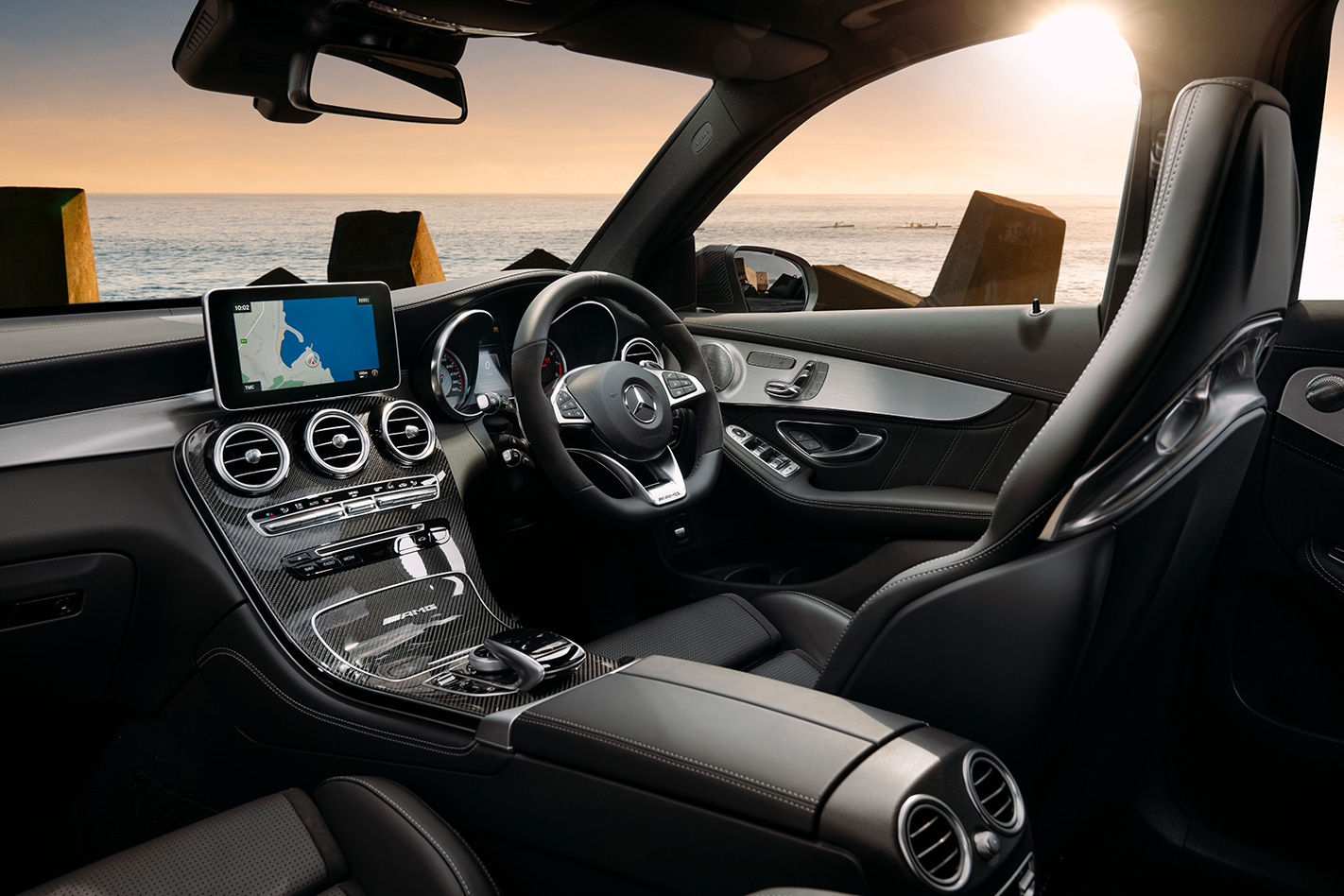
Should you find the seats too full-on, you can swap them at no-cost for a flatter, less showy option. For the first year of production, you’ll also be able to order the Edition 1 version, which features flics on the front spoiler, matte-grey paint, and matte-grey carbon centre console, ceramic brakes, diamond-stitched seats and a whole host of other cosmetic goodies.
Mercedes calls it a reward for early adopters, but you’ll need to fork out another $10,900 to be thus rewarded.
Looking expensive, sounding tough and having the capacity to smoke things away from the lights is about the extent of the skillset the Mercedes-AMG GLC63 S needs to succeed in Australia. Now that GLC production in Germany has come into its stride, the 63 S looks set to be a major contributor to Mercedes Australia’s bottom line.
There’s clearly a lot more to the hot GLC’s blend of talents than just the overt stuff, but it’s rarely a car that feels consistently satisfying. It’s great burbling about town and it’s eye-poppingly good when driven like a berserker. The other 70 percent of the time, it can feel a little less than perfectly resolved. For many, that won’t matter. Its highs are higher than anything else in its class and that’s all that matters.
You know what? It’s hard to argue against an extreme view for an extreme vehicle.
SPECS
Model: Mercedes-AMG GLC 63 S 4matic+ Engine: 3982cc, V8, dohc, 32v, turbocharged Max Power: 375kW @ 5500 to 6250rpm Max Torque: 700Nm @ 1750 to 4500rpm Transmission: 9-speed automatic Weight: 1935kg (SUV) 1945kg (coupe) 0-100km/h: 3.8 sec (claimed) Fuel economy: 10.9L/100km (European combined cycle) Price: $164,900 (SUV) $171,900 (coupe) On sale: June 2018
Looking back, anyone would say it’d be silly to inject 522kW and 868Nm into a Jeep Grand Cherokee.
They’d repeat their disgust at why something with a roll-centre higher than a Labrador would be encouraged to unleash that around a racetrack. But that was the exact brief for Jeep’s new Trackhawk. And the result actually makes physics look like the silly one.
A handful of laps at Phillip Island were enough to confirm the Trackhawk as brutal in a straight line and capable at the fast, flowing circuit. Yes, this 2.43 tonne behemoth can corner hard. Without rolling over.
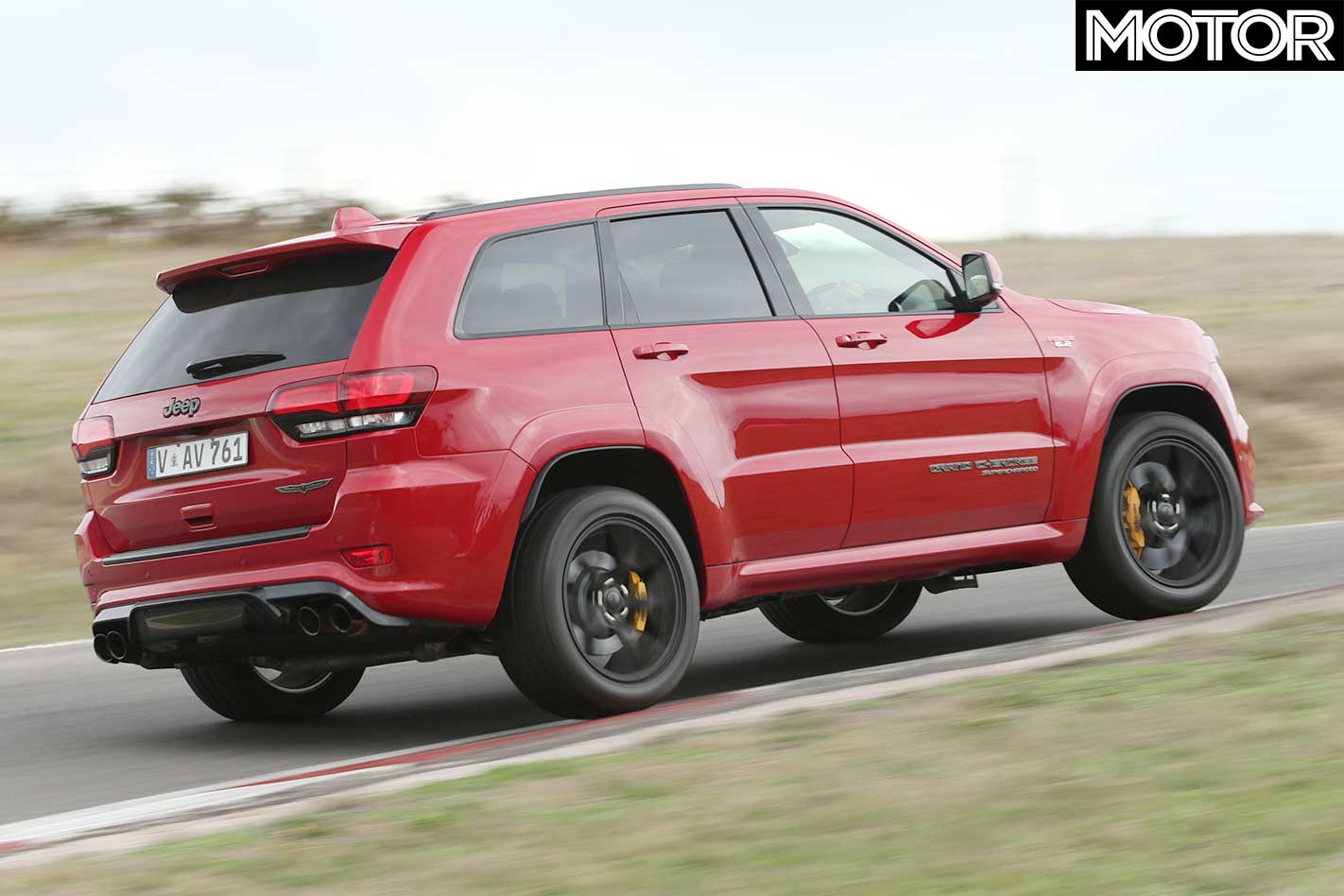
Naturally, boosting a 6.2-litre V8 is going to unlock a lot of power. But 522kW and 868Nm is an other-worldly achievement. On top of being 48kW and 53Nm more than HSV could wring from the LS9 in its GTSR W1, it’s also the most powerful V8 (or SUV) on sale.
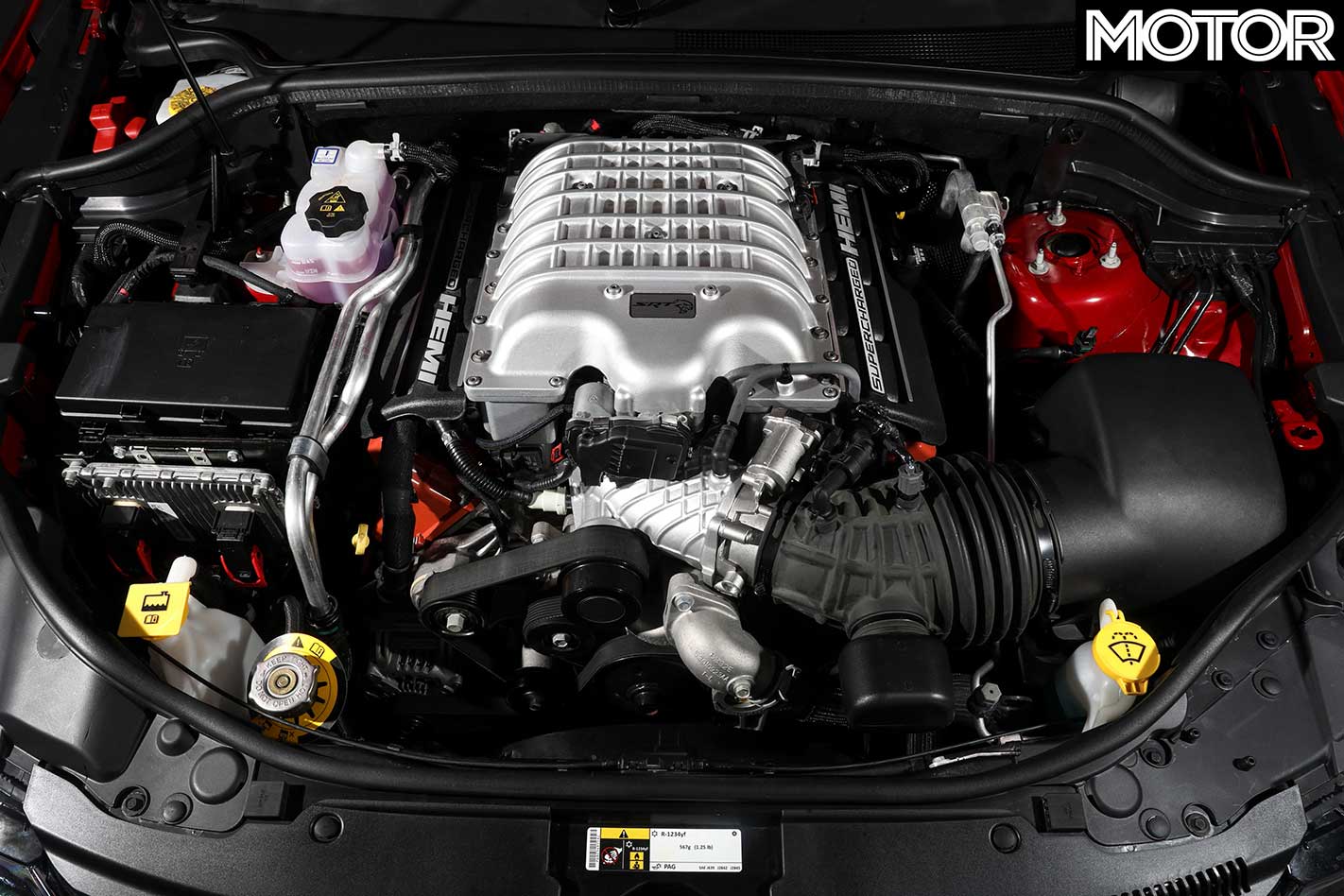
To generate that much grunt, Jeep pinched the Dodge Challenger Hellcat’s 6.2-litre Hemi V8. It’s a heavily re-engineered version of the GC SRT’s ‘apache’ 6.4-litre. It features a forged steel crankshaft that cuts stroke measurements by 4.5mm. While forged alloy pistons drop its compression ratio to 9.5:1 and ready it for a 2.4-litre twin-screw supercharger to supply 11.6psi of boost.
Pointed slightly downhill on the circuit’s straight, the Trackhawk lifts on its rear haunches like a startled grizzly. As it accelerates it produces more G-force than sports cars can generate in corners. The on-board Performance Pages App, which can track everything from your reaction times to oil pressure, said we hit 100km/h from rest in 3.6sec (sans roll-out). Then in 3.9sec without launch control.
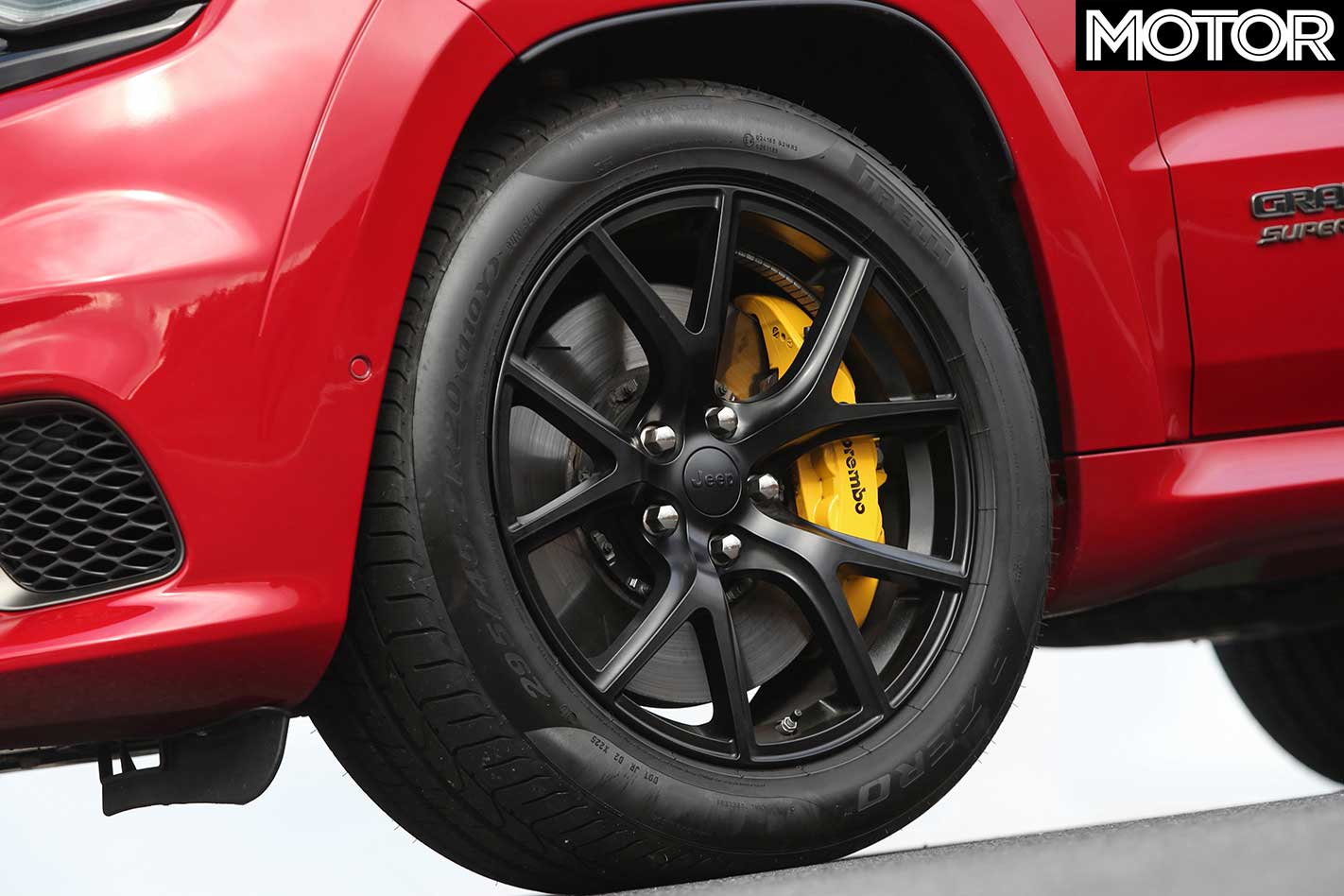
As you’d expect, the Trackhawk’s handling is a mixed bag. Jeep’s stiffened the springs coiled around its adaptive dampers and fitted reinforced Pirelli P Zero run flats. They add the lateral stability to match the grip generated by those massive 295mm-wide tread patches. New 20-inch forged wheels feature, too, dropping 5kg per corner and improving its initial responses.
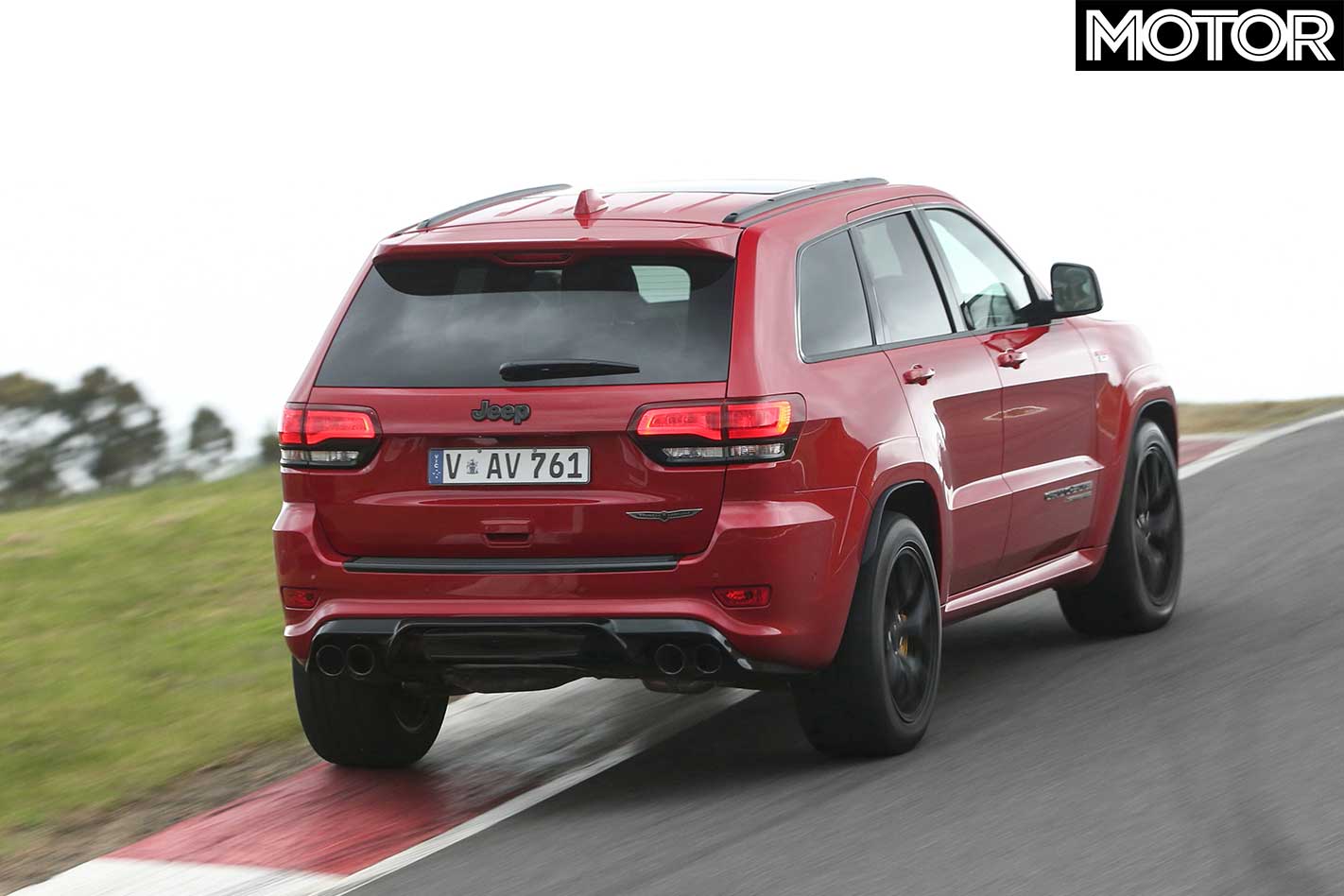
What it lacks for drifting it redeems in musical talent. The Trackhawk announces itself with a strong supercharger whine and leaves a furious, anti-social blare in its wake. It’s terrifying and enchanting at the same time and throbs like a Merlin Spitfire engine. From the inside Jeep’s leather-padded interior keeps the noise at palatable levels except, thankfully, for the addictive ‘burp’ on upshifts.
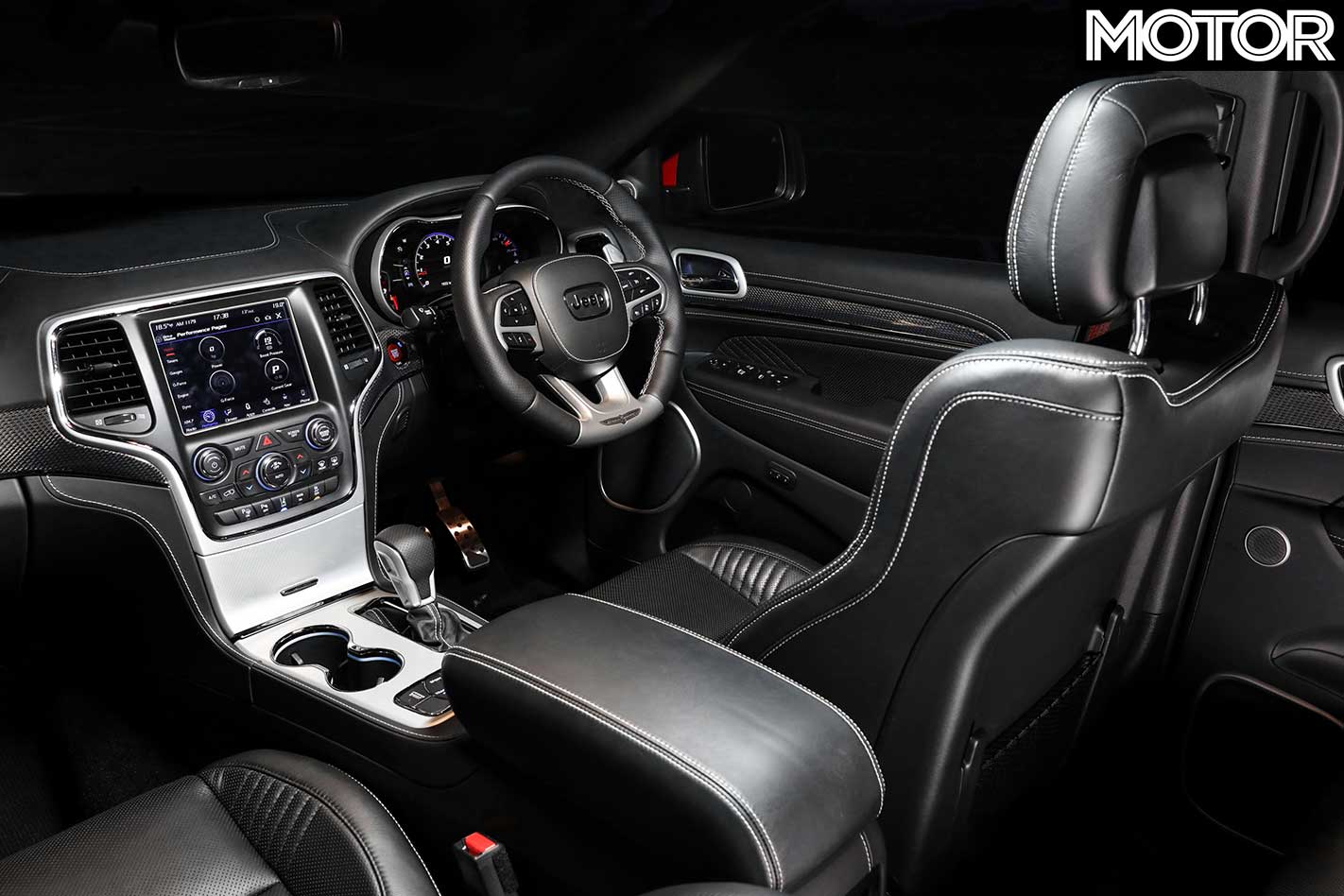
There’s extra metal accents and a new 19-speaker Harmon Kardon audio system inside, but it remains unchanged for the most part. The $43,800 jump up from an SRT is all about that engine, which remains your sole option for driving a Hellcat engine in right-hook with a factory warranty.
From its bullish looks to its hellish noise, the Trackhawk is clear about what it is: ostentatious, excessive, ridiculous.
It comes with a five-year warranty which Jeep will review under a ‘case-by-case’ basis in ten-tenth environments, but our short experience in the Trackhawk suggests that powertrain will outlast civilisation. We can’t say the same for its brake pads.
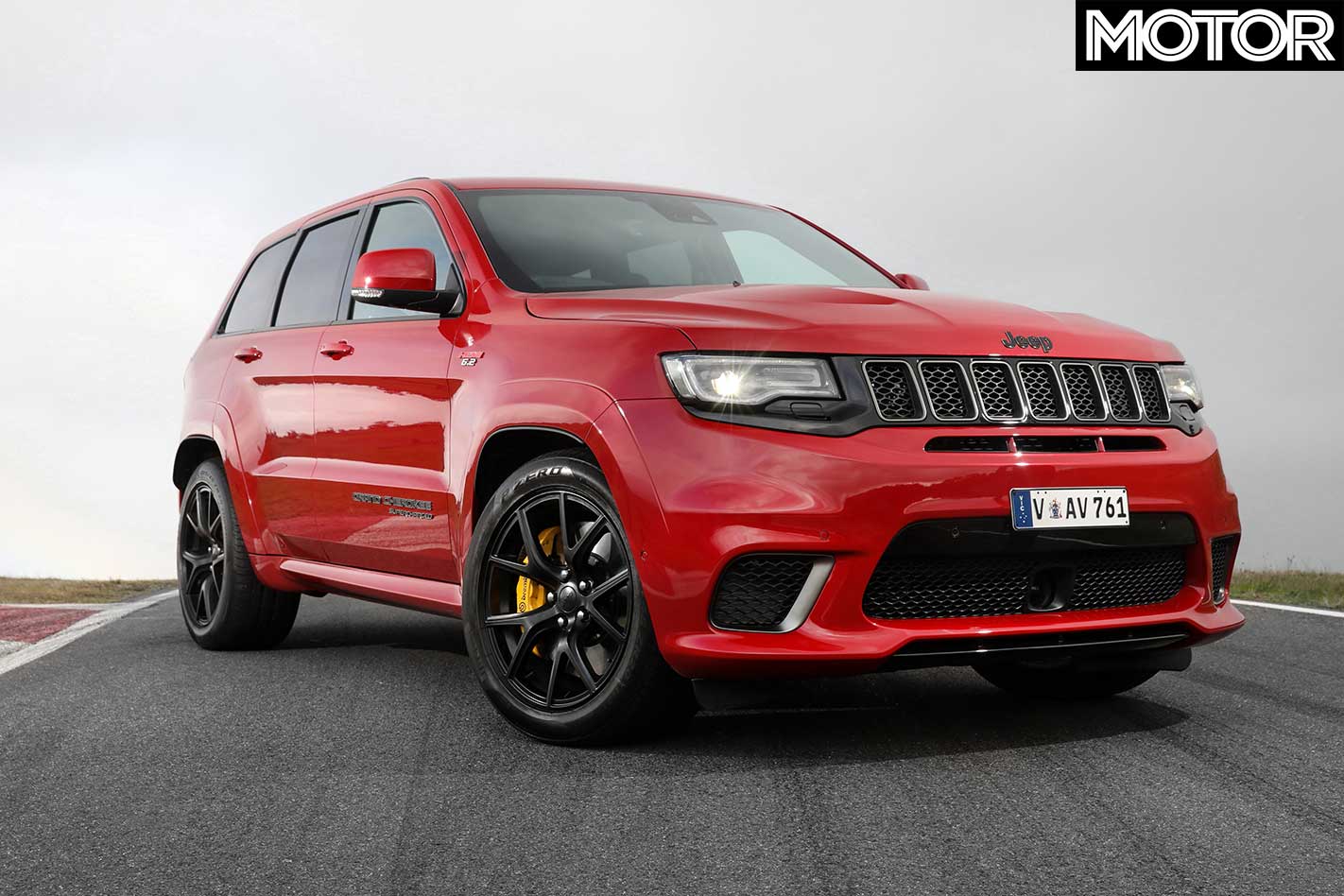
We’d take our initial delight with a pinch of salt, though. We haven’t driven the Trackhawk nearly enough to have a firm idea on how it rides, know the true depths of its thirst, or learn that brute of an engine’s daily manners. But we’re surprised in how much we like the Grand Cherokee Trackhawk after such a short time.
Then again, this is a 522kW, ground shaking five seater that can outrun a Porsche 911. We must have been silly to have doubted it at all.
2018 JEEP GRAND CHEROKEE TRACKHAWK SPECS Engine: 6168cc OHV V8, supercharger, 16v Power: 522kW @ 6000rpm Torque: 868Nm @ 4800rpm Transmission: 8-speed automatic, electro-mechanical locking rear differential, all-wheel drive Weight: 2433kg 0-100km/h: 3.7sec (claimed) Top speed: 289km/h (limited) Price: $134,900 Rating: 4 out of 5 Stars
Pluses +: Menacing soundtrack; grip; brutal acceleration; reasonable price
Minuses -: Hellish thirst; braking instability; conceptually flawed
WHAT IS IT?
The 2018 RS4 is the flagship high-performance version of Audi’s impressive B9 A4, and like all RS4’s before it – bar the B7 – it is available solely in a wagon body style that Audi calls an Avant. The RS4 is the direct descendent of the very first Audi Sport model – the RS2 – that inaugurated the RS road car brand in 1994. It’s a model with almost unrivalled flexibility.
WHY WE’RE TESTING IT
There is something irrationally cool about fast wagons, and Audi is perhaps the most versed car maker in this field. Quite a lot has changed in the generational leap from B8 to B9 for RS4, and this is our first chance to drive Australian-spec cars on local roads to see how the new model acquits itself.
MAIN RIVALS
The RS4’s only natural rival in terms of price, performance, prestige and packaging is the Mercedes-AMG C63 S Estate. It’s powered by a twin-turbo 4.0-litre V8 and priced a little higher at $159,711. Outside that you need to start looking at hi-po SUVs to find anything with similar bandwidth, though that form factor is arguably made for a different kind of buyer.

THE WHEELS VERDICT
Few cars can boast the versatility of the Audi RS4. It is one of the best all-rounders on the market. Is it 50 percent more car than the $100K Audi S4? Ultimately, that’s for you to decide.
PLUS: Almost peerless flexibility; dynamic improvements; ride/handling balance MINUS: No more high-rpm V8 theatre; somewhat lazy RHD configuration
THE WHEELS REVIEW
WANT to buy a fast Audi? No problem. There’s a broader range of Audi Sport models to choose from than ever before. Where the performance offshoot once produced only a single RS model at a time, more factories are now churning out more RS cars for more people. But it’s this one – the iconic RS4 – that started it all.
Back in 1994 it was launched as a B4-based superwagon called the RS2, developed with a little help from Porsche. Today’s B9 RS4 draws a direct line down the family tree from that car, and there’s another Porsche parallel with the 2.9-litre twin-turbo V6 under its bonnet also being found in Panameras and Cayennes.
Yes, the RS4 has come full circle. Gone is the rev-happy free-breathing 4.2-litre V8 of the last two iterations, and in is a boosted bent-six like the RS4 of 2000. We already miss that lustrous 8250rpm redline but, emotional responses aside, the change is more good than bad.

Peak power remains at 331kW, but arrives sooner, as does its 600Nm torrent of torque. That’s 170Nm more than before, and the full dose is available from a scant 1900rpm through to 5000rpm. In regular driving and on track, the V6’s numbers are demonstrably more effective, not to mention more efficient. Claimed economy is 8.9L/100km, down from 10.7 of the V8.
Nought to 100km/h takes 4.1sec, making this RS4 seriously quick – and properly lively from behind the wheel. Its all-paw grasp of the road surface is hugely confidence inspiring, and sustains almost reckless cornering speeds. Less mass forward of the front axle means it’s now less prone to understeer, too; the V6 is fully 31kg lighter than the old lump.
Reach across to drive mode buttons that are still in a LHD position on the console to dial the systems back to Comfort. It’s here the RS4 makes another statement. The ride is impressively composed and compliant, especially given its standard 20-inch wheels. Audi seems to have decided the RS4 should be easy to live with, and that creates a neat point of difference to its only real rival, the firmly-suspended Mercedes-AMG C63 S Estate. A somewhat muted exhaust note is one of the very few downsides to its heightened maturity.
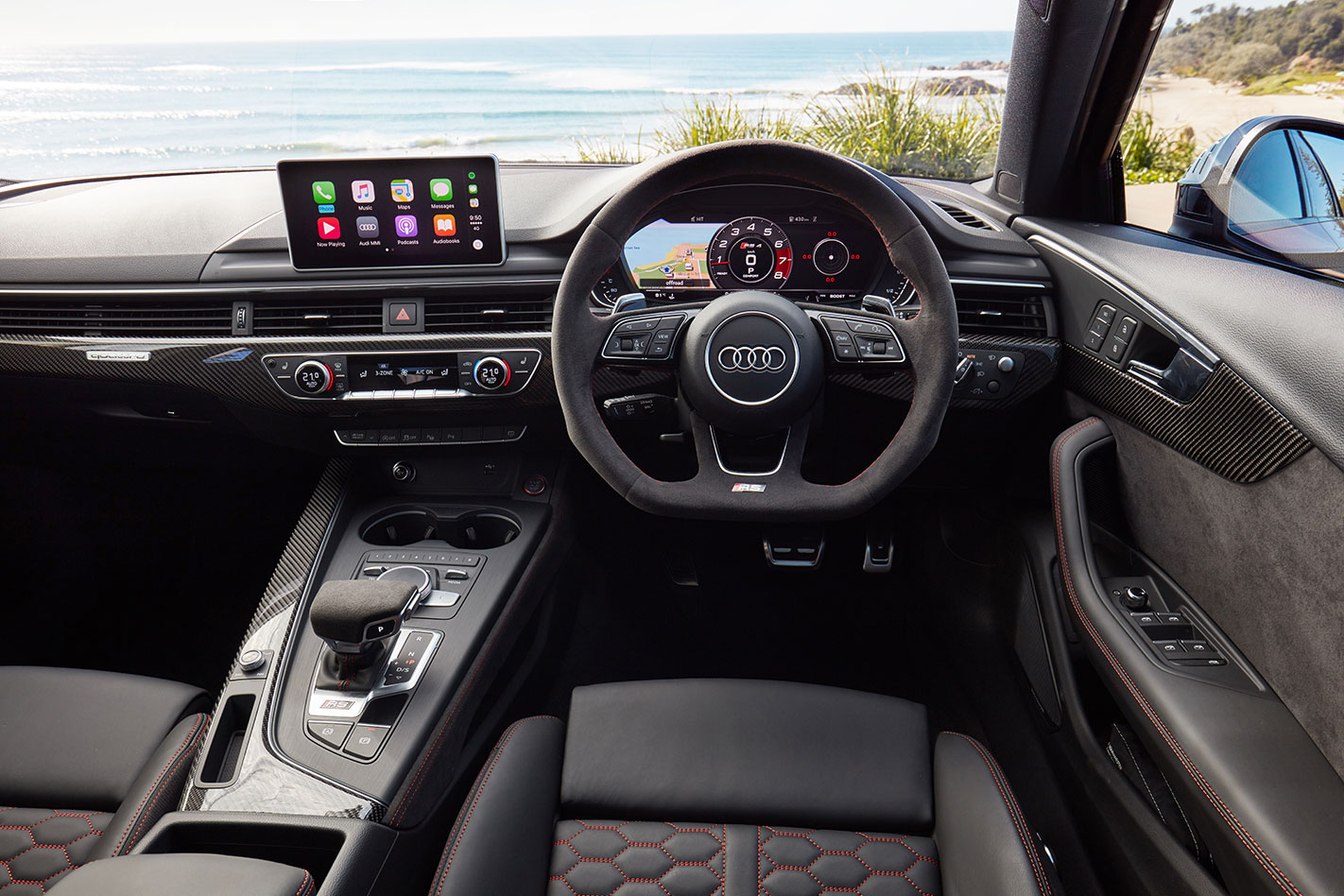
The design-driven interior is immaculately finished and laden with all the fruit that’s expected for the $152,900 asking price. A honeycomb motif carries through to excellent sports seats with dynamic bolsters, active safety equipment has been prioritised and a digital dashboard and mighty B&O sound system are standard.
A panoramic glass roof is fitted by default for our market, but thankfully costs nothing to delete if the idea of putting 30kg of dead weight right at the top of a performance car rankles you. Optional extras include exterior enhancement packs in black, aluminium or carbonfibre, wireless phone charging, Matrix headlights, a head-up display, and Alcantara interior trim inserts that hopefully won’t look like old dishcloths in a year’s time.
Every car enthusiast has played the ultimate single car garage game, and a fast wagon is always hard to beat. It’s a formula Audi has been tweaking for years, and this RS4 might just be its best all-rounder yet.
SPECS
Model: Audi RS4 Avant Engine: 2894cc V6, dohc, 24v, twin-turbo Max Power: 331kW @ 5700-6700rpm Max Torque: 600Nm @ 1900-5000rpm Transmission: 8-speed automatic Weight: 1715kg 0-100km/h: 4.1sec (claimed) Fuel economy: 8.9L/100km Price: $152,900 On sale: Now
According to reports from the US, the next Chevrolet Corvette will house not only the 6.2-litre supercharged LT1, but three other V8s as well.
Or, more specifically, three configurations of another V8.
This mystery engine has been reported on by US publication Car and Driver to be the 5.5-litre unit we saw in leaked CAD (computer assisted drawing) images last year.
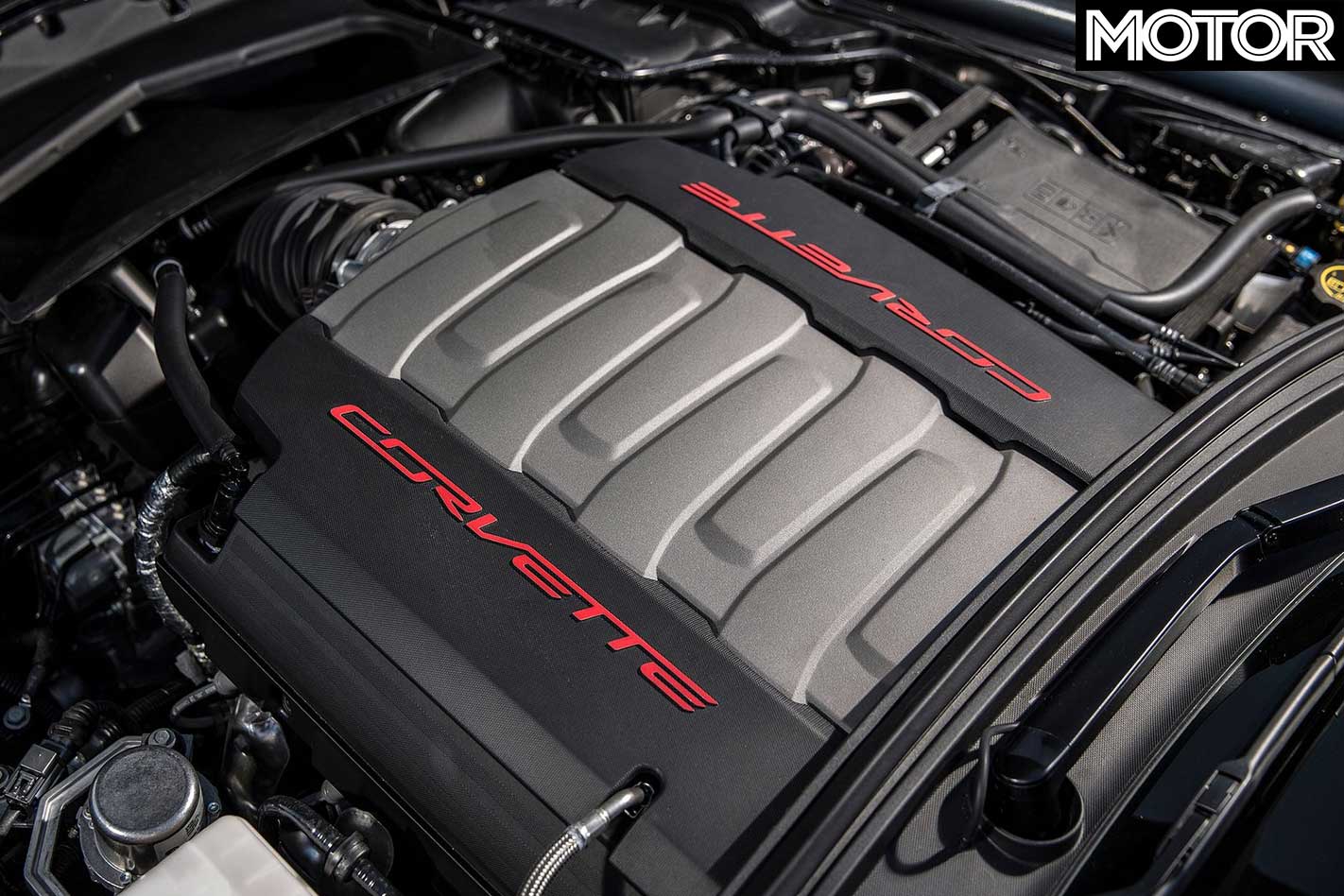
After the LT1, a 450kW-ish atmo version of the 5.5-litre engine, supposedly capable of a 9000rpm redline though pared back a little, will put the fear into Ferrari.
This engine, as well as all of its variants, will reportedly hook up to a paddle-shifter only, so no third pedal for the next GM muscle-halo.
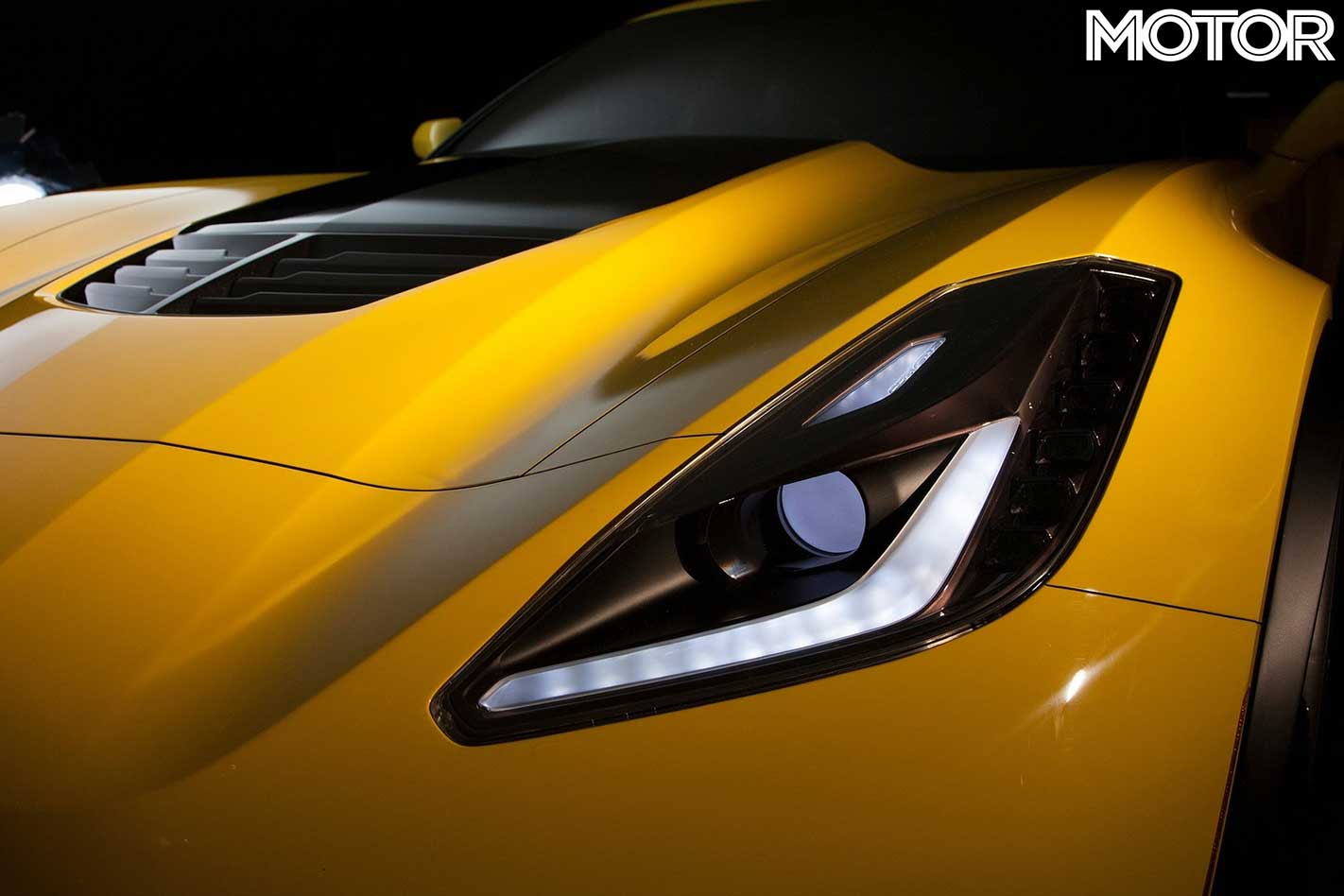
Next, two turbos will be added to create a different version of the engine, helped by two air-water intercoolers. In this iteration C&D says it’ll make around 600kW. You read that right.
But wait, there’s more. Apparently further down the track is the intention to add another motor into the mix, but this time it’s electric. While the TTV8 powers the rears, the report says a roughly 150kW electric motor will power the front wheels.
A 750kW mid-engined Corvette is on the cards. Really.
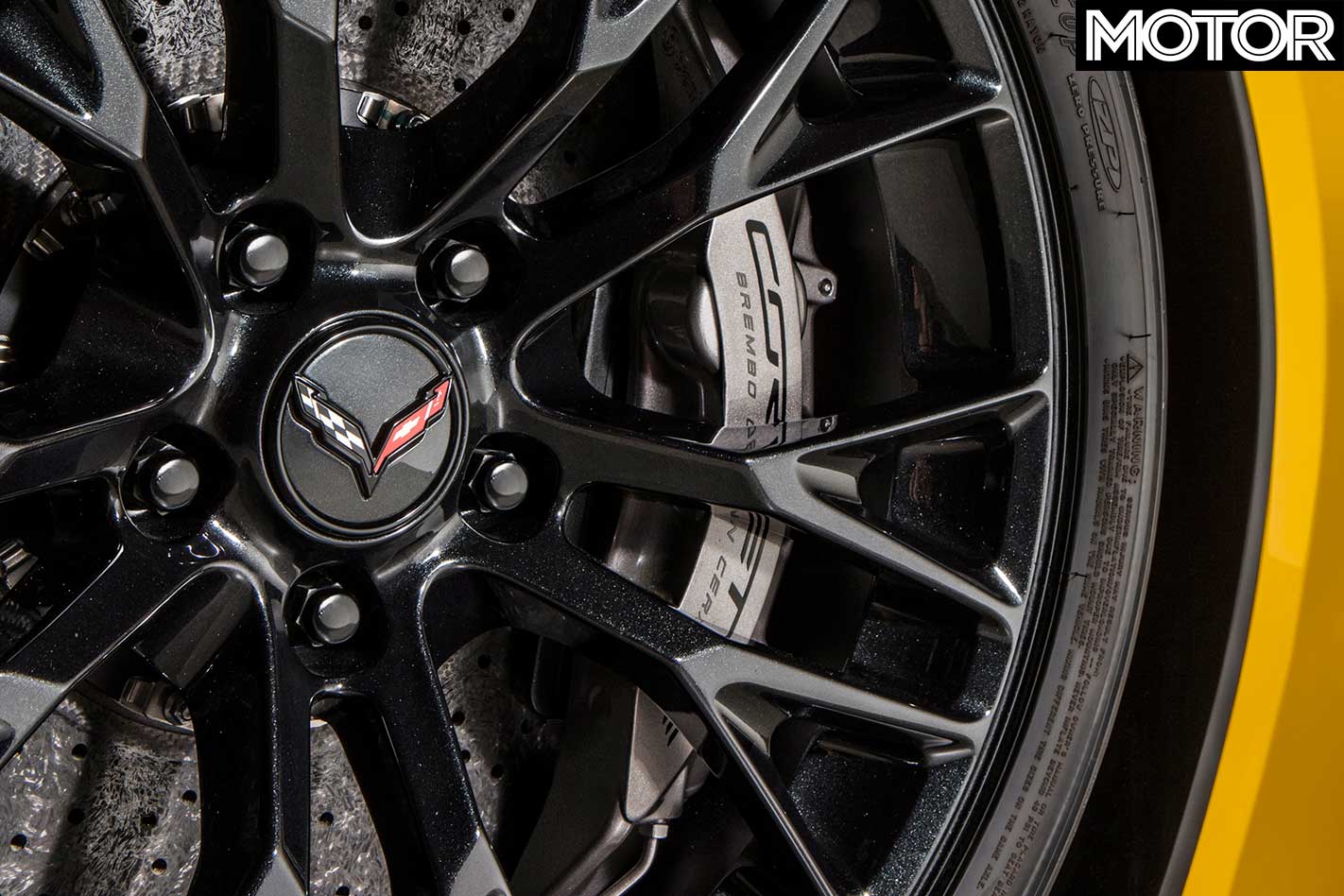
Also reported are a huge number of cooling methods, active aero, and a front-axle-lift system that’ll not only help with speed bumps, but also with aerodynamic adjustment.
We’ll wait until closer to the car’s launch for the specific details, but the idea that the C8 Corvette will be a true supercar rival isn’t looking so far-fetched.
