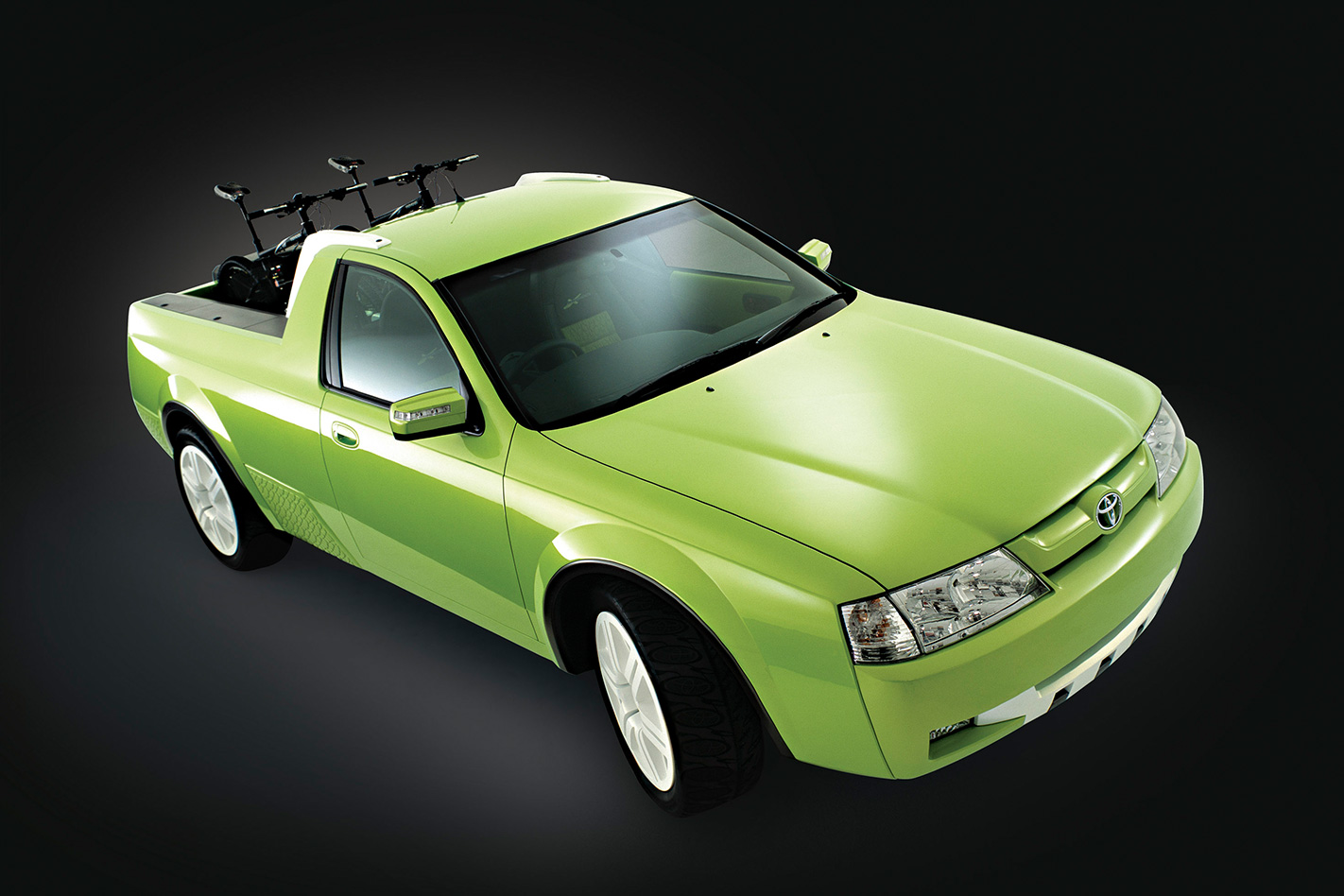
THE NEW millennium was a hive of activity at Toyota’s Altona HQ, with no fewer than three concept vehicles designed and engineered to show off the substantial Aussie talent within.
First cab off the rank was the 2003 Toyota X-Runner Concept. Nobody will argue that it’s the sexiest Avalon ever, this monocoque-bodied coupe utility employed a longer wheelbase than the standard sedan, and featured a 3.0-litre supercharged V6 driving all four wheels via an AWD system nicked from the Lexus RX.
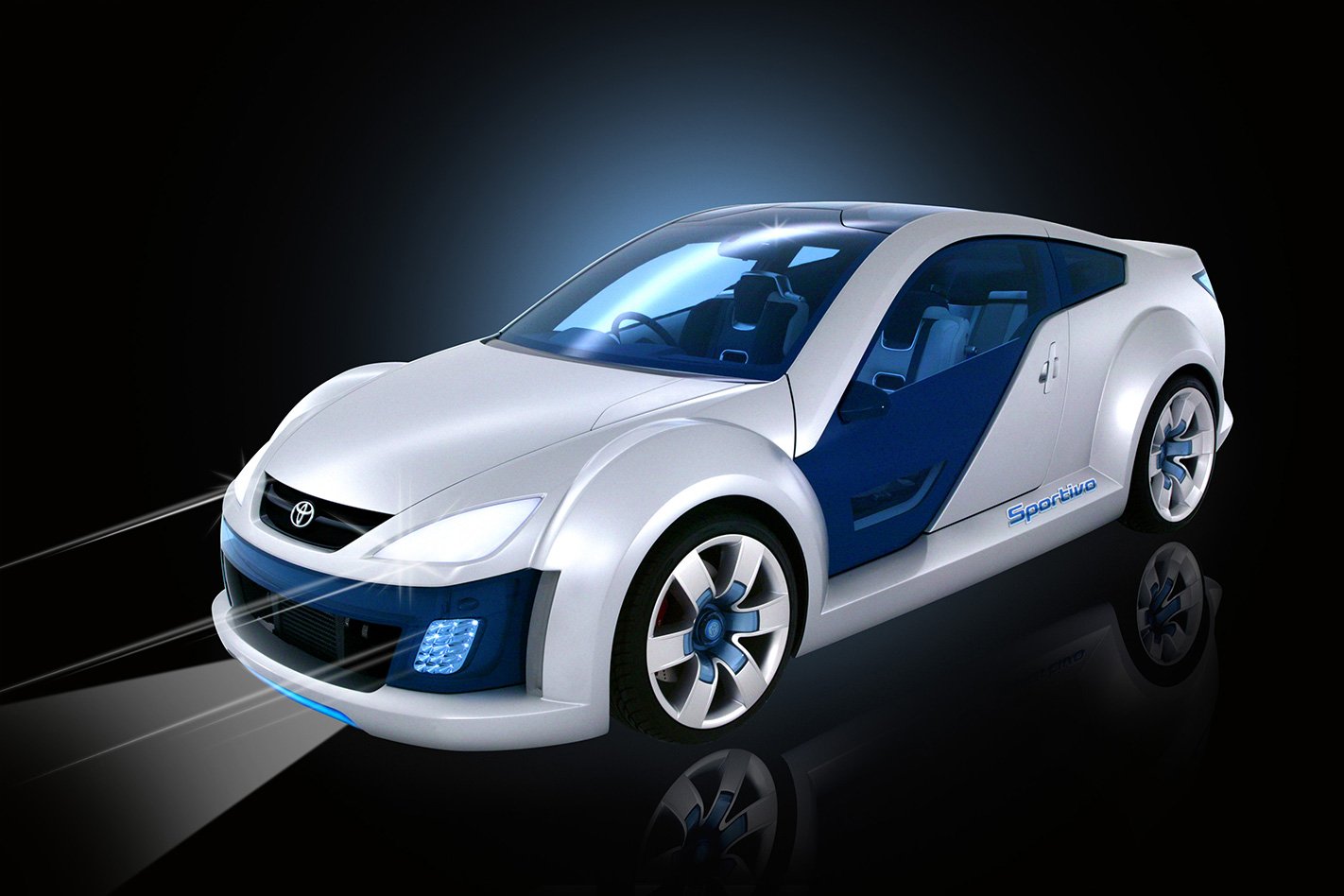
What it previewed precisely remains a mystery, but this gullwing (or, rather, dihedral-doored) Toyota boasted a carbonfibre body by ex-Ford designer (BA Falcon XR series) Nick Hogios, who had also won a young designer gong involving this magazine. Created in just 30 weeks at a reported cost of only about $1 million, the SCC was also completely driveable, courtesy of its contemporary Camry platform, RAV4 running gear and 180kW 2.4 four-pot turbo powertrain.
The slammed ride height, huge wheels, integrated body kit, fat exhausts and special paint job looked professional enough, while under the bonnet a 3.5-litre supercharged V6 delivered 241kW and 400Nm to the front wheels via a six-speed auto.
Modifications were made to the chassis to better cope with the huge leap in performance over the regular Toyota Aurion.
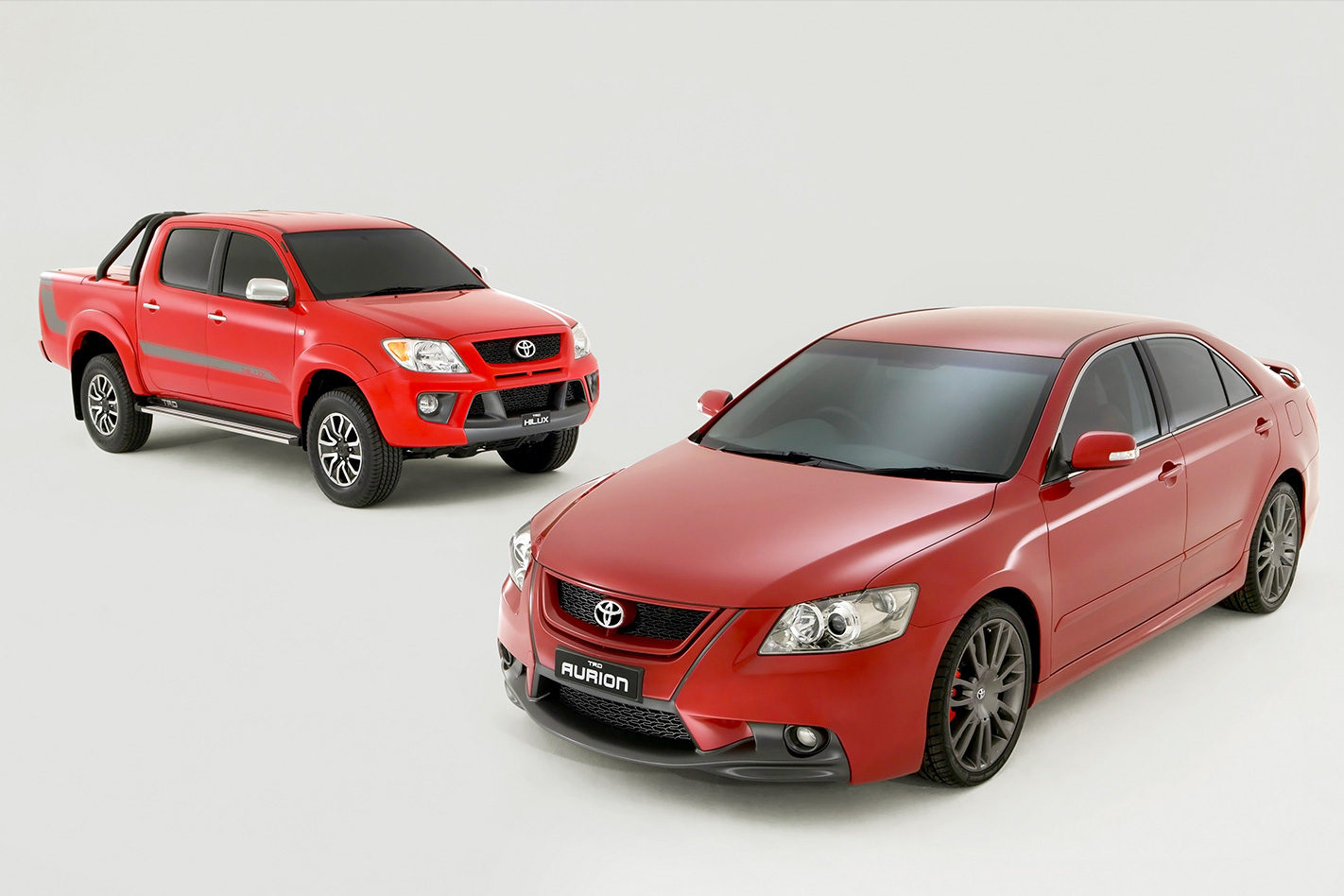
Too bad its lousy timing – just as buyers were abandoning large cars in the wake of rocketing fuel prices – saw the feistiest Camry offshoot extinguished so soon.
Production ceased in early 2009. Around the same time, Toyota’s Australian team also developed a TRD Hilux, motivated by a 225kW/453Nm 4.0-litre supercharged V6.
It too was dropped, at the same time as the TRD Aurion.
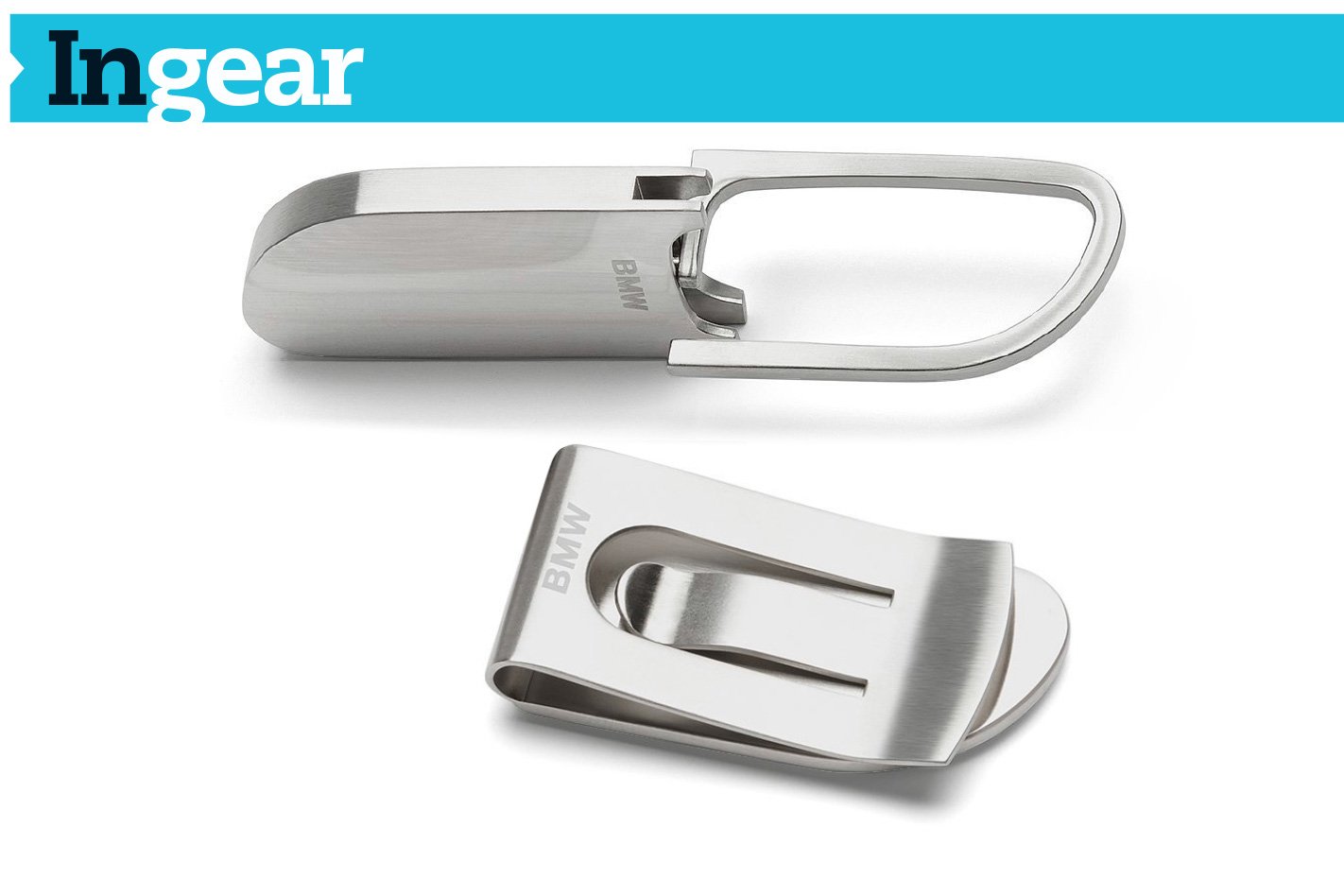
BMW kidney grille cash clip and key ring, $89 and $79 respectively
Renault F1 40th Anniversary teapot, $194

With just 40 pots produced you’ll have to be quick to land one; alternatively you could visit the Atelier Renault restaurant on Paris’ Champs-Elysees where the pretty pots are in use and take a big bag.
360FLY 4K camera, $599.95
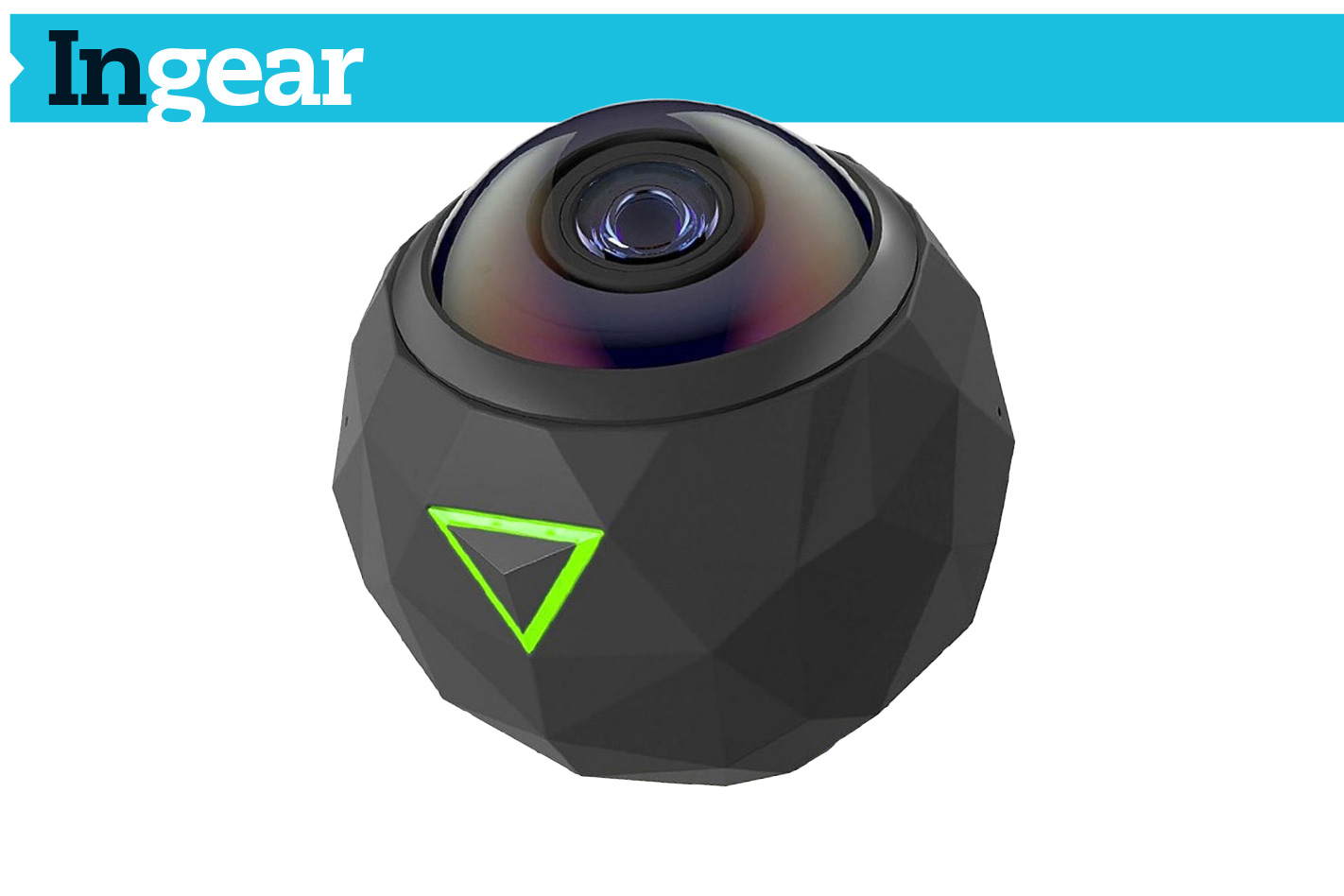
The new 4K model from 360FLY features 10-metre water resistance, time-lapse, first-person point-of-view, and 64GB internal memory. Doing a 360 on a track day is suddenly a lot more attractive.
How to Illustrate and Design Concept Cars paperback, $47.99
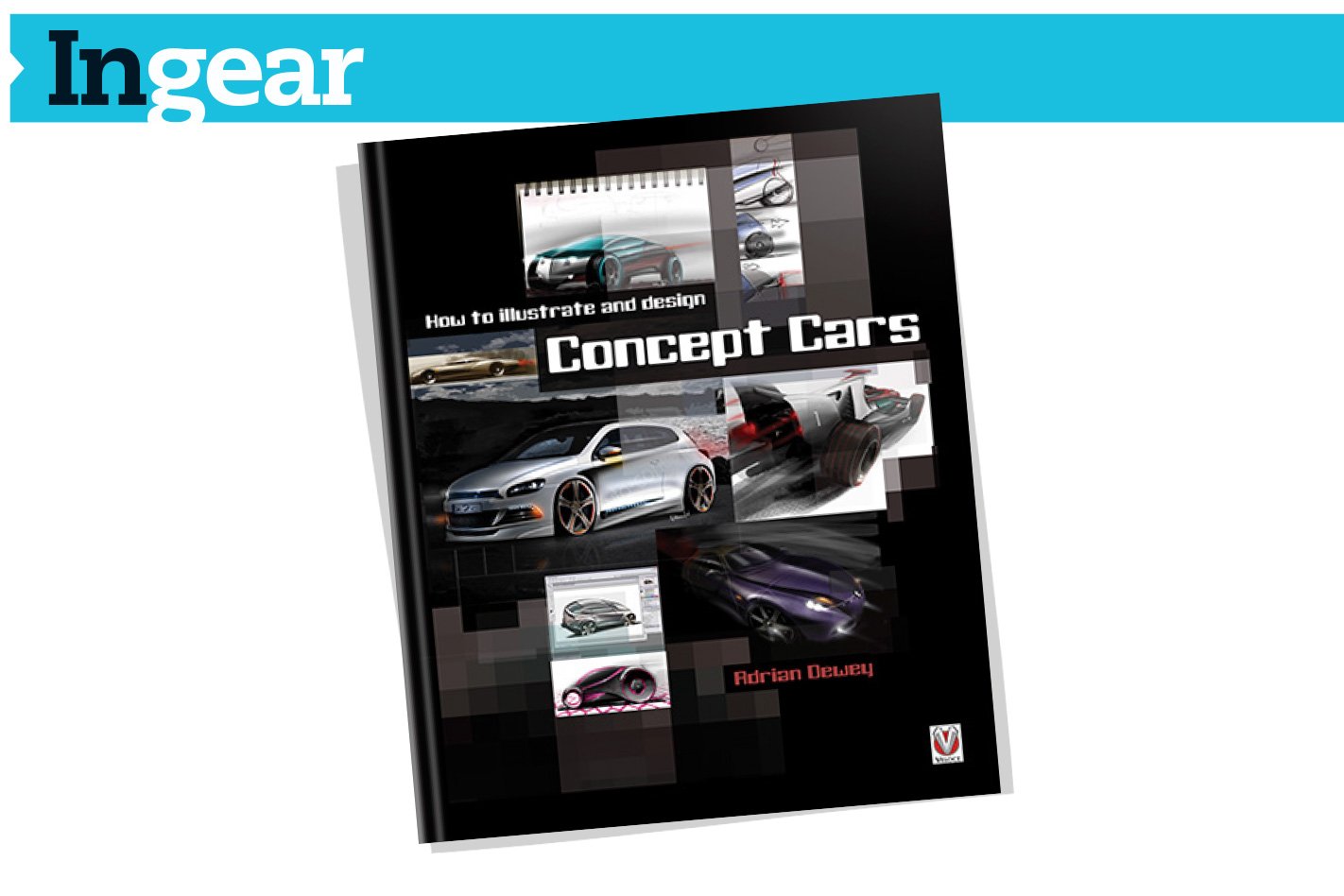
With more than a decade of magazine illustration under his belt, Adrian Dewey knows a thing or two about getting a car from an idea and on to a page, and now you can too. Just don’t do another Edsel please.
Porsche Design Chronograph 911 Turbo S and GT2 RS, from $12,650
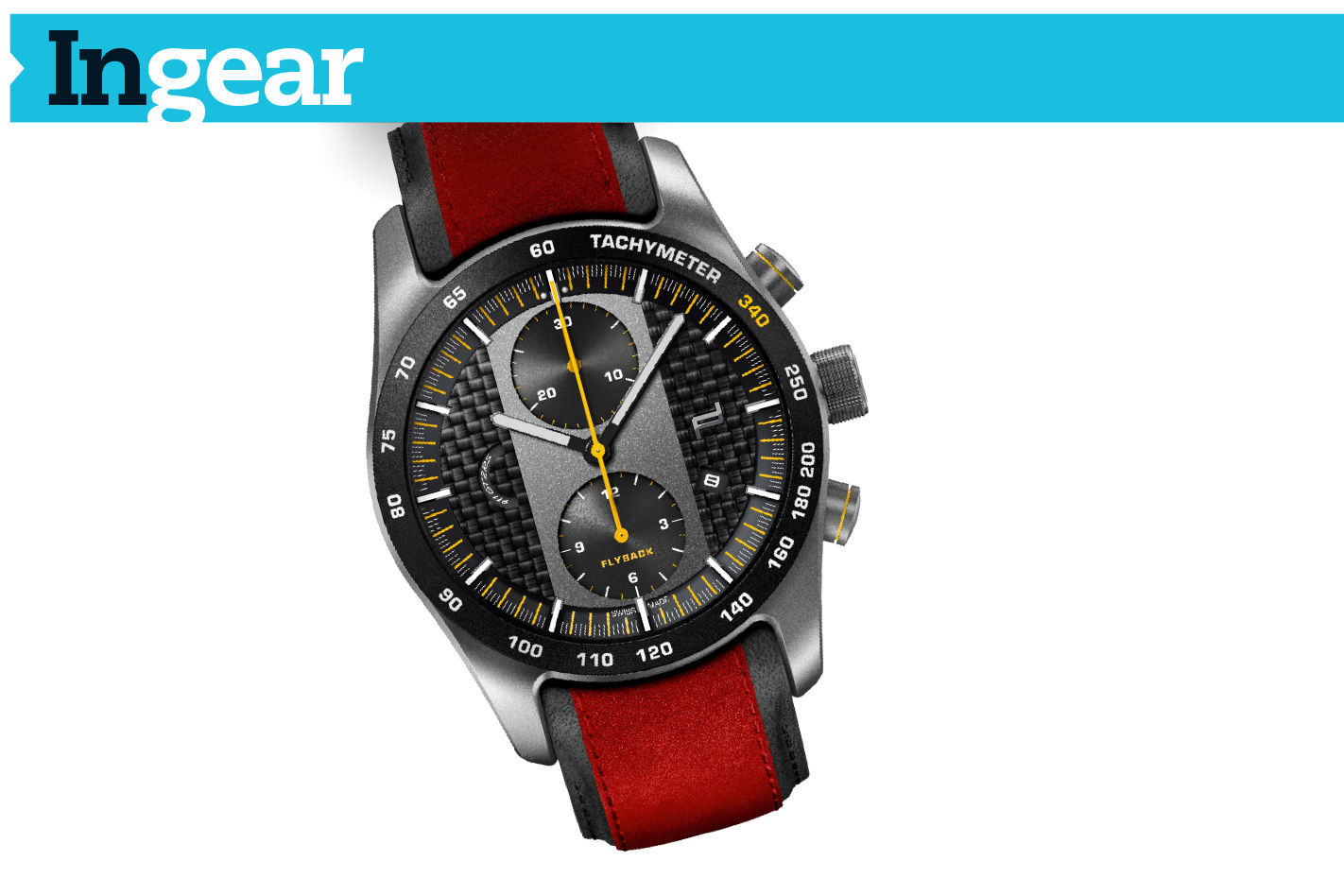
The Turbo S watch will be customised to match your car, and both will feature novel titanium and carbon construction, and a sophisticated ‘flyback’ chronograph movement designed and made in-house by Porsche Design. As with carmakers, the best watchmakers make their own engines.
The bad news is that you’ll need to buy the cars to get the watches, but more affordable and less exclusive timepieces will follow.
Breitling Avenger Hurricane, $11,200 (approximate)

And now Breitling is offering you plastic. It doesn’t call it plastic, of course: it refers to it as ‘Breitlight’, a proprietary material three times lighter than titanium and six times lighter than steel, as well as being scratch- and rust-proof, anti-magnetic, and hypo-allergenic.
The Avenger Hurricane is one of the first models to feature it. It has a huge 50mm case, military styling, and the most macho name in watches, but you won’t need Rambo’s arm to lift it.
Briston Clubmaster Diver, $610

As well as the cool ’60s ‘supercompressor’ case with its internal dive-time bezel turned by one of two crowns, you get a good-quality Seiko automatic movement and a choice of three case finishes, each with four dial colour options.
Our money would be headed to this plain brushed stainless-steel case with the super-soft, period-correct silicon dive strap, maybe in blue or grey.
Last time you could officially buy a Cadillac in Australia, Modern Motor (as this mag used to be called) didn’t even exist, and we’ve been on the news stands since ’54.
This was first published in MOTOR Magaine March 2008.
For most people under retirement age, Cadillac signifies gloriously extravagant tail fins – like the cloud-slicing Bill Mitchell-styled numbers that reached their zenith on the 1959 Fleetwood. But with over a century of car-making under its belt, the Cadillac brand has been through more career phases than Elizabeth Taylor.
In the 1930s, Cadillac proclaimed itself “the standard of the world”. By the 1980s, Cadillac was the very definition of ugly and gauche, and even produced a tinselled version of GM’s J-car (yep, the Camira). But this once-proud brand’s product revival has been swift of late, culminating in this, Cadillac’s second-generation CTS.
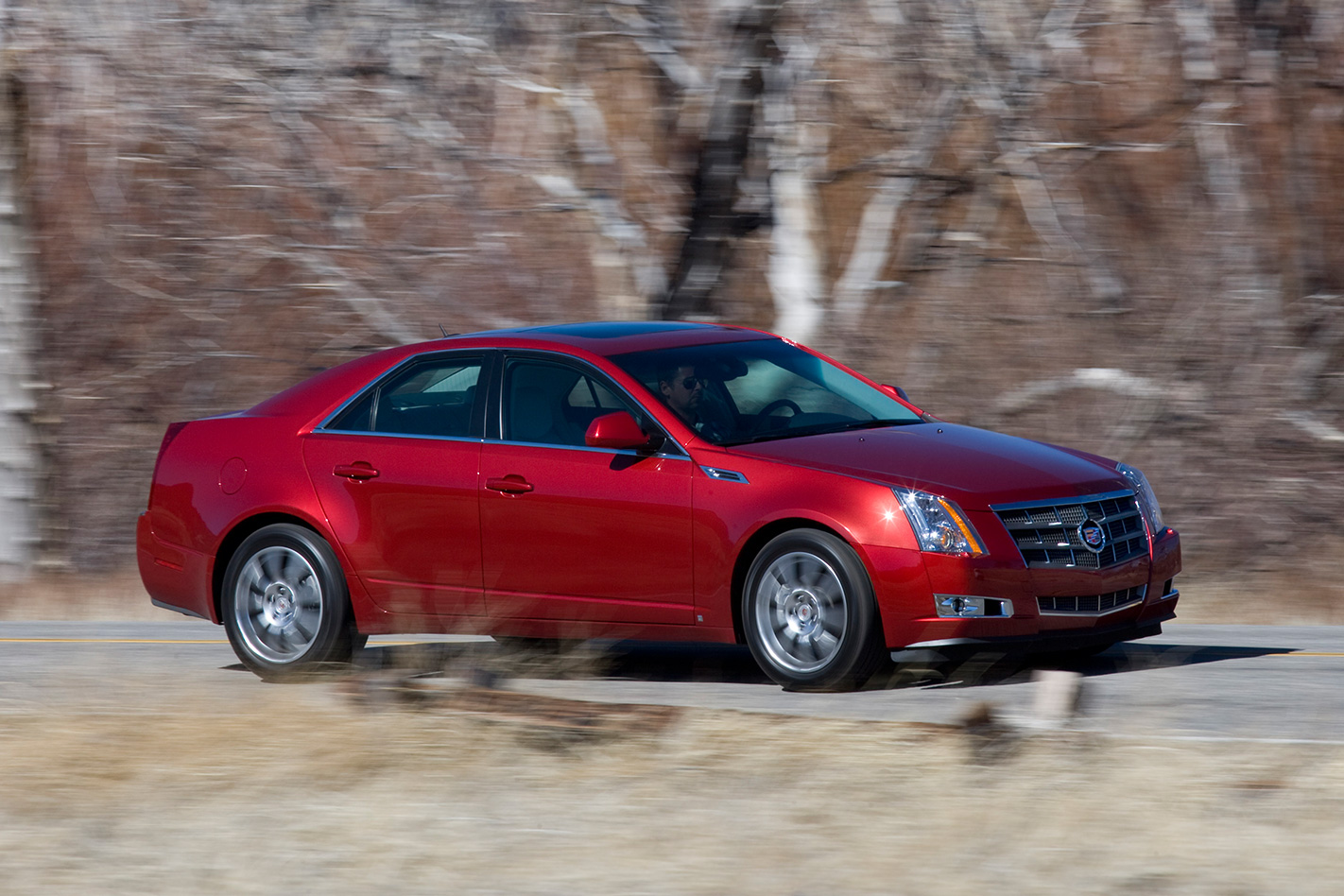
We’ll only see the direction-injection 3.6-litre CTS with rear-wheel drive because AWD isn’t offered in right-hook, but seeing it features a firewall-mounted steering rack, not the rear-drive’s front-mounted system, our Caddy is arguably the sweetest of the entire range.
Despite sharing its 2880mm wheelbase with the original CTS (launched in 2002), the 2008 model is 90 percent new and designed to compete with Europe’s mid-sized megastars.
Cadillac benchmarked BMW’s old (and much-lamented) E39 5-Series for steering, the 3-Series for feel, and the W203 C-class for, well, something presumably, and flogged CTS mules around the world’s most challenging race circuit – the Nurburgring. All of which means CTS is no plaid-wearing, golf-club-wielding irrelevance.
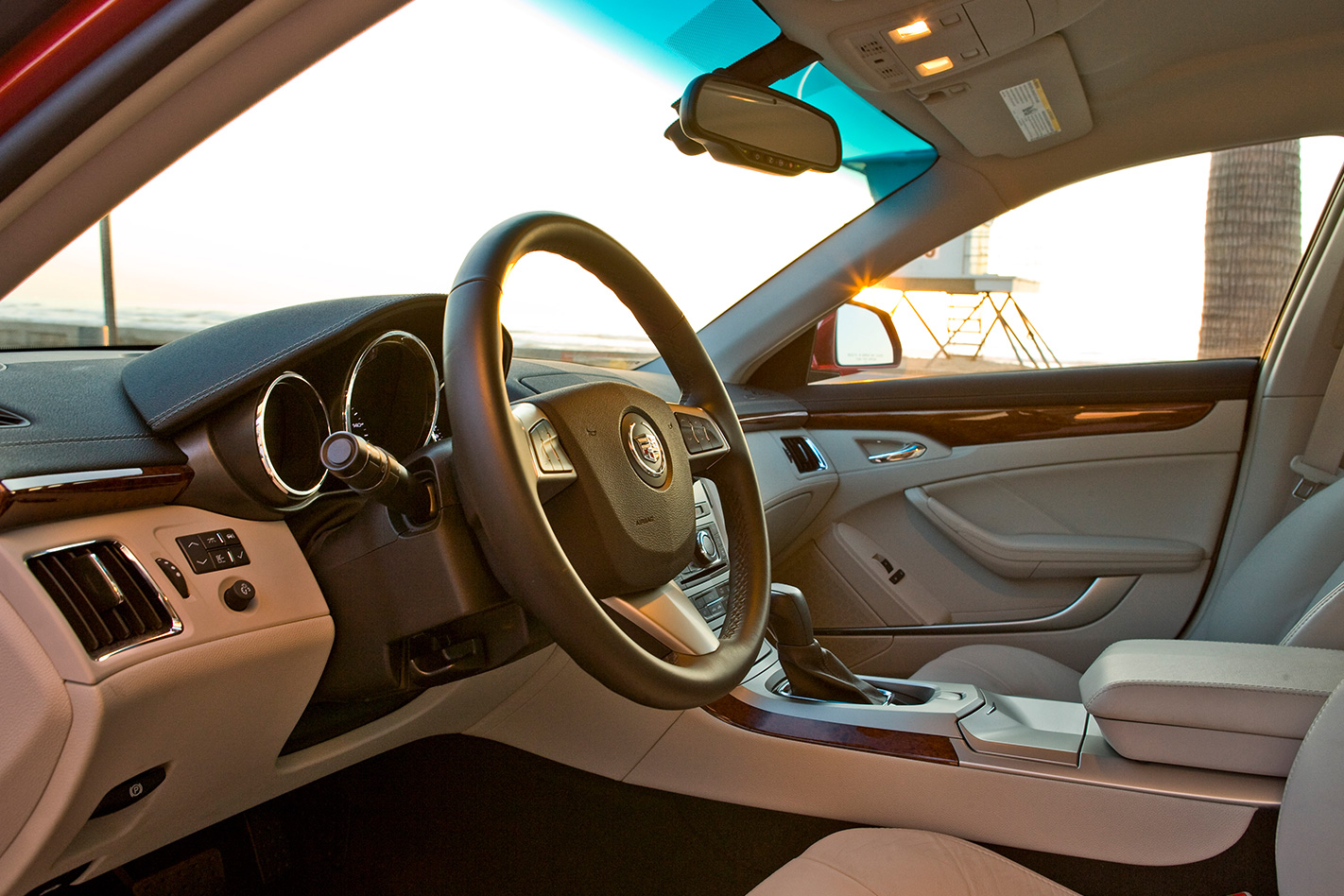
In terms of balance, the car’s a peach, thanks to near-perfect 51/49 weight distribution, and it’s a natural, effortlessly fluid handler. A standard limited-slip diff enhances the multi-link IRS’s excellent drive out of corners and the CTS is so confident and accomplished that it virtually never troubles its three-stage Stabilitrak ESP.
But the highlight of its handling repertoire has to be its steering; instantly reactive off-centre without feeling nervous, yet solidly and consistently weighted and blessed with lovely feel. Great steering wheel, too. The FE3-suspended CTS simply raises the game half a level, without destroying the CTS’s quiet, well-damped ride quality.
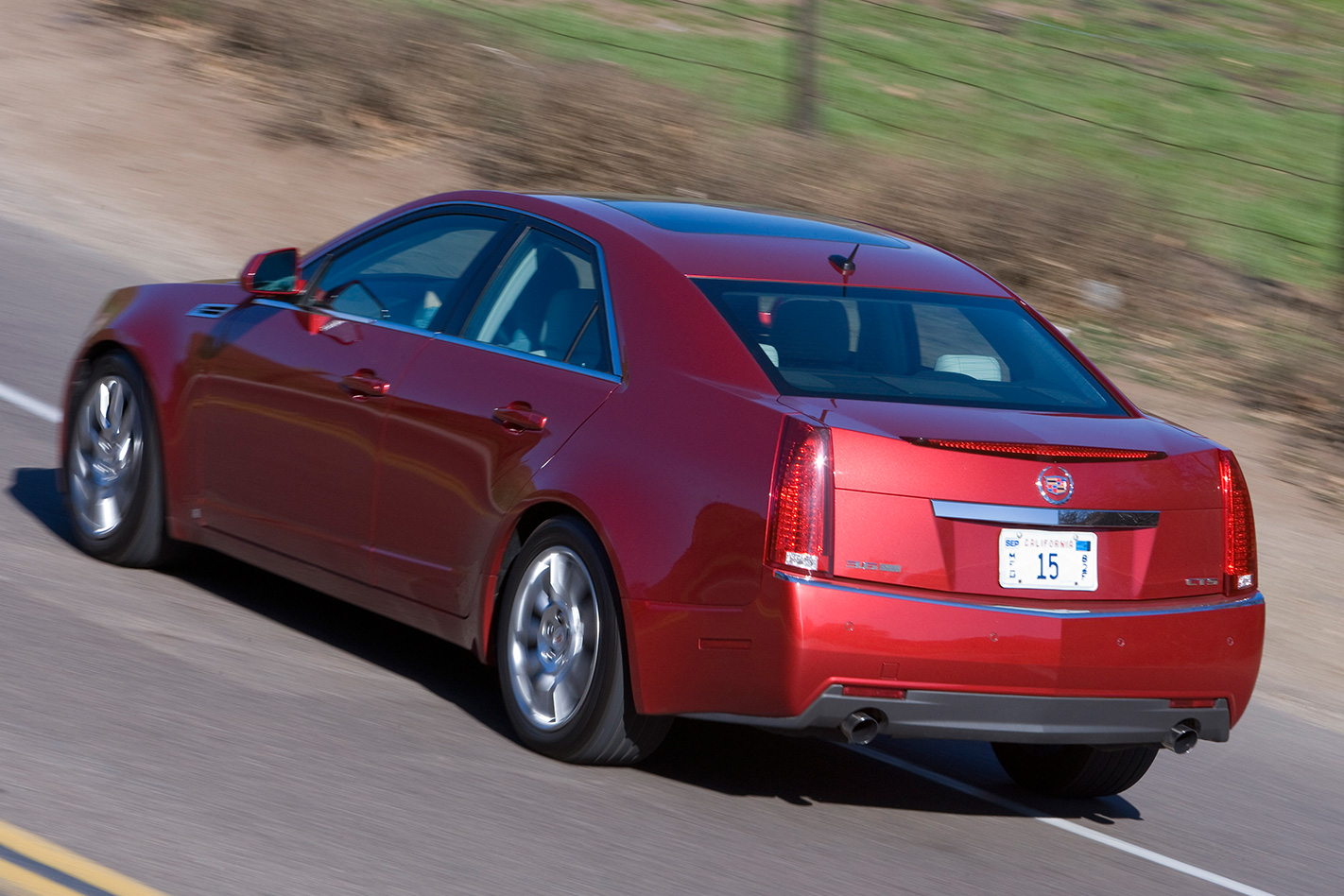
Both CTSs wear the same all-vented brakes (346mm front, 340mm rear) and they showed no sign of fade, even barrelling down from a 1800m elevation. Seems the brake cooling ducts inboard of the front fogs must actually work.
The CTS’s drivetrain previews what upmarket Holdens will be getting in 2009, meaning a 3.6-litre HFV6 with direction injection and GM’s new 6L50 six-speed auto. The V6 retains just a hint of the graininess that we’ve criticisied Commodore for, but it has a butch, aggressive flavour and revs hard right to 7000rpm before shifting up imperceptibly.
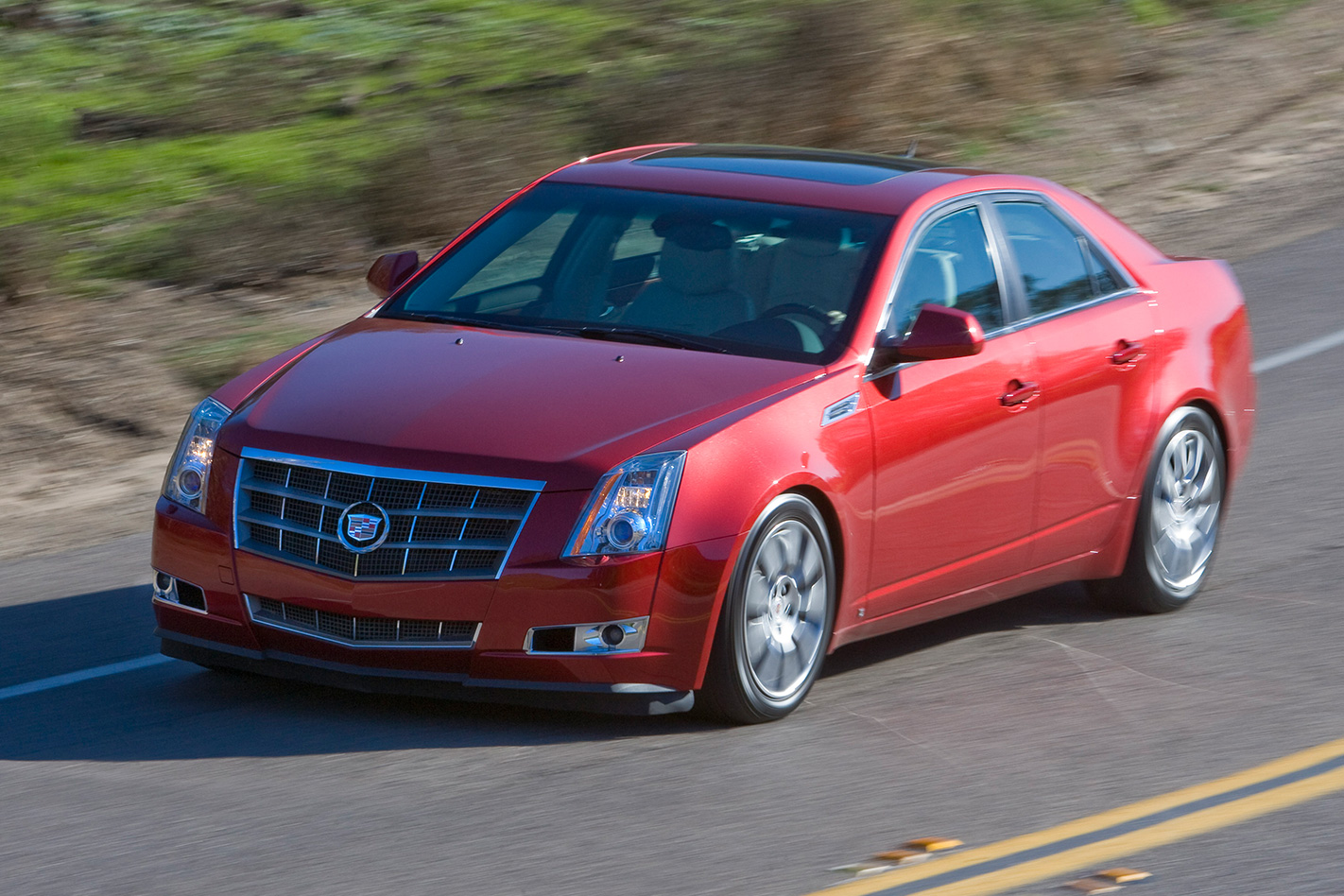
However, considering it’ll be priced up against mid-level A4s, the CTS offers decent comfort and a real feeling of luxury. If you thought an IS250 was the only proper alternative to a Three or C, then think again. The CTS mixes the dynamics of a thoroughbred with the aggressive grunt and tangible luxury that the Americans can do well.
It looks fantastic, too, with a muscular stance and a genuinely handsome shape. If the CTS doesn’t succeed here, it’s not because of the car.
Cadillac CTS specs: Engine: 3564cc V6, DOHC, 24v Power: 229kW @ 6400rpm Torque: 374Nm @ 5200rpm Kerb weight: 1757kg Top speed: 241km/h (claimed) 0-100km/h: 6.3sec (claimed) Price: $75,000 (estimated)
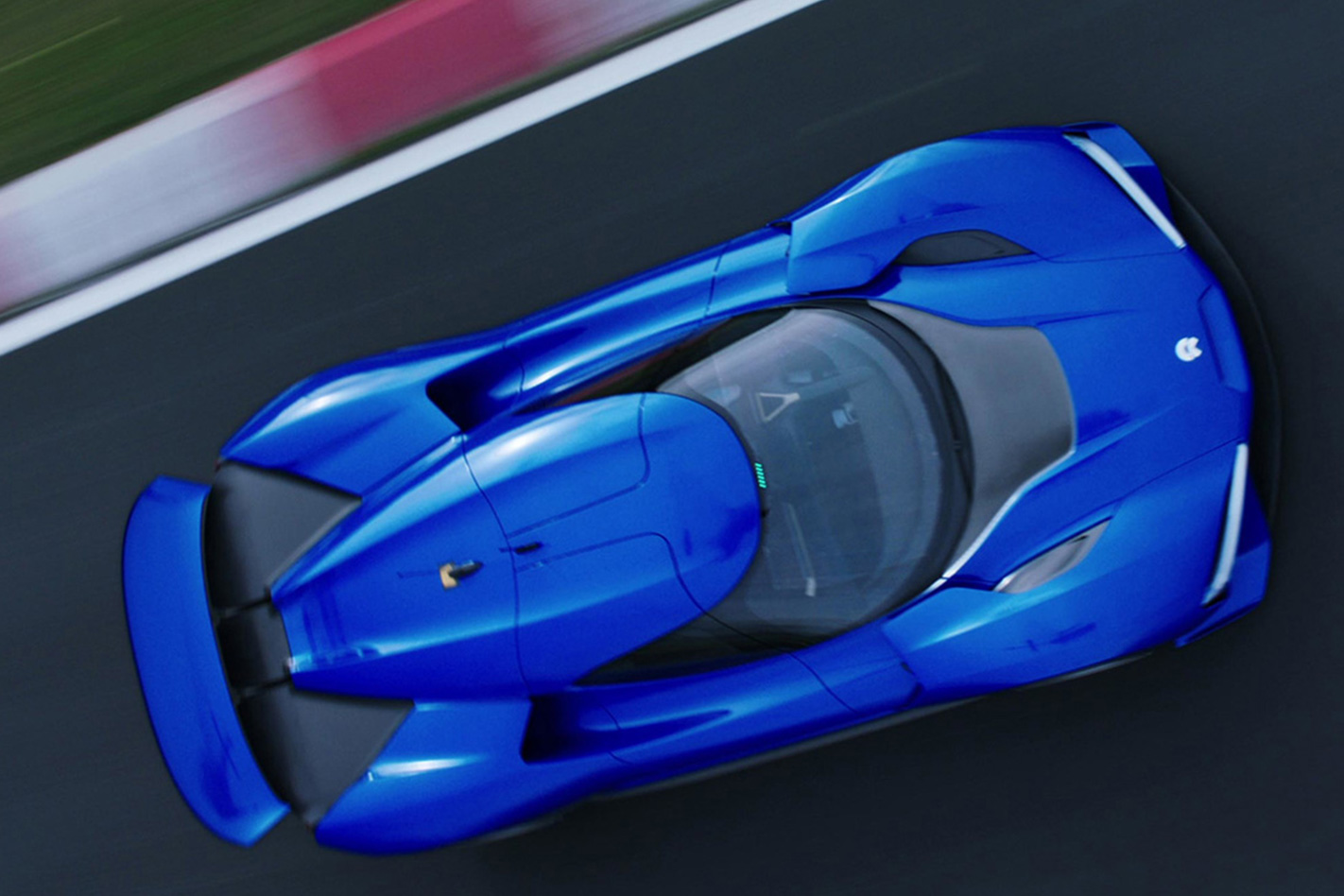
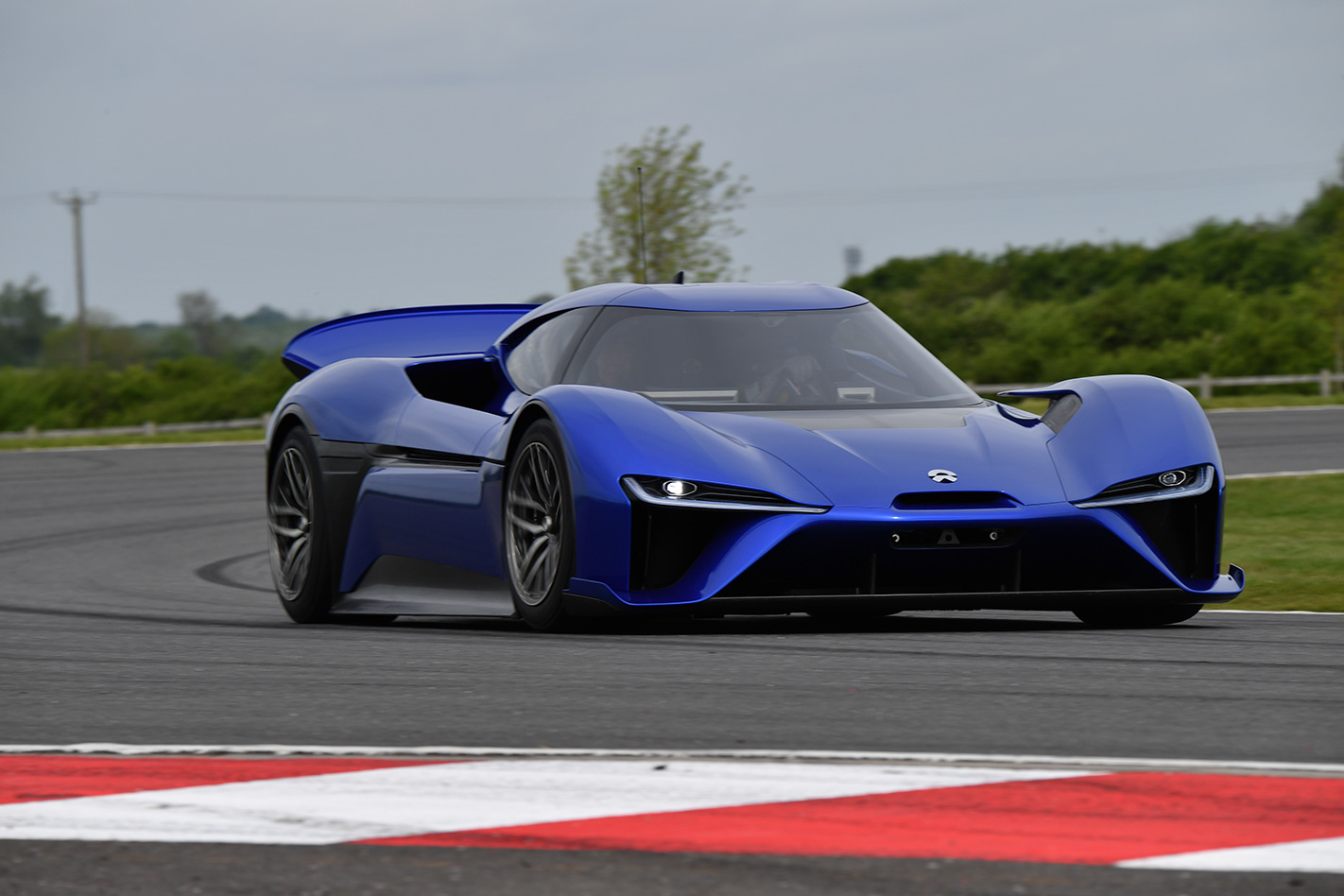
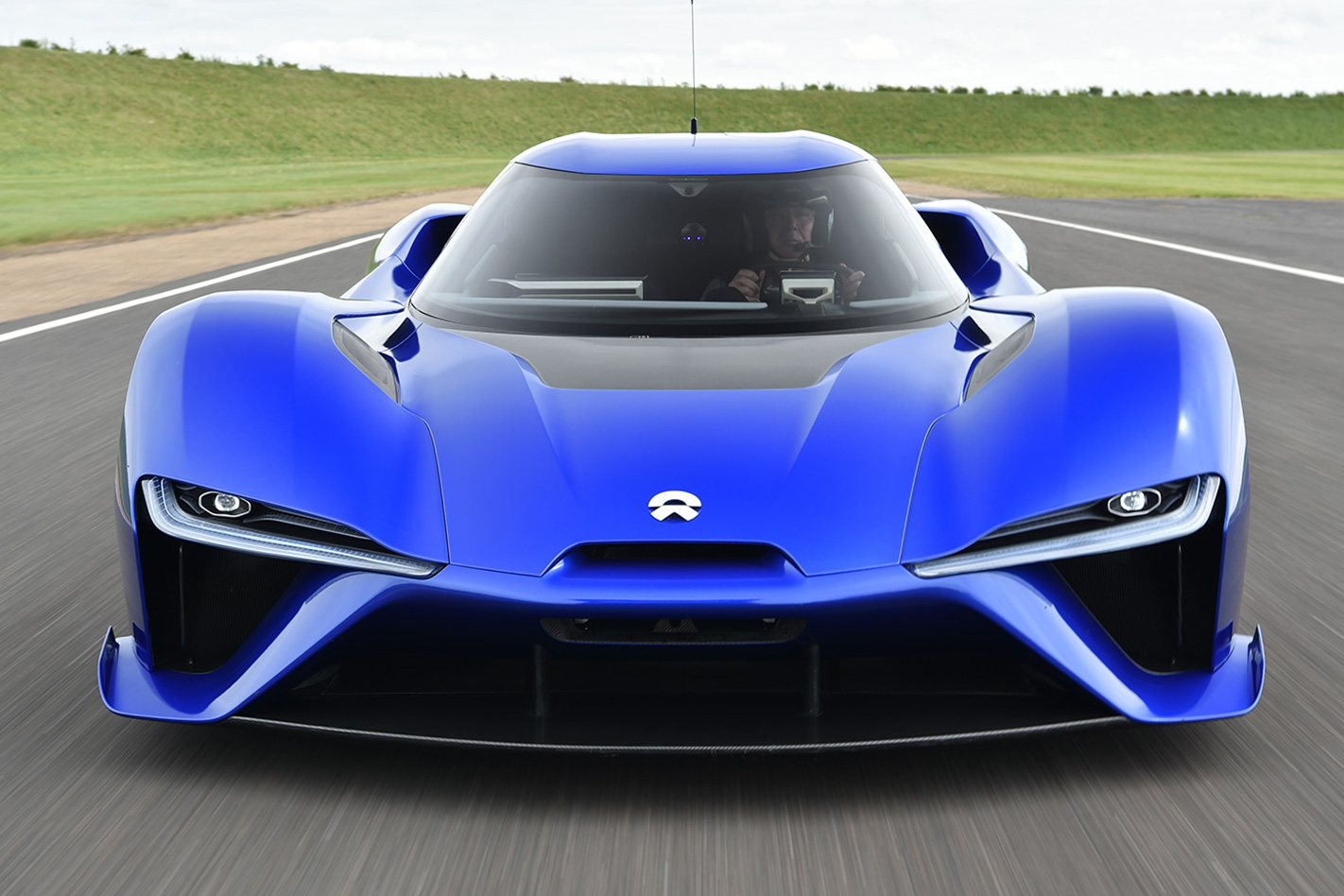
This isn’t your average supercar, but just like NIO’s petrol-powered opposition, the EP9 is all about numbers.
More specifically, Nurburgring Nordschleife lap records, of which this Chinese-built vision of the future has just slashed its own best by 19.2sec. The new electric ’Ring marker now stands at 6:45.9sec.
Two days after the impressive feat, the very same car arrived at the Bedford Autodrome where we had all morning for an exclusive first drive in the world’s fastest – and quietest – corner carver.
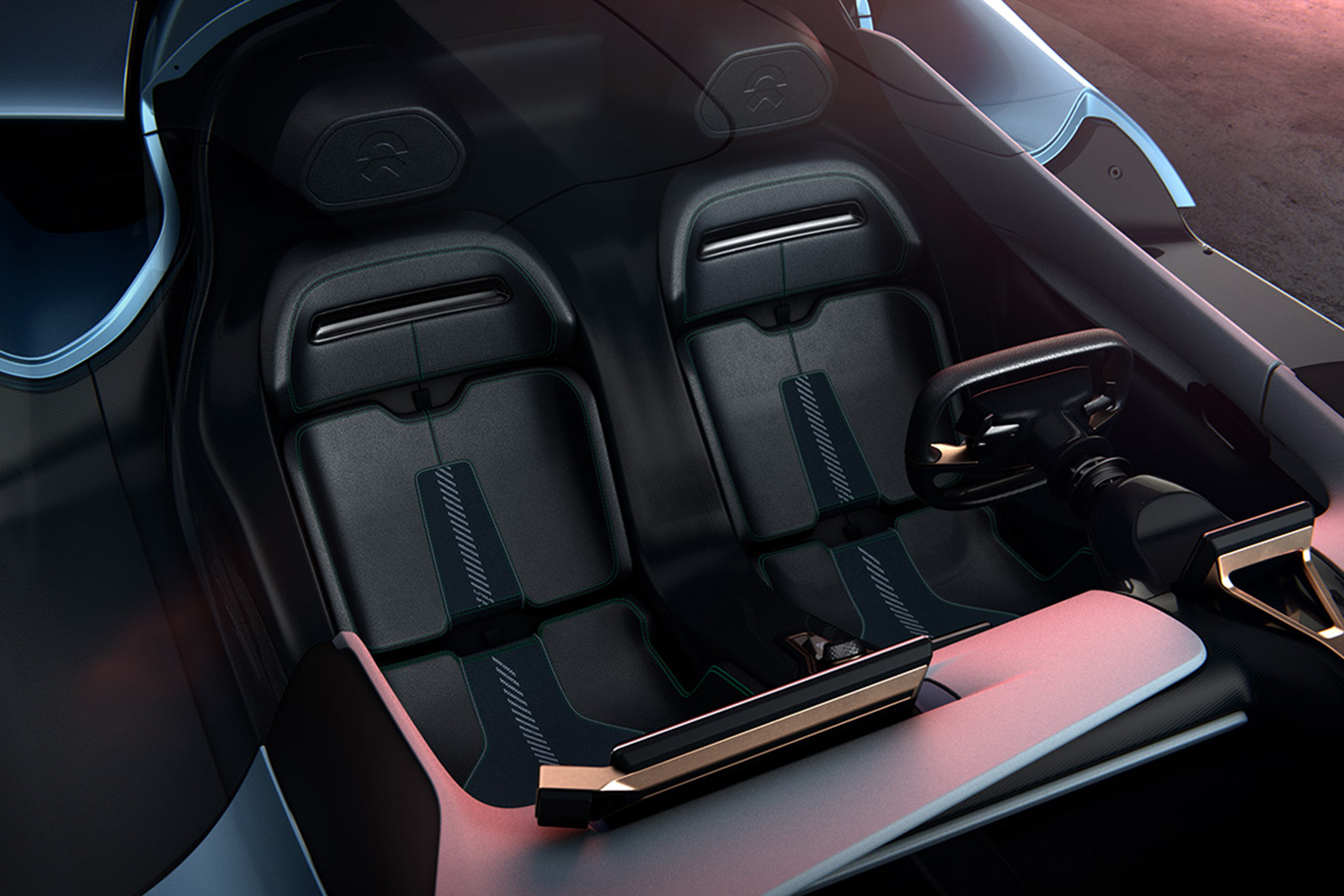
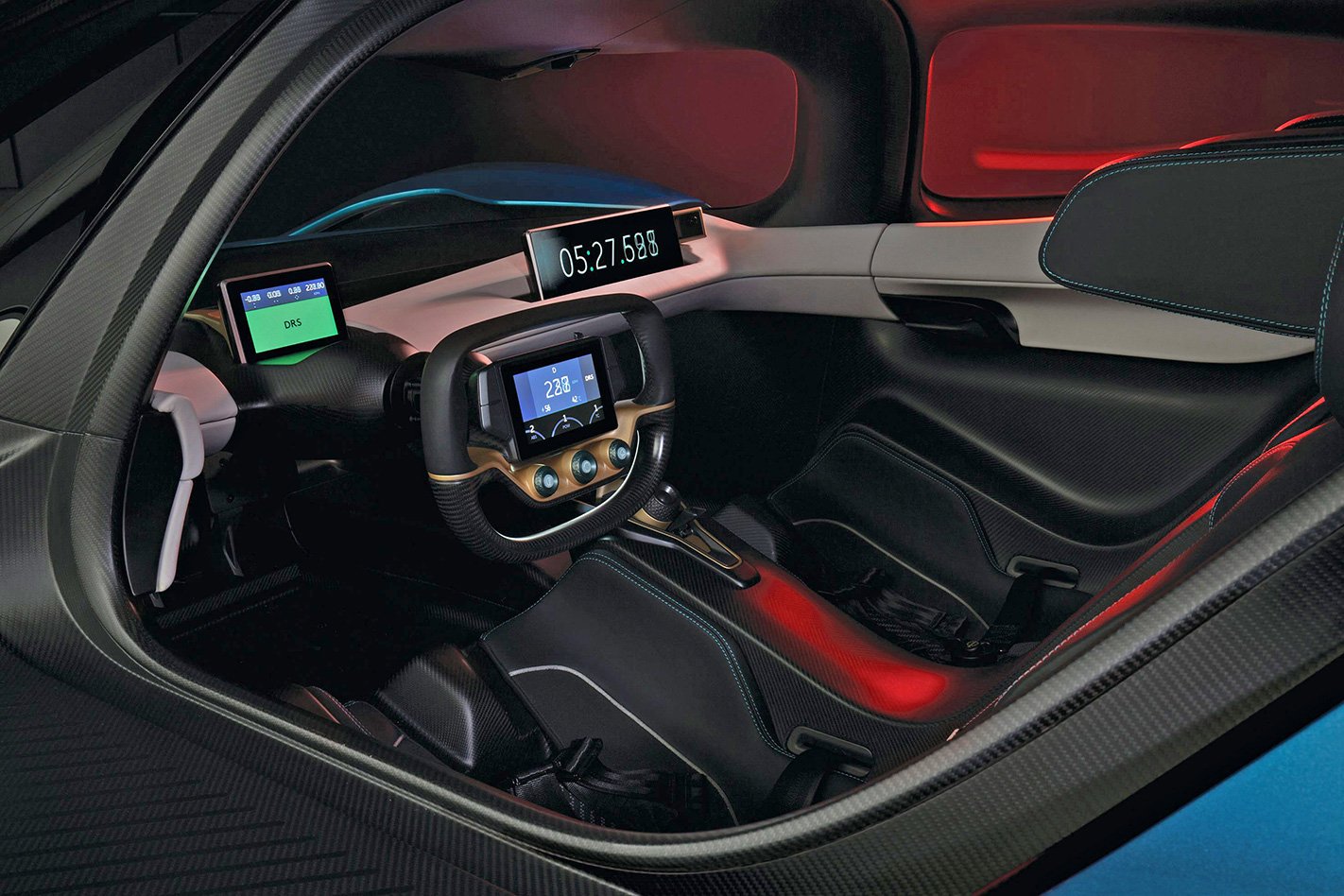
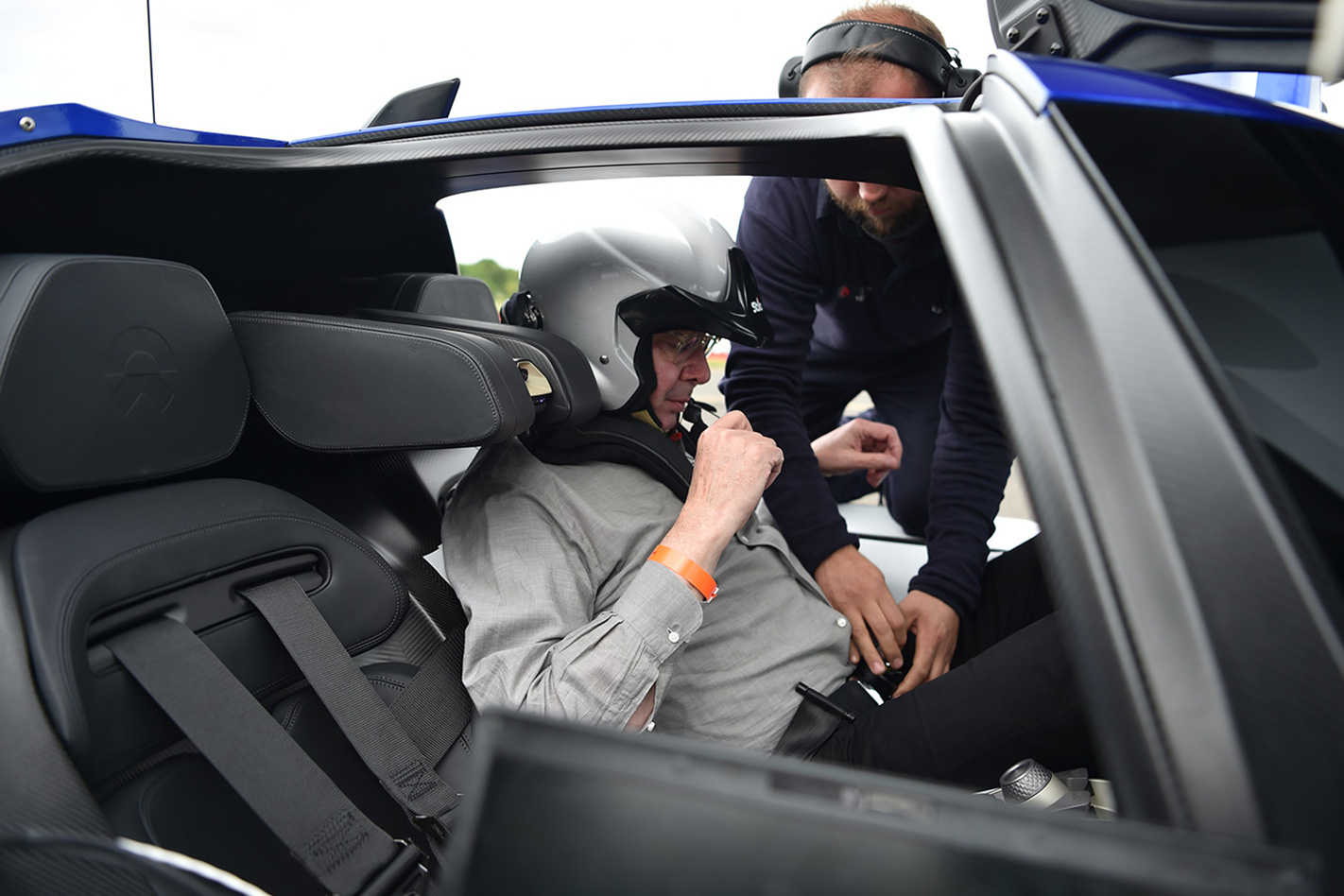
The lap makes for downright frightening video taken from the on-board cameras. And now it’s my turn to get behind the wheel. The seat fitting awaits, and it doesn’t go well. If this carbon-fibre garment was a suit, the buttons would have popped off. The seat turns out to be a naked, non-adjustable carbon-fibre bucket.
Where there once was cushion it is now the same slippery protection foil used on the sills and down in the footwell. The meat in this hard-baked composite sandwich is yours truly, a 6’8” scribe – and that’s before putting on a helmet and securing the HANS (head and neck support) device.
As it turns out, the diminutive, happy-go-lucky driver is a seasoned former racer. Ahead of me is a full-width rectangular display, while further to the left three more monitors begin to glow, one of which is attached to the steering wheel. Six green lights atop the windscreen signal to the mechanics that the high-voltage system is active and ready to go.
The so-called Grand Prix circuit is a 6.1km serpent which worms across what once was a military airfield. Given I have zero knowledge of Jonathan Palmer’s adventure park, I’m thankful for sighting laps and tuition via intercom.
Okay, it’s true a Bugatti Chiron is even quicker off the mark – and not to mention its maximum speed and driving range – but for a pure electric vehicle, the NIO is simply mind bending. And that’s before even beginning to comprehend the 1000kW power output and the massive 1480Nm torque peak.
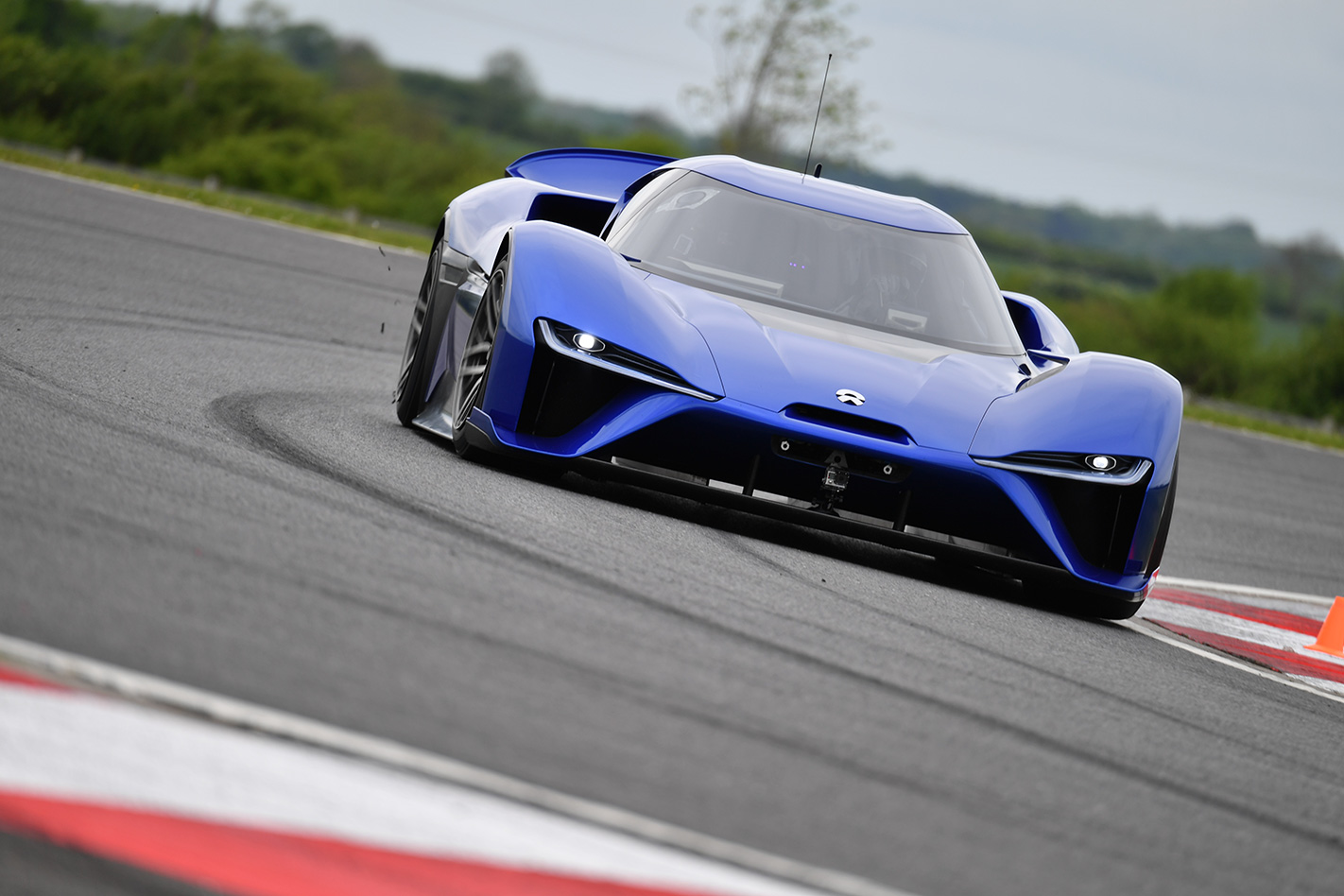
On track that instant power feels otherworldly. Out of the blue my trusty driver slips the EP9 into total attack mode. While cerebrum and cerebellum are contesting a corner-by-corner boxing match, my spine is fighting a losing battle against the low ceiling while the shockwaves from below and the g-forces (up to 2.21g) are taking a toll on mind and body.
In theory the sardine should fit in the can, however, the reality is that the seat acts like a slide, spooning the body into an embryonic driving position. Bum too far forward, legs at awkward angles and a head fixed into place by the HANS device which all compromises the field of vision.
Essentially it’s human origami and help is certainly needed to get the four-point belt tight. Through the intercom I can hear myself wheezing, but with a bit of luck, I should at least better my own lap time set earlier in a Skoda Octavia rental car.
What really makes the mind boggle is the alien noise from the intermittent driveshaft clutter, transmission whine and the drumming of the tyres. Oh, and the four electric motors – two up front and two at the back.
The EP9 provides power in its most pure and simple form: On or off, forward or reverse. No gears to select but neutral, no driving programs to choose from, no torque vectoring and no chassis-related trickeries like rear-wheel steering or active anti-roll bars. Braver men might play with the brake balance, ABS intervention and ESP assistance, but not I.
Although the pedal effort required to make the cooled off Alcon discs perform is significant, the deceleration is absolutely mental. You have to tell yourself all the time not to overdo it. After some familiarisation laps the power is increased from 270 to 380kW – per axle.
That’s still some 240kW short of the NIO’s ludicrous mode. Everything is happening faster now; corners approach at warp speed and the steering becomes physical (to cool the batteries, driveline and cabin you need to have a decent amount of speed on board).
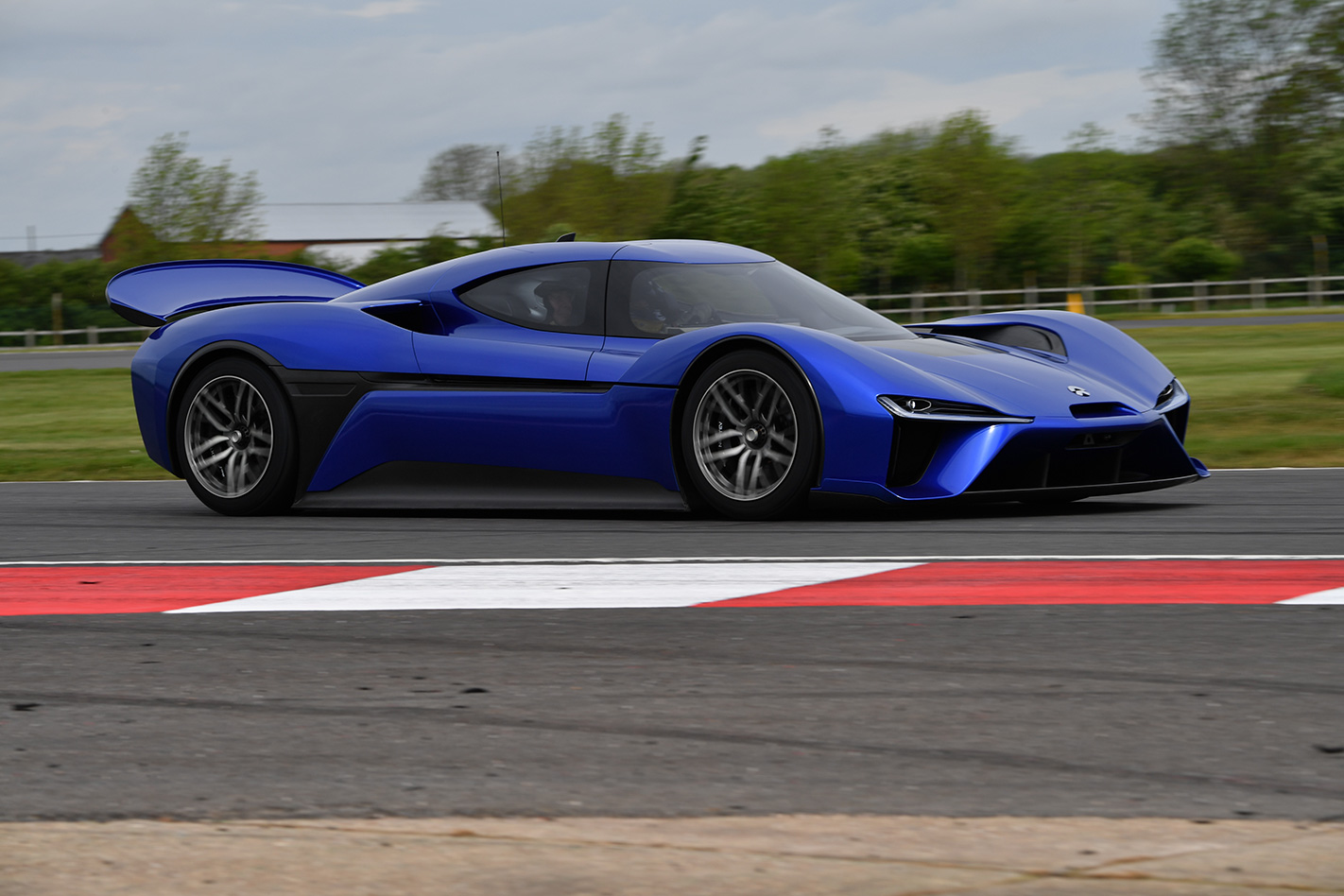
The cornering grip is simply out of this world and the adjustable downforce has a lasting slam-dunk effect. Directional stability is also akin to a full-size slot-car while the ride height and body movements are kept in check by a hydraulic system. Yes, the ride quality is bone-rattling and the visibility ranges from okay (straight ahead) to non-existent, but the NIO EP9 is, by nature, hardcore.
It’s totally electrifying and in no way street legal. It’s a visitor from a different galaxy. One twist of the belt buckle releases the harness – what a relief. While the ECU logs out byte by byte, the steering-wheel monitor tells us that the range dropped from 478km to 269km after a mere five laps. The charge fell from 100 to 55 per cent.
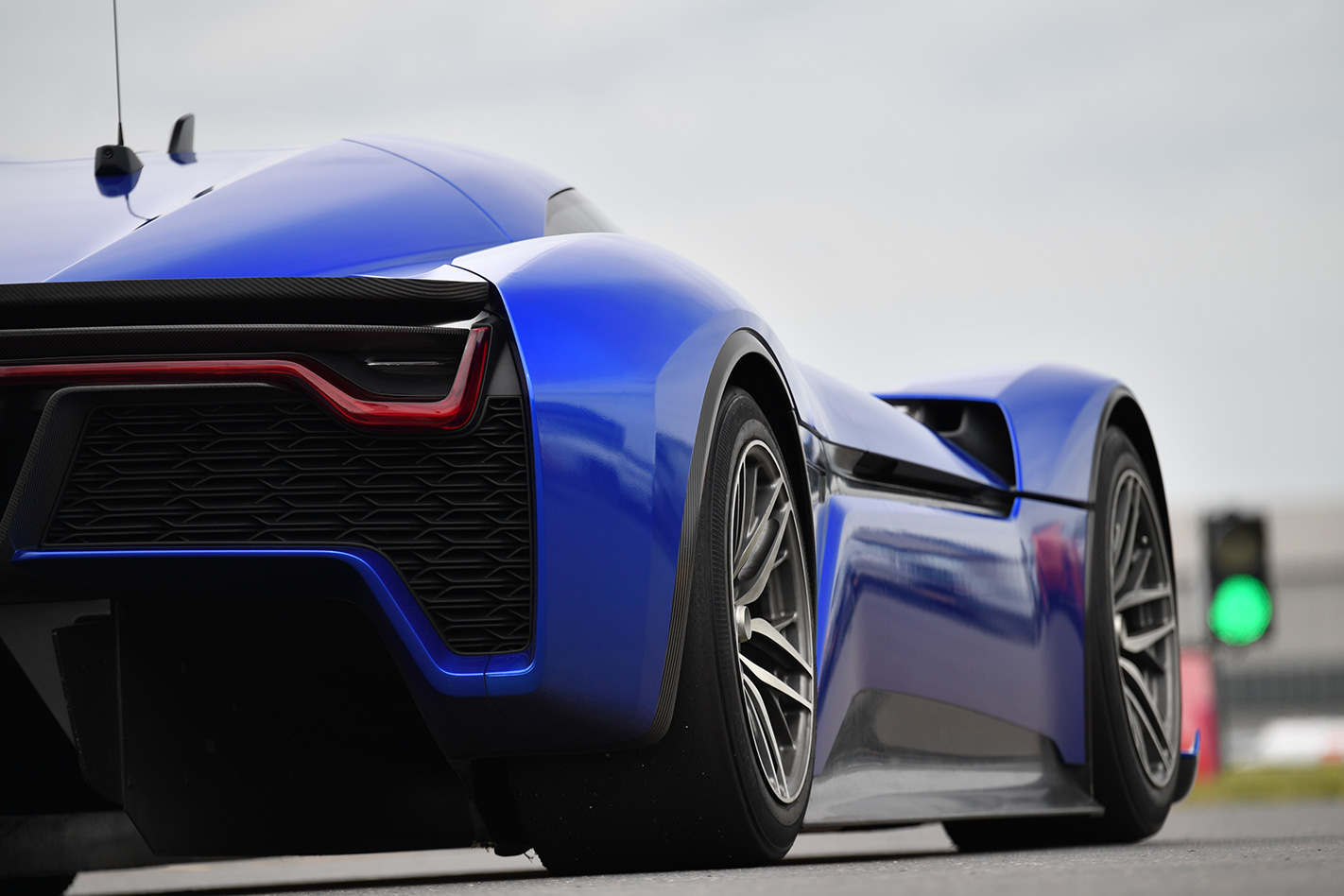
Whether or not the EP9 will ever be converted for road use is yet to be decided. NIO staffers simply shrug their shoulders when asked the question. However, such a move would require a more user-friendly, ideally inductive, charging concept.
Airbags would also have to be added to meet even the most basic crash-protection requirements and filling the extra-large sills with lithium-ion batteries would cause massive problems as far as side-impact performance is concerned. Even firm believers in the electric revolution can’t ignore these and other safety hazards like potential overheating issues, extreme cable diameters, battery degradation and looming surges.
Then you have to addon the incidentals like spare batteries, special toolkits, a high-voltage charger and qualified personnel to operate this PlayStation. Now that the biggest shareholders have taken delivery of their personalised track-specials, it was decided to manufacture a second batch of 10 cars – all of which have, allegedly, already been sold.
Next on the agenda for NIO is the still highly provisional, re-engineered and road-ready EP9 evolution model, of which between 50 and 250 units could be built. Although there are still a lot of ifs, buts and maybes hovering over this project, NIO wants to keep all options open and use this silent e-hammer primarily to boost its image and brand awareness.
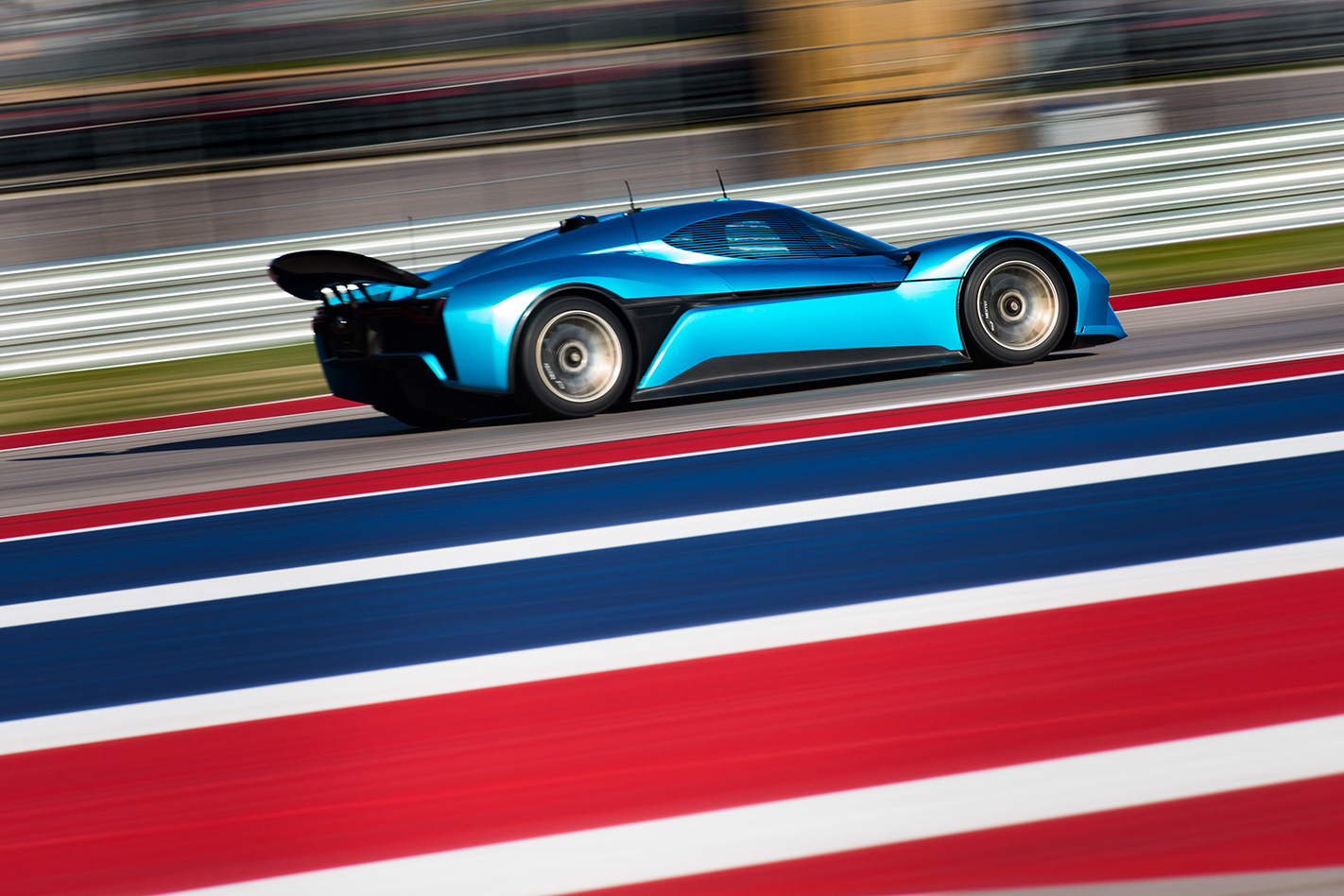
If all goes according to plan, stakeholders like Bitauto (digital services), Tencent (internet, social networks and media) and Lenovo (laptops and smartphones) will use future models like the almost production-ready NIO ES8 (an SUV that is set to be a Tesla Model X fighter) for marketing purposes.
It’s all simply another way of saying that the future is no longer the future, it’s here now. And the NIO EP9 is doing a remarkable job of promoting it.
4 stars out of 5 Likes: Staggering performance and handling Dislikes: Cost; limited build; range; ride quality
2018 NIO EP9 electric supercar specs: Engine: electric powertrain Power: 1000kW Torque: 1480Nm from 0 to 7500rpm Weight: 1735kg Suspension: active suspension; 4-way adjustable dampers; hydraulic active third actuator for ride-height control L/W/h 4888/2230/1150mm steering electronically assisted rack-and-pinion Price: $2,000,000 (estimated AUD)
I HAVE no idea how old the average first-time E-Class owner is, but at 30 years of age I reckon Iu2019m well ahead of schedule.Even the bloke at Mercedes-Benz looked at me like I was a couple of decades early to the party as he handed over my handsome new Selenite Grey long-termer. He seemed to think I might not like it.
But it’s no ordinary E-Class I hold the key to; it’s a Mercedes-AMG E43, the first W213 breathed upon by the specialists at Affalterbach. Bigger turbos and more boost ramp up the outputs of its 3.0-litre twin-turbo V6 to 295kW and 520Nm, and I can’t see what the grumblers in our office mean when they say it’s not AMG enough.
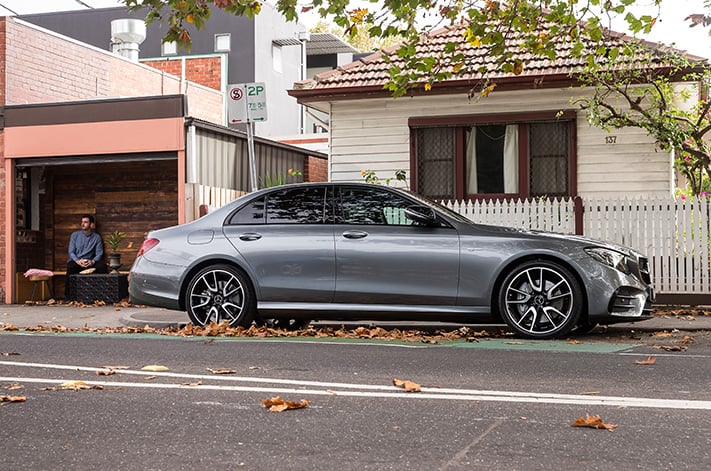
I managed to sample the E43 before committing to this inter-generational relationship, and its level-headed brand of performance made a positive impression.
I don’t think there’s an AMG sedan as easy to live with as this one. Its sharper steering and stronger shove add to the practical E-Class platform without sacrificing its greater sense of prestige and comfort over the smaller, harder-edged – and equally priced – C63.
So the start of our ‘getting to know you’ phase is full of optimism. Then it hits a snag. The E43 is almost five metres long – so long that I have to move a wall of shelving in my garage before the big unit fits. But it looks good in there; sophisticated and suave. I find myself standing at the door admiring the way it sits just so over its distinctive alloy wheels. There’s little else outside to identify the E43, but people in the street have already started to notice it more than I expected them to.
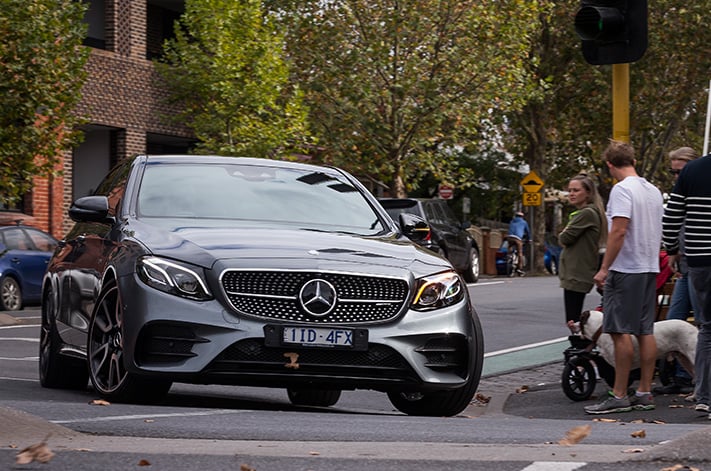
Aussies have responded to AMG in recent times like no other people on earth, and as the E43 and I have formed a bond, I can’t say I blame them. Even in standard spec with nary an option to speak of, the thoughtfully designed and beautifully made cabin with its perforated leather and finely machined alloy touchpoints feels expensive and luxurious, without laying it on too thick or feeling in any way twee.
Most of our first month has been spent in traffic, and I’m not ashamed to say I’ve left the car’s Dynamic toggle thumbed to its most relaxed. Even with AMG-specific calibrations for the steering, gearbox and suspension, the E43 finds a way to pamper its passengers when trundling around slowly. The cabin is whisper quiet, bar some tyre noise, and driving like this is almost effortless.
The E43 inherits a metric shedload of high-tech paraphernalia from the E400 on which it is based, including Merc’s class-leading driver-assistance technologies. A longer steer in the coming months will be the best way to explore its capabilities, but I’m already fascinated by the way the systems are psychologically preparing me for the future.
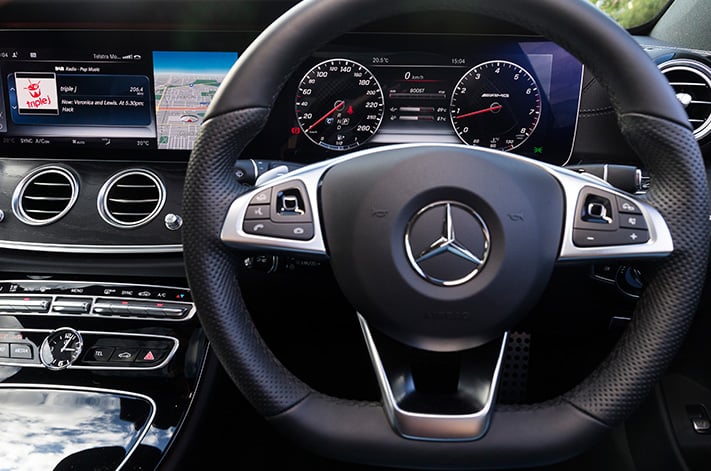
Two, ultra-sharp screens perched up front form the portal into a world of submenus and preferences that verges on overwhelming. Sifting through them means learning how to operate buttons and wheels on the centre console and touch-sensitive pads on the front of the steering wheel, and I’m worried I’ll say goodbye to it without ever figuring it all out.
But the critical stuff is obvious; one button for the nine-speed auto’s manual mode and another to firm up the air suspension. Flick the drivetrain to its more aggressive settings and the E43 does duality of character with aplomb. The flexible V6 elicits a satisfying induction growl when dialled up, and is faster and more exciting than its relatively subdued exhaust note suggests.
There will be time to press into the E43 in the months to come, but as an everyday tool it has consistently left me feeling better getting out than I did getting in.
AMG has built performance cars for grown-ups since it first set up shop, and in that regard the E43 might just hit the nail squarely on the head.
Update #1
By Ryan Lewis
TWO months in to Mercedes-AMG E43 ‘ownership’ and something terrible happened. I saw another one on the road – a white one – and it looked so good it made me sad.
White is the colour this car should be. It lets the blacked out Night Package trim and AMG styling details work so much harder, in ways Understated Grey just can’t.
Of course, this car is only on loan. I’m sure the regret would be worse had I spent $160,000 of my own hard-earned dollars, waited (potentially months) for it to turn up, and then realised I’d made a mistake.
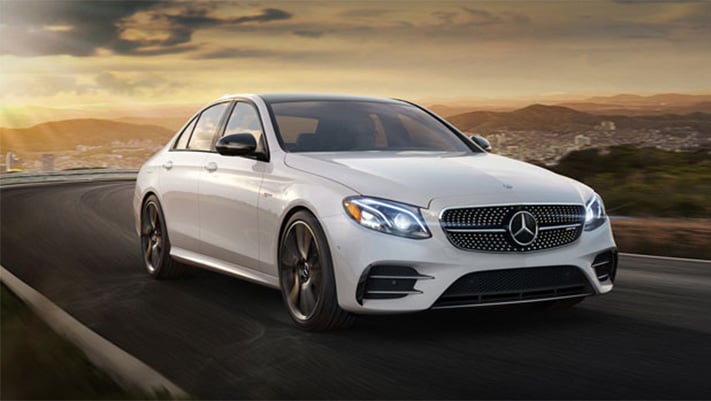
Which got me thinking – if I did spec my ideal E43, what would I do differently?
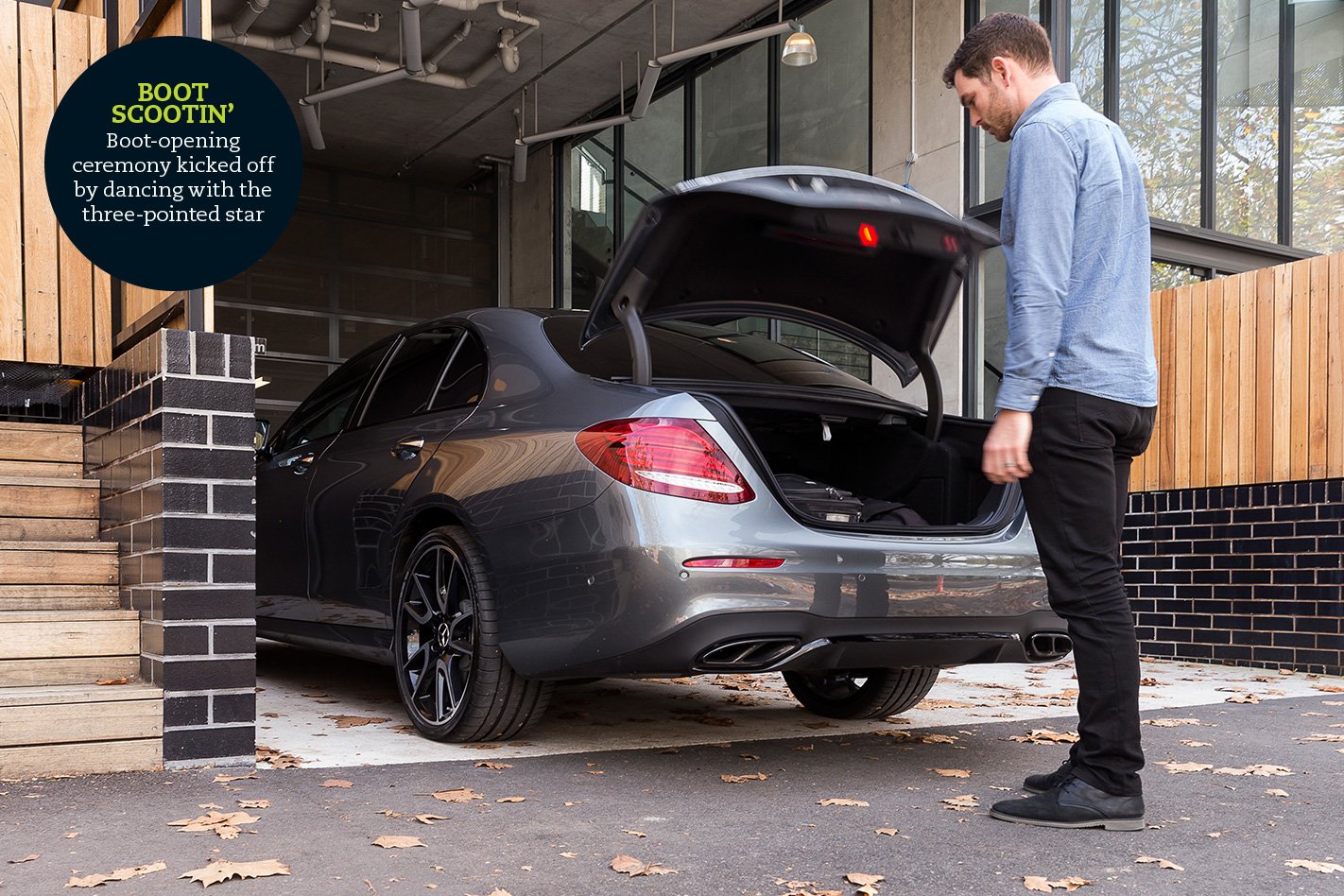
Not a lot is overlooked as standard. I even smugly discovered when leaving the shops with both arms straining under the weight of a week’s groceries that it has a hands-free boot release. I stood uneasily on one foot at the back of the car, risked humiliation and waved the other in the air under the bumper.
Lo and behold, it worked first try. The boot lid opened and I dropped my bags inside triumphantly without ever touching the key. A nice surprise, even from a car at this price.
The only single-option equipment not fitted to the loaded-as-standard E43 is a TV tuner you can’t watch while driving, a wireless charging pad that wouldn’t work with my phone, and climate control for the back seat area I’ll never sit in. So, no harm no foul.
What I am missing is the Performance Ergonomic Package ($4400) that adds AMG sports seats, a microfibre-trimmed steering wheel and red stitching.
Sadly, there’s no crackly exhaust in the Performance pack like there is for other 43 models. Without it the E43 is too quiet when you want fireworks. There’s a decent soundtrack there, which deserves to be more vocal. Still, the AMG interior garnishes would transform my interior, which is too similar to the less expensive E400 for my liking. I’m not alone in thinking this: Benz Australia says almost every E43 bought in Oz has the pack fitted.
Except mine, it seems.
There’s still chatter in the Wheels office about whether or not the E43’s torquey bi-turbo engine is good enough for an AMG badge.
With the Mercedes-AMG E63 now here the gap between them is blatantly obvious, but the way the V6 effortlessly tugboats up hills at 1500rpm in 8th has won me over, even if its concerning thirst for fuel hasn’t.
So that’s my perfect E43; Diamond White with the Performance Ergonomic Package and carbonfibre dashboard inserts instead of matte timber to fully satisfy my champagne taste.
But the beer budget could be a problem.
Stopped Short
I experienced a minor freak-out from the E43’s AEB system this month.
At night on my own street with no obstructions in sight, the car clamped its brakes for a full emergency stop before realising the coast was clear and rolling out of it.
The issue hasn’t repeated since, but a little reading up unearthed drivers reporting similar weirdness in other cars from time to time. Merc couldn’t explain it.
Hopefully nobody is following too closely if it ever happens again.
Update #2
By Ryan Lewis
MONTH three of my relationship with AMG’s E-Class gateway-drug has included time in the embrace of others.
It wasn’t the car’s fault; it was mine. I spent several days overseas in two spells. And while I wasn’t thinking it at the time, I missed the big grey blunderbuss.
The second of my two trips ended with a redeye flight from Korea to Melbourne, landing me back in the airport carpark mid-morning, midweek, trying my best to make amends with the faithful Mercedes E43.
I slumped into the driver’s seat, feeling a bit weary after enduring a sleep-deprived night on an aircraft, and let out an involuntary sigh of relief. Sitting inside the peace and quiet of its thickly glazed cocoon, it was just so nice to be home.
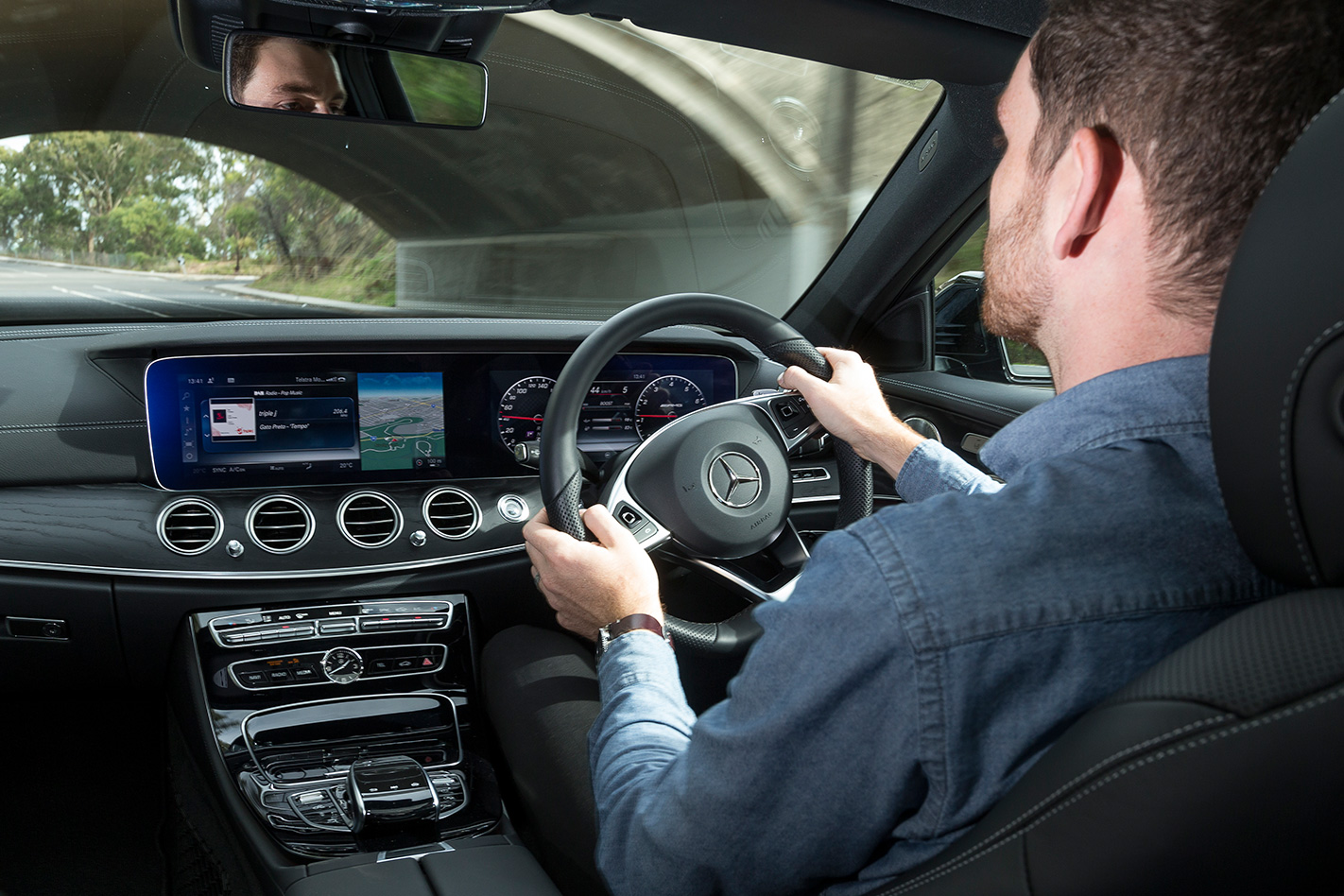
That same wave of relief washed over me about a week later when I got back into 1ID-4FX after a weekend romp with a Lexus LC500. I can barely tell you what that car was like because I spent most of the time yelling at its navigation system and the utterly broken touchpad control Lexus forces you to use.
I bring it up because in the first episode of this series I made a comment about the E43 having a confusing menu hierarchy. I take it all back. The LC 500’s encyclopaedia of infotainment felonies makes navigating the E43’s gorgeous interface feel like playing Nintendo, even if there are a few relatively minor imperfections.
This month the grown-up E43 has further proven itself to be a car of multiple dimensions; a consummate cruiser and a barrel of fun when getting on it with liberal use of the throttle.
There’s signature precision to be found at the front end where re-engineered steering and suspension components form a major AMG point of difference compared with a normal E-Class. The E43’s unique appeal in the AMG line-up lies in its maturity and size, and the way it drives is far better than you might expect.
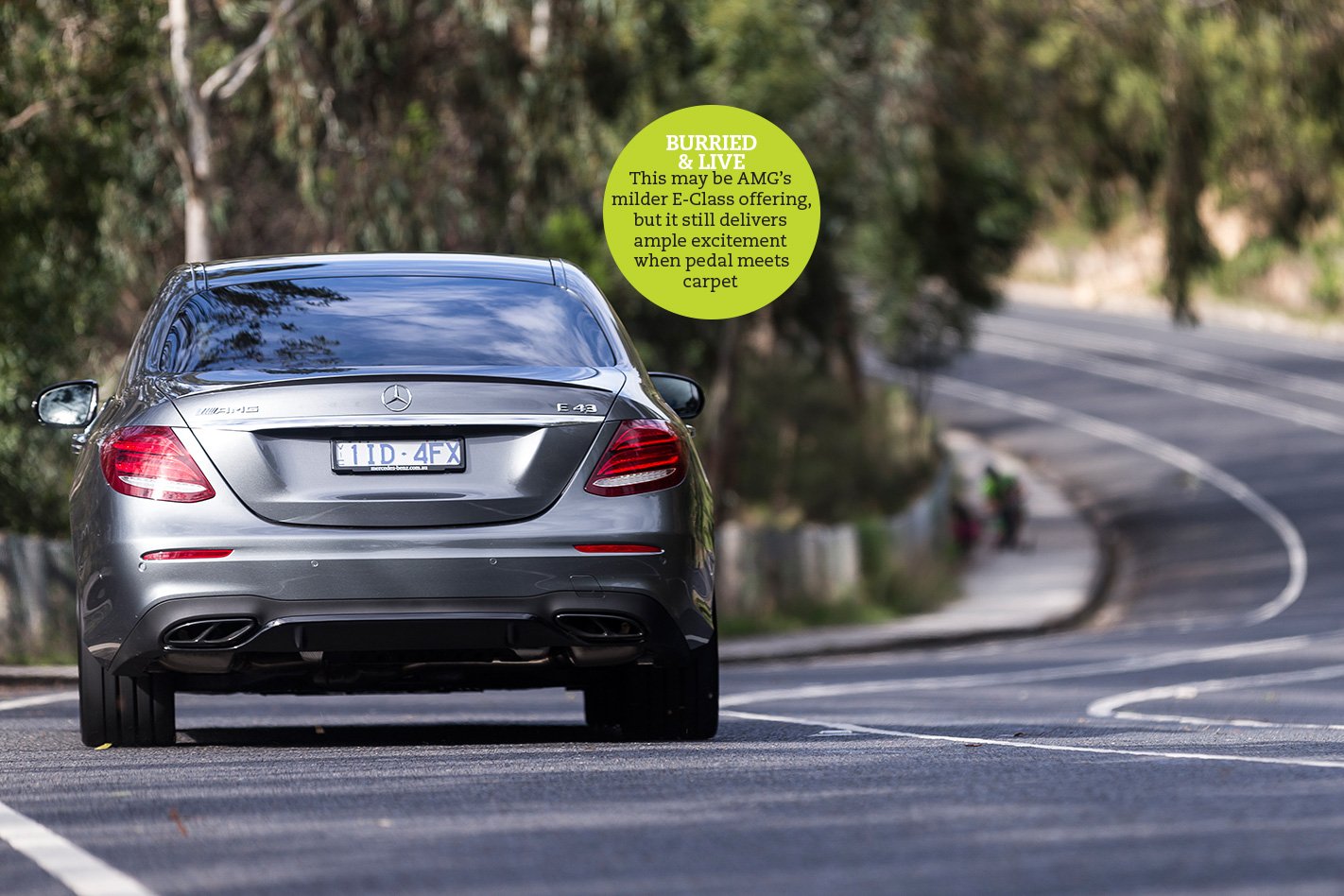
Bags of grip lend the E43’s chassis a hunkered down security, but plonk your right foot deep into the 295kW power reserve and, in the right mode, the all-paw 4Matic system puts on an unexpectedly rear-drive-like performance. Electronic nannies interfere earlier than would be ideal, but this 1765kg lump is fun to drive hard.
I’ll concede it’s not the performance-purist’s first weapon of choice, but I’m still a bit disappointed with myself for not finding more time for bendy road indulgences this month.
There are only a few weeks left for me to savour the E43 on an everyday basis, and I’m beginning to feel anxious about how quickly the return date is rushing up.
I’d best make the next month a good’un.
Update #3
By Ryan Lewis
AFTER sinking my teeth into the Mercedes-Benz E43 over the last few months, I genuinely have little to complain about, but there is a question I’ve been trying to answer: how much is the E43’s far-reaching driver-assistance tech really adding to my ownership experience?
The E-Class is one of the most advanced vehicles on the road, and that’s central to its sales pitch, but on a day-to-day basis only some of it has proven useful so far.
Benz stops short of using the term ‘self-driving’ for its Drive Pilot systems because it gives customers the wrong idea about how much of their attention is required when the car is in control, and therein lies the rub: the answer is still ‘all of it’.
s a party trick with somebody new in the passenger seat, letting the car steer itself gets eyebrows raised in amazement. Practically, it’s a ‘nice to have’ on motorways where Distronic allows you to dial back your level of focus on surrounding cars and simply monitor the big sled as it follows a lane, but you must always be ready to correct it whether the system asks you to or not.
In traffic, the Stop and Go function works well, though it is slow to get going again to the point where I’ve copped horn blasts from drivers behind as the E43 sits watching the car in front pull away.
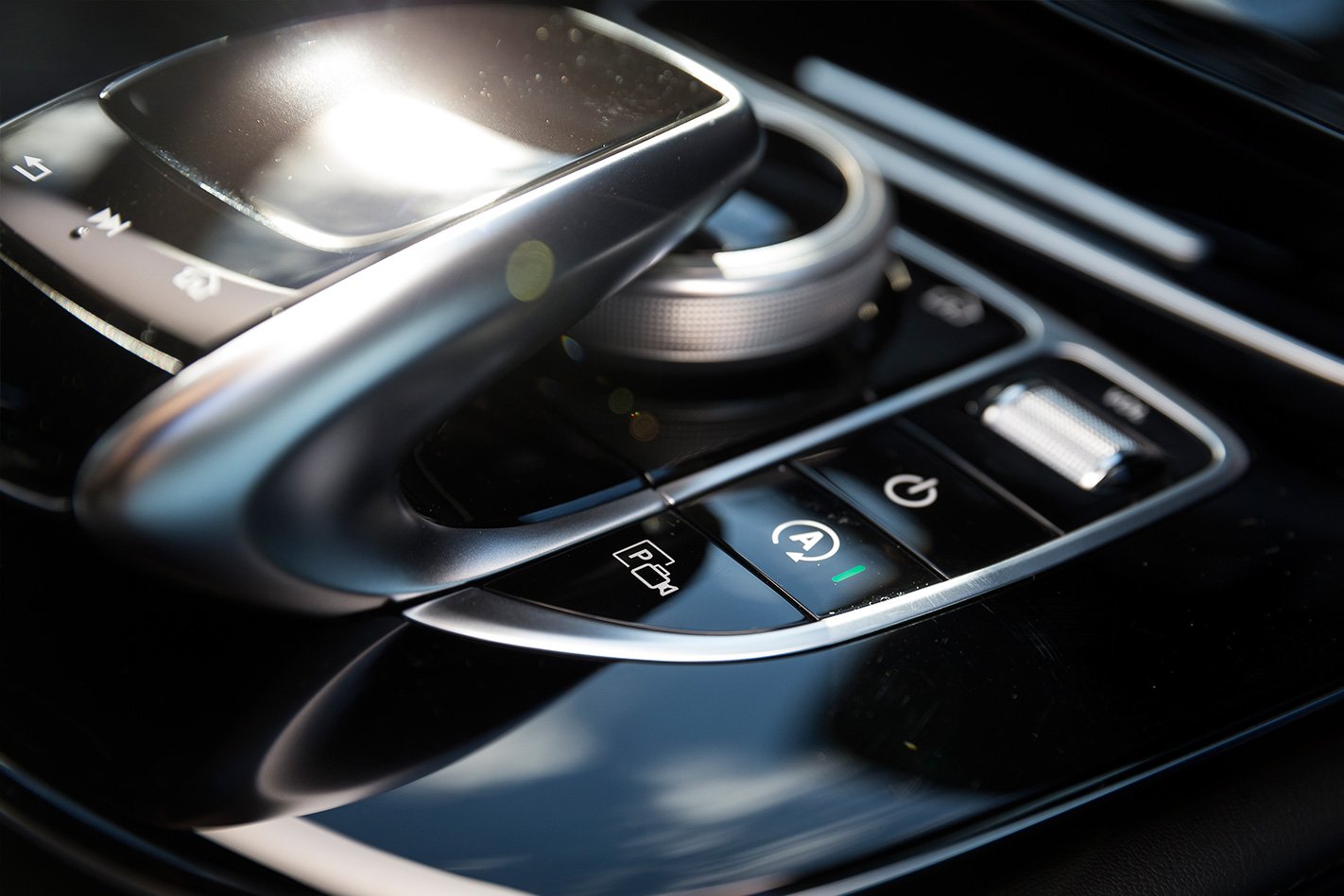
Then there’s the active lane keeping, which on a couple of occasions has forcefully tried tugging the car back into line when I have been deliberately steering away from an obstacle. Worse still were two AEB brainfarts which threw me and a car full of family members against the seatbelts on an empty bit of road.
Outside of these gripes the electronics are good. Its surround-view cameras and multibeam headlights are amazing, and the car’s knowledge of its environment has opened my mind to the future, but it won’t be until the next generation of Merc’s autonomous tech (starting in the S-Class) that the systems really start to change the way we drive.
The E43 is a stepping stone to, rather than the arrival of, the truly driverless car, and I’ve been able to appreciate it more after recalibrating my expectations.
Other shortcomings are few. The gearbox can be clunky when cold and there’s a tyre scrubbing problem where the front rubber shudders across the road when at or near full lock, juddering the steering wheel. It’s known to affect other 4Matic models and doesn’t cause damage or wear, but does take a little sparkle off the prestige sheen.
Next month will be our last together, and with my firstborn child due midway through, I expect that ride home from the hospital to truly cement the bond.
Clean sweep? No, scratch that
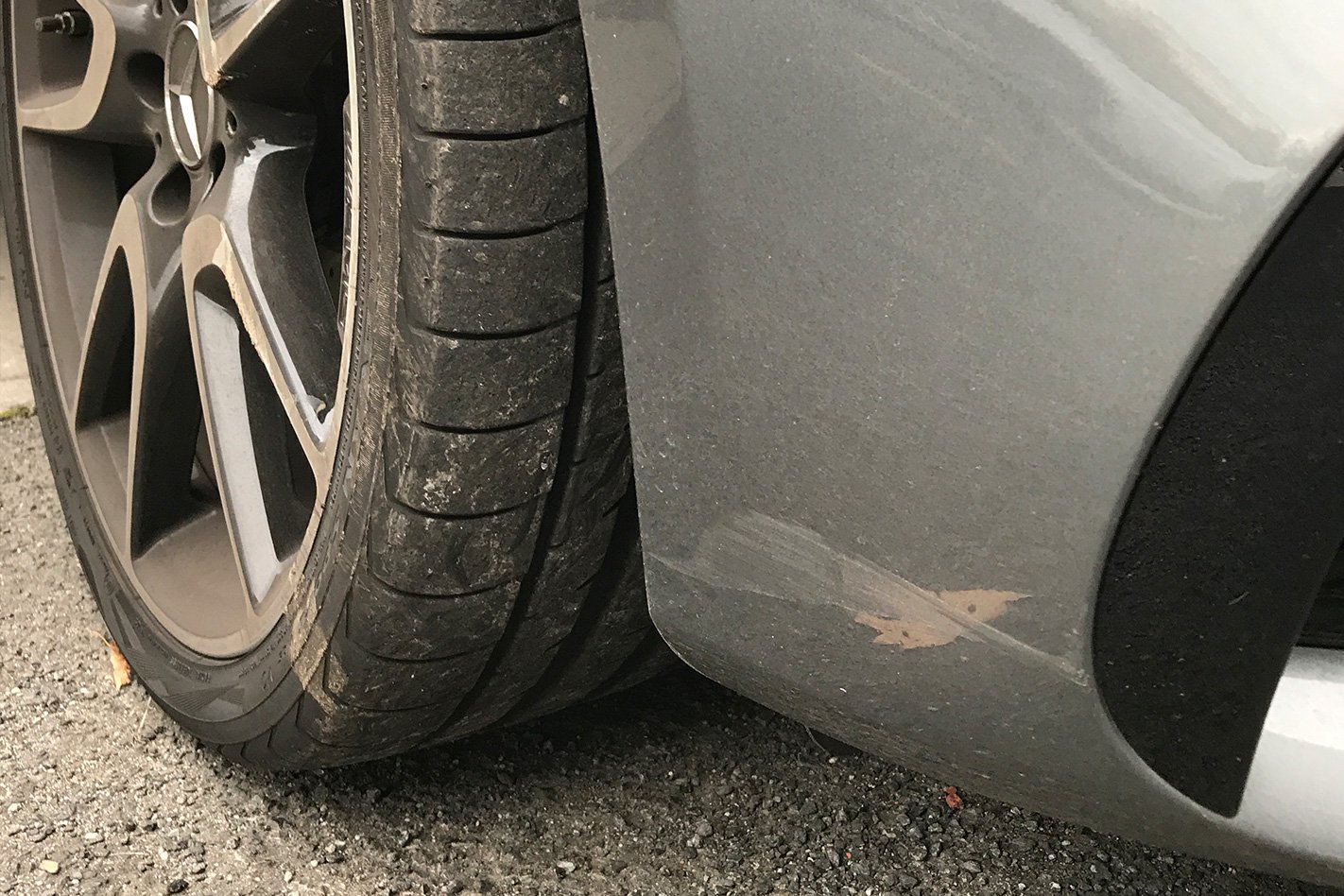
Wheels is battling with a local council after the E43 was side-swiped by a rogue street sweeper.
The four-wheeled aggressor left gouges across the AMG’s front-right wheel and a scuff on its bumper. Fear of other people’s carelessness is a constant pressure point with this car. Parking far from the shopping centre hordes only goes so far.
When nobody but you cares, being precious is a stressful business.
Update #4
By Ryan Lewis
MY FATHER-in-law has never understood this job.
He’s certainly never been impressed by it. Our relationship has been tense since I married his only daughter and transplanted her from Sydney to the greener pastures of Melbourne before the family could protest.
He visits relatively often, probably to keep an eye on me, and the string of new metal parked in the garage has never elicited more than an acerbic remark about how modern vehicles ride too firmly.
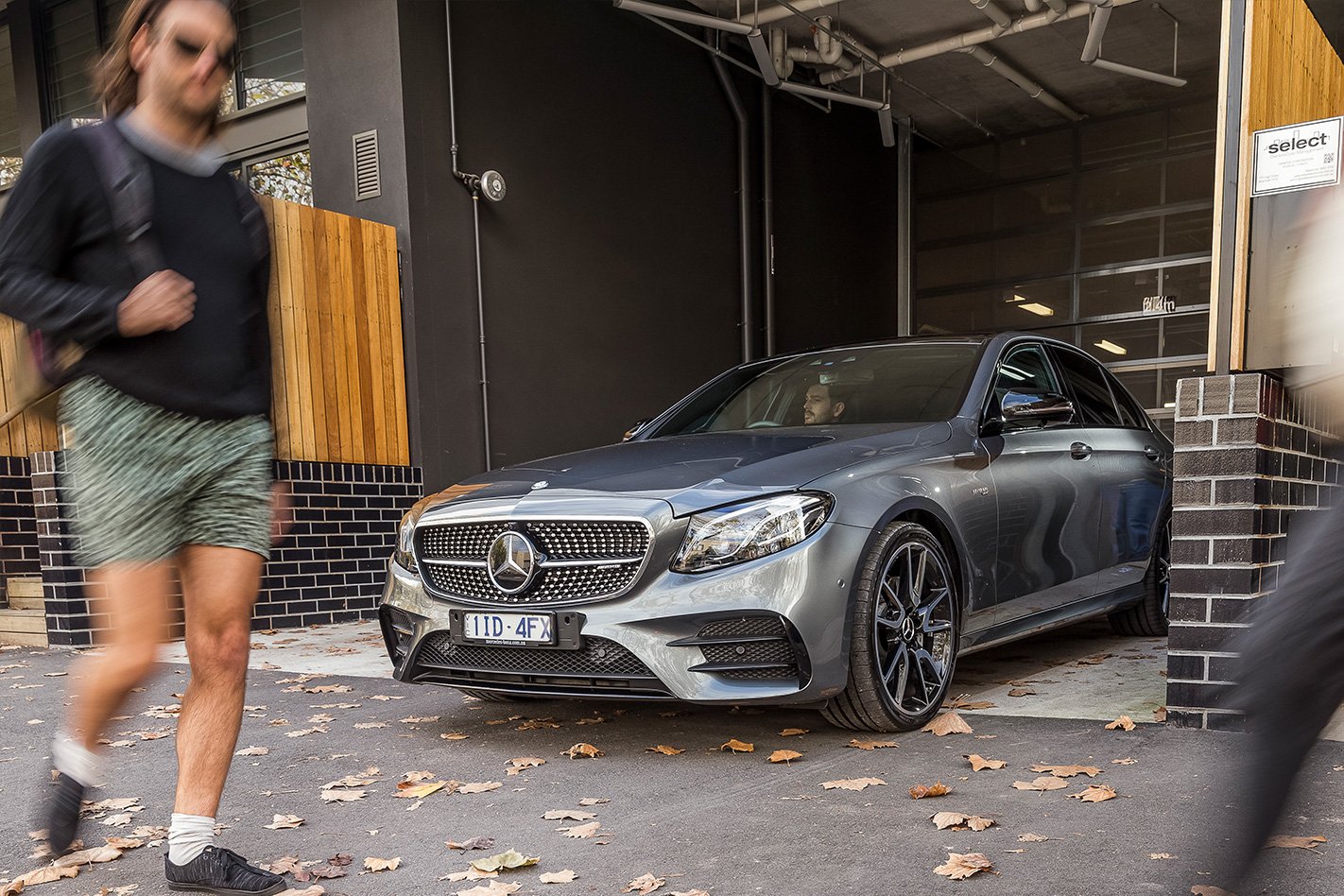
Any car conversation invariably comes back to the 1968 Jaguar 420 he once owned and adored, and was forced to sell when the realities of a life with four kids became too much.
My wife and I became parents ourselves this month, and her dad came to see us again. Maybe it was the tiny mush of newborn in my arms that softened him, but for the first time he was genuinely curious about the Mercedes-AMG E43 in the driveway; the car I have been treating like my first-born for almost six months now, while waiting for the real thing to arrive.
From the beginning of my custody I’ve been self-conscious about the E43’s appeal to a more mature target audience and my position relative to it. The E-Class is stately, distinguished and specifically tailored to the landed gentry; not a 30-year-old bloke who still likes Japanese imports.
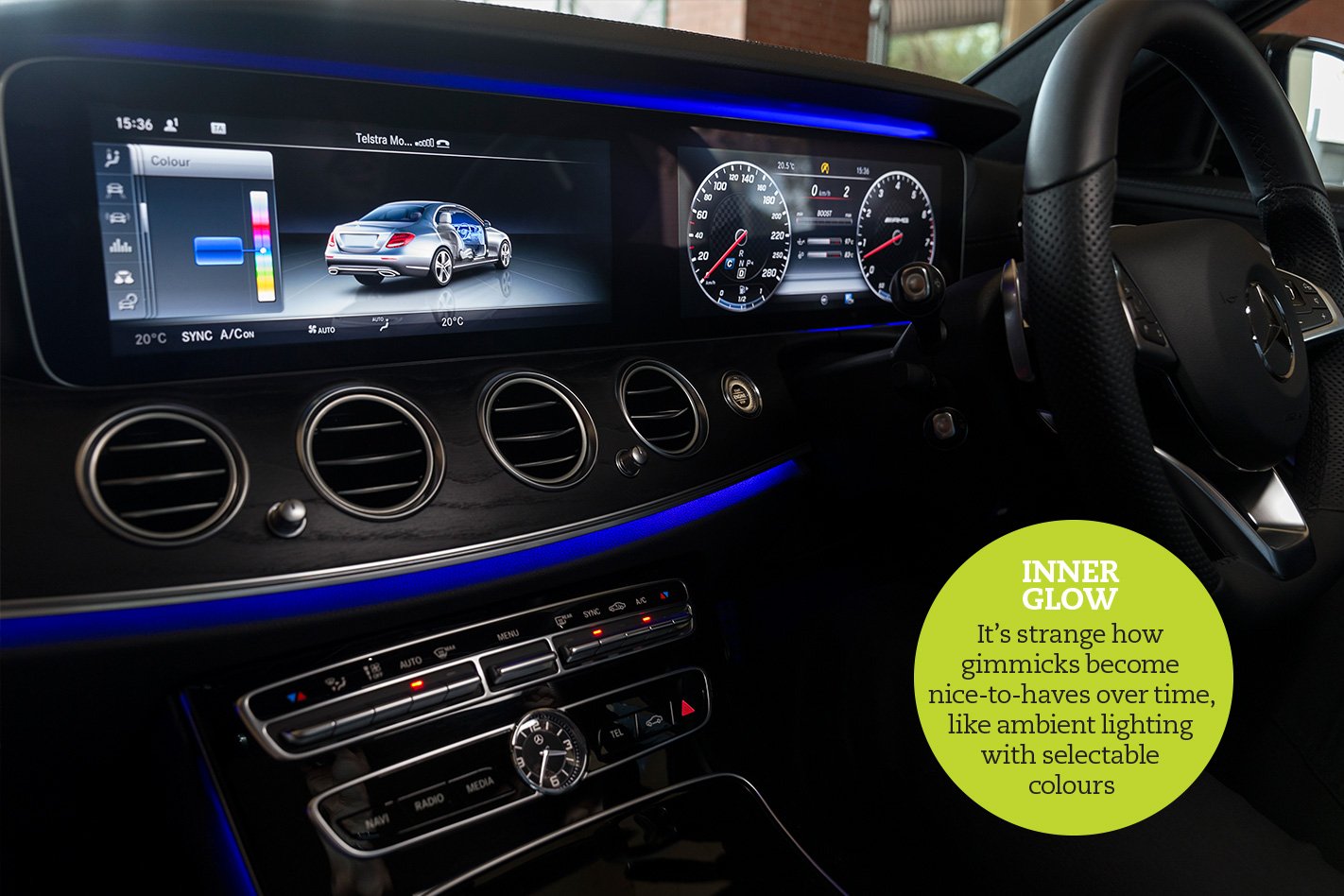
But I have welcomed every day the E43 has been in my possession. I get this car. And in a few days’ time when I hand back the keys and wave auf wiedersehen to the ’bahn-storming sedan, I will be sorry to see it go.
A trip to Baby Bunting with my wife’s old man and his bevy of questions gave rise to a basic E43 explanation including the many pros and few cons I’ve spoken about here previously. He knew more than I expected about its angrier brother, the Mercedes-AMG E63, but there is a wrong way to look at the E43 and that’s as a watered-down version of this deranged beast.
Incredible as it is, the E63 is borderline unsuitable for daily use. AMG’s carefully enhanced E43, meanwhile, is perfect for it.
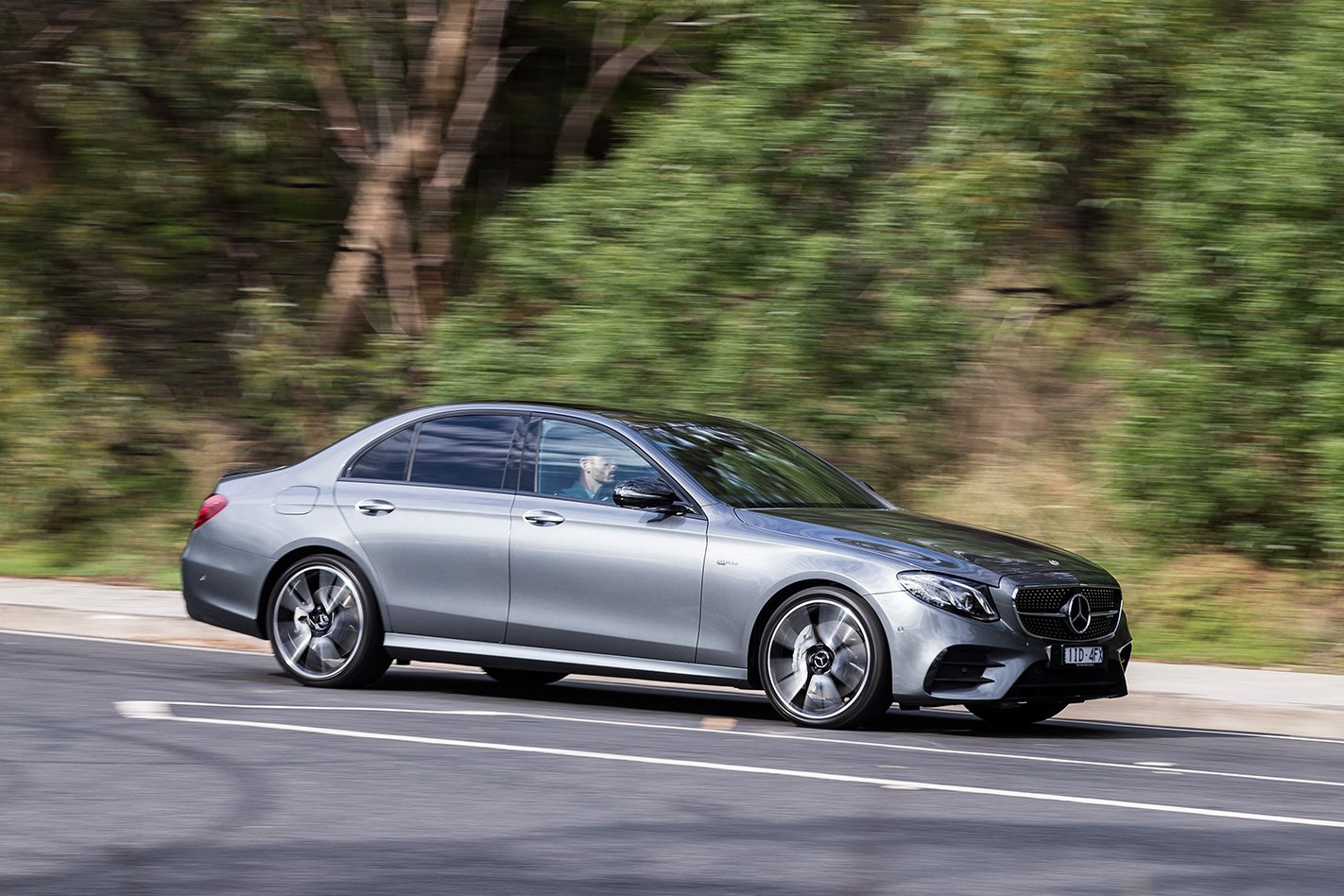
Then again, so is a regular E400 4matic, which ultimately raises a value question. Is AMG’s E43 halfway-house worth the extra $20,000 spend over an E400?
Pragmatically, for the average E-Class buyer, probably not. The excellent E400 will satisfy their every whim. But for any E-Class faithful who enjoy driving, I absolutely think the E43’s existence is justified.
Its steering is sharper, its engine livelier, and the credibility of its AMG education and the heritage of its badge do more for inner smugness than you might think. It’s important to feel good about driving a car that costs this much. The E43’s firmer suspension may turn some away, yet its tight control didn’t rate a mention from my overly sensitive dad-in-law.
Given the chance (and a $160,000 stimulus package) younger blokes impressed by noisy things will probably choose the similarly priced C63 S from AMG’s line-up, but the less sophisticated (though faster) C-Class isn’t necessarily the better choice.
Dealership intelligence says there are customers who have indeed cross-shopped the two and found in favour of the larger, more advanced E-Class. And in my opinion, that decision checks out.
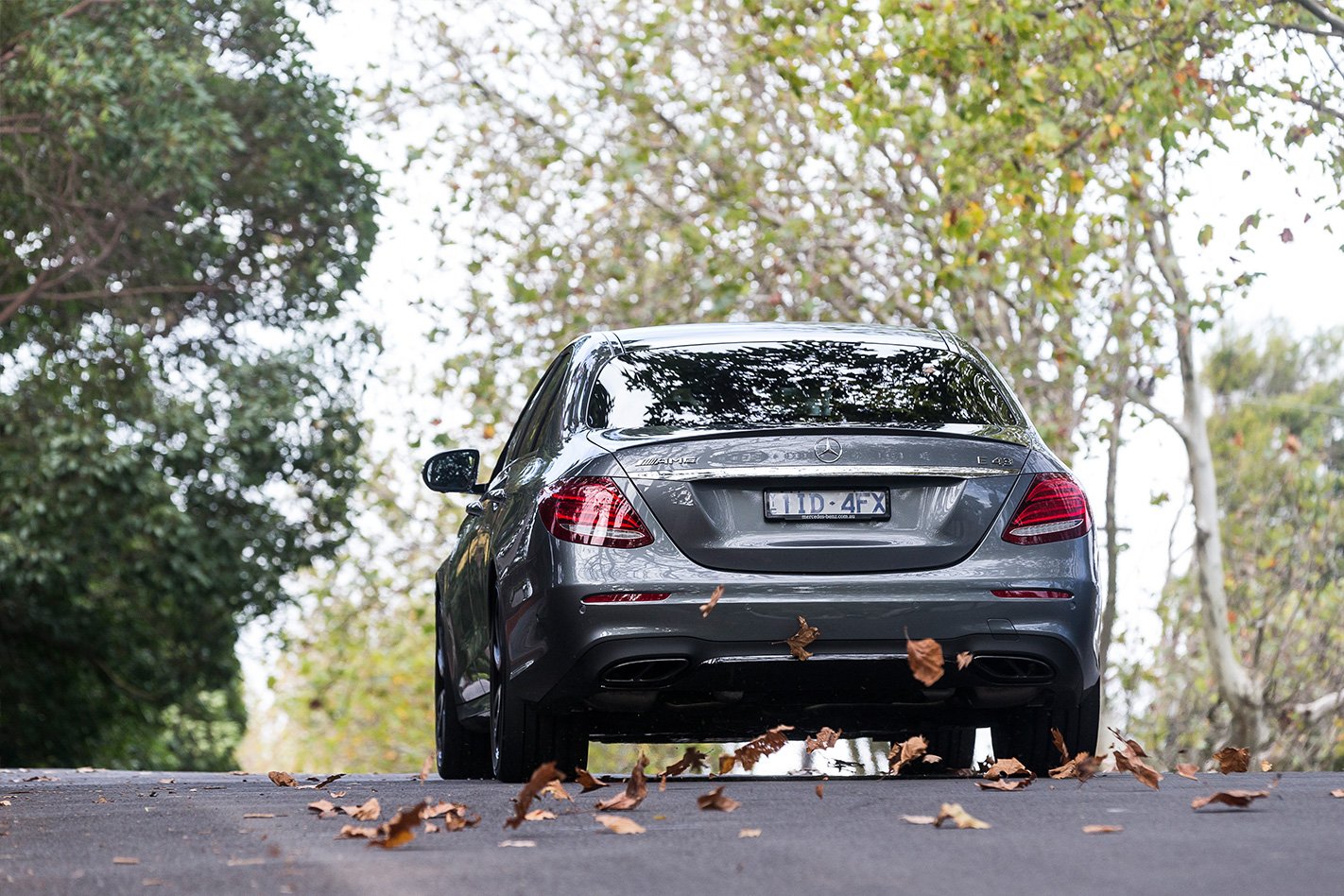
The E43 is supremely liveable, and that’s its magic. It adapts its character like few others can. Comfort mode says what it does and does what it says. Sport and Sport+ awaken accessible performance I’ve never felt tentative about delving into. It sounds good without shouting. It’s smart and grown-up. And it is decidedly not a big C-Class, even if your neighbours can’t tell the difference.
I think I understand what it’ll be like to grow older and still enjoy cars, and if I’m fortunate enough to drive one of these when my son is ruffling the feathers of his own father-in-law, I’ll be a happy bloke indeed.
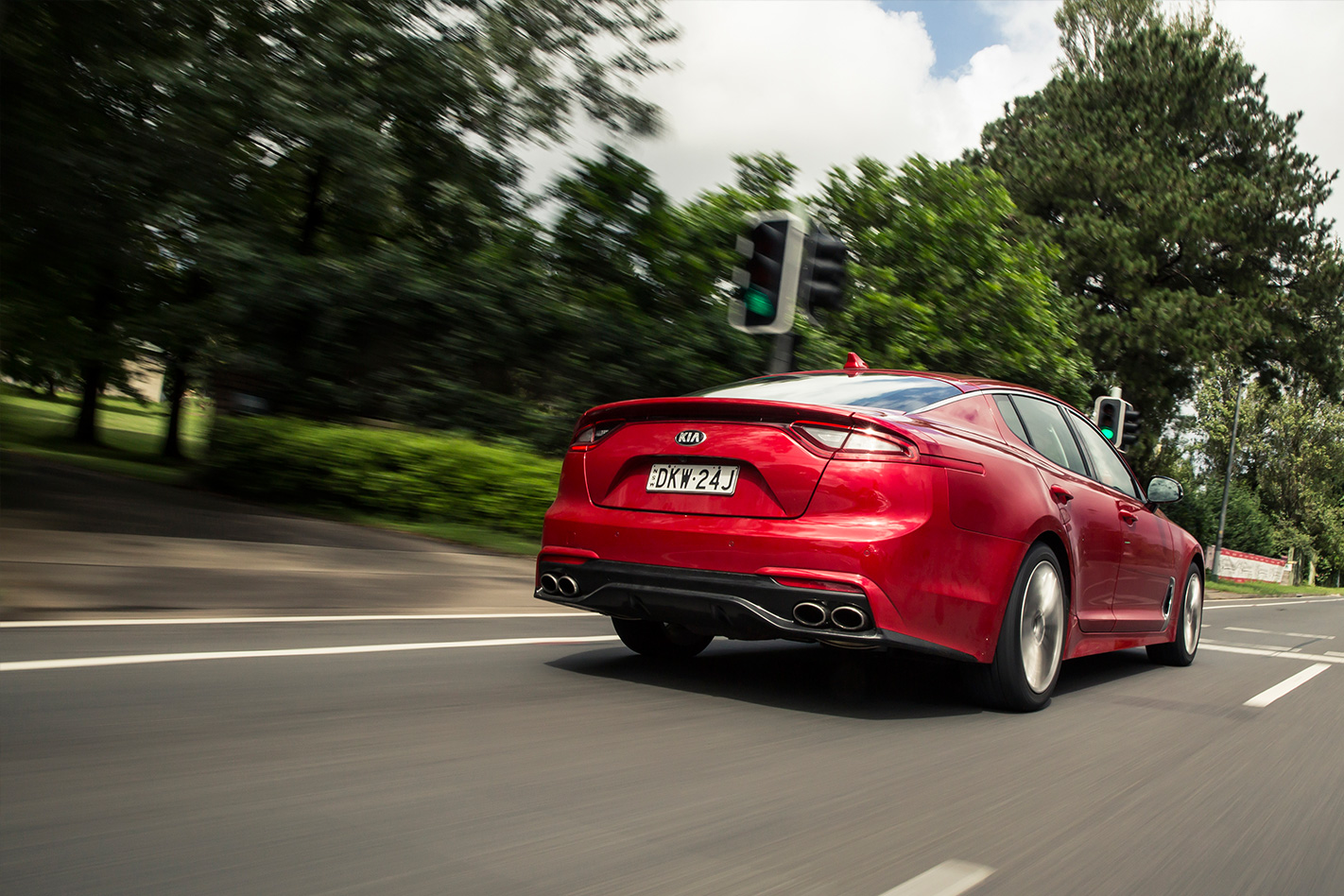
Aussie chassis tuning of Kia’s rear-drive Stinger begins not in the flowing climbs of the Great Dividing Range, but deep inside Kia’s vast testing facility in Namyang, a two-hour bus haul from South Korea’s capital, Seoul.
It’s the self-contained functionality of a proving ground that makes them so desirable. Here, you bolt in a new set of components, drive out the door and, a few minutes later, you’re flat out on the ride and handling circuit, unemcumbered by traffic and free of speed limits. And you have unlimited access to a head-scrambling number of competitor vehicles.
As has been the case since 2010, passionate rally driver and talented automotive engineer Graeme Gambold is Kia’s go-to suspension guy. Gambold and his chassis development crew begin by plugging swathes of design data – front and rear centre-of-gravity height, wheelbase, track widths, roll-centre heights, sprung and unsprung weights – into a VDA (Vehicle Dynamics Analyser) computer simulation program to establish a kinematic baseline. And not just for the Stinger, either. The Koreans have comprehensive data on every European benchmark you care to name, having analysed the competition in painstaking detail. Not the current rear-drive Commodore, however.
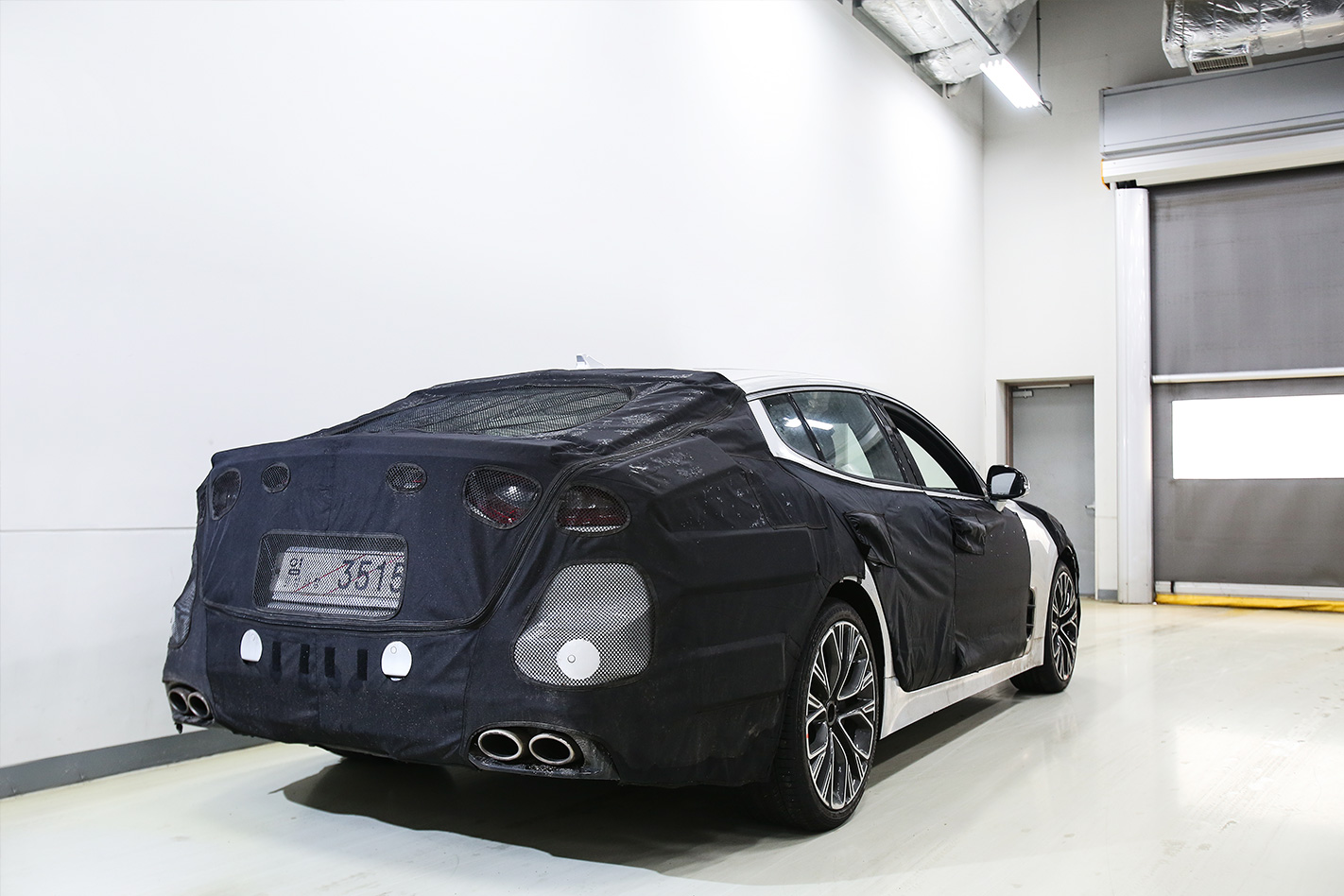
The Aussies are restricted to a small number of tuneable components. In the case of Stinger, it’s four front springs and four rear springs for both the four-cylinder and V6, three front anti-roll bars and three rear anti-roll bars each, as well as a range of damping rates and steering tunes. Gambold simply has to make it work.
Six months before on-sale, Stinger is already too far down its development path for the Koreans to approve any tuning part outside the off-the-shelf stuff available in Namyang’s workshops. Says Gambold: “We don’t play with kinematic geometry – arm lengths, roll-steer coefficients, bump steers – because we trust and work with the data that the car is presented with. That stuff is vehicle design, not vehicle tuning. If there’s a big problem, then we’ll identify it and negotiate it, and there have been a couple of times where we’ve been successful in orchestrating change on kinematic design. But, generally speaking, we work with what we’re given. [The Koreans] do enough benchmarking of other vehicles to know what they’re doing”.
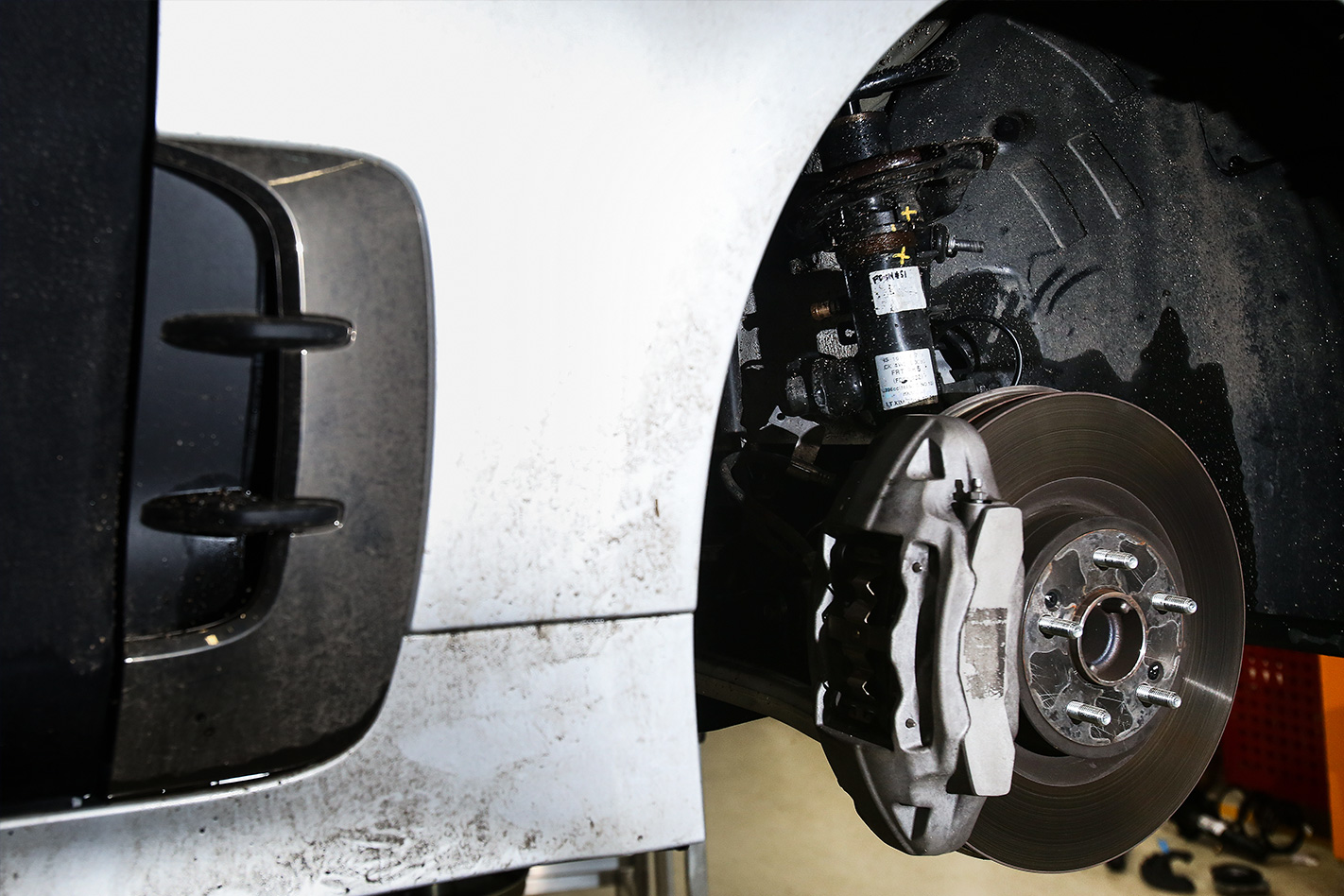
What he’s certain of, however, is that the domestic (Korean) suspension tune of the V6 won’t work for Australian roads. “Before I’ve driven it, I can tell you now I won’t particularly like it. Firstly, it’s going to pitch because the front is too soft. Its roll-couple distribution [the relative roll stiffness between front and rear] for a rear-wheel car is too neutral, so it’s going to lift the inside rear wheel a fair bit so it’ll probably have poor traction,” Gambold says.
“Even though they’re happy with it in their country and it suits their driving styles, I know that for Australia it won’t work. We have a lot of focus on pitching because we drive down country roads at 100 kays and if you’ve got a car that’s porpoising, you’ll notice it. Here [in Korea], you won’t. They like it because it gives them a bit of a luxo feel, an undamped feel, a bit of pitch, but we don’t like that.”

In comparison, the initial Aussie tune feels far more cohesive, if still a bit understeery – especially when back-to-backed with benchmarking vehicles, which include a BMW 428i xDrive Gran Coupe and an Audi A5 1.8TFSI Sportback, as well as a BMW M4 and Mercedes-AMG C63 S sedan to experience the other extreme. We deem the 428i the most relevant for comparison, with its softer rear end, pointier steering, and overall dynamic superiority to the (old-gen) A5. Attention then turns to the Stinger four, and Gambold thinks the domestic tune isn’t bad.
“Their final tune is the same hard parts as we want… and when we drove it we were really happy with it.” But pushed hard in the lane-change, the Stinger four understeers strongly, unlike the much sharper 428i. Limited by spring choice, Gambold opts for a smaller front anti-roll bar and has asked the on-site engineers from damper supplier Mando to rebuild the 2.0T’s rear dampers with reduced rebound and increased compression to lessen the understeer by “holding the rear end up”. Instead of inertly following the front, Gambold wants the Stinger’s rear end to play a contributing role in pointing the nose into a corner.
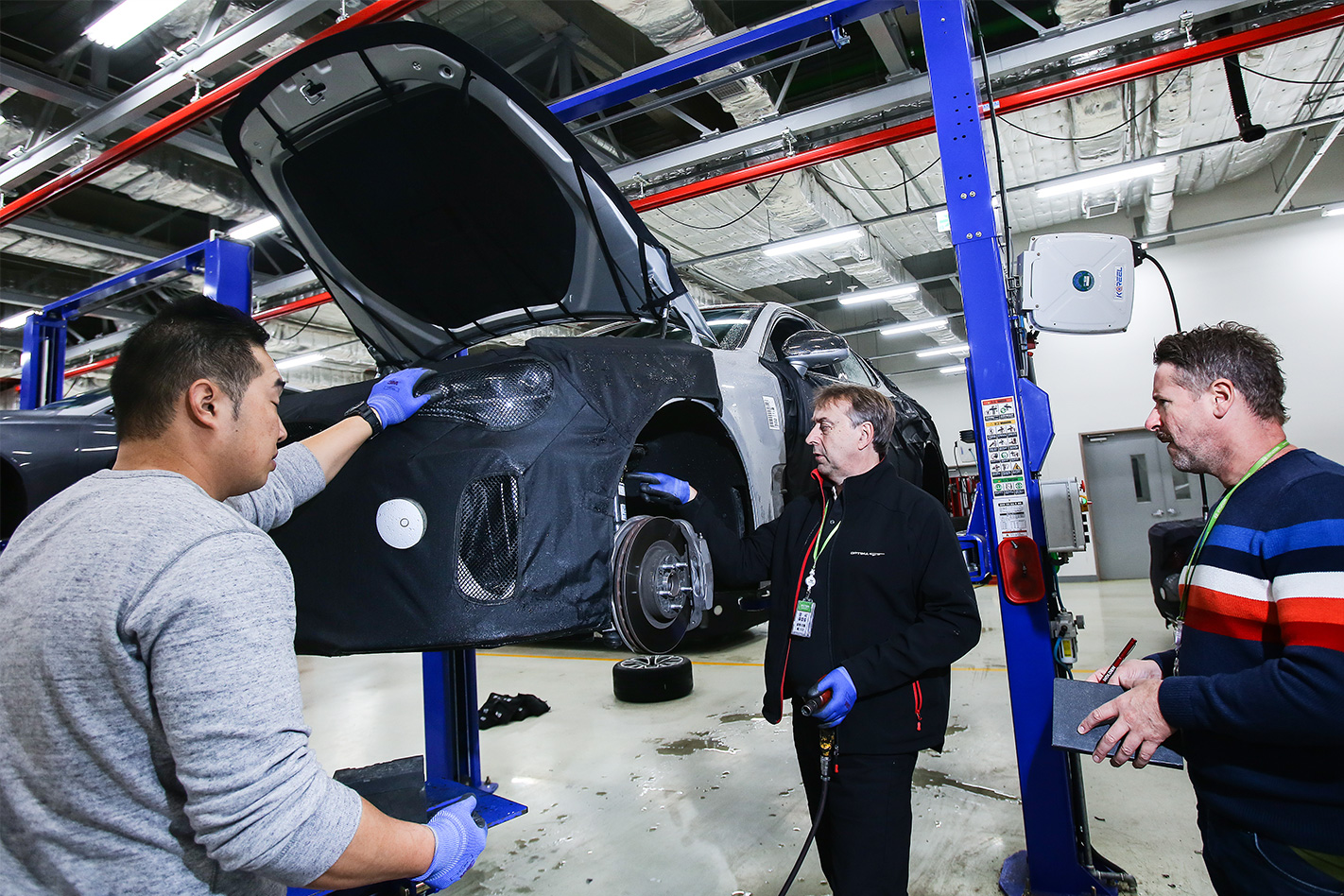
Back in Sydney, the tuning team’s deadline is just as tight. When I head out to Kia’s head office workshop, they’re determining the control strategy for the ECS dampers.
“We’re looking at steering angle, brake pressure, acceleration position, lateral G-force, vehicle speed, the mode switch the driver has selected, body G-force, and wheel G-force,” says Gambold. “And from those inputs, the solenoid valve gets a logic from the map that we build. We’ll extrapolate the European high-speed data, and we can play with a lot of things – roll, pitch, bounce, slow roll, fast roll, hard braking, give it squat to help traction…”
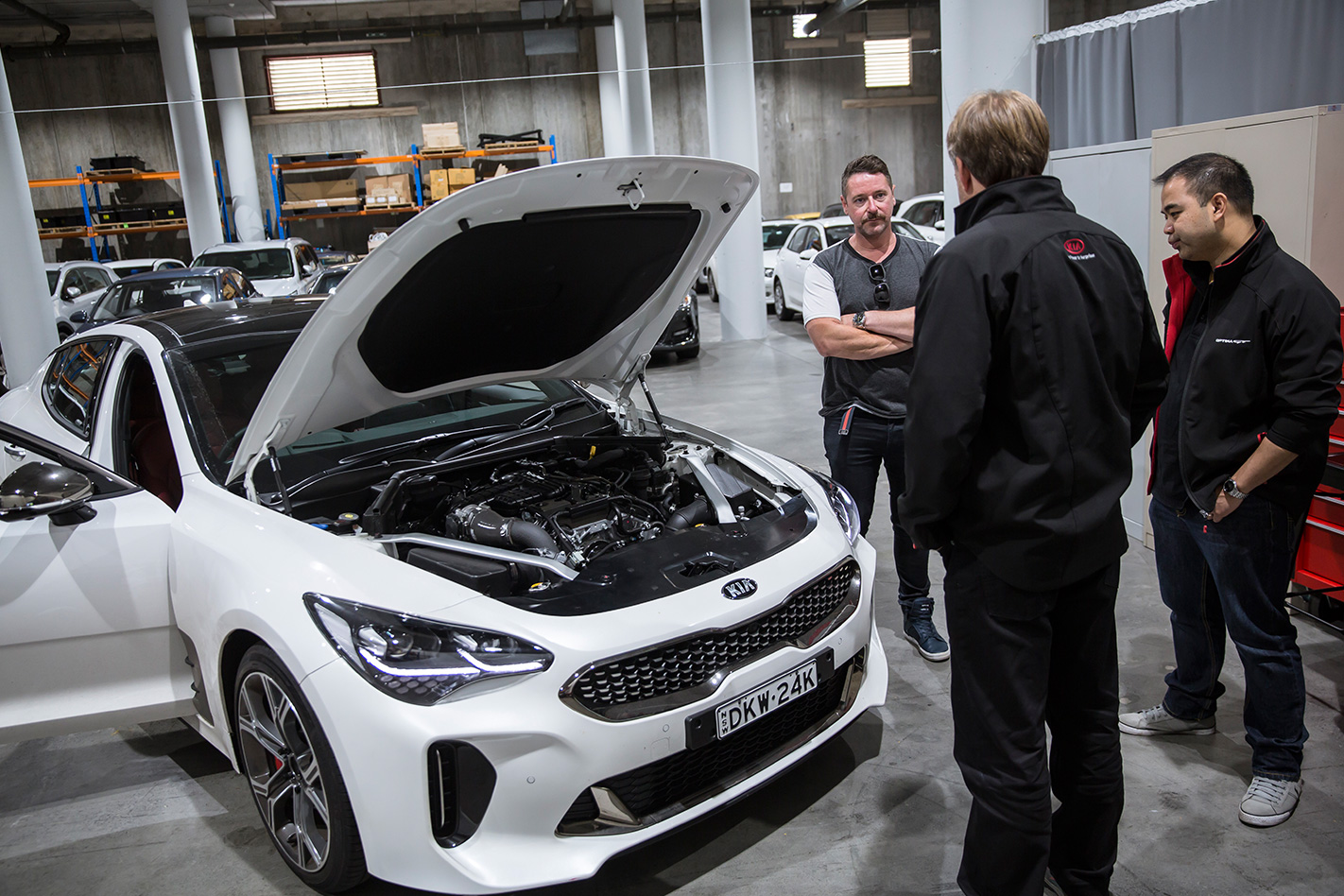
Back at Kia HQ, I deliver my feedback on the four’s very sharp turn-in. “I don’t typically like that feel”, says Gambold. “I don’t like a fast rear yaw response, so if it’s doing that then we’ll probably tame it a bit. But then you can tame a lot of that with the power steering tune.”
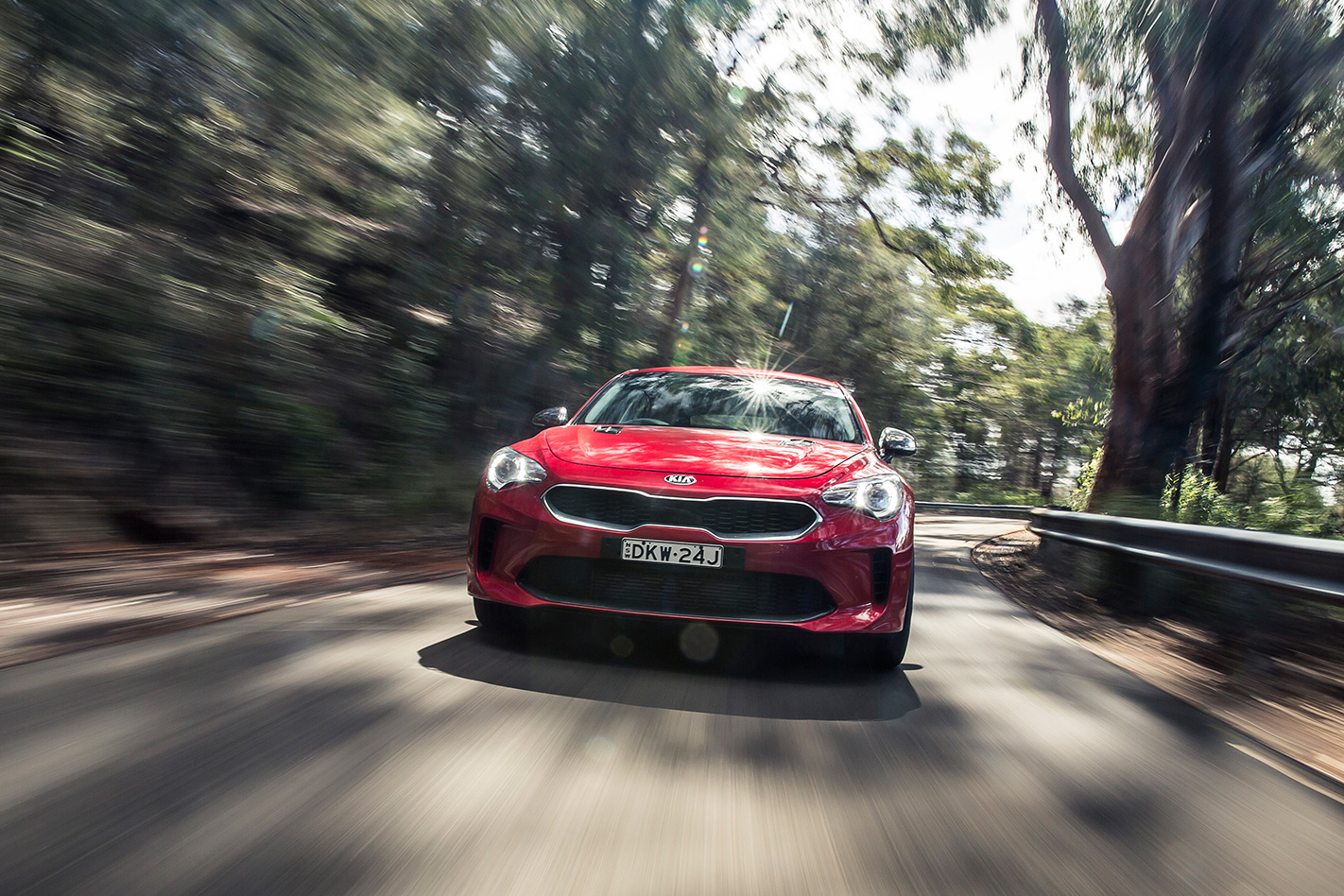
“Hours and hours of driving up and down on the same piece of road, changing numbers,” says Gambold. It’s much more mentally challenging than it sounds. But thanks to the engineers’ unwavering patience, persistence, and passion, our Stinger gets to be the best in the world.
WITH Holden’s manufacturing closure taking the lion’s share of publicity in 2017, it is easy to overlook the importance of that other, final, manufacturer also pulling up stumps in this country – unless you’re one of the many thousands affected by the demise of the Australian car-building industry, of course.
Yet our history with Toyota is utterly profound, the fledgling firm from Aichi not only having chosen us first for exports, but also as the site for its first non-Japanese factory. Australia’s exalted place in Toyota’s history cannot be overstated.
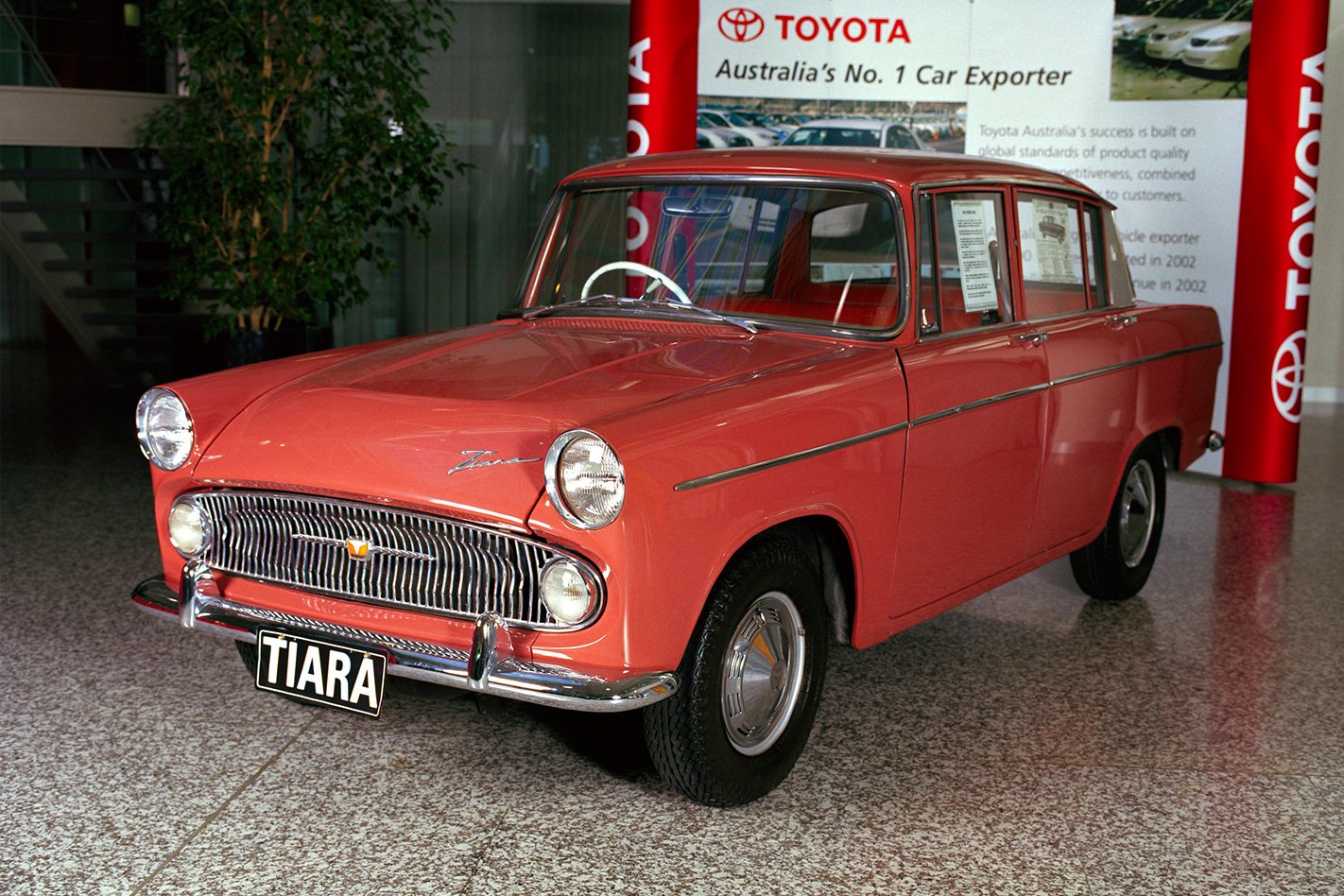
The year was 1963 and production of the Tiara – an ageing 1.5-litre Toyota compact car priced beneath the cheapest Holden – commenced alongside various struggling Triumph, Rambler and Mercedes-Benz models at the Australian Motor Industries (AMI) plant in Port Melbourne. Despite Australia’s post-War misgivings and Japan’s reputation at the time for shoddy products, the plucky Tiara struck a chord.
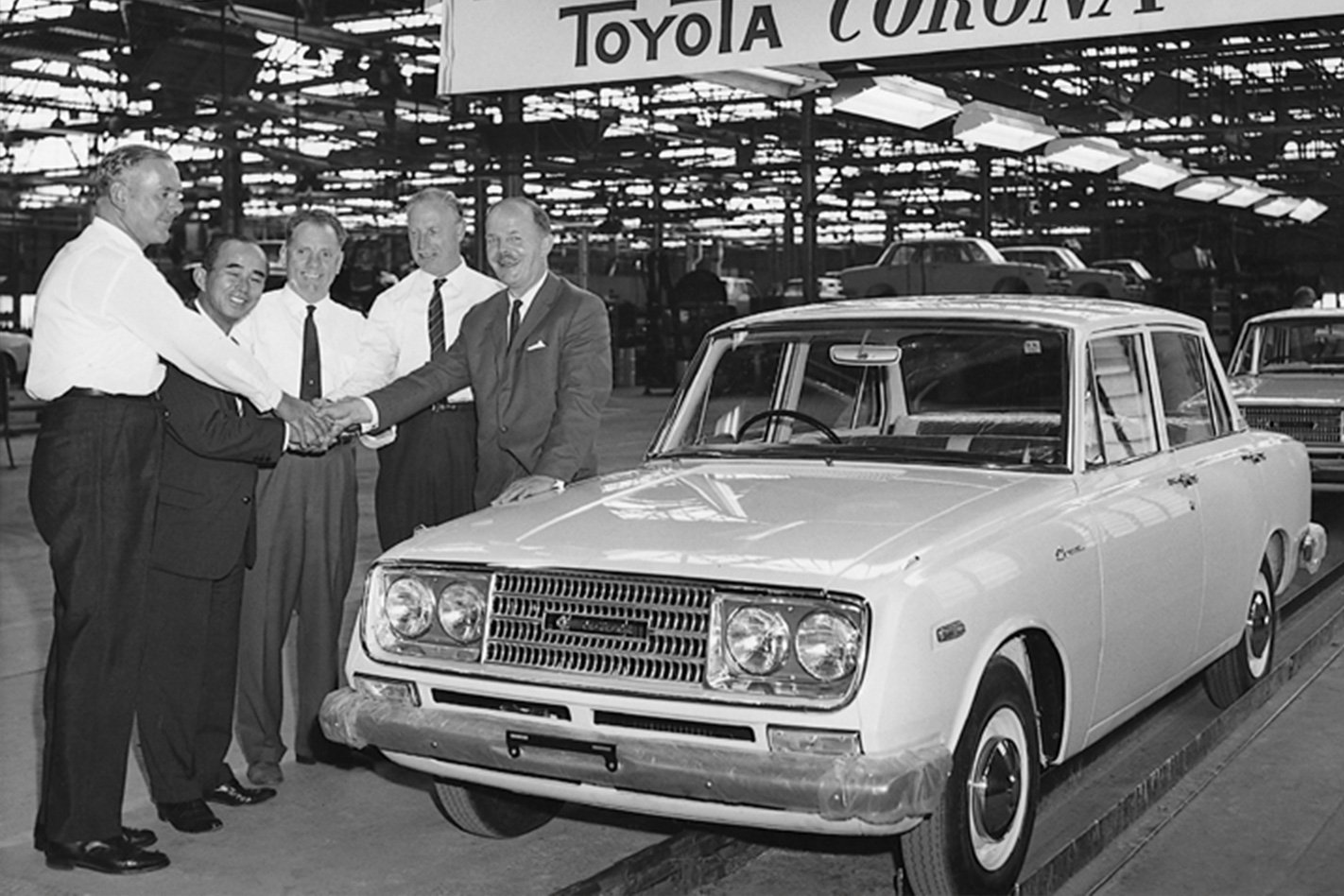
“(Corona) adds real strength to the Japanese invasion,” Wheels remarked in February 1965. Also in that issue, a Corona finished equal first in a four-way against the Morris 1100 (our reigning Car of the Year), Ford Cortina and Isuzu Bellet.
A locally assembled Crown joined the Corona soon after, the first of several unsuccessful attempts by Toyota at breaking the Holden/Falcon/Valiant nexus. However, it was the Corona’s fiery kid brother, the KE10 Corolla of 1967, that cemented the brand’s reputation.
But product-wise, the company began to lose its way as the nervous ’70s wore on.
Toyota increased its stake in AMI, yet the bread-and-butter Corollas, Coronas and Crowns it produced well into the 1980s gained weight but rarely any real advancement, falling behind go-getters like Chrysler’s Sigma and the Ford Laser. Such conservatism alienated enthusiasts as surely as it satisfied fleet company bottom lines, and at times it was up to the imported commercials – namely LandCruiser (which built its reputation on the Snowy Mountains Scheme in the late-50s) and Hilux – to keep sales buoyant.
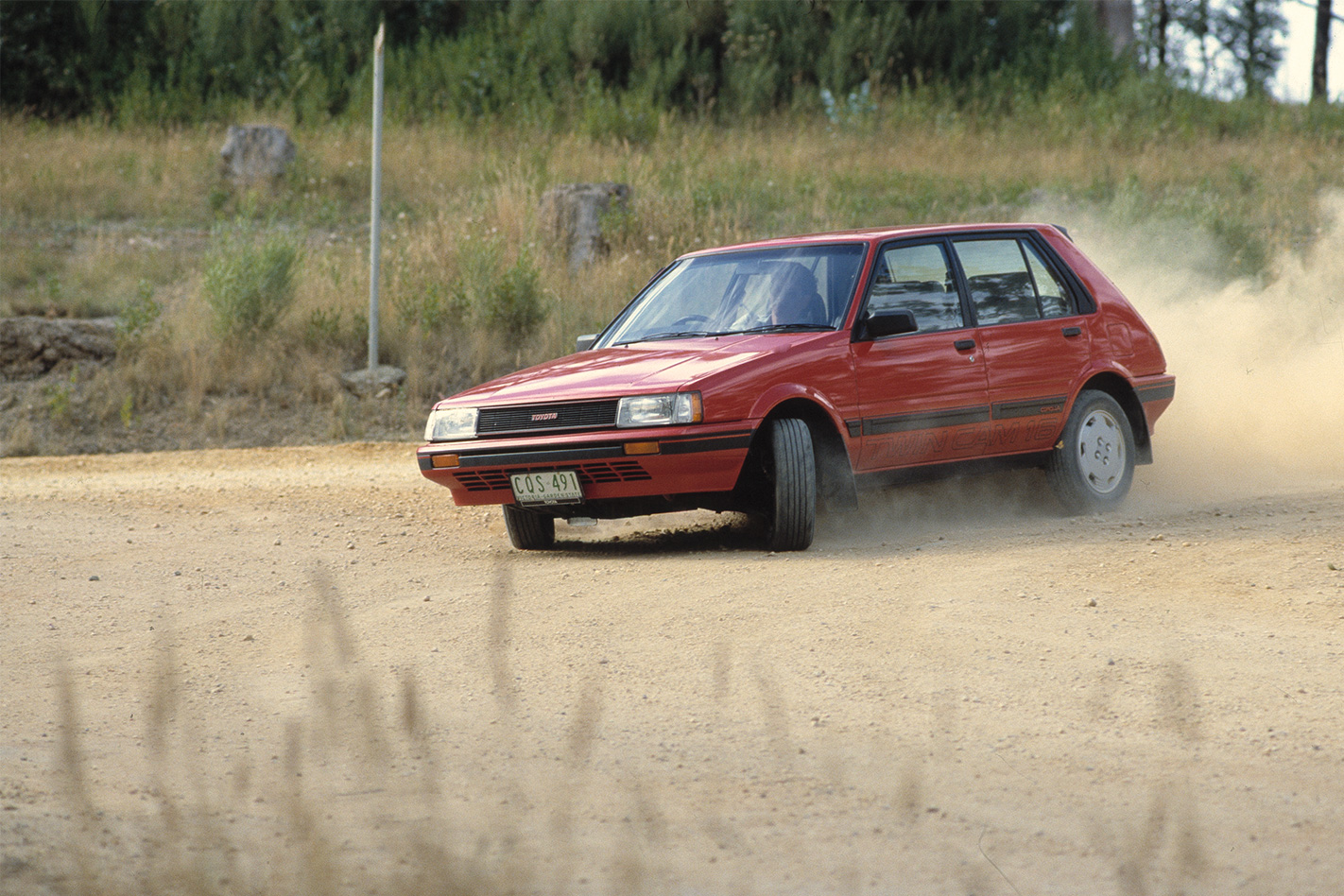
Australia’s switch to unleaded petrol in 1986 opened the floodgates for image boosters like the mid-engined MR2, joining other Toyota import hits such as the Cressida luxury sedan and Tarago people mover. The brand’s marketing nous played its part, too, finally creating best-sellers out of Corolla and Camry in their respective classes. In 1991, Toyota Oz achieved overall market leadership, ending Ford’s reign.
But it was Toyota’s success in identifying the emerging global appetite for lifestyle 4WDs that promptly changed the world. Spearheaded by RAV4, by the turn of the century SUV sales had vanquished the mid-sized segment (still held by Camry). A decade later, once-invincible large sedans were in free-fall, and this year SUV sales surpassed those of regular passenger cars for the first time.
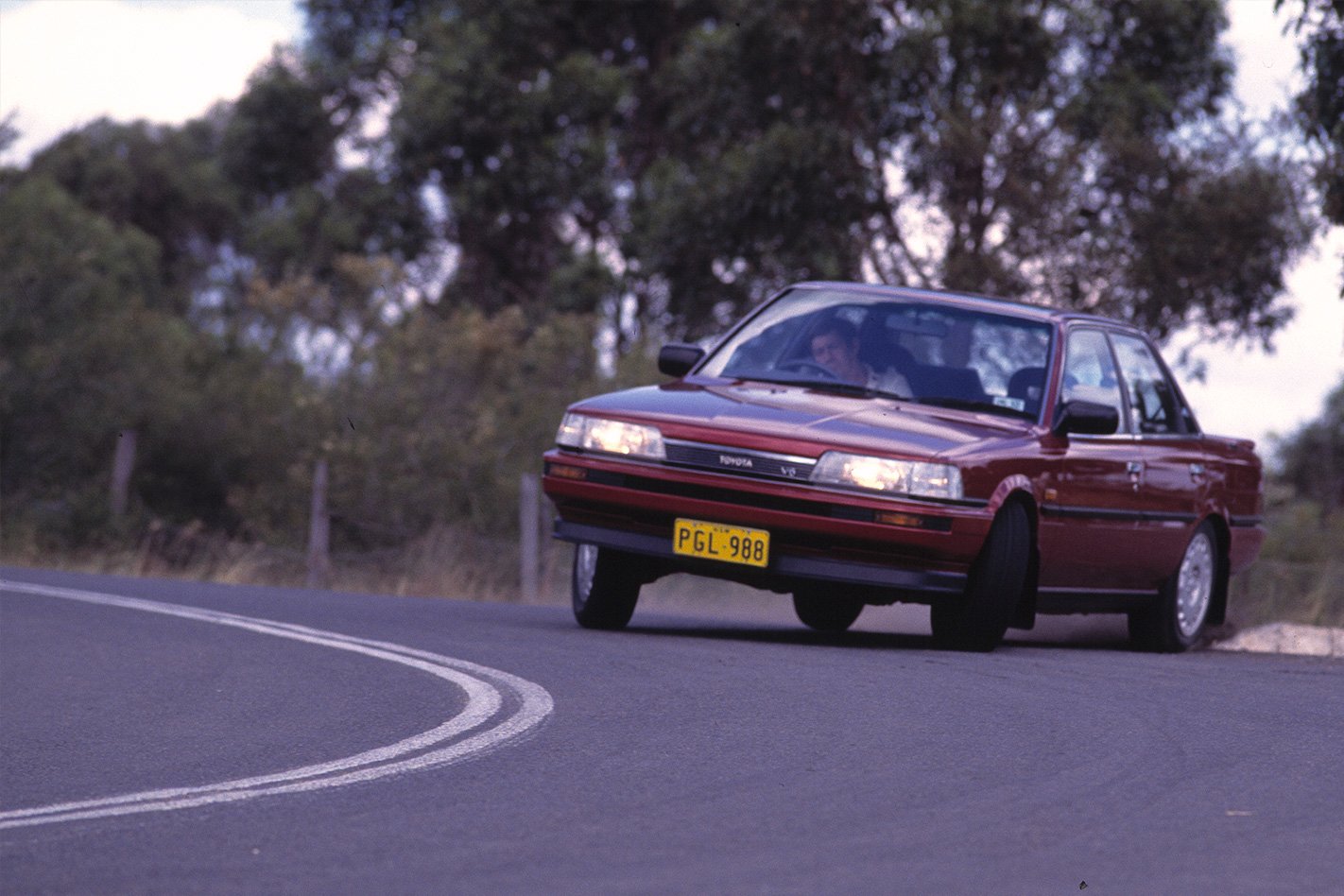
What did keep the Aussie plant humming were the huge exports to the Middle East, snaring more than two thirds of Camry production. In 2013 the millionth Camry left Melbourne’s docks, making it Australia’s most successful automotive export of all time.
Toyota did give the large-sedan Holy Grail a final go with the Aurion (in 2006), and nearly succeeded, but buyer preferences were shifting inexorably towards smaller cars and SUVs and 4x4s. Luckily for TMCA, that’s exactly what the imported Yaris, Corolla, Prius, RAV4, Kluger, Prado, LandCruiser and Hilux collectively covered. And still do.
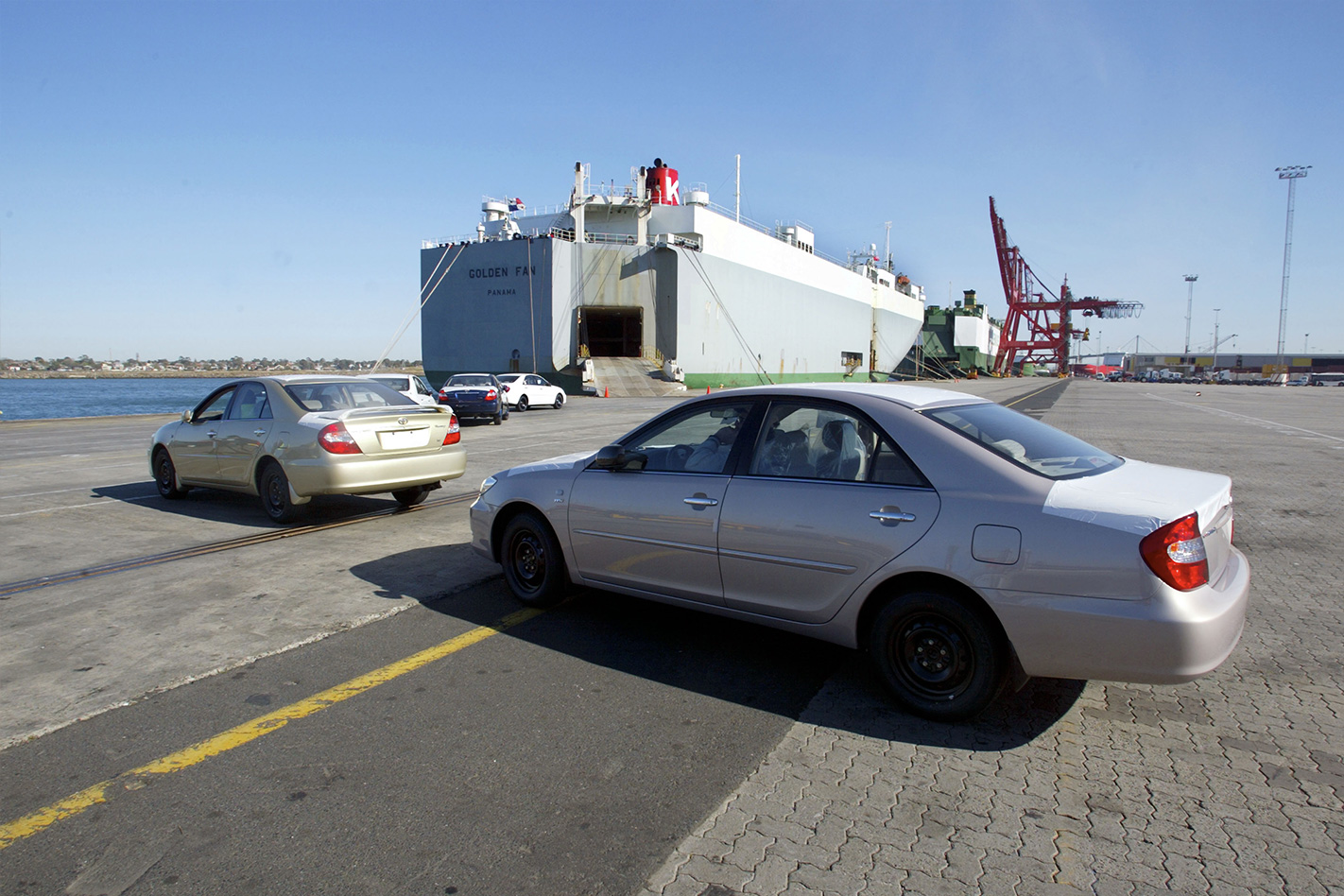
It came on 10 February, 2014. The global company president and great grandson of Toyota founder in attendance, Akio Toyoda, reminded the press of Toyota’s deep ties with us.
“It is most regretful for Toyota, and for me, personally, simply heartbreaking,” he said quietly. “Since 1963, Australia and Toyota built cars together for 50 years. That represents two thirds of Toyota’s 75 year history.”
The final Camry rolls off the Altona production line on 3 October, 2017. Oh what a sadness.
FROM an initial offering of just one variant, the Mercedes-AMG GT line-up has grown at a healthy pace to offer a choice of coupes and convertibles and in a range of power outputs.
In the two years since its local launch, the pioneering GT S has been followed by the more affordable GT in both coupe and convertible forms, a manic GT R coupe that is happiest on the track and a second drop-top option dubbed the GT C.
But that soft-top variant is about to be joined by a coupe equivalent in limited Edition 50 trim. With 410kW, the new GT C offers more power than the GT S (even after an imminent update that will take the latter’s peak power to 384kW) and a torque boost to 680Nm. But, critically, a chassis tune that is more geared for comfort.

Until now, the AMG GT S was the most potent day-to-day offering, while the GT R catered for frivolous, tyre destroying track time, but the GT C coupe promises to offer almost all the power and acceleration of the GT R but in a package you’ll enjoy living with on the road.
To test the theory, we headed to the pristine Bilster Berg track in Germany’s north for a back-to-back thrash in both the flagship of the range and the newcomer variant.
Unless you have access to a motoring nirvana like Bilster Berg, the GT C could be the AMG GT variant that makes the most sense out of the growing six-car fleet.
WHILE other brands find themselves bickering over the technicalities of who builds the quickest SUV, Alfa Romeo has quietly gone and shown them all up by smashing the Nurburgring lap Record for ‘fastest sport utility’ – and with its first-ever attempt at an SUV, no less.
The Alfa Romeo Stelvio Quadrifoglio, or QV for short, has lapped the 20.8-kilometre Nordschleife in a stonking 7:51.7. Eight seconds faster than the previous record-holding high-riding wagon.

In the wake of yesterday’s announcement by Porsche that the 911 GT2 RS completed the same lap in 6:47.3, the Stelvio’s lap may seem a little…pedestrian.
But that’s because the headline figure from the GT2 RS doesn’t give you the right context.

In fact, it smashes the Range Rover Sport SVR by roughly 23 seconds, and previous record holder Porsche Cayenne’s lap by 8 seconds.
It’s also only 8 seconds off the time set by the Honda Civic Type R. Nevertheless, the Stelvio is still a fair whack slower than the Giulia QV – the Stelvio’s sedan stablemate recorded a blistering 7:32 lap time at the hands of Fabio Francia, the same man who set the Stelvio’s record-setting lap. There’s no escaping the laws of physics.

The new BMW X3 M, Audi RS Q5, and Jaguar F-Pace, and next-gen Cayenne will all be wanting to top the Stelvio QV when they are released.
Regardless of what capitalists and economic rationalists espouse, gladiatorial competition isn’t necessarily A Good Thing for the competitors and/or the market.
But even doves who don’t endorse the sanctity of rampant market forces must agree that the Holden v Ford duel is a classic instance of cars and consumers benefiting when major players lock horns.
There’s certainly no lack of intensity in the current contest. While it mightn’t have the epic scale of a full model change, the EL Falcon is Ford’s pointed reply to Holden’s mid-year Commodore VSII upgrade. Mild though they may seem at a glance, the changes are crucial in keeping models competitive between major overhauls.
So where now does Falcon sit in relation to Commodore?
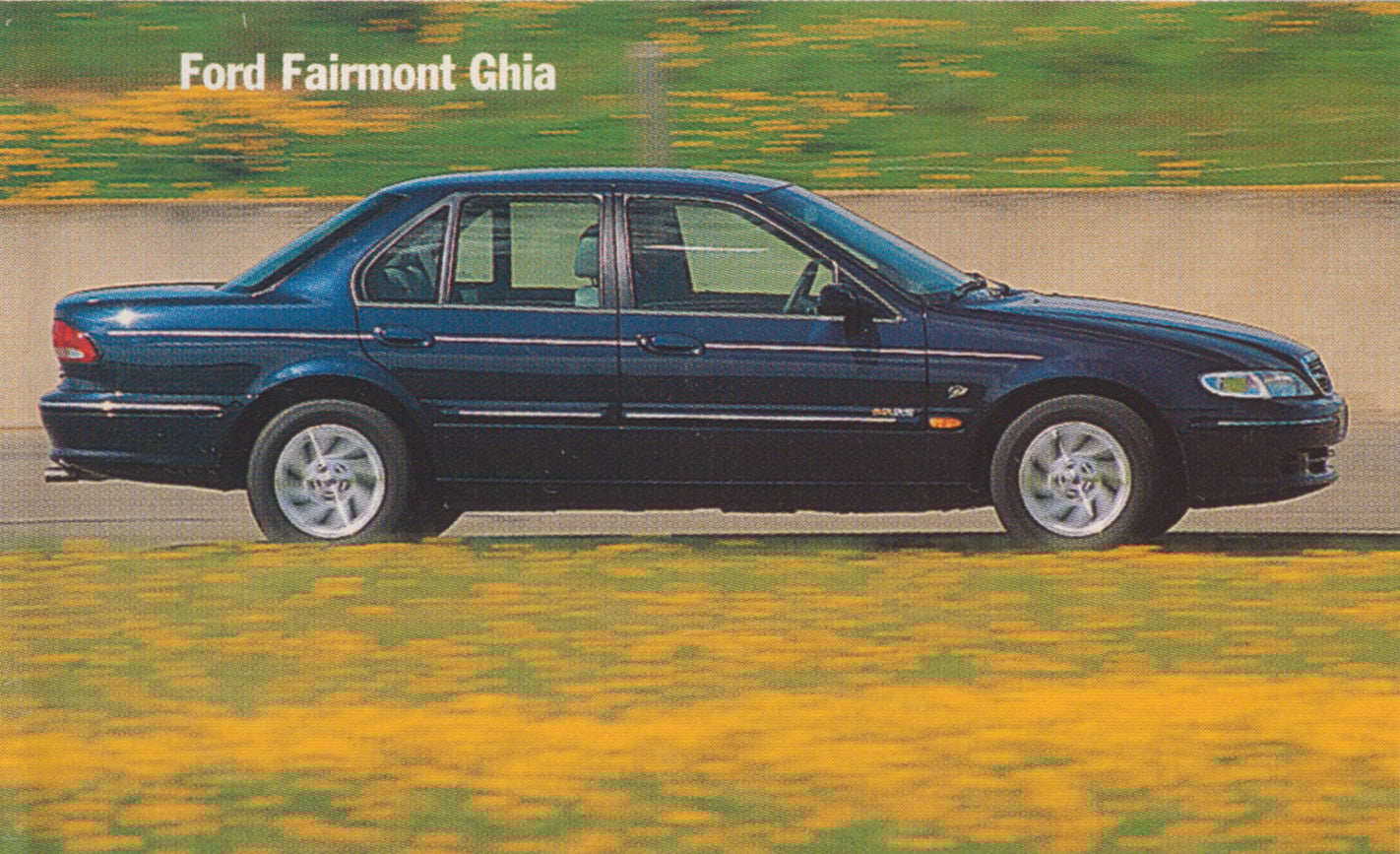
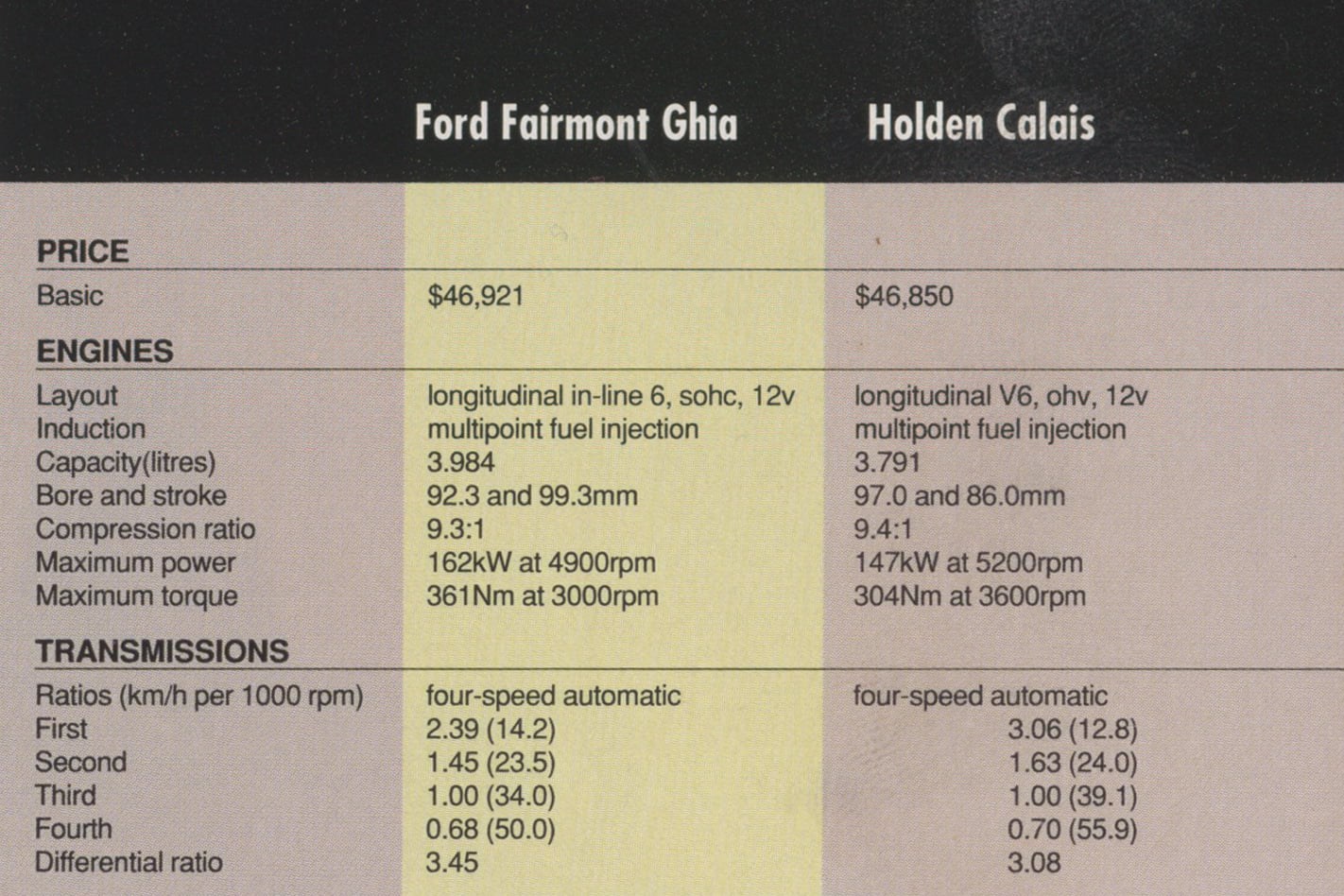
They both perform pretty well, and there’s very little between them in regular driving; just a few tenths of a second from 0-100km/h, for instance. In spite of carrying more mass and pushing more air aside, the Ford has the quicker full-bore acceleration from standstill and rolling starts, not by much but enough to draw clear. However, due to unchanged driveline constraints, the automatic Fords’ top speed is still governed to 180km/h whereas the Holden could rush through the Northern Territory, say, at 200.
For the Calais, less wind resistance and weight pays off in superior economy.
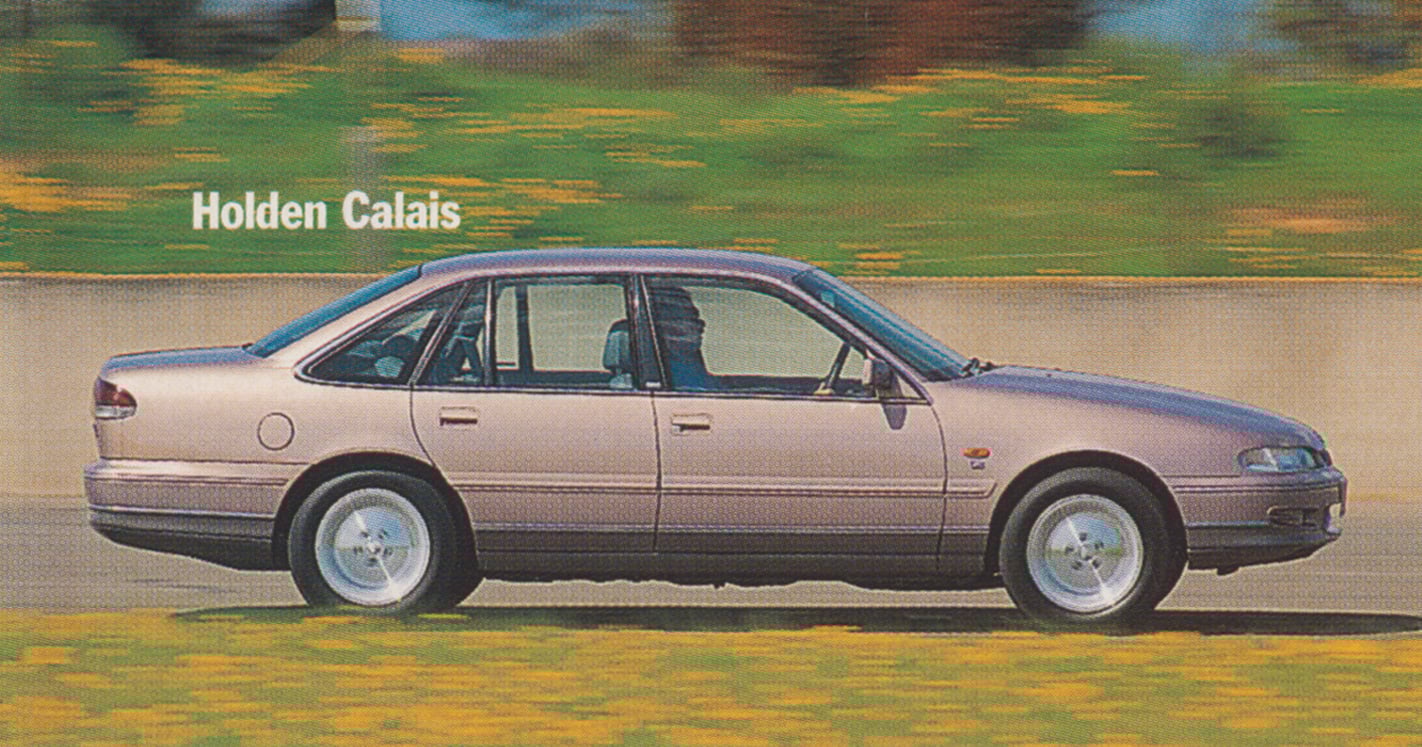
It’s not only from the outside that the Ford is the bigger of the two. The disparity shows on the inside too, because the Ghia’s cabin has more room all round.
On the road, you very soon find that differences exist as much in the driving as in the dimensions. Ride and handling bring constant reminders of the Ghia’ s extra size and mass. Not the steering, though. Unlike lower-line ELs, the Ghia sedan gets speed-sensitive power assistance which makes for light parking. Indeed it is a little too easy for our taste, and remains a touch remote at speed. Though the Calais also has speed-sensitive variable assistance, its wheel is the more firmly weighted at all speeds and generally gives a better sense of connection with the road.
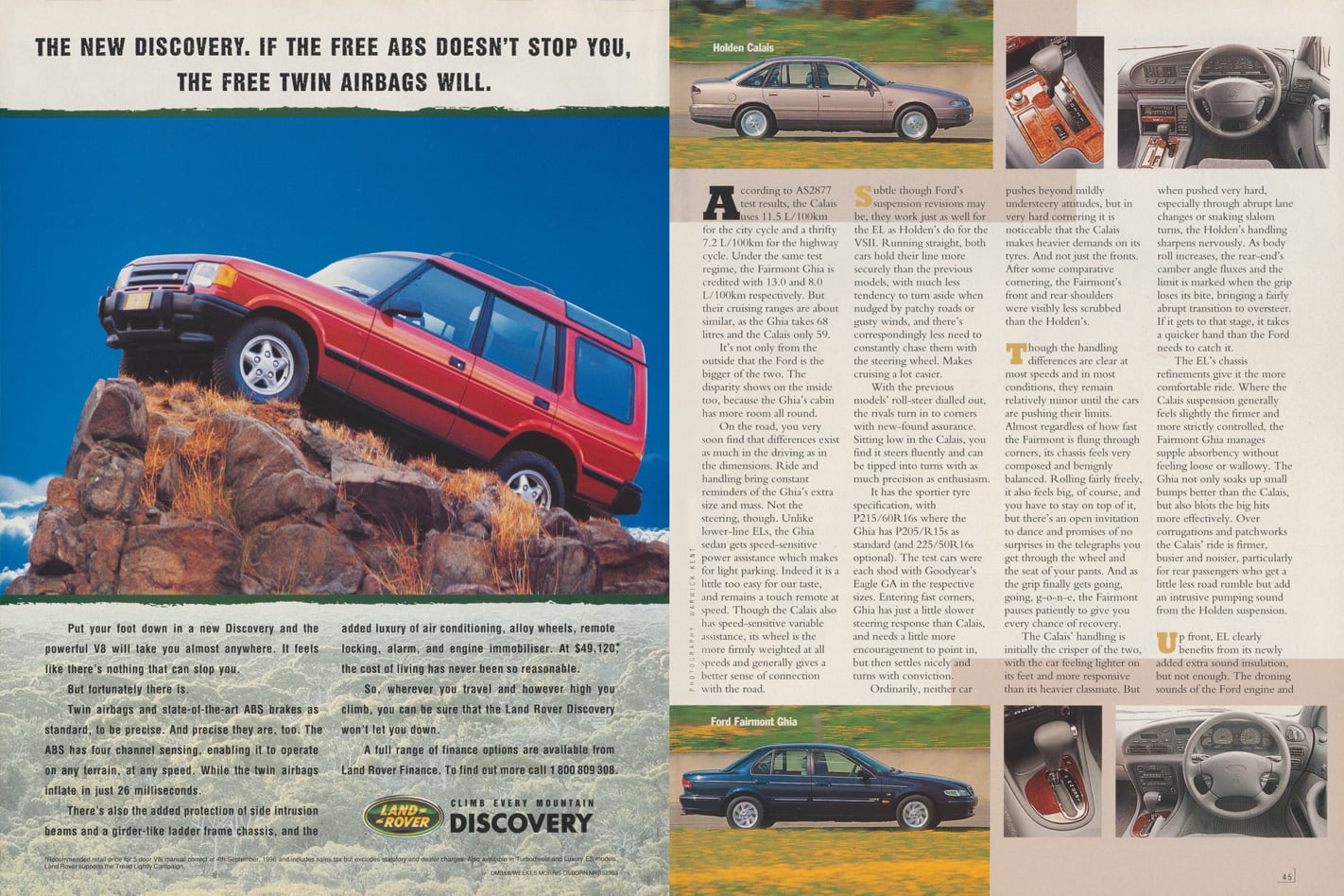
With the previous models’ roll-steer dialled out, the rivals turn in to corners with new-found assurance. Sitting low in the Calais, you find it steers fluently and can be tipped into turns with as much precision as enthusiasm.
It has the sportier tyre specification, with P215/60R16s where the Ghia has P205/R15s as standard (and 225/SOR16s optional). The test cars were each shod with Goodyear’s Eagle GA in the respective sizes. Entering fast corners, Ghia has just a little slower steering response than Calais, and needs a little more encouragement to point in, but then settles nicely and turns with conviction.
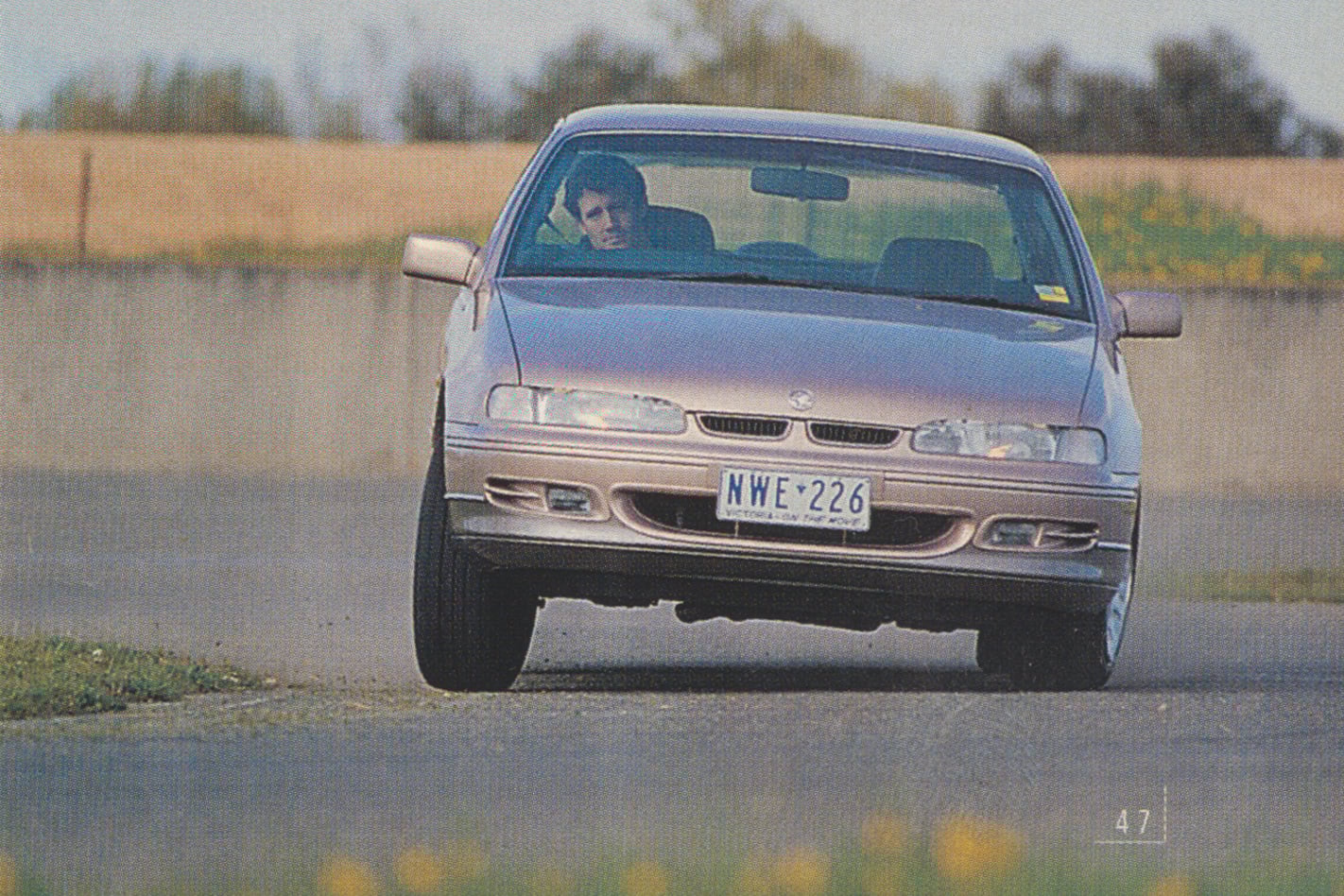
After some comparative cornering, the Fairmont’ s front and rear shoulders were visibly less scrubbed than the Holden’s.
Though the handling differences are clear at most speeds and in most conditions, they remain relatively minor until the cars are pushing their limits. Almost regardless of how fast the Fairmont is flung through corners, its chassis feels very composed and benignly balanced. Rolling fairly freely, it also feels big, of course, and you have to stay on top of it, but there’s an open invitation to dance and promises of no surprises in the telegraphs you get through the wheel and the seat of your pants. And as the grip finally gets going, going, g-o-n-e, the Fairmont pauses patiently to give you every chance of recovery.
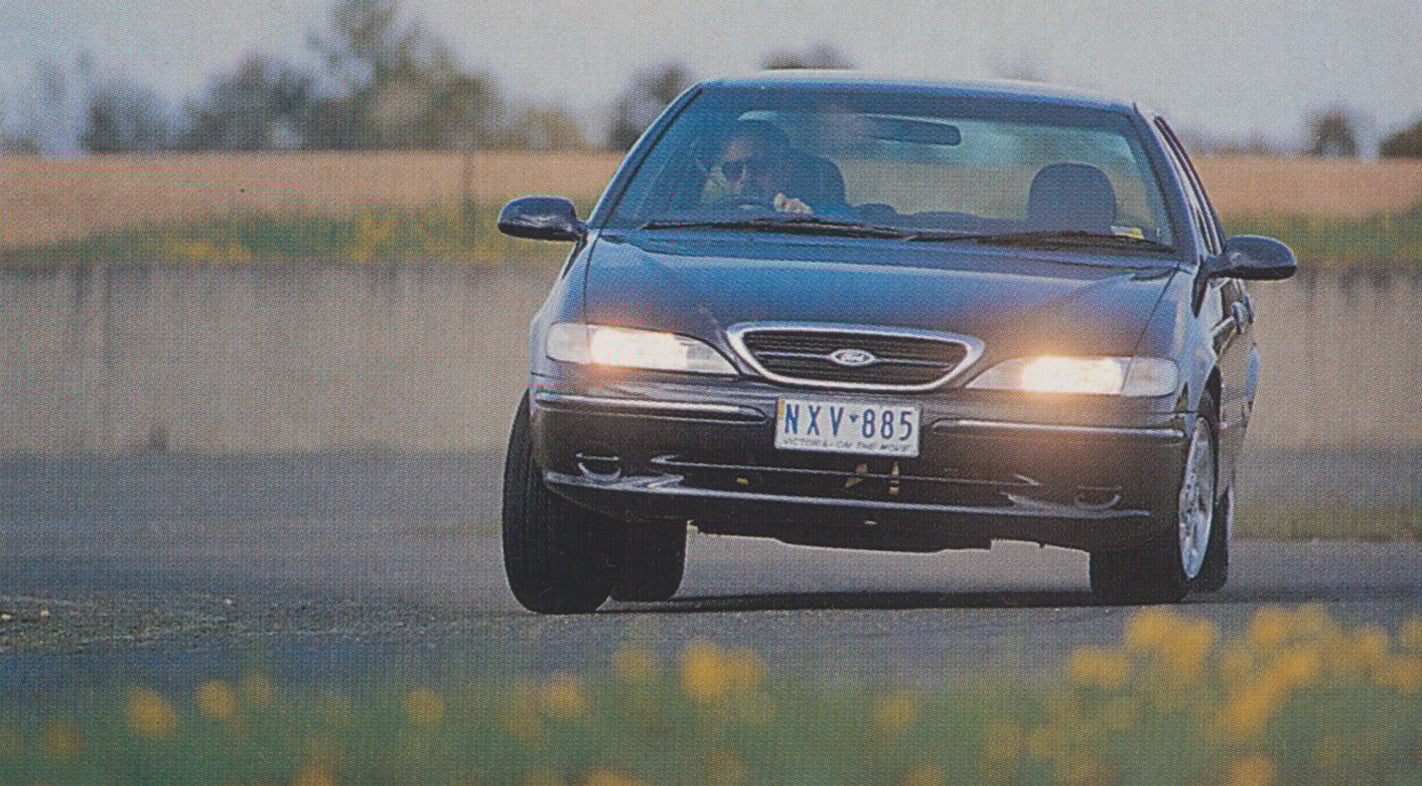
The EL’s chassis refinements give it the more comfortable ride. Where the Calais suspension generally feels slightly the firmer and more strictly controlled, the Fairmont Ghia manages supple absorbency without feeling loose or wallowy. The Ghia not only soaks up small bumps better than the Calais, but also blots the big hits more effectively. Over corrugations and patchworks the Calais’ ride is firmer, busier and noisier, particularly for rear passengers who get a little less road rumble but add an intrusive pumping sound from the Holden suspension.
Up front, EL clearly benefits from its newly added extra sound insulation, but not enough. The droning sounds of the Ford engine and wheezy transmission are slightly dimmed but as agricultural as ever. It’s still far louder and coarser than the Holden drivetrain which is perceptibly quieter, smoother and always feels several degrees more refined.
In back to back runs over the same very varied stretch of winding road, the Fairmont Ghia’s rear seat got the thumbs-up from our passengers. The Calais isn’t cramped by any means but the Ghia has more room in every direction and a more comfortable, more supportive bench as well. You tend to sit on, rather than in, the Calais cushion which also gets marked down for its raked backrest angle, non-adjustable headrests and poorly placed door armrest.
When it comes to arm-wrestling, the Ford wins hands down. Even if you can get your hand through the Holden’s squeezy door grip, the mould parting-line’s rough burr is dissuasive. Same for the front doors grips.
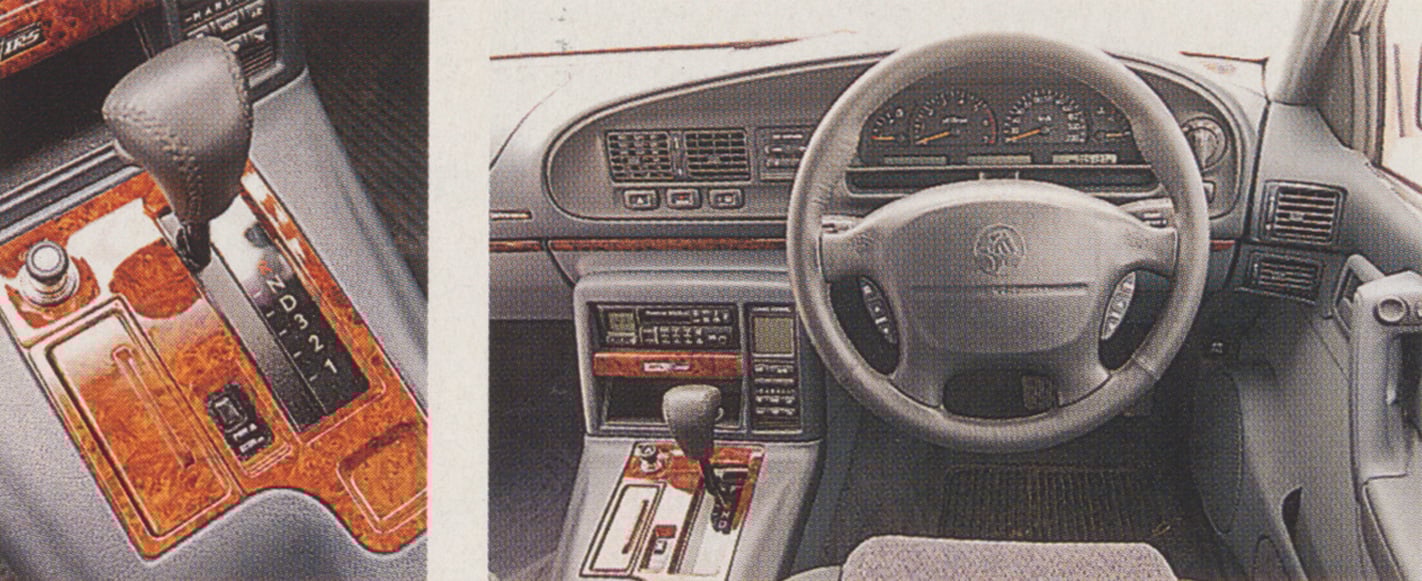
Indeed it’s difficult to find any two different areas of the Calais interior with the same grain finish, let alone the same colour.
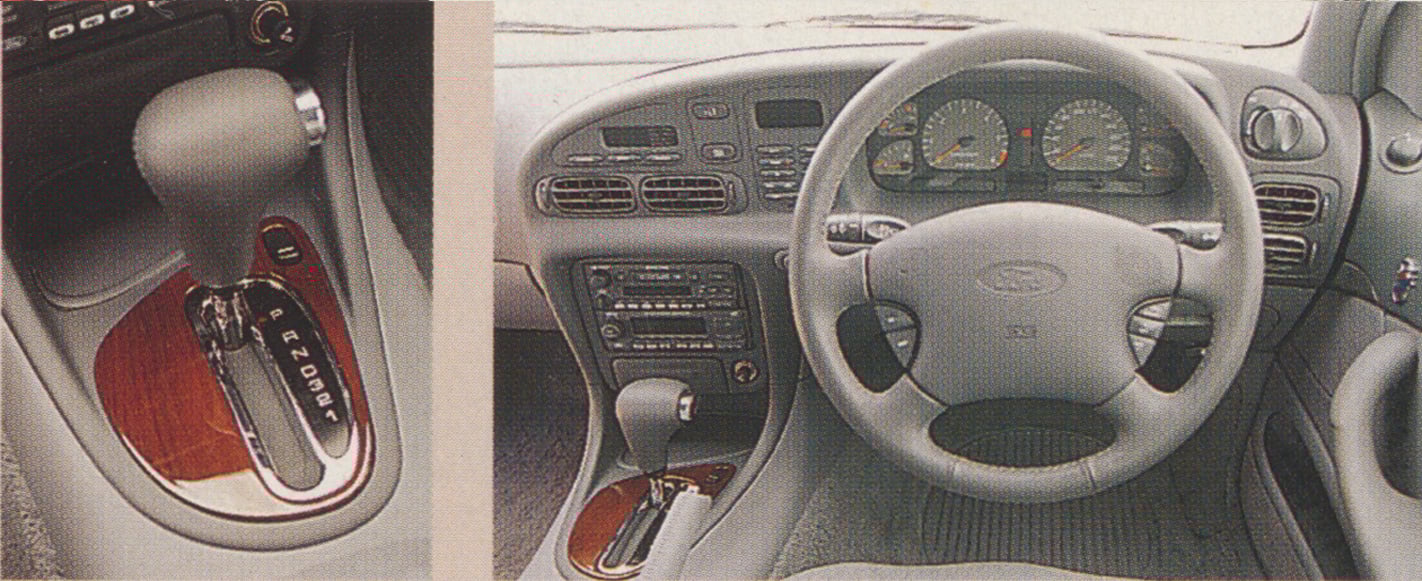
Throughout the Ghia’s interior, the trim and tones are well matched. The Calais cabin has never looked better, but is still uncoordinated. The Ford’s integration and modernity reflect a cohesive team effort. The use of polished woodgrain is revealing: it’s complementary in the Ghia, almost an afterthought in the Calais.
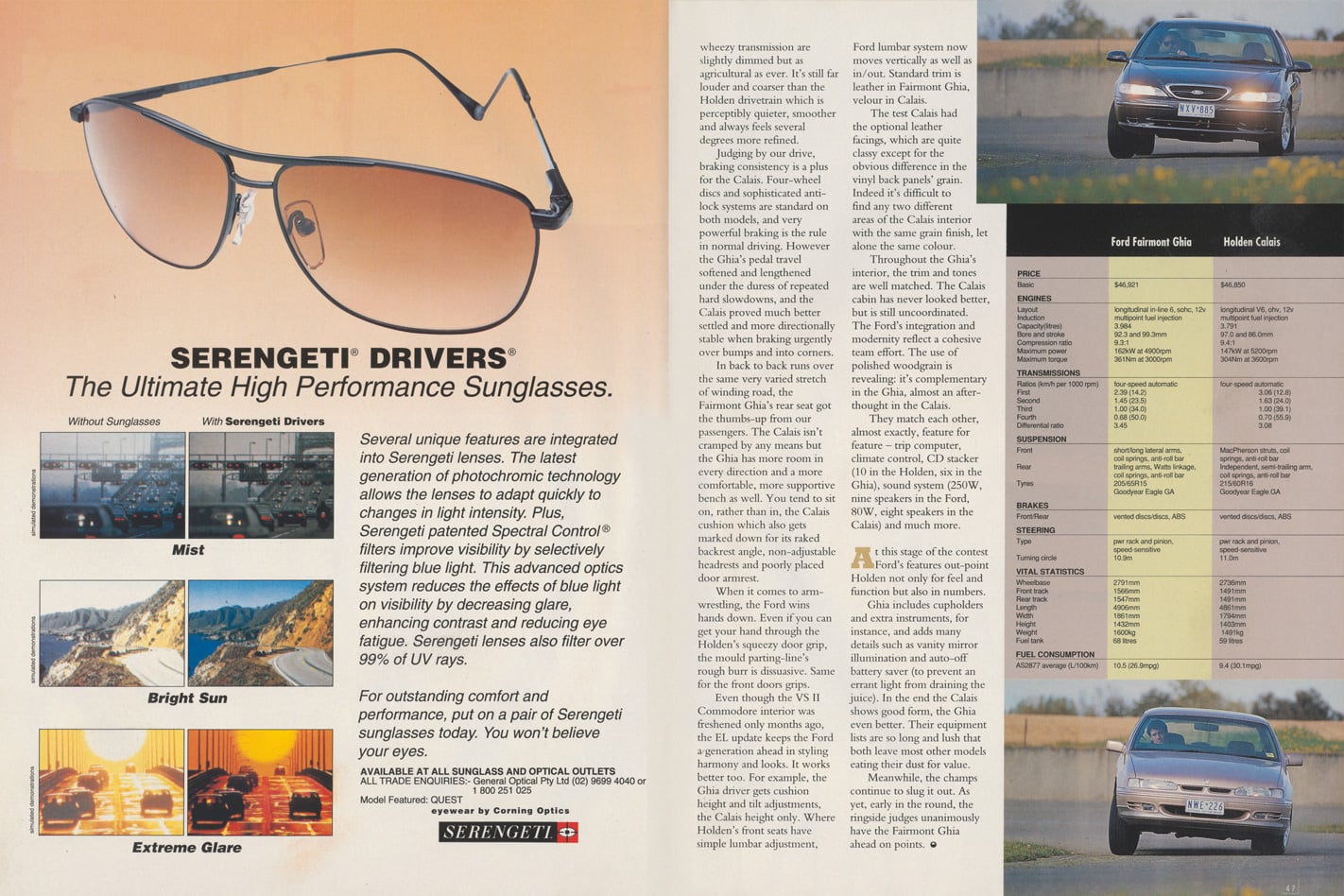
At this stage of the contest Ford’s features out-point Holden not only for feel and function but also in numbers. Ghia includes cupholders and extra instruments, for instance, and adds many details such as vanity mirror illumination and auto-off battery saver (to prevent an errant light from draining the juice). In the end the Calais shows good form, the Ghia even better. Their equipment lists are so long and lush that both leave most other models eating their dust for value.
Meanwhile, the champs continue to slug it out. As yet, early in the round, the ringside judges unanimously have the Fairmont Ghia ahead on points.