
And expectations are sky-high. For starters, as a small hatch it must do battle in Australia’s most popular market segment, up against the big-selling Mazda 3, Hyundai i30 and Toyota Corolla.
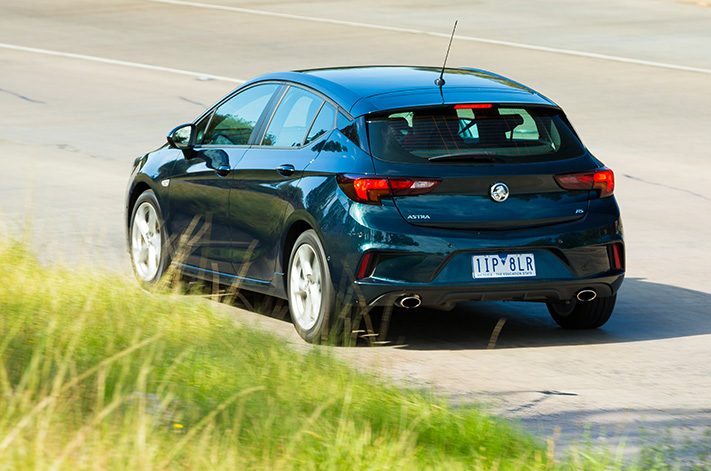
And as the latest Holden model to be sourced from Europe (the 2018 Commodore will be next), the natural rival of this Polish-built Astra is Volkswagen’s supremely polished Golf VII.
Talk about a high bar.
With a nameplate stretching all the way back to 1984 (and badge-engineered Nissan N12 Pulsar origins), the Astra brand has cachet in this country, despite an on-again, off-again relationship spanning those three decades.
There’s certainly a lot more goodwill for Astra than there ever was for the Cruze, even though initial sales have been pretty disappointing. Punters will expect great things from it, and so do I. But I’ll be honest – the new Astra hasn’t exactly dazzled me so far.
We praised it for its well-rounded performance in our recent 10-car small hatch/sedan Megatest, finishing second behind the Golf, yet there were elements that didn’t quite feel up to snuff to me.
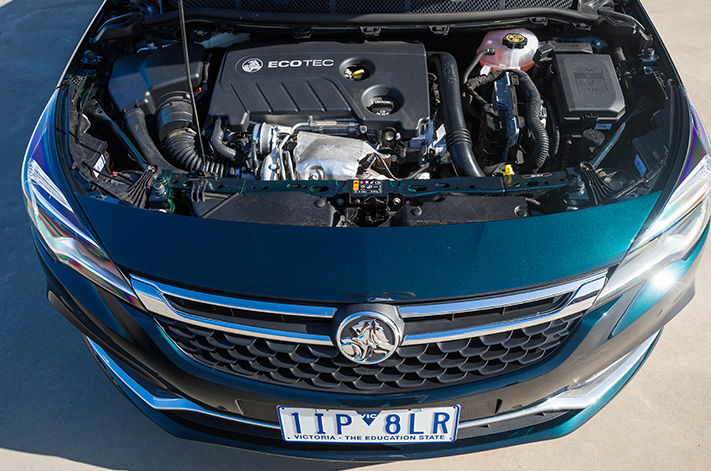
The way it drove wasn’t one of them. Astra clings to corners like velcro and the R’s smooth, perky 110kW 1.4-litre turbo-petrol four is matched to a fine six-speed auto with a superb idle-stop system.
Ride quality is well-controlled, meaning the base Astra has merits beyond its sporty handling, so if not for the Golf’s existence, the Astra would have a Megatest crown to its credit.
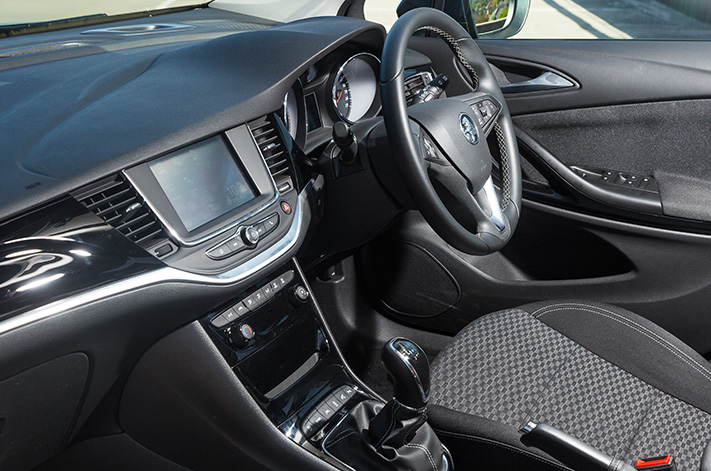
Yet the Astra’s cabin quality isn’t quite as sparkling as its German DNA would suggest. Granted, it’s far from having the cheapest-feeling interior in its segment, but I find the GM-generic design and execution a little wide of the mark for a Euro hatch.
However, the design is a step up on the previous Astra’s button-festooned cockpit – and leagues ahead of the cheap and dated Cruze it replaces – though I find the mix of surface textures and materials cheapens it.
The door handles flex and creak as you swing the doors shut, the outboard rear passengers rub their elbows on a rock-hard plastic wheelarch trim, and its glossy piano-black dashboard plastic will no doubt become a magnet for fingerprint smudges, dust and scratches.
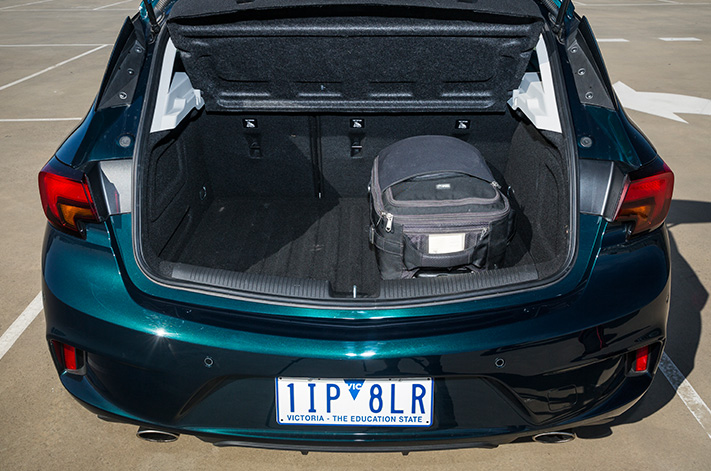
Then again, this mid-grade Astra RS manual that will be calling my driveway home for the next four months has some distinct positives.
There’s a seriously grunty 147kW 1.6-litre turbo-petrol engine under its lid, for starters. And being an RS grade, it also scores bingle-avoiding autonomous emergency braking (AEB) and blind-spot monitoring as standard – useful gear for highway commutes.
A leather-clad steering wheel improves the cabin ambience somewhat, plus there’s keyless entry and ignition to bring a touch of luxe that’s absent from the base Astra.
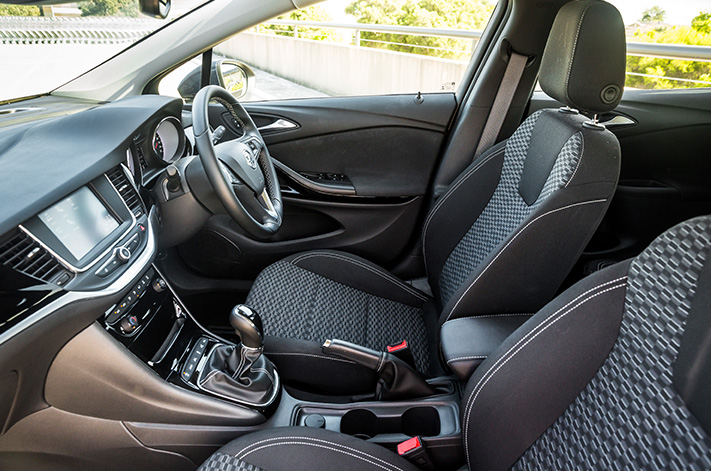
Sure, it’s cloth that covers the seats and door cards, but it’s a pleasant weave and I’d much prefer fabric to the synthetic ‘pleather’ that’s pitched as the premium upholstery in Korean-built Holdens.
Then there’s the appeal of what lies in the left corner of the driver’s footwell. I’m still a sucker for cars with three pedals and a DIY gear lever, and I’m hopeful my love of a good manual ’box will go some way towards overpowering my distaste for coarse-grained cabin plastics.
Plus, the Astra R has already proved that there’s a fine dynamic base beneath this car, so a manual gearbox and 37kW/60Nm more muscle should only enhance that.
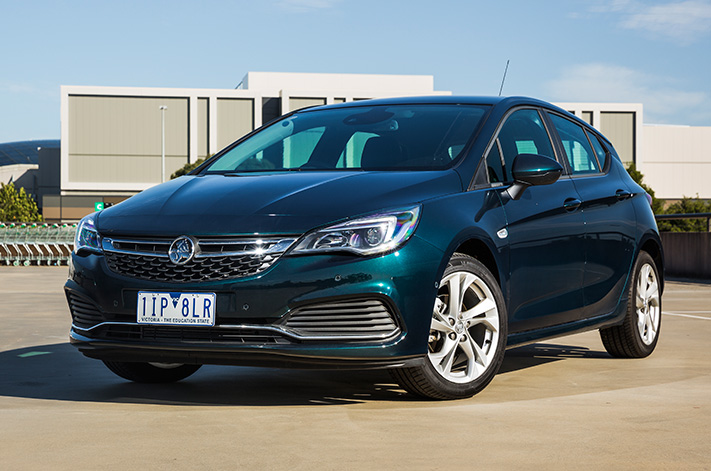
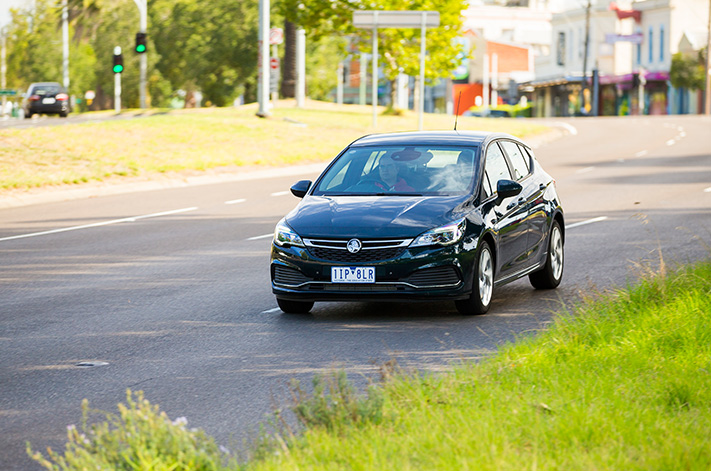
Overall impressions so far are mixed. When the dark-coloured paint is spotless, the Astra looks incredibly handsome for a mainstream hatchback, and the 1.6-litre powertrain has vast reserves of mid-range torque that limits the need to row through the six-speed manual gearbox.
But on the other hand, I’m still yet to properly warm to that interior. Am I just being too harsh?
Mid strength
The Astra RS sits in the middle of Holden’s model hierarchy wearing a $26,490 sticker, and it’s arguably the pick of the bunch.
A larger, more powerful 1.6-litre turbo-petrol, a glut of electronic safety aids and none of the arguably unnecessary frills of the range-topping RS-V, such as a heated steering wheel and ambient interior light tubes.
But it’s missing two biggies: a proper integrated sat-nav and rear-seat air vents. Smartphone mirroring gets around the former, but the lack of the latter is not cool.
Whip cracker
Already I’m starting to wish there was greater differentiation between this mid-grade RS and the base Astra R.
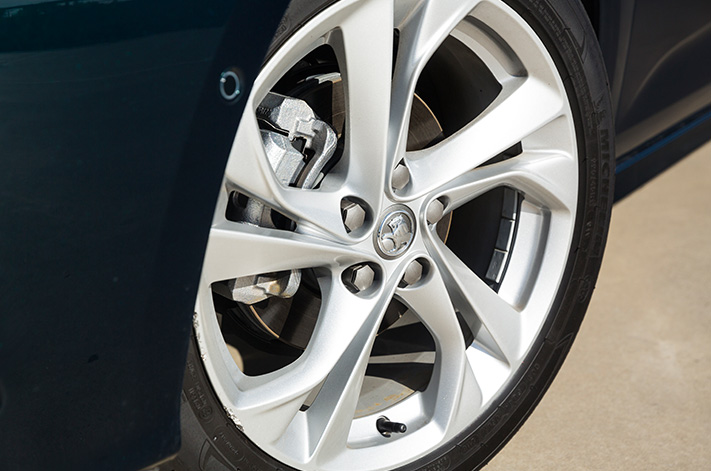
When you’re spending a few grand extra on your whip it’s nice to have a car that’s identifiably different to the boggo variant, but the five-spoke alloys (in the same 17-inch size), some extra chrome on the grille, a leather-wrapped steering wheel and an extra chrome-finished tailpipe don’t make the RS massively different … until you’re in the driver’s seat experiencing that wonderful 1.6 turbo.
Update #1
By Tony O’Kane
IT’S zero-dark-six-fifty, I’m bleary-eyed, uncaffeinated and on my way to work.
Funnily enough this is one of the more enjoyable moments in my day, and I have my trusty moss-green steed to thank for that.
Though I’m yet to warm to the Holden Astra’s idiosyncratic interior, I’m definitely gelling with its joyously flexible powertrain. Its four cylinders may only displace 1.6 litres, but thanks to some clever turbo trickery this small-engined hatch has surprisingly muscular legs.
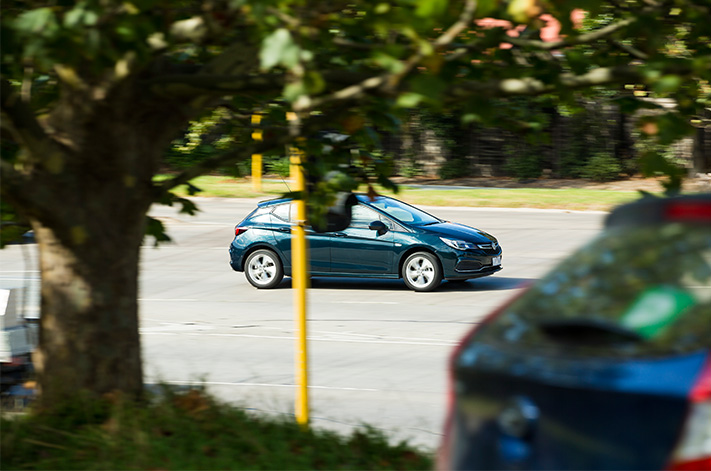
Torque is abundant from 1500rpm and up, and though my car is a theoretically terrible-at-commuting manual gearbox version, the flexibility endowed by this twist-happy 1.6 means that’s not such a big deal. Bear in mind, 300Nm of torque is huge for a small hatchback.
Skipping second gear is possible if you time it right, reducing the amount of times your left hand needs to meet the shifter. Fifth gear, meanwhile, covers a range of speeds that stretches from suburban cruising all the way up to 110km/h without feeling strained – but sixth gear is a better pick if you want to drop revs and conserve fuel on the highway.
School zones? Whatever. Keep it in fifth, it’ll happily deal with a forty-kay crawl without complaint.
And if the road is flat, slipping it into sixth at 50-60km/h is perfectly kosher. It happily lugs along in the lower reaches of its tachometer, sipping fuel with monk-like restraint. In fifth, it’ll lug up surprisingly steep hills at 60km/h thanks to the turbine’s willingness to spool from just above idle.
And this engine is quiet. Unlike some engines in the segment, especially naturally aspirated contenders, the Astra’s 1.6 is quiet and smooth throughout its rev range. It feels relaxed and understressed, which is precisely how cars in this segment should feel – hot hatches being the sole exception.
But to drive, the Astra feels a lot more substantial than your average hatch. Yes, it fulfils the functions of commuter/grocery-getter, but there’s a built-in sporty edge.
The Astra’s appeal is more multi-faceted than I first thought. There’s no question there’s proper warm-hatch performance in here that’s begging to be unleashed, and the Astra RS’s 147kW and 300Nm outputs back up that notion.
Remember: those stats would have qualified it for entry to the fast-hatch club ten years ago. Is the chassis of the same calibre? Methinks it’s time to head for the hills.
Update #2
By Tony O’Kane
SMARTPHONE mirroring is a godsend in a car that has a touchscreen display but no built-in sat-nav capability, but there are two minor issues with this in the Holden Astra.
Holden (well Opel, really), provides a handy receptacle at the base of the centre stack to hold your phone. Unless you’re a phablet-toting type, you’ll find it to be a thoughtful touch … until you decide to charge the thing or take advantage of Apple CarPlay or Android Auto.
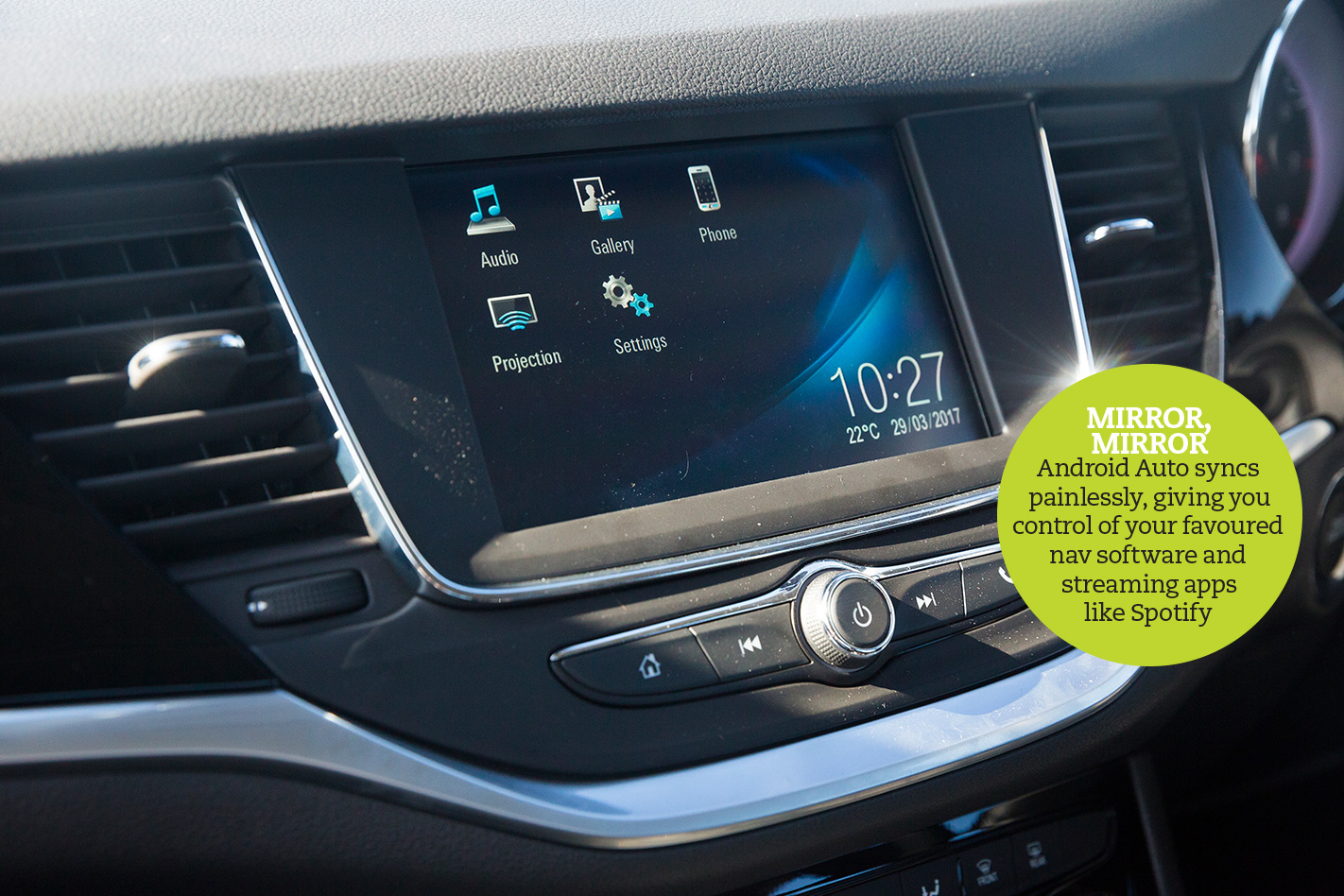
The only USB port in the car is buried in the centre console bin, so if you want to connect your phone and use that nifty slot at the same time, you’ll need a cable long enough to stretch the 60cm gap between port and holder. Which puts a cable right over your cupholders and gearshifter. Which is annoying, especially in a manual.
More irritating, though, are the parking sensors and their habit of shrieking at you when you least expect it. Sitting stationary in traffic? Those ever-vigilant sensors will sometimes chirp as they sense cars in adjacent lanes – even if those cars aren’t moving either.
Have you already finished parking and put the gearbox in neutral and the handbrake up – both clear signs that you intend to stay put? The sensors don’t care about your intent. They’ll squawk if there’s an object within a metre of your perimeter until you hit the off button – an action that will quickly become reflex.
Other qualms become apparent when sitting in the back seats. The seats themselves are fine – great, even, thanks to good under-thigh support, plentiful legroom and a relaxed backrest angle – but those occupying a window pew will be rubbing an elbow against a hard plastic trim panel. No biggie on short trips, but there’s potential for discomfort on longer journeys.
On top of that, there’s also a lack of ventilation for those backseaters. While cars like the Volkswagen Golf and Hyundai i30 give those in the back their own air vents, the Holden Astra RS has no such provision. Not the biggest black mark, given rear vents are still far from universal in the small hatch segment (Mazda 3, Honda Civic and Subaru Impreza omit them too, and they’re some of the better choices around).
It may, however make a difference for people who live in hotter climes than dreary Melbourne.
Update #3
By Tony O’Kane
FAMILIARITY breeds contempt, so they say, but the Holden Astra RS proves that there are exceptions to that cynical maxim.
The primary reason why I’ve yet to grow weary of the Astra is the fact that it is an astonishingly well-sorted drive. Scratch that: it’s just plain fun.
And how could it not be? With 147kW and a mega-stout 300Nm, the Astra’s 1.6-litre donk has performance metrics that, had it rolled into showrooms a decade ago, would have put it ahead of a Golf GTI for torque and equal to the German hot hatch for power.
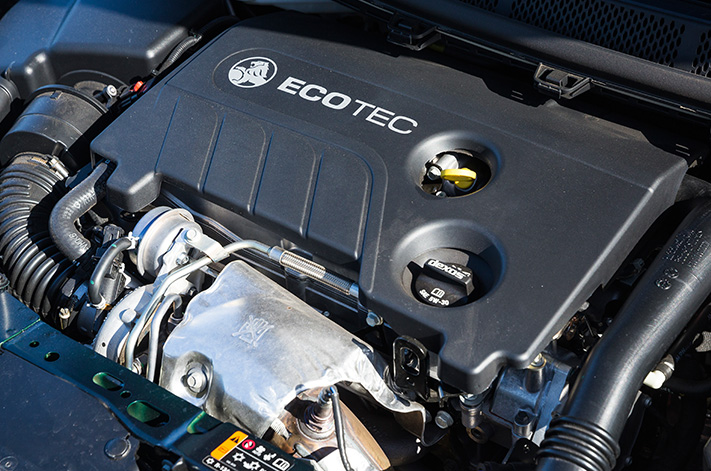
Meld that considerable muscle with suspension that manages to be both supple and dynamic, and the result is a car with a much feistier nature than its demure exterior suggests.
There are some downsides, though. All of that torque is a blessing and a curse: it’s wonderful for overtaking, highway on-ramps and restoring honour in rolling-start drag races, but it also generates ample axle tramp off the line in slippy conditions. There’s more than a smidge of torque-steer tug under hard acceleration too.
Does it spoil the experience? Is the Astra’s 1.6 – gasp – too powerful? Last month’s city schlep had me wondering whether the chassis could contain all of that energy on a winding mountain road, so it was time to head beyond Melbourne’s city limits to discover whether comfort-biased spring rates are as good at dispatching corners as they are at ironing out speed bumps.
Pointing the Astra’s plasti-chromed nose toward the Yarra Valley, it takes two hours before twisty tarmac appears through the windscreen. At the first corner, it’s apparent the engineers tasked with honing the Astra’s suspension are keen drivers.
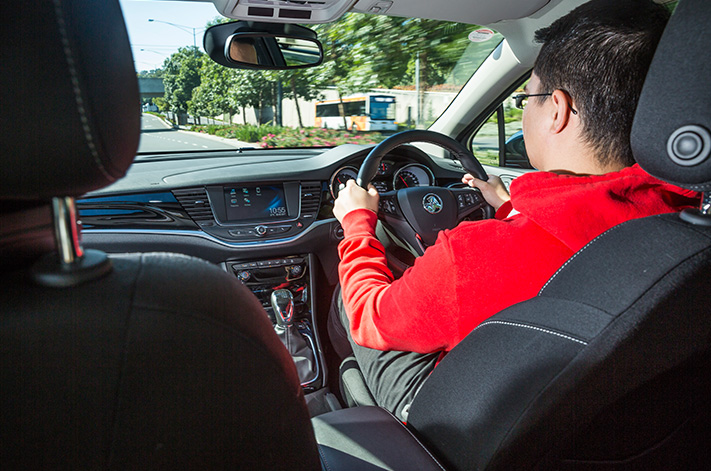
Even with a relatively unsophisticated torsion-beam rear, it absorbs big bumps with aplomb yet happily tilts into corners in a fashion that recalls hot hatches of yore. The steering is almost perfectly weighted for this kind of driving too, and feels natural and tactile for an electrically assisted rack.
Yep, torque steer is ever-present when you’re thumping the right pedal, but it’s not strong enough to wrench the wheel from your hands and, if anything, adds a little zest to the Astra’s driver involvement.
A bigger issue is traction. Apply the full dose of torque and the inside front tyre struggles to maintain purchase when accelerating out of a corner, the traction control not proving clever enough to apply a dab of brake on the spinning wheel.
A limited-slip differential would help, or at the very least a more sophisticated traction-control calibration.
But dynamically speaking, these are the only sizeable blots on the Astra’s ledger. Don’t let its librarian looks deceive you – the Astra RS can thrill on the right road.
Malformed knob
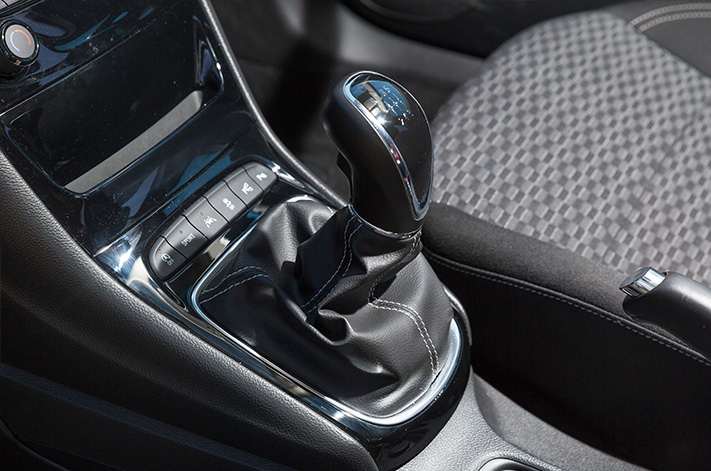
Shifter ergonomics may not be so critical in an automatic, but they’re vital in a manual – why bother with the three-pedal option when your left palm will be forever punished by an uncomfy knob?
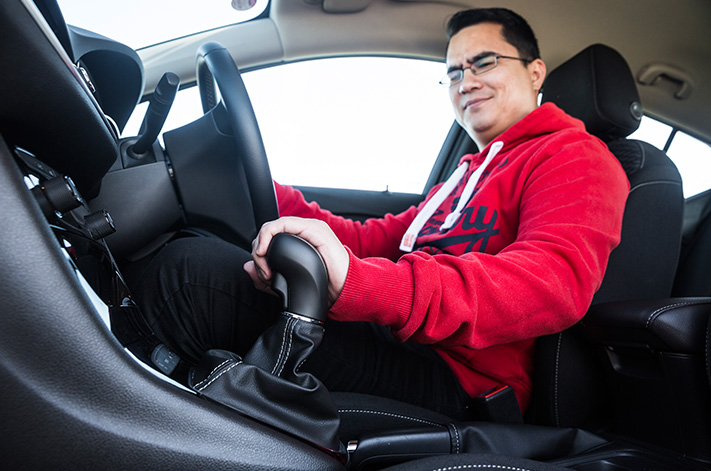
Astra’s shifter fails the ergo test due to the reverse lockout button being placed right where your fingers curl around, and that transparent plastic window on the top is begging to be scratched up by jewellery.
JUST because you’re one of the most respected and long-serving senior engineers in the global automotive business, and just because you’ve been peeling off hot laps of the famed Nurburgring for over 40 years, does not make you immune from that exchange we’ve surely all had at one point or another with our life partners.
First published in the July 2017 edition of Wheels Magazine, Australia’s most experienced and most trusted car magazine since 1953.
Albert Biermann, 61, who has been serving as Hyundai’s executive vice president for vehicle testing and high-performance development since April 2015, laughs and his eyes sparkle when he recalls how his wife sometimes critiques his driving:
“She likes to relax and do her knitting in the passenger seat, so yes, many times, on an autobahn, perhaps in an M5 or M6, maybe at 280km/h and being jolted in a sweeper, she would look at me; ‘Albert, please; is it really necessary to drive this fast?’” “I would always answer, ‘Yes!’”
Biermann probably has greater justification than most for driving the wheels off any car he jumps in. He was a BMW career man since he joined the company in 1983, and helped shape the M Division’s back catalogue into the icon-studded line-up we now (mostly) revere.
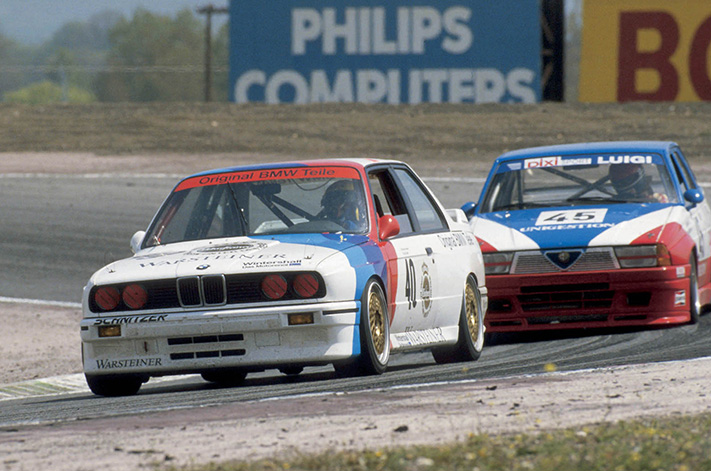
He holds only one regret when it comes to that little four-pot giant-killer: “I didn’t stash one away for myself in my garage…”
To understand Biermann’s almost preordained rise at BMW, we need to go back to his upbringing in Germany, where he was the youngest of three sons to a BMW-driving, motorsport-passionate father. Some of his early automotive memories are of joining his dad and two brothers on regular pilgrimages to race at the Nurburgring.
“The drive with my father to the Nurburgring was like his shakedown testing,” Biermann laughs. “From Cologne to Nurburg there was no autobahn, it was a B-road; twisty, lots of corners. He could really tear that road apart…”
Biermann’s father died suddenly from a stroke in 1972 when Albert was just 15, but his passion had been passed on. He learned to drive in a VW Beetle, but passed his test in a BMW 2002 at age 18. Later he raced and rallied a French-made Simca: “the best power-to-dollar car I could get my hands on.” He also competed with considerable success in autocross almost every weekend.
His career trajectory at BMW would see him filling a more diverse range of roles than anyone before him, or since.
He spent a three-year stint with BMW North America, including a senior engineering development role, where he gained a greater understanding of perceived American tastes. Management, he says, insisted Americans wanted soft-riding cars, so he built a lightly sprung, pillowy-damped E36 mule for them.
“It was a horrible car,” he laughs. “Once they sampled that, management pretty much said, ‘Okay, don’t do that. Do it your way.’” Enough Americans quickly came around to Biermann’s way of thinking.
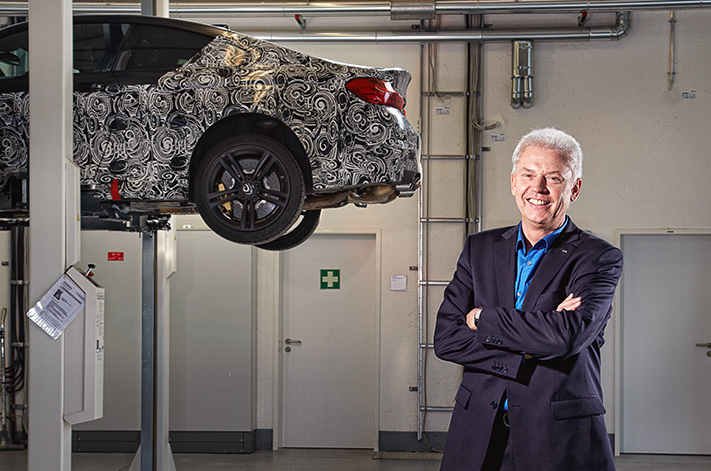
He took over M Division in 2008 right around the time of the shift to turbocharging. Did he have concerns about the loss of high-revving atmo engines? “Of course, but there was a clear position at board level. There was no room for discussion,” he says flatly.
“I stayed for seven years. If I’d stayed on at M, I would have finished the next [F90] M5 then retired. At BMW you have to retire at 62. That was the plan.”
But he was clearly falling out of love with the hallowed M.
“I was not so excited there anymore. We had some management changes; the perception at board level of M Division had changed. I was thinking, ‘maybe this is not all that M should be.’”
So, I ask, how did the transition to Hyundai occur? I imagine some high-powered head hunter on the job, with lots of secret meetings and covert emails from an offshore server or something.
Not so, says Biermann. “No, someone just called me on a Friday evening and offered me a job. I told them I have no interest. Yet they called again a few weeks later.”
He claims to have had “no real clue about Hyundai/Kia.” But his curiosity had been piqued. “I then looked into it. I started by learning about Korean history; the country.
Then I visited Korea, met with senior Hyundai management, heard the plans for motorsport, the high-performance division, Genesis luxury brand, and so on…
“I received so much respect, and I could tell there was a pragmatic approach; a very different culture. I thought, ‘okay, this is something I would love to do.’”
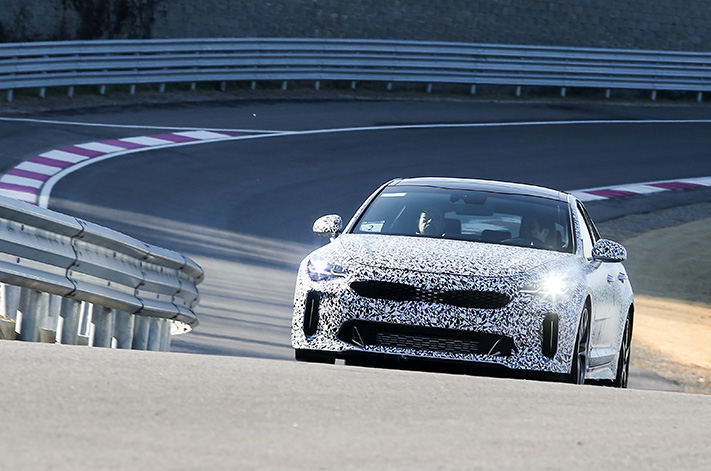
He’s based 20km outside of Seoul, and has a driver who takes him to Namyang each morning so he can work from the car, or, “if it’s been a very big company dinner the night before, maybe get some extra sleep.”
He loves the boozy company dinners that are part of the Korean culture. “The Koreans have a side, like little kids, after plenty of soju. They open their hearts; open their minds. It’s wonderful; they get so excited.”
Biermann oversees three divisions staffed by over 1000 people, and two vast test centres: one for dynamics-related work, the other for systems testing, like NVH, HVAC, durability, aero, etc.
With such a broad spread of responsibilities, I’m curious as to how he divides his time: “Do your allocate time to specific projects, and concentrate largely on each one individually?” I ask.
He shakes his head ruefully: “No, it’s more like where the fire is burning the most … that’s where I run to. The Korean engineers are very ambitious; eager to please. If I say, ‘I wish we had this [certain component or system] they come back to me in a few days and want to show me a solution. So I’m always under the gun.”
The N Division had been in gestation for around two years before Biermann arrived in April 2015 and the WRC program was up and running. Someone needed to join the dots.
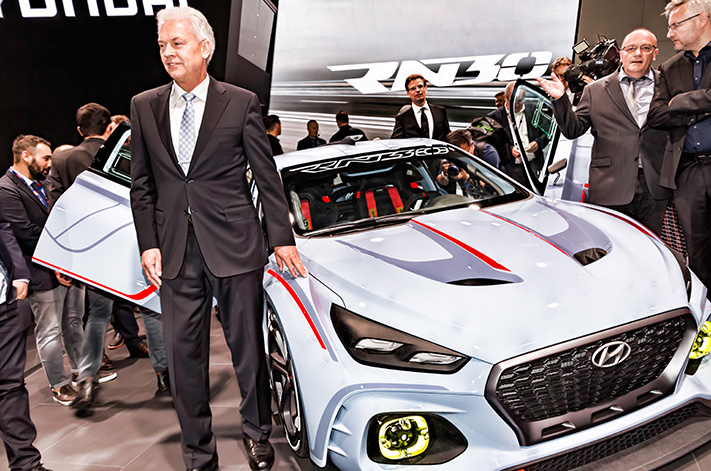
“There were a lot of ideas; a lot of benchmarking had been done, especially for i30N. Project management was partly in place. There were many skilled engineers; they just needed the guidance.”
But Biermann is adamant the car-buying public will feel his presence not just in the high-performance variants from N division, but eventually in every Hyundai and Kia that rolls off the line.
“The high-performance side is really more my hobby,” he grins.
As for a hi-po Genesis N variant, he shuts that rumour down. “The Genesis brand is not heading in that direction. Those guys are focusing on luxury and refinement, not so much on outright performance.”
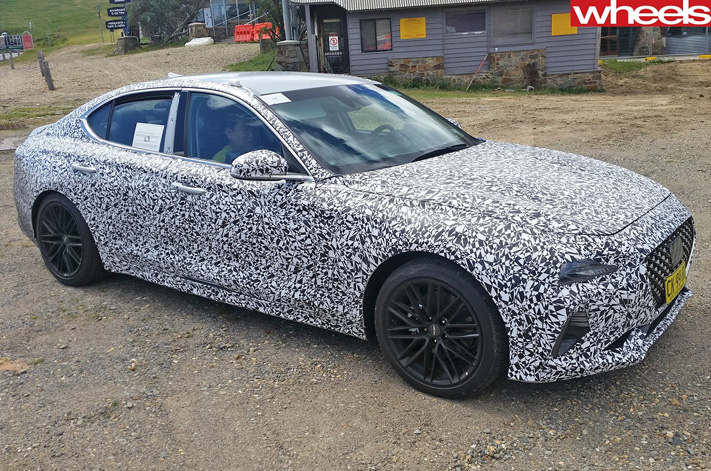
But that said, the G70 Sport variant will have 275kW, he says, with a shorter wheelbase than platform-mate Stinger, and less weight. “It’s not like an N car; not track focused. But still a very nice drift machine with the ESC off. You’ll like it,” he assures me.
I come back to the retirement question, given that at BMW it’s a mandatory 62. What is it at Hyundai? He raises his eyebrows and beams, genuinely, “I don’t know!”
Clearly there’s a seemingly unending set of challenges rolling out in front of him, and he appears delighted to be able to channel his vast engineering smarts into tackling them. He’s determined to not just produce Hyundais and Kias that are better to drive, but shift our entire perception of the two brands.
Then there’s his obvious and deep appreciation of Korea itself. “There’s beauty everywhere there,” he says. “It’s not always obvious, but if you look you’ll find it. My move to Korea has provided a real enrichment of life.”
It would seem corporate Hyundai and Kia feel exactly the same way.
Price & Equipment – Winner: Toyota C-HR
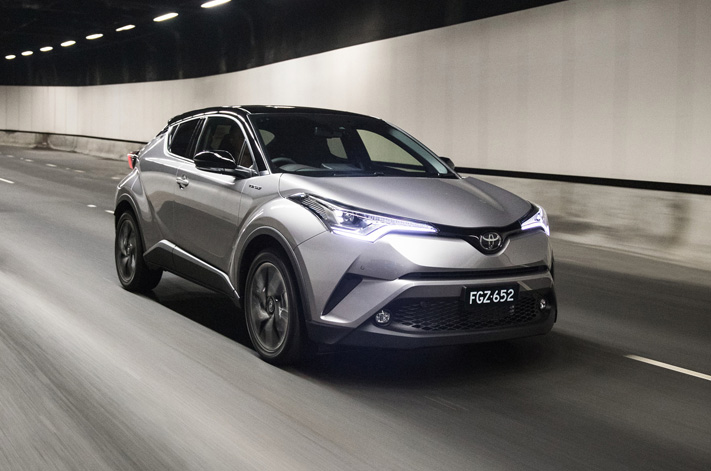
The $29K, FWD auto C-HR is pricey for a base baby SUV,but comes genuinely well equipped. Among the standard stuff are AEB, active cruise, lane-departure warning, blind-spot monitoring, reverse cross-traffic alert system, and front and rear parking sensors. There’s nothing you need in the up-spec C-HR Koba (just luxuries you might want).
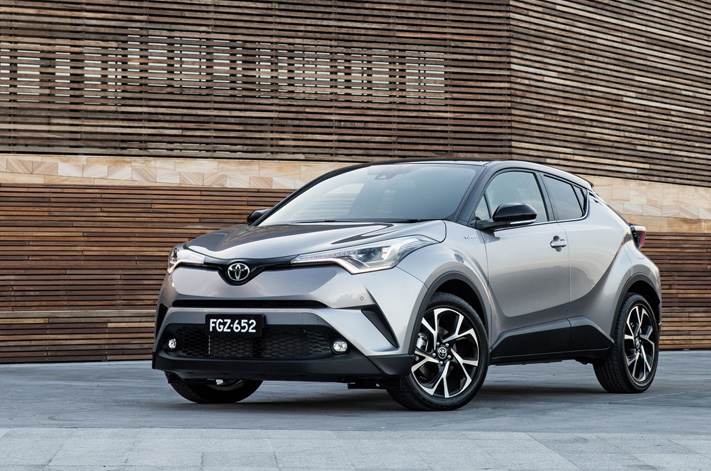
The $25K HR-V VTi’s autobox, tyre deflation warning, multi-angle rear camera and infotainment system with standard sat-nav represent a solid base spec in isolation, yet seem a bit sparse alongside the full-featured C-HR. Front fog lights, rain-sensing wipers, dual zone air-con, and a knee airbag all feature in the Toyota but not here.
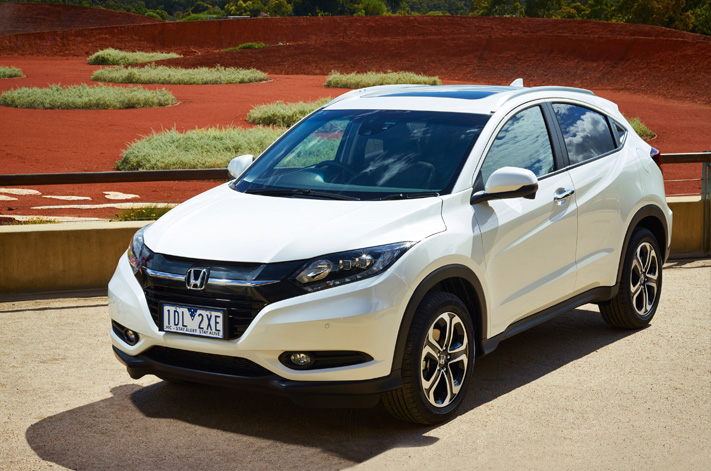
Interior & Versatility – Winner: Honda HR-V
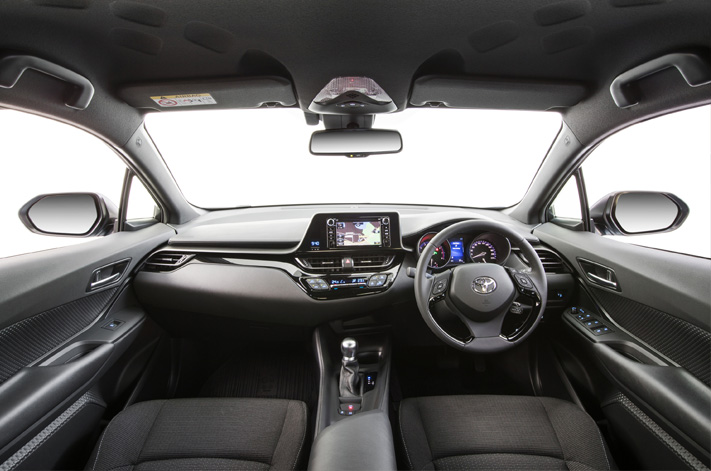
Dash design is neat, though big touchscreen interrupts the flow, while quality is a notch above usual Toyota fare. Low front seats hint at sportiness, and it’s roomy if gloomy in the back because of the upswept C-pillar. The C-HR can’t match the HR-V for luggage space and the loading lip is high, but 377L is still decent for this class.
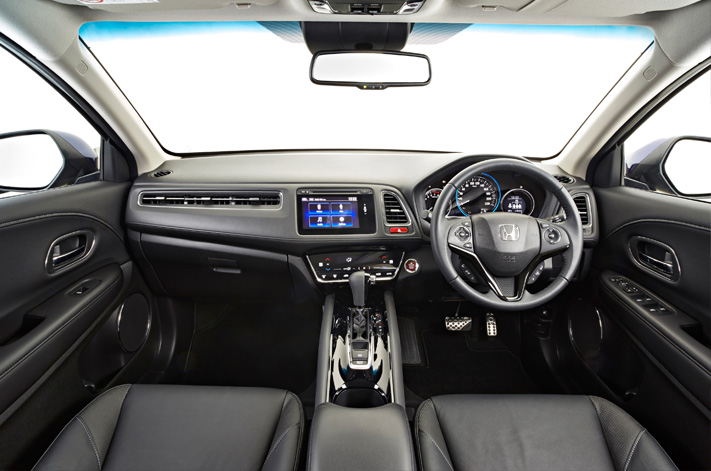
Honda’s materials quality and finish are decent, though HVAC vent placement is unusual. Front passengers seem to sit higher than in C-HR, but still get a high console for a sort-of sporty feel. Rear seat is more accommodating, and Magic function gives the Honda HR-V a versatility edge. Cargo bay is capacious, at 437 litres.
Performance & Economy – Winner: Toyota C-HR
They share basic drive layouts – a CVT auto and front-drive – but diverge under the bonnet. The C-HR’s 85kW/185Nm 1.2-litre turbo petrol four gives it a flexibility advantage for urban ducking and diving. Not that it has much more twist than the Honda, but because peak torque starts at 1500rpm (versus 4300rpm), making it get up and go quicker.
The Honda’s SOHC petrol 1.8 isn’t a high-tech unit, but does a good job thanks to a 20kW perkier top end and lighter kerb weight (1317kg plays 1375kg). It sips from a 50L tank like its rival, while its call for 91 RON (rather than 95) offsets a slightly greater official fuel use of 6.6L/100km (the C-HR uses 6.4L/100km).
Ride & Refinement – Winner: Toyota C-HR
The C-HR, on 17s, handles lumpy roads with a mature sense of absorbency and generally good refinement, the double-A-arm rear suspension helping to keep the rear-end planted. All Toyota needs to do is dial down the coarse surface noise and it’d have a baby soft roader with luxury to belie its price and positioning.
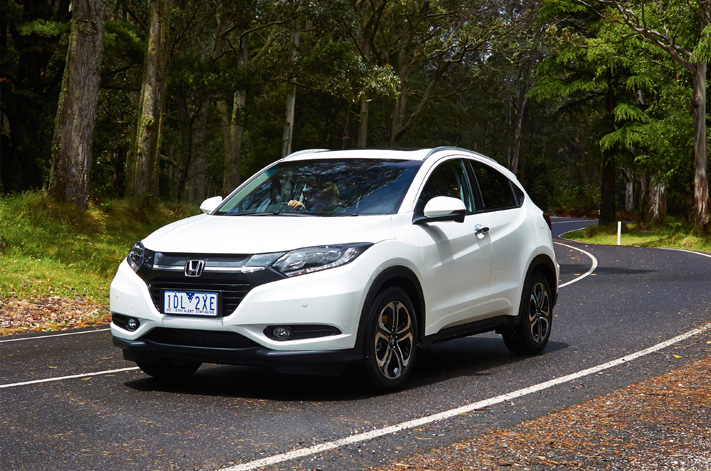
The HR-V, on 16s, and suspended on front struts but a less sophisticated torsion beam rear end, is taut, yet fails to nail absorbency or control, resulting in an often unsettled ride. Like the Toyota, it can get a bit loud on less-than-smooth surfaces, but elsewhere occupants are well isolated from wind and engine noise.
Steering & Handling – Winner: Toyota C-HR
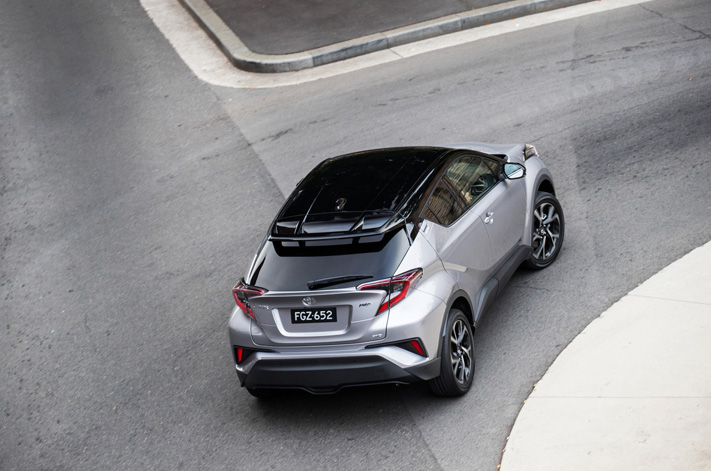
Better sorted springing and damping (and the superior rear suspension) sees the Toyota deliver enjoyable handling to match the alert steering and the SUV-coupe promise. A sport mode, which is accessed via the central screen, weights up the steering and, as such systems go, delivers a pretty well-judged serving of meat.
The HR-V’s steering is flaccid at the straight ahead, and never delivers a strong sense of connection, but it’s light and smooth and answers most questions asked of it in the ’burbs. Demand more – particularly on an undulating or tight road – and the chassis’ lack of discipline and precision leaves the HR-V as an okay handler, not a great one.
Verdict – Winner: Toyota C-HR
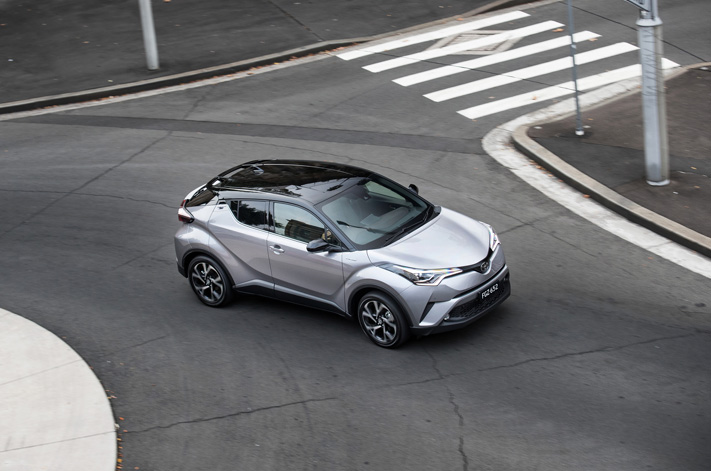
In the lead up to the C-HR’s launch, you may have imagined this test as a meeting of the mild; the Honda not quite on the ball, and the Toyota with a whiff of cynicism about it. But Mr T has delivered a concept-car inspired little SUV that delivers appeal, ability and surprising value.
The HR-V, meanwhile, still stacks up as a reasonably good drive, and is perhaps the most usefully packaged in this class.
We like the C-HR for its extra safety and convenience equipment, turbo engine, ride/handling mix, and style. The Honda costs less, gets most basics right, and provides enviable cargo flexibility and space. It really depends on whether the ‘S’ or the ‘U’ takes precedence in your SUV quest, but here the C-HR’s style and dynamics see it ride high.
Some automotive history should never be allowed out of the museum.
First published in the July 2017 edition of Wheels Magazine, Australia’s most experienced and most trusted car magazine since 1953.
Confidently curvy, like many of the female film stars of its time, the Jaguar XK140 fixed head coupe has real presence to go with its mid-1950s style.
But it is, I’m finding, a horrible thing to drive.
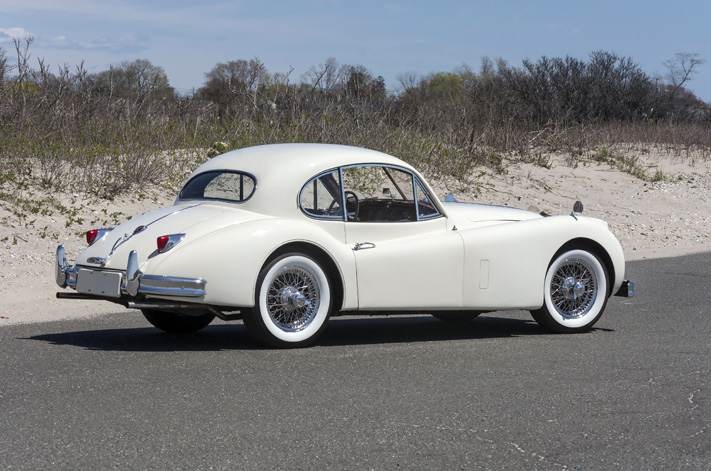
The other cars are an XK150 Fixed Head Coupe, a John Coombs race-prepped Mark II and a very late E-Type with a carburettor-equipped V12. During the pre-drive familiarisation the XK140 is singled out for special mention.
“This one you’ve really got to be careful to plan ahead and get a feel for the brakes as you go,” our guide warns. “And the steering as well. They’re quite heavy.” He closes on a positive note. “It’s a lovely car, been fully restored.”
Lovely? I don’t know when ergonomics were invented, but it was certainly some time after the XK140 was designed.
When my turn to drive comes, I can barely squeeze into the thing, even though one of the improvements of the XK140 over the earlier XK120 was that the engine and firewall were moved forward to give an extra 75mm of leg room. Chrome-plated door handles and window winders are jabbing my right thigh. With the side glass up, there’s not really enough room to work the car’s gigantic steering wheel.
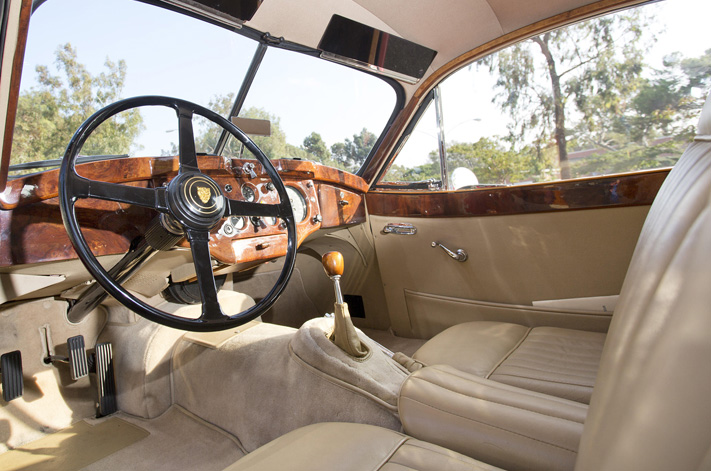
There’s an icy surge of panic the first time I try the brakes. So little happens that I think for a moment I’ve pressed on the clutch pedal, which is fairly heavy, by mistake.
The steering demands a lot of muscle, yet is sloppily imprecise.
Jaguar’s separate chassis, live rear axle with semi-elliptic leaf springs, and double-A-arm front suspension make it the technical equal of, say, a 1980s rear-drive Hilux ute. But minus the Japanese polish and sophistication, and with an engine (easily the car’s best bit) capable of pushing it to close to 200km/h.
When people find out your job is motoring jounalist, they often ask the question:
“What’s the best car you’ve ever driven?”
It’s tough to answer. Best can mean many things. So I think for a moment or two before choosing an answer. Could be the Ferrari 458 Speciale. Perhaps the BMW i3. Possibly the Volkswagen Golf VII. Maybe the Porsche 911 (993) RS CS. Some days it’s the Citroen 2CV.
Sometimes these inquirers ask the obvious follow-up question: The worst? Thanks to Jaguar, I won’t ever need a pause to consider the answer…
FAMILIARITY breeds contempt, so they say, but month three with the Holden Astra RS proves that there are exceptions to that cynical maxim.
The primary reason why I’ve yet to grow weary of the Astra is the fact that it is an astonishingly well-sorted drive. Scratch that: it’s just plain fun.
And how could it not be? With 147kW and a mega-stout 300Nm, the Astra’s 1.6-litre donk has performance metrics that, had it rolled into showrooms a decade ago, would have put it ahead of a Golf GTI for torque and equal to the German hot hatch for power.
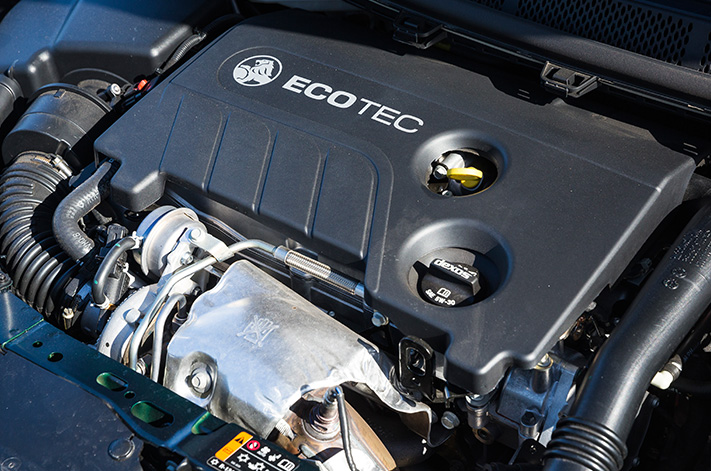
Meld that considerable muscle with suspension that manages to be both supple and dynamic, and the result is a car with a much feistier nature than its demure exterior suggests.
There are some downsides, though. All of that torque is a blessing and a curse: it’s wonderful for overtaking, highway on-ramps and restoring honour in rolling-start drag races, but it also generates ample axle tramp off the line in slippy conditions. There’s more than a smidge of torque-steer tug under hard acceleration too.
Does it spoil the experience? Is the Astra’s 1.6 – gasp – too powerful? Last month’s city schlep had me wondering whether the chassis could contain all of that energy on a winding mountain road, so it was time to head beyond Melbourne’s city limits to discover whether comfort-biased spring rates are as good at dispatching corners as they are at ironing out speed bumps.
Pointing the Astra’s plasti-chromed nose toward the Yarra Valley, it takes two hours before twisty tarmac appears through the windscreen. At the first corner, it’s apparent the engineers tasked with honing the Astra’s suspension are keen drivers.
Even with a relatively unsophisticated torsion-beam rear, it absorbs big bumps with aplomb yet happily tilts into corners in a fashion that recalls hot hatches of yore. The steering is almost perfectly weighted for this kind of driving too, and feels natural and tactile for an electrically assisted rack.
Yep, torque steer is ever-present when you’re thumping the right pedal, but it’s not strong enough to wrench the wheel from your hands and, if anything, adds a little zest to the Astra’s driver involvement.
A bigger issue is traction. Apply the full dose of torque and the inside front tyre struggles to maintain purchase when accelerating out of a corner, the traction control not proving clever enough to apply a dab of brake on the spinning wheel. A limited-slip differential would help, or at the very least a more sophisticated traction-control calibration.
But dynamically speaking, these are the only sizeable blots on the Astra’s ledger. Don’t let its librarian looks deceive you – the Astra RS can thrill on the right road.
Malformed knob
Shifter ergonomics may not be so critical in an automatic, but they’re vital in a manual – why bother with the three-pedal option when your left palm will be forever punished by an uncomfy knob?
Astra’s shifter fails the ergo test due to the reverse lockout button being placed right where your fingers curl around, and that transparent plastic window on the top is begging to be scratched up by jewellery.
First published in the July 2017 issue of Wheels Magazine, Australia’s most experienced and most trusted car magazine since 1953.
Read part two of our 2017 Holden Astra RS long-term review here!
On average, Toyota churns out a Corolla every 23 seconds.
An 86? Every seven-and-a-half minutes. Raise the stakes with Honda’s NSX, capable of a hybrid-power assisted 308km/h, and you’re looking at a car rolling off the assembly line once every three hours.
So what about the car that could shortly become, officially, the world’s fastest production car?
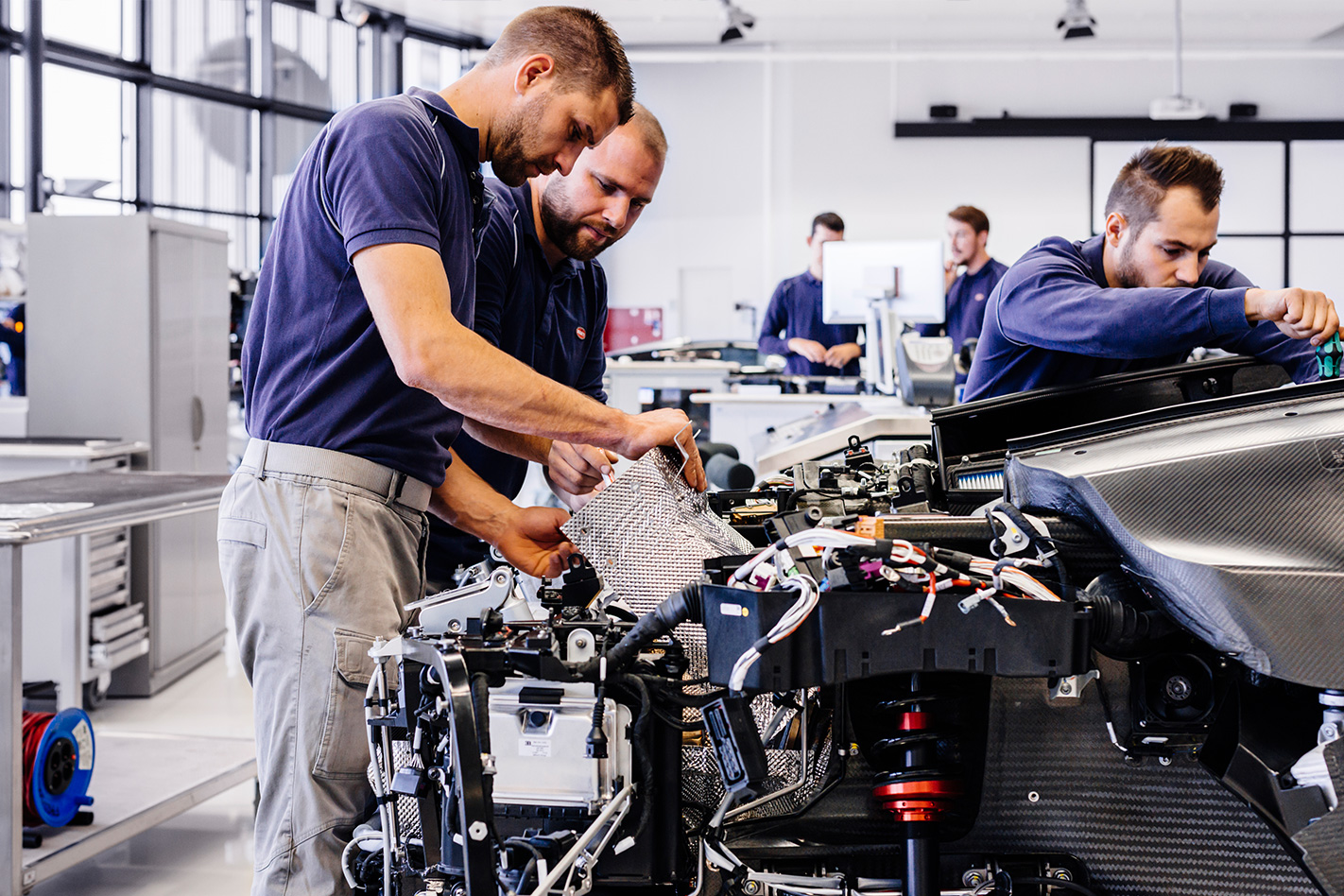
As the first of these cruise missiles are bolted together, Bugatti’s opened the doors to its oval-shaped building in Molsheim, France, where each Chiron will be delicately and precisely crafted.
It’s also where the Veyron was once made – and is the complete opposite of a mega factory. For a car so fast, assembly is oh-so-slow, 70 rolling out the factory each year without a single robot in sight. Just a McDonald’s. Directly over the road.
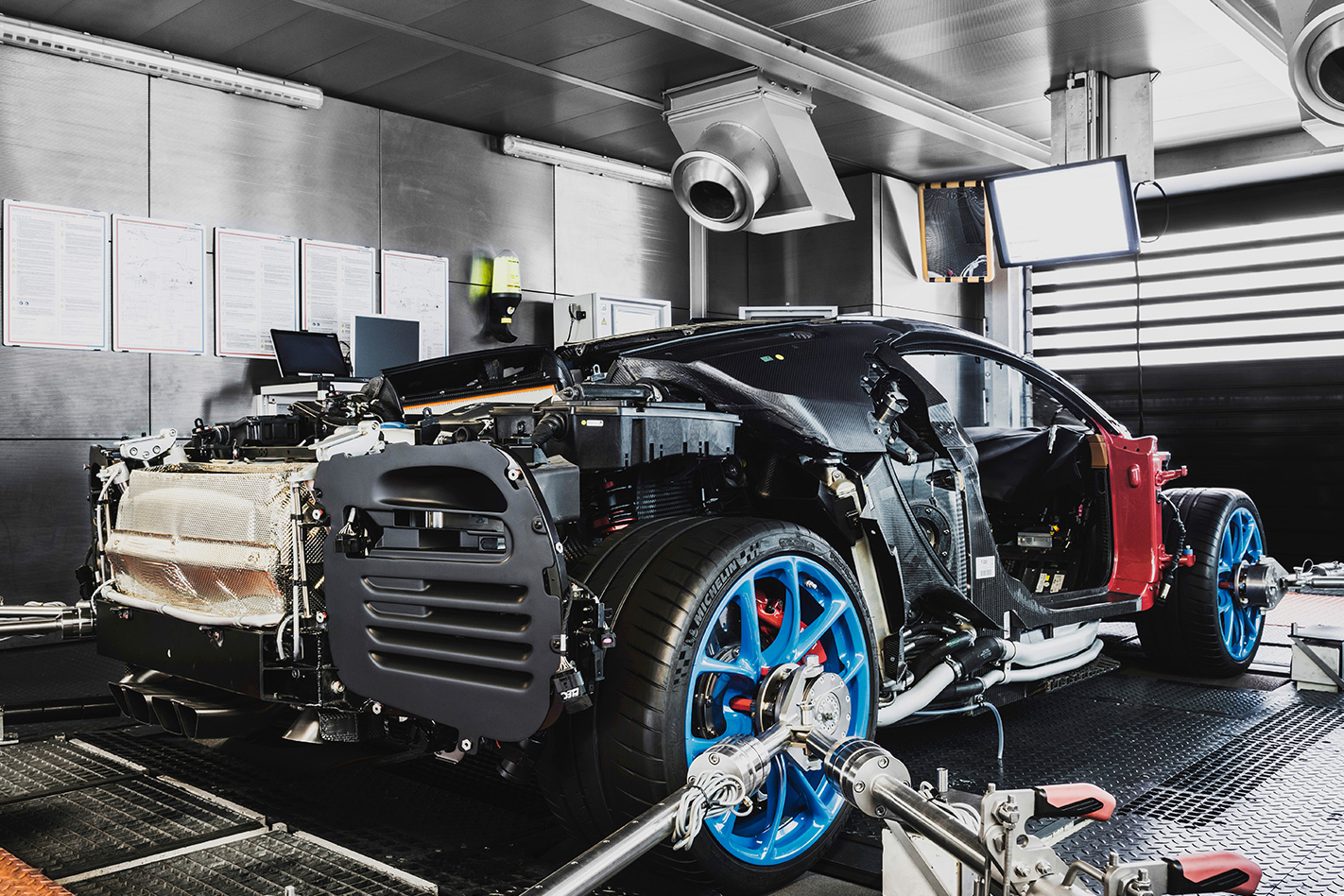
Giving staff space to assemble a Chiron from a total of 1800 parts. With Molsheim’s floorspace measuring slightly more than 1000 square metres, or five tennis courts, it’s a bit cramped for manufacturing.
Bugatti Chiron prototype crashed
Instead, much of the Chiron arrives from elsewhere. Items like the engine (VW), gearbox (Ricardo), chassis (Dallara), brakes (AP), tyres (Michelin), all arrive in finished states, while the interior and body panels are only ordered once a customer secures their production slot with a whopping AUD$300K deposit.
However, no-one opens a box until one man gives the nod. Each project waits on Christophe Piochon, Bugatti’s production and logistics boss, before getting the go-ahead.
He’s also the watchful eye that ensures the process runs cylinder smooth for the customers who’ll eventually fork out 2.4 million euro (AUD$3.61m) for the finished product.
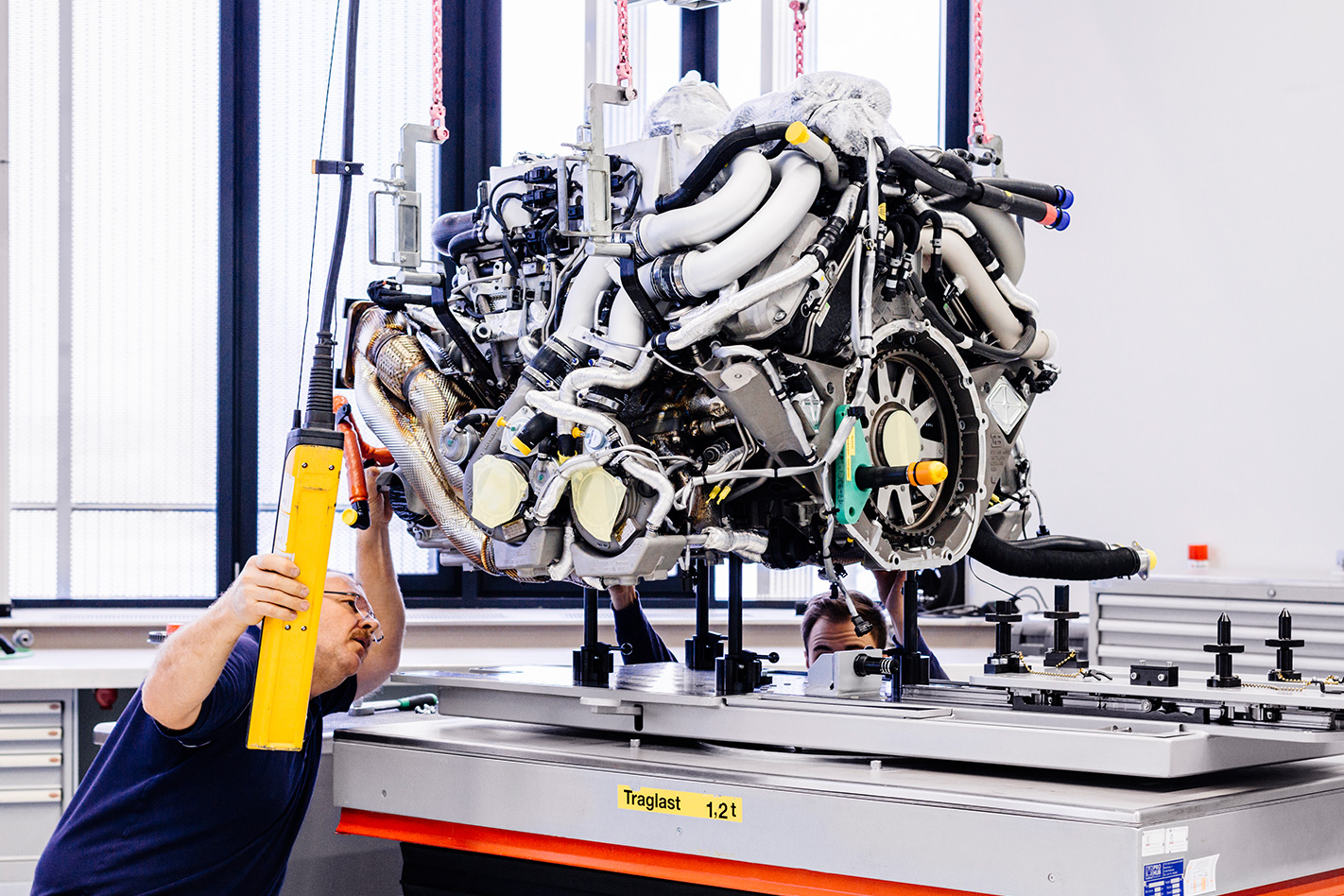
After, it’s sent 560km to the Molsheim facility, where it’ll be mated to a Ricardo seven-speed dual clutch ’box able to handle the huge 1600Nm.
The engine’s construction, however, can’t compare to the sheer manpower involved in making the carbon-fibre chassis. Italian company Dallara has 50 people make a monocoque by hand, layering 150 carbon-fibre sheets onto a mould, before baking and milling the unit into its ready state.
This takes four weeks but saves on shipping costs. Once finished the entire monocoque weighs as much as a four-cylinder engine. Or less than some humans. Back at Molsheim, the Chiron physically starts to take shape as these two parts are married together.
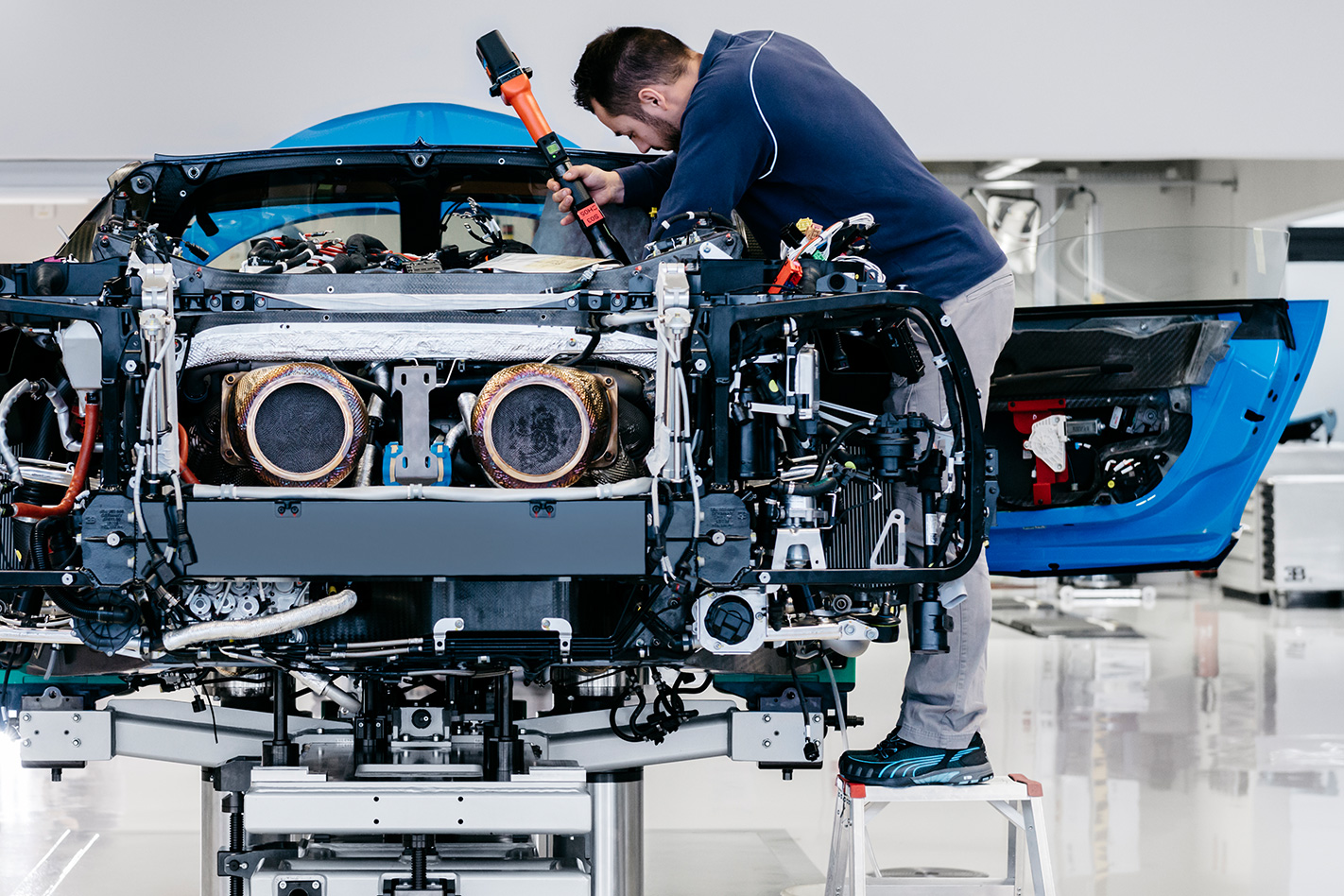
During this process each bolt is, of course, carefully and individually torqued. Workers will use the precise torque wrench 1068 times all up, and while more than 1800 bolts are involved in making each car, only 14 titanium items clamp the driver’s monocoque to the drivetrain assembly, each a featherweight 34 grams.
They’re up to the task, though, as proven by the Chiron’s otherworldly torsional stiffness, its body rigidity matching a Porsche Le Mans prototype.
Two tonnes on the Chiron’s right front wheel would jack its left rear wheel by only a single degree. While all this is going on, huge cooling hoses run to and from the front radiators, down the car’s sides.
Some are as big as a fire brigade’s hose. In total there are 10 radiators hidden in the Chiron’s curves, powered by three water pumps. Filling them is the next step after the chassis and engine marriage. And requires fitting wheels before rolling a Chiron over to the dyno.
Because even though it produces 1103kW, enough to break the first dyno it used during development, it’s actually shedding twice as much energy in heat – enough to power an average home for eight weeks.
Lamborghini opens Restoration Centre
And Bugatti would know as, with so much grunt flowing, the in-house dyno was connected to the local electricity grid where it feeds in excess electricity. For real.
The real reason each freshly-minted Chiron is plonked on the dyno, however, is to crank up to 200km/h for the first time. But don’t think this is the same roller you’ll find at your monthly car show.
Special adapters that look like robot arms hold the Chiron down on its rollers, keeping the chassis from lunging off as it flexes its 1600Nm. A series of system checks are then run over a simulated 60km.
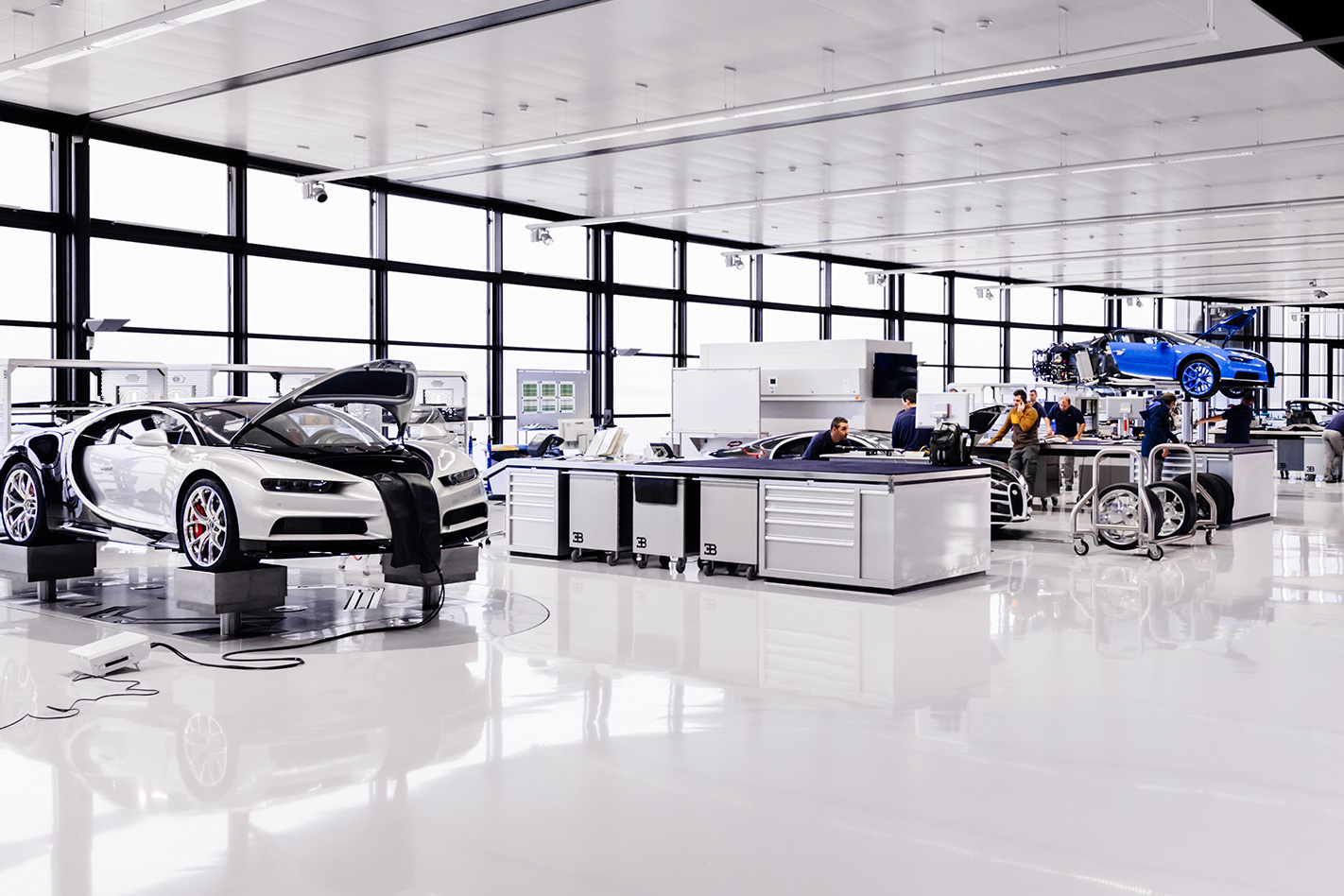
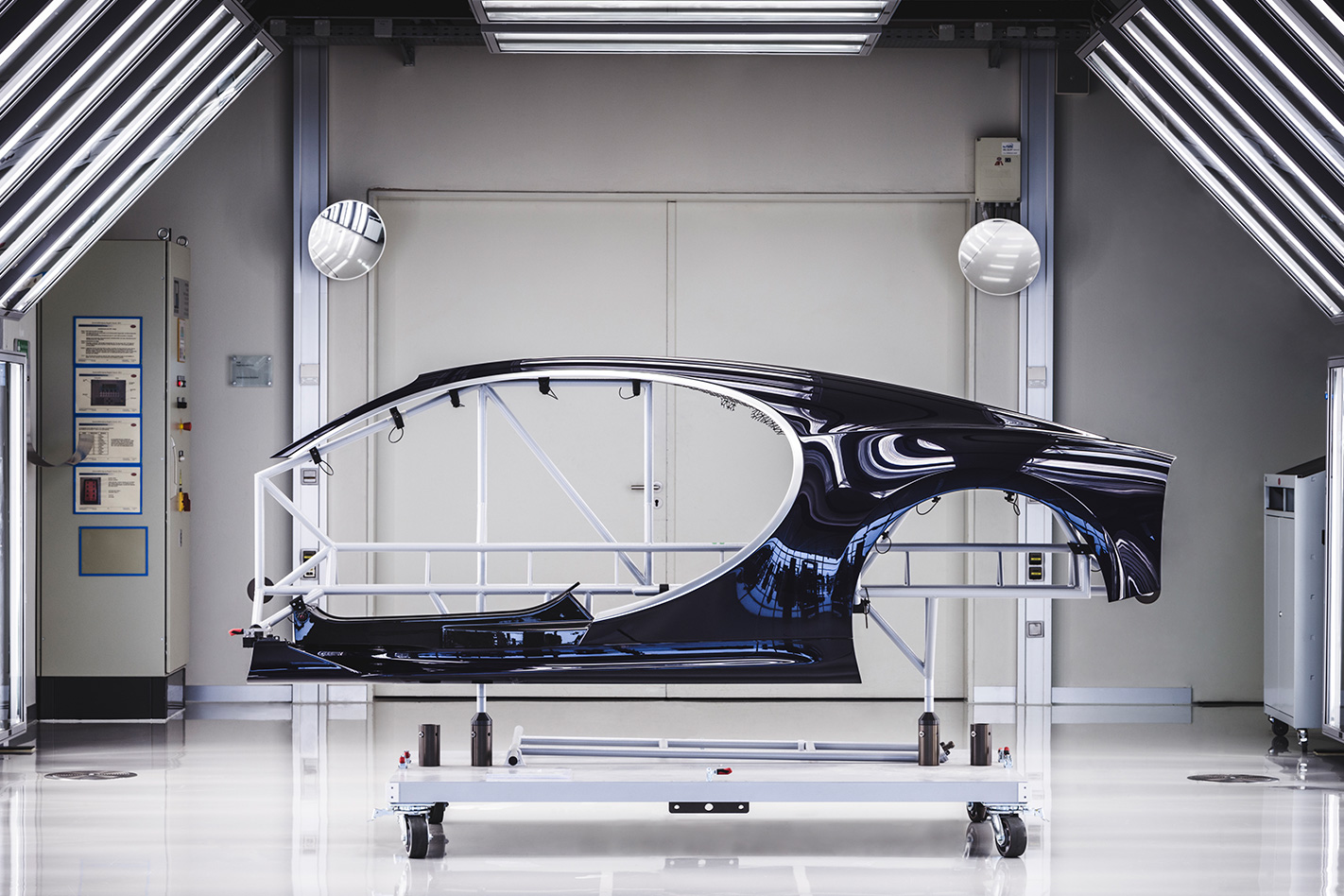
Before venturing out the gates, it needs to be armed with its outer shell and resulting downforce. Almost a whole working week is taken to fit the carbon-fibre body panels, but Bugatti still doesn’t want to leave much to chance.
Each example has to also survive 30 minutes in monsoon rain conditions before fitting the interior pieces. If it remains water tight, the cabin bits are then green lighted for fitting. Which takes almost another week.
Sold: the final Bugatti Veyron
Of course, sending the Chiron out on public roads with only a prayer would be madness. With a three-week painting process already invested into the body panels (they’re pre-fitted, painted, and inspected off site before arrival) a day is set aside to wrap each car with a thick clear film.
Its undertray and wheels, too, are swapped for damageable test-run items. Now it’s up to a test driver, He Who Shall Never Complain About Anything, to see if each Chiron drives as it should.
They start off for an airport 30 minutes south of Molsheim, trying their best to obey the speed limit until they can unleash the Chiron at speeds in excess of 250km/h.
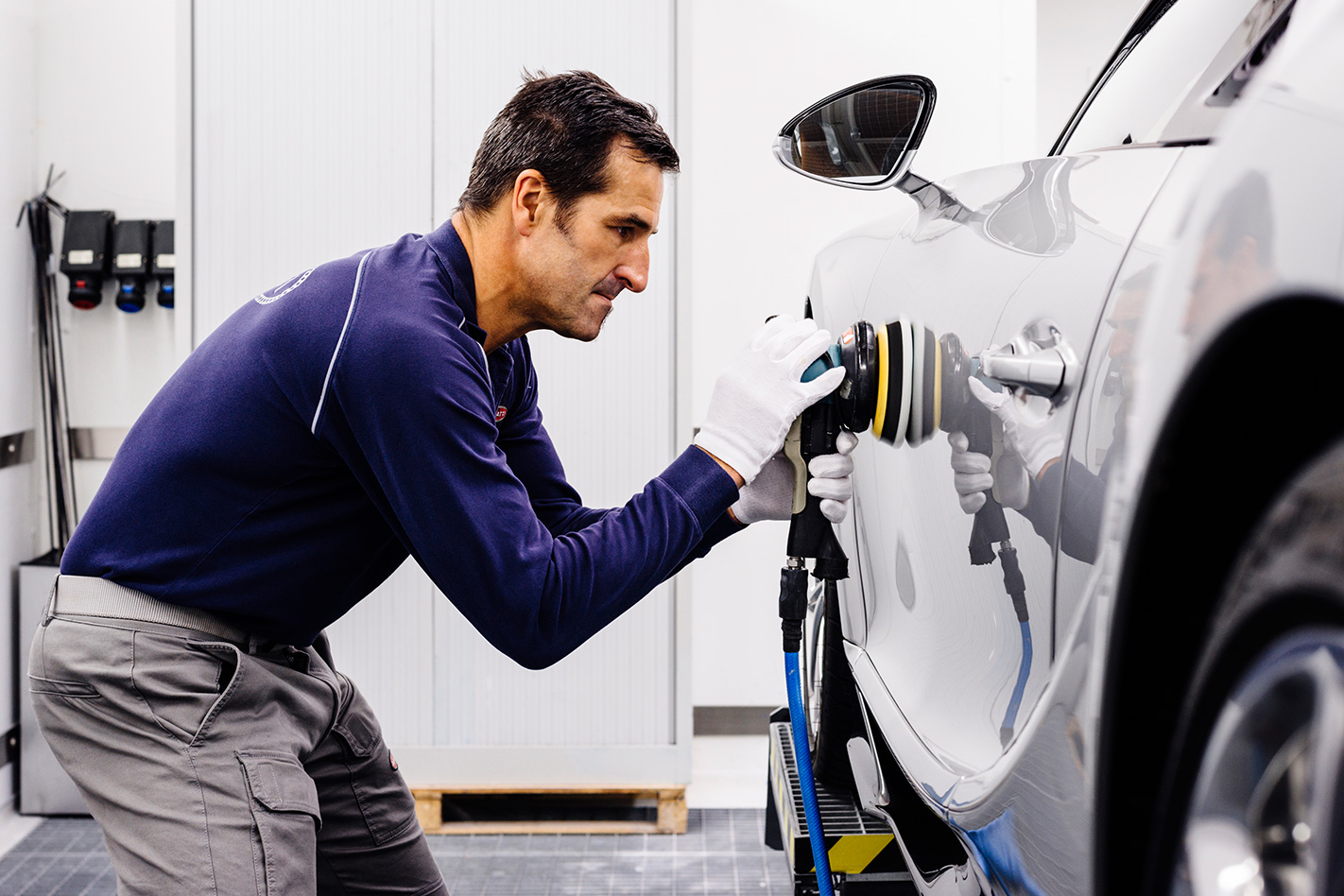
Should the hypercar fulfil its performance brief, the original wheels and under tray are installed. Bugs are then wiped off and two days is spent cleaning the car.
After that, it’s a date with a keen eye in the facility’s light tunnel. Here a white-gloved worker inspects the Chiron in infinite detail, looking for any and every imperfection. Some things are fixed in a day, others take a month if a replacement item needs to be ordered in. And once the inspector is happy, the big guns are called in.
Christophe Piochon invites the company’s head of sales and they begin an extensive look over. After all, they’re the ones handing the keys to customers like, reportedly, Floyd Mayweather.
And you don’t want to get on the wrong side of a five-division world champion boxer. Some also elect to personally visit their car during production. Apparently Cristiano Ronaldo, of soccer (or football) fame, and one of the first deliveries, lent a hand during his car’s assembly.
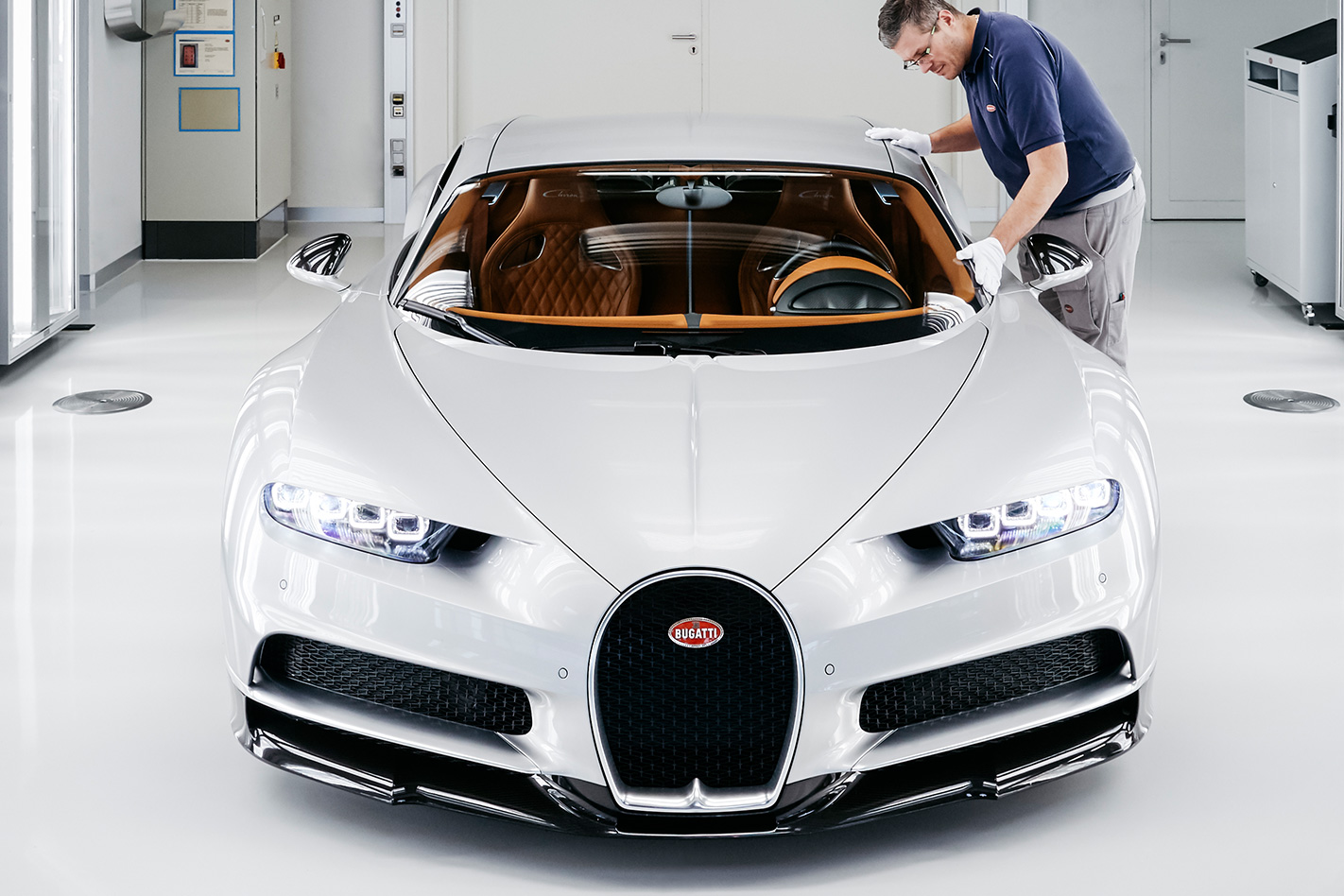
And when carbon-fibre tint (where you can basically see the carbon weave through the paint) costs more than AUD$350K, you can imagine most Chirons will end up tallying a whole lot more than the base 2.4m euro.
By the time a car’s completed, anywhere between six to nine months has passed since it was first ordered, with a more concrete timeline depending on how tick-happy the customer is with options.
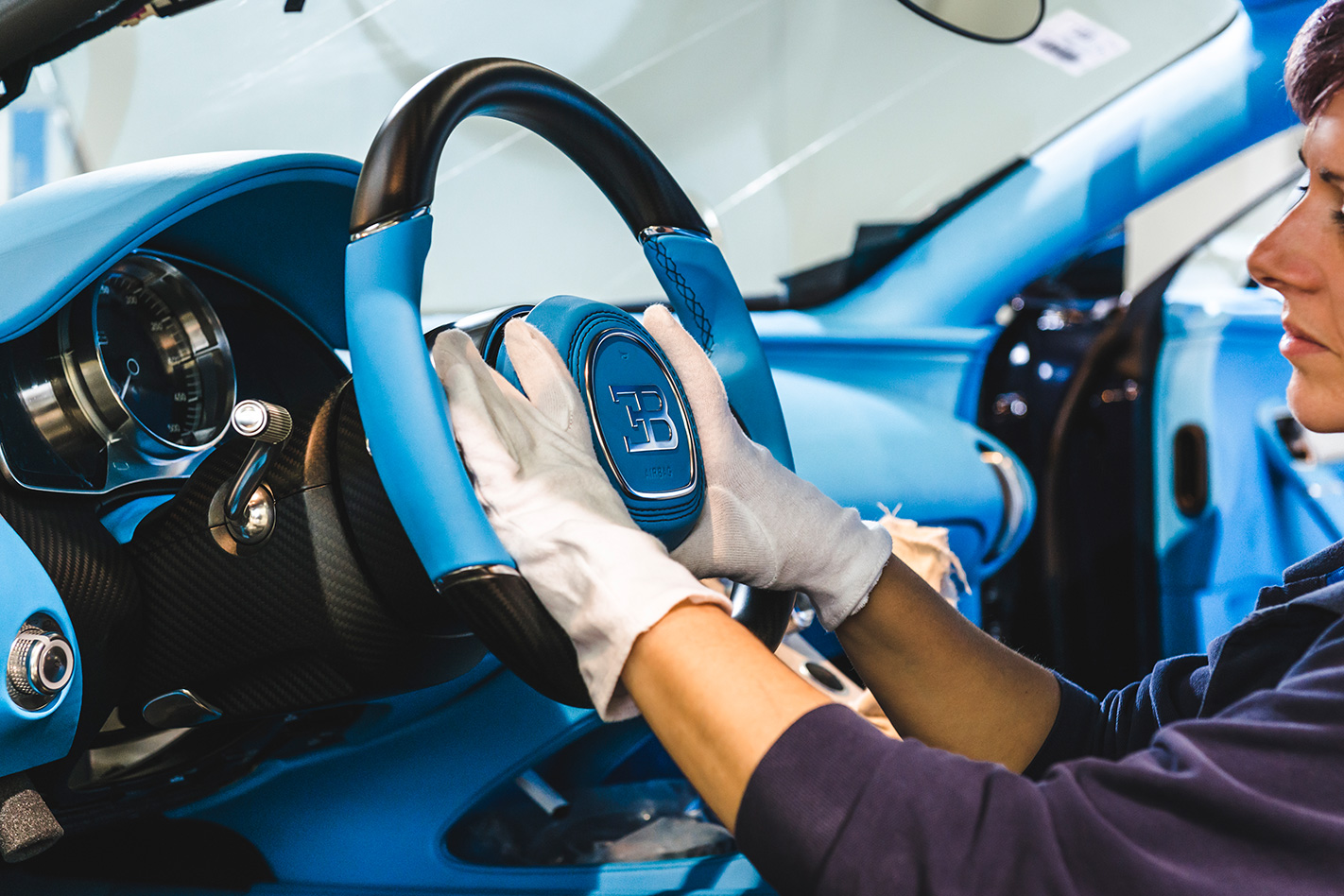
But such an investment wouldn’t be justified by the Chiron’s small run, and customers are paying for exclusivity. And with half of its allocation already accounted for, that’s exactly how it’s stacking up.
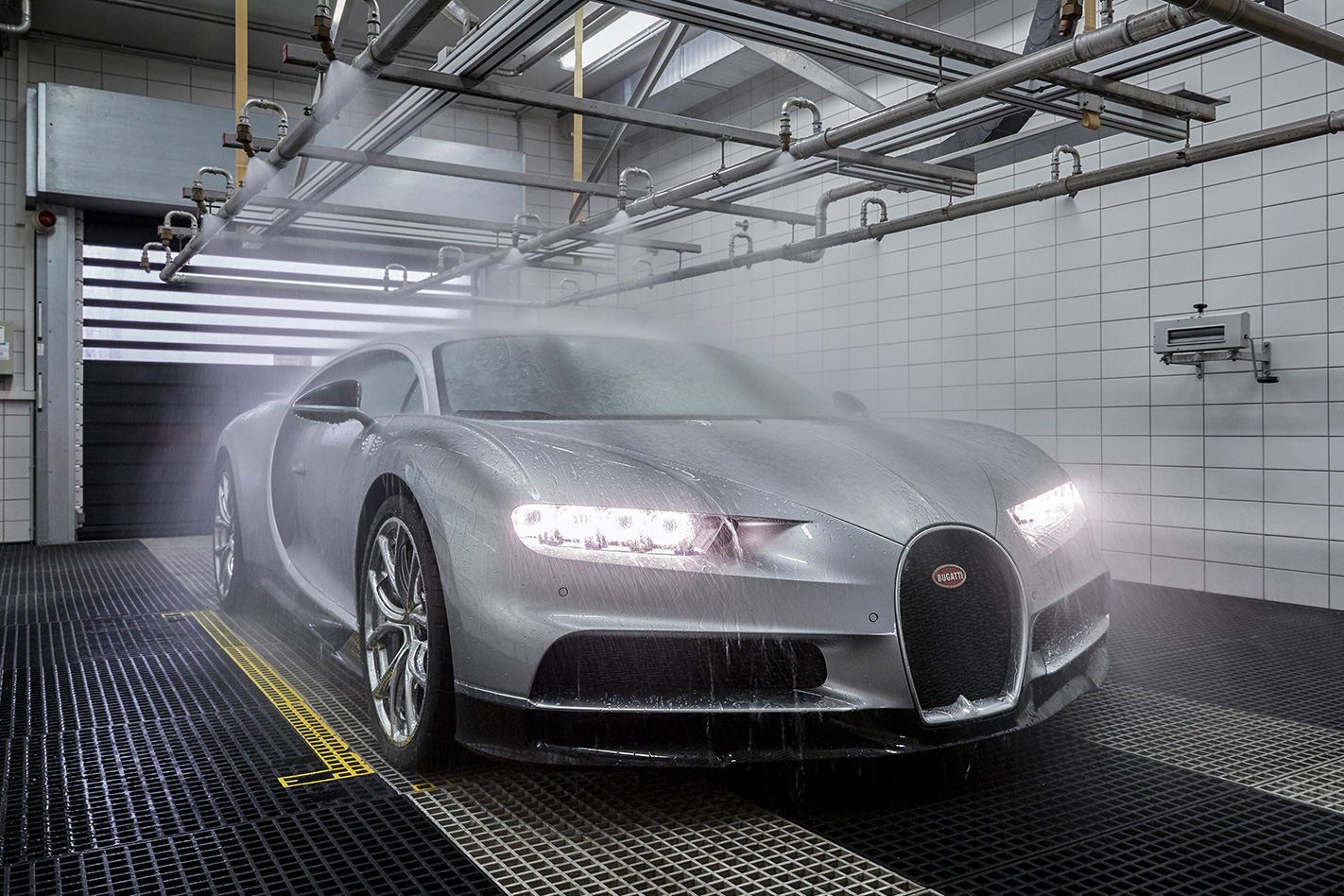
We’re sure a lot of customers aren’t used to waiting for things they’ve paid for.
But if we were inching towards 400km/h on the autobahn, we’d want to know Bugatti didn’t rush a thing when building its Chiron. And, thankfully, now we do.
Taking ‘my’ Skoda Octavia RS230 to the track wasn’t in the original plan.
As mentioned previously, its suspension is on the soft side and its electronic nannies can’t be completely deactivated, potentially making any hot laps an exercise in frustration.
This is not a slight on the Octavia, as despite the RS badge, race track use is not likely to have been high on Skoda’s development priorities.
My resolve crumbled, however, when a Friday afternoon session became available at Sandown Raceway, just 15 minutes from MOTOR offices. A white Skoda wagon certainly turned heads in pitlane, looking particularly incongruous among the plethora of Porsches and barrage of BMW M3s.
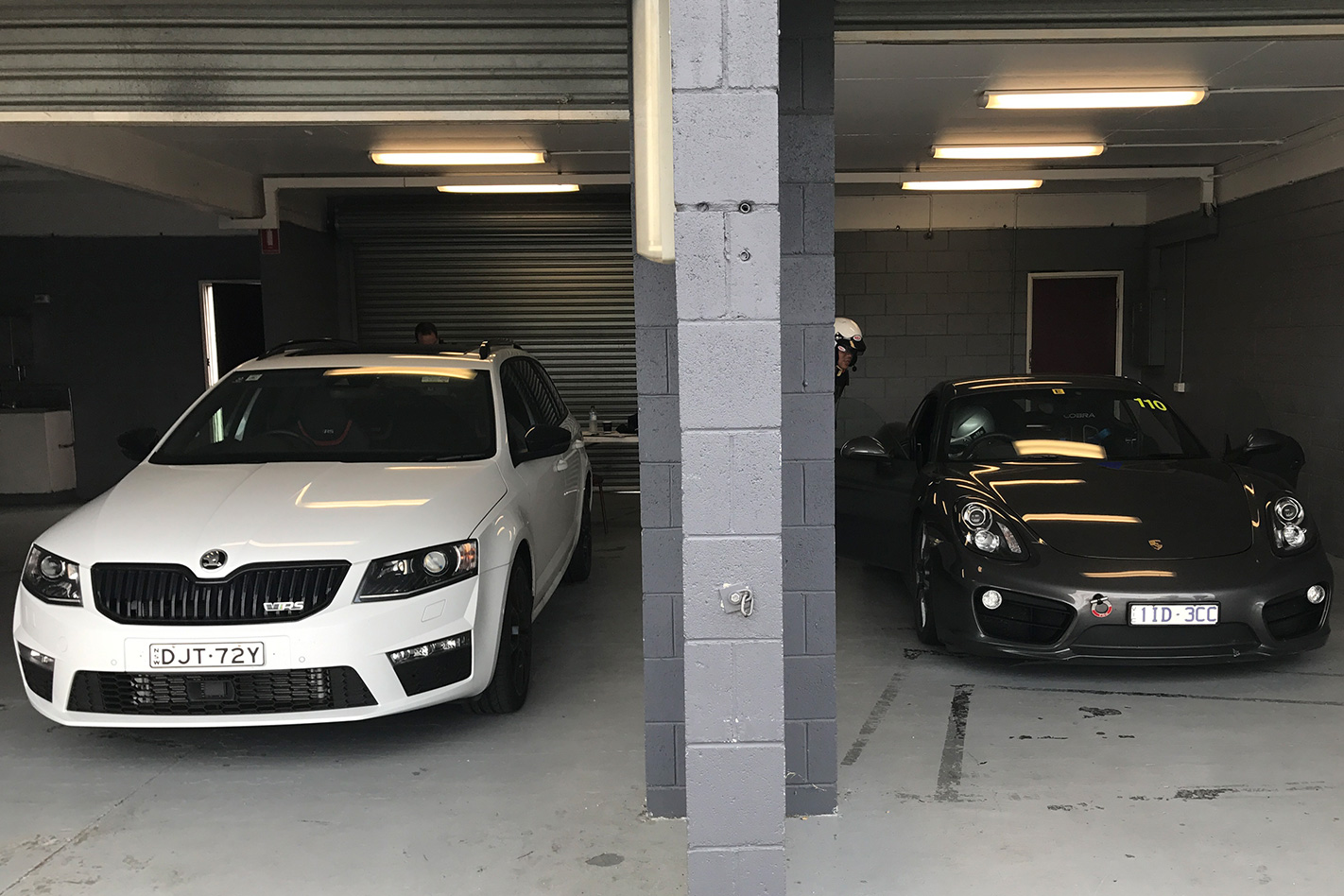
One neat feature of the Octavia RS230 is the ability to individually tailor various mechanical settings and save your favourite combination under the appropriately named ‘Individual’ tab, accessed through the Skoda’s vRS button.
Subaru Levorg GT-S vs Skoda Octavia RS230
The list of options is long, including, weirdly, the ability to adjust the headlights and air-con, but as the Octavia RS230 lacks adaptive dampers, the only things you need worry about are the engine mapping, steering and front limited-slip diff.
As it happens, my ideal combination of settings is identical for road and track: everything in Sport bar the steering, which remains in Normal to reduce its heft.
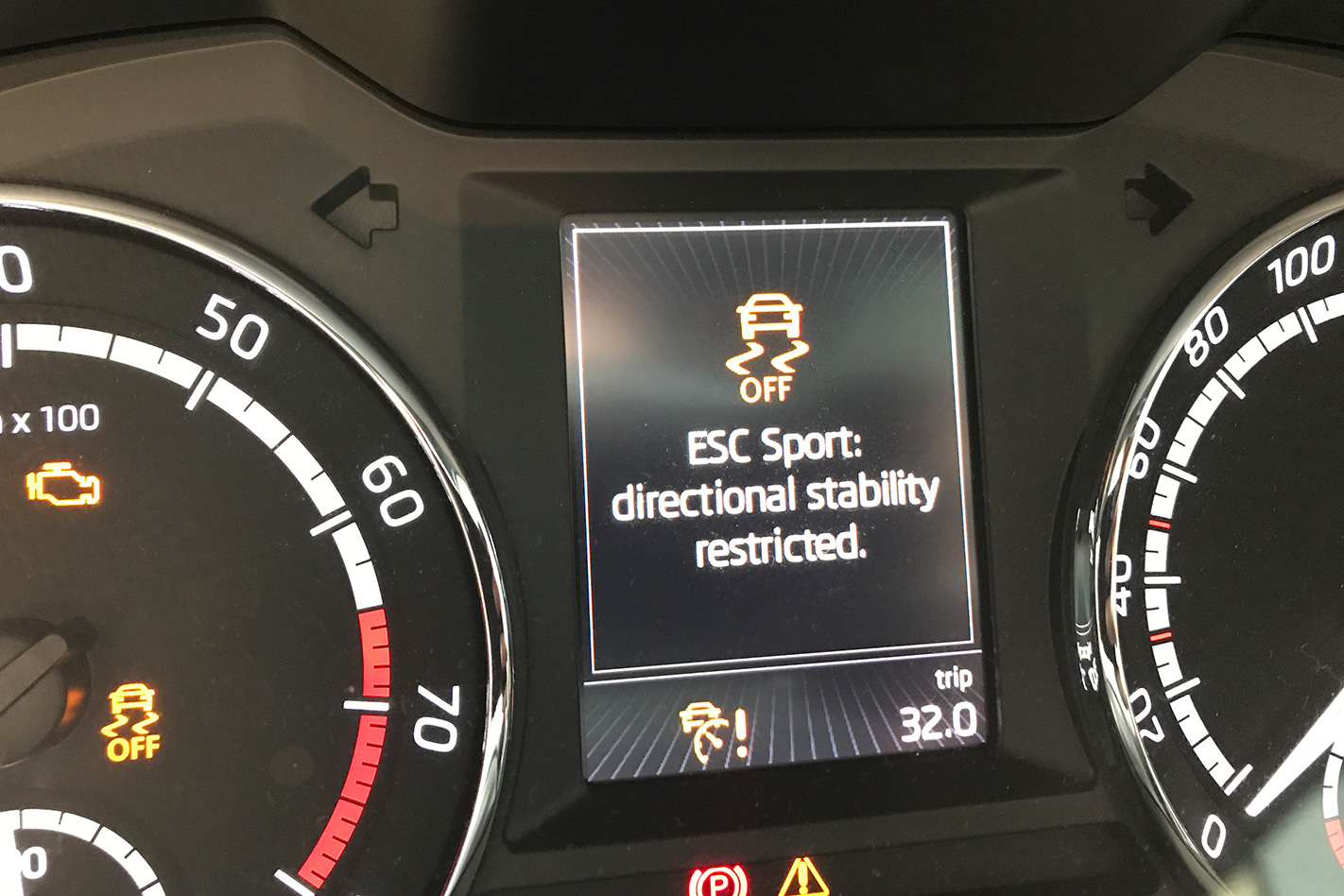
The engine is strong in the midrange, if a little breathless at the top end, and punches well out of Sandown’s tight turns; with a little patience the electronics were happy to take a back seat and let the diff do the tractive work and were relatively subtle if they did intervene.
5 brilliant alternatives to a family SUV
The Skoda’s soft setup did hurt it in Sandown’s quick changes of direction but also allowed it to ride the kerbs well and also made it very easy to drive at its limit.
Its long wheelbase also made it very stable and confidence-inspiring through the scary-fast left-hander at the end of the back straight. The brakes, so often a road-car bugbear on track, held up well for two or three hot laps at a time.
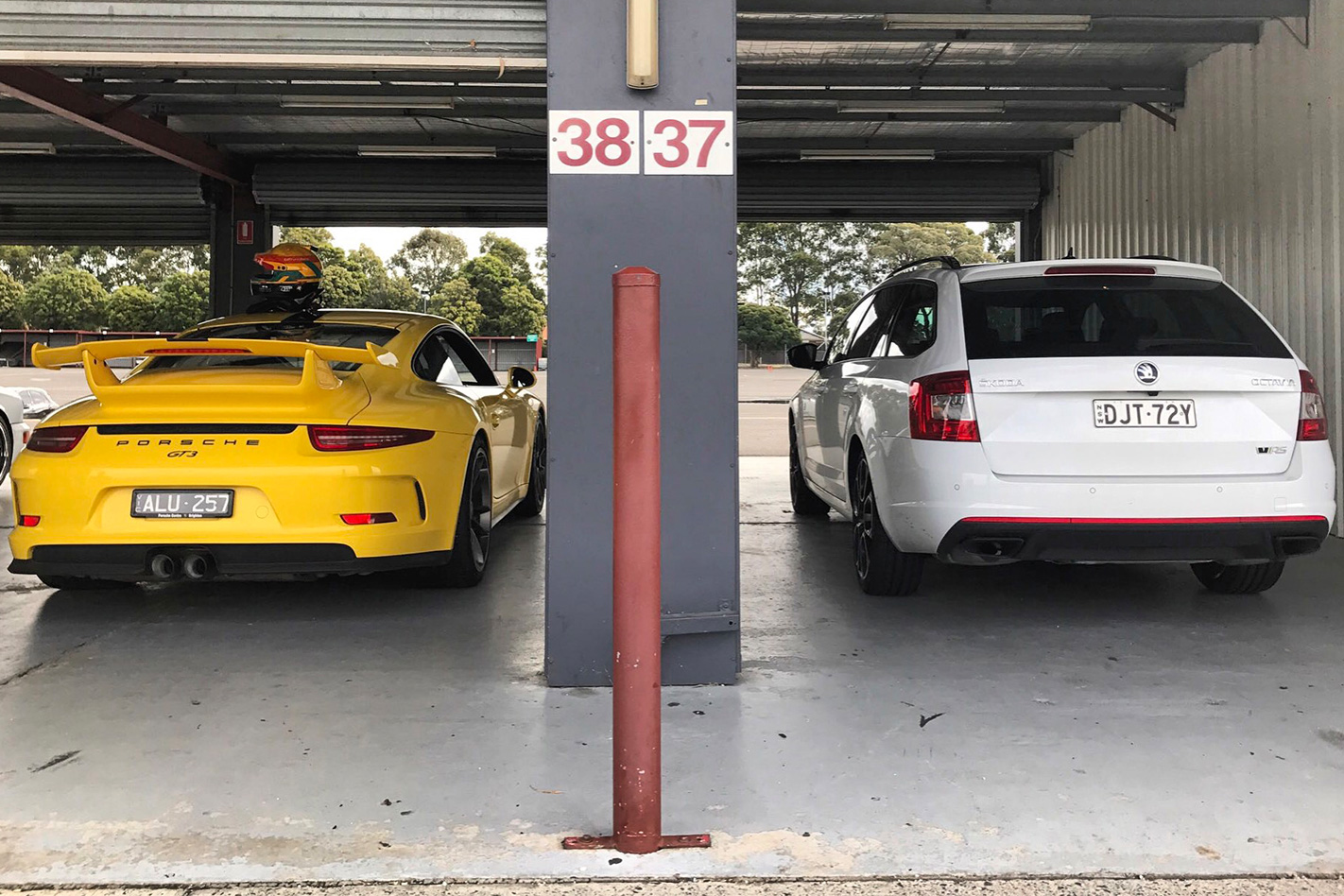
No times were taken on the day but putting a stopwatch on the video footage later revealed a best time of 1:30.6sec. How that stacks up is unclear, but instructors on the day seemed surprised at the humble white wagon’s turn of speed.
A word of warning, however, that Sandown’s stop-and-go nature suited the Octavia. Recent BFYB testing at Winton showed the Skoda’s non-switchable ESP and traction control to be a real hindrance, so choose your venue carefully when booking that track day.
That said, you’ll probably have a lot more fun than you were expecting.
Liked: Surprisingly capable Disliked: Lacking some top-end grunt
It’s the diesel seven-seater Mazda wants.
First published in the July 2017 edition of Wheels Magazine, Australia’s most experienced and most trusted car magazine since 1953.
Mazda’s SUV family is set to expand with the 2018 arrival of the CX-8. While the backroom wrangling isn’t quite a done deal, Wheels has learned Mazda Australia is confident the CX-8 will form a part of the growing model line-up for the brand that has muscled its way into second position on the sales charts.
To be powered by a 2.2-litre four-cylinder diesel, the CX-8 will finally give Mazda a diesel seven-seater as a more fuel-efficient alternative to the petrol-only CX-9. At 4900mm long, the CX-8 is 175mm shorter than the CX-9, yet shares that model’s 2930mm wheelbase. However, dimensions released in a short Japanese media statement reveal the CX-8 will be 129mm narrower than the CX-9 (making it the same width as a CX-5) and with a roofline 17mm lower.
Despite the smaller dimensions for the model set to go on sale in Japan later this year, Mazda’s global president and CEO Masamichi Kogai claims “even adults can sit comfortably in the third row.” The CX-8 will be offered with a six-seater configuration featuring second-row captain’s chairs as well as a more conventional 2-3-2 seven-seat layout.
That’s crucial to the CX-8’s Japanese sales pitch, where the Mazda CX-9 isn’t sold. In Japan, CX-8 will effectively replace the MPV people mover that was recently discontinued.
Recently appointed Mazda Australia managing director, Vinesh Bhindi, made a point of mentioning the CX-8 at a recent media gathering. While he said it was, for now, a Japanese domestic-market model, he left the door wide open for its sale in Australia.
“If there was ever to be an ADR [Australian Design Rule] version of CX-8 offered to Mazda Australia we would evaluate this opportunity and consider its viability in this market and actually ask ‘how does it fit amongst the other SUV models we have on offer here?’’ Bhindi said.
Those comments are in stark contrast to those made by Mazda Australia executives when the China-only CX-4 was revealed, where the top brass immediately shut down the chances of that car coming here.
PEOPLE don’t tend to buy supercars on purely rational grounds, which has long been McLaren’s biggest problem.
First published in the June 2017 edition of Wheels Magazine, Australia’s most experienced and most trusted car magazine since 1953.
While the original MP4-12C and 650S – which was basically a heavy facelift – both led their segment on power-to-weight ratios, they struggled to deliver the sort of emotional appeal that persuades people to drop condo-in-Bali sums on something with four wheels and no jet engine.
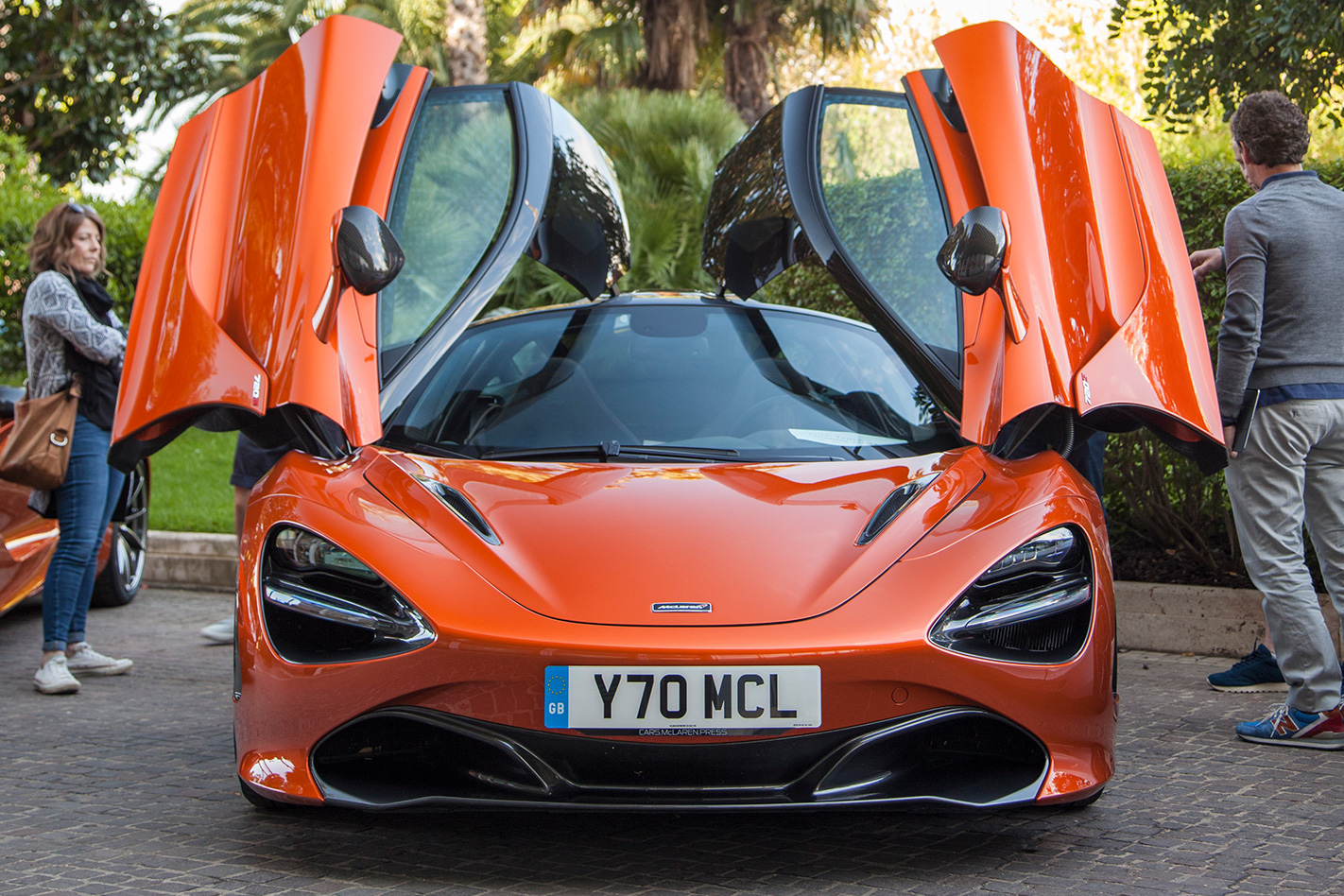
The fundamentals remain as before: McLaren’s entire road-car program has been built around using a shared architecture to cover everything from the 911-rivalling Sports Series to its million-plus Ultimate Series hypercars. That means the 720S sticks with the combination of a carbon tub and a mid-mounted twin-turbo V8. But pretty much everything has been revised.
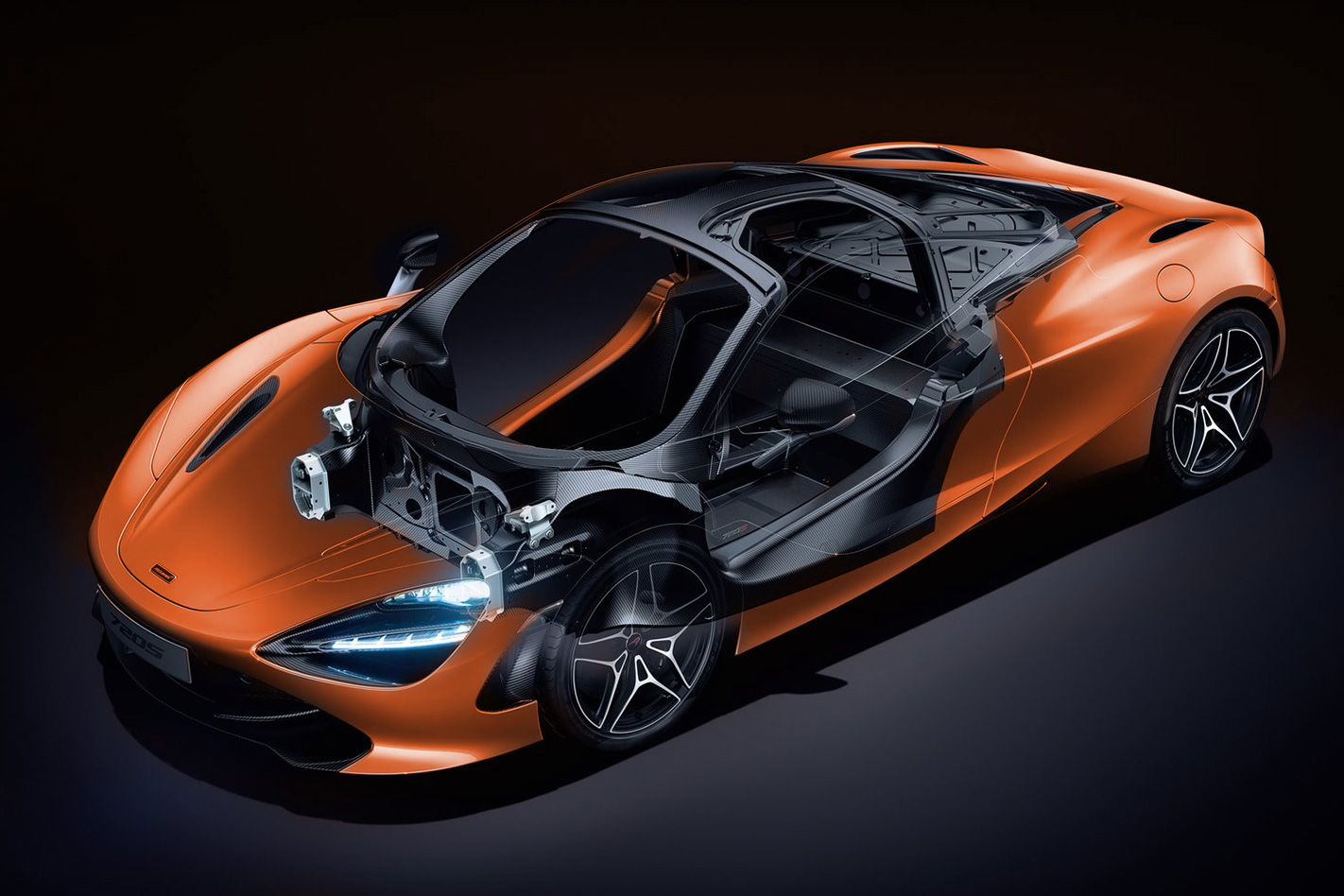
The engine sticks with the evolutionary theme, being a development of the 650S’s V8. Capacity has increased to 4.0-litres and there are new turbos, pistons and crankshaft, plus redesigned cylinder heads. Power rises to 530kW, outgunning the not-exactly-slow Ferrari 488GTB by 38kW.
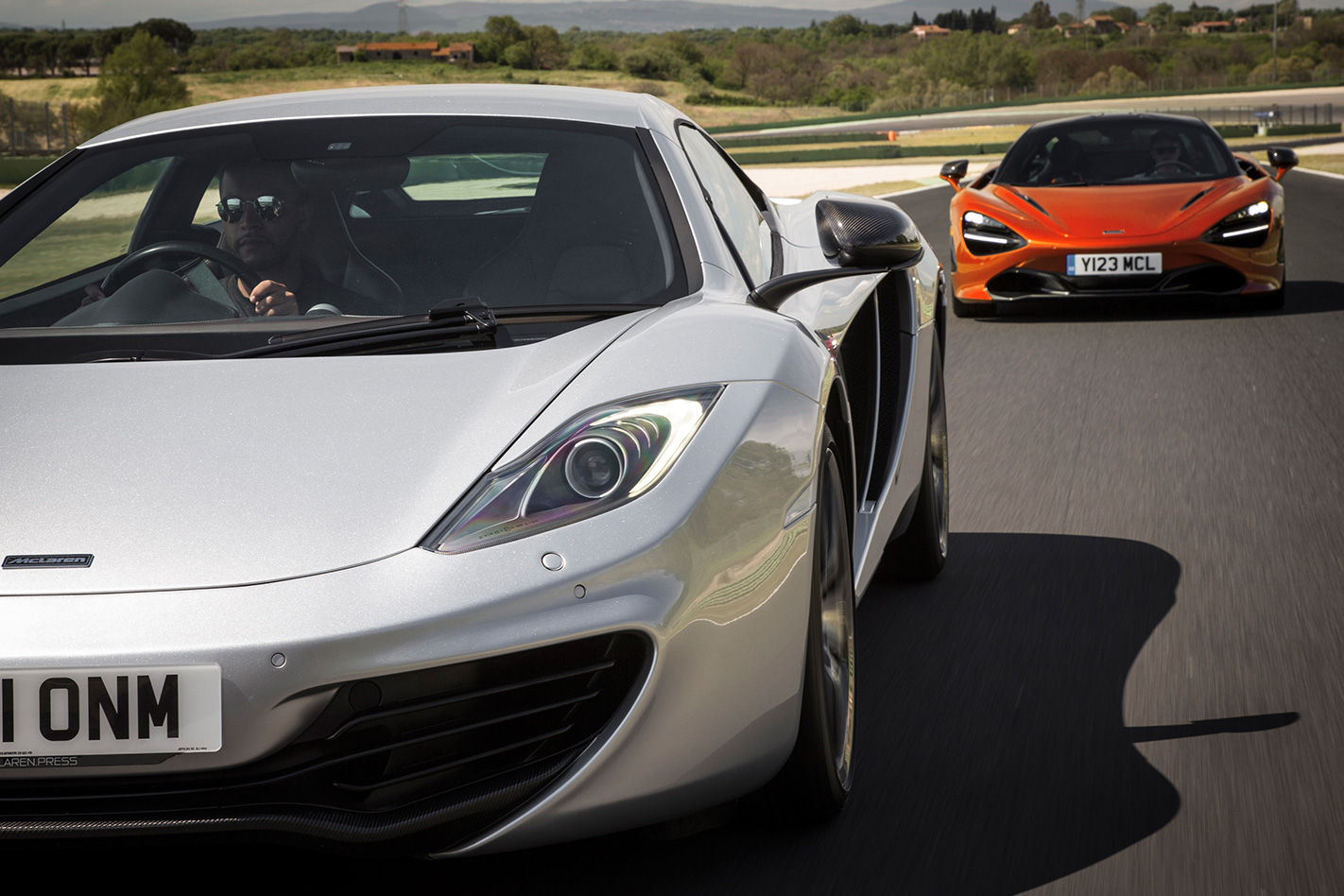
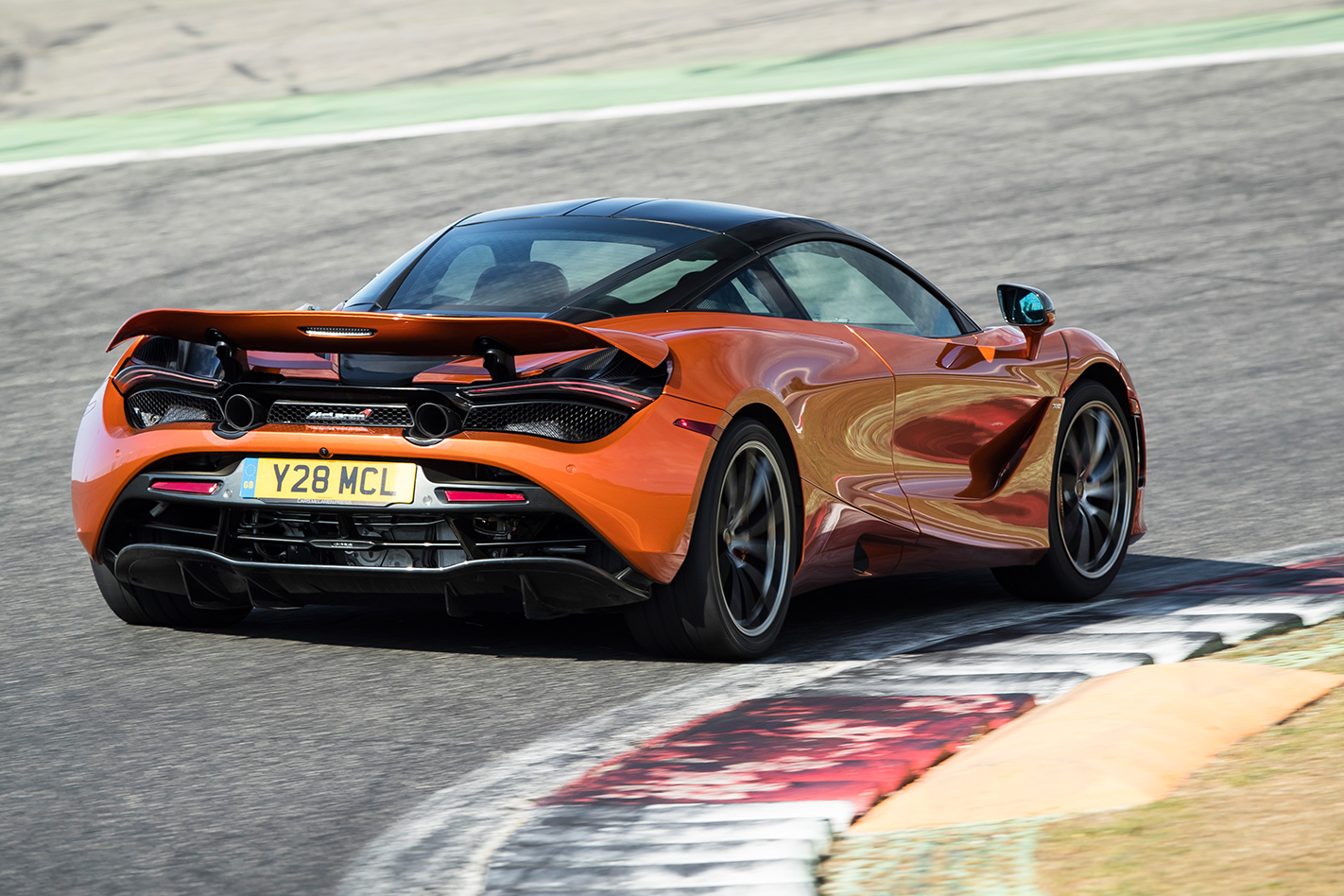
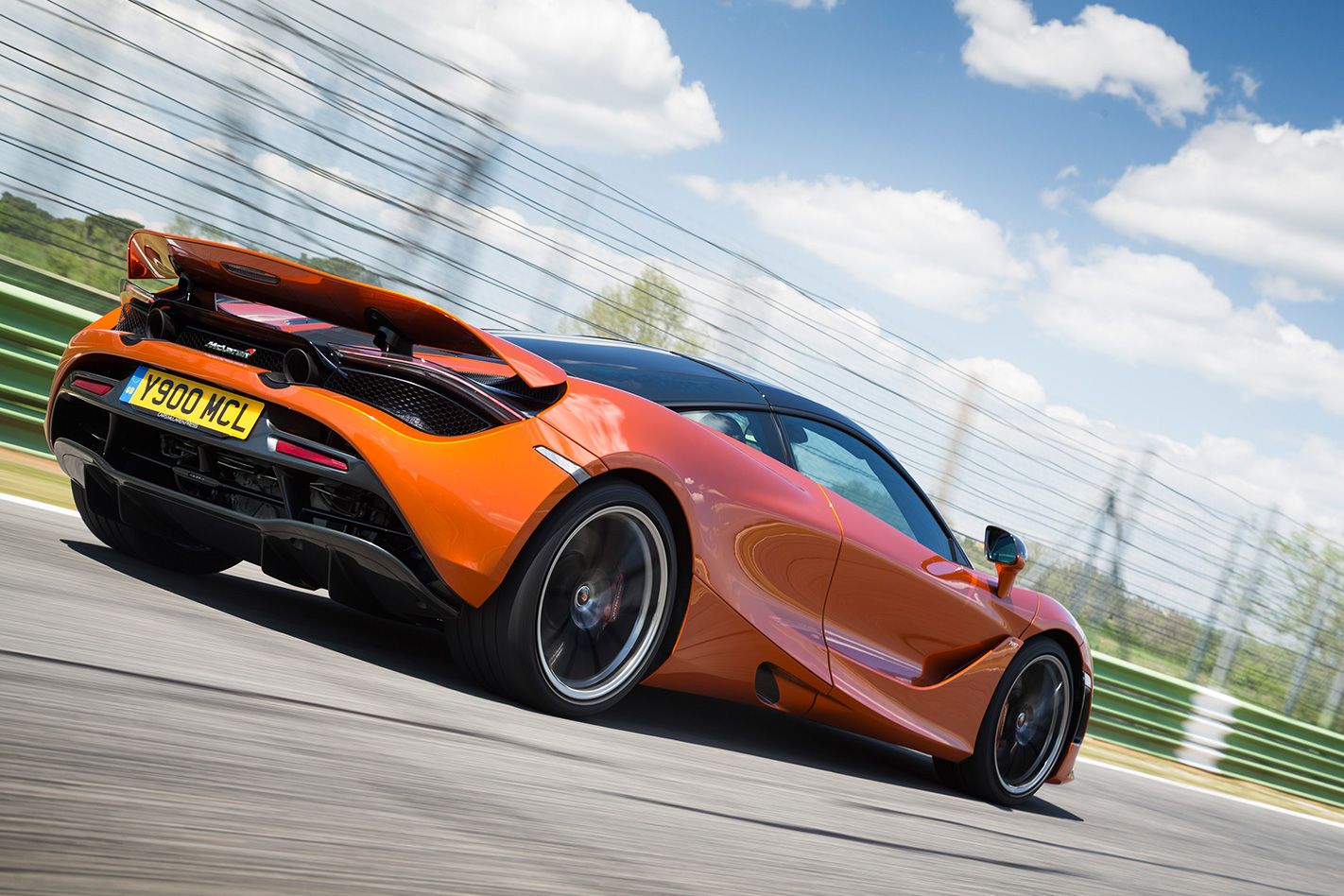
The 720S has lost the side air intake of its predecessors, and indeed of pretty much every other mid-engined car, with air channelled to the engine and radiators through an artfully disguised channel next to the rear windows. It looks great; especially from the rear where – with the deployable wing raised – it does a good impression of McLaren’s P1 hypercar. The headlight apertures incorporate well-hidden air ducts as well as lighting elements, but in lighter paint colours their size and darkness gives the 720S a dead-eyed look, slightly reminiscent of the fish counter.
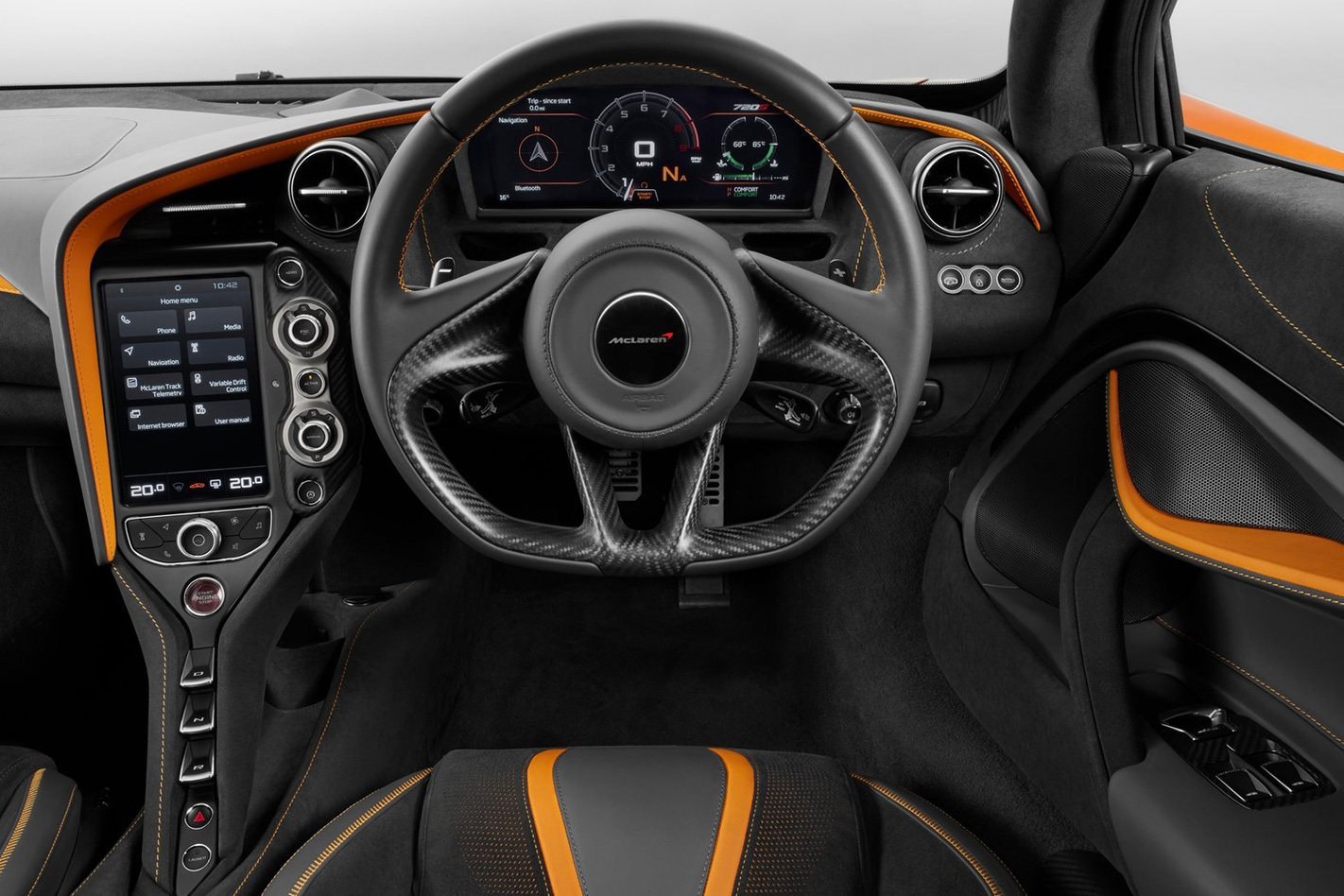
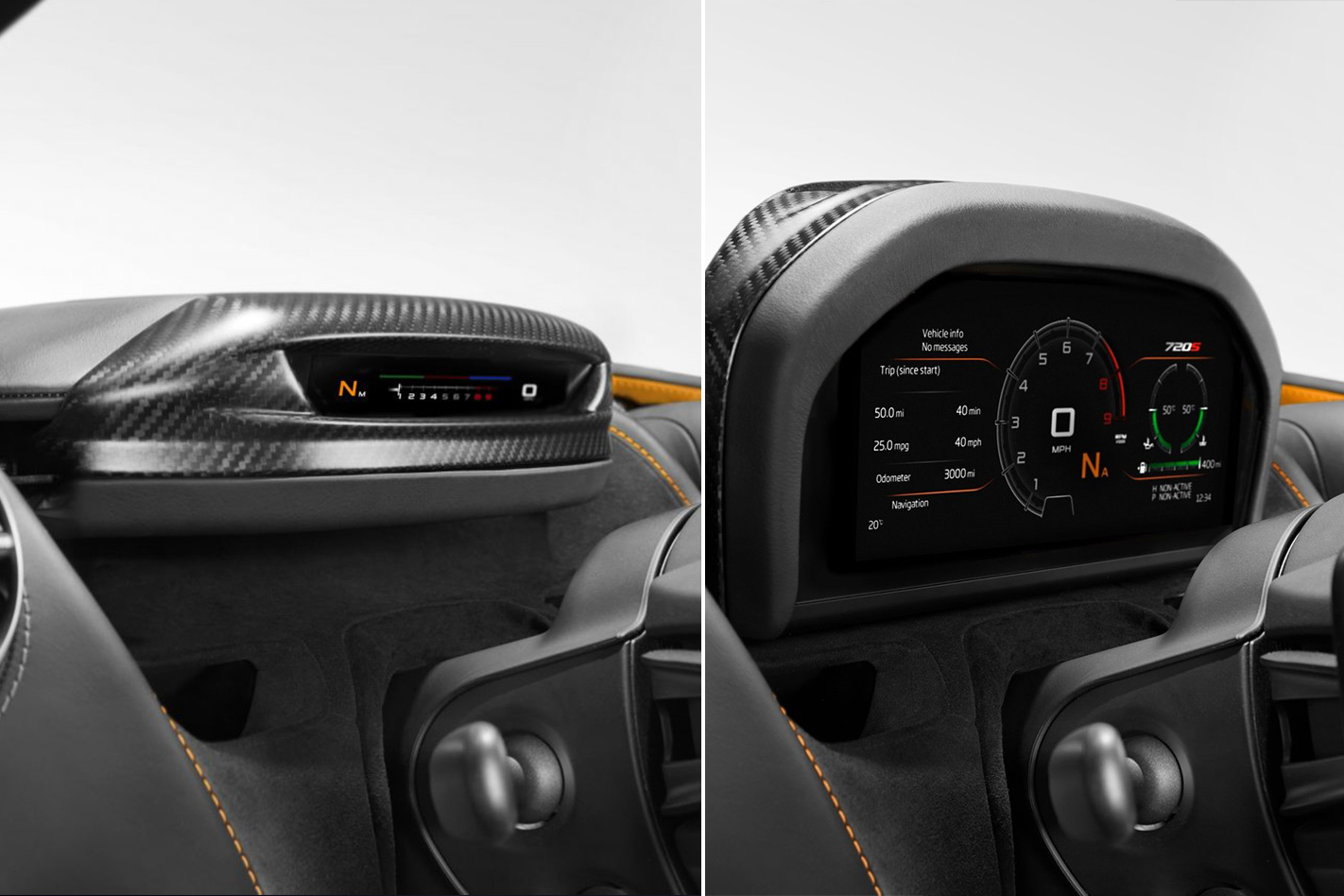
Switchgear has been rationalised, with most functions – including HVAC – now incorporated into the portrait-style touchscreen in the middle of the cabin. Sadly, this lacks sensitivity and feels surprisingly laggy – but that could just have been down to my sweaty fingers. There is a bit of theatre in the form of the power-tilting digital instrument display, which folds down to reveal a minimal revs-and-speed readout when the car is put into Track mode.
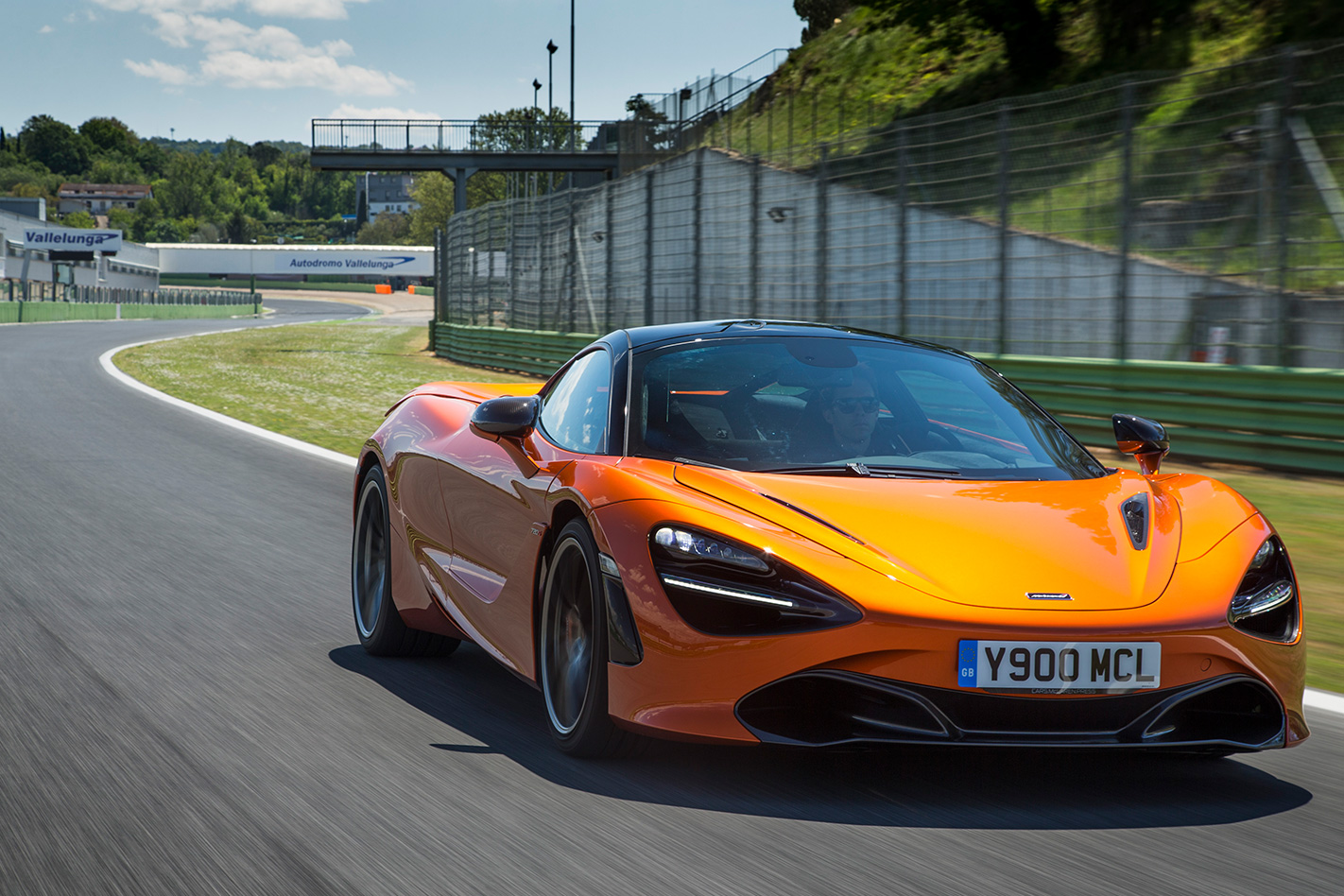
First impressions come close to underwhelming. Both of the dynamic mode switches – one for Powertrain and one for Handling – now have Comfort mode far-left in place of the previous Normal, and with this engaged the 720S becomes almost too civilised – the ride is exceptionally pliant, even on the lowest quality tarmac of the Italian launch route I could find, the dual-clutch gearbox does a good impression of a slusher auto and the engine delivers solid urge without raising its voice. It feels a bit too effortless for something so supposedly potent.
The steering is superb. McLaren has stuck with hydraulic assistance and the wheel retains much of the low-speed chatter that electric systems filter out as unwanted noise, while weighting up nicely when required to deliver real grip-or-slip feel. While the toweringly high limits will rarely be encountered on the road, the Macca still delivers plenty of sensation when being given a moderate dose of whip.
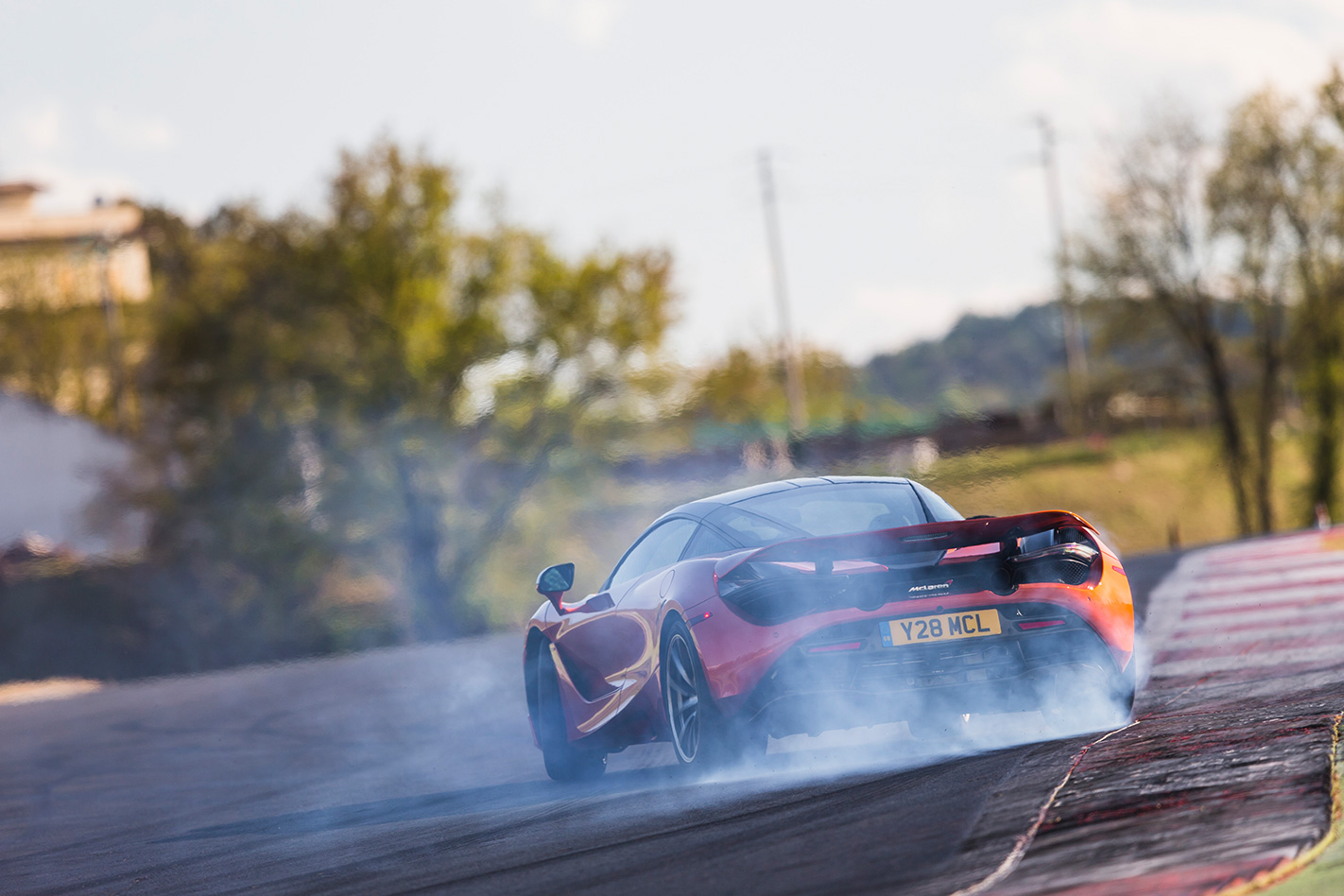
It can’t match the hair-trigger response of the 675LT, which was pretty much a road-legal racer, but it does feel much more stable under braking and less skittish under power, lapping at huge speed while barely breaking a sweat. It can generate smoke for the cameras on demand – there’s even a drift mode for the not-so-handy – but its greatest skill is just going enormously quickly.
That fact alone sums up the astonishing rate of progress Woking is making.
But is this the car that you lust after above and beyond any of its rivals? The 720S has certainly earned its spot on any lottery wish list it finds itself on. It’s more involving, more exciting and better looking than the 650S, a technical tour de force that offers an unprecedented spread of skills.
It might not excite quite the level of emotional passion of its Italian rivals, but there’s little doubt it will spank them on track in a fair fight.
What do you call the game played in the AFL? Aussie Rules, right? And the round-ball version of football? Soccer, of course.
In the same way, Supercars is synonymous with V8s. Well, when it comes to names, all this is not the case according to the governing bodies of Aussie Rules, soccer and V8 racing. Officially, three of the nation’s most popular sports don’t recognise their popular names.
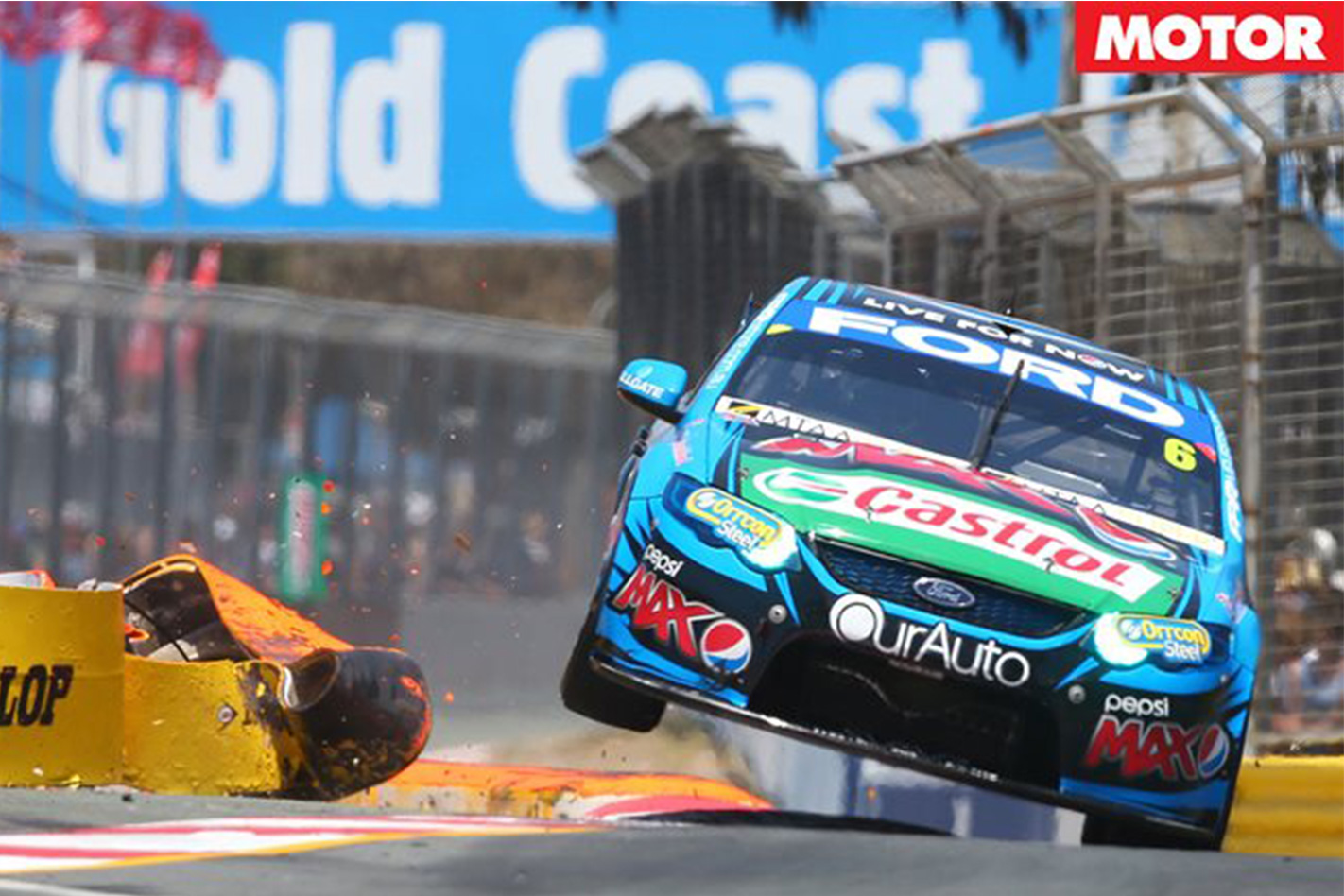
And only last year, V8 Supercars became simply Supercars in anticipation of the Gen2 rules. Supercars wanted to appear more market relevant.
Big fail. Everyone still calls them ‘the V8s,’ just as Aussie Rules and soccer remain entrenched in the vernacular. To the fans, the media and especially the wider public, these traditional tags endure because they encapsulate each sport’s distinctiveness. Dropping the V8 label diminishes Supercars’ identity.
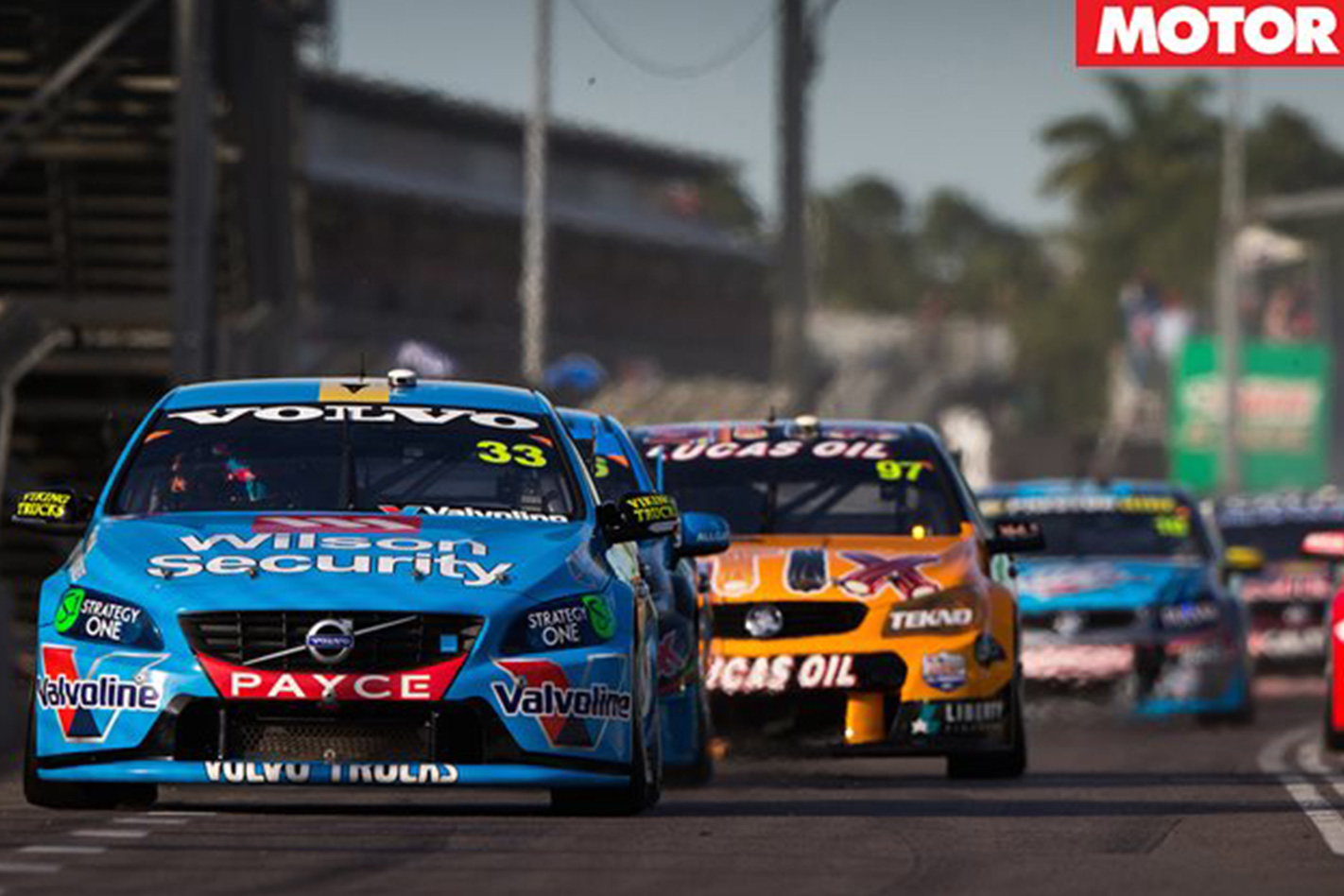
V8 engines wrapped in recognisable body shapes is the racing’s USP, so why downplay its primary appeal? And the fact is, until next year, there are only V8s on the grid. Supercars bosses maintain that removing V8 from the title is part of the Gen2 plan to attract new manufacturers, removing the over-arching stigma of ‘old tech’ bent eights.
But while encouraging twin-turbo V6s, it’s acknowledged that the traditional 5.0-litre V8s will remain the most prevalent powerplants through the life of the current regulations until the end of 2021.
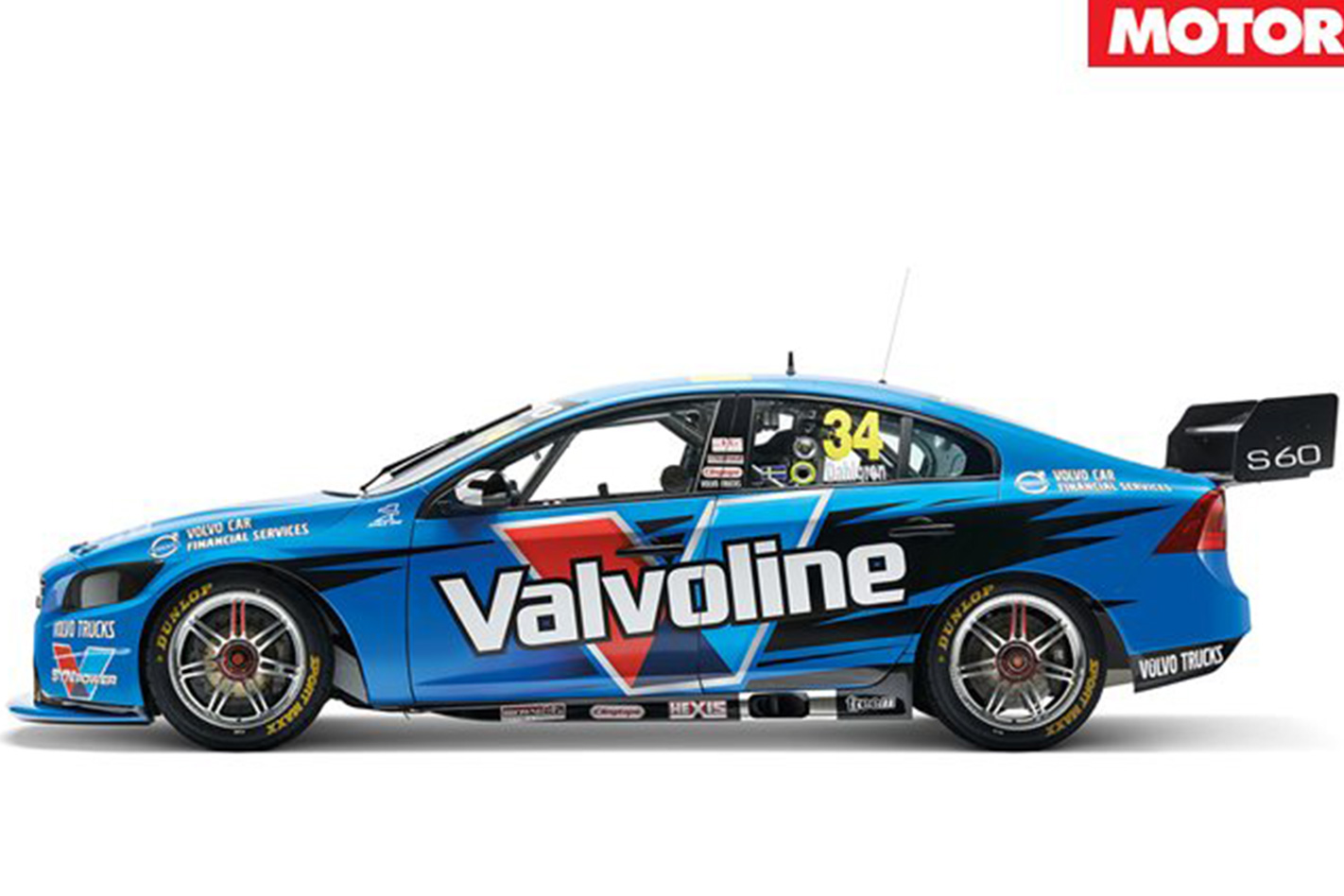
The new-look twin-turbo V6 Commodore will join the field next year, although Triple Eight’s trio may be on their own as latest indications are that the other Holden teams will stick with the proven VF V8 package in 2018.
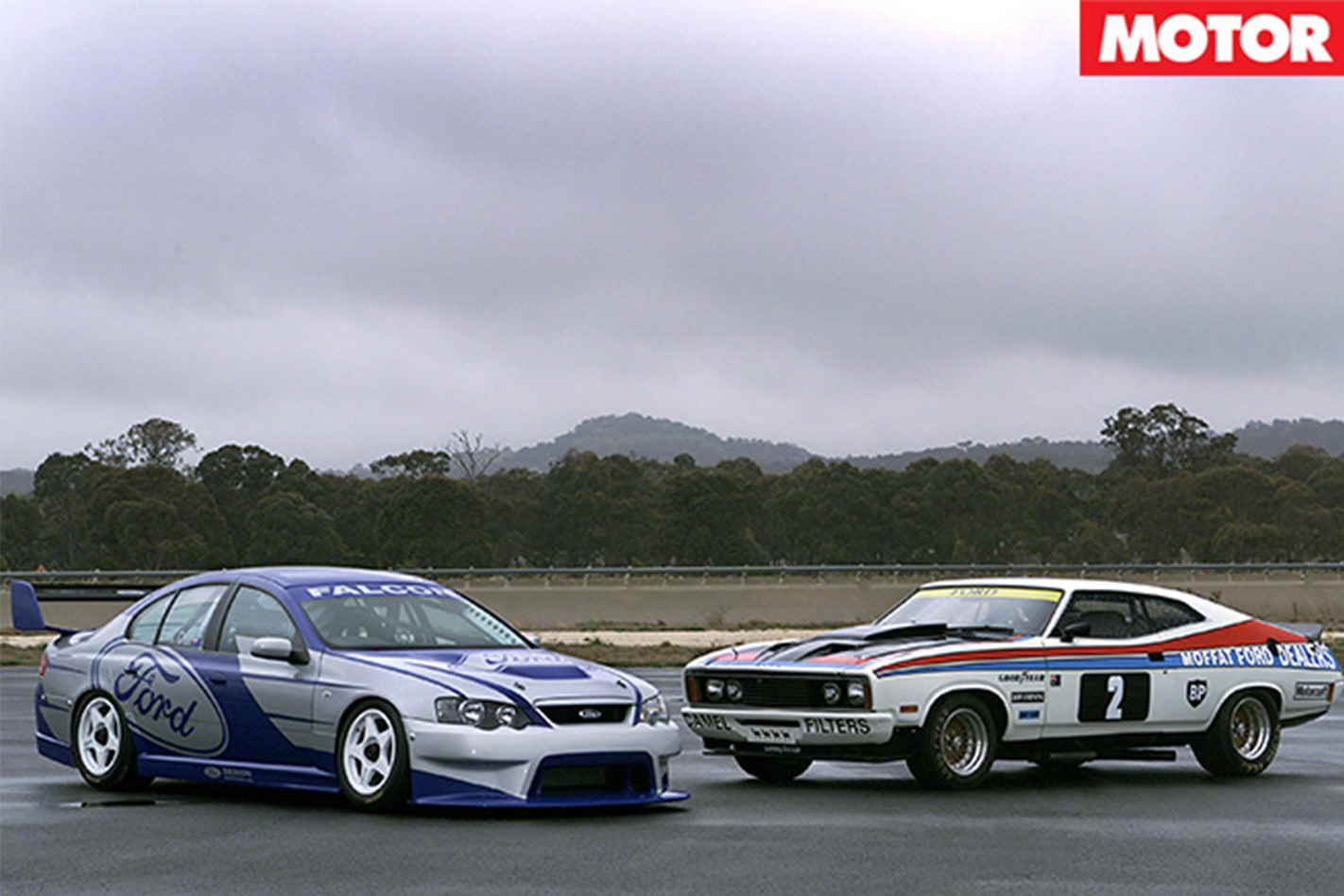
Supercars rendered as wagons and utes
So, in terms of the foreseeable future, with no new manufacturers on the horizon, V8-powered models are set to predominate – or at least make up a sizeable chunk of the field – for a while yet.
If necessary, the current V8 Commodores, Ford Falcons and Nissan Supercars can soldier on until the rules change. If DJR Team Penske and Prodrive Racing Australia can finally gain Ford approval, if not financial support, to develop a Mustang Supercars racer – which now won’t happen until 2019 at the earliest – it would still use the tried-and-true V8.
All in all, it makes no sense to take the V8 out of Supercars – just as it is a folly to neglect the Ford versus Holden rivalry. The sport’s rulers have under-estimated how pervasive – and popular – red against blue still is.
Supercars get F1 livery makeovers
Commodore vs Falcon remains, numerically as well as emotionally, the foundation of the following. Despite the radical shift in the car market, the battle between V8 Fords and Holdens continues to be the main attraction.
Enthusiasts applauded the addition of Nissans, Mercedes-AMGs and Volvos, but for the mainstream audience, it’s still all about blue vs red. It’s tribal, like ingrained footy team rivalries.
V8 Falcon vs V8 Commodore still excites diehard fans and casual followers alike, even though the Aussie family Ford has ceased production and the homegrown Holden is doomed come October.
What that tells you is Ford and GM nameplates synonymous with V8s are as much the future of Supercars as they were its inspiration.
It’s time to rethink the rules to encourage cost-effective V8 racers that resemble affordable, sporty road cars without relying on manufacturer backing. Those days are gone. Supercars is about entertainment, not market relevance.
Just give the people what they want.
