There aren’t many hatchbacks you’d pick to go toe to toe with an Audi RS6.
But if you want the best chance at winning, bend the rules a little and bring a rally car to a gunfight.
Geneva Motor Show: 2017 Skoda Octavia RS 245 revealed
The Skoda Fabia R5 rally car has less than half the power of the Audi, with 205kW to match the 445kW of German grunt in the sports wagon.
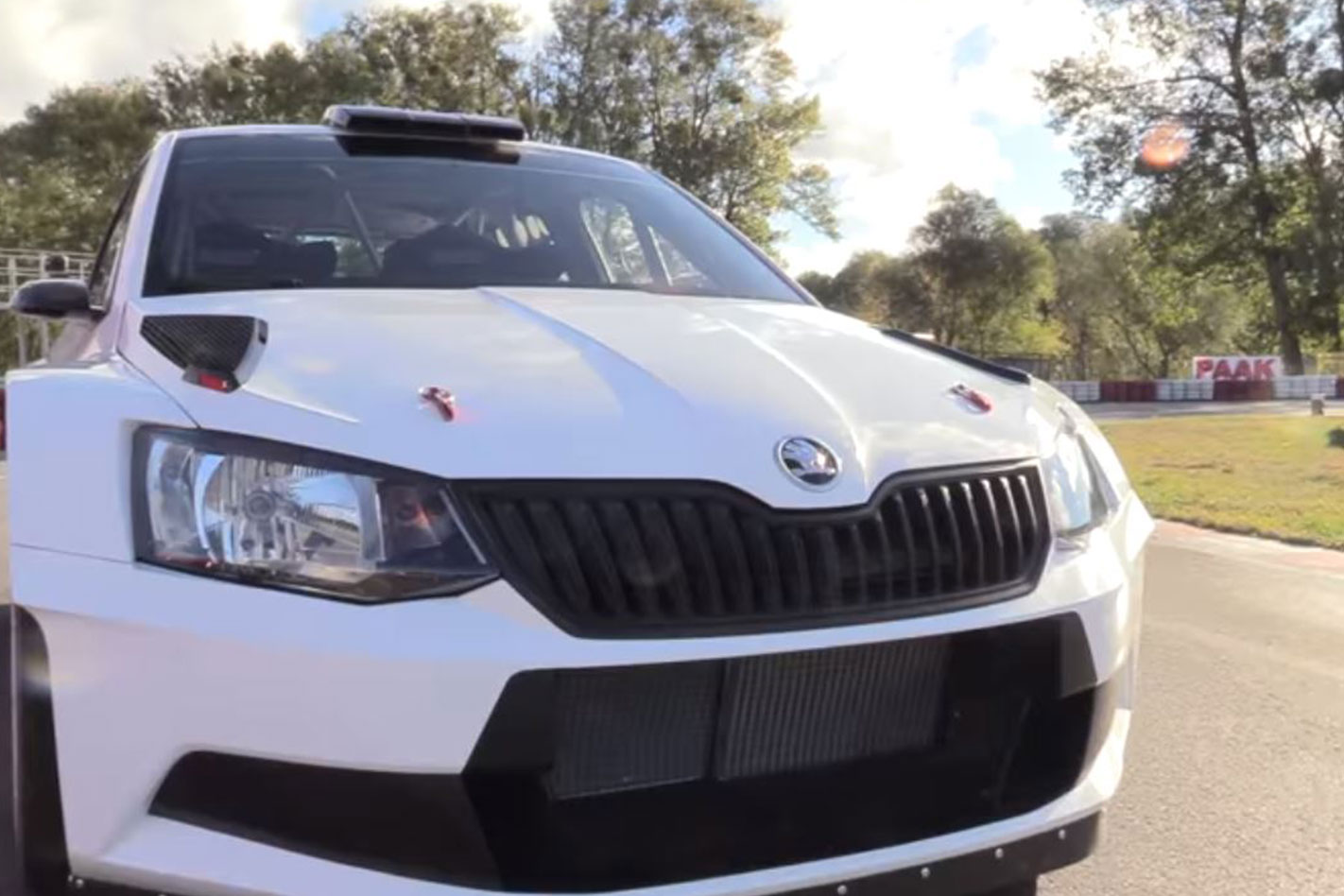
It only weighs “more than 1230kg” due to FIA rules, but you can be sure Skoda have cut it as close as they can get away with.
Audi R8 Spyder V10 plus unveiled
That’s almost nothing compared to the 1950kg the Audi must tow along, but the German has a 4.0-litre twin-turbo V8 helping it along.
Oh, and it’s worth pointing out that, unless you speak fluent Polish, you’ll want to skip to the middle of the video.
2017 Skoda Octavia RS230 long term review p1
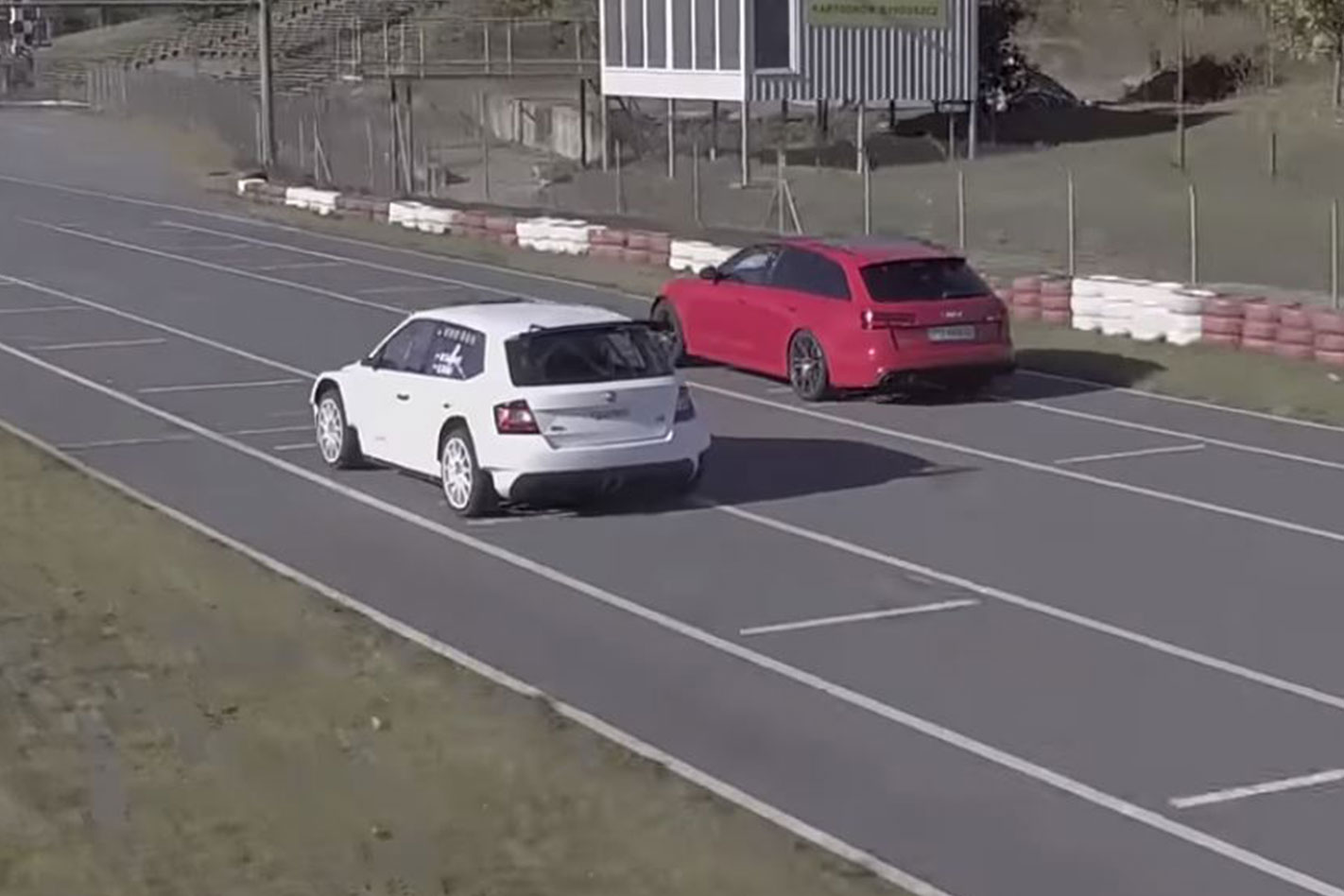
What might surprise you, aside from the fact you’re not sure what they’re talking about (we assume it’s the cars, but it could be pancakes), is that the Skoda looks like it’s about to take off and leave the Audi behind.

2016 Skoda Superb scores Golf R drivetrain
Though it’s a little disappointing that the underdog didn’t pull through for the win, it’s still thoroughly impressive that the lightweight of the two kept up so well.
It should also be noted that the RS6 did a 0-100km/h run in 3.2 seconds, if the data logger and video are to be believed. That’s a bit quicker than Audi’s 3.7 claim.
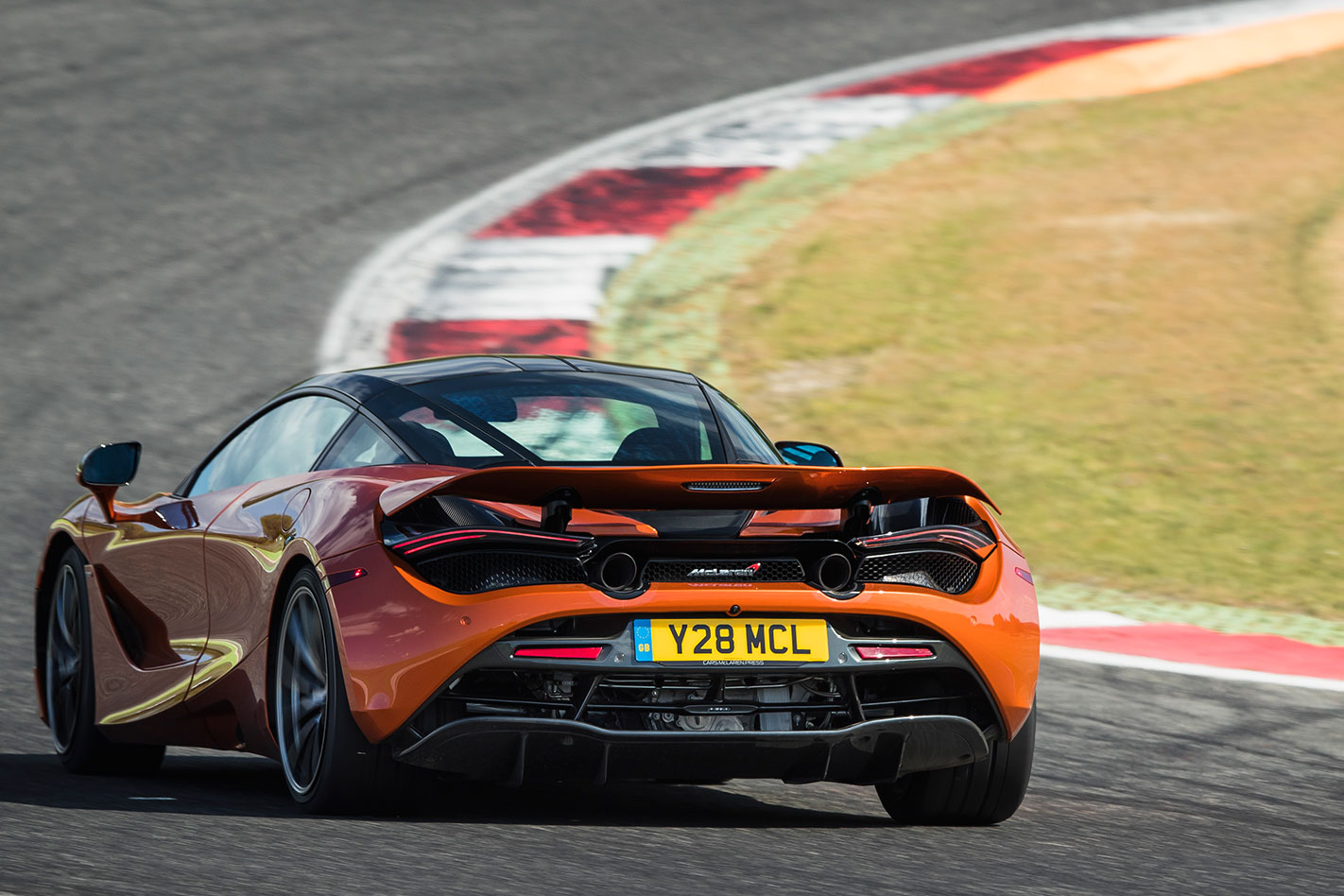
As supercars get ever faster, overall driver engagement will be the key going forward according to McLaren.
The McLaren 720S resets the supercar performance benchmark, its 530kW/770Nm 4.0-litre twin-turbo V8 resulting in eye-popping acceleration claims of 0-100km/h in 2.9sec, 0-200km/h in 7.8sec and a 10.3sec quarter mile.
British publication Autocar recently independently tested the 720S, recording 0-97km/h (60mph) in 2.9sec, 0-193km/h (120mph) in 7.4sec and a 10.4sec quarter mile at 231km/h.
These numbers put clear air between the 720S and its main rival, the Ferrari 488 GTB, which recorded 0-100km/h in 3.3sec, 0-200km/h in 9.6sec and an 11.0sec quarter mile at 214.1km/h at Performance Car of the Year last year.
Autocar’s Ferrari figures were slightly better at 0-97km/h in 3.0sec, 0-193km/h in 8.6sec and a 10.9sec quarter mile at 220.4km/h.
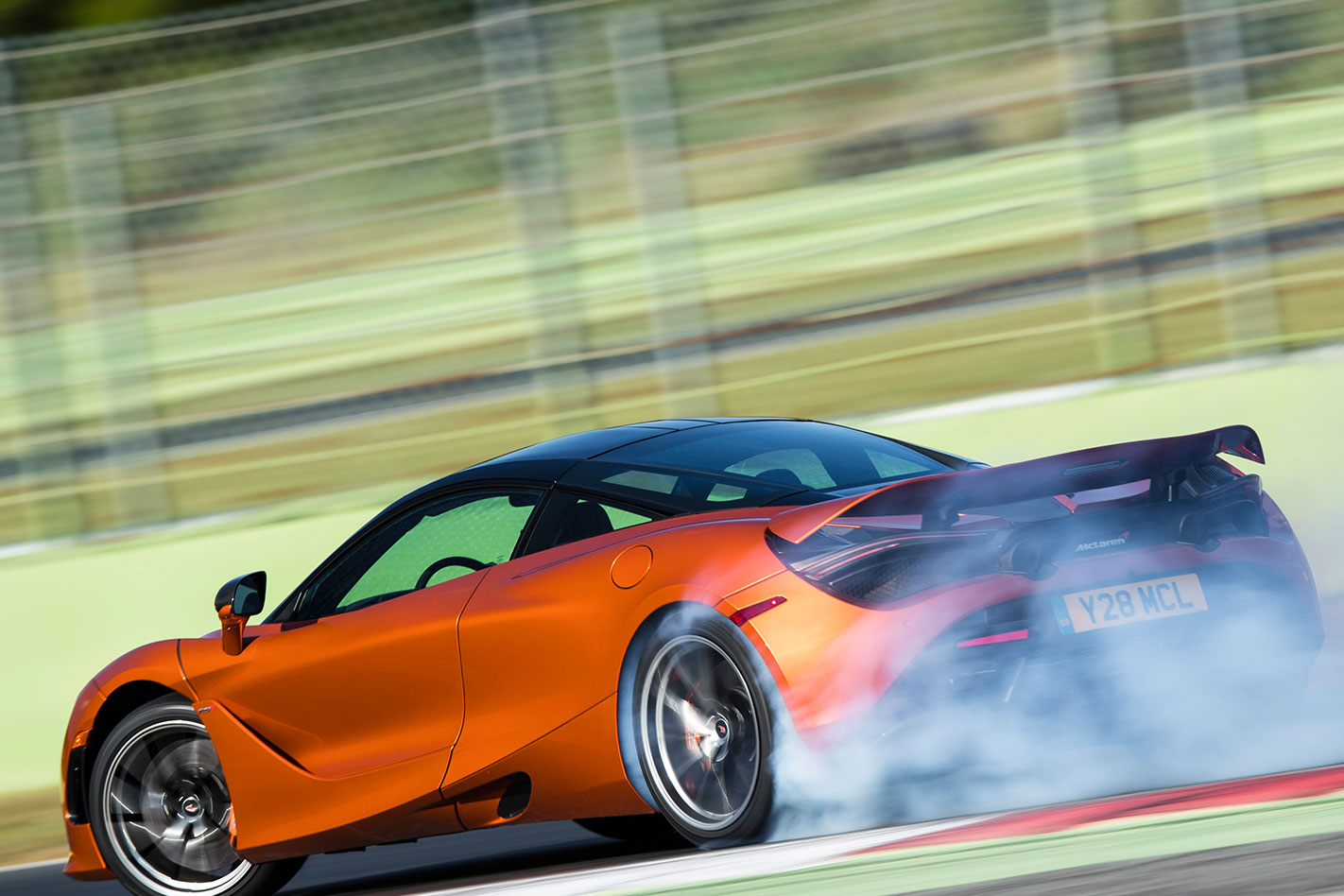
“You talk about performance; now there’s high-speed performance and there’s also low-speed performance, so it’s about how you can engage and enjoy the car,” said Biggs.
“Yes, everyone likes to stand behind fast numbers and for us the 0-200km/h number is really important, because that shows the performance of the car from an aerodynamic, chassis balance and obviously grip and power [perspective].
McLaren: F1 woes won’t affect road car sales
“But it’s not about the fastest track times necessarily, it’s about can you enjoy [the car] on a daily basis? So for us let’s wrap it round into driver engagement and enjoyment rather than overall performance, but obviously some of those key figures for us are quite important.”
Nonetheless, Biggs explained the current crop of supercars is more or less at the limit of what’s achievable for the traditional 0-100km/h benchmark: “If you look at the 0-100km/h across this segment it’s going to be anywhere between 2.8-3.0sec; the reality is that we’re now restricted by friction and the power you can get through the wheels so now you’re looking at 0-200km/h.
The ultimate hypercar track day
“I think probably traditionally there’s been a male ego about numbers but now it’s about how we can build that overall rounded car that can be enjoyable both road, track or anywhere you choose to drive it. From a human perspective it’s about what they’re trying to get from the machine – they’re using it for a purpose.”
The McLaren 720S is now on-sale in Australia priced from $489,900.
The most technologically advanced version of the Toyota Camry will arrive in Australia in November featuring a V6 engine that will be more powerful than the one fitted to the Holden Commodore.
Toyota has released details of the fully imported version of the Ford Mondeo, Mazda 6 and Volkswagen Passat rival that will replace the locally made one from early October, the time that the Japanese car maker will shut the door on more than 50 years of local assembly.
It also marks the loss of the locally developed, V6-engined Aurion large car, with the eighth-generation Camry featuring petrol and petrol-electric hybrid four-cylinder, and V6 drivetrain options.
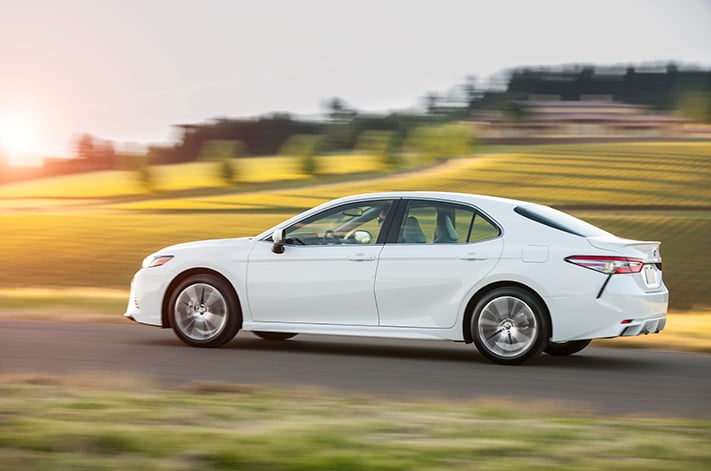
The upcoming Camry is built on the Toyota New Generation Architecture that has so far rolled out under vastly improved models such as the second-generation Prius petrol-electric hybrid hatchback and the C-HR compact SUV.
A new generation of the Corolla small car is expected soon that will also jump to the more advanced platform that introduces a more expensive double-wishbone rear suspension that’s believed to help with rolling out advanced vehicles with electrified drivetrains.
The fully imported Camry is a huge technology leap over the locally made one that was hit by budget cuts that dropped our version of the mid-sizer well behind the advanced driver assist-equipped versions sold in overseas markets.
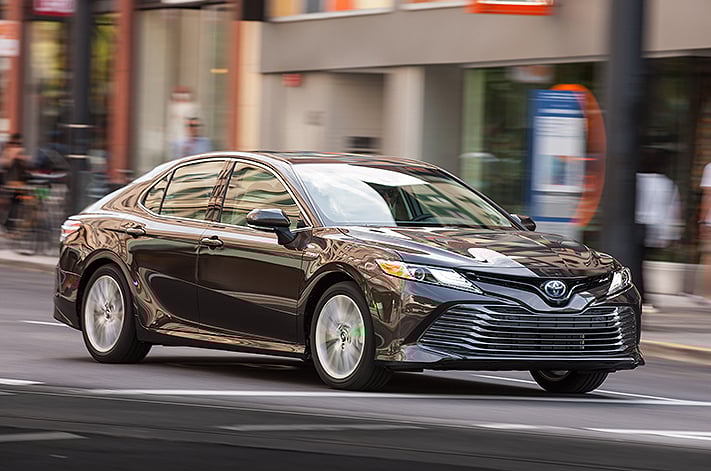
The new Camry introduces much brighter LED headlights, a head-up display, and an electric parking brake that replaces the foot-operated parking brake that is still featured in a number of Toyota- and Lexus-badged products.
But more importantly, Toyota has announced the Camry will include automatic emergency braking as standard, meaning the mid-sizer will be able to either avoid or minimise the damage from a crash before even the driver can react.
The hybrid version of the Camry will produce 155kW, with fuel use expected to slip below 4.5 litres per 100 kilometres once the government-sanctioned test is finalised ahead of its November launch.
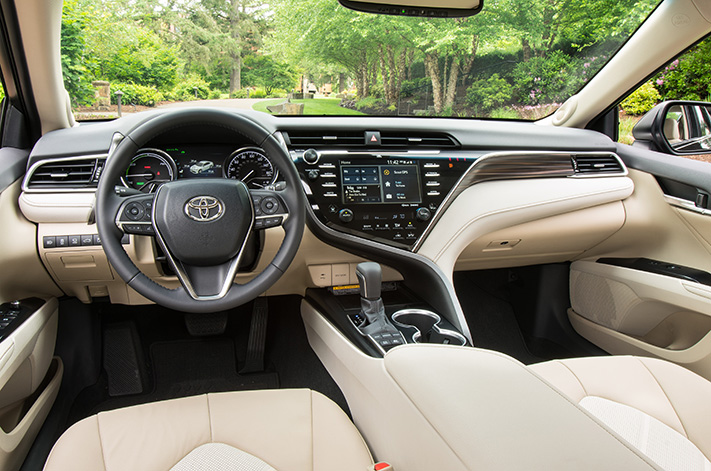
The V6, meanwhile, is expected to produce around 222kW and 356Nm, making it more powerful than a V6-engined Holden Commodore.
The new hybrid-engined Camry gains an extra 30 litres of boot space over the model it will replace, with the batteries moving from beneath the boot floor to underneath the rear seat.
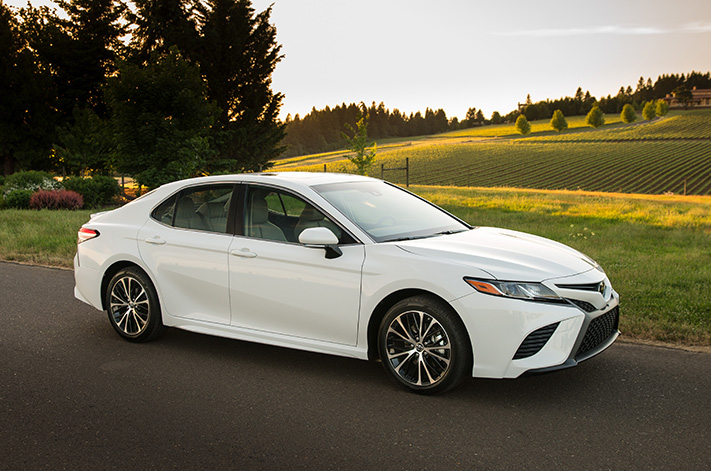
One thing Toyota is yet to announce, though, is pricing. The more technology-laden imported Camry potentially means the Japanese brand will struggle to meet its current $26,490 starting price. The cheapest version of the current hybrid-engined Camry – lacking all the advanced safety tech – starts from $30,490.
The Toyota Camry currently has a strong lead in the mid-size car segment, helped by a heavy focus on fleet and government sales that favour locally made cars. It has regularly featured in the top 10 best-selling cars in Australia.
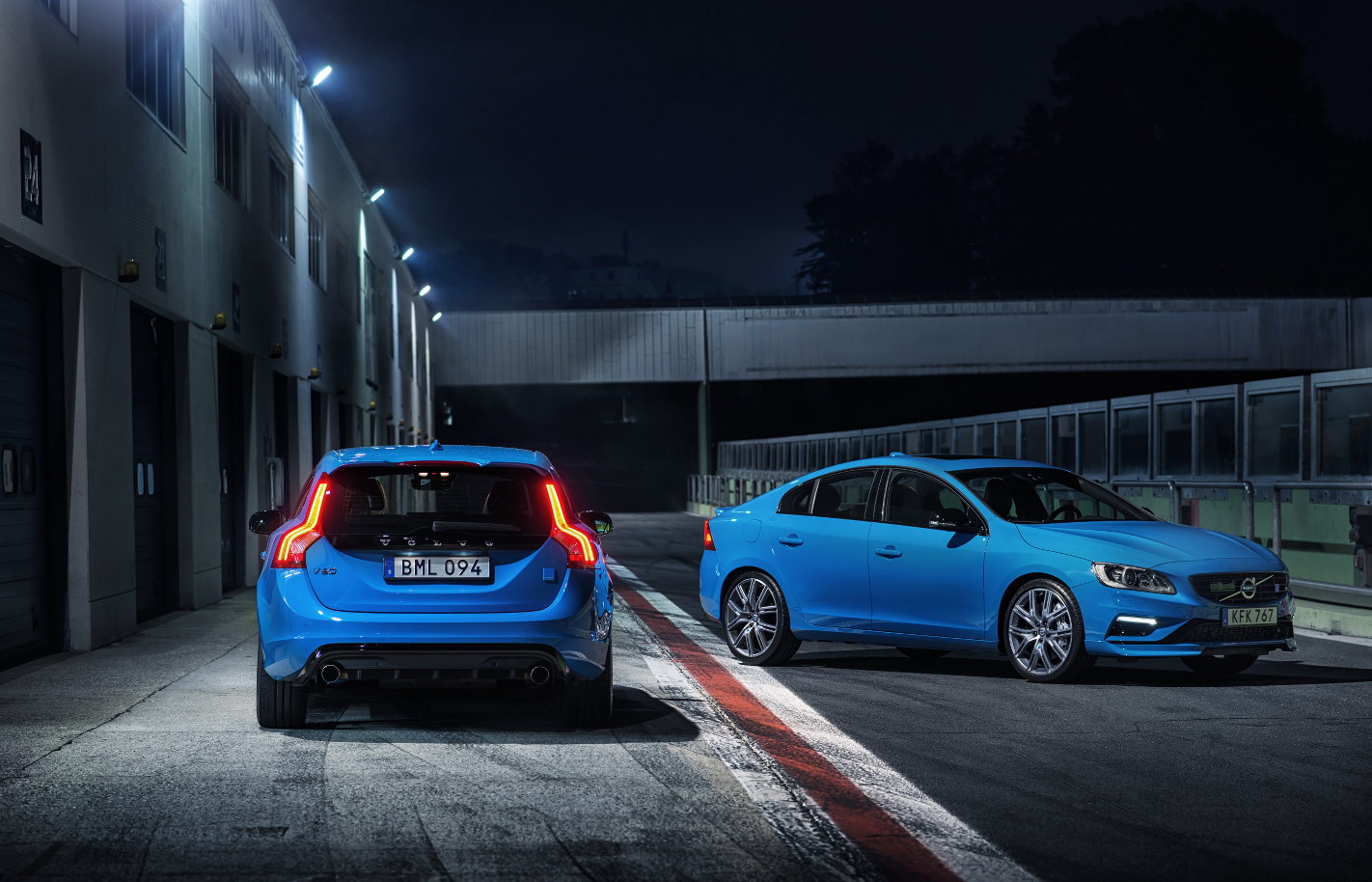
VOLVO will spin its high-performance Polestar badge off as a separate brand that will focus on high-end electrified sports cars, the Swedish car maker has announced.
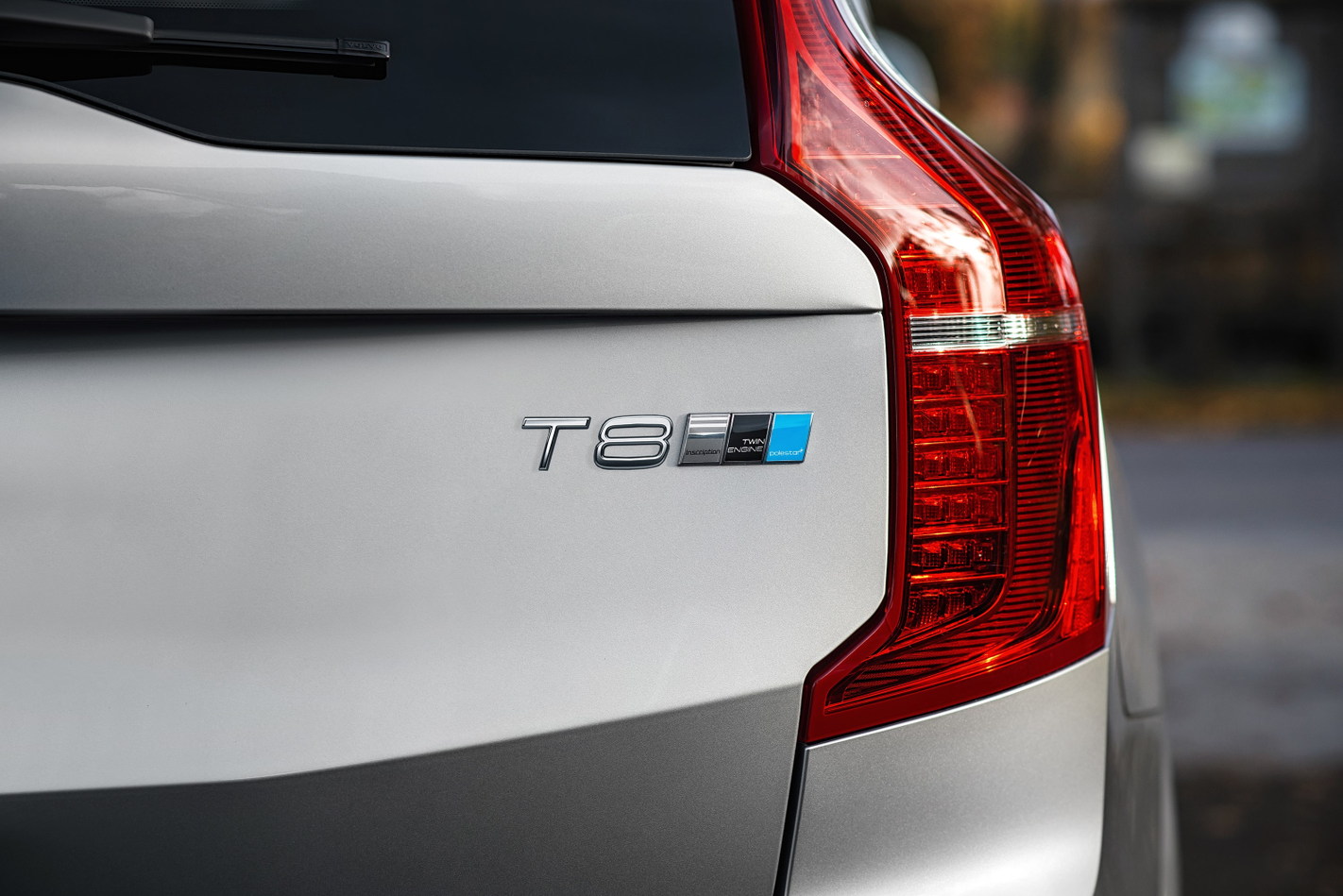
That includes dumping the traditional blue-coloured square Polestar patch that more highly strung Volvos have worn in the past, and replacing it with a new design (pictured, above) that gives the brand a more premium look, but a less sport-honed feel.
While not exactly setting itself up as a Tesla beater, Volvo’s move appears to reinvent Polestar as a performance brand with a strong environmental focus, tapping into its petrol-electric hybrid technology that is already rolling out across the brand.
“Polestar will be a credible competitor in the emerging global market for high performance electrified cars,” it said. “With Polestar, we are able to offer electrified cars to the world’s most demanding, progressive drivers in all market segments.”
“Polestar will enjoy specific technological and engineering synergies with Volvo Cars and benefit from significant economies of scale as a result of its connection to Volvo.
“These synergies will allow it to design, develop and build world-beating electrified high performance cars.

Ingenlath, a former director of exterior design at Volkswagen, was responsible for developing Volvo’s next generation of cars based on the scalable modular architecture that has so far spawned the XC90, S90 and V90 range.
He has also headed up the program that has developed Volvo’s compact modular architecture that will underpin a new generation of smaller Volvo-badged cars, including a future S40 sedan and V40 wagon, and an SUV.
The move will position Geely as one of the most progressive car makers globally, preparing itself for a global push towards more fuel-efficient vehicles as authorities roll out even more strict emissions standards.
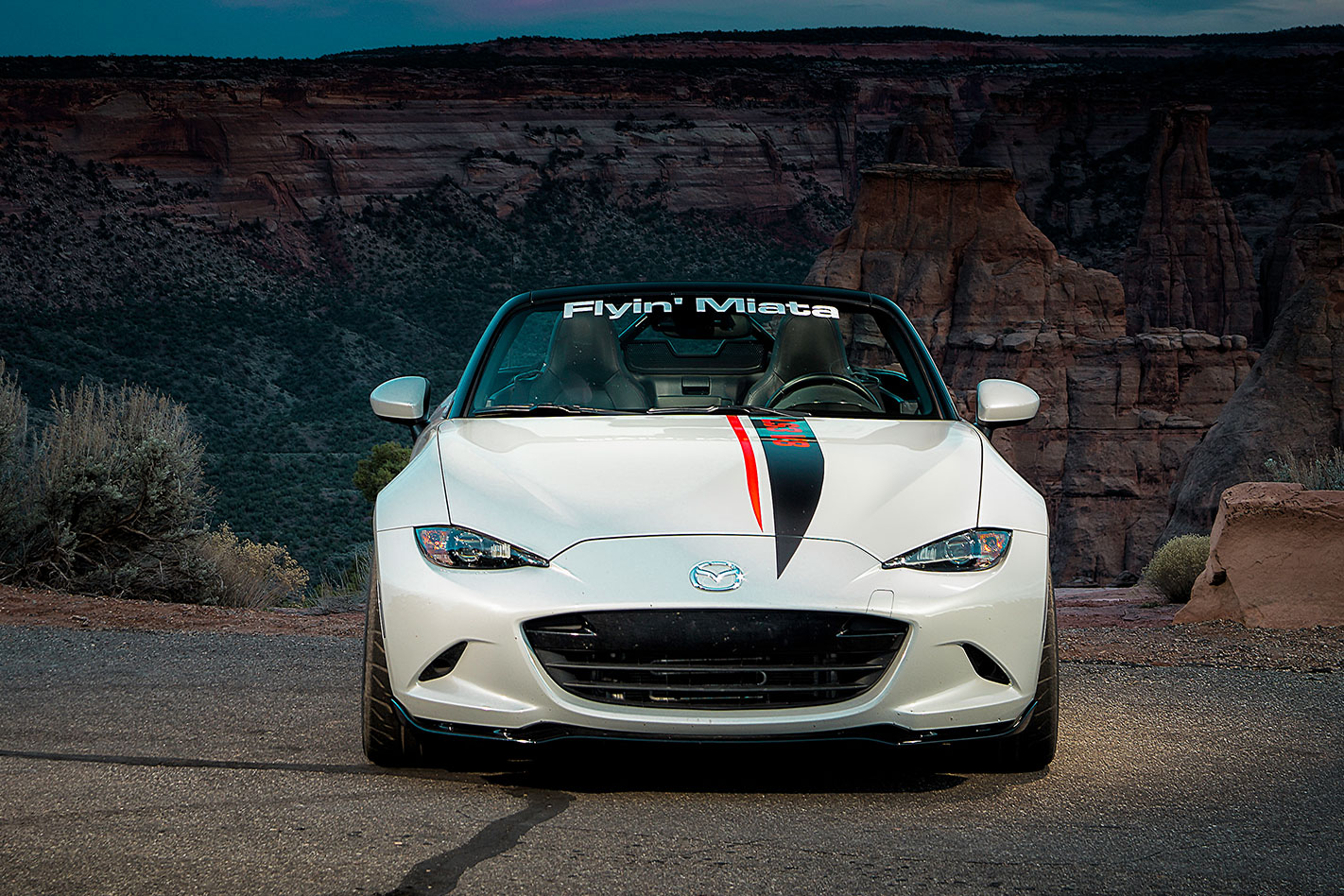
Before I arrived, I hadn’t heard of Palisade, Colorado. It’s a small town in the high desert near the Utah border and set humbly among the peach orchards is a little company called Flyin’ Miata that’s known for getting the most out of Mazda’s roadster.
Since the launch of the original MX-5, they’ve been developing all of the crazy things – turbo kits, superchargers, even stuffing V8s under the Mazda’s bonnet.
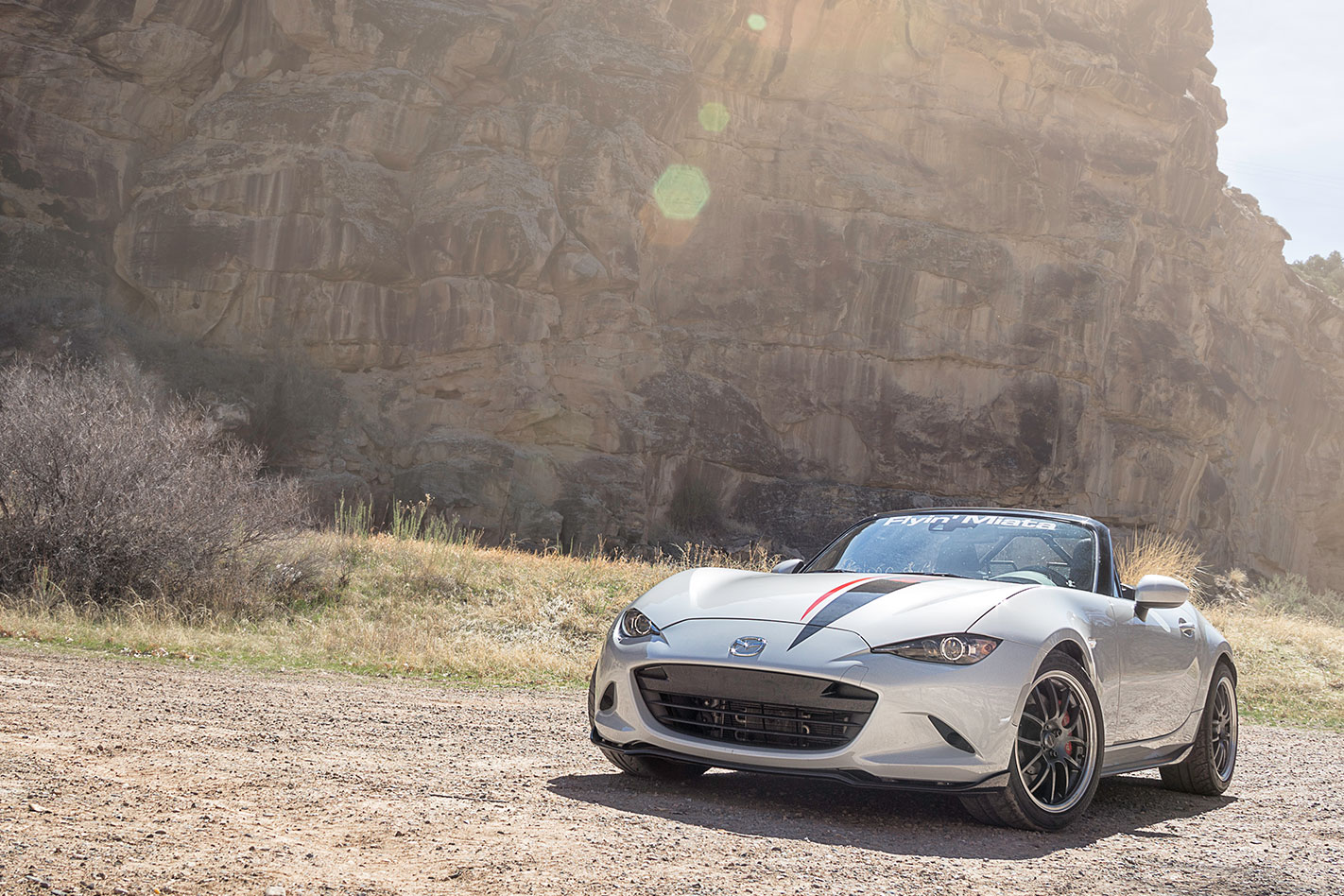
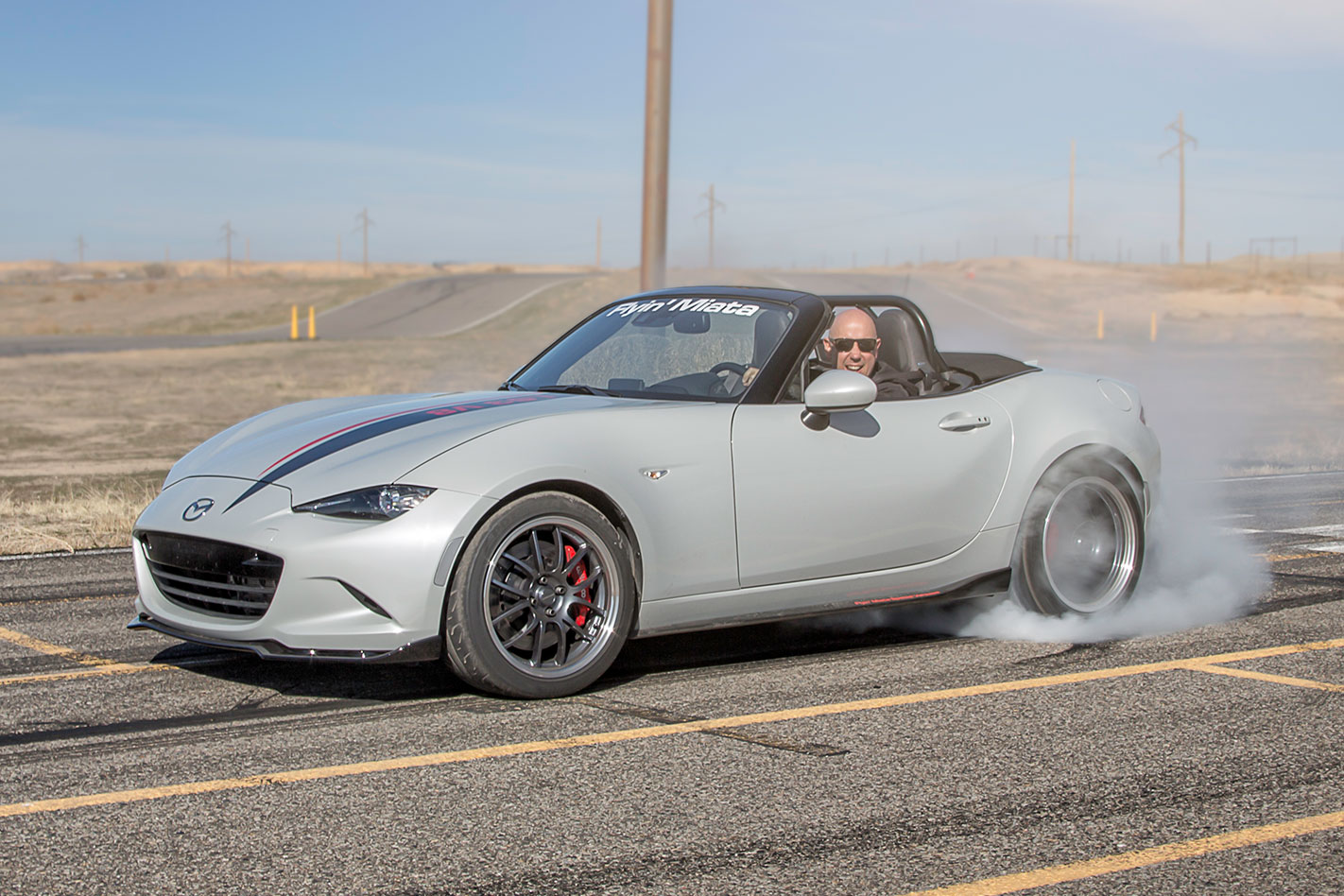
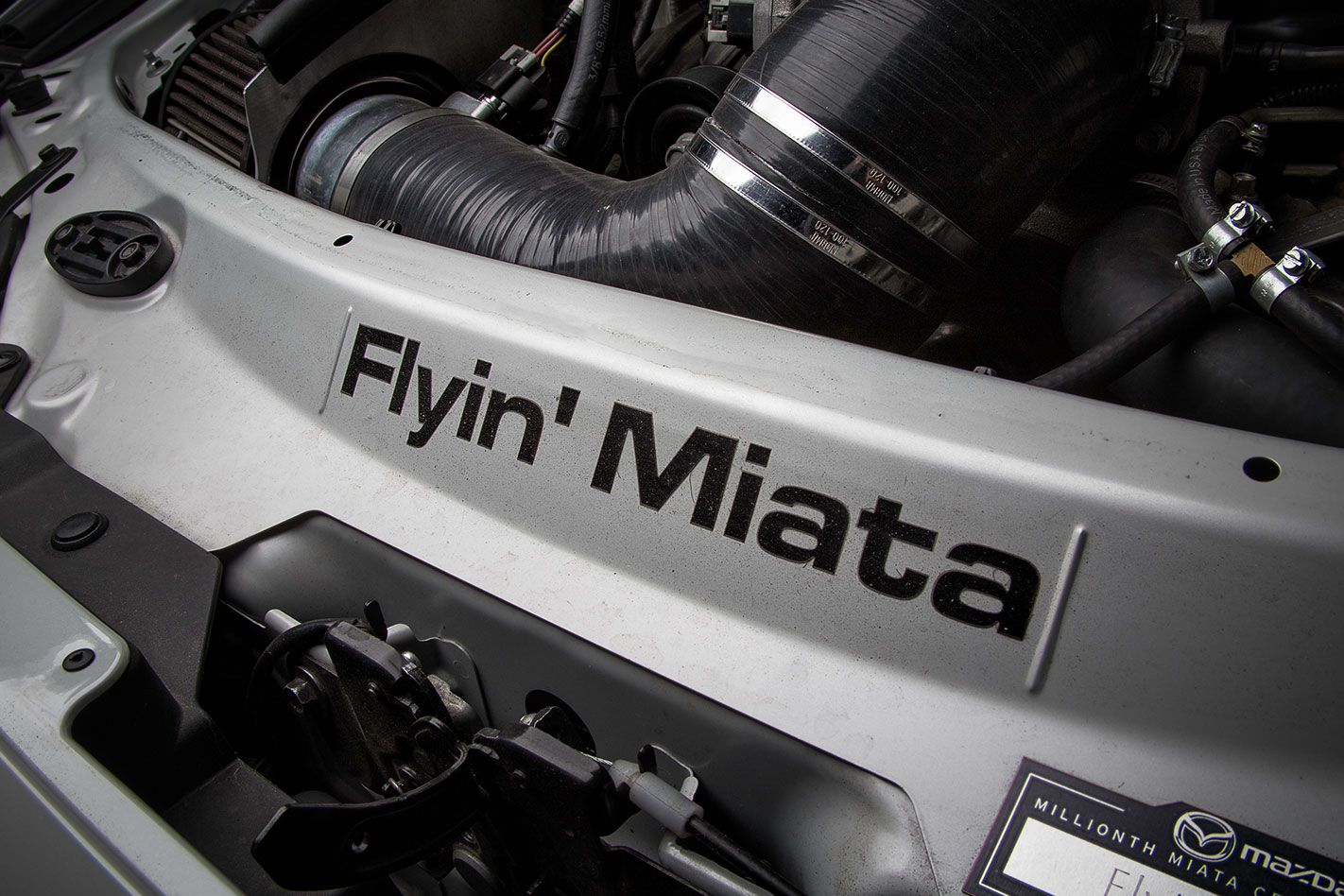
The latest generation ND MX-5 is here and Flyin’ Miata already has a complete range of tuner parts. But what’s most interesting is that they’ve already managed to fit a 392kW, 6.2-litre LS3 small-block in one. They call it the Habu, after an Asian pit viper.
For starters, the MX-5’s systems communicate to one another through a CAN bus, making an engine swap more challenging than ever before.
What’s more, the V8 conversion necessitates swaps of other major components, further complicating matters. The Mazda gearbox is replaced by a Tremec T-56, the differential is new, and so is the hydraulic steering rack, all procured from the fifth-generation Chevy Camaro.
You might imagine the V8, transmission and diff are a difficult fit for the ND, but other than massaging the firewall and reinforcing the front and rear subframes, it all goes in quite easily. No cutting or chopping of the MX-5’s chassis required.
After a tremendous amount of development, the Habu’s systems operate as in a regular MX-5 – the climate control functions perfectly, as do the gauges, while the abysmal satnav functions as intended.
Flyin’ Miata leaves two systems out of the V8 conversion – stability and traction control –removing the electronic nannies and making the Habu a machine for purists. ABS is retained, but otherwise it’s you and your skills, the way it should be.
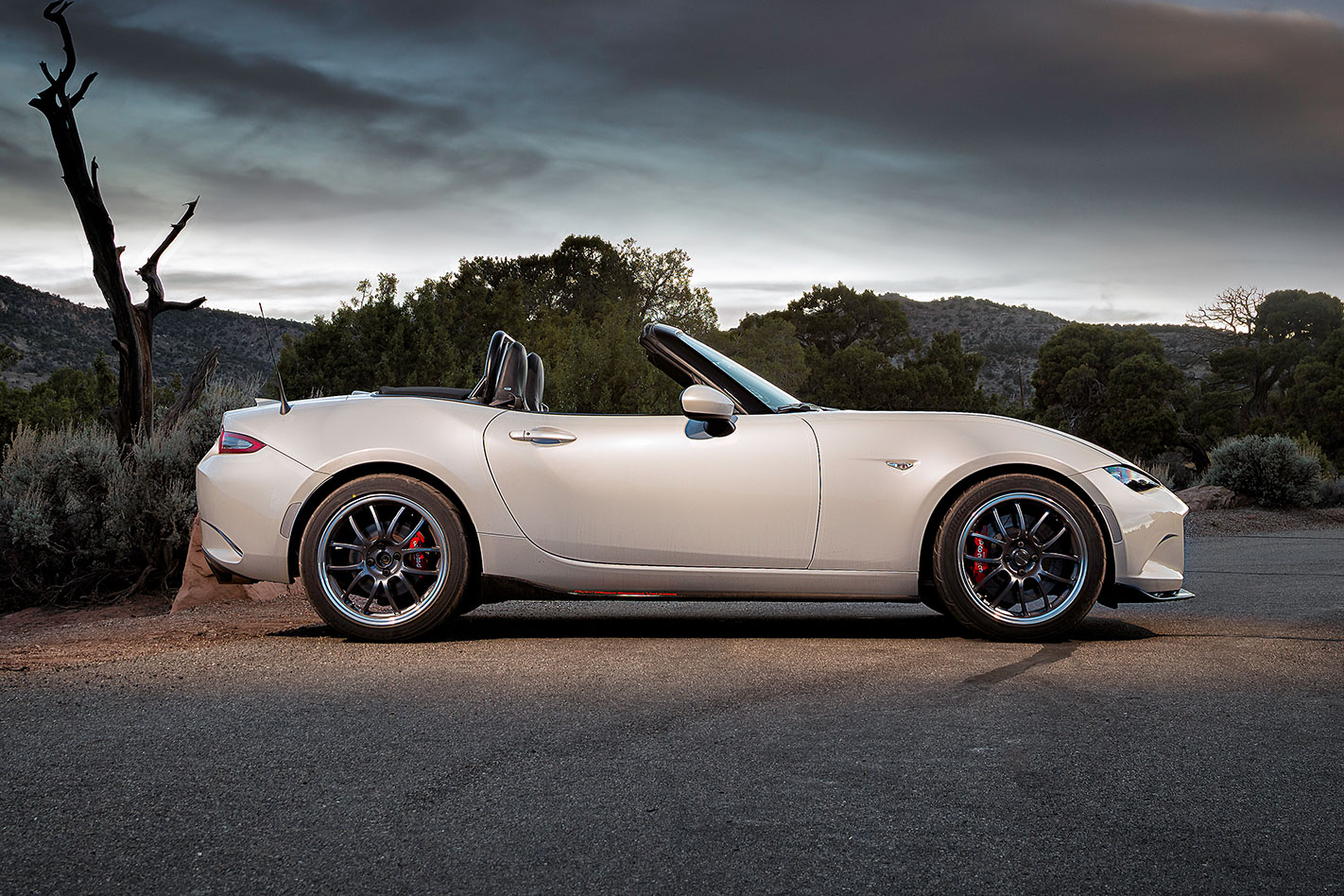
Despite the radical surgery it’s unmistakably an MX-5. The dimensions are the same over a near-stock stance only altered by massive Bridgestone rubber on custom wide wheels.
Subaru BRZ vs Mazda MX-5 2.0 vs Abarth 124 Spider
It isn’t excessively low and the subtle roll bar barely hints that a monster engine lives here, though for fun the team replaced the SKYACTIV marker with a $10 LS3 badge from eBay.
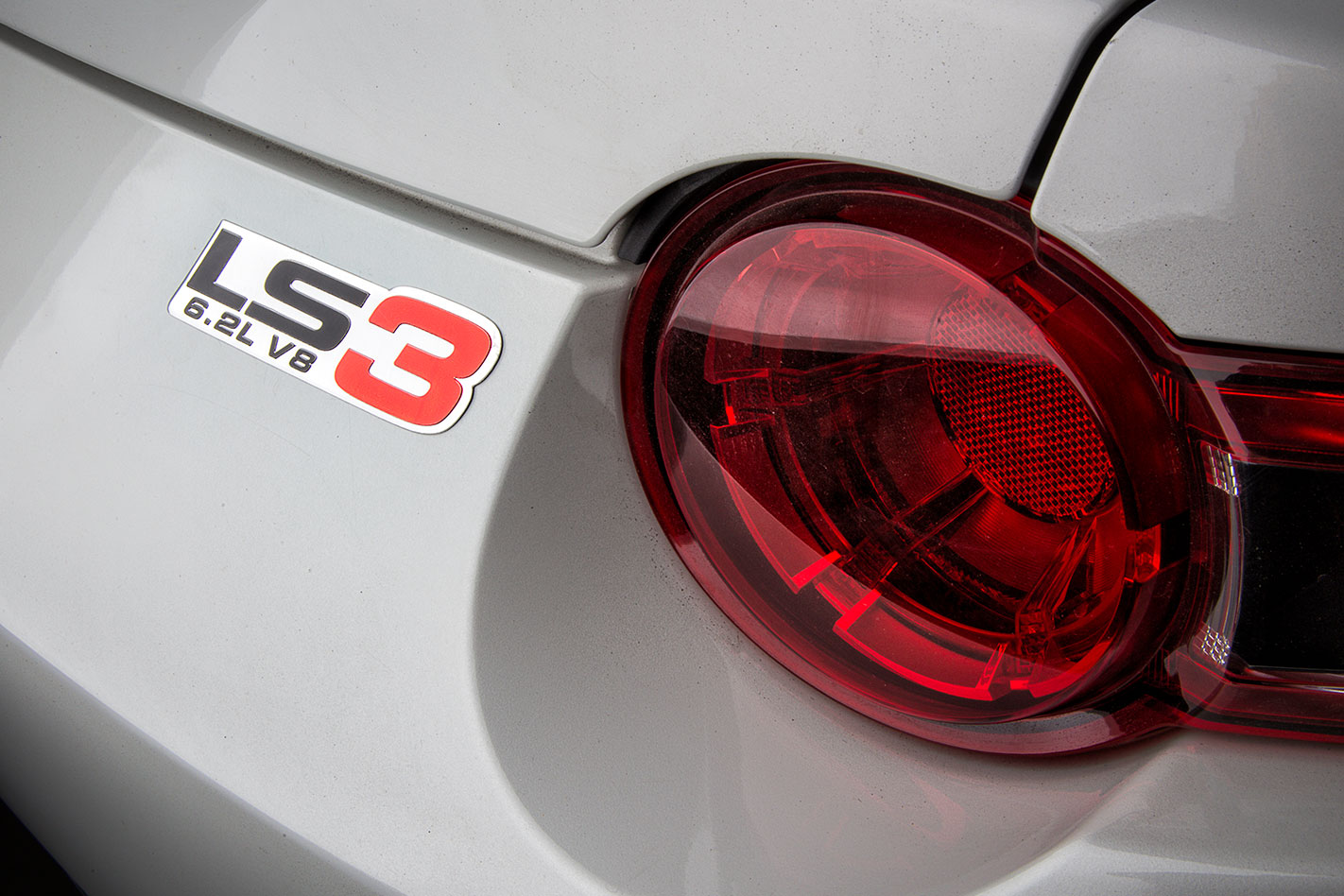
Then you hit the start button and the V8 thunder reminds you of something bold and brash from HSV. You can’t help but laugh as the promise of the looks melts away.
There’s real heft to the controls. Where the MX-5 feels light and lithe – through the controls and the seat of your pants – the Habu is like driving a scaled-down Corvette. A faster, rawer Corvette.
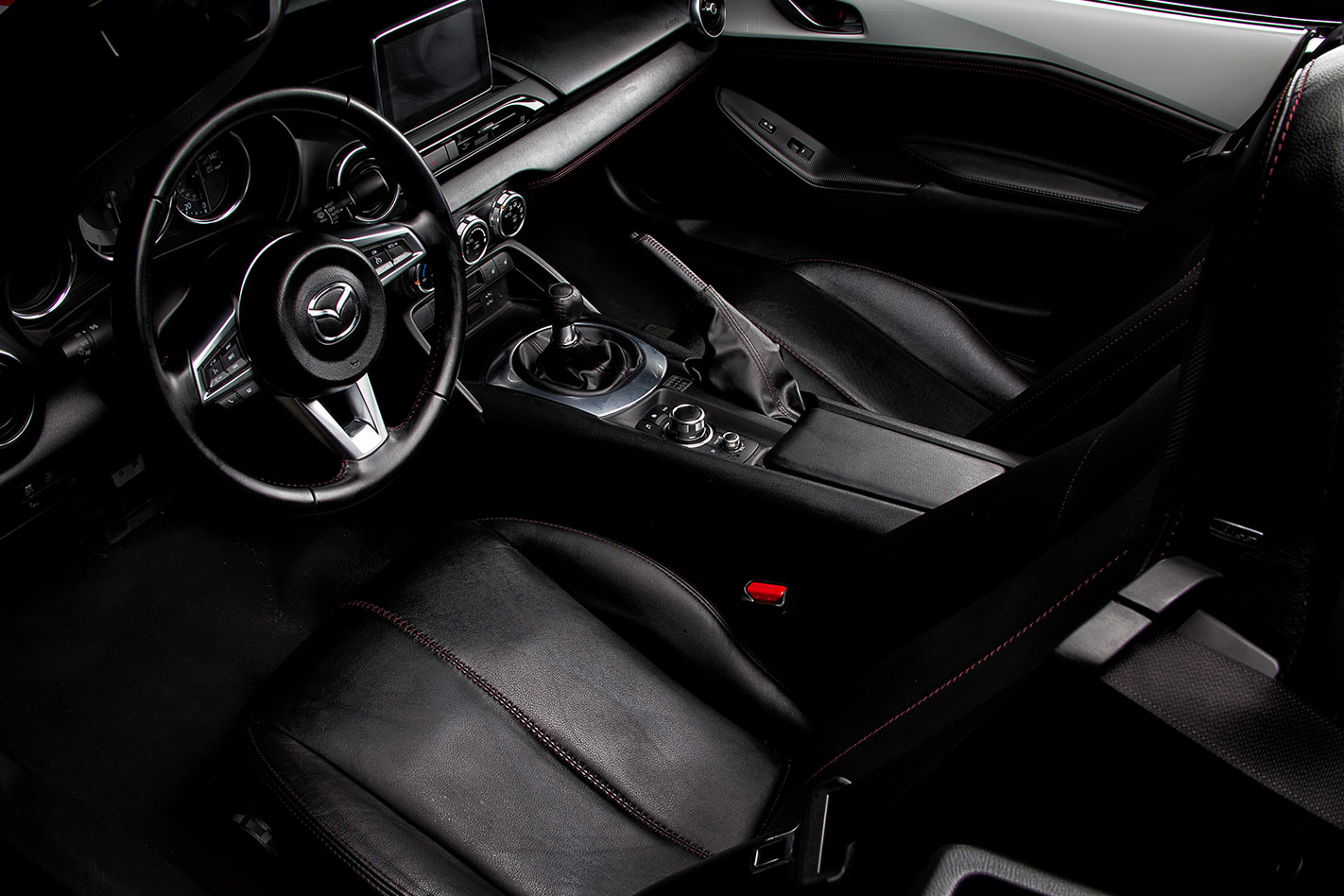
The clutch and shifter are far from delicate. The Tremec T-56 ’box’s shift action is direct and mechanical, requiring about twice the Mazda’s shifter effort.
VIDEO: Abarth 124 Spider v Mazda MX-5 v Subaru BRZ rev battle
The brakes have received a modest Wilwood upgrade, the rear rotors retained and clamped by four-piston calipers while the fronts feature larger 325mm two-piece rotors and six-piston calipers – more than any 1200kg car could ever need.
The conversion adds nearly 120 kilos to the MX-5 but while the additional mass contributes to the Habu feeling different, more substantial, it doesn’t upset the MX-5’s wonderful balance.
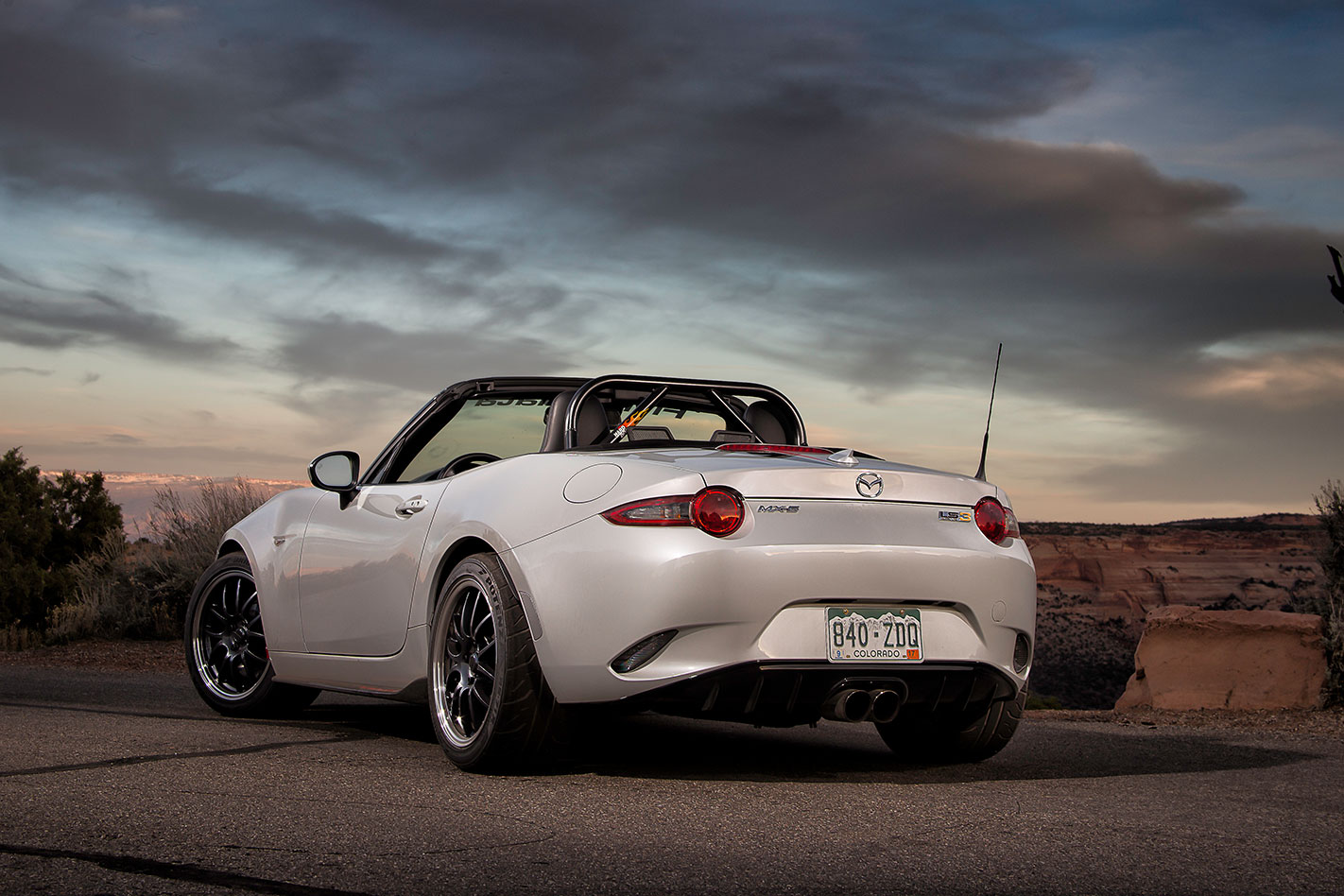
Mazda designed the ND with relatively long suspension travel for a roadster, and Flyin’ Miata took full advantage. They believe that for suspension to work it needs travel, and damper supplier Fox agrees.
Tunehouse Mazda MX-5 ND: Hot Tuner 2016
Better known for mountain bike and off-road truck shocks than sports car applications, Fox has been working with Flyin’ Miata for some time and what you see is an MX-5 that’s been modestly lowered over its wider wheels and rubber.
Ride quality, body and wheel control are all superb; without question, these are some of the finest conventional dampers available.
The Flyin’ Miata/Fox suspension excels everywhere, road or track. The limits are quite high – the Habu will reportedly pull over 1G laterally – but it remains approachable all the way to those limits.
Mazda MX-5 mega drive: NA v NB v NC v ND
With outstanding ride quality and wheel control, as well as the fine overall balance at or even beyond the limits, this is a car that taunts you into going faster and faster through the turns. It’s a combination from the heavens – a controllable and predictable chassis with remarkable feel.
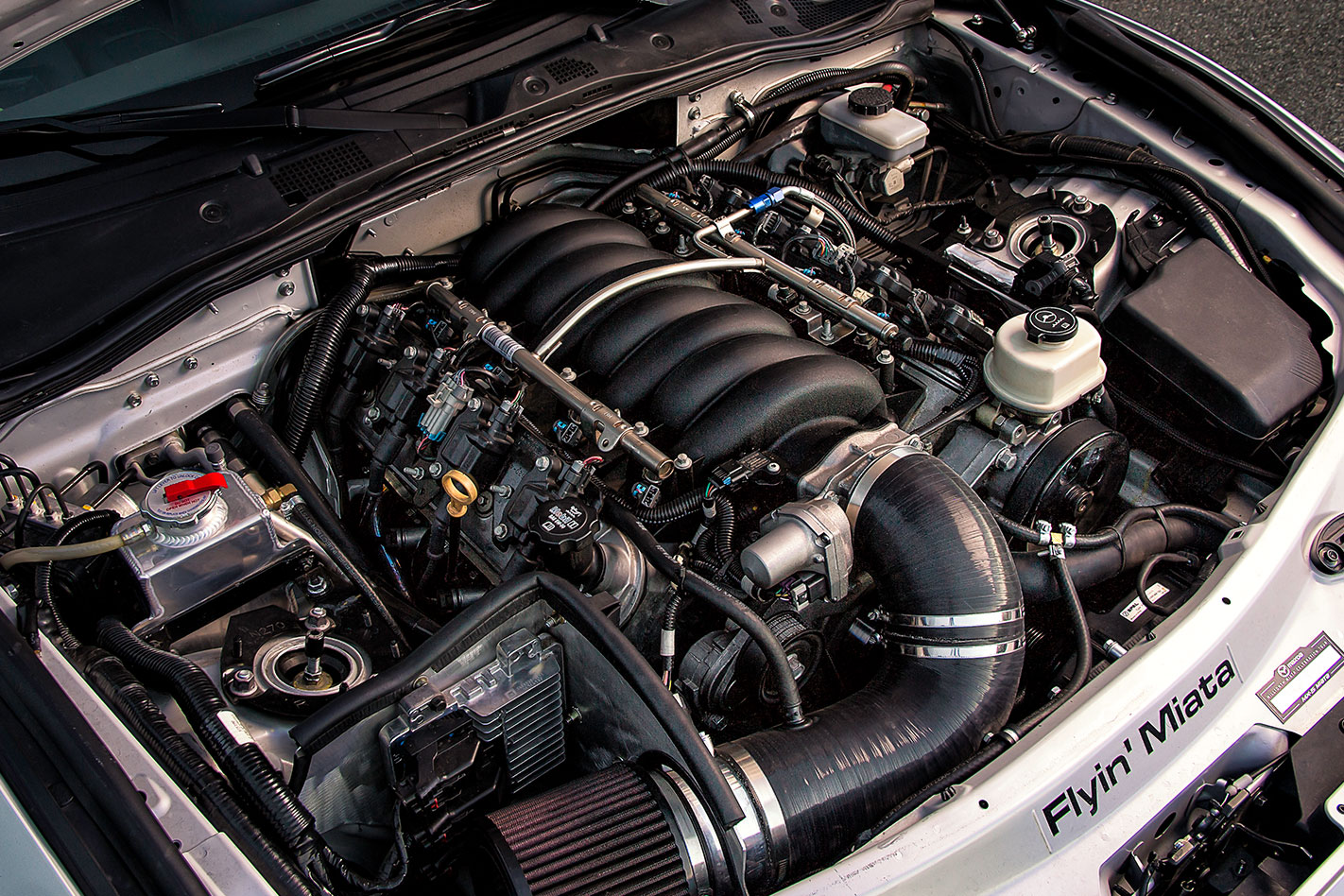
As well as the impressive 392kW there’s 663Nm on tap, and a throttle response that can only be described as crisp, so controlling the Habu’s attitude takes little more than a caress of the pedal.And it’s all accompanied by a glorious howl wherever you are in the rev range.
What that translates to is the Flyin’ Miata ND Habu claiming 0-100km/h inside four seconds and stomping the quarter-mile in less than 12.
So just as the added mass of the conversion has changed the handling, so the driving experience is equally more substantial. It’s recognisable yet doesn’t feel like a Mazda at all.
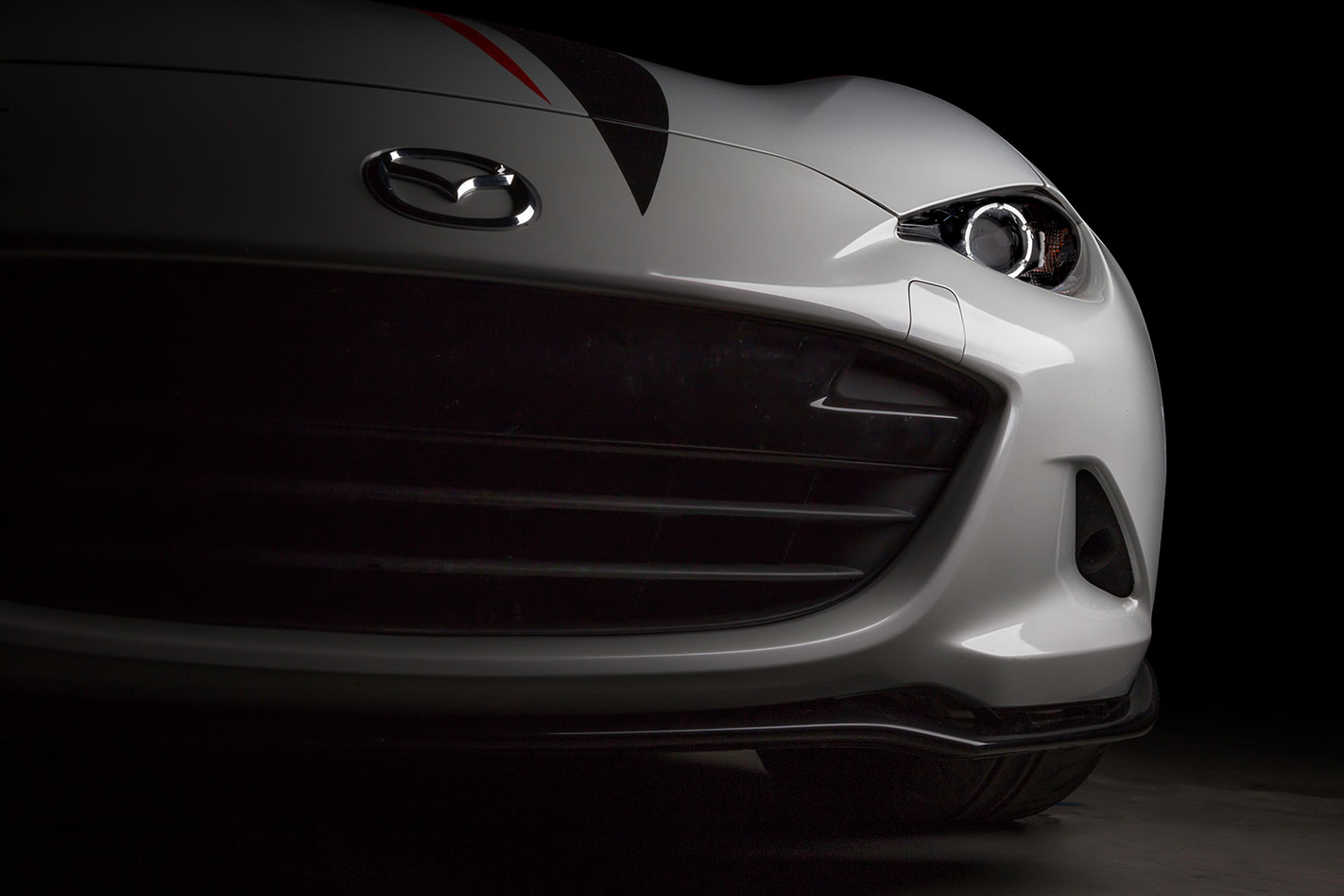
Flyin’ Miata is currently nearing a solution for right-hook MX-5s – the challenge has been sourcing a compatible steering rack – but by the time that’s resolved, any of us crazy enough to drop a V8 in an MX-5 will also get to choose between the soft top or the new RF.
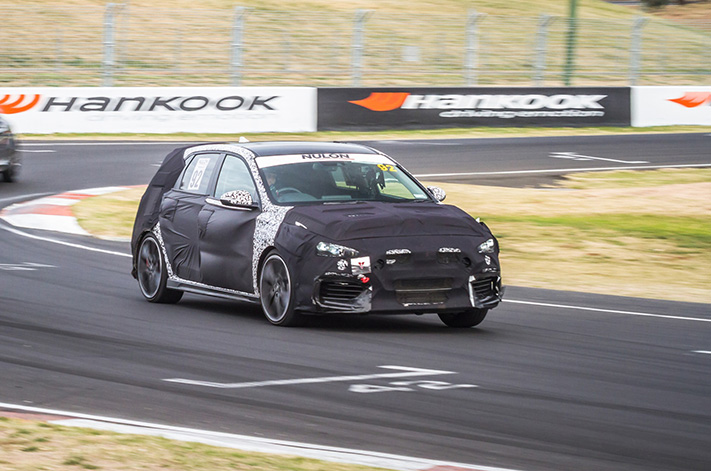
HYUNDAI’S i30 N hot hatch is nearing release, and to help prepare the car for Aussie customers the Korean brand has had a crack at Bathurst.
International racing drivers visiting Australia often compare our Mount Panorama racing circuit to the infamous Nordschleife in Germany – apt, seeing the i30 N has undergone extensive evaluation at the Green Hell.

A camo-clad i30 N took part in a number of runs up the mountain during a Nulon Hill Climb and Super Sprint event, with vice president of Hyundai high performance engineering, Albert Biermann, in attendance.
“We do a lot of testing at the Nürburgring Nordschleife, but there are also other very challenging race tracks out there, and one of the most challenging is Bathurst here in Australia,” Biermann said.
“It’s a very good experience to drive here at Mount Panorama and include the data we gather into our tuning that we will continue in Europe. I think the right driver on this track would have a lot of fun with the i30 N.”
Engineering and evaluation aside, the video released by Hyundai provides a great glimpse at how the 202kW hot hatch will sound once it arrives on Aussie shores later this year.
There is plenty of crackle and carryon from the exhaust as Reeve’s attacks our most iconic race track.
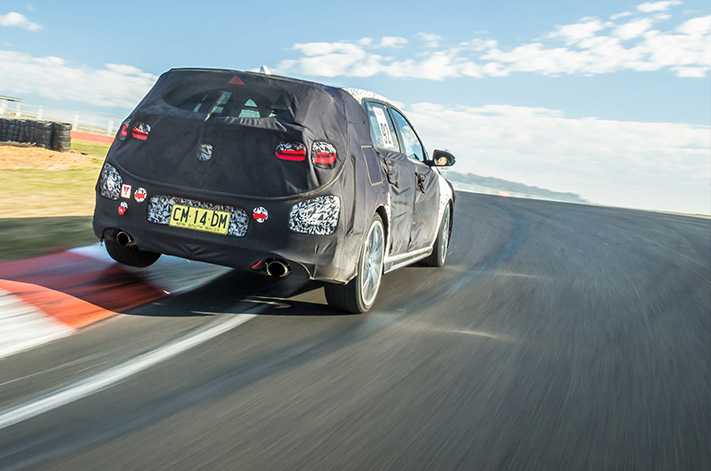
“The i30 N is designed to be a hot hatch that will be very much at home on the race track, so validation testing at Mount Panorama was a key part of its global engineering development programme,” he said.
“But that’s just half the story. It has to work well on our uniquely challenging roads, too, so local testing and evaluation is critical, especially as Australia will be one of the largest markets for this car globally. The results have been very impressive and personally I can’t wait to see how Australian enthusiast drivers respond to this great little hot hatch.”
JAGUAR’S hotly anticipated E-Pace crossover will have a sub-$50,000 entry-level price tag when it arrives in Australia early next year.
Jaguar today released teaser images and announced a July 13 world premiere for the small-SUV, that’s tipped to become the UK brand’s biggest seller.
The E-Pace’s bigger F-Pace sibling helped boost the total global Jaguar sales by 83 percent last year.
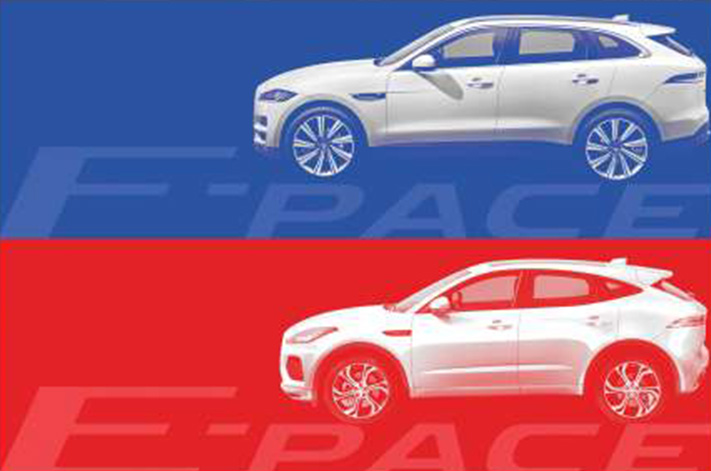
While you could be forgiven for thinking the E-designation implies the use of electrons, it’s not to be confused with the all-electric I-Pace also due next year. The E represents its lineage to theJaguar XE sedan in the same way the F-Pace is essentially a jacked up Jaguar XF.
While it has a similar profile to the I-Pace, The E-Pace won’t share the EV’s all-new architecture. Instead it will sit on the same underpinnings as the Land Rover Discovery Sport, which is a modified version of the Range Rover Evoque’s LR-MS platform.
It will also share the Disco’s Ingenium 2.0-litre four-cylinder petrol and diesel engines which will be horizontally mounted with a sports-car derived all-wheel-drive powertrain. Ahybrid version is expected to follow later in its model life.
While it won’t necessarily please the purists, Jaguar promises the E-Pace will remain true to the company’s trademark handling traits.
“The combination of sports car looks with Jaguar performance will ensure that the E-Pace stands out,” said Jaguar’s director of design Ian Callum.
“Every Jaguar is designed to excite the senses, and we think E-Pace will do just that, albeit with its own individual character.”
Further local pricing and specifications will be released closer to the E-Pace’s Australian launch.
Hyundai has transformed its popular i30 small hatch, with an all-new model that has won praise for its handling and comfort.
It’s well equipped with a choice of petrol and diesel engines, the latest smartphone integration and advanced driver assistance in high-spec models including autonomous emergency breaking.
i30 variants
There are six main Hyundai i30 model grades ranging from the entry-level Active to the sporty SR Premium.
The i30 Active includes a choice of four different powertrains, with a 2.0-litre four-cylinder petrol engine or 1.6-litre turbo diesel four-cylinder coupled to either a six-speed manual or seven-speed dual clutch automatic transmission.
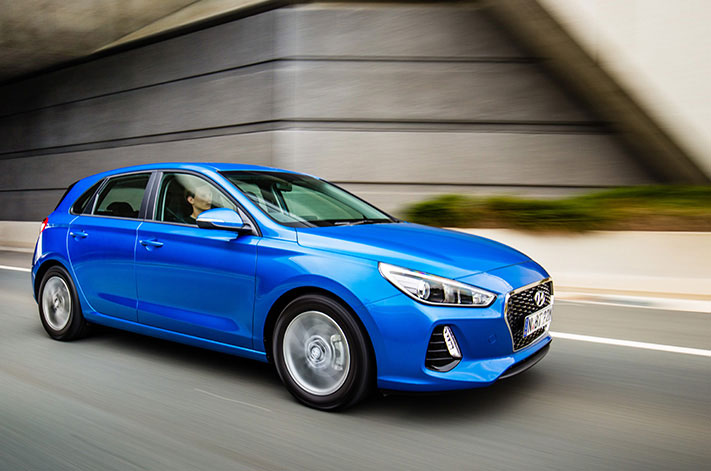
Each comes with a host of standard features including cruise control, 8.0-inch touchscreen, digital radio, reversing camera, rear parking sensors, Apple CarPlay and Android Auto connectivity, fog lights, auto headlights, LED daytime running lights, automatic folding mirrors and 16-inch alloy wheels.
The diesel-only i30 Elite raises equipment levels with leather/faux leather interior, smart-key entry, dual-zone climate control, auto windscreen wipers, wireless phone charging and larger 17-inch alloys.
It also adds Hyundai’s SmartSense active safety suite featuring active cruise control, autonomous emergency braking that works at city and highway speeds, lane-keeping assist, blind-spot detection, and a rear cross-traffic alert.
The i30 SRis similar in terms of equipment to the Elite and is powered by a 1.6-litre turbo petrol engine and other performance enhancements such as paddle shifters, multi-link rear suspension, 18-inch rims wrapped in low-profile tyres and sports front seats.
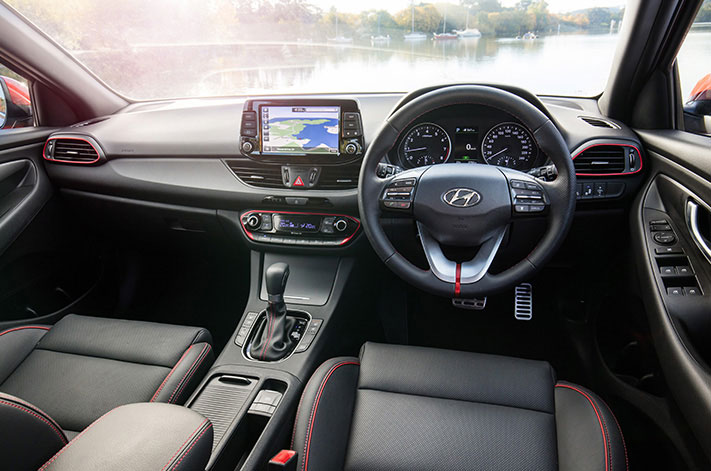
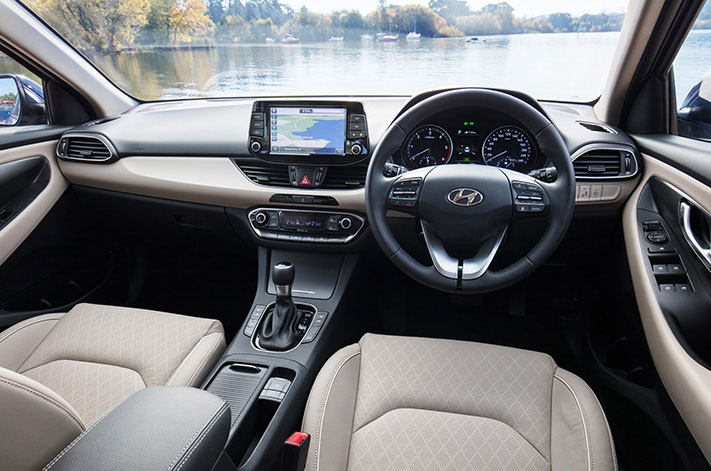
For the same price, the i30 SR Premiumadds all of those same extras to the sporty, petrol SR model.
i30 prices
- i30 Active, manual, petrol – $20,950
- i30 Active, auto, petrol – $23,250
- i30 Active, manual, diesel – $23,450
- i30 Active, auto, diesel – $25,950
- i30 SR, manual, petrol – $25,950
- i30 SR, auto, petrol – $28,950
- i30 Elite, auto, diesel – $28,950
- i30 Premium, auto, diesel – $33,950
- i30 SR Premium, auto, petrol – $33,950
Our pick
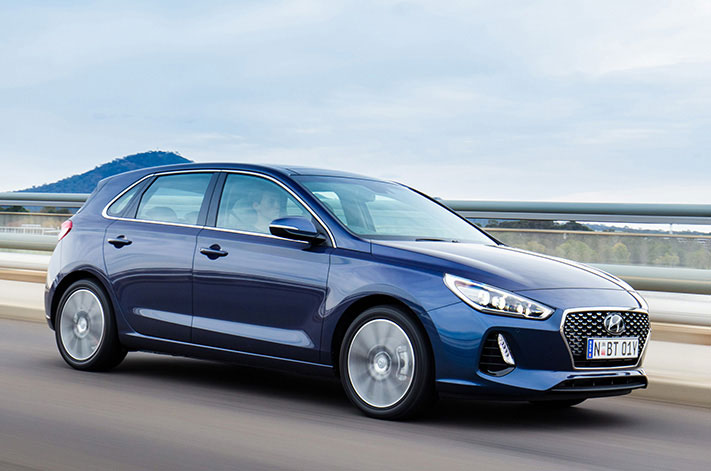
The i30 SR with the auto transmission has the best mix of value, features and driver enjoyment. Its powerful 150kW turbocharged engine and SmartSense active safety suite are highlights. The i30 SR has warm-hatch dynamics, which means it’s fun to drive. Its grippy 18-inch tyres are good for cornering and a multi-link rear suspension setup reacts better over mid-corner bumps without compromising daily-drive comfort.
If you enjoy using a clutch pedal, the manual SR with all its extras comes in at the same price as a base model i30 Active with a diesel engine and an automatic gearbox.
Available options
- Premium paint – $495
- Exterior accessory pack (headlight/bonnet protectors and tinted window visors) – $465
- Interior accessory pack (dash/floor mats and rear bumper protector) – $320
- Touring pack – (floor mats, rear bumper protector, seat covers and rear window shades) – $640
FORD Australia has declined to say if the next-generation Ford Focus sold here will come from China rather than Thailand as the global car maker announces a major shift in global production for the small car.
Overnight, Ford US announced it would scupper plans to build a factory in Mexico to supply left-hand-drive versions of the Focus for the US market, and would instead source them mostly from China.
According to the car maker, the move to shift Focus production away from North America would save it about $A1.25 billion in investment costs, “improving the financial health of its Focus business and further improving manufacturing scale in China – all helping create a more operationally fit company”, it said in a statement.
Ford said production of the next-generation Focus would start in the second half of 2019, with models “coming from the company’s existing Focus plants globally”.
“Most new North American Focus models initially will come from China, with additional variants coming from Europe later,” it said, suggesting the next-generation German-made Focus RS was a potential starter for the North American market.
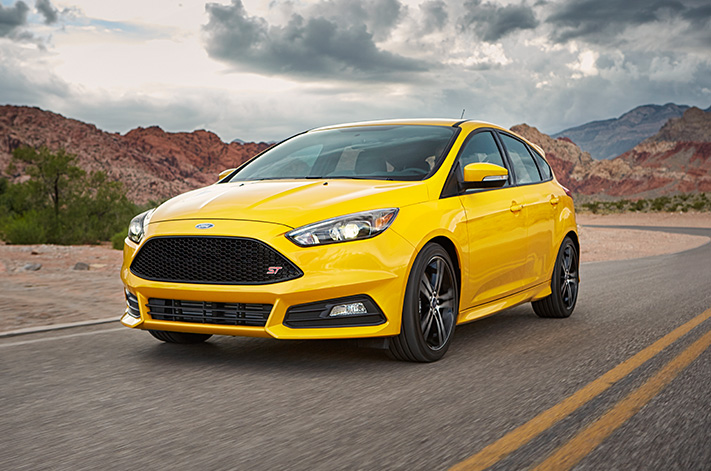
However, it doesn’t necessarily mean Australia will be a new market for the Chinese-built Focus.
“Today’s announcement relates to the global sourcing of Focus for North America only,” a Ford Australia spokeswoman told Wheels.
“We will have more to say about the next-generation Focus for other markets closer to the launch timing,” she said.
Almost all the Focus models sold in Australia come from the car maker’s Thai production line, which started making the small hatch and sedan range for Australia in 2012.
It’s a bitter irony: before it fell, Ford Australia had planned to build the Focus – a model earmarked to also earn valuable export dollars – alongside the Falcon large car and Territory large SUV, but controversially reversed its 2007 plans after Detroit revealed future versions of the Focus would instead be built in Thailand.
Ford Australia also reneged on an announcement that the Falcon would move to a fully imported V6 engine as part of a major overhaul of the large sedan and wagon range that could also have spawned a left-hand-drive development program.
Speculation is mounting, though, over where Ford Australia would source an as-yet unconfirmed version of the Ford Edge, a fully imported replacement for the locally made Territory. A five-seat version of the next-generation Edge due next year is flagged to come from Canada, while the current seven-seat version of the large SUV is only made in China.
Volvo is another car maker that plans to kick-start exports from China to some of its most important markets globally, which may potentially include Australia. The Chinese-owned Swedish brand already builds its S90 large sedan in China for export to the US; the version sold here is sourced from Sweden.
Buying a safe and reliable family car was once an exercise in admitting defeat. Your moment in the sun was over, you’d had your fun and now you were a responsible adult.
Thankfully, things have moved on and the latest crop of family-friendly haulers proves that responsibility doesn’t have to be dull. Anything but, in fact.
Choose one of these six cars and your kids will think you occasionally wear a cape and haven’t figured out underpants.
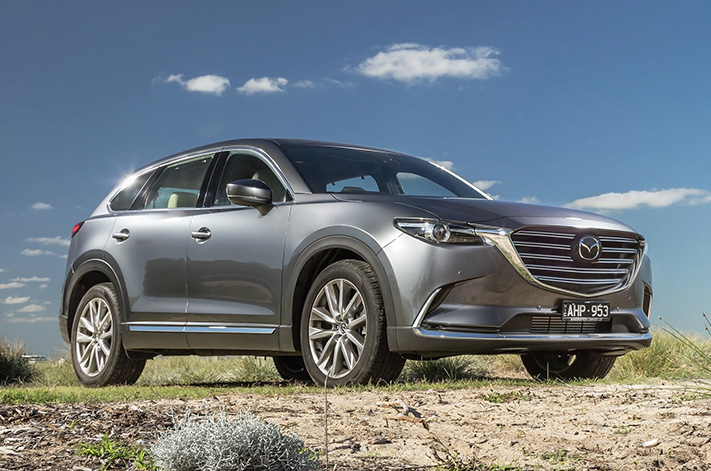
Mazda CX-9
This one is Wheels magazine’s reigning Car of the Year, and it’s not hard to see why. It has a third row of seats that actually work for people, rather than just rucksacks, and you can plug a child seat into them without impacting on luggage space. It also had the best autonomous braking system of all the 28 cars that they tested. Go for the top-spec Azami and you get wipe-down leather and the feel-good knowledge that you’d probably need to spend double on something like an Audi Q7 to better it.
Audi RS6
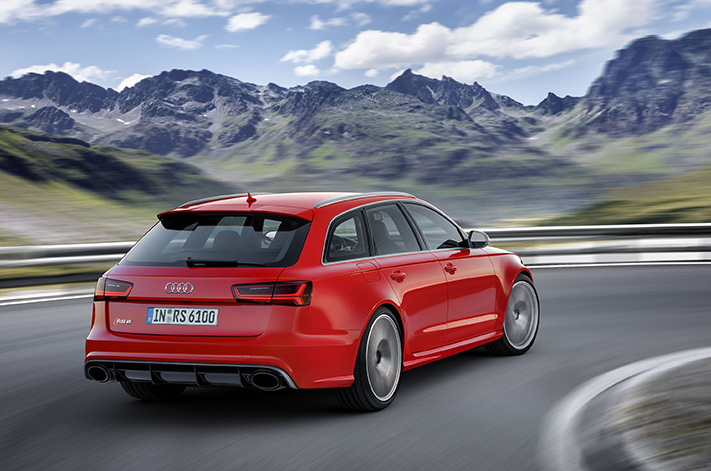
If you absolutely cannot resist the long route home from dropping the kids off at school, there’s little that’ll put a bigger smile on your dial than the Audi RS6 Avant. It comes with all the safety and convenience features you’d need, including four-zone climate control, a 360-degree reversing camera and digital television, along with a huge 1860-litre carrying capacity. There’s also the option of pedestrian-detecting night vision and self-parking. Oh, and it does 100km/h in 3.6 seconds too. Strictly on the long route home though.
Nissan X-Trail
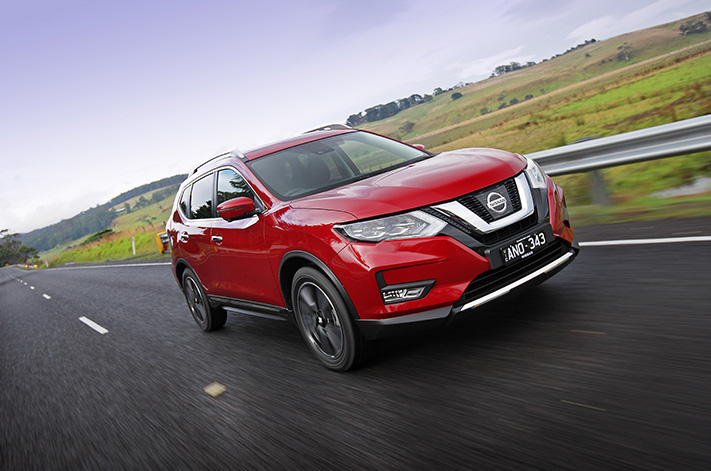
The X-Trail comes packed with a whole bunch of practical features that make it one of the easiest SUVs to live with. The rear doors open to an 80-degree angle, which makes getting the kids in and out so much easier. The rear bench is wide enough for a booster seat, a full sized child seat and another kid, while the boot dividers can keep grubby stroller wheels off your other gear. Nissan has been doing this sort of thing for years and in the X-Trail that experience shows.
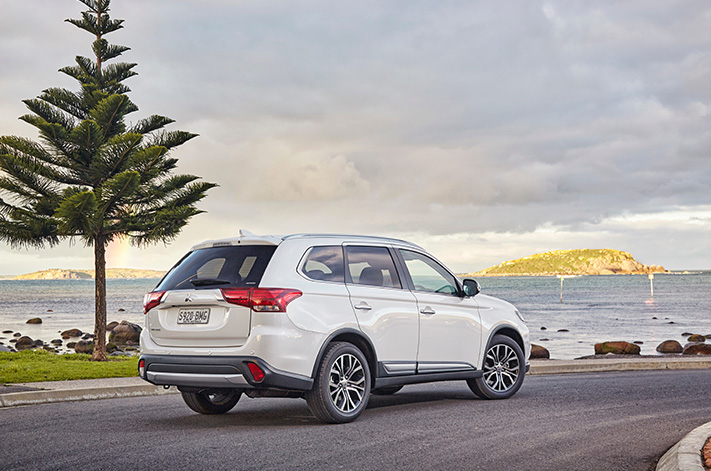
Mitsubishi Outlander
The Outlander’s inclusion is easy to justify. It’s the cheapest seven-seater with a five-star ANCAP rating that we’d actually countenance buying. Yes, the third row is cramped, but if you’re looking for a car that can occasionally carry seven and which – thanks to that excellent five-year warranty – won’t keep you awake at night worrying if it’ll let you down, the Outlander has a lot to be said for it. A bit of determined negotiating will see you nab one for less than thirty grand. If you don’t need that last row, the PHEV hybrid version also offers one hell of an urban party trick with its silent electric running.
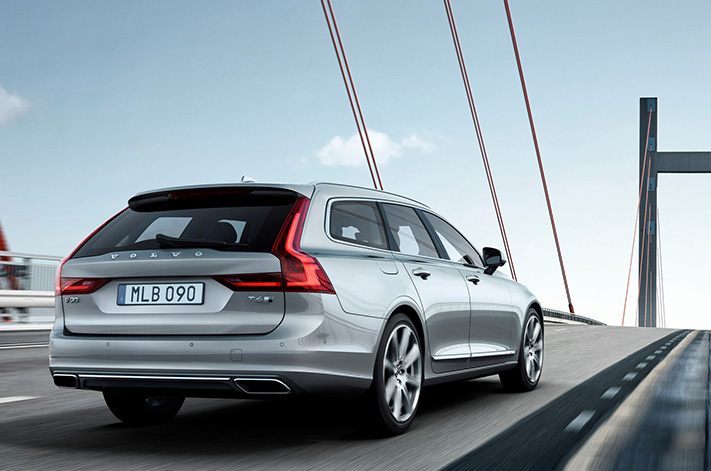
Volvo V90
Wagons dropped out of favour a few years ago when SUVs started to rule the roost, but with the stylish and beautifully built V90, Volvo has put the family hauler back front and centre. With its lower window line than an XC90 SUV, the kids will be able to see more in the second row, which helps prevent travel sickness. Even with the rear seats in place, there’s a decent 560-litre carrying capacity. The pair of ISOFIX child seat anchorage points in the back show real clever design and you can have a third as an option. It’s also the highest scoring car in the EuroNCAP crash tests. That speaks for itself.
Kia Sorento
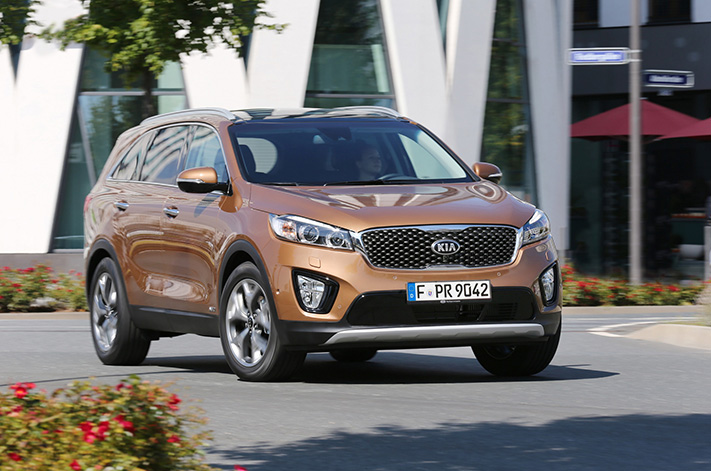
We love Kia’s big bruiser here at WhichCar and it’s an easy recommendation for families. With the best warranty in the business, plenty of space inside, and an arsenal of second row features like 12-volt and USB sockets for charging electronic devices, it’s a winner. In SLi, Platinum and GT-Line versions, the outer seats are heated and the twin cup holders in the centre armrest, and bottle holders in each door help prevent spillages. Even the third row gets a pair of cup holders, dedicated air-con vents and fan controls, and a good view forward and out of the side windows.