
The office is being readied at Gaydon for Tobias Moers, the dynamic former boss of AMG, to take up the reins at Aston Martin.
With the Andy Palmer years now receding in the rear-view and financial turmoil threatening to derail the best-laid of plans, Moers needs to act decisively.
Here are some key action points he needs to address:
Stick to the knitting
Moers was extremely adept at understanding what customers wanted from an AMG product, and set in place procedures to deliver those products with clearly measurable targets, doubling the size of its product portfolio while quadrupling sales.
The business needs to re-examine what Aston Martin is and what it means to customers and deliver on these values, while intelligently modernising the product offering.
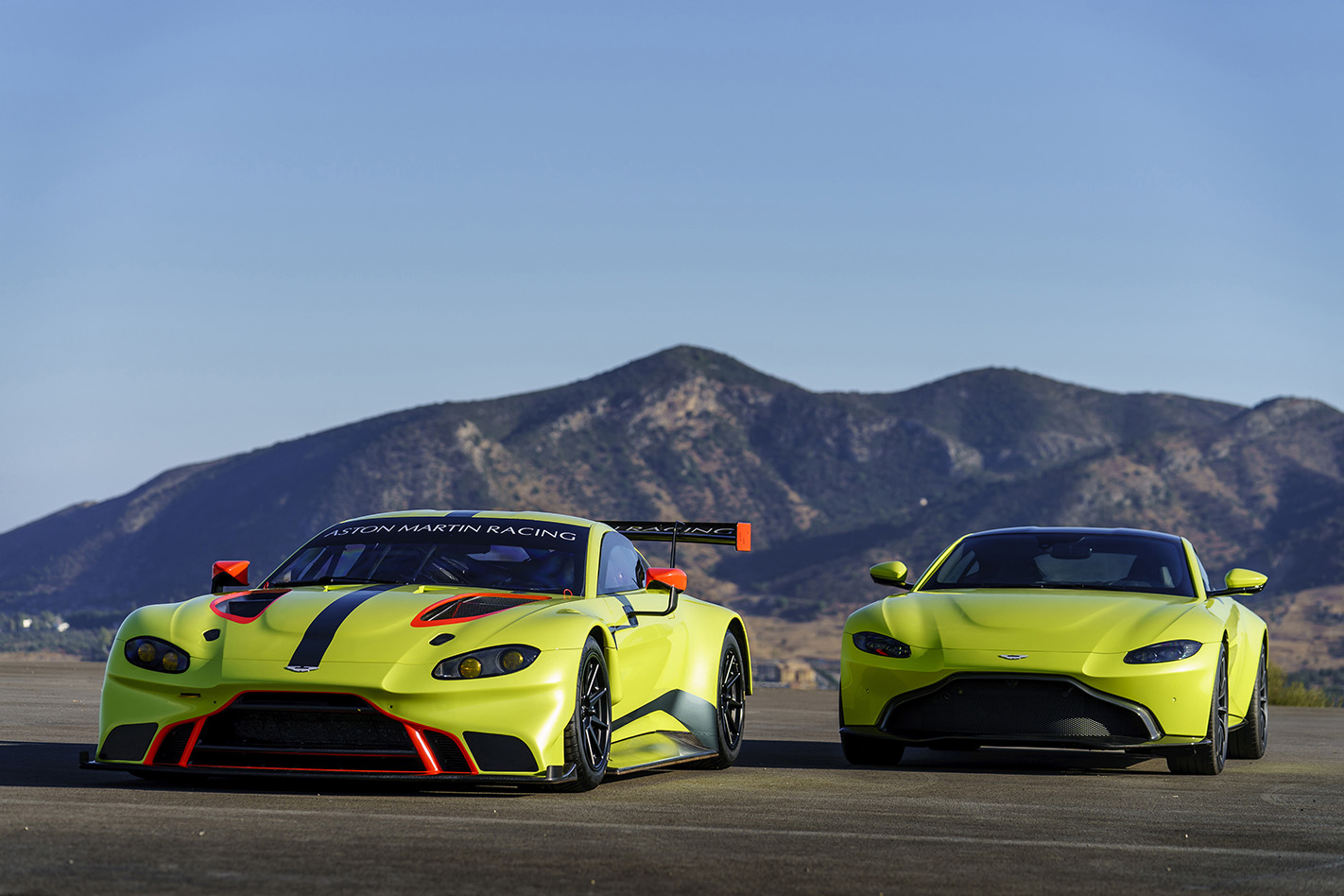
Streamline DBX deliveries
Aston’s costly potential saviour has been slow to reach customers. We were looking at the concept of this vehicle at the Geneva Show more than five years ago and deliveries are only now starting to trickle to dealers.
Any high-end SUV has a finite moment in the spotlight, and manufacturers are starting to realise that these vehicles aren’t the guaranteed cash cows they seemed at project inception.
In 2017, for example, Maserati sold 5485 Levantes. In the same year, Porsche sold 18 Macans for every Levante registered. Sergio Marchionne called the Levante’s launch ‘a disaster’.
Aston Martin can’t afford to botch the DBX’s introduction.
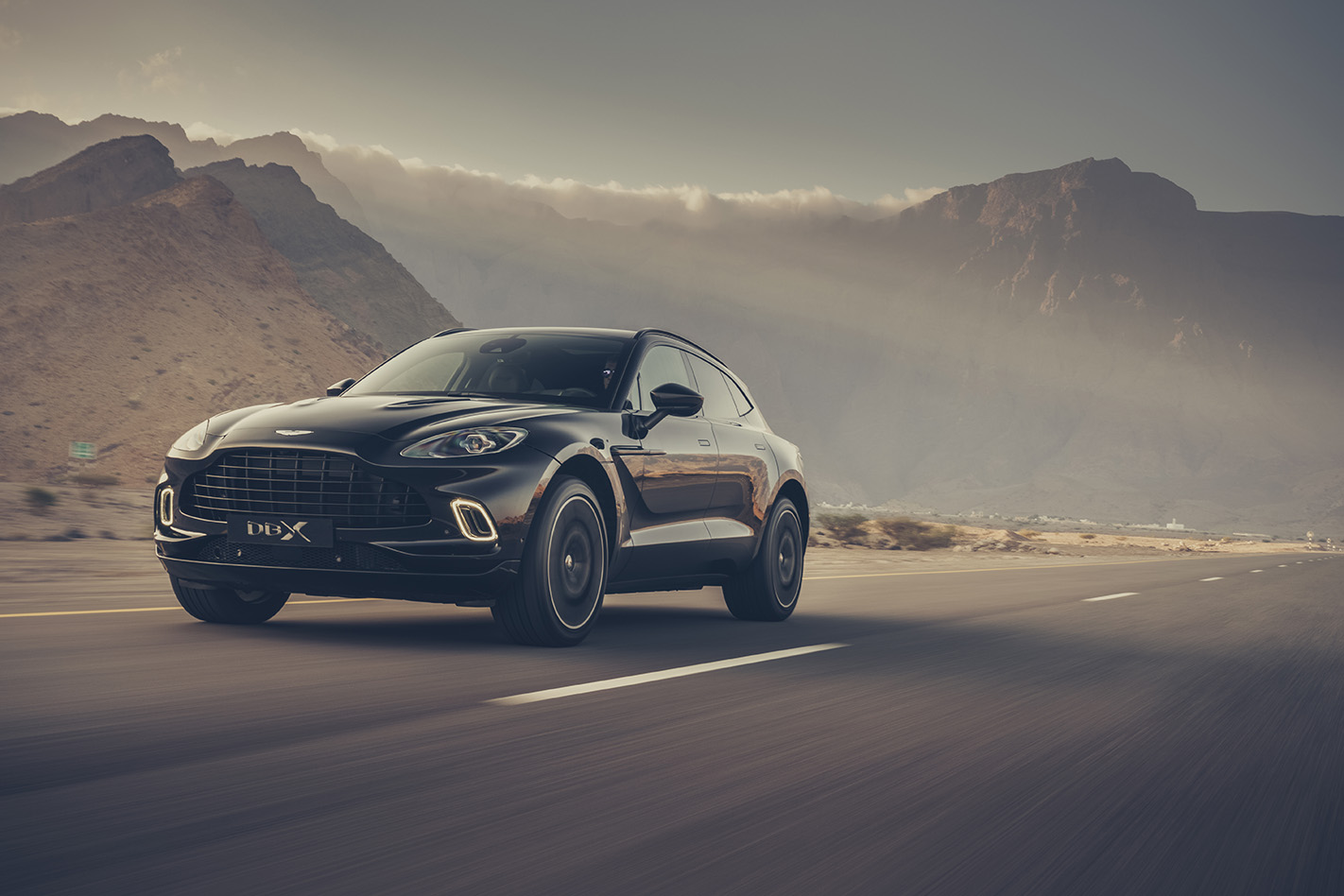
Rationalise mid-engined costs
Moers needs to wield the red pen here. The new product promises coming out of Gaydon in recent years have had unnerving similarities to Dany Bahar’s smorgasbord of empty assurances at Lotus.
The Valkyrie has had too much money ploughed into it to cancel it at this stage, but question marks must hang over both the Valhalla and the Vanquish Concept teased at the 2019 Geneva show.
The DBX needs to pay back first. It’s pointless drowning in debt only to find you’ve become another McLaren.

Re-examine product walk-up
Only last year, Aston Martin was talking bullishly about hitting a sales ceiling of 14,000 cars per year, this coming on the back of 6441 sales in 2018 and 5098 in 2017.
Then 2019 happened, sales slumped and the stock, which was offered at IPO for £16.00 shrivelled to £0.60.
Palmer has been given his marching orders and Aston’s whole ‘Second Century’ plan seems in tatters.
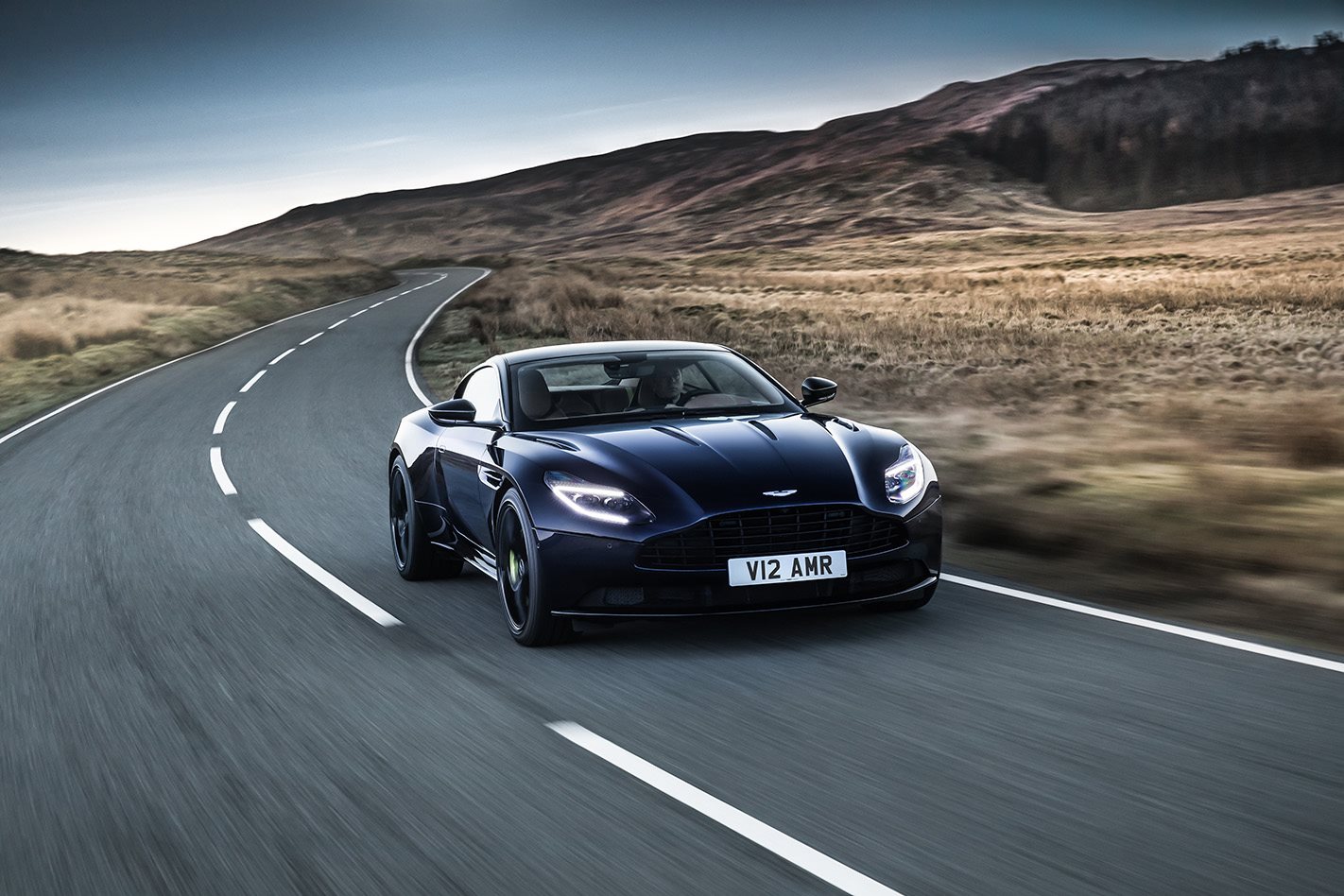
Perhaps now is a good time to look at some of the fundamentals of the model range and ask why a premium manufacturer has its lowest margin model cannibalising sales of a more profitable one.
There’s something a little off about the positioning of Vantage and DB11, a car that really can’t seem to decide what it wants to be.
In the case of the former, it’s been a perennial Aston Martin product management issue going right back to the days of Dr Ulrich Bez. In other words, how do you solve a problem like Vantage?
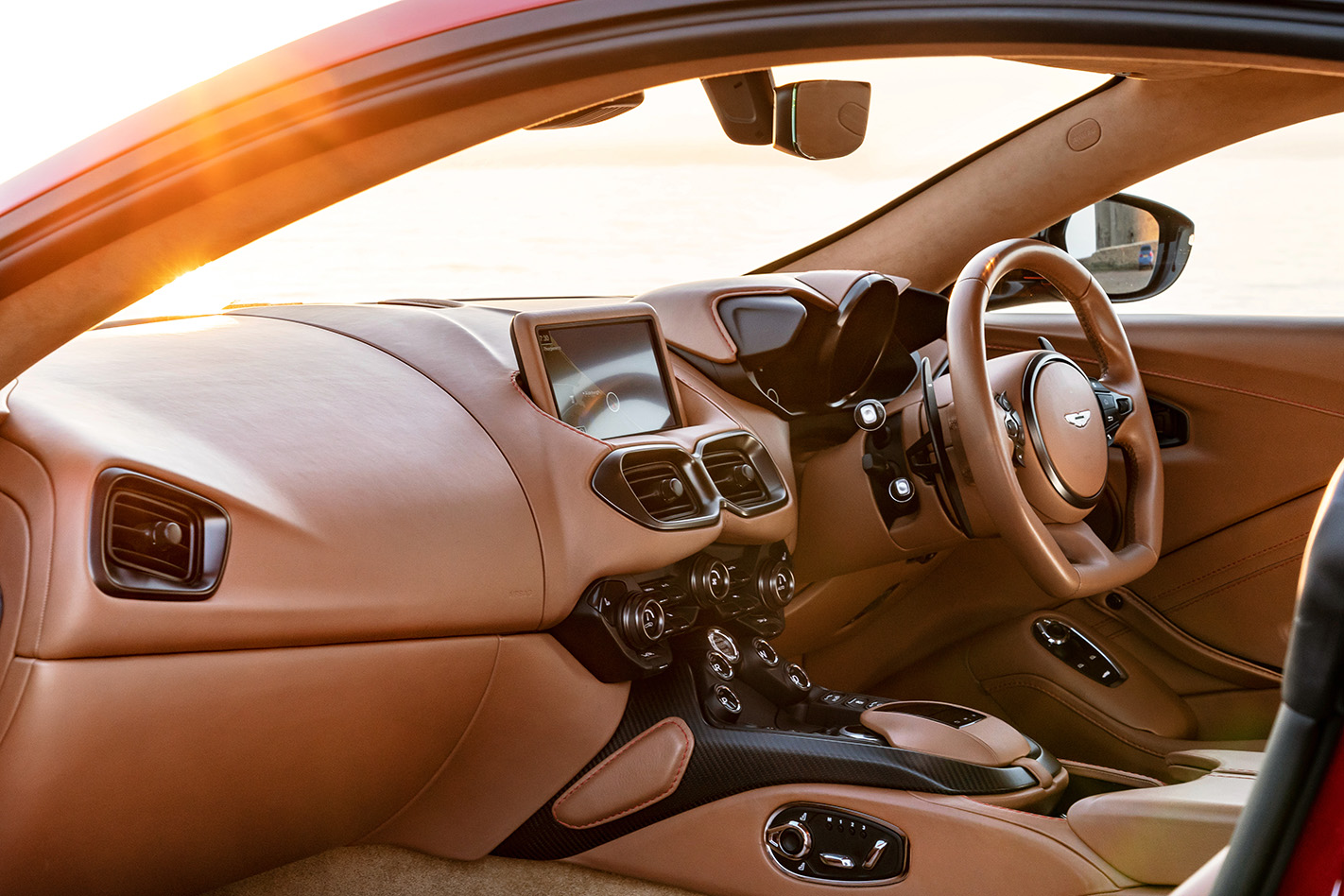
Revisit design ethos
The company has lost its focus from creating some of the most stylish interiors in the business.
An Aston Martin should differentiate itself with the most beautiful styling inside and out.
While there have been some grouses about the current Vantage’s exterior styling, the real problem lies inside.
The current Vantage cabin is, to put it bluntly, a mess.
Weird Dali-esque droops and curves, questionable materials choices, clumsily canted air vents and, worst of all, a steering wheel that is virtually square.
The clean elegance of, for example, a 2010 DBS fascia has been completely lost in a woeful mish-mash of clashing influences.
Porsche and Ferrari have reinvented the design language of their interiors with the Taycan and SF90 respectively. Aston Martin now needs to do likewise.
Snicker all you like, but the Toyota Camry is still a popular car here in Australia – and for good reason. After the demise of local manufacturing, Toyota switched supply of its faithful four-door five-seat sedan to Japan, and the Camry customer was the big winner.
Add to that a healthy share of sales in the ride-sharing and taxi sectors, along with emergency services and rental car business, and the Camry still sells more than 1000 every single month.
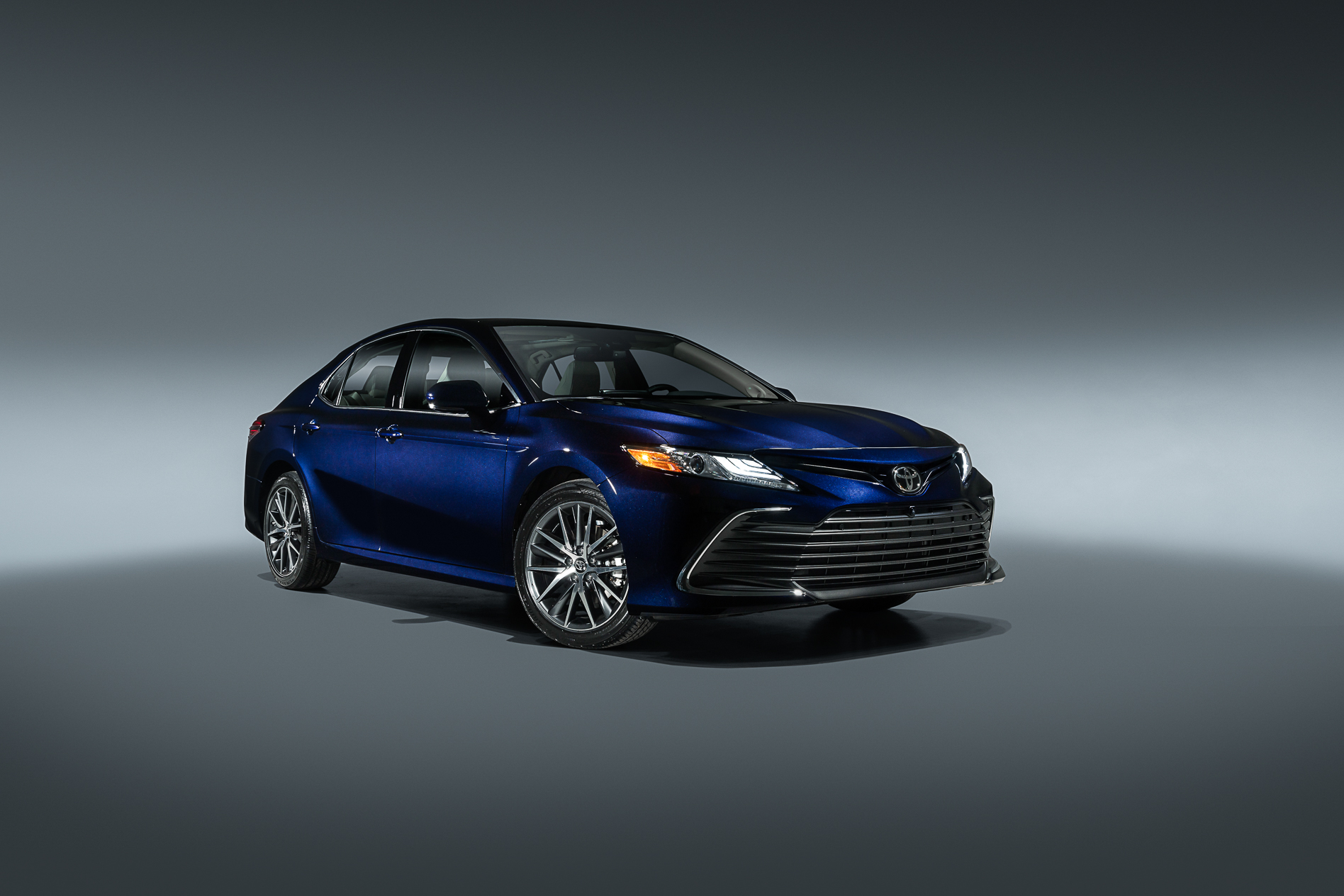
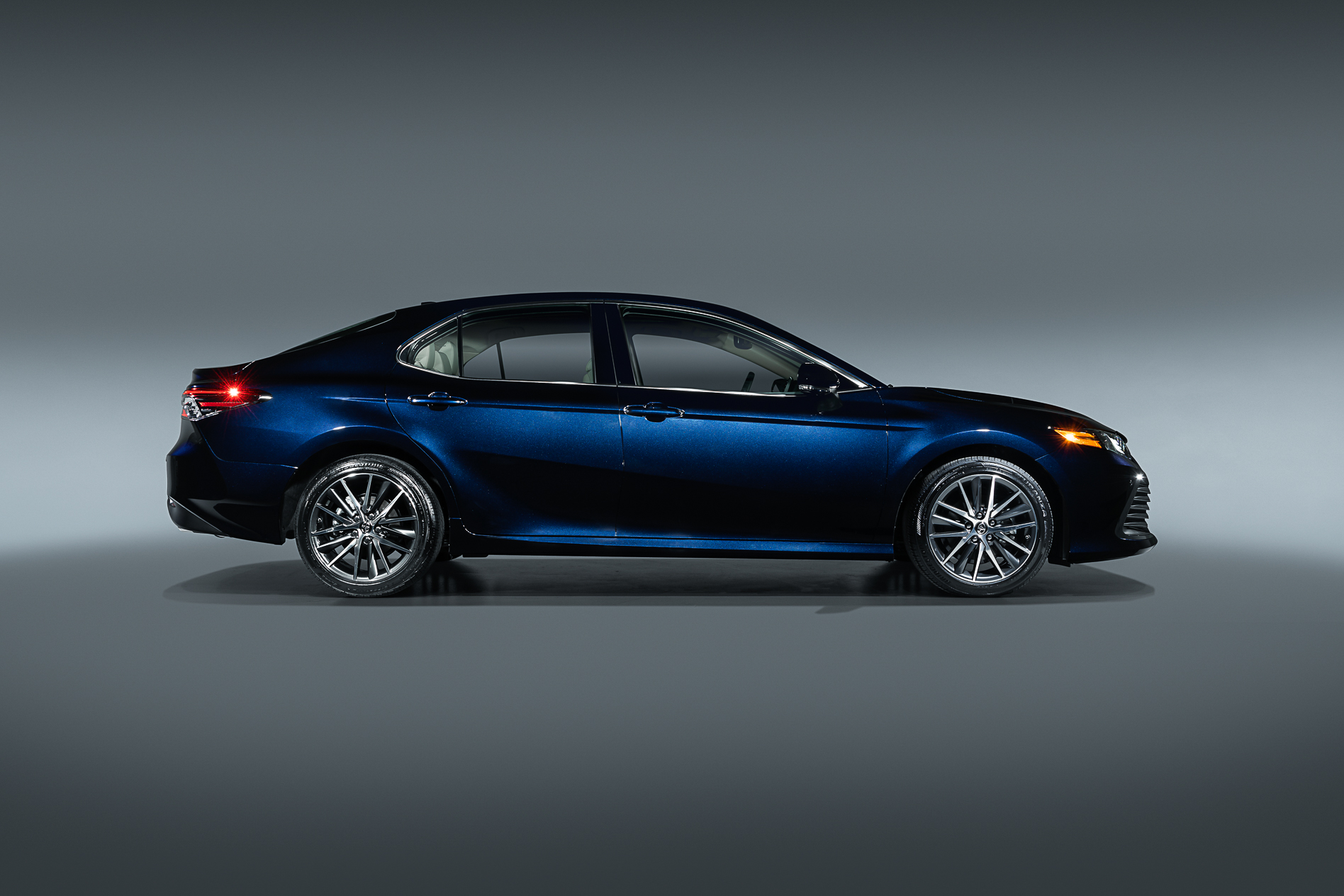
For 2021, Toyota hasn’t moved the needle much in terms of new spec for the Camry, adding a splash more style to the centre console and updating the front bumper and grille for a sharper look to the update that is due to touch down in Australia early next year.
The centre console makeover includes a larger infotainment screen that will incorporate Apple CarPlay and Android Auto, as well as more sophisticated safety technology.
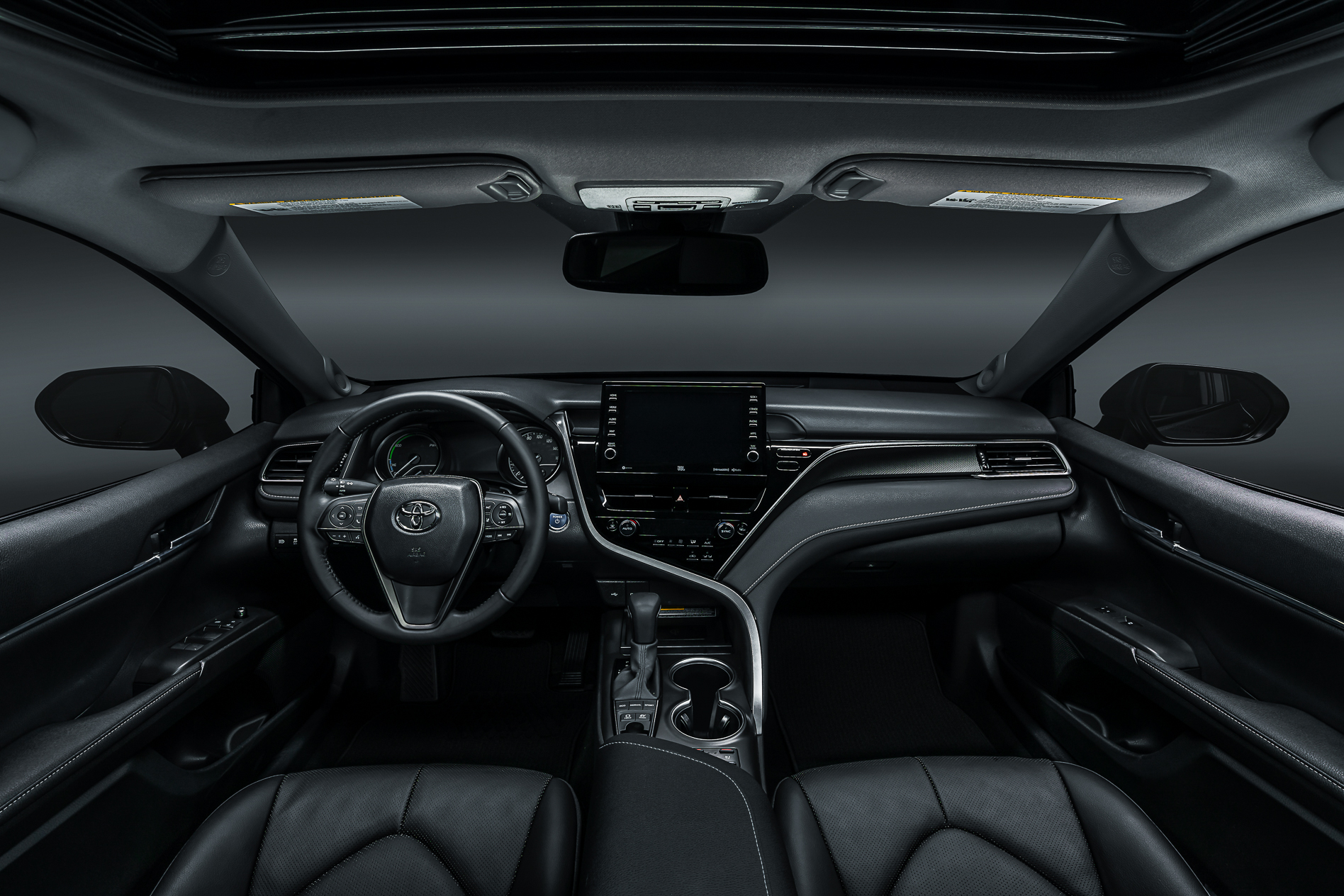
This will likely include cross-intersection alert to help avoid crashes when turning, as well as improved lane-changing during adaptive cruise control running.
A Toyota spokesperson told WhichCar that prices and specs would be confirmed closer to launch date.
For us, though, the big news comes in the form of updated batteries for the best-selling Camry in Australia, the Hybrid.
To this point, Toyota – far and away the biggest purveyor of petrol/electric hybrid vehicles in Australia – has stuck with the tried-and-true nickel-metal hydride (NiMH) battery pack to supplement the electric motor in the majority of its cars, which include the Corolla, Prius, RAV4 and Camry.
Debuting in the Prius almost 20 years ago, NiMH batteries are renowned for their ability to take abuse in the form of repeated charge cycles, and they also handle temperature fluctuation well. Their downside is that for the same energy density, NiMH batteries are about 25 percent heavier than other batteries.
Lithium-ion (Li-ion) battery tech has dominated the world of battery electric vehicles for the last decade, because they are lighter and can deal with longer charge cycles better than NiMH (in general terms).
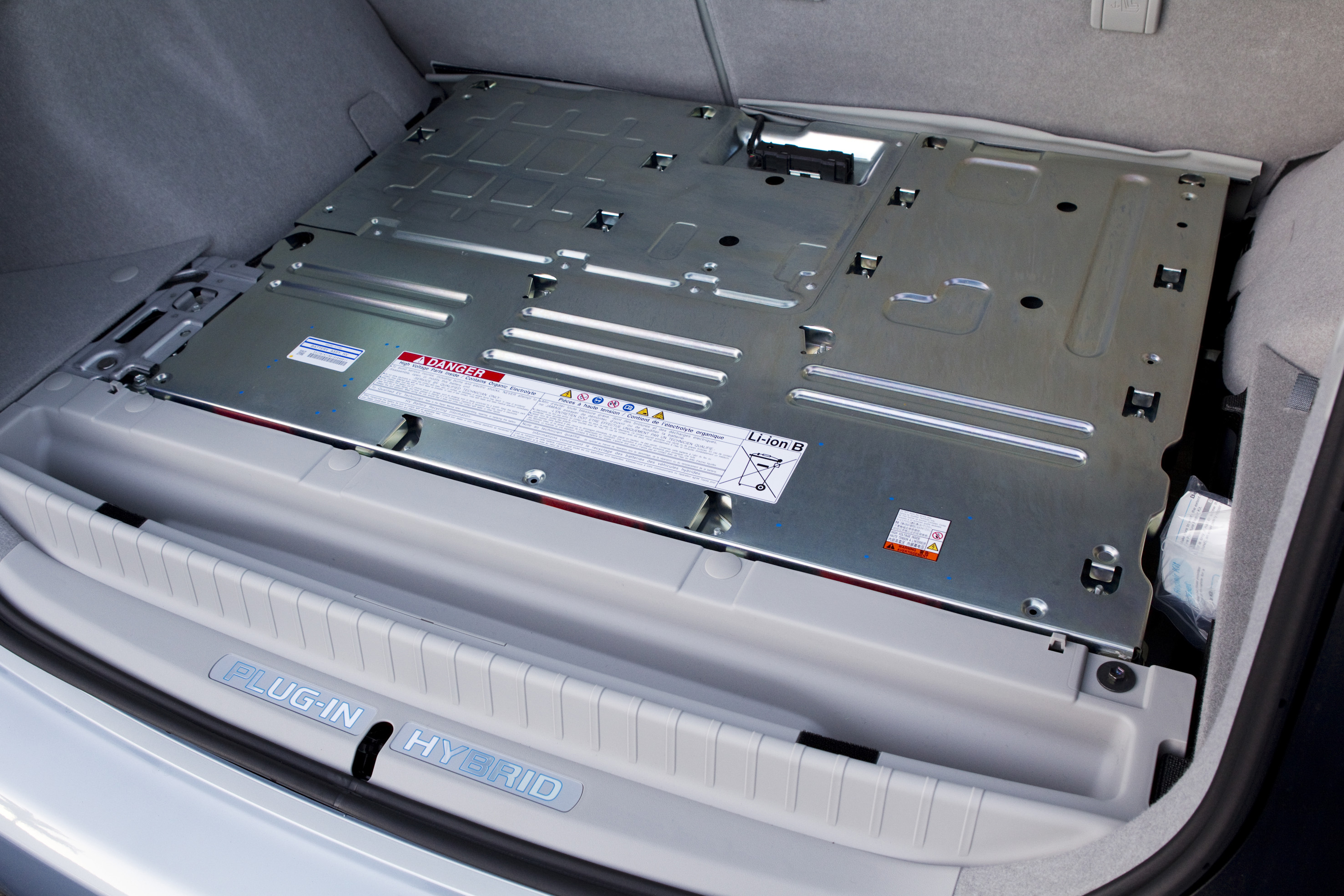
An image of a Toyota lithium-ion battery array in an earlier concept
And now the Camry Hybrid will adopt the lithium-ion pack that was introduced for higher-spec hybrid Toyotas in overseas markets a couple of years ago.
Rated at 259V versus the current NiMH’s 245V, the battery pack is also physically lighter than the NiMH pack, and will be rolled out from August in Australian-delivered cars starting from August this year.
A spokesperson did confirm to WhichCar that the Prius V will also switch over to lithium-ion batteries.
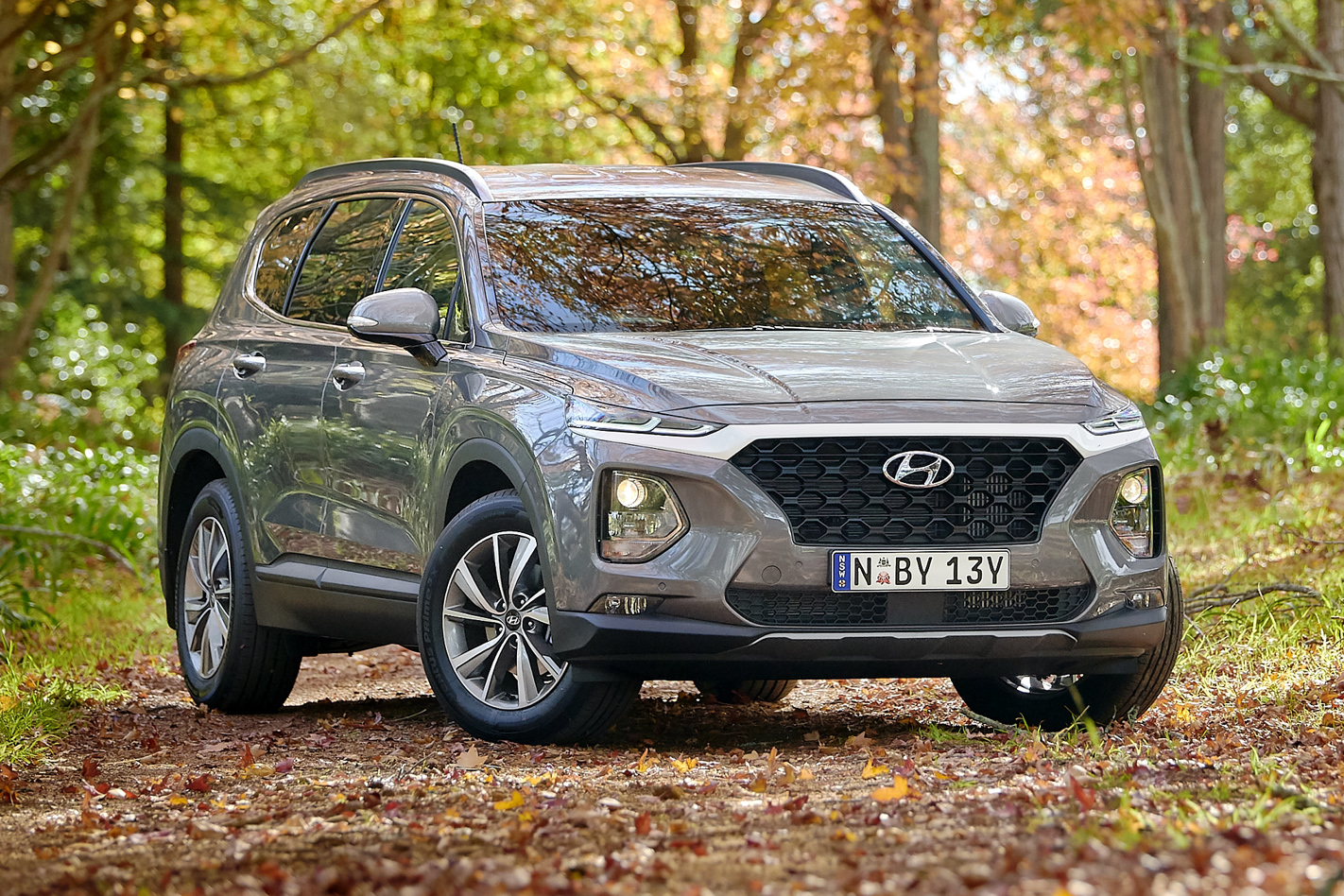
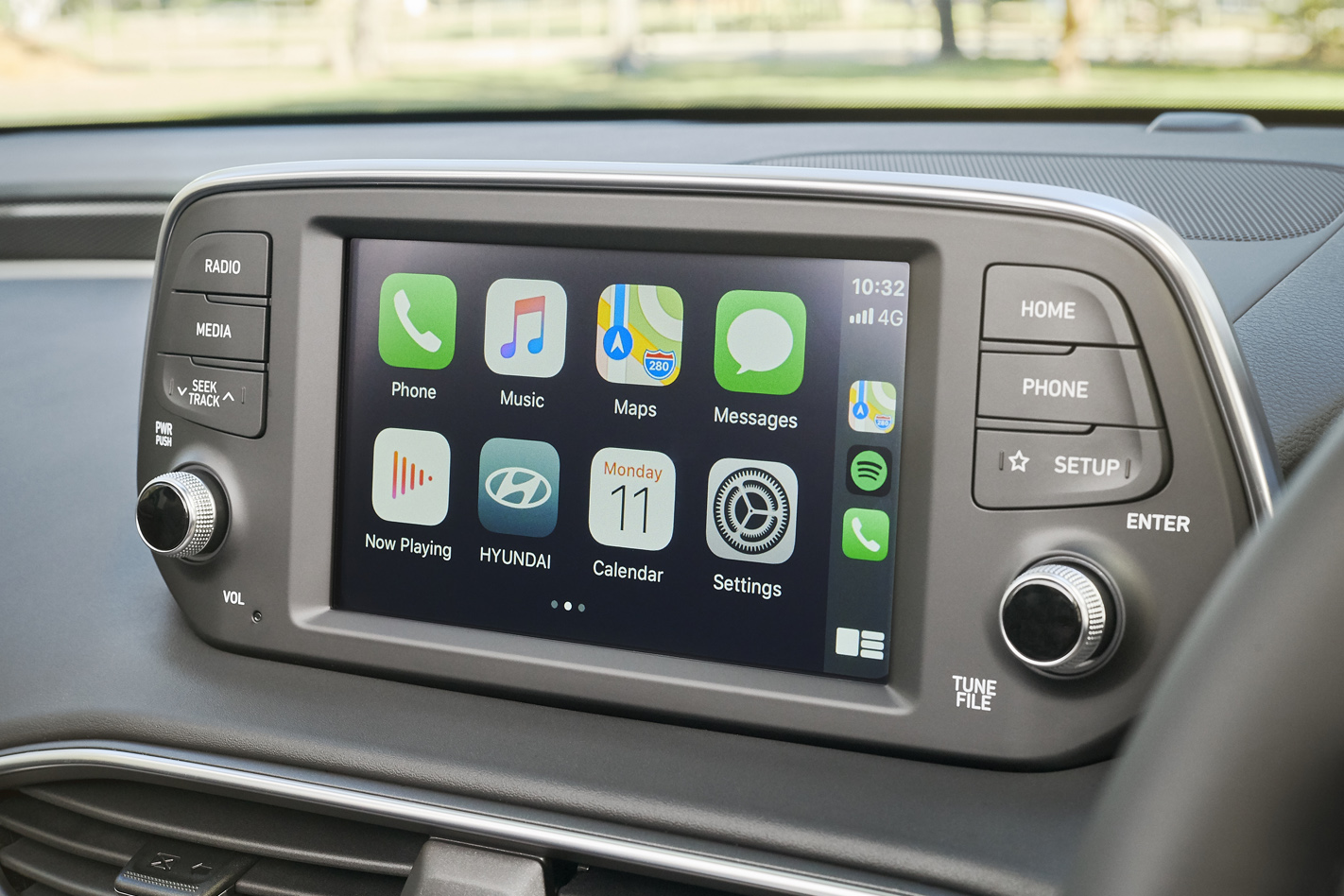
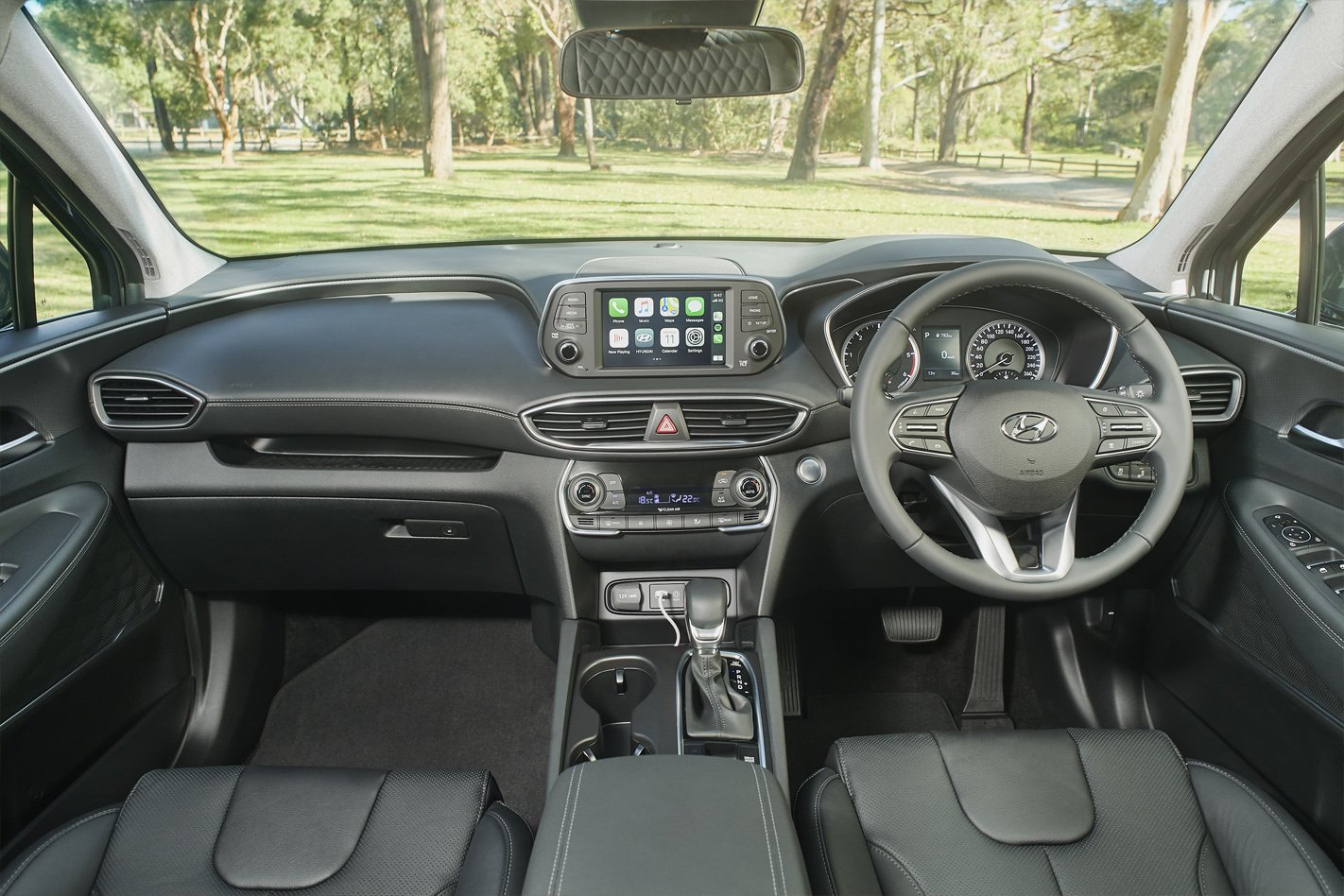
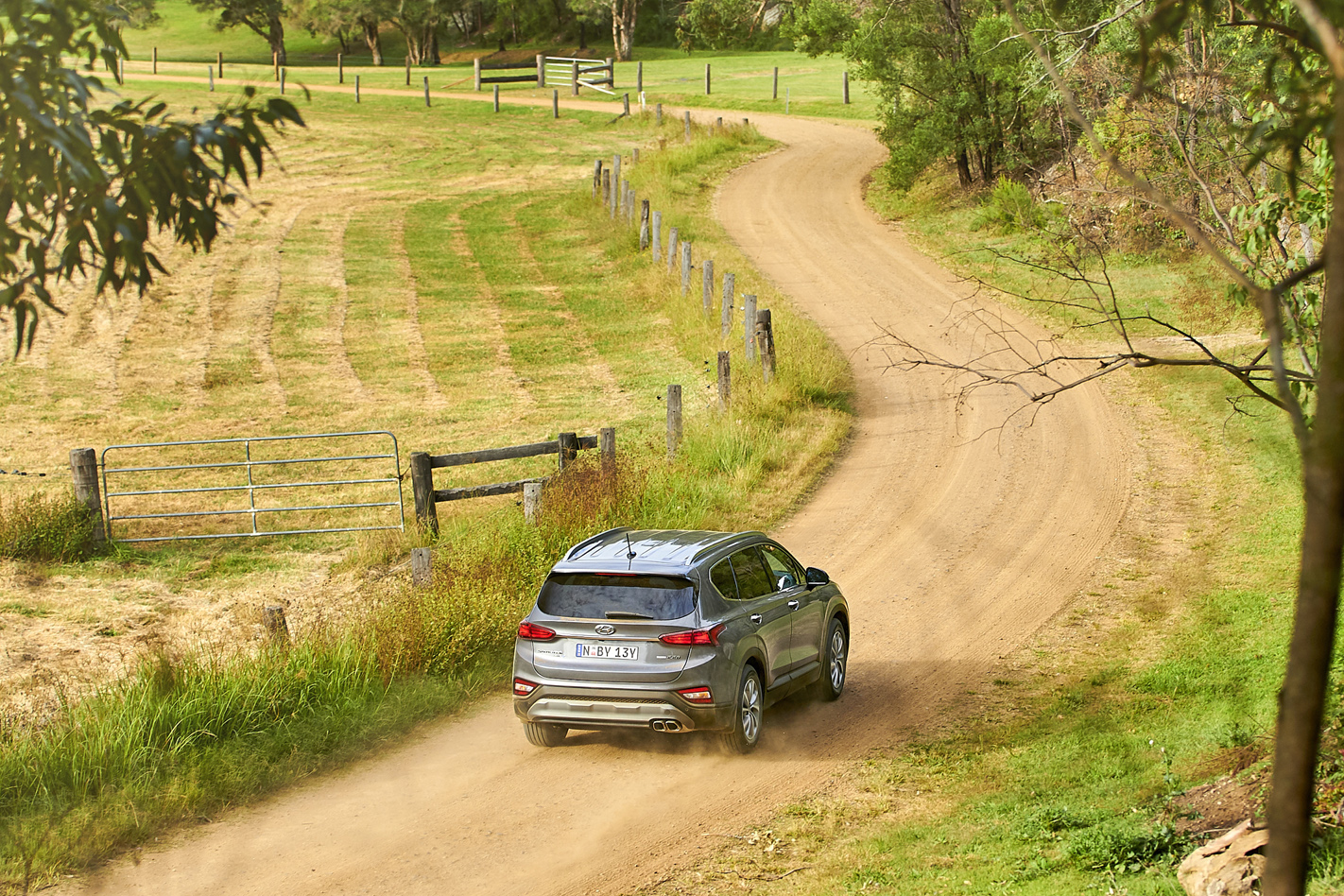
Both variants share the same eight-speed automatic transmission and identical levels of specification. Speaking of which, while the new Active X may only sit one rung up from the Santa Fe entry point, but it can brag a respectable standard equipment list.Highlights from the Active X kit list include leather-appointed upholstery, bigger 18-inch wheels, and a dusting of extra convenience/safety features.
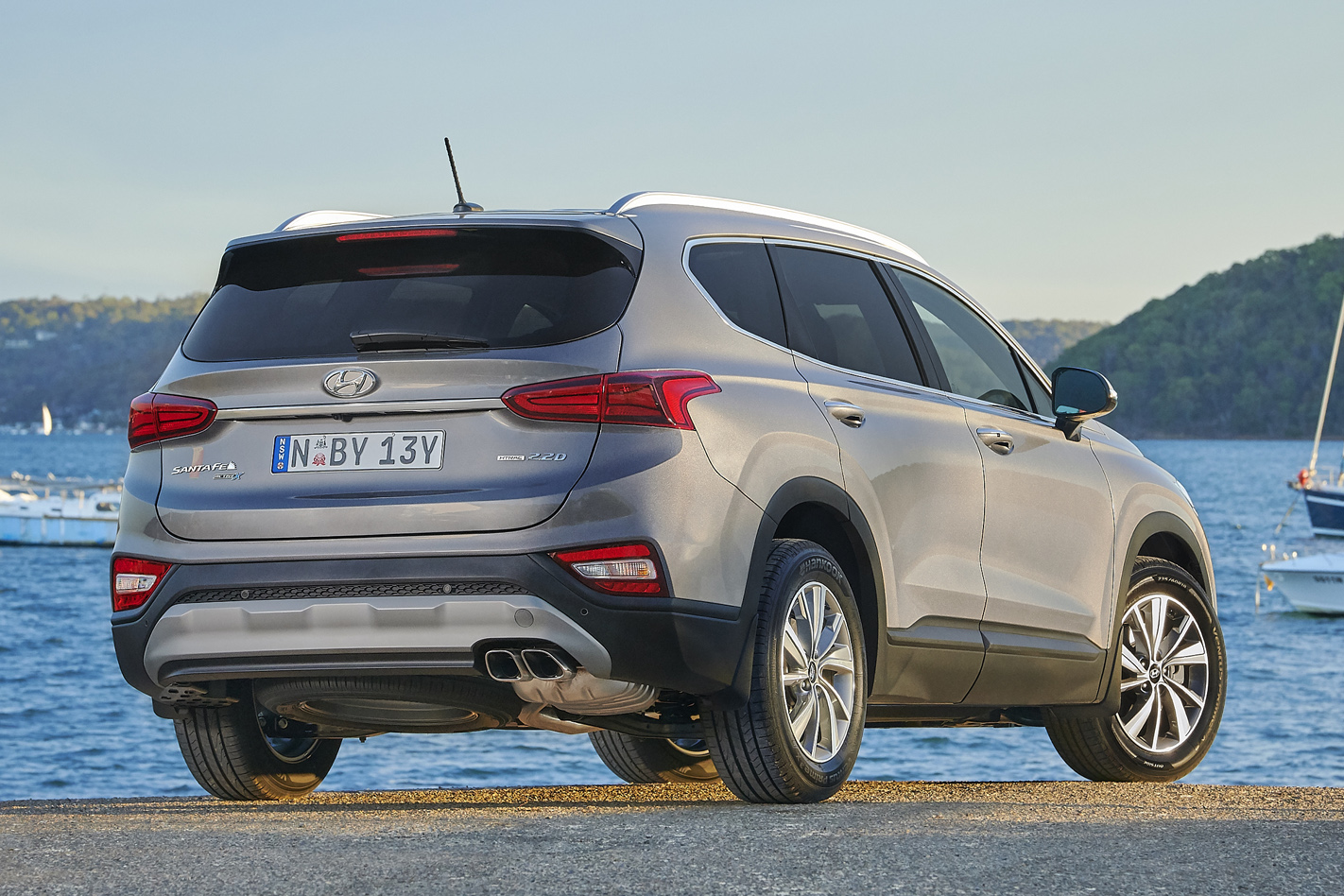
2020 Hyundai Santa Fe range:
Active 3.5 MPi V6 FWD – $43,990 Active 2.2 CRDi AWD – $47,020 Active X 3.5 MPi V6 FWD – $47,020 Active X 2.2 CRDi AWD – $50,050 Elite 3.5 MPi V6 FWD – $52,070 Elite 2.2 CRDi AWD – $55,100 Highlander 3.5 MPi V6 FWD – $58,630 Highlander 2.2 CRDi AWD – $61,660
Can we get something out of the way first? Yes, the Honda Civic Type R and the Ford Focus ST are two hot hatches that compete in much the same category, but let’s just avoid any confusion.
These are two very different cars and which one you prefer very much comes down to what you expect from a hot hatch.
It’s amazing that two cars featuring four-cylinder turbocharged engines driving the front wheels through a six-speed manual gearbox could feel so divergent, yet the character of these two rivals manifests through the subtleties.
The suspension tuning, the gearing, the power and torque deliveries of their respective engines all combine to send the Ford and the Honda on very different paths.
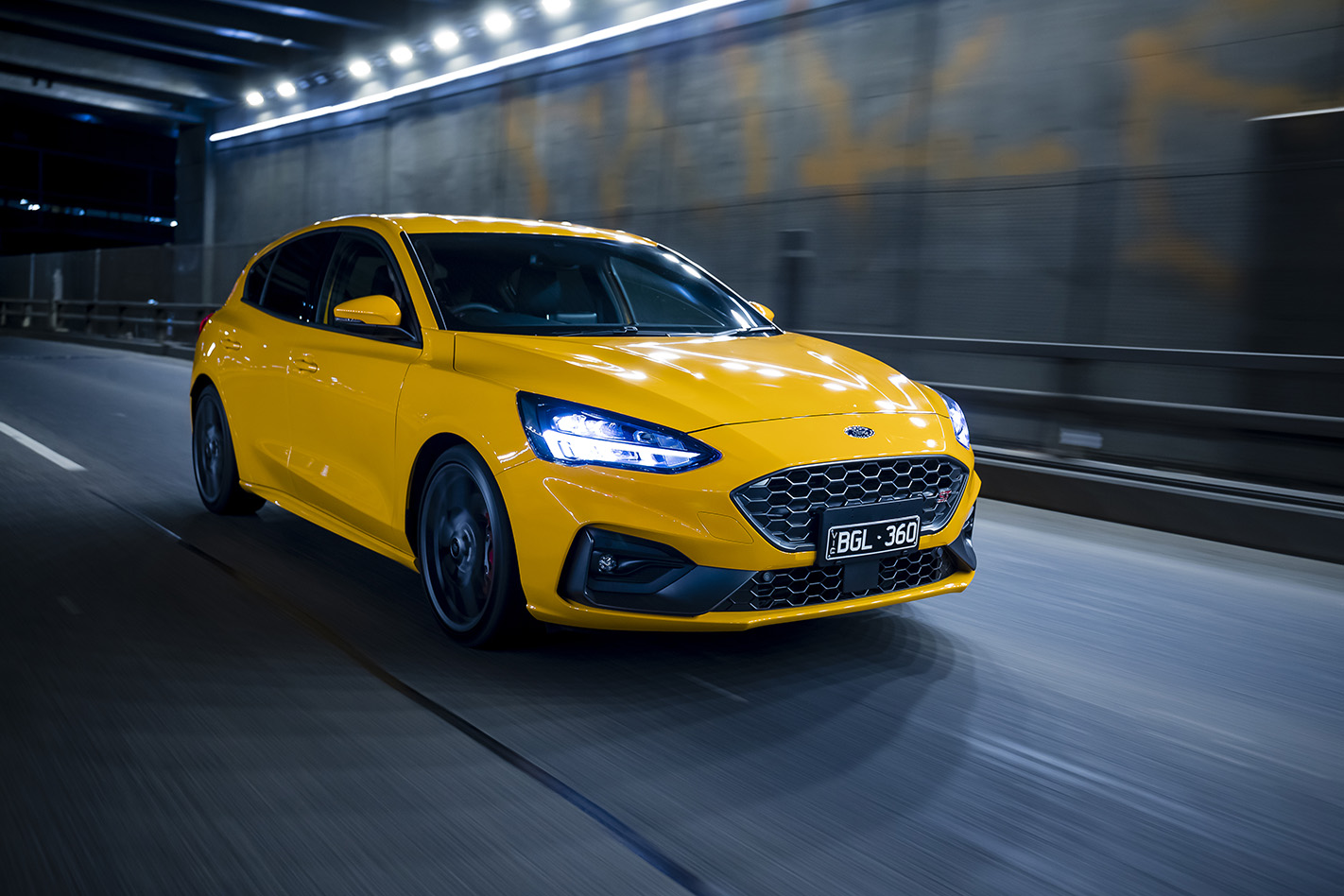
Ford first. Now that the Blue Oval has stated that no new Focus RS is planned, the ST has to fulfil the position of sporting flagship.
Get over the initial disappointment that the sharp creases that once characterised the Focus have given way to more adipose body surfacing and there’s a lot to like here. The stance over its handsome 19-inch alloys is purposeful and there are just enough go-faster cues.
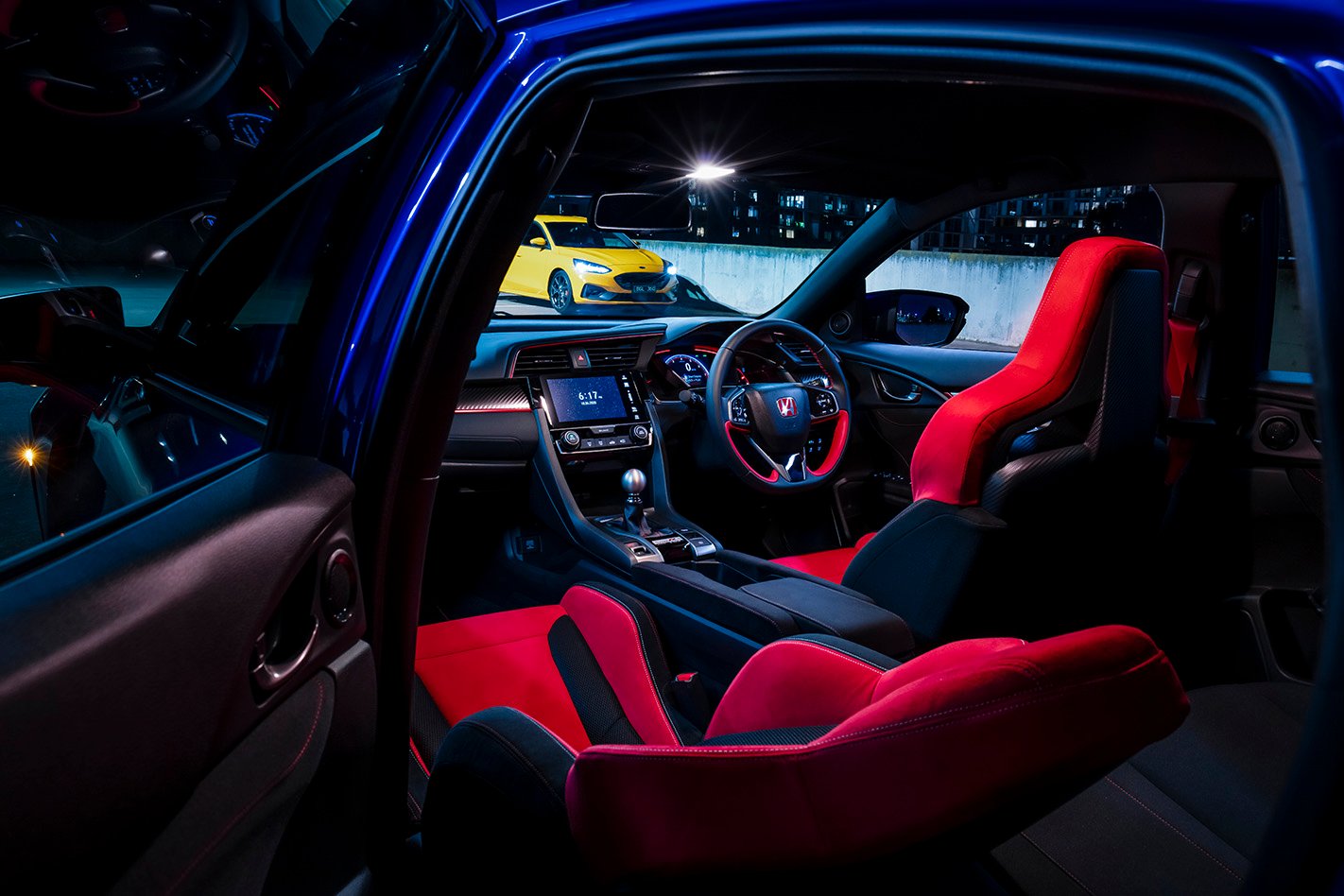
The Ford’s 2.3-litre four is defined by its torque. Generating a massive 420Nm at anywhere between 3000 and 4000rpm, it’s seriously brawny.
It also means that marshalling that amount of grunt off the line can be tricky, as we discovered at a damp and chilly Heathcote test track. In the interests of professional curiosity, we decided to engage the launch control and lean on the software to see what sort of time that would generate. This resulted in manic axle tramp and wheelspin and 7.6 seconds to 100km/h. Don’t ever do this.
Rely on a bit of judgment and it’ll step off the line a bit more crisply, the Michelin Pilot Sport 4S boots digging in and getting it through 100km/h in a more than respectable 6.1 seconds, helped by an ability to flat shift through the gears without lifting off the loud pedal.
The 400m mark comes and goes in 14.2 seconds at 164km/h. By way of comparison, the last Focus RS managed the same feat in 13.3 seconds at 171km/h.
The Civic is an odds-on favourite to better those numbers, but given the iffy conditions, it’s hard to gauge by how much.
We don’t have to wait very long for an answer. The ContiSport Contact 6 tyres require a little warming through, but once they’re up to temperature, the Type R reels off some consistent runs.
It’s got 22kW more than the Focus but 20Nm less torque and just pips the fast Ford to 100, registering a best of 6.0 seconds and then flexes at the top end, breaking 400m in 13.8 secondss at a terminal speed of 170.2km/h. It’s also a huge 1.9s quicker between 100 and 200km/h than the Focus (14.7 seconds vs 16.6 seconds).
Another oldie for perspective? The Civic’s 400m time is exactly the same as what the original NSX achieved. How’s that for symmetry? On a warmer, drier day the hatchback would have eclipsed the supercar. Progress, eh? Time to head for the hills.
If there’s one word that sums up the Type R on a challenging road it’s ‘urgent’. It never misses an opportunity to let you know that you’re not trying had enough, to cue you in to the fact that it’s better than you. That’s a bit unsettling. We’re up in the forests outside of Healesville and it’s here that the Honda lays down a true marker of its talents.
These are perfect hot hatch roads: tight and medium radius corners, inconsistent cambers, poor sight-lines, lumps and ruts and just about every other combination of nastiness that would make something with more power and less clearance feel fighty and overmatched. Up the ante and the Civic comes alive, making the Focus seem lumpen in comparison.
The low cowl, low seat, and slick dual-pinion variable-ratio steering let you position the car perfectly. The harder you go, the better it gets. It’s the sort of car that prompts you to hover around at the bottom of the best hill route you know, waiting for something with twice the Honda’s power to amble by.
Power pours in between 2500 and 6000rpm, each gearshift bringing a bird-like chirp as the turbo bleeds off excess boost. Body control is excellent across the camber of the road, and while the brake pedal feel is initially a little vague, it firms up nicely just in the right height in the pedal arc for clean heel and toes.
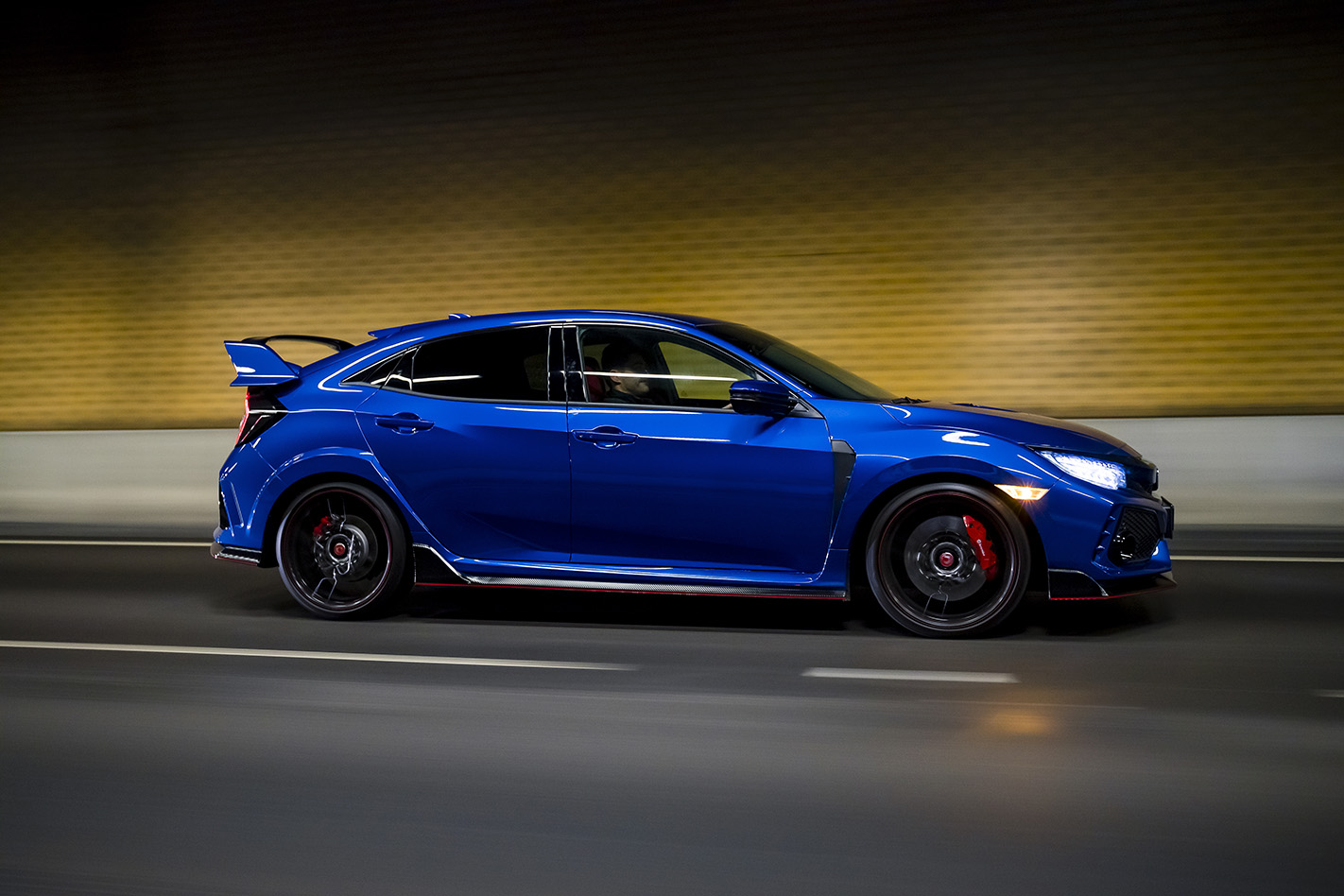
It won’t be for everyone though. You’re required to be willing to put up with its sophomoric styling excesses, its klutzy cabin ergonomics, its four seats rather than five.
You’ll pay extra for bigger 20-inch tyres and more expensive insurance. But you’ll do that because you want the angriest, most dynamically gifted front-drive hot-hatch on the market.
You’ll choose the Type R for the same reasons 911 GT3 owners don’t want a 911 Carrera – because dynamic excellence matters to you. That it also delivers the best damping suppleness in its class only underscores the fact that the engineers at Honda R&D Co are chassis alchemists.
Step out of the Honda and you know that the Ford can’t match it. Would it have been fairer to drive the Focus first? Probably not. We’re here to see how this newcomer measures up against the Type R, so refreshing our memory on where the dynamic bar is set seems apposite.
What’s surprising is how far off the Honda the Ford is. I refer to my notes. “The ST seems tall and narrow. The gearbox has the longest travel. The side bolsters on the Recaro’s cushion collapse beneath your thighs mid-corner. The deep engine note with the five-pot sound-symposed warble is monotonous and makes it harder to drive by ear and sounds unrewarding to rev. The steering is hefty yet ultra-pointy, the brake pedal is hard and yet the throttle pedal feels as if it has very light springing to it. Needs customisable drive modes.” I’m not initially sold, it’s fair to say.
What’s even more surprising is how the Focus then manages to worm its way into your affections. The abundance of low-end torque makes it a joy to drive around town. It seems almost impossible to stall. The pedal set-up that initially feels so weird allows you to trail brake into the apex and then gently angle your right foot onto the throttle, easing out of the middle pedal and onto the gas all in one roll of the ankle.
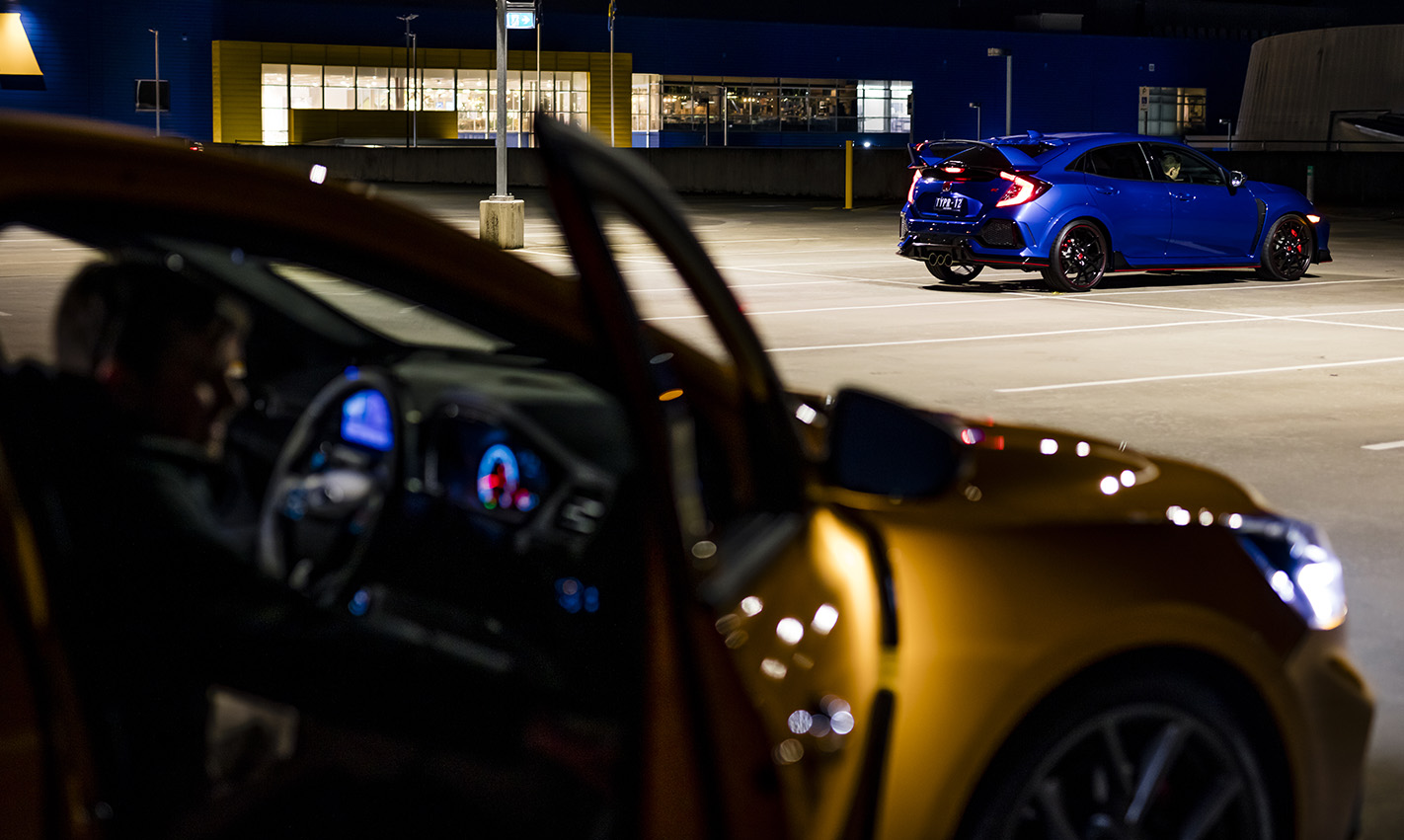
It gives the Focus the most beautiful balance on corner exit, helped by the grip offered by its lightning quick clutch-actuated Borg-Warner developed e-LSD. This can lock to a 50:50 ratio of torque split across the front axle and do so predictively, making it faster in real-world scenarios than a traditional reactive helical mechanically locking differential. Doing everyday stuff like punting the Focus ST out of junctions, point and squirting it between turns and jinking it through roundabouts paints a huge grin on your face.
There’s almost something muscle car-like in its persona. On the face of it, this is a ludicrous assertion to make about a front-drive four-pot hatchback, but such is its amenable point-and-squirtiness, its barrel-chested acoustics and its subjective feelings of heft that there’s definitely something to it.
The Focus’ stability control calibration makes the Honda’s set-up feel a generation behind and the value of investing in the Michelin Pilot Sport 4S tyre pays back in spades, wet or dry. The damping is well-judged but one aspect of flicking the car into its Sport or Race Track modes is that the steering, which has a faster ratio than a Ferrari 488GTB, can feel a little contrived in its weighting. Yes, the ST has some flaws, but its playful personality, sensible ergonomics and accessible skillset makes it an endearing thing to live with. Editor Inwood’s discovering this, having recently taken delivery of an automatic Focus ST.
This, then, leaves us on the horns of a dilemma. The Honda Civic Type R is clearly the better hot hatch in all the classically defined criteria of go, stop and steer. It’s quicker, lighter, more alert and just more capable. The Ford counters with a personality that doesn’t take itself so seriously, a more characterful engine, a more affordable price tag, a plusher interior treatment and, importantly, it offers something to the driver when you’re not totally balls-out.
The Focus and the Civic emerge as two very different propositions and it’s hard to see an informed buyer cross-shopping them. They’ll know what they like and it will be one or the other. Personally, I’d buy the Ford, but I’d know that if I ever encountered a Civic Type R hovering around near the base of Chum Creek Road that I’d make my excuses and leave. It pays to pick your battles.
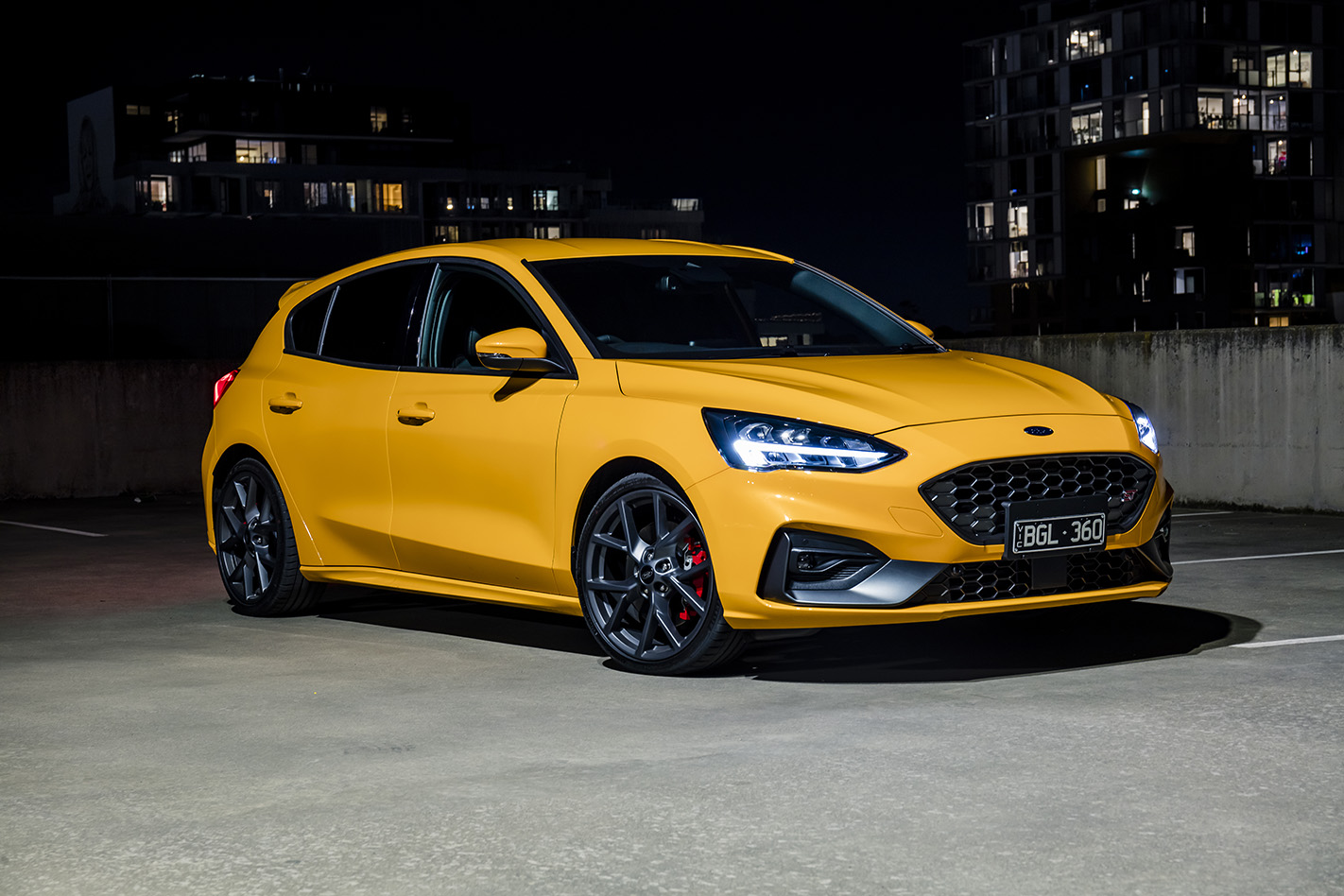
FORD FOCUS ST SPECS
Engine: 2261cc 4cyl, dohc, 16v, turbo
Max power: 206kW @ 5500rpm
Max torque: 420Nm @ 3000-4000rpm
Transmission: six-speed manual
Dimensions (L/W/H/W-B): 4388/1825/1458/2700mm
Kerb weight: 1508kg
0-100km/h: 6.1sec (tested)
Economy: 10.9L/100km (test average)
Price: $44,690
On sale: Now
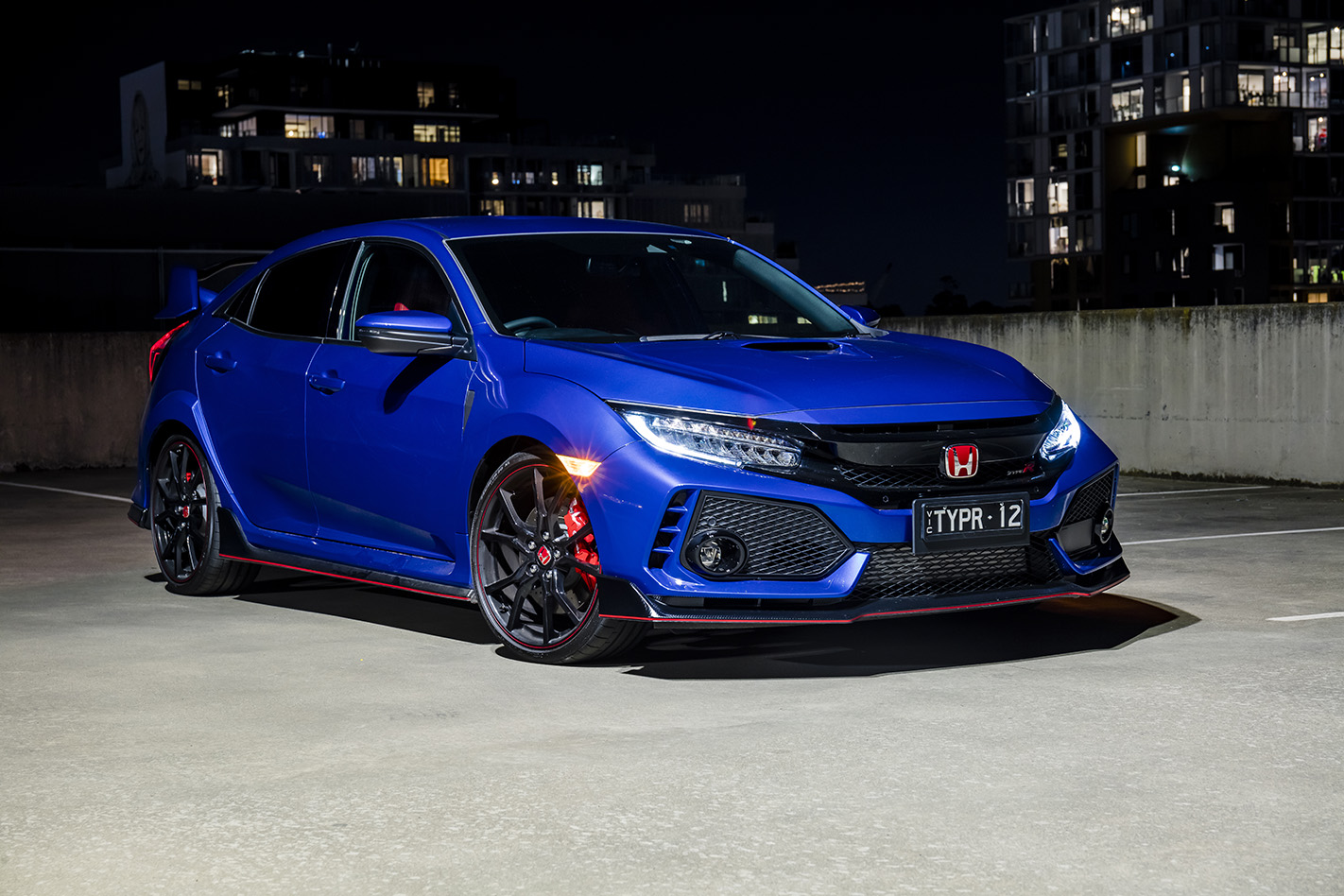
HONDA CIVIC TYPE R SPECS
Engine: 1996cc 4cyl, dohc, 16v, turbo
Max power: 228kW @ 6500rpm
Max torque: 400Nm @ 2500-4500rpm
Transmission: six-speed manual
Dimensions (L/W/H/W-B): 4557/1877/1421/2700mm
Kerb weight: 1396kg
0-100km/h: 6.0sec (tested)
Economy: 9.9L/100km (tested)
Price: $51,990
Genesis has a bit of a tough job here. Not only is it a relatively new brand in a country slow to accept change, bit it’s also up against a rival that’s recently rediscovered its groove. This is the Genesis G70 2.0T Sport, and it wants you to take it for a test drive before you buy your next BMW 330i. It’s also here for those who are keen on a plush small-mid-sized sedan who don’t care to pay for something with a properly sporting engine.
As a trade-off between budget and a premium experience, the $63,300 Sport trim might be the pick in the four-pot G70 range, supplying a few of the goodies from its twin-turbo V6 siblings. Our test car was also fitted with an optional $2500 sunroof for a $65,800 as-tested price. That still leaves it short of its Bavarian rival without skimping on standard kit.
As part of the Sport trim, a limited-slip differential, a set of Brembo brakes (350mm fronts, 4-piston; 340mm rears, twin-piston), Michelin Pilot Sport 4 tyres, and 19-inch 5-spoke alloy wheels are all snagged from the top end of the G70 range. A ‘dark chrome’ exterior styling package also smokes up all the metal for a more modern attitude, while some sporting trim makes it into the cabin in the form of coloured stitching, stainless steel pedals, and a rather optimistic 300km/h speedo.
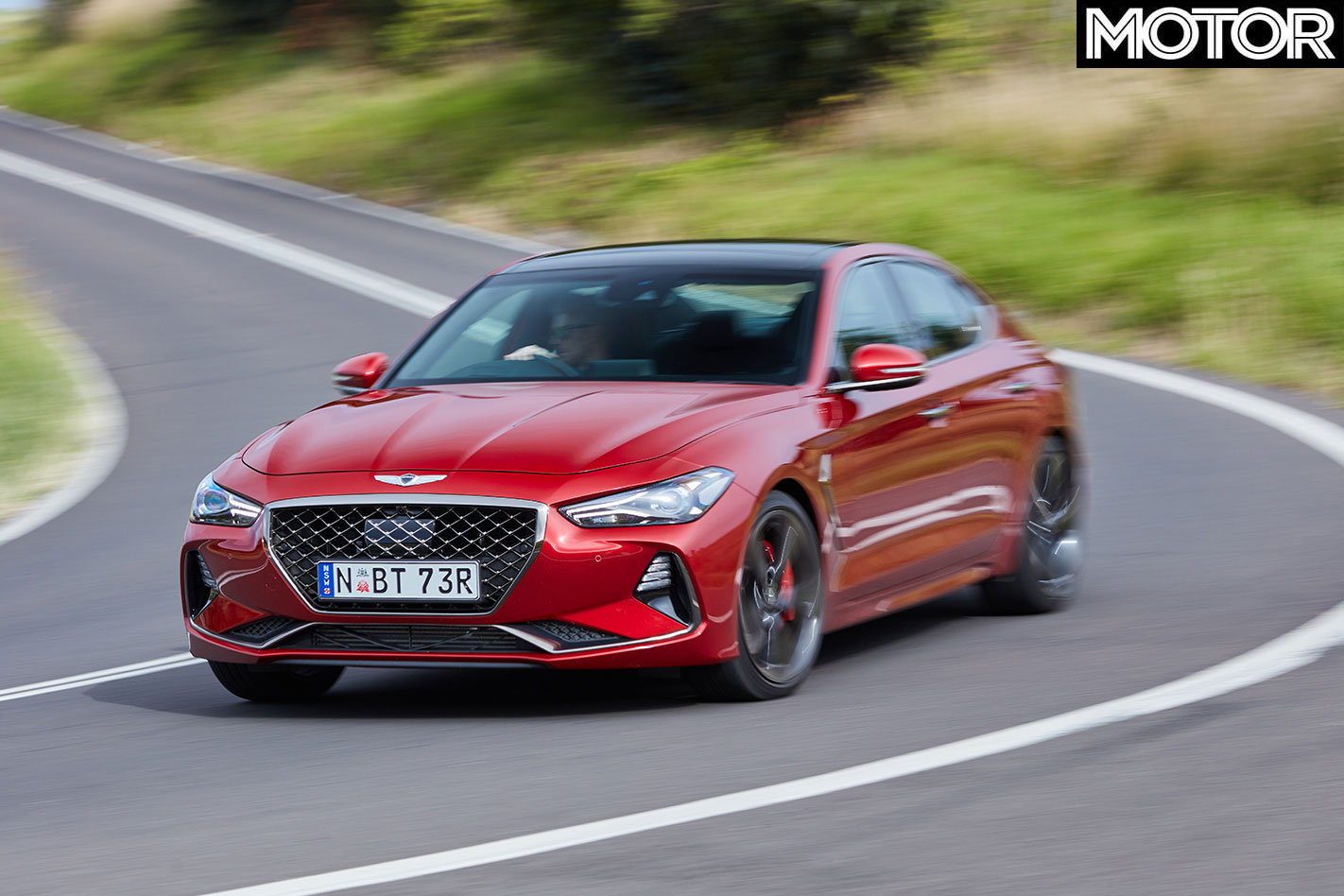
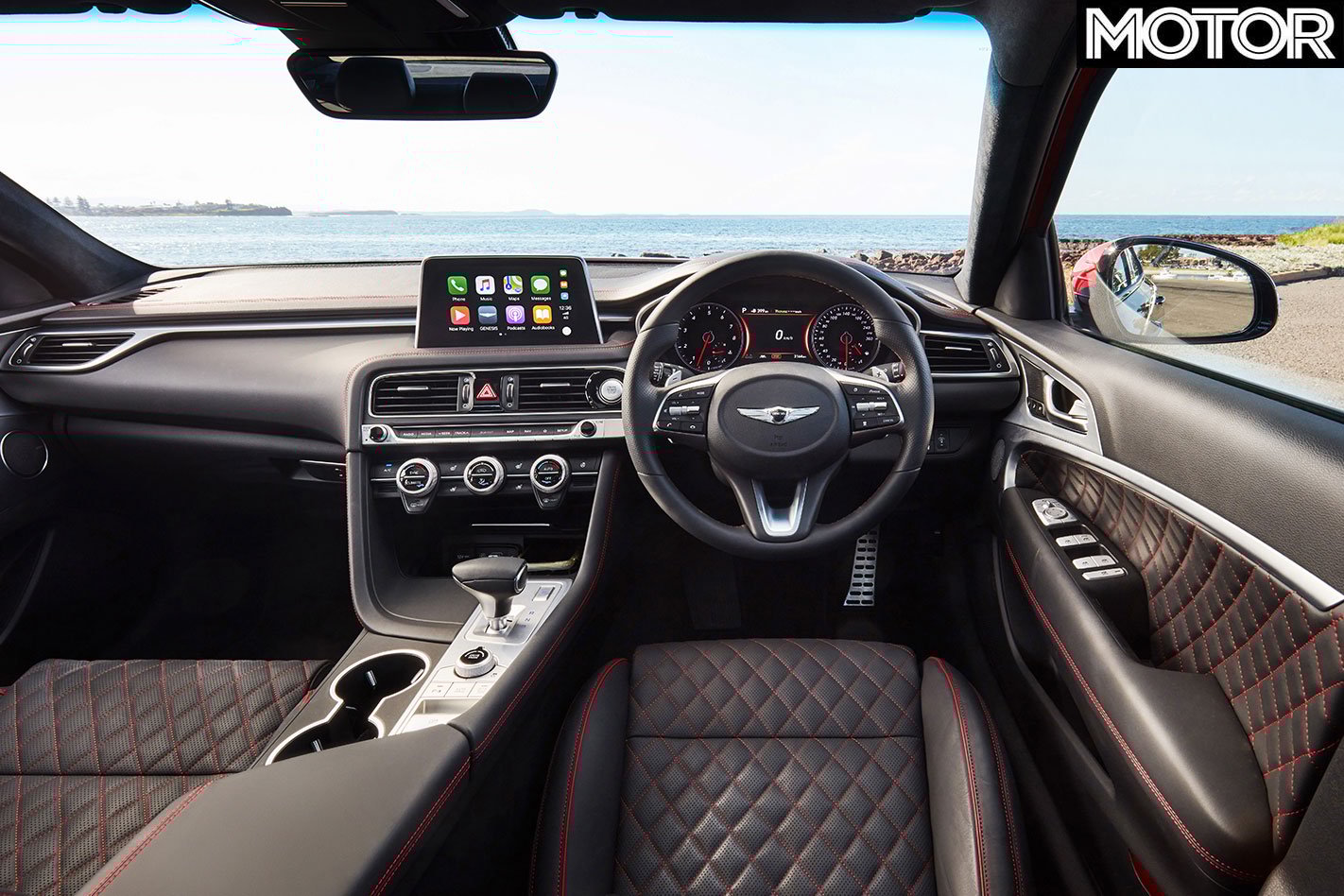
It’s inside where the Genesis’ most relevant benefits are, and the amelioration of the Hyundai Motor Group’s build quality over the years is most evident. From the driver’s seat, much of what is visible and within reach seems properly premium, with leather and real aluminium adorning what is otherwise a fairly straightforward cabin design.
There are nice touches, like the way the leather-wrapped dash looks extended over to the passenger side, but there are also some interior sins. Primarily one other premium brands are also guilty of, borrowing from the base model. Just as some Lexus have economy Toyota stalks behind the wheel, the G70 has the same infotainment screen as the likes of the Hyundai i30, and disheartening to a lesser extent is the fact its gearshift and surrounds are almost straight from the Kia Stinger.
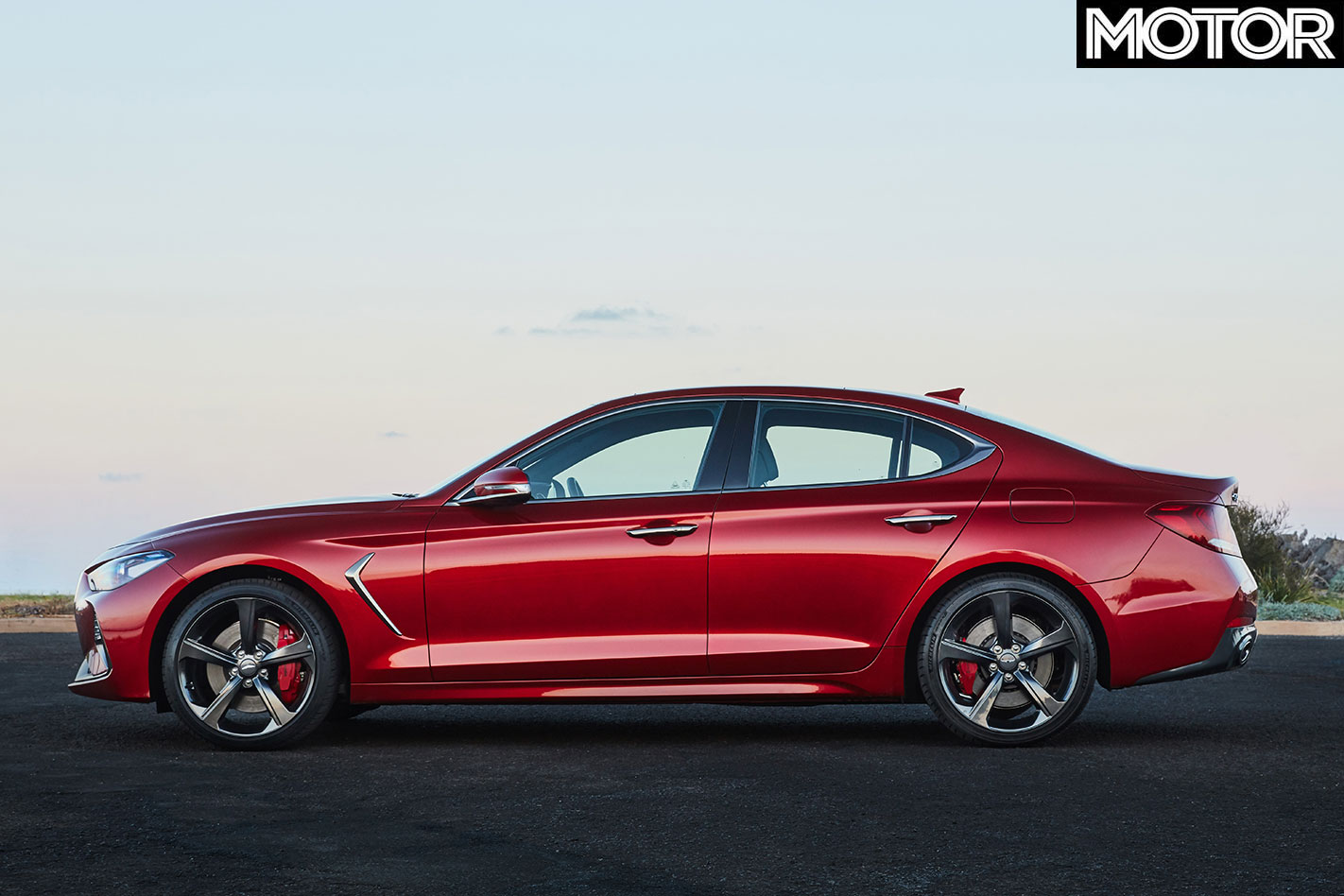
These facts don’t necessarily make the G70 any less a good car – most people who buy one won’t care what the inside of a Stinger looks like – and they’ll probably just use Android Auto or Apple CarPlay anyway, but if you’re up against the Euros, Hyundai and Kia parts probably won’t cut it.
Fortunately, the Genesis happens to be rather delightful to drive, something very much useful for taking the fight to the current 3 Series. Its comfortable steering and well-tuned fixed suspension are both bang on what they need to be for the type of driving the G70 is built for, while Sport mode adds a little weight (but not too much) into the steering. Okay, it’s no handling dynamo in terms of the chassis, and communication from the road is muted somewhat in favour of a plush ride, but the G70 isn’t built to be a sports car regardless of the trim level’s name.
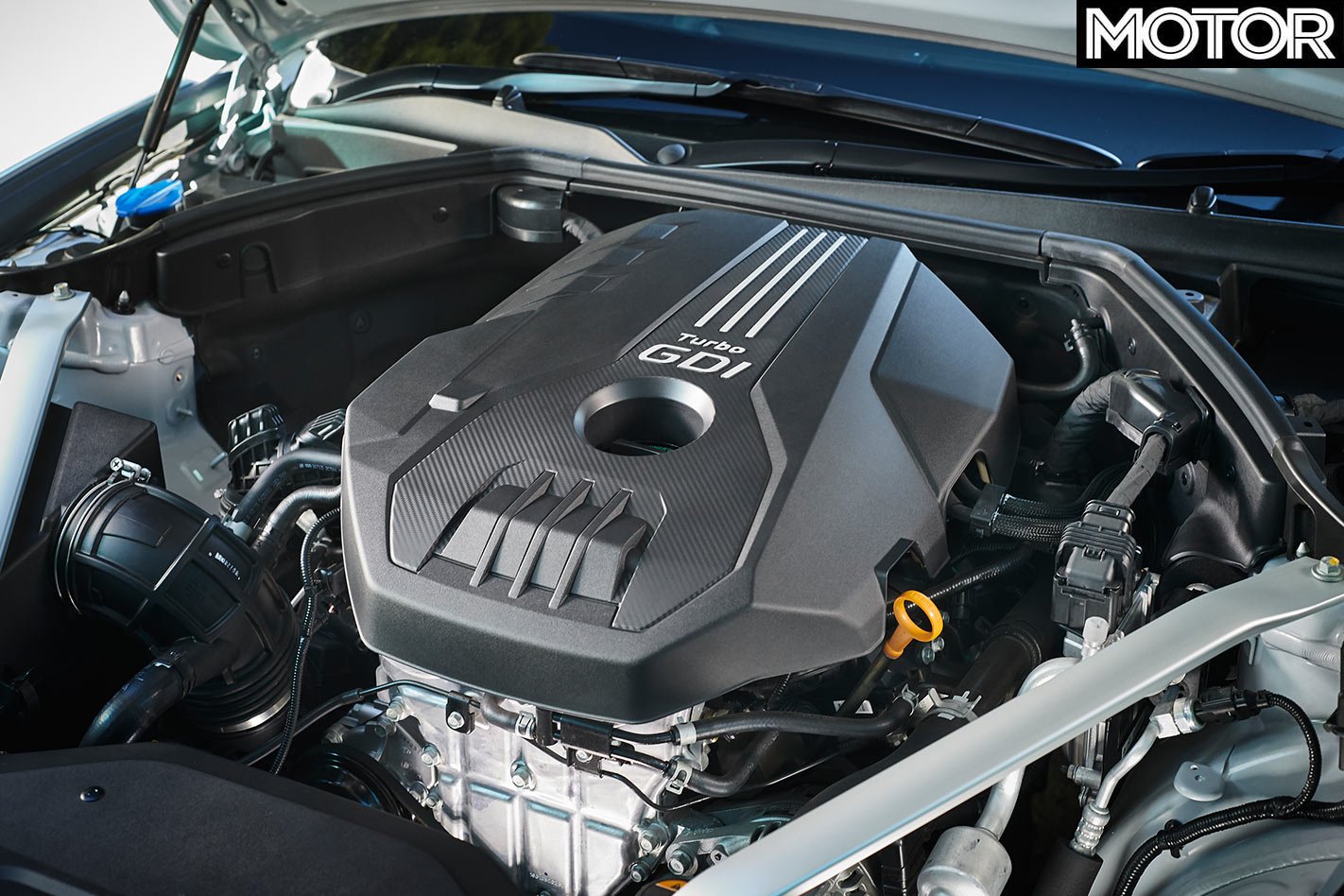
The engine itself also contributes enough, falling short of the BMW 330i’s 190kW and 400Nm but still with its own respectable 179kW/353Nm, the turbo four and its 8-speed torque converting friend manage to keep the G70 moving out of corners with enough pace to have fun if the mood strikes. It’s not the most characterful, but the 3.3-litre twin-turbo V6 can be had for less than $10K more.
If the Hyundai i30 N was the first time Korea really took on the hot hatch world, the G70 is the first time it’s put up a proper fight in the premium sedan market, and it’s got what it takes to lure those who might otherwise go to one of its German rivals.
Hyundai Genesis G70 2.0T specs
Engine 1998cc inline-4, DOHC, 16v, turbo Power 179kW @ 6200rpm Torque 353Nm @ 1400rpm 0-100km/h 5.9sec (claimed) Weight 1630kg • price $63,300
Like: Well-judged suspension and steering; comfort to cash ratio; Genesis owner perks Dislike: It’s no powerhouse; Kia/Hyundai bits; interior not as stylish as rivals
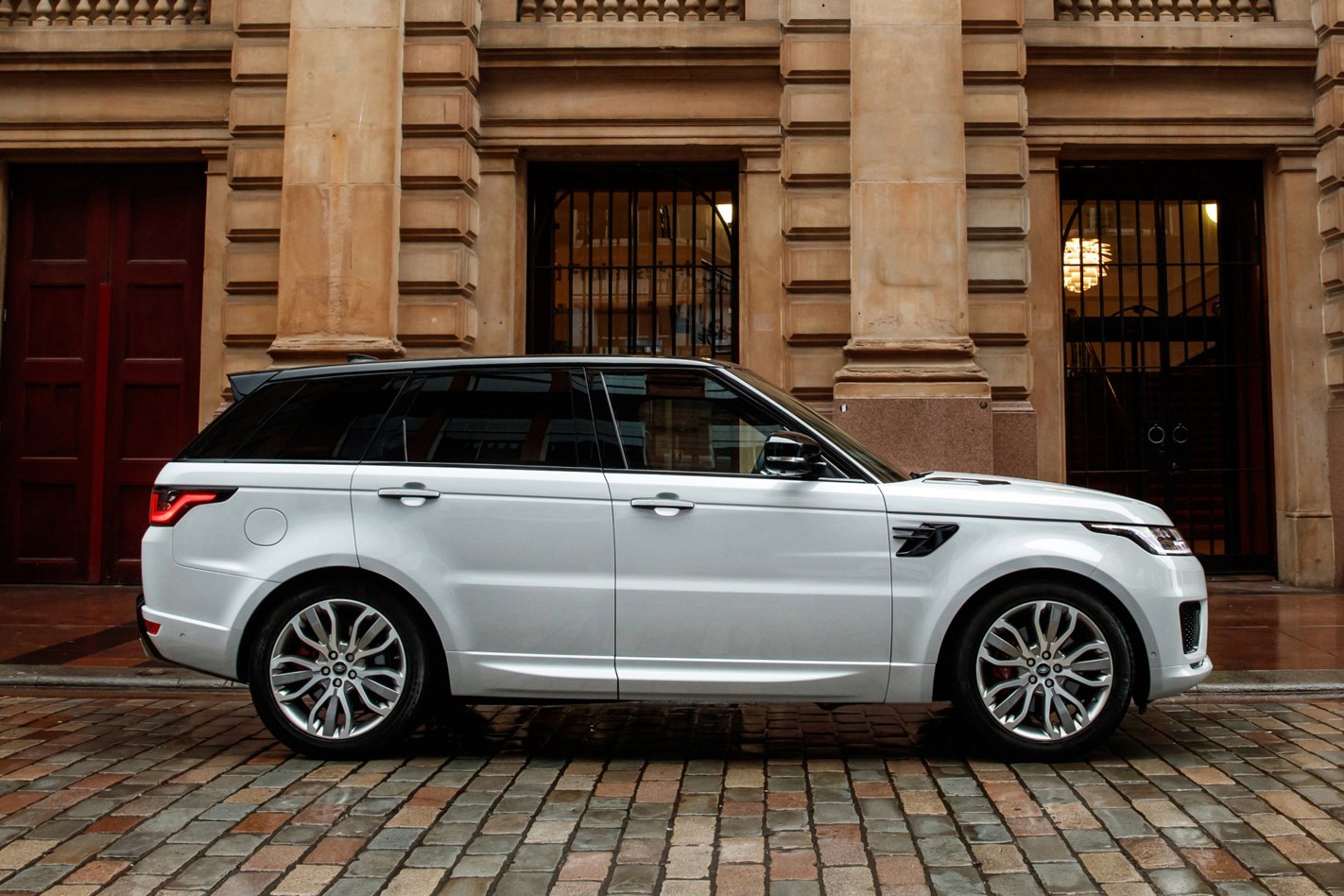
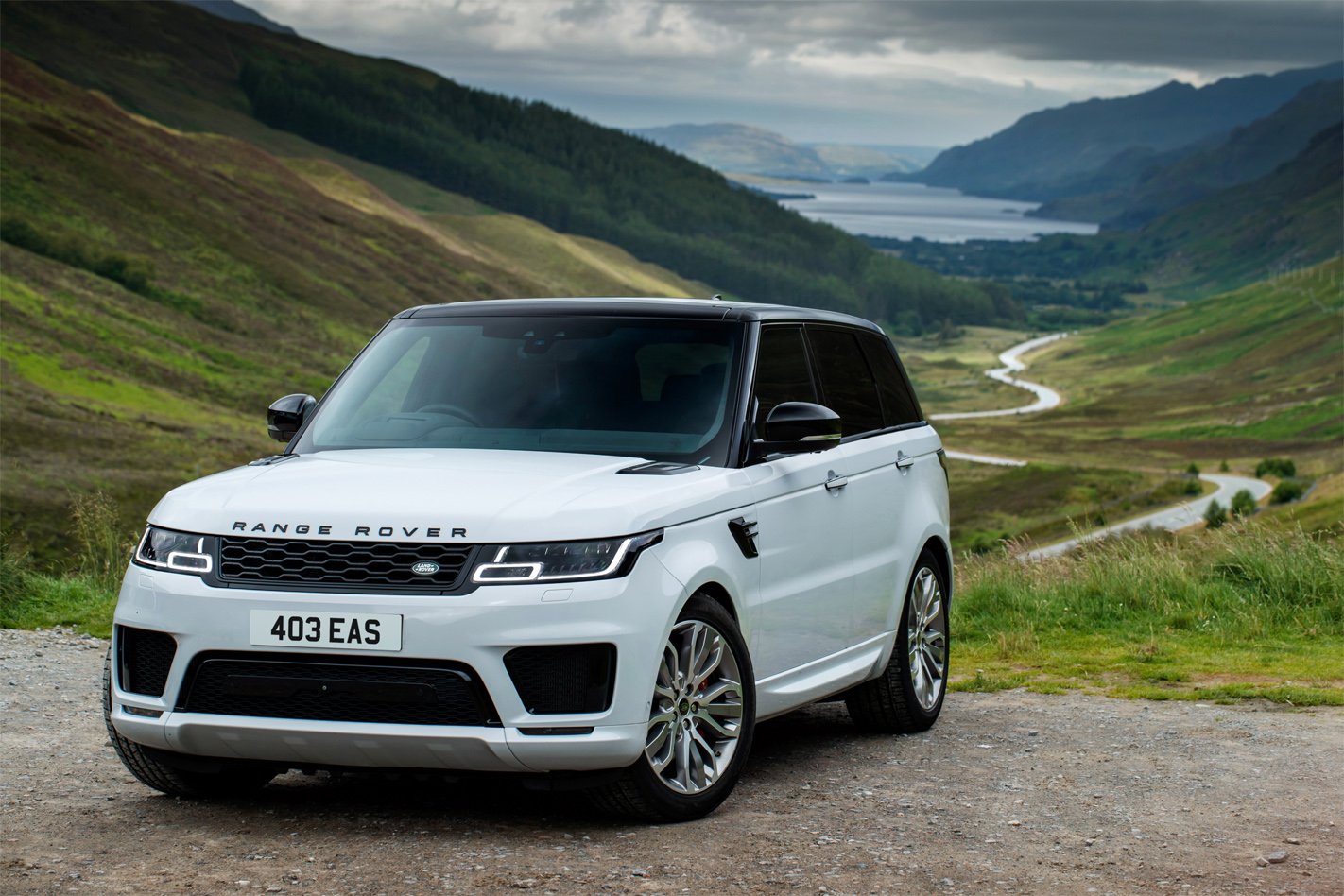
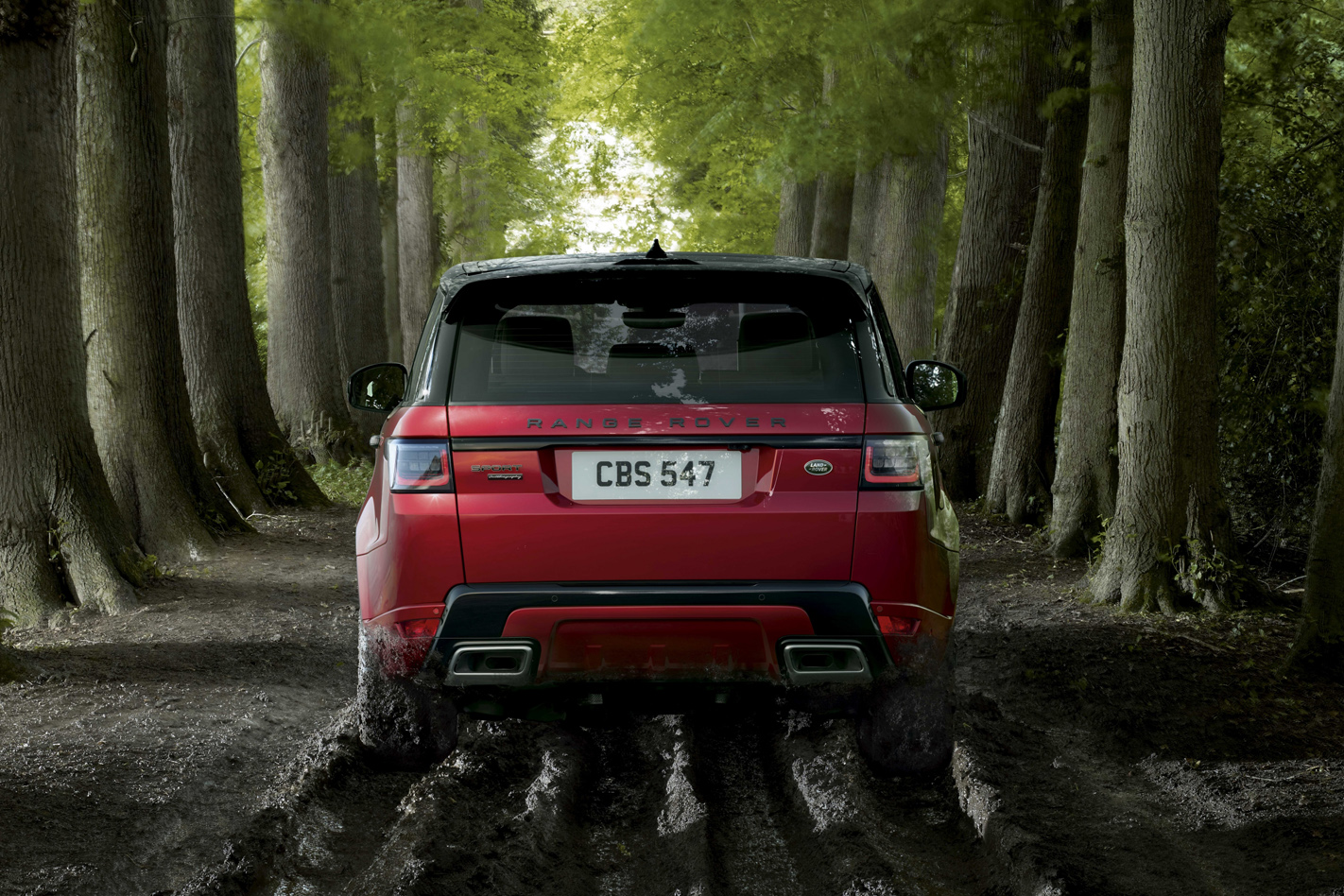
Range Rover has treated its Sport luxo-lite large SUV to a mid-life update, with exciting new engines, refreshed interior and exterior options, a boost to technology and a special limited edition now offered for the SVR flagship.The revised model line-up will land in Australia this coming November with pricing of the new variants yet to be confirmed. Significantly, the update marks the end of the model’s Ford-sourced engine legacy and a full transition to JLR’s in-house units.
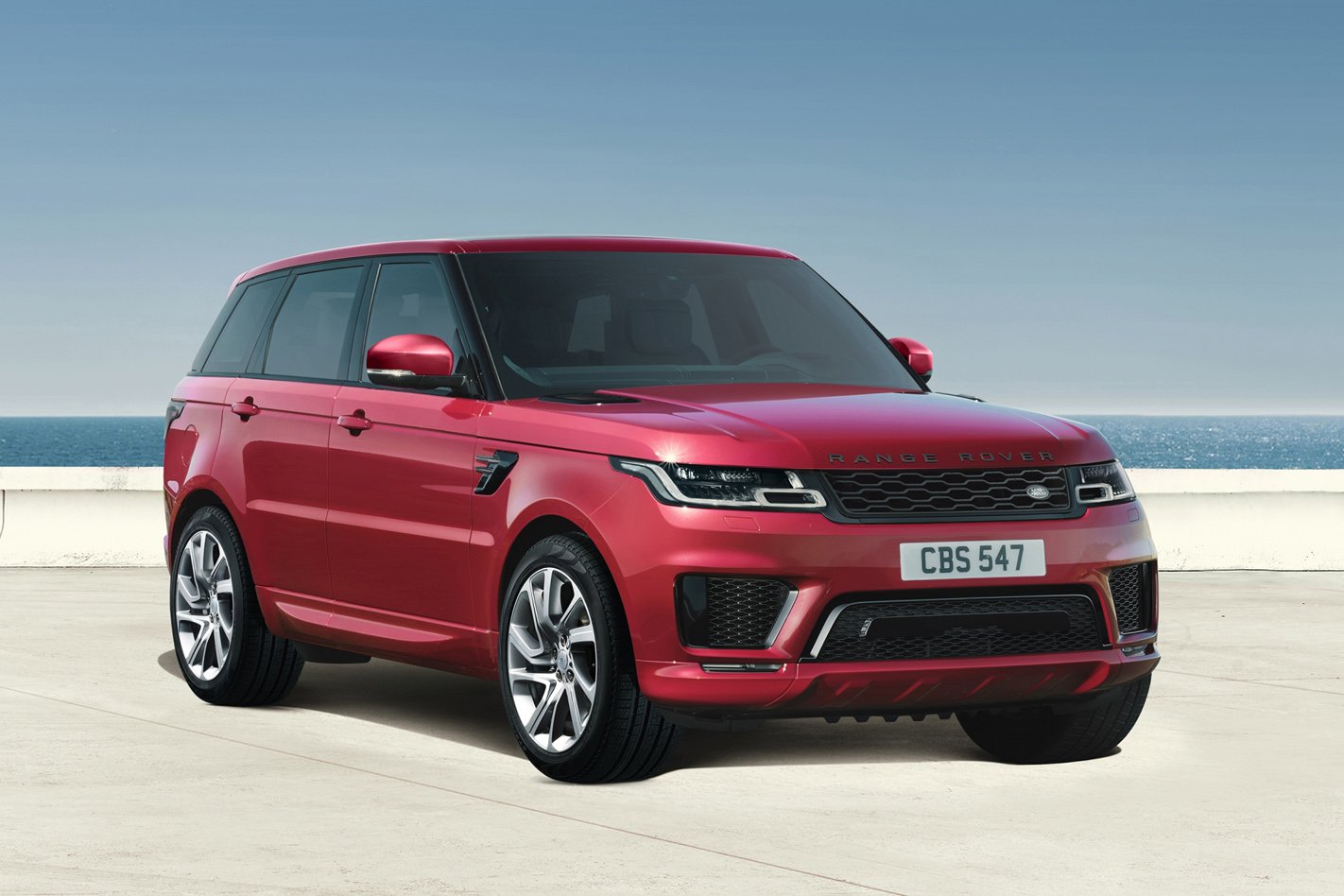
Technological updates have lifted the already cutting-edge Touch Pro information and entertainment system, while aesthetic updates are minor and limited to colour and trim introductions, except for a new SVR limited edition that gains some ostentatious modifications.It’s the second major update of the model since its introduction in 2013 and follows a facelift in 2017.
Ingenium engine expansion
Diesel
Headlining the Range Rover Sport’s 2020 update are a selection of new straight six diesels which replace the ageing V6s with smoother, more powerful and more efficient units, along with new nomenclature to align with the brand’s other models.
At the top of the diesel pack, a new D350 replaces the previous SDV6 with the same 700Nm torque figure but an increased power output of 258kW (a gain of 33kW).
Below it, the D300 produces 221kW/650Nm and the new entry-level six-cylinder diesel has an output of 183kW/600Nm.
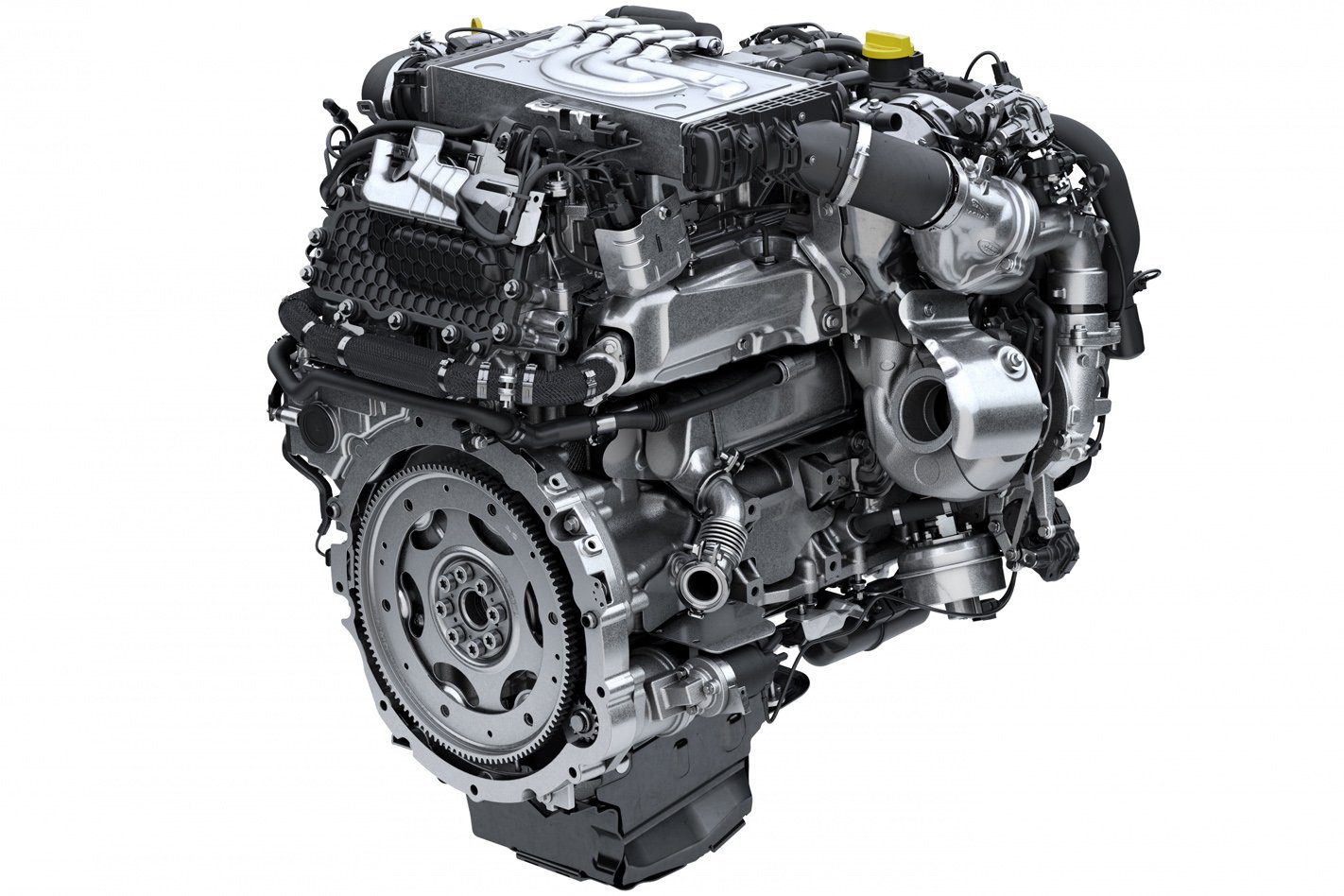
Range Rover has not released official economy and emissions figures but all are EU6 diesel compliant so expect to see significant gains over the outgoing V6.
There are no returning four-cylinder diesel engines or the previous range-topping V8 diesel for now, with an exclusively six-cylinder offering with the update.
Petrol
Joining the trio of Ingenium diesels, a new P400e plug-in hybrid variant has also been added to the Range Rover Sport line-up. It pairs the company’s 2.0-litre four-cylinder Ingenium petrol engine with a 105kW electric motor fed by a 13.1kWh lithium-ion battery, for a combined output of 297kW and 640Nm.With a full charge, the electrical system alone can provide zero-emissions motoring for 41km or, when combined with the petrol contribution, uses just 3.3 litres of fuel per 100km.
In a hurry, the P400e can accelerate to 100km/h from zero in 6.7 seconds.
Fancier flagship
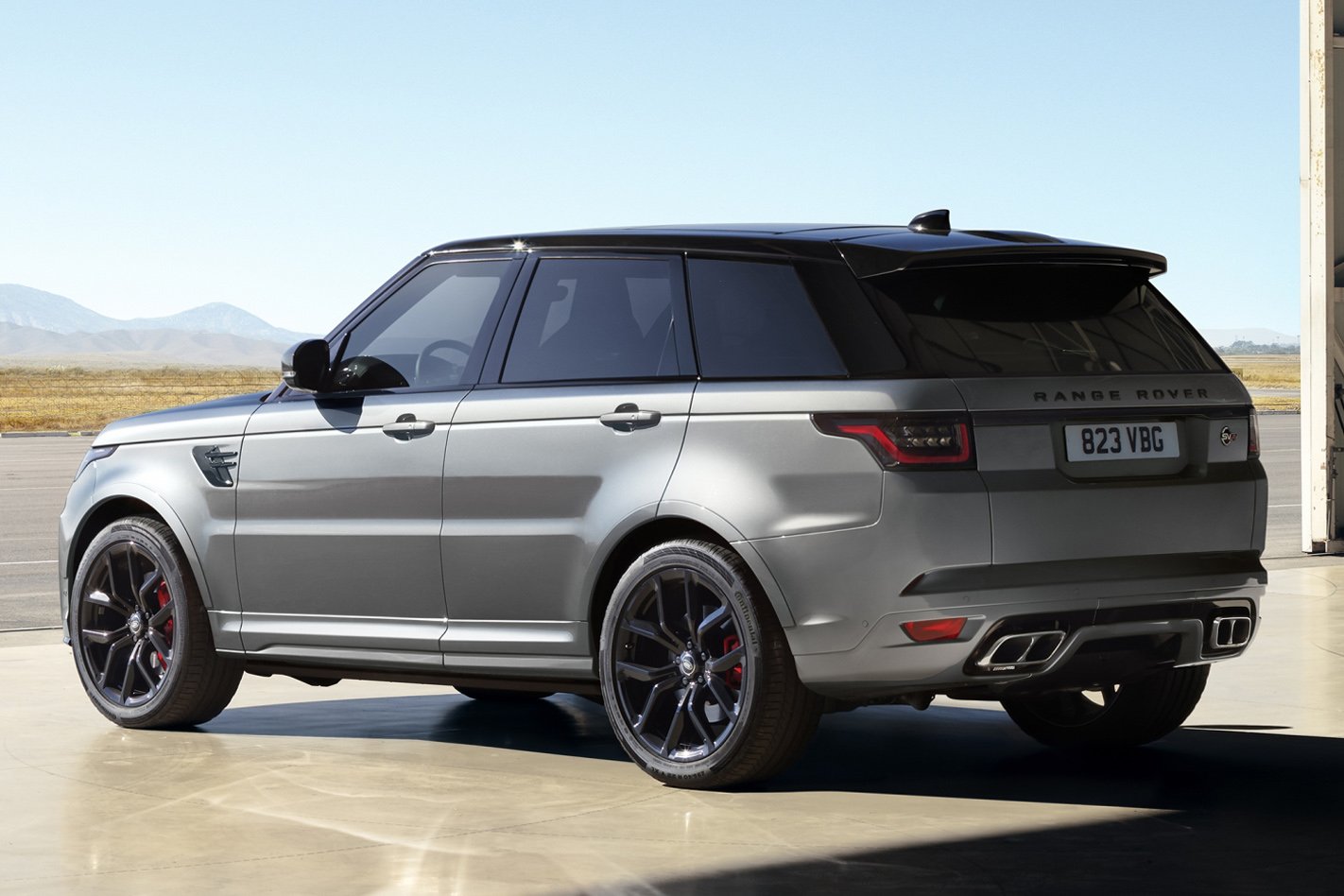
At the top of the Range Rover Sport pack, the high-performance SVR has been joined by a new limited Carbon Edition.On the outside, the new Carbon Edition gets a vented carbon-fibre bonnet that’s clear-coated rather than painted to show off the sophisticated construction, more carbon for the grille, air vent surrounds, tailgate and mirror caps.
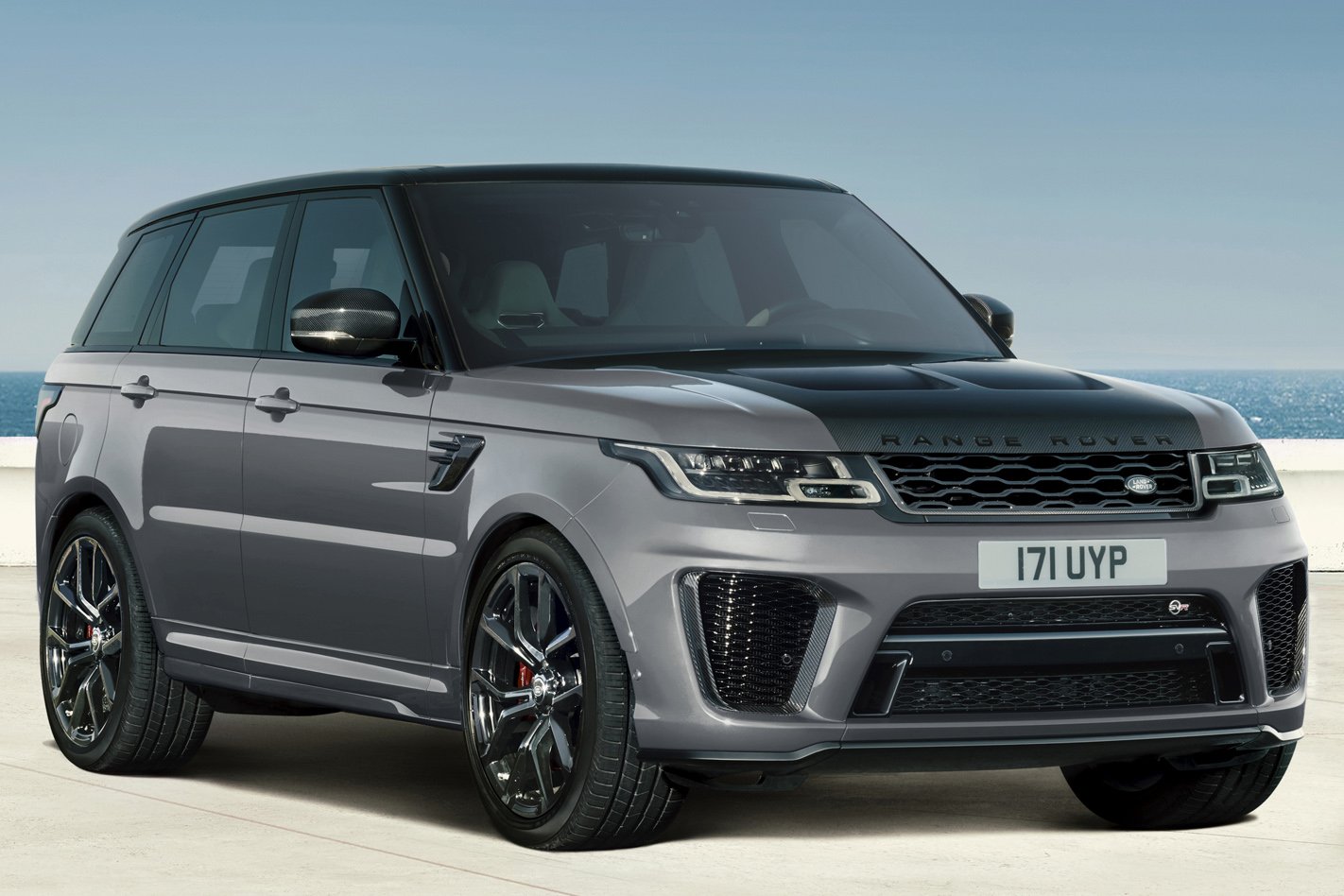
Expect the special Sport to command a price premium over the current $239,000 SVR when it arrives.
Making connections
The Range Rover Sport’s information and entertainment system is still looking and feeling fresh, thanks to its expansive split-screen design and large touchscreen technology.Nonetheless, Range Rover has brought the system up to 2020 standards with the introduction of Android Auto and Apple CarPlay connectivity as standard.In addition, there’s now the provision to connect up to eight devices with 4G WiFi internet.
Palette stack
Capping off the 2020 update, a new selection of exterior colours has been borrowed from the brand’s top-shelf SV palette, including trendy satin options, as well as Tourmaline Brown, Amethyst Grey-Purple and Petrolix Blue.
Would it surprise you to know that, if you were feeling like giving combustion power the flick and jumping into an electric vehicle, you now have the choice of nearly 15 different models on sale in Australia?Surprising if you had listened to the skeptics, who once described EVs as ‘impossible’. But not long after, their sweeping aspersions gradually weakened to ‘highly unlikely’ then ‘unfeasible’ then ‘expensive’ and then ‘uncommon’. Sooner or later, everyone will realise that EVs are inevitable.
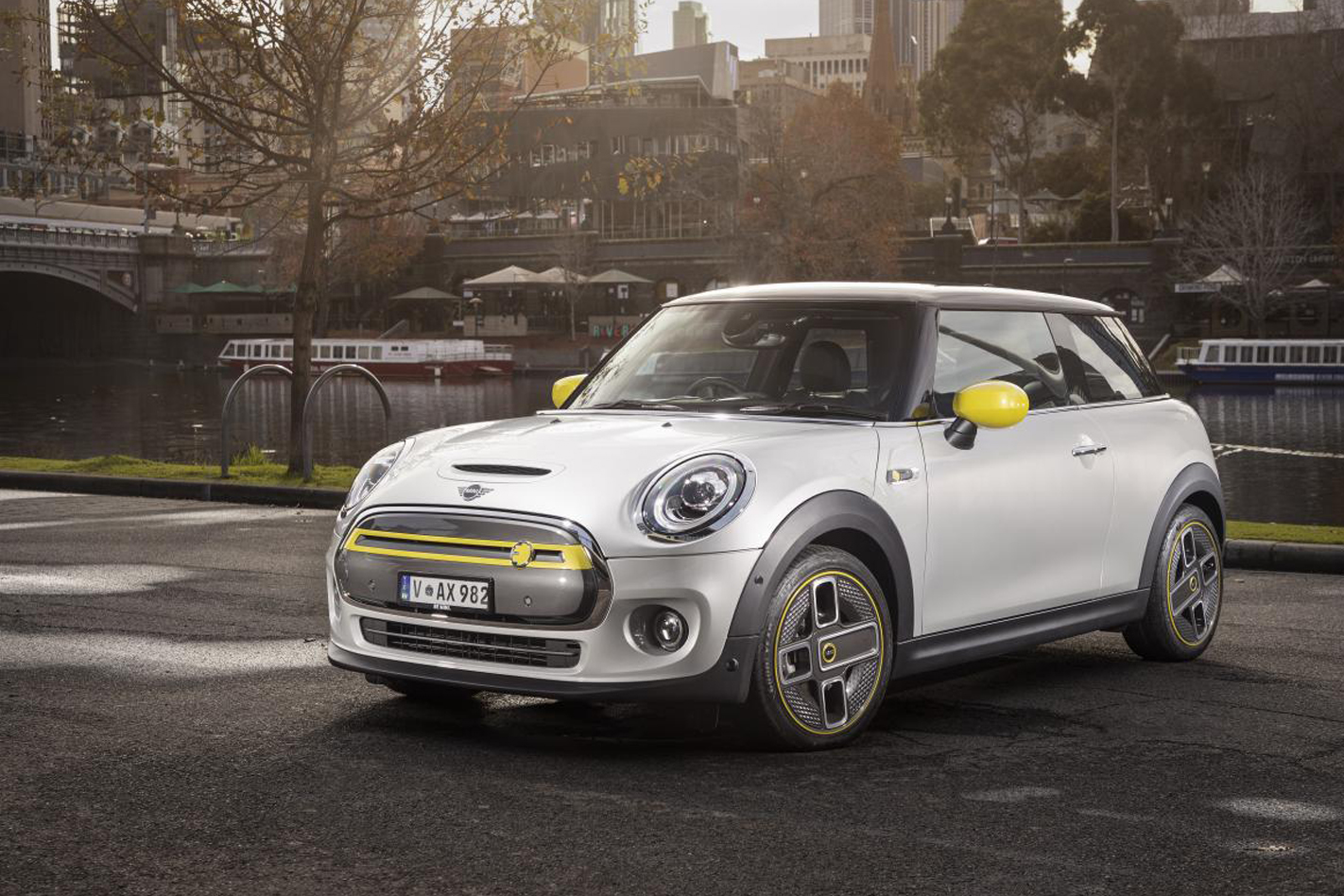
What is the Mini Cooper SE?
Until the Mini Cooper SE arrived, there was a glaring void in the list of Australia’s EV offerings if you were after a small hatch that’s geared as much towards the joy of driving as it was opposed to fossil fuel dependence.
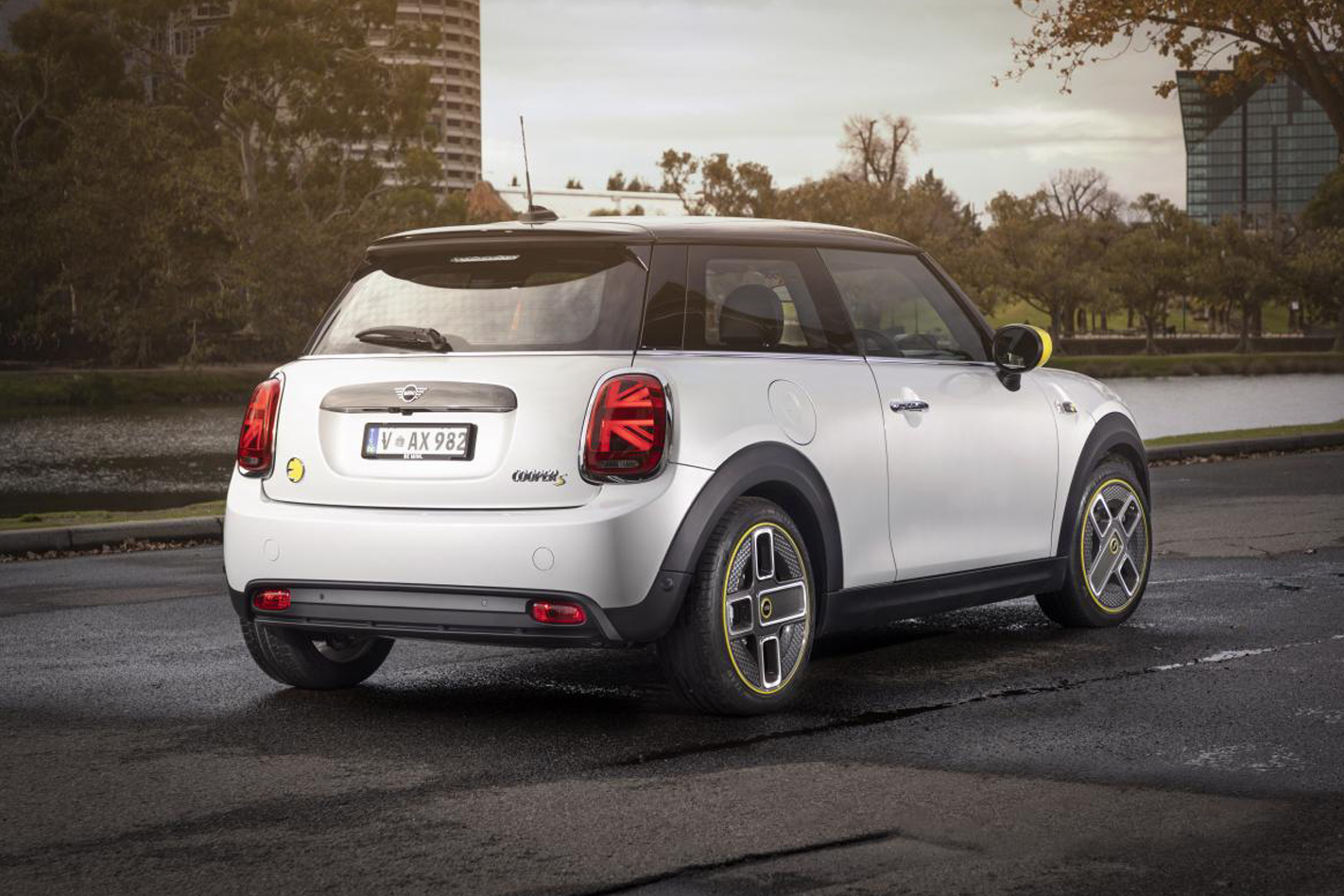
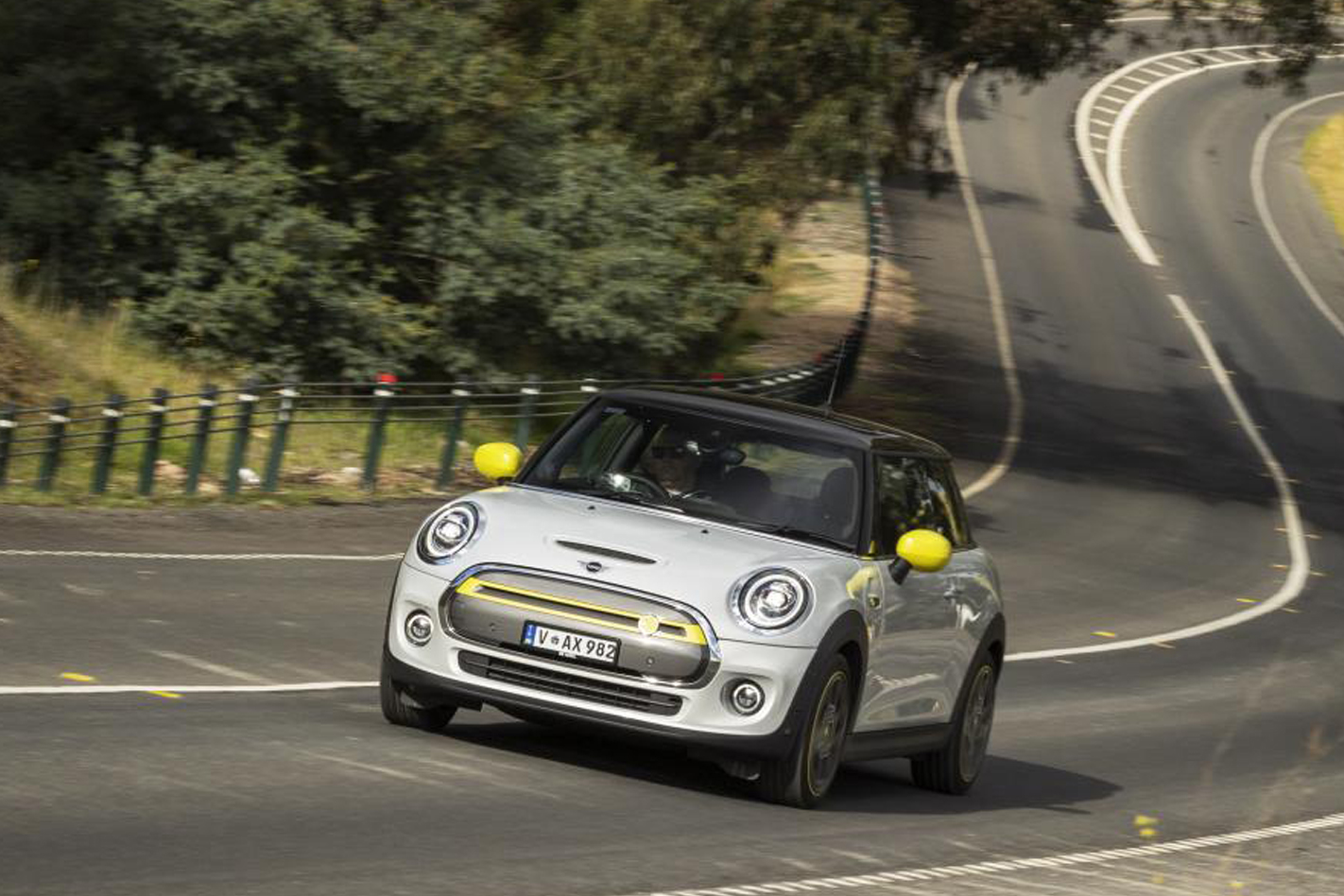
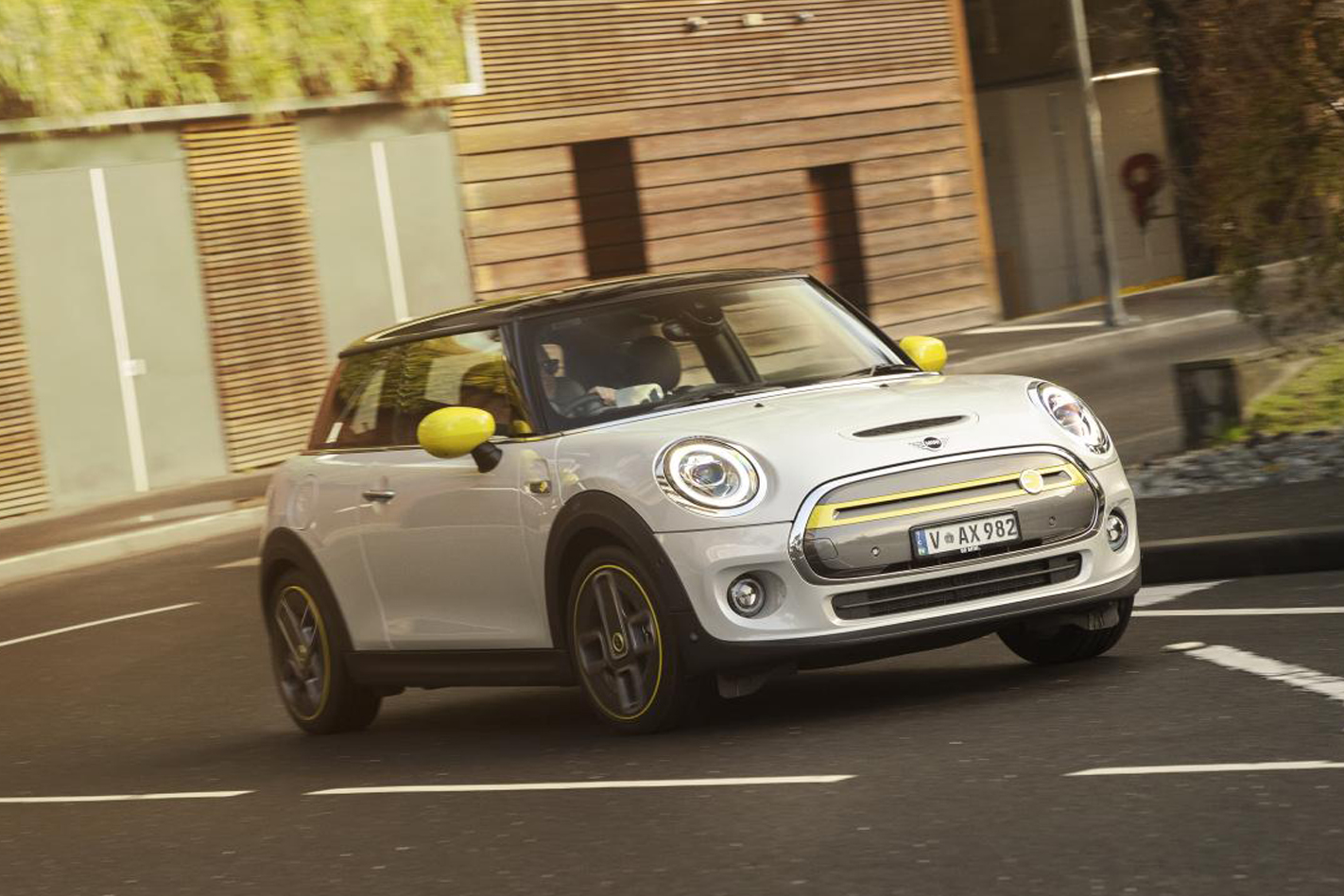
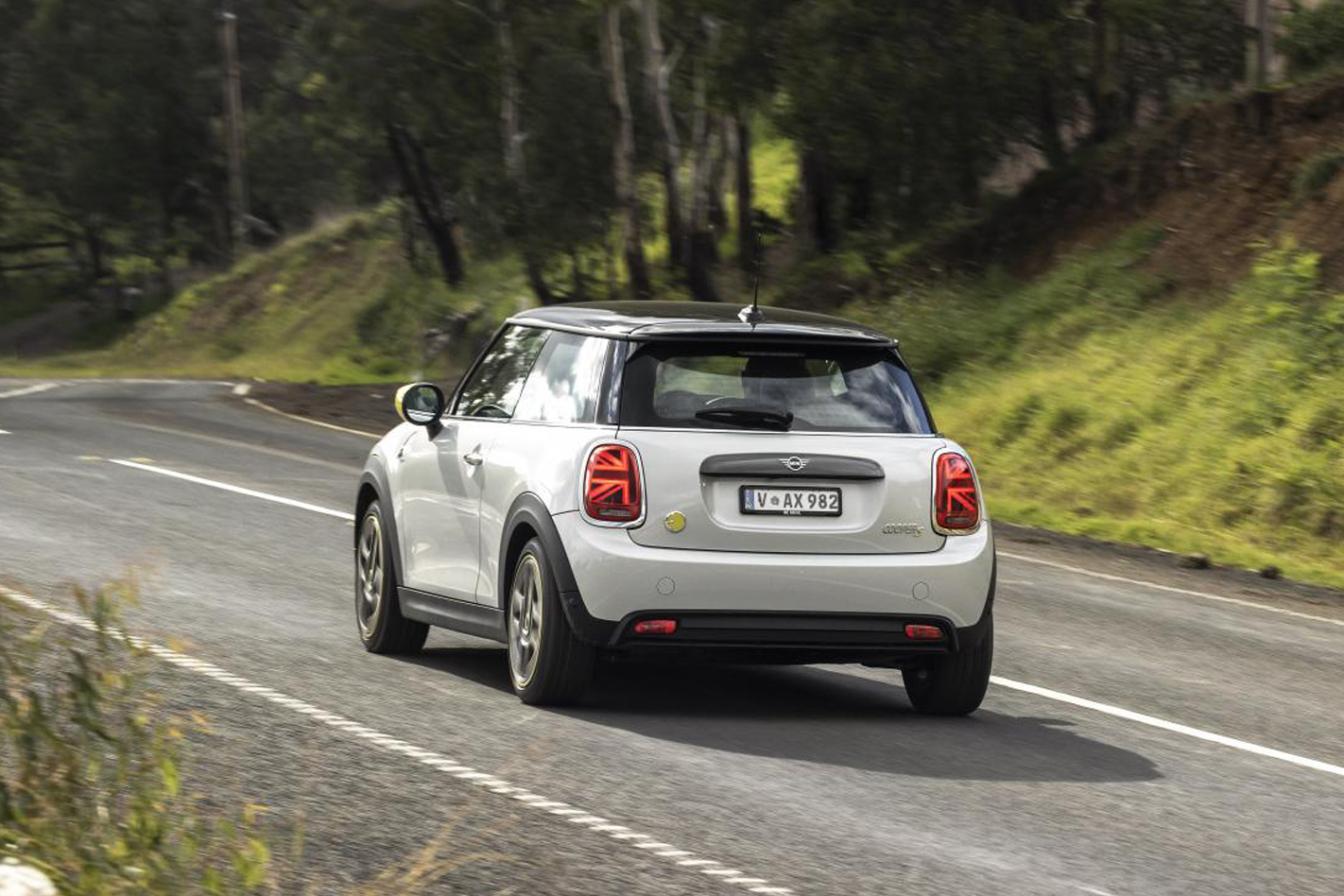
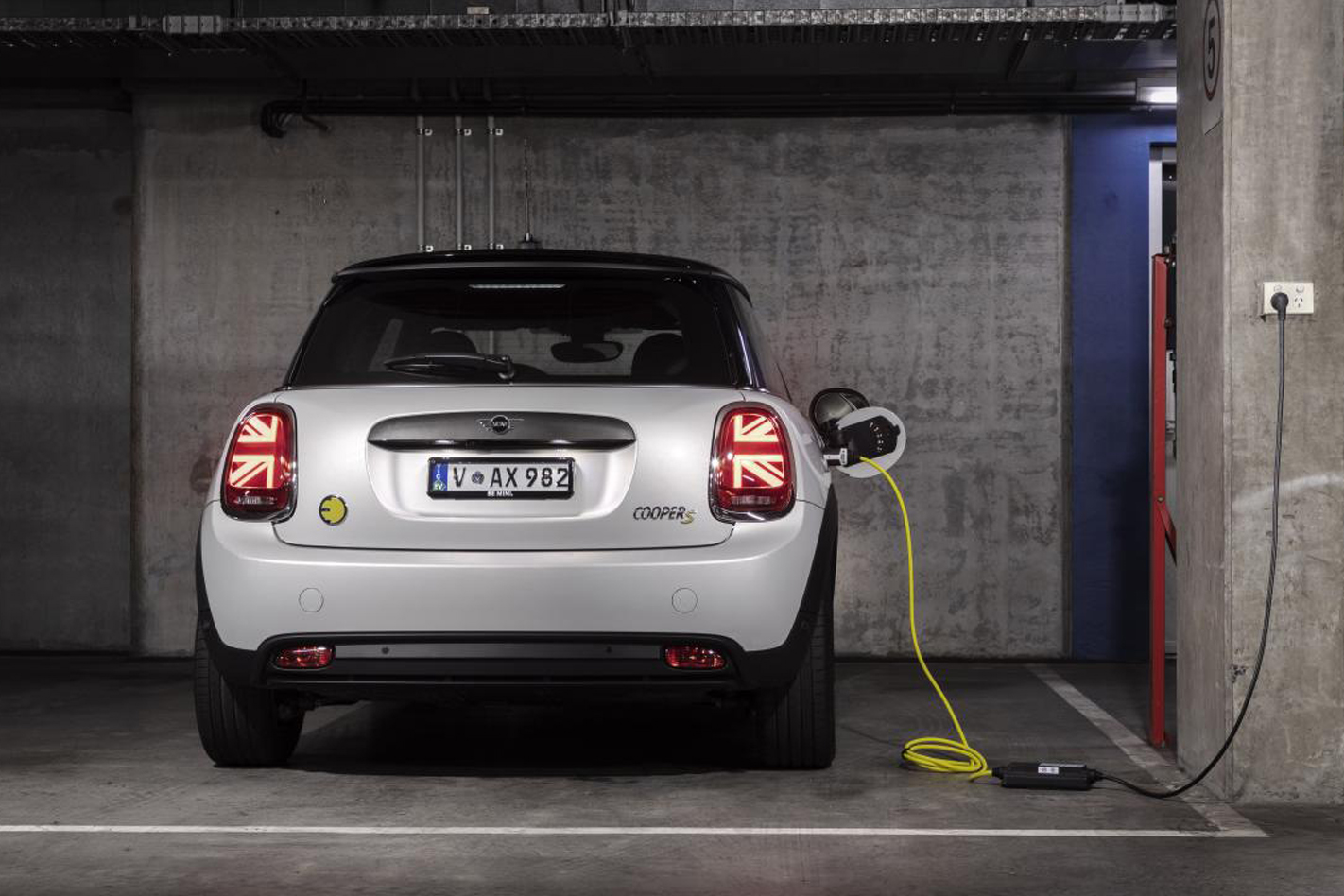
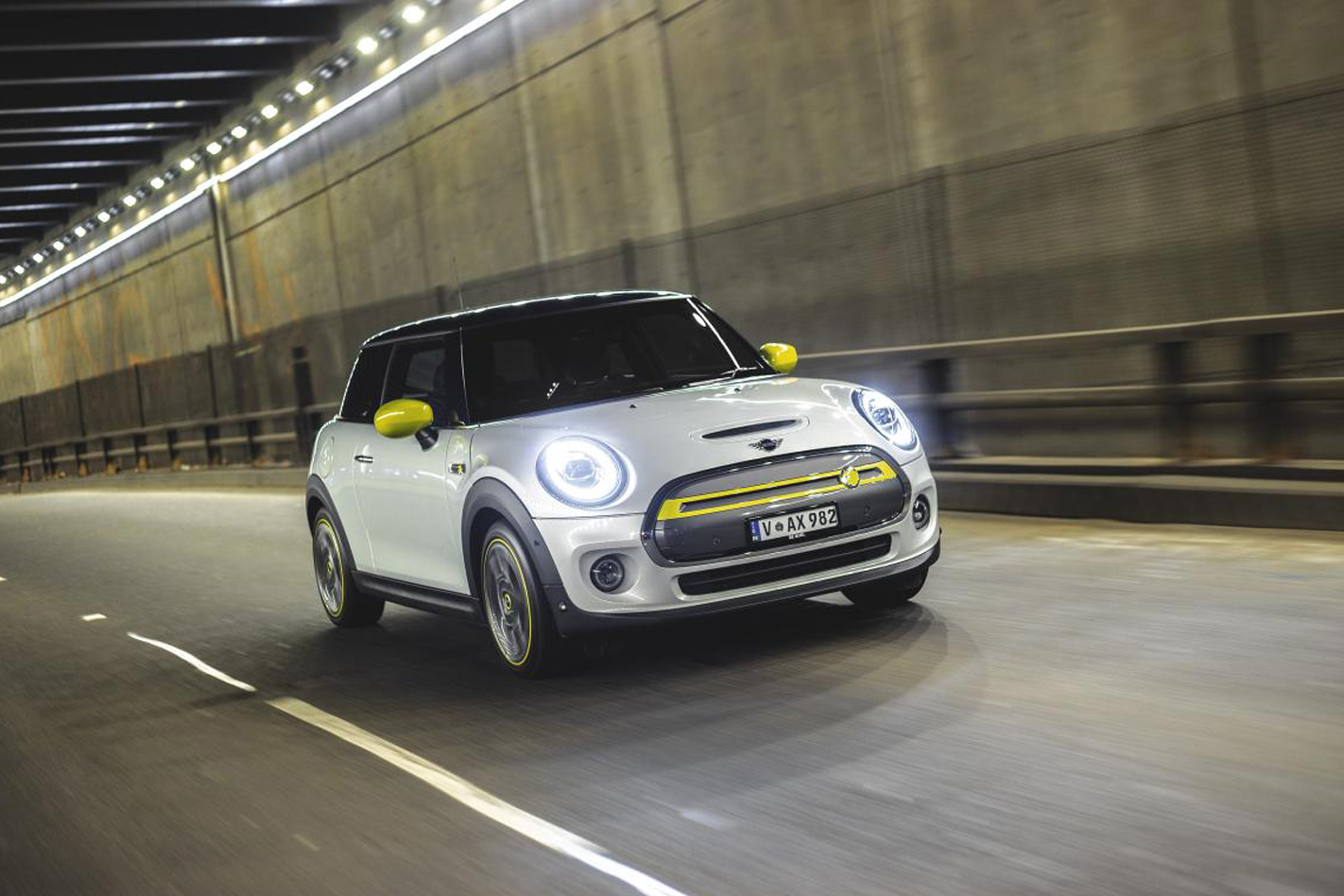
It looks a lot like any other three-door hatchback Mini but behind its unique grille, subtle design touches and likeable design, the Cooper SE hides a pure electric drivetrain borrowed from the BMW i3.This is Mini’s first pure electric vehicle and it’s another exciting addition to the growing EV market available in Australia.
What is the Mini Cooper SE like to drive?
Unlike many other brands that put practicality, efficiency and price higher up the list of vehicle feature priorities, Mini’s mission statement always been more about looking good and offering a rewarding and fun driving experience.
What is the Mini Cooper SE like to live with?
From a practicality perspective, the electrified Mini is, for the main part, no different to live with than any other three-door Mini model.
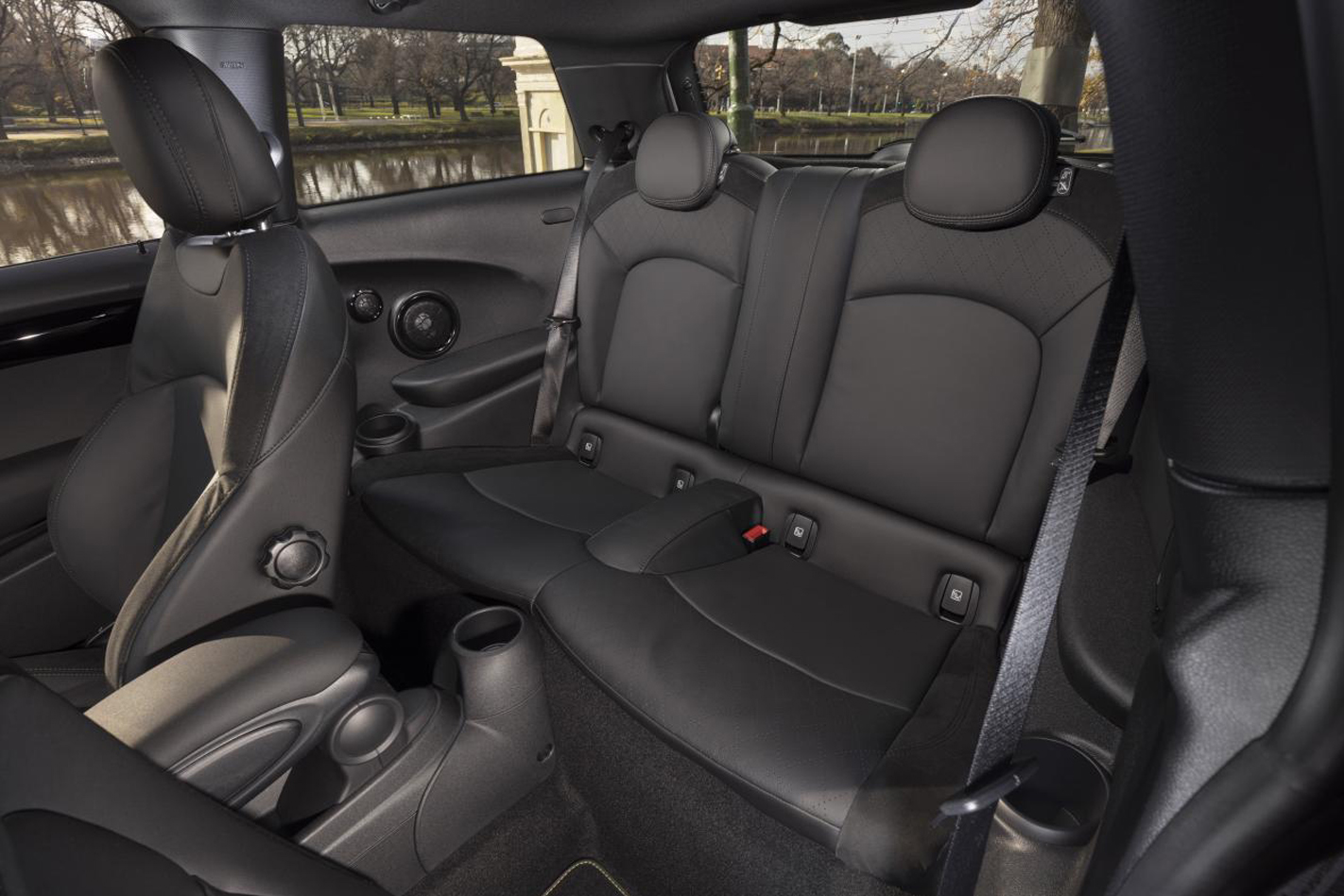
If you’re not perturbed by its strange forward view caused by the uniquely raked windscreen, tiny boot and all-but-nonexistent rear seats, then you shouldn’t be put off the Cooper SE either.
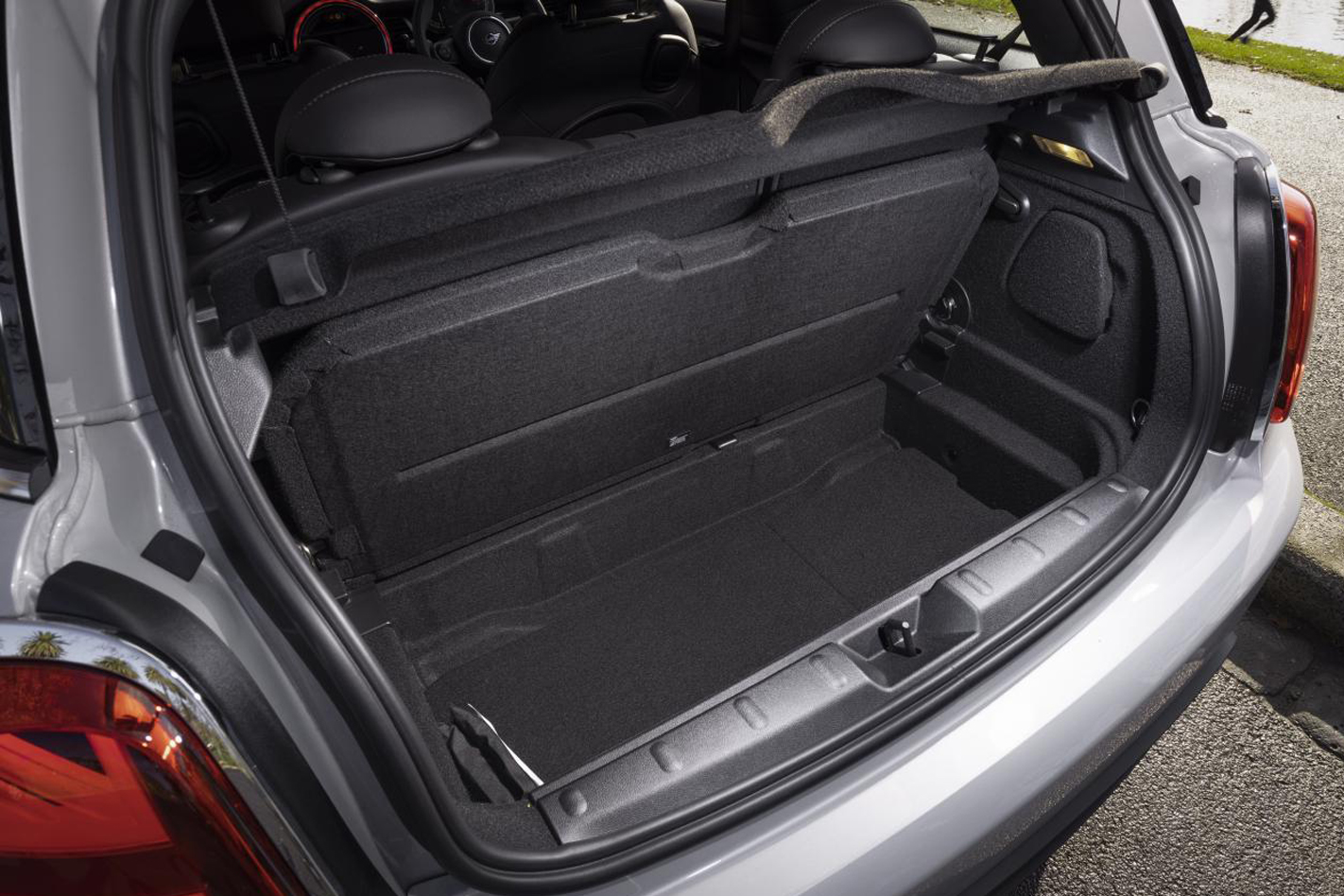
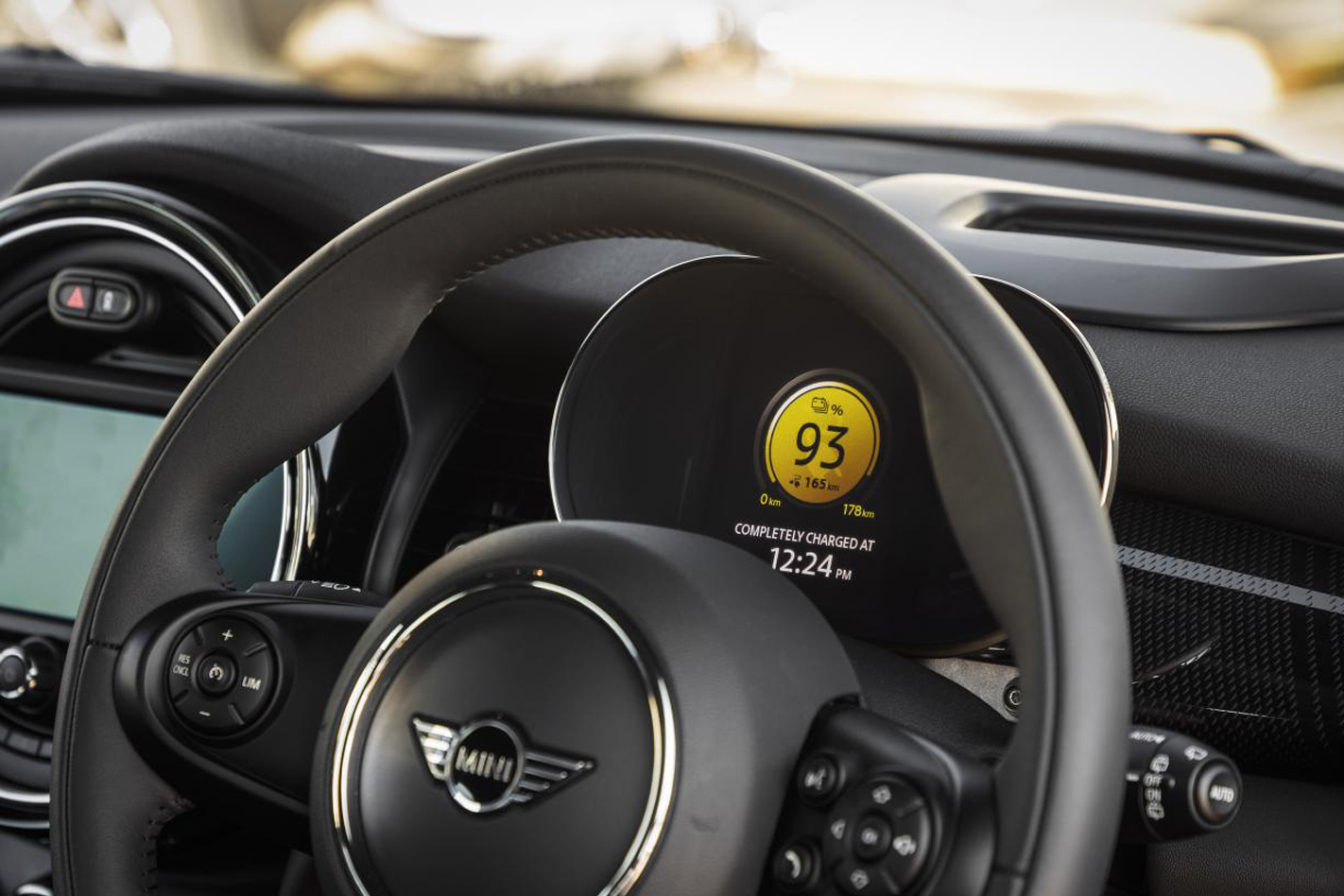
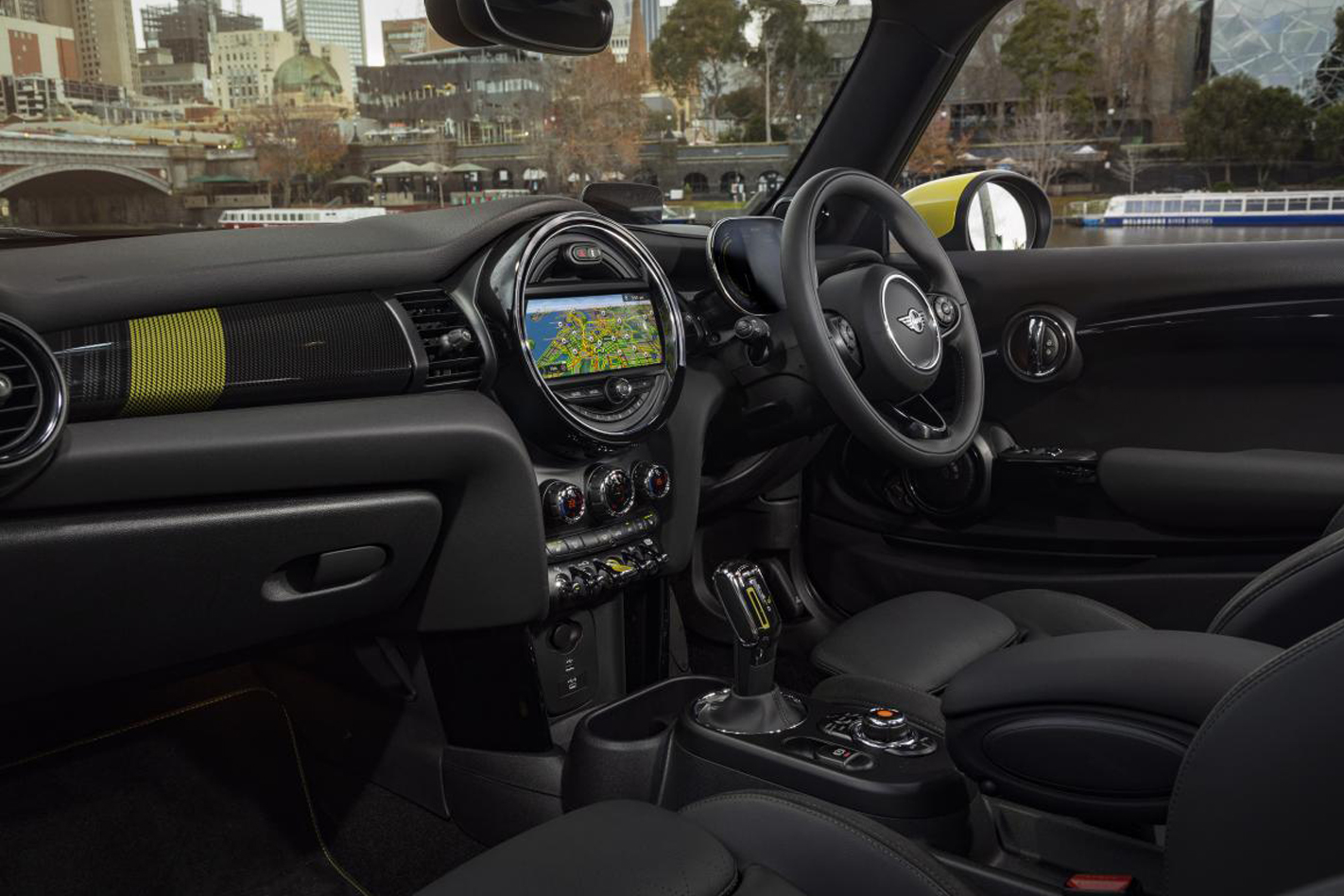
Rear seat cushions are actually made shallower to make space for the battery without further reducing occupant space.An odd digital screen perched on top of the dashboard pinched from the BMW i3, the beefed-up suspension to handle the extra weight of a battery which is inescapably firm, and a dusting of design features are the only clues to tell you you’re in an unorthodox Mini.
Is the Mini Cooper SE worth the money?
The Mini Cooper SE retails for $54,800 before on-road costs, or $59,900 driveaway, which may sound a little expensive for a small hatchback. If you’re simply after a small EV then it’s probably hard to justify that investment. Nissan’s Leaf, the Renault Zoe or Hyundai Ioniq are more the car for you.However, if you’re more like one of the Mini’s many thousands of fans in Australia, then you’re probably also far more likely to pay a premium for a car that is more fun, stylish and stands out, regardless of what it needs as fuel.
“We didn’t want to do just a standard car,” Justin Capicchiano tells us. He’s Ford Australia’s program manager for Ford Performance, but in the days of Aussie-built cars, he was the program manager for the Ford Falcon and Territory.
He’s talking about the final Ford Falcon GT ever built, the 500th FPV FG GT-F.
It was sold at an auction before it was eventually built in 2014, alongside the first FG GT-F to another buyer, with proceeds going to support fighting cancer.
The buyer of the final GT-F, still its current owner, not only bought a one-of-a-kind car, but was given a one-of-a-kind experience thanks to a team of dedicated Ford Australia employees.
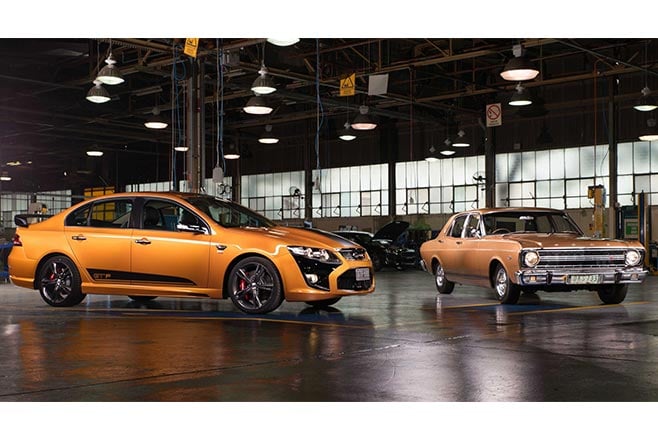
The final Falcon GT’s colour was chosen by the owner to pay homage to the first GT built
Painted in Victory Gold to pay homage to the first-ever Falcon GT built, the process of making sure its finish was perfect is intense. The car was double-clear coated and given a cut and polish, not to mention there was an entire second shell scrapped in the process.
“The whole car was wrapped in bubble tape as it went down the line,” Capicchiano says. “It was the most protected car we’d ever made. There were actually two shells. We did this car, then another shell went through the paint shop just in case there was any damage on the line.
Justin Capicciano as a guest on the MOTOR Performance Car Podcast
“You know, if someone’s got a wedding ring on when they shouldn’t and they scratch the car, we didn’t want to have to repaint the whole car and you’d never be able to match the colour because of the double clear coat.
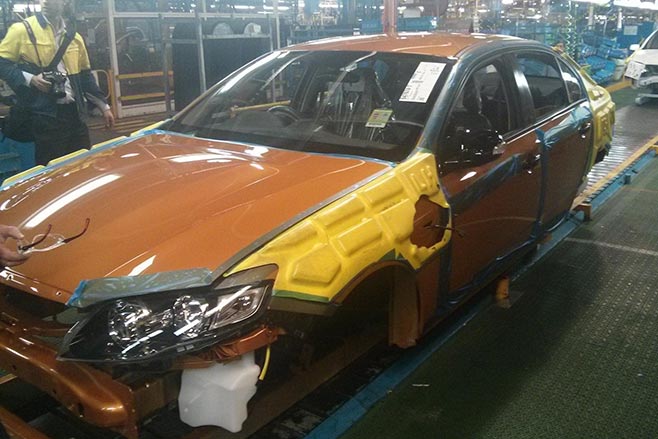
Yellow padding seen here is to avoid damage to the only GT to be finished in this colour
“The other car was painted with all the hang-ons, bonnet, doors, boot, and if we needed to replace anything we had another car that ran through at the same time. That way we could, say, swap a door on if anything went wrong. We did the same thing with the bumpers.
“Once we were finished with that car we sent it off to the crushers, because we weren’t going to do anything with it.
Lights out: Inside the final days of Ford’s Aussie manufacturing
“This is essentially the only set of FPV trim painted this colour, and since the paint wasn’t mastered at the supplier, we had to get a special colour sample made up for those bumpers and parts.”
This means there’s only one Victory Gold FG Falcon, and it’s manual. For posterity, there were 237 manuals and 263 automatics built for the total 500.
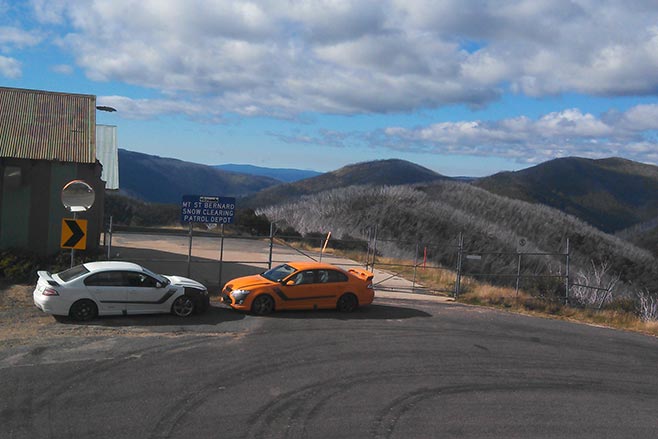
Capicciano was part of rigorous testing for the GT-F, test cars seen here in Victoria’s Alpine region
Capicchiano says it isn’t just the paint that makes GT-F 500 special, but the entire process of building the car, which even involved the owner.
“I couldn’t make a car like this on my own, I need help, and everyone stepped up.
“The owner got to come in and put their own badges on the car, help with the engine build, it was a real one-off experience for him.
“He’s a good guy as well. We still stay in touch today, and he is still deadset keen on his Falcon.
“He loves it, shows up at car shows, and he drives it! It doesn’t just sit under wraps and get trailered around. It’s got kays on it and I love that.
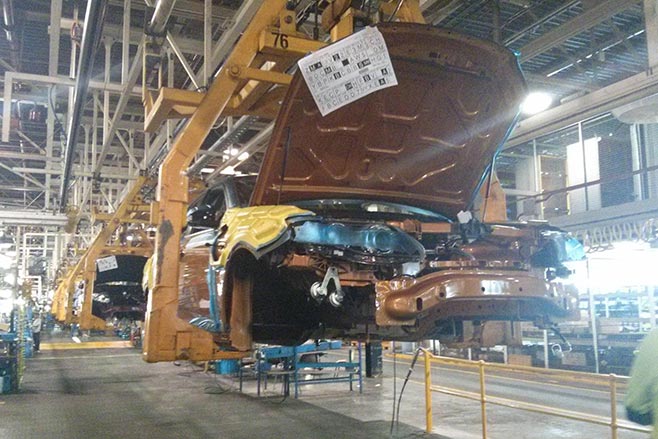
“He’s not afraid to take it around, show people, and it’s good to have it out in the community like that.”
Everyone at Ford wanted to go out of their way to make ‘GTF500’ special, doing things they wouldn’t normally do.
“Brian [Makin, ex-Ford Aus drivetrain guru] made it his mission to make sure the Geelong [engine plant] part of this story was captured, that’s why he went out of his way to bring the owner to Geelong and have him help with the engine there.”
Sprint to the end: the final Falcon ever built
The engine cover itself is a one-off laser-etched cover.
“Mako, he’s a legend. He really came up with some awesome ideas. Even with Sprint, he’s the one who suggested we recast the I6 engine, and he came up with how we do it. He was always going the extra mile to make things happen.”
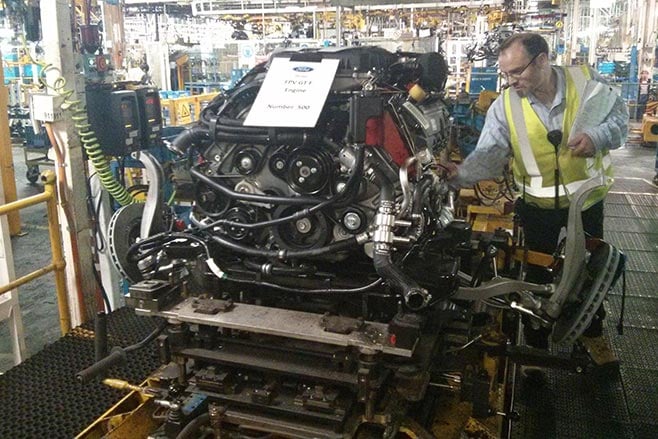
We asked Capicchiano if there were were any specific stories from the build that really stood out to him from memory, and we weren’t disappointed with the response.
On the day GTF500 came off the line there was a presentation for the car, but there was also a bit of a car show happening over at Tickford. The owner wanted to take his new car there but since it wasn’t registered nor in his name yet, he couldn’t drive it.
Decade by decade: a toast to seven generations of Ford’s fast Falcons
“So I got the lucky card to drive it and we took it out,” Capicchiano says.
“Traditionally when we build a car we pop 10 litres of fuel in to move it around and run it around the plant, but because it had been started and moved around so many times it had run low on its fuel, and the bowsers were shut at the plant since it was after hours.
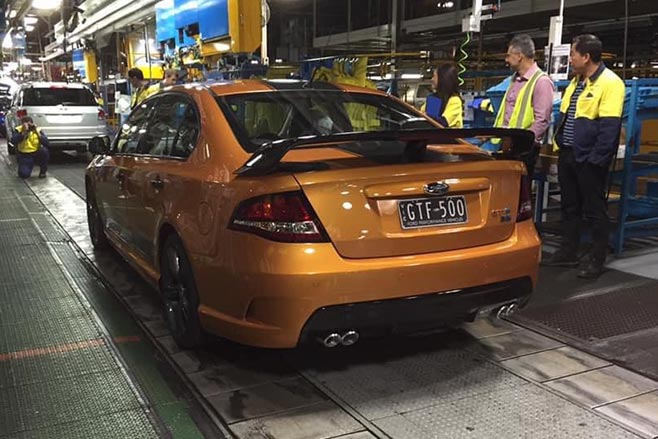
“There’s a Caltex across the road so I told the owner we’d need to go fuel it up, and when I started the car the distance to empty indicator was already at 0km. The needle was well past E. I found out how much was in it when we just got to the petrol station at Sydney Road because it just coughed and died. It just managed to roll to the bowser.
“I wasn’t going to make the bloke who just paid $236,000 for a car help me push it down Sydney Rd, that sends the wrong message I think, so I was just praying it didn’t stop on the main road because every Ford employee would be driving past in their fleet cars wondering what had happened.”
As far as one-of-a-kind experiences go, having to push the final Ford Falcon GT down the road outside the company’s national HQ would certainly have been hard to beat.
The Honda Civic Type R legacy is long and renowned, and in a strange cosmic twist the future and the past crossed paths this week.
Reports from renowned Japanese outlet Best Motoring suggest the current Type R – a multiple award winner – could be bestowed with go-fast bits from the NSX, while a Y2K classic Civic Type R has passed over the auction block for a scarcely believable sum.
While there’s nothing in the way of confirmation from Honda about the current FK8’s next tweak, the Japanese report makes a lot of sense in a number of ways for Honda’s hi-po hero.

Currently powered by a 2.0-litre turbocharged engine that sends its prodigious output to the front end, the reports emanating from Japan suggest – quite logically – that the Type R will adopt a rear electric-motor hybrid architecture.
The idea makes a pile of sense, too, because Honda already has a ready-made system that can be incorporated into the Type R at relatively little expense.
Used in the NSX and – more importantly for a mass-market car like the Type R – the Japan-only Legend luxury sedan, the compact two-motor unit, known as the (deep breath) Sport Hybrid Super Handling All-Wheel Drive (SH-AWD) system, can be set up so that each motor works independently to provide rear steer and traction.
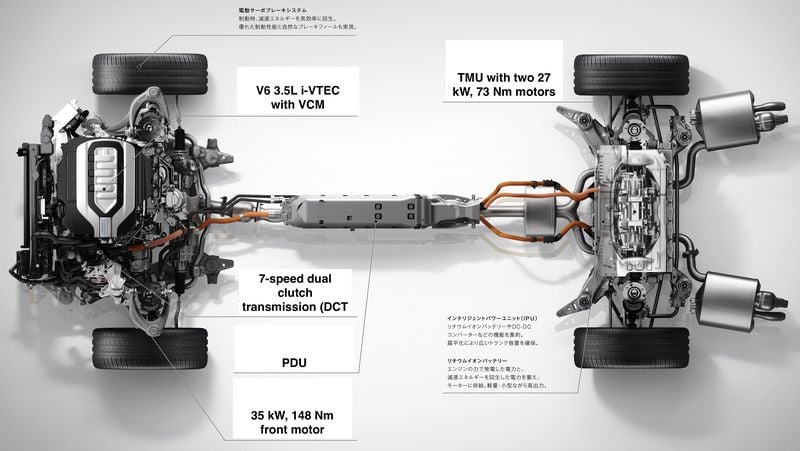
The rear-mounted motor unit contains two 27kW motors that, in conjunction with a third planetary gearset that sits on the front of the unit, can send their torque to the rear wheels. It’s not dissimilar (minus the electric bits) to the Twinster set-up aboard the now-discontinued Ford Focus RS.
The main engine and the two rear motors would also supply charge to a lithium-ion battery pack, thereby giving Honda another hybrid to help its cross-fleet emissions average.
The likely outcome? The 228kW of the current Type R would lift to somewhere around 275kW or so, while the additional rear grip would only help the already limpet-like stick from the front end.
As mentioned, this isn’t a lock for the Honda, and is unlikely to surface until 2022 at the earliest… but given the current love for all things Type R, fans have no problem waiting.
To wit; a first-generation Honda Civic EK Type R – known as the EK9 – has passed over the auction blocks in Japan this week for the eye-watering price of A$101,000 and change
With barely 2500km on the clock, the three-door hot hatch time capsule from 2000 was sold in Yokohama for 7,640,000 yen, and is in absolutely perfect condition… but that’s a lot of money for a 20-year-old Civic!
The 136kW 1.6-litre B16A screamer weighed in at just over 1000kg when new and boasted one of the best power-to-weight figures of the day, along with a host of track-centric bits like a close-ratio gearbox, limited-slip diff and figure-hugging Recaro seats.
Will a 2020 Civic Type R be worth as much in 20 years? Only time will tell.
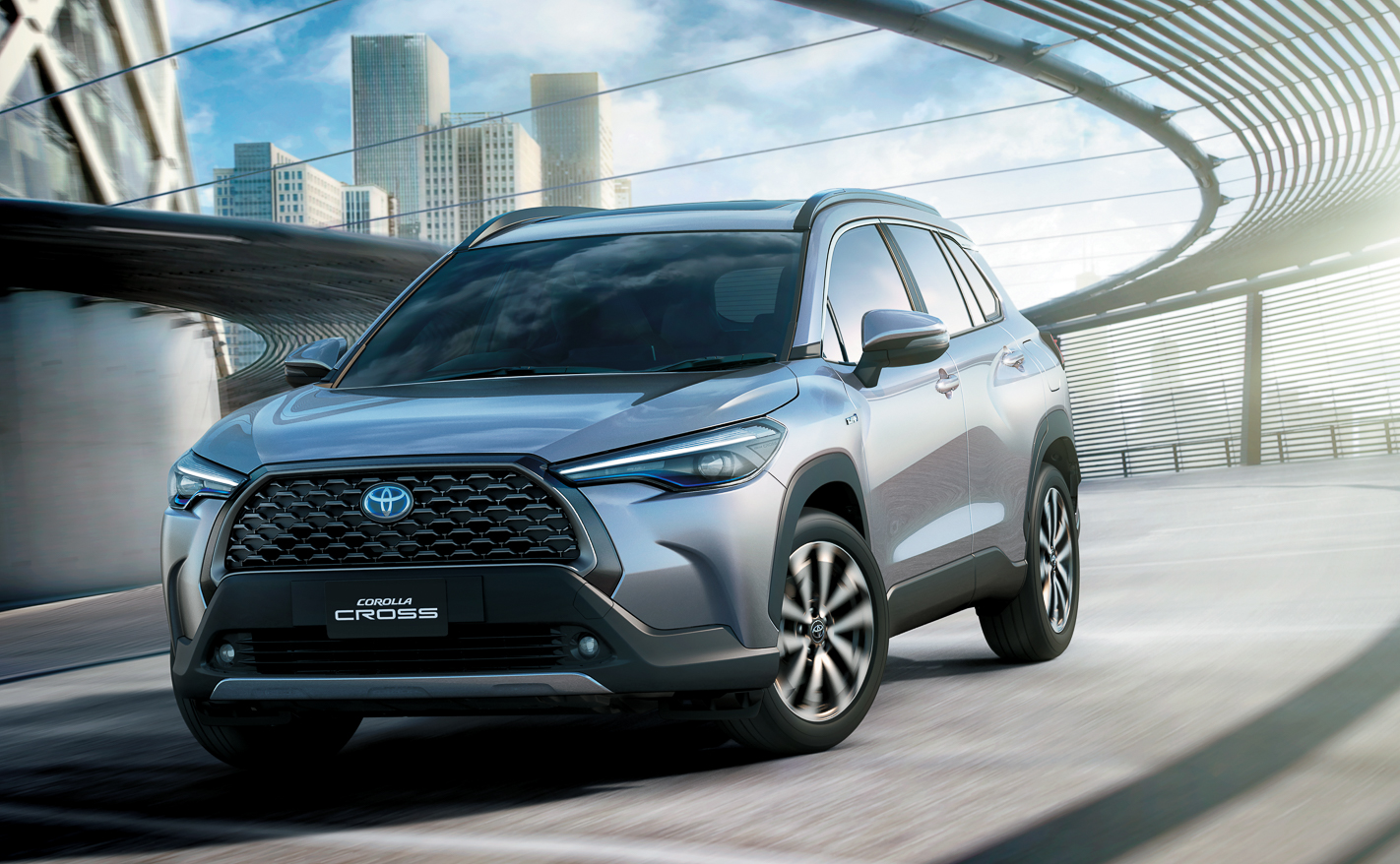
Car manufacturers are falling over themselves to offer up more small SUVs to satisfy Australia’s insatiable demand, and the Toyota Corolla Cross is just the latest debut in a burgeoning segment.
But its oddly-long lead time indicating a late 2022 arrival means it’ll land among some accomplished competition, many of which will have garnered a strong reputation by the time the Corolla Cross comes along.
UPDATE, July 2 2022: Corolla Cross driven
Ahead of its Australian debut in late 2022, our man Brian Makse has driven the Corolla Cross in its North American guise. Get the story at the link below.
The story to here
It’ll slot tightly between the Yaris Cross and RAV4, as an alternative to the C-HR, riding on the same TNGA-C platform that underpins the Corolla hatchback, and it appears a hefty chunk of technology and design is derived from Corolla too.
It’ll get a 9.0-inch infotainment screen with smartphone mirroring and a 7.0-inch screen within the instrument cluster to display driving information, while the rest of the interior all looks pretty standard Corolla – which is certainly no criticism these days.
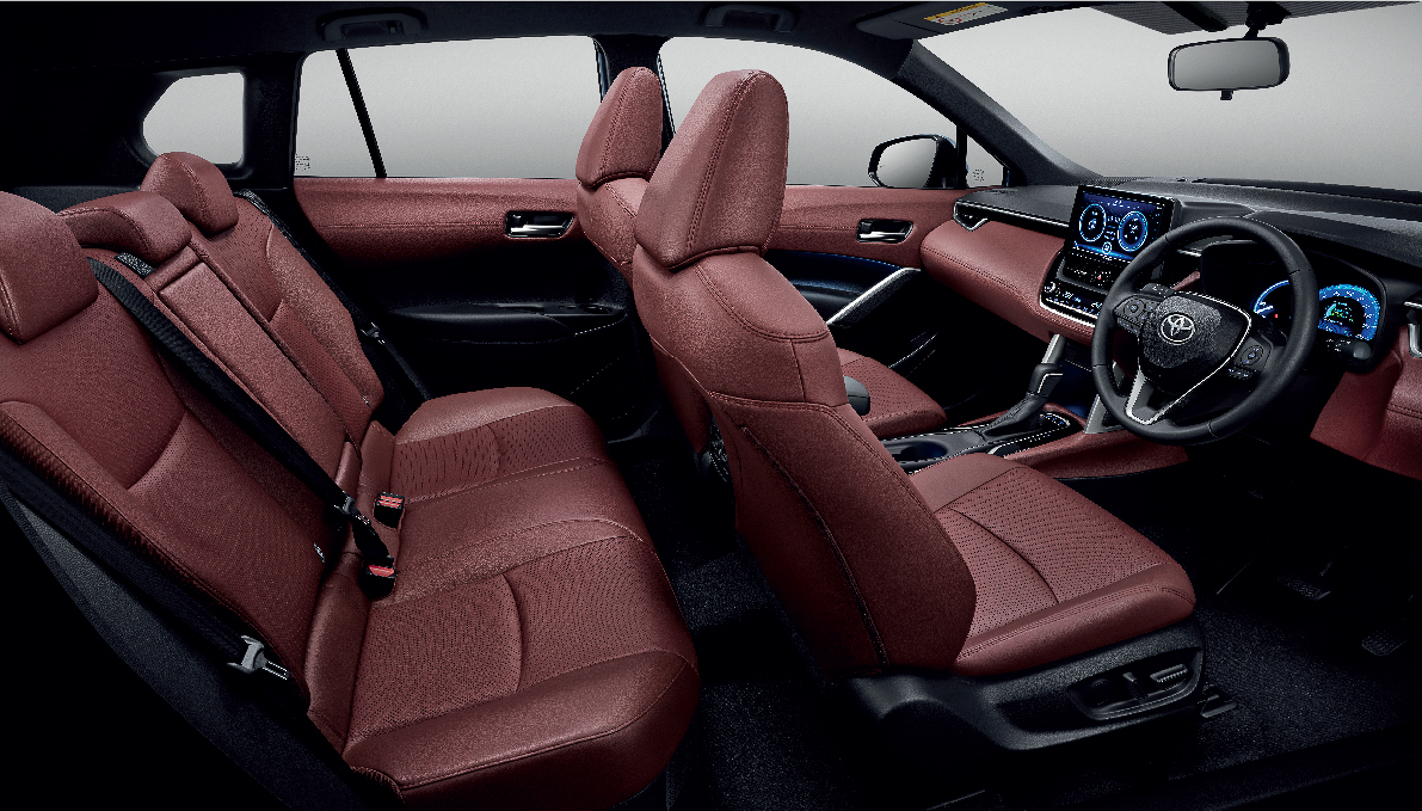
A high level of standard safety equipment will be on offer which we’ll know more about in due course, but the Corolla Cross also features a sizeable 487-litre boot.
Toyota says the car will be delivered with two versions of the company’s 1.8-litre four-cylinder engine mated to a continuously variable transmission (CVT).
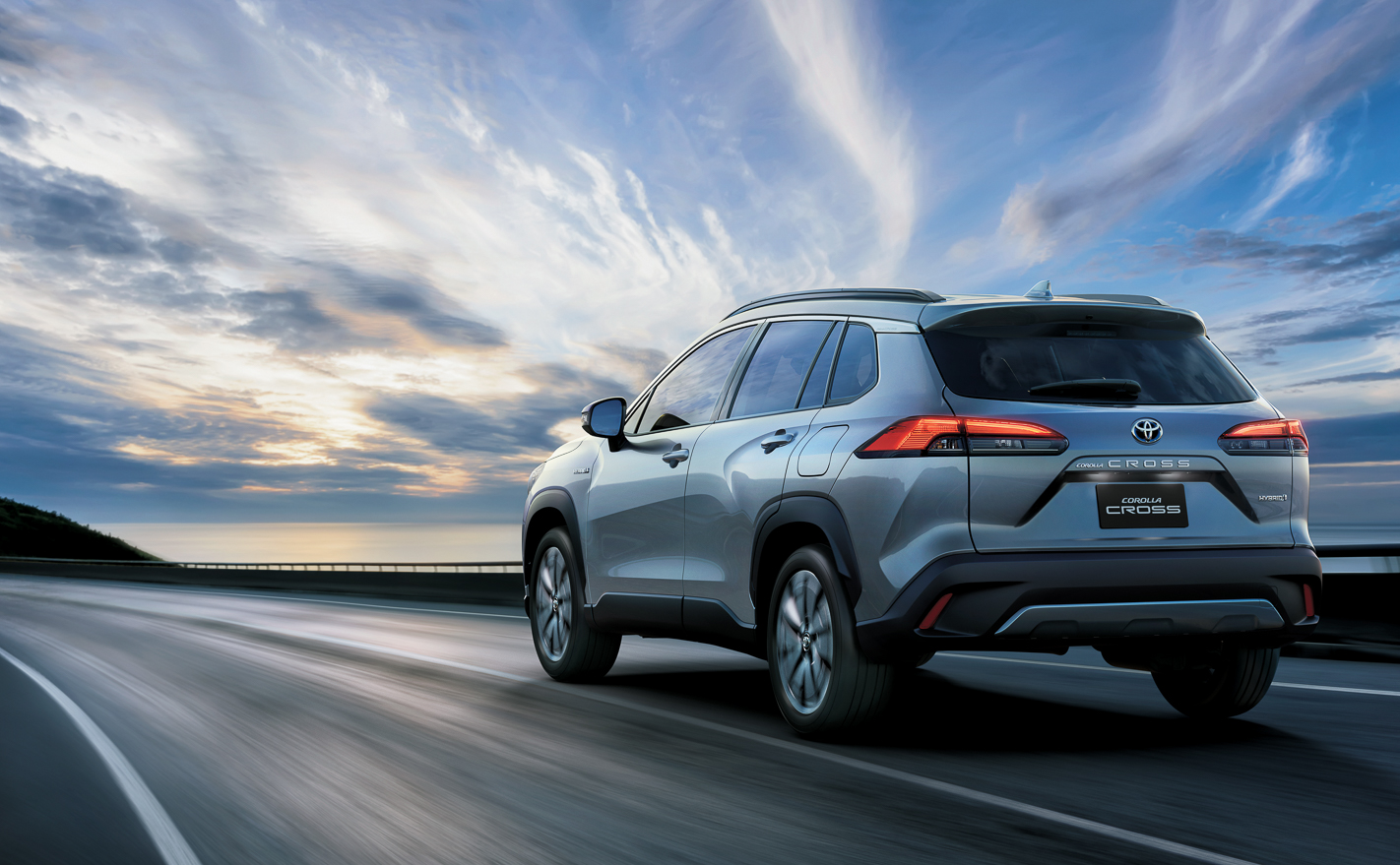
That’s just a quick snapshot of what we’re expecting of the Corolla Cross when it arrives in Australia in a couple years, but how do those specs stack up against the competition?
Mazda CX-30
The CX-30 fills a very similarly shaped spot within Mazda’s SUV ranks, bridging the gap between CX-3 and CX-5 and underpinned by the Mazda 3 hatchback.
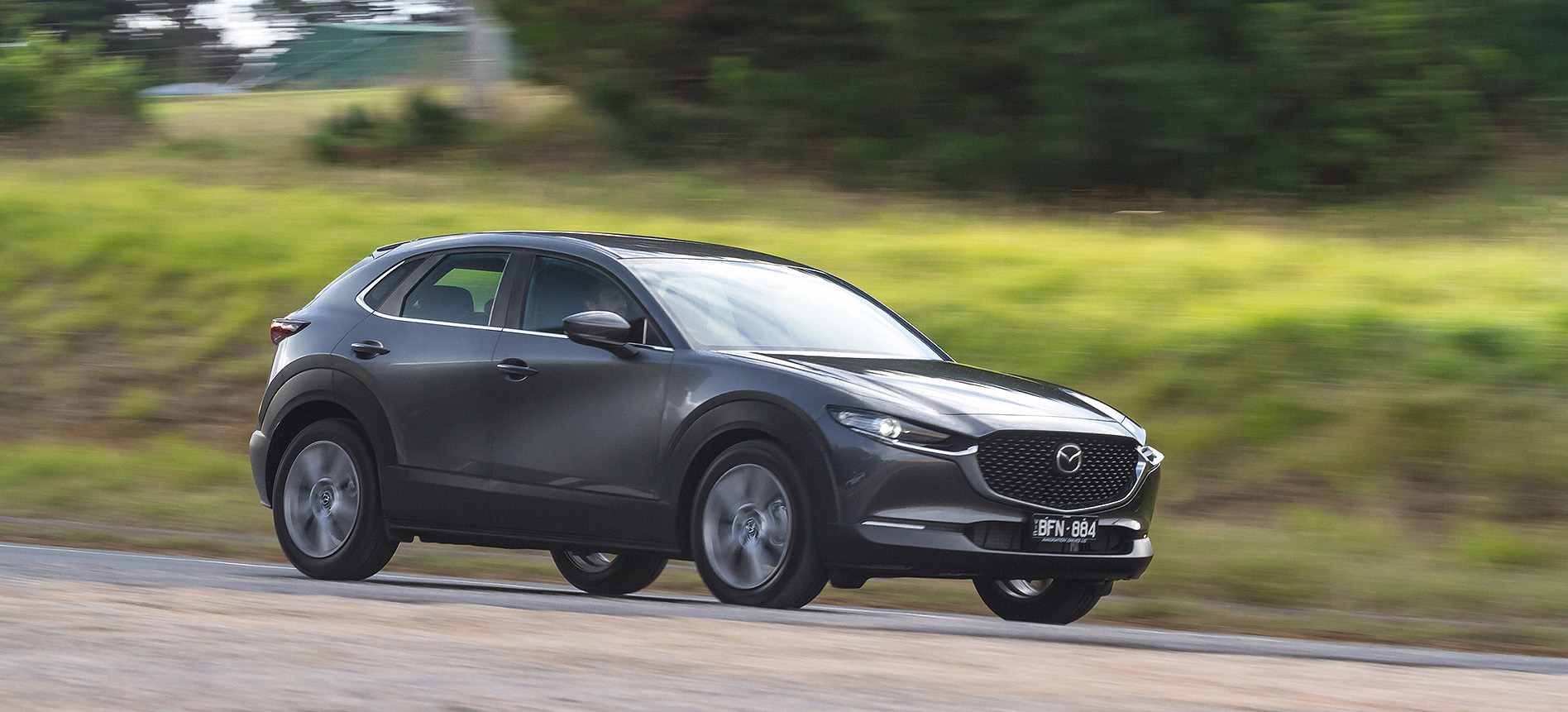
The range starts from $29,990 (before on-road costs) so the Corolla Cross will have to be priced competitively if Toyota wants to give it a good chance. It also comes with an impressive amount of equipment as standard such as an 8.8-inch infotainment system that supports smartphone mirroring, navigation, digital radio, autonomous emergency braking (AEB), rear-cross traffic alert, adaptive cruise control, head-up display and a five year warranty (which Toyota will match with the Corolla Cross).
There’s also greater choice of engines, 2.0- and 2.5-litre four-cylinder engines are available right now, soon to be joined by a SkyActiv-X engine which will provide superior power and torque while using less fuel.
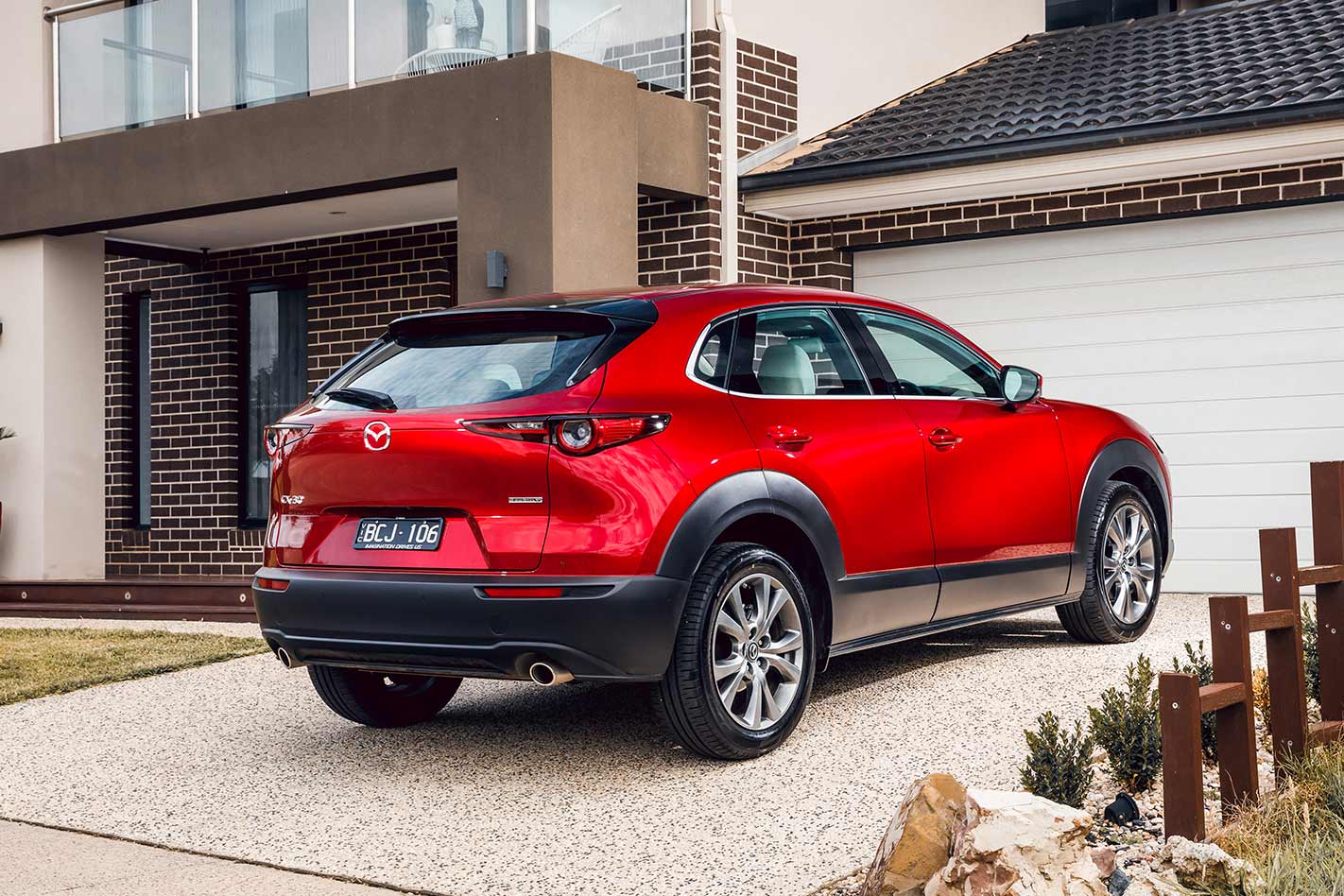
In terms of space, the CX-30 is tighter than expected for back seat passengers though not uncomfortably so. The boot capacity is 317 litres, which compares poorly to the Corolla Cross’s 487-litre boot, though you can take out the false floor of the CX-30 for an expanded 430-litre space.
Kia Seltos
The Kia Seltos starts much more affordably than the Mazda CX-30 and expected Corolla Cross at $25,690 (before ORCs), and packs in a decent amount of kit for that coin as well.
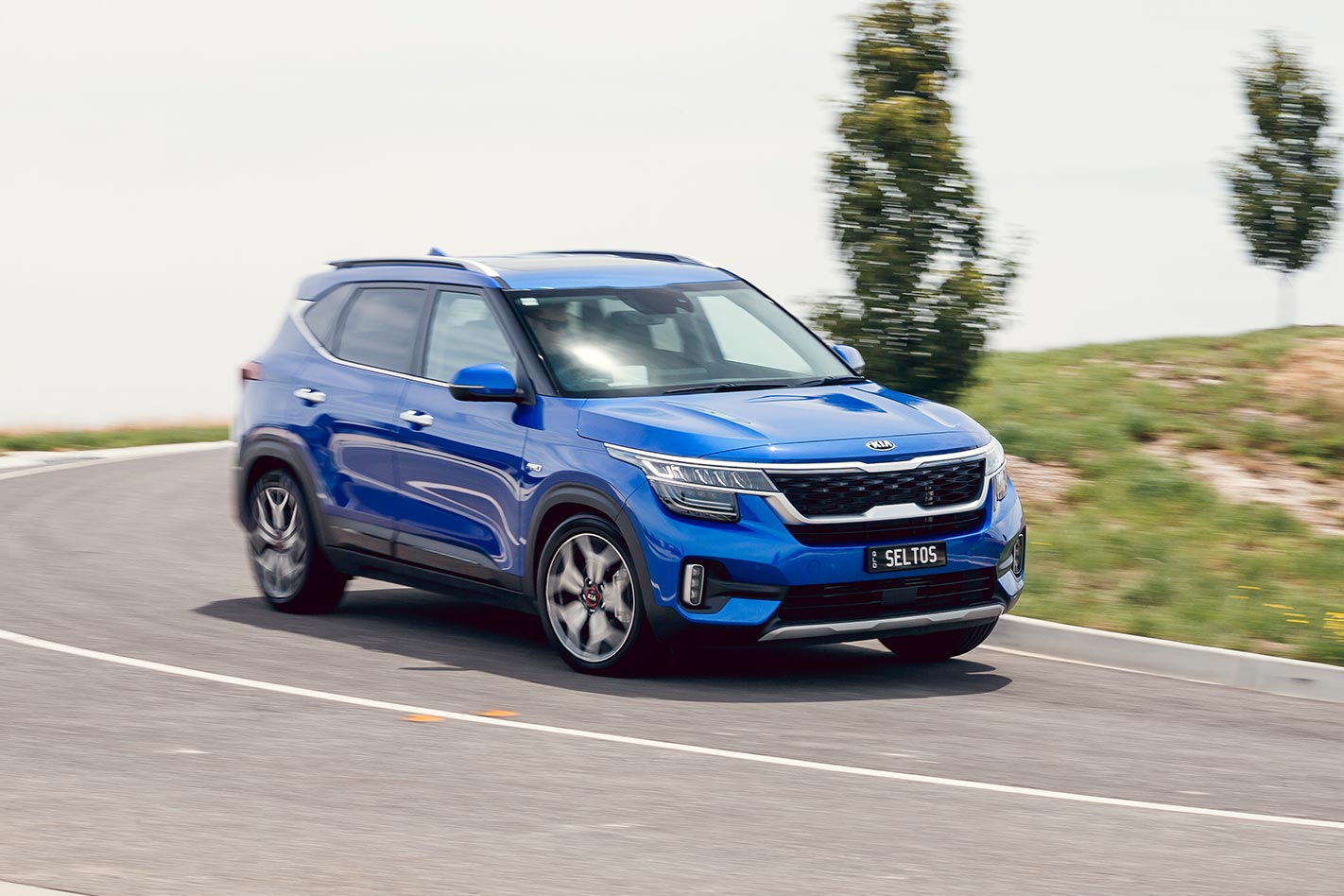
As standard, each Seltos receives an 8.0- or 10.25-inch touchscreen with smartphone mirroring, AEB, reverse camera, forward collision warning, roof rails, automatic headlights, six-speaker sound system and a seven-year warranty.
A 2.0-litre naturally aspirated engine is standard, paired to a CVT, though the smaller turbocharged 1.6-litre engine is actually the sprightlier of the two, and can be had with all-wheel drive if wanted whereas the 2.0-litre cannot.
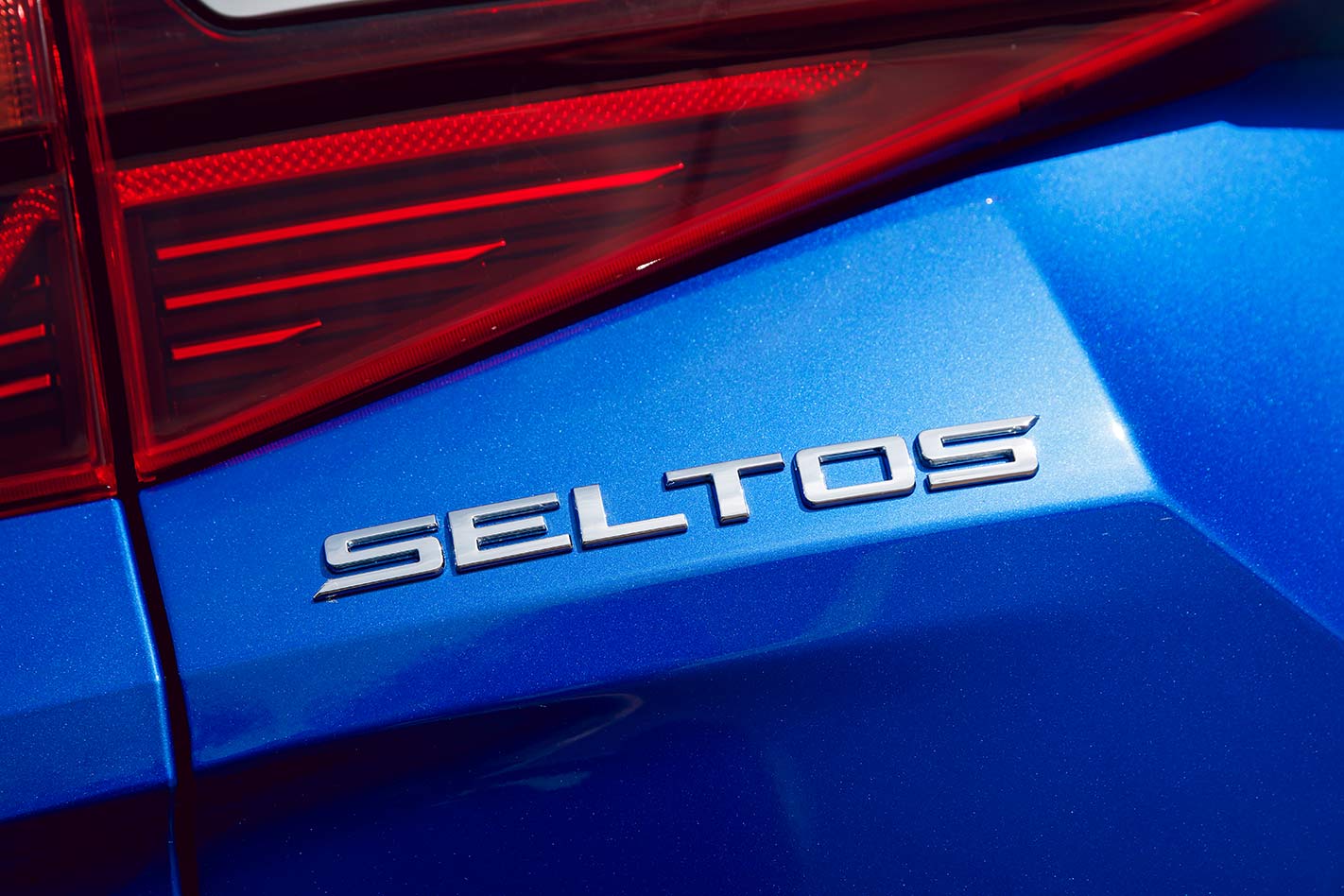
Space is abundant in the Seltos cabin, for both front and rear seat passengers. It can even boast a huge class-leading boot at 498 litres.
Nissan Qashqai
Another SUV that’ll be cross-shopped with the Corolla Cross is the Nissan Qashqai which starts at $29,490 (before ORCs).
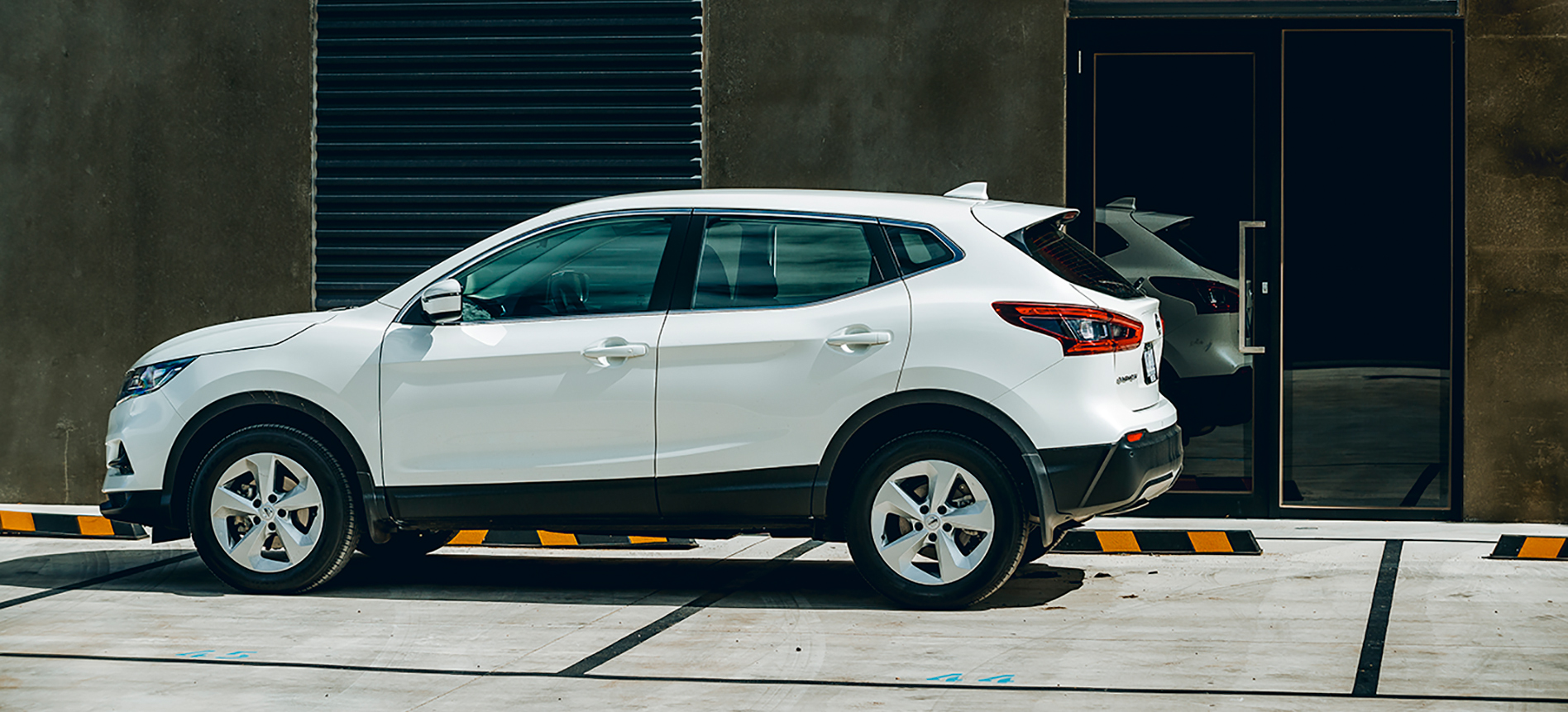
In the same vein as the Seltos, the Nissan Qashqai packs spaciousness and freedom of choice across its range of segment stablemates.
Each and every Qashqai is front-wheel-drive and powered by a 2.0-litre engine bolted to a CVT (minus the entry-level ST, which is manual only).
They all receive a 7.0-inch touchscreen with smartphone mirroring, digital radio, reverse camera, AEB, forward collision warning, front and rear parking sensors and a five-year warranty.
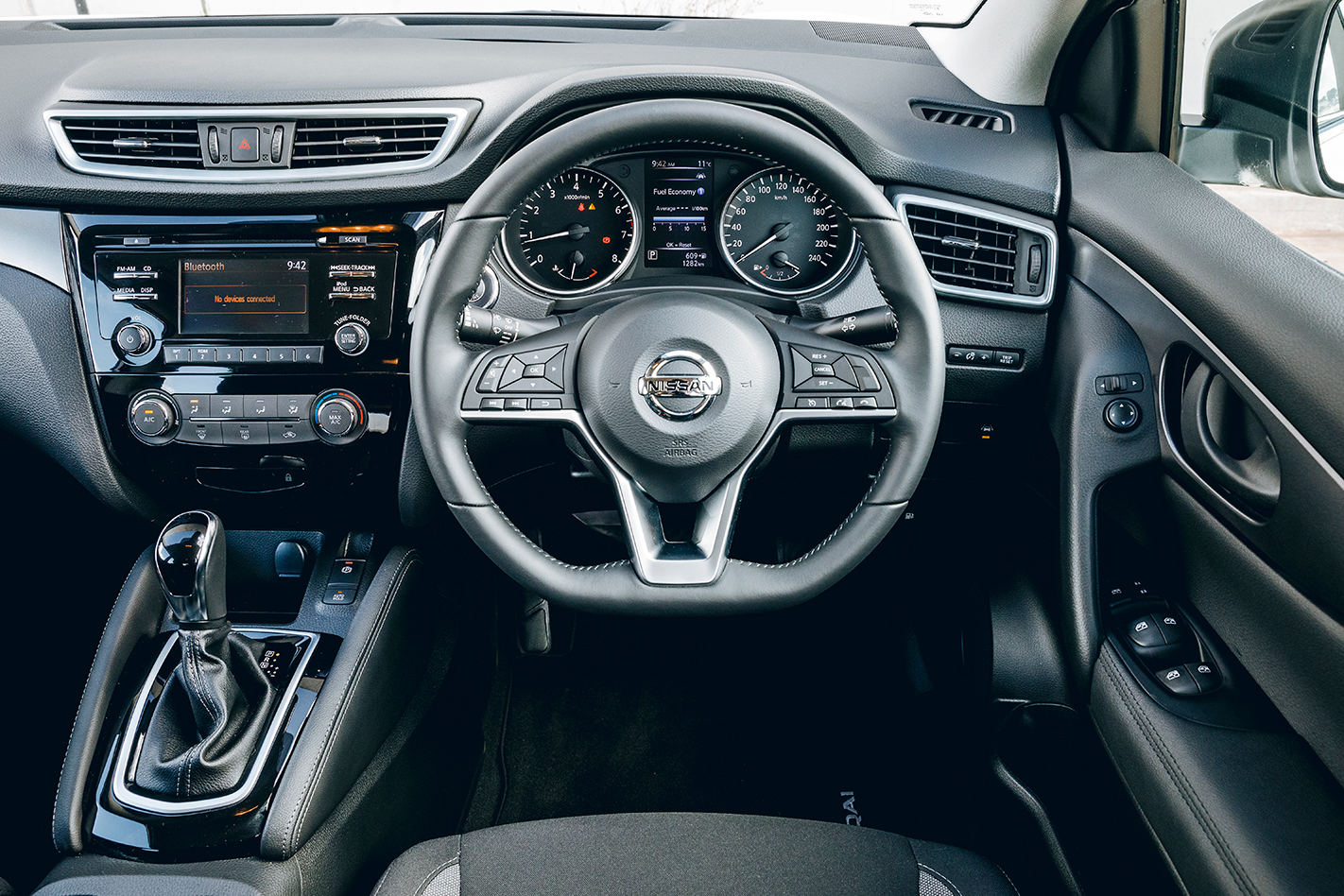
There’s a comfortable amount of space for occupants in both rows, while a decent-sized 430-litre boot is found at the rear.
Honda HR-V
Starting from $25,490 (before ORCs) is the Honda HR-V small SUV that features truly clever interior packaging and lots of standard equipment.
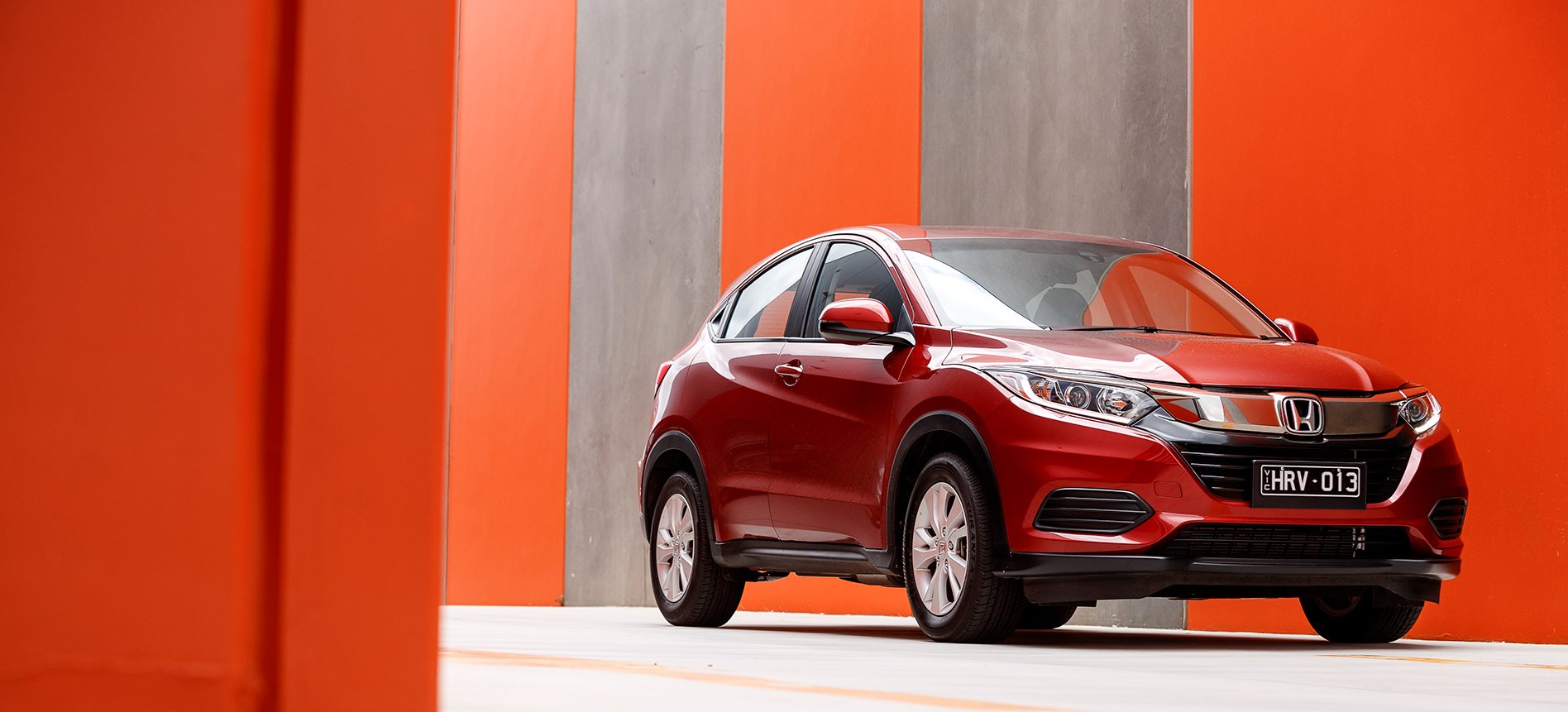
You get a 7.0-inch touchscreen with smartphone mirroring capability, multi-angle reverse camera, navigation, brake hold and hill start functions, tyre deflation monitor, city-based AEB and a five-year warranty with all variants of Honda’s HR-V.
The HR-V is also another car that is only offered with one engine, which is a 1.8-litre four-cylinder petrol that powers the front wheels through a CVT.
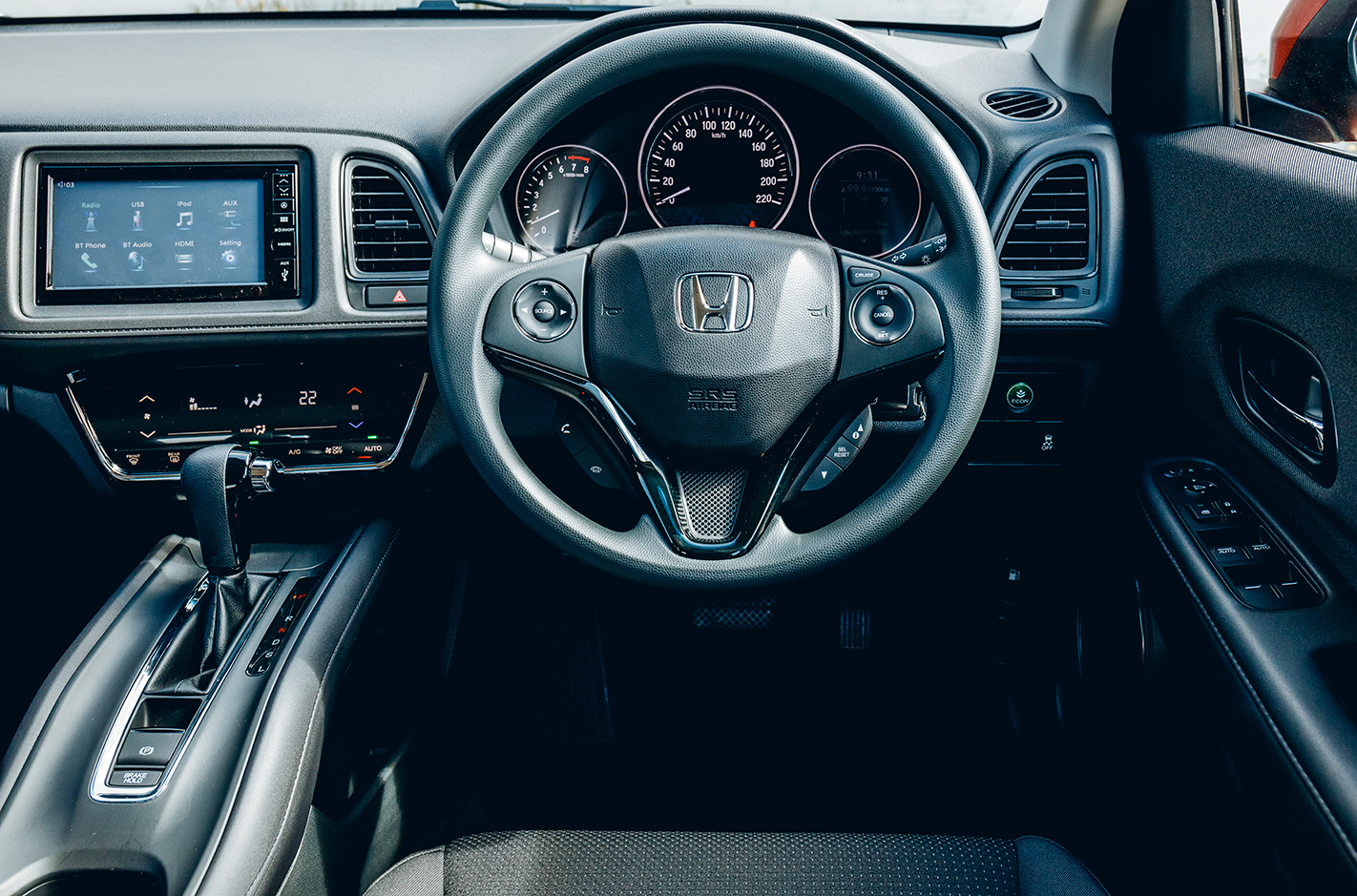
Honda’s HR-V features a longer wheelbase than many of its rivals which is good news for passengers and luggage space. There’s ample space in both rows, especially impressive considering its compact body size. It also receives Honda’s smart ‘Magic’ seats that fold flat to provide an impressive van-like space. The boot is 437 litres – very respectable for a small SUV.
Mitsubishi ASX
It might be one of the oldest cars in the segment but that hasn’t stopped customers flocking to the ASX, mainly due to its extremely affordable $23,990 (before ORCs) entry price.
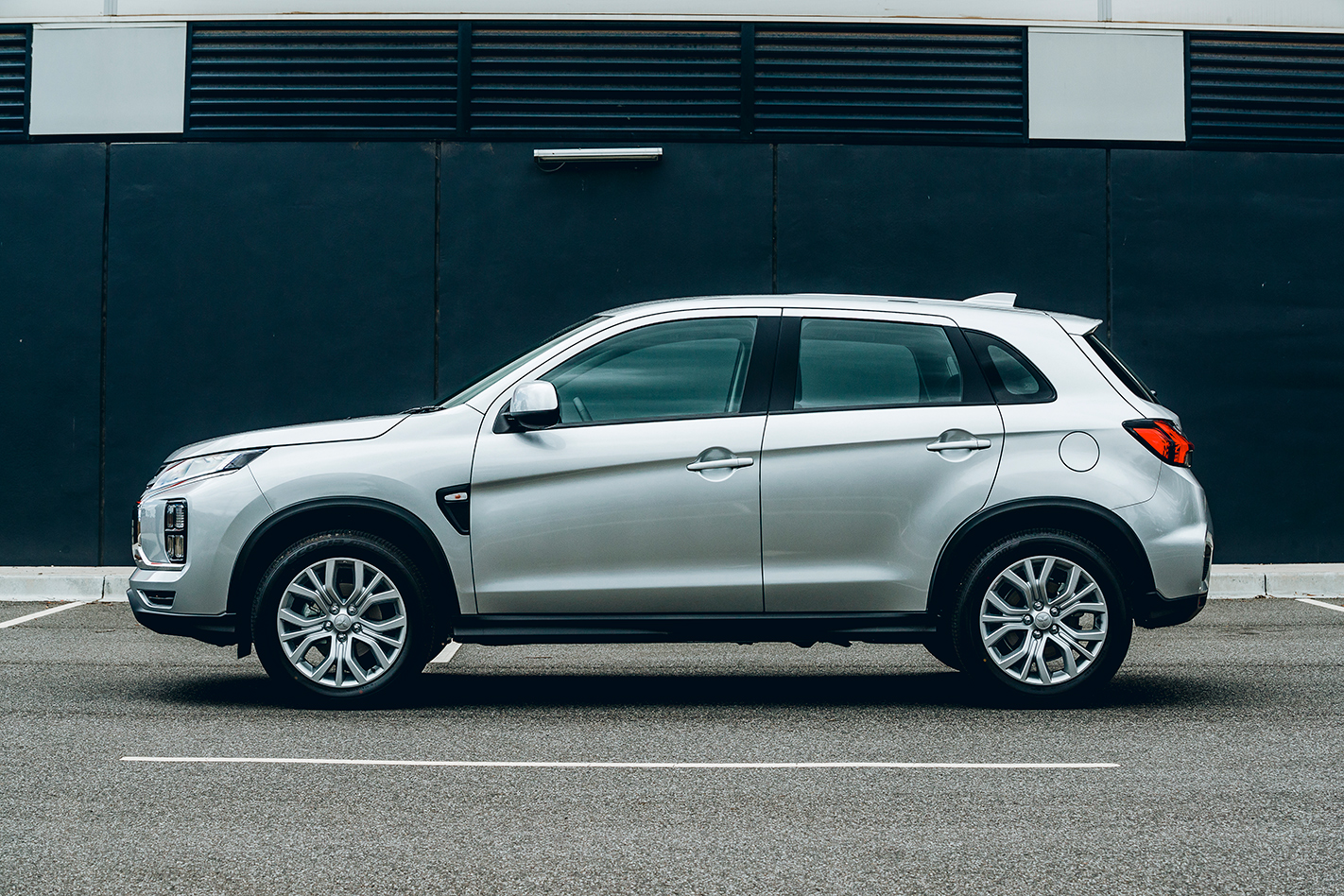
Even at such a low price, the ASX manages to offer an 8.0-inch touchscreen with smartphone mirroring, climate control, digital radio, power mirrors, AEB with pedestrian and cyclist detection and a five-year warranty.
The ASX is powered by two non-turbo four-cylinder petrol engines, one 2.0-litre and the other a 2.4-litre. Both power the front wheels only, but a manual transmission is offered with entry level variants.
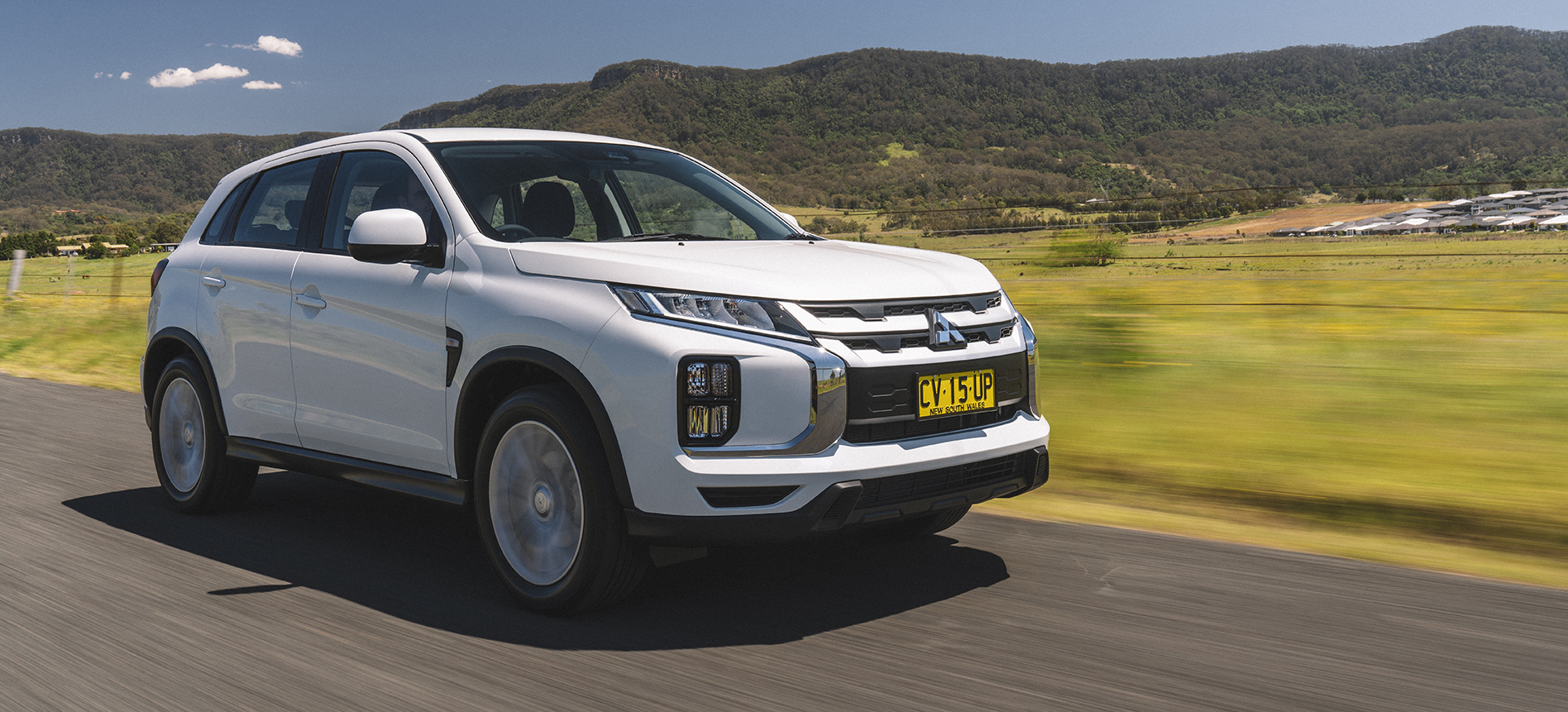
There’s more space in the back seats than most, but its 393-litre boot space is lacking when compared to its rivals above.
It’s relatively easy to compare similar models on a virtual realm using facts and figures, but we’ll save the final judgement for when the intriguing new Toyota can speak for itself on Australian roads.
