
THOSE still lamenting the loss of Aussie-made V8 utes have been given a life ring to cling on to, and it comes from an unlikely place.
Mercedes-Benz is getting set to launch a more powerful version of its X-Class dual-cab ute in Australia late this year, and while the brand is pleased with the performance of the V6-powered X350d, some of its engineers admit there’s more on their wishlist.
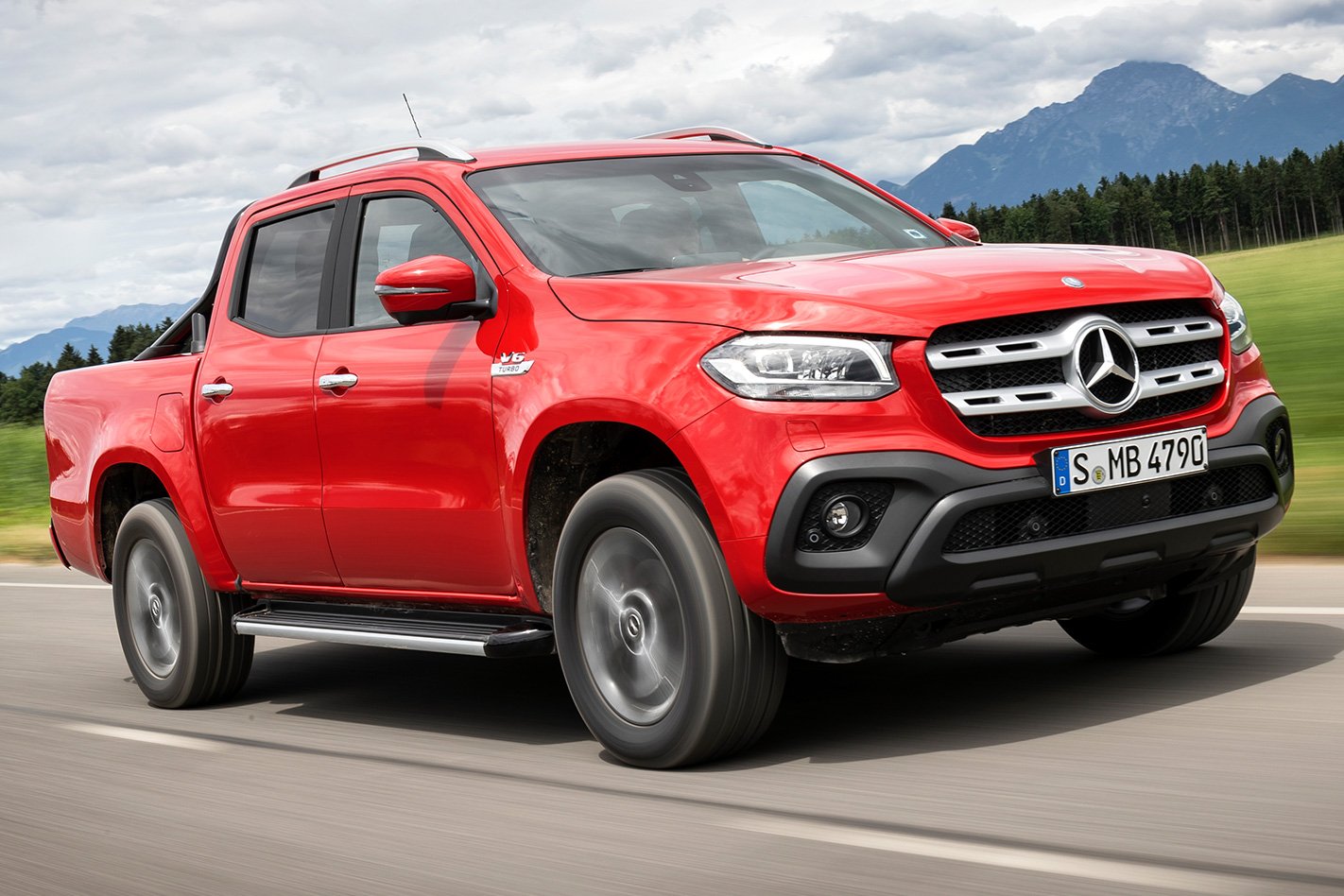
“There is always things left if the requirements come from a marketing point of view and the customer wants to have more power,” said engineer Frank Schumacher, speaking to Australian media at an international preview drive of X350d.
“On other platforms normally we react on customer wishes. If there will be wishes after the launch of the vehicle that says we need to have a V8, then probably we will put in a V8.”
Schumacher was quick to point out his satisfaction with the V6 model, before coyly suggesting a V8 would also be happening if he had his way, and even joked about doubling the cylinder count.
“From an engineer, performance development is endless, but that’s our inner motivation,” said Schumacher.
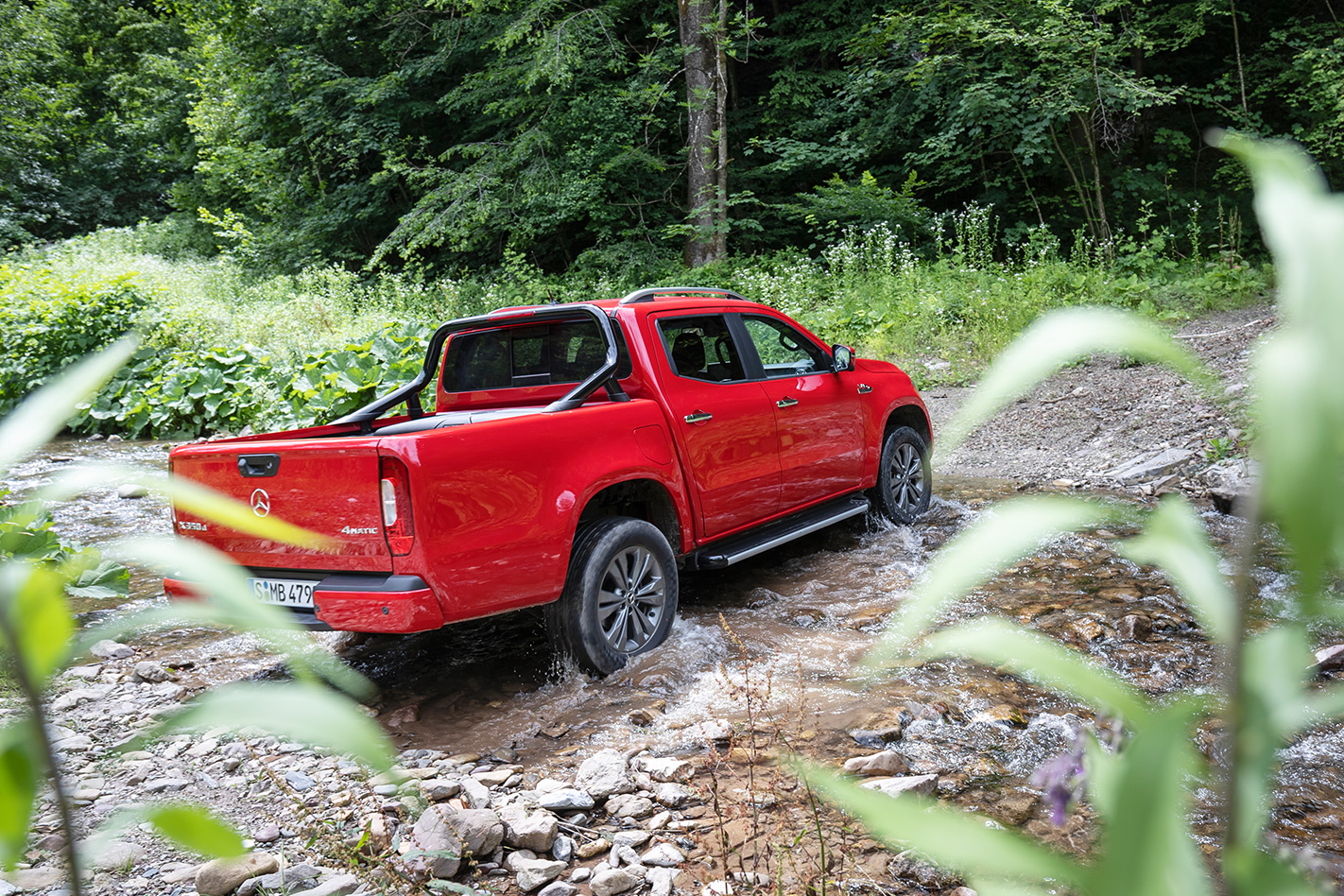
“It makes no sense to build a second G-Class with a price [that’s] out of the market where you want to be, but as engineers you ask us [about our] wishlist? From V8 to … V12,” he said through a smile.
Currently, the X350d’s outputs peak at 190kW and 550Nm from its 3.0-litre turbo-diesel V6, which puts it at the top of the dual-cab class ahead of the Volkswagen Amarok V6 – for now.
An updated Amarok is on the way, which is rated to produce 190kW and 580Nm, with an additional 10kW available through an overboost function that can lift engine performance to 200kW for short periods of time.
Mercedes could potentially extract more power and torque from its V6 in the X-Class. Its OM642 engine has produced as much as 195kW and 620Nm in other applications, but if customers want even more than that, a V8 engine could be the answer.
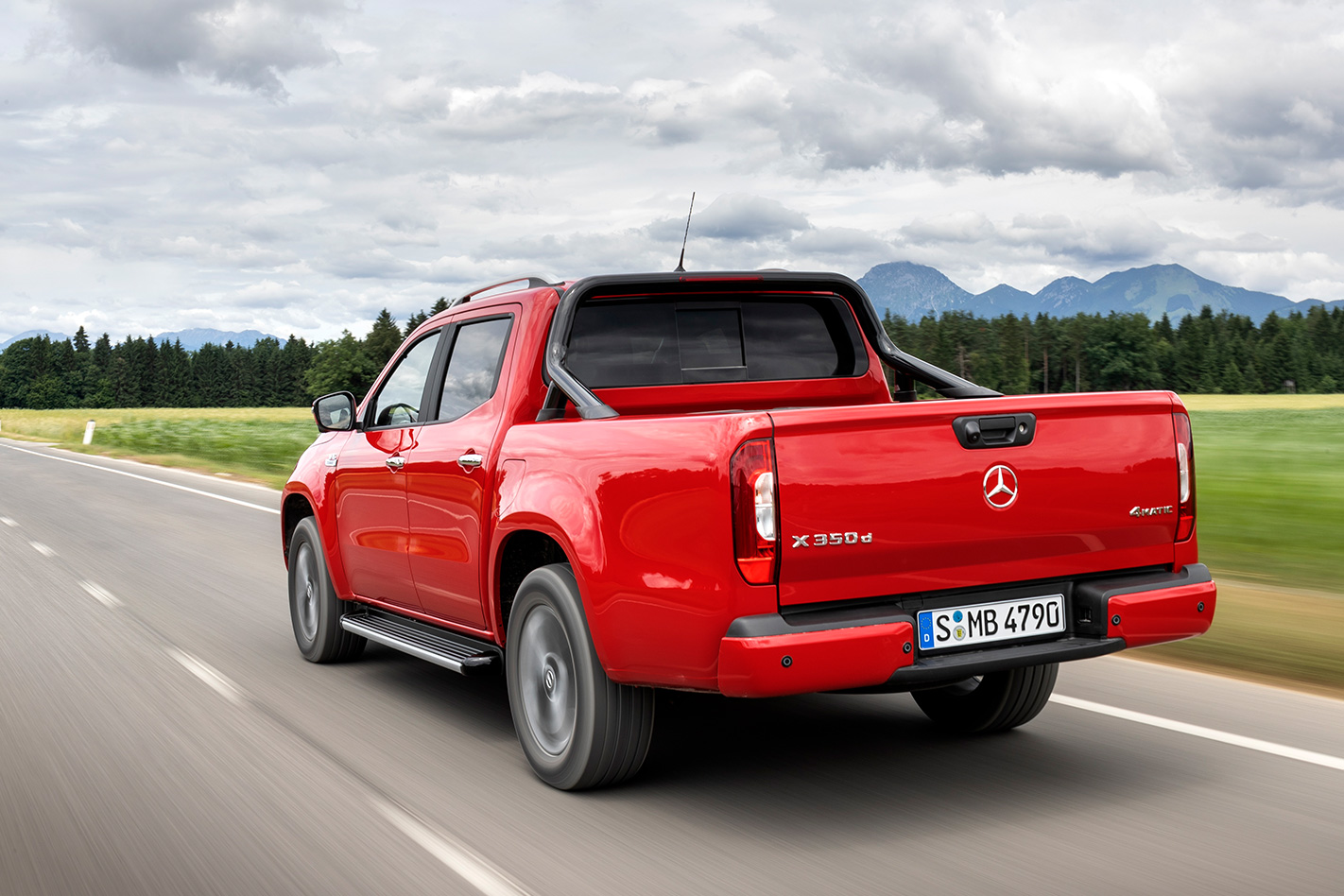
According to Schumacher, packaging a V8 engine within the bay of the X-Class is no problem, even though the basic architecture of the dual-cab comes from the four-cylinder-only Nissan Navara.
“We surely can make it happen. It’s a question of which V8 you want to put in.”
Previous discussions with top brass at Mercedes-Benz and AMG would suggest a fully fledged AMG ‘X63’ is unlikely, but using a detuned version of Affalterbach’s 4.0-litre twin-turbo V8, as found in vehicles like the S560, could give the X-Class outputs of around 335kW and 700Nm.
If an X-Class V8 sounds like something that would go down a treat Down Under, it might be worth putting a note in the suggestion box at your local Mercedes-Benz dealer. Though at this stage it’s not clear how many pre-orders it would take for Mercedes-Benz to act.
“People always ask about an AMG version,” said marketing spokesperson Tanja Lackner . “Nothing is set in concrete at the moment but maybe in the future if we see more customers really require that, maybe we’ll think about it.”
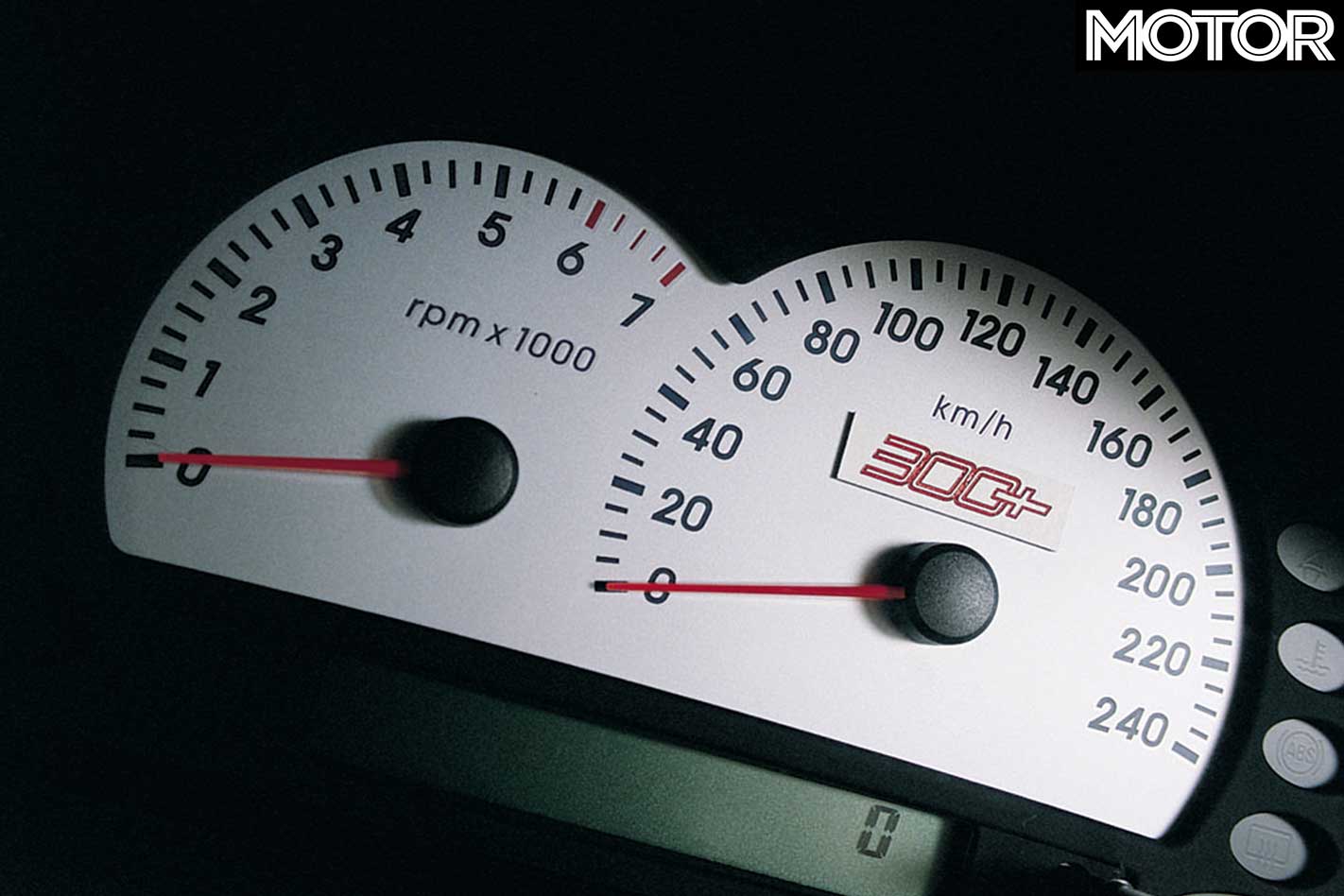
The bald figures read like a 911 Turbo spec sheet. Maximum power of around 310 kW. Torque in the vicinity of 500 Nm. Performance estimated at zero to 100 km/h in 4.6 seconds, and a standing quarter time of 12.6. In fact, the Porsche has proven it’s quicker than all that, but not by much.
This feature was originally published in MOTOR’s May 2001 issue
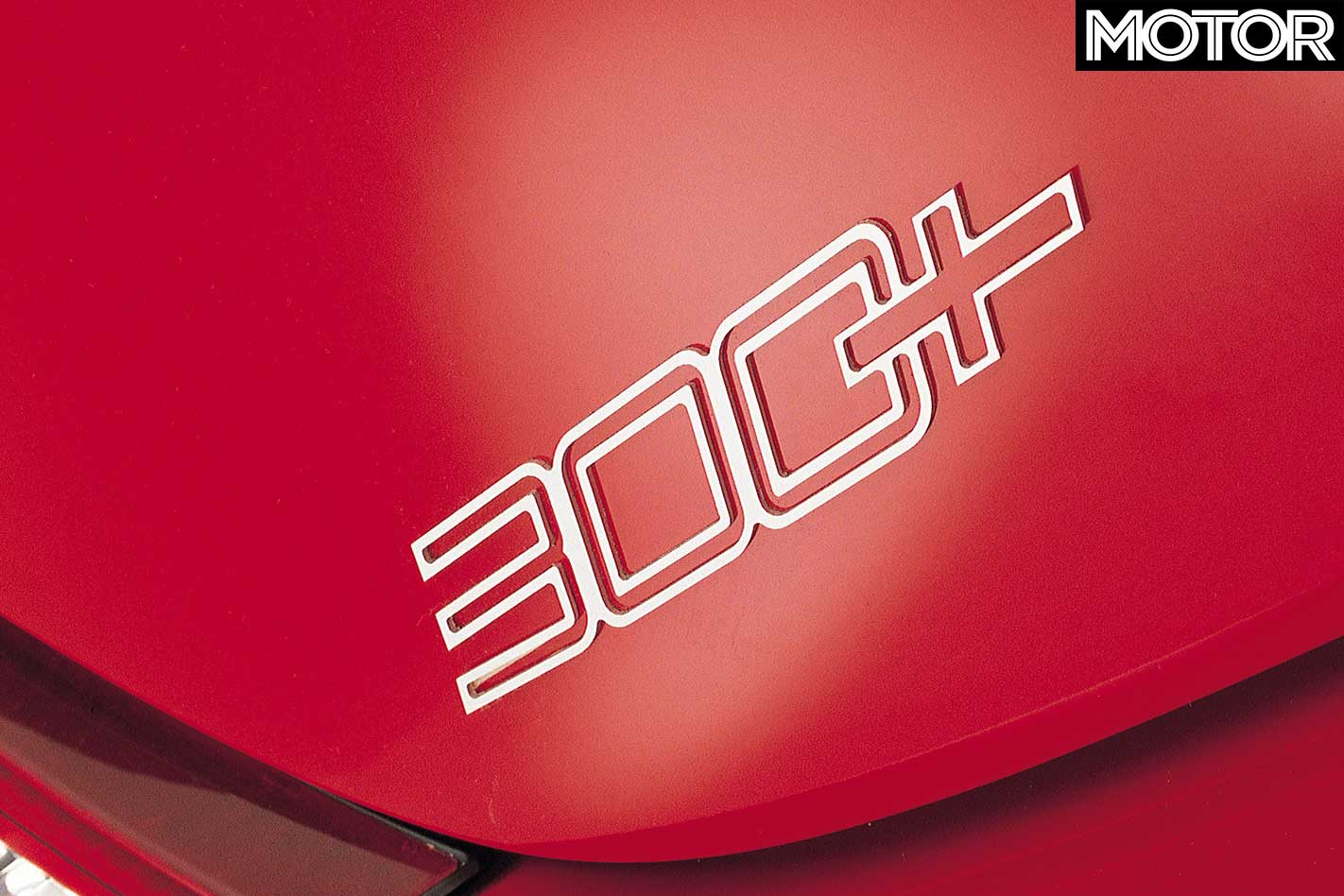
If you hadn’t guessed already, this is the car known as the 300+. It’s a two-door, supercharged V8 prototype that stands for plus power, plus performance and plus prestige for Ford, and as good a way to warn Holden the Blue Oval is still alive and kicking. Hard.
The big question for the moment revolves around the ‘ifs’, ‘arounds’ and ‘estimateds’, because the 300+ is still in the planning stage, even if history records that the first prototype was rushed together in only six weeks and wowed the crowds at the 2001 Melbourne motor show.
But Ford is so keen to make this happen you can almost smell the desire to reclaim the high ground of brute power vacated when the Phase IV XA Falcon project was killed off almost 30 years ago.
The politics, people and passion involved in getting even this far is a story in itself and detailed elsewhere here. The main thing is that the 300+ has got this far in these days of economic rationalism, cost cutting and, more specifically, Ford Australia’s less than flush financial situation.
You may not have heard of companies such as AEC or Venture, but they are among the driving forces behind the 300+. Welcome to the corporate street drags, circa Australia 2001.
DESIGN
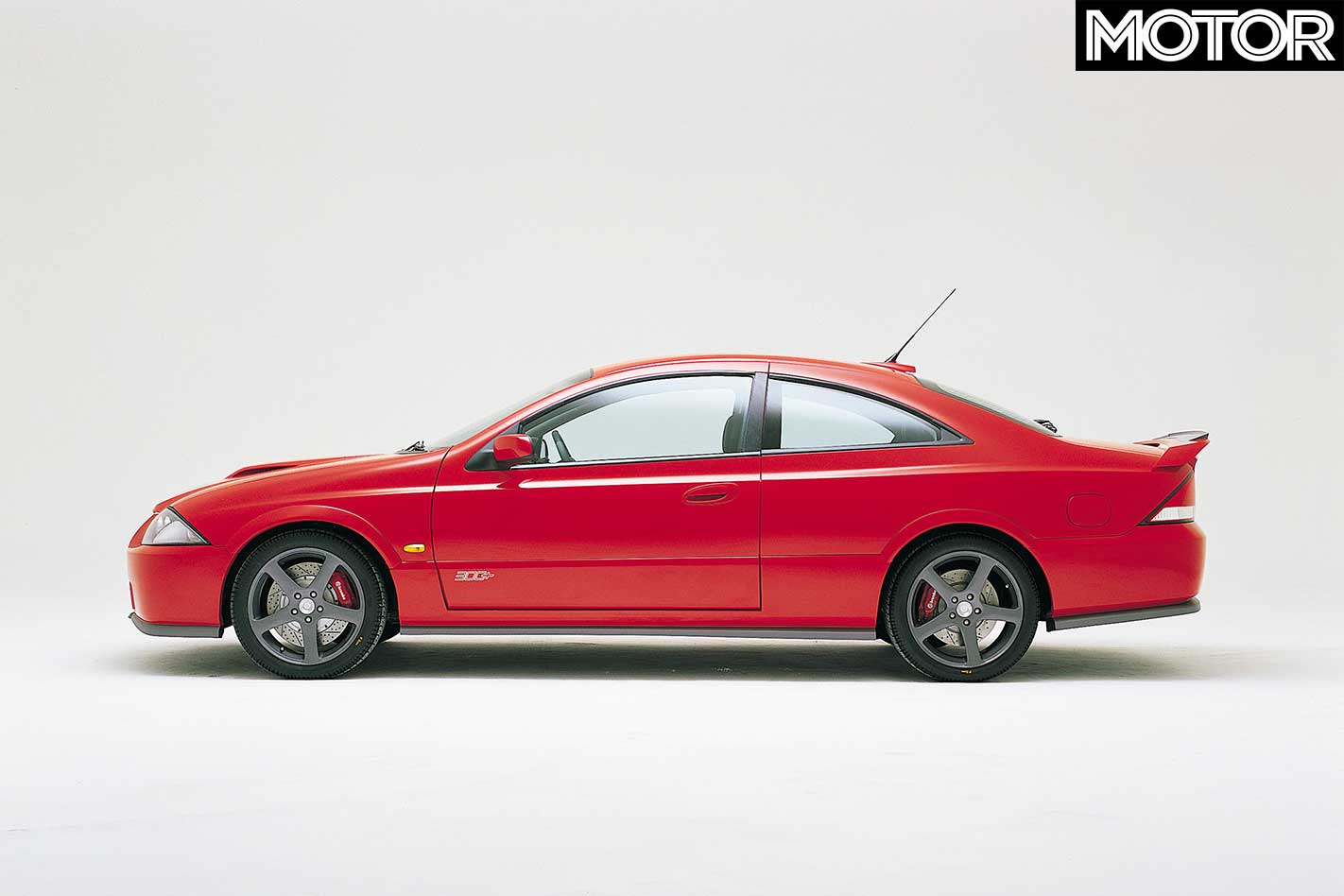
The shape of the 300+ first emerged last winter when two brothers from Tenterfield, in NSW, quietly unveiled a hand-built, two-door AU Falcon coupe. Clayton and Troy Hillier’s Falcon two-door was the latest in a line of custom build jobs and never intended for serious production, but that was about to change.
Not long after the first pictures of the two-door started circulating, the Hilliers had a gent knocking on their door. His name was Danny Williams, manager of the Sprintex supercharger division of a company called Advanced Engine Components.
Williams said Sprintex had been developing a supercharged version of the Ford Mustang 4.6-litre quad-cam V8 and were trying to find the engine a home. How would they feel if their AU coupe was the car to do it?
The short story was that, yes, the Hilliers were keen to provide the basis for a two-door super-performance Falcon, and after Ford was contacted by AEC about the project, design duties were handballed to Millard Design. Millard was charged with building a prototype engineered to production standards, and was also given pretty much a clean sheet of paper to style the coupe as wild as you like.
According to Millard design director Paul Berenger, the brief entailed the mammoth task of transforming the Hillier car – “basically a pretty good cut and shut job” – into a production-ready prototype of a Ford performance flagship.
His team had from Christmas last year until the press day of the Melbourne motor show on March 1 to engineer and style the car, and the job was finished just four hours before Ford president Geoff Polites whipped the hanky off the 300+. So what was involved in determining the look of the car?
“The first phase was to immerse ourselves in the culture of two-door Fords,” says Berenger. “We had to envelop ourselves in the philosophy behind coupes like the Superbirds that were raced in the 1970s, but also went back to the Escort and Cortinas.”
From there, the process was two-fold: using computer-aided design (CAD) to strengthen the rear bulkhead and floor and increase the torsional stiffness lost by moving the B-pillar back about 200 mm and ‘puffing out’ the rear guards; and to produce the different shapes and surfaces required for the new sheet metal.
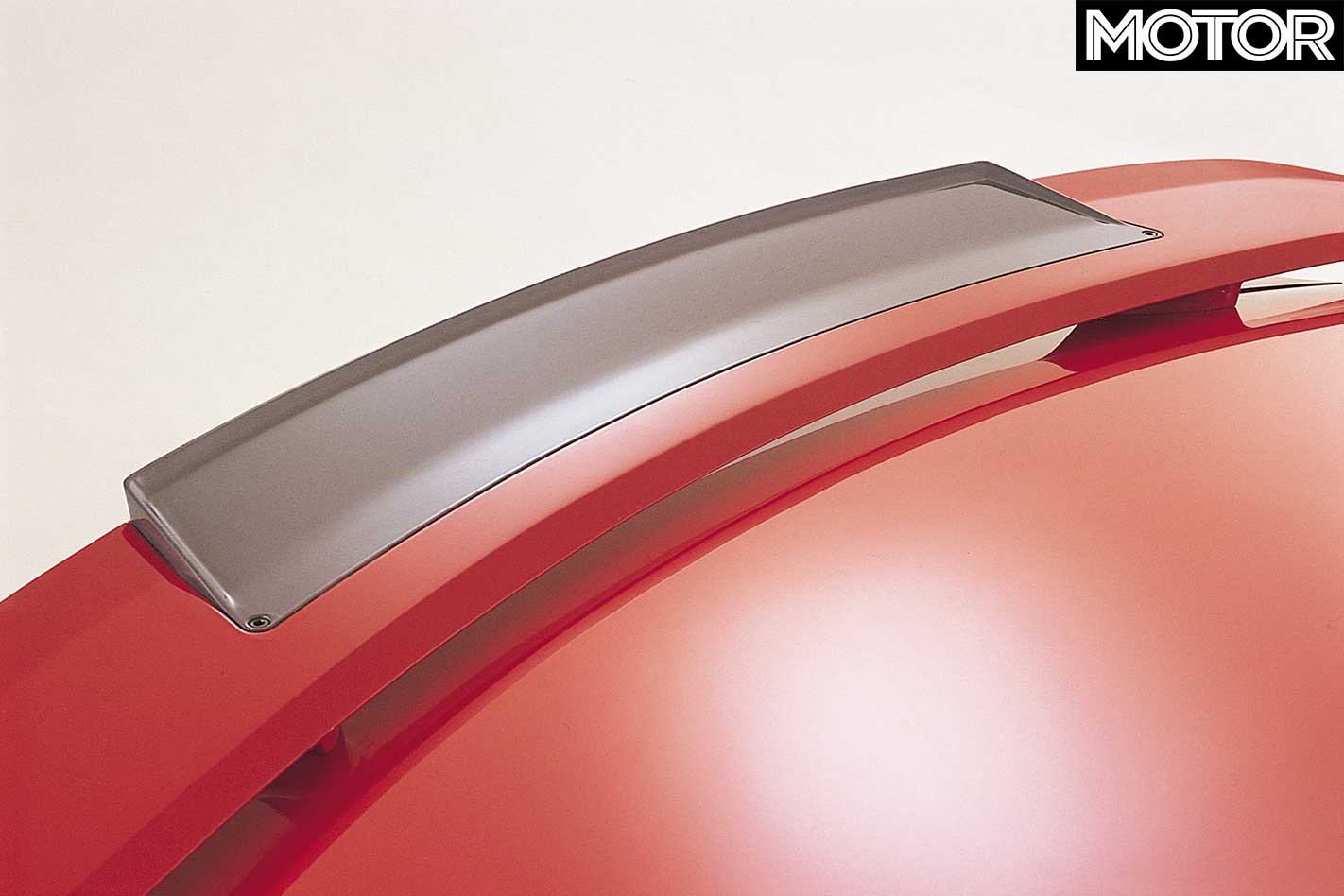
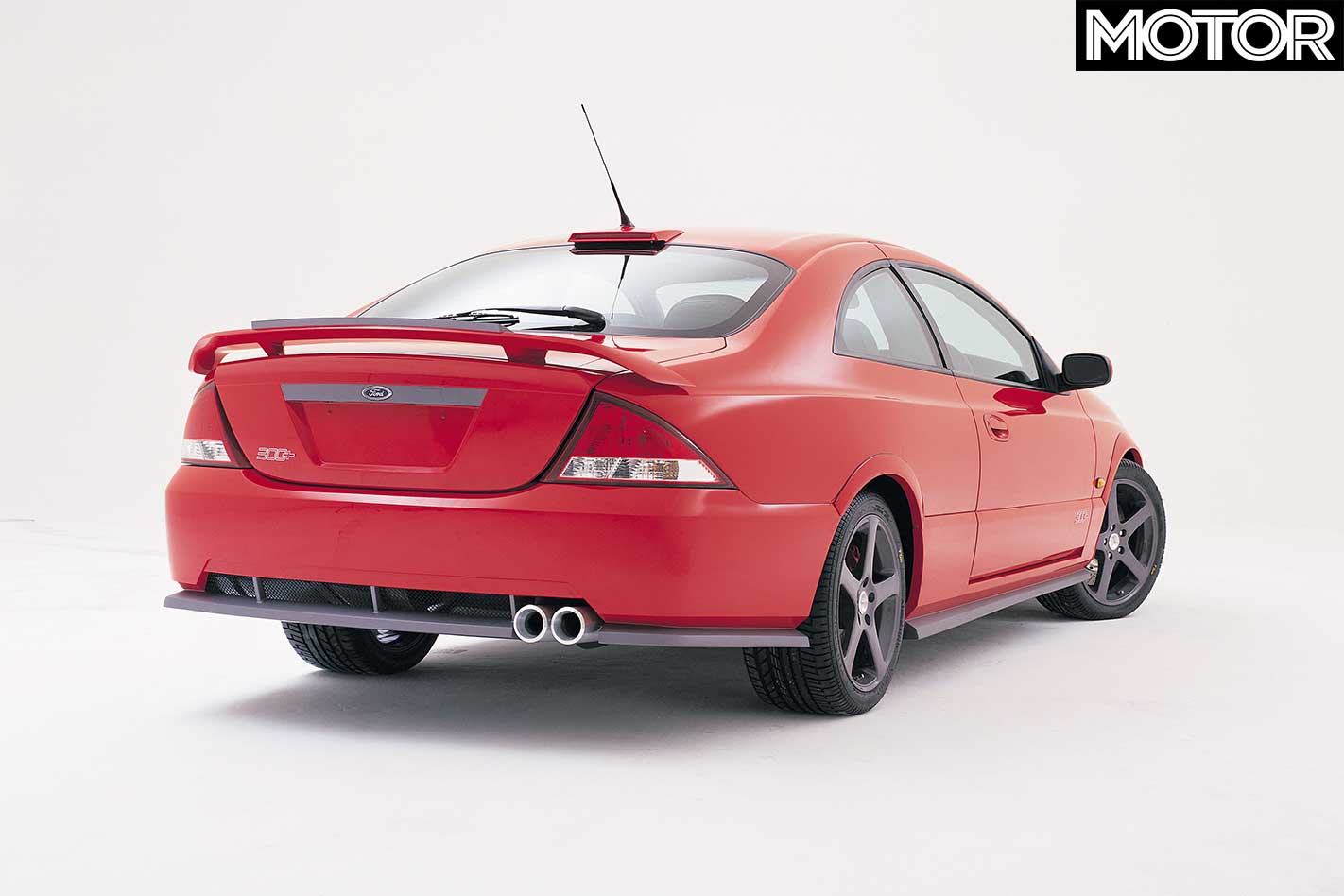
There was a distinct attempt at reducing the ‘crown’ effect, or the curvature of the car from the rear, and this was achieved by a flatter rear wing and the complex integrated high-mounted stop light, GPS antenna and phone aerial unit on the rear of the roof.
The front end, says Berenger, keeps the Falcon’s triangular themes but adds a lot more aggression. The bulging bonnet was needed to fit the taller overhead-cam engine with its supercharger installation, and then of course there’s the relatively simple grille and ground-scraping front airdam to go with the side skirts, rear bumper and other add-ons.
All this is wrapped around fat 18-inch alloy wheels, eight inches wide at the front and nine at the rear. The lower edges of the bodywork are painted grey, and poking out of the rear valance are a couple of turned aluminium exhaust tips.
“It’s a purposeful shape, mean and aggressive,” says Berenger. “I like to call it a junkyard dog – it’s got that sort of attitude.”
Inside, there’s a dashboard based on the high-series (Fairmont) design, and the seats have been recontoured for more lateral support. The AU Ute donated its folding front seat mechanism that gives access to a rear pew with a surprising amount of leg and headroom, and it’s here that the Falcon 300+ is separated from most other coupes. Not only does it look good, there’s a useful amount of interior and boot space as well.
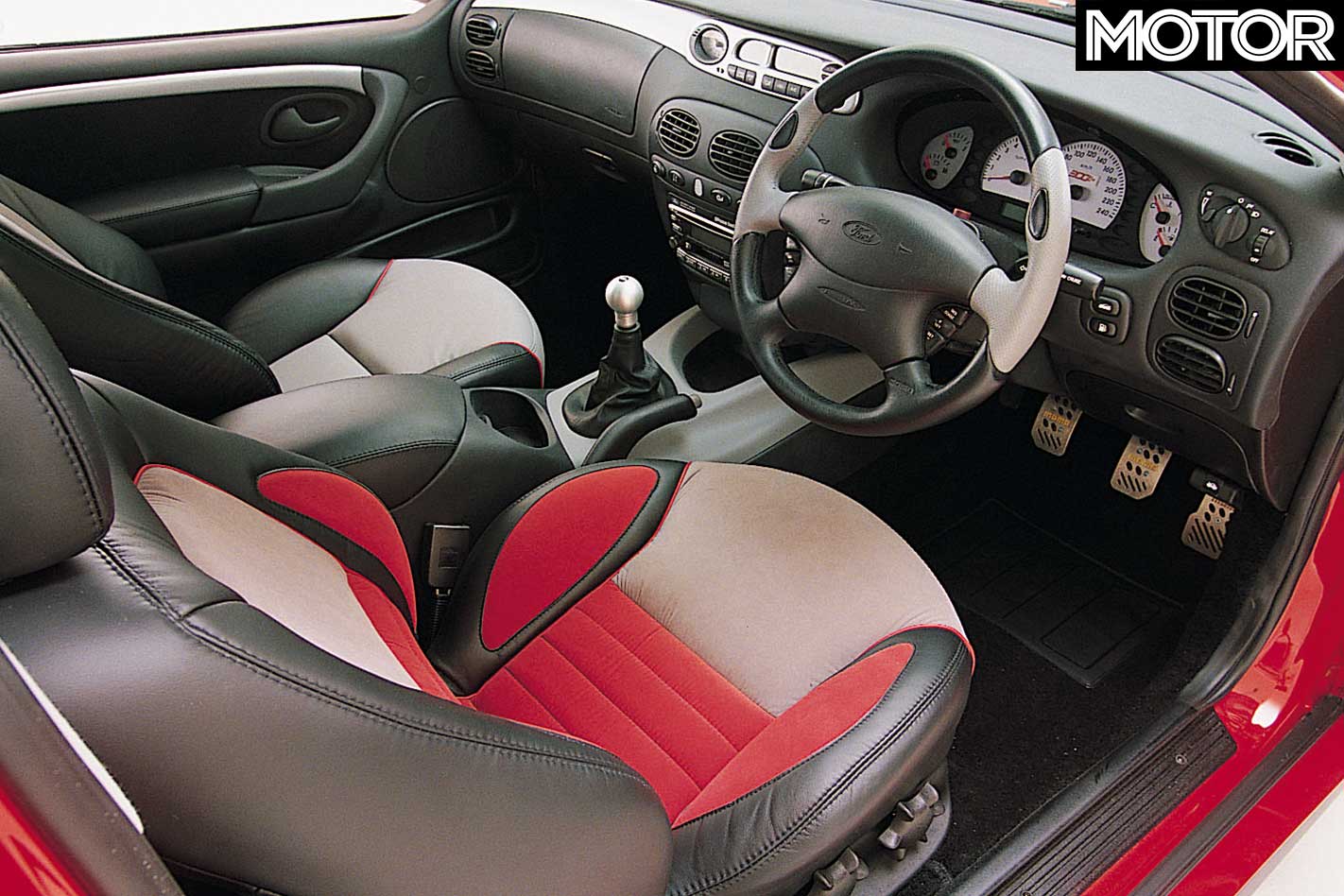
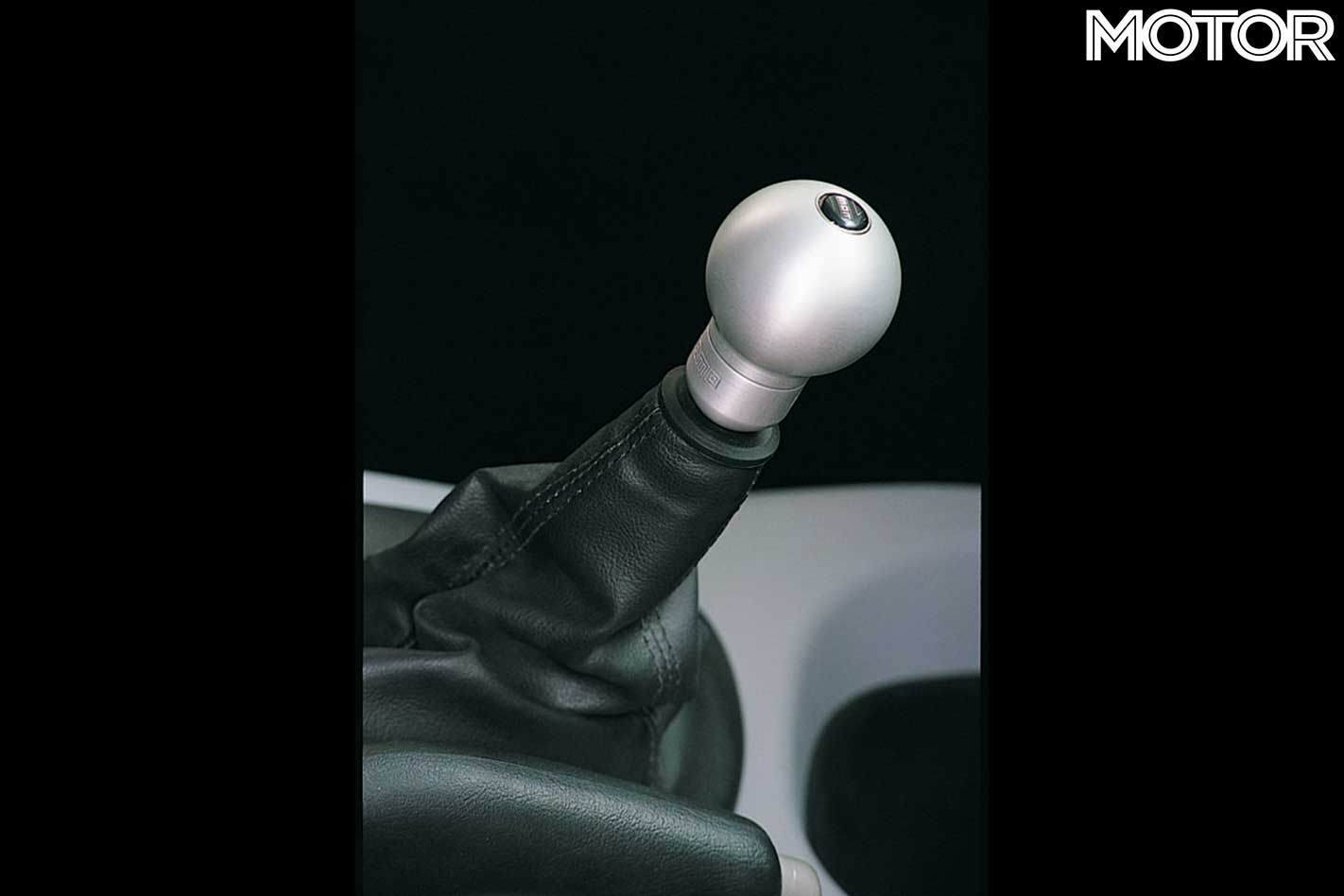
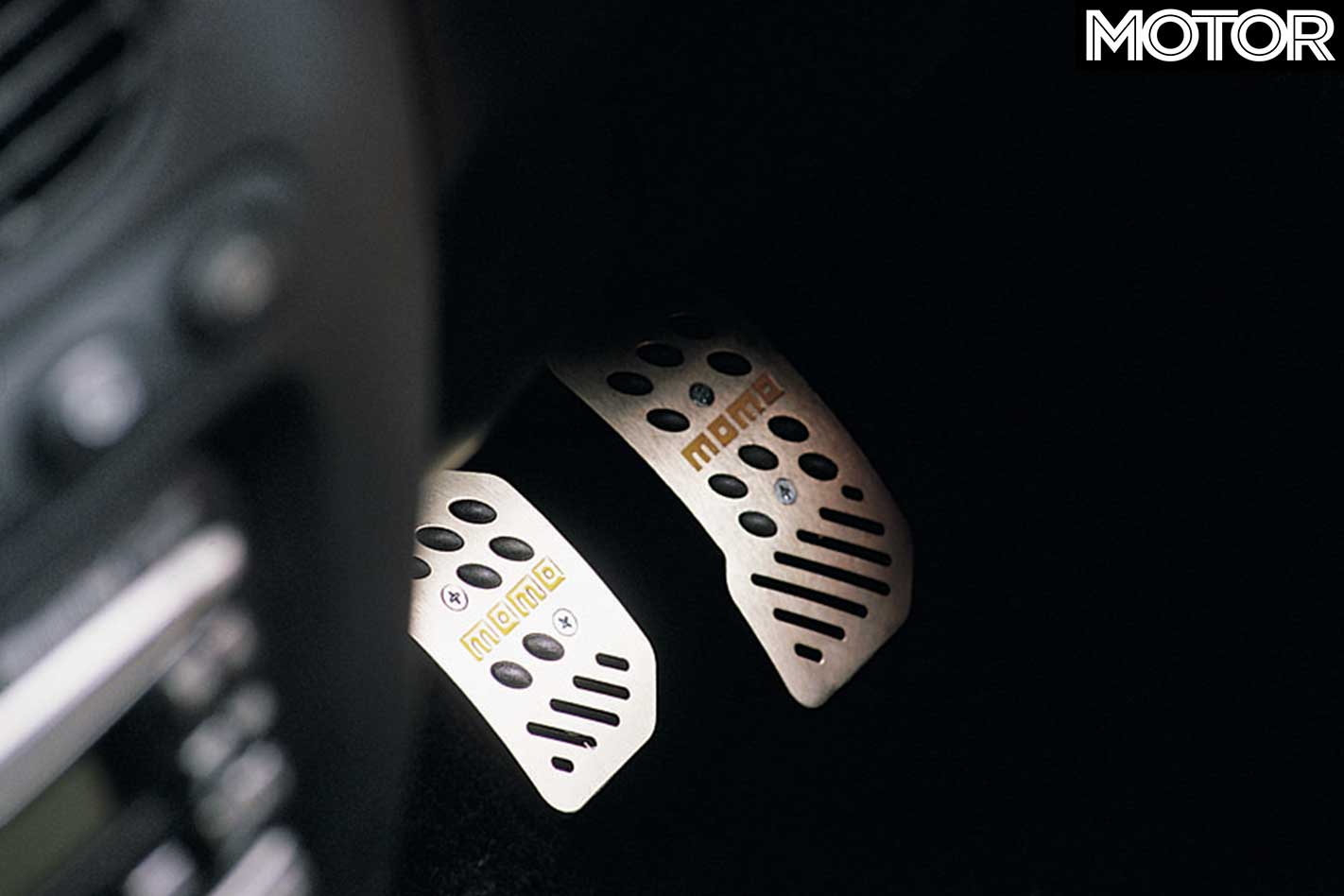
Other interior touches include plenty of alloy trim for the gearknob, pedals and kicker plates, and more colour as well, but we’ve all seen plenty of fancy stuff fitted to show cars that comes out looking a lot less exciting in production. If the 300+ goes ahead, how much of the show car will make it onto the road?
“Every part you see has been designed and engineered for production,” says Berenger. “So, given the premium position it’s been placed at, I can’t think of a reason why customers won’t get the lot.”
ENGINE & TRANSMISSION
While the 300+ project might be a combined effort involving Millard and Ford, the baby really belongs to AEC, and it is them we can thank for the boot-in-face outputs being credited to the 4.6-litre Mustang V8.
According to Sprintex’s Danny Williams, the 4.6 is where the whole story started, thanks to Ford Australia asking Sprintex to quote on a supercharger job for the engine, which at the time was being considered as a replacement for the Windsor 5.0-litre.
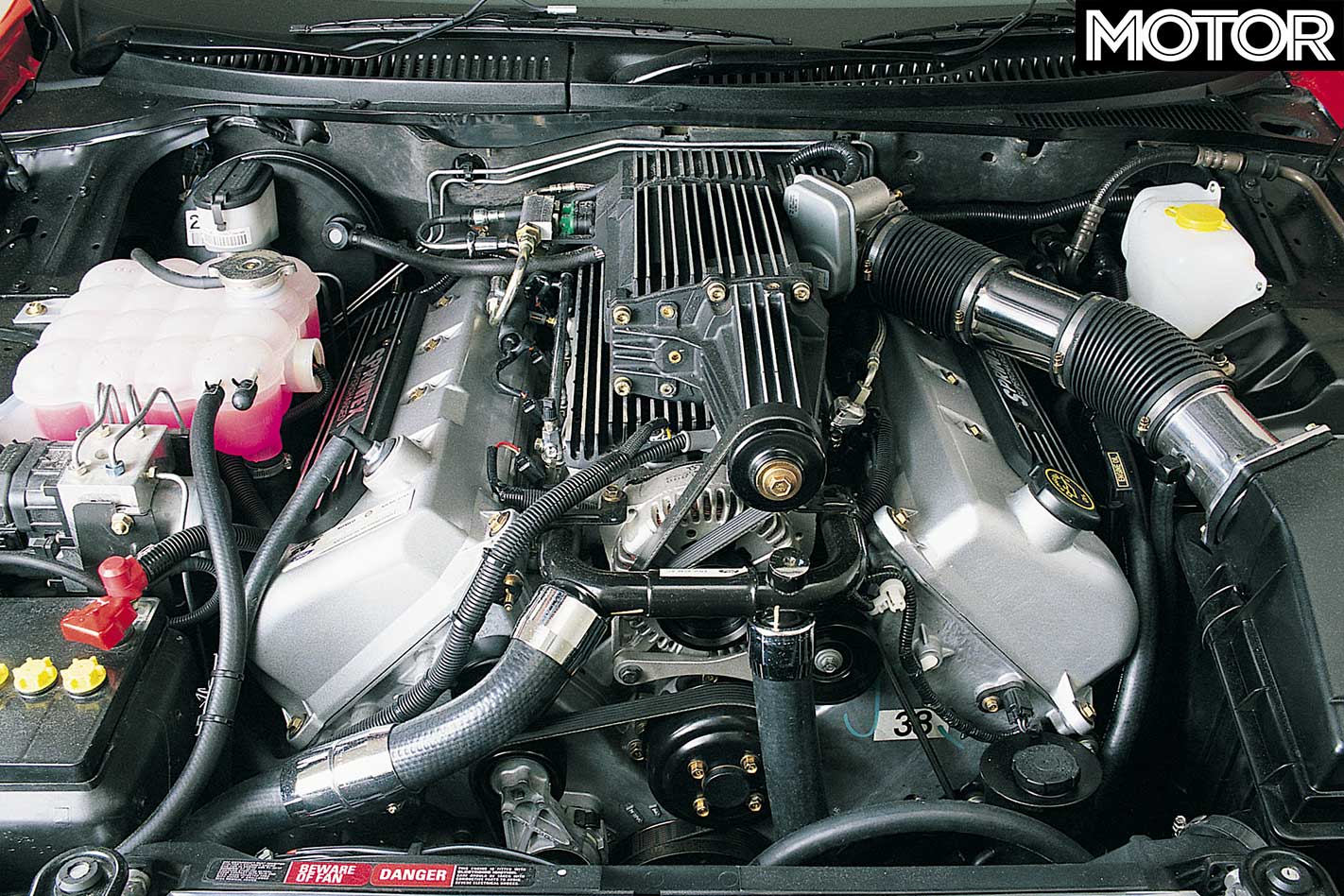
It’s history now that Ford has decided to stick with the Windsor until 2002, but the project left Williams with costing for the blown 4.6, and the Hilliers had a car that could use it.
Amazingly enough, the guts of the engine remain fairly standard. In fact, after fitting the supercharger the task was not how to make the power output high enough, but how to keep it in check. Think about it: the Cobra engine puts out 240 kW, and taking it up to 310 kW is an entirely reasonable 30 per cent increase.
“The aim was to produce Australia’s first 12-second quarter mile car,” says Williams. “Our drag simulator said 310 kW was enough at this vehicle’s weight.”
The supercharger is the latest Sprintex 3-series 355 twin-screw unit, and hasn’t been used on a road car before. It has a couple of neat features, not least of which is that it is cheaper and easier to manufacture and has a more effective rotor profile than before.
AEC has also ditched the Mustang’s (and Falcon’s) normal throttle cable for a fly-by-wire unit, and the supercharger’s idle bypass is also electronic.
That means that on a partially opened throttle when no boost is needed, the supercharger is effectively shut down, resulting in less energy loss because it is no longer being driven. Better still, electronic (rather than the usual vacuum-assisted) throttle bypass allows for minute adjustment to boost control, which effectively can take the place of a knock sensor.
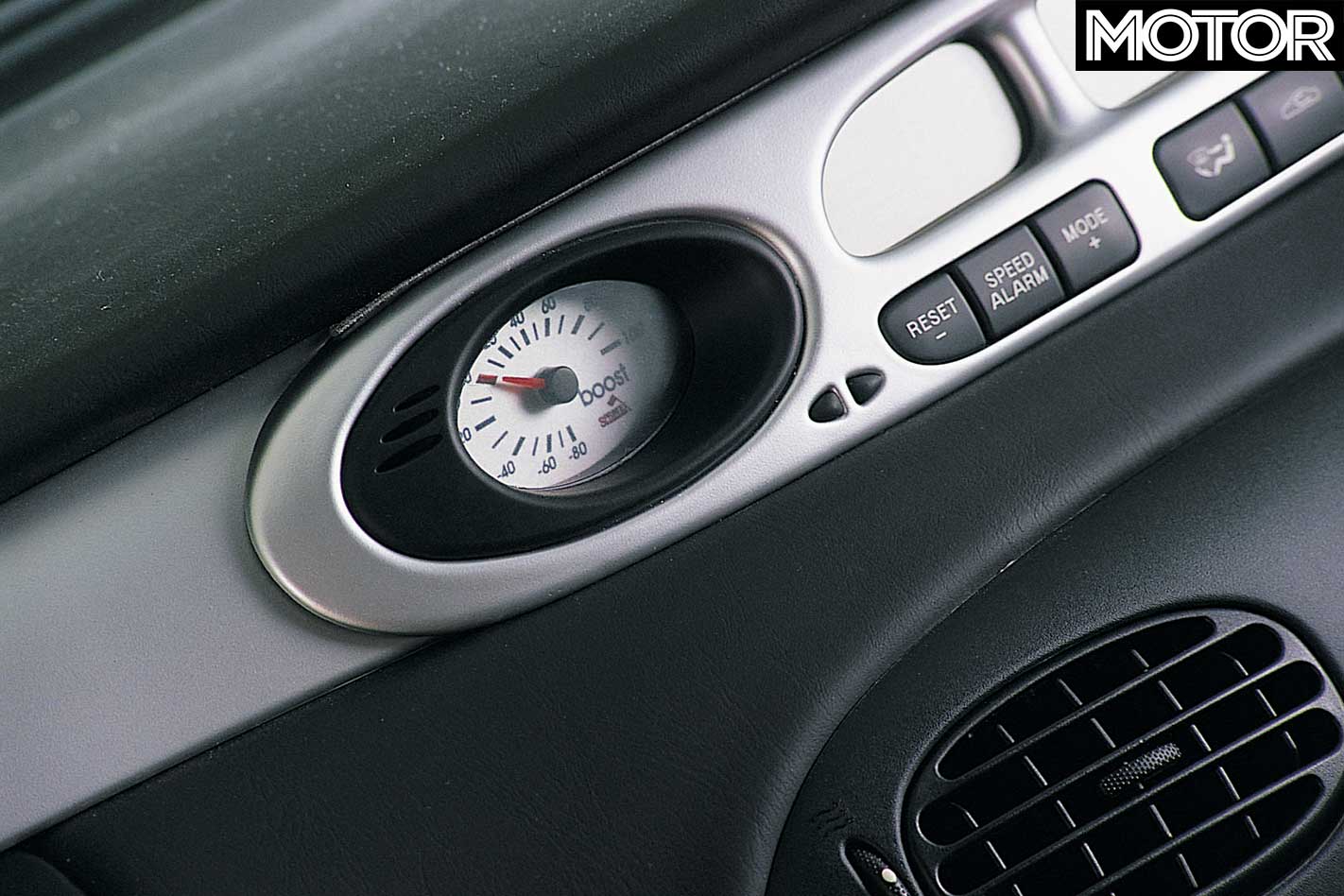
This engine runs the standard 9.85:1 compression ratio, so backing off the boost before detonation occurs is essential.
Maximum boost is a low five pounds, resulting in the desired 310 kW at 6200 rpm, and a massive 575Nm of torque at 3750 rpm. Creating that bottom-end grunt was one of the major aims with the engine, says Williams, because although the Cobra engine will rev to the ends of the earth the only complaint he’s heard was a relative dearth of pull from very low revs.
That sort of output required replacing virtually everything between flywheel and tarmac, starting with a six-speed TTC Tremec T56 manual gearbox – the same unit used by the Holden Commodore V8. The idea of a sequential shift was toyed with, but won’t make it to production, initially at least.
The 11-inch SVO clutch comes straight from the Mustang Cobra and is man enough for the job, but the Falcon’s aluminium driveshaft was ditched in favour of something stronger, and one which can cope with speeds over 180 km/h. The Sprintex-designed ECU has no speed limiter, according to Williams.
In line with Ford’s insistence that the 300+ showcase the best available Australian technology, AEC has specified the independent rear suspension. And although the Ford 8.75-inch diff was fine, the axles needed strengthening. After a bit of head scratching at AEC, Harrop Engineering came up with an IRS compliant, nine-inch diff complete with finer splines, stronger axles and a neat magnesium housing. Expensive but necessary, and beautifully engineered.
Although a 300+ test mule is running around Perth – don’t get too excited, it’s a four-door – performance figures haven’t been officially measured. As mentioned at the start of this yarn, they’re going to be sensational in what is a relatively lightweight 1660 kg coupe. We’ll get back to you on that, hopefully later this year.
SUSPENSION & BRAKES
Perhaps the area where the 300+ really shows itself as a prototype is in the suspension. Don’t get us wrong: all the hardware is there and Ford Motorsport has even developed initial settings, it’s just they had no time to drive the car before it went on show.
The basic package is pure Falcon, albeit with Koni dampers, revamped bushes and sway bars, and appropriately shorter and stiffer springs.
Howard Marsden’s motorsport department is responsible for tuning the lot and adding hardware if necessary, and don’t be surprised if someone like Craig Lowndes is used to make it every bit as sweet as the TE50 in the handling department, albeit beefed up to accept higher velocities.
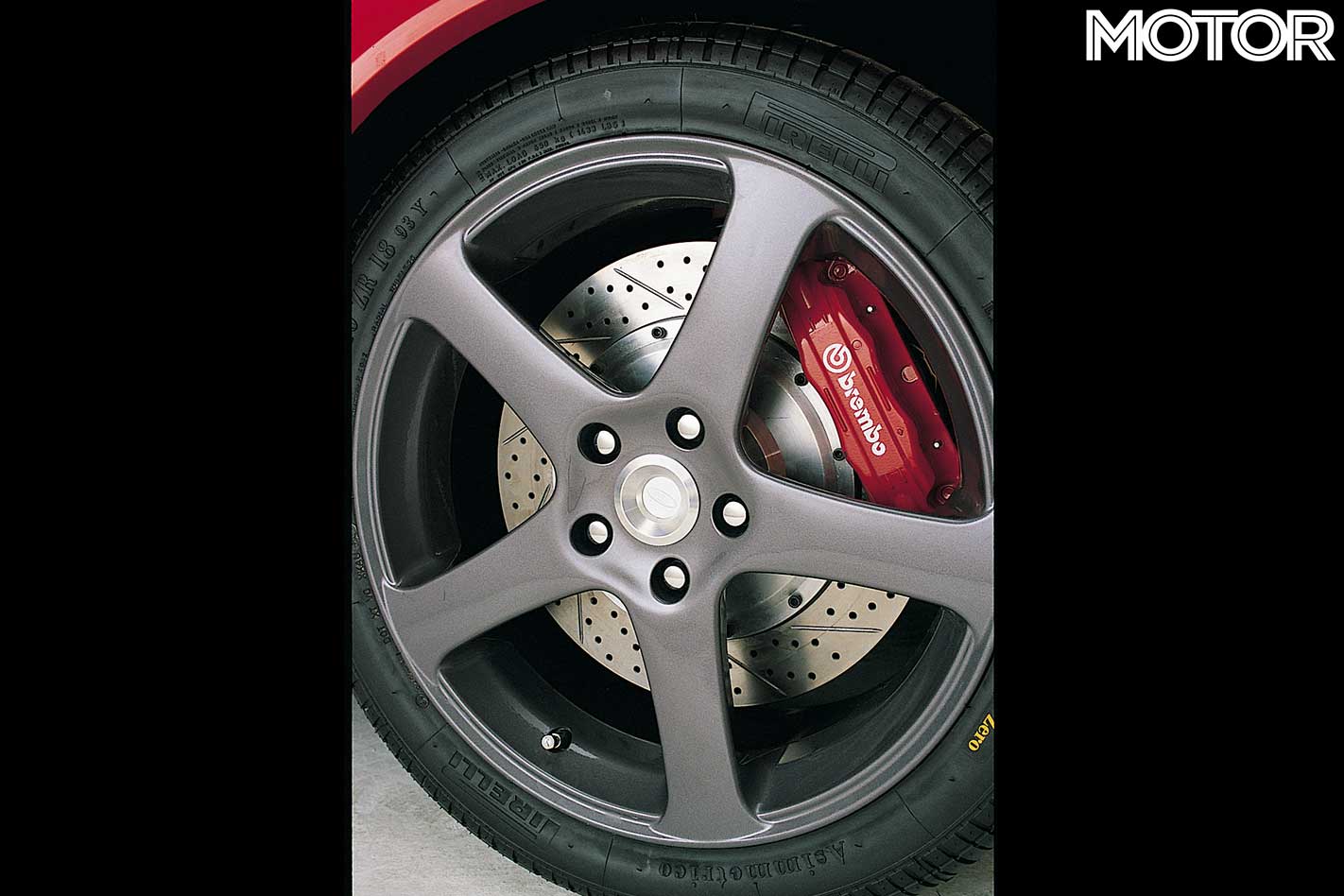
Speaking of which, the 300+ should have adequate stopping power thanks to a monster Brembo brake package. There’s 365 mm slotted and drilled DBA discs and four-piston calipers at the front and 330 mm slotted and drilled DBA discs with twin-piston calipers out back.
Tyres were Pirelli P-Zeros on the prototype but are likely to be all-new P-Zero Rossos once production begins. It is seriously sticky rubber and plenty wide enough, with 275/35 ZR18s at the rear and 245/40 ZR18s at the front.
As with performance, the handling story of the 300+ might sound brief, but is best described once the car has been driven. You’ll no doubt be hearing plenty more about this car before it is launched, and if we were betting guys it’s got to be two-to-one on that Ford will have difficulty backing out now. Us? We can’t wait to get behind that wheel to find out.
Method in the madness
The Falcon 300+ coupe represents quite a different approach to how Ford normally builds cars. It was conceived and has been engineered largely outside Ford’s normal systems, has happened very quickly, and it will be a limited-edition and very expensive run. It also might not yet happen at all, even though Ford has worn its corporate heart on its sleeve by openly displaying the prototype. So what gives?
“It’s probably no secret we’ve been doing it tough the last couple of years,” says Rick Nayler from Ford’s Special Vehicle Operations division. “Personally, I saw this project as an opportunity to show the public we are quite capable of being an exciting company.”
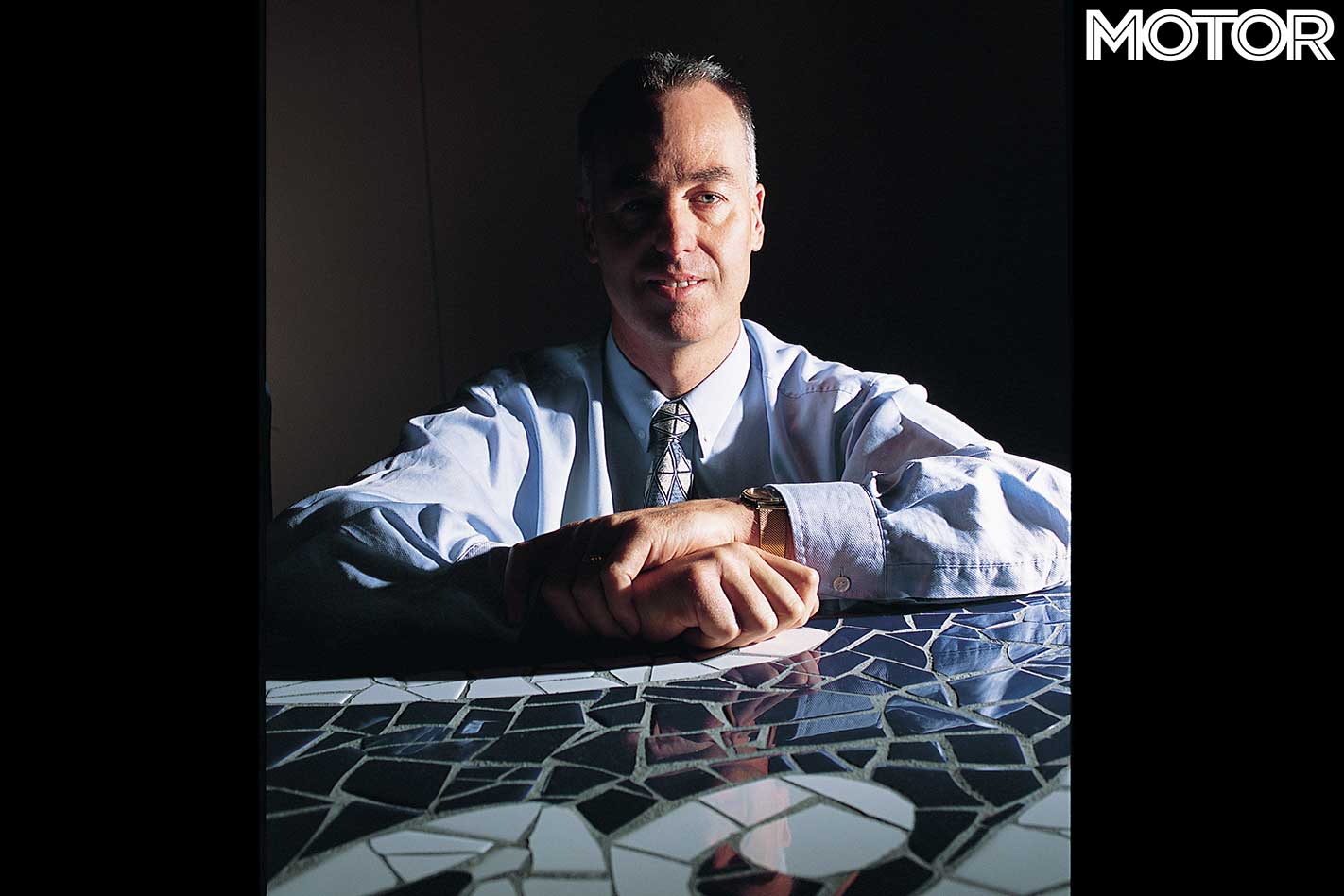
As business development manager of SVO, Nayler’s job is to lead the Ford Tickford Experience (FTE) and in some ways act as a bridge between Ford and Tickford. It was he and Howard Marsden – Ford’s motorsport manager – who listened hardest to AEC’s proposal, and who helped decide whether the 300+ deserved full factory backing.
Ford President Geoff Polites was a strong supporter on the proviso the car was properly engineered, so Millard Design was brought onto the scene. Millard was able to offer much more than just its state-of-the-art styling studio.
The company is owned by Venture Industries, a multinational specialising in automotive parts and, particularly, plastics. It operates the plastics plant situated within a stone’s throw of Ford’s head office in Campbellfield and produces a hefty swag of Falcon parts.
No beginner in the field, Venture is well placed to not only design and manufacture add-on plastic body parts but, more critically, to produce the low-volume tooling necessary for the unique metal body panels.
But the player with the most involvement is Advanced Engine Components, owner of the Perth-based Sprintex supercharger company that convinced Ford the 300+ should be a goer. More than just an engine supplier, through manager Danny Williams AEC convinced the Hilliers their coupe could reach greater heights and has bankrolled the project to the tune of millions of dollars.
According to Nayler, the 300+ now enters its most critical phase. He said the aim of its Melbourne motor show appearance was to gauge reaction from the public and dealers, and it seems to have worked. Apart from the media going ga-ga, he’s receiving calls from dealers telling him buyers want to know when they can put down a deposit, and for how much.
A decision on the future of the 300+ will be made within weeks. The aim would be to start production in 2001 but before that the business case must be iron-clad. Then it’s a case of finding space for a low-volume plant to bolt the thing together.
There’s also the matter of a name. Nayler won’t be drawn on whether 300+ will stick, saying no decision has been made. Funnily enough, there’s little for Ford to fall back on historically because, unlike the Monaro, the Superbird tag of the 1970s was never in popular usage. Performance Falcons have always been GTs in all their phases, so perhaps that’s a better way to go.
FAST FACTS Ford 300+
BODY: 2-door coupe DRIVE: rear-wheel ENGINE: 4.6-litre quad-cam 32V V8, supercharged BORE/STROKE: 90.2 mm x 90.0 mm COMPRESSION RATIO: 9.85:1 POWER: 310 kW at 6200 rpm TORQUE: 575 Nm at 3750 rpm WEIGHT: 1660 kg POWER-TO-WEIGHT: 187kW/tonne TRANSMISSION: six-speed manual SUSPENSION: double wishbones, coil springs, anti-roll bar (f); independent by double wishbones, coil springs, anti-roll bar (r) L/W/H: 4910 / 1892 / 1400 mm WHEELBASE: 2793 mm TRACKS: 1566 mm (f); 1547 mm (r) BRAKES: 365 mm slotted and drilled discs, four-piston calipers (f); 330 mm slotted and drilled discs, two-piston calipers (r), ABS WHEELS: 18 x 8.0-inch (f); 18 x 9.0-inch (r), alloy TYRES: Pirelli P-Zero, 245/40 ZR18 (f); 275/35 ZR18 (r) FUEL: 68 litres, PULP PRICE: $100,000 (approx)
WHAT IS IT?
A much-needed total makeover of the South Korean giant’s large SUV, elevating it to the sophistication level of the current Tucson and i30, and closer to where it needs to be when packaging seven useable seats.

WHY WE’RE TESTING IT?
With a drive route encompassing a dizzying array of corners and close to 50-percent dirt, Hyundai Australia is confident of the TM Santa Fe’s impressive all-rounder status, especially the AWD diesel with new eight-speed auto. But without a V6 anywhere on the horizon, will the four-pot AWD petrol be a sufficient entry-level substitute?
MAIN RIVALS
Toyota Kluger, Kia Sorento, Nissan Pathfinder, Skoda Kodiaq, Peugeot 5008, Mazda CX-8 and CX-9, as well as (at Santa Fe Active level), seven-seat versions of several medium SUVs (Honda CR-V, Nissan X-Trail, Mitsubishi Outlander).
THE WHEELS VERDICT
After its handling-biased, one-trick-pony predecessor and two earlier generations of dull-but-dependable dross, the new-gen Santa Fe shines like Centrepoint tower above Sydney’s skyline. Handsome, roomy, excellent to drive and lovingly crafted, it’s the polar opposite of its contrived and plasticky forebears. The brawny eight-speed diesel has all its ducks in a row, and the $60K Highlander has enough visual swagger to support its price-tag, though if it’s V6 petrol power you’re after – or Mazda CX-9-rivalling thrust – you’ll need to shop elsewhere.
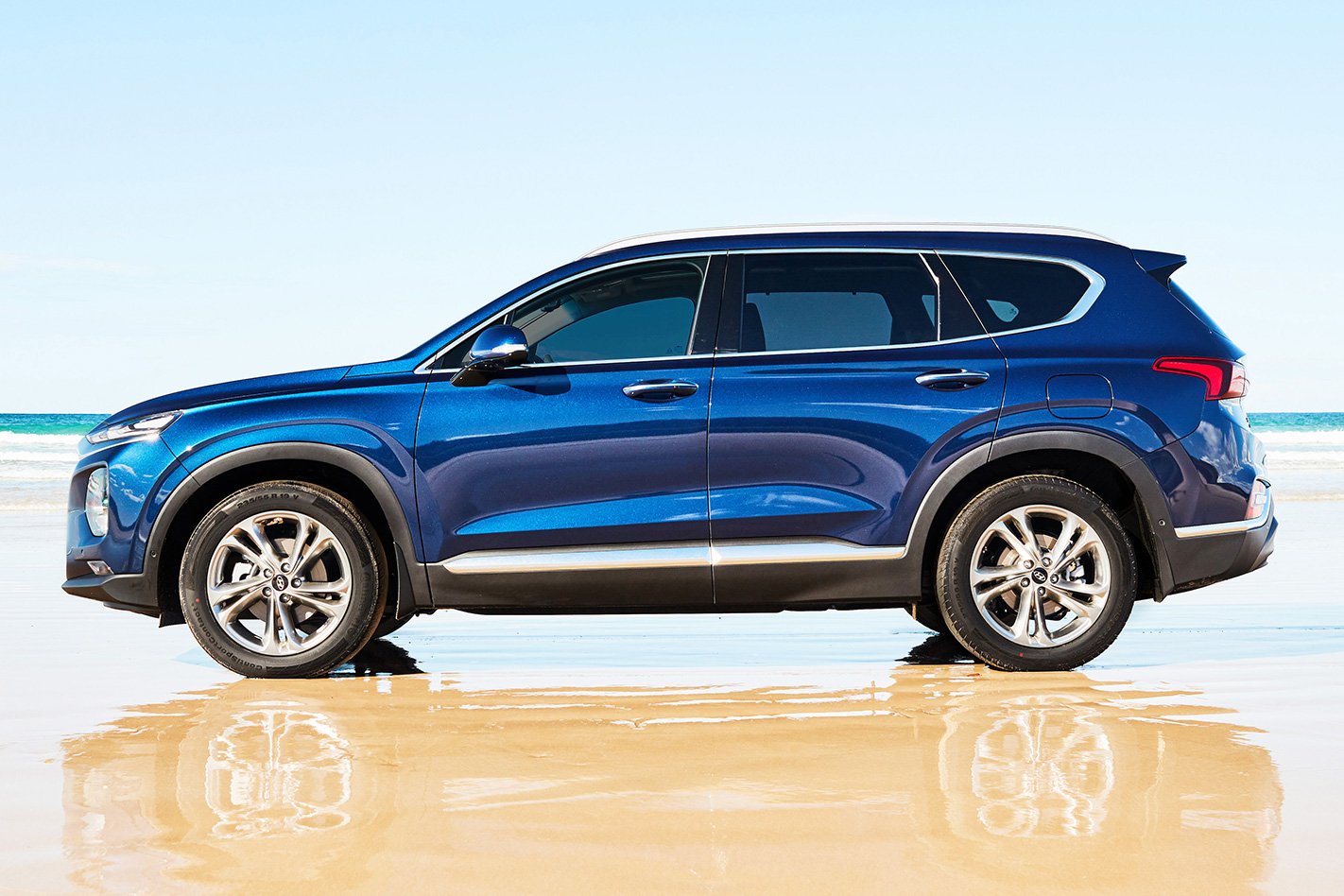
PLUS: Well-balanced and involving to drive; terrific diesel powertrain; welcoming interior; interesting design MINUS: Torque-deprived atmo petrol; unremarkable refinement; no performance flagship; luggage space with seven seats in use
THE WHEELS REVIEW
IT’S TAKEN almost 20 years but the Hyundai Santa Fe has finally crossed the threshold to desirability.
Large SUV/4WD: Australia’s Best Value Cars 2017
Acting as a metaphorical flag-waver for the Korean brand’s burgeoning credibility, the fourth generation of Hyundai’s large SUV debuts a purposefully handsome shape with a BMW X5-rivalling presence, and backs that up with a much more sophisticated interior design. Overstyled plastics, undersized rear-window apertures, and overbearing ride firmness are now distant memories for the newly mature Santa Fe. It’s goodbye ‘Gangnum Style’ and hello Broadway.
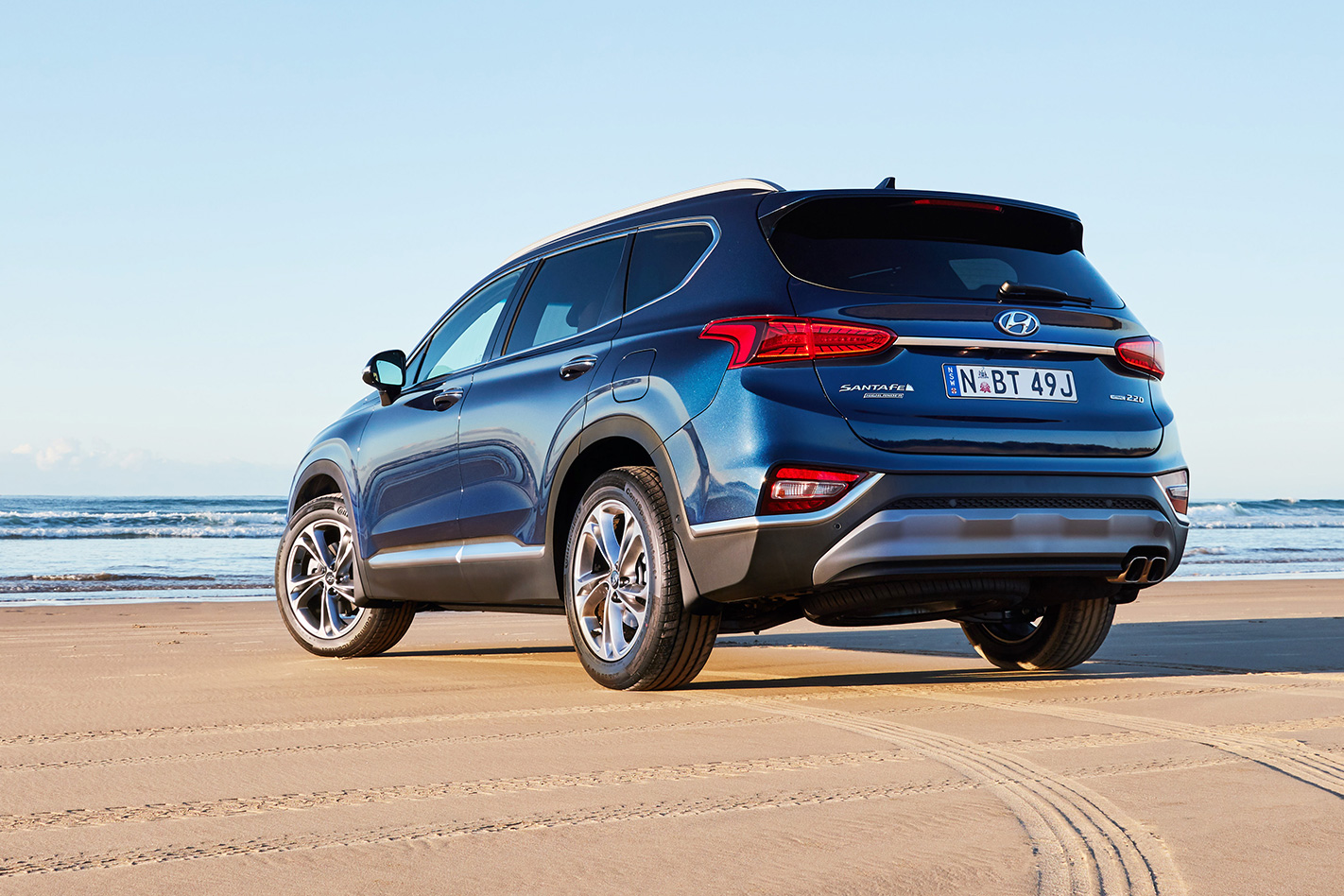
In terms of platform geneology, the Santa Fe leapfrogs its circa-2014 Kia Sorento cousin, though even with an extra 65mm between its axles, the new-gen Santa Fe trails the Sorento in wheelbase length (2765mm v 2780). Otherwise, they’re now almost identical in size, and that plays out in the TM Santa Fe’s newfound packaging efficiency.
With a near-flat second-row floor, plus an extra 30mm of second-row seat travel, an additional 36mm of third-row access space, a 42mm growth in third-row headroom, and a massive 41 percent increase in glass area for anyone imprisoned back there, the Santa Fe is no longer a five-plus-two seater. Adults can actually squeeze into the third row, though the Hyundai still cedes packaging prowess to the larger, class-leading Mazda CX-9. And the same applies to boot space – 810 litres (CX-9) versus 547 (Santa Fe) in five-seat mode; and 230 litres v 130 with all pews in place.
What the Santa Fe’s comparatively compact dimensions do achieve is an unexpected level of dynamic agility. Improvements in body strength and torsional stiffness of around 15 percent combine with new rack-mounted electric power steering and standard (on-demand) all-wheel drive to give this elegant bus the legs of a power lifter. Extensive Australian suspension tuning results in a much more well-rounded driving experience – one that now manages to achieve both ride and handling adeptness, without one discipline being detrimental to the other.
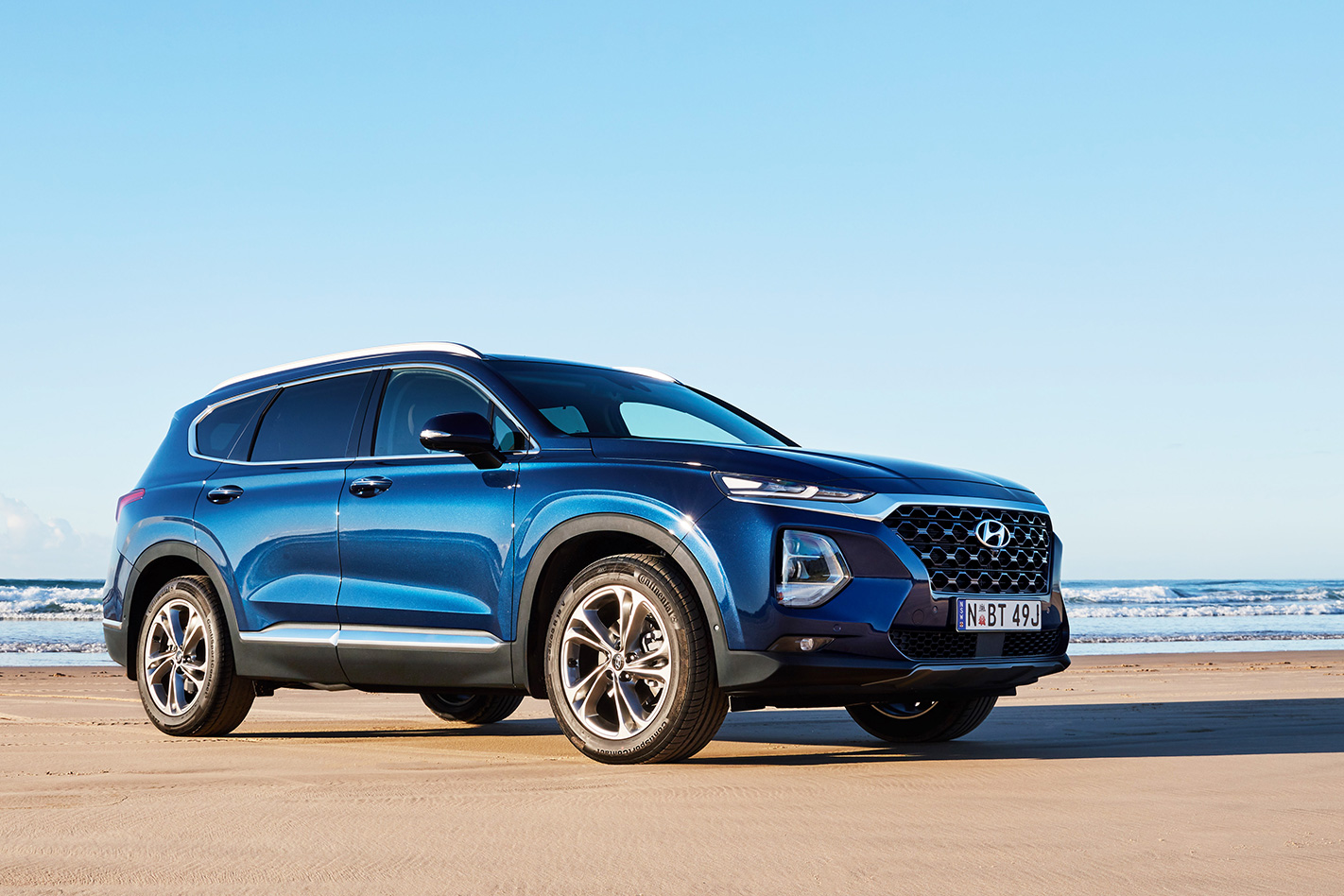
Not surprisingly, it’s the petrol-engined Santa Fe Active that feels lightest on its 17-inch-wheeled feet, blending delightfully keen turn-in (and 2.6 turns lock-to-lock) with crisp steering response and layers of inherent grip and balance. Pity its carry-over engine – the 138kW/241Nm 2.4-litre direct-injection petrol four from the base Sonata, tied to an ageing six-speed automatic – is such an unsuitable foil to its dynamic talents. It’s no complete boat anchor, but there’s a noticeable lack of torque, leaving the transmission to hunt through its stunted ratio set like a stray pooch pining for scraps.
The 147kW/440Nm 2.2-litre turbo-diesel – also carry-over – is far better served in the Santa Fe. Mated to an excellent new eight-speed automatic, its seamlessly muscular operation is the perfect antidote for atmo-petrol frustration. The heavier Santa Fe CRD may feel slightly less wieldy as a result, but the performance benefits far outweigh any reduction in front-end point. In fact, there’s really very little to complain about dynamically, apart from merely competitive levels of tyre noise on coarse surfaces, in particular the flagship Highlander on its flashy 235/55R19 Continental ContiSportContact 5s.

Note that a 3.3-litre petrol V6, a 2.0-litre turbo-petrol four nor a front-drive Santa Fe starter aren’t on the cards right now. Hyundai Australia says it is pushing for whatever it can get its hands on, though the V6 will likely be front-drive only for right-hook markets, as per the previous DM Santa Fe.
From launch, three model grades bolster the new Santa Fe line-up – Active ($43,000 petrol; $46,000 diesel), Elite diesel ($54,000) and Highlander diesel ($60,500). All are pricier than before, but this is far outweighed by Santa Fe’s likeable new interior and enticing levels of kit. Even the base Active gets a comprehensive safety suite (AEB, collision alert, blind-spot and rear cross-traffic collision avoidance assist, lane-keep assist, adaptive cruise), tyre-pressure monitoring, smartphone mirroring, Hyundai Auto Link (a way of monitoring key vehicle functions via an app on your phone), a rear-view camera with parking sensors, LED running lights, air-con with rear temperature control, and a ‘walk-in’ switch on the second-row backrests that electrically flips and slides the seat forward for rear deck access.
The posher-looking Elite adds stuff like leather, electric front seats (10-way driver; 8-way passenger), paddle shifters, an Infinity premium stereo, dual-zone climate control, rear door sunshades, 18s, and a power tailgate, while the Highlander embellishes that via a surround-view monitor, park assist, adaptive LED headlights, LED fogs and tail-lights, 19s, a panoramic glass sunroof, memory settings for its 14-way electric driver’s seat, a configurable TFT instrument cluster, a heated steering wheel, heated outboard rear seats and heated/vented front seats, wireless phone charging, a head-up display and the full-fat version of Hyundai’s Auto Link phone app diagnostics.
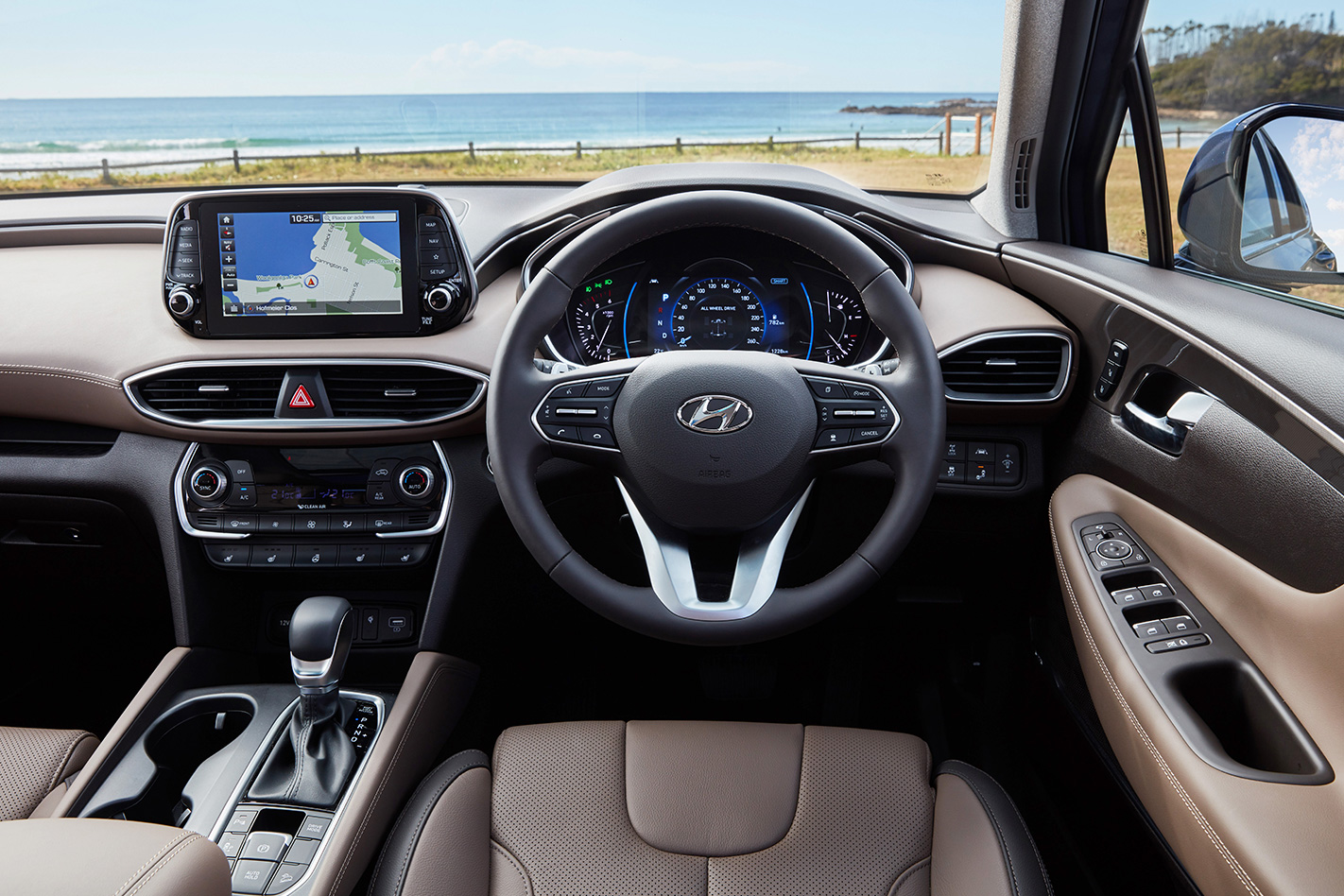
As an indicator of just how chubby the upper-spec Santa Fe’s kit list is, the only options are premium paint ($695) and a beige or burgundy interior colour ($295, instead of charcoal) for the Elite and Highlander’s leather. And while the overall interior design errs on the side of conservatism, it gives a strong impression of quality, and seat comfort is bloody good. Even the brown doesn’t look too poopy … providing you like brown, that is. A pleasing mix of textures and stitching lift the new Santa Fe well beyond the Korean/Japanese norm, and even the Active’s cabin holds some interest.
In brown (with ’80s spa-finish trim inserts) or grey (with technical-print trim), the Active’s two-tone cloth seats are upholstered in what looks like synthetic mouse fur, which is a welcome change from the colourless boredom of so many base interiors. Pity its HVAC section can’t escape the look of poverty.
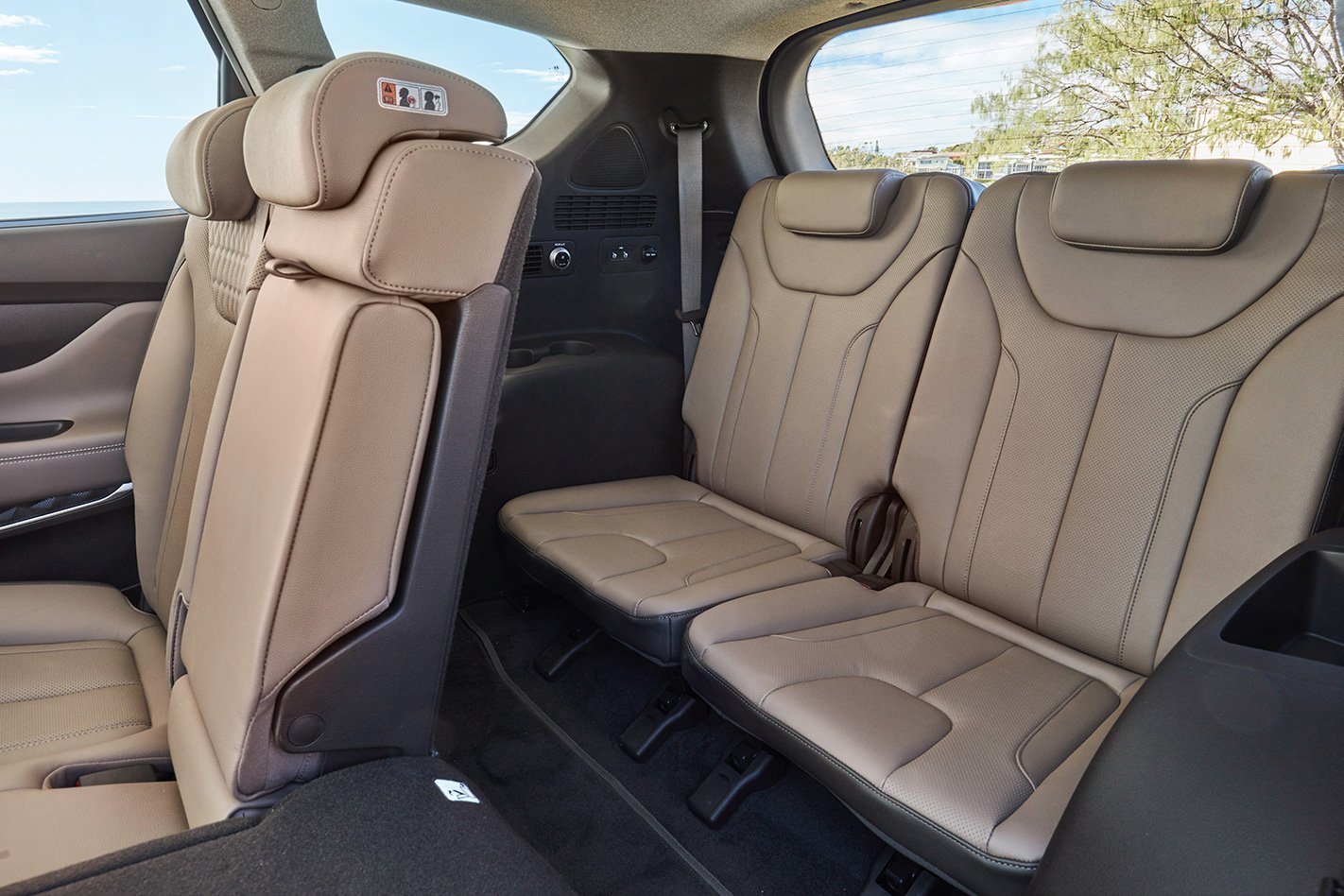
Given that a sizeable wedge of Santa Fe numbers will be the Elite and Highlander, the Active’s slight tinge of entry-level motoring won’t spoil Hyundai’s ascension among the large SUV ranks. In AWD diesel form, the Santa Fe is an incredibly strong contender, right-sized for families and driving enthusiasts alike who don’t need the full-size acreage of a full-time seven seater. As for the petrol version, watch this space.

SPECS
Model: Hyundai Santa Fe Highlander CRD Engine: 2199cc 4cyl, dohc, 16v, TD Max power: 147kW @ 3800rpm Max torque: 440Nm @ 1750-2750rpm Transmission: 8-speed automatic L/W/H/WB: 4770/1890/1705/2765mm Weight: 1995kg 0-100km/h: 9.0sec (estimated) Economy: 7.5L/100km Price: $60,500 On sale: Now
The new 2018 Renault Mégane RS has had its pricing and specifications confirmed for Australia, with the French hot hatch fitting in neatly to the current fold of front-drivers.
The 205kW/390Nm Mégane has been priced at $44,990 for a manual version before on-roads, or $47,490 for a dual-clutch. The Cup Pack comes at an additional $1490, which adds a sharper chassis, Brembo brakes, black 19-inch wheels, and a Torsen LSD at the front.

We’re comparing it with its rivals on price and specs to give you an idea of what to expect. We’re also limiting it to fellow front-drivers, so the Golf R and Focus RS are out of the game.
2018 Mk7.5 Golf GTI – $41,490 (m) / $43,990 (dct)
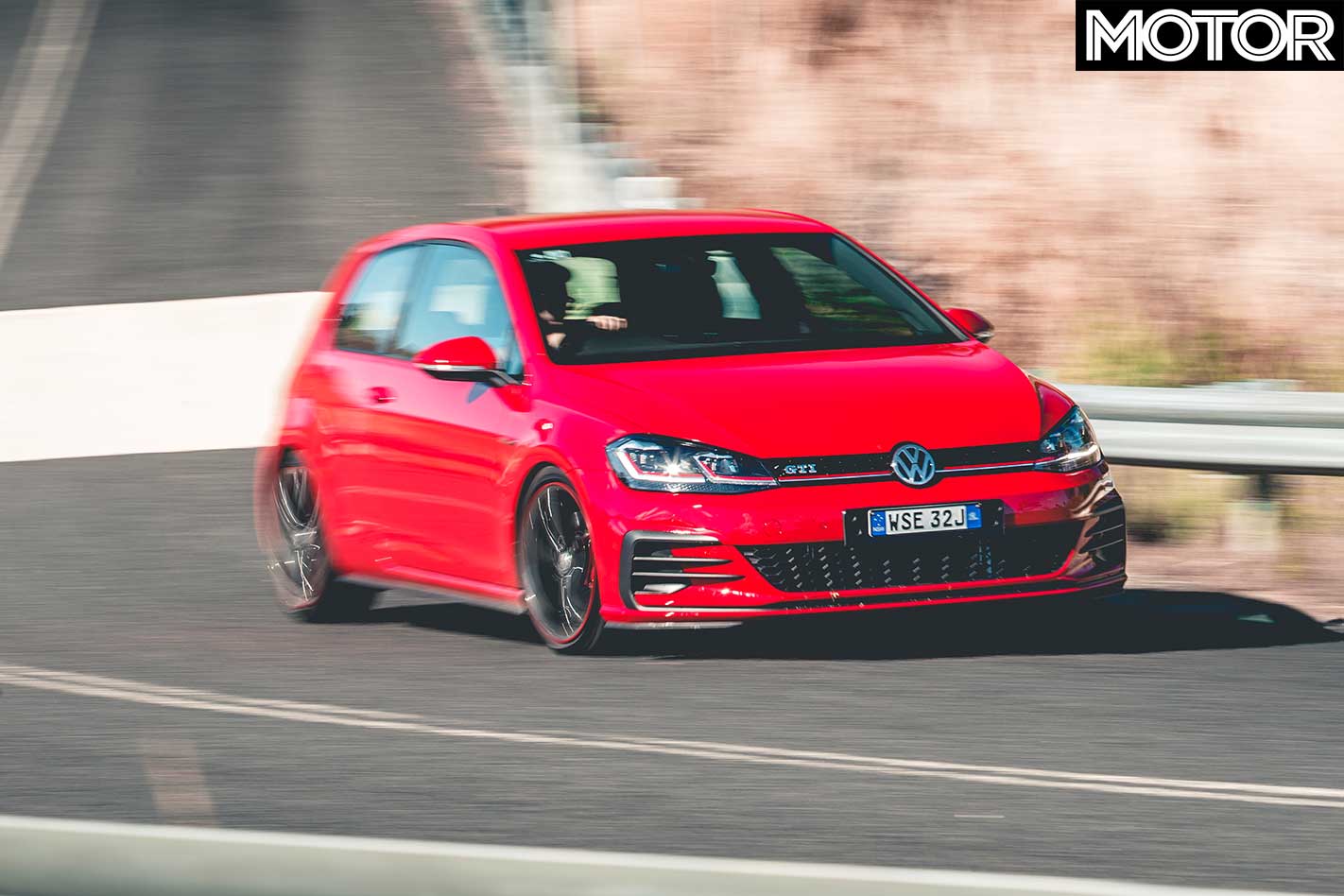
Considered the benchmark by many, the GTI is best described as a ‘do-it-all’ hot hatch.
The more affordable Golf GTI is less powerful with 169kW, and less torquey with 350Nm, but lighter by nearly 100kg (1329kg to the manual Mégane’s 1427kg).
It’s also a generally more popular car with broad appeal, leading us to believe it’ll top the Mégane at a showroom level, even if it doesn’t in terms of dynamics.
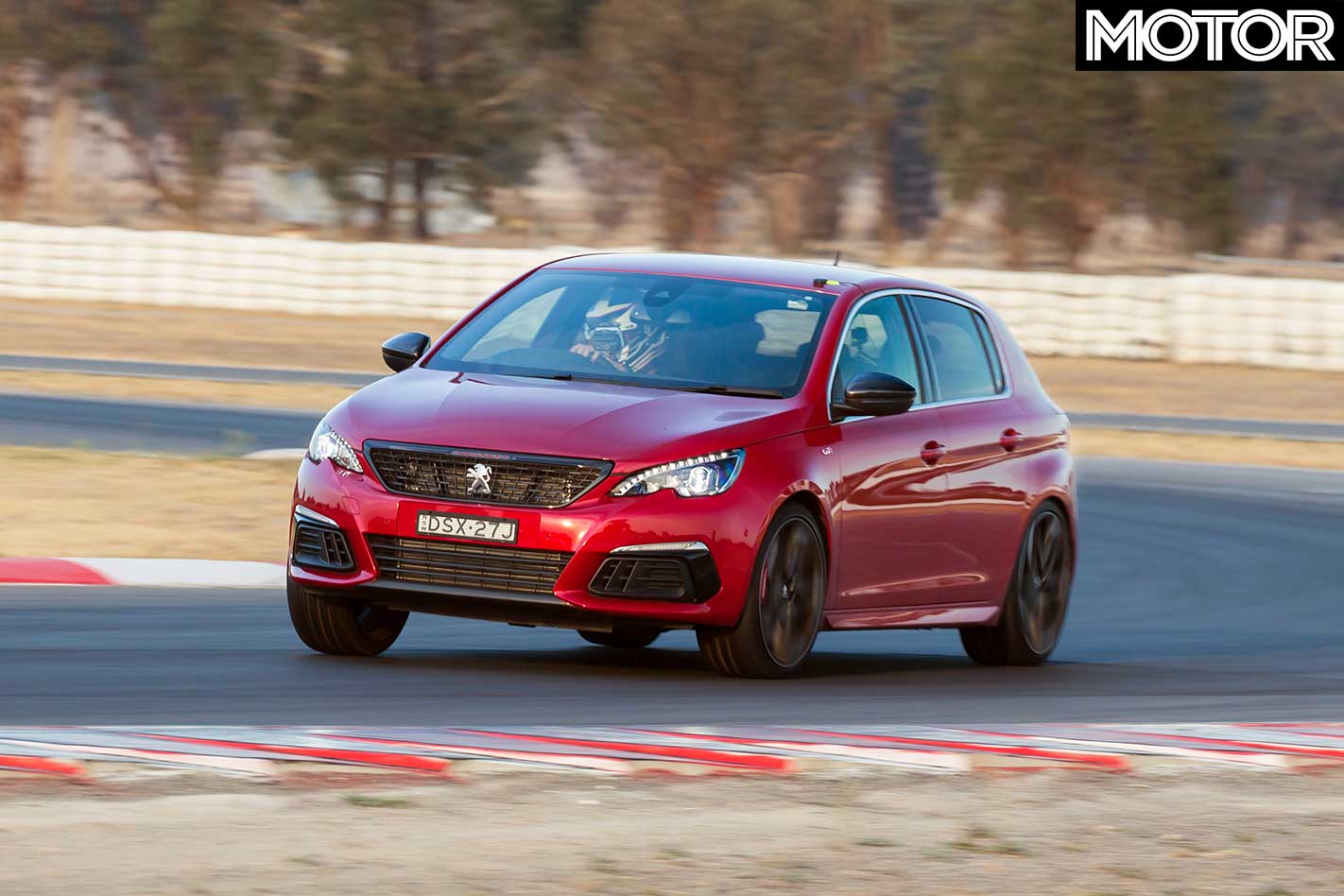
The ageing fellow-Frenchie recent had its price dropped to the same price as the Mégane RS at $45,990.
It’s a little less powerful with only 200kW, and has 60 fewer Newtons, but its kerb weight of just 1200kg makes it a dynamic delight.
It’s an often overlooked performance hatch, but in terms of polish we suspect the Mégane will show it up by a long way.
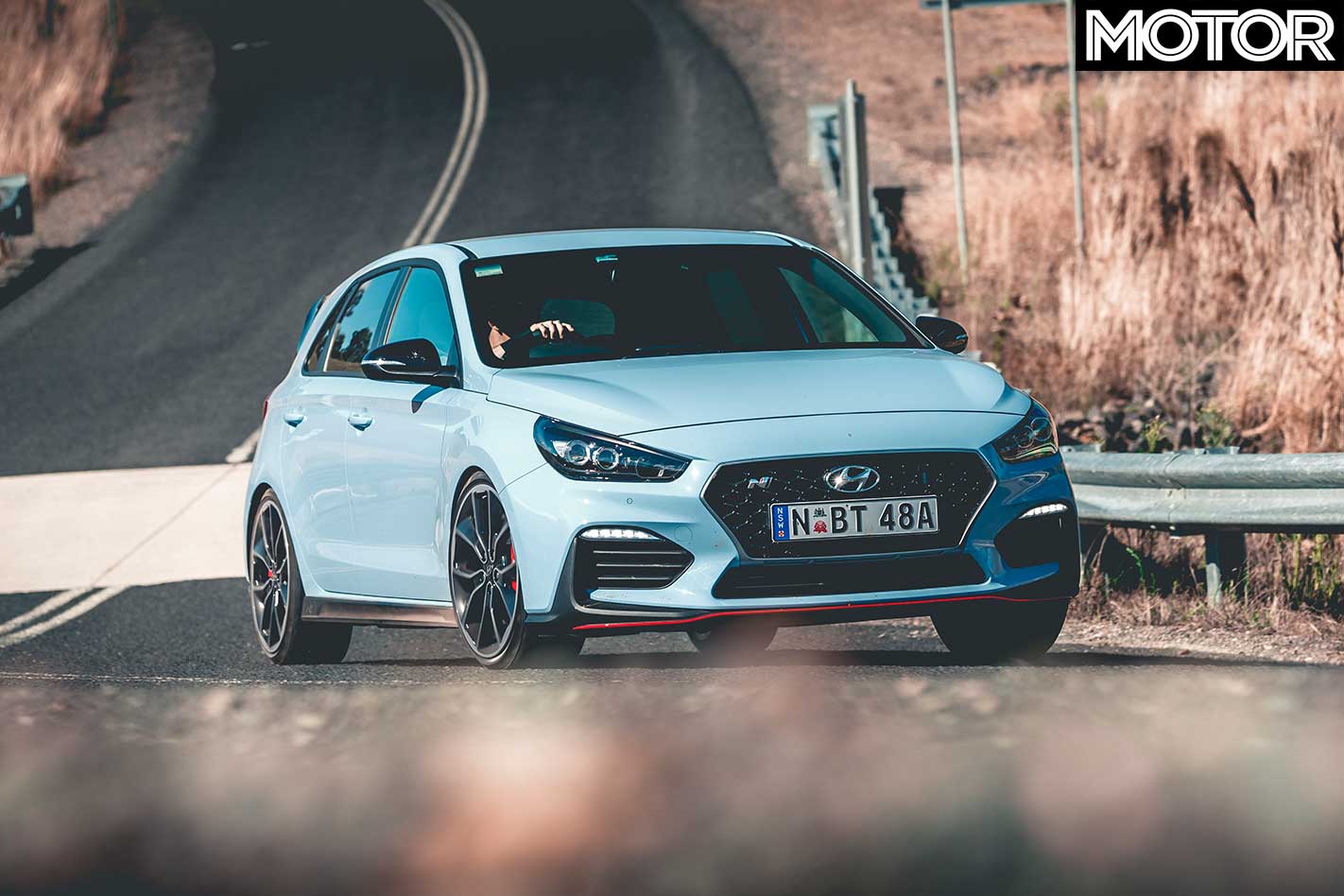
A complete newcomer to the field, the i30 N is vastly impressive given it’s a first attempt at a Hyundai hot hatch.
However, it seems like the sort of car that’ll come down to individual preferences. The i30 N’s 202kW and 378Nm are creeping up on the Mégane’s figures, and it’s only 2kg heavier. Hyundai claims 6.1 seconds to 100km/h, three tenths slower than the Mégane.
But it’s arguably not as good-looking, and could be seen as the ‘boy-racer’ alternative for it’s rorty exhaust and more rally-inspired styling.
The big plus is that it’s $5K cheaper.

Our Performance Car of the Year 2018, the Civic Type R will be the toughest opponent for the Mégane RS to take down.
However, the 228kW/400Nm Honda also costs $6000 more at $51,990, likely putting it out of reach for some who’d consider the Mégane.
Additionally, it’s a four-seater, costing it some convenience points. It’s well fast though, clocking 0-100km/h in just 5.68 seconds in our hands, up against the Mégane’s claimed 5.8sec.
The Goodwood Festival of Speed is a highlight in the motorsport calendar, where global car manufacturers have the opportunity to reveal their newest and greatest creations.
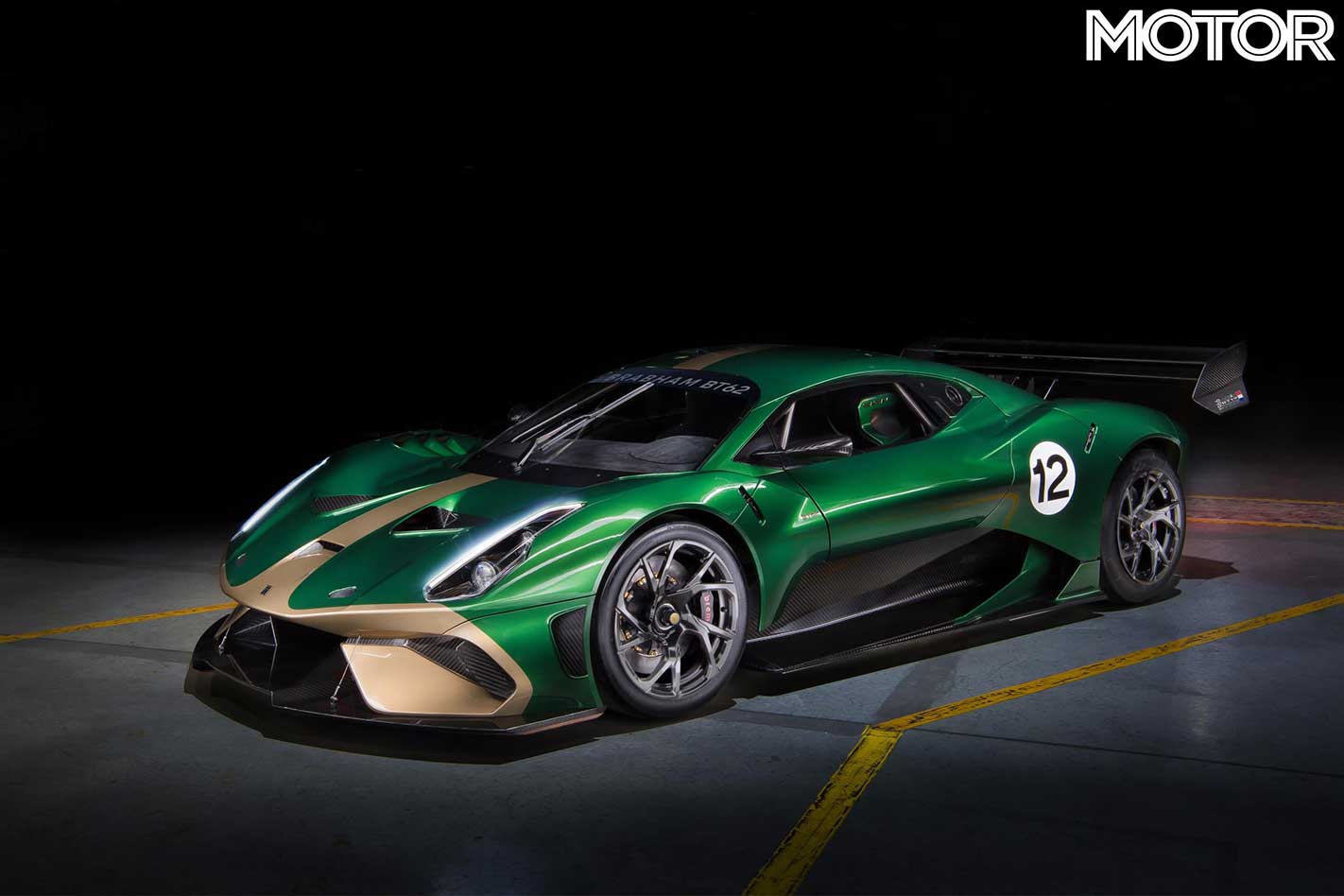
The 2018 festival will be graced with the reappearance of the famous Brabham name, where the company will debut its BT62 race car being driven for the public to see in the metal for the very first time.
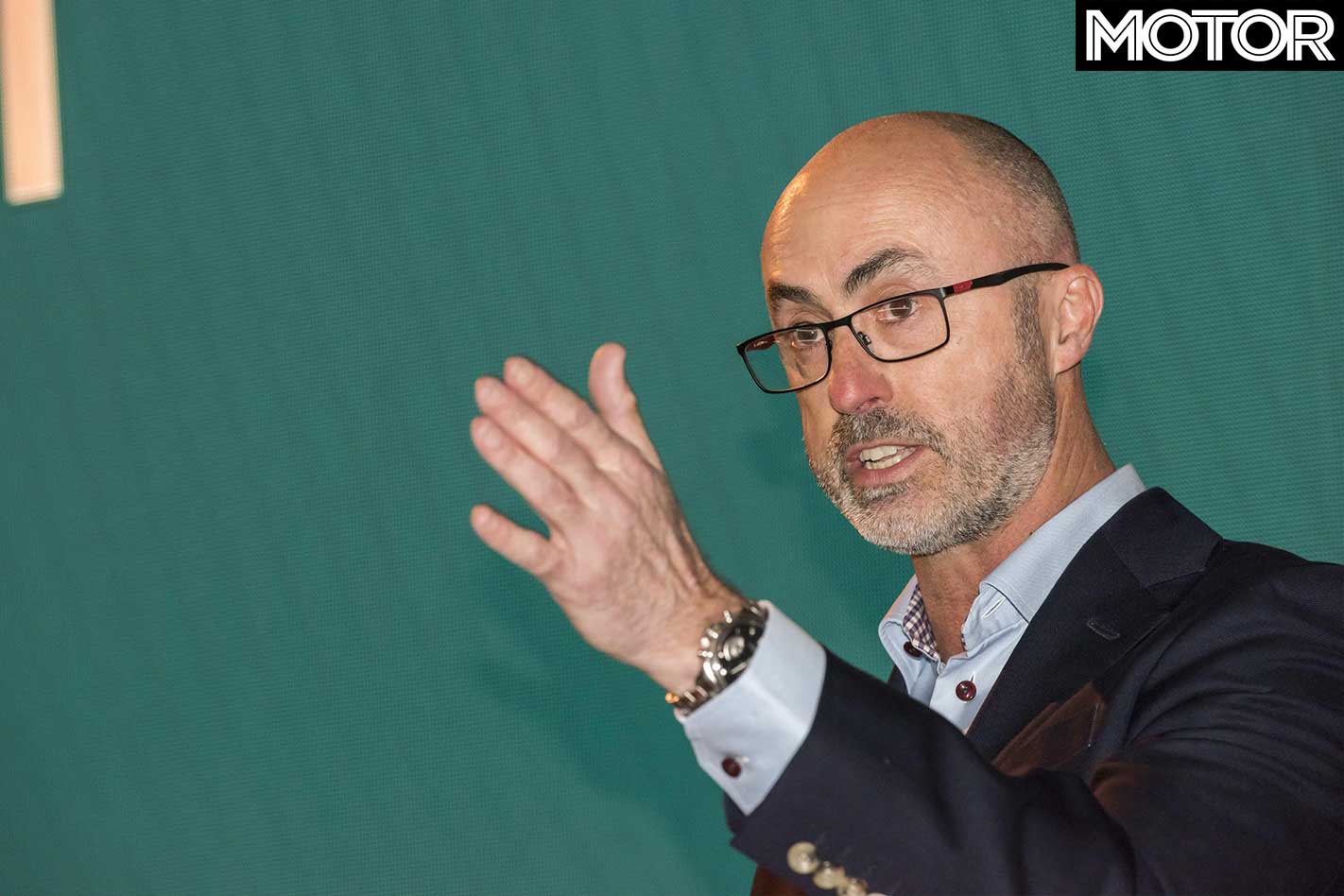
David Brabham, now the head of Brabham Automotive, says he is proud to be taking part in such a prestigious event, and to be continuing the legacy set by his father.
“Giving the BT62 its dynamic public debut and returning the Brabham name, with all of its historical significance and racing pedigree, to Goodwood will be an experience I’ll never forget,” he says.
“My father attended the Festival himself many times, and it’s great to continue the tradition of a Brabham driving a Brabham up the hill.”
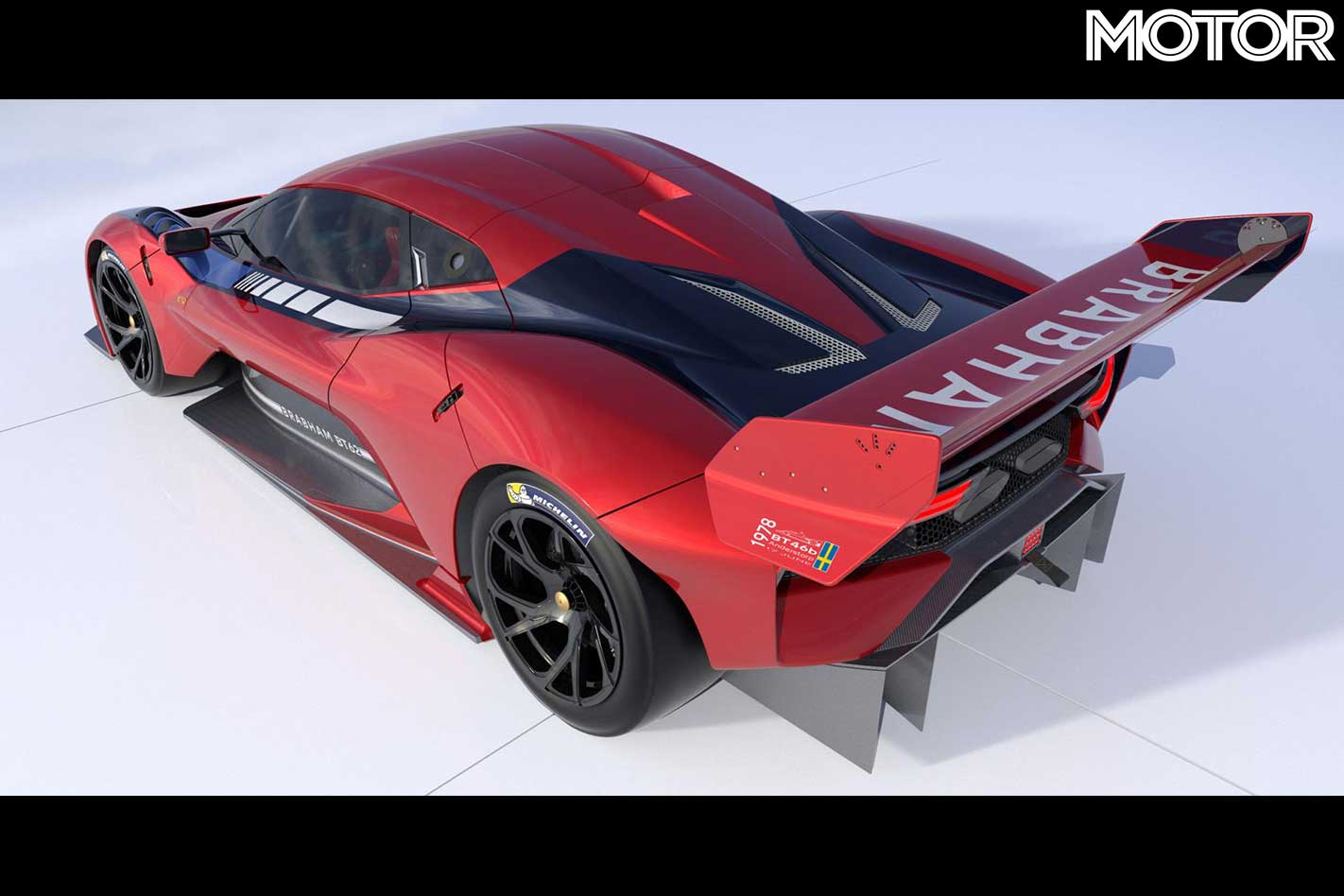
The Brabham BT62 features a naturally-aspirated 5.4-litre V8 engine producing 530kW of power. The car weighs just 972kg and includes a state-of-the-art aero package which produces 1200kg of downforce at a 320km/h top speed.
The combination of these factors means that the Brabham BT62 will be blisteringly quick and clock up some serious times.
The Brabham race car will be covered in the iconic red and blue livery inspired by the ‘infamous’ Brabham BT46B ‘Fan Car’ which was driven by Formula 1 driver Niki Lauda to two celebrated victories in 1978.
Several other car manufacturers will join Brabham in debuting cars of their own.
BMW will unveil its 8 Series Coupe in M8 guise and an M2 with Performance Parts at the festival.
Lamborghini’s first performance SUV, the Urus, will also make a dynamic debut at the festival. It will be joined by the all new Huracan Performante Spyder. The Urus shares its platform with the related Audi Q7, Porsche Cayenne and the Bentley Bentagya.
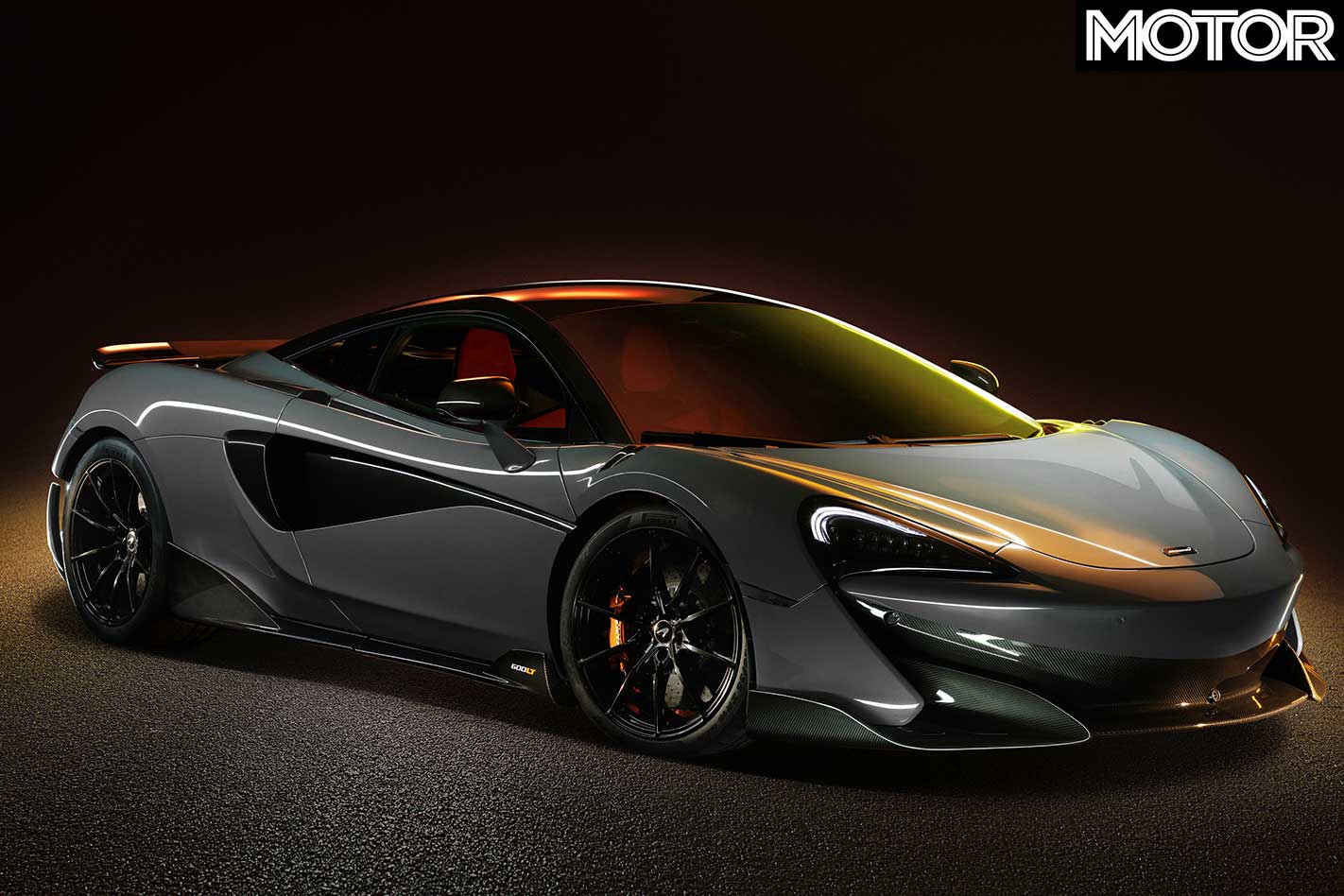
Mclaren will also debut its 600LT supercar and the P1 GT. This particular version of the P1 has been performance tailored by British engineering firm Lanzante.
The festival will run from Thursday 12th July to Sunday 15th July at the Goodwood estate.
The end of local Camry production has not harmed Toyota in Australia, with the motoring giant increasing its dominance over the Australian new car market for the first half of 2018.
According to VFACTS figures, the Japanese motoring giant has sold 111,854 cars up to June 30, up 2828 vehicles, or 2.6 percent from the same period last year, to secure an 18.5 percent market share. Leading the Toyota sales sheet was Hilux (26,402), Corolla (19,143), RAV4 (11,770), Prado (9268) and Camry (7496).
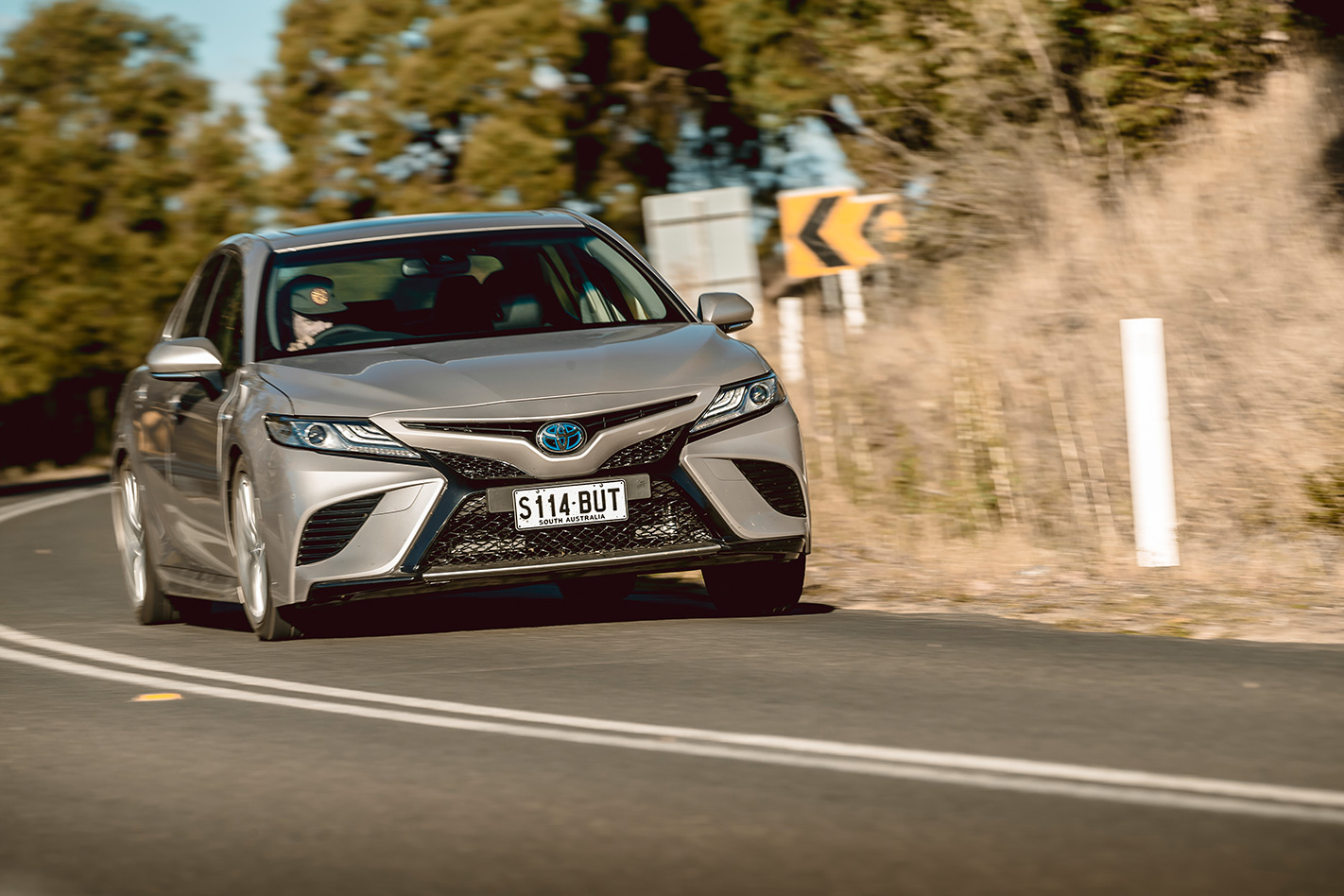
Hilux finished the first half of 2018 as Australia’s highest selling vehicle, with the Corolla again the biggest selling passenger car despite a 1.6 percent dip in year-to-date sales. It’s worth noting that an all-new Corolla arrives in August, so the current model is well and truly in run-out phase.
Plenty of daylight separated Toyota and its nearest rival Mazda, which saw a 3.5 percent dip in sales compared to the first half of 2017, with 59,344 vehicles sold to take 9.8 percent market share. This was followed by Hyundai (49,943), and Mitsubishi (43,871), the latter of which was up 10.4 percent over the same period in 2017 on the back of strong ASX and Triton sales.
It was a very different story for Holden, whose market share dropped from 7.0 percent to 5.4 percent, with just 32,614 cars sold compared with 42,113 during the first half of 2017. Commodore sales for the first half of 2018 dropped by more than 50 percent compared to the same time in 2017, from 10,943 to 5384, despite the VF Commodore still being in production at the time.
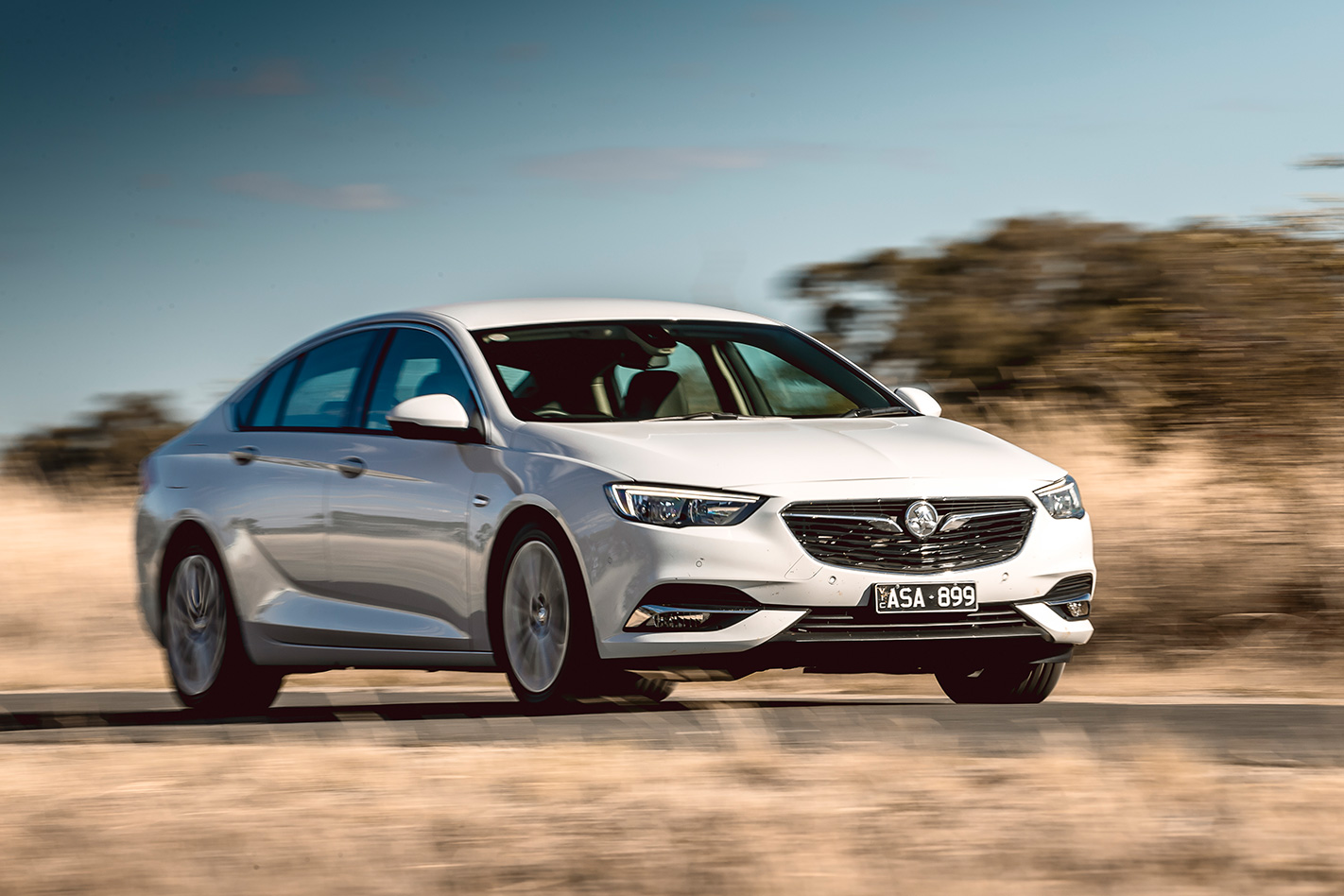
The new-gen ZB Commodore managed 1159 sales last month, compared to 2054 Commodore sales in June 2017.
However, the second half of 2018 is looking more promising for the Red Lion. Holden’s June sales were up from 5129 in May to 7385, seeing it jump back to sixth spot in June from an all-time low of eighth in May. Holden dealers will no doubt be bolstered by the news that the company has permanently extended its three year warranty to five years.
Ford has experienced a similar slump this year, with 36,443 vehicles sold up till June 30, compared to 40,705 compared to the same period in 2017, with Ranger (22,106) making up the bulk of the Blue Oval’s sales.
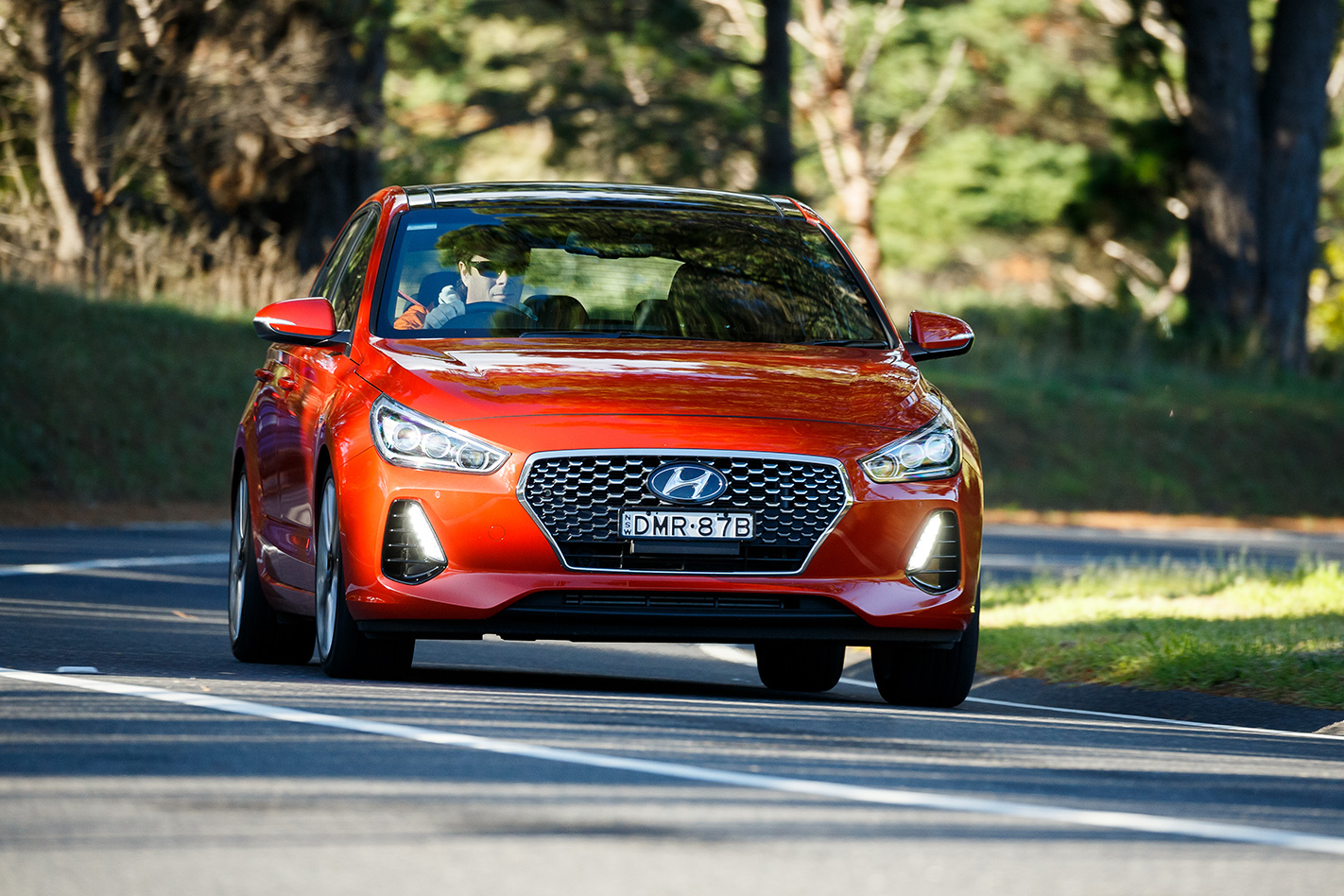
June was a good month for Hyundai i30, which beat the Mazda 3 to second biggest selling passenger car, though the Mazda still has the edge in year to date sales. The Honda CR-V (2232) also did well to bust into last month’s top-10, ousting the Nissan Qashqai in 11th.
Top 10 Manufacturers – June 2018/YTD
- Toyota – 23,171/111,854
- Mazda – 12,469/59,344
- Hyundai – 10,436/49,943
- Mitsubishi – 10,232/43,871
- Ford – 7492/36,443
- Holden – 7385/32,614
- Kia – 7067/31,348
- Honda – 7013/29,301
- Nissan – 6604/29,727
- Volkswagen – 6334/29,469
AUSTRALIA’S TOP 10 SELLING VEHICLES – JUNE 2018/YTD
- Toyota Hilux – 5787/26,402
- Ford Ranger – 4769/22,106
- Mitsubishi Triton – 3919/13,815
- Toyota Corolla – 3780/19,143
- Hyundai i30 – 3547/14,980
- Mazda 3 – 3327/17,090
- Mazda CX-5 – 3136/13,847
- Toyota RAV4 – 2690/11,770
- Volkswagen Golf – 2317/10,479
- Honda CR-V – 2232/9042
SEGMENT LEADERS
Micro cars – June 2018/YTD
- Kia Picanto – 812/2830
- Holden Spark – 82/562
- Mitsubishi Mirage – 82/447
Light cars – June 2018/YTD
- Hyundai Accent – 1522/8363
- Mazda 2 – 1149/5764
- Toyota Yaris – 1056/4885
- Toyota Corolla – 3780/19,143
- Hyundai i30 – 3547/14,980
- Mazda 3 – 3327/17,090
- Toyota Camry – 1380/7496
- Mercedes-Benz C-Class – 434/3125
- Mercedes Benz CLA-Class – 420/1833
- Holden Commodore – 1159/5384
- Kia Stinger – 188/1084
- Mercedes Benz E-Class – 180/781
- Kia Carnival – 659/3251
- Honda Odyssey – 279/1094
- Volkswagen Multivan – 122/575
- Nissan Qashqai – 2198/7213
- Mitsubishi ASX – 2053/9899
- Mazda CX-3 – 1869/881
- Mazda CX-5 – 3136/13,847
- Toyota RAV4 – 2690/11,770
- Honda CR-V – 2232/9042
Large/Upper large SUVs – June 2018/YTD
- Toyota Prado – 1688/9268
- Toyota Kluger – 1757/7552
- Toyota LandCruiser Wagon – 1359/7277
- Ford Mustang – 635/2920
- Mercedes-Benz C-Class coupe/convertible – 260/1064
- Toyota 86 – 111/538
Light Commercial utes – June 2018/YTD
- Toyota Hilux – 5787/26,402
- Ford Ranger – 4769/22,106
- Mitsubishi Triton – 3919/13,815
JAPANESE car makers have made huge inroads into the Australian new-car market over the last 12 months, results for the 2017-18 financial year show.
Honda, Mitsubishi, Isuzu and Subaru have all shown the biggest gains compared with the 2016-17 financial year, with the market overall eclipsing the 2017 calendar year’s record 1,189,116 sales to close the books with 1,195,086 sales, 4.9 percent ahead of the calendar year’s result. Kia has also had a strong fiscal year, nudging 60,000 sales.
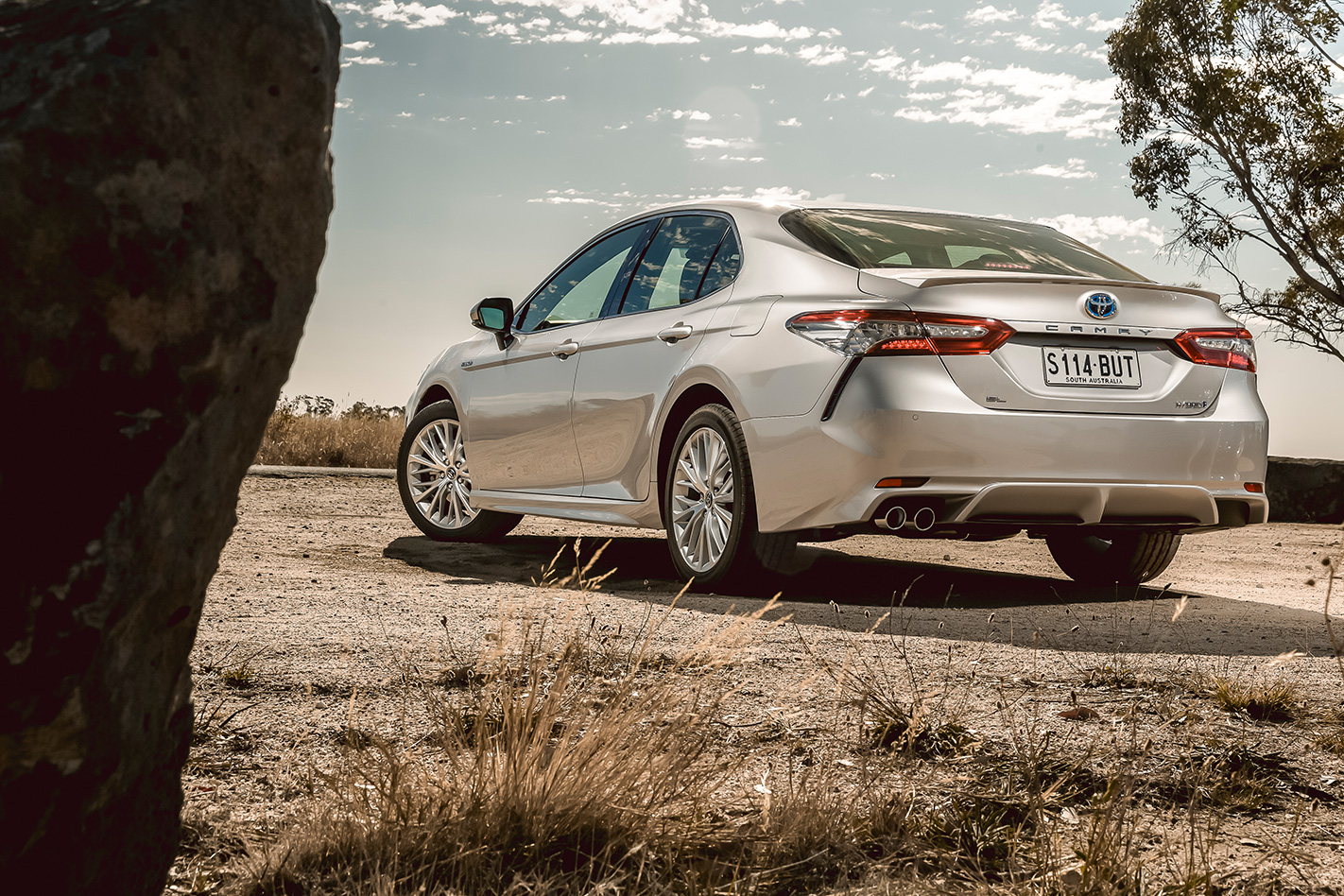
With the winners come the losers. Brands losing significant ground in the 12 months up to June 30, 2018 include Fiat, Ford, Holden, Infiniti, Jeep, Jaguar, Nissan and Porsche.
The strong result for the 2017-18 financial year comes on the back of two straight months of soft decline for the market to June, but on the back of a strong finish to 2017.
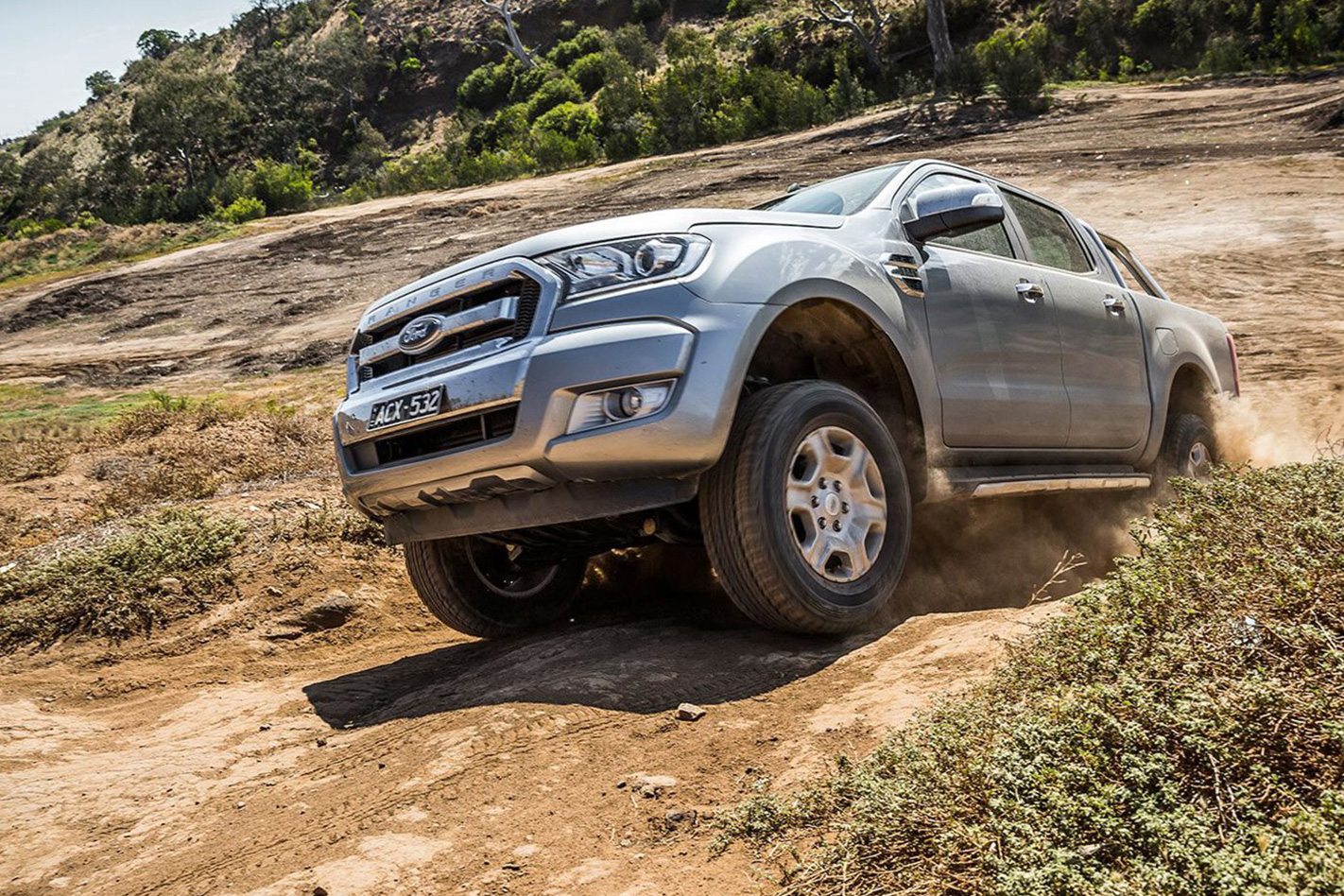
Market giant Toyota finished the year relatively flat, posting a 219,394 sales result for the 12-month period, a fall of 1.4 percent. Mazda placed second, claiming 114,197 sales for the period, a fall of 3.8 percent over the previous financial year’s result.
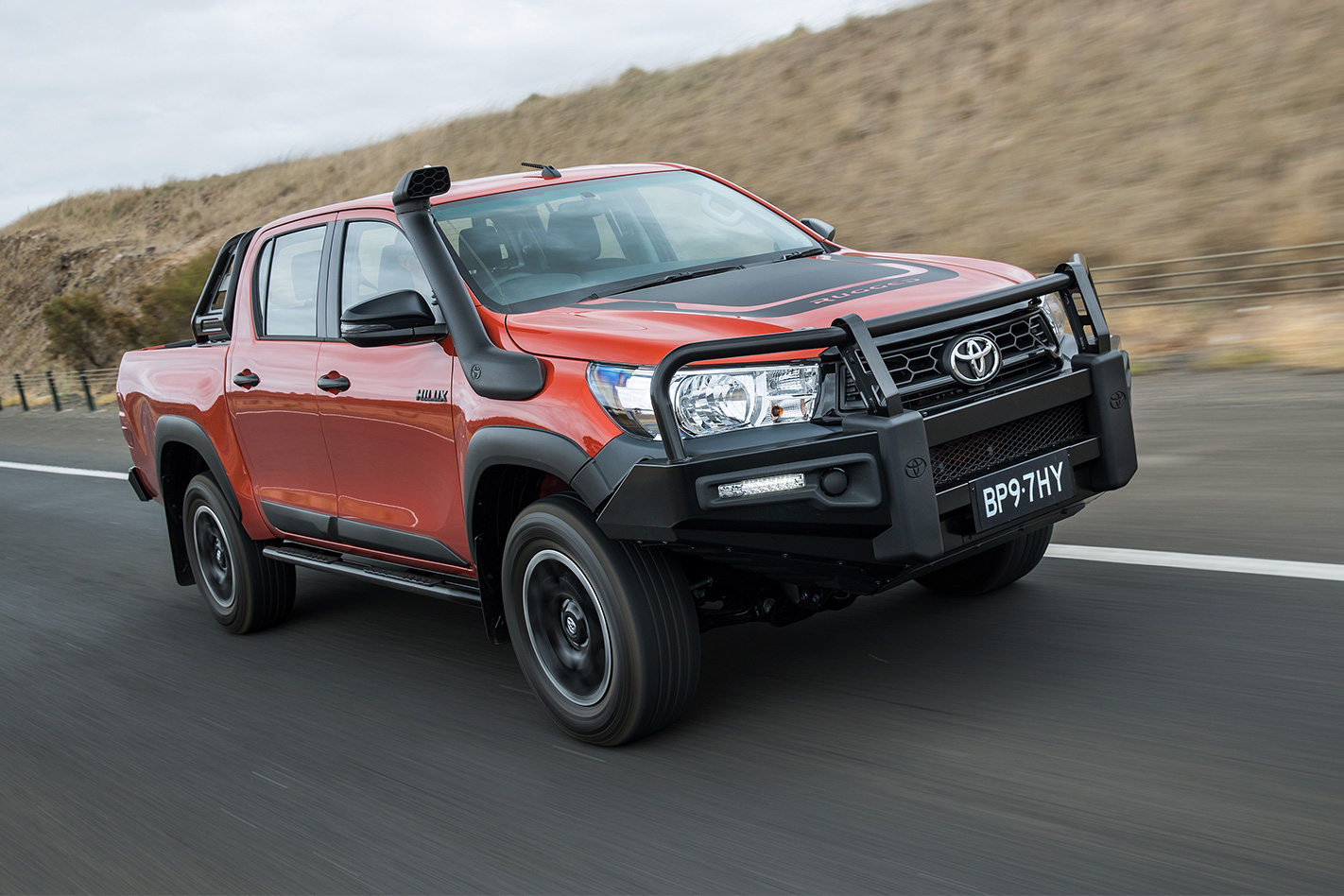
Hyundai, which remained flat with only a 0.1 percent gain, logged 97,137 sales, still short of the psychological 100,000 glass ceiling. Making Hyundai uneasy is Mitsubishi, which has risen 12 percent over the last 12 months with 84,852 sales.
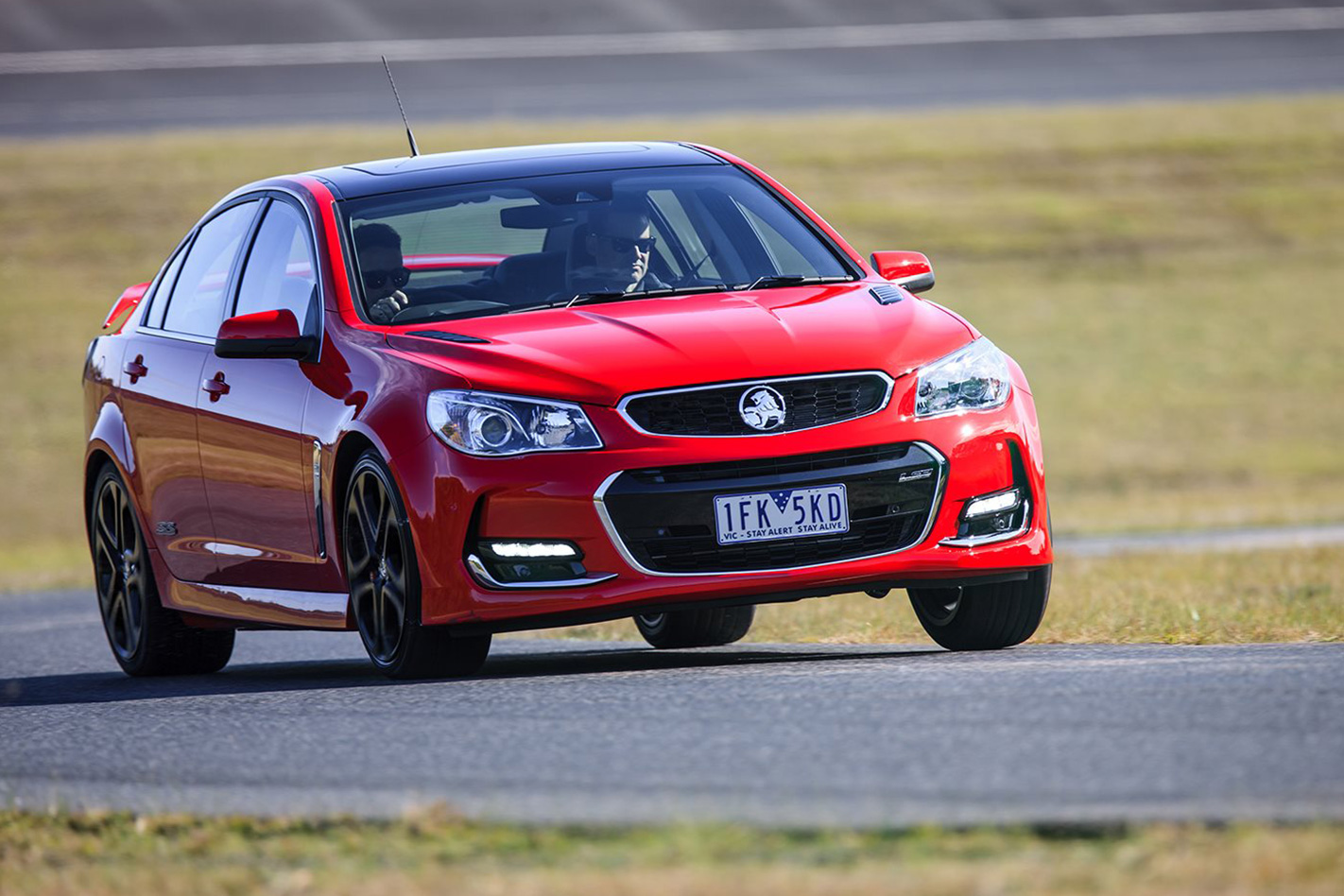
Holden’s woes since the start of this year are masked by the rush to buy the last of the locally made Holden Commodores, which created a sales spike for the brand in the last half of 2017. It slotted in at fifth, with its worst result on record in early 2018 contributing to an 8.6 percent slide to 80,807 sales, but enough to keep it ahead of sixth-placed Ford with 73,889 sales.
Forget Dieselgate. Volkswagen made a 4.4 percent gain in the 2017-18 financial year to close with 58,344 sales, with Kia placed in eighth with 57,350 sales and a hugely impressive 14.4 percent kick.
Nissan had a tough 12 months, losing 11.2 percent of the previous year’s sales to close the books with 56,141 buyers on its books, good enough to place it ninth. Snapping on its heels is Honda, which has made a 26 percent gain fiscal year-on-year. It wasn’t far behind its Japanese rival on 54,253 sales.
In terms of the luxury brands, Merc’s figures are a bit of a mess to figure out as it has spun out the numbers for its commercial vehicles division separately from its passenger car range. But both Audi (21,933 sales) and BMW (23,685) have struggled to improve their form, falling 3.8 percent and 5.7 percent respectively. Lexus, meanwhile, has wobbled around 8088 sales, a 1.6 percent fall compared with 2016-17.
Last financial year was a cracking one to be in Ferrari sales. The brand finished the year 15.6 percent up, with a total of 230 cars making their way into buyers’ garages – that’s more than Chrysler sold of its 300 sedans.
2017-18 FINANCIAL YEAR SALES
Brand | 2017-18u00a0 | 2016-17u00a0 | % move |
1121 | 806 | 39.1 | |
139 | 128 | 8.6 | |
21,933 | 22,801 | -3.8 | |
197 | 216 | -8.8 | |
23,685 | 25,117 | -5.7 | |
4 | 13 | -69.2 | |
264 | 337 | -21.7 | |
679 | 729 | -6.9 | |
230 | 199 | 15.6 | |
1500 | 2368 | -36.7 | |
73,899 | 81,524 | -9.4 | |
512 | 327 | 56.6 | |
625 | 625 | 0.0 | |
80,807 | 88,411 | -8.6 | |
54,253 | 43,036 | 26.1 | |
97,137 | 97,024 | 0.1 | |
649 | 872 | -25.6 | |
27,091 | 24,023 | 12.8 | |
2267 | 3201 | -29.2 | |
7789 | 10161 | -23.3 | |
57,350 | 50,117 | 14.4 | |
123 | 107 | 15.0 | |
12,741 | 12,516 | 1.8 | |
8808 | 8948 | -1.6 | |
65 | 51 | 27.5 | |
714 | 615 | 16.1 | |
114,197 | 118,740 | -3.8 | |
103 | 126 | -18.3 | |
41,981 | 42,863 | -2.1 | |
MG | 1243 | -1560 | -179.7 |
3957 | 5704 | -30.6 | |
84,852 | 75,776 | 12.0 | |
15 | 4 | 275.0 | |
56,141 | 63,233 | -11.2 | |
3651 | 2214 | 64.9 | |
4040 | 4555 | -11.3 | |
20 | 83 | -75.9 | |
RAM | 328 | 314 | 4.5 |
10,658 | 11,170 | -4.6 | |
45 | 39 | 15.4 | |
5649 | 4912 | 15.0 | |
34 | 182 | -81.3 | |
52,854 | 48,919 | 8.0 | |
18,932 | 19,134 | -1.1 | |
219,394 | 216,292 | 1.4 | |
58,344 | 55,891 | 4.4 | |
5303 | 5438 | -2.5 |
FORGET about TRD. It’s still around, clinging on primarily in the USA, but the Toyota Racing Development badge is being squeezed out by a new entity – Gazoo Racing.
As Toyota’s newly-minted performance sub-brand, Toyota hopes Gazoo will, with time, become as synonymous with performance cars as Renault Sport and Mercedes-Benz’s AMG.
So far, Gazoo’s reach in showrooms has been limited. Besides a limited-edition supercharged Yaris GRMN (that stands for ‘Gazoo Racing Meister of Nurburgring’), the rest of the Gazoo-fettled line-up exists only within Japan – and besides a GRMN version of the 236kW rear-drive Mark X sedan, they’re all fairly tame.
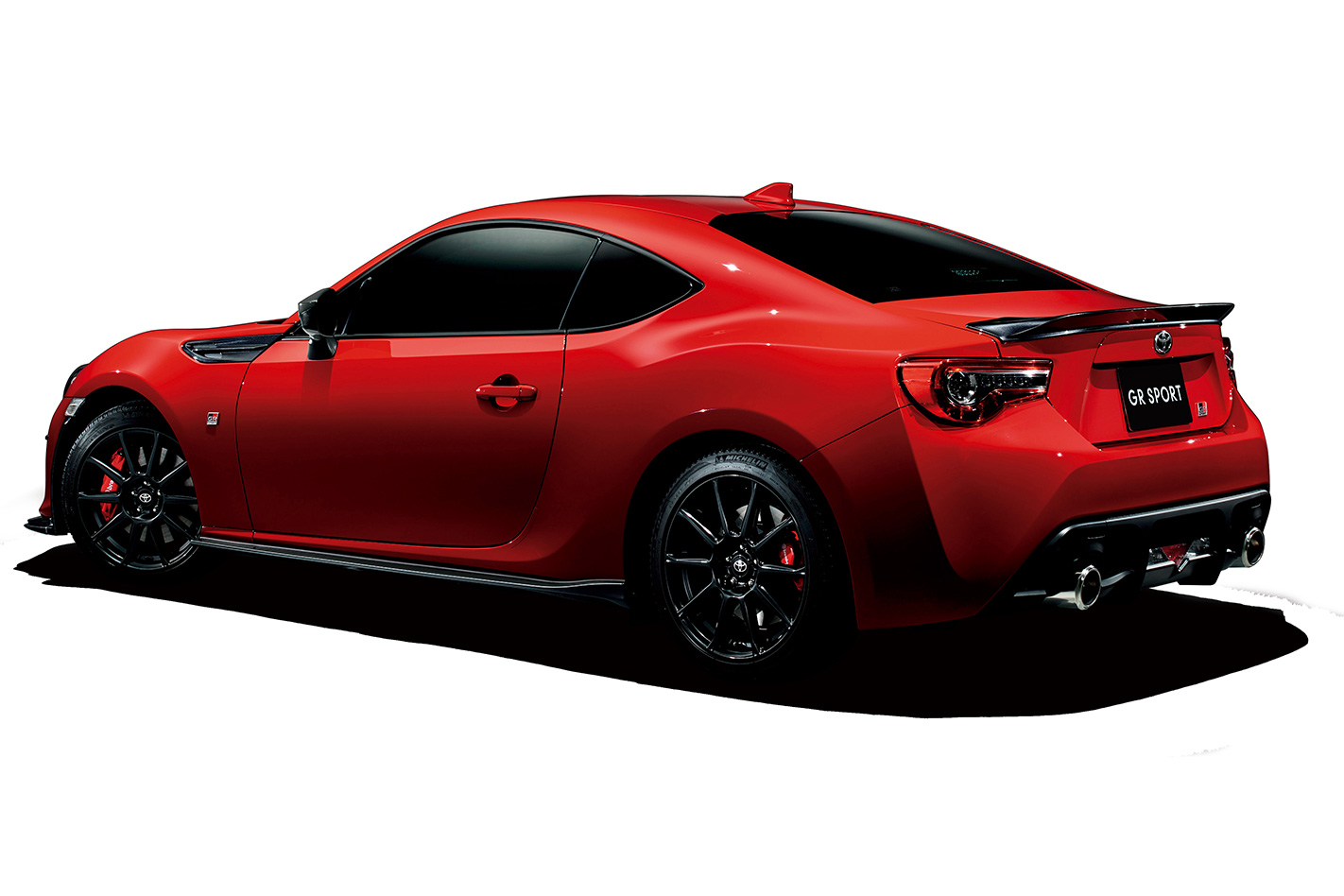
Enter the 86 GR Sport. Announced this week, the 86 GR Sport is another Japan-only model, but it demonstrates how the Gazoo formula can be about more than just bodykits and wheels, while still being very much on the street-friendly side of the performance spectrum.
First, an explainer. “GR Sport” is pitched as the lowest rung in the Gazoo performance ladder. Above it lies “GR”, while the “GRMN” suffix is only applied to the highest-performing models in the range, and only those with extensive mechanical upgrades. There’s already an 86 GR in Japan, and this new 86 GR Sport sits beneath it.
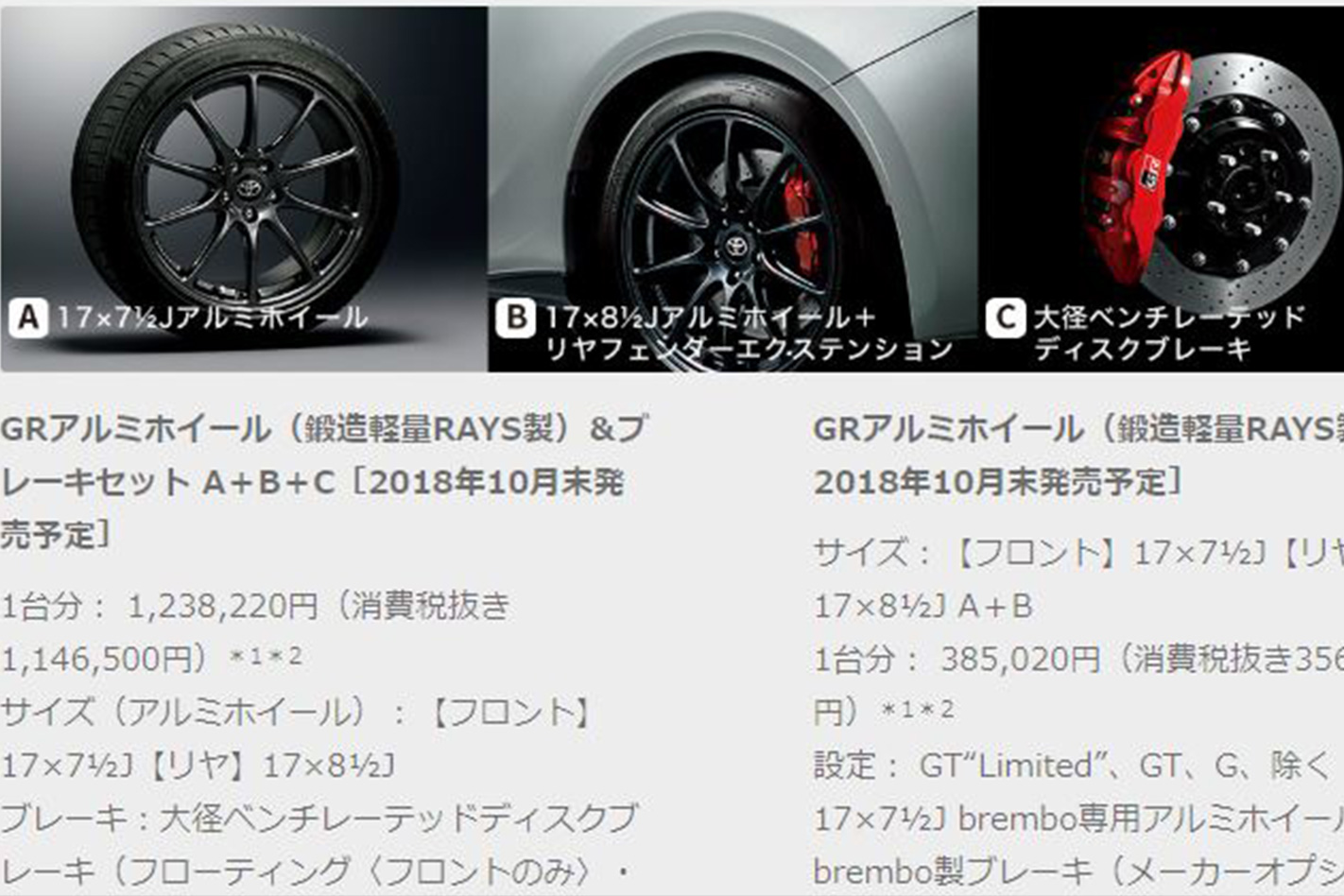
In Japanese specification, the 86 GR Sport nets you Sachs dampers, four-piston Brembo brakes, 17-inch alloys and grippier Michelin tyres. Sound familiar? That’s because the same gear is already available in Australia in the form of the optional 86 Performance Kit – a $2900 option on the base 86 GT, and a $2200 option on the flagship 86 GTS.
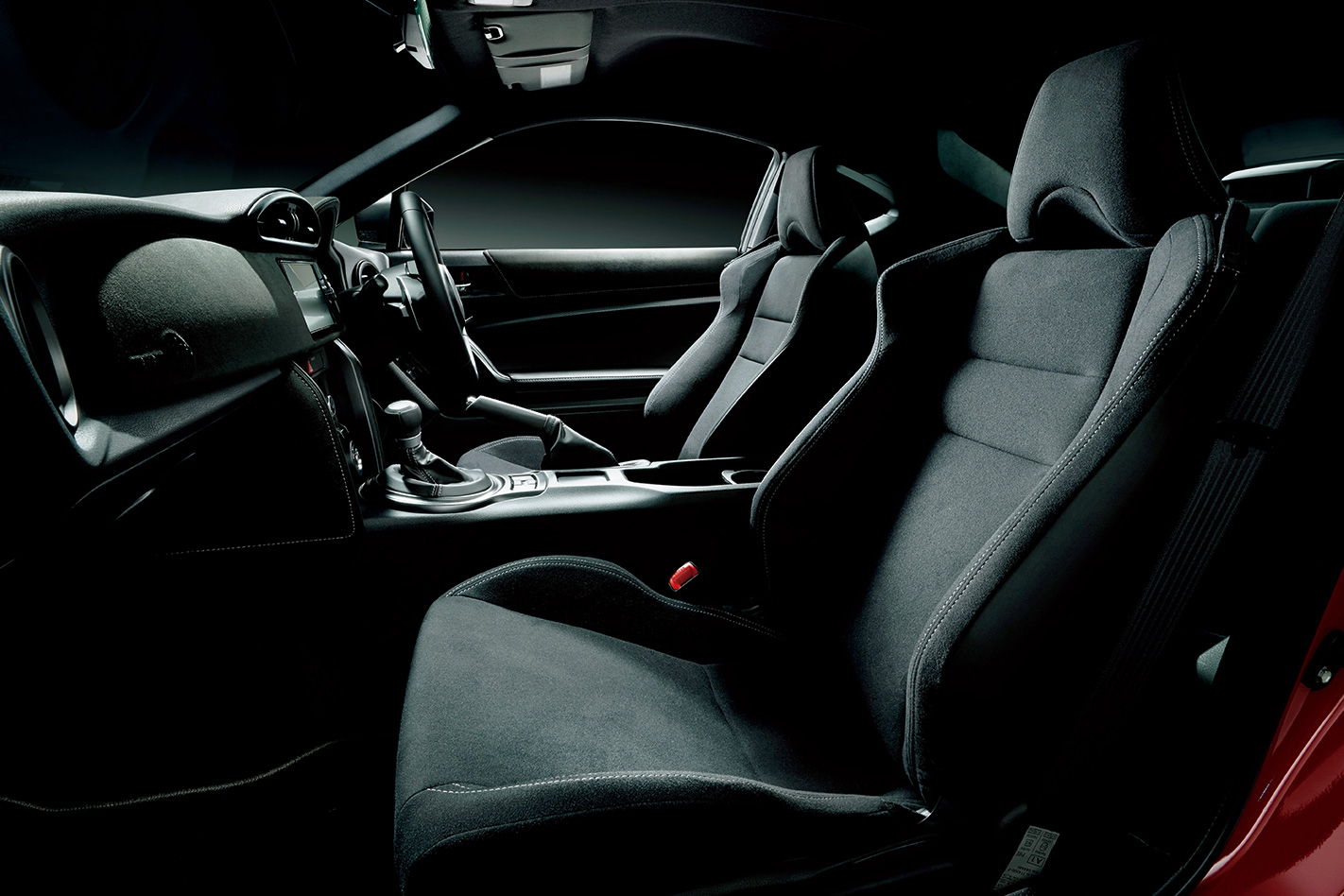
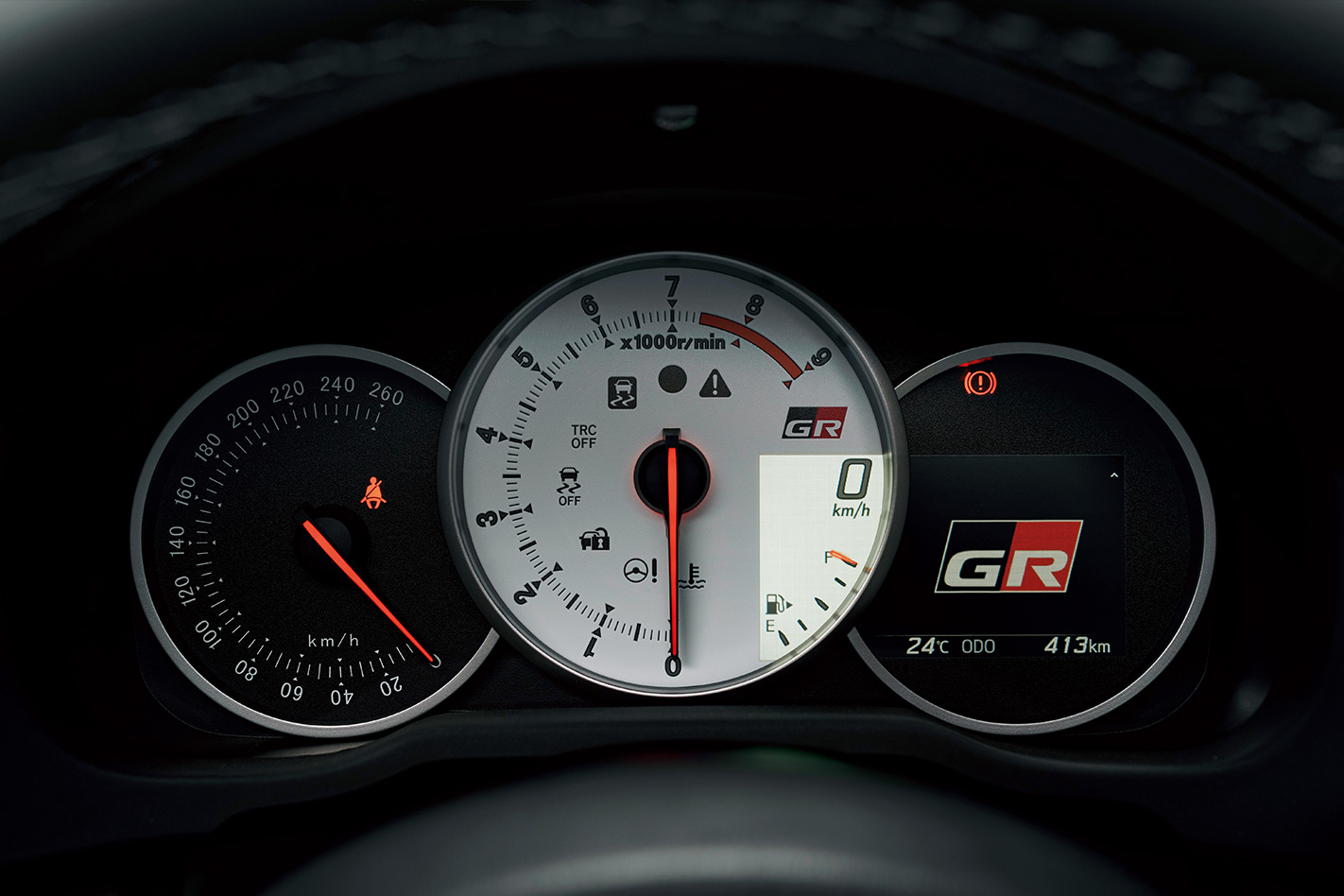
The Japanese 86 GR Sport goes slightly further though, with aesthetic upgrades in the form of unique side skirts, a boot-lip spoiler, some discreet GR badging, a GR-branded instrument panel with unique white-faced tachometer, GR-badged steering wheel and a rear suspension brace. In Japan, it retails for 3,780,000 yen, or roughly AU$46,200.
So what does the step up to mid-grade “GR” trim get you instead? In the case of the 86 GR, a fair amount. The Sachs dampers remain, but are paired with new springs with revised spring rates and a 10mm lower ride height, while the four-piston Brembos are swapped out in favour of six-piston front calipers (four-piston at the rear) with two-piece front rotors.
The rear suspension brace gets paired with a steering rack brace up front, the tyres get upgraded further to Michelin Pilot Sport 4s in staggered sizing, a ground-scraping front lip is added to the standard bumper and a unique rear bumper integrates a diffuser with an exclusive centre-exit exhaust.
Inside, the 86 GR flaunts a pair of body-hugging Recaro front seats, similar to those found in the Nissan 370Z Nismo. Power remains the same, but the rest of the package is far more track-focused than the 86 GR Sport through the addition of more grip and stopping power. The premium is steep, however, with the 86 GR costing 4,968,000 yen – or a whopping AU$60,800.
But the Gazoo strategy doesn’t stop with turnkey models. In Japan, Toyota’s performance subsidiary will also sell dealer-fit optional parts to 86 owners who like the look of the GR Sport’s spoiler, wheels or big brakes, but doesn’t want to go whole-hog with a dedicated Gazoo model. Among the options is a specialised audio headunit that brings data-logging capability for true track-day junkies, and sports some of the techno-geek appeal of the Nissan GT-R’s slick data-driven infotainment system.
Gazoo Racing in Australia?
It’s not here yet, but Gazoo-enhanced Toyotas are definitely on the radar for Australia. Exactly when the performance sub-brand will arrive, and which models will sport the Gazoo touch, is yet to be nutted out. That said, likely candidates include the 86 – given the already-extensive ‘menu’ of Gazoo parts for it and existing two-tier Gazoo offering it now enjoys in Japan – the imminent Corolla and, of course, the eventual GR Sport/GR/GRMN variants of the next-generation Toyota Supra.
Speaking to Wheels, a Toyota spokesperson confirmed an Australian debut for Gazoo products was on the company’s wishlist.
“At the moment it’s a Japan-only thing,” said Toyota Australia senior PR Orlando Rodriguez.
“It’s something that’s on our radar. We’re looking and studying how we can get GR products into our country, but at the moment there are no announcements.”
“But we’re obviously keenly excited to see how it goes in Japan. It’s the first market to build the GR sub-brand.
“We’re looking at both the [Gazoo] formula, and we’re looking at individual cars. They would come on a case-by-case basis essentially – as more and more models become available and once we get to the stage of launching the performance sub-brand here we’d definitely look into them.
“There’s nothing locked in at this stage, but we’re definitely keen to make something happen.”
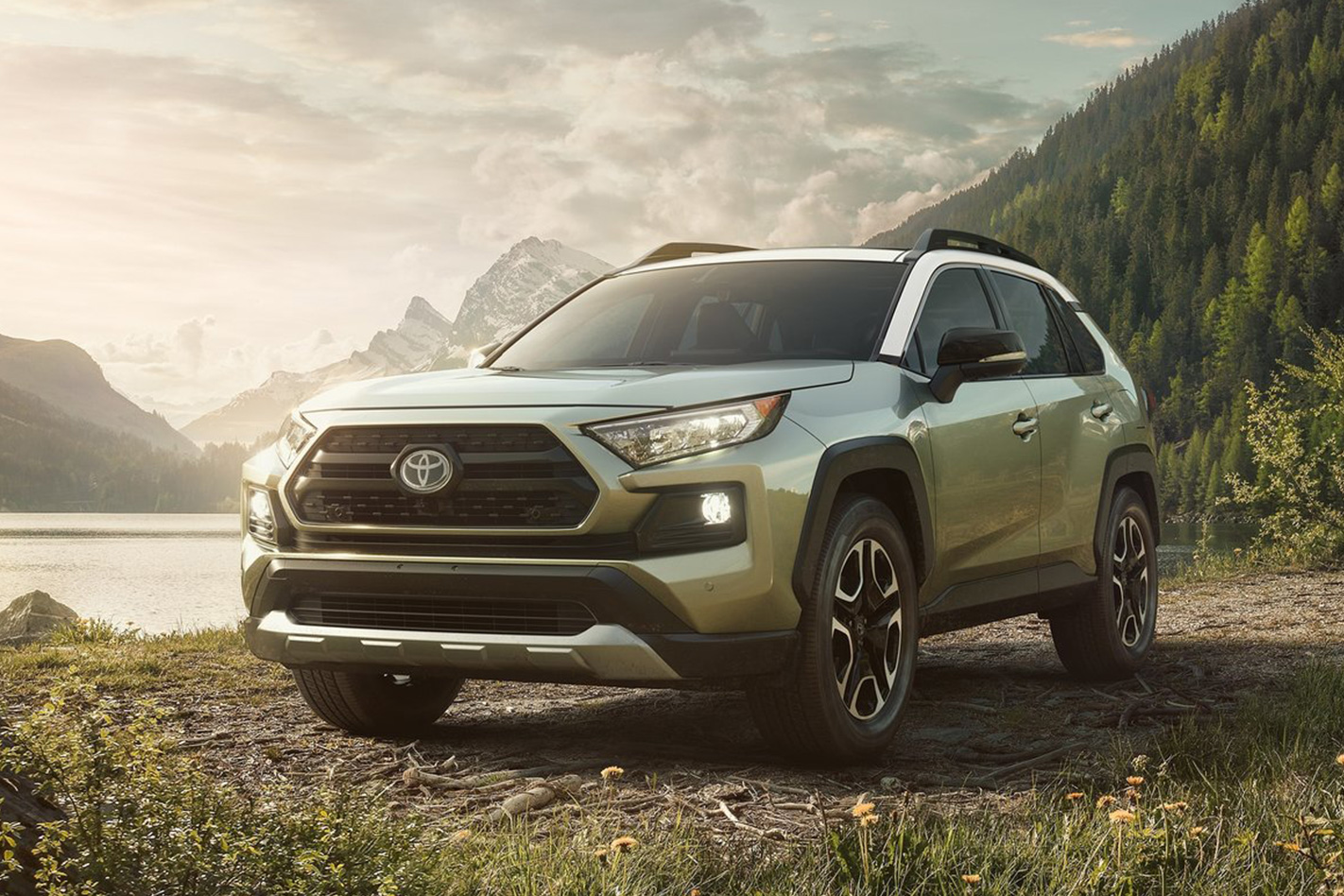
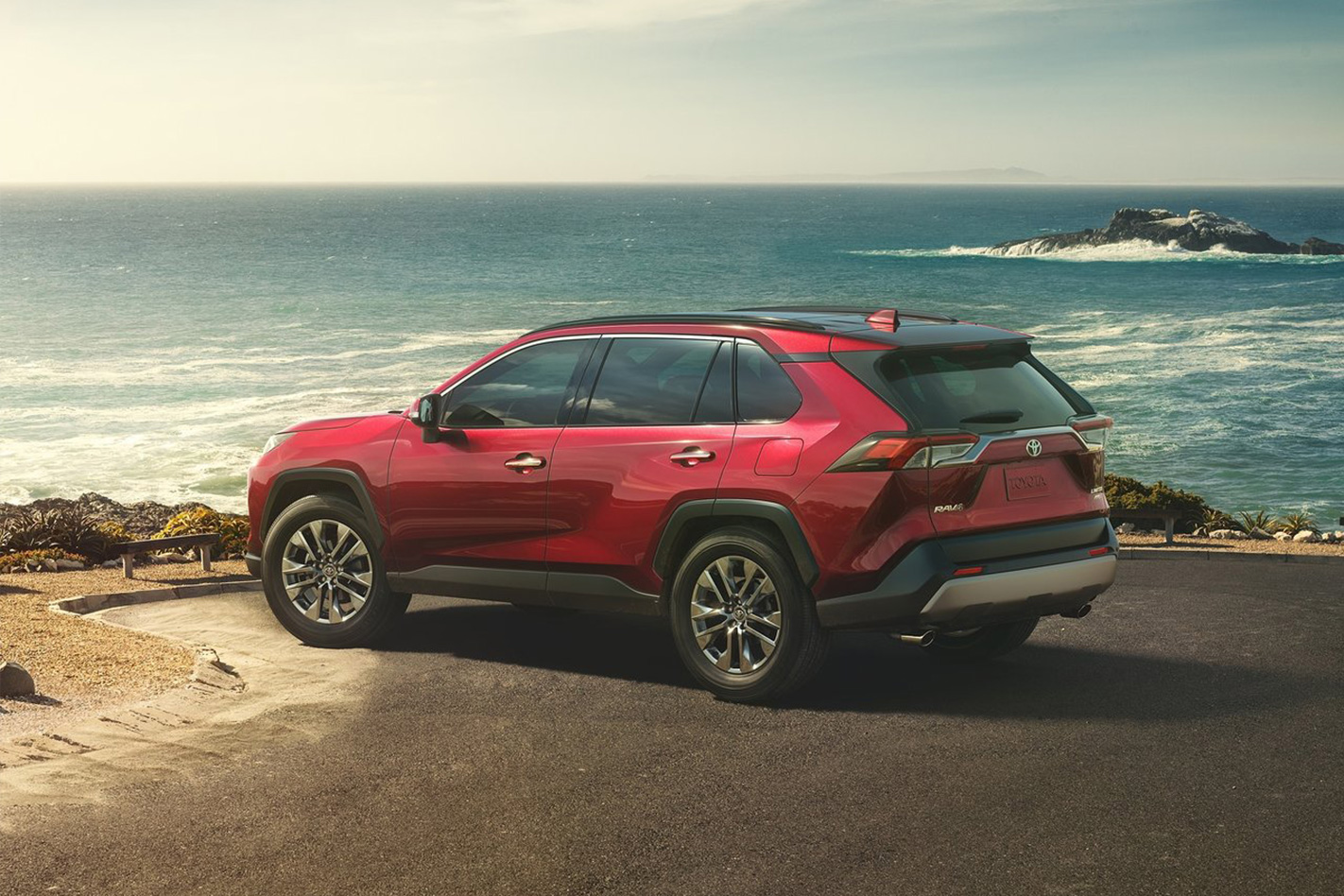
Toyota Australia has announced the new-generation Corolla will have a hybrid variant in every trim grade, while also revealing that its next-gen RAV4 will be sold in Australia with a hybrid powertrain for the first time.
While Toyota Australia has not announced specific outputs for its electrified SUV, the company confirmed it would be powered by a 2.5-litre petrol four-cylinder engine augmented by an electric motor – and sending drive to the road via a CVT automatic – back when it was first revealed in March. Expect the stats to align closely with the Camry hybrid, which generates 160kW and 423Nm.
The electron-enhanced RAV4 is still some distance from the showroom, however. Toyota’s local office won’t give a precise date for its local launch, but confirmed that the new RAV4 hybrid will arrive in Australia in 2019.
The news comes on the back of confirmation that a hybrid powertrain will be available for every model in the next-generation Toyota Corolla, which goes on sale in August.
Toyota chief marketing officer Wayne Gabriel confirmed every Corolla model would be offered with the 1.8-litre four-cylinder petrol engine and electric battery combo.
“Toyota was one of the pioneers of this advanced technology when it launched the original Prius over 20 years ago and as we move to a more electrified drivetrain culture we are continuing to evolve our hybrid technology to ensure it has the widest application possible,” he said.
“It is no longer a marginal powertrain option, but rather, as we have experienced with Camry, a favoured option for customers who appreciate its responsive, economical and low-emission performance for all driving environments.”
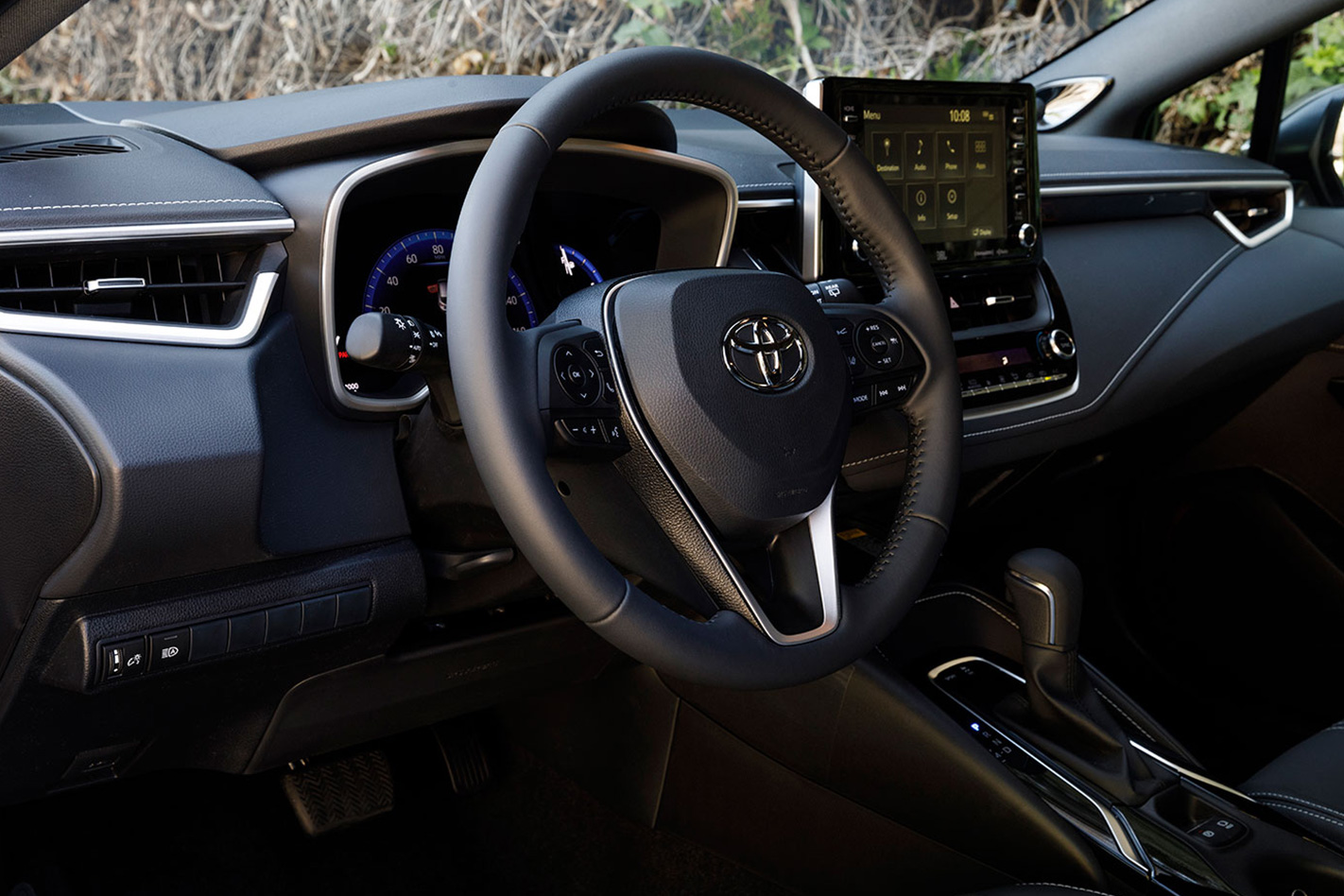
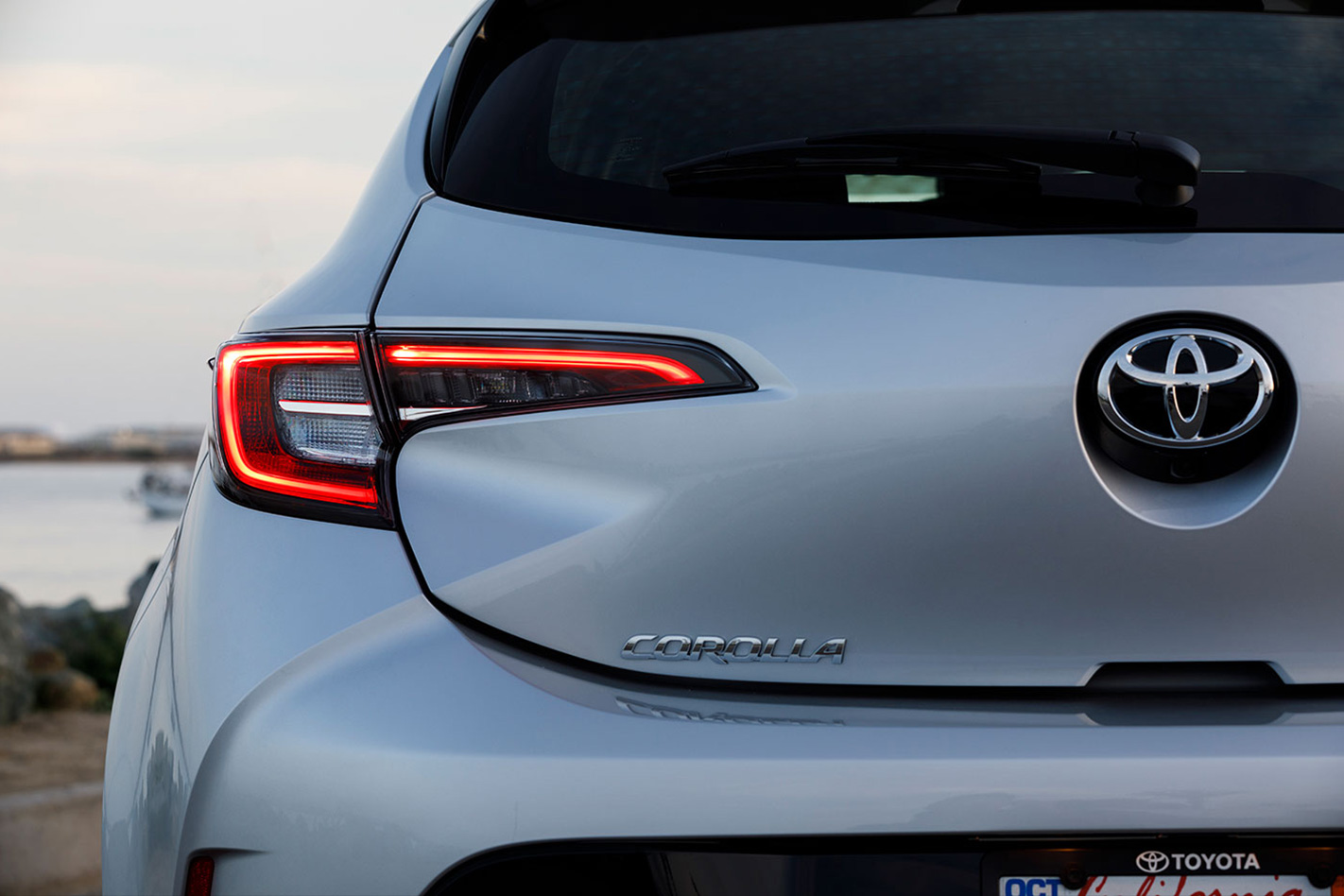
The Corolla and Camry’s hybrid system is a 1.8-litre Atkinson cycle petrol engine, combined with a pair of motor generators to provide electric drive to the wheels; with electricity generation from braking used to recharge the battery.
First debuted in 1997 with the Prius, the ‘Hybrid Synergy Drive’ system has been updated for the new Corolla, with two new motor generators, a new e-CVT transaxle, a new power control unit and new hybrid system battery.
Toyota claims the upgrades mean the system has a 40 percent thermal efficiency, which it states is the best in the world for a mass-produced petrol unit. Improved thermal efficiency allows the hybrid system to maintain power outputs, while becoming more compact.
The updated petrol engine generates peak power of 72kW at 5200rpm and peak torque of 142Nm at 3600rpm, while the electric drive adds 53kW and 163Nm for a combined total system power of 90kW. Claimed combined fuel consumption is a trifling 4.2L/100km.
Toyota’s hybrid powertrain is now available on three of the four Camry models – launched at the start of the year – accounting for more than 40 percent of sales for the nameplate according to the company. Add in the existing Prius, Prius C and Prius V, and Toyota’s showroom will soon become thick with hybrid hardware.
Since it went live just four days ago, Porsche’s Youtube video of its jaw-dropping 919 Evo record lap of the Nurburgring has racked up almost 2 million views. It’s hard to watch it and not gape in slack-jawed stupefaction at Timo Bernhard’s wild 5:19.54 lap. Unless, that is, your name is Christian Horner.
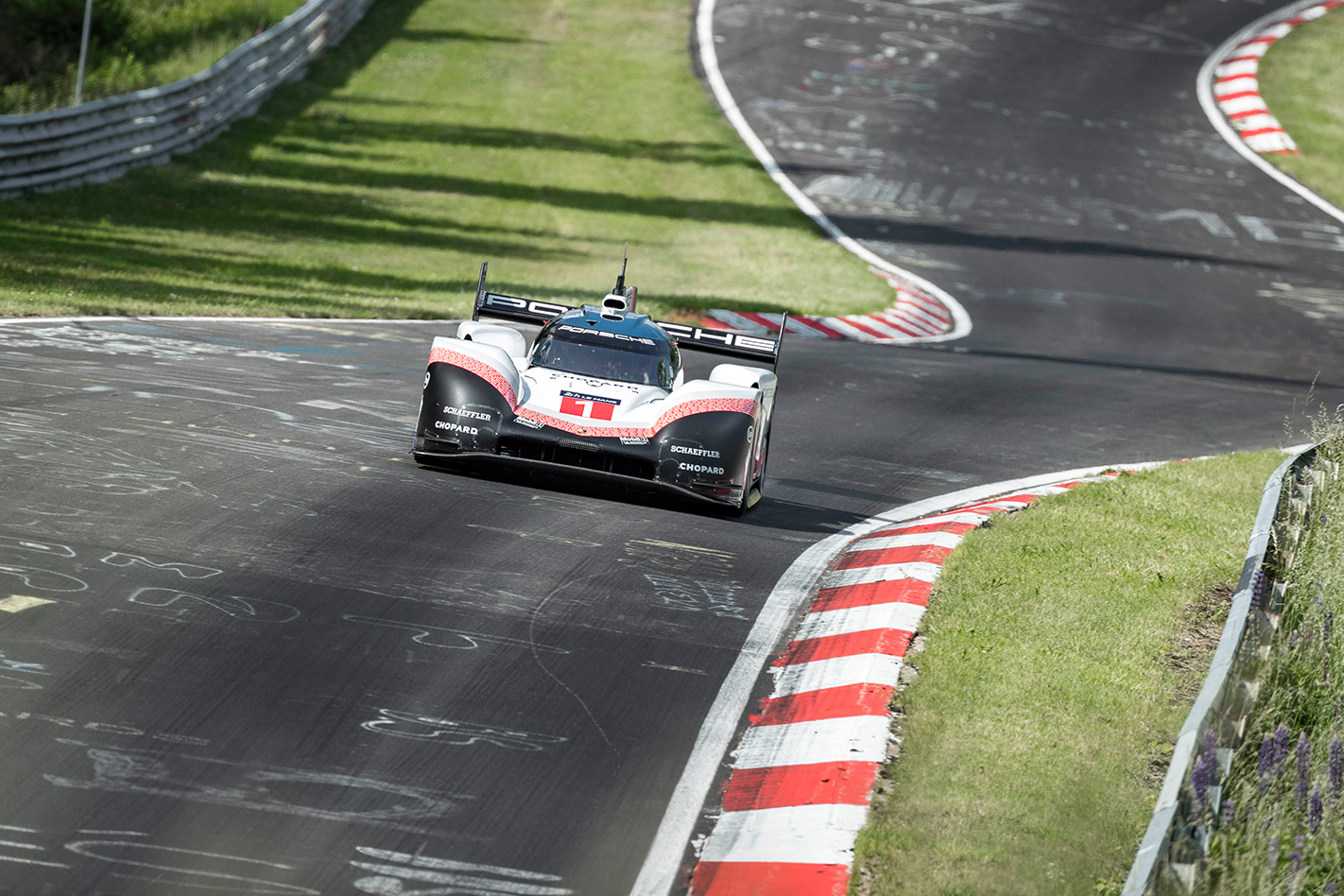
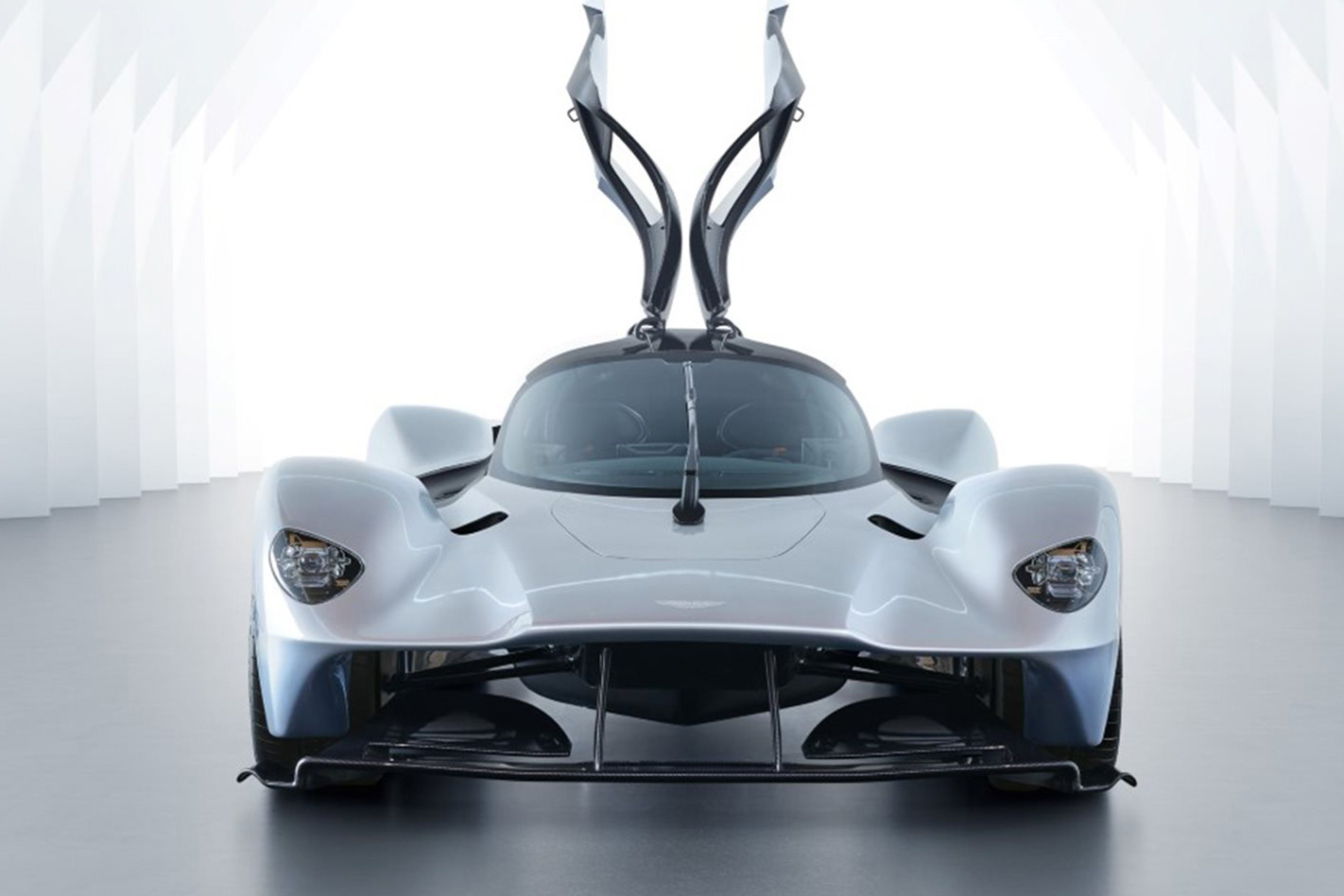
What appeared superhuman to us doesn’t blow Horner’s skirt up. In fact, the Red Bull boss mused that the ultimate version of Aston Martin’s Valkyrie could eclipse Porsche’s time. Aston’s CEO Andy Palmer had already hinted at the potential of the Adrian Newey-designed Valkyrie in a Wheels interview earlier this year. “In terms of simulations, a road-going Valkyrie on road tyres would certainly put you on the podium of Le Mans LMP1. Probably it would win – on road tyres.” Now Horner has further whetted our appetite by pouring cold water on Porsche’s achievements.
Commenting on the 919’s record-setting lap of Spa, Horner said he was “not sure” an F1 car could wrestle back the crown this season before dropping the bomb. “But I think that the Valkyrie, certainly the track version of the Valkyrie, could be a contender,” he said.
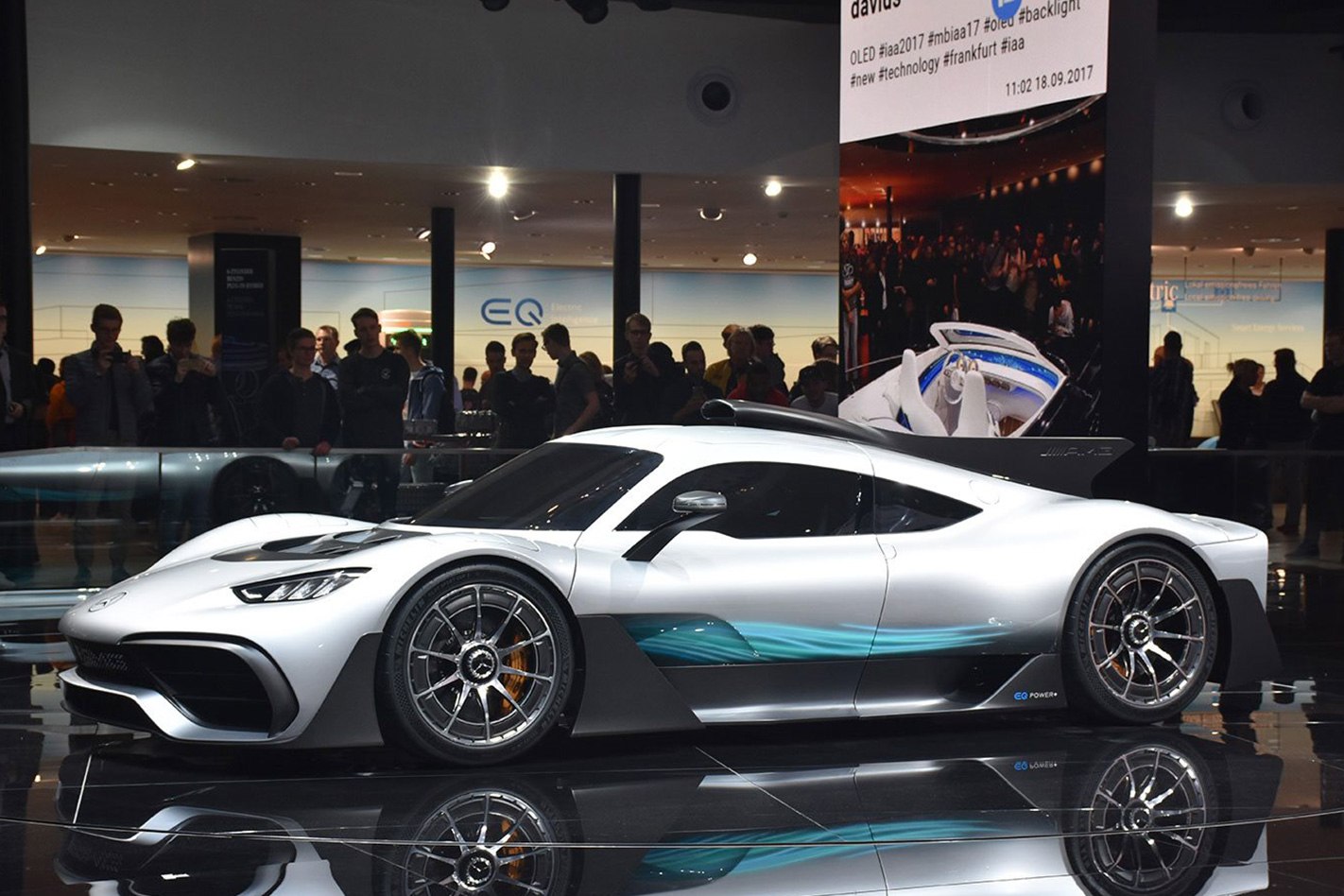
AMG is also waiting in the wings with its Project One, which is believed to be the vehicle that spurred Porsche into eclipsing Stefan Bellof’s 35-year-old mark. Seeing that record being claimed by Affalterbach would have been a bit too much and the team working on the 919 Evo’s aim was to put it beyond the capability of anything with a three-pointed star on its grille.
AMG boss Tobias Moers went on record at this year’s Geneva Motor Show claiming that “it’s reasonable to speculate” that the Project One could be the fastest car to ever lap the ‘Ring. But that was then when the record was 6:11. The game has changed quite significantly in the interim which leaves us with a frenzied scramble between these engineering powerhouses to build cars that are quicker than F1 racers but which the general public can purchase.
A moneyed schlub with the right connections can now buy a track car that is quicker than anything that F1 legends such as Michael Schumacher or Ayrton Senna ever parked their backsides in. That in itself ought to give us pause for thought. It won’t cause Porsche, AMG or Aston Martin much in the way of consternation, however. There are records to be broken and engineering boundaries to be breached. The game hasn’t fundamentally changed but one thing’s for sure. The players just got a lot fiercer.
