
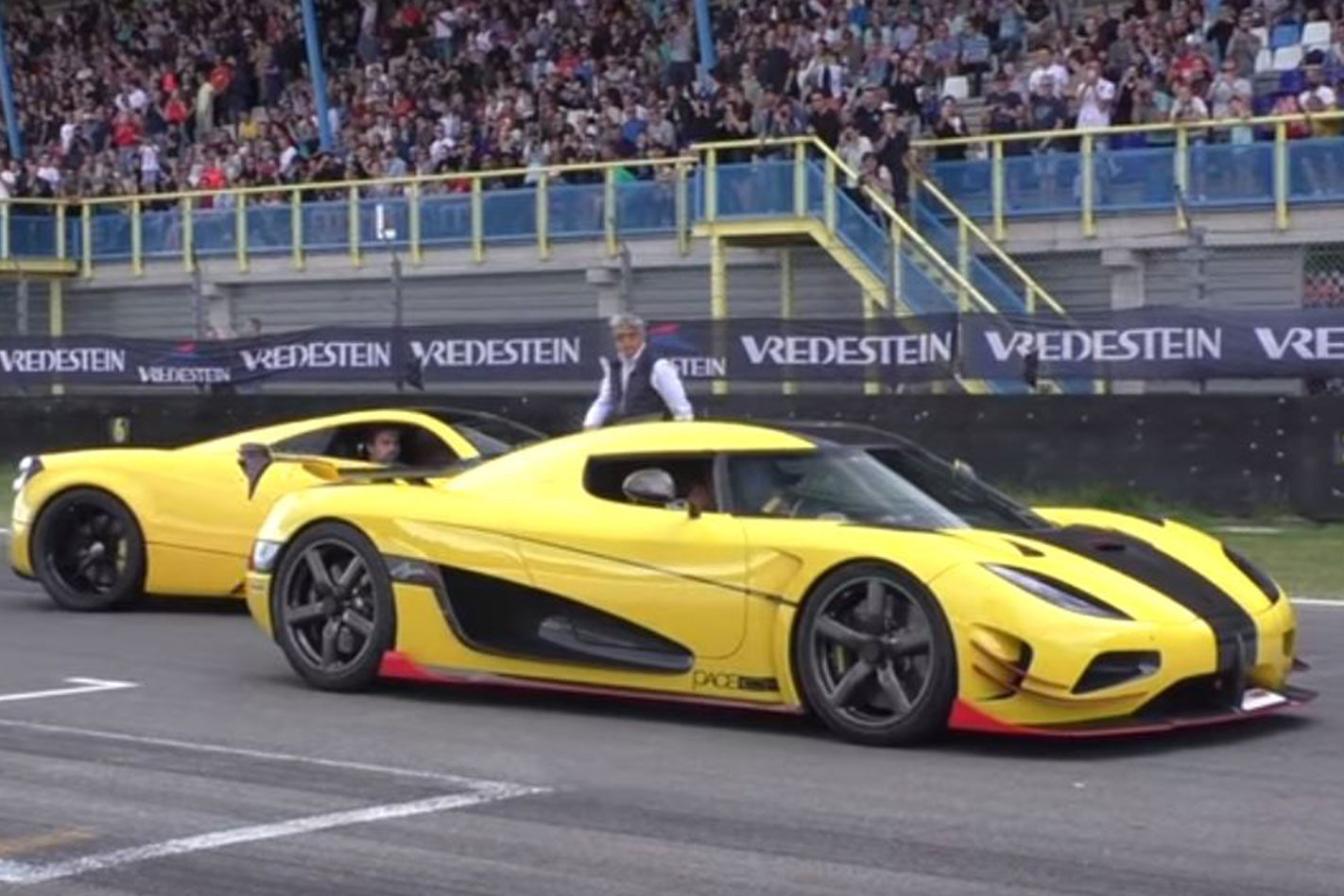
There are some that cars most people will never get to see in person. Cars like the Bugatti Veyron, the LaFerrari, and the Pagani Huayra.
But for anyone at this track day, they got to witness those and many, many more all at once.
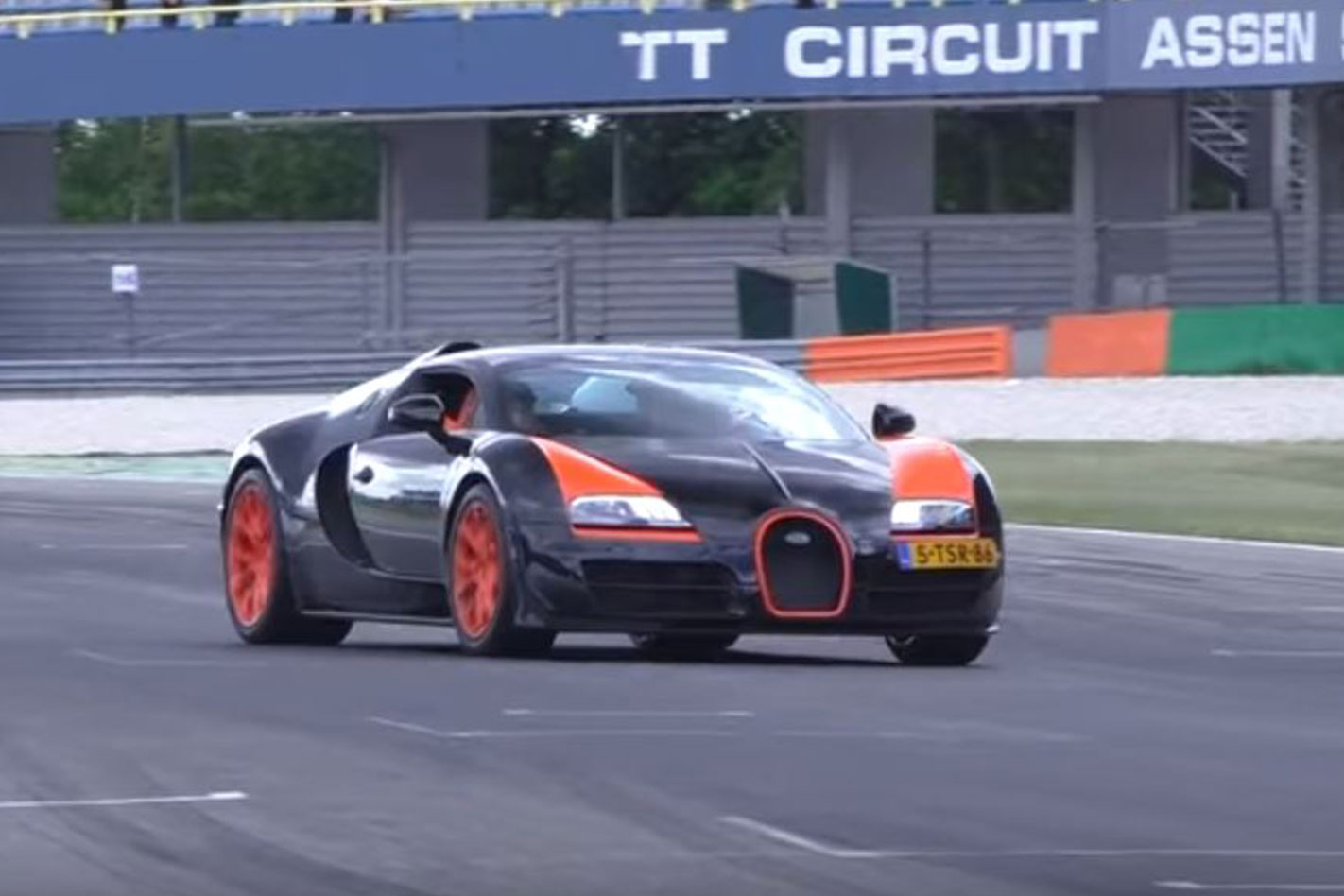
Our only gripe with the ‘track day’ is that it seems to have been more of a show-and-shoot rather than a chance for people to actually blow out the cobwebs.
McLaren: F1 woes won’t affect road car sales
There are a few points where you get to indulge in some petrol-sourced audio goodness, but it’s short lived.
One-off Ferrari SP 275 RW Competizione
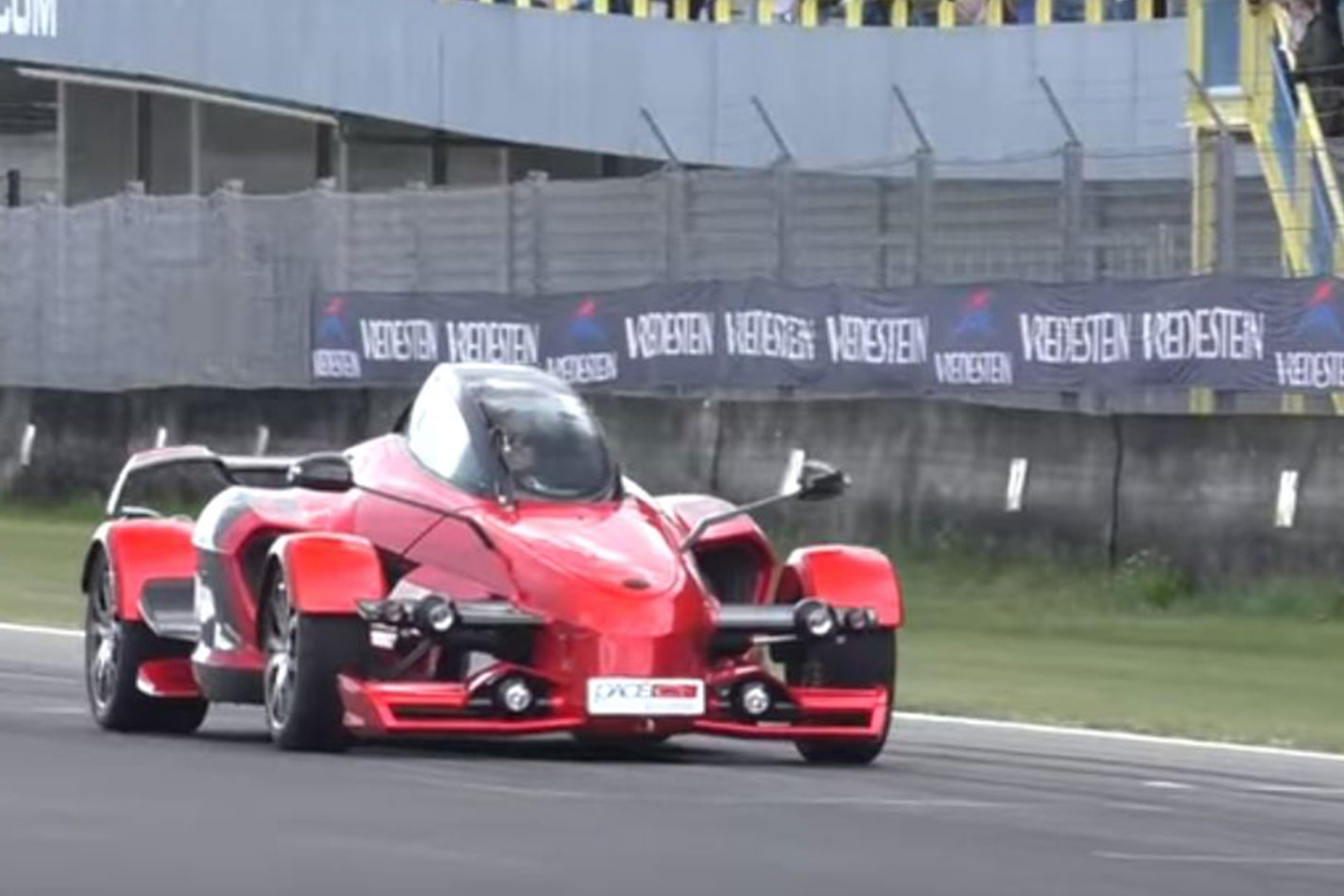
Possibly the biggest surprise appearance in the video is the incredibly rare Spanish Tramontana. The company builds bespoke supercars a few times a year and attaches unobtainable pricetags on them.
They’re obscure, but you get a good view of it a few times in the video, perhaps best at 6:18.
Just for fun, why don’t you have a go at totalling the value of this track day as per the RRP of each car?
Sometimes – just sometimes – money does buy happiness. Or at the very least, a berserk hypercar.
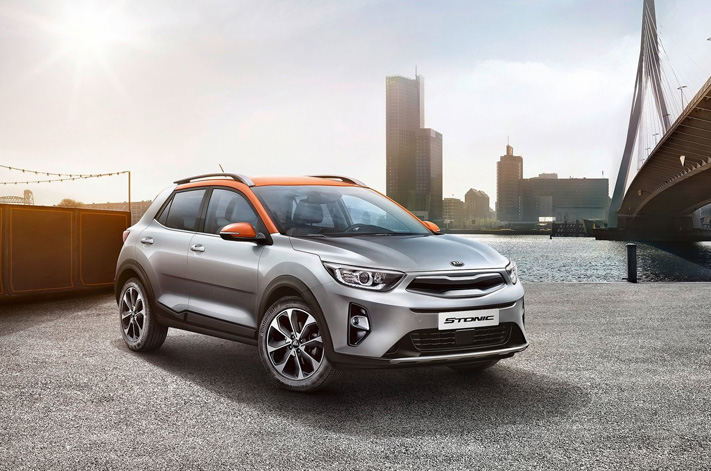
The 2017 Kia Stonic has appeared online – unofficially – ahead of a global reveal planned by its Korean owner.
The images show what looks like a jacked up version of the Kia Rio fitted with all the SUV-styled cues we’ve come to expect, including black cladding around the wheel wells and under the sills to give a sense of elevation, and roof rails.
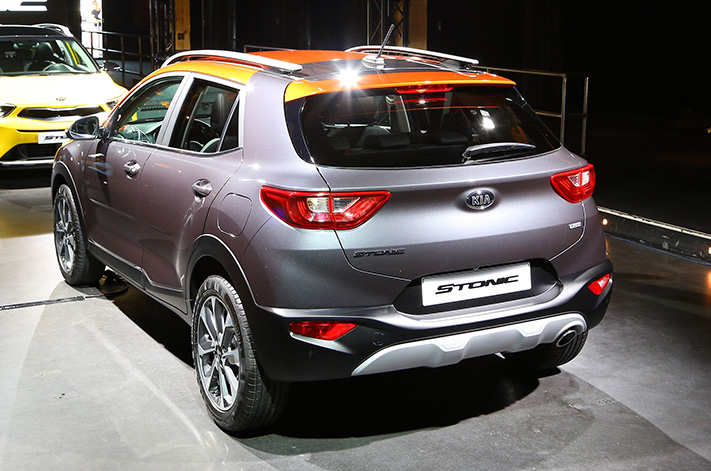
The Stonic will sell in other markets where it will compete against the likes of the Mazda CX-3, Holden Trax and the Ford Ecosport. It has also turned down the same road as the Nissan Juke and Citroen Cactus, offering a range of customisable features such as its orange “Targa” roof and contrasting interior panels that buyers can pluck from the options list.
However, the Kia Stonic isn’t a starter for Australia. Kia won’t say why, only that it has decided to pass on the small SUV for this market.
However, it is believed the Stonic’s potential mix of underwhelming three- and four-cylinder engines, all mated to a four-speed automatic, doesn’t have much appeal in a segment filled with perky powertrains and six-speed autos.
Instead, the Korean car maker is understood to be waiting for the upcoming arrival of what will become its spin-off of Hyundai’s Kona compact SUV. The more heavily SUV-styled Kona, the newest model from sister brand Hyundai, is due here in late September, but Kia’s version is believed to still be several years away, potentially landing here in 2019.
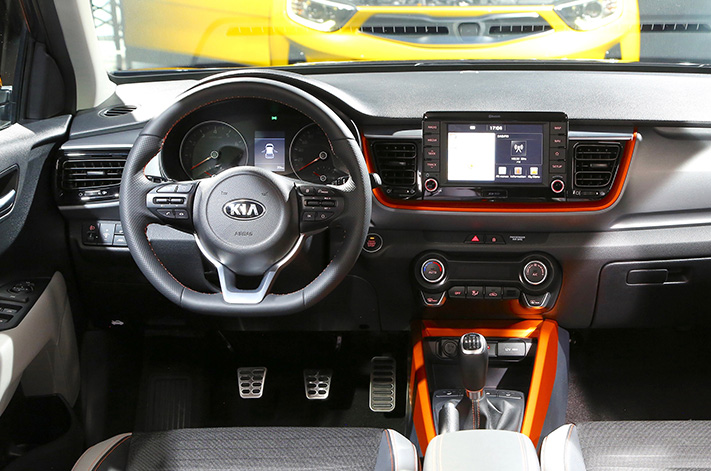
Inside, the Stonic looks little changed from the car it is based on, the Rio hatchback. The Rio was recently updated for Australia to make it roomier and much better equipped, but the carryover 1.4-litre engine and its four-speed automatic transmission – also expected to feature in the Stonic if it was brought here – leaves it half a step behind the competition.
The baby SUV segment is struggling a bit despite sales of the high-riding hatchbacks and wagons starting to consistently overtake those for traditional passenger cars on which many of them are based.
The Mazda CX-3 is leading the segment so far, with the Mitsubishi ASX – one of the oldest of the compact soft-roaders on sale, is snapping at its heels.
Honda’s HR-V, one of the newest models on sale here, has experienced strong growth over the first five months of this year. Other strong sellers include the Nissan Qashqai, the recently updated Subaru XV and the Suzuki Vitara.
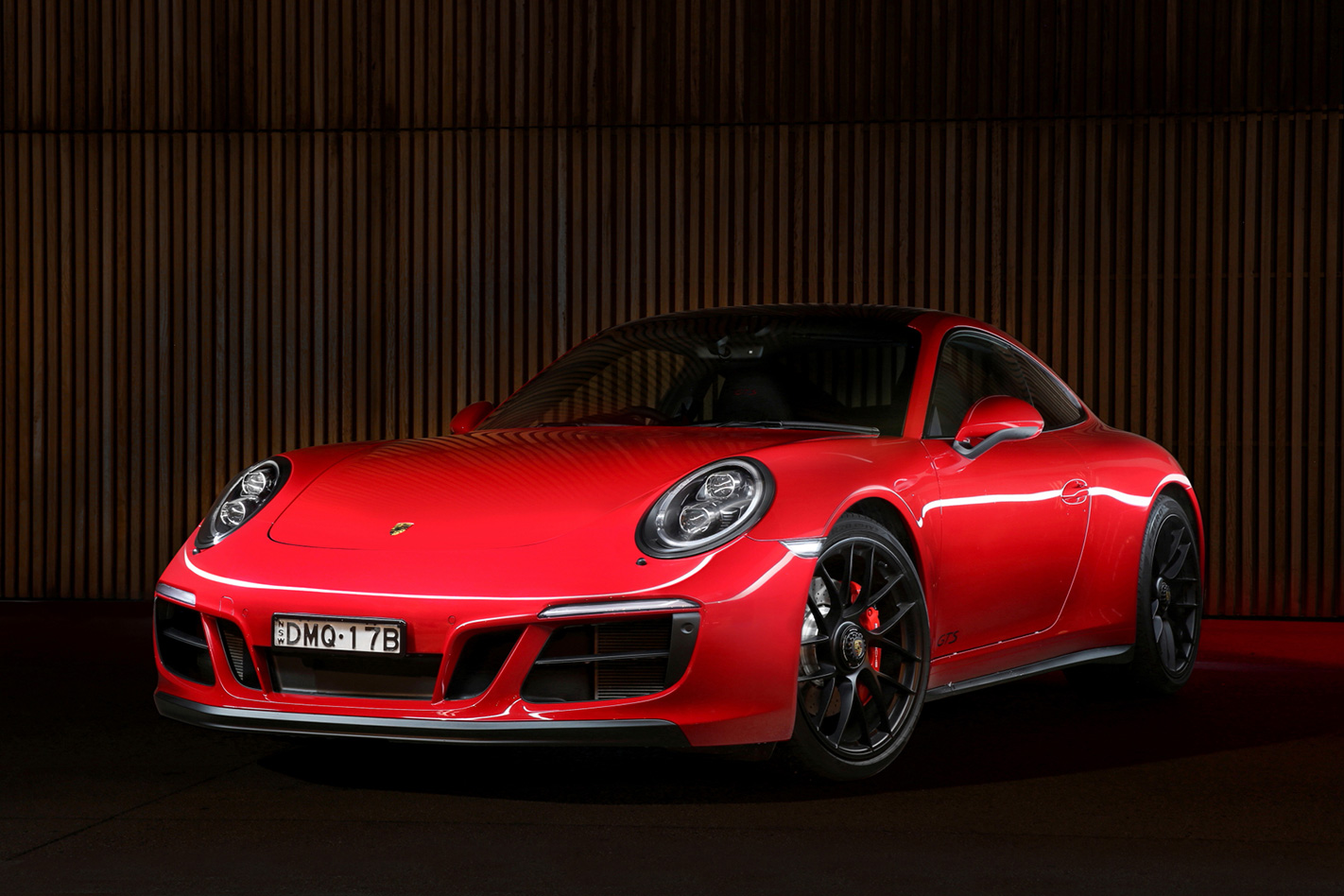
Like the GTS variants before it, the new 911 (991.2) version joins the already flourishing range and bridges a gap between the entry-level coupe, convertible and Targa, and the more potent GT3 and Turbo cars at the top of the range.
While the five new mid-range GTS variants are positioned to appeal to more performance-focused customers, they’re more closely related to the affordable end of the spectrum with their 3.0-litre turbocharged flat-six engine, while the GT3 gets a naturally aspirated 4.0-litre and there’s a 3.8-litre for the Turbo.
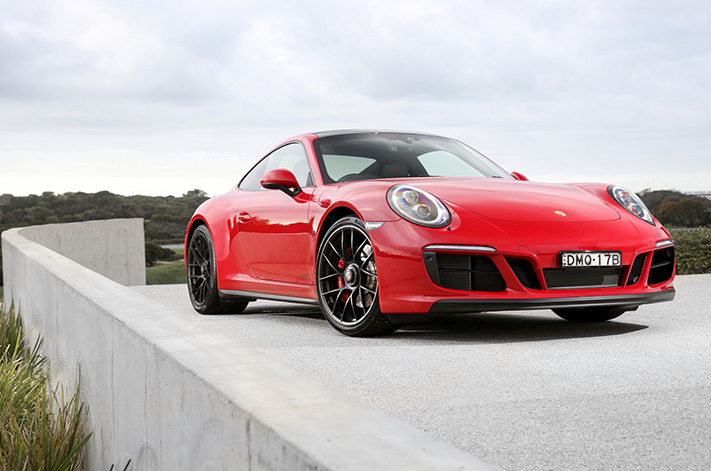
That said, the GTS represents a new performance champ of the 3.0-litre cars, with a power boost of 22kW to 331kW over the next best Carrera S and an extra 50Nm of torque taking grunt up to 550Nm. A majority of the extra output comes from a higher boost pressure of up to 1.25bar thanks to larger turbos.
The GTS line-up kicks off with the Carrera GTS Coupe priced from $282,700 when fitted with the standard seven-speed manual gearbox but, like all five versions, the seven-speed dual-clutch can be optioned for $7390.
The rear-drive GTS is also available as a drop-top Cabriolet for $304,200. Both Coupe and Cabriolet are available with the traction-boosting Carrera 4 GTS four-wheel drive system for $298,900 and $320,400 respectively.
A fifth option is available for customers wanting something in between the full convertible and tin-topped options with a Targa 4 GTS with four-wheel drive only and priced from $320,400.
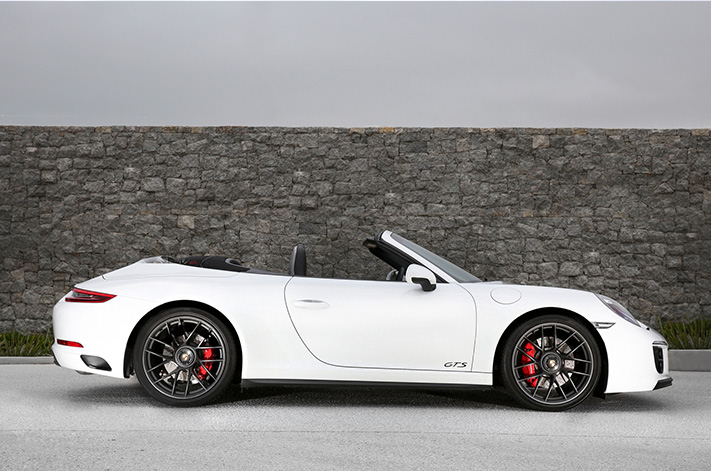
With its extra power and torque, the most affordable GTS Coupe does the zero-to 100km/h dash in 4.1 seconds and adding the PDK cuts the time to 3.7s. The extra traction of Carrera 4 GTS allows it to do the dash in 4.0s or 3.6s when equipped with the auto.
For the Convertible, the benchmark takes 4.2s for the manual and 3.8s for the auto, while the heavier Carrera 4 GTS Cabriolet takes a little longer and 4.1 seconds or 3.7s for the PDK. The Targa shares the acceleration figures of the convertible Carrera 4 GTS.
Top speeds vary little between variants, ranging from 306km/h for the Targa 4 GTS auto, to 312km/h for the rear-drive manual Coupe GTS.
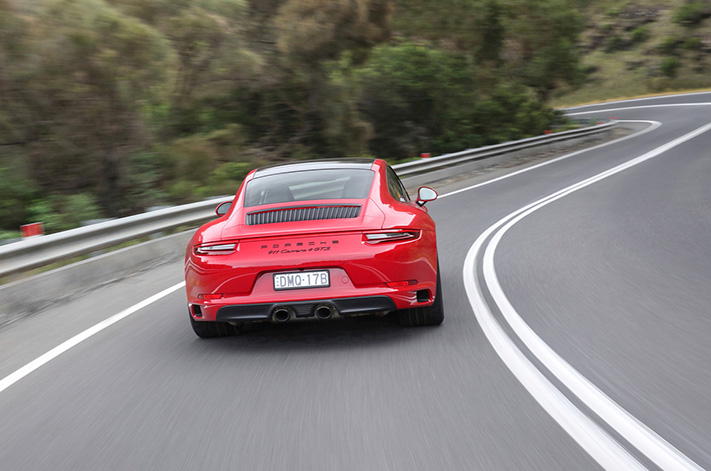
To match the added performance, the GTS range rolls on a revised suspension setting which is tailored for each individual variant including a ride height lowered by 10mm for the Coupe compared with the Carrera S coupe. Rear-wheel steering is also available optionally to increase low-speed manoeuvrability and high-speed stability. Active PDCC anti-roll stabilisation is also available optionally.
Adding to stability is the wide body that features on all variants from Carrera 4S and above, bringing an extra 44mm of width to the rear haunches. Until now, the rear-drive 911 has only been available with the narrower arches.
Porsche’s Active Suspension Management (PASM) is also included as standard and allows the suspension characteristics to be altered according to the four driving modes – Normal, Sport, Sport Plus and Individual.
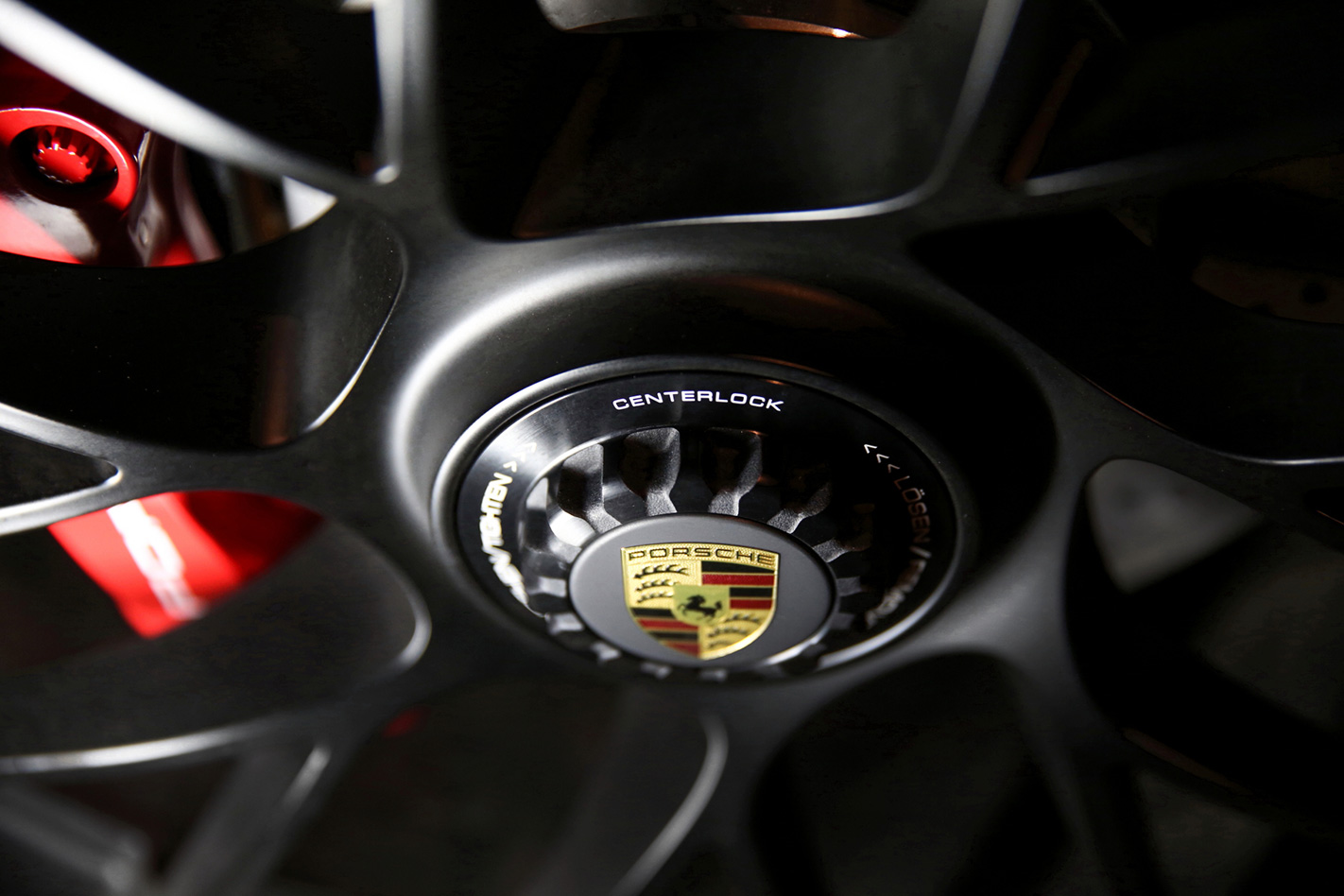
Twenty-inch wheels in satin black are pinched from the Turbo S and are bolted on with a single centre-lock hub and shoed in Pirelli P Zero rubber measuring 245/35 ZR20 at the front and 305/30 ZR20 at the rear. Customers can swap the specialised centre-lock wheels for a more conventional five-stud pattern wheel set.
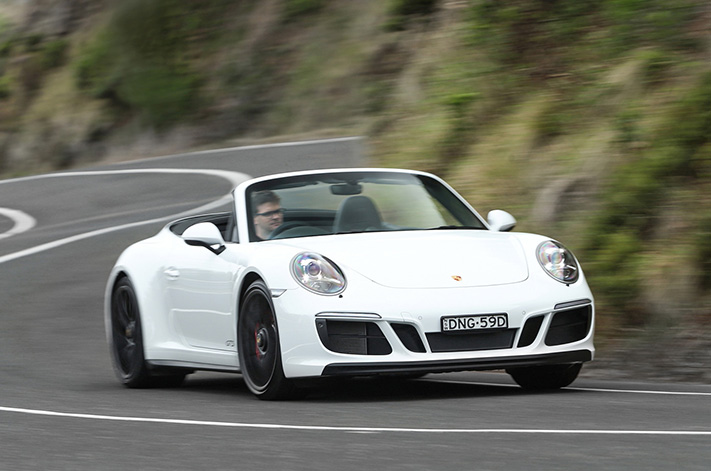
Versions equipped with the PDK transmission also get torque vectoring and an electronically controlled rear differential lock for enhanced grip and cornering speed.
A hybrid of a number of 911 brake arrangements has been applied to the GTS range for enhanced stopping power. The pads are 16 percent larger than Carrera S and borrowed from the Turbo, while front discs are 10mm larger in diameter and are connected to the suspension by a lighter aluminium hub.
At speed, the GTS benefits from increased aerodynamic stability thanks to a unique front bumper with lower spoiler and greater rear spoiler extension. The larger front air intakes also boost cooling air flow.
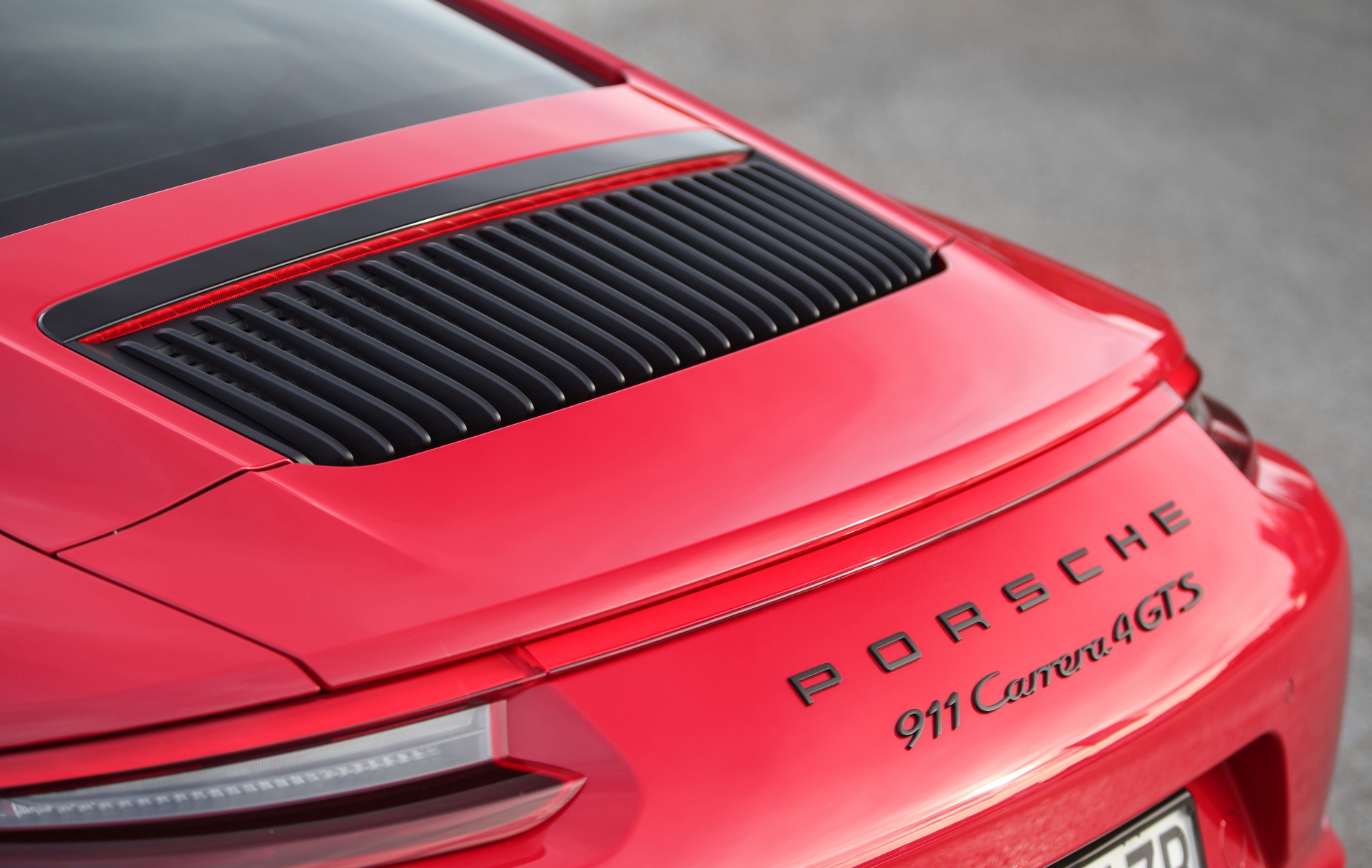
Sport design door mirrors, GTS badges on the doors and a number of GTS boot badges complete the exterior treatment, while the Targa has a further modification with a black roof bar in place of the standard silver version.
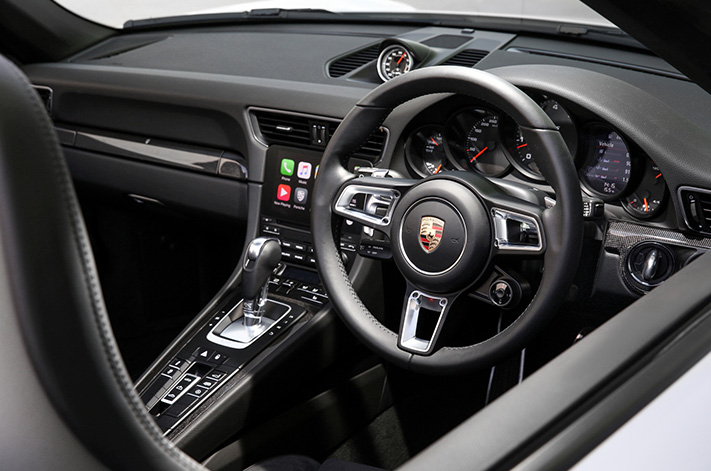
On the inside, the GTS gets the Porsche Sport Chrono package as standard, which adds the dash-mounted analogue stopwatch, steering-wheel mounted driving program selector and Track Precision application for enthusiastic drivers to evaluate and compare their performance around 130 racing circuits around the world.
Alcantara sports seats are standard as is the application of the synthetic sued throughout the cabin along with brushed and anodised black aluminium trims, though customers can upgrade to carbonfibre.
The 360mm steering wheel is 15mm smaller than the Carrera S wheel and can be trimmed in leather along with the gear selector lever or left standard in Alcantara.
For an extra dose of race-car DNA, the rear seats can be deleted.
McLaren’s Formula 1 woes aren’t likely to impact its road car sales.
That’s the view of George Biggs, Managing Director of McLaren Asia Pacific. Speaking to MOTOR at the Australian reveal of the new McLaren 720S, Biggs stated that while McLaren’s current dry spell wasn’t a preferred situation, it had little bearing on the company’s road car operation.
“We’re all McLaren fans, we’re not where we want to be, we can all admit that,” explained Biggs, “but the reality is you don’t choose this car based on if our Formula One car is winning. We’re McLaren fans, we’d like to see the team doing better, but do I think it affects [sales]? Not really.”
McLaren 720S local pricing revealed
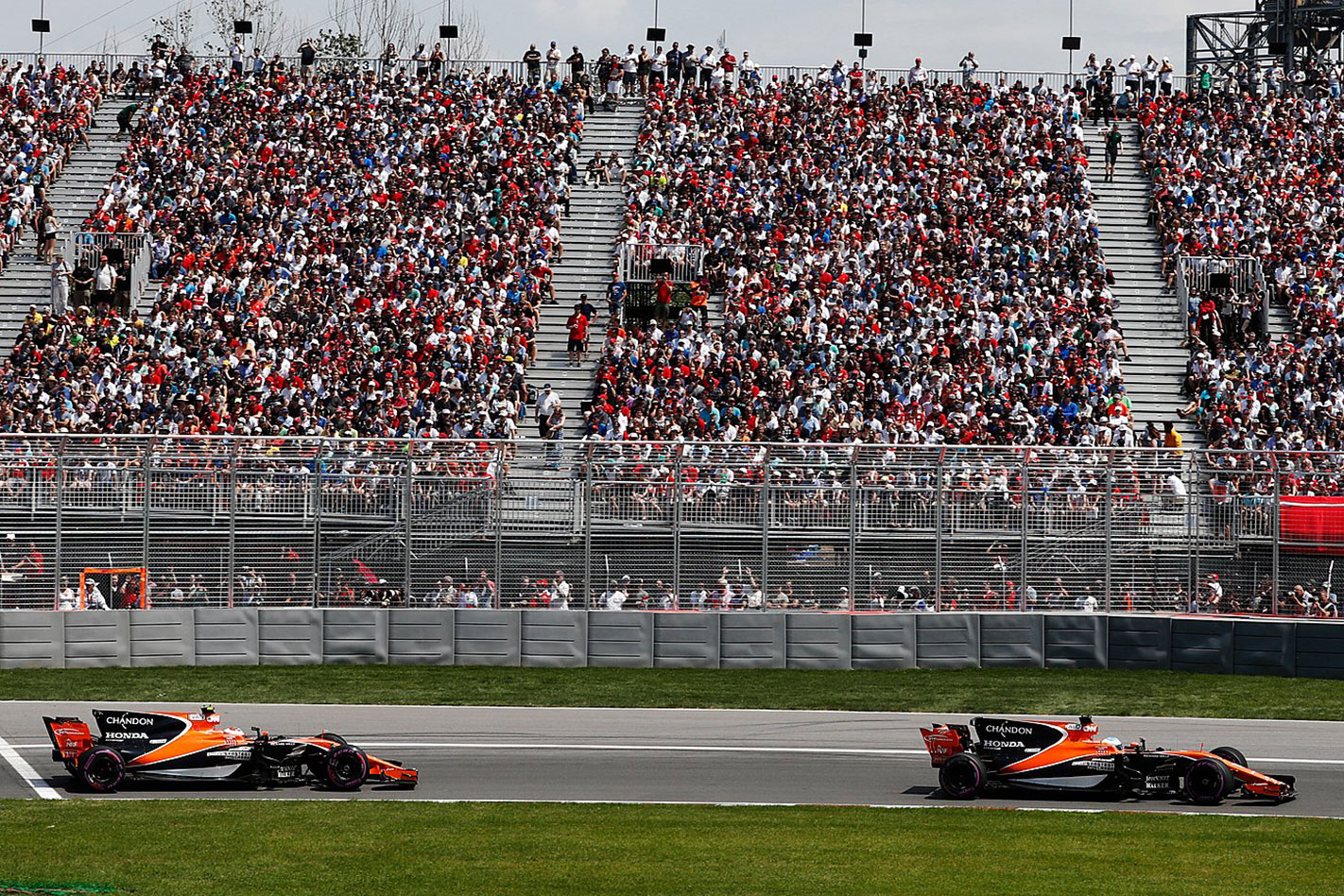
McLaren is currently last in the Formula 1 constructors’ championship with zero points, following on from two largely unsuccessful years primarily due to the disastrous performance and reliability of the Honda power unit.
Recent rumours suggest McLaren will sever ties with Honda before year’s end and revert to Mercedes power for the 2018 season. Its last win came at the 2012 Brazilian Grand Prix.
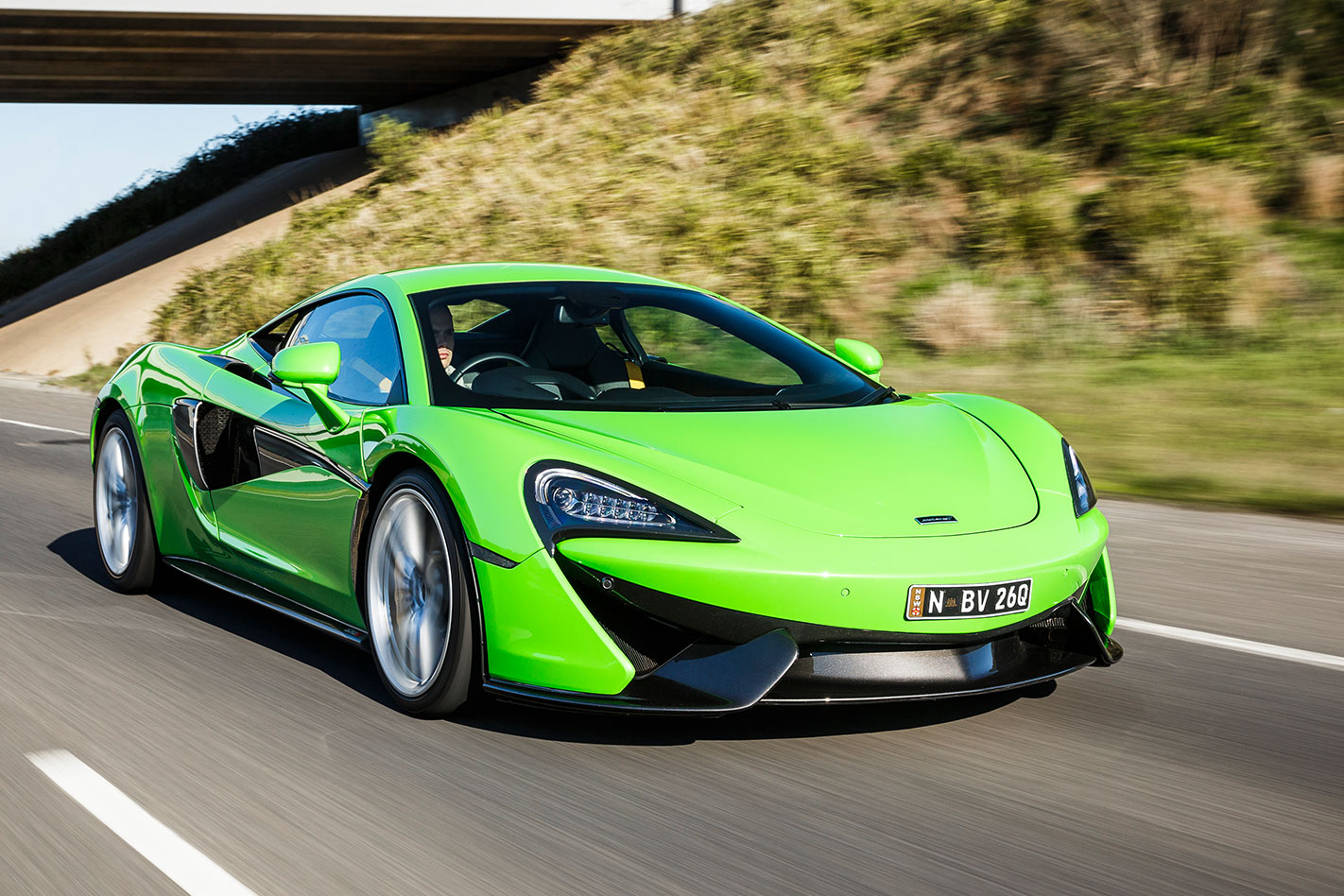
Geneva Motor Show: 2018 McLaren 720S revealed
“In Australia you can use the car on a daily basis, but Australians are really into driving their cars, the kays that get put on cars here is probably, between here and Japan, the biggest in our region.” The McLaren 720S is available now, priced from $489,900 plus on-road costs.
Not very long ago the GTS was the Porsche variant we secretly frothed hardest over.
Feral rear-drive Panameras with naturally aspired V8s. Anti-social V8 Cayennes, or 911s unapologetically dripping in Alcantara and carbon fibre, sitting low and menacingly on perfectly-sized, fat wheels.
The GTS brand built its reputation on distilling the best and most desirable elements of a given Porsche car. And as far as want-factor went, in the 911 family, the GTS almost pipped the 911 GT3. Almost.
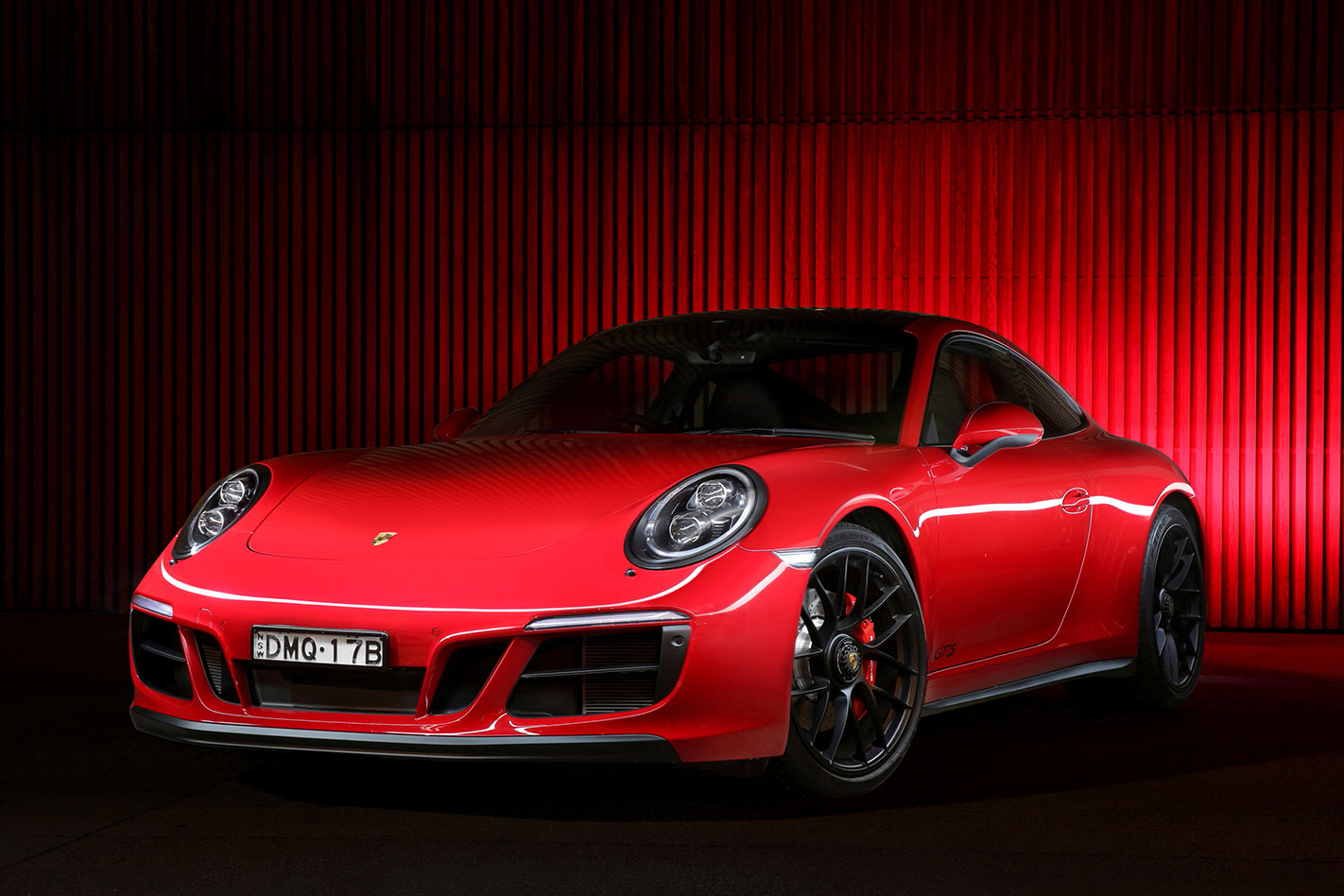
Six differences for the next Porsche 991.2 911 GT3
The same is true for the 911. Much like the Carrera and Carrera S, the new turbocharged Porsche 991.2 GTS features a very ‘new’ personality compared to its predecessor.
Gone is the previous atmo 3.8-litre flat-six with that truly sonorous 7800rpm redline, replaced with a twin-turbo 3.0-litre flat-six. Power’s up from 316kW to 331kW, torque 440Nm to 550Nm.
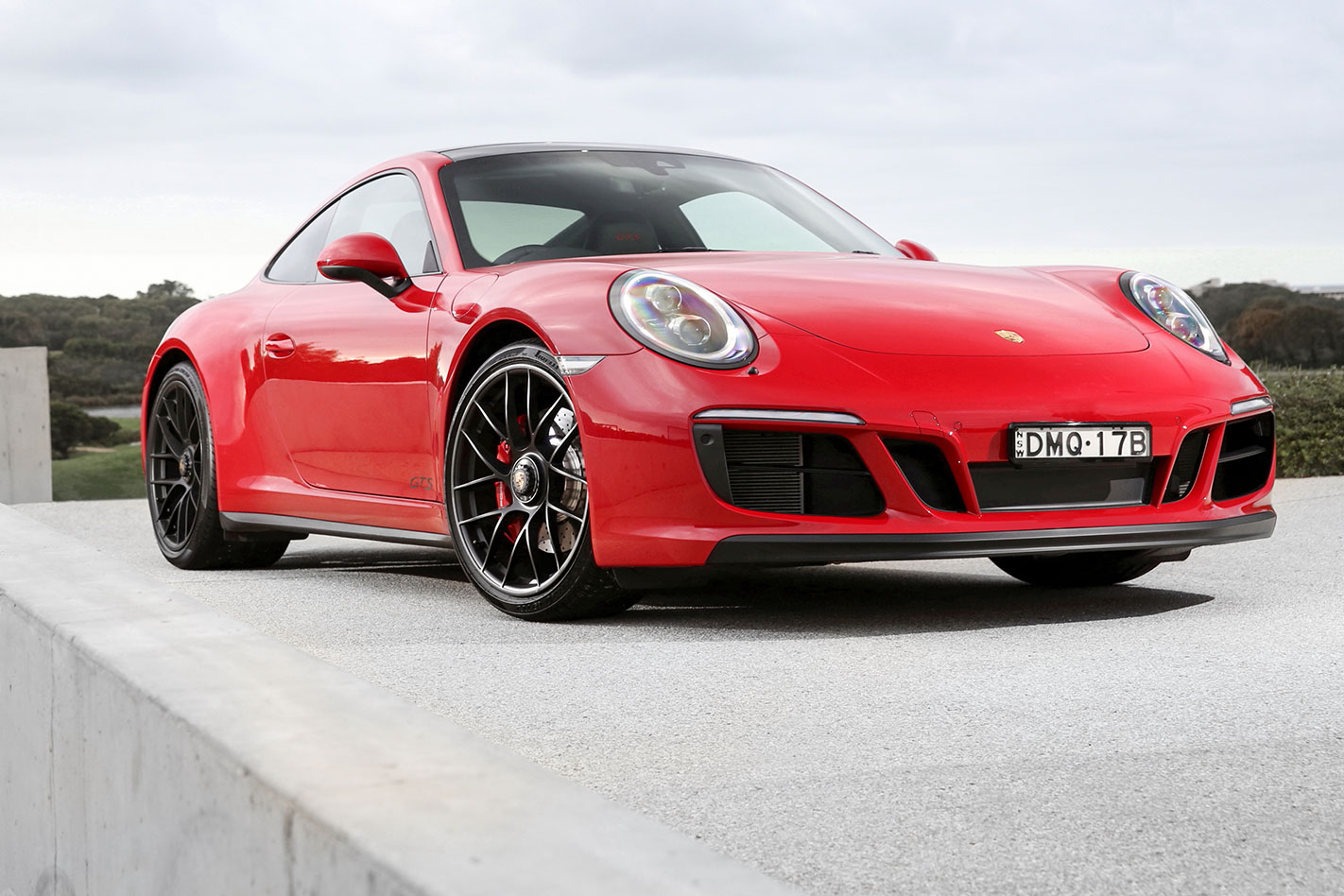
Meanwhile, inline with continued strong demand for new 911s, prices for the GTS have also gone up markedly, around $14,000 for the rear-drive PDK Coupe we tested (all-wheel drive Coupe pictured). Porsche would counter that you get more performance and standard equipment than the previous car.
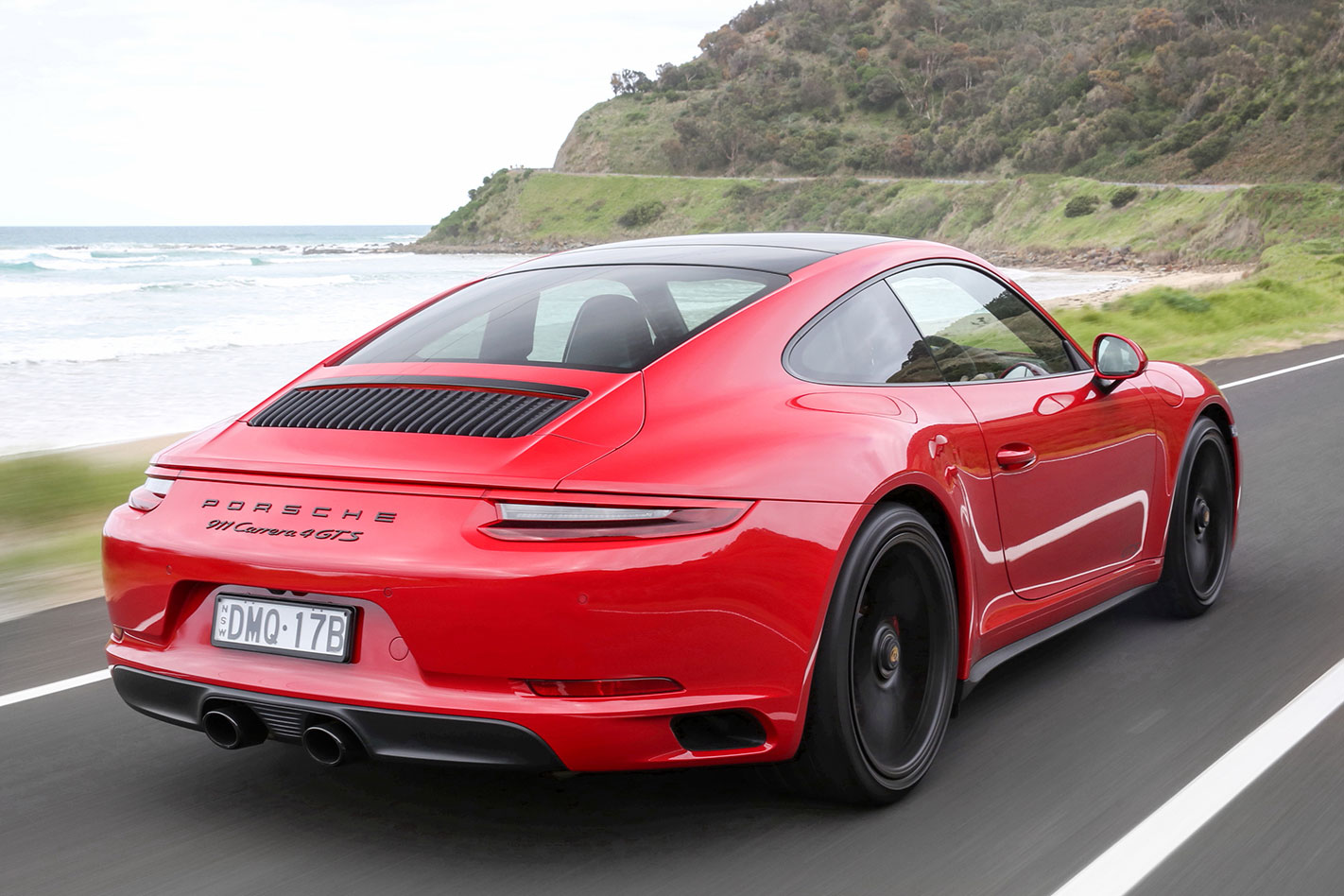
Porsche 911 GT2 RS revealed at E3
With PDK and launch control (Sport Chrono is standard on all GTS models) it does 0-100km/h in a faintly ridiculous 3.7sec — 0.3sec quicker than the atmo 991, and 0.2sec quicker than a 991.2 Carrera S.
The newfound speed is also part of a newfound personality — although this isn’t a Carrera with a detuned 911 Turbo engine. Again, much like the Carrera S, with which the GTS shares most of its engine, power is delivered with the linearity and response of an atmo engine, pulling hard and strong all the way to redline, with the added benefit of huge, useable low-down and mid-range mumbo.
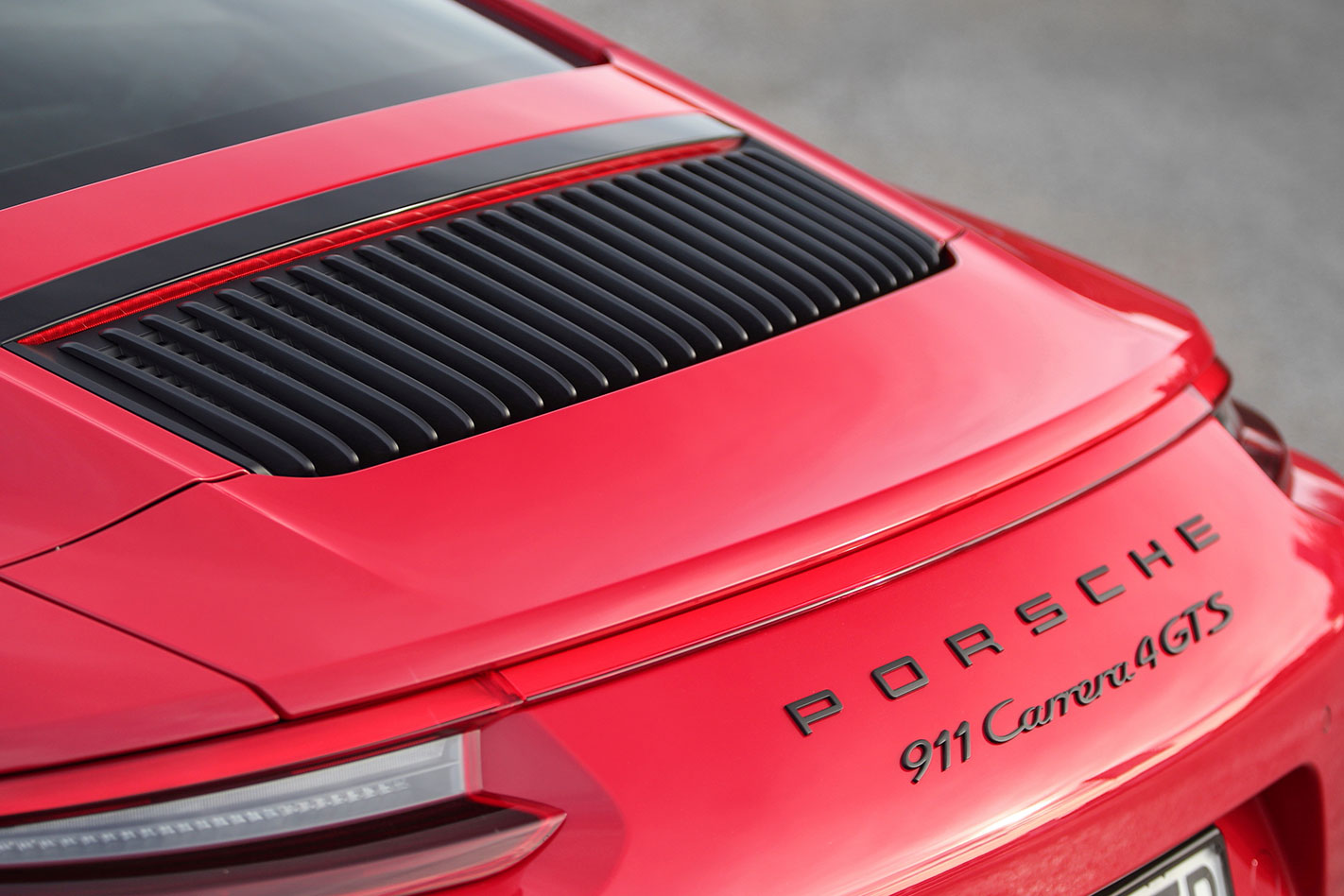
The new lowdown torque, in combination with the new-for-991.2 PSM Sport half-off ESP, also gives the rear-drive GTS an addictive and delightful ability to rotate the car out of tight corners on the throttle.
In tight first- and second-gear hairpins, this car is much more fun and entertaining than its howling nat-atmo predecessor.
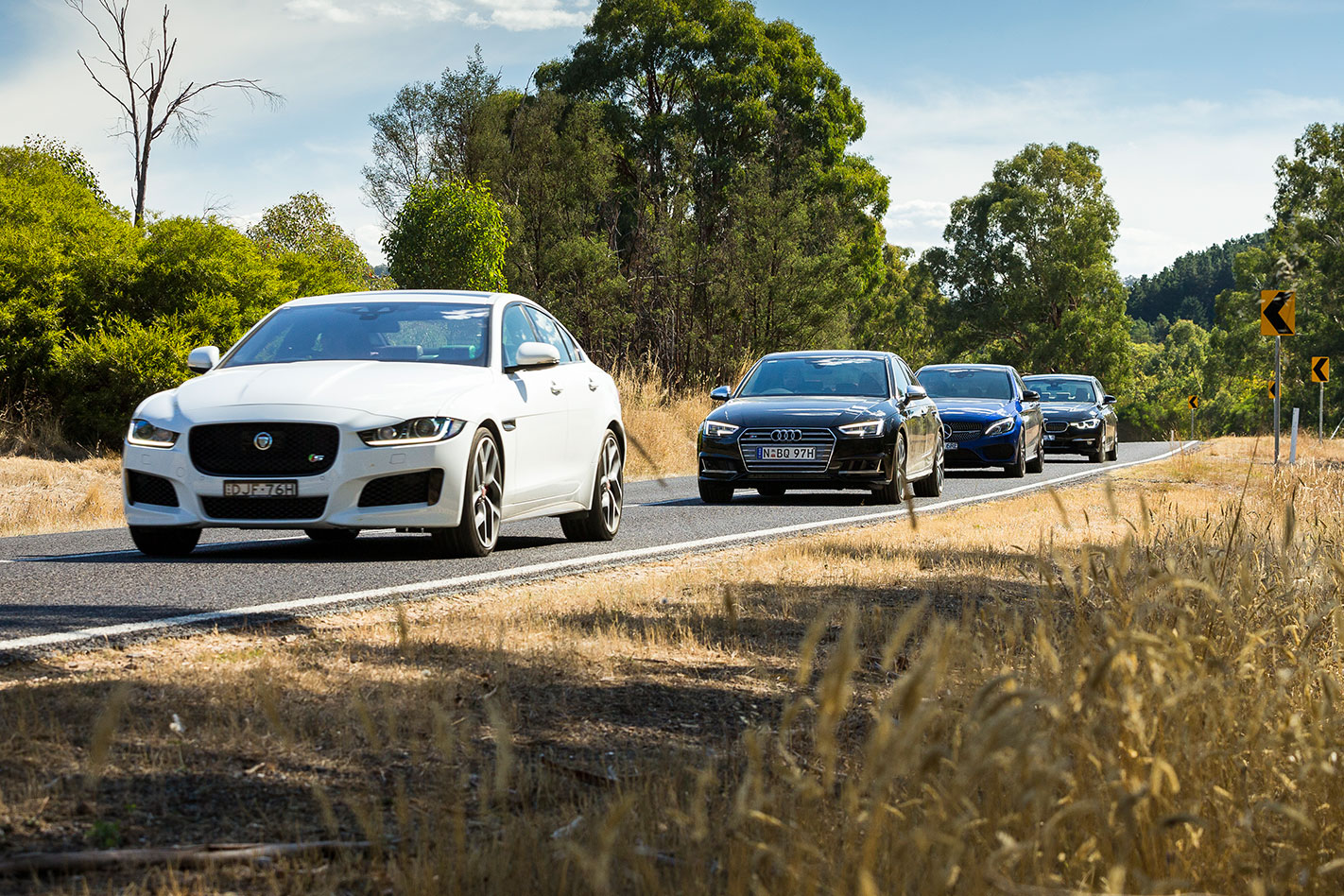
Jaguar XE S vs BMW 340i vs Mercedes-AMG C43 vs Audi S4 comparison review
Oh yeah, about that howling bit. Unlike the base 911s where, to soften the blow, you could reframe the atmo-to-turbo switch — and lost revs, lost noise, lost magic at redline — as a ‘new personality’, it’s a little more difficult in the GTS, for anyone who ever experienced the 991, at least.
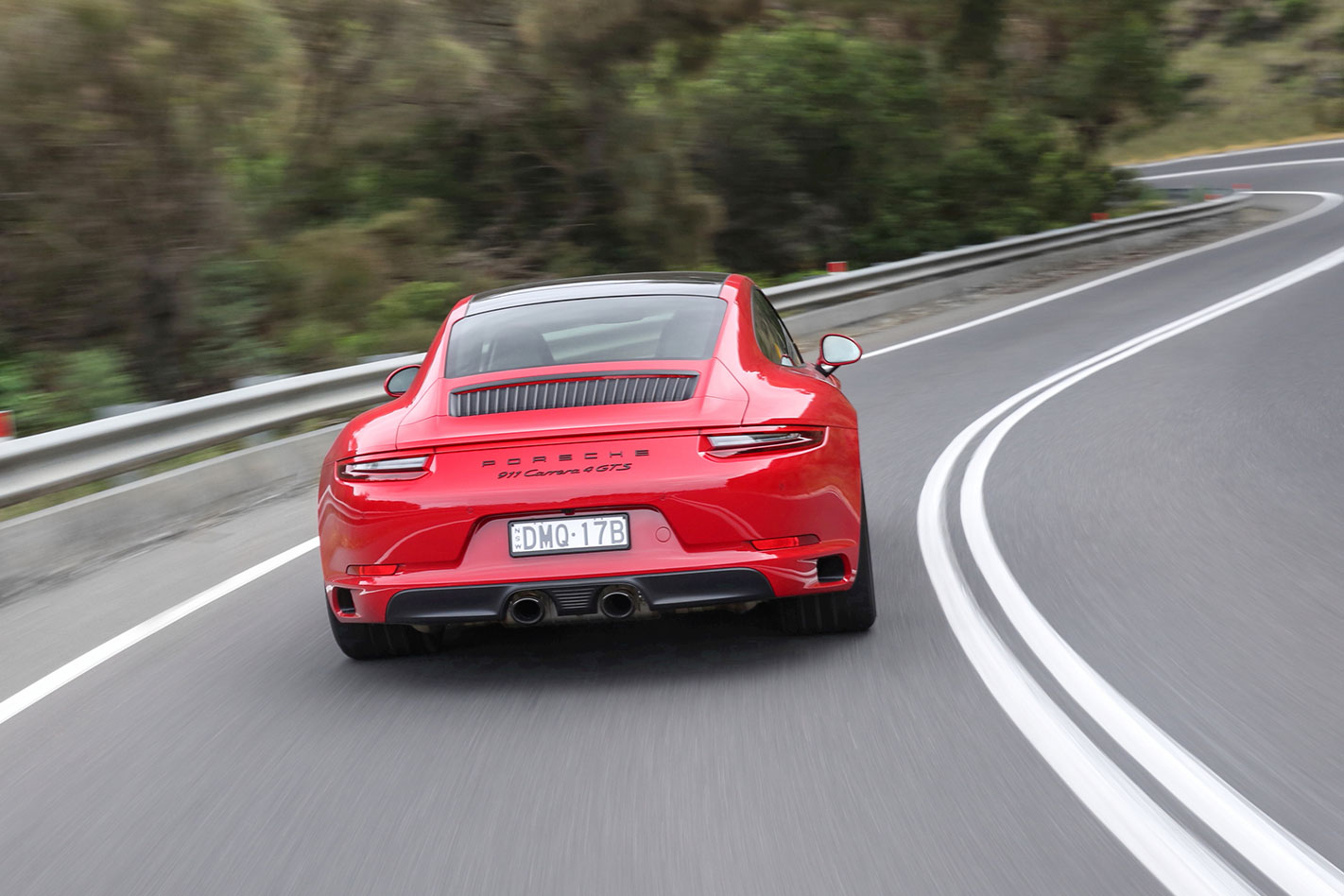
It sounded so good, a spine-tingling flat-six howl filling crevasse of the interior, sounding better and better with every last rpm right to redline.
Speed secrets: Porsche Sport Driving School
Winding out the first three gears in the 991 GTS was a temptation too hard to resist.
And it was loud. Really loud. We needn’t visit old notes to remember full throttle in the 991 GTS — it was something that burned itself into your memory.
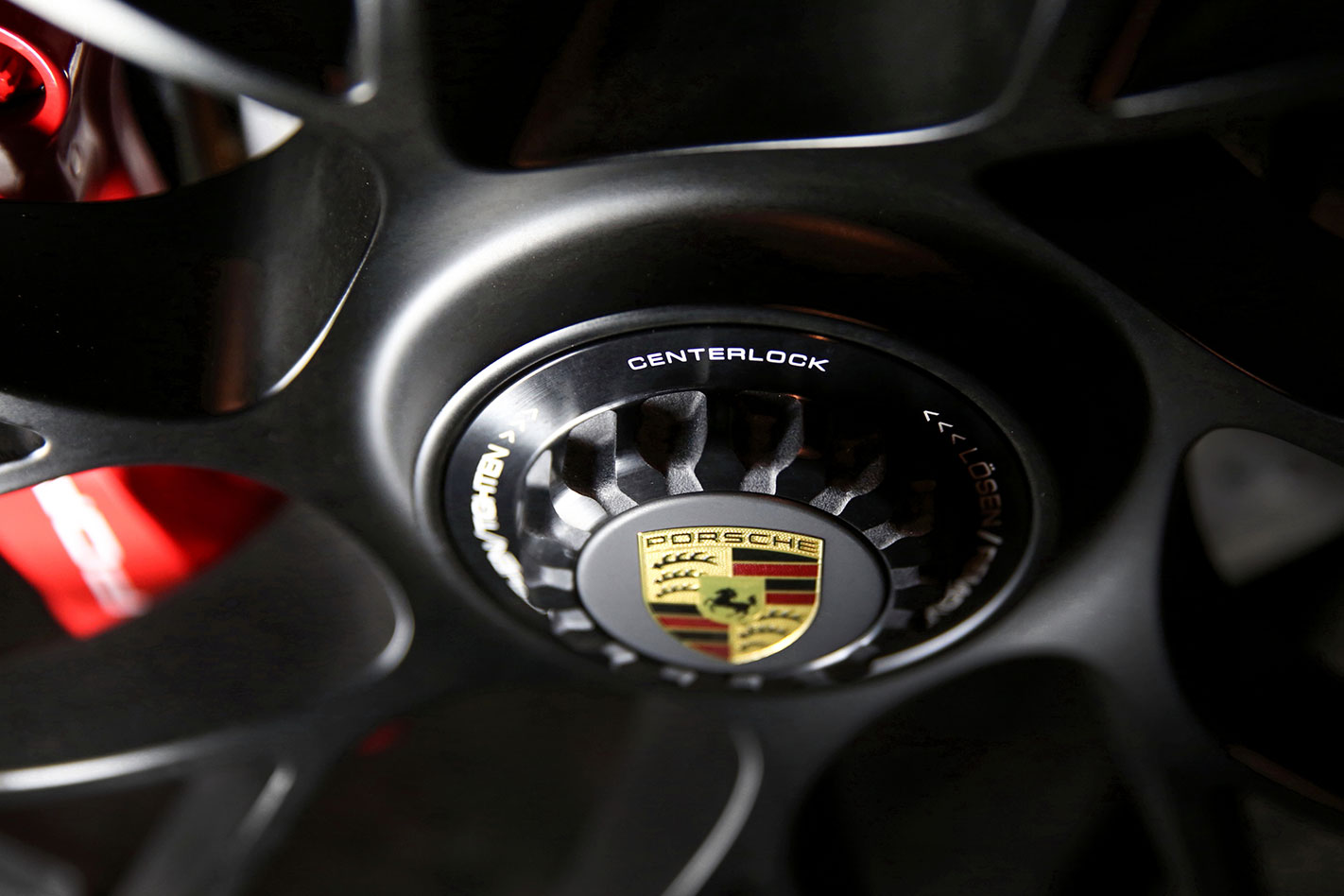
There’s hissing now as you tap into the boost, and an interesting technical flavour to the note, particularly from outside the car, but it still sounds very naturally aspirated.
Porsche 997 GT3 with LS3 conversion for sale
Anybody whose first 911 GTS is a 991.2 will be very happy with the sound and will absolutely put the windows down in tunnels.
Anybody who experienced the 991 GTS will be glancing down to double check the active exhaust is on. There is less volume. And those mind-blowing final rpm of the 991 GTS are now just memories. The 991.2 GTS still sounds excellent, and satisfying, just without the top-end rush and quieter.
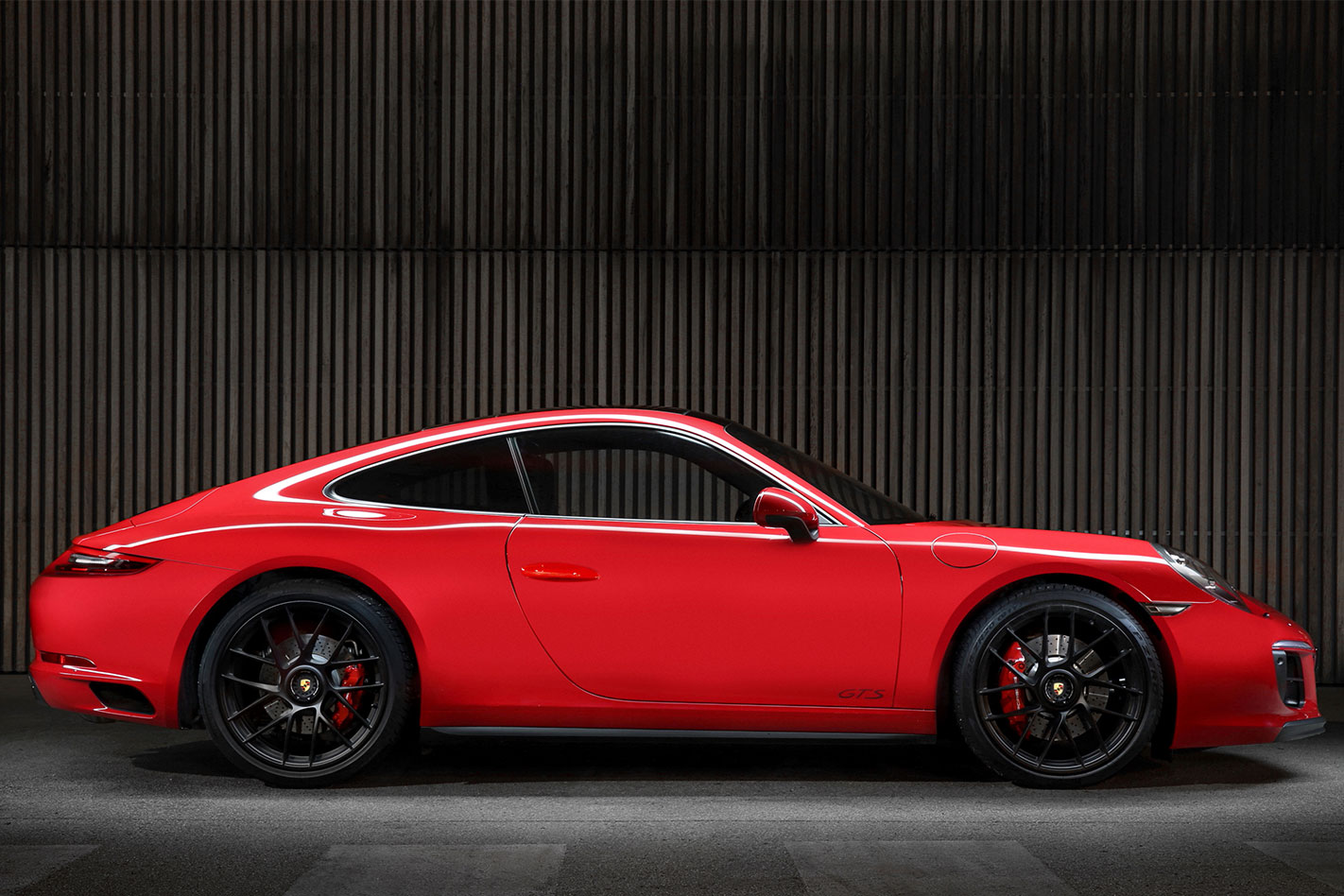
The steering is excellent, even despite electrical assistance. The brakes are strong, resilient and feel great; the PDK is smooth, responsive and faultless. It rides well despite 30-profile front and 35-profile rear tyres.
The damping is incredible. The 991.2 GTS just makes a mockery of the supposed compromise other manufacturers say is unavoidable. It’s stable and calm in high-speed corners yet agile, alert and nimble in the slower speed stuff (owing partly to its optional all-wheel steering).
New Porsche 911 GT3 Cup car launched
This is a car that would feel equally satisfying, capable and fun in a motorkhana as it would around Phillip Island or on an autobahn. Pretty much no other car can match a 991.2 911 for this breadth of ability and talent.
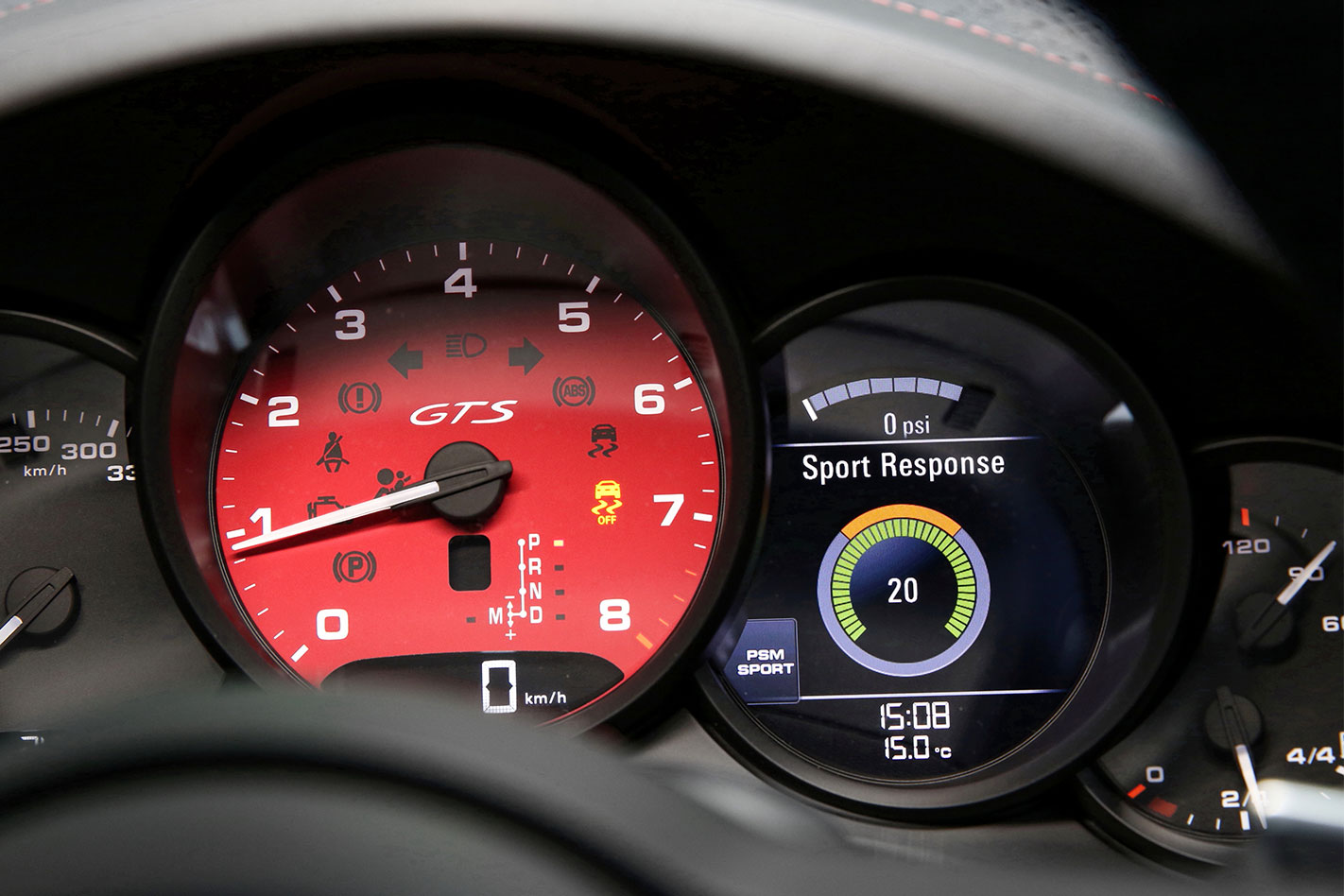
And of all the new turbocharged 911s, the GTS is the one with the looks that most closely match the insane performance of the new turbocharged 991.2. We don’t lust after it quite like we did its predecessor, but the 991.2 GTS is a sublime sports car.
4.5 out of 5 2018 PORSCHE 991.2 911 GTS Engine: 2981cc flat-six, DOHC, 24v, twin-turbocharged Drivetrain: 7-speed dual-clutch automatic, rear drive, mechanical limited slip differential Power: 331kW at 6500rpm Torque: 550Nm at 2150-5000rpm Weight: 1470kg 0-100km/h: 3.7sec (PDK, claimed) Top speed: 310km/h (claimed) Price: $290,090 (PDK)
RESEARCHERS at the University of New South Wales have discovered a cheap way of generating hydrogen from water, and their breakthrough could see hydrogen’s prospects as a long-term power source improve – and increase the likelihood it will power your car in the future.
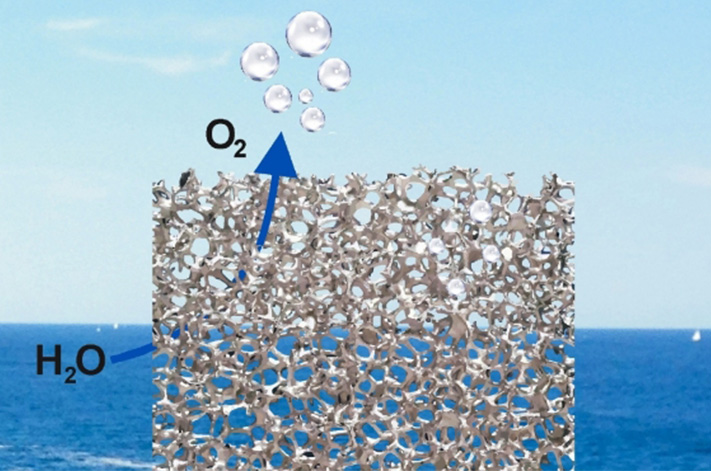
The study, led by UNSW associate professor Chuan Zhao, developed a method of creating ultra-thin metal catalysts out of iron, nickel and copper for splitting water into its component elements of hydrogen and oxygen.
Compared to present methods that require expensive rare metals like platinum and iridium, Professor Zhao claims his team’s technique is not only cheaper, but also yields more hydrogen.
When it comes to transportation, manufacturers have been split over whether to concentrate on pure electric vehicles or hydrogen as their future power source of choice. Energy density – the amount of energy that can be stored in a given mass – is key to determining which tech has a longer-term future, and while a tank of hydrogen can store more energy per kilo than a battery, it’s not without shortcomings.
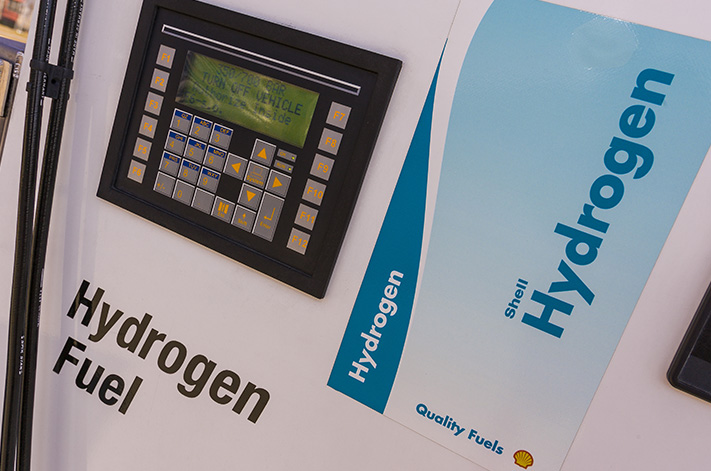
Cost and infrastructure are the two main drawbacks. The need to deliver hydrogen at sufficiently high pressure and low temperature means a hydrogen fuelling station needs specialised equipment, while a battery-electric vehicle can be recharged from a regular household socket. Then there’s cost – electricity can be generated cheaply from renewable sources, while hydrogen must be derived using an expensive and energy-intensive process.
So while a car with a hydrogen tank, electric drive motors and a fuel cell to convert the hydrogen into electrical energy may be lighter than a car which has only a battery and drive motors, the cost and infrastructure required to make it viable is significant.

But when it comes to efficiency and scale, the process becomes more expensive. Precious metals that are already in tight supply – like platinum, iridium and ruthenium – currently make the best catalysts for generating hydrogen in industrial volumes, however they’re costly.
Zhao’s high-efficiency, low-cost cracking process may not solve the infrastructure issue, but by bringing the expense of hydrogen generation down it goes some way to improving hydrogen’s odds of becoming the mainstream fuel of the future.
“Splitting water usually requires two different catalysts, but our catalyst can drive both of the reactions required to separate water into its two constituents, oxygen and hydrogen,” Professor Zhao said.
“Compared to other water-splitting electro-catalysts reported to date, our catalyst is also among the most efficient.”
But what’s the current state of play? Manufacturers have been bullish on hydrogen in the past, but as battery technology has improved and the cost of battery storage has dropped, so too has the willingness of carmakers to invest in hydrogen fuel cells.
BMW is a high-profile example. The German carmaker, which has dabbled with experimental hydro-gen-burning internal combustion engines and more sophisticated hydrogen fuel cells, has gone cold on fuel-cell tech. Speaking at the launch of the 530e plug-in hybrid, the head of BMW’s i division Alexander Kotouc said “the future is fully electric”.
“We all know about the situation when it comes to infrastructure for electric cars. If you now look into the infrastructure for fuel cell or hydrogen, it’s at a much lower level at the moment,” Kotouc said.
“So the technology is perfectly fine, we are looking into that, but it doesn’t make sense to offer it on a mass scale to consumers if they don’t have anywhere to [refuel] the cars.”
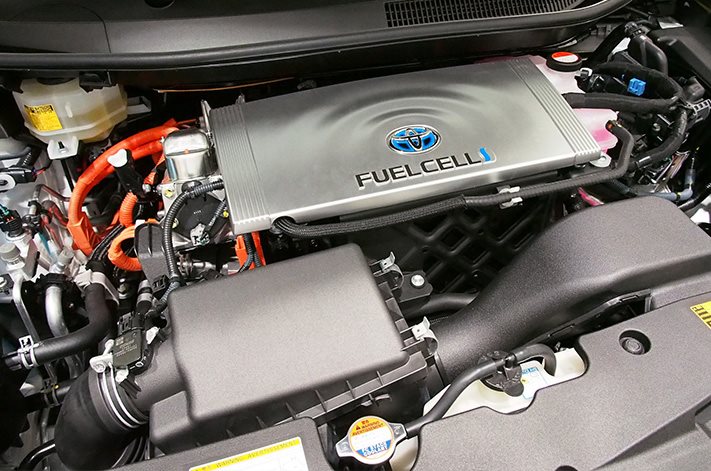
There are exceptions. Honda, one of few manufacturers to offer a fuel cell vehicle to the public in the form of the FCX Clarity, remains committed to a hydrogen future. Same goes with Honda’s compatriot, Toyota, which launched its Mirai fuel cell car in 2015.
Hyundai has has been involved with fuel cell powertrains for a while now, with a hydrogen-huffing ix35 being the first production car to be born from the Korean carmaker’s alternative fuel program.
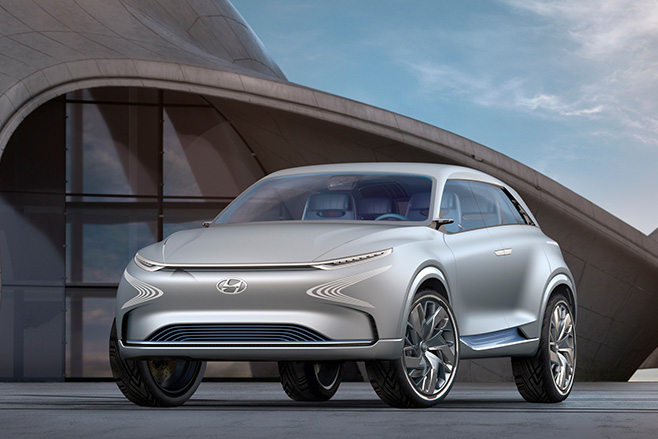
Meanwhile even Volkswagen, which has announced an aggressive strategy to launch 30 pure electric cars by 2025, isn’t giving up on hydrogen fuel cells. However the German carmaker will likely make hydrogen the preserve of its luxury offshoot Audi, with fuel cell powered concepts like the H-Tron quattro an early signal of what’s to come.
Mercedes-Benz is another big backer of pure electric tech, but has also announced that a hydrogen fuel cell GLC-class will arrive next year – also toting a plug-in capability to allow it to run even when hydrogen filling stations are scarce.
THE Porsche 911 range expands even further with the addition of the GTS, packaged to aim straight at the driving enthusiast.
WHAT IS IT The Porsche 911 GTS is the new sub-Turbo performance flagship of the iconic two-plus-two sportscar range. It is available as a coupe or cabriolet, with either all- or rear-wheel drive, and also as the innovatively topped Targa. The five-variant line-up effectively doubles, as each version comes with a choice of either a seven-speed PDK auto or a manual.
WHY ARE WE TESTING IT? Until now, there was a noticeable gap in performance between the ‘entry-level’ 911 Carrera S and the track-honed 911 Turbo and GT3, but the GTS now slots in with more power and driver-focused features without having to shell out top-spec money.
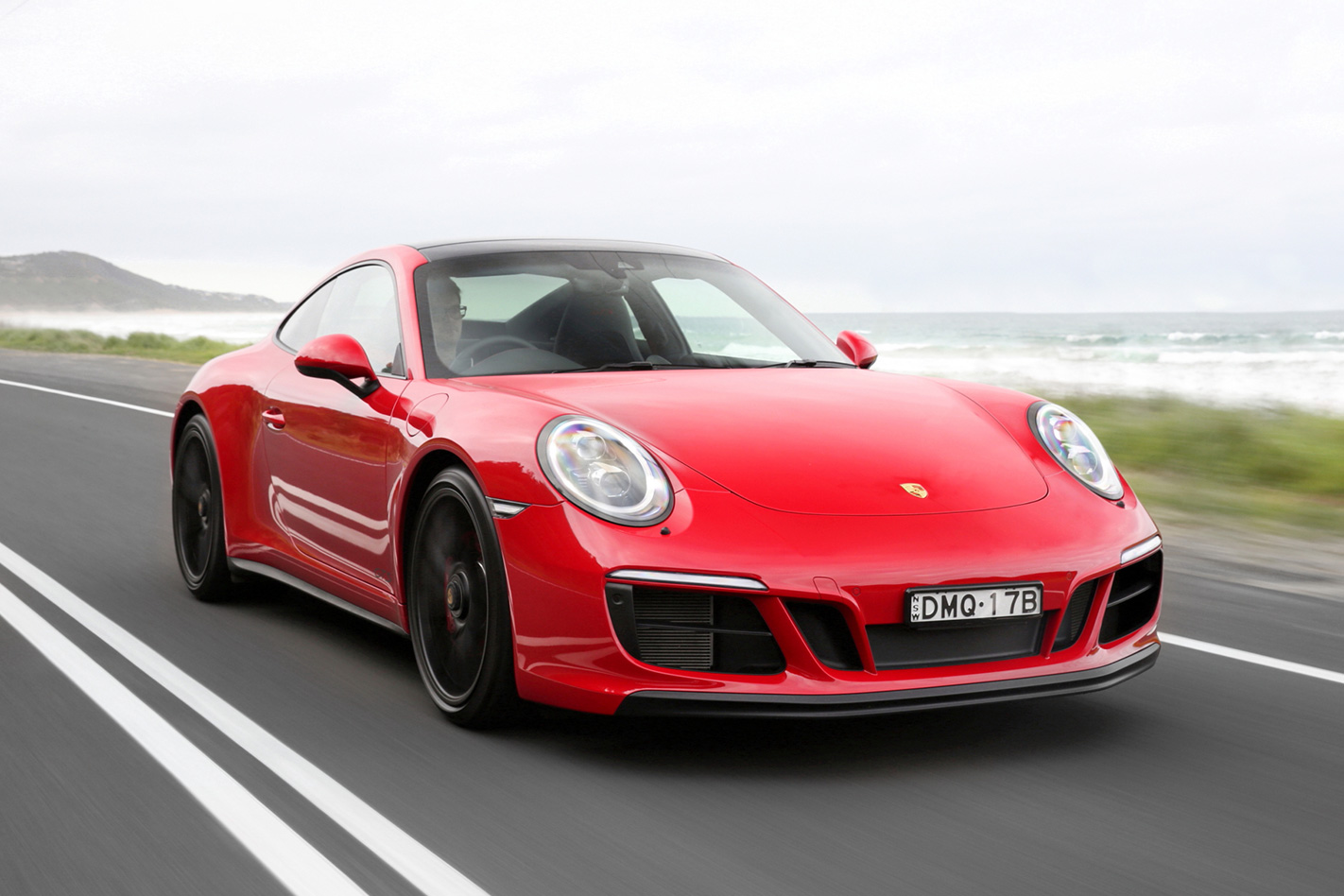
THE WHEELS VERDICT It may seem like the 911 range is becoming more crowded than the 5.30am Shinjuku train, but the new mid-range GTS option fills an obvious gap.
All-wheel-drive versions, including for the clever Targa top, may be more a value-boosted, badge-engineered bundle, but the rear-drive coupe and convertible are our pick of the performance propositions.
Not only do you get more grunt to shake the rear-driven wheels loose, you also get the sewn-up set of sports suspension, wider hips and mighty wheels to gather everything back up again.
In the 911 range, it represents a fine balance of on-road comfort and track-blasting performance.
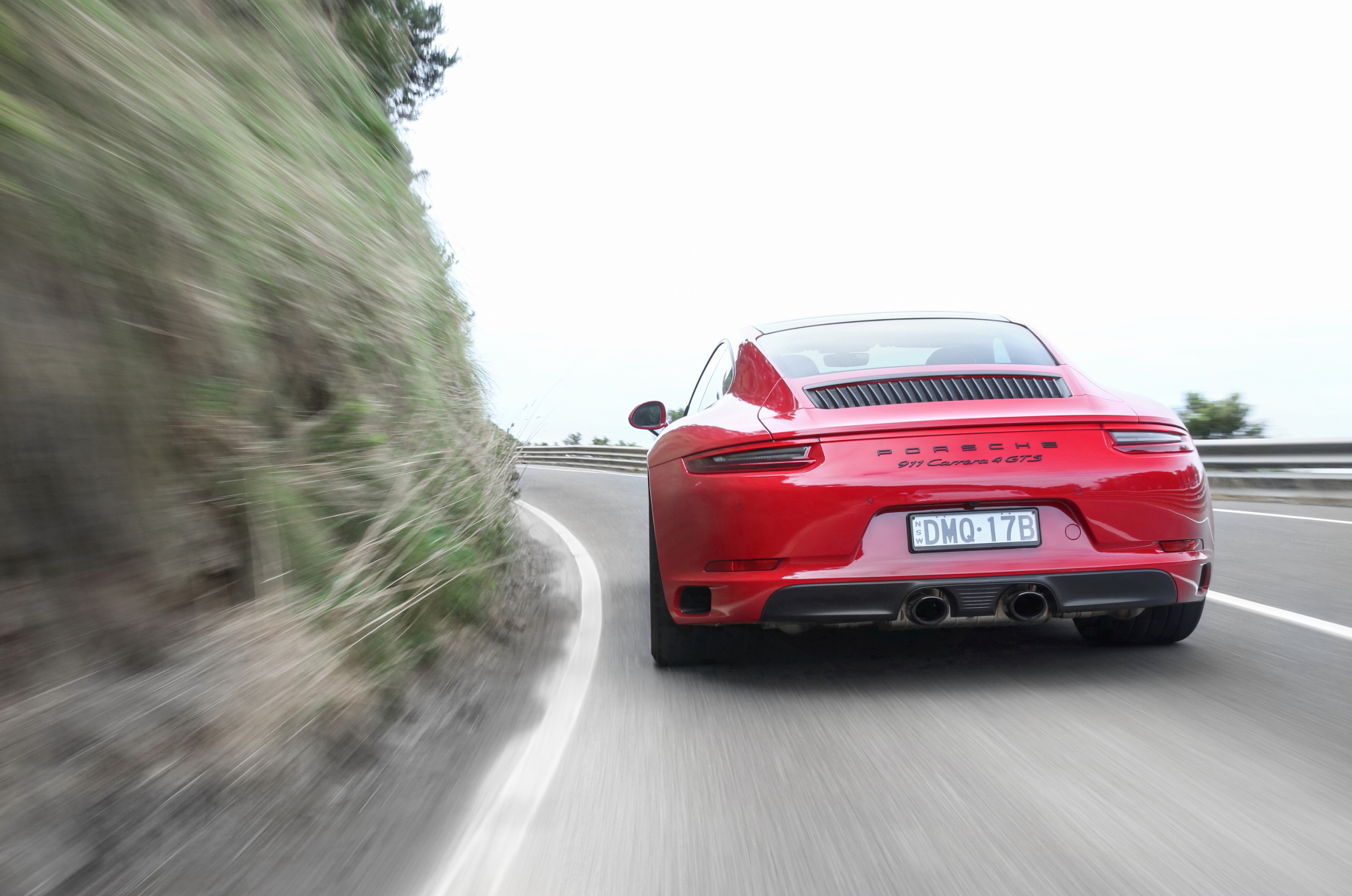
Finding the room was tricky: Carrera versions already look after the entry point, the GT3 has track fanatics covered and the Turbo keeps well-heeled speed junkies happy. What the GTS offers is something in between thanks to a power hike over the Carrera, and a selection of performance-enhancing extras.
The engine is Porsche’s familiar 3.0-litre turbo flat six, but a boost of 22kW and 50Nm over the Carrera S takes the vital statistics up to 331kW and 550Nm. Add hot, 20-inch centre-lock wheels borrowed from the Turbo (regular five-stud alloys are a no-cost option) and tweaked spring and damper rates for a sportier disposition and you have a series of 991.2 variants with greater corner-carving agility that still retain the day-to-day practicality of more proletarian variants.
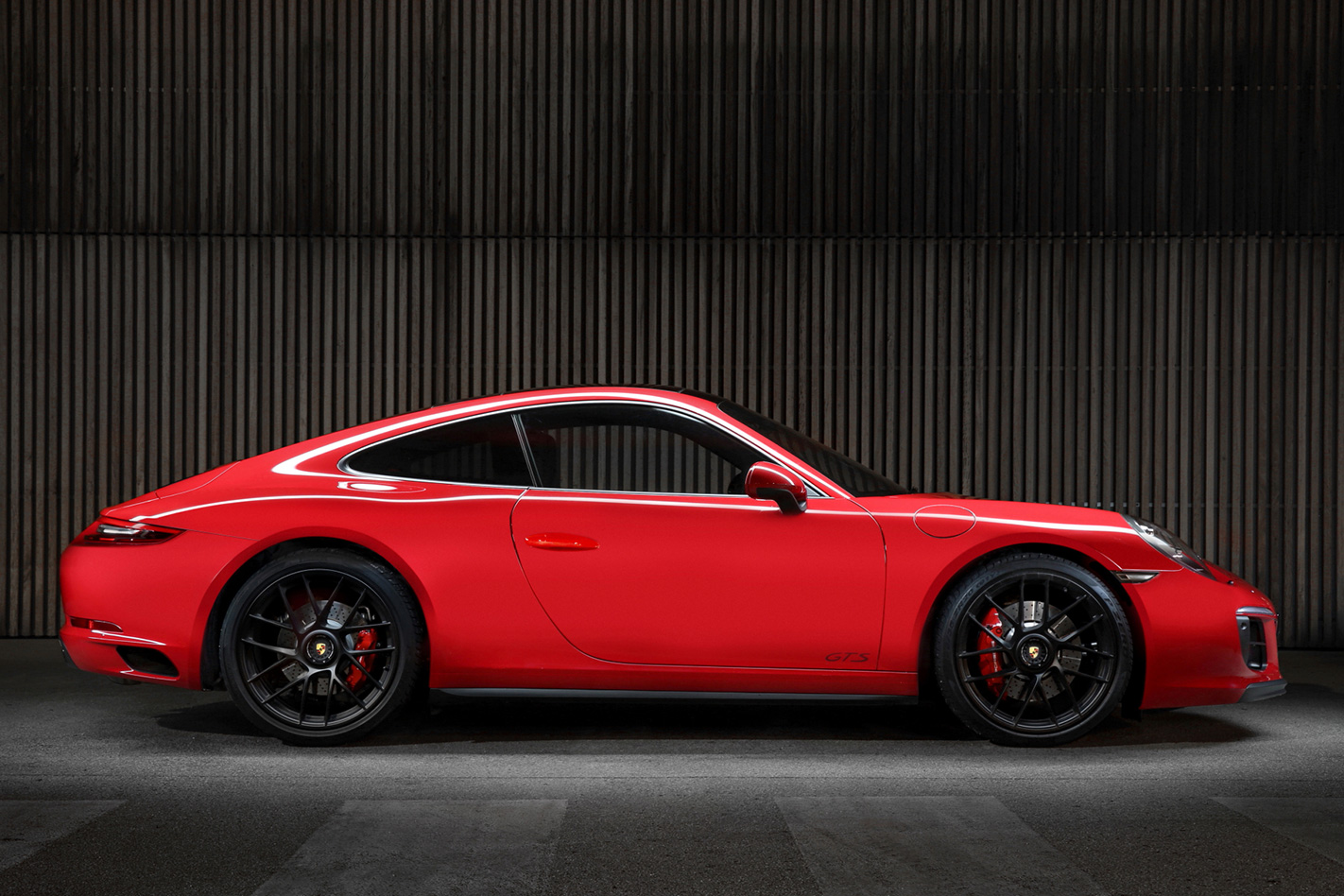
Spend a little time – and a lot of cash – with the options list, and you could create something similar to the GTS from a Carrera 4S. But not when it comes to the rear-drive version which, for now, is the only way you can have a rear-drive 911 with the wider (by 44mm) rear arches.

Piloting a rear drive Carrera coupe through some challenging corners in slippery early morning conditions will have you questioning the wisdom of spending another $16K on all-wheel drive. Traction on corner exit is so reassuring it’s like being led in a waltz by someone better at dancing than you.
The pumped-up flat-six delivers peak torque at just 2150rpm, but despite all the midrange turbo shove, the boxer engine maintains linear and strong acceleration all the way through to the lofty 7500rpm limiter.
Admitedly the extra grunt isn’t immediately obvious compared with the not-exactly-lazy Carrera S, yet even with more poke the rear-engine layout is fearsomely efficient at getting power to the road, backed up by spookily effective traction and stability control calibrations.
Adding five extra variants to a crowded 911 range might have seemed akin to shoving passengers through the doors of the Shinjuku train at rush hour, but a few hours with the GTS underscores why it has developed a reputation as the sweet spot in the 911 line-up.
There’s a reason why Bruce Willis fills your television screen every Christmas. People love Die Hard because it’s about someone regular-looking proving much more than that.
Cars are no different. If something unassuming pulls up beside a Ferrari and then suddenly blows off into the distance, it’s like seeing Jackie Chan walk into a bar and kick a boozed-up giant out cold. You’d feel equally bemused and delighted.
Opinion: Limited edition cars shouldn’t be unattainable
Such things are better known as sleepers. We love them. And when coughing up for a luxury sedan priced nigh-on six-figures, with performance and covert looks thrown in, it’s obvious the Northern Hemisphere does too.
Audi R8 could adopt twin-turbo V6 engine
First up is Audi. The original 100 S4, its first S-badged model, looked less suited to full-berry-giving than it did Uber Black duties (if such a thing existed in the early ’90s), but it’s shaped all its hot four-doors since.
The just-landed B8 S4 is $30K more expensive than the next A4 variant, but singling it out from its cheaper brethren isn’t easy. The A4 already oozes menace with its sharp lines, gleaming grille, and furrowed daytime running lights, so you’d have to zoom in on the S4’s front brakes, in all their six-piston glory, to pick it.

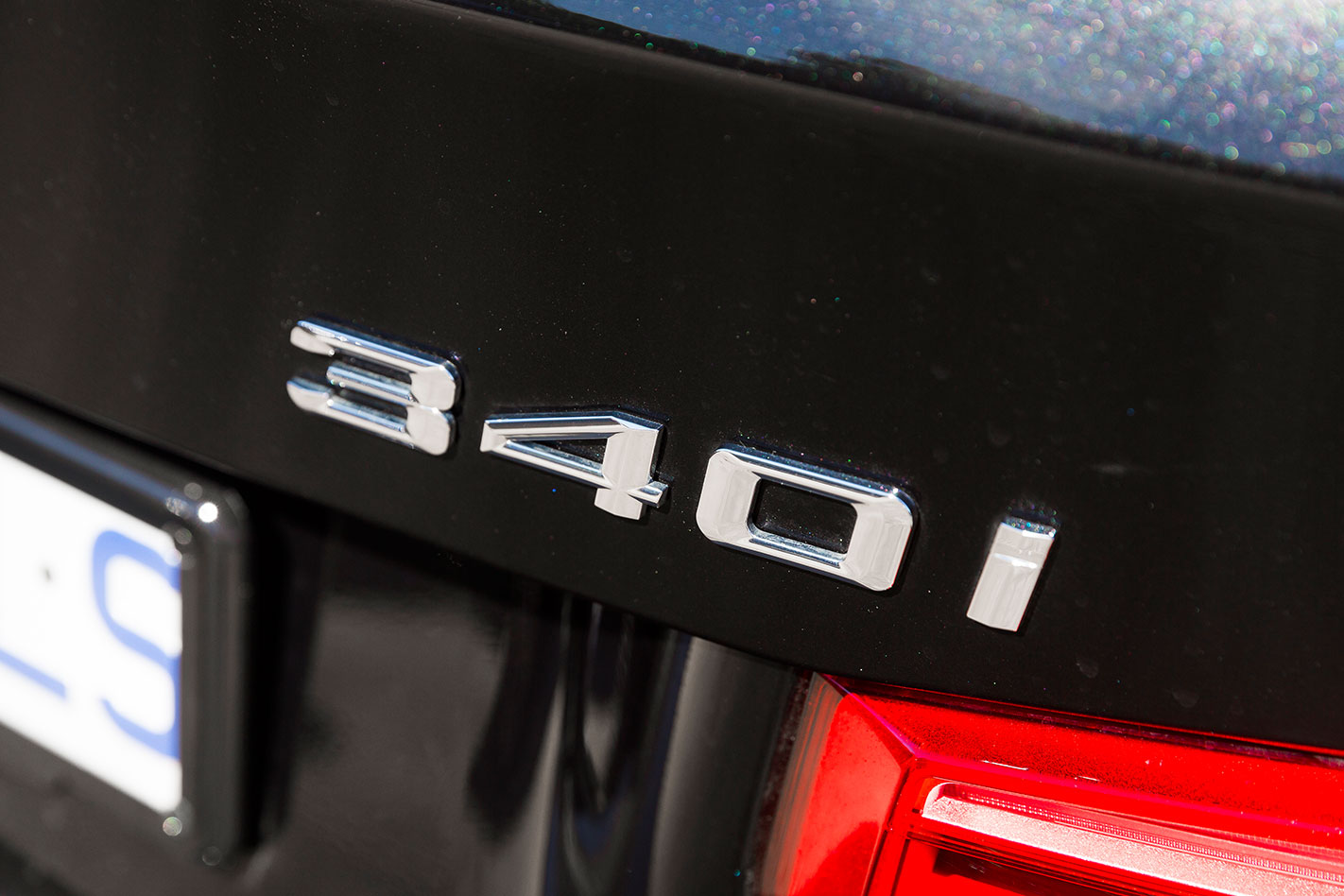
This won’t be easily fixed either with something like an M Sport package. The pack only changes the wheels, grille colour, guard badges, and front bumper. Until BMW offers a factory M Performance variant, this meekly dressed 340i wins this test’s trainspotter prize.

And while those figures no longer correlate to engine size, they hint at the fact that this car punches harder than its formal facade suggests.
Shanghai Motor Show: 2018 Mercedes-AMG S65 revealed
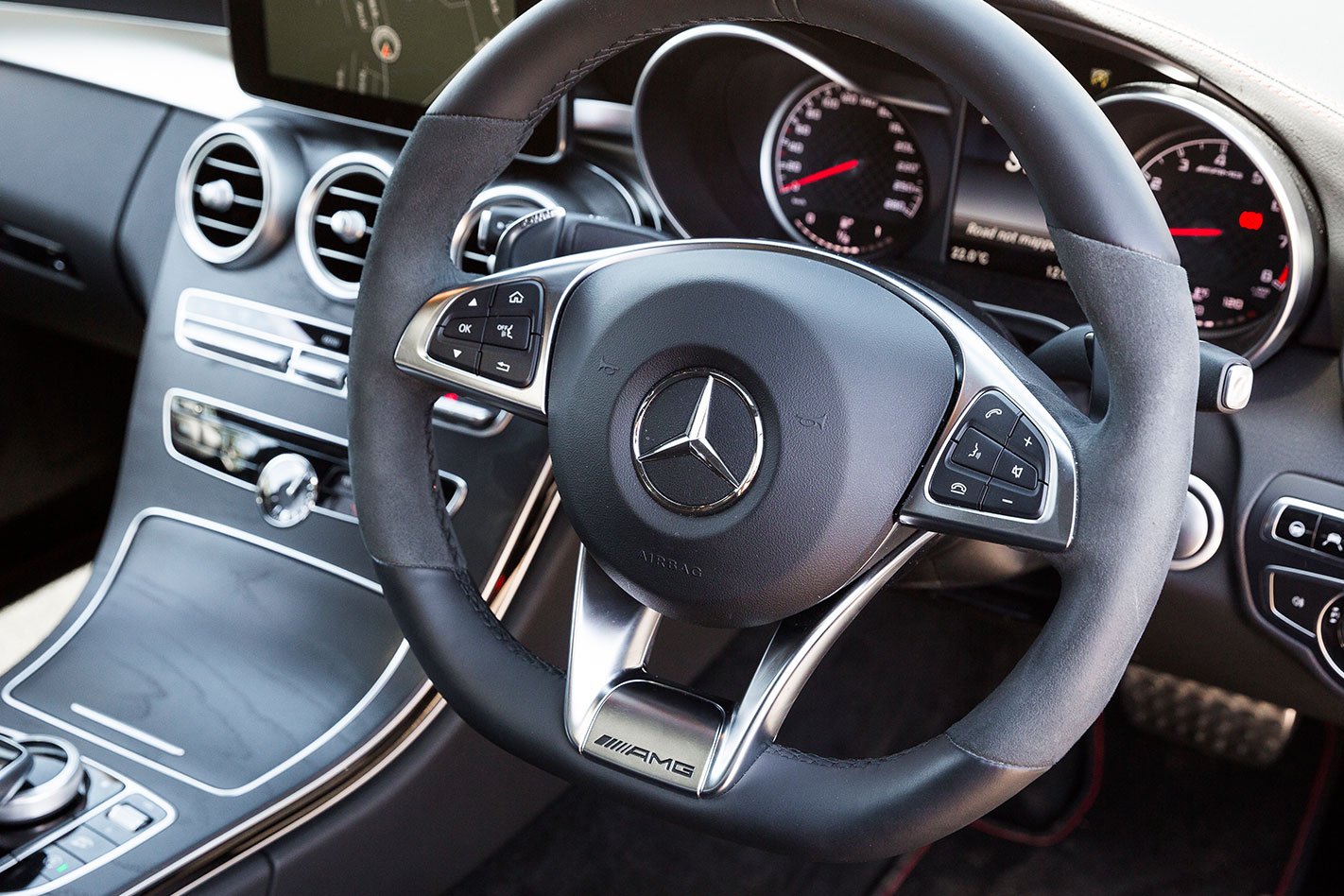
Engineered by Mercedes-AMG, the C43’s ‘AMG’ calipers and drilled front brake discs allude to its performance and help justify its $101,900 ask, without options, while those big eyes, rounded surfaces, and sparkling grille, plugged into its unique front bumper, make it the softest on the eyes here.

Dropped on optional 20-inch wheels it looks positively sexy, though it also brings with it a long options list that takes its $105,350 base price to an eye-watering $125,270, only four grand of which it wears on its exterior.

These cars might be separated only by three cubic centimetres, but it’s the Jaguar’s that feels largest in capacity at the drag strip. Rolling the Jaguar from the line is the best way to manage rear grip and allow its blower to build boost with revs.
Jaguar XE SV Project 8 revealed
It sets off wailing like its sports car cousin and whining like a supercharged drag car, needing 5.28sec to reach the 100km/h mark before breaking the 400m ribbon in 13.45sec.
However, with luck, and wheelspin, it’ll charge to 100km/h in 5.51sec, before finishing the quarter mile a tenth behind the Jaguar at 13.57sec.

So the needle happily sails past its indicated redline to a 7250rpm cut-out in manual mode, and its torque peak is spread over the widest area from 1380rpm to 5000rpm.
Performance Car Podcast: Mercedes-AMG C63 S
Mercedes-AMG’s 3.0-litre twin-turbo V6 in the C-Class, contrastingly, goes about this stuff more frenetically. Its 270kW and 520Nm outputs arrive in what feels like rapid gunfire from its nine-speed automatic. It’s geared so short it needs to upshift twice before 80km/h.

As it slingshots forward a metallic howl rips from its optional performance exhaust in Sport Plus mode, punctuated by an abrupt crack on every shift before its 6300rpm cut-out. Triple figures arrive in 4.61sec, 400m passes in 12.87sec.
Switching from the AMG to the S4 is like swapping an assault rifle for a shotgun. Thrust arrives via its ZF-made eight-speed auto’s ratios in thick, linear slugs.
This is partly because Audi’s filled the V6’s valley with a twin-scroll turbocharger, which required flipping around the heads so the exhaust valves point inwards, helping it push 260kW/500Nm through its four tyres.

No prizes for guessing that our all-paw duo ravage the rear-drivers from a standing start. However, roll-on tests flip the pecking order on its head.
The BMW will tear free of the pack from 80-120km/h in third gear, relying on longer gearing and lighter weight to cut it in 3.1sec. That’s a tenth faster than both the Audi and Jaguar, while extremely short gearing lets the AMG down, forcing it to nab fourth at 114km/h and register a 3.2sec sprint.

However, the 340i reels ’em in so quickly at the speed traps it makes you wonder if the petrol station at BMW’s engine dyno facility only stocks 95 RON.
It flies across the quarter mile finish line at 175.56km/h, while the Merc trails with 174.03km/h, the Audi 173.69km/h, and the Jaguar 172.08km/h.

It’s only a shame its suspension doesn’t extend the enjoyment into the bends. Even with low-profile Bridgestones and adaptive M suspension, the 340i fails to tell you what’s happening at a surface level.
Five ultimate BMW M3s part 1: E30 Sport Evolution
There’s little feedback from its tiller on how much purchase the front tyres have. It also feels like the front strut set-up can’t translate available grip into sharp turn-in, so the stability police show up well before the fun’s even started, yapping at wheels to keep it within the road lines.
It’ll have you scanning the options list for a fix, but the 340i’s adaptive suspension is already pinched from the M Sport package; and the optional M brakes, at $1400 for the set, are the only chassis upgrade.
They won’t be enough to save the 340i from its dynamic woes, but are worth it, as you’ll sail past a few apexes adjusting to the stock set’s underwhelming power.

Then on the way out of corners the LSD-by-brake system sporadically nabs at the rear axle, and as a result, your confidence falls significantly, too.
Opinion: Jaguar F-Type, BMW M2 or Porsche Boxster?
Once you find smooth tarmac, though, you can finally let the XE S sink in its claws. The electric steering is sharp, fluid, and commands a front-end that feels magnetised to apexes. It’s here that its firm suspension setup pays off, as you can start to ratchet up the commitment and uncover its huge levels of lateral grip.
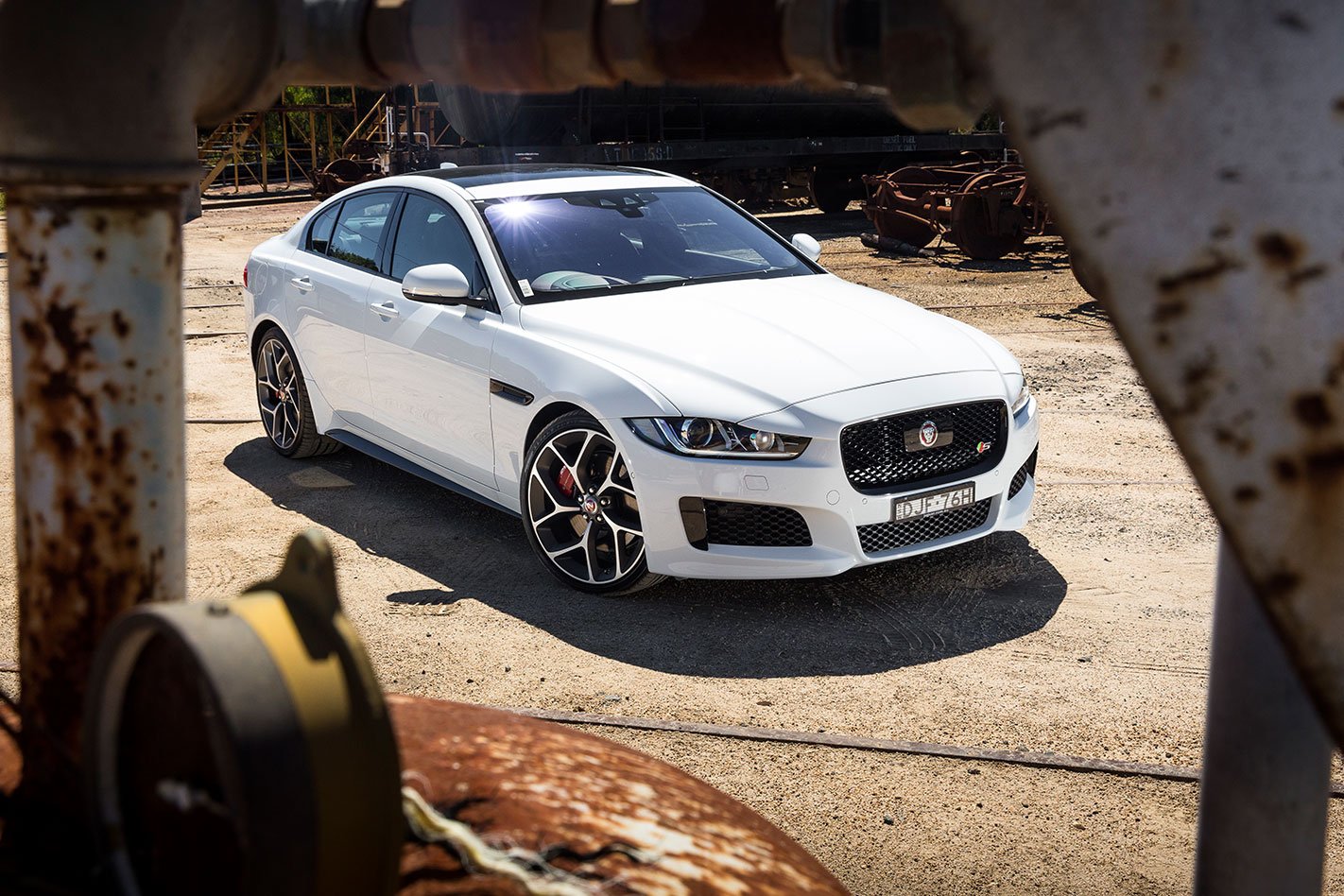
Once again, though, the grippier pair prove themselves in another class. The Audi S4 rides so well you’d think Heathcote’s back roads snaked their way through Audi’s test grounds. With multi-links and adaptive dampers all around, it swallows big bumps and high-frequency stuff with pillow-like compliance.
Audi Sport boss slams Drift Mode
Even around town, with 35-profile tyres, you’re not afraid to line-up speed humps or potholes.
Admittedly, the Audi’s not the most natural corner-carver against the Jaguar or Merc. The first quarter of steering lock feels out at sea and the nose is a bit pushy, but across a twisting road the optional ($2950) electronically controlled hydraulic diff is so good, it feels like Audi stole the technology from VW’s abandoned WRC operation.

Just don’t try the same stuff in the AMG. Its all-wheel drive system doesn’t have a limited-slip differential at all and shoots 67 per cent of its grunt rearwards. Coupled with its hefty outputs, the traction-control light flickers like a bug zapper if you sink the right-foot as early as you do in the Audi. That said, once straightened, its all-wheel grip allows it explode out of corners.

Switching to its Sport Plus mode cuts out the damper float, and the upside is the C43 feels so tied down you suspect AMG pinched the Merc C63 S’s suspension system.
Mercedes-AMG C43 vs C63 long term review 5
There’s an extremely direct front-end connected to a crisp-feeling steering rack. It’s positive, and so rich with feedback that any yaw movements are thwarted with almost telepathic dabs of opposite lock.
And if you’re going to annihilate apexes there’s no better place to sit than in the Merc. The optional Performance seats grab your kidneys tighter than an organ thief, while the raked seating position drops you low into the car.

Our four are each fantastic for cruising in lavishly cloaked performance, and long shall their kind reign. But if value is your guiding principle, the BMW’s a stand-out pick. Short of autonomous driving tech, it boasts the same kit, badge prestige, and refinement as the Audi or AMG for less cash.
The interior also doesn’t seem ‘that’ old, and it’s a sharp looker from the outside. However, its flat seats speak loudest about its undercooked dynamic talent. The 340i’s all about that silken, turbine-like engine, and ignores what the balanced chassis underneath it could be.

One glimmer of hope comes from the $10K discount over its rivals, which could be used toward an M Performance Accessories LSD. Maybe along with a non-variable steering rack (optional) this would have made this a fairer fight for the BMW. However, until the new 3 Series arrives in 2019, this one’s under-braked, out-gripped, and over-powered.
BMW 7 Series V16 manual created
On the other hand, Jaguar’s XE S injects more handling and grip into the sleeper sedan mix. Meanwhile, a blend of razor-sharp turn-in, dramatic engine noise, and handsome looks mean it has a charisma other brands might need multiple generations to craft.
Mercedes-AMG Project One hypercar details
When it comes to grunt and drama, however, the C43’s the undisputed king. There’s so much to love about its drivetrain, its gearbox works well when left to its own devices, and it could decimate all if only injected with a proper limited-slip diff.
As a stepping stone between Mercedes-Benz’s C-Class range and AMG’s lunatic asylum, it’s a perfect fit. But crucial ride and power-down issues sink its chances at clenching the top spot.
Yes, the differential is optional, but even without it, the S4’s clever quattro system and thumping drivetrain are strong weapons in its arsenal – the noise also shows it still knows how to have fun. And once you’re done terrorising tarmac, its delightful ride and smart interior bewitch you into its driver’s seat for the drive home.
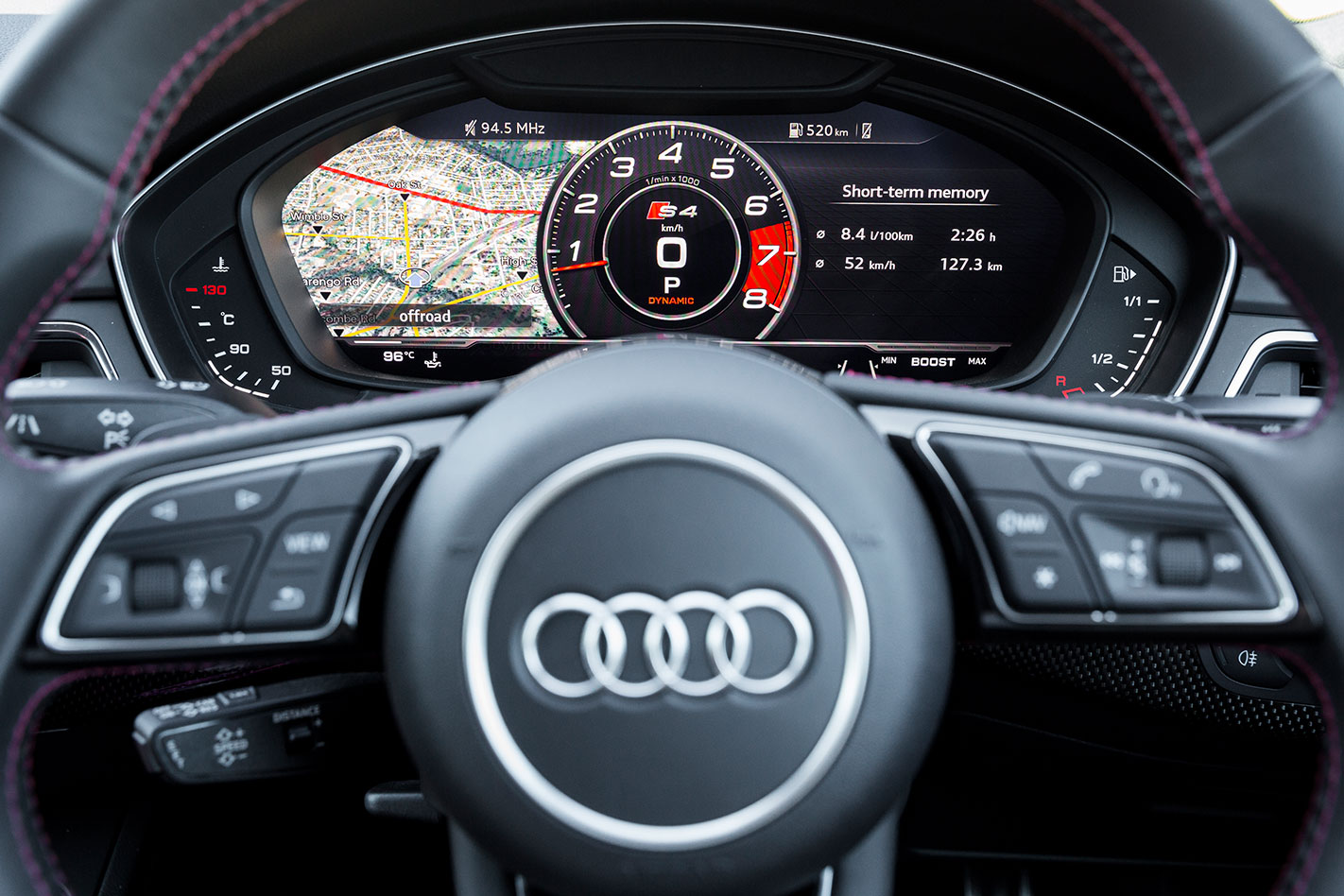
The S4’s fast, reasonably priced, technologically advanced, and matches this all to subtle good looks. Forget Bruce Willis, the S4 slides onto scene like Superman. Wearing glasses and a smart, business savvy suit, but brandishing otherworldly powers that need to be driven to be believed.
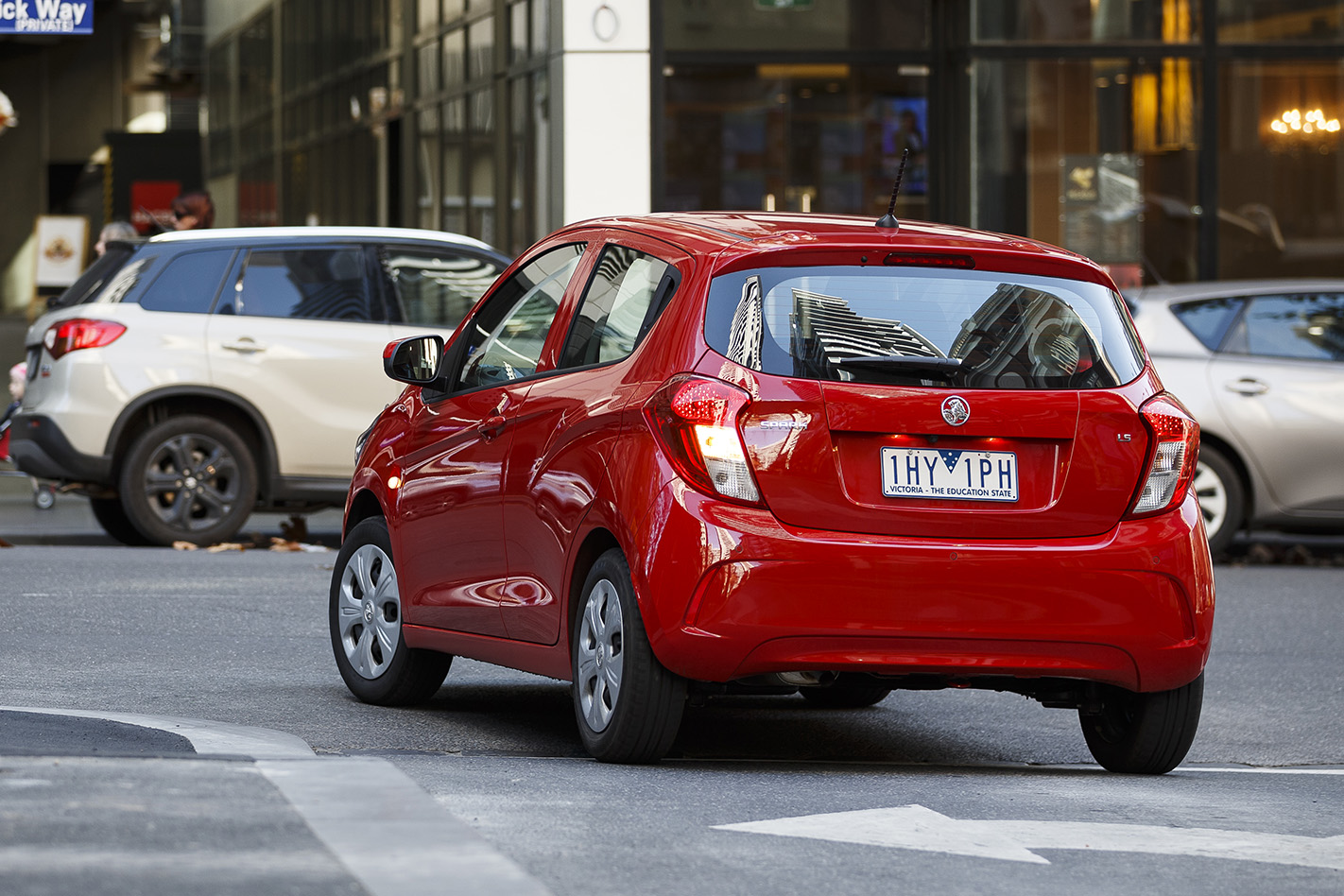
The Holden Spark may be the cheapest car from the Red Lion, but in its most affordable manual-equipped form it still has plenty to offer keen drivers – not just bargain hunters attracted to its $13,990 retail price.
TELL ME ABOUT THIS CAR
Launched last year, Holden’s Spark micro-hatch has proved only modestly successful in the cost-driven sub-compact segment. While the Kia Picanto has romped home with a significant sales lead, the Spark trails behind in third place behind the segment-leading Kia and the aging Mitsubishi Mirage.
But don’t take the sales numbers as an indication of quality. The Spark has plenty of joy to give owners, and in entry-level LS manual guise is particularly fun to drive.
STRENGTHS
Powered by a plucky 73kW 1.4-litre engine, the Spark LS may not be the most powerful hatchback around, but it is a revvy engine that doesn’t mind working hard. There’s a small hole in the power delivery lower in the rev range, but it’s otherwise a fairly perky device.
The CVT gearbox that’s cost-optional in the base-grade Spark LS delivers a dull drive, but opting for the standard-issue five-speed manual transforms the car. With a surprisingly precise shift lever and user-friendly clutch, it’s easy to come to grips with the Spark’s manual transmission. Not only that, it’s actually fun to row through each of its five gears – though we will admit the CVT might be a better choice for dealing with congested urban roads.
Air conditioning, six-speaker stereo, reversing camera, cruise control, height-adjustable driver’s seat and a seven-inch colour touchscreen display are all standard, meaning the basics are well covered in the Spark.
Smartphone mirroring via Apple CarPlay or Android Auto allows drivers to plug in their phone and enjoy added infotainment features through the seven-inch display, like internet music streaming and satellite navigation
A fairly roomy cabin layout means most will be comfortable behind the wheel. Even with a clutch pedal added to its driver’s footwell, the Holden Spark still has plenty of legroom up front. In the back, there’s enough space to easily accommodate a pair of adults on short journeys.
Ride quality is excellent for such a small car. Local suspension tuning means the Spark’s suspension handles Australian roads well, and it feels more stable and secure than others in the segment.
WEAKNESSES
Power windows only on the front – rear passengers will need to wind their glass manually. Traditionally not a deal-breaker, but with an increasing number of similarly-priced rivals offering power windows all-around, manual winders are starting to stand out for the wrong reasons.
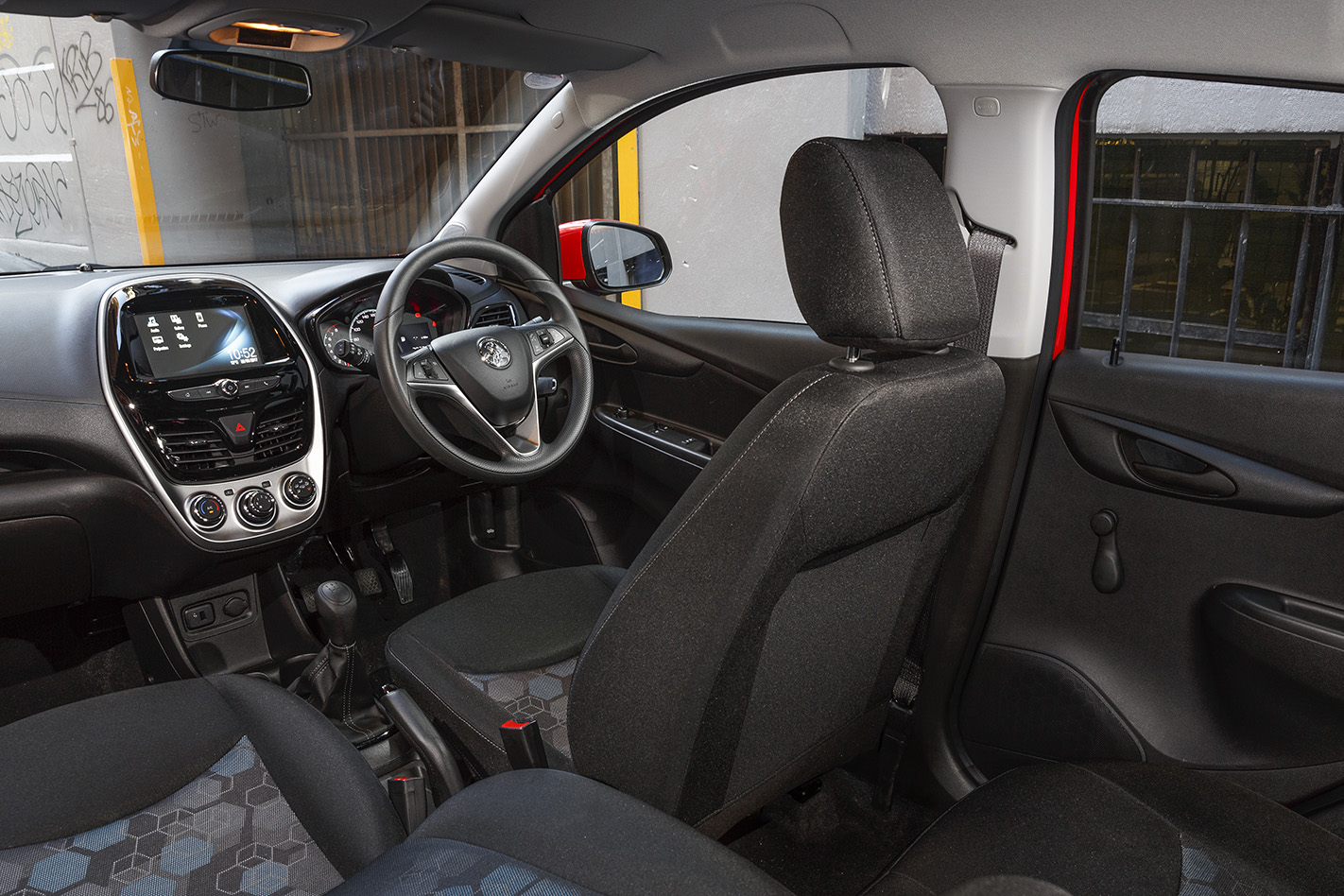
No steering wheel reach adjustment. It’s a rare feature to find in the microcar class, but some drivers may view the lack of steering column adjustability to be an ergonomic bugbear.
Plastic-heavy interiors are the norm for the micro-car segment, but even so Holden could benefit from some more interesting interior design to lift the Spark’s visual appeal. The door cards are big slabs of black plastic, and the Spark’s interior décor is, on the whole, fairly drab.
High road noise, especially from the back seat, may irk some people. Not so much of an issue for city-dwellers, but if you spend a lot of time driving at highway speeds the abundant tyre roar may be an irritation.
ANY RIVALS I SHOULD CONSIDER?
The Kia Picanto is a solid choice for value-focused shoppers, but like the Spark it also has commendable driving dynamics too. Substance and value are present in equal measure.
Suzuki’s Celerio is a decent sub-compact offering as well, though can’t match the Spark or Picanto for infotainment fit-out. The Mitsubishi Mirage is even cheaper, but isn’t up to the same standard as the others.
Ferrari has replaced the fearsome F12 Berlinetta and F12 TDF with an even more formidable V12 flagship called the 812 Superfast, which says what it does and does what it says.
Here’s what you need to know.
1. This is not the first time Ferrari has used the ‘Superfast’ name. Others include the Ferrari 410 Superfast revealed at the 1956 Paris motor show and the Ferrari 500 Superfast built between 1964 and 1966. Every Ferrari Superfast model has been V12-powered.
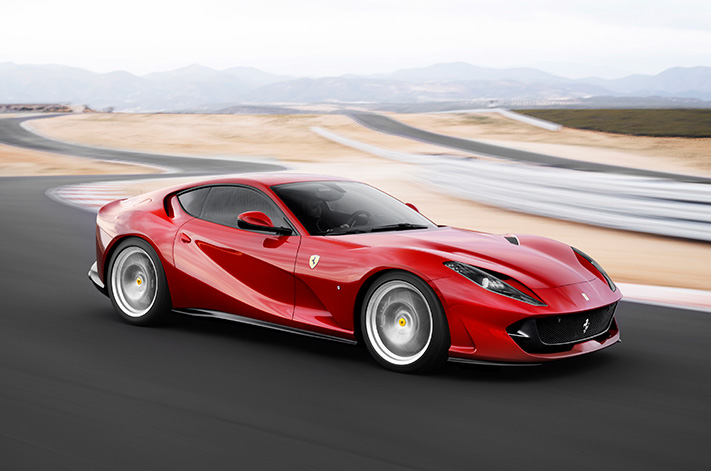
3. The Superfast’s naturally-aspirated 6.5-litre V12 engine is a larger, extensively revised version of the F12 Berlinetta’s 6.3-litre V12. It revs to 8900rpm and arrives 70 years after the Ferrari story started with its first V12 in 1947.
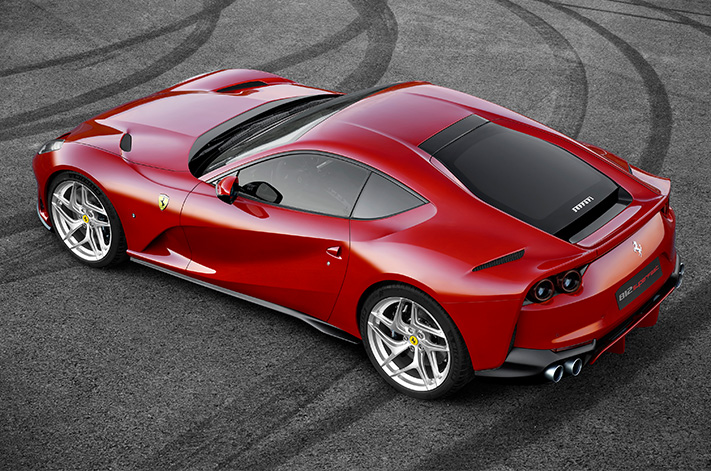
5. The V12’s peak power is reached at a screaming 8500rpm. Maximum torque arrives at a lofty 7000rpm, but at least 80% of that is available from 3500rpm.
6. Fuel is injected directly into each combustion chamber three times before each compression stroke via a high pressure ‘triple injection’ system running at more than 5000psi.
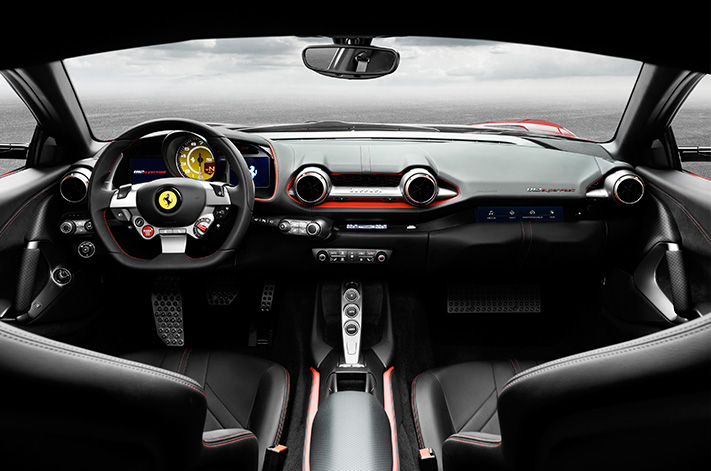
8. Ferrari says the 812’s seven-speed dual-clutch gearbox is 30% faster to upshift and 40% faster to downshift than the F12 Berlinetta.
9. This is the first Ferrari to use electric power steering, rather than hydraulic. It uses the F12 TDF’s rear-wheel steering system with a new software calibration.
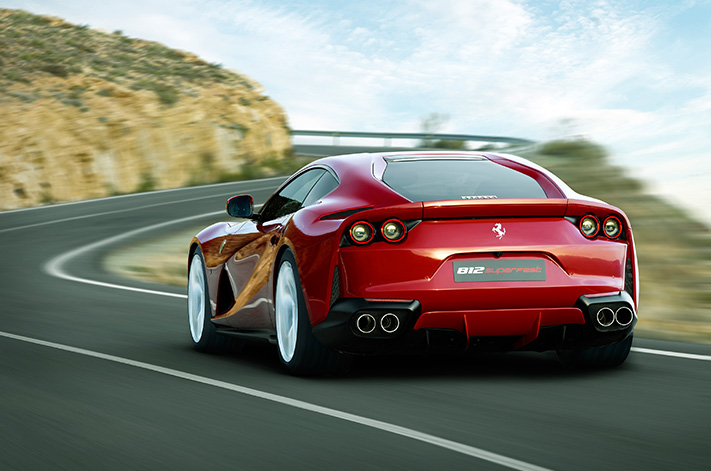
11. A flat underbody and three pairs of air dams are carried over from the F12 TDF and are responsible for 30% of the overall downforce increase compared to the F12 Berlinetta.
12. The 812’s rear diffuser has active elements that open at high speed to reduce drag.
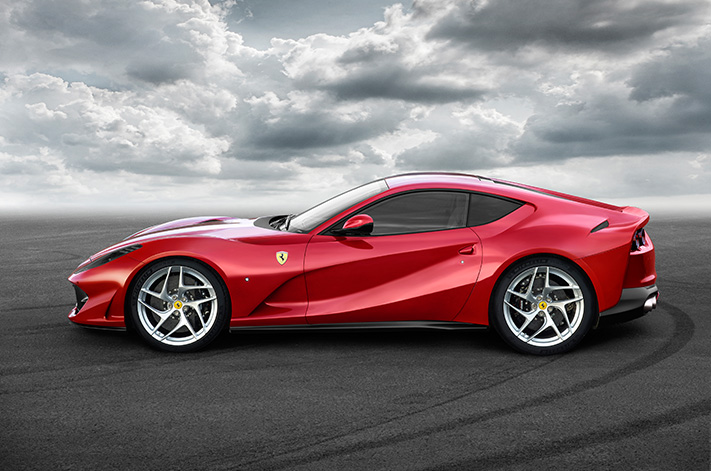
14. Project engineers have devised functions called Side Slip Control and Ferrari Power Oversteer, which help drivers drift and realign the 812 – whether deliberately exiting a corner sideways or not.
