
On Saturday 5 December, legendary Australian racing driver John Harvey passed away after a battle with cancer. He was 82.
John was best remembered for his role in the all-dominant Holden Dealer Team, and in particular his partnership with the late Peter Brock and their win in 1983.
“Last night at 8:45 sadly our Dad, John Francis Harvey, passed away peacefully with his family by his side,” read a communique from John’s family.
“Most people will have fond memories of Dad’s amazing racing career and the great memories of him will live on forever.
“To us he was much more, a wonderful husband, father, grandfather and great grandfather, supporting all of us whenever we needed his guidance and love.
“What a life he has lived travelling the world racing with and against the best in the business, always a true gentleman.
“We all know his most proudest achievement was us. We will dearly miss him but we know the time was right.”
This interview was conducted in 2017, and stands as a fitting tribute to the former Bathurst 1000 winner and Motorsport Hall of Famer. Our sympathies are extended to John’s family and friends.
—-
A stripped body shell with extra seam welding, drop-in competition mechanicals, bolt in a roll cage, paint and go racing.
In simpler times, touring car racers were production-based, if still far from showroom stock. To aid the process, manufacturers made special, limited-volume models with performance parts that could be more easily modified for racing.
It’s called homologation, which is derived from the Greek homologeo, meaning approval. Homologation specials abound in motorsport history, but it is nearly three decades since The General produced Australia’s last race-bred road car.
A lull in the homologation wars enabled Holden to develop the Group C racing version of the original VB Commodore without producing a road-going racer.
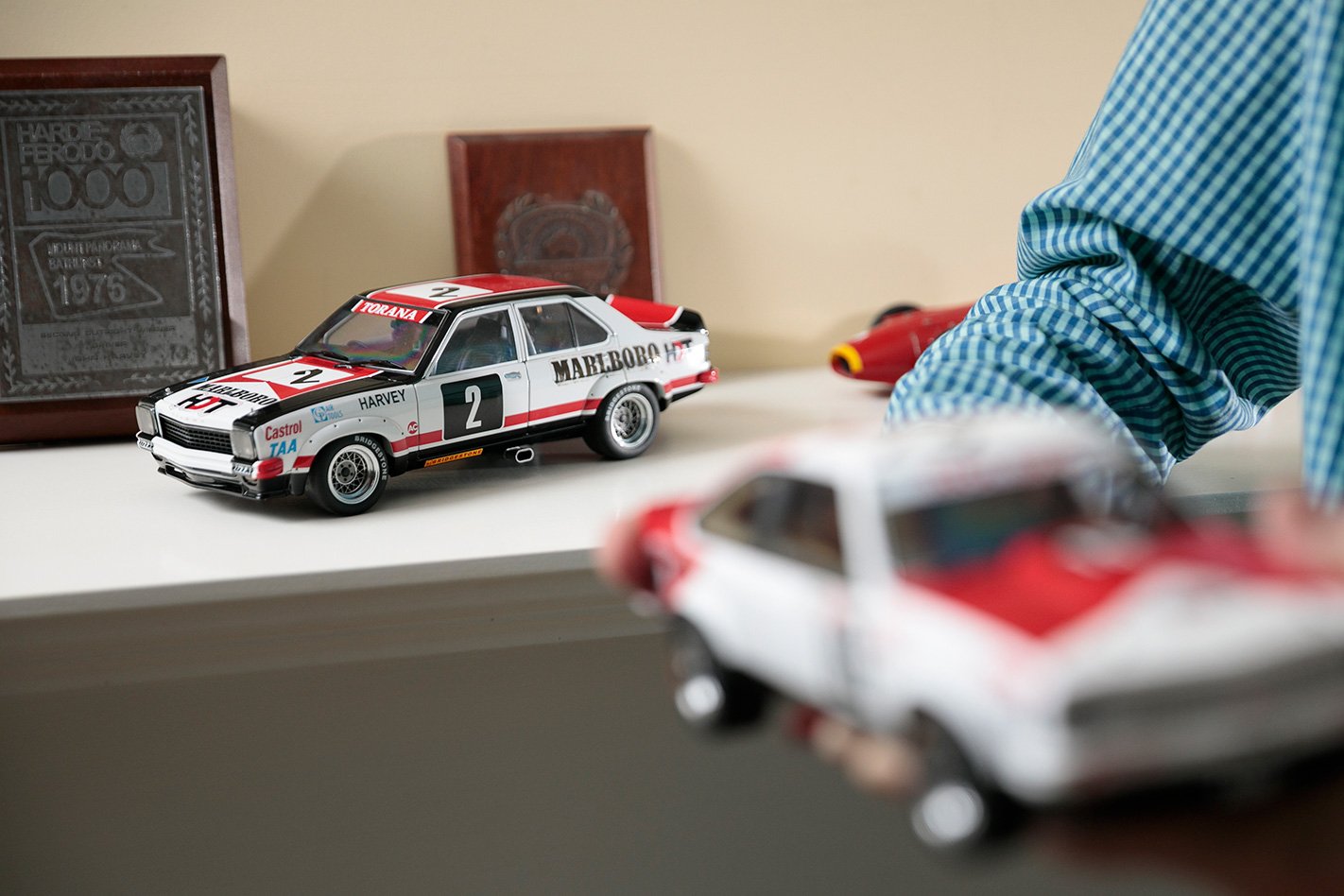
Essentially, the Torana A9X racing mechanicals could be carried over.
The A9X was at its peak in 1979, sweeping the Australian Touring Car Championship and endurance races, including the top eight places in the Bathurst 1000. More impressively, Peter Brock and Jim Richards scored the most crushing victory in Bathurst history, leading every lap and winning by six laps.
Just to rub it in, Brock – right arm resting on the door – set a new record on the last lap.
So the Commodore had a hard act to follow. Holden decreed that it was to be ready for racing in 1980 and then Holden Dealer Team manager John Sheppard cobbled together a test machine to begin trials in August.
Sheppard had taken over the running of the factory-backed HDT in 1978 following the retirement of legendary team boss Harry Firth.
Among his first initiatives was to bring Brock back into the team. ‘Sheppo’ had an impressive pedigree in racecar construction, preparation, and team management.
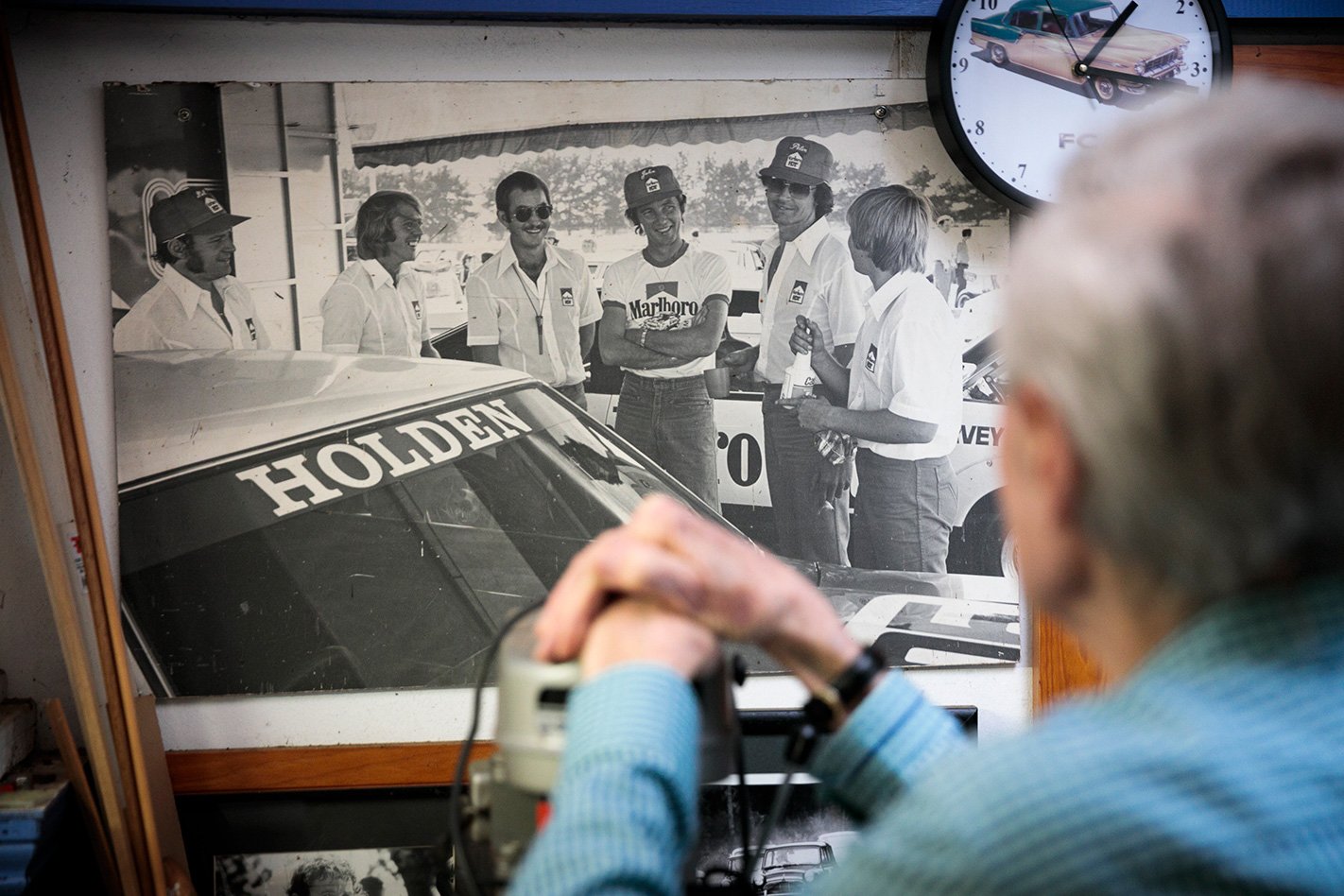
Renowned for his sharp tongue and laconic wit back in the day, Sheppard is still quick with a quip at 82, remembering development of the original Group C Commodore as a somewhat casual affair.
“Holden gave us a pilot production car and we just got the air chisel out and chopped the mudguards so we could put the big wheels on it,” he recalls.
“We put pretty much a bunch of A9X stuff in it and then just stuck a polycarbonate spoiler on the front of it, just a bit of flat sheet curved around just to keep the air out from under the car.
“We then took it out to Calder and did a bit of running with it. It didn’t look all that handsome with the big cut-outs in the ’guards and all that, but it served its purpose. As I recollect, it was producing A9X sort of times and we thought ‘Oh, that’s fair enough, given that it’s only a prototype’.”
The whole exercise was so laissez-faire that the test car wasn’t even fitted with a roll cage. “Brock was driving it, so we didn’t think there was much likelihood of him rolling it over,” Sheppo remarked.
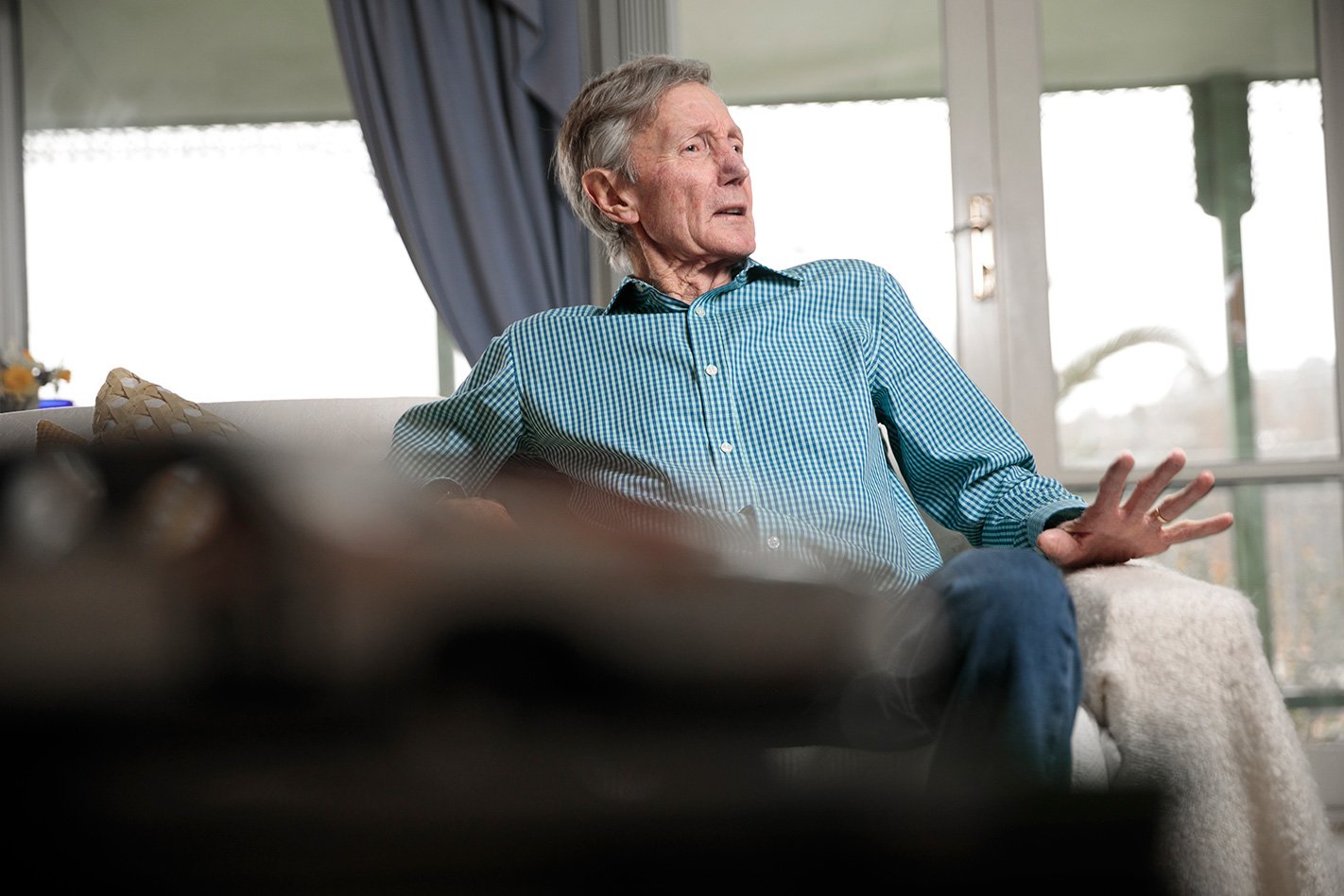
Hang on, hadn’t the official line always been that a worldwide GM ban on racing precluded Holden from competing directly? And, of course, there was no factory involvement in the Marlboro Holden Dealer Team.
Nudge, nudge, wink, wink. Nobody was fooled, especially with homologation specials like the Torana XU-1, stillborn XU-1 V8, L34 and A9X.
But there it was: Holden was officially withdrawing its unofficial support of HDT, which Sheppard was directed to sell. He offered it to Brock, who secured the Holden-brokered backing of key major dealers, led by the late Vin Kean of Adelaide’s United Motors.
This time, dealers were really funding HDT, along with continued Marlboro cigarette money. In return, the select group of dealers that signed up had exclusive access to Brock-modified Commodores produced under the new HDT Special Vehicles banner.
Fortunately, development of the VB Commodore racer had been largely completed and Sheppard handed off the project to the now Brock-owned MHDT.
With the operation and most of the staff staying, even remaining in the same Chetwynd Street, North Melbourne, premises, little had to be done to get the Commodore ready for its competition debut in 1980.
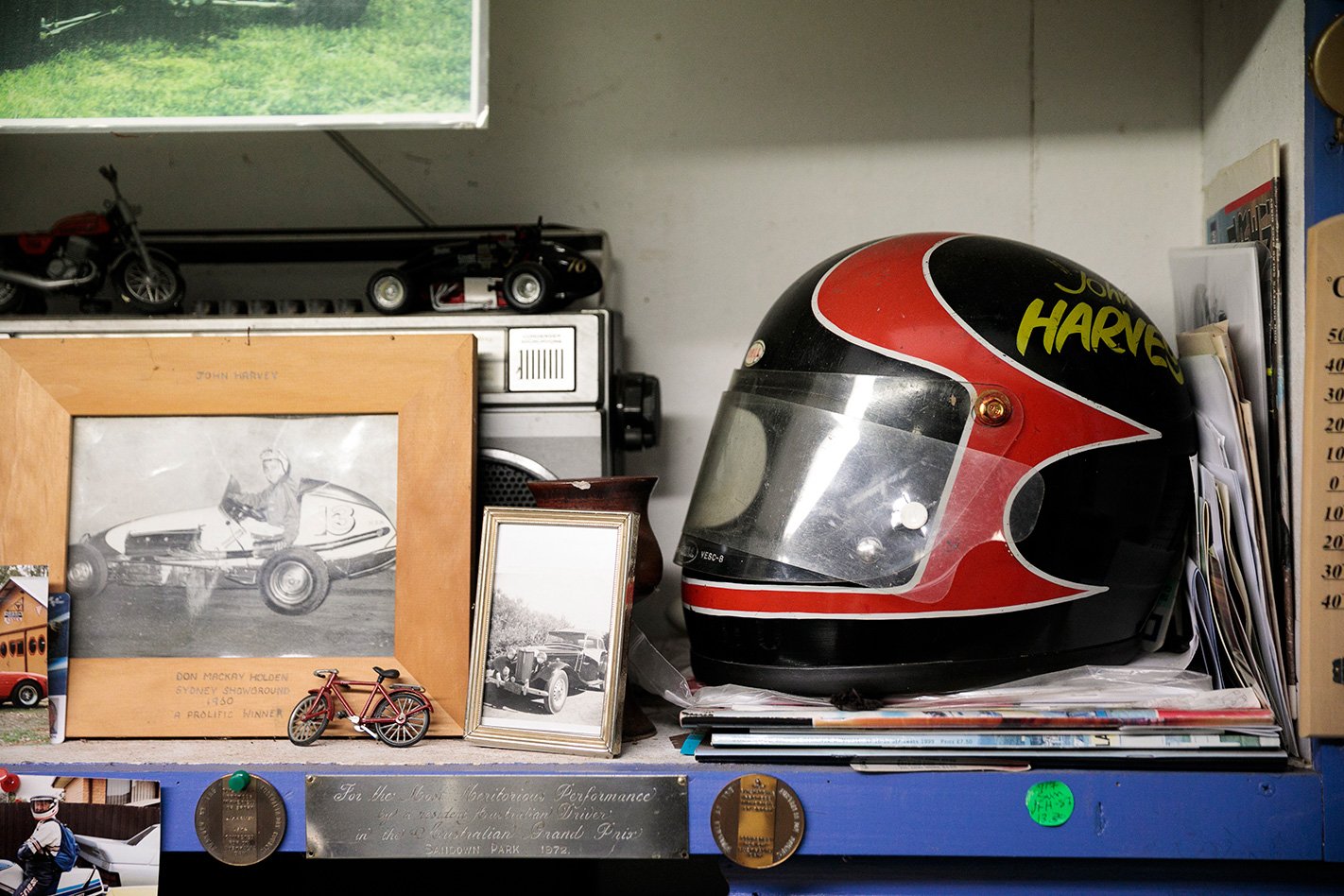
Harvey was an established driver who’d proved to be versatile and successful racing open-wheelers, sports cars, sports sedans and touring cars for Bob Jane before joining HDT in ’76.
Facetiously nicknamed ‘Slug’ by Brock, Harvey eventually took over the running of HDT Special Vehicles (HDTSV), which assembled Brock Commodores in a factory around the corner from the race team’s inner-suburban workshop.
Seven years later, he famously fell out with Brock, foreseeing the collision course with Holden and walking out just before the axe fell.
His experience at HDTSV saw him become one of the first senior employees of its TWR-owned replacement, Holden Special Vehicles, later in 1987, staying there for more than a decade.
According to Harvey, now 79, Holden was still helping in the background with the homologation of the VB Commodore, minimising the effect of the withdrawal in terms of racing.
“There were some key people within Holden – (senior engineer) Ray Borrett was one – who helped us all the way through that issue and it didn’t really make a lot of difference to us in terms of the assistance we were getting,” he says.
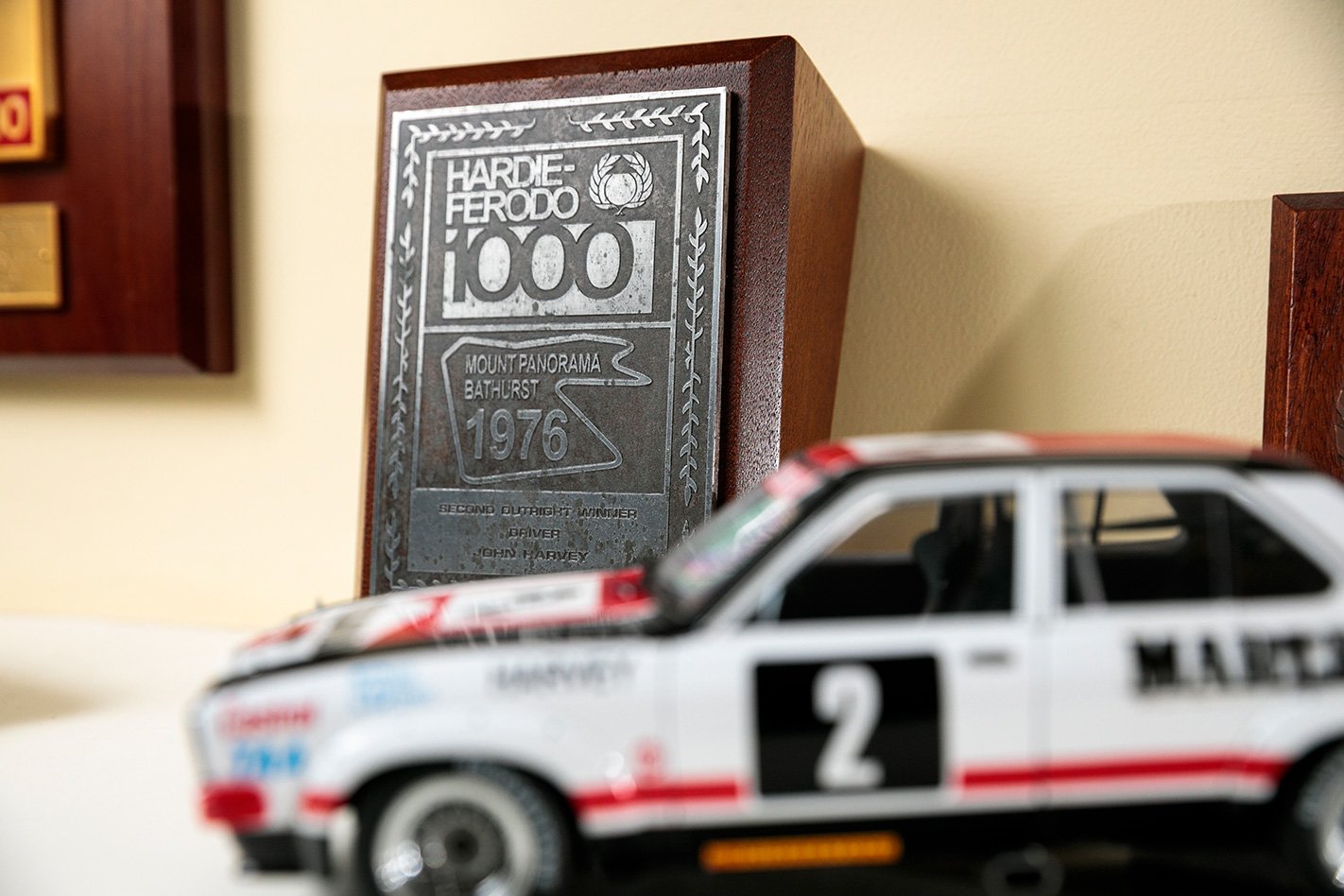
After Brock claimed his third and final ATCC title, winning four of the eight rounds and gaining pole position for every race, a VC update was introduced for the long distance races.
Along with minor mechanical upgrades, the main visual change was the addition of the HDT road car’s large boot spoiler.
Brock added victories in the Sandown 400 and Bathurst 1000 to complete what he called “a Commodore crushing”. Shockingly, he was joined by Ford arch-rival Allan Moffat at Sandown in the second MHDT entry, which finished third, two laps behind ‘Peter Perfect’.
Moffat, who had lost his Ford factory backing, was free to change camps in a one-off publicity coup because his own XD Falcon wasn’t ready to race. It wasn’t his first appearance in a Holden – he guested in a Ron Hodgson Racing A9X at Amaroo Park in ’79 – nor his last.
The Canadian arch-villain of Australian touring car racing in the 1970s and 80s co-drove with Brock for Mobil HDT in ’86, campaigning at home and abroad.
Getting back to 1980, Harvey reveals that Holden was also very much involved in HDT Special Vehicles behind the scenes, providing engineering assistance for the initial VC Brock Commodore.
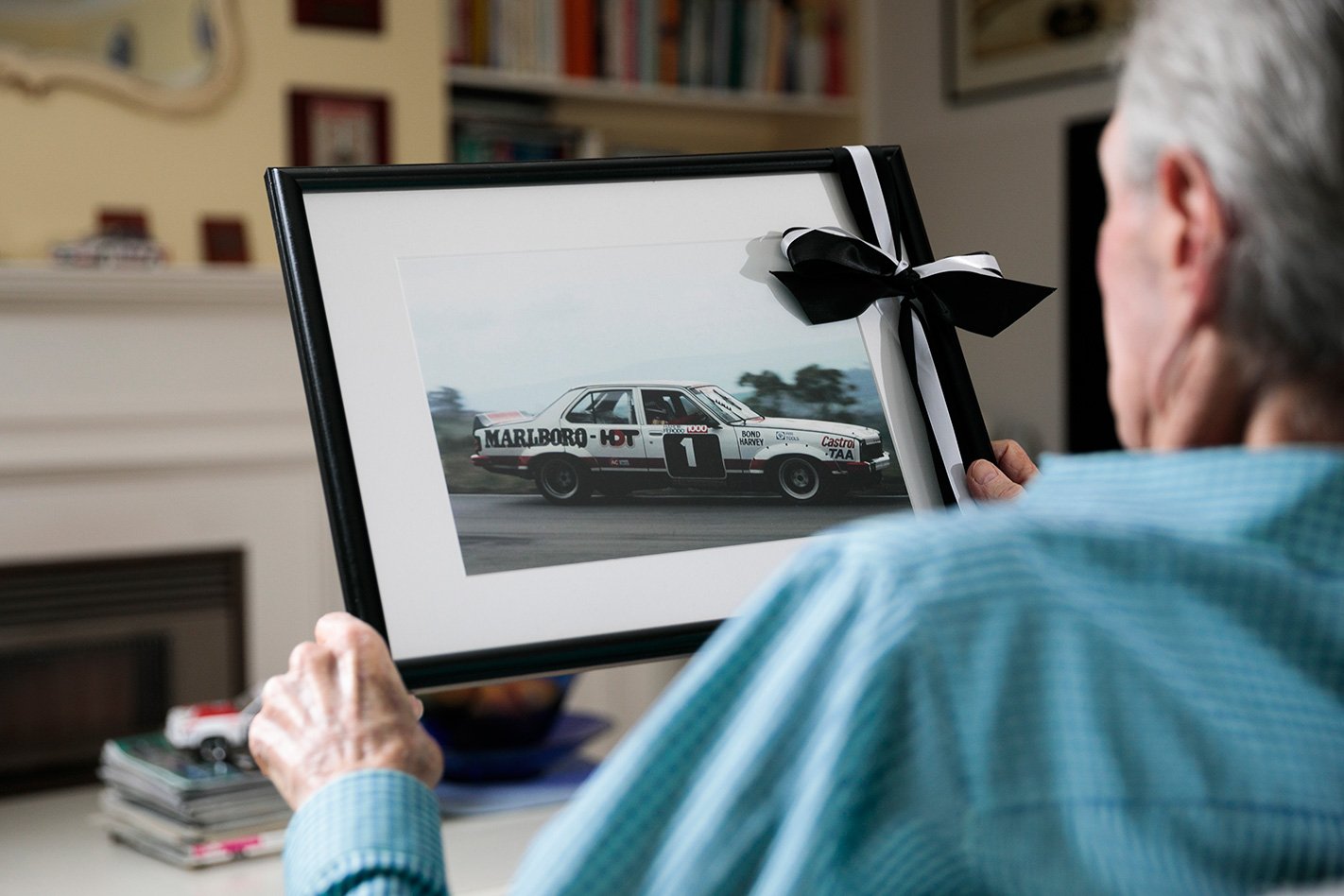
“It all had to be done within GM policy and standards, which it was.”
Holden’s contribution included styling chief Leo Pruneau personally designing the Brock Commodores’ front and rear spoilers, fender flares, and striping.
MHDT’s race engine builders, led by Bruce Knowacki, were responsible for the upgraded 5.0-litre V8s.
Harvey also recalled that the other signature modifications – Momo steering wheel and gearshift knob, Bridgestone low-profile tyres, Irmscher alloy wheels, Bilstein suspension and driver’s footrest – were ‘clinic-ed’ with potential owners before sign-off.
They expressed a preference, for example, for the Irmschers over other candidate makes of sports wheels.
As well as a pivotal role in the development of iconic Commodores, Harvey has an important place in the history of Holden’s most enduring hero car.
With Moffat, he won the inaugural World Touring Car Championship race at Monza on March 22, 1987. Ironically, the car had been secretly procured from Brock by Moffat before the bust-up with Holden.

“So Brock, being keen to get some money because he needed it desperately, sold it, not knowing it was actually for Allan Moffat.
“It was a complete car on four wheels, ready to put an engine and transmission in and go racing.”
Moffat’s and Harvey’s unexpected success at the temple of speed was the highlight of a budgeted-limited four-race program.
The Aussie underdogs did further distinguish themselves against the big-budget Group A elite by finishing a respectable fourth in the Spa-Francorchamps 24 Hours classic.
Harvey’s other great Commodore racing moment was a share of victory at Bathurst in ’83, despite being overshadowed by Brock and Larry Perkins switching to his #25 MHDT entry – as allowed by the cross-entry rules back then – after their #05 car dropped out.
- 130,000 litres produced by 2022
- Siemens Energy also involved
- It’ll be used in motorsport
Called the Haru Oni project and based in southern Chile due to its windy climate, the new venture aims to step production to 55 million litres of eFuel a year by 2024, and then to 550 million litres by 2026.
To put that in perspective, passenger cars in Australia consumed more than 19,000 megalitres, or 19,000,000,000 litres, last year alone.
“Electromobility is a top priority at Porsche. eFuels for cars are a worthwhile complement to that – if they’re produced in parts of the world where a surplus of sustainable energy is available,” said Porsche CEO Oliver Blume.
“They are an additional element on the road to decarbonisation. Their advantages lie in their ease of application: eFuels can be used in combustion engines and plug-in hybrids, and can make use of the existing network of filling stations.”
What is eFuel or synthetic fuel and how is it made?
eFuels are essentially complex hydrocarbons that have been created by man, rather than the lengthy natural and man-made procress it takes to create fossil fuels.
Water is separated into hydrogen and oxygen using wind-generated electricity and then CO2 filtered from the air is combined with ‘green hydrogen’ to form methanol.
It’s then turned into useable fuel by ExxonMobil-licensed Methanol to Gasoline (MTG) technology.
Siemens Energy will provide the tech behind the renewable wind energy, as well as the Proton Exchange Membrane used for the electrolysis (separating hydrogen from oxygen).
As the main customer of the eFuel, Porsche will be starting with an initial investment of a relatively paltry 20 million euros ($30 million).
Where will it be used?
Synthetic fuels or eFuels can theoretically be used by any existing car, and for Porsche – who will be the sole customer of the Haru Oni project’s output – that’s the long-term plan.
Like other brands, Porsche cites electrification as the future of sustainable transport, but eFuels speed up this process by reducing the pollution of ICE and hybrid powertrains.
As you’d expect, it’s being viewed by many as a silver bullet to the pollution problems of ICE-powered vehicles and could prove an interesting diversion on the apparent march to EVs.
“Electric mobility is an exciting and convincing technology but, taken on its own, it is taking us towards our sustainability targets at a slower pace than we would like,” explains Michael Steiner, a member of Porsche’s R&D board.
“That’s why we are also committing to eFuels – and not ignoring possible applications in motorsports either.”
Porsche’s eFuel is going to be produced in extremely low numbers for now, and Stuttgart says it’s destined for use in Stuttgart’s motorsport programs and Experience Centres before moving later towards serial production cars.
The former use could be the most interesting, as eFuel or synthetic fuel gives ICE-based motorsport series a new way to promote a green message.
That could be crucial after a year in which Honda announced its decision to leave F1 next year, just months before BMW and Audi announced their decision to leave Formula E.
This article first appeared on Car UK
- Introduction: Boost Scootin’
- Month 2: Hitting the Road
- Month 3: Race Horse
- Month 4: Swap Meet
- Month 5: Horse Play
- Month 6: Green Party
Introduction: Boost Scootin’
Shakespeare wrote: “A rose by any other name would smell as sweet.” But what if the rose kept its name, looked the same but smelled totally different? That’s always been the conundrum of the four-cylinder Mustang.
It looks like a Mustang and feels like a Mustang, but the crucial ingredients of a muscle car, the grunt and the noise – aka the sweet smell of a rose – has always been conspicuous in its absence.
In an attempt to rectify this there is now the 2.3L High Performance, which replaces the Ecoboost as the four-cylinder choice in the MY2020 Mustang line-up.
To see if it’s worthy we’ve welcomed a manual 2.3L HP to the MOTOR stable for the next few months, which will then become a GT – with perhaps a quick fling in an R-Spec – to cover off the entire ’20 range.
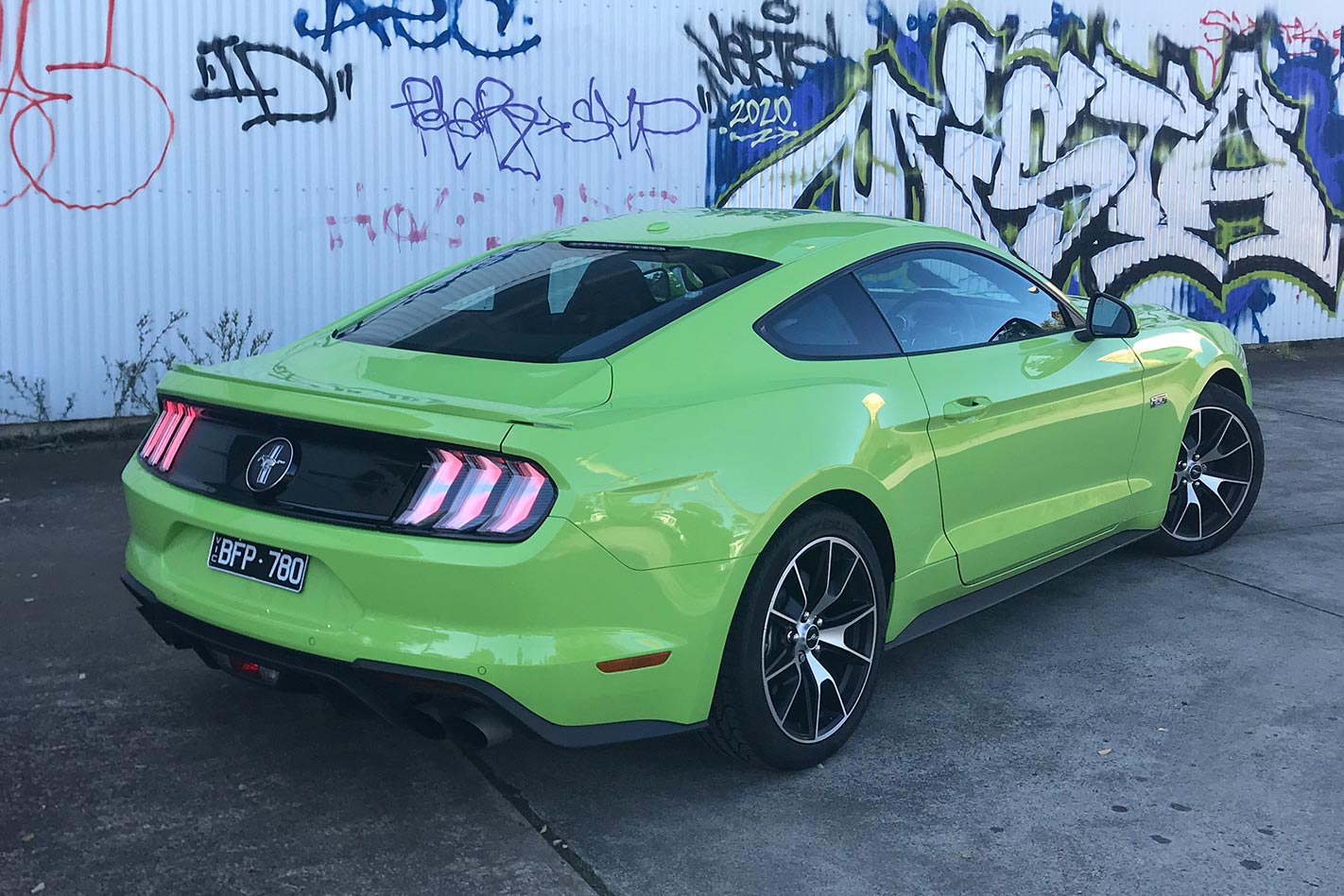
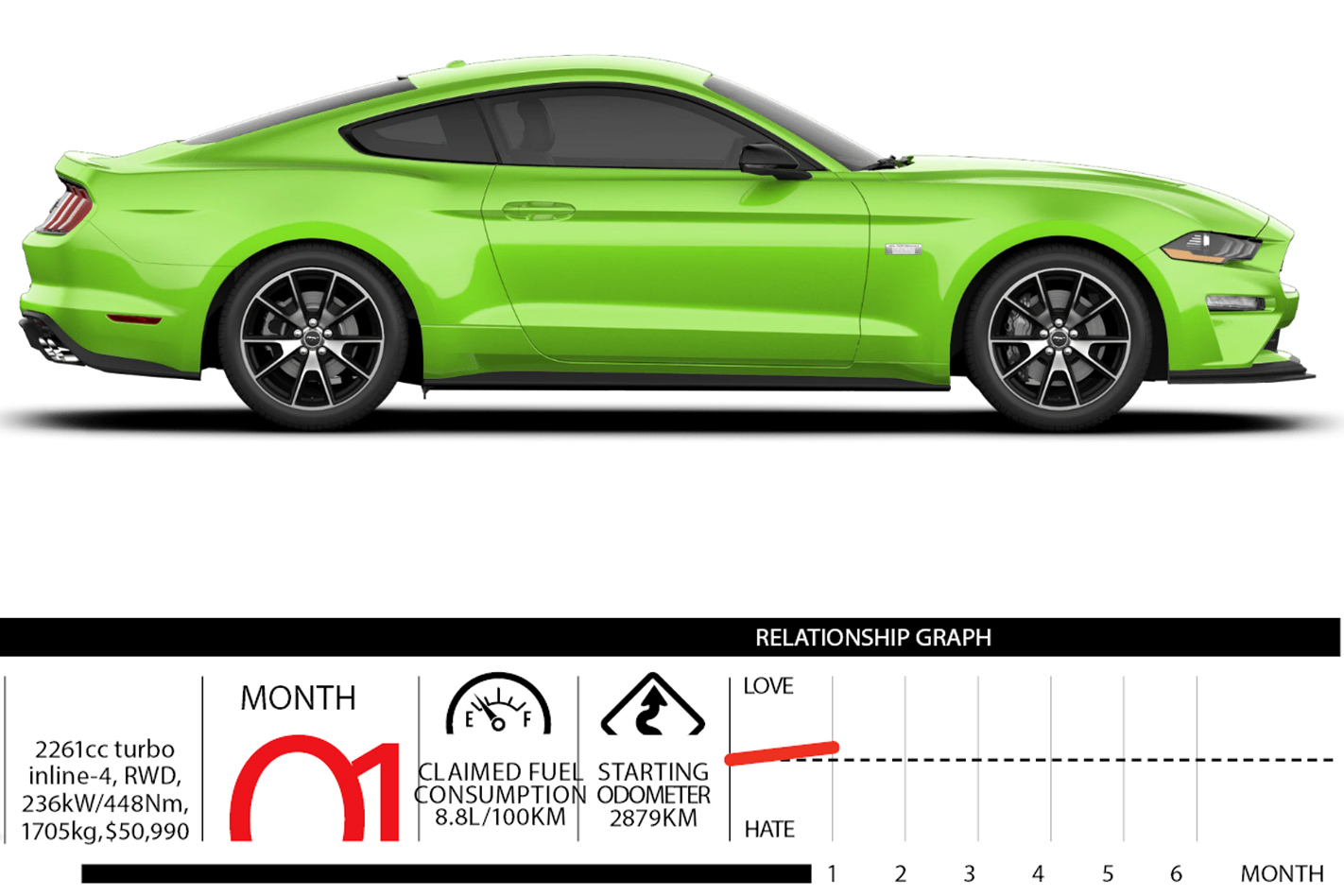
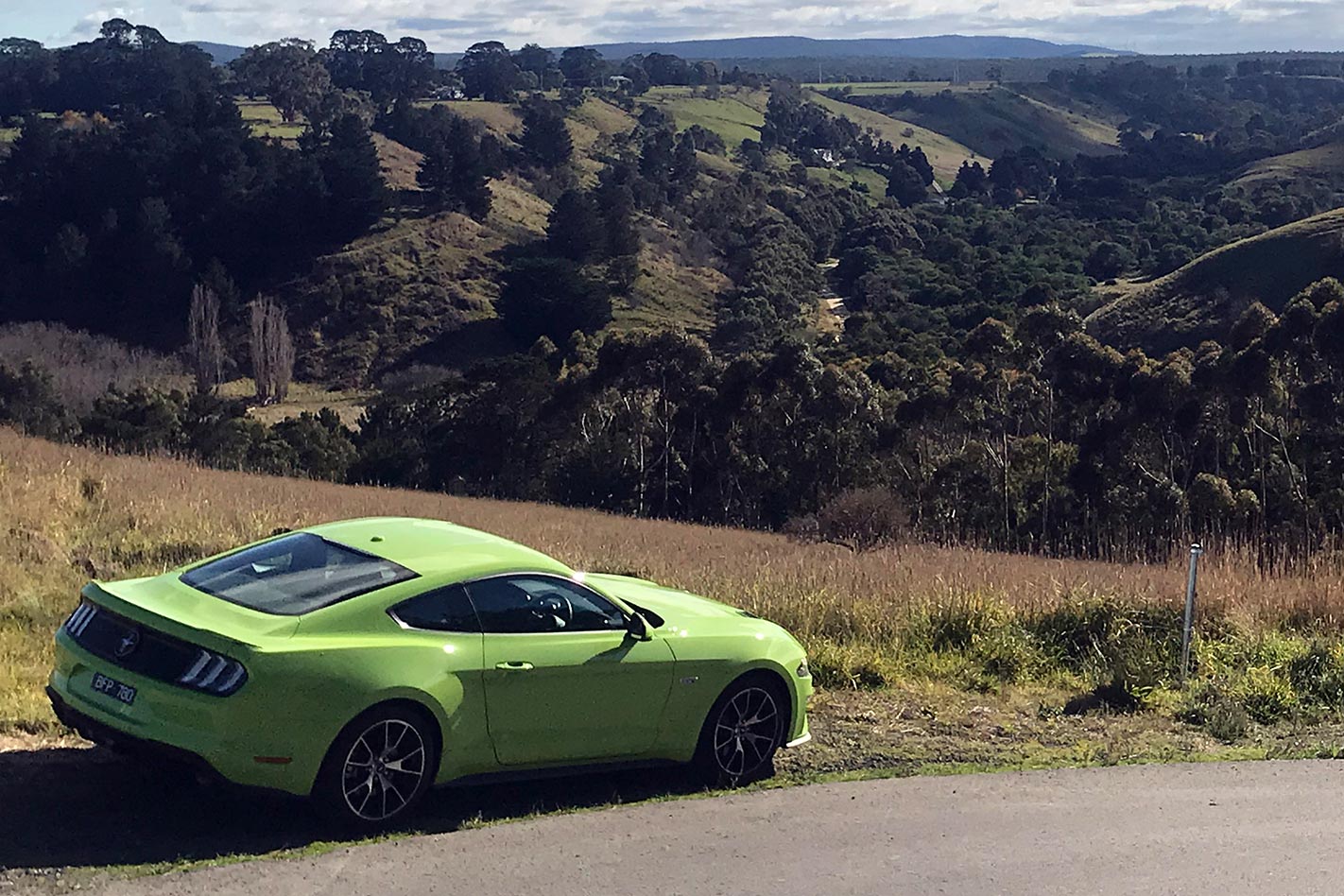
Changes for 2020 are very minor: four new colours – Iconic Silver, Red Hot, Twister Orange and the Grabber Lime you see here – and the option of a Black Shadow Pack ($1000) which adds bonnet and side stripes, 10-spoke wheels and darkens the grille and guard badging.
More importantly, all new Mustangs come with a five-year/unlimited-kilometre warranty and fixed-price servicing, the first four services costing $299 apiece.
Ford unveils all-electric, six-speed manual Mustang at SEMA 2019
The 2.3L HP began as an after-hours project among a few Ford Performance engineers who wondered what a Mustang would be like with a Focus RS engine.
Pretty good, apparently, as just 10 months later the most serious four-cylinder Mustang since the 1985 SVO was born. On paper the performance boost is modest, outputs rising from 224kW/441Nm to 236kW/448Nm, but there’s more to the story.
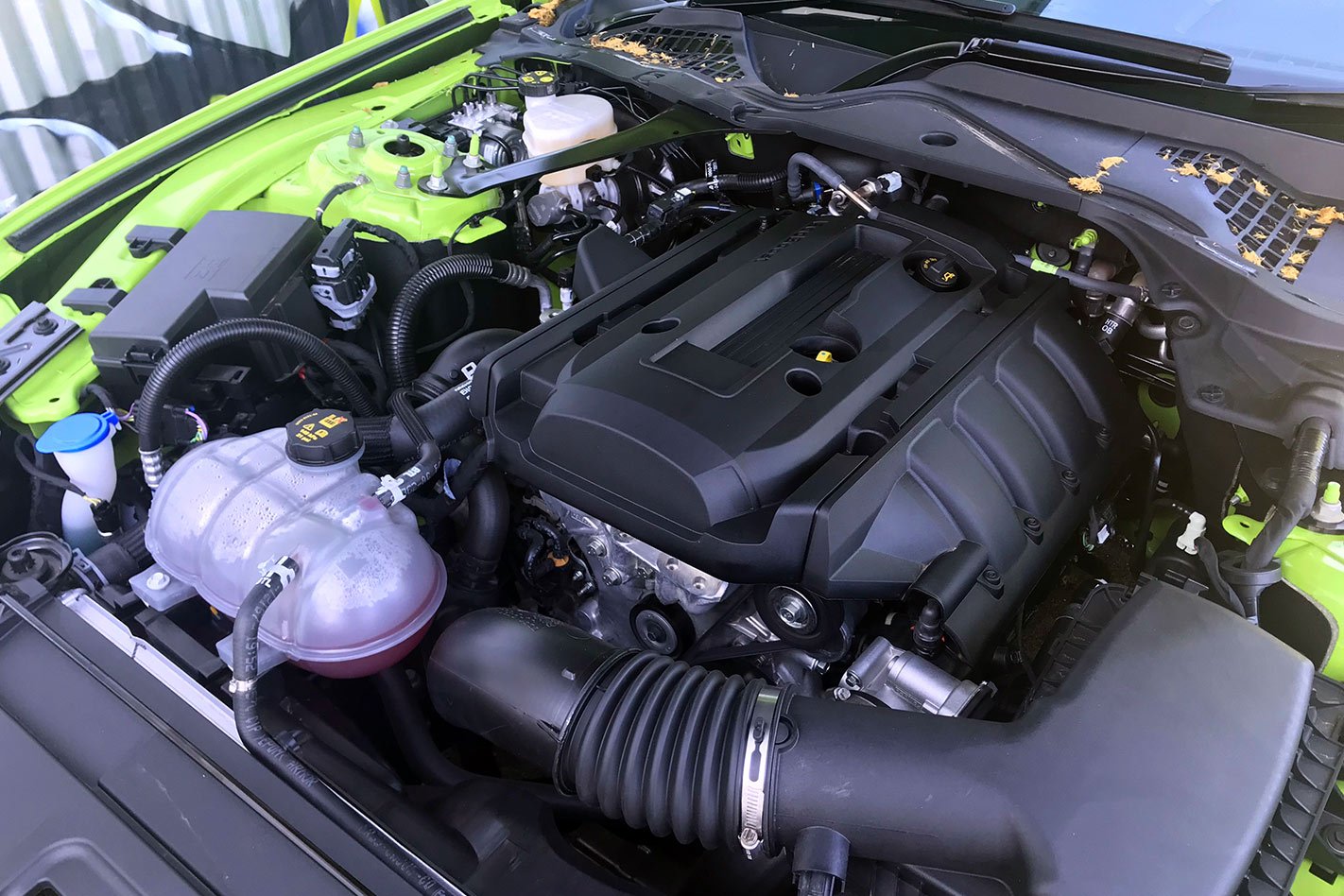
A drop in compression ratio from 9.5 to 9.37:1 allows the five per cent larger turbo to work harder resulting in a wider power band. Whereas beforehand maximum power was produced at a lowly 5700rpm the new peak arrives at 6200rpm and at least 400Nm is available between 2500-5300rpm.
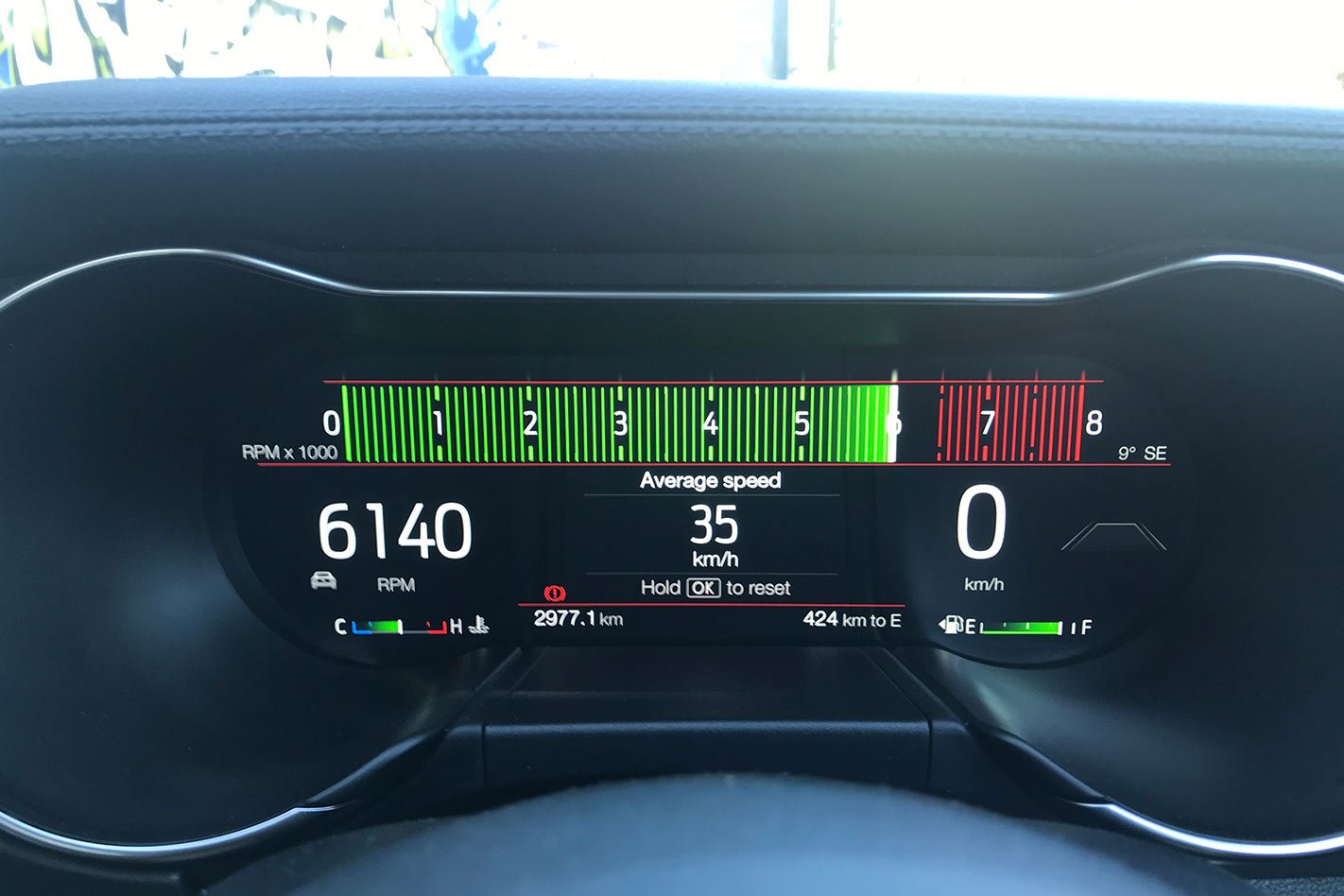
The rev limit is 6800rpm in short bursts, though 6500rpm continuously. Ford claims 0-60mph (97km/h) in the “mid four-second range on premium fuel” which is outrageously optimistic, but we’ll strap the timing gear on to discover the true figures in a future update.
Helpfully, the chassis has had a thorough going-over, too.
An alloy strut tower brace stiffens up the front end, brakes are lifted from the standard GT – 352mm discs and four-piston calipers up front rather than the 380mm discs and six-piston calipers of the Performance Pack-spec Aussie GTs, combined with 330mm discs and single-piston calipers at the rear.
The front bar improves brake cooling and reduces front-end lift. The 2.3L HP is 65kg lighter than its V8 sibling at 1705kg, which is distributed 53/47 front-to-rear.

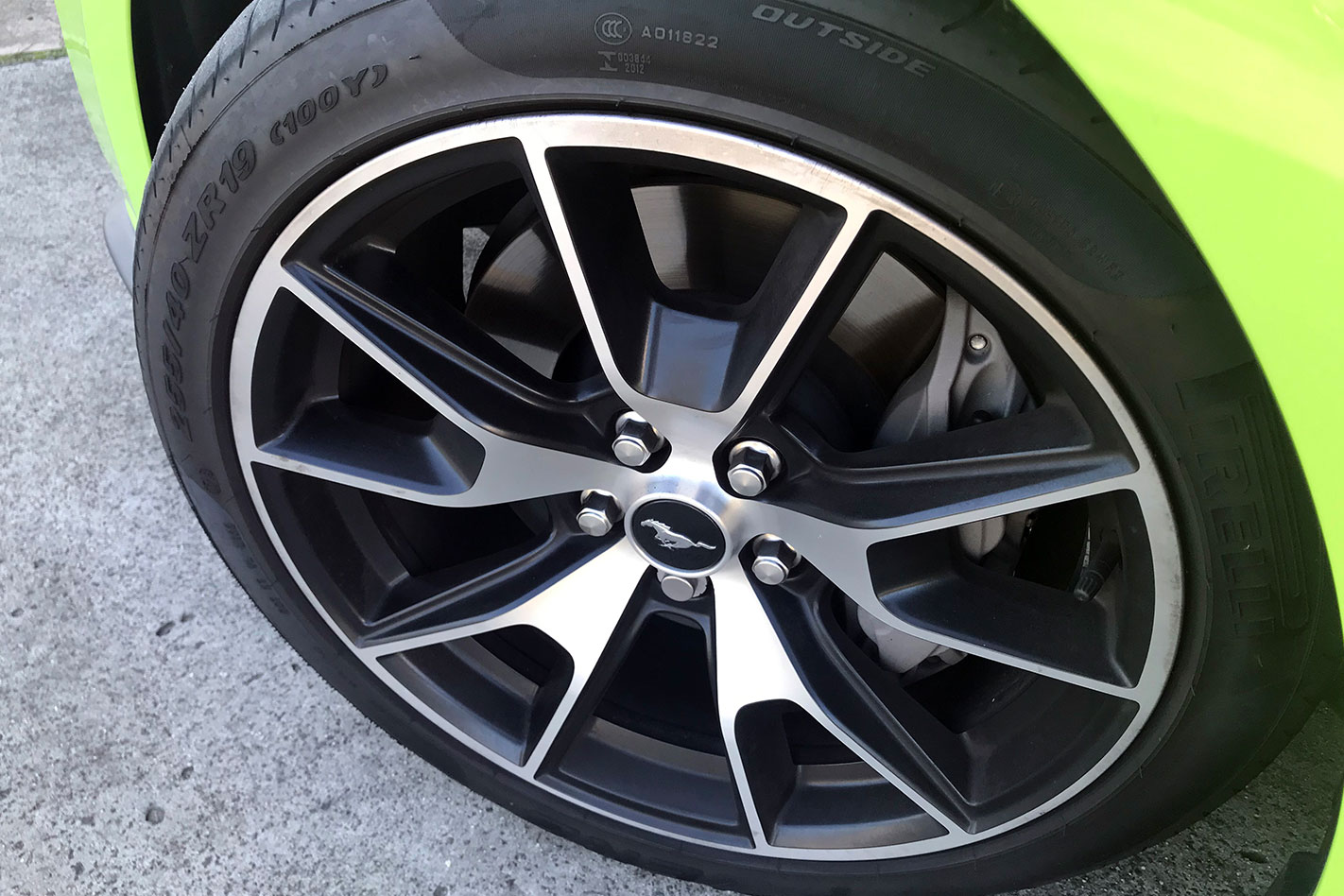
Wheels are 19 by 9.0-inch front and rear but wrapped in Pirelli P Zeroes rather than the GT’s Michelin Pilot Sport 4 S.
There’s an optional “Ecoboost Handling Package” available Stateside which local HPs score half of; a larger 24mm anti-roll bar (up from 21.7mm, itself an upgrade from the standard Ecoboost’s 20mm) and shorter 3.55:1 diff ratio (3:31 standard) make the grade, but the wider 9.5-inch wheels with 265/40 Pirelli P Zero Corsa4 tyres do not.
There are a few options available and our test car has the works: MagneRide adaptive dampers, Recaro seats and the body colour pack, which deletes the grey bonnet stripes and reverts the rear spoiler and mirrors to, funnily enough, body colour.
It’s a good looking car, the nickel-finish wheels providing a subtly different look to the GT.
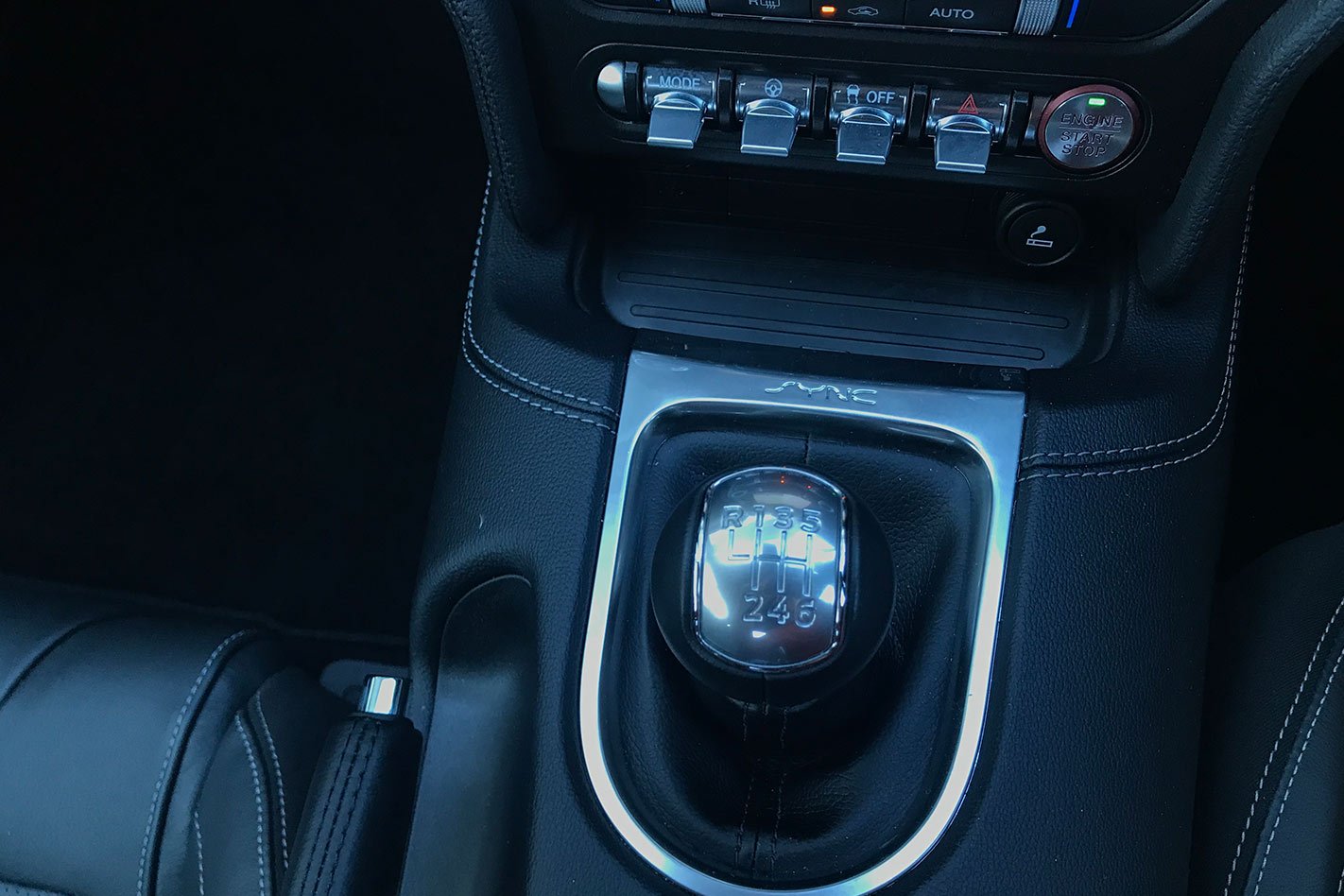
You don’t miss out on any equipment for forgoing the V8, quite the contrary. There’s the same 8.0-inch touchscreen with SYNC3 infotainment and smartphone mirroring, 12-speaker 1000w B&O stereo, 12-inch digital instruments, dual-zone climate control, eight airbags, adaptive cruise, auto high-beam, auto emergency braking and tyre pressure monitoring.
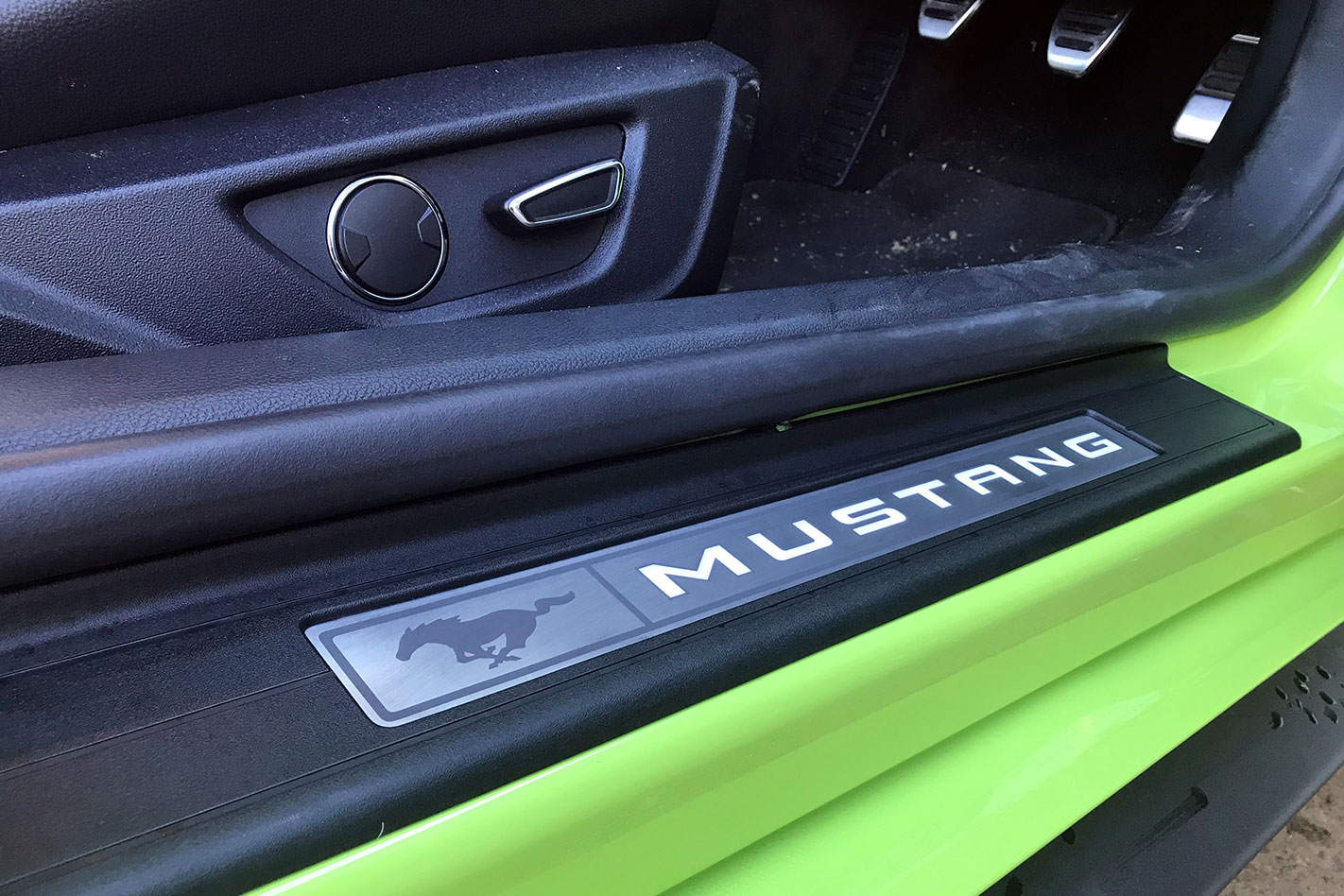
Heated and cooled seats are standard, but selecting the Recaros deletes this capability. You even get a couple of small items missing from the GT, most notably the pony projection lights that shine the Mustang logo onto the ground as you step out of the car.
A small touch, but a nice one.
The question is whether this thorough makeover has made the four-cylinder Mustang a viable alternative?
The next couple of months will provide the answer, on road, drag strip and track, while the immediate switch to the V8 big-banger will be the perfect reference point. Will the 2.3L High Performance prove to be a rose, or more of a thorn?
2020 Ford Mustang 2.3L HP Pros & Cons
Things we’re loving
1. Good looks 2. Lotsa kit 3. Great ride
Things we’re rueing
1. Dull sound 2. Steering feel 3. Seems thirsty
Month 2: Hitting the Road
First driving impressions of our force-fed filly
Two doors. Rear-drive. Turbo four-cylinder engine. Six-speed manual. 119kW/tonne. These attributes don’t describe our Mustang 2.3 High Performance long-termer but the venerable Nissan S15 200SX (nee Silvia), the car that knocked off the Porsche (996) 911 Turbo to win MOTOR’s 2001 Performance Car of the Year title.
Of course, the first four attributes also apply to the Mustang, but it ups the ante with a beefy 138kW/tonne. Given its impressive spec sheet, so close to one of the revered rear-drive coupes of all time, why do so many look down on the four-cylinder Mustang?
Of course, the 2.3 HP might have everything it needs to be a great driver’s car, but how the bits go together is just as important as the bits themselves.
This isn’t to suggest the four-cylinder Mustang should be considered the next evolution of the S15, for while it produces a hefty 89kW/183Nm more than the iconic Nissan, there’s also the small matter of an extra 450kg or so and it’s this heft that defines the driving experience.
If you desire razor-sharp dynamics then the Mustang (any Mustang, really) isn’t the car for you, but that’s just about setting expectations.
The combination of the substantial mass and relatively soft suspension makes for reasonable weight transfer and a slight delay in response to your inputs, especially on quick changes of direction.
Those inputs require a little bit of guesswork, too, as the steering is probably the Mustang’s weakest point; it’s okay, but a little vague around the straight-ahead and doesn’t provide much communication as lock is applied and loads increase.
Another steering quirk: drive in Normal mode and you can select varying degrees of “steering feel” (actually steering weight) but select one of the sportier modes and “steering feel selection is not available”.
Basically, you can make the steering heavier if you want to, but not lighter. Thankfully Sport Plus or Track doesn’t turn the steering into a syrupy mess.
It’s still relatively easy to drive the Mustang hard as its fundamental balance is decent and while the Pirelli P Zeroes don’t offer the same purchase as the Michelin Pilot Sport 4 S tyres on the V8 models, they still do a good job of holding on to the tarmac.
The body movement that’s a result of the cushy set up exhibits more control than the previous Ecoboost, which was soft enough to move around on corner entry without being powerful enough to do the same on corner exit. Kind of the opposite of what you want.
As mentioned last month, the headline figures of the 2.3-litre turbo four-cylinder haven’t improved much, just an extra 12kW/7Nm, but the wider torque band makes it feel markedly more potent.
The rears will now spin on a slippery surface in a straight line in the first two gears and the throttle can be used to influence the behaviour of the car, giving the turbo Mustang a welcome injection of involvement.
If you’re test driving a 2.3 HP, whatever you do try it in Sport Plus mode before making a decision as it transforms the experience.
The throttle in Normal is doughy and lethargic, the engine almost feeling to hesitate at certain points in the lower rev range – careful tuning to meet emissions regs? Regardless, a flick to Sport Plus smartens things up nicely.
It still doesn’t sound too inspiring – the Focus RS-style overrun theatrics of the MY18 Ecoboost have sadly disappeared – but throttle response is now crisp enough that heel-toe downchanges require little more than a roll of the ankle and revs build smoothly. The six-speed manual is the same as in the V8 but the gearing works far better with the turbo four, but more on that next month.
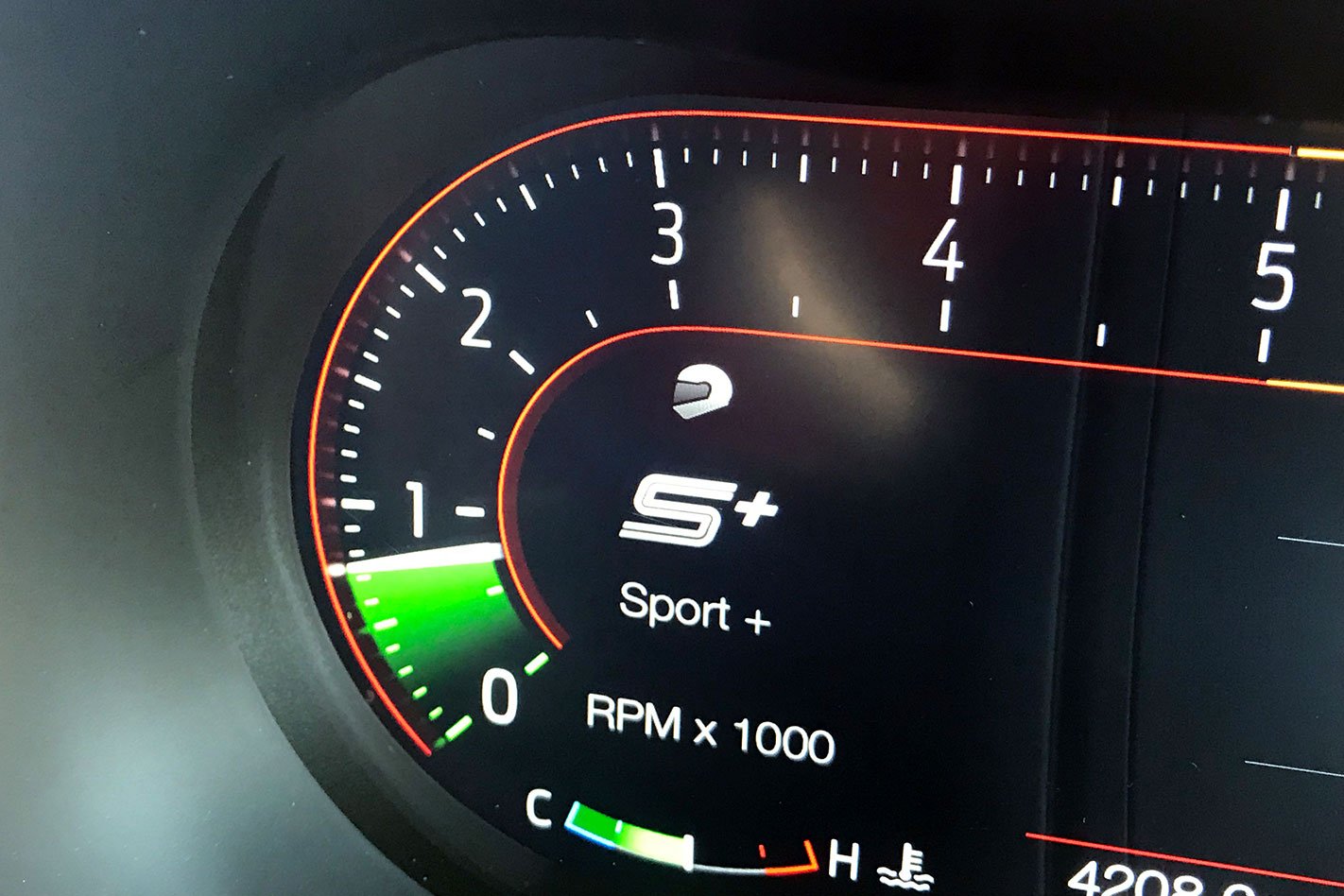
The excellence of the Sport Plus powertrain mode provides another conundrum. I find myself wanting to use it all the time but because it also firms the MagneRide suspension
I’m still in two minds. The ride isn’t bad in Sport Plus, about what you’d expect from a hot hatch, but there’s a pleasant compliance in Normal that has the 2.3 HP gently bobbing through bumps.
The solution seems to be to cop a bit of pitter-patter around town in return for the sharper engine and then engage normal on the highway for added comfort.
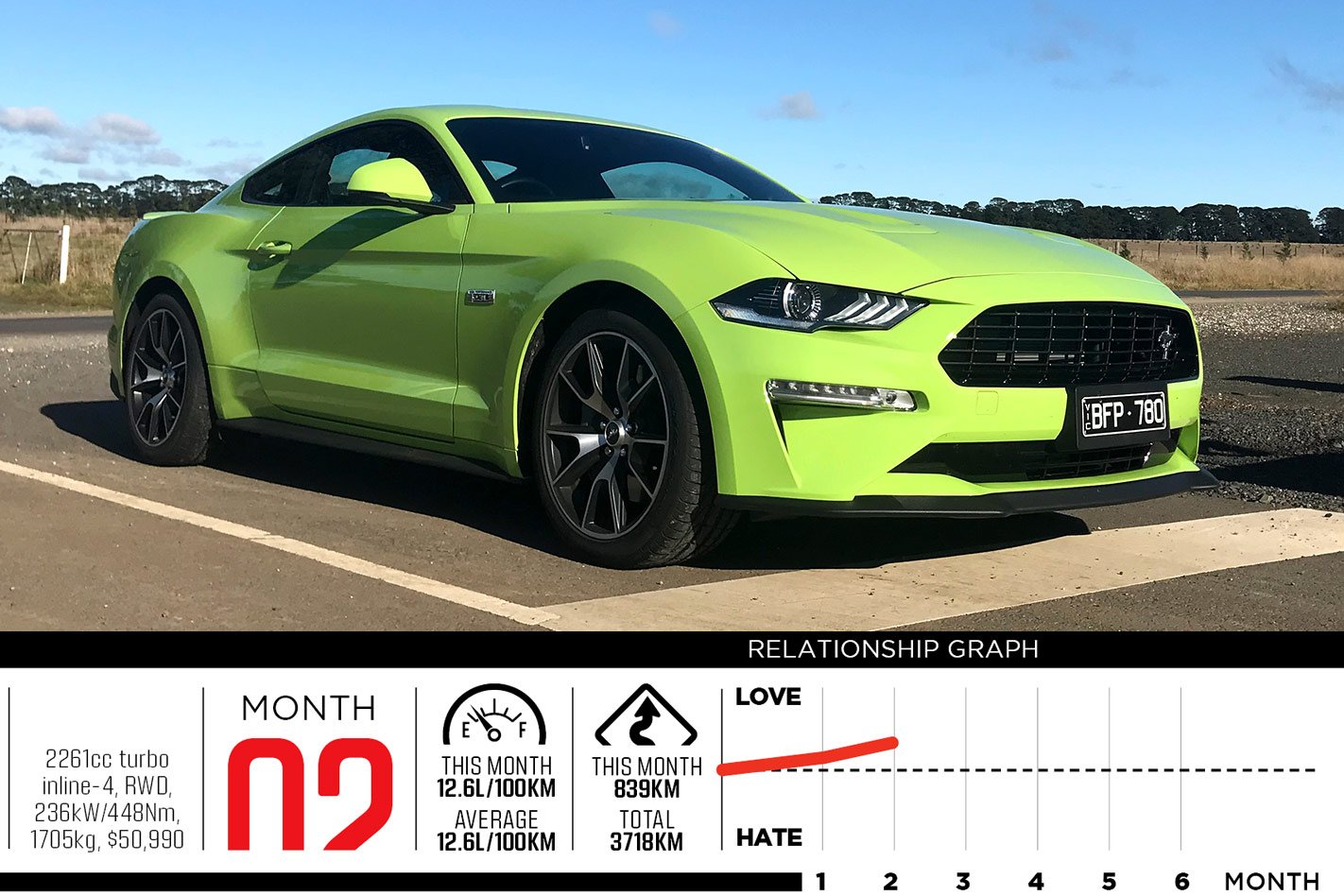
Of course, the ability to mix and match these settings – the Mustang even has a customisable ‘MyMode’ but it’s not used for this purpose – would solve this problem. Overall, the 2.3 is proving an enjoyable daily drive but next month we’ll find out if it deserves its ‘High Performance’ moniker.
Things we’re loving
- Sport Plus mode
- More throttle steer
- Easy to heel-toe
- Mode inflexibility
- Steering
- It’s no S15
Month 3: Race Horse
Can this four-pot Pony justify its ‘High Performance’ tag?
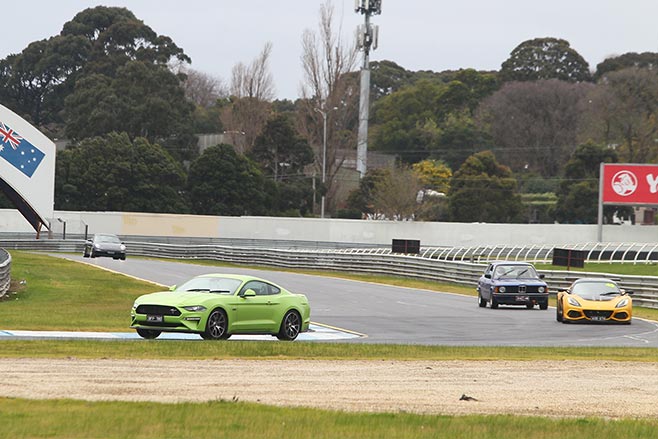
The relationship between the Mustang 2.3 High Performance and I has been progressing well. As mentioned last month, in day-to-day duties it’s a winner, but that isn’t enough. Truth be told, if all you wanted was a good-looking Mustang for the occasional squirt the old Ecoboost was fine.
The new name raises expectations. If you’re going to call a car ‘High Performance’ then it seems reasonable to expect a better-than-average level of competence when driven hard.
This brings us to Sandown Raceway in Melbourne’s south-east suburbs, where Evolve Driving has managed to thread the needle between lockdowns and hold a track day.
Racetracks haven’t traditionally been kind to the Ecoboost Mustang, the keen chassis only making the lack of grunt more frustrating.
Dark clouds are gathering today, heavy with the promise of precipitation, but thankfully the first session is dry. While the High Performance moniker raises expectations, it’s also important to be realistic with them; this a 1700kg $50K four-cylinder coupe, so it’s not going to be a Porsche Cayman GT4 and viewed in that light it’s pretty handy on track.
You’re not going to step out of it fizzing with adrenaline but it’s fast enough to be interesting, accurate enough to be entertaining and has sufficient stamina to handle multiple hard laps.
Sandown has three big stops in quick succession into turns nine, 11 and one yet the 2.3 HP is happy to do three quick laps with no brake fade.
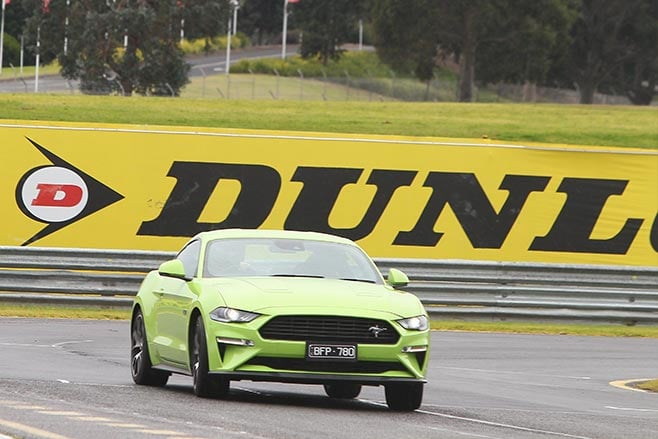
Okay, it’s still not the fastest thing in a straight line but speeds of 190km/h on each of the straights isn’t anything to be sniffed at. However, the torque band that works so well on the road feels flat on track.
Whereas on the road you’re constantly in its 2000-4000rpm happy place on track that naturally shifts to 4000-6500rpm and despite the larger turbo the Mustang’s 2.3 has done its best work by 5700-5800rpm. Peak power is claimed to stretch to 6200rpm but it feels to plateau before then.
It’s purely an enjoyment thing; it’s simply more fun extending an engine to redline, even if dealing with an instantaneous dollop of mid-range is arguably more effective. That said, the gearing works perfectly with the 2.3’s power band.
It’s exactly the same gearbox as the V8 and the 2.3 HP shares the same diff ratio, too, but whereas the higher-revving V8 is geared to the moon the four-pot allows more frequent use of sweet, accurate shift.
As on the road, the key factor that makes the 2.3 HP fun is that it now has enough grunt to tax the chassis.
This is especially the case as the rain arrives. I’ve heard stories of how Sandown’s patchwork surface turns dicey in the wet and quickly earn first-hand experience, turns two, three and four not so much dicey as icy, the Mustang understeering and oversteering simultaneously even with a cautious approach.
Thankfully, the rest of the lap is more consistent and driven sensibly the 2.3 HP hooks up nicely while a more aggressive approach swings the tail out wide in true rear-drive fashion. The Track Mode ESP works brilliantly; it’s one of the better systems around for hot lapping.
The wet conditions also improve the Mustang’s balance in a sense. You tend to drive just below the limit of grip in the wet so the chassis feels more neutral, whereas if you’re really leaning on the tyre in the dry the front end can push wide.
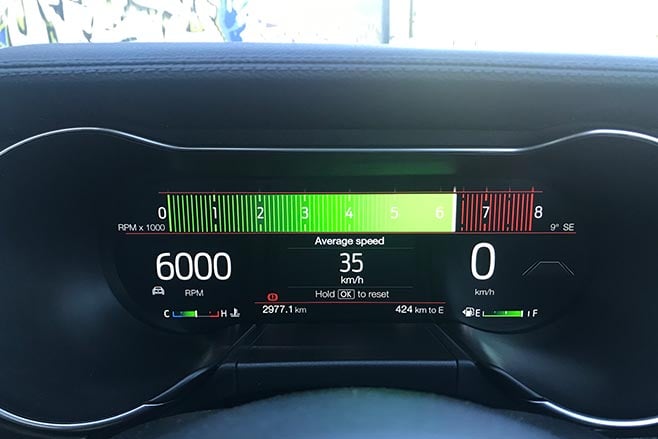
One surprising outcome of the Mustang’s track excursion is its fuel use; it might have only 2261cc to play with but it still swallows plenty of dinosaur juice, the onboard computer showing 35-36L/100km even in the wet conditions.
All in all, though, the 2.3 HP impressed; so much so that I’d go so far as to say it might be the pick of the non-Shelby Mustangs for track work. Or I would if the recently announced Mach 1 hadn’t blown that idea away.
That might seem crazy but the auto GT’s temperature sensitivity is well-documented and the manual V8s’ gearing is unsuitable for most tracks, though the R-Spec’s huge grunt certainly helps. Regardless, the fact the thought occurred at all shows the HP’s quality.
No, it’s not a Cayman GT4 or even a Honda Civic Type R, but was it fun and would I happily spend another day at the track in it? Yes on both counts. Next month it’s goodbye turbo and hello V8.
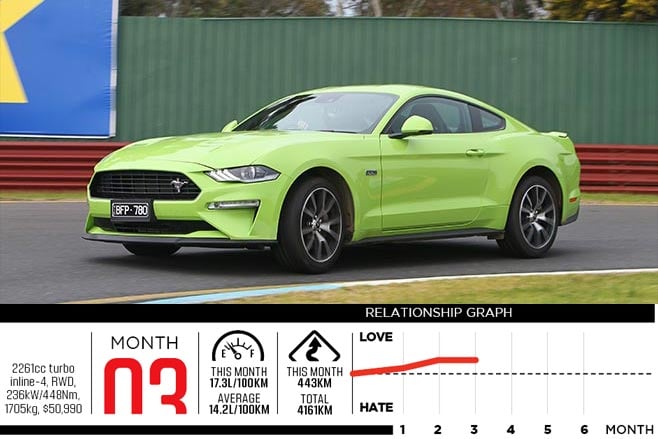
Things we’re loving
- Brakes hold up well
- Oversteer
- Gearing
- Front-end push
- Thirsty beast
- No Michelins
Month 4: Swap Meet
Four becomes eight as the 2.3’s big brother arrives
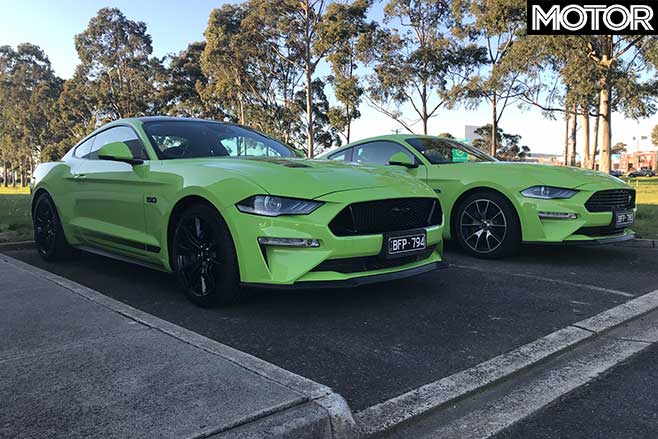
Changeover time. I’ve enjoyed my time with the Ford Mustang 2.3 High Performance.
Whether I’d recommend someone hand over more than $60,000 for the pleasure is something I’ll get to later, but I’ve enjoyed it enough that as I return to Ford to swap it for its big brother, I wonder, “obviously eight cylinders are nice, but objectively do you really need more Mustang than this?”
This thought lasts roughly 1.7sec into GT ‘ownership’, or about as long as it takes to press the starter button and for the 5.0-litre Coyote V8 to fire into life.
The result is a short, deep bark from the exhaust that elicits an involuntary giggle, the car rocking gently as it settles to idle. On the dozens of occasions I started the 2.3 HP, it didn’t once prompt this reaction. That’s the power of eight.
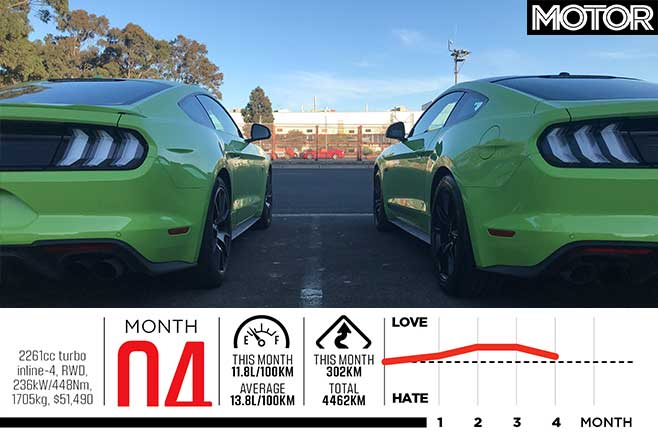
As you can probably see from the pictures, the new MOTOR Mustang is very similar to the old one. Like the 2.3 HP that preceded it, it’s a six-speed manual coupe finished in Grabber Lime and optioned with MagneRide suspension and Recaro seats.
In addition, the GT has the Black Shadow Pack, an MY2020 introduction that, as the name suggests, turns the wheels, roof, badging and stripes black. It’s menacing; I like it.
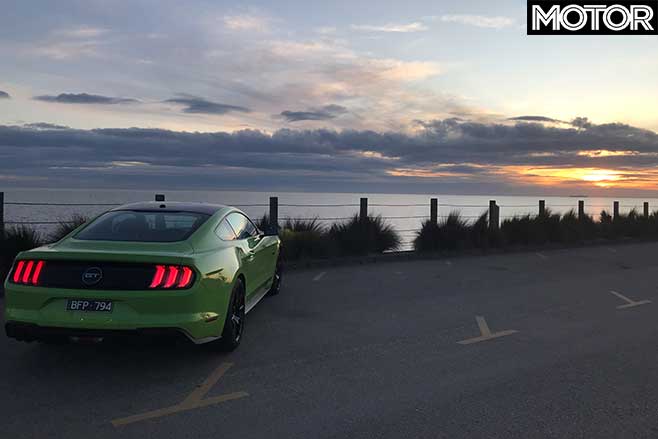
It’s also amazing how much an extra half-inch of rear-wheel width helps a car’s stance, the staggered rims of the GT (9.0-inch front, 9.5-inch rear) giving a tougher look than the 2.3 HP, which wears 19 by 9.0s at both ends.
The high spec is reflected in the price, the standard car’s $64,190 increased to $71,590 (before on-roads) courtesy of the suspension ($2750), seats ($3000), styling ($1000) and paint ($650).
Being similarly specced the 2.3 High Performance’s price is equally swollen, its standard $51,490 ask pumped to $57,890 (before on-roads). That’s quite a lot for a four-cylinder Mustang; in fact it would have scored you a lightly optioned GT at its 2015 launch.
The basic price is very reasonable when you consider how much has been upgraded since the first Ecoboost arrived at $45,990 (engine, interior, brakes, suspension, wheels and more), but the elephant in the room is the existence of used FM-series GTs.
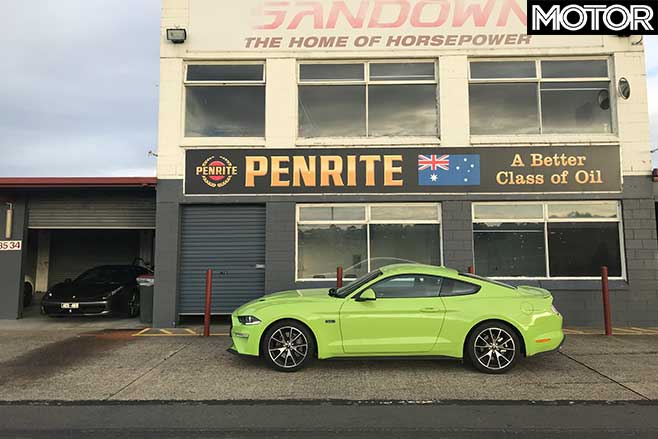
Barely-driven manual GTs are readily available for around $45,000 and while there is peace of mind in owning a new car, particularly now Ford offers a five-year warranty, it’s difficult to imagine a Mustang creating too many problems with 10,000-20,000km on the clock.
Speaking of GTs, you’re probably expecting me to now explain how the V8 is clearly superior to its four-cylinder sibling in every respect.
Not quite. Time behind the wheel has sadly been quite limited due to living in the heart of Melbourne’s Stage 4 lockdown zone. As such its travels have been exclusively in an urban environment.
From a purely practical perspective there’s little to complain about; like in the 2.3 High Performance, the adaptive dampers offer an excellent ride, the six-speed manual ’box is slick and the clutch is light, while the V8’s burble is an ever-present companion, particularly on the overrun as it gurgles away.
From an enthusiast’s point of view, however, it is slightly frustrating.
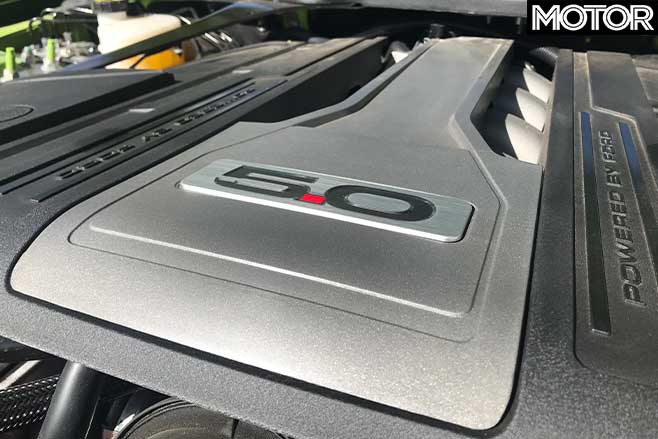
The problem is the gearing, or more accurately the diff ratio. Both the 2.3 HP and the GT use a Getrag MT82 (ratios 3.237, 2.104, 1.422, 1.0, 0.814 and 0.622 for 1st-6th respectively, if you’re curious) and a 3.55:1 diff, which is slightly odd given the two engines have completely different power curves.
As mentioned in previous updates, the gearing works brilliantly for the four-cylinder, which produces its grunt between 2500-5500rpm, but shift that curve to 4500-7500rpm and there’s a problem.
There’s no such thing as a quick rip through the gears in a manual Mustang GT. The upgraded engine introduced in MY18 is a monster but when first gear stretches to 86km/h and second 133km/h it feels lazy at low rpm and then you’re out of speed limit (110km/h reached at 6200rpm in second gear) just as it really starts to sing.
Aussie ’Stangs score all the juicy bits from the US Performance Package (wider wheels, bigger brakes, Michelin tyres) bar the shorter 3.73 diff, though it really needs a 4.1. Whether the gearing fades from memory on the open road we’ll discover next month!
Things we’re loving
- V8 rumble
- Black Shadow Pack
- Top end power
- Tall gearing
- Bigger fuel bills
- Can’t drive it
Month 5: Horse Play
Loosening the reins on our new V8 long-termer
One of the great joys of a manual is that each requires its own rhythm and I’m finally learning this one’s.Achieving a good shift is easy but a great one, a friction-less meshing of cogs, takes a little more finesse.
The key appears to be avoiding sudden movements with the pedals; don’t lift the throttle too quickly and don’t dip the clutch too quickly and vice versa. And don’t overlap the motions.
Or you can just turn the rev-match function on, but I turned it off with two minutes of picking up the car and haven’t re-activated it since. Feels like cheating.As mentioned in the last update, this month the Mustang is hitting the open road for a decent drive. It’s been a long time since I’ve driven a manual Mustang GT – properly driven, I mean.
We haven’t really been driving at all, in fact, and as such I’m cognisant of the fact that the first car driven after an extended break is going to feel pretty swish.So with that in mind, I’ll start with a negative. The Mustang is quite noisy. Not in the traditional sense like wind noise or tyre roar, but mechanical noise.
Cross a series of small, pattery bumps – say, a rough railway line crossing or a potholed section of highway – and you become aware of noise from the suspension.
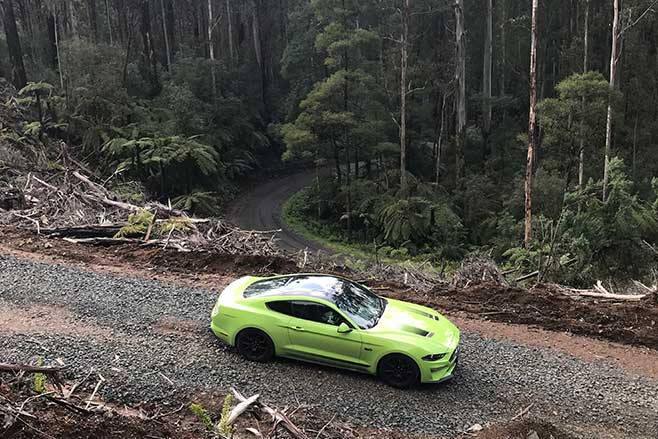
These are things that can be heard not felt and they might mean nothing, but if I’d just paid $70K+ for my new car I might raise them at the next service.Now for the positive: I’d forgotten how good, how capable, a Mustang GT is.
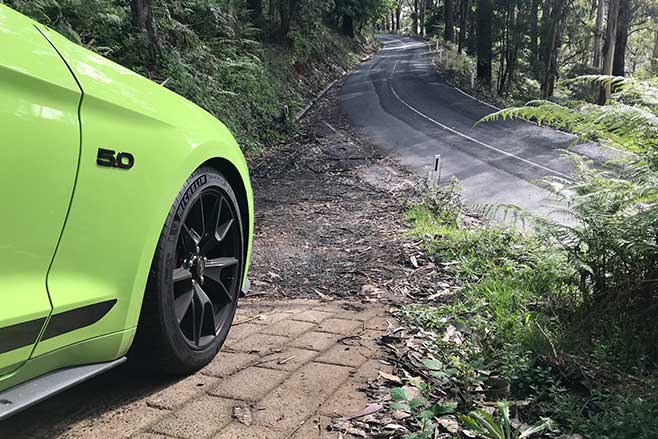
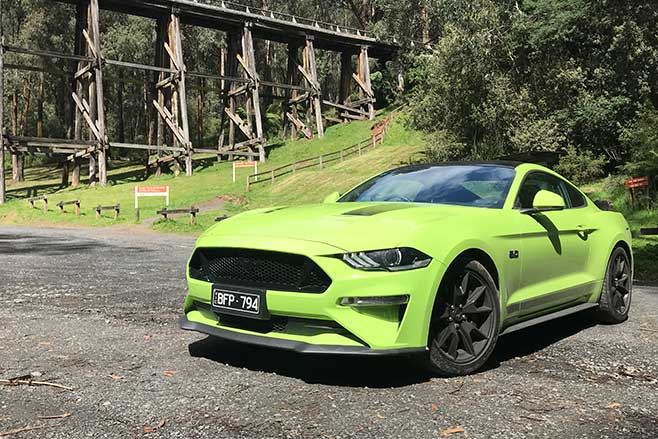
Forget all those tired cliches about muscle cars not being able to do corners or Mustangs throwing themselves into crowds, a hard-driven standard GT can set a pace on a twisty road that plenty would have plenty more fancied sports cars breaking a sweat.
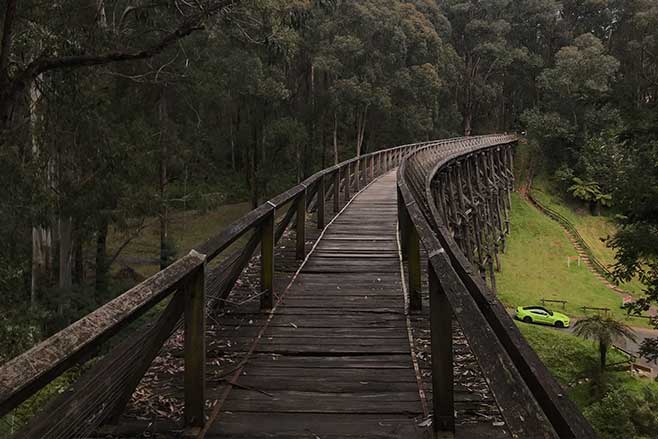
The Michelin Pilot Sport 4S tyres have plenty of grip, the Performance Pack brakes that are standard on Aussie cars offer great stopping power, the chassis has decent balance and the suspension offers an impressive blend of compliance and body control, especially with the MagneRide dampers clicked to Sport. Dial back the traction control and the electronics will mostly leave you alone, too.The engine remains a monster, with heaps of grunt that continues to builds to build beyond 7000rpm and a pleasing soundtrack to accompany it.
The question posed last month was: would the super-long manual gearing dull the experience beyond the city limits like it does within them? The answer is yes and no.
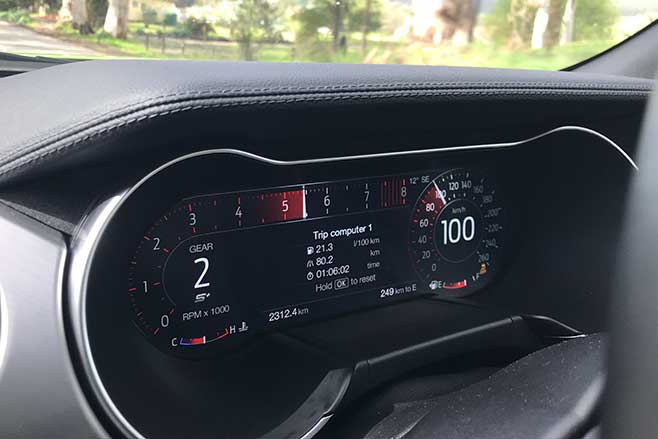
However, soon enough you starting looking for opportunities to go back to first in tight corners; this not only gives you an opportunity to use the gearbox, but puts you in the meat of the torque band on the shift to second.
It’s fun, though not as fun as, say, having the correct gearing in the first place.
Things we’re loving
- POWER!
- Handling poise
- Great shift
- Heavy so-and-so
- Gearing. Again
- Random noises
Month 6: Green Party
Mild modifications fulfil Mustang’s potential
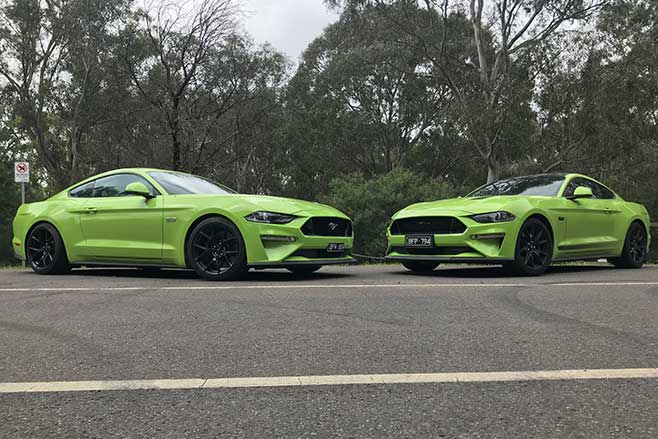
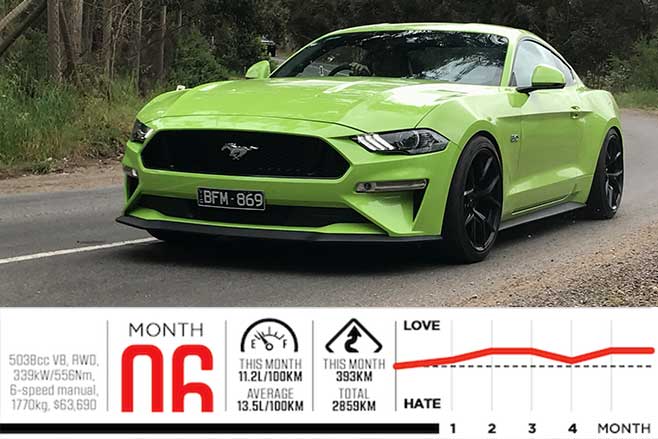
Just to refresh your memory, MOTOR’s long-term GT is a six-speed manual with MagneRide dampers, but it’s lower, fatter twin here is something a bit different.This isn’t the work of Ford. Instead, it’s owned by friend of MOTOR Bernie Quinn, the boss of engineering firm Premcar which has created the Miami supercharged V8, Nissan N-Trek Warrior, Holy Grail Falcon among many other things.
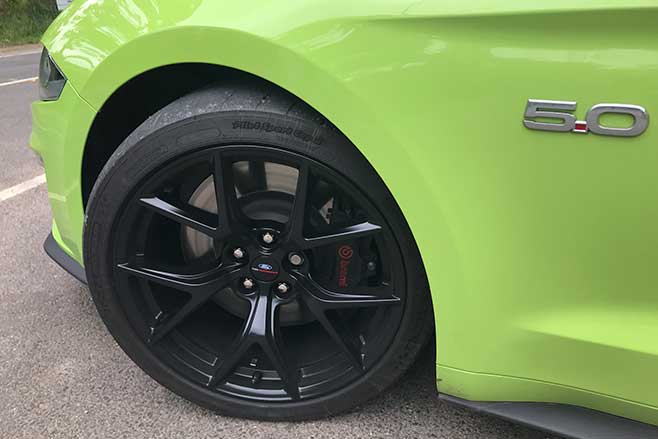
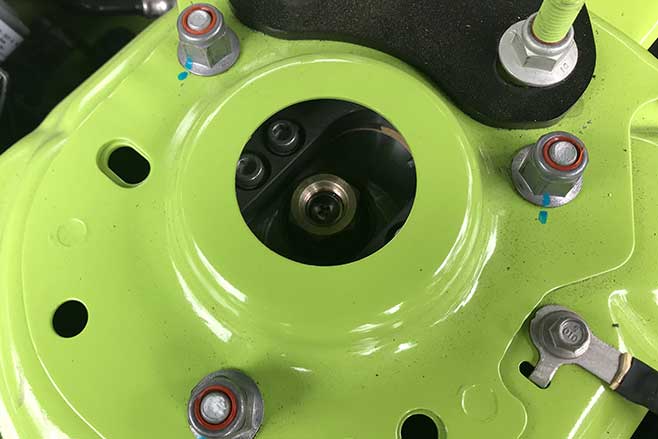
Melbourne company Shockworks has provided a new set of suspension but final and most intriguing modification can’t be seen at all.Regular readers will be familiar with my whinging about the standard V8 Mustang’s gearing. With good reason, because it’s ridiculously tall, robbing the awesome V8 of its punch and the driver of the opportunity to use the sweet shift.
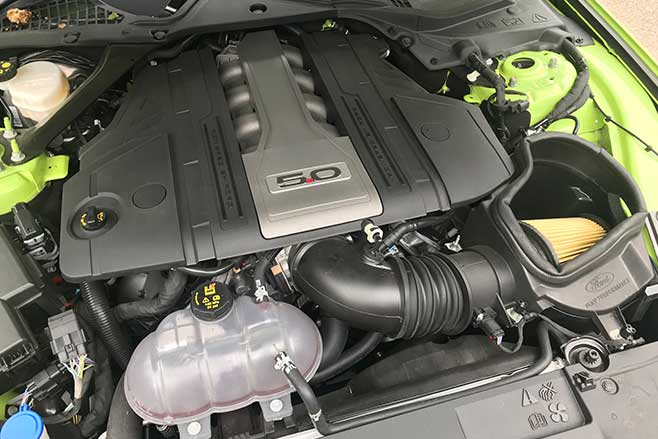
Plug in the wider tyres and new diff and these figures drop to: 71km/h (1st), 109km/h (2nd), 162km/h (3rd), 230km/h (4th), 283km/h (5th) and 370km/h (6th). Much more reasonable. And more fun.There is a certain appeal to the standard car, that feeling of gaining more and more speed as you wind each gear out for seconds at a time, but opportunities to do so on the public road are virtually non-existent.
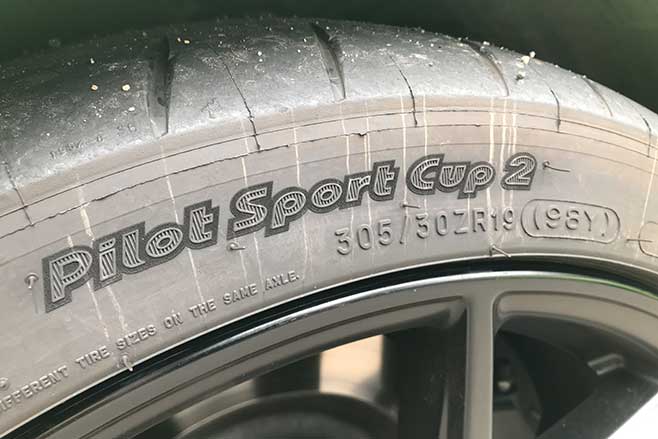
And you don’t even have to turn to the aftermarket. Bar the locally-sourced suspension all the bits come from the official Ford Performance catalogue; the 4.09:1 crown wheel and pinion is US$359, the rims US$1676 and the tyres from your local Michelin dealer.Next month we’ll test the GT’s mettle on track and maybe (hopefully) bring along its supercharged sibling for a spot of comparison. Stay tuned.
Things we’re loving
- Shorter gearing
- Parts catalogues
- Big, sticky tyres
- Scraping exhausts
- Tramlining
- Waiting for Mach 1
Australia is on track to post its worst vehicles sales figures in at least 17 years despite a welcome bounce in the November as the country emerged from pandemic lockdowns.
Despite the welcome excitement of a 12.4 percent increase in sales last month – the first monthly sales increase since March 2018 – with just one month of sales remaining and only 821,316 new vehicles reported as sold in the first 11 months of 2020, the new car market will likely limp to its worst annual result since 2003.
Even if the market can post record December sales – beating the 102,980 cars sold in December 2017 – it’s unlikely to beat the 937,328 vehicles sold throughout 2009.
That would make 2020 the worst annual vehicle sales in Australia since 2003, when 909,811 vehicles were sold (at the time that was a record).
It’s also well short of the 1,189,116 overall sales record set in 2018, something that seems like a distant memory for an industry that’s been battered for the best part of three years.
Small SUVs make big gains
While utes dominated the top of the sales charts – sales are up 4.8 percent for the month, led by four-wheel drive models – it’s SUVs that are doing the heavy lifting.
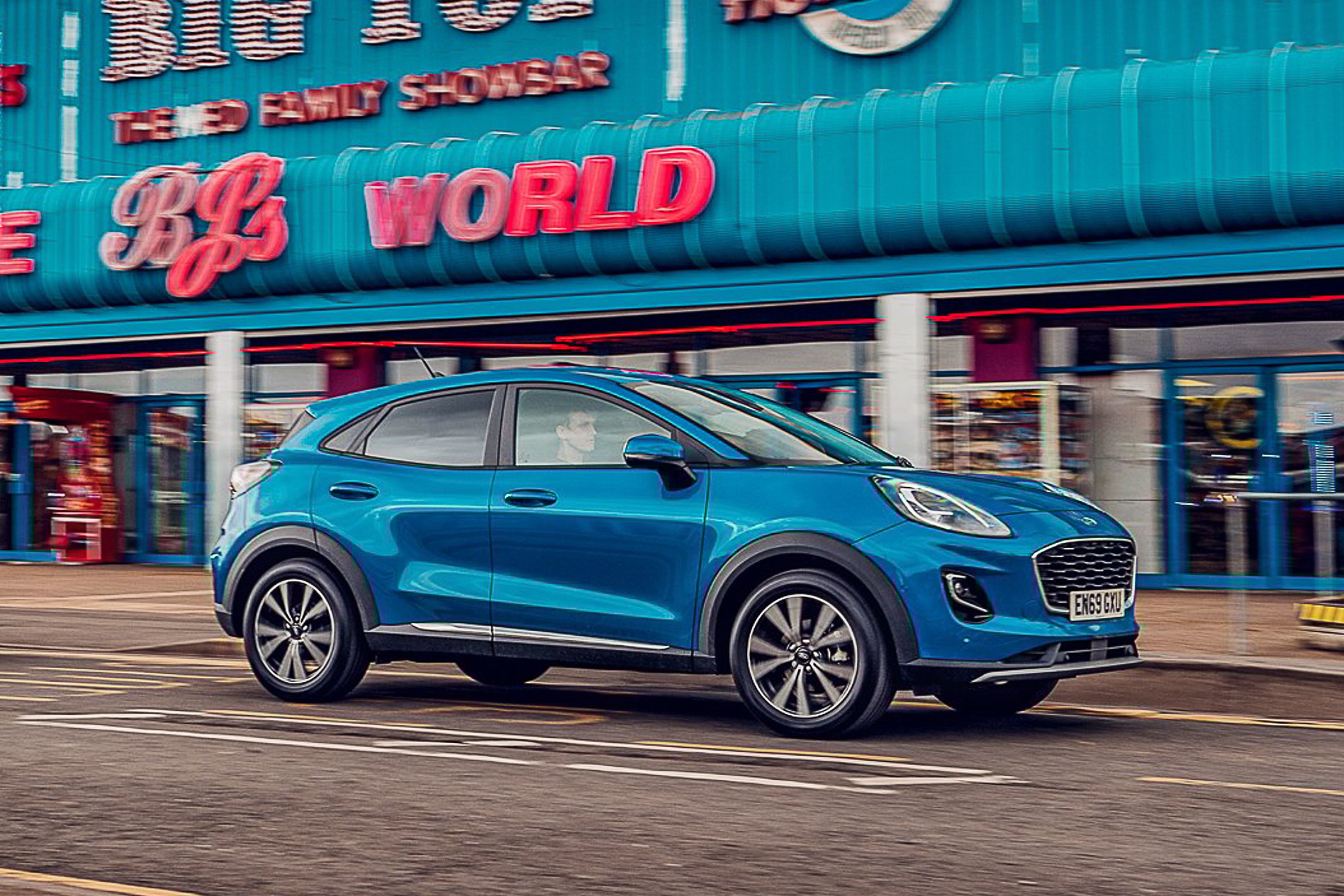
Sales of so-called light SUVs – Mazda CX-3, Nissan Juke, Hyundai Venue, Ford Puma, Toyota Yaris Cross, et al – posted big percentage gains, they still make up less than one in 10 SUV sales.
That said, with 2673 more light SUV sales in the first 11 months of 2020 those SUV tiddlers helped offset drops in SUV sales from medium and large models.
V8s power over EVs
Leading the way at the other end were V8-powered off-roaders.
Our homegrown V8 heroes may be dead, but that hasn’t stopped Australians snapping up bent eights in massive numbers.
In November Australians may just have snapped up more V8s than any calendar month before it.
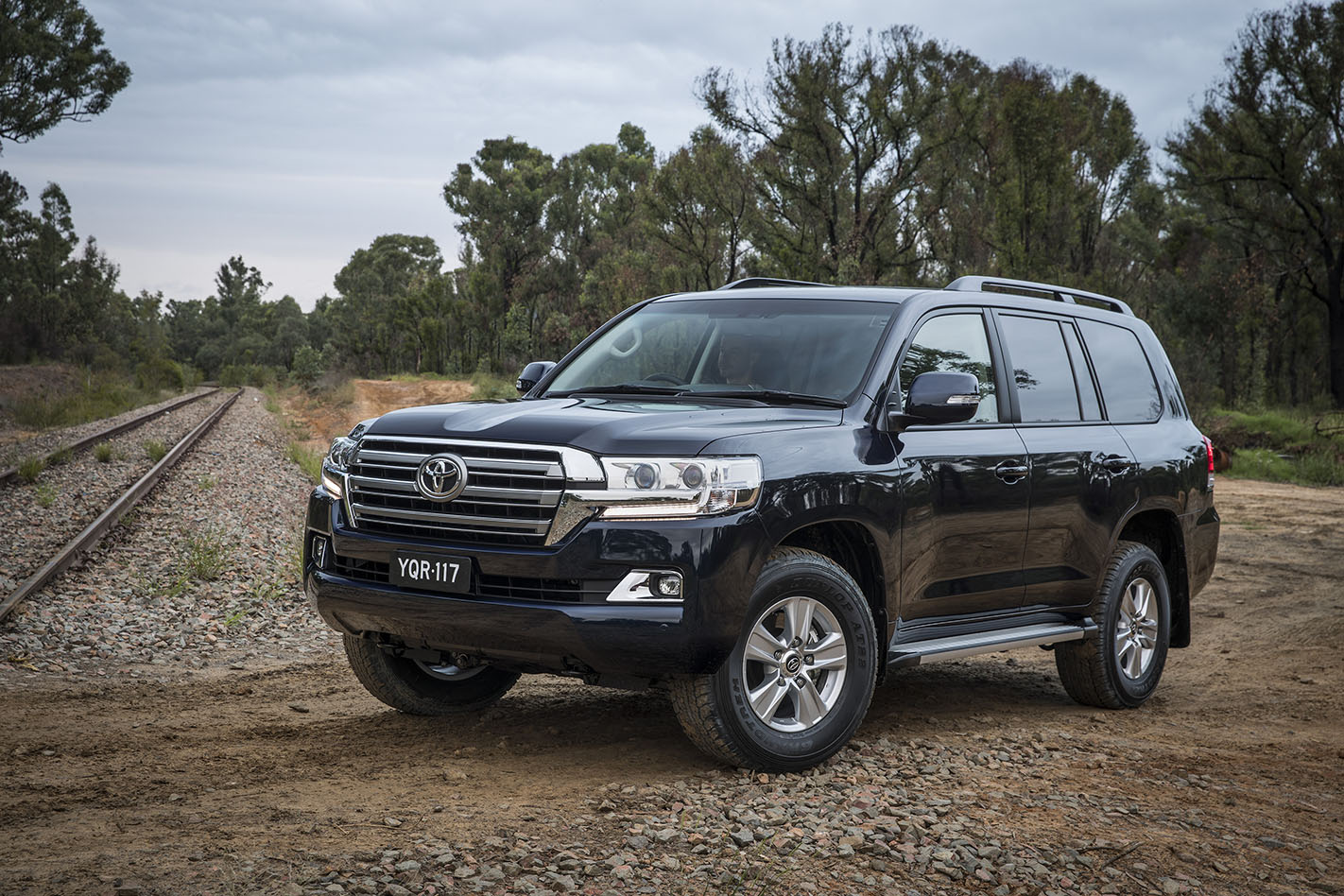
Record sales of the Toyota LandCruiser – all of which are V8s – have boosted sales of big-capacity V8 engines. Ahead of the anticipated 2021 arrival of an all-new LandCruiser, Toyota shifted 1981 of its 200-Series LandCruisers and 966 of the more rugged 70-Series versions.
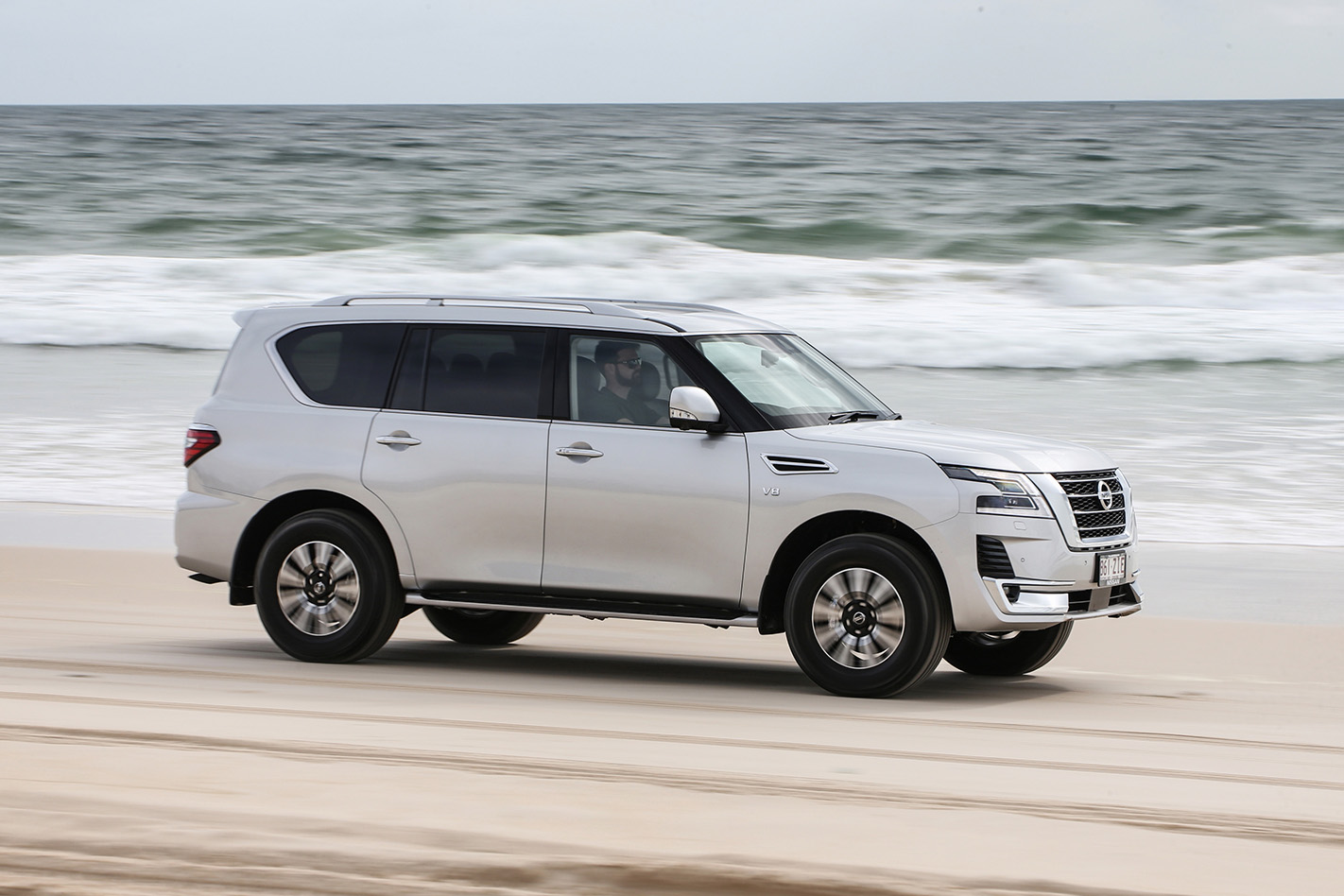
Throw in 440 Nissan Patrols – a record for the petrol-only Y62 model – and some Porsches, Mercedes-AMGs, BMWs and others and it makes for something like 3500 V8s in a single month.
Even towards the end of the life of the Holden Commodore as it experienced record demand the monthly sales totals typically hovered around 1200. Around the same time monthly LandCruiser and Patrol sales added maybe 1500 to the V8 tally, with V8s from other brands likely pushing the totals to the low-3000s.
Those V8 sales are also at least five times more than the number of pure electric cars sold in November; the official figure reported by the Federal Chamber of Industries is 178, although that doesn’t include Tesla. Add an estimated few hundred Tesla sales and it’s clear there are still more people prepared to spend big on V8s than batteries.
What China trade war?
Chinese brands also have plenty to smile about. LDV’s November sales jumped 130 percent compared with the same month in 2013, for a year-to-date bounce of 33 percent.
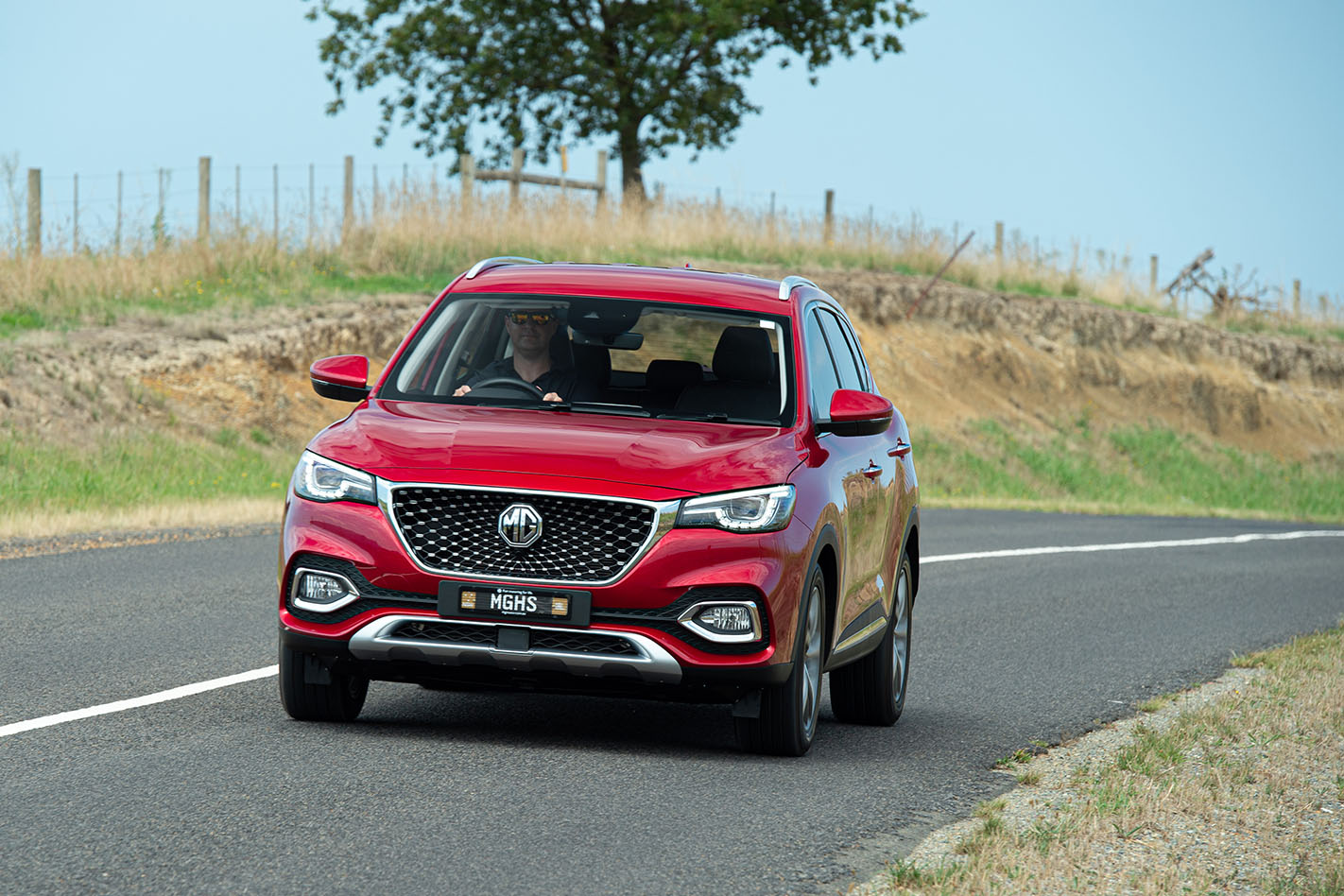
MG faired even better, up 133 percent for the month and 75 percent YTD.
Haval (up 125 percent) and Great Wall (up 59 percent) were also up for the month, albeit off lower bases.
Top of the table dominance
At the top of the charts by a long way is Toyota, its sales up 37 percent for the month and only 3.8 percent behind its 2019 YTD tally.
Worryingly for rivals, Toyota continues to grow its market share, which was 24.4 percent in November and hovers at 22 percent for the first 11 months of 2020.
Boasting five of the top-10 nameplates last month, Toyota’s 22,569 sales were more than the combined total of second, third, and fourth placed brands Mazda (9053), Hyundai (6903) and Ford (6613).
Toyota’s 2020 market share surge has been partially driven largely by its hybrid push.
RAV4 mid-sized SUV sales are up 59 percent for the year so far and well over half are hybrids. In November 67 percent of RAV4s delivered to customers had electric motor assistance to reduce fuel use.
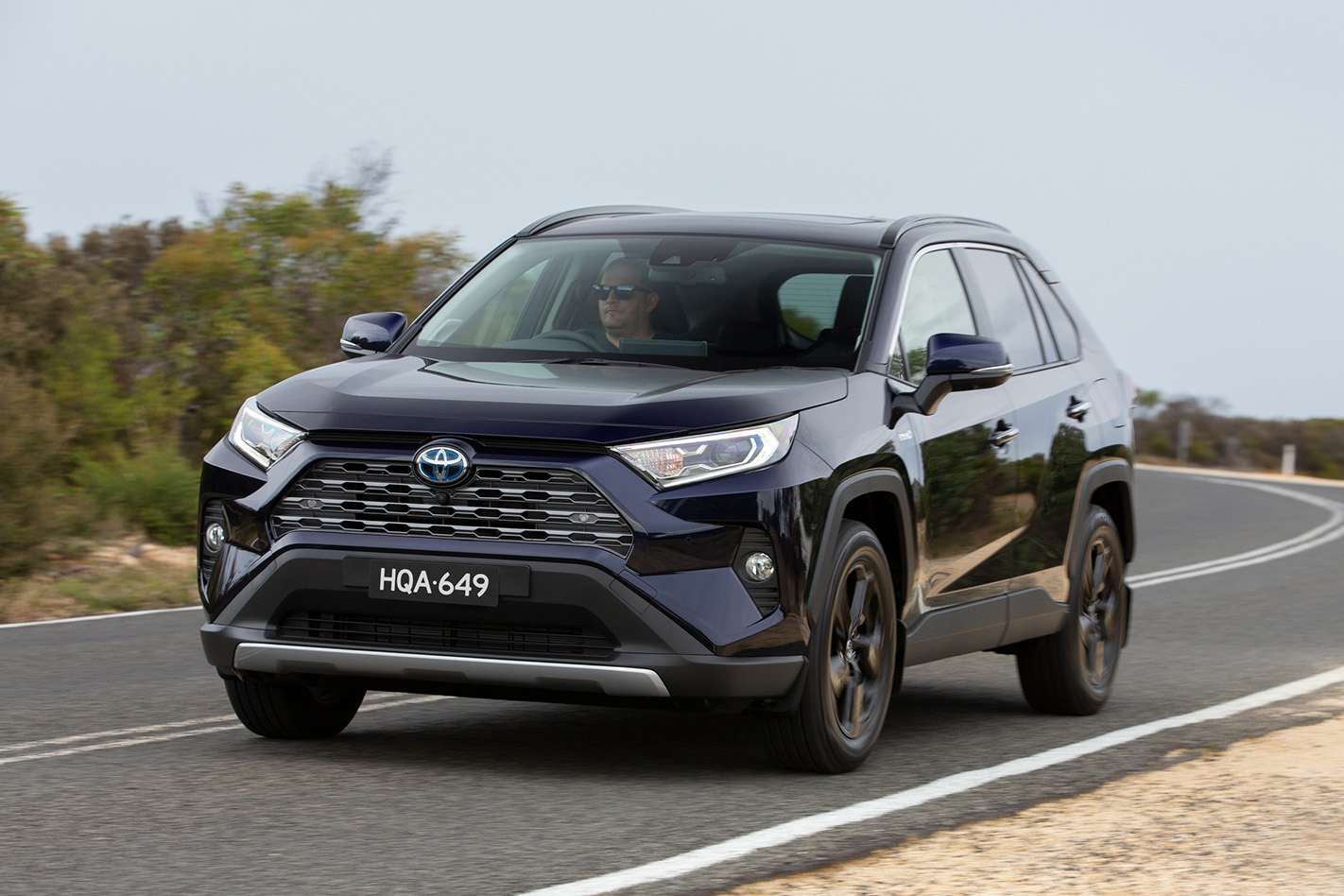
And of the 34,995 RAV4s sold so far in 2020 69 percent of them are hybrids.
It’s an astonishing stat and one that demonstrates Australians are ready for hybrid tech if the price is right.
Not all brands have reason to smile looking at the year-to-date totals.
Despite a strong November, Hyundai is down 28 percent for the first 11 months against a market that has dropped 16 percent. Mitsubishi is down 32 percent, Volkswagen down 22 percent, Subaru down 24 percent, Land Rover down 32 percent and Honda down 34 percent.
Top 10 brands, November 2020
- Toyota – 23,204
- Mazda – 9053
- Hyundai – 6903
- Ford – 6613
- Mitsubishi – 5488
- Kia – 5376
- Volkswagen – 3280
- Nissan – 4001
- Subaru – 3203
- Honda – 2511
Top 10 models, November 2020
- Toyota Hilux – 5038
- Ford Ranger – 4260
- Toyota RAV4 – 3800
- Toyota LandCruiser 70-/200-Series – 2947
- Toyota Corolla – 2774
- Toyota Prado – 2602
- Mazda CX-5 – 2412
- Isuzu Ute D-Max – 2095
- Hyundai i30 – 2047
- Hyundai Tucson – 1995
Australian car adverts are boring and uninformative and it’s mostly thanks to a group of joyless do-gooders who have learnt to exploit an archaic advertising loophole.
Until someone at Ad Standards comes to their senses and reforms the complaints process, here’s how the system works: A car maker airs a TV commercial in which a car goes around a corner or one of its occupants thinks about something enjoyable, one mildly disgruntled but deeply officious viewer pens a letter to the advertising industry regulator, Ad Standards checks its cache of spines, realises it’s fresh out, and bans the advert. As it stands, a single upheld objection is all that’s required for the ‘offending’ promotion to be pulled, and it’s happening at a rate of about two car ads per year.
I’m certainly not pushing for a lawless advertising wasteland in which marketing agencies are free to say and portray whatever they want, but equally, I think it’s fair for companies to accurately describe what their products are capable of. Ad Standards does not agree. The argument goes that a car being driven fast in a promotion will somehow encourage people to go out and mimic the same driving behaviour, triggering the collapse of civilisation, which is of course, total nonsense.
Good advertising doesn’t encourage the audience to recreate the advert. It makes you want to buy the things in the advert. Toyota’s 2016 AFL Grand Final Hilux campaign saw the Japanese one-tonner lapping the MCG. The ensuing result was not the decimation of local footy ovals by hordes of rogue dual cabs. Instead, the Big T sat back and enjoyed record Hilux sales.
Either way, I am not the first to highlight the unfairness of the Ad Standards system and nor is it the first time I’ve been outspoken about it, so I’m not going to waste page space or your time fruitlessly retracing ranty steps. Instead, I have a solution.
There are seven deadly motor vehicle advertising sins in the eyes of Ad Standards but the one that curtain-twitching meddlers can recite by heart outlaws “Driving practices … which would, if they were to take place on a road or road-related area, breach any Commonwealth law or the law of any State or Territory.”
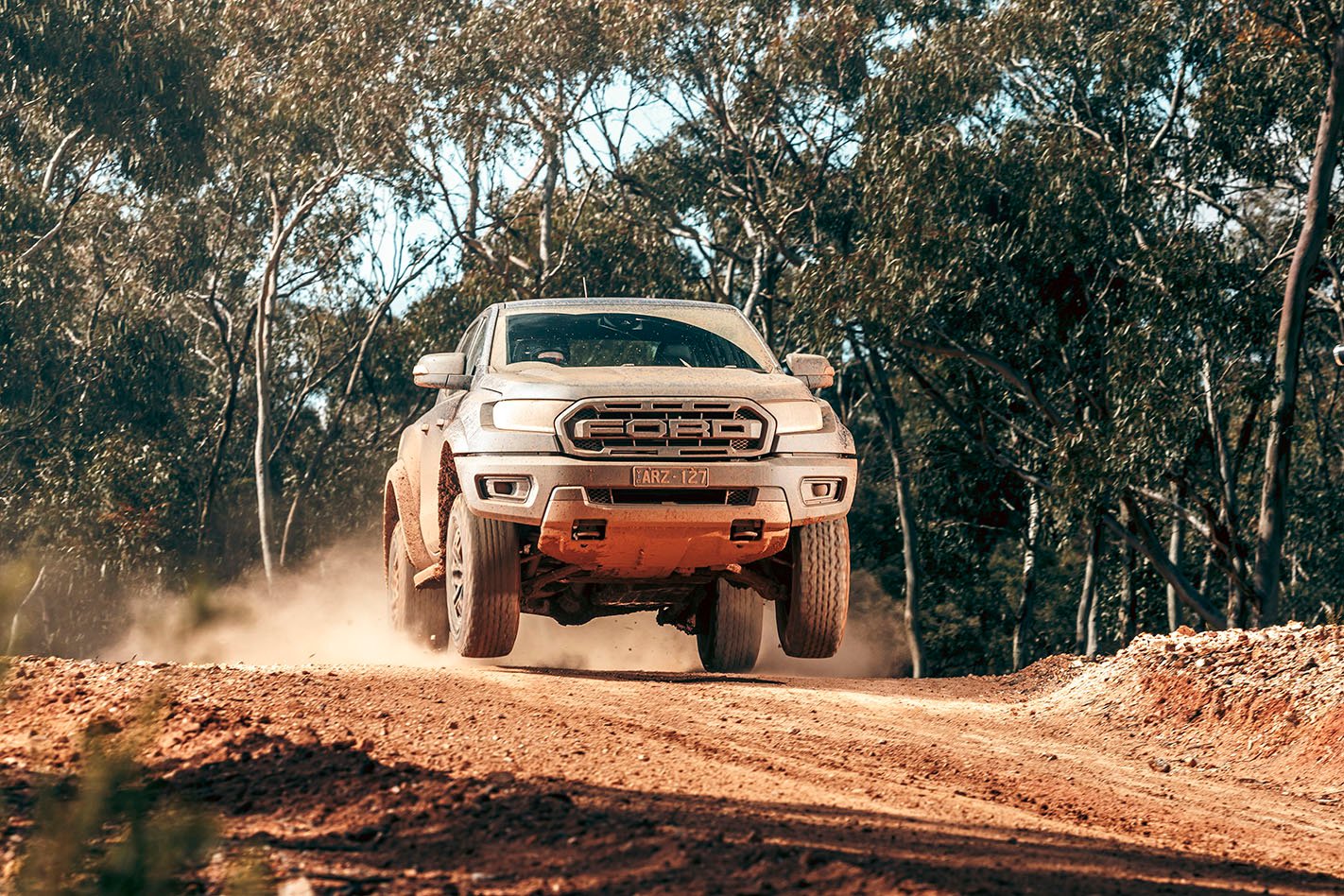
In other words, it doesn’t matter where, when or by whom, doing anything fun in a car is strictly forbidden in motor vehicle advertising. More frustratingly, the ruling is largely subjective and an ad can be pulled if for example, “the speed of the vehicle appeared unsafe” as was the justification for banning Ford’s Ranger Raptor promotion. But what if the Raptor was being used to promote someone else’s product?
If Kellogg’s decided that the best way to advertise a box of Frosties was to send it airborne, and that box just happened to be in the back of a Ford ute at the time, then it wouldn’t be a car ad would it?
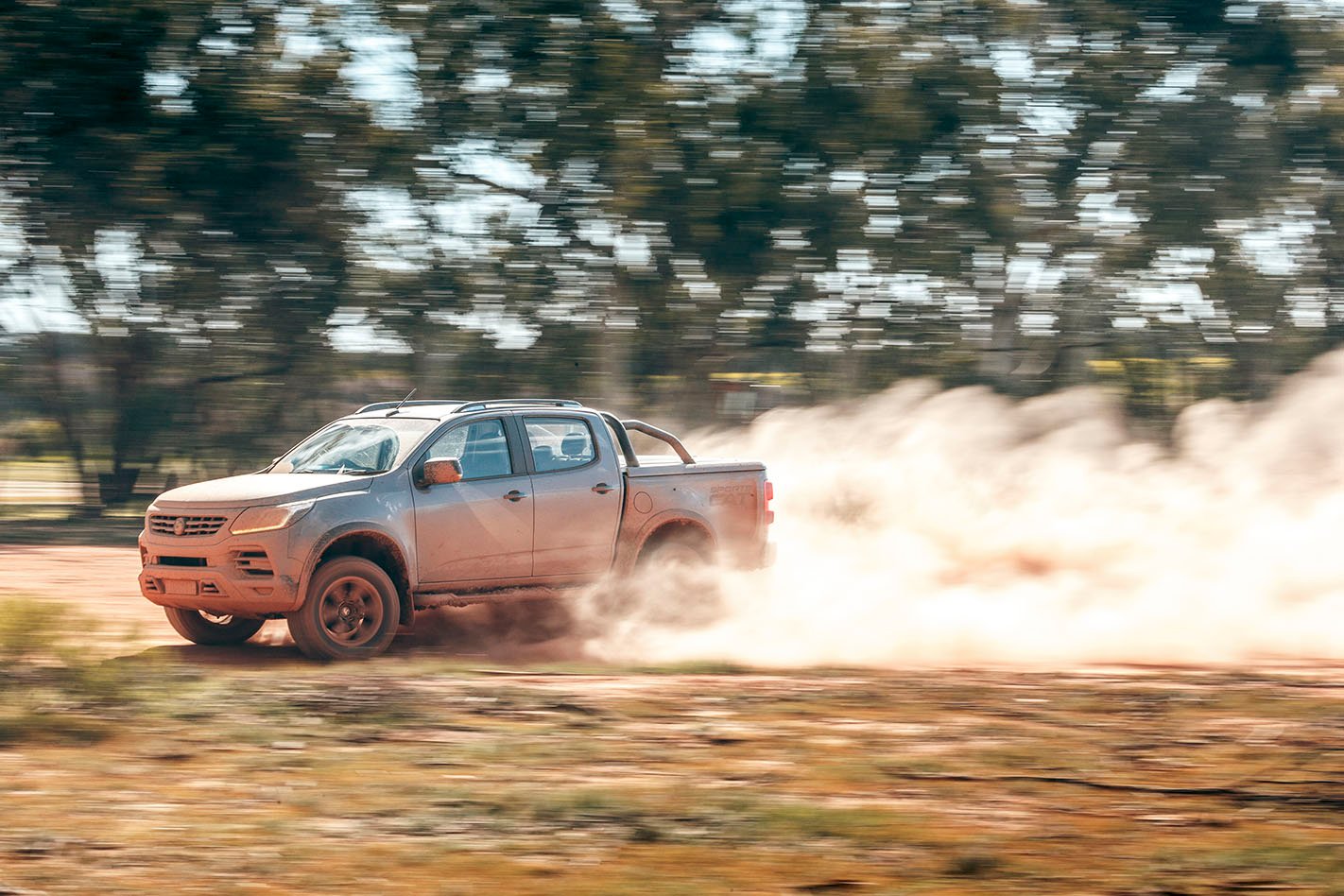
And what if Procter and Gamble’s marketing team decided that the very best way they could represent the effectiveness of Head & Shoulders is with a BMW M5 crossed up to the lock stops, turning Continentals into vapour? No matter how long the Munich muncher held a slide, this is still an advertisement for shampoo.
But for this idea to work, it requires a little quid pro quo. While BMW and Ford are laughing, Kellogg’s and Head and Shoulder’s marketing budget has taken a bit of a hammering with little to show for it. It’s at this point the branding partnership returns the favour.
TV audiences may wonder why BMW’s X5 advert contains quite so many references to nappy rash cream, just as the tenuous link between Pop Tarts and the Ford Focus will confuse others. But it won’t matter because all four companies will be communicating the message they choose unhindered, we get entertaining adverts that properly represent the product, and the only rule that’s broken is the one Ken and Karen use to underline their letters in red.
Toyota is a big believer in hydrogen fuel cell cars, and we’ve driven the car to prove it, the second-generation Mirai. It’s a zero-emissions electric car, which produces its electricity onboard by mixing hydrogen and oxygen in a fuel cell ‘stack’, with water and heat produced as waste.
Yup, this is a Toyota with a far more convincing claim to be self-charging than the hybrids.
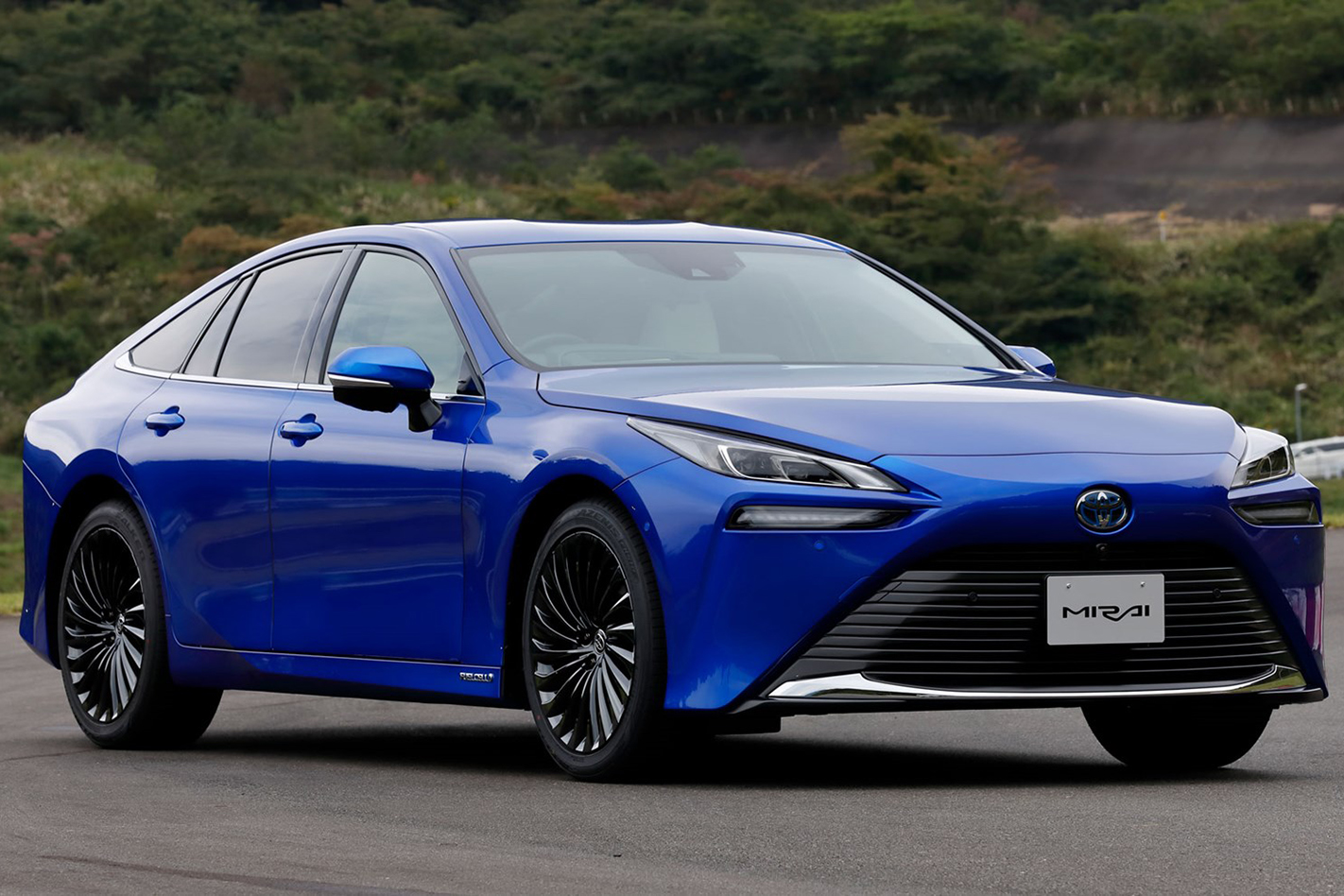
The Mirai embodies Toyota’s kaizen philosophy of continuous improvement. Compared with the first-generation Mirai from 2014, the new car’s fuel cell stack is smaller but more powerful, the car’s range has increased to just over 400 miles, and the vehicle is transformed from freaky Prius cousin to svelte Lexus clone.
How does it drive? Read on for the full review.
If you have seen a Mirai, you deserve a gold spotter’s badge: Toyota only produced 11,000 globally. Given that carmakers typically lose money when introducing exotic technology, that’s no surprise.
Toyota was coy about the list price – it was about $80,000 in 2017 – but then you couldn’t really buy one: Toyota bought a few into Australia that were leased to fleets on a trial basis.
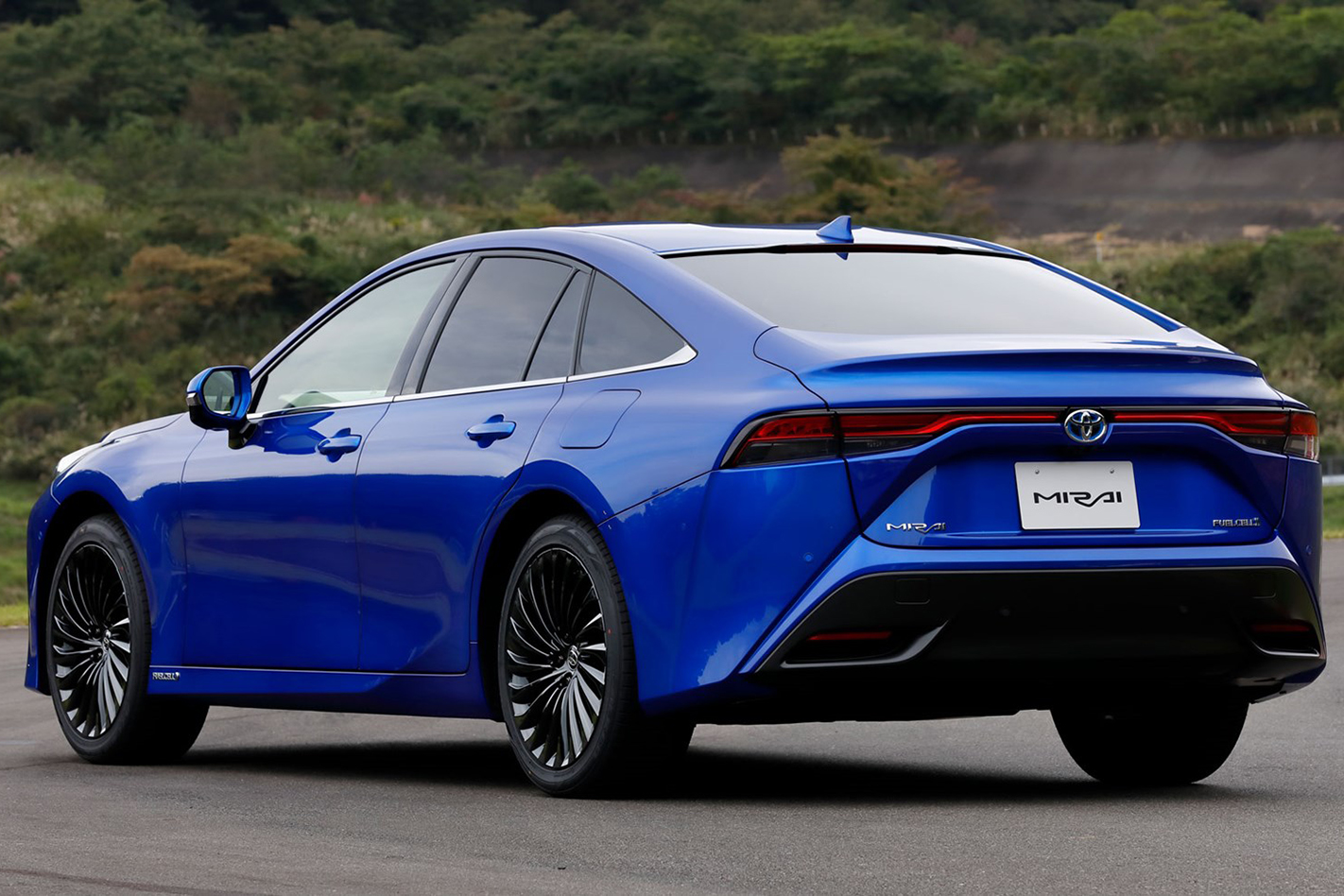
The new Mirai will be more freely available when it globally launches next year with a 20 percent price reduction.
For that, you can also thank kaizen. A fuel cell used to take 15 minutes to manufacture; now it’s a matter of seconds. The filament winding process used to make the high-pressure hydrogen tanks robust and minimise leaks (hydrogen is incredibly abundant but incredibly tiny so prone to escape) has also been cut by a third. Economies of scale have also blossomed: tenfold, to 30,000 a year.
Enough of this Cobra Kai stuff. How punchy is it?
To drive, the Mirai feels like a full electric car – on a gap year in Goa. It doesn’t have an iPace or Tesla’s blistering turn of pace – propulsion comes from an immediate shove of torque but it rapidly plateaus – and lifting off triggers mellow slow-down: there’s none of that abrupt, confected deceleration on many EVs.
Overtaking a Mazda 6 on a B-road straight needs a decent gap, with 300Nm of torque propelling a near-two tonne car. It’s no surprise the 0-100km acceleration benchmark takes 9.2sec.
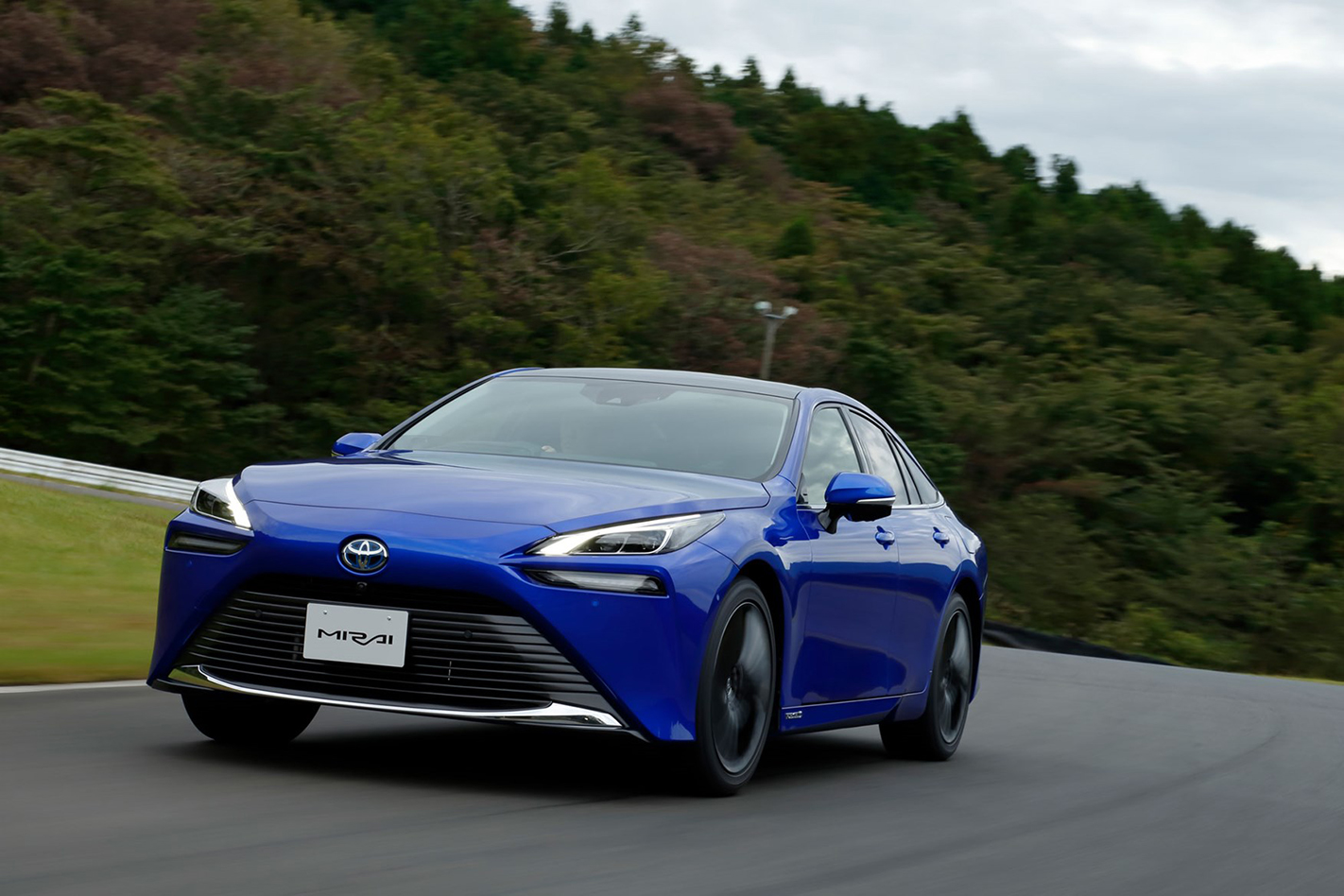
The Mirai e-motor’s peak power is 134kW, limited by the output of the fuel cell stack and the supporting, Lexus LS500h-donated hybrid battery. This supplies the car under low loads and helps out when you floor it, but during steady driving power comes direct from the fuel cell stack.
This generates electricity by drawing hydrogen atoms through the fuel cell’s anode, which splits the molecules into electrons and protons. While the protons pass through the polymer electrolyte, the electrons are instead forced through an external circuit which forms an electrical current.
The electrons finish their journey at the cathode, where they’re combined with protons and oxygen, generating the waste products of heat and water.
The stack has been shrunk from 33 to 24 litres, and resulting power climbs by half to 5.4kW/litre. The downsizing makes it small enough to fit in the nose (in the Mk1, the driver mountaineered atop it), along with the pumps that bring external air and hydrogen to the stack. Relocating those helps make the new saloon so much quieter than the first model.
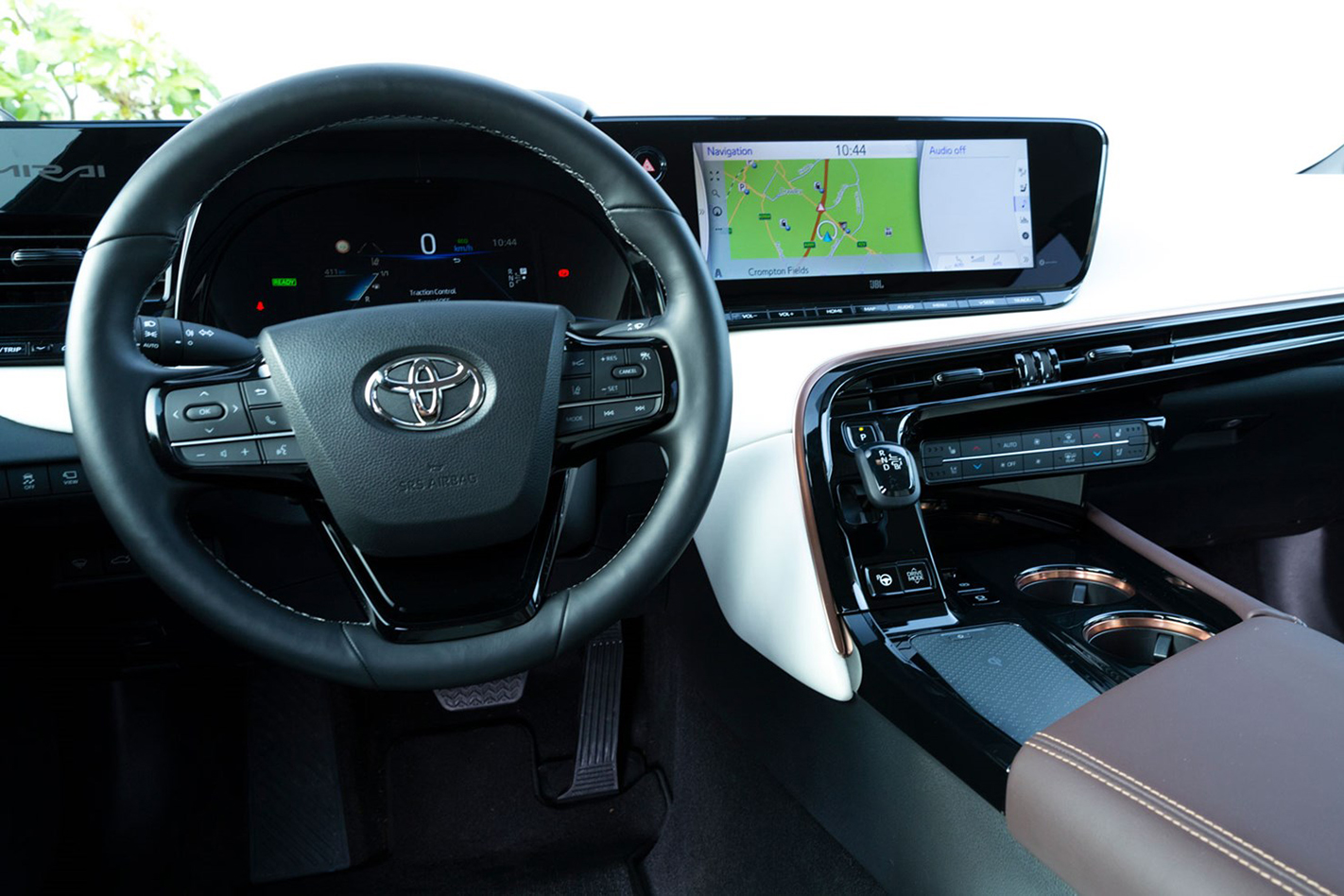
It also frees up space for a third hydrogen tank. The biggest tank is packaged along the car’s spine where the prop shaft would be, with the second and third tanks mounted transversely at the rear, along with the hybrid battery.
Unfortunately packaging all these components makes rear accommodation tight: behind a six-foot driver, a similarly sized rear passenger will find headroom really lacking, legroom is hardly generous (it was a struggle to get my big boots in) and trunk space is down on a typical limousine’s.
How’s the ride and handling?
The first Mirai drove the front wheels, betraying its link to the Prius; the new saloon rides on Toyota’s Global Architecture – Luxury, which underpins the Lexus LS and LC. All of which explains its 4.9m size, handsome saloon body style, 50:50 weight distribution, epic civility and how it handles.
It’s quieter than the celebs in Madame Tussauds. The tranquillity is remarkable: there’s an ethereal whine from the electric motor that turns the rear wheels, but it’s distant, even when intensified by the accelerator.
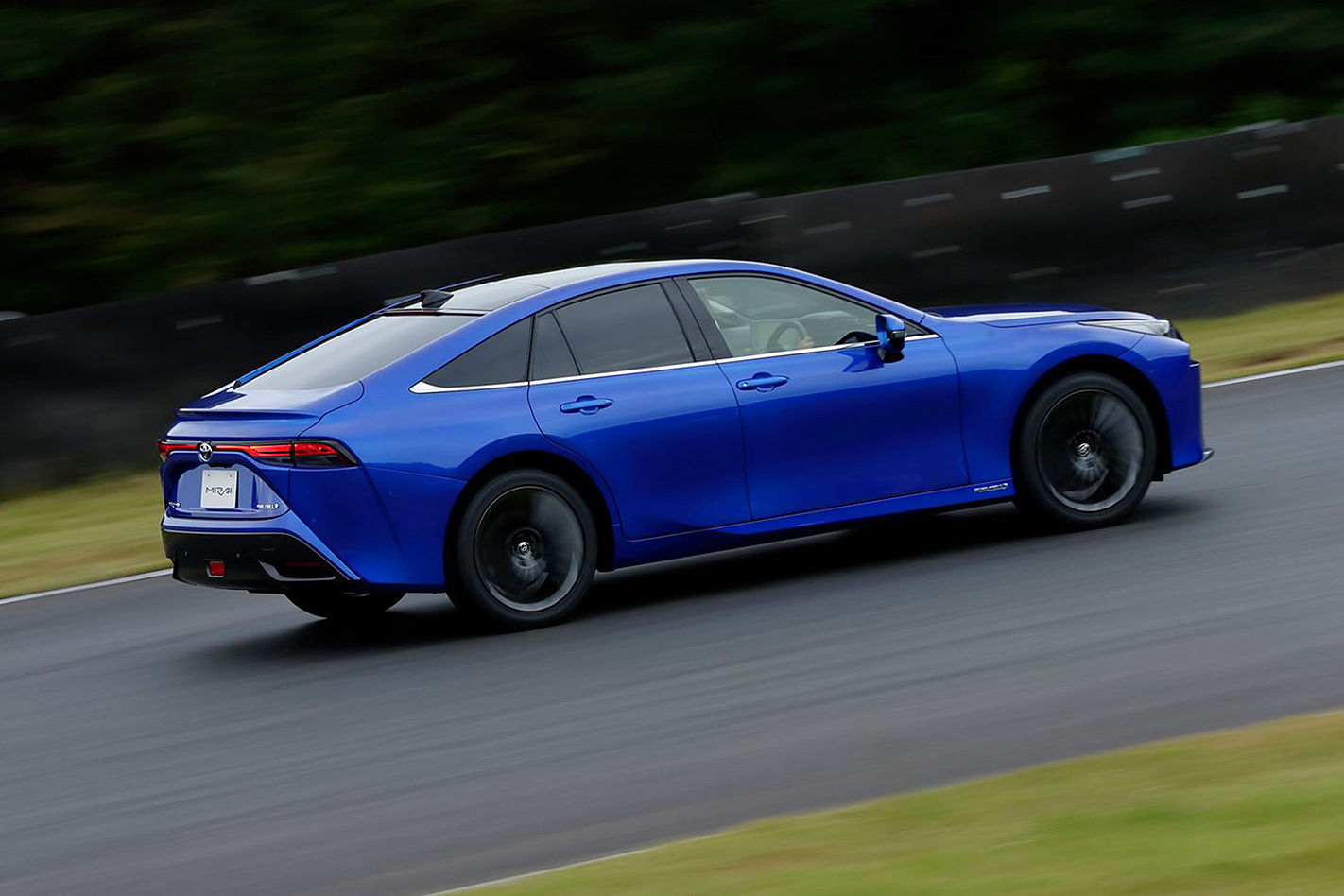
No tyre groan either: up to 60km/h you’ll hear nothing but the muted ker-thunk of a 20-inch rim over a manhole – it’s like driving a sensory deprivation chamber. Aside from a lick of wind noise and tyre murmur, it barely gets much louder at motorway speeds.
The soundproofing is ace, assisted by zero moving parts in fuel cells: anyone hoping chemistry in action sounds like an accident in a witch’s cauldron will be disappointed.
The light steering is effortless, steady but accurate, and the suspension softly-sprung. That makes for a cushy ride at higher speeds in particular, a bobbing nose under braking, Moto GP lean in corners, and some lapses into understeer on greasy, autumnal roundabouts. And that’s fine: the Mirai is a car for cruising, not careering around.
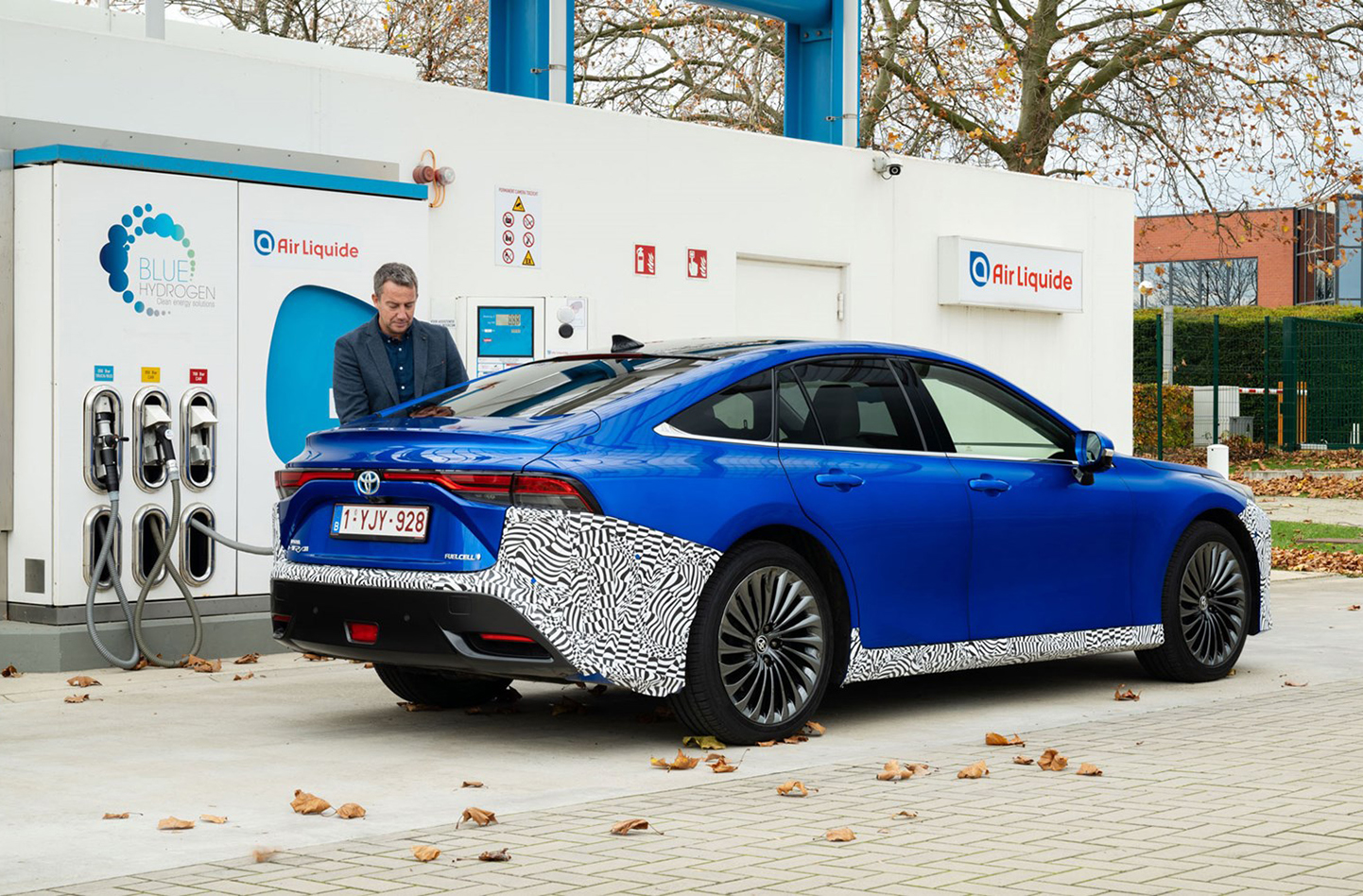
The big issue of course is refuelling. The Mirai takes 5.6kg of hydrogen which, like a petrol or diesel vehicle takes about five minutes to fill up: none of the hour-long waits that hamper pure electric cars.
That said, you might need to drive for hours to find a filling station first and that’s if you’re lucky, which is a massive issue.
When you do gas it up, Toyota reckons you’ll be able to travel about 650km, up 30 per cent over the Mk1 thanks to greater tank capacity and fuel cell improvements.
If the refuelling challenges and running costs don’t make a compelling case, the emissions do. After a few initial exertions, the Mirai began puffing out clouds like a 10-year-old diesel – thankfully of water vapour.
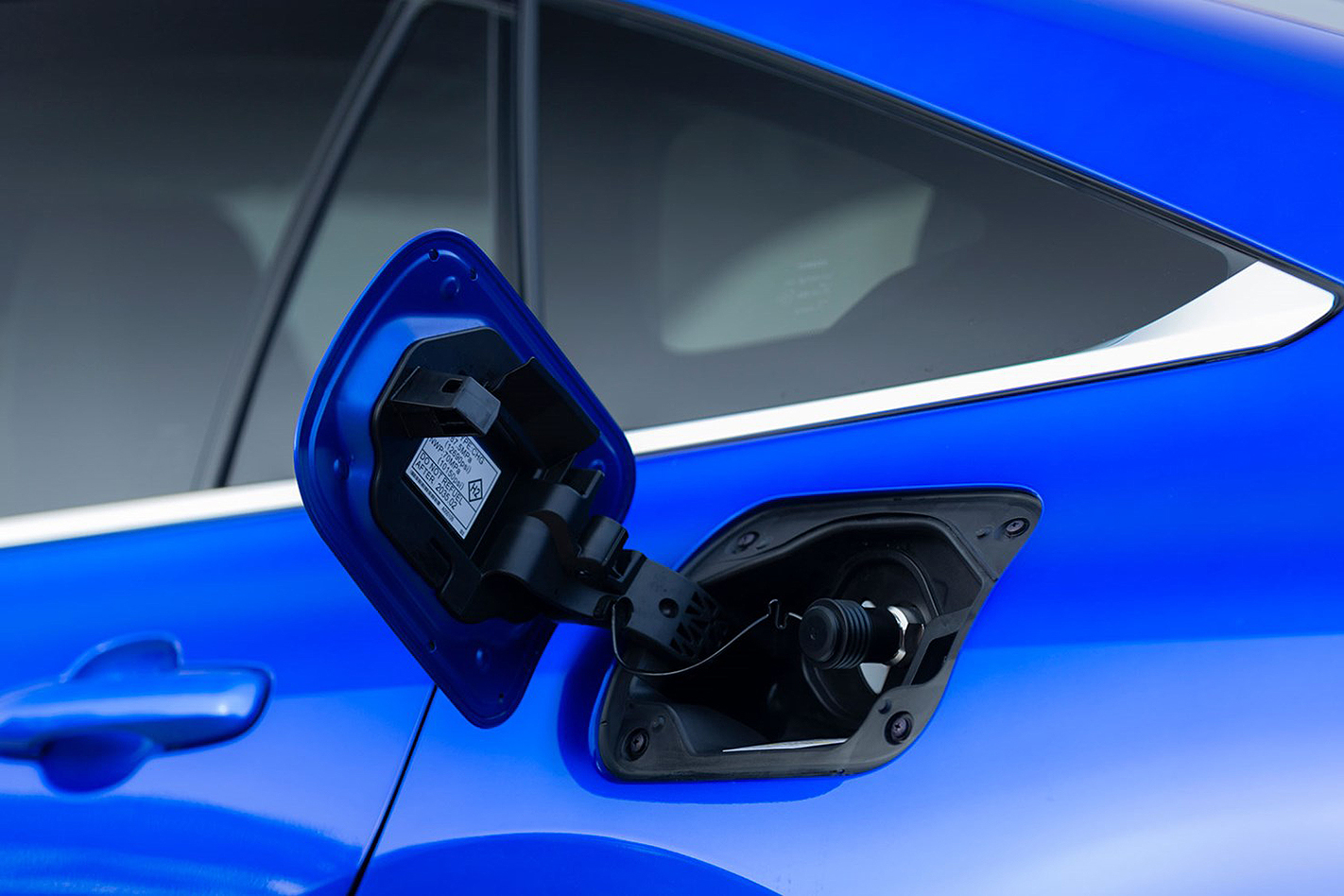
Indeed, Toyota’s got a neat line: the Mirai isn’t zero emissions in use, but ‘minus emissions’ – because its air purification system purges any nasties before the oxygen reaches the fuel cell.
One button is unusually marked H2O: use it to dump excess water, but do it on the move else you’ll leave a puddle on the garage floor.
Verdict
Toyota has a vision for a hydrogen society, with the abundant element used as a significant power source in industry and transport. For example, hydrogen fuel cells are seen as a plausible way to wean big trucks off diesel and up to the zero-emissions standard: fleets with predictable routes and the ability to install refuelling pumps could spearhead the adoption of H2-powered vehicles.
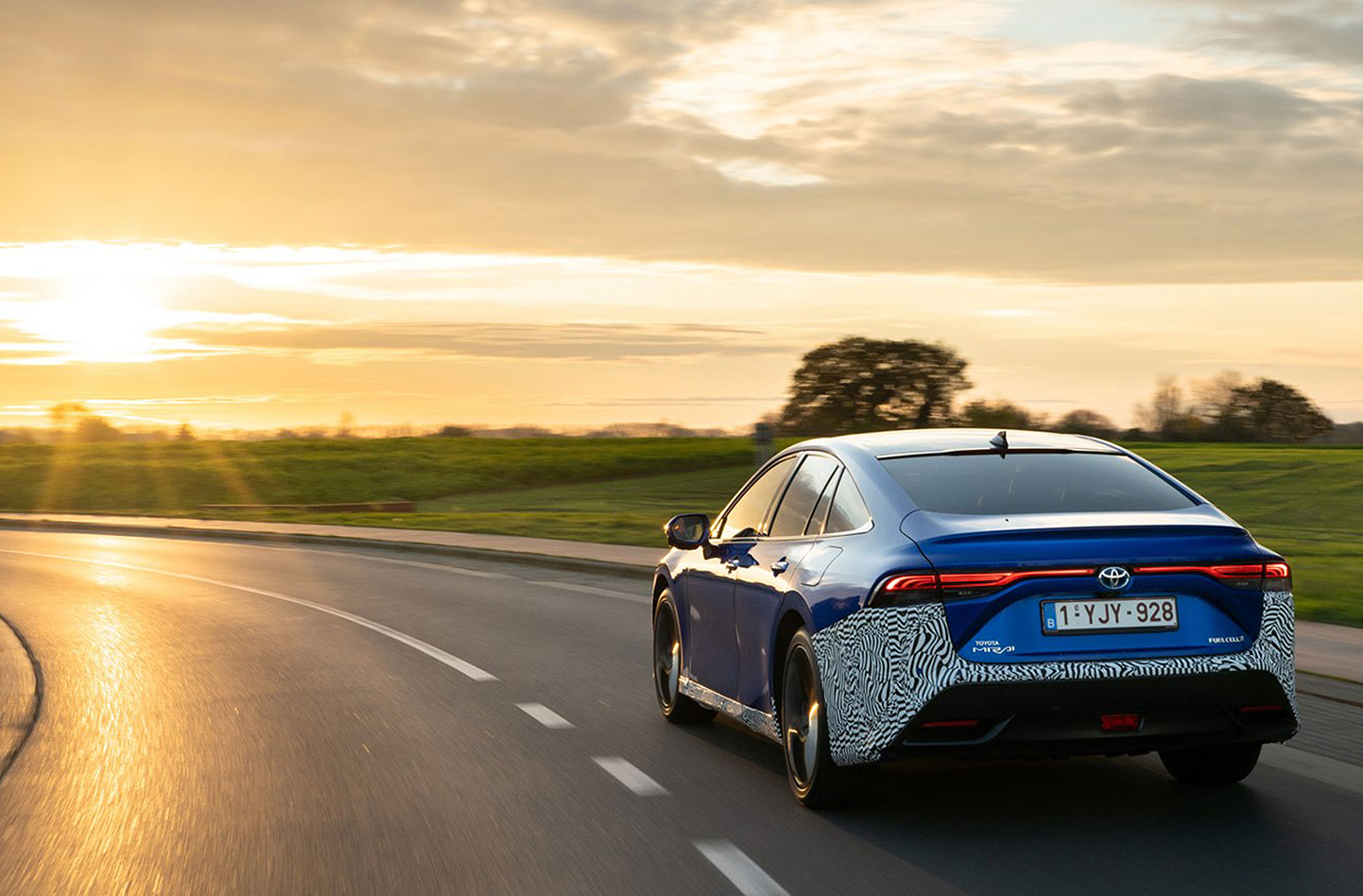
The Mirai is proof that the concept could work in cars, with smaller-scale fuel cell stacks. Indeed this refined and luxurious car feels equivalent to the Prius Mk2 moment. That was when Toyota’s hybrid came of age with its aerodynamic teardrop shape, step-change in fuel economy and a tiny bit of pure electric range.
The Mirai is a similar breakthrough for hydrogen fuel cells.
This review first ran in Car UK.
- New Audi rally raider revealed
- 2022 range-extender electric car
- Audi’s first factory rally car since 1980s
Naturally for the brand built around Vorsprung durch Technik, the desert racer will use an innovative range-extender electrified powertrain which is claimed to be a first for the arduous rally-raid event.
It’s the first time that Ingolstadt has entered a factory-backed off-road race since Walter Rohrl won at Pikes Peak in 1987 in a Quattro S1.
What do we know about Audi’s 2022 Dakar rally racer?
Not a huge amount yet. Audi has revealed this solitary picture of its race car, shrouded in a dustsheet.
It doesn’t tell us much, but a squat off-road body sits atop some pretty serious off-road tyres and a heavy-duty chassis designed for maximum wheel travel to cope with desert racing conditions (below).
Note also the illuminated Audi four-ring badge and narrow, slit-like headlights.
Little is known about the drivetrain, but Audi has confirmed it will use a petrol TSI engine as a generator for the electrified powertrain.
Why Audi has picked a range-extender EV to go rallying again
“The vehicle will be driven by a powerful electric drivetrain,” says Audi.
“The energy required for this comes from a high-voltage battery, which can be charged as required while driving via an energy converter in the form of a highly efficient TFSI engine.
“The aim is to permanently improve the performance of the electric drivetrain and the battery in the years to come. The experience gained in this process should then be incorporated into the further development of future electrified production models.”
Dakar in, Formula E out
The Dakar confirmation follows the recent surprise ending of Audi’s commitment to Formula E after six years, as well as confirmation that the brand will return to endurance racing with a Le Mans Daytona hybrid (LMDh).
It will, however, see out the 2021 season before it and BMW bow out of the electric open-wheeler series.
This story first appeared on Car UK
If at first you don’t succeed, try again. This, unsurprisingly, isn’t the tagline for the facelifted Alfa Romeo Giulia – Scotty from Marketing I am not.
However, it does neatly describe the process Alfa Romeo has gone through in an effort to increase the popularity of its glamorous small sedan.The sales figures tell the story. Last year the Giulia was outsold by the Mercedes-Benz C-Class 20 to one, the BMW 3-Series 10 to one, and the Audi A4 by more than four to one.
In fact, it was outsold by virtually everything, even niche products like the Audi A5 Sportback and BMW 4-Series Gran Coupe.
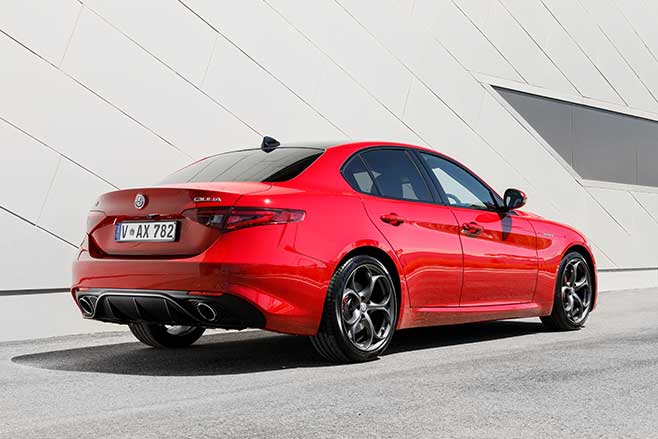
Alfa Romeo doesn’t have grand aspirations to be a volume player… but climbing a little further up the sales charts would be nice.
According to Tom Noble, the director of sales and marketing: “Our number one issue is getting in people’s minds; our first task is to let people know it actually exists and there’s an alternative to the German three.”
At first glance, it appears little has changed. Bar some new colours, the styling is the same and no matter how hard you delve into the mechanical specifications, you won’t find anything new there, either.

Alfa Romeo Giulia 2021 updates
The range has been simplified, with the slow-selling Super variant discontinued and the 147kW Sport now opening proceedings at $63,950.On the other end of the scale is the fire-cracking 375kW Giulia Q, which has had its price slashed to $138,950, while our test car is the Malcolm in the Middle Veloce at $71,450, a panoramic sunroof ($2255) and 14-speaker Harman Kardon audio system ($1255) lifting the total to $74,960.Where the new Giulia differs is inside. A concerted effort has been made to make the interior more premium, with greater storage, higher quality touch points (for example the leather-wrapped gear knob), redesigned controls and much more technology.
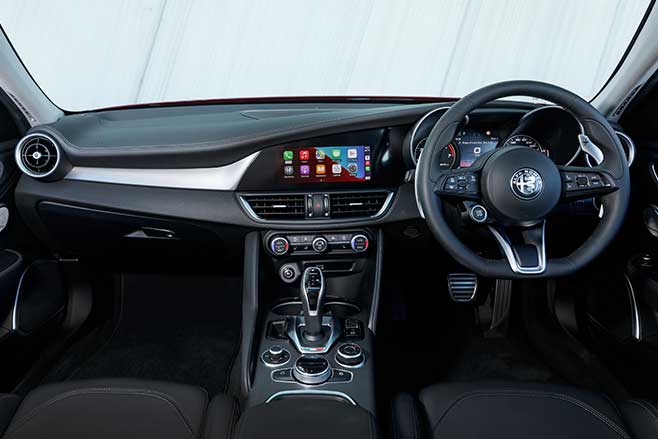
All Giulias now feature a vast array of active safety equipment as standard, including lane keep assist, traffic jam assist, active cruise control, traffic sign recognition, auto high-beam, active blind spot assist and more.
Everything is controlled via the bigger 8.8-inch infotainment touchscreen, which can be operated via the central rotary controller or swiped and tapped like a smartphone.It’s also loaded with equipment: there are heated seats front and rear, a heated steering wheel, smartphone mirroring, a wireless phone charger which disconnects at 90 per cent charge to avoid overheating, dual-zone climate control – there’s even twin USB ports in the rear so the kids can keep their devices charged.
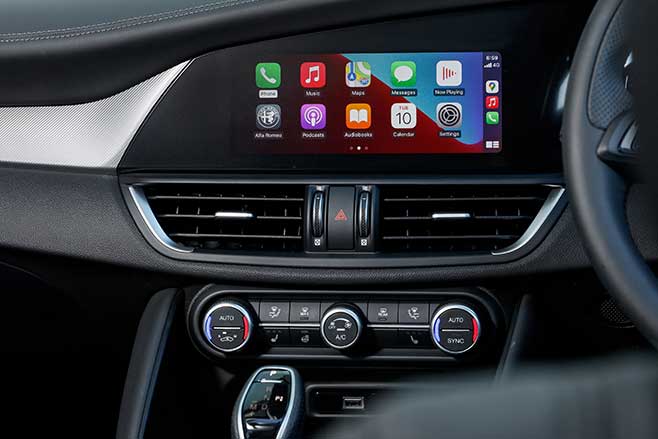
Speaking of the rear seats, headroom is a little tight for my 180cm frame but otherwise there’s plenty of room.
Up front the driving position is spot on, the seats heavily bolstered and superbly supportive, the steering wheel beautiful to hold and the massive fixed aluminium gearshift paddles wouldn’t be out of place in a Ferrari 812 Superfast.
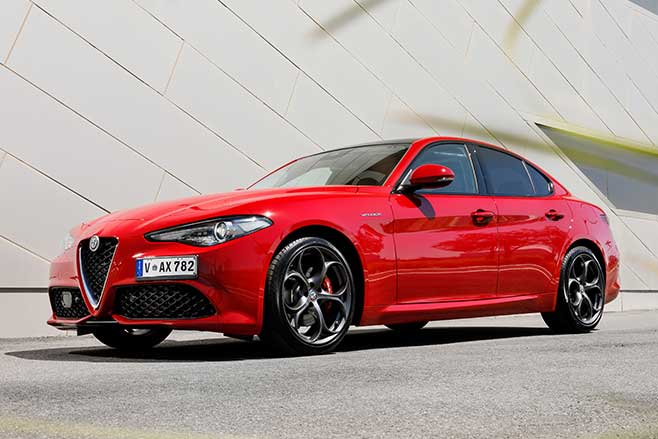
The Giulia is also a sexy, sexy looking car, often prompting a glance back after exiting.
This is particularly the case with the Veloce, which offers 95 per cent of the glamour of the Quadrifoglio for half the price.
Alfa Red is a great no-cost option, but the new Visconti Green or Anodized Blue (both $1355) are also lovely.
Driving the Alfa Romeo Giulia
To drive the Veloce is identical to its predecessor, but it’s arguable whether change was required.
The 2.0-litre turbocharged four-cylinder egnine produces 206kW and 400Nm and makes the Giulia a deceptively quick car.
Alfa claims 0-100km/h in 5.7sec and that’s a figure we’ve repeated in testing the pre-facelift version.It’s the chassis that proves the highlight, though. The ride quality is genuinely plush; even in the stiffer Dynamic mode it absorbs bumps and cossets its occupants in a way no rival can match.
This soft setup means that body control can become slightly ragged at the very limit but the Giulia Veloce isn’t designed to be driven on its door handles – it doesn’t even have a Sports ESP mode.
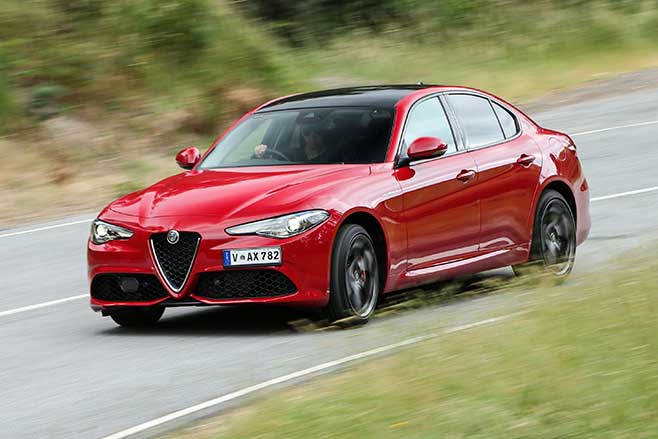
Instead, it shines in the zone between six and eight tenths, flowing along a winding a road with composure and accuracy.
The steering is very light and very quick and some may struggle to acclimatise, but its sharpness complements the agile, balanced chassis.
The Veloce is a very finely judged road car and a pleasure to drive.
Verdict
Exactly where this updated Giulia sits in the pecking order against its very talented premium rivals will require a comparison test to ascertain.
The improvements in quality and technology, allied to a genuinely engaging driving experience, mean it deserves to be on buyers’ lists, though.
Alfa Romeo has tried again and, this time, deserves to succeed.Plus: Punchy engine; great ride; engaging handling; quality interiorMinus: 3-year warranty; no Sport ESPSpecifications Engine: 1995cc 4cyl, DOHC, 16v, turbo Power: 206kW @ 5250rpm Torque: 400Nm @ 2250rpm Transmission: 8-speed automatic Weight: 1490kg 0-100km/h: 5.7sec (claimed) Economy: 6.1L/100km Price: $71,450
Subaru’s Outback will celebrate a quarter of a century on sale in Australia with an all-new version arriving in March next year, with more technology but a familiar look.
The sixth generation of the Japanese go-anywhere wagon will be the latest model to graduate onto Subaru’s Global Platform (SGP), bringing a host of safety, efficiency and handling advantages enabled by the new architecture.
Despite the significant evolution in its underpinnings, the new version’s aesthetics have not taken such a dramatic leap forward.
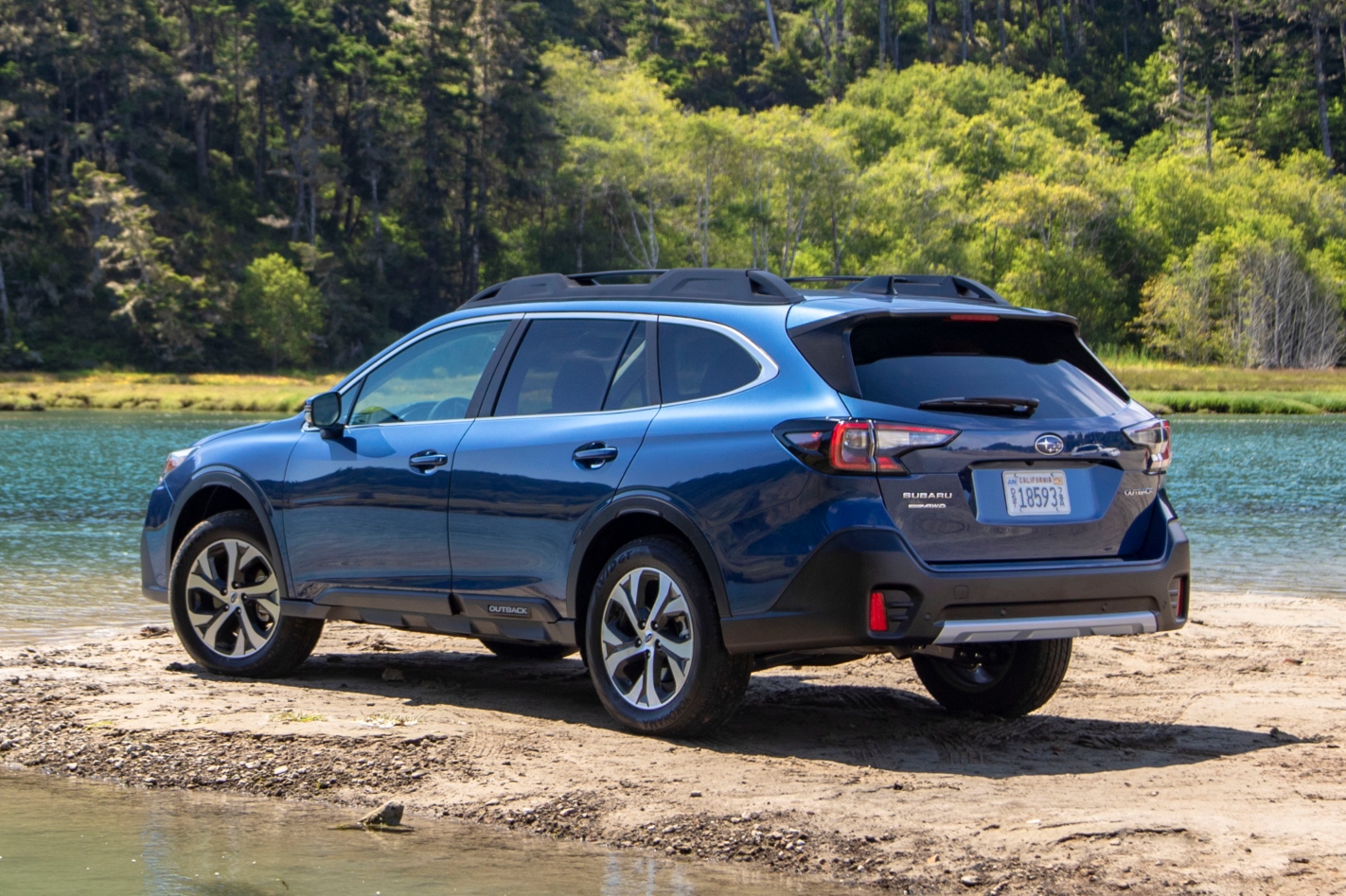
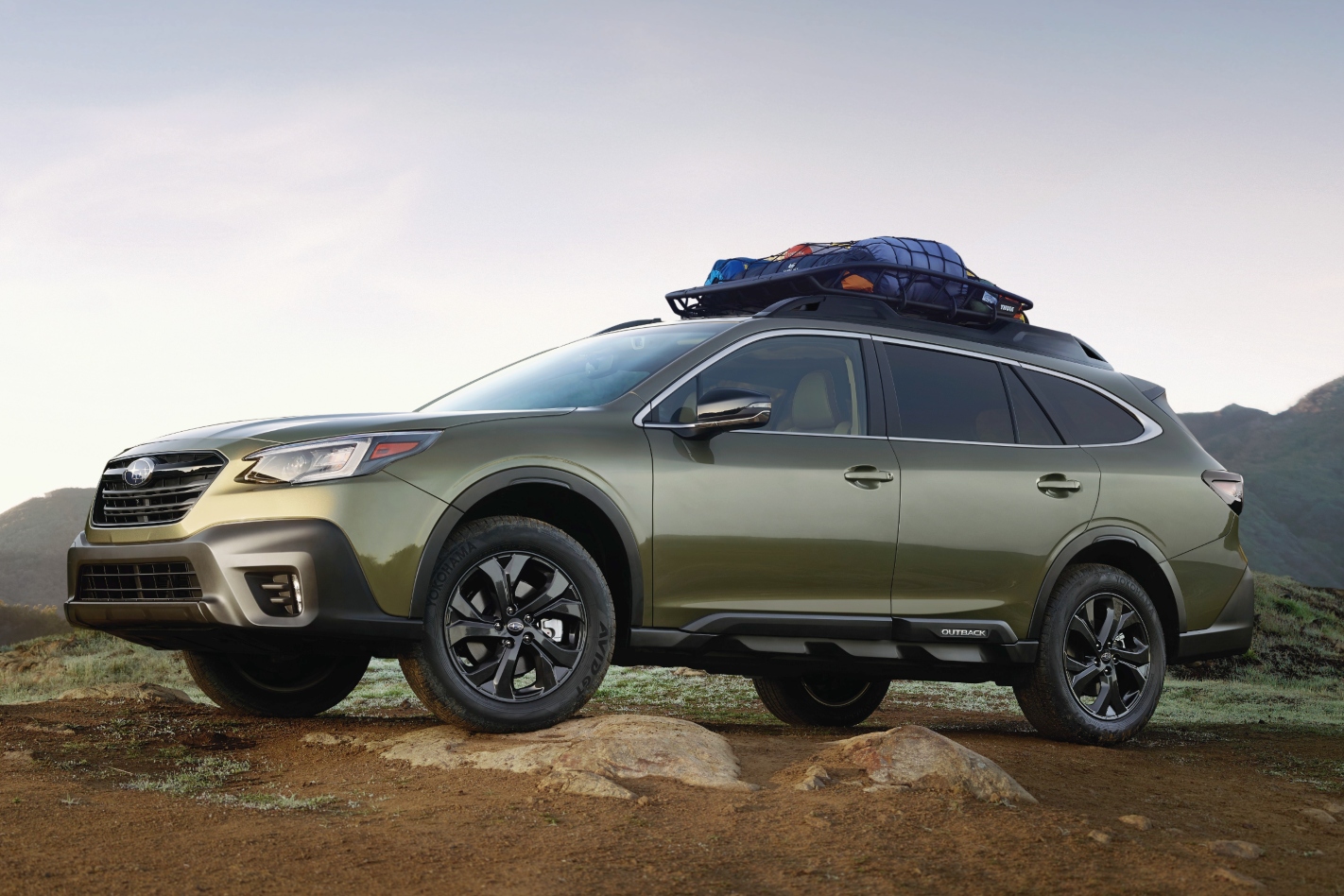
While there are noticeable evolutions to the head and taillight design as well as some other subtle body re-sculpting, the 2021 Outback is immediately recognisable.
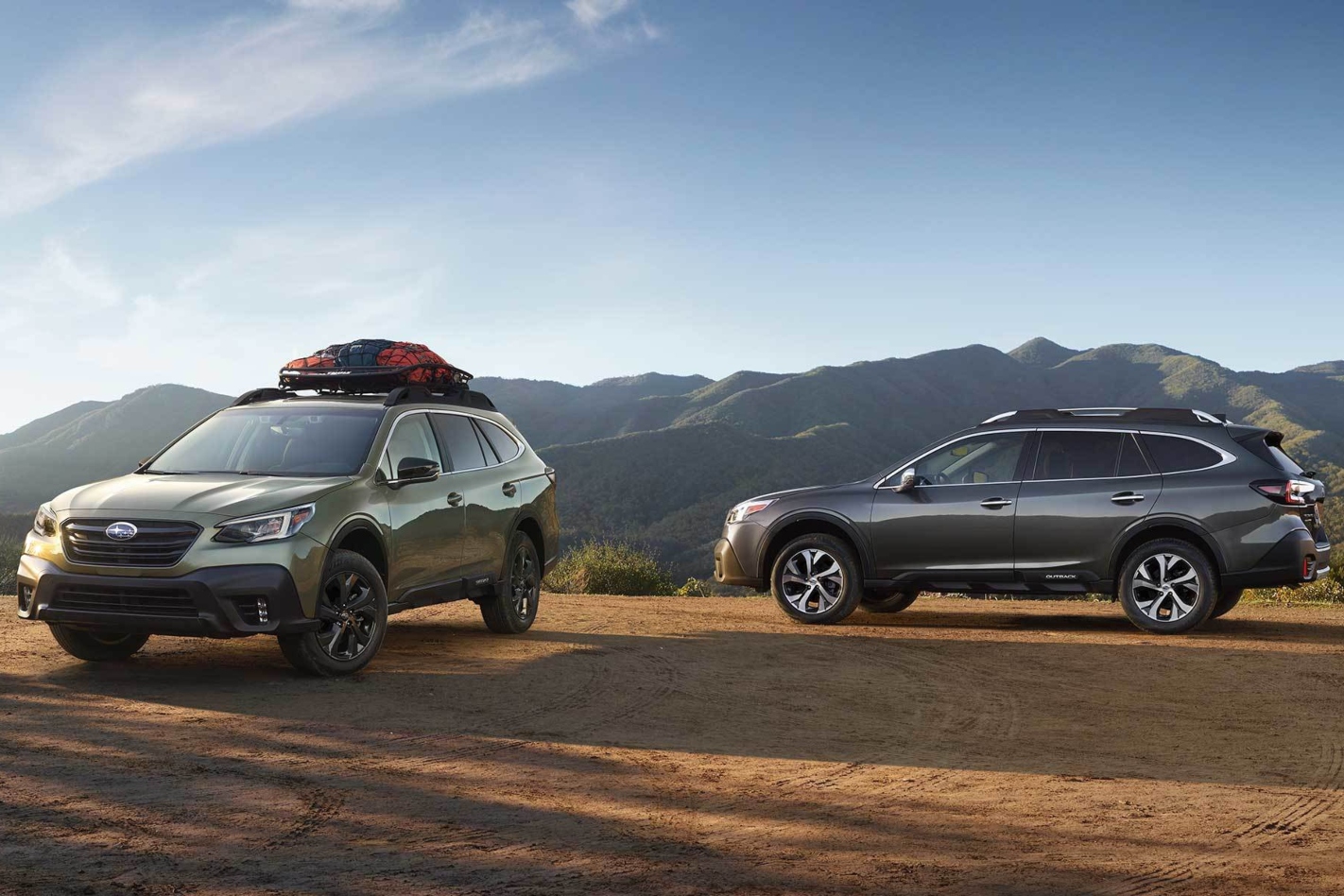
No full images of the Australian market version of the new model have yet been released, but the sixth-gen Outback is already rolling on US roads and offers a good idea of what to expect.
However, Subaru Australia has confirmed local models will arrive with their own unique specification that’s not offered anywhere else in the world.
What has been confirmed is that all versions will be powered exclusively by a 2.5-litre boxer engine.
However, that information does not include if the mentioned engine is the naturally aspirated four-cylinder similar to the existing unit or the more potent turbocharged unit available in North America.
If the turbo engine is made available to Australians, it will give the Outback a powerful 194kW/375Nm petrol unit that comes close to the performance of the current 3.6R flagship.
An increase of towing capacity to 2000kg (braked) adds fuel to the theory that a turbo-petrol powered Outback is on the way.
Speaking of which, no mention is made of either the 2.0-litre turbocharged diesel or a 3.6-litre naturally aspirated six-cylinder that are offered in the run-out line-up.
Subaru is also silent on the possibility of a hybrid version of the Outback to join the XV and Forester electrified forays, but the new SGP has the flexibility for hybridisation so watch this space.
While about half of all Subarus sold in the US – including the Outback – are produced in the local Indiana factory, Australian-market Outbacks will be stamped and screwed together at the company’s Japanese plant in Yajima.
Proprietary EyeSight safety and driver assistance technology that has earned great acclaim in the Forester will also migrate over to the new Outback, bringing the latest version of Subaru’s technology suite.
It includes a Driver Monitoring System, driver recognition for automatically setting seat position and other preferences as well as forward collision mitigation, adaptive cruise control and lane-keep/departure warning.
Another key feature of the 2021 Outback can be found at the centre of its spacious cabin and a new 11.3-inch touchscreen which has been rotated 90 degrees for a more smartphone-like portrait orientation.
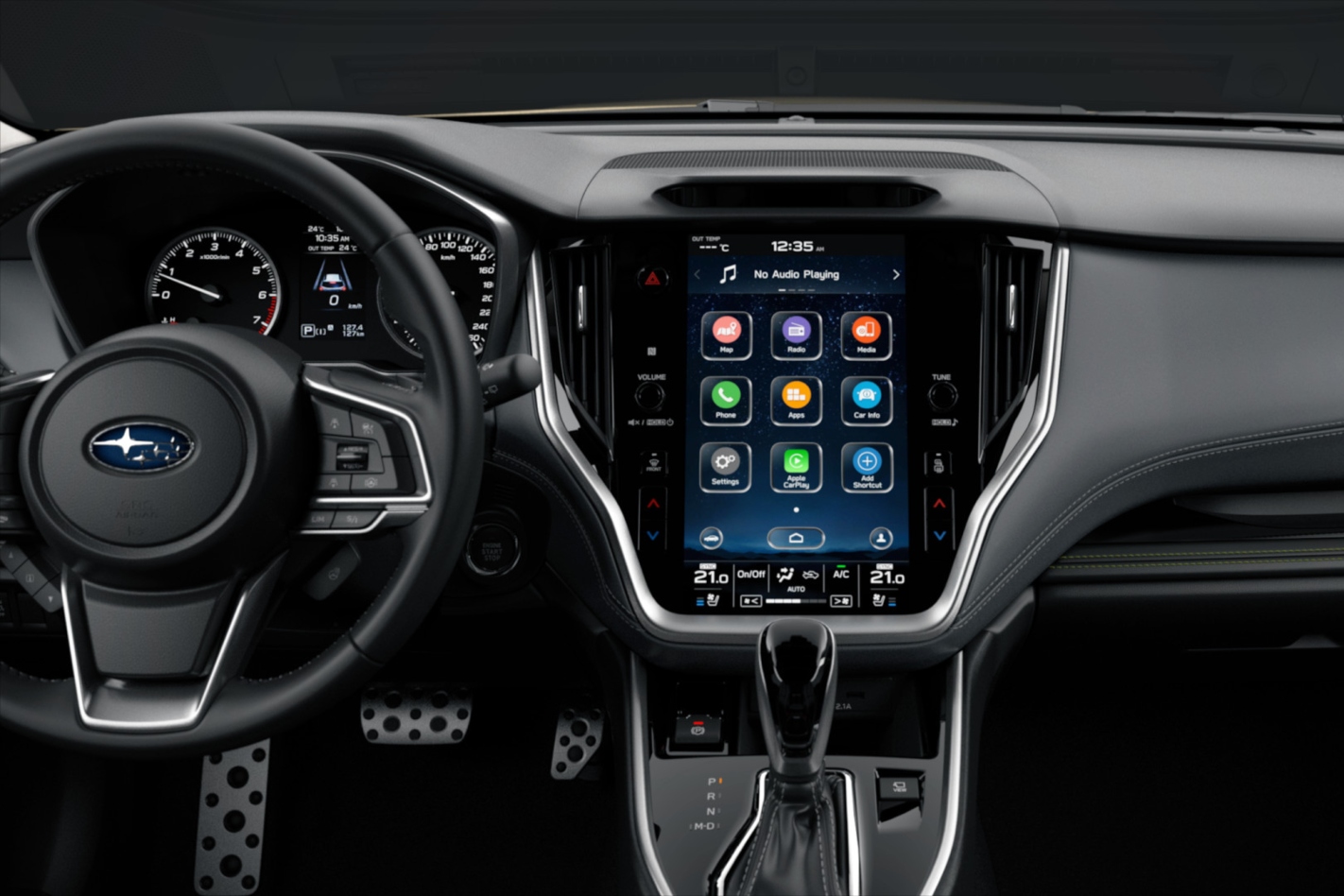
The new central display will offer more intuitive interaction with information and entertainment systems as well as extra “key vehicle controls”, according to Subaru.
Subaru’s respected permanent all-wheel-drive system will be standard as before along with a number of all-terrain ability boosting features including a generous ground clearance.
The continuously variable transmission (CVT) auto will also carry over to the new model although any enhancement or update is yet to be detailed.
Despite its status as one of the Japanese car maker’s older models – the fifth-generation arrived in 2014 – the Outback is still the company’s third best-selling model, behind the much more recent XV and Forester.
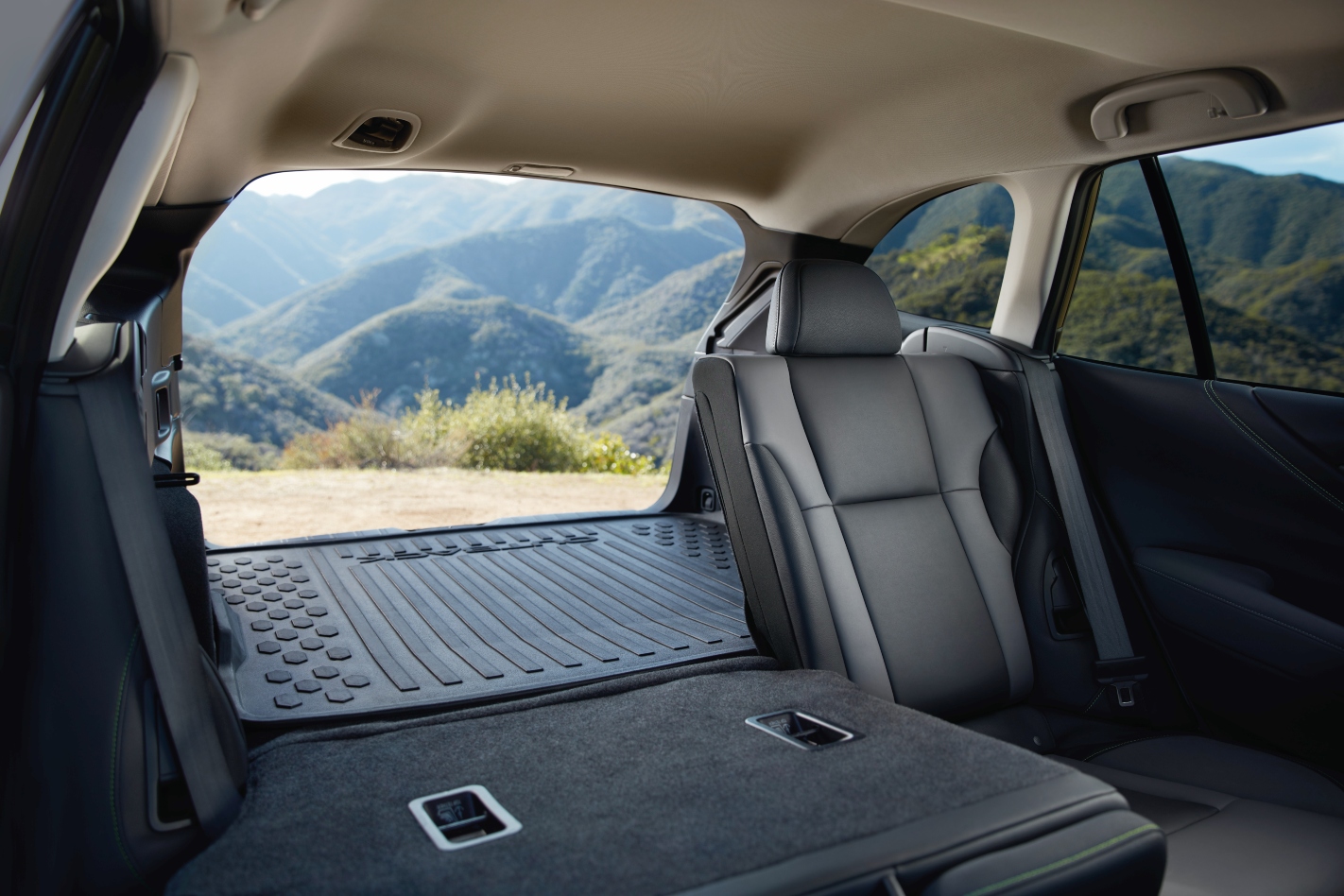
A fresh new version with a generous list of technology, practical features and safety systems will doubtless put a spring in the model’s step when it touches down next year.
Exact Australian specifications, line-up and local pricing are expected soon and the full features are promised early in 2021.
MORE Subaru’s hybrid system could preview high-performance models
The BMW-owned brand has confirmed it is developing an electric version of its John Cooper Works performance models with the view to unleashing them on the road in future.
The push towards the electrification of the JCW models is seen as key to expanding the Mini brand.
It’s not only about meeting stricter emissions standards, either, but also taking advantage of the increased interest in electric vehicles.
Mini says electric motors provide “new possibilities” for the JCW sub-brand. Given the performance of various electric performance cars – including the upcoming Porsche Taycan – there’s also the potential to offer more performance than is currently packaged in a JCW.
The most powerful JCW models currently on sale are powered by a 225kW/450Nm 2.0-litre turbocharged petrol engine.
“With the Mini Electric, we’ve shown how well brand-typical driving enjoyment and electric mobility can be combined,” says head of the Mini brand, Bernd Körber.
“Now it’s time to translate the passion for performance of the John Cooper Works brand to electromobility. That’s why we’re working to develop concepts for electric John Cooper Works models.”
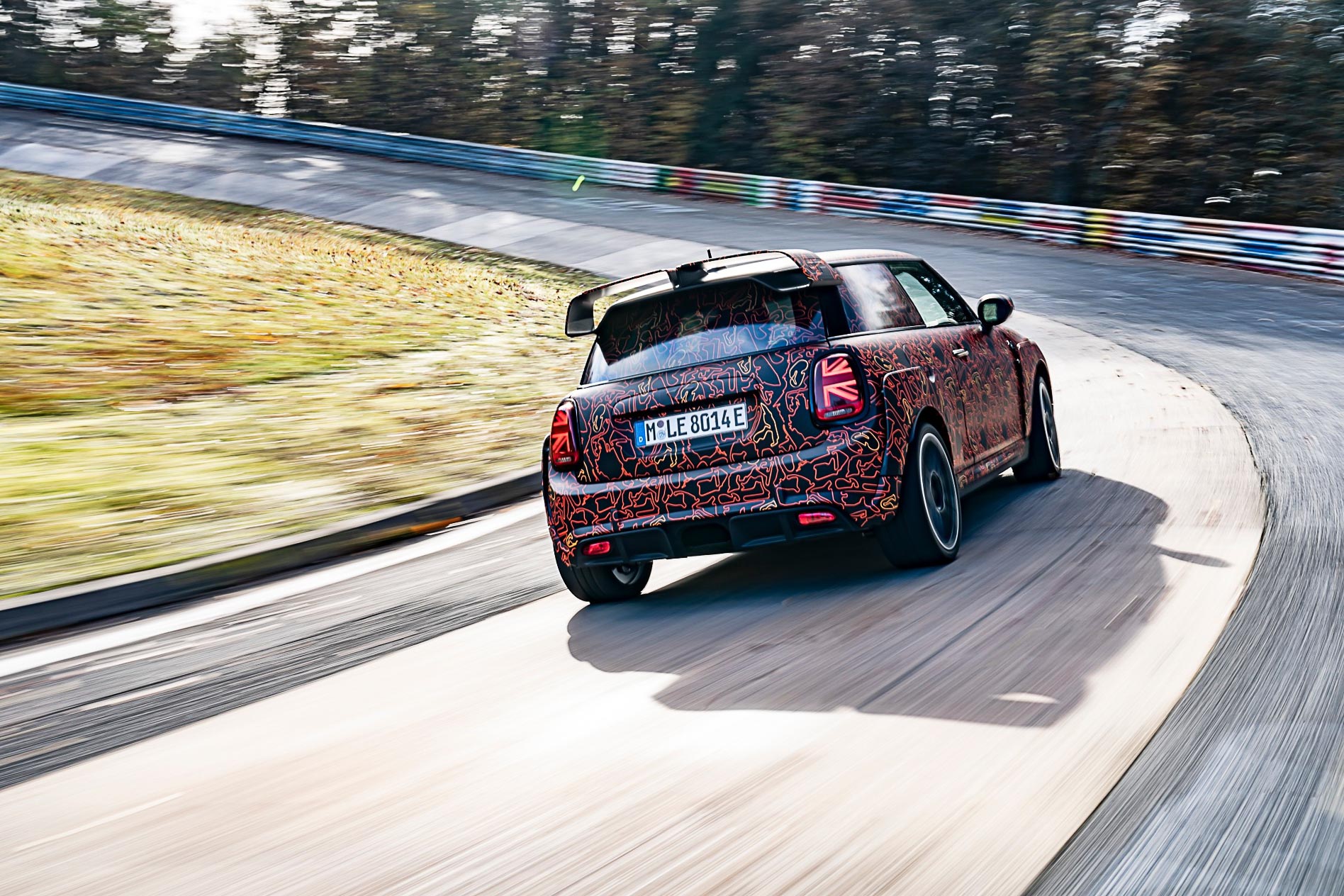
An electric JCW provides one major engineering challenge for Mini: weight.
Minis have always been relatively compact and lightweight to amplify their nimble handling, but battery packs that provide any sort of decent EV range are very heavy.
Key to the upcoming JCW electric models is a yet-to-be-revealed new electrical architecture.
Rather than a bespoke electric platform, Mini has hinted the architecture will be flexible, allowing for internal combustion engines as well as EV applications.
Indeed, despite the electric push, Mini says it will not walk away from the petrol engines that have long created that throaty excitement for pocket-rockets Minis.
The company says the JCW “extreme performance and genuine driving enjoyment will also be available with electric drive as well as combustion engines”.
“John Cooper Works models with conventional combustion engines will still continue to have an important role to play, to make sure we’re addressing the wishes and needs of performance enthusiasts all around the world,” says Körber.
“With this new focus on electric performance, we’re also creating the opportunity to sharpen the distinctive profile of the John Cooper Works brand more than ever before.”
