
Interest in securing a used Holden Commodore, particularly an SS amongst the enthusiast tribe, has been steadily rising with both the demise of the Aussie Commodore in our rear-view, and the end of Holden as a brand on the horizon.
MOTOR has occasionally checked in with prices for various Commodore SS models over the last few years, but we decided it best to maintain a running guide for reference, which will be updated occasionally or when significant market changes are afoot.
We’re listing key generations of Commodore SS, with the criteria that cars must have fewer than 250,000km, as well as be roadworthy, registered, and mostly unmodified. That last point is ‘mostly’ because every SS built pre-2000 seems to be sitting on a set of Simmons or similar.
This guide is a snapshot of the asking prices of cars advertised in the used market at time of publish, as well as keeping a future track of how prices shift. It is not a definitive value guide, as the market generally shifts with availability and trends altering prices.
If you have your own experiences or anecdotes regarding the shifting prices, feel free to add a comment at the end of the article. Feedback is even welcome if you think we’ve made an incorrect call, but remember to keep it polite!
Holden VP Commodore SS prices
- Approx. $25,000 with 180,000km, in tidy (exterior) but worn (interior) condition
Holden VR Commodore SS prices
- Approx $22,000 with 185,000km, excellent condition with minor modification
Holden VS Commodore SS prices
- Approx $16,000 to $20k, tidy condition, unmodified, with 150-200,000km
Best budget used performance cars
Holden VT Commodore SS prices
At the time of writing, and in our previous notes from prior market investigations, VTs have been harder to judge and thus we’re refraining from providing a current guide as it would be pure speculation. However, there is one example for sale on Gumtree that’s asking $15k, with 170,000km, in manual, and has “been garage it’s hole life.”
Holden VX Commodore SS prices
- Approx $12,500 with 210,000km, mostly original and slightly worn
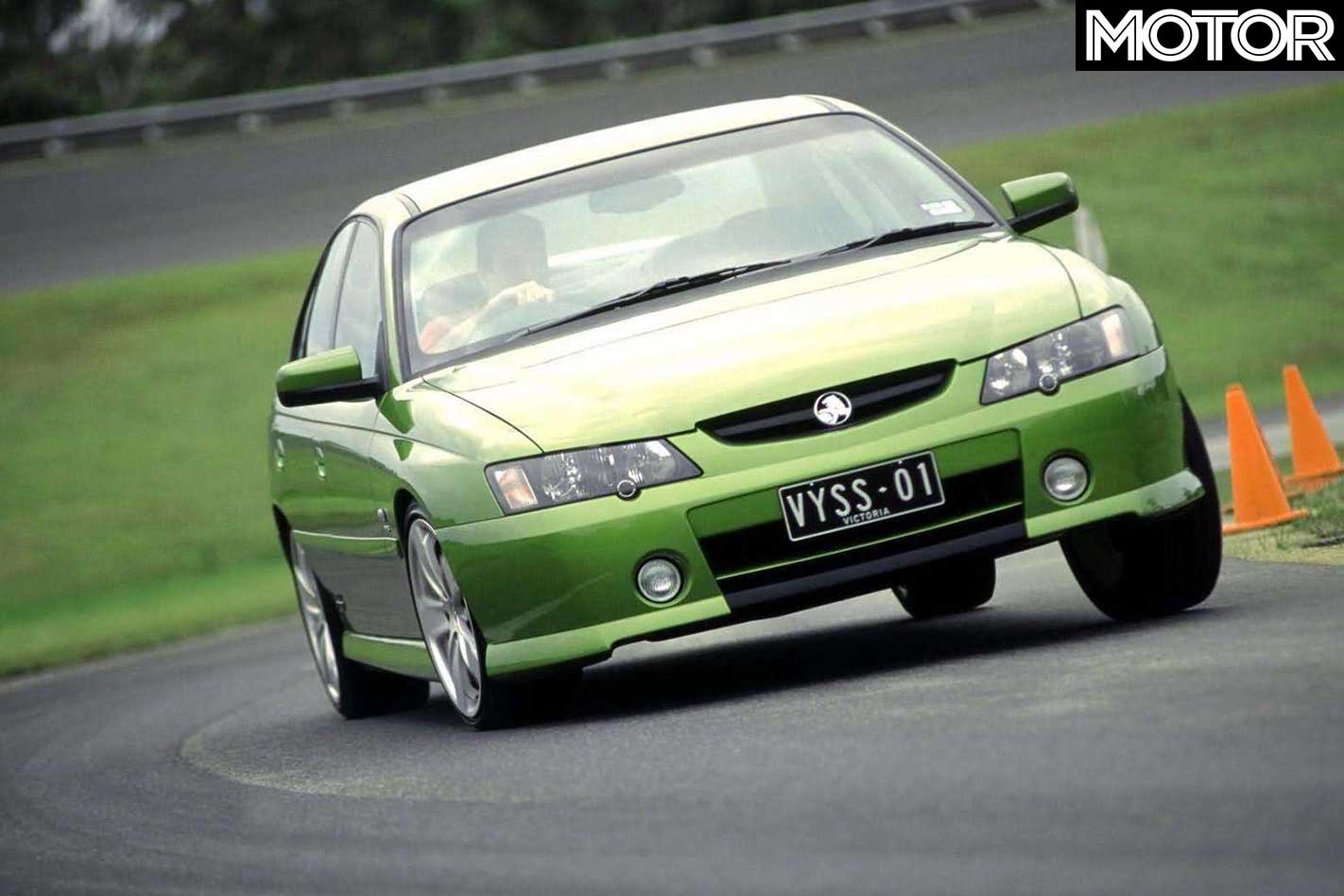
Holden VY Commodore SS prices
- $15-20,000 with approx. 200,000km in decent condition
Holden VZ Commodore SS prices
- $15,000 with 220,000km in worn but decent condition. Minor modifications.
2017: VE Commodore resale strengthens
Holden VE Commodore SS prices
- Around $20k for more than 150,000km, up to 30 for lower mileage
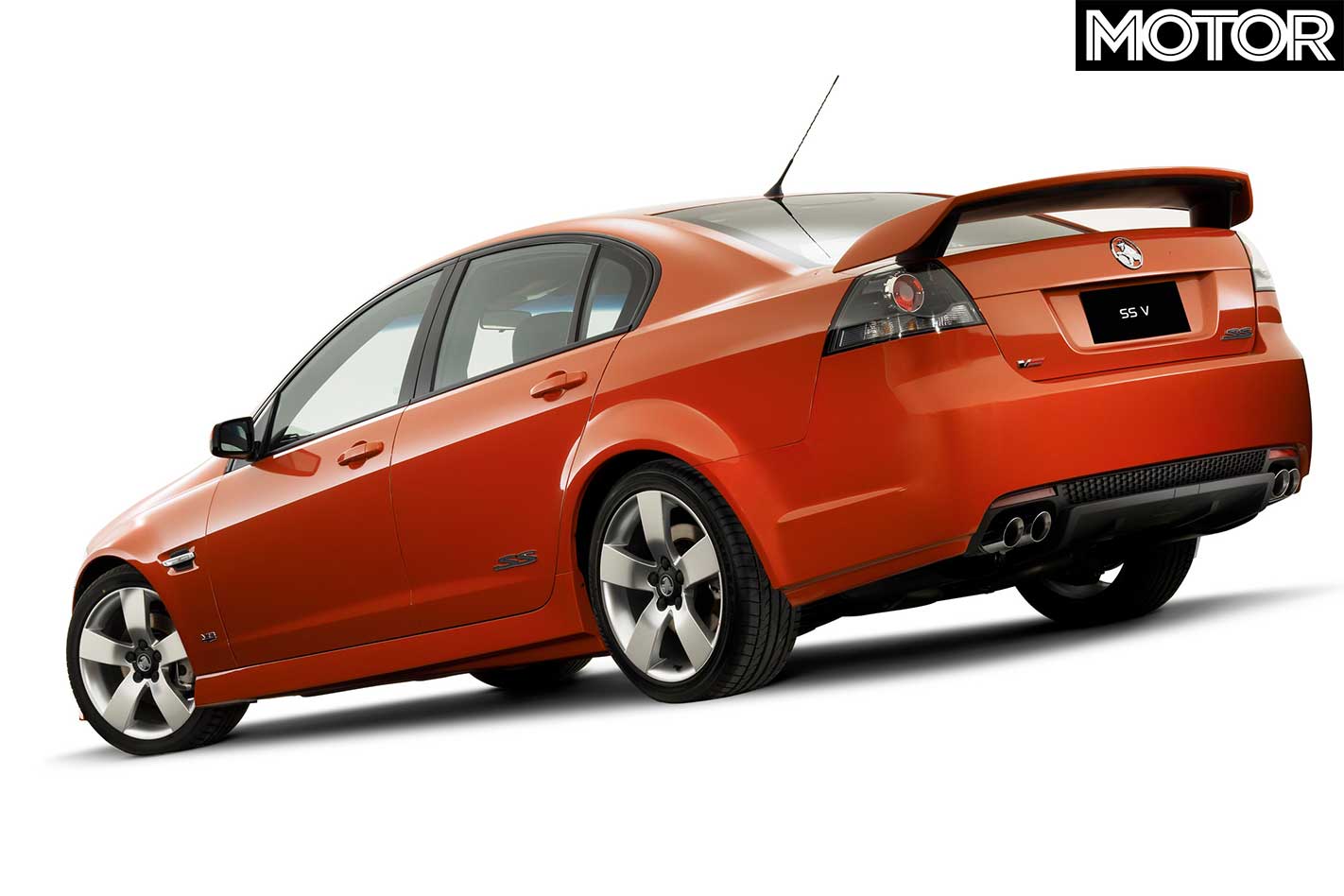
For more detailed advice, check out our specific buyer’s guide on the VE SS.
Holden VF Commodore SS prices
- As low as $30k for 2014 models, with around 50-100,000km
- As high as $90k for VFII Motorsport Editions with delivery mileage
Get your free weekly MOTOR report!
Hyundai’s luxury off-shoot Genesis will introduce the GV80 large luxury SUV in October, with a base price of $90,600 excluding on-road costs.
The local GV80 range will comprise four key variants and three engine options, while a host of other choices like front- or all-wheel drive, five or seven seats and a special Luxury package are available.
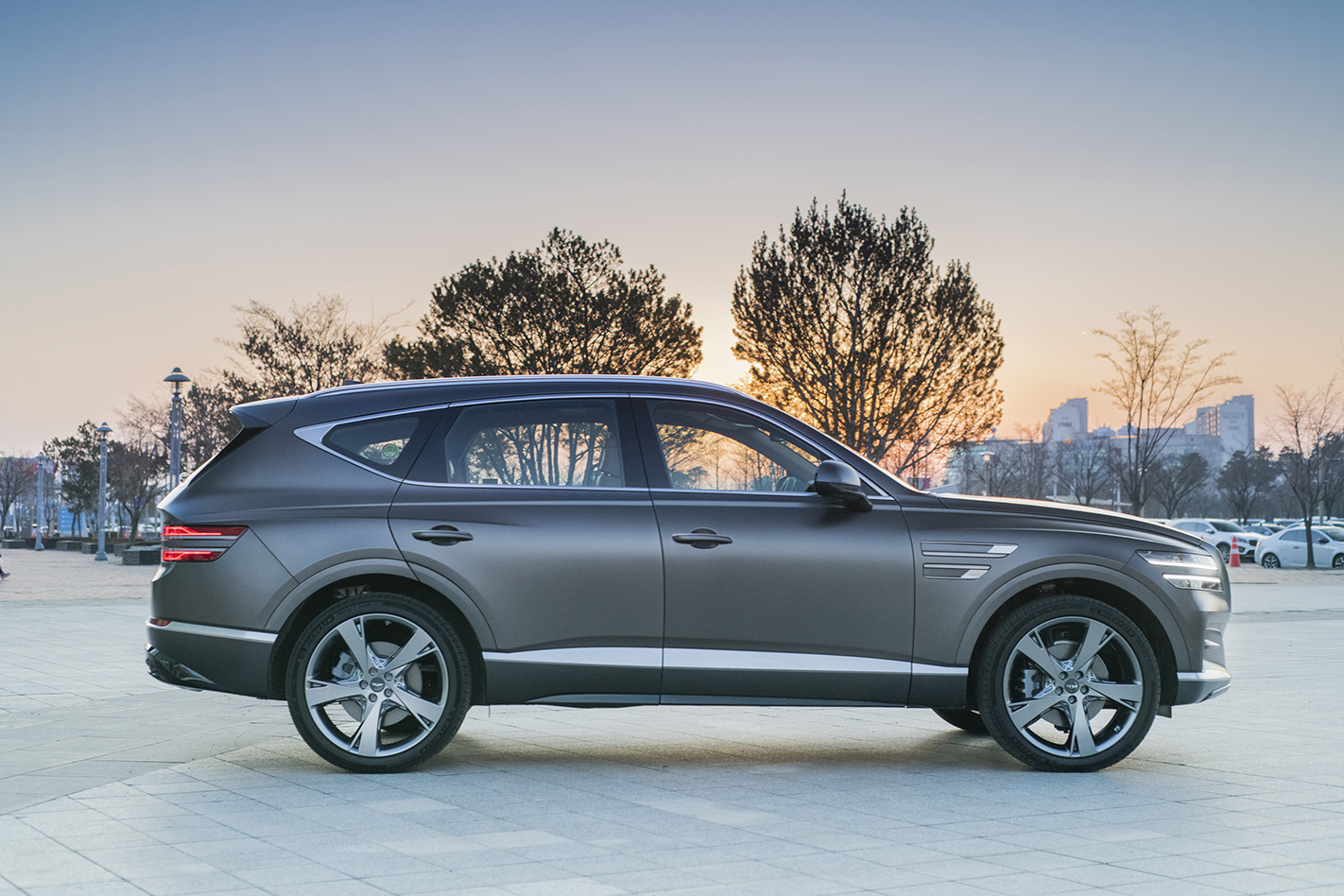
The line-up begins with the 2.5T ($90,600) which, as the name suggests, sports a 2.5-litre turbo four-cylinder engine that outputs a healthy 224kW and 422Nm to the rear wheels via an eight-speed transmission.
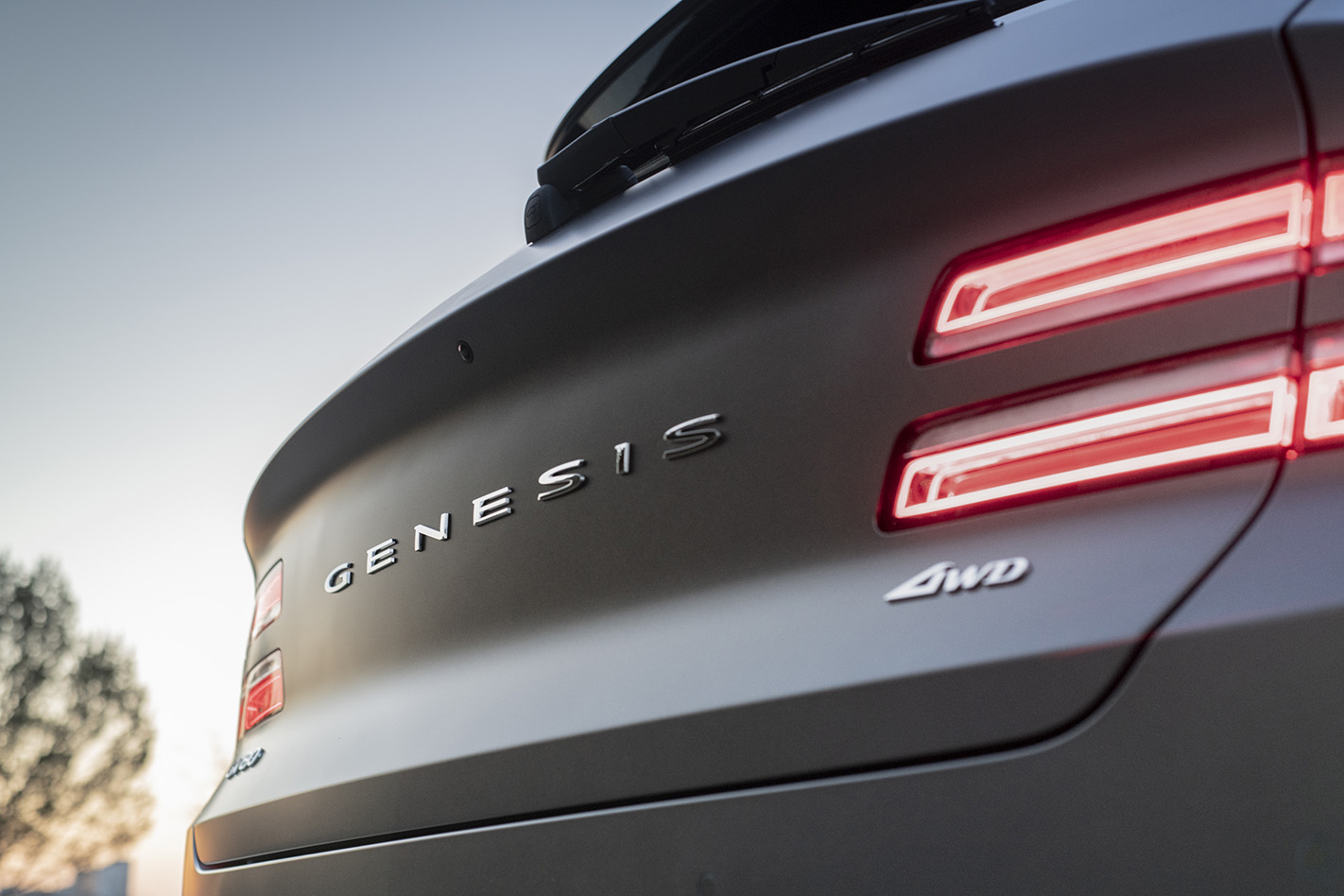
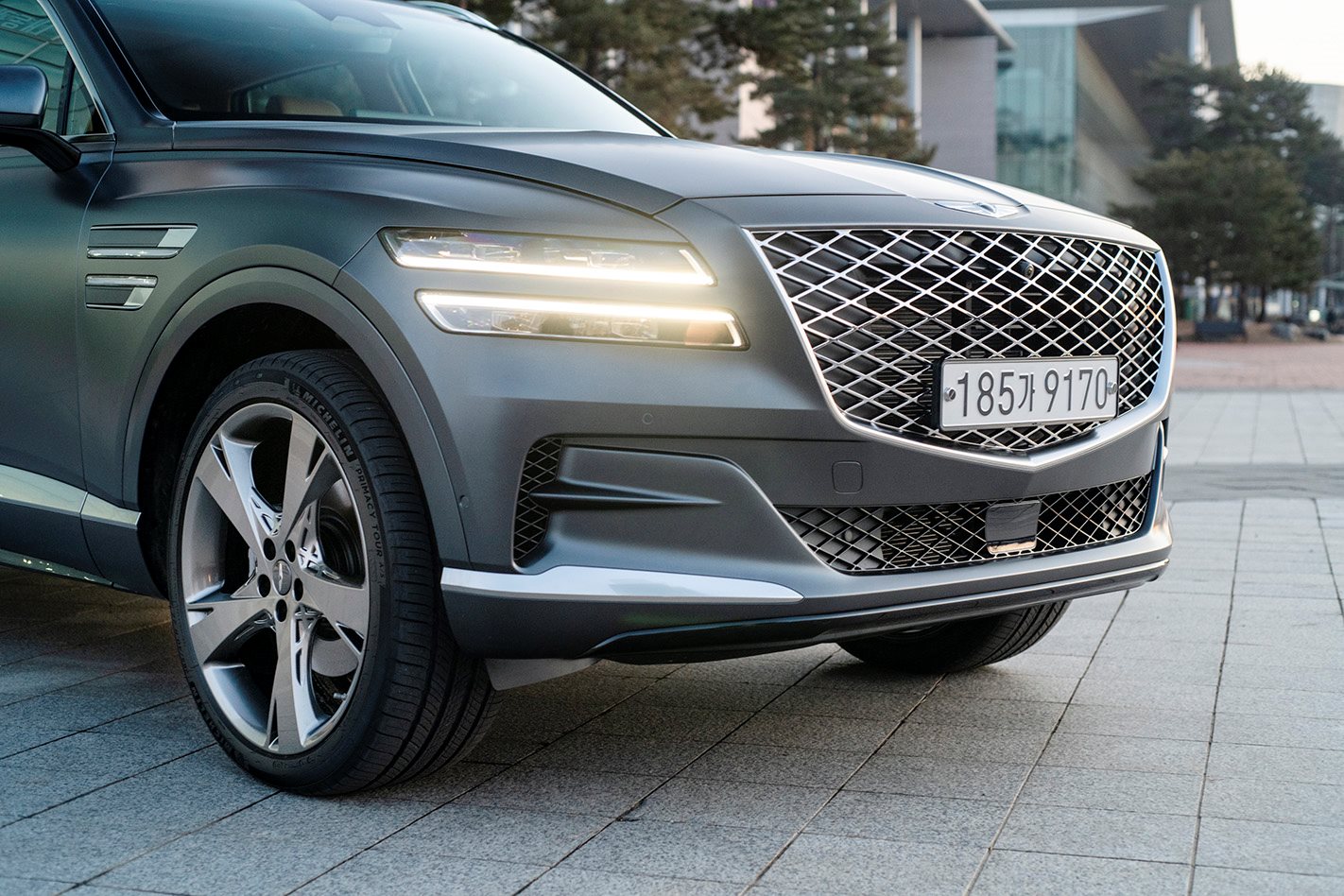
Standard equipment includes real leather and wood trim, ambient cabin lighting, a huge 14.5-inch infotainment system, panoramic sunroof, 20-inch wheels and an automatic boot release.
In terms of safety, all cars come equipped with 10 airbags, Forward Collision-Avoidance Assist system, Driver Attention Warning, Blind-Spot Collision Avoidance-Assist, active cruise control with smart stop and go function, and 3D surround-view camera.
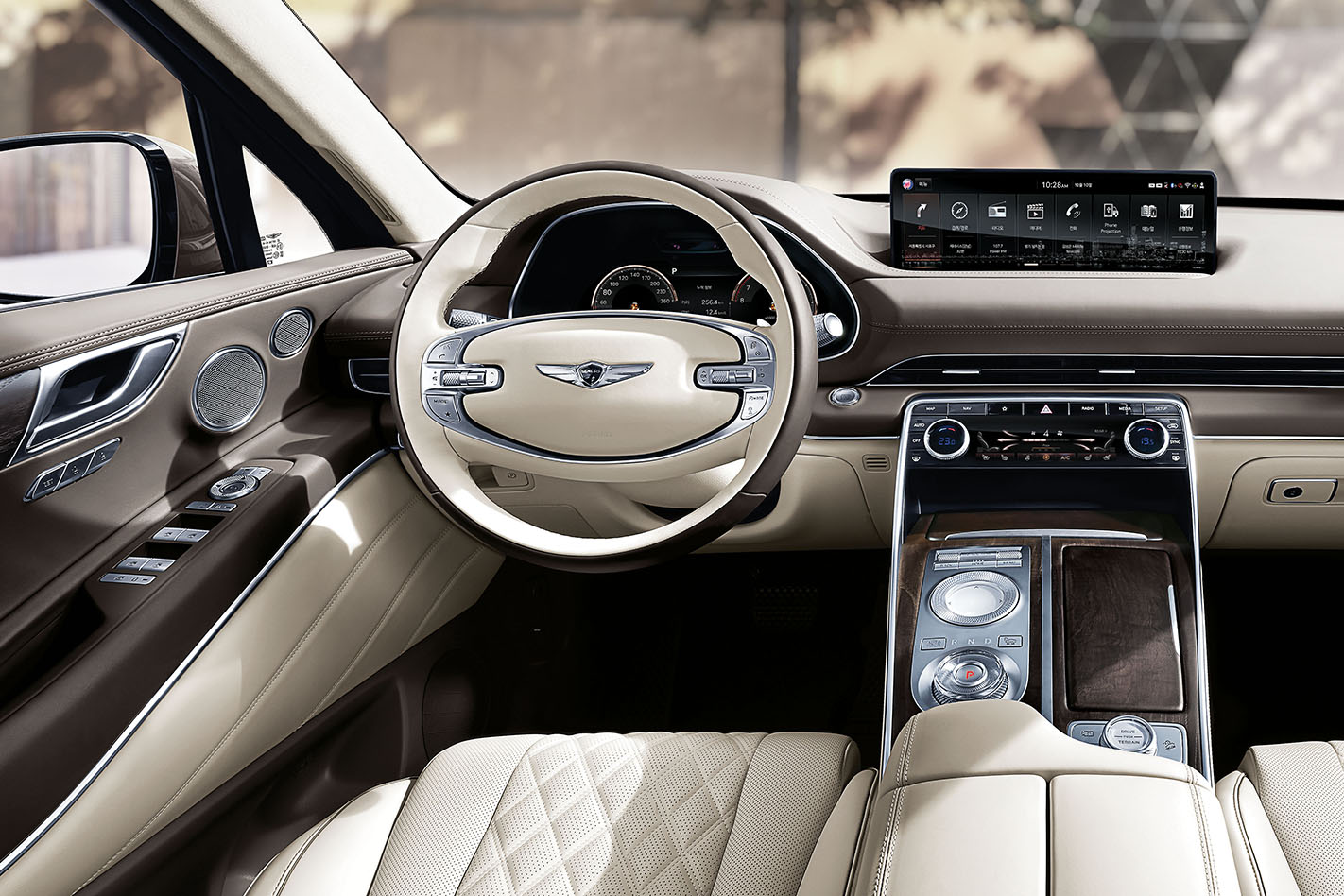
The next variant in the GV80 range equips all-wheel drive to the 2.5T to create the 2.5T AWD, which brings all-paw power to the GV80 for $95,600.
This variant also expands seating space inside to cater to seven passengers.
The GV80 3.0D is the third option which costs $103,600, bringing diesel power to the range using a 3.0-litre inline six-cylinder engine that produces 204kW and 588Nm.
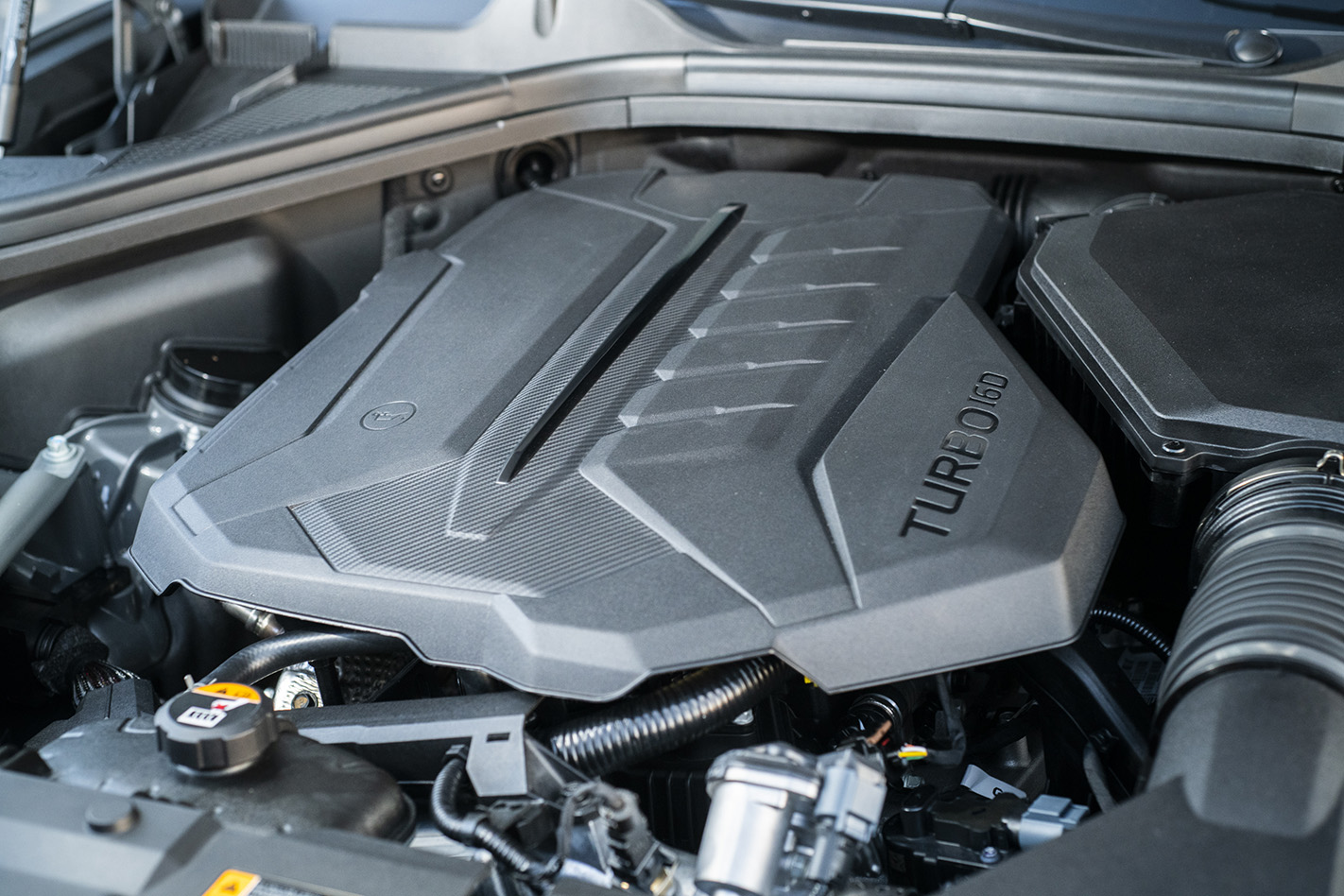
This spec also sends its power to all wheels and features seven seats, but also expands on the spec of the first two cars by equipping an adaptive suspension system that scans the road to prime the ride profile. The 3.0D also rolls on 22-inch wheels as standard.
The most expensive GV80 3.5T will cost $108,600 and uses an all-new 3.5-litre turbocharged six-cylinder engine to make a healthy 279kW and 530Nm.
It retains a similar specification to the 3.0D including seven seats and all-wheel drive.
If you’re looking for even fancier in your GV80 you can step up the spec of each variant with a $10,000 Luxury package.
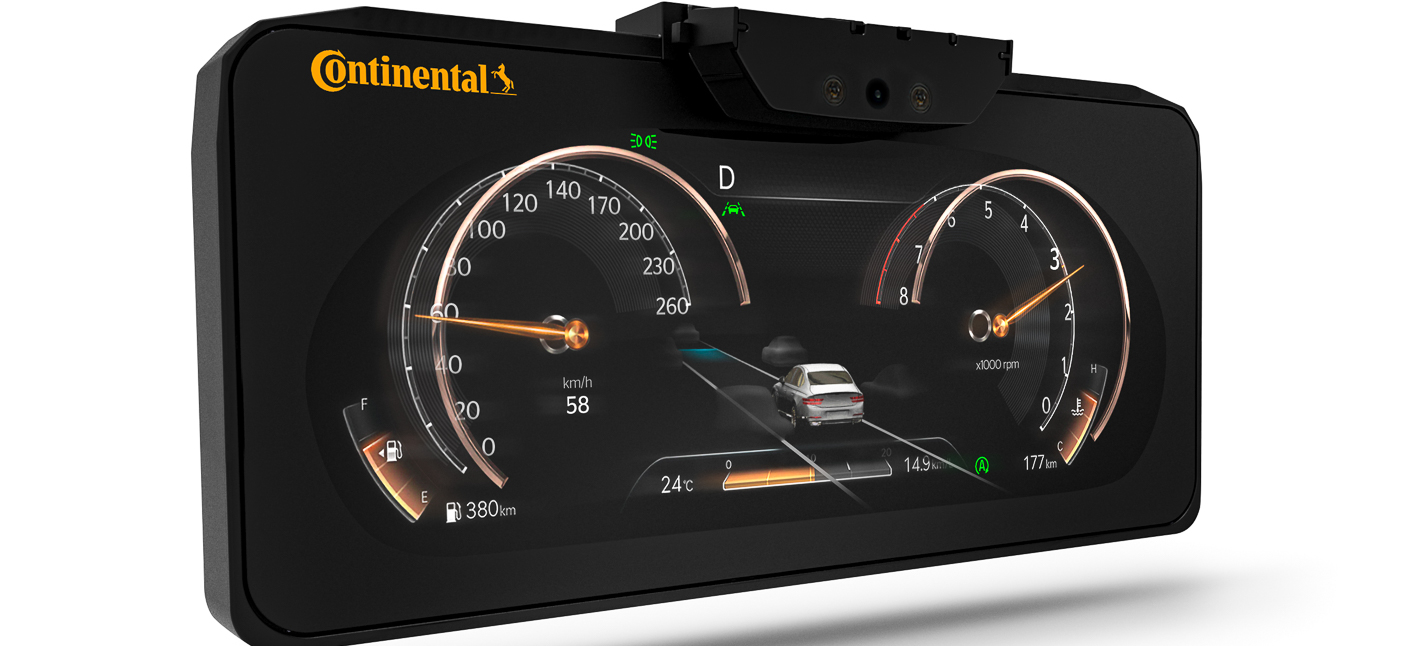
This includes a Nappa leather trim upgrade, a cool 12.3-inch 3D instrument cluster developed by Continental, three-zone climate control, soft close doors, driver’s seat massage function and additional Genesis Active Safety Control systems such as a driver’s attention monitor and reverse parking collision avoidance assistance.
In addition to a high-end product, Genesis is also set to offer an ‘effortless’ after-sales experience which includes five years (or 50,000kms, whichever comes first) of free servicing, five years of roadside assist, five years/unlimited-kilometre warranty and five years of a concierge service that will pick up your car and provide a Genesis loan car for scheduled maintenance and warranty issues.
Genesis Motors Australia CEO Jun Heo said the brand is looking forward to offering its first SUV to the Australian market.
“As well as appreciating the Genesis pillars of desirable design, advanced technology, all-road capability and superior comfort, GV80 customers will be treated to the unprecedented luxury of the Genesis-To-You service, and convenient all-inclusive ownership experience,” he said.
The Genesis GV80 is now on display in the brand’s Sydney-based experience studio, while local deliveries are set to arrive in early October.
Genesis GV80 Australian pricing
- GV80 2.5T RWD – $90,600
- GV80 2.5T AWD – $95,600
- GV80 3.0D AWD – $103,600
- GV80 3.5T AWD – $108,600
In what appears to be an unusual pattern of car-buying, the used vehicle market has defied the 20 percent drop suffered by the Australian new-vehicle market brought about by Covid-19 restrictions.
Used vehicle prices rose to an all-time high in June and July as Australians sought to replace their vehicles but were either unwilling – or unable – to spend more on a brand new one in the face of rising job uncertainty.
According to a Moody’s Analytics Price Index report, costs for used vehicles increased by an average of 30.8 percent to the end of July since April lows, and are currently 16.2 percent higher than pre-pandemic prices in January.
Data suggests the prices for 2020 likely peaked in July but will remain high compared to 2019.
In real terms, according to Moody’s Analytics, if you were looking to spend $10,000 on an older Ford Ranger at the start of 2020, you would have paid an extra $1600 for the same vehicle in June and July.
Key drivers for the demand in affordable cars include the more people wishing to drive than use public transport and the pandemic’s impact on air travel, with buyers seeking reliable used cars to travel longer distances before the strict second-wave border closures.
However, the main reason goes back to before the pandemic when new car sales were progressively dropping since 2018.
“The slowdown in new vehicle sales that has occurred across Australia over the past 24 months has put considerably fewer [used] vehicles into circulation,” Moody’s Analytics senior economist Michael Brisson told the ABC.
He added that the used car market was going through the ‘substitution effect’ that occurs between new and used vehicles during periods of economic uncertainty.
“Under the assumption that new and used vehicles are perfect substitutes as a form of transportation, consumers will choose the less-expensive good, used vehicles,” he said.
“When consumers are nervous about their livelihood, vehicles become a way to get around more than a symbol of social class.”
Paradoxically, the demand for good low-mileage used cars had a positive impact on the new car market in June, with unsatisfied buyers taking another look at the new car market to find what they needed.
There’s something magical about 206kW. No, really. Translated to horsepower it’s 276, or 280PS if you prefer. This was Paul Rosche’s target for the M1, BMW’s first and only mid-engined supercar. It’s the claimed power output of the Nissan Skyline GT-R and the original Honda NSX and if it was enough for Ayrton Senna to fling around Suzuka wearing white socks and loafers, it’s probably ample for a five-door Ford Focus hatchback.
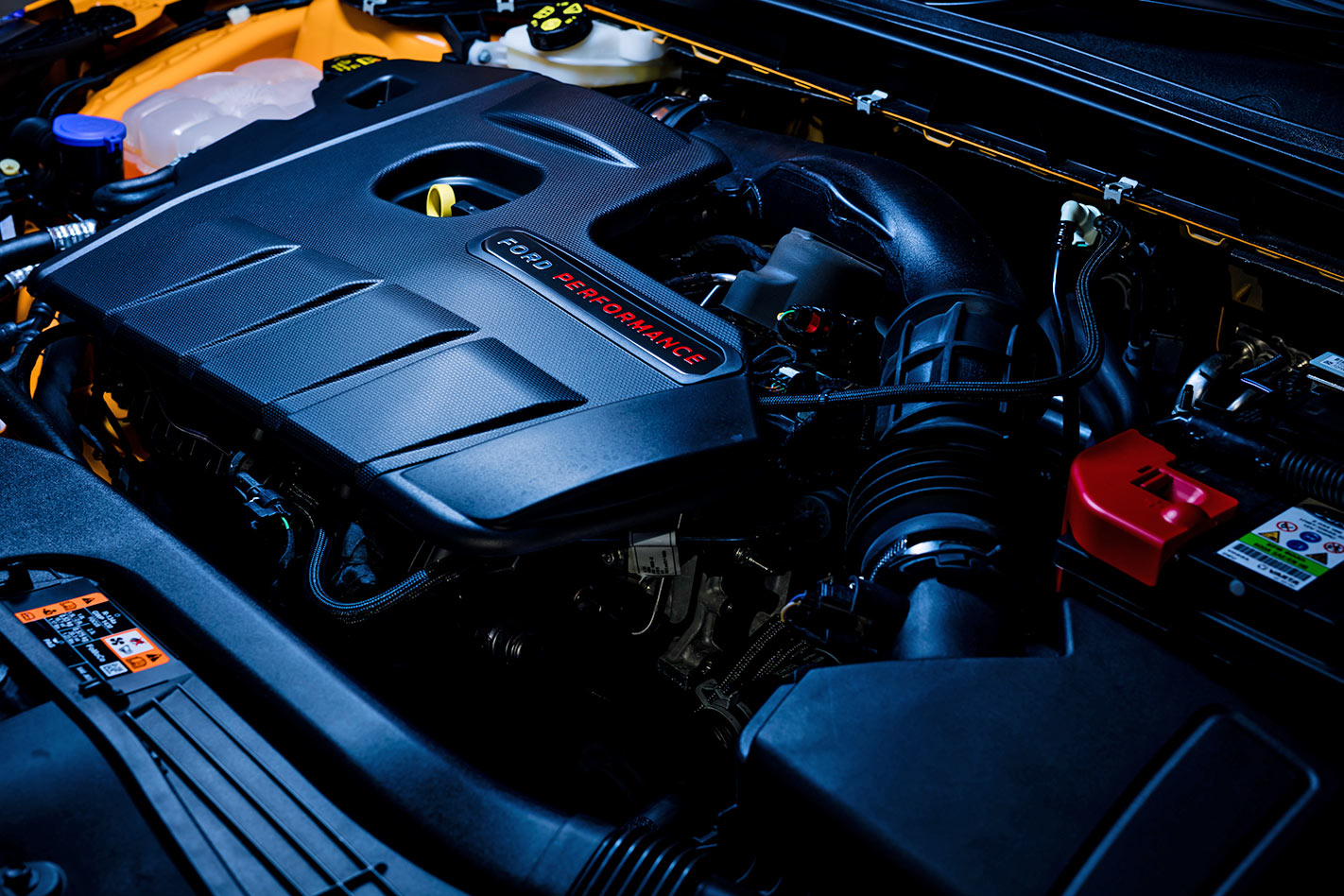
This ST version of the latest Focus has some big loafers to fill. There’s no fire-breathing all-wheel-drive RS version of this generation Focus planned, so the ST now has to serve as the sports flagship, bumping power up notably from the last model’s 184kW output. But where that car was a $39K deal, the latest Focus ST jumps up in price to $44,690, placing it right into the crosshairs of some far more serious tackle. We’ve lined up two of the very finest. The last time we put the Honda Civic Type R up against the Hyundai i30N was in April 2018, when the then-box-fresh Hyundai astounded everyone by just pipping the Civic – an almost unbackable pre-event favourite – for top spot in our 12-car hot hatch megatest.
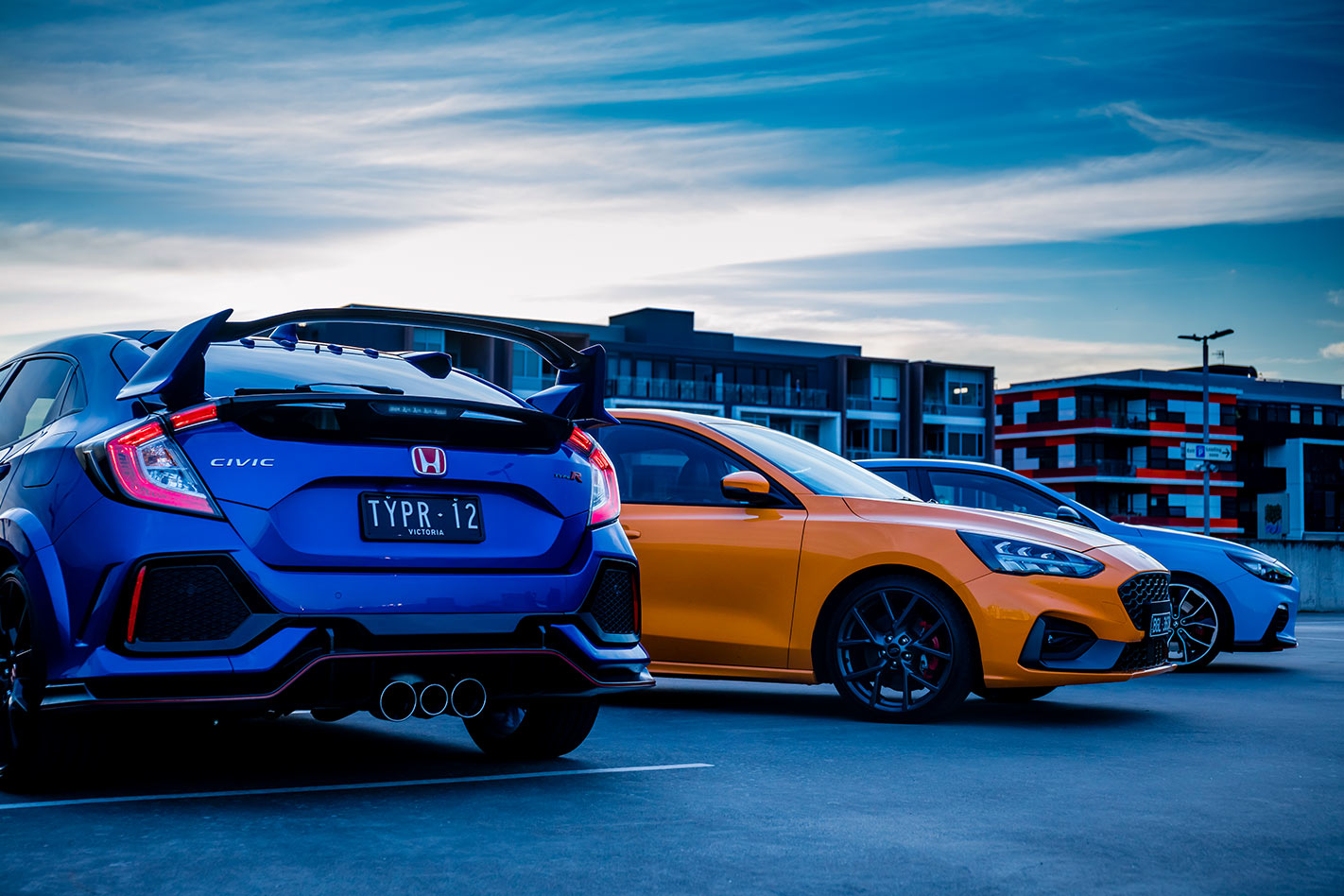
While the Civic hasn’t changed a great deal from then, with the asking price still an identical $50,990, the i30N has spawned the Fastback version we’re testing here, along with an Australian-tune for its suspension and a five-year warranty that includes track usage. That sounds like a lot of car to beat for the most modest asking price of this trio at $42,910.
It’s also the car with the lowest power and torque figures, as testing at a cold and damp Heathcote dragstrip indicated. With 202kW and 353Nm at its disposal, the Hyundai, a six-speed manual front driver like both of its assembled rivals, still has trouble deploying drive cleanly. On its best run, the Vbox flashes up 6.3 seconds to 100km/h and 400m broken in 14.3 seconds at 161km/h. The Ford’s 2.3-litre four is a far torquier unit than the Hyundai’s Theta II lump. The standard-fit launch control proved functionally useless on the day, resulting in manic axle tramp and wheelspin, but the Ford’s ability to flat-shift without lifting off the gas helps it to 100km/h in 6.1 seconds and 400m in 14.2 seconds at 164km/h.
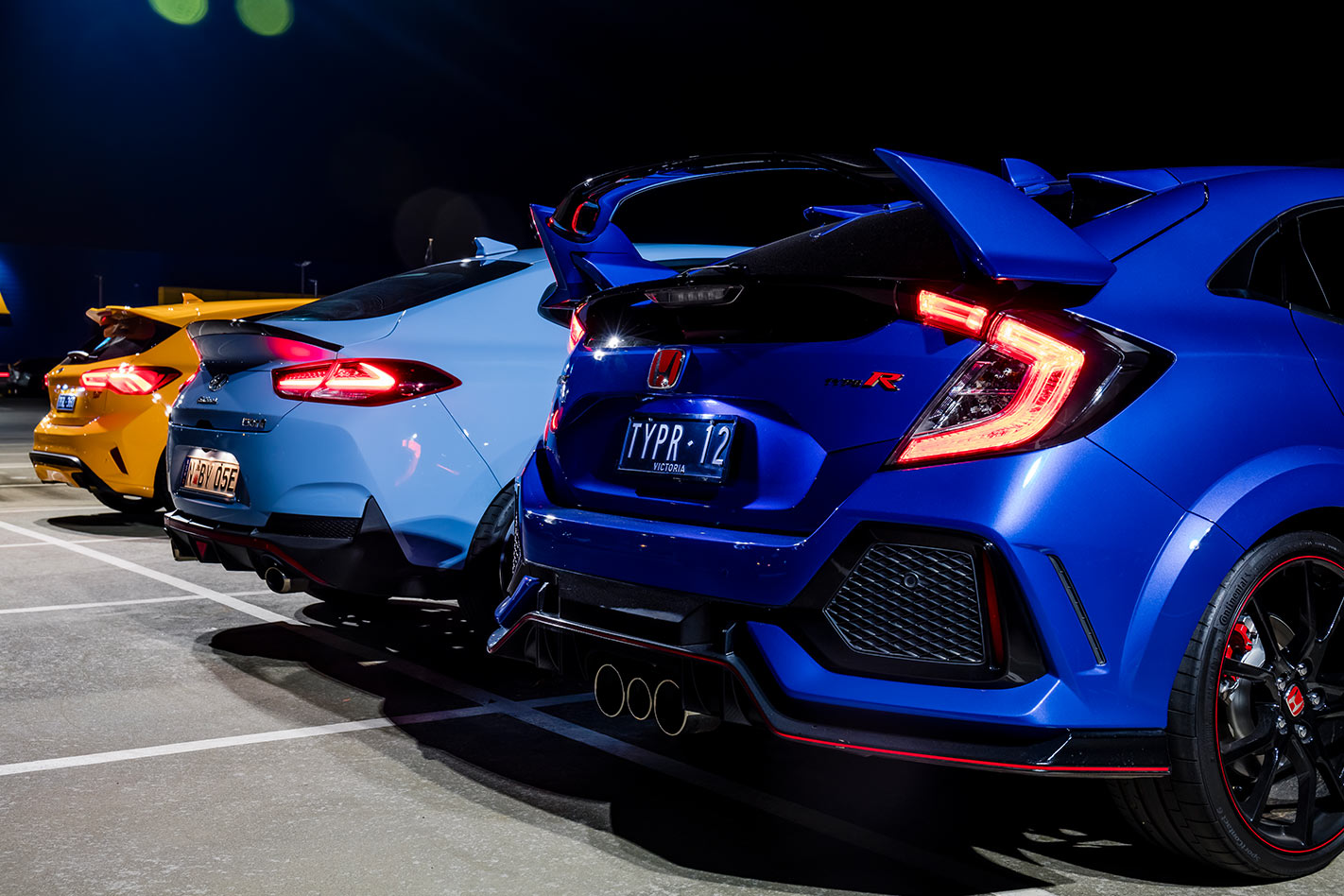
Then the Honda rolls to the line and puts some manners on both its rivals. Clearly having 228kW at its elbow helps here, but it’s still 20Nm down on torque compared to the gutsy Ford. Nevertheless, once the Conti tyres had warmed through a little, it jets to 100km/h in 6.0 seconds flat and on to 400m in 13.8 seconds at a terminal speed of 170.2km/h. That 400m time, incidentally, is exactly the same as what the original NSX achieved. How’s that for symmetry? On a warmer, drier day we’d have doubtless gone quicker but the Ford manages to land an early blow on the defending champ. Time to head for the hills.
Can we talk about the Civic Type R for a moment? You’ll probably have noticed that it has grown significantly from its compact FK2 predecessor. And how that car was nothing like its blobby, torsion-beamed FN2 Type R forebear? And how that one looked alien to the multi-link suspended EP3 before it? There is no continuity of development here. Every generation seems to start from a clean sheet. Both good and bad elements are ditched and Honda seems to exhibit a corporate amnesia, unable to extract any benefit from considered model development.
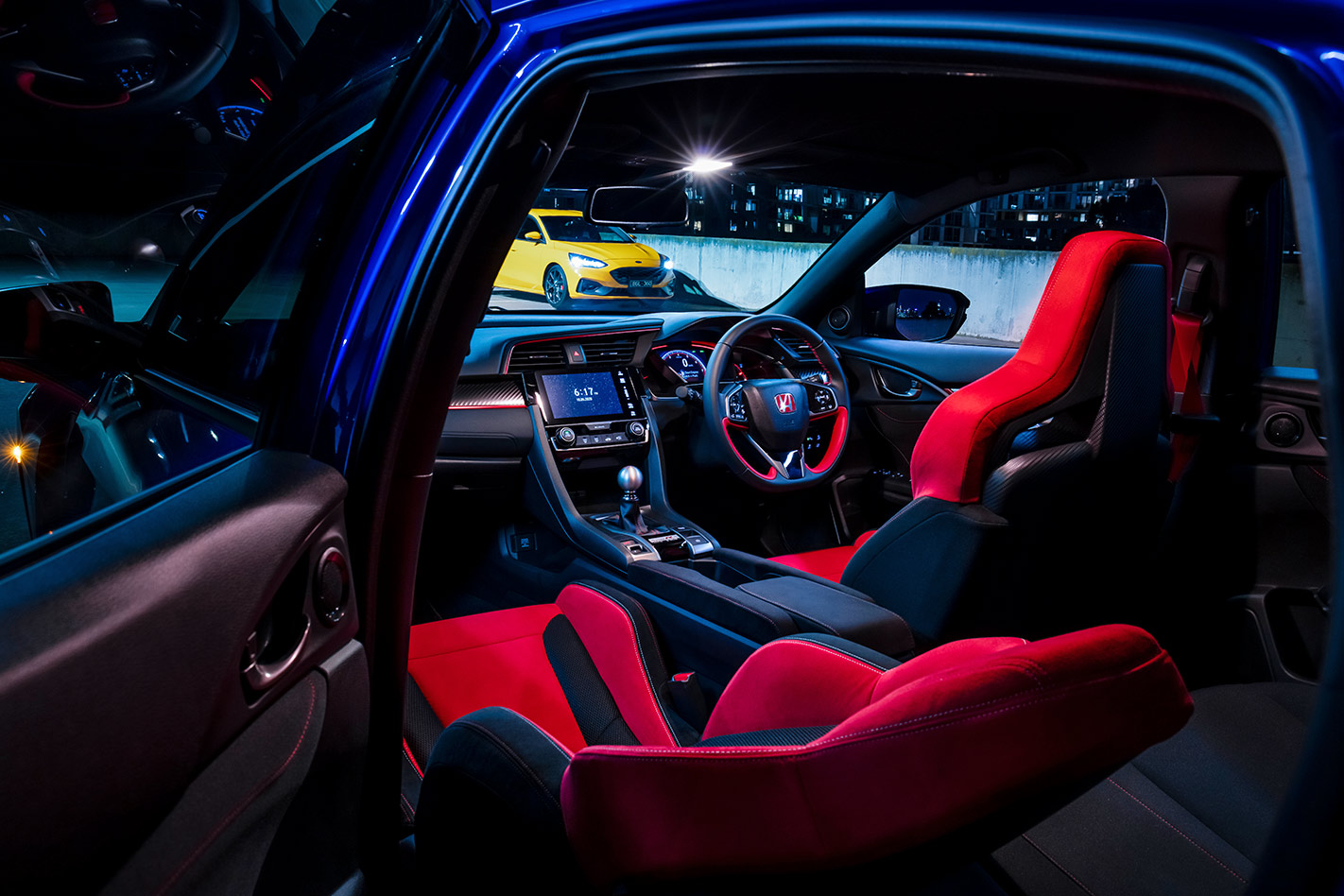
The reason is that the engineering genius has long resided in a business called the Honda R&D Company. It runs as its own entity, conceives and develops vehicles, and presents another firm, the Honda Motor Company, with the finished product. Its job is to sell whatever it receives. The marketing people and brand experts live here. You can doubtless see the problem with this silo approach already, but from April of this year, that has changed. The R&D Company has been brought under the same roof, so to speak, with one senior suit in charge of authoring a sensible model ‘story’, much like virtually every other car company out there. That could mean less extreme Hondas but it could also spell a coherent development path for what is, right now, the world’s most focused front-drive hot hatch. And it could benefit from that.
There’s something unsettling about the intensity of the Civic Type R. I’m minded of this as it powers through the forest hairpins outside of Healesville. It’s in its element here, making the Hyundai seem numb and the Focus lumpen. It’s god-like at ten-tenths, the low cowl, low seat, and slick dual-pinion variable-ratio steering allowing you to position the car perfectly. It feels exotic in a way denied the other pair and just so relentlessly urgent. Every fibre of the Type R goads you into driving it harder, to stalk around hill routes, to harass Porsche drivers, filling their rear-view mirrors with its exquisitely ungainly maw.
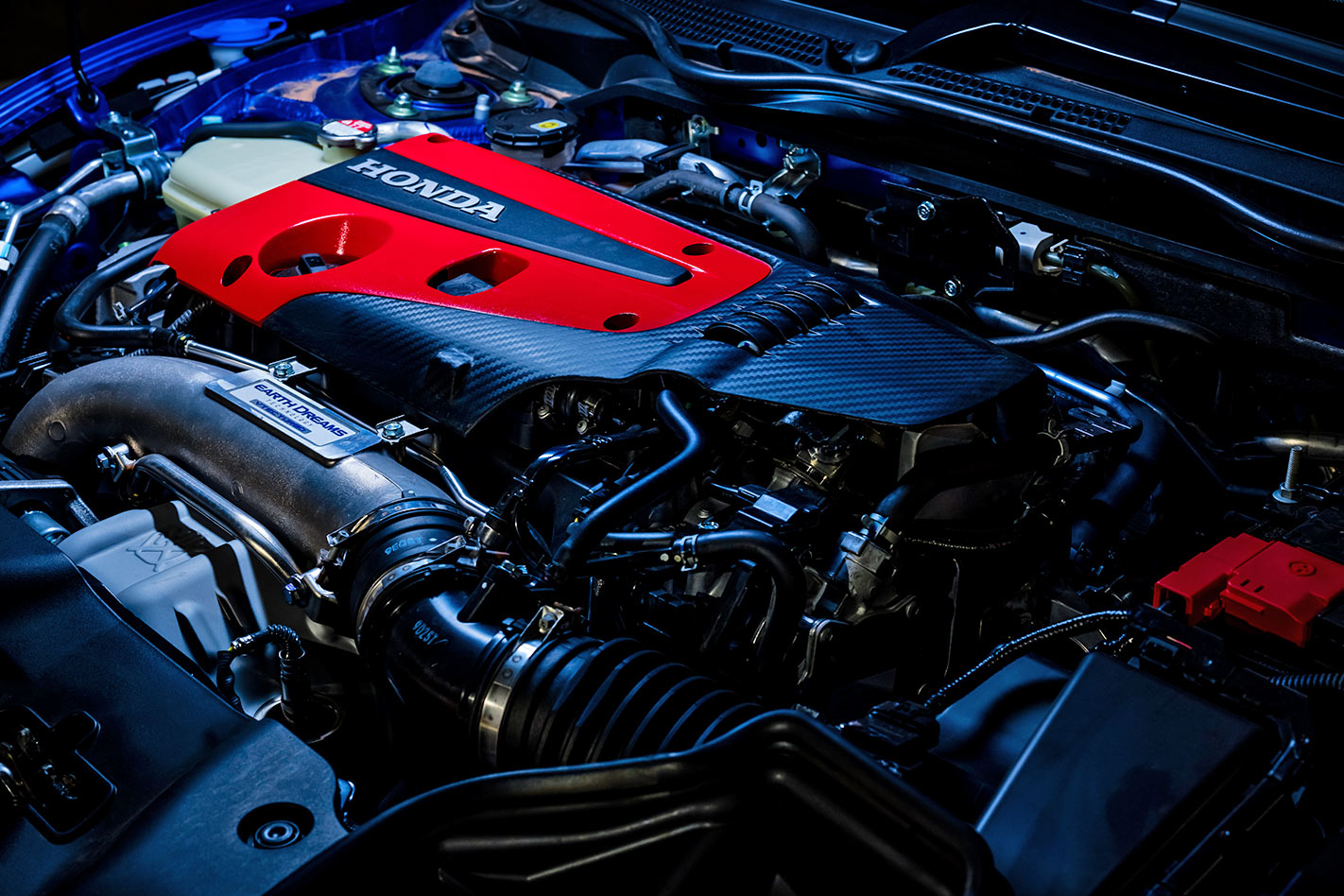
Power pours in between 2500 and 6000rpm, each gearshift bringing a bird-like chirp as the turbo bleeds off excess boost. Body control is excellent across the camber of the road, and while the brake pedal feel is initially a little vague, it firms up nicely just in the right height in the pedal arc for clean heel and toes. In order for the Civic to make sense you need to live in a cosy section of several interlinking Venn circles. You need to be willing to pay 25 percent more than the Hyundai for a couple of points of extra composure. You’re required to be willing to put up with its sophomoric styling excesses, its klutzy cabin ergonomics, its four seats rather than five. You’ll pay extra for bigger 20-inch tyres and more expensive insurance. But you’ll do that because you want the angriest, most dynamically gifted front-drive hot-hatch on the market.
You’ll choose the Type R for the same reasons 911 GT3 owners don’t want a 911 Carrera – because dynamic excellence matters to you. That it also delivers the best damping suppleness of this trio only underscores the fact that the engineers at Honda R&D Co are chassis alchemists. Let’s hope that never changes.
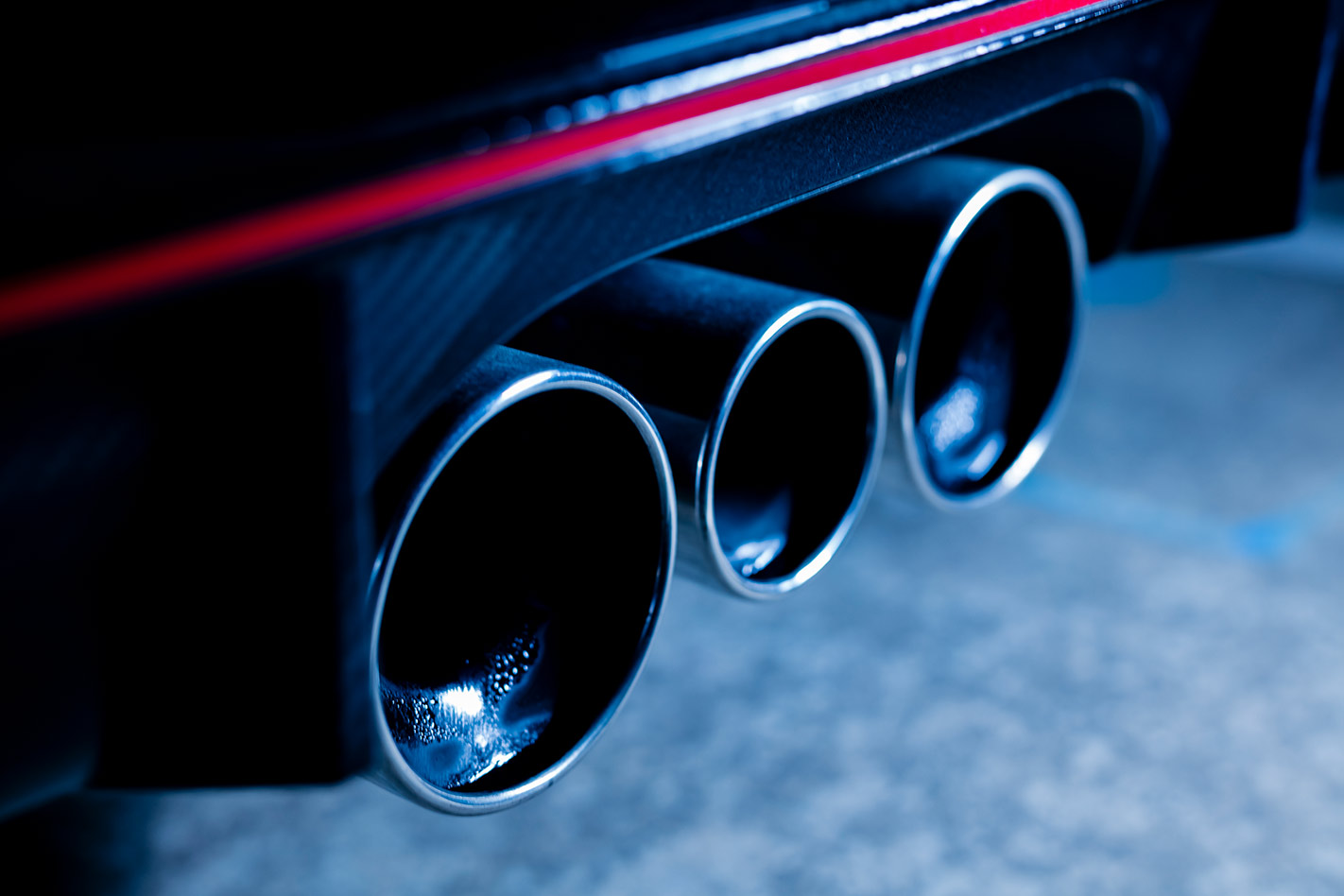
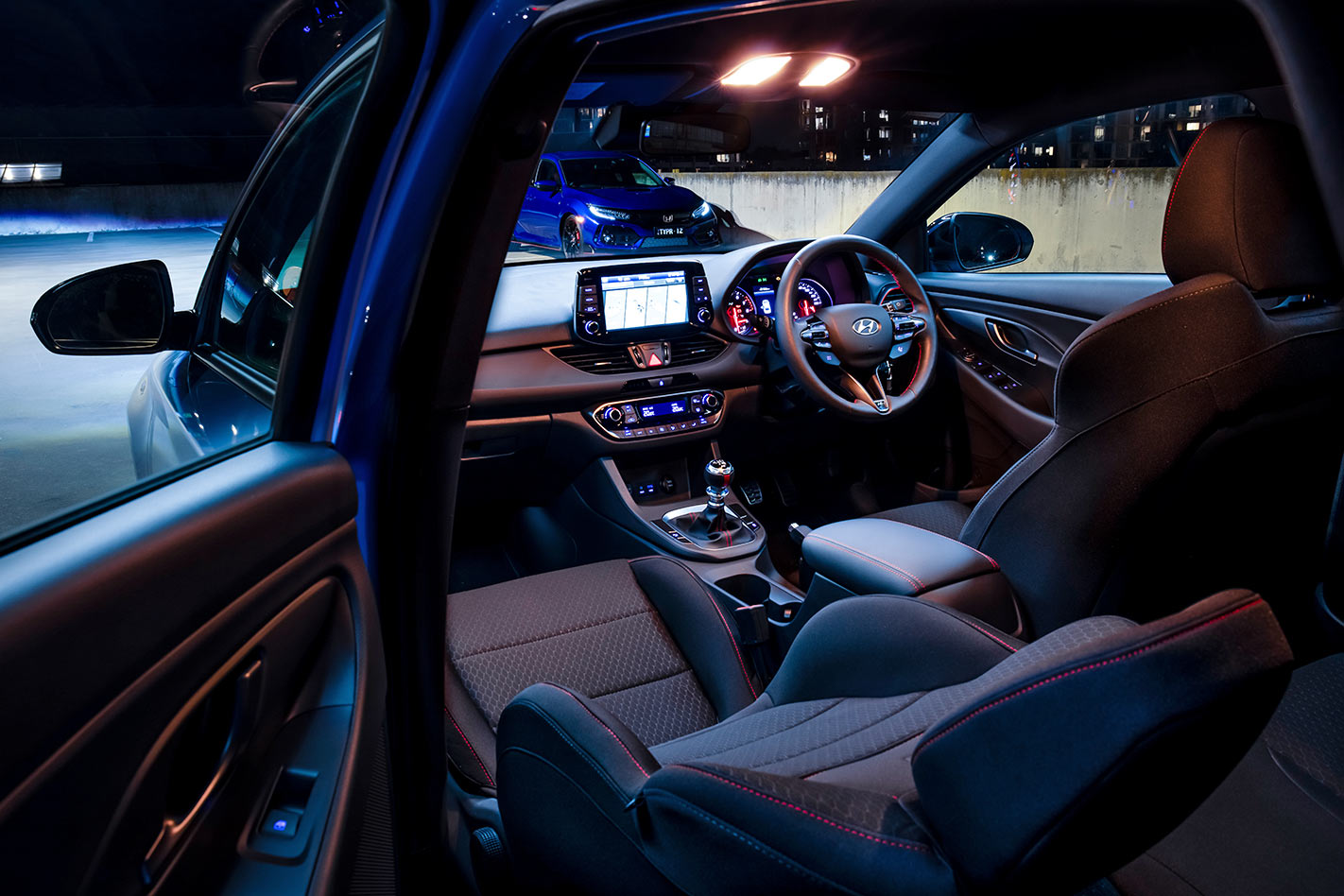
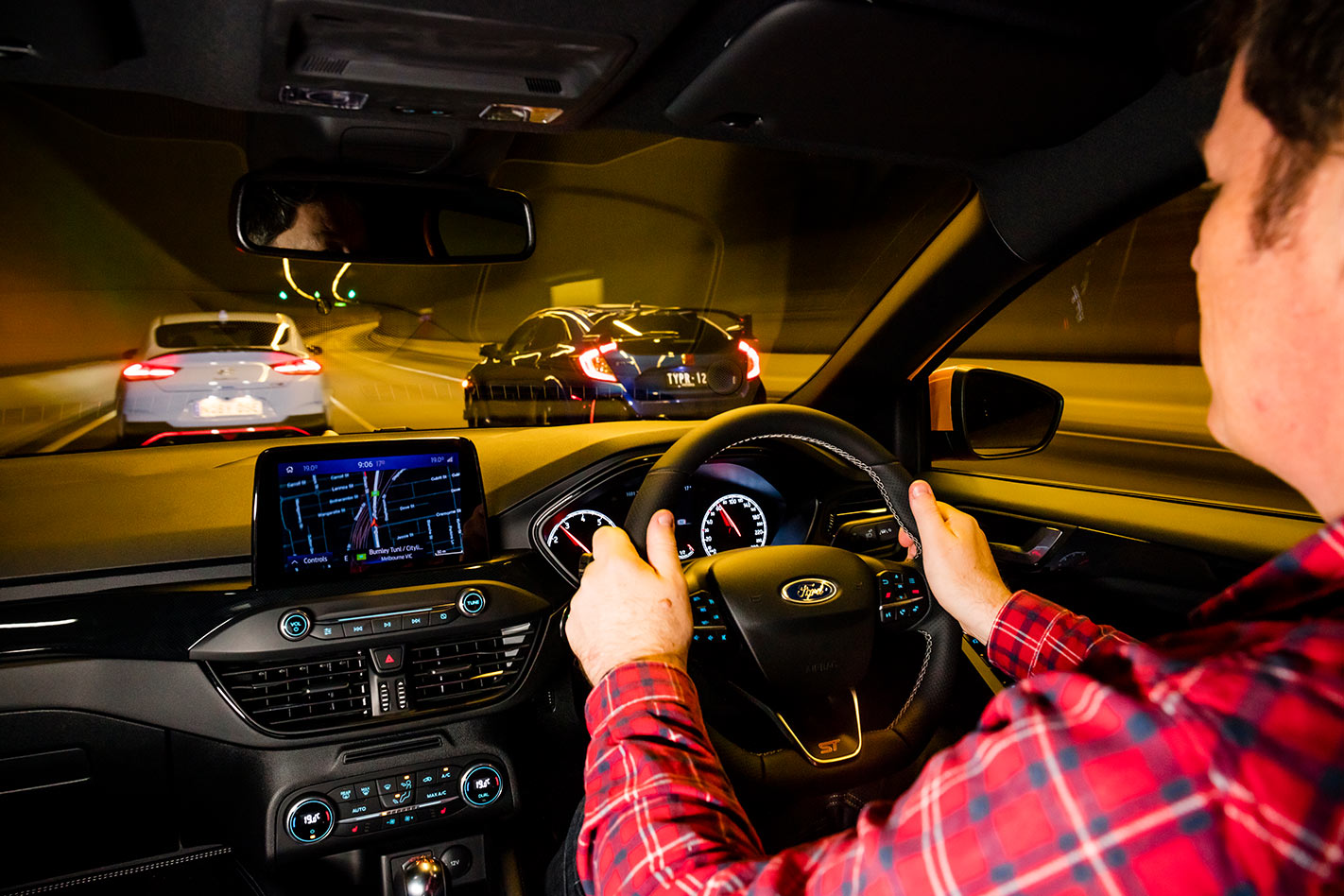
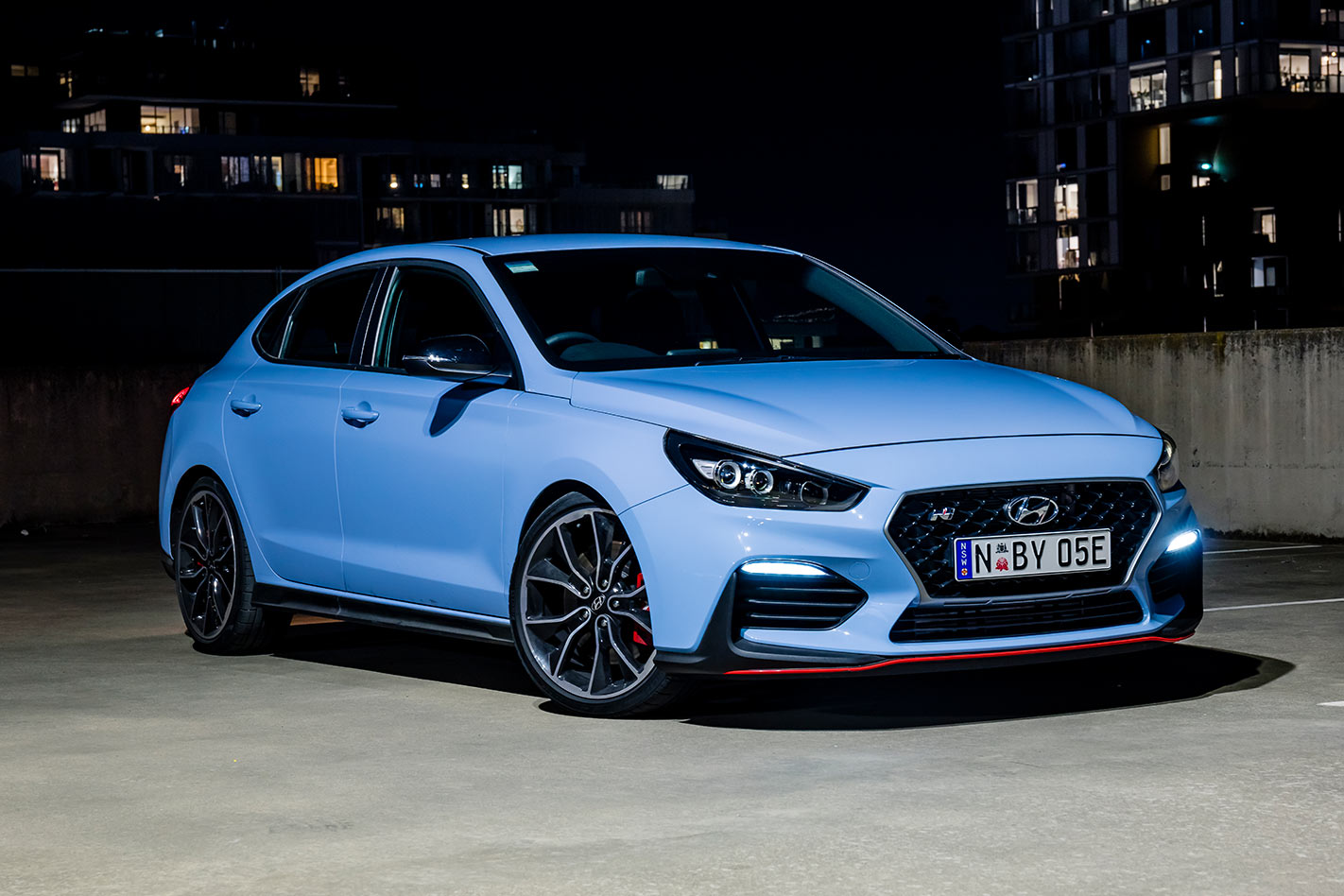
If the Civic is the standard of handling brilliance by which the others are judged, the Hyundai i30N pushes it very close. After the Civic, the Korean car feels no less muscular, but the steering lacks the initial bite on turn-in, the ride is slightly more abrupt and your centre of gravity feels a little more elevated. What the engine lacks in aural drama, Albert Biermann’s team at Hyundai has compensated with an exhaust system that sounds a fusillade of bangs and crackles on the overrun. As Cam Kirby discovered during our late night photoshoot, it’s genuinely naughty in a multi-storey car park or a city tunnel.
Would I choose the Fastback over the cheaper i30N hatch? Probably not. You lose a bit of rear headroom, rear visibility through the slot-like window isn’t as good and, on a shamelessly subjective basis, I don’t think it’s as pretty. I reckon most would be quite happy to put the $1500 saved towards a set of trackday rubber to help get the best from Hyundai’s circuit-friendly warranty. The hatch simply offers better bang for your buck.
The Australian tune for the suspension stiffens the rear end in comparison to the front, making it feel more playful. While this affects primary ride compliance, you gain back in the way the car copes with low amplitude, high frequency secondary imperfections. It seems a reasonable payoff to accept the odd bump in order to feel more intimately connected to the road the rest of the time. The i30N is a great ‘seat of the pants’ hatch in that regard, but such is the easily configurable nature of its N Custom mode that I suspect that many will, for typically gnarly Australian hill routes, set the ride to Comfort and amp every other setting up to maximum angry.
After driving the Honda and Hyundai, the Focus ST feels a sizeable step behind on the Chum Creek test route. I refer back to my notes. “Compared to the others, the ST seems tall and narrow. The gearbox has the longest travel of the three. The side bolsters on the Recaro’s cushion collapse beneath your thighs mid-corner. The deep engine note with the five-pot sound-symposed warble is monotonous and makes it harder to drive by ear and sounds unrewarding to rev. The steering is hefty yet ultra-pointy, the brake pedal is hard and yet the throttle pedal feels as if it has very light springing to it. Needs customisable drive modes.” Hardly a ringing endorsement.
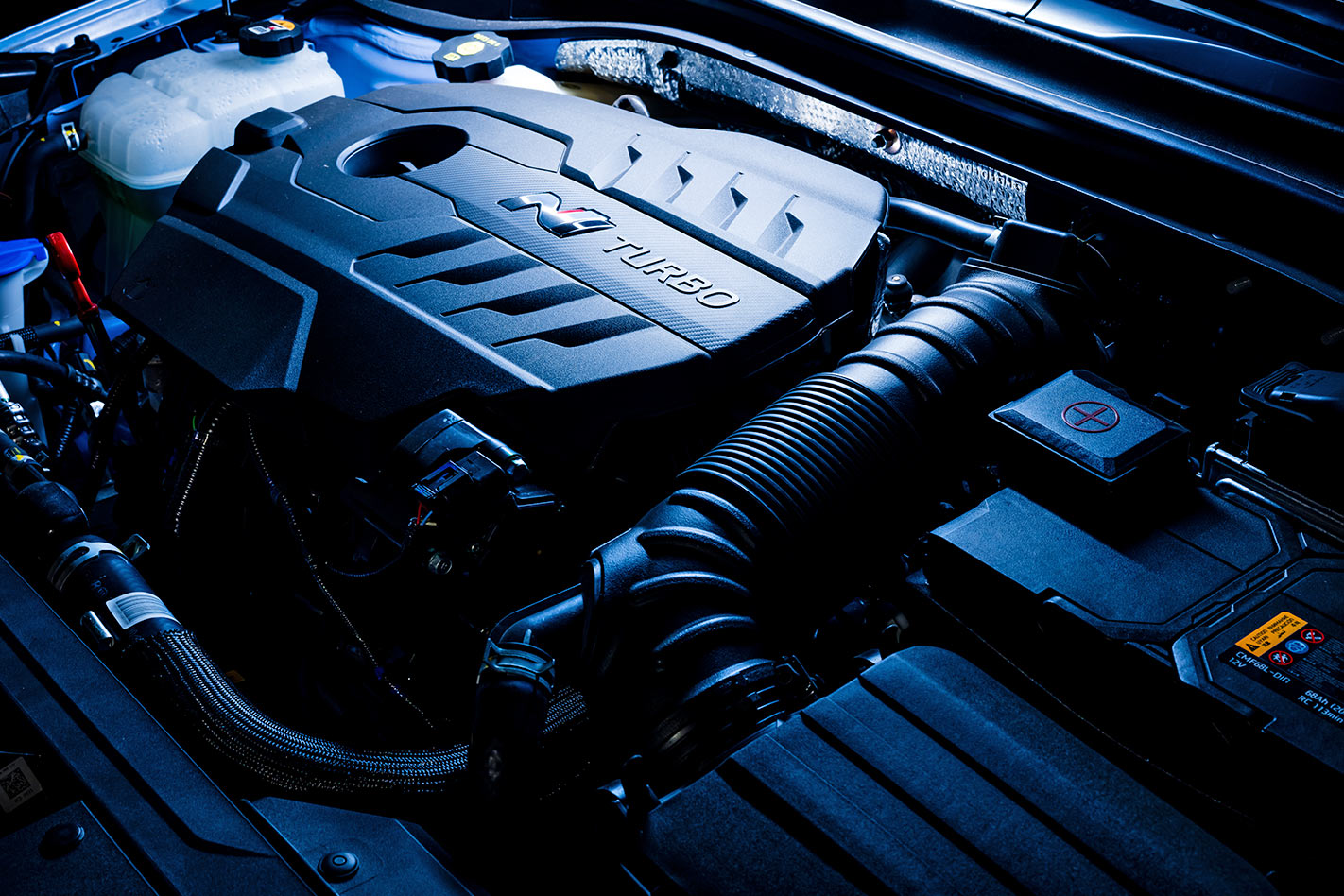
It’s fair to say that it’s initially underwhelming, in this company at least. Yet the more time spent with the Focus, the more enjoyable it becomes. The abundance of low-end torque makes it a joy to drive around town. It never feels tempted to stall as a result, unlike the finicky i30N. The pedal set-up that initially feels so weird allows you to trail brake into the apex and then gently angle your right foot onto the throttle, easing out of the middle pedal and onto the gas all in one roll of the ankle. It gives the Focus the most beautiful balance on corner exit, helped by the grip offered by its lightning quick clutch-actuated Borg-Warner developed e-LSD. This can lock to a 50:50 ratio of torque split across the front axle and do so predictively, making it faster in real-world scenarios than a traditional reactive helical mechanically locking differential. Doing everyday stuff like punting the Focus ST out of junctions, point and squirting it between turns and jinking it through roundabouts paints a huge grin on your face.
The Focus’ stability control calibration makes the Honda’s set-up feel a generation behind and the value of investing in the Michelin Pilot Sport 4S tyre pays back in spades, wet or dry. The damping is well-judged but one aspect of flicking the car into its Sport or Race Track modes is that the steering, which has a faster ratio than a Ferrari 488GTB, can feel a little contrived in its weighting. Yes, the ST has some flaws, but its playful personality, sensible ergonomics and accessible skillset might make it the most endearing of the three to live with.
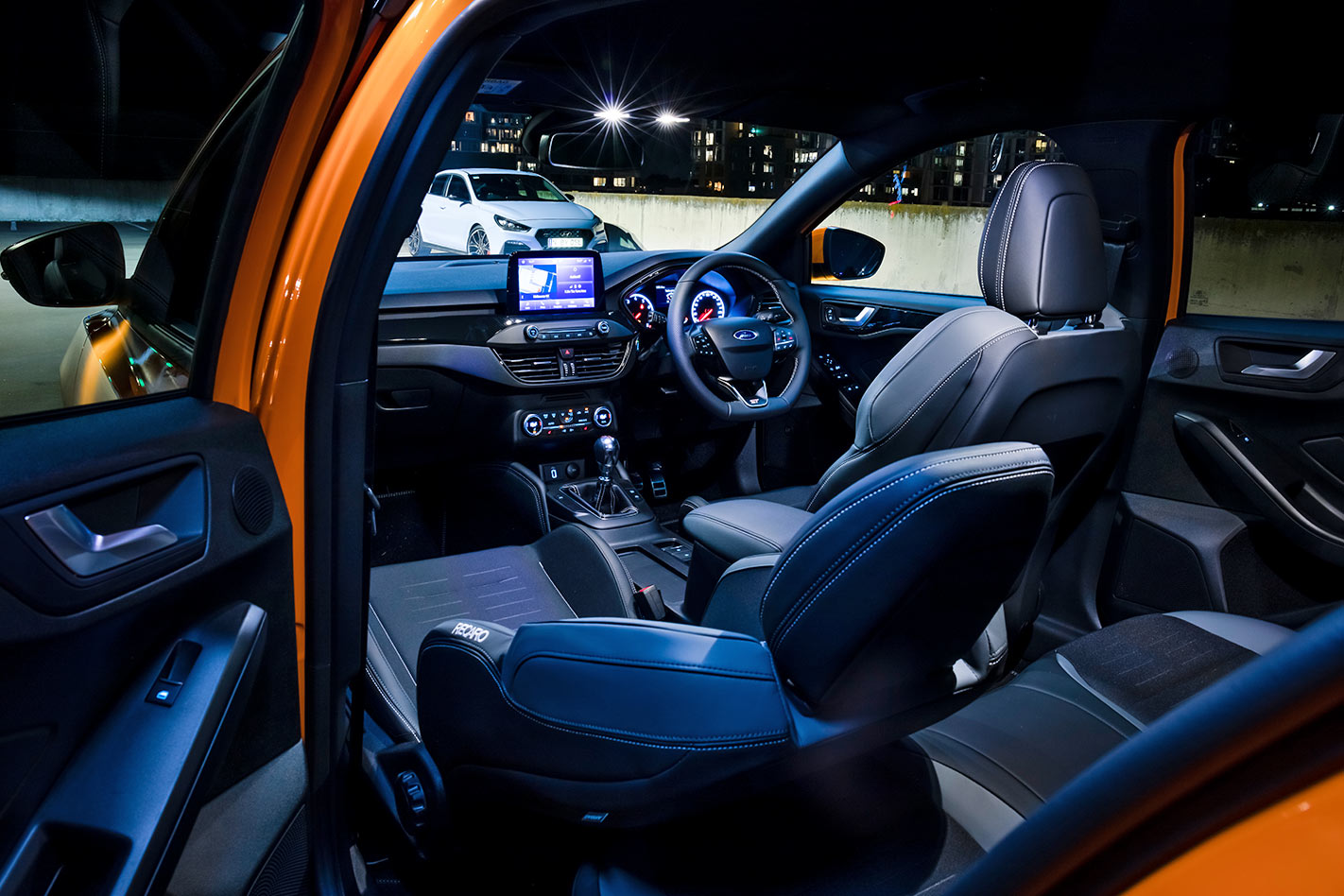
But it’s not the best. That’s something that the Honda and Hyundai get to duke out. In terms of pure dynamic talent, the Honda wins. It addresses the fundamentals of go, stop and steer more effectively and if a hot hatch can nail that brief, it’s always going to be extremely hard to beat. For purists, there’s no argument here. The Type R is uncompromising and, in certain regards, an absolute.
Broaden the discussion and take into consideration which is the best buy and the Hyundai sidles to the fore. It’s huge fun to drive, but it can also dial back the aggression when you want it to and it’s this versatility of character that make it such a formidable talent. When asked which of the three cars they’d buy with their own money, every single one of the road test trio pointed at the Hyundai.
In truth, all three cars here are brilliant hot hatches. The Focus ST is a grower that channels muscle car character and fun-factor into a front-drive hot hatch. The Civic Type R is the destroyer, the car that will dismember the most challenging road you know. The cheapest, slowest car of the trio is the decathlete, the multi-talented one that offers the longest-lasting payoff. The Hyundai i30N occupied the top step of the podium back in 2018 and two years later it’s still there.
GOODBYE TO LAG
Another trick the Focus ST has up its sleeve is anti-lag. No, you’re not going to be shooting huge gouts of flame out of your tailpipes like Colin McRae on the Thousand Lakes, but the system will keep the throttle open to a degree, even upon lifting off the pedal. This tech, borrowed from the GT supercar, prevents compressor wheel stall and enables boost pressure to build quicker when the accelerator is re-applied.
SHIFTY LIES
Conditions meant that we didn’t match Ford’s 5.7sec to 100km/h claim for the Focus, but there’s also a seven-speed automatic version of the ST on offer for an identical $44,690. You may well have seen reports claiming that it’s slower than the manual, recording a 6.0 second 0-100km/h time. That’s not the case. In the real world, the auto ST is within a tenth either way to 100km/h compared to the manual. We’d still stick with three pedals.
VERDICT
1st: Hyundai i30 N Fastback – 9.0/10
2nd: Honda Civic Type R – 9.0/10
3rd: Ford Focus ST – 8.5/10
Hyundai i30 N Fastback specs
Price: $42,910 Engine: in-line 4cyl, dohc, 16v, turbo Layout: front engine (east-west), front drive Capacity: 1998cc Power: 202kW @ 6000rpm Torque: 353Nm @ 1450-4700rpm Gearbox: 6-speed manual Body: steel, 5 doors, 5 seats L/W/H/W–B: 4455/1795/1419/2650mm Track (F/R): 1556/1564mm Weight: 1441kg Boot: 436 litres Fuel/tank: 95 octane/50 litres Economy: 12.2L/100km (test average) Front suspension: struts, A-arms, coil springs, adaptive dampers, anti-roll bar Rear suspension: multi-link, coil springs, adaptive dampers, anti-roll bar Steering: electric rack-and-pinion Turn circle: 11.6m (2.2 turns lock-to-lock) Front brakes: ventilated discs (345mm) Rear brakes: ventilated discs (314mm) Tyres: Pirelli P Zero Tyre size: 235/35 R19 91Y Warranty: 5yr/unlimited km Service interval: 12 months/15,000km Glass’s 3-year resale: 58% AAMI Insurance: $914. 0-20km/h: 0.9sec 0-40km/h: 2.0sec 0-60km/h: 3.3sec 0-80km/h: 4.5sec 0-100km/h: 6.3sec 0-120km/h: 8.3sec 0-140km/h: 10.7sec 0-160km/h: 14.2sec 0-180km/h: 18.2sec 0-200km/h: 23.2sec 0-400m: 14.3sec @ 161.1km/h 80-120km/h: 3.8sec 100km/h-0: 35.9m Power-to-weight: 140kW per tonne Redline/cut-out: 6800/6800rpm Speed at indicated 100km/h: 97 Track: Heathcote Raceway, cold, damp, Temp: 9.0ºC Driver: Andy Enright
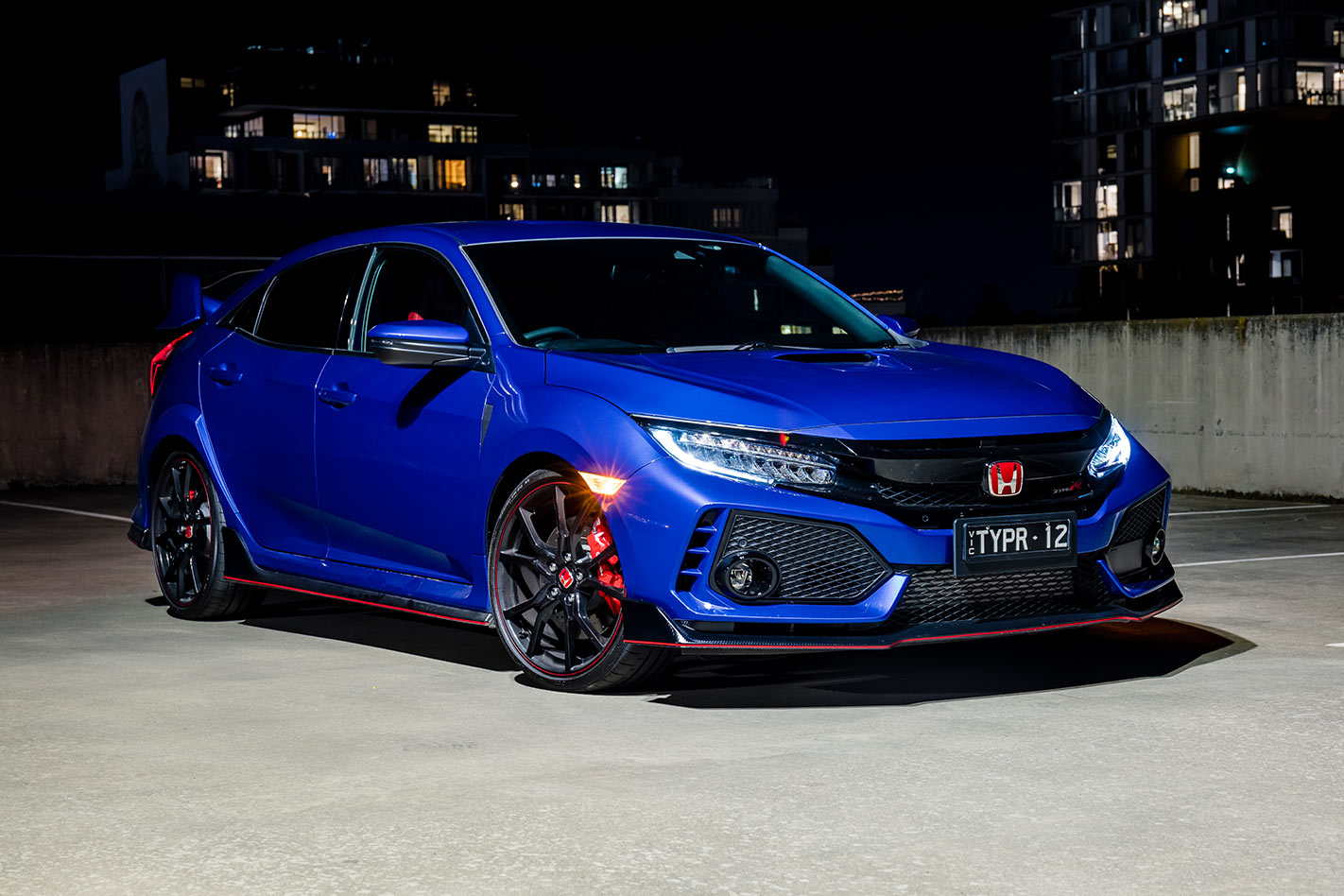
Honda Civic Type R specs
Price: $51,990 ($52,565* as tested) Engine: in-line 4cyl, dohc, 16v, turbo Layout: front engine (east-west), front drive Capacity: 1996cc Power: 228kW @ 6500rpm Torque: 400Nm @ 2500-4500rpm Gearbox: 6-speed manual Body: steel, 5 doors, 4 seats L/W/H/W-B: 4557/1877/1421/2700mm Track (F/R): 1599/1593mm Weight: 1396kg Boot: 414 litres Fuel/tank: 95 octane/47 litres Economy: 9.9L/100km (test average) Front suspension: struts, A-arms, coil springs, adaptive dampers, anti-roll bar Rear suspension: multi-link, coil springs, adaptive dampers, anti-roll bar Steering: electric rack-and-pinion Turn circle: 12.6m (2.2 turns lock-to-lock) Front brakes: ventilated discs (350mm) Rear brakes: solid discs (305mm) Tyres: Continental ContiSport Contact 6 Tyre size: 245/30 ZR20 90Y Warranty: 5yr/unlimited km Service interval: 12 months/10,000km. Glass’s 3-year resale: 55%. AAMI Insurance: $1024. *Options: Metallic paint ($575) 0-20km/h: 1.0sec 0-40km/h: 1.9sec 0-60km/h: 3.2sec 0-80km/h: 4.4sec 0-100km/h: 6.0sec 0-120km/h: 7.6sec 0-140km/h: 10.1sec 0-160km/h: 12.4sec 0-180km/h: 16.2sec 0-200km/h: 20.7sec 0-400m: 13.8sec @ 170.2km/h 80-120km/h: 3.2sec 100km/h-0: 35.5m Power-to-weight: 163kW per tonne Redline/cut-out: 7000/7000rpm Speed at indicated 100km/h: 94 Track: Heathcote Raceway, cold, damp, Temp: 9.5ºC Driver: Andy Enright
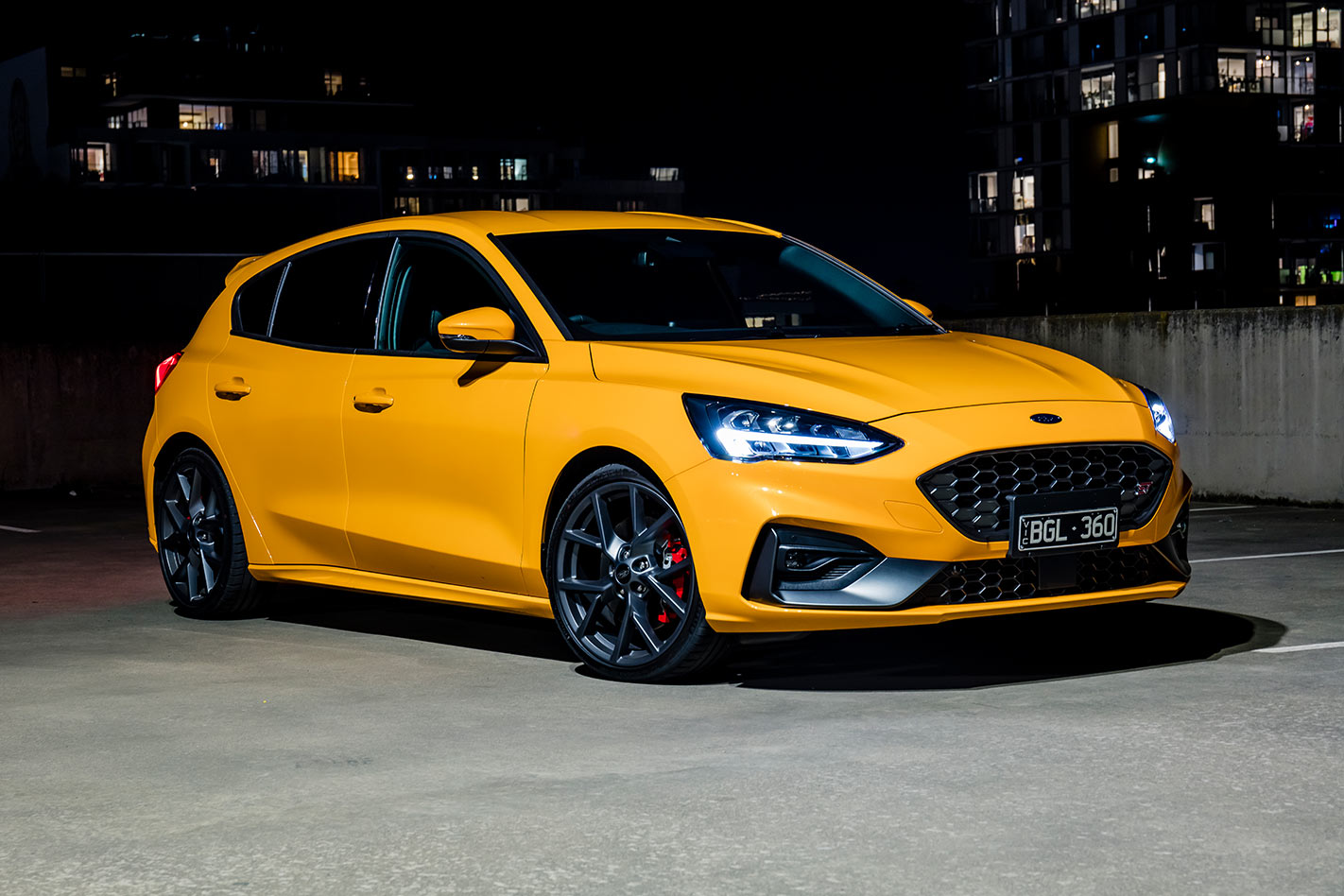
Ford Focus ST specs
Price: $44,690 ($45,340* as tested) Engine: in-line 4cyl, dohc, 16v, turbo Layout: front engine (east-west), front drive Capacity: 2261cc Power: 206kW @ 5500rpm Torque: 420Nm @ 3000-4000rpm Gearbox: 6-speed manual Body: steel, 5 doors, 5 seats L/W/H/W-B: 4388/1825/1458/2700mm Track (F/R): 1567/1556mm Weight: 1508kg Boot: 375 litres Fuel/tank: 95 octane/52 litres Economy: 10.9L/100km (test average) Front suspension: struts, A-arms, coil springs, adaptive dampers, anti-roll bar Rear suspension: multi-link, coil springs, adaptive dampers, anti-roll bar Steering: electric rack-and-pinion Turn circle: 11.3m (2.0 turns lock-to-lock) Front brakes: ventilated discs (330mm) Rear brakes: solid discs (302mm) Tyres: Michelin Pilot Sport 4S Tyre size: 235/35 ZR19 91Y Warranty: 5yr/unlimited km Service interval: 12 months/15,000km. Glass’s 3-year resale: NA%. AAMI Insurance: $945. *Options: Metallic paint ($650) 0-20km/h: 0.9sec 0-40km/h: 1.9sec 0-60km/h: 3.1sec 0-80km/h: 4.4sec 0-100km/h: 6.1sec 0-120km/h: 8.0sec 0-140km/h: 10.2sec 0-160km/h: 13.5sec 0-180km/h: 17.6sec 0-200km/h: 22.7sec 0-400m: 14.2sec @ 164.0km/h 80-120km/h: 3.6sec 100km/h-0: 37.1m Power-to-weight: 137kW per tonne Redline/cut-out: 6500/6600rpm Speed at indicated 100km/h: 95 Track: Heathcote Raceway, cold, damp, Temp: 10ºC Driver: Andy Enright
The Mercedes-AMG Project One is a step closer to production, with its Formula One-derived powertrain now at full power.
Even better, AMG has given us a peek behind the curtain at its Immendingen test track to see and hear how the Project One is coming along.
Previous press releases have referenced the difficulties with secretly testing a hypercar that sounds like an F1 racer, and now we can hear why. And, as the video mentions, there’s no sound synthesising. Everything you’ll hear is real.
The Project One’s 1.6-litre turbocharged V6 and its electric motors are “comprehensively electrified and highly complex” according to AMG, “with its full output of more than 735kW.”
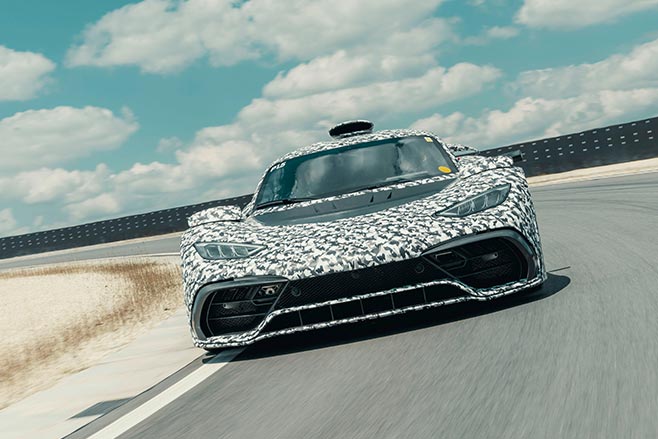
Project One has been coming for some time, it was announced at the 2017 Frankfurt Motor Show, where we discovered it would produce ‘around 740kW’, rev to 11,000rpm, and be capable of a top speed near 350km/h.
This comes thanks to that turbocharged V6 as well as four electric motors, a 120kW electric motor on each front wheel, one 100kW motor for the crankshaft, and an 80kW unit running the turbo to kill lag.
It will also have a full-electric driving mode, but this isn’t the primary aim of the Project One and will thus only be good for around 25km according to the latest official info on that particular aspect of the car, which is from 2017.
On track, small tweaks are now being made to perfect elements such as the car’s aerodynamics, which are now fully functional.
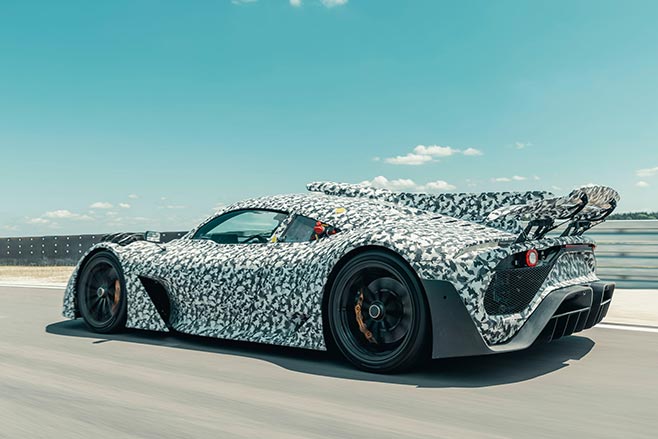
“Testing has thus now largely transferred from the test stands to concentrate more and more on test tracks,” AMG says.
“The objective of reaching a new dimension of driving dynamics and performance for a road-going vehicle with the Project ONE and thereby setting a new milestone in automotive history is thus gradually drawing closer for Mercedes-AMG.
The techy details: AMG Project One
“The next step in this extensive programme of testing and development is already clear: the performance of the Project ONE will shortly also be tested on the north loop of the Nürburgring.”
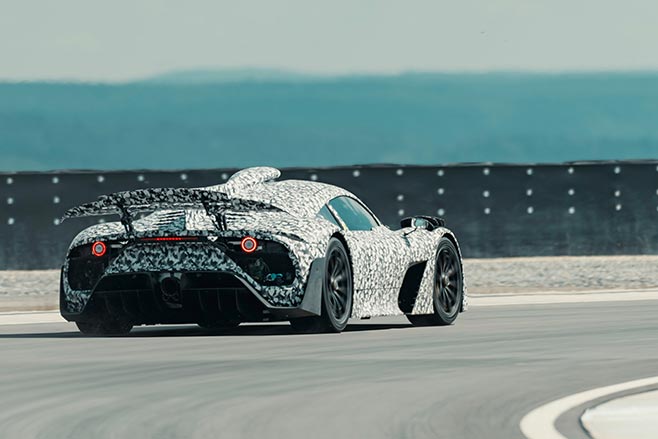
In 2017, it was confirmed nine of the 275 Project Ones will come to Australia, though a higher demand which was disclosed in the form of seven more serious expressions of interest means that number may have changed.
Mercedes-Benz Australia expects international deliveries of Project Ones to commence in late Q1 2021.
With racer and Porsche test driver Lars Kern behind the wheel, it took the new Porsche Panamera only 7:29.81 to negotiate the Nürburgring Nordschleife’s 20.832km circuit.
The new Panamera hasn’t been revealed in full yet, but the lap has resulted in a record (“certified by a notary public”) being claimed by the car.
While AMG’s GT63 S claims a 7:25.41 time, and Jaguar’s Project 8 in 7:21.23, the technicalities of record categories and the laps themselves are key.
While Porsche claims the ‘executive’ record for its Panamera, while the GT63 is the fastest “four-seater”, and the Project 8 the fastest “four-door”.
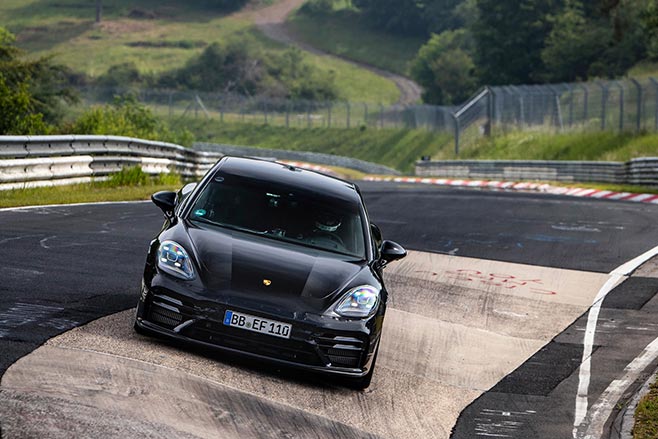
Another factor is the change in the lap distance itself, with the full circuit timing now being used (20.832km) rather than the 20.6km of the previous records which excluded a 200m section of track at T13 where timing would begin and end.
In any case. A time below 7:30 by the Panamera is impressive given its predecessor took roughly 13 seconds longer once you account for the difference in track length.
2019 Porsche Panamera GTS review
Even Kern says (in a Porsche-approved statement, no less) he wasn’t expecting the new Panamera to be able to do handle what it did in certain sections of the Green Hell, given his experience in the previous model.
“The enhancements made to the chassis and the powertrain of the new Panamera were always noticeable during this lap on what is recognised as the most demanding racetrack in the world,” says Kern.
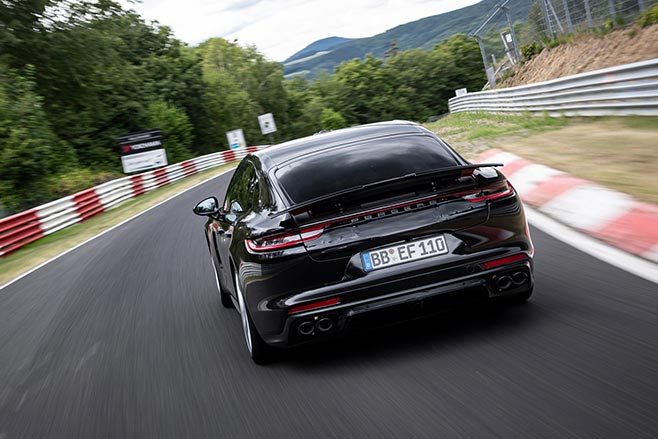
“In the Hatzenbach or also Bergwerk and Kesselchen sections in particular, the new setup of the electromechanical roll stabilisation system remains consistently effective and provides the Panamera with incredible stability in spite of the bumpy track surface.
“At the Schwedenkreuz, the car benefited from the improved lateral dynamics and the increased grip of the new Michelin sports tyres.
Porsche’s GT2 RS Nurburgring lap record
“I achieved cornering speeds there that I would not have believed possible with the Panamera.”
The new Panamera is set to be revealed at the end of August. Keep an eye on MOTOR for your first look when it drops.
As far as price hikes go, they don’t come much more savage than those just announced by Toyota for its entry-level light match, the Yaris.
Yes, the all-new fourth-generation car is a far more sophisticated B-segment car; yes all three grades share the same comprehensive and advanced safety suite, and yes, a hybrid powertrain is available on both middle- and top-spec versions.
But brace yourself, because from a previously circa-$16K drive-away figure for the entry-level car, you’ll now pay closer to $25,000 to drive away in the manual range opener, called the Ascent Sport.
Adding the 10-step CVT automatic transmission is another $1500, which brings the base-spec Toyota Yaris to a retail of around $26,500 drive-away.
At the other end of the spectrum sits the auto-only ZR range-topper at $31,100 in three-cylinder petrol form.
Opting for the hybrid’s motor (and now, significantly, a lithium-ion battery) adds to performance and cuts consumption, but bumps the price by $2000. Two-tone paint is $450, so its possible to now spend $32,550 (plus on-roads) for Toyota’s poshest baby.
For context, the previous Yaris ZR (offered as petrol-only, no hybrid) was $22,670 plus on roads.
And let’s not forget you can buy a Corolla hybrid in SX spec from the class above for just under $30,000 plus on-roads (see below for full model line-up and pricing.)

The petrol engine variants are powered by a new-generation 1.5-litre three-cylinder producing 88kW/145Nm paired to either a six-speed manual (base Ascent Sport only) or CVT auto.
Hybrid models pair the 1.5-litre three-cylinder petrol engine to an electric motor and a lithium-ion battery, the latter promising more energy from a more compact pack compared to the old-tech nickel-metal hydride units used elsewhere across Toyota’s hybrid models.
Its 67kW/120Nm numbers are boosted by a 59kW/141Nm electric motor-generator, for a combined power output of 85kW.
Toyota claims combined fuel economy figures of 5.4 litres/100km for the manual and 4.9 litres/100km for the CVT. The hybrid uses as little as 2.8L/100km, according to the company.
The new car is built on a version of the TNGA platform used by current Corolla, RAV4 and Prius, and bucks the usual trend by being 5mm shorter and 5mm lower than the outgoing model. However, the wheelbase grows by a hefty 40mm.
As for that safety suite standard on all three grades, it brings twin-centre airbags between the front seats (a first for the class) autonomous emergency braking (AEB) with pedestrian, cyclist and intersection detection, lane-keeping assistance and a rear-view camera.
However, additional safety features, such as blind-spot warning, rear cross-traffic alert, and rear AEB are only available on the most expensive ZR spec.
The base model has an analogue instrument cluster, SX and ZR grades have a digital instrument display. All models come with Apple CarPlay and Android Auto via a 7.0-inch touchscreen, SX and ZRmodels gain navigation, LED headlights and tail-lights, keyless entry and start, and a leather-accented steering wheel.
ZR brings a rear spoiler and 10-inch head-up display, among other equipment upgrades. The Ascent Sport model has 15-inch steel wheels with plastic covers, the SX has 15-inch alloys, while the ZR has 16-inch alloys. All models include a space-saver spare.
Warranty for private buyers remains five years/unlimited kilometres, and service intervals have improved from six months/10,000km to 12 months/15,000km.
Capped-price servicing costs are $195 per visit for routine maintenance up to five years/75,000km.

2021 TOYOTA YARIS PRICING FOR AUSTRALIA
- Ascent Sport manual – $22,130
- Ascent Sport CVT – $23,630
- SX CVT – $27,020
- ZR CVT – $30,100
- SX Hybrid CVT – $29,020
- ZR Hybrid CVT – $32,100
- Premium paint: $500
- Two-tone paint: $450

Emerging EV startup Lucid has dealt another slap to rival Tesla following independent battery range testing, that demonstrates its imminent Air luxury sedan will go significantly further on a single charge than the Model S Long Range.Slated for a US launch early next month, the Lucid Air will be positioned in terms of price, specification and performance similarly to Tesla’s Model S, but range testing by global vehicle development specialist FEV (to an EPA-certified standard) has revealed a significant advantage over its fellow Californian EV.While the Tesla Model S Long Range has previously clocked a maximum range of 647km (the furthest in EPA testing), the Lucid Air has now smashed that result with a figure of 832km.
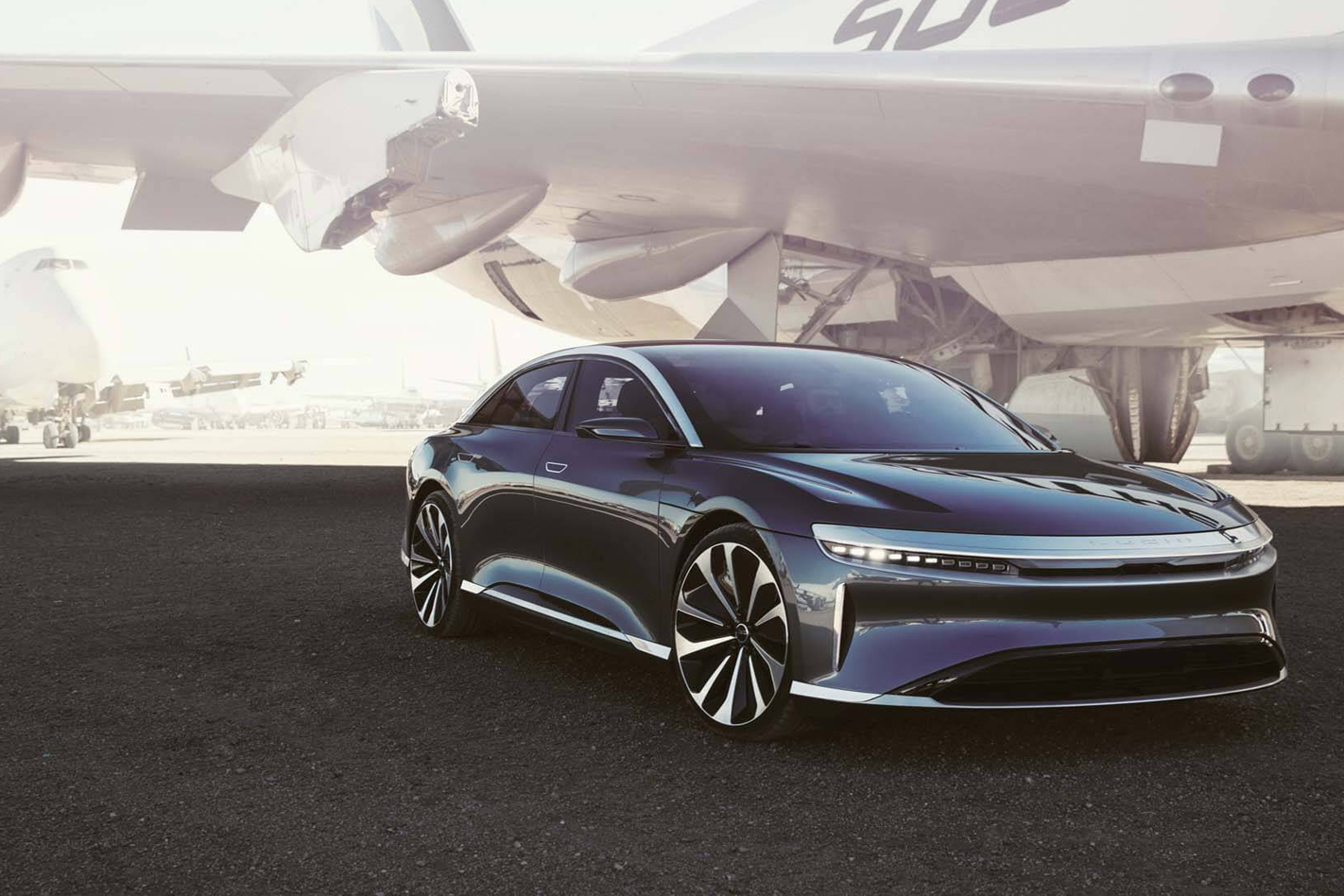
The announcement follows confirmation that the Lucid is also more slippery than the Tesla with a drag coefficient of 0.21Cd vs the Model S’s 0.23Cd.All of this has unsurprisingly provoked Tesla founder Elon Musk into a dismissive response in which he claims the new Roadster model (expected next year) will manage 1000km on a single charge.
While it’s highly likely that the EV leader has developed more efficient drivetrains with boosted range, let us not forget that the company also claims it will deliver level-five autonomous capability inside this year…
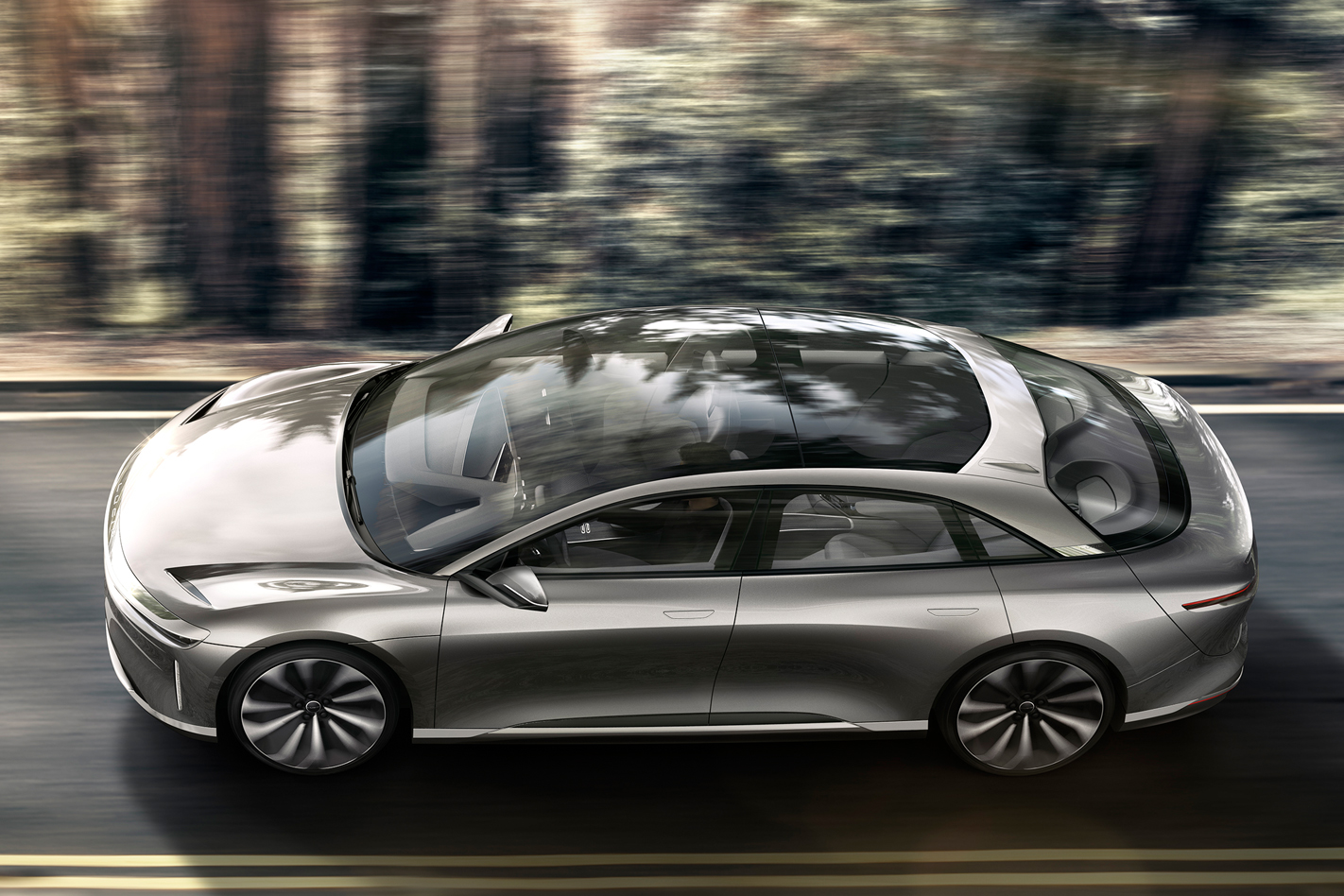
The Multi Cycle Test (MCT) from the SAE J1634 standard requires electric vehicles to be driven on a rolling road and subjects them to a series of driving cycles that simulates day-to-day use most drivers would subject their vehicle to.
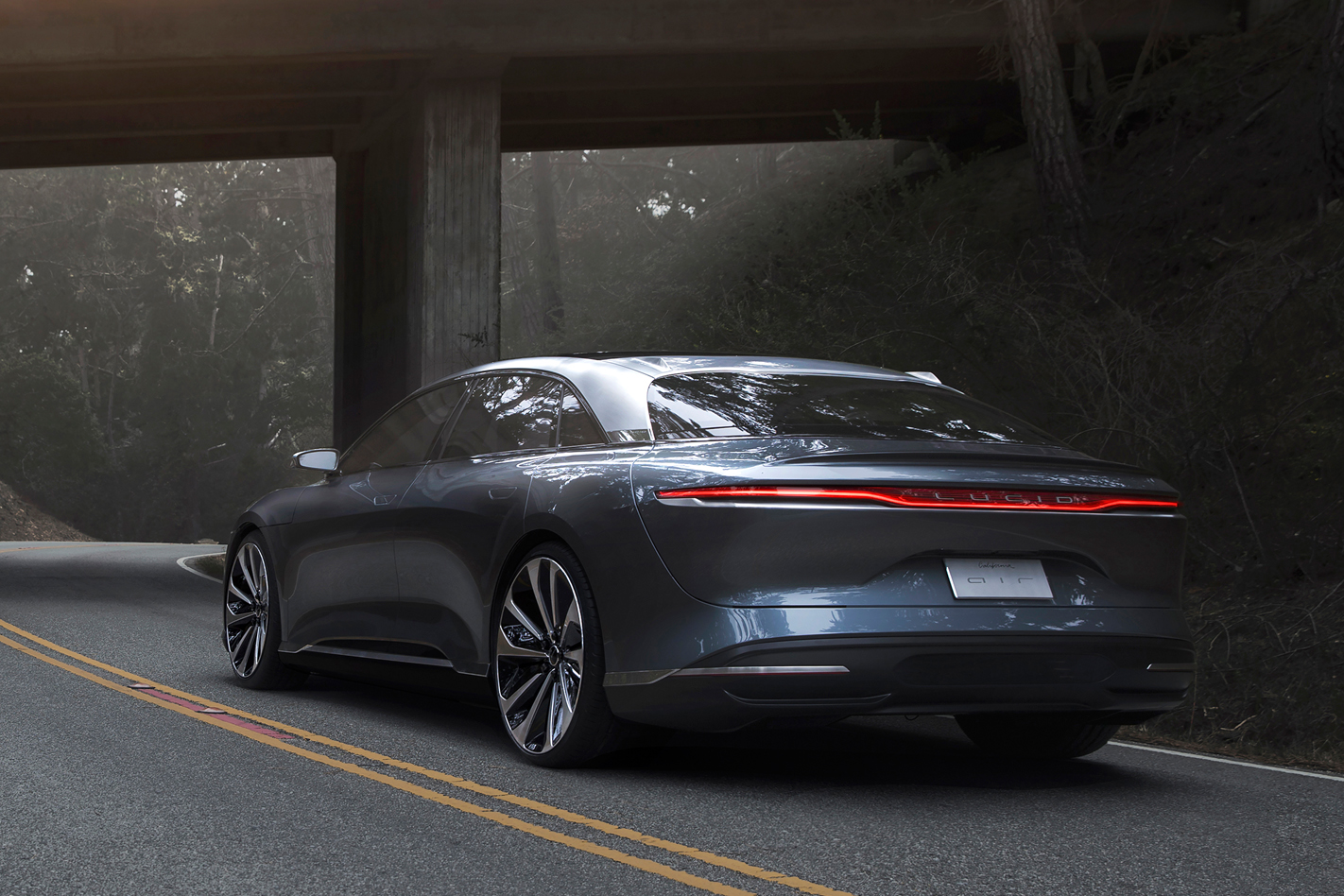
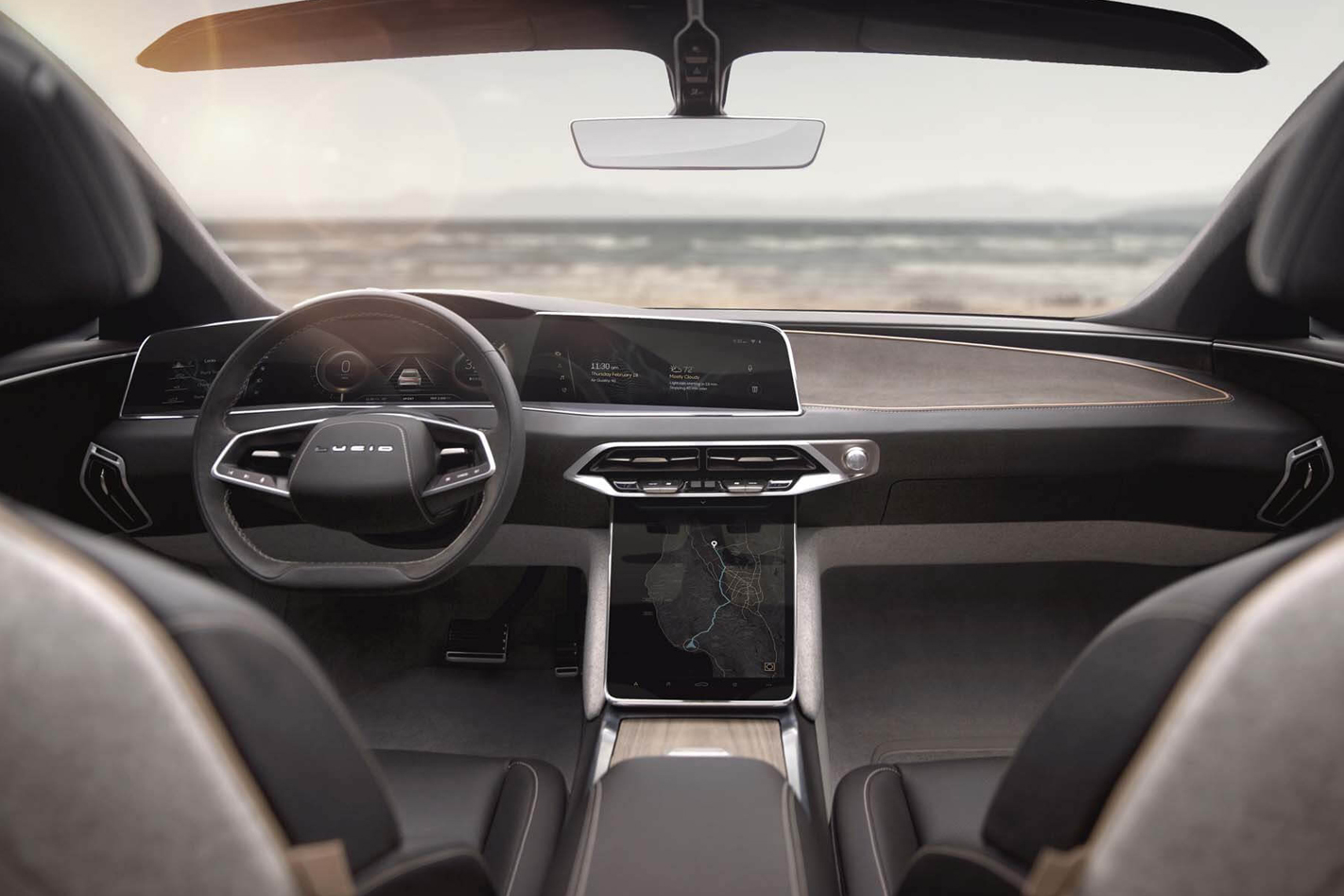
While it might not get the attention of the world’s biggest EV manufacturer Tesla, that may not remain the case for long and, like fellow Californian start-up, Lucid has been many years in the making.
With its first model already in production and ready launch on September 9, the company is about to unleash its assault, but this story actually starts in 2007 when the company was founded as Atieva with initial plans to only develop batteries and powertrains for other manufacturers.
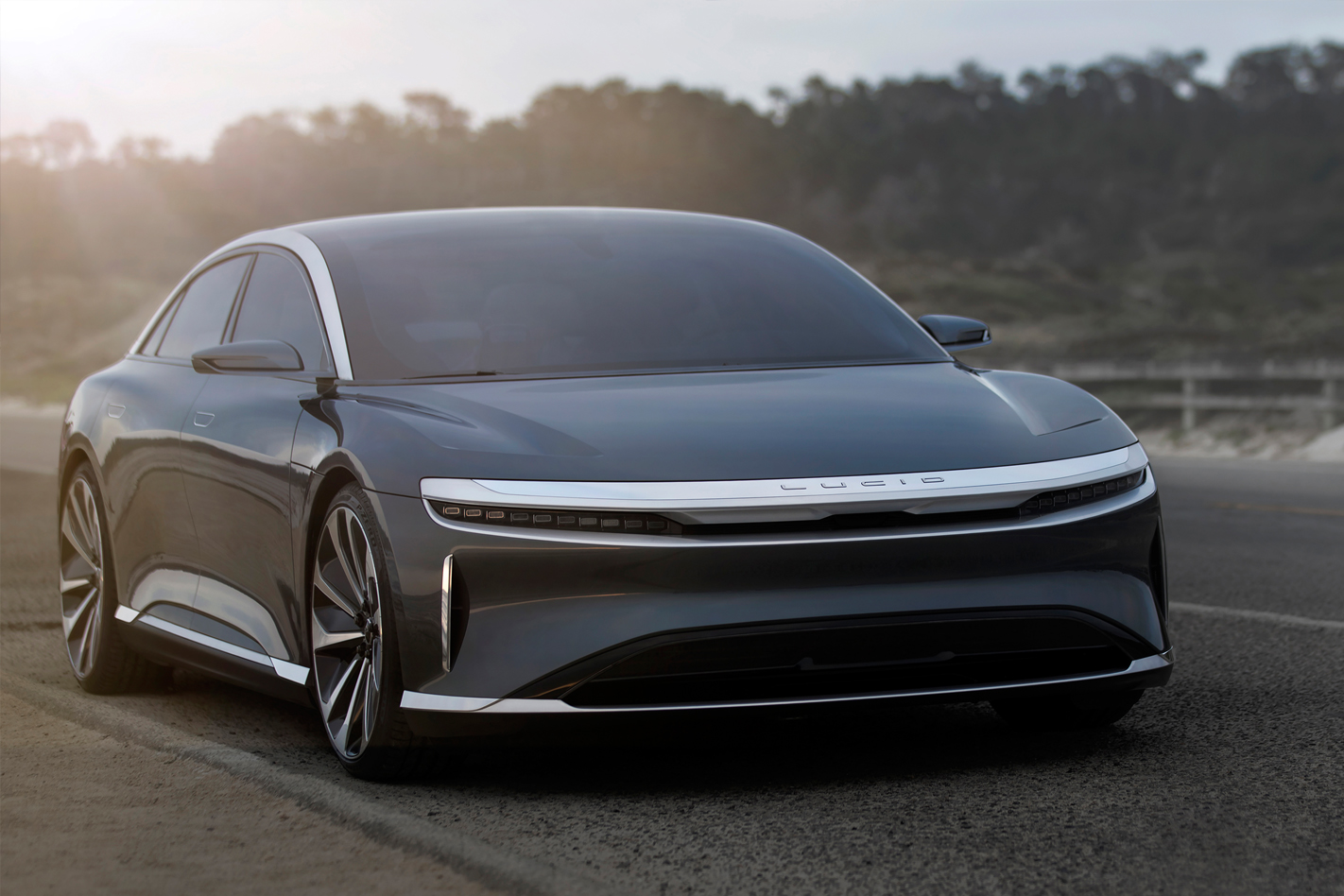
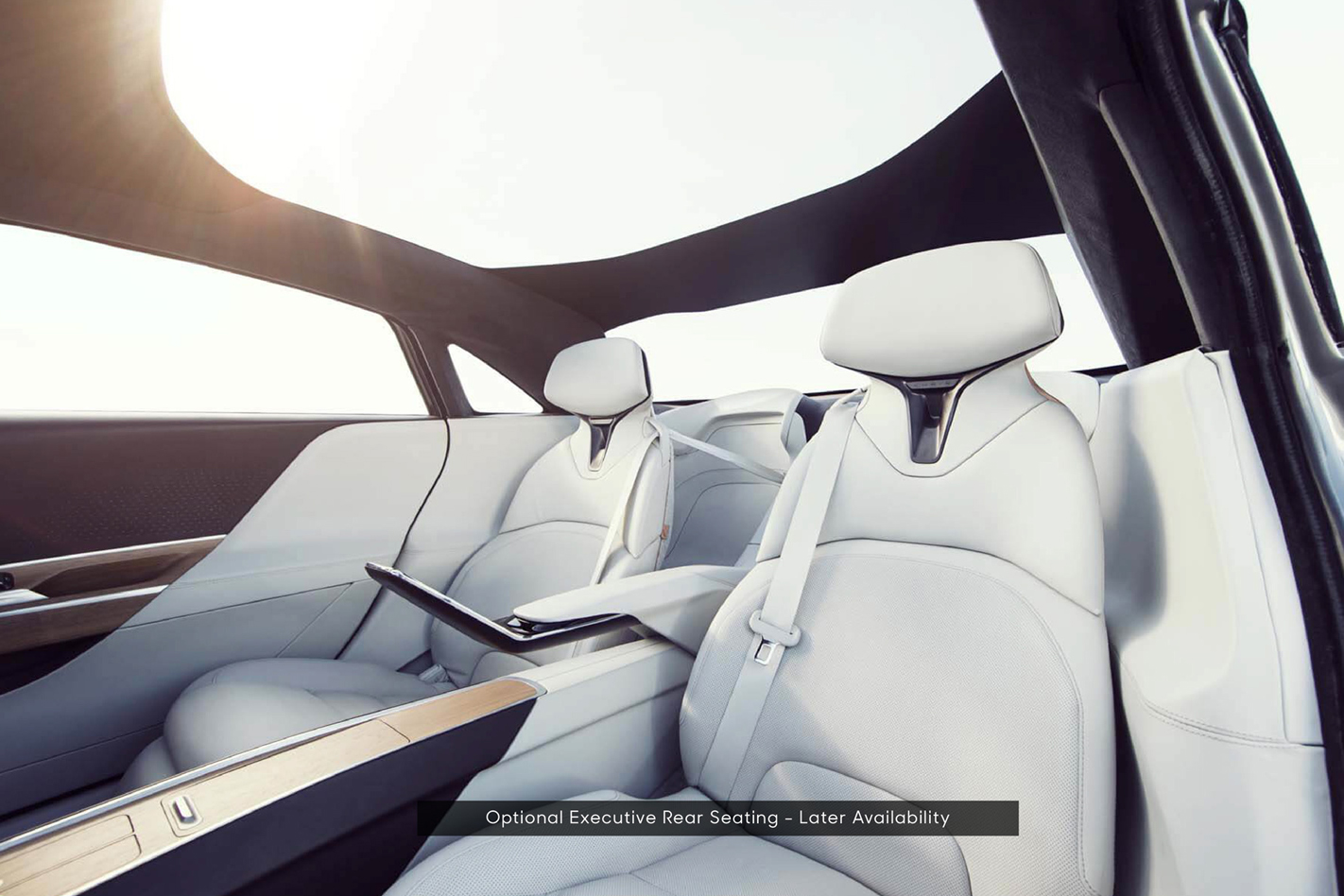
All other critical details are being withheld until the big reveal, but you’ll only have to wait three weeks.
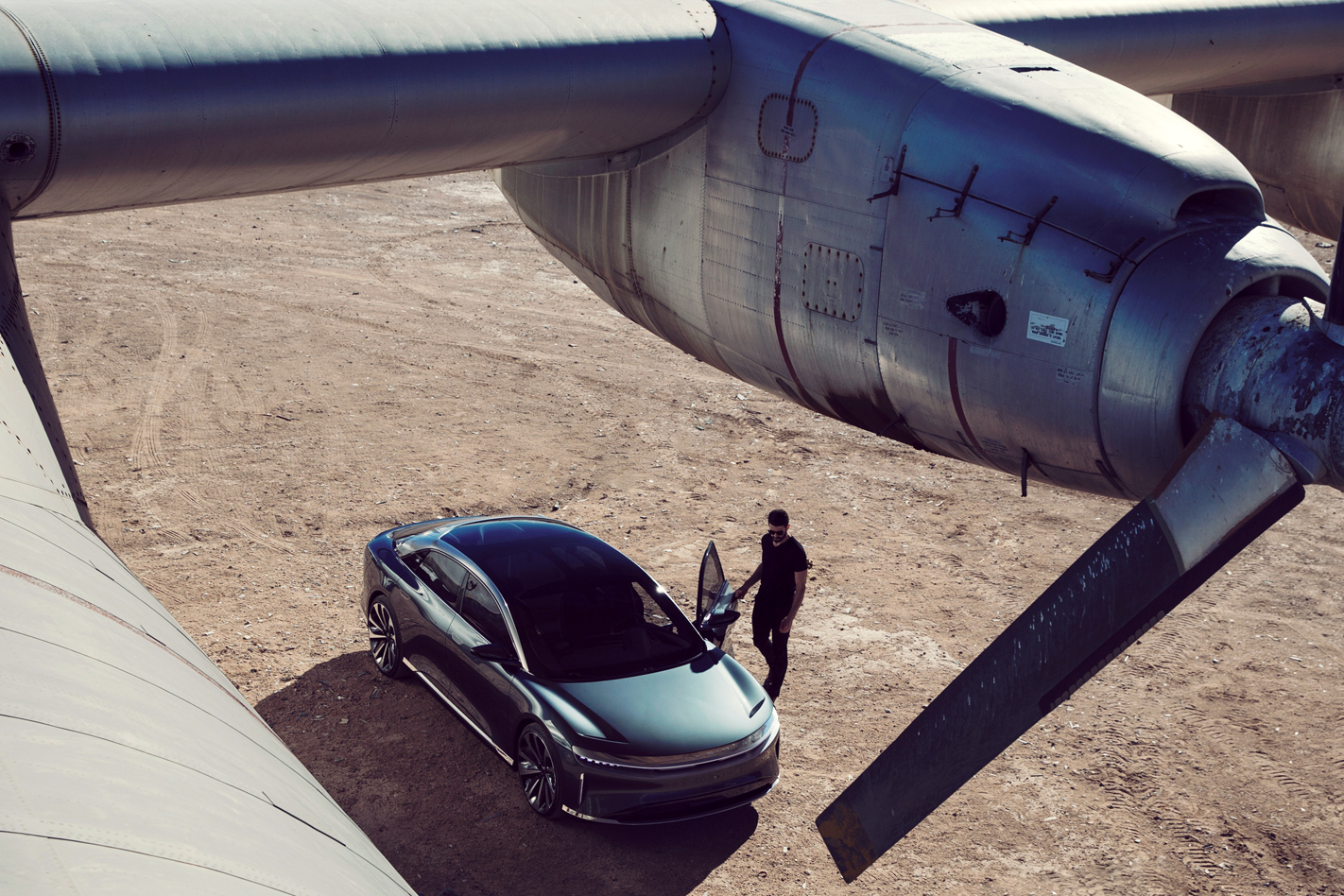
The Quattro was a problem. In the early 90s, the ghost of the ur-Quattro haunted Audi.
Of course, Audi wasn’t alone in experiencing this problem. The E-Type legend gives Jaguar designers sleepless nights and Pagani still can’t lay the Zonda’s ghost to rest. Build a once-in-a-generation car and the follow-up is, by definition, going to be a disappointment.
That car was the S2 coupe. Mechanically fairly similar to the final ur-Quattro 20v but saddled with 120kg of extra pork, more feminine styling, softer suspension, lame Servotronic speed-sensitive power steering, and no meaningful competition pedigree to lean on, the S2 struggled. It was a car that Ingolstadt expected to continue the lineage, but almost immediately found itself outdated, out of its depth and plumb out of goodwill.
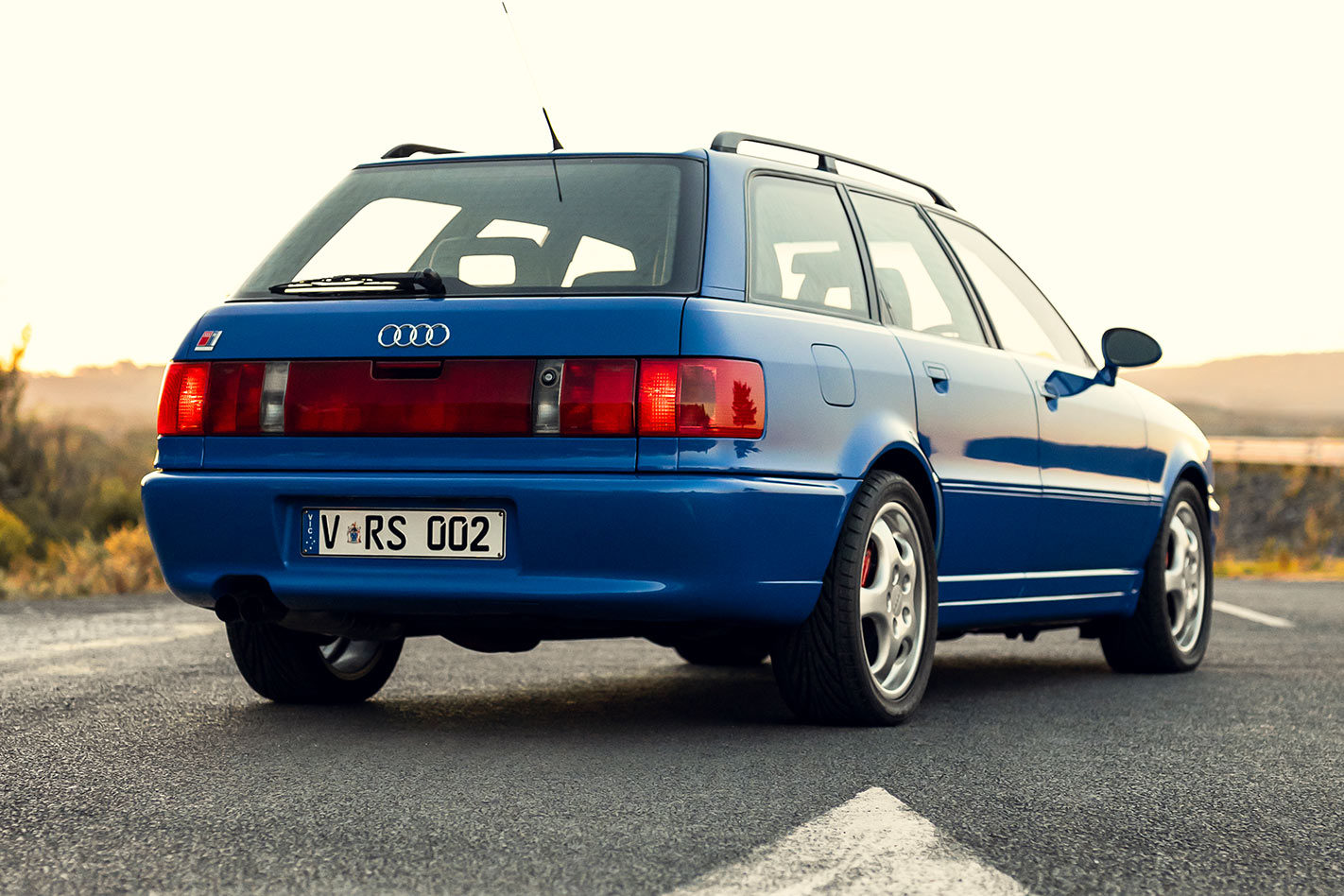
The year after Audi’s 162kW coupe launched, BMW introduced the lighter, quicker and more rewarding E36 M3 coupe. Audi had no answer to the 213kW BMW, despite heavily revising the S2 coupe and adding a wagon variant for 1993. The five-door was particularly interesting, especially when you looked beneath the rear end and realised that, largely for interior packaging reasons, Audi had ditched the old strut rear suspension and fitted it with a ‘proper’ double wishbone set-up.
What we didn’t know then was that Audi was laying the foundations for a car that would inherit the quattro mantle and set a template that’s still valid a quarter of a century later. The RS2 owes its genesis to Porsche’s 80s hypercar, the 959, built in what is effectively the company’s special ops centre: the Rössle-Bau plant at Zuffenhausen. After 959 production had ceased, the line at Rössle-Bau was used to inject some much-needed contract Deutschmarks into Porsche’s coffers. In 1986, Porsche stuffed a 928’s 4.7-litre V8 under the bonnet of a Mercedes-Benz G-Wagen for use as a Paris-Dakar support vehicle, paving the way for a partnership in 1990 with the W124 500E sedan, a 243kW hot-rod that zig-zagged across Stuttgart between the two companies’ body, paint and engine shops.
But by 1994, Porsche was in one heck of a hole. That year, the company sold 21,124 cars globally, a mere 7.5 percent of its 2019 production numbers. Its range consisted of the final iteration of the air-cooled 911 and the ageing 968, itself a facelift of the 944, which was introduced more than a decade earlier. Audi, by contrast, had its tail up. Ferdinand Piëch, the former head of Audi’s supervisory board, had transferred to the chairmanship of Volkswagen’s board the previous year and had left Audi in a transformational position.
Audi’s greatest ever product guru had set in place plans for a product offensive in 1994 with a trio of pivotal mainstream models aimed at lifting Audi upmarket: the all-aluminium Audi A8, the slick A4 and the revised A6. The grandson of the late Ferdinand Porsche also had another ace up his sleeve. As he was leaving his management suite in Ingolstadt, Porsche was overseeing the build of a very special five-cylinder engine at Audi’s Salzgitter plant, running each powerplant on a dyno at full load for 90 minutes to ensure it made the required power figures. Meanwhile, Audi was sending S2 wagon bodies-in-white to Rössle-Bau, finished with gearbox, suspension, driveshafts and trim parts. The result was finally revealed to an astonished global media at the 1994 Geneva Show.
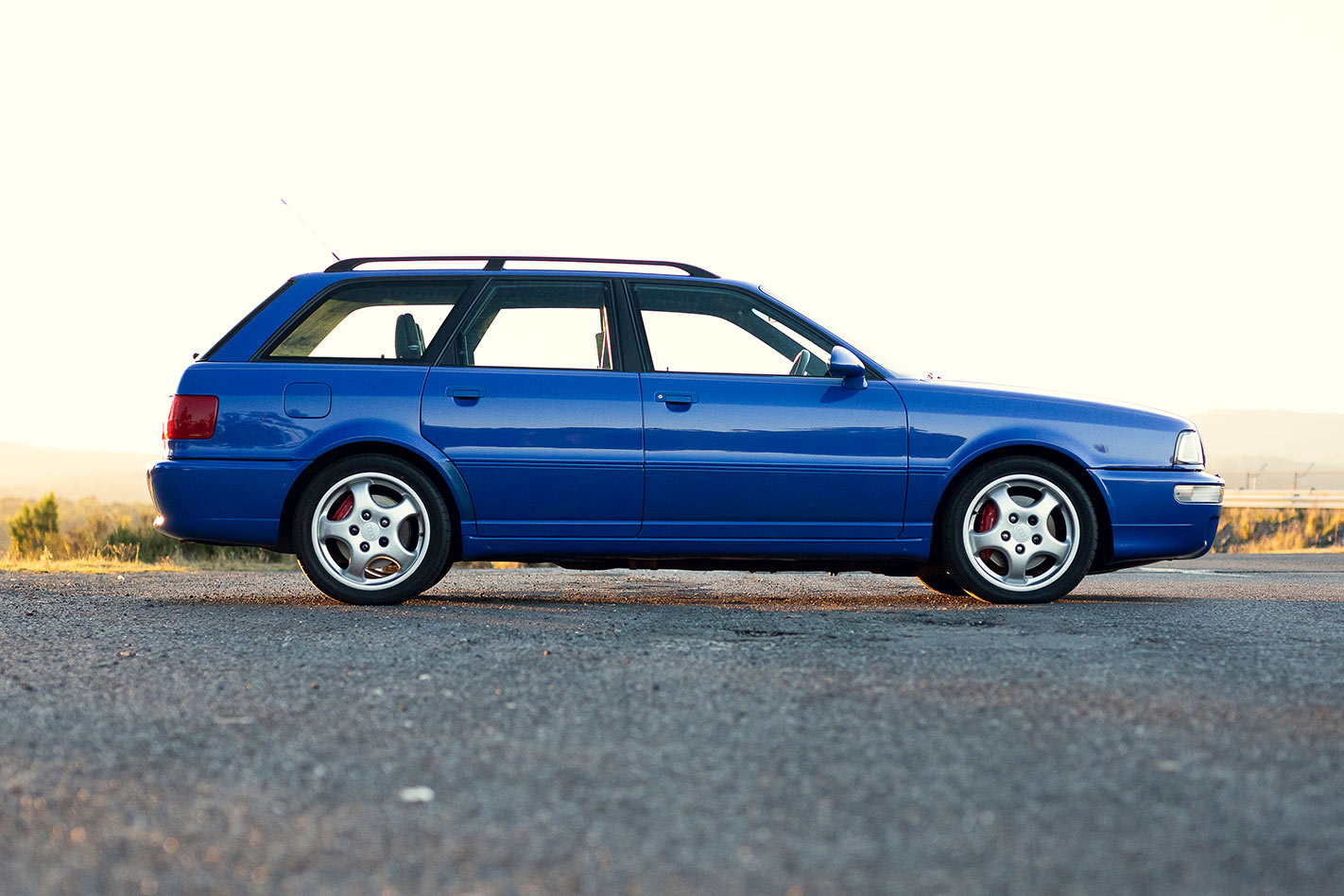
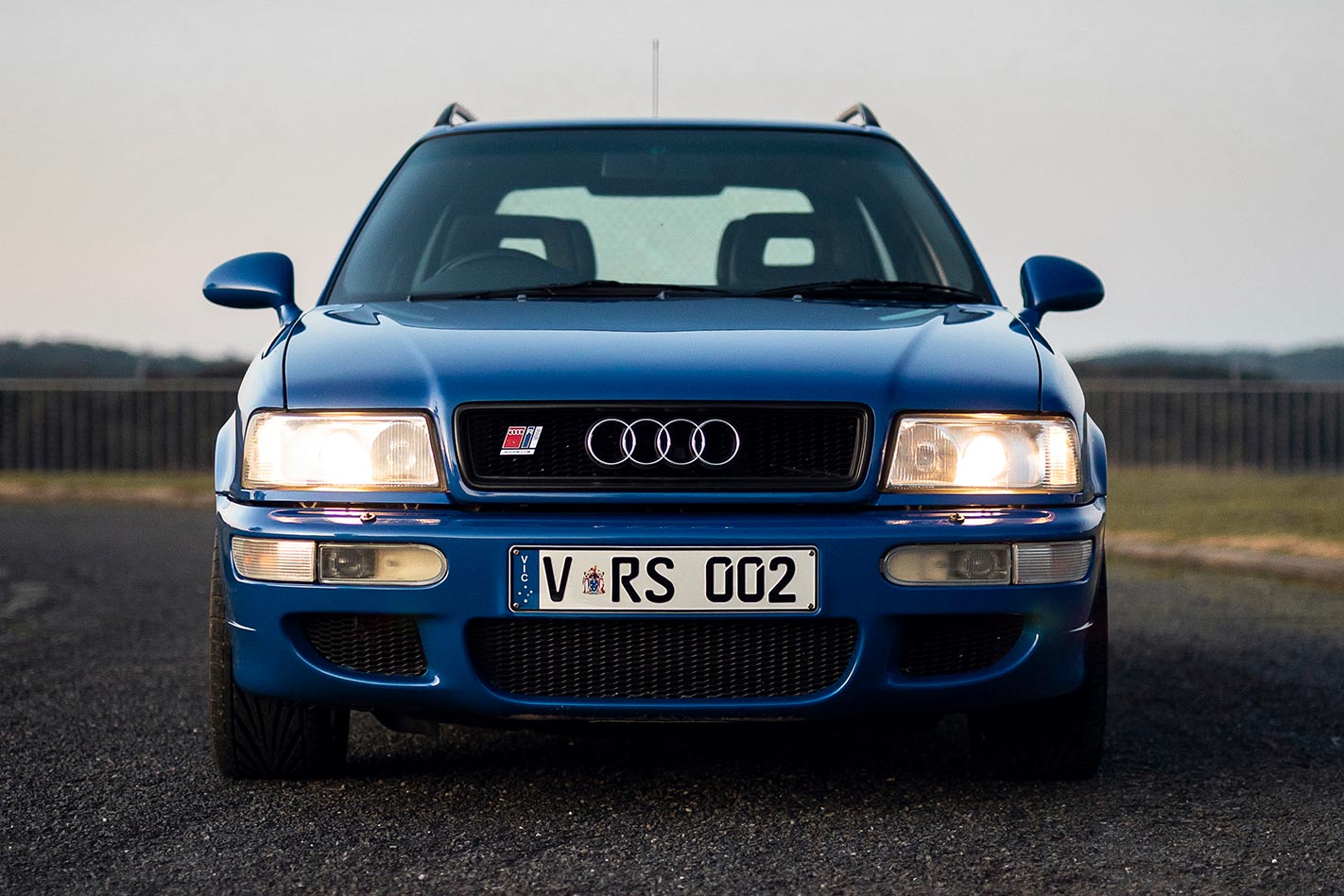
Nobody had ever seen anything quite like the RS2 Avant. The world’s fastest production wagon featured a 232kW version of the venerable 2.2-litre five-pot engine, augmented by a KKK turbocharger fully 30 percent larger than that fitted to the S2 wagon, running 1.4 bar of boost, with higher flow injectors and a hefty intercooler, a revised camshaft, a modified induction system and a low-pressure exhaust system. A revised Bosch URS4/URS6 engine management system helped the RS2 develop a chunky 410Nm at 3000rpm, and a better power-to-weight ratio than an E36 M3. A six-speed manual transmission directed drive to each corner, with a manually lockable differential on the rear axle. When timing gear was strapped on board, it was soon apparent that because of its phenomenal traction, the RS2 was quicker to 50km/h than a McLaren F1.
An agreement had been put in place to build this vehicle as a wagon rather than the more obvious coupe. Had Audi chosen to simply power up the S2 coupe, it would have been more powerful than any model on Porsche’s books in 1994. Embarrassing the 911 was clearly not in Porsche’s best interest. The RS2 was far from the first quick wagon from Audi, but it was markedly the most extreme to date. Ingolstadt’s formline included the lovely C3 200 quattro turbo of 1983 through to the fierce Euro-spec S4 Plus version of the C4-generation 100 that, in 1992, got the 206kW 4.2-litre V8.
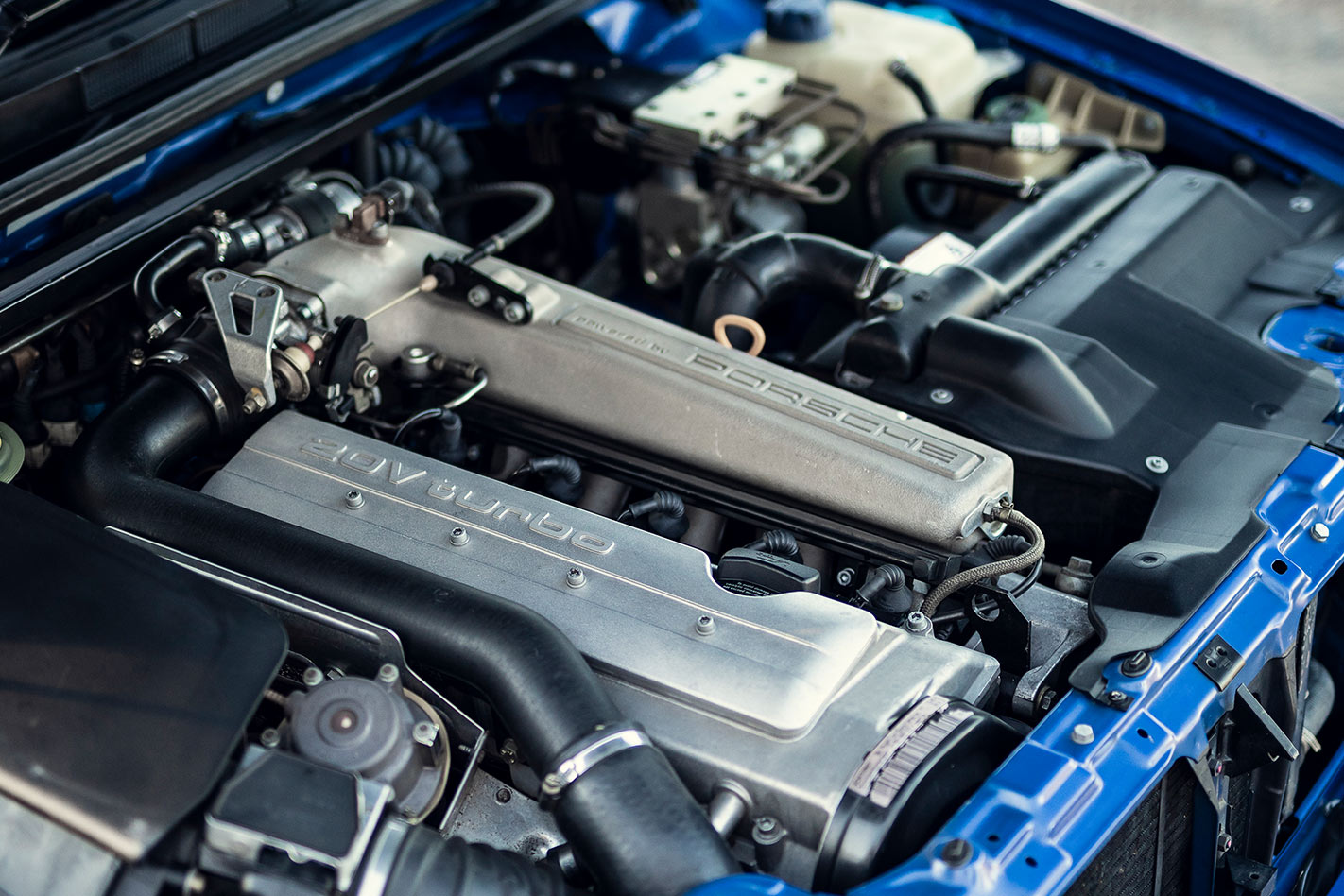
Peter Robinson was the first to file copy in Wheels with seat time in the RS2. In the December 1994 issue, Robbo sounded suitably impressed. “Beyond a 0-100km/h time of 5.4 seconds, the overtaking ability is astonishing,” he said. “Here at last is an Audi (apart from the Quattro) with steering communication. It has superb high-speed stability, near neutral handling with gentle understeer at the prodigiously high dry and wet weather limits of adhesion, clearly benefitting from the power split by the central Torsen differential.
“This tenacity makes the RS2 a relaxing quick cruiser. Even at 225km/h on a wet autobahn, it feels rock steady. Most surprising of all is the high standard of ride comfort. The taut suspension is never harsh, only the inevitable tyre rumble over coarse surfaces exposing 245/40ZR17 rubber that runs at quite high pressure.” His sign off? “Will enthusiasts pay $145,000 for a rebadged Audi 80 developed by Porsche? Too right.”
On that score, he was right in theory but off-beam in practice. The RS2 Avant was indeed a sales success for Audi, the original production run being oversubscribed and eventually extended, but the car never made it to Australia in any official capacity. Importer Inchcape had planned to bring 25 examples to this country but couldn’t make the numbers work on pricing versus demand. 182 right-hook examples went to the UK, with New Zealand and South Africa also accounting for a smattering.
It’s illuminating to drive an RS2 today, if only to see how vehicle development has progressed in the last 26 years. By today’s standards its body control feels languid, the steering a little slow and both clutch and gearshift long and deliberate in their actions. The boost threshold is far higher than in modern cars, but when the rev counter registers 3500rpm, the RS2 still has the power to shock. It’s astonishingly violent in its power delivery and the engine note is fantastically evocative. The RS2’s Torsen diff normally divides torque 75:25 front to rear but can reverse that ratio when required, marked by a thud from the rear axle. Yes, the old stager still has it.
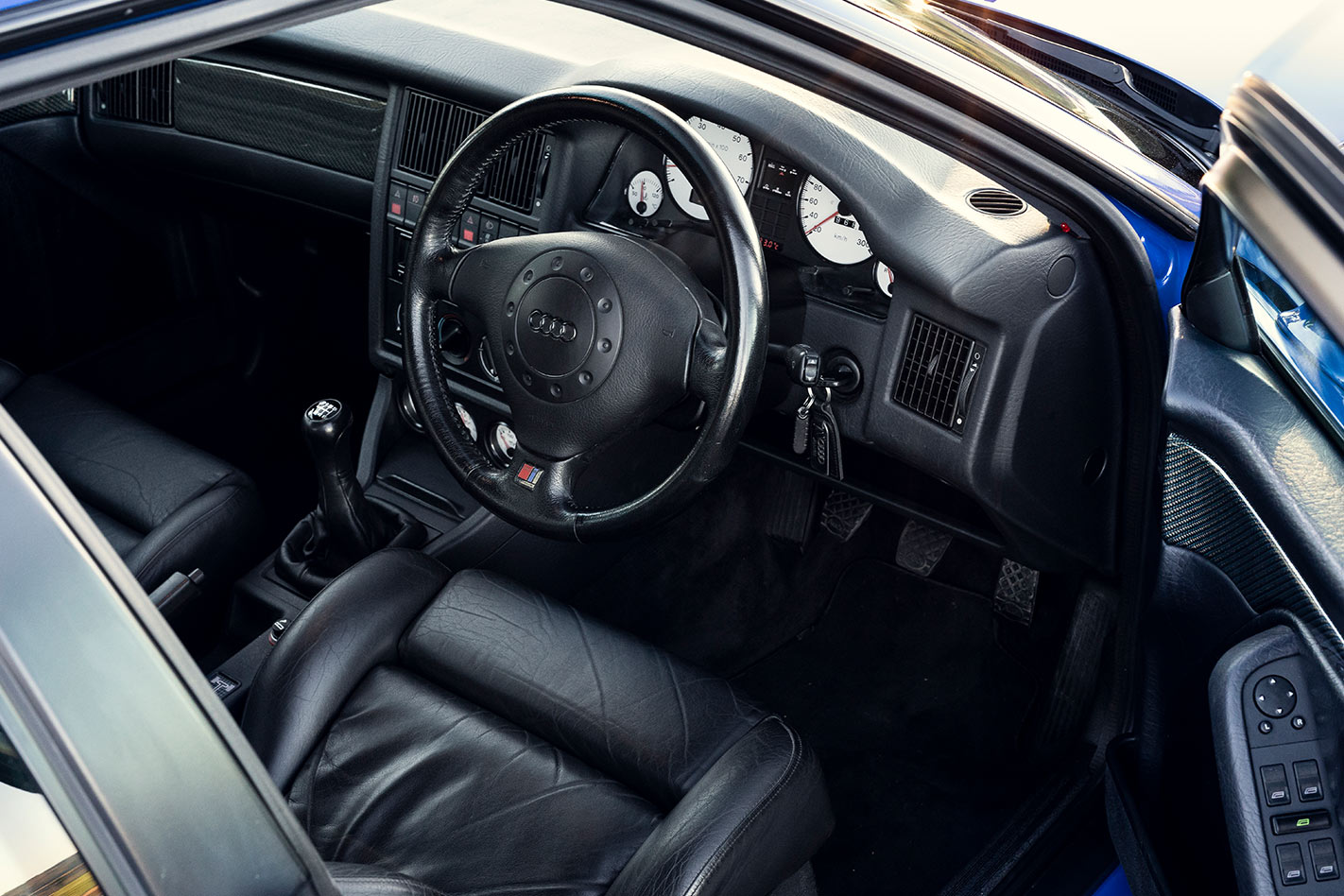
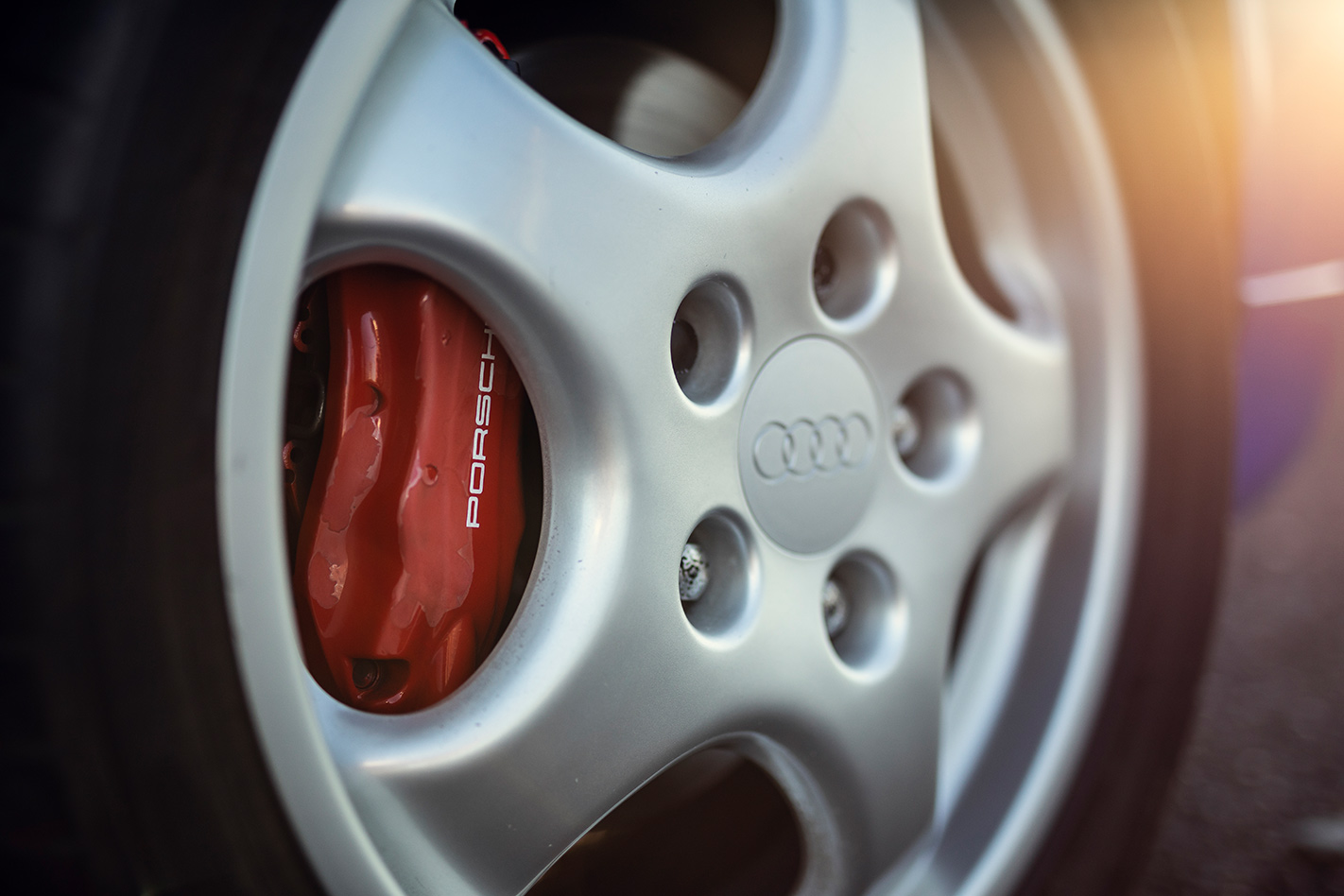
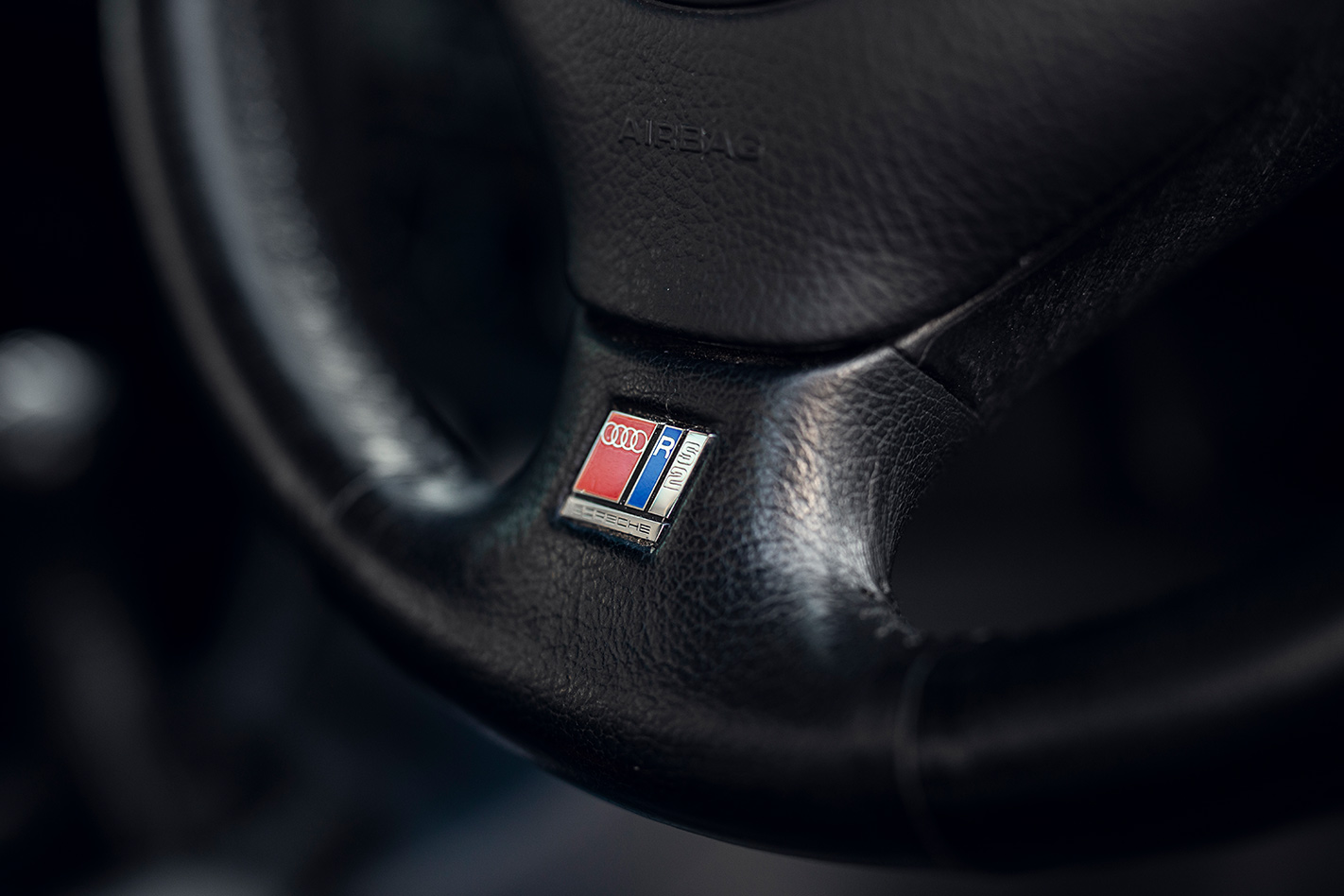
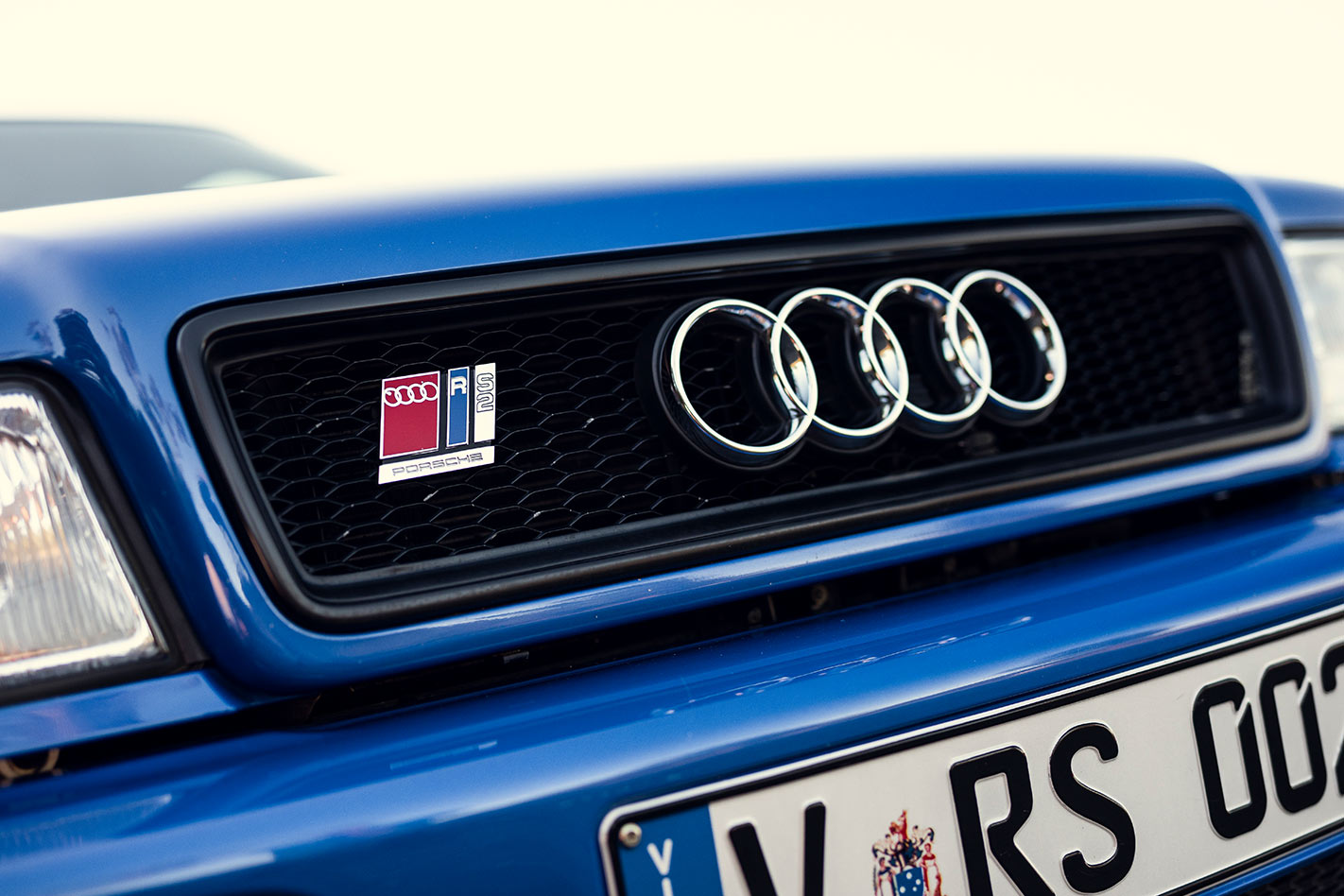
Walk round one and it’s easy to spot the Porsche parts. Audi was never coy about the relationship and you’ll spy the Porsche legend on the boot badge, on the steering wheel, on the Brembo brake calipers and the cam covers. The RS2 also features Porsche mirrors, front lamps, fuel pump and wheels although if you really want to don the anorak, you could point out that the wheels feature a marginally different internal diameter to the hole in the middle compared to the Porsche 993’s alloys.
Running an RS2 requires you to keep on top of a few things. The galvanised bodies largely look after themselves. As long as it isn’t modified or neglected the engines are as tough as old boots too, usually good for 400,000km before the head needs to be whipped off for an inspection. Do make sure the five-year/120,000km cambelt change has been performed as this is a fairly involved job that requires dismantling most of the front body panels. Coil packs are soldered to the loom, so converting the whole system to a more modern modular set-up is a popular modification. A full geo set-up is advised to ensure factory alignment and check the car over for panel fit, overspray and other accident damage.
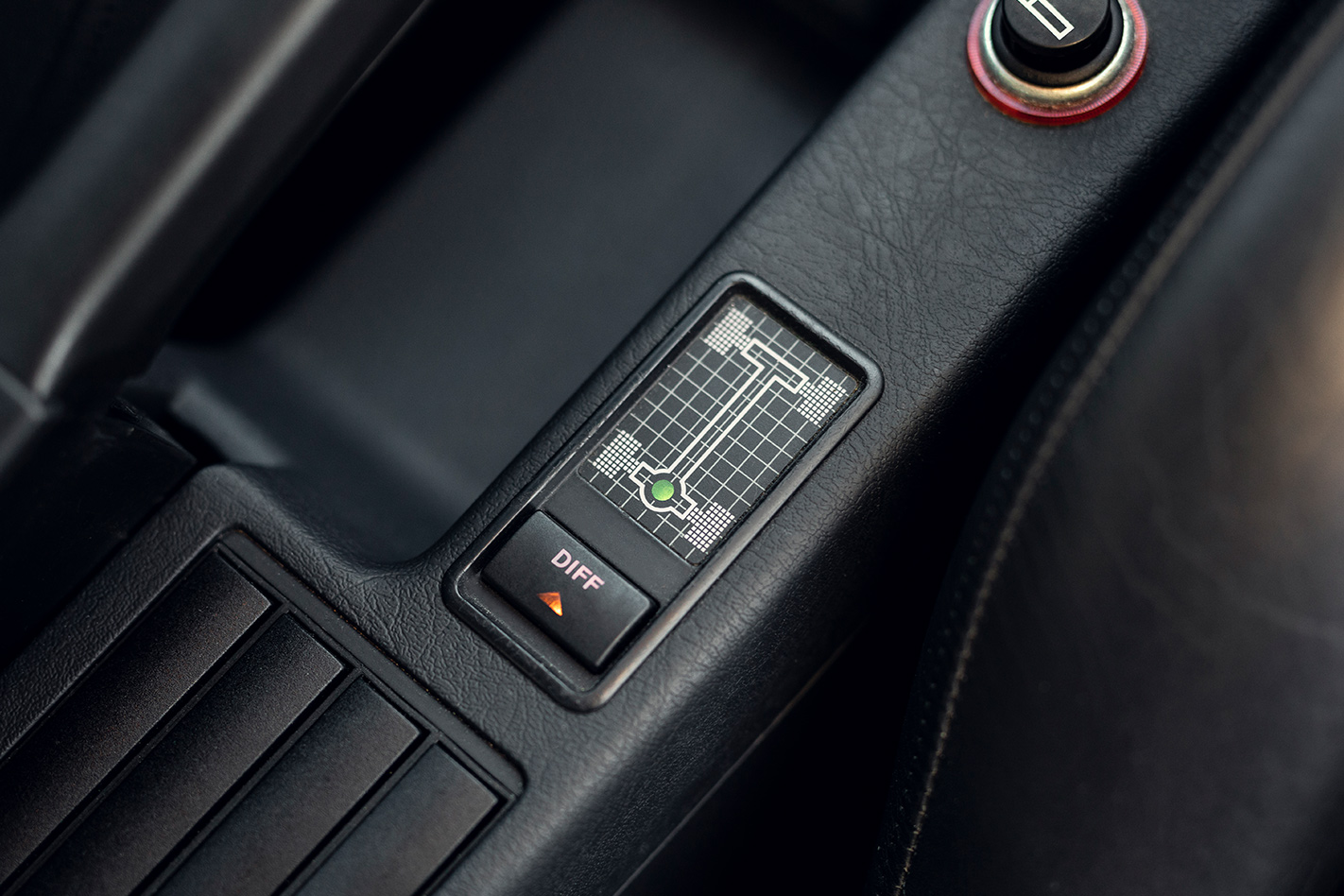
Gearboxes are probably the weak link in the transmission. You don’t want to hear a whirring noise at high revs in first gear. Finally, make sure that you’re looking at a genuine RS2. The VIN plate will be stamped with ARGE AUDI/PORSCHE RS2, and the VIN number starts with WAC. Since 2019, the RS2 has been eligible for import to the USA and values of left-hand drive cars have accelerated as a result. This has seen a consequent uplift in right-hooker prices, so don’t expect to find too much in the way of bargains. Buying in Australia is virtually impossible, but cars start from around £45,000 in the UK, which should see it landed in Australia from around $120k. Low-mileage mint examples are marching towards $200k.
The RS2 Avant was a car of its moment. It did more than any other to establish Audi’s uberwagon bona fides and was pivotal in going some way to exorcising the lingering ghost of the ur-Quattro. It also cemented Audi’s RennSport sub-brand as something to be taken seriously. Today it still blends practicality with an exotic piquancy just as effectively as it did when unleashed in 1994. Maybe more so with the benefit of hindsight. It’s a landmark Audi and the standout milestone in the chronology of the performance wagon. Small wonder it’s still so adored.
WHAT IS IT LIKE TO OWN?
“This car was delivered new to a guy in New Zealand and it was personally imported to Australia, but then the owner found it was too hard to import it back to NZ. I bought it in 2008. I’d had an S2 coupe and a B5 RS4, and I spotted this in a garage. I’d heard of one but never seen one and it was the only one anyone knew of in Australia at the time. I’ve got a thing for Audis. The B5 RS4 was my toy but as soon as I saw the RS2, I just knew that I wanted it. I’ve owned it since 2008 and in that time have only added around 6000 kilometres to the odo. She mainly sits in the garage.” – Ross Young, Melbourne, VIC
The good: Historical significance; turbo pace; quattro grip; mechanical toughness; practicality; respect from other car lovers; rarity in Australia; values are only going up over the longer term
The bad: Not exactly a buyer’s market; RS2-specific parts expensive and hard to source; old-school power delivery and body control; B7 RS4 Avant is cheaper and more capable
AUDI RS2 AVANT SPECS
Engine: 2226cc 5cyl, dohc, 20v, turbo Max power: 232kW @ 6500rpm Max torque: 410Nm @ 3000rpm Transmission: 6-speed manual Weight: 1595kg 0-100km/h: 5.4sec (claimed) Economy: 10.5L/100km Price: from $120,000 (value today)
It’s the news we have all been waiting for, with General Motors officially confirming it will continue in Australia as GMSV (General Motors Special Vehicles).
GMSV will be run by Joanne Stogiannis, who has been confirmed as the director of the new business.
The new business will ensure 150 skilled Australians will be employed in engineering and manufacturing jobs in Victoria.
GMSV will begin operating as a business in the fourth quarter of this year.
The official announcement of GMSV’s creation is also an inadvertent confirmation of the inevitable death of HSV as a brand – though the core business will live on.
Walkinshaw will continue its partnership with GM under the new business deal.
Holden ceased local manufacturing in 2017, before announcing a shock departure from Australia entirely in February this year.
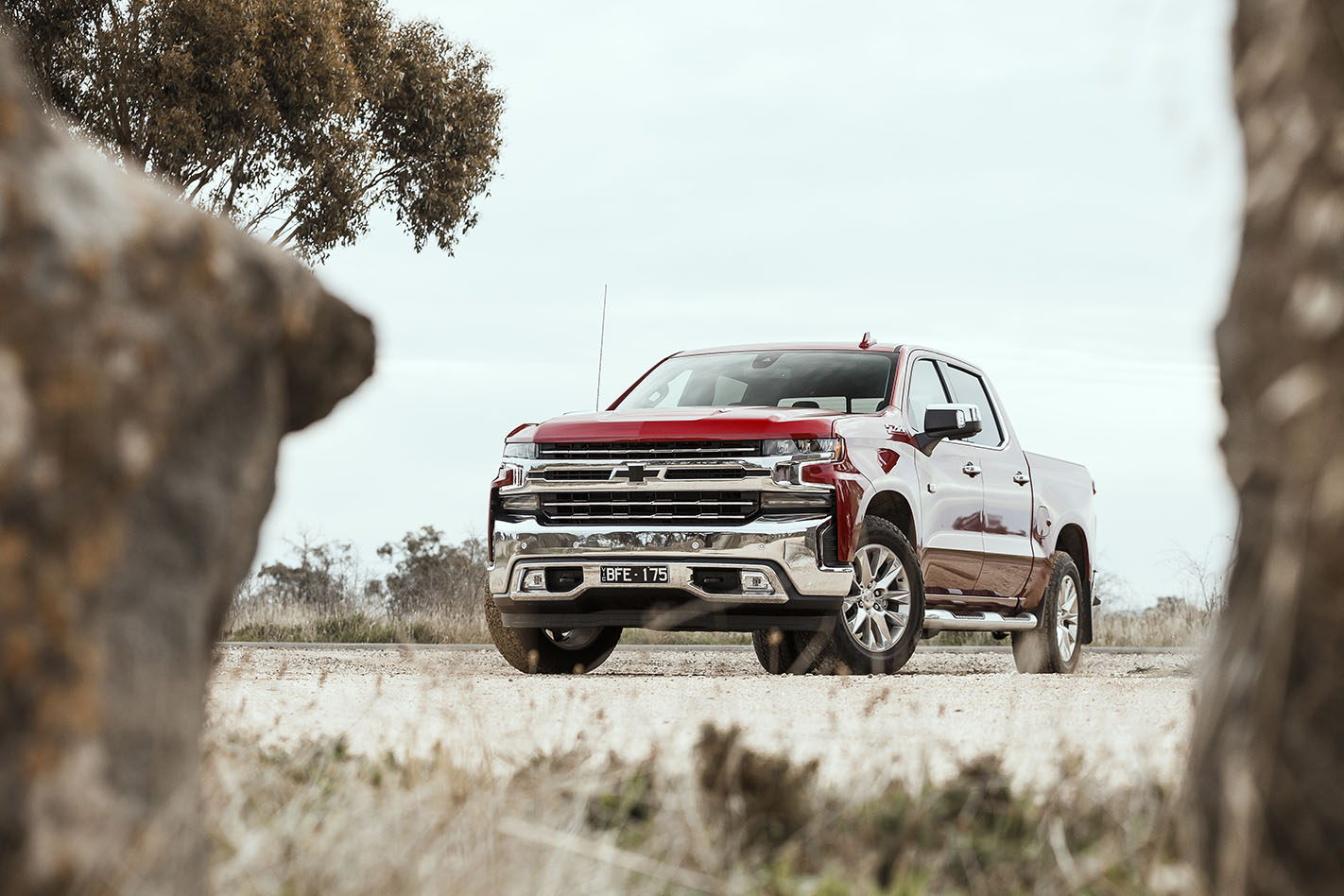
The Silverado 1500 will form the backbone of GMSV’s product range initially. The large American pick-up is already re-engineered in Australia and is carving a strong niche in the market.
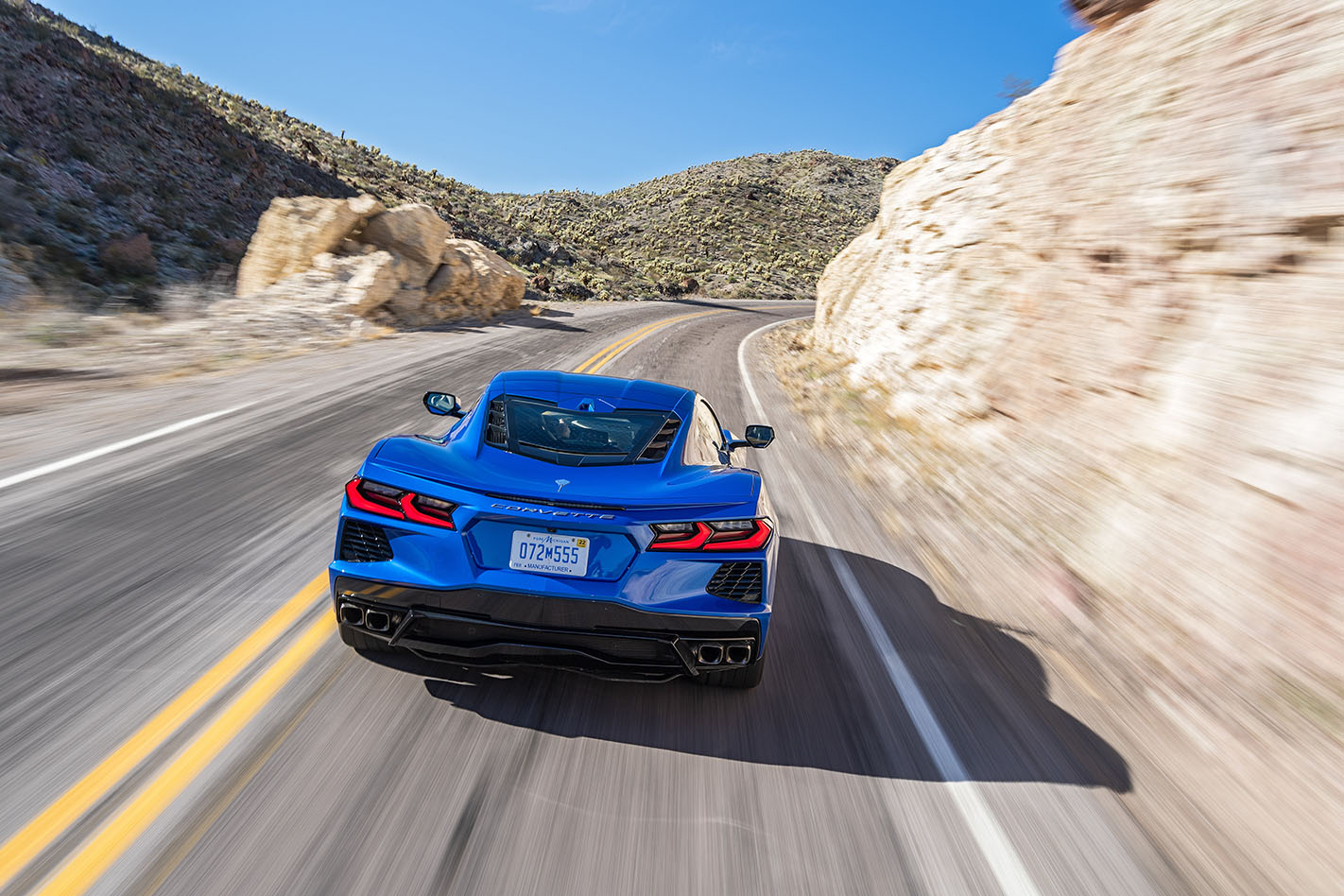
Chevrolet’s mid-engine C8 Corvette is locked and loaded for an Aussie arrival, following a period of uncertainty during the peak of the COVID-19 global pandemic.
The C8 will be built in right-hand drive from the factory in the US, before being shipped to Australia, removing the need for any local re-engineering by Walkinshaw and GMSV.
It’s expected the C8 Corvette will arrive in Australian showrooms next year with a pricetag in the region of $130,000
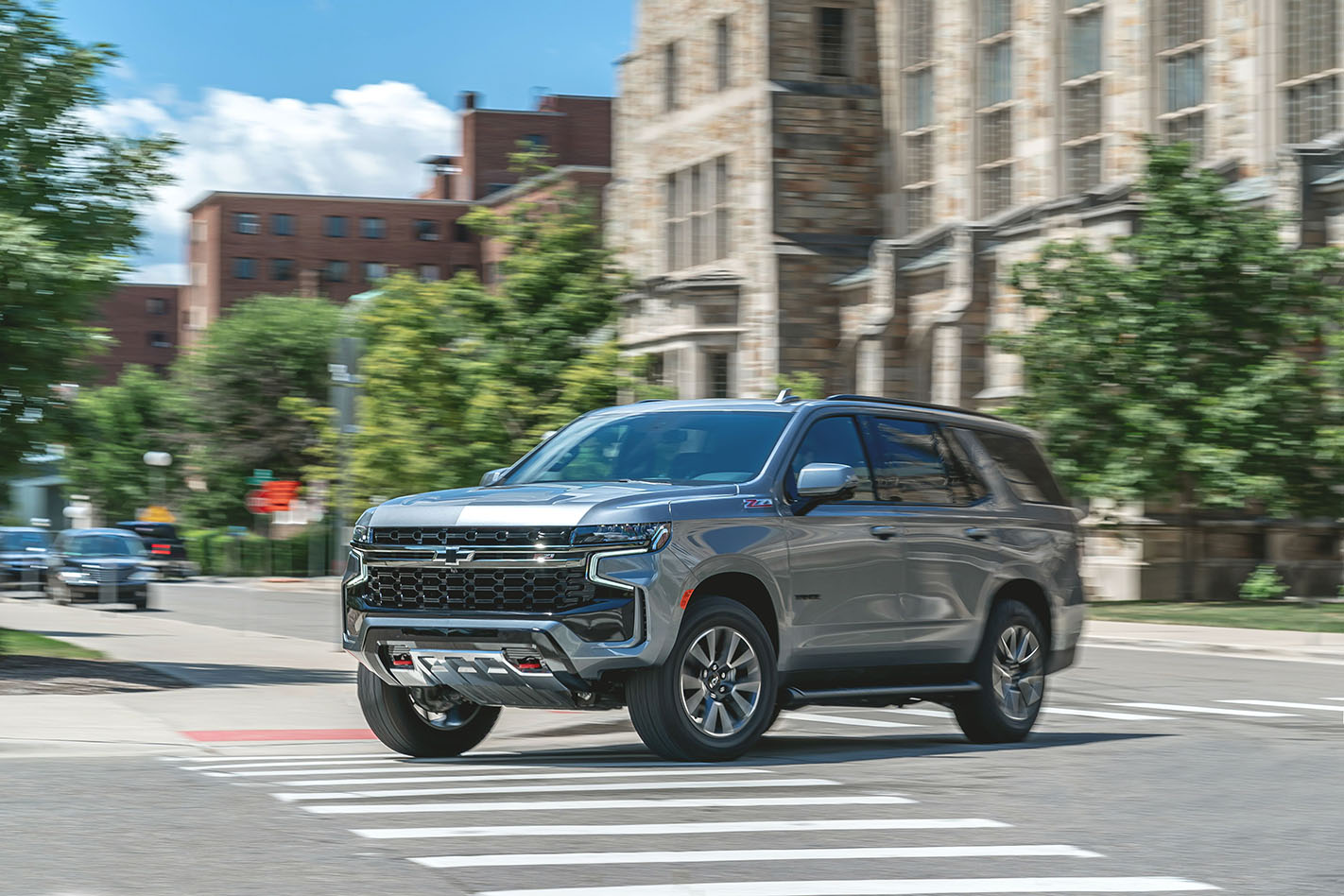
Other products that could arrive include the Chevrolet Tahoe and Suburban SUVs, which would be among the largest high riders in the Australian market when they land.
Cadillac has been a brand that Australian customers have been baying for in recent years, with its range of fast sedans appearing like logical replacements for the hotted-up Commodores that were unleashed by Clayton up until the end of local manufacturing.
When asked about the brand’s potential for Australia earlier this year, HSV’s executive director of sales, marketing and after sales Chris Polites remained tight-lipped.
“They look exciting,” he said. “That’s all I can really say about them at this point in time.”
HSV first began re-engineering previously US-only vehicles to right-hand drive with the Silverado 2500 and Chevrolet Camaro.
Both those model lines have currently ceased in Australia, though the 2500 will return under GMSV.
The future of the Chevrolet Camaro remains in doubt in North America, leaving red-blooded GM fans without a natural rival to Ford’s ultra-successful Ford Mustang which is sold in right-hand drive from the factory.
Wheels understands the groundwork for the deal was first put together in the months immediately following Holden’s departure from Australia in February.
However, official confirmation has been delayed as Holden and GM were dragged into a lengthy negotiations process with dealers about the compensation package that was offered.
Former Holden and current GM president Mark Reuss indicated at the new business in the press release that announced Holden’s death in February.
“We do believe we have an opportunity to profitably grow the specialty vehicle business and plan to work with our partner to do that,” he was quoted as saying.
A trademark for the GMSV name and logo was filed last month in Australia, all but confirming the end of the HSV brand as we know it.
Walkinshaw will continue to stick to its roots and develop high-performance packs and models based on GM vehicles.
MORE READING
- The decline of Holden (and the Commodore) in numbers
- Holden’s lost heroes: are these the cars that could have saved the General?
- Holden’s concept cars could be saved
- Should I buy a discontinued Holden?
- This Vietnamese car company could save Holden’s Aussie workers
- Could left-hand-drive cars have saved Holden?
