
What’s on WhichCar TV this week?
Hyundai Veloster at the Bay of Islands
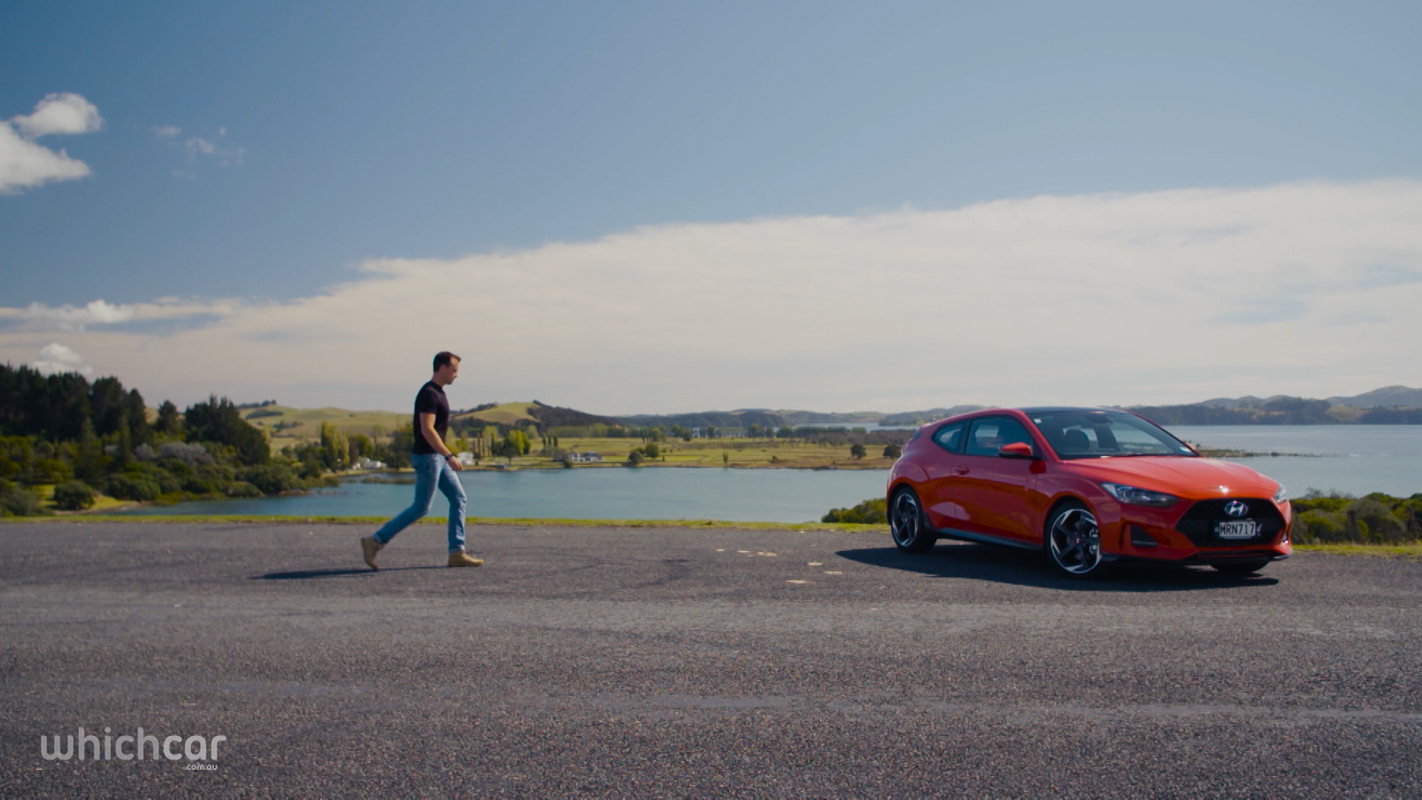
Dan has to do his best to break his attention away from the stunning backdrop of New Zealand’s Bay of Islands in order to have a good, hard look at how the Hyundai Veloster has evolved into its second generation.
SUV vs Dual-cab ute tow test
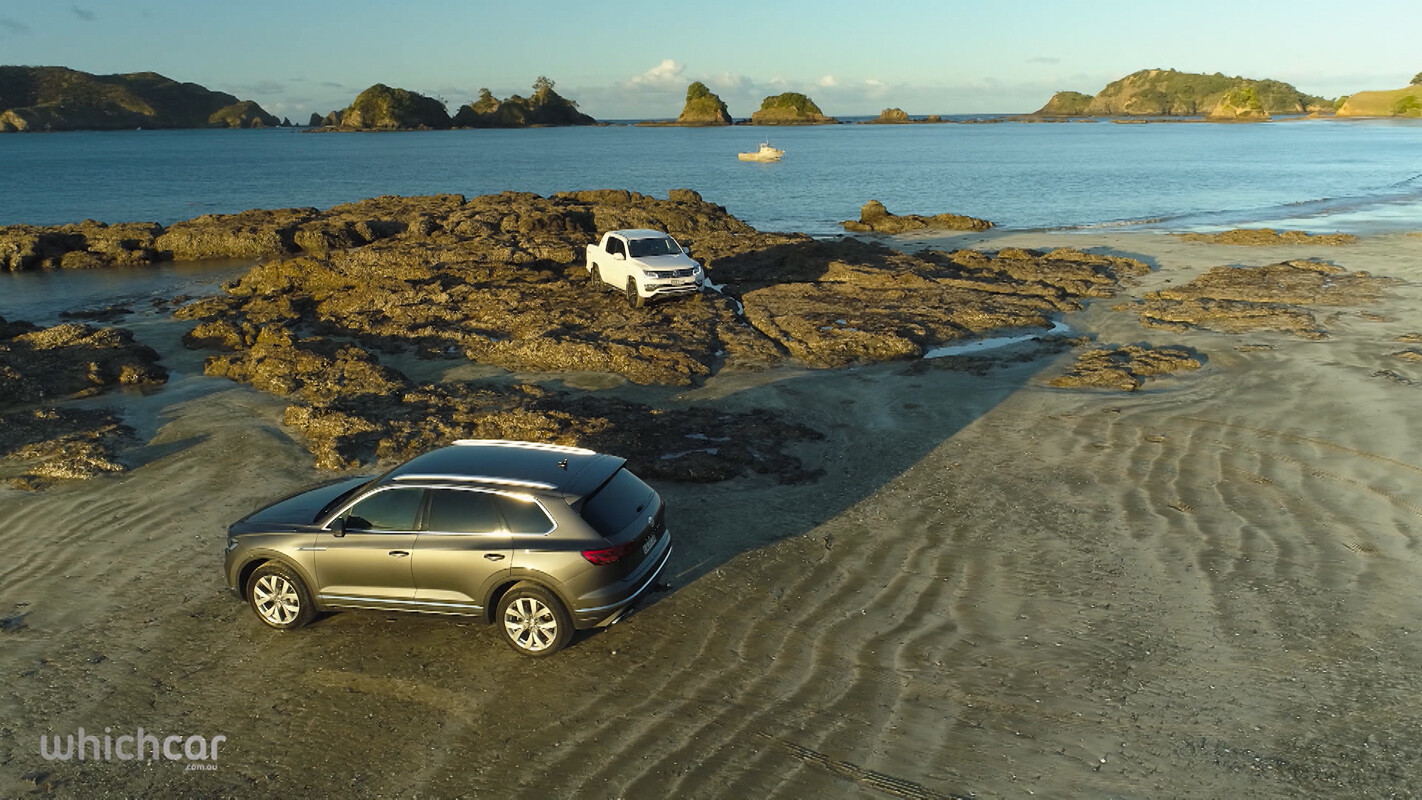
WhichCar TV’s Peter Elliott and Terry King do battle this week, each armed with a Volkswagen load-lugger. Watch on as we pit ute against SUV in this ultimate tow test.
Nissan Patrol sets sail for Cape Kidnappers
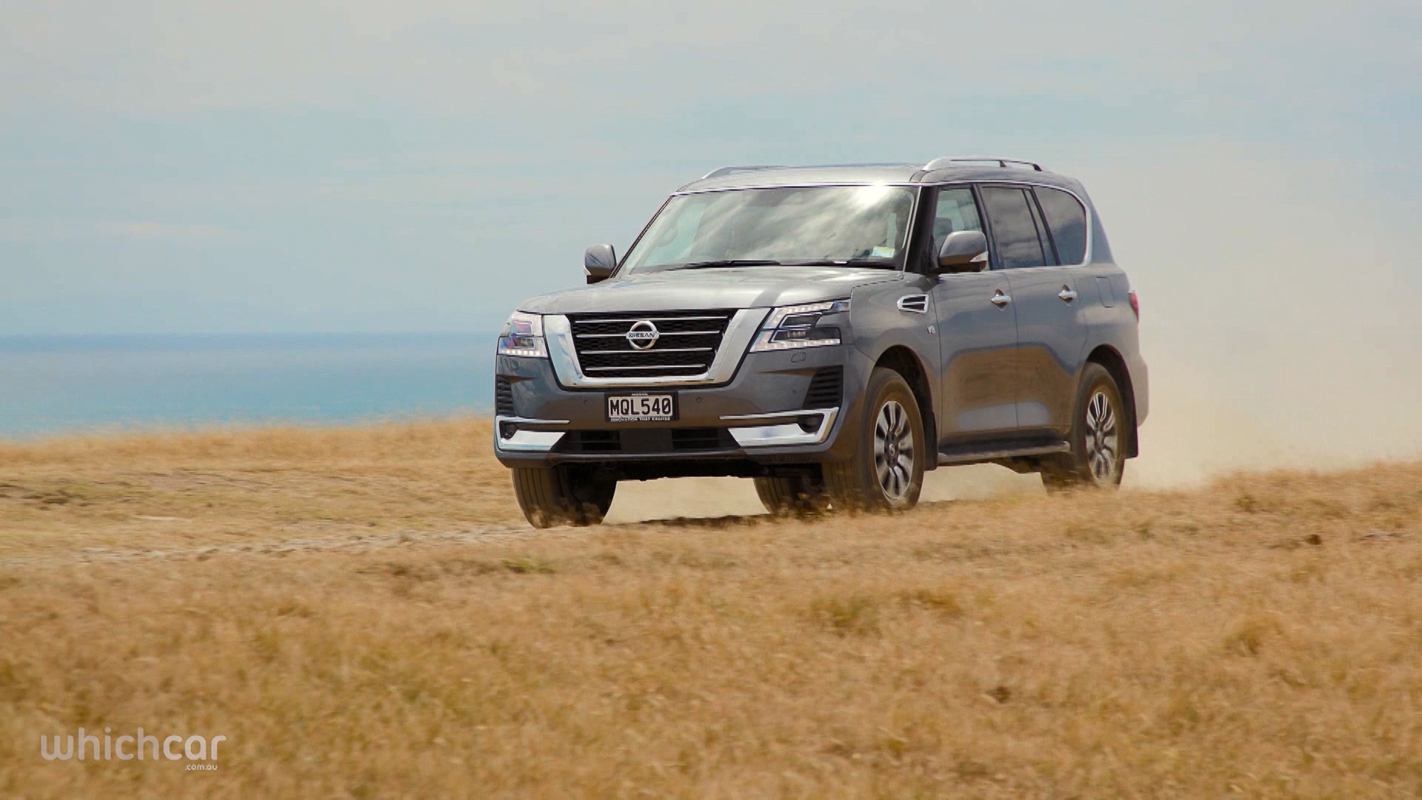
This week David steers the Nissan Patrol towards Cape Kidnappers, a sinister-sounding headland that has a dark history. Watch on as we set sail to learn more about the place, as well as the newly-facelifted Nissan Patrol.
WIN A TRIP TO THE MALDIVES WITH WHICHCAR
For season two, we’re also offering an amazing prize for our viewers. How does a trip to the Maldives sound? Pretty awesome, right?
The competition is open NOW so make sure you tune into WhichCar TV on Channel Ten at 4pm Sunday AEDT.
And, if for some reason you can’t (and it had better be a good reason!) then there’s a host of ways to catch up on the show, check out behind-the-scenes stuff and find out more about the cars Aussies want to buy.
For example, our weekly podcast, our Facebook page and our YouTube channel are standing by 24/7.
WhichCar TV Season Two Episode 16
4:00pm Sunday June 7, Channel 10
FIND THE HOSTS ON INSTAGRAM
Daniel Gardner @octanedan
Tony O’Kane @tony2000gtx
Emma Notarfrancesco @emmanotarfrancesco
Alex Inwood @thealexinwood
MISSED THE SHOW? Catch up at Ten Play
I could tell right away this dame was not having a good day. Equally obvious was that I was part of the empire’s downfall.
So, I’m driving along, at jogging pace, on a single-lane gravel road that has so far taken me nowhere. So completely nowhere, that now I’m retracing my steps, trying to find another way to get to my mate’s place; a joint that I know is within 400 metres of where I am right now but, thanks to the geography, is not linked to the track I’m on.
Baroness Shovestick is coming the other way, in a silver, late-model SUV (what else?) so I do what anybody else in the rest of the world does, and move over to the verge, figuring she can do the same and we can both pass safely. But no. She props in the middle of the track and she’s waving me back with both hands in that universally recognised way that suggests one of us is a peasant and it’s not her.
So, I back up, and wind down my window so she can apologise for being a dick-ette. Strewth, I’m wrong again. Instead she asks me in a voice clearly reserved for staff, if I live on this road. Nope, I tell her, I’m lost. “Did you see the sign back at the start of this road that says local traffic only?” she wants to know.
Yep, I admit, but…
She doesn’t wanna know. Just sits there shaking her head as if I’m the dumbest turnip ever to be lost in her street.
The Speaker tries to help: It’s a dead-end street, she offers.
“I know!” Madame spits through the window. “I live here.”
I have a quick think about my next move. Do I explain that I am actually local traffic right at this very moment? Do I point out that the sign said ‘local traffic only’, ‘not local residents only’? Do I ask if she’s the police or do I simply apologise for not understanding that she clearly owns the road we’re on.
In the end, it doesn’t matter because, still shaking her head, she mashes the gas on her urban-truckster and does the only smart thing she’d done so far this year. And disappears.
Now, I don’t let people like that ruin my day. Clearly, she was having a bad one herself and that’s fine, but don’t try to drag me into it. And, yes, maybe she does get a lot of lost folk down the road she lives on (although I doubt it, my mate’s place – the one I was trying to find – is pretty remote). But neither does that excuse her for assuming that (a) that I’m ignoring (advisory) road signs, or (b) that she has some kind of baronial right-of-way that doesn’t apply to us mere serfs.
I’d like to think she’ll be reading this, but I doubt it. The only magazines stacked up in her dunny would be ones with tweedy wankers shooting unicorns on the cover, or journals professing their undying love for Our Royals. Then again, if the stories therein discourage one other pair of cousins from starting a family, then they can’t be all bad.
The problem is, this dragon is not on her own. I’ve driven all over the world, and I can not think of one other country where such a territorial, belligerent, aggressive, entitled mood is the norm. And this was an elderly female with obvious signs of a comfortable and satisfying life. God forbid I ever run into one of her inbred kids.
If you’re holding out hope to secure a factory-built Chevrolet Corvette C8 in Australia, there’s still hope.
UK pricing and specs for the mid-engined GM sportscar have been released, confirming that the right-hand-drive program has survived GM’s COVID-19 cost-cutting measures.
It’s been the subject of much discussion and whether the right-hand-drive program – already considered a “bit of a bet” within the walls of GM – would be continued after a fraught year at GM.
Long-running strike action late last year put the build program behind schedule by several months, before closures due to the COVID-19 pandemic laid the US car industry out cold.
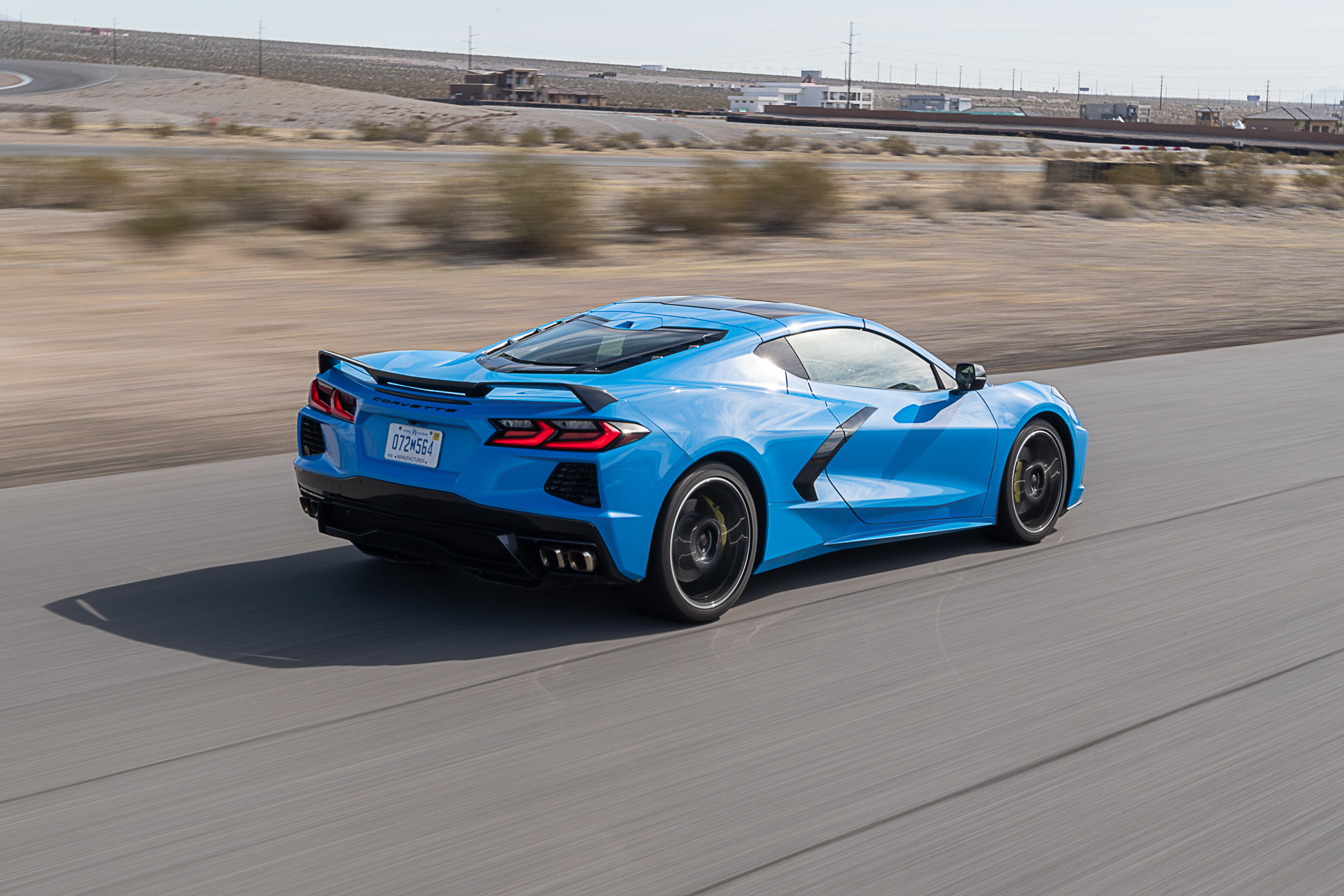
While the program was well advanced, it was an each-way bet that GM would shelve the Corvette right-hand-drive program to focus on catching up with local left-hand-drive production.
However, the news that the car will be offered in the UK is a sure sign that the right-hand-drive Corvette C8 exists in factory form.
Known as the Chevrolet Corvette Stingray in Europe, the Launch Edition of the car will kick off at £81,700, or a shade under $150,000 in Aussie dollars.
The pricing aligns with previous information that the Australian-spec car could arrive at a similarly favourable price.
Every Corvette sent to Europe will be equipped with the company’s Z51 pack, which includes manual ride-height adjustable front suspension, Brembo brakes with larger rotors and front brake ducts, electronic limited slip differential, shorter axle ratio, performance exhaust, an aerodynamics package and Michelin Pilot Sport 4S tyres.
As well, the Corvette C8 will ship with a data recorder, head-up display, satellite navigation, a rear-view mirror with integrated camera and heated/ventilated seats.
On top of that, the launch edition scores 3LT exterior and interior details, as well as active dampers.
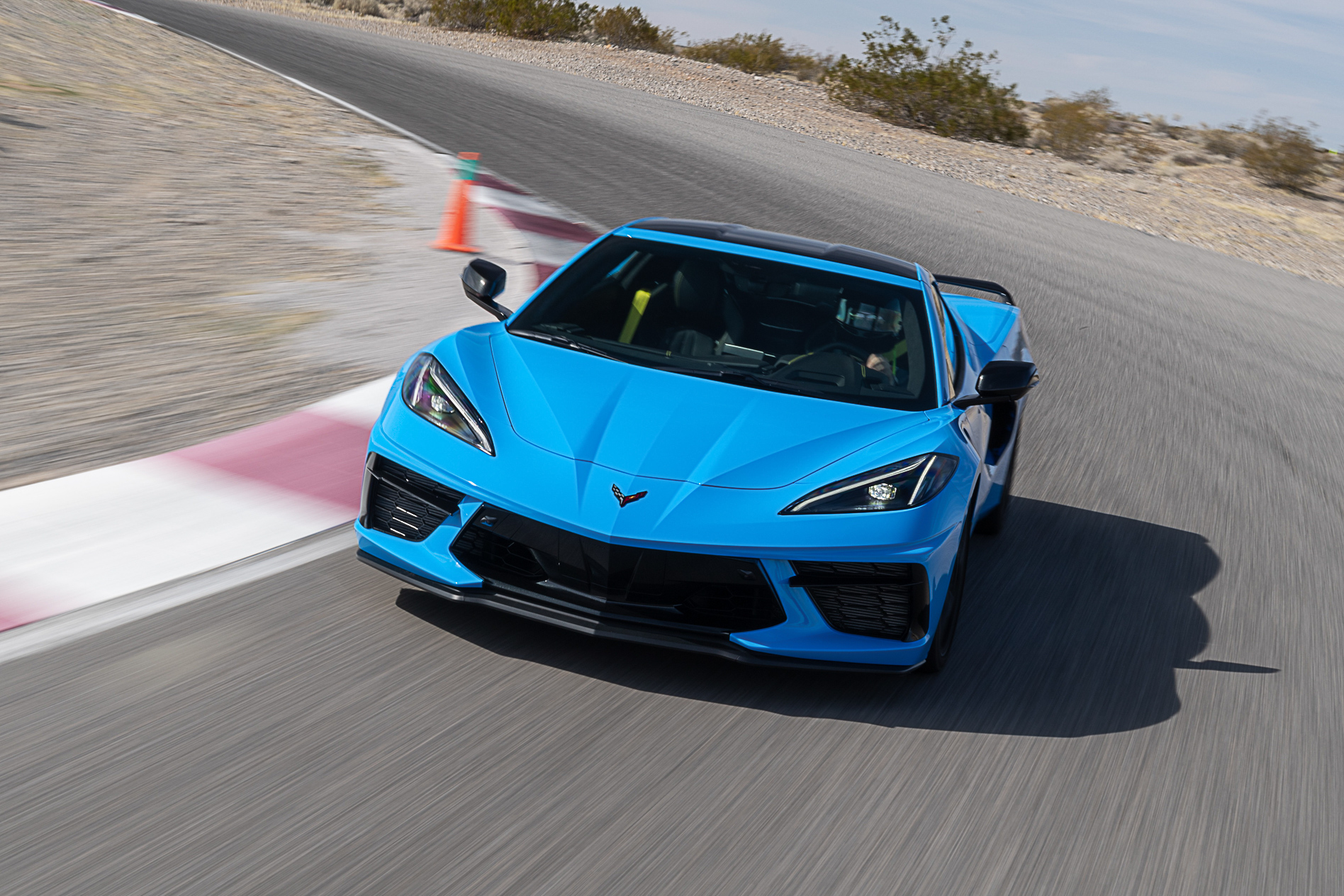
The European-spec Corvette will put out 369kW and 637Nm from its mid-mounted 6.2-litre naturally aspirated V8, thanks to the performance exhaust system.
What does this mean for the Corvette C8’s arrival into Australia? Well, it’s still all up in the air. With the demise of the Holden brand, the plan for the Corvette was for it to be sold via a new entity known as General Motors Special Vehicles.
However, for this arrangement to crystallise, GM Holden will definitely need to sign off on a peace accord with its dealer network over the proposed compensation deal from GM Holden to its dealers.
MORE HOLDEN NEWS
Holden departure will cost $1.6 billion
Ford: we will miss you, Holden
What now for Corvette in Australia?
Holden’s demise catches government by surprise
Last week, Holden said it will participate in a dispute resolution process that will help in settling discussions with dealers since February.
As well, the deadline for dealers to accept or reject the offer made by GM Holden has been pushed back to the end of June.
“GM Holden firmly believes it has operated in good faith and that its offer is fair and reasonable,” read a statement issued by the company. “The company continues to seek an outcome that supports the transition for dealers and ongoing support for existing customers.”
GM Holden also confirmed its desire to come to a peaceful resolution with the dealer group as a whole.
“As the company has stated previously, GM Holden wants an ongoing relationship with dealers and it does wish to provide them with the opportunity, as part of a compensation package, to enter into an ongoing long-term service and parts supply agreement,” it said.
It’s new mag day for us, and that means you’re getting a peek inside the covers of the June issue of MOTOR!
This month we challenge the bold statement made by BMW M boss Markus Flasch, that the BMW M8 Competition is a “Porsche Turbo killer.”
Along with that are a plethora of other awesome features and stories, plus the reviews and news you’ve come to expect from us!
You can find MOTOR at retailers around Australia. Or you can subscribe and save yourself some cash, there’s even a (cheaper!) digital subscription option.
Subscribers often receive their mags earlier, so you’ll get to see what MOTOR has to offer before anyone else.
Follow us on Facebook, Twitter, and Instagram to interact with us, give us feedback, and get a peek behind the scenes.
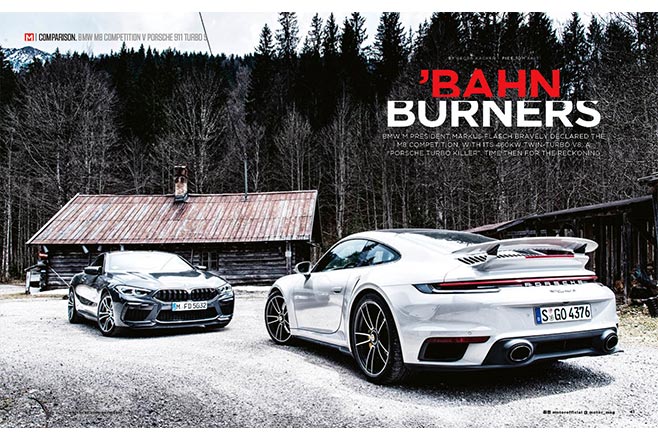
BAHN BURNERS – BMW M8 Competition vs Porsche 911 Turbo S
Bavaria’s latest high-powered weapon is aimed right at the sports car benchmark
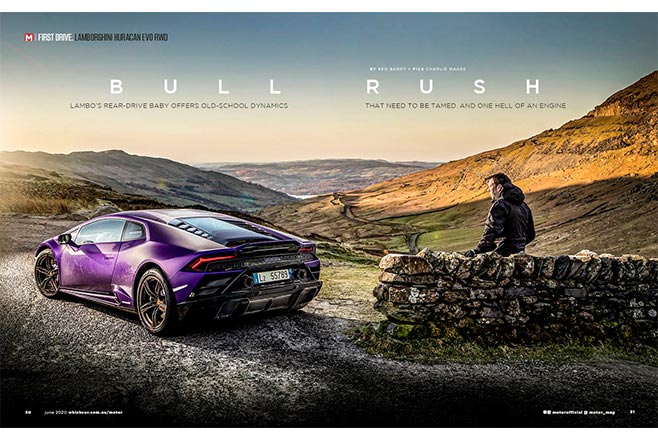
BULLRUSH – Lamborghini Huracan Evo RWD
That engine, that design… those poor rear tyres! Raging Bull trades AWD for old-school dynamics
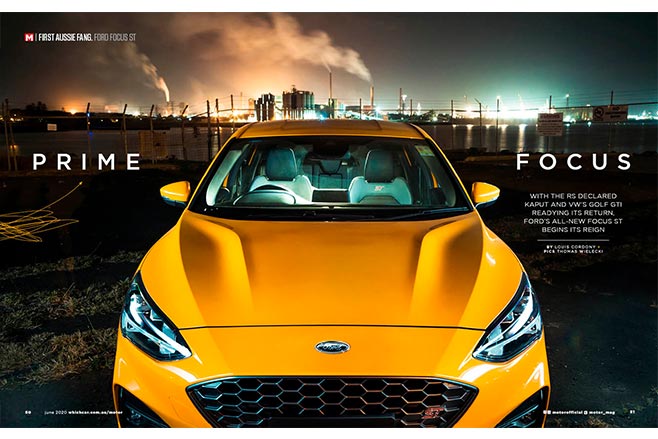
PRIME FOCUS – Ford Focus ST first Aussie drive
The king is dead, long live the king! Focus ST takes the reign from RS as Ford’s halo hot hatch
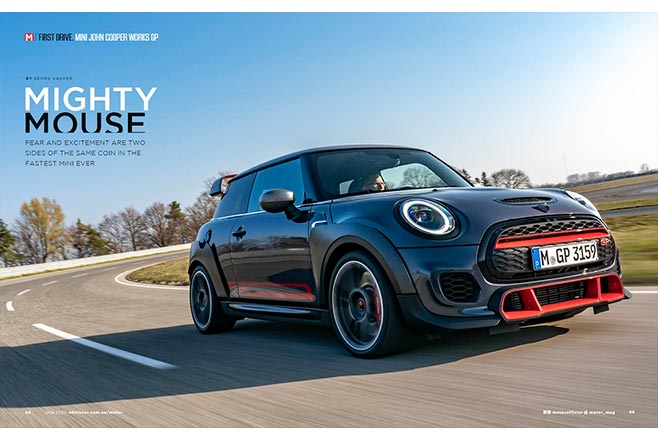
MIGHTY MOUSE – Mini John Cooper Works GP driven
Nailing 281km/h on a knife edge in the hottest Mini ever… but does it have the fizz of the first GP?
5 MINUTES WITH… Porsche CEO Oliver Blume
The man in the big chair at Porsche has encouraging things to say about the combustion engine
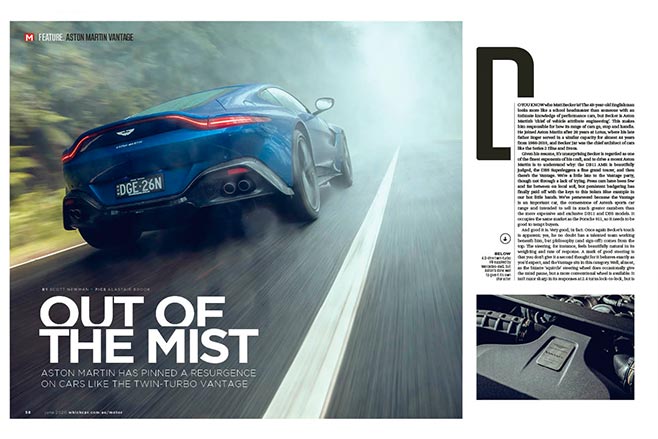
OUT OF THE MIST – First Aussie drive in the Aston Martin Vantage V8
Aston Martin’s AMG-powered sports car has a lot resting on its stylish shoulders
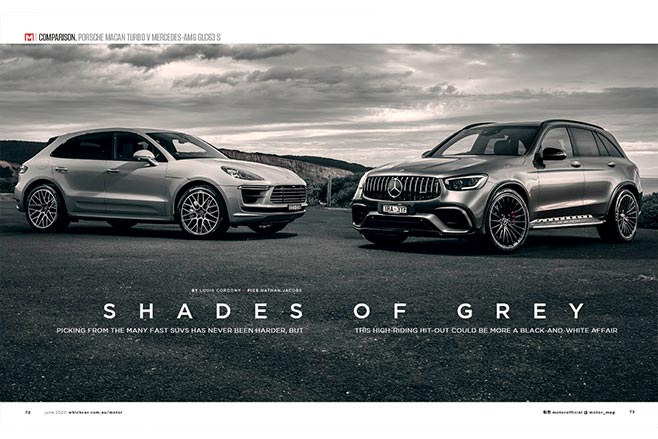
SHADES OF GREY – Porsche Macan Turbo vs AMG GLC63 S
This high-riding hit-out in the fast, medium SUV category could be more a black and white affair
REGULARS – High end sims, Buyer’s Guide, opinions, news, and more!
Sign-up here for your free weekly MOTOR report
- Update one: Say hi to the Triton
- Update two: City slicker
- Update three: Hunkering down
- Update four – Groundhog Day
- Update five – Another quiet(ish) one
Update one: Say hi to the Triton
- ODO 4065km
- Km driven 543km
- Average fuel use 11.53L/100km
This time around, though, I’ve gone a vastly different direction. This is Mitsubishi’s Triton GLS dual-cab 4×4 ute, which sits plumb in the middle of the brand’s local line-up and which makes up a good proportion of sales for the popular dual-cab every month.
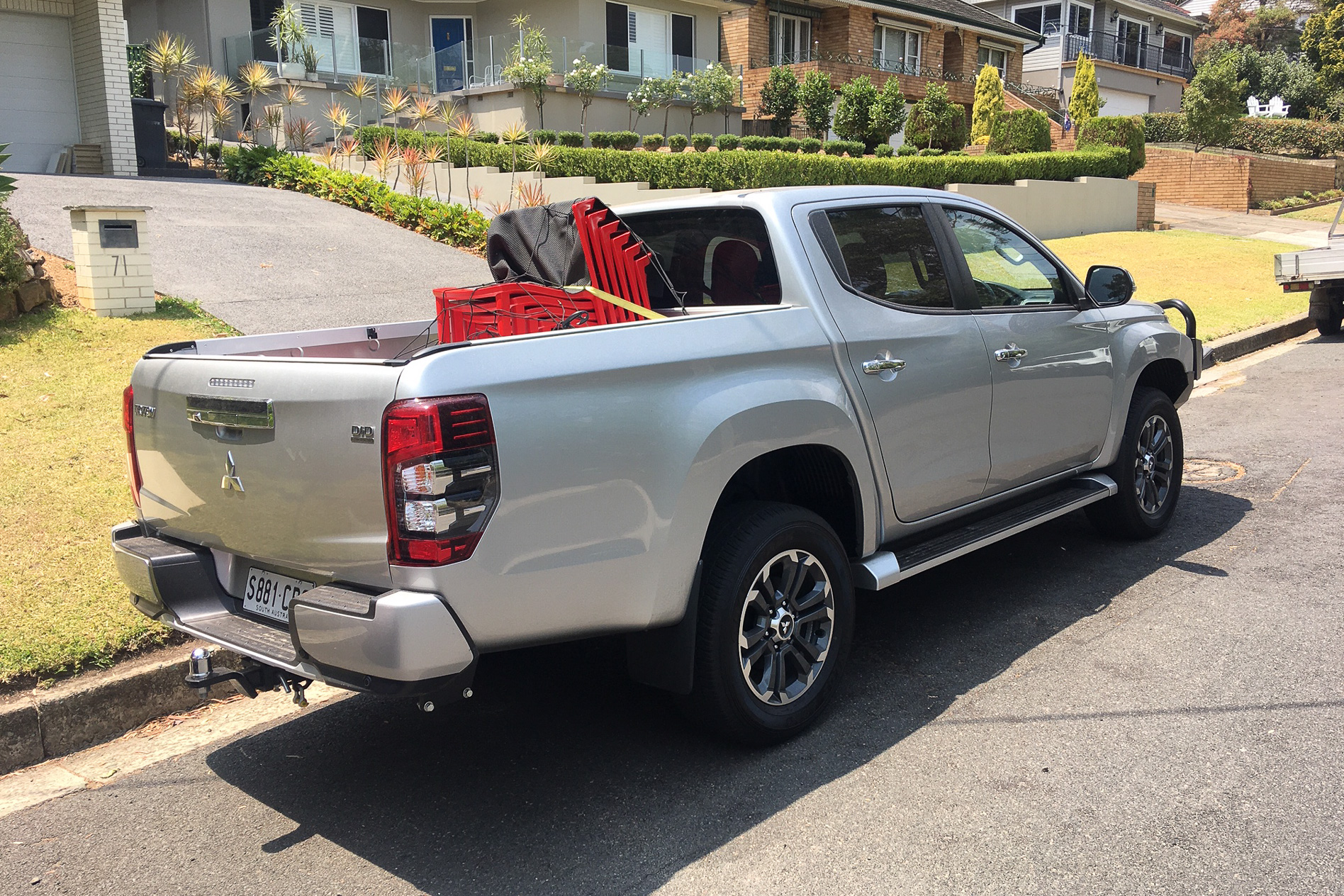
Day one – furniture removal
Like all Triton dual-cab 4x4s, it runs a 2.4-litre turbocharged four-cylinder diesel engine that uses a six-speed automatic transmission to send drive to one or both ends as required. It makes 133kW of power and 430Nm of torque, and should return a claimed 8.6L/100km on the combined fuel economy cycle.
The 1990kg Triton will also tow 3100kg – less than its rivals, but there’s a reason for that which we’ll get to in a future update – while lugging 795kg of payload (which includes you, your family and all your stuff). Without a trailer, the Triton can lug a claimed payload of 910kg.
It’s currently on dealer lots in NSW for $46,290 drive-away (January 2020), which nets you a pretty decent amount of kit for the money.
Of course, it kind of has to… the battleground for sub-$50,000 dual-cabs is bruising and bloody for the main protagonists, so spec lists have to be on point in order to sway the swinging punter.
Included in the price are a rear differential lock and Mitsubishi’s clever Super Select II 4×4 system that allows on-the-fly switching between rear-drive, high range 4×4 and low-range 4×4 at the twist of a dial.
A brace of LED exterior lighting is also included, with LED DRLs, headlights and taillights a part of the mix.
The steering wheel and gear shifter are leather-wrapped, the floor is carpeted, and rear-seat passengers get a USB charging point and oddly shaped but effective air vents in the roof.
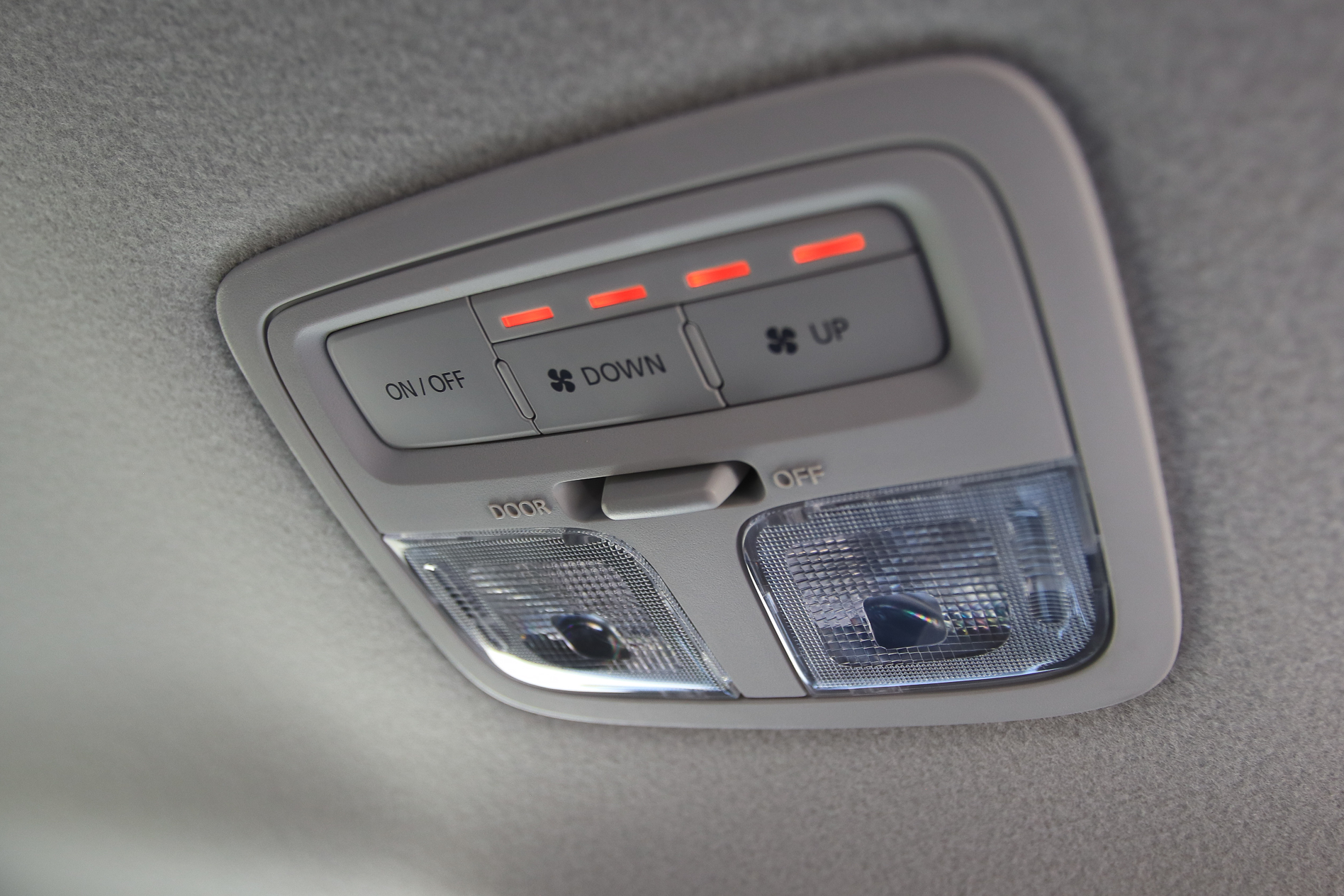
The rear vents are controlled from this roof-mounted panel
The GLS also comes with high-grade cloth upholstery, Apple CarPlay and Android Auto, keyless entry, dual-zone climate control and a raft of safety tech that includes AEB, rear cross-traffic alert, blind-spot monitoring, trailer sway control and even accidental acceleration mitigation. This, for me, makes for a pretty decent set of kit.
It misses out on a few things; electric driver’s seat adjustment for one, while butt warmers are a personal favourite – but I’d need to opt for the GLS Premium, which nets leather upholstery with electric driver’s seat adjustment and heated front seats, a sports bar for the rear tray and a 360-degree camera for easier parking.
For me, though, I’d pocket the required $4000 uptick and deal with life sans a warm backside; I’m not a big fan of sports bars in ute trays, either, so I won’t miss that.
Our rig comes equipped with a few extras, including a $4200-odd bullbar with an additional pair of halogen driving lights, a $708 LED lightbar and a $1200-odd towbar kit. An old-school tonneau cover is included, but the tray has no liner.
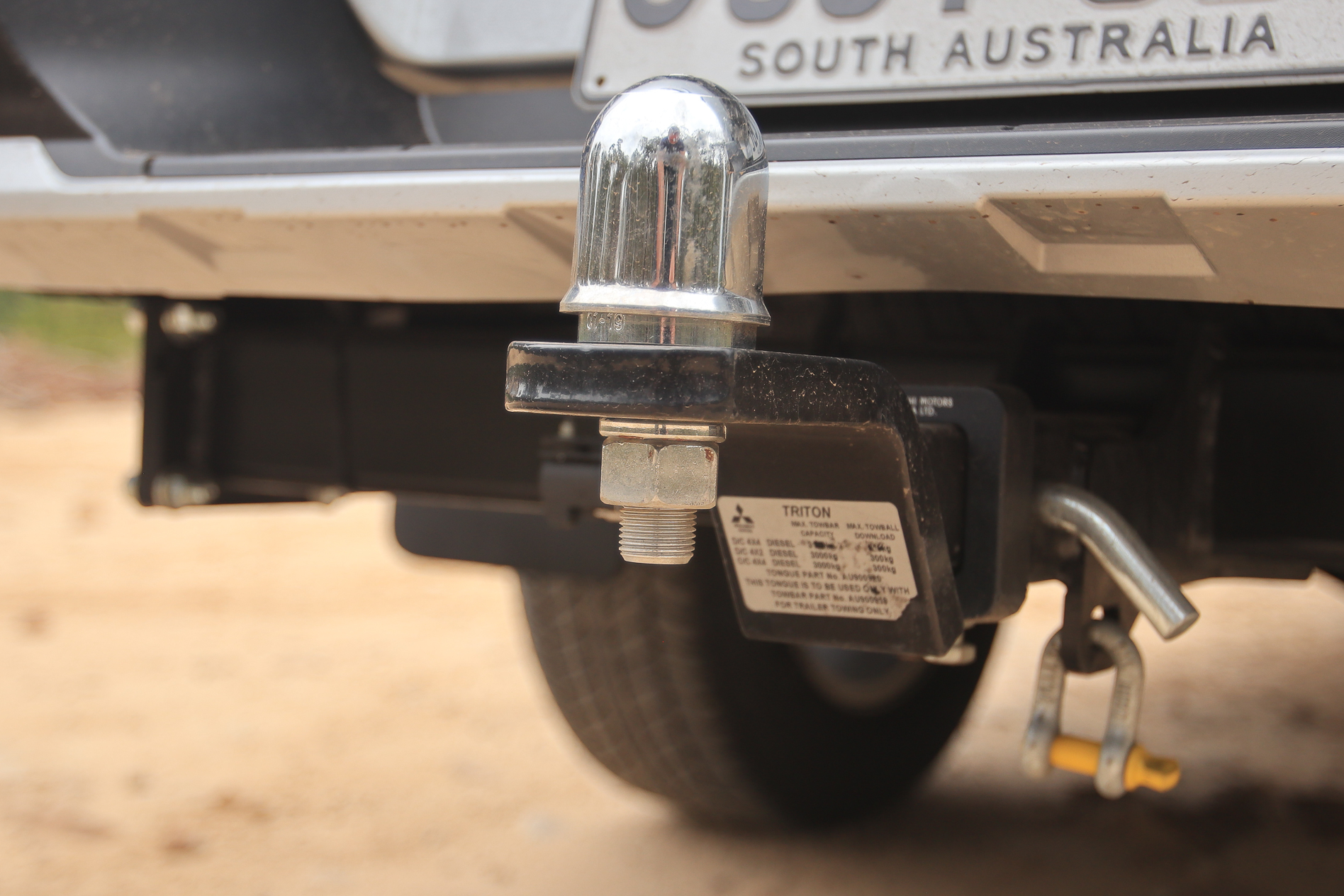
The towball cap is just five bucks from a dealer!
All told, the GLS compares pretty well in the value stakes when you look at its two key rivals in terms of specs and price, the Toyota HiLux SR and the Ford Ranger XL (equipped with the brand’s smaller, older 2.2-litre four-cylinder engine).
Steel wheels and entry-level cloth interiors are just the start, with neither offering much above AEB in the way of active safety mods, nor niceties like LED lighting or rear USB chargers.
There are other competitors in the space, notably the Ssangyong Musso XLV Ultimate Plus, which sells for a shade under $44,000 before on-roads, while the $46,900 Isuzu LS-M dual-cab ute would be only marginally more expensive once an automatic transmission has been added.
I’ve run one tank of diesel through the Triton – that’s 65 litres – and first impressions are mostly good. It’s taken a bit of time to get the seat position just so – a lack of meaningful reach adjust on the steering column is a small frustration, but I’ve found a decent compromise.
I love the deep centre console bin, and the 7.0-inch screen, while a bit smaller than the average nowadays, works well for my preferred Apple CarPlay set-up.
My two live-in kids – Miss 13 and Master 17, both tall children – are happy enough in the rear, where they have their own fan control to use and a pair of USB ports to not squabble over. When the eldest child lobs home, they can all fit across the rear bench, but not for long.
The 2.4-litre diesel is gruffish, but its magic trick is an almost silent idle when off-throttle. It actually feels like a sailing mode in a more expensive car. Our first economy figure is higher than the claim by some distance – 11.5 versus 8.6 – so we’ll keep an eye on that.
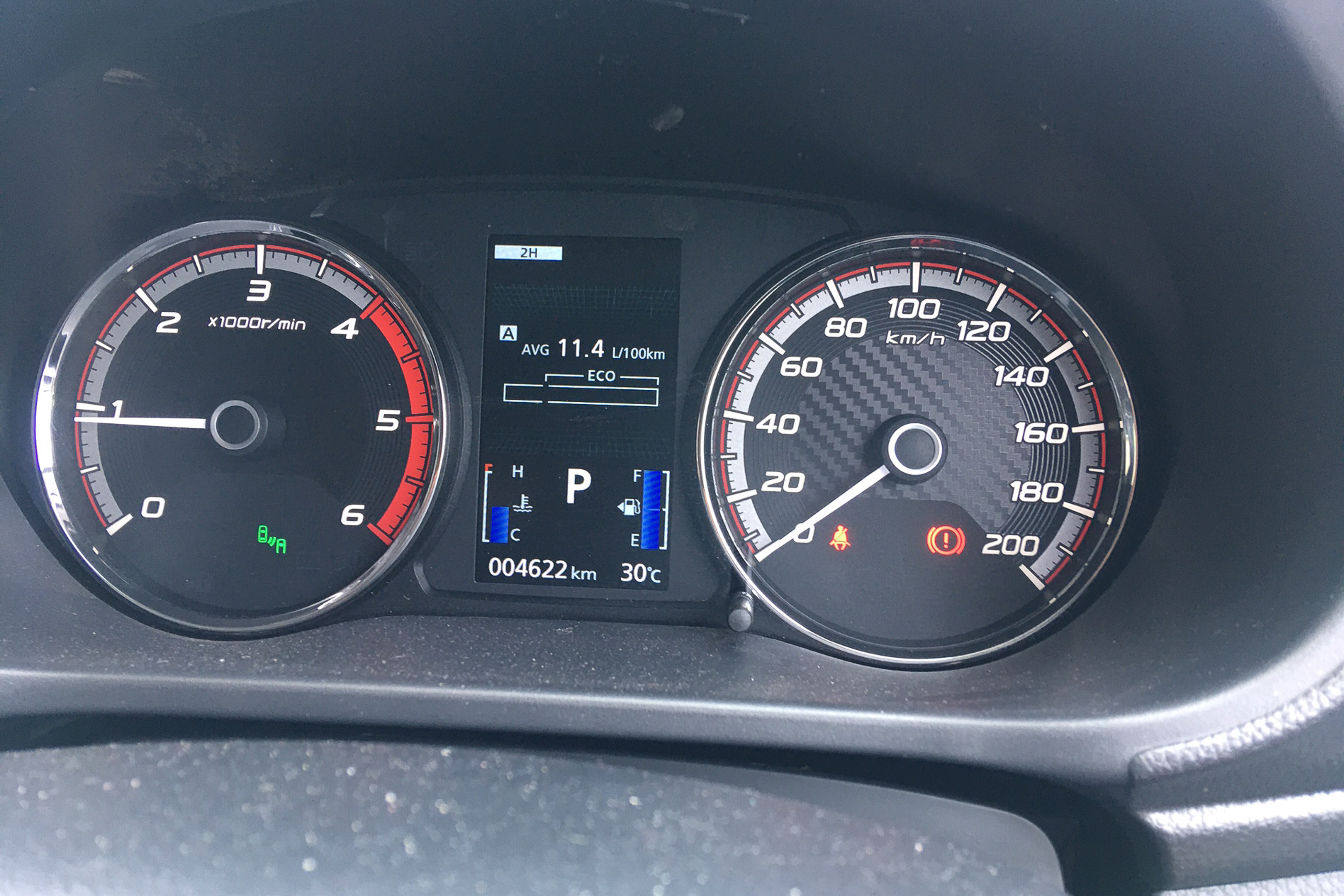
Real fuel figures and dash-indicated figures are impressively close
So what are our plans for the Triton? Well, it’s going to get pressed into largely civilian duties, plying its trade over my 145km-return daily commute, helping to ferry mountain bikes to fun places, moving our increasingly more useful race car to various events (and probably more workshops) and – hopefully – take a couple of weekend jaunts away to places that regular people can take their near-stock dual-cabs without damage to the car or themselves.
The first thing I do when I get a new long-termer
I tweak the stereo. I’ve done in every car I’ve driven over 20 years of reviewing cars and I’ll do it til my last day. Bass up, midrange up a bit less and treble equal or a mite higher.
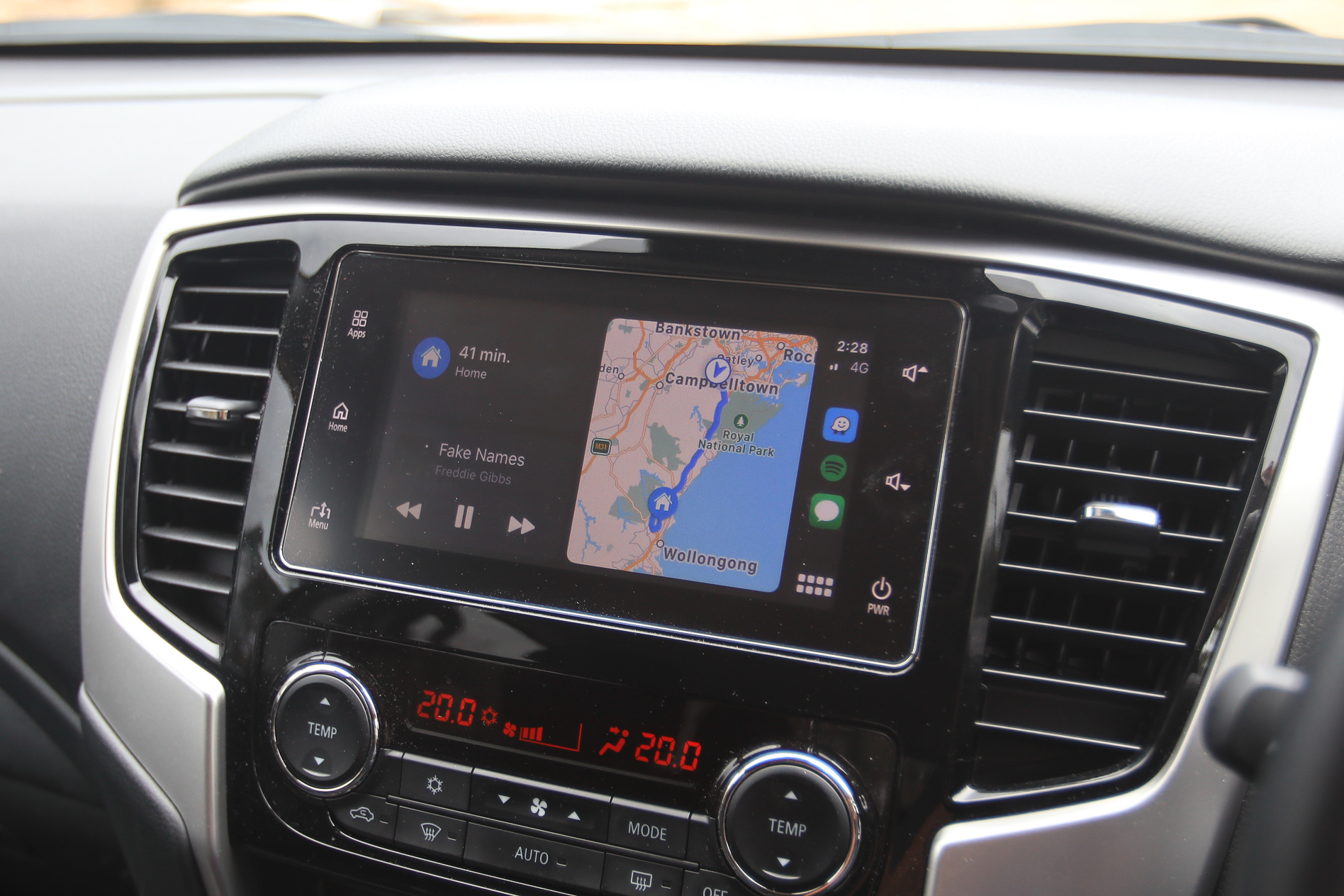
Balance between front and back? About centre. Sound stages and all that guff? I turn ‘em off, usually. The Triton runs a six-speaker system with digital radio and smartphone connectivity, and it sounds pretty handsome once my tweaks are applied.
Update two: City Slicker
- ODO 6122km
- Km driven 2057km
- Average fuel use 11.20L/100km
As well, a change of role here at WhichCar HQ has seen me hit the road a lot more than I usually would, schlepping from one side of the Sydney basin to the other. This has allowed me to form a pretty good snapshot of the Triton’s traffic mannerisms and shortcomings.
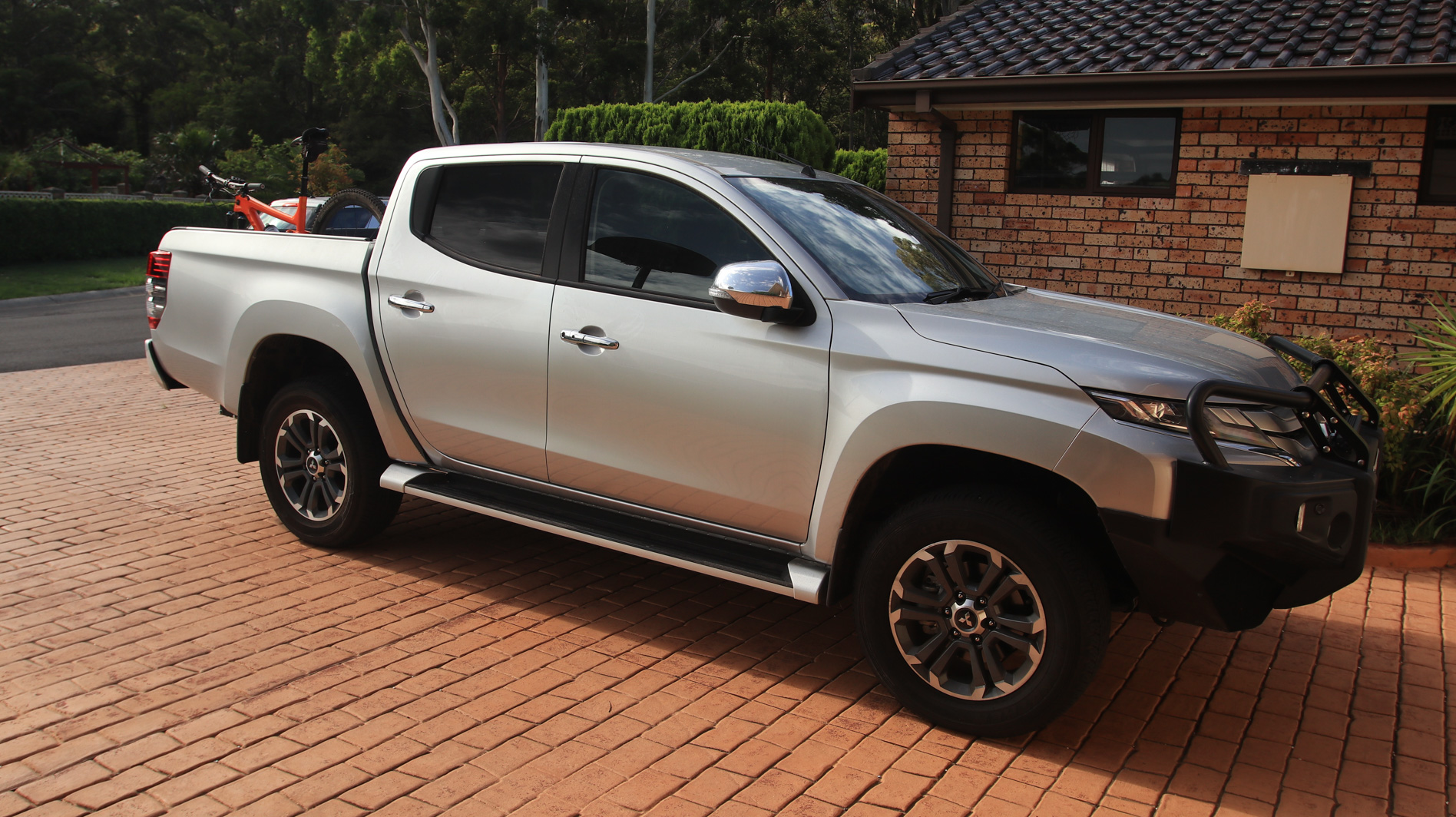
On the whole, though, it’s actually been pretty damn good. The highway-centric Dunlops, for a start, are a great spec for a vehicle where grip and handling are a natural enemy of its ride height, weight and high centre of gravity.
The sidewalls feel supple, the tread pattern is quiet on all but the nastiest of asphalt surfaces, and even in pelting rain, there is a lot of feel and grip to be had.
The rain in NSW has been bad enough for me to switch the Triton’s on-the-fly drive dial around to the 4H (all-wheel-drive) mode on more than one occasion, but the levels of grip afforded by the stock tyre set are genuinely impressive.
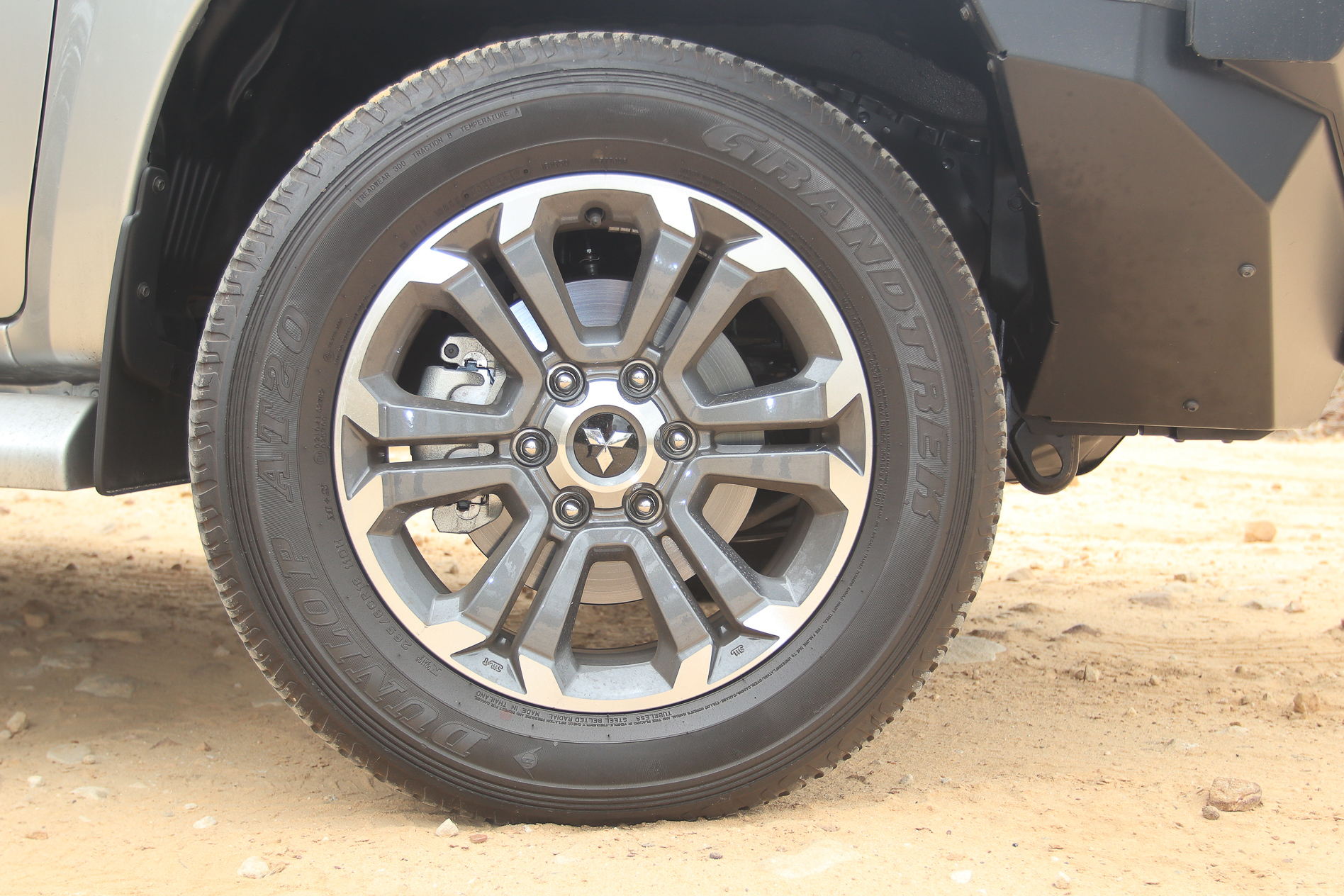
At 110km/h, the Triton is composed and impressively quiet, despite the bull bar up front and large mirrors. Speaking of the bull bar, it’s equipped with an array of LED lights that are bright enough to be visible from the next town over, let down only by a pair of halogen foglights that look very out of place amongst the diodes.
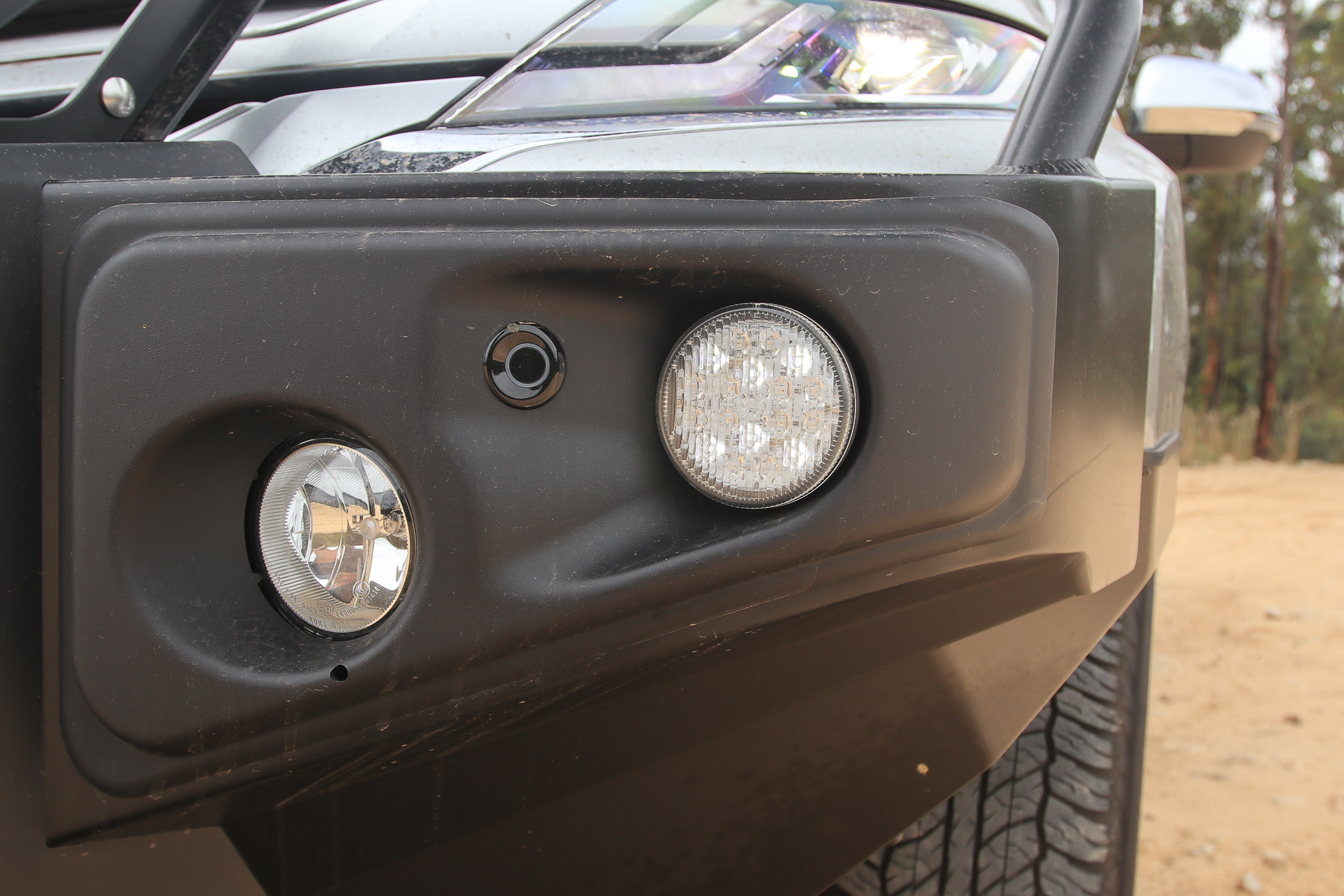
Around town, of course, the length of the Triton is a little daunting, especially when combined with slow-witted steering and a longish brake pedal. Parking is undoubtedly its biggest weakness; it’s long, there are a lot of turns lock to lock and the steering circle is B-I-G. Front and rear sensors and the rear-view camera are a great asset.
Throttle response, too, can be lacklustre as the little diesel spins up its turbocharger, but on the whole, it deals with the cut n’ thrust of the average commute surprisingly well.
And look… the bull bar is not a spec choice I’d opt for with a citified dual-cab. It’s a big chunk of metal which adds mass (which hurts fuel economy) and if I bump a rear quarter panel of a car while parking, it’s gonna stay bumped.
It is very neatly integrated, though, and it’s built to allow functions like the early warning braking system and the parking sensors to do their jobs.
The driving position for my 185cm frame is pretty good on the whole, with a couple of caveats. One; the sun visor can’t be extended to cover the side window, which is a real PITA. Two; the size of the box that the windscreen-mounted rain detector gubbins are housed in really restricts forward vision which, combined with a very raked windscreen, means that it forward vision is akin to peering through a gap in the fence at times.
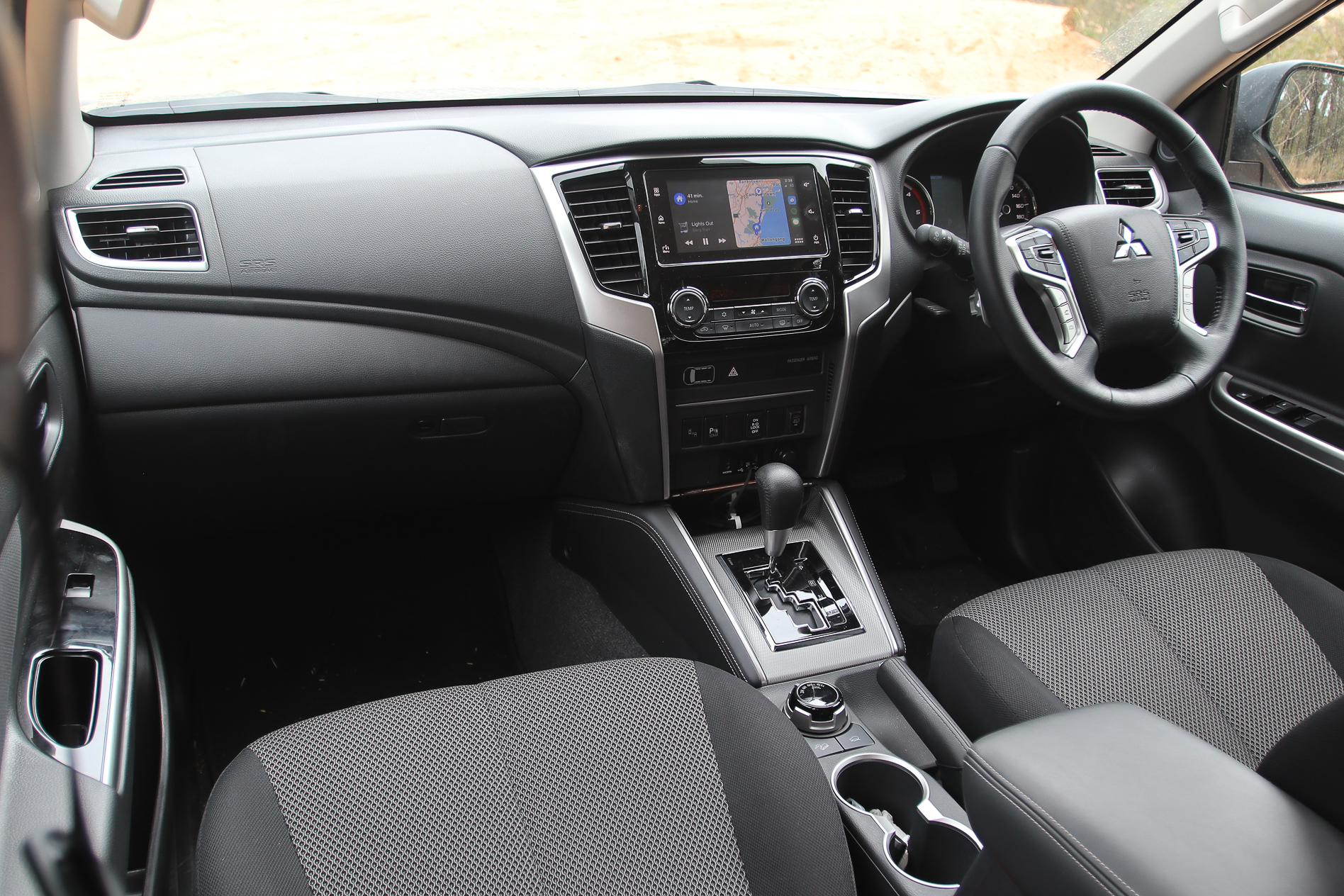
As mentioned previously, a bit more reach adjust on the steering wheel would suit me more, but reach and rake adjustment isn’t common in utes, so I shouldn’t complain too loudly.
Seat comfort is good, though the steps between fore and aft adjustment are quite wide, meaning that fine-tuning your position can be a challenge.
I miss having a digital speedo, and I also miss having a visual indication of what speed I’ve set the cruise control at (unless I’m being dopey and I’m missing it somewhere in the menu). I rely on my Apple CarPlay map apps to give me real-time GPS speed, though, so it’s not as much of an annoyance as it might otherwise have been.
Running CarPlay as my media player of choice means I haven’t actually used the multimedia system very much at all, so I’ll have to rectify that for the next update.
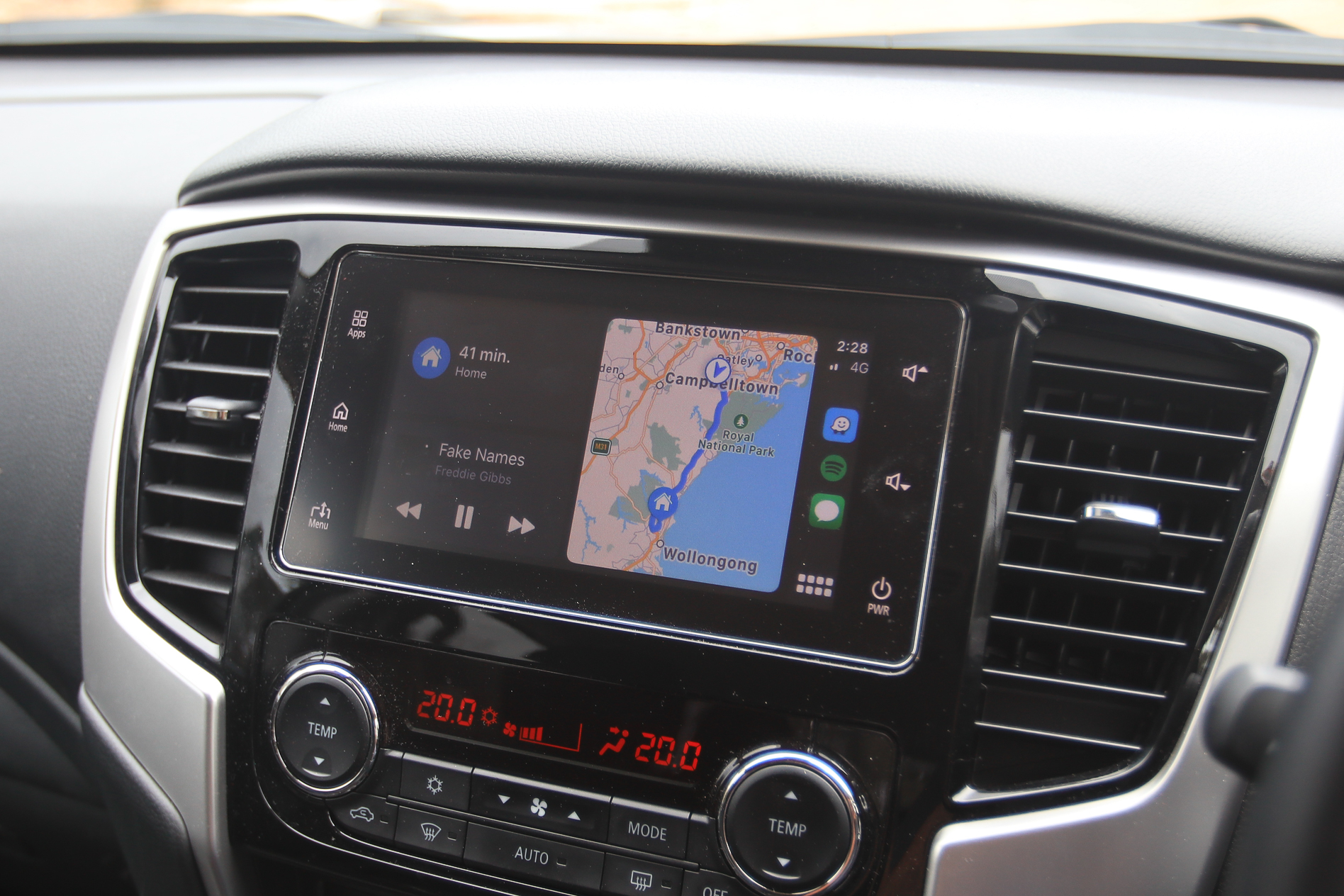
From a passenger standpoint, my diminutive better half struggles with ingress over the wide sill steps but is pretty comfy once aboard. Our back-seat pilots haven’t complained about their lot, though the roof-mounted fan system that they use is shockingly loud when turned up to even moderate speeds.
The rain means that the cargo of the Triton has been sadly underused, but I did receive an exciting package in the mail as this update fell due. Car cargo specialists Yakima has sent through a tailgate pad for us to use with the Triton! I’ll add a vid really soon of it on action.
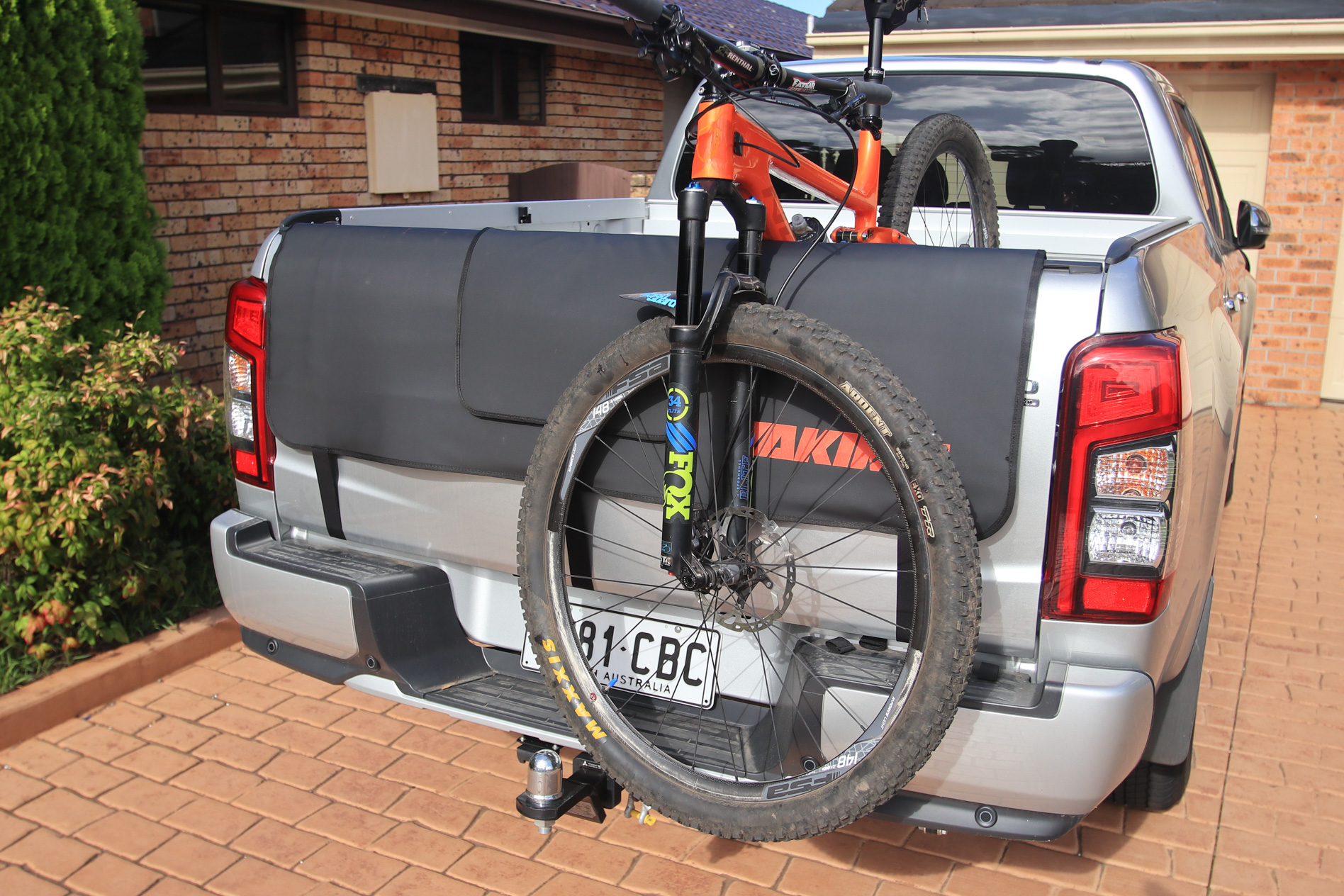
I’m also looking into the option of fitting a tailgate assist strut; the stock tailgate is heavy and slams down with a pretty violent thud.
Downsides? A squeak has started up in the rear end somewhere after all the rain we’ve had, so I want to whip it down to a dealer to see if there’s anything that can be done.
The Triton’s front suspension, too, feels a tad underdone in spring rate and damping which, while comfortable to drive at highway speeds, crashes awkwardly over slow bumps. Not much we can do about that, really… or is there? Stay tuned.
Update three – Bunkering down
- ODO 8514km
- Km driven 4749km
- Average fuel use 9.70L/100km
We’ve moved into a weird phase in our lives – while we shot this video, NSW was transitioning slowly into its current state of virtual lock-down. So what better time to take a load of rubbish to the local tip?
Because our tester will go back and be on-sold, I’m reluctant to do any unnecessary damage to its tray – which really highlights the need to decide what you’re going to do with the tub when you lay your money down.
The more affordable GLS makes do without a tub liner, exposing the silver duco to scratching, so we just tried to be as nice as we could. A factory tub liner is a $614 option, while a tie-down bracket system adds another $448 to the bill.
A spray-on liner would cost around $700 through most decent panel beaters, I reckon, though your results may vary. I’d be tempted to go for the spray-on liner, so I don’t have to sacrifice those vital centimetres of space to the plastic tub.
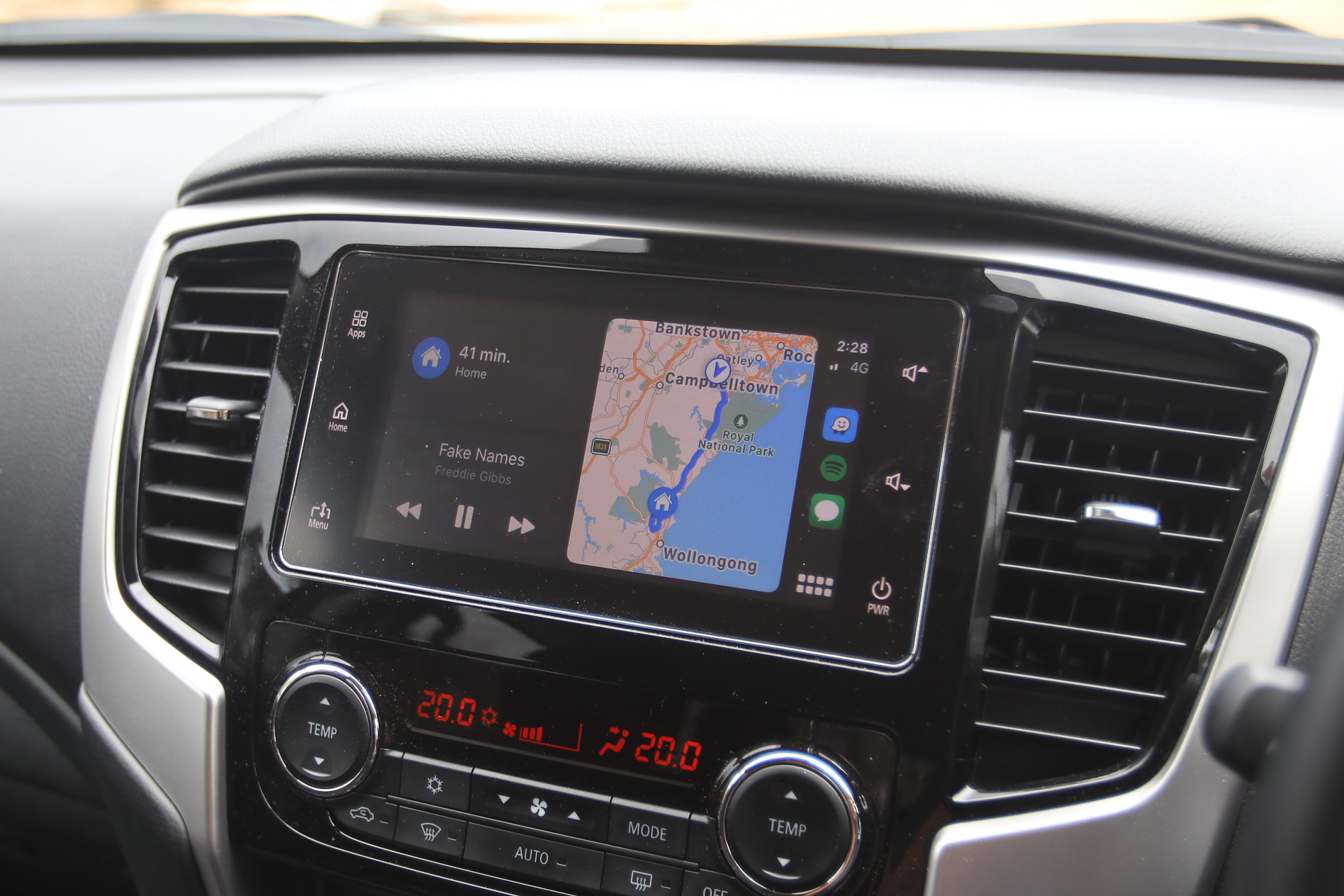
I’ve also been forced to swap phones, and unfortunately, I’m having a rotten time with Android Auto not working well at all. I find Android Auto a lot harder to use than Apple CarPlay (above), with dropouts and a poor interface my biggest bugbears.
This isn’t the car’s fault, of course, but it’s really denting my experience.
I spoke last time about the ride quality of the Triton, and we’ve actually performed a little experiment with the tyre pressures. Placard pressures are 32PSI all around, and bumping them up to 34PSI when cold gives the Triton a much more brittle, unsettled ride.
Bumping them back down to 33PSI from hot has worked very well… which tells me that the placard pressures recommended by Mitsubishi are, unsurprisingly, on the money.
Oh, and that squeak from the rear end? It’s gone away a bit, but it feels like it could be in the tailgate area. It takes a bit of effort to bang it shut, and I reckon a misaligned hinge is the culprit.
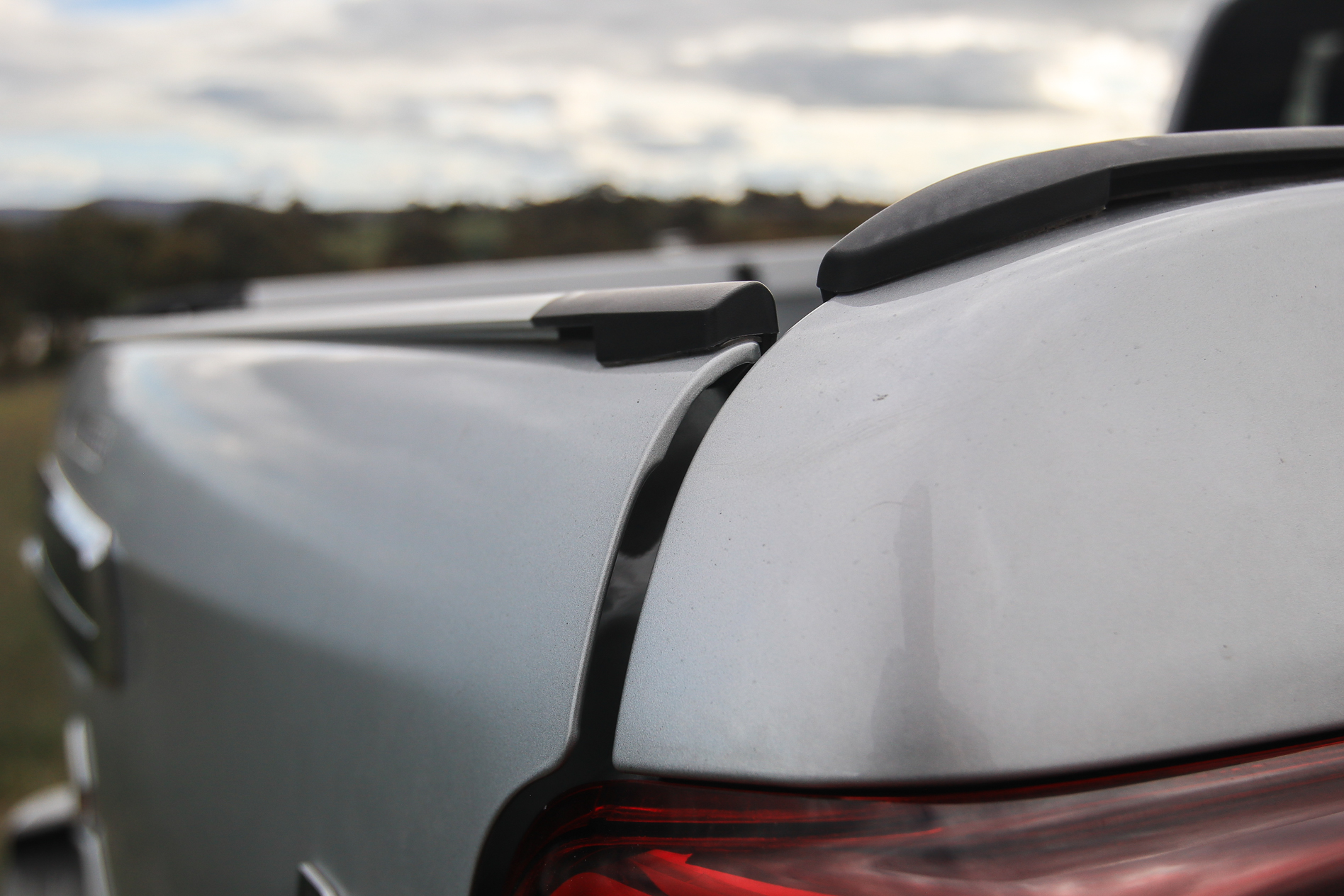
It’s also back in for a warranty fix on a wiring loom, and we’ll get a brake controller added – though taking the race car anywhere for the foreseeable isn’t on the cards, really…
Update four – Groundhog Day
- ODO 9510km
- Km driven 5745km
- Average fuel use 9.70L/100km
So, aside from the occasional shop for essentials, there’s not a lot to report.
I did manage to sneak Mighty Triton back in for a vital recall fix on its towbar wiring, and while it was in bits, it has had an extra bit of kit plumbed in as well.
A brake controller is essential if you want to tow to capacity – 3100kg in the Triton’s case – and Mitsubishi has fitted the clever Tow-Pro Elite system.
A bit of data; the gross combined mass (GCM) of a car is the maximum allowable combined mass of a towing road vehicle passengers and cargo in the tow vehicle, plus the mass of the trailer and cargo in the trailer.
GVM, meanwhile, is the maximum operating weight or mass of a vehicle as specified by the manufacturer, including the vehicle’s chassis, body, engine, engine fluids, fuel, accessories, driver, passengers and cargo, but excluding that of any trailers.
Maximum braked towing capacity refers to the advertised towing figure for a trailer fitted with electric brakes unbraked trailer capacities are far lower.Against a GVM of 2900kg and a GCM of 5885kg, the Triton has, according to Mitsubishi, a maximum payload of 640kg remaining for cargo and passengers.
So it’s not 3500kg, like the majority of its rivals, but Mitsubishi isn’t worried. It reckons the majority of people tow between one and 1.5 tonnes, while less than five per cent of customers tow even three tonnes.
We can – once we’re able to, of course – tow up to 3100kg, but our plans include a 700kg trailer and a 900kg race car… so almost half of what it can do.
Given we can’t try the device until we attach a trailer, here’s a little video of what it does.
Update five – another quiet(ish) one
- ODO 9560km
- Km driven 5805km
- Average fuel use 9.70L/100km
Meanwhile, the Triton has patiently sat in the driveway, waiting for – hopefully – one last mission before we part ways. At present, there’s a loose plan to hand Big T back over in Melbourne, which means a 1000km run south from WhichCar’s NSW base.
And it doesn’t necessarily need to be in a straight line, either…
In the meantime, though, I’ve had a dig underneath the Triton to see if I can trace the source of an annoying squeak that is upsetting the otherwise Zen tranquility of the Triton’s still-surprising quiet demeanour.
Unfortunately, the spring squeak is a) quite audible and b) beyond the capabilities of the average owner to sort out.
To my ear, it sounds less metallic and more like the squeak of a rubber bushing, and it could well be coming from around the top shock mount.
Some people have reported that there is a little packer, or divider, on the leaf spring (below) that can be the cause.
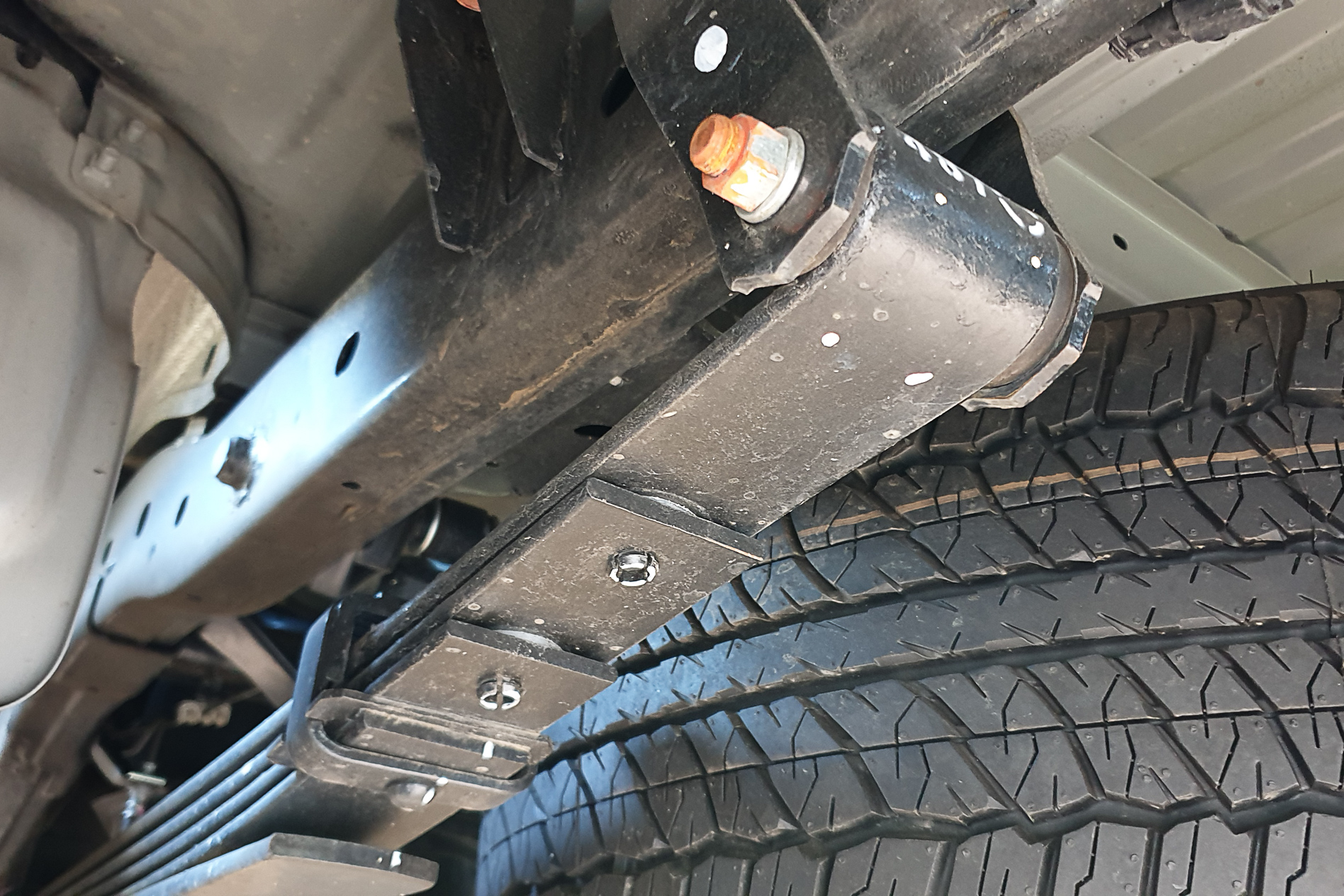
The shackle packer (the u-shaped thing in bottom left might be the culprit. Those nuts aren’t rusted, btw – they are painted
One thing I’m not going to do, though, is liberally spray everything with lube, because that will only serve as a magnet to dirt and dust, which will only make for more squeaks.
I’ve asked Mitsub HQ to let me know if there’s a fix in play and I’ll let you know next time how we’ve gone.
What stands out?
The Kia Carnival carries up to eight people in comfort and style, with an airy and inviting cabin that exhibits plenty of clever details – and can swallow stacks of luggage. The Carnival handles well, offers powerful petrol and diesel engines, and comes with a seven-year warranty.
What might bug me?
Heavy fuel consumption in the petrol version. Tipping the scales at an elephantine two tonnes, a laden Carnival V6 doesn’t half mind a drink.The relatively light feel of the steering at speed. Easy and responsive around town, the steering feels increasingly short on feedback the faster you drive a Carnival. Roadholding is safe and predictable, but compared with better recent Kias the Carnival is short on dynamic finesse.Driving under 80km/h on your space-saver spare tyre, until you can have your full-sized flat repaired.
What body styles are there?
Eight-seat, five-door wagon only. The rear doors on a Carnival slide open, like the doors on many commercial vans.The Carnival drives its front wheels, and is classed as a people mover, lower priced.
What features do all Carnivals have?
An MP3 compatible sound system with an AM/FM radio, a CD player, Aux and USB inputs, Bluetooth connectivity for audio streaming, and six speakers.A colour touchscreen for controlling cabin functions to mirror your smartphone via Apple CarPlay or Android Auto.Three USB charge points for mobile devices: two for those in the front seats and one for the middle row. Three 12V power outlets (including one in the cargo area).Autonomous emergency braking, lane-departure warning, and adaptive cruise control.A height and reach adjustable steering wheel from which you can operate the cruise, the audio system, and your phone. Height adjustment for the driver’s seat.A reversing camera, and rear parking sensors.Seating for eight people. A sliding, and collapsible, middle seat row, which makes it easy to enter the rear row.Keyless entry, and doors that will lock automatically once you’re moving.Headlights that switch on automatically when it’s getting dark.Air-conditioning that can supply different temperatures to front and rear passengers.Eight-speed automatic transmission.A space-saver spare wheel and tyre (with a recommended top speed of 80km/h).Roof rails, which make it easier to fit rooftop luggage systems.Hill-start assist, which helps you take off on uphill slopes by controlling the brakes automatically.Six airbags. Electronic stability control, which can help you control a skidding car and is mandatory on new cars. (For the placement of airbags, and more on Carnival safety systems, please open the Safety section below.)Every Carnival is supplied with a seven-year, unlimited distance, warranty.
Which engine uses least fuel, and why wouldn’t I choose it?
The 2.2-litre four-cylinder turbo-diesel is by a long way the more fuel-efficient of the two engines available in a Carnival, consuming 7.7 litres/100km on the official test (city and country combined).This is a fine engine for highway use, hauling the Carnival down the road without fuss.One reason you might not choose it is that you expect to use your Carnival almost exclusively for short trips around town. The diesel is surprisingly noisy and clattery (even for this type of engine), especially when cold or when accelerating up to urban speeds.The other obvious reason to bypass the diesel is that you want to pay less when you purchase your Carnival, while enjoying additional zip from the other – smoother – engine available, a 3.3-litre petrol V6.You will spend more on fuel, however. Petrol Carnivals use 10.8 litres/100km on the official test.Every Carnival drives through an eight-speed automatic gearbox.
What key features do I get if I spend more?
The least costly Carnival, the Carnival S, rolls on 17-inch steel wheels, and has cloth-covered seats and the features common to all Carnivals. Its central touchscreen measures 7.0-inch. And while the air-conditioning can serve front and rear passengers differently, you have to keep an eye on its outputs yourself.Spend more for a Carnival Si and you get a bigger touchscreen at 8.0 inches, which also displays satellite navigation, and – once you’ve parked – can also play DVDs. Sound is also improved via an eight-speaker JBL sound system.A digital auxiliary speedometer helps you avoid speeding fines. Three-zone climate-control air-conditioning maintains temperatures automatically, and the driver, front-passenger and rear passengers can set preferred temperatures independently. Rear-side and rear windows are tinted against sun penetration. Exterior mirrors power-fold out of harm’s way automatically when you lock the car. The 17-inch wheels are made of nicer looking aluminium alloy (which does not need plastic trim-caps).Spending more again for a Carnival SLi brings you leather on the seats, and power-adjustment for the driver’s seat. Smart-key entry lets you unlock the car and drive away without taking the key from your pocket or bag. Front parking sensors augment those at the rear. The rear doors power-slide open, and a hands-free tailgate power-raises for you if you linger next to it. The centre-console contains a chilled compartment. Wheels are bigger at 18 inches, and can mount tyres with a marginally lower profile for a sportier lookThe most expensive Carnival, the Platinum, ventilates and heats both front seats, and provides powered seat adjustment for the passenger also. The steering wheel has a fake-wood finish and can be heated. Headlamps use very bright and long-lived LEDs, and switch to low beam automatically to avoid dazzling oncoming drivers, and the fog lights have a smarter “ice-cube” design. Smart cruise control can reduce your speed to follow a slower car ahead, until you can overtake. And the wheel diameter grows again to 19 inches, with a corresponding small reduction in tyre profile.The Platinum also brings you a suite of active safety aids, comprising Forward collision warning, Lane departure warning, Blind-spot monitoring, Lane-change assistance, and a Rear cross-traffic alert. (For more on these systems, please open the Safety section below.)
Does any upgrade have a down side?
The more expensive Carnivals, the SLi and Platinum, bring you bigger alloy wheels with lower-profile tyres (from the side, the tyres look skinnier – and they are). This makes the ride less comfortable, due to the decreased cushioning effect of the shallower rubber. In some circumstances, you also hear more inside the cabin from the tyres’ broader contact with the road. As well, these tyres cost more to replace, they tend to increase fuel consumption slightly, and the wheelrims tend to be more prone to damage while parking – because the rubber provides a smaller buffer. Ask yourself how much you value looks over comfort and economy.White exterior paint comes as standard; other colours cost extra.
How comfortable is the Carnival?
Kia has kept those in the front seats firmly in mind when designing the Carnival – that’s obvious from the moment you open the wide driver’s door and climb onto the broad cushion.A seat placed almost at SUV height, lots of glass, and almost unimpeded forward vision, help make this car feel exceptionally roomy and airy. The front buckets offer adjustable lumbar (lower back) support only in the more expensive versions, but in any Carnival the seats envelope you completely, providing ample support. And the driving position is widely adjustable.An expansive and solidly presented dashboard is a model of clarity, boosting familiarity and thus confidence when you’re driving the Carnival. Big instrument dials (with an auxiliary digital speedo from the Si upwards), large and logically placed switchgear, excellent ventilation, and more storage compartments and receptacles than most families will ever need, make the Kia feel intuitive to operate, even if the central touchscreen does require a steady finger once you’re on the move. It will take you only a few moments to understand the multimedia functions, too. Nothing intimidating going on here.So it is likely you will feel like you’re in command of a Carnival. Most switchgear is easy to reach, and all the major controls feel light to operate. The steering turns freely and without much effort at all, the throttle is well modulated so as to not be jerky in traffic, the transmission shifts smoothly enough, and the brakes are effective but not overly touchy.On the 17-inch wheels of the less costly Carnivals, the S and Si, the ride is a welcome blend of cushiness and control, without the wallow or pitching that some softly suspended people movers suffer from. The Carnival SLi (on 18s) is more firmly sprung, however, while the Platinum (on 19s) is firmer again. Noise isolation also goes from commendable to tolerable as wheel sizes increase.The Carnival’s turning circle is commendably tight for a 5.1-metre box on a 3060mm wheelbase – which is great for round-town manoeuvrability.
What about safety in a Kia Carnival?
Every Carnival has the mandatory stability control, six airbags, a reversing camera, and rear parking sensors (which might warn you that you are reversing towards something or someone). It will also have auto-on headlights (which make you visible more reliably in low light), and speed-sensing door locks (which lock automatically to mitigate the chances of a car-jacking).Autonomous emergency braking is also standard, along with lane departure warning, which monitors road markings and alerts you if you begin to drift out of your lane on the highway – perhaps because you have gotten distracted or are falling asleep.Seatbelt reminders are fitted to the front and outer second-row seats only, however.There are airbags directly in front of the driver and passenger; an airbag outside each front seat to protect from side impacts at chest level; and a curtain airbag extending past all three rows of seats on each side, to protect at head level.The Carnival Platinum (only) adds additional sensor-based active safety features including blind spot and lane change alerts, and a rear cross-traffic alert.The blind-spot and lane-change alerts look behind you, warning you of vehicles near your rear corners – but perhaps not showing in your exterior mirrors – or overtaking you quickly from behind.The rear cross-traffic alert operates when you are reversing, perhaps from a shopping-centre car park or a driveway. It warns you if it recognises that another vehicle is about to cross behind you.The Platinum also has a multi-angle reversing camera that lets you check all directions around the car.The Australasian New Car Assessment Program (ANCAP) awarded the Carnival five stars for safety, its maximum, in March 2016. (The rating applies to Carnivals on sale new since January 2016; previous Carnivals had been awarded four stars.)
I like driving – will I enjoy this car?
If you value relaxation and ease, the Carnival’s effortless, loping driveability is sure to please you.The standard 3.3-litre V6 petrol engine is tuned for eager off-the-line acceleration, and will keep pulling energetically and smoothly to speeds well beyond the legal limit. And there’s an appealing exhaust note to go with all that healthy performance.However this is a heavy car, and so you pay a price for its sparkling response to your right foot: heavy fuel consumption. Maybe that’s why Kia has tuned the V6 to require a lot of movement from the accelerator pedal. While there’s plenty of oomph, you need to push the pedal a long way to find it.If fuel economy is a high priority, you could pay a bit more initially for the 2.2-litre turbo-diesel, and that’s probably the better bet. You get a bit of diesel-lag at take-off, but diesel Carnivals pick up speed almost instantly after that with only moderate pedal depression. At mid-range speeds – say when overtaking from 80km/h – the turbo-driven whoosh is considerable: here, diesel Carnivals feel even livelier than their petrol siblings. Just get used to some roughness at idle and a harsh feel if you spin the engine hard.The Carnival’s steering feels planted and precise, especially in straight-ahead driving but to a very pleasing degree in low-speed and high-speed corners also. Kia’s chassis engineers dialled in safe and predictable handling and roadholding. Kia says Australian-specific suspension dampers and thicker anti-roll bars contribute to the Carnival’s serenity in local conditions.That said, with steering effort so low, the steering wheel does not talk with much authority about the front tyres and how committed they are to the road – and it tells you less as speeds rise. If the idea of steering that seems somewhat remote from the action repels you, definitely try this first before you buy.Ride quality on the 17-inch wheeled S and Si is calming, with the suspension ably soaking up bumps. Your passengers will appreciate the comfort on offer, even at the price of mild floating over undulations at speed. Bigger-wheeled Carnivals trade that loping absorption for a tighter and more hunkered down look and feel, and the harder ride that inevitably comes with that.
How is life in the rear seats?
Sliding rear side-doors reveal huge apertures that make access to a Carnival’s middle and third seat-rows easy.The middle-row trio of seats offer versatility at a level rare in any vehicle.Both outboard seats slide and recline, boosting comfort considerably, while all three seats can be removed individually. The centre-seat can also double up as a table or armrest, complete with cupholders and other amenities. We’re talking premium economy here, even in the Carnival S.Operating these features is child’s play too, and won’t strain anybody’s arms or back.The outboard middle chairs can also fold forward and up in concertina fashion, opening a sizeable cavity behind that makes it almost a joy for people of most shapes to access the third row. Clever engineering.Though cushions might be a tad flat under thigh, the rearmost seats are sufficiently spacious for most folk under about 180cm tall. Measuring almost two metres across, these two seats can easily support three abreast, but shoulder space for three big people could be a bit of a squeeze.Otherwise, this Kia can lay claim to being a true eight-seater mover of adult-sized occupants. Heaps of legroom and head room, backed up by ample vision, face-level ventilation outlets, head rests, lighting, and storage, for all, make travelling in the rear compartments no trial. No SUV can compete with a purpose-built people mover.With a trio of ISOFIX points in the middle seat row, and each second-row and third-row outboard seatback offering child-seat strap latches, the Carnival is purpose built for transporting children in a variety of cradles or booster seats up to the age of 11 or so, without their bits and pieces affecting other passengers.And at nearly 1.8m tall, the lofty ceiling means that you don’t have to stoop much when preparing for kiddie transport.
How is it for carrying stuff?
You’ll find 10 cupholders scattered around the Carnival, as well as a bottle-holder in each side door, two sizeable gloveboxes, several map pockets and storage trays, and shopping-bag hooks.The cargo situation is almost as impressive as the passenger compartment. Even with the rearmost seats erect, there is an impressive 960 litres of total cargo space free behind them.In five-seat wagon mode, the third-row seats tumble and fold into a deep recess – opening up a total cargo capacity of 2220 litres.In two-seater mode, with the second seat-row also folder, a vast 4022 litres is on offer.This is yet another example of how SUVs have nothing on the Carnival for ease and versatility in carrying people or loads.Whether petrol or diesel, the Kia’s towing capacity is a competitive 2000kg with a braked trailer.
Where does Kia make the Carnival?
All Kia Carnivals hail from South Korea, and have done so since the original reached Australia in 1999.
What might I miss that similar cars have?
Possibly nine or more seats. Similarly sized vehicles like the Volkswagen Caravelle, LDV G10 and SsangYong Stavic offer this, for example. (But without the Carnival’s sophistication.)Perhaps auto emergency braking. That feature is rare and very expensive in people-movers, but it is standard in the seven-seat Mazda CX-9 SUV, for example.All-wheel drive, for extra traction and stability on snow, sand, gravel, or mud. The significantly more expensive Volkswagen Caravelle 4Motion offers this, for example, as do many seven-seat SUVs.Among other people-mover alternatives is the Honda Odyssey.Among seven-seater SUV alternatives are Mazda’s CX-8 or CX-9 and Kia’s own Sorento, along with the Hyundai Santa Fe, Ford Everest, Holden Acadia, Peugeot 5008, Mitsubishi Pajero Sport, Nissan Pathfinder, and Toyota Kluger.
Are there plans to update the Carnival soon?
This third-generation YP-series Carnival arrived early in 2015, superseding a second-generation car that had a decade-long run.A facelifted model arrived in May 2018. This minor update brought a reconfigured nose and bumper design, and a fresh headlight configuration with distinctive LED headlamps and “ice cube” fog-lights on upper-spec variants. Front and rear overhangs will be reduced, giving the Carnival a bolder stance that’s enhanced with newly designed alloy wheels.The interior also gained a makeover, with updated instrument graphics and a less-cluttered centre console featuring an electrically activated parking brake.The only change under the bonnet was the new eight-speed automatic transmission for the 3.3-litre V6 petrol engine, for improved fuel economy and performance.
I like this car, but I can’t choose which version. Can you help?
The Kia Carnival Si diesel is the pick of the bunch for economy, value and comfort. It looks and feels quite luxurious. It might not have leather, but the standard cloth seat trim is comfortable and attractive.The leather and other additional features of the SLi arguably justify its 10 per cent price premium. However, the move to 18-inch wheels erodes some of the ride quality.
This is it, folks. The last of the Audi TT RSs is upon us, with the five-cylinder baby supercar set to debut in Australia with one final generation.
The majority of specs haven’t changed a whole lot since MOTOR last had a proper encounter with the $134,900 sports car still producing 294kW and 480Nm from its 2.5-litre turbo five-pot engine.
This also means the 0-100km/h claim remains 3.7sec, though it’s possible to dip below 3.6sec as was proven at PCOTY 2018. The 7-speed dual-clutch gearbox is also carried over.
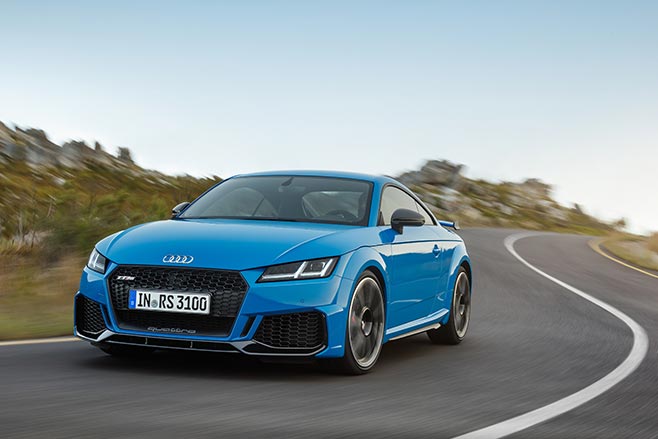
What is new for the new TT RS, however, is its styling.
Following on from the lower-spec TTs which have already arrived in Australia, the TT 45 TFSI and the TT S, The RS gains new aggressive, more angular exterior design elements and an updated interior.
While it’s available to order now, the first deliveries of the new TT RS are set to commence in July, with Audi’s head of product planning Shawn Ticehurst emphasising the heritage behind the model as it reaches the end of its life.
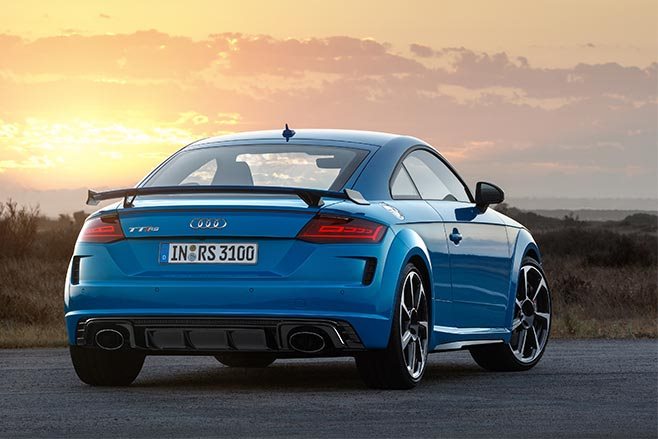
Audi Australia says the model’s update means there’s more than $6500 worth of added value compared to its predecessor, which was on sale for $137,611.
The Audi TT RS’s future is clear, but whether a replacement model is on the way is on the way to fill the sports car gap it will leave is yet to be confirmed.
Hyundai has followed up on its tantalising teaser image of the forthcoming 2021 Santa Fe last month, with a full reveal of the next-generation large SUV.
Little extra information accompanies the handful of images and confirmation the almost completely new model will arrive in Australia before the end of the year, but there are a few morsels to be gleaned.
What Hyundai describes as ‘revised’ is actually a Santa Fe that rolls on a new platform and has grown inside and out, and is the most off-road focused generation in the model’s history.

Glance inside its cabin and you’ll find a new Terrain Mode selector for choosing a number of drive modes programmed into the HTRAC all-wheel drive system, optimising traction on a range of loose surfaces.
There’s also a new 10.3-inch central touchscreen that forms the centrepiece of the significantly revised cabin, while on the outside there are striking 20-inch wheels.
The big hoops are likely to be an option at the higher end of the range, which is still yet to be detailed, along with at least two exterior styling packages.

The images in our gallery may appear to be of the same Santa Fe but look closer and you’ll pick out subtle differences between two specification levels.
While one version has plastic arches, chunkier grille mesh and taller tyres, presumably with a more off-road leaning stance, the other has body-coloured arches, fine mesh and the full-fat 20s. That’s your city slicker.
“We modernised the new Santa Fe with premium features and appealing aesthetics that are sure to add value,” said senior vice president and head of Global Design Centre SangYup Lee.
“The bold lines that extend from one side to the other and from front to back give Santa Fe a rugged yet refined look that SUV customers want. Besides, we’ve added numerous features and functions to create a truly family-focused SUV that is a pleasure to drive.”
Original story published May 2020
Hyundai appears to be tearing up the traditional model lifecycle template with a new version of the company’s Santa Fe large SUV apparently just around the corner – less than three years after the current-generation was launched.
The fourth-generation of Hyundai’s popular SUV made its global debut early in 2018 and arrived in Australian showrooms in July of the same year, but a single teaser image released by the South Korean car maker today is heralding the arrival of a fifth-gen model.

A full reveal of the car along with the all-important details is yet to be slated but you’ll be seeing the smartest version of Hyundai’s large SUV to date rolling on Australian roads before 2020 is out.
Its arrival will be unusually early for any new car, regardless of the brand, with most passenger and SUV models replaced approximately every five or six years at the minimum. In its third iteration (DM), for example, the Santa Fe hung around for nearly seven years.
Even for a mid-life update, this development in the Santa Fe’s evolution could be considered premature, although the single image of its nose revealed today appears to suggest a major redesign and something more than a light refresh.
Update or new, you decide
While Hyundai regards the new Santa Fe as a ‘revision’ of the current model (and may even retain the existing TM model code), WhichCar has learnt that it will be bigger inside and out, and employs a different platform, suggesting a dramatic redesign.
One possible explanation for the fourth-gen’s short innings could be to make way for electrification.
The company has already made clear its intention to progressively introduce more electrified vehicles with 16 new offerings expected by 2025.
Models including the Kona and Ioniq roll on platforms specifically designed to support hybrid and pure electric drivetrains, but the existing Santa Fe’s architecture is limited to combustion power until a new version arrives.
No technical information has been revealed with today’s single teaser image, but you can bet your last dollar a new Santa Fe platform will designed with electric motors in mind.
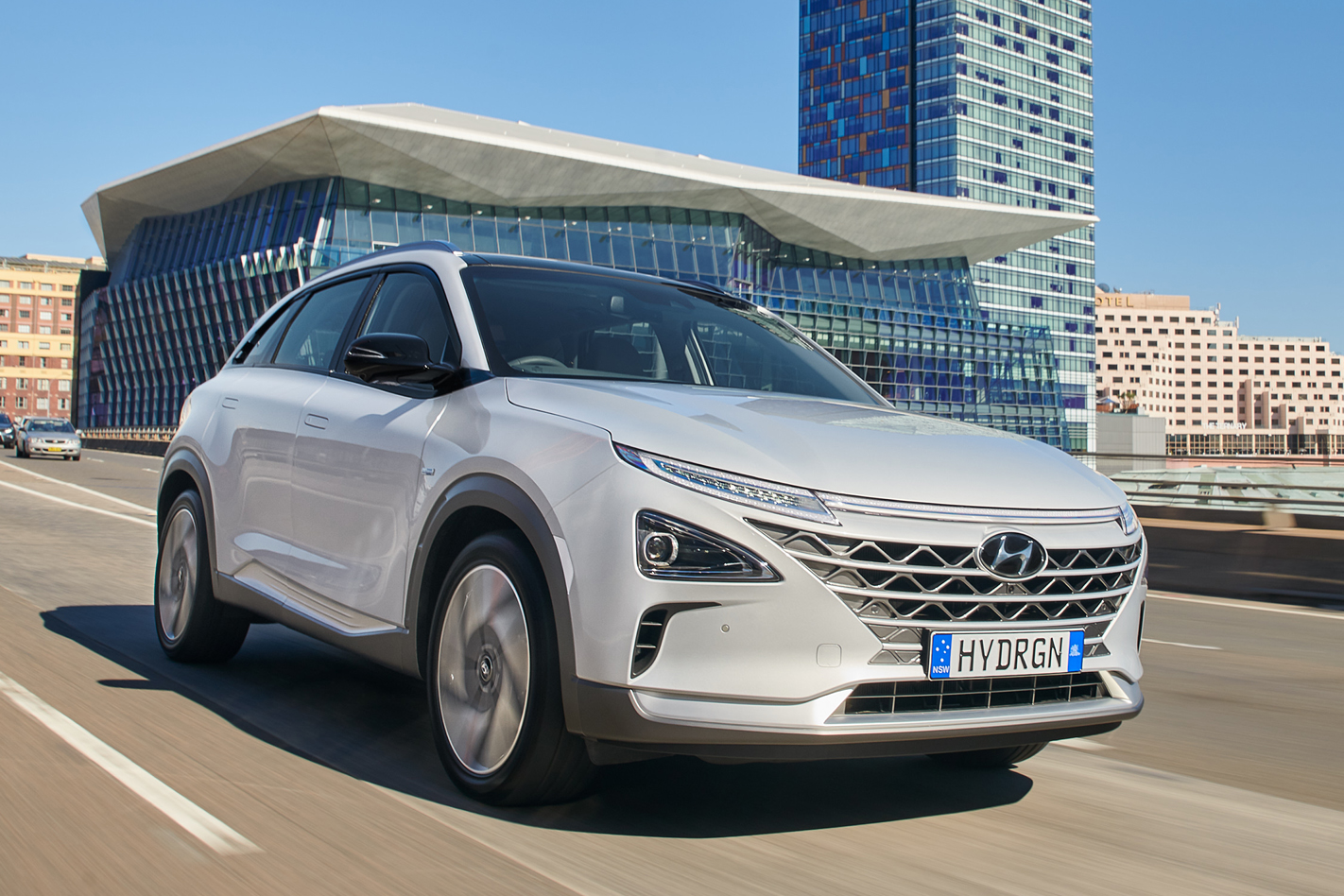
Beyond that, the new model could even represent Hyundai’s second hydrogen-powered SUV in the current range, delivering a bigger sibling for the Nexo mid-sized, fuel cell-powered SUV.
The current-generation Santa Fe certainly isn’t loosing any momentum in the sales race and ranks comfortably in Australia’s top five favourite large SUVs. It’s possible therefore, that the new model could be sold alongside its predecessor for a period of overlap.
Extra SUV
Whatever form the new Santa Fe takes, it won’t be the only big Hyundai to make its debut this year with the even bigger Palisade also arriving in Australia before the end of 2020.
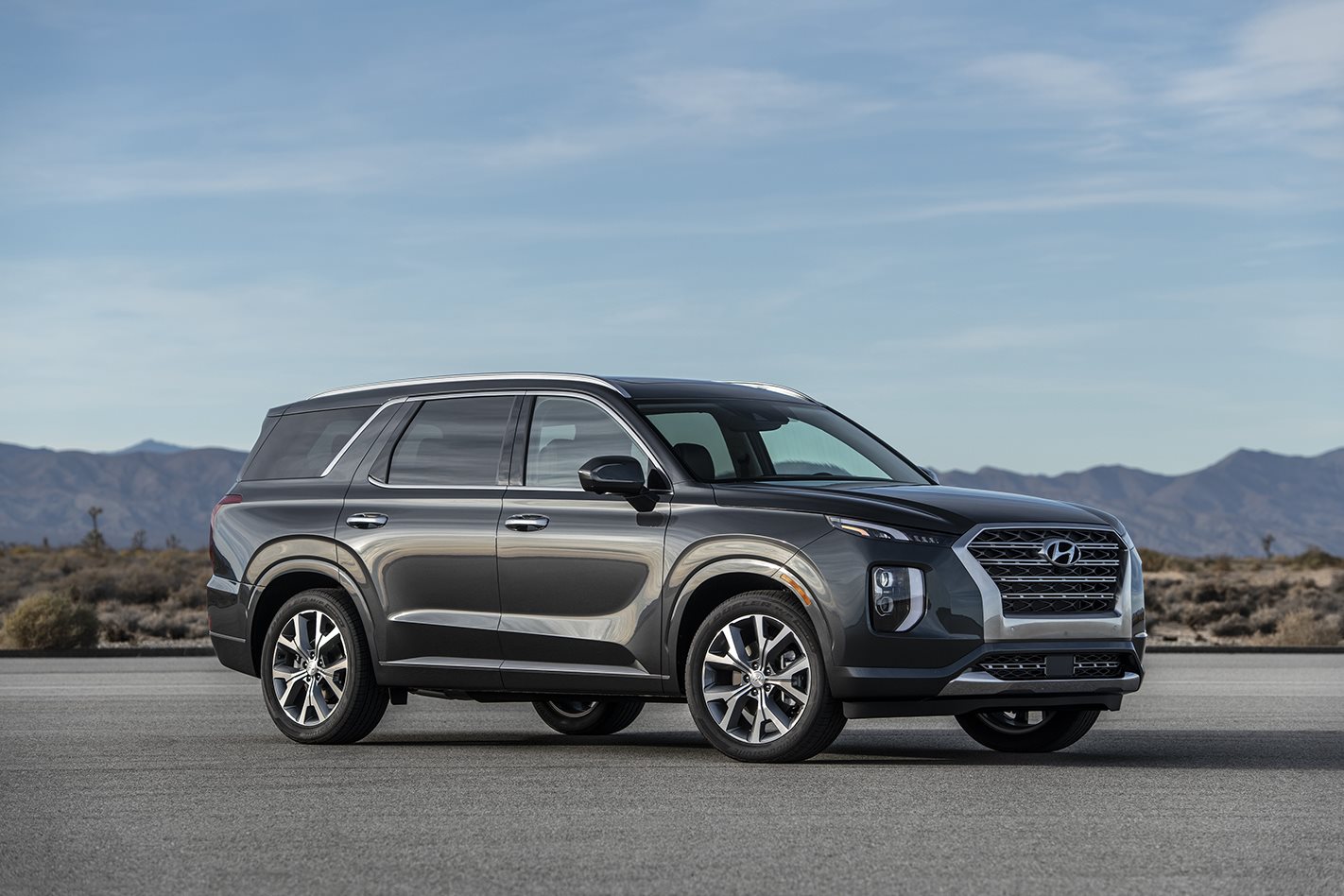
When it touches down, the Palisade will form the new flagship of Hyundai’s line-up locally, with a large SUV that will give the Toyota Prado and Mazda CX-9 something to worry about with room for up to eight on board.
Little is given away in the first Santa Fe teaser image other than a new full-width geometric patterned grille, which incorporates new LED daytime running lights – said to reflect the company’s new integrated vehicle architecture.
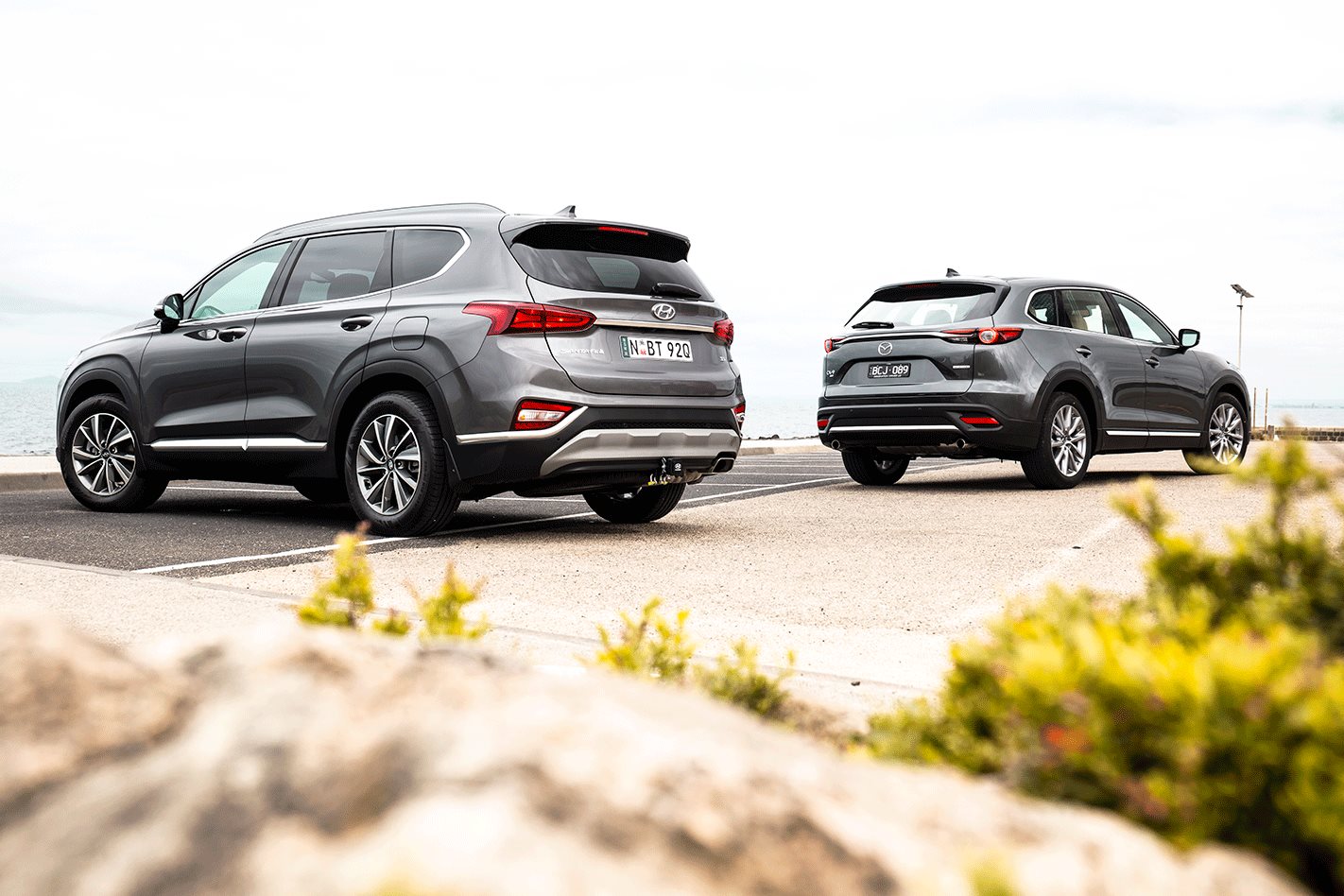
More images are expected soon along with extra information that will start to unravel some of the ‘technological enhancements’ contained within the new Santa Fe, which Hyundai is describing as ‘the ultimate family adventure vehicle’.
It’s hardly unexpected, but Australian new car sales are still off the boil, thanks to a perfect tsunami of COVID-19, crippling exchange rates and consumer disinterest in doing anything other than hiding under a mattress.
The May figures are a solid improvement over April’s carnage, but the most recent stats from the Federal Chamber of Automotive Industries (FCAI) still mark the 26th consecutive month of falls in new car sales.
Interestingly, it’s still possible to pick a small swing towards smaller, more affordable SUVs despite the carnage on new car dealer lots, as people take stock of the current economic climate and purchase accordingly.
As a whole, the Australian new car market slumped by some 35 percent year on year, with less than 60,000 new cars sold across Australia during May. However, it’s a 22,000-unit improvement over April.
“While COVID-19 is primarily a health crisis, it has brought about an economic crisis as well,” said the FCAI’s CEO, Tony Weber. “These are difficult times for the global and domestic economy, and this, of course, has repercussions for the local sales sector, including the automotive industry.
“Of key importance to the industry has been the topic of consumer confidence. The past few months have seen a contraction of household income and consequently household spending. This, combined with the uncertainty of the pandemic outcome, has severely curtailed retail activity.”
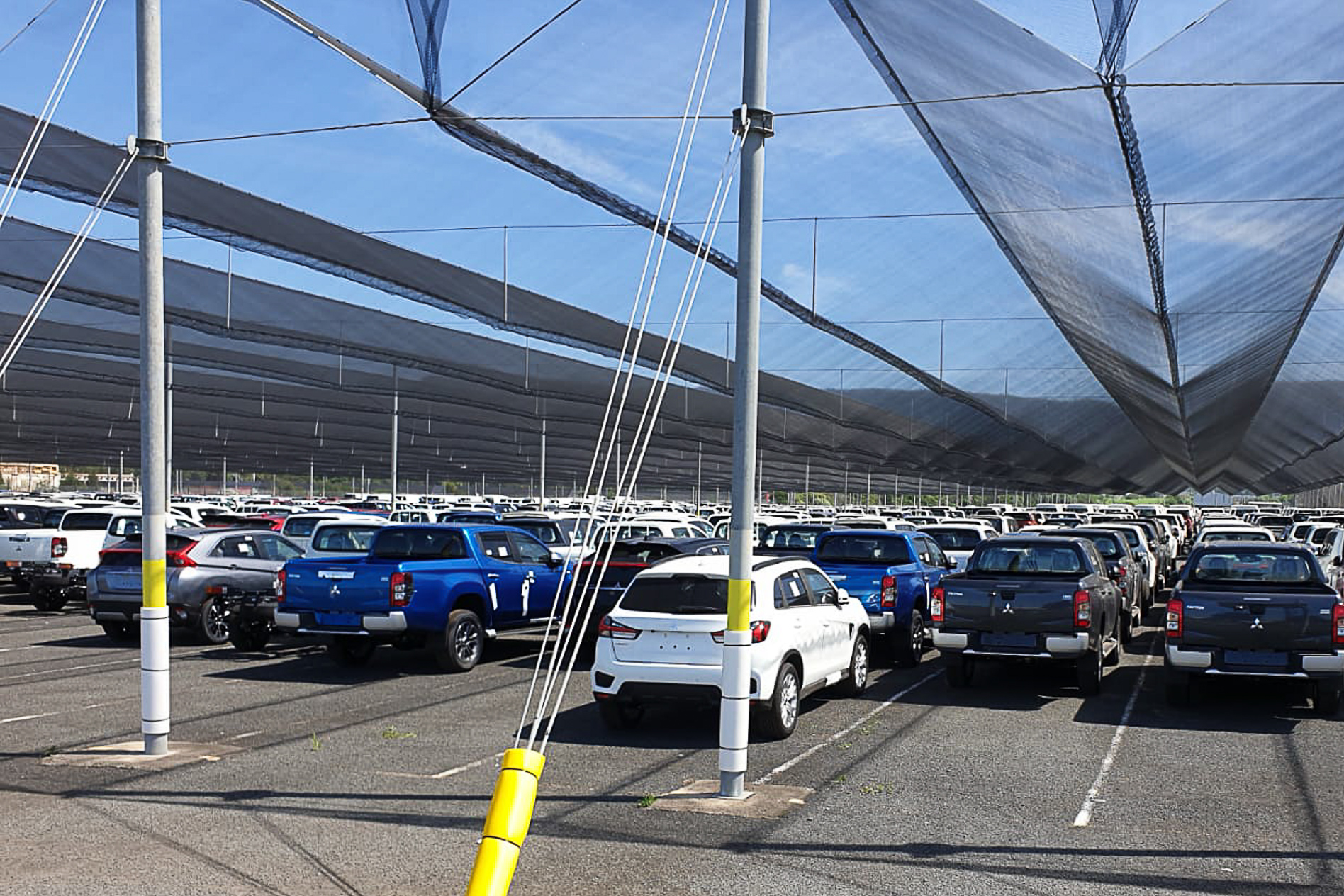
The pain has been shared equally across all of the top ten brands on sale in Australia, though the overall natural order hasn’t changed much. Toyota’s HiLux – on the eve of the release of a mid-life facelift – topped the new car sales charts, pipping the Ford Ranger.
In fact, there are five Toyota products in the top ten, with the RAV4 muscling into third ahead of a resurgent LandCruiser in fourth and the Corolla in fifth.
The evergreen Prado was pipped for sixth in May by the Mazda CX-5, while the Hyundai i30, Mazda 3 and Hyundai Tucson round out the top ten.
From the gloom and doom, though, it’s possible to observe a couple of trends that bode well for a stronger finish to 2020.
Commercial vehicle sales – buses and light trucks, in the main – were largely resistant to the slow-down, which indicates that the government’s instant asset write-off plan appears to be having a positive impact – though it still pays to buy wisely.

As well, sales of smaller, newer SUVs – like the Hyundai Venue and Volkswagen’s T-Cross – have started well, though the Holden Trax’s strong runout sales performance adds a false echo to the trend within the small SUV sector.
If we were going car shopping this month, though, we’d be eyeballing the big players in the medium SUV segment. The Hyundai Tucson, for example, should be selling better than it is, and dealers will likely be keen to play ball before the end of the financial year.
Likewise, the evergreen Mitsubishi Outlander and Nissan X-Trail SUVs both took a battering in May, and both brands will be keen to stem the flow of red ink in June.
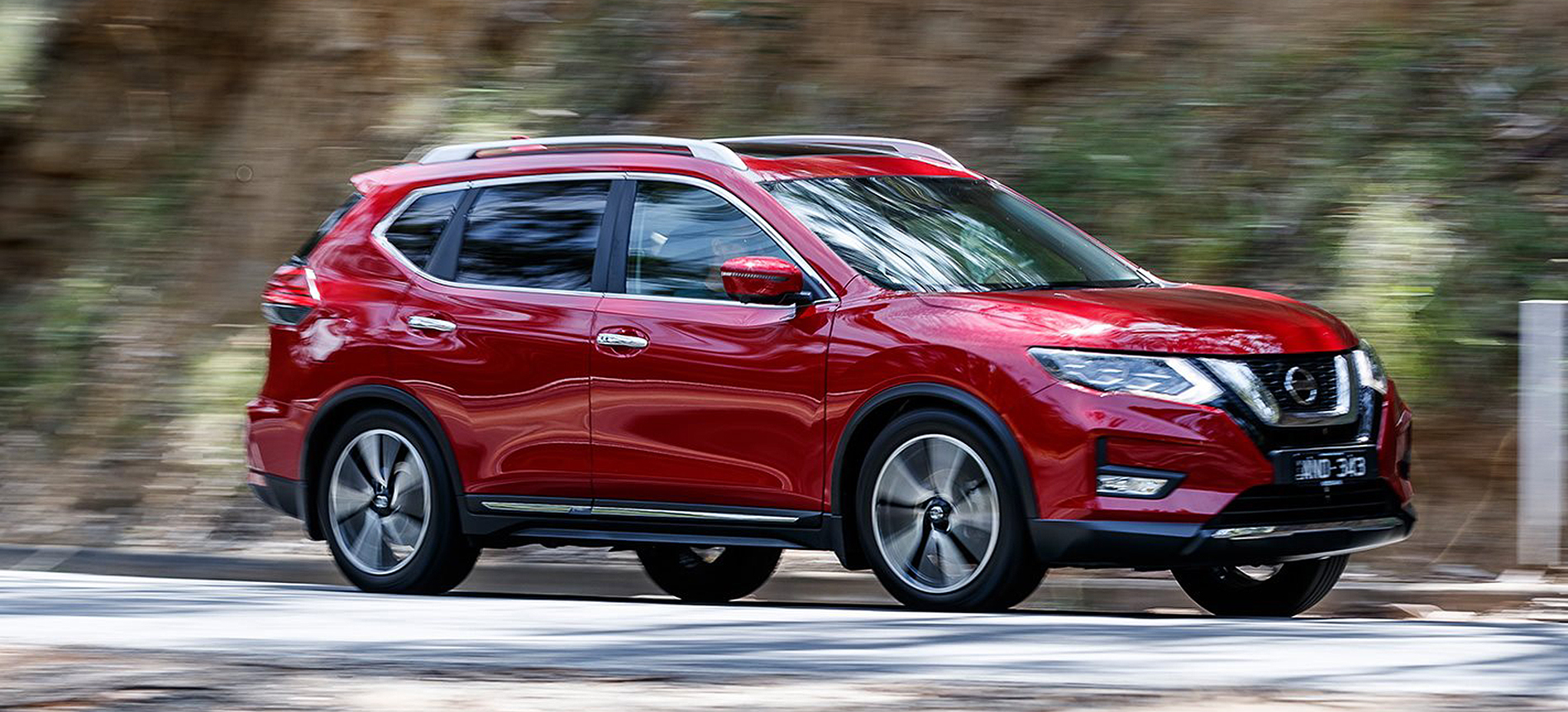
If you’re looking for a premium deal, the Mercedes-Benz GLC SUV could be where the smart money goes, while the ageing C-Class could also offer a cut-price opportunity to get aboard a three-pointed star.
Call it the remnants of the cultural cringe: that belief that whatever we produce in Australia, Europe does it better. Its reach surprised me when I arrived Down Under in 2013. The Euro view of Australians is of can-do, salt-flecked superheroes, refreshingly shorn of neuroses. Truths, as ever, often lay elsewhere.
I was minded of this internalised inferiority complex when the motoring desk was discussing great driving roads. Many colleagues could name the iconic routes in Europe, but looked askance when I mentioned that certain Aussie roads were just as good, if not better. I’ve never driven anywhere that approaches the Targa roads of Tassie, and on mainland Australia there was a drive that I’d champion as easily having the measure of Romania’s Transfagarasan Highway, the road Jeremy Clarkson confidently pronounced the best in the world. Its location? The Victorian high country.
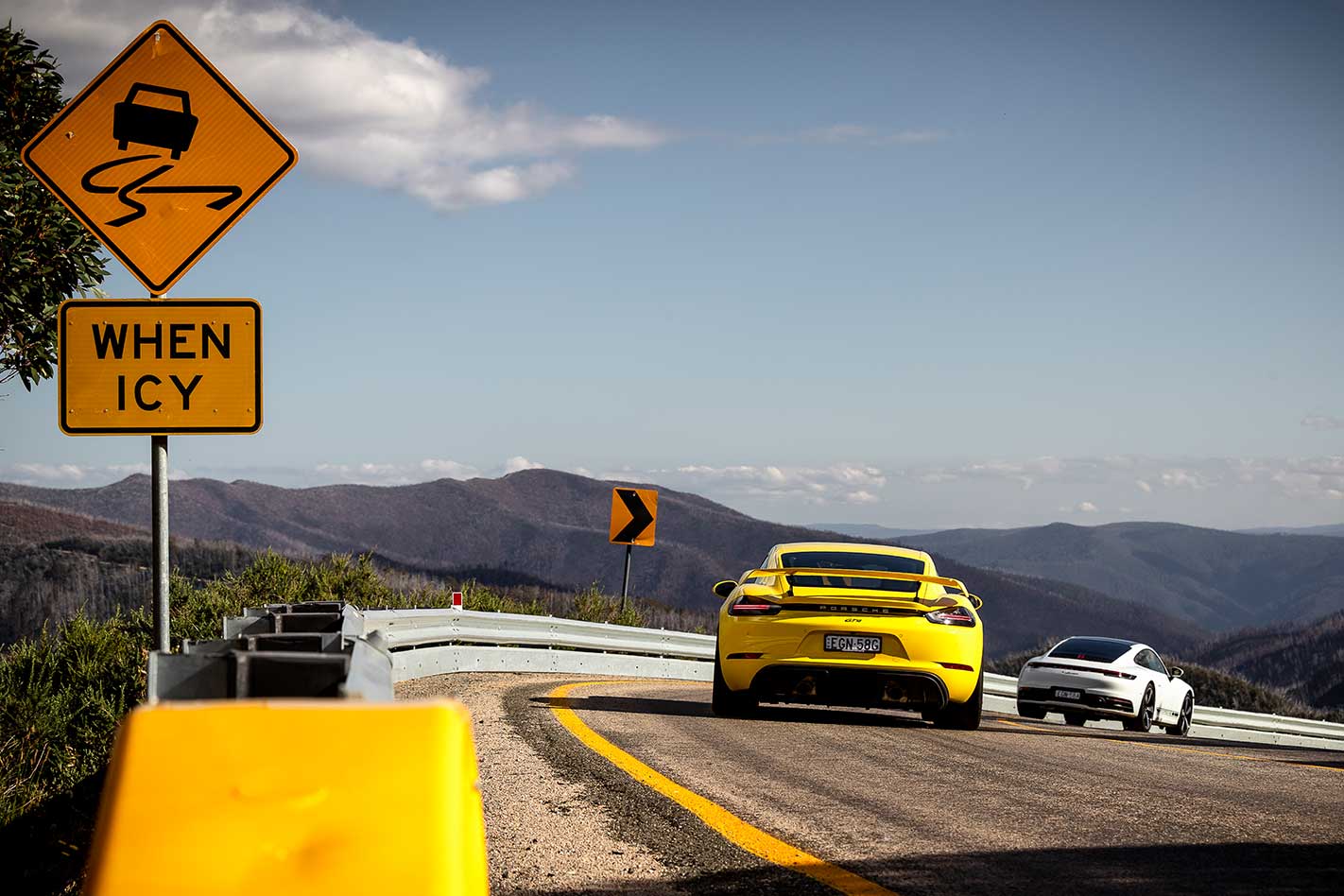
Regular readers of Wheels will know that the roads around the mountain resorts of Mount Hotham and Falls Creek are some of our go-to choices when we’re looking to stretch the legs of some serious performance cars. Link those two hill routes with the forested crest of Tawonga Gap to the north and the dementedly twisty Omeo Highway and the montane Bogong High Plains in the south and you have a 245km loop that delivers every combination of corner, surface and grade any keen driver could ask for.
To do such a circuit justice, we needed something elevated a long way above the plane of the ordinary. Porsche’s box-fresh Cayman GT4 seemed about perfect. A pure, normally aspirated coupe with a 4.0-litre flat-six, the innate balance of a mid-mounted engine, rear-drive and a manual gearbox is a recipe that seems a bespoke fit for this route, the Alpine Ring. That would normally be more than enough, but this time we also brought company in the shape of its big brother, the 911 Carrera. Why have one ‘best sports car in the world’, when you can bring two?
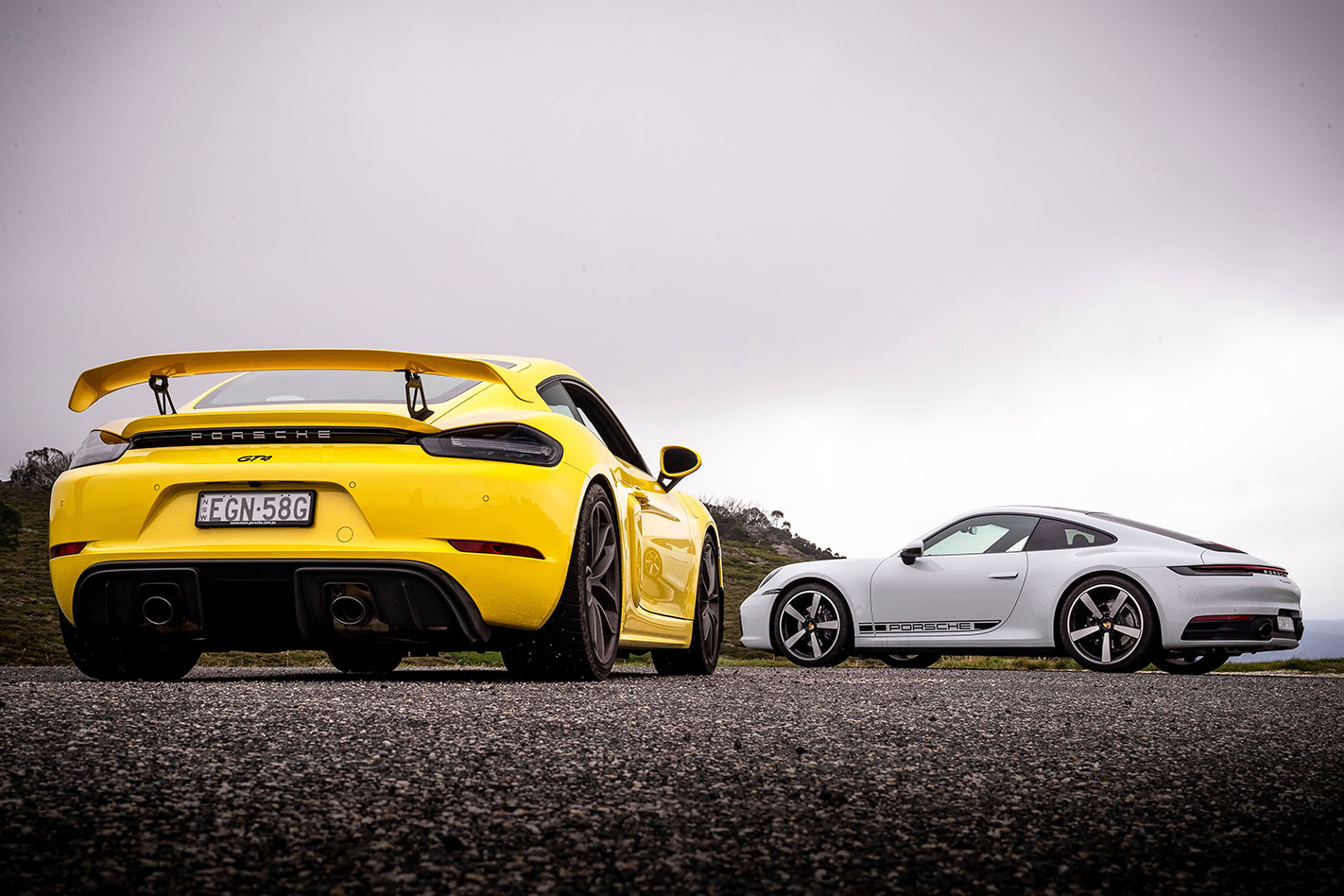
There’s a $29,700 gulf between the apex of Cayman ownership and the bottom rung of the 911 ladder, but throw in the options prices on our test cars and that blows out to a hefty $54,370 gap. Most of that options spend is typical press car dress-up; paint, carbon parts, better lights, stereos, trims and such like. Both cars carry the must-have chrono package and sports seat options and come with Porsche Active Suspension Management (PASM) as standard. Neither has carbon discs. And, after spending a few minutes in both, neither seems a candidate for a cross-shop.
The Cayman feels claustrophobic, raw and highly strung. The jutting underbite of its front splitter has to be nursed obliquely onto drop kerbs and speed humps, while its engine chunters along at its resting 3000rpm lope with all the musicality of my Indesit on an eco cycle. Go any lower than three grand and the bass note turns your spleen to puree. Jump from here into the 911 and it feels as if you’ve landed in a Bentley Continental. It’s airy and plush. The controls feel supremely slick, as if each input is luxuriating in a steam bath of exotic oils. The engine whirs remotely, and the knurled metal controls contrast with the plastic touch points of the junior sibling. The 911 feels an entire generation fresher. Largely because it is.
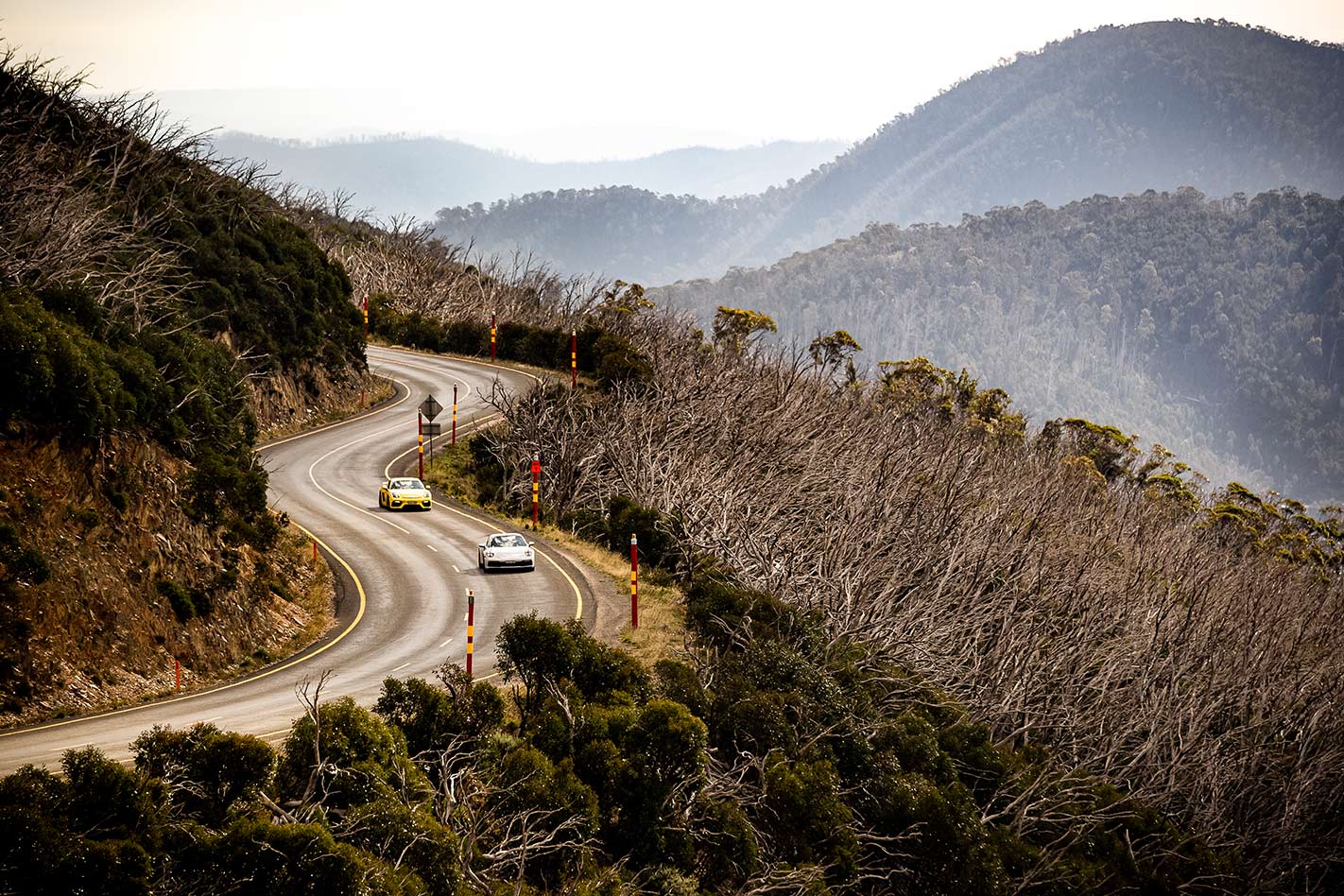
The Ovens valley offers one of the few opportunities on the loop to ease back and take in the scenery. I’m in the Cayman, with editor Inwood ahead in the Carrera. The road tracks the Ovens river, its path delineated by tree species: the occasional stand of poplars, willows and river red gums. A seemingly impenetrable wall of mountainside rises ahead at Smoko, climbing 1500m above you to that most alpine of Aussie peaks, the 1922m summit of Mount Feathertop. And yes, in case you were wondering, the village was so called because it was here that the gold prospectors would stop to take stock of the task ahead and have a smoke.
On the fringes of Harrietville, the driving instantly changes. Head past the Tronoh dredge pool, where the 167-metre long ‘Tronoh Monster’ sifted for gold at the base of the local quartz reefs, and the road abruptly turns left and climbs hard. There’s no gentle ease-in. The 911 squats onto its broad haunches and goes, its 3.0-litre turbocharged flat-six delivering peak torque of 450Nm anywhere from 1900 to 5000rpm whereas the Cayman needs to be wrung round to 5000rpm to deliver its 420Nm quota. In the meantime, the 911’s dual-clutch transmission blat-blats seamlessly through its eight ratios, receding effortlessly.
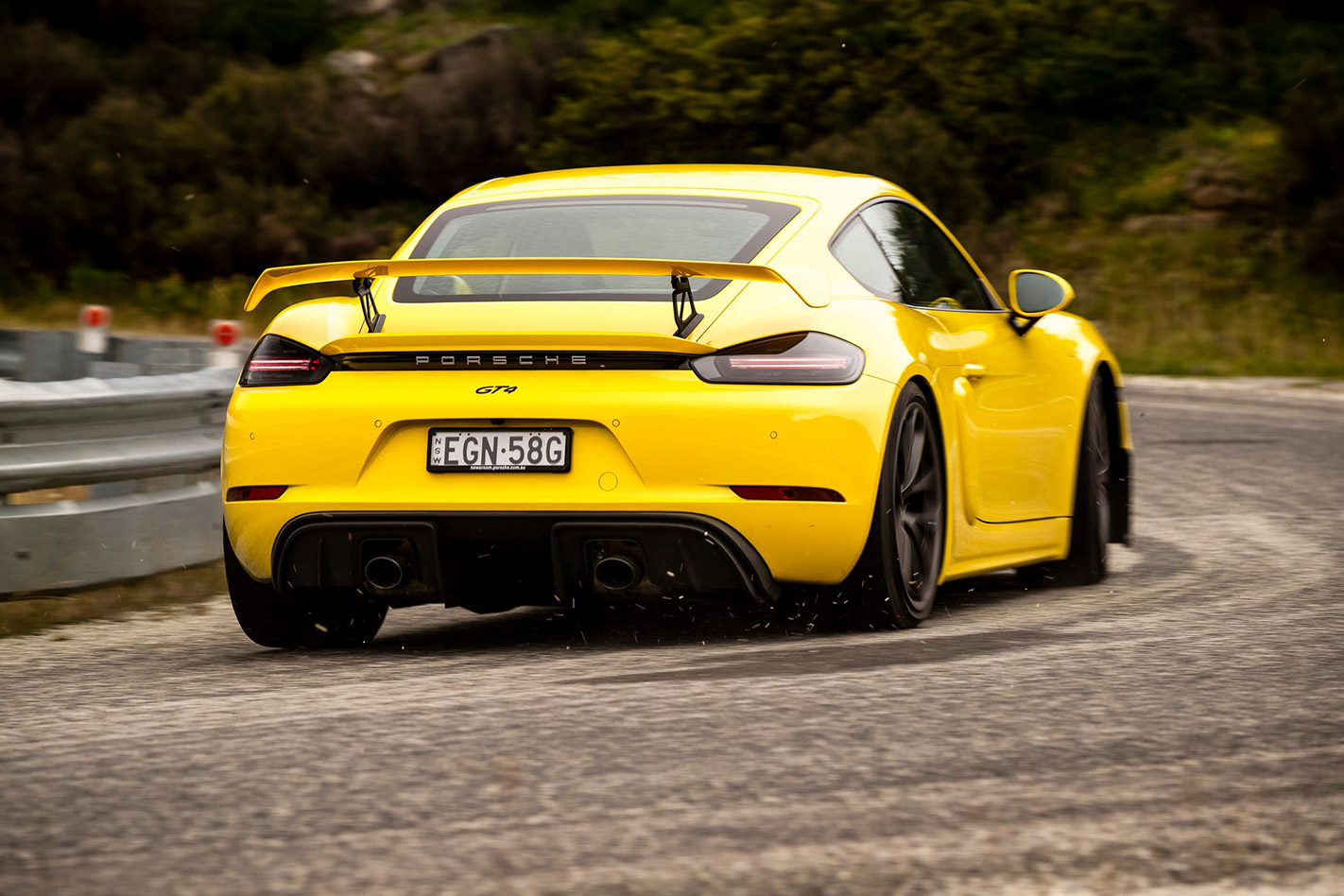
It’s no great hardship, stirring the GT4’s six-speed ’box in an attempt to keep the needle between 5000 and 6800rpm. The engine’s a bored and stroked relation to the unit in the posterior of the Carrera, minus its forced induction plumbing so, like the last 3.8-litre Cayman GT4 from 2015, its mechanicals owe their lineage more to Zuffenhausen than Weissach, in philosophy at least. Like that last Cayman, the gearing is freakishly tall. First gear will get you to 83km/h and second somewhere around 140km/h. This is an engine you’ll want to feed revs to. That you can only redline it in first unless you want to end up in front of a magistrate is a major caveat.
What the 911 gains on the way out of corners, the Cayman claws back on corner entry. You can brake later and deeper, relying on the GT4’s crisper body control and the superior purchase of its Michelin Pilot Sport Cup 2 rubber. The 245/35 ZR20 front tyre size is identical to that of the 911 but the Carrera’s Goodyear Eagle F1 Asymmetric 3 boots offer neither the sidewall stiffness nor the sheer area of carbon black in contact with the road as the racy Michelins, with their virtually groove-free centre section.
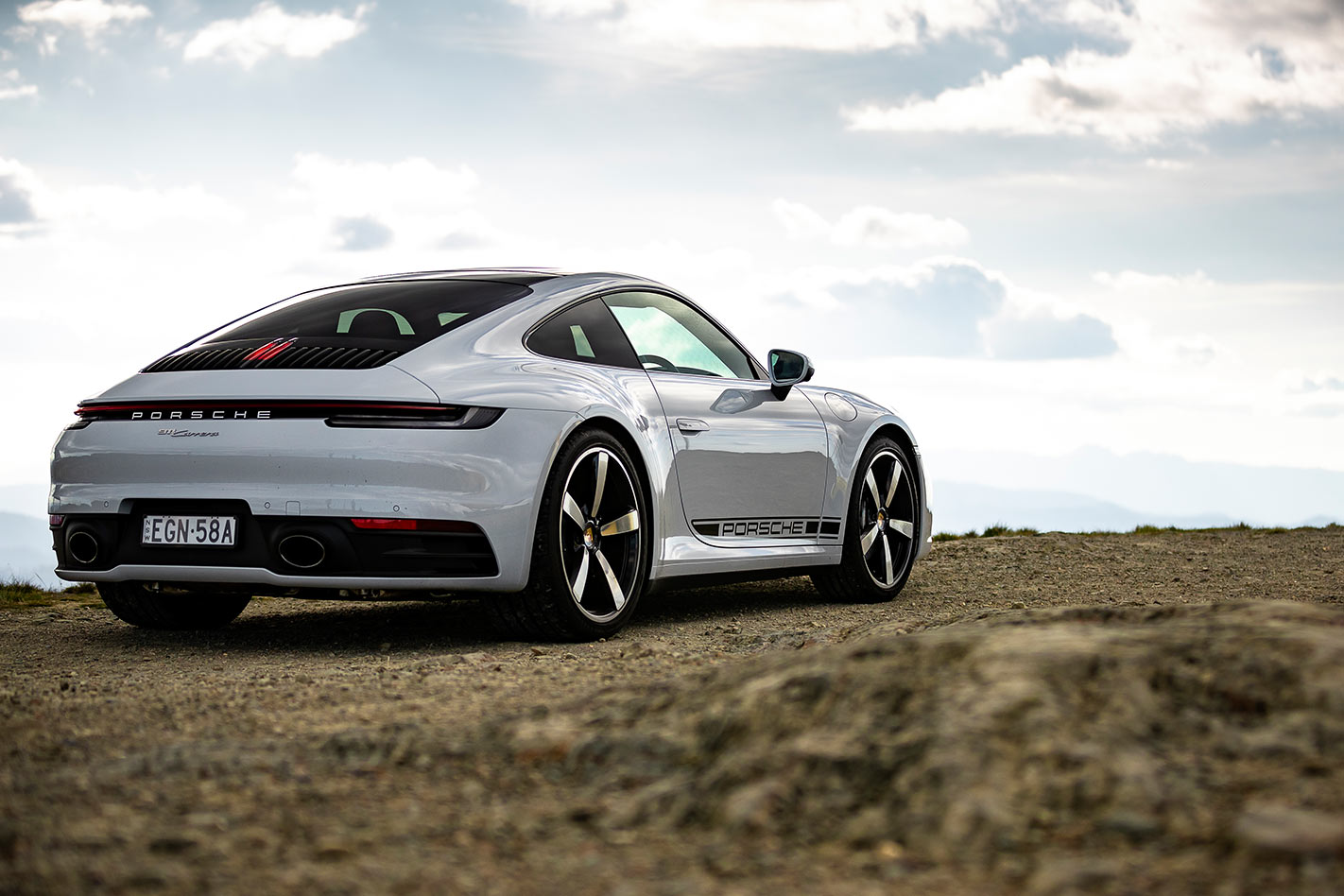
Thus, the gap between the two cars expands and contracts as they howl up the hill, as if connected by some vast bungee. Inwood’s fast and smooth in the 911 and I suspect that the Cayman is delivering a far more intense and physical experience. We burst out of the trees and onto the Razorback just short of Hotham, the world turning from jade to azure, the road snaking up an exposed arête. From the cabin of the GT4, the grey dash and yellow front guards look like physical extensions of the grey bitumen and yellow lines, almost as if the car has morphed bodily out of the road.
Remember what I said about the Transfagarasan earlier? What the photos of deserted Carpathian hairpins don’t tell you is that less than half of the road is like that. For most of its 90km length it’s a valley or balcony drive, and only in the sections around Lake Vidraru and Lake Bâlea does the road get really challenging. The Alpine Ring is the opposite. There’s a short respite either side of Tawonga Gap and across the high plains, but other than that it’s a bottomless buffet of bends.
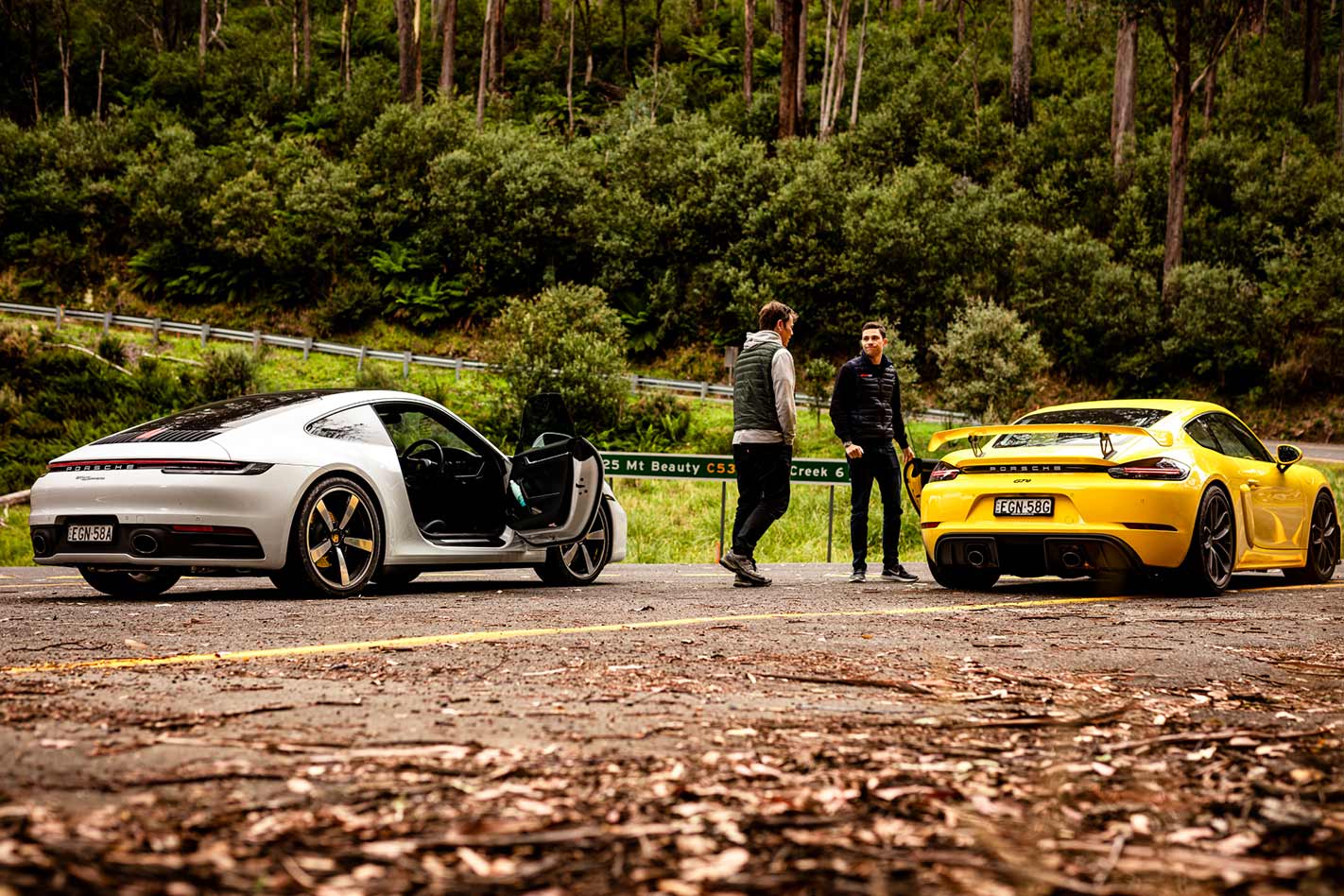
As photographer Dewar starts snapping details of the two cars up at The Saddle, I attempt to process what’s just happened. There’s a lot to take in. The GT4 is four seconds a lap quicker around the Nordschleife than the deity that is the V10 Carrera GT from 2005. That I can understand: there’s a decade and a half of tyre technology and software engineering brought into that mix. What I’m finding harder to reconcile is that this GT-badged hellion isn’t really any quicker on give-and-take roads than the base 911.
Darkness falls up at Hotham Cross, Australia’s highest stretch of bitumen. Soft folds of weathered peaks blur in planes of hazy pastels until there’s no discernible boundary between the inky indigoes of earth and sky. The lights blink on in the ski village, the darkness enveloping us as we angle east, the last noctilucent feathers of the day rendered as a shining filigree of aquamarine some 80km overhead.
Whereas the road from Harrietville climbs Icarus-like to the sky, the other side of the massif releases its hard-won gradient coyly. Some of the corners are so long you almost expect the road to loop back under itself. Here you can play with the balance of the car subtly, rolling gently in and out of the throttle. In the 911, you can feel that polar moment of inertia more clearly, a throttle lift requiring a little more remedial action at the wheel than in the GT4.
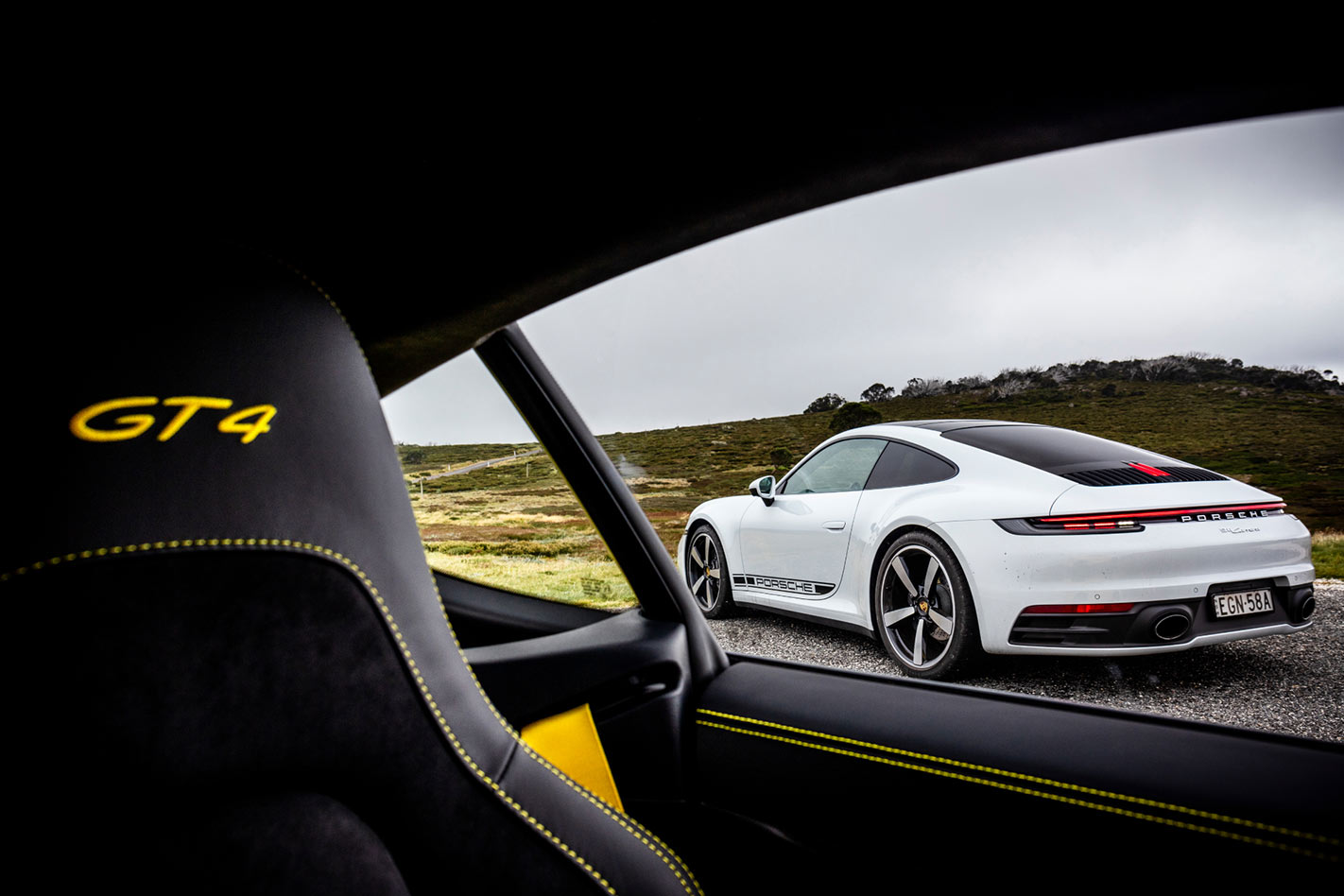
I’m grateful for the Carrera’s excellent brakes as we approach Omeo. A shrill whinnying from Dewar is my cue that all is not good. A huge grey kangaroo leaps out of the undergrowth to my right straight into the path of the Porsche. In that moment, I stand on the anchors and urge the ’roo not to do likewise. Thankfully, it keeps going across the narrow road, although I was certain until the last possible second that its thick tail was sure to clout the nearside guard.
The Golden Age Motel in Omeo has seen livelier evenings. Bushfires destroyed the original building in 1939 and the recent bushfires put the local economy onto its knees. Now the coronavirus restrictions are attempting to apply the coup de grace. I pick up a take-out parma from the deserted bar to eat in my room. With no cutlery, I pick it up and take a few bites, chewing balefully. How quickly we miss normal life’s little civilities. The sound of a travelling road repair crew downstairs and the tired chug of the split system is all that breaks the silence.
Day two, leg two dawns gin clear. From Omeo, the road meanders up its titular highway, or at least it looks to on the map. Zoom in further and those lazy loops up the road coalesce into a madness of high-frequency noise: switchbacks, sharp lefts and rights and barely a moment to take a breath on the straight. The hill roads may be the big drawcards, but nowhere else on the Alpine Ring does the road feel quite as malign in its intent as the section approaching Anglers Rest.
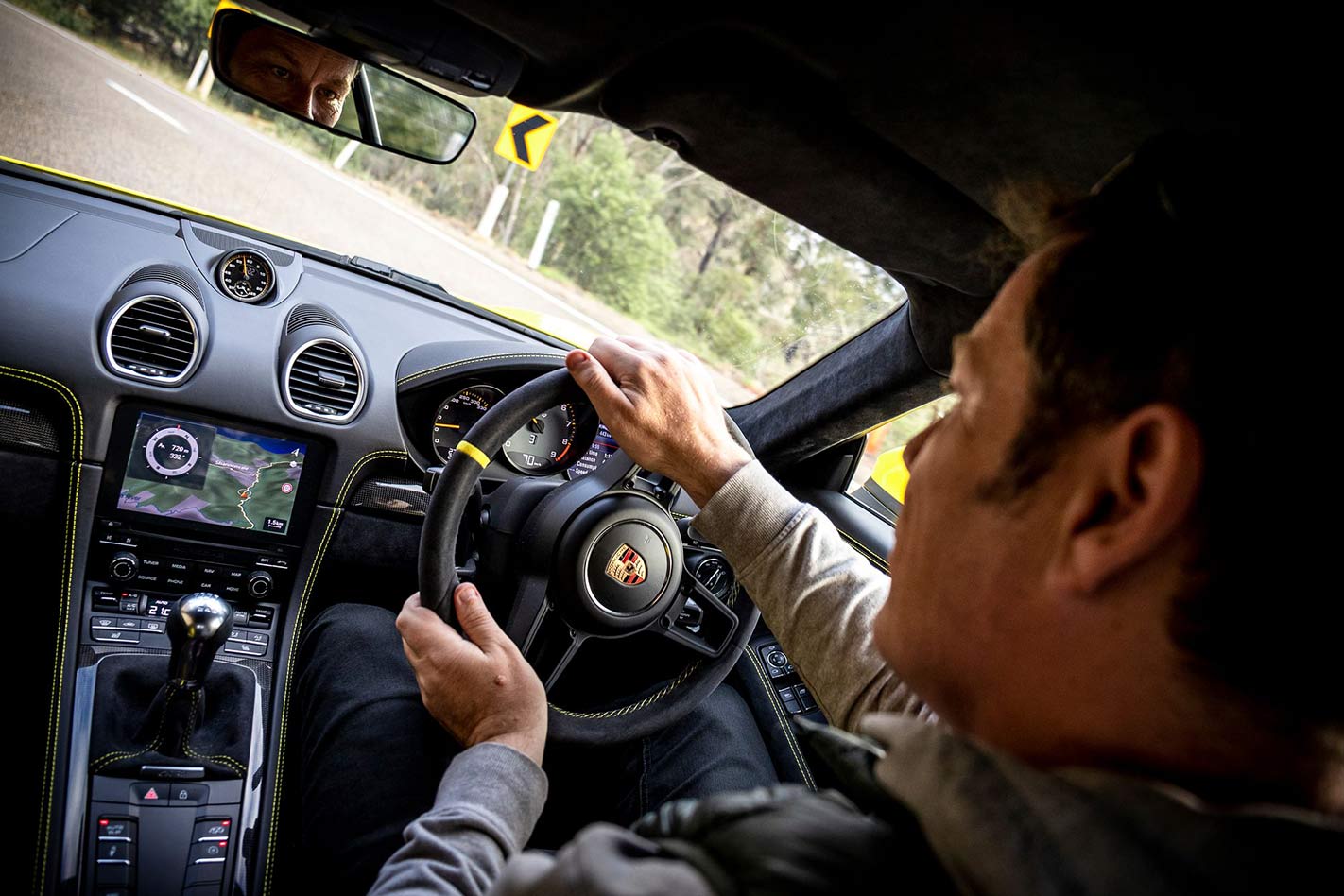
The 911 is mighty here, taking huge chunks of apex. It isn’t perfect, though. As sharp as it is, in Sport+ mode the downshifting can be clumsy. Just as you roll off the brakes to guide the car into the corner, the PDK ’box can throw another aggressive downshift, causing a pitching moment at exactly the wrong time. Better to marshal those shifters yourself in order to avoid this uncharacteristic dynamic oversight.
The road abandons the course of the Big River valley at an impossibly acute left up to the Bogong High Plains and Falls Creek. Now we see why the repair crews were in town. Several sections of this sharply ascending road have been ravaged by bushfires. It’s sobering to see the twisted guardrail, the melted bollards, the melt-freeze bitumen and the charred witness marks reaching into tree crowns 30 metres overhead. At one point, there’s a perfect alignment of downed trees, flattened by the 200km/h winds of a collapsing pyrocumulonimbus column.
The inferno ran out of fuel at the margins of the high plains. Here the scenery looks almost Welsh, high moorland pocked with peaty pools and basalt outcroppings. The road surface up to and across the plains is loose coarse chip, and the lack of sound deadening in the GT4 coupled with its extravagantly sticky rubber sends a constant fusillade of pings onto its underbelly. The corners here are worth exploring, though, as are the old cattlemen’s huts of Wallace and Cope located just a short walk from the road. We’re back up above 1700m here and, like Wales, it’s cold, grey, windy and spotting with rain. Currawongs sit like sentinels on the skeletal fingers of gnarled snow gums, watching the cars go back and forth for Dewar’s lens.
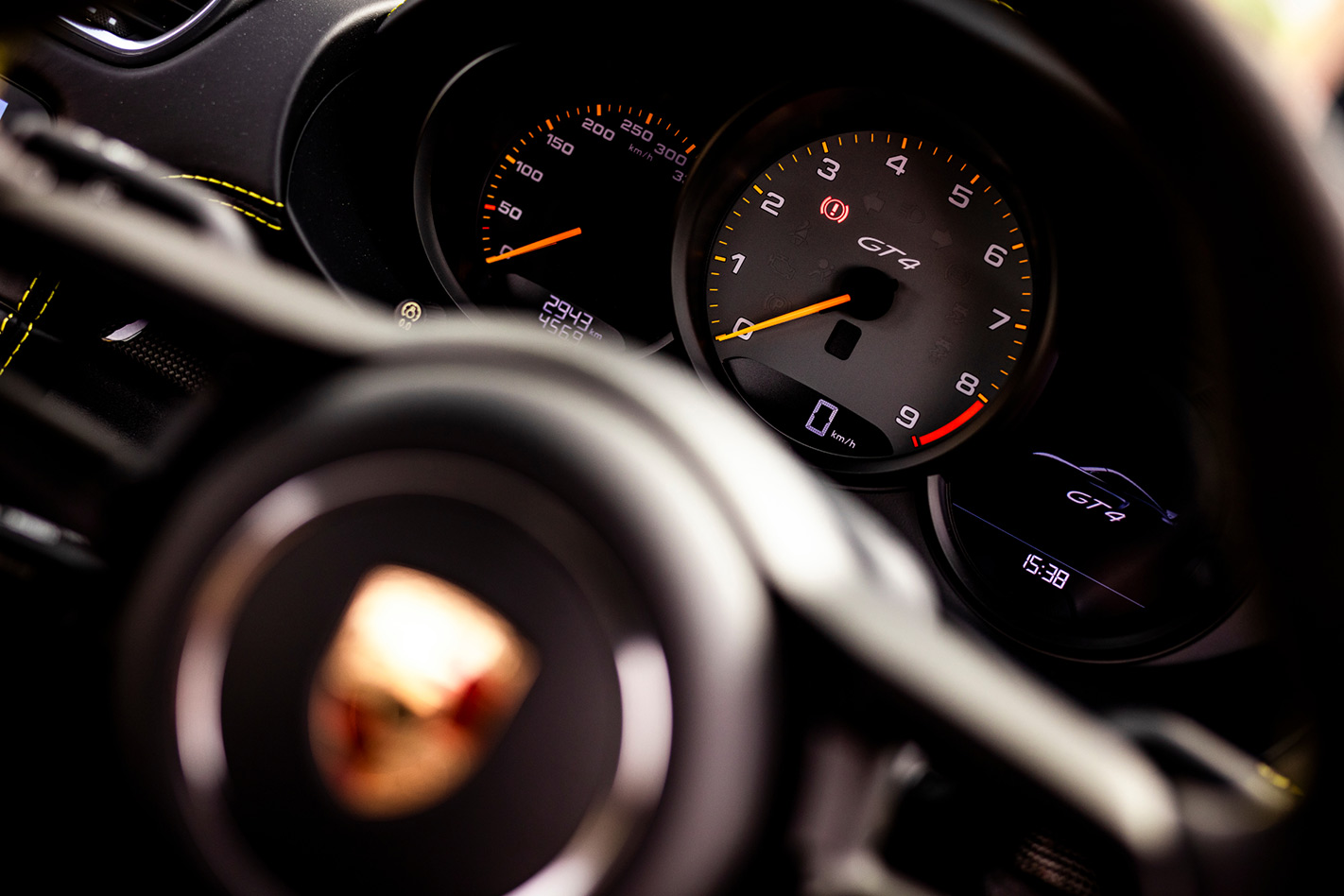
Fortunately the road surface improves as we enter Falls Creek. Still no coffee available, though – which, if you’ve ever spent much time in Inwood’s company, is a problem. Finally we get the opportunity to drive the cars back to back on the same piece of road. I’ve come to the conclusion that I like the GT4’s engine but don’t love it. Any Porsche 4.0-litre, naturally aspirated flat-six is bound to be compared to the Mader engine in the late-departed 991.2 GT3, and that comparison doesn’t do the Cayman any great favours. The shortcomings of the gearing are such that, as heretical as it may sound, the outgoing 2.5-litre GTS with a PDK ’box would, for many, probably prove a more competent road car. Still, as product boss of the Cayman line, Frank-Steffen Walliser, has noted, “American customers aren’t asking for four cylinders, they’re asking for four litres.” Be that as it may, the GT4’s engine lacks the magic; the hysterical, operatic drama of a Mader or Mezger unit at full noise.
It’s hard to direct material complaint at its chassis dynamics, though. The upper reaches of the Falls Creek road are stunning, with seductive but treacherous tightening radius corners, deep cambers that vanish without warning, and forest amphitheatres that brim with phasing flat-six exhaust notes. The 911 demonstrates that it’s possible to cover ground just as effectively without the GT4’s compromises. Of course, were you planning to take your Porsche on-track on a reasonably frequent basis, the GT4 would be in its element, but as a road car, the Carrera has its measure. Coffee in Mount Beauty and a final spirited zip up and over Tawonga Gap only serve to reinforce this view.
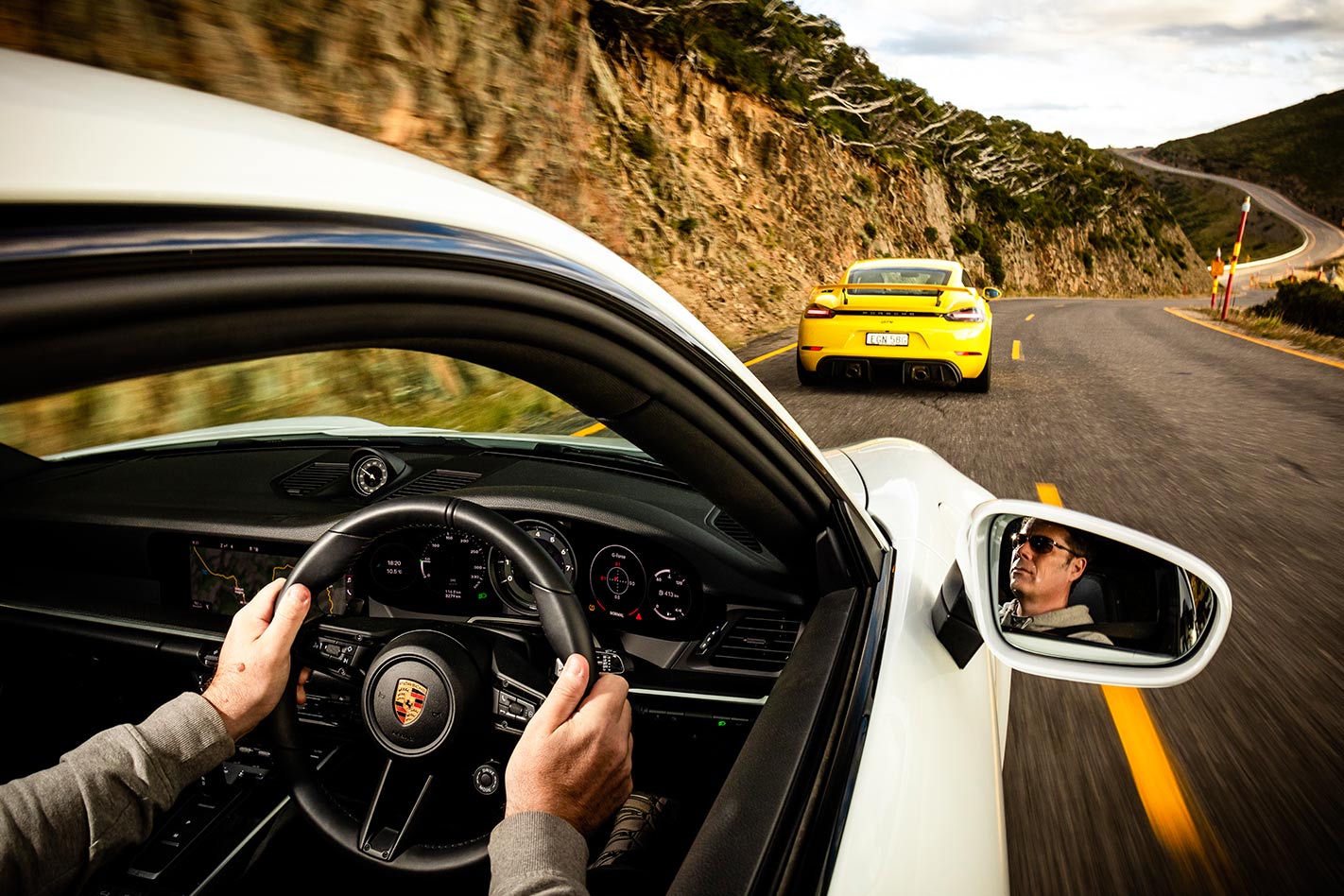
Porsche has long been masterful at maintaining a hierarchy. Two days on mainland Australia’s most spectacular driving route has been instructive. The most extreme Cayman that has ever been sold still can’t quite hold a candle to a 911 pared back to its essence. That it comes close is praise indeed, and 245km on a world-class loop is enough to tell us all we need to know about the latest 911.
We roll into Bright and grab coffees and pies. Most of the shops are now shuttered, business owners giving up on the strangulated trickle of tourist dollars. These are strange times. I point the nose of the 911 towards home, gun the engine and grin. When the world seems to shift on its axis, it’s reassuring to know there are certain unflinching constants.
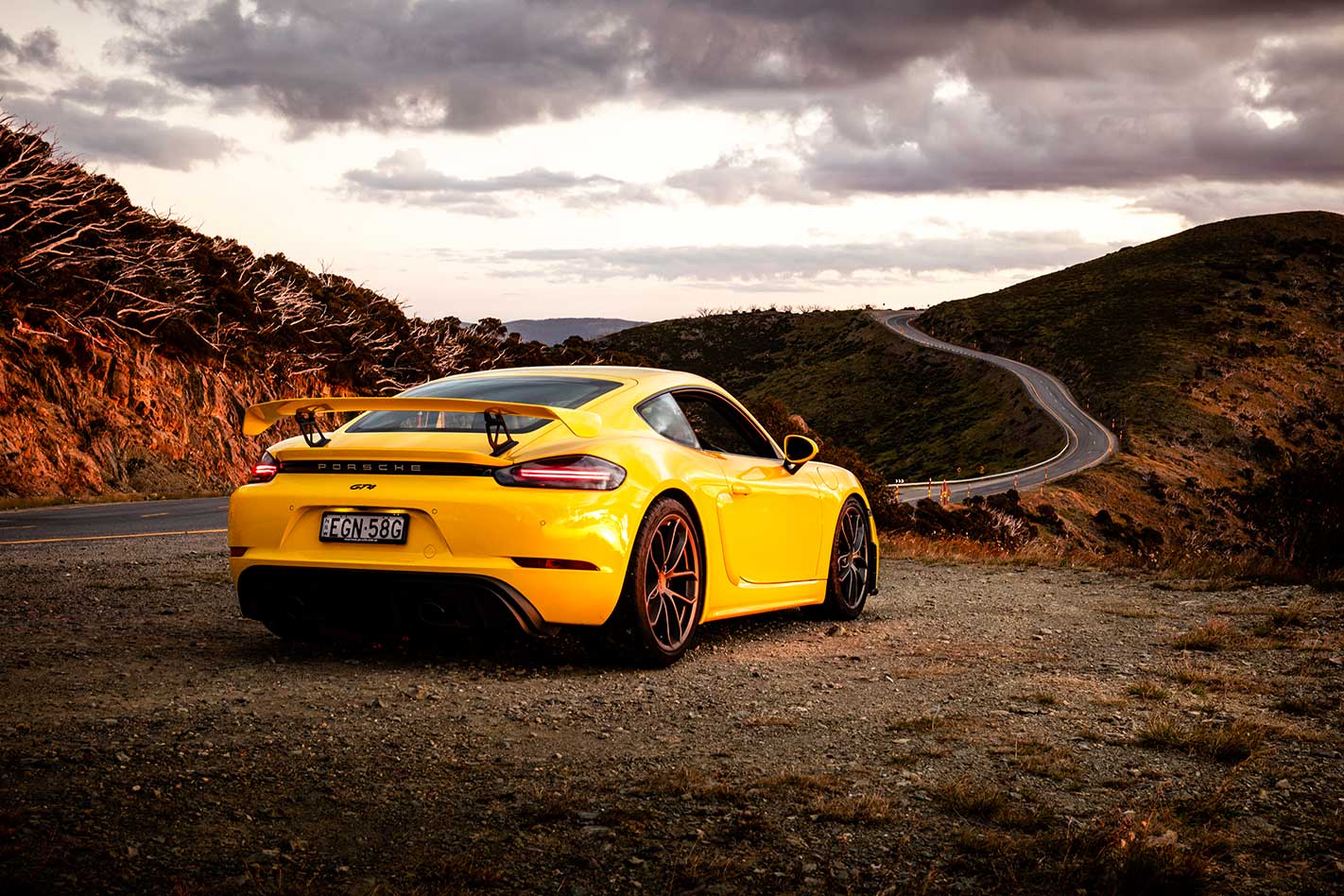
GT4’s evolution of the species
Porsche has already promised a PDK version of the Cayman GT4 (and its sibling, the Boxster Spyder) due at the end of this year. That ought to shave the 0-100 time nearer to 4.2 seconds with launch control and almost seamless upshifts. Beyond that, there’s the tantalising prospect of, for the very first time, an RS version of the GT4. Porsche engineers claim there’s more to come from the 4.0-litre unit, and aggressive aero and cooling, a big wing and centre-lock wheels are all on the agenda.
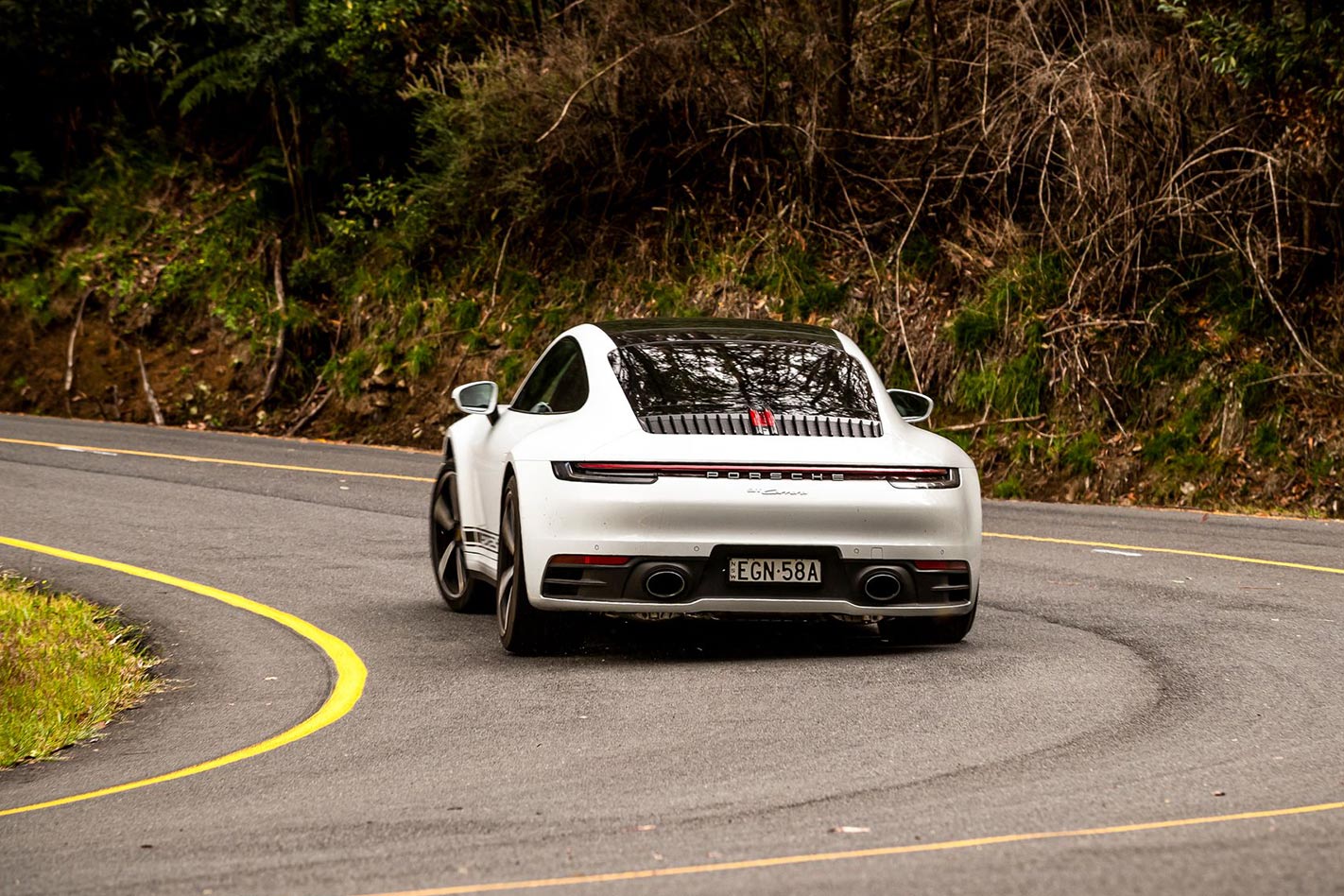
Clocking on: the data doesn’t lie
Sometimes you just know when you’ve nailed the perfect run. A sharp getaway in the Cayman GT4 with just the merest skerrick of tyre squeal, three crisp upshifts and we’re done. It’s not going to go quicker than that today. Imagine our surprise then, when the VBOX told us it had negotiated 100km/h in 4.7 seconds, exactly the same time we got from the base 718 Cayman 2.0 with PDK. By contrast, the 911 managed a blistering 3.9-second run through 100km/h and aced the GT4 through 400m too, stopping the clock at 12.1sec versus 12.8.
