
It appears the fearsome premium brand battle ground is shifting to the smaller end of the markets, with leaked images of Audi’s new A1 baby showing a significant step up in style and substance.
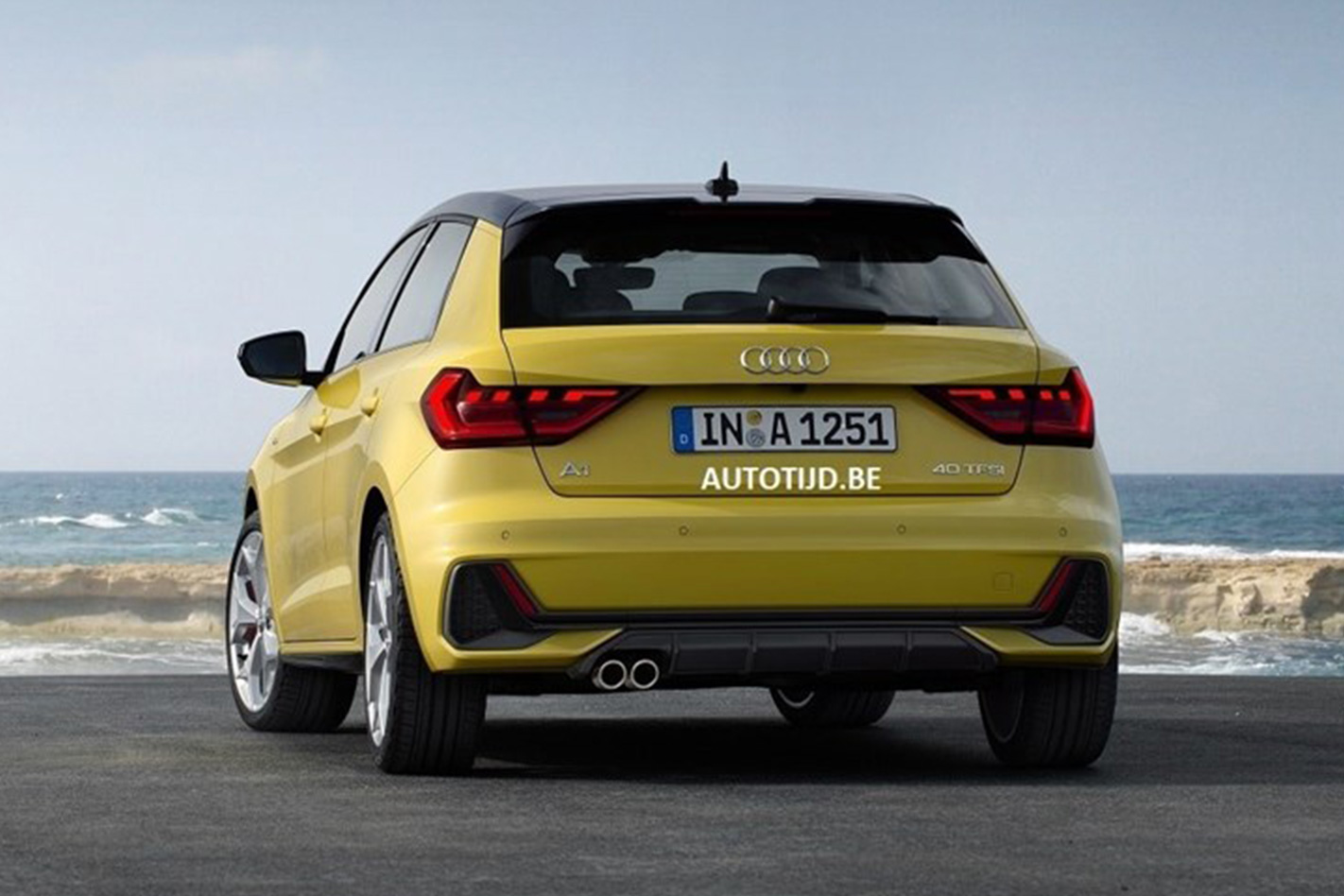
Just as Mercedes-Benz upped its small car game with the resoundingly grown-up A-Class and Volvo put a similar vote of confidence in the small segments introducing its accomplished XC40 small SUV, Audi is following suit with a new A1 that is packed with tech and style.
The leaked images which first surfaced on Belgian site autotijd.nl, reveal a matured and more aggressive looking A1, gaining an broader grille topped by a three-slot vent and large surrounding air channels not unlike something from the RS family.
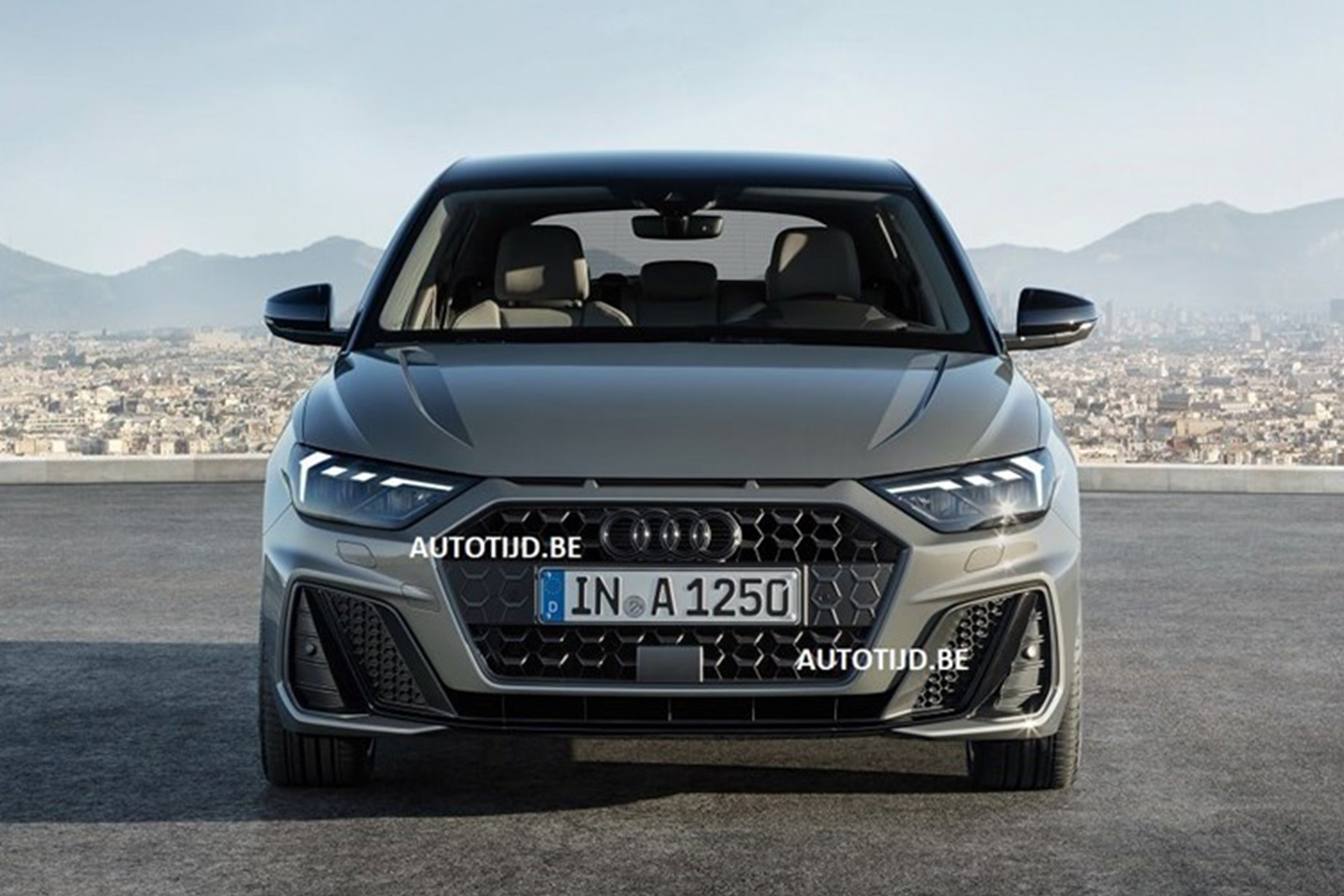
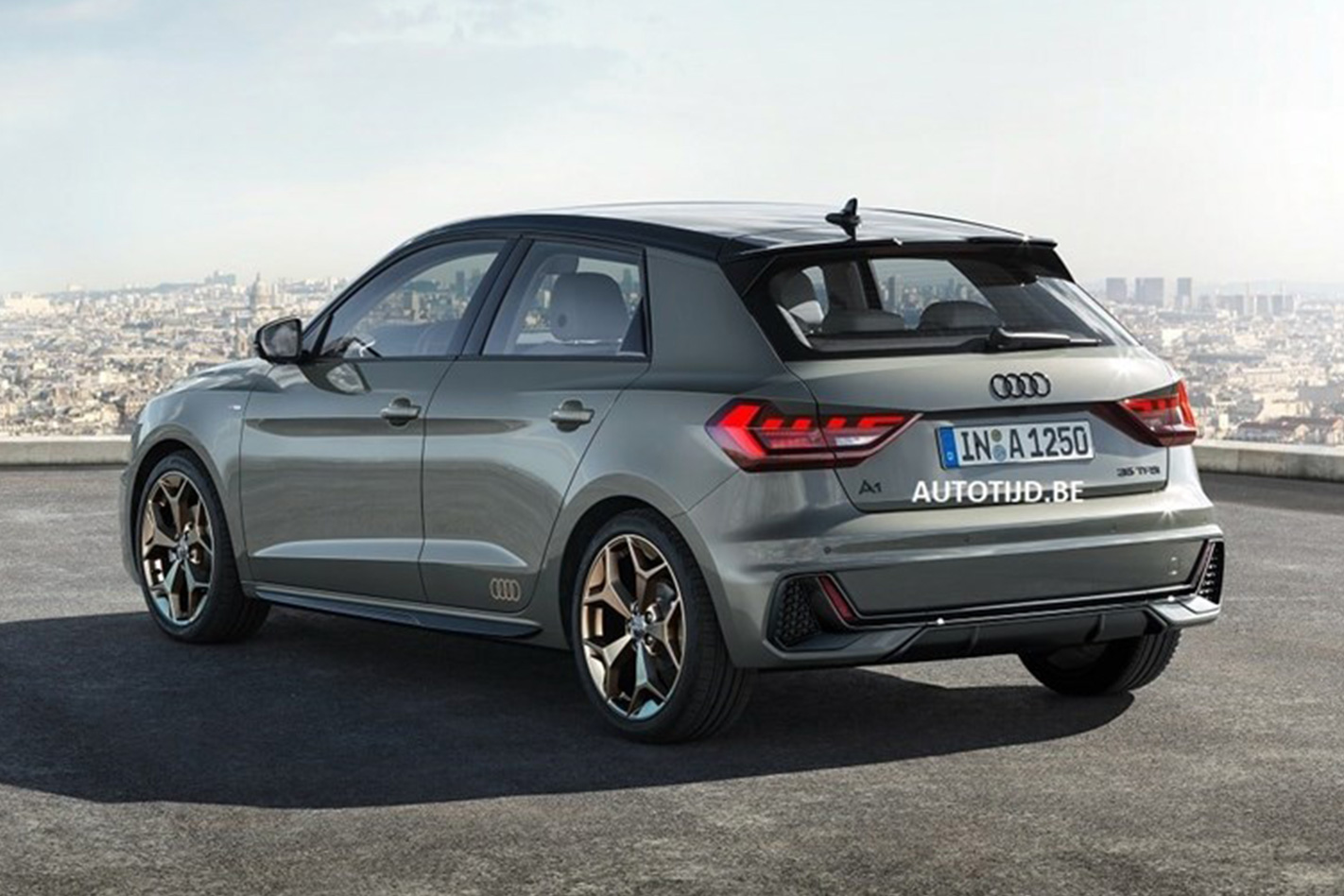
Strong angular styling continues along the more muscular flanks to the rear end where the design evolves the A1 boot from jelly mould to serious hatch, while tail lights appear to be in keeping with the range-wide move to LED.
Only two variants are shown with the 35 TFSI and 40 TFSI indicating Audi’s move to standardised nomenclature for all sub-S and RS models, although more are expected to progressively join the range. That said, the fate of A1 diesel power is still to be decided.
On the inside the A1 continues to grow up. Also in keeping with a general range-wide evolution, the A1 (at least in higher grade versions) has gained the proliferating Virtual Cockpit fully digital instrument cluster.
There’s also a large central touchscreen for accessing information and entertainment with the latest version of Audi’s MMI system. Expect a youth market focused level of connectivity including Apple CarPlay and Android Auto as a bare minimum.
The versions shown are at the higher end of specification in the company’s S-Line trim, sporting large wheels and fatter bumpers, and less plush and generously equipped versions are likely to arrive at launch.
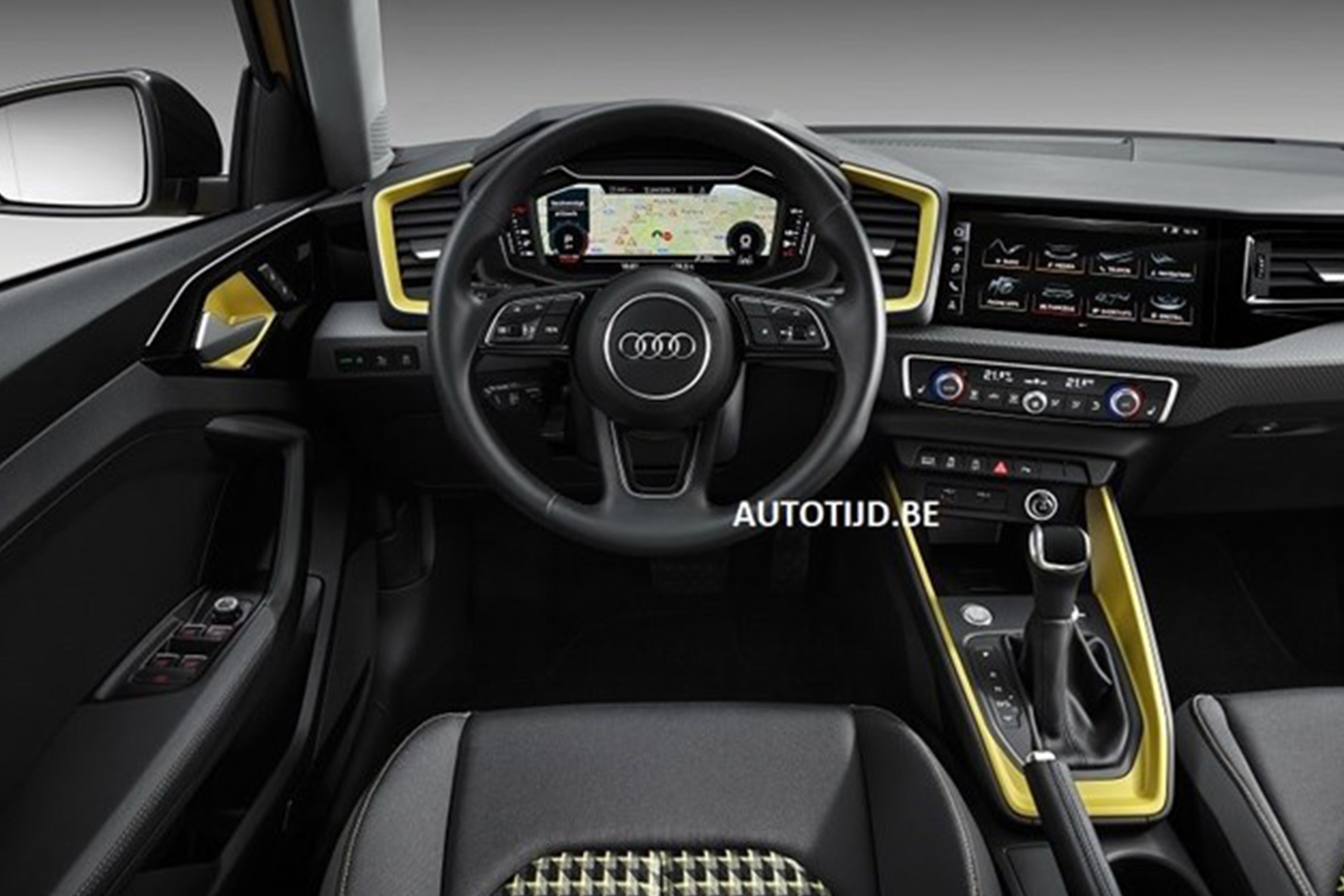
Other highlights include a wide range of cabin customisations including bronze and pearl yellow trims, high-grade leather upholstery, keyless start, dual zone climate control, and the availability of both manual and auto transmissions.
Sensors in the windscreen and grille also suggest the A1 will be offered for the first time with AEB and possibly adaptive cruise control.
Interestingly, the A1 remains equipped with a mechanical handbrake lever, bucking the trend to adopt an electric park brake.
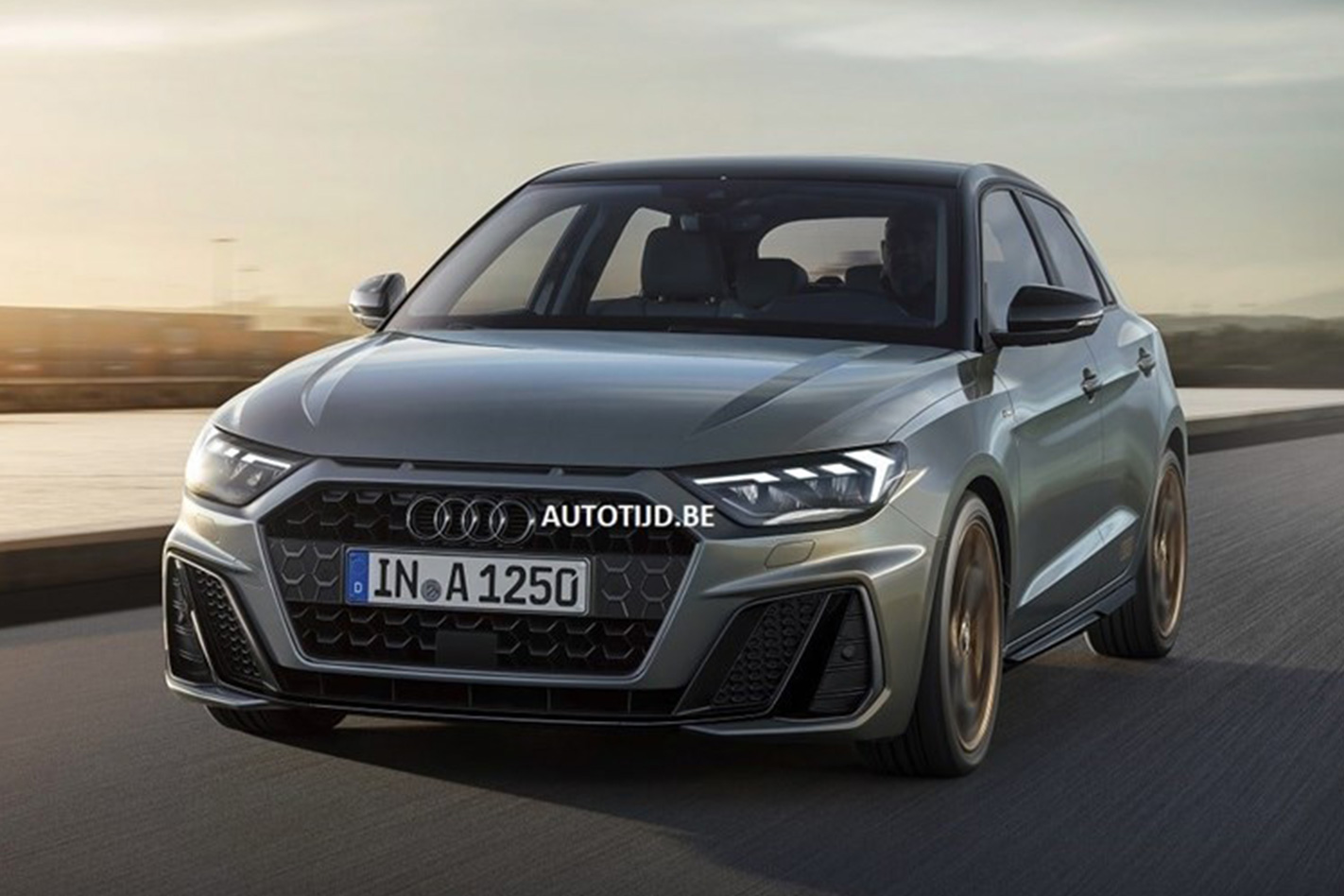
An Australian debut is yet to be confirmed along with the complete variant and engine set but the littlest Audi will come Down Under at a point after its public reveal – officially this time – at the Paris motor show which kicks off on October 4.
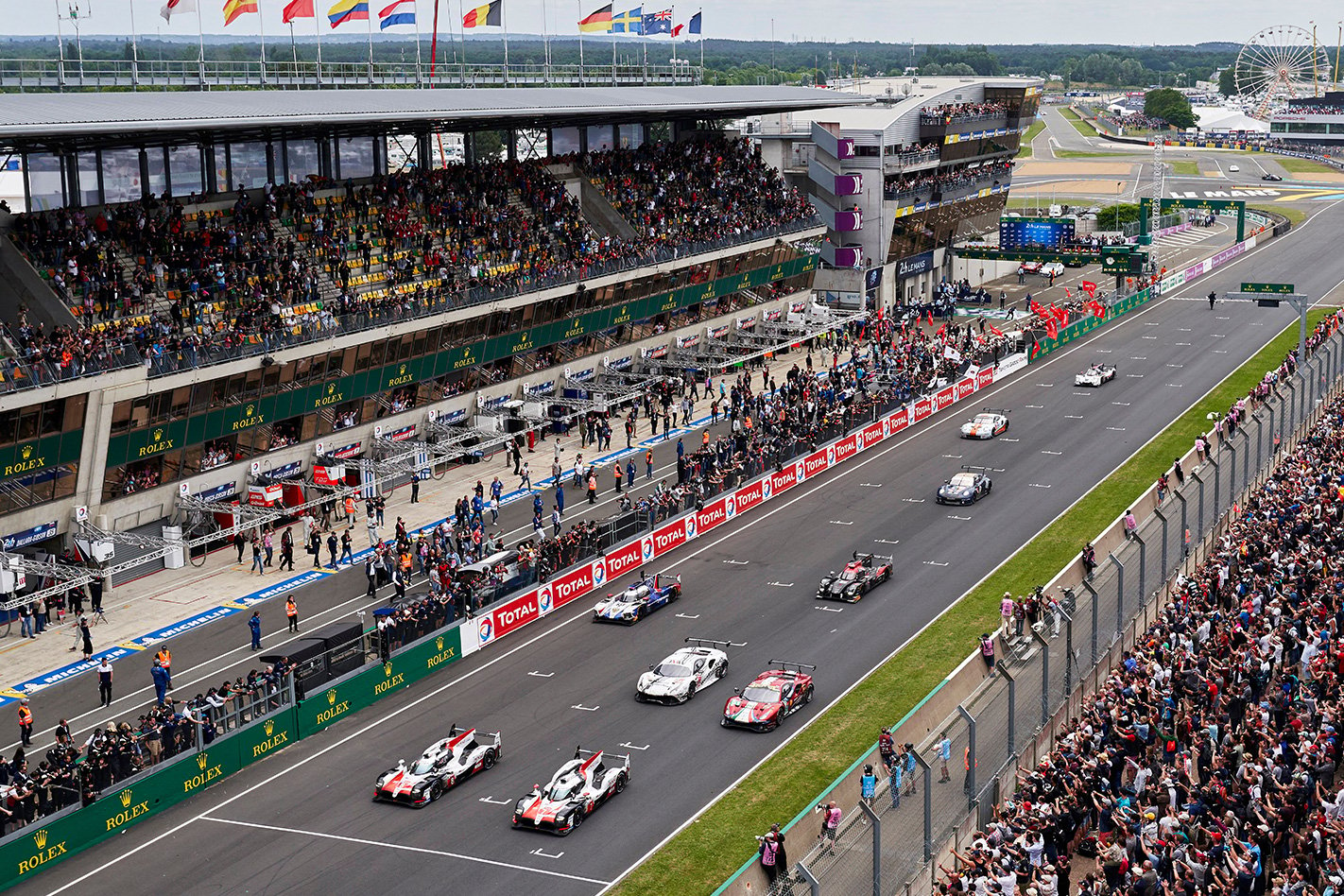
ONE of the greatest races in motorsport has run its course for another year, and these are all the reasons 2018’s 24 Hours of Le Mans will go down in history.
Toyota finally wins
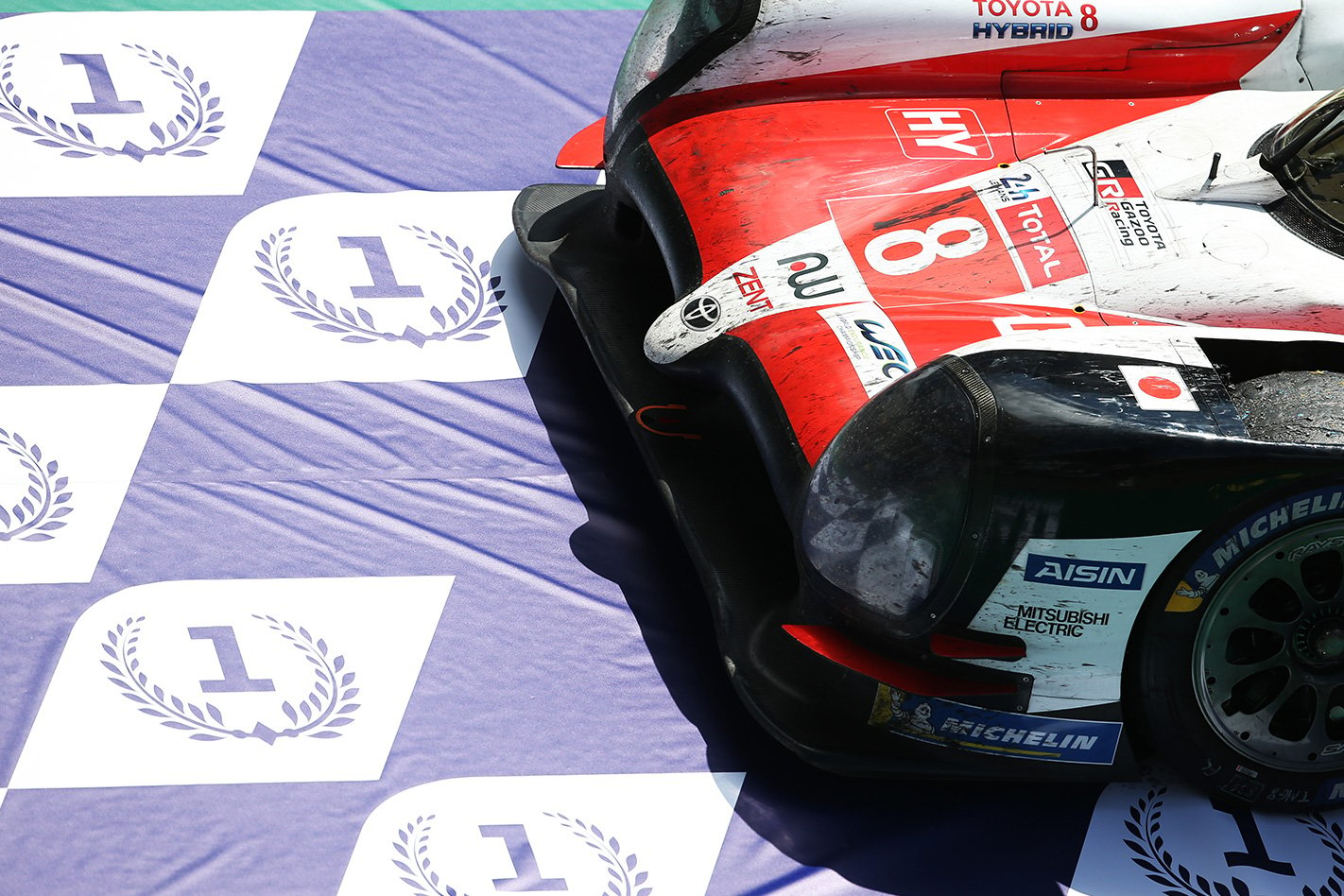
The apparent curse that has, until now, thwarted Toyota’s Le Mans dream has finally ended after three decades of trying, with a win at the 24 Hours of Le Mans.
Fernando Alonso, Sebastian Buemi and Kazuki Nakajima took the podium’s top spot soothing the wounds of previous years, including 2016 when victory was wrenched from the team just minutes from the conclusion.
Toyota is now only the second Japanese manufacturer to win the 24 Hours of Le Mans after Mazda’s victory in 1991 with the iconic 787B.
For this year’s win, Nakajima drove the number eight TS050 Hybrid across the line to become the first Japanese driver to win the race for a Japanese manufacturer.
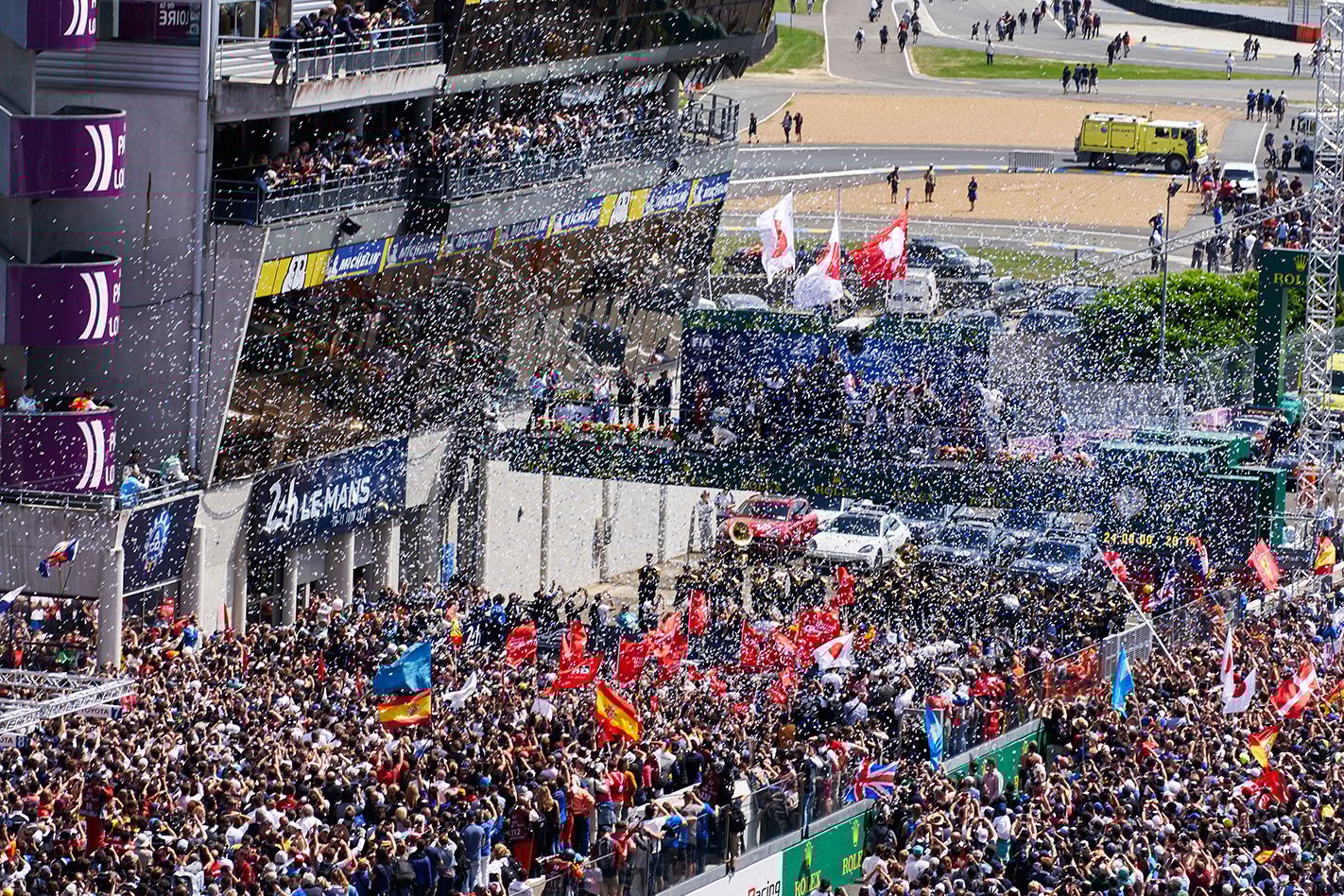
Naysayers derided Toyota’s victory on social media as hollow, as the team was the only factory LMP1 effort in this year’s race following Porsche’s decision to pull the pin on its prototype program in 2017.
However, Le Mans is as much about conquering the race itself as it is beating your opponents, and in that regard, Toyota was near-flawless.
Alonso gets a step closer to the Triple Crown
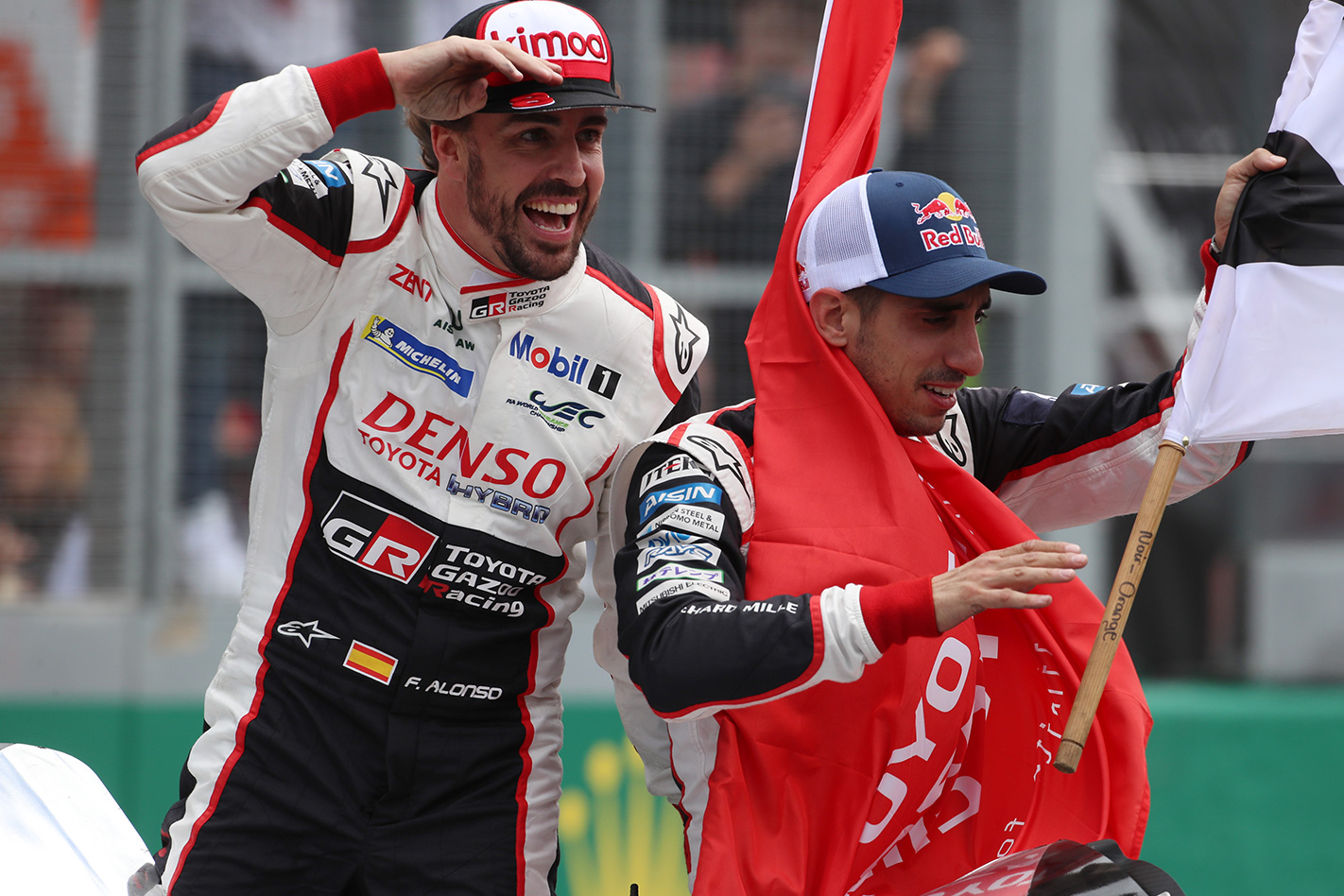
Fernando Alonso is now one of just two active drivers who could complete motorsports’ Triple Crown.
The coveted achievement is an unofficial title for winning the three biggest events in racing – the Monaco Grand Prix, Indianapolis 500, and 24 Hours of Le Mans and Graham Hill is the only driver to have completed the Triple Crown.
Alonso already has Monaco under his belt, and attempted the Indy 500 last year, but his part in Toyota’s victory at Le Mans now moves him tantalisingly close to cementing his place as an all-time great.
The Spanish Formula 1 world champion wasn’t reliant on his teammates to do the heavy lifting on the way to victory, with Alonso putting in a heroic quadruple stint in the middle of the night to put the number eight Toyota on the rear bumper of its sister TS050.
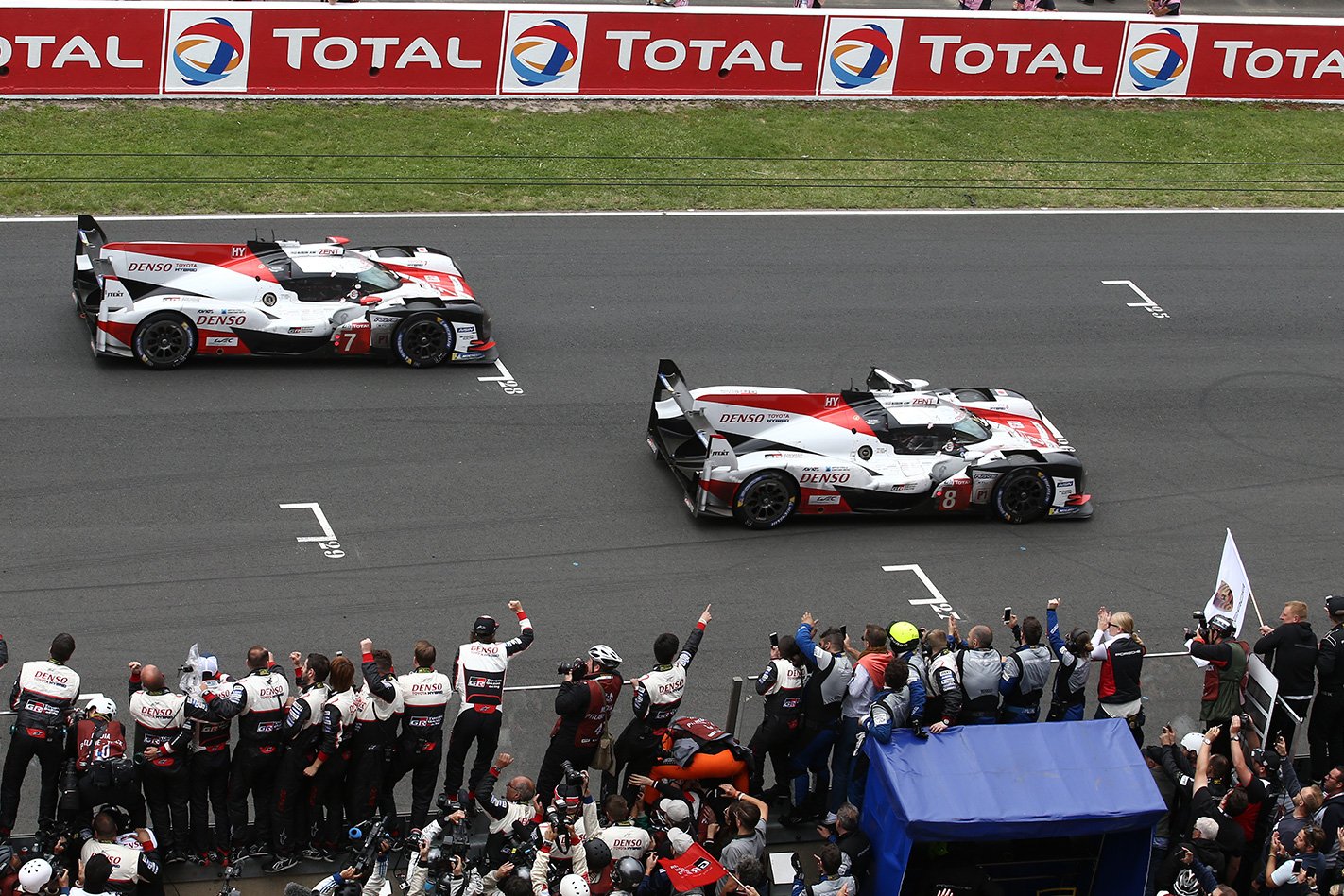
The only other active driver who has more than one leg of the Triple Crown in their resume is Juan Pablo Montoya (who won Monaco in 2003, and has a pair of Indy 500 victories in 2000 and 2015). The Colombian competed at the 24 Hours of Le Mans for the first time this year, racing in the LMP2 category for United Autosports – which is ironically owned by Alonso’s boss Zak Brown.
Two out of three isn’t bad, but Alonso won’t be satisfied until he joins Hill in completing the Triple Crown. Expect another Indy 500 wildcard in 2019, or if rumours are to be believed, a full-time move to the American-based open-wheel series.
An Aussie win on debut
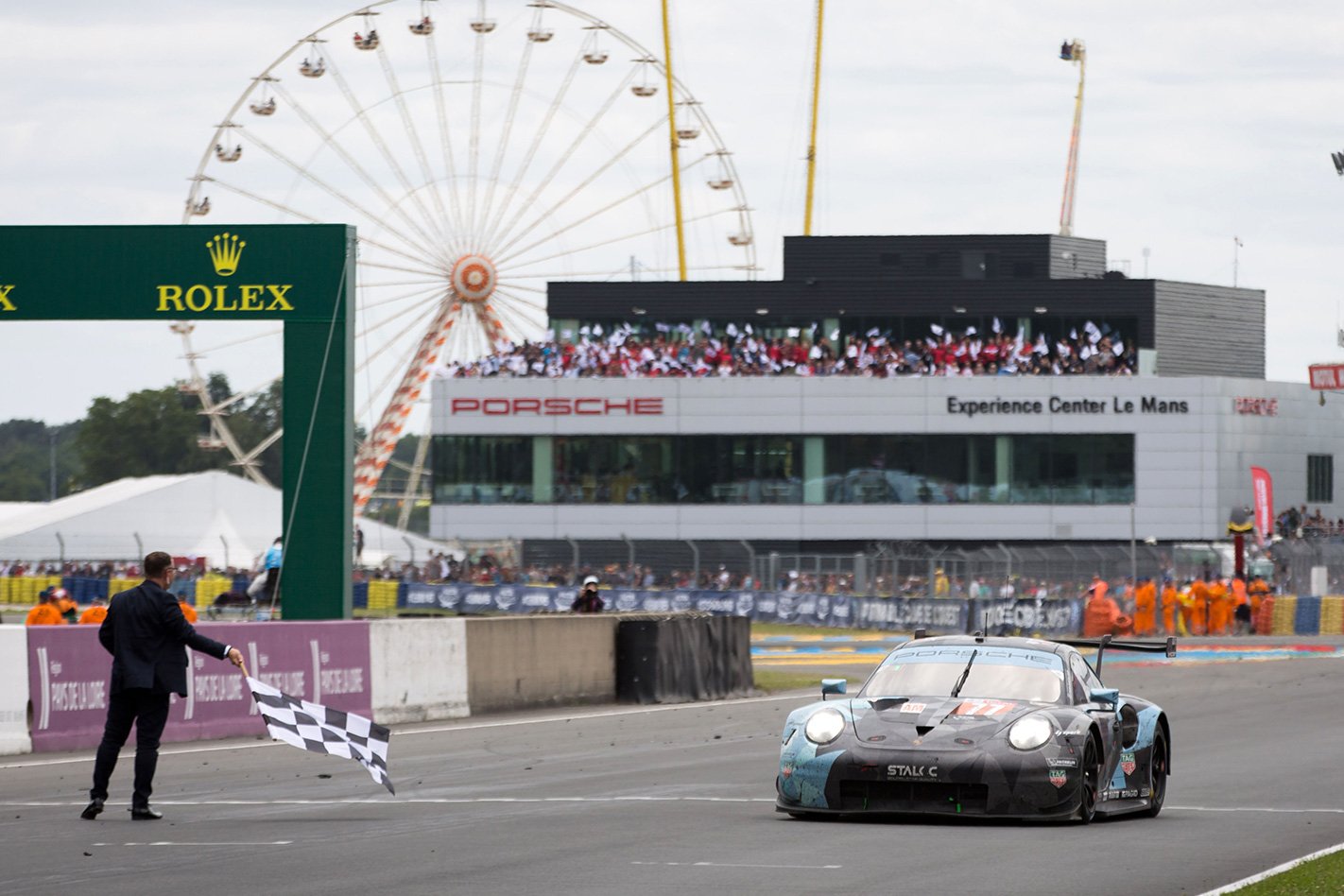
Patriotic Aussie’s have plenty of reason to celebrate the 2018 race as well, with our very own Matt Campbell winning his class – on debut no less.
Campbell, who hails from the Queensland town of Warwick, competed for the Dempsey-Proton Racing team in the GTE-Am category alongside Christian Read and Julien Andlauer.
The trio won the class in their Porsche 911 RSR in dominant fashion, completing 334 laps, and finishing 28th outright.
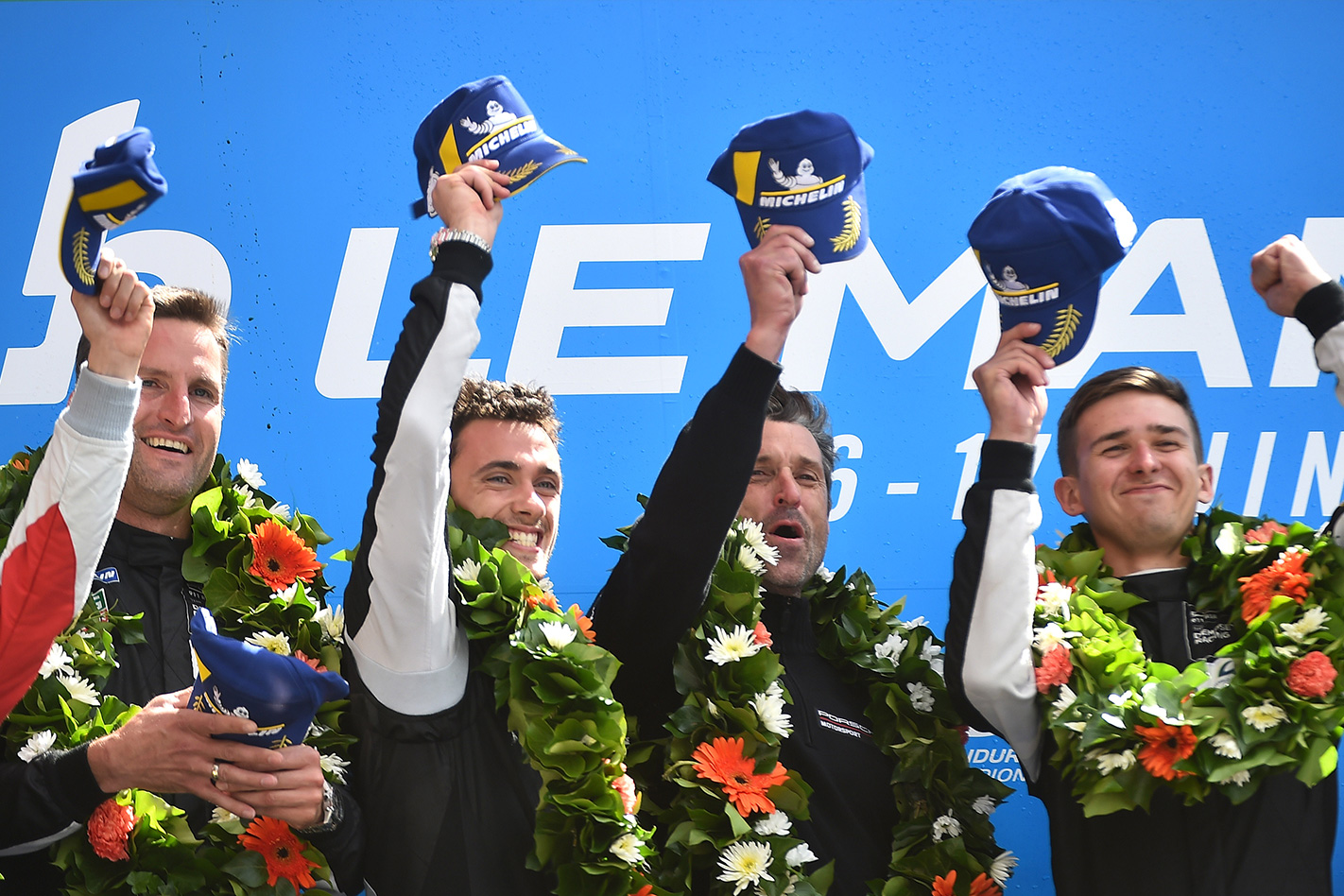
Winning on his Le Man debut proves once again Campbell is one of Australia’s most talented drivers currently competing overseas.
The incredible podium stats
Alonso and Campbell weren’t the only first-time winners at Le Mans. In fact, everyone who stepped atop the podium did so for the first time at the endurance classic.
It’s the first time every class winner has been a first-time victor at the event since the inaugural running in 1923.
Domination in all classes
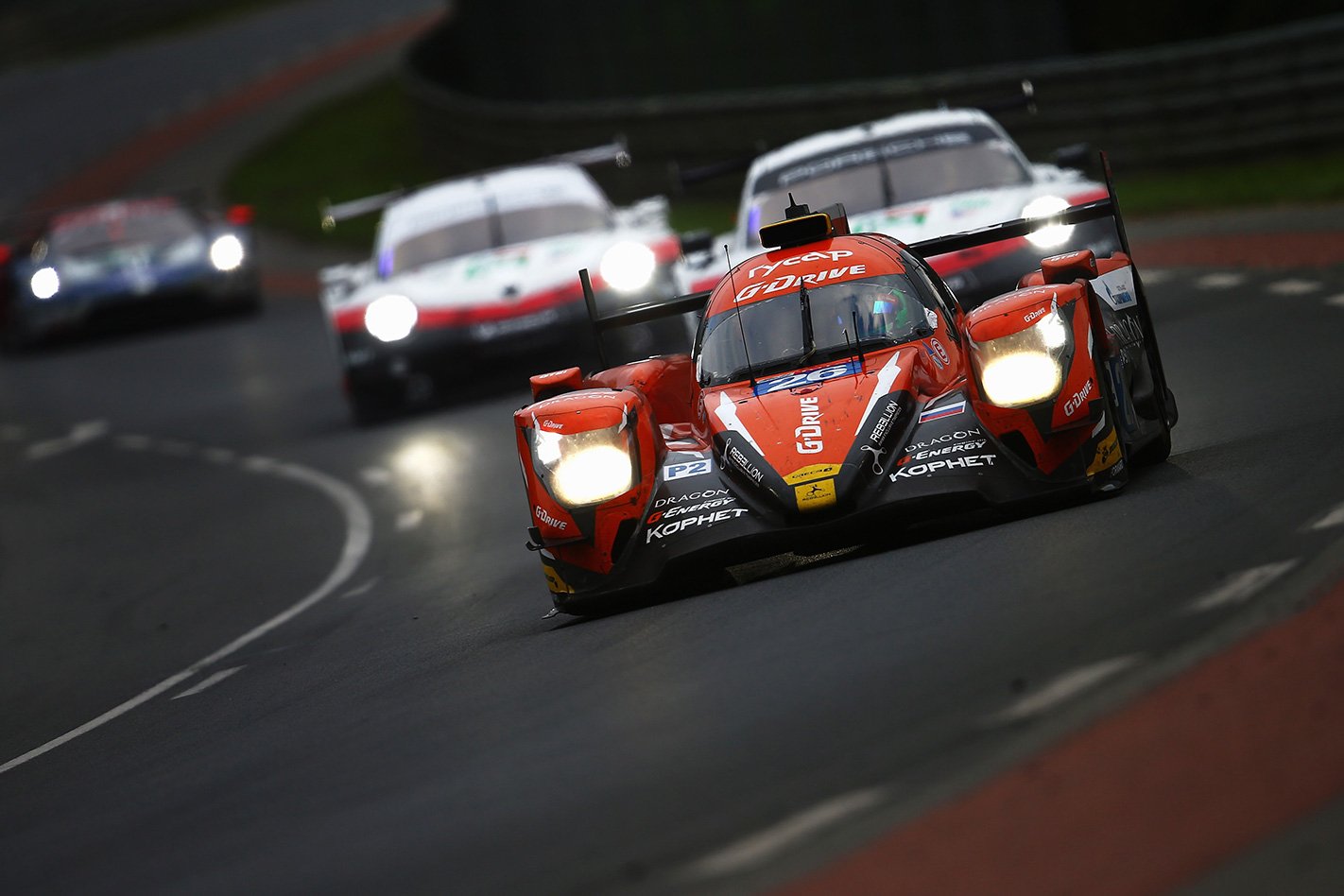
A telling statistic of this year’s Le Mans was the percentage of laps led by the class victors. Toyota wasn’t the only dominant force in the 2018 race, with the other category winners each leading for a significant majority of the laps.
In LMP2 the winning G-Drive team led for 97.5 percent of the race, with 360 of 369 laps completed in first position. The GTE-Pro winning Porsche 911 RSR led 316 of 344 laps which equates to 91.9 percent of the race, while in GTE-AM the Dempsey-Proton Racing team clocked 300 laps of 335 in the lead (89.6 percent).
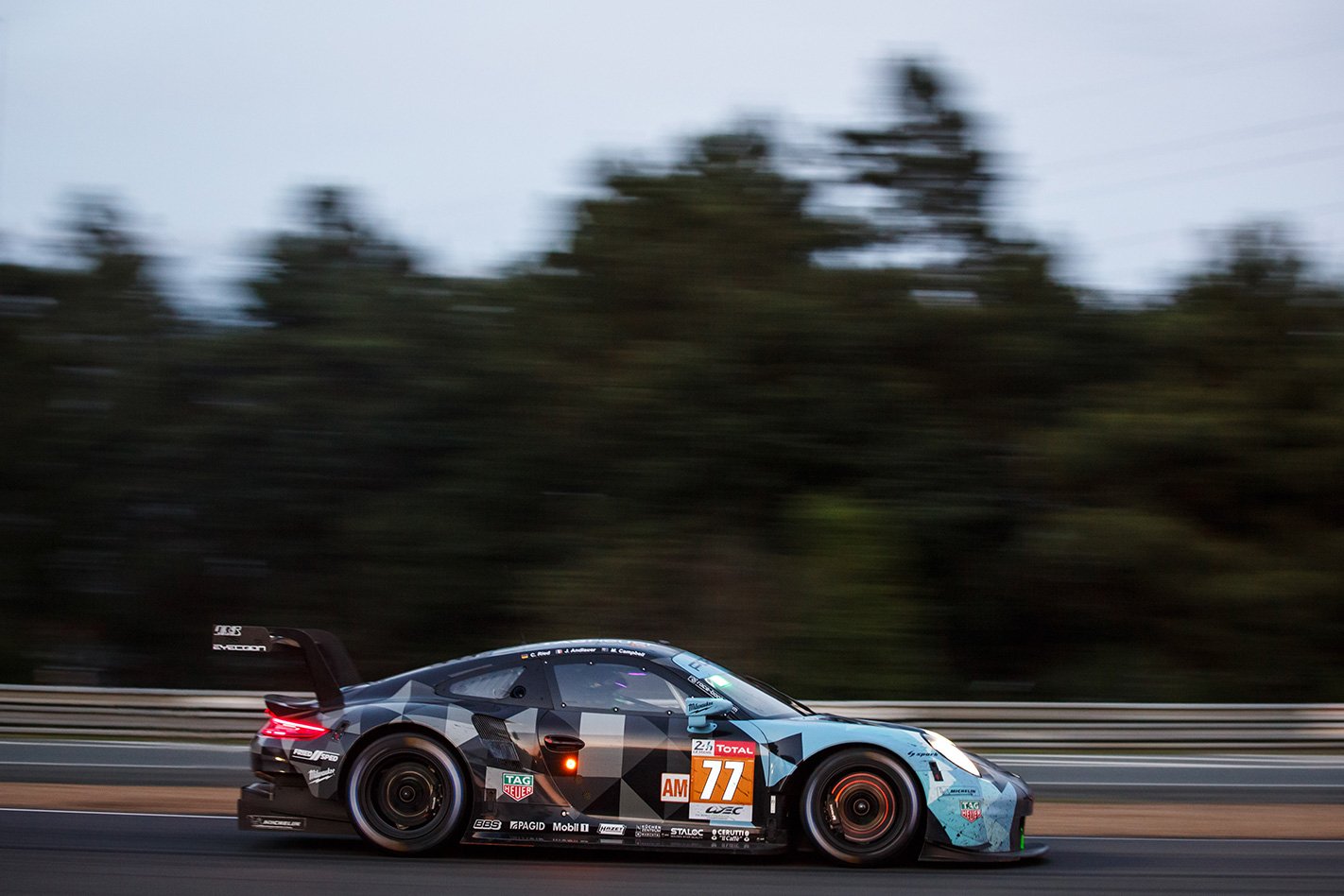
Those numbers are significant, illustrating the impact of new ACO and FIA’s rules which led to the dominant victories. Stint lengths were regulated by the rule book this year, which slashed the ability for teams to create differing pit strategies, while slow zones and split safety cars, which punctuated the early stages of the race allowed leaders to build a gap, and then maintain their margins with little fuss.
GT class brilliance
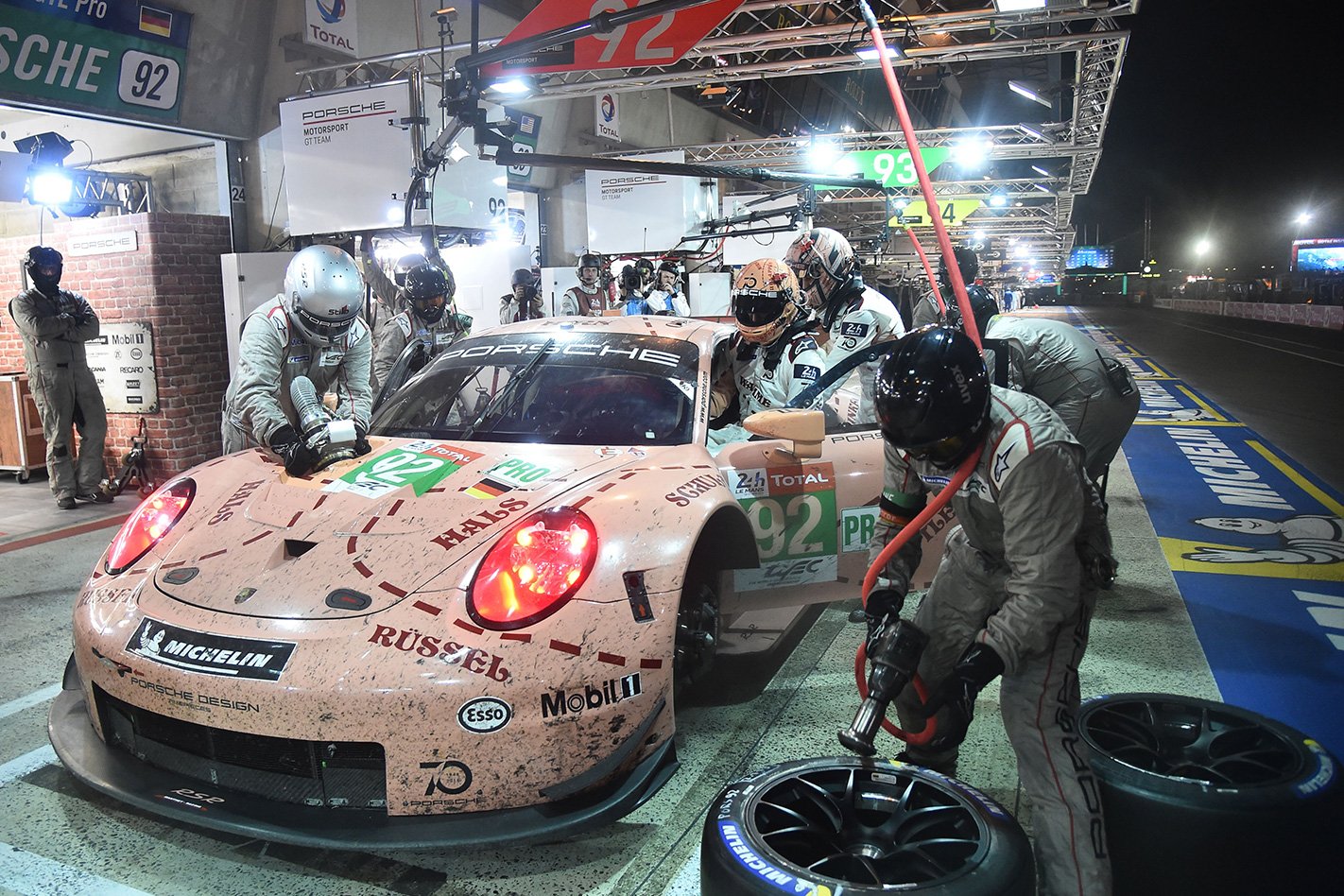
With 20 hours of the race completed, Porsche and Ford decided to put on a show for the fans, with a near hour-long stoush for second in the GTE-Pro category.
Hometown hero Sebastian Bourdais at the wheel of a Ford GT hunted down and attacked Porsche driver Fred Makowiecki, with the pair engaging in a tense battle. The Mulsanne straight became their battleground, with mere centimetres separating the cars at 300km/h+.
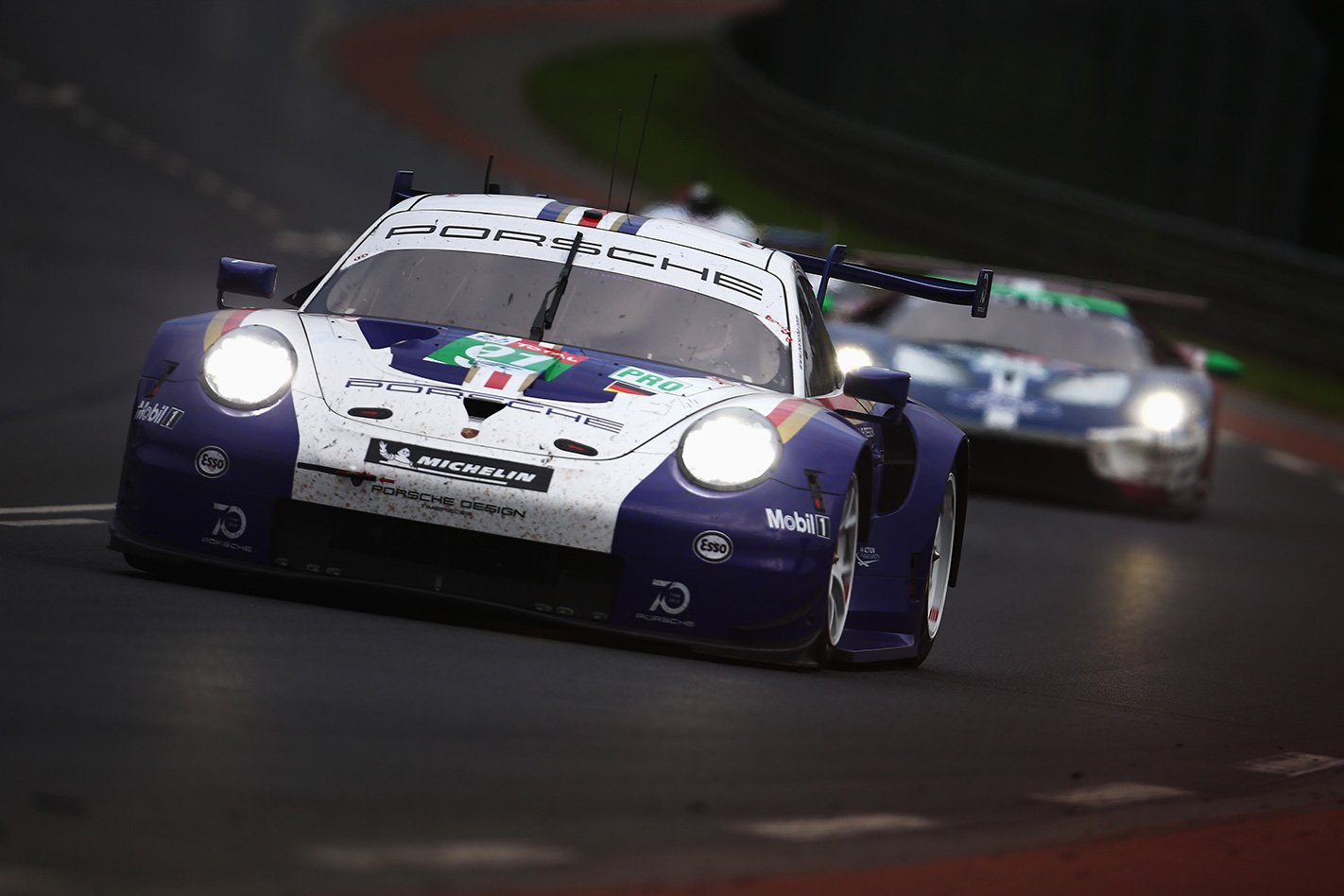
While the prototype categories were unfortunately bereft of serious side-by-side racing this year, the GTE class shone as a beacon of why Le Mans remains revered by motorsport fans. While Balance of Performance remains an imperfect solution, it allowed for tight racing through the 24 hour enduro.
FORD will send a one-off special edition Mustang up the hill at Goodwood Festival of Speed this year as a salute to the airmen that flew over Goodwood’s fields almost 80 years ago.
But it’s not just a lick of military inspired paint. The car has been decked out with Tactical Performance suspension, a carbonfibre bodykit and, like the Spitfires it shares its markings with, the Eagle Squadron has been supercharged, taking power from 343kW to a tyre-tearing 522kW.
Not much rubber is expected to still be attached to the rear wheels by the time the special Mustang crosses the finish line, as it will be piloted by drift king Vaughn Gittin – a Formula D driver known for spending more time looking out of the side windows than the windscreen.
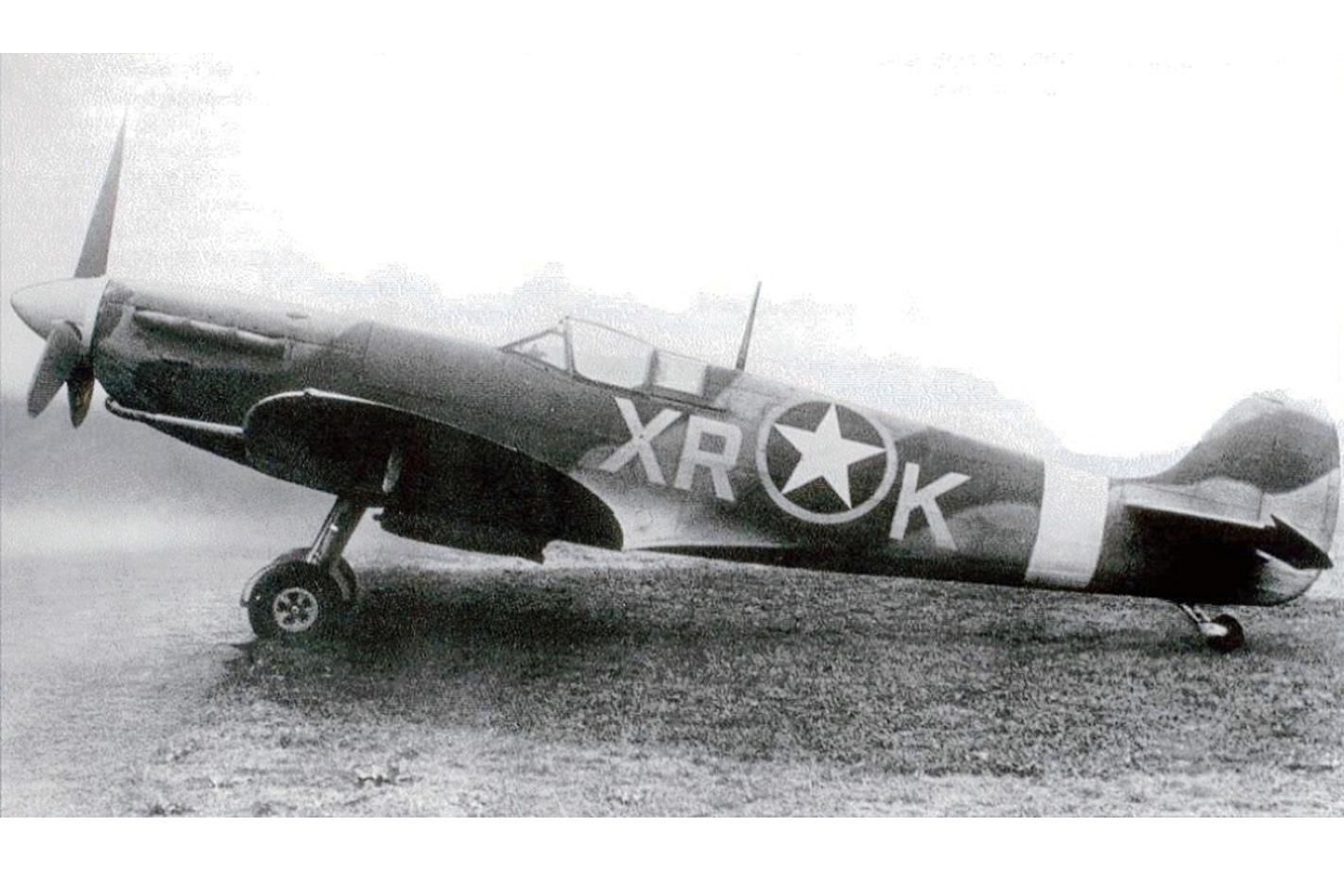
You would be forgiven for thinking an American muscle car is an obscure choice to wrap in British markings for an English show, but the WWII Eagle squadrons were staffed by volunteer American pilots with many based near the Goodwood estate. The Mustang’s connection with war-era aviation doesn’t end there either – it was named after the P-51 Mustang fighter, which was operated by both the USAAF and the RAF (among others, including Australia).
Only a single image of the Eagle Squadron Mustang has been released by Ford, but the fitting bird’s eye view reveals one of the coolest wraps we’ve seen for the Mustang fastback. An RAF roundel is applied to the bonnet, yellow wing mirrors are a nod to the Spitfire’s wing leading edge and prop tips, while a white band around the tail is a detail that was applied to RAF day fighters.
The Eagle Squadron emblem is proudly displayed on the roof, while its haunches – widened by RTR – wear the tail number EN 783 – the identity of an XR-K Eagle Squadron Supermarine Spitfire that last flew in 1945.
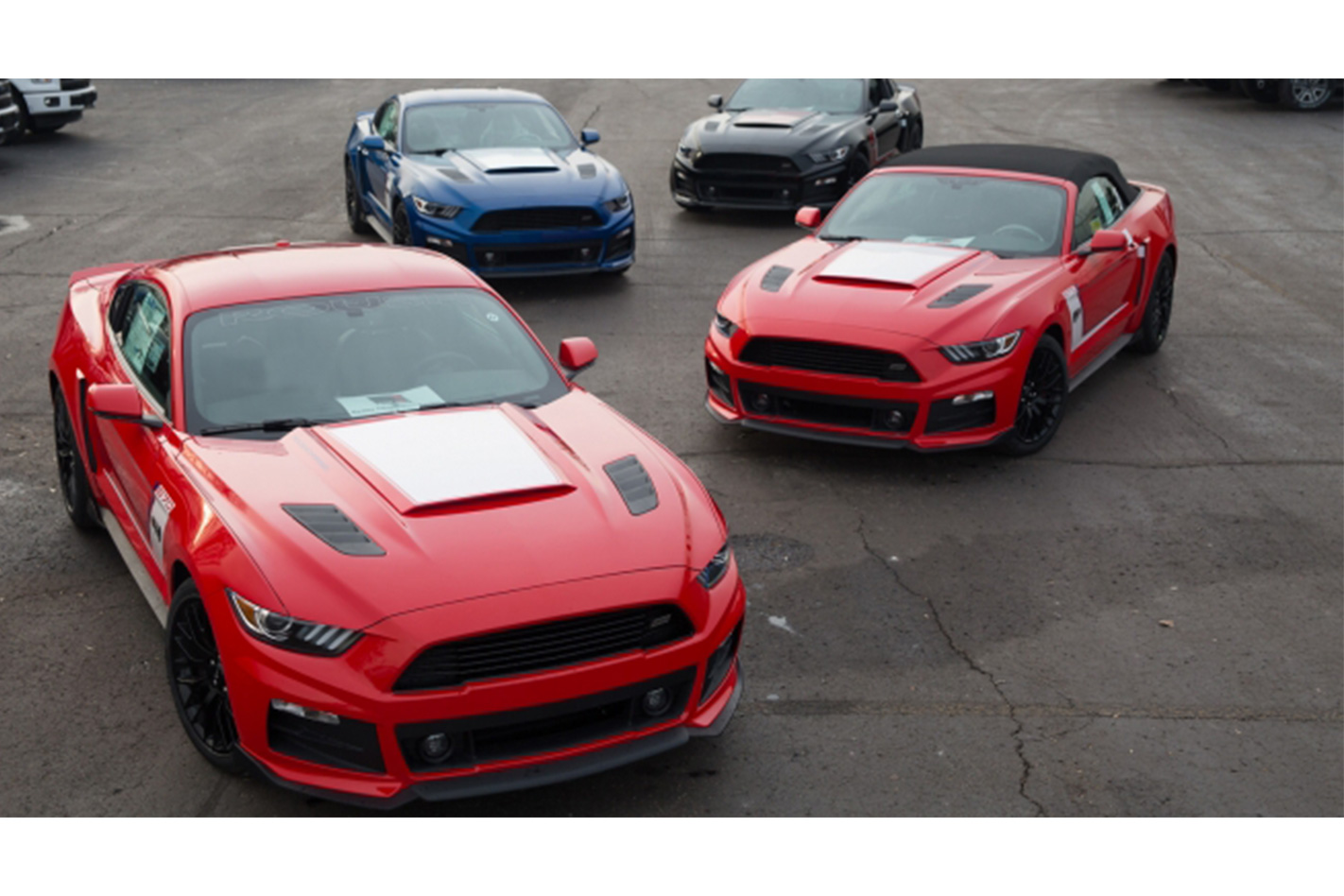
The Roush Warrior Mustang wrings 500kW from the 5.0-litre V8 thanks to a 2.3-litre supercharger, and is upgraded with custom exhaust, uprated halfshafts, matte-finish bonnet with extra vents, Roush grille, bodykit and spoiler, and interior enhancements.
What’s the catch? You’ll have to be a serving member of the United States armed forces to qualify. Thank you for your service.
It was the 1400-unit grand finale that lured in brand loyalists and investors alike, but almost two years after Ford Australia closed its local manufacturing it seems the final fast Falcon XR6 Sprint and Falcon XR8 Sprint have also dropped in price equally as fast.
This week a dark grey, 4.0-litre turbocharged six-cylinder Falcon XR6 Sprint with 25,300km on the clock sold at a West Australian Pickles used car auction for $48,000 – dropping $10,000-plus in two years. The 550 units of six-speed automatic-only XR6 Sprint were priced from $54,990 plus on-road costs, but, according to Ford’s online configurator, they cost around $200 either side of $60K driveaway depending where the vehicle was purchased in.
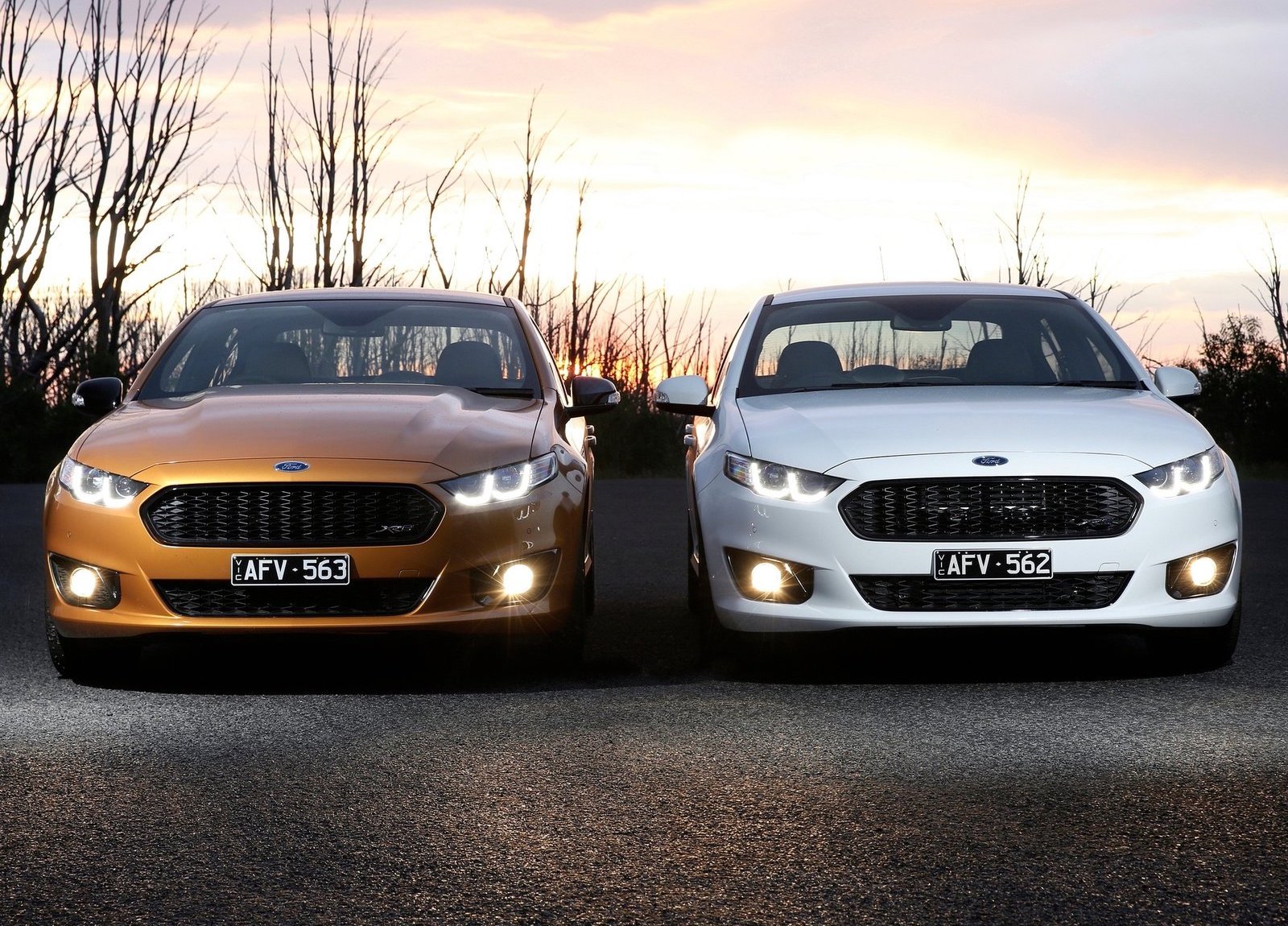
Even with $1000 for train delivery to the east coast, and $1000 for re-registration, this 325kW/575Nm rear-wheel driver has dropped by a five-figure sum since it left the factory. It should also be noted that this example was described as in immaculate condition, too.
This week’s auction therefore calls into question what other XR6 Sprint (and also XR8 Sprint) owners are asking for their mostly well-used models. At the time of publication, almost 50 examples were online for sale, none of which were advertised for less than $50K and several of which had more than the auctioned vehicle’s number of kilometres showing.
The first 10 most affordable examples were all XR6 Sprint models, with between 5000km (for $59,990) and 36,679km (for $54,515). An undriven XR6 Sprint asks at least $62,000 while no fewer than six sellers are asking between that figure and $90,000 for their sixes.
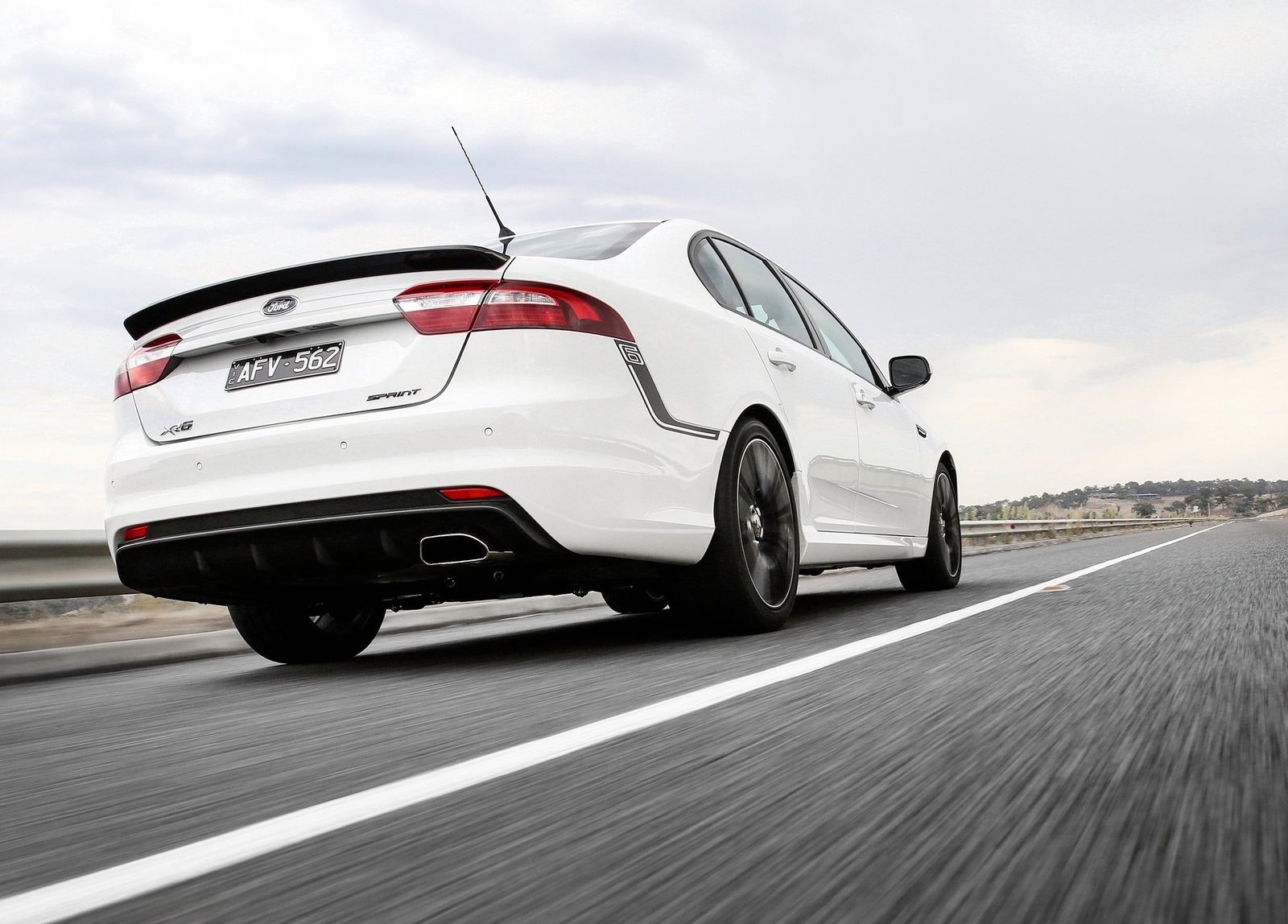
Of course the XR8 Sprint, with its 345kW/575Nm 5.0-litre supercharged V8 engine plus six-speed manual and auto availability, retailed from a higher $59,990 and $62,190 plus on-road costs respectively; so it would make sense that these are the pricier of the XRs now.
Indeed, according to online classifieds, the cheapest XR8 Sprint is $59,900 for an auto with 31,600km showing; or another auto for $59,950 but with just 1300km on the clock. The cheapest undriven model, a white manual, wants for $64,000 – while, this time, a total of 20 hopeful sellers are asking coin between that figure and an extraordinary $95,000 (!) all told.
What is that Darryl Kerrigan line from The Castle again?
Martin Hermsen likes the way his car handles. “It’s like a magnet on the road, like a slot car,” he says, aiming the camouflage-clad wagon at another of the snaking Spanish road’s corners.
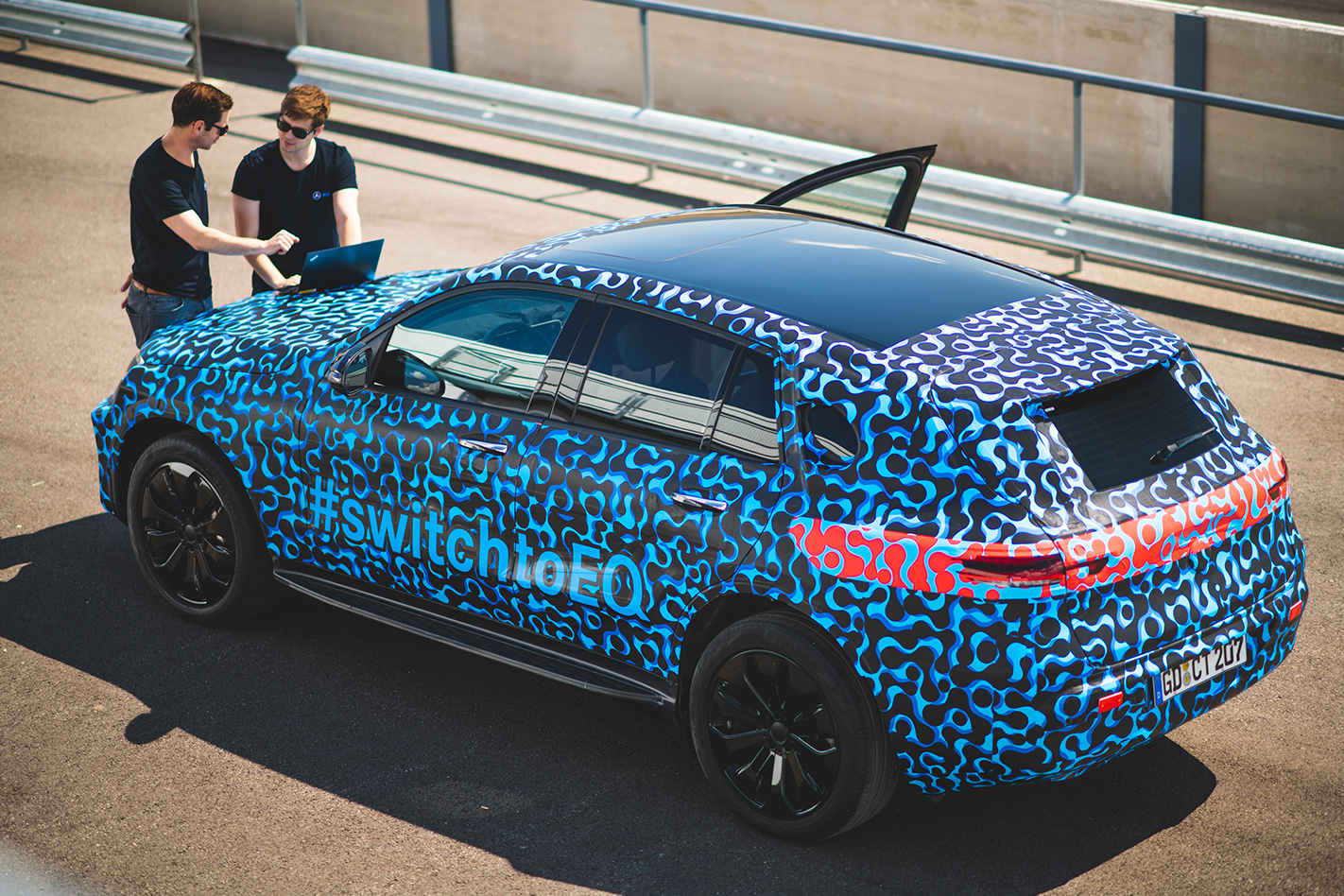
There are other ways this prototype is like a slot car. It, too, is powered by electricity. Hermsen is e-drive project leader for the EQC, the car that will establish Mercedes-Benz’s new EQ line of battery-powered vehicles.
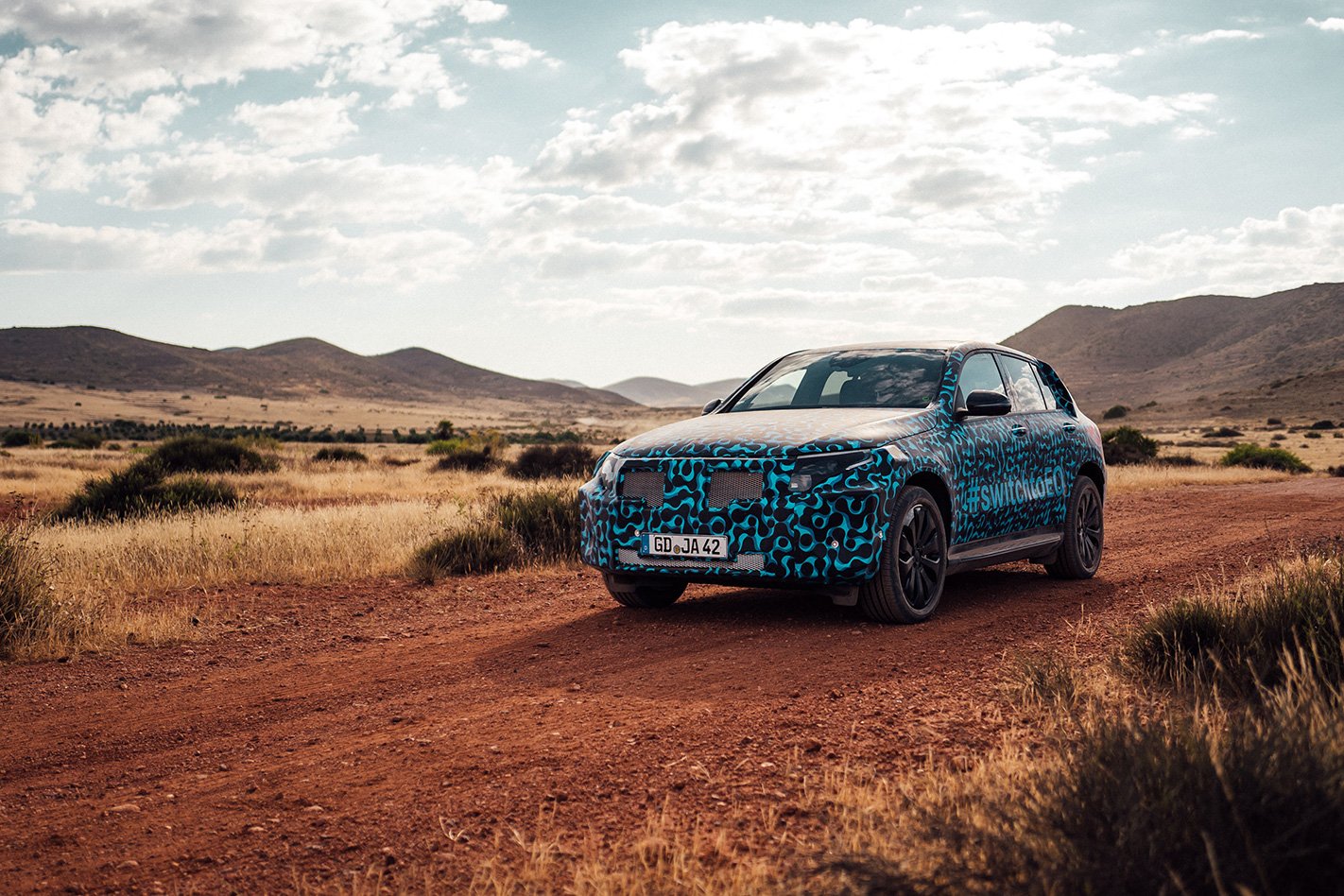
The EQC is still around 12 months from production, and work on the battery-powered, SUV-like wagon is a long way from finished. But the latest prototypes are advanced enough that Mercedes-Benz recently invited a small number of specialist media to Spain for a taste of things to come … from the passenger seat.
Hot-weather testing is the reason for freighting EQC prototypes to southeast Spain. Hermsen and his engineers will measure how well the vehicle’s battery pack and its cooling and charging systems cope with summer heat, and the effectiveness of the cabin air-conditioning.
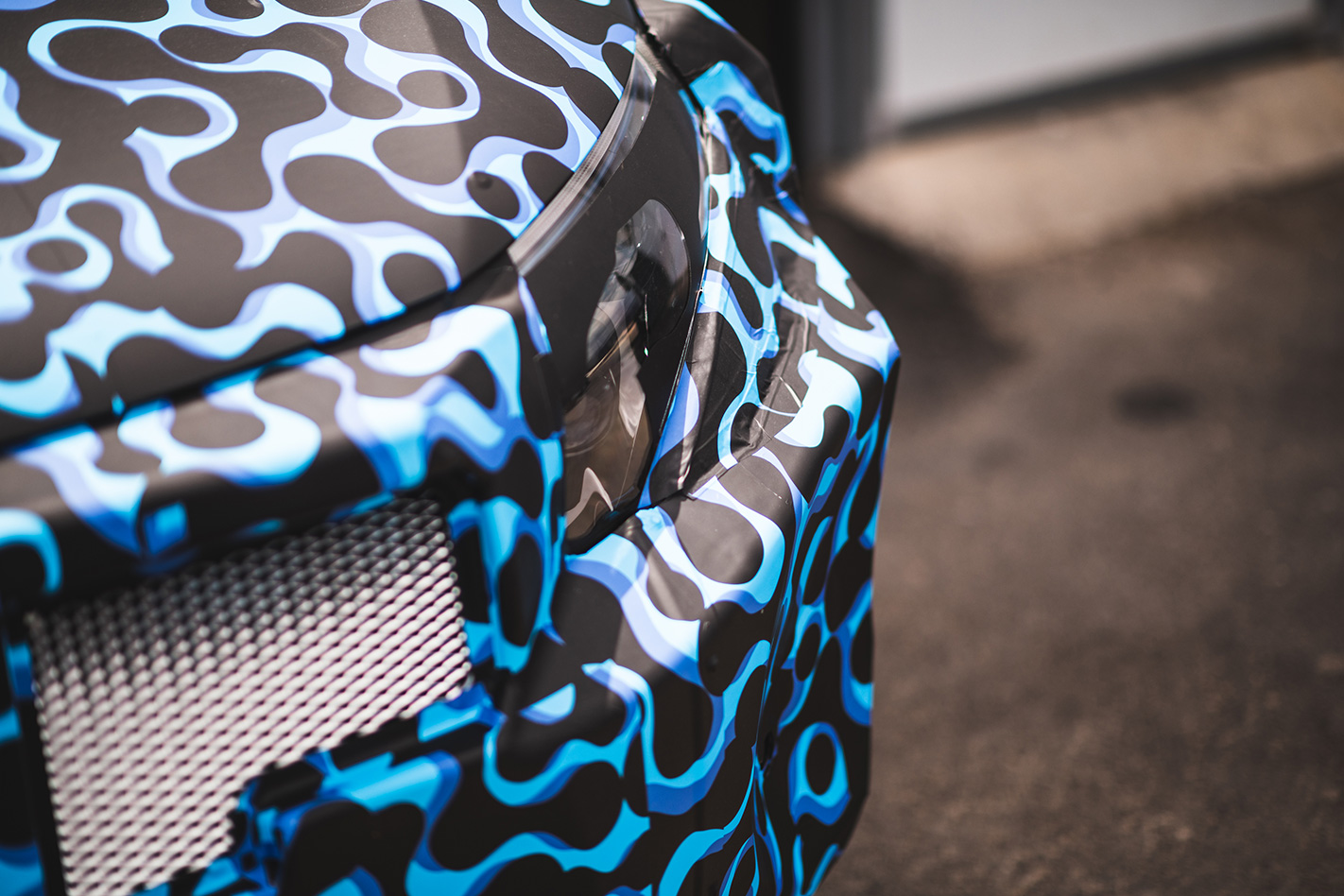
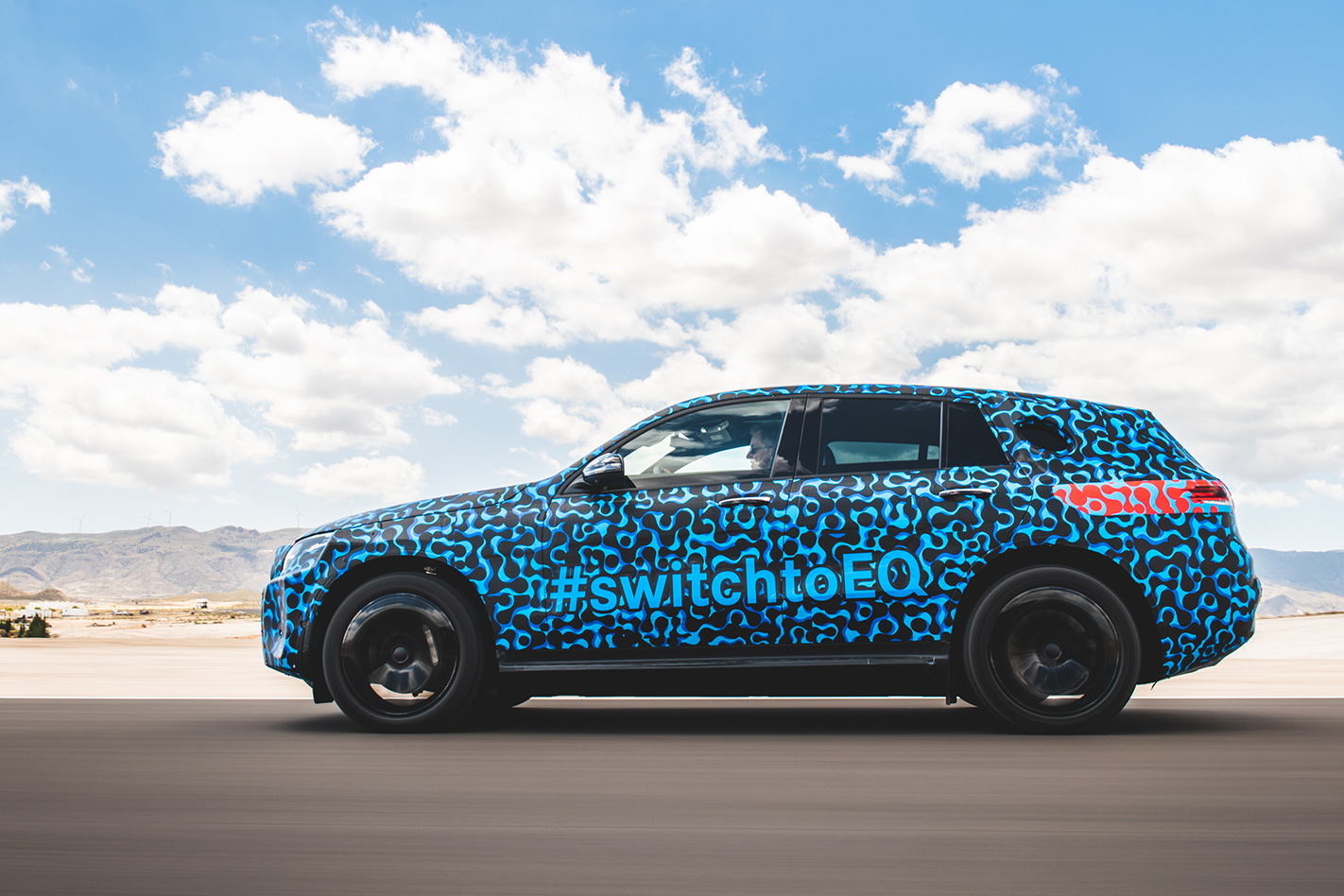
These prototypes need disguise. Their five-door bodies, made using the steel-stamping tools being developed for large-scale EQC production, are the shape of the finished product. It’s the same story inside, where more camouflage conceals design details. What the coverings can’t hide is the five-seat cabin’s space.
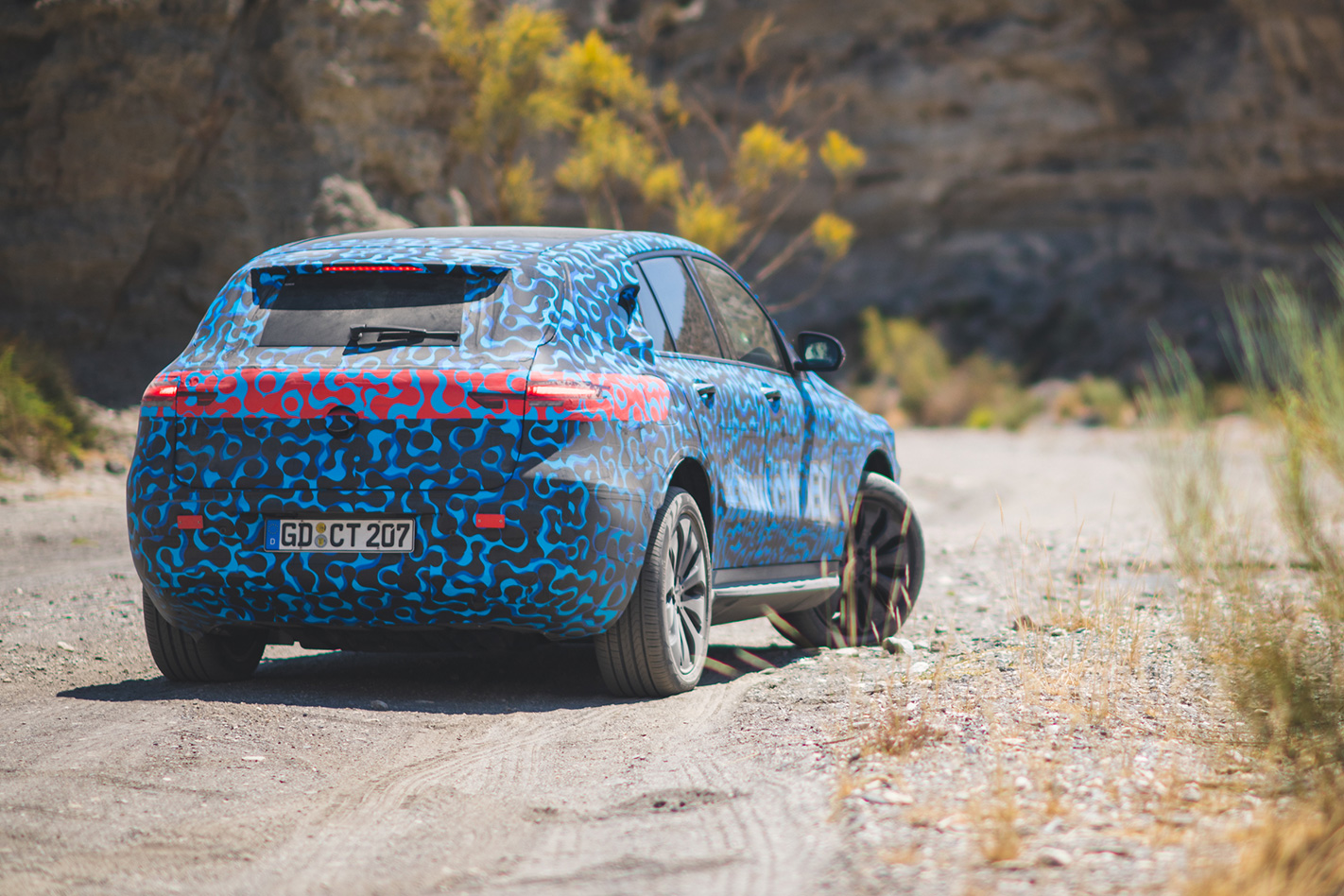
The prototype’s unseen drivetrain and chassis components are production specification, and Hermsen happily confirms the technical basics. There are identical electric motors driving the front and rear axles, delivering a total maximum power of 300kW. The 400-volt lithium-ion battery pack stores “more than 70kWh” of electrical energy. The battery contributes 600kg to a total vehicle weight of around 2300kg.
These figures mean performance of the EQC will be similar to the Tesla Model X and the new Jaguar I-Pace. Hermsen confirms this when he says the Mercedes-Benz will accelerate 0-100km/h in “less than 5.0 seconds”.
From the passenger seat, the EQC prototype is obviously very quick. It has the ferocious off-the-line surge typical of powerful all-wheel-drive EVs.
The Mercedes-Benz’s suspension blots out road irregularities effectively and the handling seems well balanced. Part of the program is a visit to a racetrack, the Circuito de Almeria. Hermsen drives a couple of quick laps, with the prototype’s 20-inch Pirelli Scorpion Verde tyres often squealing. The EQC feels more agile than something so heavy has any right to be. And there’s no mistaking the chassis’ inherent balance and stability.
Hermsen says the EQC lacks the ground clearance for off-roading. This seems to have given Mercedes-Benz’s chassis engineers freedom to focus on its on-road handling attributes.
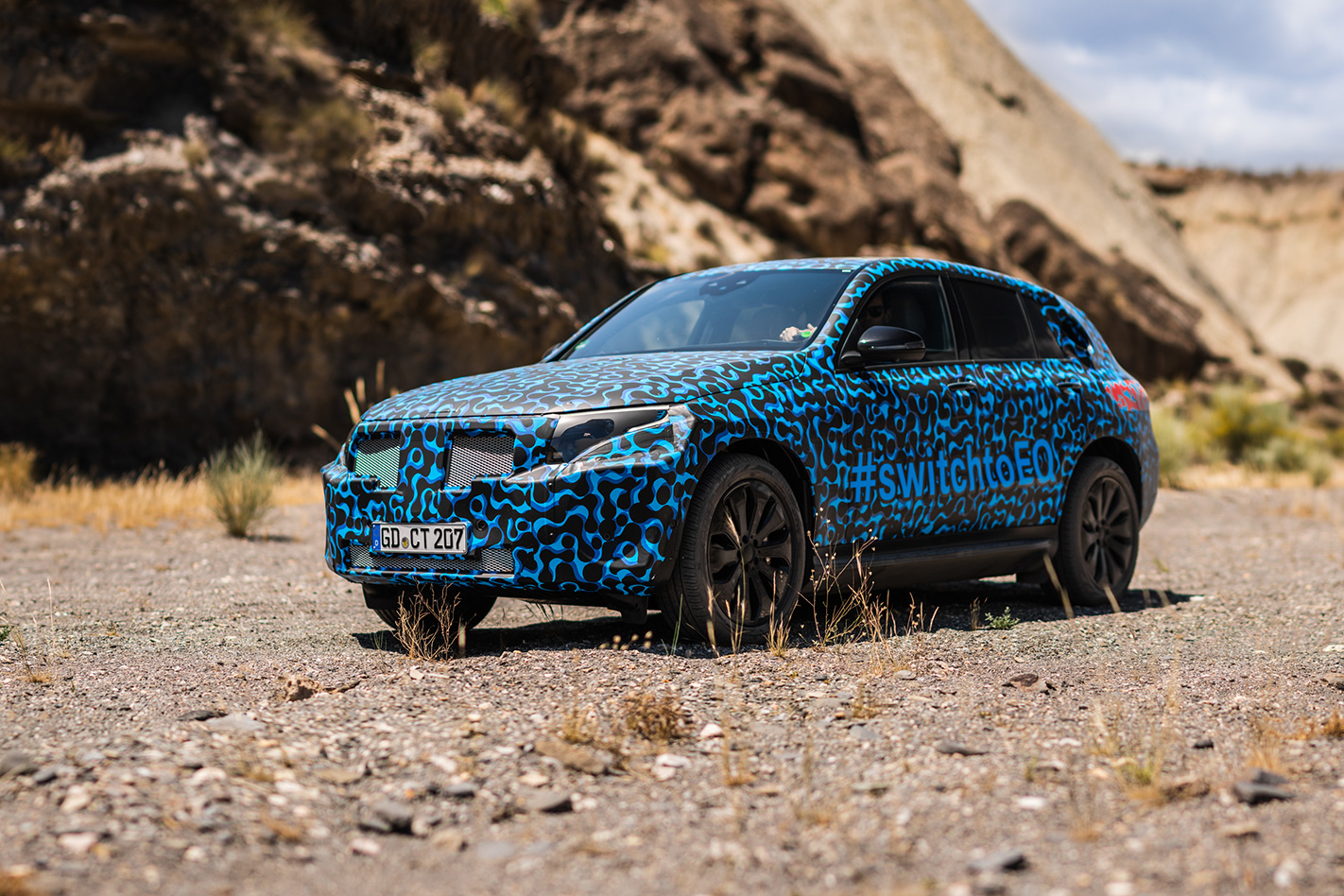
But the EQC will be able to tow. “More than two bikes, but maybe not a boat,” says Hermsen, who adds that Mercedes-Benz believes towing ability is important even for an EV.
The engineer also reveals that Mercedes-Benz is working on some features that will set the EQC apart from its competitors. Its steering wheel paddles will allow the driver to alter the level of regenerative braking through four steps (the Jaguar I-Pace, for example, has only two levels).
Hermsen also says that Mercedes-Benz is developing a smart mode that will rely on sensor fusion tech to automatically adjust the level of regenerative braking according to road and traffic conditions. It will rely on input from the vehicle’s radar and video camera systems, plus digital map data.
There’s even more Mercedes-Benz will be able to do, Hermsen hints, with the arrival of fast 5G cellular networks.
In the meantime, many simple decisions must be made before the EQC is ready for production. Hermsen says the vehicle’s top speed is still under discussion. It’s likely to be electronically limited to around 180km/h, he thinks. The maximum speed in reverse has to be selected, too.
And then there’s the matter of what noise the EQC should make, if any. Hermsen believes drivers will find some “acoustic feedback” helpful, especially when driving enthusiastically. The prototypes in Spain were almost silent, but designing a sound to play through the audio system that varies in line with road speed isn’t difficult.
The EQC will arrive in Australia very late in 2019 at the earliest, and probably in very limited numbers, according to a Mercedes-Benz Australia spokesman. Prices? Far too early to say.
There’s a lot to be learned about the EQC in the time before it’s launched. But after our ride in Spain it’s safe to assume customers will be as happy as engineer Hermsen with the way it drives…
Having been introduced four years ago, the third-generation ‘new Mini’ is due a facelift to keep things fresh and to continue buyer interest for the iconic marque.
Although it’s not what you’d call an extensive update. Mini hopes a refreshed headlight design, tail-lights that incorporate a Union flag motif, a handful of new wheel and colour options, piano black rather than chrome trim, etc, will drive sales up.
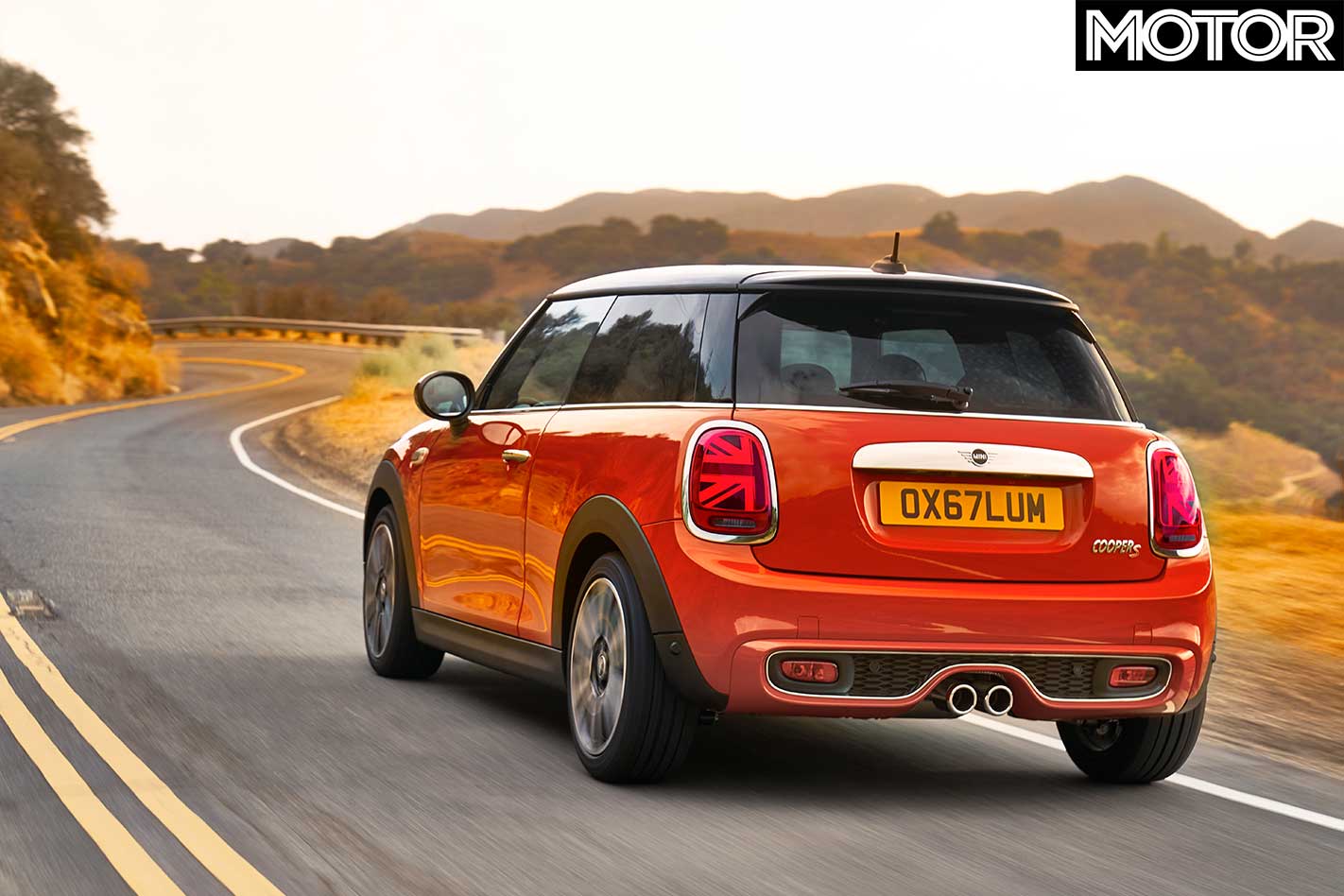
The new lights front and rear use LEDs, with very clever adaptive LED headlights now featuring on the options list. There are new personalisation options, too, including a number of 3D-printed parts that buyers can customise with their own name or simple graphics – a world first in the car industry.
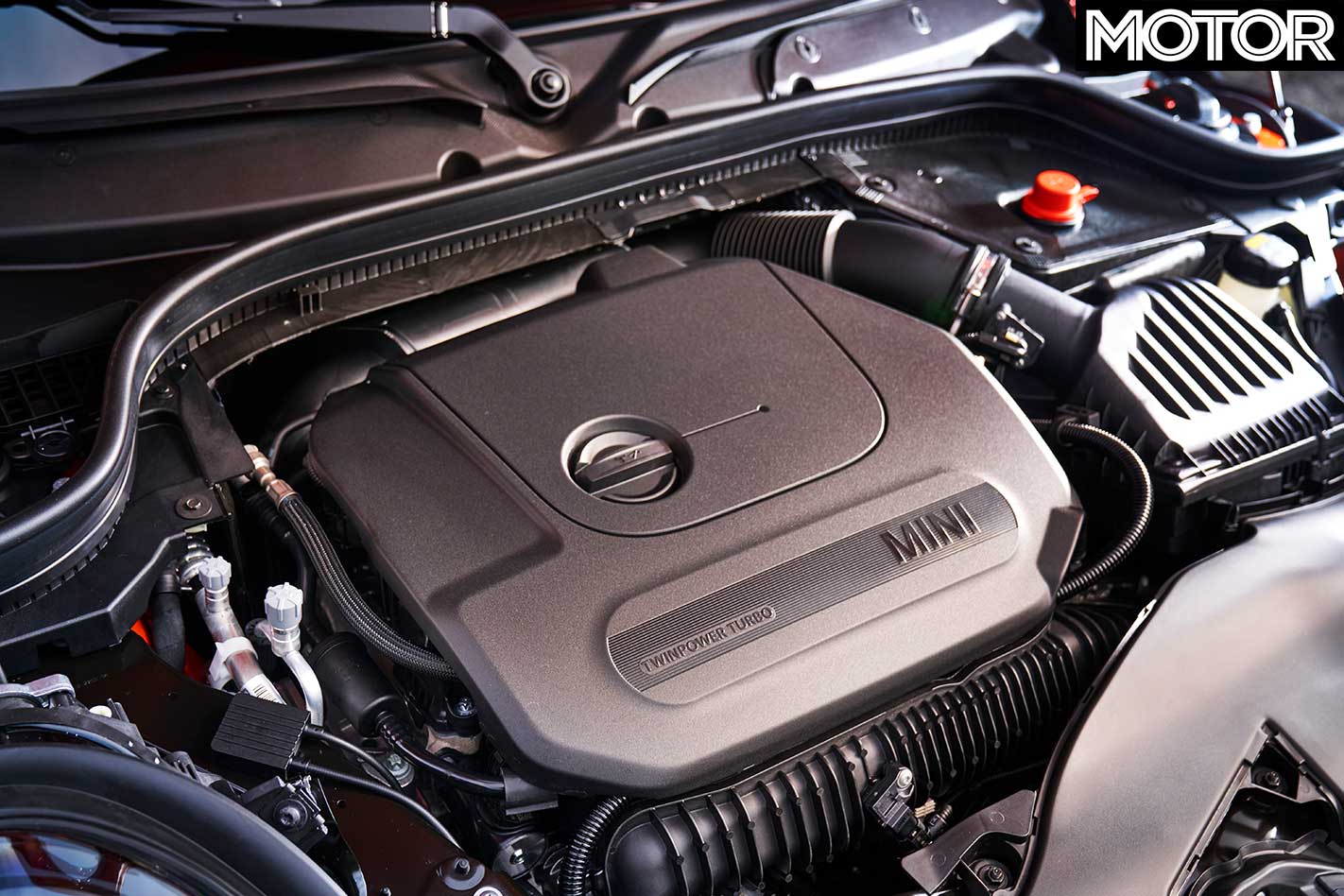
The revised four-cylinder turbo engine gets new, high-pressure injectors, a new exhaust system and a new turbo, too. Power and torque figures remain 141kW and 300Nm, but fuel economy has improved by about 7 per cent. Interestingly, the updated engine is said to be up to 30kg heavier than before. The suspension has been tweaked to account for that extra weight over the front wheels.
We’ve come to expect a distinct dynamic character from these BMW- era Minis and this revised model is no exception. The darty, eager front end is still there, as are the quick steering, mobile rear end and overall sense of agility. There may be more weight over the front axle now, but it’s been disguised extremely well.
All told, the Cooper S is a huge amount of fun to fling along a winding road. The engine, meanwhile, is brawny and muscular, but it’s no rev-happy screamer. In fact, having started pulling hard from 2500rpm, it’s done its best work by 5500rpm, so you don’t chase the redline like you would in many other hot hatches.
Other hot hatches at this price point may be more thrilling to drive, but none matches a rewarding chassis with a high-quality cabin and grown-up demeanour in normal driving quite like the Mini Cooper S.
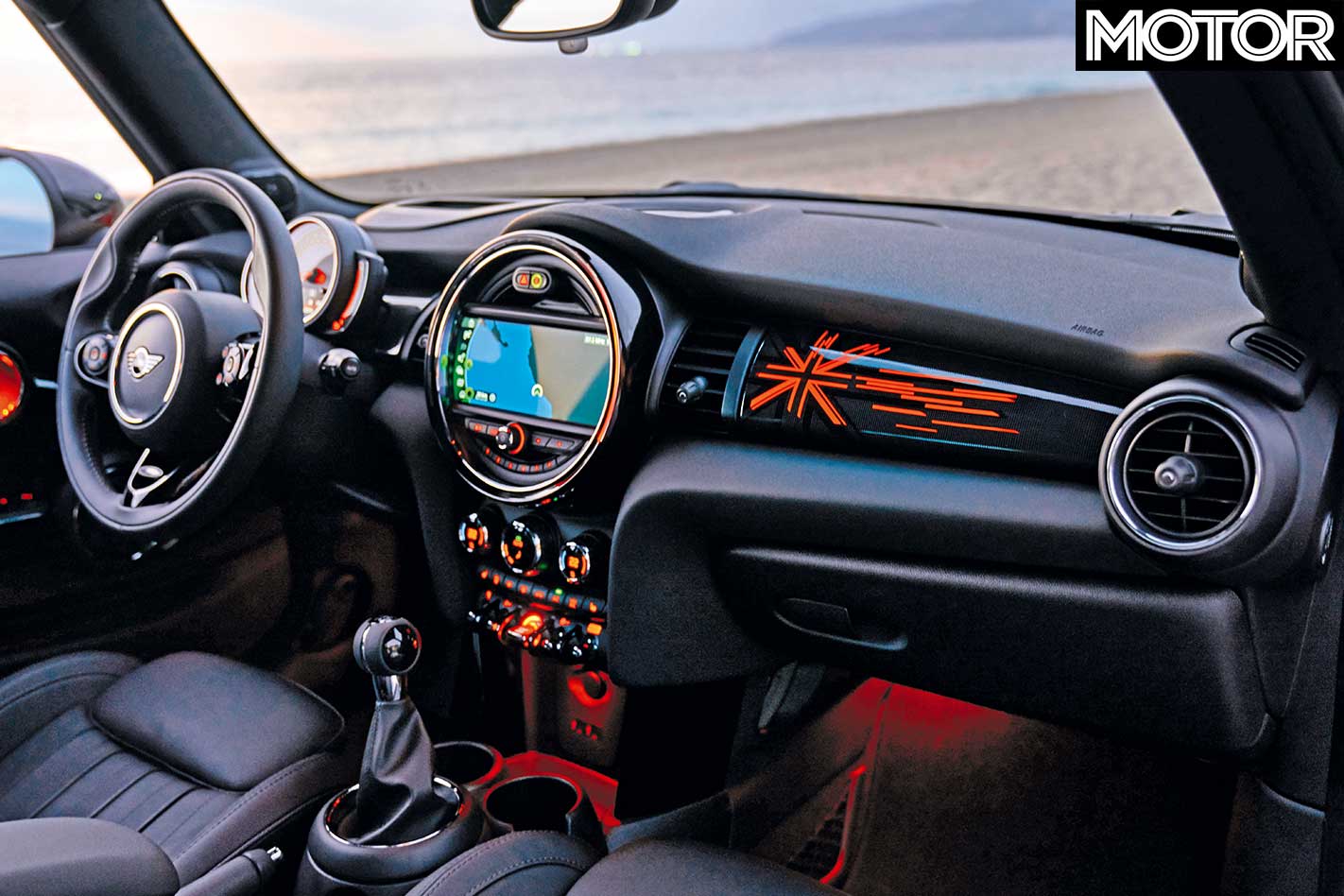
2018 MINI COOPER S SPECS: Engine: 1998cc inline-4, DOHC, 16v, turbo Power: 141kW @ 5000-6000rpm Torque: 300Nm @ 1250rpm 0-100km/h: 6.8sec (claimed) Weight: 1235kg Price: $38,000 (est)
Rating: 4 out of 5 stars Like: Updated engine; useful technology upgrades; design changes are ‘cool’; better ride Dislike: It’s not actually very ‘mini’ anymore; extra weight; engine isn’t rev-happy
I accidentally did a skid the other day.
As I leave the Melbourne Bloke Centre each night to go home, I have to turn left out the driveway and then immediately pull a U-turn. This particular evening, there was no traffic, it was getting on for dark and I was in an elderly rear-driver with neither traction nor stability control.
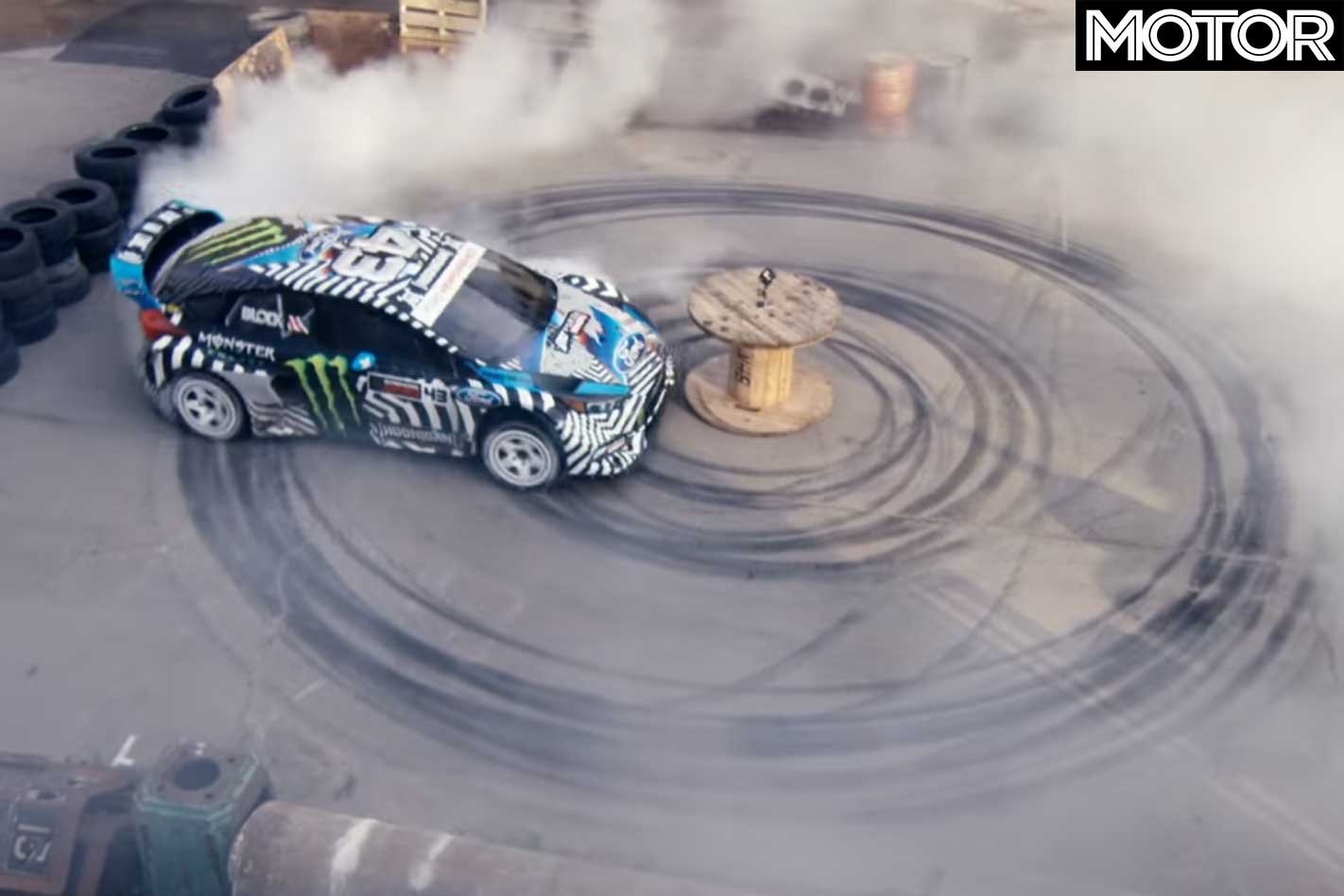
I’m still not 100 per cent sure what happened, but as I apexed the U-turn and sunk the right clog for home, the back end stepped out only a few inches. I figured then, as I do now, that I must have been a few minutes behind some evil, over-filled, diesel-puking tradie-truck that’s done the same U-ey and sloshed a litre of dieso on the road in the process. Probably.
In any case, there was no harm done and my – purely reflex – catch had the back wheels following the front ones again in a millisecond. All was well and good. But I thought to myself, what if The Jacks had been lurking and had seen what happened?
It’s a fair bet I’d be wasting my time trying to explain diesel-on-the-road to a walloper who’s down a few on his monthly quota. Nope, I reckon I’d be ticketed and, if the bloke didn’t like my T-shirt, I’d be lumbered with all the force the anti-hoon laws down here could muster.
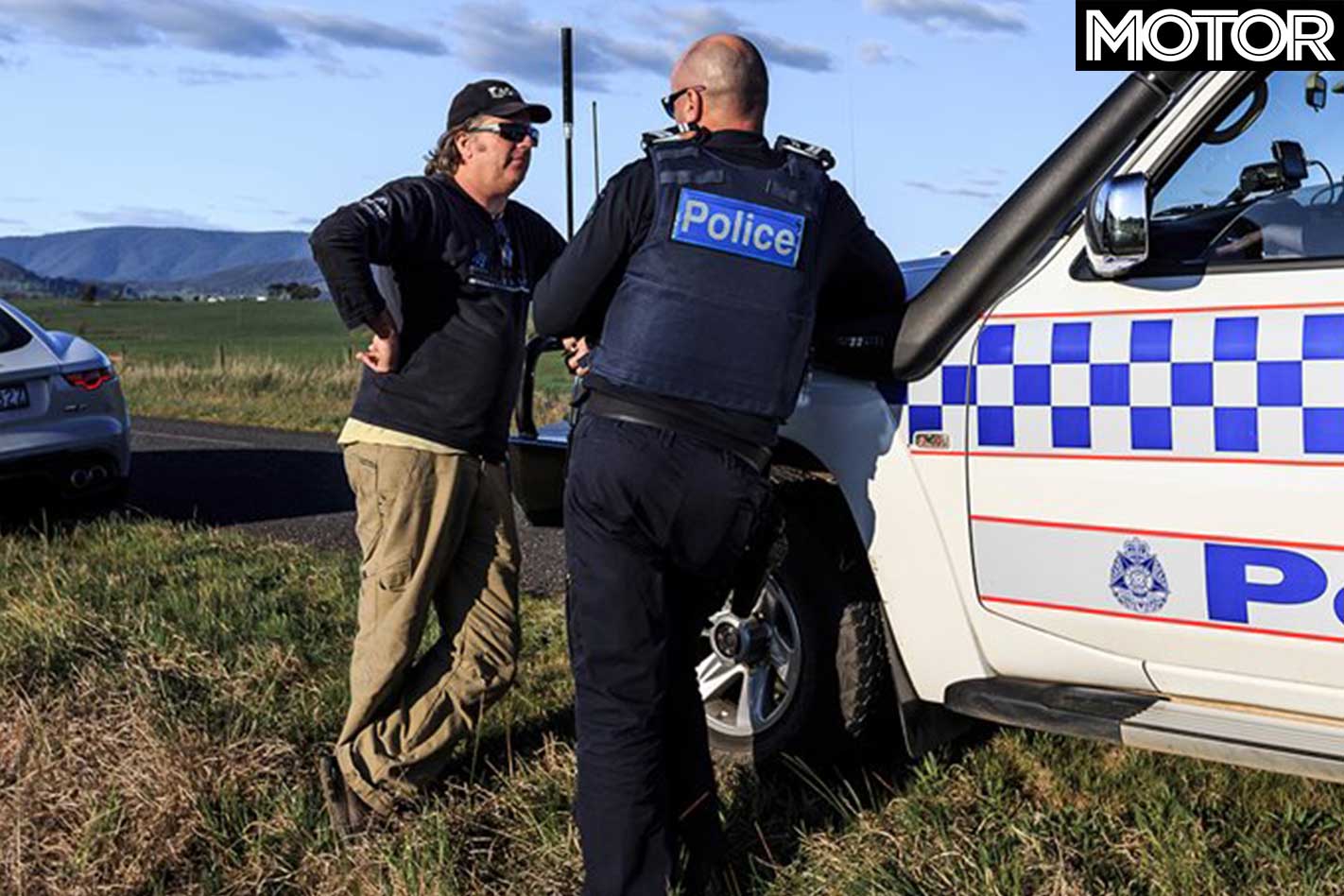
Which made me a bit cranky for the rest of the drive home. And here’s why. The punishment being handed out to people for the smallest of motoring indiscretions is now bordering on the dead-set loopy.
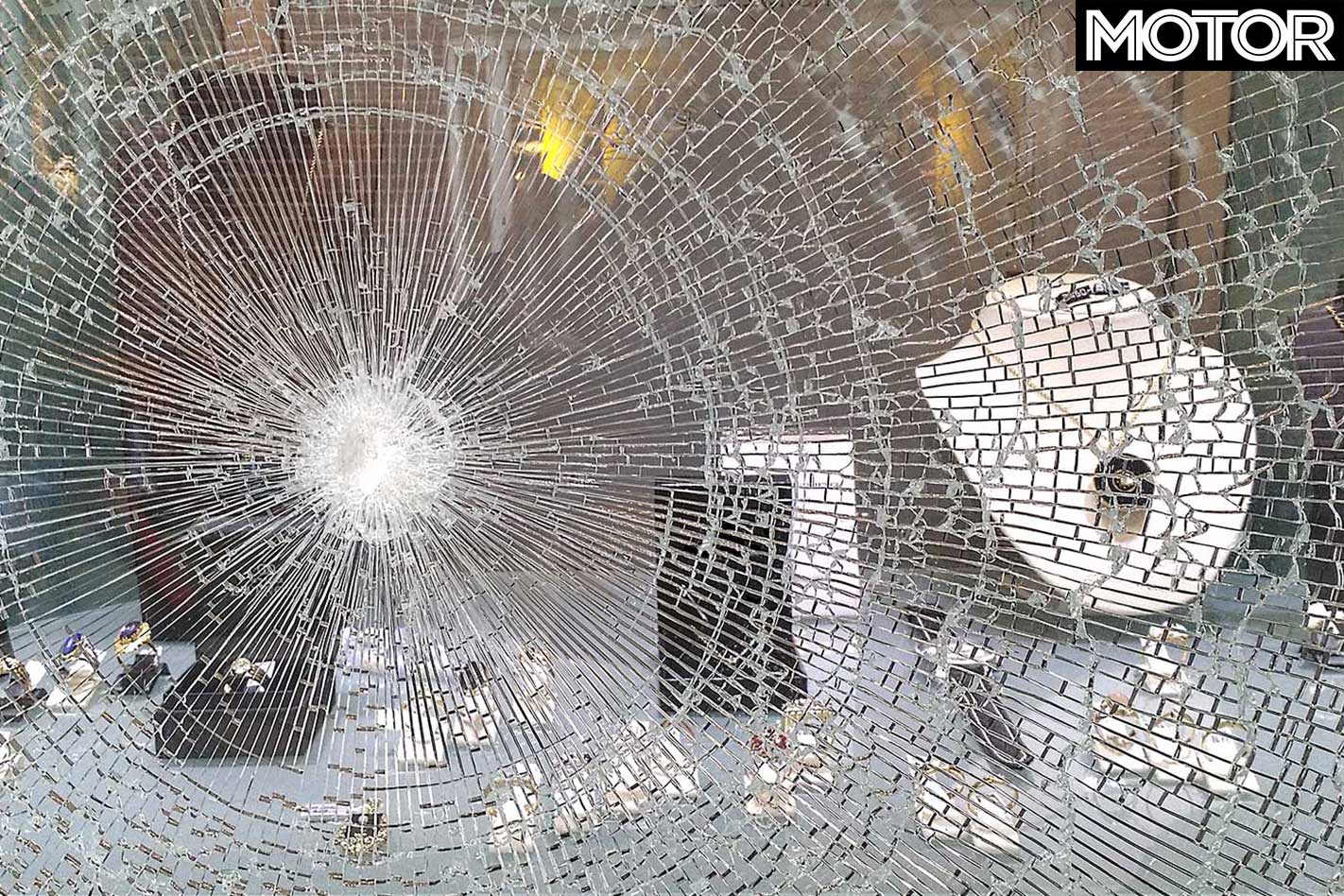
Meanwhile, pinheads running around smashing up jewellery shops while iced off their chops don’t even see the inside of a prison cell. Don’t laugh, it happened in Victoria this week. The poor dear was clearly remorseful and fair-dinkum rehabilitated, so the magistrate decided against a stay in the Big House.
And just to prove that it’s all gone completely mad, here’s a pop quiz, hot-shots. Who gets the longer licence suspension of this pair of offenders?
Offender One (a mate of mine, ’cos this is a true story) gets done exceeding the speed limit. Now fair dos; he was travelling about 30km/h over the posted limit, but it was a 60 zone that should be an 80 zone anyway.
Nevertheless, he was speeding and never tried to lie about the fact during the roadside chat. Which also included his car being picked up on a flat-bed and impounded for a month, along with huge towing and bail-out fees to keep the speeding fine company.
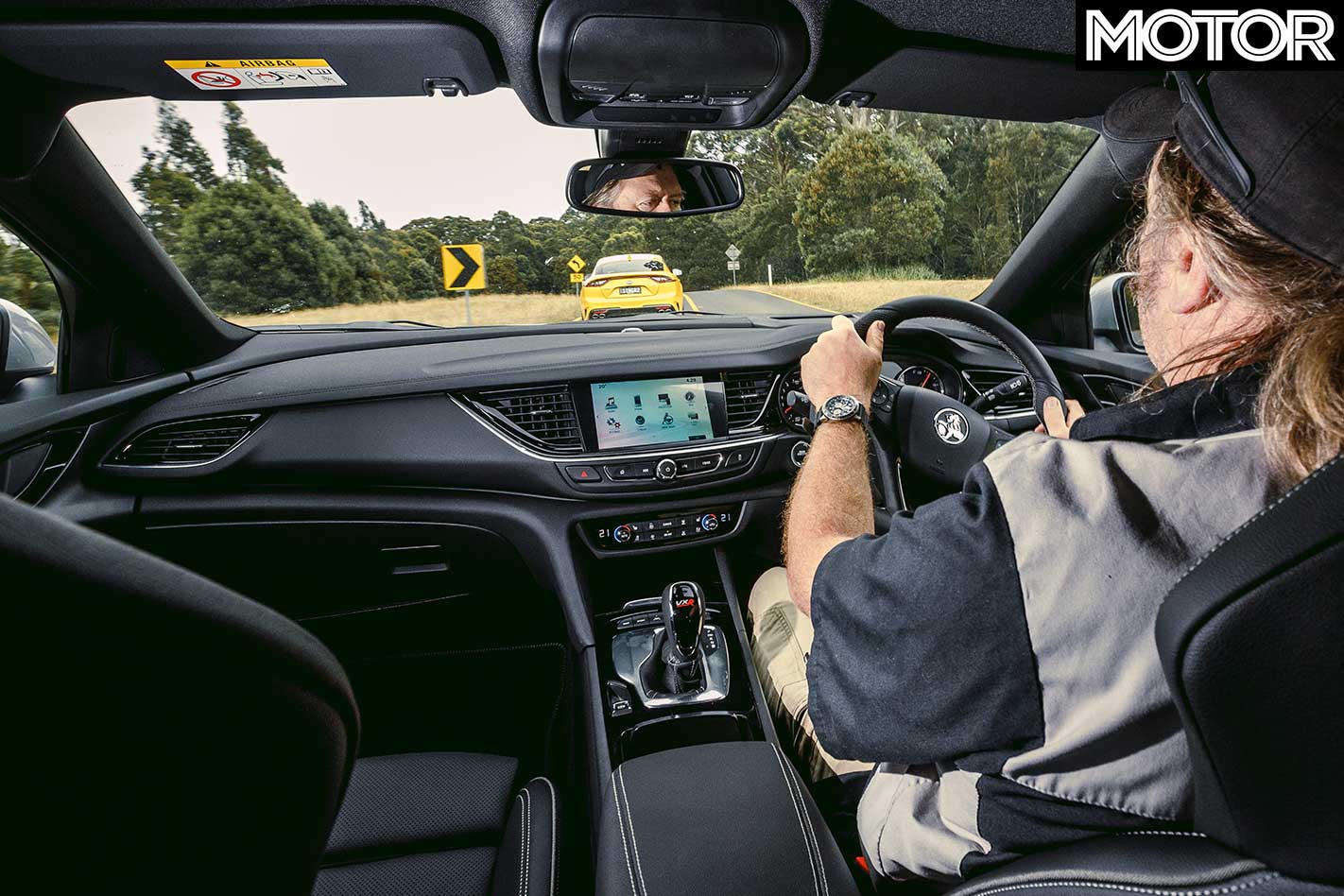
Offender Two, meantime, is some kind of wunderkind at a big sporting club. He gets out on the turps one night after training and blows 0.095 at the booze bus. Which would be bad enough (it’s all but twice the legal limit after all) but this tool is actually on P-plates, so by law, he should have been 0.00.
So, back to the original quiz question – who gets the bigger licence suspension? Give yourself a round of applause if you said Offender One.
Yep, despite being sober, clearly driving fast is twice as dangerous than driving tanked, because Dude One got to spend 12 months without a licence, while Dude Two got just six months of Ubering.
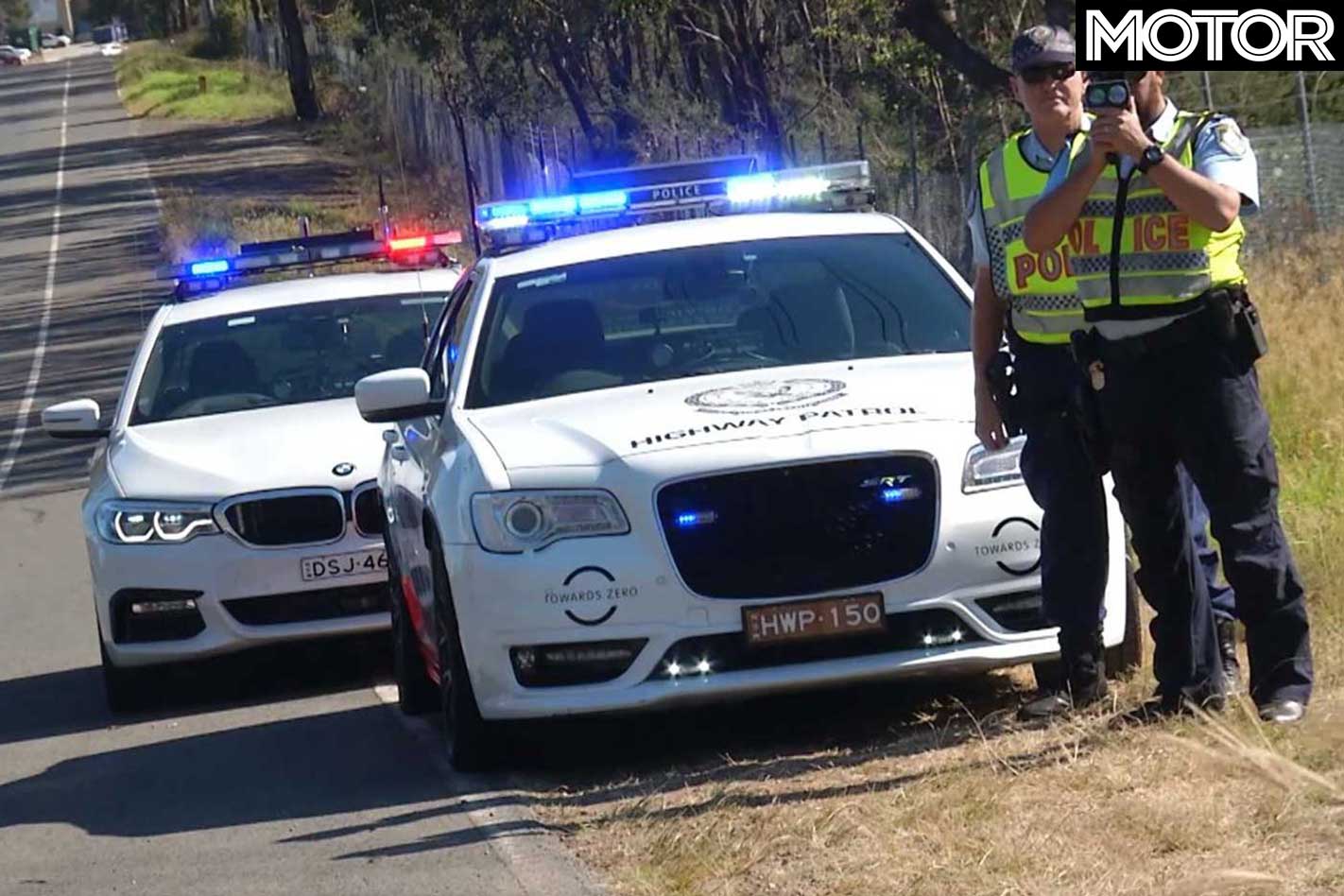
And, of course, the bloke in question won’t have to catch the bus or walk anywhere, because he’s a contracted player for a multi-million dollar sporting club which will no doubt supply a driver to get the geezer to and from training. Meanwhile, Offender One whose job involved driving all over the place, is now out of work and wondering how the hell he’s going to pay his mortgage.
Don’t get me wrong, I’m not defending speeding of that magnitude, but I am openly questioning whether the bloke who was full of ink on P-plates shouldn’t maybe have gotten a bit bigger slap on the wrist. Let the punishment fit the crime and all that. What do you reckon?
IT’S SAID that the key to happiness is the ability to find joy in ordinary things. All too often we feel pressured to be better, to go bigger, to spend more, to experience everything and we end up overlooking what was in front of us all the time. We forget how to love what we have. On the face of it, the five cars assembled here are steeped in ordinary.
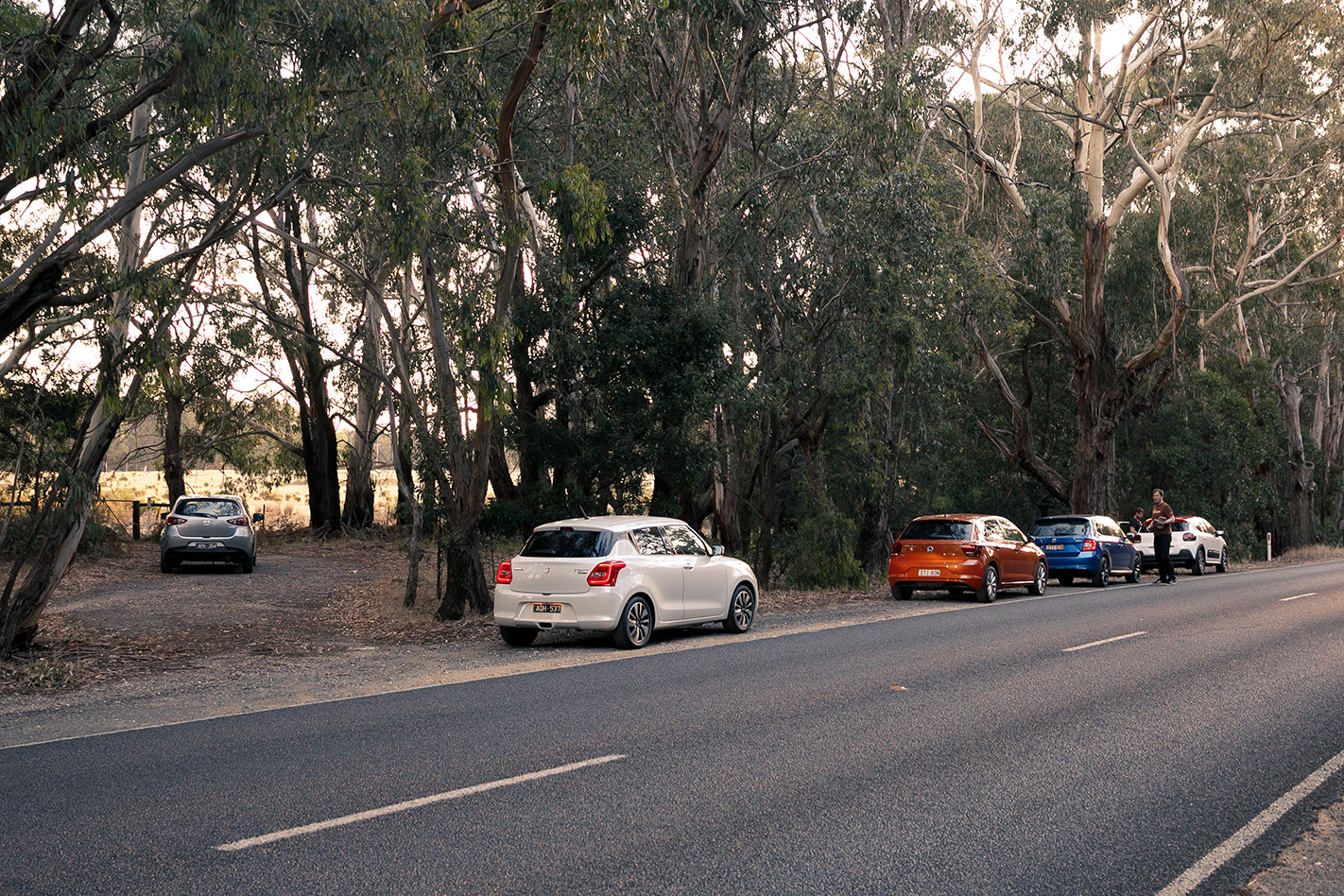
You’ll see them or their ilk every day, often bought for the practical reasons of resale, warranty, reliability and the doughty metrics of cents per kilometre. Yet scratch beneath the veneer of fiscal expediency and these vehicles do so much with so little that they are, in effect, everyday supercars. Mini decathletes that are all about managing compromise. And we can assess how effective those very human decisions have been.
The Volkswagen Polo is the reason we’ve assembled these five cars. This is the box-fresh Polo Mk6, now sitting on the MQB modular architecture and the first thing you need to know about it is that it’s big. Physically, its exterior dimensions are almost as large as a Golf Mk4, but lessons learned in how to package cars over the last couple of decades means that there’s considerably more legroom, headroom and luggage space than in the millennial Golf.
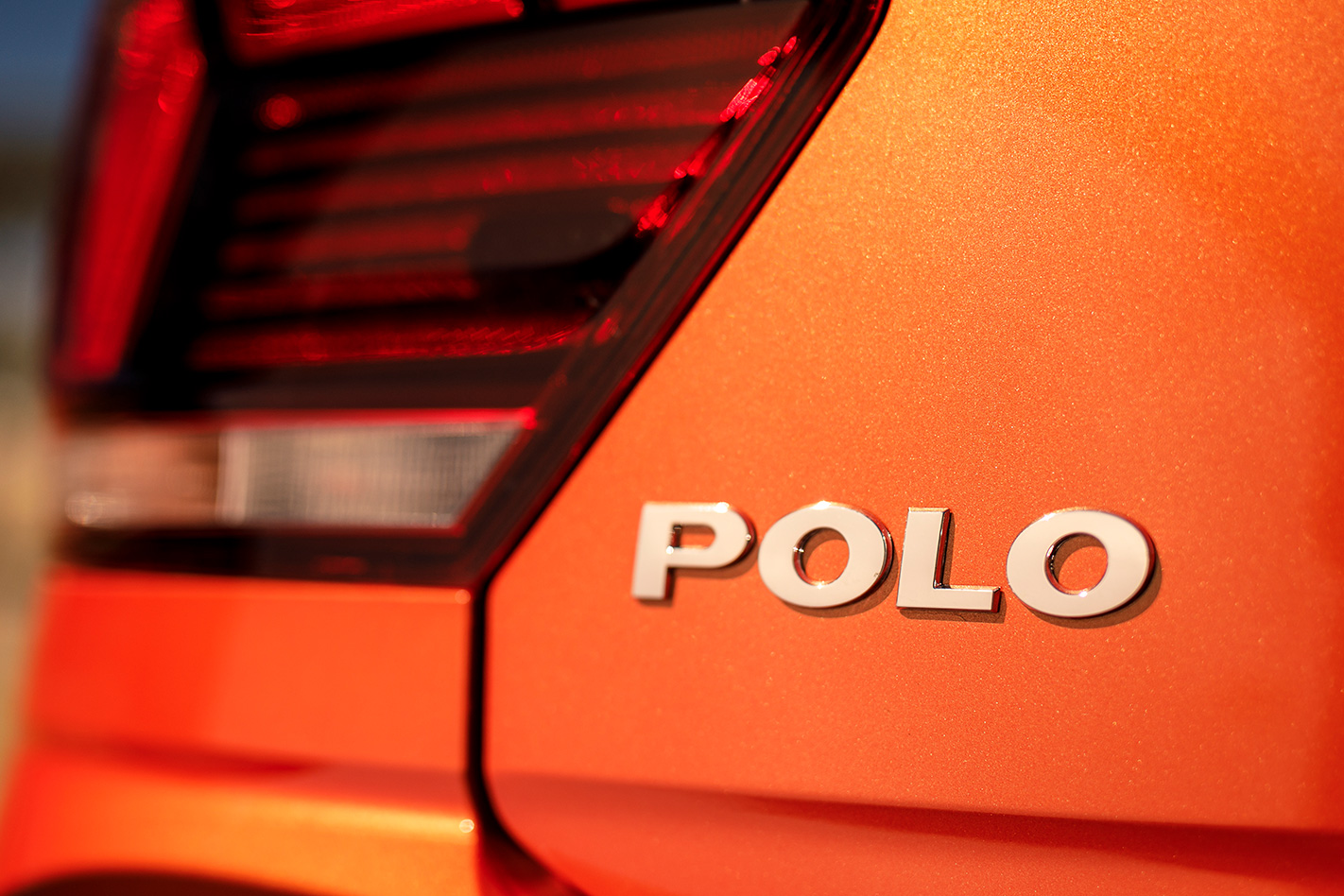
This is the $22,990 Launch Edition with the 85TSI three-pot engine and DSG gearbox and, like the rest of the cars here, it’s pitched at the upper end of the range, tucking in beneath the sports flagship variants. This Polo is big news for Volkswagen too. The company has now sold over 150 million vehicles, and with more than 14 million sales since it was launched 43 years ago, the Polo, which began life as an Audi 50, now represents almost 10 percent of all the cars Volkswagen has ever sold.
Here in Australia, a market that’s traditionally been leery about small cars, the Polo now accounts for around 20 percent of all Volkswagens sold.
This is also our first opportunity to sample Citroen’s bold third-generation C3 on Australian roads. It’s been on sale in Europe for a couple of years and the handover of the French marque’s importation franchise from Sime Darby to Inchcape has seen the C3 get a belated green light for our consumption. It’s been a sales success in Europe, shifting 100,000 units in its first six months on sale, which compares with 300,000 per annum for the top-selling Polo, but it’s more than 10 percent cheaper than the Volkswagen over there.
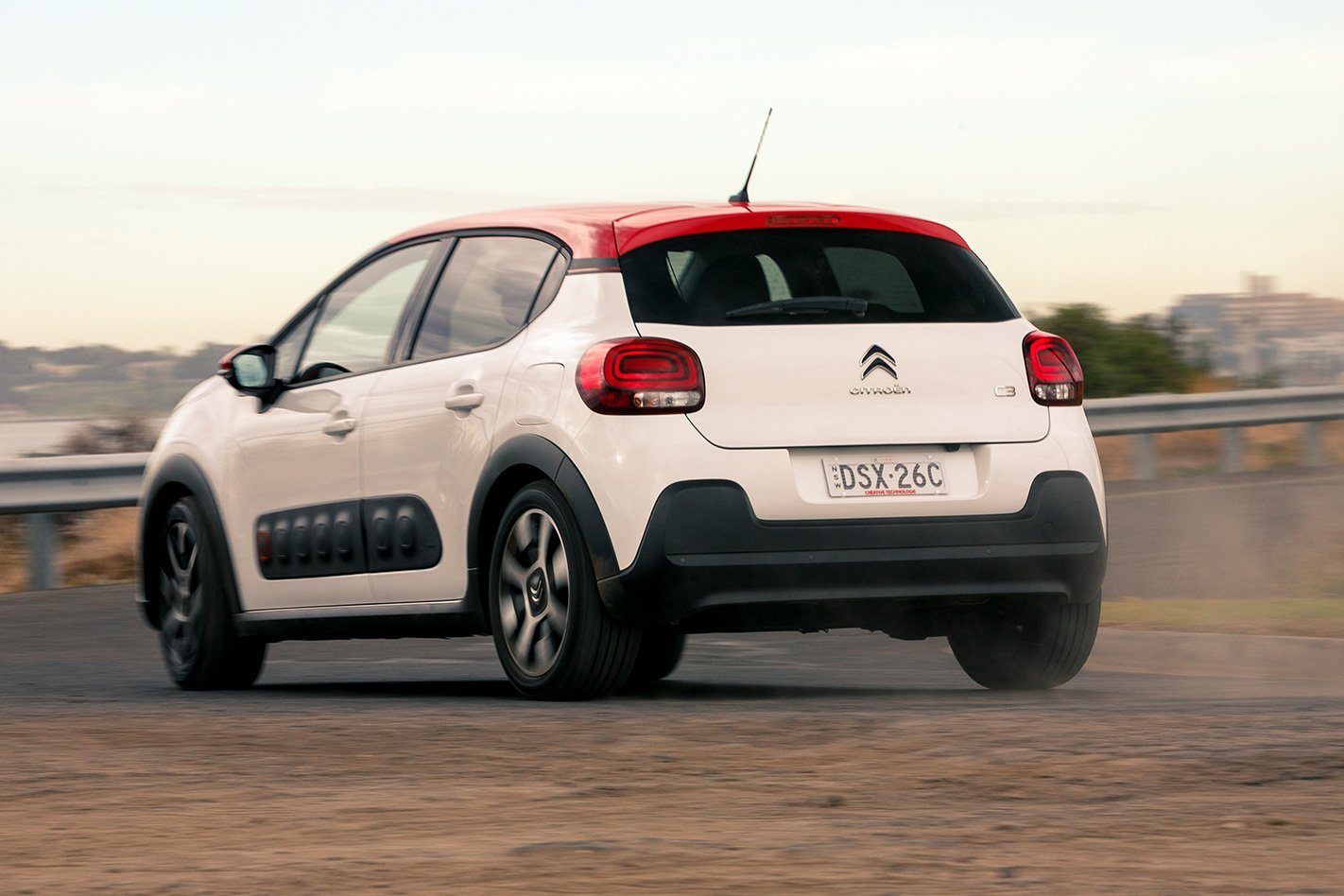
Here it doesn’t enjoy such a pricing privilege, so it’ll be interesting to see if it can level with the Polo on its own mettle. As it stands, the C3 is only offered in 81kW Shine trim, priced at $23,490.
Suzuki’s Swift made it into the pointy end of Wheels’ 2018 Car of the Year shebang, its chances of a win ultimately dented by Suzuki Australia’s decidedly odd trim walk-ups. Perhaps here in 82kW GLX Turbo guise, wearing a bargain $22,990 drive-away sticker, it can gain redemption. The other pair are likely to be more familiar still to Wheels readers. The Mazda 2 has long been a favourite with Aussie buyers, and enjoyed a refresh early last year that majored on trim upgrades.
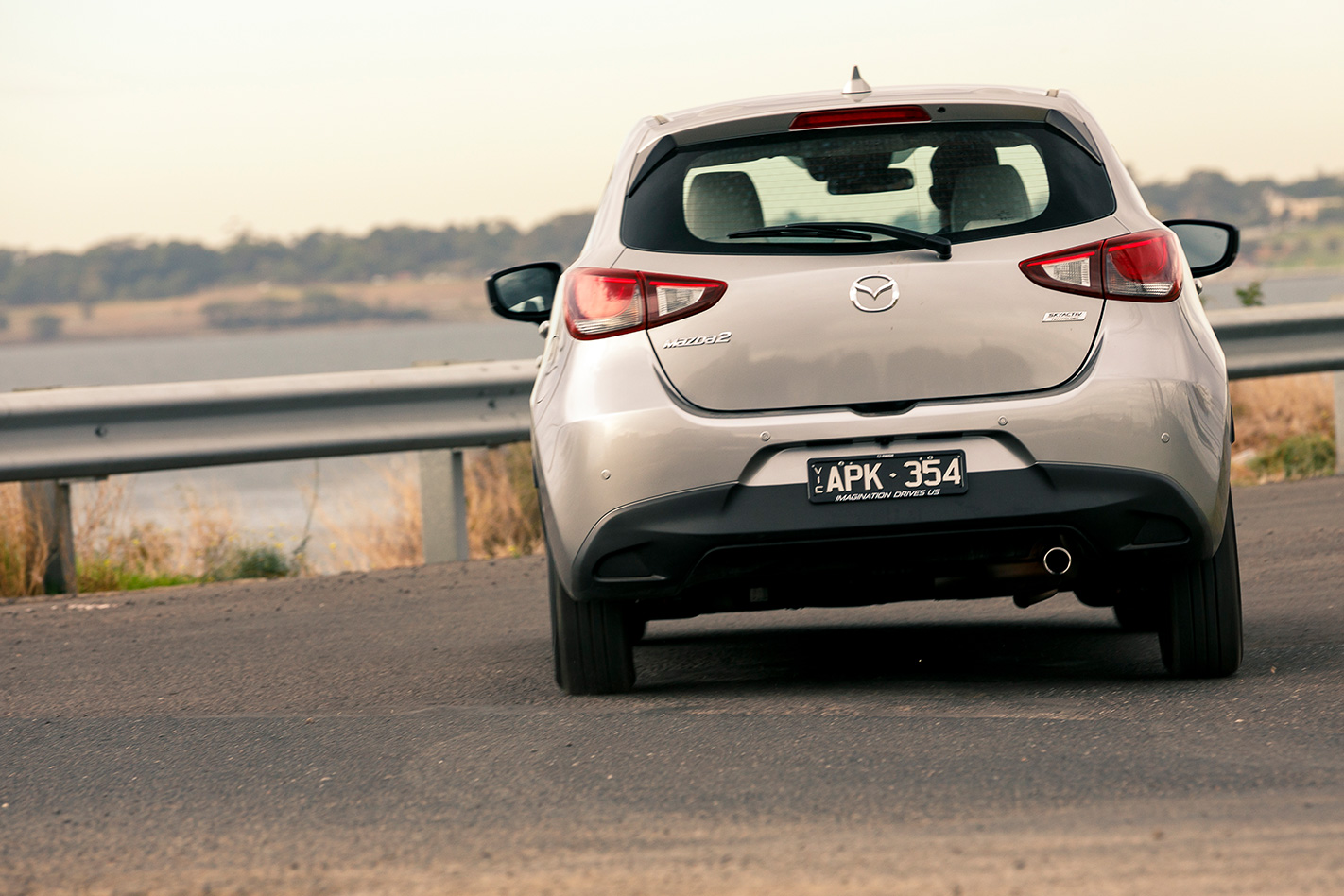
This third-gen car debuted in 2014, and is built on completely different underpinnings to the second-gen car that was first revealed in 2007, despite sharing its curvy form factor. This continuity of look has ensured continued sales success, on its own easily outselling the rest of this field put together, although its volume has largely been accounted for by the value-packed Maxx model. It’ll be interesting to see whether the $23,680 GT trim lifts the little 81kW Mazda out of its comfort zone.
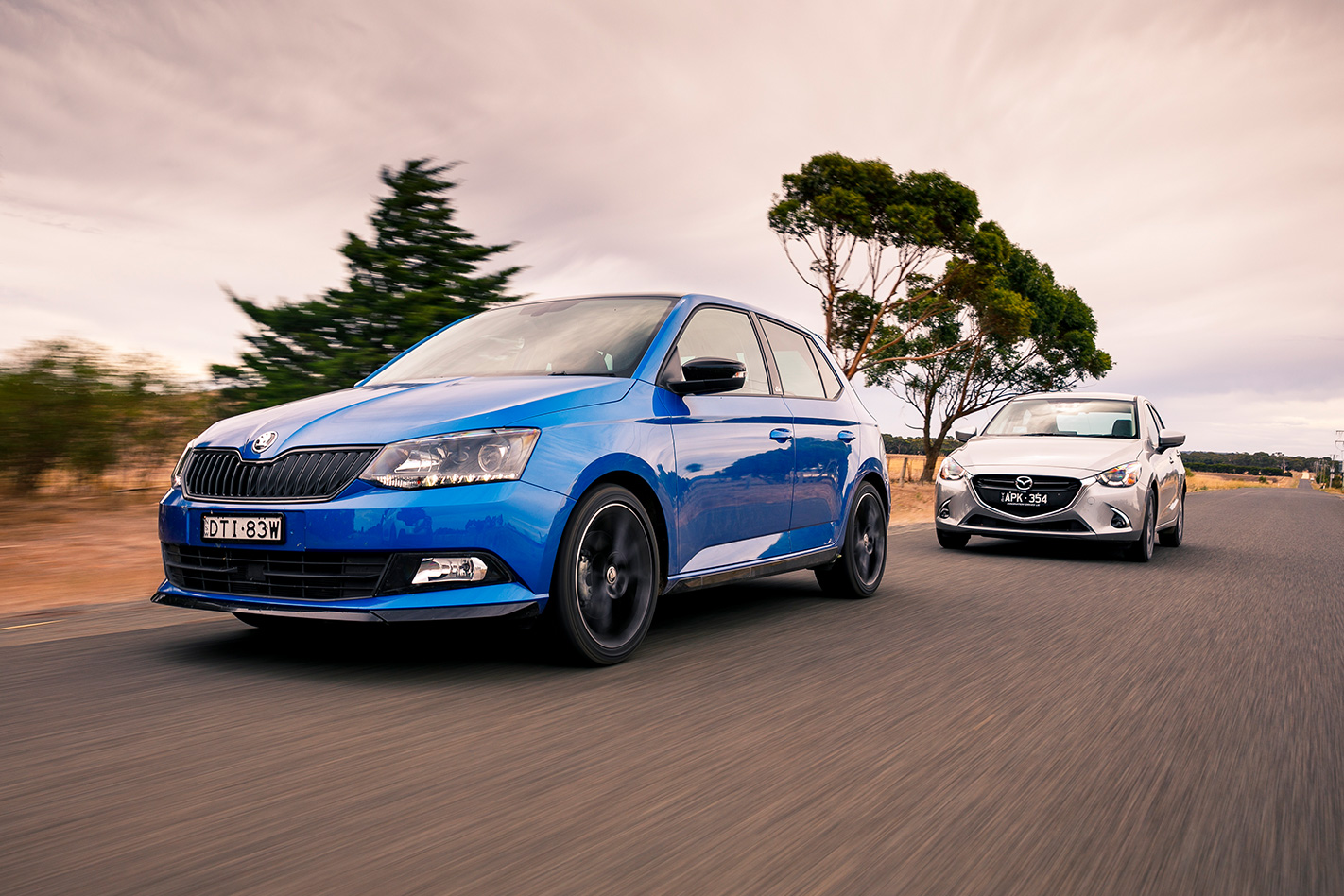
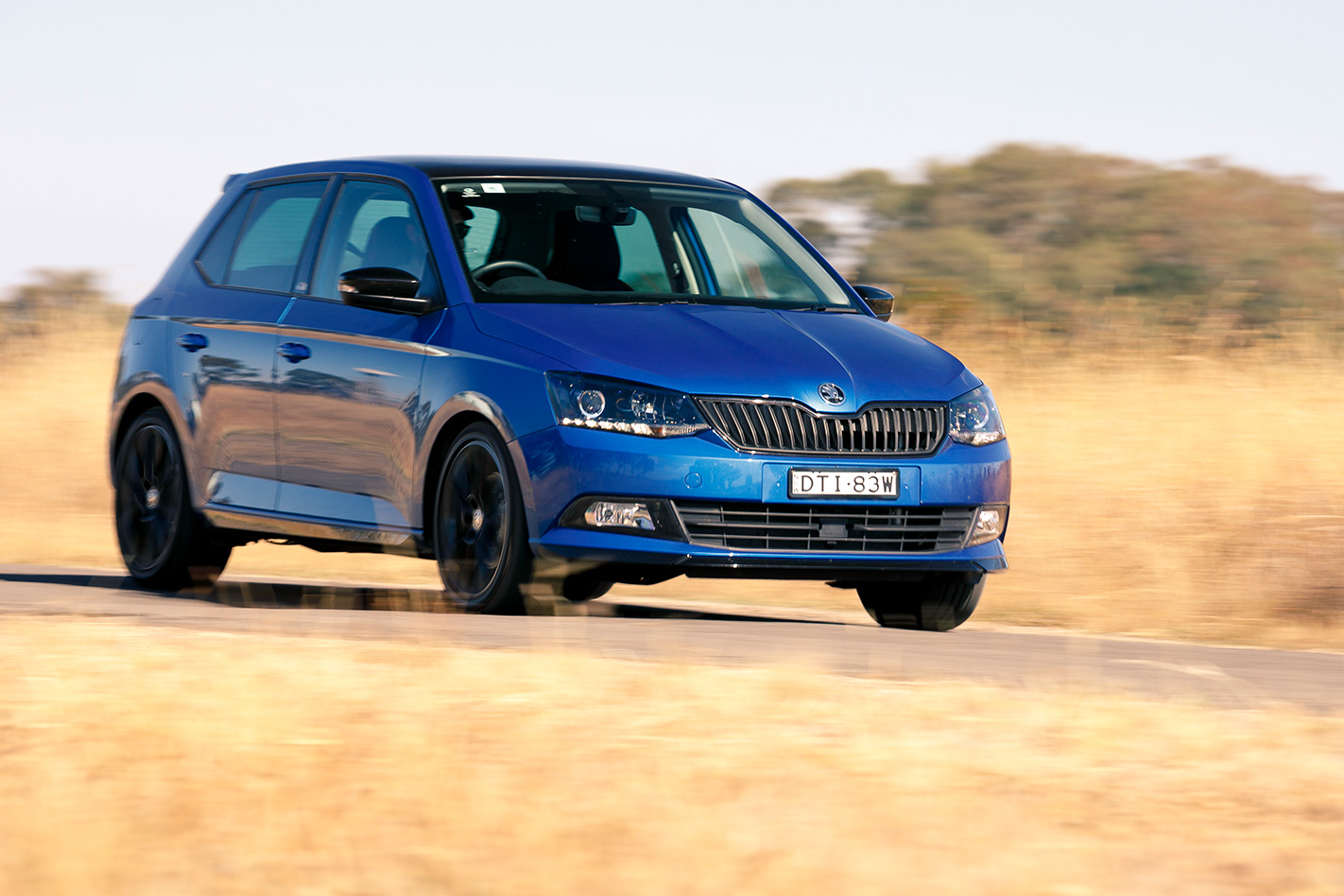
Finally there’s Skoda’s Fabia Monte Carlo, yet another car with 81kW under the bonnet. It’s of similar vintage to the Mazda having gone on sale here in 2015. Unlike its Polo cousin, the Fabia doesn’t get the slick MQB chassis, instead riding on the previous-gen Polo’s PQ26 underpinnings. This car wears a retail price of $23,990, making it the priciest of the bunch, an issue compounded by this particular vehicle’s Tech Pack and metallic paint lifting it to a hefty $26,290 before you’ve factored in on-roads.
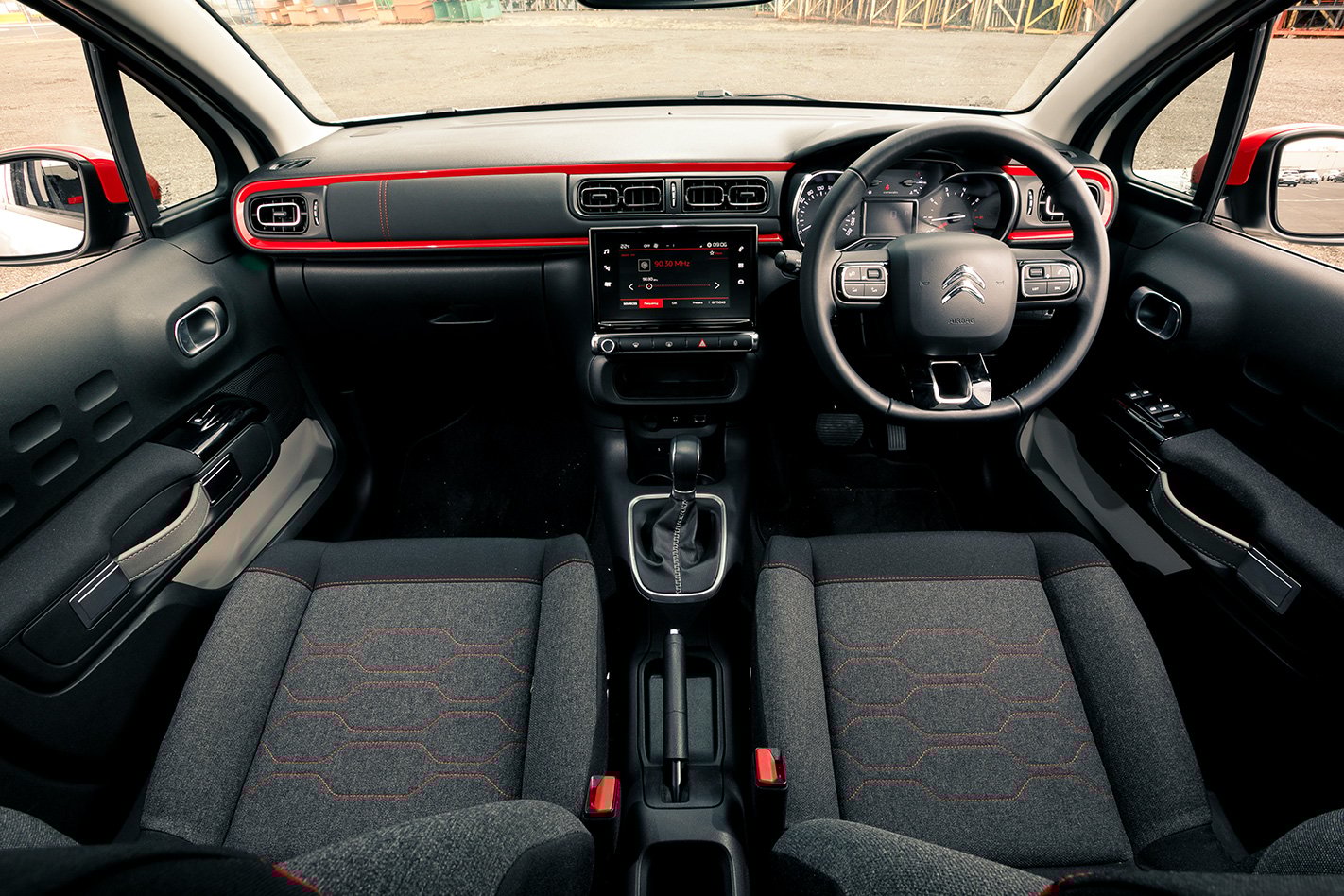
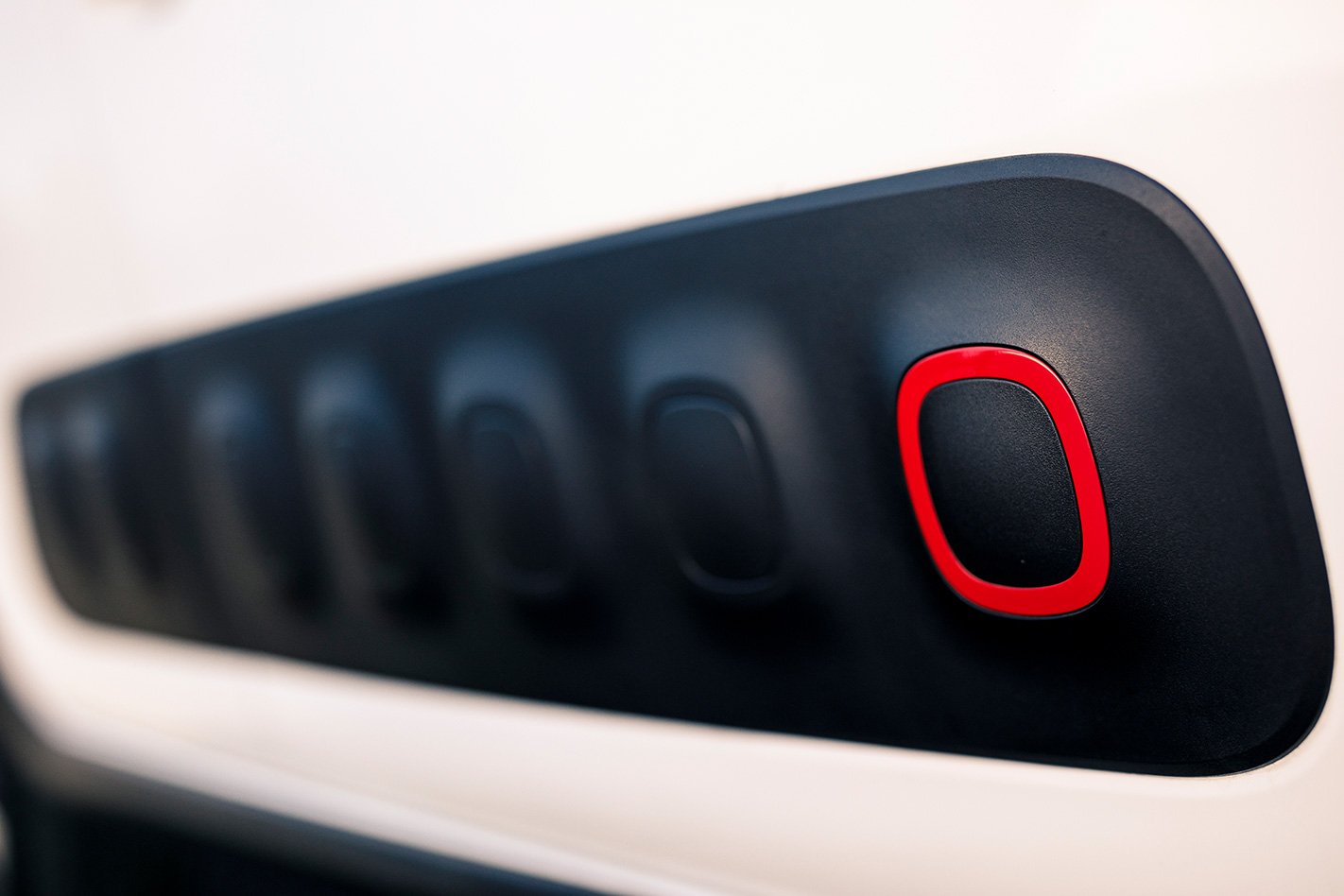
Park the five together and there’s really only one car that’s an instant attention seeker. The Citroen C3 kicks the buttoned-down conservatism of this class squarely in the dusters, offering elements of the quirky Cactus including deformable side Airbumps, an almost MPV-lite proportioning, and an unflinching commitment to rejecting the status quo.
Inside and out, there’s always something for your eye to alight on, from the bold 17-inch alloys, to the floating red roof panel, the leather door pulls, the massive lazy-boy front seats, the steering wheel with chubby horizontal spokes, you name it. It’s almost as if the C3’s designers tried to reinvent the aesthetics of everything. It’s ambitious if nothing else.
That’s never a word you’d use to describe the design of Volkswagen’s Polo Mk6. I think there’s a delicacy of line and detail about it, but I was in the minority there. A minority of one. Every other tester was disappointed by its lack of adventure, the bloated rear end coming in for particular disdain. I liked the canted C-pillars, although couldn’t help wondering whether designer Klaus Bischoff had been inspired by the Austin Princess when he settled on their angle. Probably not.
The chiselled bonnet, the defined shoulder line that runs through the door handles and the way the grille detail carries through the headlamp pod are all deft touches. That said, examining the colour options for the Polo suggests that it’ll hardly jump out at you. This ‘Energetic Orange Metallic’ confection aside, you get to choose between white, grey, silver and black.
That hardly makes the most of the option of having a body-coloured dash insert. As is becoming the norm with light hatches, the choice between a three- or five-door body style has been quietly shelved with all Polo Mk6’s being family-friendly five-door variants. It hides its increased dimensions well, the kammback silhouette reminiscent of the old Mk2F Polo G40.
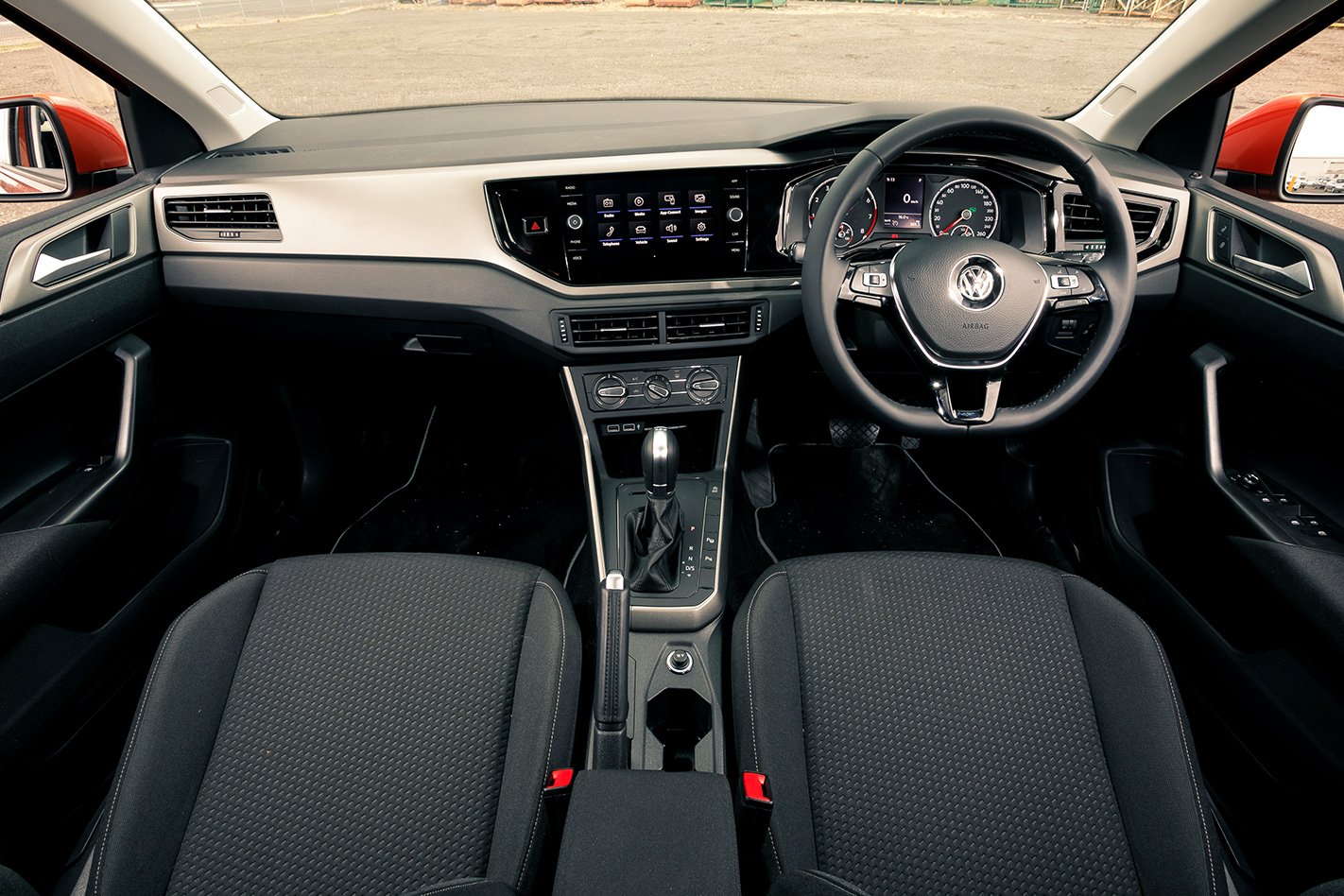
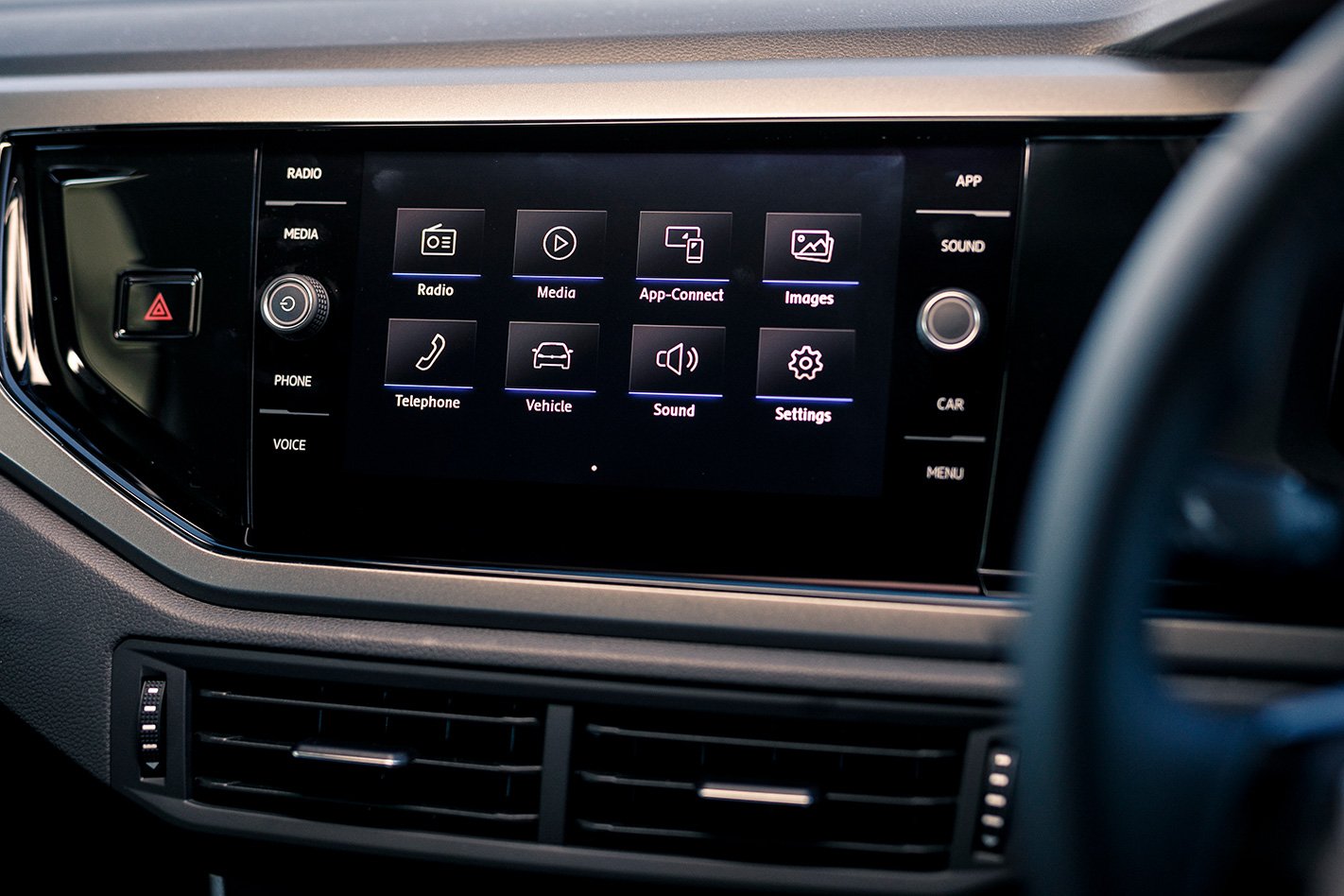
Drop inside and you’re greeted by a big Golf-style integrated touchscreen that flows into the trapezoid-shaped dash insert, finished in this car in inoffensive grey. The trapezoid trope recurs throughout, and includes elements such as the door pulls, the HVAC controls and the screen surround.
It’s rare to find German brands doing whimsical or light-hearted design, largely because they’re so terrible at it, and the Polo’s hexagonal-shaped cupholders between the seats just look a bit odd. It’s also strange to get manual air-con controls with no option of climate control in this Launch Edition, when the new GTI gets a digital system that delivers a far more coherent look and feel.
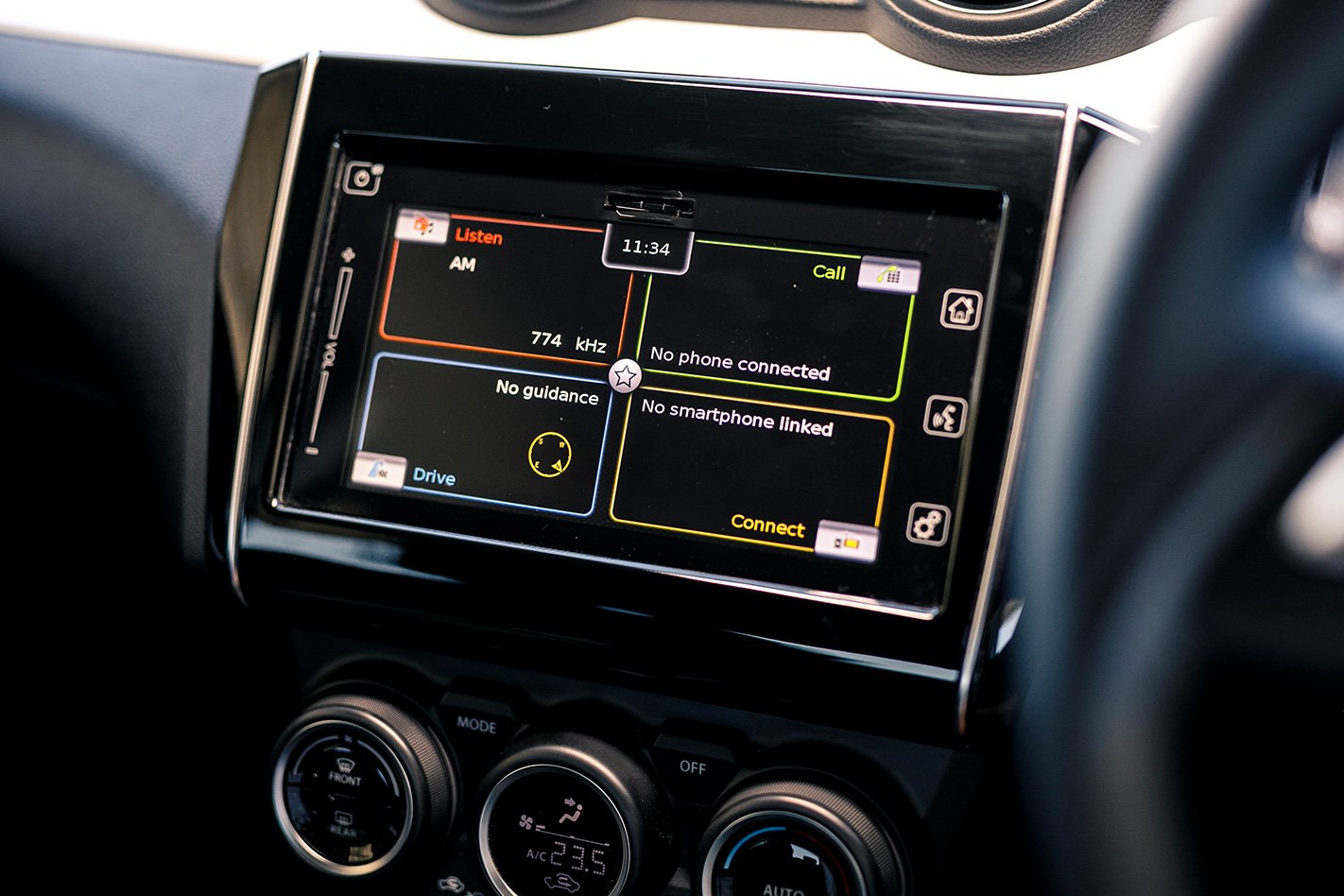
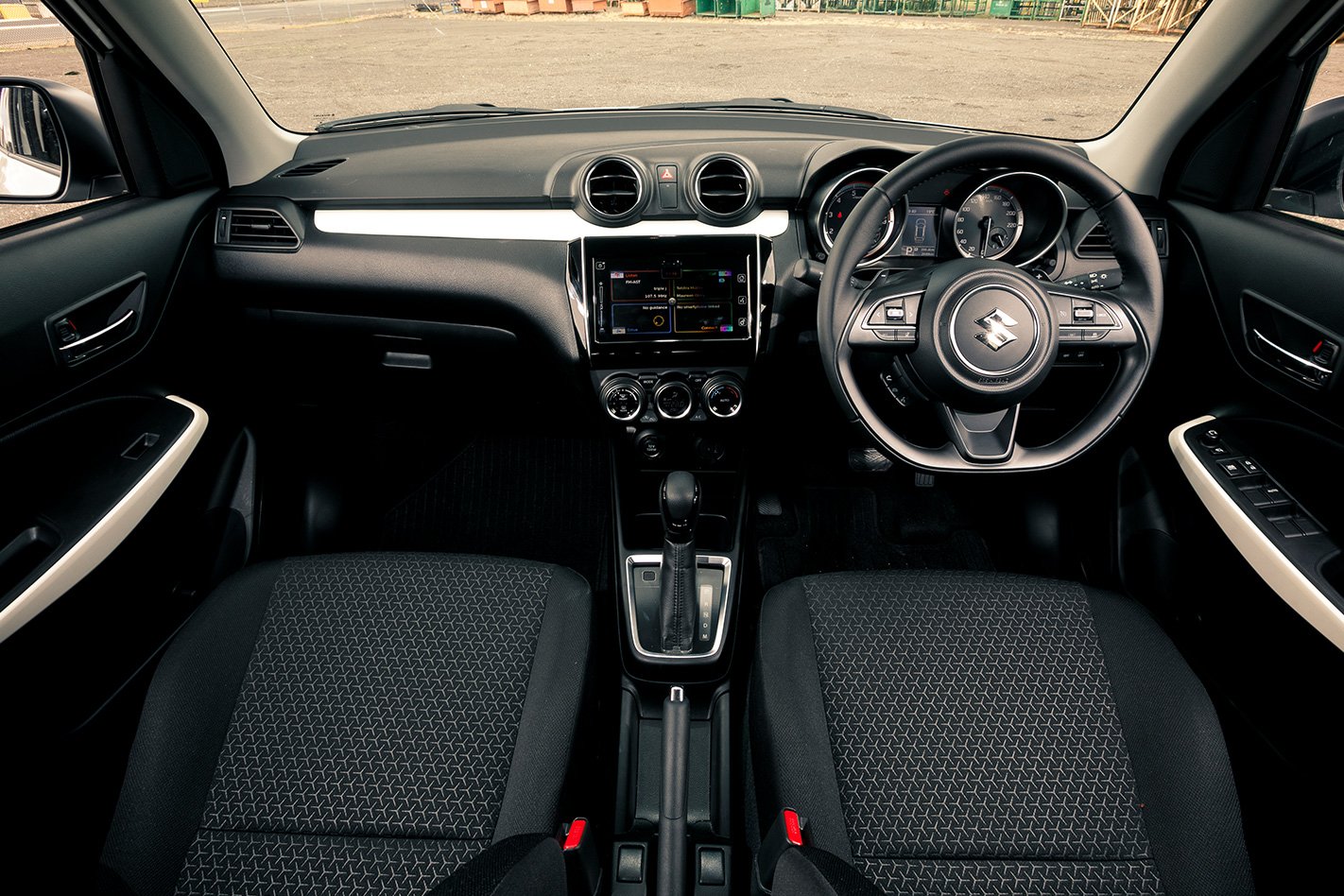
After the soft-touch, feel-good sheen of the Polo, the Swift’s cabin feels like something from a class below, perhaps unsurprising given its pricing. Scratchy, cheap-feeling plastics, air-con ‘dials’ that prove to be merely fixed plastic housings and a centre screen that flatly refused to connect to Android Auto aren’t anybody’s idea of showroom surprise and delight, but look beyond that and the Swift’s qualities aren’t hard to appreciate.
There’s a lovely steering wheel, decent pedal positioning and the packaging in the passenger cell is amazingly good, offering comfortably the most rear passenger room of any car here, even bettering the supersized Polo. Of course, that space isn’t magicked out of thin air and, in this instance, comes at the expense of boot space, the Swift’s meagre 242 litres utterly outclassed by the Volkswagen’s cavernous 351-litre cargo bay.
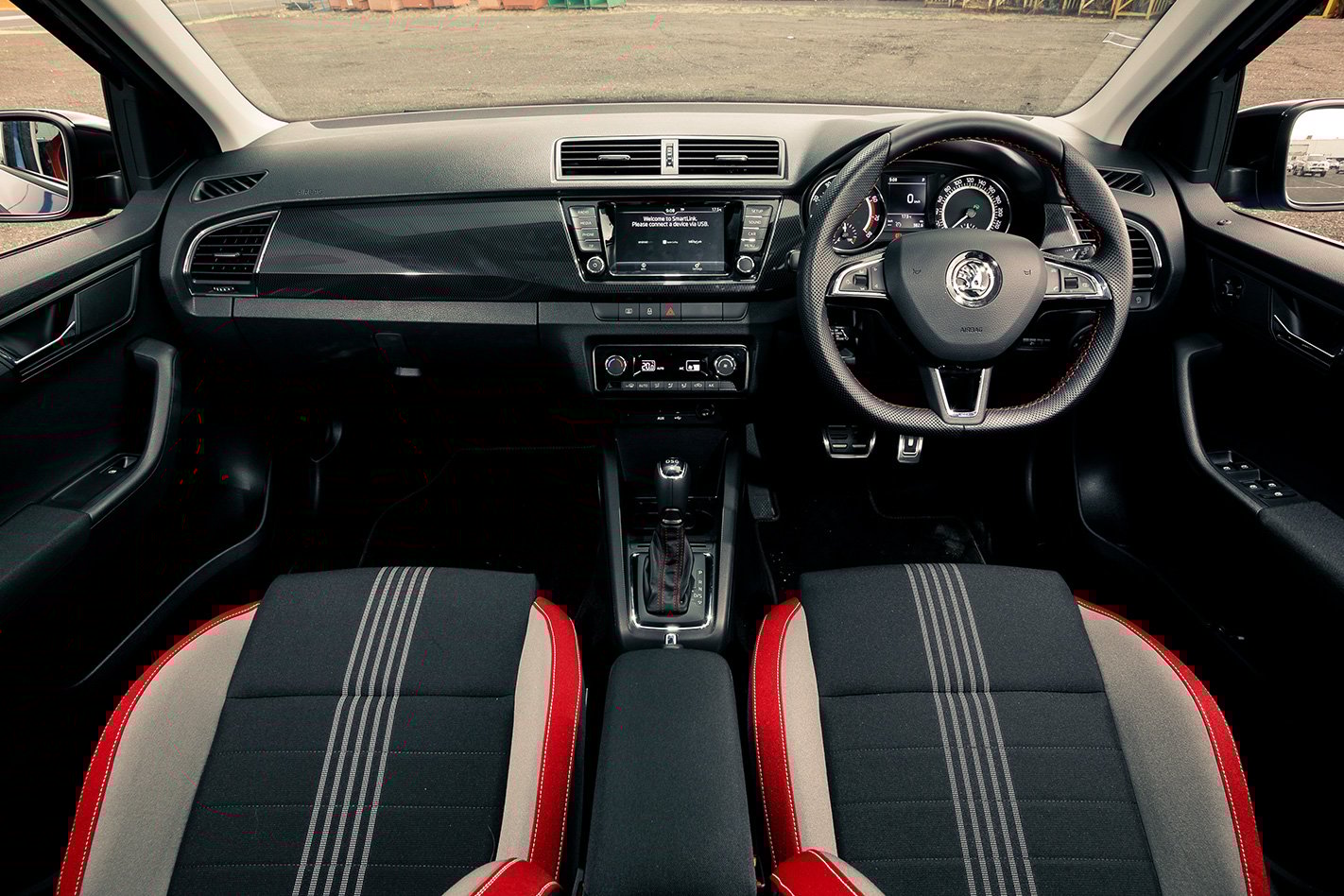
The Fabia Monte Carlo gets a pair of huge, luridly striped grey, red and black sports seats that dominate the cabin, yet complement the chubby perforated leather steering wheel and alloy pedal set. Skoda is intent on beating you over the head with some rather heavy-handed branding too, with Monte Carlo logos on the hatch, side windows, sill plates and the multimedia screen, despite this being a mere trim level rather than a hotted-up version. Your mileage may vary on whether this pays sufficient deference to Skoda’s rallying heritage.
The massive front seats compromise rear space and the double-pane, full-length glass roof is either a blessing or a curse, depending on how you view these things. The dash treatment is clean and cohesive although switch blanks show where you miss gear such as seat heaters.
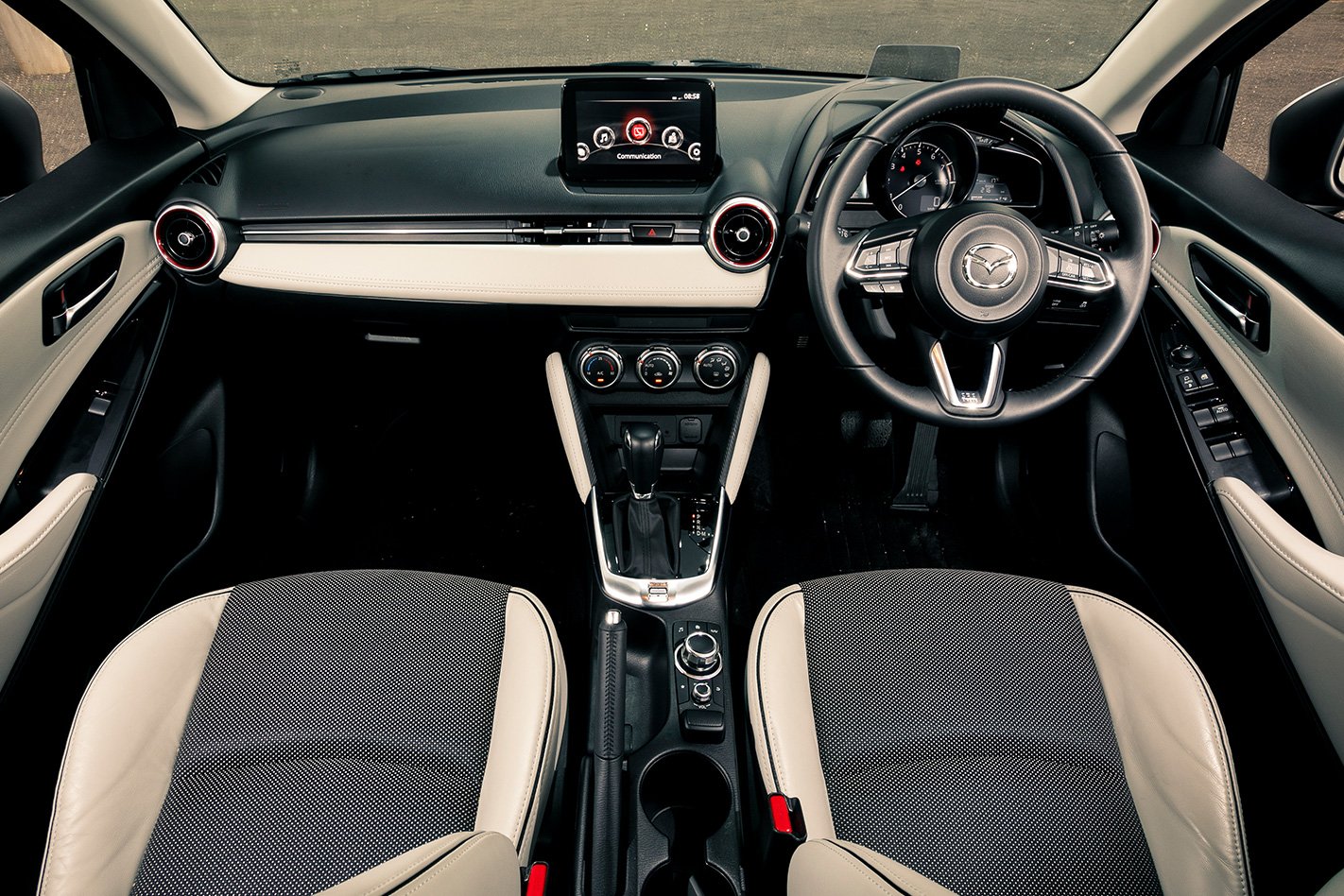
Then there’s the Mazda 2. It feels small, largely because it is narrower than the others, despite featuring the longest wheelbase here. Compared with the Genki upon which it’s based, this GT trim adds 16-inch machined silver alloys and an absolute riot of soft-touch pure white leather inside with neat contrast stitching. Think of the albino cows. Unlike some of the other cars here, the Mazda feels as if it’s had every option thrown at it, without a switch blank in sight and the cosmetic upgrades are fairly well integrated.
Pedal it down a country road and, despite the tale of the tape, its wheelbase feels nervously short. We’ve covered many miles in the Mazda 2 and it’s traditionally been positioned as the light car of choice for those who want something fun, reliable and affordable. Yet the 1.5-litre atmo engine now sounds uncouth and is lacking in herbs, posting the slowest, or joint slowest, times to 100km/h, through the 80-120km/h benchmark and standing 400m.
Its cause isn’t helped by the dismal Dunlop Enasave rubber, while the default transmission calibration feels flabby. Switch to Sport and it tries to keep revs above 4000rpm at all times. That’s fine if you’re barrelling through corners, but if you’re just looking to make respectable cross-country progress it soon becomes tedious on straights.
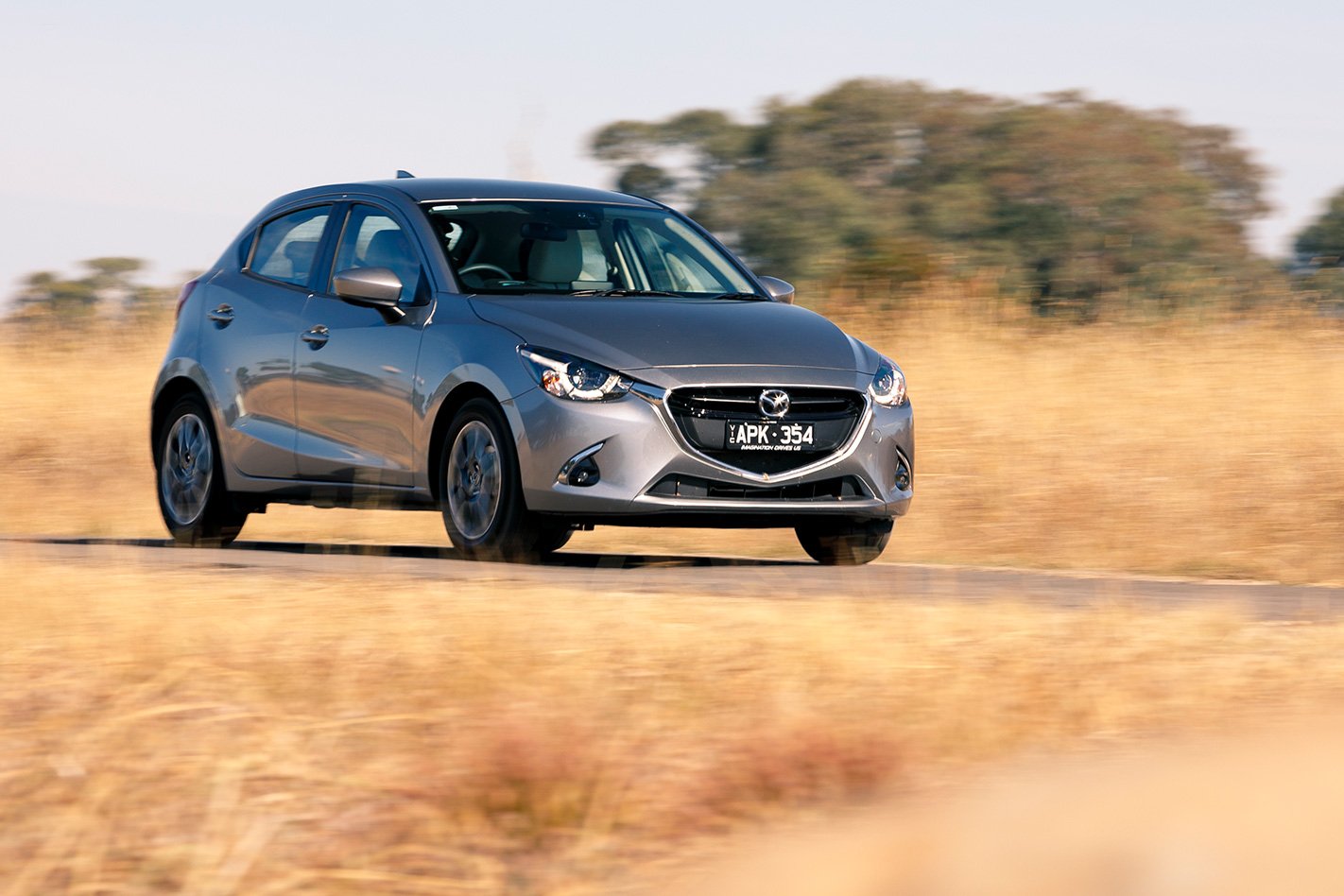
Should you feel compelled to give the shift lever a prod to rectify this, you’ll be delighted to discover it downshifts when you push it forwards (like the Citroen). There are no paddles, but you do get a pop-up head-up display, supportive seats and a great steering wheel. The driving position is good and ride quality isn’t bad given its modest wheelbase, but start covering some miles in the Mazda and it feels as if you’re rowing it along a bit. In many regards it feels an old-school light car that’s happiest jinking about town, squeezing into tight parking slots and revelling in its ability to shrug off neglect.
The Fabia’s virtually on par with the Mazda across 400m, pipping it by mere hundredths, although much of that is down to the Skoda’s gearbox, which is unable to hold revs at launch. The Czech car is otherwise at an advantage in this company by dint of the fact that it wears the most focused rubber (Bridgestone Potenza RE050As), but its tyres can’t cancel out the shortcomings of its damper tune.
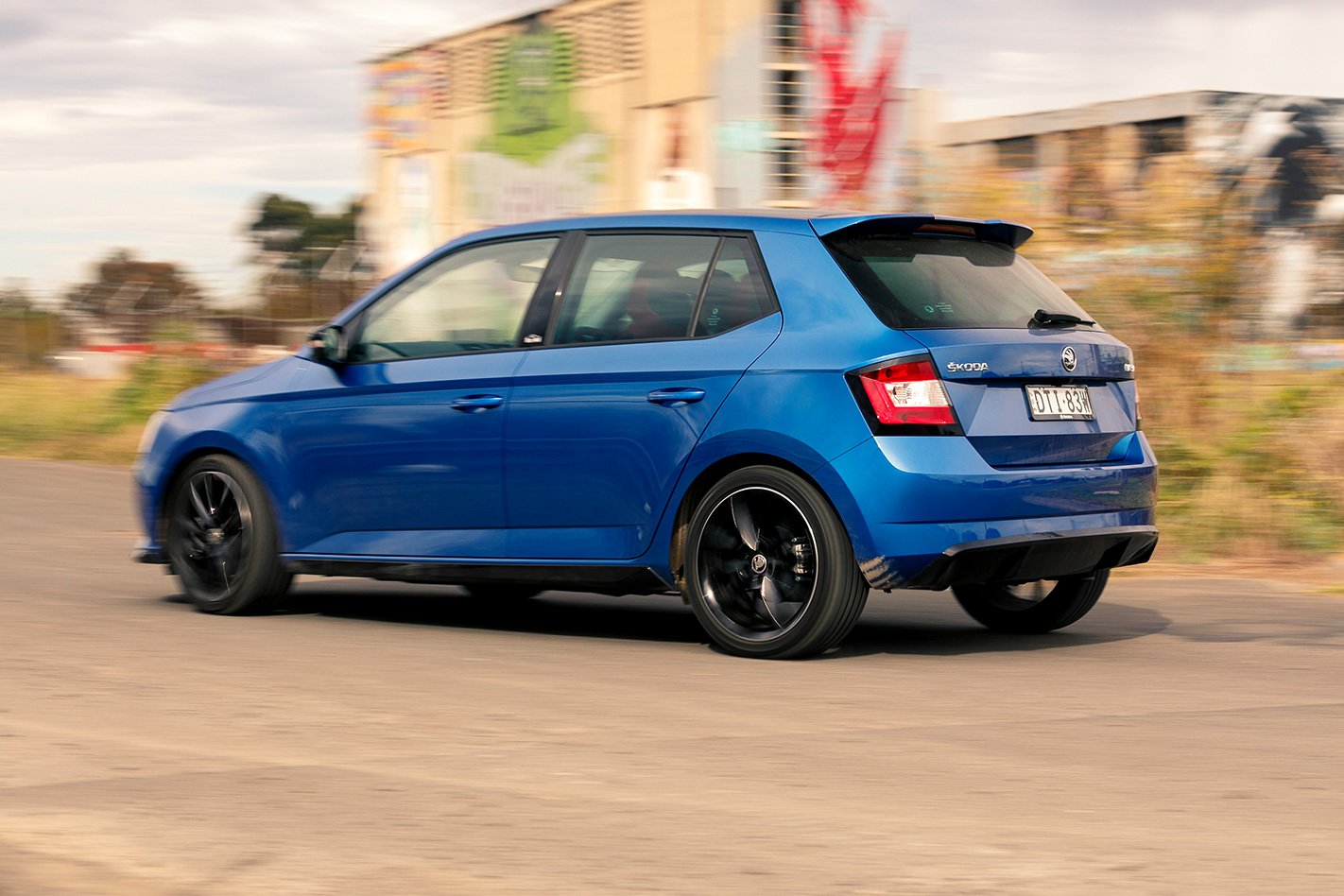
One or two up, the Fabia can feel flinty in its responses, as if it needs more sophisticated valving in its dampers. Put a couple of big lugs in the back seats and it irons out surface imperfections well. That compression damping issue rears its head when cornering the Skoda hard, as it transfers weight rapidly to its outside front tyre, often incurring a scratchy ESP intervention. That’s a shame as brake pedal feel is excellent and the engine seems vaguely indestructible, with great throttle response.
Wind noise is the worst of this group, especially around the mirrors, and it occasionally feels as if there’s a faint pressure oscillation in the cabin; a mild version of what you get if you open one window at speed. The secondary ride suffers from a pattering on anything but a smooth road, and we found that the backrest adjustment on this test car gradually migrated to full-on recline if you traversed bumps. Even in Sport, the transmission upshifts at little more than 5000rpm, blithely ignoring the last thousand revs available.
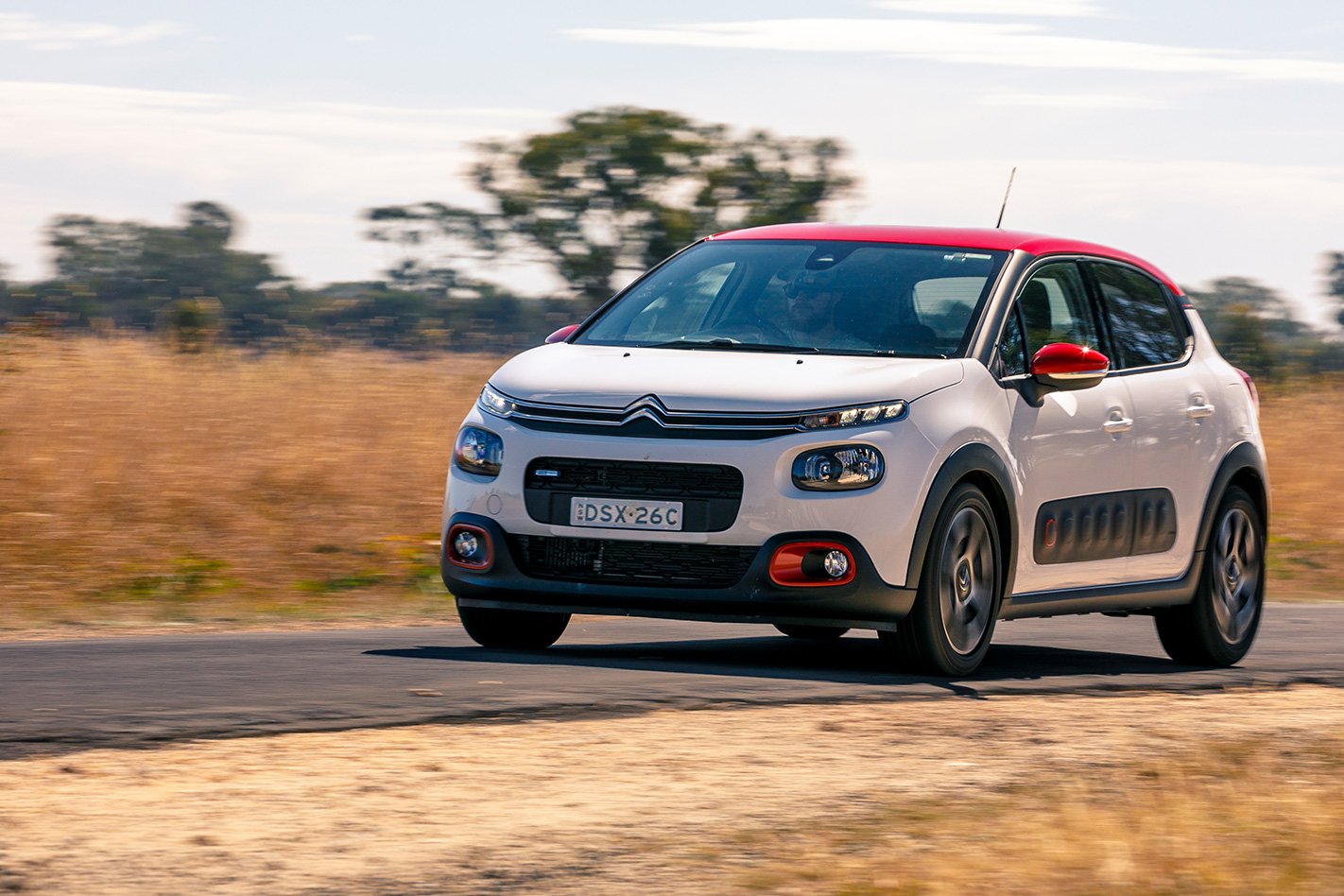
If the Fabia disappoints because its focus doesn’t live up to its motorsport sell, the Citroen C3 is quite the opposite. You expect this thing to be about as sporting as shooting fish in a barrel, partly because it has the best ride quality of the group. The cynical among you might well realise that the C3 rides on the PSA PF1 platform, which dates from the first-gen C3 of 2002, and that softening everything off and promoting its ride quality is merely a way of hiding the dynamic shortcomings of an outdated chassis.
And you’d be right. That said, in offering a key point of difference, and an important one, the Citroen certainly carves out a niche as a comfy, long-distance plodder. A lack of modern electronics like active cruise control and AEB takes the shine off the Shine’s interstate credentials a little, but the fabric seats are fantastic, the ride cosseting and, when you show it a corner, it’s a lot more composed than you’d expect. In other words, this ageing Citroen has a wholly acceptable ride/handling balance.
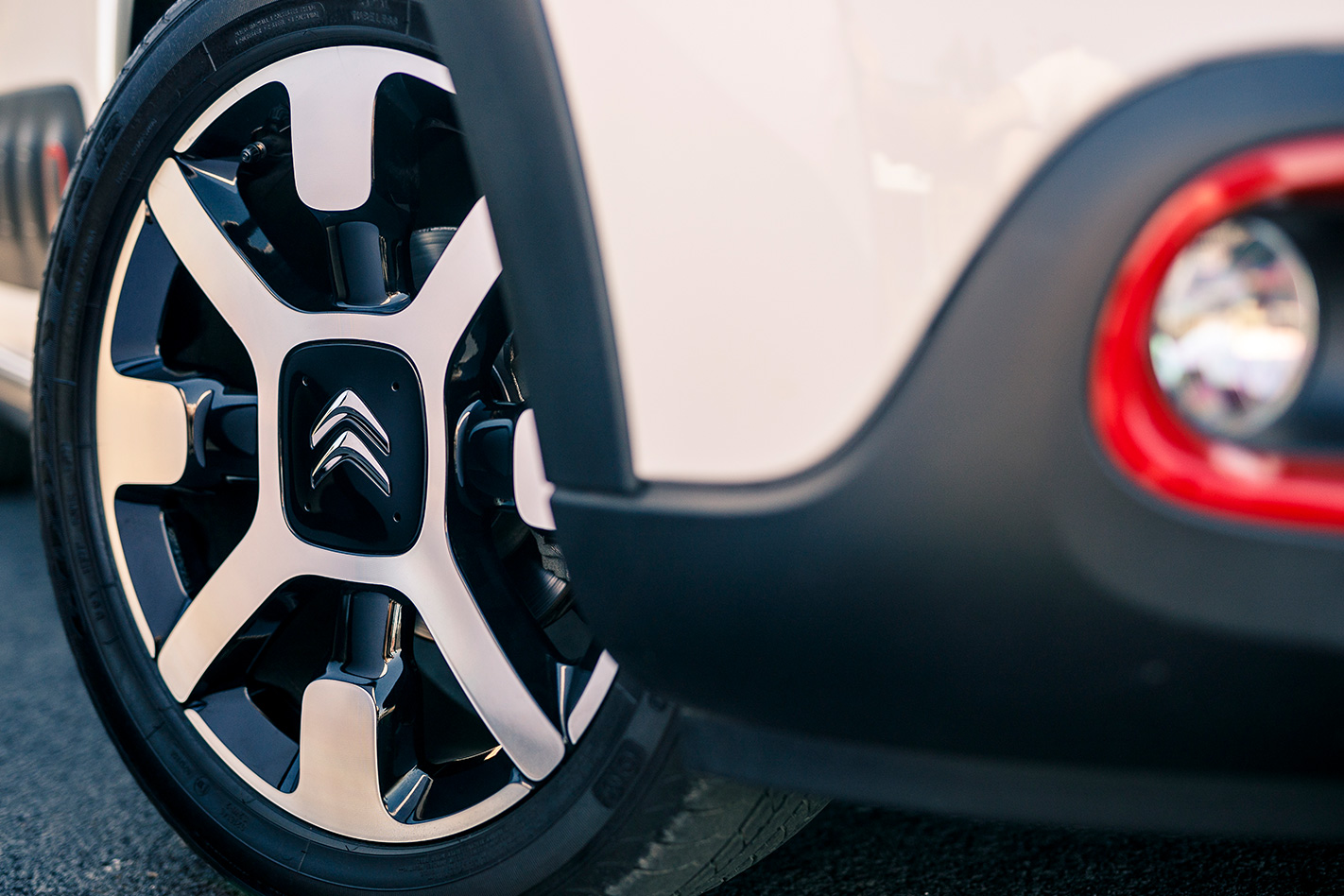
It’s not particularly quick and there are all manner of quirks, such as the neurotic idle-stop with its kill switch in the infotainment menu structure and propensity to snatch at the wheel when it shuts off, the glovebox that’s full of fusebox, the default transmission calibration’s ability to plug you into third gear at 800rpm, the shoddy ergonomics of stalks and cruise control lurking out of sight behind massive steering wheel spokes and the Sport button located in the guts of the fascia where you’d normally find USBs, fluff and lost gummy bears.
The development of smartphone mirroring must have been a bolt of salvation for French manufacturers too, who suddenly had a Plan B for those who found their infotainment systems impenetrable. You’ll overlook all of that for the C3’s charming demeanour and relaxed ride. It’s genuinely a delightful thing to schlep along in.
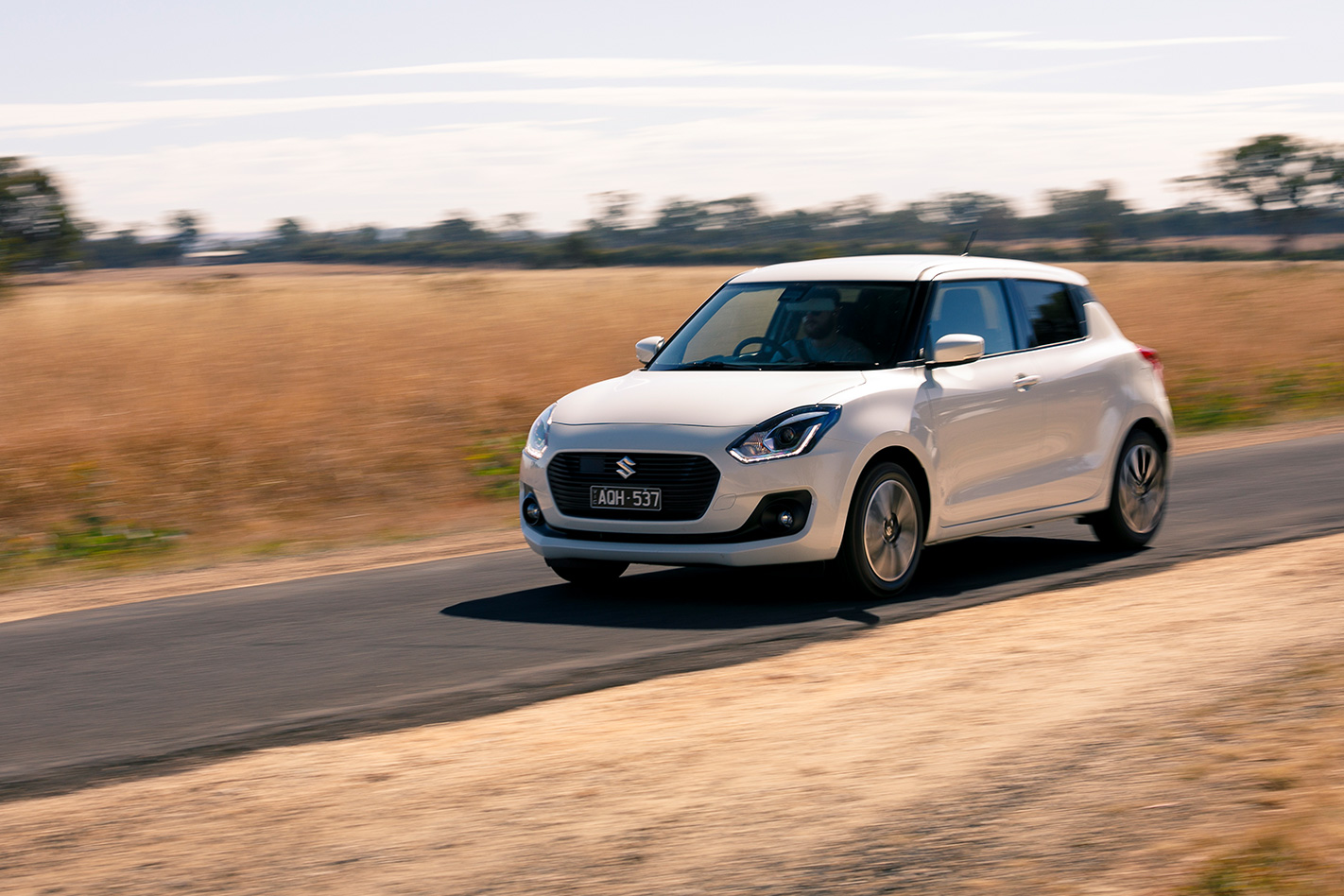
The Suzuki Swift GLX Turbo feels the quickest of this bunch, with an overtaking punch beyond the ken of any of its assembled rivals. It’s largely prescriptive insofar as it has no drive modes whatsoever, which quells any residual mode anxiety. The gearshifter drops all the way back into ‘M’ rather than ‘D’ which is a curiosity, but even in manual mode it will upshift and downshift for you, so think of it more as a Sport setting for the transmission. The engine’s response feels the most turbocharged of our contenders, offering a fat, boosty ladling on of torque from around 1800rpm that allows it to cover ground effortlessly, although a car that’s this good to drive deserves a better tyre than the Bridgestone Ecopia EP150.
If it wore Potenzas like the Fabia, the Swift would undoubtedly be the most exciting of this group. The steering feels alive with plenty to signal the limits of grip, although there is the occasional instance of rack rattle. The car feels foursquare and fighty, but the downside to this is a niggling ride quality and a tendency to crash through compressions and lateral ruts, sitting down hard at the back. In some regards the damping’s rough edges feel like the Skoda’s, but the Swift delivers a lot more in the way of fun, which buys it a lot of credit.
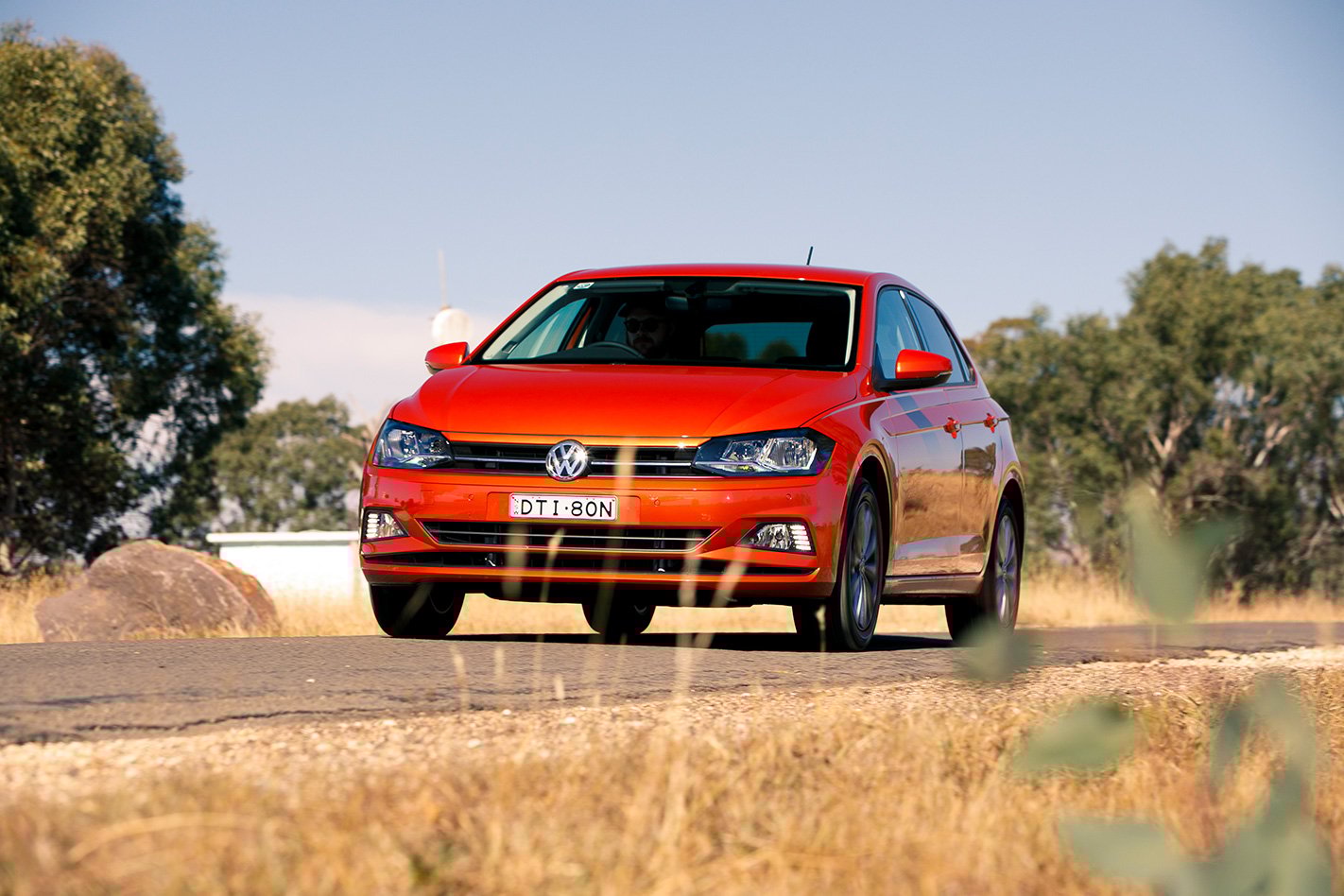
As good as the Swift is, the Polo makes it feel a bit crude. So polished is the Volkswagen’s ride quality, control weighting, damping, steering, throttle mapping and transmission calibration, in Sport mode at least, that it feels almost Golf-like in its unflappability. Corners that would have the Swift’s wheel twisting and writhing in your hand are imperiously swatted by the Polo. An unexpected bonus is that the three-pot engine sounds so thrummy and characterful at the top end too, bringing a welcome dose of attitude to the otherwise buffed to a sheen Volkswagen.
Faults? Not too many really. The standard transmission calibration in ‘D’ is just too lazy, upshifting too keenly and capable of creating heart-in-mouth moments when you pull into fast-moving traffic. Best stick to Sport. Then there’s the nagging question of the DSG’s durability compared with the reliability of a torque converter automatic.
So the finishing order? The Mazda 2 has to finish last. It’s cramped and slow and it feels as if much of the market has passed it by. It used to be a podium shoo-in, but it has retained a dated form factor and not kicked on adequately as newer and more capable rivals have successively relegated it down the pecking order.
The Fabia Monte Carlo puts in a solid showing, ultimately let down by a jittery ride, a value proposition that doesn’t quite gel and a series of calibration decisions that take the edge off what is a fundamentally capable car.
It feels about right to place the polarising Citroen C3 in midfield. It rides sweetly, looks like nothing else, is full of bold ideas and covers miles so effortlessly. The hard plastics, so-so fuel economy, packaging compromises and fundamentally ancient chassis curtail its chances of going any further here, but a five-year warranty could well take the edge off any residual reliability or value concerns. The Swift is another car with notable flaws that is so likeable that it does well.
The interior is unsophisticated, but it’s such a hoot to drive, you probably won’t care. It’s a perky-looking thing that has real substance to it, although we wonder how many potential GLX Turbo buyers will prefer to migrate to the Swift Sport. As an exercise in creating a genuinely lightweight, efficient supermini, it’s one that earns serious kudos.
Nevertheless, it shouldn’t come as any great surprise that the best handling, most polished, most spacious, quickest, most economical and best value car wins this test. Yes, the Polo can be accused of a certain conservatism, but for many that’s exactly the appeal.
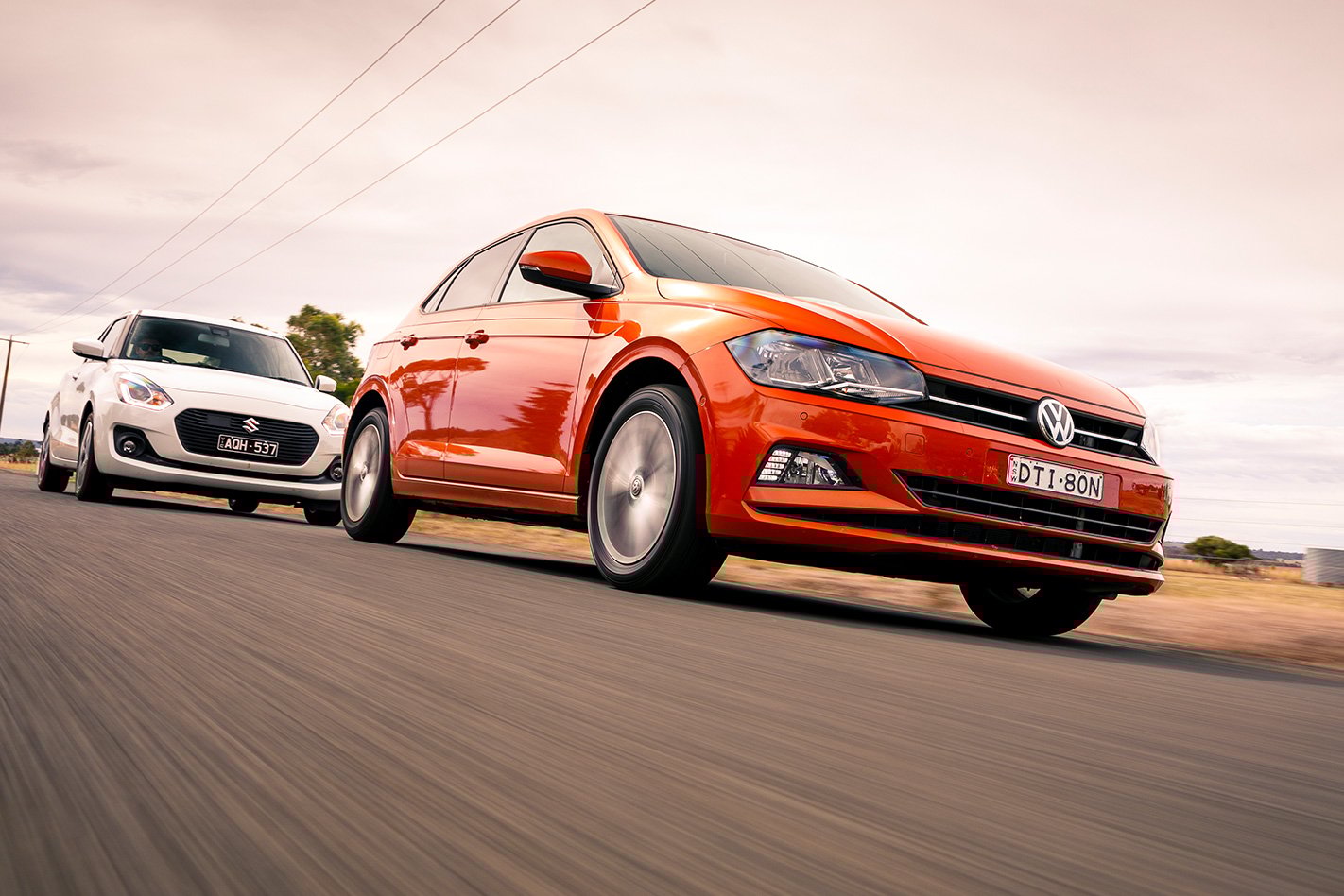
It’s a genuinely class act and puts clear air between itself and the next best. You’ll find joy in any of the ordinary cars here. But there’s only one car that truly transcends the ordinary and it’s Volkswagen’s jewel-like Polo Mk6.
IT’S A harsh reality of the free market that your product can be on top of the world one minute, deader than disco the next. In February 1983, legendary competitions manager Stuart Turner took the helm as director of Ford Motorsport Europe. Job one was to axe the next Escort rally car, the RS1700T.
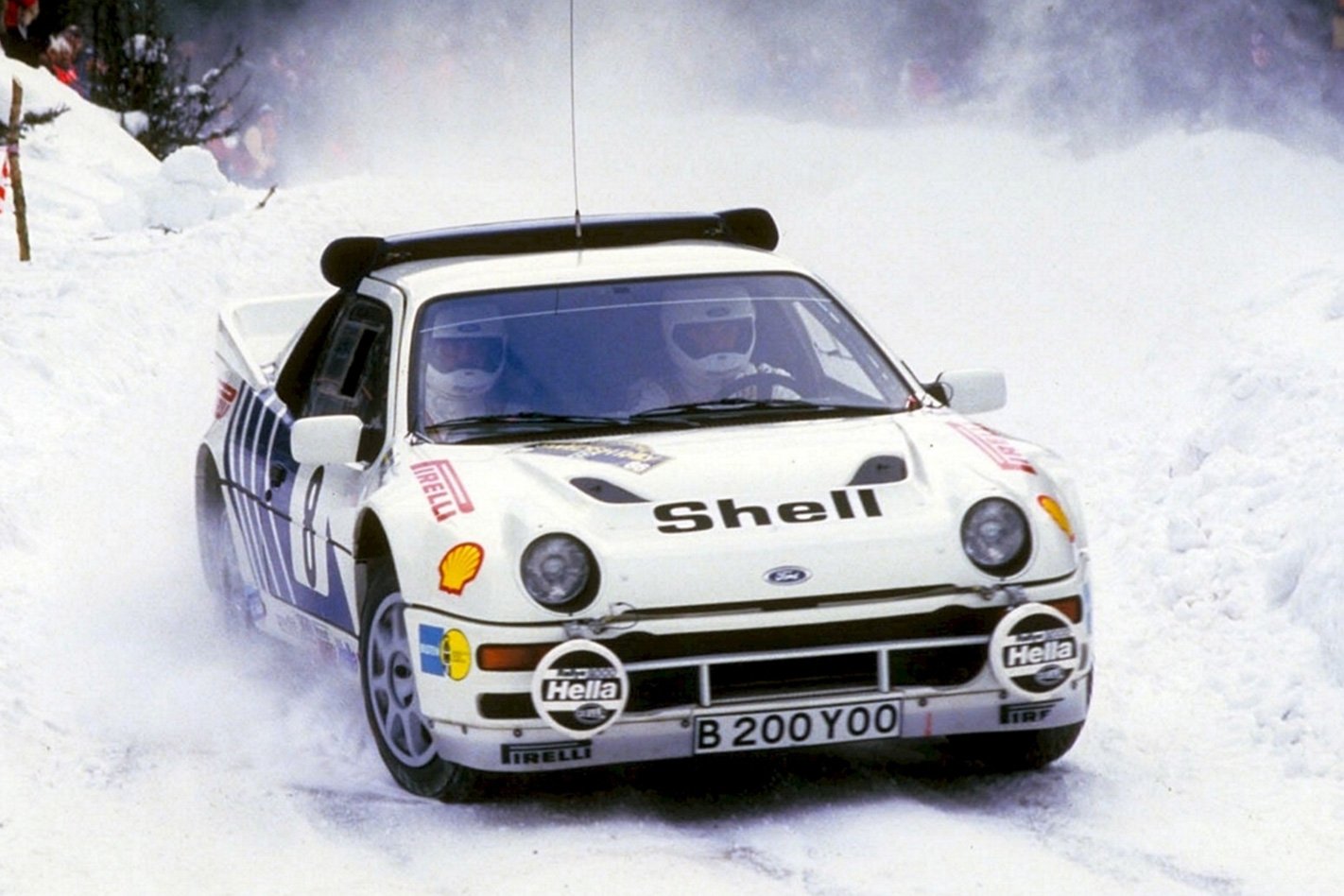
As recently as 1981, the Escort RS1800 had carried Ari Vatanen to the WRC driver’s title. But in late-1980 had come a new, front-drive Escort road car. The RS1700T was a rear-drive, turbocharged homologation special.
However, in 1982 the world was changing. Group B was introduced, Audi’s Quattro was finding its feet and the future would be all-wheel drive.
In July 1983 Turner commissioned designer Tony Southgate and engineer John Wheeler to create a Group B car. The project see-sawed between circuit-racing design, rally durability and Ford corporate concerns, but the first prototype of the ‘B200’ – for the homologation number – was, remarkably, shown to Ford brass in March 1984.
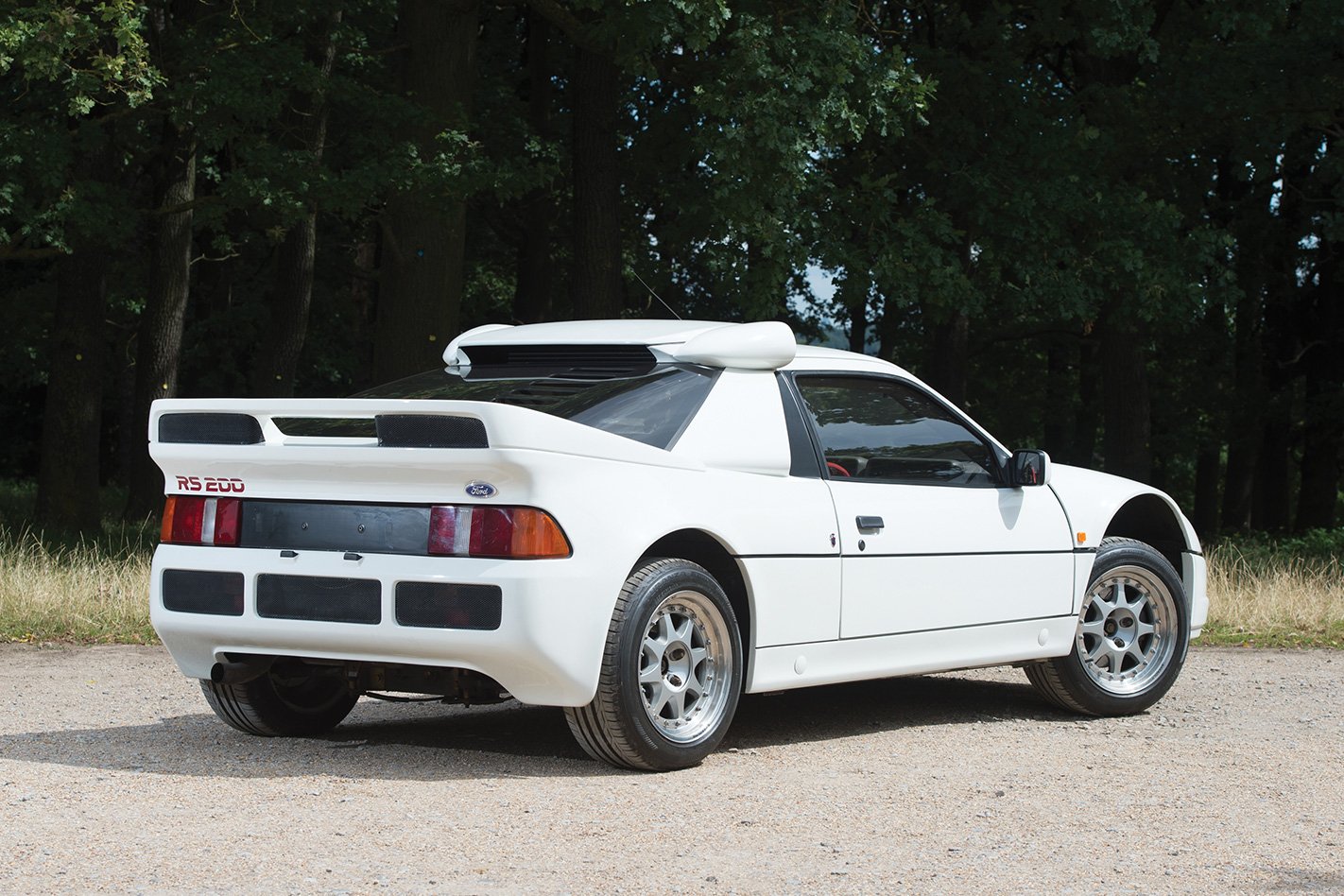
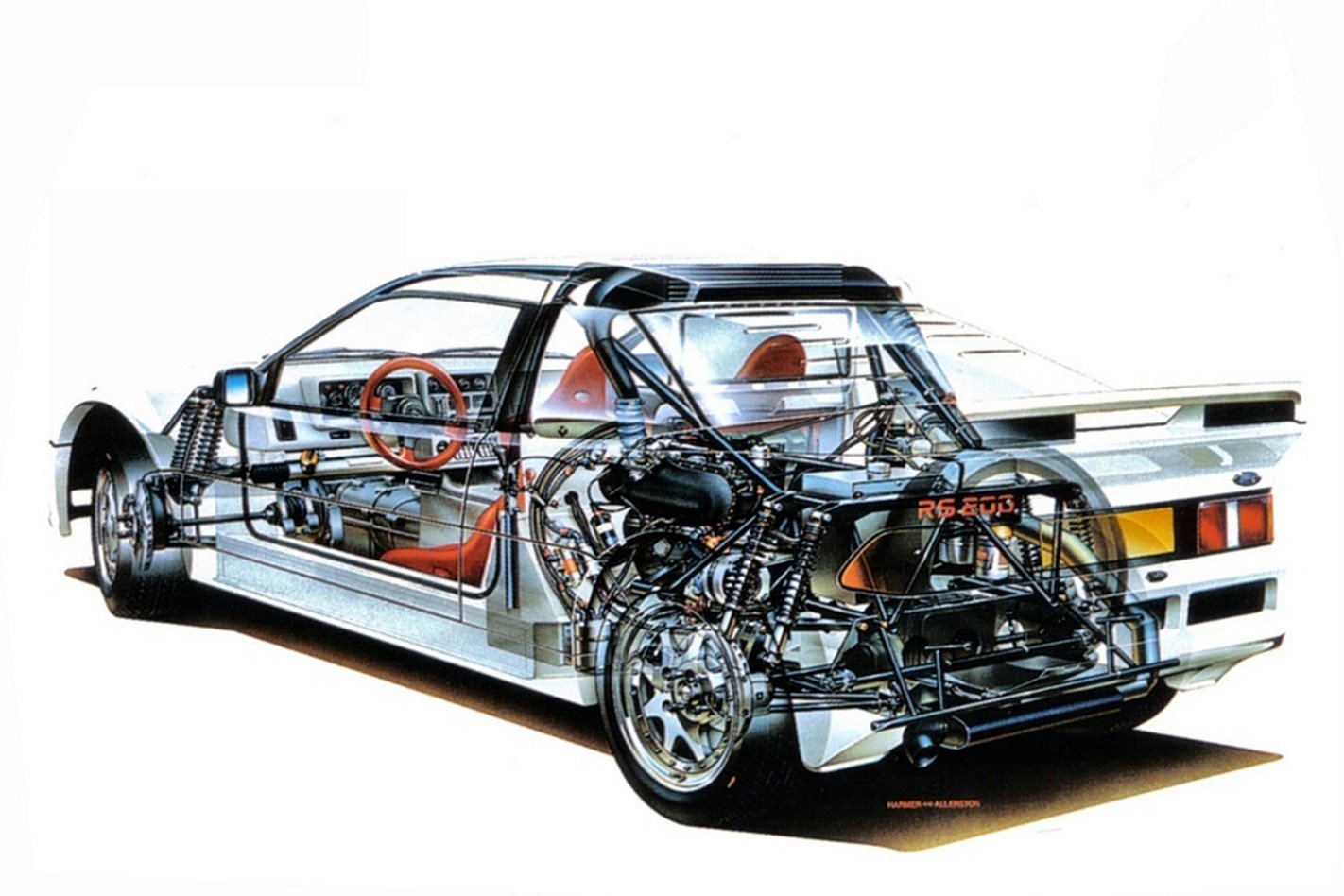
The 4m-long, 1.3m-tall two-seater was certainly a turnaround: the RS1700T’s 1.8-litre ‘BDT’ four-cylinder engine sat longitudinally behind the cockpit, a carbonfibre prop shaft taking drive forward to the front-mounted gearbox, and the front wheels. A second, parallel prop shaft took drive back to the rear wheels. Circuit-racing design showed in the aluminium monocoque construction. The Ghia-designed body had a roof-mounted intercooler.
The RS200 was first shown publicly in November 1984, but the prototype-to-production journey was a learning experience. Rally cars are worked on from below, making a flat floor impractical; steel suspension subframes, while crude, can be repaired by the roadside. Many modifications were made.
The 200 homologation cars were built (by Reliant) between October 1985 and January 1986, the final 20 being a 2.1-litre Evolution intended for 1987.
The RS200 was homologated on February 1, 1986 and debuted a fortnight later in Sweden, finishing third. Consider that the Peugeot 205 T16 and Lancia Delta S4 ahead of it were already in their wildest Evo guises. At the next round, Portugal, an RS200 crashed into spectators, killing three. And two rounds later, after the Lancia tragedy in Corsica, it was announced that Group B would be banned.
With only seven RS200s delivered, around 140 orders were cancelled. Ford Motorsport dismantled 46 cars for spare parts and, painfully slowly, sold off the remainder (asking £50K each) by the end of 1988, variously specced for road and rally. It’s generally agreed that a total of 148 RS200s were sold.
Honeycomb crunch
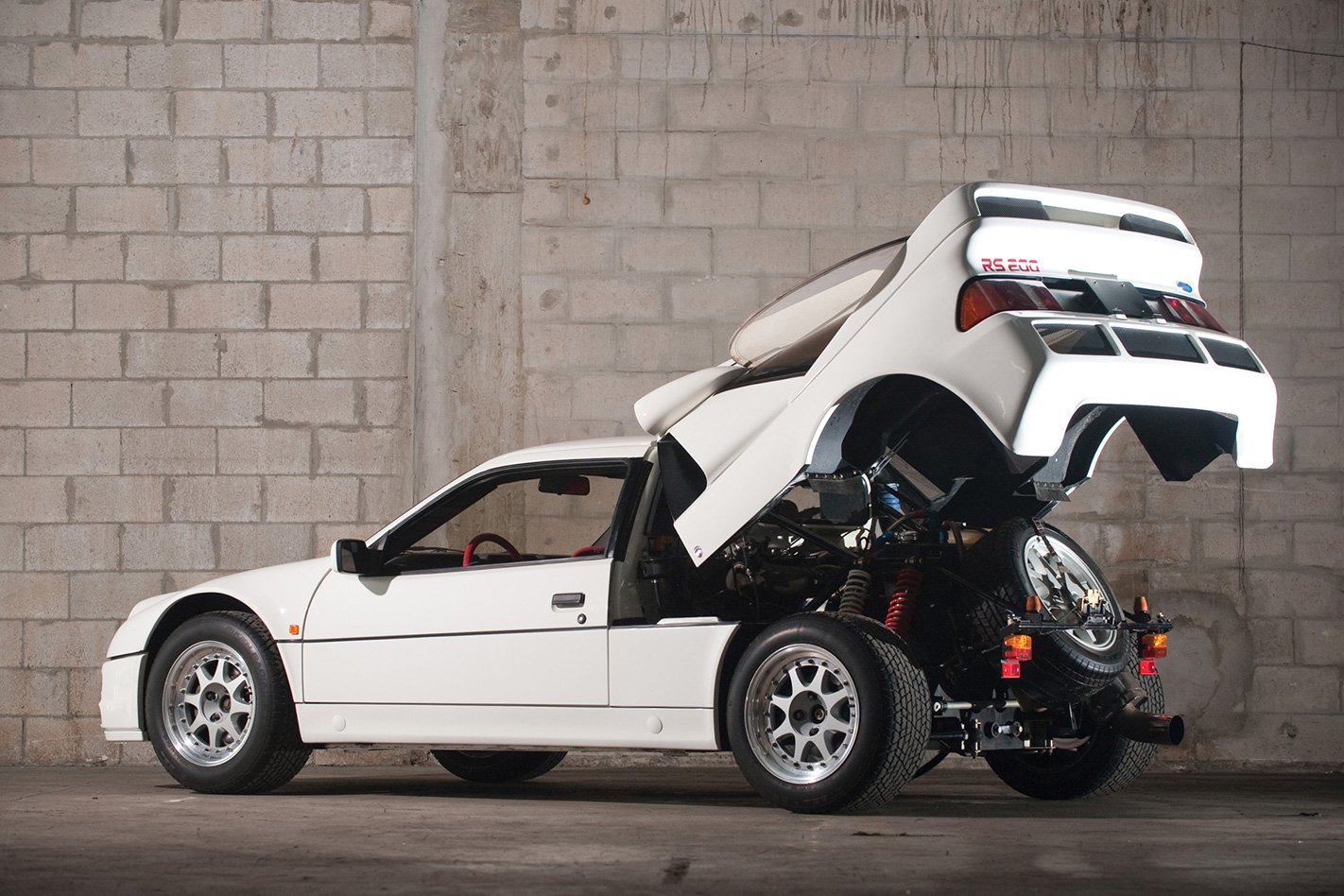
The RS200 used an aluminium honeycomb chassis with steel suspension subframes and a bonded carbon/Kevlar passenger cell. The mid-mounted engine and front-mounted gearbox helped 49/51 front/rear weight distribution. Ghia-designed carbon/Kevlar body used Sierra door skins, windscreen and taillights. Suspension comprised double wishbones with twin coil-over dampers at each corner. Steering was unassisted, as were the four-piston brakes. Weight was 1180kg.
Tunnel of shove
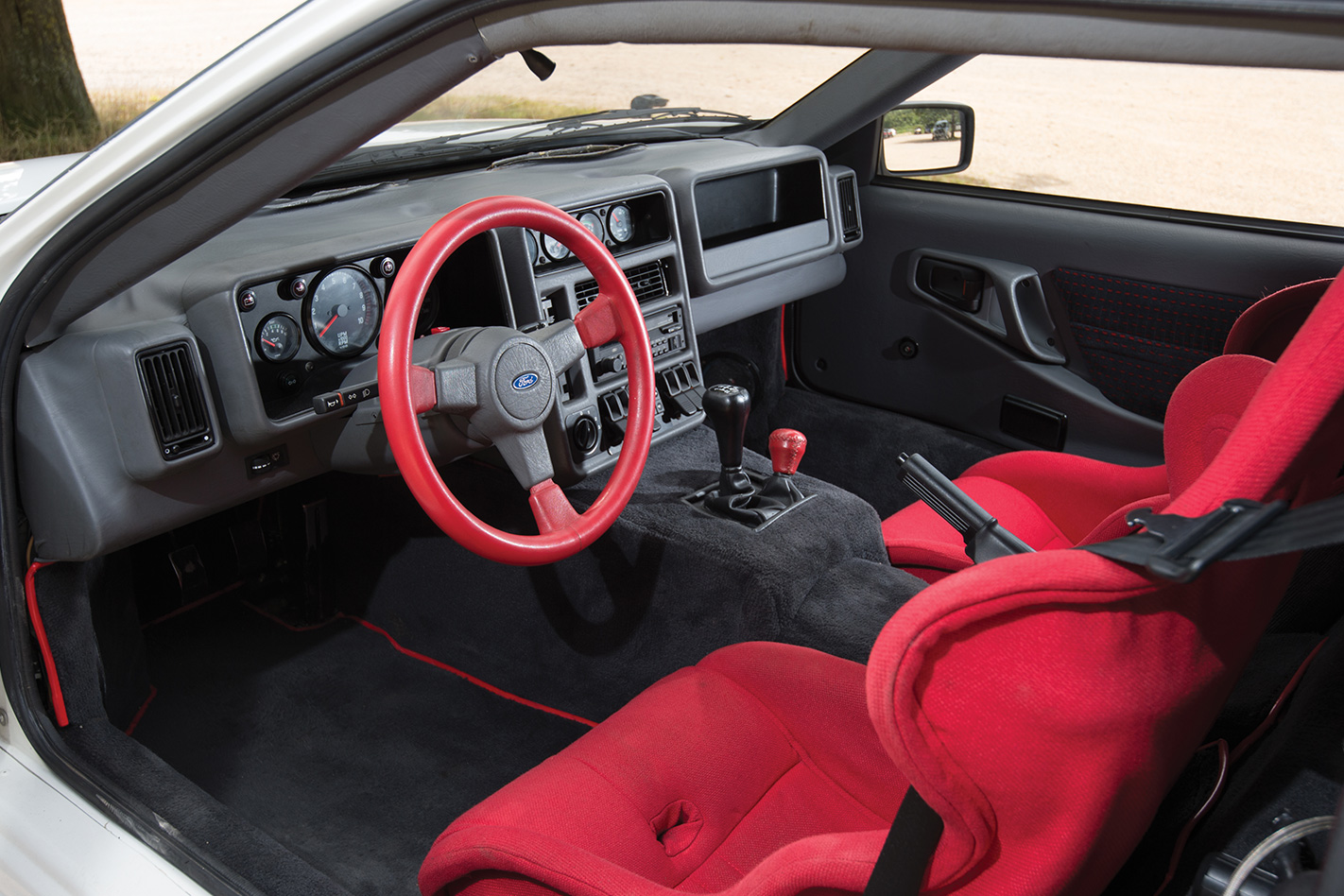
The RS200 was built in both left- and right-hand drive. The interior was dominated by the tall transmission tunnel that covered the gearbox; the red knob is the three-position torque split (37/63, 50/50 or 100 percent rear). Modular dash carried mainly Sierra parts-bin bits. Some of the final 43 cars went to Aston Martin and got leather Recaro seats and Wilton carpet. Road versions substituted the second, nose-mounted spare with a luggage bin.
An alloy in Cosworth
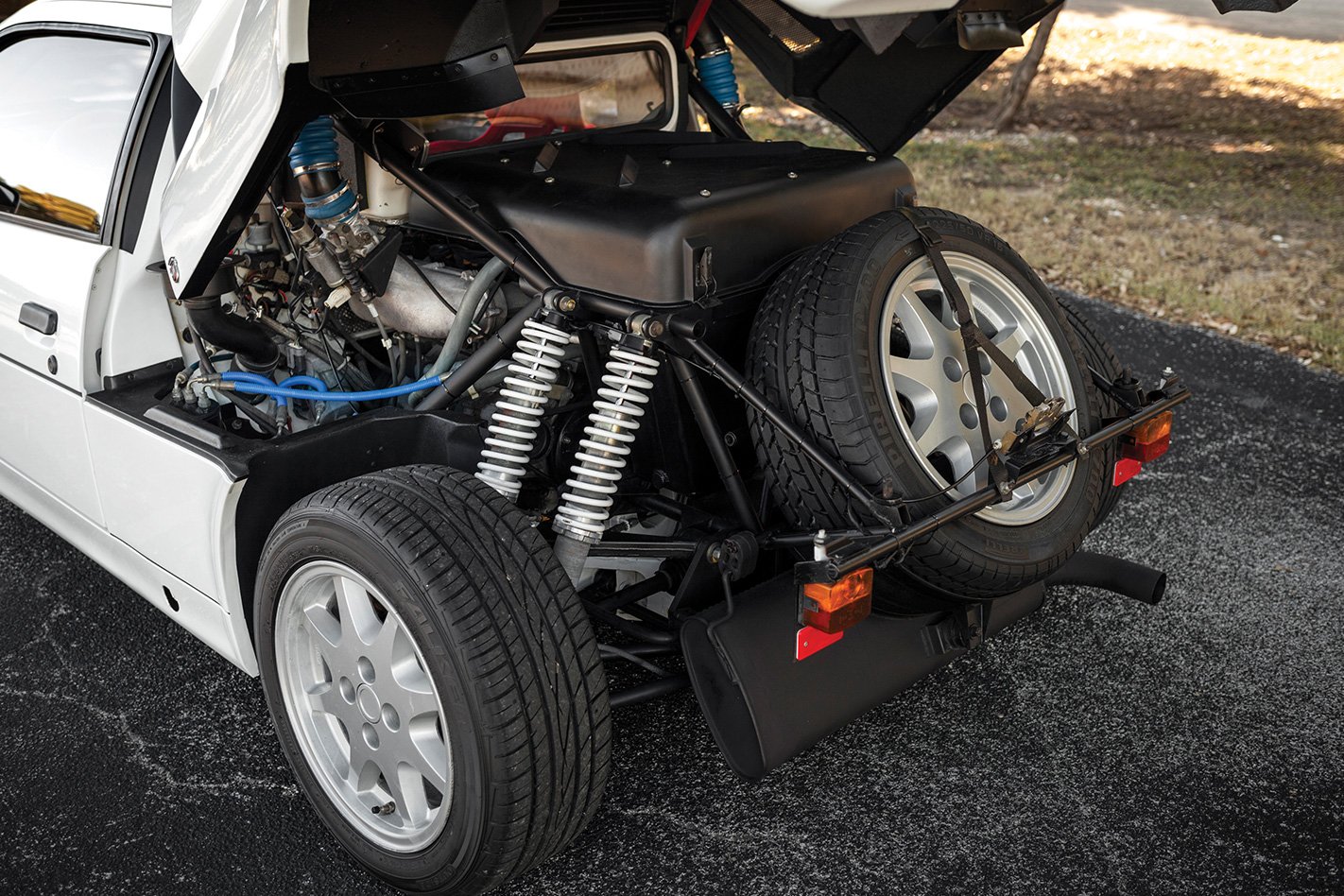
the 1803cc, dohc 16-valve, turbocharged four-cylinder ‘BDT’ engine was an all-alloy derivative of the Cosworth BDA. In road RS200s, it developed 177kW and 280Nm, at 0.8 bar boost; rally cars made 280kW at 1.2 bar. Evo 2.1-litre made 315kW, or reportedly up to 430kW, with 1.6 bar boost. Twin, parallel (carbon) prop shafts took power forward to five-speed ‘box and back again, via a Ferguson viscous centre diff. Road RS200s did 0-100km/h in 5.0 seconds.
The image of video gamers sitting friendless in their parents’ homes is one nurtured by, well, old people who are crap at e-games. For a new generation of aspiring racing drivers, however, e-games – notably the pioneering Gran Turismo series – are now as real a portal to a motor racing career as the traditional karting and Formula Ford paths.
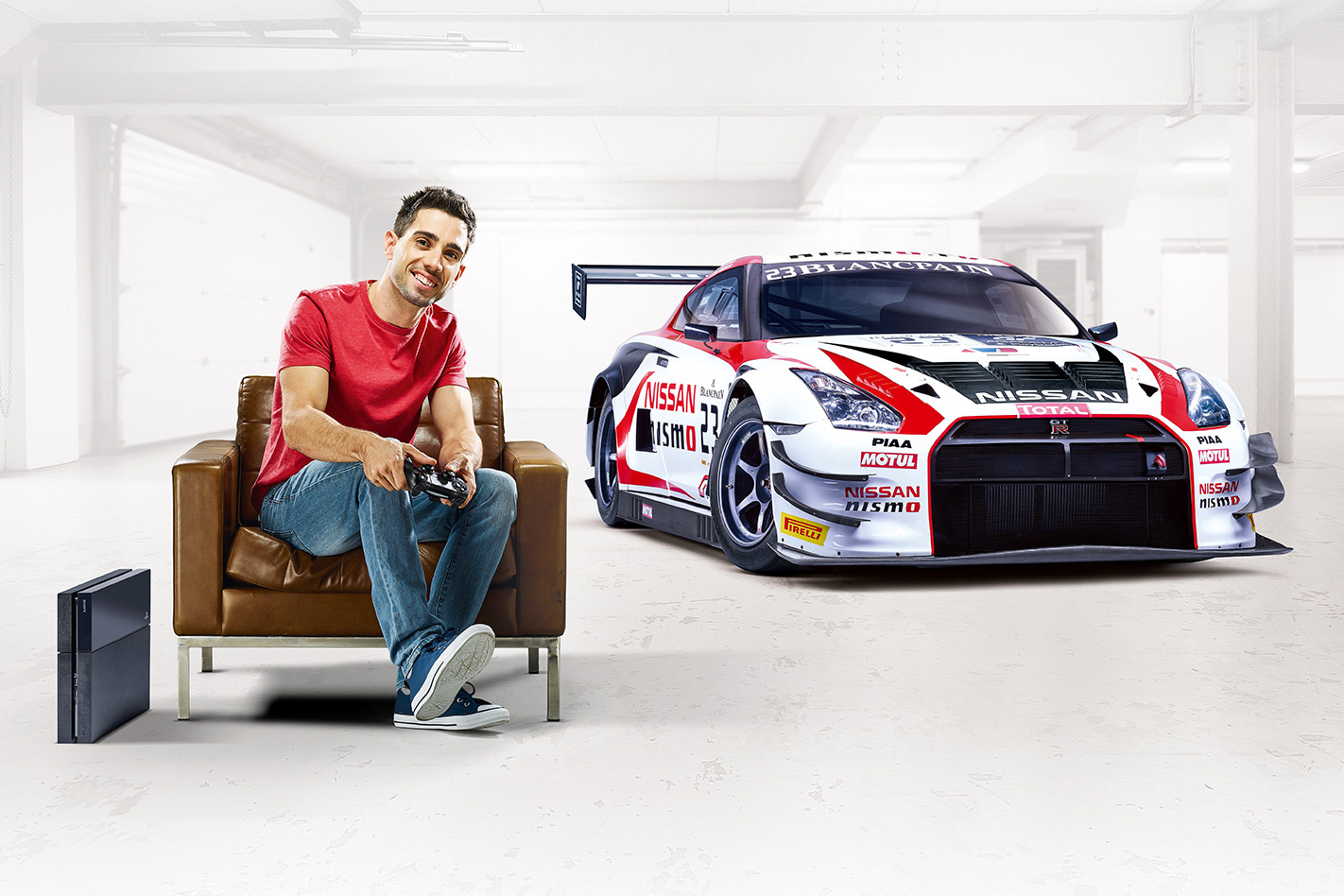
Just ask Matt Simmons, 28, who dedicated a year to training for the international NISMO GT Academy. The Academy’s first graduate in 2008, Spaniard Lucas Ordóñez, went on to twice score class podiums at Le Mans; other graduates include 2015 Bathurst 12-Hour winners Wolfgang Reip and Florian Strauss.
Rewind to Brisbane, circa 2006: car-mad teenager Matt Simmons gets his first car, a handed-down VK Commodore. But a year later he buys his dream car: an R33 Skyline GT-R.
“My dream was always to be a racing driver,” he says. “But I think it’s the golden rule, when you have a car that you care about so much: ‘Don’t take it to a race track.’”
Matt did some track days and a lot of rental karting with mates, while building an automotive career with the Europcar agency, then as a service advisor at a Hyundai dealership. It was around this time he heard about the NISMO GT Academy in Europe.
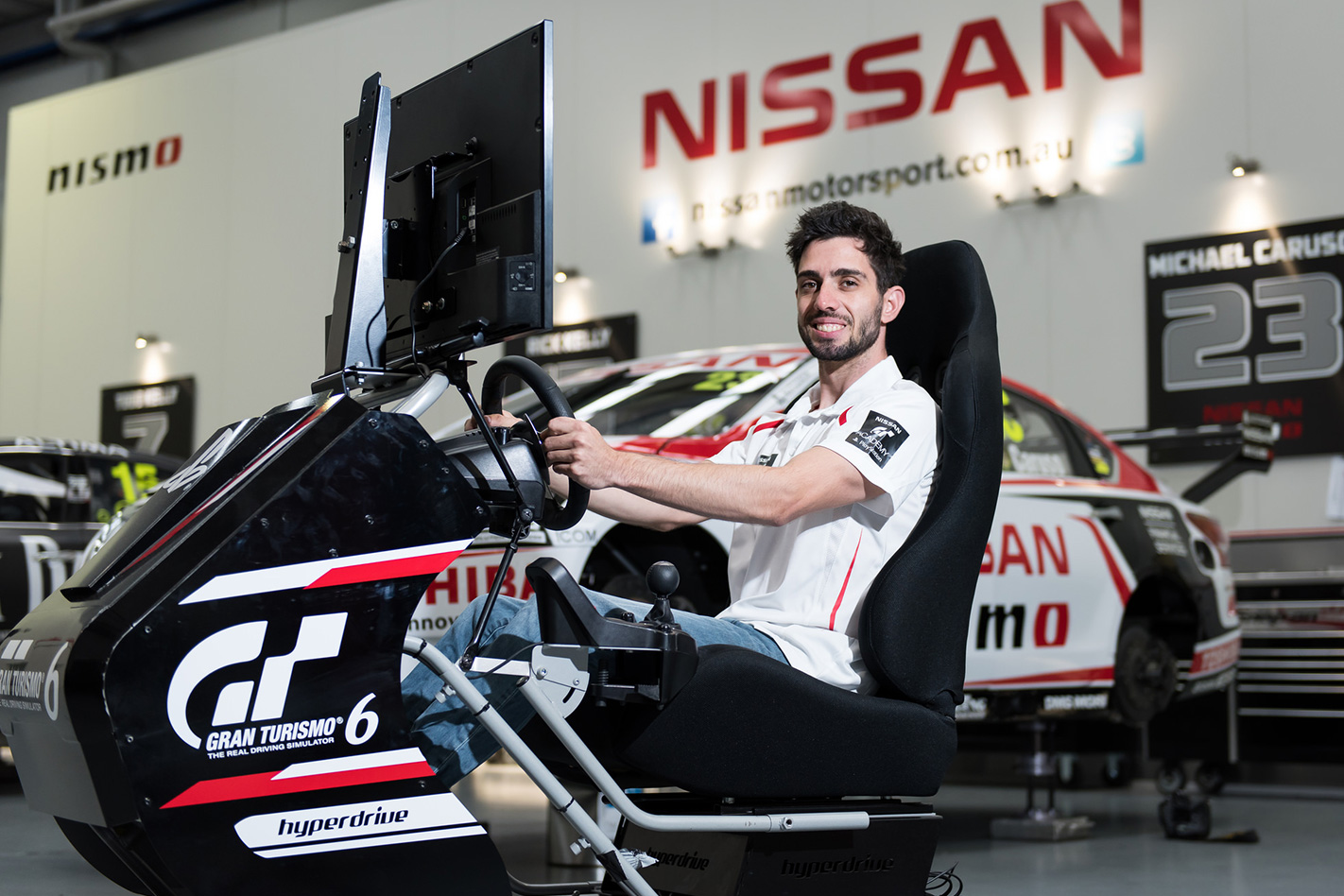
“I knew that if it ever came to Australia, it could be an opportunity for me. In 2014 it arrived and I made it to the regionals, held at Phillip Island. But I didn’t make the international cut … That was the best thing that ever happened to me. I had 12 months to change my life and focus on GT Academy.”
A year later, the popular media story was one of an Australia Post courier, with zero real-world racing experience, fronting up for the international contest. “I’d moved to a courier role because it allowed me more time to do simulated driving, track days with an instructor, focus on my fitness, work on being a racing driver. With the technology in simulators and online racing, I knew that I could reach the level where I could transition into real racing cars.”
Simmons and five other Australian finalists were sent, with mentor Rick Kelly, to the 2015 international final at Silverstone. After a week of fitness tests and challenge races, Simmons qualified on pole for the grand-final race and was leading when his 370Z went sick. He finished third.
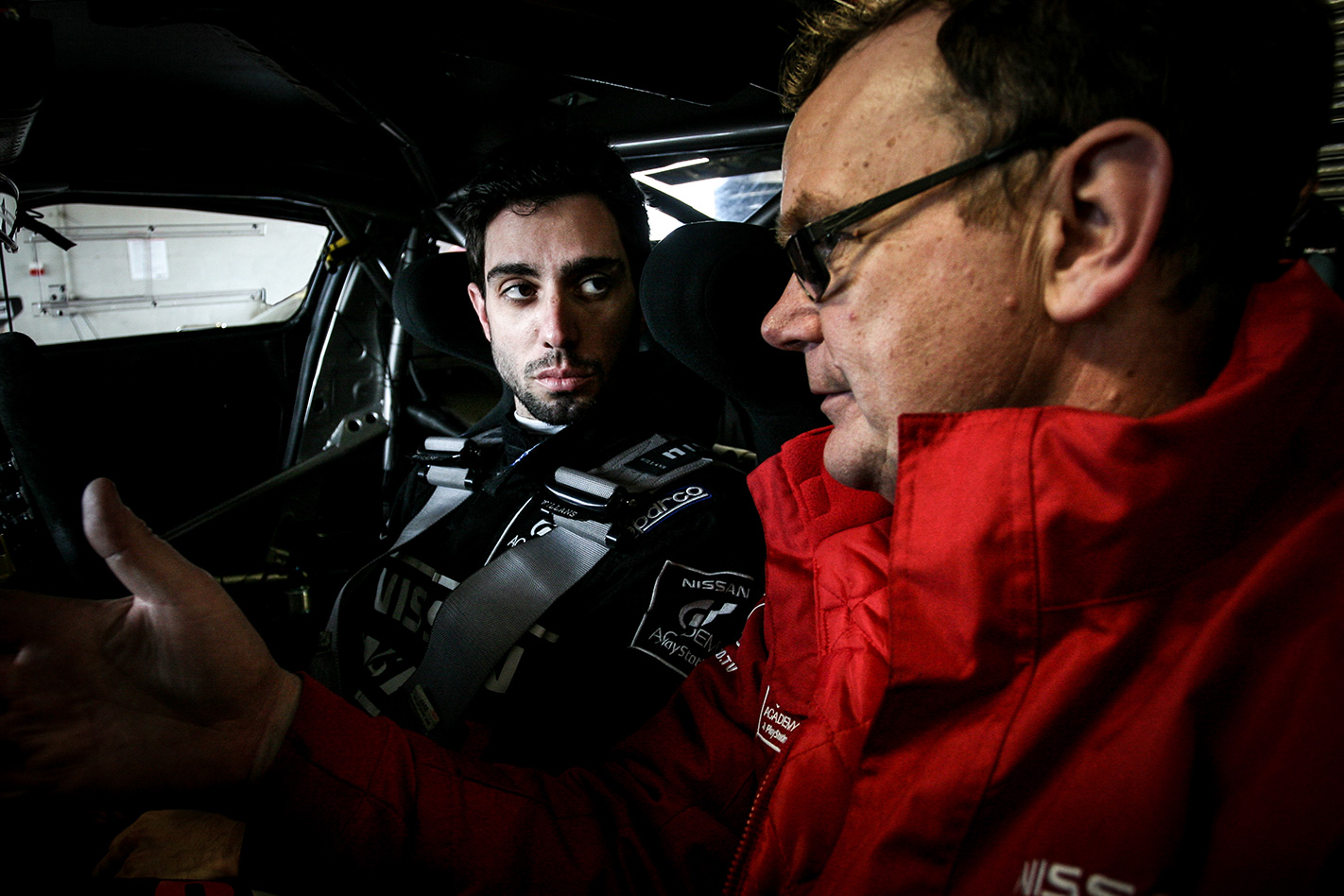
“At that point I thought my dream was over. But the final decision is made on how you performed over the whole week. It was an emotional roller coaster; life-changing.”
Simmons was thrust into a three-month driver development program in the UK, which took him through fitness, nutrition and instruction through successively faster cars and circuits. Simmons’ debut in the Nissan GT-R GT3 came at the 2016 Blancpain GT opener at Monza in April 2016.
Despite all the training, virtual and real, racing on legendary circuits was still “incredible”, he says. “I couldn’t wipe the smile off my face at every place we went to, but you quickly had to focus and apply yourself, because the level in Europe is unbelievable.”
Simmons feels his best race was the 2017 Paul Ricard 1000. “We finished 11th, but we were against top prototype drivers, DTM drivers, the best GT factory drivers … it was quite phenomenal to be that competitive.”
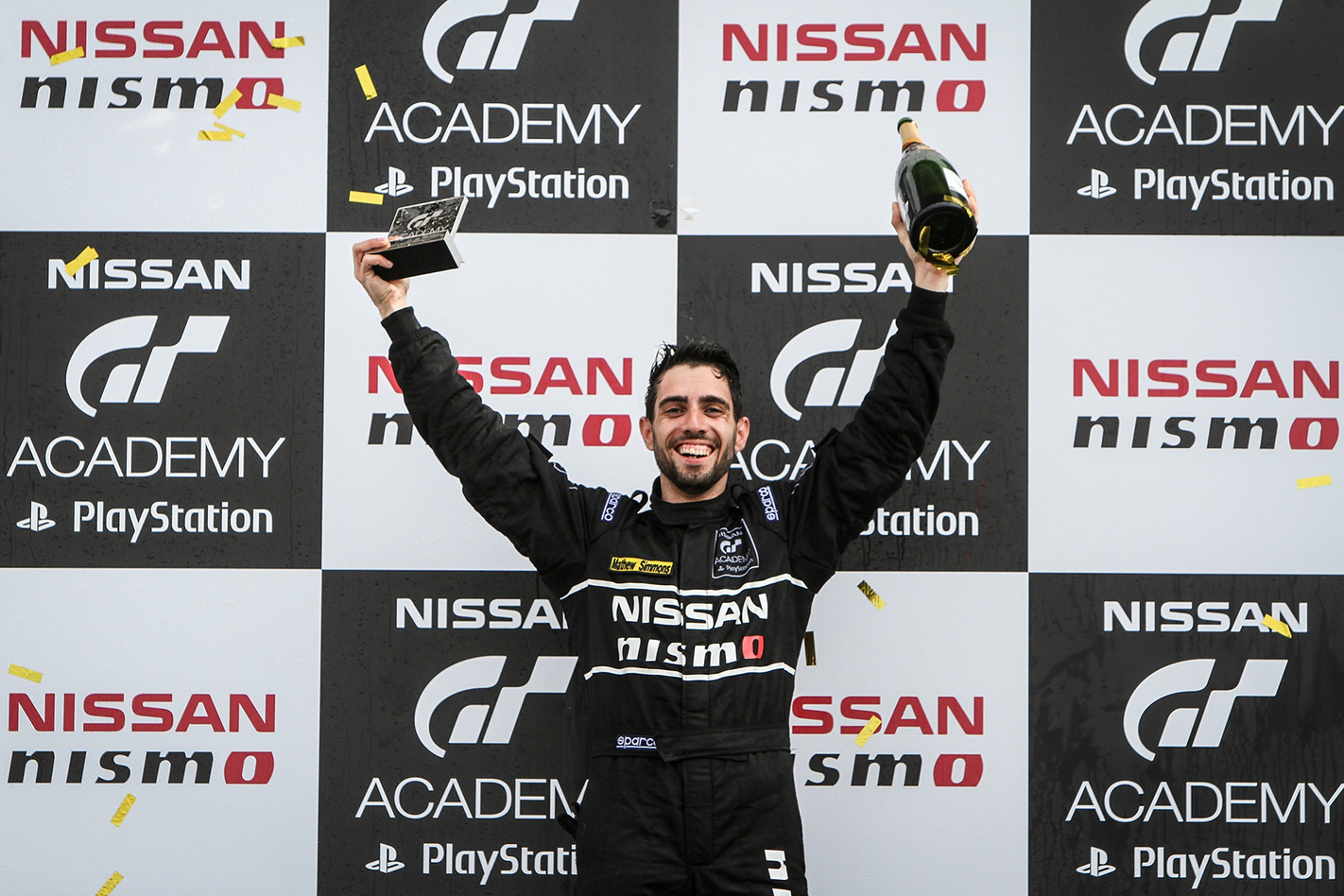
Currently, Simmons is back in the automotive industry, working in product training for Nissan in Melbourne. His world-standard driving, discipline and media savvy are just waiting for a local seat.
“Unfortunately there isn’t an opportunity [racing] with Nissan in Europe at this stage, but the goal is to get back onto the racetrack as soon as possible in Australia. That will be a new adventure, because I haven’t actually raced in Australia yet!”
