
BMW Australia has said no to a newly revealed diesel-engined version of the X3 M Performance. The German luxury brand is expected to soon start nosing the 265kW/500Nm turbocharged 3.0-litre petrol-engined X3 M40i – the first X3 fettled under the M Performance sub-brand – into its showrooms.
But overnight, BMW revealed that it will also produce a diesel-engined equivalent, the M40d, featuring a 240kW/680Nm in-line 3.0-litre turbodiesel six-cylinder. That stump-pulling torque figure – peak Newton metres arrive from 1750rpm helped by multistage turbocharging – hints at twin-turbo V8-paling performance, and at 4.9 seconds the M-badged diesel version of the X3 will be only 0.1sec slower from 0-100km/h than the petrol model.
The big benefit, though, is fuel use: an official average of 8.9L/100km for the Australian-delivery, petrol powered version of the X3, versus 6.5L/100km for the diesel on the slightly different, and sometimes lower European fuel use cycle.
BMW has also announced an xDrive30d variant of the X4 coupe-styled SUV, featuring a 195kW/620Nm version of the 3.0-litre in-line six-cylinder diesel powerplant. It will also lift its SUV-styled skirts when needed, completing the 0-100km/h run in 5.8 seconds – the same number as the X3 xLine30d pulls.
A BMW Australia spokesman said the luxury car brand was still weighing up which versions of the new G02-generation X4 would launch here, although the line-up would likely follow that of the X3, which includes the 2.0-litre four-cylinder variants – the 135kW/290Nm 2.0-litre turbo petrol sDrive20i, the 185kW/350Nm xDrive 30i, and 140kW/400Nm turbo diesel xDrive20d – and a 195kW/620Nm version using the same engine as being added to the X4 range. The X4 is due for launch here around the end of Q3, 2018.
TO SOME, it’ll be the logical conclusion to years of showroom stagnation. To others, it will be a sad farewell to one of America’s longest-lived – not to mention iconic – automotive brands. That is, it will be if rumours of Chrysler’s imminent demise turn out to be true.

Sergio Marchionne, CEO of Fiat Chrysler Automobiles, will reveal FCA’s next five-year plan on June 1 (European time) at the Balocco test facility near FCA Italy’s headquarters in Turin. Besides expected announcements of a Giulia Coupe and a three-row counterpart to the Stelvio for Alfa Romeo, a new product offensive for Jeep and Maserati, and relocating Fiat’s production base outside of Italy, Marchionne may also put the Chrysler brand in mothballs.
According to industry outlet Automotive News, an announcement of Chrysler’s shutdown could be made at the June 1 briefing. As supporting evidence, the report cites the conspicuous absence of the Chrysler name when Marchionne was quizzed about the automaker’s future plans for passenger cars in North America. While Marchionne voiced his support for Dodge, Chrysler – which unlike Dodge only makes passenger cars – didn’t warrant a mention at all.
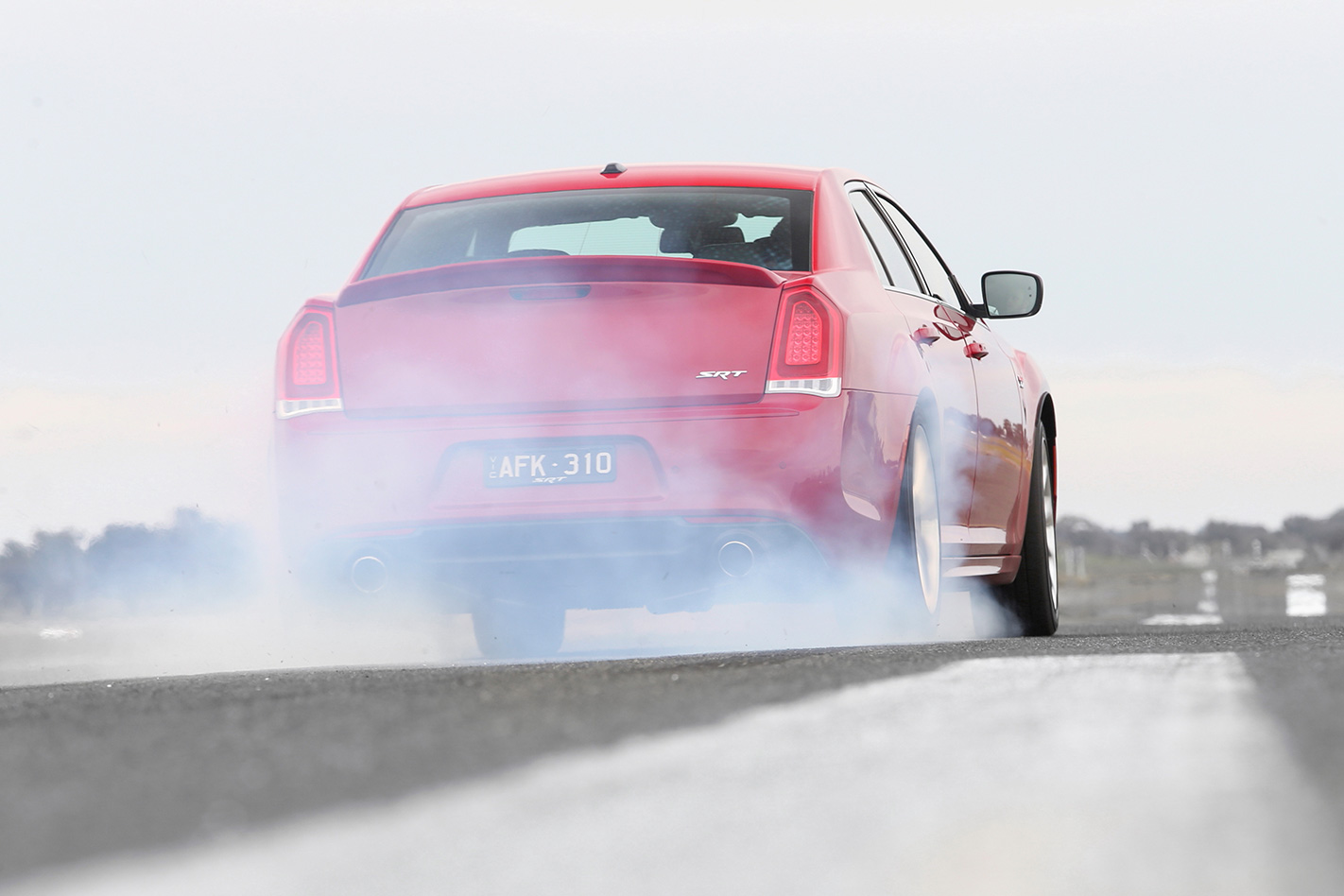
If Chrysler isn’t a key part of FCA’s future passenger car plans, odds are it isn’t part of its future plans at all.
And when you look at the state of Chrysler’s showroom, you’d be forgiven for thinking that FCA has been wilfully neglecting the brand. Since cutting the Chrysler 200 small/medium sedan, the company’s North American line-up has consisted solely of the 300 large sedan and the Pacifica people mover. In Australia, the 300 is the sole Chrysler representative in FCA dealerships.
What’s more, the 300 is now seven years old and a replacement has yet to surface. That alone adds weight to the Chrysler shutdown rumour, for if the brand is indeed on the cusp of retirement then why bother engineering an all-new large four-door sedan – especially when corporate cousin Dodge already offers one in the form of the Charger?
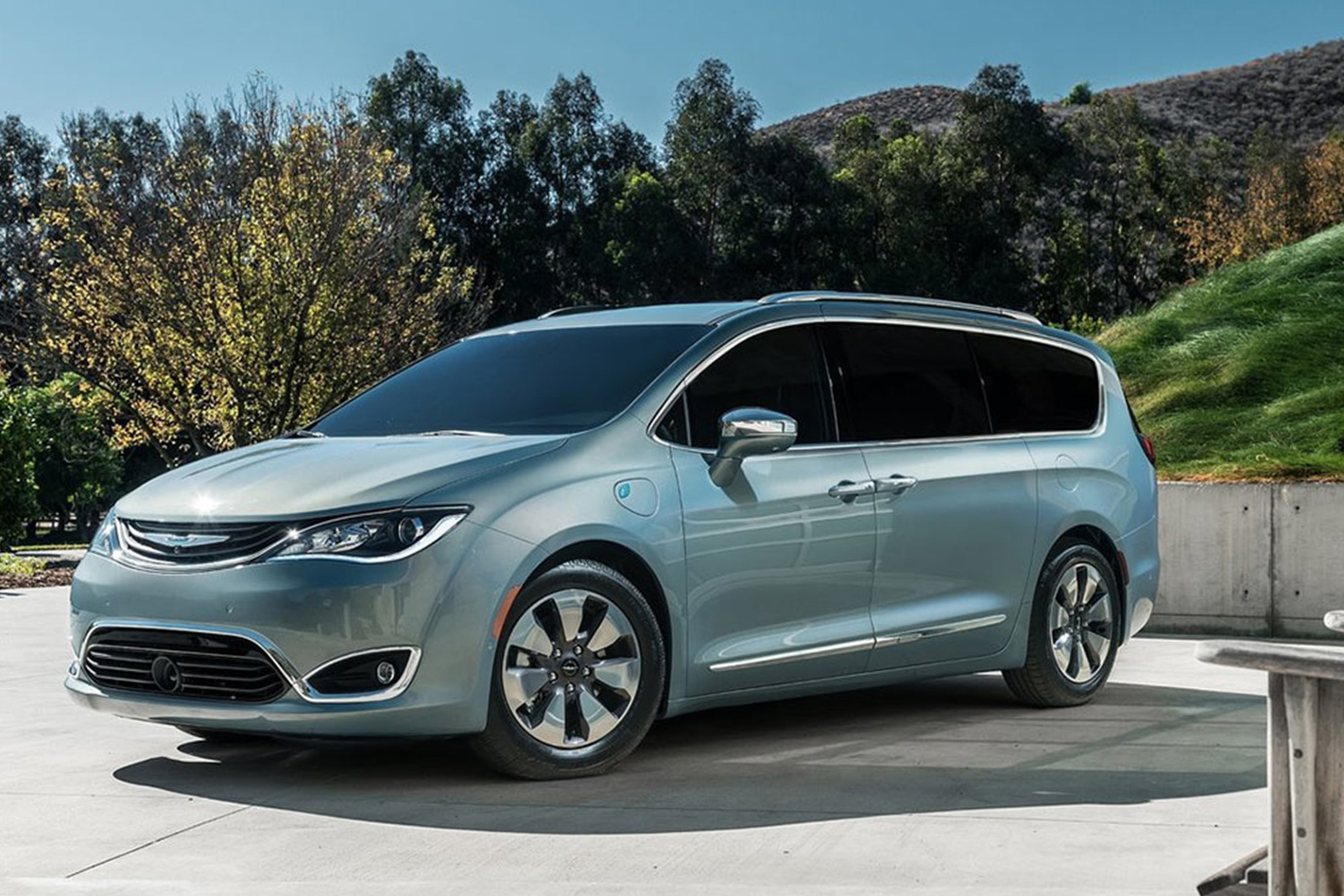
It’s a sharp contrast to what was promised in 2014, when Marchionne pledged to bulk out Chrysler’s line-up to eight vehicles by 2018. Clearly, the plan changed somewhere along the way.
We should know precisely what that plan is this weekend.
Big-name exotics hog the limelight at any classic sports car auction. It was certainly the case at the recent Gosford Car Museum sell-off held in Sydney by Pickles Auctions – where a 1965 Ferrari 330GT sold for $420K and a 1977 Holden Torana A9X was flogged for $200K.
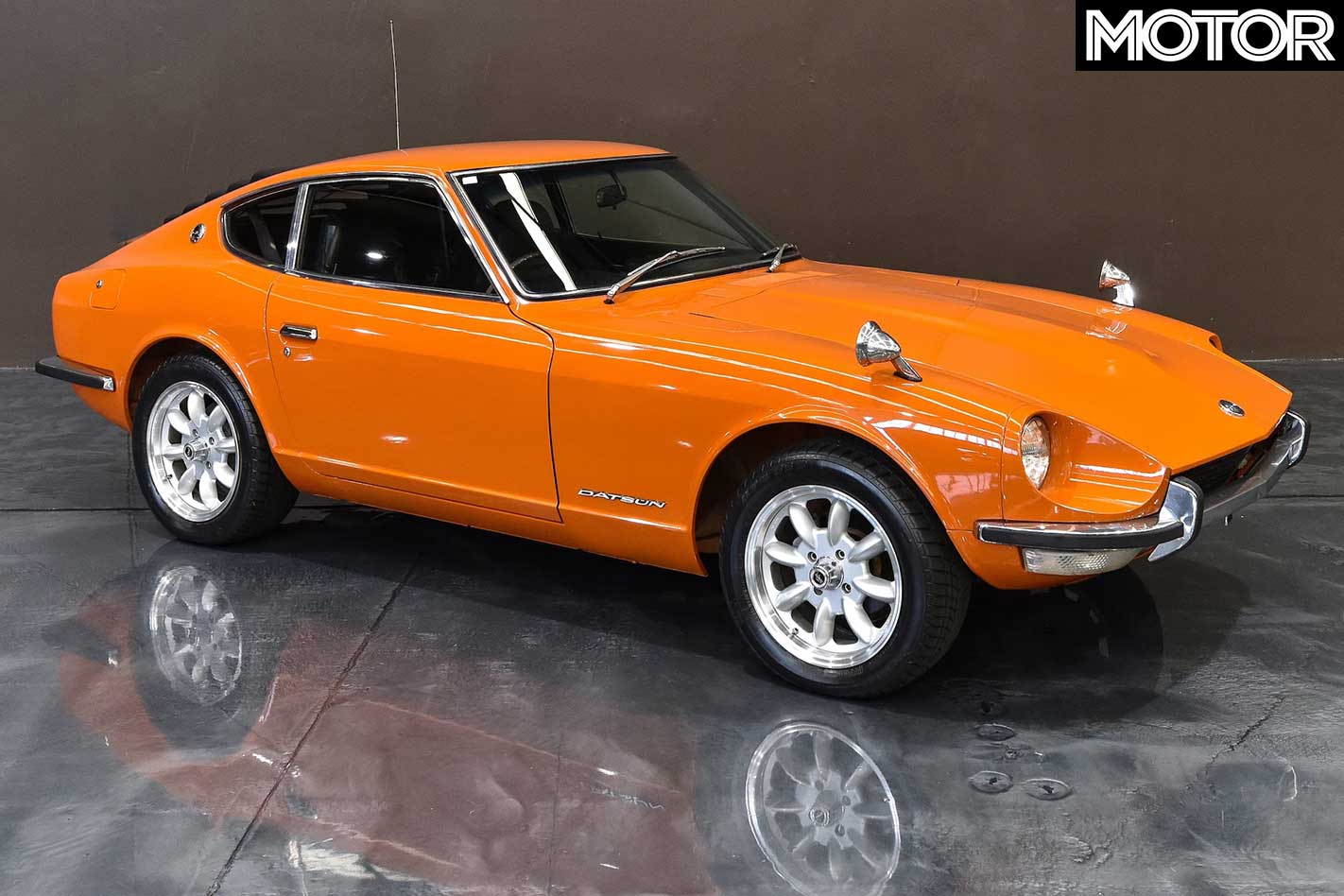
European and – in this country – Australian sports cars may tend to dominate proceedings, but at this particular auction one of the prettiest, and as it were among the most attainable, offerings was actually a 1971 Datsun 240Z in resplendent orange with 117,000km showing.
But what if $50K-plus is just too high to jump aboard the appreciating-classic train?
Fast forward a decade from that 1971 Zed to the 1983 Toyota AE86, and keen observers of the hachi-roku would have already noted that examples that less than a decade ago asked $15K are now fetching above $30K.
As the heroic final edition of the rear-wheel drive small Toyotas, the duo of AE86s – Trueno with pop-up headlights, Levin with fixed headlights – available in liftback or coupe, scored a legendary 97kW 4A-GE 1.6-litre fuel injected four-cylinder and five-speed manual.
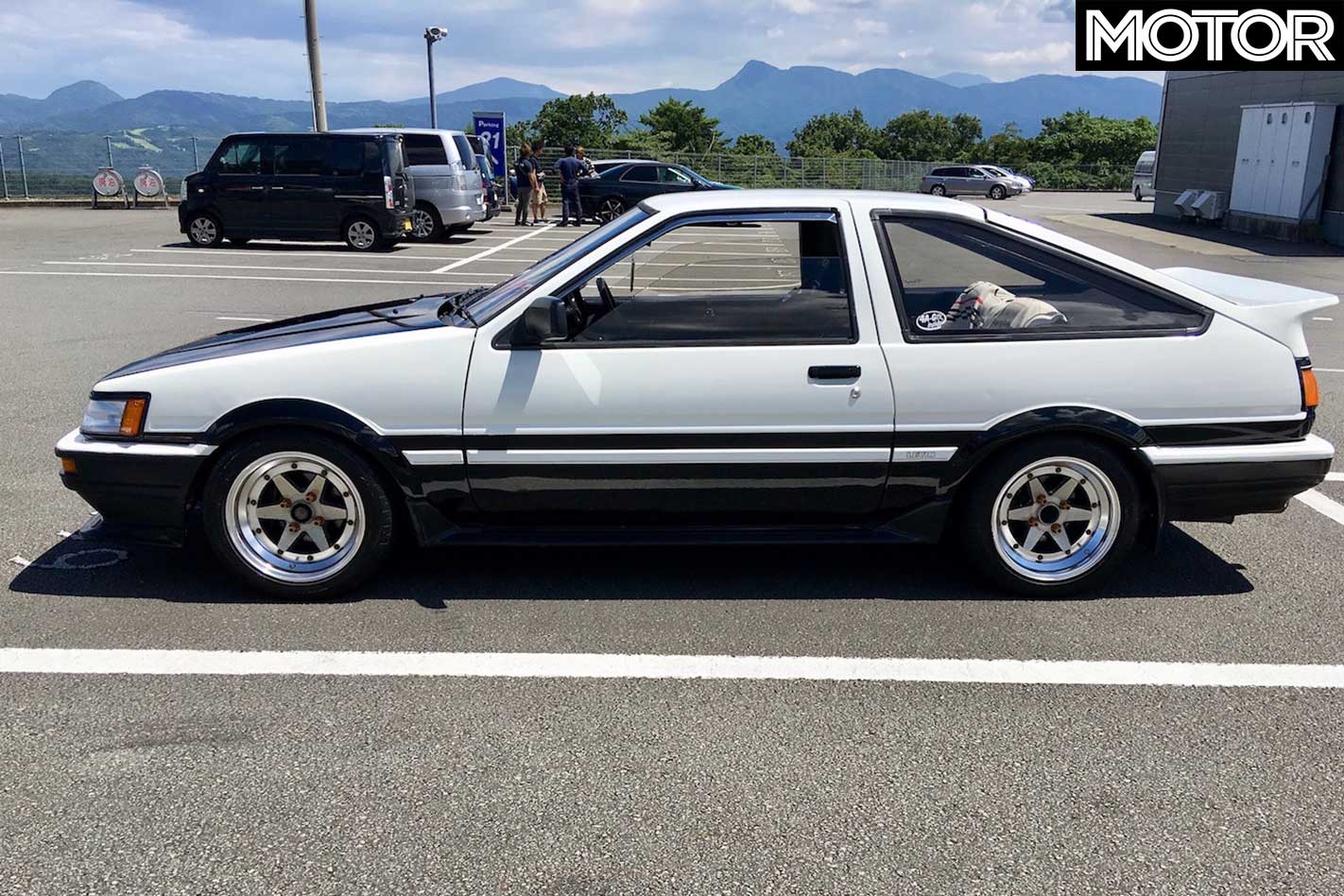
And it is these imports, rather than the Australian-delivered LSD-less Sprinter with a 4AC 1.6L carby, that are soaring in value today. We spotted a mint Trueno Sprinter Apex GT with 167,000km showing for $33K. In 10 years it could end up where the 240Z is now…
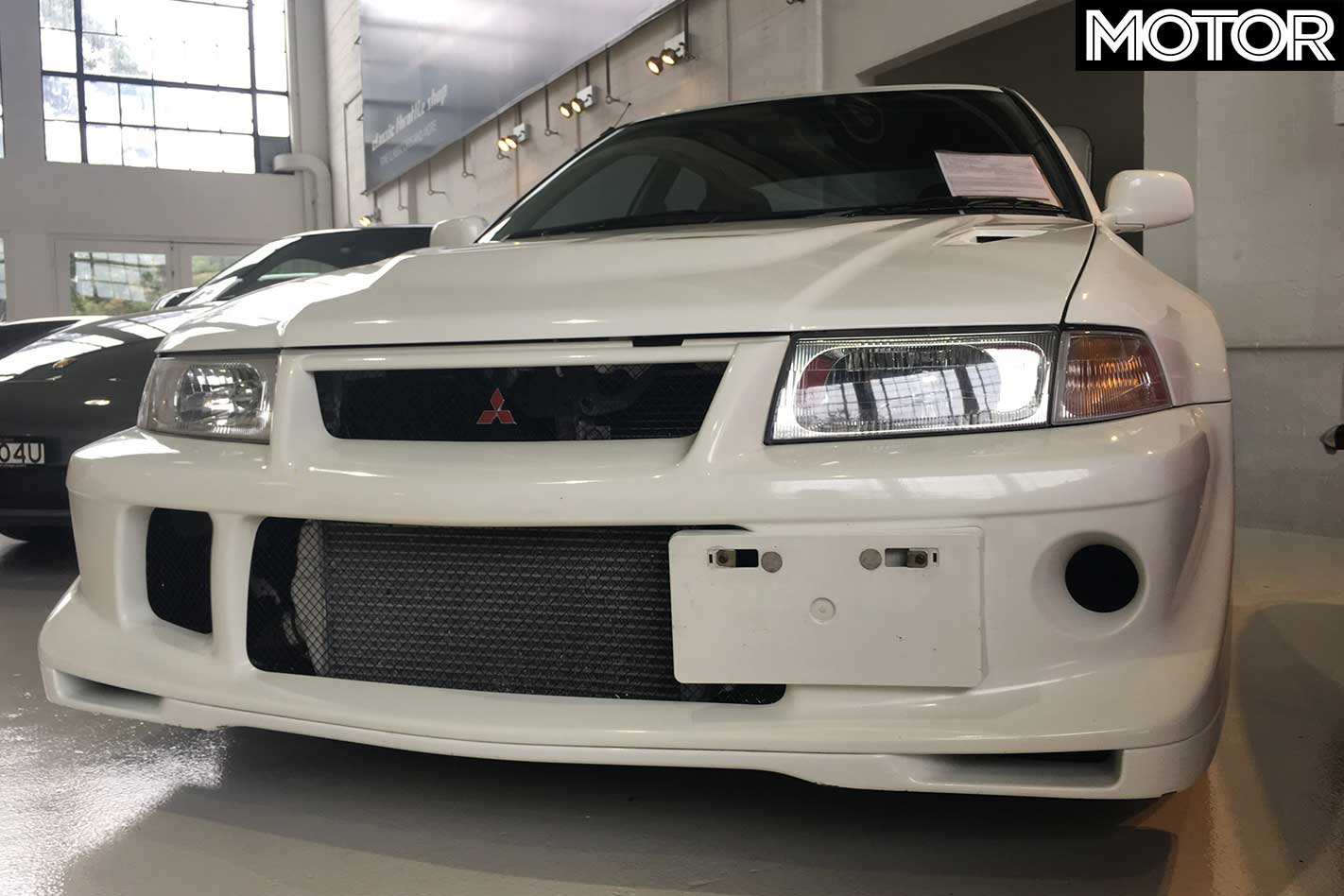
But there are other Japanese sports cars to keep an eye on as well, including obvious candidates such as the Mitsubishi Lancer Evo VI Tommi Makinen Edition (TME), the iconic 1990s rally car for the road. We spotted a mint and stock example with 100,000km showing for $29K before bargaining – and surely in the decade to come it will leap from there.
Despite being far more popular on Australian soil, prices of its arch rival, the pre-bugeye Subaru Impreza WRX is holding up locally too. Prices will range from $8K for a straight-but-high-kilometre MY00 example of the 160kW/290Nm 2.0-litre boxer turbo sedan, all the way to $20K for a 100,000km unit and $25K for a WRC Blue four-door with 43,000km showing.
The latter is about a similar range for an S15-gen Nissan 200SX, with similar outputs but rear-wheel drive. Finding a stock example will be like turning up to Summernats and trying to find an anti-modifications advocate, but if anything that makes it especially worth the search – the rarer the car, the stronger the retained value.
But whether it be a Toyota MR2 or a Celica GT4 Rallye – okay now we’re getting rare – for the $15K mark, or an NA/NB Mazda MX-5 or early-1990s Honda CRX for half that, this was an era in which the Orient went gangbusters with sporty cars. Expect to cash in soon…
MARTY DiBergi, the ‘filmmaker’ following rock band Spinal Tap in the 1984 mockumentary, never quite grasped the concept of an amp that went up to eleven: “Why don’t you make ten a little louder; make that the top number?” he asked lead guitarist Nigel Tufnel.
Nigel just paused: “These go to eleven.”
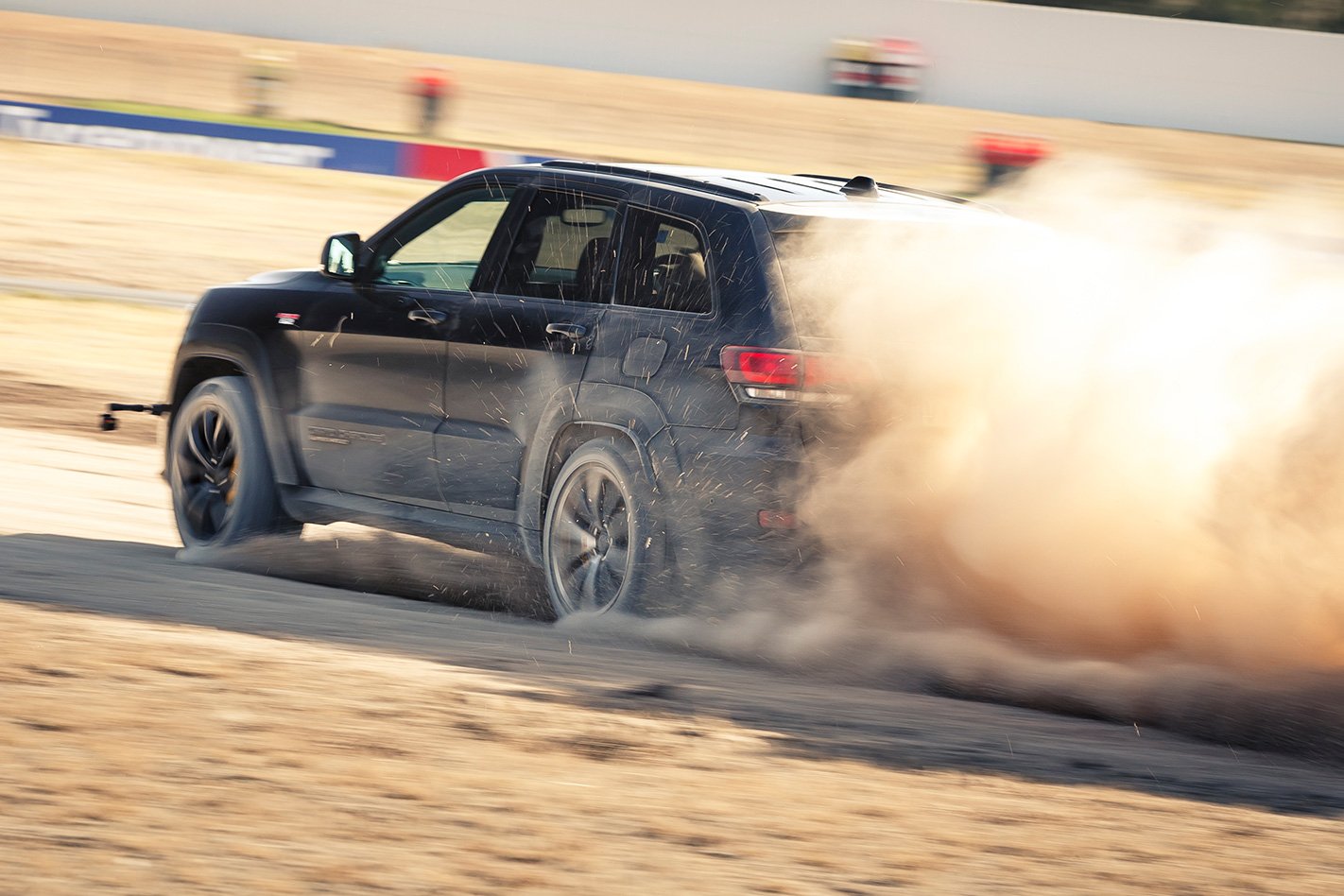
The brilliantly absurd This is Spinal Tap might have introduced us to the concept of things ‘going to eleven’, but even decibel-loving axeman Nigel would run out of superlatives today. Why? Because we’re on a rallycross track at Winton with a Jeep Grand Cherokee Trackhawk that goes to 522. That’s how many kilowatts the supercharged 6.2-litre Hemi V8 develops. More numbers? How about torque of 868Nm, 0-100km/h in 3.7 seconds and 400m in 11.6 seconds at 186km/h? Eleven? Kids’ stuff.
Whether any of this excess is a good idea is another consideration entirely. We felt duty bound to discover if manhandling a 2427kg SUV around a race track was type-two sort of fun at best. There’s also an ethical consideration in choosing a vehicle of such spectacularly conspicuous consumption. But before we delve into any of that worthy stuff, something by way of a spoiler.
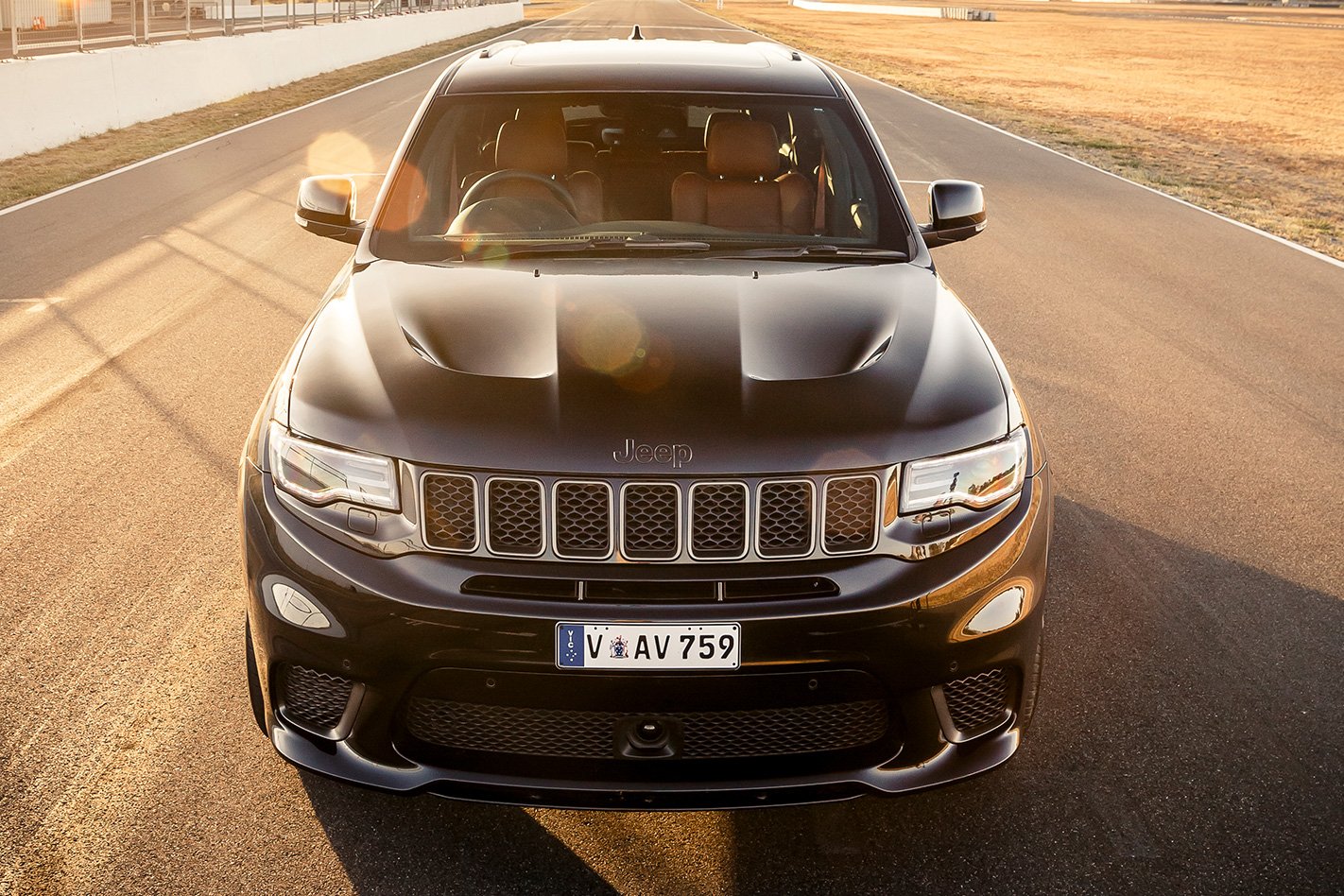
Weight might well be the enemy of ability on track, but if you can drive the Trackhawk hard without laughing like a loon then you’ve got a lump of coal where your heart should be.
On first acquaintance, the Trackhawk is a fairly easy thing to dislike. It’s brash, overblown and, without a membership to a free-weights gym and some sort of bull mastiff in the back, I initially felt a slight testosterone deficit behind the wheel. There lurks the queasy suspicion that this is an SUV targeted at types who value bragging rights and brute force over anything to do with dynamics.
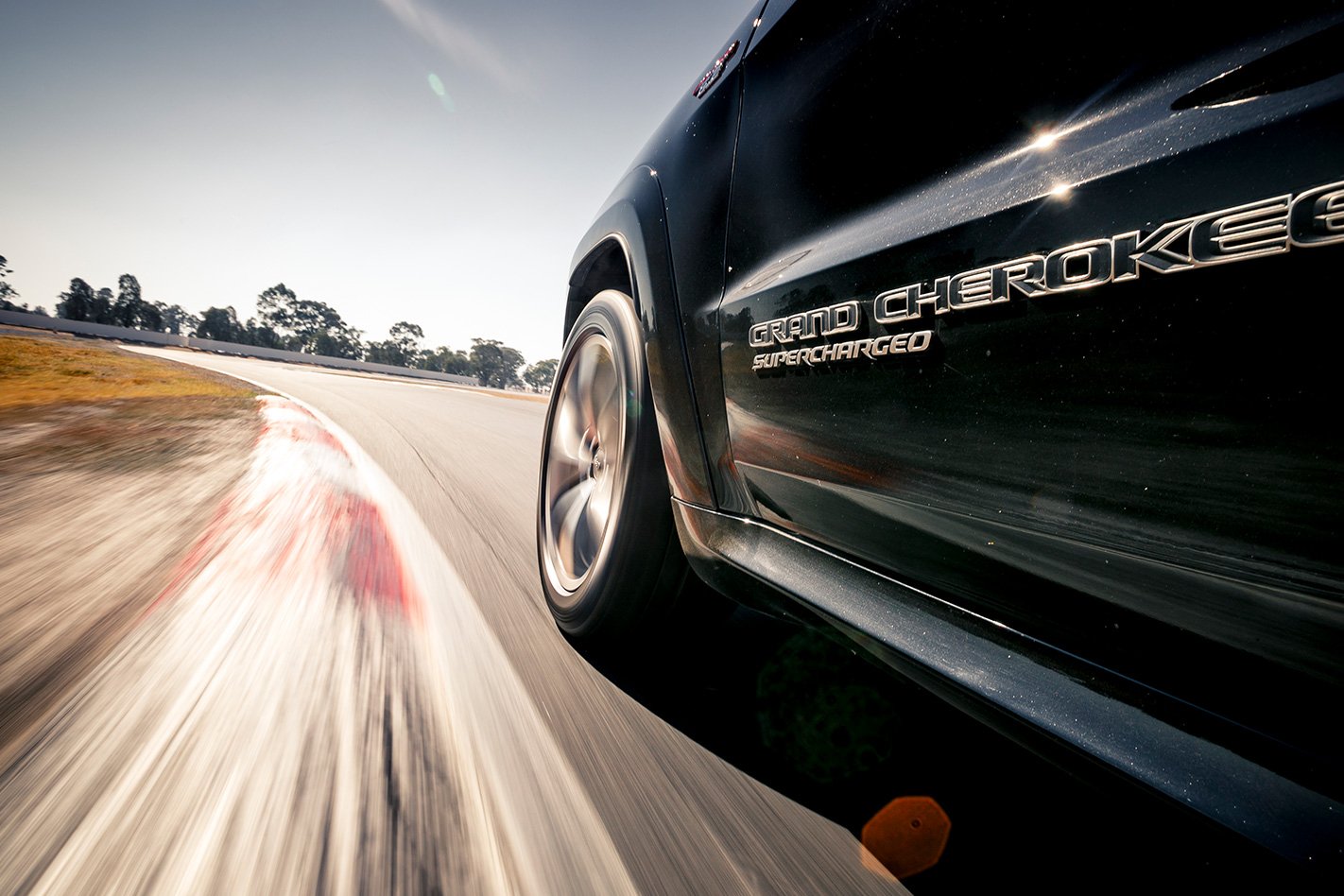
Spend a little more time with the Trackhawk and you begin to appreciate the work that’s gone into it. There’s a deftness to its modes, controls and calibration decisions that’s anything but heavy-handed. On road, it’s surprisingly civilised, the vast torque at little more than tickover allowing cross-country speed limit progress with never anything more than 2000rpm on the clock.
The adaptive Bilstein dampers also do a reasonable job of making up for the lack of sidewall in the 45 series Pirelli P-Zero rubber, only jolting in the sharpest potholes. Switch it into Sport and it’s a well-judged setting for Australian country roads, offering respectable body control, accurate steering that weights up well mid-corner and throttle mapping that’s feisty but never neurotic. It covers ground easily, and while its overtaking ability is absolutely imperious, it’s sobering to think that a couple of seconds of flat-chat throttle to clear traffic can see some licence-losing digits flash up on the dash.
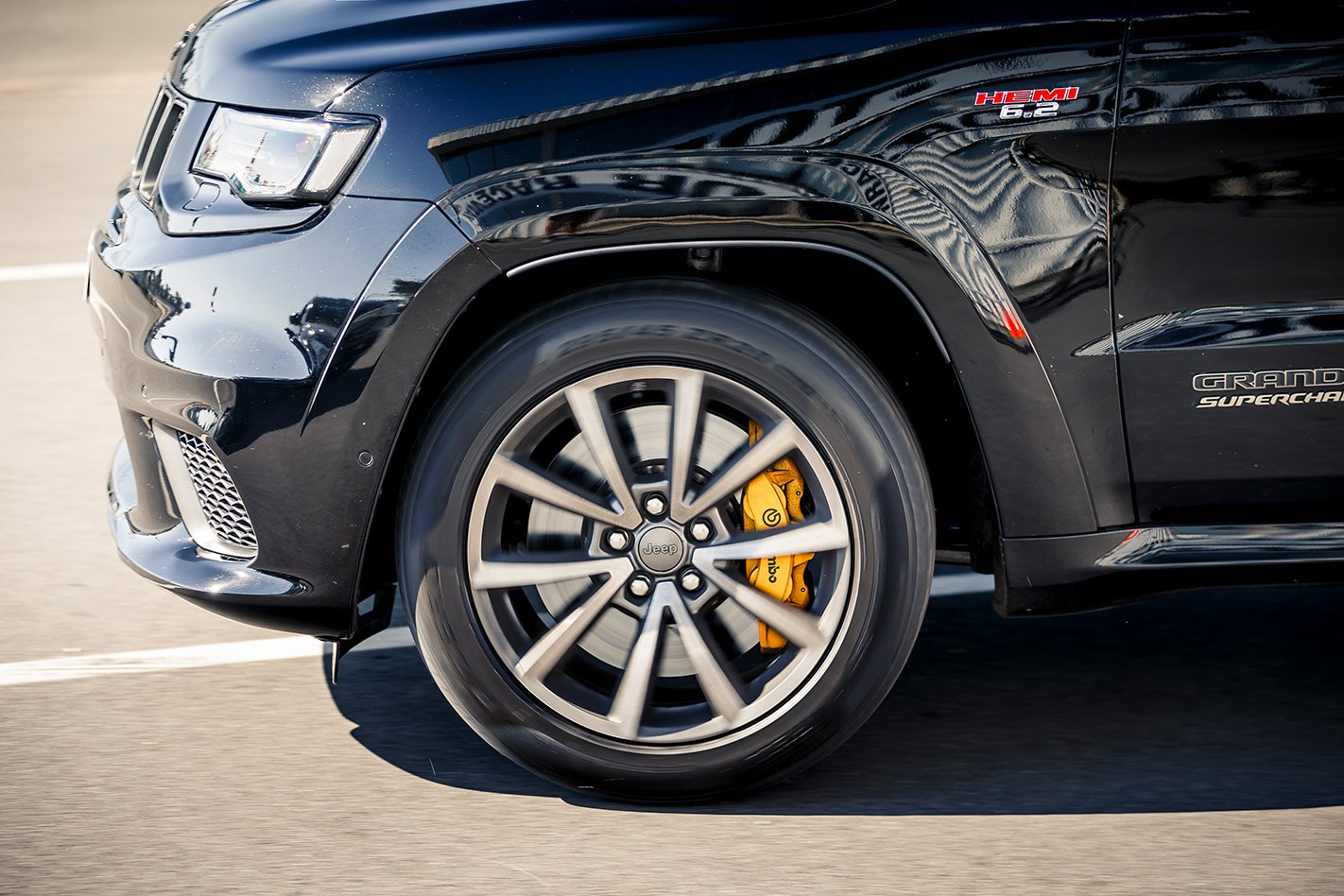
I’d somehow got this far never having driven Winton before, and doing it in a vehicle that has far more engine than brakes is probably as effective a recipe for caution as any. The Jeep’s 400mm six-pot Brembos up front and 380mm four-piston items at the back look the part, but it’s easy to underestimate the sheer kinetic energy the Trackhawk exerts.
The brakes aren’t underspecified per se, but I can see a few Trackhawk owners sledging into tyre walls because they haven’t accurately judged the huge braking distances required to pull the thing up. Switch into Track mode and the torque is split 30:70 front to rear, the suspension switches into its firmest setting, and the eight-speed Torqueflite auto bangs home gearchanges in 160ms, some 68 percent quicker than default. It’s not quite Lambo Corsa savage, but the abrupt blap on upshift gives a noticeable shunt in the back.
The stability control also eases a little but it never truly switches off and you’ll feel it working in concert with the rear e-diff on corner exit, making a faintly scratchy, graunching sounds as it attempts to keep you dirty side down.
It does a good job of it too. While a little throttle adjustability is usually welcome, the consequences of a three-figure tank-slapper in a high-riding vehicle don’t bear thinking about, so it’s a wise call on Jeep’s part. Lift the throttle and re-engage hard mid corner and it’ll let you have a degree or two of yaw before it pulls itself straight, but the electronics do a good job of quelling understeer and boosting confidence.
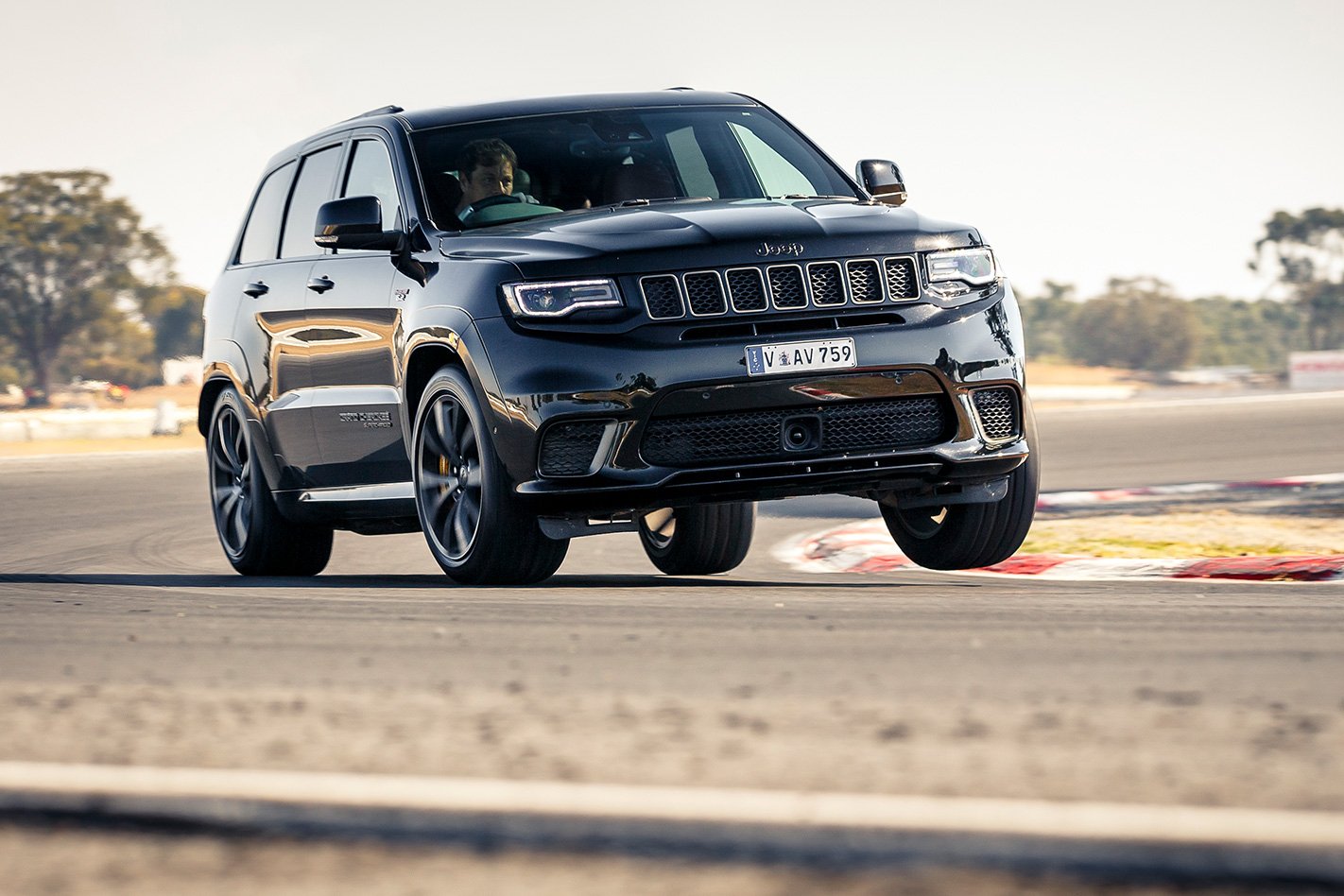
Confidence is something you’re going to need. Wielding the Trackhawk in anger feels like that moment Tony Stark dons the Iron Man suit: big power that’s not always easily controlled. As with virtually every other element of driving the Trackhawk quickly, fast cornering is an exercise in weight management. You need a moment or two to let the masses settle, to ease the big Jeep into a corner with a sympathetic flow.
The supercharger and ancillaries put another 100kg into the nose and you’ll feel that should you pitch in clumsily. The Trackhawk does lean, but not alarmingly, and a little lean is reassuring in assessing just how much the contact patches have to give. In extremis, the Trackhawk will lift an inside front wheel through a corner and it’s possible to set it into a slight porpoising motion post-apex with a big clogful of Newton metres, but most of the time it just grips and goes.
It does that a good deal more effectively than the Charger and Challenger Hellcat models from which it sources its lump, thanks to the traction of the Quadra-Trac all-wheel drive. While the Dodges will cremate their rear boots with so much as a sniff of extraneous throttle, the Trackhawk’s launch control will produce easily repeatable 3.7-second sprints to 100km/h.
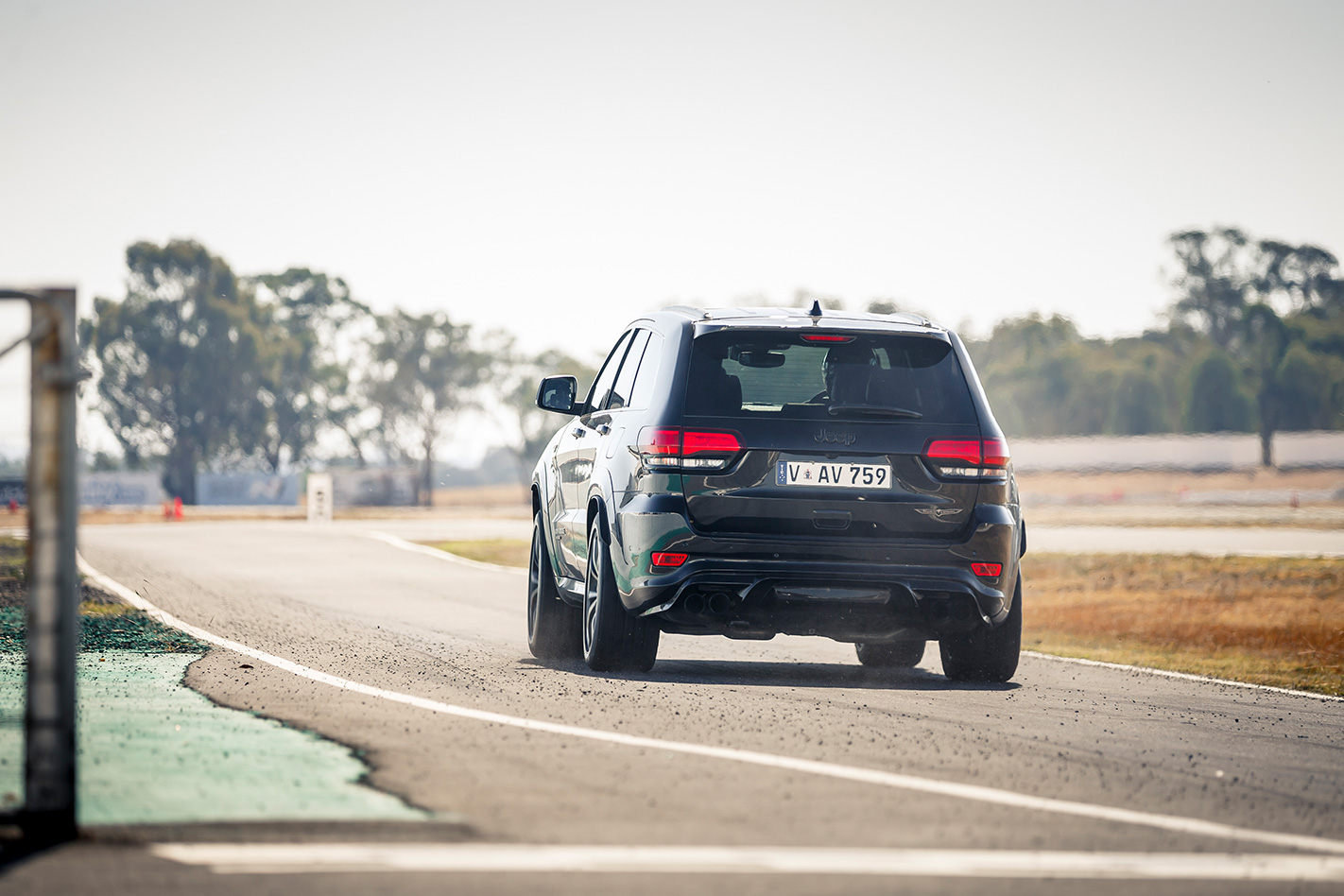
The launch procedure is just a simple button press and then a hard application of brake, the centre screen telling you how much pressure you’re holding onto the brake pedal. Floor the throttle, wait a moment and then sidestep the brake and the Trackhawk leaps from its haunches as if it’s been rammed up the chuff by The Ghan and doesn’t let up. It feels a good deal more bulletproof than doing the same thing in a car with a dual-clutch.
The Hemi V8 has been engineered for durability too. You’ll probably recall that the stock Grand Cherokee engine is a 6.4-litre unit. The Trackhawk’s smaller swept capacity comes as a result of strengthening virtually every engine internal, starting with the block. Crankshaft, crankshaft damper, forged alloy pistons, forged conrods, piston pins, bushings, cylinder heads, sodium-cooled exhaust valves, oil pump, heat exchangers, it’s all been upgraded and that feeds from there back to the transfer case with forged steel sprockets, beefier rear axle, strengthened rear driveshaft, and higher grade half-shafts and CV joints.
Then there’s the 2380cc per revolution supercharger with a built-in bypass valve that regulates boost pressure at 11.6psi. What was most impressive about the engine was its capacity to self-regulate temperature on a hot day, bringing oil temperature up to 120 degrees Celsius under hard use and settling back to a consistent 104 in pit lane, even when idling with air con switched on.
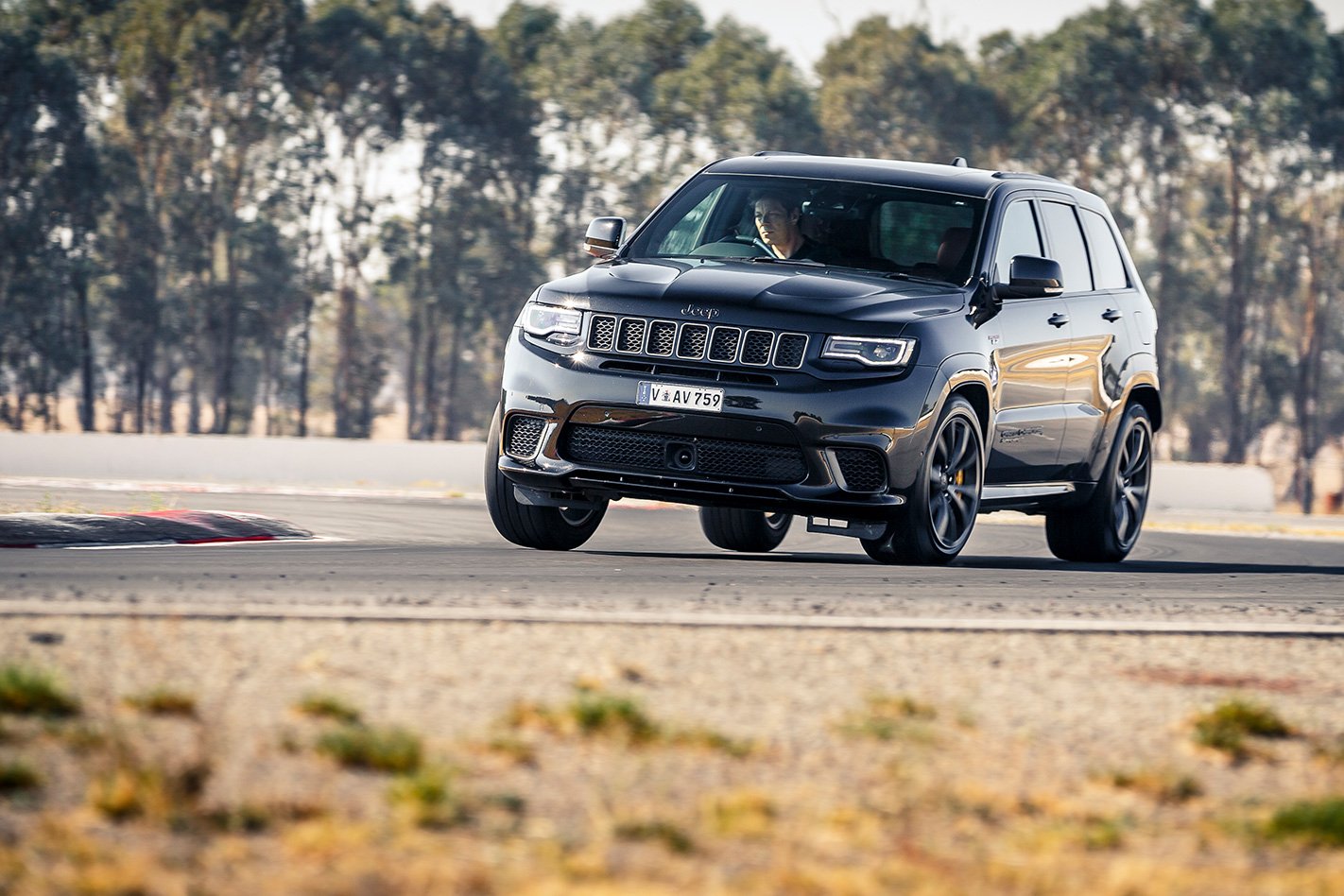
The 295/45ZR20 P Zeros were being run at 42psi front and 45psi rear and, contrary to expectations, didn’t demolish their shoulders after a series of hot laps. In fact they held up amazingly well given the physics they were asked to contend with. Push hard and they’ll start howling like a coyote with toothache, but that’s usually drowned out by the astonishing sound effects inside the vehicle.
From idle to around 5000rpm, the V8 is largely shouted down by the supercharger’s keening, but between there and the 6200rpm redline, there’s a properly uncouth hammering from the V8 that’s utterly addictive and massively loud. There’s nothing subtle about it, but it sounds breathtaking fully wrung out; more like a piston-engined WWII fighter, maybe a non-turbo Allison with short stacks.
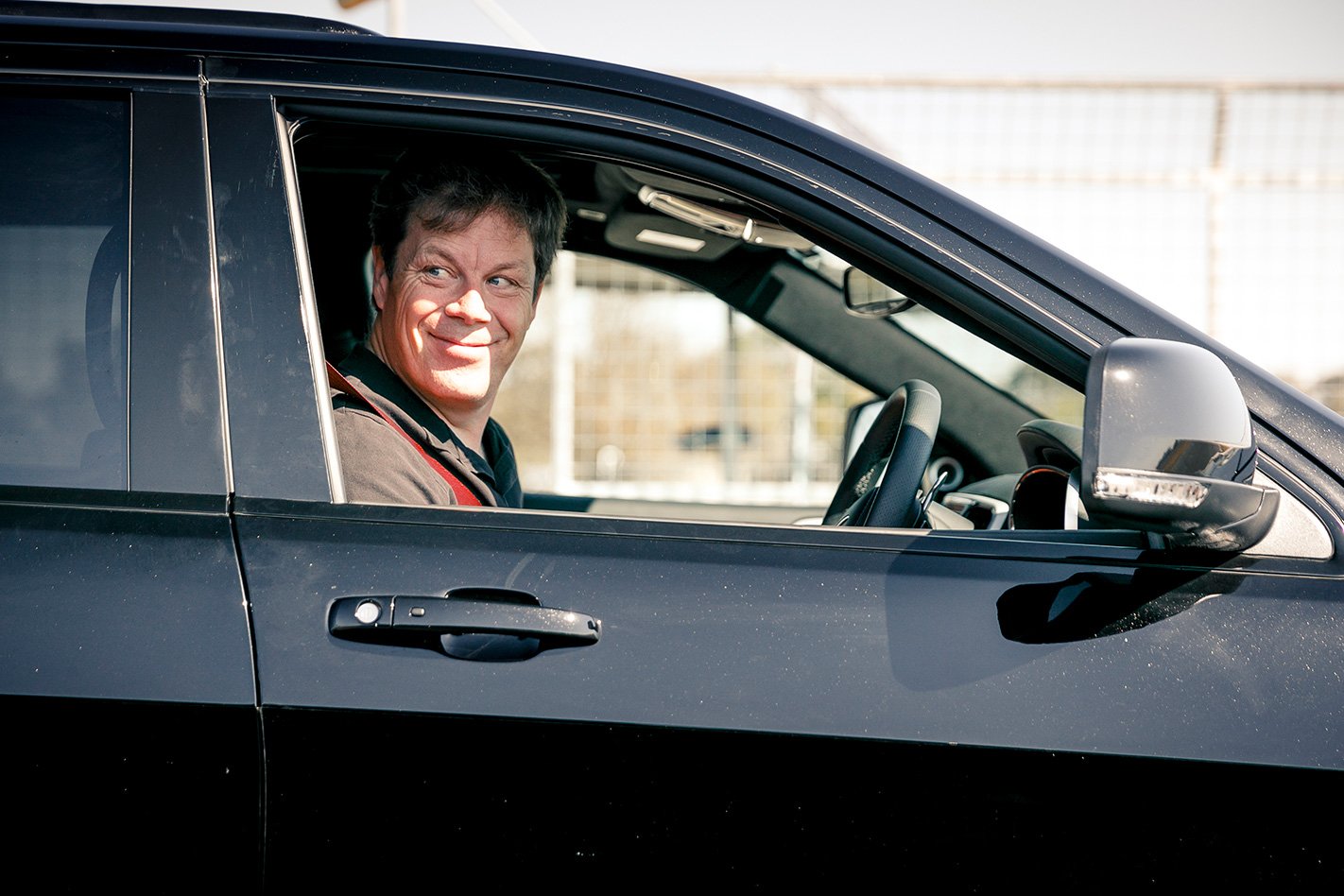
Having completed photography duties on track, it was time to pitch the Trackhawk into the dirt on Winton’s rallycross circuit. During the recce, the sequence of sandy corners looked entirely innocuous, but they present a huge challenge to a vehicle like this, namely that it’ll repeatedly come out of the loose stuff with a big yaw angle onto much grippier tarmac. Sure enough, tipping the Jeep into the dust at speed saw it pitch a long way sideways, the stability control at times cutting engine revs when you’re trying to prolong and hold the slide before penduluming back the other way.
As it swings back onto the scabby bitumen of the infield straight, there’s a brief grab before the whole thing shimmies its way straight. Get too greedy with the throttle and you need to be very mindful of where your front boots are pointing, but there is a degree of throttle adjustability on the loose surface.
We run a few passes for the stills and video guys, the speeds getting ever more ambitious. I’m trying to imagine quite how much fun this would be out in the Red Centre. Maybe not too far out, because you need a fairly tight umbilical to a fuel station, such is the Trackhawk’s prodigious thirst. During our day at Winton, we calculated that the Jeep slugged back a tankful of 83 litres of 98RON for 167 kilometres travelled, or 49.7L/100km if you prefer. This may well be a single-day record for 65 years of Wheels road-testing.
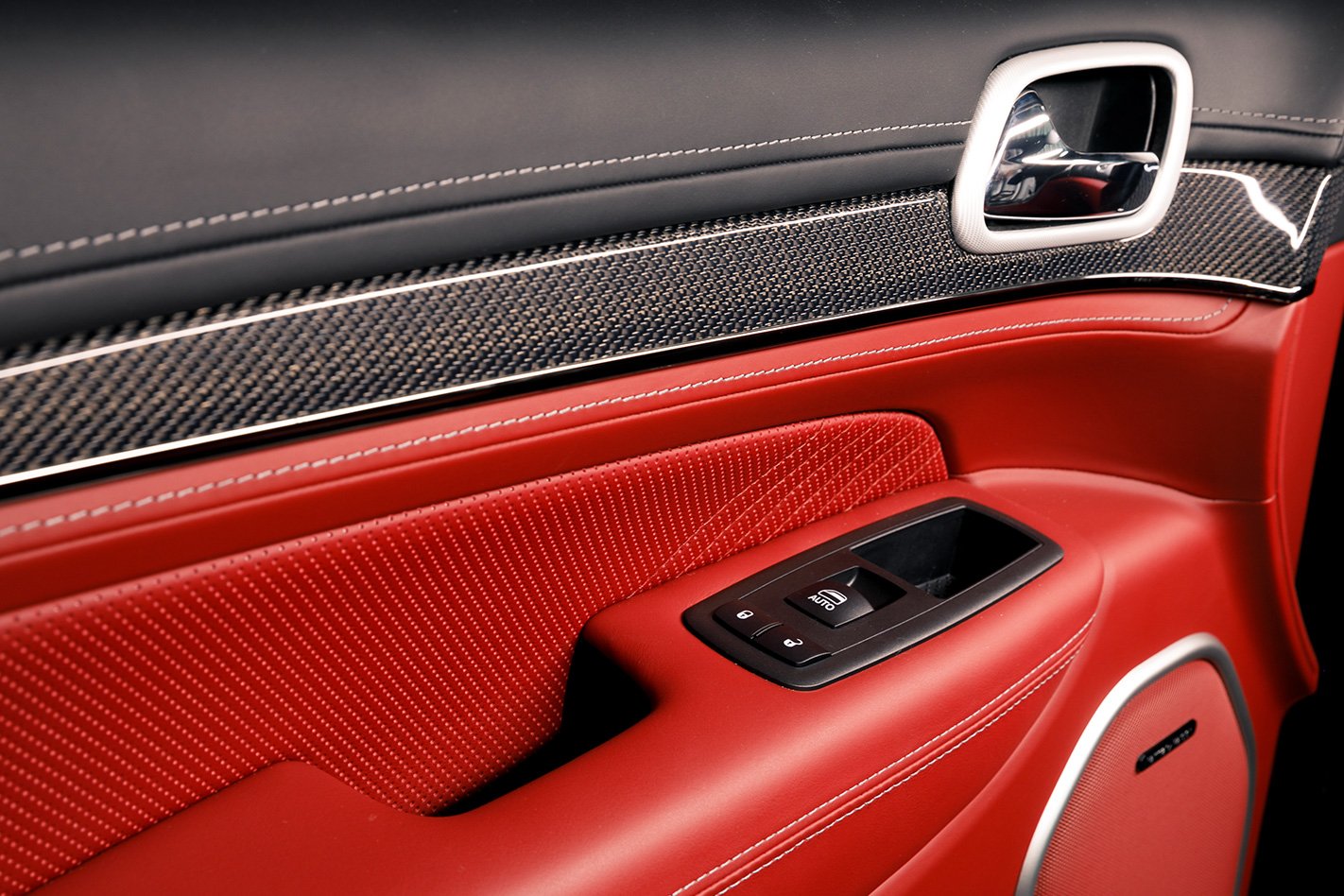
The schlep down the Hume to Melbourne gave us the opportunity to tinker with the Trackhawk’s standard fit stereo system. We don’t normally give audio systems too much attention, but the 845-watt, 19-speaker Harman Kardon fitout is something special. Anything much over half volume sets your diaphragm in key with the bass, much like standing in front of the speaker bank at a rock concert. You end up treating the volume dial with almost the same respect as the loud pedal.
The interior’s not finished with quite the same attention to high-concept design as flagship SUVs from European manufacturers, but then the Grand Cherokee Trackhawk isn’t priced like them. It’s more powerful than any of its rivals, yet it retails at $134,900, or around half the price of an entry-level Porsche Cayenne Turbo. To put it another way, it has almost double the power of a similarly priced 270kW Mercedes-AMG GLE 43. Therefore, we can cut it some slack for its mass-market switchgear.
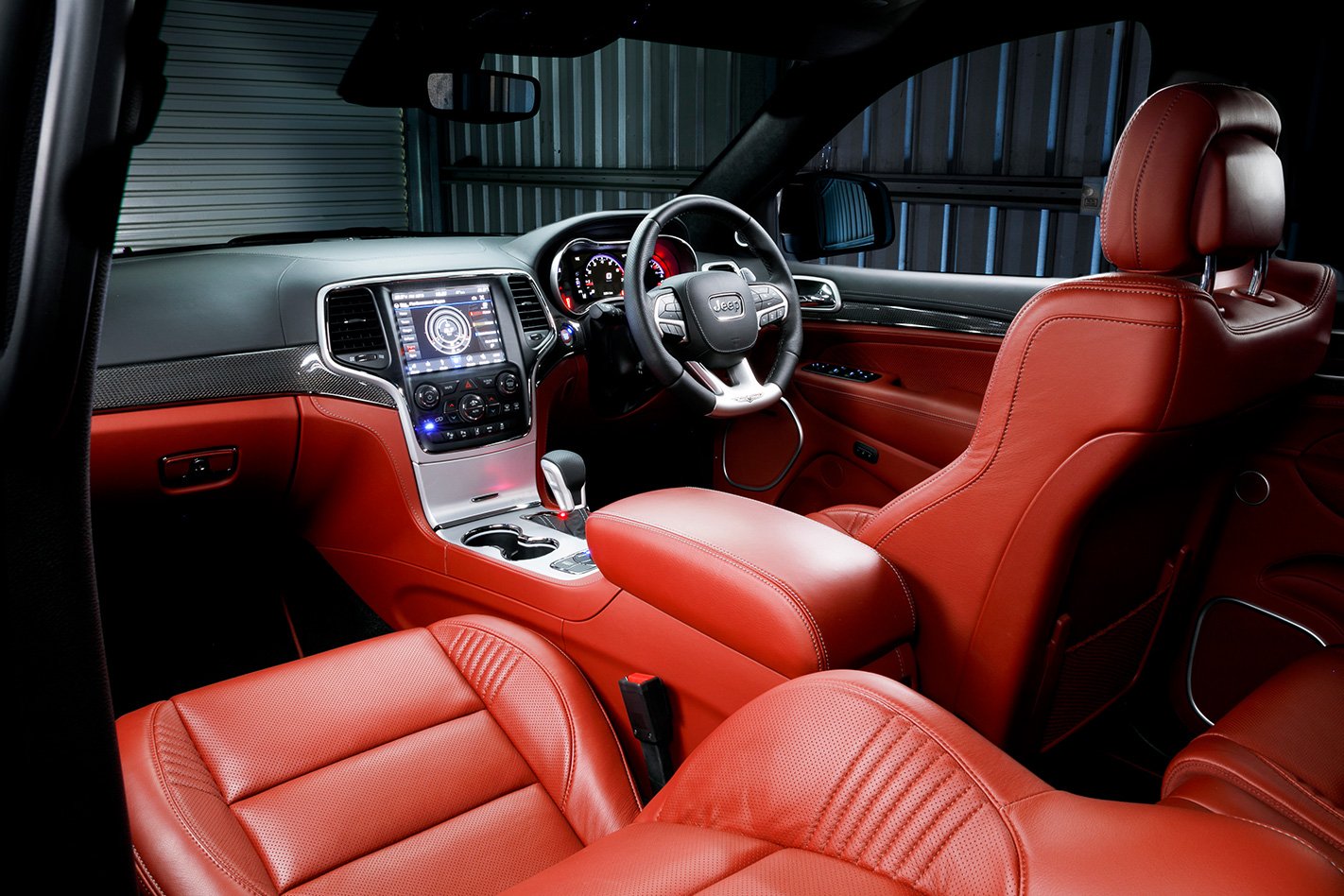
The carbonfibre-effect fillets on the dash might grate a little considering the vehicle’s weight but the cabin ergonomics are sound. The main touch points are well finished and there’s evidence of real consideration to everyday use, such as the right-way-’round gear shifter, the lovely fingertip stereo control rocker switches on the back of the steering wheel, the intuitive infotainment, the functional adaptive cruise and convenience features like a heated steering wheel and heated and cooled front seats.
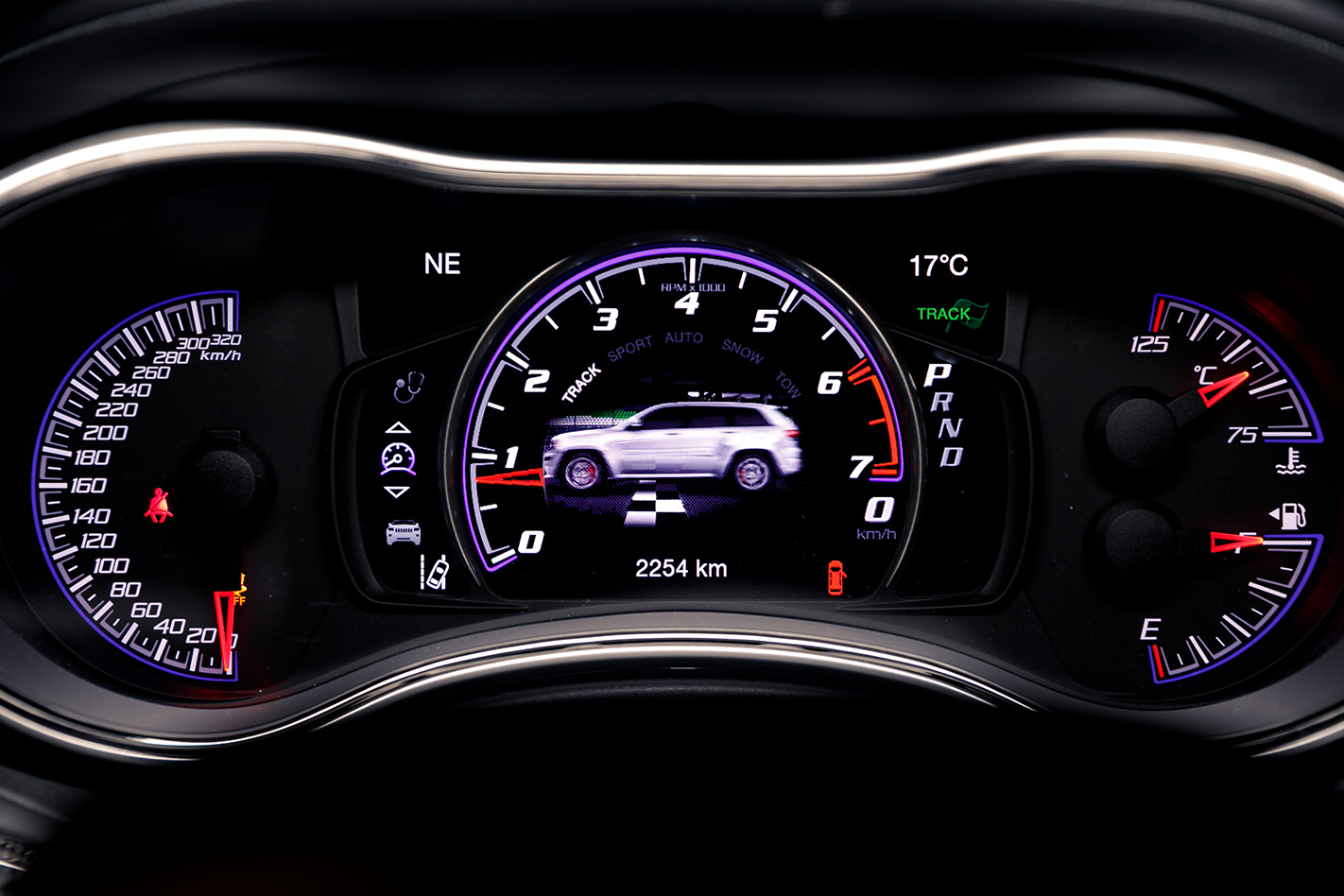
The double-pane glass sunroof doesn’t impinge on headroom, because the electric seats drop far enough to allow for a suitably dynamic hip height. There are some clangers though, such as the illegible 320km/h analogue speedometer, the hideous foot-operated parking brake that denies you a left foot rest and the riot of clashing fonts when you mirror your smartphone into the skin of the main screen. These are minor grumbles, however. The Grand Cherokee Trackhawk is an absolute triumph both in terms of value for money and in its fundamental effectiveness.
Can you think of any other class of car where the fastest and most powerful offering in the segment is so relatively inexpensive? Granted, $135K isn’t chicken feed, but having significantly more substance than cars costing twice as much is one heck of a compelling proposition.
But could you bring yourself to buy a car this brash, this wasteful, this excessive? That could well be the sticking point and all those extra dollars spent on a BMW, a Range Rover, a Mercedes-AMG or a Porsche super-SUV buys you a measure of refinement and presentability absent from the Trackhawk. I don’t care too much for that.
The Trackhawk ladles on an element of fun that seems to have been excised from its overpolished rivals. There must have been hundreds of points in the product planning process where Jeep could have canned the project as too OTT, but it went ahead. I love the fact that a vehicle like this exists: a riotous, hedonistic assault on the senses.
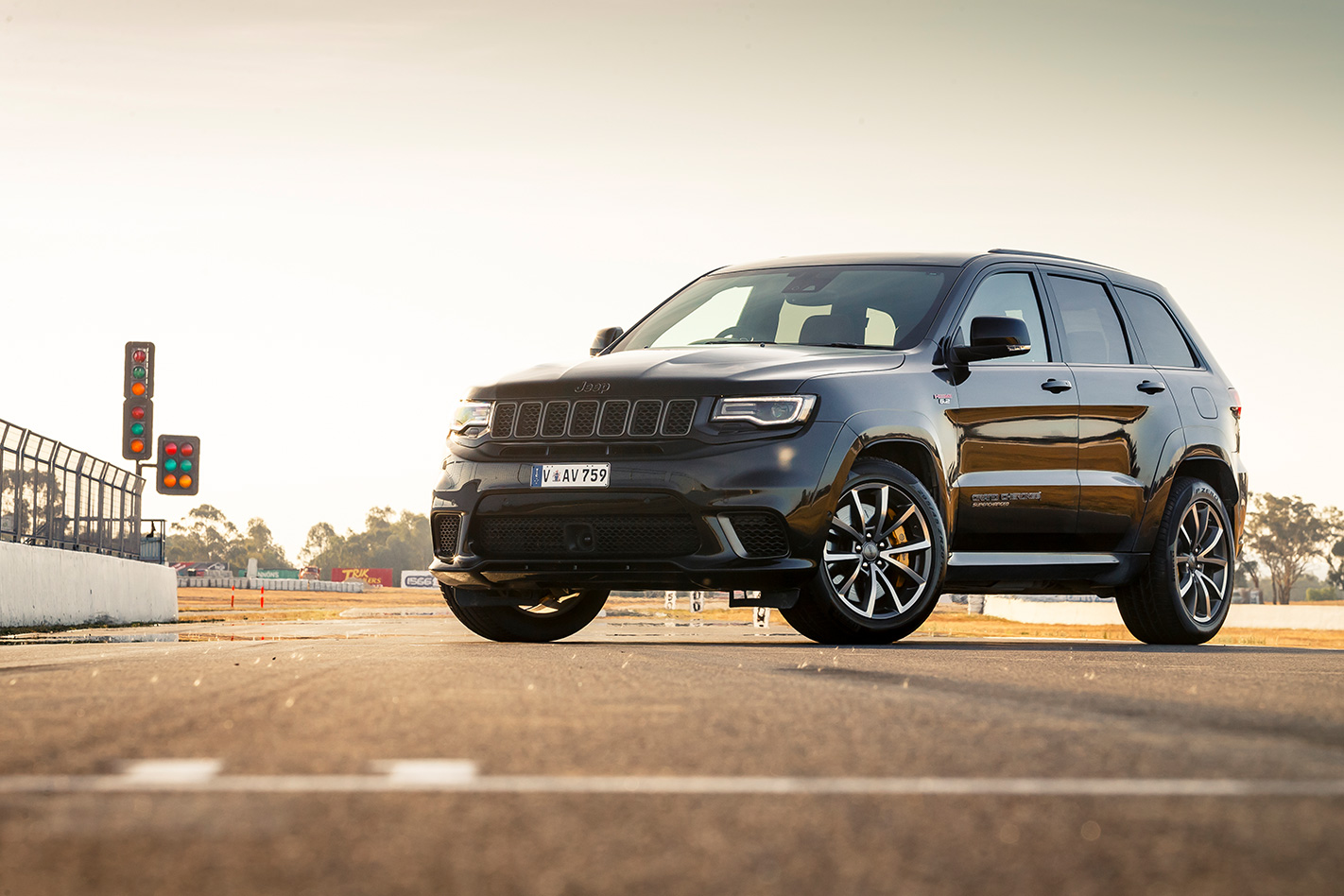
All too often we drive cars that aren’t as much fun as they promise. We really want to like them and yet we don’t. Then there’s Jeep’s Grand Cherokee Trackhawk, a vehicle you’d love to hate but can’t help being utterly charmed by. It’s also hard to overlook the satisfaction of sitting next to high-end sports cars at the lights safe in the knowledge that theirs don’t go to 522.
AUDI’S top-of-the-tree SUV, the Q8, has been teased ahead of its global unveiling next week at the Audi China Brand Summit in Shenzen, China
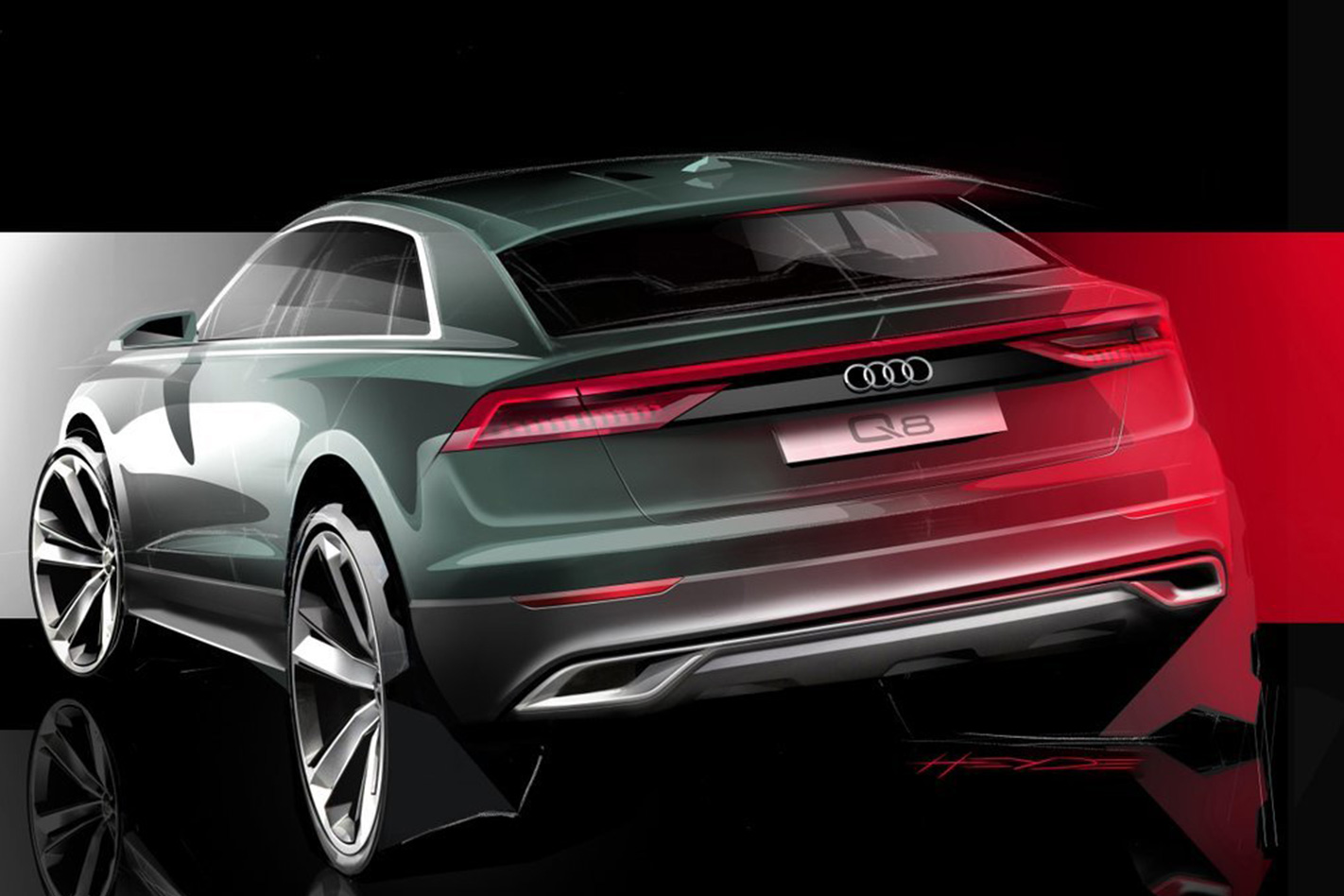
The teaser sketches feature exaggerated proportions and mega-diameter wheels – as is the norm with design sketches – but the visual cues align with what’s expected of the production model. With a bold silver-ringed grille partially set into the bumper and a bold taillamp graphic that linked together though the middle of the tailgate, the Q8’s styling sports traditional cues as seen in newer Audi arrivals like the A8 and recently launched A6, but wrapped around a burly SUV body and shallow A5 coupe-like turret.
In addition to the design sketches, Audi has launched a series of hype videos ahead of its coupe/crossover’s release. Not much of the car is initially shown in the first videos to surface, however brightening up the final frame of the third video we can see that the front end will sport the same huge octagonal grille and thin headlights as seen on the Q8 Concept that debuted at the 2017 Detroit auto show.

While giving away a little interior space to the Q7 thanks to its coupe-inspired roofline, the five-seater production version of the Q8 will likely feature the same level of luxury that you’d find in an A8. Expect the cabin’s centrepiece to be a dual touchscreen (not including the digital Virtual Cockpit display) centre stack up front for infotainment and climate controls, built to rival the systems of the recently updated Mercedes-Benz S-Class.
The Q8 is expected to feature much of the same drivetrains seen in the Q7, with a 3.0-litre V6 diesel engine producing more than 200kW assisted by a 94kW electric motor likely to be the mainstay motor of the range. Other engine options could include the 325kW 4.0-litre bi-turbo diesel V8 seen in the SQ7, as well as mild-hybrid powertrains.
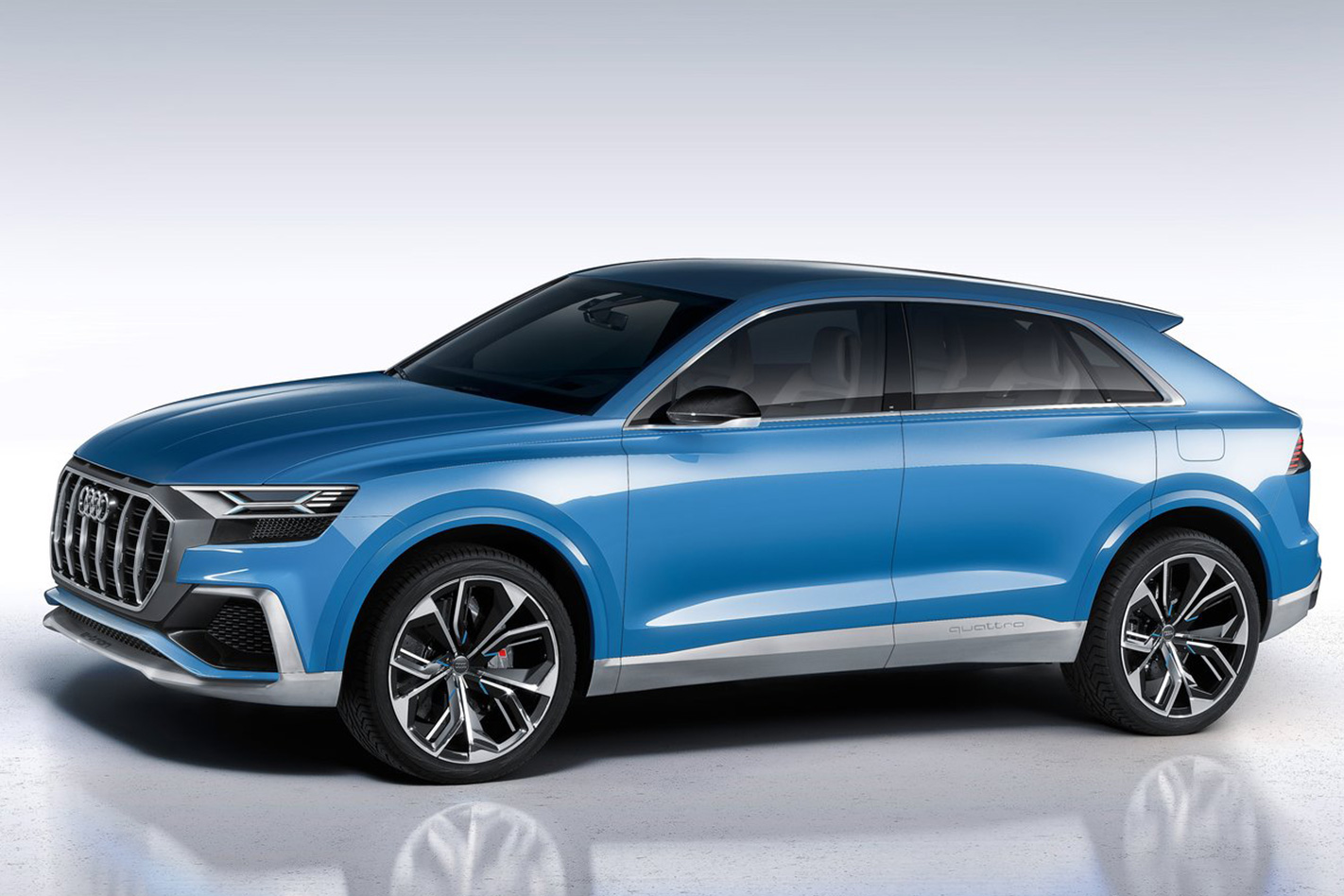
Built on the MLB platform which also serves beneath other large SUVs of the Volkswagen Group like the Porsche Cayenne, Lamborghini Urus and next-gen Volkswagen Touareg, the style-conscious Q8 will sit atop Audi’s SUV family as the most fashion-forward and luxury-driven flagship. Expect it to wear a pricetag that reflects that positioning, with a healthy premium over comparable Q7 models.
The BMW X6 and Mercedes-Benz GLE Coupe rival should launch later this year following its reveal next week, and will be built alongside the current Q7, Porsche Cayenne and Volkswagen Touareg in Bratislava, Slovakia.
Hybrid tech could make its way into the Supercars series if considerations currently being made by management find their way to fruition.
While the rules currently accommodate different engines such as twin-turbo V6s as tested by Triple Eight, or different body styles such as the incoming two-door Mustang supercar, non-traditional powertrains such as hybrid and electric are currently ineligible.
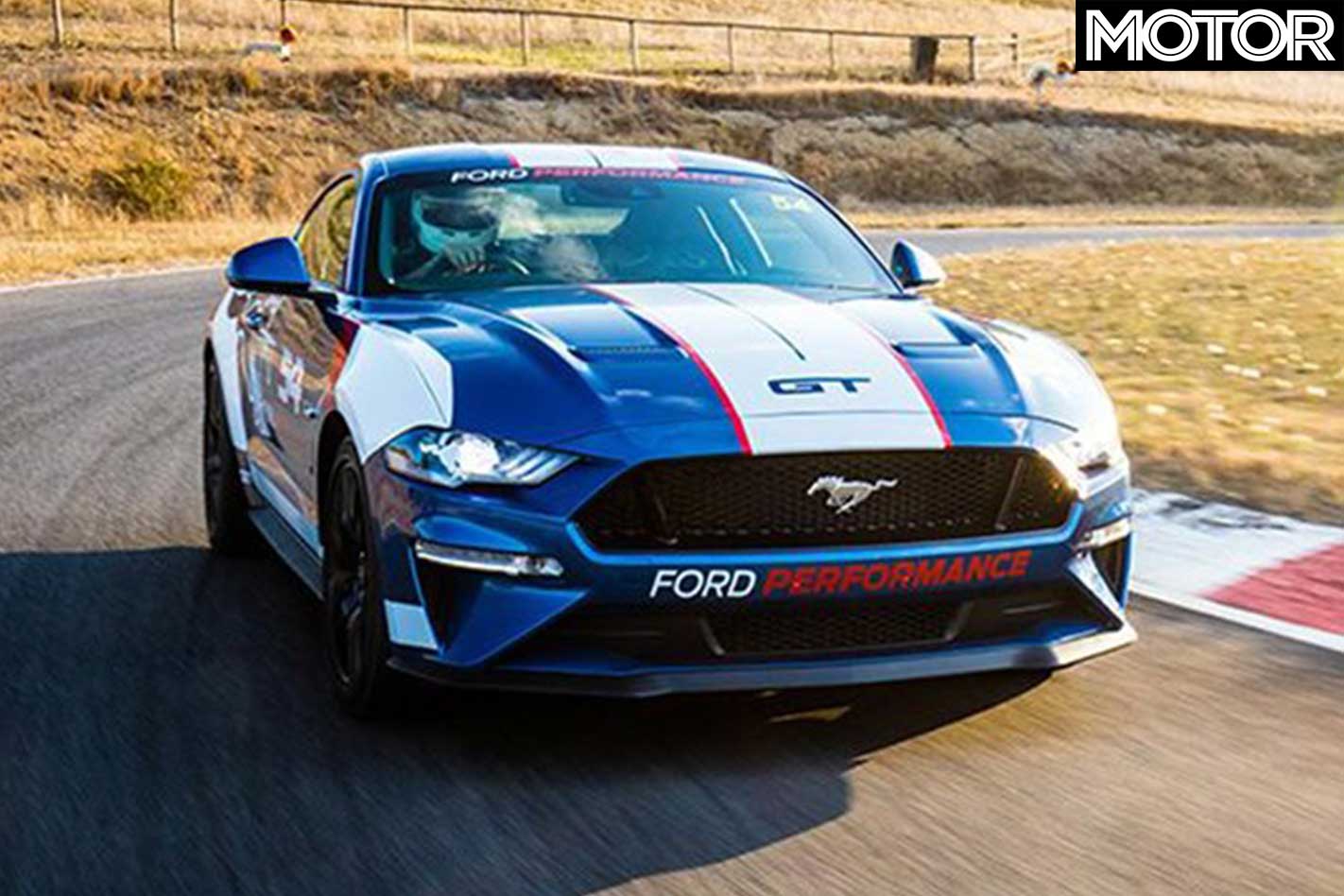
Supercars CEO Sean Seamer says the idea is in preliminary stages, with new rules not able to come in until 2021, but expects the decision to be made by the end of this year.
“We’re looking at Next Generation for 2021, and I think that everybody’s sort of been saying, ‘well, what next?’,” Seamer says in a statement on Supercars.com.
“There’s a process that a team on the Commission is working through between now and the end of the year to define what Next Generation looks like, the car of the future.
“That gives us the full two years to work through development and implementation into 2021.
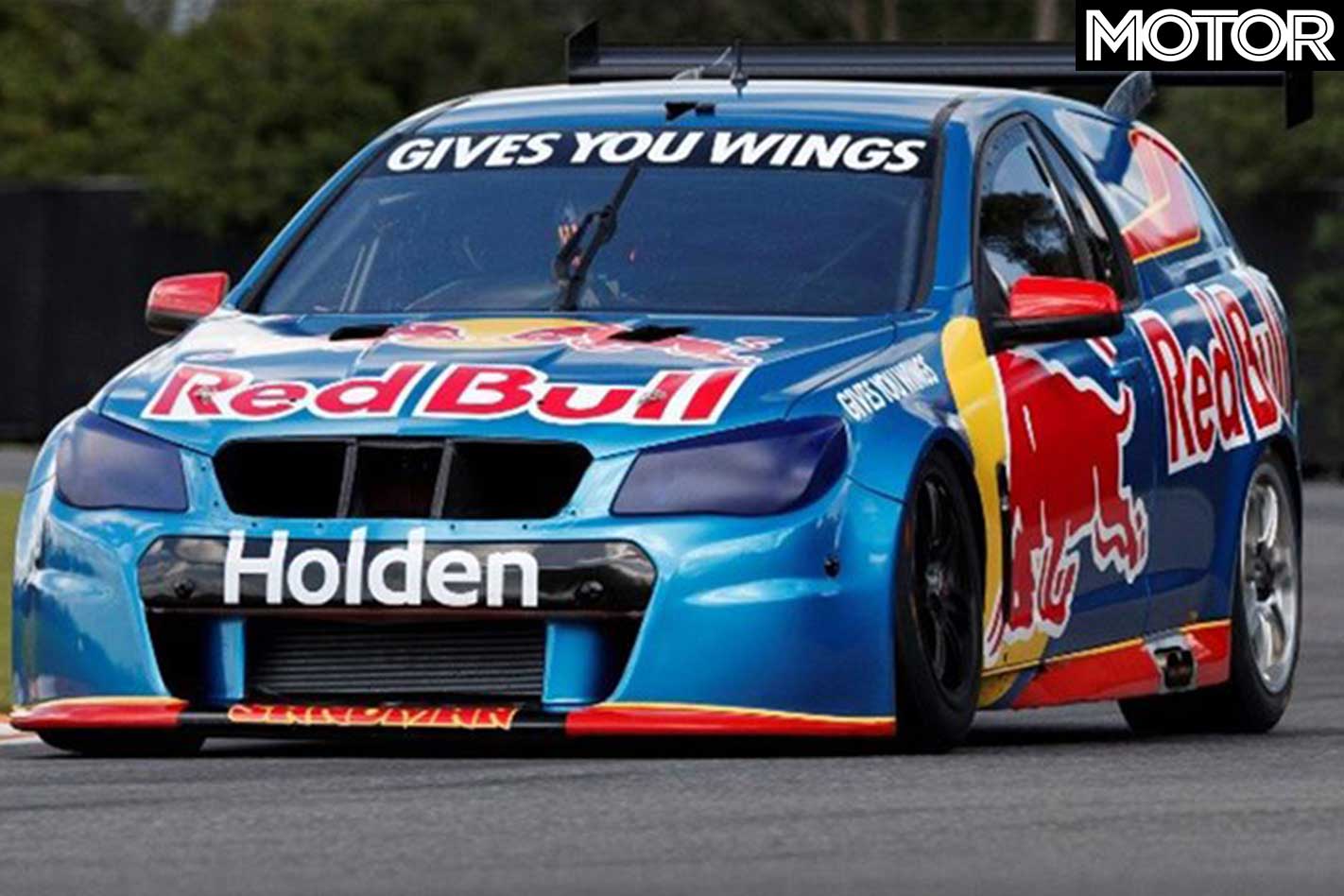
“We will include manufacturers in those discussions to get their feedback and their inputs, and in terms of what works for them, and make sure that we understand what their long-term product roadmap looks like.
“Hybridisation is obviously a key topic, so we’ll make sure we do our due diligence on that.”
With other major motorsport categories such as Formula One and the World Endurance Championship having also implemented hybrid elements, Seamer says it’s not a discussion unique to Supercars.
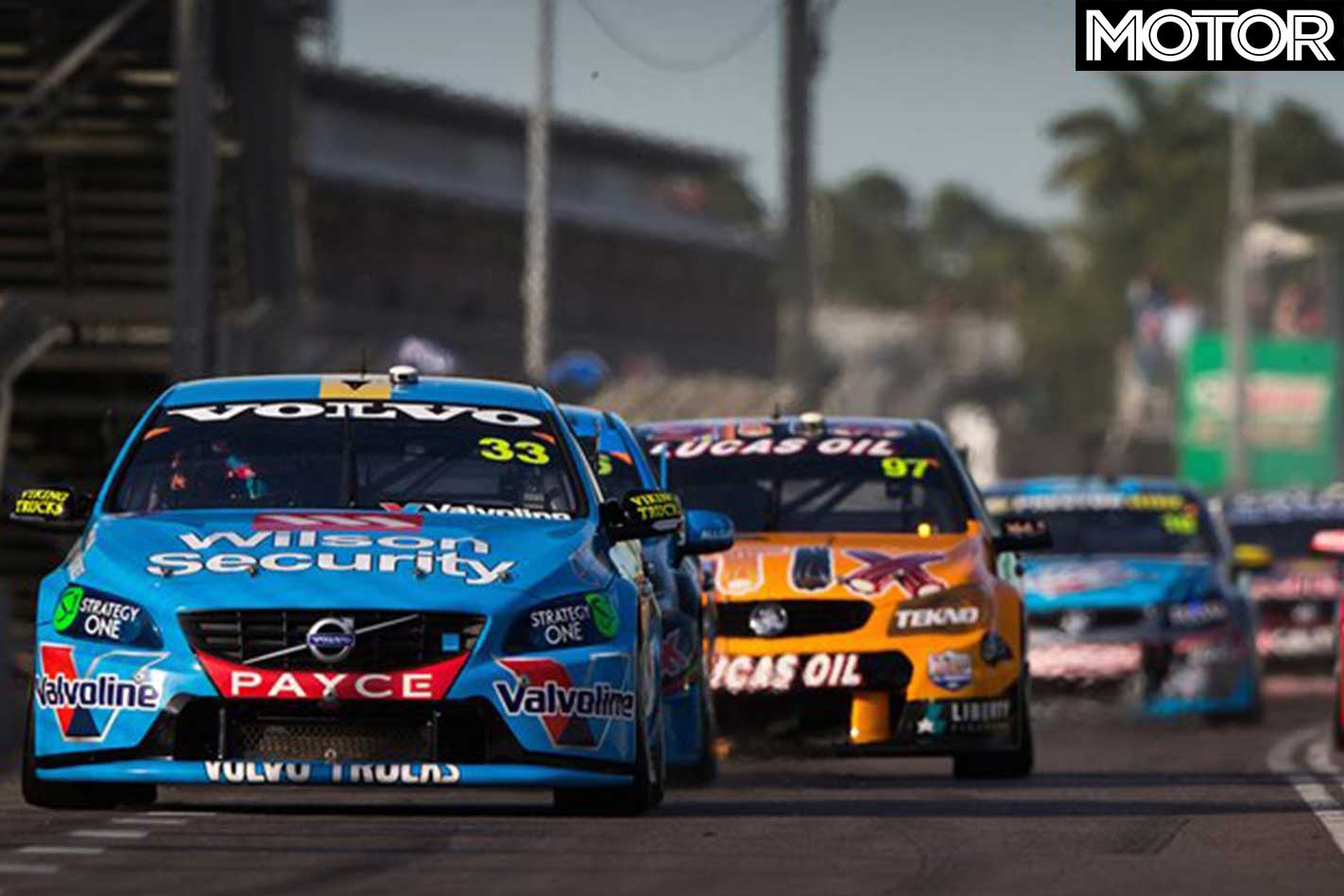
He adds that manufacturers have also asked about hybridisation and what it might look like in Supercars.
“[They’ve asked] do we have the ability to do it? Is it something that we will consider as part of Next Generation? To which we have said, ‘yes, we will look at that as part of the program and the planning’.
“I couldn’t possibly predict what the outcome of that exercise is going to be at the end of this year, but when we’ve got something to share, we’ll make sure that we do, but it’s still very early days.”
Here’s your first look at the June issue of MOTOR, full of news, reviews, and features joined by striking design and stunning photography.
You can buy it digitally at Zinio, and find mags at retailers around Australia. Or you can subscribe and save yourself some cash.
Or, if you want to give us feedback and see behind the scenes, you can follow us on Facebook, Twitter, and Instagram.
Enjoy!
McLaren Senna Driven
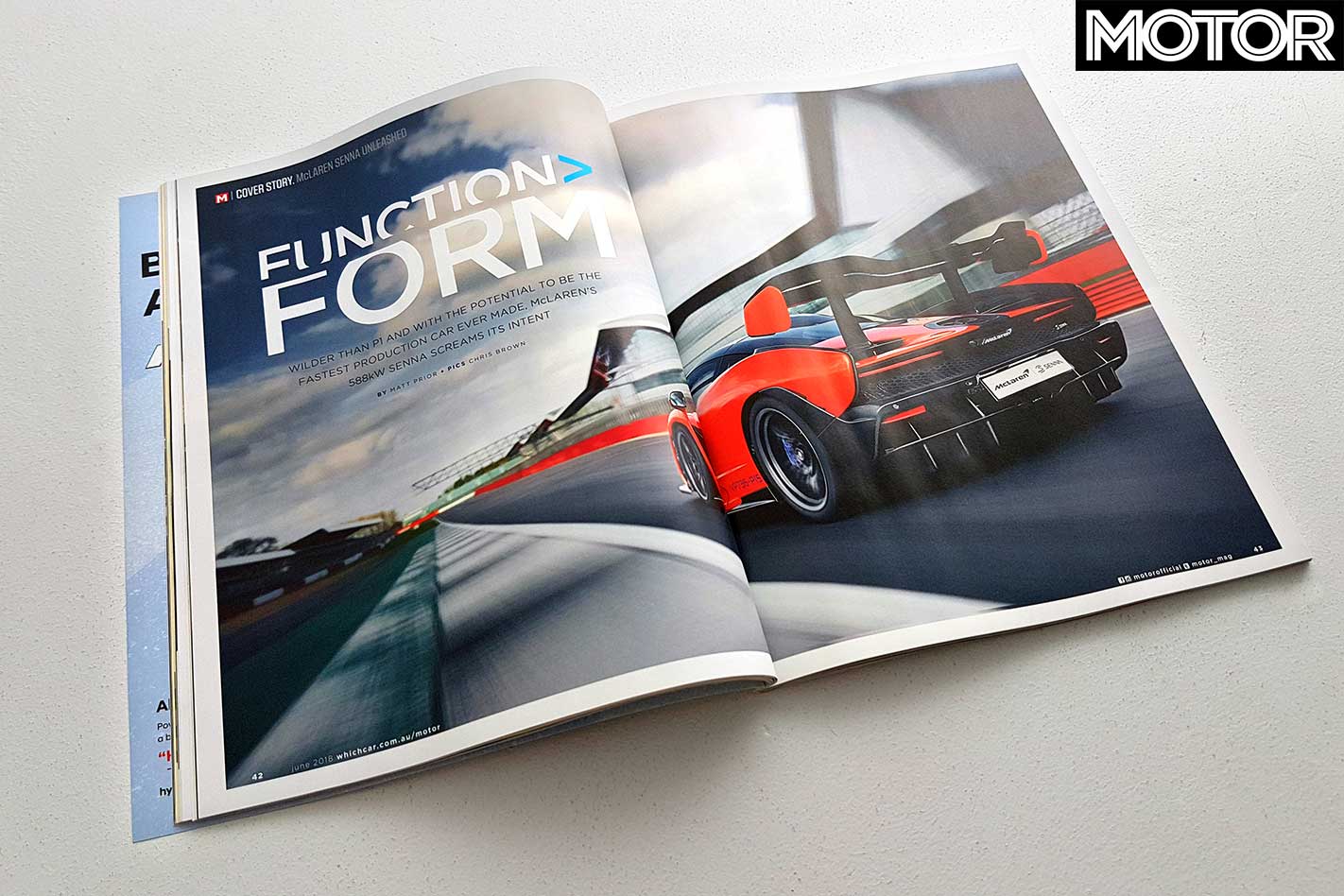
The intimidating stats presented by the Senna – 491kW per tonne, 800kg of downforce, it goes on – didn’t stop us from sampling its ability on track.
Porsche 991.2 911 GT3 RS Unleashed
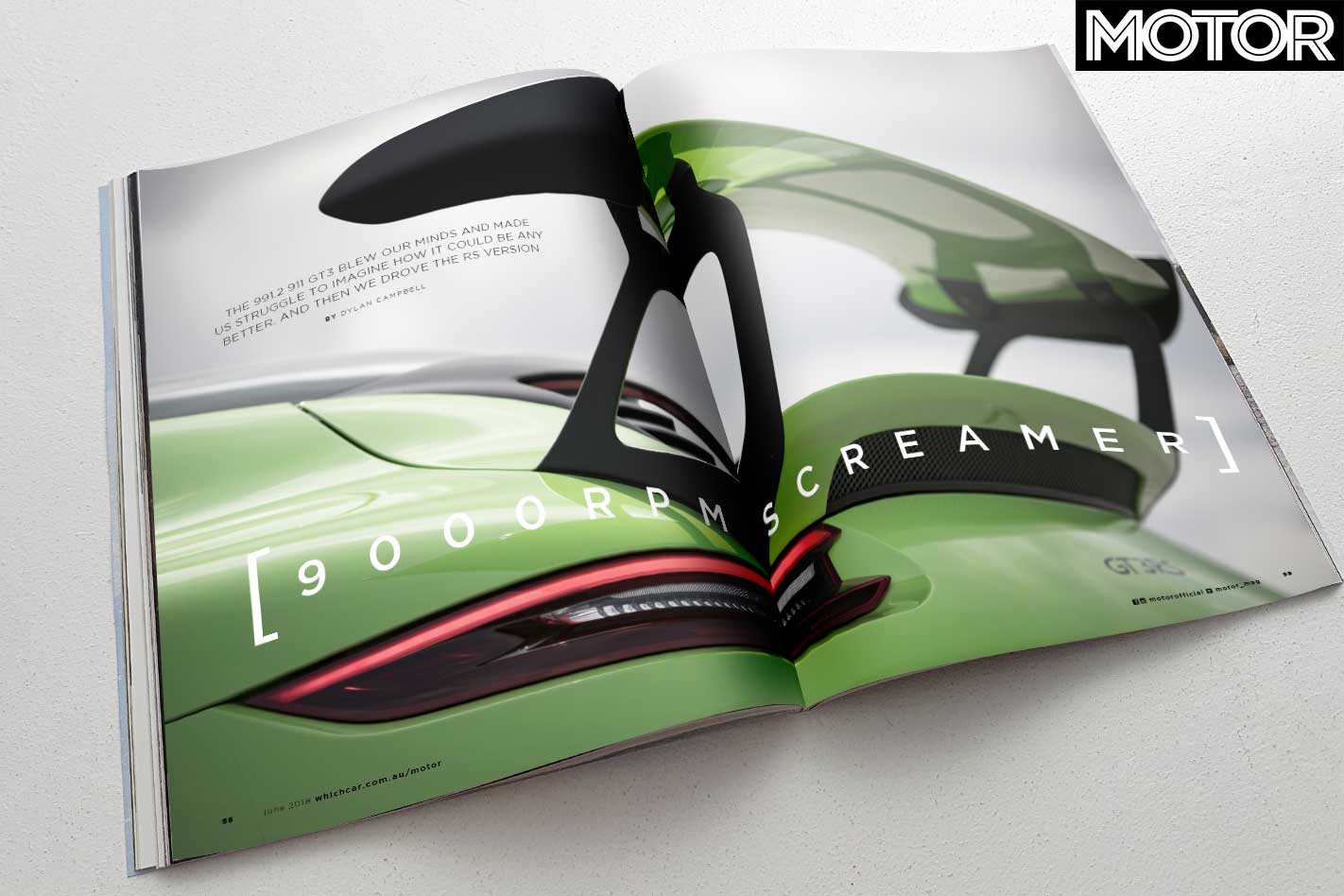
Proper aero and downforce, as well as its traditional light weight, make this the angriest 9000rpm atmo Porsche to ever exist.
Audi R8 RWS Hits Australia
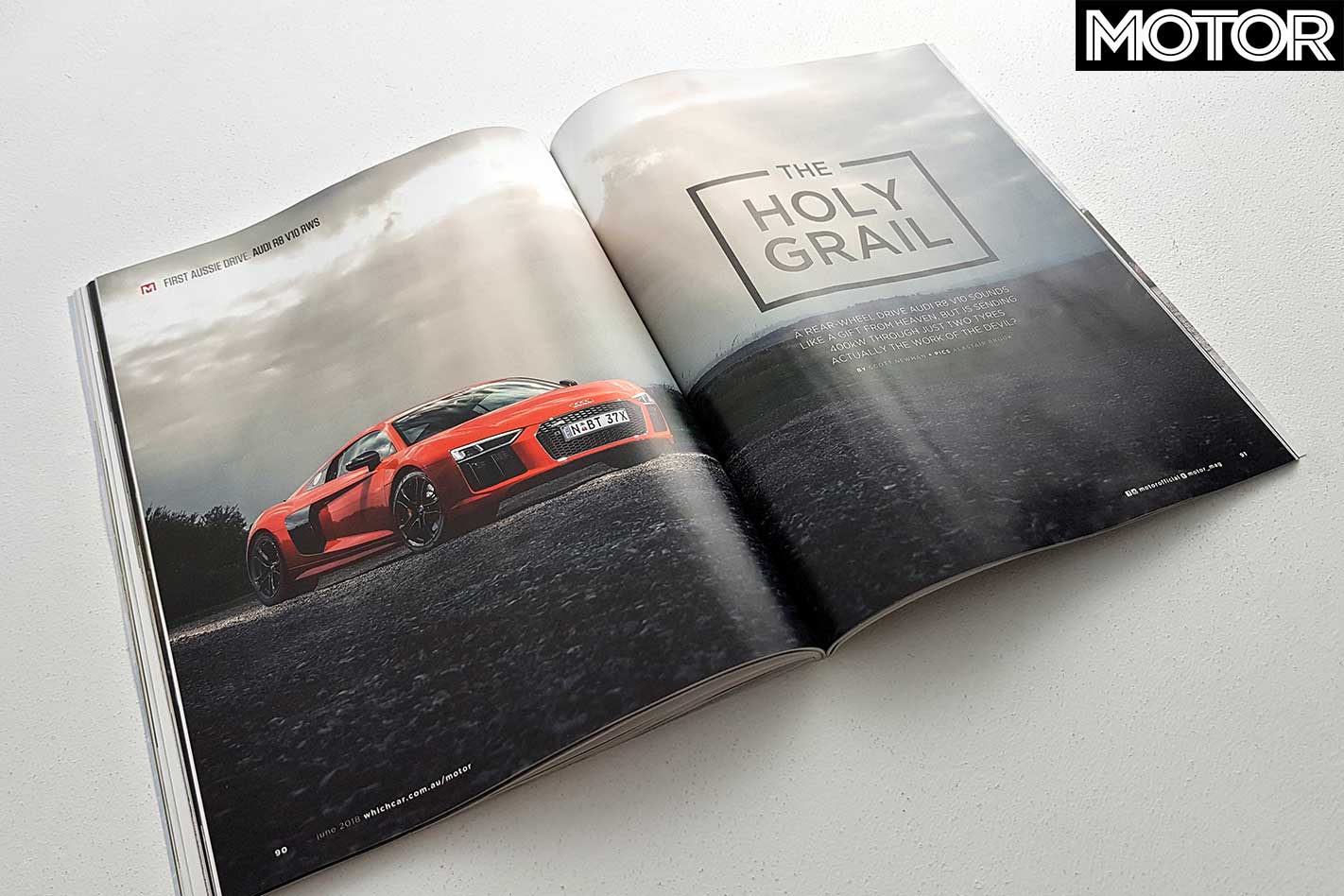
The rear-drive R8 could be the ultimate example of ‘less is more’, so we took one through the countryside to find out if it really is a gift from the heavens.
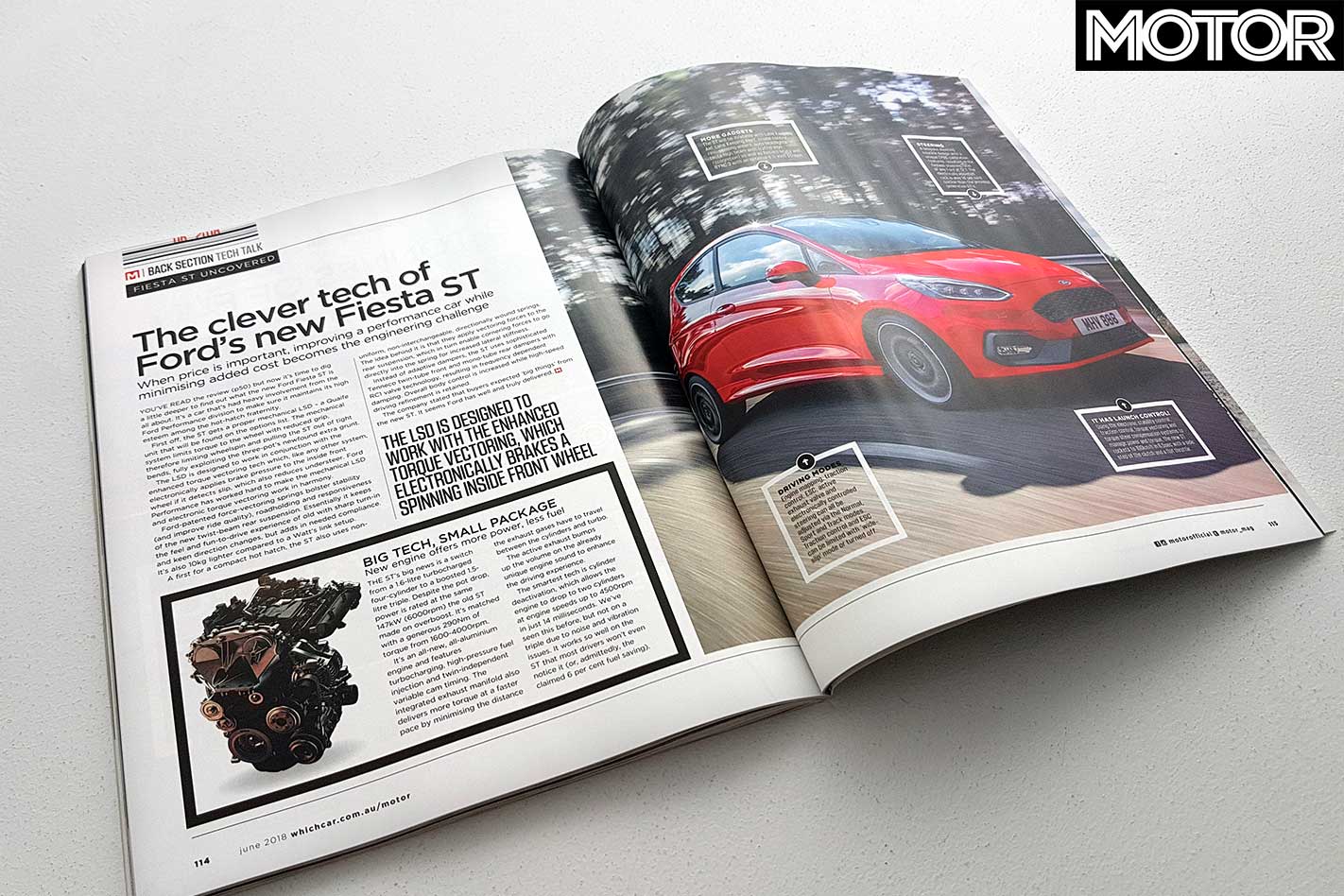
One of the best drivers’ small hatches is back, though it’s got a lot more kit and one cylinder less. We hit some twisting European roads to see if it retains its world-beating appeal.
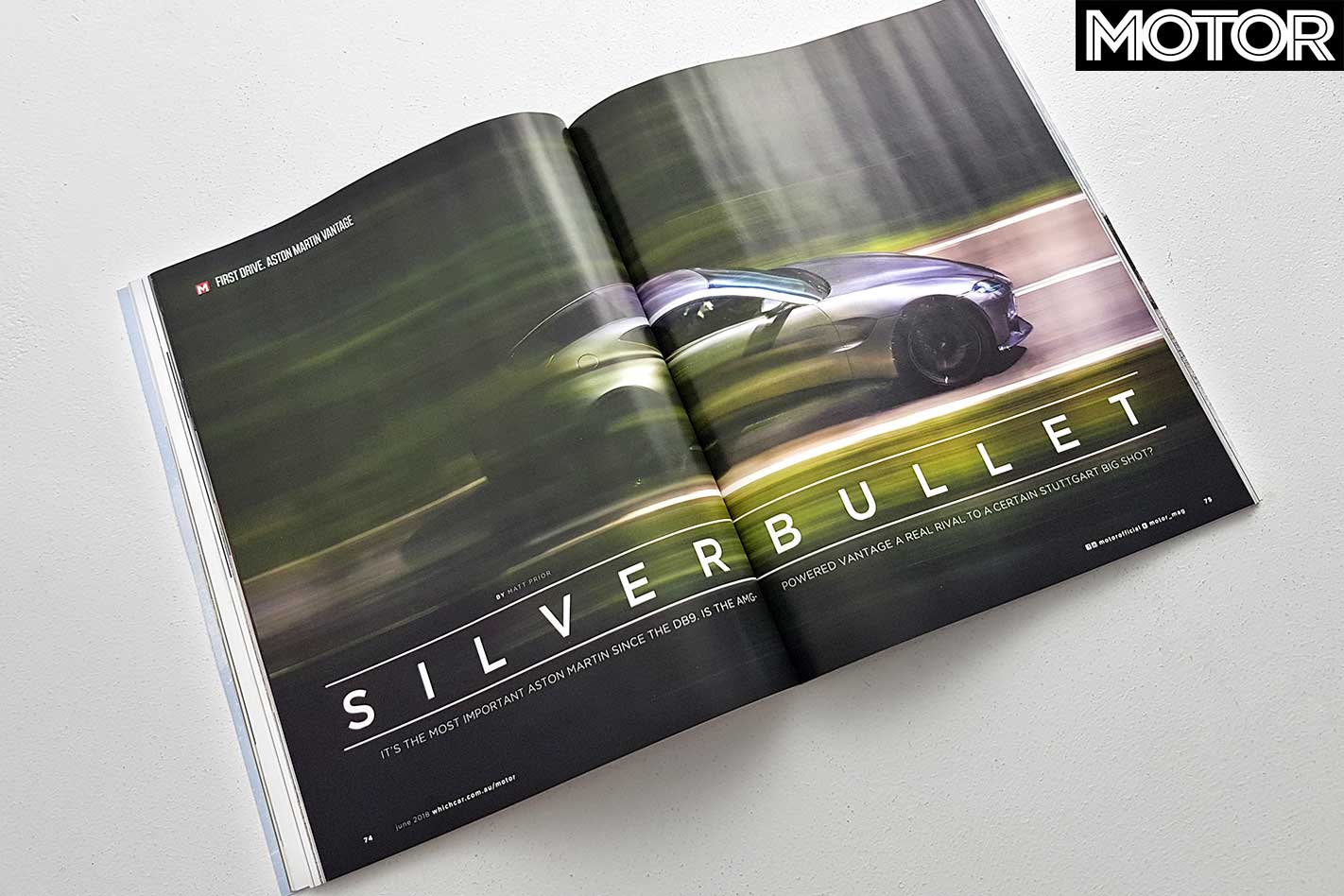
Gaydon’s bet the house on its all-new Vantage, even calling it a ‘911 Hunter’. We take it for a spin to see just how grown up Aston’s new baby is.
Honda’s ‘R’ Cars Past and Present
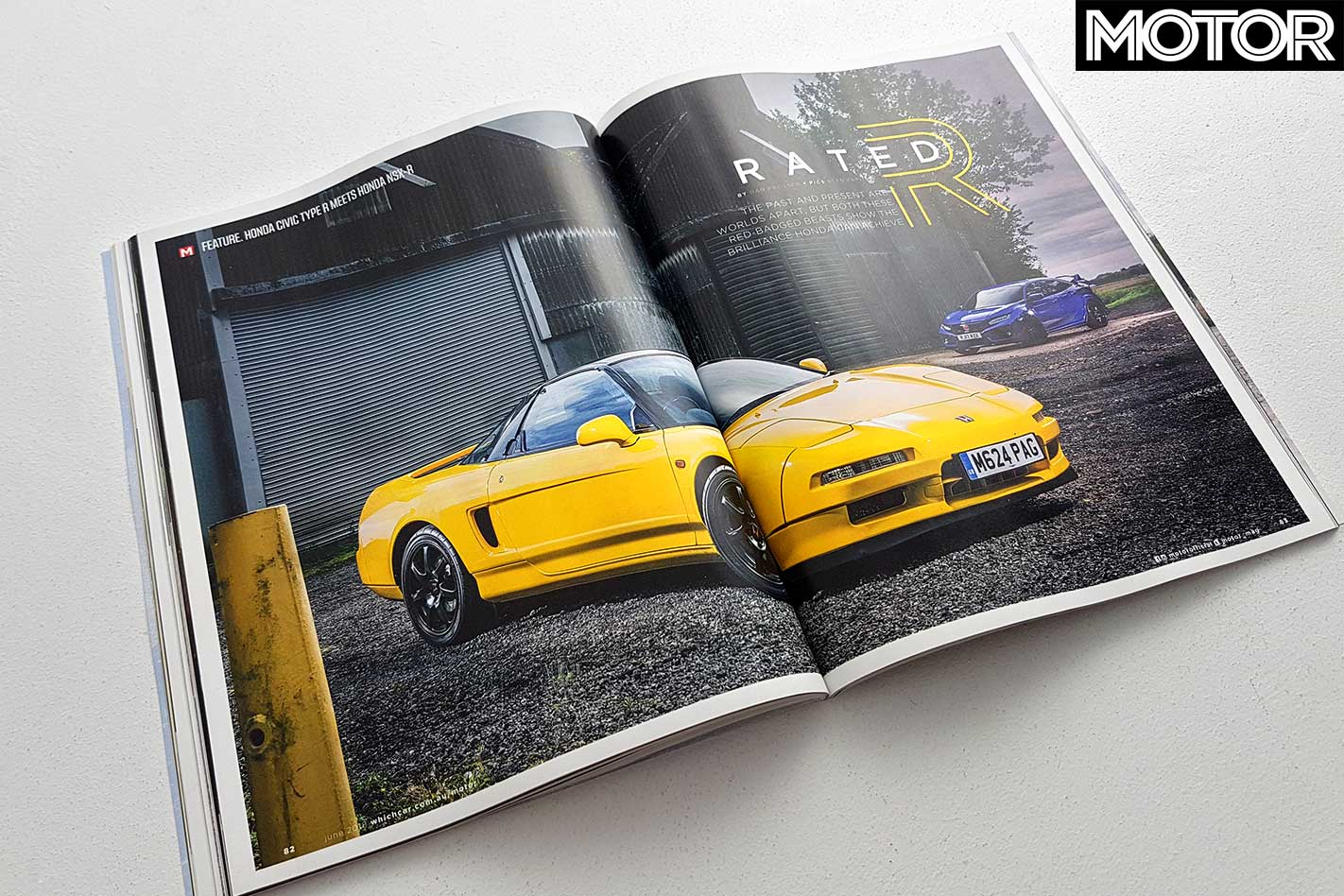
Anything ‘Type R’ holds a special place in Japanese performance car fans, so we set the legendary Honda NSX-R up against then new kid.
Under the Skin of the 2018 Ford Mustang
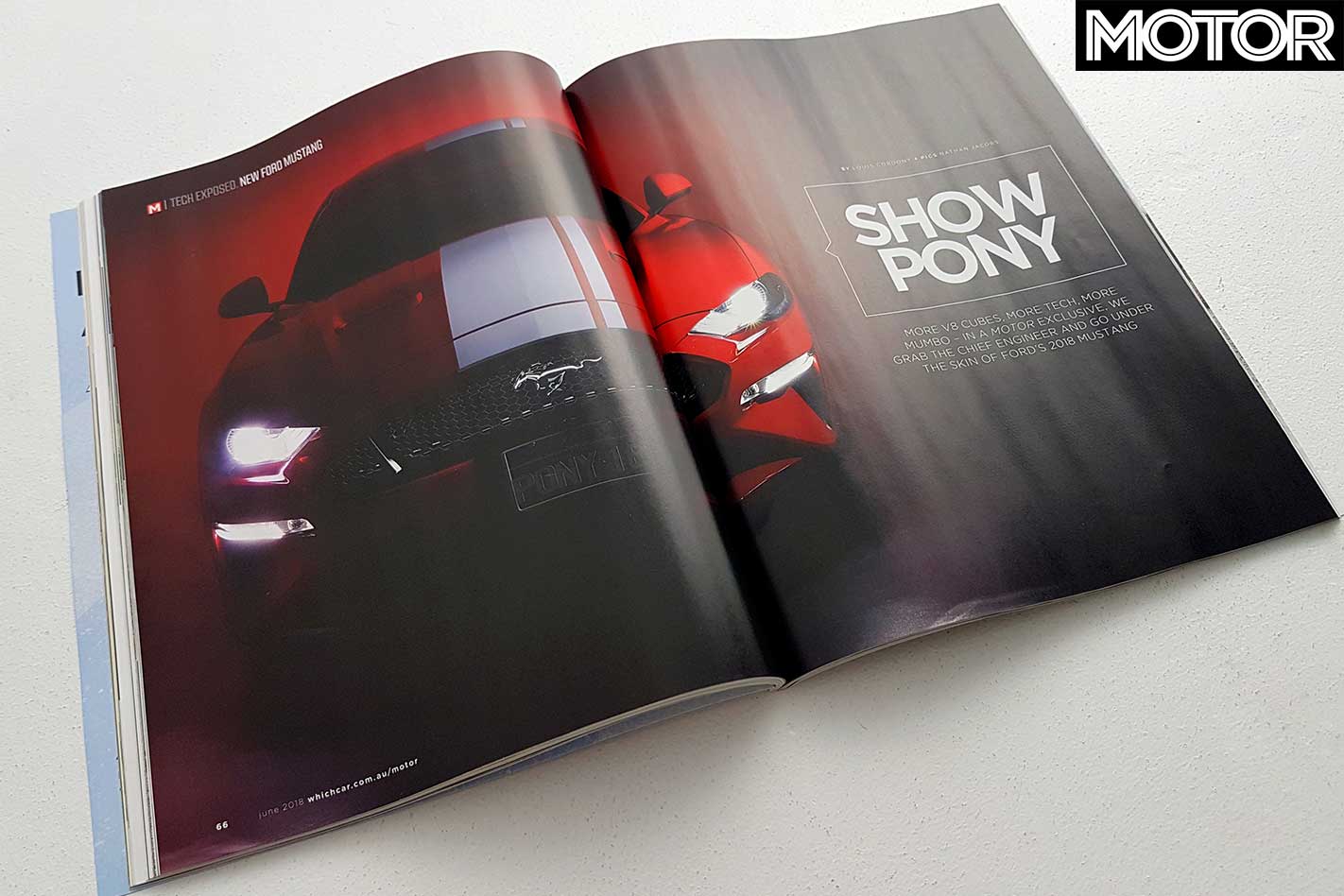
The new Mustang is faster and fitter than ever, but what makes that so? We unravel the engineering behind Ford’s Camaro-hunter.
Five Minutes with Stefano Domenicali
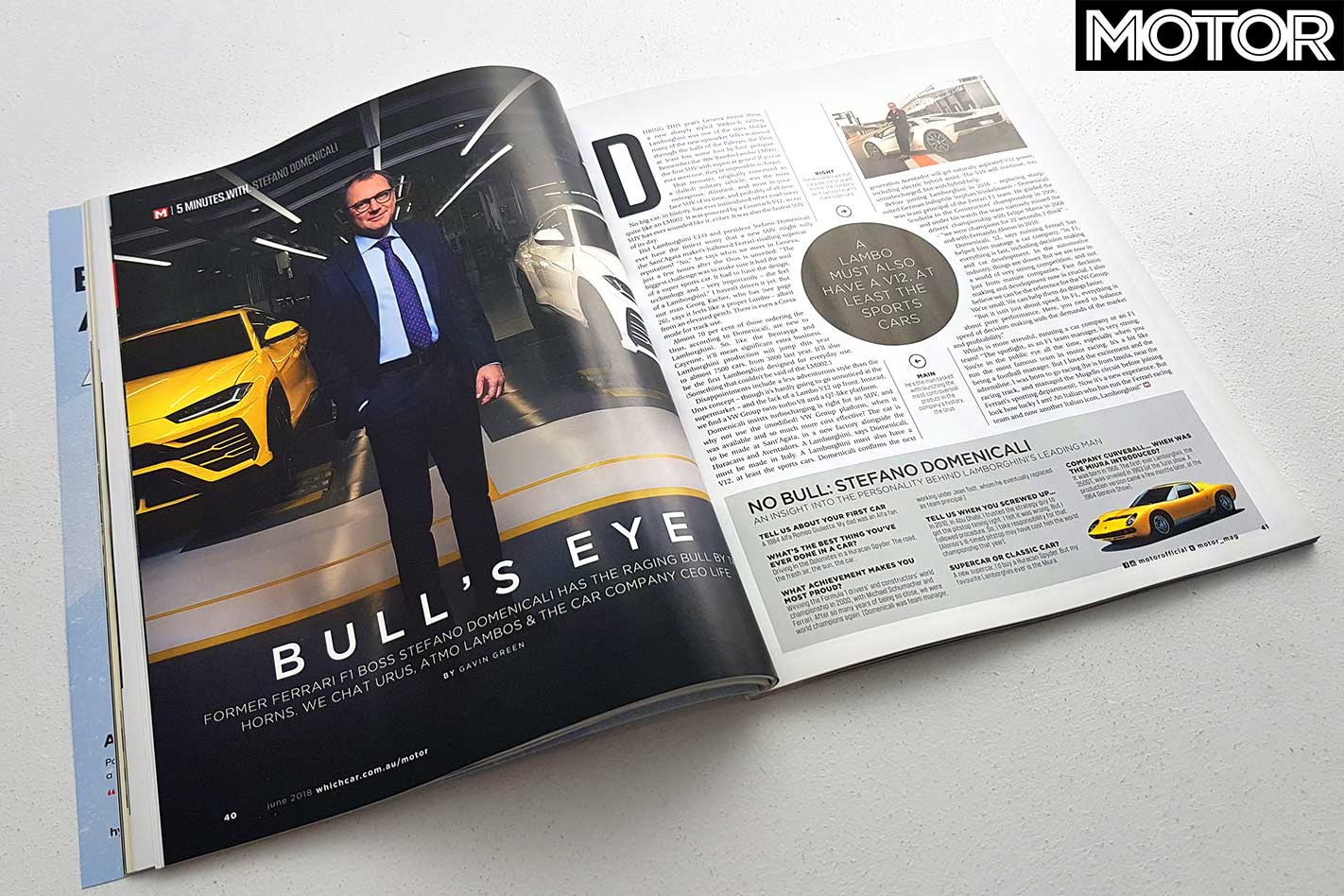
After trading life as the head of Ferrari’s F1 team for the big chair at Lamborghini, Domenicali is now tasked with launching the most financially important Lambo ever, the Urus SUV.
First Fangs
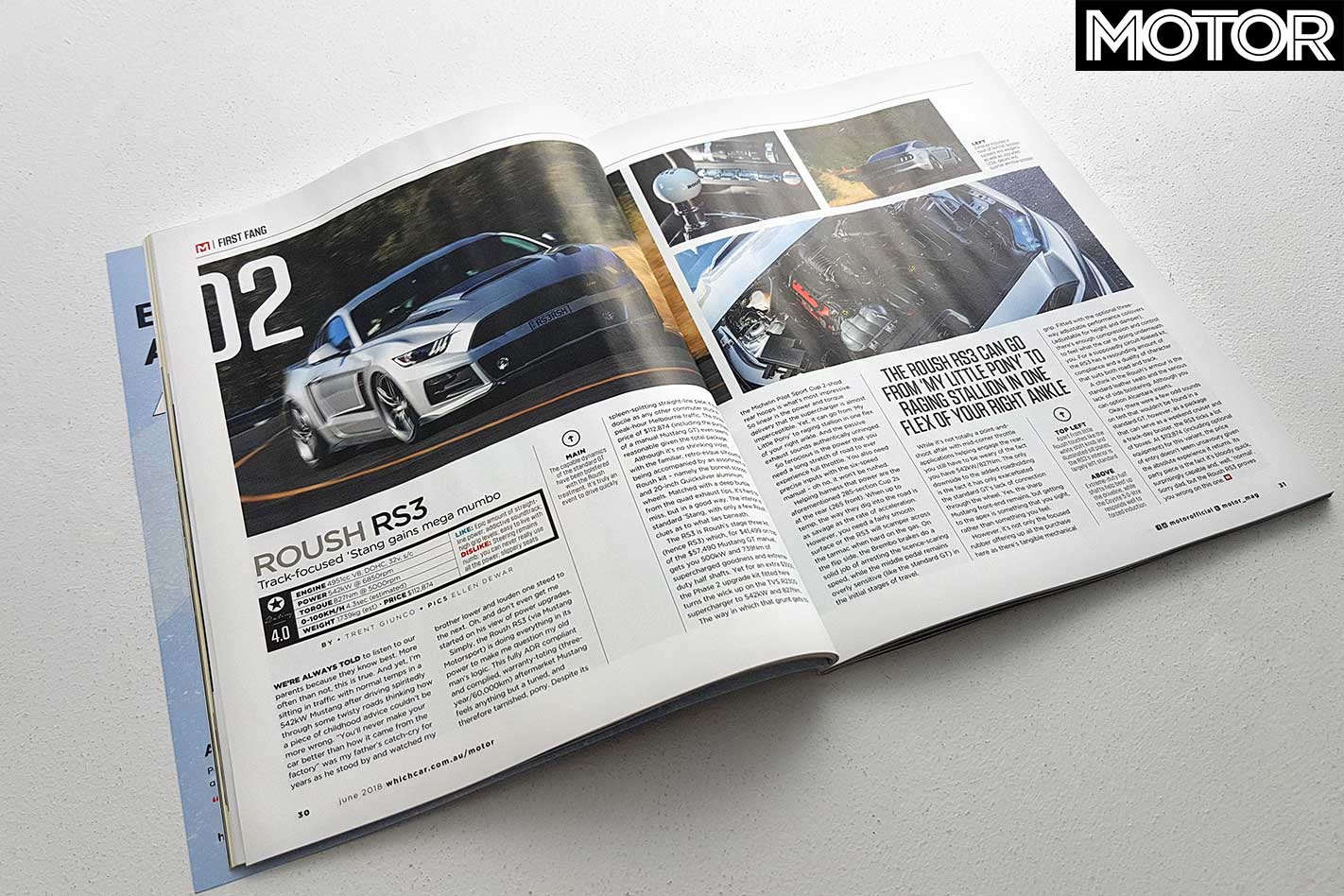
All this talk about the Lambo Urus has you wondering what it’s like? Wonder no more. We also steer a blown Roush Mustang, AMG’s big bad S-Class, and VW’s back-to-basics Golf R Grid.
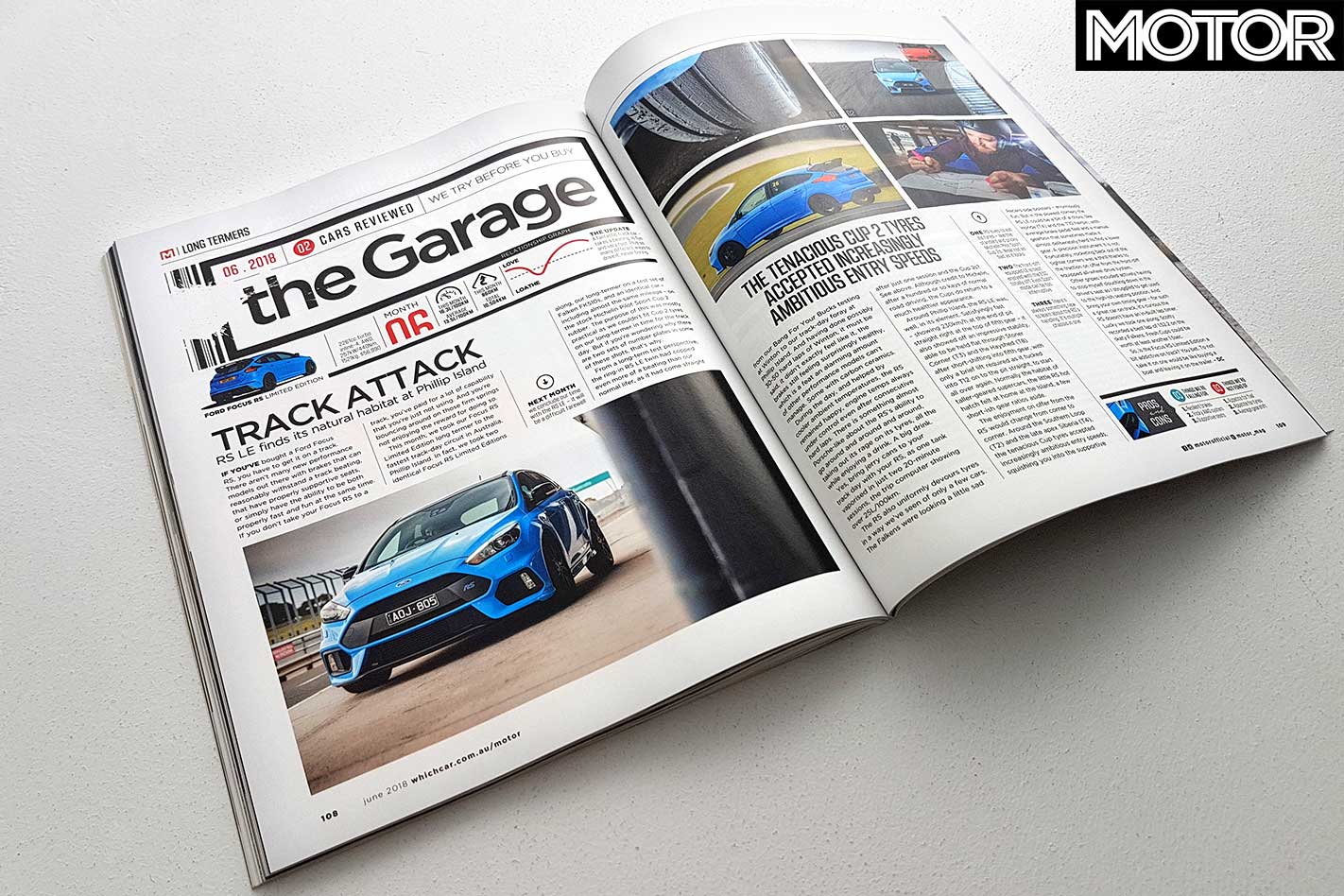
The Ford Focus RS LE and Infiniti Q50 Red Sport long-termers hit the track, but in very different ways.
Columns
It wouldn’t be the same without Morley’s rant, Keen’s irreverence, and a word from Green.
And more!
We’ve still got plenty of news, features, and fun stuff we haven’t even mentioned. Go find out for yourself!
It wasn’t long after the start of the SUV boom when everyone wanted to jump on board. Everywhere, road cars were tortured and teased into high-riding, off-road styled wagons and hatches to feed a growing appetite for our adventurous intentions wrapped in city-bound limits.
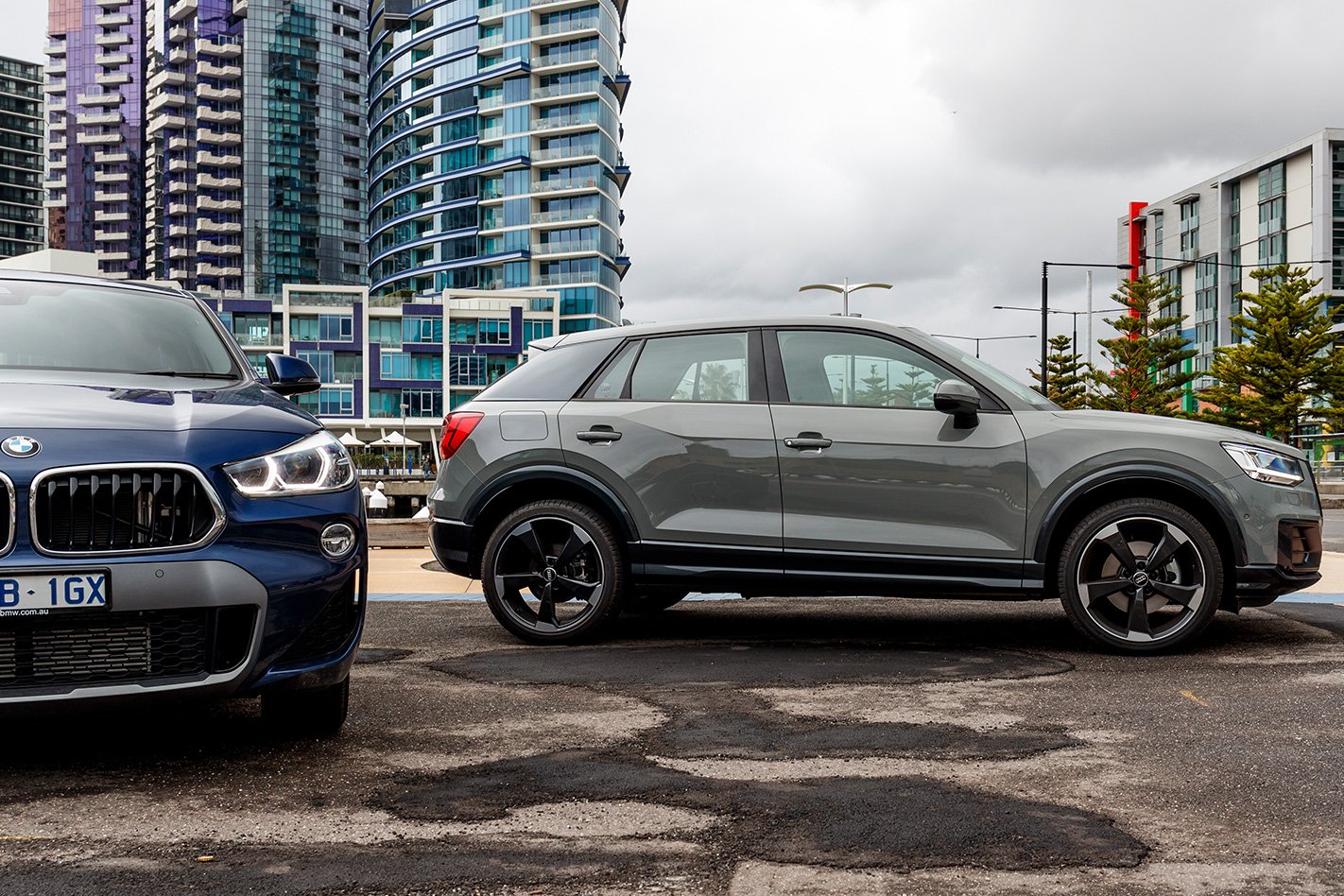
Things now appear to have come full circle as some SUVs focus on becoming more car-like in their look, size and feel. Nowhere is that more apparent than in the small luxury segment, where after years of believing that bigger is better, size suddenly matters. We see that in the shape and form of the Audi Q2 and BMW X2, two of the newest entries to one of the fast-growing new-car categories on the market. Small, svelte and handsome, they’re almost a new breed within their class.
We pitch these two new entrants against each other to decide which one offers the most compelling package for luxury car buyers wanting to jump in on the high-riding boom while making the least compromise that the rush to high-riding road cars tends to bring – excess mass, wallowing centres of gravity and higher fuel use.
Here, we look at the German-built Audi Q2 Sport TFSI quattro, and its most direct rival from Bavaria, the BMW X2 sDrive 20i M Sport. Straight away, there’s already a wedge between them; the BMW brings sharp, going-fast-while-standing-still styling; the Audi understated elegance and poise. Make up your own mind about their distinctive looks.

Price and equipment
Audi Q2: At $48,500, the Q2 looks something of a bargain in its class. As well as a 140kW/320Nm turbo engine, you get a car fitted with 18-inch alloys, eight-speaker audio system, dual-zone climate control, front- and rear-parking sensors linked to the reversing camera, an electronically controlled front differential, dusk-sensing LED headlights and tail-lights with directional indicators that hint at the direction in which you’re moving, low-speed automatic emergency braking with pedestrian detection, a speed limiter, leather trim on seats, rain-sensing wipers, an electric parking brake, electrically operated tailgate with locking mechanism, a voice controlled interface for the multimedia system, and ventilated front brakes.
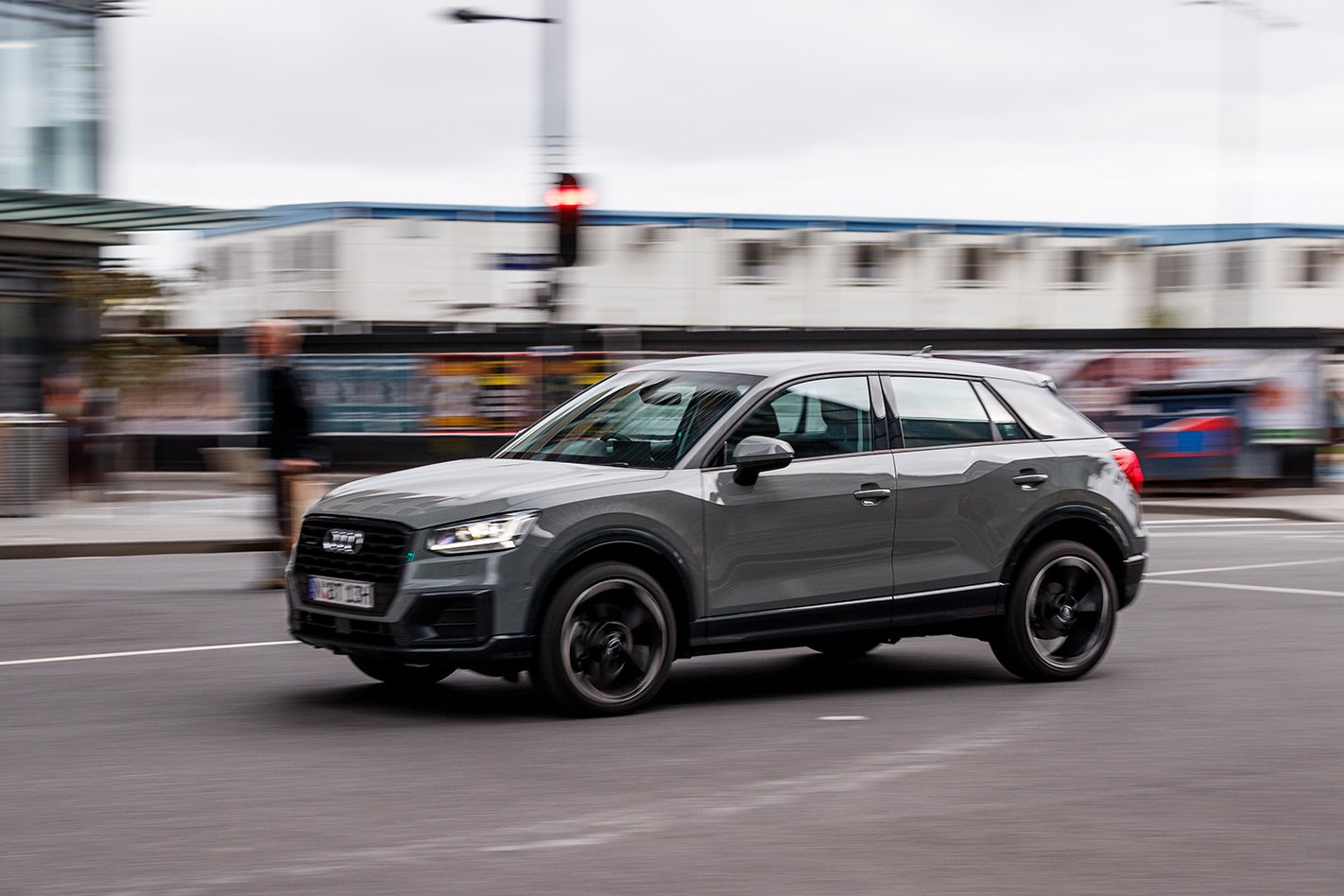
Significantly, too, it gains Audi’s quattro all-wheel-drive system.
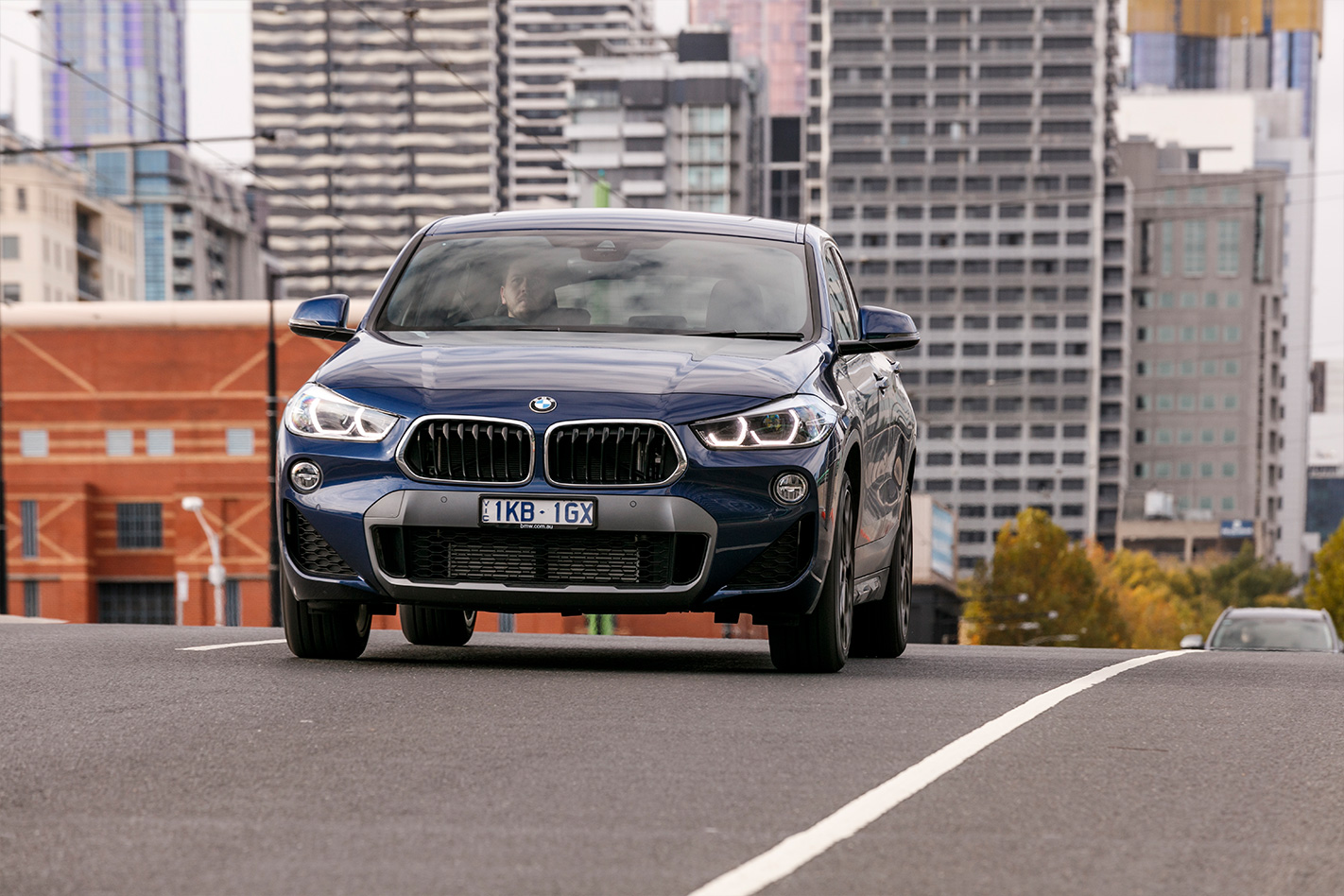
BMW X2: Priced from $55,900, the more expensive, front-wheel-drive X2 pretty much apes its Q2-badged rival quite closely, although there are some differences.
Of note, the X2 sits on 19-inch alloys by default, only gets six speakers with its audio system, the rear seats gain an armrest with cupholders, and twin air-conditioning vents, the tail-lamps use incandescent rather than LED lights, and clever software can assist you to steer the X2 into a car park. The X2 also ups its stopping performance with ventilated rear discs instead of the Q2’s solid units, and automatic speed sign detection will let you know if the posted speed limit has changed without you noticing.
Winner: Audi Q2
Interior and connectivity
Audi Q2: Perceived quality is all about that first impression; the moment you open the driver’s door and take in the place where you’ll spend most of your time during the ownership experience. Audi has that in spades. You look at an analogue instrument cluster split by a 3.5-inch display, the 6.5-inch multimedia interface is nicely integrated, all the switchgear is tactile, and most of the surfaces are soft to the touch, including the leather-wrapped steering wheel.
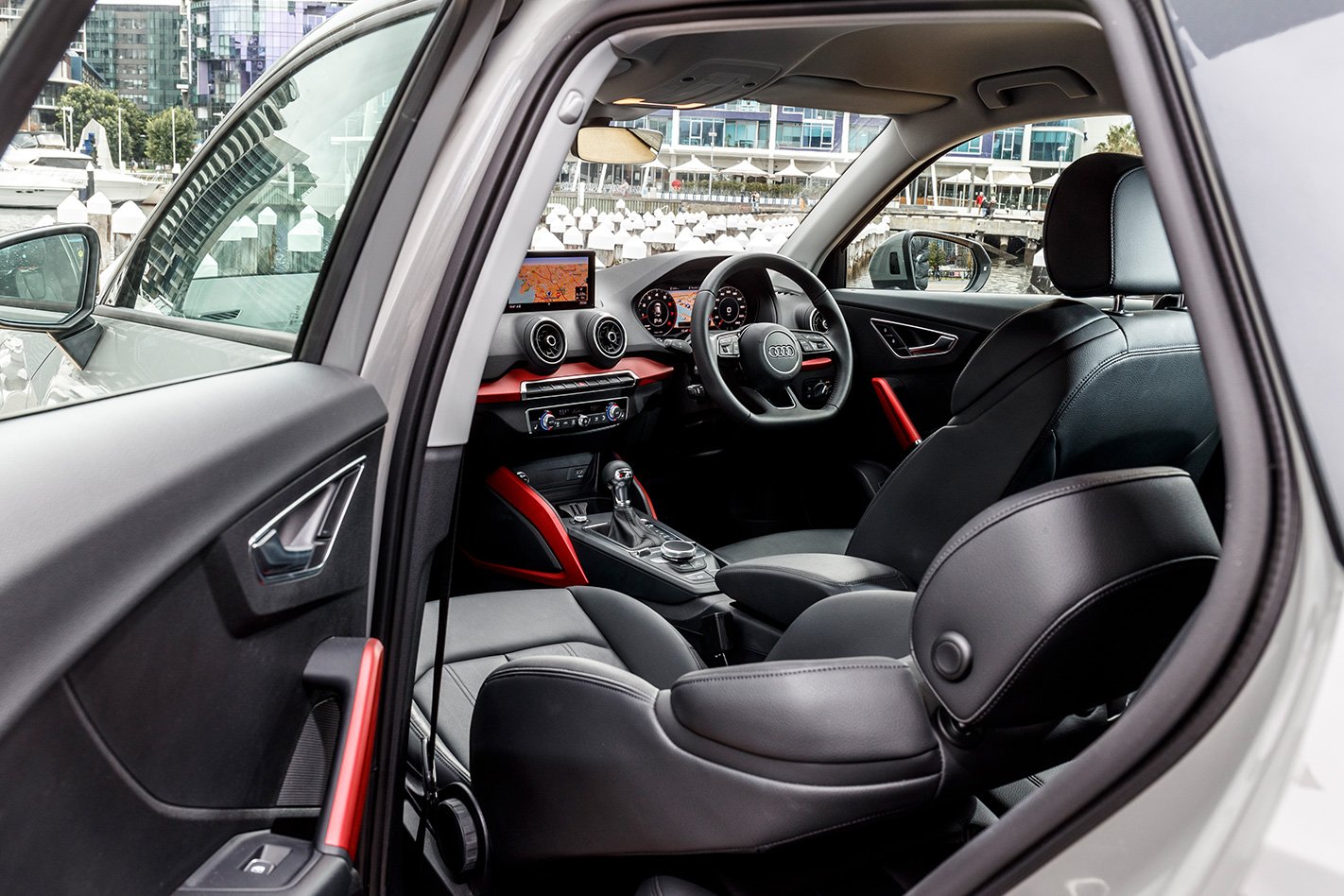
The front seats are very comfortable. Jump in the back and things sour just a little; there’s more hard plastic surfaces, no air vents and the comfy 60:40 split-fold rear bench lacks an armrest and cupholders.
Behind the rear bench is a 355-litre boot. Both Android Auto and Apple CarPlay are available, but are not a patch on Audi’s beautifully detailed and supportive smartphone integration.
BMW X2: The BMW’s interior is more business-like and analogue than the Audi’s. Heavy with dark contrasting trim, scattered with buttons and switches, and skewed ever-so-slightly towards the driver, it’s an unmistakably branded environment.
A smaller 3.5-inch digital screen nests between analogue instruments in the cluster, and the 7.0-inch multimedia screen looks a little like a late addition to the dashboard rather than an integrated part of its design.
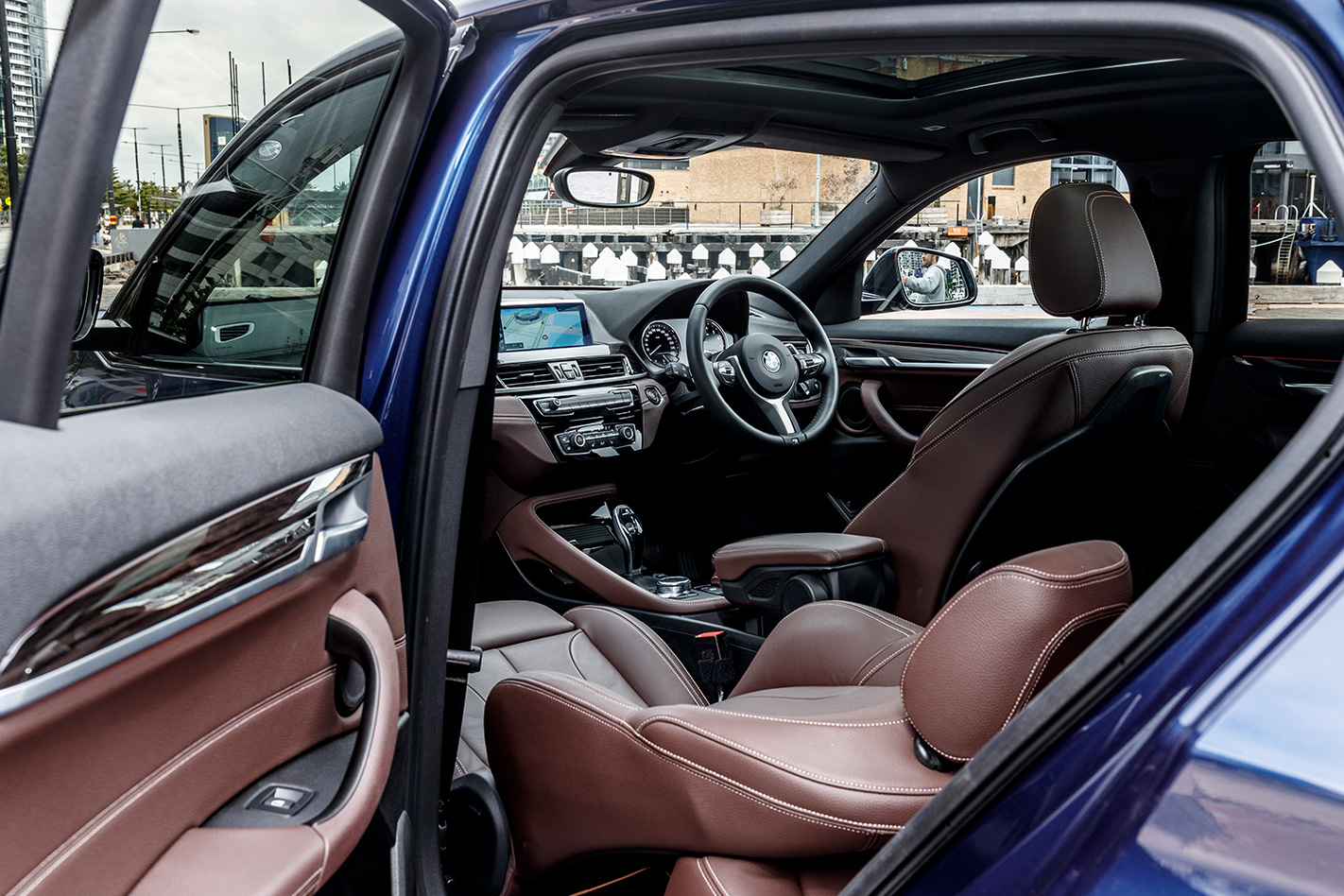
The front seats, though, are very supportive and the driving position excellent. The rear seats, which split-fold 40:20:40, contain flip-up cupholders and also recline over three settings, are a little firm but surrounding you on the door trim are more softer surfaces than in the Audi’s interior. The BMW has a larger 470-litre boot. If you want to add Apple CarPlay as an alternative to BMW’s already comprehensive smartphone support, it’s a steep $479 option.
Winner: Audi Q2
Ride and handling
Audi Q2: The Q2 is a surprisingly competent all-rounder. Apart from a little road roar from the tyres over coarse-chip road surfaces and some wind noise from the mirrors, the cabin is muted, quiet and controlled.
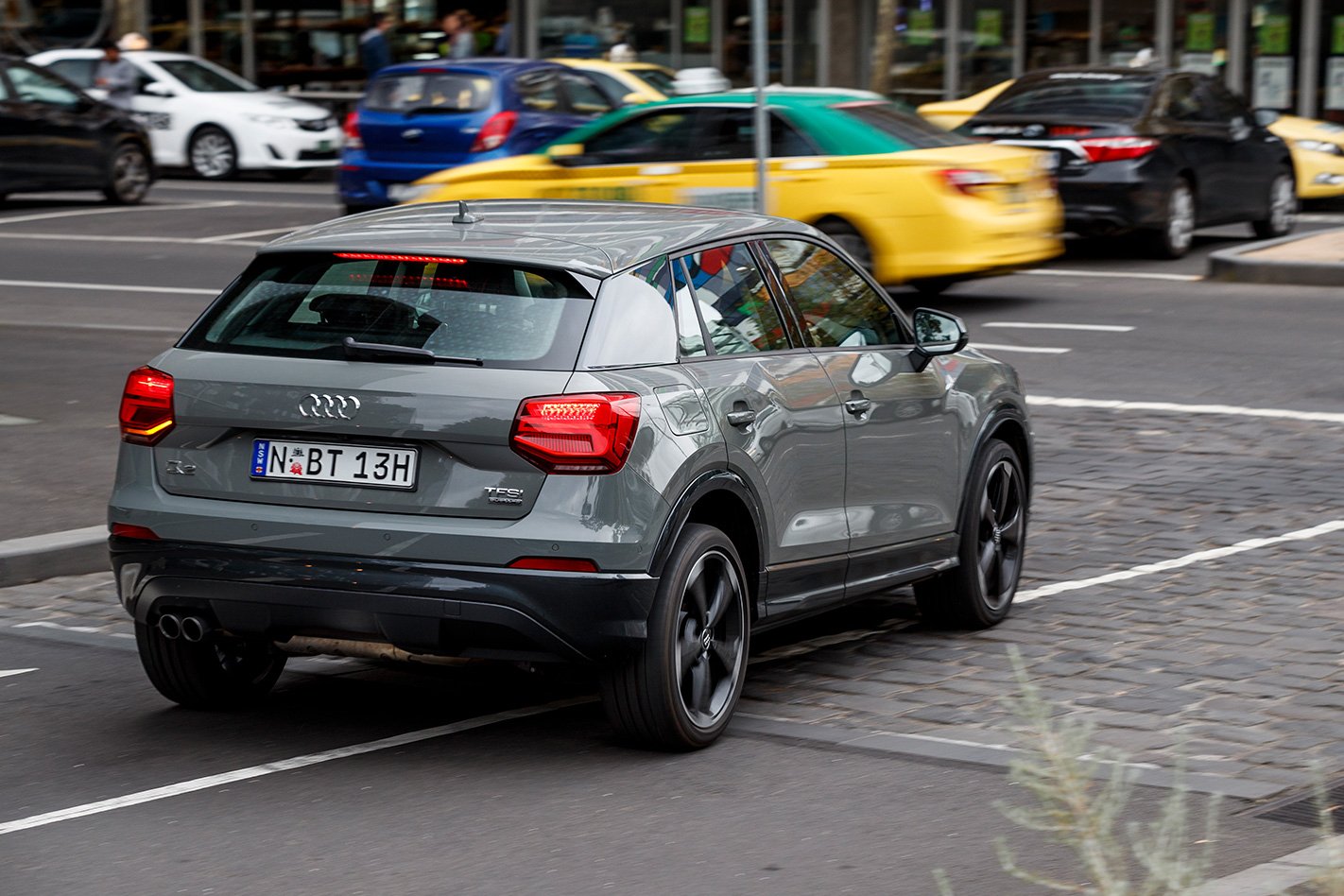
What’s surprising is that it is equally calm and controlled at low speeds over inner city streets as it is charging at speed over chopped and broken rural roads.
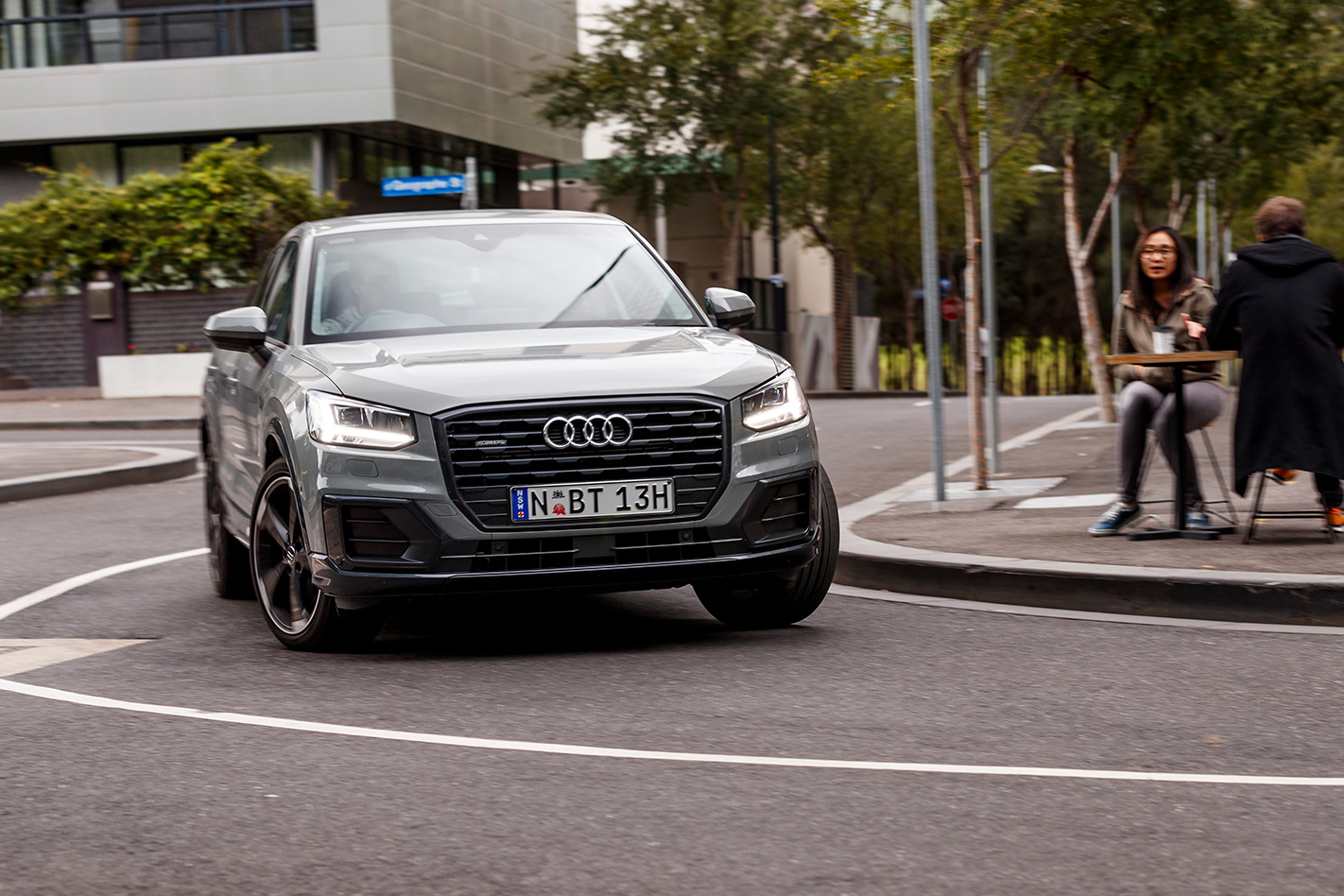
Communicative, albeit light, steering helps with imparting a level of confidence behind the wheel, and the all-wheel-drive system makes the Q2 more forgiving when you start to push the limit of grip.
BMW X2: The slightly longer-wheelbase X2 is an equally surprising all-rounder. Just like the Q2 it’s a composed and quiet performer around town, with the only let-down being a tendency to add a bit of chop to the ride at higher speeds on rougher roads thanks in part to the stiffer sidewalls on the low-profile tyres – BMW favours run-flat rubber over equipping its cars with a space-saver spare.
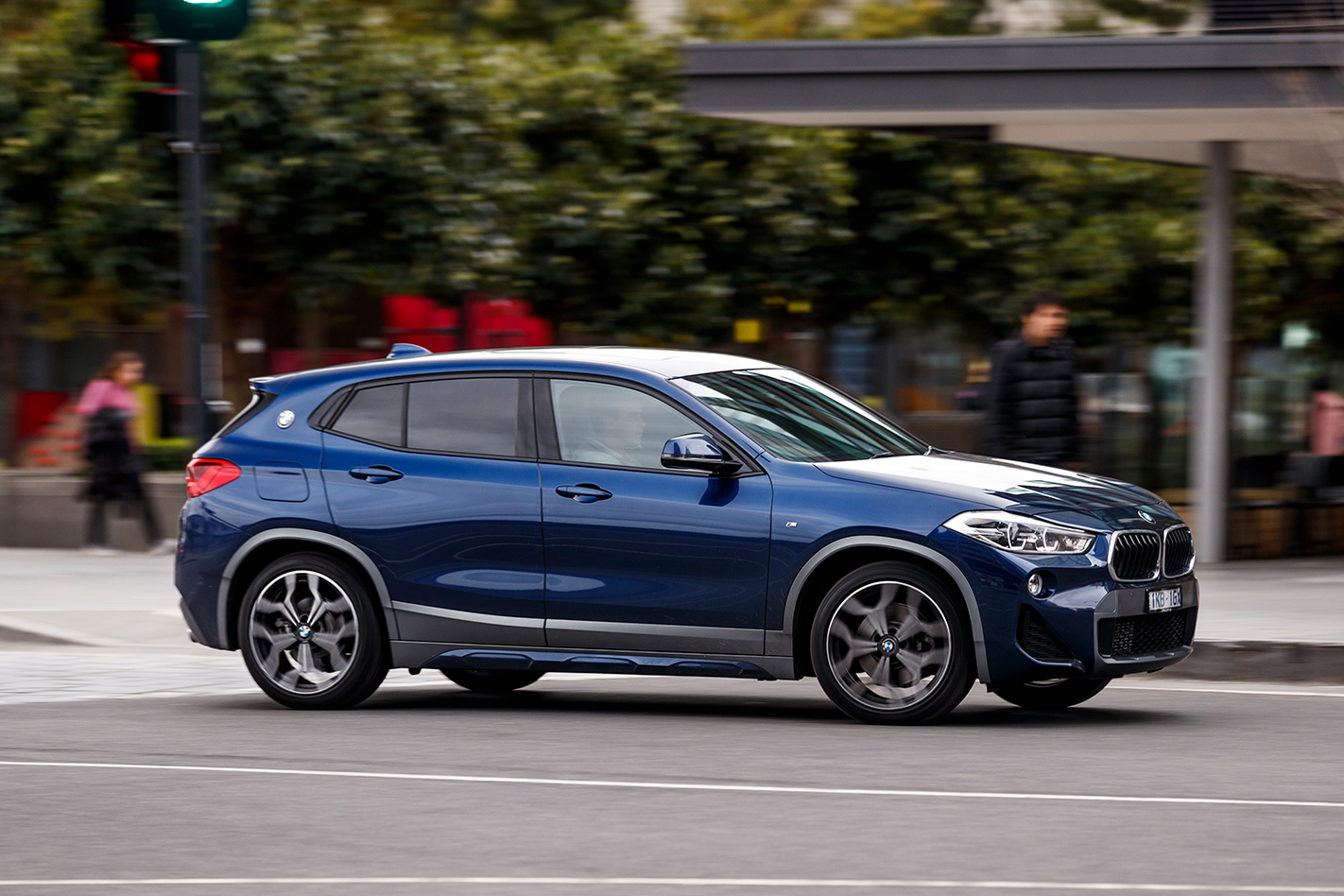
We’d recommend picking up the $400 adaptive dampers, though, as they add an extra level of flair to the X2’s performance.
Otherwise, the communicative, pointy steering is well weighted and direct, carving the BMW through corners with a Mini-like flair – not surprising given the shared DNA between the two.
Winner: BMW X2
Performance and economy
Audi Q2: The Audi’s powerful, responsive turbo 2.0 is quick off the mark, dispatching the 0-100km/h sprint in an official 6.5 seconds against an as-tested 6.7secs, helped by a thunderclap-fast seven-speed dual-clutch auto that can be controlled via steering wheel-mounted paddle shifters. A relatively narrow torque band – it peaks between 1500-4320rpm – saps some in-gear acceleration, but it still feels quick. Fuel use on test hit a 9.0L/100km average compared with a claimed 6.5L/100km, so it’s pretty frugal, too.
BMW X2: BMW’s small SUV will jump from a resting start to 100km/h in a claimed 7.7 seconds, although on test it surprised everyone and bettered that with a 7.2secs. Its similarly powerful and responsive 2.0-litre turbo unit produces its peak torque across a wider band, 1350-4600rpm, meaning it feels more tractable when accelerating to, say, overtake another vehicle, however, hit the accelerator hard from a standing start and torque steer tugs at the wheel.
Like the Audi, the BMW uses a quick seven-speed dual-clutch auto with steering wheel paddle shifters handing control to the driver.
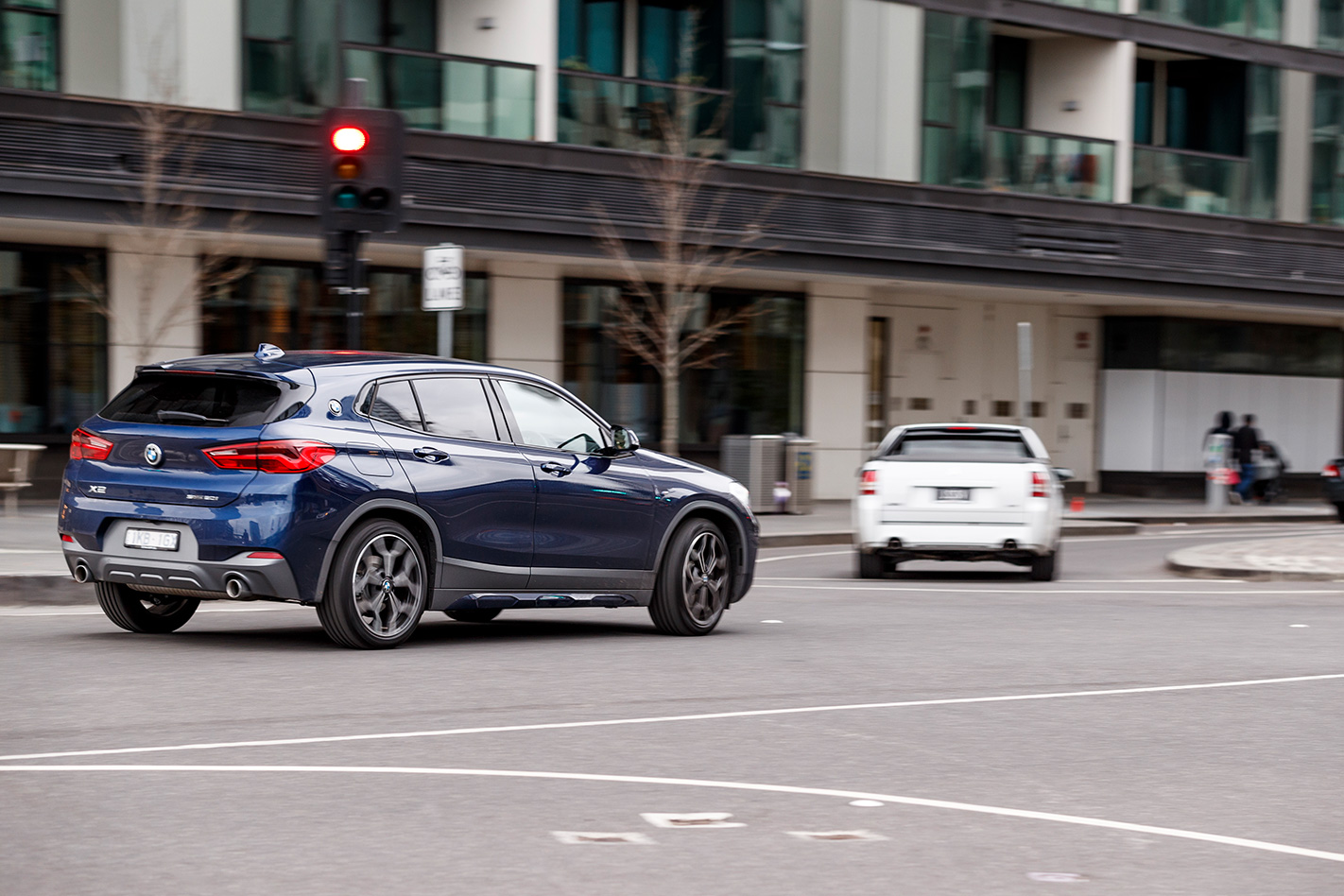
Fuel use on test hit 10.0L/100km against a claimed 6.0L/100km. The BMW also leans towards slightly cheaper 95RON fuel, and not the 98RON tastes of the Audi.
Winner: Audi Q2
Warranty and servicing
Audi Q2: Audi’s products come with three years of unlimited-kilometre warranty, with service intervals spread across 15,000km or 12 months, whichever rolls around first. The warranty includes three years of roadside support in the event of a breakdown.
BMW X2: The X2 is covered under BMW’s standard three-year, unlimited-kilometre warranty. BMW’s vehicles use the car’s electronics to decide when it’s time to book a service, meaning that if you drive it gently, you’ll have fewer trips back to the dealership. BMW also throws in three years of roadside assistance.
Winner: BMW X2
Verdict
The BMW X2 may be the runner-up in this comparison, but that doesn’t give the Audi Q2 a runaway win. In reality, these two cars run a close race for the top spot, and are only separated by the Audi’s consistency across all the categories compared with the X2’s only real flaws – its higher pricing, an expensive options list and hints of torque steer when you drive it enthusiastically.
If you were at MotorEx 2018 last weekend, you might have noticed a Holden Commodore sitting on a set of Simmons wheels.
But we’re talking about a specific Commodore, a front-drive ZB RS 2.0-litre turbo, owned by Melbourne-based VCM Performance.
It’s riled up some unfavourable reactions on social media, but VCM director Mario Pancione takes it in stride. It could be because he knows there’s potential for more than just a set of Simmons.
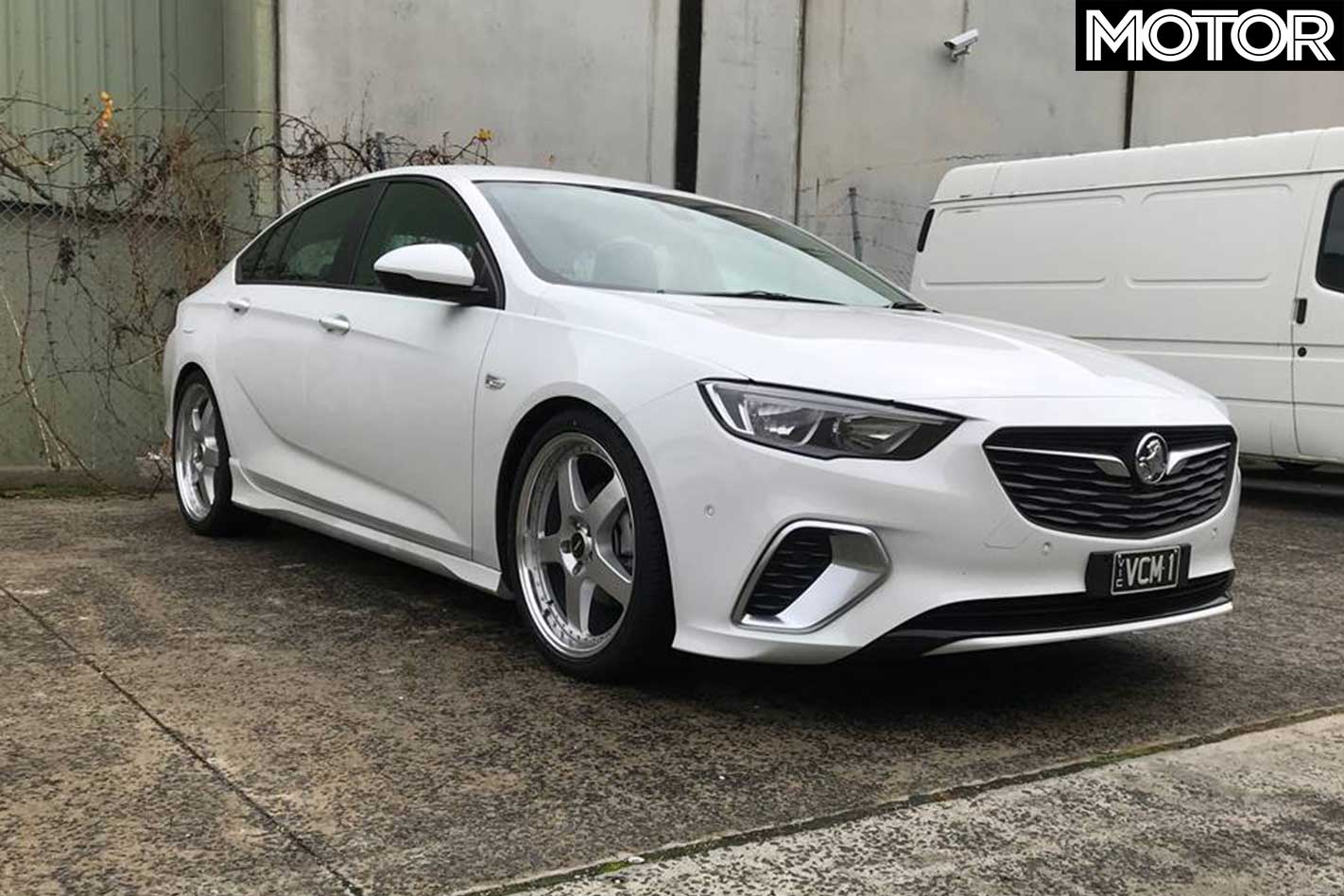
“The main thing so far is that Pedders has used the car to create a lowering spring kit for the ZB, so it looks good and handles better now.
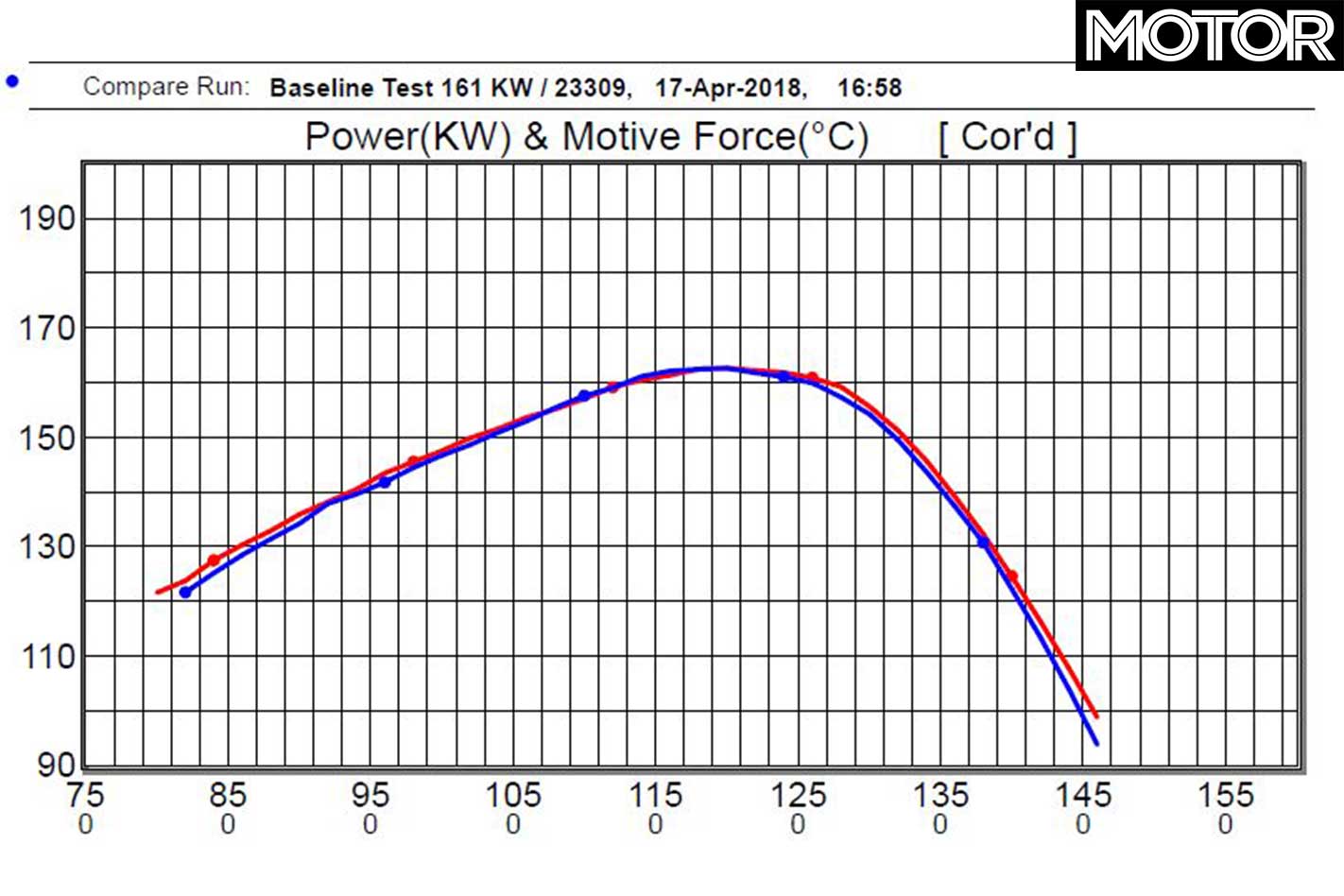
“We’ve also tickled the ECU a little just to test the software and see if it’s responding.”
Pancione might be being modest when he says ‘tickled’ as he adds there’s already been a noticeable jump in performance.
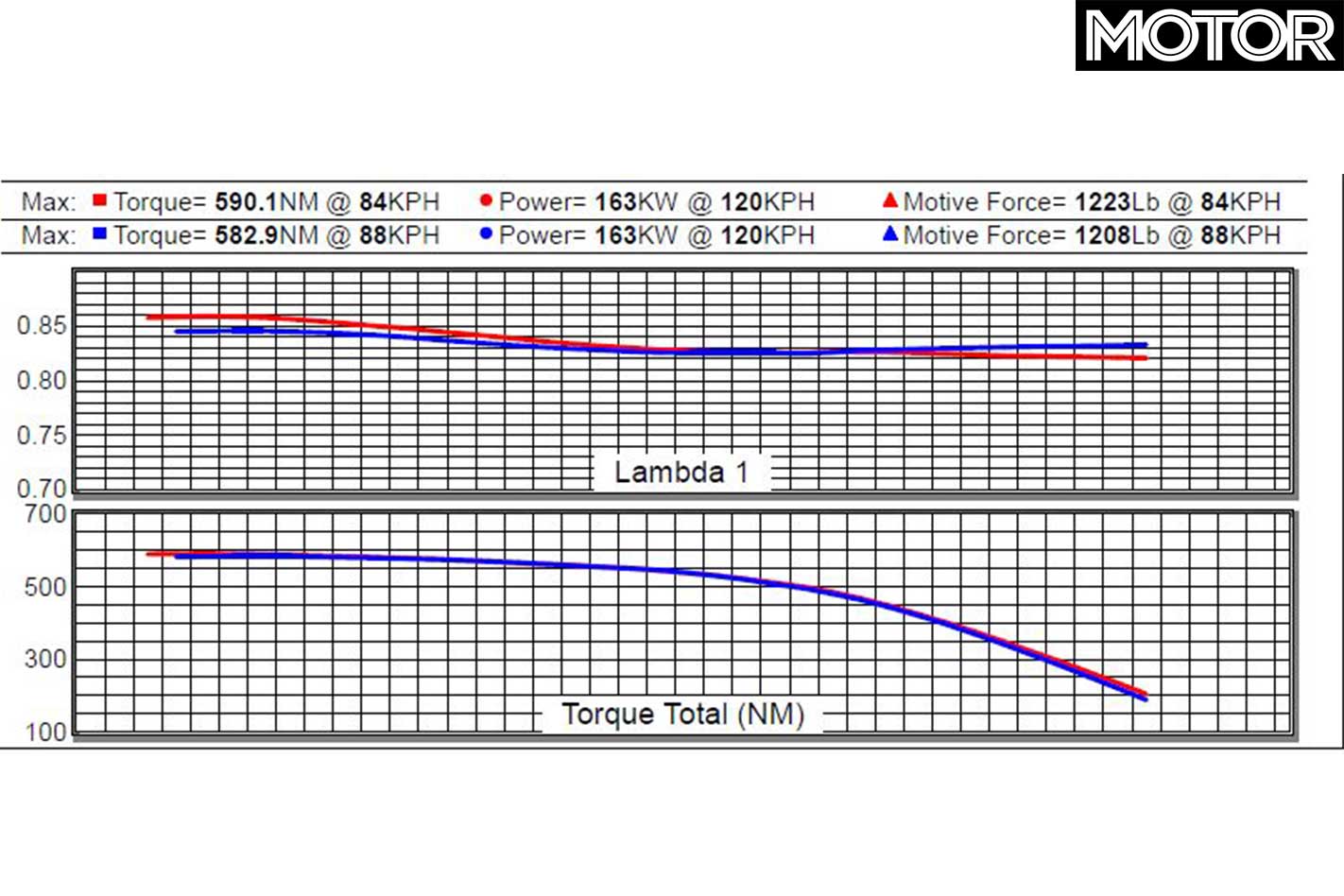
“Next, we’ll wind up the wick with exhaust dump pipes and a hi-flow cat, then changes to the intake, then work on the intercoolers with PWR.”
He says the car is intended to be less a marketing tool for VCM than a showcase car to exemplify what can be done by the tuning industry in Australia.
It might have been a bit of a stir-up at first, but Pancione is sticking to his guns. Even the wheels.
“Well we thought we’d go with the Simmons… because that’s the traditional Commodore thing to do,” he says.
“I feel like this shouldn’t be about the car making huge horsepower, we just want to build a car that’s good to drive and make the most out of what we were dealt.
“It’s not the Commodore we know, but it’s a good car. If we, as an industry, can get behind that, it’ll be good for everybody.”
It’s a definitive Europe versus Japan battle, pitting the continent’s newest light-class hatchback – Volkswagen’s German-designed, Spanish-built Mk6 Polo – against Asia’s finest baby five-door, the sixth-generation Suzuki Swift.
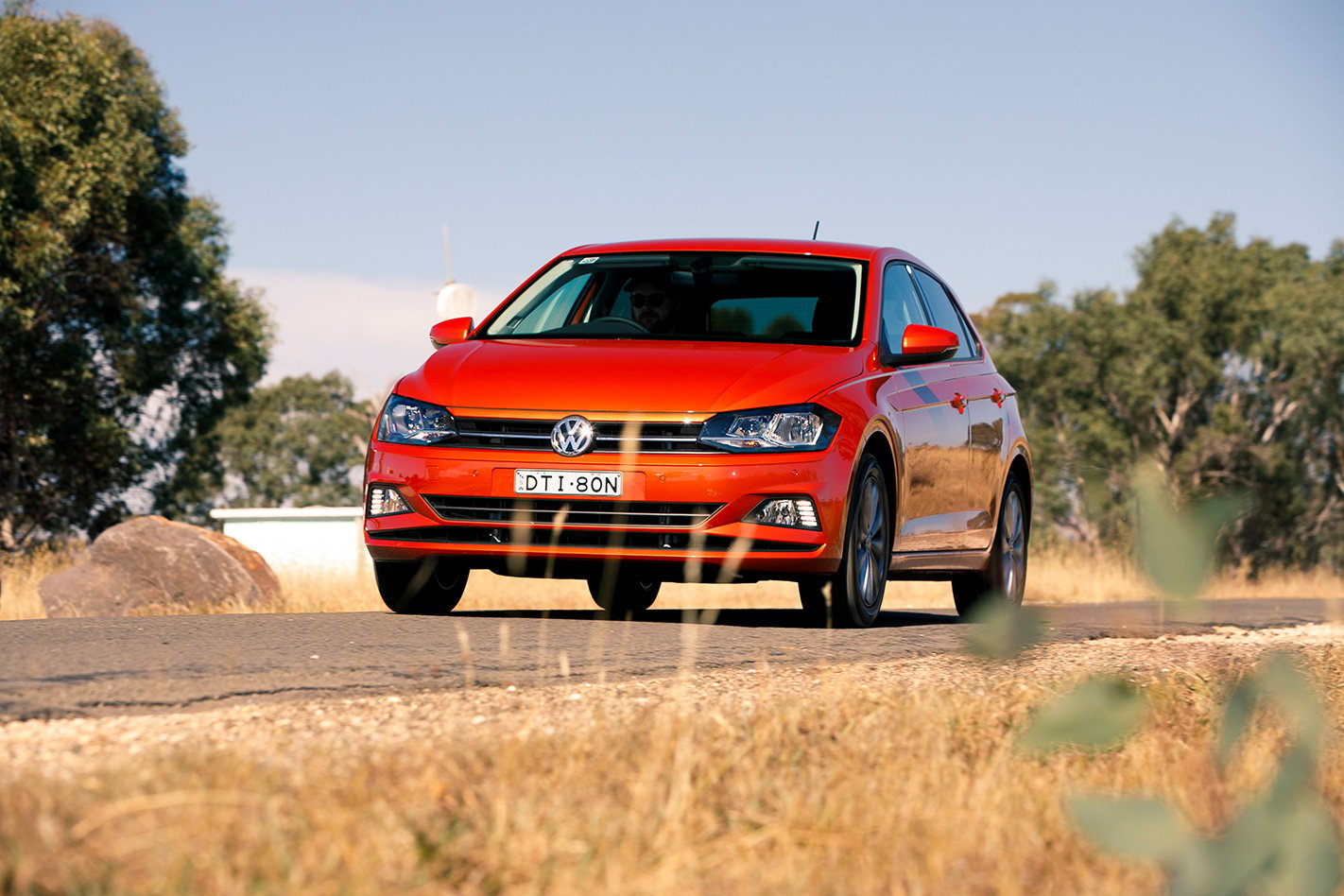
Offering equipment and safety kit worthy of a larger car with warm-hatch levels of driver appeal, you simply can’t lose with either of these two. But is it the Polo 85TSI or Swift GLX Turbo that best delivers, dollar for dollar?
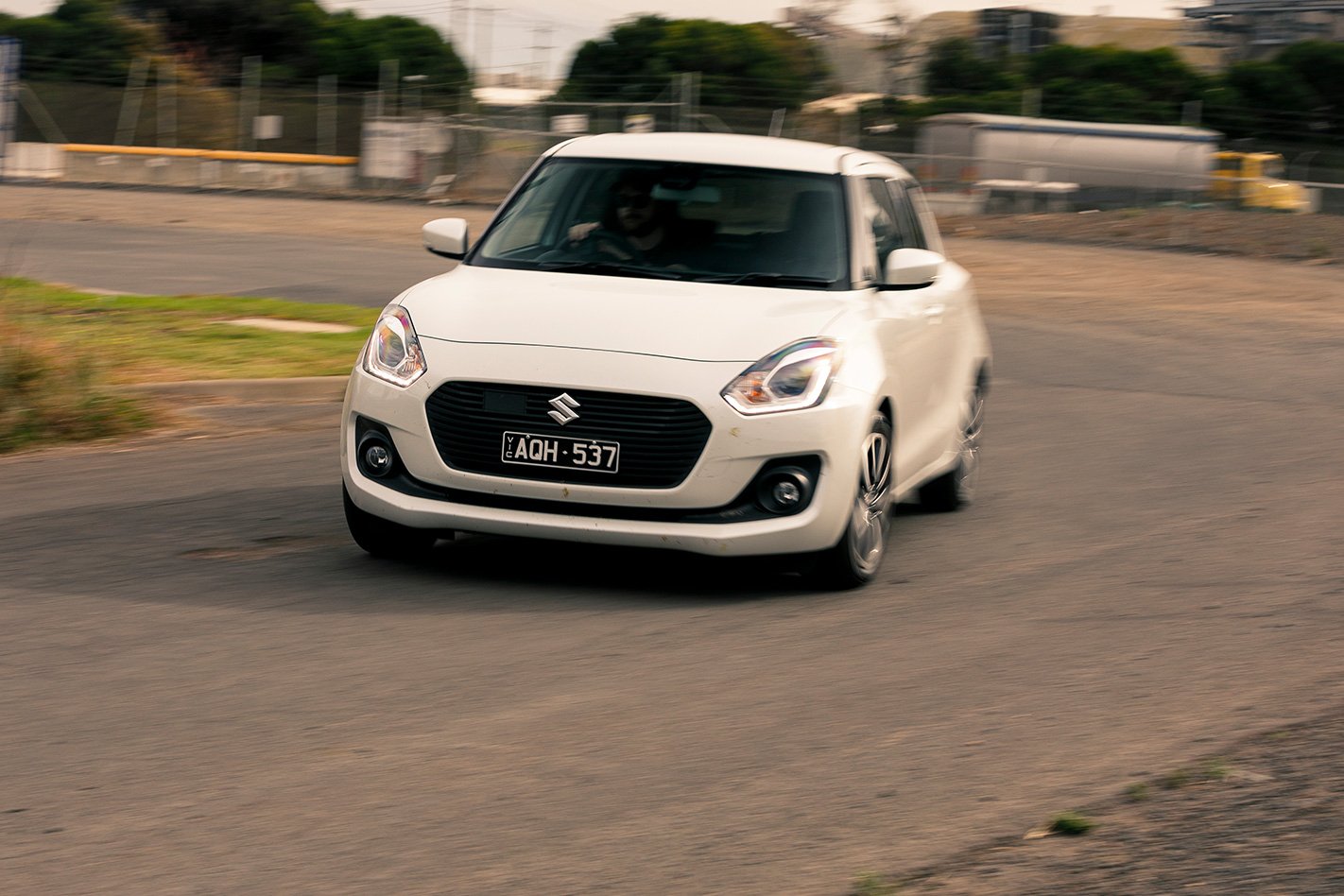
PRICE & EQUIPMENT In isolation, the Swift GLX Turbo (to give its full name, though we’ll simply call it GLX) isn’t a cheap car. At $22,990, it’s approaching mid-level small hatch money, but the fine print will tell you that’s a drive-away sticker, including all on-road costs.
On paper, the Polo 85TSI gets the value gong because you can buy a six-speed manual Comfortline for just $19,490, or $21,990 in seven-speed DSG dual-clutch form. But the Swift GLX’s true competitor is the Polo Launch Edition, which costs a grand more and adds 16-inch alloys, front fogs and rear privacy glass (as per Swift GLX), but also wireless phone charging and dark-tinted LED taillights. And that $22,990 sticker for the DSG version doesn’t include on-road costs.
But Volkswagen is charging just $1000 for drive-away privilege on Comfortline and Launch Edition Polos, and nothing at all on top for the base Polo 70TSI Trendline, which spans $17,990 to $20,490 drive-away.
Despite their range-topping status (if you ignore the Swift Sport and forthcoming Polo GTI hot hatches), there are several equipment anomalies in both cars.
The Swift, for instance, only gets a driver’s auto-down power window (you have to hold the switches for the rest) whereas all four Polo windows get the one-touch treatment. And while Suzuki includes digital climate control and keyless entry and start, the Polo persists with push-button ‘Climatic’ air-con (like its predecessors from last decade) and traditional central locking with a metal key.
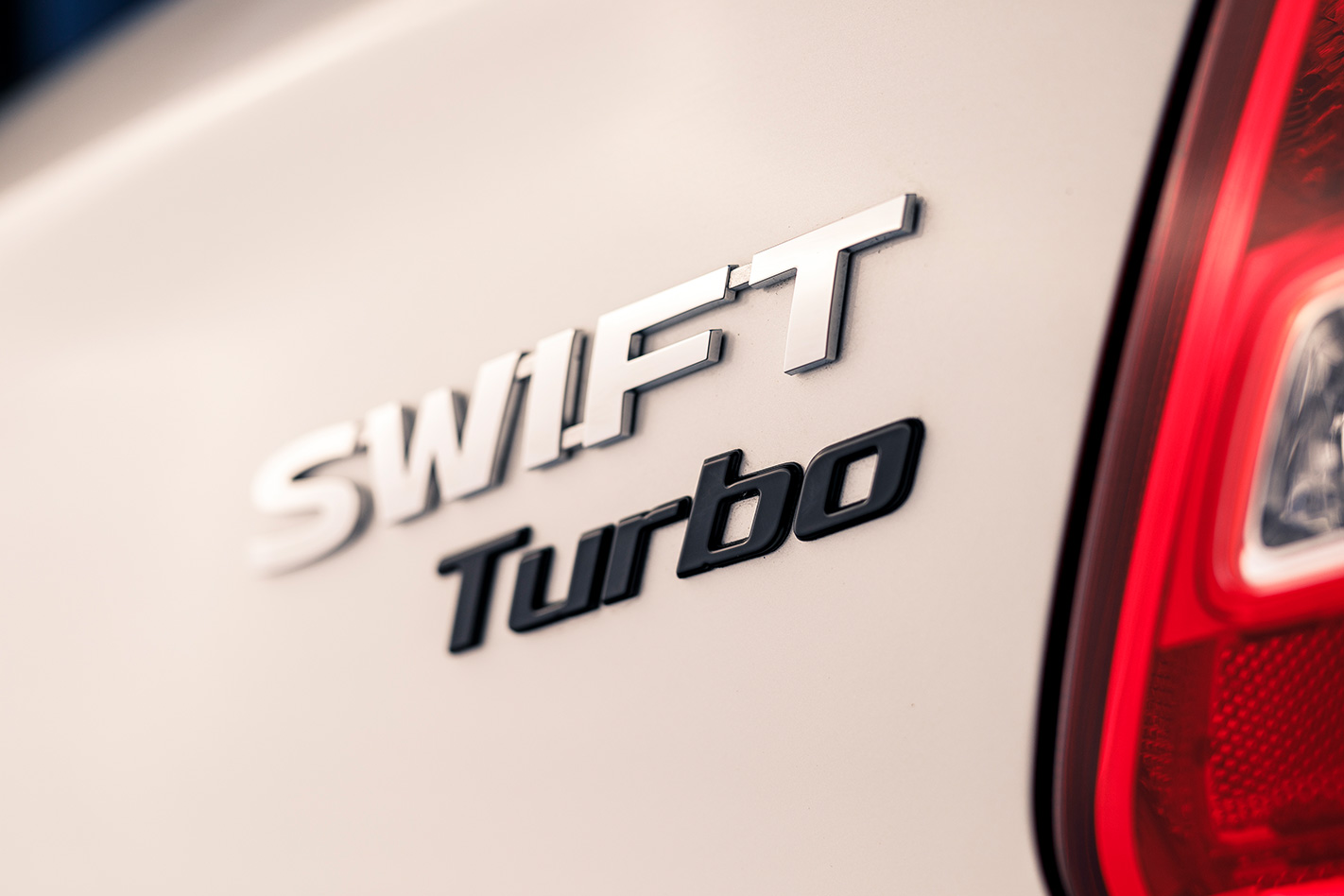
At least the VW adds a digital speedo, a centre-front armrest and rain-sensing wipers, though you only get adaptive cruise-control, auto-folding mirrors, blind-spot monitoring with rear traffic alert, park assist with front and rear parking sensors, and a manoeuvre braking function that protects against parking dents if you pay $1400 extra for the Driver Assistance package.
The Swift gets many of those features as standard, but not the trick sensors or fancy braking smarts. Merely autonomous emergency braking (AEB), as per even the most basic Polo, and one of the most annoyingly over-sensitive collision-alert systems we’ve ever experienced. It’ll keep beeping even when you’re stopped!
That leaves the Swift GLX at mid-$23K drive-away if you option metallic paint, and the Polo 85TSI Launch Edition at close to $26K for the equivalent spec once on-road costs have been added.
Polo – 15/20 Swift – 15/20
INTERIOR & CONNECTIVITY You might pay around $2500 more for the Launch Edition Polo over the Swift GLX, but in several areas you do get more for your money.
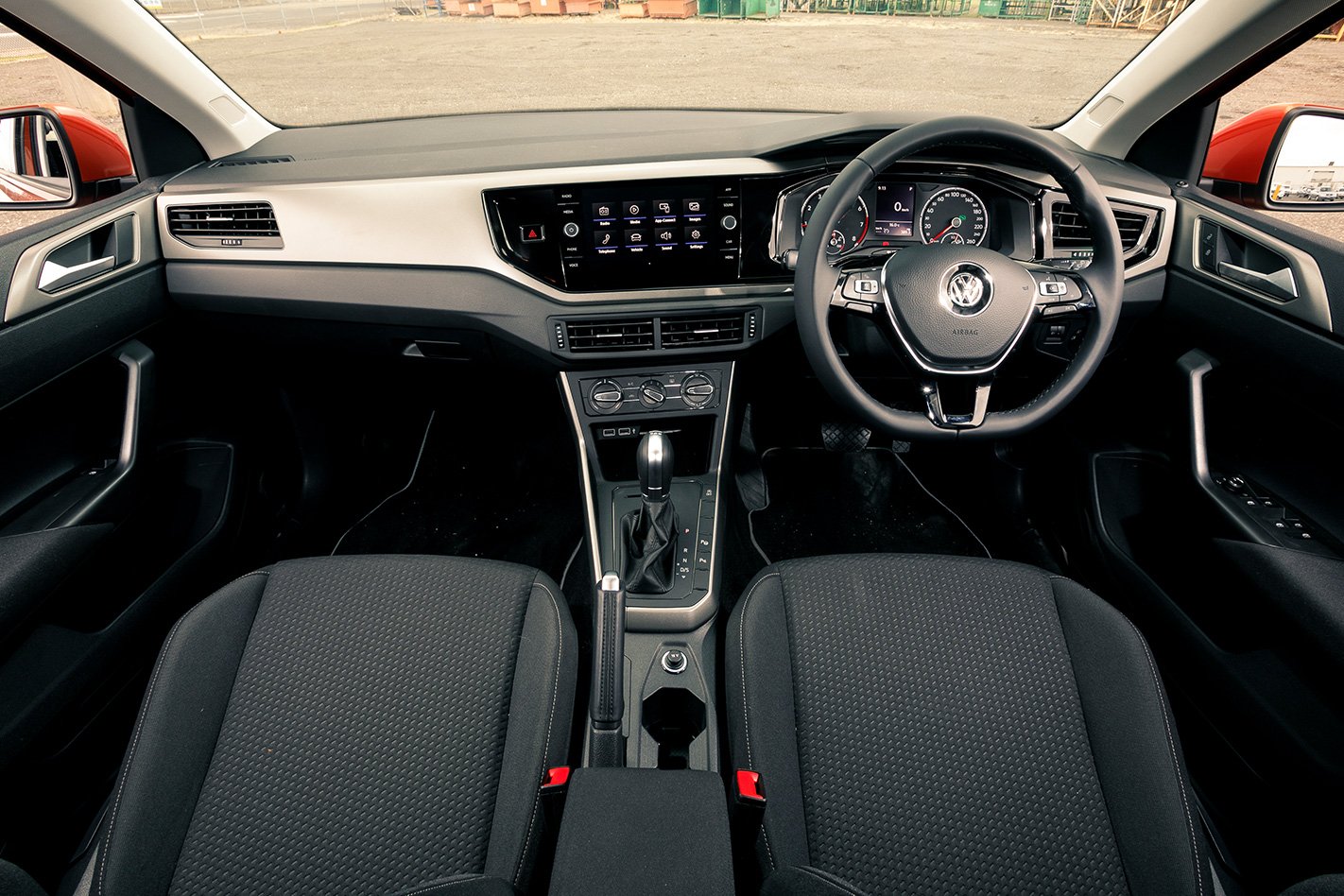
Take the Polo’s interior. Soft-touch plastics, door pockets that will accommodate 1.5-litre water bottles, height-adjustable front seats, a length-adjustable centre-front armrest, proper door grab handles, the same leather-bound steering wheel with piano-black inserts as a Golf, and even the VW’s little aluminium hand-brake button convey the expense that has gone into engineering this car.
It offers a vast range of seating adjustment up front, it remains quiet on almost all road surfaces, and its seamlessly integrated 8.0-inch multimedia touchscreen with smartphone mirroring will dazzle showroom shoppers with its classy appearance and slick operation.
The Swift GLX also sports a reasonably intuitive 7.0-inch multimedia display but you only get a single USB port (the Polo has two) and, infuriatingly, if you turn the car off while your phone is physically connected, you need to unplug it and then replug it back in to make the system aware your phone is there. Both audio systems sound quite strong, with decent bass and volume capability, though only Volkswagen offers audiophiles an opportunity to upgrade (into the forthcoming Polo Beats with a 300-watt stereo system, among other goodies, for $2000 more).
The Swift has its fundamentals right. Its tall roof acts like an awning over the front passengers’ heads, delivering both proper shade and terrific headroom. And its compact three-spoke leather-bound wheel is a delight, as are its huggy front seats with supple cushioning, its cleanly styled instrument dials and its superb vision.
The functionality of its climate control set-up takes some getting used to, however – the centre dial with temp reading doesn’t actually turn; it’s the ‘auto’ dial on the right that adjusts temperature – and alongside the Polo, its plastics are pap. Whereas the Volkswagen’s cabin easily shames most hatches in the class above, the Swift’s dashboard material and door trims are pure econocar – hard, hollow, and cheap, though also likely to be hard-wearing.
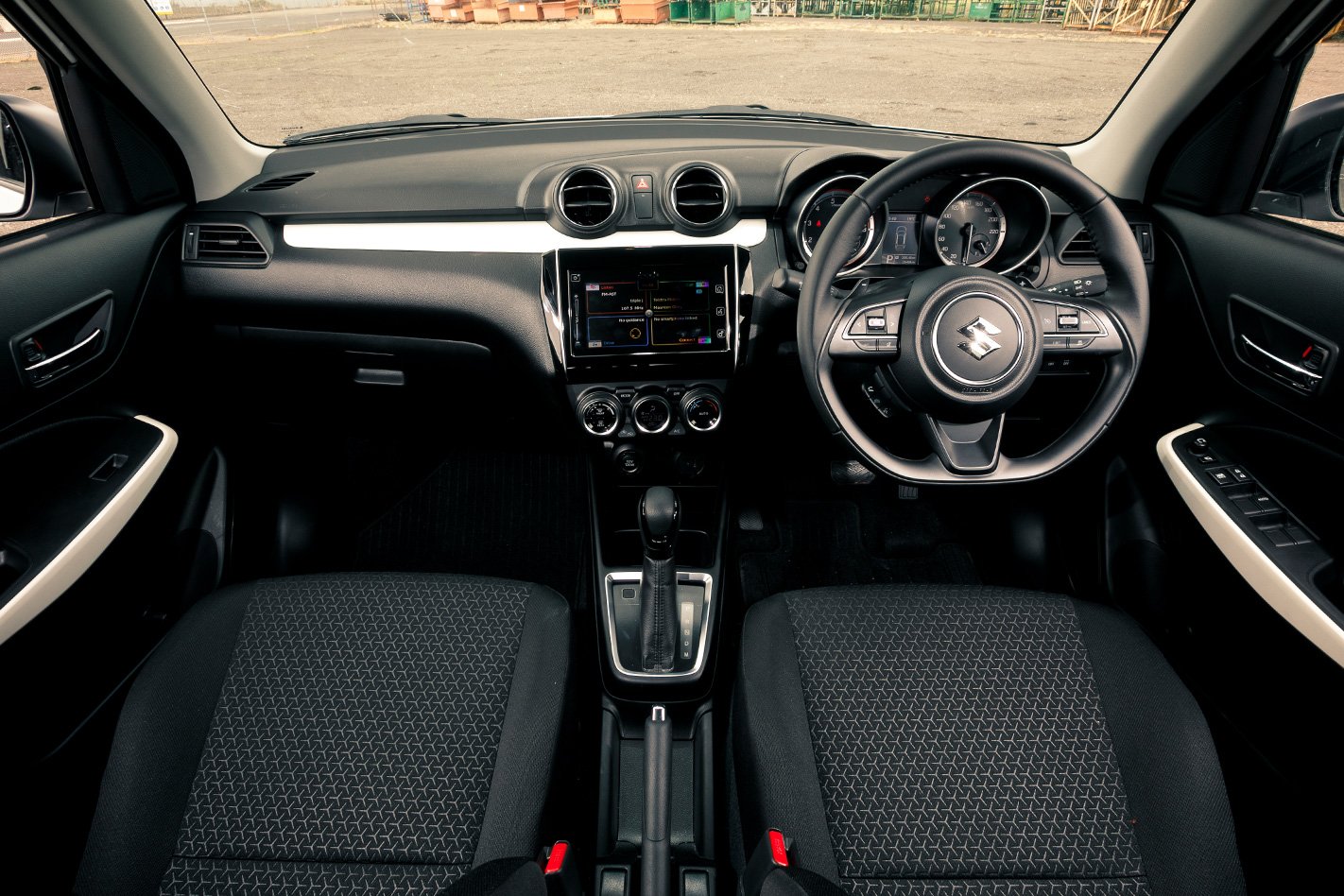
If only the Swift’s characterful interior had the tactility to back up its interesting design.
Thankfully, it hits back hard with a vast rear seat capable of carting around teenage basketballers. There’s legroom and headroom aplenty, though the depth of the Polo’s rear cushion is arguably more comfortable, and it too, offers plenty of space for this size of car. In fact, Volkswagen claims the Mk6 Polo is more spacious than the 1997-2004 Mk4 Golf!
The trade-off for the Swift’s cabin acreage is its modest 242-litre boot, though it still offers useful room. It’s just that the Polo’s austere-looking derriere disguises an excellent 351-litre boot, making it best in class for luggage space.
Polo – 17/20 Swift – 14/20
RIDE & HANDLING If you want to have fun in a 4m-long hatchback, then you’ve come to the right place. Both the Polo 85TSI and Swift GLX know how to have a good time on twisty roads, particularly the torquey, pointy, tail-happy Suzuki.
But it’s the VW’s overall polish and Teflon-coated feel – much like the excellent Mk7 Golf it shares mechanical DNA with – that elevates the Polo to class-benchmark status.
One-up, its ride quality is unremarkable, proving a little lumpy and fidgety in urban environments. But with four bodies on board at more than 100km/h over punishing Aussie country roads, the Polo shines with a jewel-like sparkle.
It feels incredibly stable at speed, with a level-riding calmness to it that transcends any preconceived prejudices of this size and type of car. It has the grown-up feel of something much larger and heavier, yet it also has the dynamic balance to make it incredibly confidence-inspiring to drive quickly through corners. It’s a firmer car than a base Golf, but that plays in the Polo’s favour when it comes to animated cornering and crisp steering response on challenging roads.
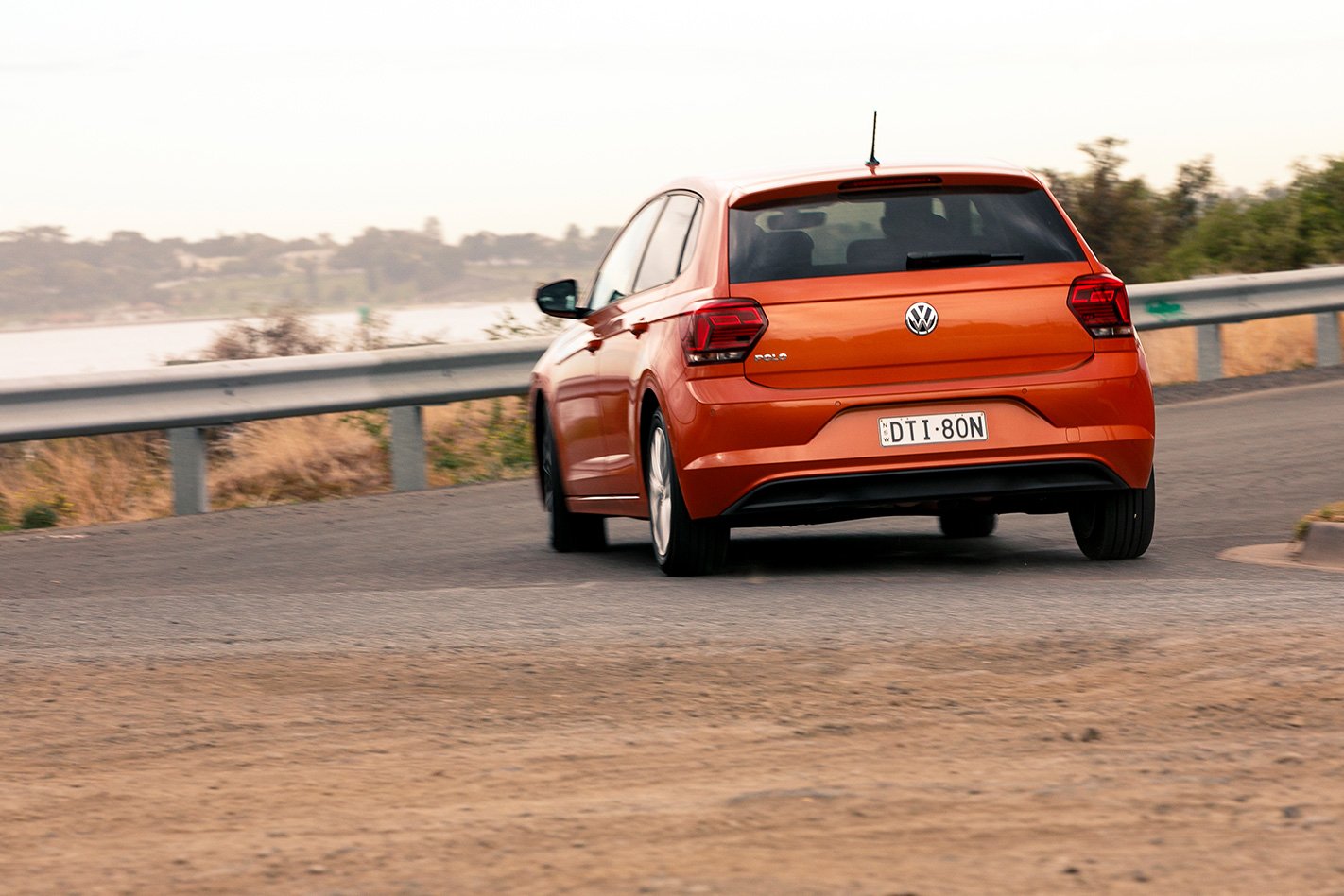
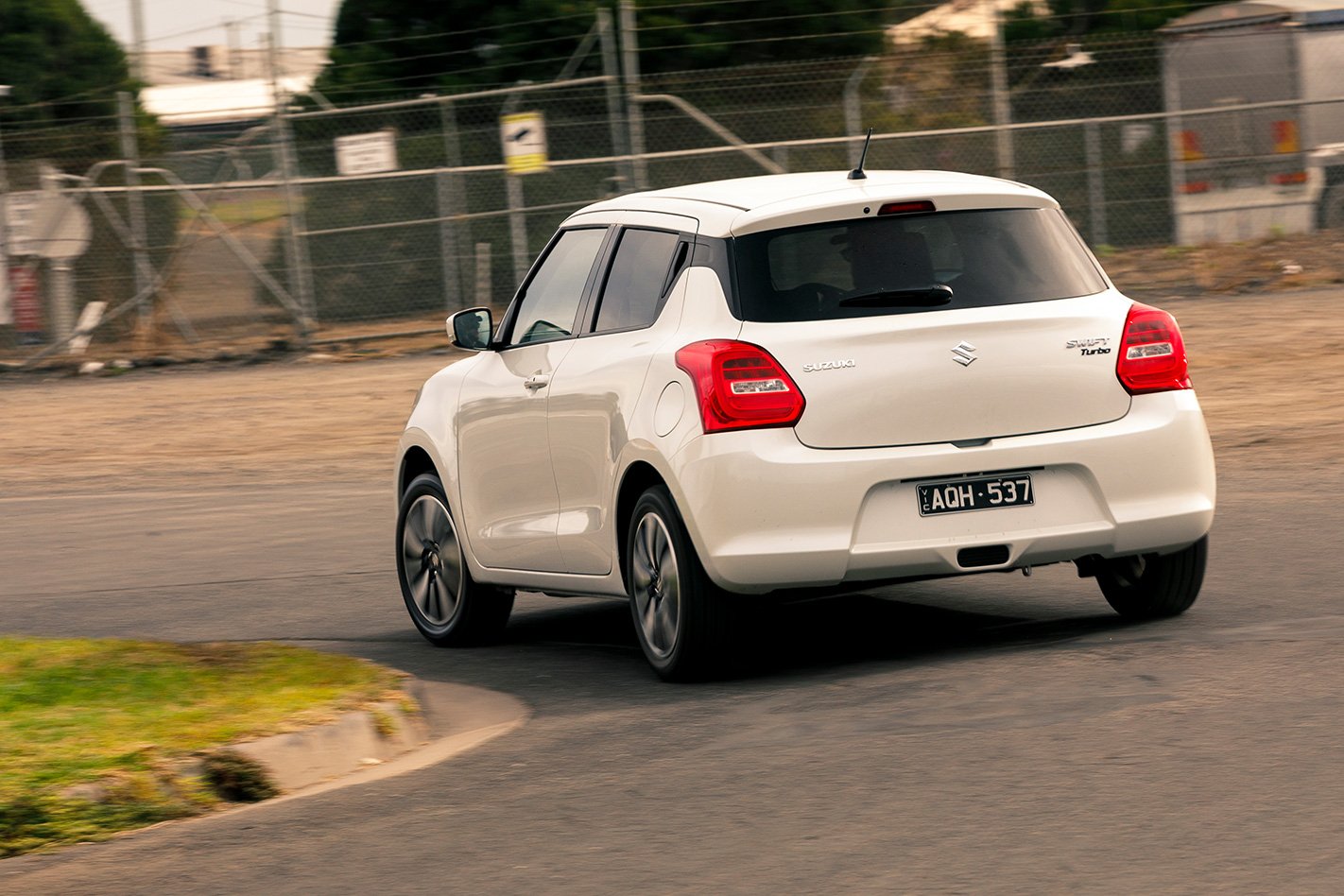
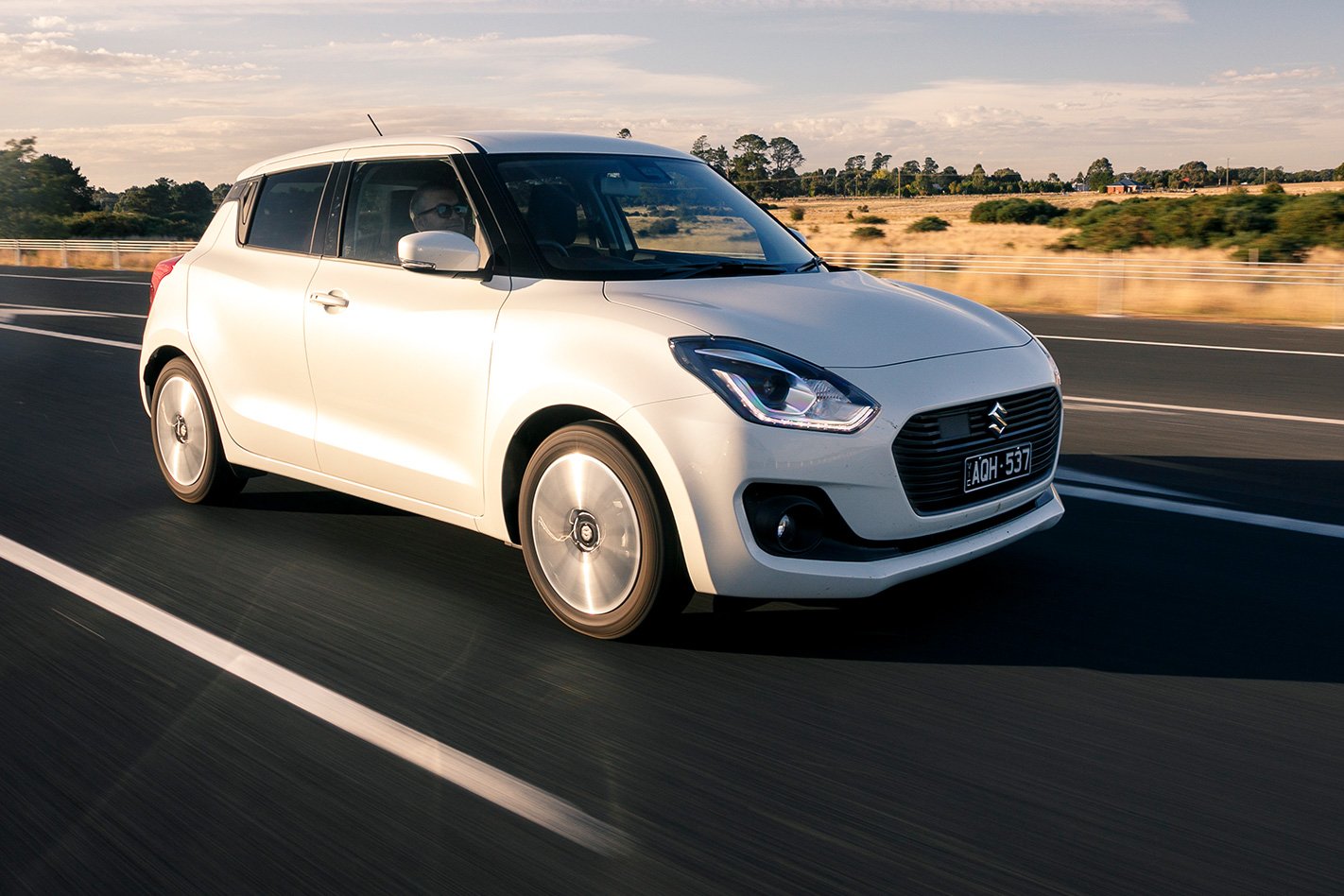
The Swift is also a ripper handler, darting its nose into corners like a baby hot hatch, while adjusting its line with a lift of your right foot. But it ultimately wilts a little as speeds rise and road surfaces deteriorate.
A lack of compression damping means it will kiss its suspension bump stops frequently on roads that barely affect the Polo. Add constant tyre drone and wind noise from both front door frames, and you get the impression that the Swift is a cheaper car than the Polo. It is, of course, but when the Suzuki does such a good job of sitting so well, cornering with such engagement, and riding pretty well at a moderate pace, it’s a shame there isn’t the overall cohesion of the Volkswagen to truly capitalise on its good points.
Polo – 16/20 Swift – 14/20
PERFORMANCE & ECONOMY With a pair of 1.0-litre turbo-petrol triples thrumming away under each bonnet, it’s no surprise that both the Suzuki and VW possess charm and cheek.
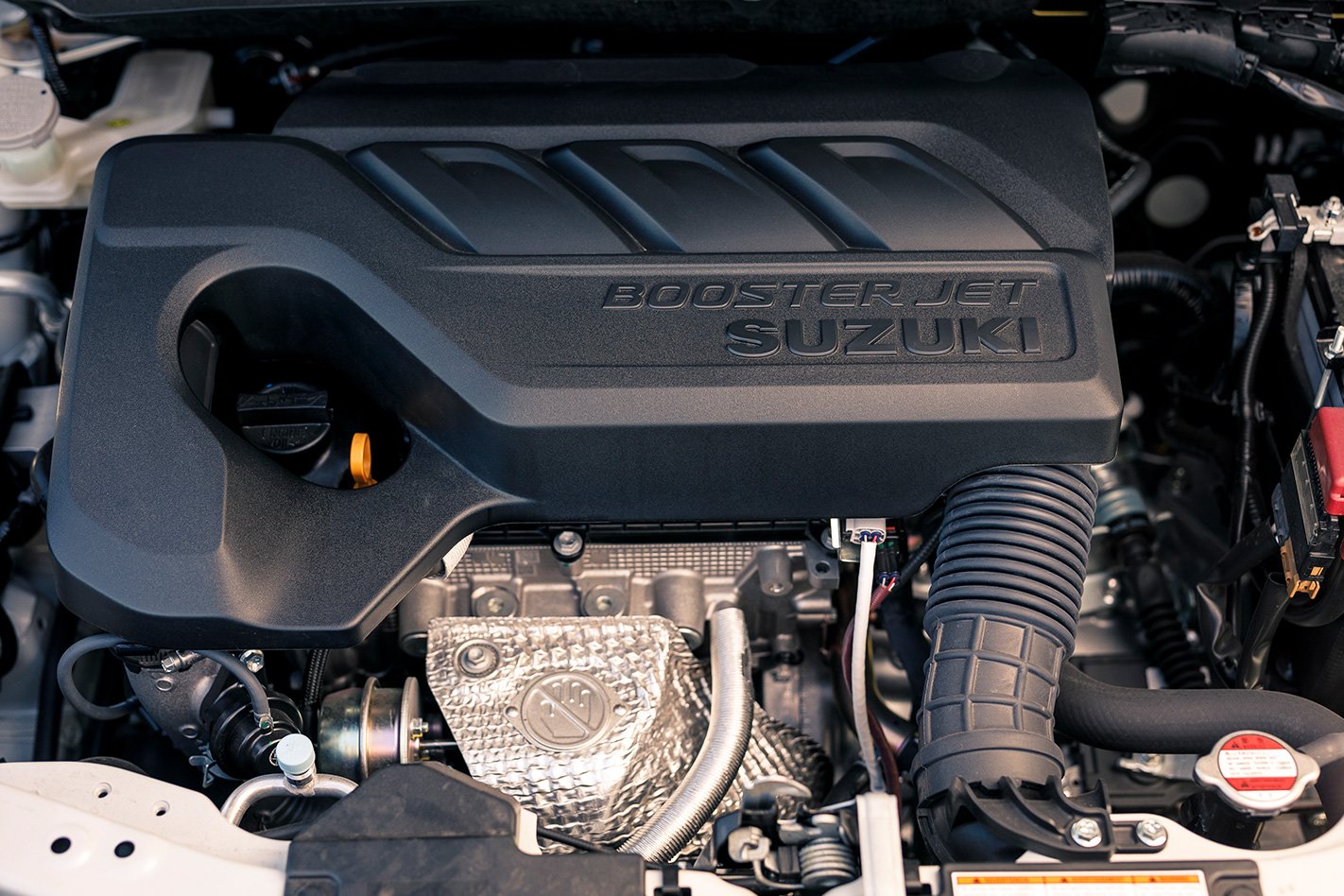
The 998cc Japanese offering punches out 82kW at 5500rpm and 160Nm from 1500-4000rpm, transferring those outputs to the front wheels exclusively via a six-speed torque-converter automatic. Unlike other markets, Australia doesn’t get a manual version.
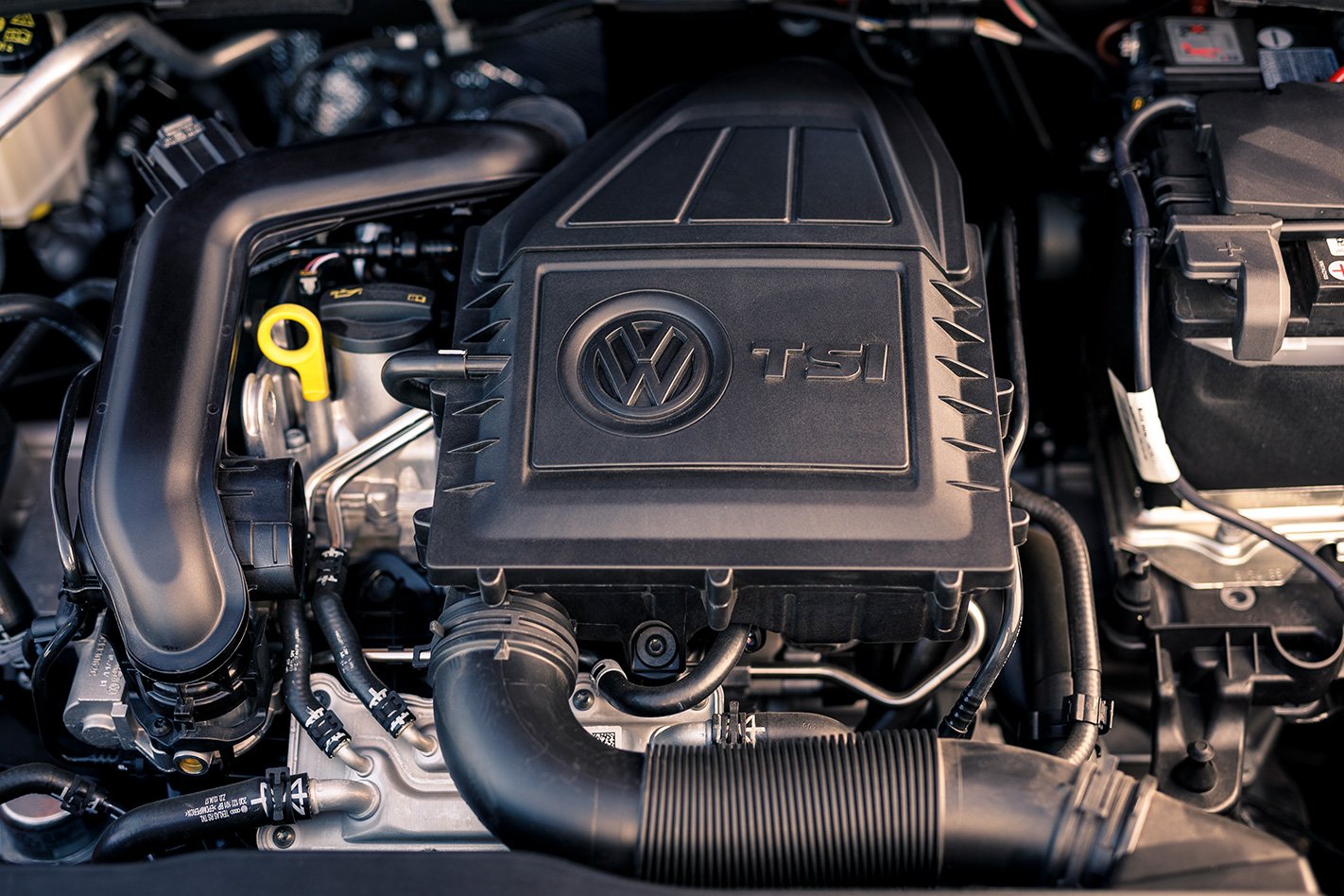
The German three-pot is a close relative of the Up’s superb 999cc unit, but with a turbocharger in this application. Punching out 85kW at 5000-5500rpm and a strong 200Nm from 2000-3500rpm, with seven gear ratios in DSG models to keep it on song, you’d think the Polo had the performance crown in the bag. But the smaller Swift’s lithe body and mega-chubby bottom-end torque hand it a slight advantage in rolling acceleration, and keep it nipping at the Polo’s heels from a standing start.
For the record, we clocked 0-100km/h in 10.1sec in the Polo and 10.2sec in the Swift, with each car’s standing 400m time registering 17.3sec (at a marginally higher terminal speed in the VW). From 80-120km/h, however, the Swift snatches a decisive victory, beating the Polo by half a second (6.9sec v 7.4). And the Volkswagen then reverses that victory by out-sipping the Swift with a 6.4L/100km fuel-consumption average on test (versus a still-excellent 7.0L/100km). Both engines require 95-octane premium fuel, or higher, but the efficiency benefits negate any cost concerns.
Of the two, it’s the Suzuki’s turbo-triple that sounds fruitier. It has a stronger beat, a more obvious boosted rush, and better driveability in most situations. Despite upshifting early from first to second gear (at just 5400rpm) and refusing to hold manually selected ratios near redline (even with the shift lever in ‘M’ mode, for ‘manual’), the Swift’s urge is so strong that you can easily drive around its calibration question marks.
The Polo, on the other hand, sounds a little strained as it stretches to its 6200rpm upshift point, with a weaker thrum in its induction soundtrack, and an annoying propensity to grab the highest gear possible, as soon as possible, in Drive. A quick pulse to Sport mode fixes that issue, but it also makes the Polo’s throttle overly sensitive – exposing the tiresome lag between the idle-stop system being switched off, and the somewhat snatchy engagement when it resumes drive.
You can switch this stop-start system off, of course, but it reengages every time you restart the Polo. The Swift has no idle-stop system for Australia, and only a marginal fuel-use penalty because of it.
Polo – 15/20 Swift – 16/20
WARRANTY & SERVICING Across the first five years of ownership, there’s barely anything in it cost wise – the Polo (at $2404) winning by 48 bucks. But the Swift GLX needs to be serviced more regularly – every six months or 10,000km – compared to the Polo 85TSI (12 months or 15,000km).
Visit an official Suzuki dealer every six months for a service and you’re eligible for an extended five-year/140,000km warranty, but not if you follow the distance limit instead (in which case, your warranty will be three years/100,000km). Capped-price servicing ends at five years/100,000km.
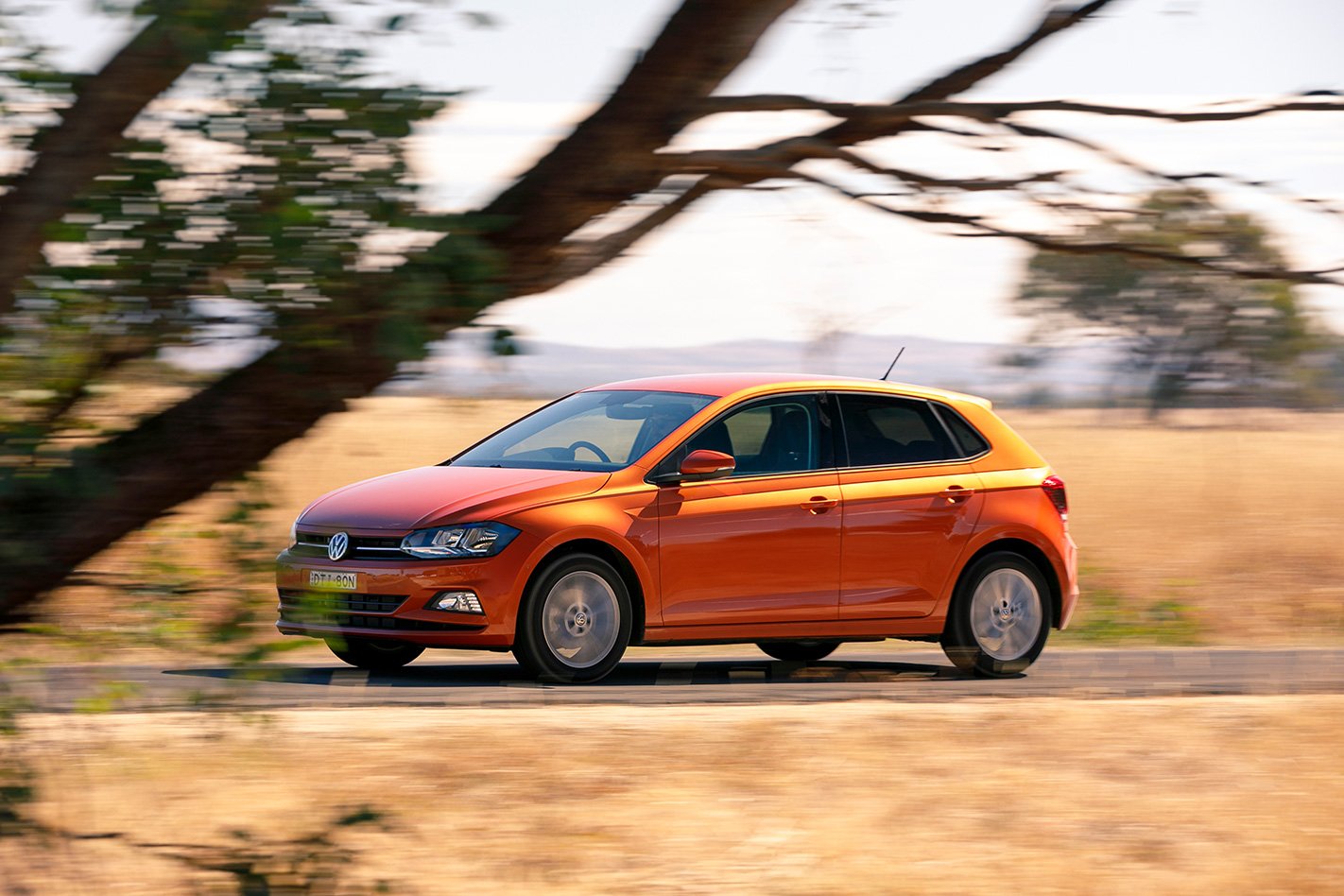
Volkswagen’s base warranty is three years/unlimited kilometres, but there’s also a three-year/unlimited-distance paint warranty, and a 12-year/unlimited-distance anti-corrosion warranty for the main steel body structure.
According to Glass’s Guide, both cars will retain 54 percent of their value after three years. And based on a 35-year-old male living in Chatswood NSW, with a full no-claim bonus and zero finance, the annual insurance bill for the Polo 85TSI will be $721, or $29 less than the Swift GLX.
Polo – 16/20 Swift – 15/20
VERDICT In many ways, the Polo 85TSI Launch Edition easily justifies its $2500 premium over the Swift GLX Turbo. It’s a more refined, more consistent, more expensive-feeling car than the Suzuki, with a much higher-quality cabin, a bigger boot, a noticeably superior ride on rough roads and a flashier badge.
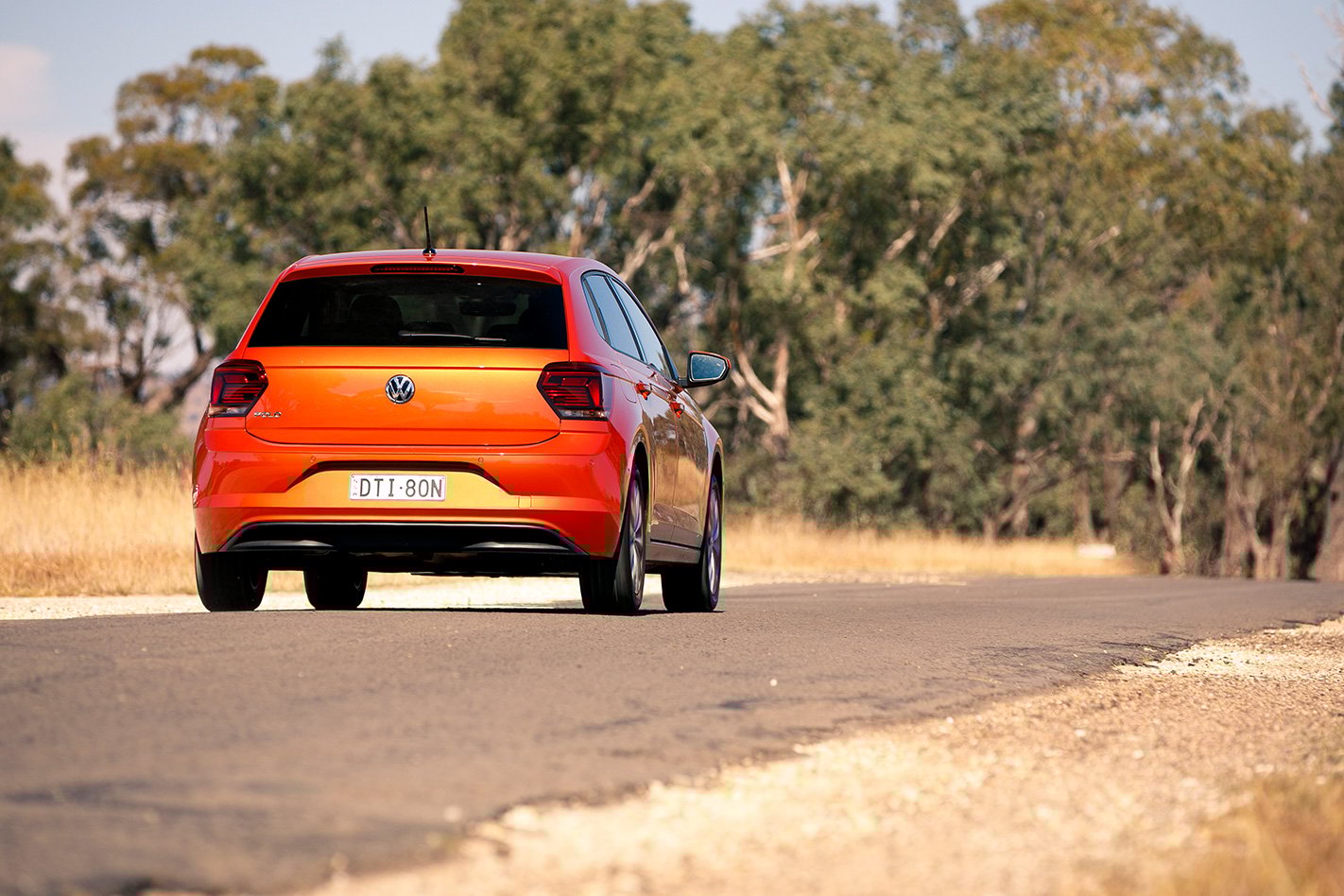
But unless you’re driving the absolute tyres off it, the Polo can also feel a tad colourless and lacking in the sort of flair that would make it truly great. And then there’s the aspect of its styling. Clean and neat, perhaps, but from some angles it looks bland in the extreme, with just one bright colour on offer (orange). And even though its turbo-triple petrol is both amply gutsy and stunningly economical, it lacks the sweetness and spirit of the 1.2-litre turbo-petrol four it effectively replaces.
The Swift is a flawed car, no question. It will bottom out on bad roads, its interior plastics are below par, and its entire central control interface can be infuriating. But it has the personality the Polo lacks much of the time, and it’s a ball to drive on the right road. Excellent cabin space too, and terrific seats. When it comes down to it, though, the patchy Suzuki simply doesn’t have the polish or sophistication to beat its Volkswagen rival.
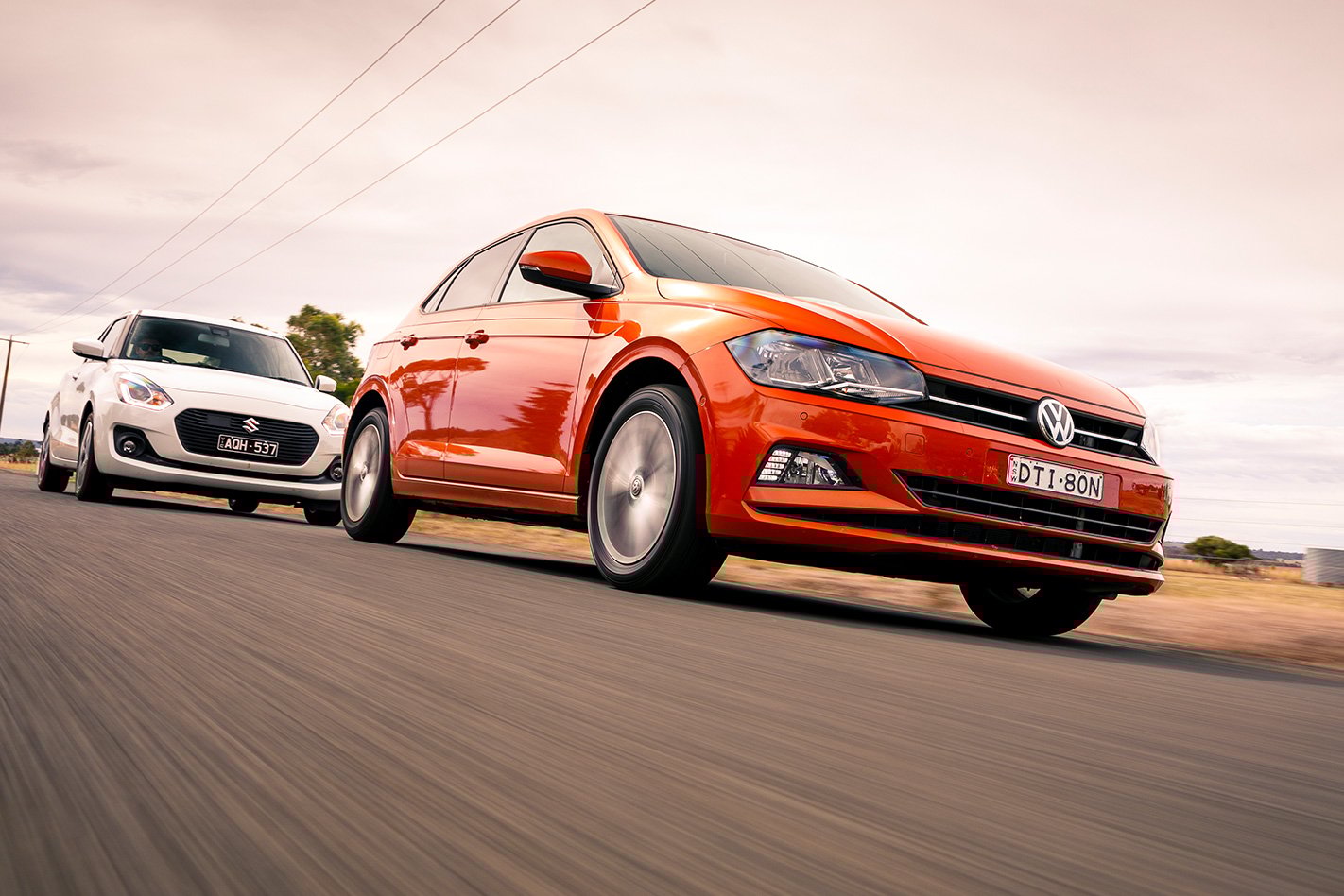
Given that you’ll pay nothing more for Polo ownership besides the initial purchase price – and have the choice of going slightly higher or lower in model grade if this Launch Edition doesn’t quite suit – it deserves to win here. Intelligent, efficient and hugely versatile, it’s merely a decent set of optional wheels away from looking like it’s worth the coin.
Polo – 79/100 Swift – 74/100
