
This story was first published on 8 May 2024. It has been updated to include additional information shared by Hyundai Australia this week, including confirmation the 2.5-litre turbo-petrol will arrive here in December.
UPDATE: Toyota’s go-fast division will add an automatic option for the 2024 GR Corolla “if there is customer demand”, according to company boss Tomoyo Takahashi.
The move, which seems logical given the smaller GR Yaris is now available as either a six-speed manual or eight-speed automatic, would give Toyota a genuine rival for the mighty Volkswagen Golf R and the popular Hyundai i30 N.
A self-shifting GR Corolla would also help to improve its 0-100km/h time and broaden its appeal to a wider customer base, leading to an increase in sales.
While Takahashi stopped short of confirming an automatic GR Corolla is coming, he told Wheels: “If there is customer demand, maybe it will be developed.”
Toyota Australia’s vice president of sales and marketing, Sean Hanley, followed Takahashi’s remark by confirming a two-pedal GR Corolla would sell well Down Under.
“Data would indicate people would gravitate towards an auto if one was available,” said Hanley.
Alex Inwood
January ’24: It was only natural to ask Toyota Australia at the reveal of the facelifted 2024 GR Yaris whether the GR Corolla would get the same updates as its smaller sibling, the key change being that new eight-speed automatic transmission.
We received a typical protective answer from the local team, but we can’t begrudge them for that.
A spokesperson from Toyota Australia told Wheels: “We have no announcements to make today on any future updates to GR Corolla and the introduction of automatic transmissions.”
1
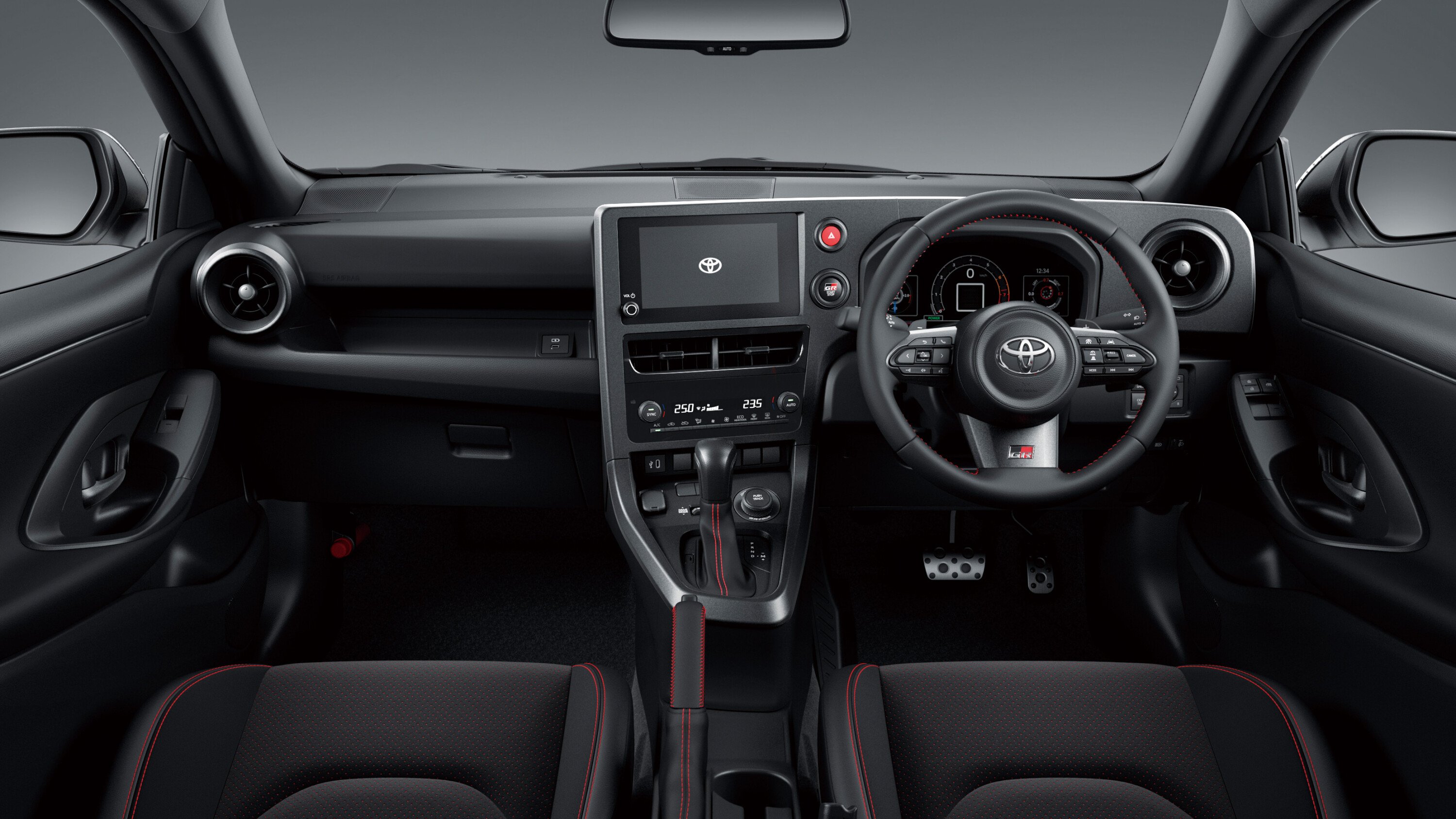
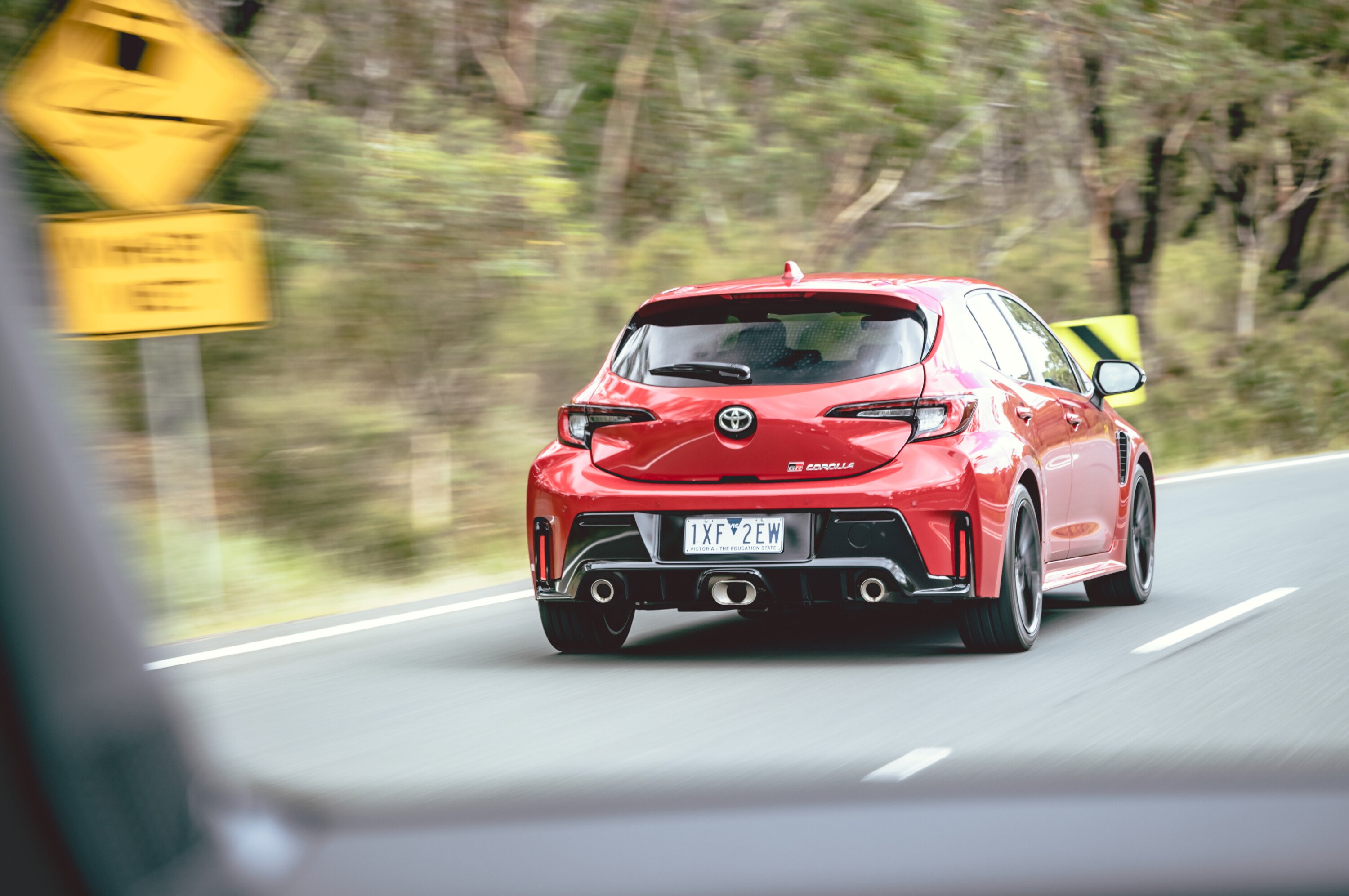
Still, it’s clear Toyota would be missing an opportunity if it didn’t offer the ‘Gazoo Racing Direct Automatic Transmission’ in the otherwise larger, more usable GR Corolla that’s also sold in North America (where the GR Yaris is EU/Japan/Australia only).
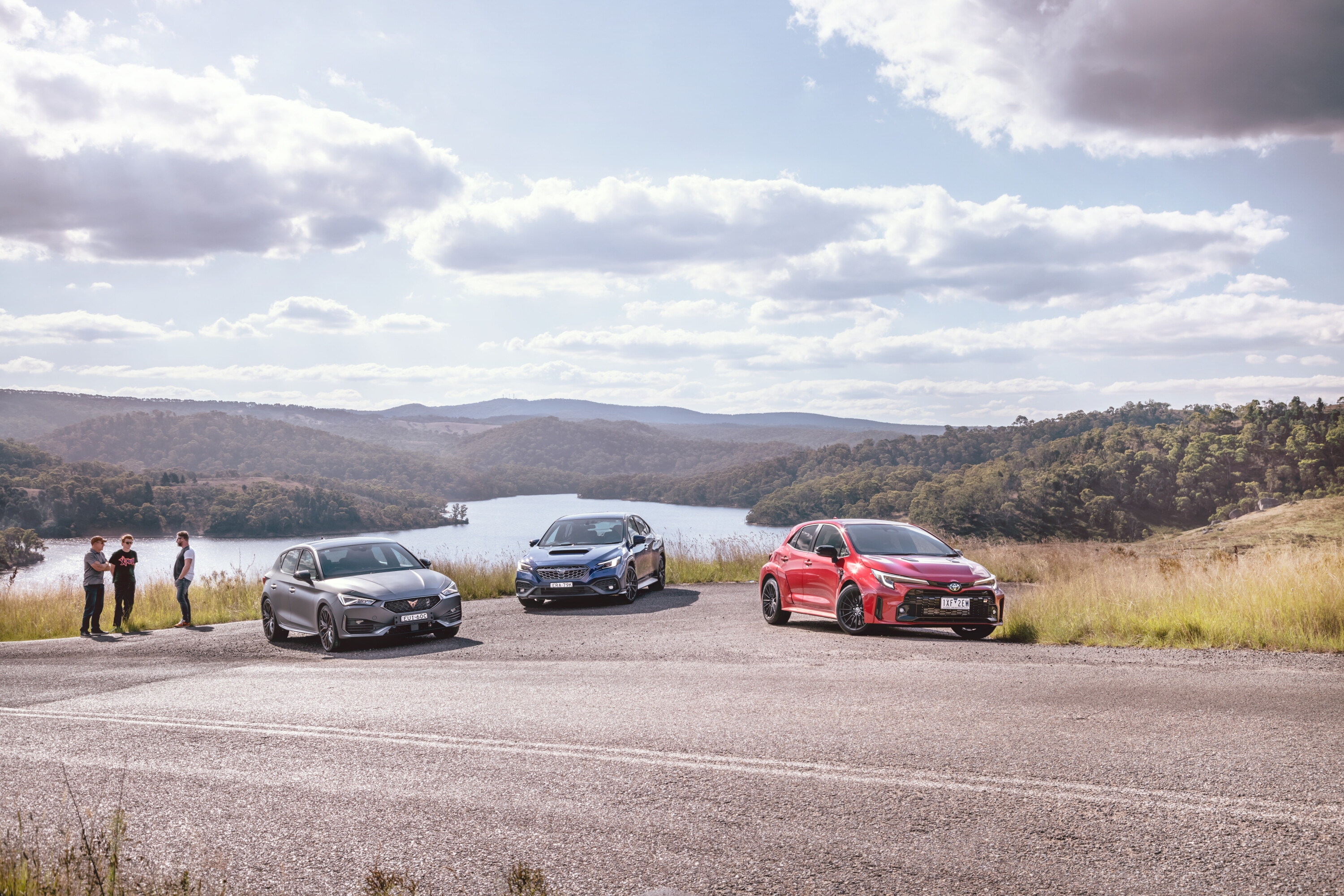
It would undoubtedly bolster appeal, giving Toyota not only a rival for the manual-only Civic Type R but also the auto-only VW Golf R.
1
How serious is Toyota about this GR-developed Auto?
You don’t have to look hard to see GR’s intentions with this automatic powertrain. At Tokyo Auto Salon, Toyota’s luxury arm Lexus was showing off a GR Yaris-powered LBX concept, known as the RR Morizo.
The story goes that Akio Toyoda wanted to build a car that blended Lexus’ signature comfort and luxury with GR’s ‘fun-to-drive’ ethos. That it will make production seems unlikely, but stranger things have happened – you just have to look at the Lexus LFA.
Instead, it’s much more likely the transmission will make its way into the GR Corolla in a mid-life update. The car was lightly tweaked late last year for North America, with small changes to the suspension, steering, and battery grounding. Australia, however, only received a new ‘Eclectic Blue’ paint colour for 2024.
1
The GR Corolla manual’s 0-100km/h sprint is 5.29 seconds (claimed). With a close-ratio auto on board, that should fall into the high 4.0-second range.
For reference, a Golf R with its seven-speed DSG transmission and extra 14kW (but additional 50-or-so kilos) gets to 100km/h in 4.8 seconds.
In the GR Yaris, the automatic transmission only adds 20kg to the kerb weight, which would bring the GR Corolla auto up to a still-reasonable 1505kg.
Along with the extra straight-line speed, GR is most excited about the auto’s ability to free up mental aptitude when driving fast – allowing novice drivers to come closer to professional’s lap times.
Along with an auto, a mid-life GR Corolla update is likely to bring similar upgrades (or even more) as made to the facelifted 224kW/400Nm GR Yaris. Improved cooling, better cabin ergonomics, and software revisions all feature.
1
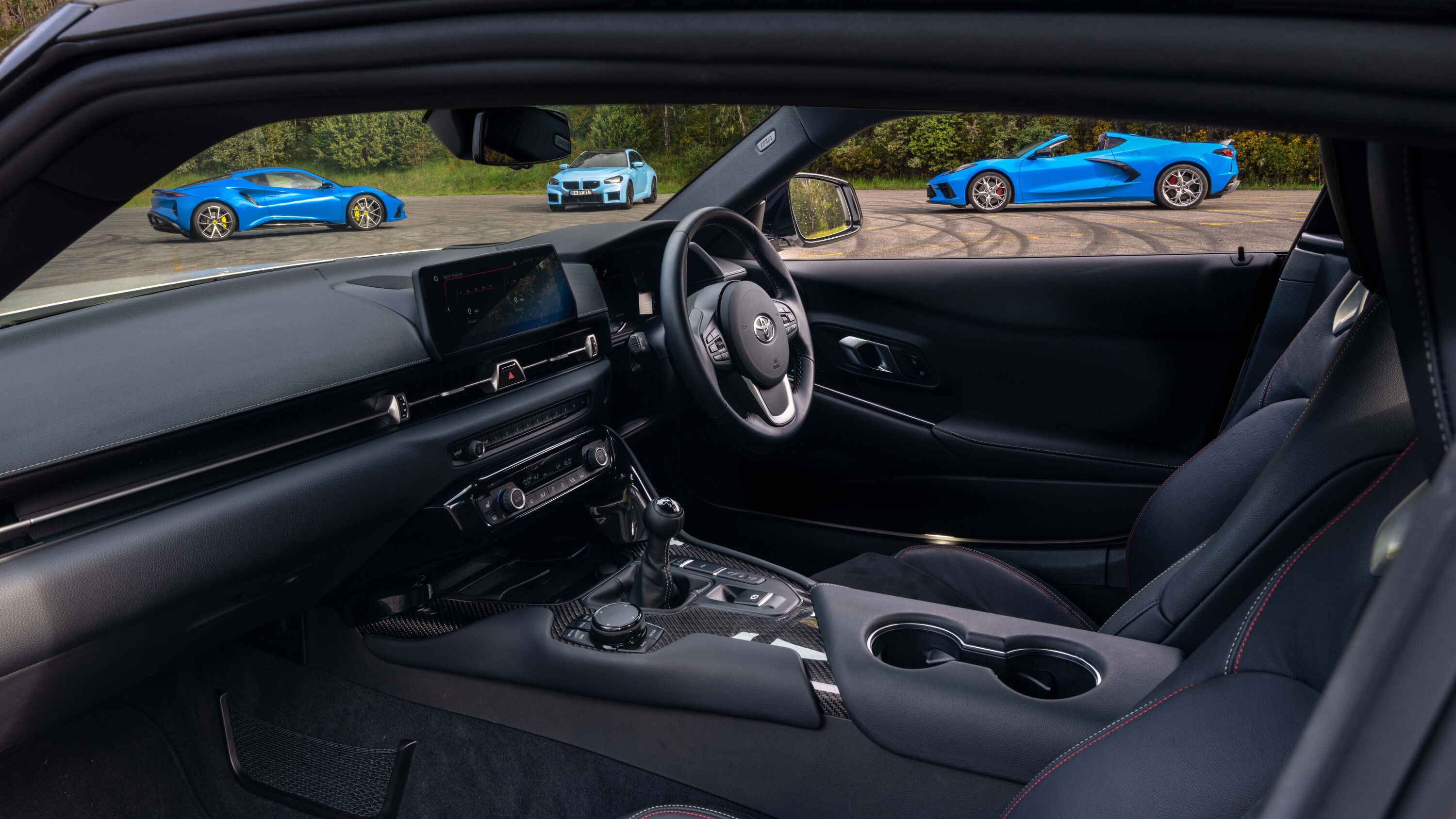
Pricing is yet to be confirmed for the facelifted GR Yaris, but we expect an increase for the auto compared with the manual even though Toyota managed to keep the price unchanged for its manual Supra.
We’re tipping the new GR Yaris to cost about $65K on the road, so expect an auto GR Corolla to climb into the vicinity of $70-75k.
Would you be more inclined to buy a GR Corolla with an eight-speed auto than the six-speed manual? Share your thoughts below.
MORE
Everything Toyota
Snapshot
- 2024 Hyundai Santa Fe: Australian launch line-up confirmed
- Hybrid-only large SUV available in three variants
- Priced between $55,500 and $75,500 before on-roads
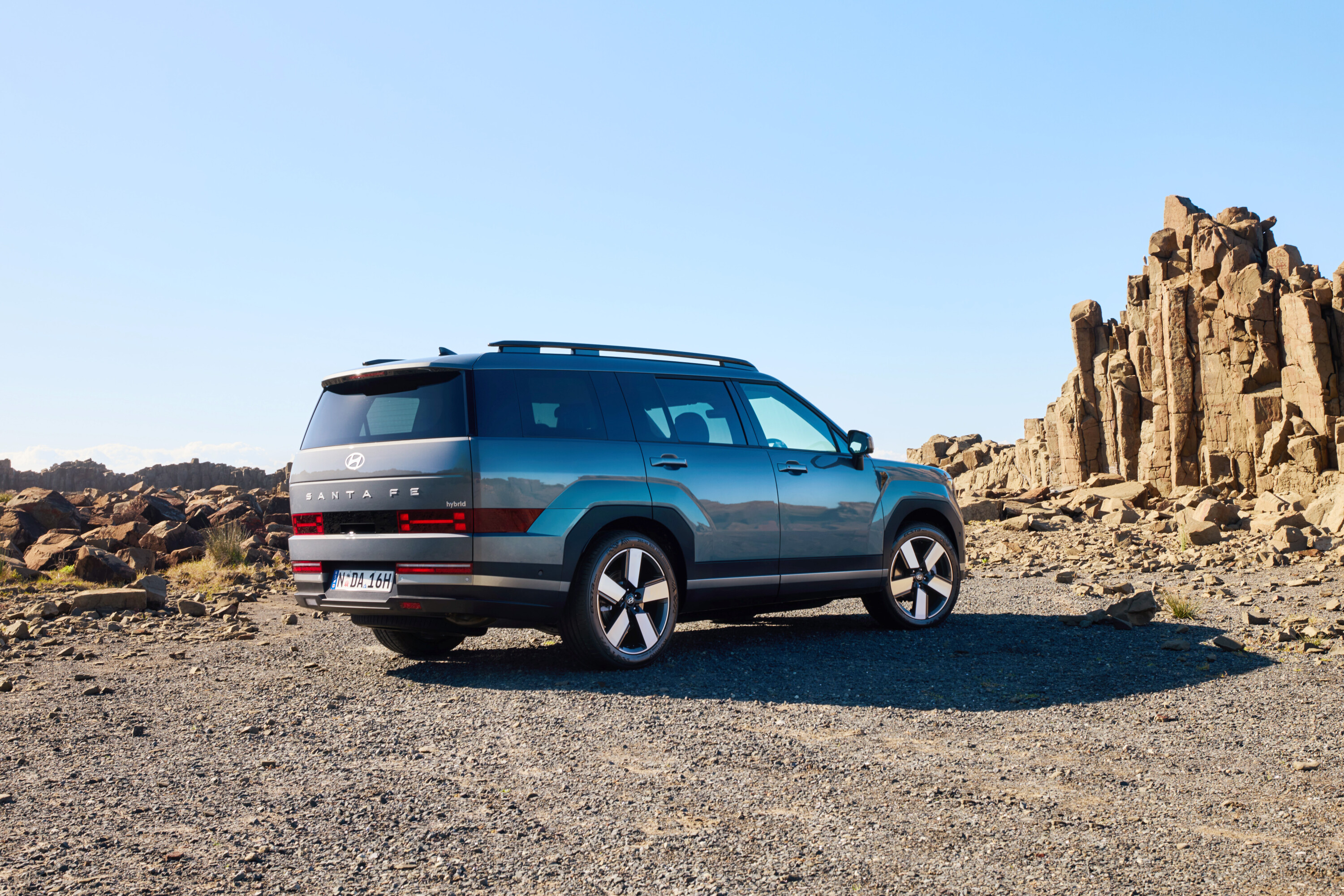
The 2024 Hyundai Santa Fe large SUV has landed in Australia in three hybrid variants.
Prices for the fifth-generation Santa Fe start from $55,500 before on-road costs – a $9450 increase over the previous starting point – with the Toyota Kluger, Kia Sorento and Skoda Kodiaq rival now arriving in Australian showrooms.
The significant price rise over the previous entry point is due to the carmaker’s decision to ditch 2.2-litre four-cylinder turbo-diesel and 3.5-litre petrol V6 options in favour of an all-hybrid line-up for the new model.
1
There is also more standard equipment than before for the entry-level Santa Fe – in addition to the added cost of an electrified drivetrain.
The previous Hyundai Santa Fe – available in petrol, diesel or hybrid – was priced between $46,050 and $69,550 before on-road costs.
Hybrid versions of the Santa Fe continue to feature a 1.6-litre turbocharged petrol-electric hybrid setup, matched to a six-speed torque converter automatic transmission. It now produces 172kW and 367Nm – up 3kW and 17Nm.
Combined fuel consumption is rated at 5.6L/100km – but it is unclear if this applies to the front- or all-wheel-drive Santa Fe Hybrid, or both. The previous Santa Fe Hybrid AWD consumed 6.0L/100km.
A more powerful but less efficient 207kW/422Nm 2.5-litre turbocharged four-cylinder petrol will arrive in Australia in December 2024, with a lower price than hybrid variants expected.
The 2.5-litre turbo-four – familiar to the Sonata N Line sedan and some Genesis vehicles – is matched to an eight-speed dual-clutch automatic and is available with front- or all-wheel-drive in other markets.
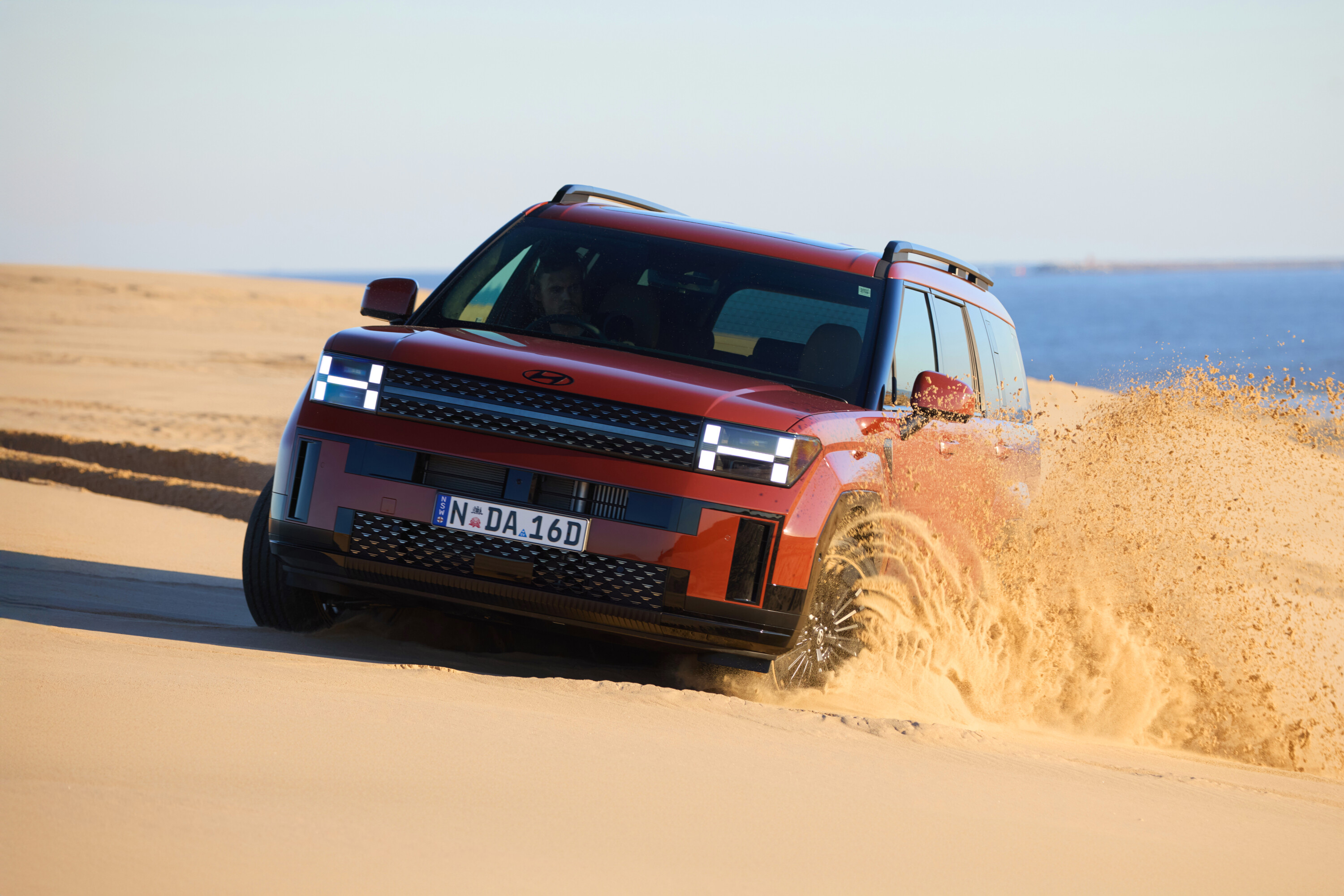
At launch, the eponymous Santa Fe entry-level model will be offered in front- or all-wheel drive, while the mid-spec Elite and top-of-the-range Calligraphy are limited to an all-wheel-drive configuration.
1
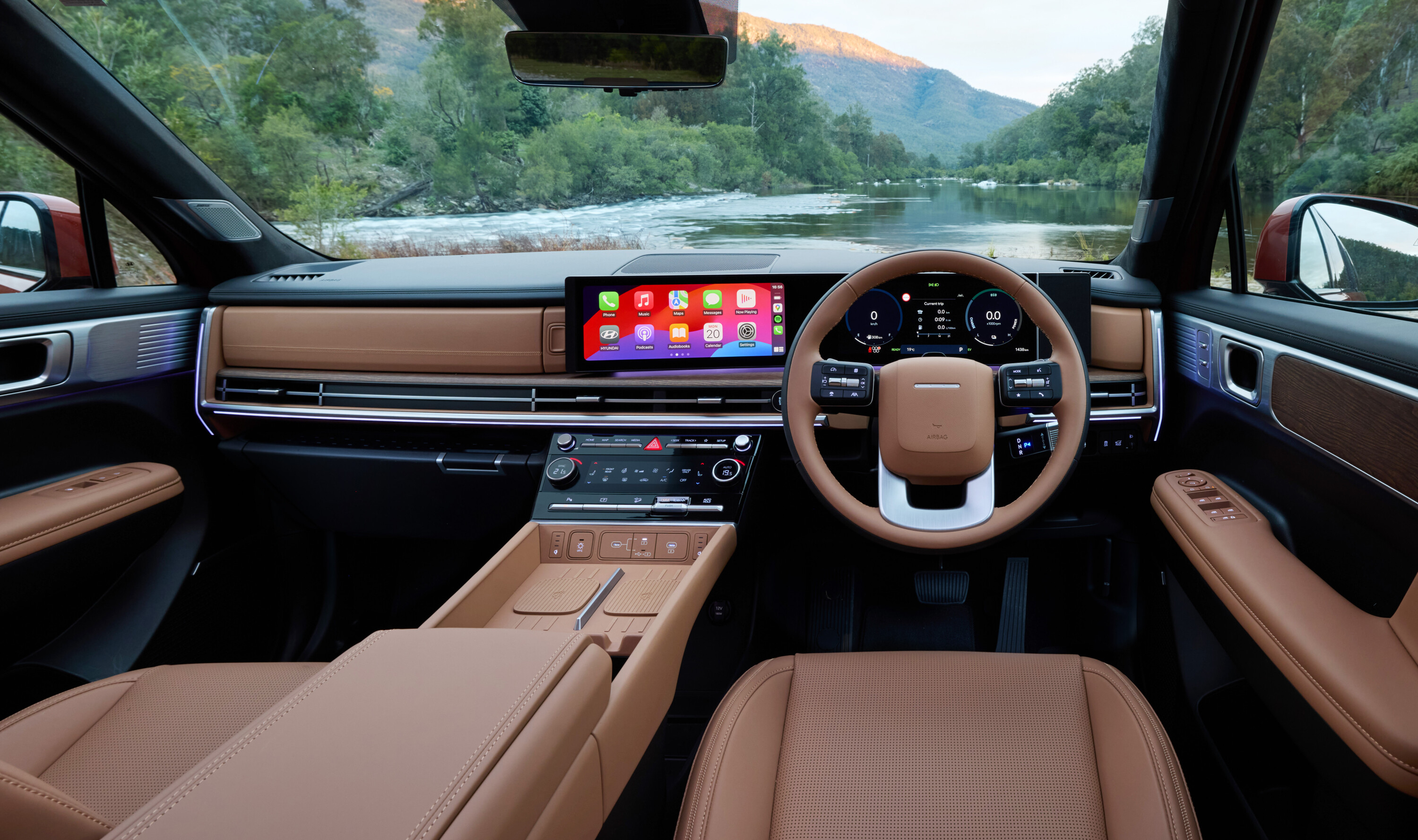
Like the larger Hyundai Palisade, the Santa Fe Calligraphy succeeds the outgoing Highlander flagship, while base and Elite versions carry over from the previous model.
The Santa Fe hybrid AWD is $3000 more than the front-drive version at $58,500 before on-road costs, while the Elite is priced from $65,000 plus on-roads – a $2000 increase over the previous Elite hybrid.
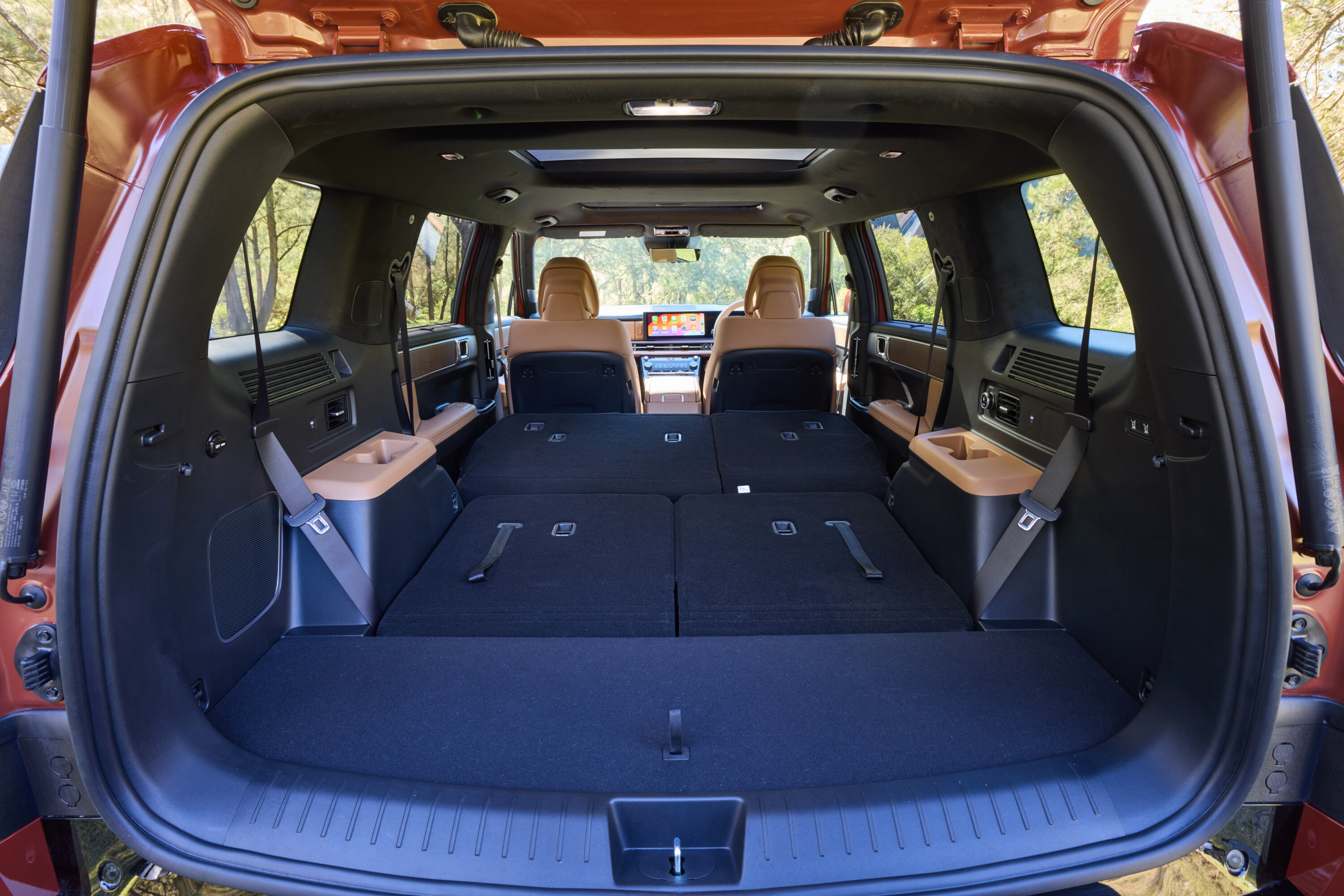
Santa Fe and Elite variants are seven-seaters, and the Calligraphy will be offered with a six-seat configuration allowing for second-row captain’s chairs or a conventional seven-seat layout with a second-row bench seat.
The seven-seat Calligraphy is available for $75,000 before on-roads – $5450 more than the previous Highlander hybrid – while the six-seat version adds a further $500 to the list price at $75,500.
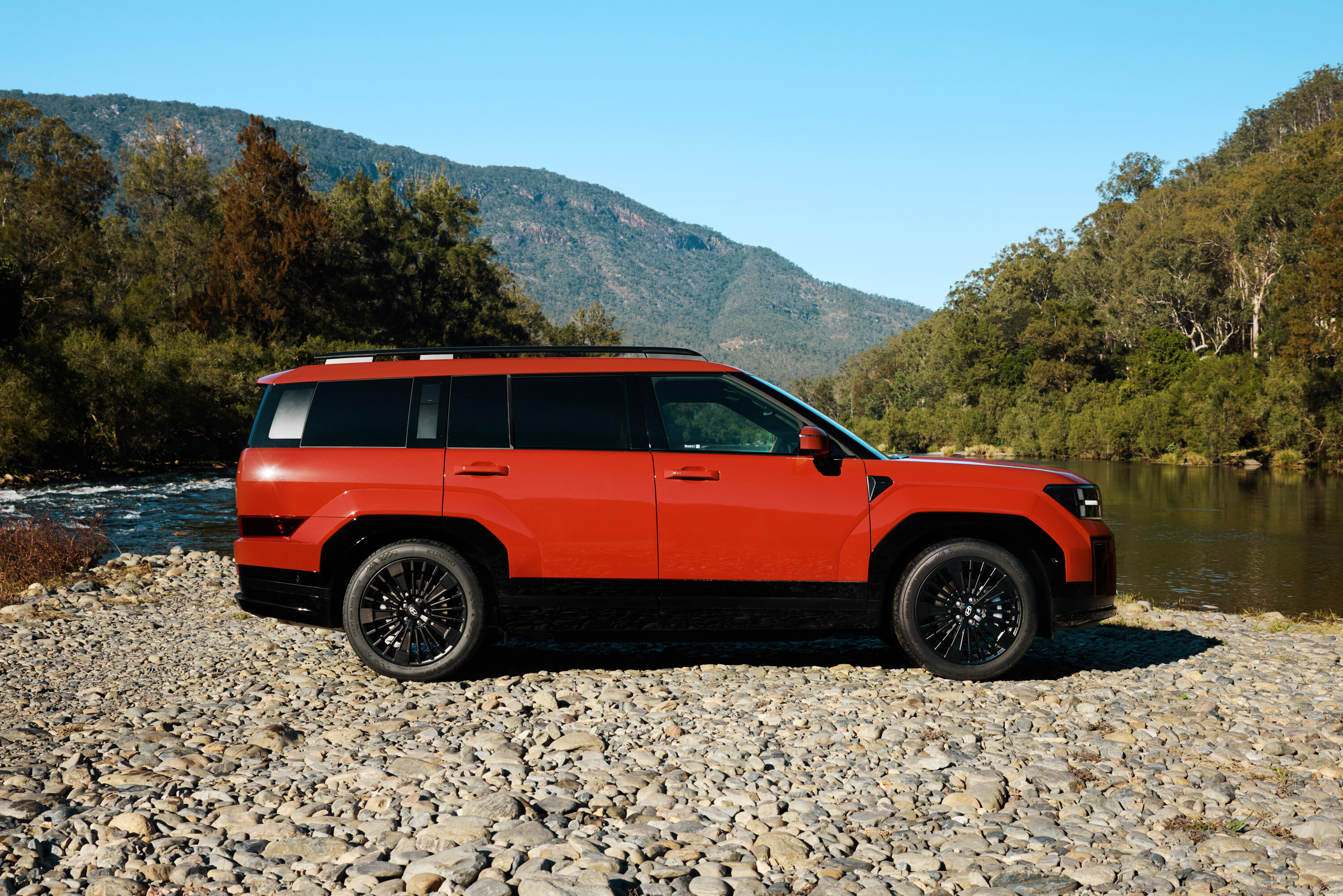
Measuring 4830mm long, 1900mm wide and 1720mm tall, with a 2815mm wheelbase, the fifth-generation Santa Fe is 45mm longer and 35mm taller, its wheelbase has been stretched 50mm, and it is no wider than before.
The new model is up to 240 kilograms heavier than before, and while it has a blockier shape, the Santa Fe’s coefficient of drag has improved from 0.33Cd to 0.29Cd.
Standard equipment includes 20-inch alloy wheels, a 12.3-inch CCNC infotainment system, wireless Apple CarPlay and Android Auto, dual-zone climate control, an electric tailgate, and a full suite of Hyundai Smartsense safety features.
Hyundai has fitted 10 airbags to the new Santa Fe – up from seven in the previous model – including curtain airbags that now cover the third row. The rearmost seats also gain top-tether anchor points to allow for the fitment of child seats.
1
A specification list for each Santa Fe variant can be found below.
The 2024 Hyundai Santa Fe is on sale now.
2024 Hyundai Santa Fe pricing
| Variant | Pricing | Change |
|---|---|---|
| Santa Fe Hybrid FWD | $55,500 | u2013 (new variant) |
| Santa Fe Hybrid AWD | $58,500 | u2013 (new variant) |
| Santa Fe Elite Hybrid AWD | $65,000 | up $2000 |
| Santa Fe Calligraphy Hybrid AWD u2013 seven-seat | $75,000 | up $5450 (over Highlander hybrid 7-seat) |
| Santa Fe Calligraphy Hybrid AWD u2013 six-seat | $75,500 | up $5950 (over Highlander hybrid 6-seat) |
| All prices exclude on-road costs.u00a0 | ||
1
2024 Hyundai Santa Fe features
| 2024 Hyundai Santa Fe (base) features | |
|---|---|
| 20-inch alloy wheels | LED tail-lights |
| Full-size alloy spare wheel | Electric tailgate |
| 12.3-inch CCNC infotainment system | Rear privacy glass |
| Wireless or wired Apple CarPlay and Android Auto | Three drive modes (Eco, sport, individual) |
| Six-speaker audio system | 360-degree camera system |
| Hyundai Bluelink telematic system | Rain-sensing wipers |
| Over-the-air software updates | Tyre pressure monitoringu00a0 |
| 12.3-inch digital instrument cluster | Autonomous emergency braking (vehicle, pedestrian, cyclist, motorcyclist, intersection, head-on) |
| Single wireless phone charger | Lane-keep assist |
| Dual-zone climate control | Lane departure warning |
| 6.6-inch touch-type air-conditioning controls | Blind-spot monitoring |
| Black cloth upholstery | Blind-spot view camera |
| Leather-wrapped steering wheel | Rear cross-traffic alert |
| 10-way power-adjustable driveru2019s seat | Safe exit assist |
| Heated front seats | Adaptive cruise control |
| Keyless entry and push-button start | Intelligent speed limit assist |
| Remote start (via key fob) | Rear occupant alert |
| Reflector-type LED headlights & LED DRLs | AWD only: Three multi-terrain modes (snow, mud, sand) |
2024 Hyundai Santa Fe Elite features
| In addition to Santa Fe | |
|---|---|
| 12-speaker Bose audio system | Ambient interior lighting |
| Built-in satellite navigation | Auto-dimming rear-view mirror |
| Dual wireless phone charger | Acoustic front door glass |
| Standard black leather upholstery | Solar control windshield and front door glass |
| Projector-type LED headlights | Suede headlining |
| Optional supersonic grey leather upholstery (+$295) | Remote smart parking assist |
| 10-way power-adjustable passenger seat | Semi-autonomous highway driving assistu00a0 |
| Heated steering wheel | Sensor-type rear occupant alert |
1
2024 Hyundai Santa Fe Calligraphy features
| In addition to Elite | |
|---|---|
| Unique 20-inch alloy wheels | Optional forest green or pecan brown Nappa leather upholstery (+$295) |
| Optional second-row captainu2019s chairs | Driveru2019s seat memory function |
| Head-up display | Ventilated front seats |
| UV-C sterilisation tray | Heated outer second-row seats |
| Hidden exterior grab handle | Driver and passenger seat relaxation function |
| Dual glass sunroof | Two-tone steering wheel |
| Digital rear-view mirror | Gloss black body cladding |
| Standard black ink Nappa leather upholstery | Six-seat model: Powered second-row captainu2019s chairs with relaxation function |
| 2024 Hyundai Santa Fe available colours | |
|---|---|
| Creamy white (all) | Abyss black* (all) |
| Typhoon silver* (all) | Magnetic force* (all) |
| Ocado green* (all) | Pebble blue* (all) |
| Cyber sage* (Elite, Calligraphy) | Terracotta orange* (Elite, Calligraphy) |
| Creamy white matte# (Calligraphy) | Earthy brass matte# (Calligraphy) |
| * Metallic paint, $695 | # Matte paint, $1000 |
MORE
Everything Hyundai
MORE
Hybrid Cars
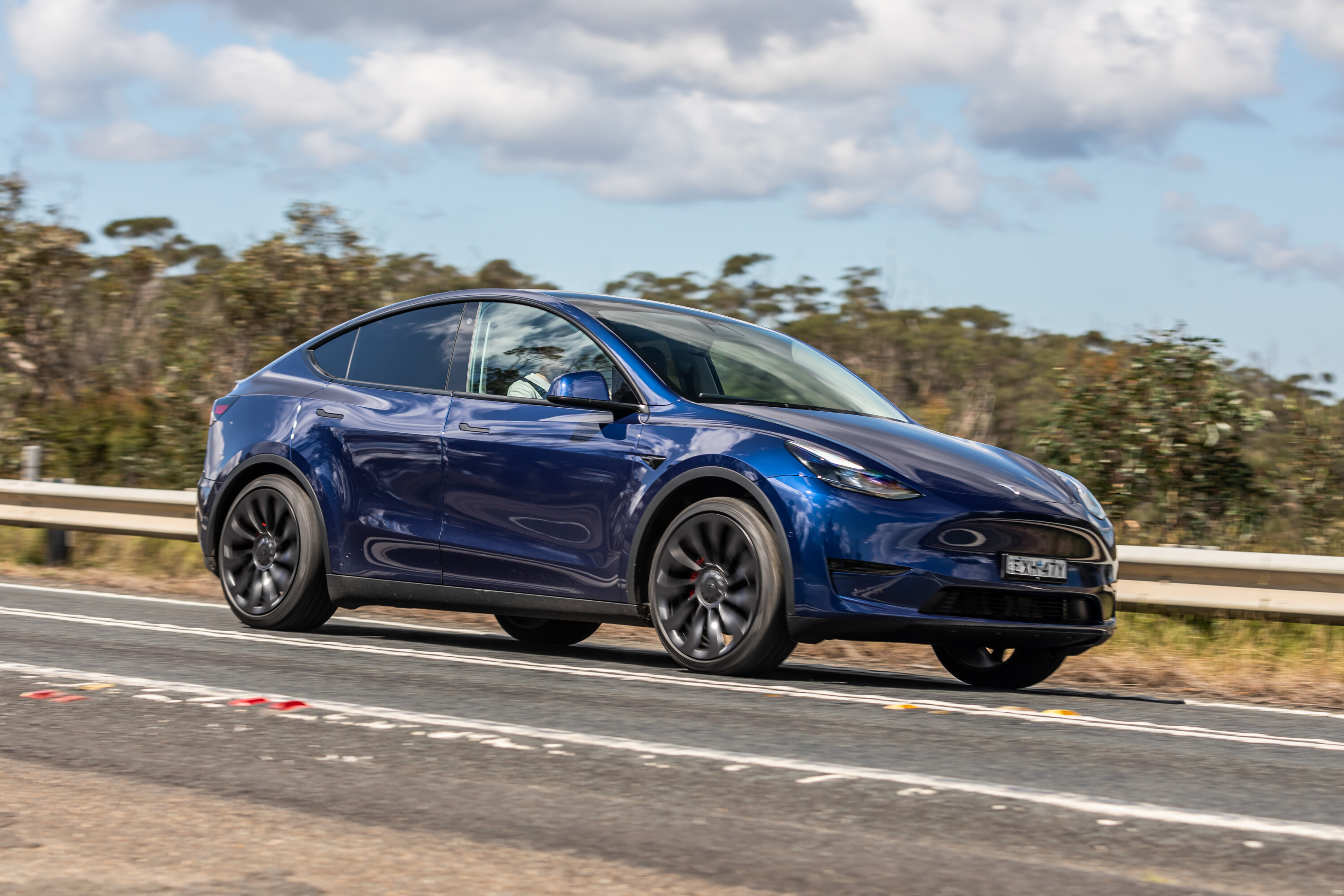
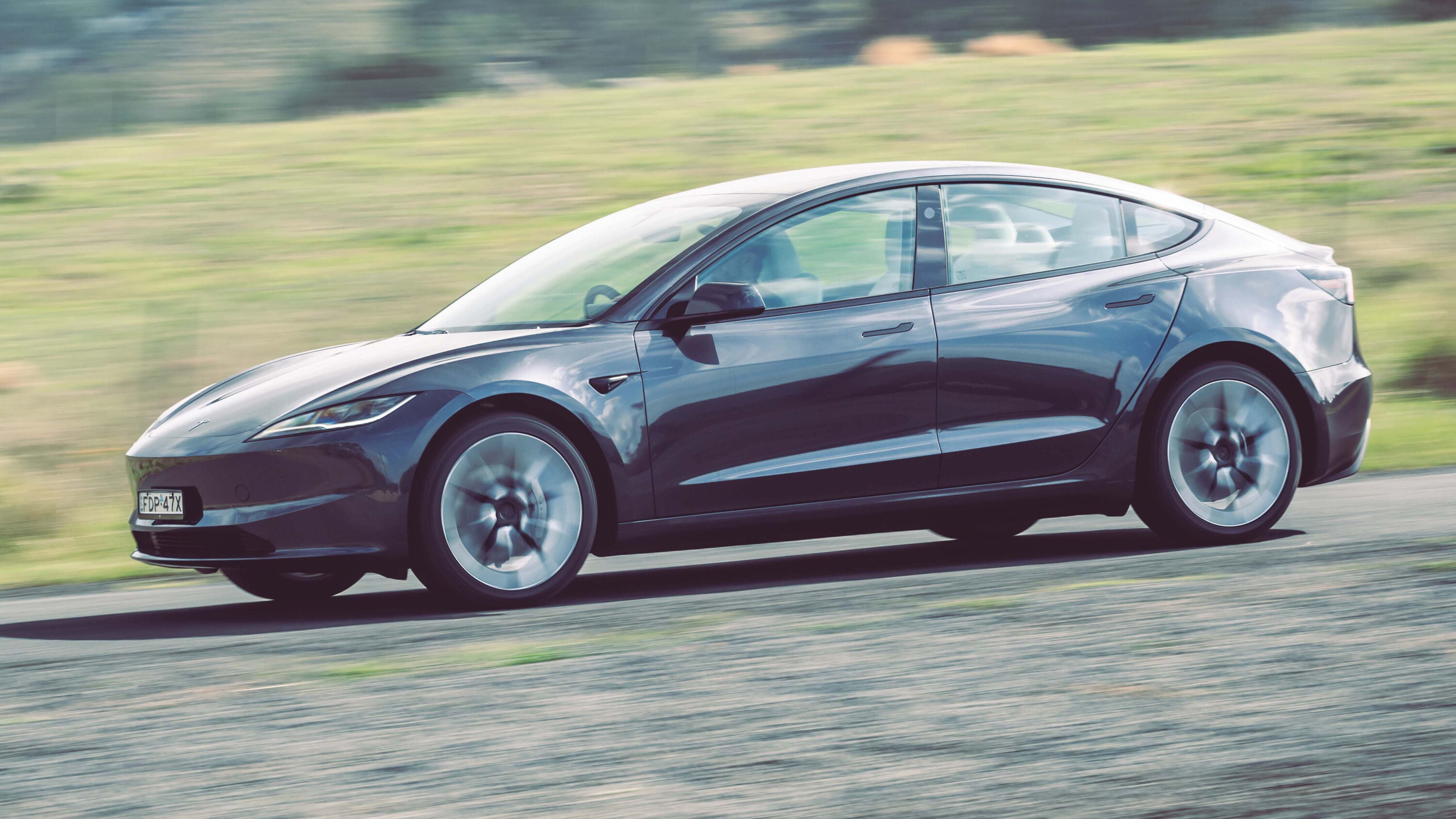
The 2024 Tesla Model 3 sedan and 2024 Tesla Model Y midsize SUV have received more price cuts.
It is the third price reduction applied to the Model 3 and Model Y since April 1, which combined have seen the cost of Australia’s best-selling electric cars fall between $7000 and $9100 for some variants.
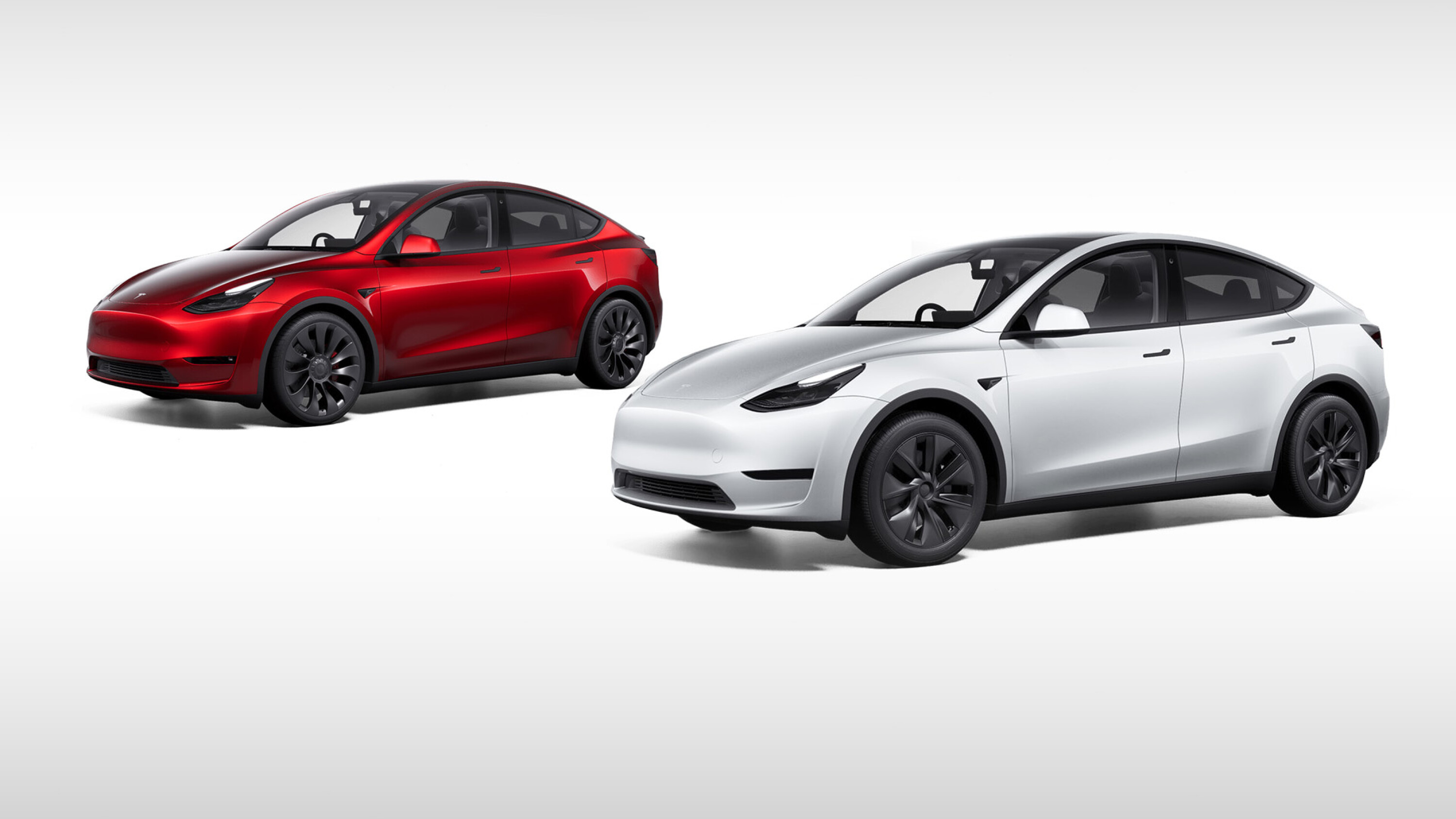
The latest price reductions are focused on popular Rear-Wheel Drive and Long Range AWD versions of the Model 3 and Model Y, with the Model Y Rear-Wheel Drive down $5000, Model 3 Rear-Wheel Drive down $4000, and Model 3 Long Range AWD down $3000.
1
There have been no price reductions for the Model 3 Performance, Model Y Long Range AWD or Model Y Performance, after Tesla dropped $8500 from the last two in April.
The recently-launched Model 3 Performance – priced from $80,900 before on-road costs – is down $2500 over the pre-facelift model last offered in September 2023.
VFACTS new-car sales data reveals Tesla is Australia’s most-popular electric vehicle brand – and the 10th highest carmaker overall – with 14,866 cars sold to the end of April 2024, split between 8001 Model Ys and 6865 Model 3s.
Electric vehicle sales in April 2024 decreased over the same month in 2023 – down five per cent with 6194 sold – but year-to-date registrations are 32 per cent higher at 31,662 compared to 23,926 in 2023.
1
2024 Tesla Model 3 pricing – as of 21 May 2024
| Model | Pricing | Change |
|---|---|---|
| Rear-Wheel Drive | $54,900 | down $4000 |
| Long Range AWD | $64,900 | down $3000 |
| Performance AWD | $80,900 | u2013 |
| Prices exclude on-road costs.u00a0 | ||
Tesla Model 3 Australian pricing history
1
2024 Tesla Model Y pricing – as of 21 May 2024
| Model | Pricing | Change |
|---|---|---|
| Rear-Wheel Drive | $55,900 | down $5000 |
| Long Range AWD | $69,900 | u2013 |
| Performance AWD | $82,900 | u2013 |
| Prices exclude on-road costs.u00a0 | ||
Tesla Model Y Australian pricing history
MORE
Everything Tesla
MORE
Electric Cars
Peruse the growing line-up of Toyota GR models, which currently includes the GR Yaris, GR Corolla, GR Supra and GR86 and you’ll notice a key omission: there is no performance SUV.
Given GR’s mission is to make fun cars that “make car guys smile” you could argue the lack of a heavier, higher-riding SUV makes total sense, yet that doesn’t mean a GR SUV isn’t on the radar for Australia’s most popular brand.
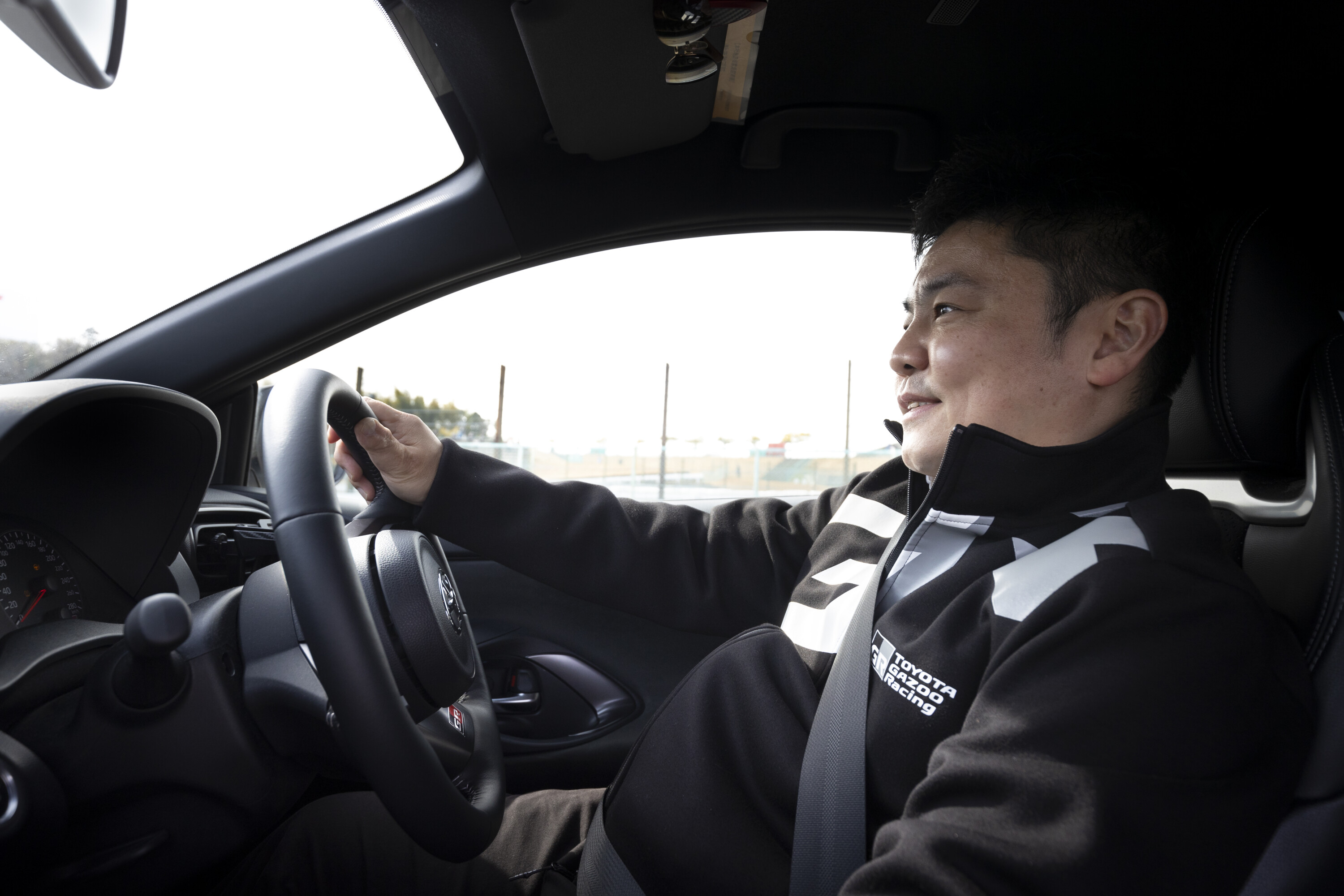
Tomoya Takahashi is GR’s company president and while on a recent visit to Australia, he told Wheels that it’s logical to add an SUV to the GR model range in the future.
1
“To expand the GR brand, maybe those [SUVs] are needed as well,” he said. “Some people can only use SUVs because they have family issues, or a number of challenges.”
The issues Takahashi is alluding to are the need to seat multiple passengers in comfort and to haul things about in a decent-sized boot, which are abilities the current, driver-focused GR model range lacks.
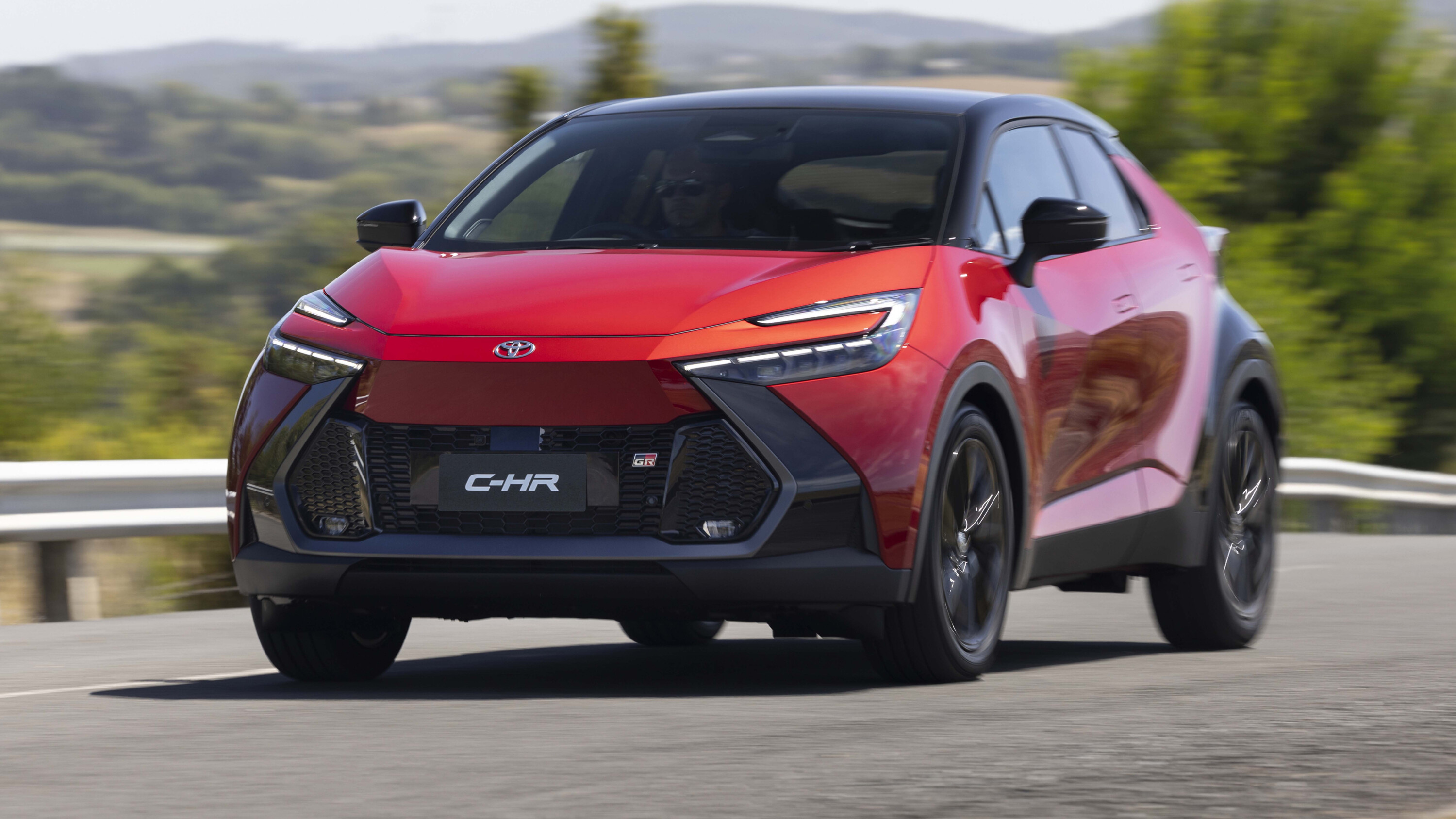
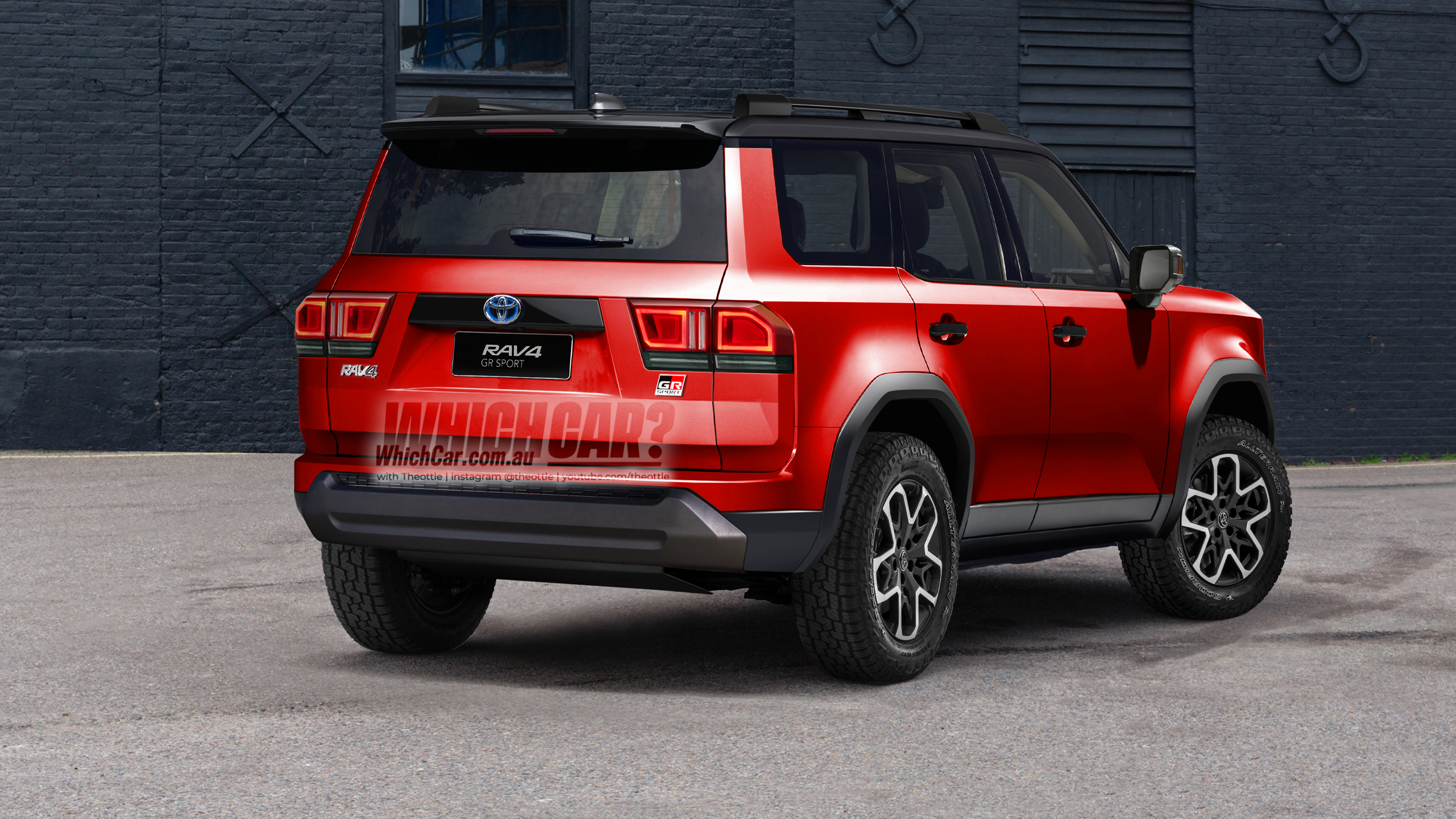
Bolstering the line-up with a GR SUV would make sense from a sales perspective, too. SUVs continue to be hugely popular worldwide and a GR version of the Corolla Cross, Yaris Cross, RAV4 or C-HR would surely become the go-fast division’s best-seller.
1
“At GR company we only have small resources to hit our goal so you have to prioritise,” added Takahashi. “But in my individual point of view, we need GR SUV cars. In future.”
Toyota currently sells GR Sport versions of the C-HR, Yaris Cross and LandCruiser, however these models mostly bring styling and equipment upgrades rather than mechanical performance enhancements.
So which SUV is likely to cop the full-bore GR treatment? A GR RAV4 would make sense given it is Toyota’s most popular SUV, however a C-HR or Yaris Cross could theoretically be developed at a lower cost.
1
Given their small size and lower weight, those models could more readily adopt the 1.6-litre three-cylinder turbo and all-wheel-drive drivetrain already used by other GR models.
But while Takahashi’s insistence that a GR SUV will come “in the future” suggests it’s still someway off, one thing we can say with some certainty is that it won’t be powered solely by electricity.
“We want to use internal combustion engines as as much as possible,” said Takahashi. “In the future maybe there is some time the engine will be banned or not the engine is banned but that carbon is banned. By using a hybrid technology we can reduce carbon emissions or using the carbon neutral fuels. So for me, Toyota is saying ICE is not bad. The enemy is carbon.”
MORE
Everything Toyota
MORE
SUV Buyers Guide
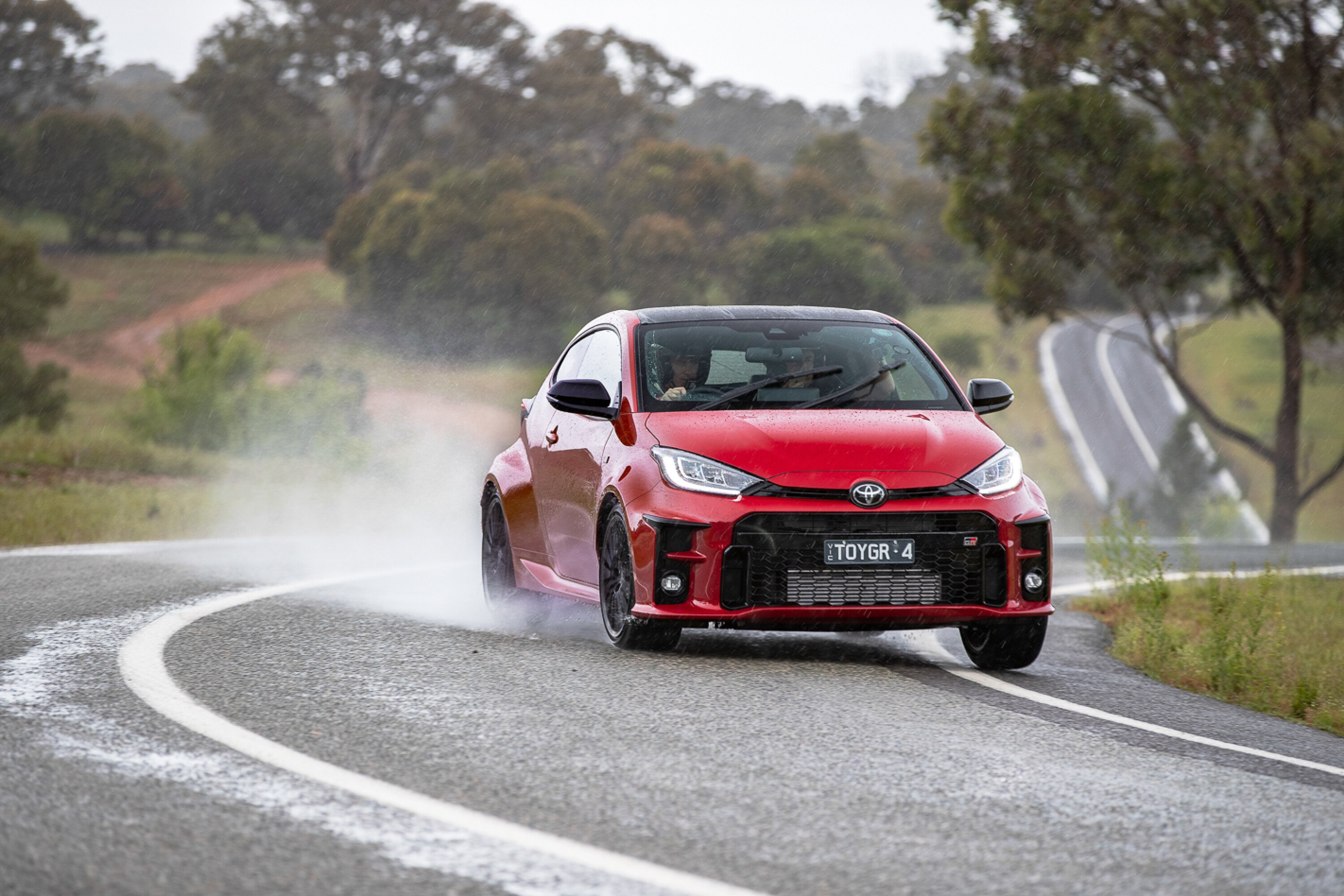
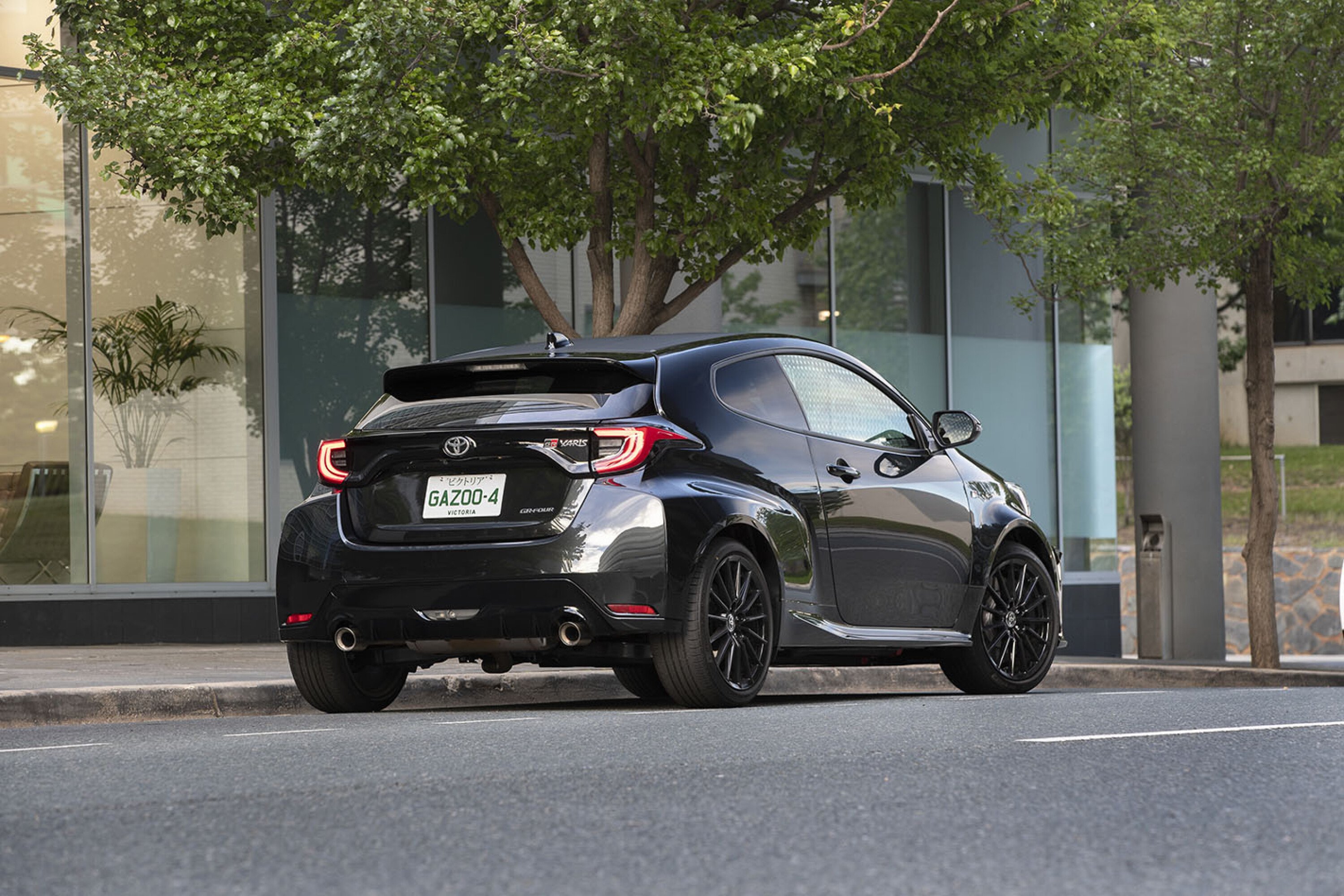
Toyota has re-opened the order books for the popular GR Yaris and also announced a new ‘first in-first out’ approach to allocating cars that could slash wait times.
The new order system, which will allocate cars to customers based on the date they place their order, will first be trialled on all GR performance models from June production, but Toyota already has plans to roll it out to models from its regular range too.
The hope is the change will help reduce the long wait times that still impact several of Toyota’s most popular model lines.
“Here’s an update for GR Yaris enthusiasts,” Toyota Australia’s vice president of sales and marketing Sean Hanley told Wheels. “From today, we’re re-opening the order books. They’ve been closed so the really great news is that we’ve got stock in dealerships right now.”
1
Hanley confirmed the new arrival of stock is for the current GR Yaris, with the heavily updated and more powerful 2025 model slated to begin production later this year.
“Having sports cars in hot demand is fantastic, we’re proud, we’re enthusiastic about it,” added Hanley, “although it can pose a challenge as to how you allocate the limited stock you have. I’d like to say that’s just about GR but quite frankly it’s been for Toyota as well generally speaking.”
The new ‘first in/first out’ ordering system comes as a direct learning from the huge supply disruptions that hit Toyota during the Covid-19 pandemic, says Hanley.
“We’ve learned a lot on that journey,” he said. “It hasn’t all been bad for us and it’s great having the demand. What we do need to do is getting at how we allocate and how we manage that experience. That’s the learning we’ve taken out.
1
“We always strive for a customer-first approach… so I’m pleased to announce that – for all GR performance cars – we’re moving to a first-in-first-out approach. That means – effective July production – we’ll be prioritising the delivery of cars to customers, based on the date they place their order.
It’s the fairest way given the normalisation of supply. And we are deploying that across a number of Toyota models as well right now but it’s a process because have legacy systems we have to change.”
Toyota has enjoyed huge demand for its GR models in Australia. Since launching the brand here in late-September 2019, Toyota has sold 1171 examples of the GR Supra and almost 2600 units of the GR Yaris.
The GR 86 has moved 22,000 cars, while the GR Corolla has found more than 800 homes so far.
MORE
Everything Toyota
If you’ve been waiting for a more powerful, high-performance version of the Toyota HiLux to battle the Ford Ranger Raptor, we have some bad news.
It’s not going to happen. At least not for a while…
The man in charge of Toyota’s GR performance division, Tomoya Takahashi, is currently visiting Australia and during a media round-table, Wheels asked about the prospect of a flagship Toyota HiLux GR to sit above the current HiLux GR Sport.
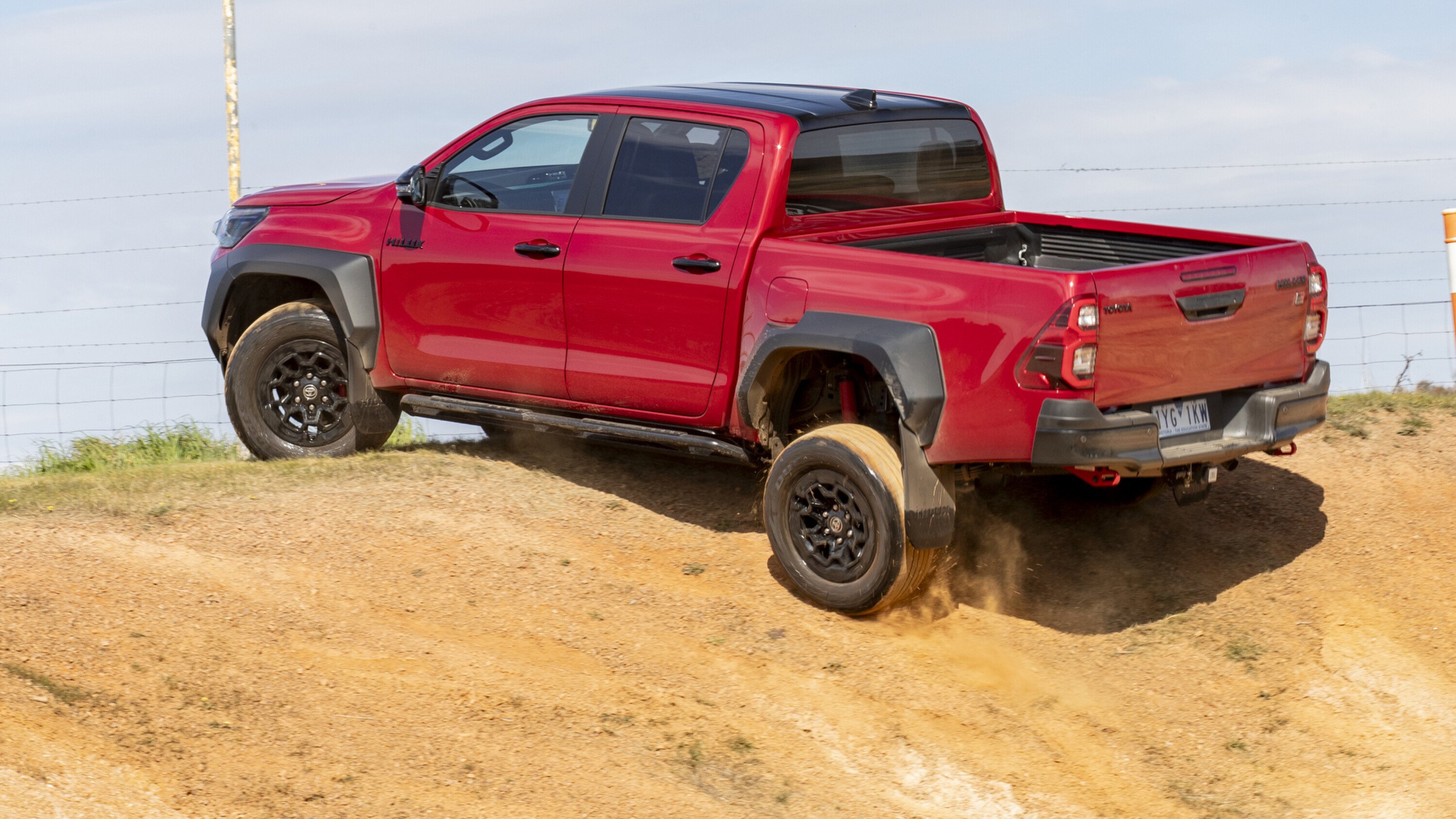
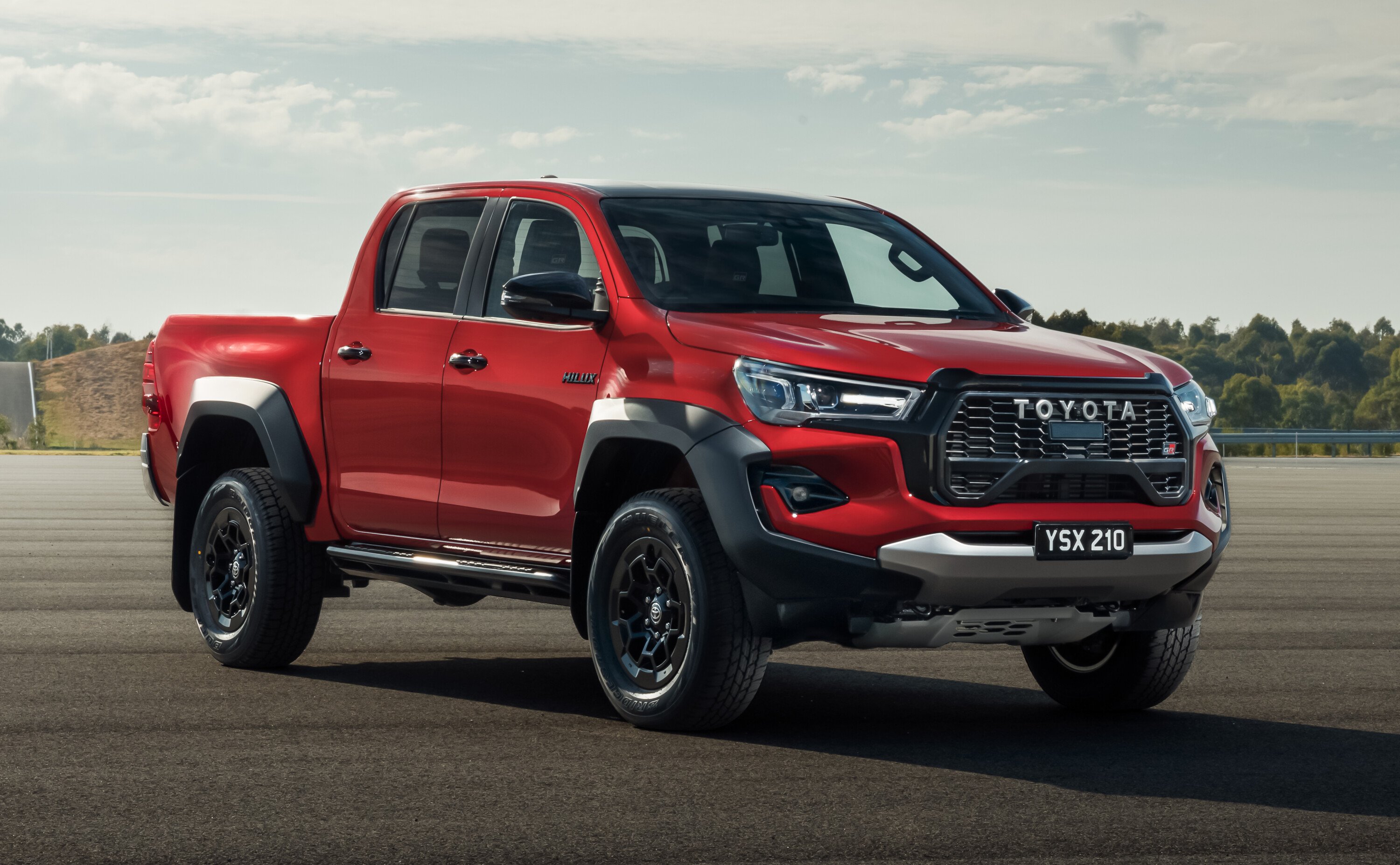
Just like AMG and BMW M, which have ‘sport’ sub brands that sit beneath faster ‘full fat’ performance models, the 165kW/550Nm HiLux GR Sport is positioned a rung below the more hardcore, 292kW/583Nm Ford Ranger Raptor.
1
But while that might seem to leave room to add an even faster, more powerful version of the HiLux, Takahashi firmly rejected the idea.
“Maybe a GR special car? No,” he said. “Only GR Sports.”
For absolute clarity we asked again if a rival for the Ranger Raptor might come in the future but the response was a shaking head, along with “No”.
Pretty unequivocal, then, from the man who makes the key decisions — Takahashi is GR Company President — but there’s also no doubt that the Ranger Raptor currently gives Ford a key advantage here in Australia.
The Toyota HiLux and Ford Ranger are bitter rivals on the Aussie sales charts, often swapping places to be the nation’s best-selling vehicle. But while both dual-cab utes shift serious metal each month, the Raptor currently has the lucrative high-performance market all to itself.
1
Despite a lofty price tag of $90,440 Raptor sales are so strong that Ford is reluctant to share exactly how many it sells.
We do know more than 10,000 units of the first-generation Raptor found homes in Australia, while the second-gen ute had more than 5000 pre-sales before it even hit showrooms. Ford sells the Aussie-developed Raptor to key markets around the globe including the United Kingdom, South Africa and Thailand.
“Ford Australia is thrilled at the customer response to the current generation Ranger Raptor since its launch in 2022,” a Ford spokesperson told Wheels.
1
Popularity of the Ranger Raptor speaks for itself, and we are proud of how it has pushed new frontiers in terms of performance in the mid-size ute segment.
The Ranger Raptor is not only a local success story, being engineered and designed by Australians for Australians, but a global one as well being sold on every continent bar Antarctica.”
The good news is that while a full-blown GR version of the HiLux seems off the cards, Takahashi did say Toyota’s fleet of SUVs are ripe to receive the go-fast treatment.
MORE
Everything Toyota
MORE
Ute Buyers Guide
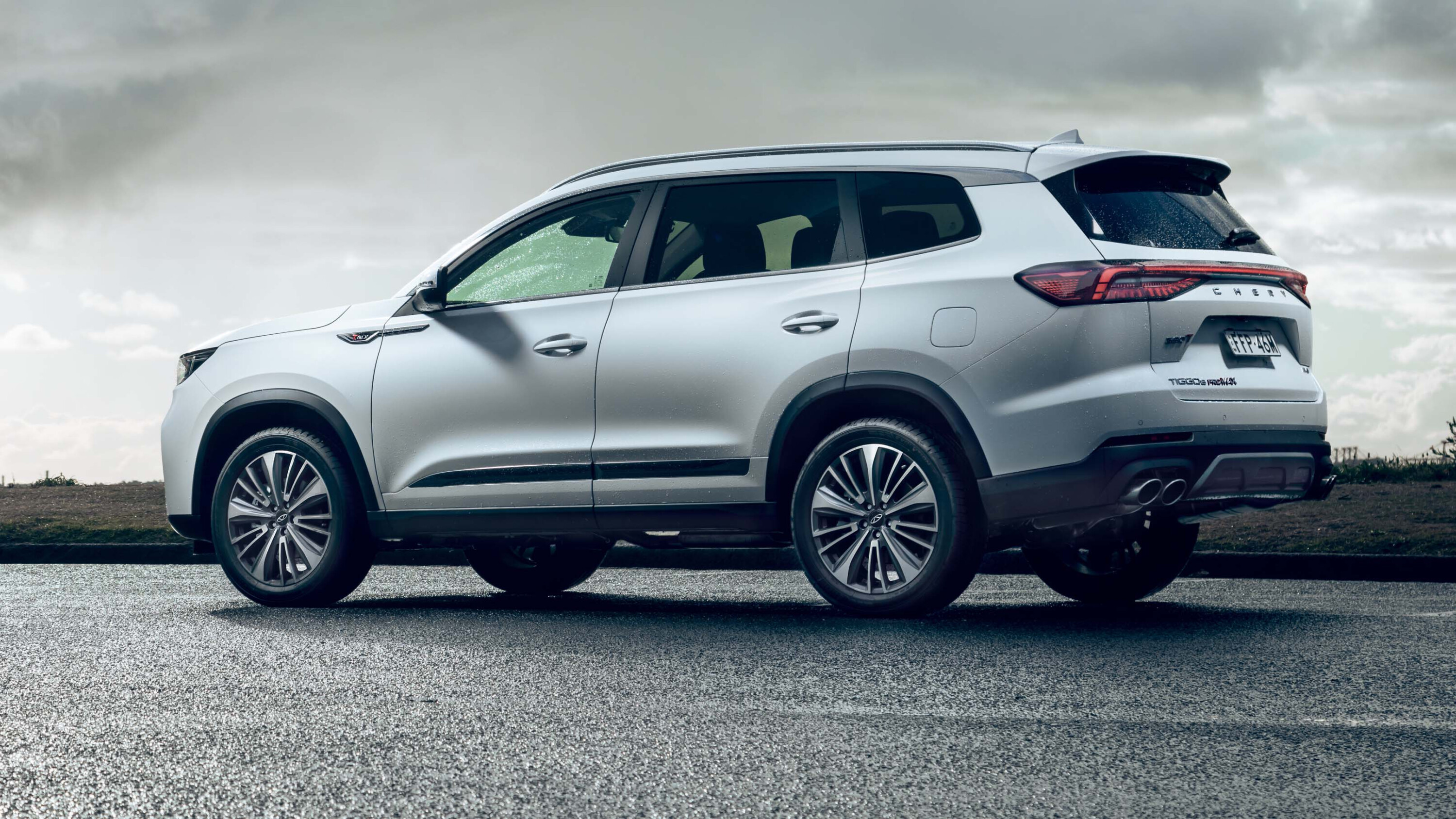
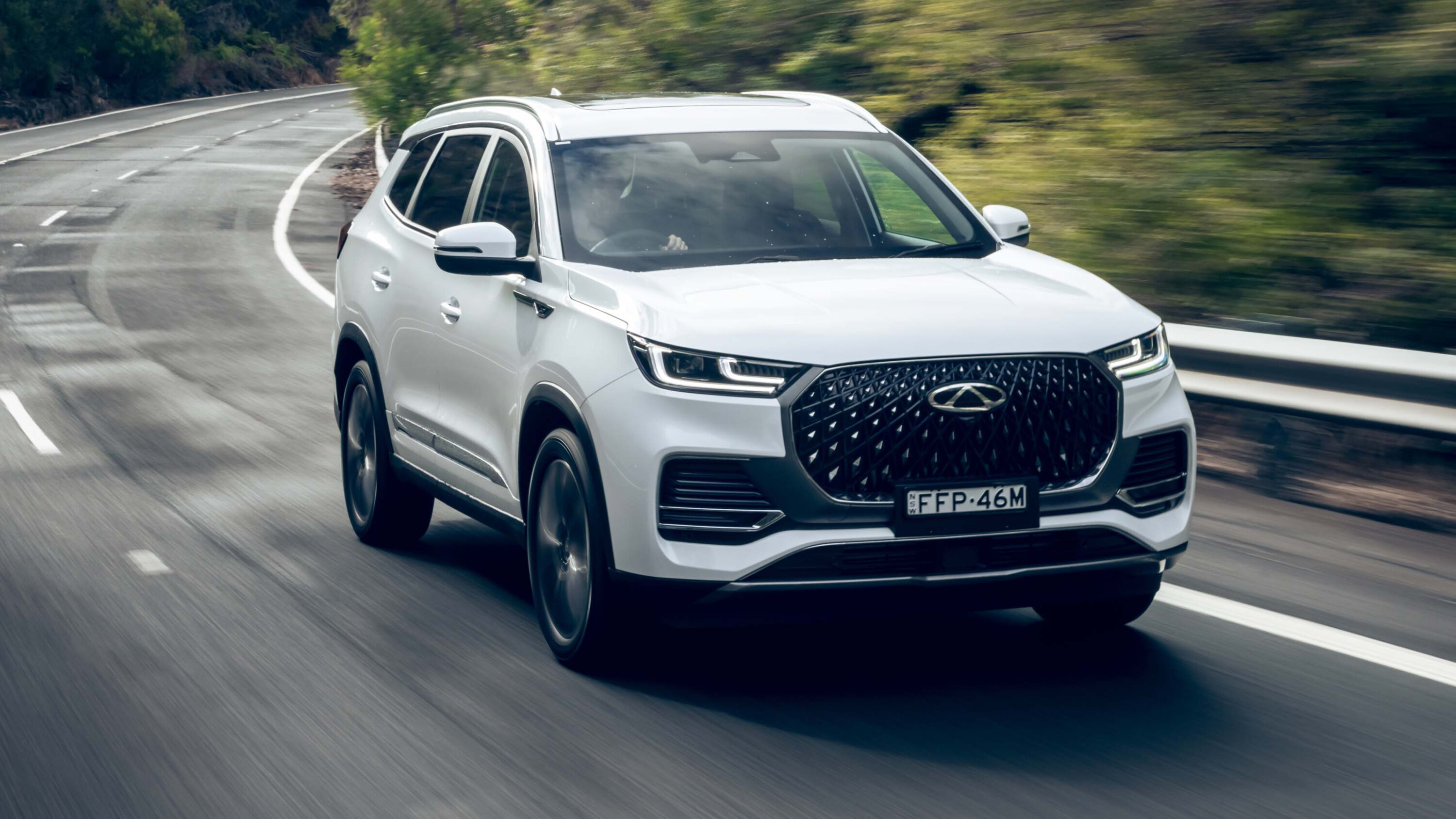
The second bite of the Chery in Australia is now onto its third model, as the Chinese brand steps into the large-SUV segment with its Tiggo 8 Pro Max.
Sounding more like a supersized smartphone than an upper-sized family vehicle, the Tiggo 8 joins the Tiggo 7 midsized SUV and Omoda 5 small car. And like those cars, it seeks to banish memories of Chery’s last time out locally with the cheap but not particularly cheerful J1 hatch.
Chinese car makers have come a long way in the past decade or so, and are now seemingly falling over themselves to enter the Australian market – either as official subsidiaries or via importers.
1
Chery Australia, which falls under the former category after previously being imported by Ateco, is in its first full year back and has had a strong start to 2024 with nearly 2500 deliveries to the end of April.
Tiggo is more SUV sub-brand than model name, and more models are set to come to Australia – both smaller (Tiggo 4) and even larger (Tiggo 9).
JUMP AHEAD
- Pricing and features
- Interior comfort and practicality, and boot space
- On the road
- First verdict
- Specifications
Pricing and features
There’s nothing like sharp pricing as a method of luring curious customers to your relatively new brand, so Chery Australia has priced its large seven-seater SUV more like a midsized five-seater SUV.
Where the majority of large SUVs are found above $50,000, the Tiggo 8 Urban base model’s $41,990 drive-away price stands out as the equivalent of about $38,990 RRP.
The Urban’s list of standard features doesn’t read like a base model, either: Heated and ventilated front seats, Sony eight-speaker audio, 18-inch alloy wheels, twin 12.3-inch digital dashboard screens, surround-view camera, ambient cabin lighting, and wireless phone charging.
1
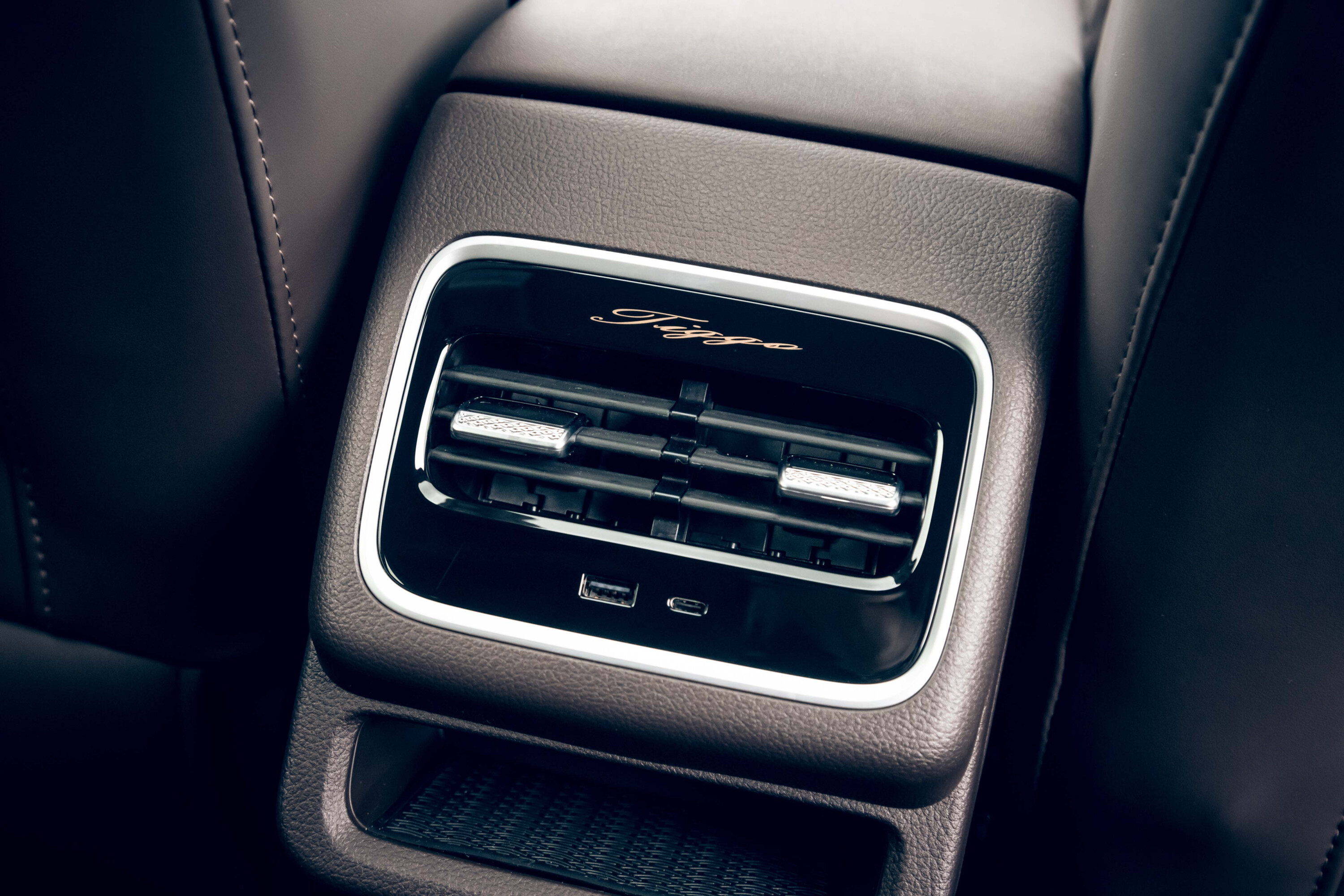
Key extras for the $43,990 drive-away Elite are automatic tailgate operation, built-in dashcam, third-row air vents (with fan-speed control), and a retractable cargo blind.
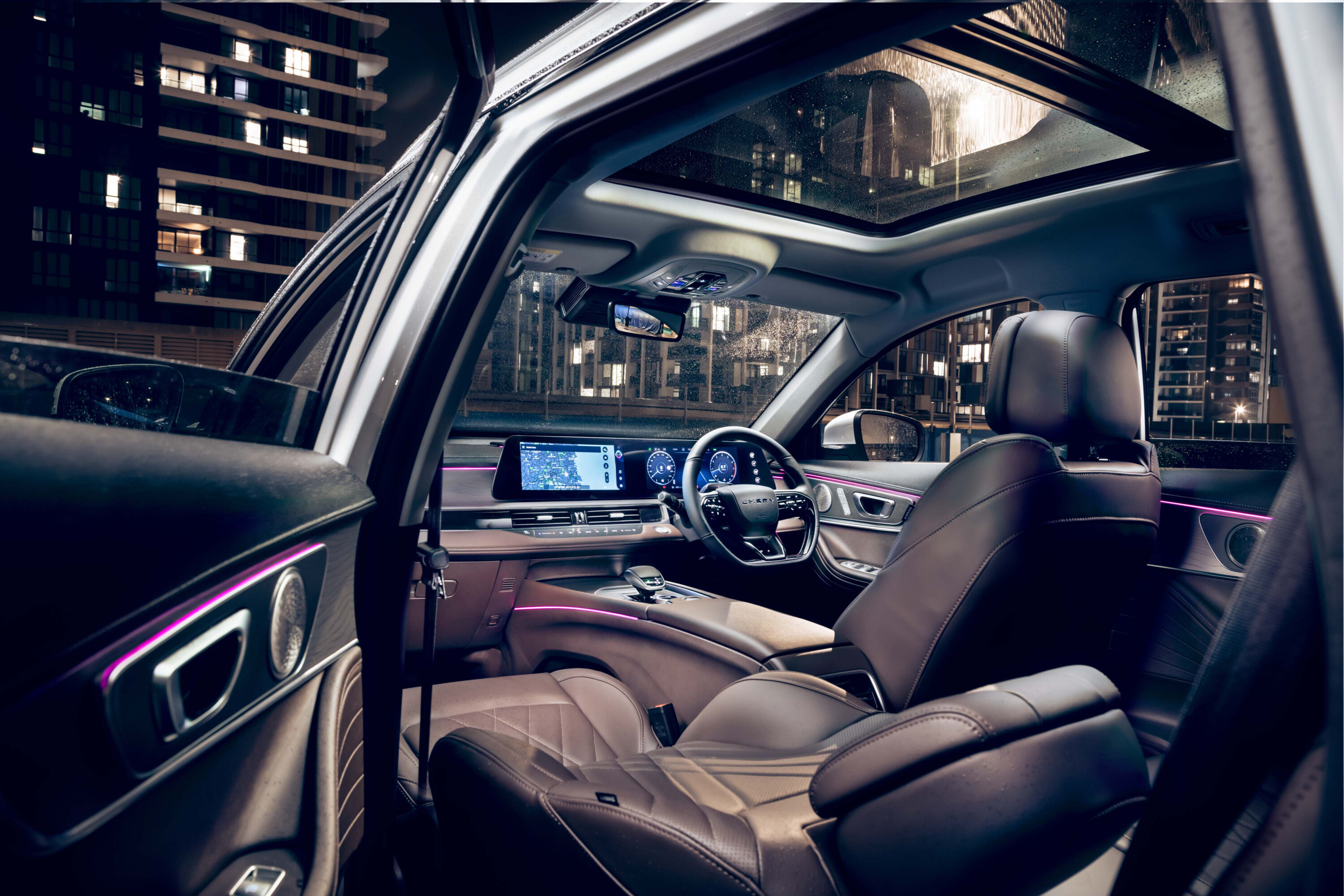
The $47,990 drive-away Ultimate upgrades the drivetrain from front-wheel drive to all-wheel drive, switches the wheels to bigger 19s, and embellishes the interior with a panoramic sunroof (with electric blind and partial opening), a 10-speaker Sony system, privacy glass, and even a fragrance system. The artificial-leather upholstery is also offered in brown rather than just black.
There are two cheaper seven-seater SUVs in Australia – LDV’s D90 costs $38,937 drive-away while Mahindra’s XUV700 is even more affordable at $36,990 drive-away.
It’s also worth noting the 4.7-metre Tiggo 8 is on the smaller scale of the large-SUV segment – similar to the related Skoda Kodiaq and Volkswagen Tiguan Allspace, as well as the XUV700. The D90 is just over five metres long.
Interior comfort and practicality, and boot space
You might consider the Tiggo 8 as simply a long-wheelbase, seven-seat version of the Tiggo 7, such is the minimal difference between the front cabin designs of the two SUVs.
They even share the same T1X platform, and while the Tiggo 8 222mm longer overall the widths are all but identical.
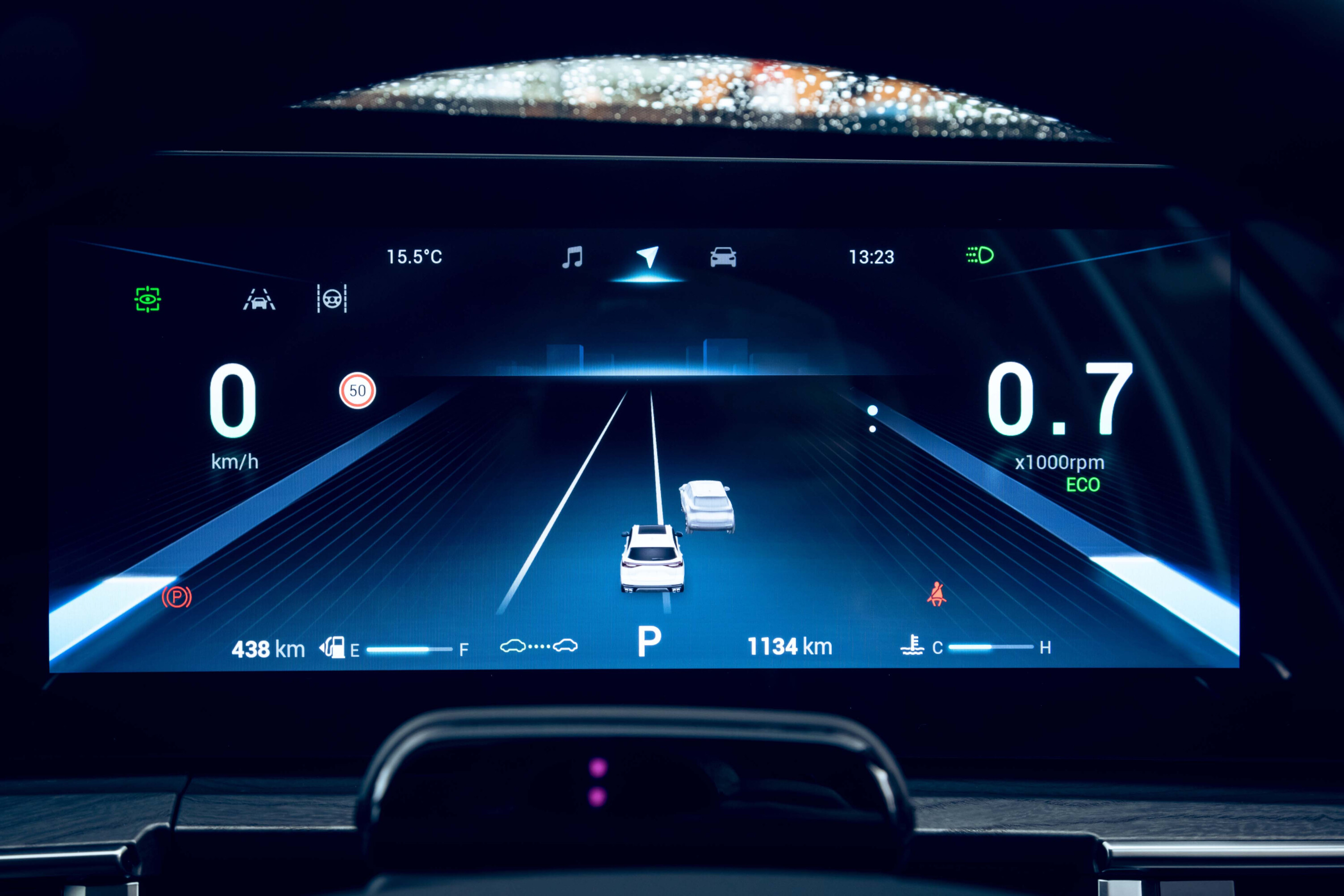
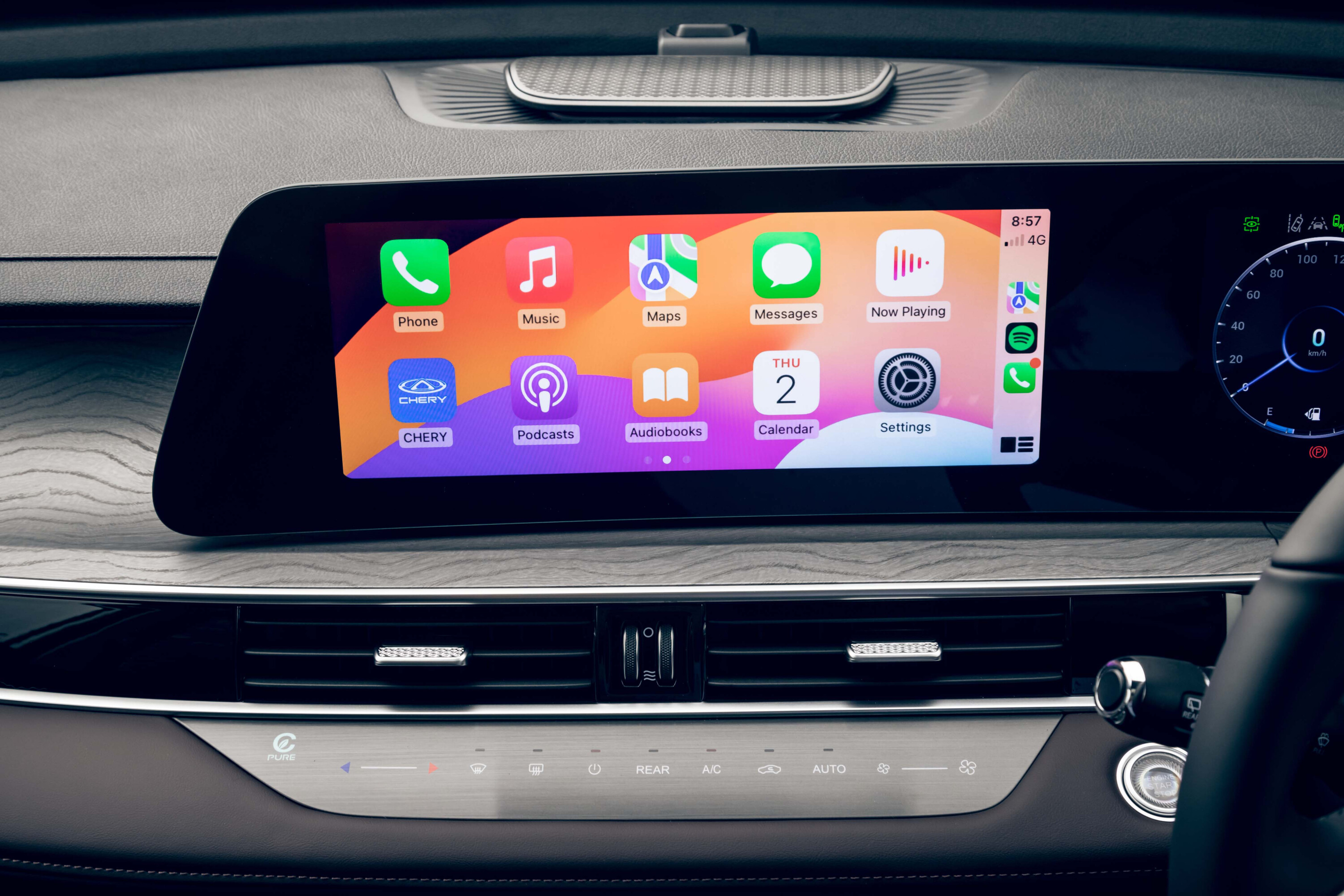
This includes the dual 12.3-inch digital screens comprising infotainment and driver displays, which aren’t dissimilar to the arrangement in Kia models and work just as effectively in terms of presentation and logicality.
The driver cluster layout can also be configured to prioritise a nav map just like VW’s Virtual Cockpit.
1
A brief test of the ‘Hello Chery’ voice command system – requesting repeated opening/closing of the panoramic roof (in the Ultimate) suggested it’s good at ‘listening’.
As with the Tiggo 7, a flying bridge centre console features understorage for small bags/items, cupholders, cubby bin, and rubber (sideways) phone charging pad, plus USB-A and USB-C charging points but also wireless Apple CarPlay/Android Auto functionality.
A bonus over the Tiggo 7 is that even in the base Tiggo 8 Urban, the front seats come with ventilation as well as heating.
Door pockets are on the narrow side though included shaping for bottles. Above those, the wood/plastic surround section for the door handle and round audio speaker take a fair bit of inspiration from Mercedes-Benz interiors – just missing seat-adjustment controls to complete the (imitation) picture. The speaker doesn’t belong to a Burmester system despite its similarly spirally design.
1
Shortcuts for heating/ventilation below the infotainment display are welcome, if not always easy to see on a sunny day. The tactility of the steering wheel buttons/toggles isn’t great – lacking a more definitive détente to confirm you’ve made an adjustment.
The wide-angle rear-view mirror is also a little weird.
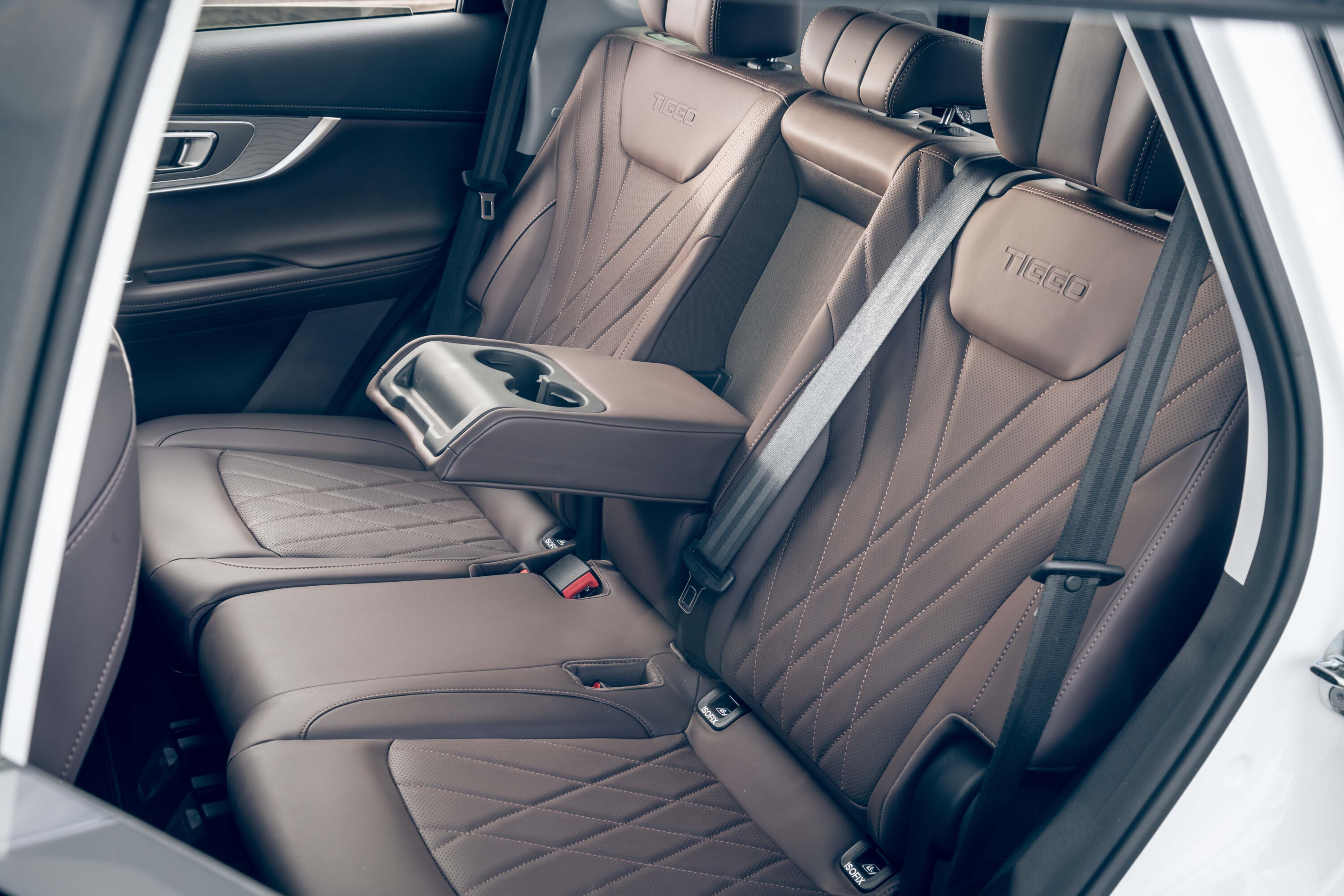
In the second row, there’s heaps of legroom with the bench in its rearmost position, allowing it to be pulled forward (60-40 arrangement) as necessary to create more knee space for third-row occupants.
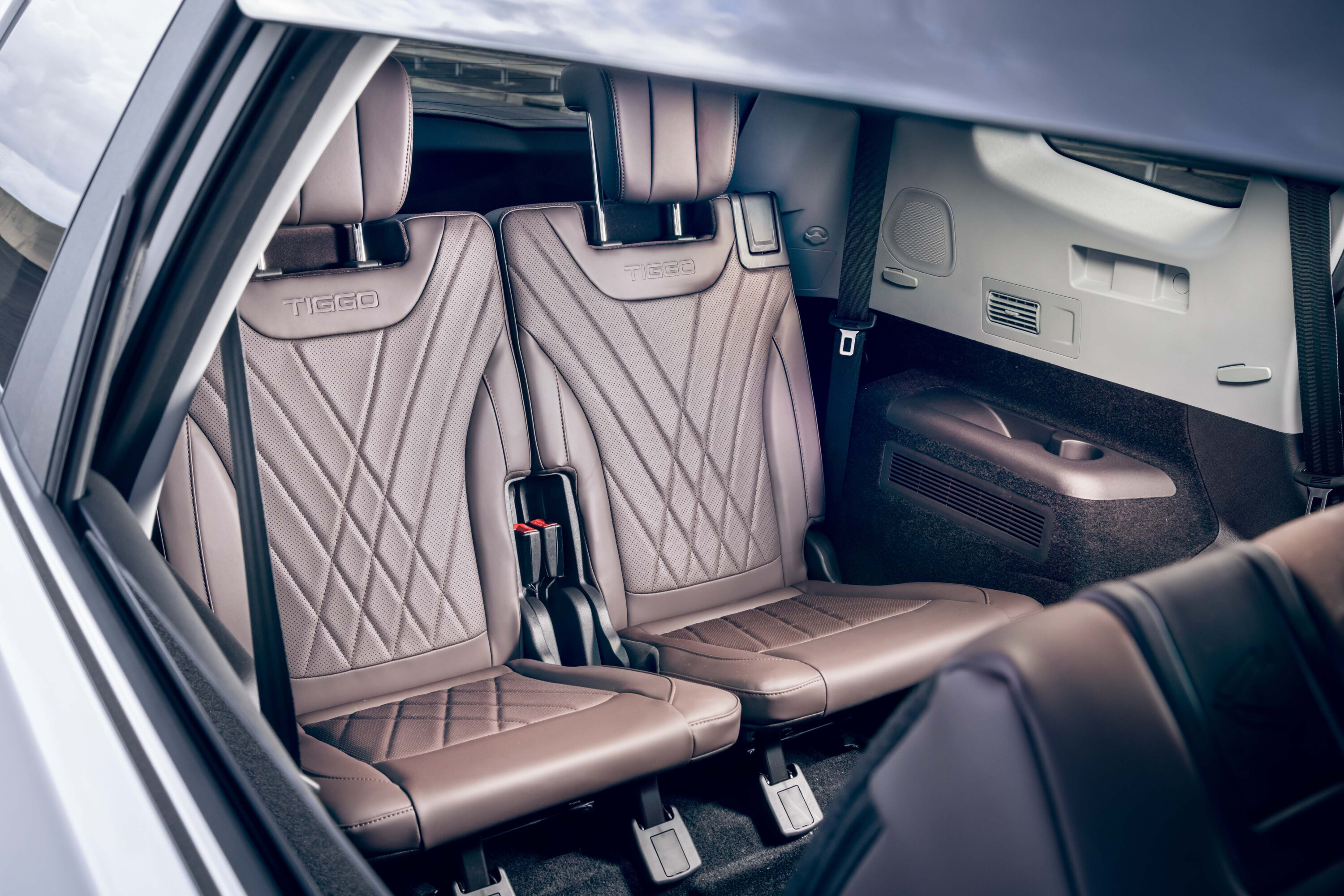
Setting the front passenger and second-row position immediately behind for sufficient legroom for an average-sized adult, we found a 5ft 8in occupant can sit comfortably enough in the last row for shorter trips. Anyone much taller will find headroom limited.
1
Tilt-slide third-row access is only on the driver’s side.
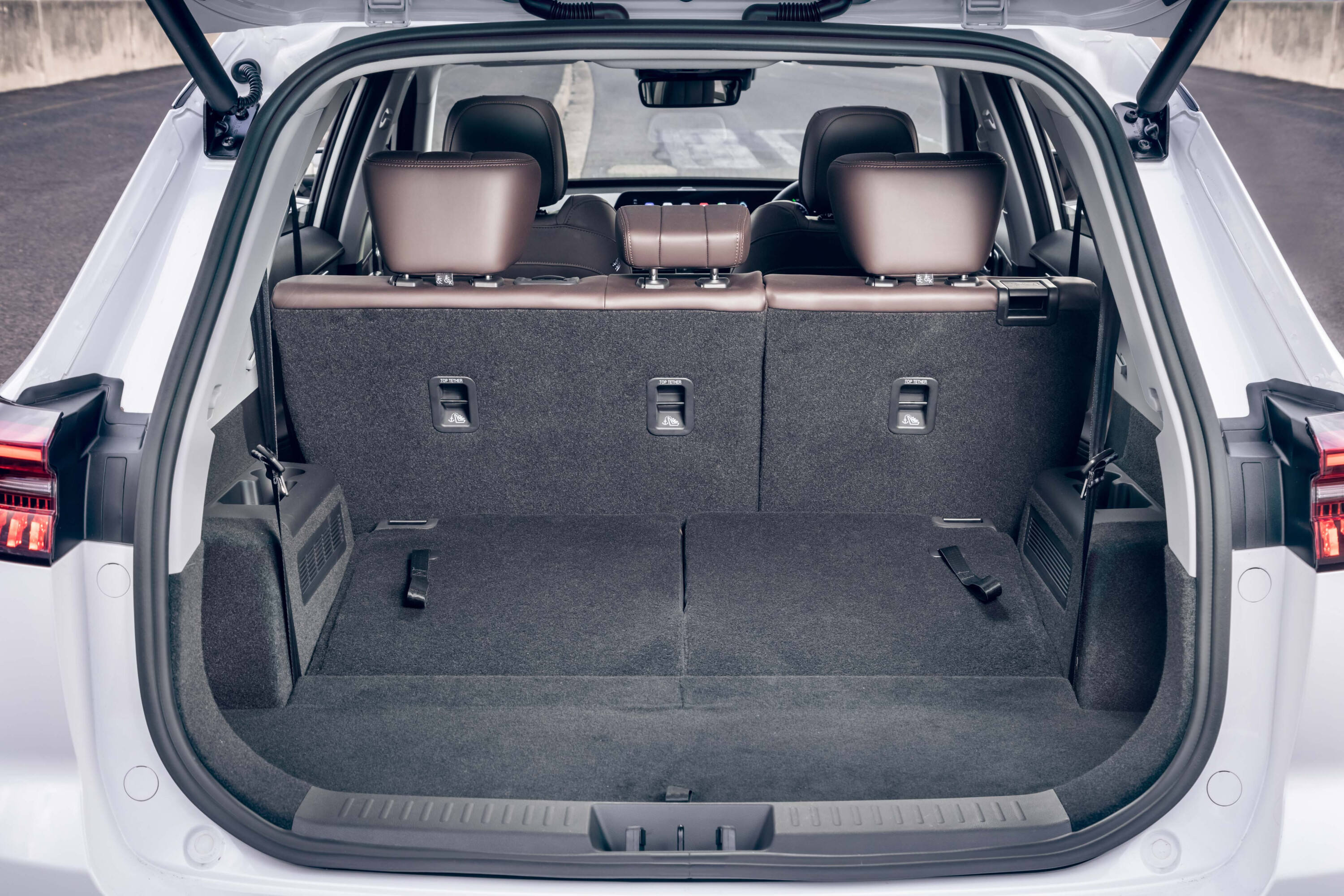
With the third-row seats up, luggage capacity is limited to small holdalls or a few shopping bags.
They fold down for proper boot space, if not that generous for the segment at 479 litres. The seats don’t lie completely flat and in the process of folding down tend to lift up the small, rearmost boot-floor section that needs to be tidied up.
The cargo blind position is also relatively low, reducing the amount of luggage/contents that can be covered.
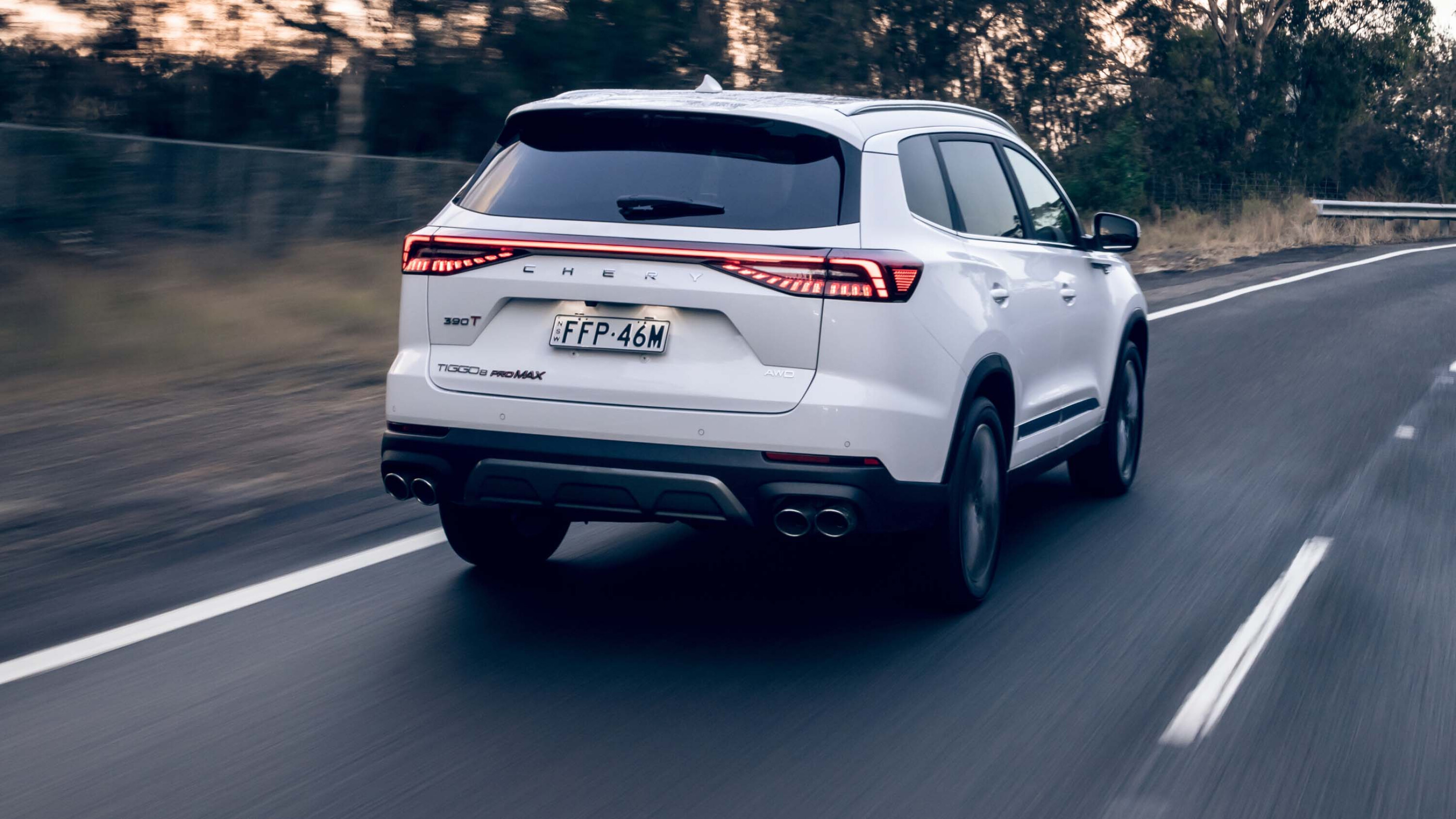
A spare wheel is mounted beneath the rear of the vehicle.
3
On the road
Such is the obvious relationship between Chery’s Tiggo SUVs in components and electronics, it’s no surprise that the Tiggo 8 exhibits some similarly annoying active-safety habits.
Although the unintrusive lane-keep assist system is something Hyundai and Kia in particular could learn from, other areas are less successful.
As with the Tiggo 7, the adaptive cruise and lane-centring assist combine to make the steering thick and heavy, making it difficult for the driver to make accurate small inputs to compensate for cambers and crosswinds. The adaptive cruise is also overly reactive, slowing too suddenly and then accelerating a touch too aggressively.
1
The driver-attention monitoring system could also do with its own monitoring for major improvement.
On the day 2 return drive, it became a running joke with my passenger how many times the system flashed ‘You are distracted’ or ‘You have been distracted for a long time’ on the driver cluster – despite my attention clearly being paid to driving safely, just not straight ahead every second.
Safe driving requires a driver to check the rear-view mirror, side-mirror and for blind spots on a regular basis, but Chery’s chastising monitor behind the steering wheel doesn’t seem to understand this.
1
The one saving grace is that Chery has removed the beep that had accompanied the alerts on our Tiggo 7 launch drive, so the annoyance level was lower.
Chery says it had discovered there was no regulatory requirement for the beep so had the software modified. Thank you, Chery Australia!
It says it also continues to work on improving its electronic systems in Australia, so fingers crossed for further improvements.
The company is also investigating local suspension tuning and has had engineers out from China to understand first-hand the huge challenge presented by Australia’s remarkably varied road quality.
1
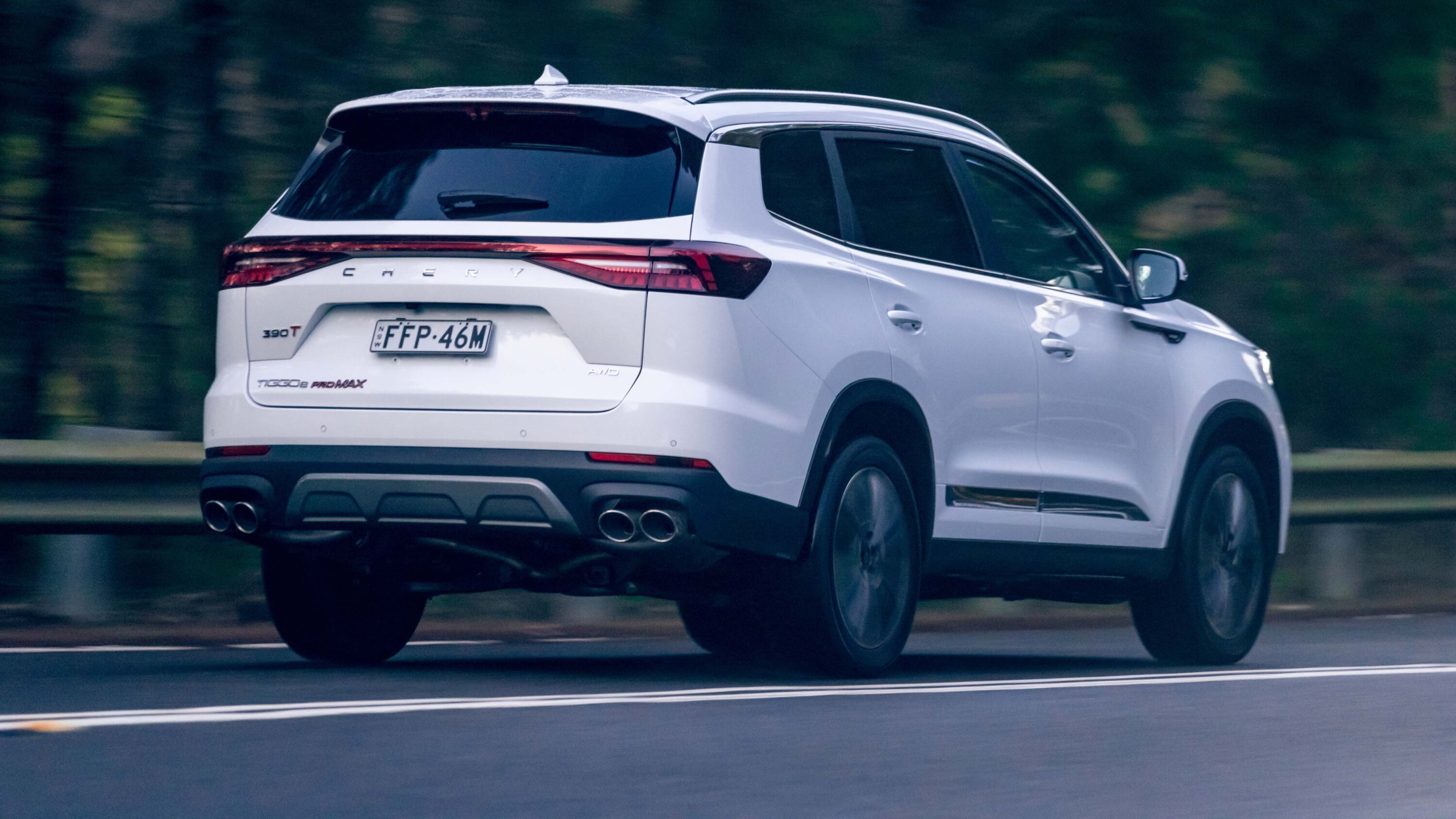
And the Tiggo 8’s ride quality is very much surface dependent. Smooth or mostly even and the large Chery SUV makes supple progress. Bumpy, and the damping struggles to keep the vehicle body even, or, over rougher bitumen, the ride becomes restless.
The steering is decent, though. A middling response that’s neither direct nor slow, it’s pleasingly smooth through its turns – if with mixed on-centre accuracy: good when paired with the bigger-wheeled, AWD Ultimate, more vague on the 18s/FWD combo of the Urban/Elite.
This is not a large SUV that encourages drivers to tackle a tourist road with gusto. While there was good grip from the ?/ tyres on the Ultimate, the chassis isn’t as enthusiastic – serving up only gradual understeer if pushed. There’s also a numb feel to the brake pedal.
1
This is unlikely, however, to be a deal-breaker for the Tiggo 8’s budget-conscious target market.
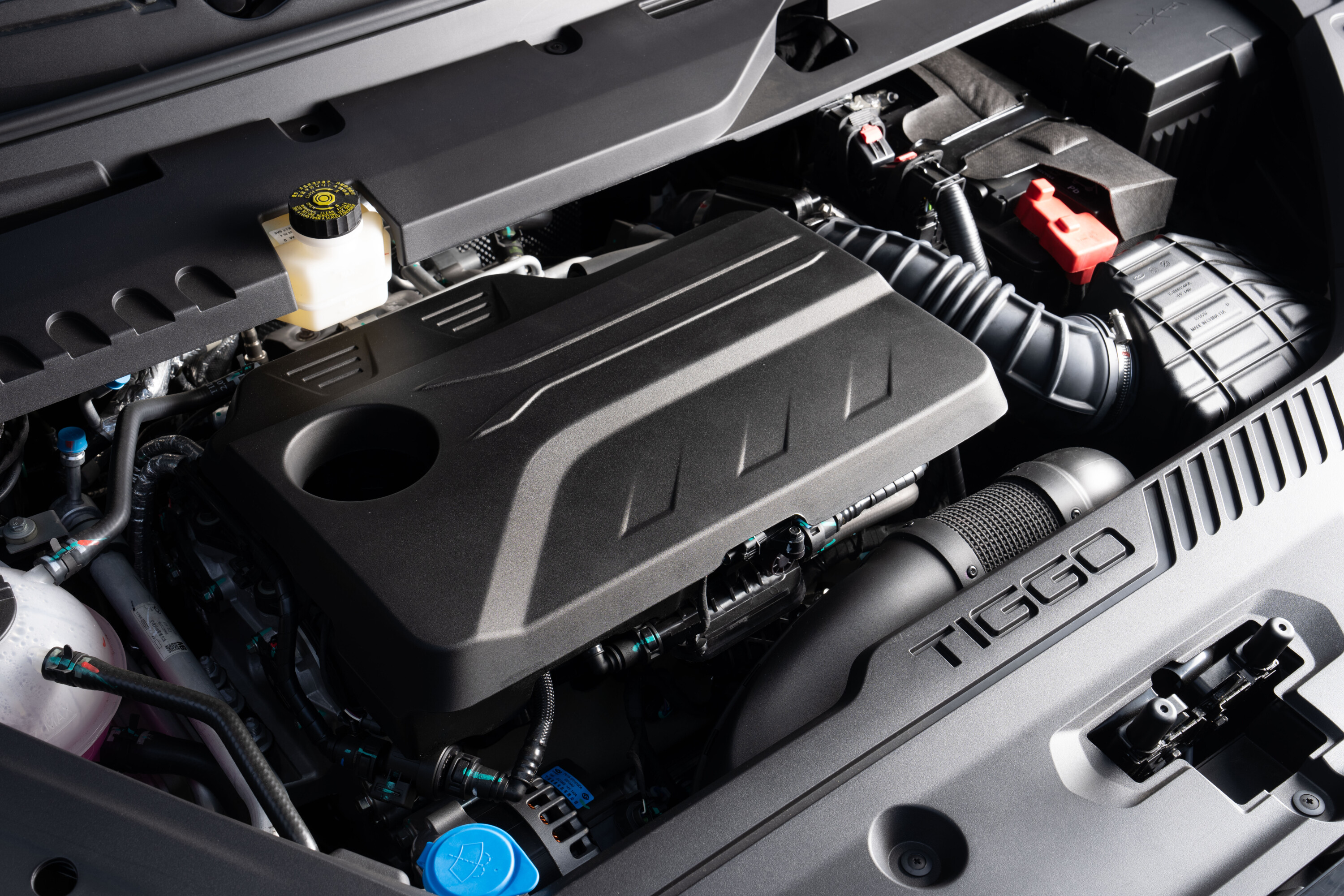
They’ll also no doubt appreciate the 2.0-litre turbo petrol engine. Producing 180kW and 375Nm, the 8’s outputs are up by a good amount over the 137kW/275Nm of the Tiggo 7’s 1.6-litre turbo petrol.
That ensures the bigger, heavier Tiggo 8, while not exactly brisk, provides reasonably good performance – at its best in the lighter, front-drive models.
The engine is linked to a seven-speed dual-clutch that can stumble at lower speeds, delaying acceleration, but otherwise promptly goes up and down the gears with enough smarts that the driver isn’t desperate to go DIY.
1
Not that they’re encouraged to, as the manual mode engaged by holding a button on the side of the gearlever is slow to respond to shift commands. No paddle-levers are offered in any trim grade.
Official combined fuel consumption is 8.1L/100km for the FWD Tiggo 8 or 8.7L/100km for the AWD. That’s in the ballpark for turbo petrols in the segment, though, for now, there’s no frugal diesel or hybrid alternative for now to rival such powertrains available in the likes of the Kia Sorento and Toyota Kluger, or new petrol-electric Hyundai Santa Fe (launching in late May). The Chery also recommends premium unleaded, adding additional cost at the bowser.
A 1300kg braked towing capacity is also down on the 2000kg more common in the segment.
1
First verdict
As is the case with the midsize Tiggo 7, the Tiggo 8 is well down the list in its category for refined and/or engaging road manners.
It’s also good to hear Chery Australia will continue its efforts to improve the driver aids in its vehicles, with the driver monitoring and adaptive/lane-centring systems worthy of particular attention.
That’s not to suggest the driving experience lacks any likeable qualities, the drivetrain – occasionally hesitant auto aside – stepping up as one of the more pleasing aspects.
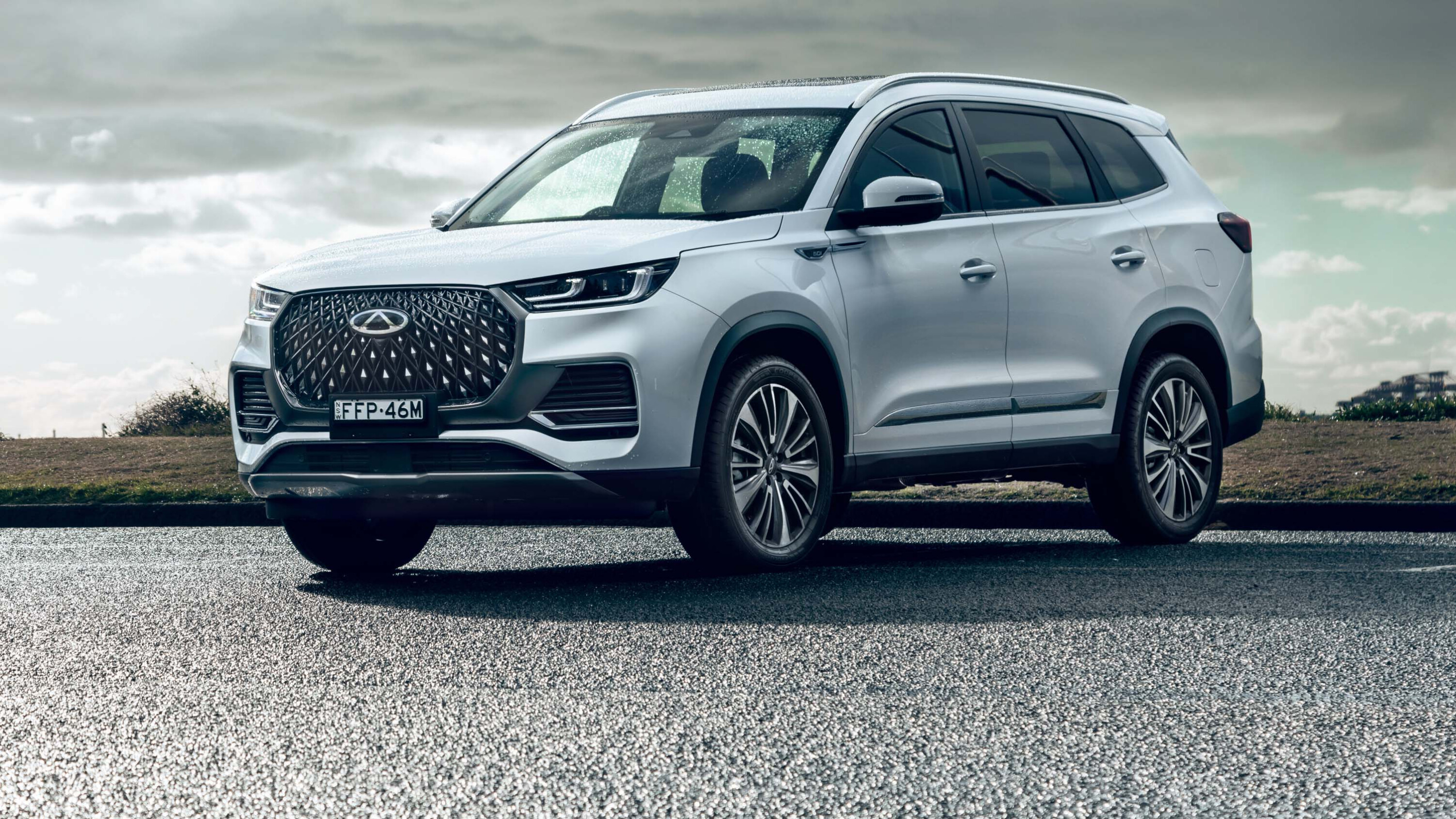
1
The cabin also succeeds on presentation, infotainment and space, the latter only let down by a smaller-than-average boot capacity.
This latest large-SUV offering’s most compelling selling point, though, is impressive value in terms of how much you get for you money. The Tiggo 8 is even more of a bargain than the smaller Tiggo 7.
MORE
Everything Chery
MORE
SUV Buyers Guide
| 2024 Chery Tiggo 8 Pro Max specifications | |
|---|---|
| Price | $41,990 to $47,990 drive-away |
| Engine | 2.0-litre 4cyl turbo petrol |
| Transmission | 7-speed dual-clutch auto, FWD (Ultimate AWD) |
| Power | 180kW @ 5500rpm |
| Torque | 375Nm @ 1750-4000rpm |
| 0-100km/h | Not available |
| Fuel type | 95RON |
| ADR consumption | 8.1L/100km (Ultimate 8.7L/100km) |
| L/W/H | 4720/1860/1705mm |
| Wheelbase | 2710mm |
| Weight | 1626kg (Ultimate 1731L) |
| Boot space | 117L (3rd row up); 479L (3rd row flat up to seatback) |
| Towing capacity | 1300kg (braked); 750kg (unbraked); towball download 75kg |
| ANCAP rating | Not yet tested |
The 2024 Volkswagen Tiguan Allspace seven-seat SUV has received a price cut.
Volkswagen Australia has reduced $2000 to $2500 from the list price of the long-wheelbase, Mexican-built Tiguan Allspace, allowing for price parity with the standard-wheelbase, German-built Tiguan five-seater ahead of new-generation versions due here in 2025.
The third-generation Tiguan was unveiled last September and will arrive in Australia between April and June 2025, while the Tiguan Allspace’s successor will be the Tayron due in local showrooms towards the end of next year.
Until it is replaced by the Tayron – which will continue to be a larger version of the Tiguan – the Tiguan Allspace will be more affordable than the new Tiguan when it arrives with expected price rises.
Prices for the 2024 Volkswagen Tiguan and 2024 Volkswagen Tiguan Allspace start from $43,990 before on-road costs for the front-wheel-drive 110TSI Life and extend to $60,590 plus on-roads for the all-wheel-drive 162TSI R-Line.
As detailed here, the diesel-powerful 147TDI Elegance and 147TDI R-Line were dropped from the Tiguan and Tiguan Allspace line-ups for Model Year 2024 – while an electric tailgate, blind-spot monitoring and rear cross-traffic alert have returned to the 162TSI Elegance and 162TSI R-Line.
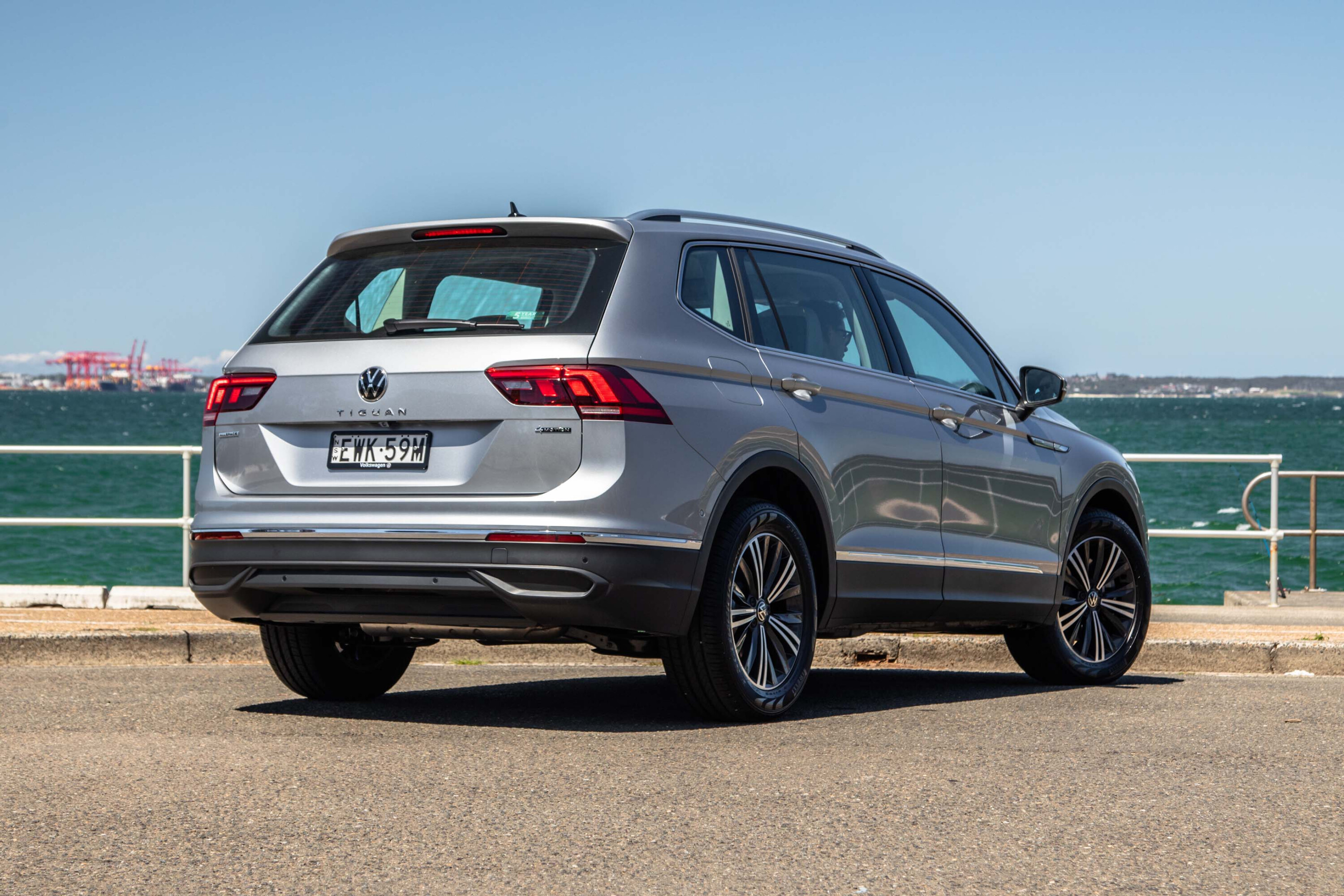
1
“Now, while there’s stock of both [Tiguan or Tiguan Allspace], it’s a simply a case of whether you personally prefer seven seats or a huge storage area or a slightly smaller and more responsive vehicle,” said Volkswagen Australia’s marketing communications manager Michelle Rowney.
The Volkswagen Tayron – expected to debut in mid-2024 – is tipped to grow in every dimension compared to the Tiguan Allspace, placing it closer to established seven-seat rivals such as the Kia Sorento, Hyundai Santa Fe, Mazda CX-80, and related Skoda Kodiaq.
For everything you need to know about the Tiguan Allspace’s successor, click on the featured article below:
2024 Volkswagen Tiguan Allspace pricing
| Model | Pricing | Change |
|---|---|---|
| 110TSI Life | $43,990 | down $2000 |
| 132TSI Life | $47,990 | down $2000 |
| 162TSI Elegance | $57,090 | down $2500 |
| 162TSI R-Line | $60,590 | down $2500 |
| Prices exclude on-road costs.u00a0 | ||
JUMP AHEAD
- Is the 2024 BYD Seal U worth my attention?
- What powers the Seal U… sorry, Sealion 6?
- How does it drive?
- What about inside?
- Is it worth waiting for the 2024 BYD Sealion 6?
Is the 2024 BYD Seal U – sorry, Sealion 6 – worth my attention?
It certainly is. Not least because of its name change for Aussie shores, where European buyers get a car more closely linked to the fully electric Seal sedan. BYD Australia wanted to avoid such confusion.
Of bigger signifcance is the fact this car is a plug-in hybrid. Left-hand-drive markets get an EV version, but for now there are no plans for RHD. Instead we gain yet another contender in the hybrid SUV sector – albeit one with a few sneaky tricks up its sleeve.
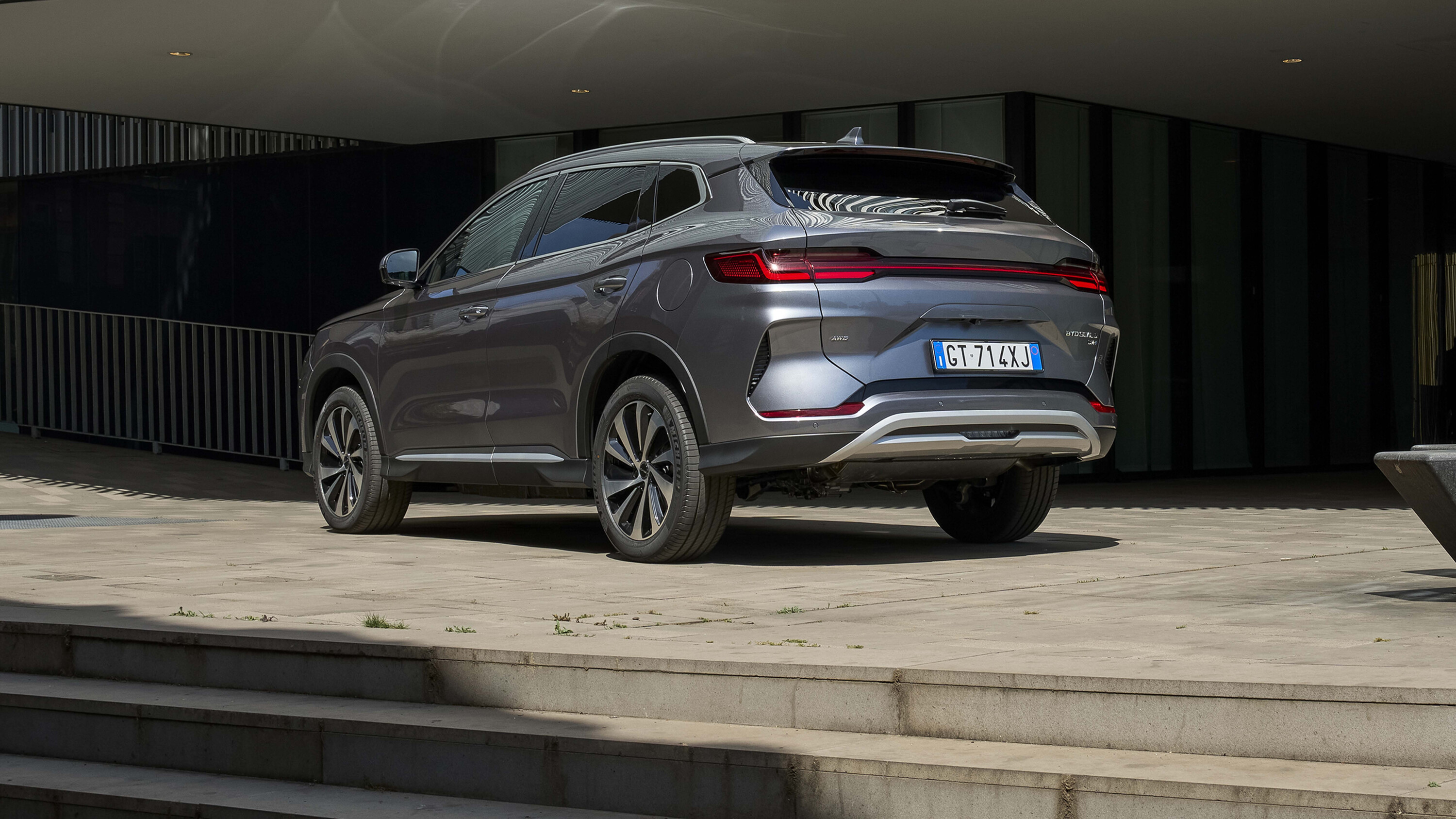
1
What powers the Seal U… sorry, Sealion 6?
There are two configurations: a 1.5-litre non-turbo 4-cylinder engine pairs up with a single, 145kW electric motor for the 160kW front-wheel drive Sealion 6 Dynamic.
Meanwhile the Sealion 6 Premium straps a perkier 1.5-litre turbo to an e-motor at each axle (150kW at the front, 120 at the rear) for a 238kW total output and 0-100km/h in 5.9secs – a whole three seconds quicker than the Dynamic while its 180km/h top speed is a smidge higher, too.
Both use an 18.3kWh lithium-iron-phosphate battery assembled onto the frame of the car in a setup BYD calls ‘Blade Battery’.
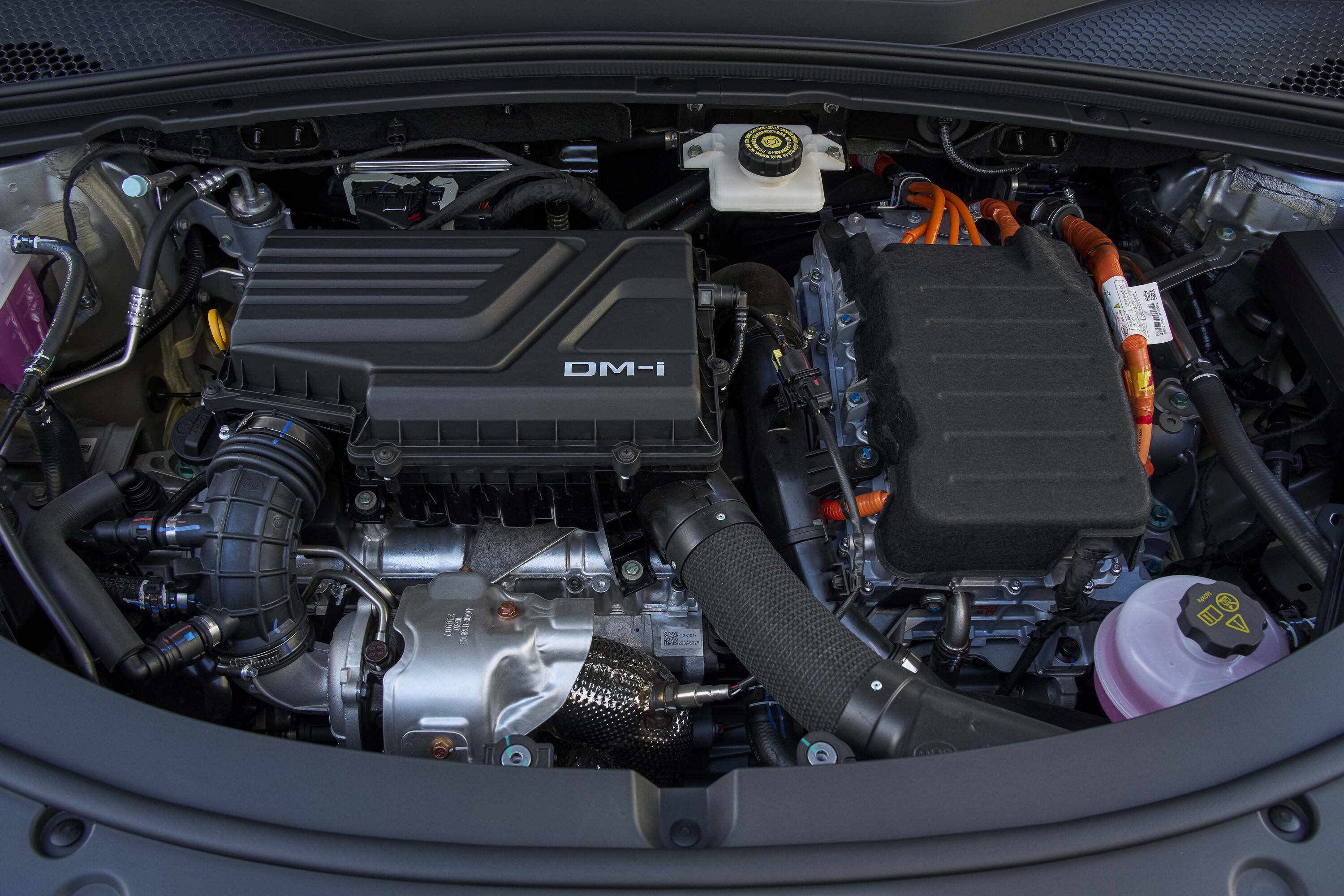
1
Besides its comic-book name it offers increased body stiffness, a lower floor to increase rear passenger legroom (often an EV bugbear) and improved thermal efficiency over more conventional rival battery setups.
It’ll charge on home AC power at up to 11kW and DC fast chargers at up to 18kW, with the latter yielding a 30-80 per cent top up in 35 minutes.
The Dynamic claims 80km of electric-only range and a startling 1.1l/100km fuel consumption with its powertrain fighting fittest; the heavier, more powerful Premium quotes 70km and 1.4l/100km. With a 60-litre fuel tank and you might squeeze out a total range of 1100km. Yowzers.
1
How does it drive?
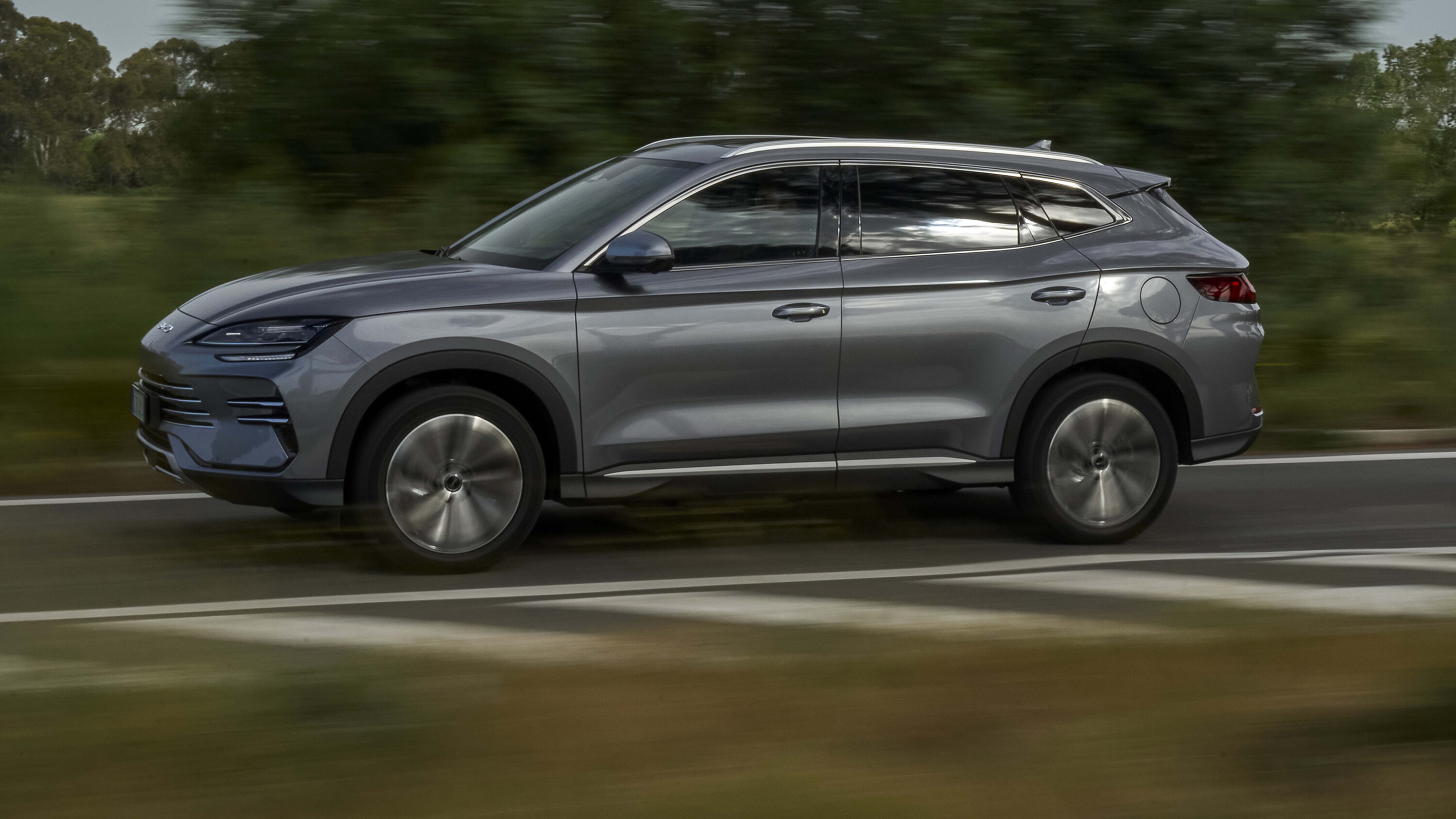
A lot like a single-speed EV. While the engine can provide direct propulsion to the wheels, its more prominent role is range extension while the motors take sole driving duty.
If the battery is topped up, you’ll sail along in complete hush – refinement is strong. If it’s down to 25 per cent charge – the minimum the car lets itself drop to – then the engine will frequently kick in, but it generally does so pretty quietly. Curiously, too; it moos away gently in the background at odds to your throttle input, as per a number of range-extender rivals.
The whole powertrain feels like it’s deliberately distancing itself from you – disconcerting at first, but if you don’t give two hoots about how sharply and precisely a car drives, then perhaps it’s a welcome distance.
1
Much like sticking a ready-made dinner in the oven so you don’t get your hands dirty prepping anything.
Flicking through Eco, Normal or Sport modes will up the engine’s eagerness, but it’s a brisk and smooth car in all three. And there’s surprisingly little to tell between its two powertrain options, either – unless you’re accelerating and cornering hard (in which case a hybrid SUV probably isn’t for you) the gap between them is much larger on paper than in the real world.
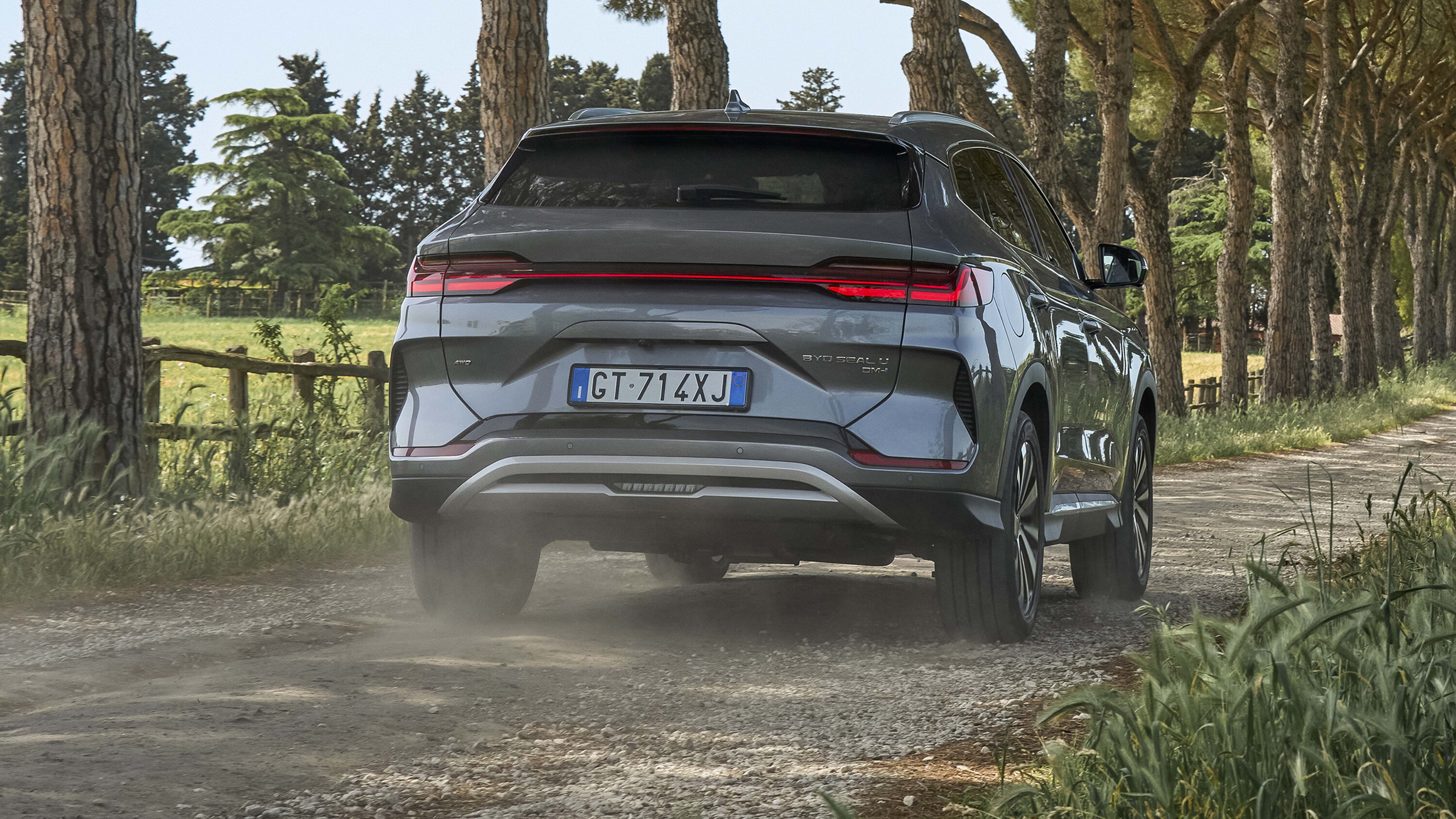
This car’s lack of interest in keen driving is evident from the sat nav, which flags up ‘sharp bend ahead!’ warnings for gently sweeping curves that barely require a nudge of the overly light steering. The focus is on effortless progress, a parameter by which the Sealion 6 really delivers.
Ride quality is at the softer end of the scale, but repeated bumps on our Roman test route did agitate the damping a tad. Let’s give it a proper crack on Aussie tarmac for the full verdict.
1
What about inside?
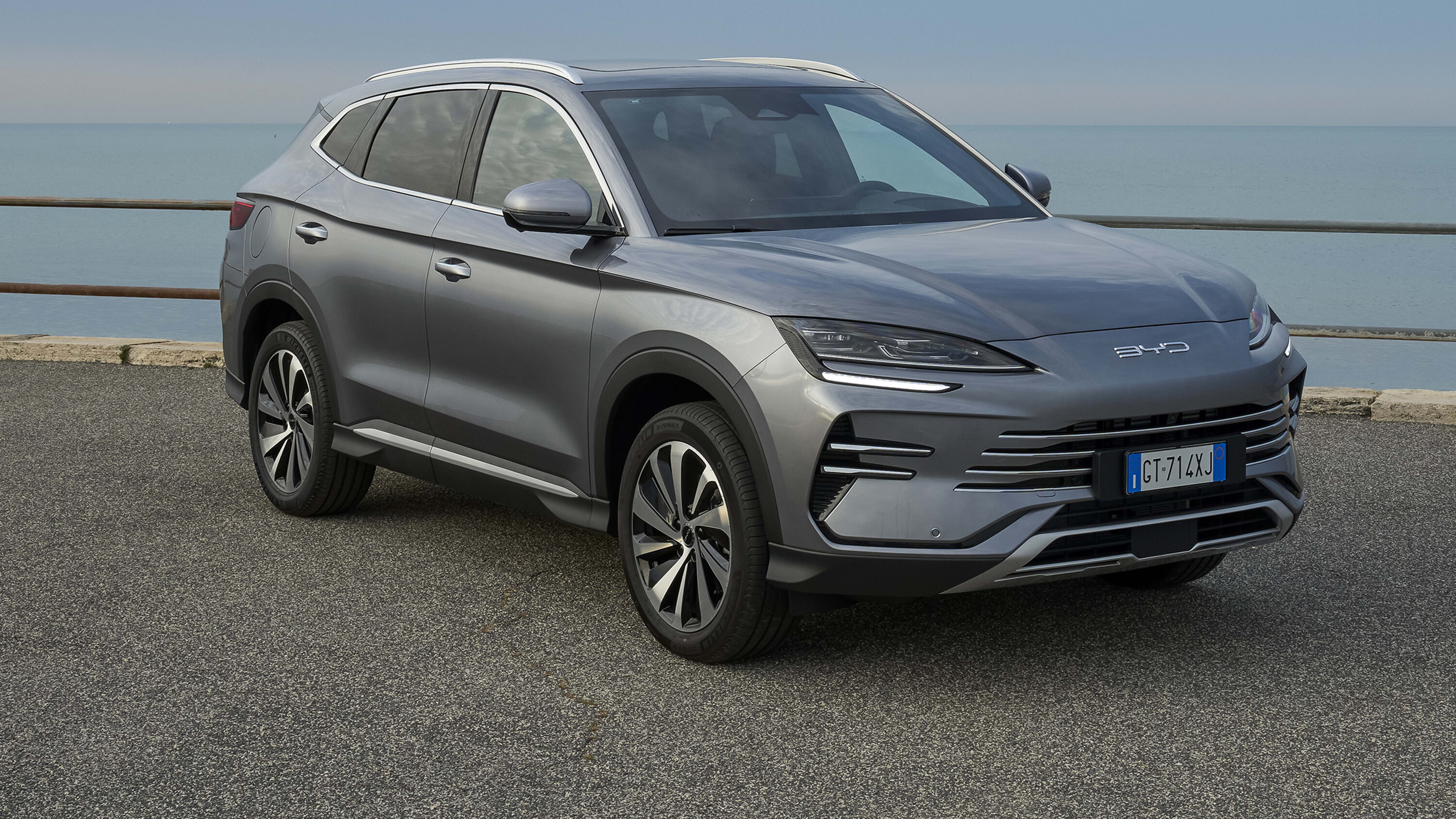
Measuring almost 4.8 metres, the Seal U is longer than many of its rivals – think Honda CR-V, Nissan Qashqai and Kia Sportage – though helpfully most of its supplement sits in the wheelbase, to the benefit of both its proportions and rear passenger space.
The back seat bench splits 60:40 with each section separately reclining – via a manual fabric pull strap – to allow some flexibility between passenger and luggage space.
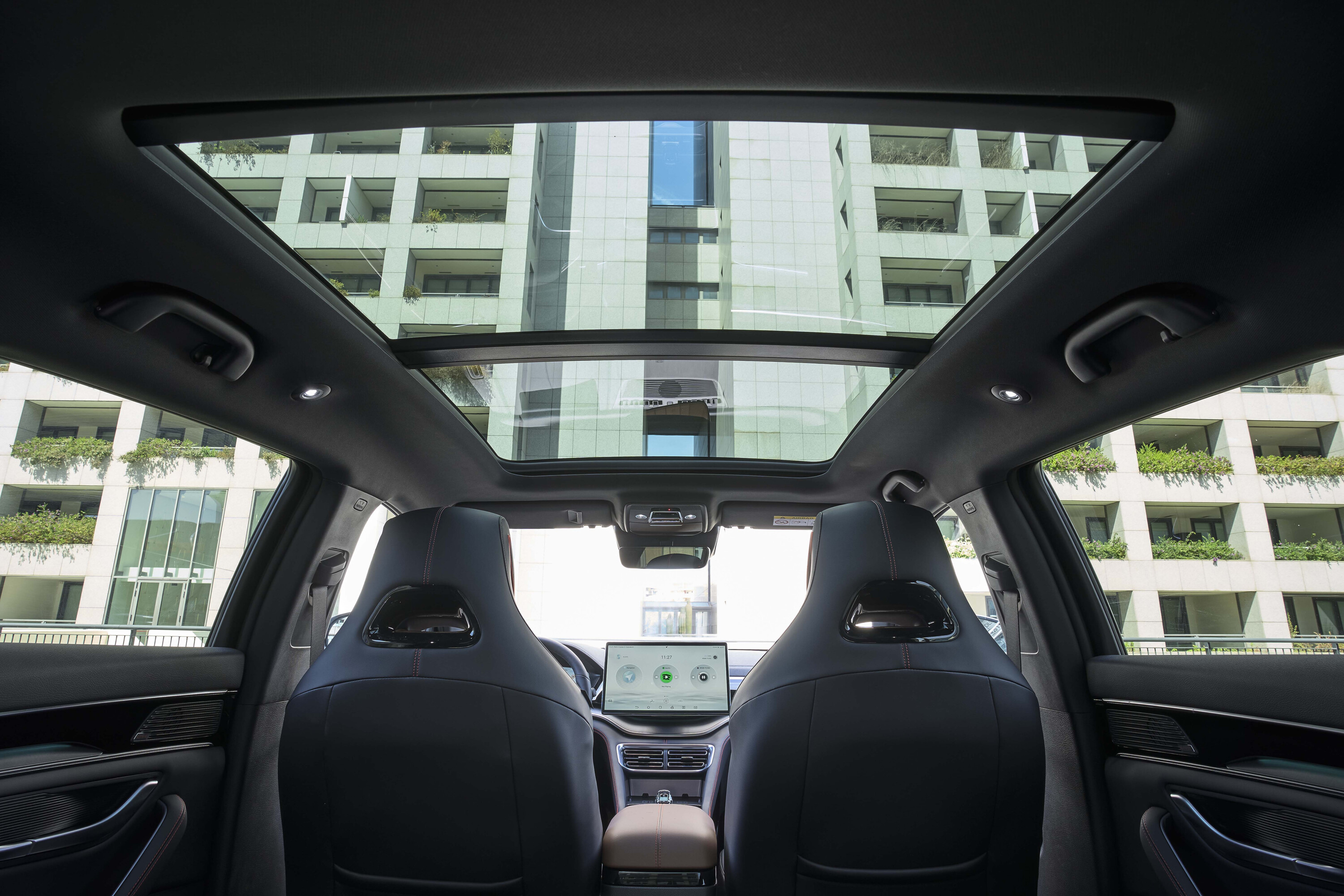
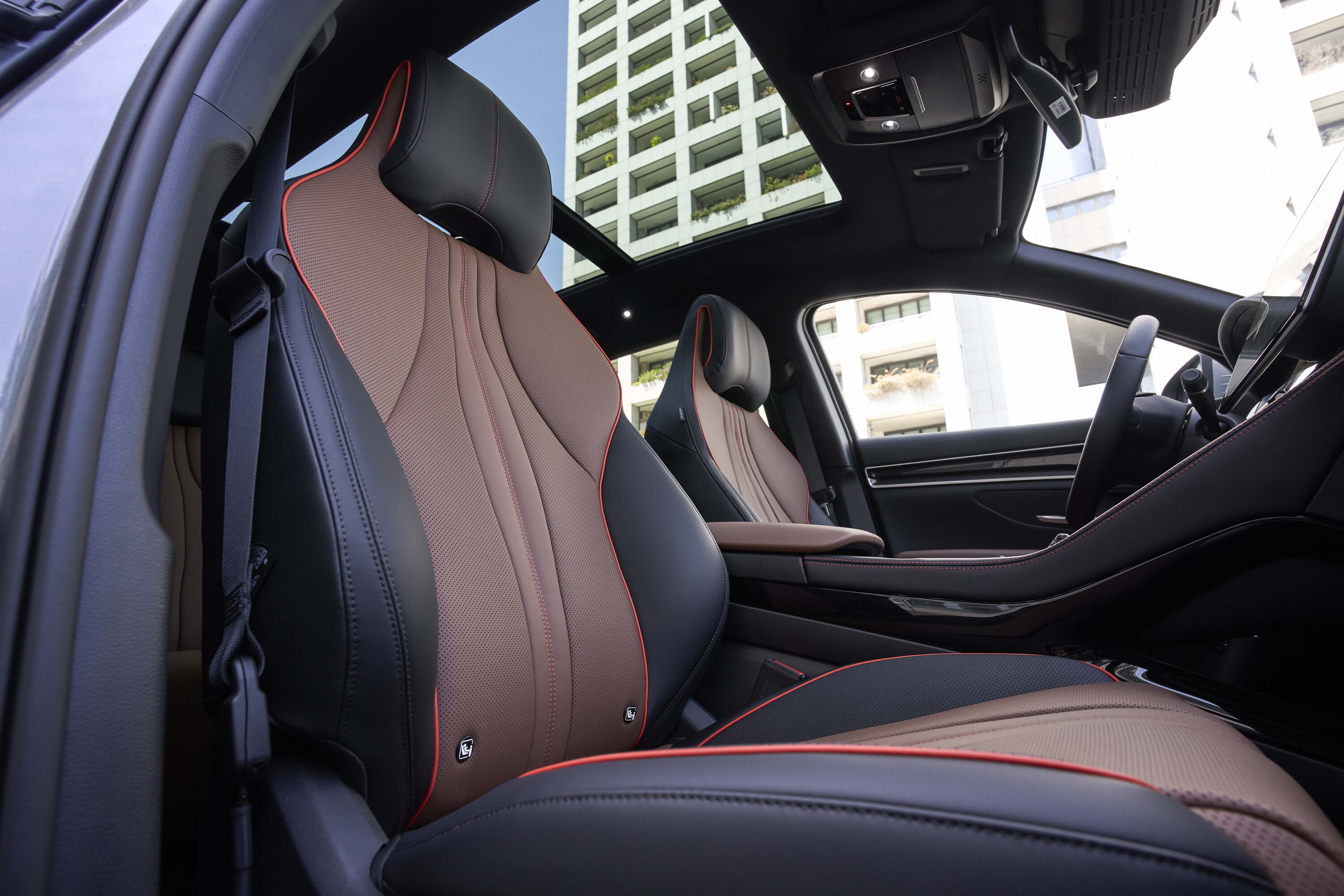
Headroom is impressive front and back, despite the standard-fit panoramic sunroof, which pairs with expansive side windows for an airy, premium feel on board. Plush materials are used generously while harder-wearing plastics are well-concealed and mostly saved for the boot.
2
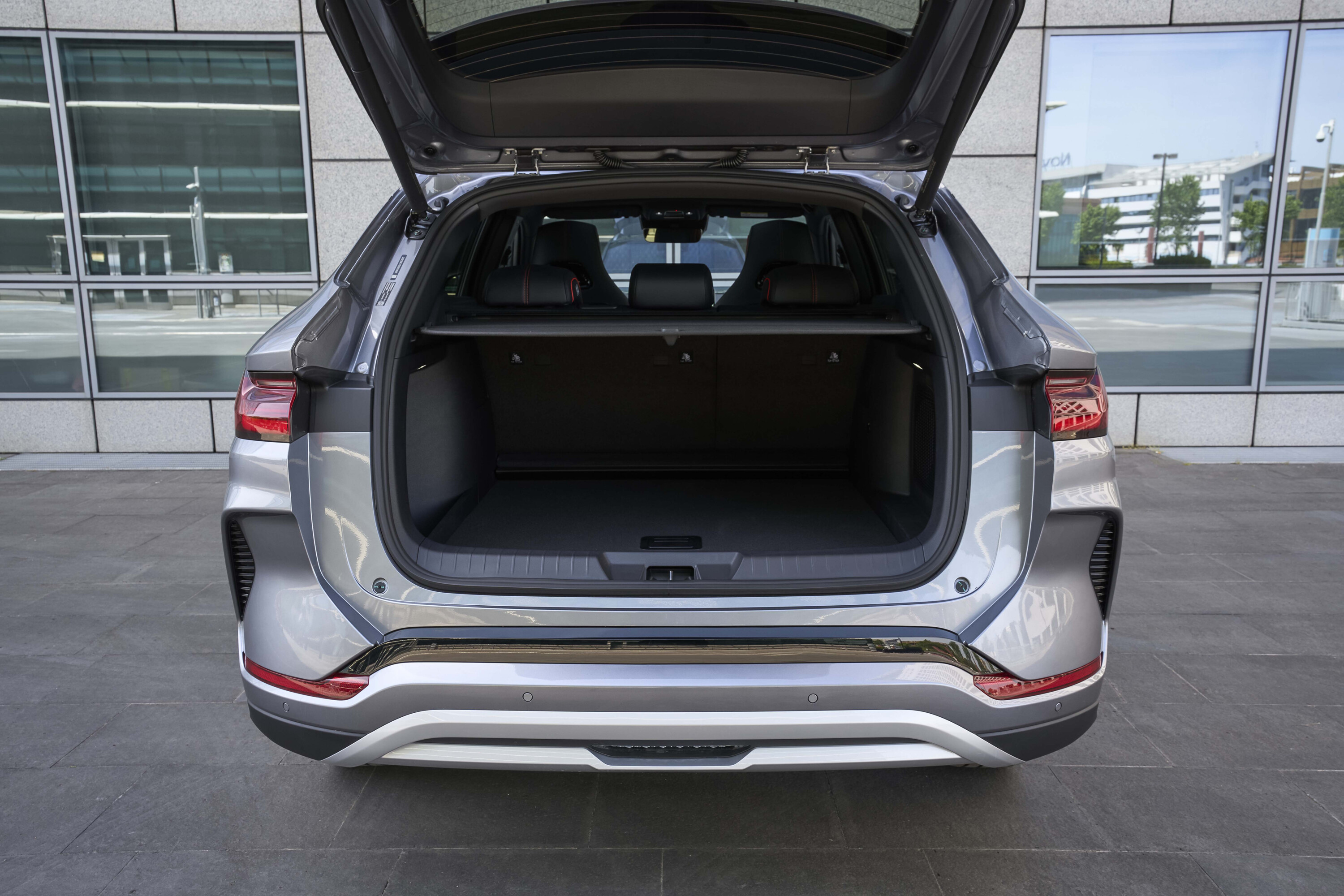
Which does admittedly lag behind rivals a bit for luggage capacity; morphing from 425 litres seats up to 1,440 litres when they’re folded, it’s down about 20 per cent on a Tucson, Sportage or Qashqai to name just a few.
A Honda CR-V is notably roomier still. We recommend taking any bulky kids’ travel systems to the BYD showroom for a test run. Vehicle to load capacity does add a nice additional layer of practicality, though.
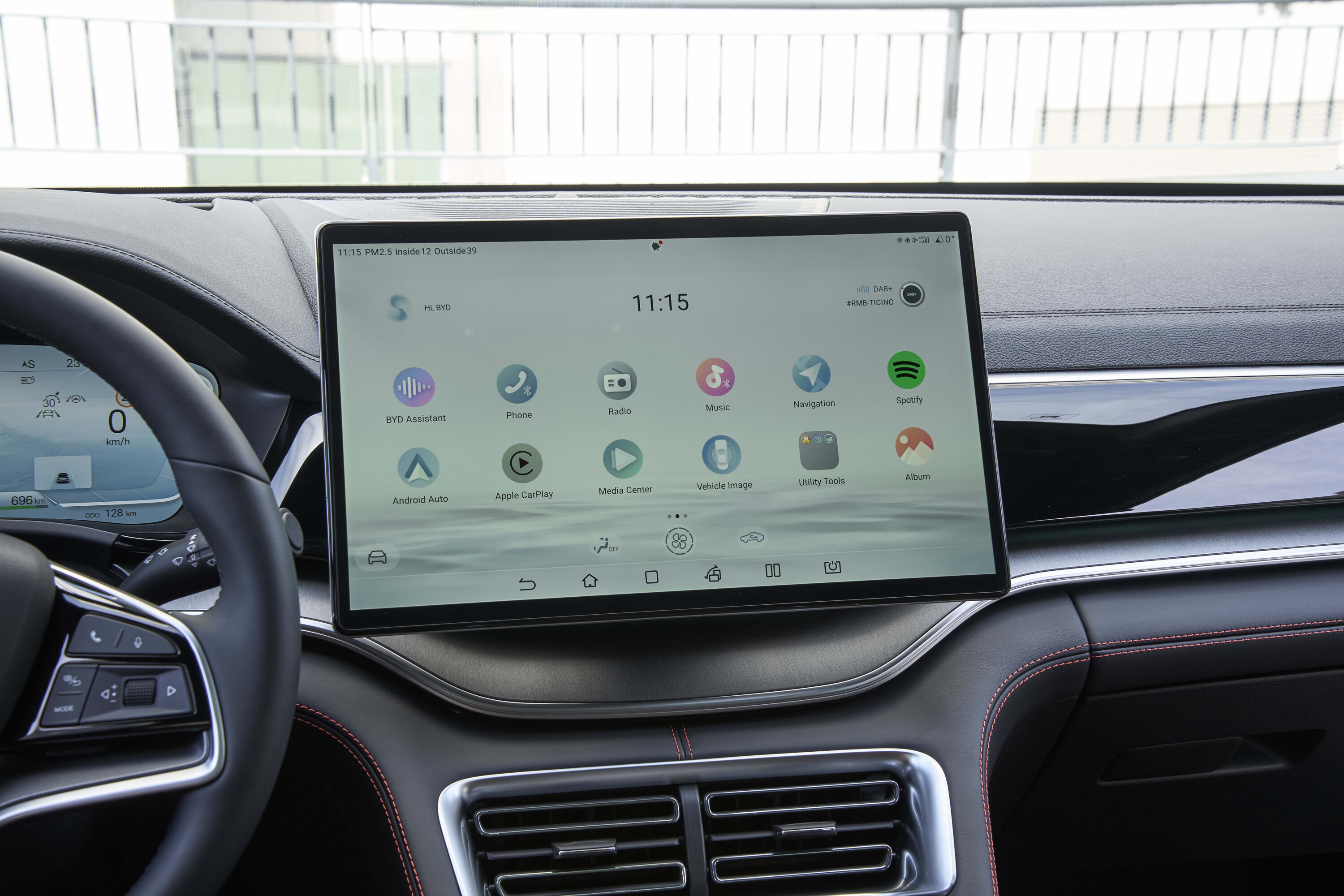
Tech is indeed a strong suit: the 15.6in rotating touchscreen flips between portrait and landscape format via a steering wheel button or a toggle on the screen itself.
2
The latter is less distracting and more satisfying – it’s also your only choice if you opt to use the standard Apple CarPlay, for an almost comically large display compared to your phone.
Kudos to the screen for not incorporating your speed readout, too, saving it instead for a plain and simple head-up display and a row of nicely legible digital dials, which can also display an energy flow diagram should you wish to grasp what the powertrain is doing.
Or at least attempt to…
1
Is it worth waiting for the 2024 BYD Sealion 6?
If comfort and value are top of your list, absolutely: this is vehemently not a fun or engaging car to drive, but it’s smooth and relaxing, caveats about its ride quality aside. And prices are punchy in the best kind of way, starting at $48,990 for the Dynamic FWD and rising to $52,990 for the Premium AWD.
Both get a tremendous amount of kit as standard: all the screen pixels you could ever wish for, six different phone charging ports, a pano roof, 19in alloys and abundant safety kit including a 360-degree parking system.
1
Besides extra power and performance, the Premium’s main draw is its AWD ability with a handful of all-terrain modes (snow, sand and mud). Though we suspect most Sealion 6 buyers don’t have any great expeditions planned.
You’re not looking at a game changer, but you are looking at one of the best value hybrid SUVs on sale. A lengthier drive on Aussie roads will determine whether it’s one of the best mannered, too.
MORE
Everything BYD
Snapshot
- Carbon-fibre-reinforced plastic (CFRP) parts contribute to 20kg weight reduction
- Engine output increased to 405kW (up from 390kW)
- Priced from $254,900 before on-roads; 50 units allocated to Australia
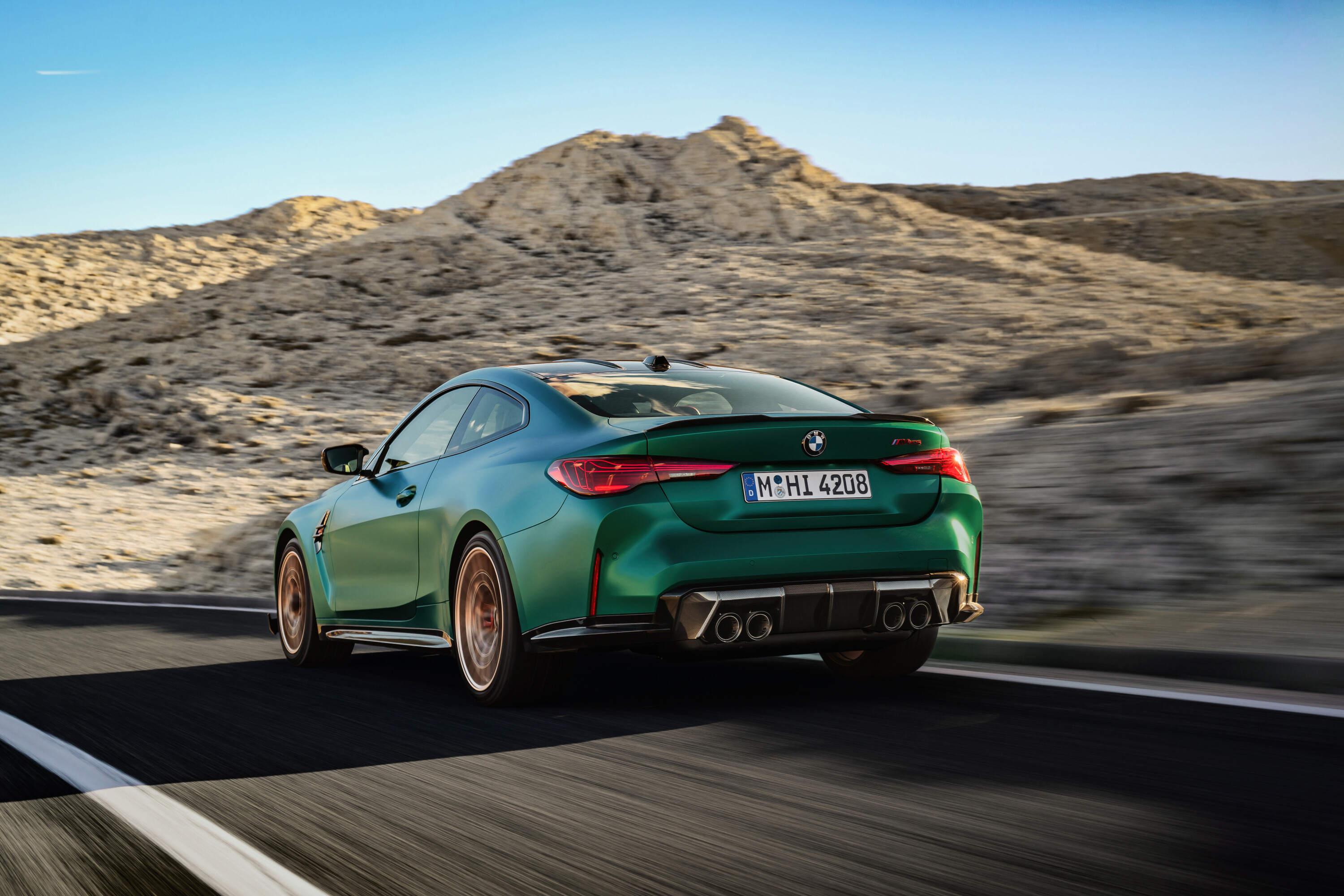
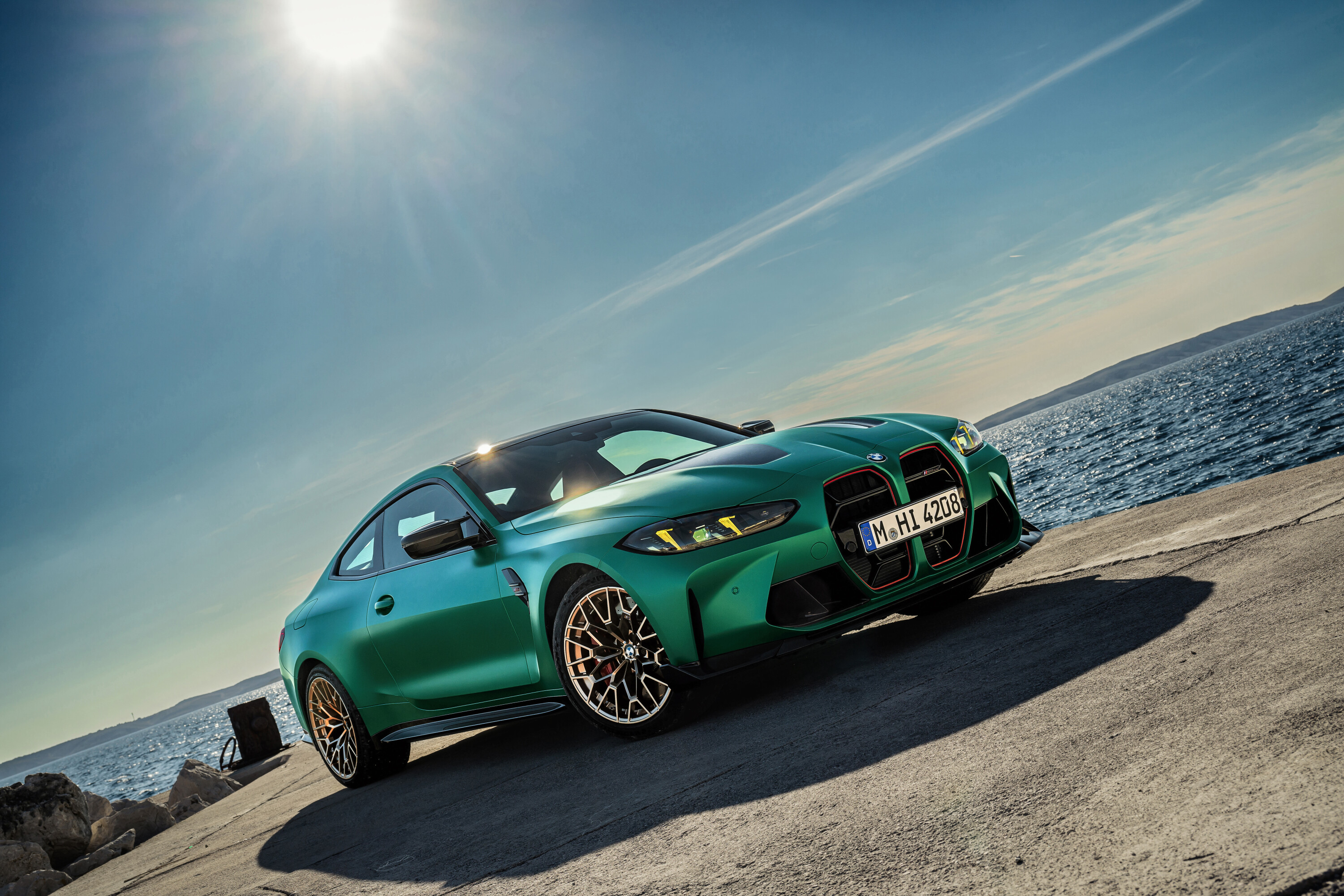
The 2025 BMW M4 CS will arrive in Australia later this year with upgrades similar to the M3 CS.
Improvements for the M4 CS include carbon fibre-reinforced plastic (CFRP) components, increased engine output, a sportier chassis setup, and design changes.
CS-specific revisions allow for a Nürburgring time of seven minutes and 21.989 seconds – seven seconds faster than the M4 Competition.
1
BMW has allocated 50 examples to the local market, with customer deliveries set to commence between October and December 2024.
The CS engine features a sleeve-free, closed-deck construction, forged crankshaft, wire-arc sprayed iron bore coating, 3D-printed cylinder head core, and more rigid engine mounts.
This enables coolant duct routing that cannot be achieved using conventional metal casting methods.
The maximum power output for the M4 CS is 405kW – up 15kW over the M4 Competition xDrive – achieved by increasing boost to 2.1 bar and tweaking the ECU. Peak torque is 650Nm from 2750rpm to 5950rpm.
1
Performance is improved over the M4 Competition, with standing starts to 100km/h and 200km/h in 3.4 seconds and 11.1 seconds, respectively.
Rolling acceleration is fierce, reflecting the substantial torque available throughout the rev range, with 80km/h to 120km/h in 2.6 seconds in 4th gear and 3.3 seconds in 5th. Top speed is electronically limited to 302km/h.
The exhaust system now features a titanium rear silencer. It has “racecar undertones” in Sport and Sport+ modes.
1
Power is still transferred to the road by the M xDrive system. This uses an electronically controlled multi-plate clutch in the transfer case to distribute the engine’s power smoothly between the front and rear wheels.
The clutch’s oil supply has been optimised to ensure effective performance during track sessions. Drivers can switch off the DSC system altogether and also engage rear-wheel drive via a 2WD mode.
Forged alloys (19-inch front / 20-inch rear) are fitted as standard with track tyres (275/35 ZR19 front / 285/30 ZR20 rear) as standard fitment. High-performance road tyres are available as a no-cost option.
1
CS-specific chassis tuning has been applied to the front strut brace, axle kinematics and amber, dampers, auxiliary springs and anti-roll bars.
The electromechanical steering with variable ratio is model-specific, and M Dynamic Mode pushes back the intervention points for the DSC system various stabilising measures.
Forged alloys (19-inch front / 20-inch rear) and track tyres (275/35 ZR19 front / 285/30 ZR20 rear)are standard, with high-performance road tyres available as a no-cost option.
The roof, bonnet, front splitter, front air intakes, exterior mirror caps, rear diffuser and Gurney-style rear spoiler are all made from CFRP on the CS.
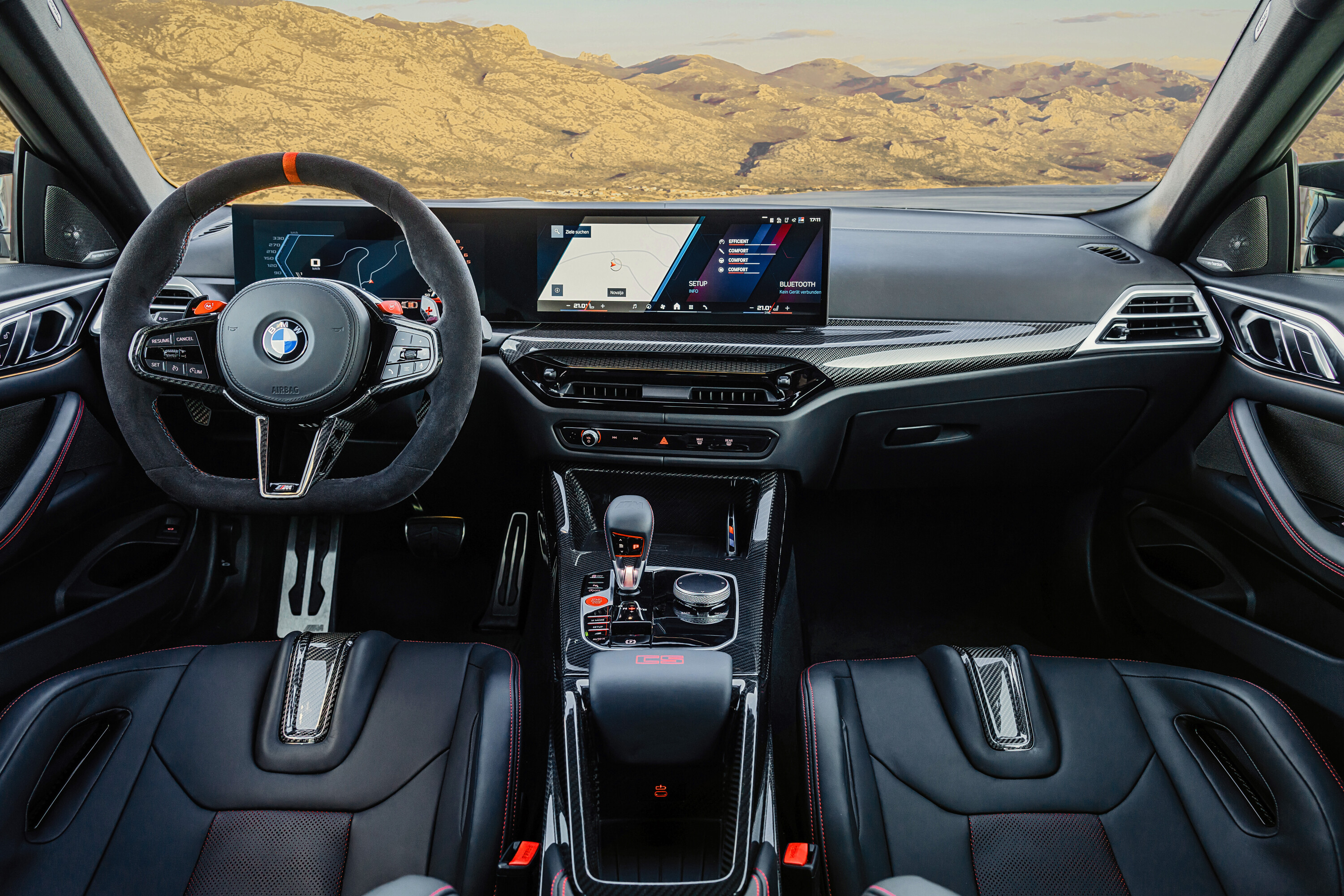
A four-kilogram weight saving is also achieved with M Carbon bucket seats using CFRP for the seat cushion and backrest structures, and the titanium exhaust. Overall weight is down by around 20 kilograms compared to the M4 Competition.
The 2025 BMW M4 CS is priced from $254,900 before on-road costs – a $68,000 increase over the M4 Competition xDrive.
MORE
Everything BMW
