
After a year in which a pandemic caused all sorts of logistical nightmares and delays for new car arrivals, 2021 is shaping up to be a year to look forward to. Car makers have plenty of exciting and important models headed here over the next 12 months, so we’ve listed the cars most significant to Australia.
1. VOLVO XC40 RECHARGE EV
Arriving: Q2 Price: $75,000* (*denotes an estimated price)
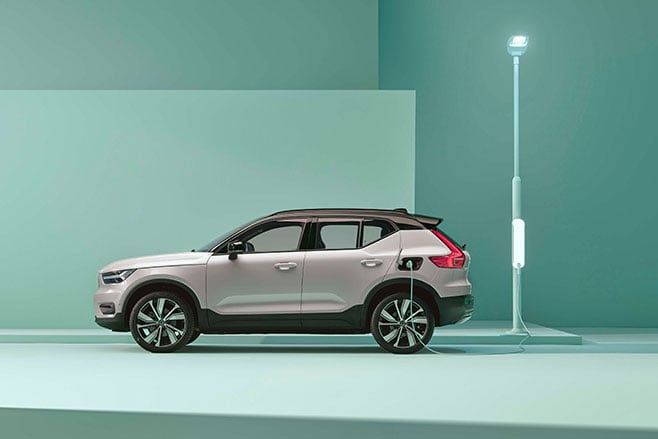
Already known for safety and building practical wagons, Volvo is set to bring electricity into its modern repertoire via the XC40 Recharge EV. Sitting above the XC40 Recharge PHEV, the EV version drives all four wheels via two electric motors making a combined 300kW/600Nm.
The dash to 100km/h takes just 4.9sec and the claimed range from its 78kWh battery is north of 400km. Considering the XC40 is already one of the marker’s top-selling PHEVs, it bodes well for the all-electric version due mid-year.
2. BMW iX
Arriving: Q4 Price: $135,000*
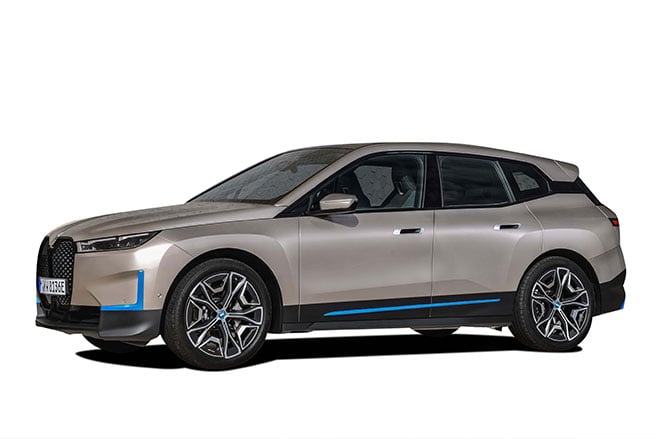
After the smaller BMW iX3 kicks off BMW’s all-electric SUV story earlier in the year, we can expect the iX to lob before year’s end. Closer in size to a BMW X5 (the iX3 is based on the X3), the iX makes a big electric statement, right down to its buck-toothed grille.
Dual motors combine to send 367kW to all four wheels, and range from the 100kWh battery is said to be more than 600km, suggesting excellent energy efficiency. Early adopters will have to head to the BMW website because the iX is online order only.
3. VW GOLF
Arriving: Q2 Price: $29,350
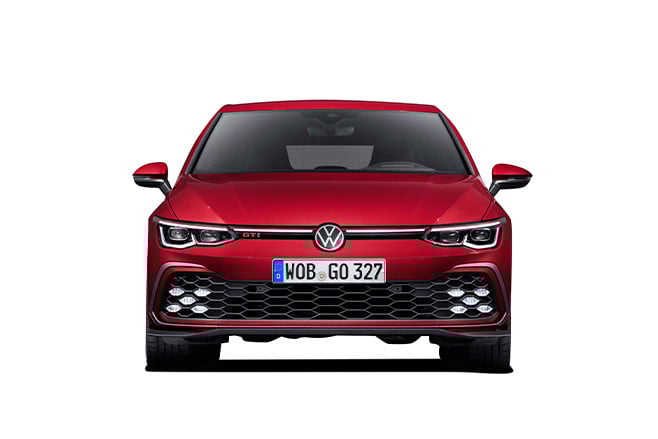
Prices jump but the manual gearbox option remains. Those choosing an auto will do without the fuel-saving DSGs, Australia instead receiving regular torque converters with eight ratios for smoother take-offs. Golf remains at the core of Volkswagen, now picking up a more advanced IQ driver assistance system.
Even better is that the 180kW front-drive GTI will arrive within weeks of the mainstream range, providing the first taste of the hot hatch range that in 2022 will include the 235kW all-paw Golf R.
4. FORD MUSTANG MACH 1
Arriving: Q1 Price: $83,365
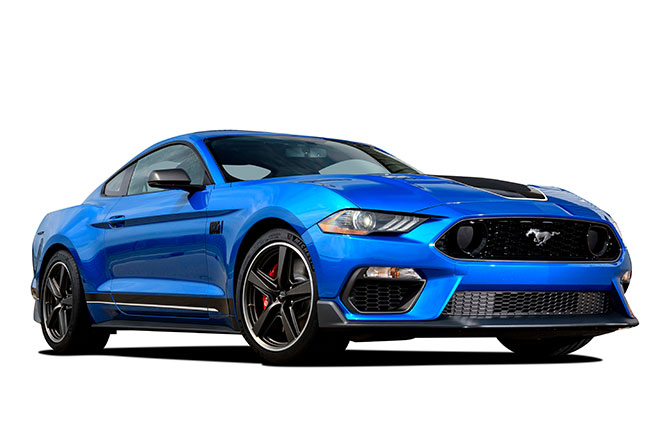
A new year and a new addition to the Mustang family, this time the Mach 1. For about $10K more than a regular GT you get revised aerodynamics (including a rear diffuser), Michelin Pilot Sport 4 rubber and ample visual trimmings to accentuate the muscle.
The 5.0-litre V8 makes the same 345kW/556Nm but the optional 10-speed auto holds onto gears for another few hundred revs, not only stepping up the sound but also acceleration. Just 700 are heading here.
5. BMW M3/M4
Arriving: Q1 Price: $144,900 (M3), $149,900 (M4)
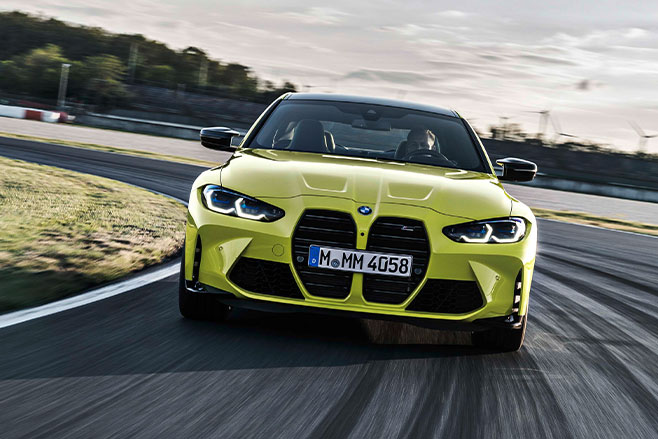
The pinnacle of 3 Series (and 4) performance is an early (and welcome) new arrival that doesn’t mess with a proven formula. An in-line twin-turbo six-cylinder makes 353kW as a manual or 375kW in the auto Competition pack.
All-wheel drive (BMW calls it xDrive) will feature for the first time late in the year. The new M Track Mode and Drive Analyser are among the many tech advances for a car that promises a slick driving experience, albeit one that increasingly leverages technology.
6. PEUGEOT 3008 PHEV
Arriving: Q3 Price: $60,000*
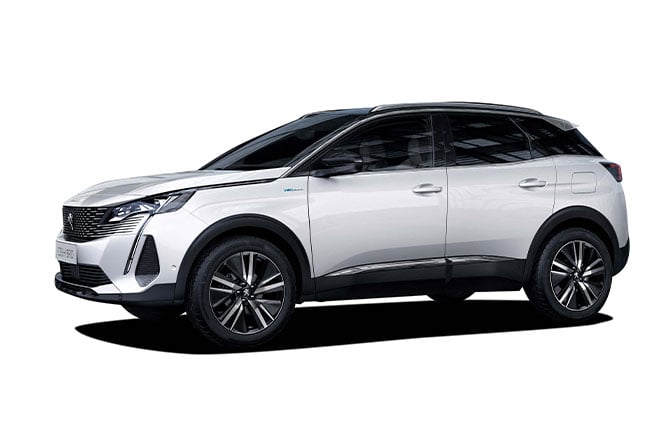
The 3008 mid-size SUV will kick off the brand’s electrification push in Oz. Early in the year the 3008 gets a facelift, but things get more serious in the second half with the 3008 PHEV, in front- or all-wheel drive.
Front-drivers pair a 1.6-litre turbo with an 80kW electric motor, while the AWD adds an 83kW rear motor and ups the total output to 221kW. A 13.2kWh battery is good for 56km in the FWD or 59km in the Hybrid4.
7. LEXUS UX300E
Arriving: Q3 Price: $70,000*
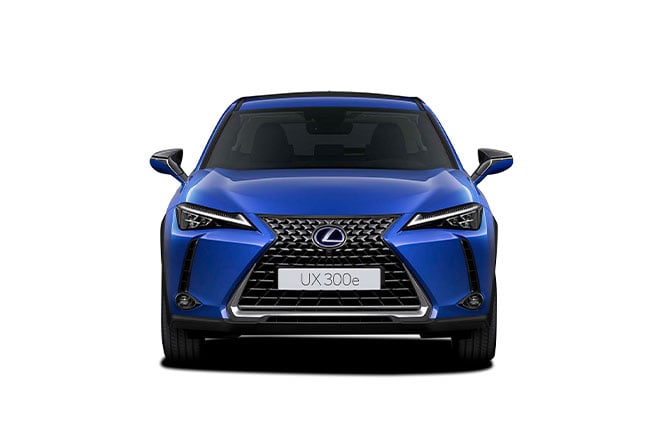
Luxury rivals have long offered EV options, but Lexus has relied on regular hybrids as a fuel-saving measure. That all changes with the arrival of the UX300e. Utilising the compact SUV body of the UX, the UX300e replaces the engine with a 150kW/300Nm electric motor driving the front wheels.
It will sit at the top of the UX line-up, suggesting a starting price around $70K. Fed by a 54kWh battery, it’s good for 300km-plus between charges.
8. MAZDA MX-30
Arriving: Q2 Price: $40,000*
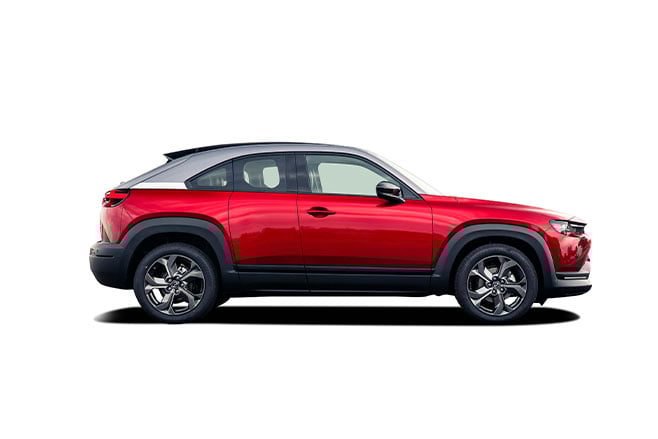
The sixth Mazda SUV model will be very different to the other five. The MX moniker is typically reserved for Mazdas with a bit of zing – think MX-5 and MX-6 – and the MX-30 will add some coupe flair to the compact SUV segment, something highlighted by the rear-hinged ‘freestyle’ back doors.
It is also the first Mazda EV, but comes with a range-extending petrol sibling pairing a 2.0-litre engine with a mild hybrid system. The hybrid will arrive by mid-year, followed by the EV.
9. CHEVROLET CORVETTE
Arriving: Q4 Price: $150,000*
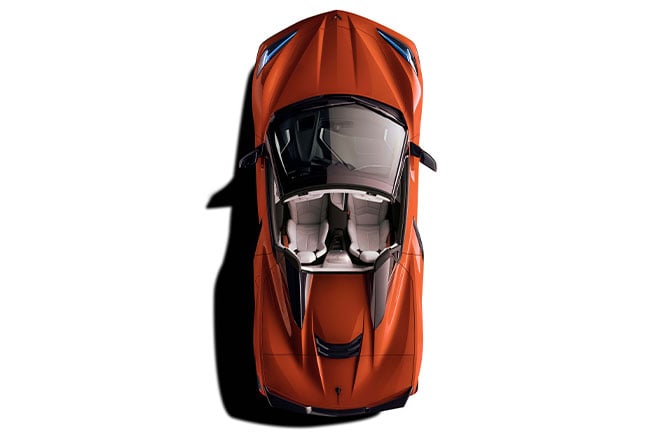
General Motors’ presence in Australia switches from true-blue Holden to apple-pie American during 2021, in the form of the eighth-generation of a sports car legend. The first mid-engined Corvette is also the first to emerge from the Bowling Green factory with the steering wheel on the right, taking hefty conversion costs out of the equation.
V8 muscle and supercar DNA will make the Porsche-crushing circa-$150K price tag tempting for those prepared to try some two-door muscle from the US of A.
10. MERCEDES-BENZ EQA
Arriving: Q2 Price: $75,000*
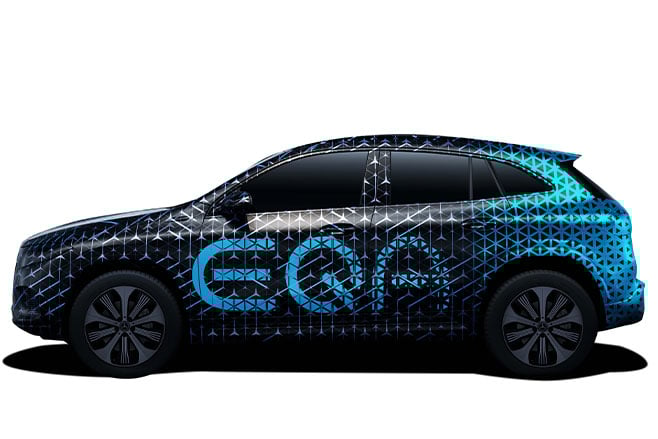
This is the year when Mercedes-Benz doubles down on its electric offensive, with the EQA set to be the most affordable of its early EV efforts. Just as its EQC bigger sibling shares much with the GLC, the EQA leans on the core design of the GLA.
A closed-off grille and blue highlights will provide visual differentiation, while a choice of electric drivetrains is set to broaden its EV appeal in a market segment set to explode in 2021.
11. NISSAN NAVARA PRO-4X
Arriving: Q2 Price: $59,770
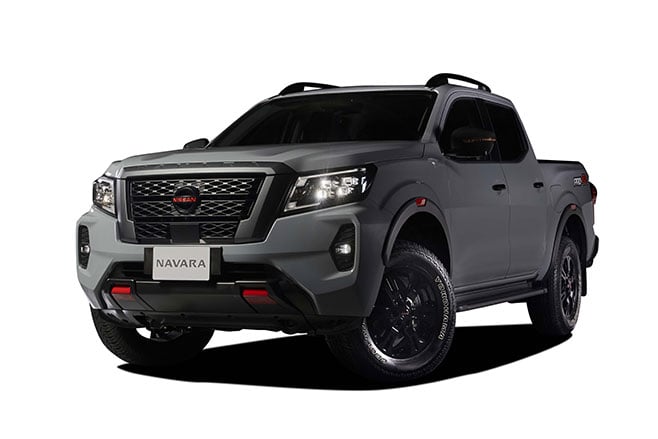
Just when you thought the ute market was reaching its peak, along comes another brand looking to expand the appeal. This time it’s Nissan hoping to capitalise on the action at the pointy end of the pick-up category.
Joining the heavily updated Navara that arrives early in the year will be a Pro-4X early in the second quarter. Rather than just cosmetic tweaks, the Pro-4X gets more substance, with all-terrain rubber, a chunkier sports bar, black highlights and red towhooks.
12. RAM TRX
Arriving: Q3 Price: $160,000*
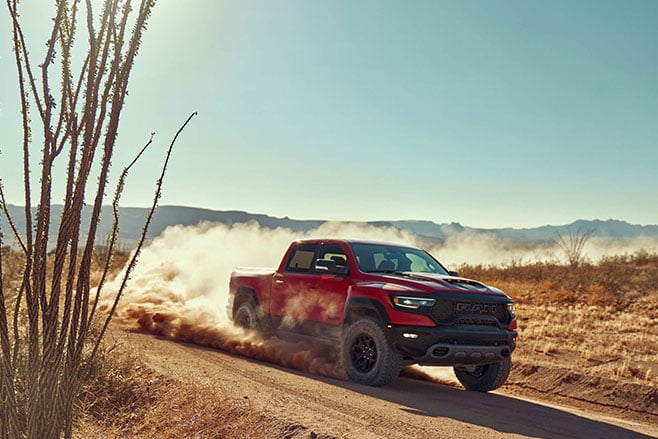
The slicker DT version of the Ram 1500 fleshes out the Ram range early in the year, selling alongside the existing DS as a premium offering to better fight the Chevrolet Silverado. Modern active safety kit will add to its appeal.
But it’s the Hellcat-powered Ram TRX that promises to raise the expectations of those who like their utes to not only lift heavy things but be able to do so with muscle-car acceleration. The 0-100km/h sprint takes about 4.8sec, powered by a stonking 523kW/881Nm supercharged 6.2-litre V8.
Unlike early private imports, the right-hand-drive conversions will be done by the Walkinshaw Group with factory approval. Pricing is a guesstimate for now, but we’d expect a price tag of around $160,000 before on-road costs.
13. SKODA OCTAVIA
Arriving: Q2 Price: $28,000*
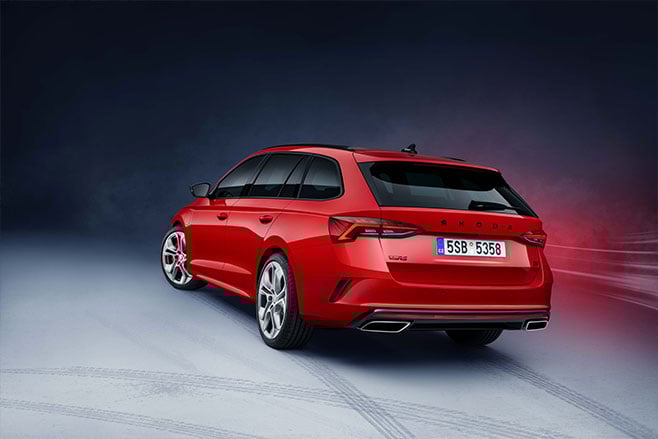
It’s long been the Golf alternative for those who want something more individual, and the all-new Octavia for 2021 is no different. Slightly larger than the previous car, the new Octavia will be offered as a liftback or wagon, the latter providing a tempting point of difference in this class, especially in sporty RS guise.
The 1.4-litre turbo soldiers on in the more affordable models, which should sneak in under $30K, while the RS gets the Golf GTI’s 180kW 2.0-litre. As with the Golf 8, expect a step up in standard gear to reflect buyer preferences.
14. SUBARU OUTBACK
Arriving: Q1 Price: $39,990
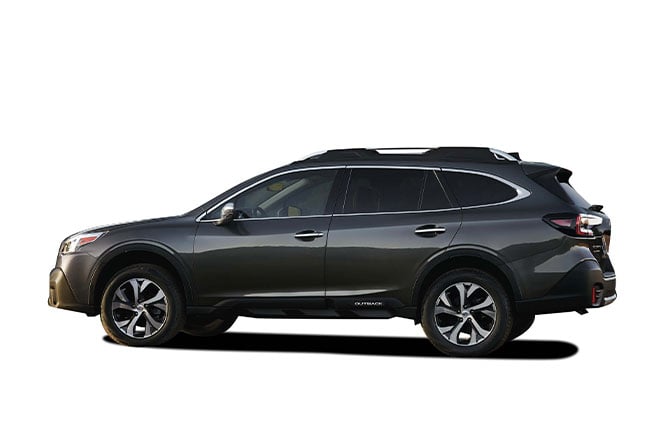
With its Liberty donor car now confined to the growing list of recently departed family cars, the Outback wagon gets more clear air in the crossover segment. Sharper styling and the bolder use of black highlights modernises the look.
Infotainment is easier with a new vertical touchscreen, while safety improvements add to its family appeal. Gone is the diesel engine and boxer six-cylinder, a heavily revised 2.5-litre four-cylinder boxer now the sole option, mustering 138kW and 234Nm.
15. TOYOTA KLUGER
Arriving: Q2 Price: $45,000*
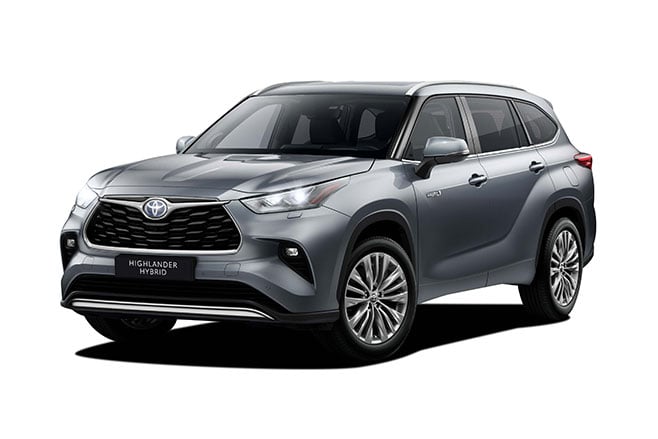
Toyota plans to build on its hybrid success with a petrol-electric version of the fourth-gen Kluger. Almost two years after hitting America, the bigger, bolder Kluger’s 2.5-litre hybrid AWD drivetrain promises diesel efficiency with performance not far off the 3.5-litre V6 (which continues as the price leader).
A longer body unleashes more luggage room without impacting space for seven people. Toyota hopes it will match the success of the RAV4 Hybrid.
16. KIA NIRO
Arriving: Q2 Price: $33,000*
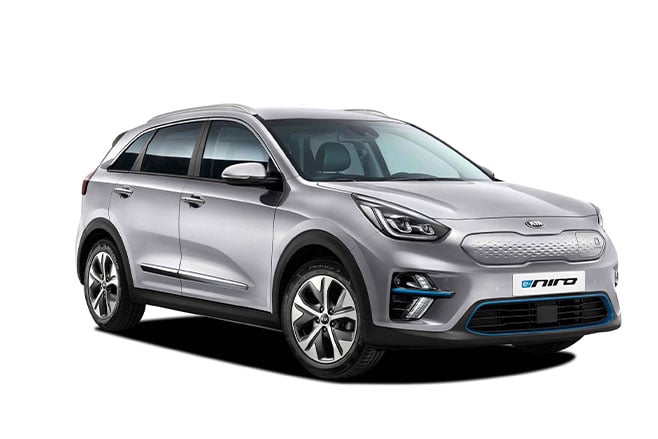
It’s been a long time coming, but Kia will unleash its local electric attack in 2021 in the form of the Niro, a car that hopes to steal some sales from Toyota’s hard-charging RAV4 Hybrid. While the circa-$60K EV version (the e-Niro) will dominate plenty of headlines, it’s the regular Niro Hybrid at almost half that price that will do the heavy lifting sales-wise, providing the same clever packaging.
The small SUV will also be available as a plug-in Hybrid version to offer a complete electrified suite.
17. LAND ROVER DEFENDER 90
Arriving: Q2 Price: $71,500
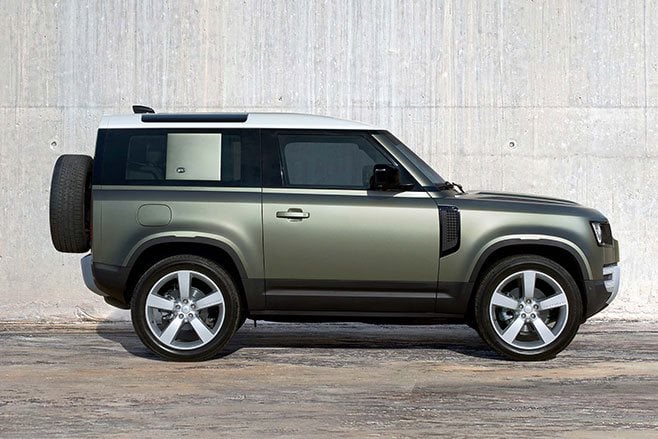
One of the many models delayed due to Covid, the shorter 90 joins the Defender family in April, bringing with it the choice between coil spring and air suspension (the longer 110 sticks exclusively with air suspension).
In line with updates across the Land Rover ranges, there are various tweaks and additions, including the new in-line six-cylinder turbo-diesel that replaces the four-cylinder in the Defender 110.
Later in the year expect the coil spring suspension to become available on some 110 models, including the commercial-focused Hard Top, which does without any rear seats, limiting capacity to two (or three if you choose a centre ‘jump seat’).
18. MAHINDRA THAR
Arriving: Q2 Price: $30,000*
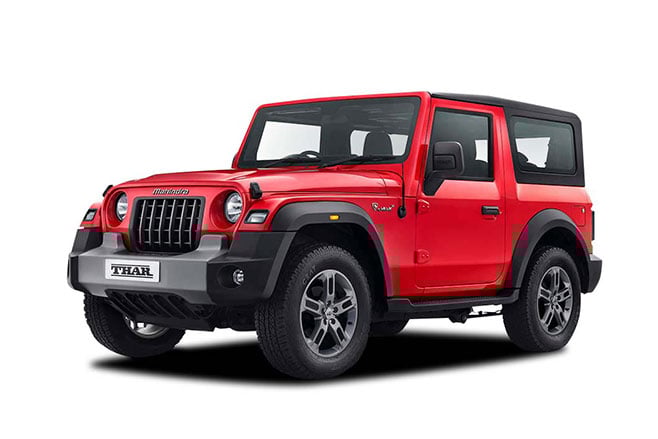
Indian car maker Mahindra has made inroads with its Pik-Up ute and plans to make 2021 the year it translates some of that rugged simplicity to the bottom end of the 4×4 segment. Like the rival Suzuki Jimny, off-road is where the Thar is designed to do its best work, having a traditional ladder-frame chassis and live rear axle.
Having plenty of Jeep influence in the exterior design probably won’t hurt its cause, and like the Wrangler, the roof can be removed to bring nature a bit closer.
19. HYUNDAI IONIQ 5
Arriving: Q3 Price: $70,000*
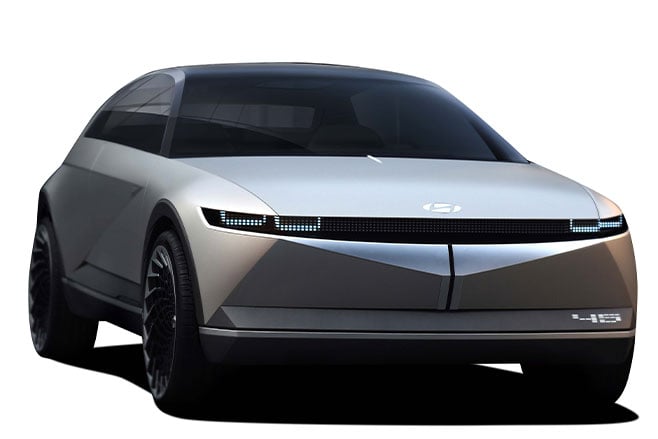
Ioniq switches to Hyundai’s new all-electric sub-brand in 2021 and it will be the Ioniq 5 that will lead the charge. Based on the Hyundai 45 EV concept (pictured), the mid-size SUV will utilise the new E-GMP bespoke electrical platform planned to underpin a trio of Ioniqs over the next four years.
Sitting above the Kona Electric, it will provide a more spacious and upmarket SUV alternative and flesh out the most expansive electrified line-up in the country.
20. MG HS AWD/PHEV
Arriving: Q2 Price: $45,000*
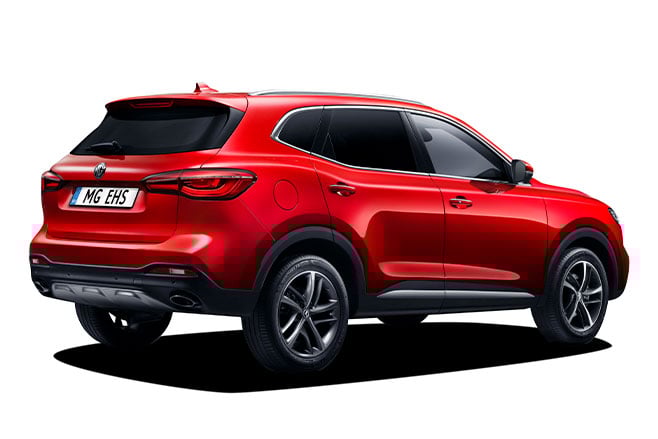
The 2020 arrival of Australia’s most affordable EV – the ZS EV – was an indicator of MG’s electric future. This year plug-in hybrid tech joins the family in the mid-size HS, which also arrives with an AWD option in the first half.
There’s plenty going on in the HS PHEV, including an extra couple of hundred kilos courtesy of a 16.6kWh battery pack that provides 75km of electric range. A 1.5-litre turbo and 90kW electric motor have combined outputs of 214kW and 480Nm.
21. MASERATI MC20
Arriving: Q3 Price: $438,000
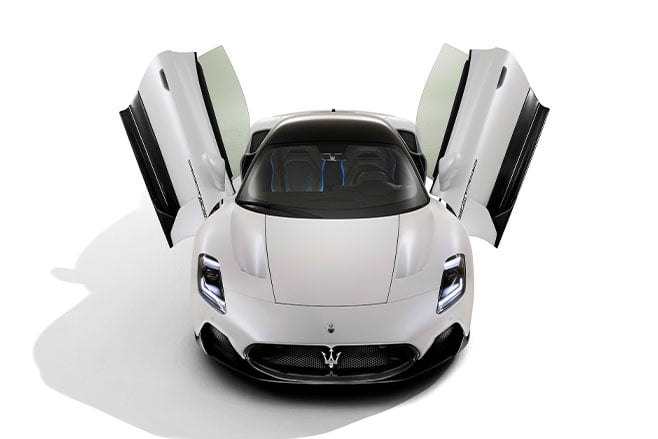
The first Maserati supercar in 15 years also marks the beginning of a revival of sorts for the Italian brand. It may have fewer cylinders than its direct competitors, but the new Maserati-developed dry-sump 3.0-litre V6 twin-turbo makes a thoroughly acceptable 463kW and 730Nm.
Built around a carbonfibre monocoque wrapped in aluminium panels, the lightweight two-seater promises potent performance (0-100km/h in 2.8sec) along with track-honed mid-engined dynamics.
A digital rear vision mirror and butterfly doors add to the experience of what is shaping up to be one of Maserati’s most exciting models.
22. MERCEDES-BENZ S-CLASS
Arriving: Q2 Price: $220,000*
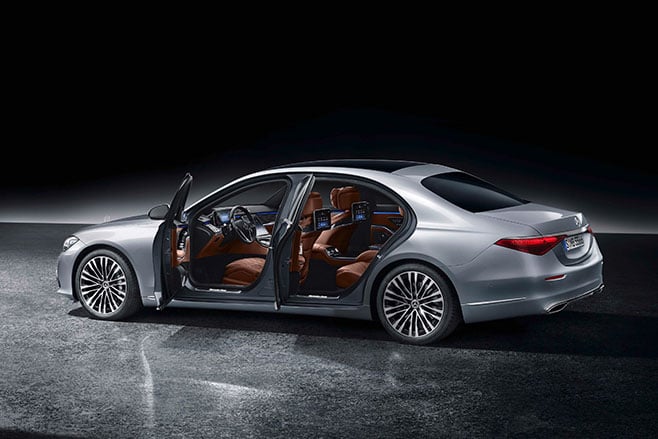
The pinnacle of Mercedes-Benz luxury still delivers on space and grace, but the all-new model steps up the tech in a big way. Augmented reality, a 3D display and eye tracking aim to pre-empt what the driver is thinking while world-first forward-facing airbags for the rear occupants are indicative of the safety innovation.
Computing power has also increased 50 per cent, in part to help with the semi-autonomous systems. There’s also a new rear steering system for long-wheelbase models and the requisite extra few millimetres of space. All of which is likely to cost a bit more than today’s S.
Later in the year we will see the S-Class PHEV – called S580e – which can top 100km on electricity alone before reverting to an inline six. By the end of the year the S-Class’s all-electric sibling will arrive in the form of the EQS, adding an EV flagship to the EQ sub-brand.
23. HYUNDAI i20 N
Arriving: Q2 Price: $32,500*
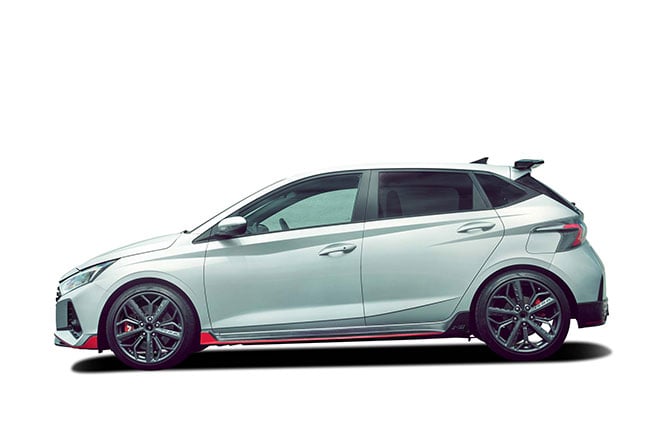
Easy-to-park city hatchbacks may be a dying breed, but not in the land of hot hatches. Hot on the bumpers of the Fiesta ST and GR Yaris will be Hyundai’s most affordable plaything, the i20 N.
As with its larger sibling, the i30 N, there will be a hefty focus on getting it to point assuredly towards an apex and make plenty of good noises along the way. It will be brisk too; a 1.6 turbo musters a thoroughly handy 150kW and makes you work for it with a six-speed manual.
24. FERRARI ROMA
Arriving: Q1 Price: $409,888
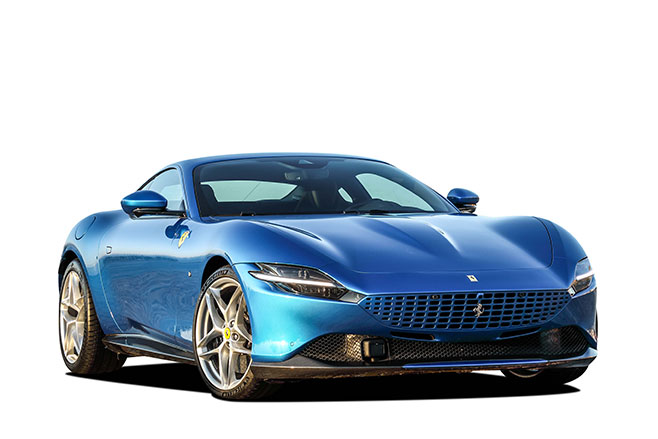
It’s all about living the life Ferrari-style in the Roma, a grand tourer with its sights firmly set on the Porsche 911 and Bentley Continental GT. While the sumptuous lines will, for many, be the headline act, there’s plenty of substance under the skin.
The 3.9-litre twin-turbo V8 edges outputs to 456kW and 760Nm, enough for 3.4-sec sprints to 100km/h. The Roma also introduces new haptic steering wheel controls, the additional feedback designed to allow drivers to keep their eyes on the road.
25. Genesis GV70
Arriving: Q4 Price: $70,000*
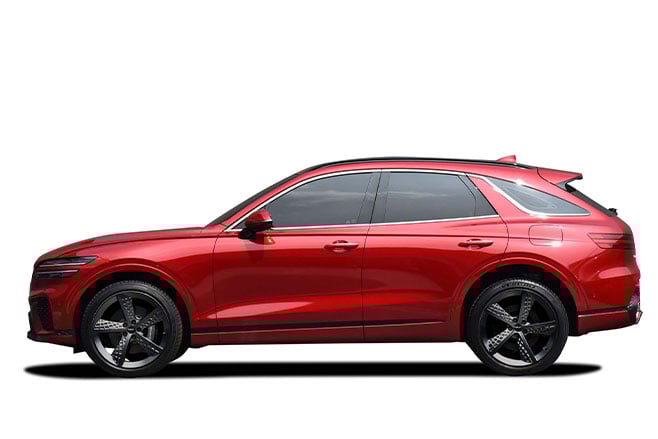
Slotting below the recently arrived GV80 and with its trio of four- and six-cylinder engines, the GV70 finally gives fledgling Genesis some firepower. Rear-drive architecture claims to deliver the requisite sporty handling, while equipment levels will be suitably lavish as Genesis tries to muscle in on established mid-size luxury SUV rivals.
The Hyundai-owned luxury brand hasn’t talked pricing yet, but expect it to kick off around $70K where rivals such as the X3, GLC and Q5 hover.
26. PORSCHE 911 GT3
Arriving: Q3 Price: $350,000*
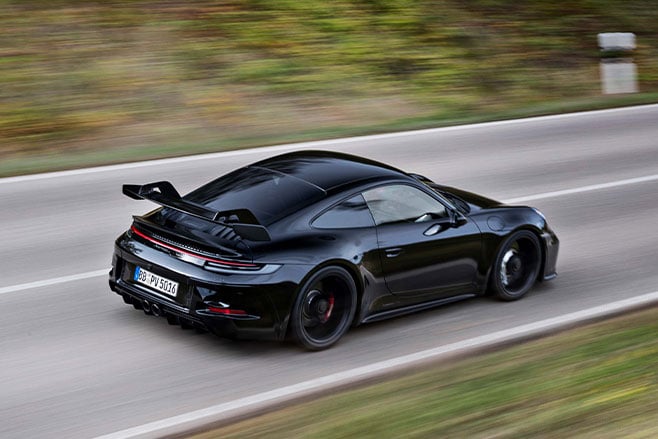
Porsche’s most track-focused 911 will have a bit more race car in it for 2021, picking up the double-wishbone front-end from the RSR. In larger 992 guise there has been a more intense focus on weight savings – including gorilla glass and a carbonfibre bonnet – simply to maintain the 1430kg kerb weight of the 991 it replaces.
Aerodynamics have also stepped up to make use of the broader rubber, a swan neck top-mounted rear wing a highlight. The glorious 4.0-litre atmo flat-six is mostly unchanged, making a rev-happy 368kW, the performance improvements instead centering on balance and corner speed.
27. SUBARU BRZ
Arriving: Q3 Price: $39,000*
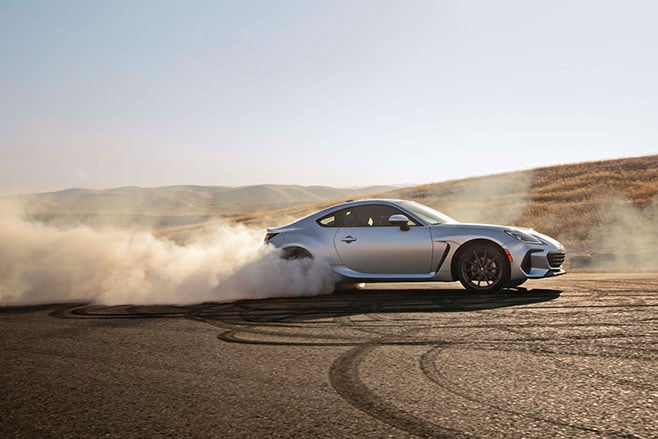
More smoke, more grunt and more fun is the promise with the second generation of a modern Japanese sports car icon. Once again twinned with the Toyota 86, it’s only the Subaru that has been shown to date, though the expectation is that the two will arrive in Australia at a similar time in the third quarter.
The horizontally opposed four-cylinder has increased in capacity to 2.4 litres, in turn upping max power to 170kW, a healthy increase of up to 16 per cent. A stiffer body and availability of Michelin Pilot Sport 4 tyres brings big expectations for handling.
28. VW AMAROK W580/W580S
Arriving: Q1 Price: $71,990
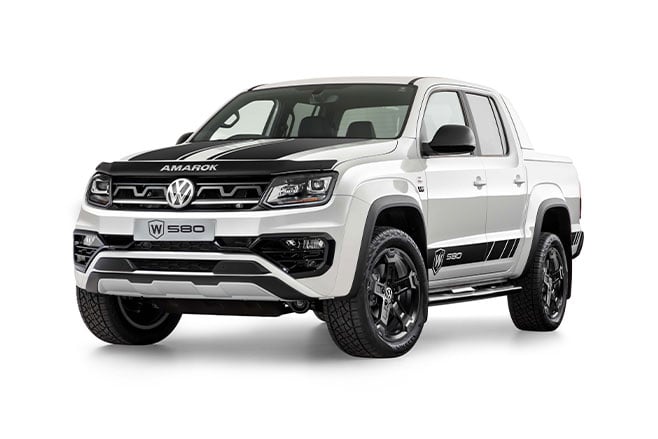
Volkswagen already holds the handling high ground for utes, and in 2021 is set to crank things up with the W580. The result of an extensive local engineering exercise by Walkinshaw – the same people who previously turned Commodores into HSVs – the W580 focuses on muscling up the look while ensuring it still delivers over bumps and through corners.
Pirelli all-terrain rubber and revised suspension raises the ride height 40mm, while a unique sail plane and side exit exhaust amp up the aesthetics. No change to the 200kW/580Nm V6 diesel, which is still the performance pinnacle in its class.
29. JEEP GRAND CHEROKEE L
Arriving: Q4 Price: $65,000*
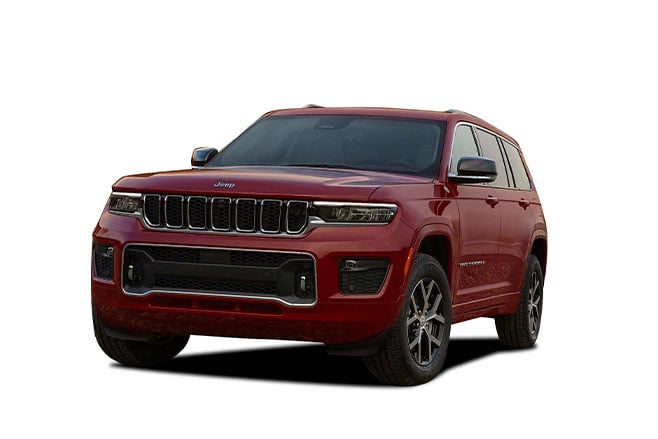
By the end of 2021 there will be two Grand Cherokees, the newer one picking up an ‘L’ in its moniker. A significantly bigger body on a new monocoque platform lay the foundations to better take the fight to Toyota Prado and Land Rover Discovery.
It also picks up a third row of seats for the family firepower it so desperately needed, a big emphasis on materials and finishes in the push upmarket, and improved off-road ability.
30. AUDI E-TRON GT
Arriving: Q3 Price: $180,000*
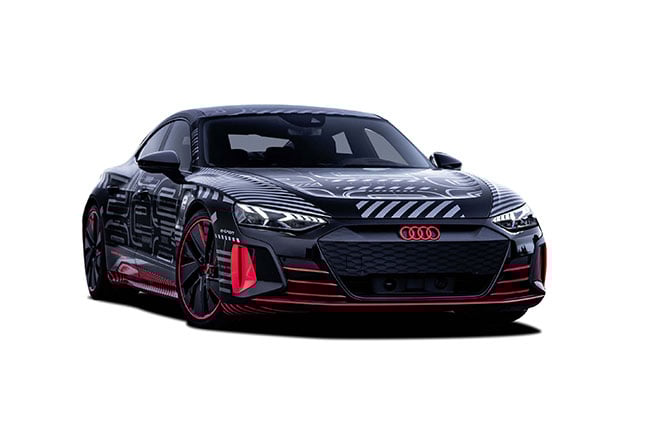
Riding on the J1 architecture also underpinning Porsche’s Taycan, the e-tron GT adds some pace to Audi’s soon-to-grow electric family. It also provides the basis for the first electric RS, a faster model to follow the regular E-Tron.
Like the Porsche, there’s a bigger motor on the rear, part of the driver focus, while an 800V electrical system accepts 270kW charging and delivers 400km-plus range to tick plenty of EV boxes and cement the GT as a worthy flagship of the E-Tron line-up.
31. TESLA MODEL Y
Arriving: Q4 Price: $85,000*
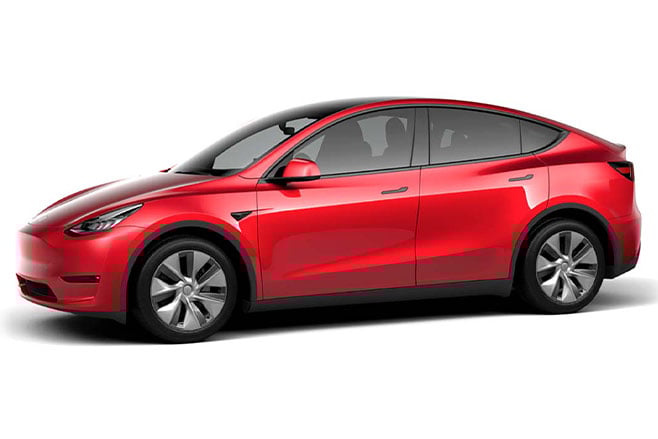
Things often run late in the Tesla-sphere and the brand’s second (and most affordable) SUV appears to be following suit. Best guesstimates are that the mid-sizer will arrive in the second half of the year.
Borrowing the basic architecture of the Model 3 four-door fastback sedan, the Model Y has a higher-riding body and the option of seven seats. There’s up to 505km of range and drive is sent to all four wheels, although a rear-drive model is also in the mix.
With the reveal of the all-new 992-generation 911 GT3, one of Porsche’s most iconic nameplates enters its fourth generation.
To understand what makes the naturally-aspirated motorsport-inspired model line so iconic, we’re looking back at the first three generations, going under the skin, and looking at what made them great (and some not-so).
It all started at the end of the millennium when the 996 GT3, co-developed by Walter Rohrl no less, was revealed at the 1999 Geneva Motor Show.
996: AN ORIGINAL WORTHY OF GREATNESS
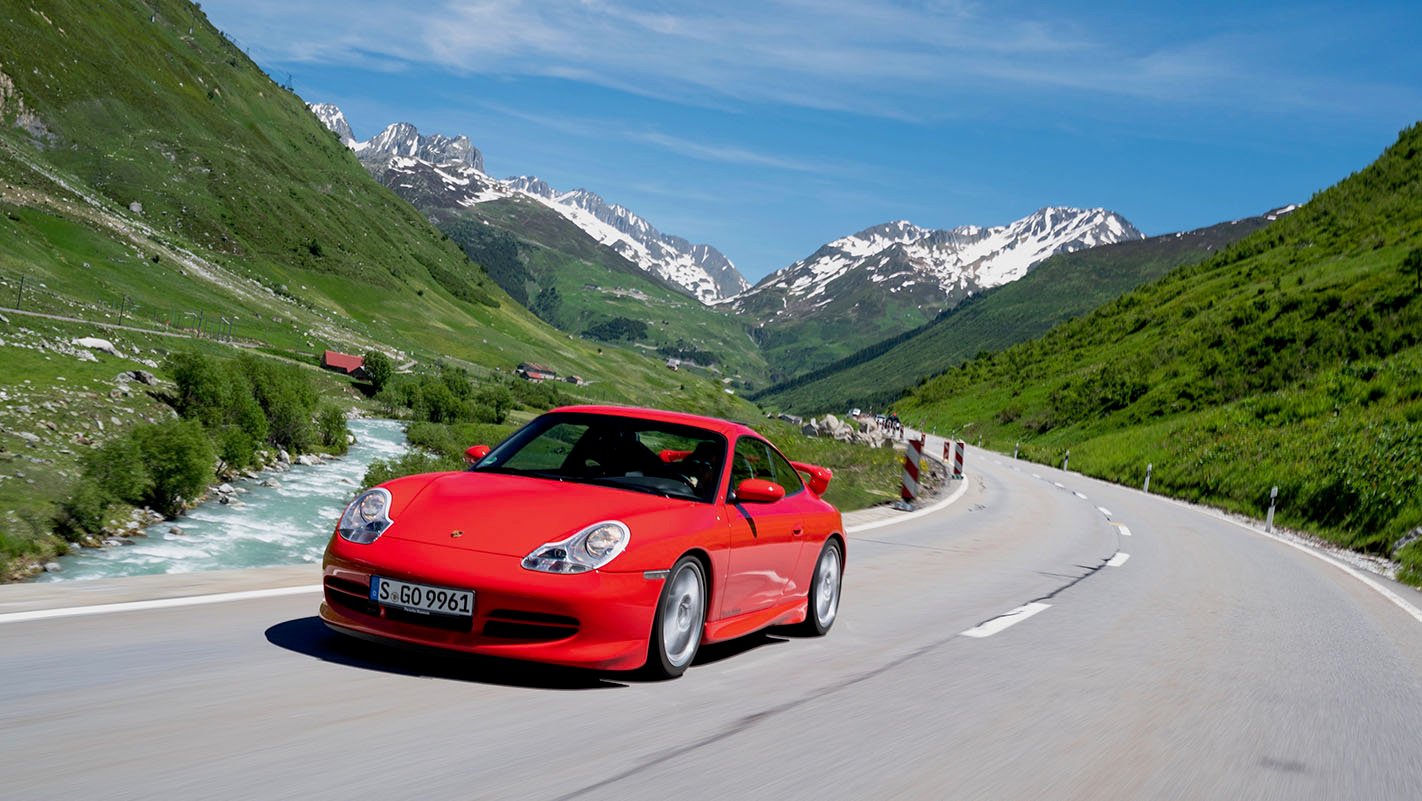
Is the first 911 GT3 the purest of them all?
Given that that new 992 GT3 will cost in the region of $370,000 and, if your name isn’t on the list already, you may well have a very long wait, we’ve compiled a primer of used GT3 alternatives, in chronological order.
While the 996 may have been the first GT3-badged road car out of Zuffenhausen (none of the production models were ever actually built out of the Weissach plant), the idea of a lithe, naturally aspirated 911 that was at home on road and track wasn’t new. Cars like the 1972/73 Carrera RS 2.7, the 964 Carrera RS from 1991 and the 992 Carrera RS of 1995 set a template that the GT3 subtly refined.
At its heart is the water-cooled M96/72 ‘Mezger’ engine, which can trace a bloodline back to the 911 GT1 homologation special of 1996. Cranking out 265kW, the GT3 was the star of Porsche’s stand at Geneva in 1999, deploying that power to the rear treads with no stability control fitment. That only arrived with the 997, making the 996 in many ways the purest of all GT3s.
Purity is relative. While the early GT3 could trace its DNA to La Sarthe, the inconvenient truth is that because of its bulletproof engine and weighty G96/90 manual gearbox, it actually weighed 30kg more than a base Carrera. And that organic swoop of a rear wing was largely decorative, Porsche claiming that even at the car’s 302km/h v-max, it contributed to ‘near zero’ lift.

There’s no doubting the specific output of 100bhp (74.6kW) per litre though, which represented a high bar for atmo engines at the turn of the century. The 996 GT3 was offered in two distinct iterations, known as the Mk1 and the Mk2. The Mk1, with is curvaceous rear wing, was produced between August 1999 and July 2000, while the Mk2, easily recognised by its angular headlamps and flat-plane rear wing, being built between August 2003 and July 2004. A total of 1858 Mk1s were built, including 2589 Mk2 models, with only 164 being officially imported to Oz. Porsche also made the lighter and stiffly suspended GT3 RS between 2003 and 2005; officially 284kW but actually 298kW on the dyno.
In truth, the Mk2 is a materiallysuperior car, rectifying many of the Mk1’s shortcomings. Its brakes were stronger and the engine had more at the top end. With power lifting from 265 to 279kW, and each car consistently making that figure, the Mk2 also feels torquier and shifts more cleanly. It brought the option of factory carbon-ceramic brakes and it also carried over the stronger steel synchro rings from the late Mk1 models, early cars suffering a gearshift action that could get a bit soft.
Whichever 996 GT3 you choose, it’s a tough car, mechanically at least. Check for accident damage and make sure you’re looking at a GT3 and not a kitted Carrera. The Mezger engine isn’t afflicted by the notorious rear-main seal issue of the 996 Carrera, but front main seals can leak. The gearboxes are mainly unburstable, although those shift issues on early 996s can be traced to weak synchro rings, a $4000 job that will probably have been carried out on all but low-mileage cars. Rear struts and drop links are key inspection items if the 996 doesn’t feel as sharp as it should.
If anything, the 996 GT3 is more special now than it was when it first appeared. It was launched into a tiny temporal window where an old-school approach to driver assistance met with a modern-feeling engine and tyre combination. We just didn’t know it at the time. With hindsight it’s easy to see why the original more than deserves its place in Porsche’s canon of greats.
FAST FACT
Porsche 911 996 GT3 buyers chose between Comfort and Clubsport specs, the latter featuring a half cage behind the front seats, a fire extinguisher, flame-retardant bucket seats and, in the Mk1, a single-mass flywheel. It also did without side airbags. Australia took 77 Mk1 Clubsports and 13 Mk1 Touring models.

PORSCHE 996.1 GT3 SPECS
Engine: 3600cc flat-six, DOHC, 24v
Max Power: 265kW @ 7200rpm
Max Torque: 370Nm @ 5000rpm
Transmission: 6-speed manual
Weight: 1350kg
0-100km/h: 4.8sc (claimed)
Price: $224,900 (1999), from $170,000 (now)
The good: Brilliant Mezger flat-six; adjustable handling; no stability control or flappy paddles; effervescent hydraulic power steering
The bad: Relatively thin on the ground in Australia; front splitter is a consumable item; 996’s interior finish hasn’t aged well
997: ALL HAIL THE MIGHTY MEZGER
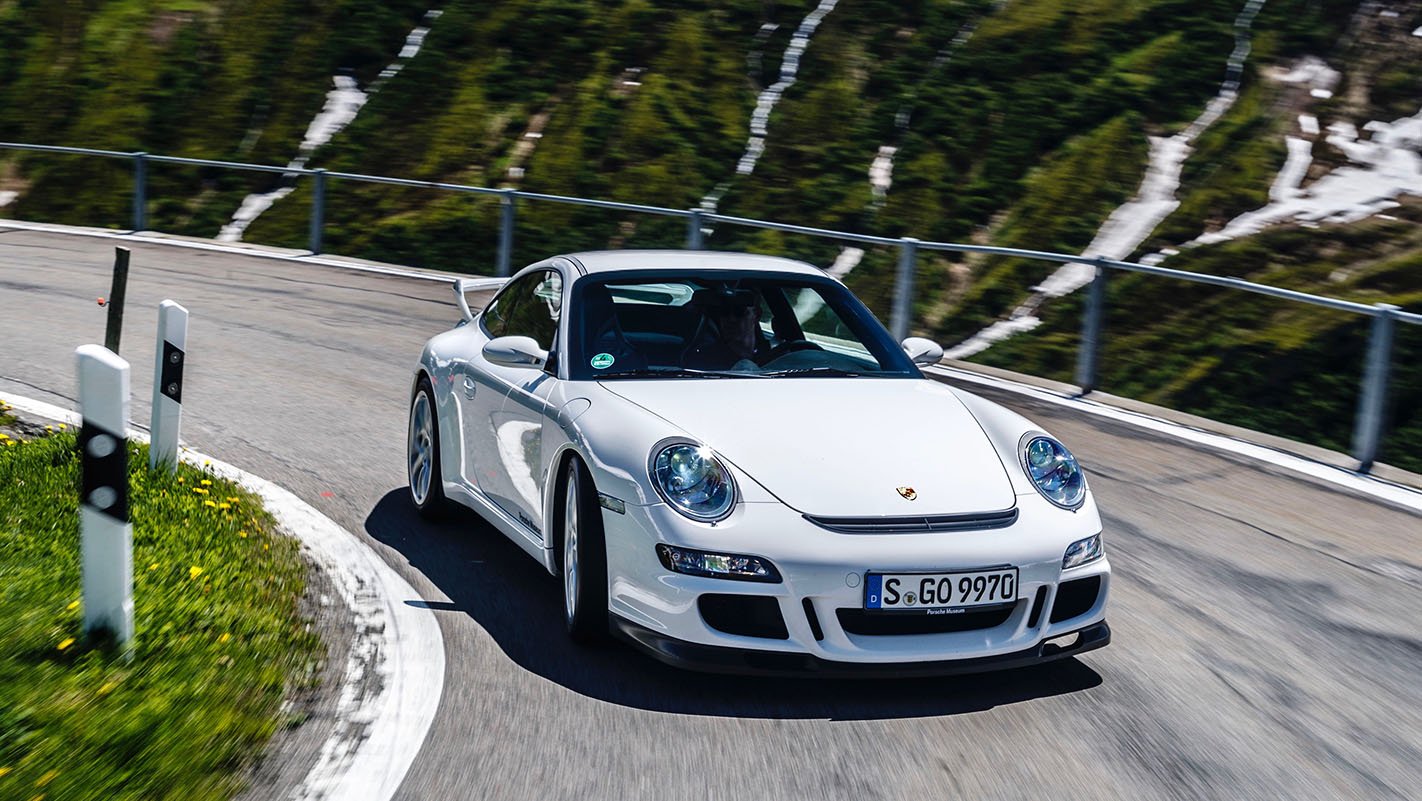
The end of an era produced an epic crowning glory
Although porsche purists cite the 993 as the last of a particular bloodline, namely that of the air-cooled 911s, in certain regards the 997 GT3 also marked a profound changing of the ways. In effect an evolution of the 996, the 997 returned a purity of form to the iconic sports coupe, so much of which had been lost in the 996’s headlong, and understandable, desire to break tradition.
This generation GT3 would see the last outing for the legendary Mezger engine and, though we didn’t know it at the time, it would also be the last Porsche 911 GT3 for a while with a manual gearbox. There were firsts, too. This was the first GT3 to feature PASM (Porsche Active Suspension Management) adaptive dampers, affording the 997 a more polyvalent personality. Also new were the centre exit exhaust pipes that contorted up to the 305kW powerplant via a set of silencing flaps that flicked open at 4000rpm. From there to its 8400rpm redline, the 997 GT3 delivered a generous playground.
Porsche has long had a history of what can most charitably be described as mechanical repurposing, and the 997 GT3 ran on the guts of a Carrera 4, with the front-drive mechanicals ditched in favour of a larger 90-litre fuel tank, although our right-hand drive versions suffered a packaging compromise and had to make do with the C4’s 67-litre tanks, along with the cutouts for front diff and driveshafts.
Like the 996 that came before it, the 997 was offered in two distinct generations often dubbed 997.1 and the 997.2. The GT3 first appeared in February 2006, and virtually all of its performance metrics were superior to the old 996 GT3 RS. The 997.1 GT3 RS was subsequently unveiled in October of that year, cutting weight by 20kg, adding 64mm to the rear width although power and torque (405Nm) were unchanged. The RS was a popular choice, accounting for almost a third of all 997.1 GT3 sales.

The 997.2 of 2009 saw the Mezger flat-six gain another 197 cubic centimetres of swept capacity and, for the first time, the RS version also differentiated itself with higher outputs, with 331kW versus 320 for the GT3. The swansong for this model was the 600-unit run of the 911 GT3 RS 4.0 in 2011. This model remains probably the most collectable of all modern 911s, featuring the final Mezger engine iteration of 3996cc and 368kW/460Nm.
Evidence of the GT3 range’s popularity came via production numbers. Where 996 GT3 variants shifted 4863 units across five years, the 997 GT3 models, which were in market for just two years, found over 8300 owners.
Prices in Australia start at around $230,000, so it’s worth bringing a specialist or having the car given the once over by a Porsche dealer. They’ll be able to run diagnostic software that will tell you whether the engine has been subject to over-revs and will also be able to generate metrics of how long the car’s been at or near redline.
The 997 GT3 is renowned as a tough vehicle mechanically, but there are a few quirks. The front-mounted radiators are susceptible to damage from road detritus, so make sure they’re not damaged or corroded. You should also pay particular attention to the exhaust system, as a replacement is around $6K. If you’re thinking of using the car for regular track use, steer clear of the PCCB brake option, as heavy use can cause premature wear and the replacement costs are eye-watering. White or blue smoke upon cold start is a regular occurrence. If it persists when the engine has warmed, then it could be something a little more sinister.
FAST FACT
The 997’s interior materials are a good deal more hardwearing than the 996, although Alcantara bits might well need a retrim. Also ensure that you fit into the notoriously narrow fixed-back carbon bucket seats if they’ve been specified. These are basically Carrera GT seats and sit very low but also quite upright. Try before you buy, as some find them extremely uncomfortable.
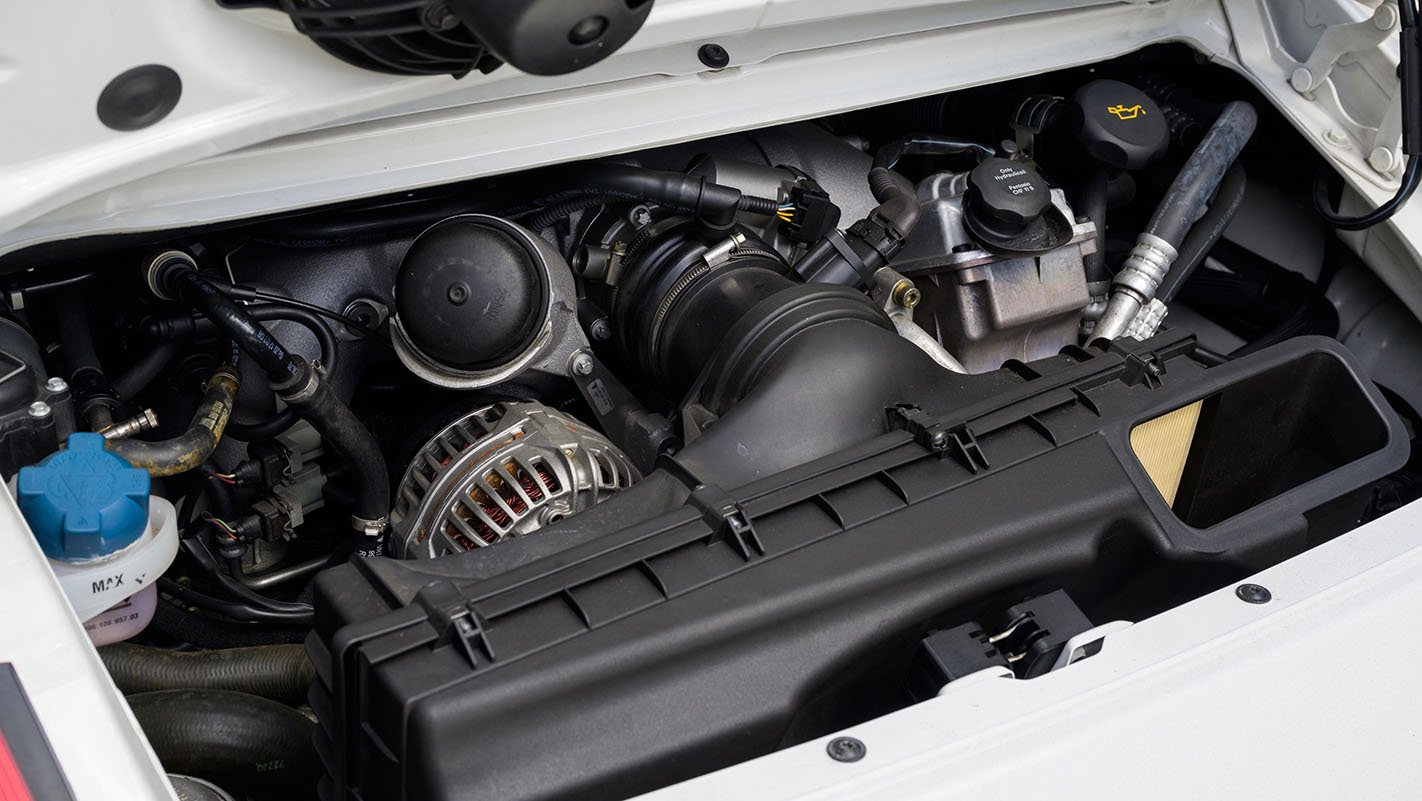
PORSCHE 997 GT3 SPECS
Engine: 3600cc flat-six, DOHC, 24v
Max Power: 305kW @ 7600rpm
Max Torque: 405Nm @ 5500rpm
Transmission: 6-speed manual
Weight: 1395kg
0-100km/h: 4.3sc (claimed)
Price: $250,000 (2006), from $230,000 (now)
The good: Wieldy and chuckable size; Mezger engine is as tough as old boot leather; RS 4.0 one of the most desirable 911s ever; residuals holding up well
The bad: Interior starting to feel its age now; power output eclipsed by today’s Boxster and Cayman models; small fuel tank means modest range
991: CONTROVERSIAL BRILLIANCE

After a rocky start, the 991 generation proves its worth
All good story arcs need ups and downs. Prior to the introduction of the 991 GT3 at the Geneva motor show in 2013, the GT3 story had been consistently rosy. The 991 looked to continue that trajectory. It debuted an all-new 3.8-litre direct injection engine that developed a monster 355kW at a heady 8250rpm, featured rear steer, Porsche torque vectoring plus and titanium conrods. However, it was what that engine was connected to that initially caused a lot of consternation.
There was no manual GT3. Andreas Preuninger was adamant that the development path was clear. “A manual will not only be slower in acceleration but the car will also be less capable in cornering because we cannot combine the electronic diff with a manual, because there’s no hydraulic pump in the manual to feed the e-diff,” he noted.
Internet forums went berserk, but the facts were that the PDK-equipped 991 GT3 was hugely popular, shifting 6300 units in the three years it was on sale. But there were problems. Engine fires brought about by the failure of conrod bolts saw the first 785 GT3s recalled and fitted with new engines. Porsche also had an issue with the reliability of certain batches of valve train rocker arms on early 991 GT3s, with the company pledging to cover the costs of engine failures brought about by this issue.
A 4.0-litre powerplant was introduced into the 2014 GT3 RS, good for 370kW/469Nm. This model also debuted features like a magnesium roof, a pit lane speed limiter, and the ability to ‘paddle neutral’. This engine also found its way into the 911R, in effect a lightweight GT3 RS that saw the return of the manual. Only 25 made it here and speculators started a frenzy, with delivery mileage cars advertised at well over $1m.
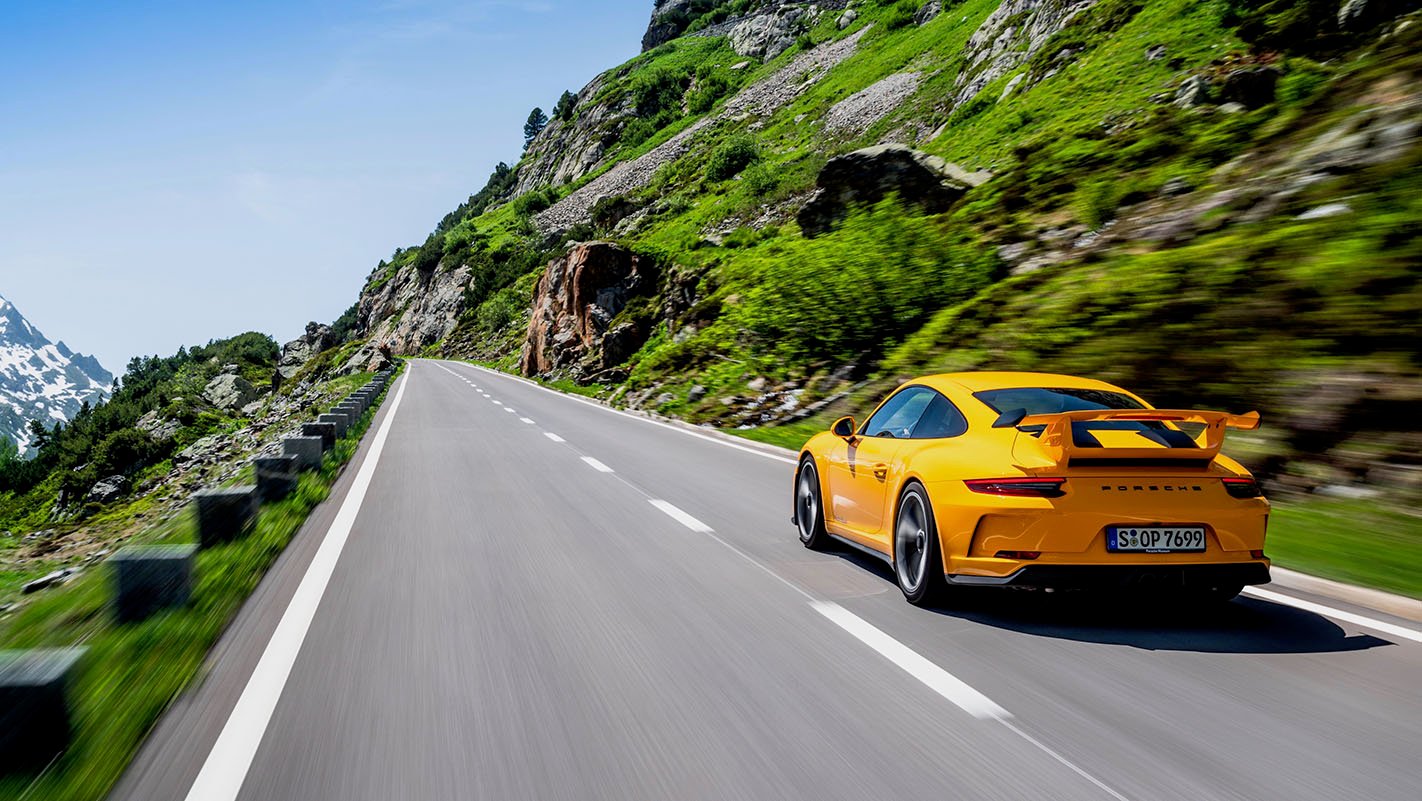
By 2017, the GT3 had morphed into its 991.2 guise, co-opting the 4.0-litre engine. Changes included adding ram air ducts, reducing the engine’s internal friction and increasing downforce. The manual returned and Porsche even offered a ‘Touring’ package, whereby you could buy a de-winged three-pedal version. Aside from the retractable rear spoiler from the Carrera GTS, the Touring also had a subtly different soundtrack, courtesy of different air filters.
The final hurrah came in February 2018, when Porsche launched the 382kW/470Nm 991.2 GT3 RS. This featured a 9000rpm redline, NACA ducts to cool the brakes, lightweight glass, aggressive rubber and rose-jointed suspension links. An even more focused Weissach package was also offered.
Despite initially having its reputation slightly tarnished by engine reliability issues, the 991 GT3 was a massive seller. More than 25,000 were produced across all versions and it’s perhaps this popularity which have seen used prices, for standard GT3 models at least, remain relatively sensible. Entry level is around the same price as a seven-year-older 997 GT3. Clearly much depends on whether three pedals are a non-negotiable, as for later manual 991.2 cars you’ll need to spend over $300,000.
A bigger, more sophisticated car than the 997, it’s tempting to think the GT3 lost some of its bite with the 991, but that’s anything but the case. It’s massively more capable. Drive them back to back and the 997 feels two generations older and a 996 feels positively antediluvian.
With prices hovering just over $200k for early PDK 991s, it makes a great half-price alternative to a new 992 GT3. The teething issues that afflicted early 991 GT3s are long since rectified, and there’s no shortage of choice, so take your time to find the right car. Do that and you’ll realise the 992 has some big boots to fill.
FAST FACT
991 GT3 The used market for 991 GT3 has held up fairly well, with typical first year depreciation standing at just 5 per cent. After that the GT3 tracks the same depreciation curve of the 991 Carrera S. Interestingly, due to abundant supply, the 991 GT3 is the most price sensitive of all the GT3 generations to higher mileages, ironic given that there’s even a Touring model available.

PORSCHE 991.2 GT3 SPECS
Engine: 3966cc flat-six, DOHC, 24v
Max Power: 368kW @ 8250rpm
Max Torque: 460Nm @ 6000rpm
Transmission: 7-speed PDK (6-speed man)
Weight: 1430kg (dual-clutch)
0-100km/h: 3.4sec (claimed)
Price: $327,100 (2017), from $300,000 (now)
The good: Mader engine is a screamer, too; interiors feel more spacious and modern; more choice around transmissions and trims; low-key Touring version is a gem
The bad: Early engine reliability issues; price speculation on 911R; no manual option on 991.1 GT3; not the most exclusive generation of GT3; no PDK for Touring

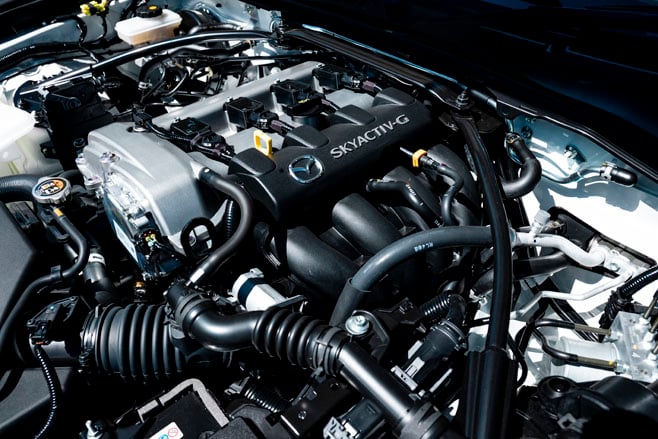
The Mazda MX-5 roadster is the best-selling sportscar in the world, so after 32 years it’s no wonder the Hiroshima brand is keen to keep things fresh. Enter the MX-5 GT RS, the newest top grade for the soft-top.
In similar vein to the MX-5 RF GT Limited Edition of 2018 (though available as a soft-top), the GT RS variant brings more performance-focused elements like Brembo brakes, Bilstein dampers and a strut brace for extra body firmness to the 2.0-litre-powered roadster.
But is it all too much? The MX-5 is meant to be a simplified sports car for those who want something that fits the traditional sense of the word. Driver engagement, no frills, just fun. Has the RS variant overstepped the mark?
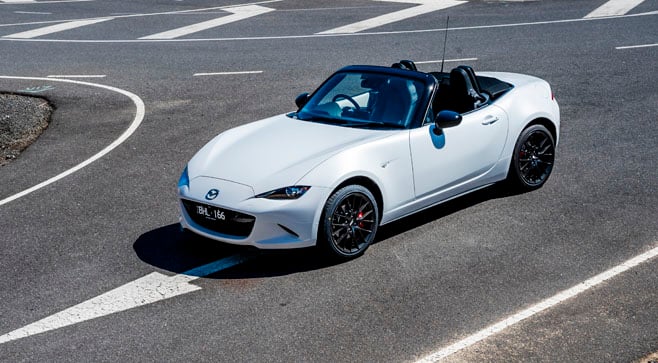
Price and Features (Score: 7/10)
The initial hurdle that Mazda might have to overcome in convincing buyers about the benefits of this RS is its $47,020 plus on-roads price. It’s not just that the MX-5 experience can be had from $36,090 plus on-roads with a smaller 1.5-litre engine, the non-RS MX-5 GT costs three grand less and provides a similar day-to-day driving experience.
For that extra three thousand, behind the forged 17-inch BBS wheels yare Brembo brakes with four-piston callipers up front, a set of stiffer Bilstein dampers all round and, under the bonnet, a strut brace between the towers to improve body rigidity.
Once you start looking at options and take into account the extra fees for a driveaway price, the sub-$50k dream goes out the window. Using Melbourne as an example, Mazda quotes $51,707 as a recommended delivered price but options like premium paint (Soul Red, Machine Grey or Polymetal Grey, all $495), scuff plates ($380), MX-5 floor mats ($185), an alarm system ($920), and a front parking sensor ($741) mean you’re looking at being owed nearly $55,000 by an MX-5.
Those in the market for a small sports coupe could get into a Toyota 86 GTS with an MSRP of $39,680 plus on-roads, for a similarly playful drive but without the convertible lifestyle.
Ownership costs (Score: 9/10)
It’s not hard to understand why the MX-5 has been so popular for more than three decades, starting with its frugal four-cylinder engine – 2.0-litres in this case – drinking only a claimed 6.8L/100km on the combined cycle. Even after a round trip of more than 300km during our test, with a mix of highway and spirited twisty road driving, The MX-5’s 45-litre petrol tank was more than half full.
In terms of more passive ownership costs, the MX-5 GT RS is covered by Mazda’s 5-year warranty and each of its first five scheduled services (every 10,000km up to 50,000) costs either $332 or $377. Lightly driven MX-5s can also be serviced every 12 months if they don’t reach the kilometre recommendation.
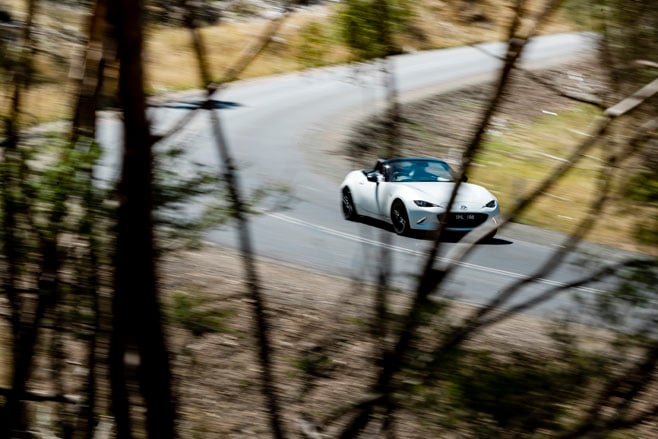
If depreciation is a concern, there’s good news. The fourth-gen (ND) MX-5 has proven to hold its value well, with even early NDs listed as used for around $30,000 in well-maintained (and sub-100,000km) condition.
Comfort and Convenience (Score: 7/10)
Calling the Mazda MX-5’s interior small or cramped is an oversimplification of the fact that Mazda’s designers and engineers have created a cabin in which no space is wasted. Even those less vertically challenged should find the MX-5’s interior comfortable enough, though this most average height of writer finds the seating position, seat shape, and layout all extremely suitable for a sports car. Its leather upholstery and softer touchpoints (especially where your elbows are likely to lean) make for a pleasant place to sit.
The telescopic adjustable steering wheel and gear shifter are relatively positioned such that exaggerated hand movements aren’t required, and the three pedals are well-placed for quick foot movements and heel-toe gearchanges. This is all down to one simple fact: the MX-5 was designed to be a drivers car, rather than a passenger car turned sportscar. Mazda’s own jinba ittai philosophy, meaning ‘oneness between horse and rider’, almost perfectly encapsulates how the Mazda’s cabin ergonomics feel.
When the MX-5 isn’t being used for back-road blasts, the roadster’s lack of convenience as transport becomes more obvious. For a start, there’s no interior stowage. There’s no glovebox (even the first-generation MX-5 had one), and the centre console’s storage is big enough to fit the key fob, perhaps with some spare change if you’re so inclined.
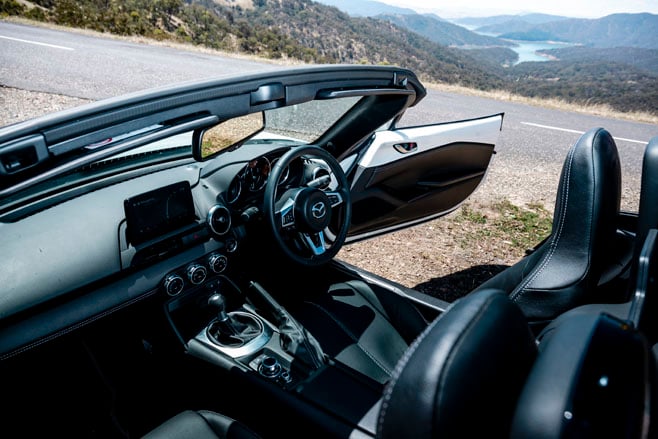
Thankfully, there’s a storage bin mounted between the two seats, built into the space under the roof latch. It’s not huge, but it fits water bottles, hats, small bags or purses … essentially anything you don’t want rolling around your passenger footwell.
There are, thankfully, other little conveniences in the cabin. The MX-5 has three places to mount a cup holder: two between the seats behind elbows (admittedly awkward to reach when driving), or one to the passenger side of the gearshift, which is perfect for reaching as a driver assuming your passenger’s keens remain behaved. There’s also a 12-volt outlet, a pair of USB ports and a 3.5mm auxiliary jack.
Reaching the infotainment controls is easy, though the centre console-mounted scroll wheel is a little more awkward to use than the seven-inch display that only functions as a touch screen when the car is stopped.
Further back, the boot is… well, not huge. 130 litres of storage space is more than enough to get the groceries done, stow a small suitcase for a weekend away or bring home small kitchen appliances, but you’re not getting your Ikea bookshelf box in there. It’s also worth noting anything too bulky is unlikely to fit in the boot, as the point of ingress is rather narrower than the rest of the boot space. Our photographer was able to fit her entire kit for the day in the MX-5’s boot, but it took a little bit of Tetris recall.
MX-5 RF Limited Edition vs Subaru BRZ tS vs Toyota 86 Performance Pack
Safety (Score: 7/10)
It must be said that the Mazda MX-5 is by no means the safest car in the world. But for a one-tonne, very small sports car, the MX-5 is really rather safe. In 2016, even before the introduction of Smart City Brake Support (Mazda-speak for autonomous emergency braking (AEB), the MX-5 passed its ANCAP crash test with a top grade of five stars.
As well as AEB and the addition of a reversing camera in its mid-life update, the ND MX-5 has an active bonnet that raises higher upon impact for pedestrian safety plus strengthened side impact beams and airbags for both driver and passenger. Being a soft-top roadster, the MX-5 has no side curtain airbags.
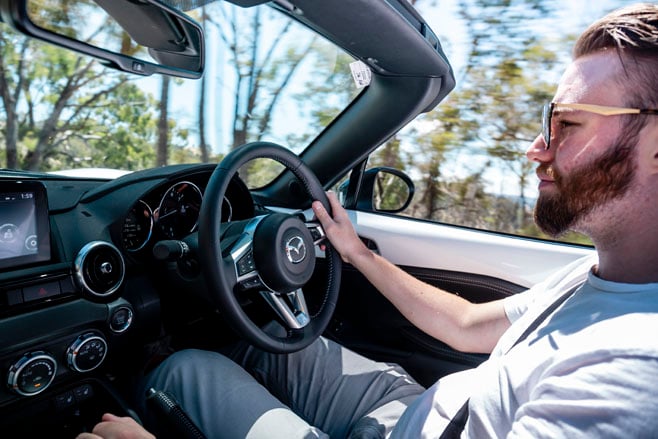
Another symptom of its soft-top nature is the fact that once the roof is down, driver visibility is excellent for quick and unimpeded shoulder checks and rear-view mirror glances. With the roof up, the rear window is a little narrower than in solid-roofed cars and doesn’t allow as much field of vision. However, the MX-5 has blind-spot monitoring and rear cross-traffic alert to assist with manoeuvres.
Even in an emergency, the MX-5’s light weight and ease of control should allow most drivers to avoid the worst of a situation, being quite responsive to relatively sharp steering under braking.
Power and Performance (Score: 8/10)
Putting it bluntly, this is the point at which a Mazda MX-5 review becomes uncomfortably easy for a motoring journalist. Hiroshima’s roadster benefits from Mazda’s persistence with natural aspiration, its 2.0-litre engine having been revamped in the same mid-life update that introduced extra safety features.
The top-spec GT RS gains no extra power or torque (still 135kW and 205Nm) but that’s no bad thing. The 1.5-litre engine was previously the pick for its keen behaviour, but now the updated 2.0-litre is just as keen and provides an extra bit of kick to entice even the more speed-thirsty driver. But it’s still restrained enough to allow a heavy right foot to indulge itself without putting one’s licence at risk.
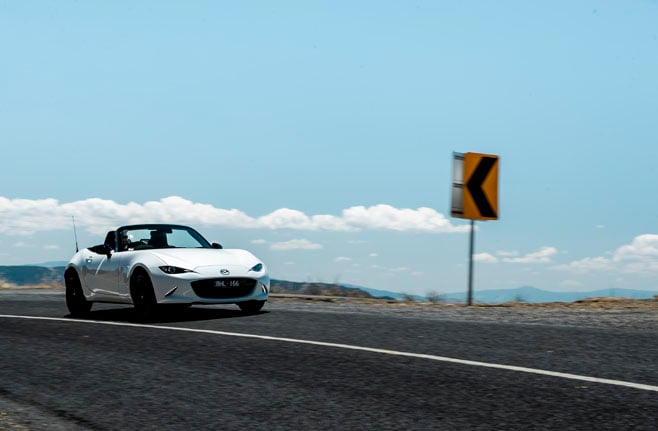
It delivers, at the risk of dragging out the old maxim, linear power in a responsive and predictable fashion that allows a keen driver to make the most of every kilowatt available, with the reward of a lovely but relatively subtle engine note that only increases in drama, rather than coarseness, at higher revs.
Fortunately, the six-speed gearbox (there’s no auto option in RS guise) is an accomplice to high-revving shenanigans, especially when the transmission is so easy to convince of the benefits of the upper rev range. Not only do second and third gear lend themselves incredibly well to back-road driving, but the shift between them is also sharp and helped by a compliant clutch pedal.
How does it drive? (Score: 9/10)
It’s difficult to describe the way an MX-5 drives without using the word ‘feedback’, so that’s a solid place to start. Not only does the stiffer chassis of the GT RS provide more information to the driver via the seat with its harder suspension, but it also allows for more control over cornering lines and even oversteer.
While a lesser MX-5 still utilises comparatively comical levels of body roll through corners to keep a willing driver busy, the GT RS is much less of a handful. Of course, the driver is still the main ingredient, but this variant’s increased proficiency in cornering becomes clear. Those extra few thousand spent are here evident: the MX-5 GT RS is a more serious machine for a more track-focused driver, who values sharp cornering lines and lap times.
There’s thankfully not a massive scope for oversteer when driving on the road – you’d need to really be thrashing it – but the gentle push of the rear wheels under corner exit is evident as the stiffer GT RS chassis is a different breed of playful to the softer GT.
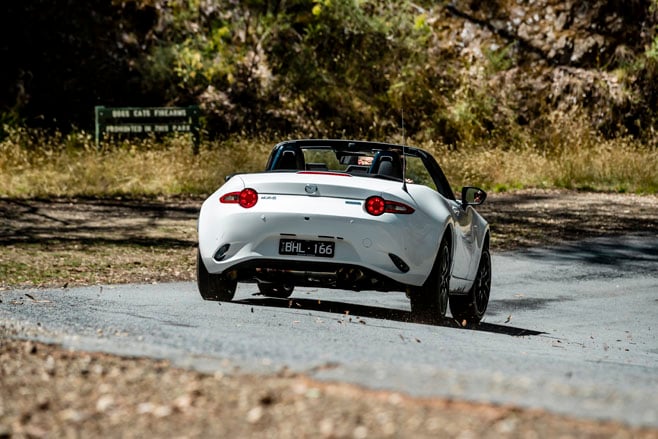
With the gearshift close at hand and the clutch obedient, it’s easy to bump down a gear and keep the revs high mid-corner to really make the most of every kilowatt available from that smooth 2.0-litre four. Carry too much speed though, and it becomes obvious when the Bridgestones are thinking of giving up. If you’re paying attention to the MX-5’s feedback, it’s easy to adjust to its needs.
Harsher suspension that improves cornering also decreases road-trip relaxation, an issue only if potential owners have any ‘weekend away’ intentions that require more than a quick drive. Other than that, even the stiffened-up GT RS is absolutely liveable.
Verdict: 7.8/10
While the RS provides salient track day upgrades for sporting drivers, the road-focused driver will likely benefit more from the cost-saving of purchasing a standard MX-5 GT as opposed to the RS. However, the RS includes improvements that will prove worthy on a track day and anyone offended by this sharper MX-5 focus has the rest of the MX-5 range to choose from.
Pros: Sharpens up Roadster dynamics; Still ergonomically sensible and comfortable enough; Retains the MX-5’s ‘soul’
Cons: Hard to live with as an only car; Stiffer ride might not suit long journeys; Driveaway price with options
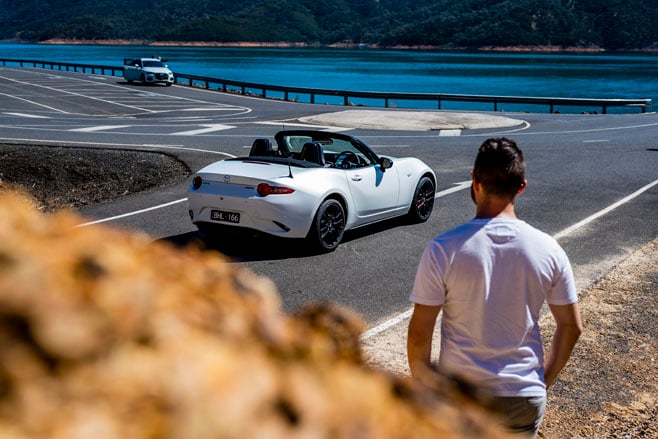
Mazda MX-5 GT RS specifications Engine 1998cc 4cyl, DOHC, 16v Max power 135kW Max torque 205Nm Transmission 6-speed manual Weight 1052kg 0-100km/h 6.5s (claimed) Economy 6.8L/100km (claimed) Price $47,020 On sale now
Facebook took the nuclear option on Thursday and, with one keystroke, muted the pages of all of Australian media that delivered some form of objective news. Not being privy to the finer points of our media bargaining code, nor Facebook’s corporate policies on said code, I’m not about to wade in and back any particular dog in this fight, but I wanted to take this opportunity to reassure you that it’s business much as usual here at MOTOR.

Why? Because, not to put too fine a point on it, our success doesn’t rely on Facebook, or any other social media platform for that matter. It relies on you. We’re a performance car title that’s funded by its readers, so we answer to you. Not advertisers, not politicos in Canberra and not a company in Menlo Park, California. And we quite like that.
So, if you want to take control of your content and get it straight from the source, we’re here for you. And you can be there for us by subscribing and supporting independent Australian journalism, because if this stoush has taught us anything it’s that independent voices and sharp opinion aren’t always popular with big business, but they’re valued by our readers.
Should you want to keep tapped into what’s going on in the performance car world, consider subscribing. We have some killer deals available at the moment, and we’re looking to involve our subscribers in exclusive events where they get to sample some of Australia’s most charismatic performance cars. Simply click through at https://motor.subscription.com.au/ to get a bit of you time delivered straight to your mailbox every month. Heck, after last year, we all deserve a bit of that.
We also offer a free newsletter to keep you up to date with everything that’s happening here on the MOTOR website. If you want the all-killer-no-filler link straight to the good stuff, just enter your email address at https://www.whichcar.com.au/motor-email and it’s yours. No fees, no catches.
There’s still the fast-growing MOTOR Youtube channel, our feed on Twitter and, unless Facebook decides to nuke that as well, MOTOR on Instagram. You get the drift. We’re not going anywhere, and we hope you’re not either. Thanks for your ongoing support.
Is it a wagon? Is it an SUV? Questions asked of the sixth-generation Subaru Outback are now overshadowed by the question we’re asking today: is it good?
The updated Outback now comes in three variants, being AWD, AWD Sport, and AWD Touring, all of which now use the same naturally-aspirated 2.5-litre boxer engine (developing 138kW and 245Nm), all-wheel drive, a CVT automatic, and arrive in Australian dealerships in March 2021.
Subaru does call it a wagon, by the way, but it’s the list of additions and changes to the Outback we’re here to investigate, and to do so we’re driving the range-topping Outback Touring to get the full experience. Urban driving, highways, B-roads, and some gentle offroading are on the cards.
Are its improvements able to draw buyers from more road-bound SUVs like the Toyota RAV4 or wagons like the Mazda 6?
Price and Features (Score: 8/10)
With the Outback Touring sitting just over the $50K mark driveaway (its MRSP is $47,790, but driveaway is listed, for example, as $52,808 in Victoria), it’s well-placed to compete with top-spec variants of the aforementioned cars you could consider its rivals, as well as being less expensive than mid-sized premium SUVs from Europe.
As the top spec, the list of goodies on the Outback Touring is almost daunting. Your $50K gets you the new interior that, across the range, features a tablet-like 11.6-inch touchscreen (that annoyingly displays Android Auto horizontally across a third of it), Subaru’s SI-Drive system to toggle a more responsive engine mode, the brand’s EyeSight assist tech that has quite a noticeable lane-centring function as well as Autonomous Emergency Steering and Lane Departure Warning, plus a driver monitoring system.
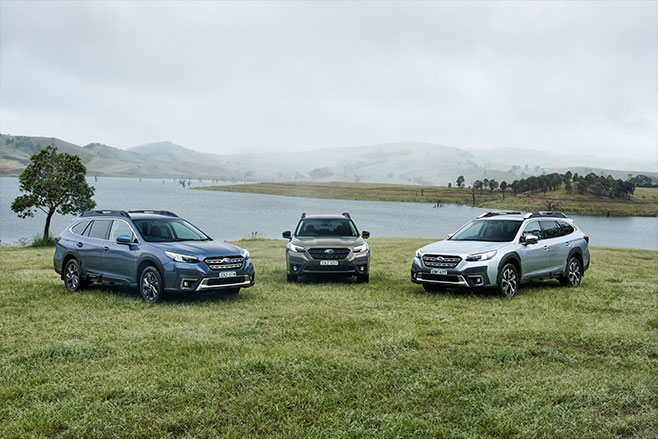
The Outback can also now tow 2000kg braked, up from the 1500kg of its predecessor, plus the Sport and Touring grades get a power tailgate, sat-nav, roof rails, heated seats and additional sensors for a Front View Monitor and Side View Monitor to aid visibility. All rather useful on road trips.
Finally, the little comforts the Touring grants aren’t vital, but definitely nice to have. A nine-speaker Harman Kardon system, auto driver’s seat adjustment, an electric sunroof, Nappa leather accented seat trim, auto-dipping door mirrors, 18-inch gloss alloys, heated second-row seats and steering wheel, and the all-important CD player for your trips back to 2001.
Ownership costs (Score: 7/10)
Now that the Outback is built on the Subaru Global Platform shared by Impreza, XV, and Forester models, it moves to a 12-month/12,500-kilometre servicing schedule under the brand’s capped-price model, though specific pricing hasn’t yet been confirmed. The previous generation’s maintenance costs ranged from around $300 to $550 per service.
While towing will likely put more strain on the running gear and fuel consumption of the Outback, the claimed 7.3L/100km combined-cycle fuel usage figure seems to be achievable after our initial test.
Subaru’s five-year, unlimited kilometre warranty covers the Outback.
Comfort and Convenience (Score: 8/10)
Despite looking decidedly mid-sized from the outside, the Outback’s interior would probably please Doctor Who upon inspection. It’s more than spacious enough, and the Touring’s lovely Nappa leather seats provide a balance between cushioning and support that makes long trips easy on the body.
Cupholders and storage space is fairly standard, though the console bin does have a handy smaller section that latches to the lid for storing little loose items, and the cupholders feature a removable insert for keeping shorter items like coffee cups from falling too deep into them. The seats are electrically adjustable and have two saved positions available, though it’s unlikely you’ll need to change it much as the driving position is quite pleasant.
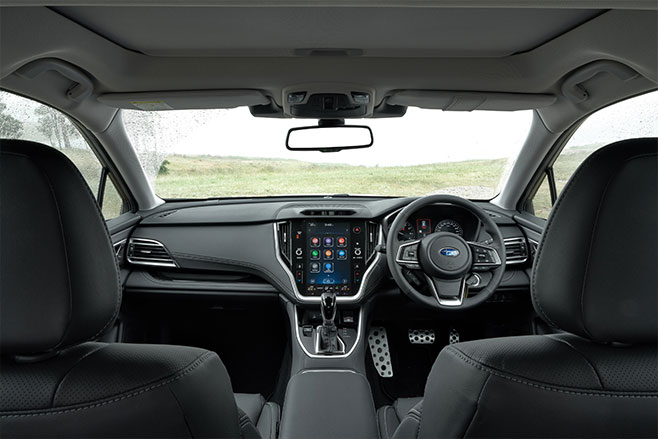
The rear seats are similarly comfortable, a tall adult able to relax even on a long haul, and two USB charging points plus door-mounted bottle holders should keep passengers entertained and hydrated.
A 522-litre boot is already spacious, but fold the rear seats flat (there’s no seven-seat Outback) and the space available seems to triple. That’s because it just about does. Subaru says 1782L is available for either home moving, long voyages, or really big grocery trips.
Safety (Score: 8/10)
While the Outback hasn’t yet been ANCAP tested, its list of safety features takes up more than one page of Subaru’s press information about the new model. All the usual features like ABS and AEB are present, with the EyeSight suite providing more than enough active assistance for the driver to keep the Outback on track, intervening to avoid or at least mitigate lane departures or frontal collisions.
It’s also a cabin that provides excellent vision for shoulder checks and via mirrors, though could benefit from more parking sensors, particularly at the front where you need to manually turn on the camera.
Also up to the driver is the ability to avoid nasty situations, and thankfully the Outback’s braking and handling allows an alert driver to avoid or stop in the occurrence of danger.
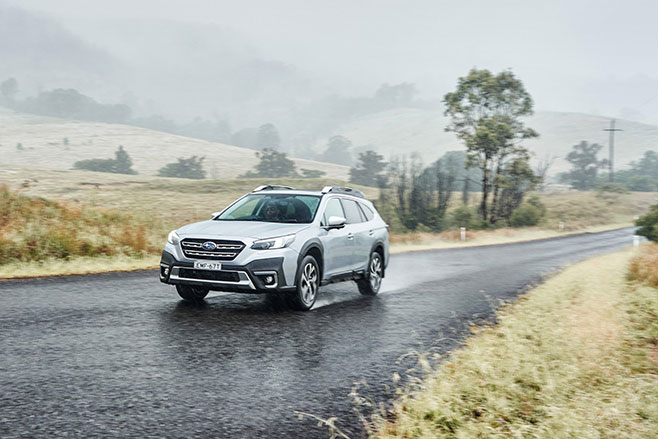
Two sets of ISOFIX child seat anchors are present in the rear seats.
Power and Performance (Score: 7/10)
Across the Outback range, Subaru says its 2.5-litre engine is 90 per cent new, with a little more power and torque than previously, and a CVT that mimics eight gears in an effort to seem less monotonous under acceleration. Though the drivetrain isn’t necessarily the major appeal of this car, it’s definitely part of the formula that makes the Outback a pleasant car on a journey.
While it’s by no means fast, the 138kW and 245Nm does a respectable job hauling its 1661kg around, and even its CVT, often a red flag for keen drivers, is fit for the task. In fact, it’s much better than the CVTs of old and is worth experiencing if the idea of that transmission type still puts you off.
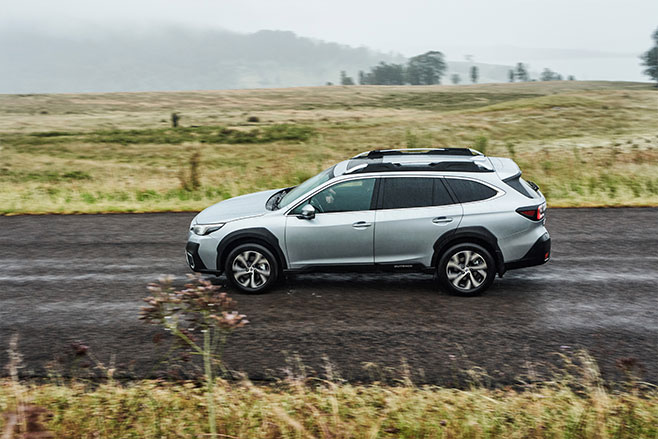
One small bugbear with driving the Outback is its stop-start system, which is deactivated via a menu rather than a simple button. It’s not the smoothest at a set of lights, and the engine is efficient enough that it feels unnecessary.
But on the topic of smooth, the Outback is otherwise a composed and calm drive, its engine relatively quiet and the mimicked shifting of gears almost unnoticed most of the time. Hard acceleration is not the Outback’s friend, but it’s not something that should be a regular concern, nor is it particularly grating to experience.
How does it drive? (Score: 8/10)
With a mixed round-trip of suburban, highway, backroad, and offroad (see next section) driving, the Subaru Outback doesn’t surprise. It’s much like you’d expect if you’ve driven a passenger-focused Subaru before. The Outback’s ride is extremely comfortable and its suspension soaks up sharp bumps then settles quickly, though it might initially seem a little floaty at low speeds.
Even at a relatively brisk pace on backroads, the Outback handles itself with the poise of a smaller car and will obey some rather un-SUV requests as long as inputs are kept smooth.
How does it go offroad? (Score: 8/10)
To truly test the Outback in a manner that’s befitting of its name, we took the Touring around Victoria’s You Yangs Regional Park track, a 12km dirt and gravel road that features ruts and inclines that’d get most city cars out of shape.
After traversing the entire track at the posted 40km speed limit, slowing for narrower sections or rougher terrain, the Outback proved its ability with no struggle. Subaru’s switchable X-Drive system’s dirt and snow mode should have been useful here, but it turns out the setting self-switches back to ‘normal’ at around 40km/h.
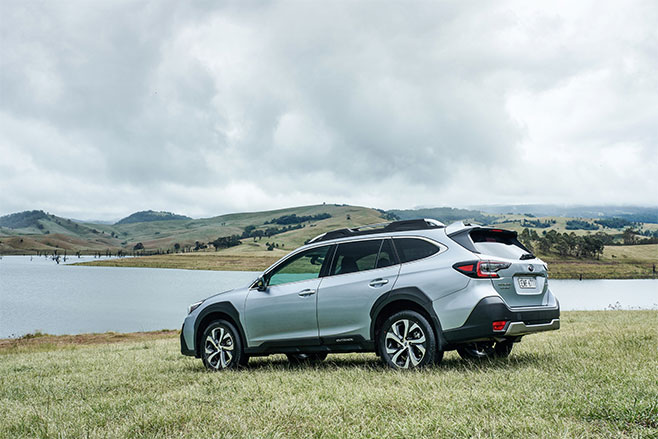
Thankfully, the standard drive mode was perfect for keeping the Outback stable and its 213mm of ground clearance more than enough room to traverse dips and avoid scraping over jutting rocks.
As we didn’t take the Outback into any truly tricky territory, it’s difficult to pinpoint quite where its limit is, but we’d comfortably say most owners won’t be tackling anything more treacherous than it can handle.
Verdict (Rating: 7.7/10)
Versatility is a useful trait in a car that’s likely to be used as a weekend warrior, and the Outback has it in plentiful supply. Long stints on the freeway are comfortable, it hustles through back roads with ease, rough terrain doesn’t bother it in the slightest, and it’s packaged in a way that accommodates an active outdoor lifestyle.
On top of this, if the top-spec Touring seems excessive, even the base model will supply the capability and most of the comfort an Outback can offer. A better SUV than a RAV4? A better wagon than a Mazda 6? It doesn’t matter, because the Outback can do both.
Pros: Versatility and practicality abounds; Comfortable and composed; Drivetrain will make you reconsider CVTs Cons: Excitement not really in the equation; Infotainment still not perfect; No front parking sensor
Subaru Outback Touring Specifications
Engine 2498cc horizontal 4cyl, DOHC, 16v Max power 138kW @ 5800rpm Max torque 245Nm @ 3400-4600rpm Transmission CVT Weight 1661kg Economy 7.1L/100km (claimed) Price $47,790 MSRP On sale from March 2021
Subaru Australia is looking increasingly likely to go rogue on the naming of its forthcoming Impreza-based wagon, with a dumping of the unpopular Levorg badge in favour of the much-loved WRX Wagon moniker.
With the introduction of the Levorg in 2016, Australia effectively got a slightly softened wagon version of the resoundingly good VA WRX, but its confusing name drove a wedge between the new arrival and a rich rallying bloodline of WRX sedans and their big-booted equivalents.
The results were struggling sales and a marketing team that was forced to work needlessly hard to convince Australians that the Levorg was worth a look – which it was.
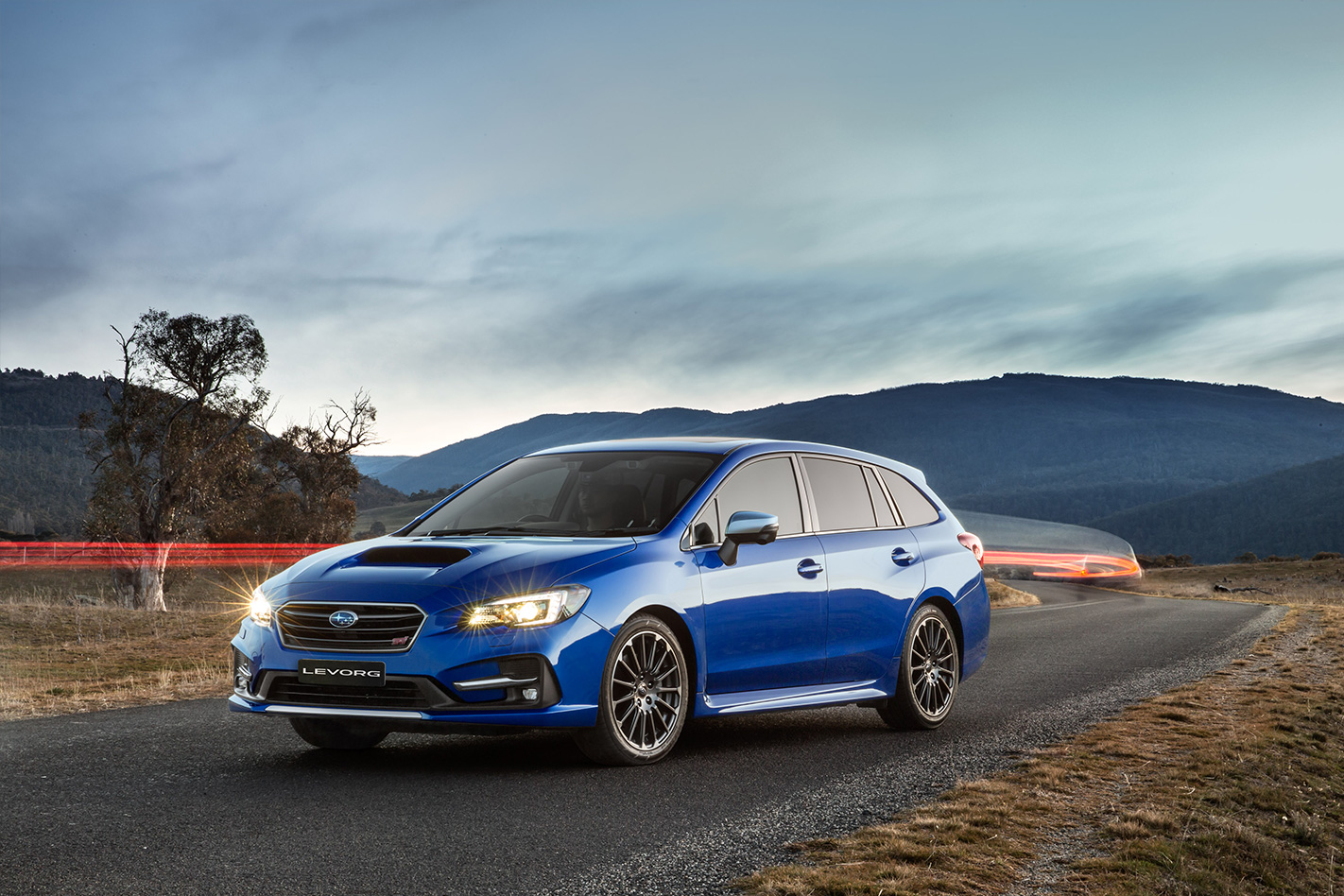
In its first full year on sale in 2017, the Levorg found just 1210 driveways – a fair way behind the 2614 WRX registrations for the same period, and the second smallest Subaru sales figure (ahead of the five-year-old BRZ).
However, when asked if that Levorg sales figure could have been better with a continuation of the WRX Wagon name, a panel of Subaru’s executive management responded only with a long silence, sharp intake of air and, said national public relations manager David Rowley, “That’s a very good question.”
When questioned on the return of the Levorg name for the VN (second) generation model, Rowley, Subaru Australia general manager Blair Read and marketing general manager Amanda Leaney remained tellingly silent.
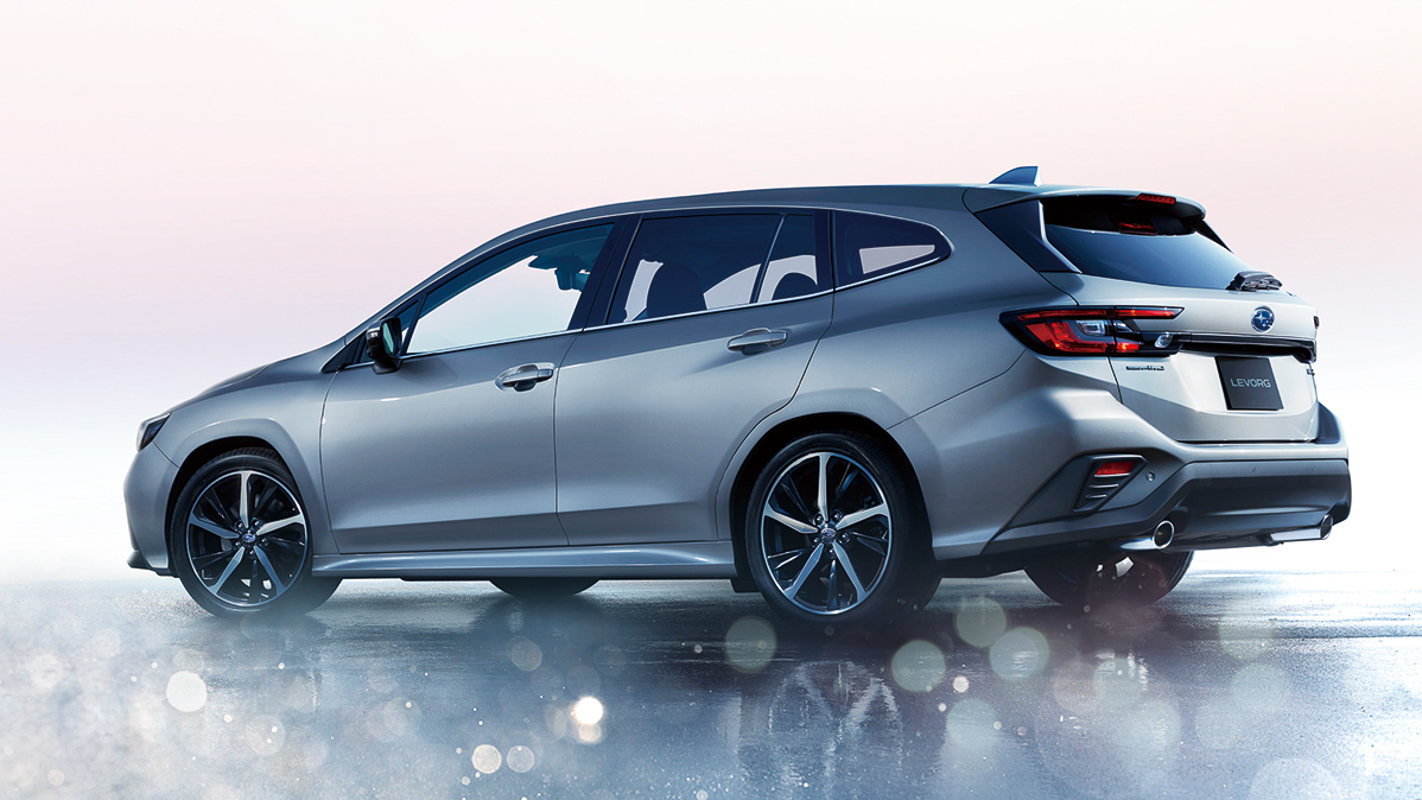
Tantalisingly though, Rowley did offer a clue as to what Subaru’s Australian operations were planning for its local launch.
“It is very much a niche performance wagon, and it will offer a different level of excitement and performance in what it morphs into in Australia. Just don’t confuse it with what you see in Japan necessarily in terms of specification”.
In its native Japan, the model has already been firmly christened the Levorg but, given the namplate’s under-par reception, it’s likely the Australian team is negotiating a return to the more recognised boot badge.
When it touches down locally at a date to be confirmed, expect the new WRX Wagon to be a bespoke version that has been specifically formulated for Australian tastes and demands, along the same lines as the freshly arrived 2021 Outback.
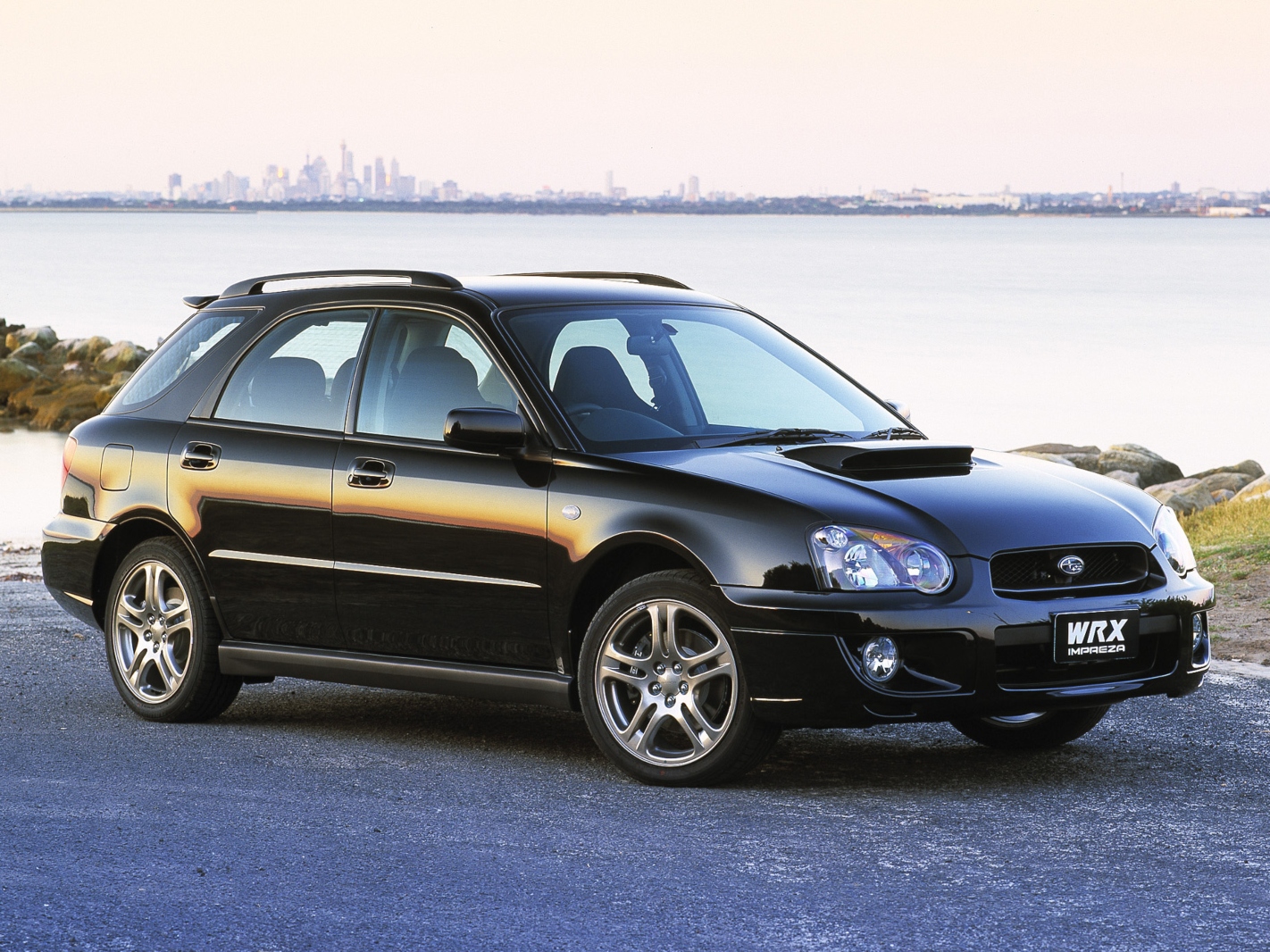
Significantly, if the WRX Wagon does return, it will in effect be another new model for Australia. The last time the iconic badge appeared on the bigger boot of a wagon (technically hatchback), it was essentially the variant name with third-generation GR Impreza as the model.
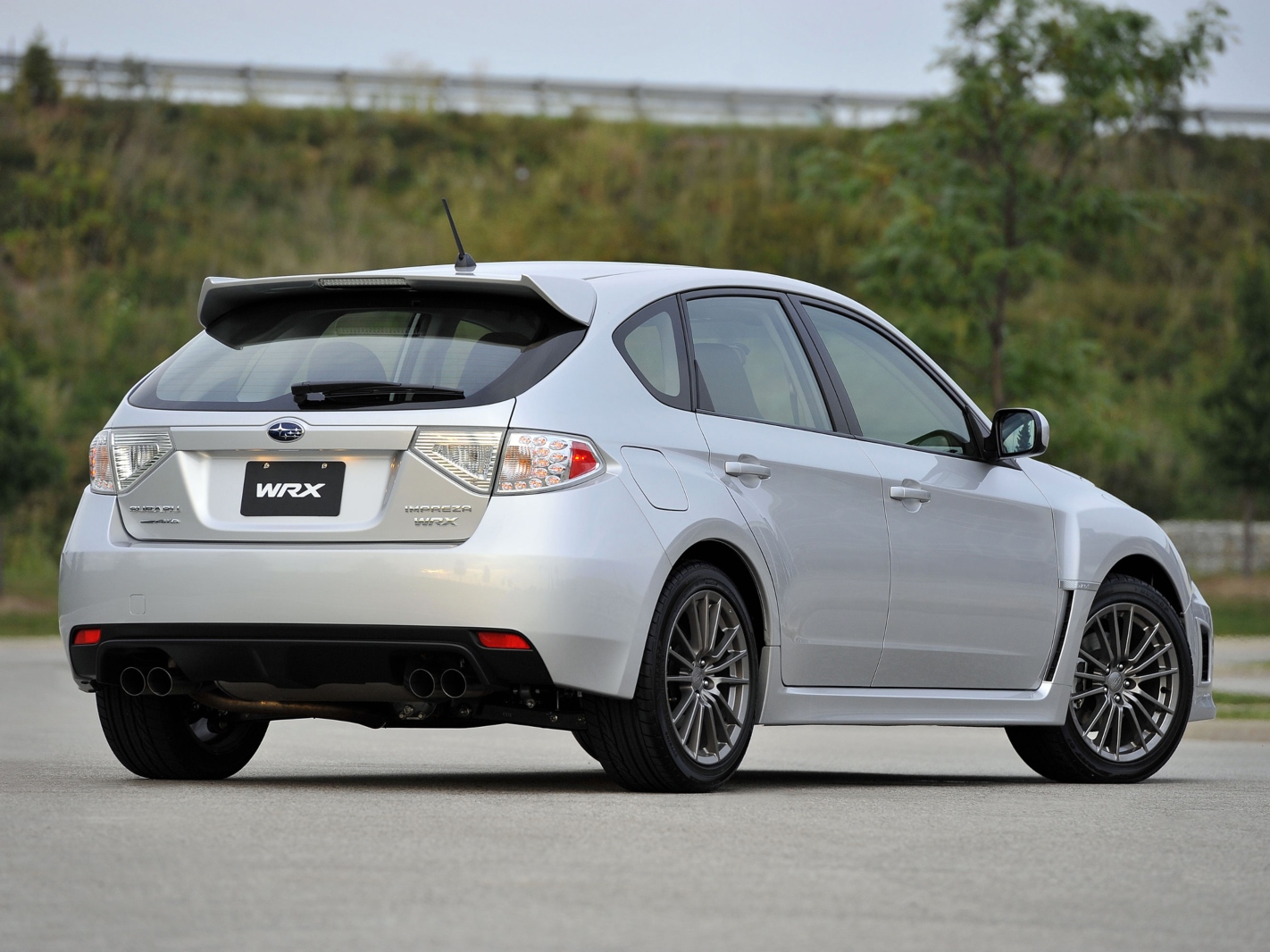
No WRX option was offered for the following fourth-generation Impreza wagon, effectively ending the bloodline.
And with the switch to WRX as the model designation in 2014, that left the Impreza as a standalone line-up looking after the less performance-focused small hatchback and sedan.
It’s not known if other markets including Europe and the UK are also keen to revert to the more established brand and a new WRX Wagon, rekindling the spirit of the previous Impreza WRX wagon.
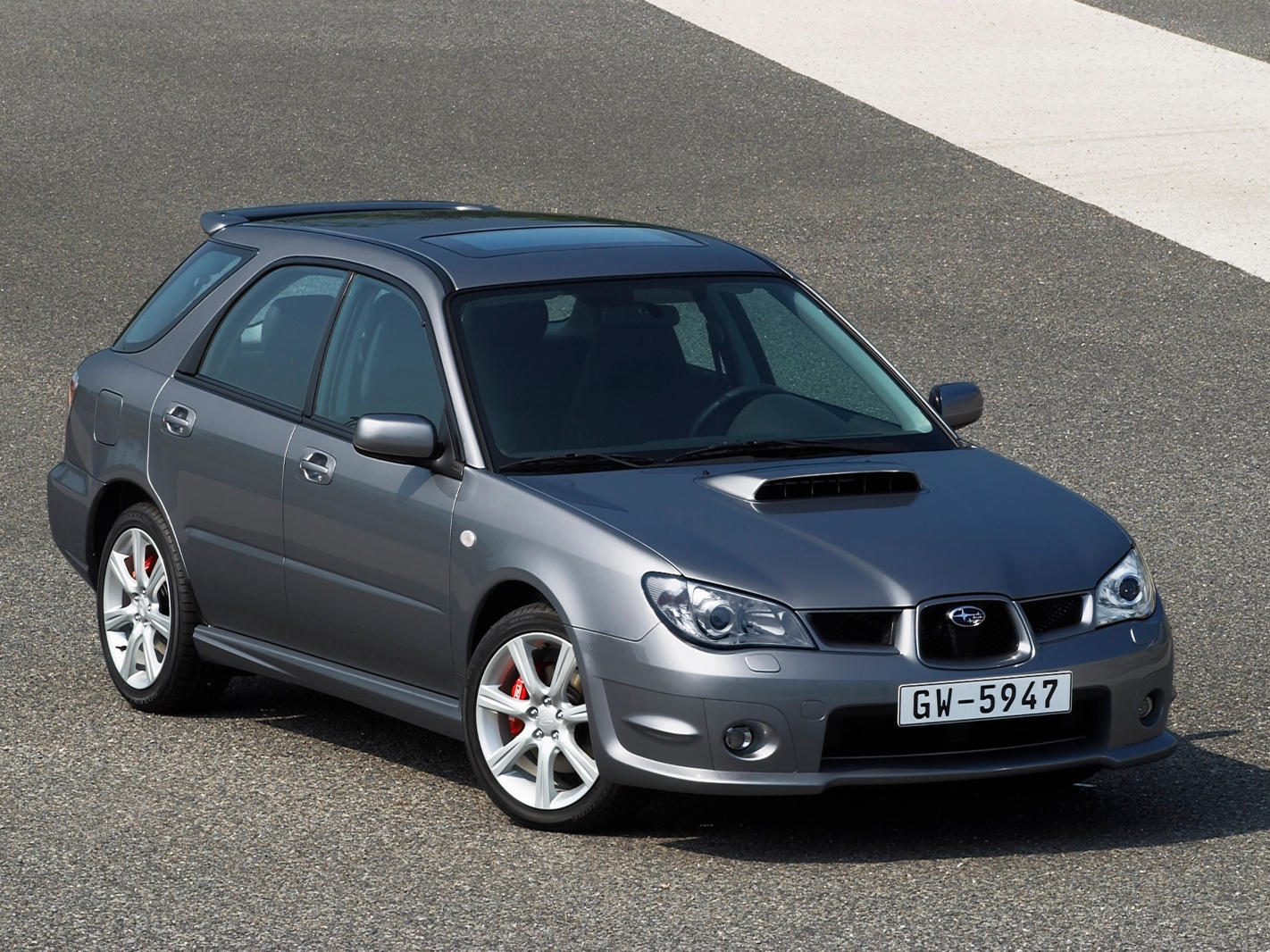
While the Levorg name is a protracted amalgam of acronyms derived from LEgacy, reVOlution and touRinG, the WRX badge applied to the boot of a wagon requires no translation.
As the Victorian sun melts into the horizon, lighting an impossibly beautiful sunset behind our pair that’s set up for a photo, snapper Ellen says she’s never seen anything like it.
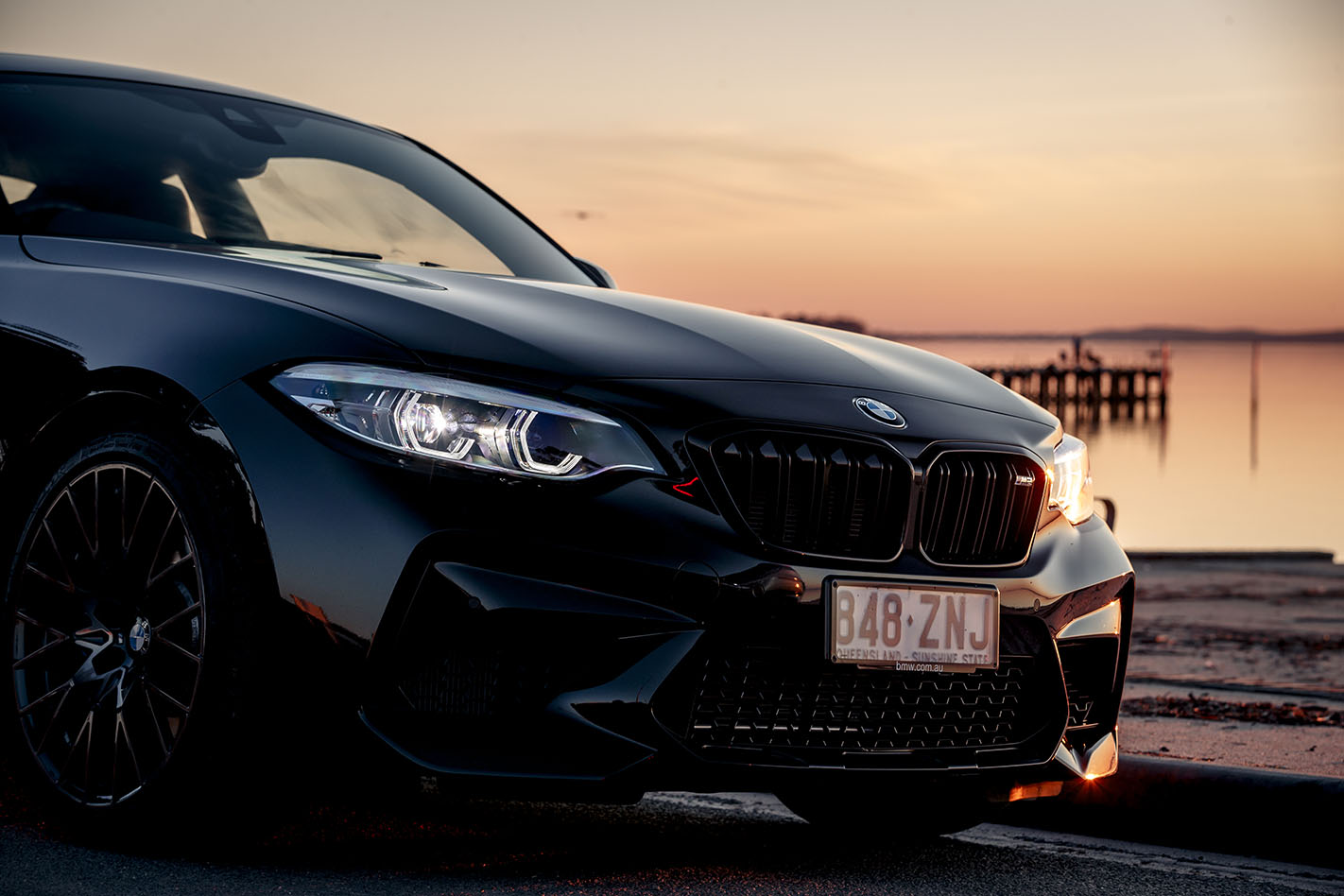
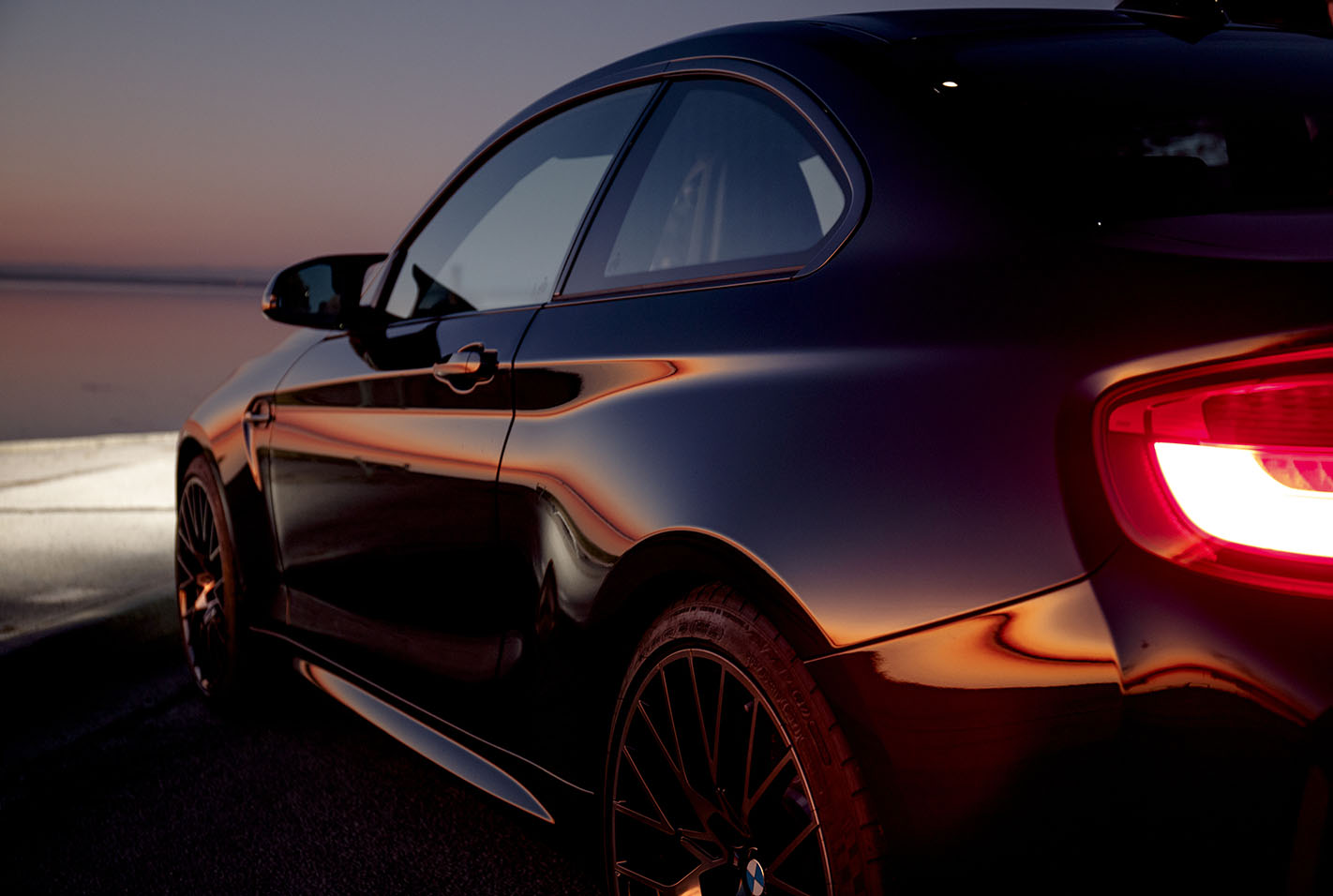
It’s true. But in my mind, I’m thinking the same thing about the Mercedes-AMG CLA45 S parked in front of our BMW M2 Competition. While these compact German rockets differ in many ways – body shape, drive, engine placement, equipment levels and cylinder count – they share a basic purpose: lure new and younger customers into showrooms. And this AMG has gone to mind-boggling lengths to do so.
Three hundred kilowatts is a lot to ask from any engine, but what about just four cylinders? It’s unheard of in production road trim. Bonkers stuff. And yet, that’s what AMG has managed with the all-new M139 plugged into this CLA’s nose. Offering 310kW and 500Nm, it might increase outputs on the old CLA45 by only 30kW and 25Nm, but it’s still a plasma-bore coated, twin-scroll turbocharged marvel. And there’s good reason AMG’s engineers worked so hard on it.
The last CLA45 spent its life trading blows with Audi’s RS3 sedan, taking some big hits that called for retaliation. Here, AMG wound up a haymaker behind the new A- and CLA-Class, while on a broader level the engine signals a new chapter of thinking. Tobias Moers, AMG’s soon-to-be ex-chief destined for Aston Martin, has said the M139 engine will appear in “not necessarily east-west applications”. If we were betting people, then we’d put a few bob on this four cylinder being closely examined for the next AMG C-Class.
But as one chapter begins, another continues. Over at BMW the M2 Competition replaced its sonorous N55 3.0-litre twin-turbo straight six with the M3/M4’s S55 engine to boost outputs and side-step emissions. It touts an impressive 302kW/550Nm. But given the incoming M3 will debut an even more advanced S58 inline six, this remains the S55’s last stand.
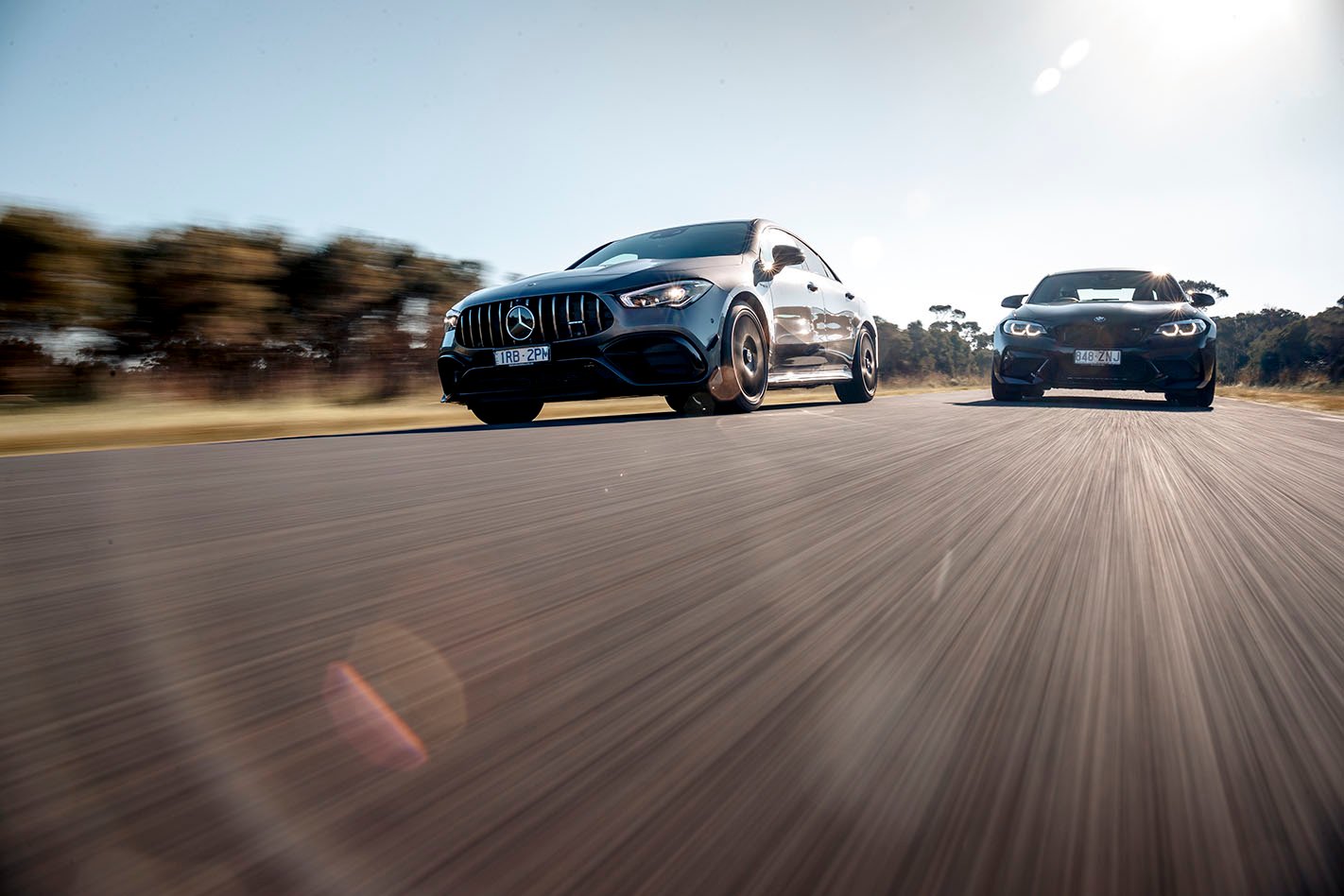
Here, against the CLA, the M2 Competition’s rear-drive pedigree might seem excessive against what is, at face value, a front-wheel drive car over-engineered into an all-wheel drive beast – especially since the M2 has stared down rivals across a broad sweep of price points. The thing is, though, the fundamental hardware behind the CLA45 S, like a ‘Twinster’-style rear LSD and new eight-speed dual clutch transmission, have priced its donor car, the A45 S hatch, at $93,600. Swap in the CLA’s unique wind-cheating shape and suddenly you’re at $111,200 before on-roads. Or a couple grand over the M2 Competition’s $109,900.
We should also mention these two come dangerously close on something other than price. While the CLA engine extracts a huge amount of bang from each litre of capacity – its 155kW-per-litre trumps the M2’s by 55kW, although it also beats a Porsche 911 GT2 RS’s 135kW-per-litre, so the BMW powertrain department shouldn’t feel too disheartened – the fight is fairer on power-to-weight thanks to the CLA’s considerable bulk. The CLA’s shell might use the same 2729mm wheelbase as the A45 S but it straps on a longer tail for a CLS-style silhouette. This increases boot space and overall length, but also helps add 50kg and hoists its total kerb weight to 1600kg. Consider that the M2 weighs 25kg less, and suddenly the CLA’s 194kW-per-tonne only just shades the M2’s 192kW.
But there’s a remarkable difference in how that plays out at Heathcote Raceway. Not only does the CLA’s all-wheel drive deploy grunt through a variable torque split, but huge 255mm Michelin Pilot Sport 4 S tyres dig in at either end. They’re so grippy that the CLA’s launch control bogs for a moment off the line as it tries to motivate all that Michelin rubber. The M139’s adjusted torque delivery is partly to blame since it’s concentrated its shove above 3000rpm.
After 3000rpm, though, the CLA is so explosive you barely register what happens over the strip’s first half. Since its second, third and fourth gears are closely stacked and its shift mapping in auto doesn’t like venturing past its 6750rpm power peak, the CLA reaches fourth as soon as 115km/h. Lightening quick upshifts deliver 100km/h only 4.09sec after leaving the line. Four hundred metres pass in 12.21sec, setting a time it’ll match over and over with metronomic consistency thanks to a launch control program that awards any idiot.
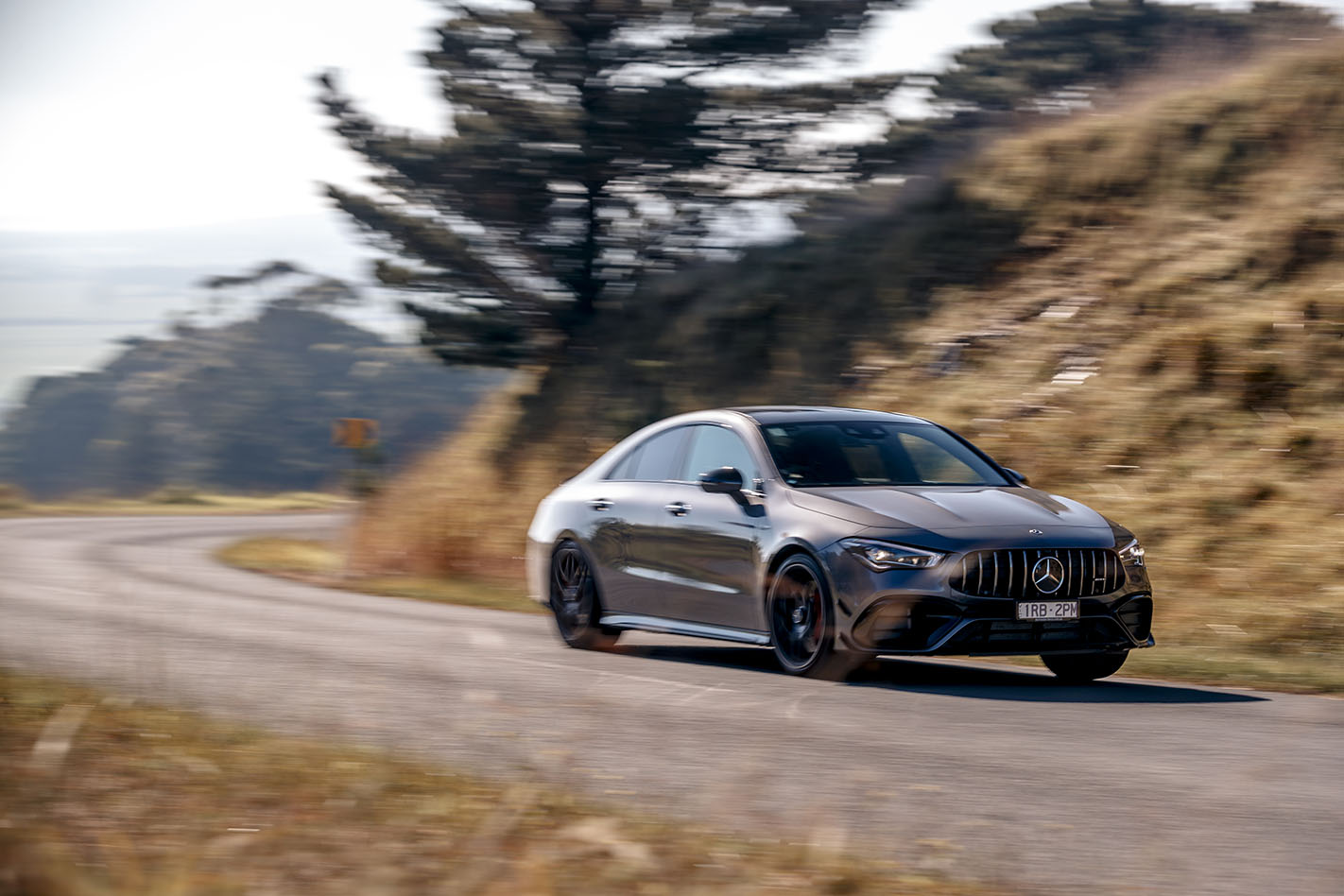
Such praise is not lost on the M2’s launch system, either, since it handles another 50Nm with half the driven wheels. On the line the system pins revs around 2000rpm, which plays base camp for a 550Nm torque peak that lasts from 2350rpm to 5200rpm. Release the brake and 265mm Michelin Pilot Super Sports only hold for a moment before breaking loose. The ESP’s MDM mode quickly reigns in the first-gear wheelspin, allowing the M2’s ballistic engine to find second gear some traction. Left to its devices the M2 storms to 100km/h from rest in 4.59sec and eventually tags the finish line in 12.57sec. If you’re desperate to emulate its factory 4.2sec 0-100km/h claim then allowing its engine to rev out completely in second might prune a couple tenths, but it needs more road.
Yes, the CLA dominates here. An insatiable appetite for revs, boost and gears drive its slippery nose through the air to overcome greater mechanical drag and snatch a commanding lead. The two car lengths it pulls on the M2 at the 100m mark are almost doubled at the strip’s end. It’s impressive. But on a roll the speed traces reveal that an extra quarter mile or so might crown a different winner. Because while the CLA is travelling 6km/h faster at the 100m mark, that speed difference has shrunk to less than 3km/h once it passes 400m. Remember, the M2 flexes its power peak over a wider band from 5250-7000rpm. It also produces 40Nm more per tonne. So when traction issues finally disappear it slowly closes the gap in speed. But we’ll have to find that out another time.
Leaving Heathcote Raceway reveals the CLA as the go-to pick for high-speed blasts across country. A relatively long wheelbase only boosts confidence in the all-wheel drive’s road-holding, while a variable-rate steering system that points true around straight ahead nails the CLA towards your intended direction. The M2, meanwhile, can’t spark the same confidence after just hopping in. On paper it is not as short, or wide, as you think it is, but mounting the driver’s seat relatively high closer to the rear axle exaggerates the awkward feeling about its proportions. Its fixed steering ratio helps you judge fine inputs bombing along at speed, but there’s no doubting that its rear footprint, and its huge track width increase over the front’s, creates the suspicion it might bite if you let down your guard.
Reach some corners and you’ll discover BMW engineered on-limit understeer into the M2’s front-end to reduce this possibility. That’s because, again, the rear axle dominates the experience, with how hard you can push the M2 depending on how much torque the rear tyres accept. An active rear differential helps given its computer-controlled locking rate can instantly react to the engine’s twin-turbocharged wave of torque, while retuned dynamics software harmonises the diff and DSC with the power delivery. Together they turn what could be a wicked car into a surprisingly eager corner carver – as long as you respect it.
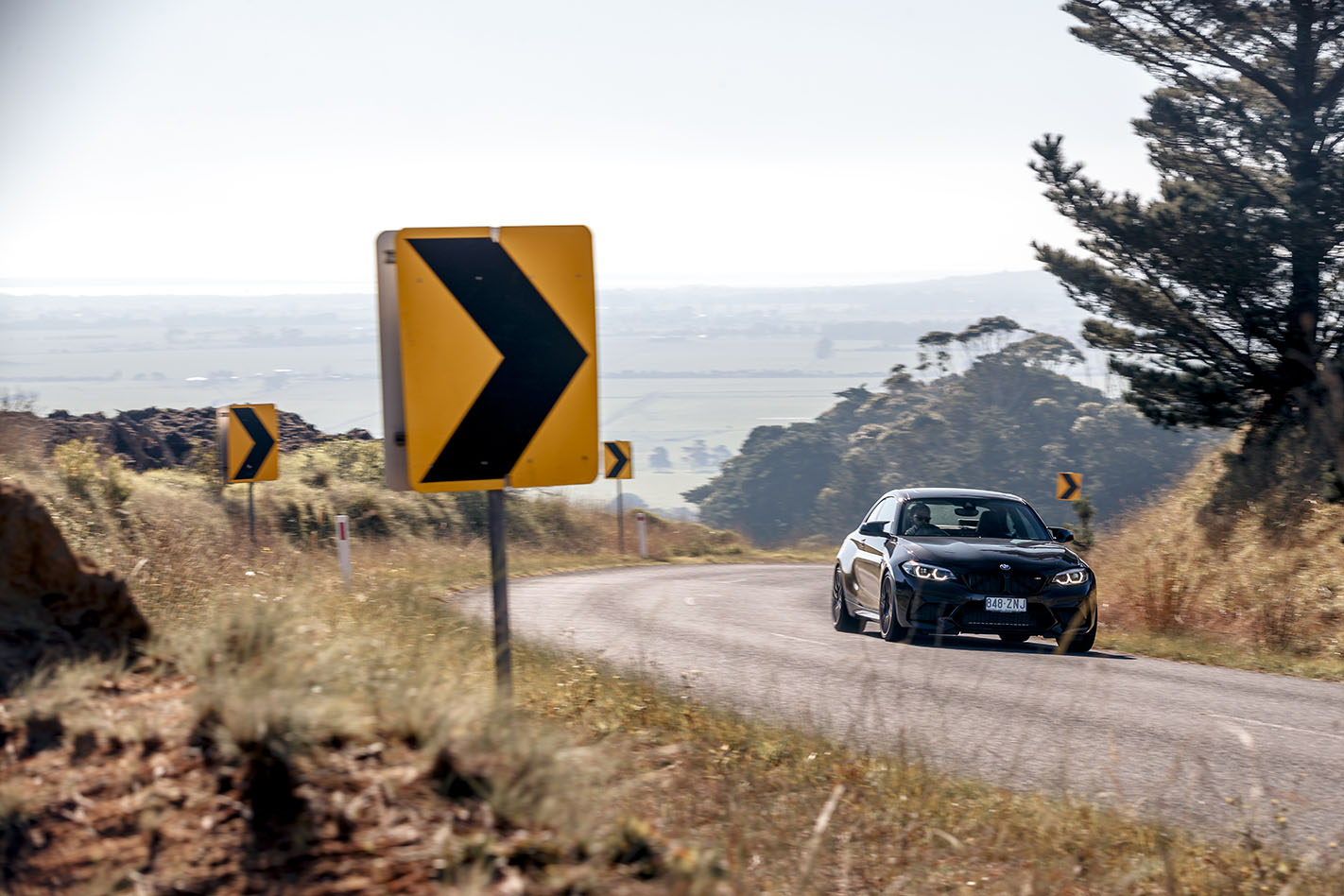
Big, sticky tyres help. Pilot Super Sports surround the M2’s powerful brakes with tremendous grip and offer surprising turn-in and traction once they’re warm. Up the commitment, however, and while their limits are high, the tyres transmit little warning about when they’re ready let go. The ESC’s ‘halfway’ MDM mode is quick to react when it does, but a soggy throttle pedal and fuzzy steering feel means suspension squat is your only tactile marker on rear grip. Luckily, the M2’s passive dampers are expertly judged for hard driving – striking a good balance between body control and compliance, even if they’re short on travel.
The CLA, by contrast, is a more accessible device. Fundamentally, grip is outstanding, it steers with laser-like precision and rockets from corners like a Tomahawk missile. But AMG, in hopes of injecting more involvement into the CLA45 S, has bolted an electronically controlled twin-clutch LSD between its rear axles, yet at first it’s hard to notice its effect. Granted, the car’s adaptive damping helps by shifting weight around its footprint. Pin the throttle early and you can feel it squat to push itself along a neutral line.
Awakening the ‘Twinster’ differential’s playful side, however, requires twirling the powertrain dial on the CLA’s wheel into Race with ESP in Sport (no Drift Mode today). We’re told most of the time only 50 per cent of engine torque goes rearwards so you’ll need big gobs of throttle to overcome the front axle’s tenacity, which quickly feels like you’re forcing it to do something it doesn’t want. Instead, belt at a corner, stab the brakes, throw it in and just when the rear-end lightens, pick up the throttle. Given the differential can direct all its received torque to either wheel, it’ll then tweak your angle a few degrees into oversteer and then shoot you down the road – much like an Audi Sport differential.
Between corners the CLA’s four cylinder is a freak of nature, building shove like an atmo engine twice its capacity. The throttle is so responsive it feels like your right foot is tied to its butterfly valve. All it lacks is an authentic note. AMG banished a cabin exhaust button since regulations have forced it to abandon pops and crackles, but our CLA does not pack a new optional noise amplifier that pumps recorded exhaust noise through the speakers for $680. It’s still convincing in volume, and finds a throaty rort from the active exhaust in Race. But its wail can’t match the M2’s sizzling six for theatre. I’ve dismissed the S55 as bland in the past, but in the M2 Competition with an upgraded exhaust system, it’s orchestral. The gravelly snarl down low transforms into a hard-edged howl that finishes with a gnashing zing.
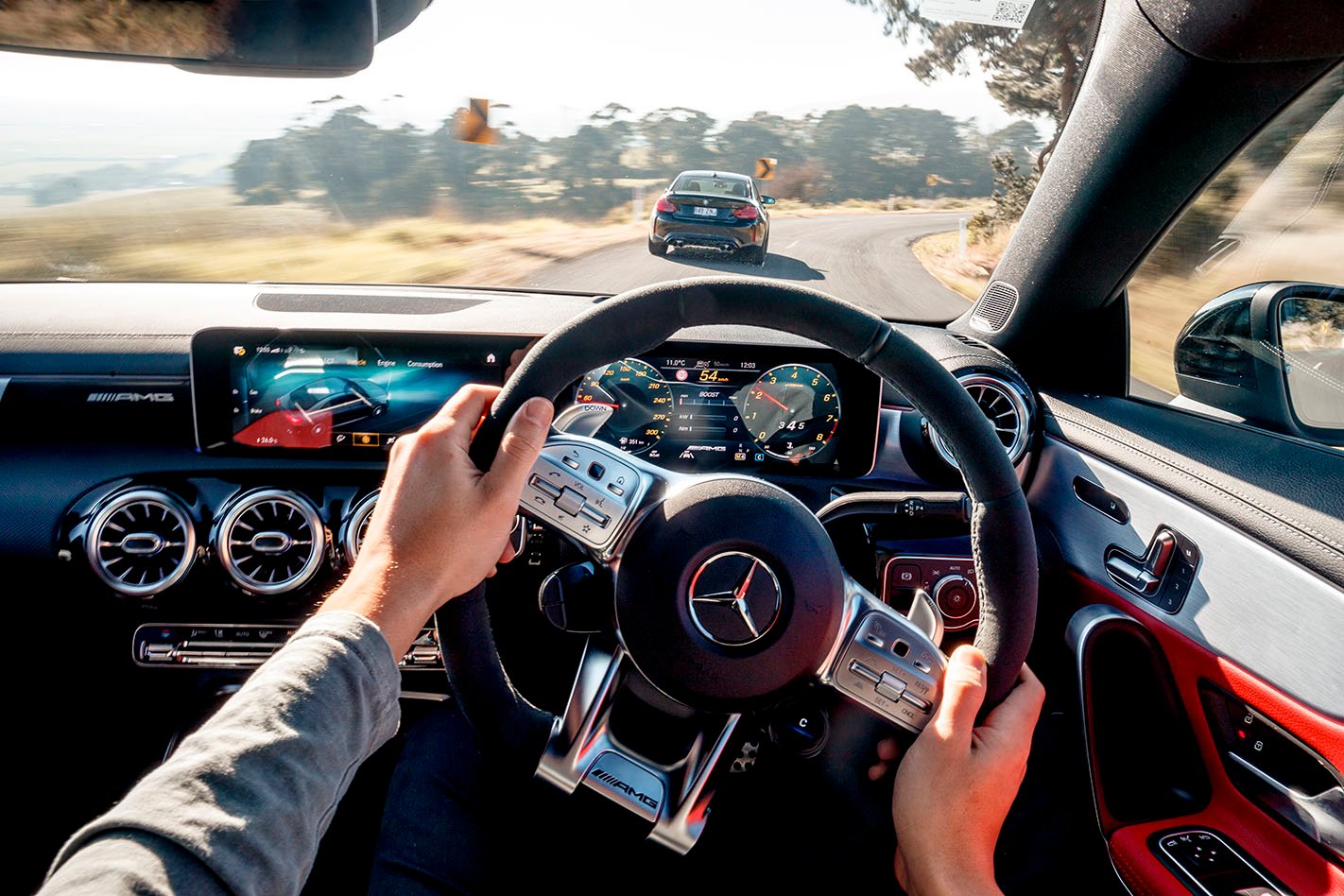
BMW might not have granted the M2’s seven-speed dual-clutch transmission another life in its all-new M cars, which seems like a loss right now given how rapid it responds. Its long gear ratios also nicely spread out grunt on twisty roads, often placing you in the meat of its mid-range and poised to exploit the S55’s top-end sting for a dab of opposite lock. The CLA’s transverse eight-speed dual clutch, meanwhile, is just as obedient and snappy. The metal AMG paddles are nicer to pluck, too, and easier to find behind the wheel. But for uphill corners the CLA’s second gear, limited to 80km/h, feels too short while the 120km/h third gear is a touch long.
AMG prioritised the CLA and A 45’s ride during development and while it is far from the last word on suppleness, the adaptive damping chassis encourages pushing ahead on roads where the M2 cowers. This extra absorbency also equals superior everyday comfort. Add good low-speed throttle response to that, partly thanks to improved clutch engagement on the new transmission, and it stacks up as easier to use every day. But if you’re regularly darting through traffic then it’s the M2 that offers better outward visibility.
On looks it can be argued, as it was at MOTOR HQ, the CLA apes a GT63 from some angles. Someone also pointed out its new bum stretches it to the length of a C-Class. The M2, meanwhile, looks more special because it’s obviously so different. Those comically wide guards and the exposed rear muffler canister add a true sense of occasion that invites you to turn around after parking it every time.
When it comes to value, however, the CLA makes a stronger case. It’s a nicer place to sit inside, with a newer cabin that’s littered with high-end technology (but the heads-up display is $790). Radar cruise or even Apple Carplay’s absence reveal the M2 was built to a price. In its defence, and despite their similar asking figure, the M2 is a different proposition. It’s slower off the line but offers a more rewarding drive on account of handling that demands respect but rewards in equal measure. And it has an X-factor lost on the CLA – thanks to its unforgettable sound, cheeky rear-end antics and unique look.
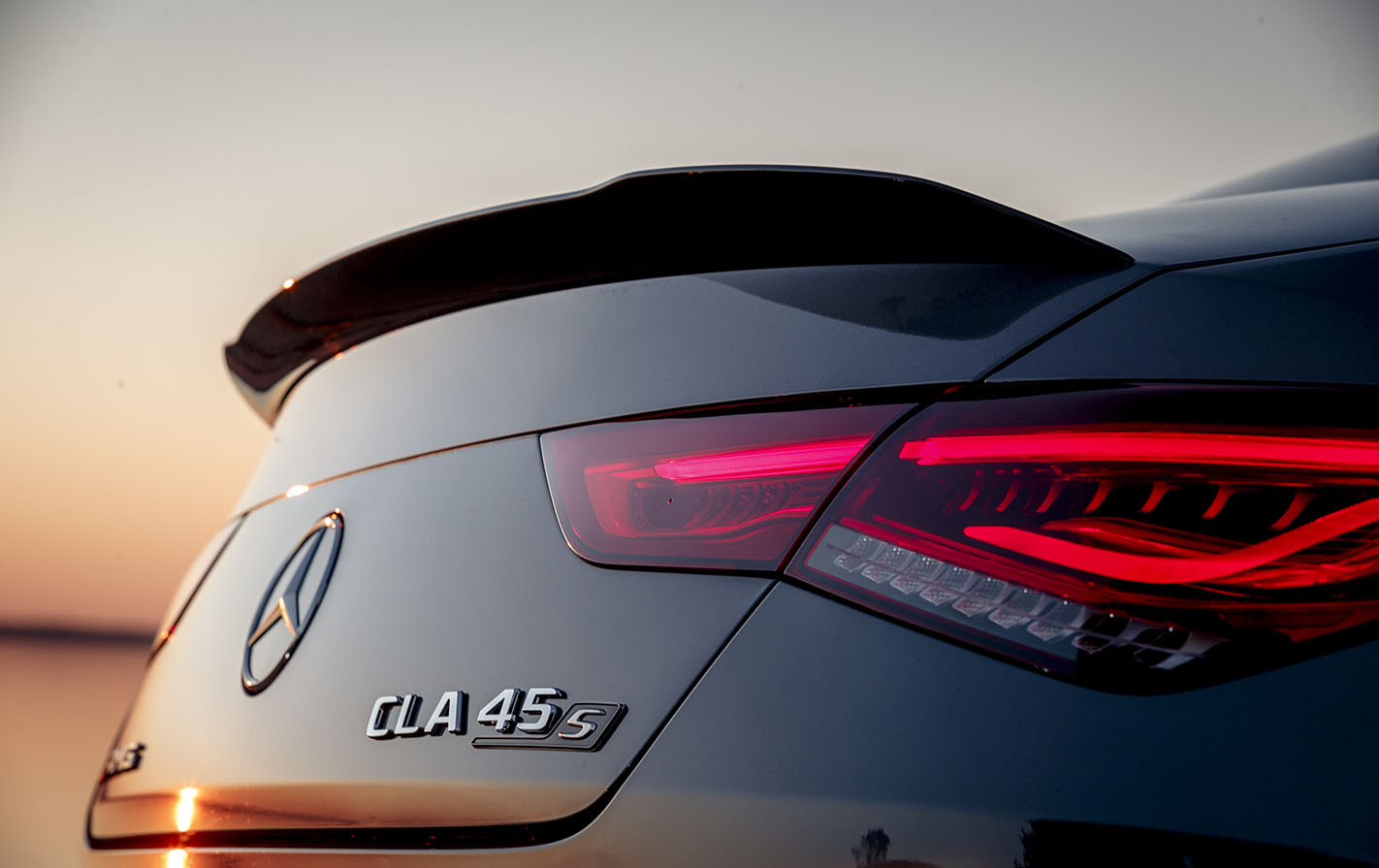
Ultimately, though, it lacks the CLA’s broad spectrum of talent. AMG’s efforts to inject the CLA45 S with ride comfort, low-speed polish and genuine involvement has given it more purpose of being as well as true duality. It’s a mini GT one moment before a click of a dial switches it into an apex predator the next. To extract all this from its four cylinder front-wheel drive origins is astonishing – and j-u-s-t enough to take the win. Because Ellen was right, we’ve never seen anything like it.
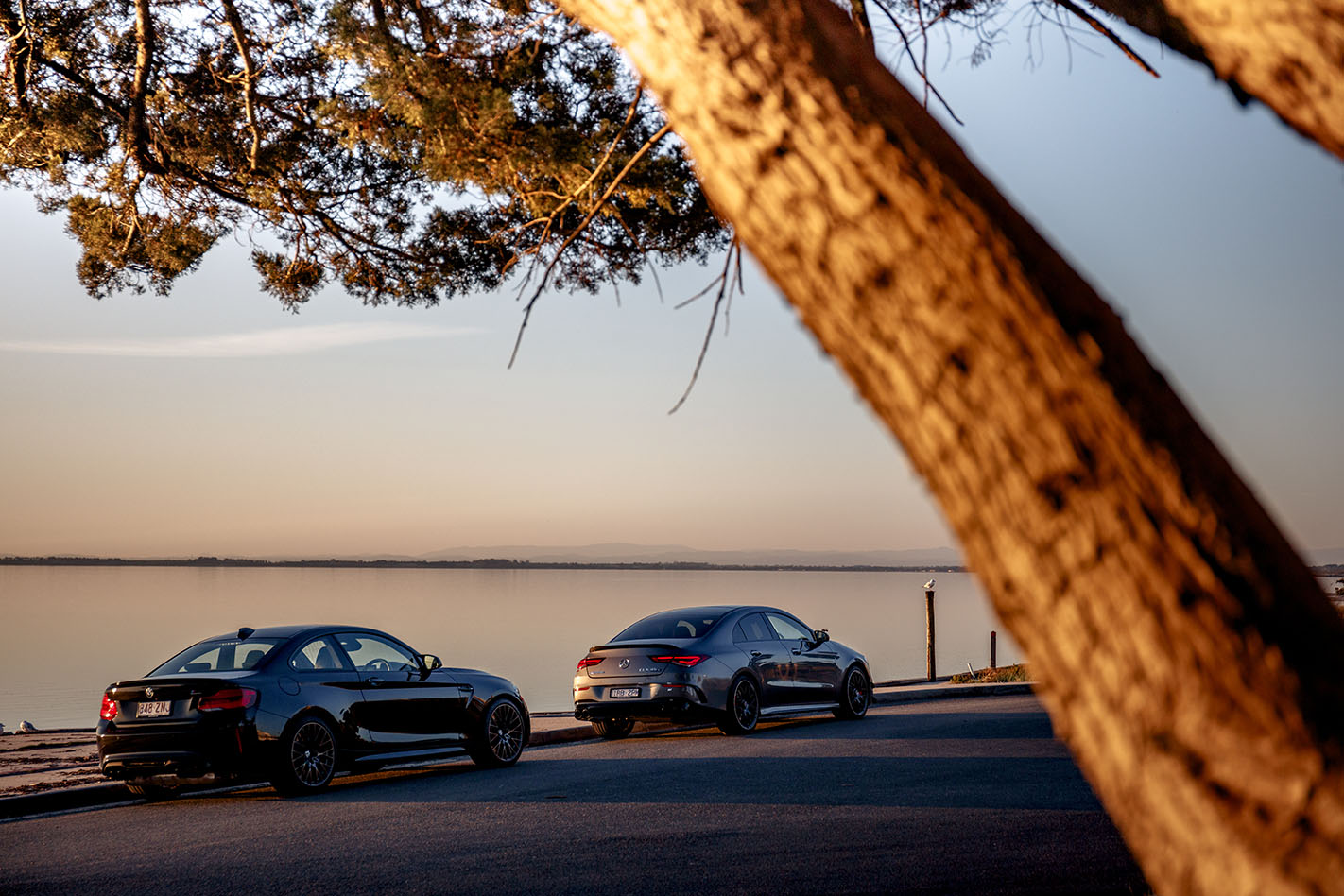
MERCEDES-AMG CLA45 S SPECS
Price as-tested: $119,200 Body: 4-door, 5-seat sedan Drive: all-wheel Engine: 1991cc inline-4, DOHC, 16v, turbo Bore/stroke: 83.0 x 92.0mm Compression: 9.0:1 Power: 310kW @ 6750rpm Torque: 500Nm @ 5000-5250rpm Weight: 1600kg Transmission: 8-speed dual-clutch kW-per-tonne: 194kW/tonne Suspension: struts, coil springs, adaptive dampers, anti-roll bar (f); multi-links, coil springs, adaptive dampers, anti-roll bar (r) L/W/H: 4693/1857/1413mm Wheelbase: 2729mm Tracks: 1605/1585mm (f/r) Steering: electrically assisted rack-and-pinion Brakes: 360mm ventilated discs, 6-piston calipers (f); 330mm ventilated discs, single-piston calipers (r) Wheels: 19.0 x 9.0-inch (f/r) Tyres: 255/35 ZR19 (f/r); Michelin Pilot Sport 4 S
Rating: 4.5/5
Pros: Laser-like precision; incredible grip; rapid acceleration; promising everyday package
Cons: Over shoulder visibility; expensive for a four-cylinder; potential tech overload
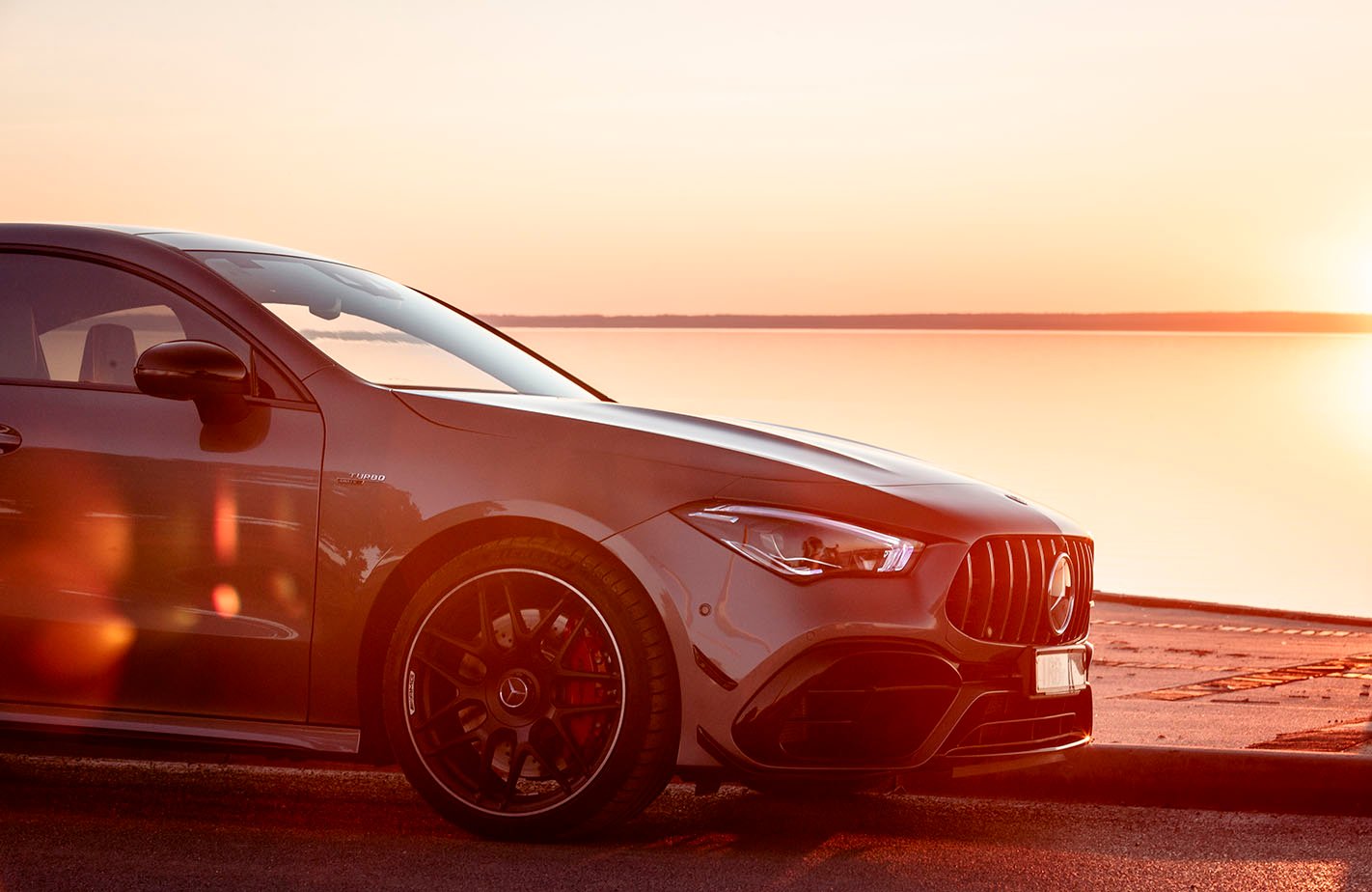
MERCEDES-AMG CLA45 S PERFORMANCE
0-10km/h: 0.26 sec 0-20km/h: 0.61 sec 0-30km/h: 1.02 sec 0-40km/h: 1.40 sec 0-50km/h: 1.76 sec 0-60km/h: 2.12 sec 0-70km/h: 2.51 sec 0-80km/h: 2.99 sec 0-90km/h: 3.50 sec 0-100km/h: 4.09 sec 0-110km/h: 4.69 sec 0-120km/h: 5.36 sec 0-130km/h: 6.21 sec 0-140km/h: 7.05 sec 0-150km/h: 7.94 sec 0-160km/h: 8.88 sec 0-170km/h: 10.04 sec 0-180km/h: 11.31 sec
0-400m: 12.21 sec @ 186.24km/h
80-120km/h: 2.42 sec
100-0km/h: 37.83m
SPEED IN GEARS
1st: 56km/h @ 7200rpm 2nd: 80km/h @ 7200rpm 3rd: 122km/h @ 7200rpm 4th: 174km/h @ 7200rpm 5th: 240km/h @ 6350rpm 6th: 270km/h @ 5570rpm 7th: 270km/h @ 4960rpm 8th: 270km/h @ 3925rpm
BMW M2 COMPETITION SPECS
Price as-tested: $114,800 Body: 2-door, 4-seat coupe Drive: rear-wheel Engine: 2979cc inline-6, DOHC, 24v, twin-turbo Bore/stroke: 84.0 x 89.6mm Compression: 10.2:1 Power: 302kW @ 5250-7000rpm Torque: 550Nm @ 2350-5200rpm Weight: 1575kg Transmission: 7-speed dual-clutch kW-per-tonne: 192kW/tonne Suspension: struts, coil springs, dampers, anti-roll bar (f); multi-links, coil springs, dampers, anti-roll bar (r) L/W/H: 4461/1854/1410mm Wheelbase: 2693mm Tracks: 1579/1601mm (f/r) Steering: electrically assisted rack-and-pinion Brakes: 380mm ventilated discs, 4-piston calipers (f); 330mm ventilated discs, 2-piston calipers (r) Wheels: 19.0 x 9.0-inch (f); 19.0 x 10.0-inch (r) Tyres: 245/35 ZR19 93Y (f); 265/35 ZR19 98Y (r) Michelin Pilot Super Sport
Rating: 4.5/5
Pros: Relentless shove; hair raising exhaust and engine noise; enchanting looks; endearing handling
Cons: No adaptive damping; high seat position; fuzzy steering feel; soggy throttle pedal
BMW M2 COMPETITION PERFORMANCE
0-10km/h: 0.52 0-20km/h: 0.90 0-30km/h: 1.34 sec 0-40km/h: 1.76 sec 0-50km/h: 2.16 sec 0-60km/h: 2.57 sec 0-70km/h: 2.97 sec 0-80km/h: 3.40 sec 0-90km/h: 3.91 sec 0-100km/h: 4.55 sec 0-110km/h: 5.14 sec 0-120km/h: 5.79 sec 0-130km/h: 6.54 sec 0-140km/h: 7.39 sec 0-150km/h: 8.40 sec 0-160km/h: 9.39 sec 0-170km/h: 10.54 sec 0-180km/h: 11.82 sec
0-400m: 12.57 sec @ 186.15km/h
80-120km/h: 2.35 sec
100-0km/h: 37.21m
SPEED IN GEARS
1st: 57km/h @ 7500rpm 2nd: 105km/h @ 7500rpm 3rd: 160km/h @ 7500rpm 4th: 214km/h @ 7500rpm 5th: 250km/h @ 6875rpm 6th: 250km/h @ 6500rpm 7th: 250km/h @ 5170rpm
Dangerous counterfeit car parts are arriving in Australia concealed in shipments of genuine vehicle parts at an alarming rate, a Federal Chamber of Automotive Industries (FCAI) investigation has found.
The FCAI’s Genuine is Best initiative revealed that two thirds (62 per cent) of the parts purchased in a ‘Test Buy’ program were found to be counterfeit and included 28 types of products including oil filters, air filters, spark plugs, front grilles and keys.
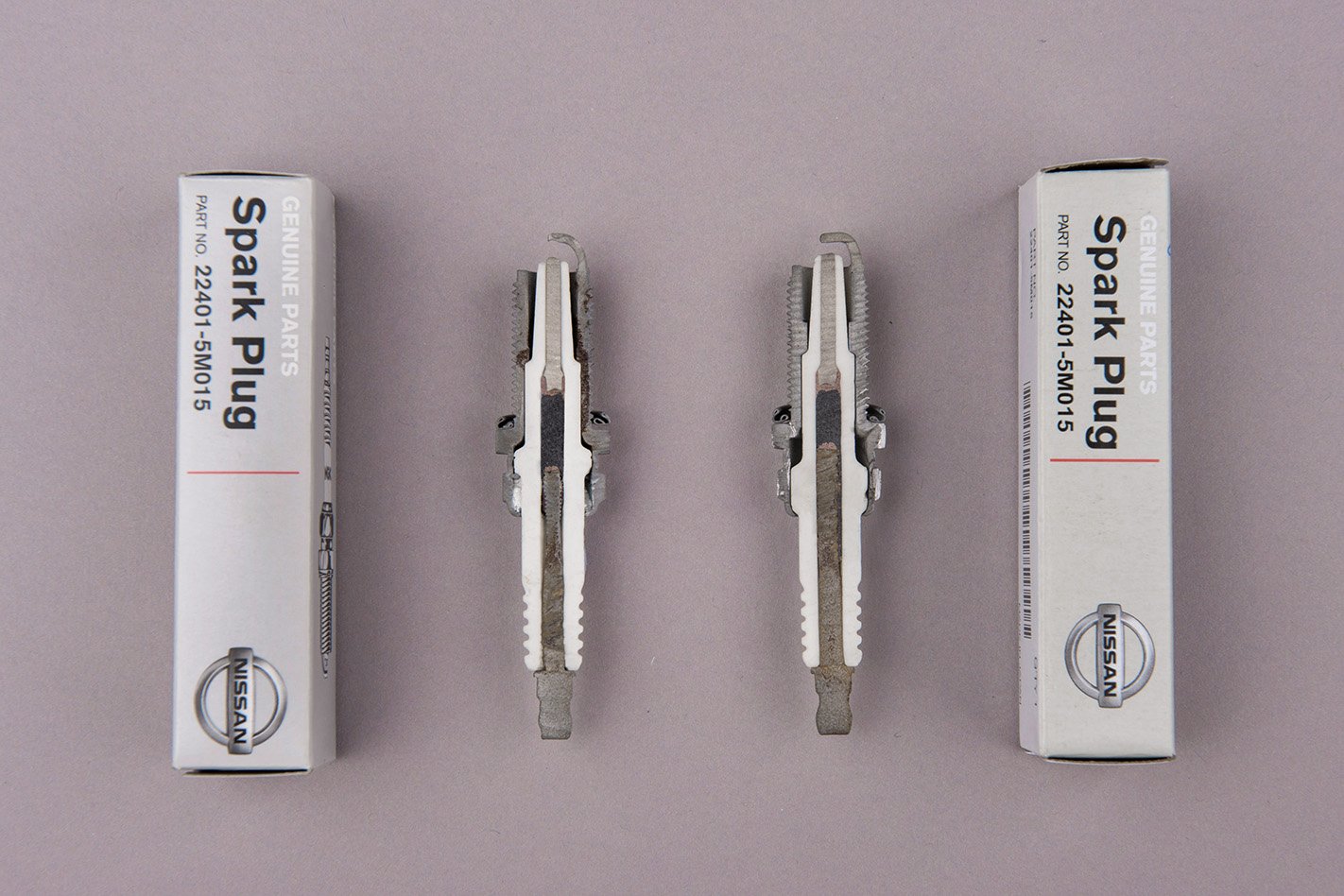
According to the FCAI, counterfeit spark plugs capable of causing major engine damage were the most recent part added to the list of fakes encountered by Genuine is Best.
Others include fake oil filters that do not filter oil, wheels that shatter in low-speed pothole impacts, brake components containing asbestos and in one case, and even brake pads made of compressed grass clippings.
The investigation involved testing purchase batches from six separate import suppliers that sold parts to the collision repair or mechanic trade, or directly to the public.
The imitation parts were found intermingled with legitimate parallel and aftermarket parts.
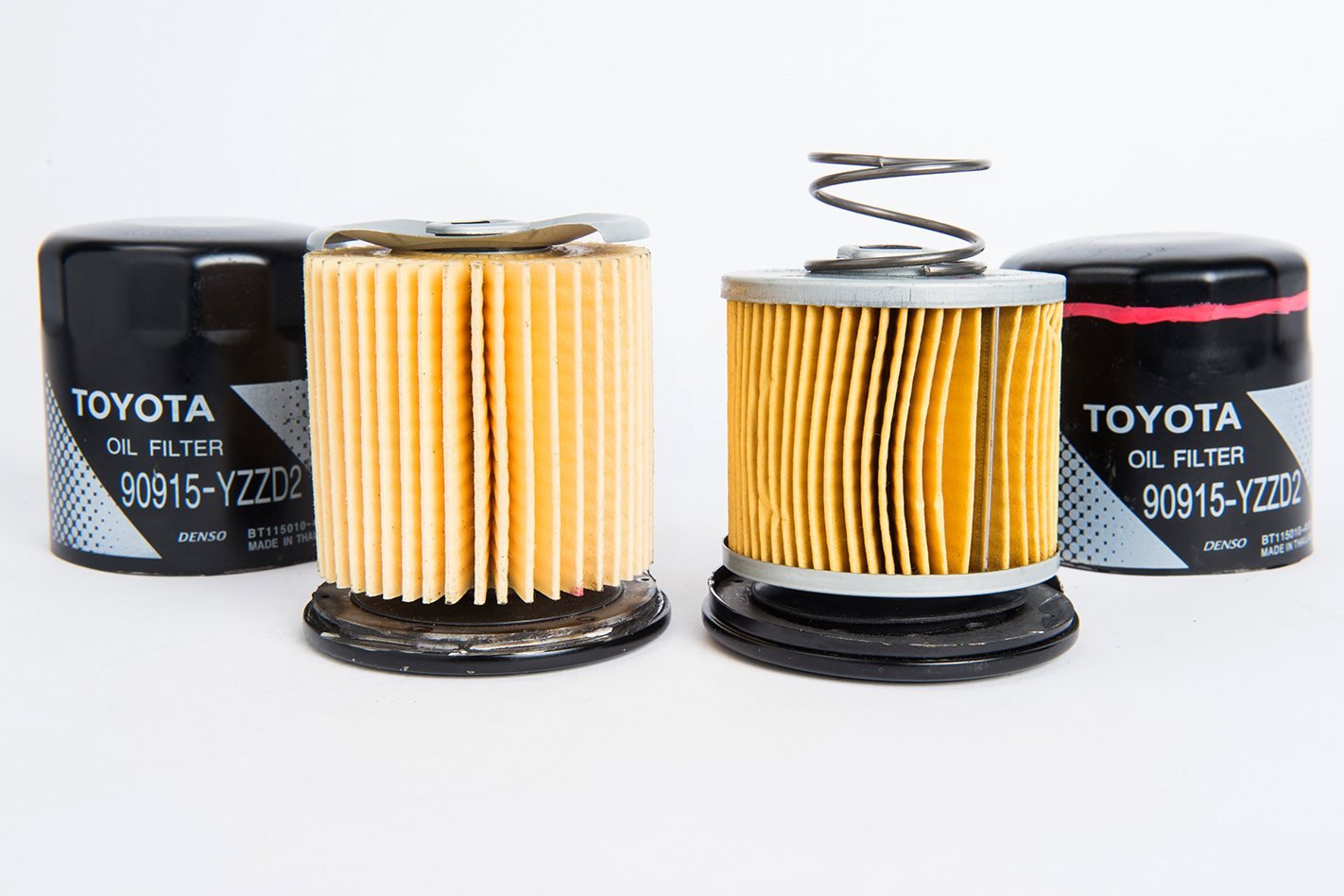
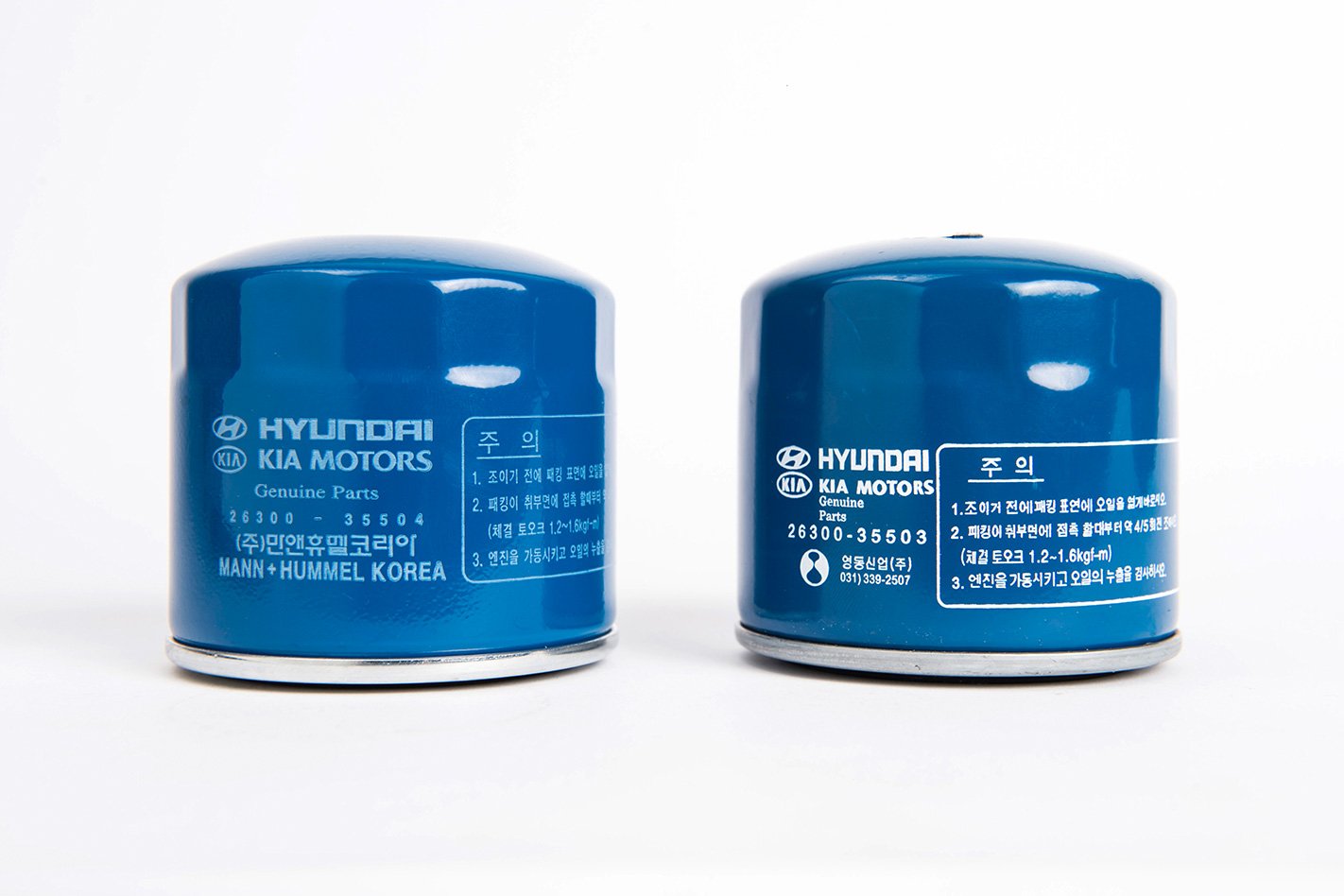
Genuine Toyota oil filter (left) and a counterfeit oil filter (right).
Such was the effort to make them appear genuine they required brand protection experts to determine they were fraudulent.
According to the FCAI, the extent of the racket has reached a point where Toyota Australia has sought to take down as many as 1200 listings per month to protect drivers from counterfeits.
Each importer of the parts has been alerted by brand owners to the presence of counterfeits in their batches and advised to alert customers and cease import immediately.
It is yet to be determined if the importers were knowingly complicit, with ongoing legal proceedings preventing the disclosure of the supplier’s identities.
FCAI Chief Executive Tony Weber said the discovery was unwelcome but not unexpected.
“Each of these shipments imported a part that could ruin your day,” he said.
“The fact they were carefully concealed among other non-genuine parts indicates the level of deception these criminals are going to, just to hoodwink honest drivers who think they’re getting the real deal.”
“We’re talking about low quality, criminally manufactured and distributed parts designed to deceive. We’ve done the testing, and we know these counterfeits will at best leave you with major repair bills.
Genuine is Best is an initiative of the Federal Chamber of Automotive Industries (FCAI) in conjunction with manufacturers and importers of vehicles in Australia.
UPDATE, September 2022: Refreshed MY23 range and new turbo models
The updated 2023 Subaru Outback is now on sale in Australia, debuting a turbocharged XT model and a number of key infotainment upgrades.
Get the full story at the link below.
Original story continues
A new-generation 2021 Subaru Outback range will hit Australian dealerships in March 2021, armed with more kit, more space and more ability.
Importantly, it will retain the same character that made it the poster child for the alt-SUV off-road wagon fan.
The simplified three-variant range will kick off priced from $39,990 for the newly-named Outback AWD, before jumping up to the higher-spec Outback AWD Sport and Outback AWD Touring.
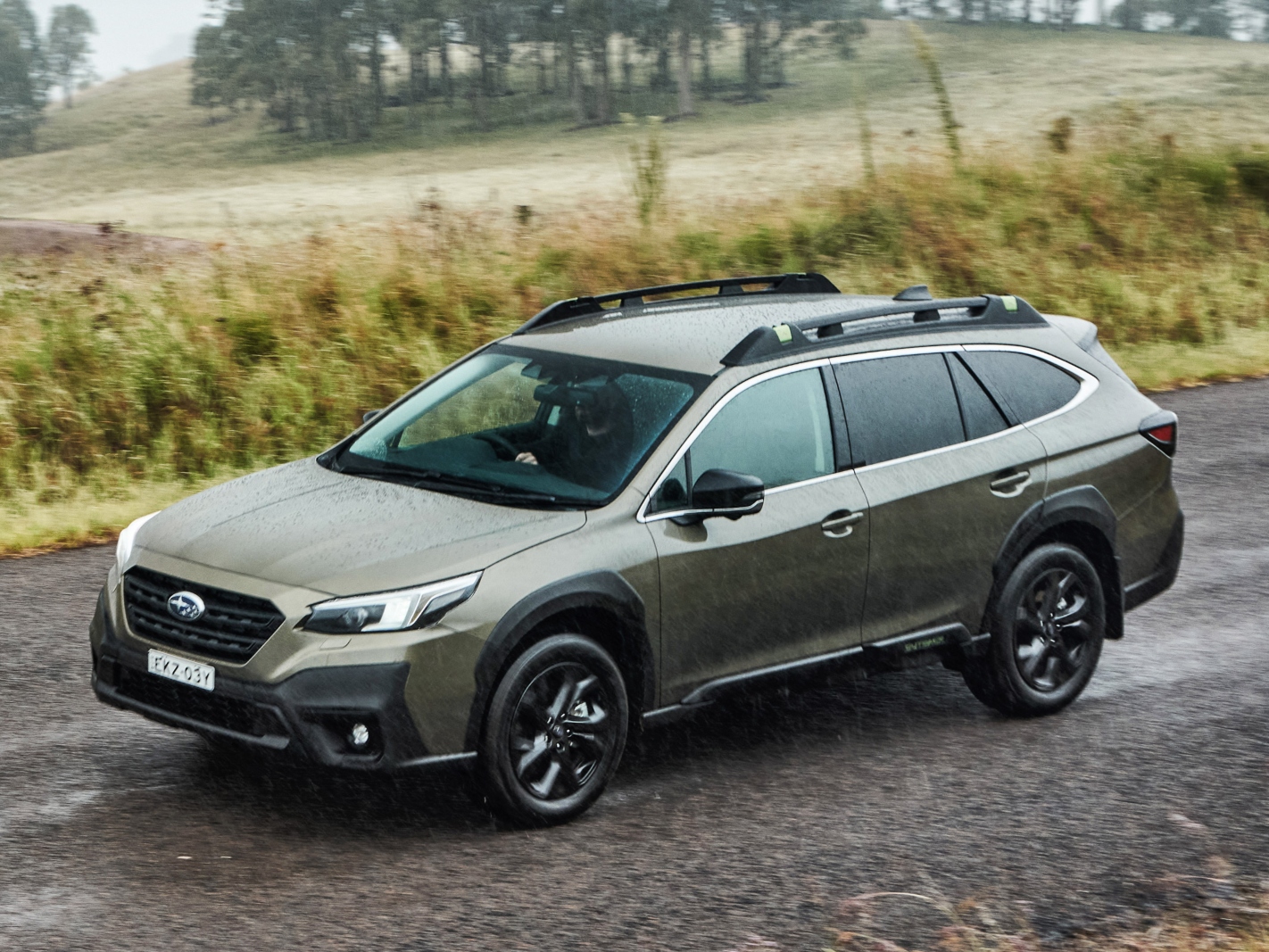
All three will get a largely-new naturally-aspirated 2.5-litre boxer engine putting out 138kW and 245Nm (seven- and four per cent improvements on its predecessor, respectively), mated to a continuously-variable transmission, while efficiency is also enhanced.
As expected, all grades are equipped with Subaru’s X-Mode all-wheel drive as standard.
It was hoped the North American-specification turbocharged engine with 194kW/375Nm would be on offer Down Under, but it isn’t currently available to our market – although the company’s local arm says it is working to get it here.
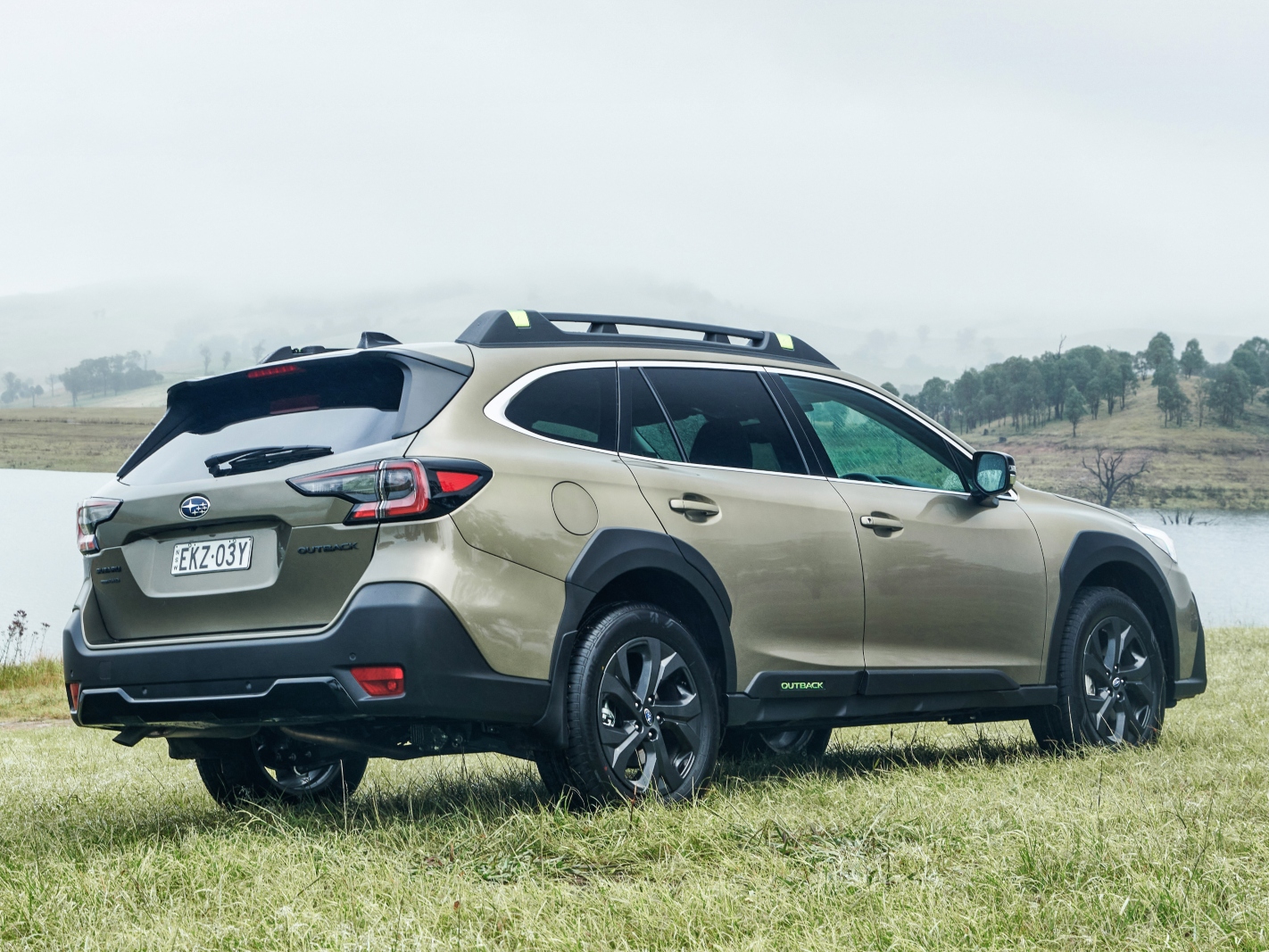
While no other powertrain is mentioned – including the omission of the 3.6-litre six-cylinder in the previous-gen 3.6R and 2.0-litre diesel flat-four – the new Subaru Global Platform architecture on which the Outback is built has the flexibility to accommodate a hybrid powertrain.
It’s fair to expect a hybrid version of the new-generation Outback to join the XV and Forester hybrids that arrived in 2020.
Good news for holidayers, though, is an improved 2000kg towing capacity, which is 500kg more than the current four-cylinder version along with a 200kg tow-ball down load.
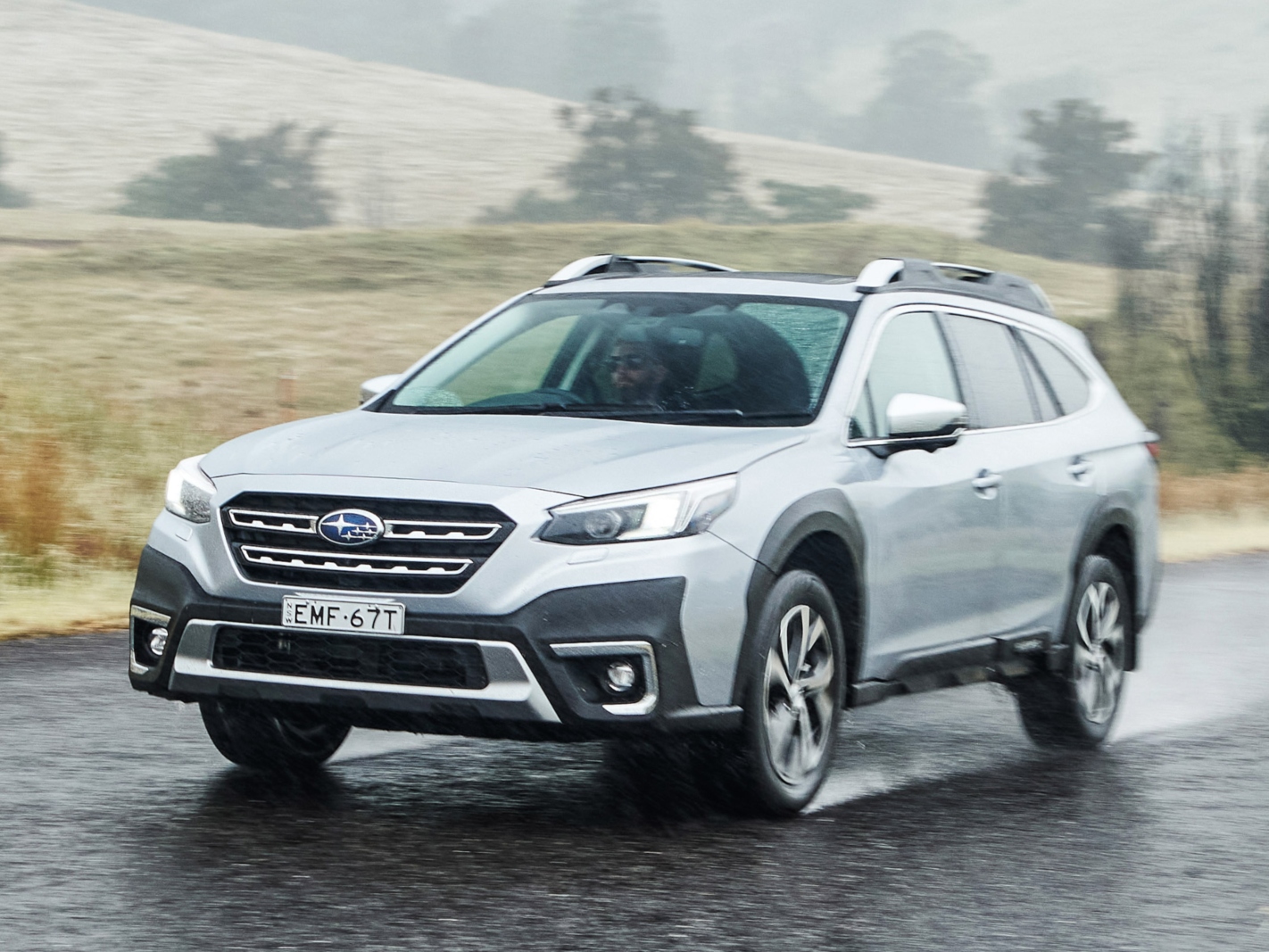
Like the powertrain, the whole range benefits from a new 11.6-inch portrait-mount infotainment system, a quick start/stop system and a suite of Eyesight driver assistance features including a lane-centring function, autonomous emergency braking and steering, speed sign recognition, lane departure warning and prevention, blind-spot monitoring, rear-cross traffic alert and a driver attention warning.
Adding to the already high levels of Outback safety features, the 2021 model has reverse automatic braking, a new passenger cushion airbag taking the total number of SRS bags to eight, while a Mobile Progressive Deformable Barrier can absorb more impact energy and is another first for the brand.
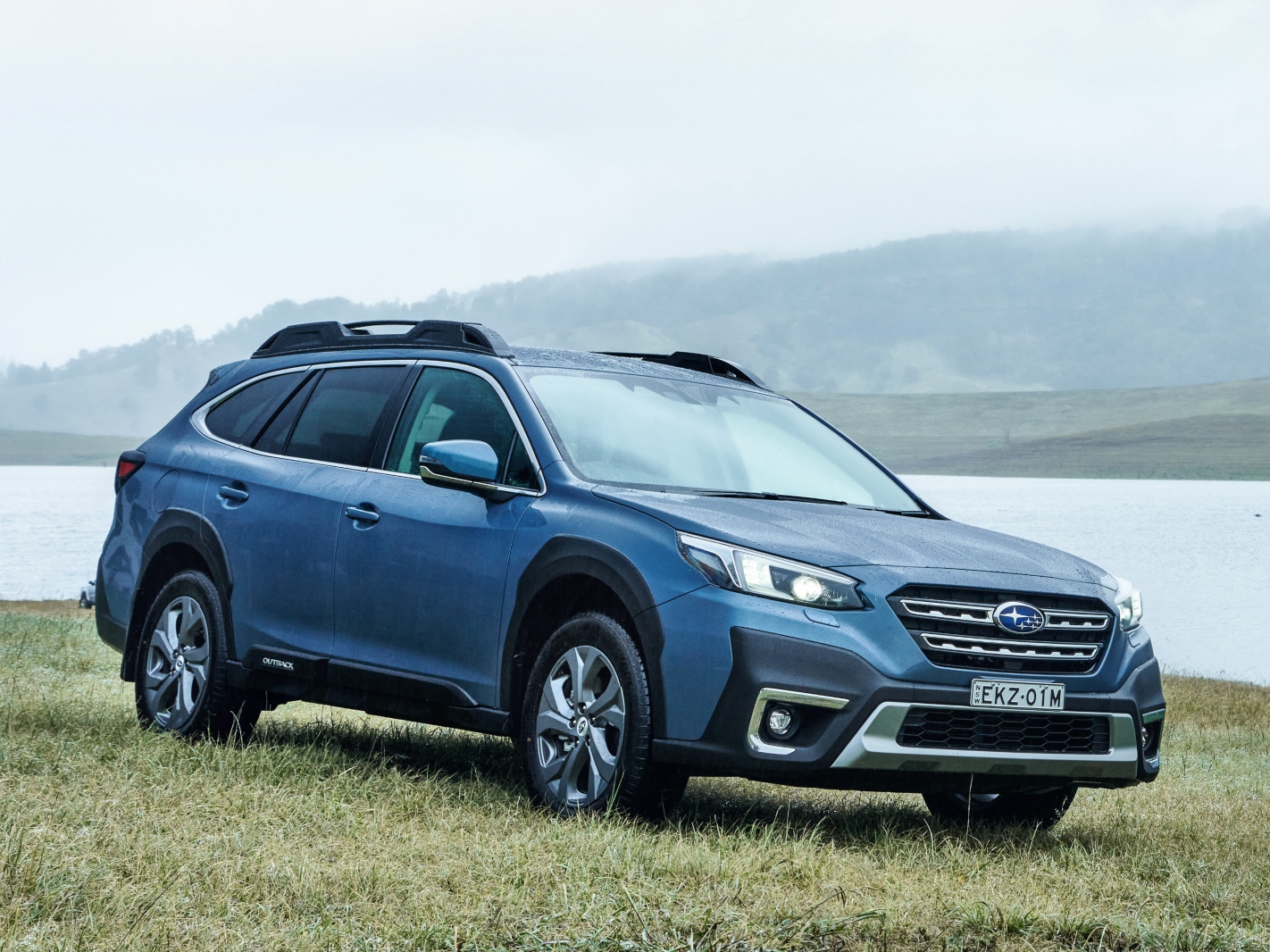
Above that, the Outback AWD Sport adds water-repellent upholstery, heated seats on all but the middle seat in the second row, front- and side view monitor, black exterior highlights, powered boot release, green-detailed roof rails, satellite navigation and a darker finish for the alloy wheels.
At the top of the tree, the Outback AWD Touring gains a nine-speaker Harman Kardon sound system with subwoofer and even offers a CD player housed in the centre console for nostalgic trips down music memory lane (while other versions have a six-speaker system), Napa leather trim, sunroof, heated steering wheel, silver roof rails with cross bars and glossy alloy wheels. All versions roll on 18-inch rims.
With a more flexible architecture, Subaru has also found more space in the Outback interior offering the largest cabin yet for the model. Passengers up front have 30mm more hip room and 7mm extra shoulder room, while rear occupants benefit from an additional 6mm of leg room.
Out the back of the Outback the boot floor has grown 24mm in length freeing up an extra 10 litres of volume for a maximum boot space of 522 litres.
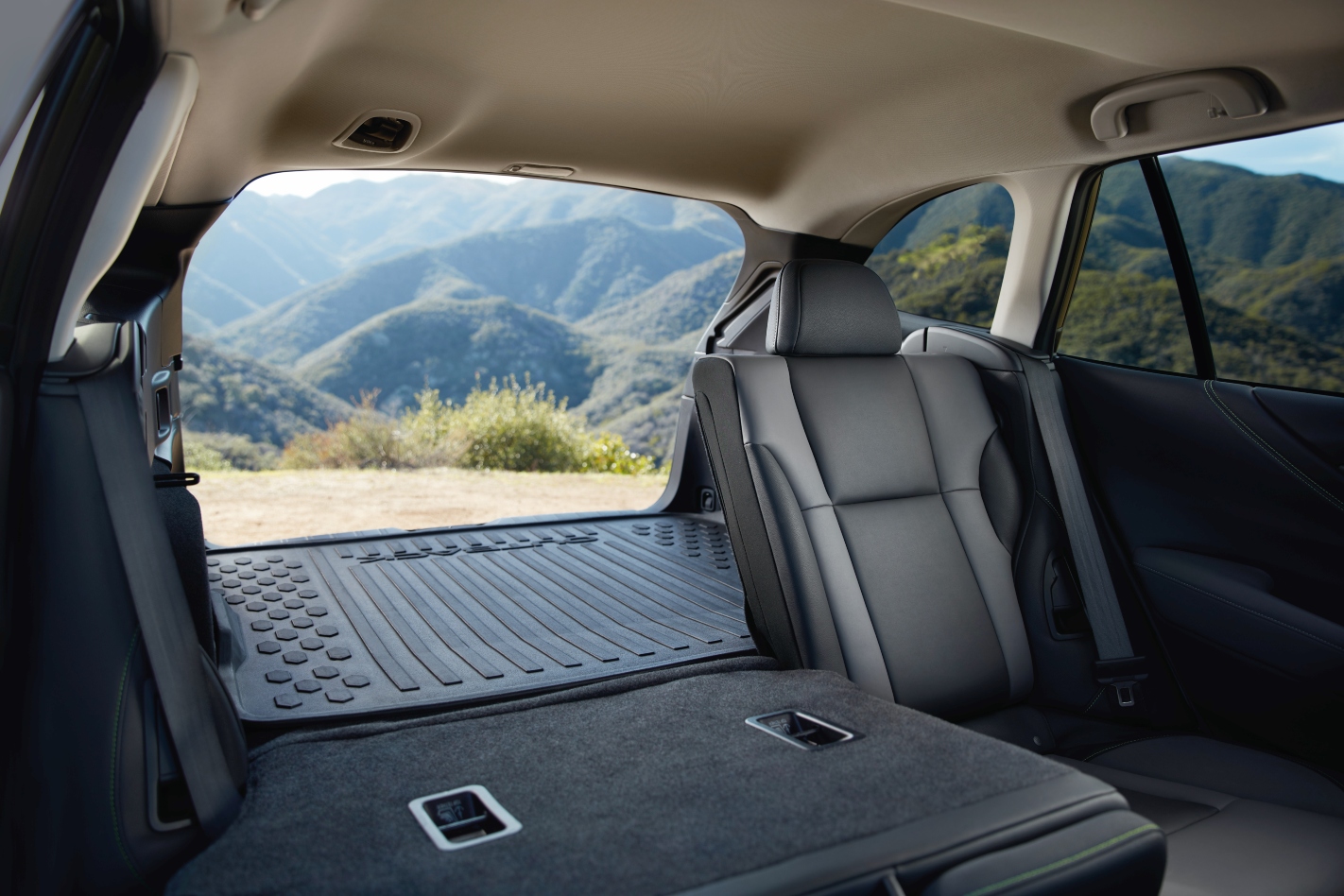
Sport and Touring variants get a power tailgate with automatic, hands free opening. Standing near the body sensor activates the feature as long as the valid key is also detected.
Other notable technology includes the driver recognition system that made its debut in the Forester and uses a facial camera to identify different users.
With a successful identification, the Outback will set a number of pre-set personal preferences. It also doubles as a driver monitoring device and can detect drowsiness.
Subaru Australia general manager Blair Read claims that the new generation Subaru Outback has taken a concerted step upmarket and that the Outback remains the flagship of the local Subaru vehicle range.
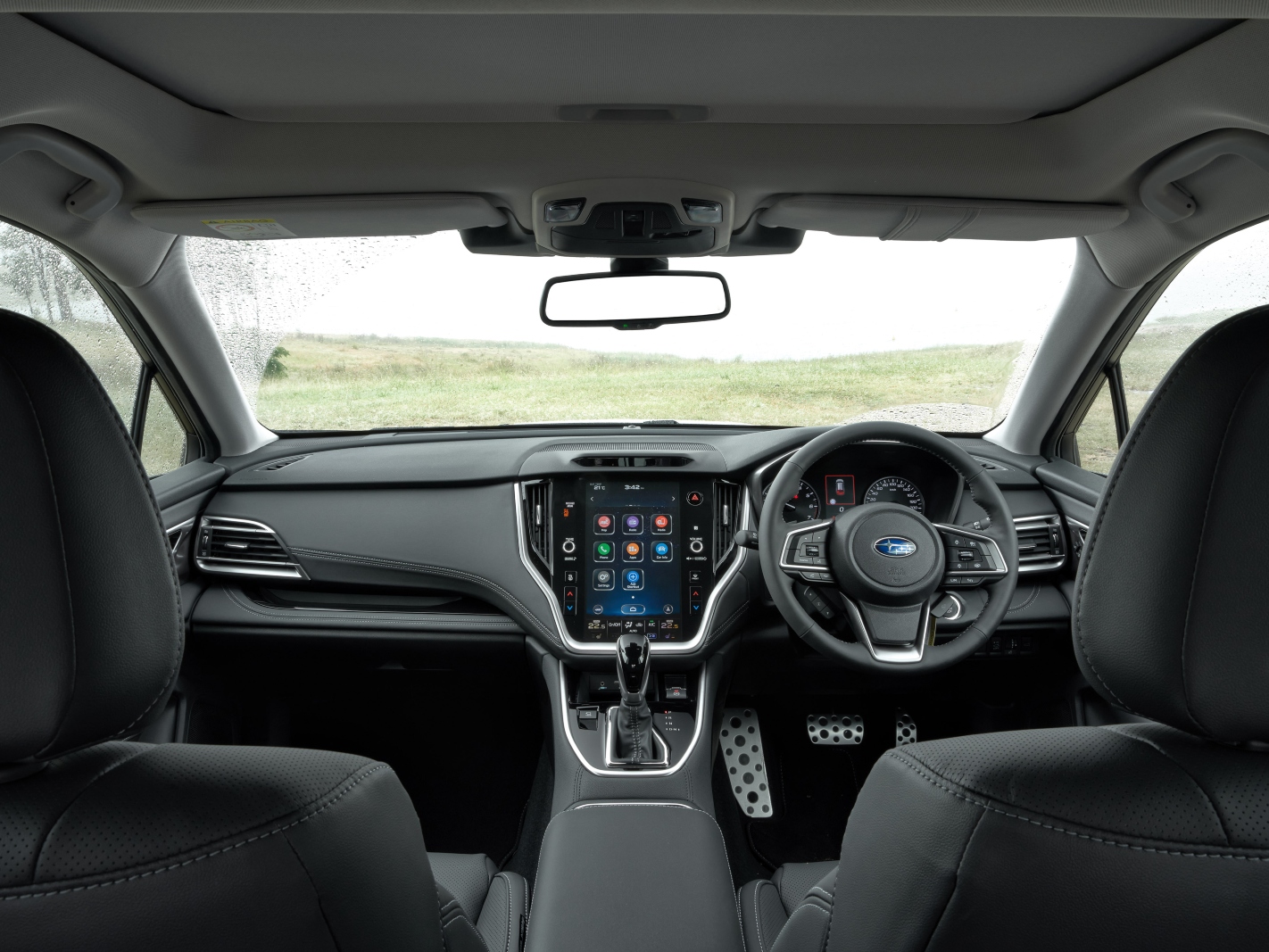
“The aggressive rugged design, along with the suite of luxury features, technology, infotainment and safety inherent in every Outback will only add to its rock-solid reputation for value and whole-of-life costs,” he said.
The sixth-generation Subaru Outback will arrive in Australian dealerships from March.
2021 Subaru Outback Australian pricing
- Outback AWD – $39,990
- Outback AWD Sport – $44,490
- Outback AWD Touring – $47,790
The Australian Renewable Energy Agency (ARENA) has announced an initial $16.5 million in grants from the Federal Government’s $71.9 million Future Fuels Fund, for the installation of EV chargers around the country.
The grants are open to organisations to install DC rapid chargers (50kW and above) in each capital city, and eastern-state regional centres including Newcastle, Wollongong, NSW Central Coast, Gold Coast, Sunshine Coast and Geelong.
Each regional location is expected to receive at least four rapid-charging stations, with recipients encouraged to spread the chargers around their geographic areas to maximise coverage.
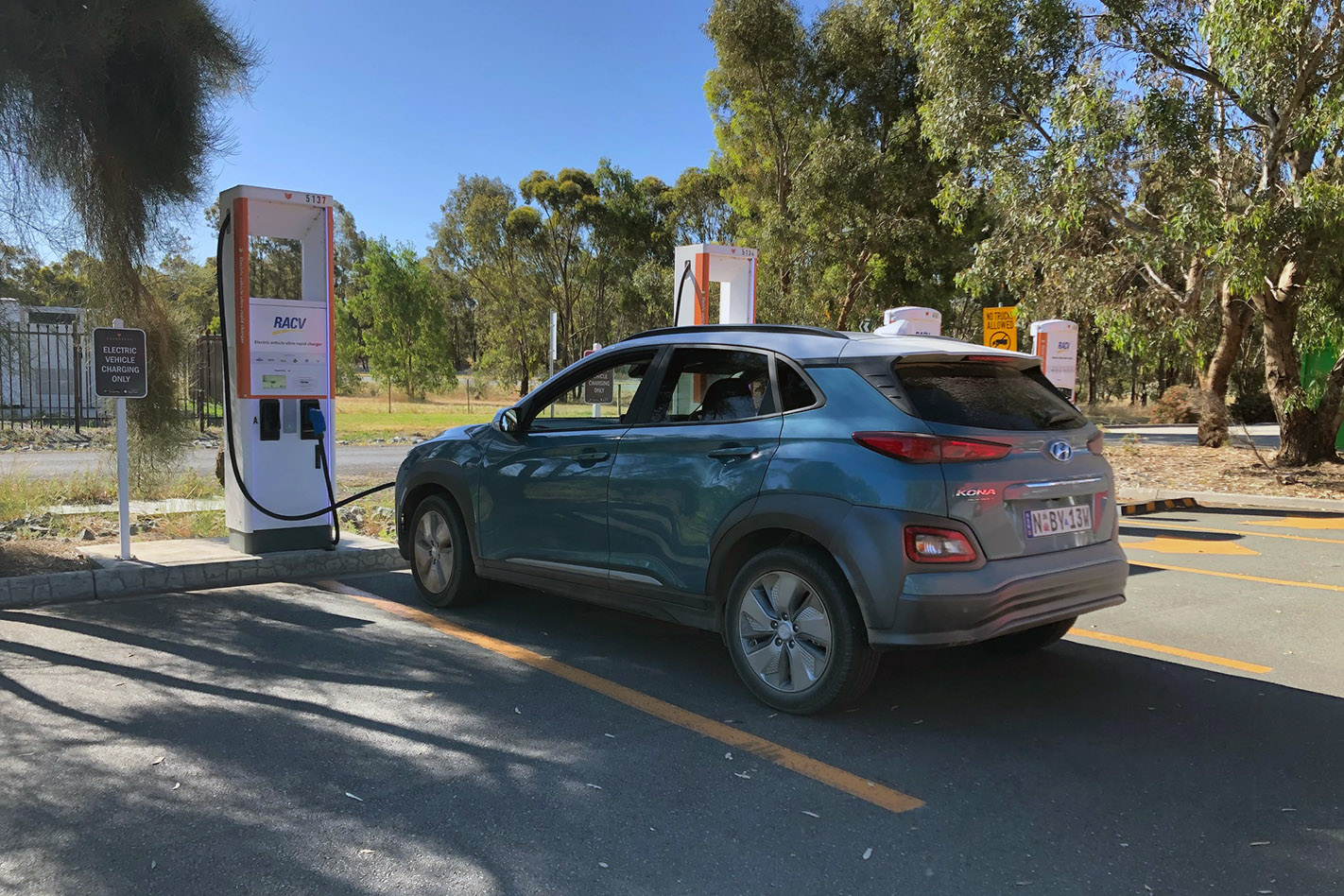
ARENA CEO Darren Miller said the Future Fuels Package, announced by Federal Energy Minister Angus Taylor in September 2020, is aimed to help businesses and communities take advantage of opportunities offered by alternative fuel technologies.
“Through this initial round, we are addressing one of the barriers to roll-out of new vehicle technologies by significantly increasing the number of fast-charging stations available to consumers across Australia, and reducing charging blackspots in both metropolitan and regional centres,” Miller said.
“As electric vehicles continue to become more competitive, it is important we have the recharging infrastructure in place to give motorists confidence they can choose an EV and recharge it conveniently and cost-effectively.”
Subsequent funding rounds, kicking off later this year, will focus on supporting business fleets to transition to BEVs and to explore opportunities with hydrogen and biofuels.
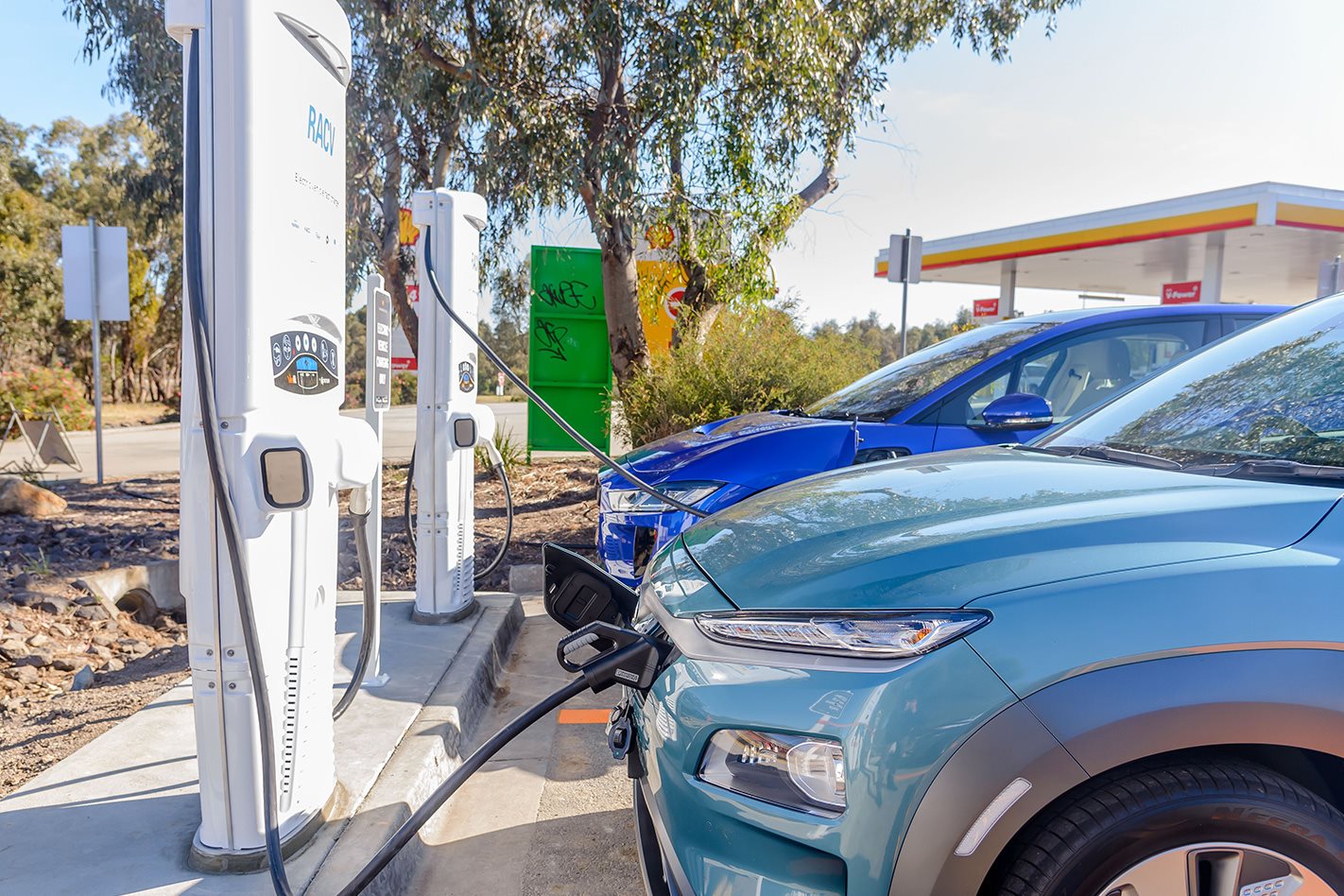
Applications for the initial round are now open and will close on Tuesday, April 6 2021. Interested applicants, including businesses and local government, should review the Future Fuels Round 1 Guidelines at the ARENA funding page.
Earlier this month, the Energy Minister and Deputy Prime Minister Michael McCormack released a discussion paper to inform the development of the Future Fuels Strategy, which outlines the Government’s vision to empower consumer choice, stimulate industry development and reduce emissions in the road transport sector.
EV advocates have welcomed some of the paper’s initiatives, such as incentives for business to adopt BEVs for their fleets.
However, it was generally felt the strategy didn’t go far enough to encourage private BEV uptake in Australia, with the EV Council describing it as “yet another flaccid, do-nothing document that will prevent Australians getting access to the world’s best electric vehicles”.
