
When Lexus launches its second-generation NX, widely tipped to debut in 2021, the synergy between it and the Toyota RAV4 is expected to run deep.
Trademark applications in Europe point to the existence of an NX 450+, as well as a hybrid NX 350h.
The 450 moniker points to an AWD version of the next Lexus NX that is likely to take its drivetrain from its Toyota stablemate, the RAV4, while the NX 350h should amp its performance up from that of the current model’s 300h hybrid option.
And Lexus Australia is keen to bring it down under.
The company’s CEO Scott Thompson has confirmed that the local arm is keen to expand Lexus’s electric portfolio, and will accelerate the process of getting them into local showrooms
“The right-hand drive/left-hand drive combination is a bit of a challenge for us in our market, but the good thing is when Japan is looking at focusing on it as well it gives us a great impetus to bring them into the country.
“The next conversation we’ll be having is about a plug-in opportunity that they’ve announced globally, and we’ve got to start having those conversations.”
“We believe there is market opportunity in Australia for a range of electric offerings. We still believe in that hybrid will take the lion’s share based on affordability and performance, but we do believe from a plug-in and a battery-electric [view], there are opportunities.
“So we’re seeing that, and we’re bidding very hard to get those cars into the market.”
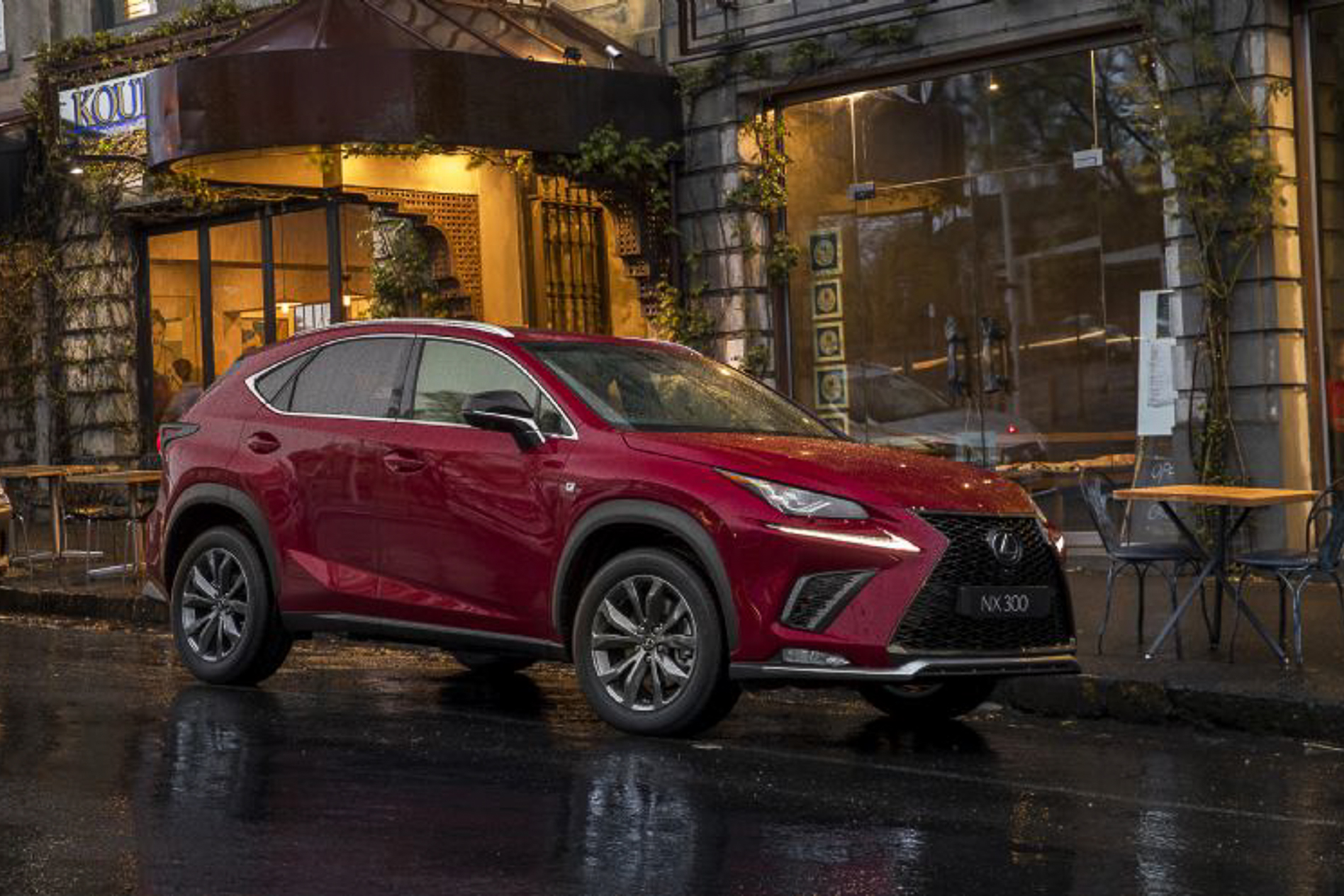
It’s not a great leap, truth be told – the next NX will be built on the same TNGA-K platform as the RAV4 and will be roughly the same size.
Under-the-skin similarities are to be expected; however, this time it should work in the NX’s favour.
A souped-up version of the RAV4, known as the Prime in overseas markets, also offers up a 225kW version of the 2AR-FXE 2.5-litre inline four-cylinder petrol engine, which works in tandem with front and rear axle-mounted electric motors and an old-school nickel-metal hydride battery array.
A larger 17.8kWh battery and a Type 2 charger plug give this driveline combo up to 62km of pure electric range, compared to the current non-plug-in RAV4 Hybrid’s minuscule battery-only range.
It will charge itself via regenerative braking like the current hybrid does as well. It’s this powertrain that we’d expect to see in the next-gen NX.
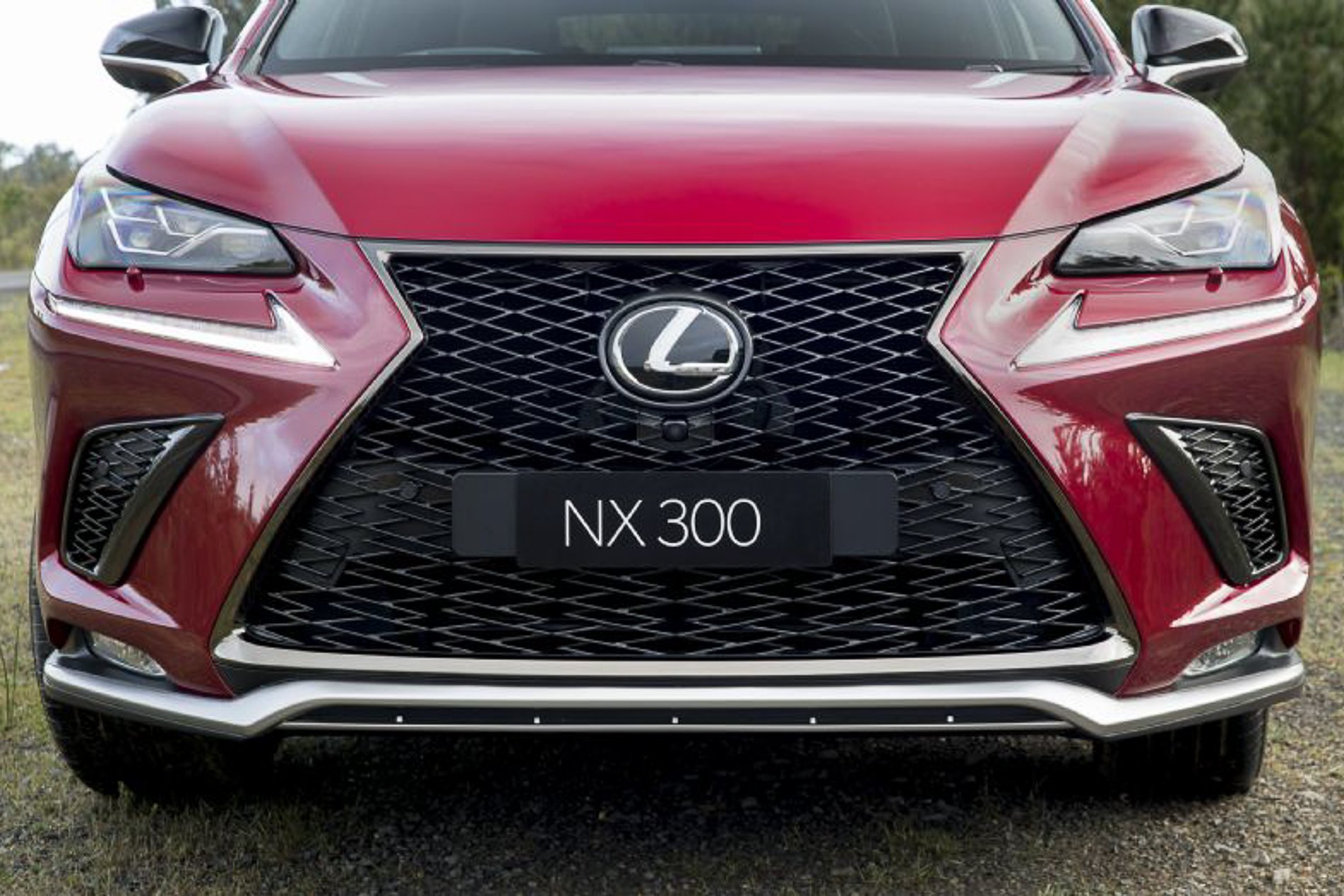
In terms of the way the 2021 Lexus NX will look, the Toyota Harrier gives us some indication – though expect the NX to be sharper and more contemporary.
Its smaller sibling, the Lexus UX and its larger brother, the RX, point to Lexus’s current aggressive design missive – and, as was the case with the 2016 RX, if it isn’t right, then expect the top brass to step in and make it so.
Akio Toyoda stepped in with just a month to go to final sign-off on the RX, instructing the team to make the car far edgier.
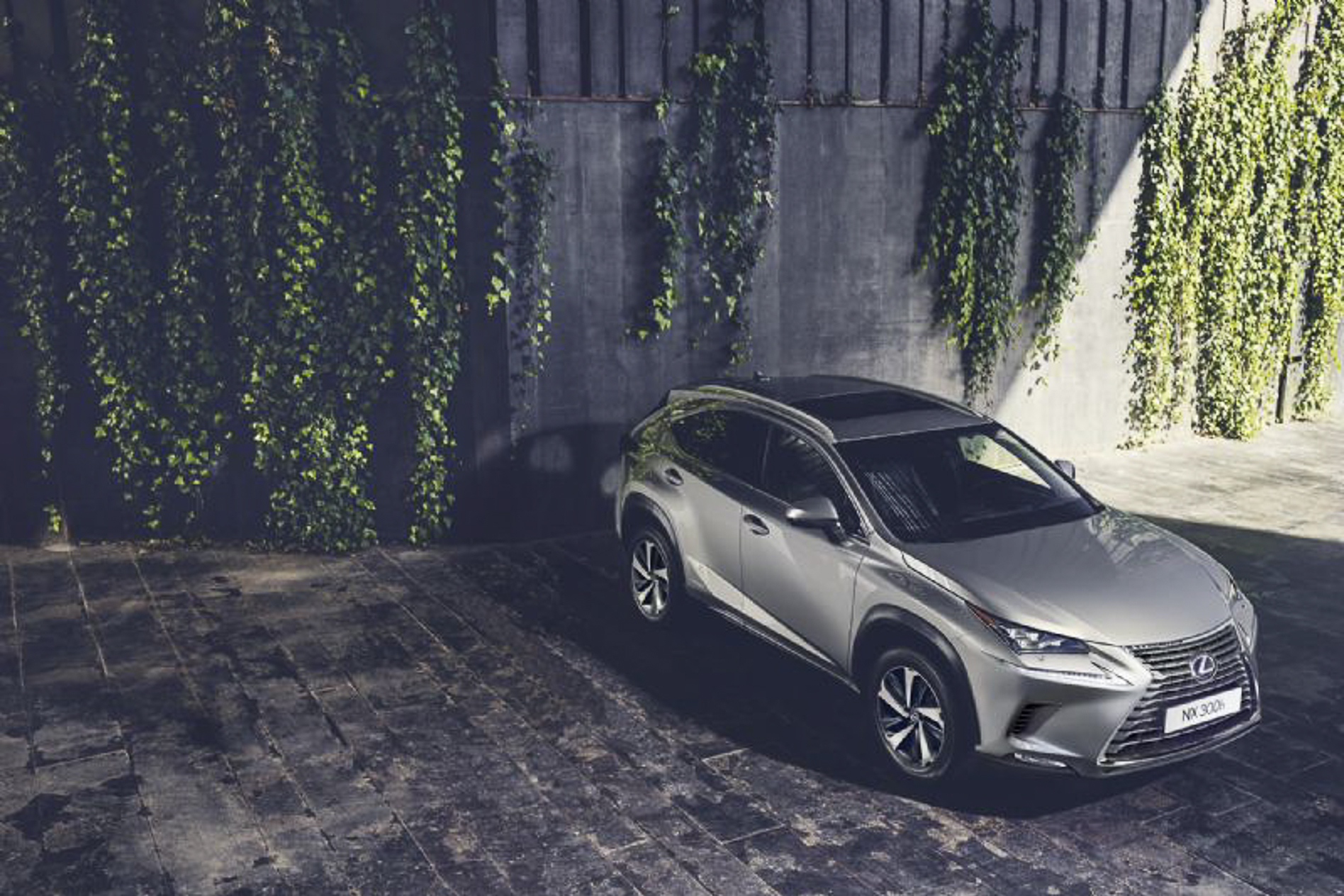
Its smaller brother, the UX, also has the distinction of being the first all-electric model in Lexus’ global line-up, a significant addition for a company that in the past has given pure EVs a cold shoulder.
What stands out?
The look. The Ford Mustang is a tough, muscular looking car as only the US of A can produce. But modern engineering has elevated the way it goes, stops and steers.
It is an every-day proposition, too – it even makes the most of your smartphone. The Mustang comes in coupe and convertible body styles and offers V8 and turbocharged four-cylinder engine options.
What might bug me?
Concern about what might happen if you were to crash in your Mustang. Safety authority ANCAP awarded it only three stars for safety, of a possible five mostly due to its poor rear occupant protection. (For more on Mustang safety, please open the Safety section below.)You’ll love the sound the V8 Mustang makes, however you can’t dial things down a little when you just feel like a relaxing ride.On the other hand, if you have a four-cylinder Mustang High Performance 2.3L, it’s missing out on that V8 soundtrack altogether. The good news is the Mustang High Performance 2.3L has received a power and torque boost, steers better than the heavier V8, and is no longer known the not-so-sporty EcoBoost moniker.In a Mustang High Performance 2.3L, driving at 80km/h on your space-saver spare wheel until you can fix your full-sized flat tyre.In a Mustang V8, concern about leaving your muscle car by the roadside while you seek to get a flat tyre repaired. There is no spare at all – just pressure monitors that will warn you when trouble is coming. If it’s a slow leak, there’s a tyre inflation kit that allows you to drive to a garage.
What body styles are there?
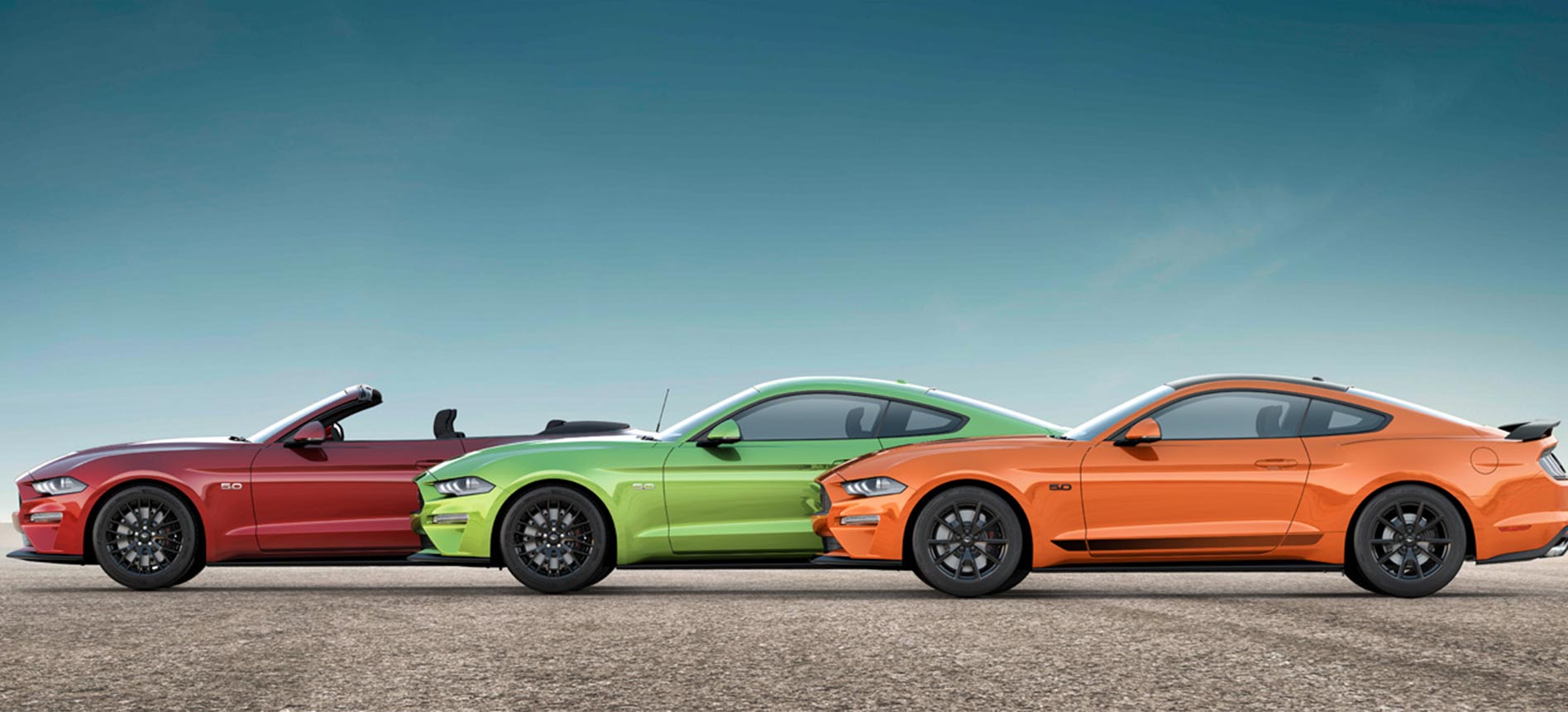
A two-door coupe, which Ford calls the Fastback, and a two-door convertible with a cloth roof, called the Convertible.The Mustang drives its rear wheels, and is classed as a sports car, lower priced.
What features do all Mustangs have?
- Active safety including adaptive cruise control, autonomous emergency braking, lane-departure warning and lane keeping assist.
- Bluetooth connectivity and audio streaming via Ford’s excellent SYNC 3 suite.
- Satellite navigation, displayed on an 8.0-inch touchscreen.
- Reversing camera.
- Support for Apple Car Play and Android Auto, which allow you to display some apps from compatible smartphones on the car’s touchscreen and control them from there.
- 390-watt 12-speaker sound system with amplifier and subwoofer.
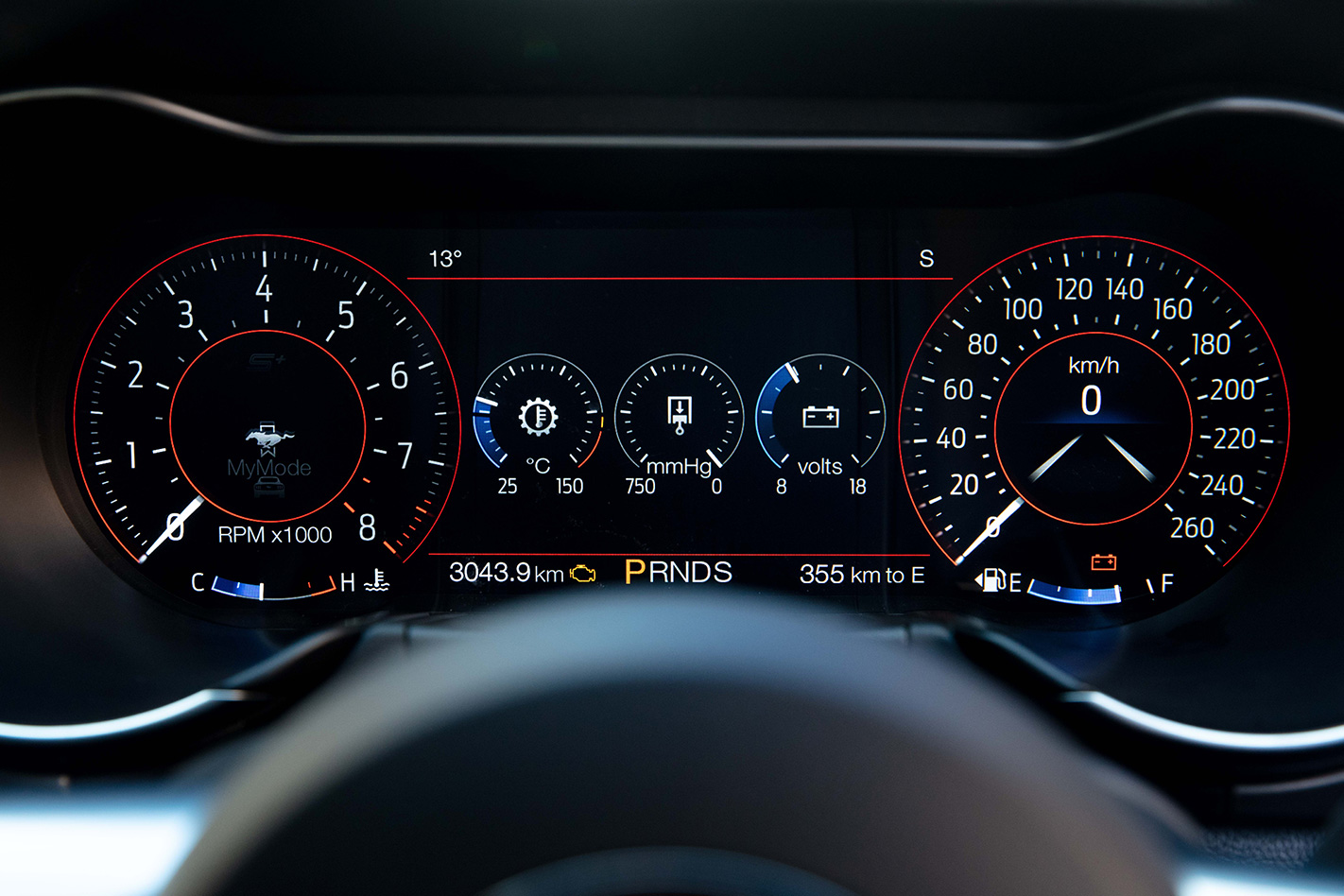
- Customisable 12-inch digital display cluster in place of analogue gauges.
- Leather interior trim, and six-way power-adjusted, heated and ventilated front seats.
- Heated steering wheel.
- FordPass Connect embedded modem with remote vehicle functionality (including vehicle lock/unlock etc).
- Keyless entry and start, which allows you to lock, unlock and start the car without taking the electronic key from your pocket or bag.
- Dual-zone climate-control, which allows the driver and front passenger to set different temperatures for either side of the cabin.
- Rain-sensing windscreen wipers.
- Auto headlamps that sense the lighting conditions and turn themselves on and off.
- Auto-levelling LED headlights, LED fog-lamps and LED daytime running lights.
- Interior ambient lighting with colour adjustment.
- On manual-gearbox Mustangs, hill-start assist – which automatically prevents the car from rolling backwards when you need to start from rest on a slope.
- A tyre-monitoring system, which warns you if a tyre’s inflation pressure drops below a safe level. On EcoBoost Mustangs (only), a space-saver spare wheel and tyre.
- An emergency assistance feature, where the car can automatically contact emergency services immediately after a crash that’s severe enough to deploy the air-bags.
- Ford’s MyKey system, which allows you to limit certain car properties – such as top speed and sound volume – before lending the car to others.
- Electronic stability control, which can help you control the car in a skid. All new cars must have this feature.
- Modern electronics also mean the Mustang has four selectable driving modes, including settings for slippery roads and even race-tracks.
- Eight air-bags, including one each for the driver’s and passenger’s knees.
Which engine uses least fuel, and why wouldn’t I choose it?
The 2.3-litre four-cylinder, turbocharged, Mustang Performance 2.3L engine (formerly known as the EcoBoost Mustang) uses least fuel, with the official test showing as little as 8.8 litres/100km (city and country combined) for the Fastback versions with the six-speed manual, and 9.6L/100km through the 10-speed automatic transmission.
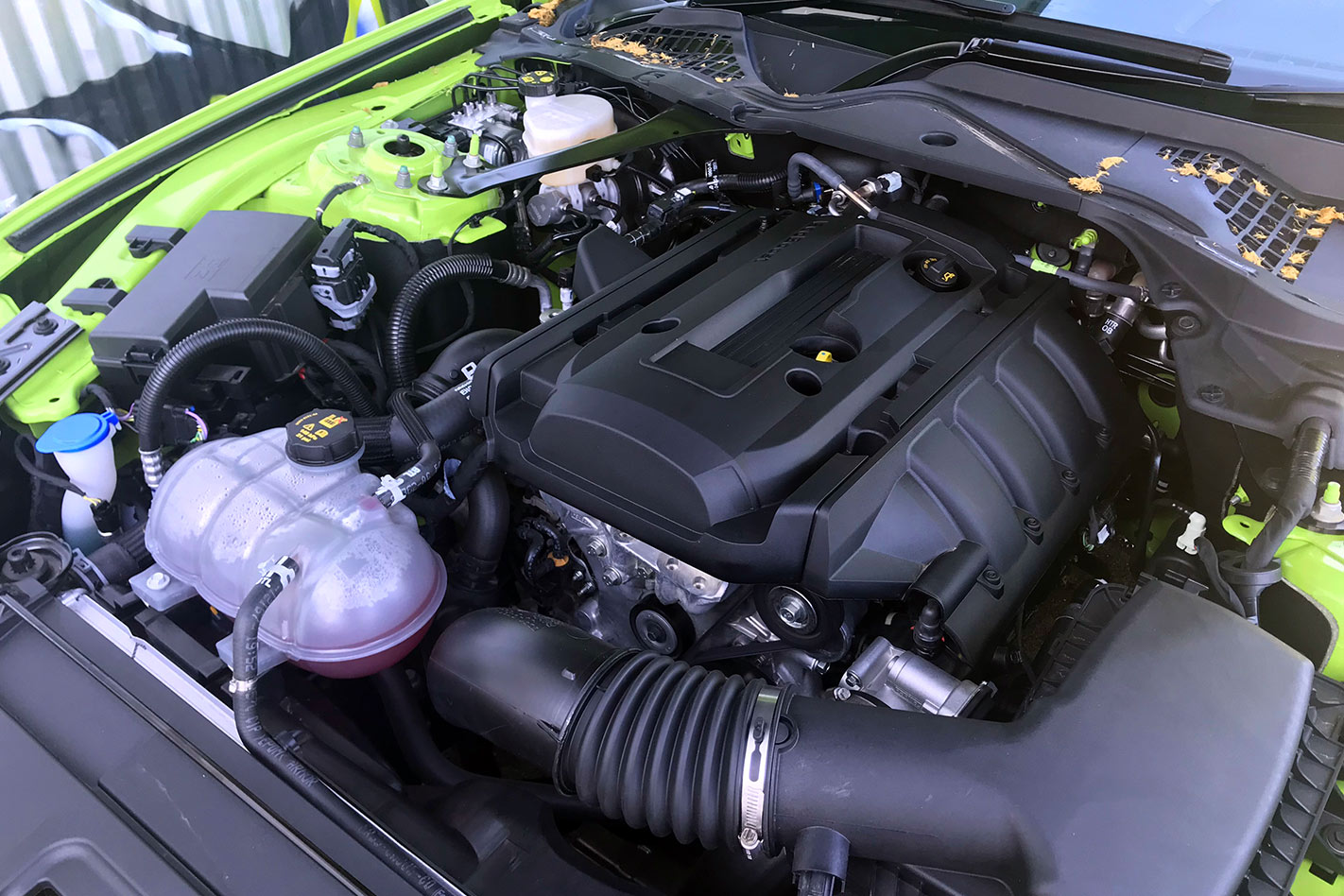
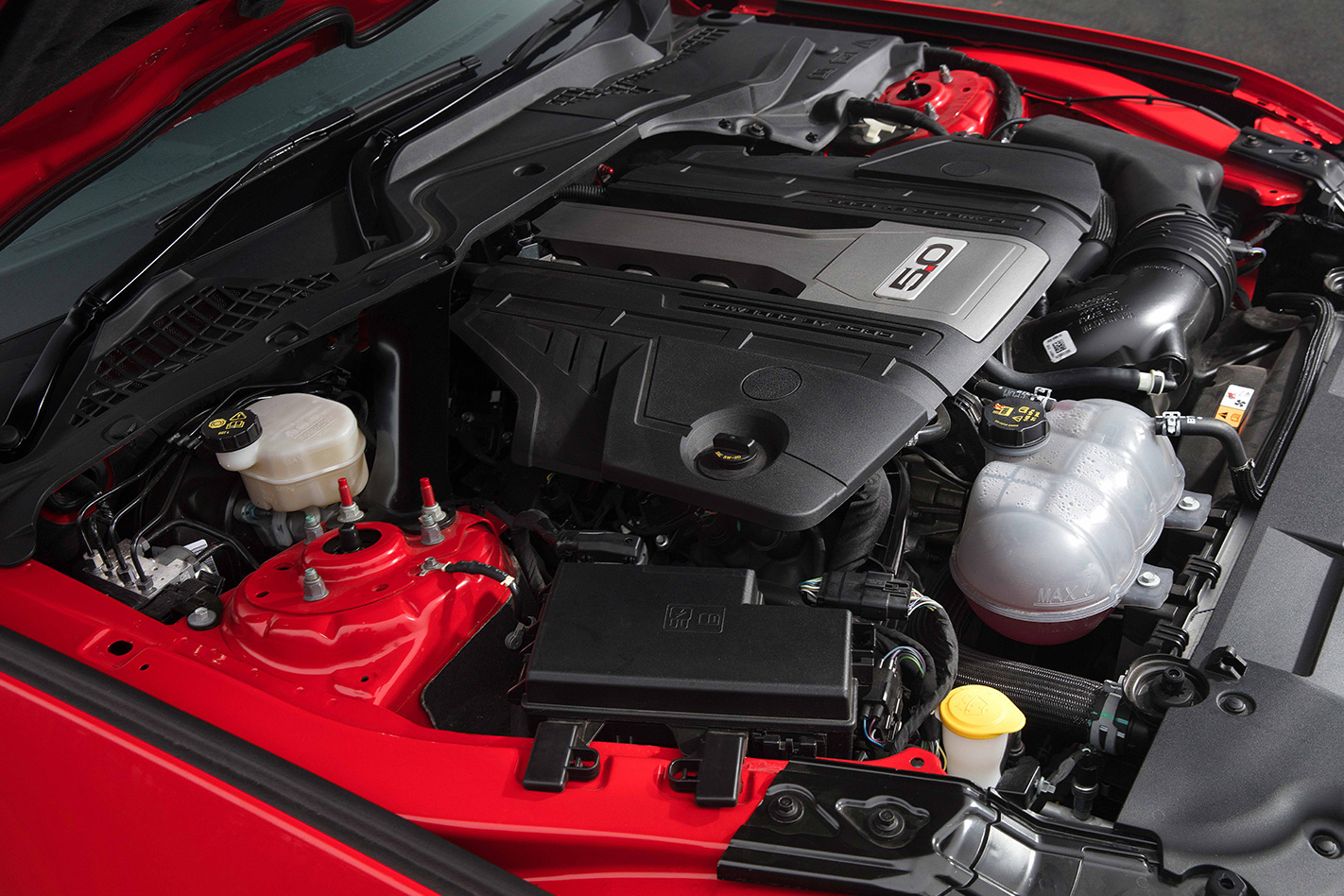
That said, when people think Mustang they also think V8, so the four-cylinder is doomed to be the poor relation despite receiving a performance boost for the 2020 model year. The High Performance 2.3L, however, is cheaper to buy, more efficient, handles great and is very good in its own right. But you’ll be stuck with it come trade-in time.Which means the headline act is the 5.0-litre V8 engine that comes with a Mustang GT. It lacks high-techery such as a turbocharger but provides the Mustang with its spiritually correct feel and sound. It also gives you faster acceleration, which is a big part of this car’s role in life.
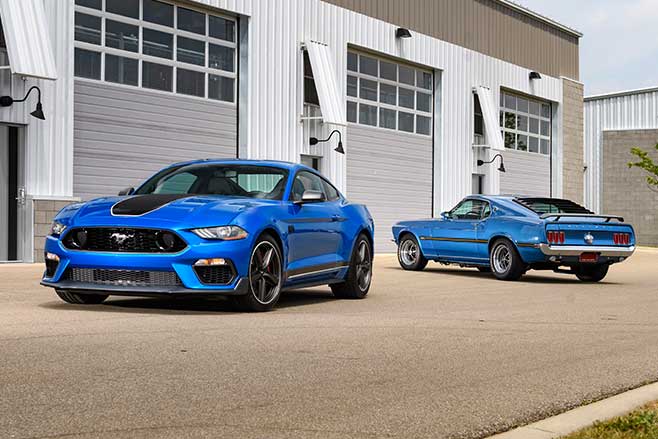
Another limited edition, the Mustang Mach 1 pushes out 345kW and 556Nm and has a fuel consumption rating of 13.9 litres/100km with the manual transmission and 12.4L/100km with the 10-speed auto.
The main reason you’d choose either limited edition version, apart from the enjoyment of having that additional power, is the fact they’re instant classics that will hold their desirability and value.
What key features do I get if I spend more?
The biggest difference between a Mustang High Performance 2.3L and a more expensive Mustang GT, apart from the grille, will be under the bonnet. Which means spending more will get you the V8 engine and not much else.That said, you do get bigger brakes and quad-exhaust tips on the V8-powered GT models, and slightly wider rear wheels and tyres to provide added grip to deal with the extra power.You also get less roof, with the convertibles costing around $12,000 more than the automatic Fastbacks.The 10-speed automatic gearbox attracts a $3000 premium over the manual.Other options include ‘MagneRide’ adaptive suspension, which adjusts the dampers to suit the different driving conditions. You can also add a rear-spoiler, attractive over the top stripes, and Recaro leather sports front seats.
The Mustang Mach 1 brings unique exterior styling and the more powerful engine. Extra-cost options include Recaro seats for an extra $3000, while premium paint will cost $650.
There’s also a special Appearance Pack for one particular paint shade, known as Fighter Jet Grey (below). A $1000 kit will add orange accents to the interior, an orange stripe on the bonnet and down the sides, and orange brake calipers.
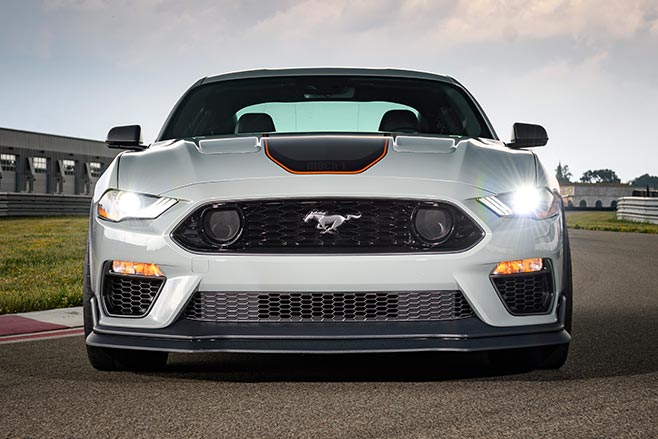
You can also pick from Shadow Black and Oxford White with Satin Black/Red stripes, or Velocity Blue and Twister Orange with Satin Black/White stripes.
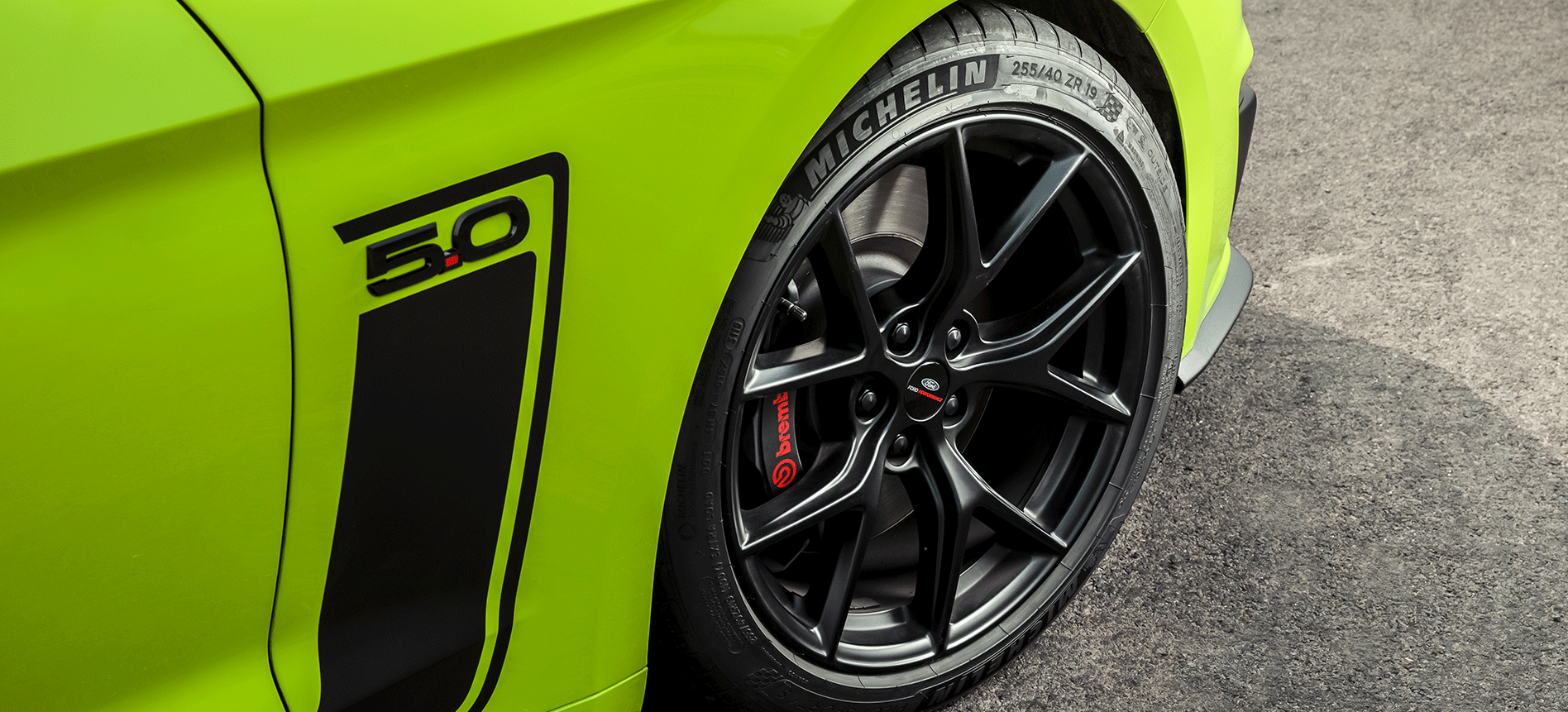
Spending more again on the Mustang R-Spec brings the supercharged engine, 19-inch performance rims and tyres (below), and additional exterior embellishments.
Does any upgrade have a down side?
A move to a GT, with the V8 engine, means you’ll pay more initially and will use more fuel on a day-to-day basis. As well, Mustang GTs don’t carry a spare tyre. (Ford says their brakes won’t accommodate the space-saver spare wheel that comes with 2.3L Performance Mustangs.)Paying extra for the automatic transmission option with the 2.3L turbocharged engine involves a small fuel-economy trade-off too, as well as making for a performance car that is not quite as satisfying to drive.If you do decide to spend bigger and go for the Convertible with either engine, you can’t have it with the manual transmission: it’s automatic only.There are plenty of colour options for the Mustang but what Ford calls prestige paint (effectively metallic colours) costs about $300 extra.
How comfortable is the Mustang?
The current Mustang represents a big improvement over its predecessor when it comes to interior quality and comfort.The inferior quality hard plastics were binned and replaced with soft-touch door trims, while stitched trim coats the entire centre console. The centre and door armrests feel softer underhand and elbow, and even the leather steering wheel feels suppler.
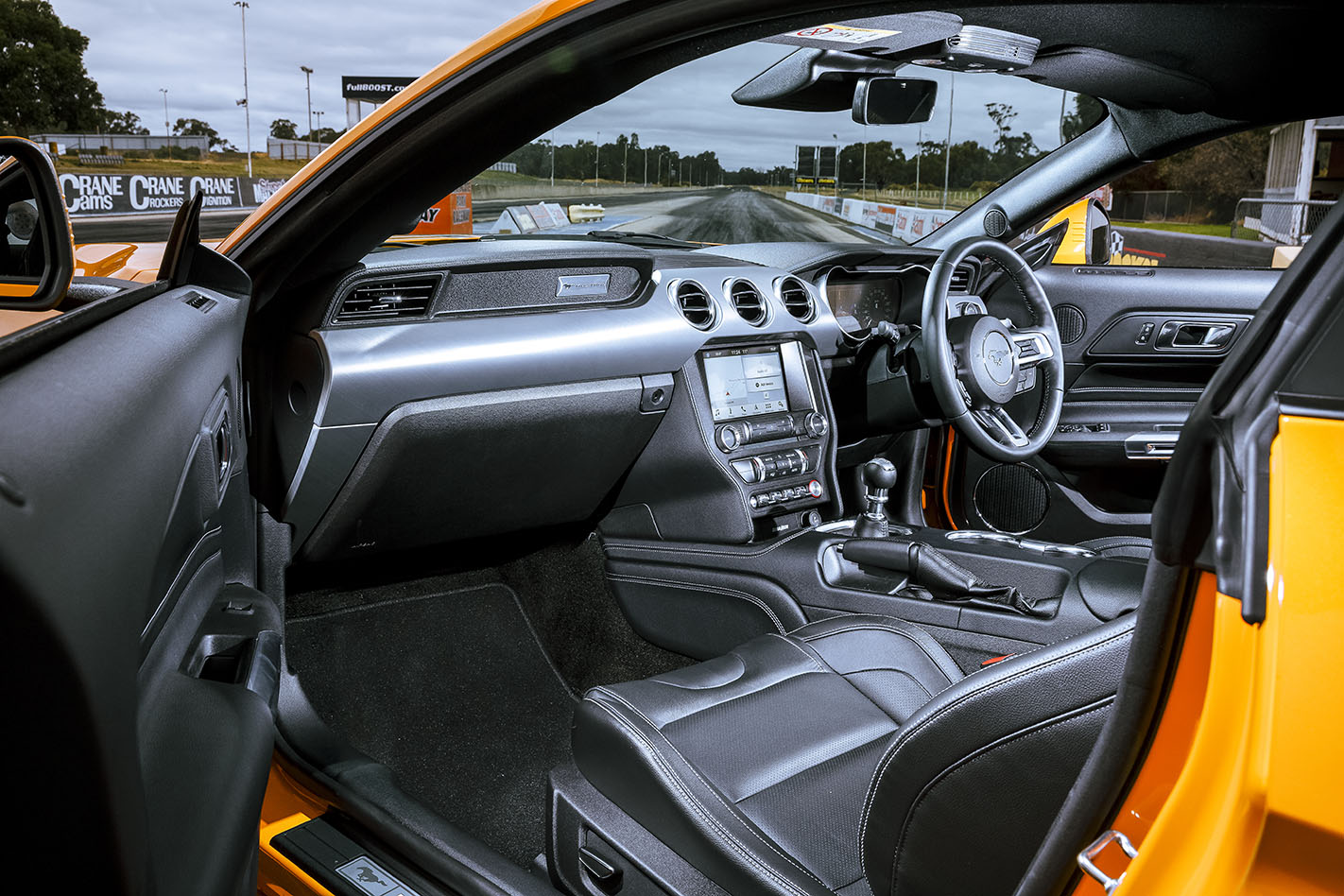
The messy instrument cluster was replaced by a 12-inch digital unit with a customisable display that offers three instrument styles including Racetrack’ version featuring a strip-like tacho that curls up from the left and across the upper dial section, like a speedo from a ’60s T-Bird.
The standard front seats are good, with heating and ventilation. They are a generous size and offer plenty of support.The rear seats look plush buy are token at best with barely any legroom, and will not be suitable for long trips with anybody bigger than a toddler.The Mustang is still a sports car, though, so the firm ride and loud engine noise, even with the 2.3L turbo, might not be as enjoyable for passengers as it is the driver.
What about safety in a Ford Mustang?
Unusually, the Mustang has knee air-bags for the passenger as well as the driver, for a total of eight airbags. The others are immediately in front of the driver and passenger, thorax airbags either side of the driver and passenger to protect their upper bodies from side-impacts, and side-curtain airbags to protect the heads of both front and rear-seat passengers. A reversing camera is standard.Ford has used stronger than normal steel in some structural parts of the car’s body for a stronger passenger cell – the part of the car that contains the passengers. The idea is that if the passenger cell deforms less in a crash, the occupants are less likely to be injured.An interesting addition is Ford’s MyKey system, which allows parents to program the car (via the ignition key) to protect their offspring from injudicious impulses. You can limit its top speed, limit the stereo volume, block phone calls and text messages when driving, and even increase the frequency of the seatbelt reminder.Autonomous emergency braking is now standard in the Mustang, the absence of which restricted its Australasian New Car Assessment Program (ANCAP) safety rating to just two starts for the previous model.Adaptive cruise control and lane-keeping assist is also standard, but it still lacks blind-spot warning and rear-cross traffic alert, which are standard in many more affordable cars. And the seatbelt reminder operates only on the front seats.Despite the addition of autonomous emergency braking, ANCAP only raised the 2018 Mustang’s safety rating from two to three stars, from a maximum of five, in December 2017.Because this was only a facelift, the 2018 model still showed previous model’s flaws in crash-testing, including poor passenger protection in the rear seats, with serious head, chest and leg injuries likely from a 50km/h frontal impact (because seatbelts could not restrain rear passengers safely).The driver and front passenger fared much better, with protection from frontal, frontal offset and pole impacts rated as acceptable (one down from good, the maximum of four levels), and from side impacts rated as good. Nevertheless, in the frontal offset test the airbags allowed driver and passenger to contact the steering wheel or dashboard with their heads. Whiplash protection from rear-end crashes was also rated as poor in the rear seats, and marginal in the front.
I like driving – will I enjoy this car?
This is the Mustang’s reason for existing. Either engine offers a lot of acceleration and make for very safe overtaking and effortless freeway cruising.The V8 will excite keener drivers more, with a fabulous soundtrack through the quad exhaust pipes, and a bigger shove in the back when you accelerate hard.
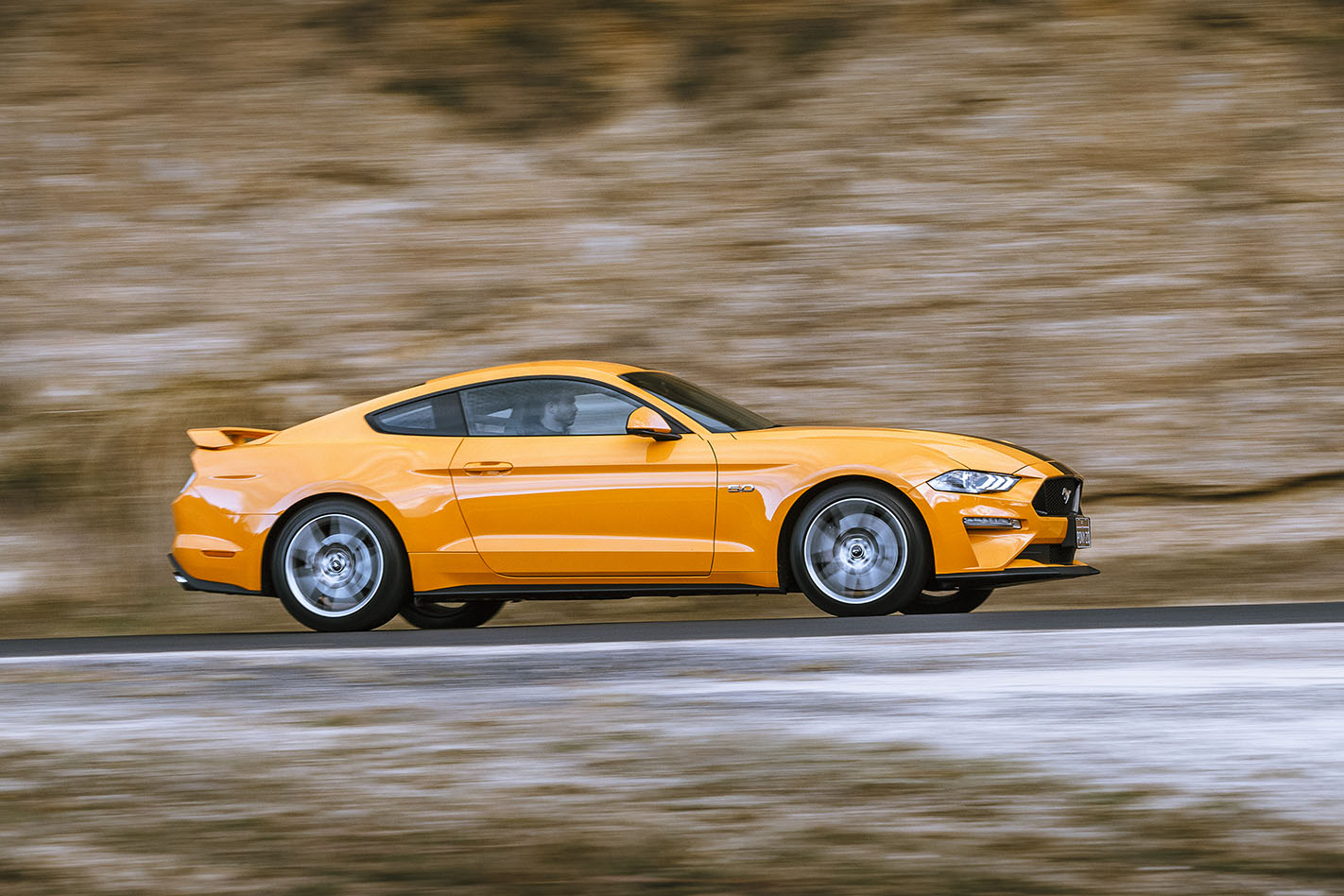
The High Performance 2.3L is no slouch though and still provides an enjoyable driving experience, especially in the convertible. It also has a decent exhaust note that can be adjusted between normal and throatier sports mode.
The steering is not as sharp as some, but it certainly gives a feeling of great security and has a meatiness to it that lets you know you’re driving a substantial vehicle.There’s no escaping the fact that the Mustang is a big, wide and relatively heavy car. But even then, it disguises those things to a large extent and emerges as a fun, entertaining car. Big brakes, well-considered suspension settings and sticky tyres all help to achieve that feeling.
While the six-speed manual was always going to be the purist’s choice, the new 10-speed auto, with launch control, is excellent, with almost flawless shifting.And regardless of which engine you have, any Mustang is guaranteed to turn heads.
How is life in the rear seats?
No elephant stamp, here. The Mustang’s rear seat is tight to say the least, and in the convertible model it’s even narrower as the roof mechanism encroaches. The rear seat also consists more or less of two shaped bucket seats rather than a bench that would accommodate three backsides.
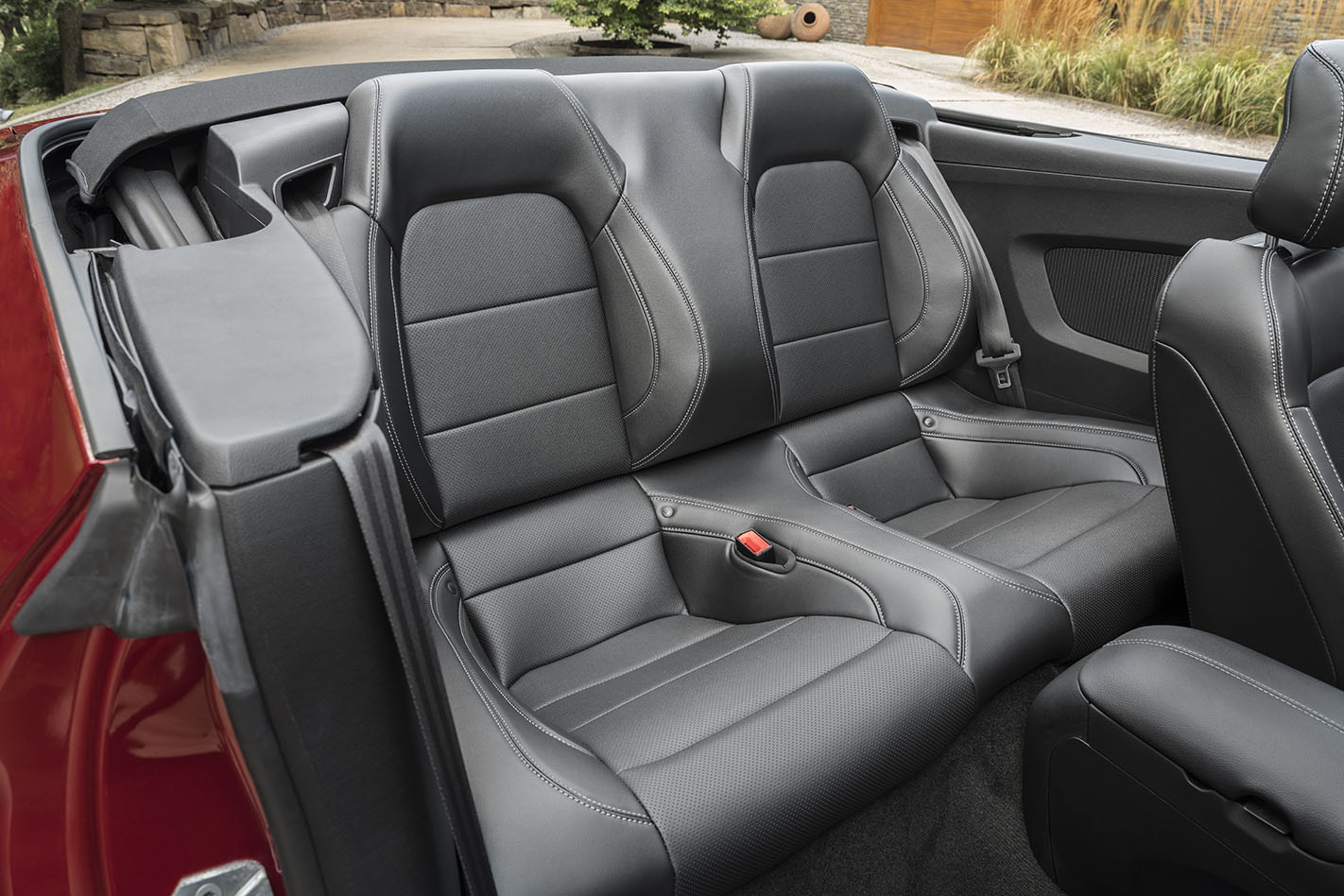
How is it for carrying stuff?
Given that the rear seat is all but useless for adults, this is where some owners will put a lot of the gear they need to carry. Which is just as well, because the boot space is compact compared to similarly sized vehicles.The short rear overhang of the body that characterises the macho styling limits the load area the boot can physically offer.What’s more surprising is that the interior doesn’t feature the plethora of cup-holders you’ll see on any other modern American car, each capable of locating a small bucket. Instead, you get two average sized cup-holders in the centre console (which interfere with your gear-shifting if there’s anything in them) and tiny bins on each front door-trim. Other stowage points are in short supply, too.
Where does Ford make the Mustang?
All Mustangs are made in the USA at Ford’s Flat Rock assembly plant in Michigan.
Are there any rivals that I should consider?
Now the Aussie-built V8 Ford Falcons and Holden Commodores are gone, nothing else provides as much performance bang for your buck than the Mustang.The Chrysler 300 SRT is the only other comparable V8 muscle car there is before you start adding an extra zero to the price tag.If you’re not too fussed about having V8 power the Lexus RC350, Kia Stinger GT are fun-driving options that offer a little more family friendliness. But they won’t feel like or turn heads like a Mustang.The 2.3L Performance Mustang is cheaper than similarly powered German coupes and convertibles such as the Audi A5 and Mercedes-Benz C-Class, but is no less enjoyable to drive and is likely to turn more heads.
The 2.3-litre Convertible could also be on the list for anyone looking for an affordable roadster such as the Mazda MX-5 and Fiat 124 Spider.
I like this car, but I can’t choose which version. Can you help?
The pick is the GT (V8) coupe with the smooth-shifting manual transmission, for its combination of performance, street cred and old-school driver involvement. The new 10-speed automatic is no lazy shifter though, providing almost flawless shifting that makes the most of the V8’s performance and is excellent for cruising.
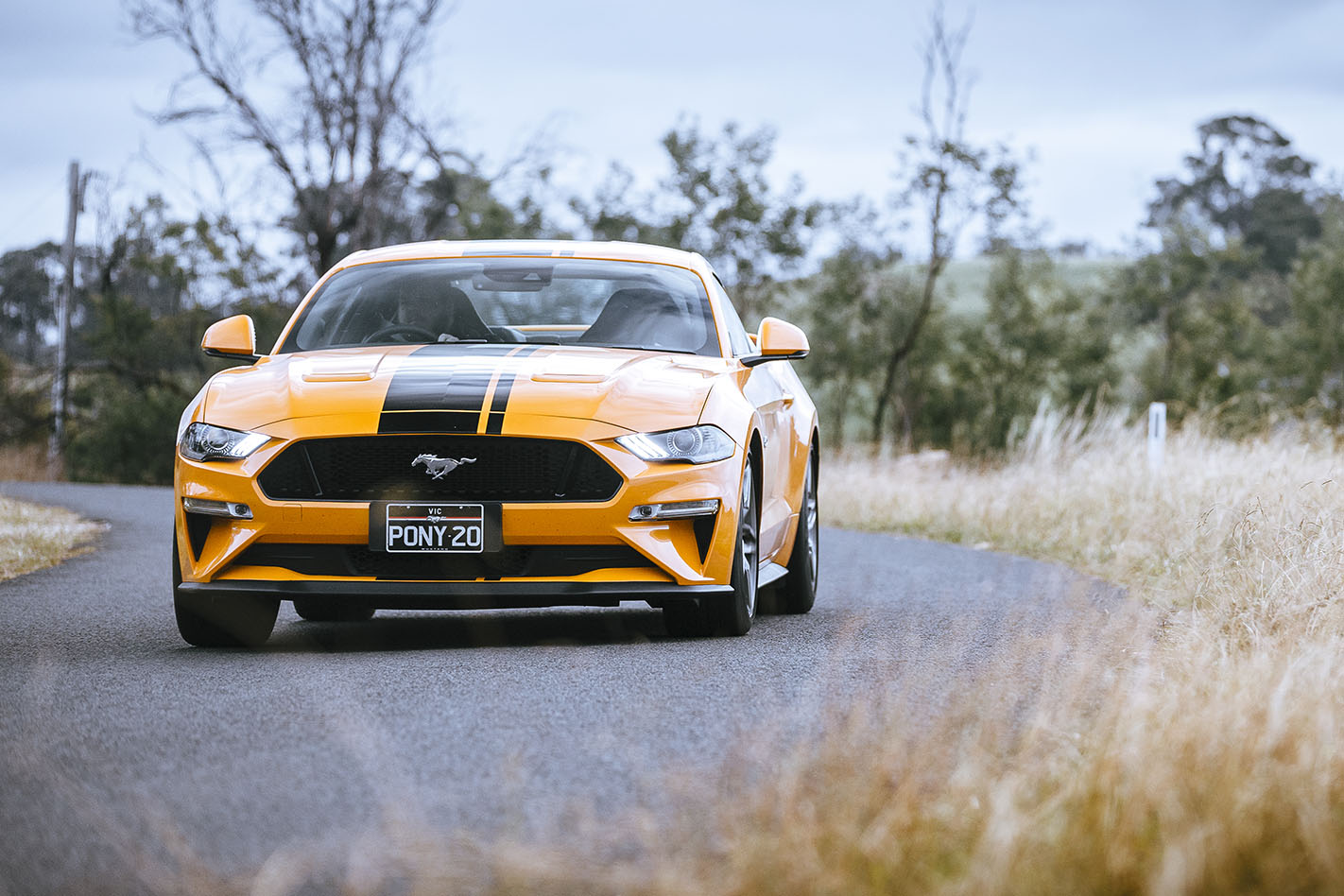
If you love the idea of having a Mustang but baulk at the high fuel bill, the High Performance 2.3L (formerly known as EcoBoost) versions are an excellent compromise. The Convertible is the pic of these as the thrill of open-top driving goes a long way to compensate for not having that V8 grunt and growl.
Are there plans to update the Mustang soon?
Ford launched the current-generation Mustang in the US back in 2014, but it did not arrive in Australia until January 2016. Mustangs built after June 2016 gained Ford’s SYNC3 connectivity suite, bringing support for Apple CarPlay and Android Auto. As the same time, Ecoboost Mustangs picked up a space-saver spare tyre.
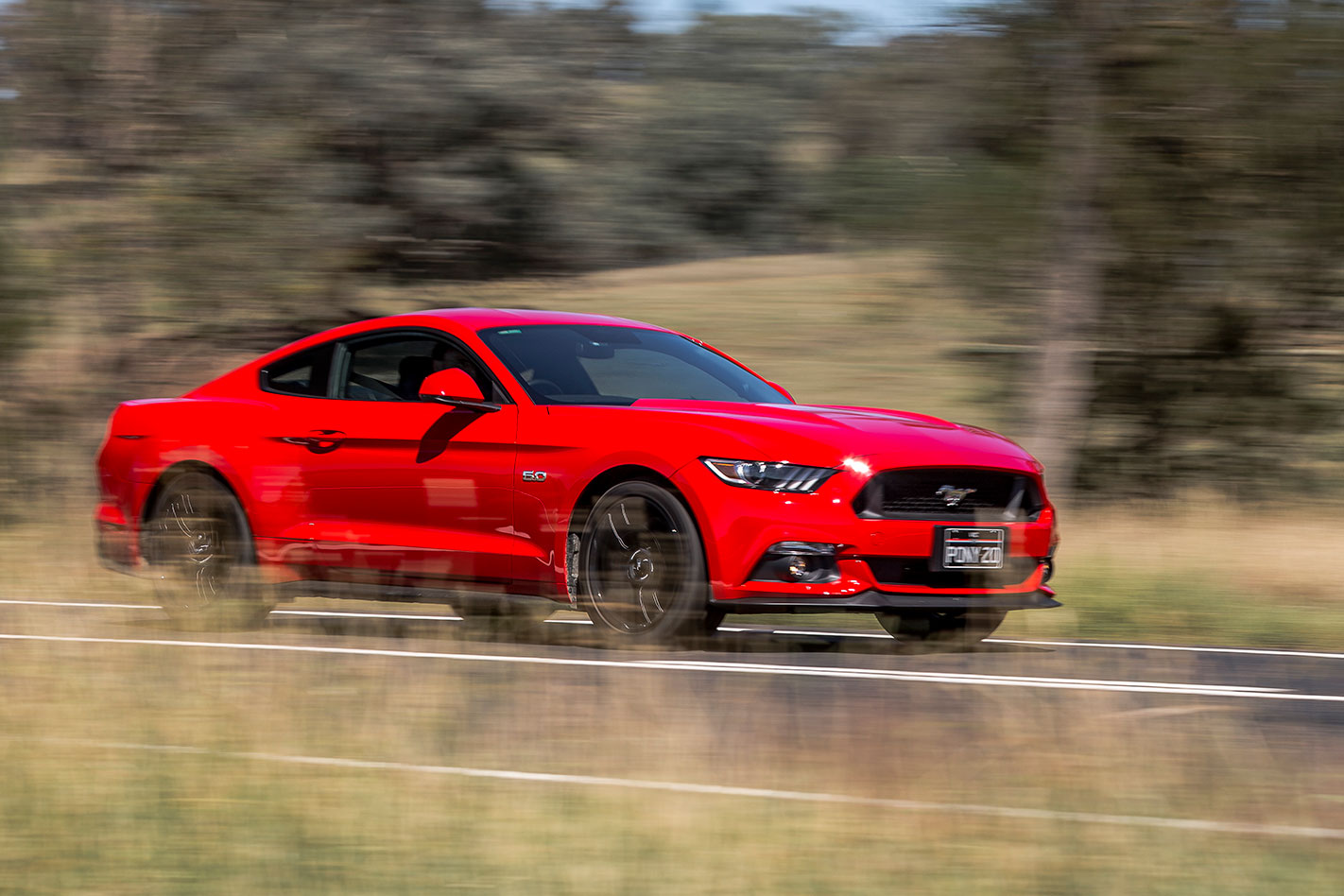
The Mustang received a mild facelift and significant equipment upgrade for the 2018 model year, bringing the 12.0-inch digital gauge cluster, a suite of driver aids, improved interior quality, a more powerful V8 engine, and a 10-speed automatic transmission. The V8 GT Coupe and Convertible arrived in June 2018, with the 2.3-litre four-cylinder EcoBoost following that September.In October 2018 Ford Australia introduced the Mustang Bullitt, which is the most powerful factory Mustang ever offered in Australia. Limited to 700 units, the Bullitt has a more powerful version of the 5.0-litre V8 engine that’s linked to the six-speed manual transmission with rev matching.
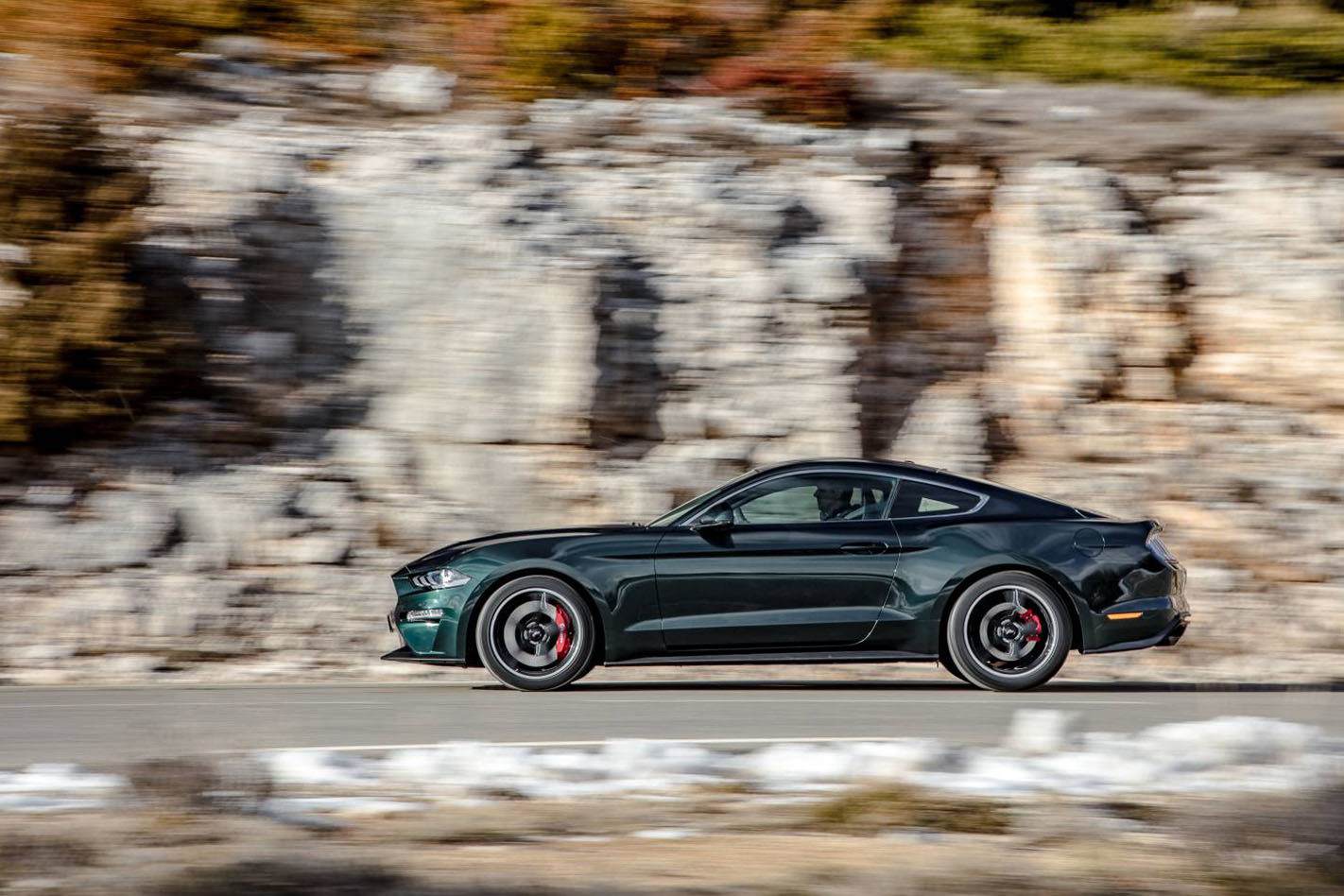
True to the 1968 original from the film, each Bullitt has a Fastback body with extras including 19-inch alloy wheels, red Brembo brake callipers, chrome window trim and individually-numbered plaque, cue-ball style gear-knob and Bullitt badging.
In early 2020, the Mustang Ecoboost received a more powerful turbocharged engine and was renamed the Mustang 2.3L High Performance. Ford also introduced a limited edition, Australia-only, supercharged V8 version called the Mustang R-Spec followed by the 2021 Mustang Mach of which 700 will be sold.
UPDATE – Despite claims that mobile speed camera units would continue operating with warning signs until 2021, WhichCar has already observed units deployed in the southern highlands to the south of Sydney operating without signs in place.
A unit was spotted in late November operating just south of Marulan, about an hour from Goulburn. There were no signs either in front of or beyond the marked vehicle.
Additional units were spotted in suburban Wollongong in early December (below).
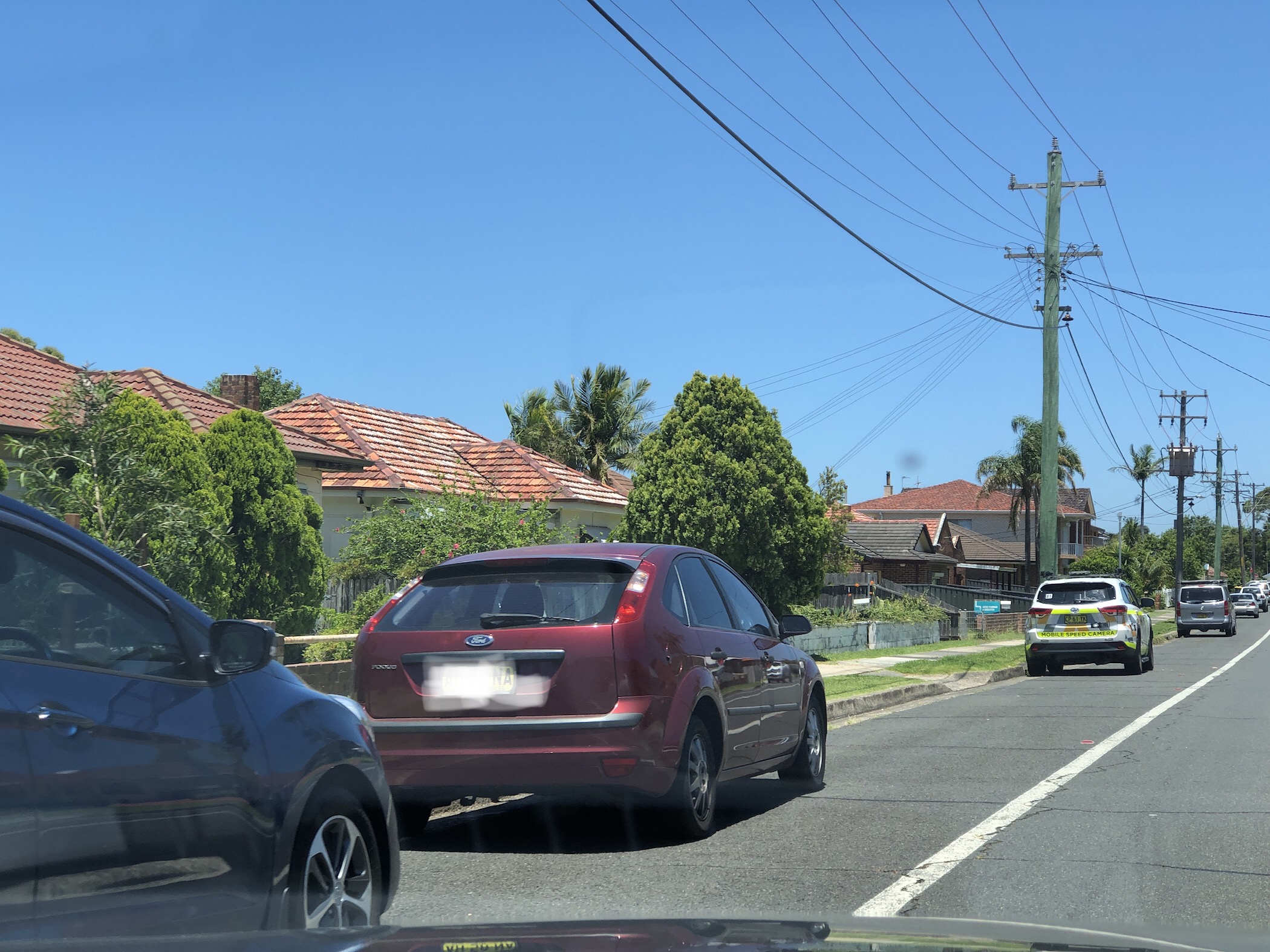
An announcement by the state government earlier in the month stated that warning signs for mobile speed cameras will be banished.
The minister for transport, Andrew Constance, announced the measures as part of a raft of changes that include increases in penalties for drink and drug driving offences.
“Warning signs for mobile speed cameras will be removed over the next 12 months, bringing NSW in line with other jurisdictions,” said the minister.
“This is about changing culture, and changing behaviour.”
The minister flagged the change late last year, as well, suggesting the idea was “under consideration.”
In data released in late 2019, the government claimed that fixed speed cameras across the state have reduced fatalities by 80 per cent.
The review also suggested that injuries also fell by more than a third at the 110 fixed speed camera locations across NSW.
NSW operates 45 mobile speed camera units that can be deployed anywhere in the state. Currently, the units warn drivers of their location with portable signs that are placed 250m, then 100m ahead of the unit’s location.
It’s the only state or territory in Australia to advise drivers that a mobile speed camera is in operation.
Minister Constance related the change to the mobile phone detection camera scheme in NSW, which operates upwards of 15 phone detection cameras that are not advertised to motorists.
“We’ve seen it happen with our world-leading mobile phone detection program, where the rate of people offending has steadily declined,” said minister Constance.
“No warning signs mean you can be caught anywhere, anytime and we want that same culture around mobile speed cameras.”
Along with the removal of the signs, the mobile speed camera units will be rolled out more often, with reports suggesting that the units will be deployed three times as often from next year.
The total number of hours that the units will be deployed per momth will jump from 7000 to 21.000.
The impending change has been slammed by politicians from both sides of the divide, however, including by members of the ruling Liberal National Party, as ill-considered and little more than a revenue-raising exercise.
“Today’s decision by Andrew Constance to remove the speed camera warning signs for the mobile cameras is an absolute disgrace and unfairly targets regional and rural motorists,” Nationals MP Fang said in a statement.
He also maintained that it was “disgraceful” that the proposed changes were not discussed with party members before they were announced.
Labor party shadow minister for racing and gaming, John Graham, accused the government of removing the warning signs to increase fine revenue.
“It’s a budget measure. We know that fine revenue will leap by about a third as a result of this single measure,” he said.
- New traditional 4×4 vehicle
- Backed by UK chemical giant Ineos
- Developed by Magna Steyr, due in 2022
Sir Jim Ratcliffe’s Ineos Automotive has confirmed that the Grenadier will be built in Hambach, in a factory Ineos has bought from Mercedes-Benz.
It currently produces Smart ForTwo electric cars, which Ineos will, incongruously, build alongside the Grenadier on a contract basis.
“Hambach presented us with a unique opportunity that we simply could not ignore: to buy a modern automotive manufacturing facility with a world-class workforce,” said Ratcliffe. “Ineos Automotive set out a vision to build the world’s best utilitarian 4×4, and at our new home in Hambach we will do just that.”
While the move will preserve 1200 jobs in the French plant, it puts paid to a revival of car manufacturing in Wales.
MORE Is the Grenadier coming Down Under?
Production of the Grenadier, which is being co-developed by vehicle specialists Magna Steyr, will start in late 2021, with the first customers now expected to get their cars in early 2022.
Although the move deprives Ineos of the opportunity to wave the Union Jack in the face of Land Rover – which builds the new Defender in Slovakia – it does mean it can slot straight into a modern, recently upgraded factory, handily located close to the German border, just 400km from its engine supply at BMW.
CEO Dirk Heilman added that “this acquisition marks our biggest milestone yet in the development of the Grenadier. Alongside the exhaustive testing programme that our prototype vehicles are now undergoing, we can now begin preparations at Hambach to build our 4×4 from late next year for delivery to our customers around the globe.”
That means a possible 200 jobs may now go elsewhere.
“Some new options, such as this one with the plant in Hambach, have opened up that were simply not available to us previously,” Heilmann, the chief executive of Ineos Automotive told the BBC.
“We are therefore having another look – and reviewing whether the addition of two new manufacturing facilities is the right thing to do in the current environment.”
Ratcliffe last year said that the plan was to build in the UK.
Ineos Grenadier: what you need to know
Ineos is a British chemicals company that operates globally, with 183 manufacturing facilities in 26 countries supplying markets around the world.
Fans of F1 and yacht racing might have seen the brand name on the Mercedes-Benz F1 team cars and America’s Cup racing boats.
Ineos founder Jim Ratcliffe is a proud Brit and was a big fan of the Land Rover Defender. So much so, that when JLR announced it was discontinuing the Defender as we knew it, Ratcliffe tried to buy the rights and equipment to keep the Defender in production.
MORE Here’s why we need the Ineos Grenadier in Australia
JLR didn’t want a bar of that, so Ratcliffe decided to do it on his own and created Ineos Automotive to build the Grenadier.
From the off, the Grenadier was always going to have a traditional box-section ladder frame, with beam axles, permanent four-wheel drive, lockable diffs and internal combustion engines.
Says commercial director Mark Tennant: “Number one focus was off-road mobility and capability. An off-road vehicle that doesn’t keep on going and providing years of faithful service isn’t really doing the job. It’s got to get you out into the bush and back again.
“It’s a vehicle designed first and foremost to be a working tool. Not everybody is going to work it as hard as some of the really exacting requirements some of our customers will have, but it’s got to be capable of that.
“You shouldn’t have to suffer, you shouldn’t be in any pain for having a utilitarian vehicle. In terms of connectivity, screens, seat comfort, room – that’s all built-in. It’s not a throwback. It’s a modern vehicle built to a certain style.”
Do you own a dog who loves car rides? Unlike cats or goldfish, dogs generally enjoy hitting the road with their human companions, but if you’re not prepared driving with your pet can turn in to quite an ordeal.
We’re all guilty of letting the puppy roam free in your car, but in the case of an accident or sudden braking, your slobbering best friend can turn into a missile and end up flying out the car, through the windscreen or hitting and injuring another passenger.
| Australian road rules you didn’t know existed
As Australia has one of the highest rates of pet ownership in the world according to the Australian Companion Animal Council, and it’s important everyone travelling with pets know the regulations.
It’s not uncommon to see pets unrestrained in cars, sitting on drivers’ laps or hanging their head out an open window, but these situations can end in disaster or serious injury.
And unfortunately we also see all too often unattended dogs in cars, which can lead to tragedy.
Each state in Australia has its own set of rules and regulations so be sure to look up any laws of states you’re travelling through.
As a general rule, pets should be kept away from the driver to avoid distraction, and appropriately restrained to prevent it leaving the vehicle.
Rules and regulations
The following rules are a general guide to keep your pet, passengers and yourself safe when taking to the road.
- Drivers cannot drive with pets on their lap.
- Pets should be kept in an appropriate area of the vehicle: the rear seat of a passenger car, behind a cargo barrier in a wagon or SUV, or tethered or caged if on the back of a ute.
- Dogs cannot be kept in the boot of a sedan-like car.
- Pets must not be put under unreasonable or unnecessary stress or suffering.
Accessories to keep everyone safe
If you are concerned and want to ensure your dog and passengers are kept in optimum safety, there are various accessories you can buy.
While it’s not illegal in all states to leave your dog unrestrained, doggie harnesses really come down to common sense. Not only will this stop your pup from causing a distraction, it’ll also prevent it from become airborne under sudden braking or jumping out the window and injuring itself or causing major traffic incidents.
Harnesses work by securing your dog via a seatbelt attachment, and should always be used in the rear seats. Some car makers even supply specially designed harnesses for the car like this one from Skoda.
Hammock seat covers and front seat barriers are also an option to restrict the furry friend’s access to the front seats.
If you prefer to keep your pup in the cargo area of your wagon or SUV, and prefer to not keep them locked up in a travelling crate or container, then consider a cargo barrier.
Other things to consider when travelling with dogs
Of course, it should be a given that any time you travel with pets, you do what you can to ensure their road trip is as comfortable and carefree as possible.
This means have water and food on hand, and discussing options with your vet to prevent or deal with doggie motion sickness.
Can I leave my dog in my car for a couple of minutes?
Think for a moment about your car. That interior space has a big volume of air, and its windows allow in a lot of sunlight.
When subjected to radiant heat, that air space becomes a furnace. And quickly. If you have to ask yourself ‘can I leave my dog in the car?’ that answer is no.
The ambient temperature inside a sealed car on a sunny 20-degree Celsius day can double in less than ten minutes, and rise to as much as 60 degrees C within 30 minutes.
Even on a sunny 15-degree C day, internal temperatures can reach dangerous levels.
Studies have also shown that even cracking the windows open to cool the car is ineffective, as temperatures will still quickly rise to 80 per cent of the maximum.
While these temperatures are incredibly uncomfortable and potentially dangerous for humans for a brief period, it’s much worse for dogs, who can’t process heat as efficiently as we can.
The RSPCA estimates a dog can die of heat-related causes in as little as six minutes.
Dogs left in cars are particularly at risk because they don’t sweat, so they cool themselves by panting, exposing their tongue that acts as a radiator to cool the blood.
If the air around them is too hot, especially if they don’t have access to water, a dog is physically unable to regulate its body temperature.
In the time it takes to grab something from the shop, a dog left in a hot car may die an agonising death.
Leave your dog at home if you have to leave him or her unattended. If you’re caught leaving a dog locked in a car and causing it distress, you can be fined up to $50,000 or charged for animal cruelty by police or the RSPCA.
Can I break a window to save a dog?
The legalities around rescuing a dog in distress are complex – there is no ‘dog in car law’, and property damage is property damage.
There are alternatives to breaking a car window to save an animal, though.
Who should you call if you see a dog locked in a hot car? The RSPCA and the RACQ both suggest to phone the police on 000, or a motoring club’s breakdown line, because both bodies are equipped to quickly and safely open a locked car without the risk of flying glass injuring the dog or other people.
You can also call the RSPCA’s hotline 1300 CRUELTY as a final resort.
If it’s possible to cool the car down – wetting the vehicle or shading the roof with umbrellas or a tarp – that should be done immediately.
Confusing the issue is a law that’s enforced in Queensland and other states that requires a car to be ‘secured’ when unattended.
A window gap of only up to 5cm is acceptable, but a fine can be levied if a window is left open or the door is unlocked and you’re more than three metres away from the car.
But the answer is simple; please, don’t leave your pet unattended in your car, no matter the circumstances. The potentially tragic outcome isn’t worth it.
Imagine being the follow-up act to the wildly-popular Gymkhana video series that Ken Block and Hoonigan has spent the past decade creating.
Wouldn’t be the easiest day in the office, would it?
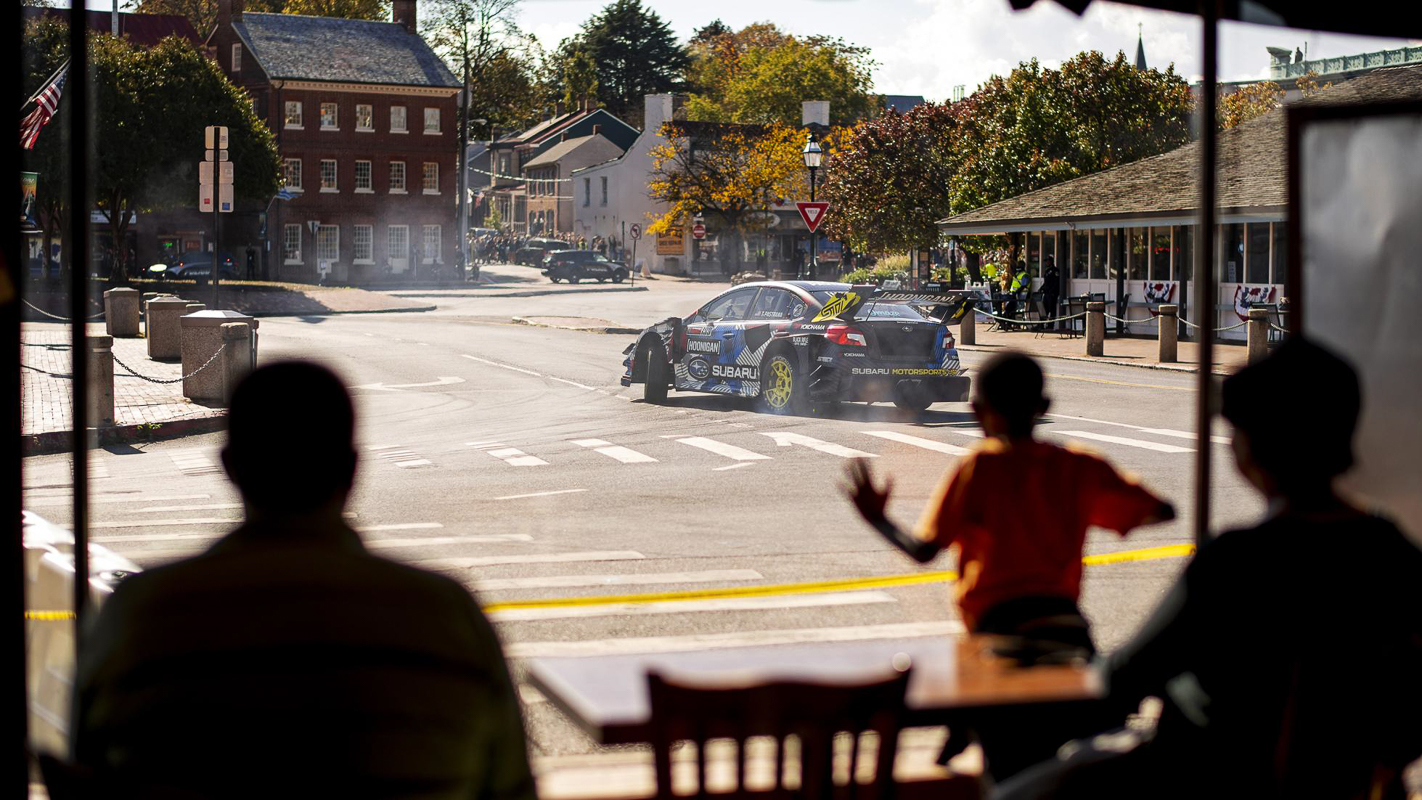
But noted US stuntman Travis Pastrana has blocked out the haters and given the 11th instalment his all, performing some of the most death-defying stunts we’ve seen to date.
Not only that, but Pastrana – the brains behind the Nitro Circus franchise – has given long-time Gymkhana partner Ford the flick, returning to the brand that underpinned the very first viral video, Subaru, for Gymkhana 11.
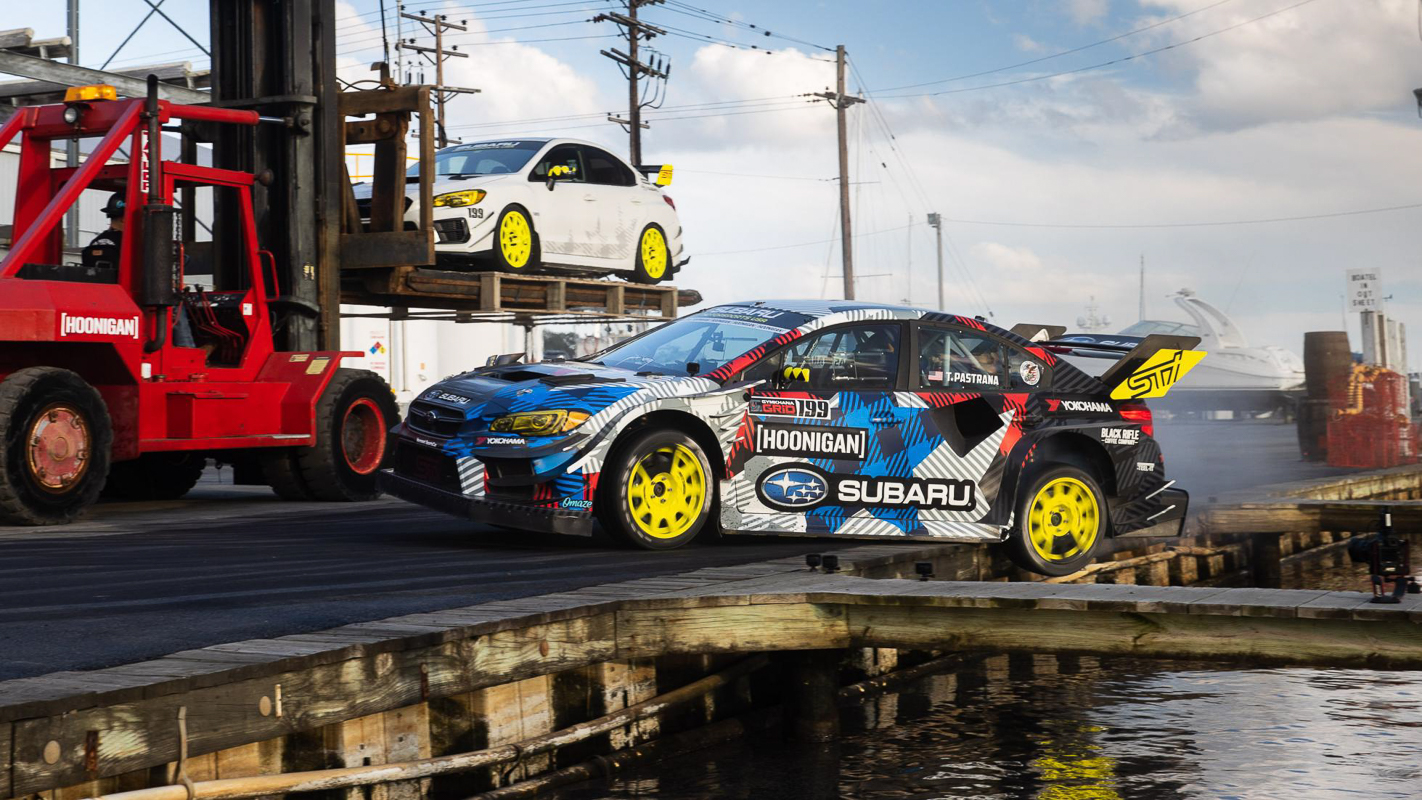
Pastrana, who was given carte blanche to create his own version of a Gymkhana vid, chose to draw upon local knowledge of his Annapolis, Maryland hometown.
Just as well, too, considering many of the stunts in the nine-and-half-minute film were insanely precise and immensely dangerous.
One such jump involved leaping over a 37-metre wide river and over a wild Hoonigan-branded speedboat.
Another involved nearly dropping the car off the docks mid-drift, and the wildest of all involved a ramp, a tight rural road and 240km/h showing on the speedo…
Ken Block hoons 1000kW Ford Mach E
Of course, this display of driving couldn’t have been completed in any ordinary car.
The film prompted the build of a 642kW/900Nm Subaru WRX STI, created by Subaru Rally USA partner Vermont SportsCar.
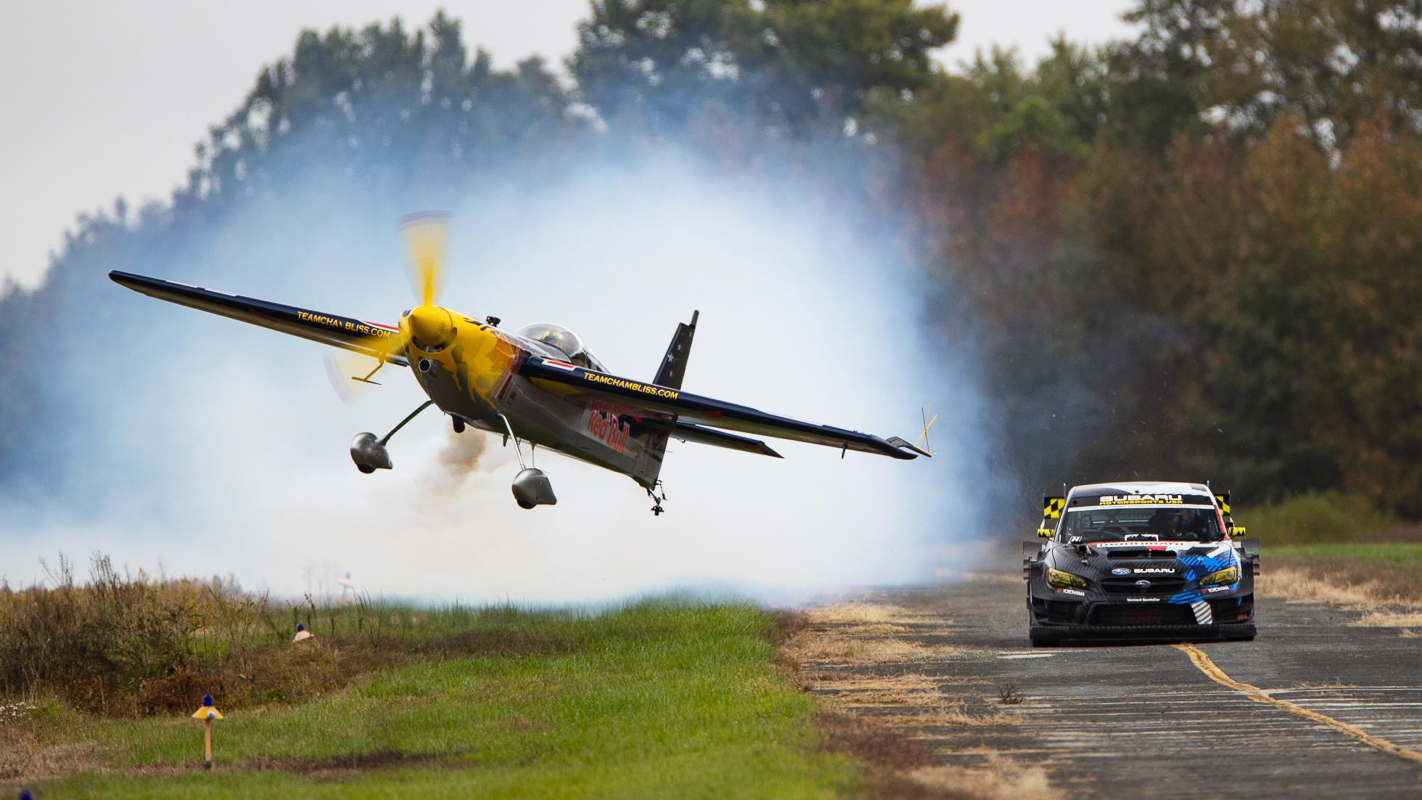
The fully-custom skid machine features a 2.3-litre boxer billet engine that revs to 8000rpm, can run up to 50psi of boost, spits flames from a turbo dump pipe right through the bonnet and uses active aerodynamics bolted to a carbon fibre widebody WRX sedan.
“I asked for a car that could shatter the record at Mt Washington after this Gymkhana shoot was over but still fly a 200-foot gap. It’s the lightest and quickest vehicle I’ve ever driven,” says Pastrana.
“We’ve never had the opportunity to do this before,” he adds, “to build a car with no restrictions. Engine, suspension, aero… everything is unlimited, clean sheet.
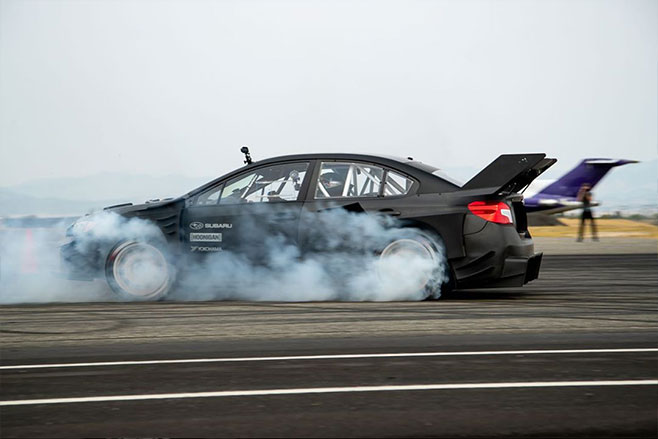
“It’s crazy fast, easy to control and get sideways and it was perfect out of the box in testing. Gymkhana is a new challenge for me but I want to raise the bar, and this is the car to do it.”
It’s the greatest departure from the norm we’ve seen from the series yet, with a new car and new driver, all filmed with respect to the ever-threatening coronavirus pandemic.
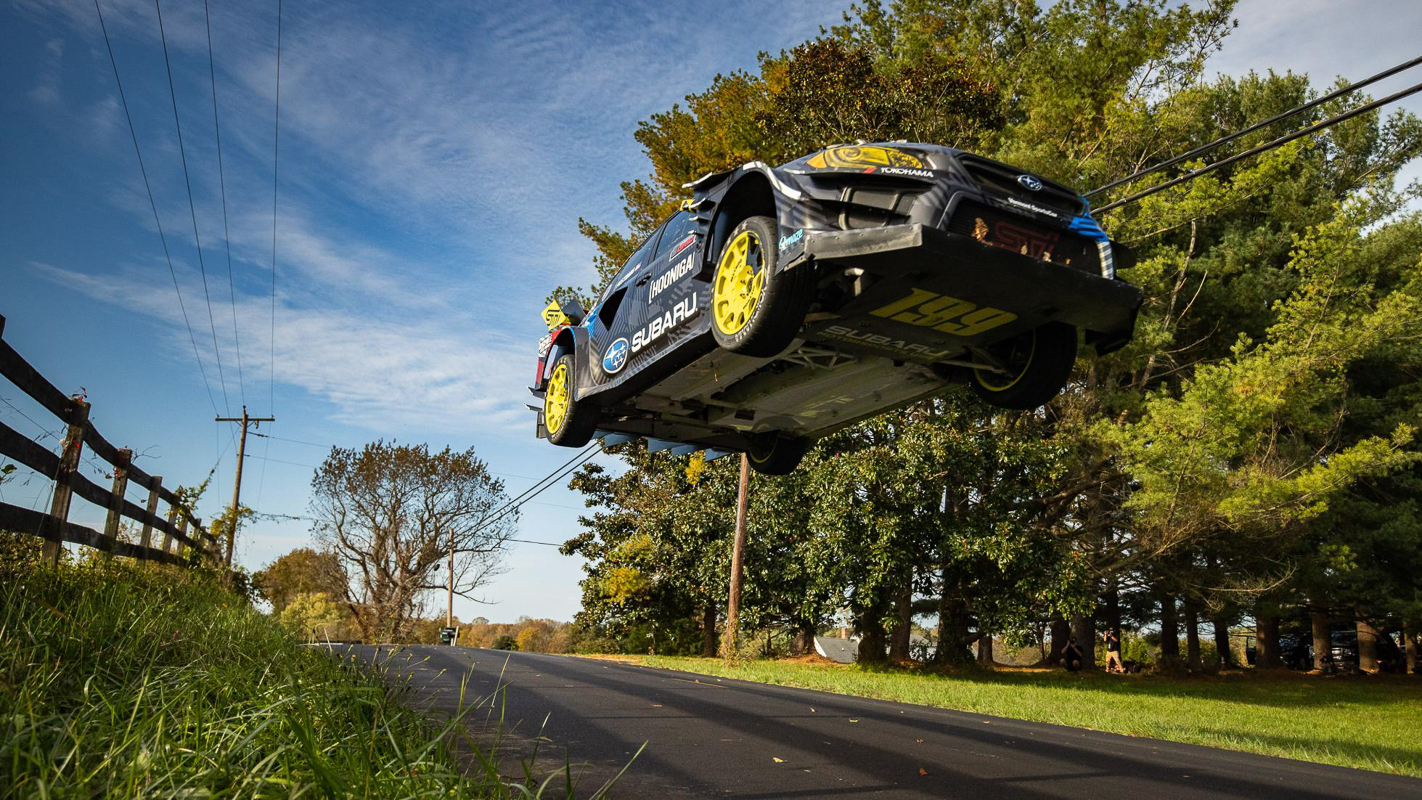
Despite looking terrified any time the camera cut to him during an in-car shot, we reckon Pastrana held his own throughout Gymkhana 11.
What do you think of his efforts in this year’s feature film?
Kia is pushing on with its performance-leading Stinger flagship for the 2021 model year, bringing updates aimed at improving the large-sized liftback’s safety, tech, design and equipment.
Those additions don’t come for free, though, with prices rising across the four-variant range.
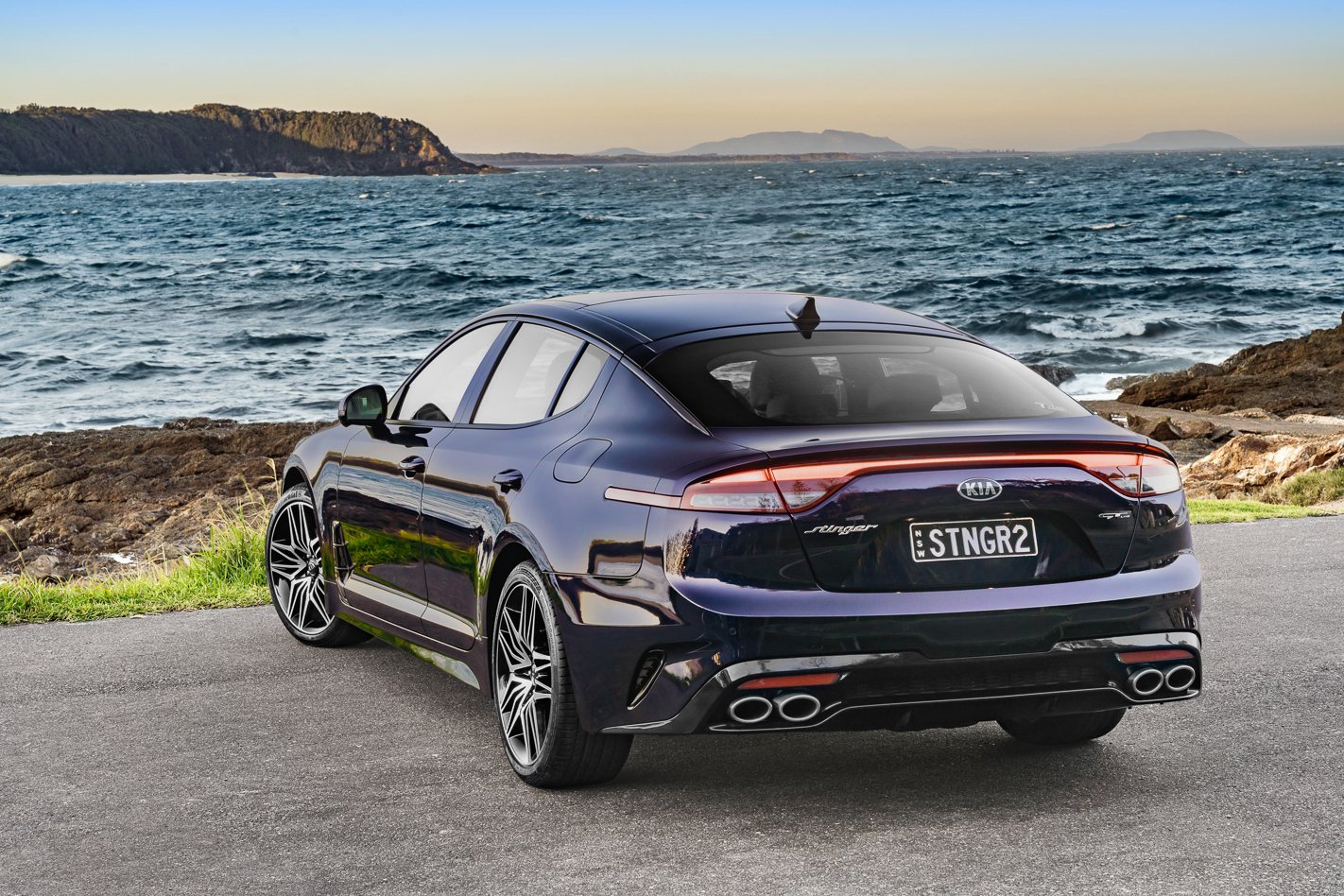
The price for the entry-level Stinger 200S is up by as much as $2000, while the greatest increase is for the 330S model, which is now $2900 more expensive.
A full pricing run-down can be found at the bottom of this article.
Headline additions to the 2021 Kia Stinger include a new 10.25-inch infotainment screen, subtle design updates, slightly more power and a new bi-modal exhaust for V6-powered cars.
Safety is bolstered by a new blind-spot view monitor on the GT-Line and GT variants – as specced on the new Sorento large SUV – as well as an automatic emergency braking mode with junction assist which can detect oncoming traffic obstacles at intersections.
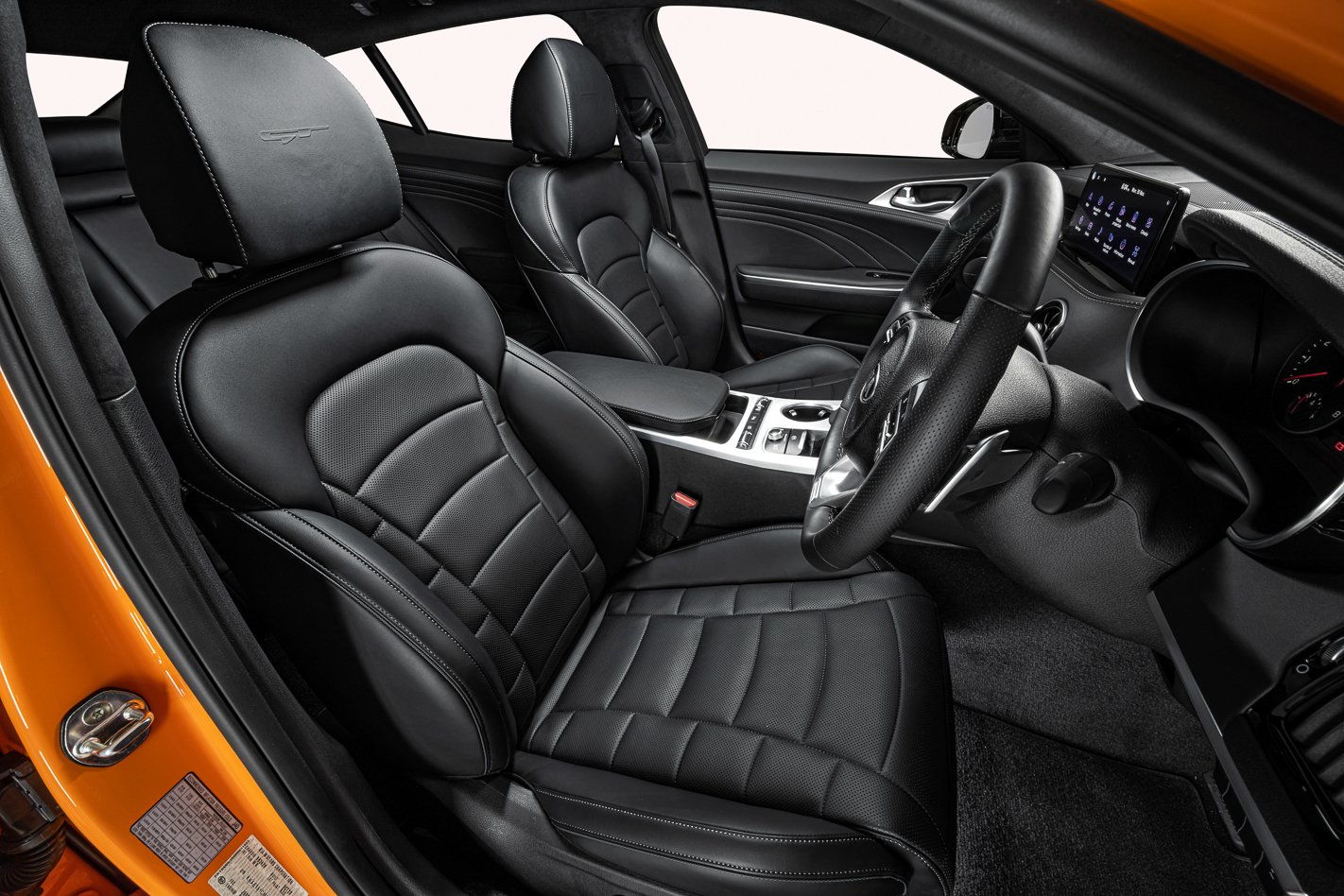
As before, the 2021 Stinger range will comprise four variants; the entry-level four-cylinder 200S, 330S, GT-Line and the flagship GT.
The range opens with the 200S and 330S, which now receive LED headlights with integrated daytime running lights as standard.
The higher-spec GT-Line and GT receive dynamic bending LED lights.
The 200S and 330S variants now receive a 4.2-inch colour screen within the instrument cluster (GT-Line and GT cars receive a 7.0-inch digital instrument cluster), while all four score native satellite navigation and a new multi-Bluetooth system which can juggle multiple pairings simultaneously.
Further hallmarks of the GT-Line and GT cars include a powered tailgate and a 64-colour ambient lighting system.
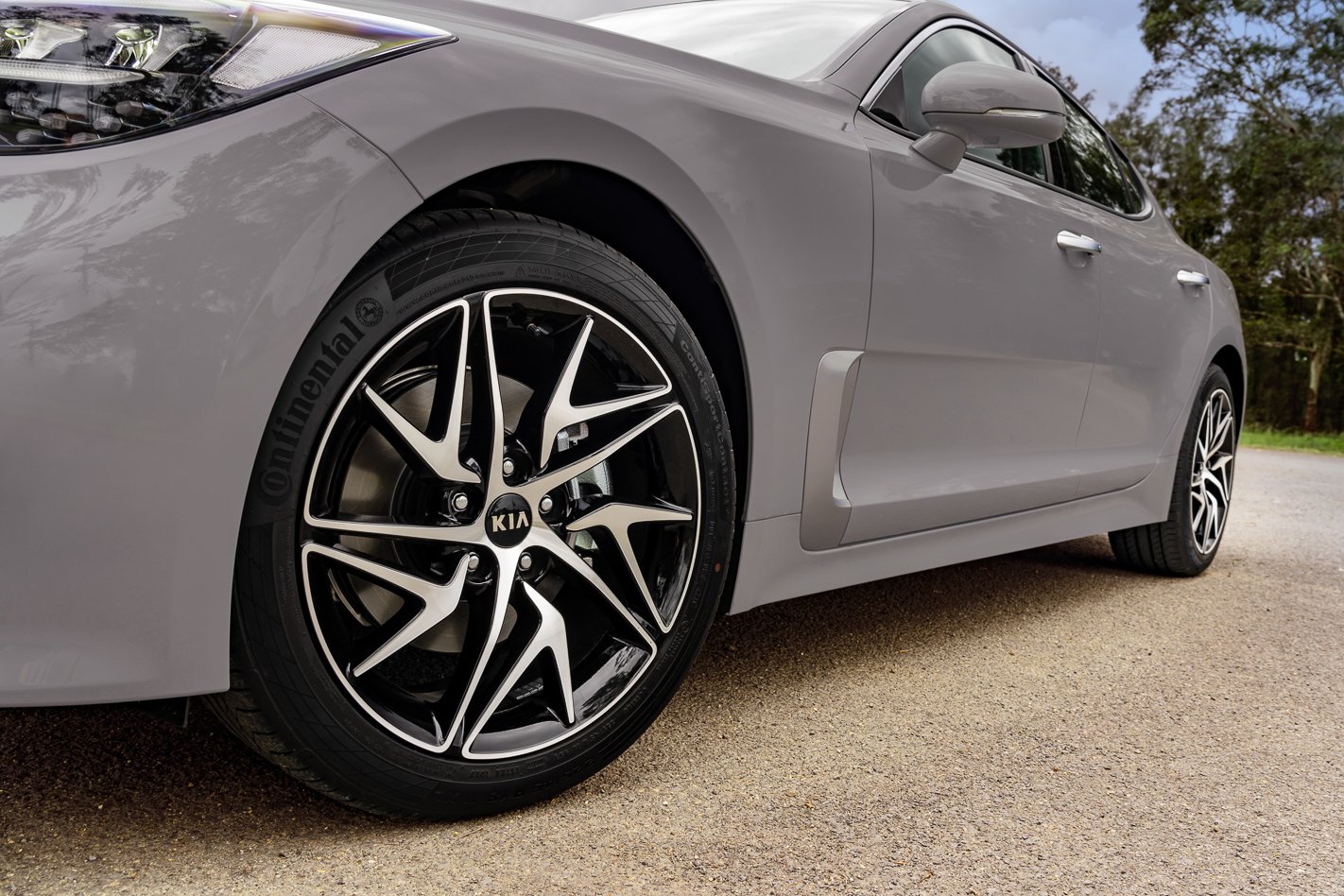
Engines for the 2021 Kia Stinger range remain largely unchanged.
The 274kW/510Nm 3.3-litre twin-turbo V6 carries over for the 330S and GT, and has been boosted by 2kW thanks to a new bi-modal exhaust system.
The turbocharged 2.0-litre four-cylinder engine is unchanged, offering 182kW and 353Nm in 200S and GT-Line specifications.
Both engines are paired with an eight-speed automatic transmission and send power the rear wheels only.
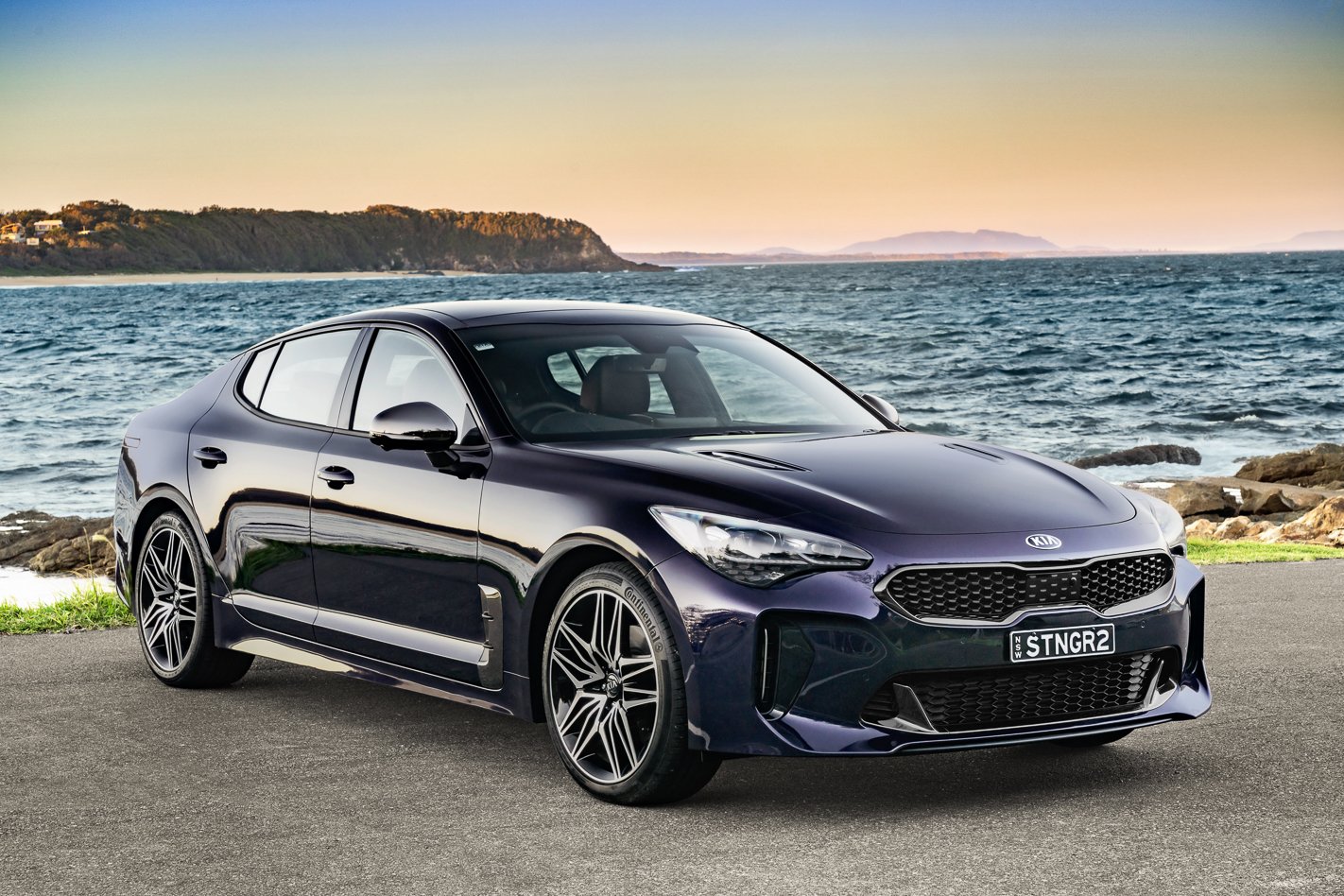
Kia remains committed to the car, despite initially not knowing how it would be received upon its 2017 release.
“Since launching the Stinger into an uncertain market the results have been consistently pleasing,” said Kia Australia chief executive Damien Meredith.
“Australians have always loved and desired a performance edge to their family transport, and in the Stinger they have the joy of driving enthusiastically and the confidence of safe family touring.
“With the inclusion of new technology and upgrading of existing safety and convenience features, buyers looking for that rare combination of enjoyment and practicality have even more reason to consider a Stinger.”
2021 Kia Stinger Australian pricing
- Stinger 200S – $49,450
- Stinger GT-Line – $57,230
- Stinger 330S – $53,330
- Stinger GT – $63,260
BMW’s nomenclature is quite straightforward, with the standard hatch, sedan or wagon offerings given an odd model number – think 1, 3, 5 and 7 Series – with the sportier coupe and cabriolet versions of those cars given even-numbered designations.
But the second-generation 4 Series Coupe seems to have broken by convention by being way more than just a two-door version of the venerable 3 Series sedan.

This is evident as soon as you set eyes on its, err, polarising vertical kidney grille… but, as with a friend’s odd-looking baby, you soon come around to it.
That boldface is accompanied by an aggressive stance that’s accentuated by the muscular wheel arches that extend seamlessly from the bodywork, which features a relatively subtle shoulder line.
There is some grace about the design, however, particularly the side profile that harks back to BMW coupes of old such as the 328i.

On the Road
The 4 Series’ driving dynamics also set it apart from the 3.
The engineers have made some significant tweaks that make it more enjoyable to drive despite sharing the same engines across the three-car range – the 135kW/300Nm and 190kW/400Nm 2.0-litre turbos in the 420i and 430i, and the 285Kw/500Nm turbocharged 3.0-litre inline-six in the M440i xDrive.

It’s a little wider and longer than the first-generation 4 Series Coupe and has a 41mm-longer wheelbase, but it has still managed to shed 55kg.
The front and rear track widths are 28 and 18mm wider than the previous model too.
Each track is also 23mm longer than the 3 Series, and combine with a 10mm lower ride height and 57mm shorter overall height to achieve a 21mm lower centre of gravity.

BMW’s engineers have also been busy optimising the aerodynamics resulting in reduced rear lift.
More significantly, they’ve increased chassis and body rigidity thanks to stiffening struts at the front end and around rear suspension.
The standard M Sport suspension also uses new rear dampers that rid the 420i of the jarring ride that can blight the 320i.

The 430i and M440i also come standard with Adaptive M suspension with electronically controlled dampers that really iron out the bumps.
The default Comfort setting was adequate in most conditions while driving through Victoria’s twisty Dandenong Ranges, and the ride was so composed that you’d have to overcook a bend to feel any kind of body roll.
You can’t go wrong using the Individual driving mode to keep everything in Comfort while leaving the engine in Sport or Sport-plus should you require more revs between upshifts.

The Dandenongs were also a great place to test the steering, which has been improved by adding 1.5 degrees more negative camber on the front wheels compared to the sedan.
The result is delightfully direct steering backed up by palpable body stiffness and a compliant rear end.
The eight-speed automatic transmission adds to the driver enjoyment by swiftly responding to pedal inputs

There are paddle shifters for manual inputs, but I happily kept it in auto to concentrate on pointing the nose exactly where I wanted it.
Sadly, the boldness that the 4 Series exudes doesn’t extend to the soundtrack of either engine – there’s no throaty roar or the pop-and-fart theatrics of the 8-Series when you manually downshift., though the six-pot M440i provides some audible pleasure.
Comfort and Features
The BMW 4 Series is also a great daily driver. The cockpit is comfortable, with well-bolstered but plush sports seats at the front and two comfortably moulded seats in the rear which offer impressive legroom – and not just for a two-door coupe.

While we’re looking down back, the 440-litre boot is 40 litres smaller than the 3 Series sedan.
Priced from $70,900, $88,900 and $116,900 for the 420i, 430i and M440i respectively, the 4 Series Coupe shares a cockpit and all of its safety and infotainment technology with the 3 Series, including a head-up display and a digital dashboard.

There are a couple of new features too, such as a digital key that allows you to use an Apple iPhone to access and start the vehicle.
And for the first time in a BMW there is now wireless Android Auto smartphone pairing as well as Apple CarPlay and BMW no longer charges you extra for either.

The Intelligent Personal Assistant voice command also does a few new things including the ability to select drive modes without taking your eyes off the road.
The Verdict
BMW’s designers and engineers set out to make the 3 and 4 Series same-same but very different by making the latter bolder, expressive and even more delightful to drive.
The intention was to attract buyers seeking something a little more extroverted than the elegant 3 Series sedan that’s perfect for gran turismo driving and, subdued engine noise aside, I reckon they’ve nailed it.

The six-pot M440i 4.5-second 0-100km/h acceleration certainly makes this the more desirable variant of the trio but for me, the 430i represents the sweet spot of the range with more than enough power to take advantage of all the dynamic improvements.
BMW 430I Coupe specs
Australia will stake its claim amongst a top-flight crew of motorsport’s best drivers and teams in a radical new electric-powered offroad series, with former Australian rally champion Molly Taylor named as part of the driver program for 2021.
Dubbed the Extreme E series, drivers and teams will tackle short-course off-road racing in countries that have never hosted motorsport events, while driving a radical off-road buggy devised by the creators of the Formula E racing series.
Team owners include seven-time F1 champion world champion Lewis Hamilton, as well as world-class motorsport outfits like Ganassi Racing and Andretti United.
What’s more, Extreme E has tipped the participation model upside down, with each crew set to comprise of one male and one female competitor.
Taylor will join Rosberg Xtreme Racing for the 2021 season, with former Formula 1 world champion Nico Rosberg as her new boss.
And Rosberg revealed on social media that he reached out to Taylor through her website’s email address.
“I thought someone was playing a joke,” admitted Taylor. “But then he called me, we were on Facetime, and it went from there.”
Rosberg also revealed that negotiations with Taylor were protracted. “[She] played quite hard to get, and it took a lot of late-nighters,” he said on Taylor’s social media. “I’m glad [she] chose our team in the end.”
Without a full-time drive for 2020 since the departure of her former team Subaru from national competition, Taylor – who has junior WRC formulae on her resume, as well as circuit racing experience in Australia’s TCR series – says she’s raring to compete in this unique discipline.
“Nothing like this has never been done before,” she says. “It represents a huge challenge and adventure, which really excites me.”
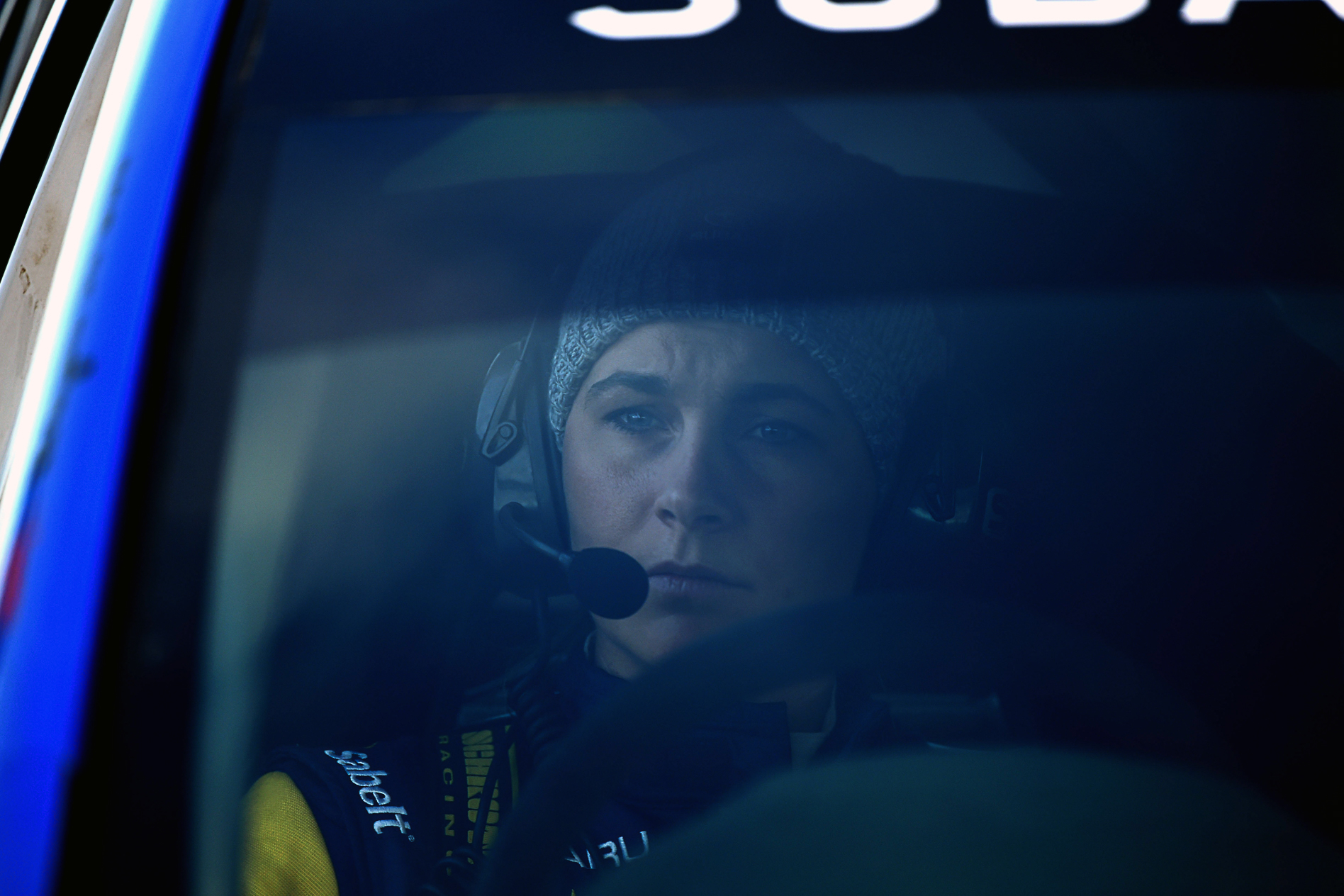
She also believes in the mantra of the series to present racing in a new and novel way, and in its broad message about the importance of confronting climate change.
“Our future, and generations to come, depend on us tackling this issue successfully,” says Taylor.
“To welcome a driver of Molly’s talent is extremely exciting for RXR,” said Rosberg in a statement. “Her experience and success in off-road racing speaks for itself.
“However, Molly’s determination to be proactive in addressing climate change, and support our mission to promote and implement equality are also key factors in Molly joining the team.”
Taylor will partner Johan Kristoffersson, a World Rallycross driver with a formidable pedigree in the short, sharp and roughhouse world of rallycross.
“In Molly and Johan, I believe we have one of the most competitive driver line-ups on the grid both inside and outside of the car, and I can’t wait to see what they can do together with the rest of the team,” said Rosberg.
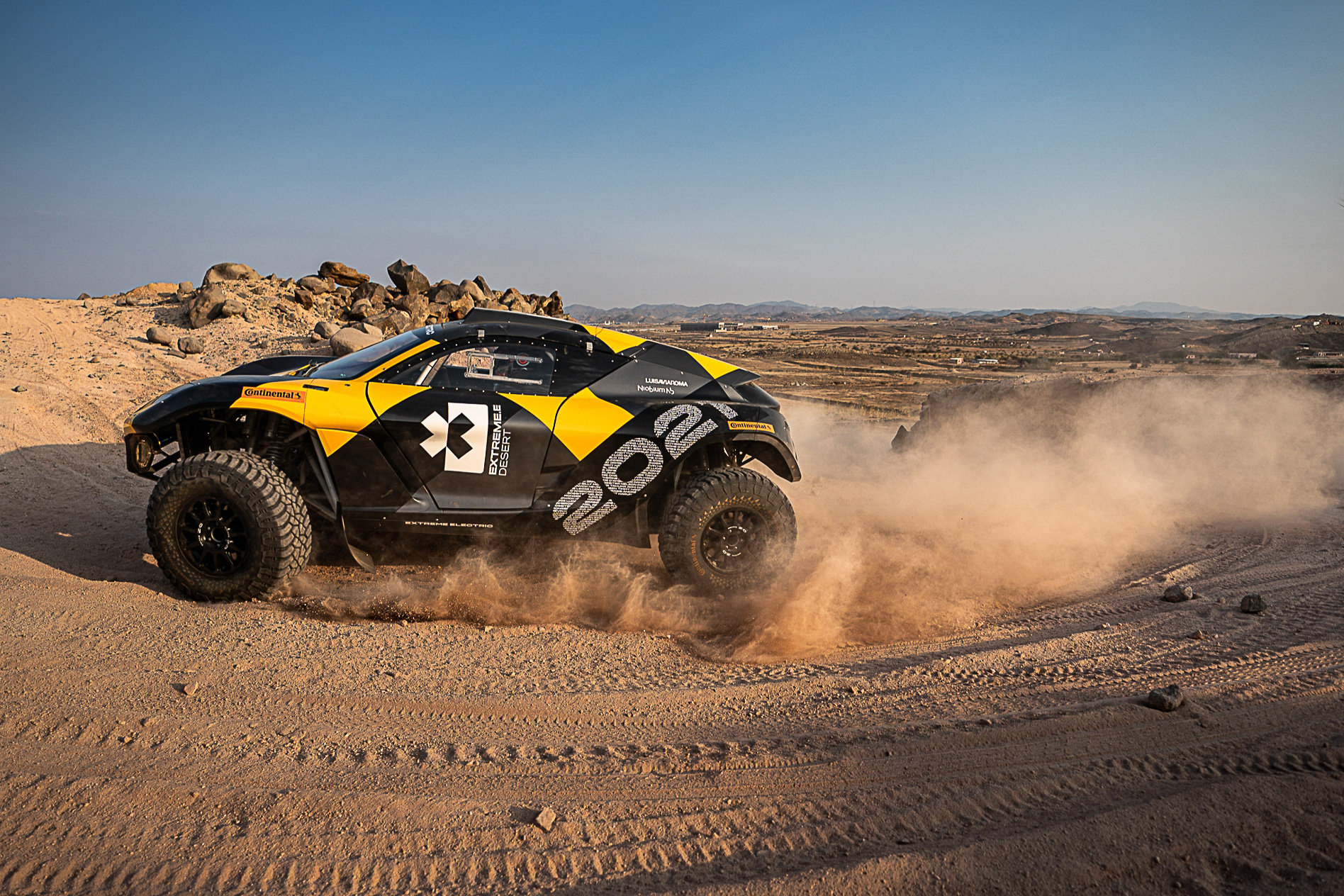
The Extreme E car, known as the Odyssey 21, will be used by all crews, and has been developed from Formula E technology. The chassis is built by Spark, the same firm who supplies Formula E cars to the series.
The tubular frame, suspension system, braking and steering system, and crash structure are all fixed, but teams are able to develop their own powertrain and tweak select areas of the bodywork.
Some of the world’s most formidable racing outfits, including Andretti Autosport, Abt, Ganassi Racing and HWA, have already come on board.
In fact, one team, Veloce Racing, has secured the services of one of motorsport’s most successful racing car designers, Adrian Newey.
Each car will be restricted to a peak power output of 400kW, which should fire the 1650kg off-roader from 0-100km/h in around 4.5 seconds, and up gradients of up to 130 percent.
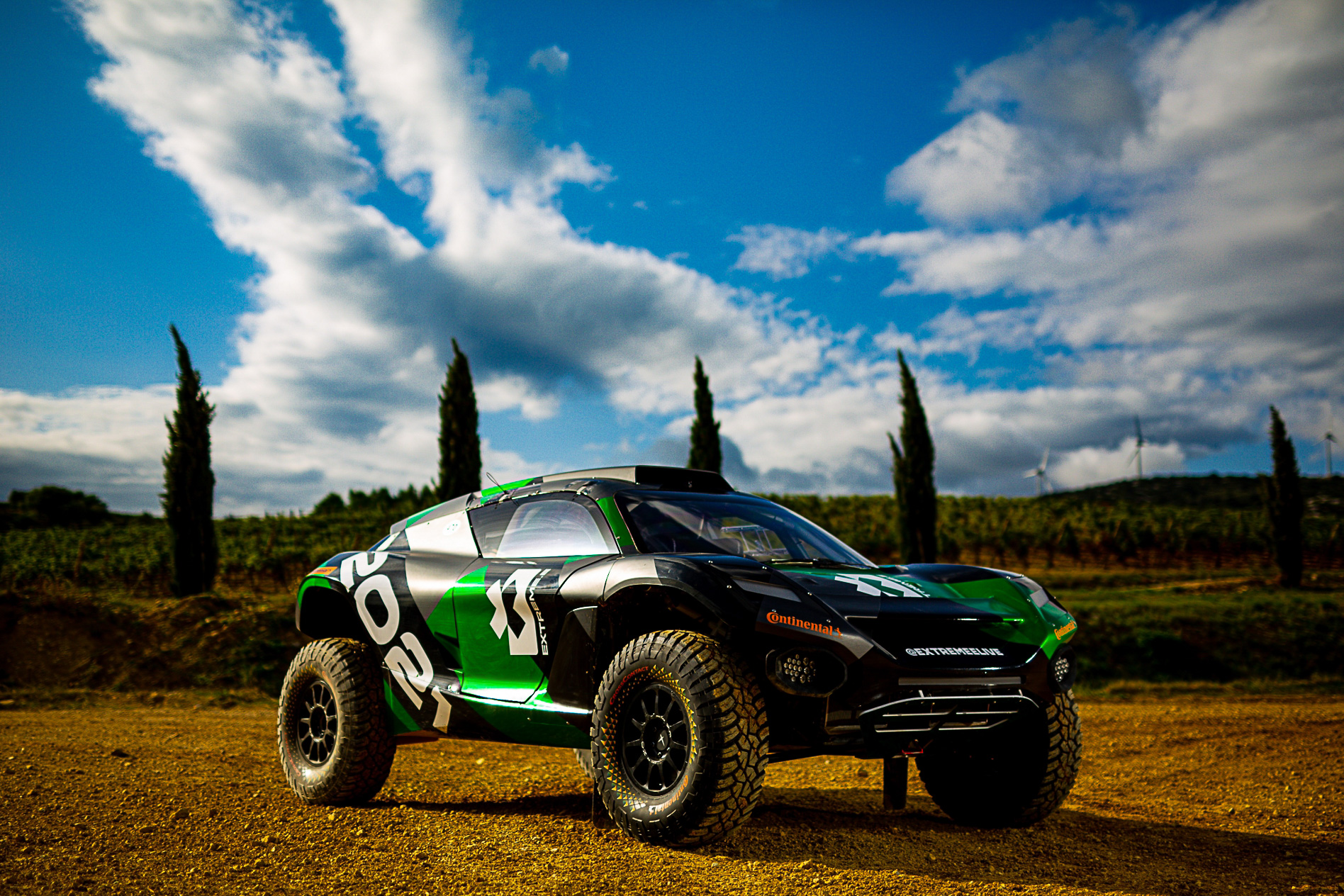
“From what I have seen of the Odyssey 21 in action, it also looks like a whole lot of fun to drive!” says Taylor.
The series will start in Saudi Arabia before moving to places like Nepal, Greenland and Brazil.
“It’s going to be a rollercoaster for all of us as well as the fans,” says Taylor, who will join other female racing aces including former Supercars star Simona de Silvestro, Continental Tyres’ Extreme E development driver and touring car racer Mikaela Ahlin-Kottulinsky, W Series champion Jamie Chadwick and sportscar racer Katherine Legge.
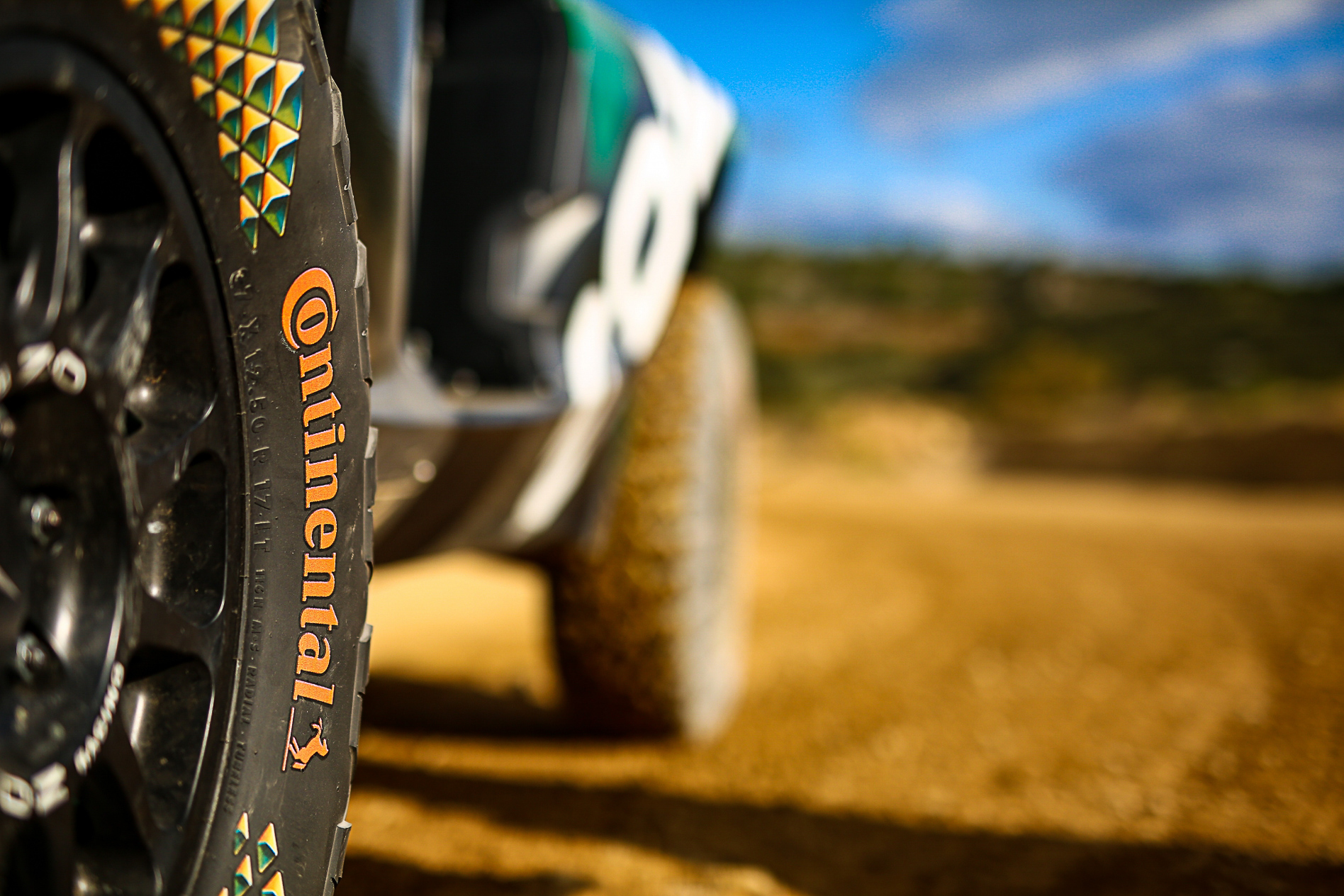
“The variety of locations and conditions we will experience is going to make it a continual adventure; they’re all bucket list places that I have never been in a position to visit, so that will be special.”
Taylor, who mixed tarmac racing with rallying last year, understands what she’s letting herself in for.
“There will no doubt be a very steep learning curve ahead,” she admits.
“I think my experience as a rally driver has given me the car control and ability to adapt to changing environments, but the specificity of Extreme E – new surfaces and the race formats – will be elements to learn and work on.
“Driving an SUV will be something new for me, too, as well as a number of the conditions in which we will drive. I’ve competed a lot on gravel, but sand and ice will be a new challenge. The format will also be completely different, especially sharing the co-driver role!”
The series kicks off in Saudi Arabia in March next year.
A new mid-size SUV from South Korea is coming… but not from Kia or Hyundai.
It’s the Genesis GV70, from those brands’ more premium cousin.
It will arrive in Australia in the first half of next year, fleshing out a slowly expanding local Genesis lineup.
The Genesis GV70 SUV, joining the GV80, is set to be built on Genesis’ rear-wheel-drive platform, but will be offered with all-wheel-drive as an option.
With five doors and five seats, the medium SUV will tackle the likes of Audi’s Q5, the BMW X3 and the Mercedes-Benz GLC in a burgeoning space.
A choice of three powertrains has been slated for the GV70’s launch: an entry-level 155kW/422Nm 2.2-litre diesel four-cylinder engine, a mid-tier 224kW/441Nm 2.5-litre turbo petrol and a 280kW/530Nm 3.5-litre turbocharged six-cylinder petrol engine at the high end.
The design study reveals the GV70 to be a handsome, well-proportioned take on the luxury small SUV.
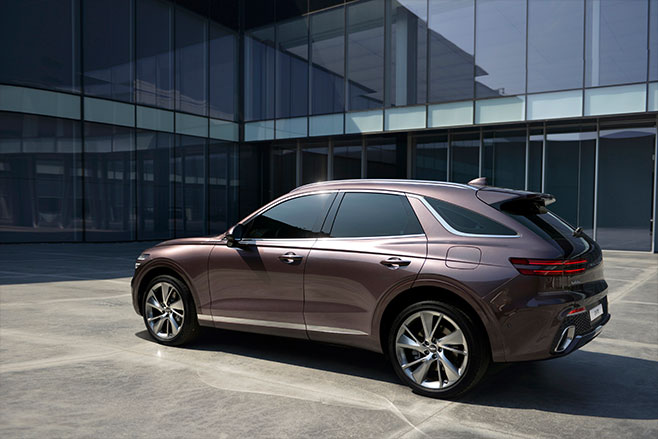
‘Athletic Elegance’, the same design language recently bestowed upon the updated 2021 Genesis G70, is present here with a Genesis crest grille, flanked by two horizontally spilt headlights, much like the new G70.
At the rear, the split light treatment continues, with huge exhaust exits featuring prominently.
“The audaciously designed new GV70 breaks new ground for Genesis through purity of design execution,” says Genesis senior VP and design boss SangYup Lee.
“This follows the Genesis G80 and GV80 which demonstrated the perfect balance of our design identity [of] ‘Athletic Elegance’.
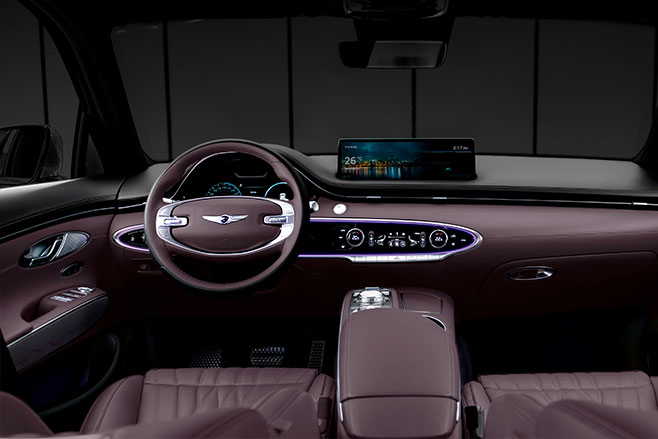
“The new GV70 inherits the Genesis design DNA including signature elements, such as the Wing Face and Two Lines.
“Along with the G70, the athletic 70-series line-up expands our design territory.”
The Genesis GV70 will come with an expansive suite of passive and active safety features, including autonomous emergency braking, blind spot collision avoidance assist, driver attention warning, navigation-based adaptive cruise control and highway driving assist. The GV70 is equipped with a total of 8 airbags, including the centre-mounted airbag in the front row.
It also receives a fingerprint authentication to control certain car features, such as a new Genesis CarPay, and for remembering specific in-car settings.
Local details including arrival in Australia and pricing is yet to be confirmed.
