
The alliance between Renault and Nissan seemed like such a good idea back in 2000, but even the addition of Mitsubishi hasn’t put the often-acrimonious relationship on the right track.
Pioneered by the now-fugitive from justice, Carlos Ghosn, the premise of the merger was simple; reduce duplication, share technology, sell more cars. However, cross-border and inter-boardroom battles have sapped the spirit from the Renault-Nissan-Mitsubishi Alliance to the point that the French government – Renault’s biggest shareholder – is threatening to withhold more than $8 billion in funding unless the company can get its merde together.

Though it feels like a bit of sabre rattling ahead of a big meeting this week where the alliance will lay out a new product plan, the French finance minister Bruno Le Maire has come out publicly against one of France’s biggest employers.
He suggests the 114-year-old carmaker needs to find new efficiencies and to adapt more quickly to emerging technologies in order to be eligible for public funding.
“Yes, Renault could disappear,” the minister told Europe 1 radio.
The COVID-19 slowdown has seen sales tumble by almost 80 percent in France in the first quarter of the year, while Renault has burned through 5 million euros ($8 million) in that same period.
It’s also in the midst of an untidy CEO changeover, with interim boss and finance chief Clotilde Delbos about to hand incoming CEO Luca de Meo a plan to cut 2 billion euros ($5 billion) in cost from the business in three years.
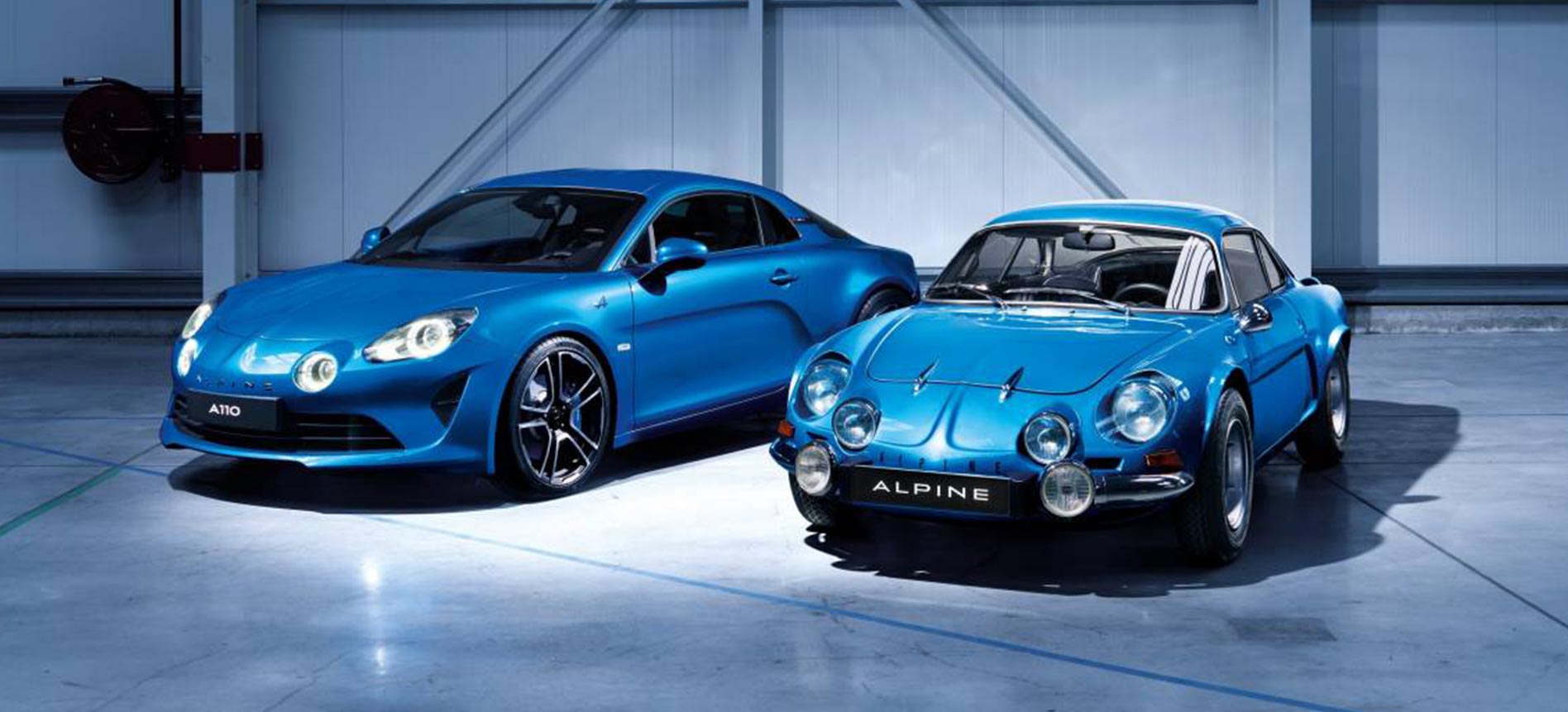
One of those plans is to close four factories, including the company’s relatively tiny but cleverly flexible Dieppe plant, which makes performance versions of the Clio as well as the Alpine A110.
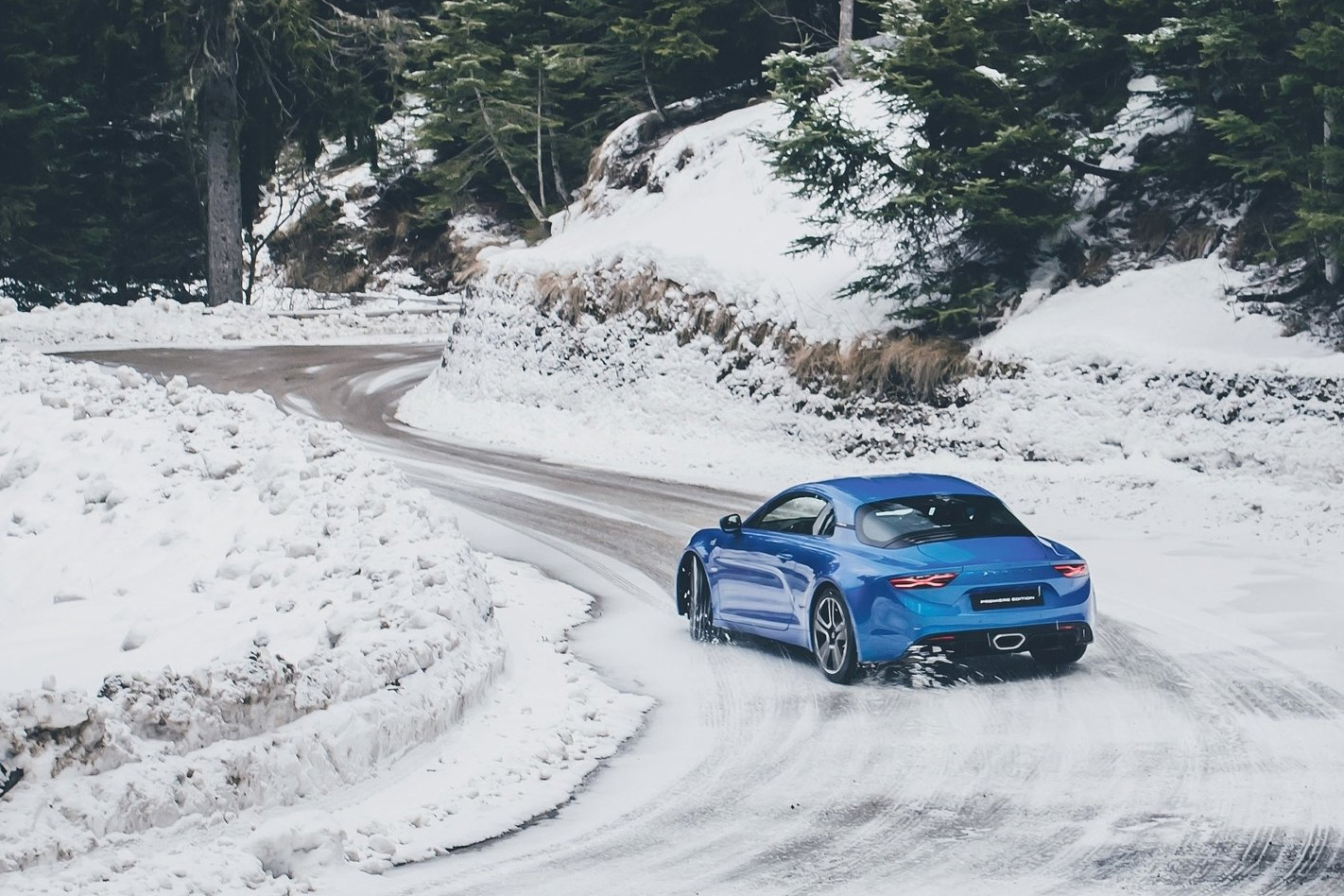
The two-seat sports car has only sold in small numbers, though shutting down the brand (again) after just three years will be an expensive exercise for Renault, with a lot of bespoke costs in the program to amortise.
De Meo is hamstrung, too, by the fact that asking for public money – the French government owns 15 percent of Renault – before closing down factories is a pretty bad look.
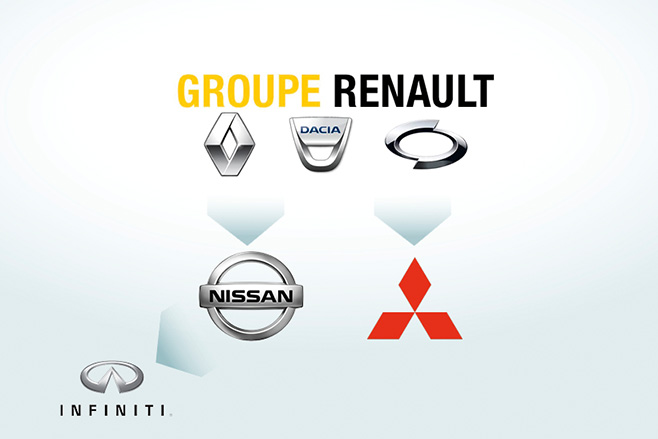
This is where the failure of the Renault-Nissan-Mitsubishi alliance is most obvious . Had the grand plans of technology and platform sharing gone ahead as envisioned, all three companies would be benefiting from cheaper, newer, more relevant products – not just in France, but across the planet.
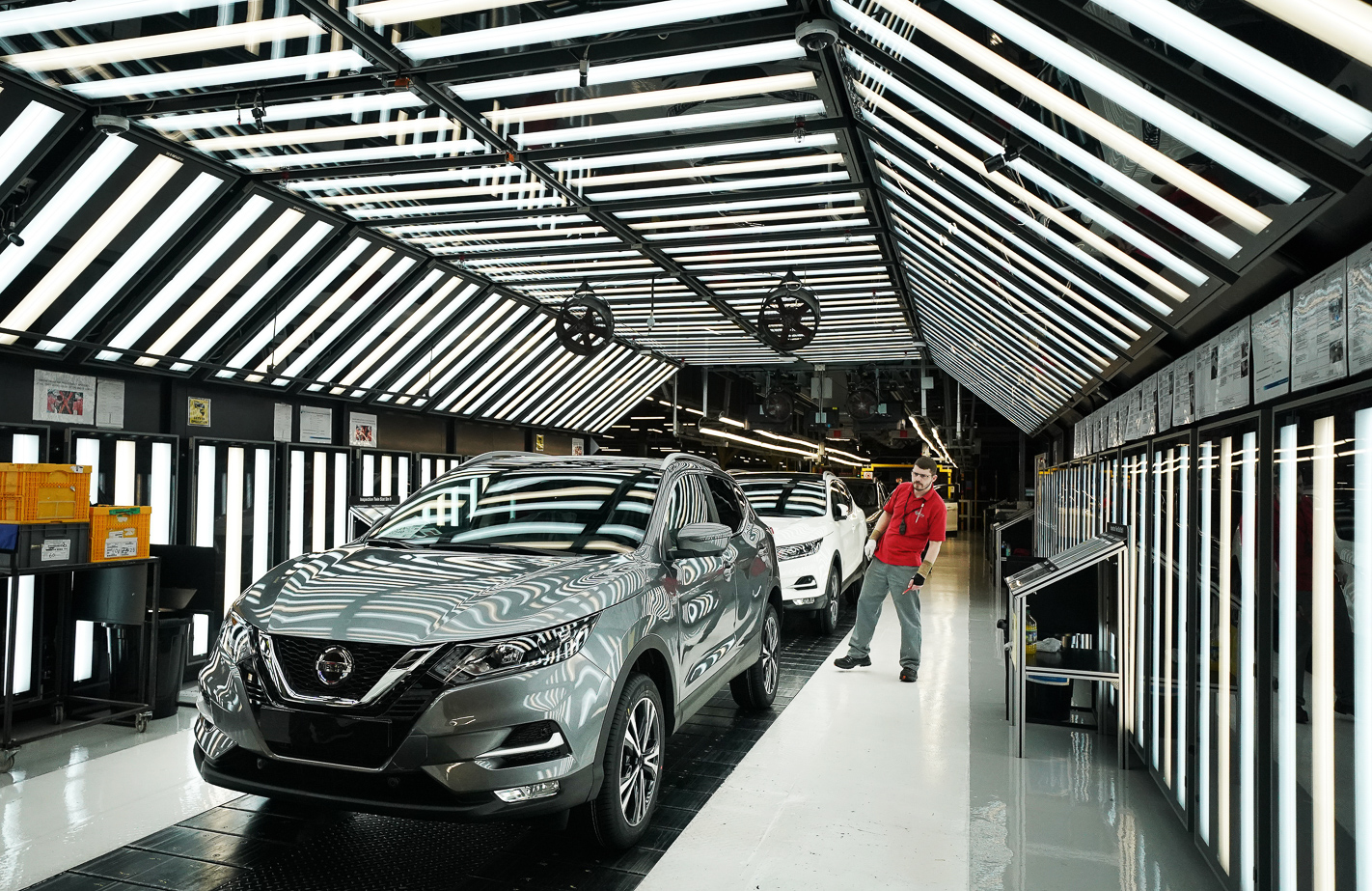
However, Nissan – which will cut $5 billion and 1.7 million cars from its production over the next three years – has always maintained that it did most of the work of coming up with platforms and engines, while Renault contributed far less to the partnership.
Nissan only owns 15 per cent of Renault, which has a 43 per cent share of Nissan.
As for Mitsubishi, its part in the triumvirate has been minimal at best after three years – and it could be argued that its product line-up has suffered the most, as it waits for decisions around shared platforms and powertrains to refresh its ageing range.
However, its CEO Takao Sato has said publicly that the benefits have been “very large”, particularly in the area of autonomous tech.
There are examples of the companies playing nice – the next-generation Nissan Navara and Mitsubishi Triton are being developed side-by-side, while the Nissan Juke rides on top of the same platform that sits underneath the Renault Clio and Kaptur – but there are nowhere near enough for two decades of supposed collaboration.
There are many things that are a mystery to me. How microwaves work, is one. The unique pigment of Donald Trump’s jowls, is another. But the biggest enigma, by far, is e-sports.
I should explain at the outset that I’m not a hardcore gamer. Don’t confuse that with someone who doesn’t enjoy gaming, because I do. Like most of my generation I had a serious infatuation with Gran Turismo, and I’ve spent considerable amounts of money on my own simulator set-up.
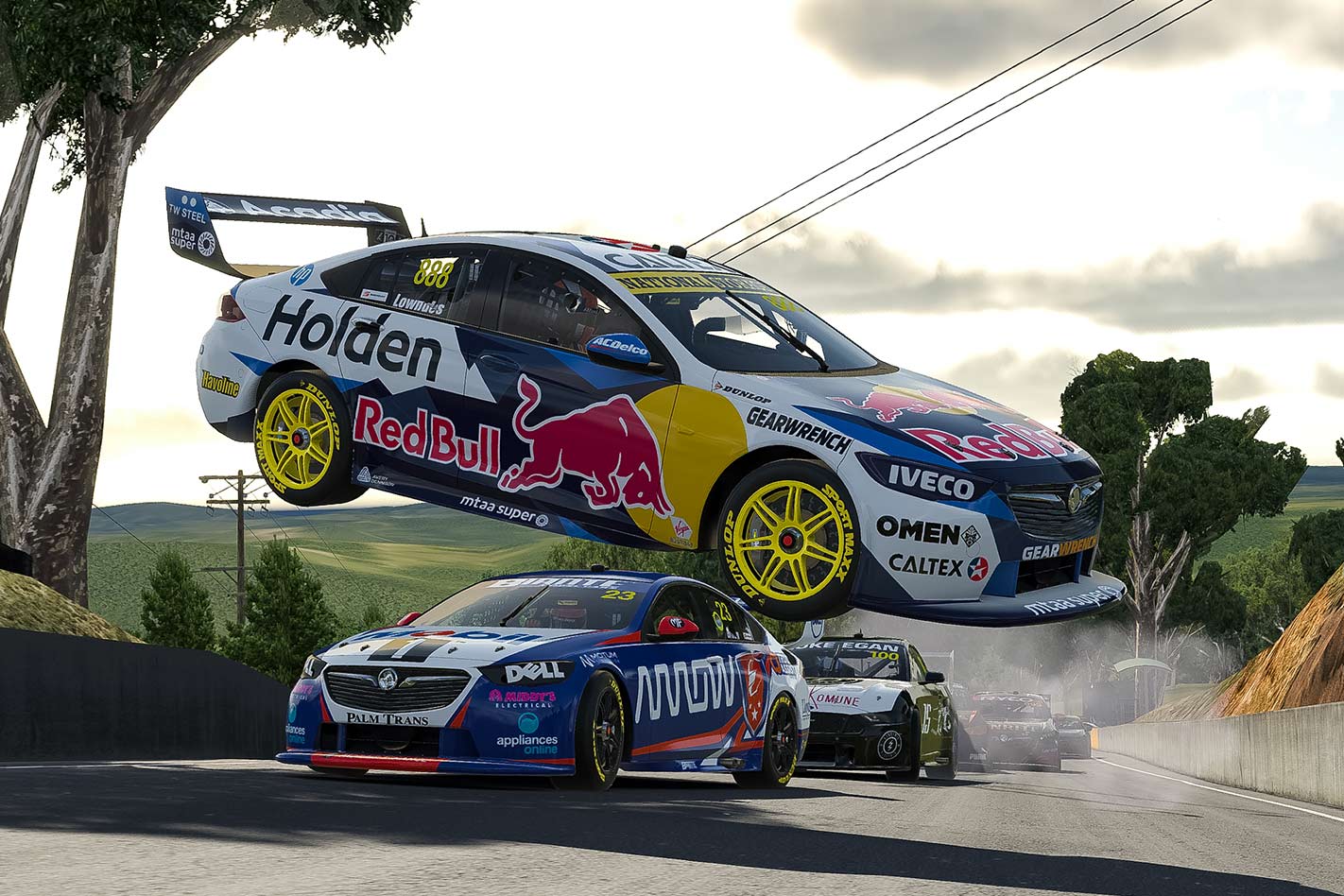
I understand the enjoyment that comes from gaming, and the ability for racing games to hone your driving or racing skills. But where the fun stops, for me, is when I’m asked to watch someone else play. Honestly, I’d prefer to watch them clip their fingernails.
E-sports is now a billion-dollar industry, purportedly bigger than Hollywood and the music industries combined. I’m dubious about that, given this year’s highest-grossing film, Bad Boys for Life, has raked in half a billion on its own, and Taylor Swift banked $185m in 2019, but the fact remains millions are tuning in to watch people play video games.
Tens of thousands also flock to packed stadiums where they’re dazzled with pumping music and blinding lights, and captivated by incredibly high stakes. Last year, a 19-year-old from Melbourne won $4.62 million at the world championships for the strategy game Dota 2, which seems to pit surly blue dwarves against pretty elves who can throw fire. The event drew more viewers than the Superbowl and had a prize pool of more than US$30 million.
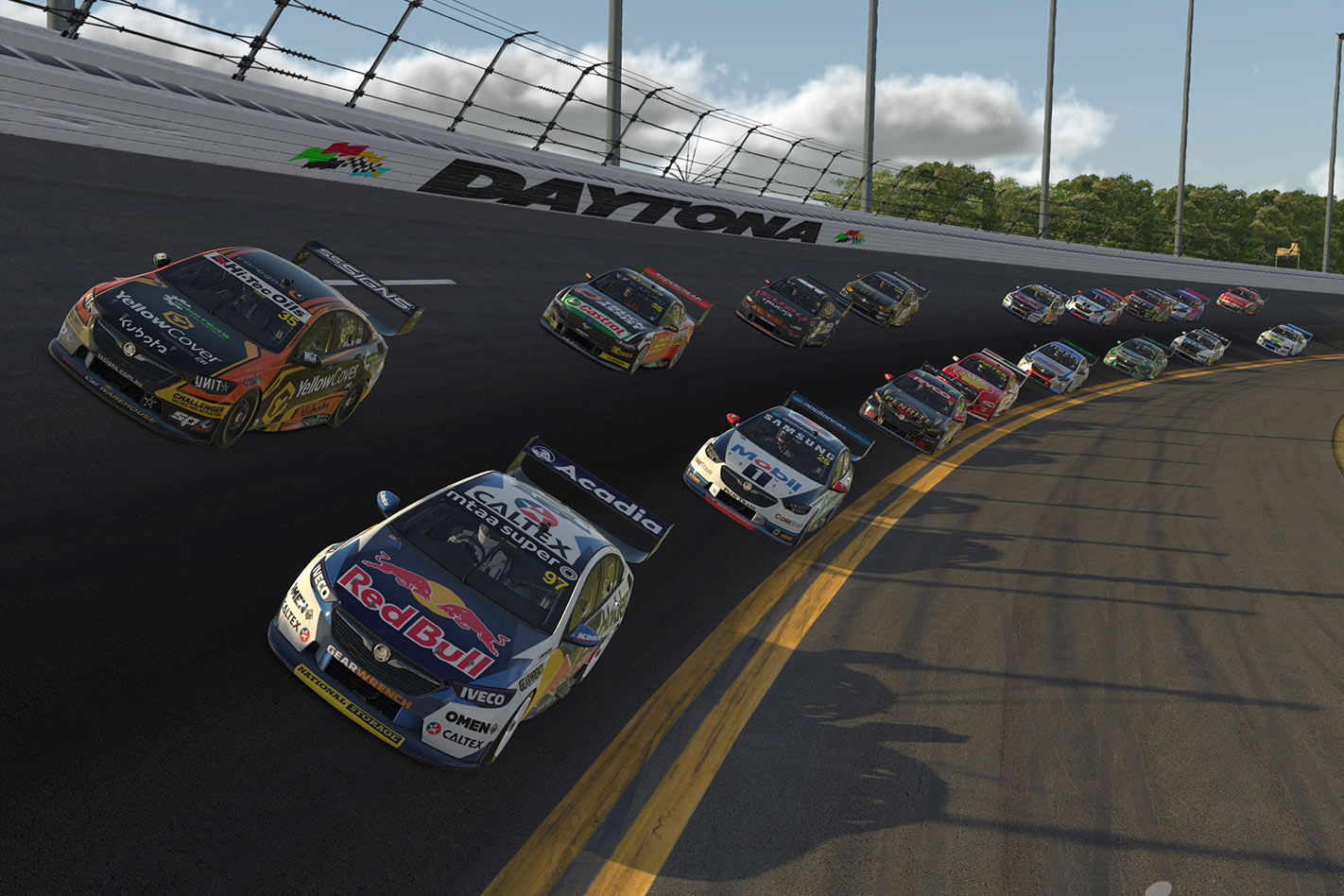
Some are calling for e-sports to be in the Olympics, suggesting the display of fine motor skills is equally as impressive as the strength required in boxing, or the stamina for a marathon. I’m not sold. To me, pressing a button 400 times a minute is way less remarkable as swimming 400 metres in less than four minutes, but hey, some gamers now have fitness trainers and nutritionists.
Olympics absurdity aside, I begrudge no-one the chance to display their talent with like-minded enthusiasts. And for the longest time I was happy to appreciate e-sports from afar, in the same way I react when my wife shows me her latest flower arrangement: “Ooh, that’s nice.”
But then COVID-19 arrived and my ability to watch real-life sports vanished. The fact this year’s F1 season was nixed on the first morning of the Aussie GP seemed impossibly cruel. “Never mind,” beamed a colleague weeks later. “They’re doing digital races! Everyone is. F1, NASCAR, Supercars. You can still get your racing fix!”
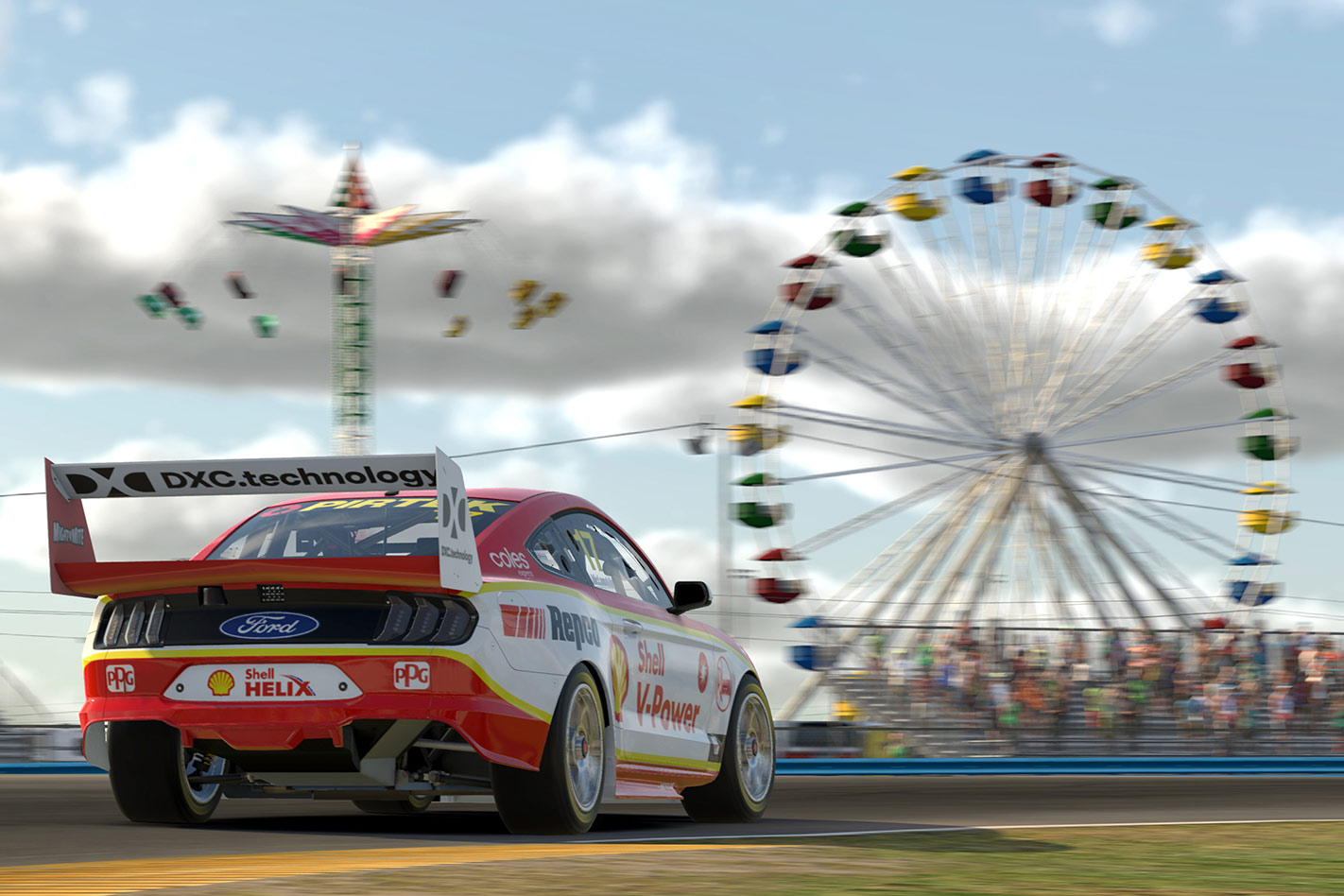
At first, these online races seemed a great way to watch our favourite drivers and to give team sponsors a rub on the tummy. And some of the interactions with the drivers have been hilarious. Watching an awkward Charles Leclerc trying to end a Twitch stream was a refreshingly real moment you don’t get from F1 races.
Just don’t try and tell me this is the future of motorsport, as some deluded gamers are. If that’s the case, unplug my controller now. Not even Max Verstappen, who is an ardent gamer, will tell you zipping through Eau Rouge in an F1 car made from ones and zeroes is as challenging as doing it for real. And as good as the coding physics have become, they still don’t seem to be anchored in reality. During a Formula 1 virtual grand prix, Leclerc hurtled past his brother and Alex Albon in “the lunge of his life” to complete a double pass in the official F1 game. Try that for real and he’d have been in the barriers.
The gladiatorial aspect is absent, too. When a driver snaps his visor shut and heads out to drive a hot and snarling 1000hp prototype, it’s easy to believe he’s doing something truly extraordinary. Watching them do it while wearing a headset in their lounge room kind of ruins the illusion.
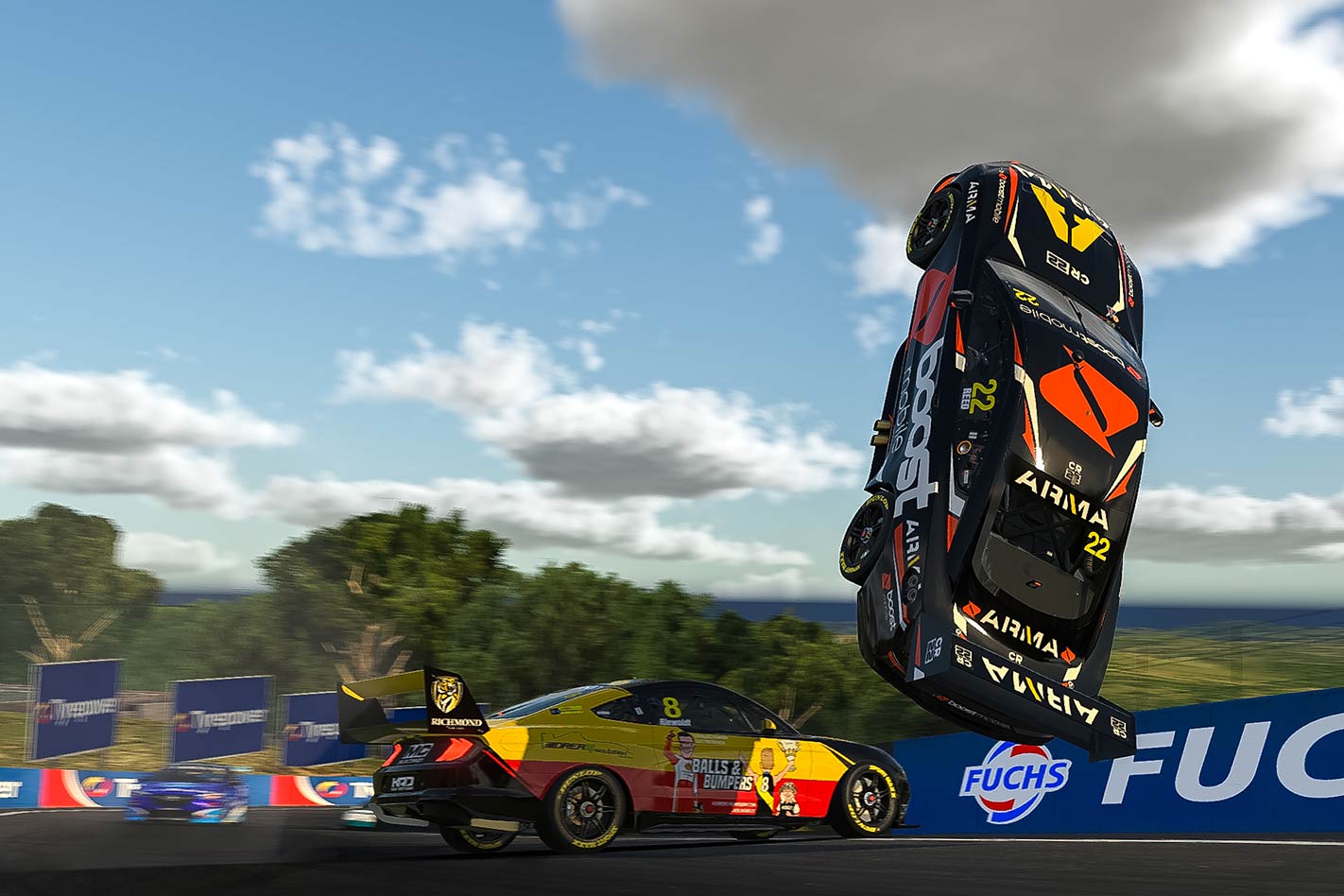
But the single greatest reason e-sports will never be as exciting as proper racing is the lack of consequences. When most of the virtual Supercars grid piled into each other in a spectacular smash at Monza, I didn’t lean forward agog, like I did when Formula 1 pulled the same trick, for real, in the rain at Singapore in 2018. I grimaced and changed the channel.
So I’m done with virtual races. Instead, I’ll be re-watching Drive to Survive on Netflix and ravaging the back catalogue of Fox Sports for my racing fix. There you’ll find hours and hours of old F1 races and Supercar classics where heroes like Brock, Skaife and Ambrose perform remarkable things in remarkable cars, inches away from disaster. It’s no mystery why I find that infinitely more entertaining.
Tobias Moers is about to exit stage left from AMG, set to head-up Lawrence Stroll’s rebuilding effort at Aston Martin.
The head of AMG since 2013, Moers has been a part of the company since 1994. From then until ’99 he was tasked with project management, before assuming responsibility for the main production series for the brand. In 2002 he became the head of full-vehicle development.

His influence on the Mercedes-Benz performance sub-division is undeniable, and his touch and style is stamped on the products that have left Affalterbach under his purview.
Here we decided to list the five which best define Moers’ time at AMG:
Mercedes-AMG SLS
There’s an argument that can be made that the SLS is the most important car in AMG’s history, and ergo the most important car of the Moers era.

It is the first model designed and built from scratch entirely by AMG, and has been a pundit and fan favourite ever since it was first revealed at the 2009 Frankfurt motor show.
A spiritual successor to the iconic 300 SL, and literal successor to the wild Mercedes-McLaren SLR, the two-door coupe was a revelation. Its design is iconic, and has aged superbly in the decade since it was shown to the world – a credit to the man behind the pen, Mark Fetherston. The hero piece of its timeless look is the gullwing doors, which AMG engineers decided must be manually-closed as they couldn’t justify the extra 41kg of heft an auto-shut system would add.
AMG claimed the M159 V8 under the bonnet was world’s most powerfully naturally aspirated production engine when it was first shown, with 420kW at 6800rpm and 650Nm at 4750rpm. The 6.2-litre atmo V8 is heralded as one of the last great free-breathing bent-eights. Despite being based on the M156 block, AMG gave the V8 its own engine code – M159 – to denote the significant changes made, including a dry sump.
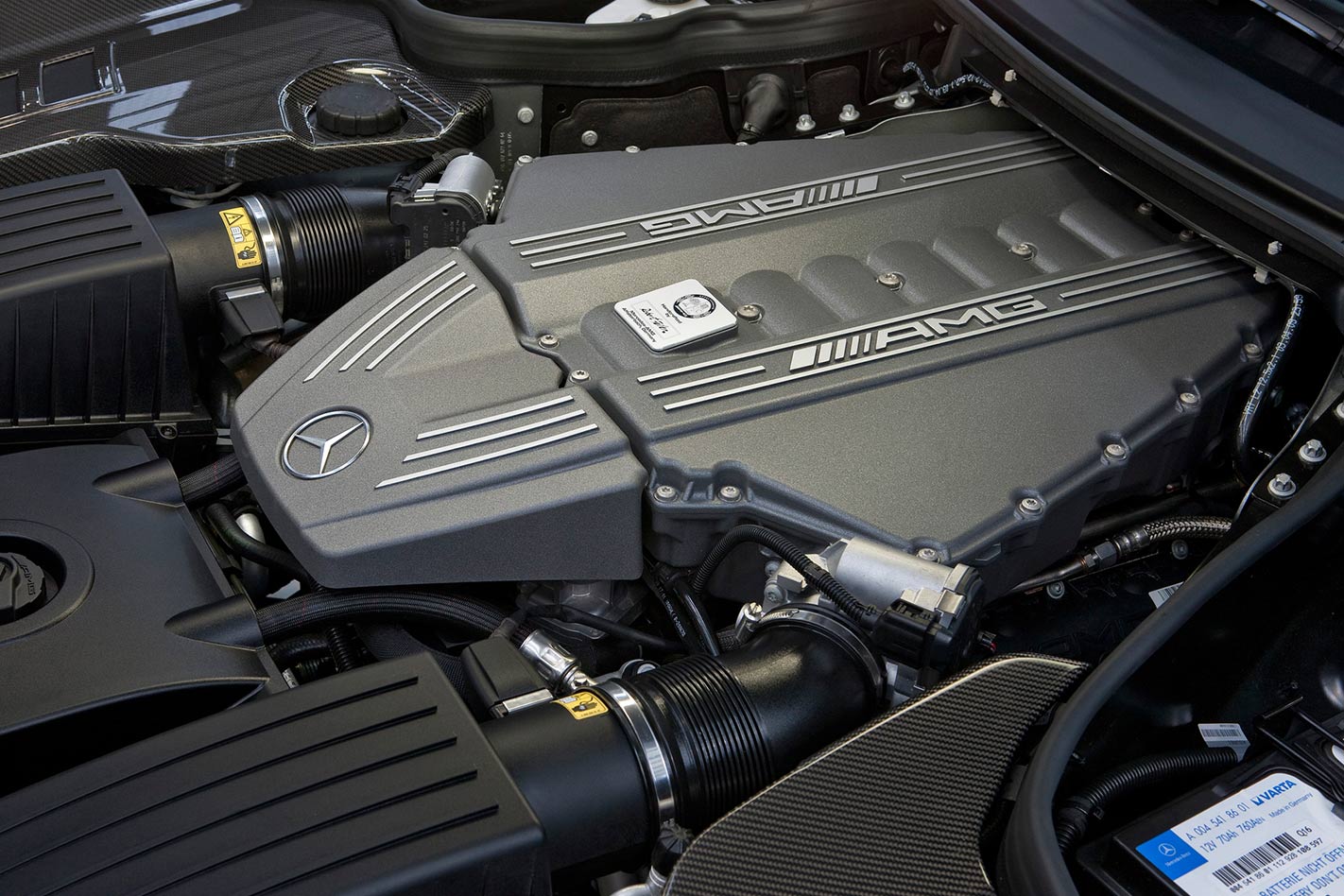
The SLS was assembled largely by hand, with its chassis and aluminium body produced by Magna Steyr in Graz, before being transferred to Sindelfingen, Germany for assembly. The engine was entirely hand-built, naturally, at Affalterbach.
Moers is naturally rather fond of the SLS, once stating that it was a more complete car compered to its hypercar SLR predecessor, being not only faster on track in the hands of a pro driver, but also regular joes.
Going out of production in 2015, it was replaced by the AMG GT, which has since built on the success of the SLS, and is about to reach its zenith with the incoming Black Series variant.
SLS AMG OMG, indeed.
AMG CLK 63 Black Series
While technically not the first Black Series model– that was the SLK 55 – for many the CLK 63 Black Series is the car which best defines the limited-edition badge.
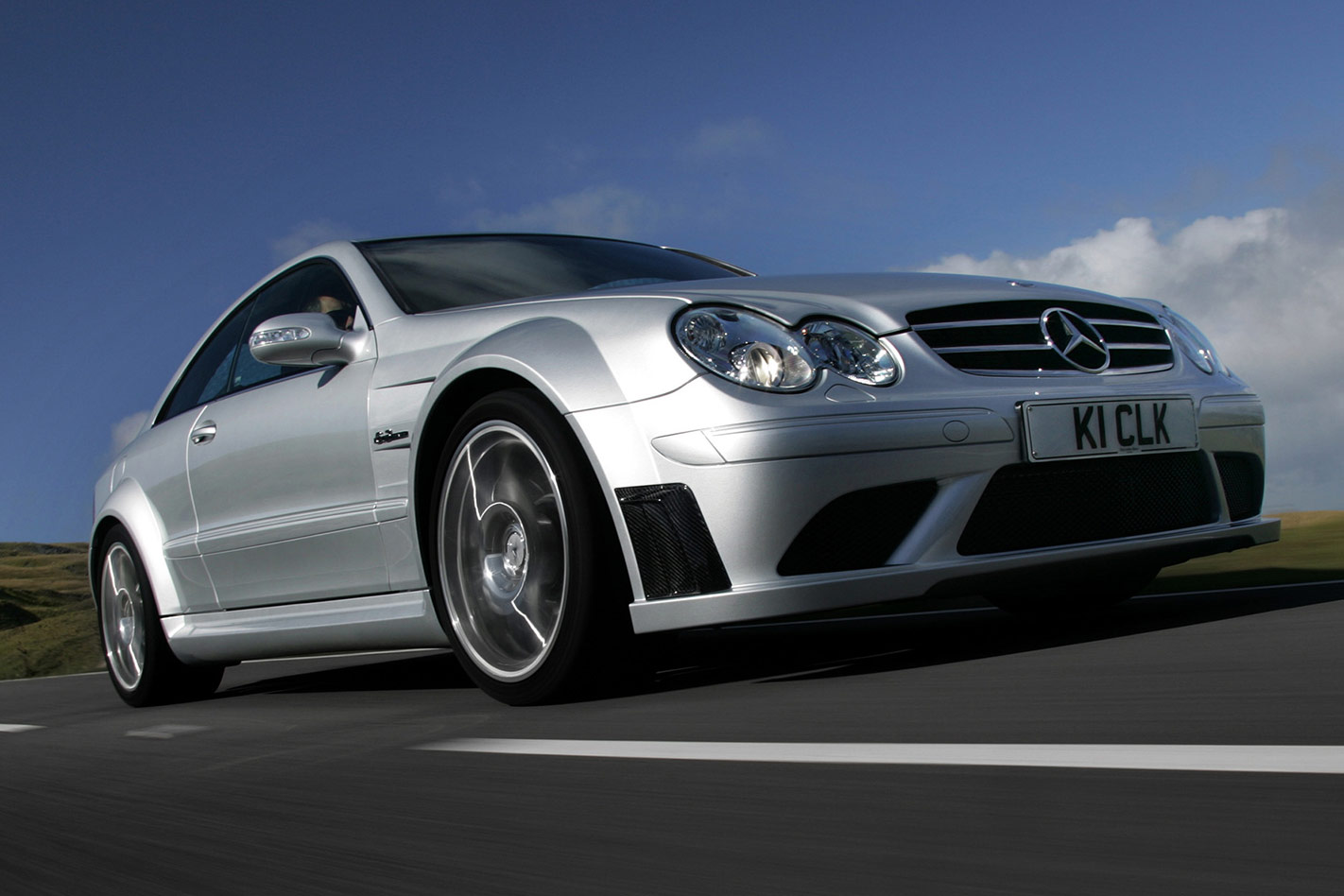
Launched in 2007, and based on the ‘regular’ CLK 63 AMG Coupe, the Black Series was a hardcore, track-orientated, brute of a thing. Only 500 were ever built, it had a tweaked M156 6.2-litre naturally aspirated V8 under the bonnet, which copped a larger inlet manifold, reworked exhaust, and remapped ECU to produce 373kW at 6800rpm and 630Nm at 5250rpm.
AMG threw the rear seats into the nearest bin during production, and the top speed limiter was lifted to a staggering 299km/h. Ooft.

There were also forged 19-inch alloy wheels at each corner, a wider track front and rear, an entirely reworked suspension set-up with an amount of manual adjustability that’d make your mind melt, and heaps and heaps of carbonfibre.
So proud of their creation was AMG management, that they proclaimed it a rival for the peerless Porsche 997 911 GT3. Just don’t mention the seven-speed auto gearbox.
Our sister mag CAR proudly proclaims this as the ultimate AMG. It’s hard to disagree.
W176 Mercedes-AMG A45
While its not the original hyper hatch, the W176 Mercedes-AMG A45 can be credited with lifting the genre to an entirely new level.

When it arrived in 2013, it blew its arch rival the Audi RS3 out of the water. The M133 was revealed with 265kW, before being updated in 2015 to pack a 280kW punch.
This four-pot terror made AMGs accessible. No, it wasn’t cheap, but it was a darn sight more affordable than the V8 hero cars in the range.
By introducing the A45, AMG was able to develop a family tree of sorts, where customers would start off in the A45, before progressing up into faster, more expensive models.

The M133 also showed that AMG was not a one-trick V8 pony, proving they were perfectly capable of producing world-beating engines regardless of cylinder count.
M177/M178 twin-turbo V8
It’s not a car, but it’s the most iconic product Affalterbach currently produces.
This ‘hot-vee’ 4.0-litre V8 is synonymous with modern AMGs, and has been heaped with plenty of well-earned praise.
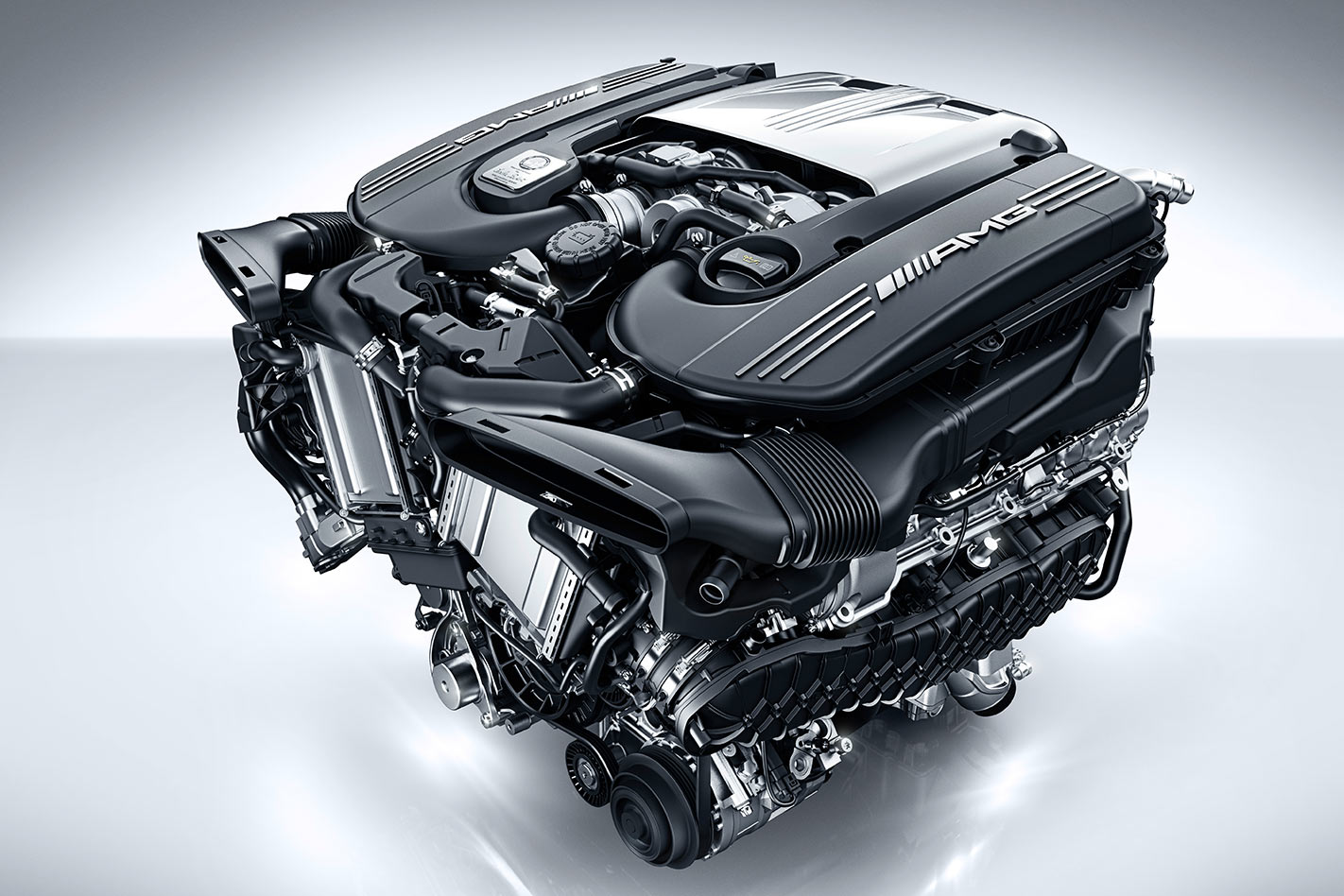
However, when it first arrived in 2014, the M177/M178 had an uphill battle. Replacing the much-loved 6.2-litre naturally-aspirated V8 with a downsized turbocharged option was always going to be tough sell.
Wearing a different codename depending on its application, each unit is hand-built using Affalterbach’s “one man, one engine” policy.
Based on the 2.0-litre four-cylinder from the original A45, the engine is fundamentally two M133 blocks joined by a single crankshaft. It shares the same 90mm cylinder spacing and identical bore and stroke (83.0 x 92.0mm) as the four-pot, while the compression ratio has been increased to 10.5:1.
The biggest revelation when it was first revealed was the ‘hot-vee’ set-up, with a pair of BorgWarner turbochargers nestled in the valley of the 90-degree vee.
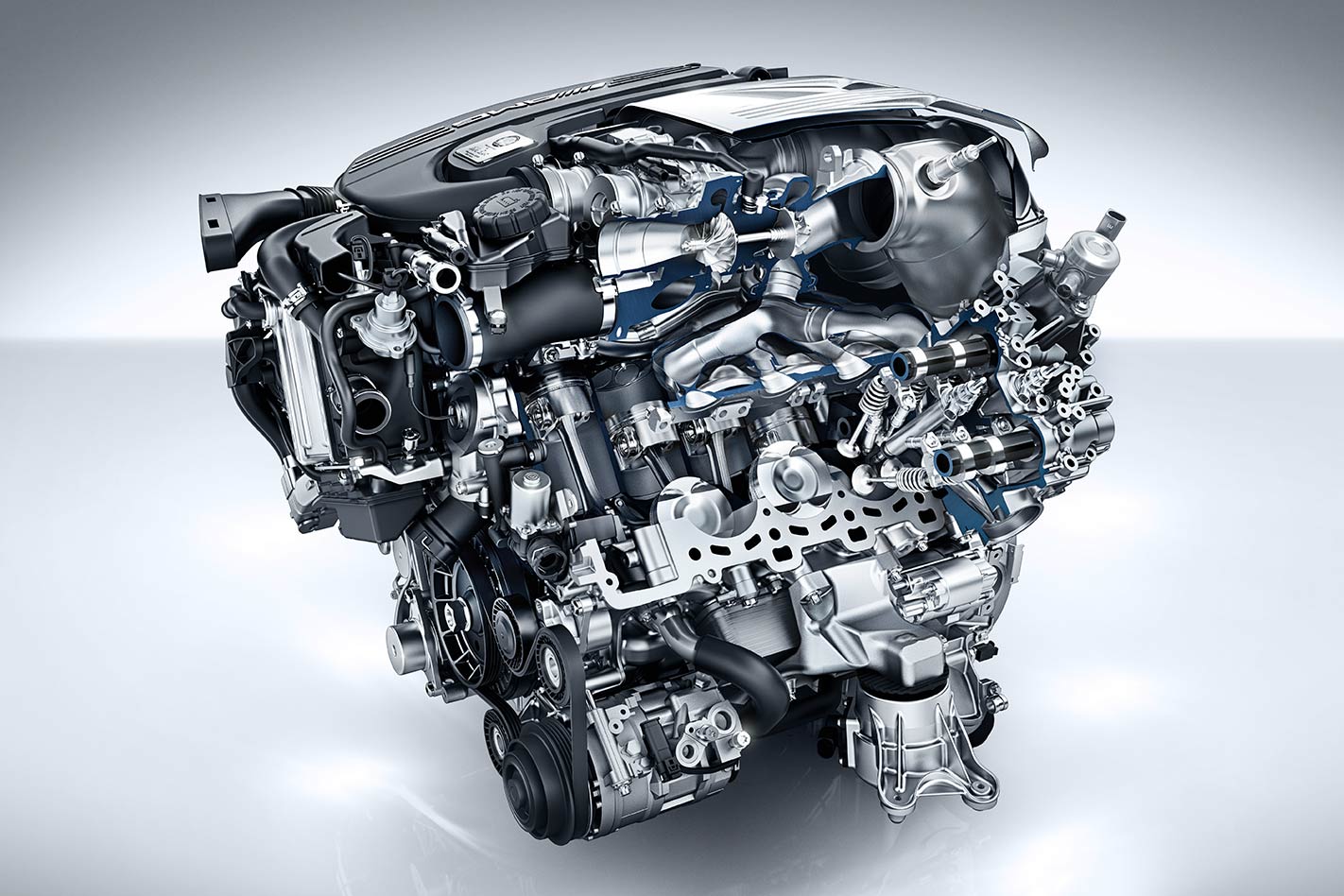
Currently the most-powerful M177/M178-powered vehicle is the AMG GT R, which produces 430kW and 700Nm, though a plug-in hybrid version with 600kW+ is rumoured to be just around the corner.
AMG One
This vehicle won’t be put into production until after Moers has left the building, but it perhaps best defines his ambition at AMG.
The AMG One (nee Project One) is Moers’ victory lap, taking the 1.6-litre turbocharged engine and hybrid powertrain from Lewis Hamilton’s W07 F1 car, and ramming it into a production vehicle.

The challenges are immense – this isn’t merely an F1-derived engine – but the exact same powertrain that made the W07 one of the greatest race cars of all time.
If the engineers at AMG can pull it off, the AMG One should have a combined power output of between 778-918kW when both the electric and combustion motors are working in sync.

There have been numerous delays to the project since it was first revealed in 2017, but when it finally rolls off a production line, it is Moers that should be given much of the credit.
Just 275 examples are slated for production, and all of them have already been sold.
If Moers can repeat the success he had at AMG while at Aston Martin, you should be very excited. We are.
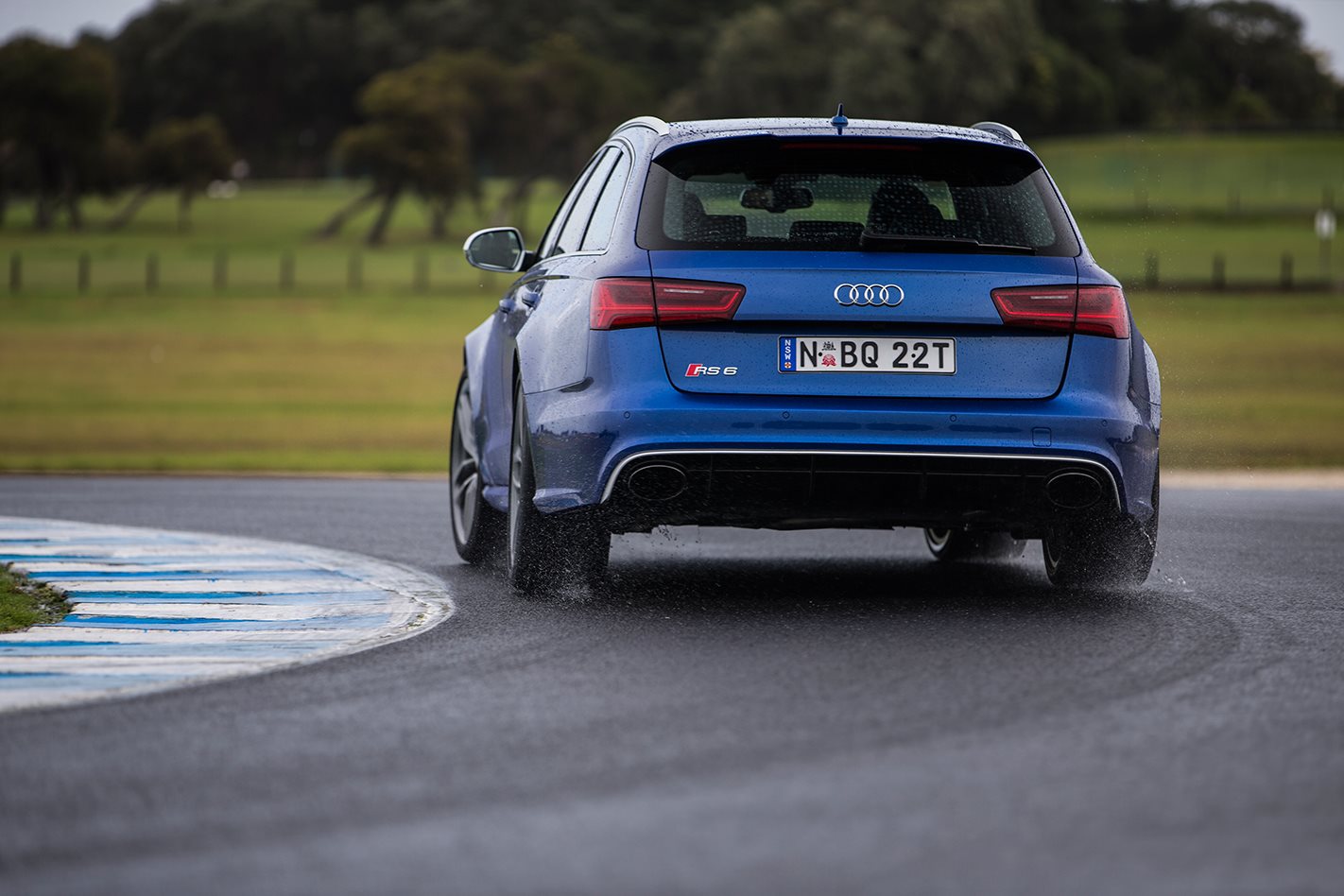
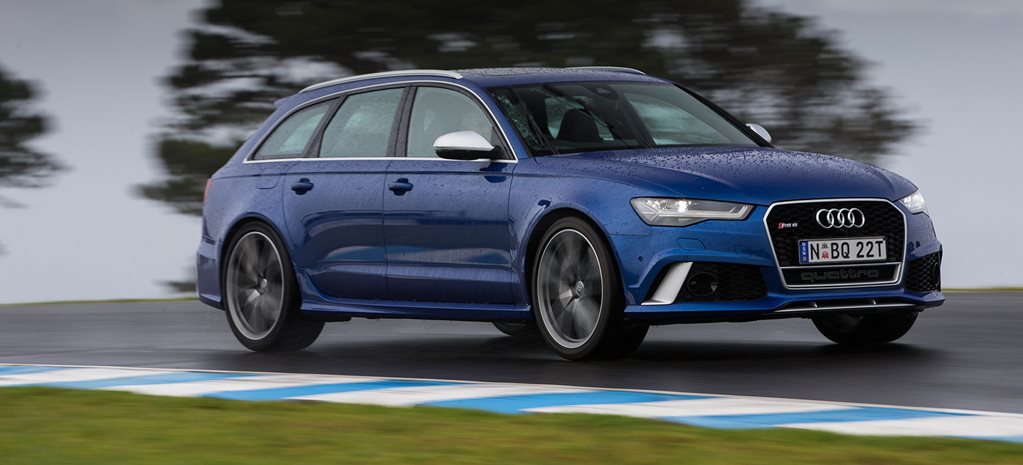
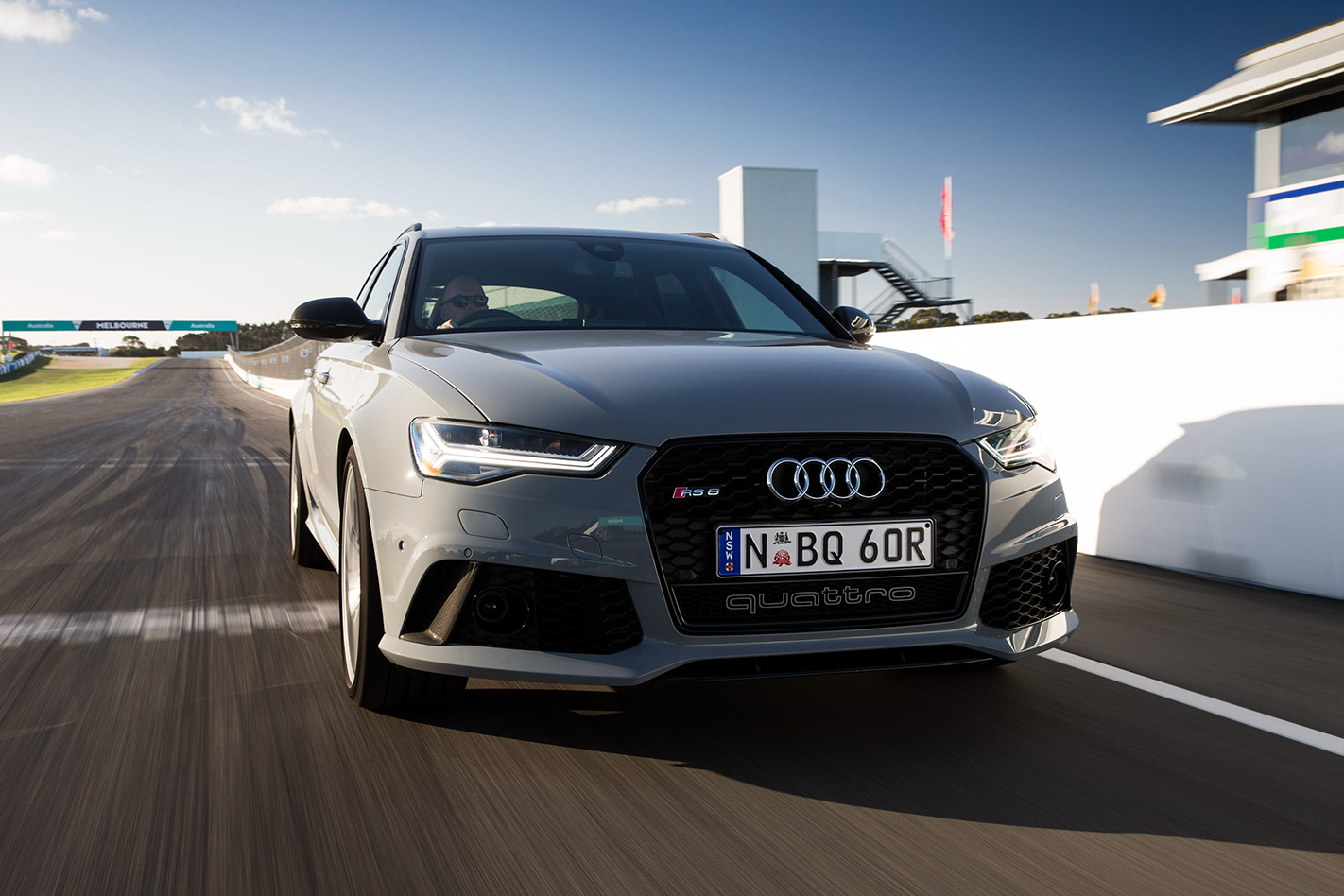
An Audi RS6 driver is now a self-made fugitive after making and sharing a video of himself cracking 201mph (323km/h) on a UK motorway, somewhere near Gatwick International Airport.
In the footage, the driver is seen entering an on-ramp at full-throttle, and not relenting until a full minute later after the RS6 has clocked a PB of 201mph (323km/h).
More eye-popping however, to produce the film by themselves, one assumes the driver would have needed to achieve the speed and weave through traffic with one hand holding the phone. That’s right – one-handed.
Unsurprisingly, Sussex police are aware of the footage and have commenced an investigation into the video, fully intent on bringing the responsible party to justice for eclipsing the speed limit by almost three times.
“We have a team of specialist-roads policing officers who will fully investigate this footage with a view to identifying and bringing the driver to justice,” said chief inspector Michael Hodder, of the Sussex Roads Policing unit.
Chief Inspector Hodder called the video “one of the most appalling examples of dangerous and irresponsible driving we have ever seen in Sussex.”
“Driving at such grossly excessive speeds hugely increases the chances of being involved in a collision, and it’s extremely fortunate the driver has not killed or seriously injured themselves or someone else.”
Police aren’t sure when the video was recorded, but it is believed to have happened while the UK was experiencing major lockdowns.
It’s not the first occasion a driver has exploited coronavirus lockdowns. Last month a Dodge Challenger Hellcat driver in Canada was caught by police after their tyre blew out at 271km/h and numerous attempts have been made at the infamous Cannonball run.
Even in Australia, police are continually chasing car meets in which drivers are taking advantage of empty roads and performing burnouts.
The Audi RS6 (C7) in this video is no stranger to speed, but is more often found legally approaching its limits on the autobahns surrounding the factory in which it’s built. Nonetheless, it is capable of hitting 100km/h in 3.7 seconds thanks to a twin-turbocharged V8 putting out 445kW and 750Nm.
Volkswagen has revealed a halo version of its already high-achieving Touareg large SUV that packs a mighty 900Nm twin-turbo V8 punch and can beat a Golf GTI in a drag race.
Dubbed the V8 TDI R-Line, the latest addition to the Touareg line-up will appear in Australian showrooms in the fourth quarter of 2020, adding a flagship variant above the existing V6 diesel-only range.
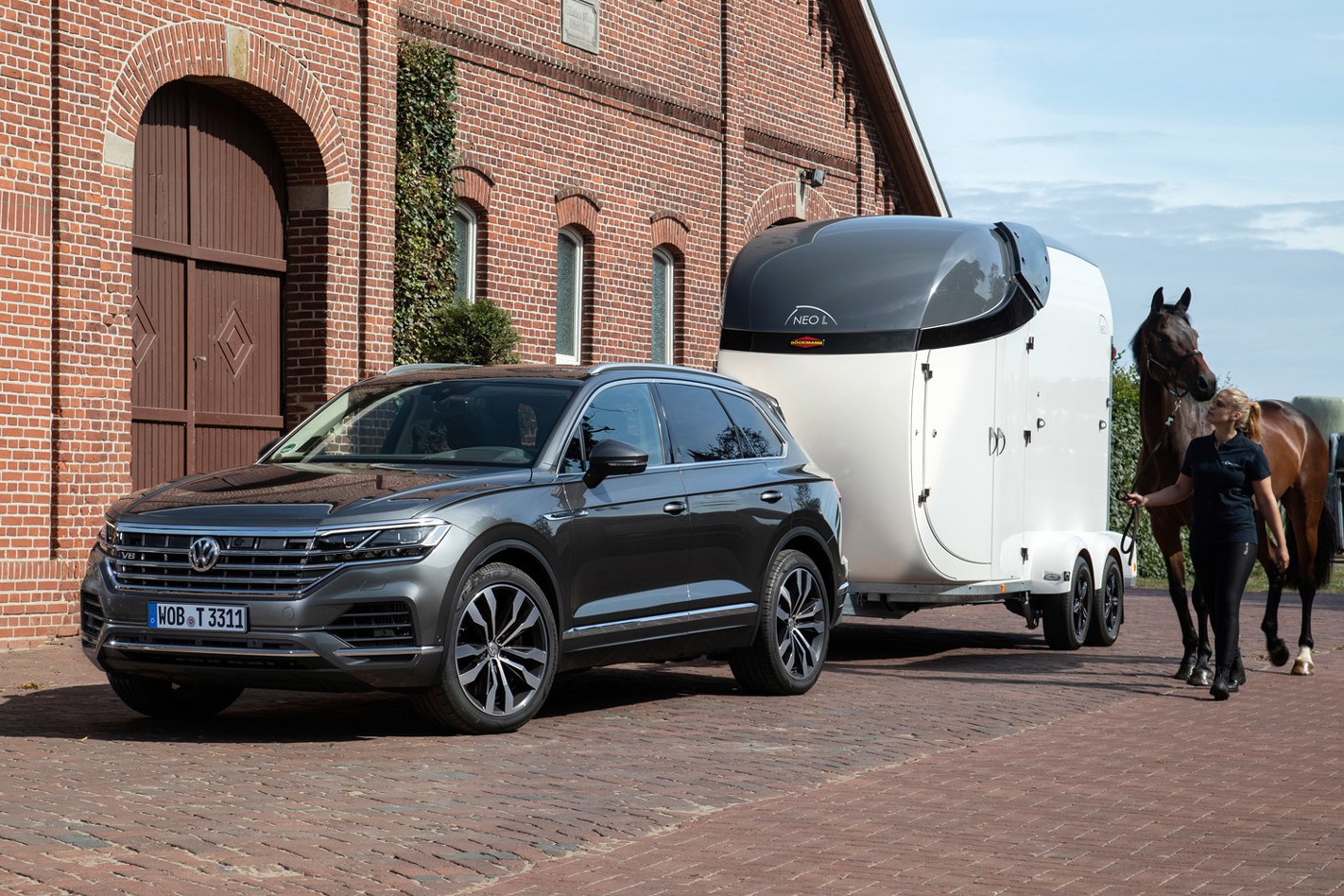
Key to the new Touareg’s performance is a 4.0-litre twin-turbocharged diesel V8, which pumps out 310kW and 900Nm and is coupled to an eight-speed automatic transmission and four-wheel drive.
Performance DNA
The newest engine in VW’s ranks is closely related to the hardware found under the bonnet of the Audi SQ7 and Bentley’s Bentayga Diesel, including an electrically driven supercharger that eliminates lag before the turbos have a chance to contribute.
Bury the throttle in the V8 Touareg and you’ll have the full 900Nm on tap from just 1250rpm, while peak power takes over from 3500rpm.
That’s enough to blast the luxury high-rider to 100km/h from standstill in just 4.9 seconds – faster than the Golf GTI.
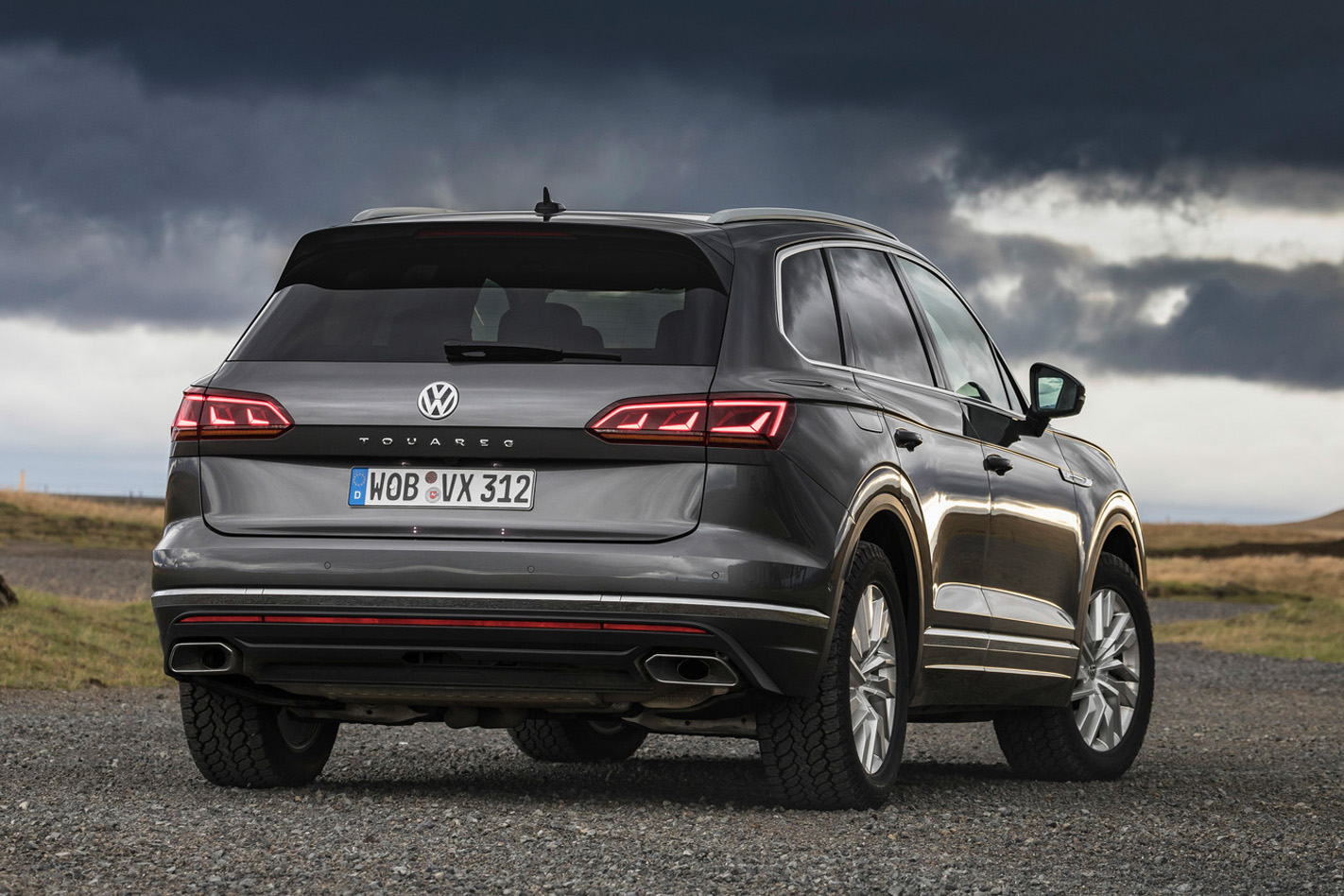
Incredibly, if it wasn’t for the Golf R narrowly holding onto the performance crown within the Wolfsburg ranks, this two-tonne large luxury SUV with room for five adults would be Volkswagen’s fastest accelerating model.
The pair are separated by just one-tenth of a second in the benchmark zero to 100km/h test, says their maker.
While the Touareg V8 TDI shares many mechanicals with some undisputed luxury contenders, the Volkswagen’s true strength is value.
Bentley asks upwards of $340,000 for its diesel SUV and Audi’s SQ7 kicks off from more than $150,000, but the V8-armed VW is expected to come in at less than $140,000.
And you won’t get stung by the options list either because Volkswagen Australia has left virtually nothing off the standard equipment set.
Exact specifications will filter in closer to the official arrival that’s slated for October, but Volkswagen has confirmed only a panoramic sunroof and posh paint will be optional.
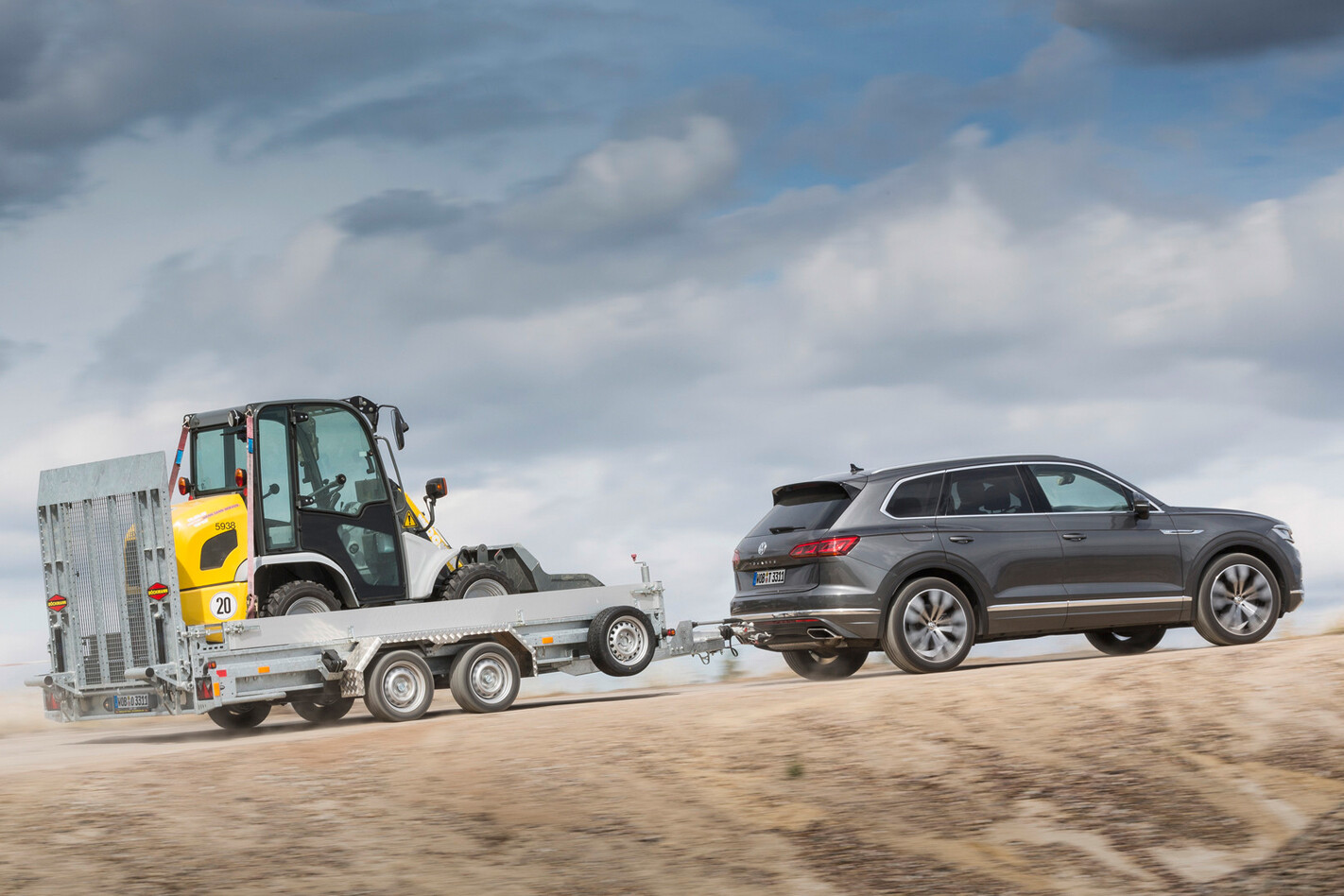
Expect, then, all of the goodies tat can be found in the V6 diesel Premium version, plus extras – read the full launch review here.
Until full specification is made available, a direct value comparison is not possible with equivalents from other European players in the large luxury SUV segment.
BMW, Mercedes-Benz or Jaguar don’t, however, offer a large SUV in their respective lineups with V8 diesel power.
“Even fully loaded, the Touareg V8 will undercut the starting price of its rivals to be the best value proposition in the premium large SUV segment,” claims Volkswagen Group Australia managing director Michael Bartsch.
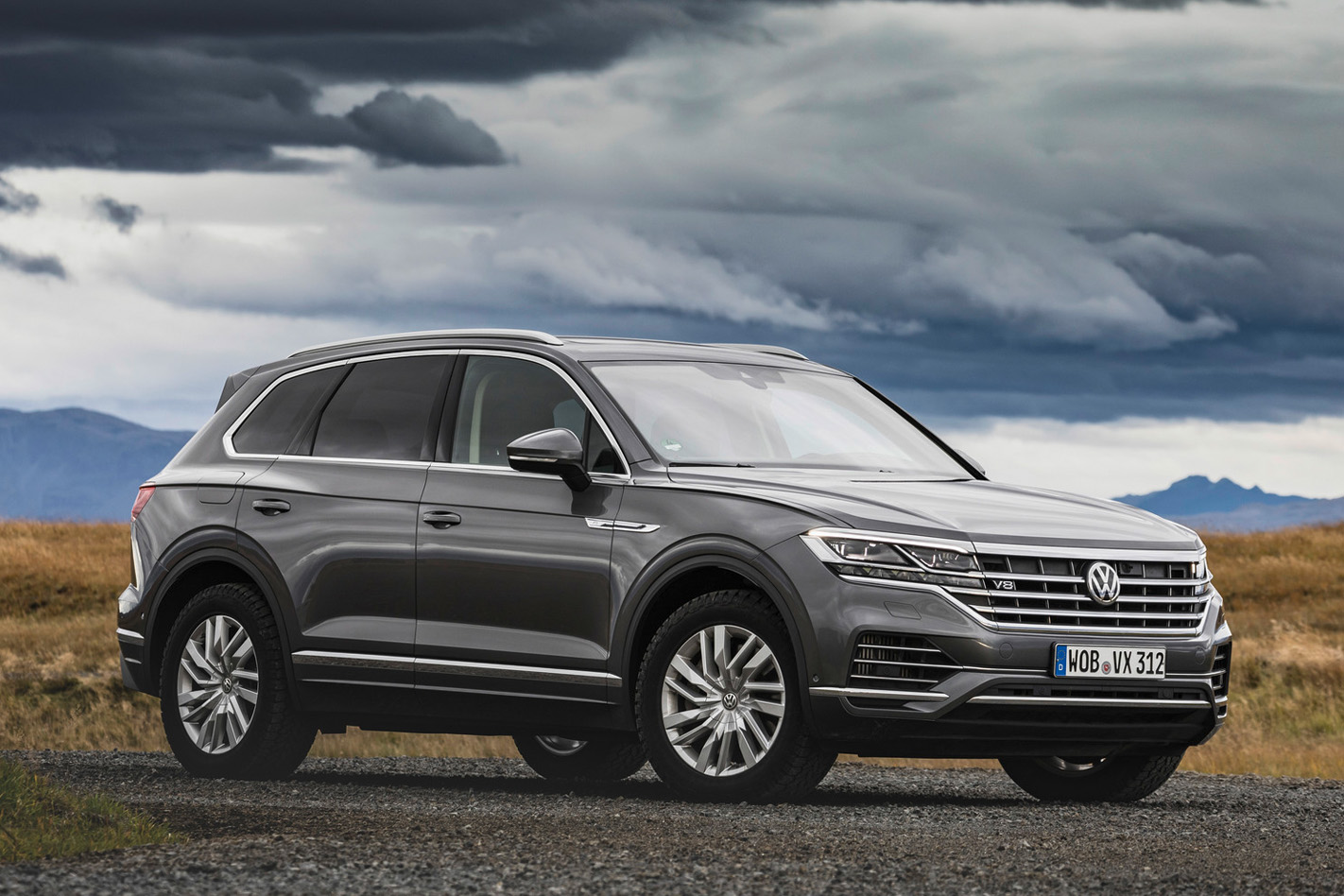
While other European brands offer large SUVs with turbocharged and supercharged V8 petrol engines with superior power (and prices to match), none of them can equal the claimed fuel economy figure of the Volkswagen Touareg V8 of 7.4 litres per 100km on the combined cycle.
Watch next: Volkswagen launches the Touareg in the North African desert
Like the rest of the Touareg range, the V8 will be strictly a five-seater, with virtually no demand for seven-seat Touaregs, according to VW.
Instead, there’s an 810-litre boot at the back and a folding second row to boost that volume to 1800 litres.
While typically performance-demanding Australians will be drawn to the V8’s hot-hatch-demolishing acceleration, the prodigious torque will appeal to the many families who like to tow boats, caravans, trailers and more.
Full payload, tow ball load and towing capacity figures will follow soon.
The V8 TDI will remain the flagship of the range, and of Volkswagen’s local line up, for the foreseeable future.
It has no plans to offer the even more sprightly Touareg R hybrid that borrows technology from Porsche, revealed early this year.
High-performance Touaregs are not a new idea, with Volkswagen offering options in the previous (first) generation powered by 6.0-litre W12 petrol and 5.0-litre V10 turbo diesel engines.
Almost 20 years ago, Garry Rogers Motorsport built a couple of Monaro race cars. One of them for a man named Peter Brock. The Holden Monaro 427C would go on to win two Bathurst 24 Hours races and numerous races in the short-lived Nations Cup, upsetting some and delighting others.
But the current lack of motorsport happening, specifically TCR and S5000 for GRM, has the race team on the path to building another Monaro 427C.
MOTOR spoke with Barry Rogers, son of the team’s namesake and close 2IC to his father, about the build, how it came about, and what the plan is.
“It was a bit of a result from the whole coronavirus situation,” Rogers begins.
“After the Grand Prix didn’t occur and we returned to work with everything closed down, we utilised that time to go through some old containers.
“We moved to our current site in 2006 after being at Glen Waverly since the early ‘70s. Over that time we’d bought and sold a fair bit of gear but also gathered a bit as one model went to another in the 2000s. We used to put the old stuff in containers, like when we went from VT to VX for Supercars, all the VT stuff goes in a container.
“The Monaro was part of that whole generation of motorsport for us, and we built the yellow car first,” Rogers says he usually refers to the car by colour to keep it easy, “and then Holden wanted a car built for Brock.”
Brock Monaro racer auctioned by Gray’s Online this year.
That car was red, of course.
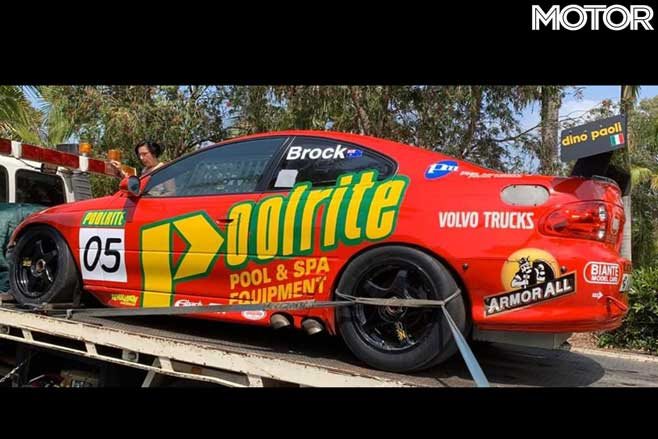
Brock Monaro recently auctioned by Gray’s Online
“Ross Palmer who owned the Nations Cup series funded the build so we built the Brock car for him. We also built a third body, but at the time Nation’s Cup went defunct so we put all the bits and pieces we had into a container.
“As I said we decided we needed to get out the back and tidy up some of the containers we’ve got here at Dandenong, obviously we’re not in Supercars but we’ve got a whole lot of stuff we need to put into storage.”
GRM announced at the end of 2019 its withdrawal from Supercars after more than 20 years of racing Holdens, save for the few Volvo years in the mid-2010s. The team now builds and races TCR cars and S5000 open-wheelers.
“Lo and behold, we open one of the containers and it’s got the Monaro gear in it which we half forgot about. Garry said “I always wanted to build another Monaro… the plan was always to build another car.”
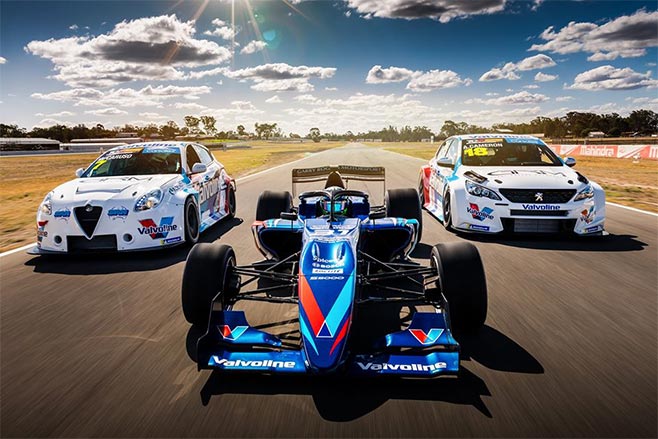
Garry Rogers Motorsport is now focused on the TCR and S5000 series in Australia
“Brock and Garry were racing against each other through the ‘70s and into the ‘80s, and Brock would later [in the Nation’s Cup years] often say to Garry: “You need to get one of these so we can race each other again.”
“It was sort of a half-joke but Garry took the idea and it sat in the back of his mind as a plan to build one. When we found all the gear here, we thought we could nearly build a car with what we’ve got.
Rogers says most of the parts that haven’t been kept in containers are still able to be built to the same specifications as they were originally.
Road car! We drove the HRT 427 Monaro!
“A number of items will still need to be made, but we’ve got all the original drawing and everything there so that’s how the rebuild began.”
The Rogers both decided to unofficially dedicate the build to Holden, as a celebration of the brand and a sort of send-off with the Lion leaving by the end of 2020.
“It was probably a bit inspired by the fact Holden is finishing up in Australia this year. Garry’s a bit sentimental about the fact his first race car was an FX Holden.
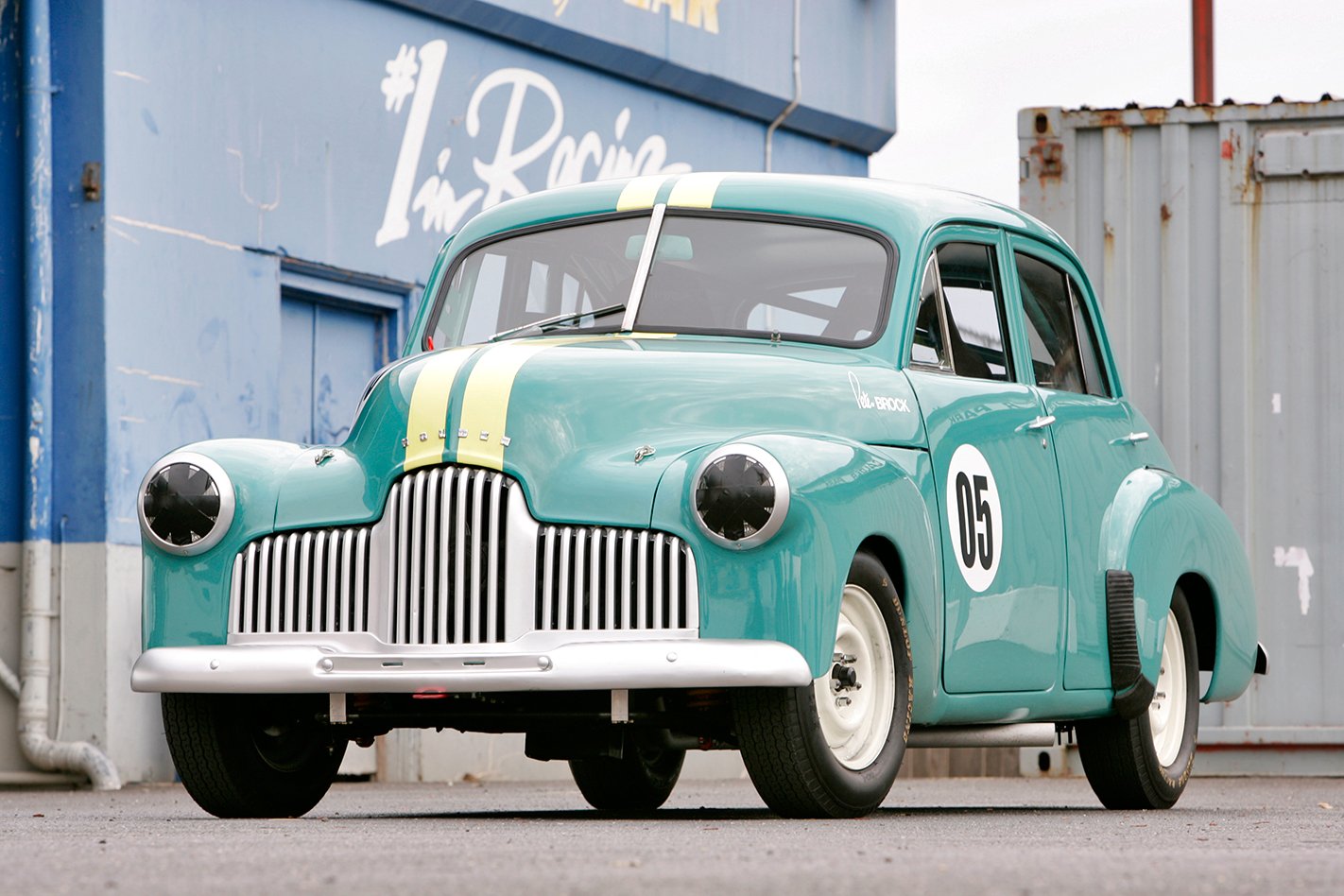
Not Garry’s: This FX race car was actually Peter Brock’s… the number kind of gives that away!
“As much as our last Supercars were Holdens, he said “I’d like to build one last Holden” and we’d have the last ‘brand new’ Holden come out of our workshop here in Melbourne. That’d be something to be pretty proud of.
“One thing led to another, and we got the original VX bodyshell back from Perth, from a man named Mario over there, we know him as Apples because he’s an apple farmer, he became a bit of a friend of ours.”
Following the 2002 winning race, ‘Apples’ rang and wanted to buy an engine from GRM in the same spec as the race car, though Barry Rogers says the team didn’t take it too seriously at first.
To GRM’s surprise ‘Apples’ appeared in pits six months later at Barbagallo after phoning ahead, and the team had a spare 7.0-litre engine packed with the V8 Supercar parts just in case. He came back later with a cheque and left with the engine.
Rogers says he ended up fitting it to a Clubsport which he still owns.
Recently, ‘Apples’ new VX bodyshell was picked to be the body GRM would build its Monaro with, but Dean Lillie from Ravage Raceworks rang and offered up an as-new VZ Monaro shell he has sitting in his workshop. “Do you want to use that for the last Monaro?”
“We thought, if it’s going to be the last one, yeah, we’ll build it as a VZ,” Rogers says.
Holden Motorsport designer Peter Hughes has already submitted a couple of design ideas in terms of the car’s final look, but Rogers says there’s a little way to go before everyone agrees on a livery.
What you need to know about Australia’s TCR series
Rogers says his father is keen to celebrate Holden but also to make it a GRM car with a bit more flair.
“We don’t want it too lairy, but we don’t just want it black red and white like a standard Holden livery.
“Garry’s very first race car was in Magenta, so we wouldn’t mind having a bit of Magenta on the car. If his first and last cars share that there’s some bookend significance to it.
“We’ll see what Peter comes up with for that. If any of your readers have good ideas we’d love to hear them.”
In terms of mechanicals, and obviously aside from the body being VZ instead of VX, Barry Rogers says the last Monaro 427C will be identical to the others built.
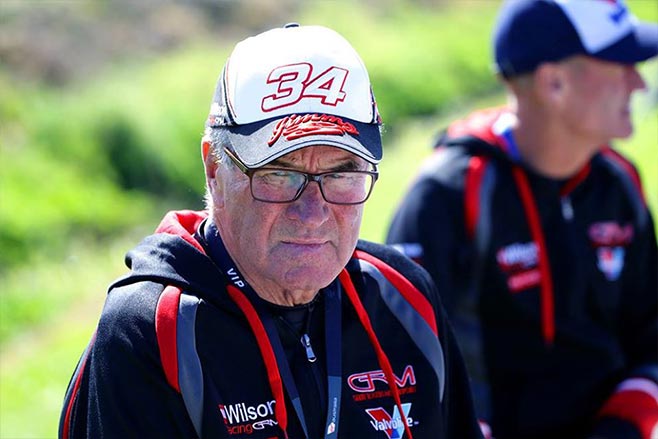
Garry Rogers
“It’s going to be built 100 per cent to the same specifications as those two cars built back in the early 2000s. We’ve spoken to Ron Harrop since there are parts he’ll need to make, thankfully some engineering companies including Horner Engineering which made a lot of original parts, are still around.
“If you look underneath they’ll be exactly the same as the red or yellow cars. We want to celebrate that era which was fantastic for us as a team, and a peak for Holden in Australia. The Monaro certainly iconic when it was reintroduced made it a really celebratory time for Holden.
The last factory Holdens: These were the last Aussie Commodores
Rogers adds that although the car won’t be raced it will be registered with Motorsport Australia, formerly CAMS, in case the team ever sells the car and its buyer wants to put the car on track.
“It may be something we would sell, but only to the right person who really understood the significance.”
“It’ll be special to us, but we hope it’ll be special to Holden owners and dealers too. It’s a tough time for them and it’d be good to put a smile on some faces.
Rogers says the build is set to be finished by the end of August, though it likely won’t be shown in public until the round of TCR and S5000 currently set for November at Bathurst.
Main (top) image source: https://commons.wikimedia.org/wiki/File:Monaro427C.jpg
We expect near-perfection from Porsche. Therefore, when the company gets things wrong, it tends to stand out like a beacon.
Some of its rivals may get away with a car with unresolved handling or shaky reliability, but if a Porsche displays those qualities, it’s a guaranteed headliner.
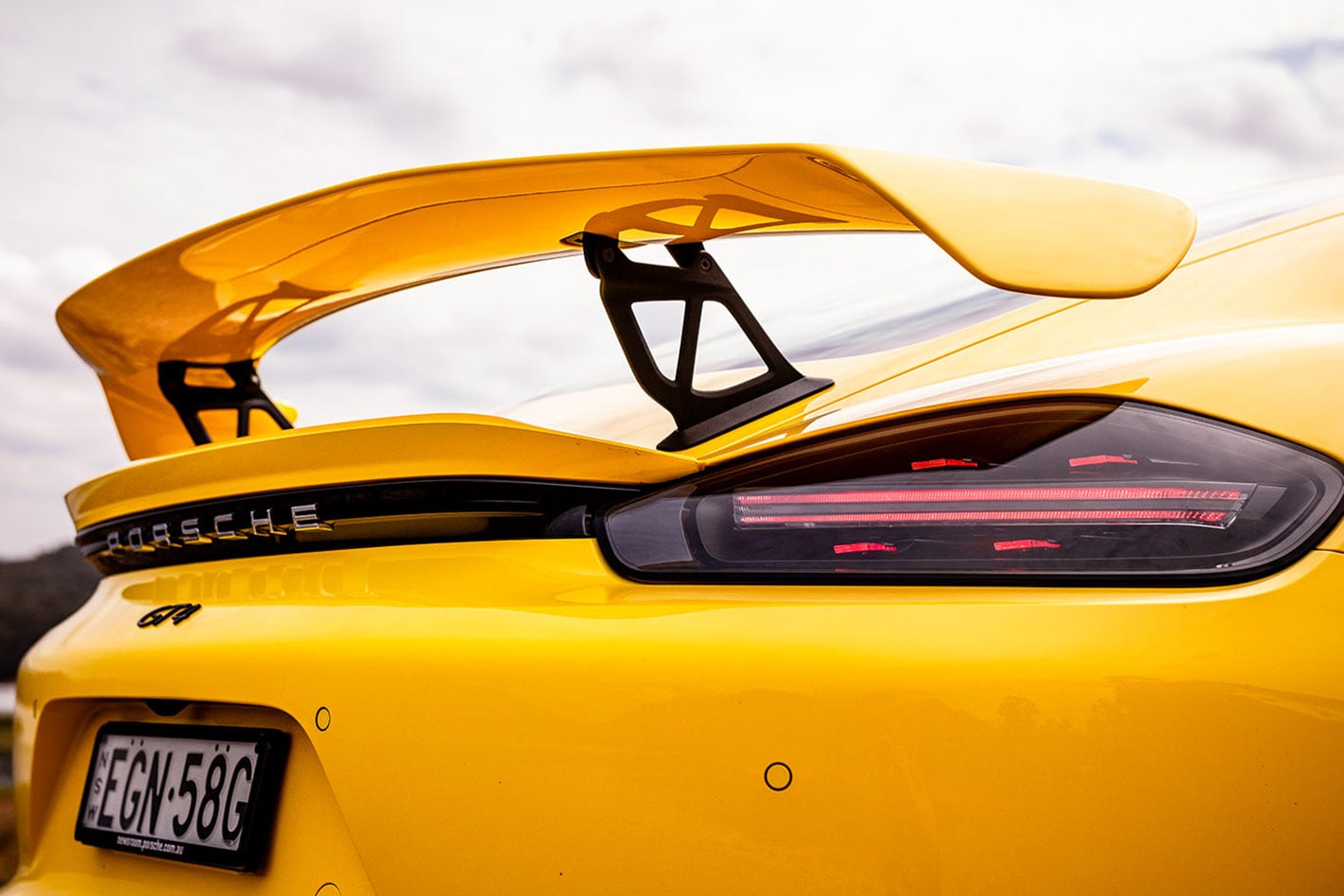
The Porsche 718 Cayman GT4 is an excellent sports coupe, but it has a flaw.
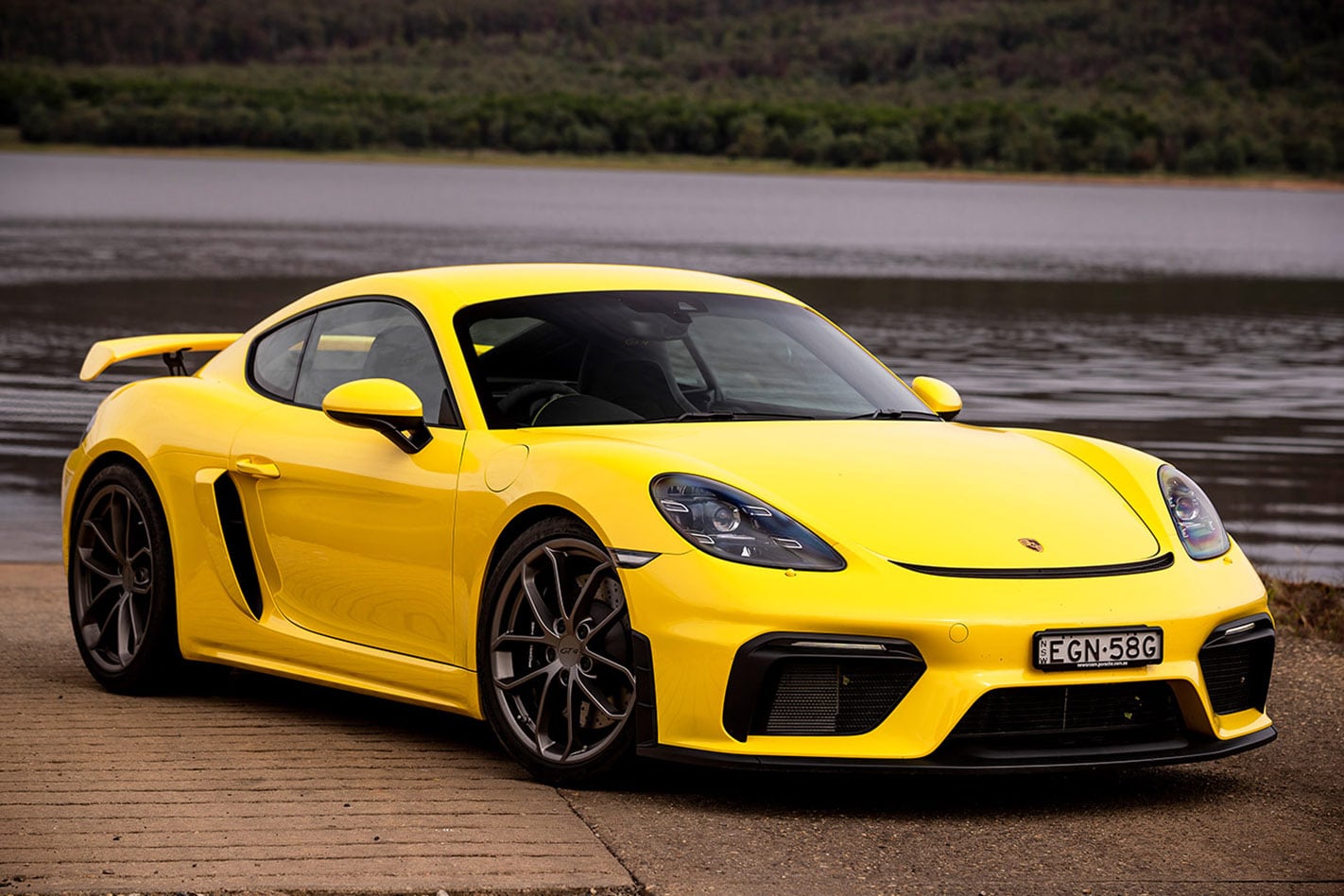
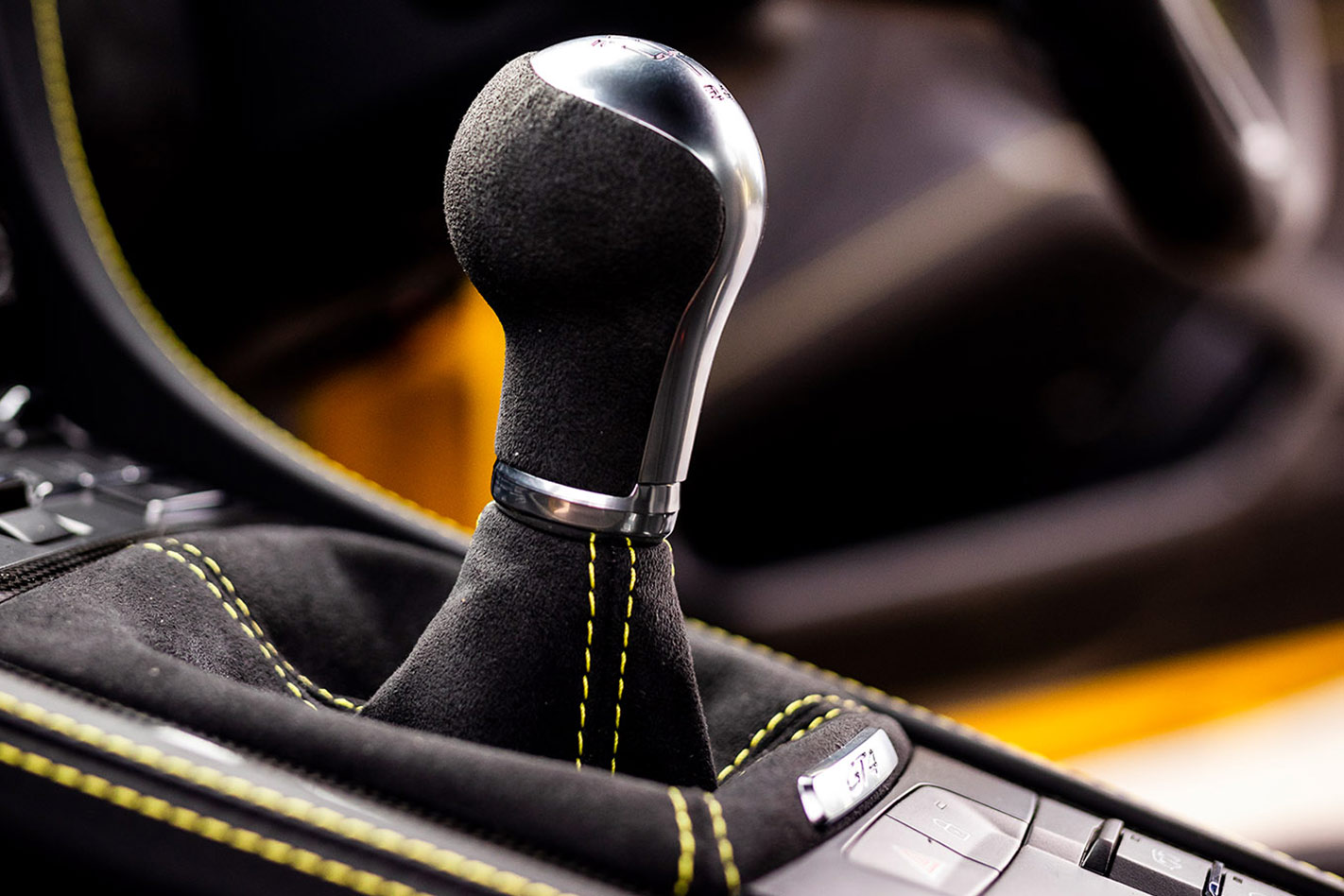
At present, it’s only offered with a six-speed manual gearbox and the ratios of that ‘box are, not to put too fine a point on it, berserk.
This is a normally-aspirated engine that thrives on revs. You buy the GT4 to wring every last revolution out of it, nudging against the 8000rpm redline before dipping the clutch, snicking another gear and repeating.
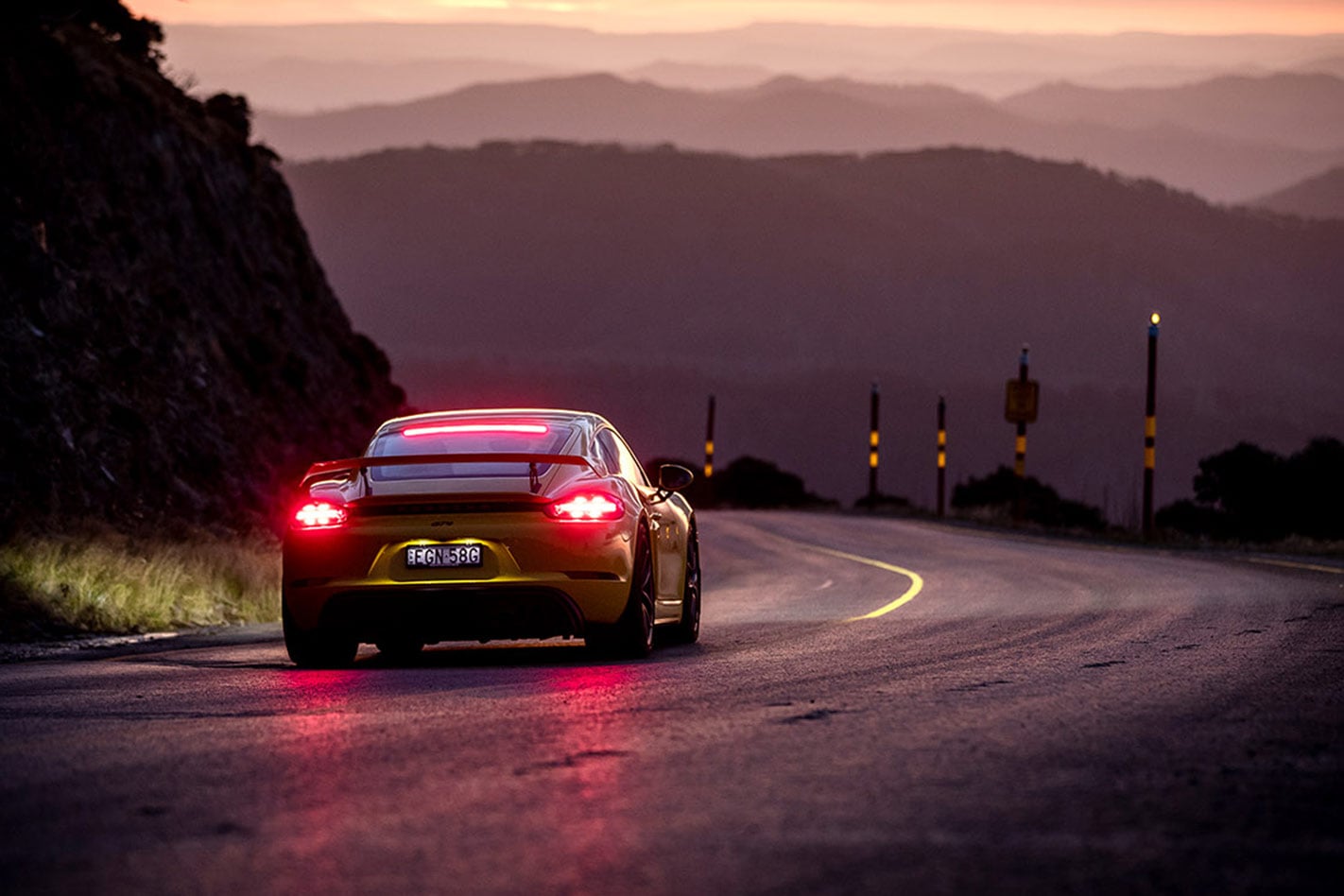
Except you can’t. Not on Australian roads anyway. First gear in a Cayman GT4 takes you to around 84km/h, while second will see 137km/h on the clock and third puts you smack into Tracey Grimshaw’s crosshairs at 195km/h.
While this is fine on a track, fast road driving delivers a measure of frustration. The car’s quite happy and will deliver its best left in second gear, which does much to negate the tactile involvement of buying a manual in the first place.
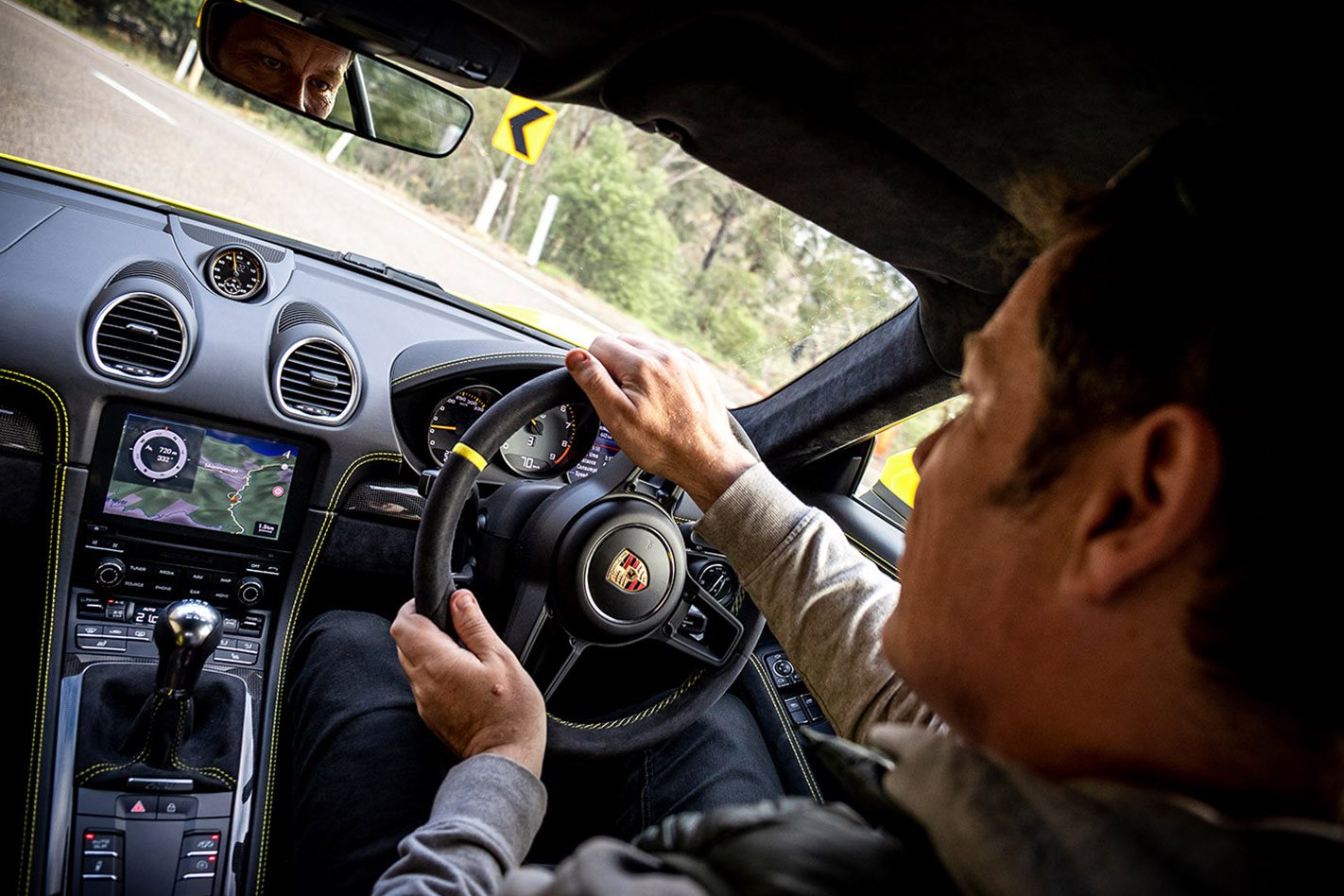
Wheels recently had the opportunity to talk to the man in charge of the entire Porsche 911 and 718 lines, Frank-Steffen Walliser, and we were unable to resist asking him what the rationale was behind this curious engineering decision.
We expected it to be emissions-based. The real reason was quite different.
“The gearbox we have, don’t get me wrong, it’s an old one, an existing one and changing the gear was just technically not possible as we were running out of space on the shafts, if we need an adjustment there,” he explains.
Then comes the closest we’ve heard to an admission that the manual car’s not quite what it could be.
“We would have loved to have seen that, [the gearing] a little bit shorter, but technically there was no way. We have an answer, which will come later this year and that’s very nice then,” he says.
The solution he’s talking about, the seven-speed PDK, will have a shortening effect on ratios, but if you’re dead-set on three pedals and a stick, you’re stuck with what’s out there.
First world problems? Maybe. But when you’re Porsche, even small criticisms generate big feed-back.
There’s something about a good Z-car that always gets our attention. There have been good vintages and dodgy ones down the years, but Nissan’s been on a pretty solid form line through 300ZX, 350Z and 370Z, although the latter’s hung around like the weird dude at a house party who’s still there when everyone else has gone and you’re in your pyjamas.
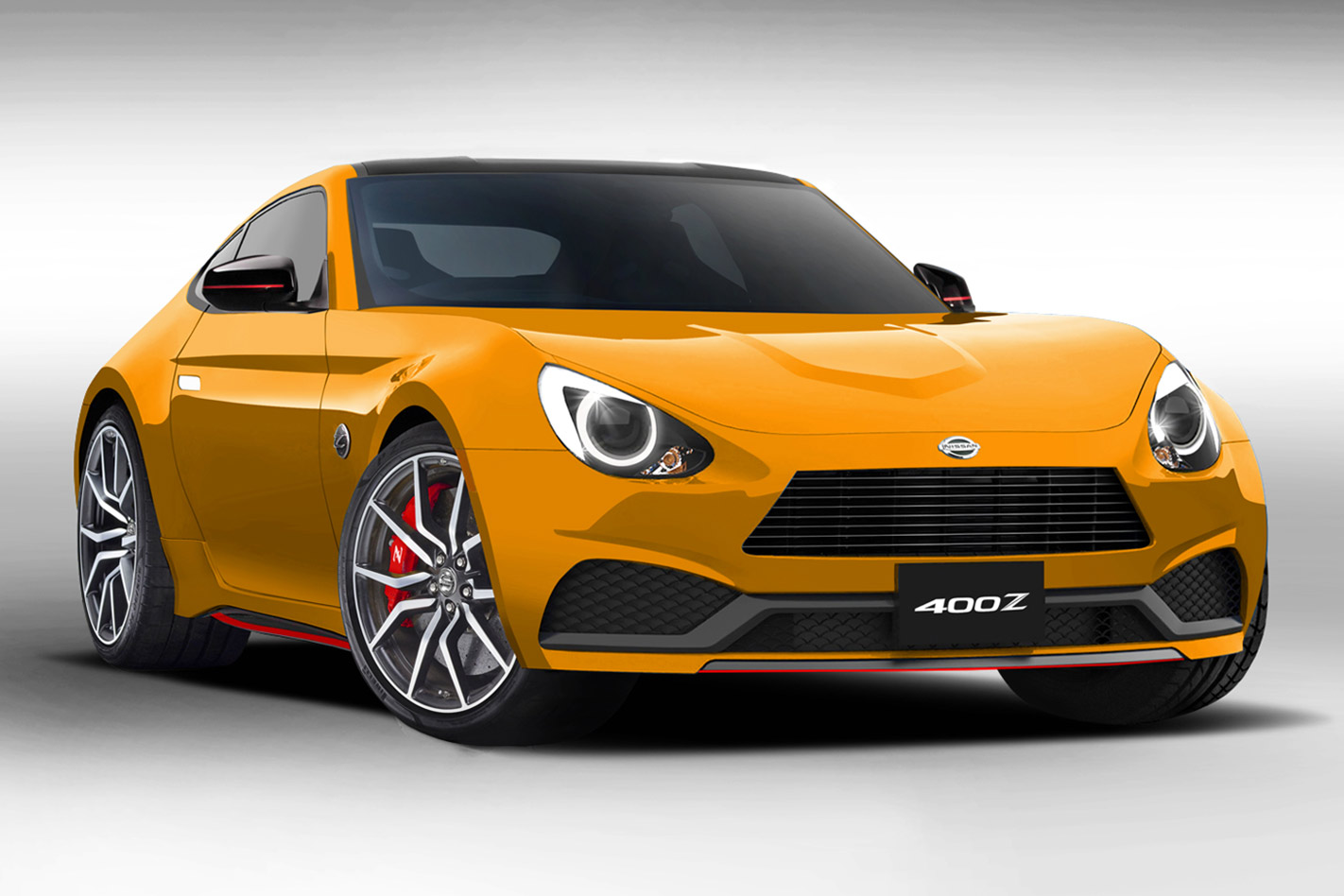
Nissan looks like it’s finally opened the door and called an Uber for the venerable 370Z, because we have all the beta on the incoming 400Z. Well maybe not all, but the bits that count.
Expected to pack a 300kW twin-turbo punch, the new Z car hero will be built on the same platform that spawned the current Nissan GT-R.
Read up on the new native nemesis of the Toyota Supra in our latest issue, out now.
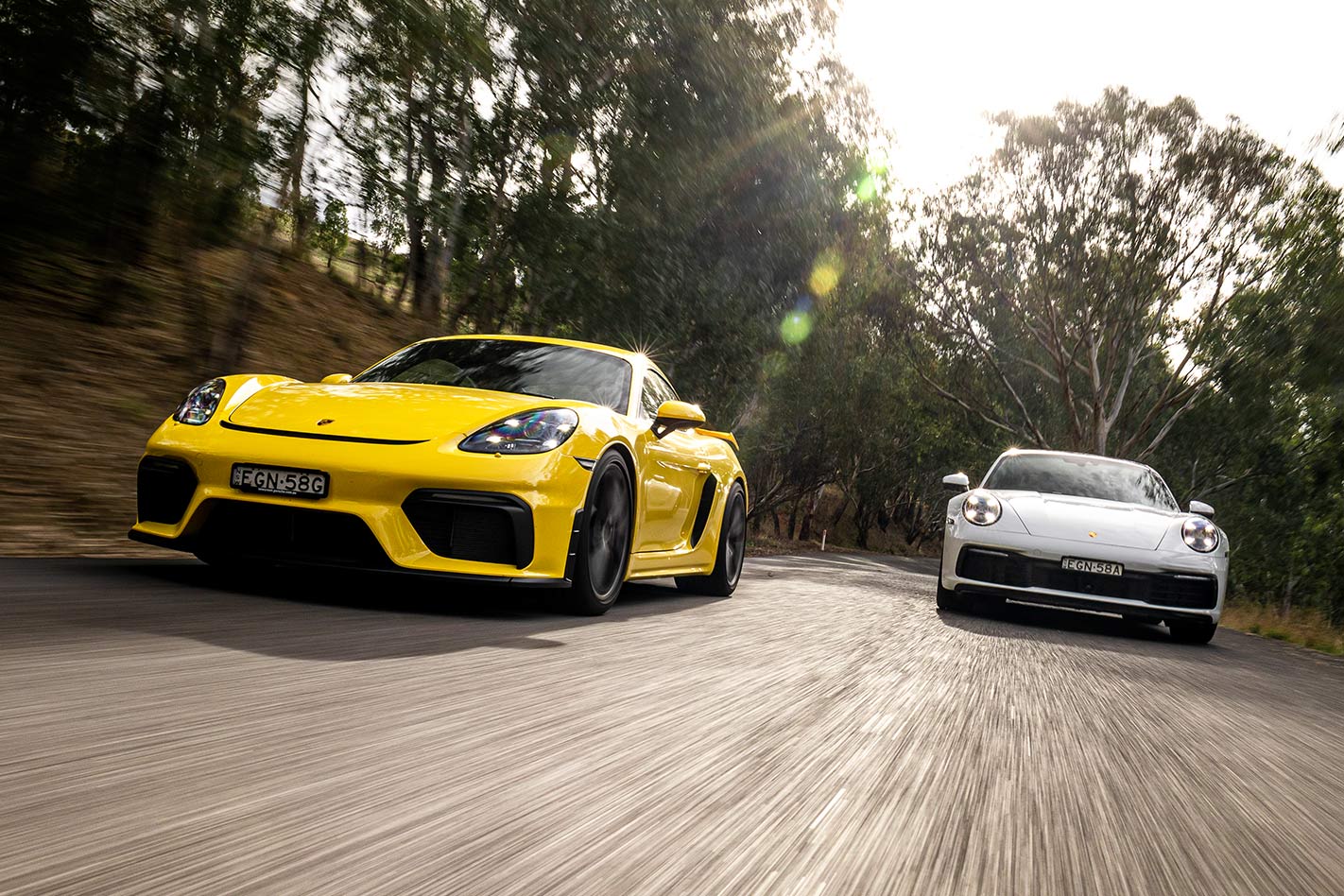
If the prospect of the 400Z doesn’t stir the old loins, there’s plenty of other attractions.
We pit the Porsche Cayman GT4 against what might be the only car capable of levelling with it – Porsche’s 992 Carrera – on the Alpine Ring here in Australia to see which comes out on top. The answer might well surprise you.
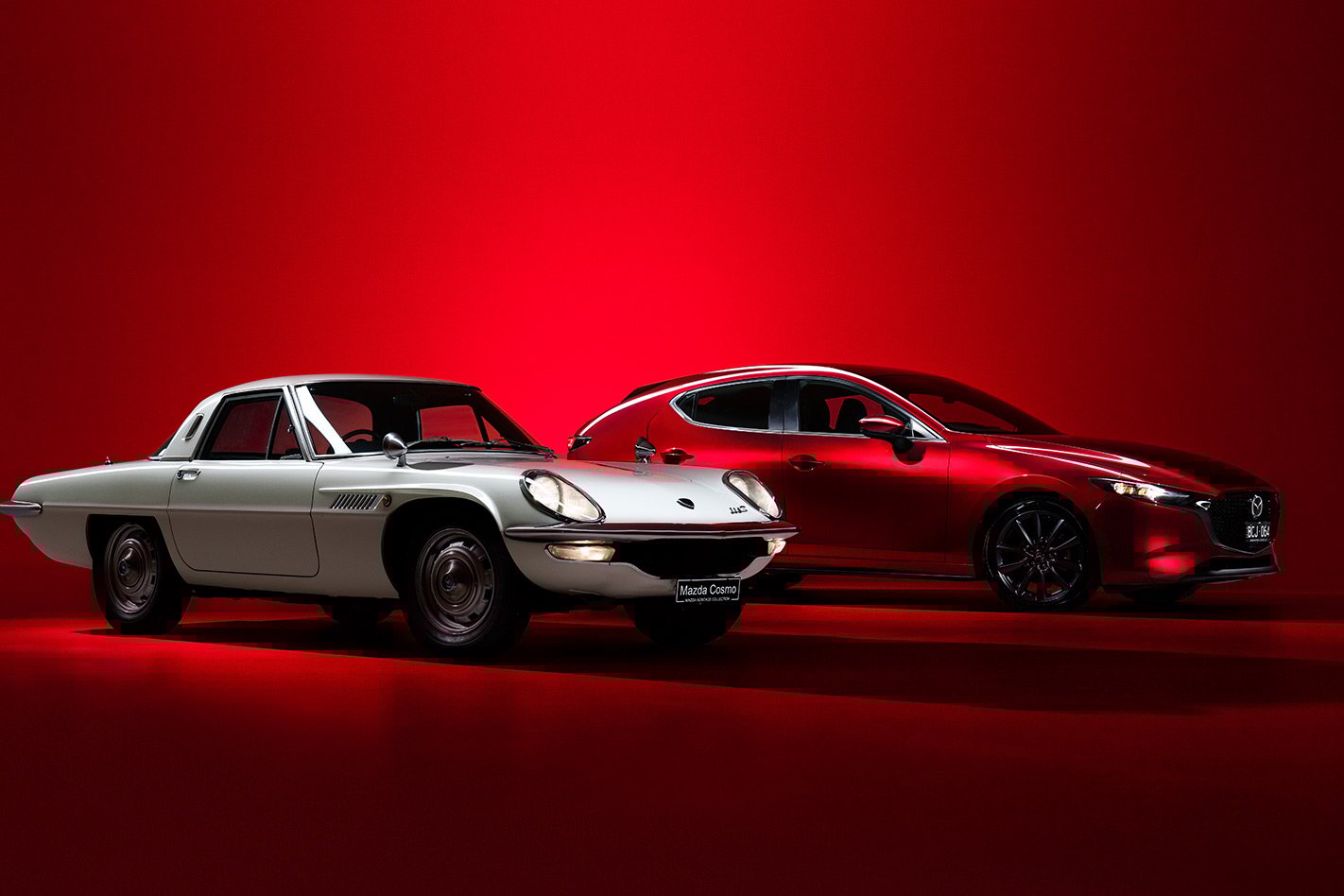
We celebrate 100 years of Mazda, the only car company we know whose founder avoided being vaporised by a nuke by going for a haircut.
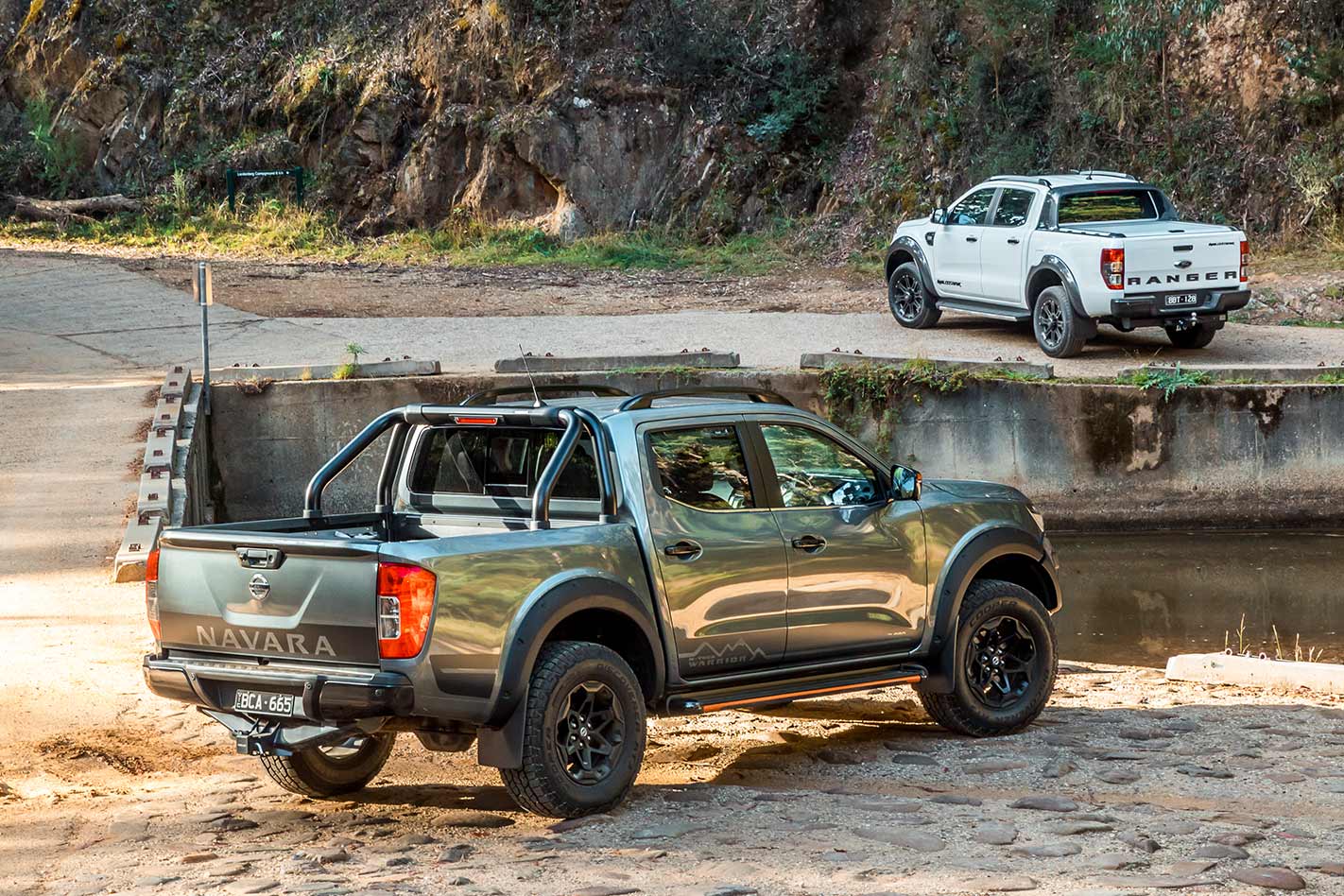
There’s a face-off between the Nissan Navara N-Trek Warrior and the Ford Ranger Wildtrak-X, as we decide which is best. And, as an aside, do these have the most testosterone-laden badges in the business? Maybe that’s where Mazda went wrong with the BT-50, a vehicle which should probably be renamed the Megaton Penetrator 9000 for greater market appeal.
There’s a whole section on how to overcome the inevitable COVID-related cabin fever.
We go behind the scenes of No Time To Die, the latest instalment of the Bond franchise, and bring you the lowdown on the amazing vehicle stunt sequences involved in the forthcoming blockbuster.
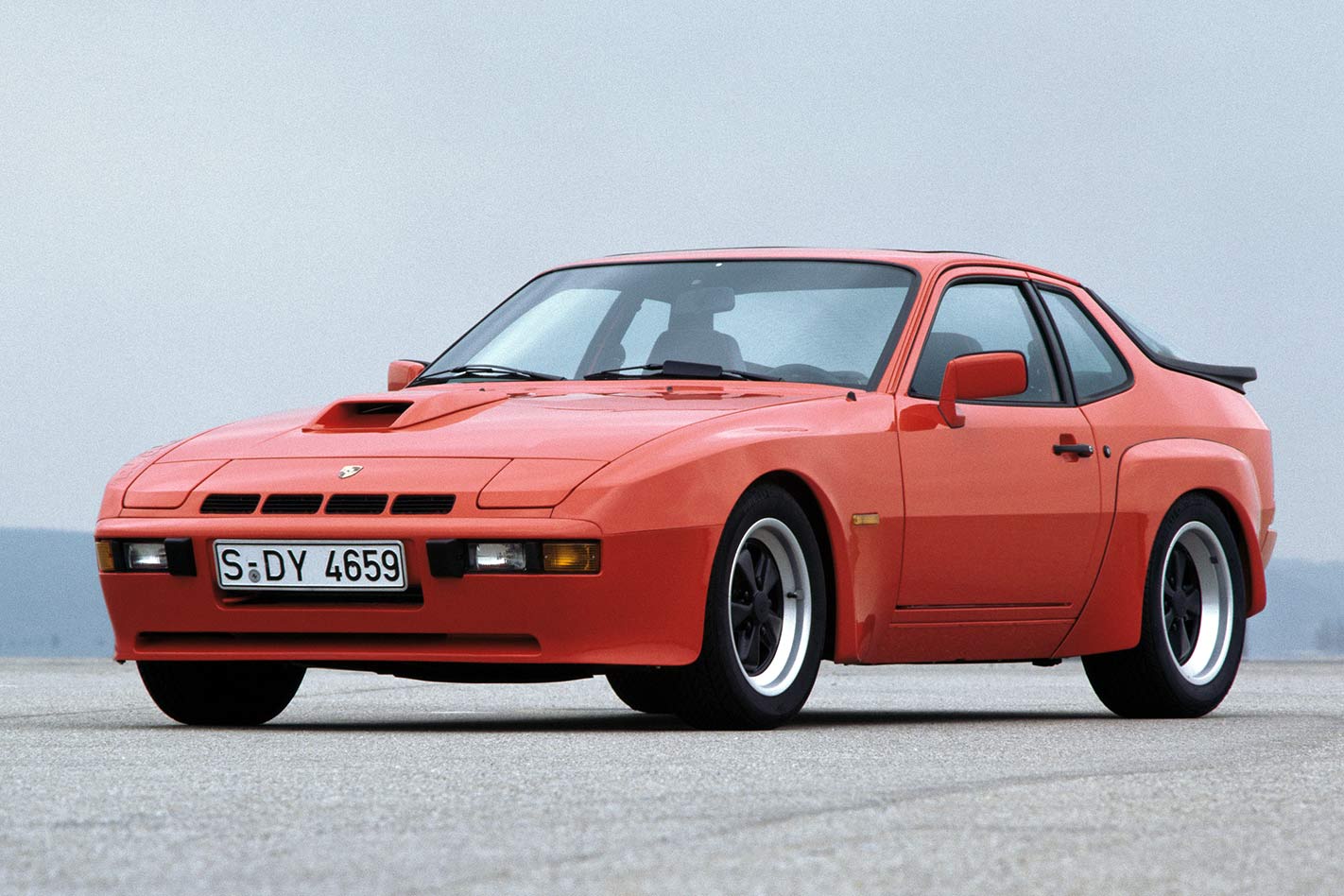
We’ve got the verdict on the long-awaited Ford Focus ST, we speak to Mike Flewitt – the man transforming McLaren, and we tell the story of the beautiful Porsche 924 Carrera GT in ‘Modern Classic’.
That’s not all, we also get behind the wheel of the new Audi A3, sample Ford’s more powerful Mustang 2.3, and investigate what coronavirus has done to the used car market and why it’s put a bunch of the fun products we were looking forward to on ice.
Anyway, if I tell you any more, I’m going to spoil the plot, so do yourselves a favour, pick up a copy at the supermarket. It’s less calorific than a tub of Ben and Jerry’s and easier to get hold of than decent pasta.
If that all sounds a bit much, we’ve got a cracking subscription offer where you can snag six issues for just $50. If you’ve got used to never leaving the house, that’s got to be hard to resist.
Late May 2020 marks 30 years of Lexus in Australia, the humble Toyota off-shoot that took on – and upset – the German status quo. Meticulous planning allowed the brand to launch the first model, the LS400, in 1990 and after that initial proof of concept the rest was history.
Lexus is growing at a staggering pace worldwide, thanks to its commitment to quality cars, their outstanding customer service and its dependability.
With that, we celebrate its 30th birthday since launch in Australia by chronicling the successes that allowed the brand to become a household name in Australia.
Lexus: a brief history
Quiet, please, as WhichCar presents a hushed history of the Lexus brand that was born in 1989 with the LS limo that stunned the German luxury marques with its quality and refinement.
Here’s the story of Lexus, the relatively young luxury brand that gave BMW and Mercedes-Benz a quality wake-up call when it was launched by Toyota in 1989 and went on to establish itself as a leader in premium hybrid vehicles.
Target: World’s Best Car
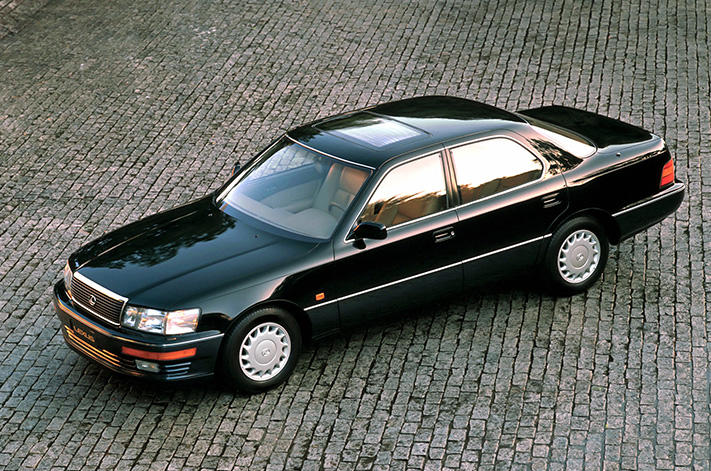
In 1983, a group of Toyota engineers, technicians and designers was assembled for a secret mission, codenamed ‘Flagship One’ or ‘F1’: to create the world’s best luxury car. Highly ambitious targets were a 250km/h top speed, 10.5L/100km fuel consumption, a 60 decibels noise limit at 96km/h, and a 0.29 aerodynamic co-efficient of drag.
Six years and US$1 billion (AUD$1.53b) later, the LS400 limousine was unveiled and the Lexus brand launched – cheekily in Germany, the heartland of the long-established luxury car brands. The refinement and quality levels of the LS would scare BMW and Mercedes-Benz out of their complacency.
Understanding luxury
As Toyota had hitherto been purely focused on mainstream vehicles, the LS development team visited mansions and boarded yachts and even a Gulfstream jet to find their inspiration for what a luxury car should deliver.
The Lexus team’s intensive attention to detail for the LS400’s development included one employee being responsible for carrying three sets of fake fingernails – so they could assess the vehicle’s buttons for use by various buyer types.
The creation of Lexus was very much an initial priority for the US market, where Honda had become the first Japanese car manufacturer to set up a luxury-brand off-shoot – Acura, in 1986. (Nissan also launched its Infiniti brand the same year as Lexus.) Lexus didn’t appear in Toyota’s domestic market until 2005.
The 2054 Lexus
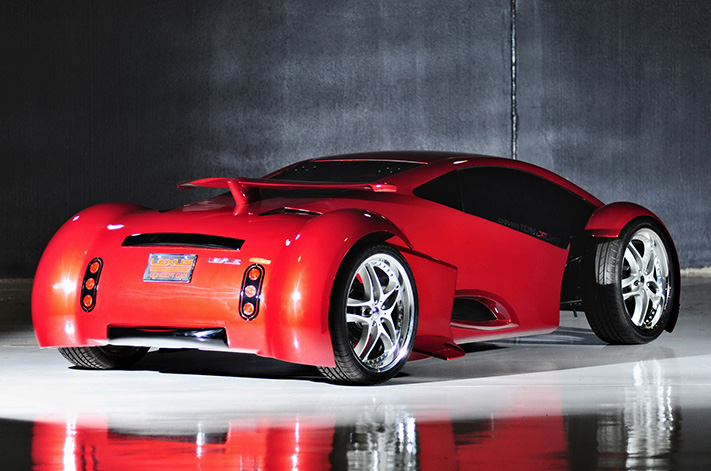
Lexus made a huge (and rare) leap into the world of product placement – or rather brand placement, in this case – when it designed a futuristic car for the 2002 Tom Cruise sci-fi film Minority Report. Director Steven Spielberg had been driving a Lexus SUV, and asked Lexus if it was interested in delving into a “speculative future to see what transport systems and cars would look like in 50 years”. The extreme-cab-forward Lexus design featured a DNA-recognition entry and ignition system, body panels that could change colour via voice command, a heads-up instrument panel, and an auto-valet feature that could drop off its owner, park itself, then collect the owner again (technology set to be available before 2054 in real life!).
World first luxury hybrid SUV
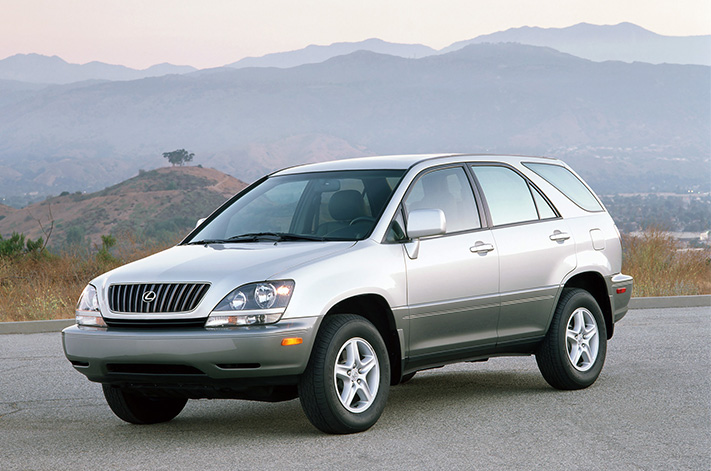
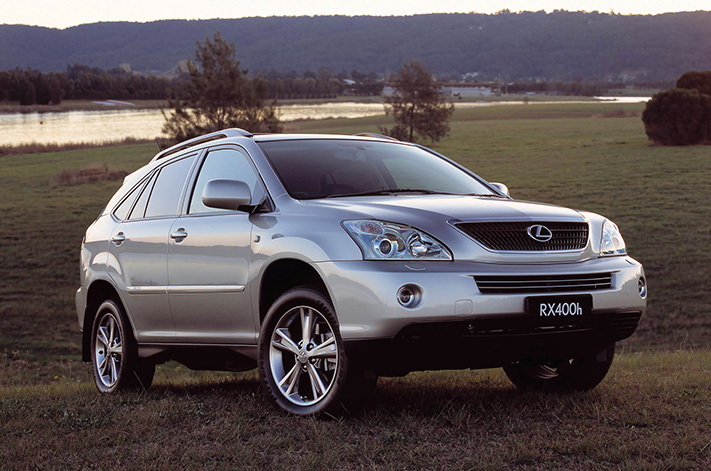
In 1998, the Toyota Harrier SUV was transformed into the Lexus RX300 – a model line that would become the brand’s most popular model line in the US and other markets including Australia for many years. The second-generation model spawned the world’s first premium SUV hybrid in 2005 with the RX400h variant, which combined a V6 engine with two electric motors.
Anything but electrifying pace
The Lexus RX400h became the first hybrid vehicle to be raced when it participated in the 2005 Nurburgring 24 Hour endurance event. With full factory support and competing in the S1 Alternative Fuels class alongside diesels, the RX’s performance was less notable than its presence. After qualifying 195th overall, it finished the race in 79th place overall – not helped by an early crash.
Baby, you can drive our car
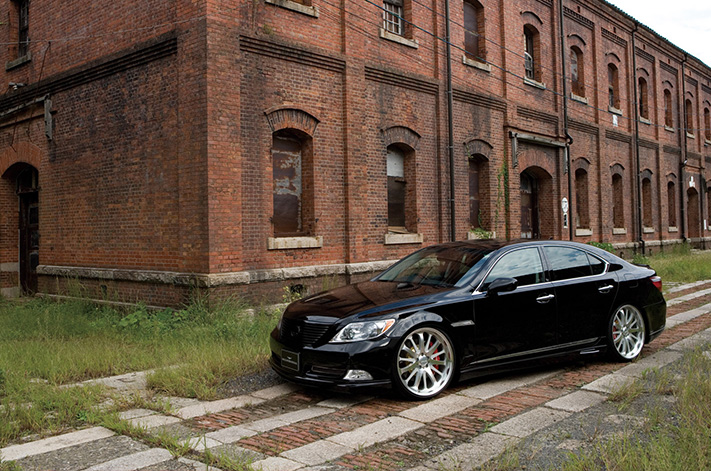
In 2008, Lexus offered former Beatle Paul McCartney the LS600h hybrid limo as a thank you for his involvement with the brand. Lexus sponsored McCartney’s 2005 US concert tour, while the legendary singer-songwriter also performed at a Lexus national dealer conference and allowed the use of his song Fine Line for a commercial advertising another hybrid, the RX400h SUV. The hybrid link is important as McCartney is renowned for his environmental campaigning – and he was reportedly unhappy when he learned his LS600h had been flown to the UK from Japan by air rather than the significantly greener method of sea.
Watch out, AMG and M
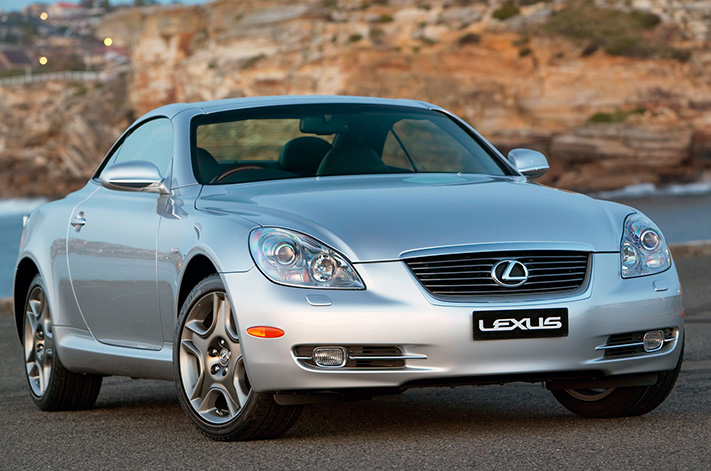
Lexus may have dabbled with motorsport – with the likes of the (aforementioned) RX400h and a fixed-roof version of its SC430 convertible in Japanese Super GT racing – though its showroom models had remained focused on its conservative customer base. Until 2008, and the IS F. It was the fastest version of its mid-sized IS sedan – though the F stood for Fuji rather than Fast, reflecting the Toyota-owned racetrack where the model was developed. Powered by a tuned version of the 5.0-litre V8 found in the LS limo, the 311kW IS F was aimed squarely at the famous BMW M3 and Mercedes-Benz C63 AMG (and was a fair bit cheaper).
LFA
A far more unlikely Lexus emerged two years after the IS F. The LFA was a $700,000 supercar constructed from two-thirds carbon fibre and a third aluminium, and powered by a high-revving 4.8-litre, 412kW V10 engine. It could accelerate from 0-100km/h in 3.7 seconds and reach a top speed of 325km/h. An even faster (and more expensive) Nurburgring Edition temporarily held the lap record for the famous 22km German circuit after which it was named.
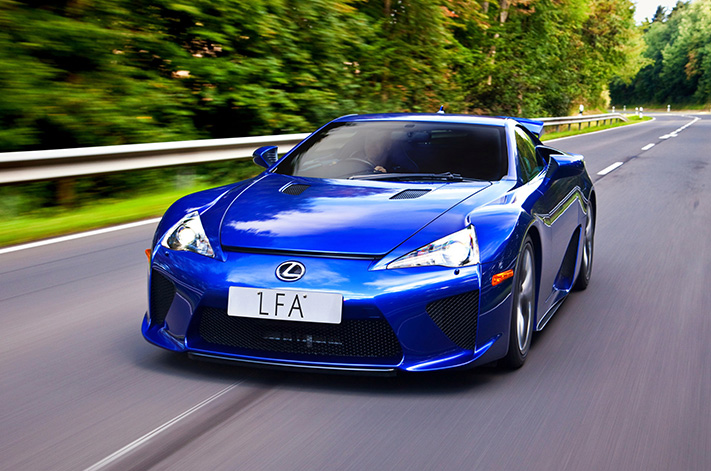
The LFA’s hand-built aluminium V10 revved so fast to its 9000rpm redline that Lexus had to fit a digital rather than analogue speedo so the needle could keep up. The engine was built by Yamaha – which knows a thing or two about high-revving engines courtesy of its motorbikes. The Japanese company already had links with Lexus, having helped to tune the V8 of the original, 1989 LS400.
Only 10 of the 500 LFAs ever built between 2011 and 2012 came to Australia. The hefty, $750,000 price tag came with one extra bonus: private driving tuition from Australia’s 1980 Formula 1 champion, Alan Jones, who had been appointed (and remains) a Lexus Australia ambassador.
Steering wheel that took 38 days to make
The (outgoing) fourth-generation LS was offered with an optional steering wheel that showcased the brand’s approach to craftsmanship. It featured a specialised, striped-wood trim that involved nearly 70 manufacturing steps and took 38 days to complete. The Shimamoku trim was created by a complex layering of dark and light veneers, which once shaped to the steering wheel’s rim were sanded and polished by hand.
Diesel fuel sacked
The future of diesel engines at Lexus was thrown into question in 2013 when the company axed the 2.2-litre turbo diesel from its IS sedan (though this engine never featured in Australia). While it struggled to match the excellent 2.0-litre diesels from Audi, BMW and Mercedes-Benz, it was still a surprise considering that diesel cars account for about half of sales in the UK and Europe. The brand, however, is determined to hedge all its bets on hybrid as its alternative to petrol power.
More Lexus news
A million hybrids
In April 2016 the brand celebrated one million hybrid vehicle sales since it launched the RX400h in 2005.
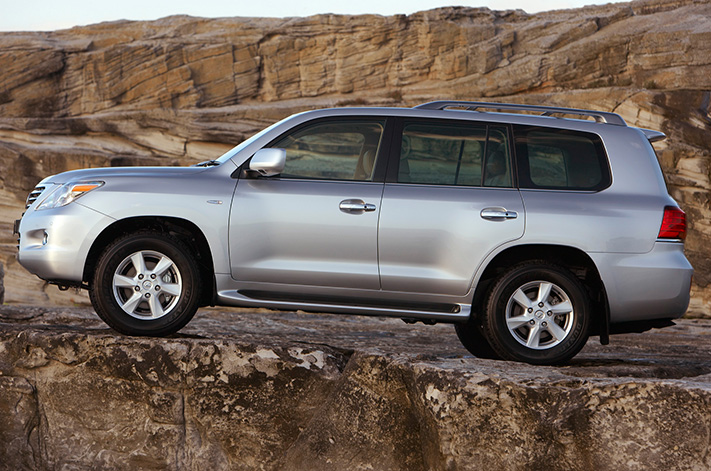
DEPENDABLE QUALITY
It shouldn’t be a surprise that Toyota’s reputation for quality has become inherent in Lexus products, and Lexus has topped the US’s JD Power Dependability Study for six consecutive years (sharing the 2017 honour with Porsche). The Study focuses on problems experienced after three years of ownership.
Small cars used to be small cars. Now, they’re compact crossovers and are largely unexceptional… until now. Ford’s new Puma has arrived, and is here to take on the small-SUV stalwart Nissan Juke and the chunky VW T-Cross. Bring on the funk.
This comparison is sourced from our mates at CAR magazine in the UK, and while the cars reviewed are very representative of the versions that will arrive in Australia, we’ll have to wait a couple of months until all three of these three compact SUV competitors arrive locally for price and spec information.
Ford Puma – from $29,990, due second half of 2020
Why is it here? This, Ford hopes, will be a riotously successful compact crossover.
There are practical touches – you get an under-boot storage area for wet and filthy clothes, and a mild-hybrid system – but Ford’s shooting for your heart with the Puma’s design and dynamics.
Any clever stuff? The hybrid system isn’t a powerful one (the battery’s tiny and there’s no plug-in capability or EV-only range) but it is handy, helping the already punchy 1.0-litre triple feel punchier still and gently massaging fuel economy in the right direction.
There’s also plenty of handy stuff like auto-dip main beam headlights, adaptive cruise and auto parking.
Which version is this? A 1.0-litre Puma Titanium with blue paint, comfort pack (heated seats and steering wheel) and the driver assistance pack. On-the-road price is £22,945 (approx $42,000 – price not indicative of Australian RRP) for this car.
MORE Ford Puma price and features
Nissan Juke – from $27,990, available June 2020
Why is it here? Because you can’t put together a group test of compact cross-overs without the Nissan the kicked off the phenomenon, a class VW reckons will grow from today’s 6.4 million units per year globally to more than 10 million over the next decade.
Bigger, lighter and better than Juke 1, can Juke 2 hang onto its crown?
Any clever stuff? Not really, though the Juke’s well-equipped in the higher trim levels. Those Bose headrest speakers are worth splurging for, giving your sanity a fighting chance against the Nissan’s at times onerous road noise.
A twin-clutch ‘box has replaced the old Juke’s ponderous, frustrating CVT, making going automatic an actual option now.
Which version is this? It’s a 1.0-litre DiG-T Tekna+ from £23,895 ($44,600), hence the big wheels, the standard touchscreen and Bose seat speakers.
There is no hybrid powertrain option (yet), no all-wheel-drive option and the twin-clutch auto adds a whopping £1400 ($2600) to the list price. Manual gearbox and front-wheel drive it is, then…
VW T-Cross – from $27,990, available now
Why is it here? Because you can’t have a group test of mainstream small cars without a Volkswagen in it, and because the boxy, conventional T-Cross provides a no-frills antidote to the likes of the swoopy, wish-I-was-a-small-sports-coupe-like-the-old-Puma Puma.
Priced from just over £17k ($31,000), the MQB-based T-Cross can be specced right up to a posh R-Line with a meaty 1.5 petrol or 1.6 diesel engine.
Any clever stuff? The 10.25-inch Active Info Display digital instrumentation is pretty and works well once your brain’s worked out which of the 18 (18!) steering-wheel buttons (nine per spoke) does what. It’s an option you should go for.
Elsewhere there’s little that breaks any new ground, but you get a thoroughly modern engine with cylinder deactivation and handy tech like active cruise, front assist with emergency braking and rear traffic alert.
Which version is this? One-from-the-top SEL trim level with a 115PS engine and seven-speed twin-clutch ‘box, further buffed with 18-inch wheels.
Ford Puma: it’s like a baby Porsche Macan!
Maybe it’s the early start. Maybe it’s the mind-scrambling effects of both an early start and a McDonald’s breakfast. Whatever, I definitely just uttered those words.
The visual similarities between Ford’s new B-segment SUV and Porsche’s oh-so-capable sports SUV don’t exactly slap you around the face. You’re not going to confuse the two in a car park, let alone on the road. But there are echoes of the Porsche in the Ford.
Those rakish looks make for a snug feel inside (though rear visibility is almost Lamborghini-esque; Huracan, not Urus) and the driving position’s good.
The sun was barely above the horizon as the Ford and I parped out onto bright, windswept and deserted tarmac, the going a mix of truck-laden main routes and fiendishly bumpy back roads of the kind to give chassis engineers insomnia.
The Ford’s ace powertrain and keen chassis made it an unlikely weapon on both.
This is the less punchy 123bhp (91kW) option, but it’s still the standout powertrain here. On the A16 the Ford gleefully leapfrogs trundling freight, the triple’s efforts bolstered by a 48-volt mild-hybrid system.
The Puma’s desperate for you to clock that it’s a hybrid, from the badge proudly displayed on its rump to the power meter on the dash, slap bang between the clocks, that swings back and forth as you veer from regenerative braking to e-boosting.
And desperate as you might be to dismiss such tech as a gimmick, a mile in the Ford is all it takes to appreciate that it works, the car’s modest e-shove sharpening throttle response, helping mitigate lag (all these engines are turbocharged) and burnishing its numbers with a little extra economy (the Puma turns in the best economy figure on the test).
By contrast, the VW’s engine feels inoffensive but ordinary and the Nissan’s a touch crude.
The Fiesta-based Puma, with the best-powertrain gong already bagged, then makes a play for best chassis. The steering – a touch light in Normal; weightier and plain better in Sport – is the best here, as you’d expect of a company that also turned out the rather excellent current Focus.
While the Puma’s ride height means it can’t quite summon the same beguiling cross-country fluidity, it is very good, the suspension set-up (a touch jiggly in town, despite this car riding on modest 17-inch wheels) coming into its own as you work it a little harder.
The Puma doesn’t exactly relish being driven like you’re charging home to clear your browsing history. Not like a Focus or, better still, a Fiesta ST.
But it is the only car here interested in the task at hand. Here too the mild-hybrid system scores points, the off-throttle regen effect tugging the nose on-line and helping tip the car usefully onto its nose as you turn-in.
Fun to drive, then? Yep. Best chassis, best engine. A baby Macan? The most Macan of these four, certainly.
Your winner? Depends how much you like Fiesta interiors. The Puma has one, for better (it mostly works, and you intuitively know how it works) and for worse (lacking in feelgood design, poor lateral support to the seats, poor rear legroom).
Still, before we’ve even sunk the first sausage and egg McMuffin of the day, the Ford’s off to a flying start.
Nissan Juke: king for yesterday
You have to hand it to Nissan – it looks like nothing else on the road, eye-stingingly bright winter sunshine pinging off the car’s deep metallic red paint and handsome 19-inch rims.
The first Juke looked like nothing else on the road but – problematically given how popular it would be – also looked nothing like a handsome example of modern automotive design. Juke 2 puts that right; this thing’s cool.
First impressions are all good: great bucket-style seat, snugly comfortable cockpit, plush feel to the fabrics.
There’s something old-school about the Juke: big steering wheel, with an unfashionably slim and hard rim; slightly cantankerous six-speed manual gearbox you have to work relentlessly to get anywhere; gruff, generally reluctant 999cc triple.
Later, on the blast home chasing the setting sun, the Juke will struggle to keep up with the Ford, but the Nissan (same platform as Renault’s Captur and Clio, of course) is no slouch when you just need to get somewhere.
The Juke generates an unlikely amount of grip, refuses to wash into the epic understeer you expect of it and, as still-damp corners come at us like frisbees on a beach, the Juke clings to its composure in the face of some quite extreme provocation.
This second-generation Juke is undoubtedly a far better car to drive than its predecessor, and its chassis systems – integrated under a banner Nissan’s daubed with the words Trace Control – deploy brake-based torque vectoring and modest ECU-decreed lifts of the throttle to help keep the car on the line you had in mind, rather than the one bald physics would otherwise have you describe.
They work well and with admirable subtlety to make the Nissan a capable if hardly engaging cross-country tool.
Better drivers reckon the Juke’s interventions are inconsistent and frustratingly intrusive but, to the seat of these pants, they’re a lot smoother than the T-Cross’s clumsy, very obvious brake-dragging efforts.
As if all of this hooning matters anyway. The first-generation Juke sold a lot better than it drove (or looked…) and, in 2018, when a first-gen Juke rolled out of the factory every 105 seconds, Nissan’s Sunderland plant built its one-millionth example of the controversially styled compact crossover.
The Juke all but invented this class, melding the apparently mutually exclusive crossover and coupe gene pools to deliver something like the desirability of Range Rover’s equally game-changing Evoque on a fraction of the budget.
The new car is a steady evolution, with less polarising (if still pretty left-field) styling, more interior space (legroom’s up nearly 6cm, and the boot 20 per cent bigger) in a larger but lighter (by 23kg) and more rigid body. There’s more tech, too, with ProPilot now available on the Juke, offering lane-keep assist and adaptive cruise.
Perhaps the biggest leap forward is inside. This – at the risk of damning with faint praise – is the best interior of any Nissan to date, with some plush, decidedly un-Nissan materials and just enough quirky design to elevate the space beyond that of a more workaday Qashqai or X-Trail.
The VW feels airier, but the Juke’s cockpit is a strong combination of sound ergonomics, appealing design and quality materials. If only the manual gearbox was as sweet to use as the Ford’s.
The Juke, then, is the original. The best? It’s come a long way since its flawed but outlandishly successful debut. But, up against far fresher, more ambitious rivals, it hasn’t come as far as it needed to.
VW T-Cross: honesty is the best policy
You’re a suspension engineer, tasked with setting up the new T-Cross, little brother to VW’s T-Roc and effectively a high-rise Polo.
Given the car’s likely usage and buying demographic, you’d plump for something fairly, well, plump, no? Some barely-there spring rates to soak up the urban lumps and damping like an old sofa? Perfect.
Apparently not. Instead the T-Cross prizes body control above all else – hang the crashy ride! – and loves being flung at lumpy, bump-riddled byways like a WRC car. And if the boot full of hardy perennials ends up looking like a scale model of the Battle of the Somme, well, so be it. Weird.
This firm, almost unyielding suspension calibration feels accidental (the big 18-inch wheels on this car surely don’t help the T-Cross’s paucity of pliancy) – not an accusation you can level at any other aspect of the Volkswagen.
A touch forgettable it may be, and certainly the T-Cross is almost painfully derivative next to the others, but it feels every inch the holistically conceived, thoroughly engineered and well-resolved product the badge suggests it should be.
Where the Puma drops you low, giving hot-hatch pilots a reassuringly reclined driving position, the T-Cross is unapologetically a small SUV.
You sit bolt upright, with more rear legroom than the Juke or the Puma (VW is convinced this is what buyers want, and it’d know), and survey a cockpit which, while cheap-feeling in places compared with other, bigger VWs, feels fabulously well-crafted and luxurious in this company.
The eight-inch touchscreen is glossy and responsive and the upper dash surfaces, with their faux carbon fibre sheen, help the car feel about twice as expensive as it is. And the driving position, while remote and lofty for roundabout antics, is sound and immensely relaxing.
Remember when small cars were thrashy tin boxes about as relaxing to pilot as the Wright brothers’ first flyer? They’re gone. You could put in a solid day in this, no bother.
Crash! Bang! Maybe it’s the lack of investment in local infrastructure, maybe it’s the boy racers shaving tenths, but roundabouts are rough like a badger’s backside, ruthlessly highlighting the T-Cross’s only significant dynamic foible: that entirely un-SUV ride quality.
What’s the point of sitting high, with miles of suspension travel, only for wheel movement to pass almost unchecked to the cabin? Weird.
The VW’s only significant dynamic foible? Pretty much, though the dual-clutch gearbox isn’t the syrupy unfair advantage you might think.
In Drive, the throttle response is painfully lethargic and dim-witted, with what feels like whole centimetres of pedal travel failing to elicit anything from the little triple in the engine bay.
So you try the S transmission setting, which replaces that lethargy with a light-switch take-off so hard to modulate that the aforementioned boy racers take your every traffic-light departure as an unlikely challenge from Postman Pat’s smart new VW.
As ever, the right spec will help. This T-Cross looks fabulous, with its crisp surfaces, Cayenne-esque rear light bar and mini-Touareg air of sophisticated refinement.
The sweet spot? This engine, the 1.0-litre TSI with 115PS, and the six-speed manual. Go with the standard 17-inch rims, leave the handsome range of 18s well alone and you’ll be laughing.
As is often the case with VWs, the longer you spend in its company, the more you think he might be right. Where the others try hard to make your little SUV look and feel like a weird kind of high-rise coupe hatch, there’s a refreshing honesty to the T-Cross.
It’s boxy. It sits high and four-square like a sculptural shipping container. It’s roomy inside, front and rear. The rear screen doesn’t slope, so you could persuade a dog into the boot. It is the full ready-for-anything family SUV, just with town-friendly dimensions and a wallet-friendly price.
It’s almost like VW’s really good at making cars, with the economies of scale to elevate the ordinary to something a little more polished and desirable…
The final reckoning
In essence, the compact crossover is a very practical proposition; compact enough to be easy to drive and park, ergonomically suited to high-mileage bodies, and with a boot to swallow a hard day’s hedge trimmings.
But the compact crossover’s gone mainstream, and the mainstream demands a decent wedge of desirability with its practicality.
The winner’s the Ford; a car to enjoy driving, even if most buyers won’t care. It’s also clever, efficient and practical – qualities to help you overlook the entirely uninspired interior design. Sure, it’s not a Porsche Macan. But for half the money it’s not a bad impression of one.
Duking it out for the right not to come last are the VW and the Juke. The T-Cross is not one of Wolfsburg’s most inspired machines but there’s much to commend it, not least the beautiful build quality, the nicely executed interior and the fact that, uniquely in this company, it’s a proud SUV – four-square, immensely comfortable, laudably honest and, in the right spec, a mini-Touareg for a fraction of the outlay.
The Juke’s not a bad car but it also does nothing better than the myriad alternatives, not least these three rivals. Most will buy on the exterior design alone. Waverers who make it to a showroom will sign up when they sit in it. But the rest of us are better off looking elsewhere for our ready-for-anything, not-four-wheel-drive baby SUV.
Puma vs Juke vs T-Cross: verdict
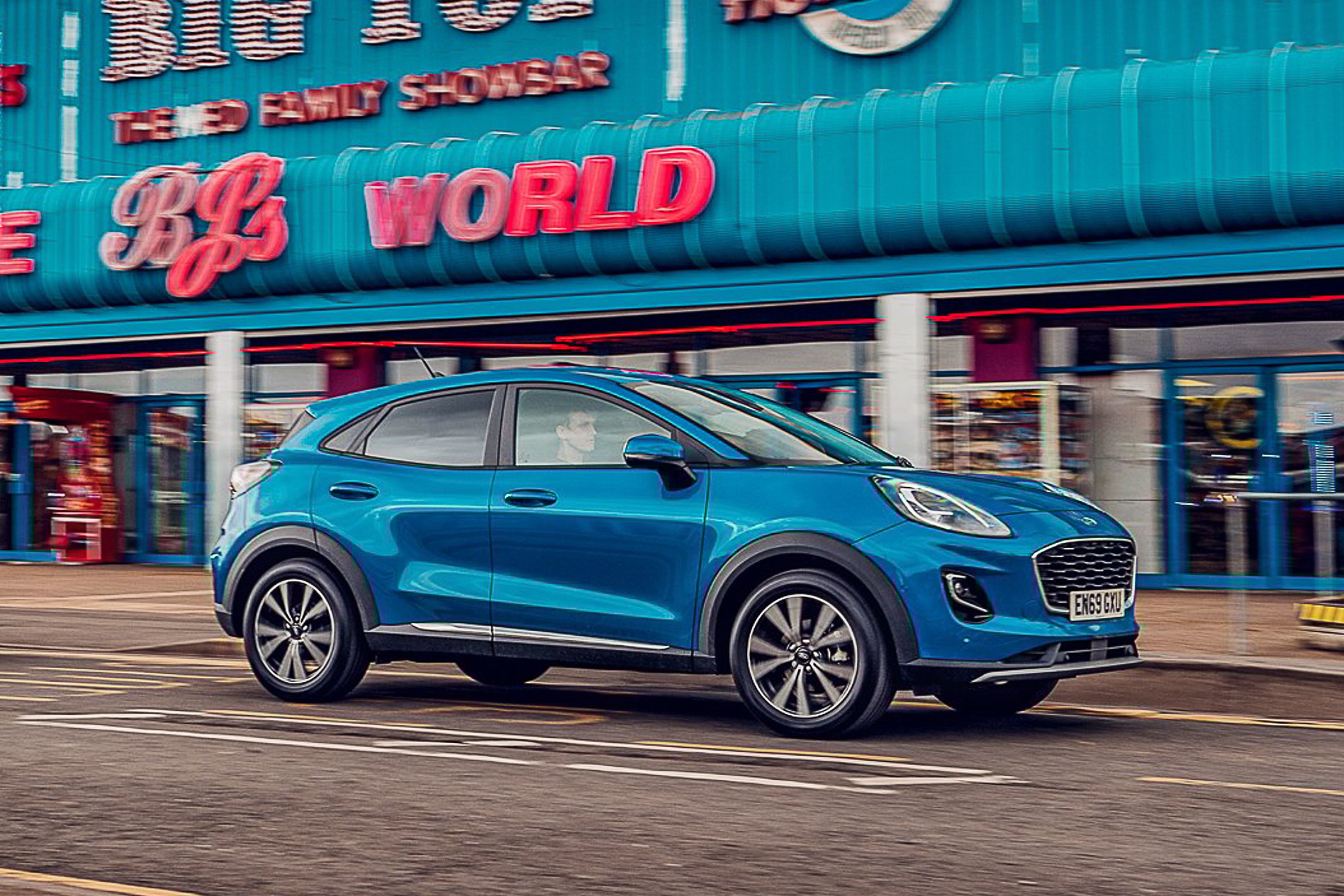
First place: Ford Puma Great powertrain in a car far better to drive than it needs to be. Not special, but very good.
Second place: VW T-Cross Unrepentantly a mini-SUV, so bang-on if you’re not into the crossover/coupe vibe. Tepid but capable.
Third place: Nissan Juke Brand new yet already feels short on ambition. With any luck, future derivatives will put that right.
