
Finally, the new 2020 Volkswagen Mk8 Golf GTI can be seen without camouflage ahead of the 2020 Geneva Auto Show.
Its global reveal shows off not only its design but confirms drivetrain specs and details which had previously been rumoured and leaked.
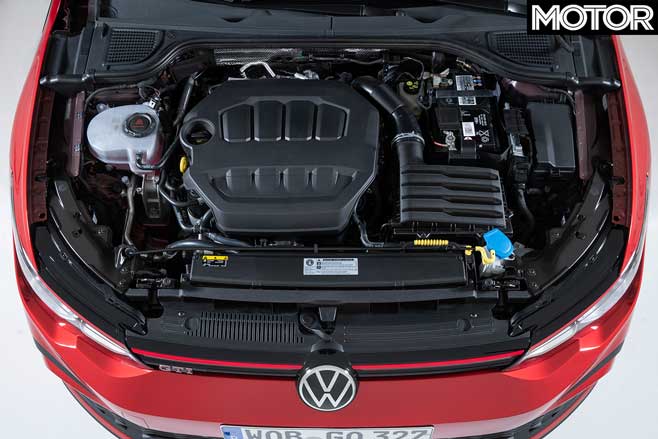
With the fourth evolution of VW’s EA888 turbo 2.0-litre four under the bonnet, the new GTI makes 180kW and 370Nm, mated to a 7-speed DSG. Or… a 6-speed manual ‘box. Rejoice!
Though the GTI chalks up no more power than the final update of the Mk7.5, Volkswagen says its DSG is now a sharper shift-by-wire unit that allows for quicker shifts.
Not much else in the way of mechanical detail is divulged, though suspension is a MacPherson strut setup at the front axle and a multi-link setup at the rear. VW also says the new GTI will debut a system called the Vehicle Dynamics Manager, which oversees the DDC adaptive chassis and the locking differential.
Primarily, the reveal by Volkswagen focuses on the design and features of the Mk8 GTI, sure to be major selling points for the ultimate all-rounder hot hatch – if it is to remain so.
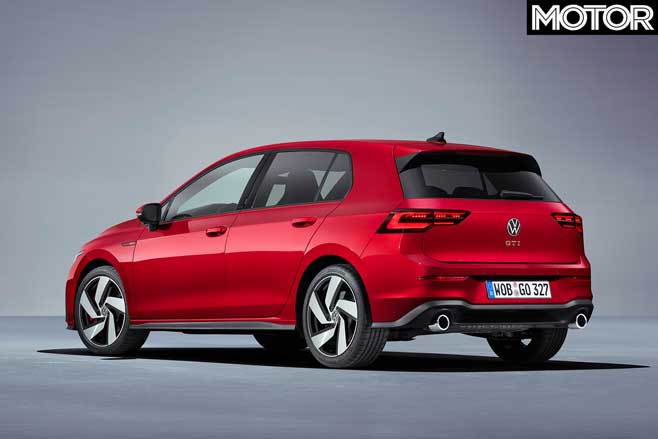
“A car becomes an icon when its design DNA and character remain recognisable for decades,” VW says.
“It is also important for an icon to provide fresh ideas in order to cope with the challenges of our time.
“Just like the Golf GTI. For 44 years, Volkswagen has been reinventing this icon of sporty, compact cars while retaining the original concept – generation after generation.”

The front end retains its recognisable Golf styling but loses a little bit of the sharp aggro nature of the Mk7.5.
It also now features a large lower grille, which incorporates a ‘chequered flag’ style set of fog lights, which VW calls an ‘X’ design.
Its headlights are also joined by a strip light across the front under the bonnet, which is split only by the new ‘slim’ VW logo adorning the upper grille.
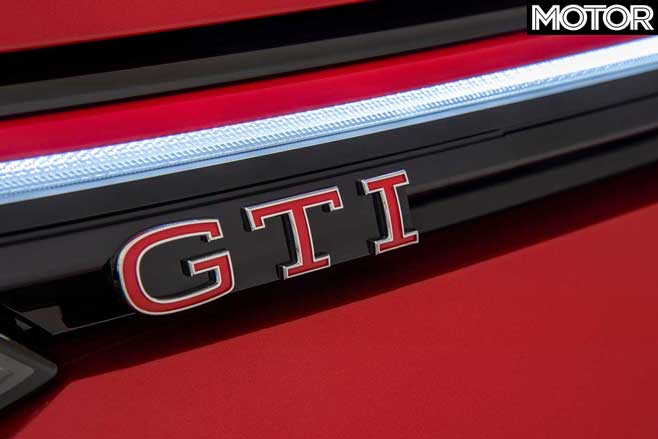
At the rear, the Mk8 features a relocated GTI badge, placed directly under the VW badge. That aside, the rear and side of the new GTI is largely recognisable as similar to the previous generation.
Inside, there’s good news for purists. The clark tartan remains a fixture on the upholstery. In terms of its other GTI fixture? No golf ball gear shift for the DSG, but it’s fair to guess the pattern might appear on a manual shifter, however.
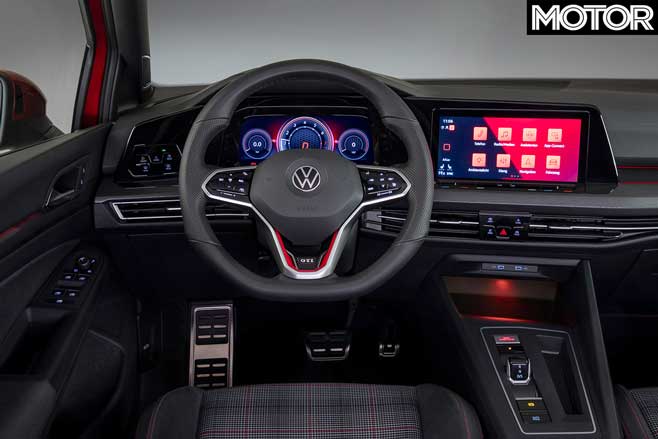
The new cockpit is however a huge step-up in terms of driver-focused layout, while keeping much of the same UX familiarity from the Mk7.5.
We’re expecting to see the Mk8 GTI land in Australia before the year’s up, with the VW Mk8 Golf R to follow in early 2021.
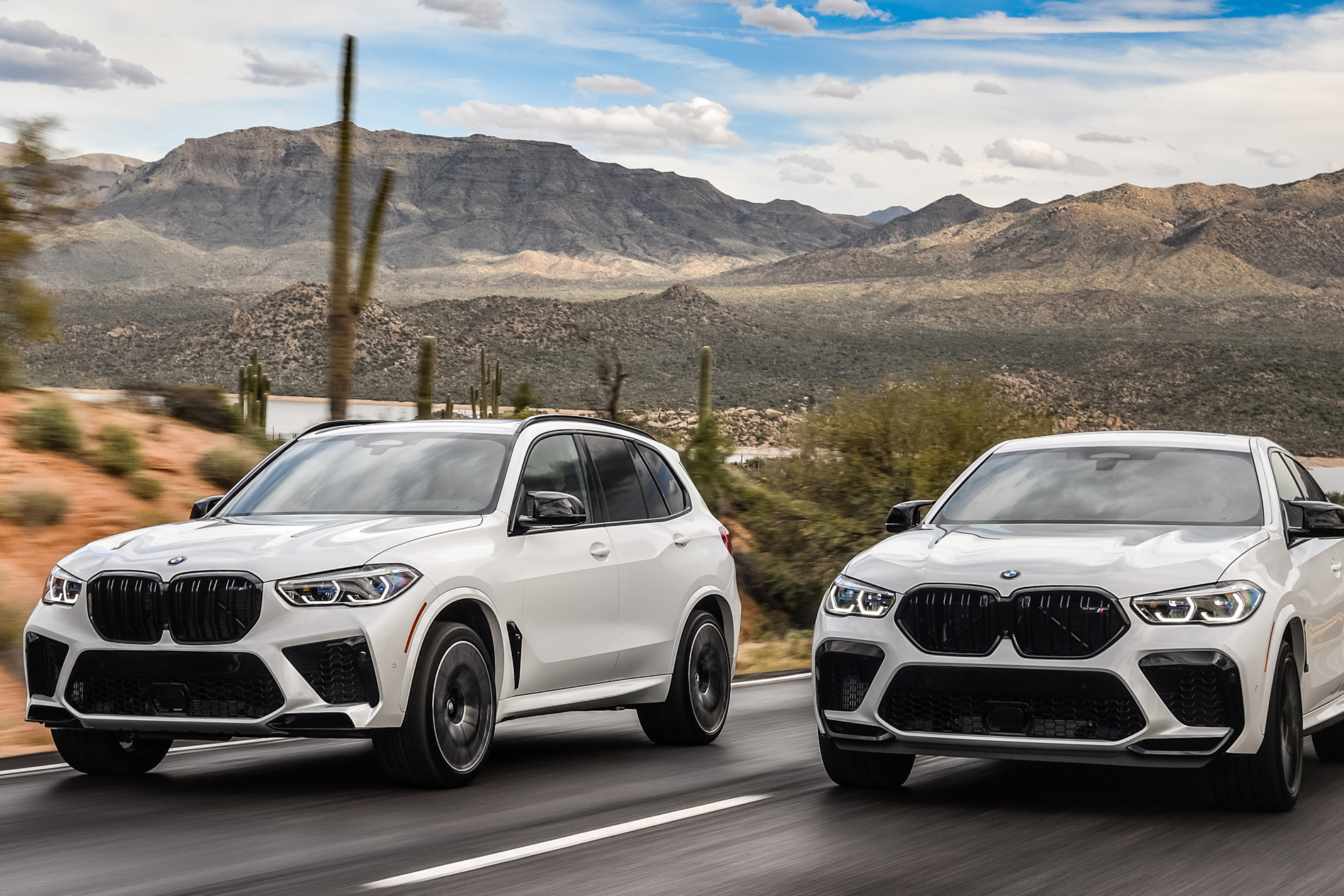
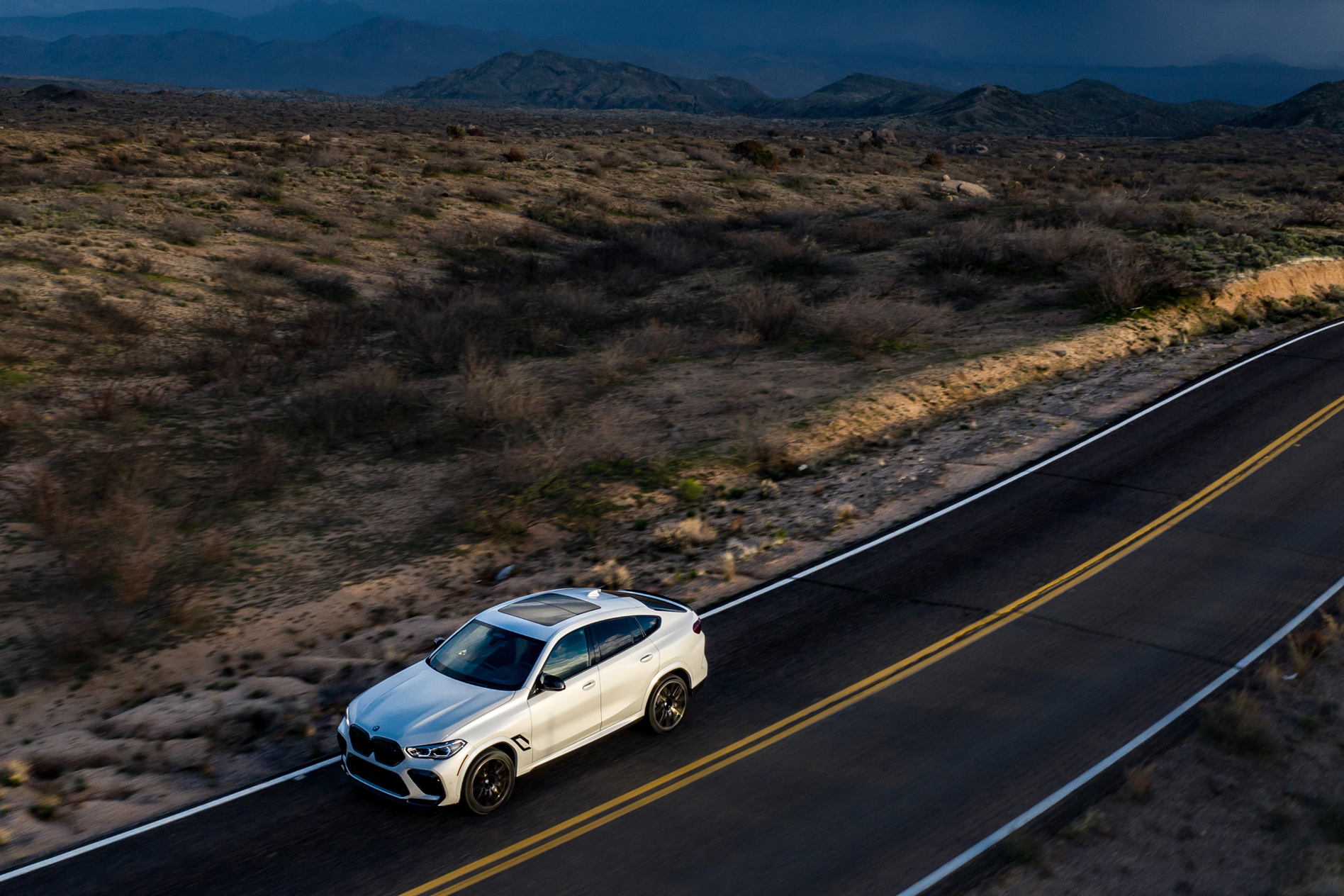
BMW’s new super-SUV fraternal twins, the X5M and X6M, share the same mighty twin-turbo V8 engine, and if BMW has its way, the eight-cylinder layout will continue – though not without its issues.
The S63 engine aboard the SUVs is a straight lift from the BMW M5 sedan and BMW M8 coupe, and the twin-turbo ‘hot vee’ engine is good for 460kW and 750Nm in Competition spec.
Built around a 90-degree vee angle and a sleeveless closed-deck crankcase, the 4.4-litre motor is a very sophisticated motor, with Valvetronic variable valve lift – the first time the system has been used in a BMW V8 application – and direct fuel injection, as well as a pair of high-flow twin-scroll turbochargers.
The engine revs to a generous 7200rpm, with gas and noise escaping via a sophisticated exhaust system.
However, despite this technology, the head of powertrain project management for the X5M and X6M, Axel Theiling, says that various emissions regulations are making life challenging for engineers who work on the V8 family.
“The V8 is not developed especially for this vehicle,” he told WhichCar. “We developed it for the M5 and M8 and brought it over to this vehicle. There are some small changes, like the exhaust system for example. The M5 and M8 prove that there is no need to change things.”
Giving each M product a unique sound is an important aspect, he said. “We have sound designers who think about what a car should sound like. In principle, it’s a similar exhaust – it’s a two-bank system with large cross-sections and you can design the sound with the middle silencer and the rear silencer.”
Theiling admitted there is a degree of amplified noise in the system, but it’s used mainly to mask sound elements that are produced as a result of noise emission regulation compliance.
“Mainly it’s mechanical sound but we have to add some electronic sound too, for example, to eliminate some characteristics which we get with emissions requirements and want to eliminate because it doesn’t fit, in our opinion, to a V8,” he said.
“Drive-by noise [regulation compliance] is “absolutely” an issue. In Europe, it’s very tough. After the ‘diesel discussions’ started, they started to look also on acoustic emissions, and it’s very tough for us to meet the requirements of our customers and meet all the regulations. We try to be as close to the allowed limits of the regulations.”
He agrees that tightening regulations will have a bearing on what powertrains are used for particular cars, but sees no impediment to the use of the V8, at least in the short term.
“I think it depends on the market,” Theiling said. “You can’t say in the future that there will be no market for V8, but we have to have a close look at what’s going on, and then we have to decide what’s the best fit for the vehicle.
“It’s very difficult. But we still meet every regulation requirement, no discussion.”
Theiling believes, though, that it’s the relatively small size of the BMW M group that gives them the best chance of tackling tightening regulations and still being able to produce cars like the thundering X5M and X6M.
“What BMW M is very good at is working together over all disciplines,” he said. “We are not fighting for who gets the best cooling or the best aerodynamics. We sit together and come up with the complete best concept.
“Maybe we have to come up with the second-best cooling concept to get better aerodynamics for example, and then the complete concept fits. This is special for BMW M. We are like a family.”
01 | What is happening?
General Motors will retire the Holden brand before 2021, ending 89 years of history for Australia’s first and only motoring marque – but also one that stretches back to humble beginnings in Adelaide in 1856. More than 600 Holden staff are sadly reported to be out of jobs with the termination of operations both here and in New Zealand.
02 | Why is GM doing this?

There are enough reasons to fill a book, but the official line is General Motors believes right-hand drive markets like ours no longer justify continued investment. Or, the cost to help Holden claw its way up Australia’s sales charts is just too great.
GM global chair and CEO Marry Barra said GM will instead focus on markets “where we have the right strategies to drive robust returns, and prioritising global investments that will drive growth in the future of mobility”. This includes South America, Korea and the Middle East.
03 | What happens to all the engineers and designers?
GM International Operations Senior Vice President Julian Blissett told Australian press that “GM Design Australia and GM Holden Engineering located here in Australia will be consolidated in to other locations predominantly”. He then announced that both teams will cease local operations and finish by June.
Besides GM promising a severance package for displaced workers, it is unclear where their engineers and designers will go, especially now that Holden’s exit significantly shrinks the job market. However, Ford’s CEO Kay Hart has said Ford Australia is hiring and could absorb Holden staff if they had the right skill set.
04 | What is the fate of all the dealers?
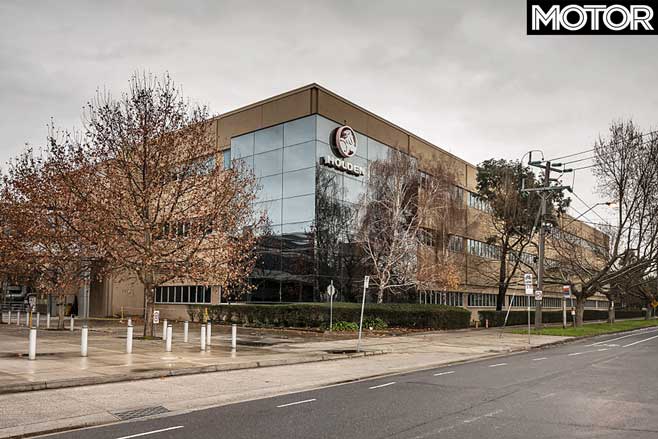
Holden’s Managing Director Kristian Aquilina has said several thousand cars remain in inventory and Holden will happily take orders until the last car is sold. There are currently 185 Holden dealers in Australia and 31 in New Zealand.
Since Holden has previously threatened dealers that wanted to end franchise contracts early with stiff penalties, it’s believed dealers are expecting compensation of similar levels now that the situation has turned the tables – especially after some dealers heavily invested in their showrooms.
For instance, Adelaide’s City Holden was three months away from finishing a $5.6m showroom project when the news broke. At the time of press dealers were ready to heavily discount cars to clear stock.
05 | I have a Holden under warranty. What now?
Holden will retain around 200 workers across Australia and New Zealand to prop up an aftersales network that will support owners with service and parts ‘at least’ for the next 10 years. Aquilina added these service centres will work exactly the same was as they do today. They’re legally obligated to do so.
06 | What now for Holden Special Vehicles?
As MOTOR closed for press it was seeking clarification on reports that HSV will become General Motors Specialty Vehicles. You don’t have to read too hard between the lines in General Motors’ statements to sense this is the next move. GM announced “the company will focus its strategies for the market on the GM specialty vehicle business” and “in markets where we don’t have significant scale, such as Japan, Russia and Europe, we are pursuing a niche presence by selling profitable, high-end imported vehicles – supported by a lean GM structure”.
This is backed by GM President Mark Reuss who said “we do believe we have an opportunity to profitably grow the specialty vehicle business and plan to work with our partner to do that”. It’s currently unclear what models the speciality vehicle business will encompass but the Camaro and Silverado models currently converted by HSV seem a safe bet. And one other in particular…
07 | The Chevrolet Corvette? Is it still coming here?
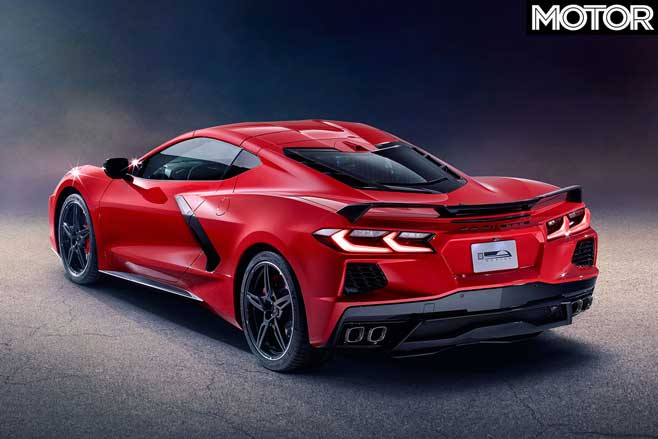
GM’s International Operations Senior Vice President Julian Blissett saying the intent is there will be no change regarding right-hook Chevrolet C8 Corvette: “Corvette right-hand drive will still exist and still keeps being developed”.
As it currently stands the C8 Corvette will still make its way to Australia in late-2020/early-2021 offered through the newly established General Motors Specialty Vehicles, but how many and from what dealers and at what price is still unclear.
08 | What about the Red Bull Holden Racing Team?
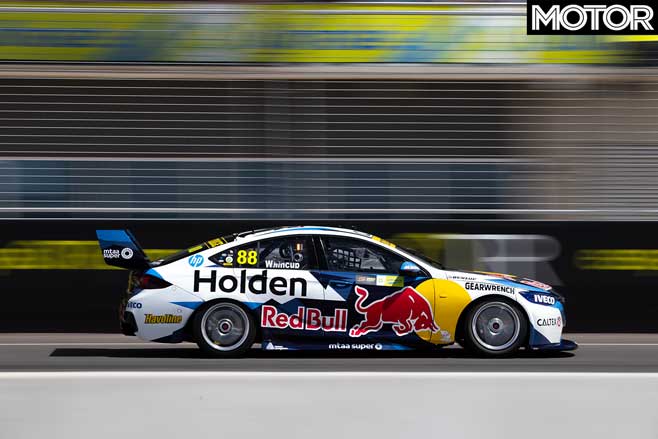
On paper, Ford and Holden are both contracted to offer factory support to teams until the end of 2021, which is just before when Supercars Gen3 regulations kick in, while Kristian Aquilina confirmed support will continue as long as there are Holdens in showrooms. But Holden’s exit has thrown everything up in the air and GM is negotiating with the Red Bull Holden Racing Team about Holden’s future in the sport.
Red Bull Holden Racing Team will run a ZB Commodore until this season’s end and it’s expected many teams will hold on to the design for next year as they prepare for an announcement on Gen3 regulations. However, Walkinshaw Andretti United has confirmed that it will drop the ZB Commodore at the end of this year, welcoming speculation it will develop a Camaro, or perhaps even a BMW, to race in Supercars.
09 | What now for Supercars itself?
This news has caught Supercars massively off guard. Supercars was relying on its two manufacturers, Ford and Holden, for input on its Gen3 regulations that will shape the sport’s future. And just earlier this year Supercars CEO Sean Seamer said that it’s focused on maintaining market relevance through its manufacturer involvement.
10 | What happens to all of Holden’s concept cars?
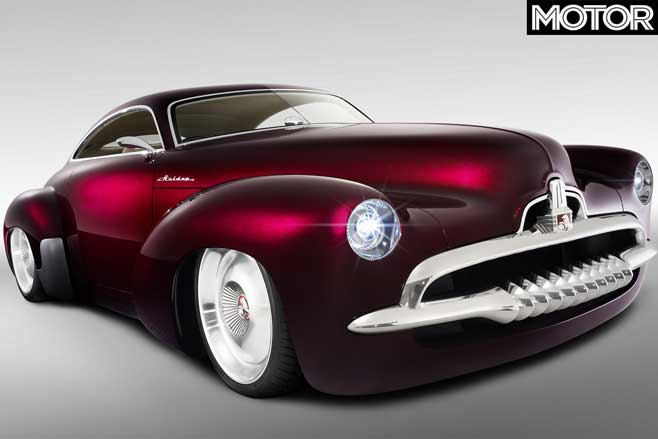
Holden’s heritage collection of around 60 historic vehicles, including the last ever Commodore, a VF II SS Redline, will remain in Australia, mainly thanks to the law. The Protection of Moveable Heritage Act 1986 requires that, among other things, historically and technologically significant items can only be exported with a permit obtained from the Minister for the Cyber Security, Communications and the Arts. That’s currently Paul Fletcher. He’s asked GM to comply on this law and said initial discussions have been “constructive”.
11 | What about the Lang Lang Proving Ground?
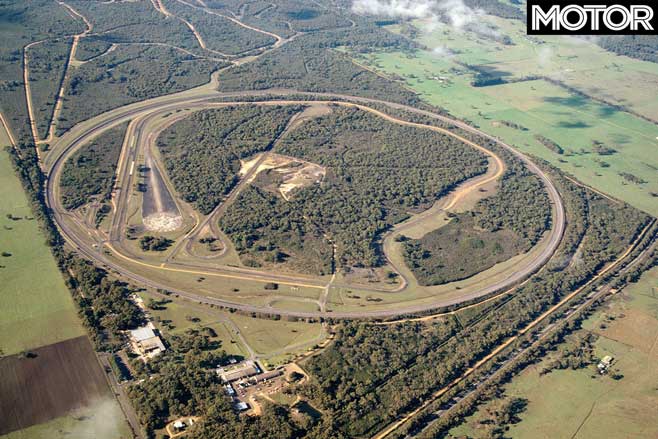
Holden announced its proving ground, which welcomed a $7.2m resurface and $8.7m emissions lab upgrade as recently as 2017, will close this August but says on its website it will “explore options”.
Reports have linked transport magnate Lindsay Fox as someone interested in buying it. The property was last valued seven years ago at $20 million. He already owns Phillip Island circuit and the Anglesea Australian Automotive Research Centre proving ground west of Melbourne.
12 | Could Ford pull-out of Australia too?
Ford is exposed to the same global and local forces as Holden, but has transitioned from a local manufacturer to a full-line importer more successfully thanks to the Ranger and Mustang’s popularity. Ford Australia CEO Kay Hart said the company is committed to Australia and plans to invest another $500m locally this year.
13 | Is Cadillac a possibility for Australia?
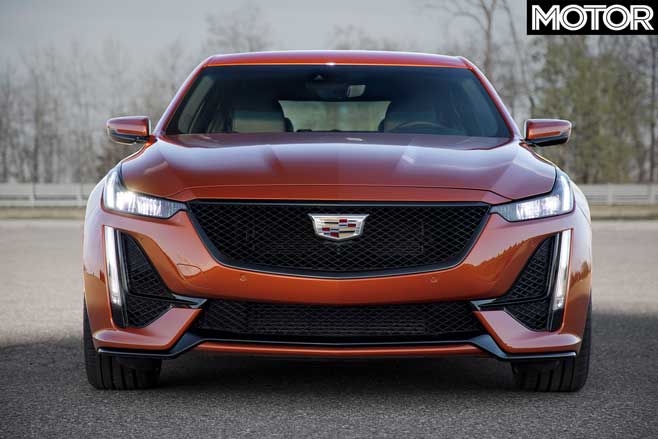
It came awfully close to launching here in 2008 before the GFC quashed plans at the final hour. In recent years GM looked long and hard at Cadillac for Australia while US-market Cadillacs were refined on local roads and at Lang Lang. Aussie enthusiasts would also gel with the rear-drive CT5 and CT6 sedans and its fresh SUV range.
But it’s hard to see how the brand would materialise here since Cadillac is part of GM’s strategy to target major left-hand drive markets like China, Russia and the Middle East, leaving right-hand drive Cadillacs as a dream that, for now, can only be realised through HSV’s fortune in developing special ‘niche’ vehicles, or when GM decides to target the UK.
14 | Could someone buy the Holden brand?
GM has not announced Holden for sale but Inchcape, a UK-based distributor company with ties to Peugeot-Citroen, who own Opel and produced the Insignia-based Commodore under licence, reportedly sought to buy Holden last year. It was knocked back by determined leadership that, somewhat sadly in retrospect, promised to restore the brand to its former glory.
UPDATE 27/02/2020: Hyundai has officially uncovered the facelifted 2021 i30 small hatchback, ahead of its global debut at the Geneva Motor Show next month.
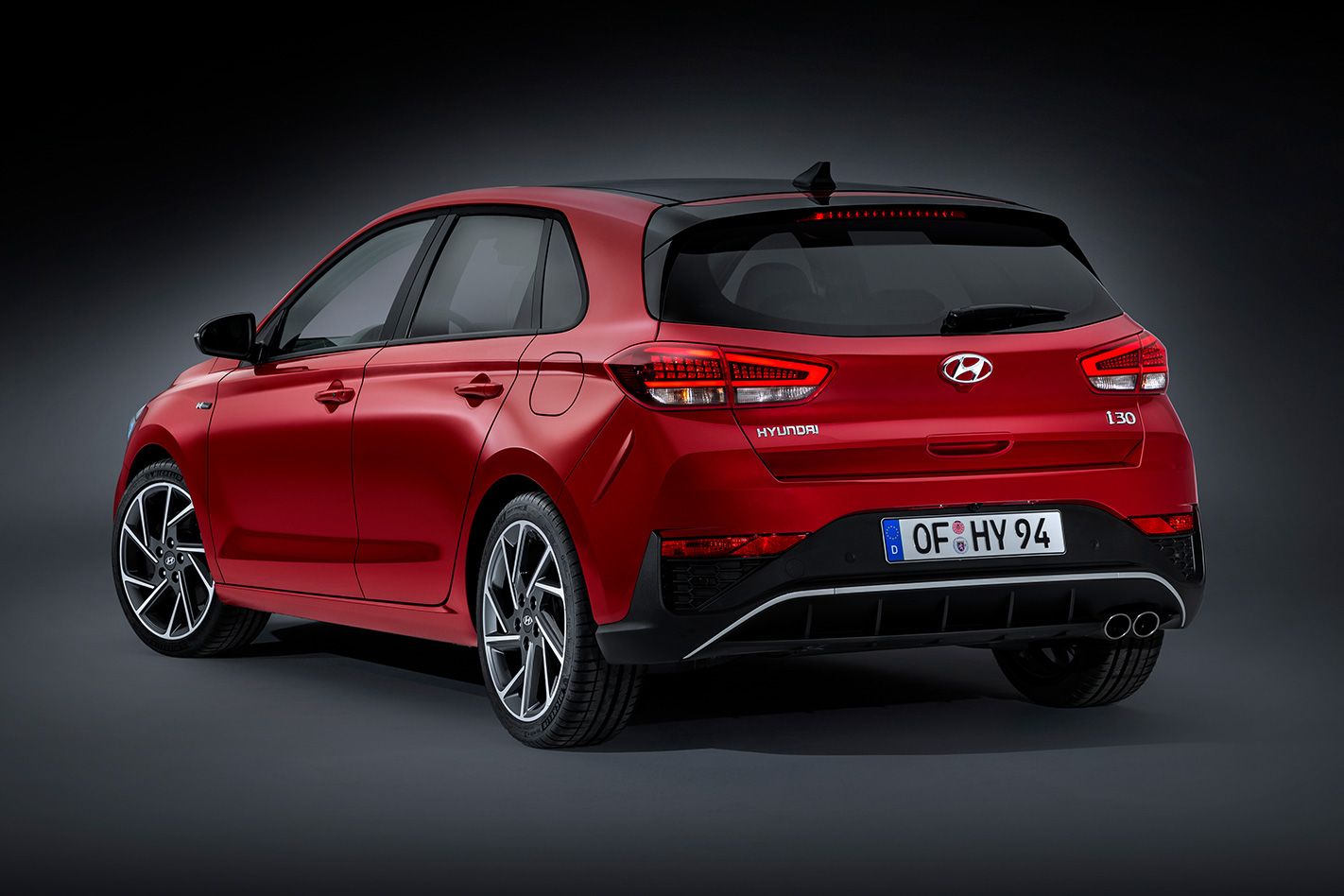
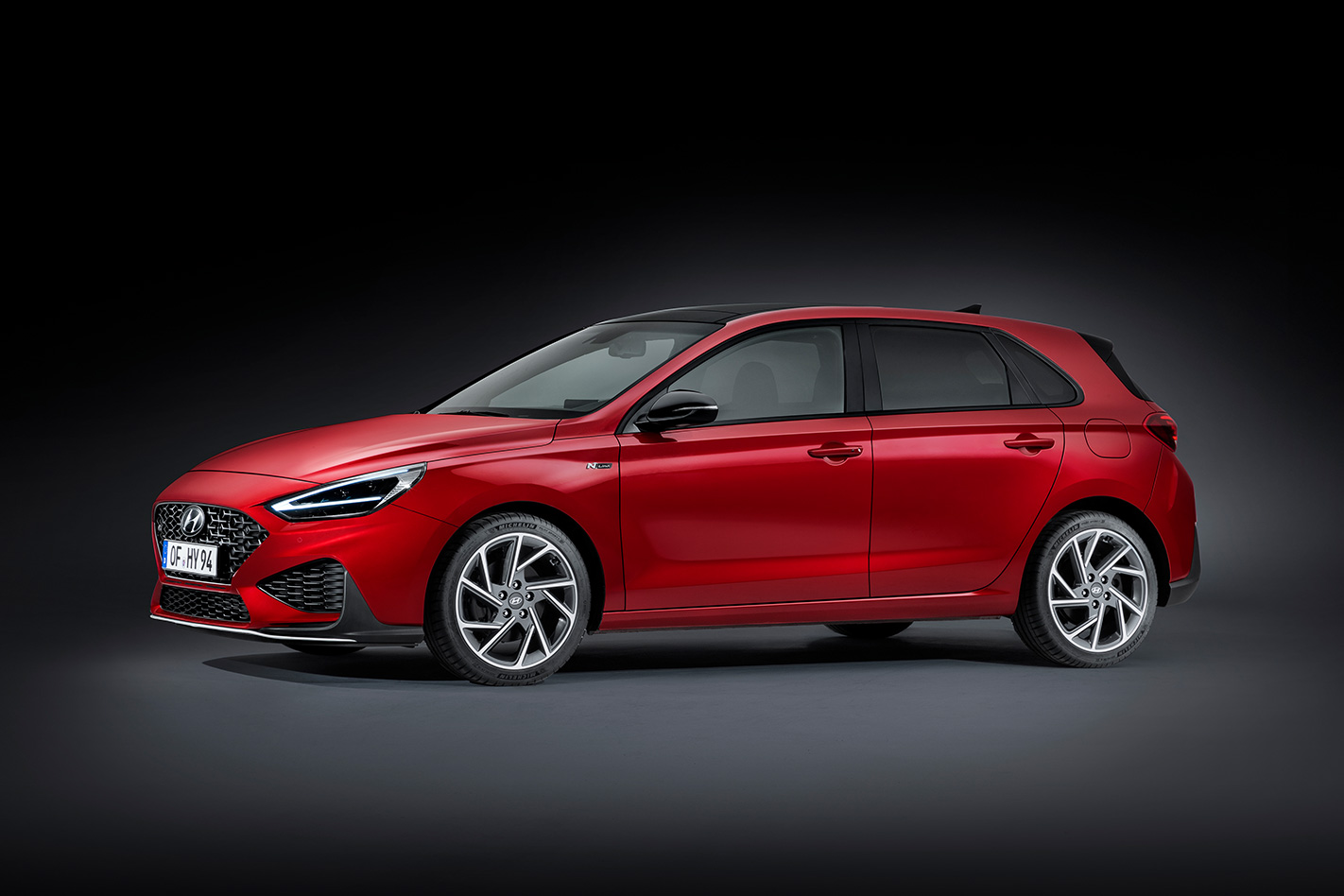
The updated i30 cops a new front end in the form of a more angular front apron, new headlights and a wider grille. The side profile remains largely similar to its predecessor but new wheel designs will feature; and around the rear there is a new set of taillights and an updated rear bumper.
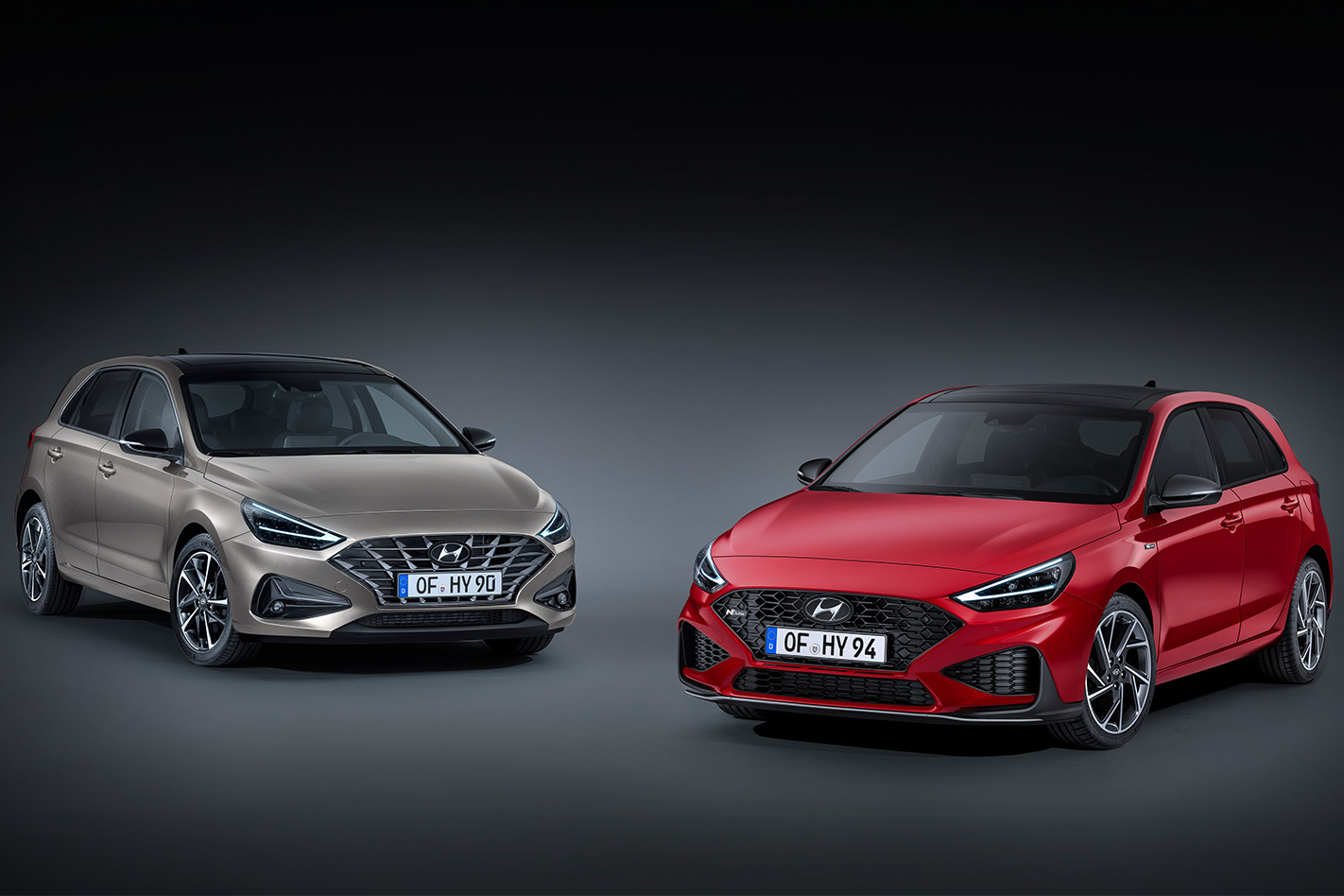
Adding more substance to the style update is a choice of new engines, including a newly-developed 1.5-litre naturally aspirated engine with 82kW, a 1.0-litre turbocharged unit with 88kW, a 1.6-litre diesel engine with 100kW and finally a 1.5-litre turbocharged engine with 118kW. Every engine but the naturally aspirated entry will come with 48-volt mild hybrid technology but it’s worth noting that these are European engines – we are unsure what’s on the Australian menu as yet.
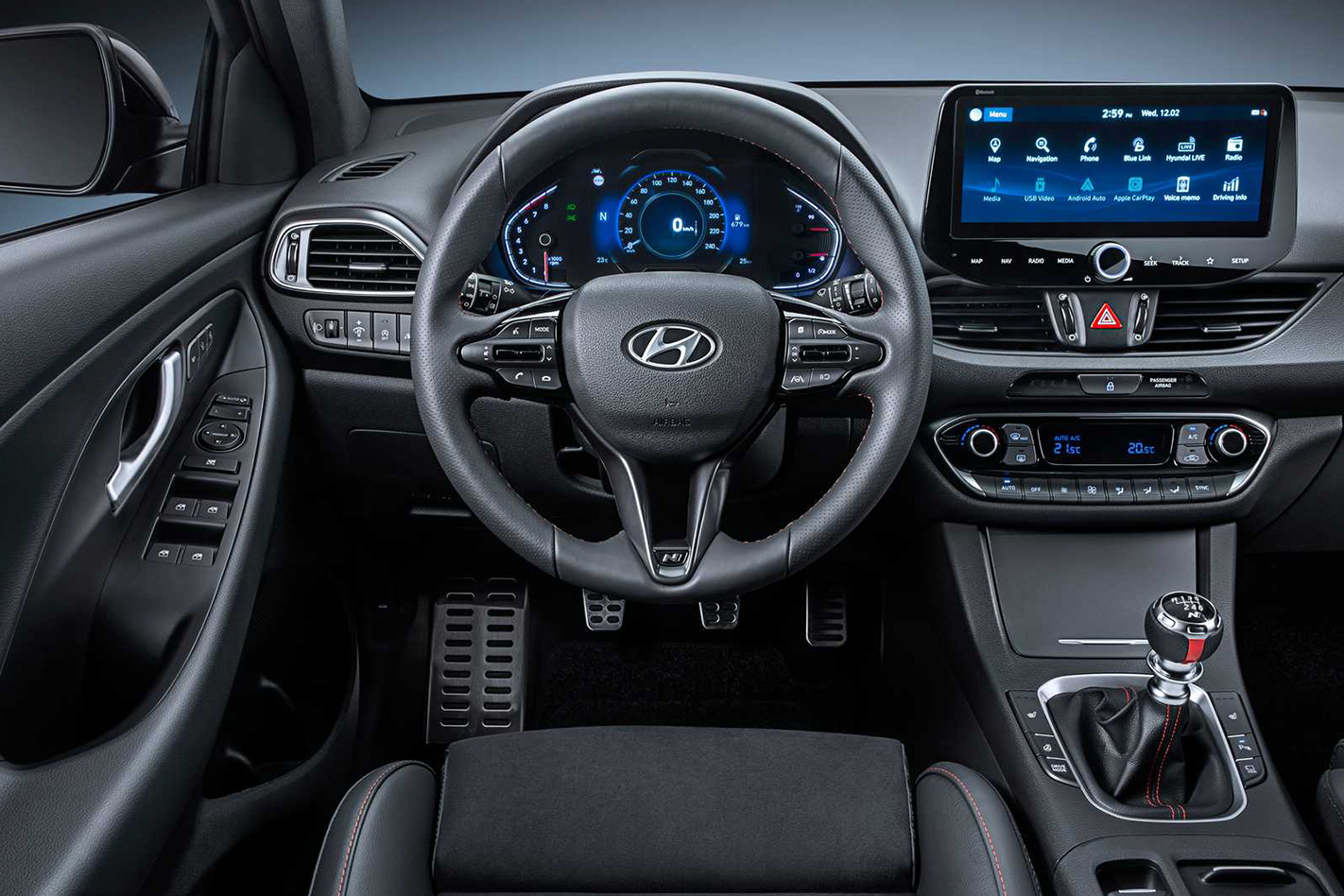
A pair of new digital displays are found in the new i30’s interior, a 7.0-inch instrument cluster screen and new 10.25-inch infotainment screen team up to bring the Hyundai small car’s interior back up to date.
Android Auto and Apple CarPlay smartphone mirroring will be compatible with the new system, even wirelessly. So too, wireless smartphone charging will be available.
Safety equipment is also boosted with the i30 update, with the new car scoring improved Hyundai SmartSense advanced safety items like Lane Following Assist which can steer you along inside a lane, Rear Collision avoidance Assist which will brake in reverse if it detects an accident and Leading Vehicle Departure Alert which wakes you up when the car in front takes off at a traffic light.
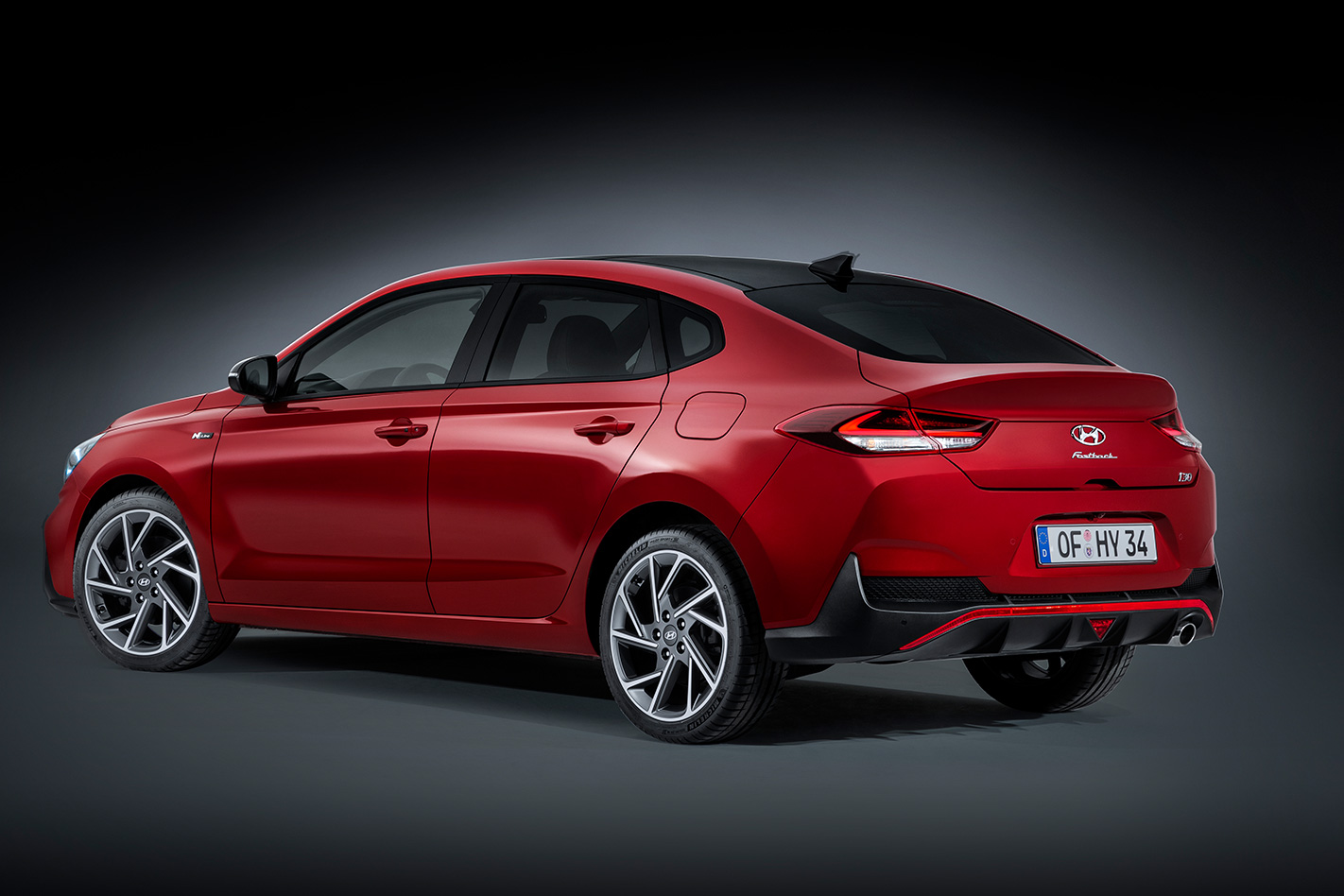
We’ll get more a of a look at the 2021 Hyundai i30 when we visit the Geneva Motor Show early next month, with European deliveries to start shortly thereafter. Aussie cars won’t be around until the second half of 2020 and we’ll know more about what specification we’re getting closer to that date.
Click through the gallery at the top of this article to see more of the 2021 Hyundai i30.
In terms of teaser photos previewing facelifted cars, Hyundai has been remarkably generous with these revealing photos. The entire front apron is on display, and given we don’t expect any great sheetmetal changes they may as well have revealed the whole thing
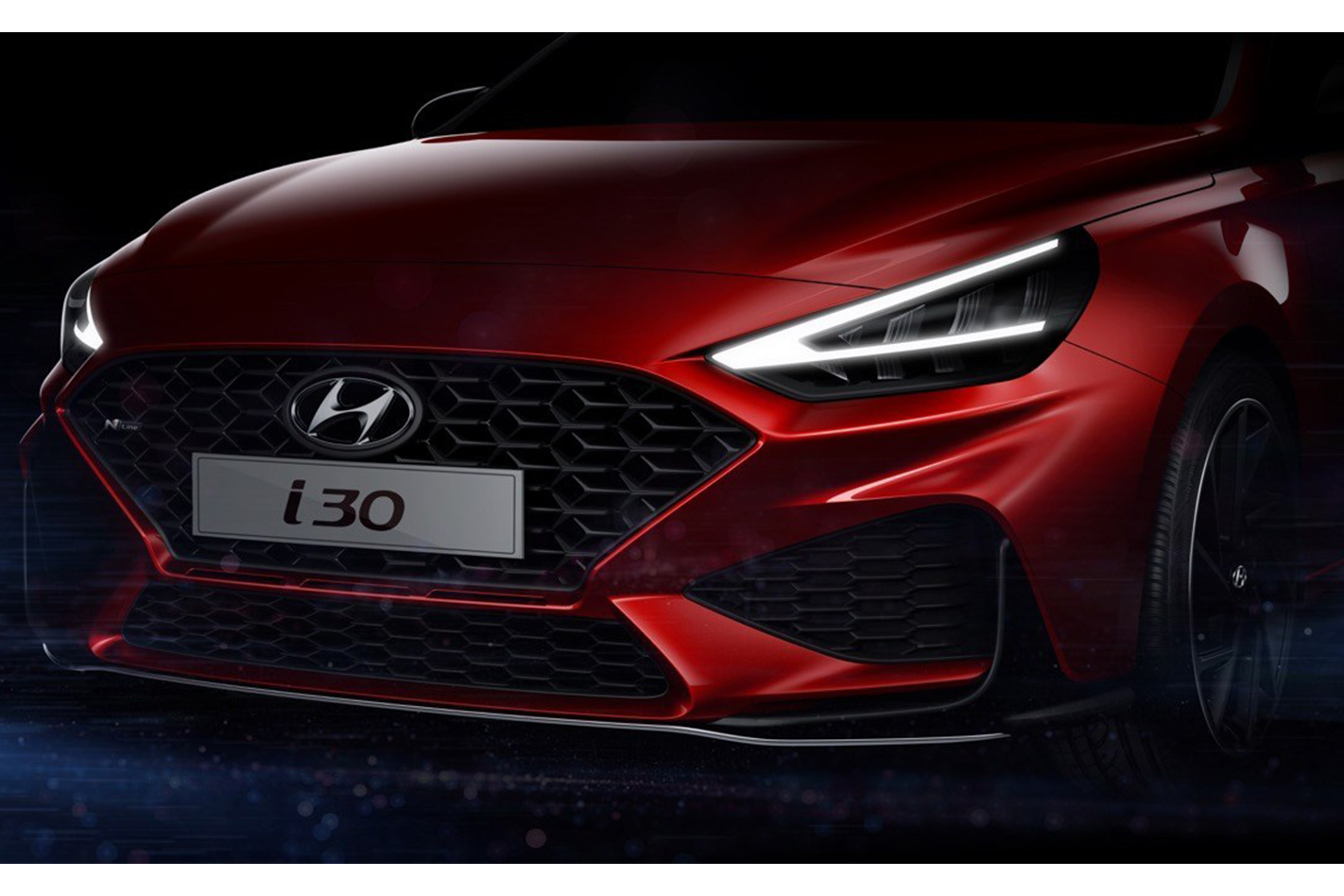
Speaking of which, you can expect the everyday run-of-the-mill i30 to be toned down somewhat, but nonetheless we’re excited to see whether the mean styling continues around the rest of the car.
The headlights stay fairly familiar in overall shape to its predecessor but score an aggressive V-shaped LED daytime running light arrangement for 2021.
As for the rest of the car, while you can’t see it from these images the rear of the car is said to feature a revised rear bumper, refreshed taillight cluster and new wheel designs.
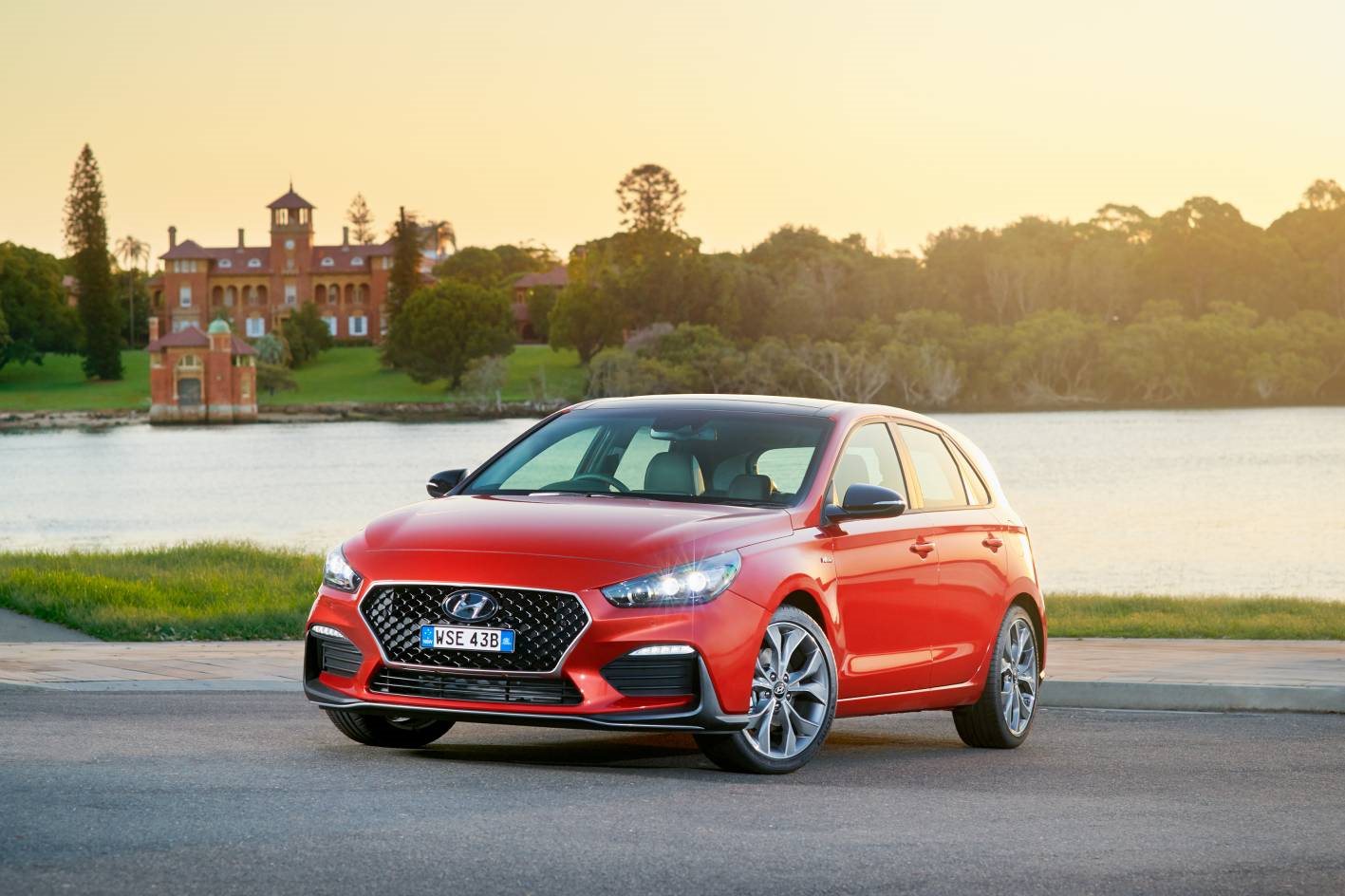
Inside, the facelifted i30 is expected to score a couple new screens in the form of a fully-digital instrument cluster and new 10.25-inch infotainment screen.
The third generation i30 dates back to 2016 and has since been surpassed by a number of its rivals like the Toyota Corolla, Mazda 3 and Ford Focus.
Expect to catch the newly facelifted Hyundai i30 at the Geneva Motor Show which kicks off from March 2, and we’ll hopefully see the car itself touching Down Under before the end of 2020.
In a shock announcement, the 2020 Geneva Motor Show has been cancelled just three days before it was scheduled to open.
The Swiss government announced sweeping bans on public gatherings after the coronavirus spread to northern Italy and Switzerland, which meant organisers had no choice but to cancel the show.
GALLERY
With no new date set down for the show, here’s what we’ve missed.
—
Despite the fact an increasing amount of car companies are pulling out of some of the more traditional motor shows on the circuit in favour of the tech-driven shows like CES, the Geneva Motor Show continues to hold on to its reputation as The Big Swiss Cheese and the curtain-pulling locale for some of the wildest and coolest concepts of all time.
And if the sea of teaser silhouettes and ghostly DRLs we’ve seen already is anything to go by, this year, coronavirus permitting, will be no different.
Here are some of the most exciting reveals to note; weu2019ll be updating this list as more rumours and news surface ahead of the show.Alfa Romeo GTA?
Alfa has teased the motoring world with an announcement of a “momentous comeback” at Geneva that many believe will be a new GTA halo version of the Giulia. The GTA nameplate stands for Gran Turismo Alleggerita (alleggerita means lightweight in Italian) and first appeared in 1965 with the Giulia Sprint GTA.
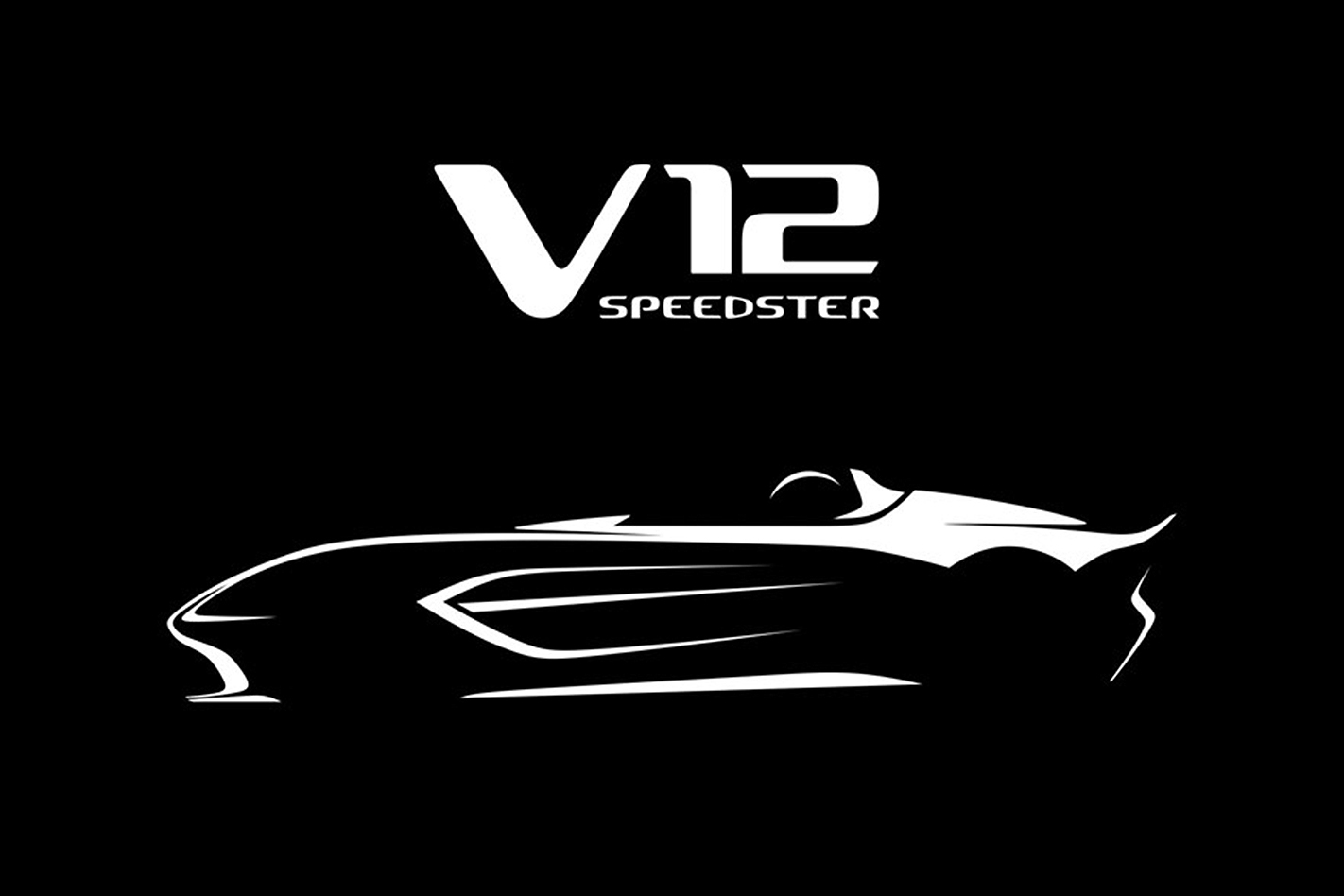
Aston Martin V12 Speedster
This low-volume two-seat alfresco sports car is designed to showcase the bespoke engineering capability of the company’s Q branch. It’s designed to reference the 1959 Le Mans-winning speedster racer.
Aston Martin Vantage Roadster
The drop-top version of the Vantage recently broke cover and will make its international debut at Geneva, but the iconic British carmaker announced it is already available to order for deliveries to begin later this year.
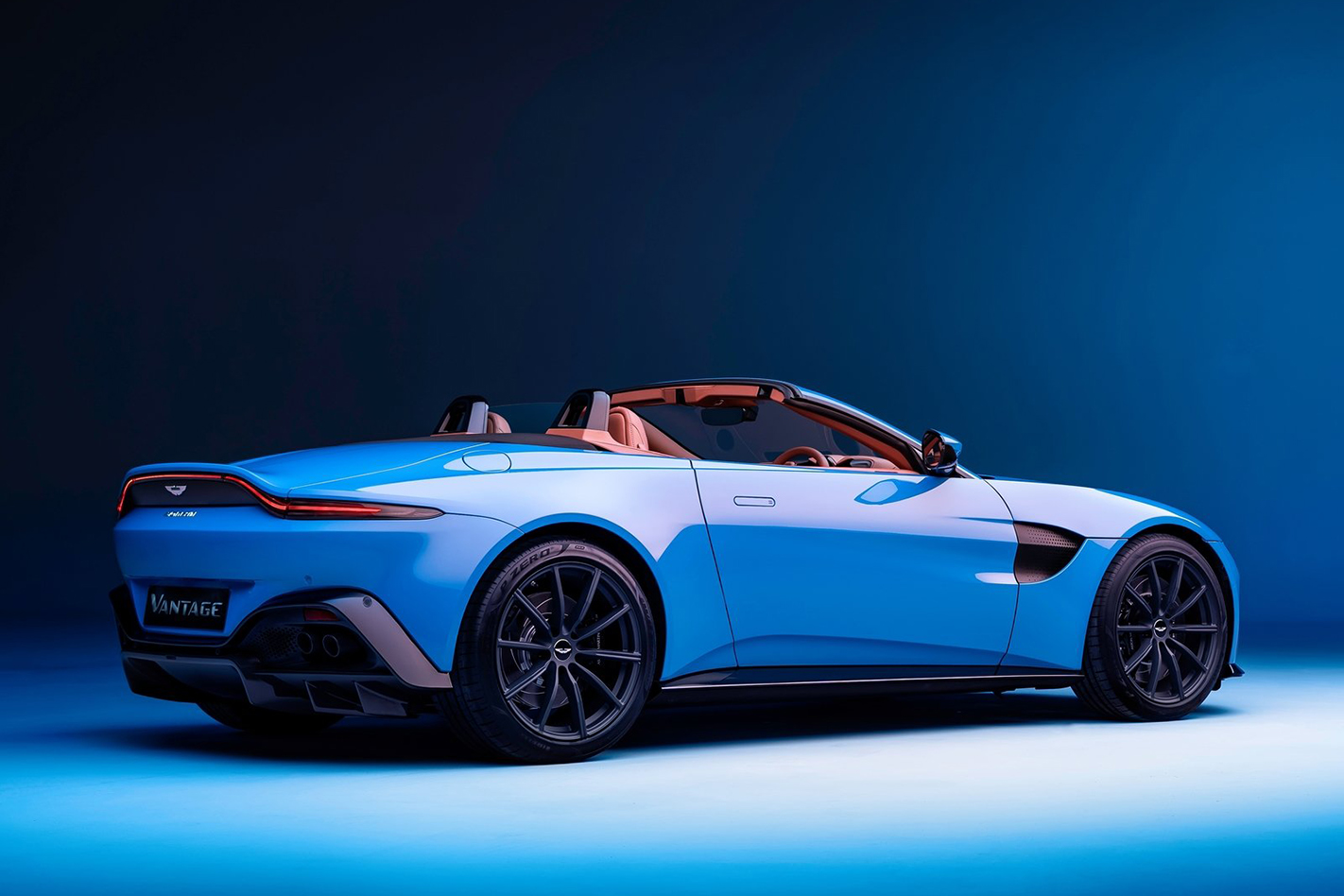
Australians can expect to see the Vantage Roadster hit the streets later this year with pricing starting from $315,000, which is just $15K more than the Coupe.
Audi A3
The hatchback version of the new Audi A3 premium small car makes its debut at Geneva to be followed by a new liftback style next year along with hot S3 and RS3 versions.
Bentley Bacalar
Sounding like the Italian word for salted fish, the Bacalar is one to add to a list of odd car names. However, this $3 million production roadster, by Bentley’s in-house coachbuilding arm Mulliner, is not to be taken lightly.
Actually named after a beautiful blue lake in Mexico, little is known about the new model that’s based on the by the 2019 EXP 100 GT concept.
Bentley says it will use ‘sustainable and ethically-sourced materials’ in the Bacalar’s construction as it did with the EXP 100 GT, which featured paint made from rice husks, recycled copper, 5000-year-old wood from Fenlands in Cambridgeshire and bespoke glass details from Cumbria Crystal.
BMW Concept i4
BMW will unveil its first pure-electric Gran Coupe March 3, which it says “blends a modern, elegantly sporty design with the spaciousness and practicality of a four-door Gran Coupe – all while generating zero local emissions”.
Czinger 21C
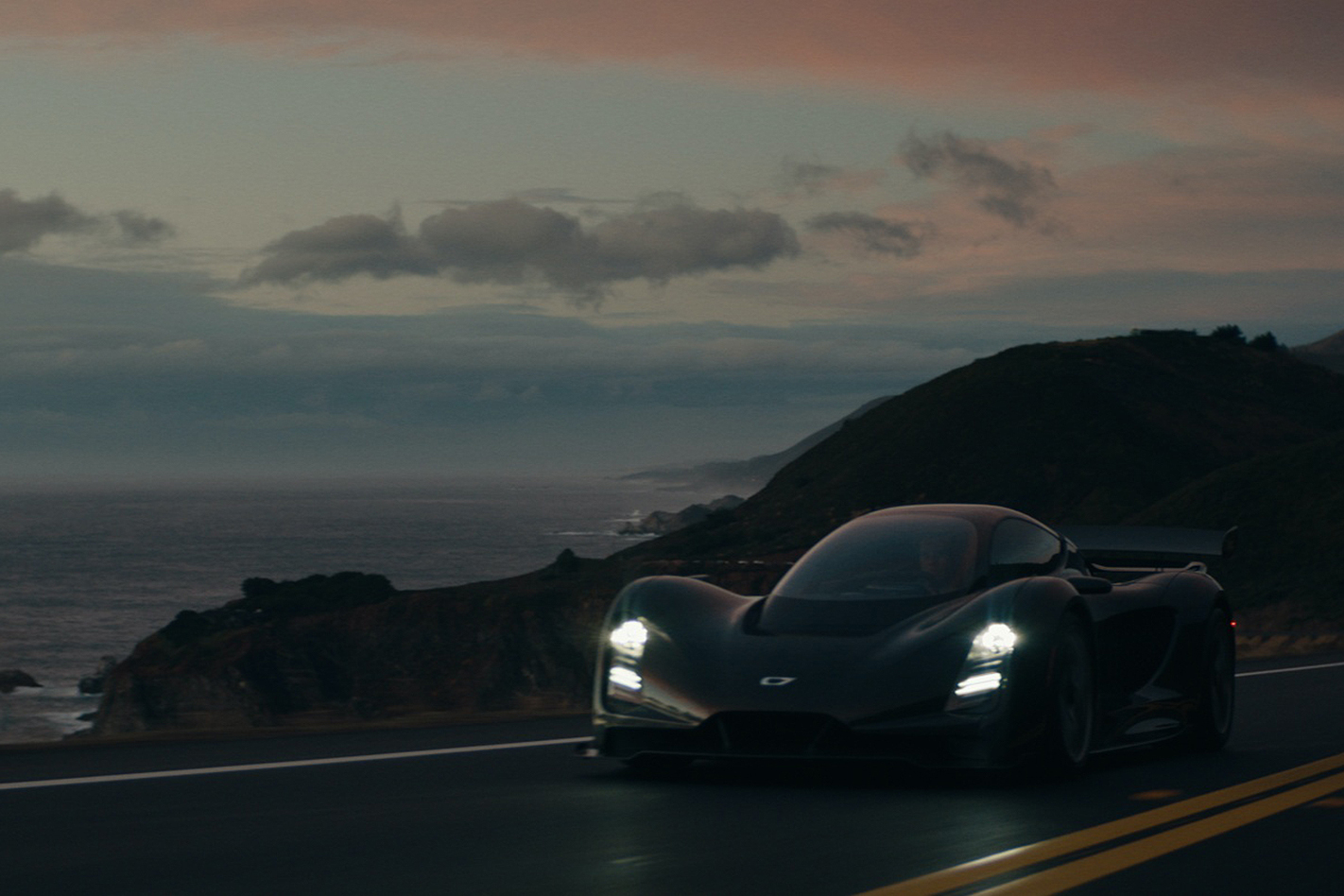
The Californian carmaker will launch its 21C (for the 21st century) hypercar, which it says is likely to rewrite the current rules of vehicle construction, both in terms of technology and performance.
Ferrari Roma
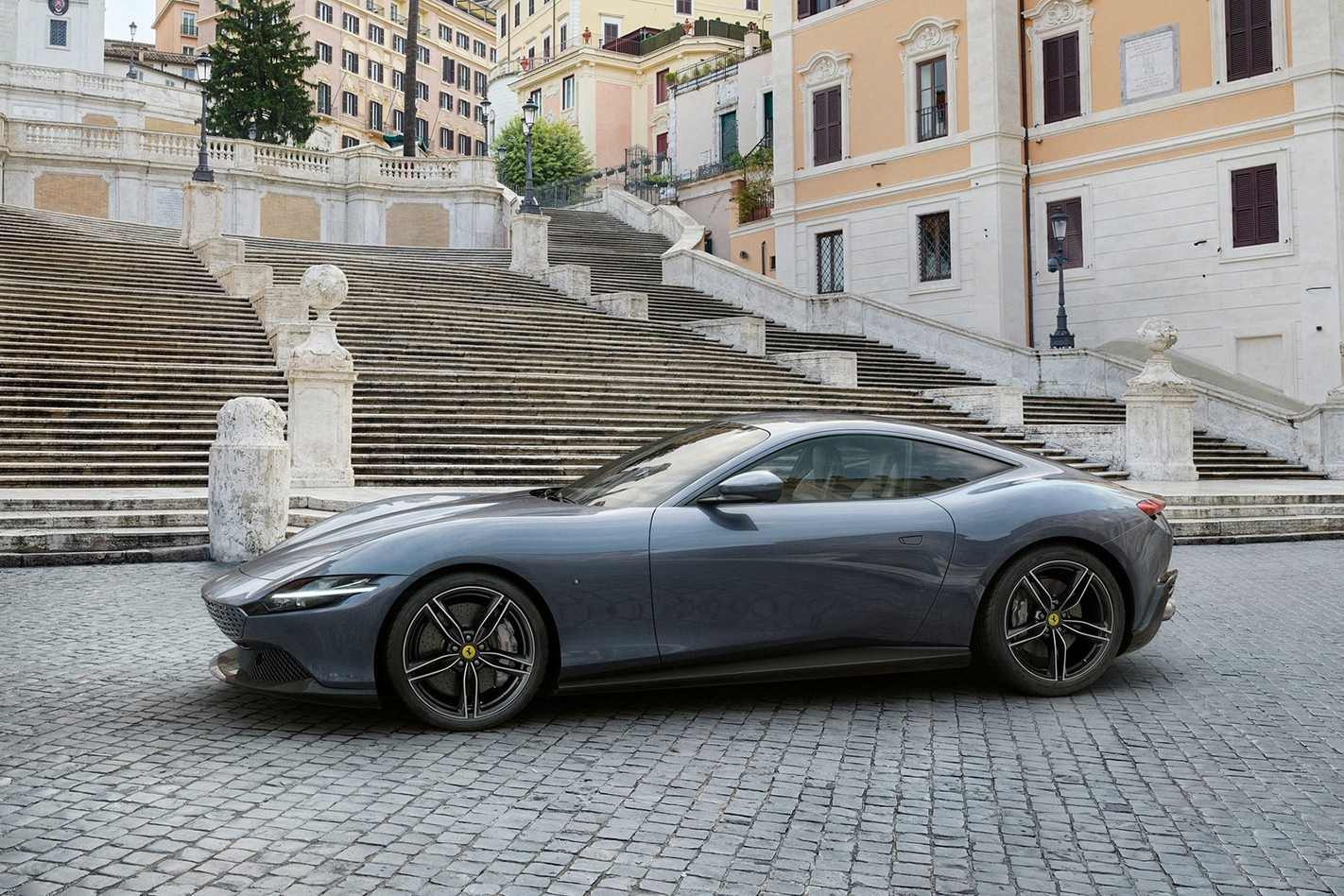
The coupe partner to the Portofino drop-top is focused on being an ‘everyday’ driver’s sports car. That said, it’s a barely tamed beast, with a twin-turbo 456kW/760Nm 3.9-litre V8 under the bonnet. Ferrari reckons the Roma will do 0 to 100km/h in 3.4 seconds on its way to a top-speed somewhere beyond 320km/h.
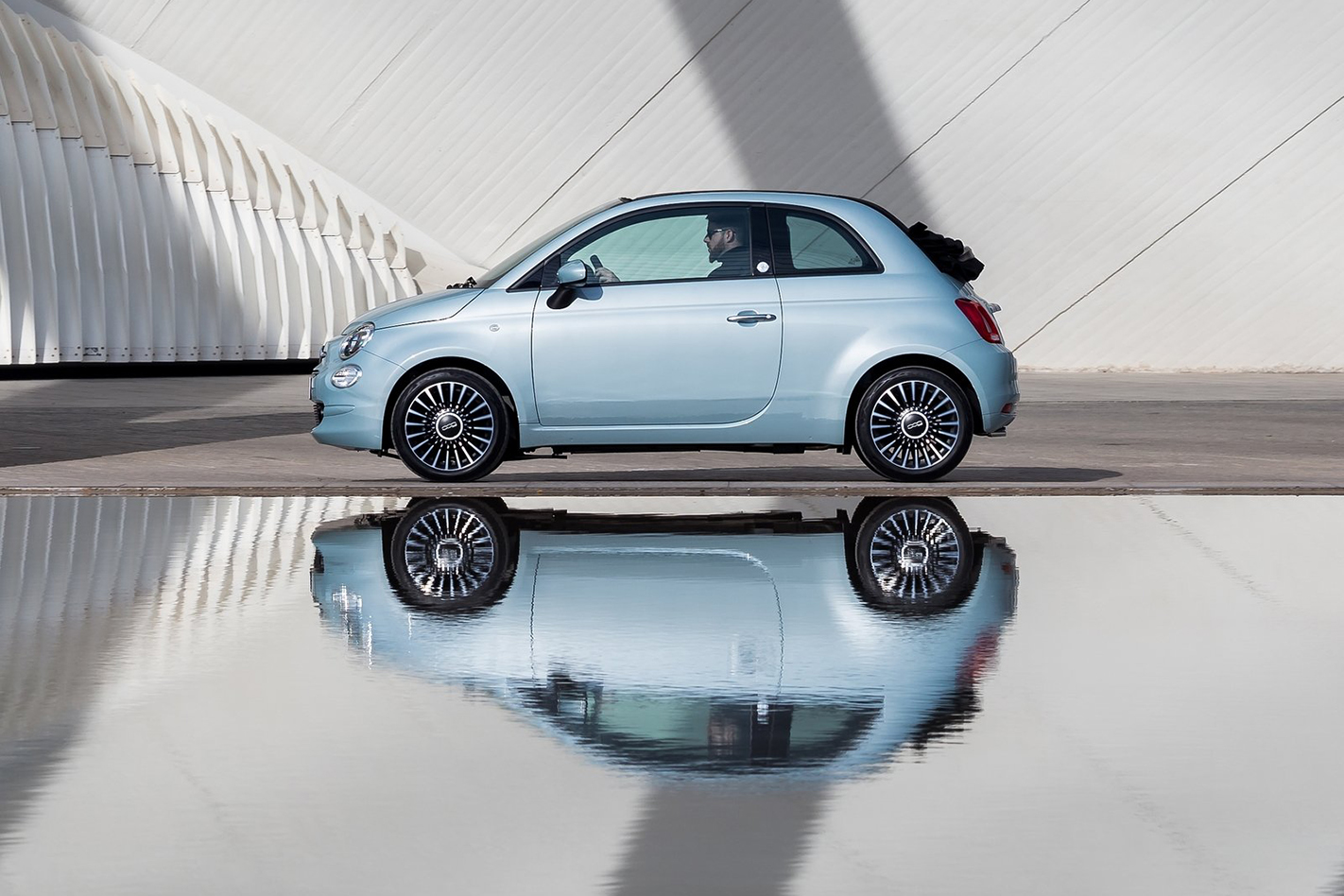
Fiat 500e
There’s already an electric Fiat 500 on sale in Europe, but this has been designed from the ground up on a platform specially designed for an electric powertrain for considerably improved range and efficiency.
Genesis G80
The new Genesis G80 luxury sedan shares styling cues with the new GV80 SUV and is expected to share a lot of its technological features, powertrains and Bentley-rivalling opulence.
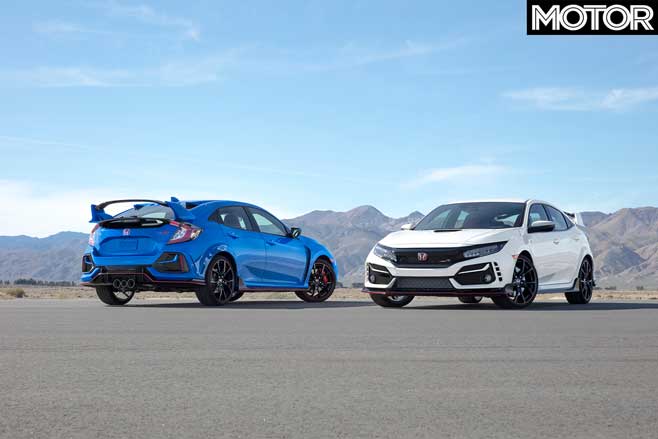
Honda Civic Type-R facelift
The Honda Civic’s mid-life facelift has extended to the Type-R hot hatch.
2021 Hyundai i30
Already revealed ahead of its global debut at Geneva, the facelifted Hyundai i30 sports a new face and updated rear-end and a choice of new engines with 48-volt mild-hybrid technology. The new powertrains have been confirmed for Europe, but we’ll have to wait until the show to see what will be available in Australia
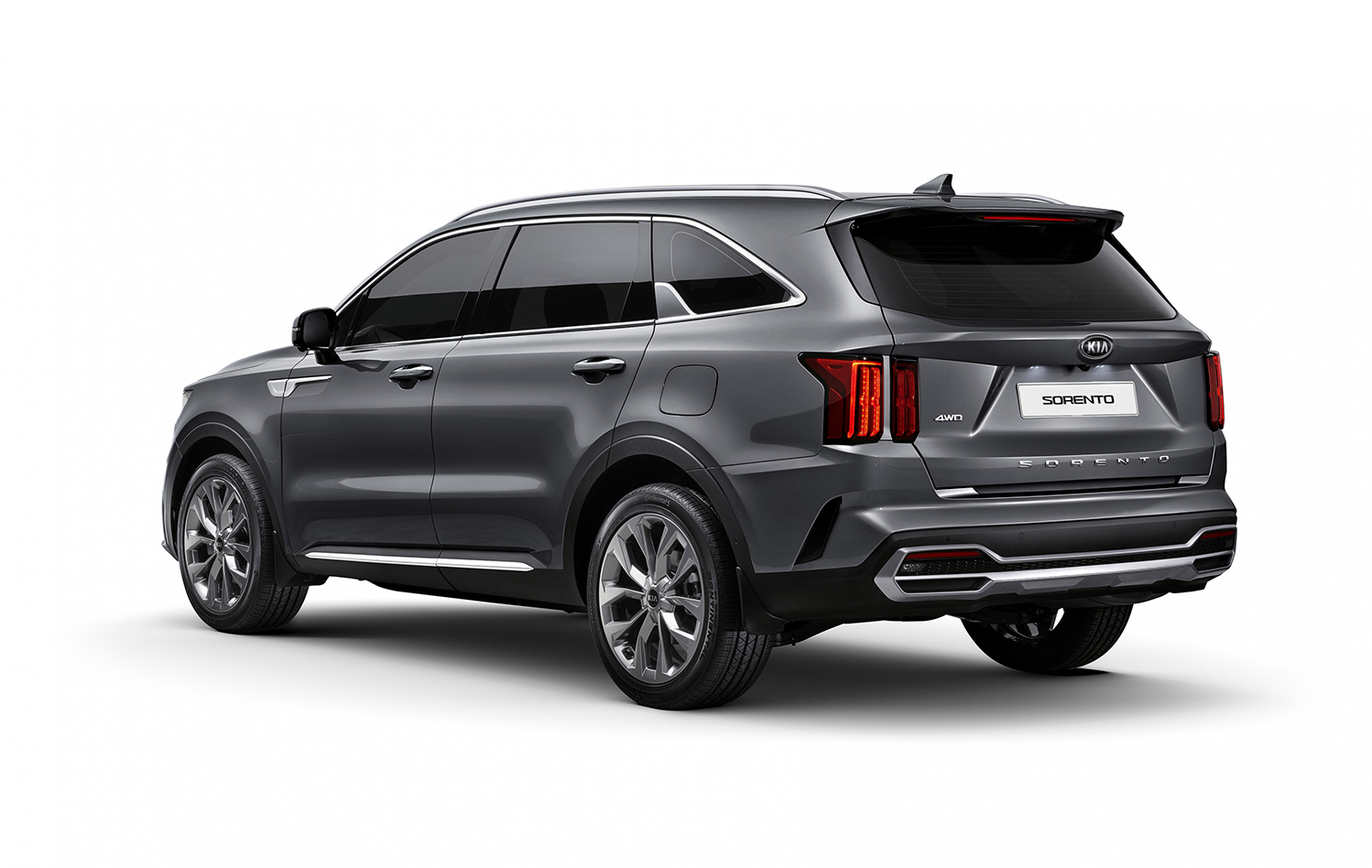
Kia Sorento
Kia’s three-row SUV enters its next generation as the brand’s most luxurious and technically advanced vehicle to date. The handsome-looking fourth-generation Sorento will also be the first Kia to offer a hybrid powertrain.
Porsche 718 Boxster and Cayman GTS
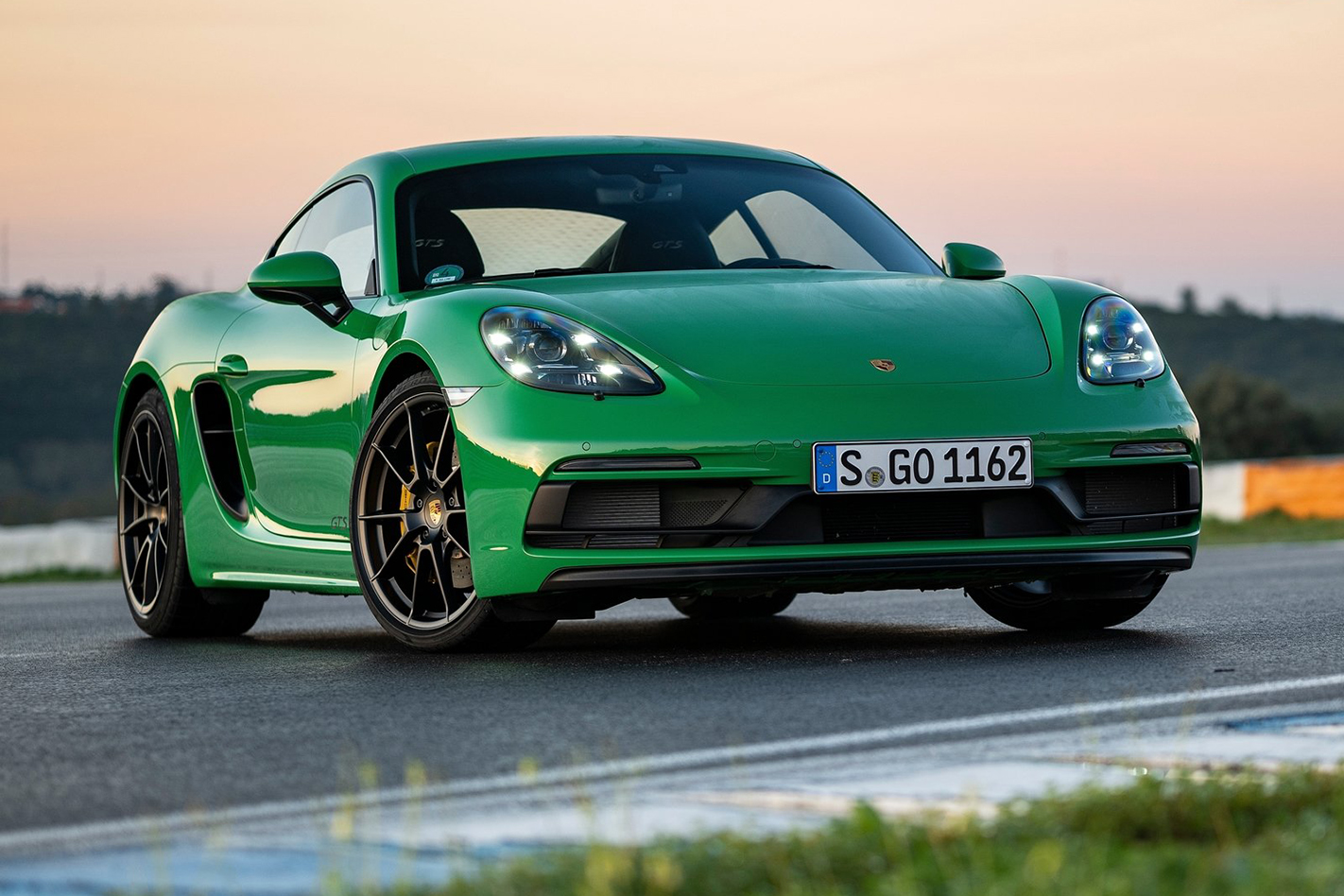
Porsche’s 718 twins now come with a 4.0-litre flat-six engine that’s a welcome return for what made previous-generation Caymans and Boxsters so good. Regular and S 718 models will still use the flat-four.
Skoda Octavia vRS
Go-faster versions of new Skoda Octavia family car will be welcome debutantes.
Toyota B-SUV
Toyota has confirmed it will showcase its new Yaris-based ‘B-segment SUV’ at Geneva, which will be smaller than the C-HR to rival the crossovers such as the Mazda CX-3, Hyundai Venue and new Ford Puma.
Volkswagen Golf GTI
If it ain’t broke, don’t fix it. That ought describe the eighth generation of the venerable Volkswagen Golf GTI. However, there is some new tech set to revolutionise it, along with a 185kW 2.0-litre four-cylinder turbo with a choice of six-speed manual or seven-speed dual-clutch transmissions.
2019 Geneva Motor Show reveals
By Noelle Faulkner
Renault Clio
A few weeks ago Renault revealed the fifth-generation Clio small hatchback, both inside and out. Although not that different in looks from the current model, the new Clio is shorter and lower, with improved aerodynamics, LED headlights, a larger boot and materials of a higher quality used in the cabin.
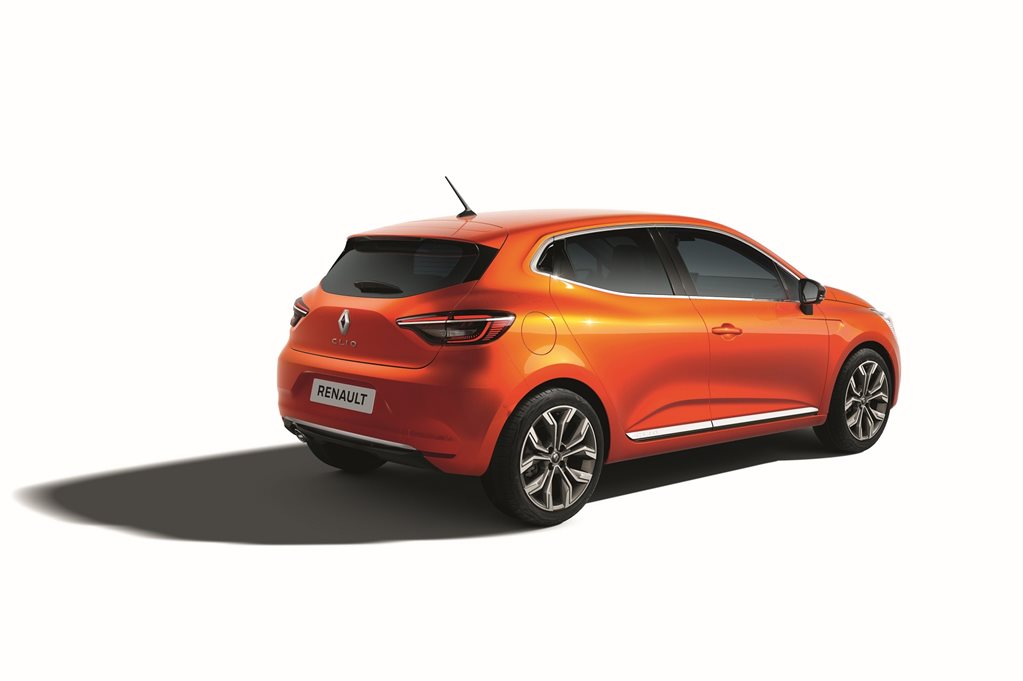
We don’t know price, exact timing or specs yet but we do know the new Clio is underpinned by a fresh, flexible platform coming out of the Nissan-Renault-Mitsubishi Alliance and will be lighter, larger, stiffer and is ready for both electrification and autonomy tech to be added down the line. It’s expected to land as a three-pot 0.9-litre turbo petrol engine, a 1.3-litre four-cylinder turbo petrol variant and a larger 1.6-litre turbo, which we might see in the new RS line variant.
Lagonda All-Terrain Concept
As part of its fully-electrified revival of the luxury marque, Aston Martin will be unveiling its first true Lagonda car (bar a flutter in the 2000s) in over three decades.Currently entitled the All-Terrain Concept, the electrified SUV will be the first model in a projected line-up of electric-only vehicles for the British brand, and is scheduled to be in production by 2021.
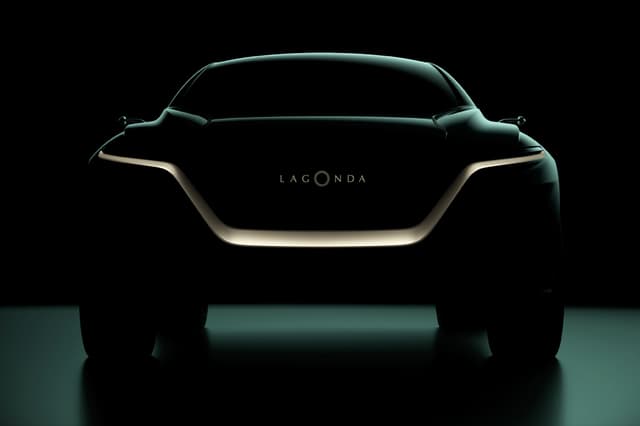
Like Aston Martin’s EV project Rapide E, the All-Terrain Concept will come out of the British maker’s newest facility in St Athan in Wales, built especially for electric vehicles. As the first high-end luxury brand to go fully emissions-free, Lagonda looks like it might not only be coming for a piece of the Rolls Royce Cullinan pie, in terms of hyper-luxurious SUVs, but also performance EVs like the Jaguar I-Pace, Porsche Taycan and Audi e-Tron. A Lagonda sedan is also likely to follow, rumoured to be close to the concept unveiled at Geneva last year.
Honda Urban EV
Less than two years after it wowed the world with a genuinely unexpected reveal of a cheeky retro all-electric hatchback concept, Honda will wheel out a near-production version of its first all-electric passenger car. In September 2017 at the Frankfurt Motor Show, the Japanese automaker whipped the covers off a compact and cute concept dubbed the Honda Urban EV. Honda also made the unusual move of announcing that a production version would enter showrooms in Europe by the end of 2019 – the concept was no mere ‘design study’.
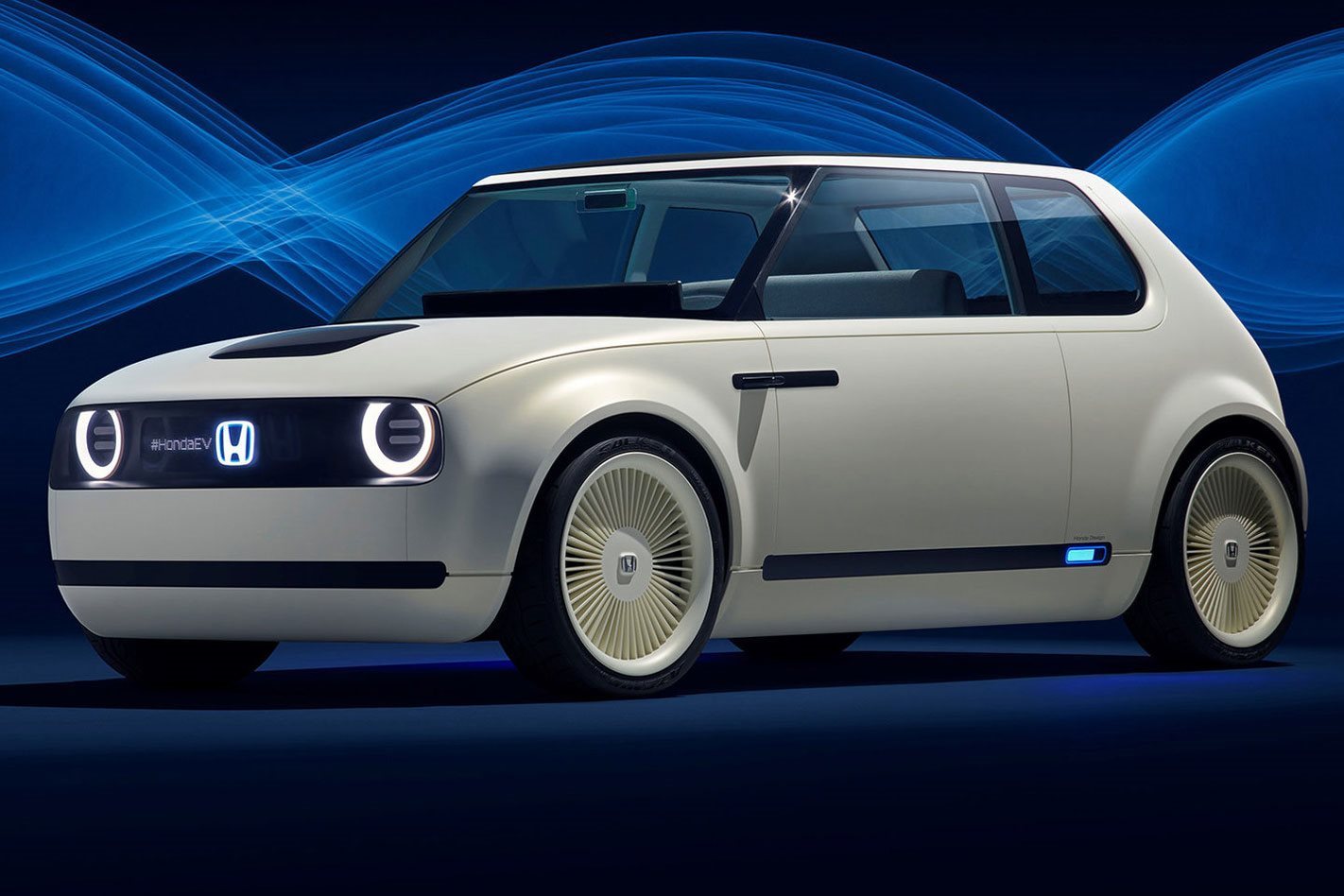
Precise details have yet to be revealed, including the car’s single-charge range, power output and performance figures, but pre-production prototypes spied testing indicate that the pair of suicide doors have made way for a more practical and conventional five-door arrangement.
As yet, there’s no indication of price, however, don’t expect this one to be an affordable option for its size. Honda is staying quiet for now, but with the similarly-sized Renault Zoe – one of Europe’s most popular electric cars – selling in Australia for $47,490 and up, we expect the Honda to land in the same ballpark. That is, assuming it gets the green light for Australia as well as Europe and Japan.– Tony O’Kane
Mazda’s Mystery SUV
The Japanese carmaker has released a teaser shot of the new model featuring a low rear roofline that suggests it could be a coupe-styled mid-sized SUV similar to the BMW X4. It will also be an all-new generation vehicle, built on Mazda’s new-generation Skyactiv architecture that underpins the recently revealed fourth-generation Mazda 3.
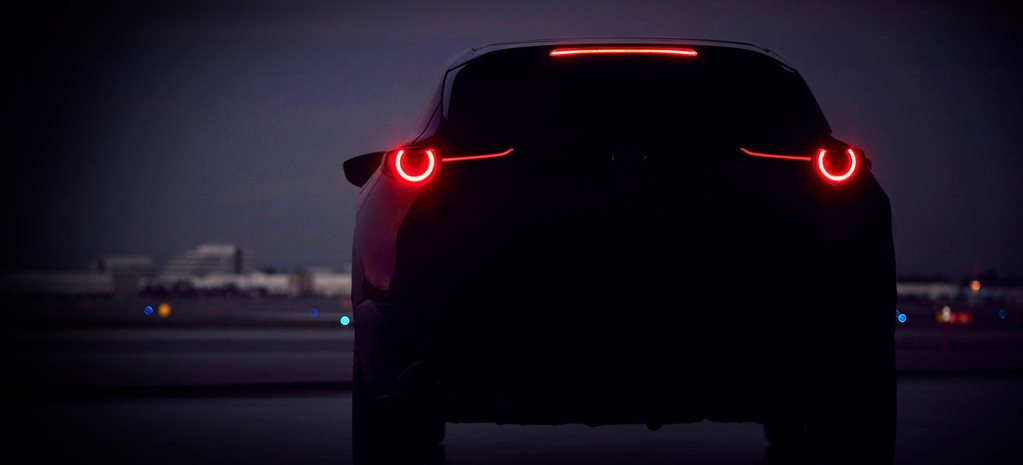
The second of Mazda’s new-generation models, the new addition to Mazda’s SUV family will share the 3’s striking Kodo design language, as evident by the circular LED tail-light signature as shown on the otherwise vague teaser pic. It will also have the latest Skyactiv powertrains including the highly efficient supercharged Skyactiv-X engine, which adopts a unique combustion method to combine the free-revving power of a petrol engine with diesel-like torque and economy.
Mazda Australia is still tight-lipped over if or when the new SUV will arrive in Australia, but even the most conservative punter would place a few quid on it joining its broad SUV line-up alongside the Mazda 2-based CX-3 crossover, the mid-sized CX-5, and the CX-8 and CX-9 seven-seaters.
– David Bonnici
Pininfarina Battista Electric Hypercar
“It will combine 88 years of iconic design heritage with leading-edge electric vehicle competence of the Mahindra Group and Mahindra Formula E racing.” Last year, these words were uttered by Automobil Pininfarina boss Michael Perschke when talking about the Italian brand’s relaunch and a major project, an electric hypercar we now know as the Battista. At Geneva, we will finally get a taste of what the iconic brand, now a subsidiary of Mahindra, has been cooking up.
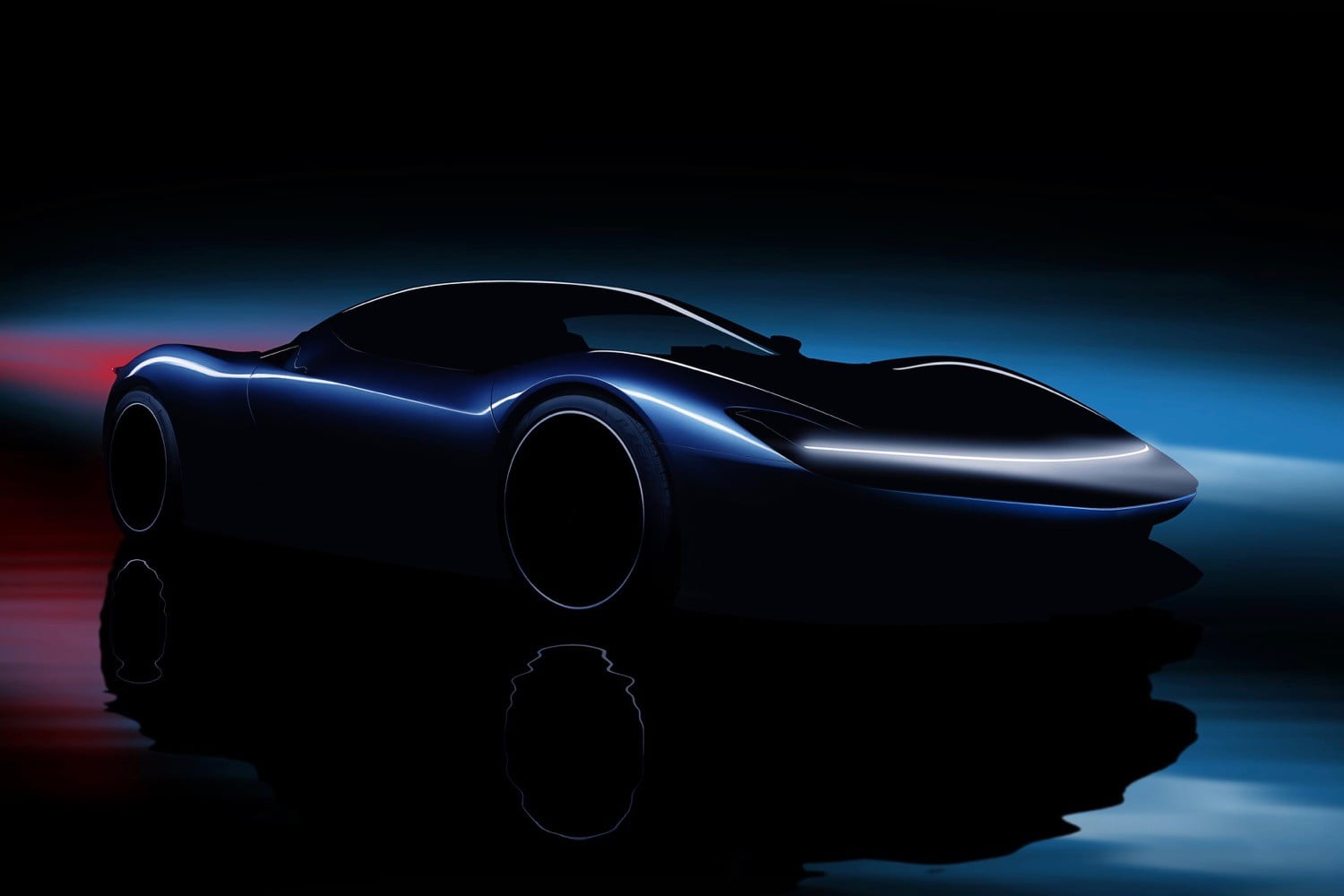
Pictures are limited, despite the fact there have been several renders floating around the internet based on what it will look like in the metal, which, considering the brand’s heritage, is the question on everyone’s lips. However, we do know the carbonfibre-centric hypercar, named after Pininfarina SpA’s founder Battista ‘Pinin’ Farina, is said to have a combined output targeted at 1,416kW and 2,300Nm of torque, with an expected 0-100km/h acceleration of less than two seconds, a snap to 300 km/h in under 12 and a top speed of 400km/h. Pininfarina is also claiming it will have a range of 450km.
Skoda Kamiq Crossover SUV
After unveiling the Vision X concept car crossover SUV at last year’s Geneva Motor Show (pictured below), Skoda has revealed the name of its newest baby: the Kamiq, AKA the ace in its pocket at Geneva this year.
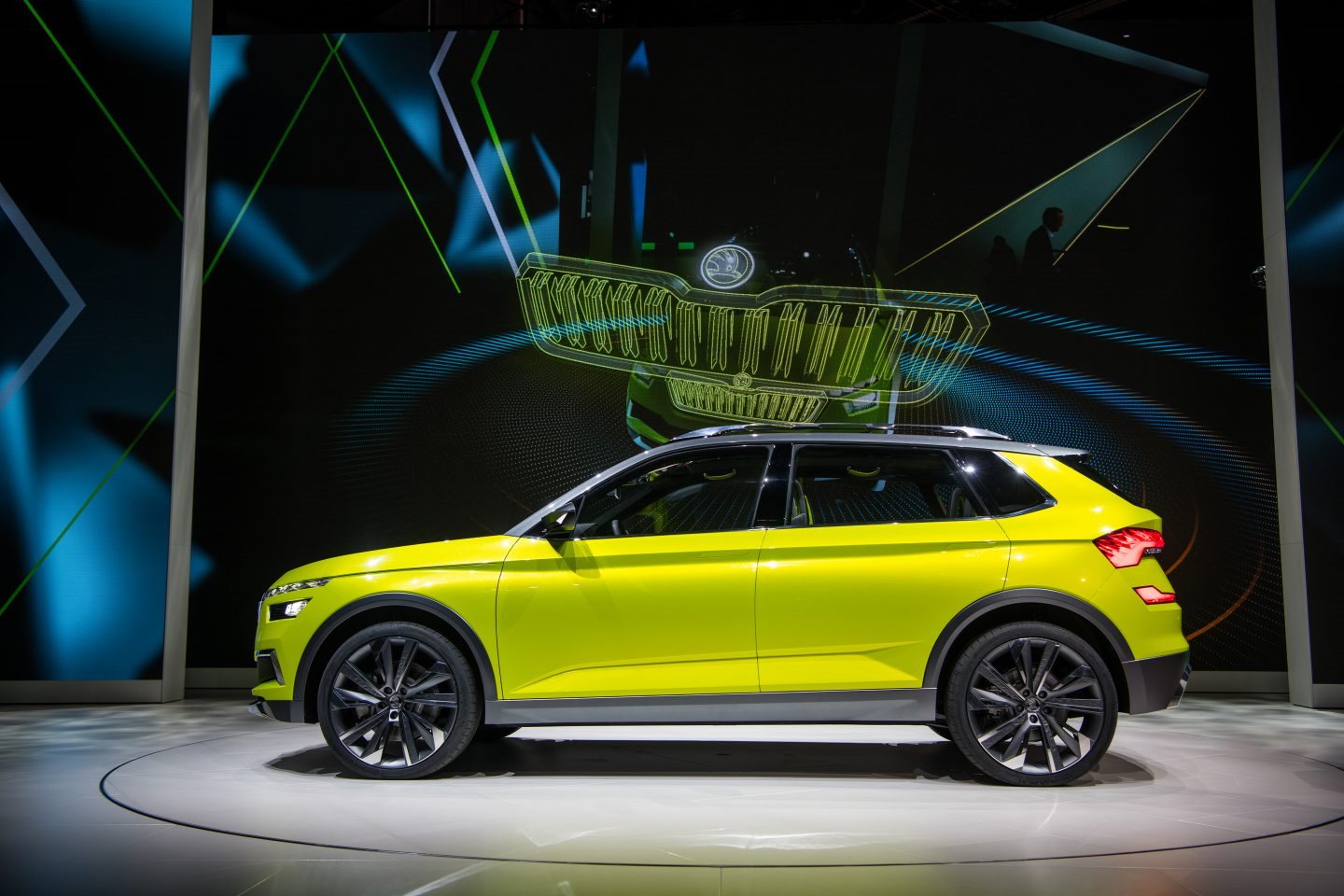
We don’t know much about the small SUV, other than the Czech company uses the nameplate on a Chinese market-only SUV already, and it is expected to follow the design cues of the Vision X concept.This is a big launch for Skoda, as, now, the Czech company will finally have something to compete against the Mazda CX-3, Mitsubishi ASX, Hyundai Kona and Nissan Juke for that precious crossover SUV dollar.
Mercedes-Benz EQV People Mover
Adding to the family of battery-powered reveals at Geneva, Mercedes-Benz will be delivering an EQV people mover. Underpinned by the same platform that the recently updated V-Class rides on, the EQV is one of the nine fully-electric vehicles Mercedes-Benz promised to launch by 2022 and the fifth confirmed model so far – joining the EQC SUV, EQA Hatchback, EQB Small SUV and EQS Luxury Sedan.
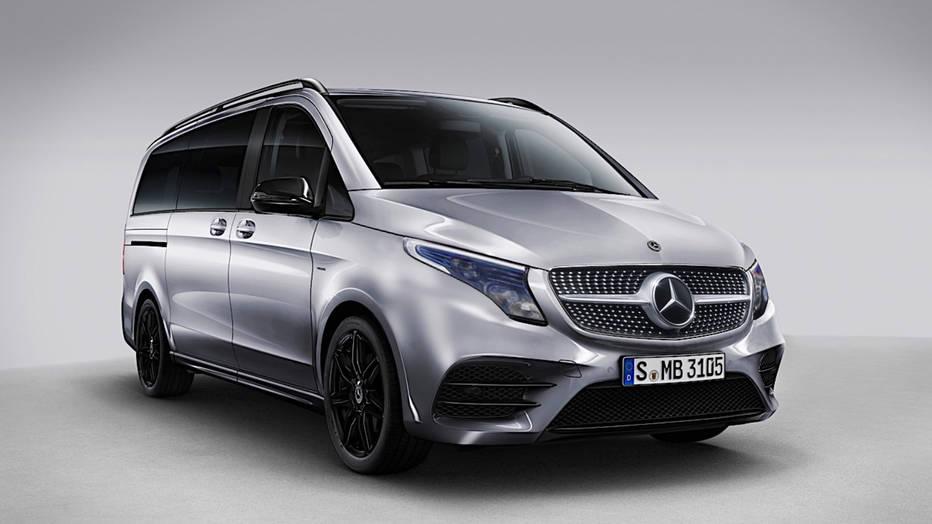
While not as glamorous as some of the other concepts on show at Geneva, this electrified MPV is part of a new class of EV starting to emerge, which is closely related to electrified commercial vehicles including the Mercedes-Benz eVito, but in this case, the EQV is likely competing with the Volkswagen I.D. BUZZ van.
Volkswagen I.D. BUGGY
The latest in a number of cartoonish, retro-future electric concepts from Volkswagen, including the I.D. BUZZ van, I.D. Neo hatchback and I.D. VIZZON Sedan, comes the spirited Volkswagen I.D BUGGY – arguably the car with the most fun points at Geneva Motor Show this year.
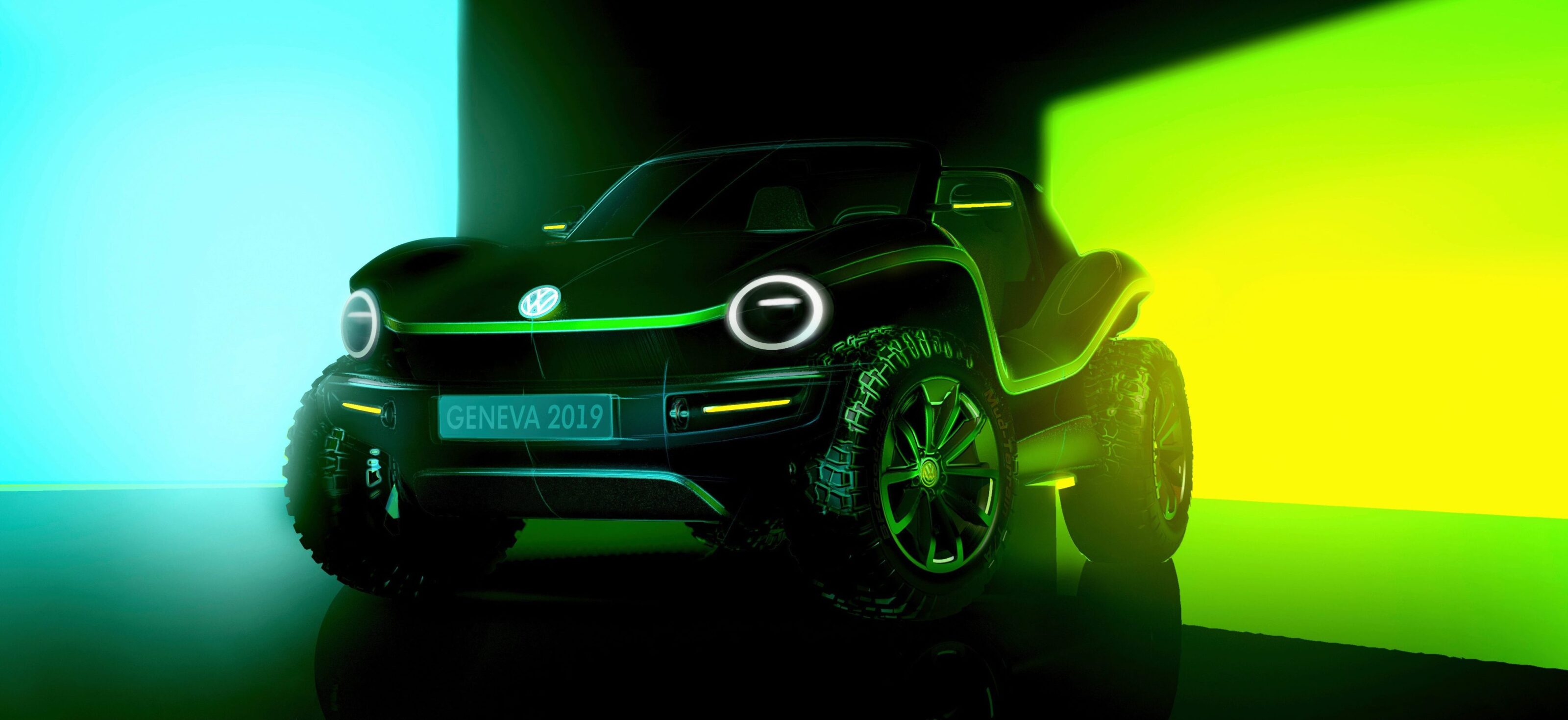
This electric-powered dune buggy has all the lovable heritage design cues we’ve come to adore from the German brand over the years, and is a feverish throwback to the 1964 design by surfer/boat builder Bruce Meyers. Like many of the aforementioned EV concepts, the I.D. BUGGY is also built on the highly flexible new Volkswagen electric vehicle MEB platform– or rather, it might be if it ever becomes a reality outside of the design studio… We want to believe.
Bentley Centenary Special Edition

Mitsubishi Engelberg Tourer Concept
Outlander?….Is that you? Rocking roof-mounted spotlights and a name shared with a ski resort in the Swiss Alps, the Engelberg Tourer Concept is Mitsubishi’s latest medium-size SUV, and if the size and styling is anything to go but, it might just be a blood relative of the PHEV Outlander.
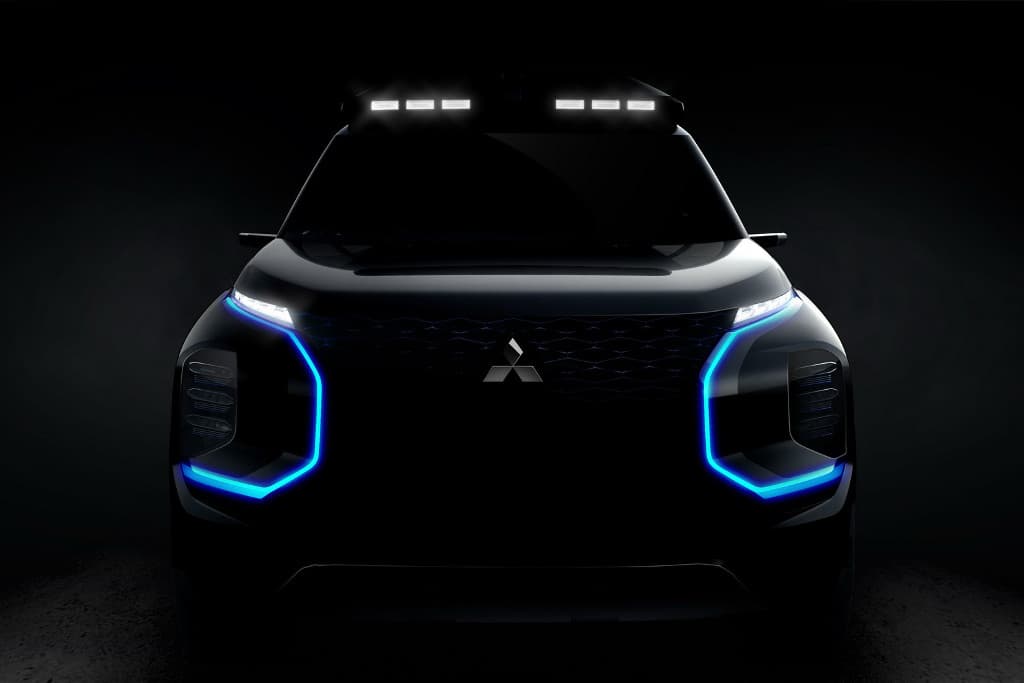
It’s not known if this beefed-up, highly muscular SUV is to be another generation of hybrid or if we’re looking at the early concept of the Japanese giant’s first fully electric SUV. Our guess? The latter.
Audi Entry-Level E-Tron
Audi looks like they’re on track to stick to a promise to sell 12 electric cars by 2025. The E-Tron is already slated to arrive this year, but at Geneva, the Germans are doubling up with a smaller, entry-level EV – a smart move in Europe considering the continent’s love of tiny city cars.
According to reports, the baby EV will be built on the Volkswagen Group’s MEB architecture for battery-powered vehicles (same as the VW I.D BUGGY concept mentioned above). The unnamed concept is said to be a sister model to the Volkswagen I.D Neo, a Golf-sized hatch that will go on sale overseas next year. It’s assumed that we might see it in production in 2020, and that it will come out of VW’s Zwickau factory in Germany, where the VW group is aiming to produce 330,000 EVs across different brands. According to Bloomberg, sources at Audi have revealed it will be in similar vein to the Audi Q3 compact SUV. Judging from the flexibility of the MEB platform (translation: ‘Modular Electric Toolkit’), which has seen it underpin a range of vehicles already, anything might be possible.
In addition to the Entry-Level MEB concept, Audi will also be debuting four new plug-in hybrids at Geneva, which are said to go on sale in Europe as soon as this year. However, it remains to be seen if these are entirely new models or updates to its current stable – likely considering Audi has said in the past that it intends to expand it lineup of high-end hybrids.
$25 million one-off Bugatti
If internet rumours are to believed, a one-off $25 million Bugatti Hypercar is going to be front and centre at the French icon’s stand at Geneva this year. The car is said to have been built for Porsche royalty and ex- Audi and Volkswagen Group boss Dr Ferdinand Piëch, who is also credited with directly influencing the creation of the Bugatti Veyron, among other iconic cars like the Porsche 911 and Audi Quattro – so the claim isn’t ridiculous.
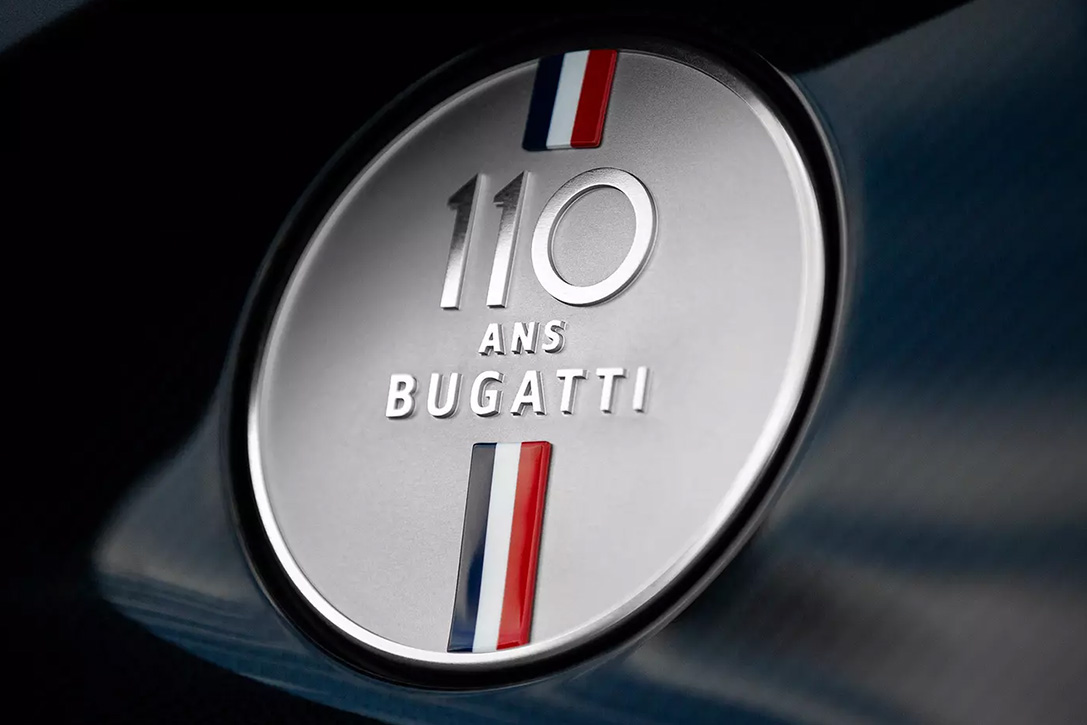
2019 marks 110 years of Bugatti, and to celebrate, the Frenchies unveiled a special ‘110 ans Bugatti’ Chiron Sport edition, limited to 20 units only. So it’s likely the secret mega-bucks hypercar might be also based on the donor car.
MOTOR first drive review
Published: 13 October 2019
On face value, the Ferrari F8 Tributo could easily be interpreted as a sentimental farewell for Maranello’s decade-old mid-engined V8 workhorse.
It does, after all, share its doors, glasshouse, roof and underlying structure with the 488 GTB (2015), as well as the even older 458 Italia (2009), so in automotive DNA terms the F8 is eligible for a concession card. But this striking new Ferrari has been so comprehensively re-engineered that it’s damn close to all-new.
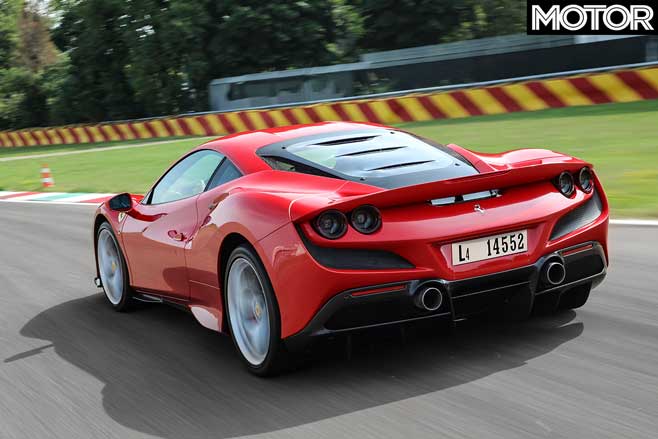
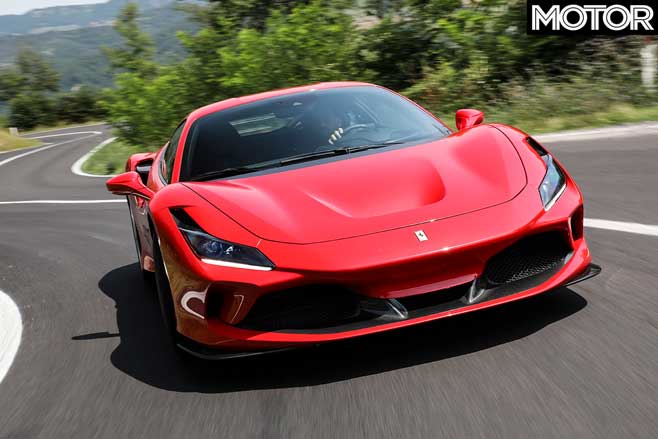
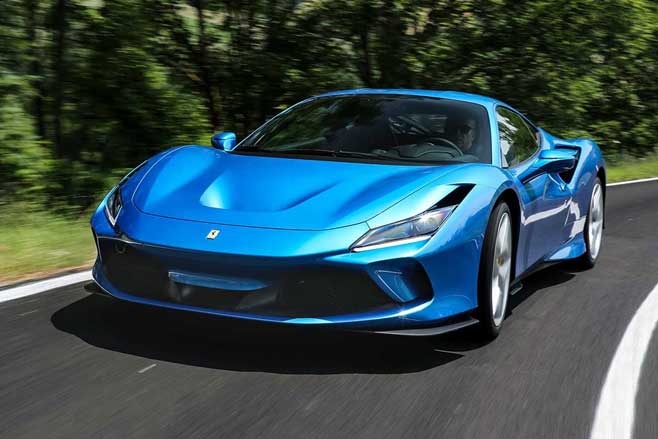
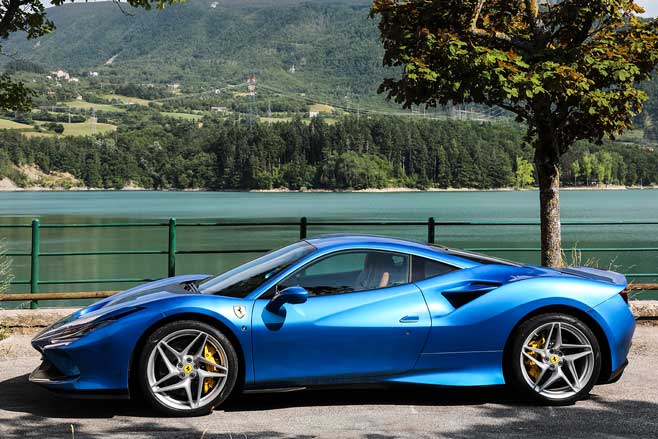
You barely notice the carry-over bits. Instead, it’s the ‘tribute’ flavour of the F8’s styling makeover that pricks your attention, like Ferrari’s classic four-ringed taillight treatment and the F40-style rib-vented engine cover. At the front there’s an F1-inspired ‘S-duct’ for aero purposes (a la 488 Pista) and a more horizontal headlight treatment that intentionally references the more exotic SF90 Stradale.
If that sounds like a stylistic mish-mash, in reality it’s a cracker – broadly handsome and beautifully integrated, with the brains to back its brawn.
The Tributo’s headlights, for example, occupy the same cut-out as before, yet the upper section is now a vent that cools the front brakes. Same with that funky S-duct, which forces air up and over the car, increasing front-end downforce by 15 per cent, and the ‘blown’ spoiler at the back, which not only improves rear downforce by 25 per cent but has three turning vanes inside that compress the airflow towards the wake of the car.
It’s these clever touches, among a multitude of aero tweaks, that help the F8 simultaneously shave its drag coefficient by five per cent.
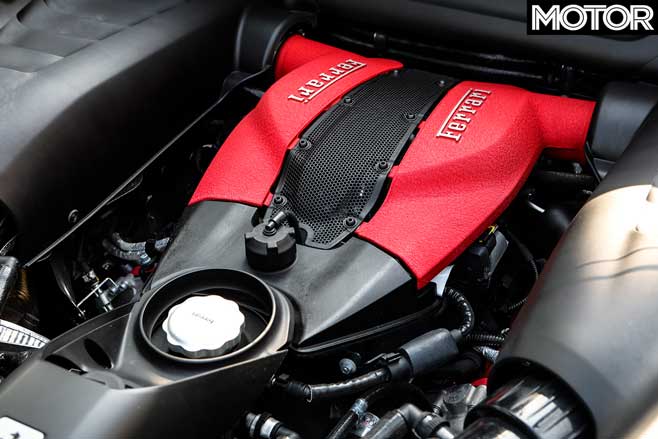
Engine-wise for Tributo, think the 488 Pista’s donk and its titanium-filled goodness, with vast improvements.There are new springs and hollow valves, stronger pistons and heads, a different cam profile, a new ‘Inconel’ exhaust manifold that saves 10kg and an entirely new exhaust system.
Lightweighting of a heap of components (rods, crankshaft, flywheel and even cylinder liners) not only benefits the kilo count (down 18kg from the 488 GTB), but also means 17 per cent less inertia for more instantaneous acceleration.
The Tributo actually produces 38kW more power than the old 488 GTB. Combined with a neat 40kg drop in overall vehicle weight, it’s clear the F8 is so much more than its marginally sharper 2.9sec 0-100km/h claim would appear on a spec sheet.
Ferrari says the advantage over the 488 GTB widens to half a second by 200km/h (7.8sec v 8.3) and there’s another 10 clicks at the very top (now a searing 340km/h). And you get more noise too – up to eight more decibels of enhanced V8 symphony is audible by the driver – with a ‘hot tube’ resonator feeding high-quality engine harmonics directly to the cabin, and tweaked exhaust flaps amplifying a cleaner, crunchier note to the world.
With all that working in the F8 Tributo’s favour, it’s surely no surprise that this latest-gen Ferrari is a frigging fit beast that packs a massive sense of occasion. At start up, there’s that loveable exhaust blare as the V8 sets idle speed to ‘toasty’, and on the move an awe-inspiring dedication to being arguably the most tractable drivetrain on earth.
The F8 effortlessly gathers pace from 1000rpm without fuss, yet courtesy of the blissful satisfaction of Ferrari’s torque-management system, there’s greater reward the higher you extend. Even at 3000-4000rpm, the Tributo’s twin-turbo V8 is chocked with meat-filled muscle and a rambunctious induction edge, though it’s the spectacular thrust and ear-splitting wail from six grand to the new ‘wall-effect’ ignition cut-out at the 8000rpm redline that brands it as a genuine supercar. It’s as rapid as anyone could possibly ever want.
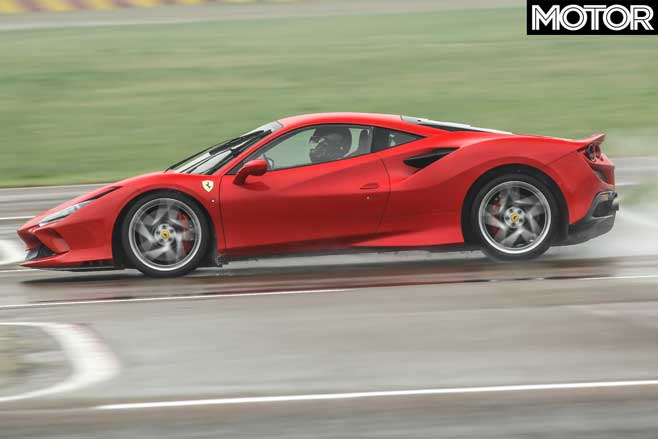
It’s also as pleasant to potter about in. The seven-speed dual-clutch ’box is near-flawless, regardless of whether it’s in auto mode or you’re tweaking the paddles yourself, and on our rain-soaked, fog-covered road loop in the hills surrounding Maranello, the F8 displayed so much poise and proficiency in Wet mode (which automatically puts the dampers in a cushier ‘bumpy road’ setting, while moderating power delivery out of corners) you’d wonder why anyone would ever need all-wheel drive.
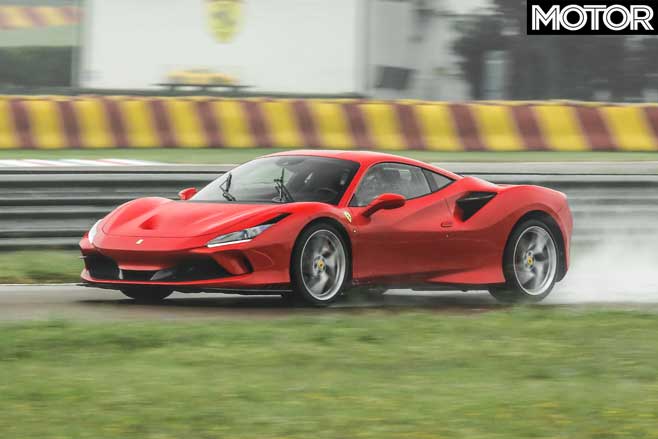
What the challenging conditions did prove is just how superb the F8 Tributo is as an all-rounder – rail, hail or shine. Bombing down an Italian autostrada at 175km/h, wipers feverishly clearing the deep windscreen, there isn’t a moment of nervousness. The F8’s quicker steering somehow blends with its agility-enhancing aero improvements without feeling too darty.
It rides better than a 488 GTB, yet can almost match the hardcore 488 Pista for outright handling talent. Around Ferrari’s Fiorano test circuit, the F8 Tributo is 0.5sec faster than a 488 GTB, one second behind the Pista.
Yet this is a more forgiving supercar, intended to be less intimidating at its cornering limit due to the integration of Ferrari Dynamic Enhancer Plus lateral-control software (which debuted on the Pista) into the Tributo’s latest take on Slide Slip Control. With FDE+ now also assisting in Race mode, the aim is to make the Tributo faster in the steering-wheel Manettino’s most extreme setting, while allowing a slightly broader oversteer stance in the CT-off position (in conjunction with less steering-wheel movement) before the electronics start to trim the edges.
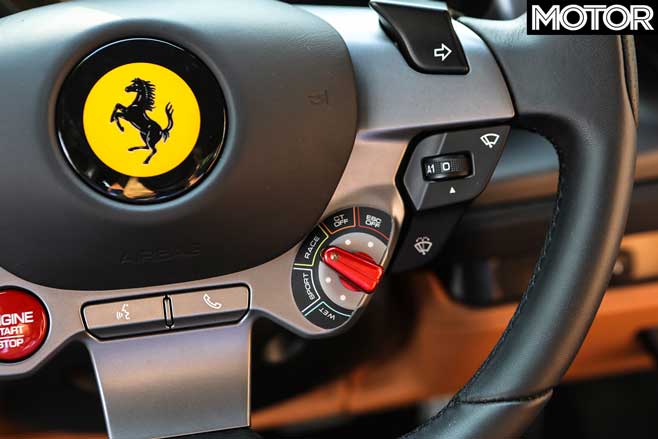
As your confidence builds, so does your respect for the sublime polish of the F8 Tributo. The synergy of its exponential power delivery, its heightened directional precision and the progressiveness of its rear-end as it fluidly yet thrillingly transitions into oversteer when exiting tighter corners is benchmark stuff for a mid-engined supercar. And even when the road is damp, there’s so much dynamic wizardry at play here that you’d never know the Tributo is carrying more than 58 per cent of its weight bias over its rear axle and channelling 530kW and 770Nm to its 305/30ZR20 rear treads.
Even if none of this extreme dynamic performance is really your thing, maybe the new 812-inspired interior of this great-riding, incredibly comfortable sports car could be the tipping point in its desirability.
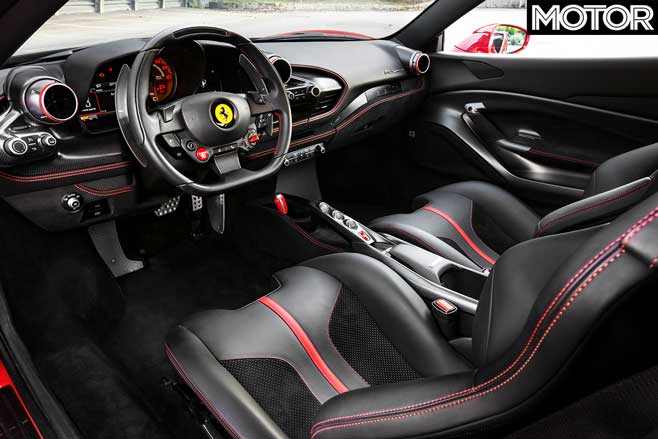
Seated behind the traditional yellow tacho, bracketed by a pair of striking, exhaust-inspired ‘eyeball’ air vents, surrounded by the highest-quality materials ever used in an ‘entry-level’ Ferrari and serenaded by a bloody excellent stereo, the Tributo’s surroundings definitely feel in the ballpark of its price tag.
Hell, there’s even a cupholder ahead of the gear-selector buttons that’ll clutch onto a 600ml water bottle or large coffee without trying to flip it into your lap!
And that’s ultimately what the F8 Tributo is all about – expanding the already vast accomplishments of the 488 GTB into a more confidence-inspiring but also faster, more playful, more useable sports car. Astounding grip levels and enormous performance is one thing; being able to tap into those huge dynamic reserves without trembling in your close-to-$500K investment is even more remarkable.
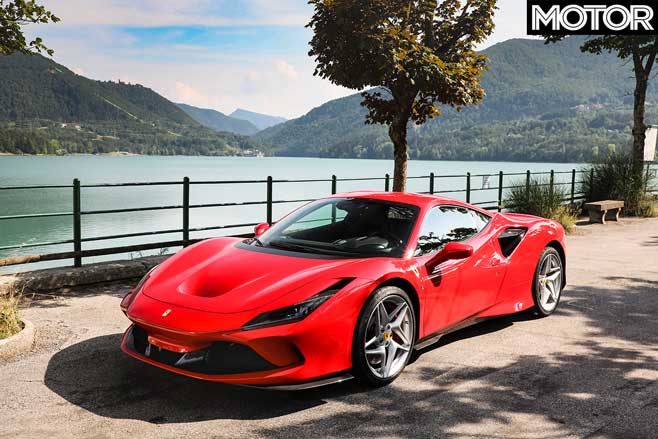
2019 FERRARI F8 TRIBUTO SPECS Engine: 3902cc V8, DOHC, 32v, twin-turbo Power: 530kW @ 7000rpm Torque: 770Nm @ 3250rpm Weight: 1435kg 0-100km/h: 2.9sec (claimed) Price: $484,888
Like: Incredible performance; ace interior; an exceptional all-round supercar Dislike: Frameless side windows noisy above 130km/h; a 458 Speciale sounds better!
Rating: 5 out of 5 stars
The Nemesis
McLaren 720S 4.0-litre twin-turbo V8, RWD, 529kW/770Nm, 0-100km/h 2.9sec, 1419kg, $489,900
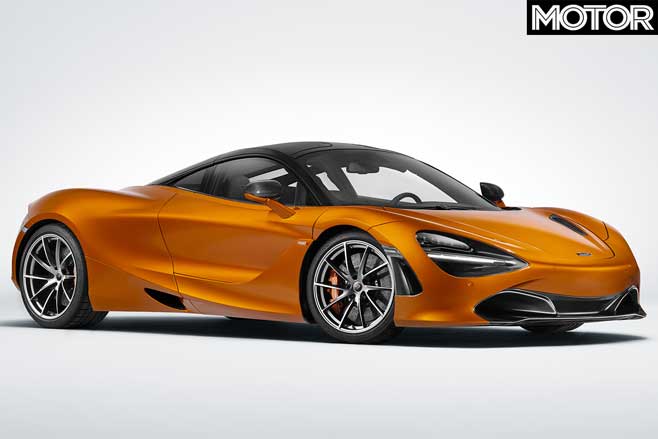
Ridiculously rapid, though suffers from turbo-lag that eludes the F8 Tributo, and doesn’t sound as tuneful. No match for looks but equally easy to drive and satisfying to slaughter.
MOTOR track review
Exercising the latest Prancing Horse at Sydney Motorsport Park By: Scott Newman | Published: 27 February 2020
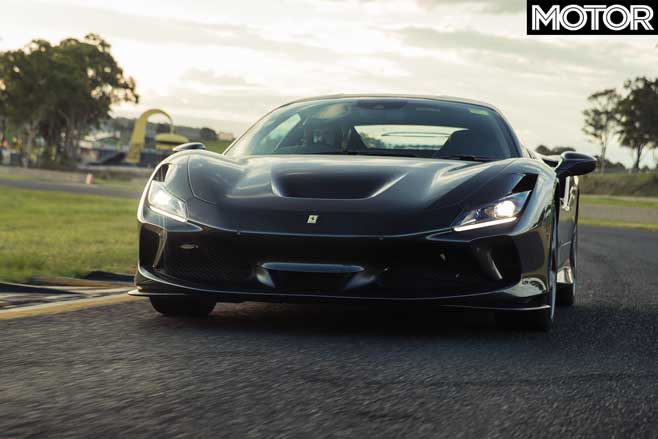
Buying a Ferrari and only driving it on the streets is a bit like owning a racehorse to trot around your paddocks on the weekend. Sure, it’s more than capable of doing it, but rather a waste of its ability. Just as a thoroughbred needs to stretch its legs on track, a Prancing Horse needs a circuit to show the full extent of its abilities.
Thankfully, the Australian launch of the new Ferrari F8 Tributo includes an afternoon at Sydney Motorsport Park’s North Circuit, both examples present shod with brand new brakes and unspoiled Michelin Pilot Sport Cup 2s, not that they’re going to stay that way for long.
The F8 Tributo is the successor to the 488 GTB. Visually, it’s easy to see the two are related, though the F8 has been restyled with massive improvements in aerodynamics and a few retro details for those who are paying attention. For example, the twin taillights and body-coloured rear are a nod to the 308 GTB, the lexan ‘staircase’ engine cover similar to that on the iconic F40.
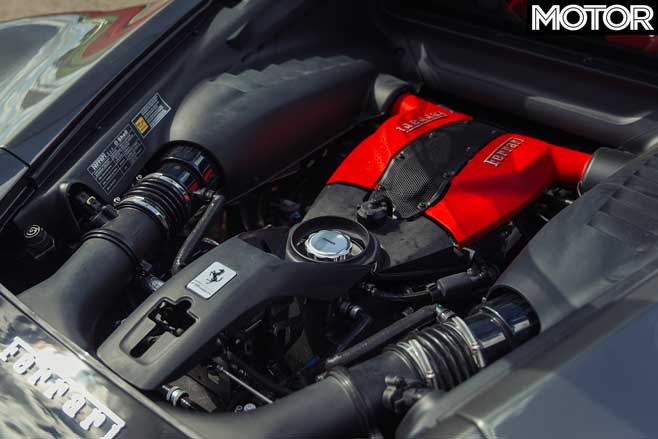
Every surface of the F8, visible or not, has been honed to use the air passing over it. Ferrari claims a 10 per cent improvement in aerodynamic efficiency compared to the 488 GTB thanks to a 15 per cent increase in downforce with no added drag. One of the key components to achieving this is the S-Duct in the nose, which not only pushes the front axle into the ground at speed but ‘attaches’ the airflow to the car allowing it to feed the rear intakes and the blown rear spoiler.
There are myriad other changes: the new horizontal headlights improve brake cooling; radiators from the 488 Challenge race car now lie flat in the nose; moving the air intakes created room for larger intercoolers in the sidepods; vortex generators front and rear shape the air underneath the car; active flaps front and rear reduce drag or increase downforce depending on the situation. All this to ensure the F8 is as planted as possible in corners yet super slippery on the straights.
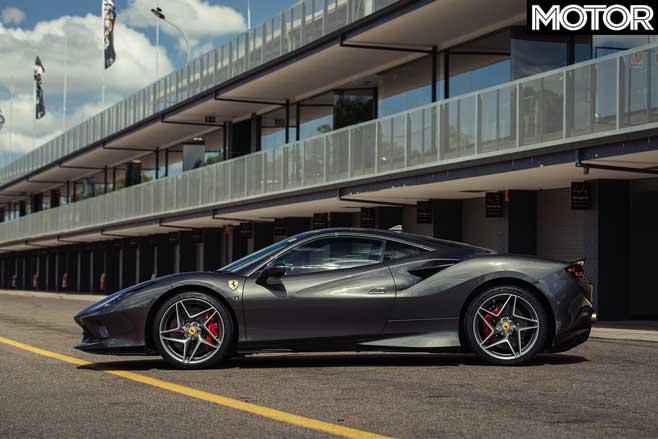
It could probably get away with a bit of drag given there’s a 530kW/770Nm 3.9-litre twin-turbo V8 in the middle. The outputs are identical to those in the Pista but the engine has been heavily redesigned with new pistons, cylinder heads and lightweight materials which reduce weight by 18kg compared to the 488’s engine yet extract an additional 38kW/10Nm. Hitting 100km/h is claimed to take just 2.9sec, while 200km/h is passed on 7.8sec on the way to a 340km/h top speed.
Behind the wheel this translates into simply relentless acceleration. In most cars, even quite quick ones, achieving 200km/h requires a lengthy stretch of road and a decent run-up. In the F8 it’s commonplace, regularly hit between corners. Only when the seven-speed dual-clutch ’box selects sixth gear down the main straight does acceleration appreciably slow, yet it still pulls like a train to 265km/h before the brakes are required.
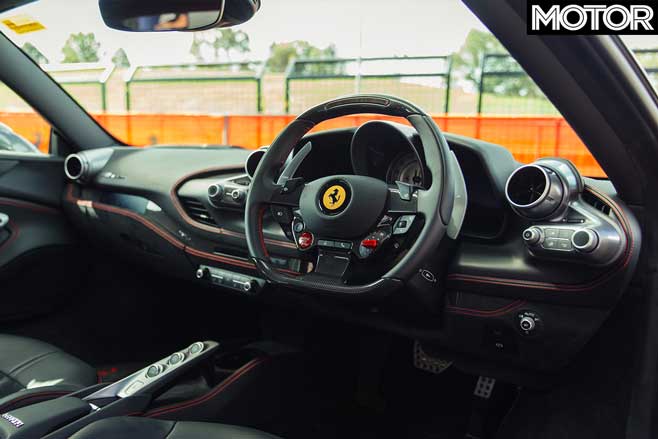
Like the 488 before it, the F8’s party trick is its variable torque management. In order to make the most of the available traction, the power level steps up in each successive gear. It works brilliantly but feels quite odd, as attempts to short-shift to help traction are stymied by a boost in power and seemingly unabated forward pace. Maximum revs are 8000rpm, a new hard-cut limiter replacing the 488’s gradual one, the steering wheel-mounted shift lights flashing blue when it’s time for a new gear.
The gearbox itself is flawless, there’s no other word for it, and the chassis operates at a similarly high level. It’s incredible that such a potent machine can be so friendly; apart from its sheer speed, the F8 is in no way intimidating to drive. Much of its relatively docile nature is due to the incredible effectiveness of its electronic aids.
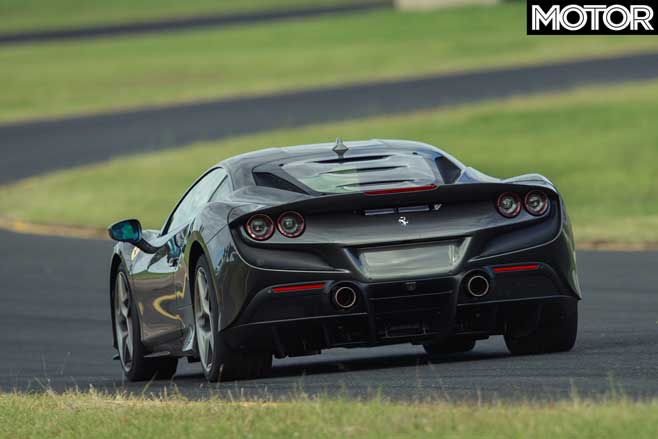
In Sport it’s possible to floor the throttle mid-corner and then feel the speed slowly build as you wind off steering lock, the car’s brain feeding in the power for you. Selecting Race activates Side Slip Control and requires much more driver input; what happens with the electronics parked will have to wait for another day, but such is the F8’s balance and communication we suspect that it requires respect rather than fear. The brakes, too, show no sign of wilting after six hard laps.
So is it worth your $484,888 (plus around $100K once you dig into the options list)? It depends. The F8 is clearly an outstanding supercar, but then so was the (to my eyes prettier) 488, so I’m not sure I’d be rushing out to trade up, especially with Ferrari’s all-new V6 hybrid sports car waiting in the wings. Nevertheless, if it is the supercar for you, make sure you exercise it properly.
2020 FERRARI F8 TRIBUTO SPECS Engine: 3902cc V8, DOHC, 32v, twin-turbo Power: 530kW @ 7000rpm Torque: 770Nm @ 3250rpm Weight: 1435kg 0-100km/h: 2.9sec (claimed) Price: $484,888
Like: Incredible performance; useability; warranty Dislike: Fussy styling; not a huge leap over 488
Rating: 4.5 out of 5 stars
Second Opinion: Wheels first drive review

Wheels has been at the forefront of Australian motoring media since 1953, creating quality, credible content that consumers trust, and taking readers behind the scenes of the automotive industry.
Ferrari celebrates four decades of mid-engined V8 sports cars and four consecutive International Engine of the Year awards with the F8 Tributo. By: Nathan Ponchard
Overall Rating

Plus & Minus
Plus: Outstanding driveability; brilliant dynamics; an incredibly polished makeover of an already-fantastic sports car
Minus: Some wind noise from frameless side windows at speed; twin-turbo V8 will never sound as good as its atmo ancestors
The Wheels Verdict: The incredibly handsome Ferrari F8 Tributo is not only a more contemporary expression of what the 488 GTB stood for, it manages to back that up by being damn near as fast as a 488 Pista. But the beauty of this Maranello mauler is its approachability. Deliciously well designed and finished inside, as well as amazingly comfortable when it wants to be, the F8 Tributo truly is a supercar for all seasons. And while its twin-turbo engine may not achieve the spine-tingling acoustic highs of its finest naturally aspirated ancestors, its driveability is so close to perfect that really, what’s not to love?
WHAT IS THE FERRARI F8 TRIBUTO?
An exhaustive makeover of the 488 GTB (which in itself was an engineering-led facelift of the 458 Italia), though the F8’s decade-old core structure undersells just how new this car is.
Ferrari has left almost no screw unturned in the development of this crucial model – from its engine and emissions performance to its aerodynamic effectiveness, thermal efficiency, weight management and even its interior architecture. Think of it as a comfier yet sharper 488 GTB that’s almost as quick as a 488 Pista.
WHY WE’RE TESTING IT?
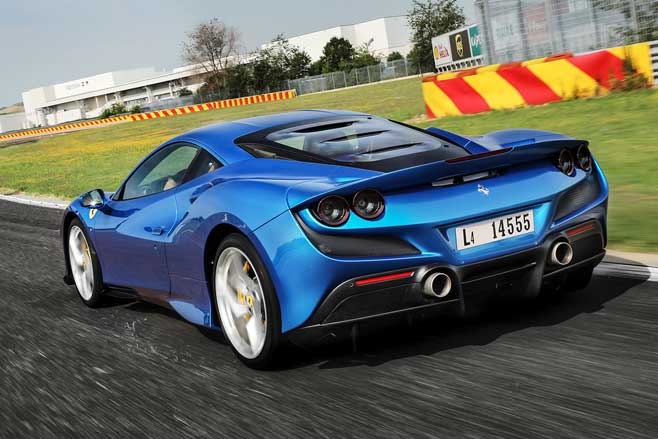
With the level of performance now on offer in a car like this, the ultimate playground to showcase its talents is Ferrari’s own Fiorano test track, as well as a solid strafe up through the challenging hills surrounding Maranello.
There’s no greater test of a sports car’s all-round talent than through the rain, blanketing fog and general unpredictability experienced on our drive loop … including hot laps on a saturated Fiorano surface. Thankfully, another lash in much drier conditions late in the day provided a proper stage for the fiercely fast F8 Tributo to showcase its towering talent.
Wheels Archive: Peter Robinson visits Ferrari in Maranello
THE WHEELS REVIEW
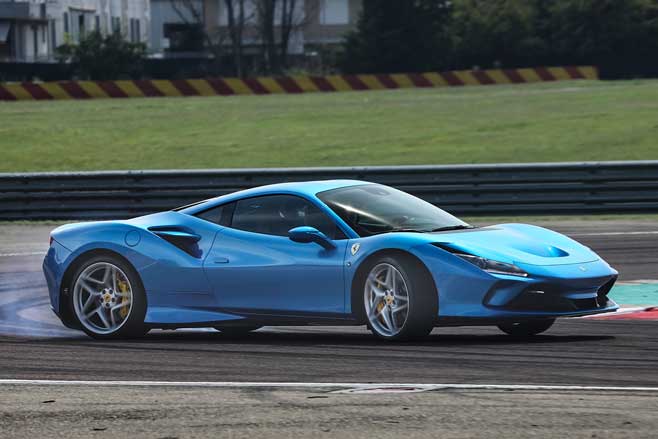
Unpredictability. That is the driving force behind modern-day Ferrari, in order to keep its competitors, as well as its customers, guessing as to what is coming next. And it’s the exact reason why the new F8 Tributo exists. Because arguably no-one expected it to.
Building on the bones of its 488 GTB predecessor (they share doors, glasshouse, roof and underlying structure, just like the 458 Italia before that), the F8 is so comprehensively made over that it could almost be a new car.
A huge amount of work went into improving its aerodynamic efficiency (by 10 percent) and thermal efficiency (lowering the air temp entering the engine by 15 degrees), while stylistically making the ‘tribute’ aspect of the F8’s new name mean something.
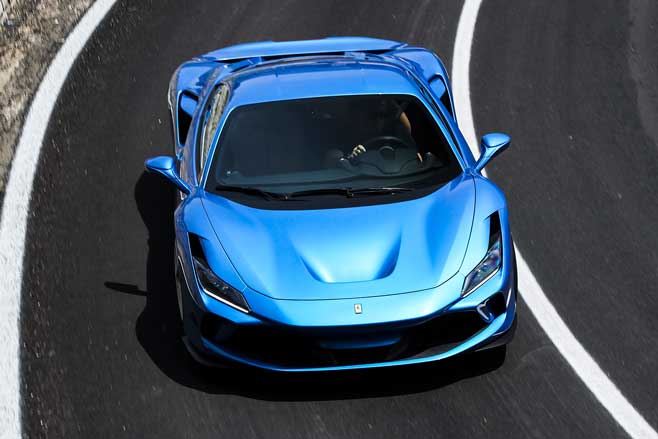
Cue the F1-derived ‘S-duct’ at the front (as per 488 Pista and FXX-K Evo), a super-cool rib-vented engine cover (a la F40) made from a lightweight material called Lexan, new quad rear tail-lights (channelling the svelte F355 and gorgeous 288 GTO), plus a new ‘blown’ rear spoiler design that increases downforce by 25 percent.
Engine-wise, the 3.9-litre twin-turbo V8 is clearly a 488 handover, though with 50 percent new parts, it’s a substantially altered work of art. It’s now essentially the titanium-filled 488 Pista donk with revisions aimed at increasing power despite the addition of a pair of Euro 6d-compliant Gasoline Particulate Filters (GPFs) at the rear of a new exhaust system.
The air intakes have been shifted from the rear flanks to either side of the rear spoiler, feeding directly into the intake plenums, and there’s a new ‘Inconel’ exhaust manifold with reduced back pressure, new valves and springs, a different cam profile, and a 17 percent reduction in inertia thanks to the lightweighting of a heap of components. Indeed, the Tributo’s V8 is 18kg better off than a 488 GTB’s.
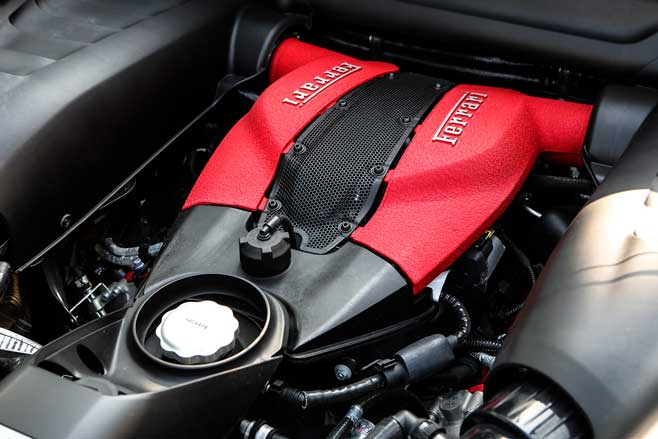
It’s also more powerful – up from 492 to 530kW at 7000rpm, with 770Nm (+10) at 3250rpm – which, combined with a 40kg drop in overall vehicle weight, gives the F8 Tributo a thrilling, thrusting spring in its step. Engine sound has swollen across the board, with up to an 8dB increase audible by the driver, aided by a ‘hot tube’ resonator amplifying high-quality engine harmonics directly to the cabin. Even the exhaust flaps have been finetuned for a cleaner, crisper note.
The outcome, of course, is a stunningly capable engine. Tractable from barely 1100rpm, with turbo lag banished (if not turbo whistle and wastegate noise), the Tributo’s bent-eight gains a lusciously gnarly edge in its 3000-4000rpm mid-range before truly exploding from six grand to the new ‘wall-effect’ 8000rpm cut-out.
It’s here, in the twin-turbo V8’s rapacious upper reaches, that the Tributo’s searing 7.8sec 0-200km/h time and 340km/h top speed is literally rammed home. And yet thanks to the wonders of Variable Torque Management, there’s an exponential build in excitement that rewards committed throttle planting.
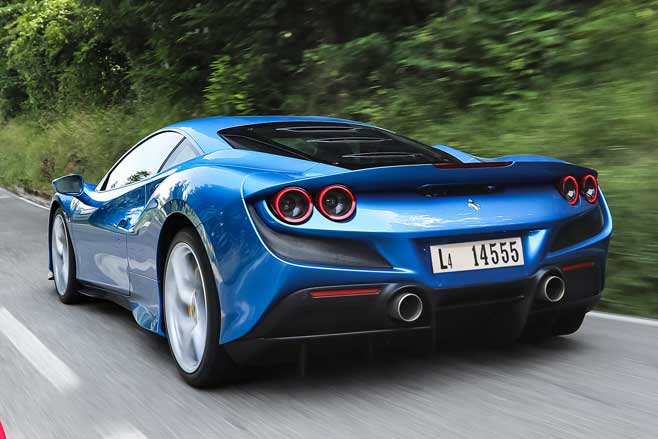
The seven-speed dual-clutch ’box is a wonderful support act, making you forget all about any manual pipedreams, and in combination with a tweaked chassis and the aforementioned weight and aero improvements, the F8 Tributo’s dynamics are an effortless match for its monstrous performance.
Quicker steering and a superb-to-hold, smaller-diameter wheel make the F8 feel hyper-keen yet still progressive, and its chassis somehow manages to ride better than a 488 GTB’s (and even some of its more expensive brethren in ‘bumpy road’ mode) while approaching the 488 Pista’s sublime poise and grip.
Yet this is a forgiving car too, designed to be approachable and more predictable at its outer limits thanks to the integration of Ferrari Dynamic Enhancer Plus lateral-control software into the latest-gen version of Slide Slip Control (SSC 6.1), increasing handling performance in Race mode and making the F8 more fun to drive in Sport. The revised SSC system even gives you slightly more oversteer angle before it taps you on the shoulder.
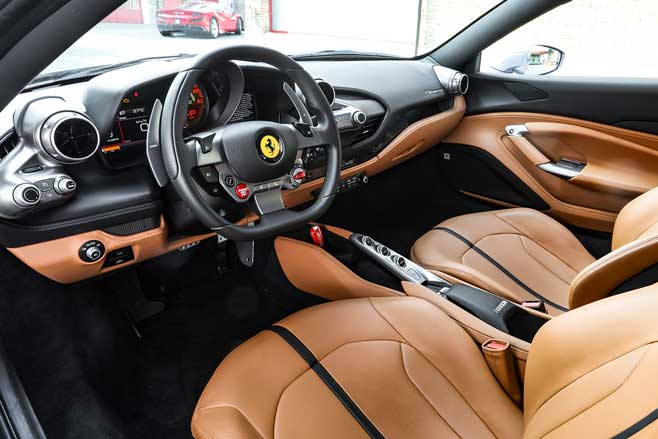
Thing is, you kind of expect all that in a modern Ferrari; fast as all get-out and a riot. What I wasn’t prepared for is just how outstandingly accomplished the F8 Tributo is as a day-to-day runner. Its all-new, 812-inspired interior is brilliant (and even quite practical), as is its driving position, and its ride comfort on low-profile 20s is almost unbelievable considering the vastness of its cornering talent.
Cocooned in the F8 Tributo’s beautifully crafted cabin, feeling the effortless surge of its colossal powertrain, and marvelling at just how far Italian electronics and user-interface systems have come, I can’t think of a better way to celebrate four decades of Ferrari’s mid-engined V8 sporting heritage. Here’s hoping there’s a few more years left in the spiritual tank.
MAIN RIVALS
Audi R8 V10 Plus, Aston Martin DBS, Lamborghini Huracan Performante, McLaren 720S and Porsche 911 GT3.
Price and specs
- Model: Ferrari F8 Tributo
- Engine: 3902cc V8 (90°), dohc, 32v, twin-turbo
- Max power: 530kW @ 7000rpm
- Max torque: 770Nm @ 3250rpm
- Transmission: 7-speed dual-clutch
- Weight: 1435kg
- 0-100km/h: 2.9sec (claimed)
- Economy: 12.9L/100km
- Price: $484,888
- On sale: February 2020
Volkswagen’s R performance division has done what it’s wanted to for some time – it has built the VW Touareg R.
Taking up the mantle as VW’s most powerful model, the Touareg R bring hybrid power into the mix and borrows tech from its stablemate Porsche.
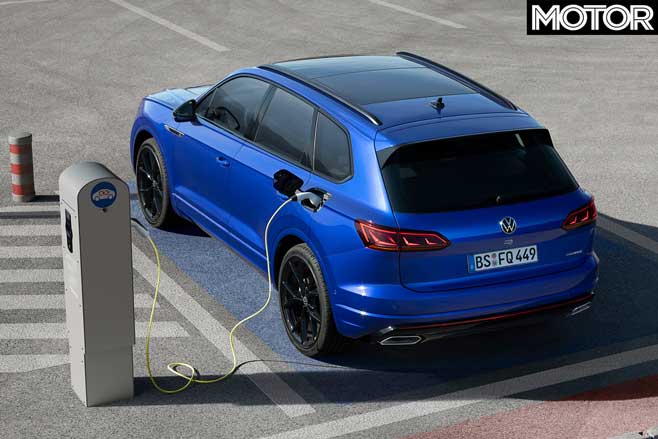
Its 3.0-litre V6 features across the Audi and Porsche range in a tune similar to that of the 250kW Touareg R, but a plug-in hybrid system increases that to 340kW, with 700Nm on tap.
This puts the Touareg R on par for its outputs with the Porsche Panamera 4E-Hybrid. Volkswagen doesn’t claim a 0-100km/h figure yet but, as the Panamera does the run in 4.6 seconds, it’d be no surprise for this to be a sub-5sec SUV.
But it’s not all about speed and power with the Touareg R. Aside from a towing capacity of 3.5 tonnes and a ‘Trailer Assist’ feature, the hybrid system in the fast SUV is also quite clever, with VW saying it can even manage its own power use based on the trip plan.
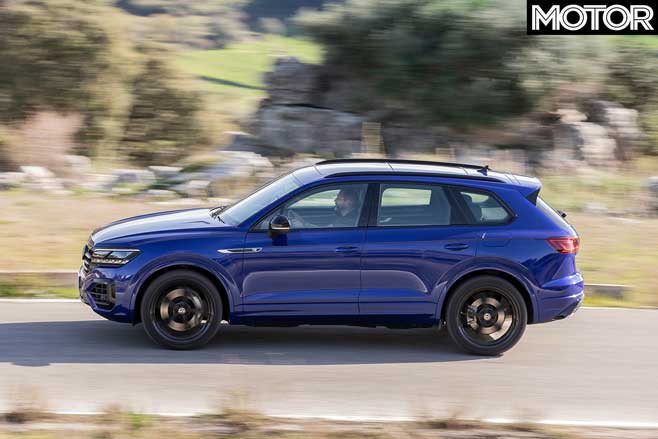
“If the navigation system is active, the battery manager also looks ahead and predictively takes into account the route and topography data to the adapt battery use and thus optimise the electric range.”
Up to 140km/h, the Touareg R can run entirely on electric power, and will be able to keep its driver assist function active up to 250km/h.
In recent years Australia has been (and likely still is at time of publish) the third largest market for R cars worldwide, so it’s likely Australia will see the Touareg landing on its shores in droves.
According to a VW Australia spokesperson, Volkswagen’s R division in Germany pays close attention to what VW Australia is interested in.
In addition, Volkswagen Australia has been asking about a larger ‘R’ car like a Tiguan or Touareg.
“A Tiguan’s definitely one we’ve pushed with them, and we’d love to see the return of something larger in the passenger space for an R model,” VW Australia’s product manager Todd Ford told MOTOR at a late-2018 event.
We can now announce that WhichCar TV Season two will air on New Zealand televisions from March 7, 2020, bringing another huge season filled with more of the latest and greatest car content from the motoring world.
Season two will run for 50 percent longer than season one, with 30 whole episodes locked and loaded; inbound for your television via Prime TV NZ this autumn.
The first episode of WhichCar TV will air on Prime New Zealand at 7pm on March 7.
In addition to initial air dates, you can find re-runs airing periodically and even catch some of the action on our website at www.whichcar.com.au/tv.
We are going full-steam ahead here at WhichCar HQ; planning, writing and shooting all the material we’re going to deliver over season two. We can’t wait to show you what we already have in store – if you thought what we had in store in season one was good – we’ve got a whole other thing coming for you!
The cars are the stars on WhichCar TV, and you can expect to see all the latest models traversing the globe at the hand of our presenters as we attempt to review, entertain and inform this season.
WhichCar explores new ways to look at the traditional car review through left-field ideas that make the story about more than the car, expect more adventures, more track action, off-road assaults and consumer advice when you tune into WhichCar TV.
Keep up to date with everything WhichCar TV in the lead up to its initial New Zealand airdate by staying in touch with the WhichCar Facebook, Instagram, and website.
If you don’t know the name Daigo Saito you probably should. He’s one of the world’s pre-eminent drifters, responsible for probably the greatest drift of all time (YouTube ‘Daigo Saito jump drift’) and his workshop, Fat Five Racing, has a history of creating some wild machines.
Some of Saito’s previous drift machines are a 900kW open-top Lexus SC430, a Lamborghini Murcielago, Chevrolet Corvette Z06 and a run of Toyota JZX100 Chasers, then there is his current widebody Toyota GR Supra for D1 Grand Prix in Japan and NASCAR-engined Toyota Altezza for the Russian Drift Series.
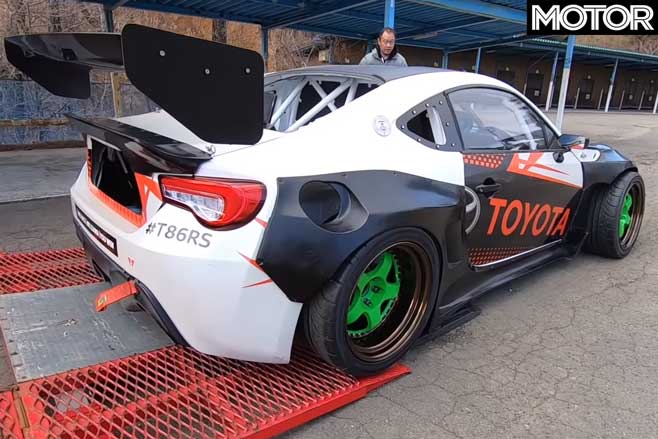
In 2020 Saito is heading back to the US Formula Drift series, hoping to recapture the title he won in 2012. With the assistance of Toyota Gazoo Racing, he’ll be using a Toyota 86 with a strong Australian past.
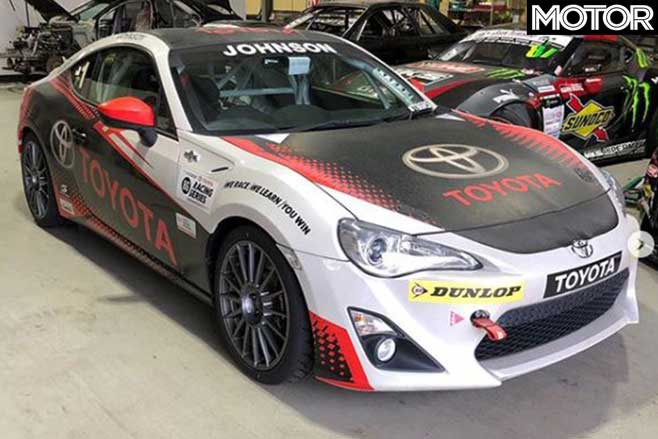
Saito’s new drift car started life as one of the guest cars in the Toyota 86 one-make race series. According to the windscreen banner, it was last driven by Steven Johnson, who made a number of appearances in the series in 2016 and 2017 as a driver mentor.
The car was sent back to Japan before Toyota’s sports car guru Tetsuya Tada seemingly gifted it to Saito as part of Toyota’s sponsorship deal.
Unsurprisingly, it has changed somewhat during its transformation from entry-level race car to elite drift car. There is a bit of a formula now developing in turning humble 86s into massively powerful tyre shredders and Saito’s new weapon closely adheres to this recipe.
Under the bonnet the standard FA20 has been junked for Toyota’s venerable 2JZ, which benefits from a Brian Crower 3.4-litre stroker kit, an enormous external wastegate Garrett turbo which is kept spinning by anti-lag and a healthy shot of nitrous.
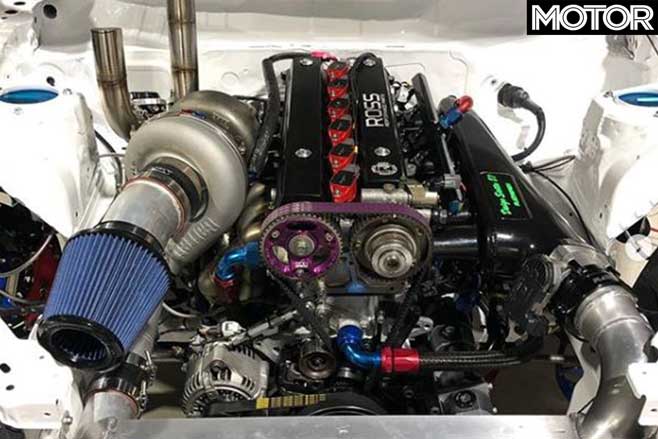
Power is enough to keep the rear wheels spinning in every gear but bank on around 600kW or so. Another Aussie connection is the neat Plazmaman intake manifold hanging off the side of the 2JZ.
The gearbox is a Samsonas sequential with flat-shift capability and the radiator and tiny fuel cell have been moved to the rear for weight distribution purposes. Saito has retained at least some of the 86 chassis, whereas cars like the similar HKS drift car are essentially tubeframe rear ends.
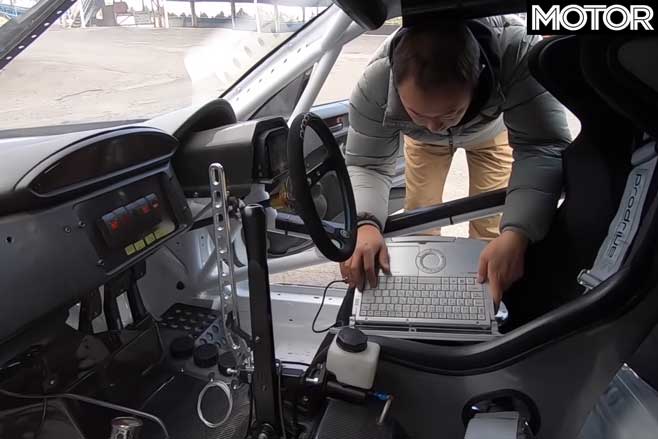
Transmitting the power to the 285/35 tyres is a Toyota LSD from a JZX Chaser, while Wilwood brakes feature all round with a twin-caliper setup at the rear to ensure the wheels lock when Saito pulls the hydraulic handbrake.
The eight-round Formula Drift season kicks off at Long Beach on April 10.
Hold on to your horses! Wheels hits the track for an full-throttle performance test session in the Oz-fettled 500kW Ford Mustang R-Spec.
We go pedal to the metal in R-Spec 001 – the first of 500 examples being assembled to factory standards by Melbourne-based outfit Herrod Performance.
Even Ford doesn’t have the full low-down on exactly what this bent-eight brute can do on the strip. Best tip from the Blue Oval when they tossed us the keys? “Just don’t break it.”
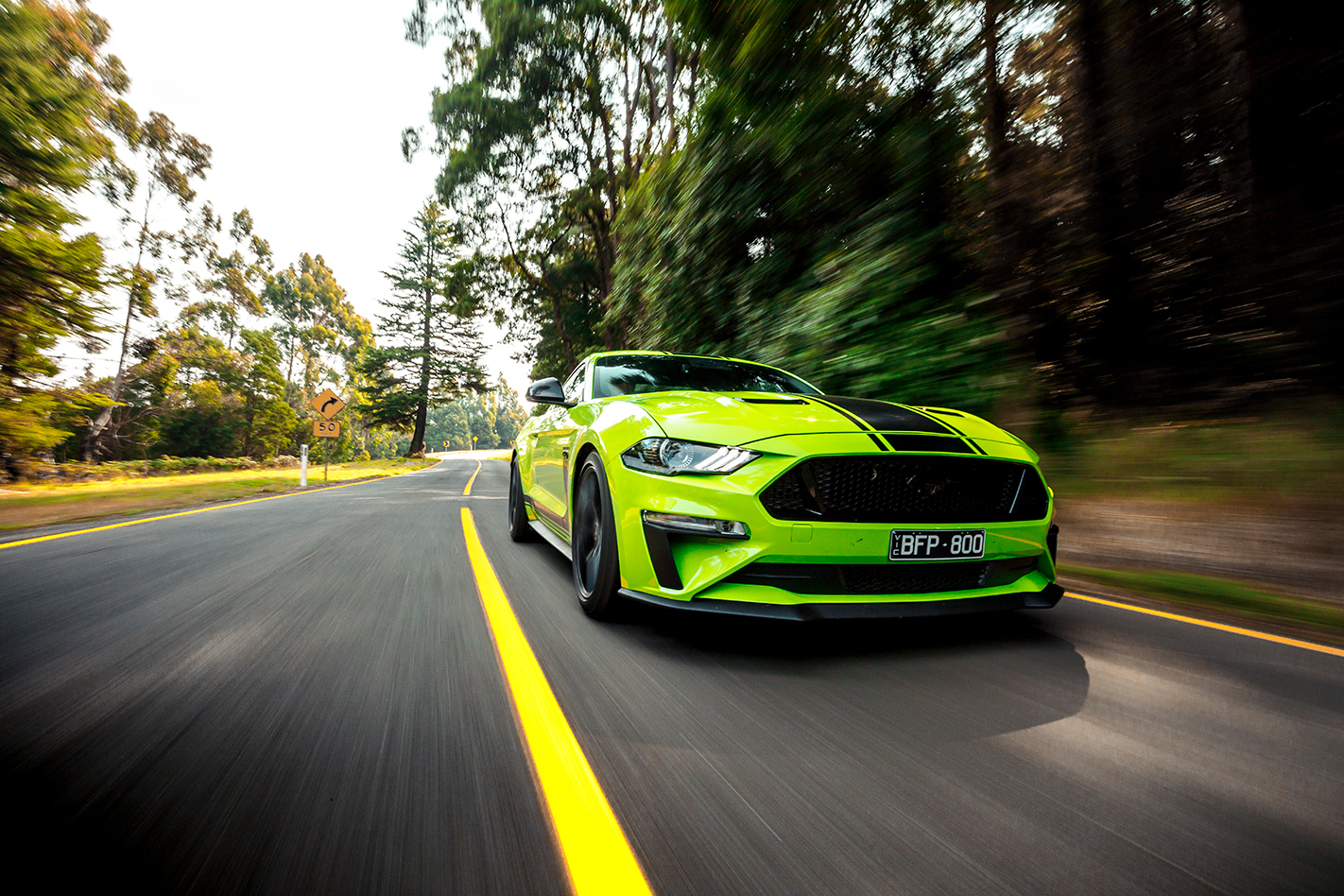
See what happens when the ’Stang really hits its straps in our March issue, on sale now.
We’ve packed the mag full of news, drives and features, as well as our regular columnists and our 20-page Databank section for new-car specs.
Is the facelifted GTS really Porsche’s ‘Sportiest Macan’? See how we rate ‘Audi’s Urus’, the RS Q8, plus Mercedes’ GLS 400D seven-seater and its GLE 53 Coupe SUV. Things get breezy in the new tray-backed Jeep Gladiator, and we find out if the Genesis GV80 has what it takes to keep the top end of town honest.
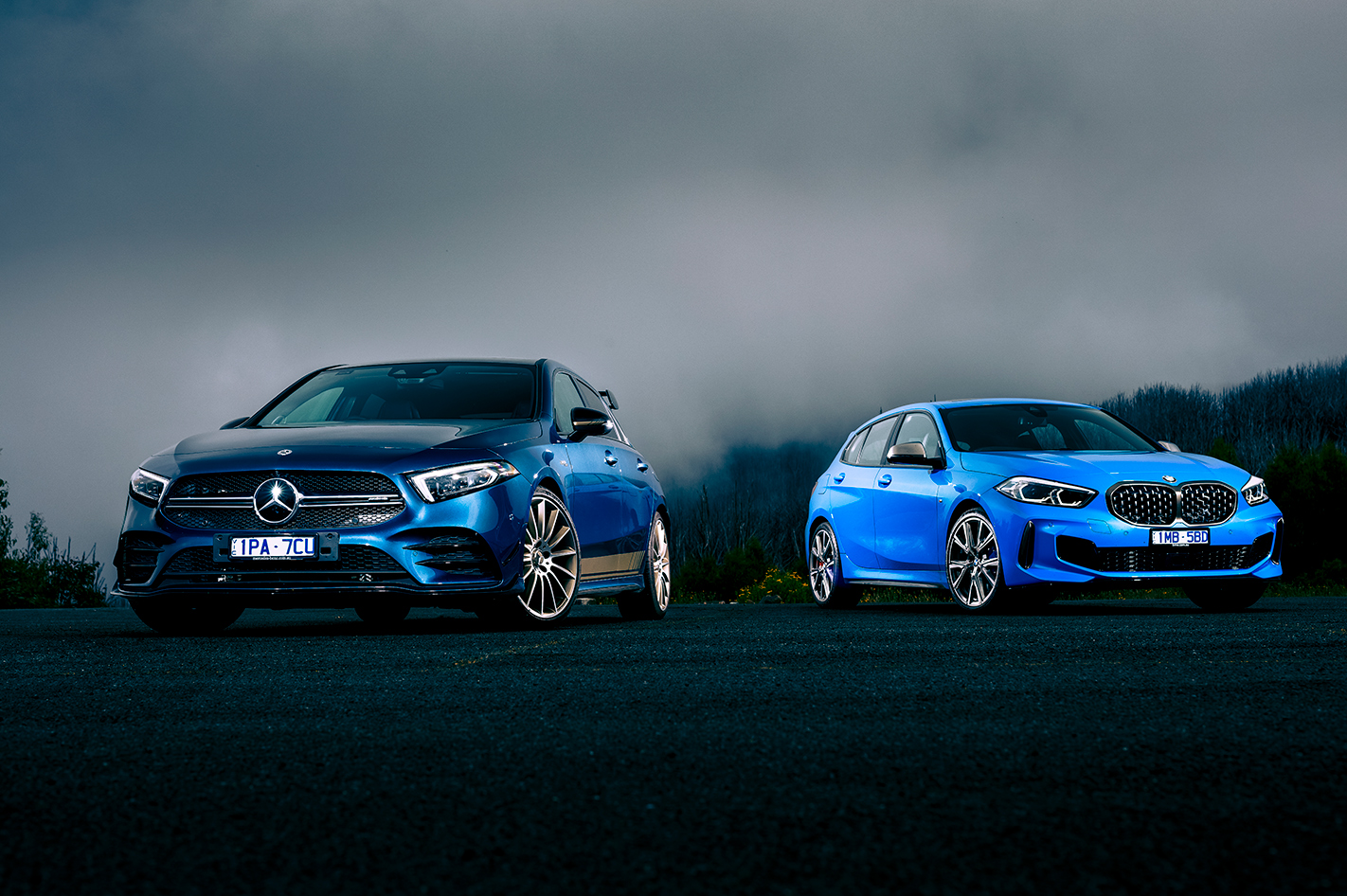
We pit the Mercedes-AMG A35 and BMW’s 135i against each other in a battle of the hot hatches. And Twin Test is more twinny than ever as we put the engine-sharing BMW Z4 M40i and Toyota Supra GTS under the spotlight.
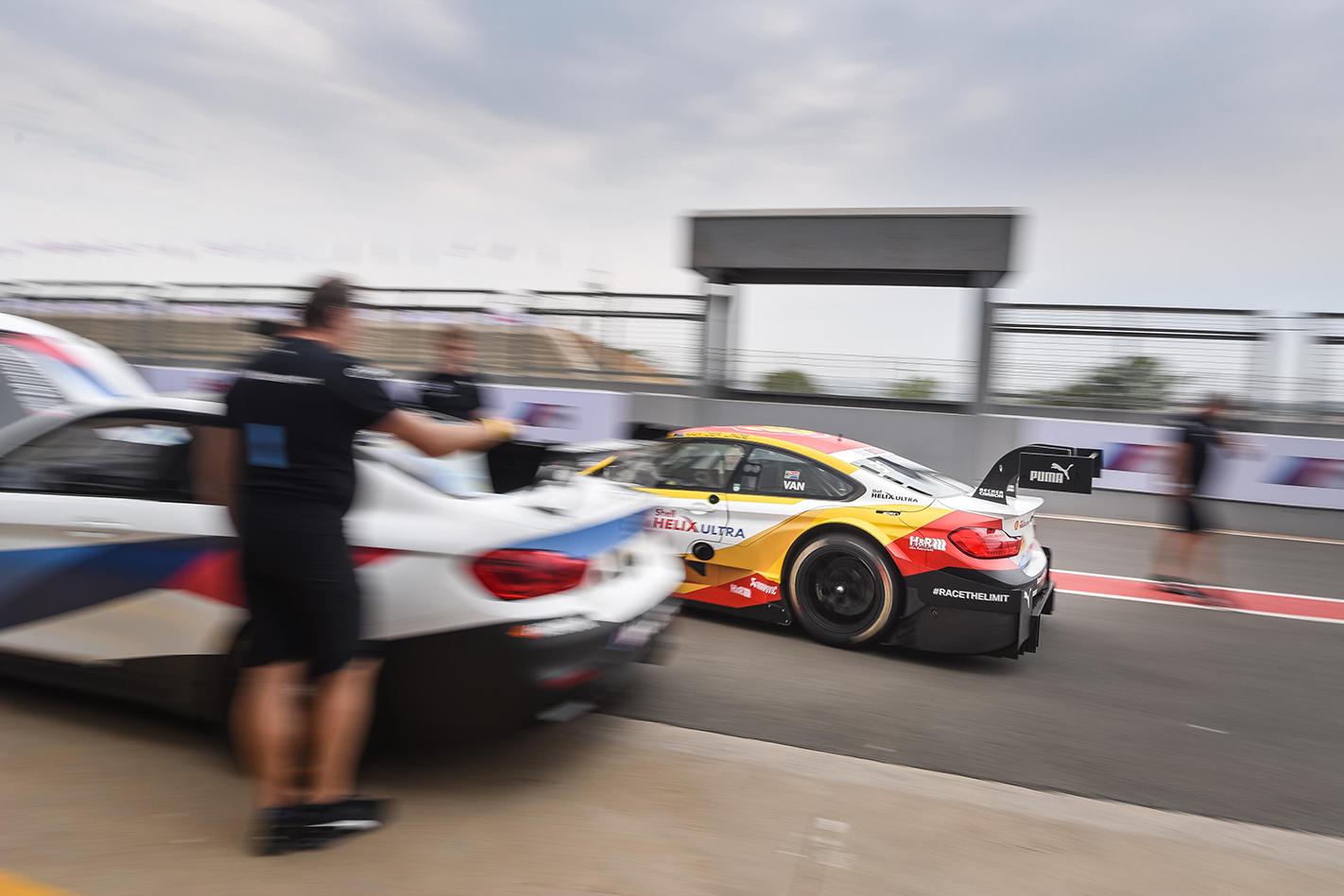
Not enough BMW? Feel the love at South Africa’s Kyalami racing circuit in a tribute to the nation’s special relationship with the German maker.
See what the Mazda CX-30, Toyota C-HR and Kia Seltos range-toppers bring to the party in our small SUV comparison test.
Come along for the ride with Audi’s head of autonomy, Miklos Kiss, for his take on a driverless future.
There’s Scottish play on the Isle of Skye in the Mazda 3 SkyActiv-X as we check out Hiroshima’s much-hyped fuel-saving new donk for ourselves.
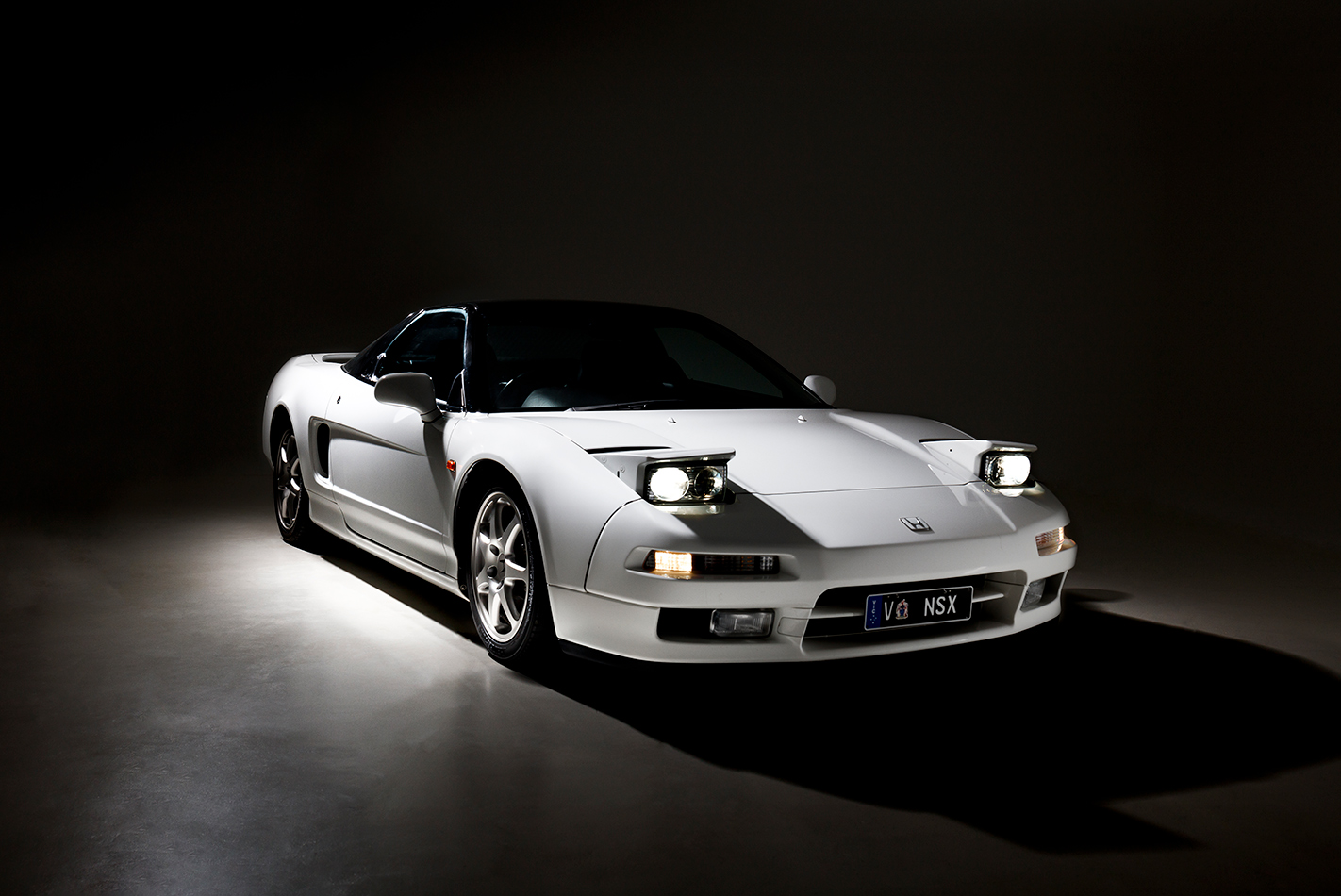
Modern Classic traces the rich history of the Honda NSX. Retro revisits the funky Mini Moke. And we have an eye on the future, too, as we explore troubling times ahead for traditional motor shows.
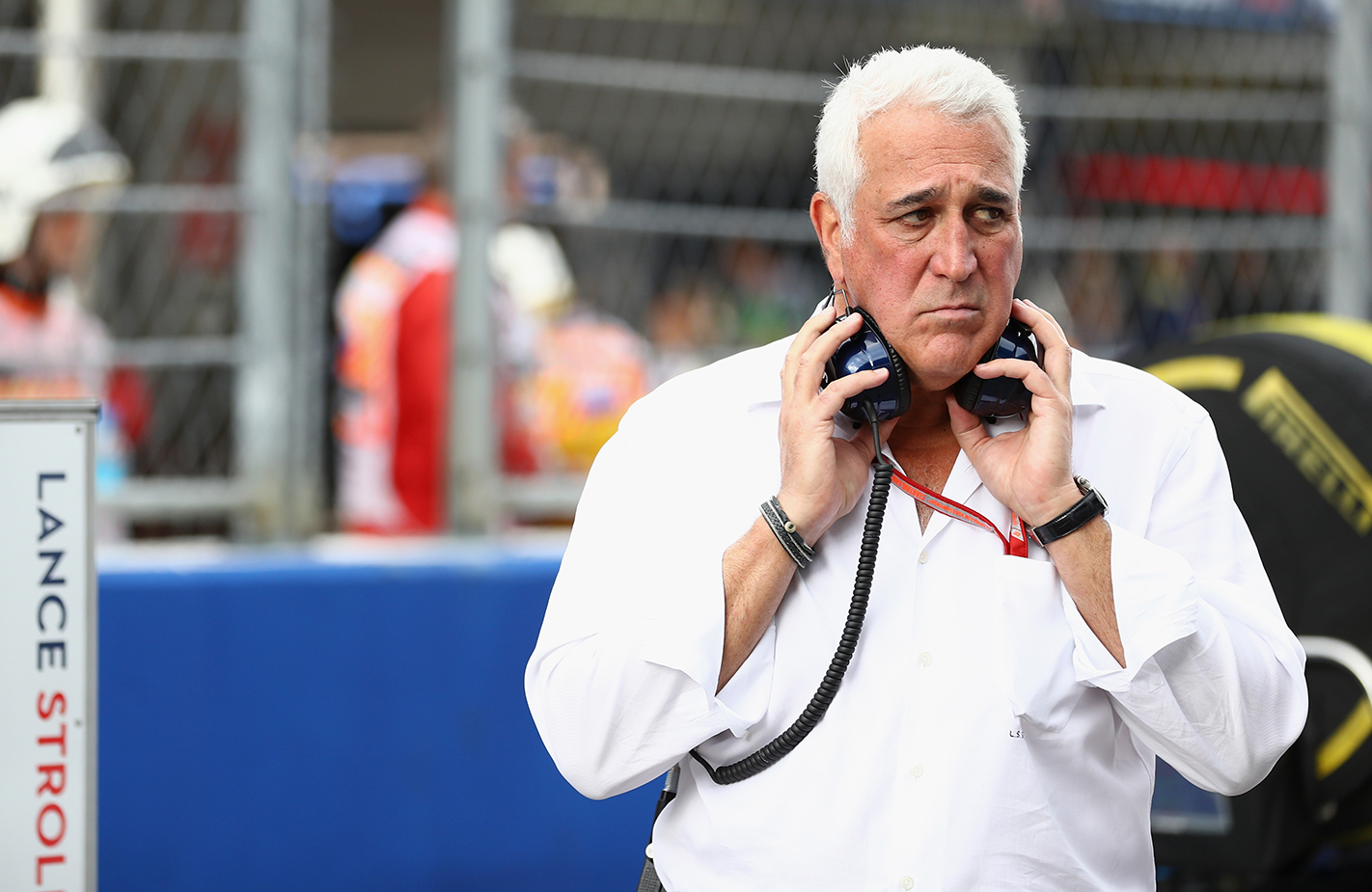
But the future looks brighter for Aston Martin, suddenly awash with funds from the deep pockets of fashion tycoon Lawrence Stroll.
Crazier things have happened – and we always let you know when they do. So grab your March issue of Wheels today!
