
It’s been an incredibly busy time for Holden of late, with the launch of the VZ Commodore and that last month of its WL Statesman/Caprice sedan range. This month, it’s freshen-up time for the Commodore light commercial range, and then next month Holden officially unveils its VZ Monaro.
This review was originally published in MOTOR’s October 2004 issue
After all that activity, Holden will slot the new Alloytec V6 into the Adventra in an effort to provoke some interest in this slow-selling soft-roader.
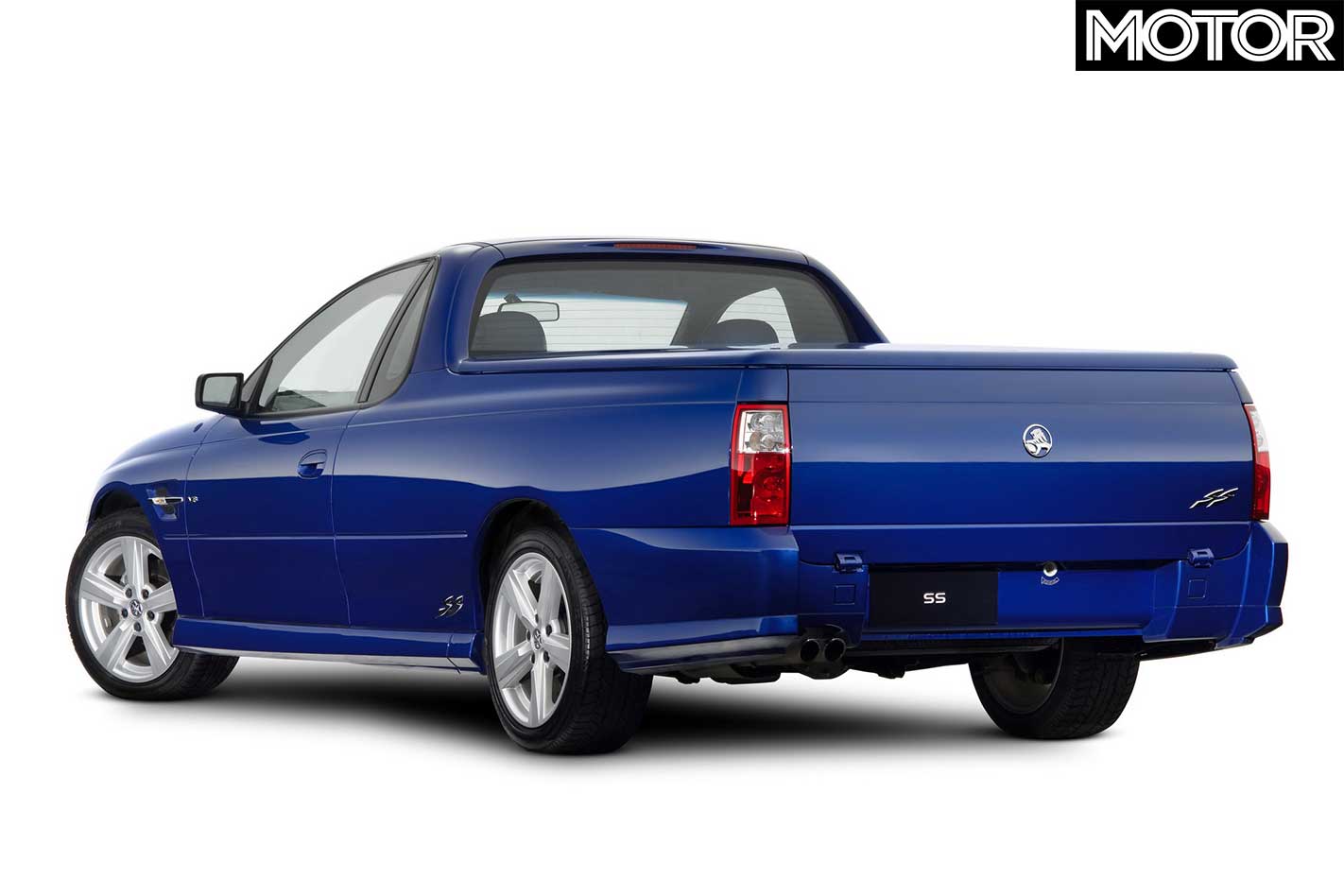
The only thing now missing from the Holden ute range is a 190kW-version V6, which would create a direct ute match for the sporty SV6 sedan. Without confirming there will be an SV6 ute, Holden engineers and marketers say for now it’s a matter of avoiding biting off too much, too soon.
No Alloytec 190 also means no five-speed auto, but the new Japanese-built Aisin D173 six-speed manual (also available on the SV6 sedan) becomes standard across the ute range.
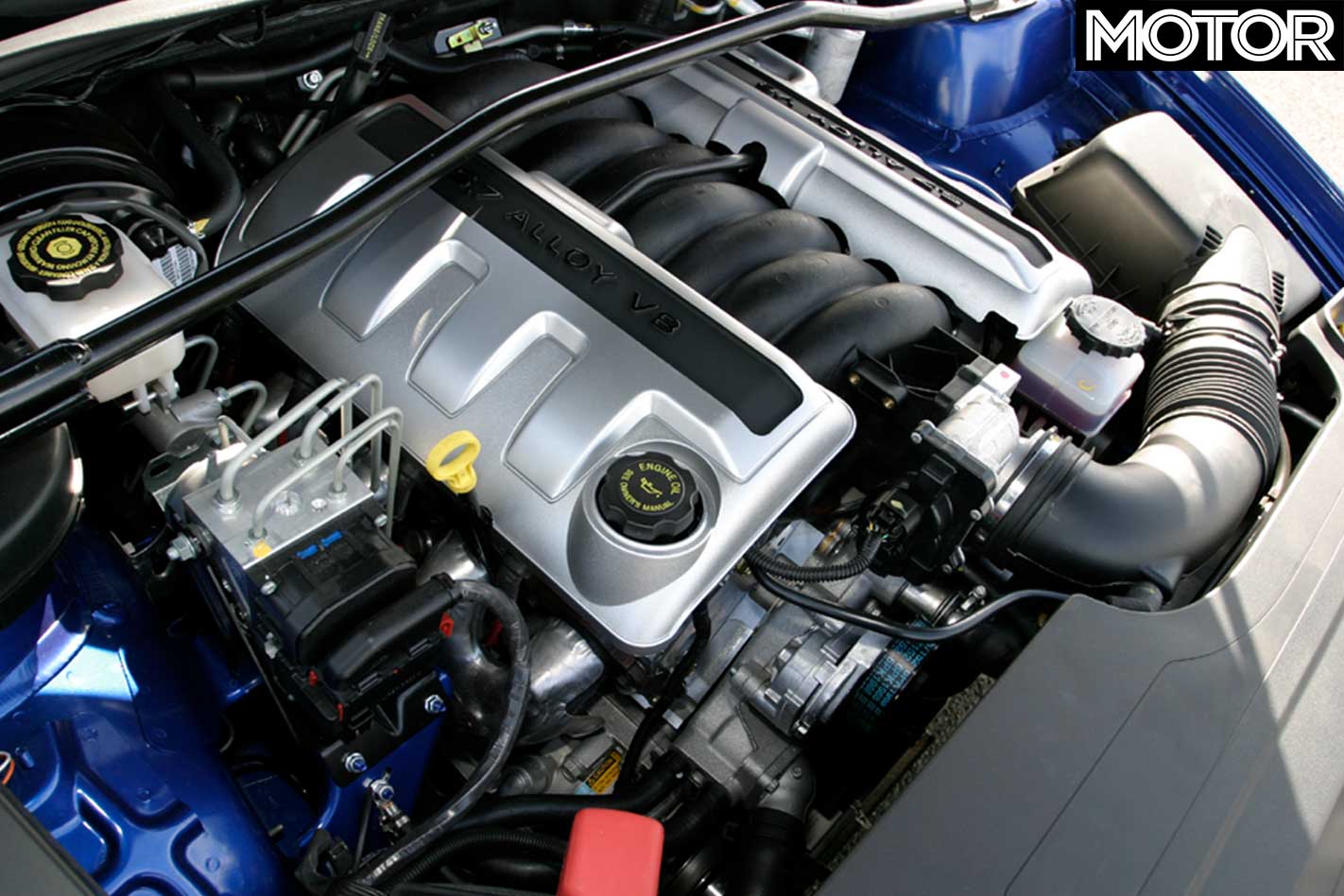
The SS Ute gets the same improvements as in the four-door variant. Peak power sneaks up 5kW to 250kW at 5600rpm. Torque also bumps up five points to 470Nm at 4800rpm.
But bald numbers don’t mean as much as the improvements brought about thanks to the adoption of Electronic Throttle Control. Unlike many drive-by-wire set-ups, throttle response is now sharper and doesn’t hang up between shifts (in the manual).
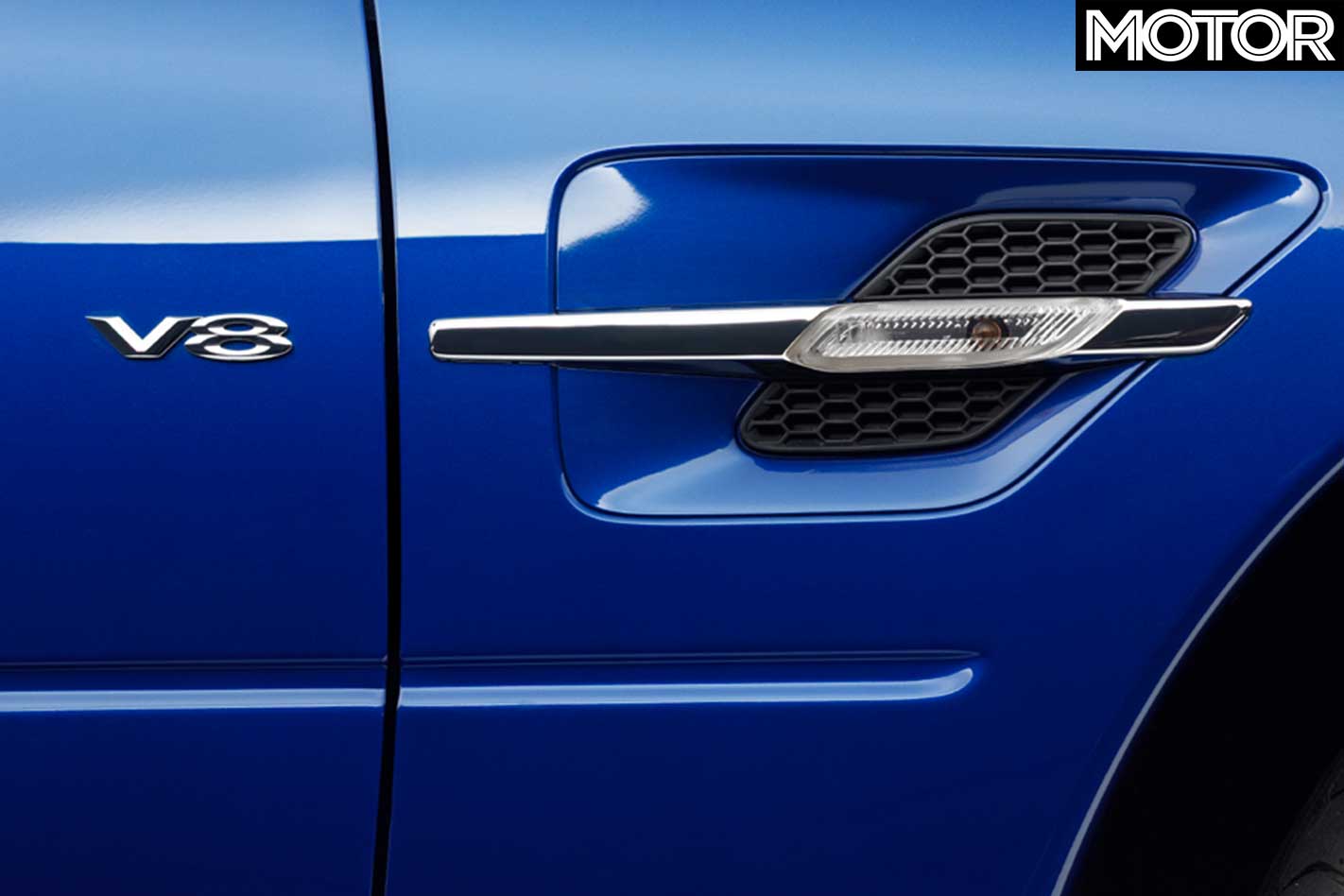
Along with the hardware and software improvements to the old 4L60 four-speed auto – including a new torque converter – ETC improves and smoothes upshifts, and sharpens kickdown response. Smarter electronics also bring cruise control to the ute range for the first time.
Despite similar changes to the front suspension – revised anti-roll bar location and the use of a ball joint to replace the rubber bushing – the ute is not the understeerer we found the sedans to be in last month’s cover story.
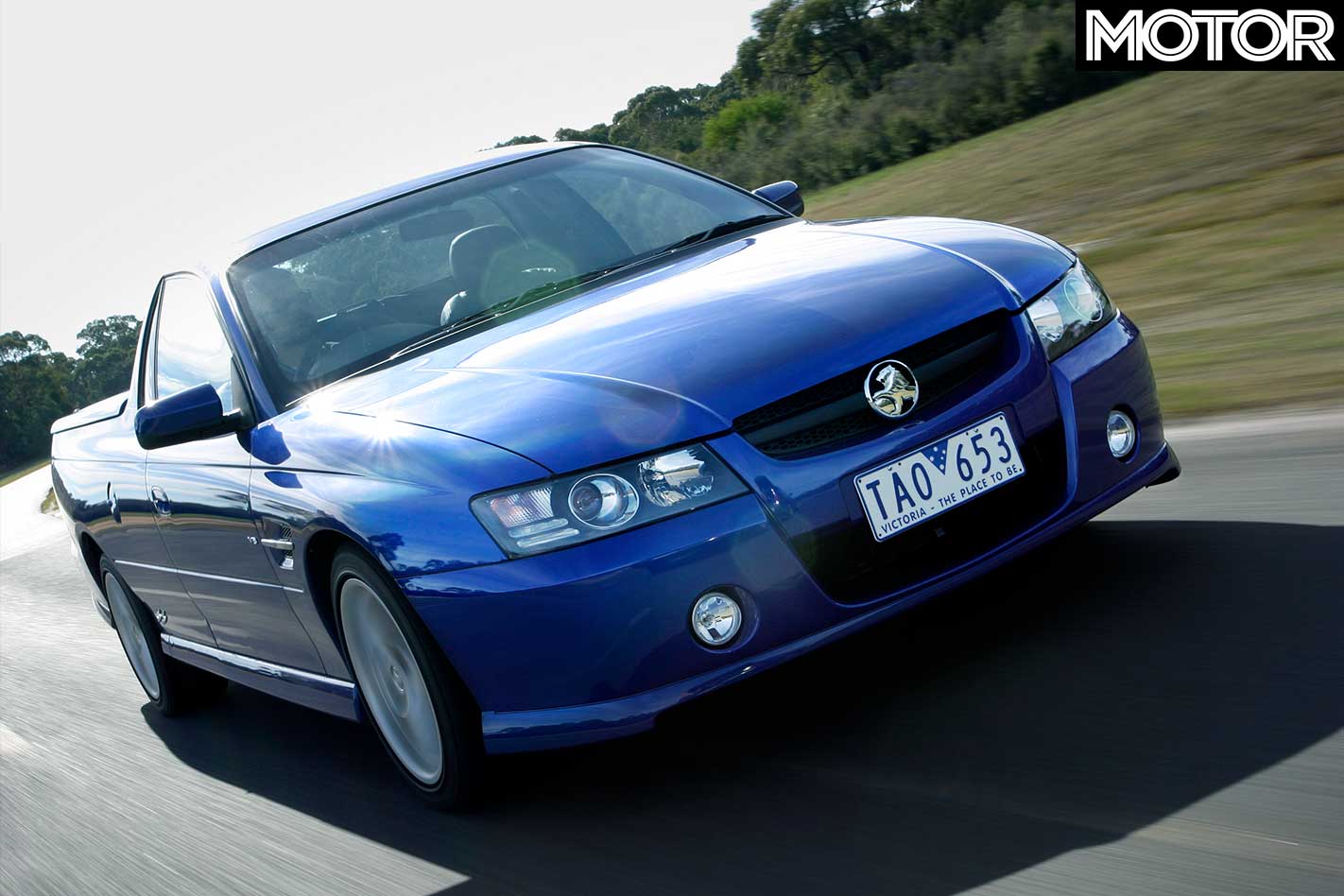
Obviously, the rear-end grip of a ute is not as high as the sedan, and this allows you to steer the car on its throttle more – not much of a challenge with 250kW and 470Nm heading to the back – and you can drive around the understeer. At the same time, it should be noted that despite all that grunt in a ute, the SS is not going to oversteer unless that’s what you call for.
At $40,640 – in both manual and auto – the SS is the best part of $20k cheaper than a Monaro, making it the best-value two-door sportster in the Lion’s lair.
FAST FACTS Holden VZ SS ute Engine: 5.7-litre 16-valve V8 Power: 250kW Weight: 1613kg Drive: rear-wheel Price: $40,640
Kia has jumped on the mild-hybrid bandwagon, announcing the imminent arrival of a diesel powertrain with a 48-volt electric assistance motor.
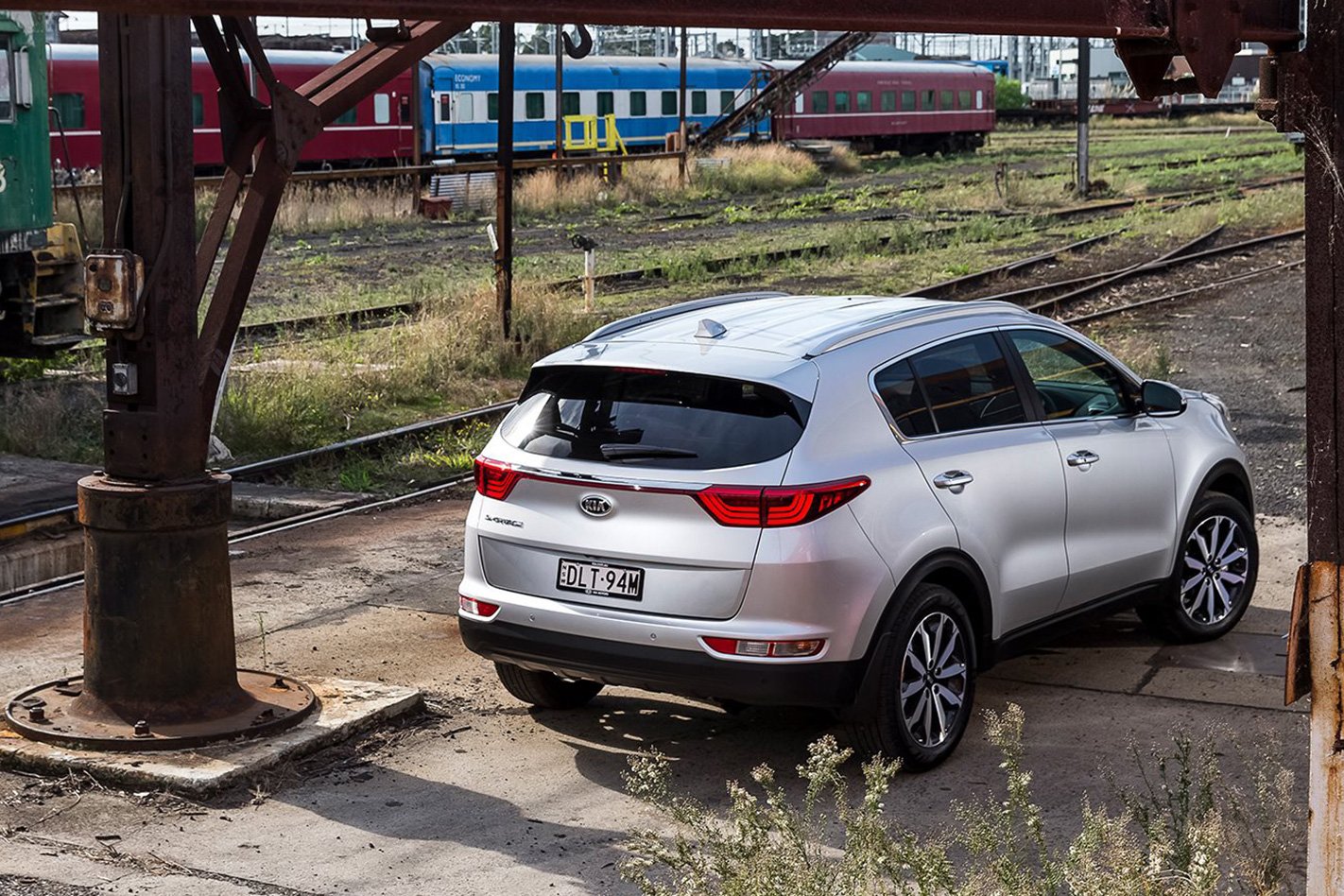
Kia’s diesel-engined Sportage will be the first model in its line-up to employ the new technology, dubbed EcoDynamics+, later this year. Petrol engine applications and other EcoDynamics+ models will follow in the Sportage’s footsteps in 2019.
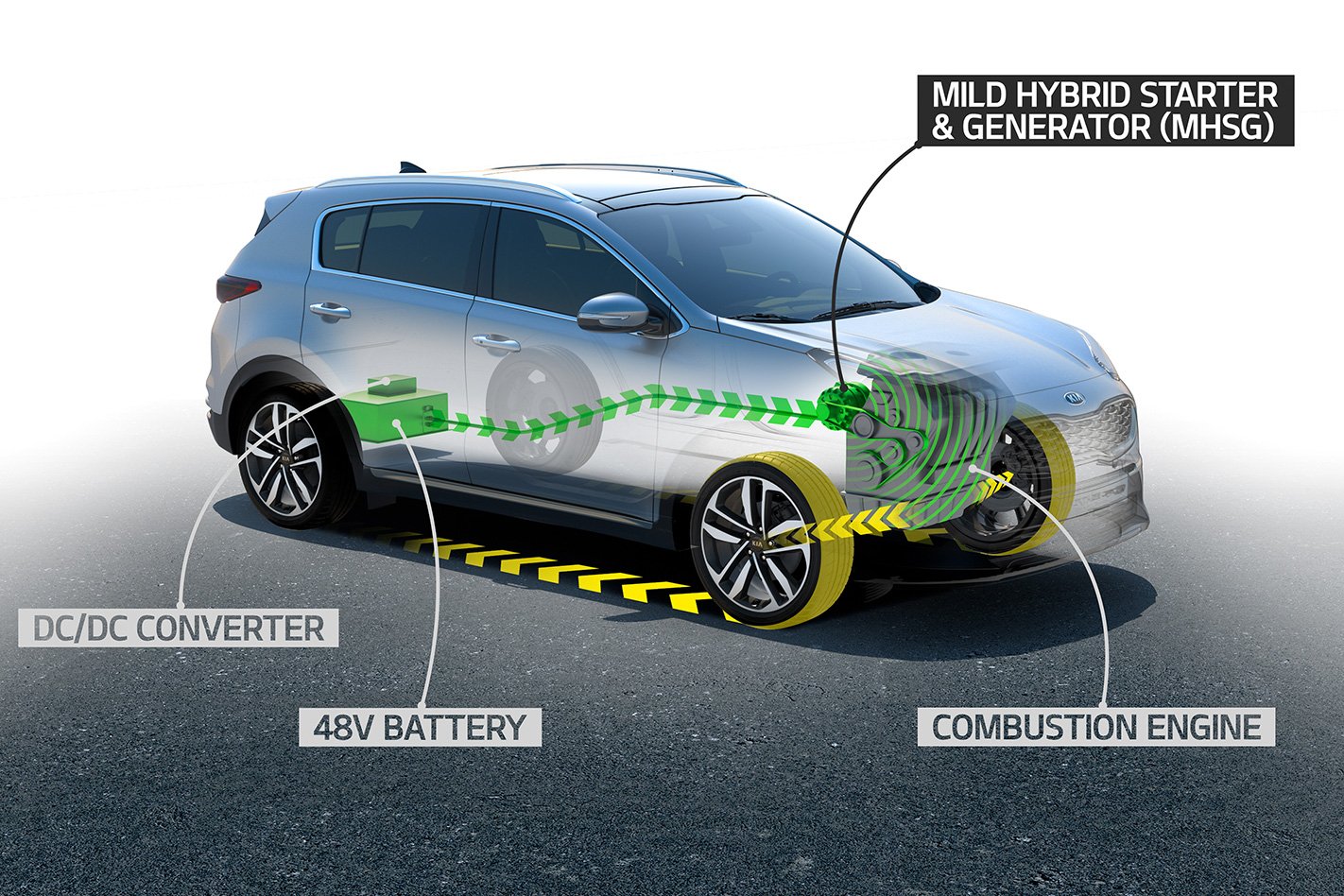
The hybrid powertrain improves fuel efficiency by up to four percent by seamlessly switching between regenerative braking and supplementing acceleration with electric power.
The mild-hybrid starter-generator also extends combustion engine ‘off time’ by shutting down the engine when coasting to a halt, rather than waiting until the car is stopped like most start-stop systems.
Mild hybrid drivetrains are becoming an increasingly popular choice for carmakers due to the relative cost effectiveness and ease of integration when compared to a full hybrid system, which require much larger battery packs and ancillary hardware.
It’s a point acknowledged by Kia itself, which said in a statement that the “compact technology can be integrated into existing vehicle and powertrain architectures without impacting practicality or packaging” – crucial, given the architecture of Kia’s two-year old Sportage is already set in stone.
The yet-to-arrive third generation Ceed will be next to receive a mild-hybrid boost next year, as well as the first petrol application for Kia’s new tech.
The two new components making up the mild-hybrid system are a 0.46kWh 48-volt lithium-ion battery and a new starter/generator. Due to the fact that the engine can now lean more heavily on its battery when the engine is shut down or generator is switched off, components like the starter motor and 12-volt battery powering ancillary electronics can be downsized to take up less space in the engine bay.
These developments highlight Kia’s keenness to pursue alternative fuel sources, though Kia Australia currently has no plans to introduce hybrids to its Australian line-up, instead stating that it “will move straight to full electric vehicles.”
What those electric vehicle offerings are remains to be seen, however Kia has a global goal of launching 16 advanced power train vehicles by 2025 – including five hybrids, five plug-in hybrids, five full EVs and a new fuel-cell electric vehicle.
Ford’s Fiesta ST has been renewed for a third generation, but rather than a warmed-over continuation of the old car, the new-gen Fiesta ST has come in for some dramatic changes.
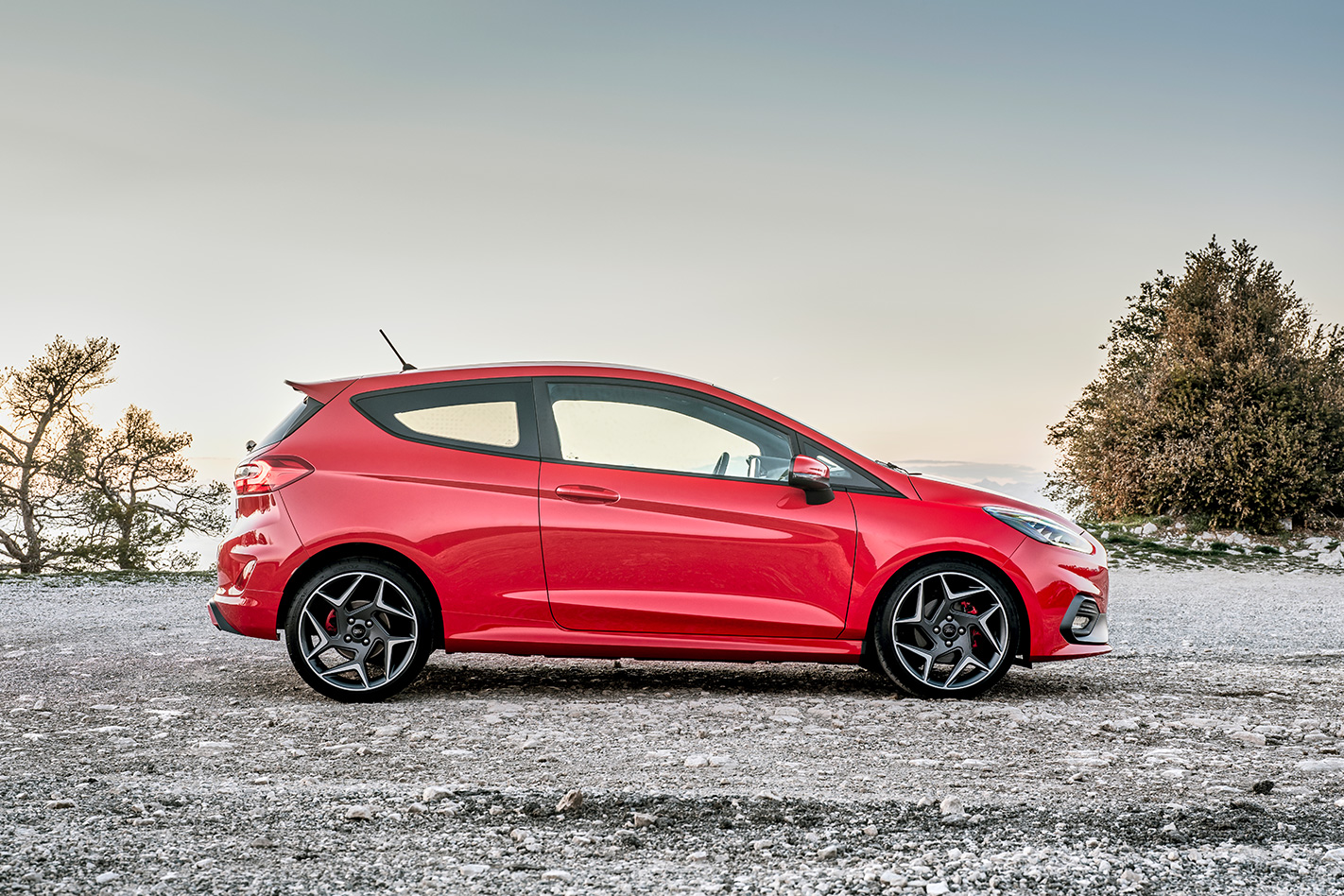
Ford Performance has deployed a sizeable arsenal of clever technology on its most affordable offering – some of which are segment firsts, and all of which are designed to make the new ST the fastest Fiesta ever.
- Three is better than four – The last Fiesta was propelled by a 1.6 litre turbocharged inline four-cylinder, but its replacement takes downsizing a step further. Displacing 1.5 litres and containing just three cylinders, the new Fiesta ST is the only B-segment hot hatch to have fewer than four cylinders. Not only that, but with an aluminium block instead of the cast-iron unit used in the previous car, the new ST’s powertrain isn’t just more compact – it’s significantly lighter as well.
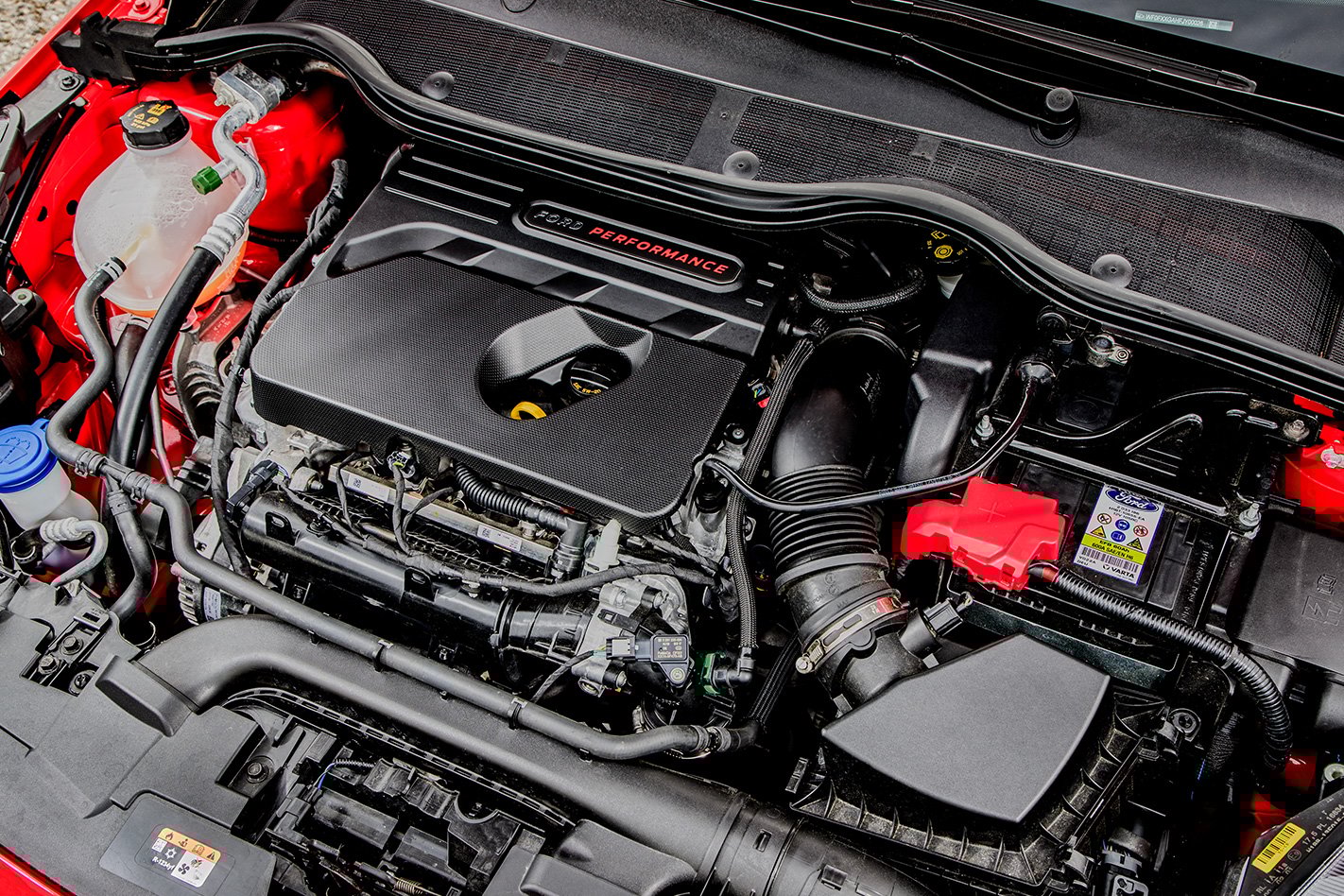
- Power parity – Reductions in physical size haven’t come at the cost of performance. In fact, with outputs of 147kW and 290Nm, the new ST’s three-cylinder actually makes the same maximum power and torque figures as the four-cylinder it replaces – and it must be noted that the old engine could only achieve those numbers when in overboost, which only lasted for 20 seconds at a time. How does the three-pot do it? By using both port and direct injection, a short-runner exhaust manifold to minimise turbo lag, variable valve timing on both intake and exhaust cams, and optimised bore and stroke dimensions with a lower compression ratio allowing for more boost.
- Fast, yet frugal – The downsizing story doesn’t end there. To help curb the Fiesta ST’s thirst for petrol even further, Ford’s engineers equipped the three-cylinder engine with cylinder deactivation technology. By decoupling the valves from the camshafts on one cylinder, the ST’s engine can run on just two cylinders – but only on light-throttle cruising.
- Use the force (vectoring) – At rear-end of the car, the new Fiesta ST flaunts more clever tech in the form of what Ford calls ‘force vectoring’ springs. Shaped like a banana rather than a straight cylinder and with the left coil wound in the opposite direction to the right, the Fiesta’s rear springs work to transfer more cornering force into the body while also resisting sideways movement from high lateral G loadings. Working in conjunction with an ultra-stiff torsion beam axle (the most rigid in Ford’s current stable), the clever spring design meant engineers could save 10kg by omitting a Watts linkage, without compromising ride comfort or handling.
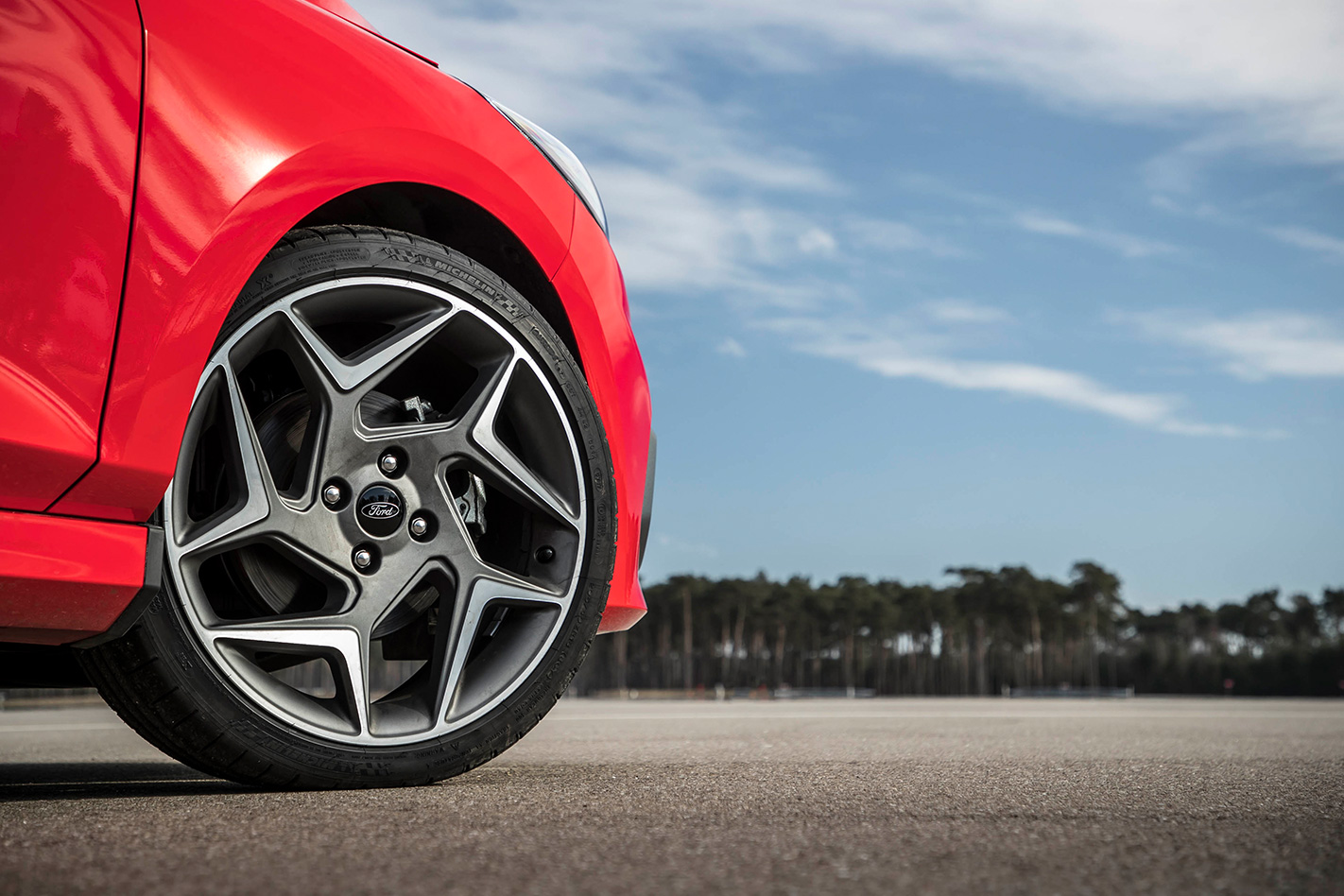
- Best enjoyed with LSD – The Fiesta ST will be offered in Europe with an optional mechanical limited-slip differential. Sourced from Quaife and similar to the item used in the Ford Focus RS, the LSD limits wheelspin at the front and dramatically improves traction when accelerating and turning. It’s a rare thing to find in the world of budget hot hatches, and there isn’t currently one on sale in Australia that has one, which gives the Fiesta ST a critical advantage over its rivals.
- Vectored thrust – helping out the differential is brake torque vectoring, which plays little part in quelling wheelspin but instead serves to help direct the nose into turns with minimal steering input. By lightly braking one front wheel independently of the other, brake vectoring is designed to boost agility no matter whether power is going to the ground or not.
- Adjusting frequency – Poor ride comfort was a complaint of the outgoing model, but the new Fiesta ST aims to address that through advances in suspension hardware. Equipped with dampers that change their valving depending on the severity and frequency of bumps, Ford claims the 2019 ST has a more compliant ride without compromising handling.
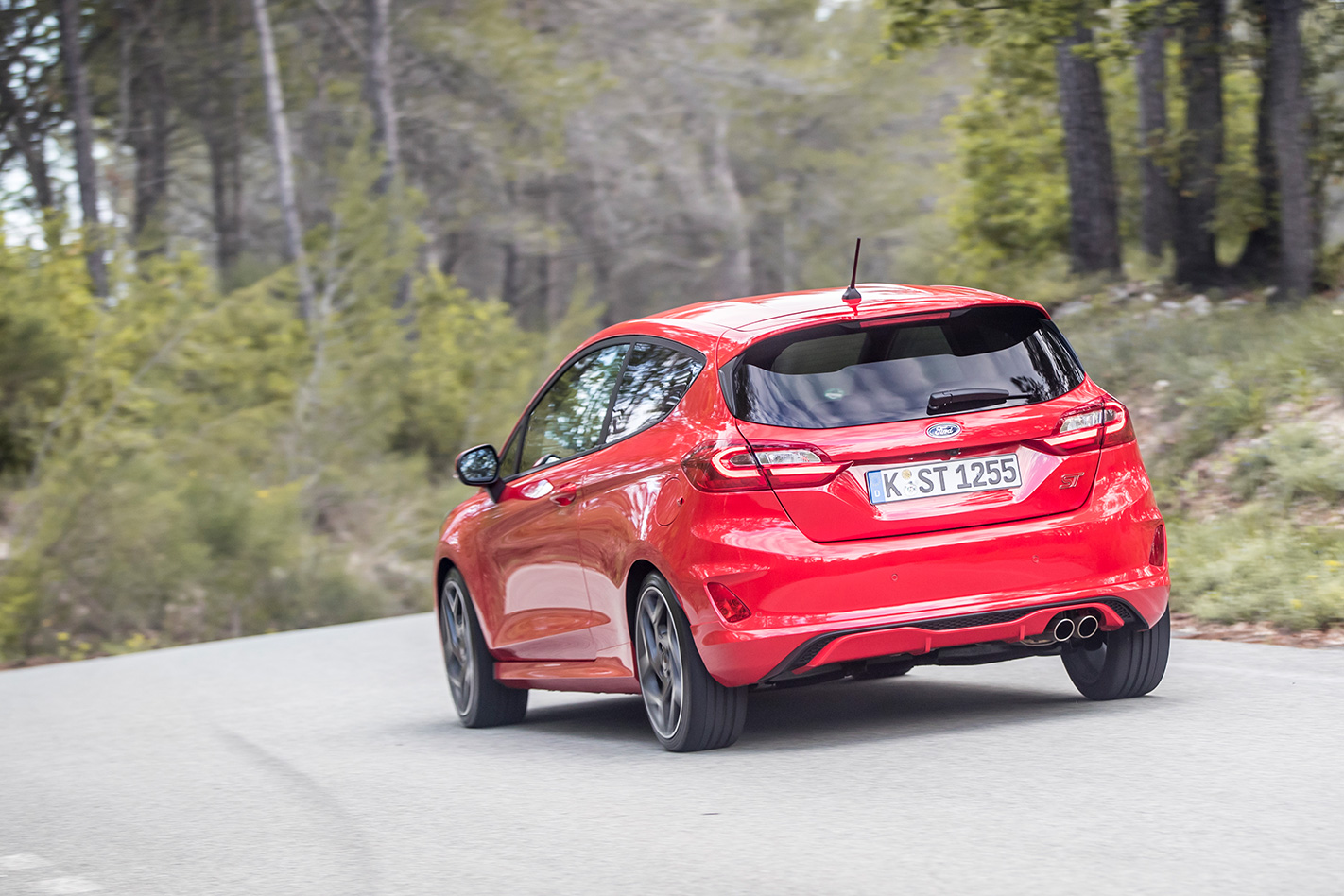
- Knuckle technique – The Fiesta ST’s front suspension knuckles are unique to that model, with geometry and kinematics designed to minimise torque steer and enhance cornering grip. It’s married to a rapid 12:1 steering rack ratio for enhanced agility and responsiveness.
- Exhaustive effort – Not every aspect of Ford Performance’s work on the Fiesta ST is concerned with making it faster. With the move to a three-cylinder engine there was concern that the resulting engine note wouldn’t sound sporty enough, but through careful exhaust tuning and the addition of a switchable exhaust bypass flap to increase decibels, Ford claims the Fiesta ST has the right soundtrack for a hot hatch. When put in Sport or Race mode the flap opens up and the audio system pipes in additional frequencies to enhance the in-car sound for an extra rorty experience.
ANOTHER month, another round of news, reviews and feature articles from Australia’s best car magazine that hits shelves tomorrow!
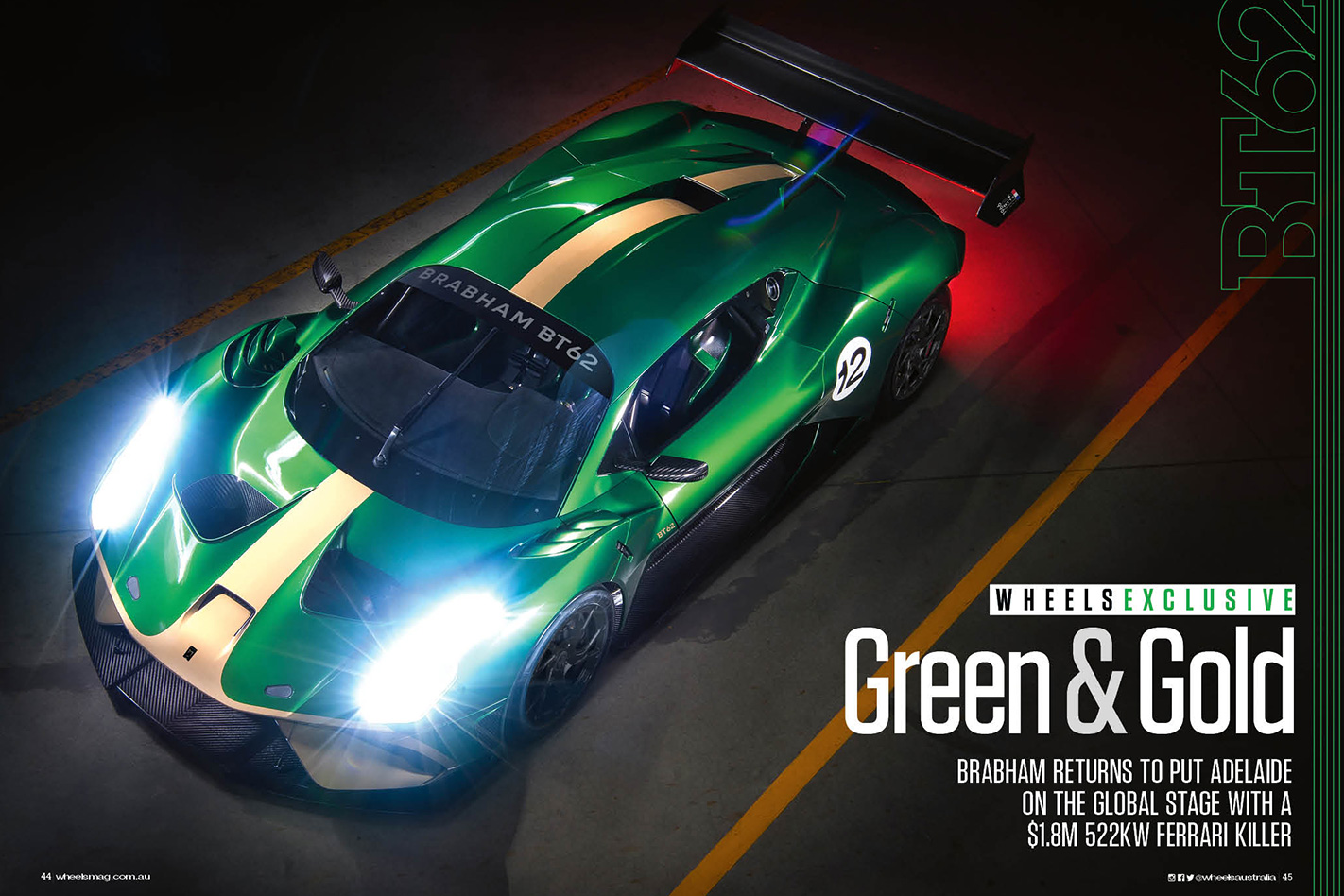
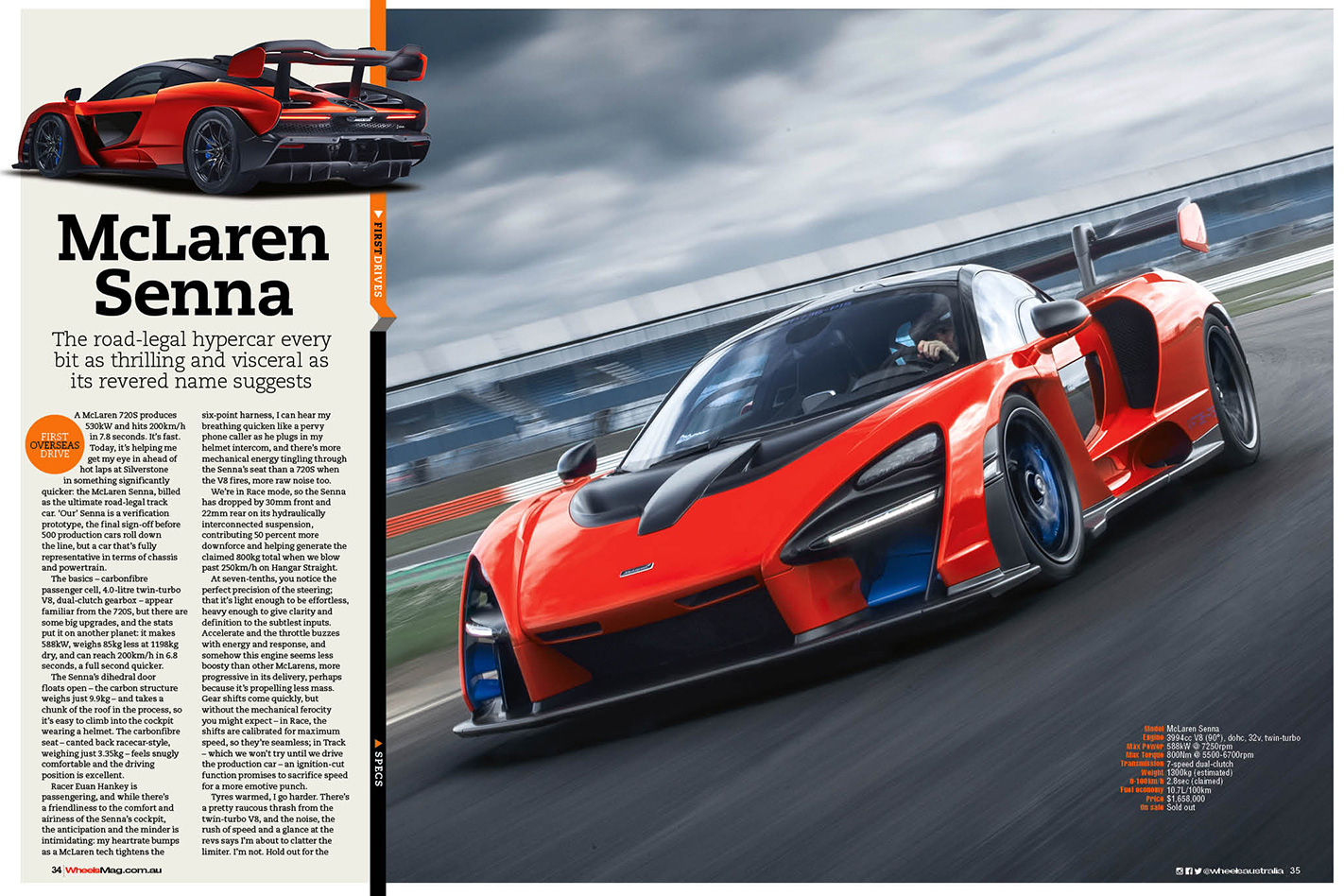
For the month of May we’ve gone heavy on the high-octane with a full rundown on Brabham’s stunning (and Australian-built) BT62 supercar, a head-to-head comparo of the new M5 and AMG E63 S, a brace of fast laps in the Ferrari 488 Pista and an off-road thrash of the crushingly powerful Jeep Grand Cherokee Trackhawk. We also get our first taste of McLaren’s uncompromising Senna hypercar, though the May issue isn’t entirely about big horsepower antics…
We also keep it real with a five-car light hatch shootout between the box-fresh Volkswagen Polo, Citroen C3, Skoda Fabia, Suzuki Swift and Mazda 2 to discover which is the best urban grocery-getter.
Volvo’s innovative XC40 is now in-country and we’ve run the stylish Swede through the wringer, along with Jaguar’s right-sized E-Pace SUV and the much less sensible Range Rover Sport SVR. Hyundai’s Ioniq hybrid has also touched down on Aussie soil, and we’ve lined it up against the Toyota Prius to see who boasts better eco-credentials: Japan or Korea.
Meanwhile, Ponch travels to Europe for our first steer of Mercedes-Benz’s third-generation A-Class, discovering a compact hatch that no longer feels ‘Benz lite’ on the inside. Back on home turf, deputy editor Enright welcomes a twin-turbo Kia Stinger into his garage, editor Inwood’s love affair with the XC60 T8 continues, Bulmer crunches the numbers on his Equinox long-termer and O’Kane finds out he’s not the only one with a soft spot for his Swift GLX.
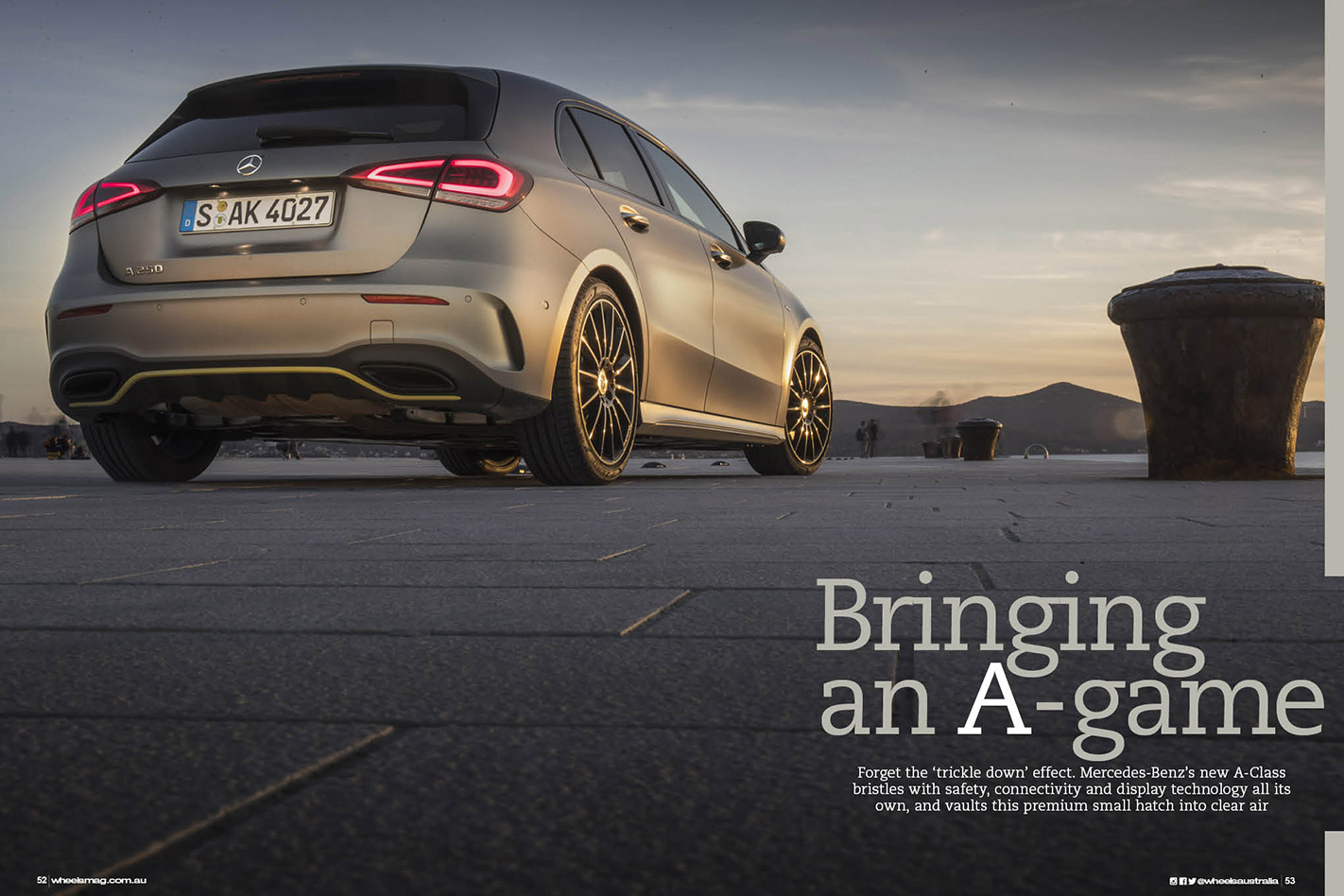
One advantage of being an automotive institution with 65 years of history (and counting) is that Wheels has been around to witness some ground-breaking, game-changing moments in the motoring world. Whether it’s the introduction of new technology, the arrival of paradigm-shifting models or the visionary thinking of engineers, designers or businesspeople, we examine the most significant automotive milestones of the past six-and-a-half decades.
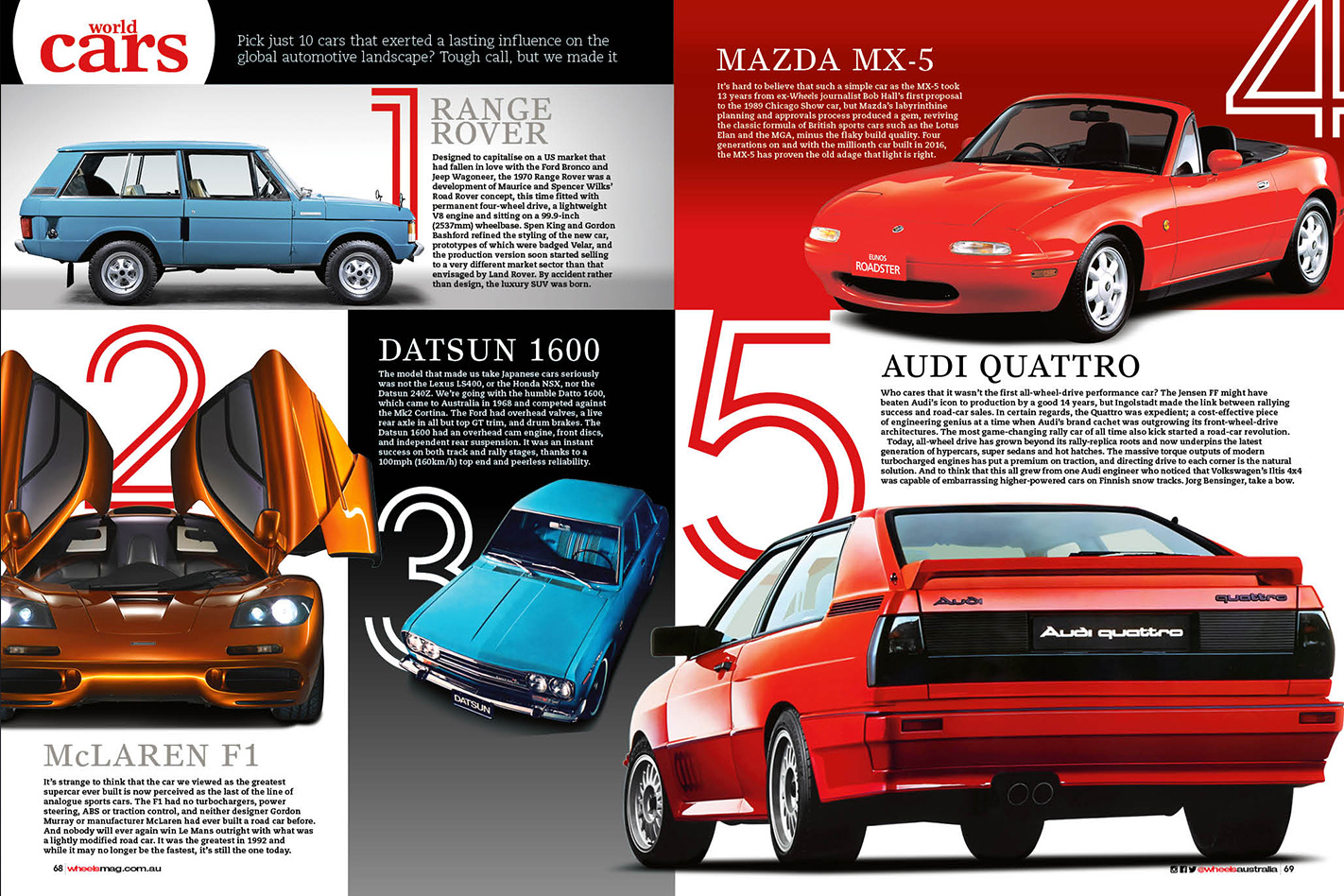
Corby weighs in with his thoughts on the future of Tesla, we chat with Bruno Senna, and we provide our usual analysis of the state of the Australian new car market – along with what’s around the corner.
We also take a hard look at Holden’s state of health. Can the Aussie institution survive in a post-manufacturing environment? Is Australia no longer in love with the red lion?
Pick up the latest issue of Wheels to find out.
There’s a long-running joke that Porsche has mastered the art of charging more for less.
Traditionally, any particularly focused model has deleted equipment in the name of shedding kilograms and providing a more intimate driving experience, yet the price has more often than not headed significantly northwards, despite the sparser specification.
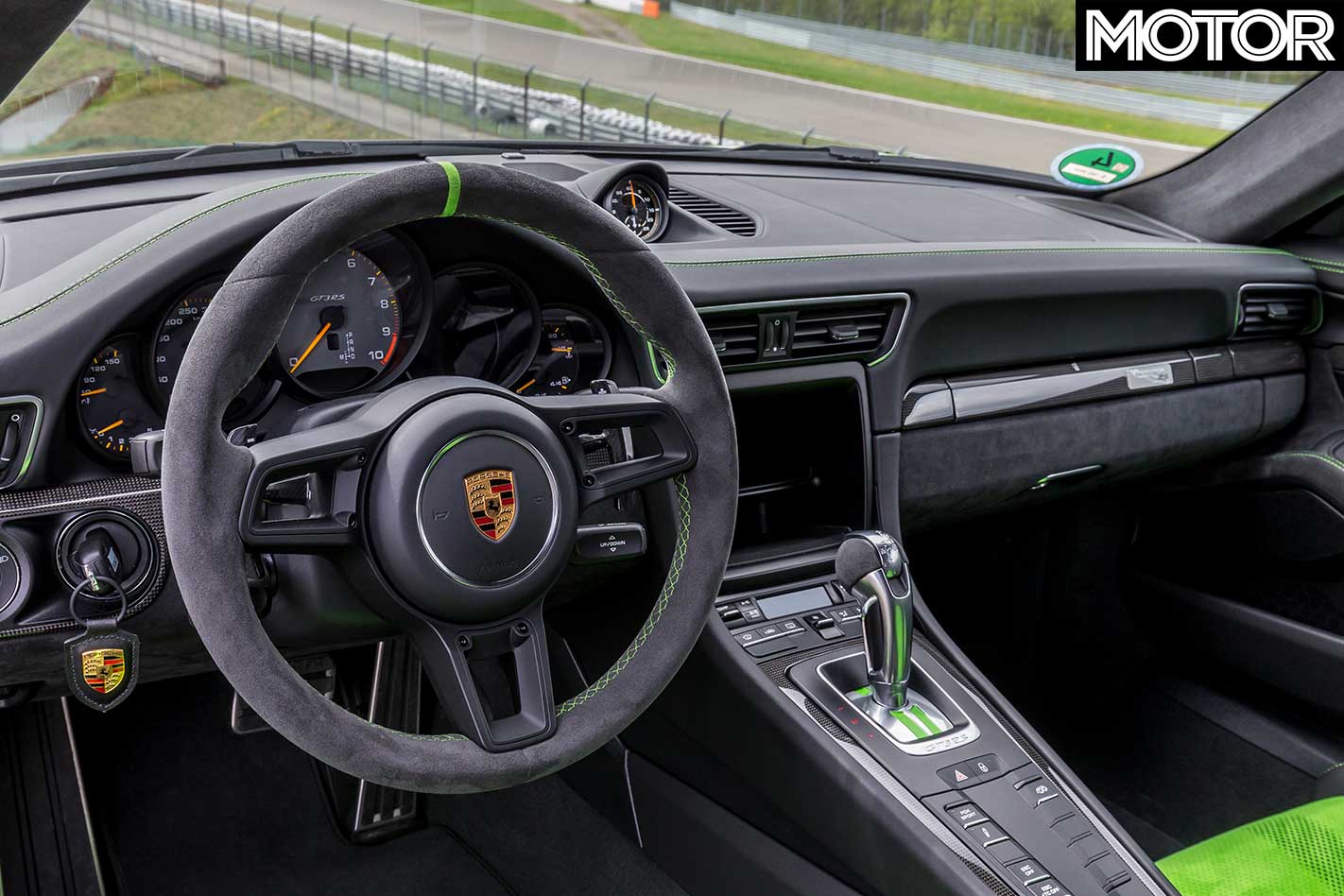
These days, however, the art of slimming down supercars is a bit more involved than deleting the air-conditioning and throwing the carpets in the bin. Porsche now offers the ‘Weissach Package’ on its most exclusive motorsport models (GT2 RS and GT3 RS), named after its test track, which goes to extreme lengths to trim kerb weights.
The Weissach Package option first appeared on the 918 Spyder. For around 10 per cent on top of the car’s standard price – the Weissach Package added US$84,000 to the 918’s US$845,000 in the States – Porsche would shave off 41kg, courtesy of using film rather than paint for bodywork protection (-20.3kg), magnesium wheels (-14.9kg), carbon body parts (-2.3kg), lighter brakes (-2kg), titanium bolts for the chassis (-800g) and ceramic wheel bearings (-700g).
It’s engineering fetishism of the highest order and given the Weissach package was just three seconds quicker than the standard car around the 20.8km Nurburgring, it’s of questionable value, yet the initial investment will no doubt be rewarded on the second-hand market – if you’re buying a 918, you’re going to want the ultimate, aren’t you?
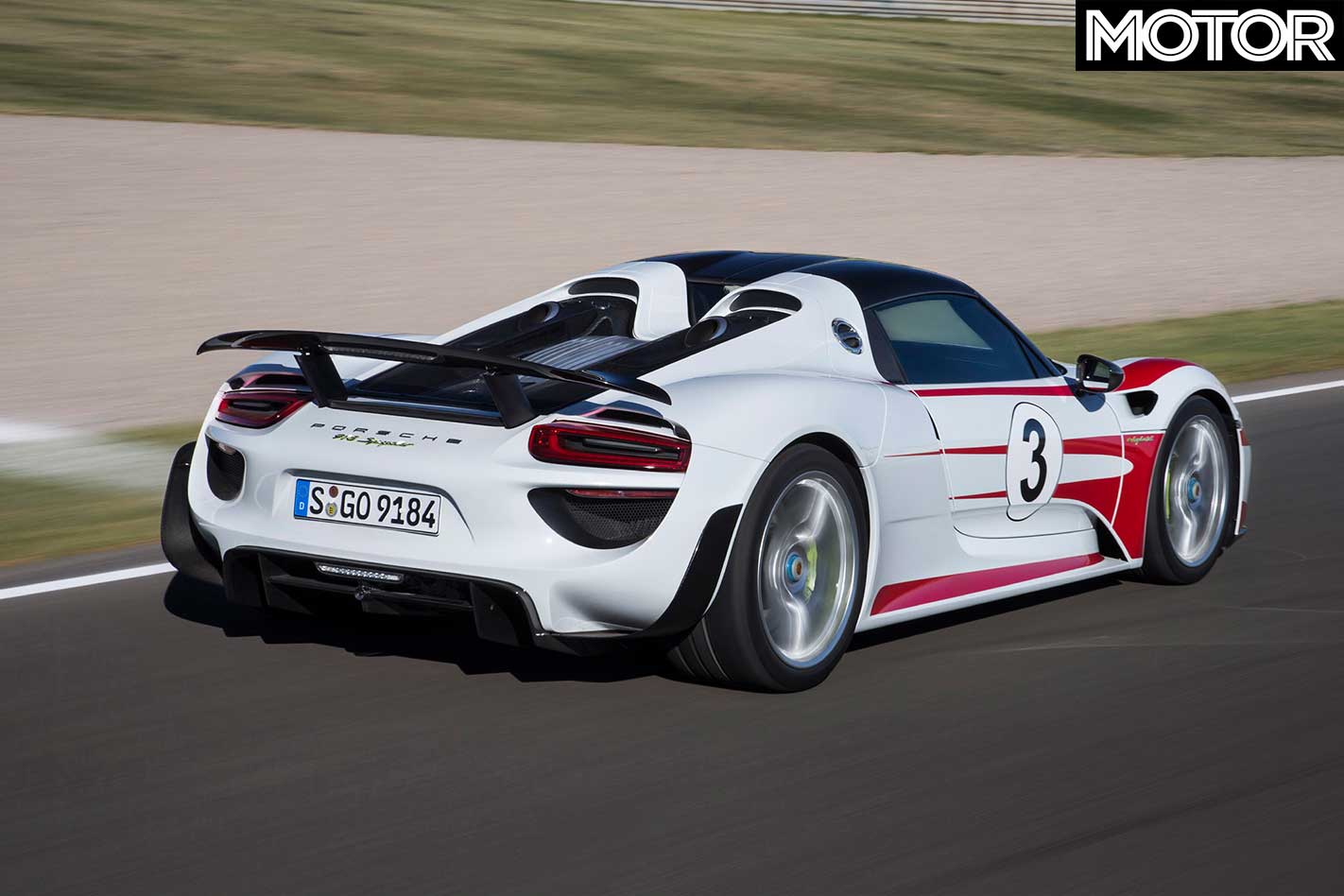
The Weissach Package skipped the 991-series GT models, re-appearing as an option on the 991.2 GT2 RS and GT3 RS.
The standard cars already use a number of lightweight technologies, in addition to the traditional method of ‘pull stuff out’. Carbon-fibre-reinforced plastic makes up the bonnet, front guards, wheel arch vents, air intakes, outer mirror shells and various interior bits, while the rear and rear-side windows are made from a special lightweight glass and the roof is magnesium, saving one kilogram over even carbon fibre.
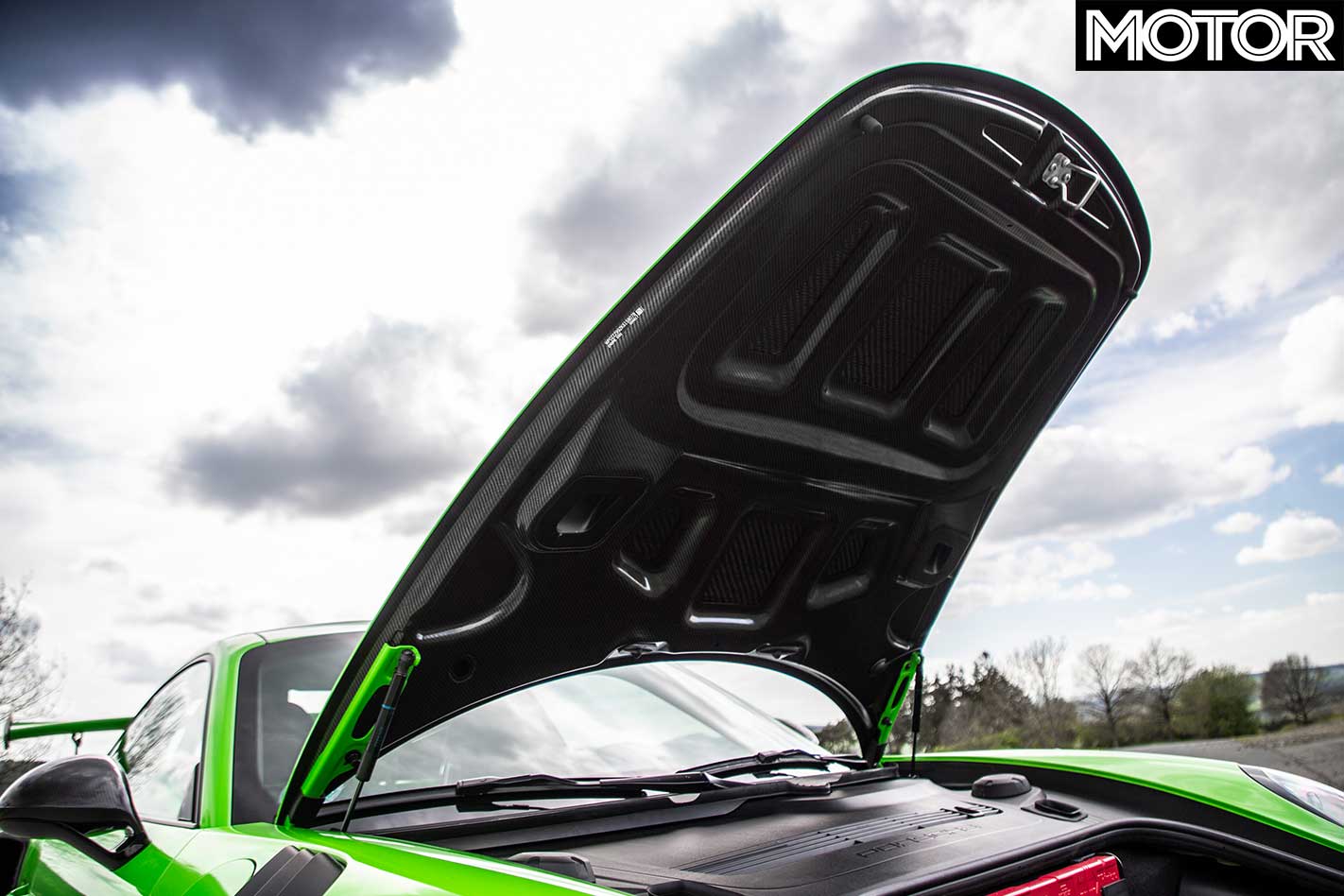
Tick the Weissach box and that roof reverts to a special lightweight carbon fibre that is lighter again, there are magnesium wheels, carbon fibre anti-roll bars and the roll cage switches from steel to titanium.
Weissach cars are easy to spot as their bonnets and roofs are bare carbon intersected by a body-coloured strip, while the trick magnesium wheels are finished in white-gold. The steering wheel trim and shift paddles are also carbon – every gram counts.
Possibly the most significant lightening, however, takes place in your bank account.
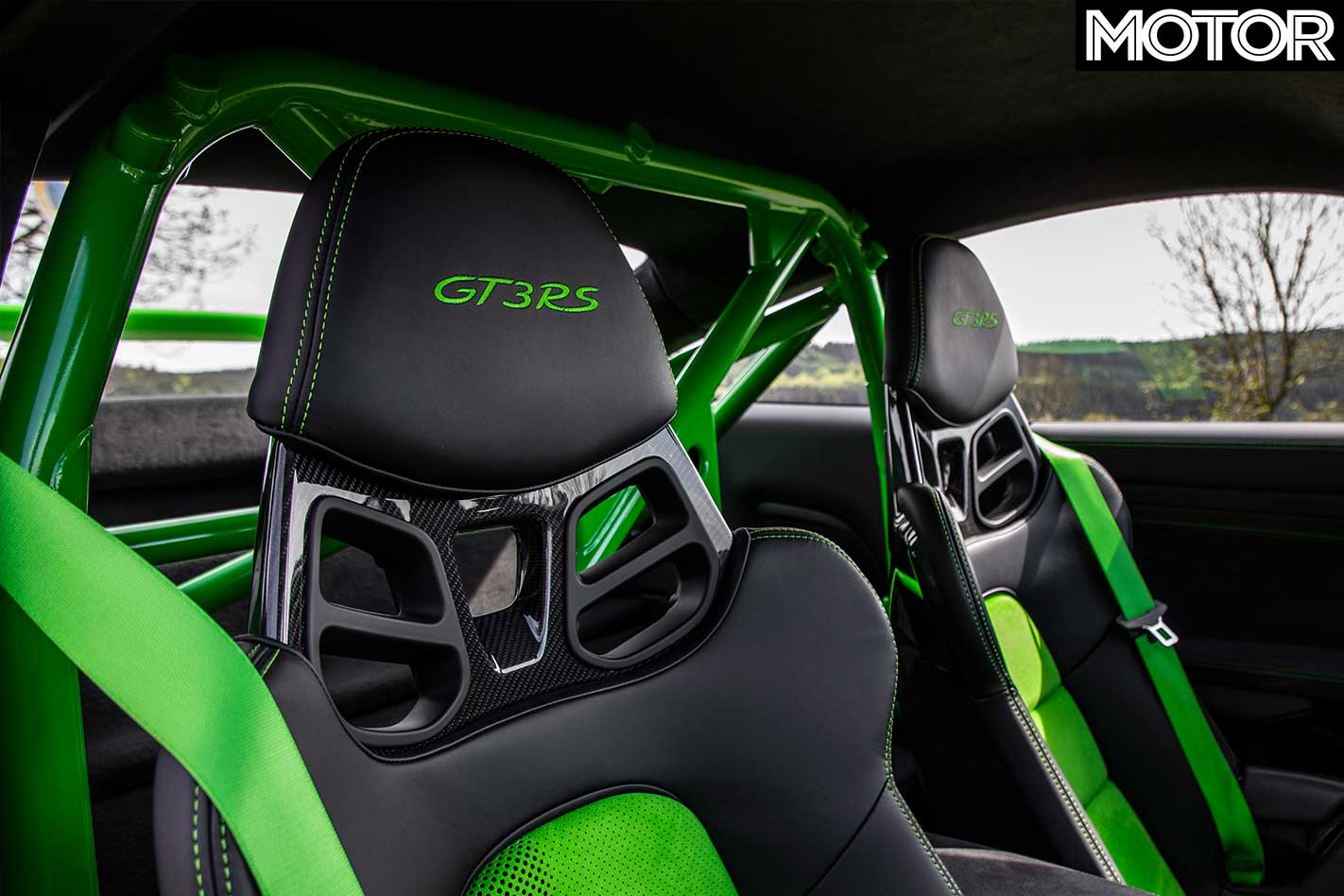
On a GT2 RS the Weissach Package costs $69,990, or $62,990 if you forgo the titanium roll cage, while on a GT3 RS it adds $41,990, or $34,390 sans cage. Although if you want the lightest GT3 RS you’ll need to choose the $21,590 carbon-ceramic brakes that came standard on its turbocharged big brother. Less is more, indeed.
$1643 A KILO, ANYONE? McLaren’s very pricey diet
Porsche isn’t the only manufacturer attempting to get customers to pay big bucks to shed some kilos.
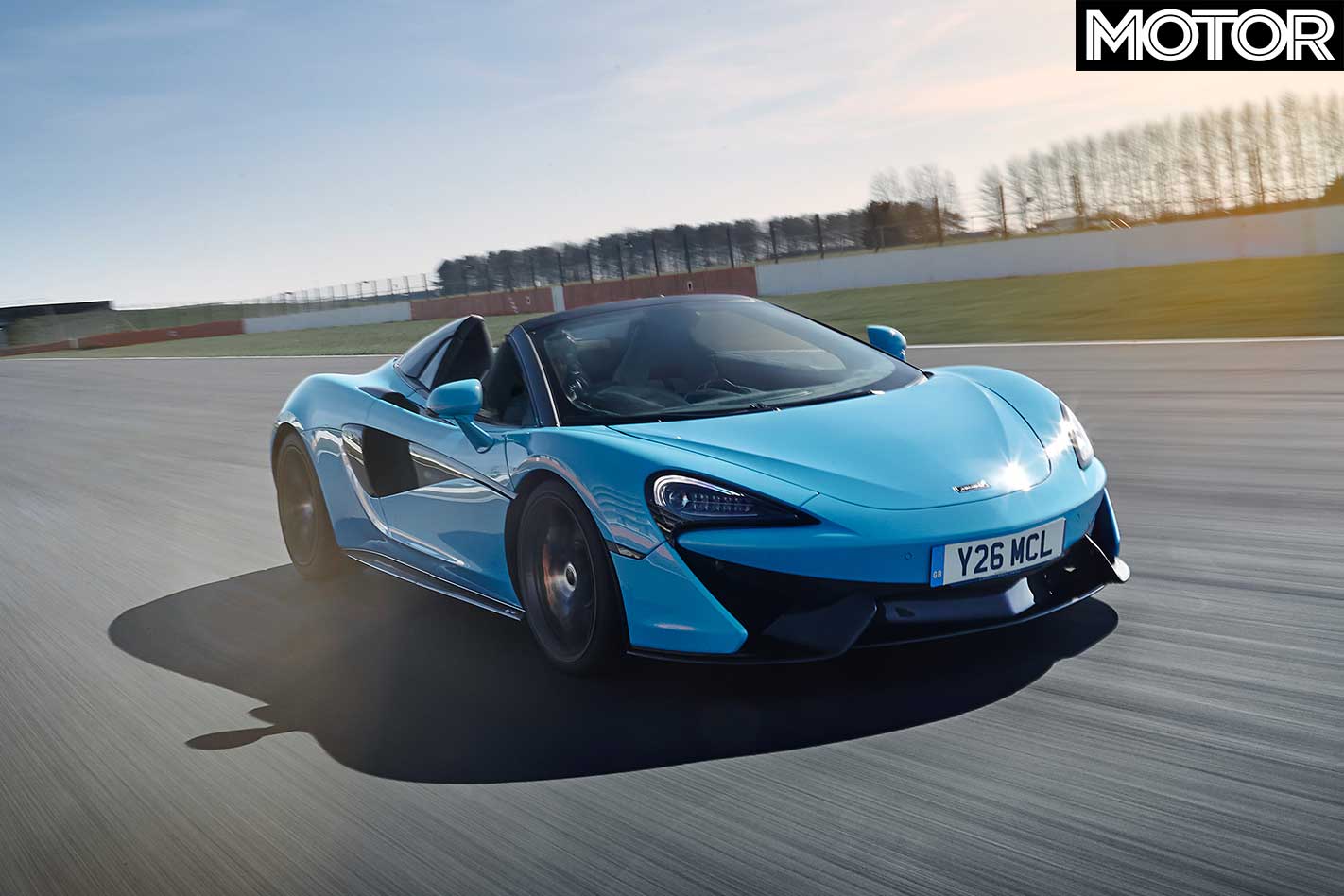
McLaren recently announced a Track Pack for its 570S Spider, which shaves 33kg thanks to carbon-fibre seats and interior trim, a sports exhaust and 10-spoke forged wheels. It costs $54,220, though if you think of it as $1643.03 per kilogram it lessens the shock slightly.
Ferrari’s new 488 Pista allows the fitment of Aussie-made carbon-fibre wheels, rumoured to be a $28,000 option, though exact local pricing has yet to be confirmed.
DID YOU know Volkswagen didn’t even bother importing the Golf GTI into Australia until 1990 – 14 years after the 1976 original (and the Alfa Romeo Alfasud Ti) popularised the hot-hatch concept invented by the Renault 16TS in 1968?
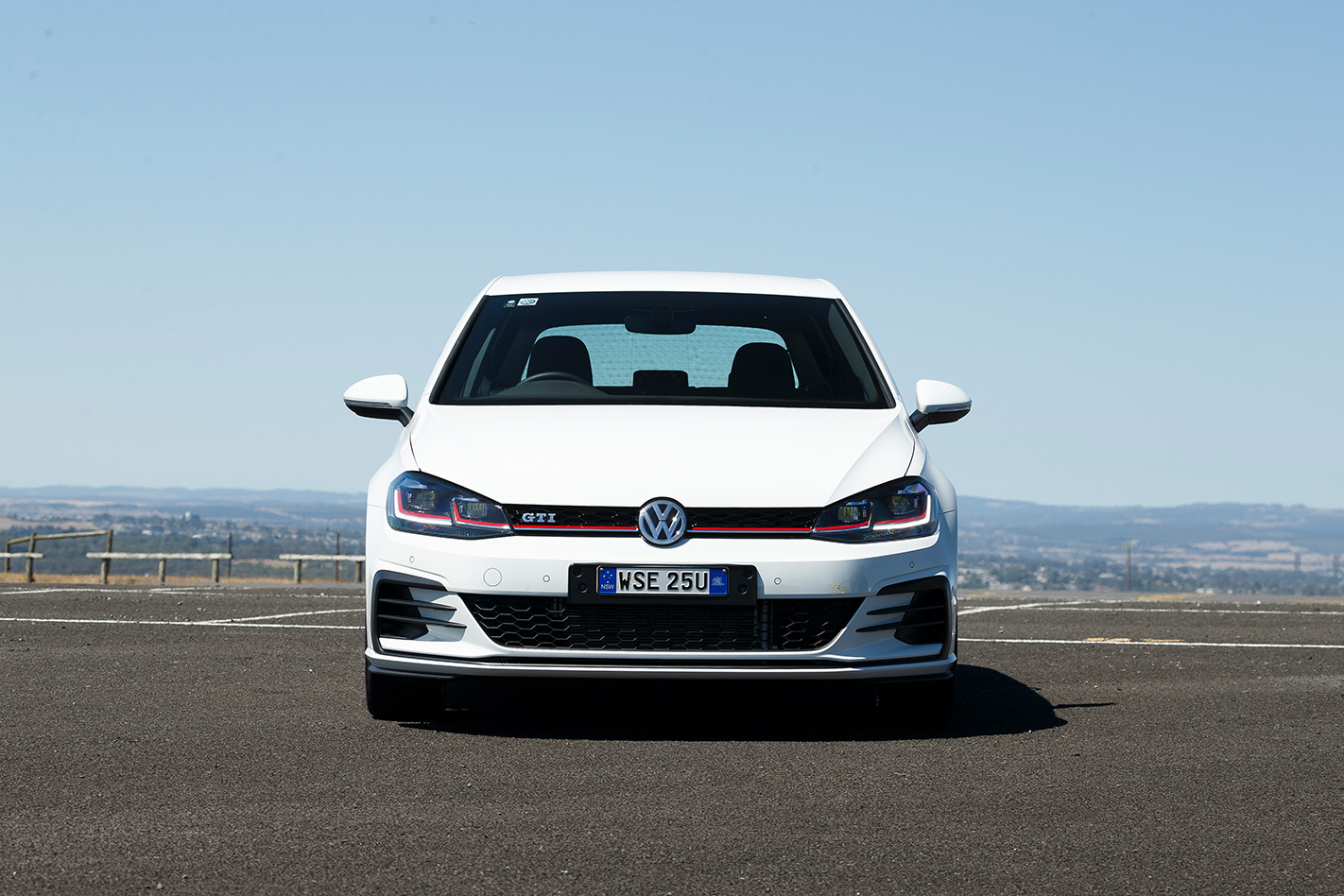
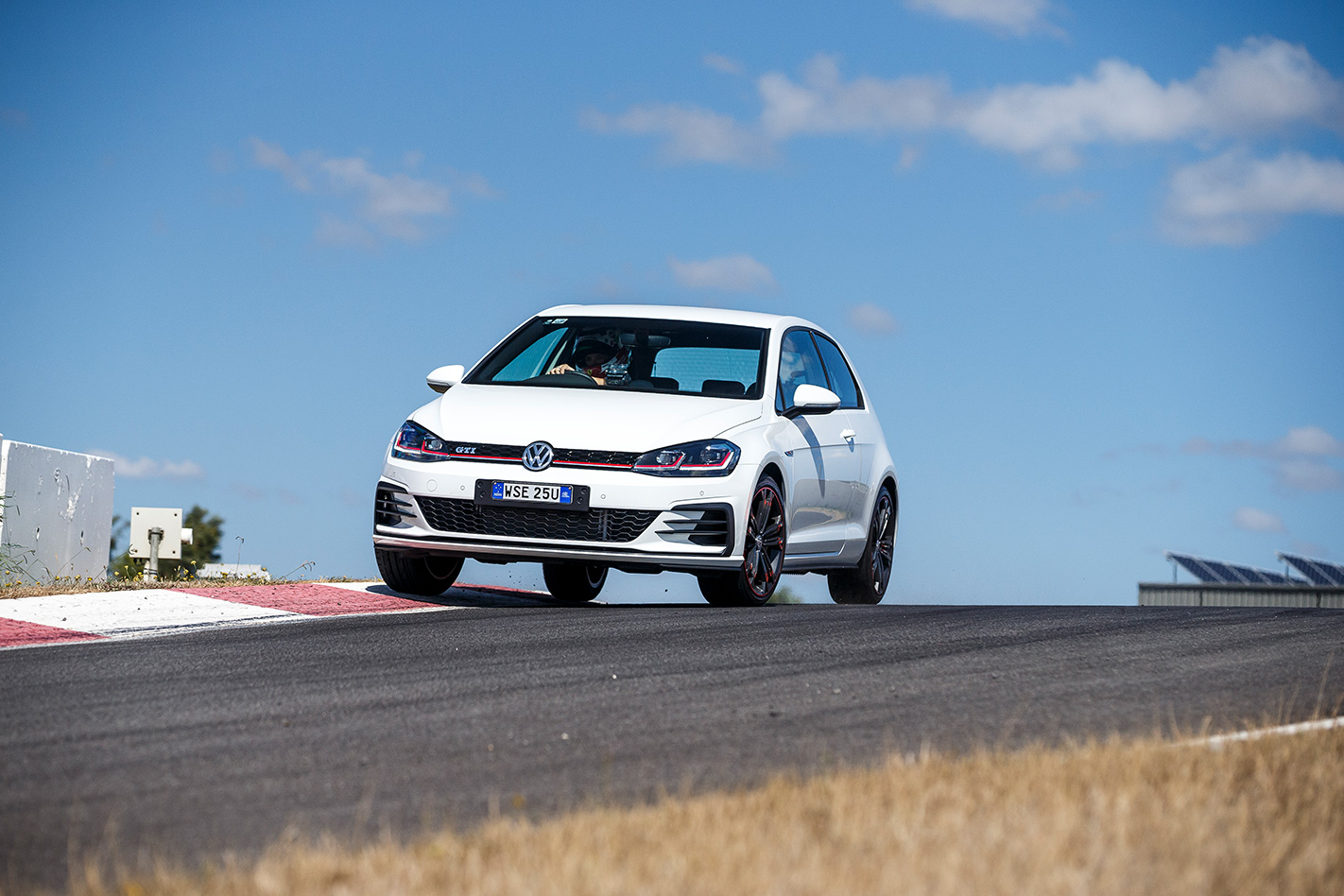
That’s quite a lot of history crammed into one paragraph, but then looking back is what the GTI Original is all about. Of course, to remain true in a local context, the latter would have to pay lip-service to that ’90 Mk2 five-door with its weedy 77kW/155Nm 1.8-litre single-cam lump, five-speed manual ’box and 14-inch steelies. Hardly heady stuff. Even the contemporary Corolla Twin Cam categorically outperformed the esteemed German. Talk about over-expecting and under-delivering.
Happily, the opposite applies with the cheapest new Golf GTI money can buy.
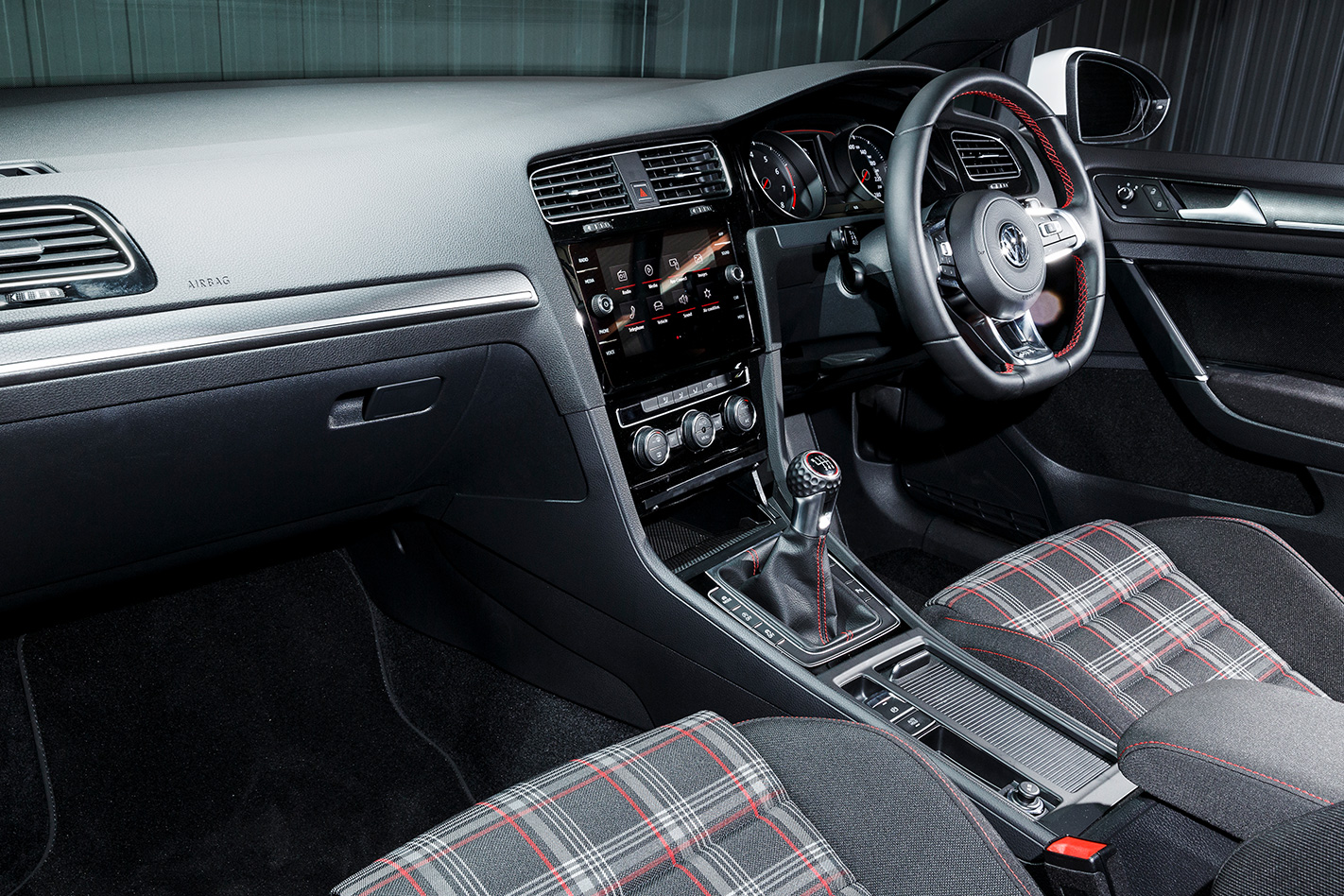
Extra-wide doors aside (offering unimpeded access to the rear), the comparatively vast cabin follows all Mk7.5 iterations in espousing restrained quality precision from top to toe. Superb front seats provide comfort and bracing at speed, there’s ample room for five tall adults, while the dash’s intelligent functionality remains an industry yardstick.
Cocooned in silky refinement, this GTI Original could just as well be a premium-branded luxo express, regardless of what’s been taken out to keep costs down. Just breathing in the rich aroma says all that.
But this is a hot-hatch grudge match, and here more than anywhere else, 42 years of GTI breeding shows … and shines.
Stick the slick-shifting six-speeder into first, and the turbine-smooth responses that follow as the Golf leaps off the line are formidable, with a favourable power-to-weight ratio helping keep the pace up right to the 6950rpm cut-out. Powertrains don’t come more delectable at this price point.
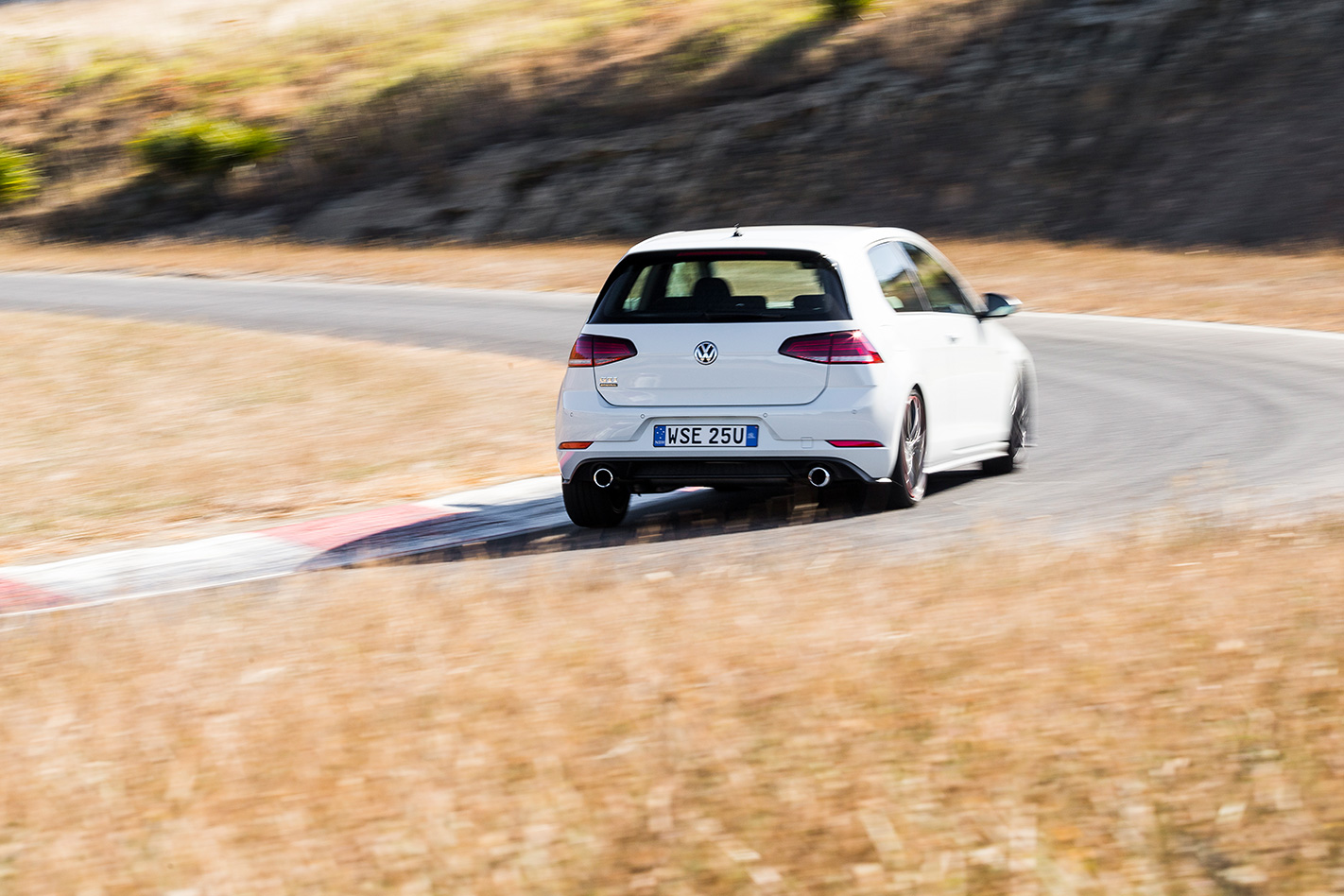
Volkswagen’s hot-hatch mastery shows in how commandingly weighted and balanced the steering tune is, simultaneously providing feel while seamlessly editing out imperfections. As with the more dynamic drives here, the Original traces the chosen line without breaking a sweat, remaining calm yet playfully chuckable if the red mist descends.
There’s a forgiving attitude at work here, too, enabling a margin of error that allows the Golf to be fluid and faithful, even when the driver isn’t.
Renato’s reaction to the Golf’s feedback and precision around Haunted Hills reflects the depth of bandwidth at hand. “You feel the rear [is] sliding around and you can exploit that in places to get rid of some of the understeer you’d normally get from a front-driver over the rises,” he remarked. “An absolute ball of fun.”
Back out on the open road, there is a point where the body control feels somewhat looser than the more hardcore handlers such as the telepathically planted Peugeot. Consequently, the GTI requires a bit more effort and commitment keeping up … though this comparative sogginess is only obvious with back-to-back blasts.
Additionally, there isn’t quite the suppleness of GTIs fitted with adaptive dampers (or the 308) either, though the ride improves with more bodies on board.
Still, an overriding dauntlessness defines this Vee Dub’s dynamic character. Thrillingly quick yet incredibly composed and arrestingly refined when it needs to be, a more complete hot-hatch for the money just doesn’t exist right now.
Welcome, then, to this Megatest’s true ground zero, the standard in which others must meet to beat. The GTI Original is both the perfect starter and all-you’ll-ever-need hot-hatch, and brilliant value to boot.
Though getting on in years now, the GTI is still never far from the top in any given field. As Molly Meldrum may have said if the Mk1 original was available here back in ’76, ‘do yourself a favour…’
Volkswagen Golf GTI Original SCORE: 8/10
Engine: 1984cc 4cyl, dohc, 16v, turbo Power: 169kW @ 6200rpm Torque: 350Nm @ 1500-4600rpm Transmission: 6-speed manual Weight: 1229kg Tyres: Bridgestone Potenza S001 225/40R18 92Y Fuel consumption: 14.2L/100km (tested) Power to weight: 138kW per tonne 0-100km/h: 6.4sec (claimed) Price: $37,490
Hot Hatch Megatest Contenders
12th, Score 6/10: Mini Cooper S JCW
11th, Score 6.5/10: BMW 125i
10th, Score 6.5/10: Subaru WRX Premium
9th, Score 7/10: Subaru WRX STI
8th, Score 7/10: Skoda Octavia RS245
7th, Score: 7.5/10: Ford Focus ST
6th, Score: 7.5/10: Renault Clio RS220 Trophy
5th, Score: 8/10: Volkswagen Golf GTI Original
4th, Score: 8.5/10: Volkswagen Golf R Grid
3rd, Score: 8.5/10: Peugeot 308 GTi 270
2nd, Score: 9/10: Honda Civic Type R
Winner, Score: 9/10: Hyundai i30 N
If we’re talking hot-hatch heritage, no brand has a lineage as rich as Renault’s. And if we’re talking Clio size, the spirit that germinated in the hairy R5 Turbo (and all its luscious derivatives way back when) truly lives on in today’s range-topper, the Clio RS220 Trophy.
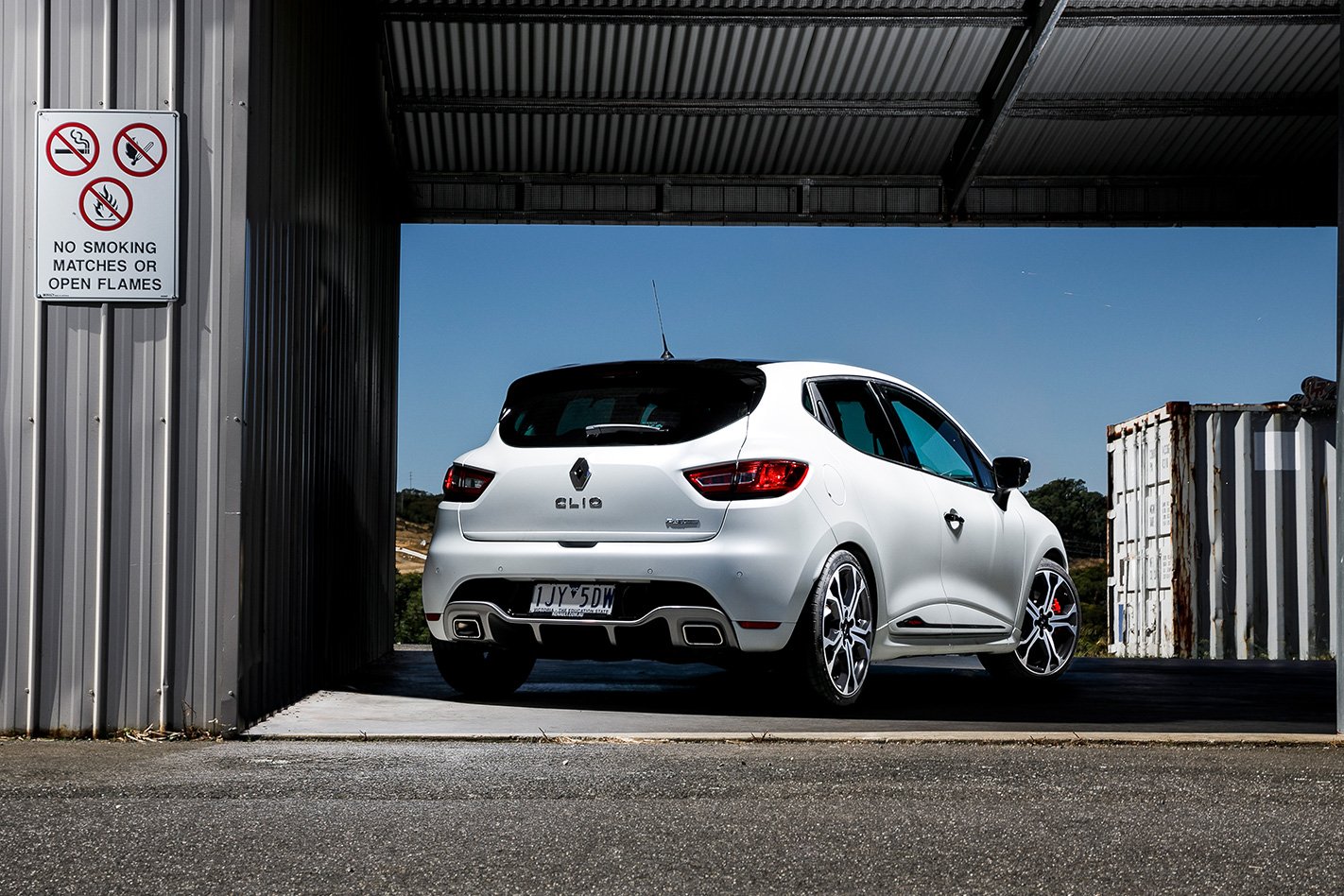
While the current dual-clutch-only generation (launched in 2013, along with the regular Clio IV) hasn’t achieved the fan-boy status of its smaller, non-turbocharged predecessors, there’s one thing that Renaultsport got right from the get-go: the current Clio RS’s chassis.
Indeed, for this late-2017 update (that appeared in July ’16 in Europe), not a single change has been made to the suspension of any variant. Merely visual tweaks – all of which successfully update the Clio’s timeless elegance – and the addition of a six-speed manual transmission on the 88kW 1.2-litre turbo (which, sadly, hasn’t made it to Australia).
So that’s how we’ve managed to get away with testing a pre-facelift RS220 Trophy, not the latest black-wheeled variant with its trick new lights, full leather cabin and extra-barky Akrapovic exhaust. It was the only car available for testing (all press Trophys had already been sold), though aside from slightly less crackle-and-pop from the rear, the old car’s dynamic repertoire is as per the cheaper and better-equipped latest version.
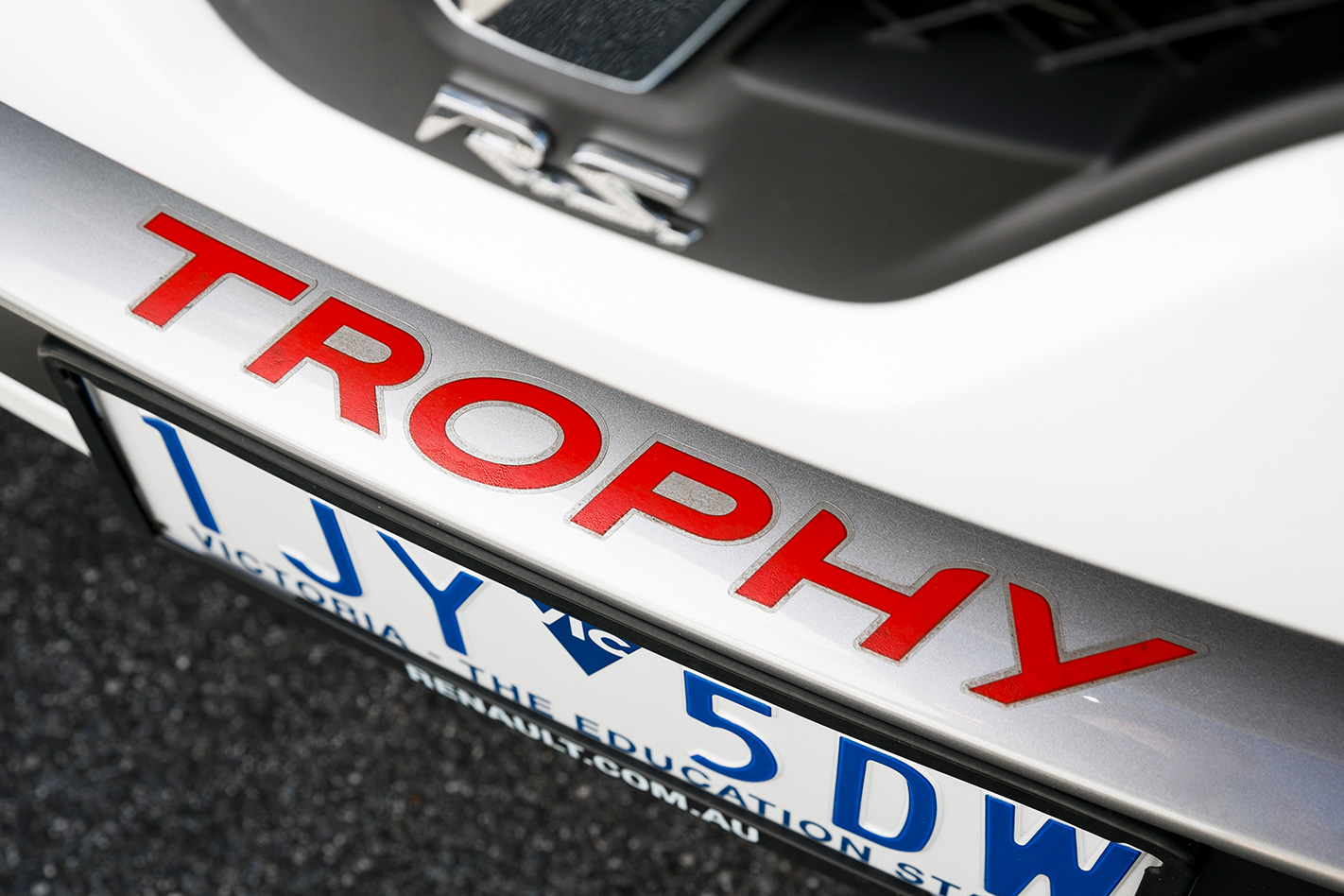
It only takes one corner to realise why Renaultsport wasted no time fiddling with the Trophy’s chassis set-up. Sitting 20mm lower at the front and 10mm lower out back than the ‘standard’ Clio RS200 Cup, the Trophy’s rear springs are 40 percent stiffer, its dampers firmer and its steering faster-geared for a truly ‘on-rails’ driving experience.
At Haunted Hills, Renato described the Clio as “very, very agile” and thought it rivalled the i30 N for best exhaust note, even without the wonderfully anti-social Akrapovic exhaust filling the cabin. And on the road, just like at the circuit, you consistently reap the benefits of the Clio Trophy’s manageable size and 1204kg weight, giving you seemingly more road to play with and handling that cannot fail to blow any enthusiast’s mind.
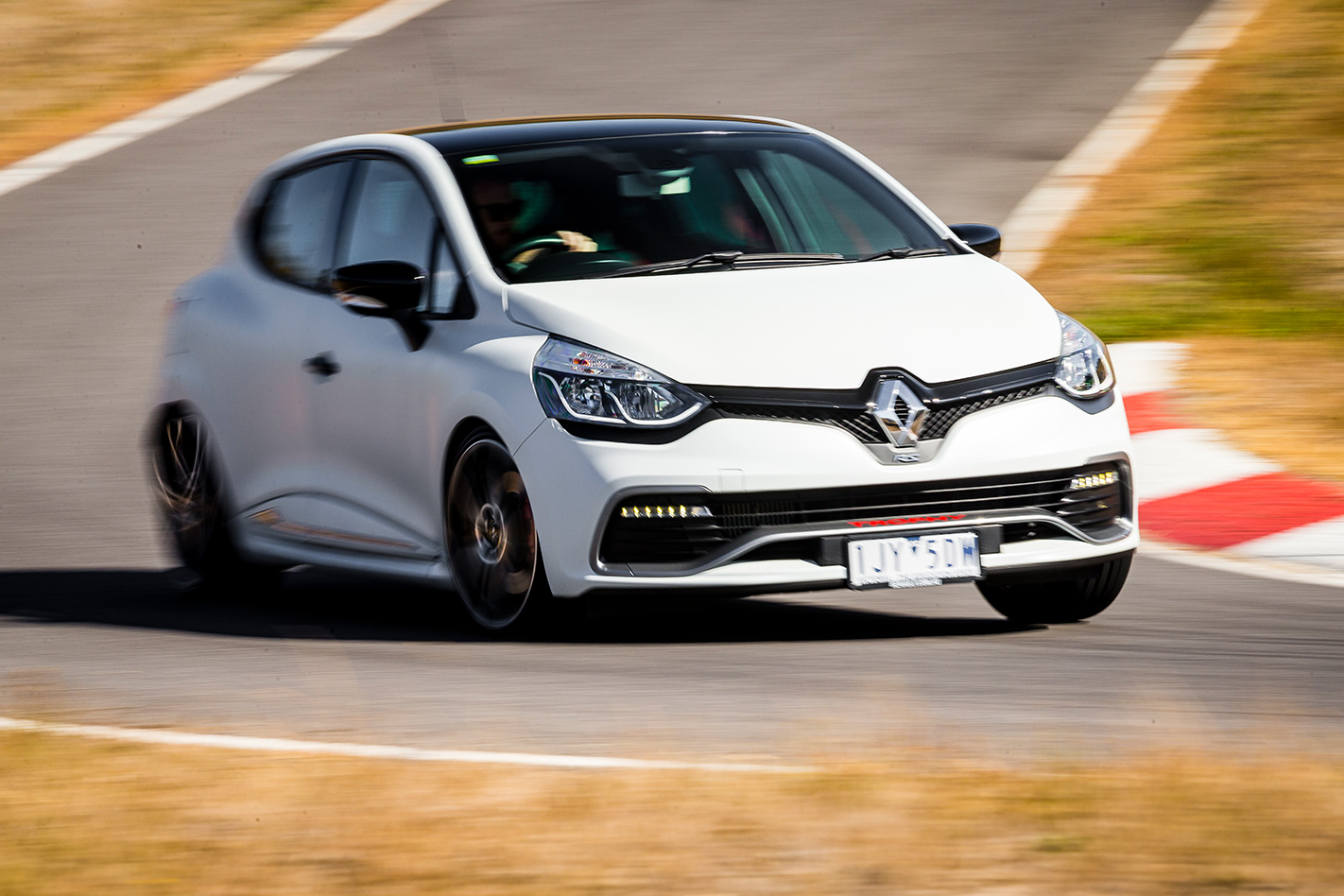
The ultra-taut Clio is one of the few cars where its handling limit lies beyond what is consistently achievable even on a fabulous road like our test loop. Its mid-corner grip and perfect balance are of the sort that make your eyes pop, giving the driver so many options as you scribe a line through a corner. Its throttle adjustability is so incisive that there is zero approximation in driving this Renault at any speed and its brakes are superb too. Dynamically, the Clio Trophy’s synergy is sublime.
The flip side of the Trophy’s handling and steering focus is a suspension set-up that borders on hard, yet in fine Renaultsport fashion it manages to withstand severe hits at speed without losing any of its cool.
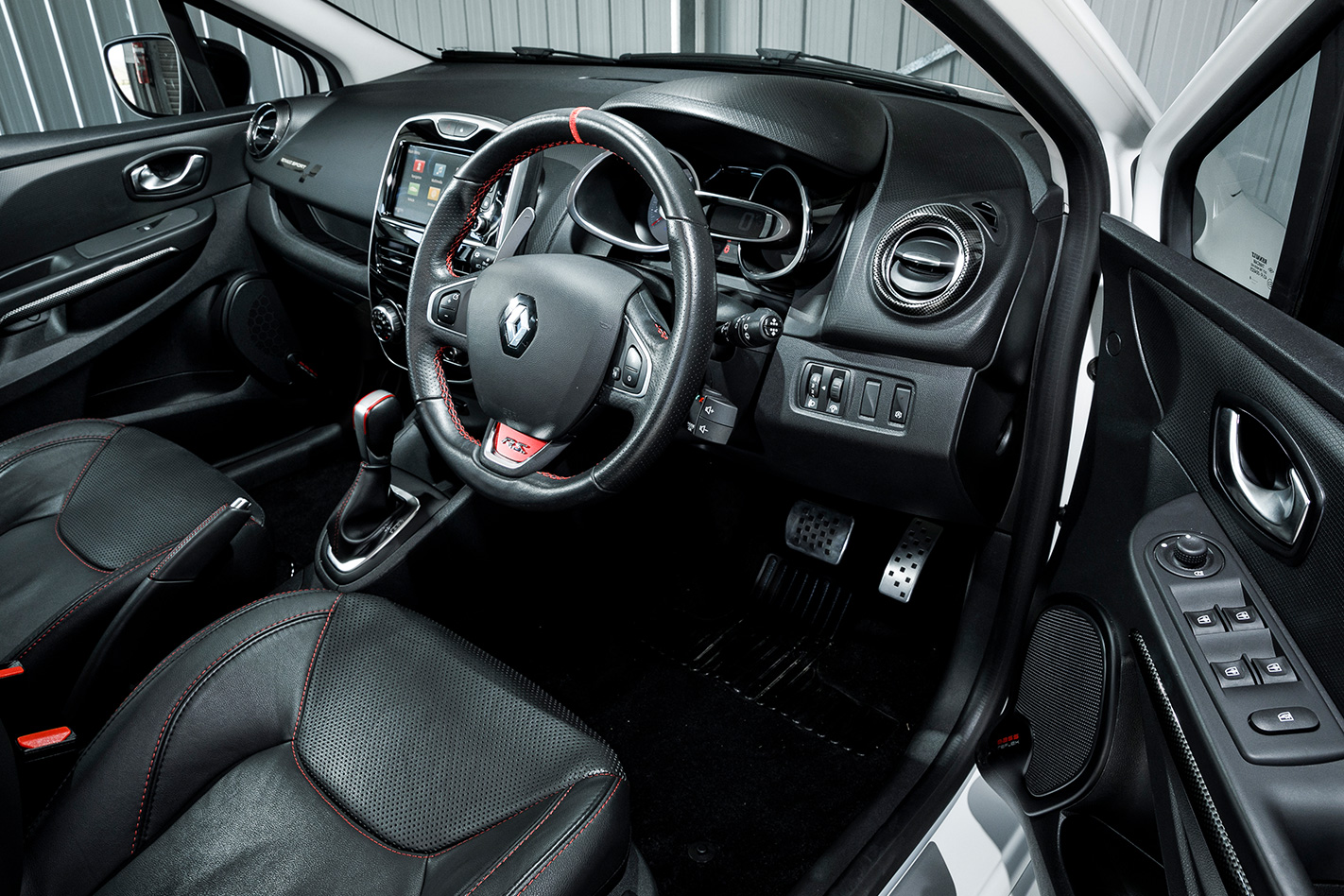
If you’re planning on spending nearly 40 grand and want a true jack-of-all-trades, then Volkswagen’s Golf GTI Original is a far more sensible hot hatch.
The Renault, on the other hand, is a selfish choice. You need to love and understand small cars to want a supermini as nuts as this, but what you lose in cabin tactility, rear-seat packaging and boot space, you gain in abundance in charisma, driver appeal and overall seduction.
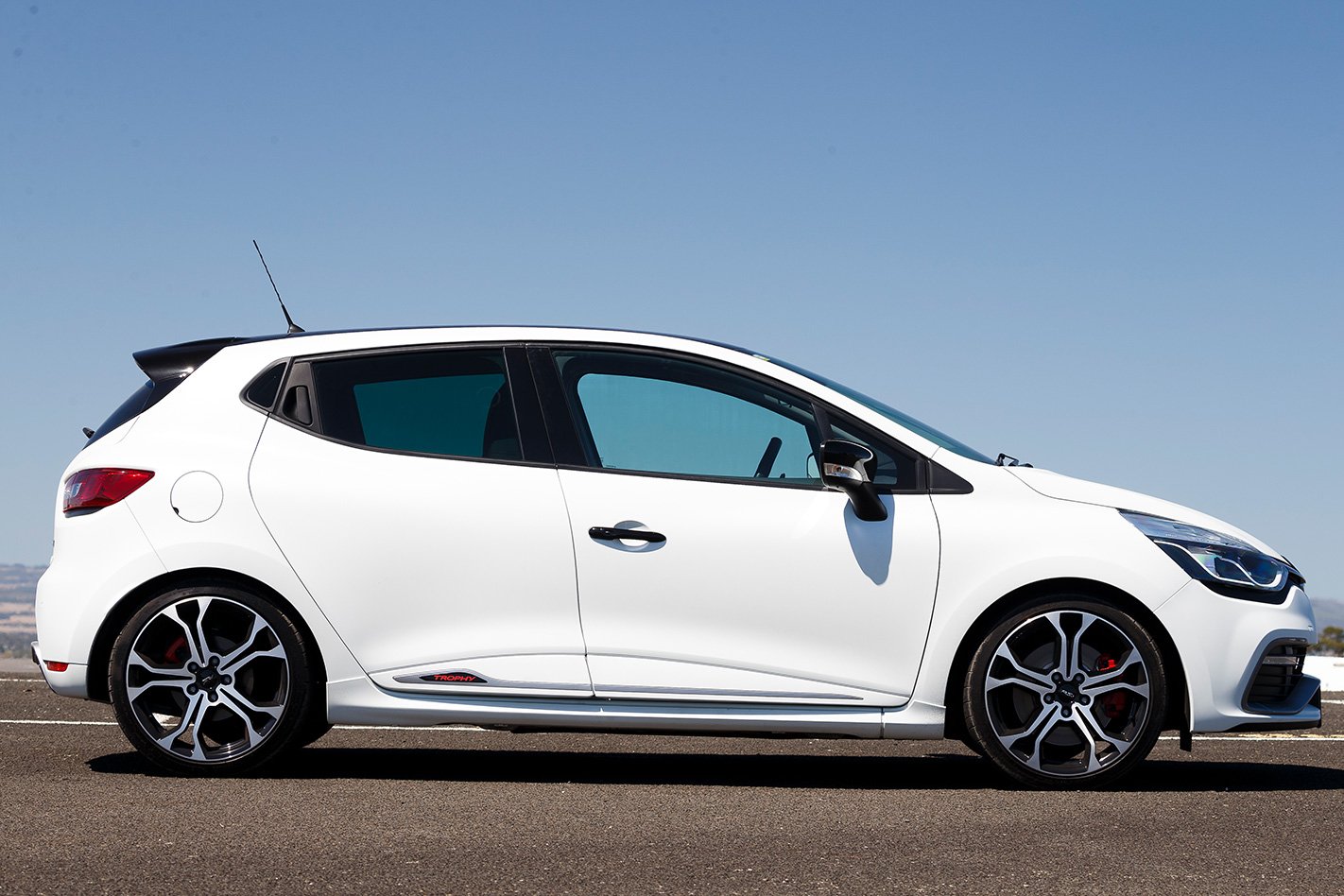
Despite the Clio IV’s vintage, its styling has barely aged a day, yet handling this amazing clearly still doesn’t come cheap.
Renault Clio RS220 Trophy SCORE: 7.5/10
Engine: 1618cc 4cyl, dohc, 16v, turbo Power: 162kW @ 6050rpm Torque: 260Nm @ 2000rpm Transmission: 6-speed dual-clutch Weight: 1204kg Tyres: Michelin Pilot Super Sport 205/40ZR18 Fuel consumption: 14.2L/100km (tested) Power-to-weight: 135kW per tonne 0-100km/h: 6.6sec (claimed) Price: $38,990
Hot Hatch Megatest Contenders
12th, Score 6/10: Mini Cooper S JCW
11th, Score 6.5/10: BMW 125i
10th, Score 6.5/10: Subaru WRX Premium
9th, Score 7/10: Subaru WRX STI
8th, Score 7/10: Skoda Octavia RS245
7th, Score: 7.5/10: Ford Focus ST
6th, Score: 7.5/10: Renault Clio RS220 Trophy
5th, Score: 8/10: Volkswagen Golf GTI Original
4th, Score: 8.5/10: Volkswagen Golf R Grid
3rd, Score: 8.5/10: Peugeot 308 GTi 270
2nd, Score: 9/10: Honda Civic Type R
Winner, Score: 9/10: Hyundai i30 N
It’s like giving Spider-man a bungy cord, the Terminator a gun licence or Kylie Minogue butt implants. We thought one thing Audi’s steroid-fed muscle car RS6 didn’t need was more horsepower. We’ve been proven wrong.
This feature was originally published in MOTOR’s October 2004 issue
Sydney-based Audi and Mercedes tuner TCCA Motorsport is the local outlet for the German-made horsepower-helper range of MTM, which recently turned its tuning attentions to Audi’s RS6.
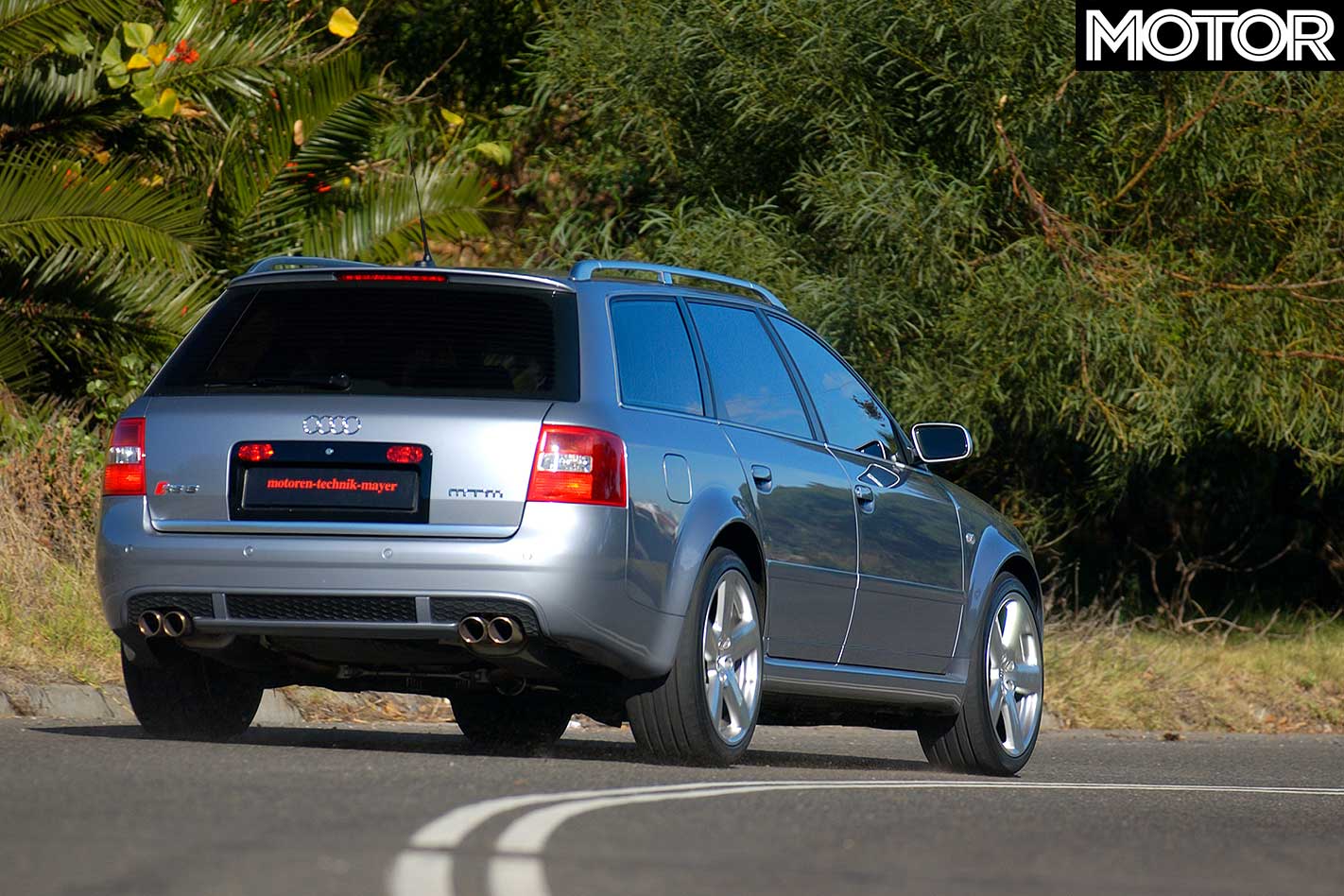
Calling on the MTM arsenal, TCCA currently offers five stages of RS6 upgrade for a wide range of budgets, each stage a building block in a continuing, complementary path.
Remember that when we tell you the top-spec stage five changes turbochargers, cylinder head gaskets, exhaust, ECU, fuel system and gearbox ECU for a serving of 418kW – and a bill of $44,200! Turn it down one stage, and before you stands a stage four beastie quoted at 393kW.
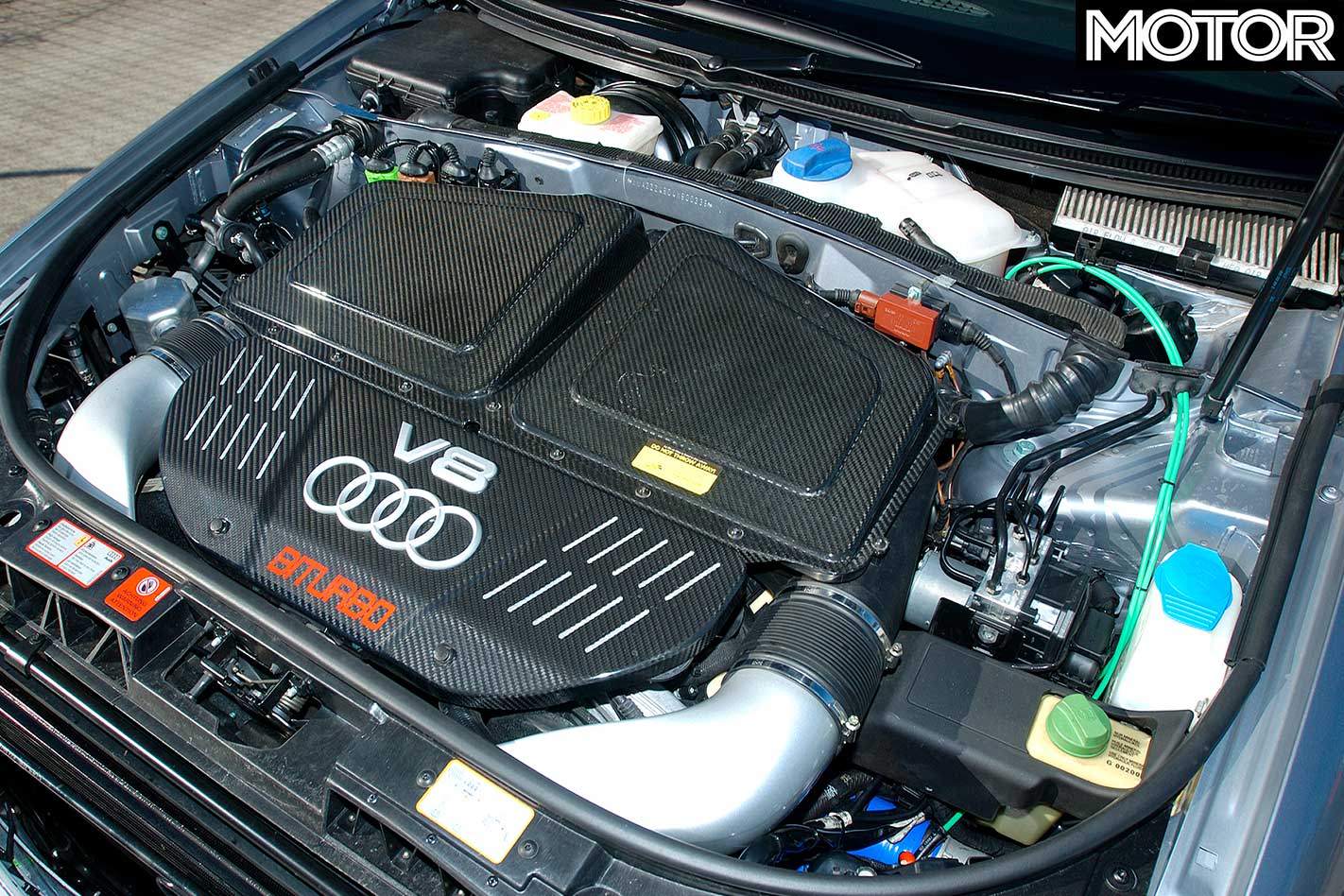
Stage one leaves power at 331kW. It’s actually a $3100 MTM-modified Motronic ECU that eliminates the factory 250km/h speed limiter without affecting anything else. MTM says the RS6, unimpeded, will run to 295km/h.
Might as well go straight to the $7700 stage two, though, including the speed limiter defender and a total retune of boost pressure – from 13psi (0.9 bar) to 21.7psi (1.5 bar) – fuel and ignition curves. This hints at the RS6’s potential, with power jumping 37kW to 368kW. Better still the tonne of extra torque, up 130Nm to 690Nm!
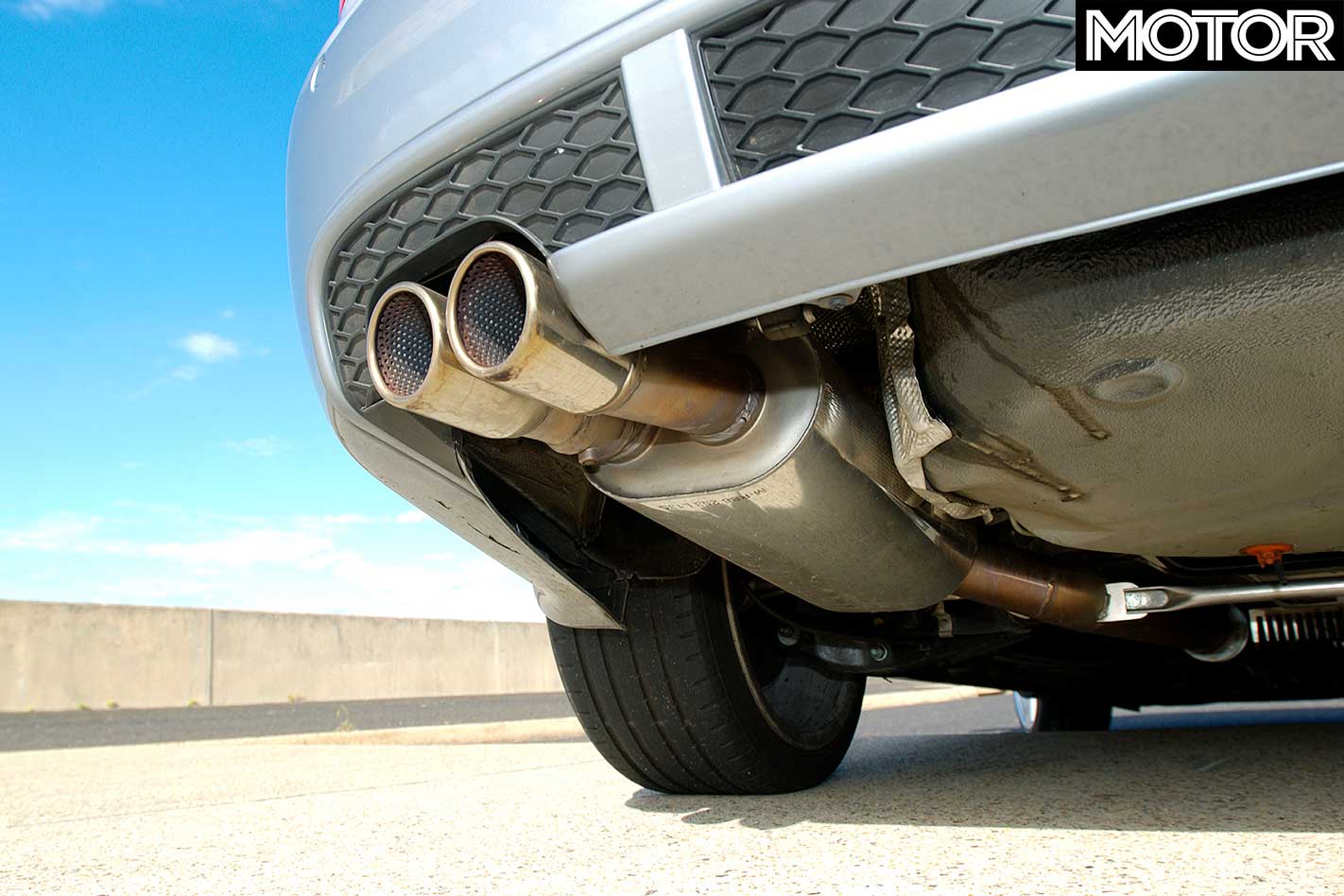
Stage three tips in another 6kW. Granted, its price tag increase of $9170 is high, now up to a stage one, two and three total of $16,870, but it does include a rather fine stainless steel, smarter-than-average mandrel-bent exhaust system. The kit includes piping from cat converter to twin-dual tailpipes.
It also incorporates an engine-bay-mounted module that reads fuel pressure and turbo boost or vacuum to regulate two butterfly valves in the outer two pipes of its quad-tip exhaust system. At idle and low speed, these valves are closed to keep noise (and profile) low, but under load and boost pressure, they twist open to uncork backpressure.
Loud? It’s difficult to pick as being anything but standard while cruising and MTM has conspired to reinforce that illusion with the rear garnish panel.
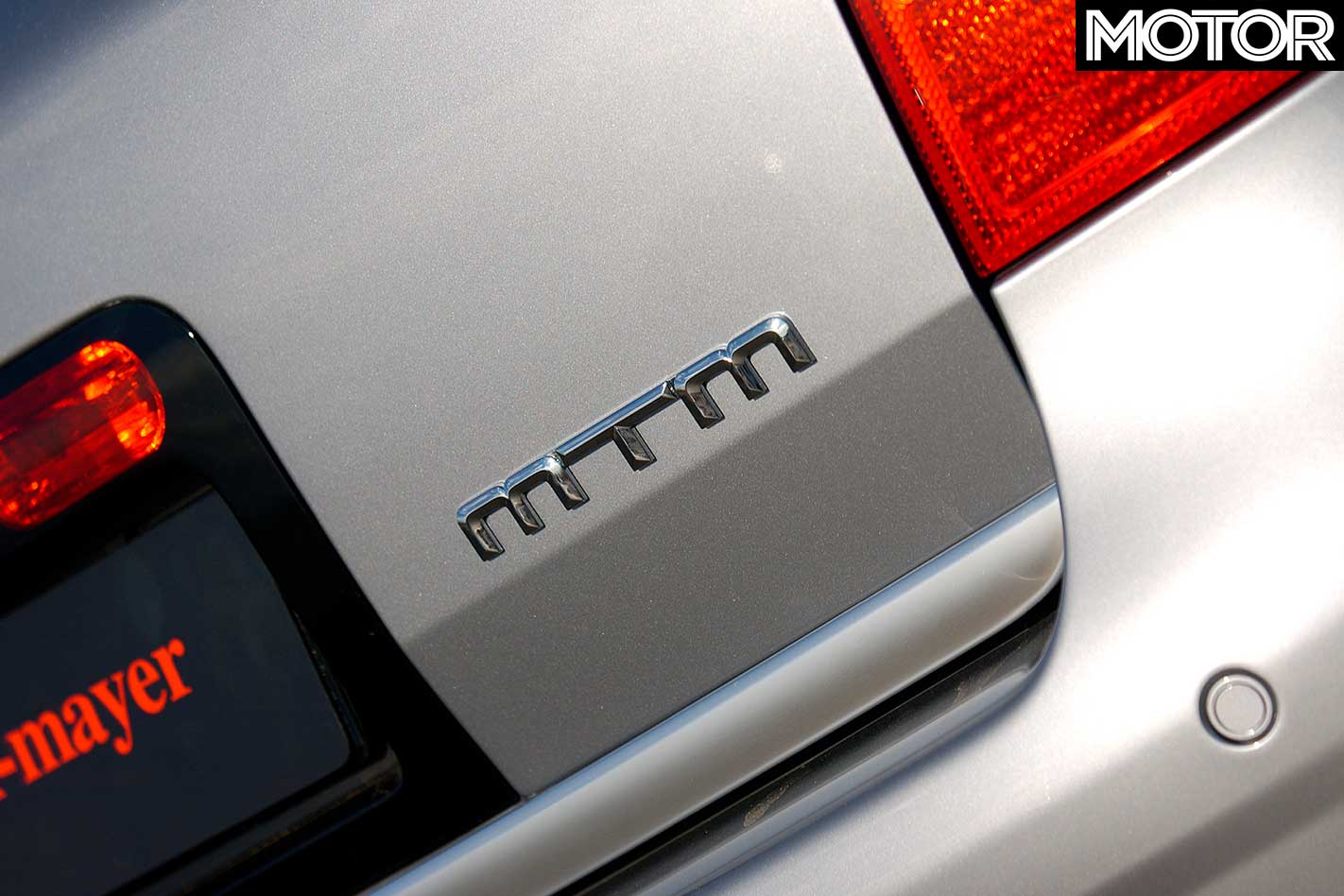
Compare the MTM with a standard RS6 exhaust (oval tips, oval bumper cutout) – not only are there quad tips, but larger cutouts courtesy of complete replacement garnish panels in the same latticework pattern. Sneakishly smart!
Prefer full stealth mode? Then go for the $1500-cheaper, same-as-standard dual-pipe exhaust and no-one will ever know! But give it a bootful and the rumbling V8 cracks to redline so sweetly it licks your ears like a puppy, with more immediate urge and loads more mid-range power and torque.
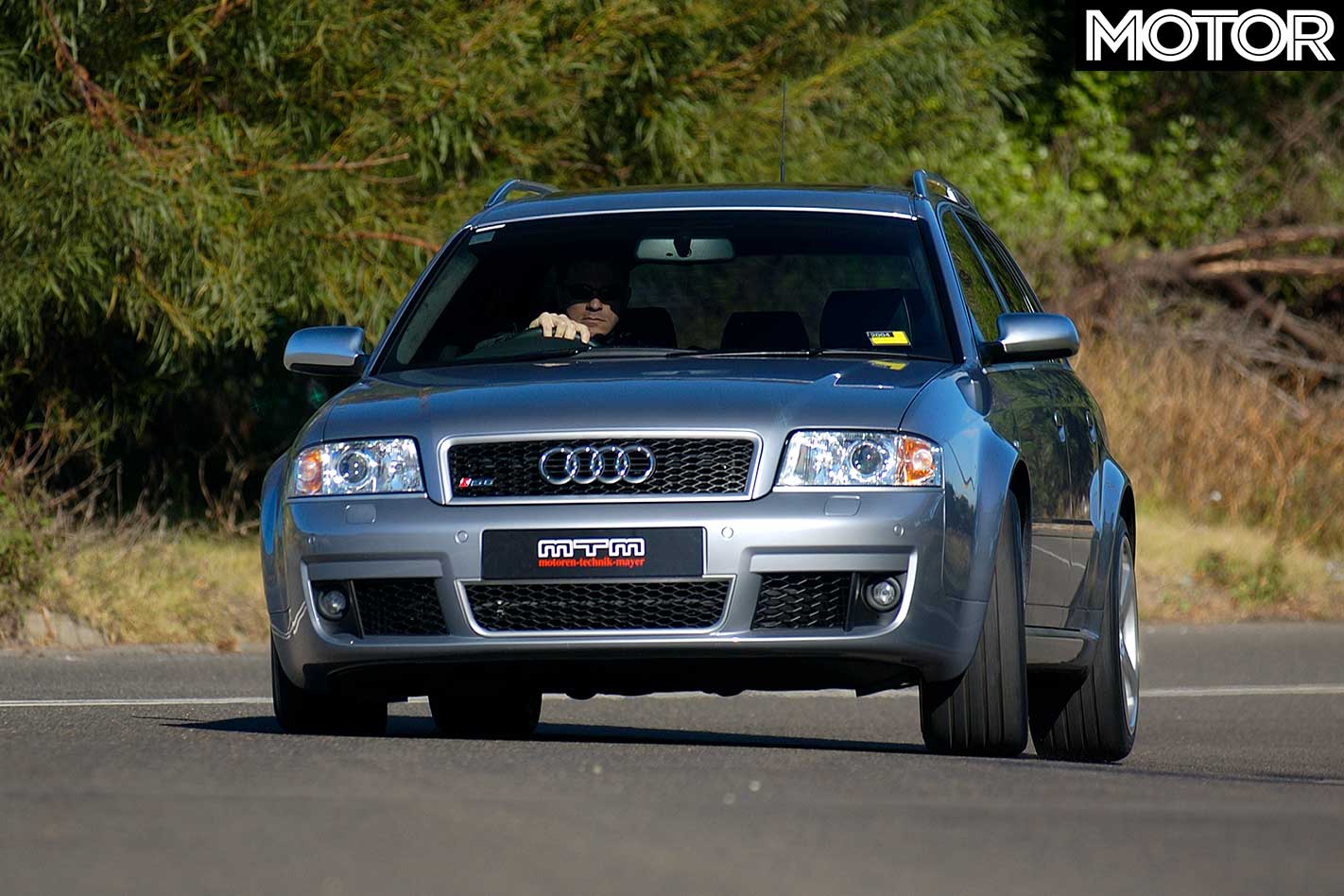
Stage four’s price tag is a highly significant $27,850. Yes, it’s $11,080 more than stage three, and yes, there is more power: 19kW more, totalling 393kW, and up 62kW from stock. This adds two metal high-flow catalytic converters, an uprated fuel pump, matching fuel pressure regulator and a modified gearbox.
MTM only ‘recommends’ an upgrade in the Audi five-speed Tiptronic gearbox, for stage one to three, but deems it necessary for stage four. It’s simply an ECU tune that allows for a few hundred extra rpm in gears, harder shifts under throttle, and softer shifts while cruising, all down to a rewritten gearbox ECU. On its own, it’s a $640 option.
Finally, a set of blue silicon boost hoses and clamps, at $1800, ensures no leaks.
Visually obvious the mods aren’t, but the RS6 is all about subtle. Even the optional $760 H&R coil spring kit is just a mild 10mm drop.
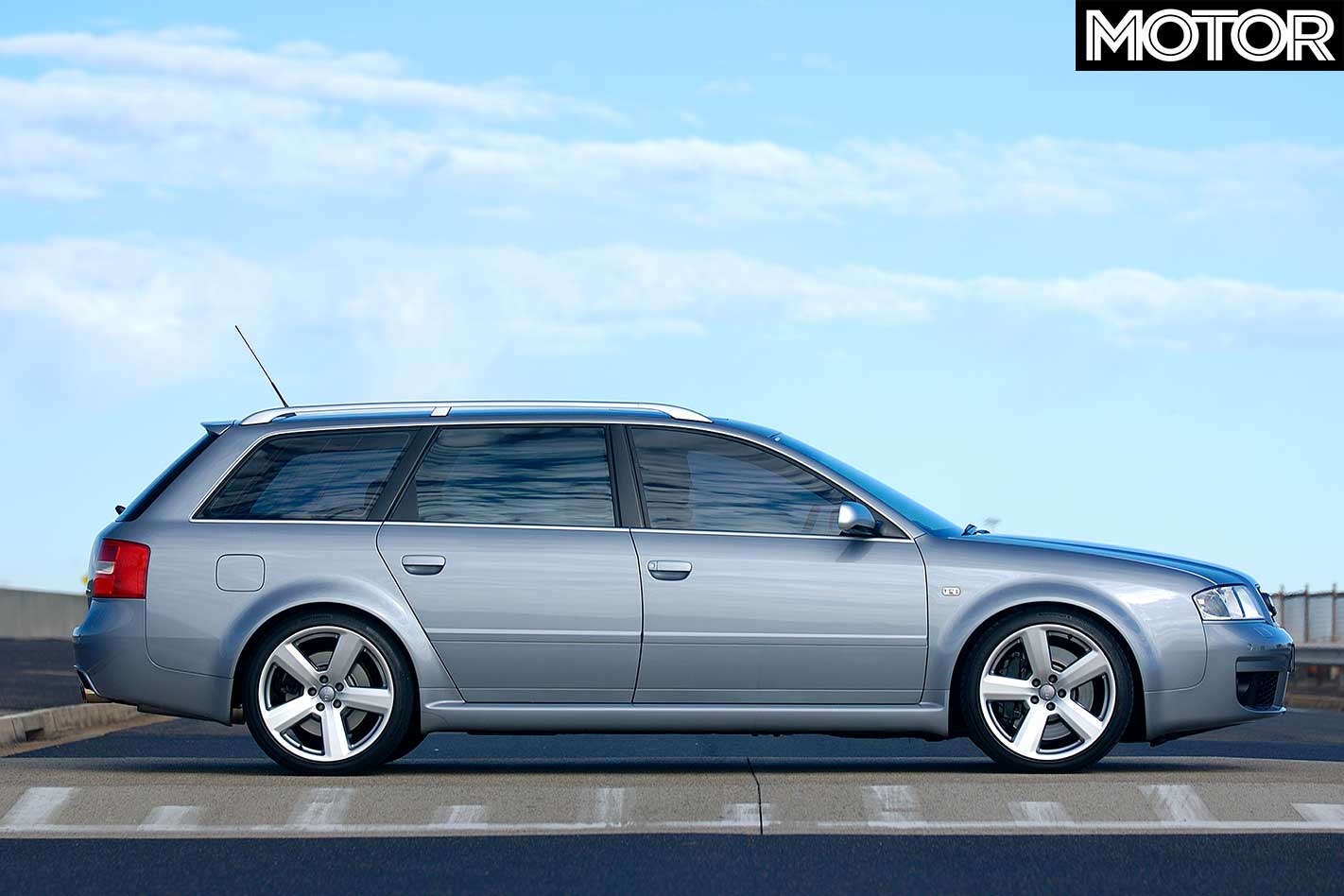
So how does it go? Bloody marvellous! Under a heavy boot, the extra boost whistles and turbos spool up a few hundred rpm earlier to deliver a mighty wallop! On full boost it’s gobs faster than the stocker; off, it’s virtually indistinguishable.
Discounting our super-quick, super-sticky PCOTY times, the stock RS6 Avant manages a 0-100km/h in 5.4 seconds. The MTM stage four-kitted version tripped a 4.6! Over the quarter, the stocker runs a 13.57 @ 167.3km/h, while the MTM Q-ship launched loads harder and boogied down to a 12.97 @ 170.5km/h! And thanks to the auto, it’s easily repeatable.
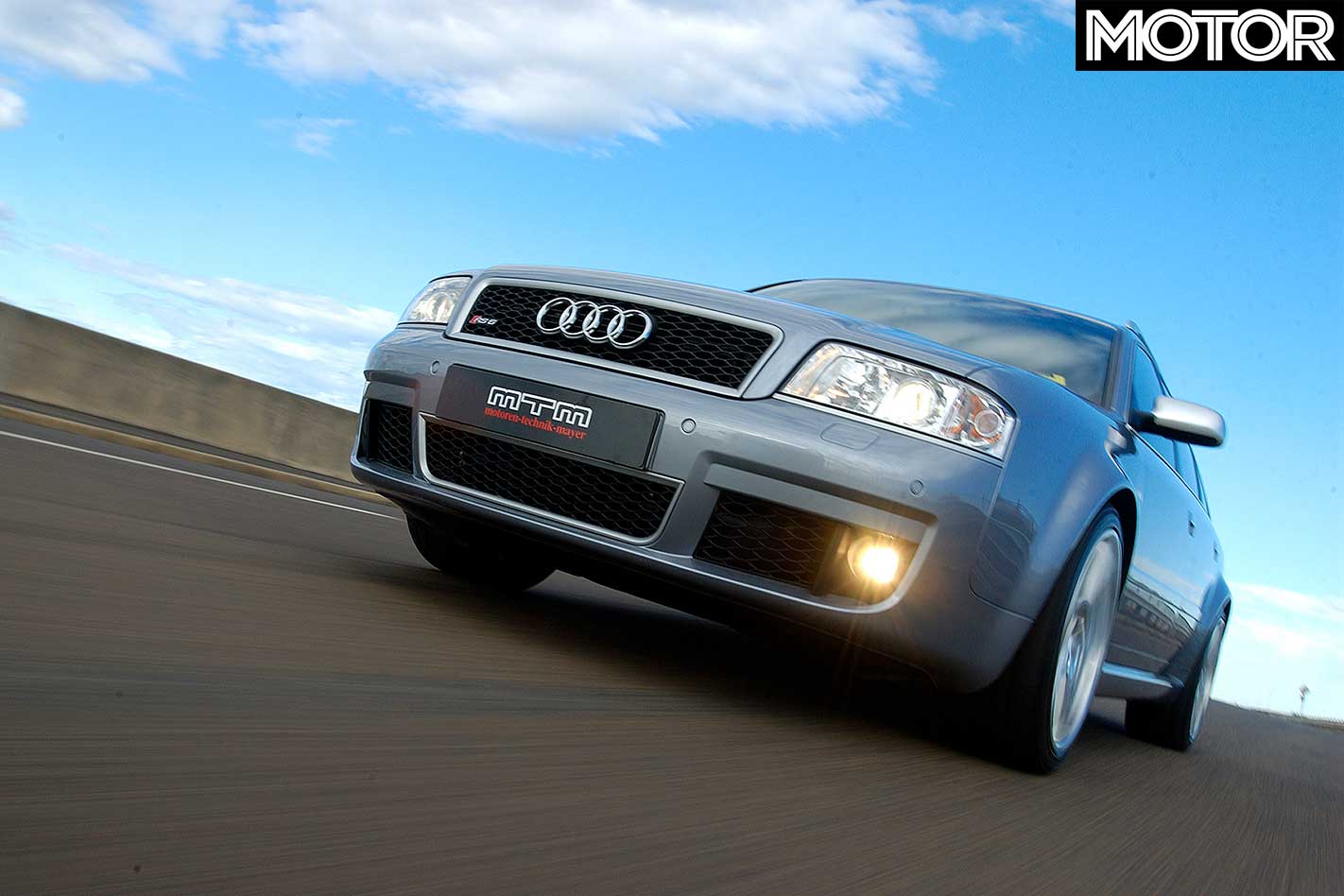
With a hybrid TCCA/MTM/Audi parts warranty, the dubious part isn’t the issue of power, performance or quality, but value. Prices don’t include fitting (done at cost) and for a 19 percent increase in power, the stage four kit (with silicon pipes) adds 13 percent to the price.
Does $29,650 equal a 62kW gain? Whether MTM’s gear makes sense ultimately depends on how much is sitting in the bank. But this is definitely one case where more is not less.
TT = TWIN TURBO!
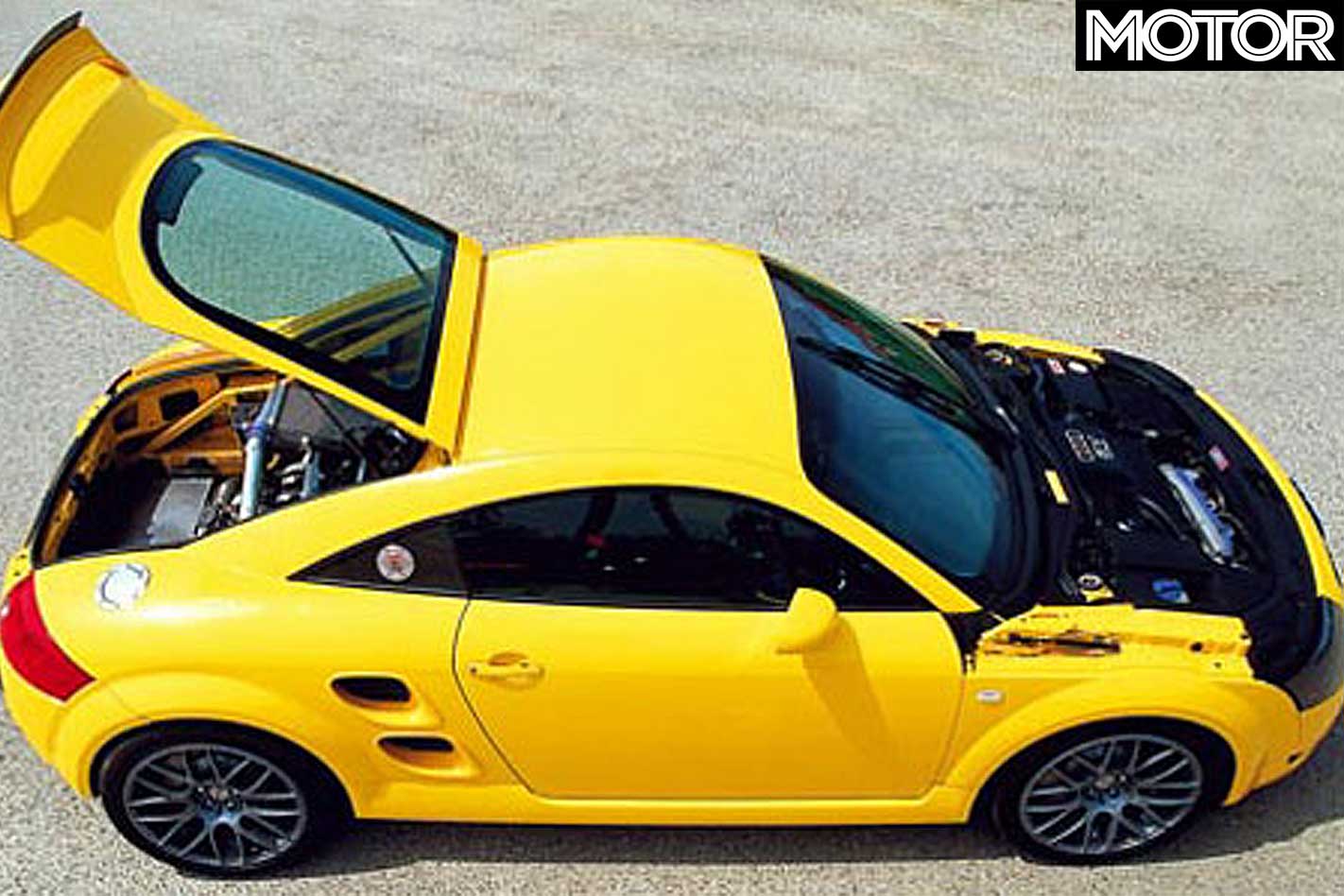
A 393kW Audi RS6 not wild enough for you? Try MTM’s bimota TT with twin 316kW/510Nm turbocharged 1.8-litre fours. That’s right, two engines, totalling 632kW and 1020Nm.
With 1490kg on 19-inch alloys, try 0-100km/h in 3.5 seconds, 0-200km/h in 9.9 and a genuine 371km/h top speed. Inside is a pair of starter buttons and twin tachos.
Tuner Torque
| u00a0 | RS6 Avant (std) | RS6 Avant MTM |
| 0-10km/h | 0.37sec | 0.29sec |
| 0-20km/h | 0.72sec | 0.58sec |
| 0-30km/h | 1.1sec | 0.91sec |
| 0-40km/h | 1.5sec | 1.3sec |
| 0-50km/h | 1.98sec | 1.72sec |
| 0-60km/h | 2.49sec | 2.19sec |
| 0-70km/h | 3.17sec | 2.81sec |
| 0-80km/h | 3.92sec | 3.35sec |
| 0-90km/h | 4.6sec | 3.99sec |
| 0-100km/h | 5.37sec | 4.61sec |
| 0-110km/h | 6.03sec | 5.43sec |
| 0-120km/h | 7.28sec | 6.39sec |
| 0-160km/h | 12.31sec | 10.97sec |
| 0-400m | 13.57sec @ 167.3km/h | 12.97sec @ 170.5km/h |
Forgive the somewhat tabloid headline, but it’s no exaggeration – Mazda has issued a recall for diesel models of its popular CX-3 compact SUV, and owners who ignore it could see themselves with a hefty repair bill.
The recall only affects DK-series CX-3s equipped with Mazda’s 1.5-litre turbo diesel engine, with affected cars coming from two production batches – one with build dates spanning January 9 2015 to February 4 2016, and the other spanning 27 November 2015 to 3 November 2017. In total, 1627 cars are affected by the recall.
The issue can be triggered by running the engine at high RPM in either park or neutral, which then draws engine oil residue from the intake manifold into the cylinders and initiates a ‘runaway diesel’ condition where the engine can’t be shut down.
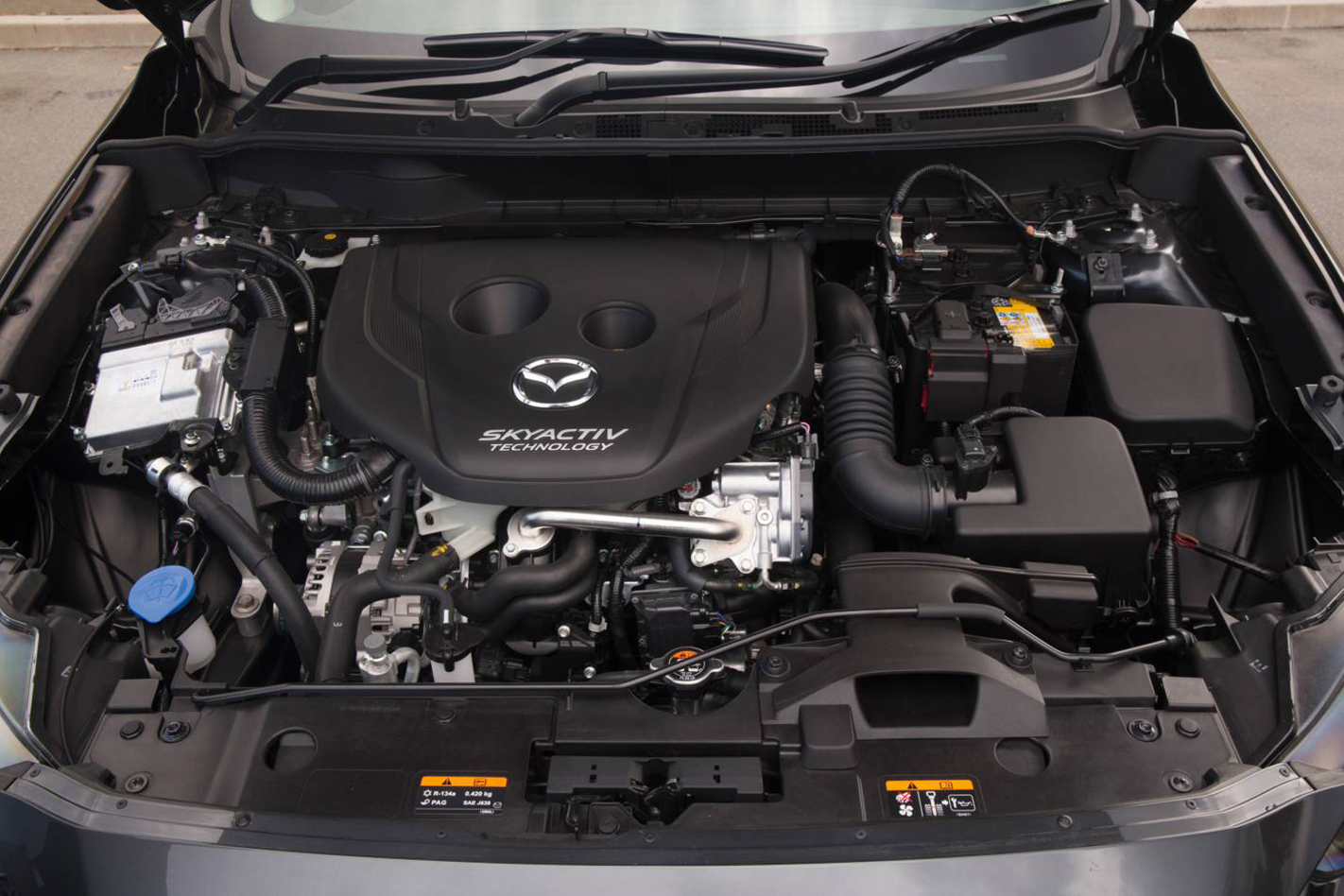
Normally a runaway diesel will keep running (at maximum rpm) until its engine fails or all of its lubricating oil is consumed. Both outcomes result in significant damage to the engine. While Mazda Australia reports that there have been no instances of this happening to Australian-delivered CX-3s, the company is nevertheless urging owners to take their cars to their local Mazda dealer for a software tweak as a preventative measure.

If you’re tempted to ignore the recall, perhaps first watch this video of a Discovery Sport dying a nasty death as a result of a runaway diesel.
At a media discussion in Melbourne today, Honda Australia managing director Stephen Collins spoke with MOTOR about the future of performance and sports models in Australia.
With excitement about the Honda Civic Type R high both internally and with Honda’s customers, the Australian arm of the brand says it’s almost sold out of its entire allocation of cars until the next boat arrives.
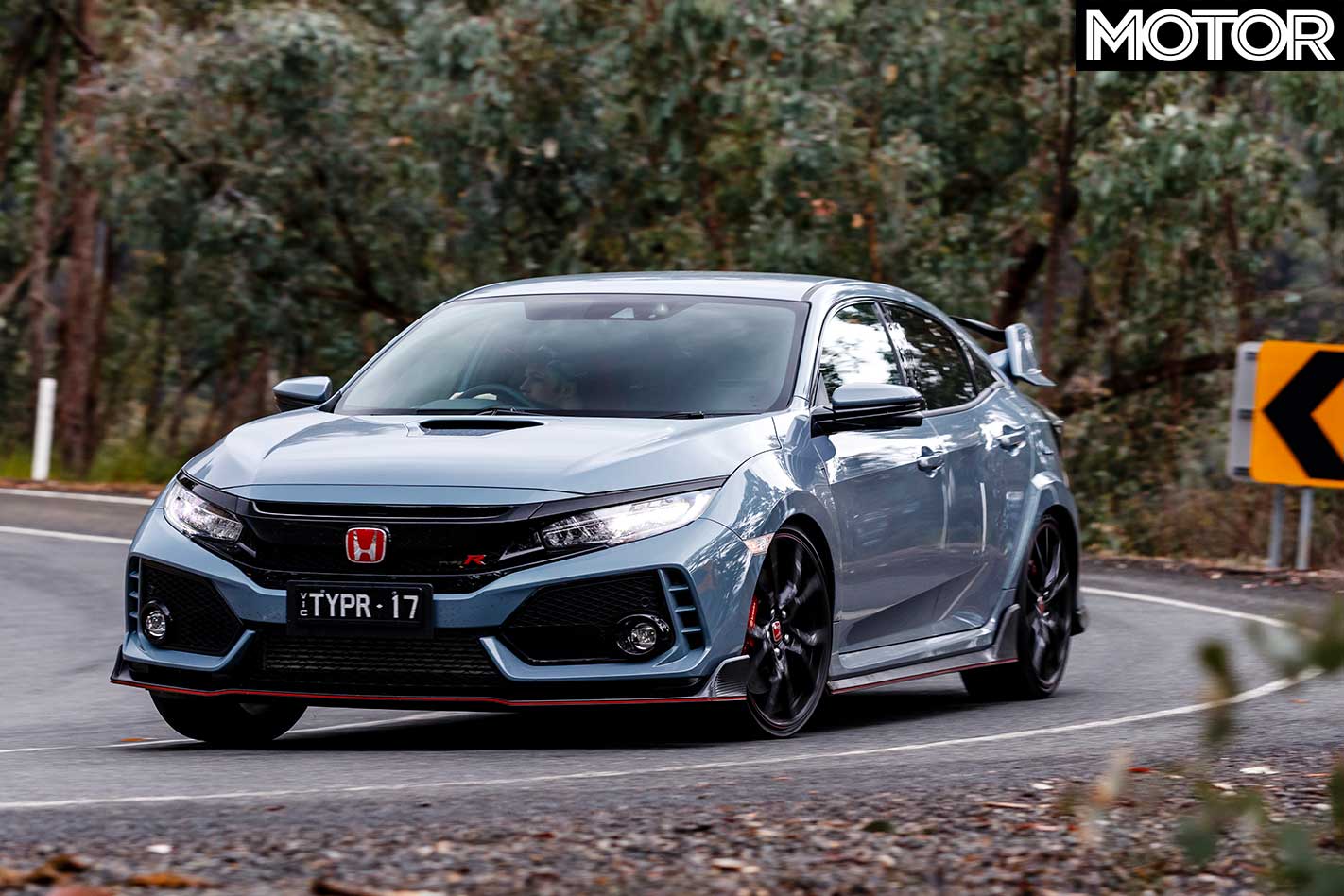
“Performance is a part of Honda’s DNA, and it has been since Mr Honda started the company,” Collins said.
“So for us it’s really important, and it’s why we were so keen to bring this generation’s Type-R to the market – and NSX.
“Down the track, if there are opportunities for us to bring sportier or performance models to this market, we will.”
Though Honda has other models overseas which are unavailable in Australia, such as the Kei-Car Honda S660 due to ADRs, the Civic Type-R and NSX are the main two ingredients in Honda’s global performance range.
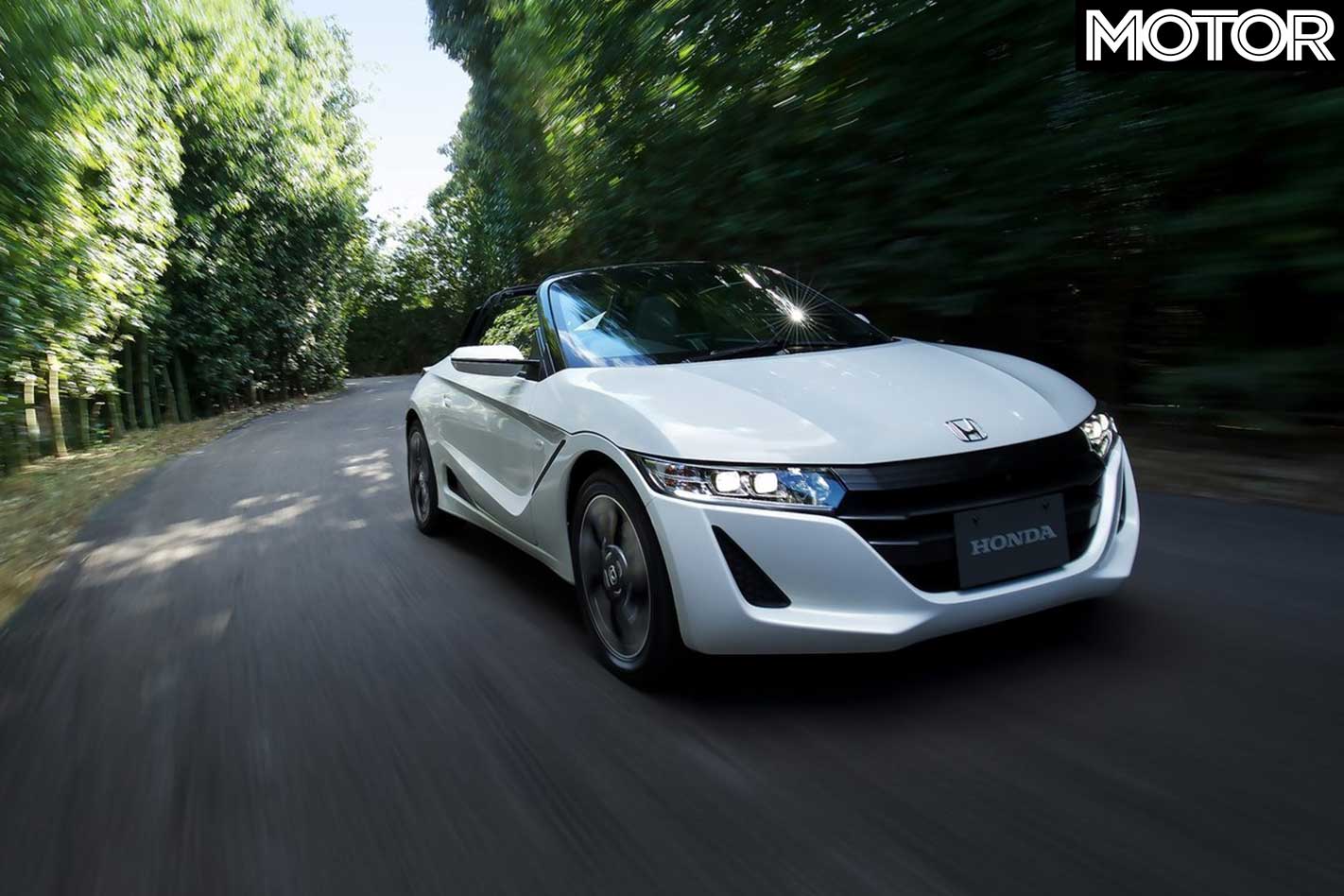
“I think right now those two models are really doing the job for us in terms of the technology, and probably more importantly just their ‘fun-to-drive’ aspect.
“If a global model comes up that we can put our hand up for, we’ll definitely do that.”
Given the low number of NSXs – just six –sold in Australia since its introduction in 2016, Honda seems quite content with that performance, stating it’s not a car for chasing sales volume.
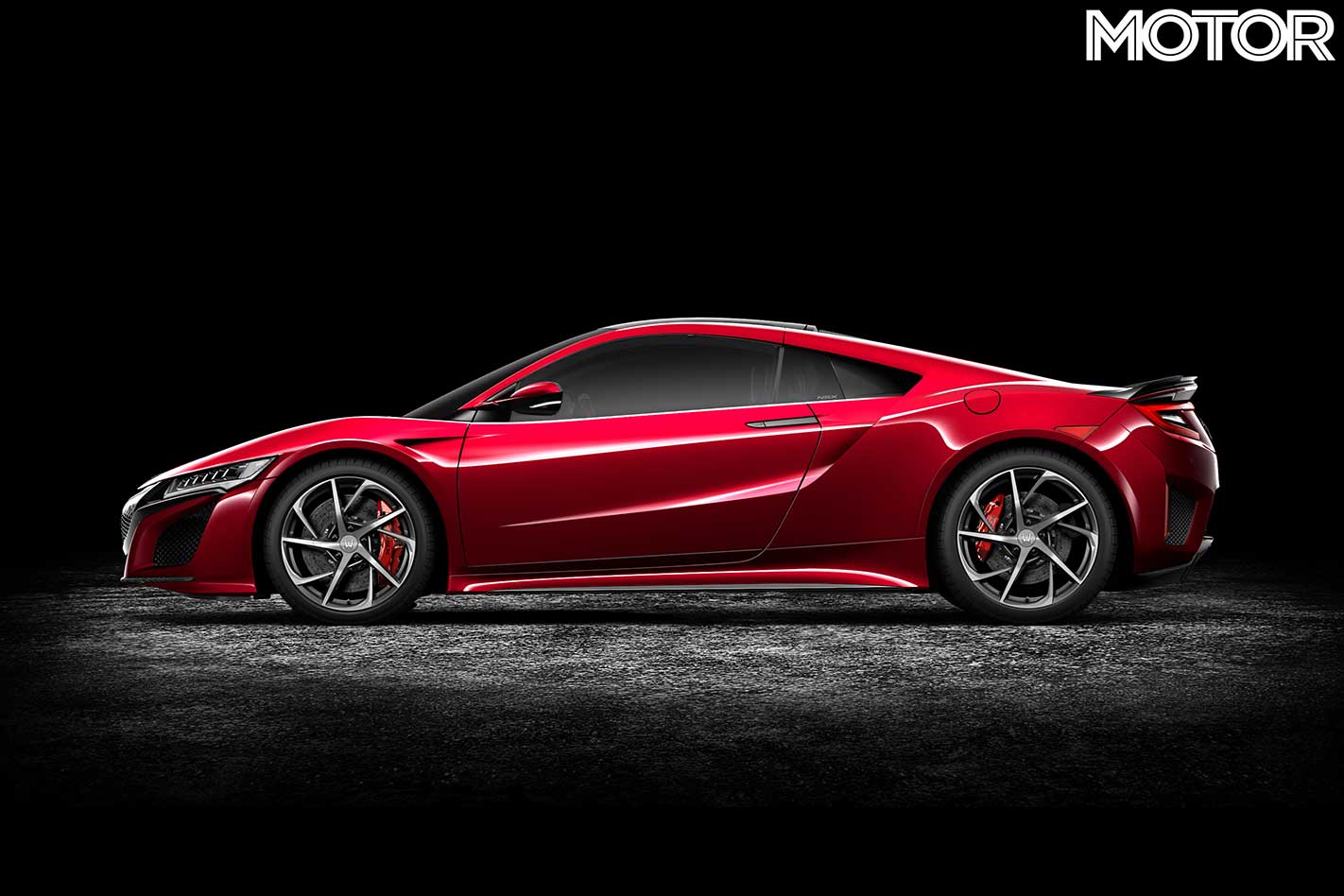
Collins says it’s unclear if any more are on the way to Australia in the near future.
“I’m not aware that we have any more orders on the go, but if we do get a customer order then we would certainly talk to Honda America to get a production slot as early as we possibly could.”
As well as the six NSXs sold, Honda possesses an additional NSX for media and customer tests. The NSX retails for $420,000 in Australia before on-roads.
