
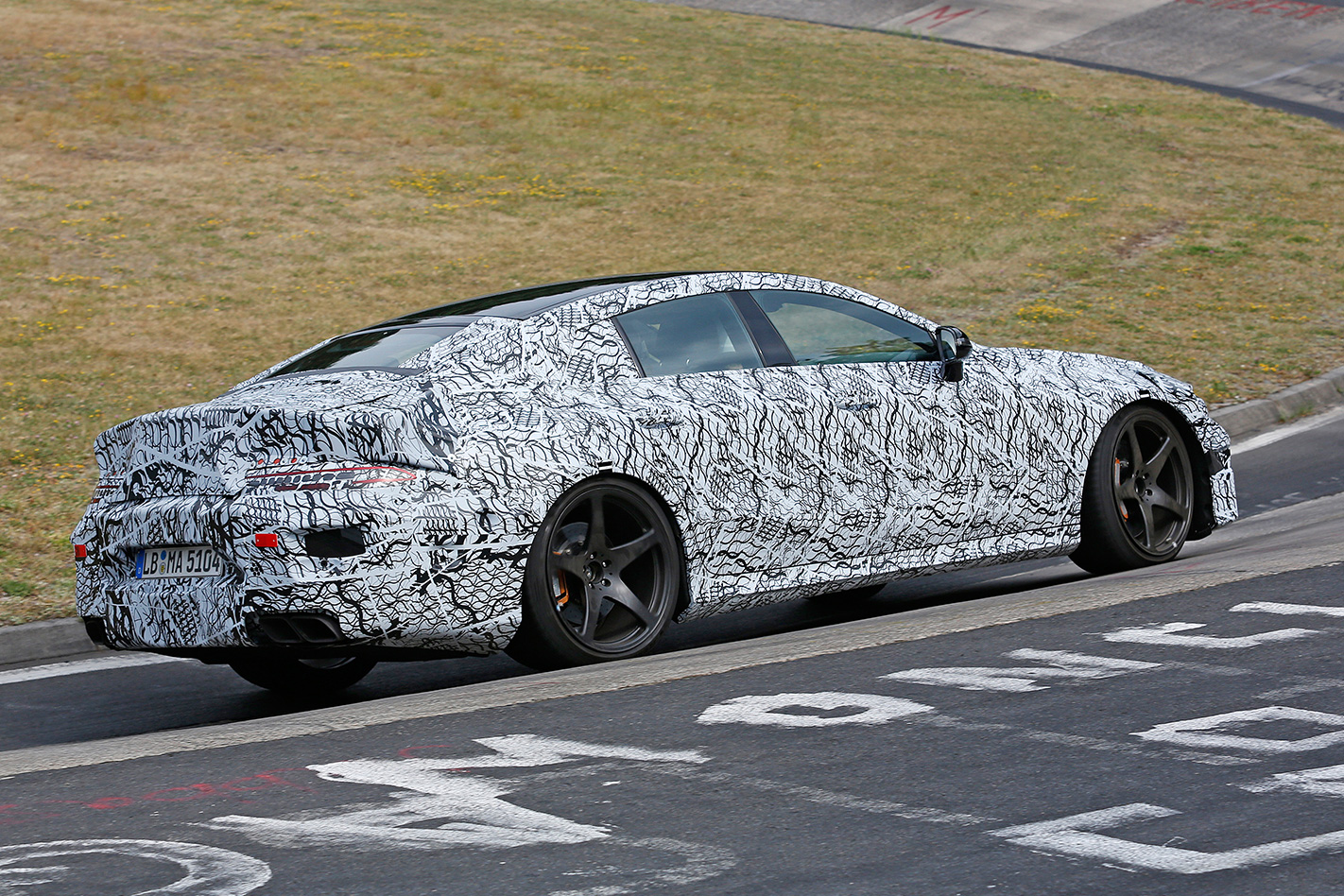
MERCEDES-AMG’s upcoming Panamera-fighting four-door coupe has been spotted rocketing around the Nurburgring Nordschleife, with a camouflaged prototype hinting at a car that will channel all of the visual aggression of the AMG GT Concept that debuted at Geneva in March – and then some.
Due to be unveiled later this year as a four-door companion to the established AMG GT coupe and convertible, the first-ever sedan to be exclusive to AMG (previous AMG four-doors have been based on regular Benzes like the C-Class, E-Class and S-Class) will have genuine performance cred.
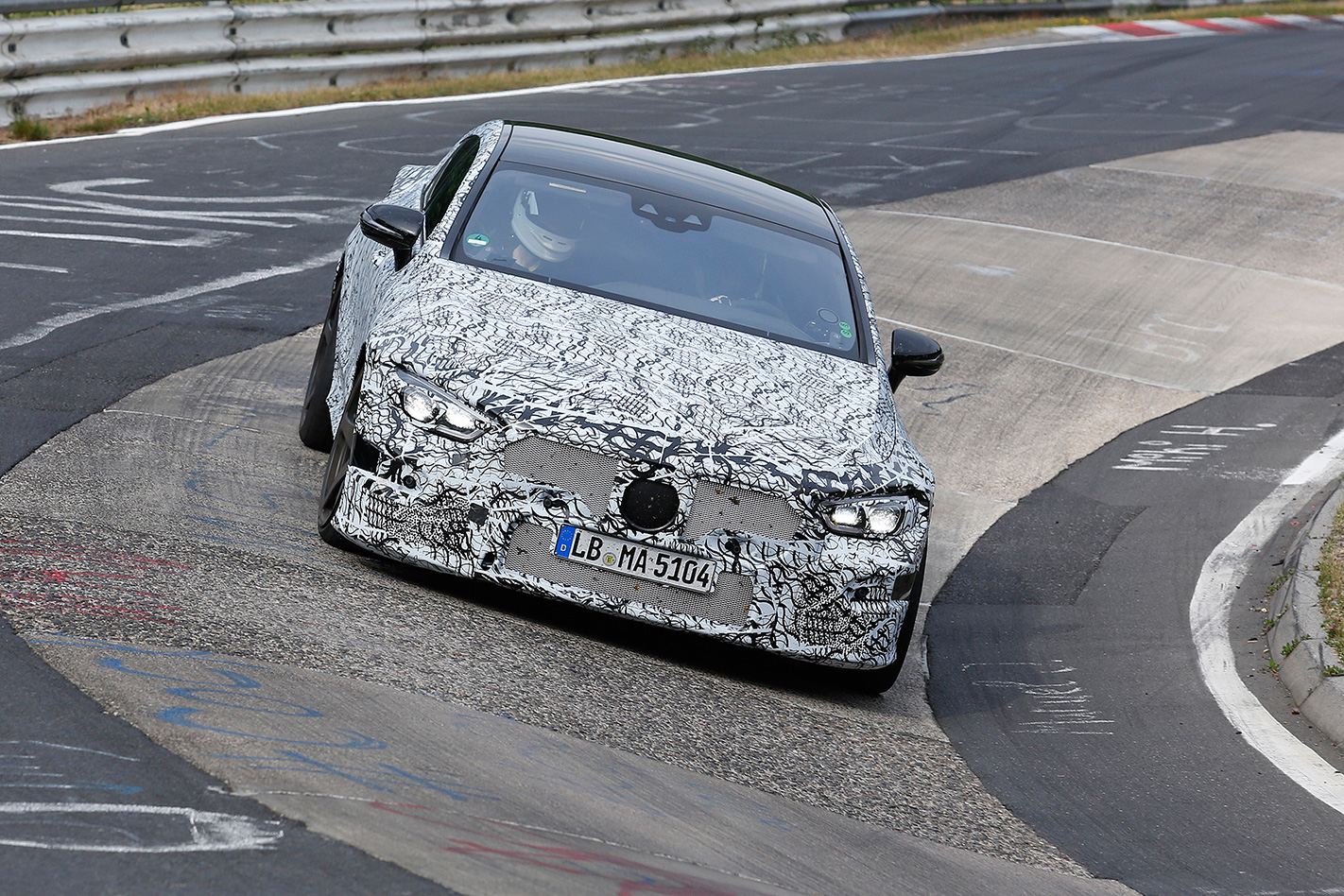
All wheel drive will endow it with the traction to harness all of that power, and the mammoth brake package spied here gives some indication of the speed this car will be capable of achieving.
A plug-in capability is likely too, allowing it to run exclusively on electric power during less frenetic driving.
Why would AMG use a less exotic platform for its first four-door? Its GT platform is not modular, and was not designed with four seats in mind. Integration of a hybrid drivetrain is also less challenging with the MRA platform, as electrified Mercedes-Benz models on those underpinnings already exist.
Despite all of the camo, it’s obvious the production car will closely follow the template set by the GT concept. A wide grille gives a strong visual link to the AMG GT and GT C, and the flagship will no doubt get the ‘Panamericana’ treatment with bold vertical slats, similar to the AMG GT R’s snout.
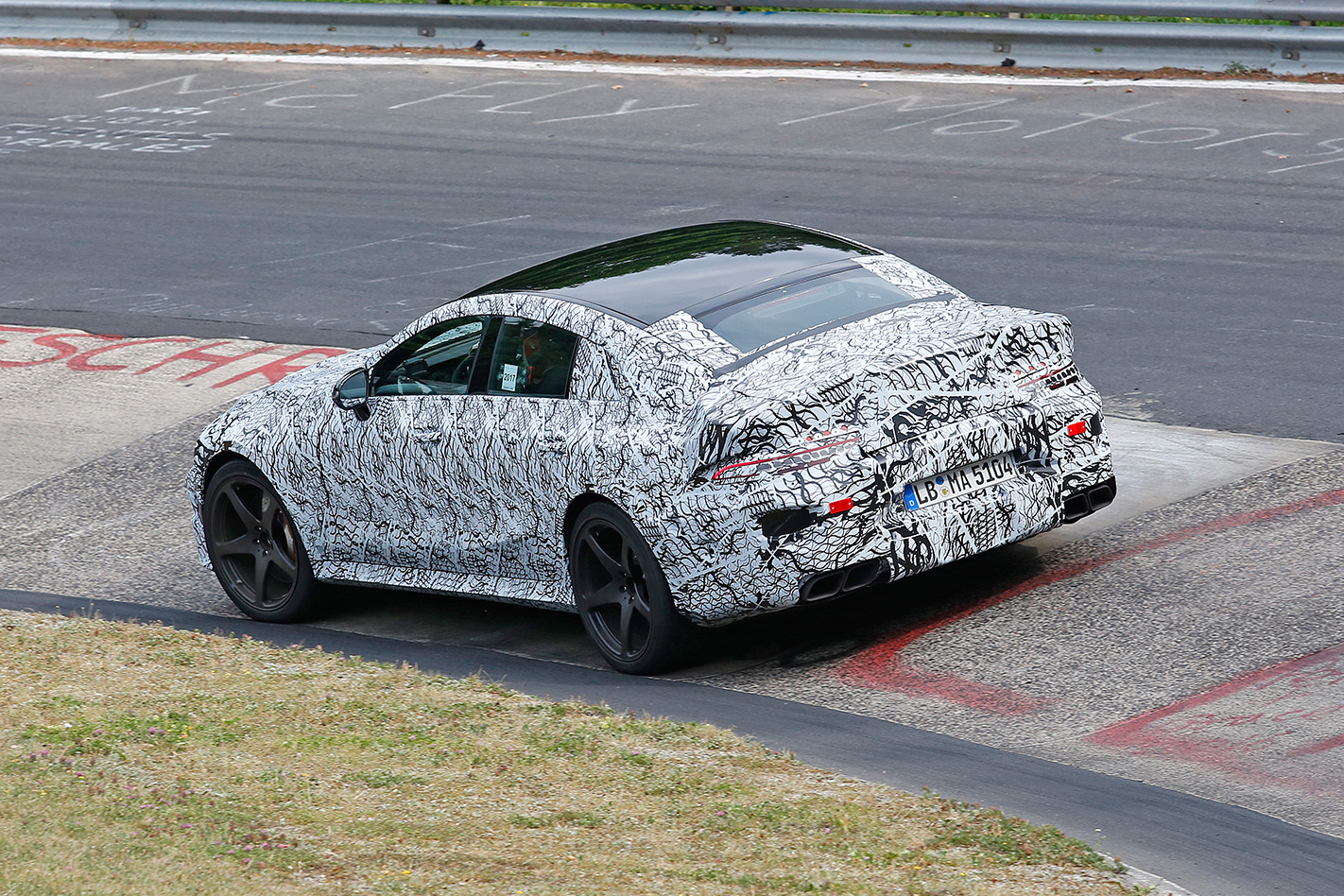
Expect to see the production car make its debut later this year, most likely at the Frankfurt Motor Show in mid-September. As a home-ground event, it makes sense Frankfurt will be the venue where AMG gifts itself one hell of a birthday present.
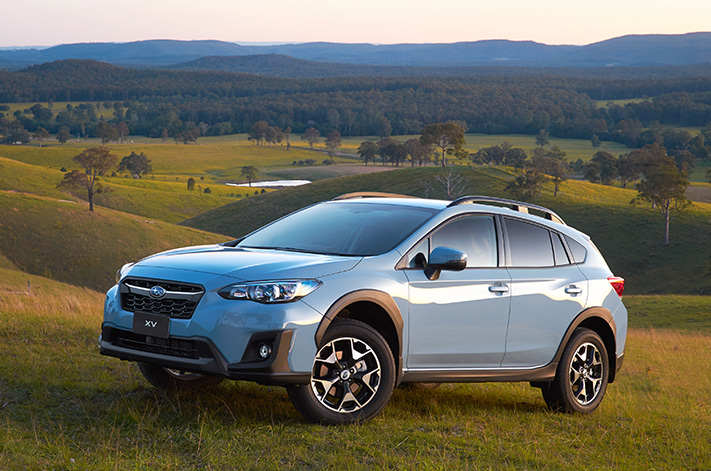
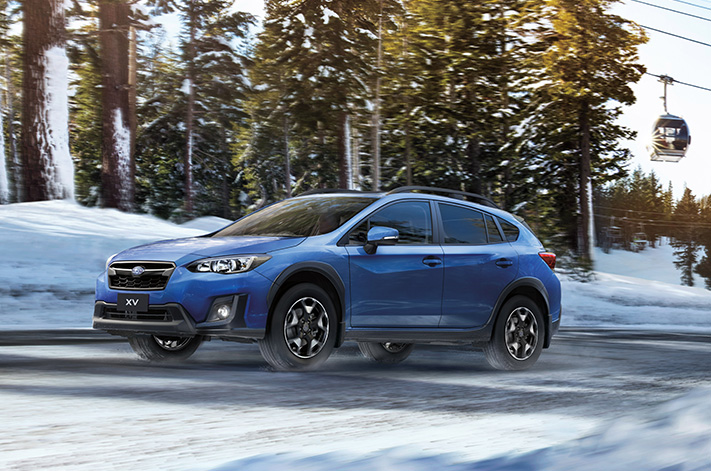
Subaru’s second-gen XV picks up all the best bits of the closely related Impreza, and adds a bit more.
TELL ME ABOUT THIS CAR
SUVs, hey? They’re everywhere, and only growing in popularity as more of us swap out of traditional, low-slung passenger cars and into the high-riding wagons.
As one of the better performers in the small SUV sphere, this major makeover of the XV is an important one for Subaru as it takes on the likes of the all-conquering Mazda CX-3, the grandpa’s axe that is the Mitsubishi ASX, Nissan’s well-equipped Qashqai and the fresh-faced Honda HR-V and Toyota C-HR.
The high-riding XV is based on the Subaru Impreza, but as you’ll find out that’s no bad thing.
STRENGTHS
- It’s roomier than before. The Impreza platform has vastly increased passenger and load space, and the XV shares in all of that.
- It drives better than before. The Impreza’s new underpinnings make it a fun, driveable, well-controlled car, and by extension that also applies to the XV. Even on loose gravel surfaces, the XV feels sure-footed and planted.
- It has real off-road cred in a tiny package. The XV is always in all-wheel-drive mode, so it doesn’t matter if you happen to be driving on bitumen or gravel. There’s 220mm of clearance, which means it can more easily tackle the rough bush bashing that would stop a faux soft-roader in its tracks. It has the same X-Mode traction control system as used in the highly off-road capable Subaru Forester that can help it scrabble up steep gravel inclines.
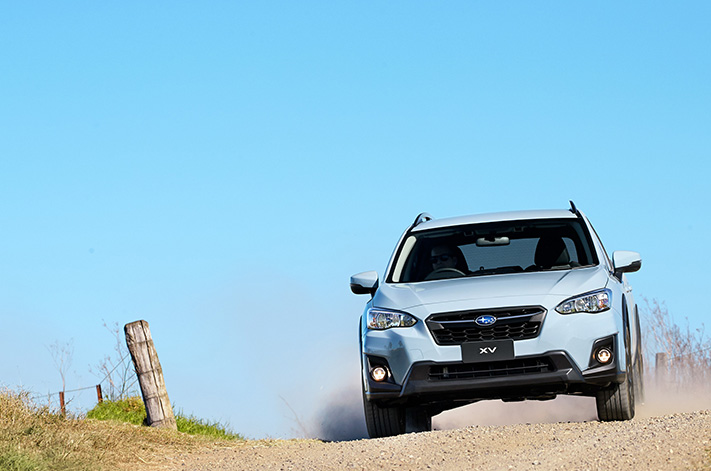
- It also has hill descent control that can walk the XV downhill while you just worry about steering.
- The engine now includes direct fuel injection. This is a fuel-saving measure that also has the benefit of increasing performance ever-so-slightly.
- It looks better. The XV formula hasn’t changed much, but the exterior design seems to fit the shape a lot better than before.
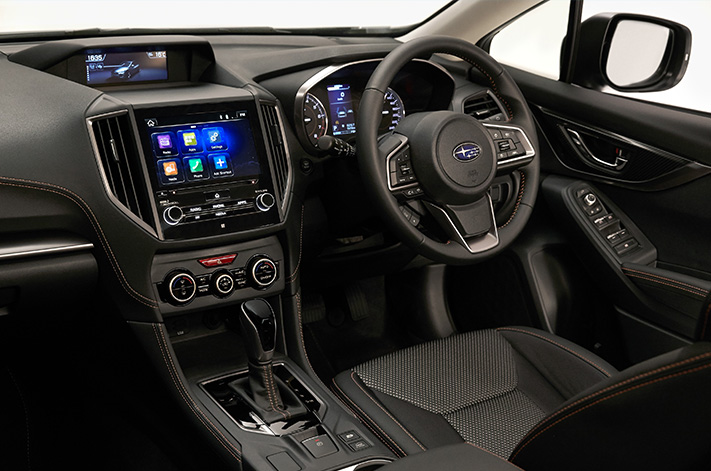
- It adds automatic city braking to all but the entry-level model. Subaru’s version of this technology is called Eyesight, and it’s fitted on all but the cheapest 2.0i.
- The cloth seats are quite comfy. We can’t say the same for the leather-trimmed ones, which are a bit firm and slippery – you’ll notice that most while off-road or going around corners.
- The XV is more expensive. The entry-level 2.0i model is $1250 more than the model it replaces, starting from $27,990. That’s because Subaru has dropped the six-speed manual version of the XV in favour of a continuously variable transmission.
- Under the boot there’s a temporary space-saver spare, while in the previous generation there was a full-size alloy. You don’t want to be stuck in the bush with a puncture and a limp-home tyre.
- The XV has porked up considerably. It now weighs more than 1400kg where the previous generation tipped the scales well under that.
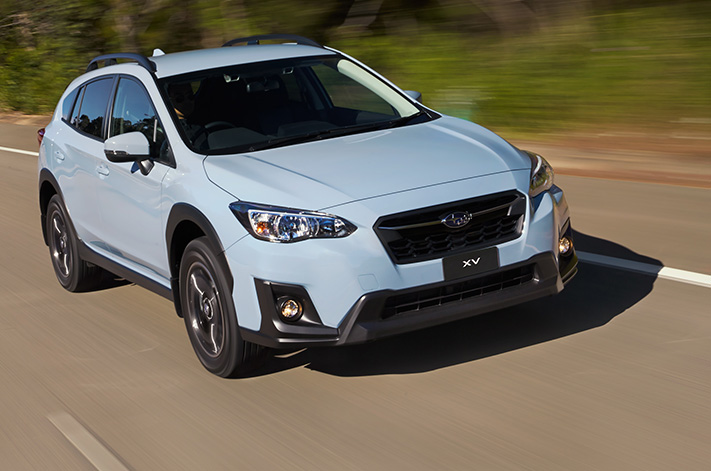
- Because it weighs more, the performance of the mediocre 115kW/196Nm four-cylinder engine is dulled. Join a fast-moving freeway and you notice the engine needs more oomph.
- The 17-inch low rolling resistance Yokohama tyres fitted to the entry-level model are much noisier on coarse-chip roads than the Bridgestones fitted to the 18-inch alloys on the more pricey models.
Toyota’s C-HR is a huge leap forward for the brand, driving impressively, challenging perceptions with its design and generally looking like the newest, coolest kid on the city block. The Mazda CX-3 has also had a largely under-bonnet makeover to make it a much better package than before, and it’s not the segment’s best-seller without reason. The XV’s forte, though, is its off-road ability. For that, you’d need to look at something like a Suzuki Vitara or a Jeep Renegade, both of which possess similar off-but-not-too-far-off-the-beaten-track ability.
The one and only HSV Coupe GTS-R Concept has been sold to one of Australia’s foremost HSV collectors.
Unveiled at the 2004 Sydney International Motor Show, the two-door racer was intended as the ultimate Aussie-made track car, with a 335kW/605Nm 6.0-litre LS2 V8, FIA-spec chromoly rollcage, carbon-ceramic brakes, Ohlins remote-reservoir dampers, wider tracks and lightweight panels.
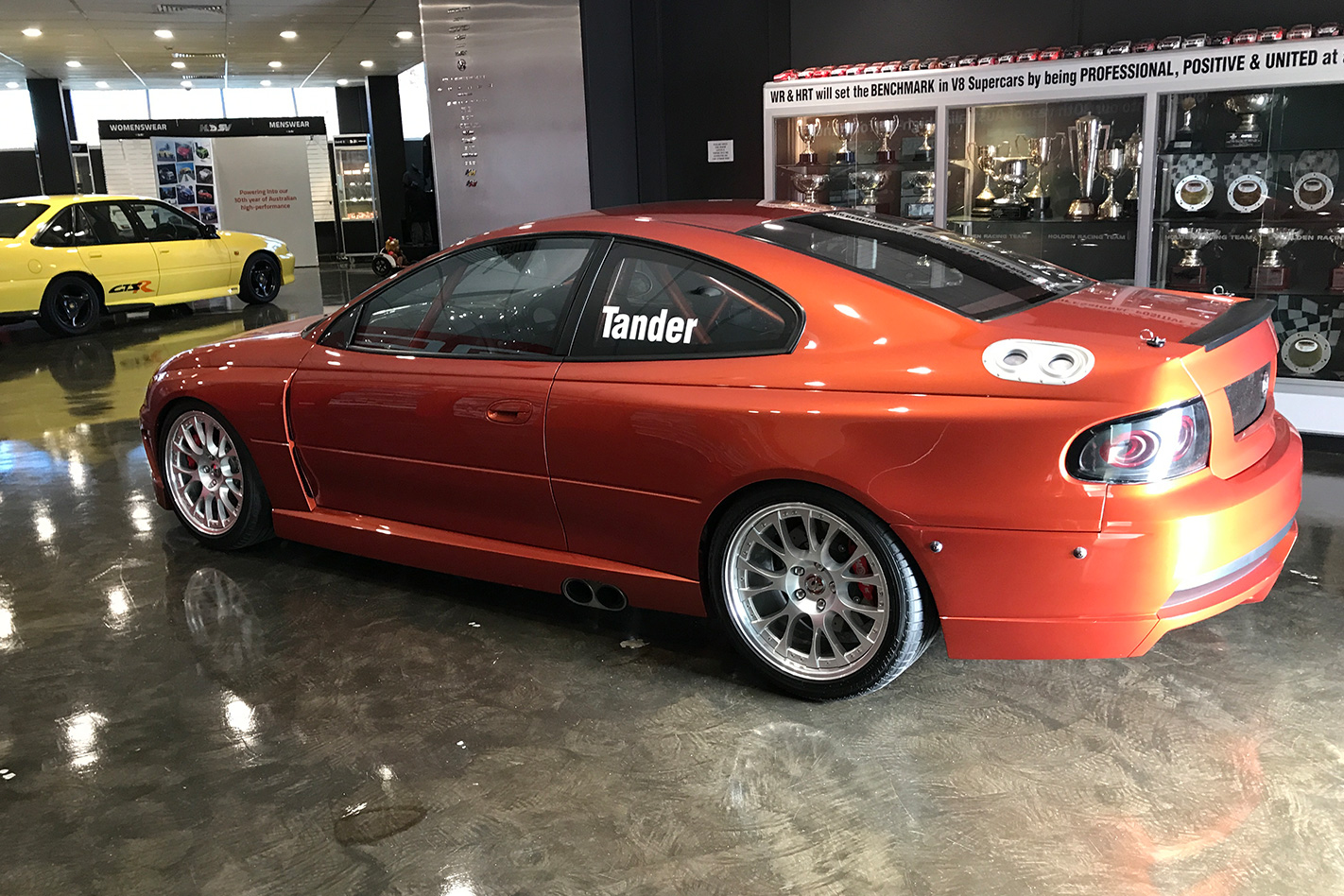
Now it’s on the move to one of Australia’s biggest HSV fans, known only as Boomer, where it’ll join VS GTS-R No. 001 and 002, a GTSR W1, the final ever GTS Coupe built, HSV W427 No. 427 and many more of Clayton’s greatest hits.
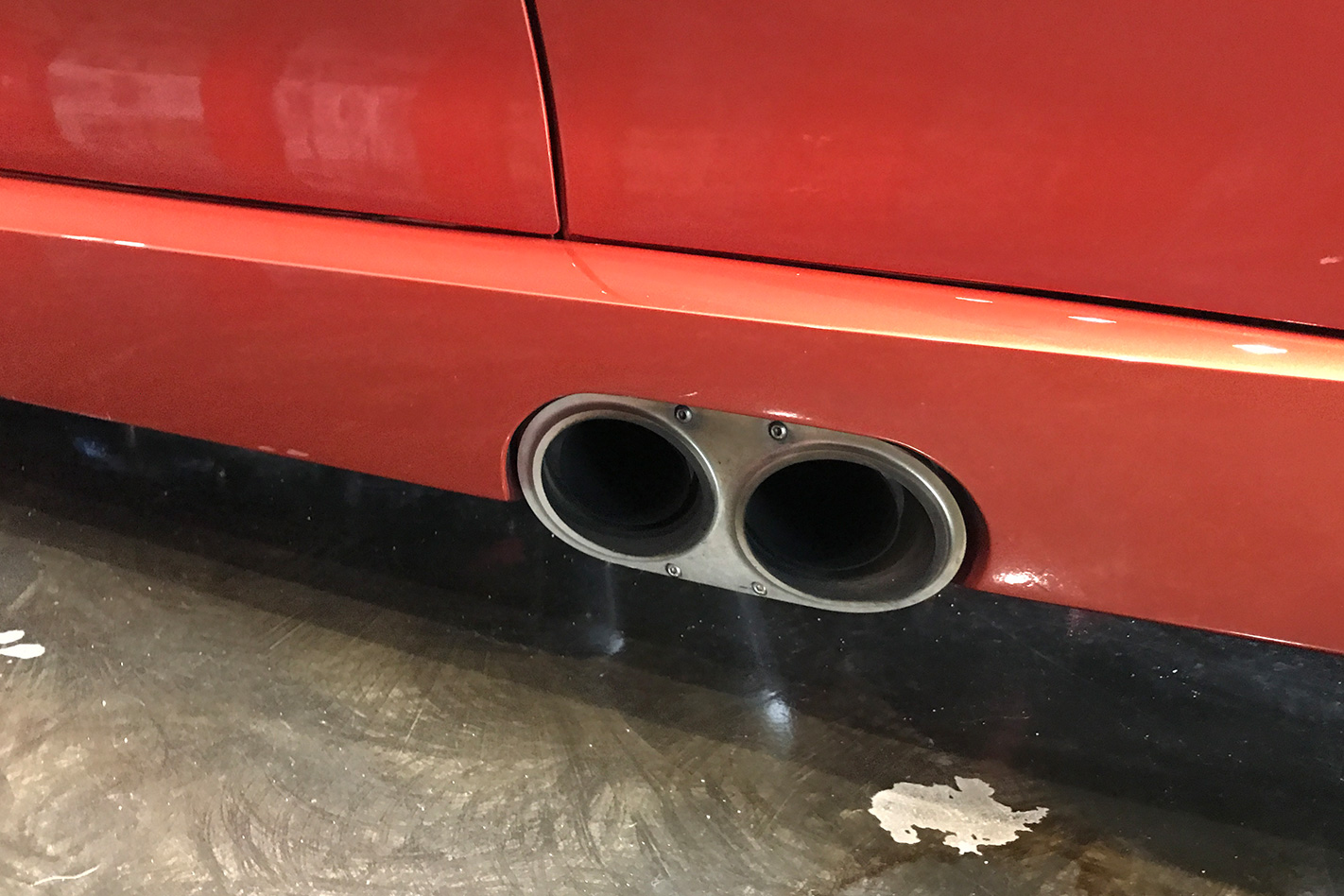
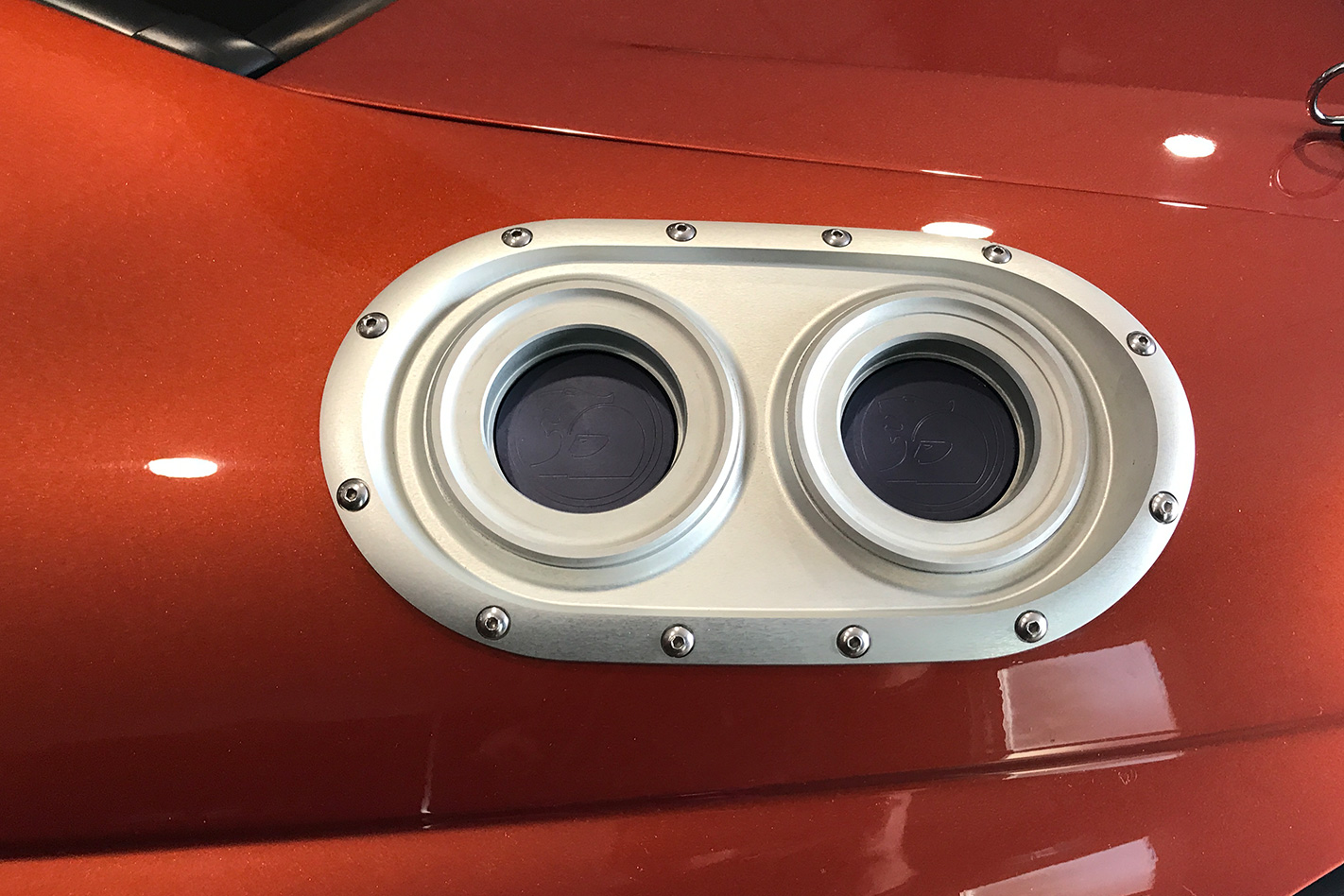
“My way of thinking is that it’s one-of-one, I’ve got number one and two of the VS [GTS-R] and I’m getting a GTSR ute and GTSR W1 and [the Coupe] was the only other thing they badged GTS-R locally. I’ll have the full set and no one else will be able to have that.”
One of the more interesting car industry awards is the JD Power Initial Quality Study in the USA, which pits manufacturers against one another in the exciting field of… vehicular reliability.
Dry subject matter, sure, but what other motoring awards have a top five with brands as diverse as Kia, Genesis, Porsche, Ford and Ram?
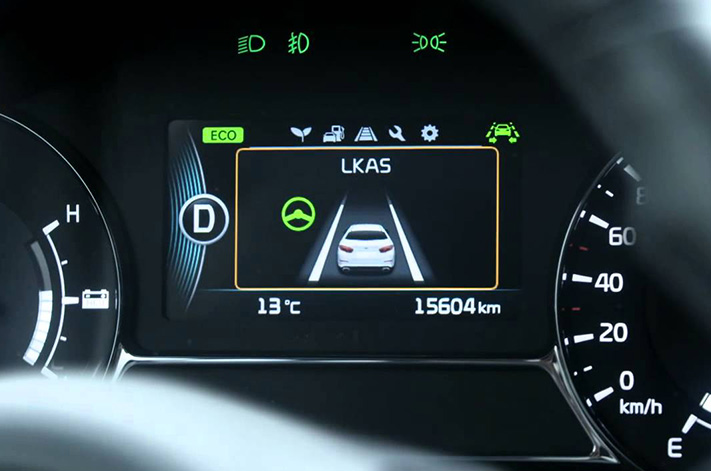
The awards show that while general vehicle quality is at a 31-year high, problems with driver assist features such as automatic emergency braking and adaptive cruise control are on the rise – no doubt a side-effect of the increasing prevalence of such high-tech features in mainstream cars..
“Automotive manufacturers are responding to consumer feedback and producing vehicles of the highest quality,” said Dave Sargent, vice president, global automotive at JD Power.
“The industry has improved significantly in each of the past three years. Today’s vehicles have more things that could go wrong but fewer things that actually do go wrong.”
The 2017 awards were based on a survey of 77,415 people who bought or leased 2017 model-year vehicles. All up, the survey indexes 243 models across 26 segments.
Vehicles were evaluated on driving experience, engine and transmission performance and how many quality issues were reported by vehicle owners. Points are accrued for identified problems meaning the lower the total score, the higher the vehicle’s quality.
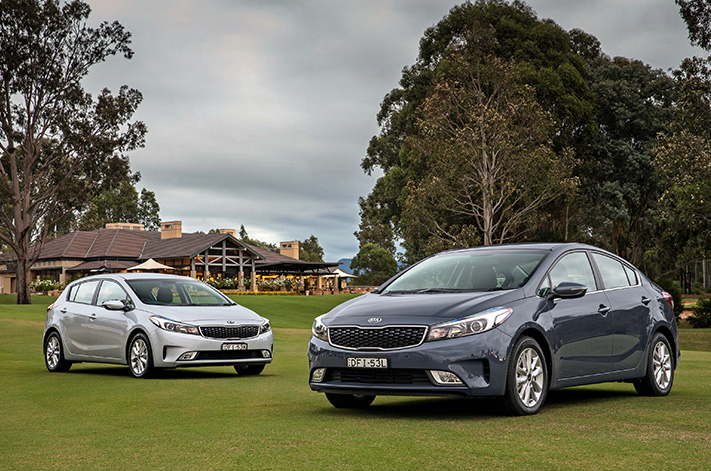
Last year’s winner Kia again topped (or bottomed) the list with 72 problems per 100 vehicles, driven by five segment awards to the Soul, Sorento, Forte (Cerato), Cadenza (a luxury Optima) and Niro crossover.
Hyundai’s luxury sub-brand Genesis also did well, coming second with a score of 77 in its first survey as a standalone brand. Porsche scored 78, ahead of Ford (86) and Ram (86).
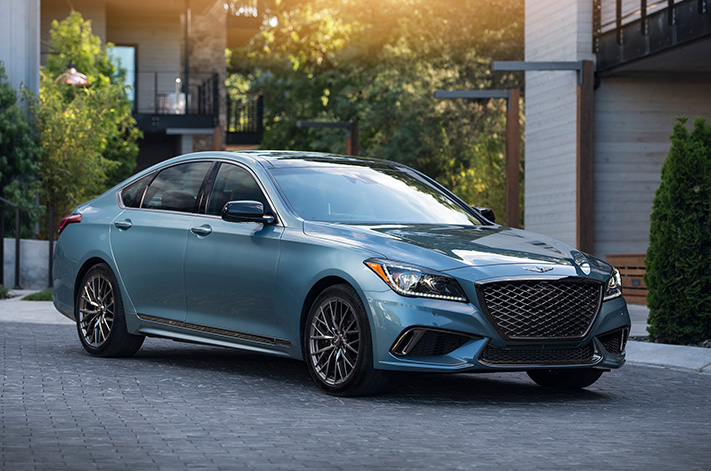
The industry as a whole recorded an average score of 97, which was bettered by BMW, Chevrolet and Hyundai on 88 points apiece, Lincoln (92), Nissan (93), Mini (94), Buick (95) and Toyota (95). Volkswagen also did reasonably well on 93 points despite plenty of controversy regarding the Dieselgate scandal.
There were some surprises in the list of brands that performed poorer than the industry average such as Lexus (98) which dropped from seventh place to 15th while Audi’s 115 points saw it drop 11 places to 26th.
Interestingly, Mazda and Subaru which scored first and third in last year’s Australian JD Power survey were in the bottom 10 with 125 and 113 points respectively.
Fiat backed up its 32nd and last placing from 2016 with 163 problems per 100 vehicles.
Mercifully the speed limit lifts, but frustratingly, given we’re on an autobahn, the traffic continues to hamper our efforts to enter the fast lane.
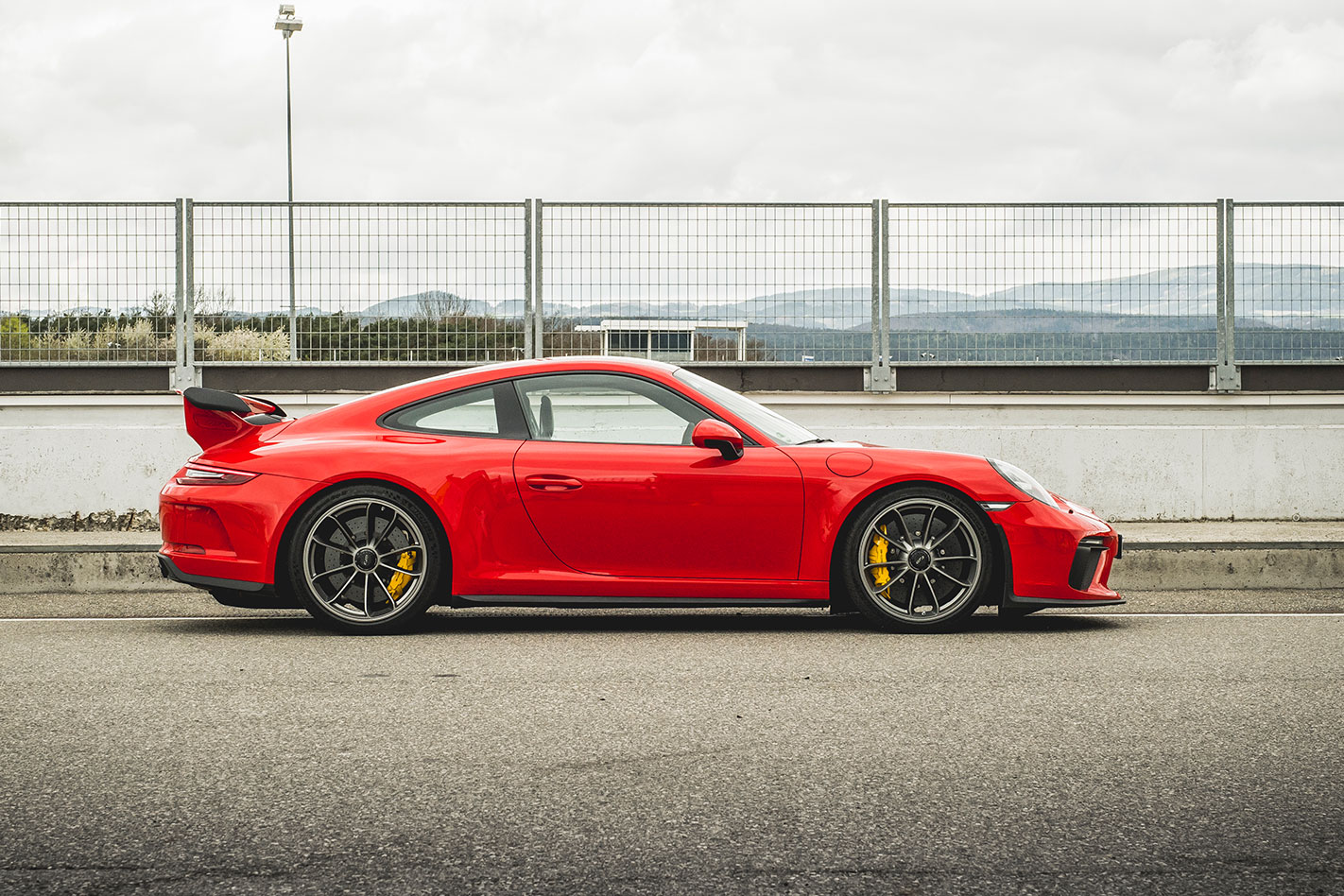
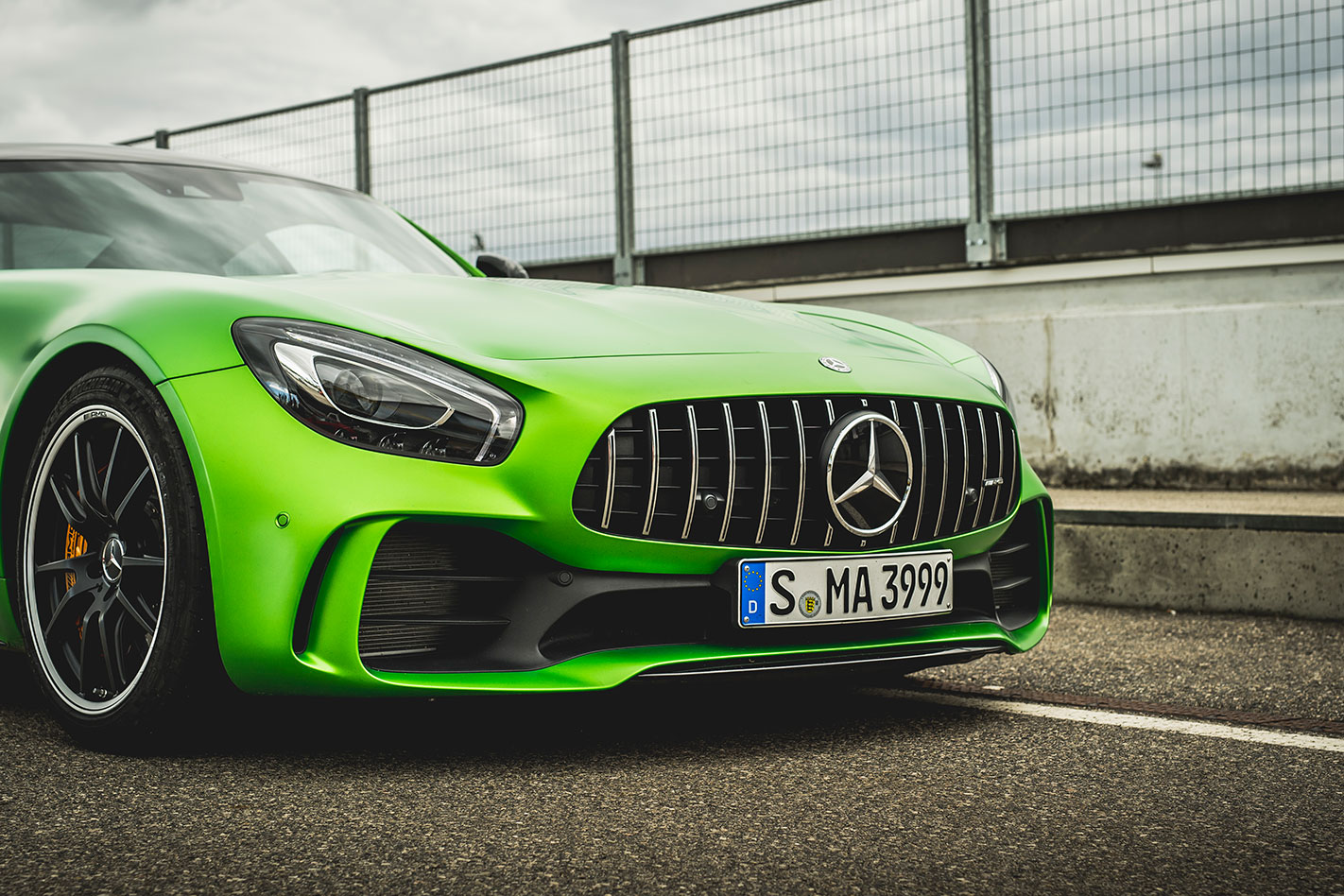
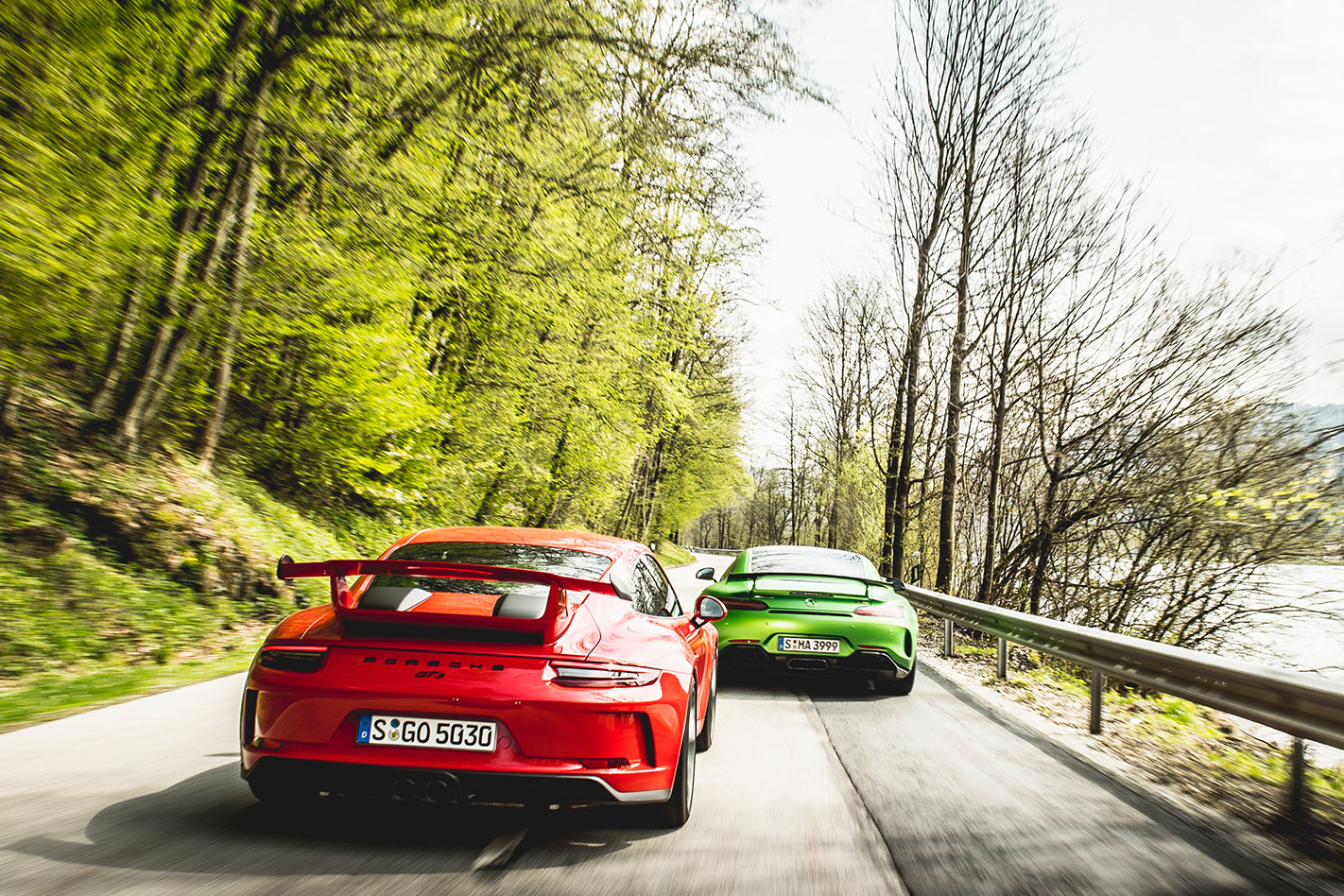
Luckily, on the oldest stretch of the A92 between Munich and the foothills of the Bavarian Forest, our patience is rewarded with the day’s first chance to give these two German warriors some stick – the combatants being the freshly minted Porsche 991.2 911 GT3 and Mercedes-AMG GT R.
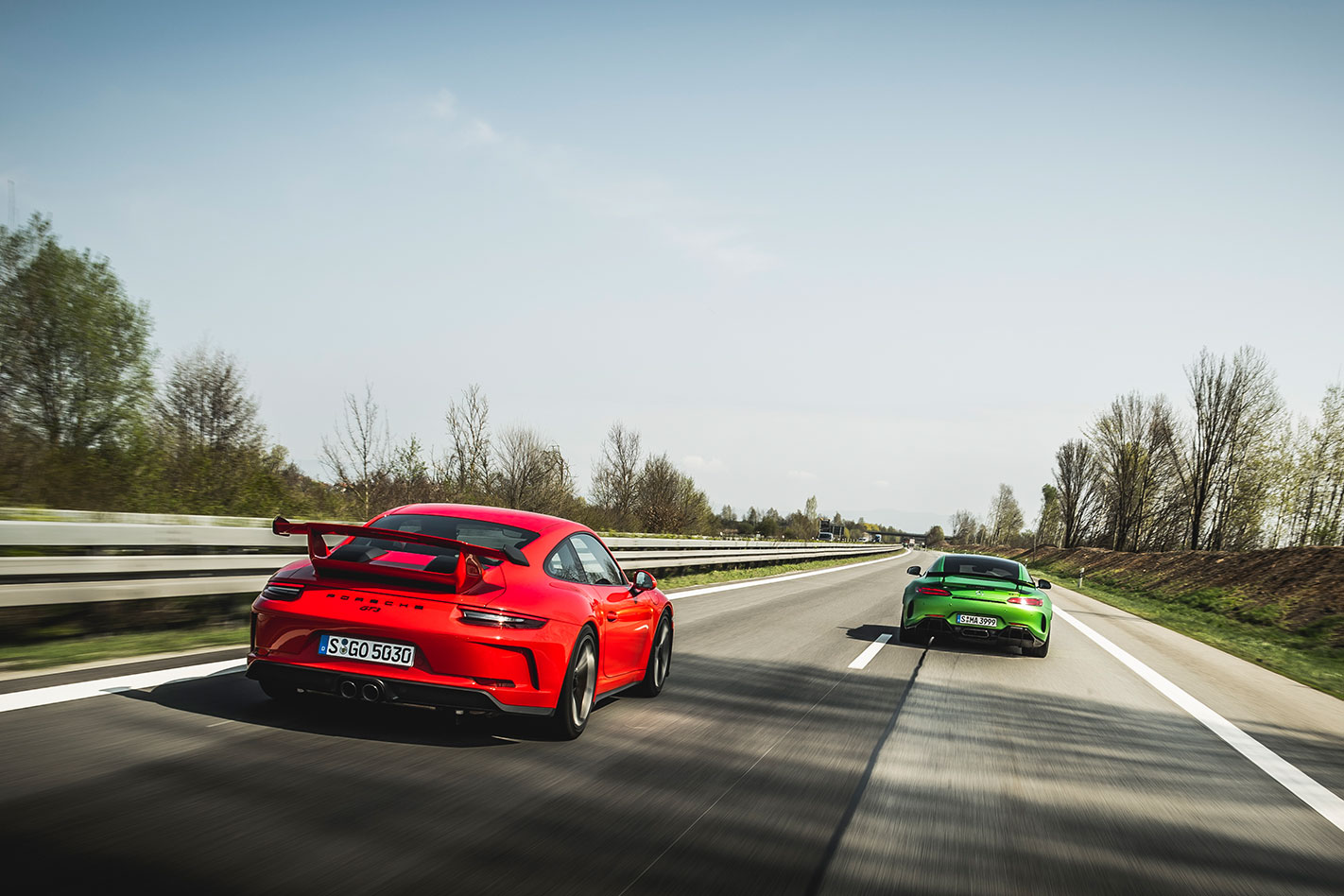
Between the two, front- or rear-engined, street cred is in abundance. It’s all mighty rear wings, big wheels and ostentatious proportions.
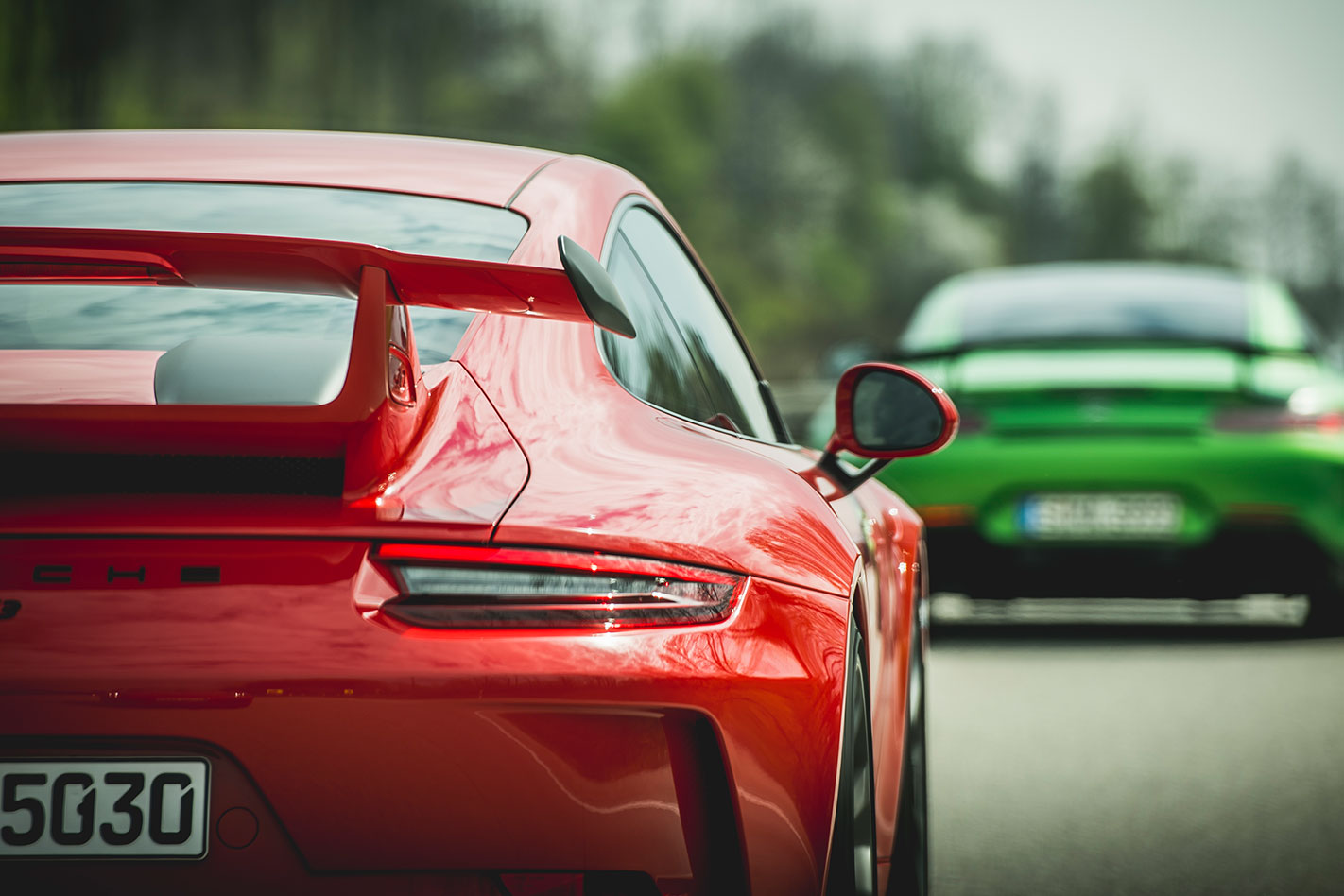
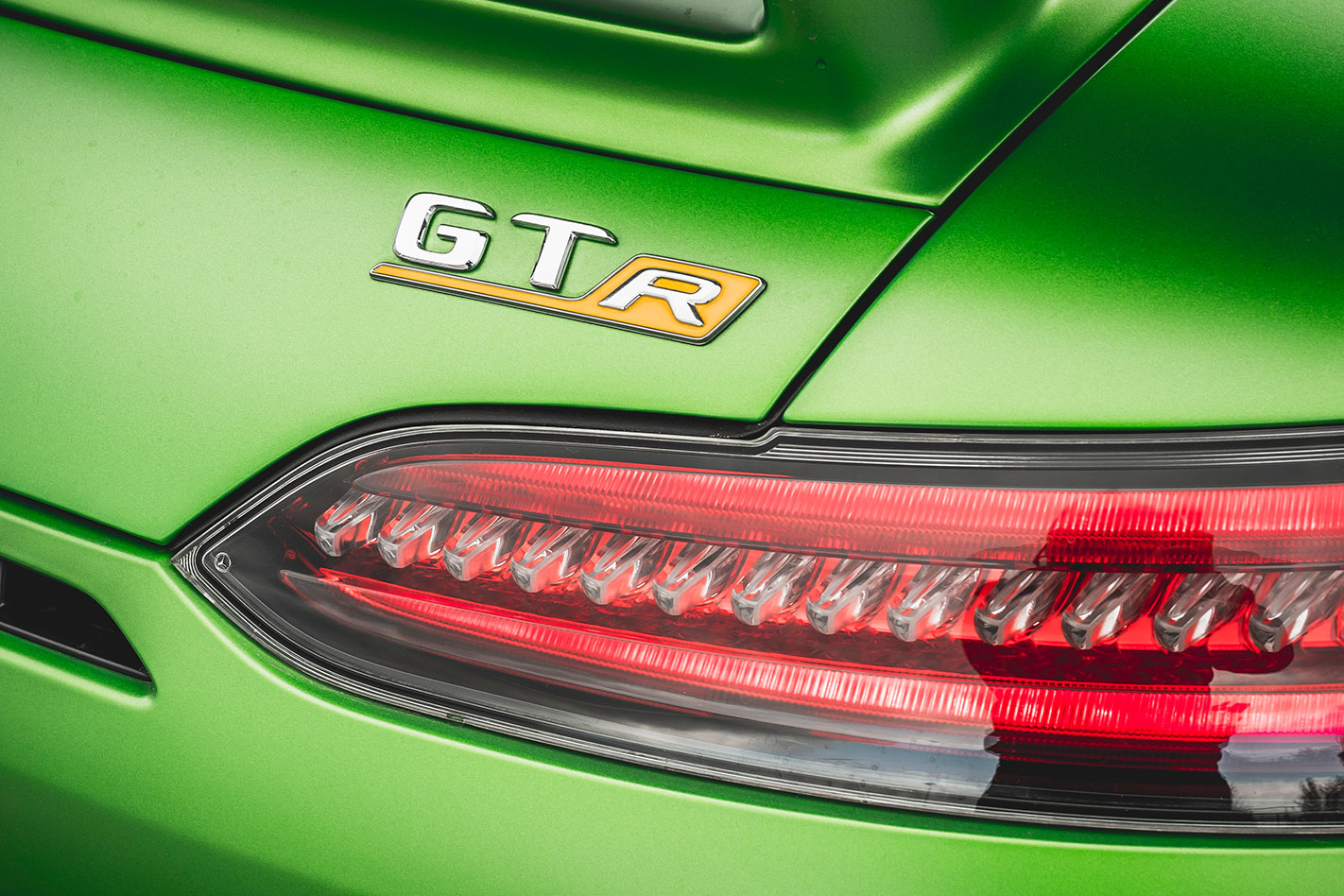
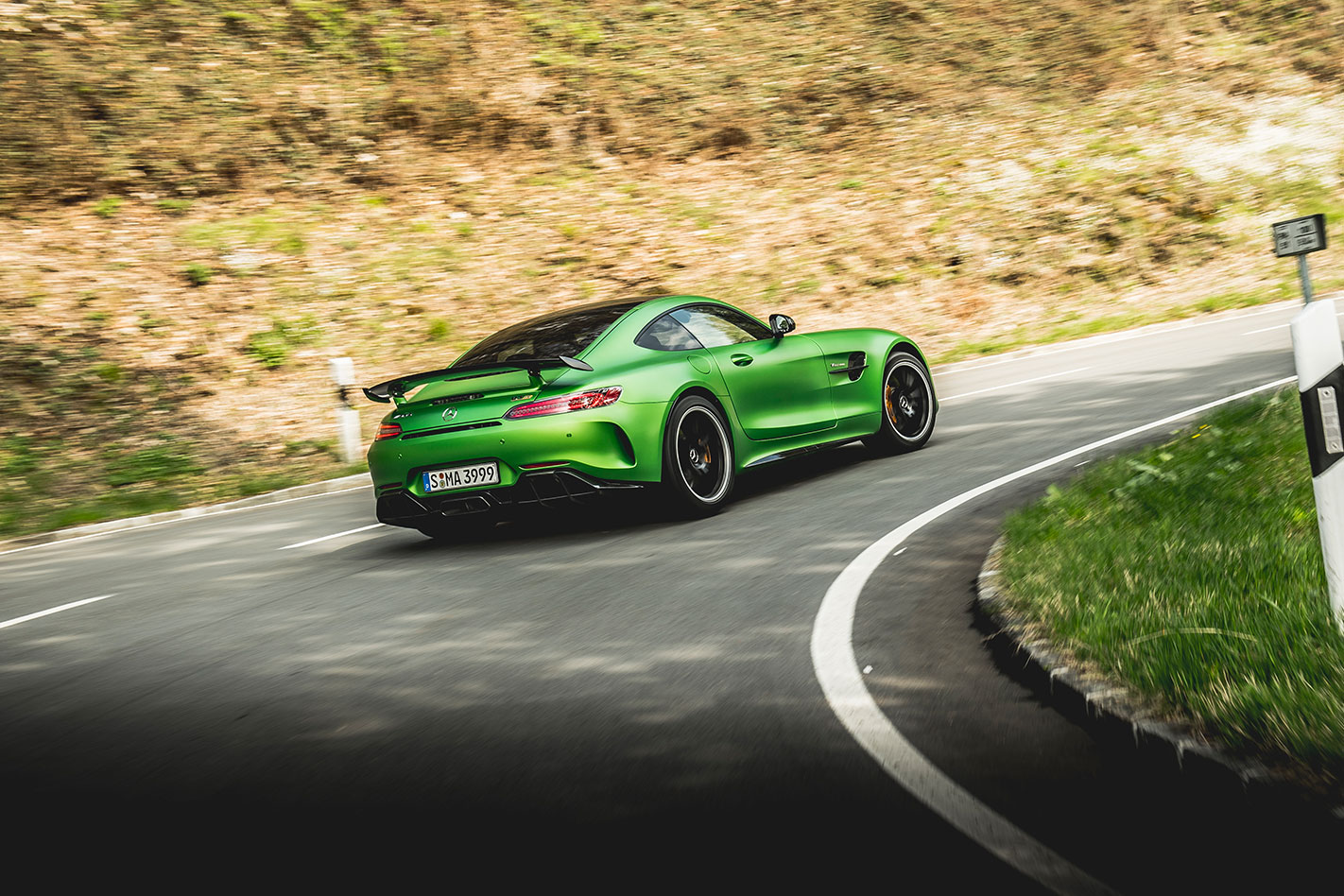
While the front end of the Mercedes AMG GT R looks rather intimidating, the curved, stubby rear almost seems at odds with bold front facade. Porsche has cleaned up the snout of the Porsche GT3, which deserves the optional lift system to protect its rubber chin.
Back on the road and the Porsche is leading the Benz when the first proper gap presents itself, but it doesn’t stay in the GT3’s mirrors for long. That’s what loads of instant torque – 700Nm to be exact – can do to one of Stuttgart’s finest.
In just about any gear, from rest to an identical top speed, the menacing Merc has the Porsche covered – in a straight line, at least. Yet, the driver in the GT3 is hardly playing second fiddle here.
With the loud pedal pinned to the firewall, he is totally engulfed in his own mind-boggling stratosphere, celebrating each blaring 9000rpm upshift with a smile.
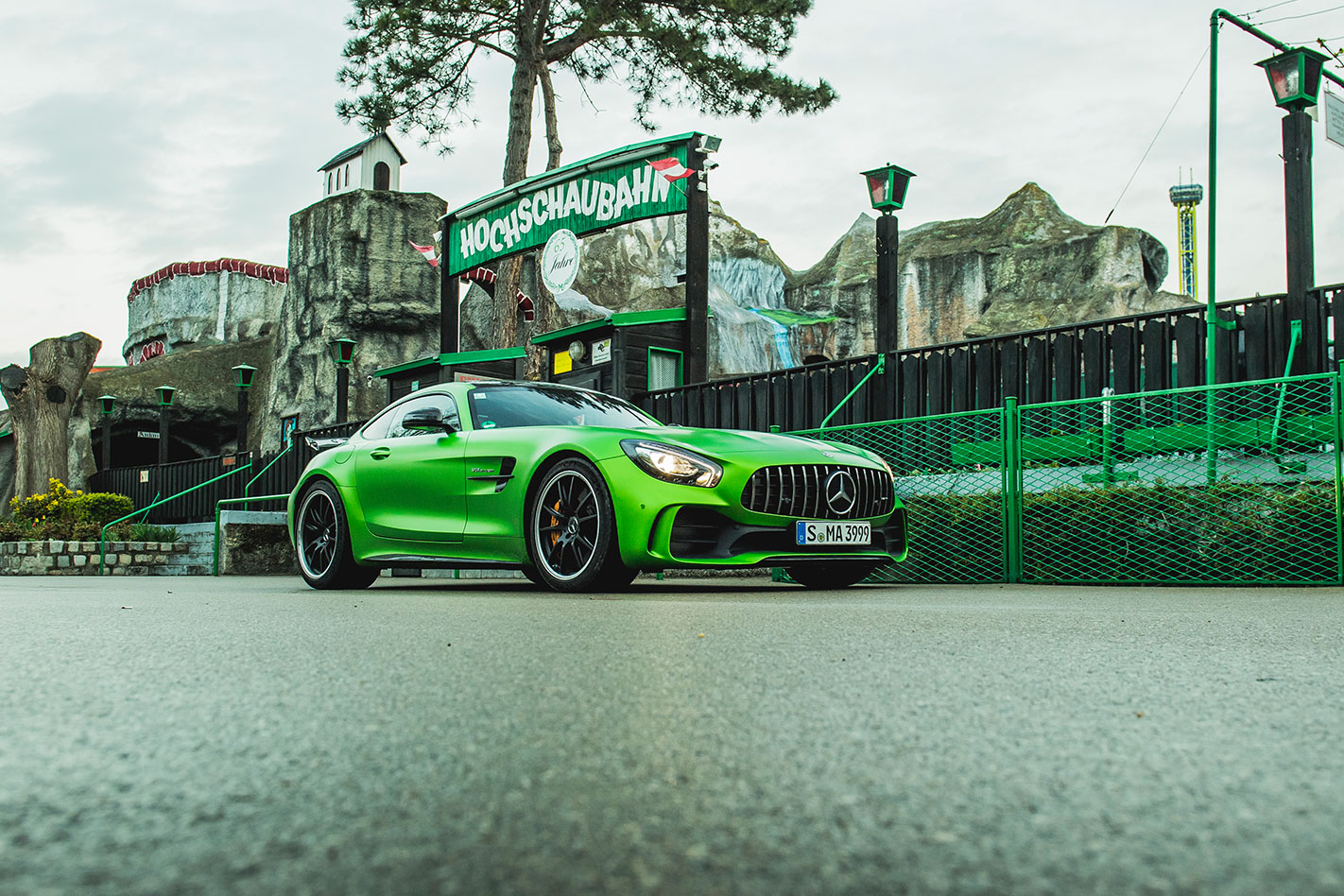
Your neighbours may oppose its lack of manners. Full throttle acceleration is accompanied by acoustic earthquakes, accentuated by artificial heel and toeing, overrun histrionics and howling part-throttle blasts.
2018 Chevrolet Camaro ZL1 1LE sets Camaro ‘Ring record
Both cars reach a top speed of 318km/h, hit 100km/h in less than four seconds and consume an identical 19.2L/100km while being put through their paces on test. The two-day, dawn-to-dusk experience includes lengthy flat-out stints, tricky Austrian back roads, city crawling and an hour-long belt around Wachauring racetrack an hour west of Vienna.
In more considered conditions these two would yield better fuel economy, but when all your ambitions must be crammed into just 48 hours, frequent pit stops are mandatory for car and driver.
Active roll control: Geek speak
Selecting a route free of watching police eyes, but full of challenging terrain, is the order of the day with these two. Once again the Porsche takes the lead, weaving its chiselled nose in and out of Austria with verve.
Beneath its sleek, go-fast body is a host of high-tech aids. The GT3’s wheelbase morphs with rear-wheel steering, but the dynamic package extends to adjustable dampers, big tyres (245/35 ZR20 front, 305/30 ZR20 rear), active engine mounts and a host of sophisticated electronics. The GT R shares most of these features.
Opinion: Limited edition cars shouldn’t be unattainable
Add to this the shorter wheelbase (2457mm against 2630mm) as well as the 40:60 per cent rear-bias weight distribution, and you know why the Porsche is the more chuckable piece of kit.
Combined with that torque figure, the big, bad Benz has 430kW under its long bonnet – 62kW more than the Porsche. It also explains why it keeps winning the dragstrip duels on the autobahn. Yet it’s not in terms of top speed, it is in-gear acceleration. As soon as a straight comes into sight, the GT R makes up for all the ground it has lost to the GT3 in the bends left behind.
That’s 0.5sec faster than the more involving manual, which is once again an option (and sadly not available until October, hence why we have a PDK for this test).
Porsche 911 GT2 RS revealed at E3
As we meander east along the river Danube towards Vienna the cars’ different characters evolve in different sections. On one side, there is the GT R. It’s more GT than R, but only when given a long leash. On the other is the GT3 – more R than GT, even though the sharper GT3 RS is still to come. Despite its slightly more compliant suspension, the Porsche struggles to relax, let go and drop in revs.
This shootout is poised to reveal the strengths and weaknesses of two diametrically opposed engineering concepts. In terms of traction, with its ability to put all its weight and energy on its hind legs, the Porsche wins. When it comes to turn-in, it’s a dead heat – at least in the dry when the tyres bite until the speed is too silly for public roads. A clear win for the AMG comes by way of mid-range grunt.
The torque tsunami from 1900 to 5500rpm more than compensates for the boxer’s extra 2000rpm at the top end.
Six differences for the next Porsche 991.2 911 GT3
Although both coupes are crammed with high technology, they could still do with industry-first innovations such as heated tyres. Why? Because on cold rubber, traction is iffy and cornering grip can be a guessing game. While AMGs usually wriggle their tail before ESP quickly catches it, 911s have been known to either understeer or oversteer in equally dramatic fashion.
The Porsche GT3 can counter this by pulling both shift paddles at the same time, essentially putting the gearbox into neutral. Or, for the drifters among us, it’s basically popping the clutch. At any rate, fast cornering is all about torque management and steering balance. The level of tactility is commendably high no matter which steering wheel you grab, but control (and the confidence it entails) remains an art form.
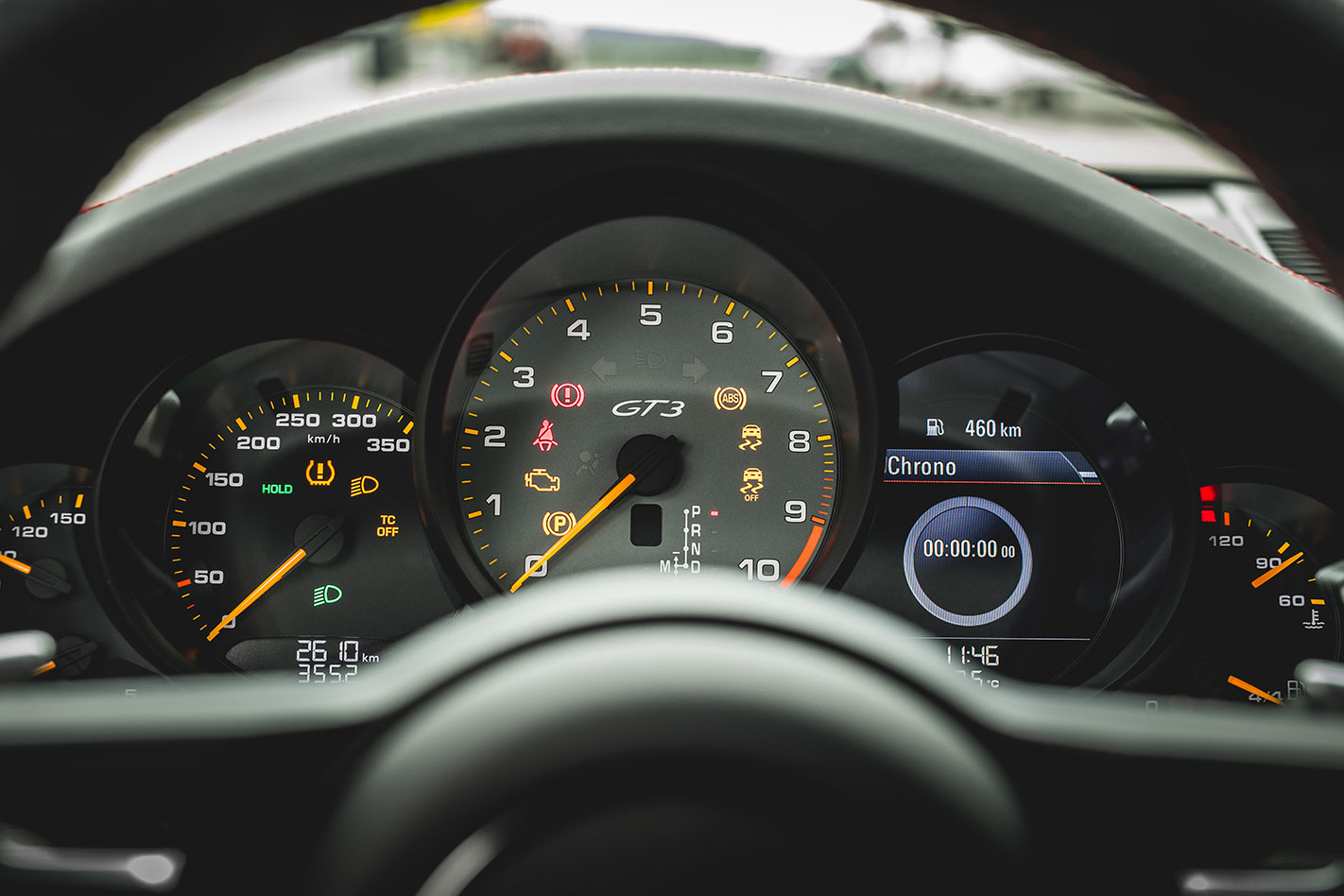
Perhaps switching the electronic nannies all the way off in the GT R isn’t such a good idea. Luckily there are varying levels of electronic safety net, nine in fact, adjustable via a dial on the centre console. Like a volume button for the electronics.
Porsche 997 GT3 with LS3 conversion for sale
The buttons on the old-fashioned centre console of the GT3 invite you to turn up the exhaust volume, adjust the shock absorber calibration, alter the drivetrain response, and deactivate ESP either on its own or together with TC. It’s a straightforward ergonomic arrangement – no drive-mode selector, no tweaking of springs and steering, no personalised mix-and-match program.
In classic GT tradition, this is not a blended 911 like the Turbo S – it’s the chef’s selection served straight up. The 991.2 GT3 is a slightly more accessible set-up with fewer rough edges. It’s still totally involving while being charmingly viceless.
Limited edition Mercedes-AMG GT3 Edition 50 revealed
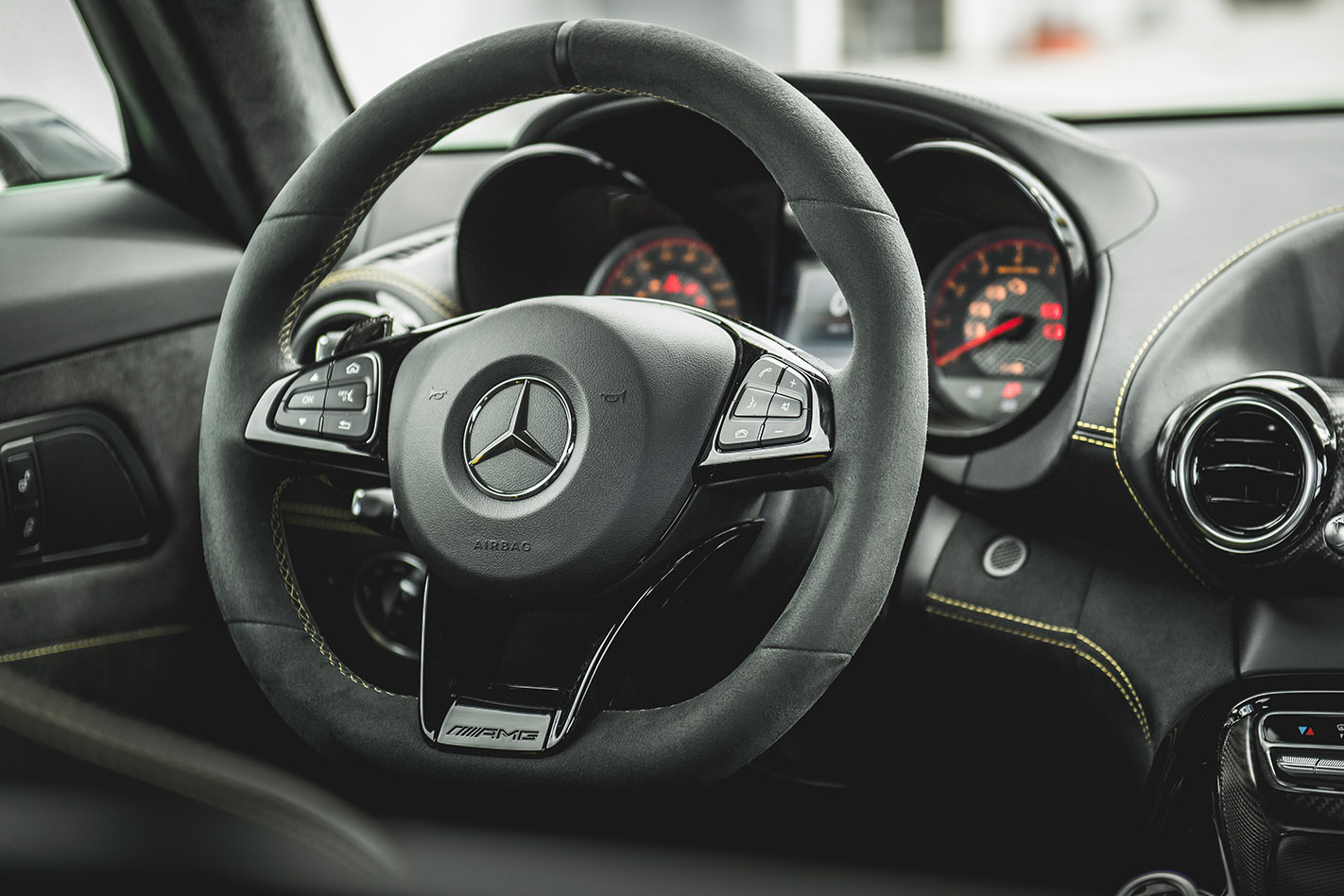
In many ways, the GT R is the brat of the duo. Emphatically loud and outlandishly fast. However, in contrast to the almost austere driver environment favoured by Porsche, the AMG is a true luxe sledgehammer.
An insatiable long-distance mile gobbler and a pragmatically practical daily driver, this is as much a Mercedes as it is a bespoke AMG. Despite the bulk, the GT R cabin is somewhat overcrowded and snug, something that’s not helped by the unheated, body-hugging racing seats which only adjust for reach.
Mercedes-AMG GT R Nurburgring lap
Although, with a bit of luck, a last-minute opening becomes available at the Wachauring – it’s less grand, but just as demanding. With the exception of a second-gear corner at the end of the start-finish straight, it’s all third and fourth-gear stuff. Sure enough, a midday shower pushes the grip level from low to high risk. In view of the cold tyres and the marbles framing the racing line, ambition quickly gives way to precaution.
Under blue skies, the AMG goes out first to set the pace. And what an awesome pace it is. Do not underestimate this car. It is more than a low-end torque monster or master of the power slide.
Mercedes-AMG GT R sets Bathurst lap record
Even on warm rubber, moments of understeer are taking turns with angry, shoulder-shrugging antics, so traction control definitely has a role to play. Soon the grip is back and we push the envelope again by tightening lines, straddling kerbs and braking later and later. Turn-in is reassuringly positive, torque begs to be fed earlier and soon enough the right hand is once more reaching for that magic yellow traction-control knob.
Stepping from the world of AMG into the Porsche orbit is like entering a different universe, which happens to be spinning at a near-identical speed. Yet it’s one addicted to high revs, late upshifts and even later braking manoeuvres. You can fall into pupil-widening understeer, but it can be quelled with a change of approach as the rear-wheel steering tightens the arc.
Performance Car Podcast: Mercedes-AMG C63 S
In ESP Off mode, small flames are licking behind the seat, but it takes a second stab at the button to spark a proper blaze. The endlessly capable 911 pushes, kicks and tugs when accelerating hard past apexes and through corners – but so does the tap-dancing, fierce fighting GT R.
2017 Detroit Motor Show: Porsche 911 GTS revealed
It lays the power down like a steamroller on steroids and it defies g-forces long and hard. However, while it can carve out a small lead in terms of a circuit conqueror, as hard as it may try, it can’t pull away from its opponent overall.
Hop back in the GT R, priced from $349,000, and you will be just as fast. Despite the completely different means of fusing progress and adhesion, the sharper still steering and the readily available excess of torque makes the rather ostentatious muscle coupe from Affalterbach an equally exciting drive.
Speed secrets: Porsche Sport Driving School
Ultimately it’s not really about picking a winner as both are automotive excellence. An initial drive of the GT R at its launch rendered it not quite a five-star car, but greater exposure against one of its fiercest rivals proves that it is a match for its German peer. Throughout a glorious 48 hours there was never a race to get behind a particular steering wheel.
Whatever key the hand of fate dealt, the keeper was grinning. Temptations are seldom more alluring than these.
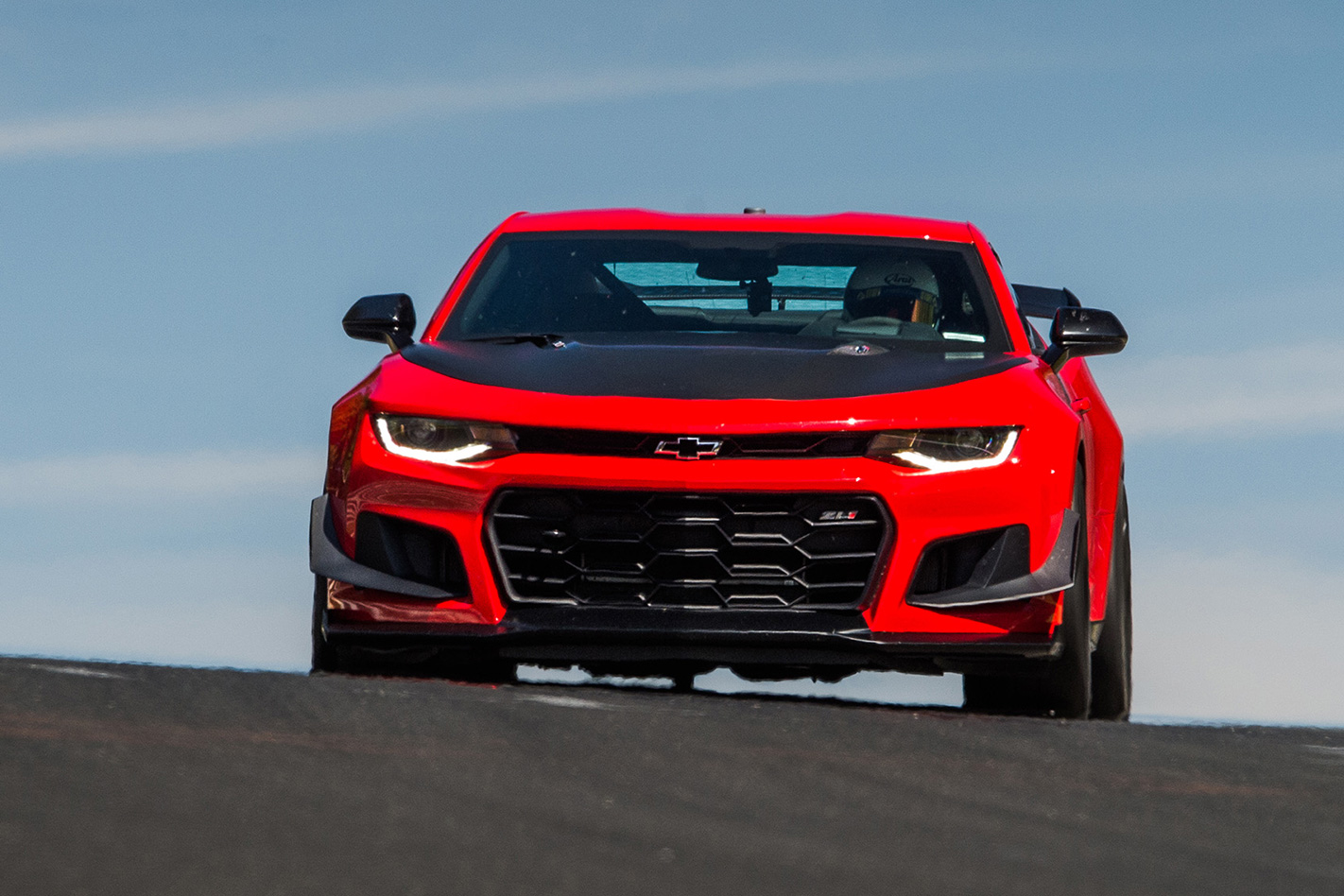
It has taken only seven minutes and 16.04 seconds for the upcoming Chevrolet Camaro ZL1 1LE to lap the Green Hell.
That’s faster than the ZL1 lap from last year by almost 14 seconds, faster than a BMW M4 GTS by about 13 seconds, a Ferrari 488 GTB by five seconds, and even faster than a Porsche 911 GT2 RS’s 2010 effort by two seconds.
The 1LE shares the same supercharged 6.2-litre, 485kW/881Nm LT4 engine as the Camaro ZL1, but features track-driving tweaks such as fully adjustable suspension, front dive planes and carbon fibre rear wing, and summer-only Goodyear Eagle F1 Supercar 3R tyres.
What’s more is that the impressive 7:16.04 lap time was achieved using a car fitted with a manual gearbox.
SEMA: Chevrolet Camaro resto mod
“To make up more than a second per mile on the Nordschleife compared to the ZL1 automatic is a dramatic improvement and speaks to the 1LE’s enhanced track features,” he says.
“With chassis adjustability unlike any vehicle in its peer group, the Camaro ZL1 1LE challenges supercars from around the world regardless of cost, configuration or propulsion system.”
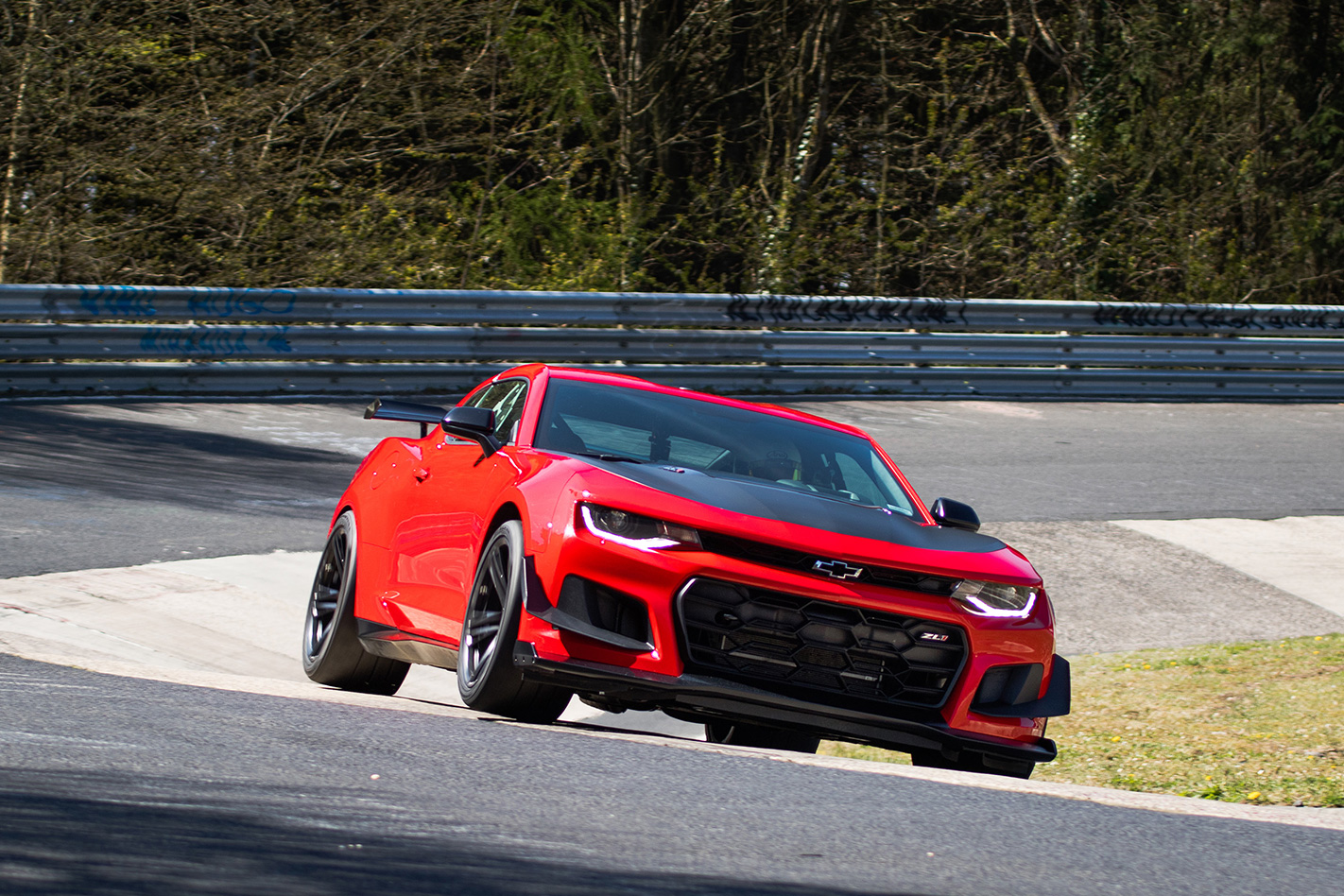
“The harder you push the Camaro ZL1 1LE, the more it rewards you on the track,” says Wise
Opinion: Australia needs a supercar
“It offers total control, with the confidence that it will deliver lap after lap.”
The car goes on sale in the US within a couple of months, for $69,995 USD. There’s little to suggest we’ll be seeing them down under, however, as the Camaro’s Alpha platform is LHD-
SUBARU will ensure its next-generation WRX will have the option of a manual gearbox despite buyers spurning self-shifters in other models in the showroom.
Masahiko Inoue, the project manager for Subaru’s Impreza and XV development program, confirmed that performance models in the Japanese car maker’s future line-up would include a clutch pedal.
Subaru has launched its new-generation XV in Australia with only a CVT automatic mounted behind the engine after only 12 percent of buyers opted for the six-speed manual-equipped version in the previous-generation small SUV – making it unviable.
While most future models would default to the CVT, some would still need a self-shift option, Inoue said. “On some sporty models, the manual should be adopted,” he said.
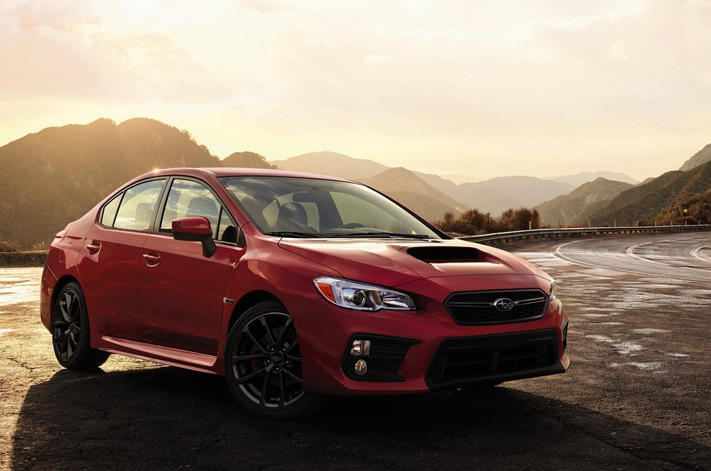
“You look at products like the WRX and the STi – the STi is a manual-only model – we’d expect that to continue into the future,” he said.
“The WRX now has a CVT and a manual, and the sales are about 60 percent CVT now to 40 percent manual.
“We’d expect that in the performance range there would be a manual transmission in the foreseeable future.”
He said the commercial reality for car makers in Australia was that more customers were moving to automatic transmissions for the cars they bought.
“I’d imagine that over time you’d see more and more automatic-based or CVT-based product in the market,” Christie said.
He said a surprise was the number of younger male WRX buyers who were being attracted to the WRX, but who bought a CVT-equipped version.
“A lot of people who will come in and they’ll drive the manual and the CVT are choosing the CVT,” Christie said
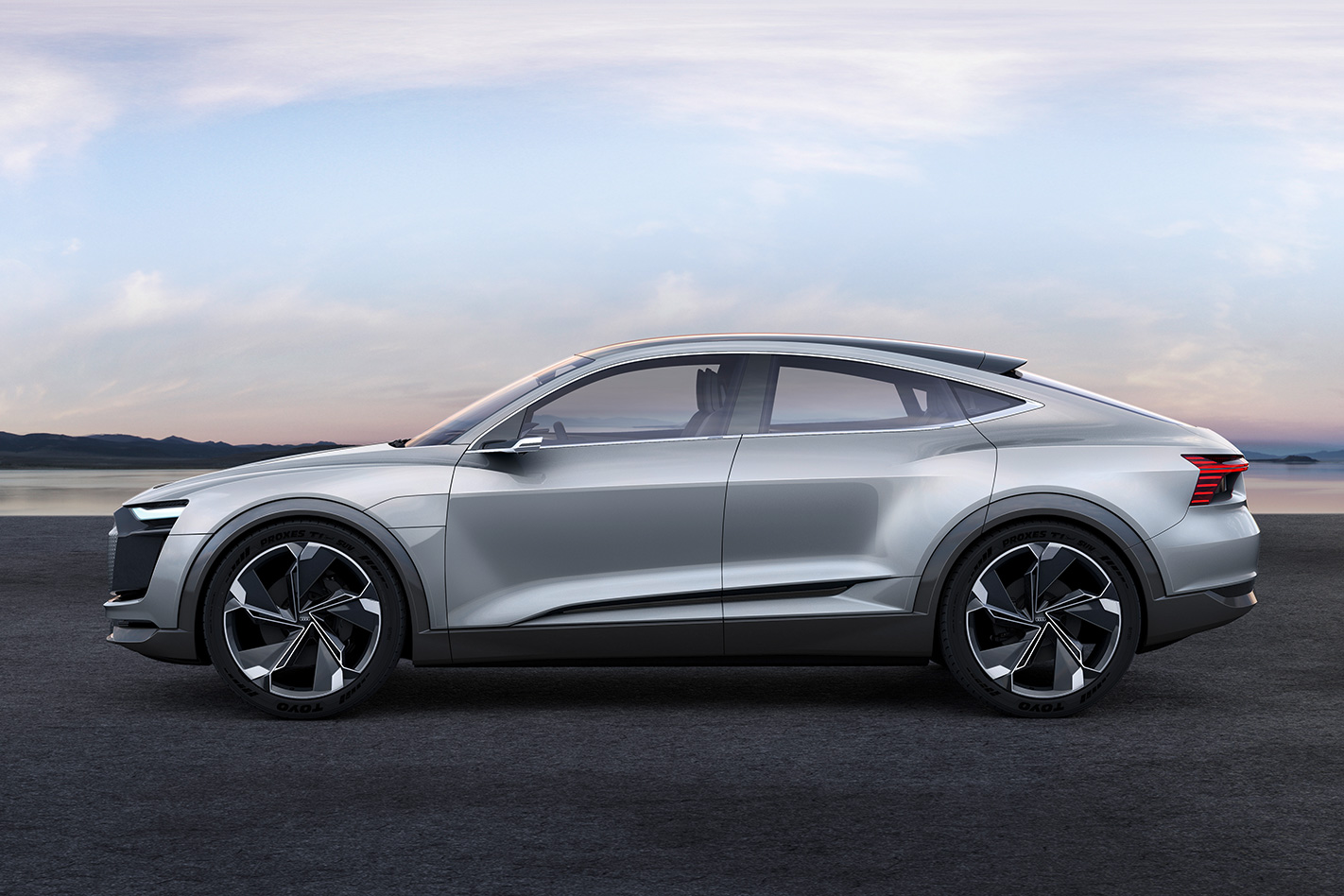
THE Audi e-tron Sportback – the second electric vehicle to wear a softly glowing version of the German luxury brand’s four-ring logo – will go into production in 2019, the car maker has confirmed.
The compact Sportback will join the plainly named e-tron, an electric SUV due next year, as Audi’s battery-fuelled push gains momentum – it is the second of three new all-electric vehicles the brand aims to build. The third is expected to be a Q6 e-tron, built off an upcoming fastback-styled version of the Q7 large SUV.
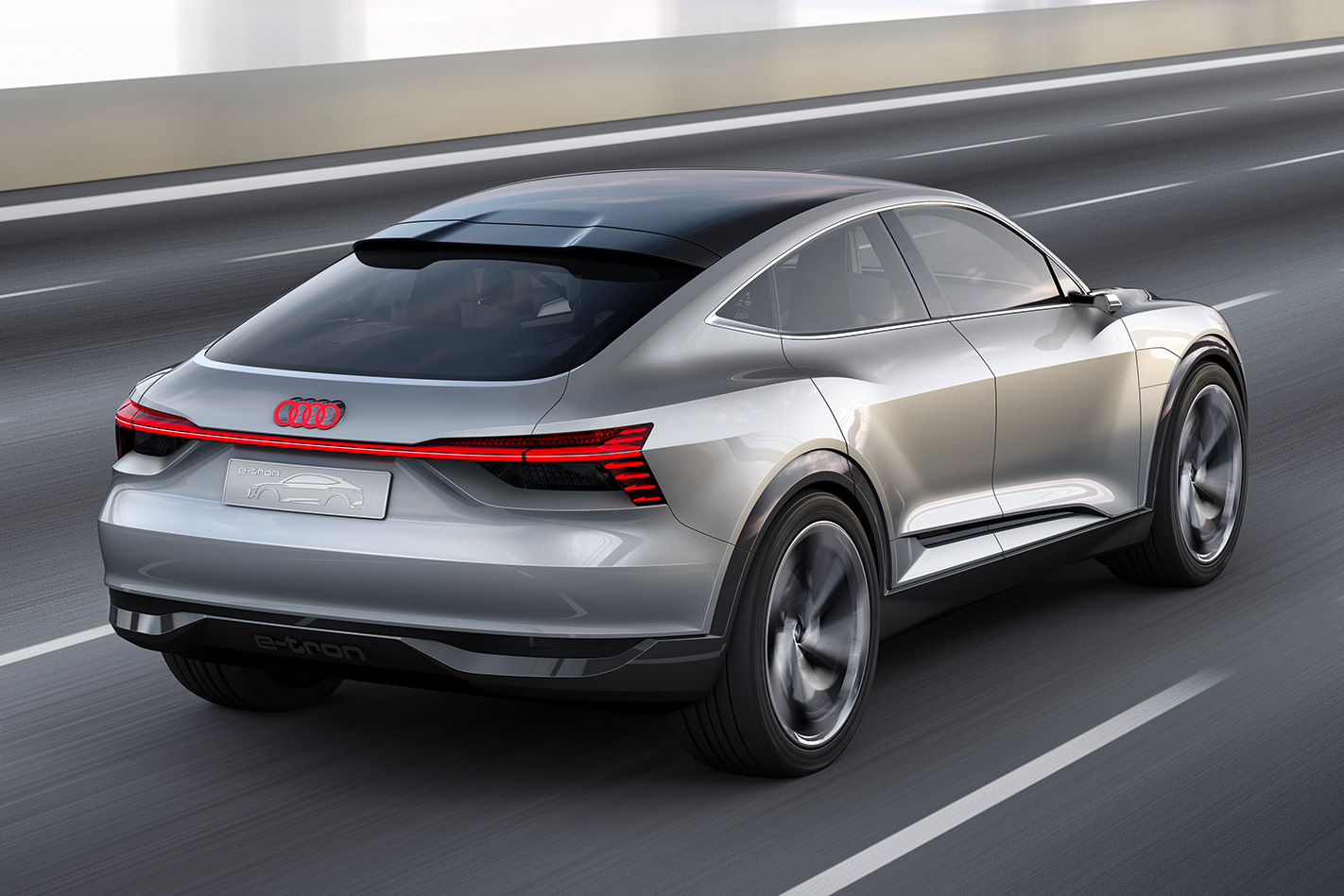
The Audi A7-styled e-tron Sportback’s electric motor should be able to make the sprint from 0-100km/h in about 4.5 seconds, helped by 800Nm of stump-pulling thrust available from almost a standstill and sent to all four wheels. And just like a turbo car, the e-tron Sportback is expected to include an overboost function that will bump power to 380kW for up to 10 seconds.
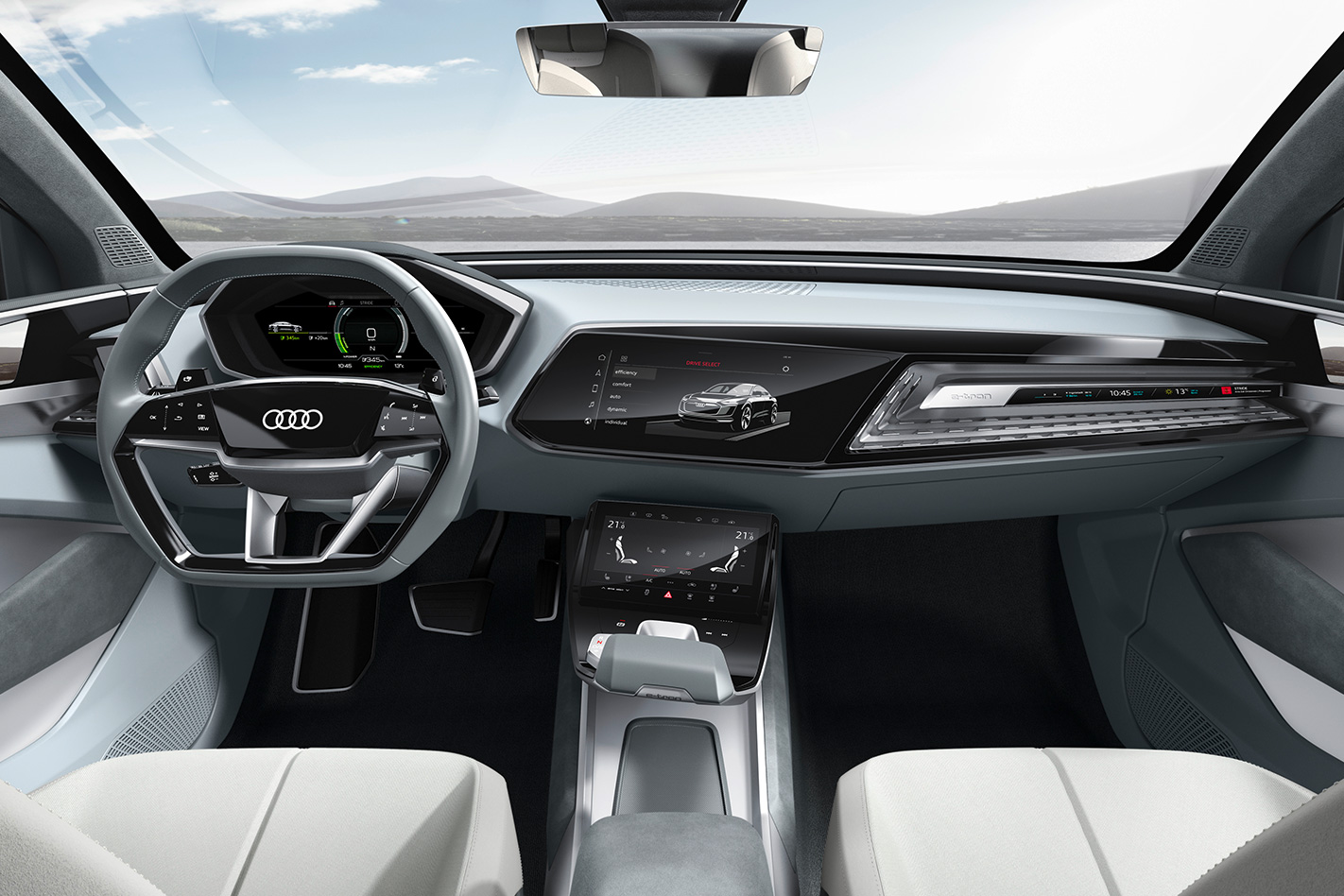
The Shanghai concept includes some clever thinking, such as luminescent interior panels that provide ambient light without the need to use energy-sapping bulbs. Yes, you still need to power up the panels, but Audi says the drain on the electrical system is a lot less.
The production car will spin off the Volkswagen Group’s MEB “ Modular Electrification Toolkit” platform that will underpin the group’s future battery-powered vehicles.
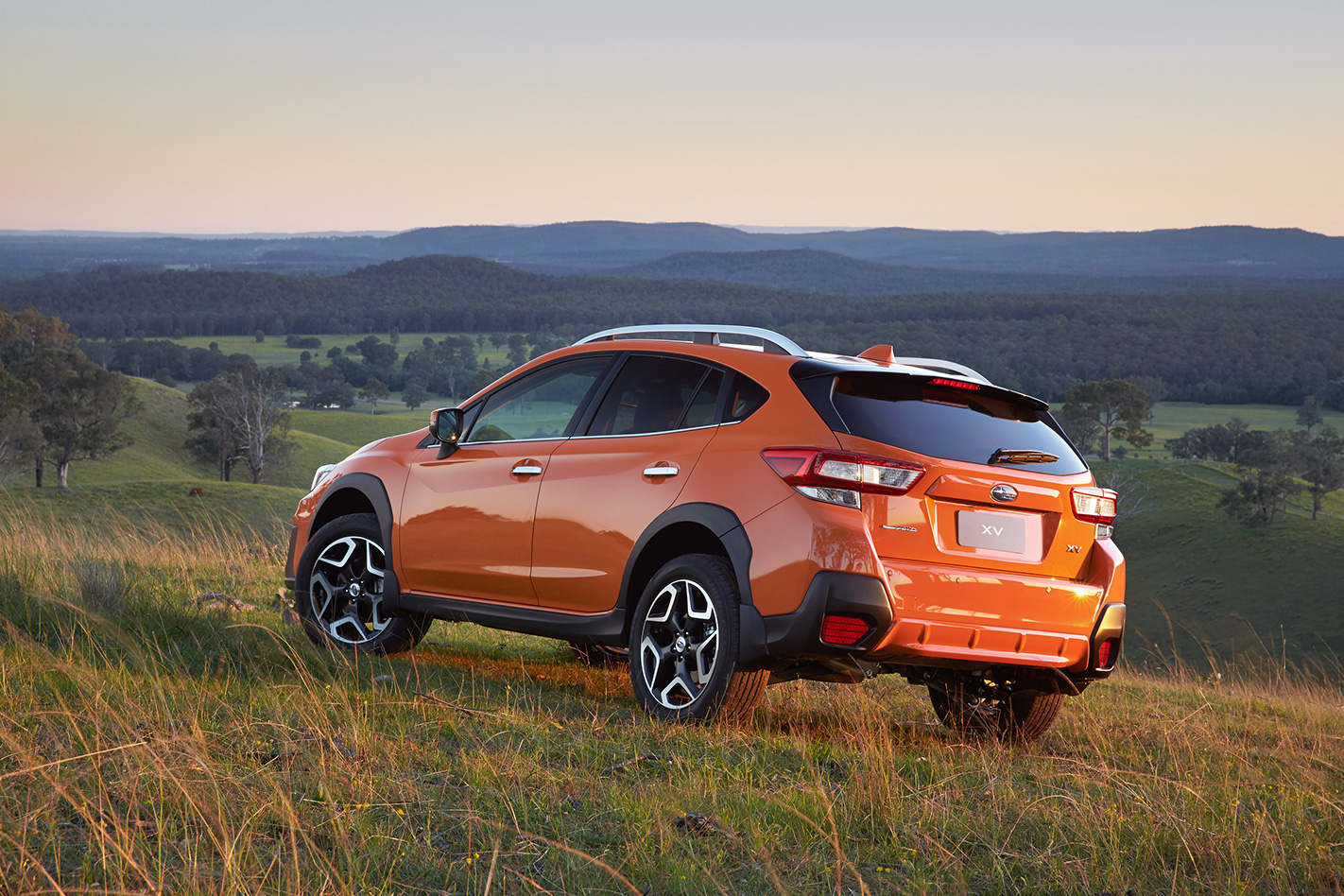
The second-generation of the Impreza-based Subaru XV grows into its gumboots.
WHAT IS IT
This is Subaru’s second shot at a small SUV spun off its Impreza hatchback, but this time around with some genuine off-road ability built in.
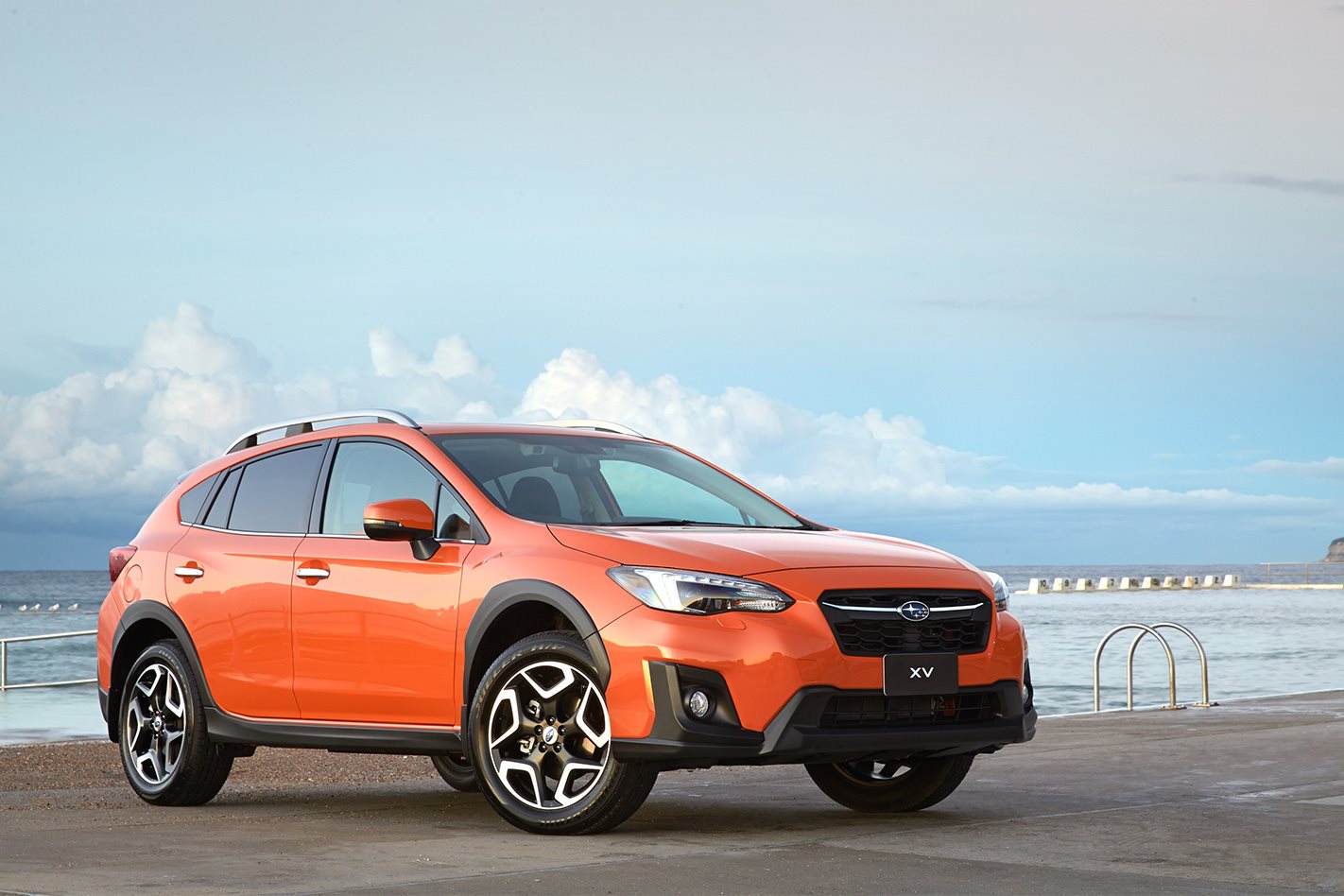
The Impreza has made the jump to the all-new Subaru Global Platform with impressive results. The XV, basically a high-riding Impreza, blends the platform’s newfound poise with the off-road ability endowed to the Forester, so we’re expecting great things.
MAIN RIVALS
Ford Ecosport, Holden Trax, Honda HR-V, Mazda CX-3, Mitsubishi ASX, Nissan Qashqai, Suzuki Vitara, Toyota C-HR
THE WHEELS VERDICT
We’ve already driven a version of the XV in Japan and come away impressed, but remained mindful of how it would perform in Aussie conditions. Those doubts, as it turns out, were unnecessary, with the XV handling both the dirt and bitumen with confidence that places it at the pointy end of the class. If only it had the engine to match, though.
MINUS: Road roar from cheaper eco rubber; base model lacks forward and reverse auto braking; engine and off-road ability don’t match; no manual version
THE WHEELS REVIEW
THE wake of the 2011 Great East Japan Earthquake wasn’t a good time for Subaru to launch its long-awaited small SUV. Hit with supply problems that limited sales early on, the original XV stood on shaky ground.
It’s good to see, then, that a second generation of the Impreza-based XV is built on a rock-solid footing; the all-new Subaru Global Platform. There’s a lot that’s familiar from Impreza, particularly its roomy interior, but outside XV is a handsome mix of metal, chrome and black cladding.
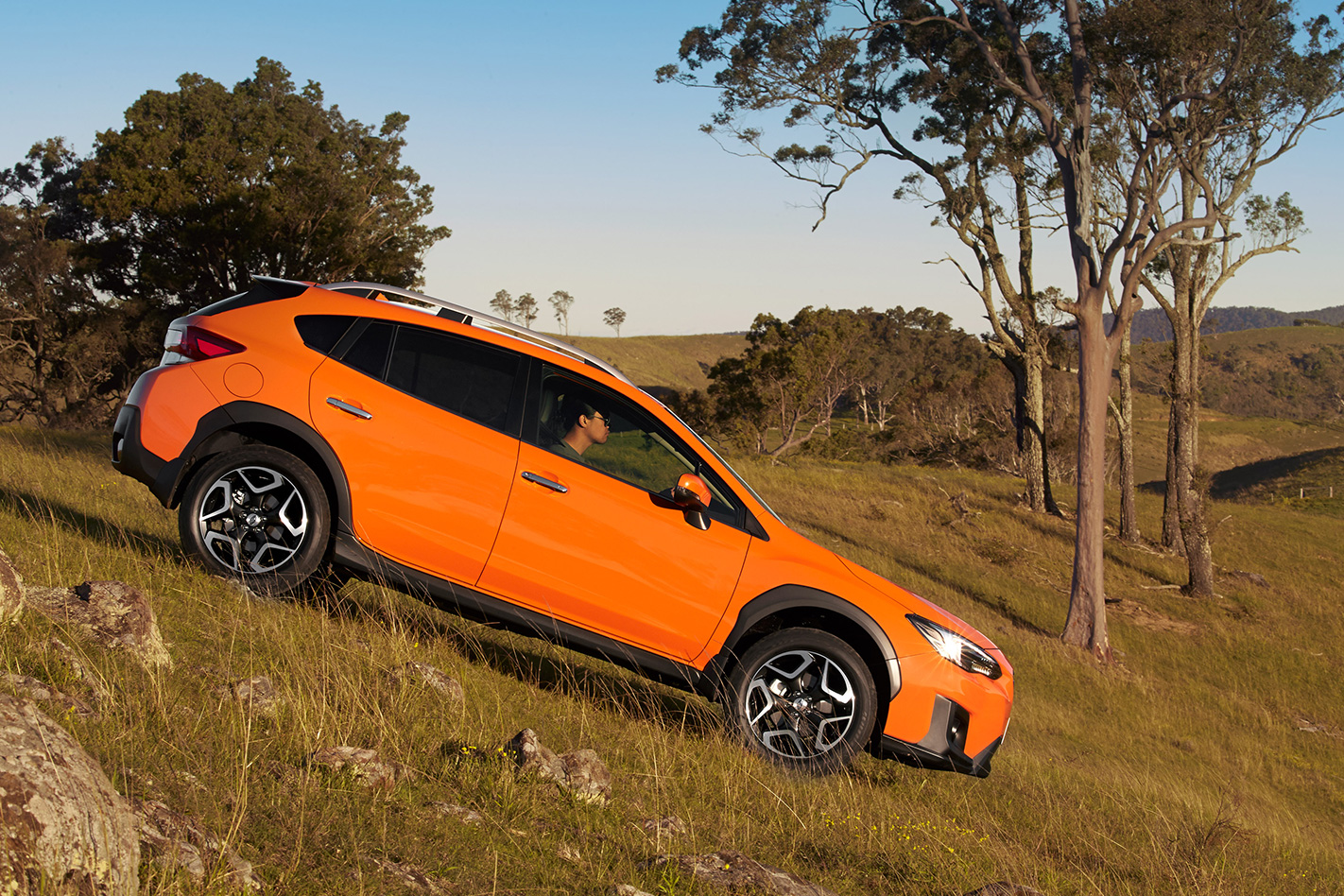
On dirt, the XV is confident and sure-footed. Our run from Jindabyne in the Snowys down to the coastal resort that is Merimbula involved a large run on unsealed roads where the XV felt solid and planted, even when a kangaroo jumped out in front. On the larger 18-inch alloys clad in Bridgestone Dueller H/P Sport fitted to our 2.0i-S, the suspension would occasionally crash over the larger washouts and bumps despite the extra travel afforded by 220mm of clearance.
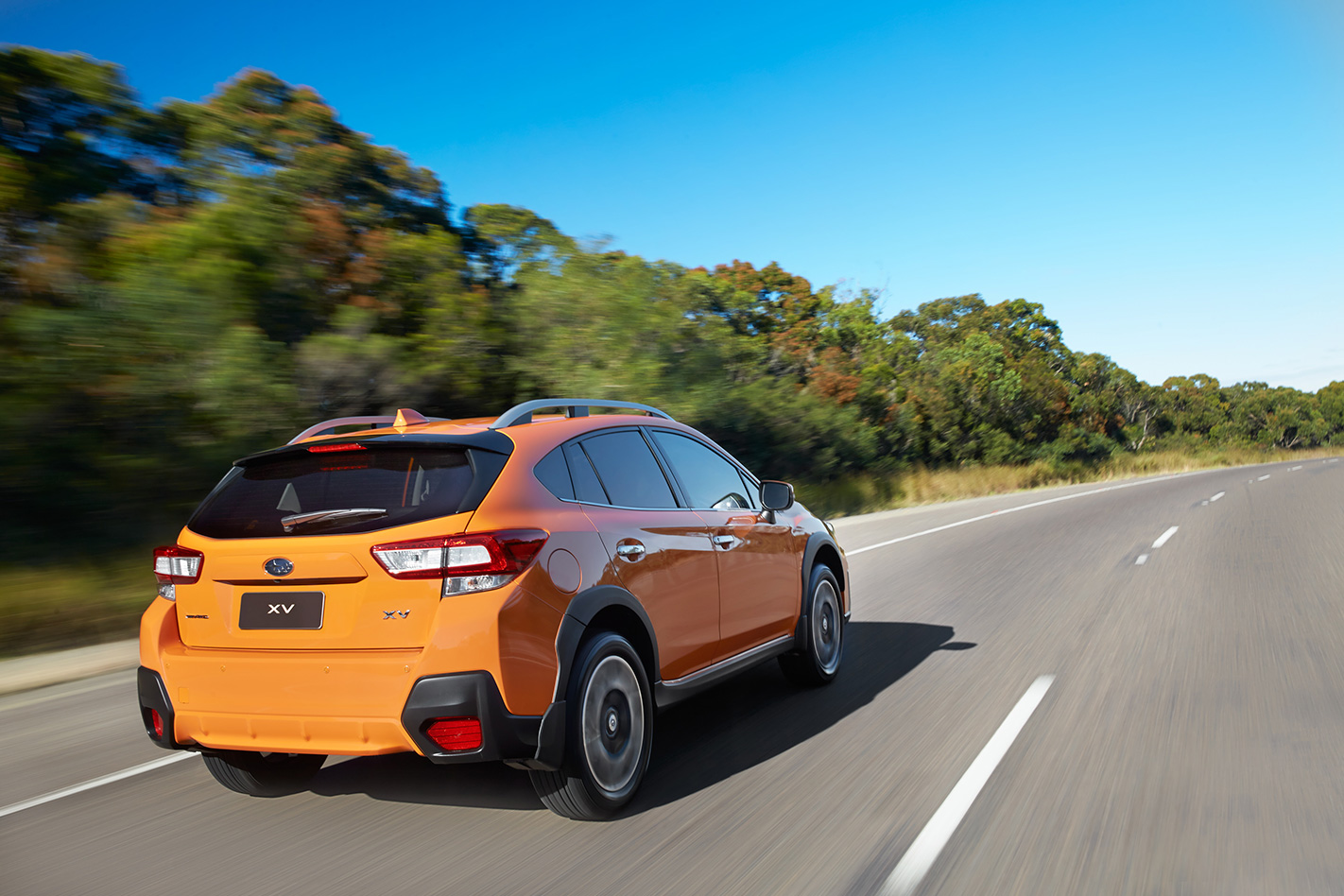
The XV’s suspension is slightly more compliant on the smaller 17-inch wheels fitted to the entry-level 2.0i (and shared with the 2.0i-L), but the eco-focused Yokohama BlueEarth rubber they use is much noisier on the bitumen than the Bridgestones.
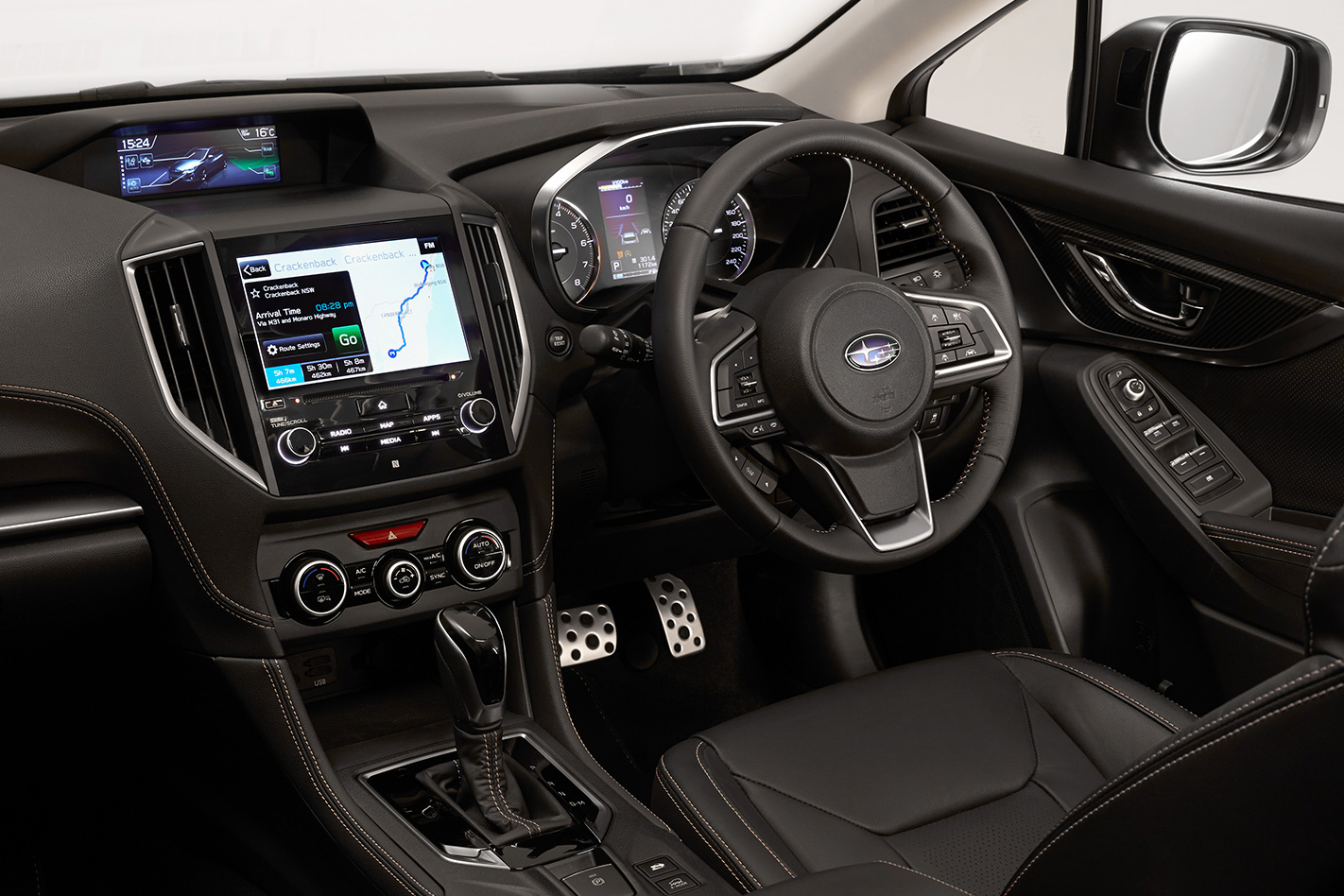
It’s a shame all that ability isn’t backed up with some fire under the bonnet. Direct injection lifts power 5kW to 115kW, but torque remains the same skin-off-custard 196Nm. And because there’s no manual option, drive is sent to all four wheels via a continuously variable transmission. It makes the most of the engine’s mediocre performance, but straight-line acceleration is best described as stately rather than sprite.
Subaru has endowed the new XV with something resembling a spirit of adventure. It’s something of a shame, then, that it didn’t also gain some fire in its belly.
SPECS
Model: Subaru XV 2.0-L Engine: 1995cc 4cyl, dohc, 16v Max power: 115kW @ 6000rpm Max torque: 196Nm @ 4000rpm Transmission: CVT, AWD Weight: 1474kg 0-100km/h: N/A Economy: 7.0L/100km Price: $30,340 On sale: Now
THE next-generation Subaru WRX could tap a petrol-electric hybrid system for its performance rather than a turbocharger, the head of the Impreza development program has hinted.
Masahiko Inoue, the project general manager for both the Impreza and XV, hinted that the Subaru Global Platform that underpins both vehicles would open the door to a mix of electrons and hydrocarbons powering the performance duo.
“One of the ways to solve the customer expectation in the turbo way is [to] assist the motor with more power,” Inoue told Wheels. “Which adds more value to the customer? We are now thinking that.”
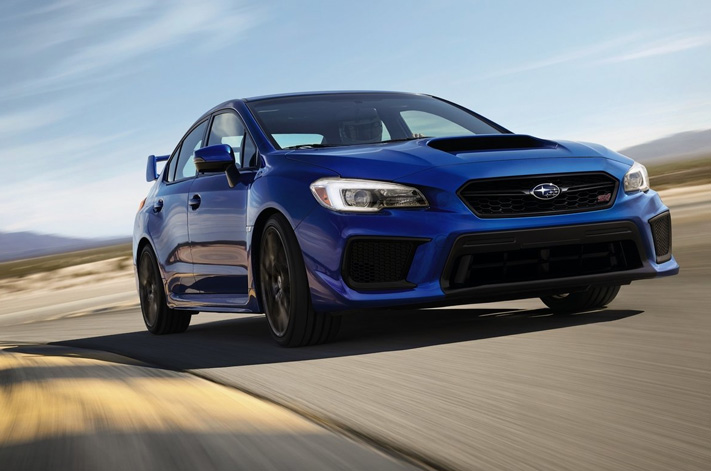
“One meaning of hybrid is good fuel consumption – Toyota is making the hybrid for good fuel consumption,” he said. “But in the case of Subaru, how we are going to use this motor power; some assist or more power, safety or more fun?”
Inoue said that despite Subaru’s hybrid technology moving into its next stage – “we are not studying [hybrid systems], we are making” – the needs of a highly strung performance powerplant were at the front of its mind.
“It is both ways that we consider now; the turbo way and the motor assist way [which] is best for WRX and high-performance vehicles?” he said.
However, he said a move to a 48-volt system – one that would be capable of running an electric turbocharger similar to systems developed by premium brands Audi and Mercedes-Benz – was a possibility, but less likely.
“Our vehicle is high-performance but reasonable to buy for the customer, and that is important.”
He said Subaru’s engine layout, unique for a mainstream production car, was well suited for hybridisation.
“Our flat-four system is very low-gravity which is one advantage for hybrid vehicle performance,” Inoue said. “A hybrid motor system or power assistance can adapt to the up side, the low side … space is not a problem.”
“This [engine layout] is a very good solution.”
Subaru’s next-generation WRX appears to remain a long way off, with Inoue confirming the Japanese car maker had no plans to reveal anything at November’s Tokyo Motor Show – the brand’s premier show on home turf. It points to a 2018 debut at the earliest for the fast four.
