
WhichCar stories about law-enforcement cameras, or speed limits always receive lots of responses from our audience, and we enjoy hearing your opinions and gaining perspective from the broader motoring community.
But amongst the interesting anecdotes and well-structured arguments from both sides of the fence, there is one very special type of commenter who, for the sake of anonymity, we’ll call Karen.
While reasonable Australians are out enjoying a beautiful day or doing something meaningful with their lives, Karen prefers to sit in a darkened room constantly trawling social media channels and waiting for a story about road safety to pop up.
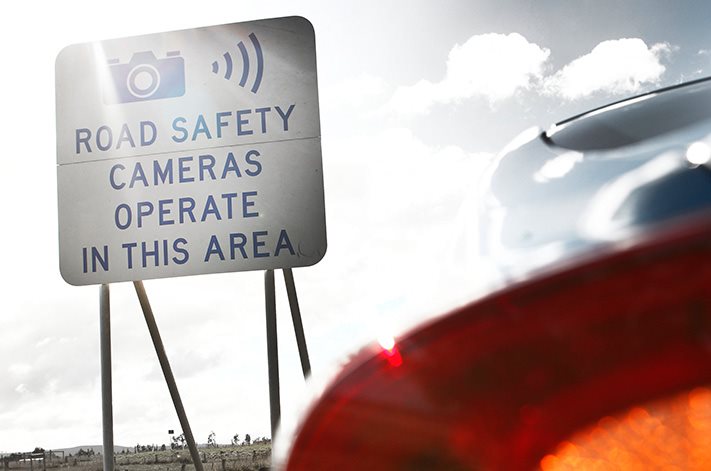
When this happens, it’s time for Karen to spring into action, answer their calling and deliver what they do best – total blind ignorance.
Examples are numerous, but one recent response from someone we’ll call Steve-Karen is typical and largely representative of the comments we frequently receive.
“Maybe impound car if exceeding more than ten over. Modern cars now should be limited to 100 with an onboard device that can’t be over ridden or bypassed,” they suggested.
Normally, we simply flick past the numerous carbon-copy comments like these until we find something more original or intelligent but on this occasion, I thought it might be fun to give this idea a little consideration and try to paint a picture of a world if Karen was king.
The new car industry would be dead within the year
Battling in Australia’s uniquely competitive market is enough of a challenge, but attempting to sell a car that is limited to 10km shy of the maximum permitted speed would be as easy as selling a model that has fishing hooks sewn into the seats and, Instead of upgrading to a new compulsory speed-limited vehicle, Australians would simply hold on to their existing freedom machines indefinitely.
Of course, there would be an initial rush to snap up all the remaining stock before the law was introduced, just as Holden’s Australian-made Commodore flew out of showrooms after the factory closure in 2017.
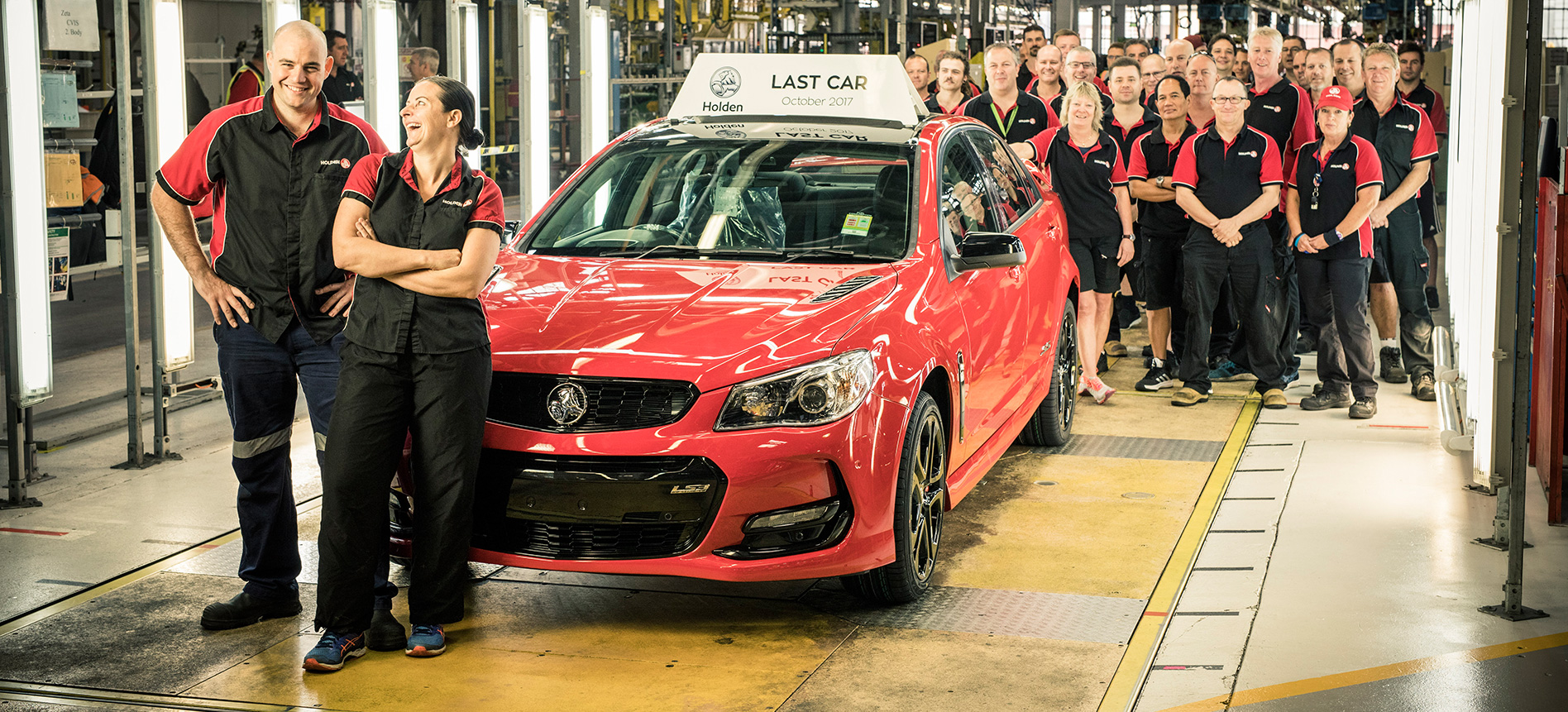
After that though, new sales would dry up, the Australian car brand exodus would begin and, before long, there would simply be no way of buying a new Karen-car whether you wanted one or not.
In retail’s place, a new industry would emerge patching up old bombs and wrecks with improvised spares and engine conversions to simple 1950-spec four-cylinder diesels.
If you want an idea of what Australia’s automotive landscape would look like under Karen rule, multiply Holden’s demise 60-plus times and Google Cuba.
You would be dead in about 11 days
Karen also believes outrageously strict penalties would encourage motorists to obey the speed limit and impounding cars for a little more than the inaccuracy of an average speedometer over the limit is the way to go.
But this would be just the start of law reform, setting a president for all kinds of new and incredibly severe punishments, including removal of a finger for not keeping left unless overtaking, and three months in prison for children who don’t do their homework. Actually, the first one might not be such a bad idea.
Either way, the justice system would be at the top of the slippery slope and at the bottom lies only one grim reality – death for every offence.
If the only way to get people to do what’s right is through fear of terrible ultimate consequences then, in Karen’s world even the most minor of crimes would be punishable by execution.
What does that look like? A study found that the average person commits 32 breaches of the law every year, which if spaced out equally, amounts to about one crime every 11 days.
You can forget speeding. Under Karen law, current road rules that prevent you from leaving your car unlocked, hanging an arm out of the window or reversing too far would all result in your death – within a fortnight.
Supreme leader Karen Jong-Un
But Karen has realised that making something illegal won’t stop people doing it and the only way to uphold the law is by making it impossible to break.
After car speed-limiters would come plastic chef’s knives – useless in the kitchen but impossible to stab with.
Next, spray paint cans would disappear from shop shelves and, after that cameras would appear in your home.
Chillingly, the society that people are effectively endorsing when they suggest speed limiters in cars is not a step along the way to a blissful utopia, but a horrific, oppressive regime that breeds imbalance, fear and suffering.
Under Karen’s leadership, Australia would not become a better place or even the Cuba Down Under, it would become the next North Korea.
You should be offended by comments that call for the absurd introduction of speed limiters in cars, the crushing of vehicles for relatively minor offences and many more hyperbolic, quasi-solutions because they take us all for fools and imply you, on an individual basis, are not capable of making the right decision by yourself.
Of course, there will always be a minute proportion of society that chooses to do the wrong thing – a by-product and consequence of living in the free world – but what Karen wants to do is punish and control us all because of the actions of a few.
And if you agree with Karen, then you deserve the totalitarian Stalinist dictatorship that you’re dreaming of.

Welcome to a preview of what you’ll find in the November 2020 issue of MOTOR Magazine.
With the team emerging from COVID lockdown in Victoria we’re slowly ramping testing back up and can’t wait to bring you plenty of pages of the latest performance cars being driven as intended!
You can find MOTOR at retailers around Australia. Or you can subscribe and save yourself some cash, and there’s even a (cheaper!) digital subscription option.
Subscribers often receive their mags earlier, so you’ll get to see what MOTOR has to offer before anyone else.
Follow us on Facebook, Twitter, and Instagram to interact with us, give us feedback, and get a peek behind the scenes.
Our cover story this month regards the exciting Nissan Z Proto, with new editor Andy Enright speaking to the brains behind it.
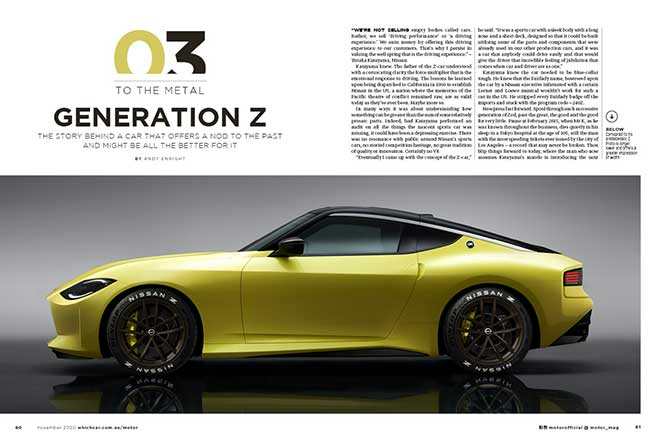
Elsewhere in the ‘New Metal’ sub-section you’ll find in-depth looks at the Maserati MC20 and BMW M3 and M4 twins.
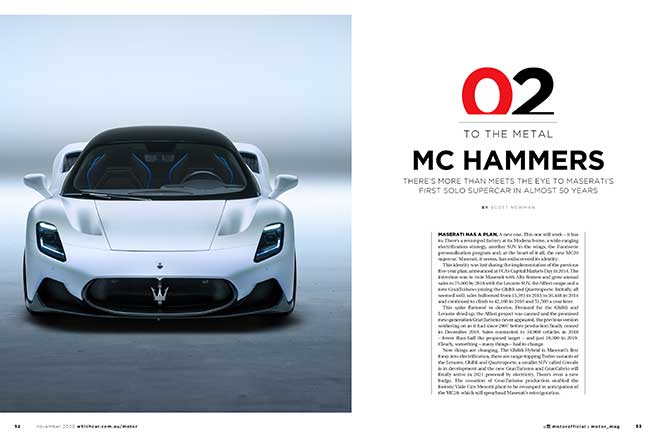
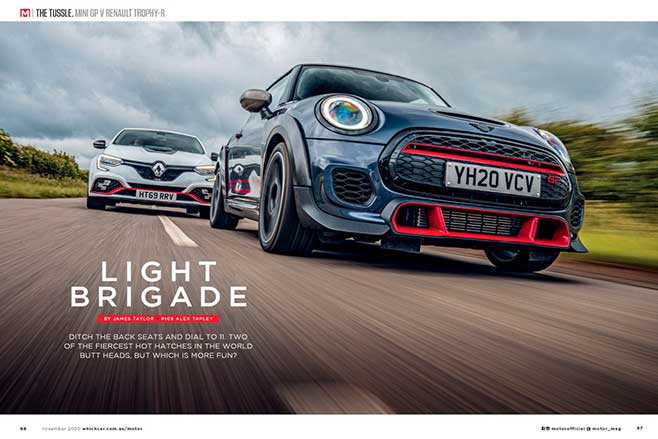
The Mini GP and Renault Megane Trophy-R are about as hardcore as hot hatchbacks get so they’re a natural fit to throw together in a front-drive arm wrestle.
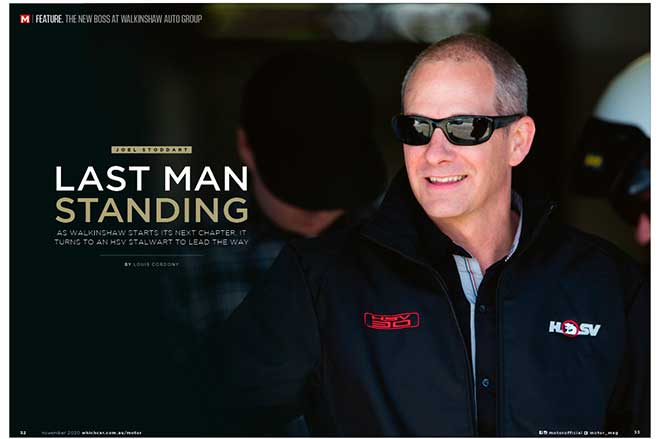
Joel Stoddart has been the engineering brain behind a lot of HSV’s projects for the last decade or so and now he’s stepped into the big chair so we have a chat to find out what’s next.
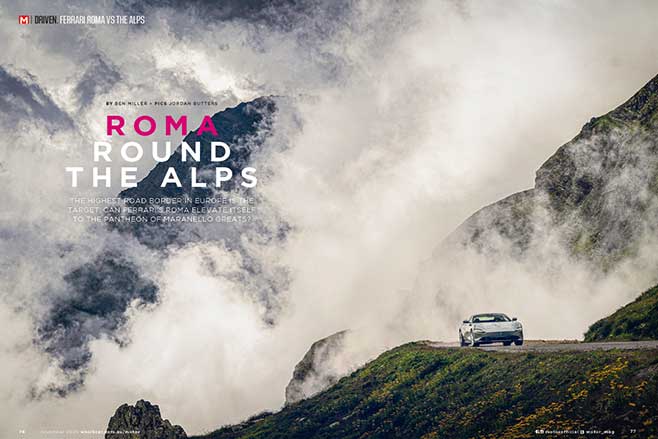
The Ferrari Roma is intended to be equal parts grand tourer and sports car so what better machine to take on an alpine road trip?
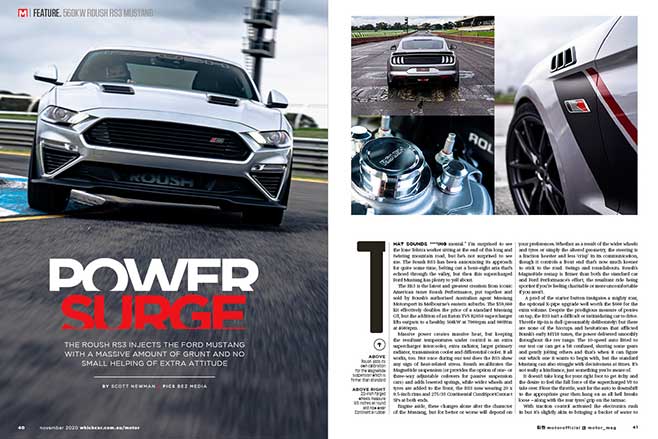
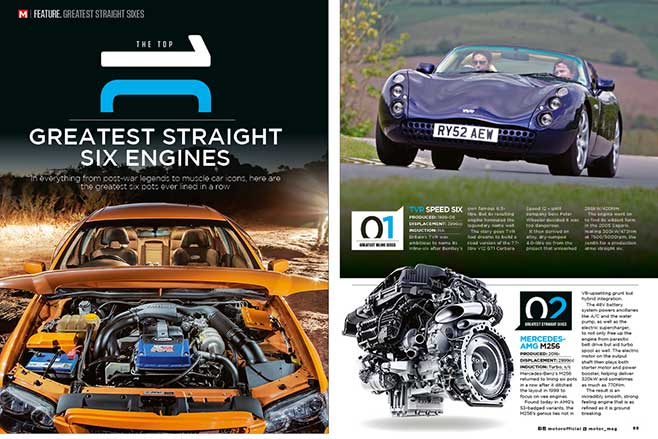
The straight-six engine is enjoying somewhat of a renaissance so it’s a good time to count down the best 10 from history.
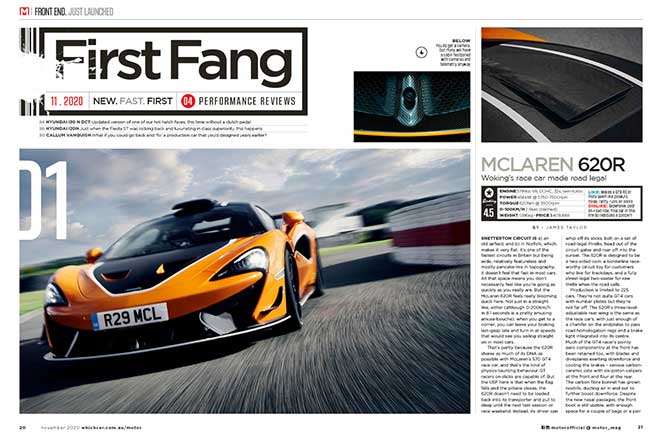
We have first drives of the McLaren 620R, Callum Vanquish and Hyundai i20N and i30N DCT.
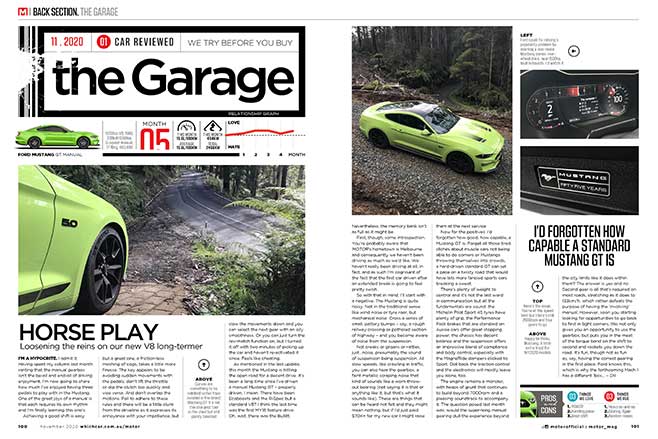
Last but not least, our long-term Ford Mustang GT escapes lockdown for greener pastures.
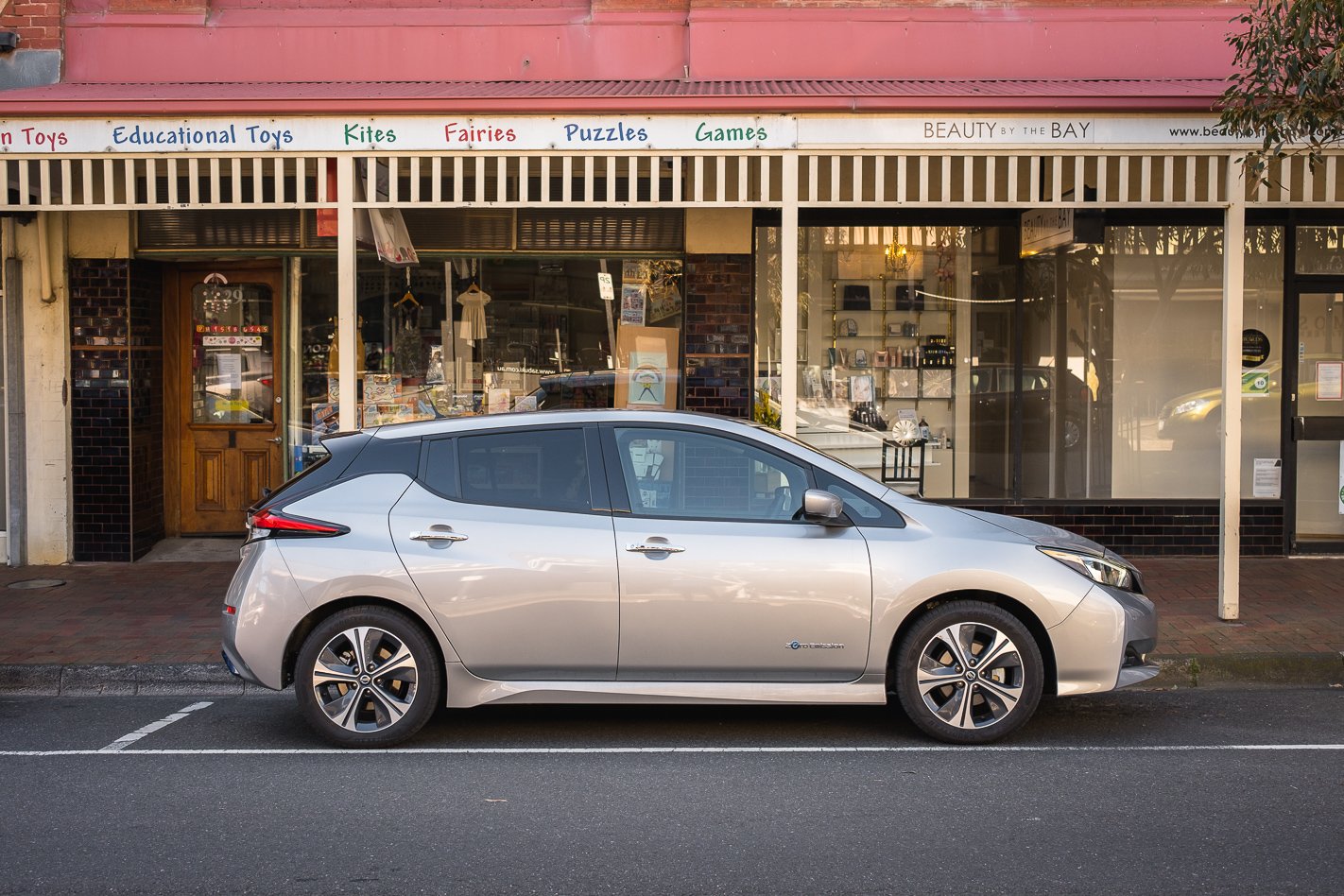
Despite a year in which everyone is focusing on other matters, the electric vehicle movement continues to gain traction. Like it or not – car manufacturers are readying-up electron-powered vehicles at an exponential rate and one such example of EV motoring for the masses is the Nissan Leaf.
What is the Nissan Leaf?
The Nissan Leaf small electric hatchback is one of the most popular electric vehicles in the world, having notched up nearly half a million sales worldwide since the car’s first generation went on sale 10 years ago.

It’s also one of the most affordable electric cars you can own, among competition including the $59,990 Hyundai Kona Electric, $48,970 Hyundai Ioniq, $54,800 Mini Cooper SE and the now-discontinued Renault Zoe.
The Nissan Leaf’s 40kWh battery provides 270 kilometres of range, which is further than rivals like the Mini Cooper SE and Hyundai Ioniq will travel between charges; roughly 230km for both.
The Nissan Leaf features four doors and a boot, has five seats and no internal combustion engine.
That means there’s no saving you once you’ve run through its 270-kilometre range; you’ll have to somehow get it to a charging station or carry an extremely long extension cord.
Price and value
For now, there’s only one model variant available for the Nissan Leaf ‘range’ in Australia, in a single 40kWh capacity.
The Leaf costs $49,990 before on-road costs – undeniably expensive for what is in reality a Nissan hatchback – but the good news is that it’s packed with standard equipment and the only extra cost is metallic or two-tone paint.
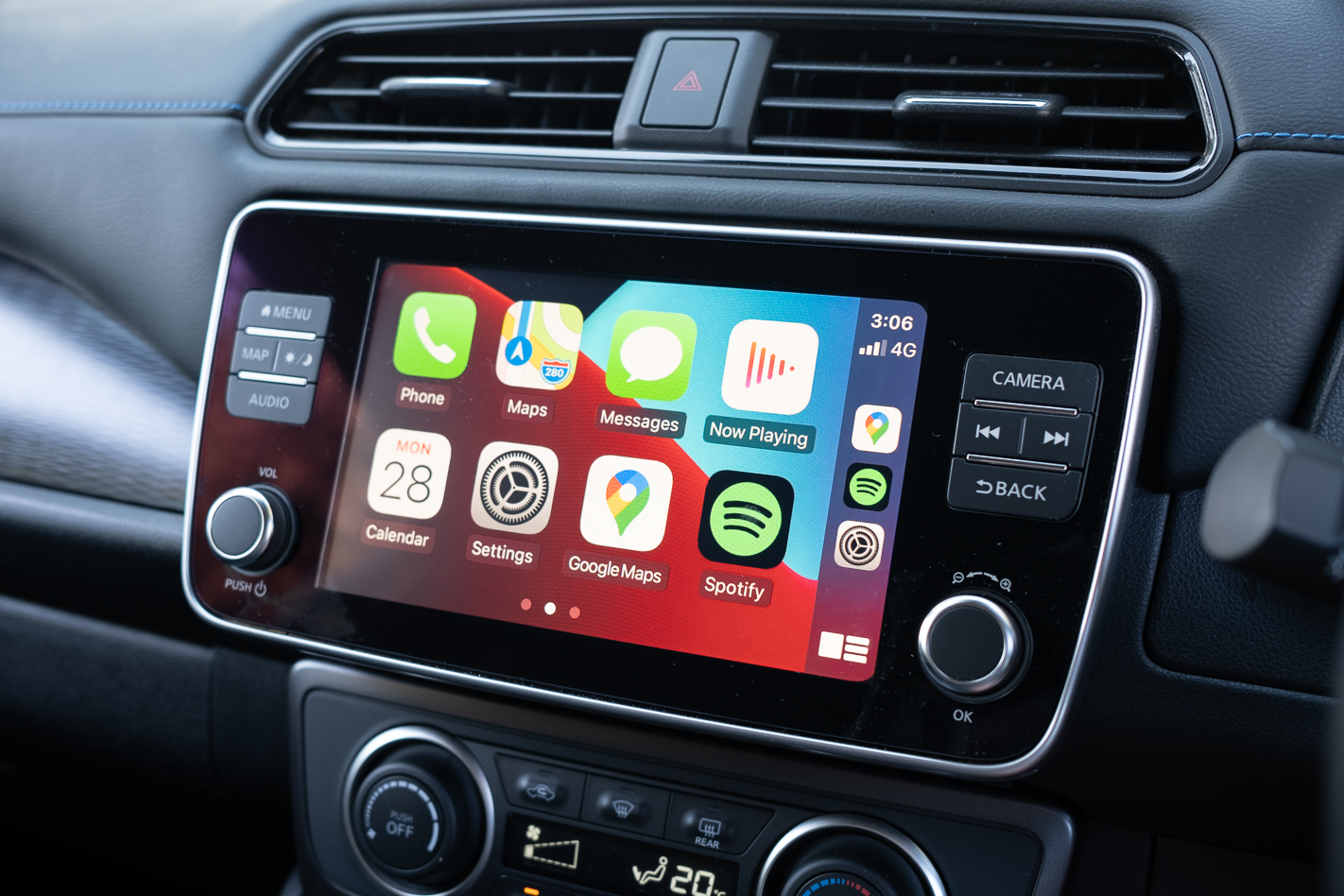
Standard kit includes LED headlights, heated front and rear seats, privacy glass, power-folding mirrors, Android Auto and Apple CarPlay connectivity, satellite navigation, heated steering wheel, adaptive cruise control, and a 360-degree parking camera.
Nissan also provides forward-thinking semi-autonomous driving tech in the Leaf, with its suite of Propilot safety tech including autonomous emergency braking, lane-keep assist, blind-spot monitoring, rear cross-traffic alert and active cruise control.
The Nissan Leaf is powered by a 40kWh battery-powered motor which sends 110kW/320Nm to the front wheels, and it can run from zero to 100km/h in 7.9 seconds.
Nissan says it takes almost a full day to charge using a standard AC power point, though it’s closer to 17 hours, in our experience.

You can charge it faster using a DC fast charging outlet which is commonly found near shopping centres in larger cities – that should charge it to near-full in 30-60 minutes.
The standard Leaf will be joined by a long-range Nissan Leaf e+ variant in early 2021. That car will get a larger 62kWh battery with an estimated 370-kilometre range, though will cost nearly $10,000 more.
Living with the Nissan Leaf
WhichCar has been running a Nissan Leaf as a long-termer since August and has considerable experience in what it’s like to live with the Leaf.
Being a pioneer of something new like an electric vehicle is exciting, though once you’re over the honeymoon phase of instant acceleration, emissions-free motoring and fewer visits to the petrol station – the Leaf does blend into being any other car.
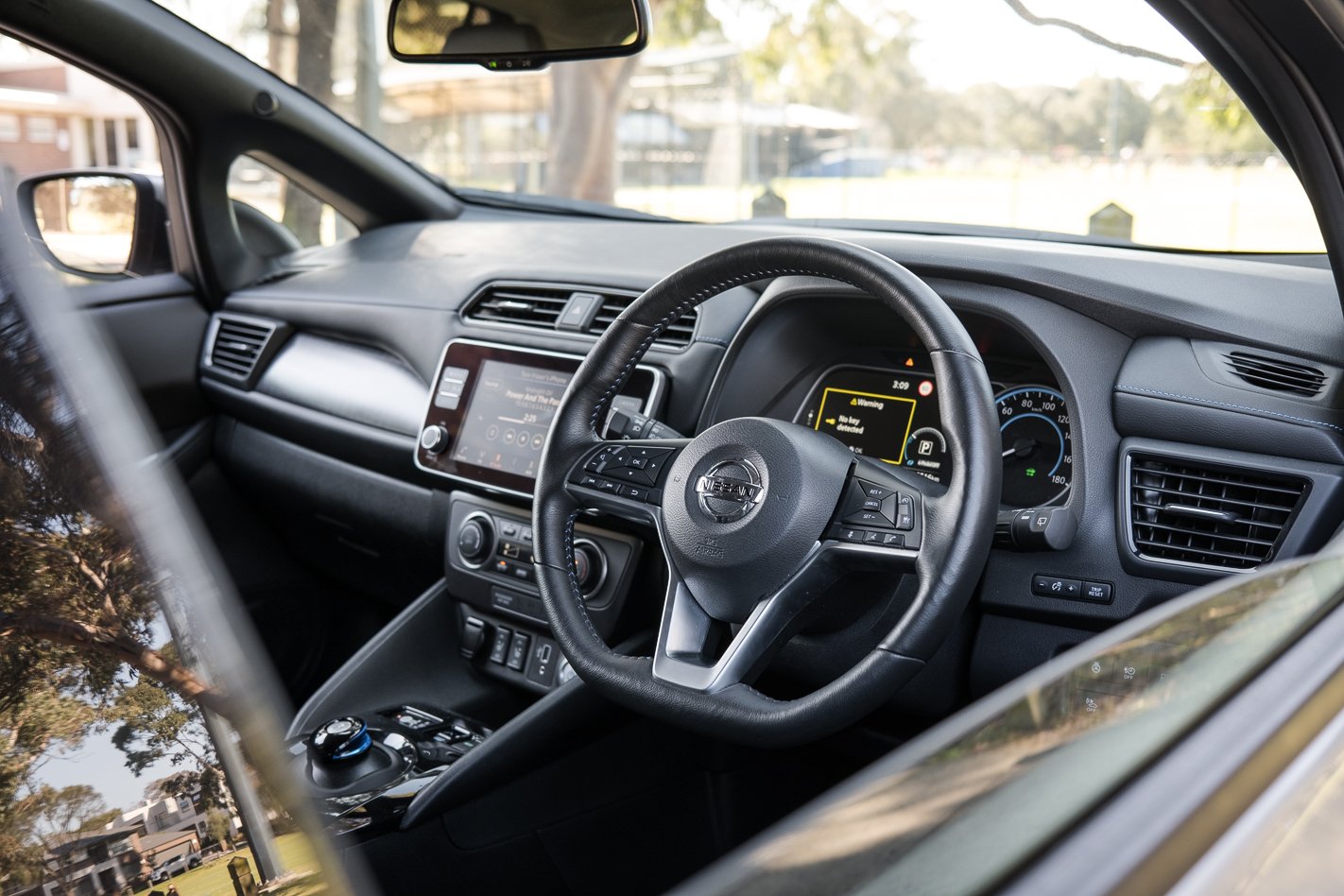
Nissan has done its best to throw in some extra add-ons like heated seats and steering wheel, a Bose premium sound system and keyless entry, but the level of fit and finish is below its $50,000 price point.
Hard dash plastics, a compromised seating position, and a non-reach adjustable steering wheel isn’t the nicest way to spend $50,000, and you have to keep reminding yourself that the premium you’re paying for is the drivetrain technology.
That said, it’s a comfortable car to travel in with extremely plush front and rear seats, convenient get-in-and-go tech like keyless entry, instant-on electric motor and zippy acceleration.
It’s one of the easier cars to roam about a city in, the small body proving easy to park with a wide array of parking sensors and cameras helping you avoid mishaps.
The Leaf also caters well storage-wise, with a large 405-litre boot which expands to 1176 litres with seats down, and numerous cubbies for loose items in the front row.
Nissan’s infotainment system is simple to connect to with either Bluetooth or wired Apple CarPlay/Android Auto smartphone mirroring, the maps are clear, the screens are attractive and the connectivity is all very intuitive.
Driving the Nissan Leaf
While no one would call the Nissan Leaf a hot hatch, its instantaneous acceleration and eager nature can be pretty fun.
Those characteristics are best deployed around town and in traffic, where it also receives the benefit of brake force regeneration from the stop/start dynamic of traffic.

Take it further afield and its 1594kg heft starts to become more apparent around corners, and its torque steer can catch you off-guard when accelerating away.
Wheelspin needs to be managed with careful throttle inputs – especially in the wet.
The ride profile is generally comfortable, upset only when driving over sharper bumps which, on occasion, reverberate around the cabin.
Even without an engine muffling out wind and road noise, the Leaf is quiet inside for anything up to freeway speeds.
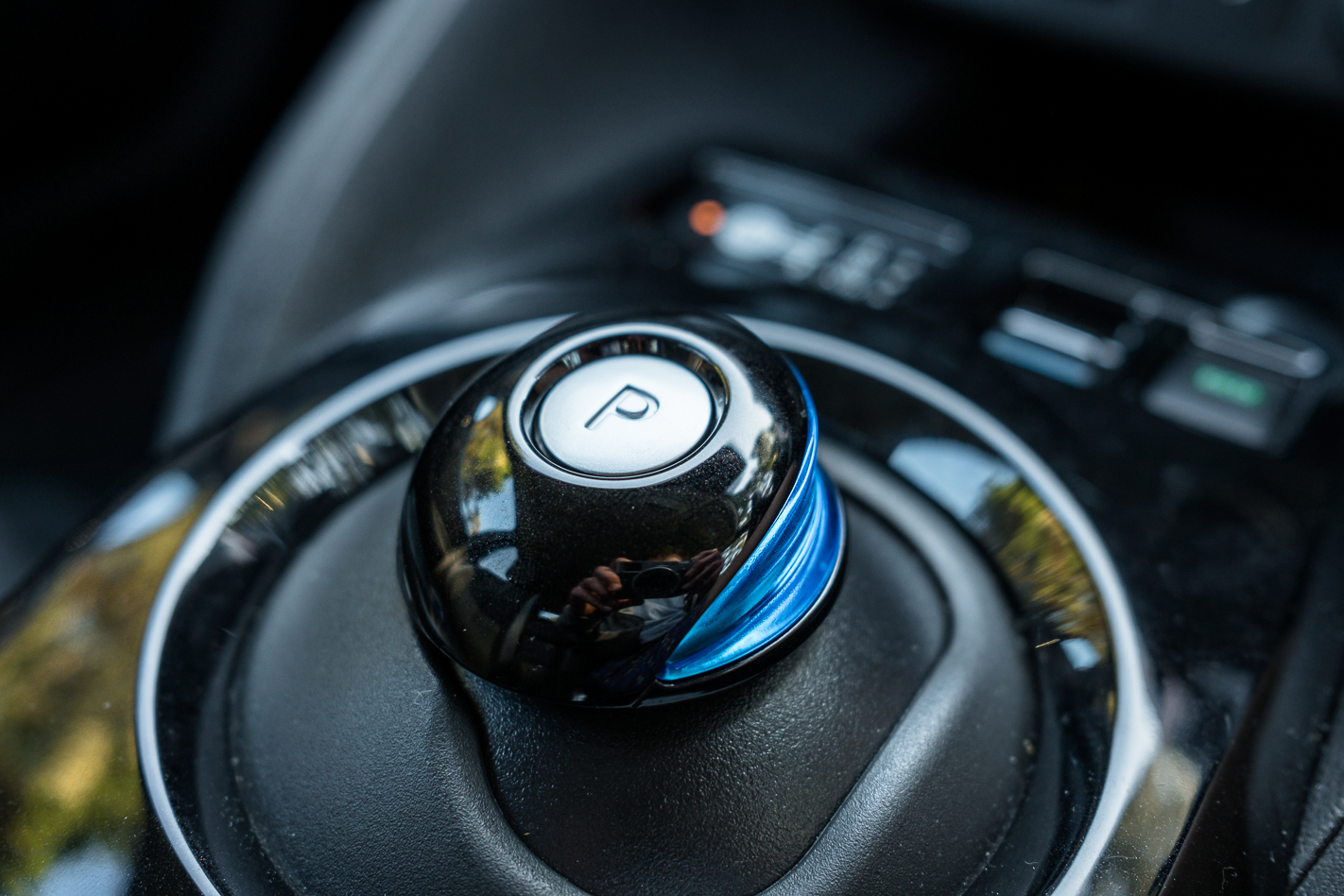
The Leaf employs a regenerative braking system that can apply the brakes whenever you roll off the throttle to convert kinetic energy into electricity.
This is a smart and useful way to drive the car which also gives you a longer driving range.
Safety
The Nissan Leaf scored 93 per cent in ANCAP’s adult occupant protection test, 85 percent for child occupant protection, and 71 percent in the vulnerable road user protection test for an overall score of five stars out of five.
It also offers a well-calibrated autonomous emergency braking system that won’t arbitrarily go off when passing parked cars, and combines with other safety features like the lane-keep assist, blind-spot monitoring and rear cross-traffic alert to keep you safe.
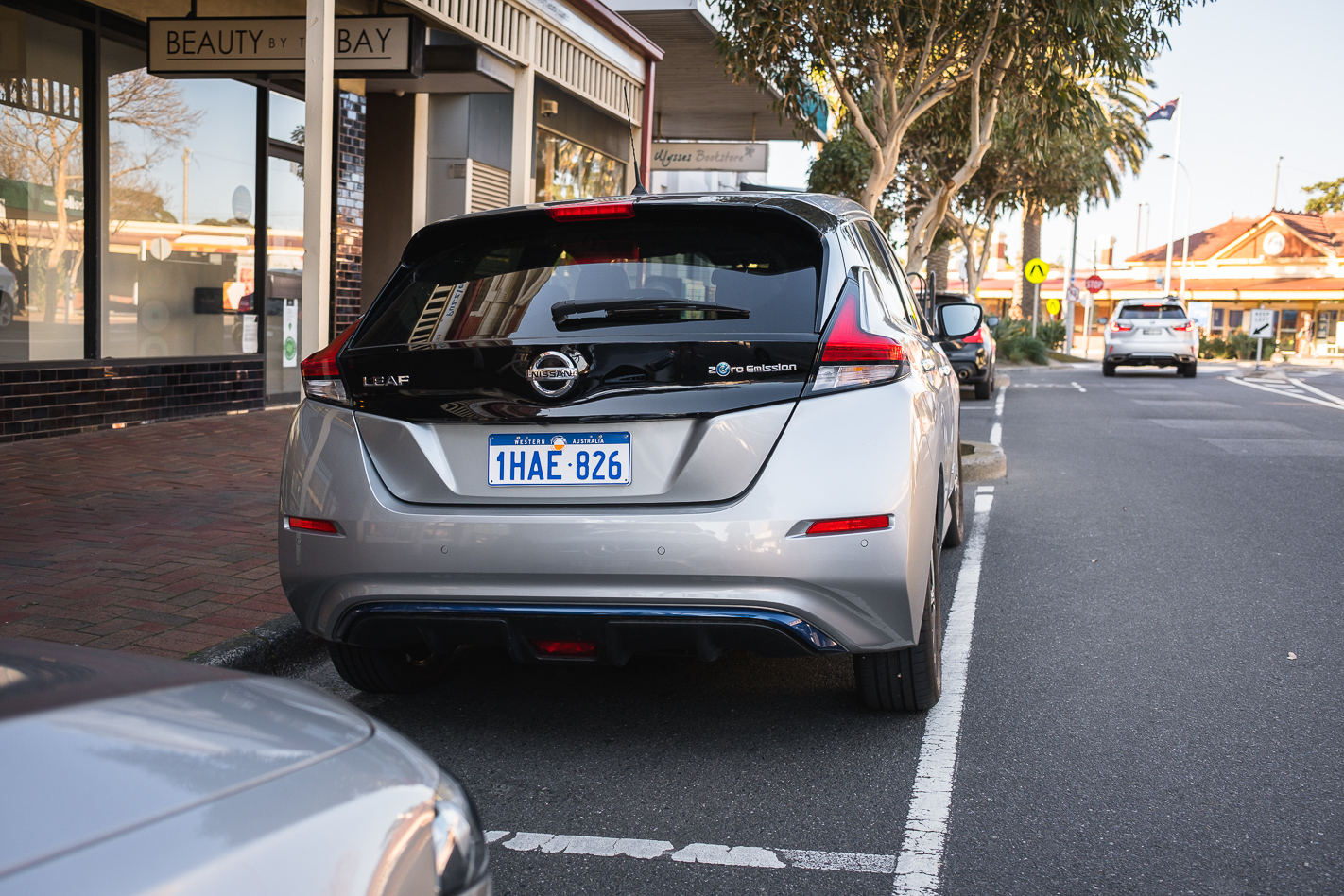
How much does it cost to run a Nissan Leaf?
The great thing about an EV is that it shouldn’t cost you too much to run.
At a rough electricity cost of $0.28 per kWh, the Leaf should only cost around $10 to charge to capacity, and there are no consumables like oil to replace.
Nissan provides a five-year/unlimited-kilometre warranty for the car and an eight-year/160,000km warranty for the battery that protects against loss of charge.
Under Nissan’s capped price servicing program, the first year of servicing will cost $237, the next will cost $317 and the third year will cost $247.
How the judges rated the Nissan Leaf at COTY

Verdict
There’s little doubt that you have to be a little out-there to buy an electric vehicle right now in Australia.
But where it’s a compromise for some, others view it as forward-thinking and a necessary switch for our future.
If you’re one to get ahead of the curve, the Nissan Leaf is the perfect gateway drug into the world of EV motoring.
Rating 4/5
What you will like
Comfortable seats and ride, zippy acceleration, never visiting a petrol station again
What you won’t
Low-rent materials, wheelspin
MOTOR has learned that following the cessation of local manufacturing, four GTSR Maloo W1s were built by Walkinshaw Performance for a handful of people in HSV’s inner circle.
UPDATE: Since this story was originally published two more Maloo W1s have been completed and you can find details on this later in this article.
An HSV spokesman told MOTOR the company wasn’t actively hiding the cars but simply chose not to publicise their existence, however, it’s understood the owners were required to sign contracts promising their silence before, during and after the build process.
All four cars feature every mechanical modification made to the 275 W1 sedans with the exclusion of the side skirts – the Maloo has a longer wheelbase and therefore different skirts – and quad exhaust outlets.
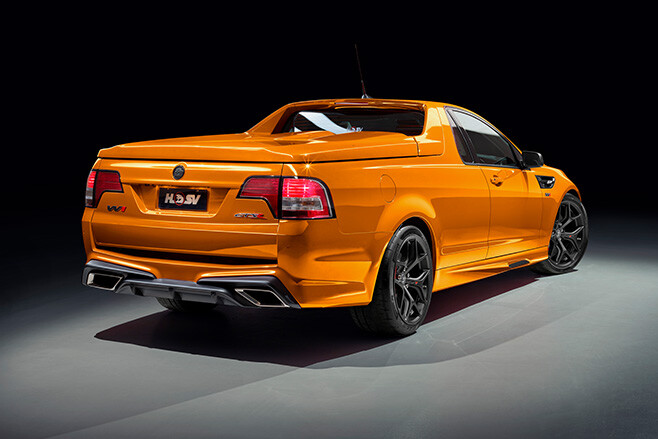
Maloos aren’t compatible with HSV’s Magnetic Ride Control, but the specially developed Supashock dampers fit just fine, the only modification being a slight tweak to the rear anti-roll bar setting.
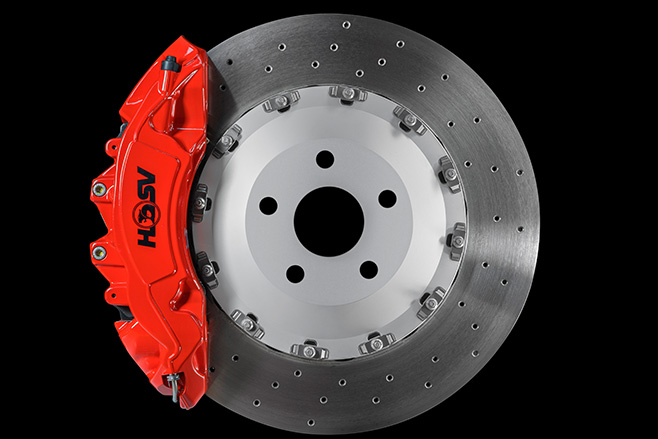
Wheels are 20 x 9.0-inch front and 20 x 10.0-inch rear, wrapped in Pirelli P Zero Trofeo R track rubber and covering 410mm fully-floating two-piece rotors and six-piston calipers up front with 372mm rotors out back and four-potters at the rear.
The program was born when HSV itself investigated the possibility of producing a limited run of Maloo W1s, the business case for which didn’t stack up due to the cost of calibrating and validating such a limited run of cars.
Enter Walkinshaw Performance. Starting with the base vehicles, built as HSV GTSR Maloos, Walkinshaw applied the W1 modifications and gained the necessary VASS (Vehicle Asssessment Signatory Scheme) approval to ensure the cars are fully compliant and road legal.
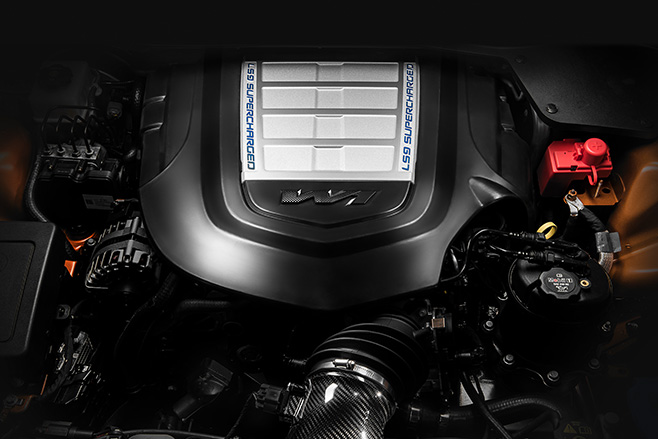
Even so, the process was expensive, as Walkinshaw must provide evidence that the W1 alterations meet the relevant standards. No party was willing to go on record as to how much the Maloos cost, but a source told MOTOR “decent Lamborghini money” was a good guide.
The four lucky recipients are a closely guarded secret, however, we can confirm one of the Maloo W1s is painted in Light My Fire (gold), another is in XU-3 Yellah, the same hue as the original VS GTS-R, while a third is red and the fourth is matte grey.
In the time since the original build run of four cars, MOTOR has learned two more Maloo W1s – one white and one green – have been completed by external parties (ie not by HSV) to the same specification bringing the total number of cars to six. Whether that makes the final two examples ‘official’ W1s is a matter for personal interpretation.
Given the outrageous sums of money W1 sedans are changing hands for, it might seem odd that HSV couldn’t make the business case work for a limited run of Maloo W1s, however, part of the problem was only a limited number of LS9s could be sourced.
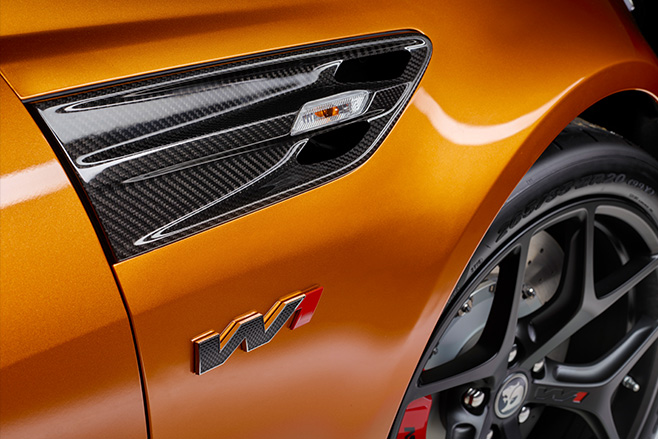
Any Maloos built would have reduced the number of sedans available, with HSV telling MOTOR it was confident the sedan would be the more popular package.
Nonetheless, while the Maloo W1 was not an official HSV program, kudos has to go to the company for allowing a limited run of these special Maloos to be built, cars whose stories will be followed for decades to come.
Like everything else in the world, the automotive sector hasn’t had a great year in 2020.
The COVID-19 pandemic pushed the global supply chain to near-breaking point, Holden left Australia, and a multitude of new model projects were either delayed or cancelled altogether.
In short, 2020 has been a bust. But, if everything goes well, 2021 will make up for the ordeal of the last year.
This isn’t a definitive list of every new car coming in 2021, but it’s the key models that should get you excited for the year ahead.
So, let’s get into it.
HYUNDAI TUCSON
What is it?
The second generation of Hyundai’s mid-size SUV. It’s an ultra-important model for the Korean manufacturer, that it hopes will take the fight to the likes of the Toyota RAV4 and Mazda CX-5.
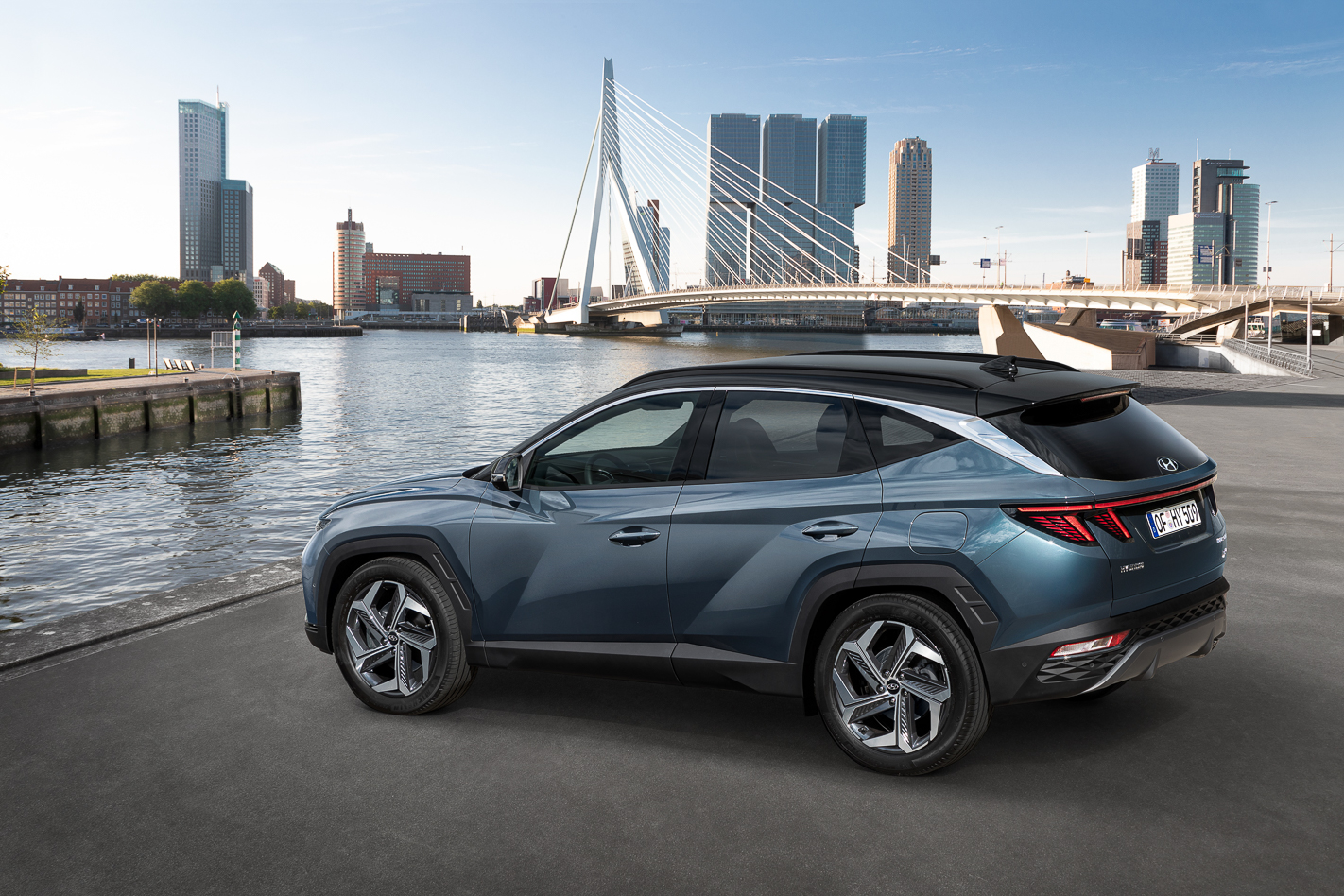
This all-new model will be the pride of Hyundai, heralding a new design language, electrified power, and eventually a performance flagship.
Why we’re excited
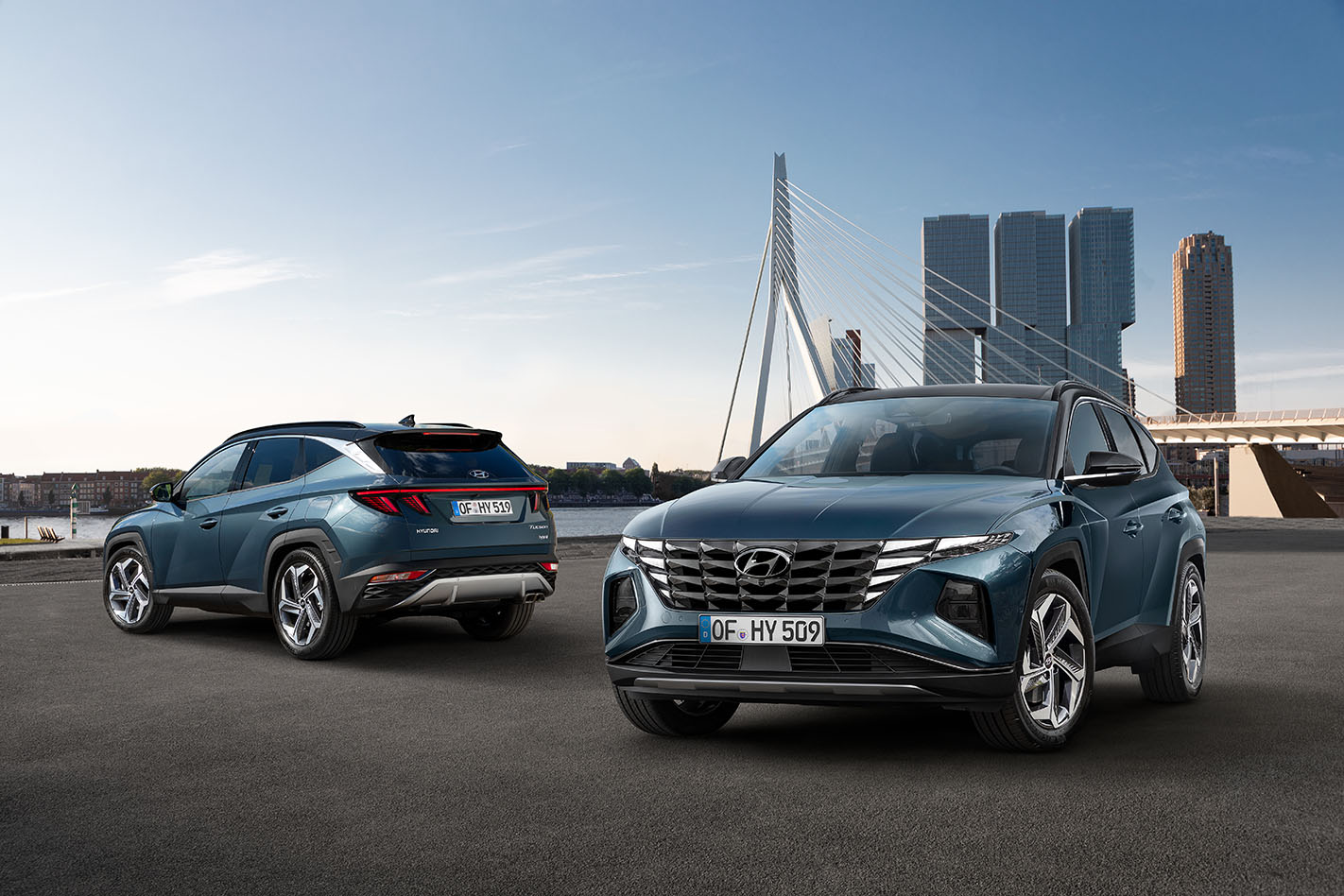
Hyundai has already said the Tucson will be its flagship model, with bold styling, cutting-edge tech, and importantly, new powertrains.
Previously the Tucson was powered by 2.0-litre naturally-aspirated four-cylinder petrol, or turbo diesel engines, while this new generation has a 2.5-litre petrol engine, hybrid power, and the option of a 1.6-litre turbocharged unit.
There’s also a raft of safety technology… and well, just look at it!
If priced well, the Tucson could make quite the splash when it lands midway through 2021.
What could go wrong?
The Tucson faces some extremely tough competition in the mid-size SUV segment. The Toyota RAV4 arrived in 2019 and set a new high watermark.
Buyers have been waiting for months to get their hands on the RAV4, with the hybrid powertrain a customer favourite.
Hyundai will need to have nailed the execution of its electrified Tucson to challenge the RAV4 for segment supremacy.
SUBARU OUTBACK
What is it?
Sitting above the Forester, the Outback represents the most practical wagon-turned-SUV in Subaru’s arsenal.
With a large focus on practicality, the Outback is suited to tribes wanting a transport option that’ll take them off the beaten track.
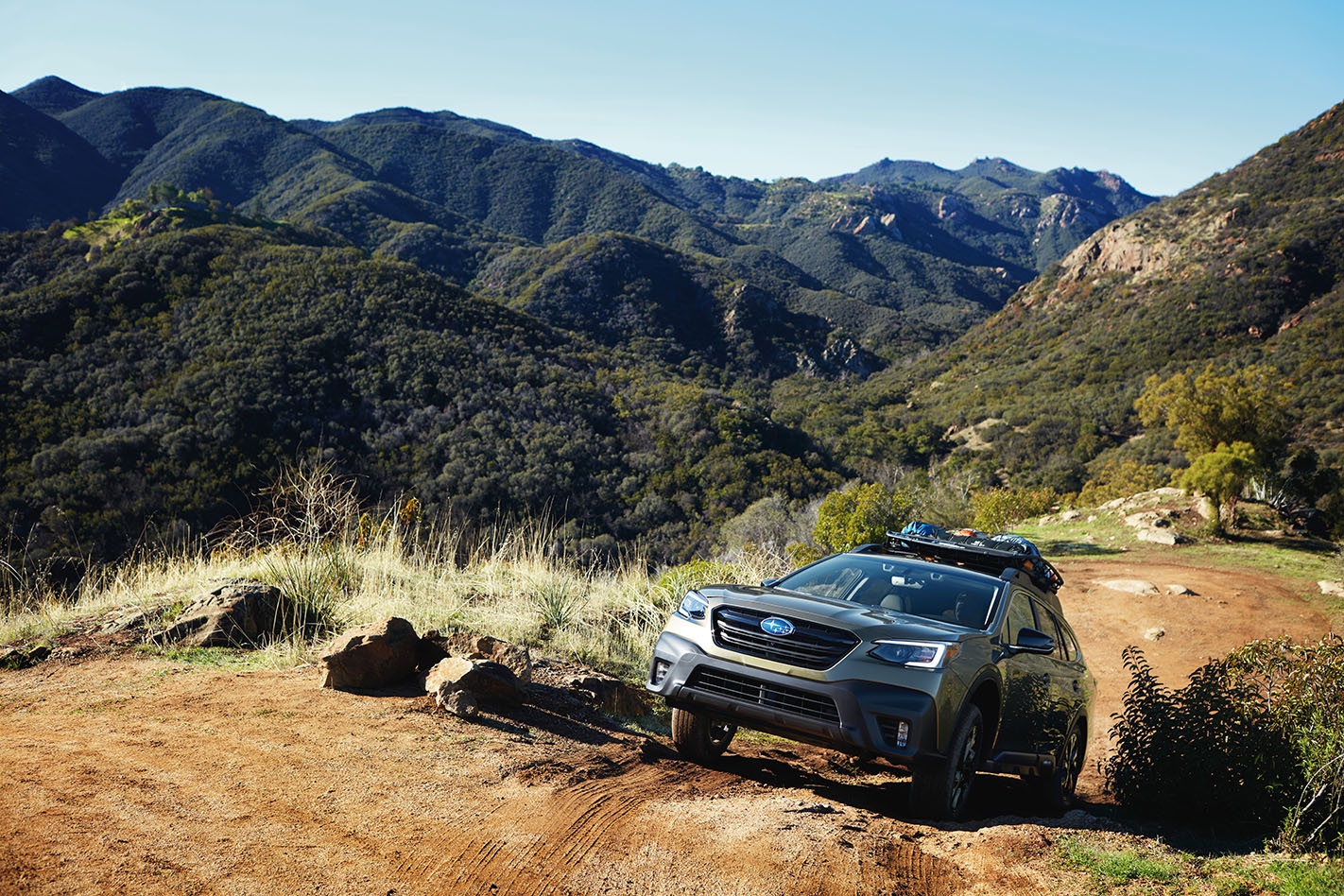
New for the 2021 model is the addition of a turbocharged 2.4-litre four-cylinder engine, along with the naturally aspirated 2.5-litre used in the existing Forester.
Why we’re excited
We’ve long held a soft spot for the Subaru Outback, with its wagon sensibilities and genuine off-road ability.
This sixth-generation model is built on Subaru’s Global Platform architecture, which is a good thing! The same design is used for the current Impreza, XV, and Forester.
With the new chassis comes a revised suspension design, as well as the full suite of Subaru’s EyeSight safety features.
Fans of capable family haulers should be pleased by this news.
What could go wrong?
We’ve been waiting for the all-new Outback for what feels like an eon now (it was first revealed in April 2019). Can it live up to expectations?
There’s also no longer a six-cylinder variant to choose from, with four-cylinder engines proliferating the range.
It could be too little, too late from the big Subie wagon.
Toyota Kluger
What is it?
The Toyota Kluger has never topped the new car sales charts, but it has to be one of the most loved cars by suburban Aussies.
The large Toyota SUV has been incredibly popular for a while now, with the second-generation model being on sale locally since 2013, and received a mid-life facelift in 2016.
But now, finally, there is an all-new model on its way.
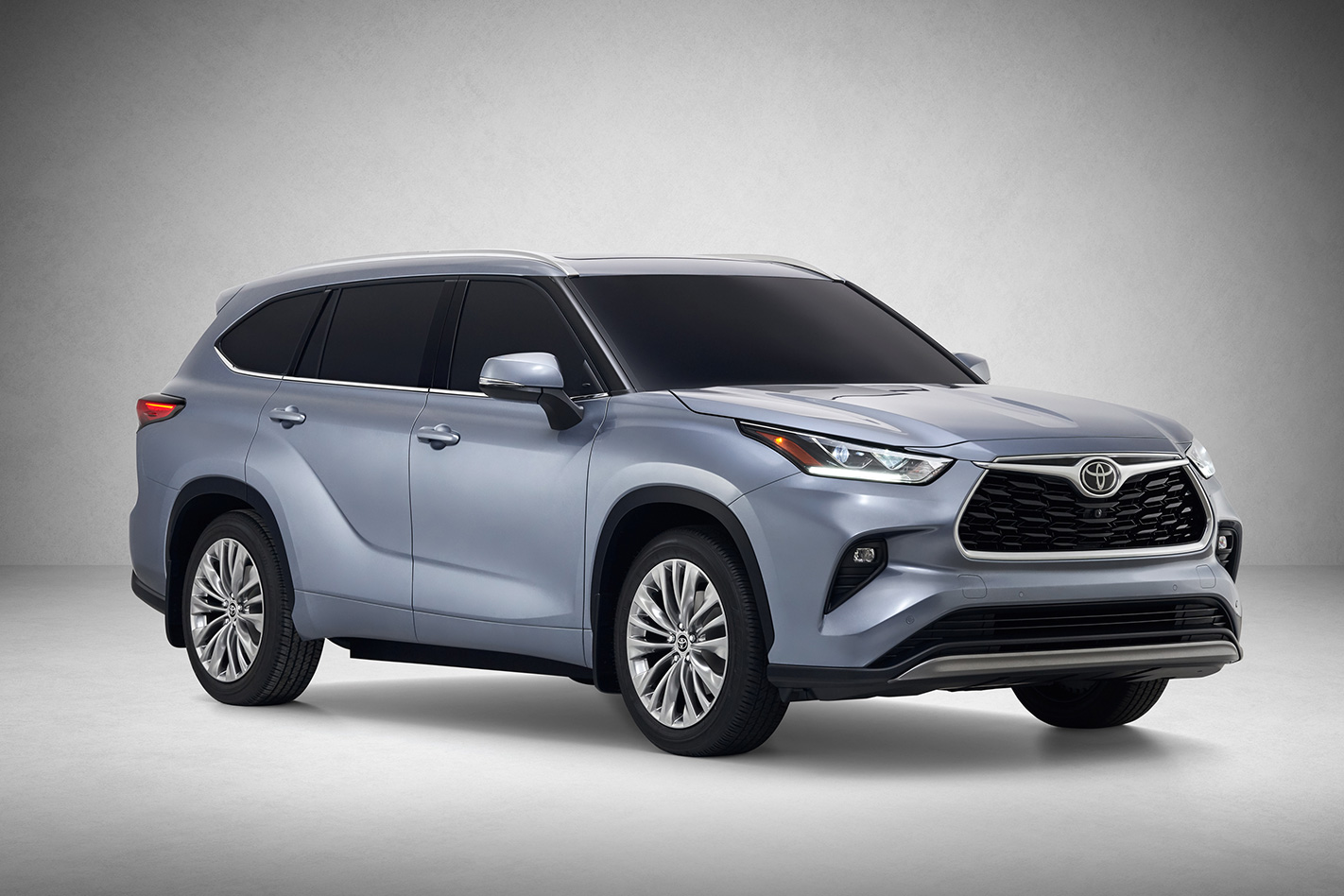
The large SUV will have both V6 and four-cylinder hybrid engine options, and capacity to carry seven occupants.
Why we’re excited
The all-new Kluger was first revealed in early 2019, but is yet to arrive locally.
The important large SUV can’t come soon enough for Toyota, with the current model feeling decidedly dated and outclassed by more modern rivals.
The most exciting addition for this next-gen Kluger is a self-charging hybrid variant. Following the smash success of Toyota’s RAV4 hybrid models, it could the shot in the arm the Kluger needs and will bring affordable fuel-efficient family-hauling to the suburbs.
What could go wrong?
Having to wait almost two years for the new Kluger to land Down Under could dampen its impact.
With the rapid advancement of technology in the automotive world, two years is half a lifetime.
Can it impress enough to make the wait worth it?
MERCEDES-BENZ S-CLASS
What is it?
A towering technical tour de force from Mercedes-Benz filled to the brim with cutting-edge systems that will make a science fiction writer’s head melt.
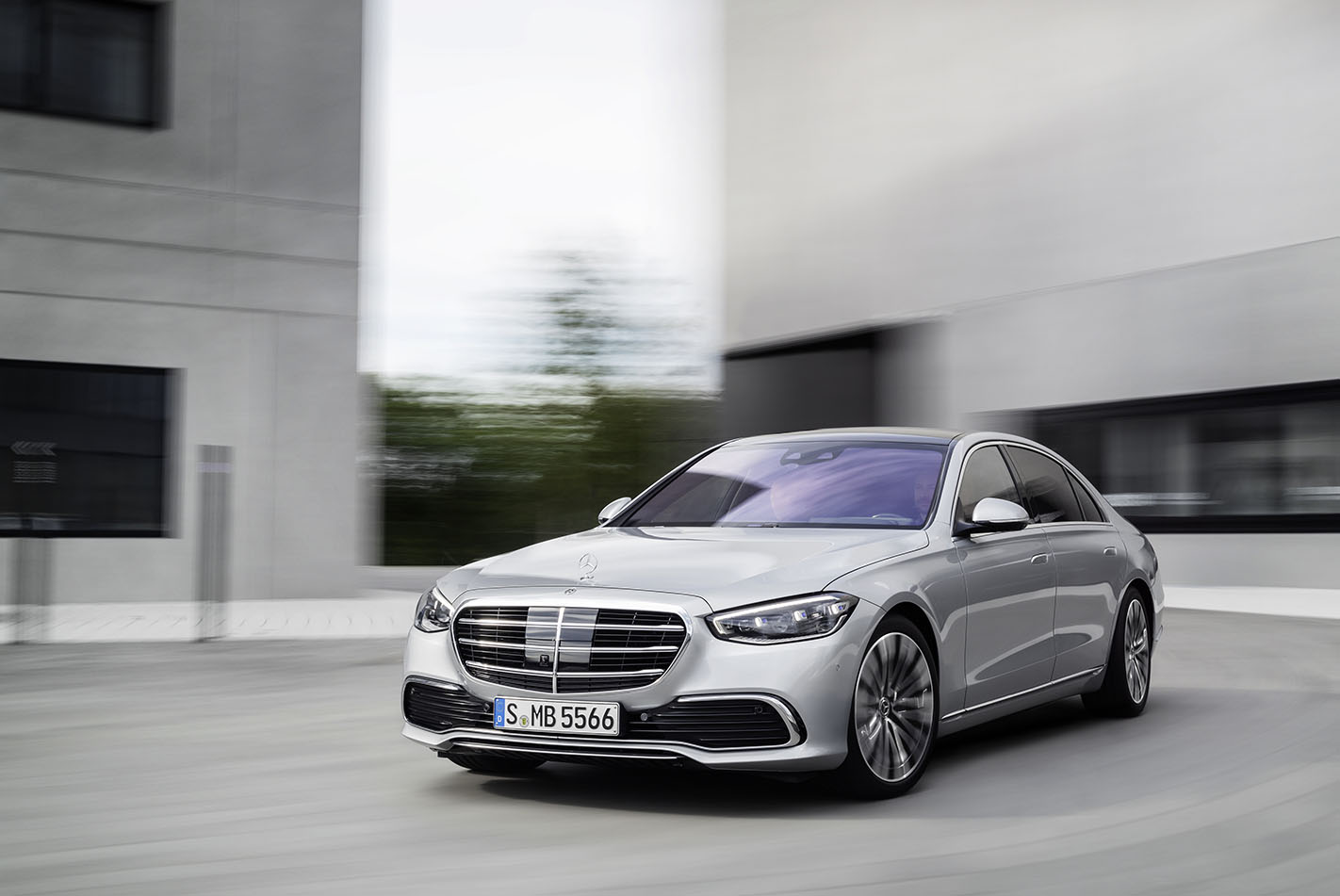
The S-Class is the crown jewel in Mercedes-Benz’s range and stands for all things luxurious.
Why we’re excited
Mercedes-Benz’s biggest and most expensive saloon is a timeless icon of forward-thinking luxury for a reason.
This seventh generation of Mercedes-Benz’s luxury limo flagship (codenamed W223) lives up to that legacy with advancements in driver assistance, computing power, and head-up displays.
The biggest tech showcase is a huge augmented reality head-up display, which Mercedes says is the equivalent of having a 77-inch TV screen placed 10 metres in front of the car.
The system projects info such as turn-off arrows “virtually and precisely” onto the road in front of the driver.
Computing grunt and processing power is a large part of this new S-Class, and the luxury sedan has a data bandwidth of 41.8 gigabytes per second – more than enough to mine bitcoin if that takes your fancy.
Safety has long been an S-Class calling card, and the W223 is no different, debuting a world-fist frontal airbag for rear-seat occupants, which deploys from the back of the front seats, using a tubular structure to inflate and ‘catch’ the head of those riding in the outer rear seats.
What could go wrong?
Mercedes-Benz isn’t the only one breaking new ground in the technological arms race any more.
That makes life hard when you are trying to stand out as a genuine innovator. Will the S-Class’s new tech showcases be enough to convince buyers it’s the leader they need to be seen in?
CADILLAC CT5-V BLACKWING
What is it?
A four-door mid-size sedan with a weapons-grade supercharged V8 under the bonnet built by GM.
Sounds familiar, doesn’t it? Well, GMSV is hoping that the same recipe that had buyers laying down big money for hotted-up Holdens will work with this yet-to-be-revealed Cadillac.
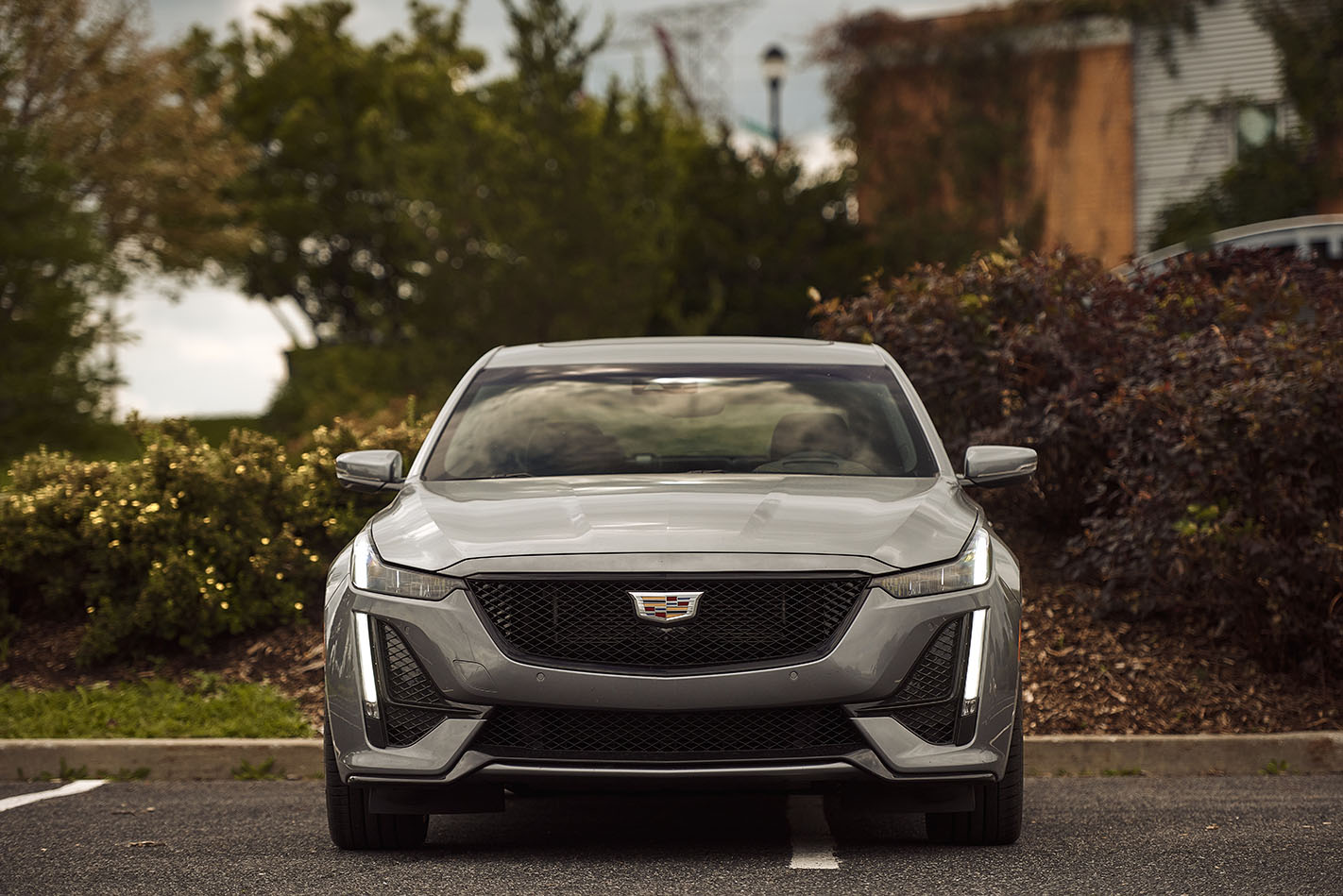
The CT5 is Cadillac’s mid-size four-door sedan, with the V badge denoting a performance variant. Sitting atop the range will be the Blackwing, powered by a supercharged 6.2-litre V8
Why we’re excited
We’ve wanted Cadillac to be offered in Australia for years now, and it could finally be happening.
Trademark applications have been completed locally for the Cadillac brand, and GMSV is perfectly placed to sell the luxury performance models locally.
Powered by a 6.2-litre supercharged V8, the CT5-V Blackwing is expected to produce roughly 485kW, sending power to the rear wheels via an automatic transmission, or importantly, a six-speed manual.
Big, brash V8 sedans with manual transmissions are a dying breed, but this Caddie does the formula proud.
What could go wrong?
There are several big hurdles to overcome.
The first is completing and validating the re-engineering process. Putting the steering wheel on the right-hand side of the car isn’t the work of the minute, and will prove a challenge for Walkinshaw’s Australian engineers.
Then there is the issue of securing a steady enough supply out of America, and getting them to Australia.
We really would have liked for the Blackwing to be fitted with the eponymous twin-turbo V8, but internal politics at GM killed that, and instead, customers will have to make do with a supercharged unit.
Finally, and perhaps most challenging, is getting the price right. The Aussie dollar isn’t its strongest, and the re-engineering process isn’t cheap, meaning a price tag for the CT5-V Blackwing could rival the likes of the Mercedes-AMG C63 (or be even higher).
HSV was previously able to charge serious money for a GTS model. Will Australians pay the same for a relatively unknown product without the cultural significance?
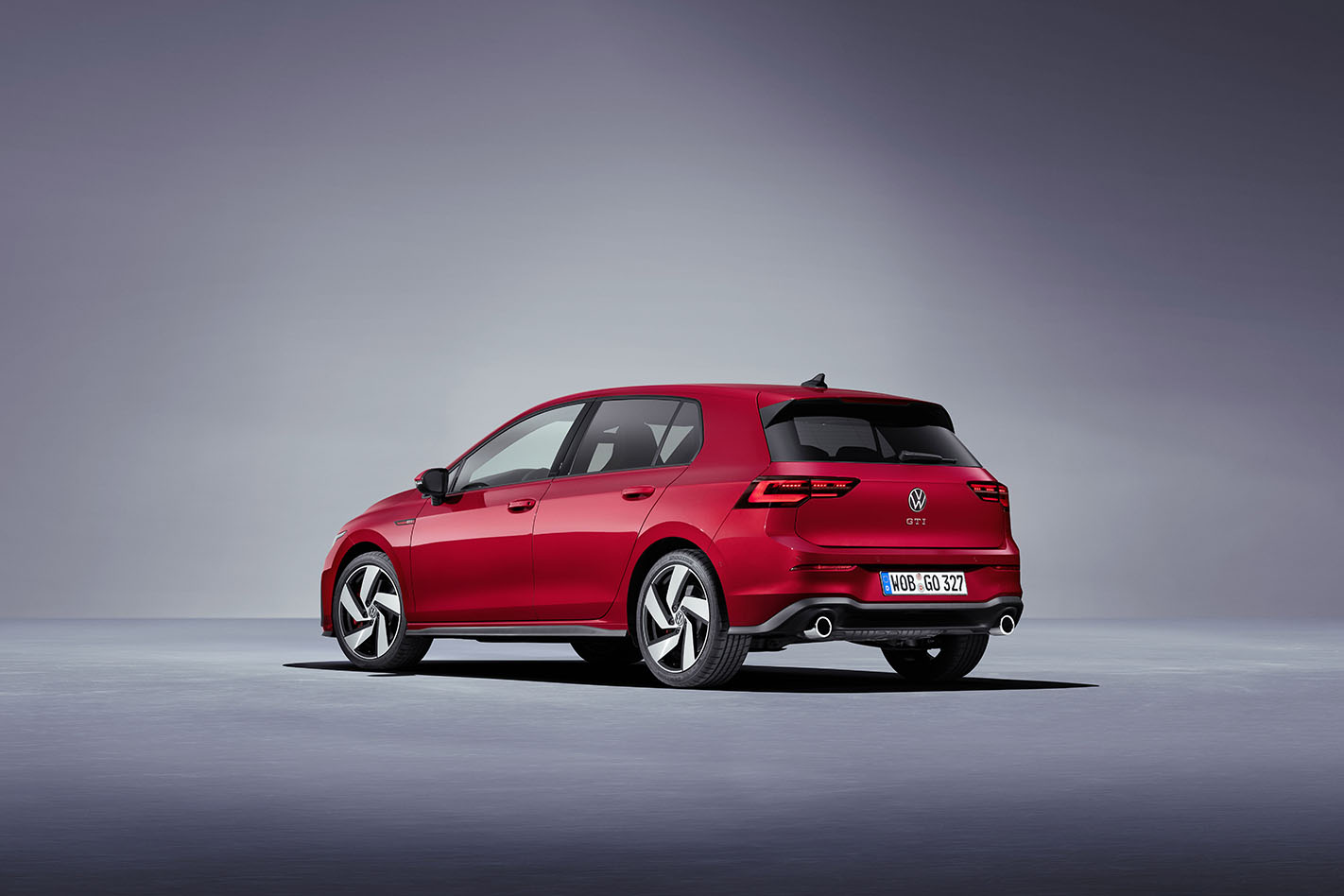
VOLKSWAGEN MK8 GOLF GTI
What is it?
An all-new generation of the perennial hot hatch hero. The base Mk8 Golf is almost ready to land in Australia, but fans of the go-fast GTI will need to wait until 2021.
With a turbocharged 2.0-litre four-cylinder engine, the GTI sticks to the traditional formula of sending power to the front wheels, with gears selected with either a dual-clutch automatic, or manual transmission.
The GTI will preview the even-faster Golf R.
Why we’re excited
There is a good reason why the Golf GTI has remained the vehicle every competitor is measured against in the hot hatch segment – it is a damn good car.
Think of the Golf GTI as the Porsche 911 of hot hatches, so an all-new model (even if it is just a slight tweak on the existing design) is something to get gee’d up for.
Volkswagen has taken a refined approach to upgrades for the new GTI, fixing areas that needed improvement (such as DSG gearbox tweaks and a trick new vehicle dynamics system), while leaving things that already worked alone.
The hot hatch segment is hotter than ever, with ripper contenders from the likes of Hyundai, Honda, Ford, and Renault giving VW plenty to think about.
Eight generations in, though, the GTI should never be counted out.
What could go wrong?
While it wears a Mk8 badge, the new Golf GTI is at its core an evolution of the existing Mk7.5 car. It shares the same EA888 engine (and associated outputs) and is built on a revised MQB platform.
While we can’t judge the GTI too harshly before it arrives, there is a chance that VW hasn’t done enough to keep up with key rivals in the segment.
Supply from Volkswagen internationally could also prove an issue, with a number of models from the German manufacturer taking their sweet time arriving Down Under as demand from larger international markets gobbled up supply.
Hyundai i20 N
What is it?
Hyundai’s second N model, which it hopes will solidify the Korean brand’s performance credentials.
Based on the small i20 hatch (which isn’t sold in Australia in its base form), the i20 N is a light front-drive hatch built specifically to dominate your local twisty b-road.
Powered by a hotted-up version of Hyundai’s 1.6-litre turbo four-pot, outputs are a claimed 150kW and 275Nm.
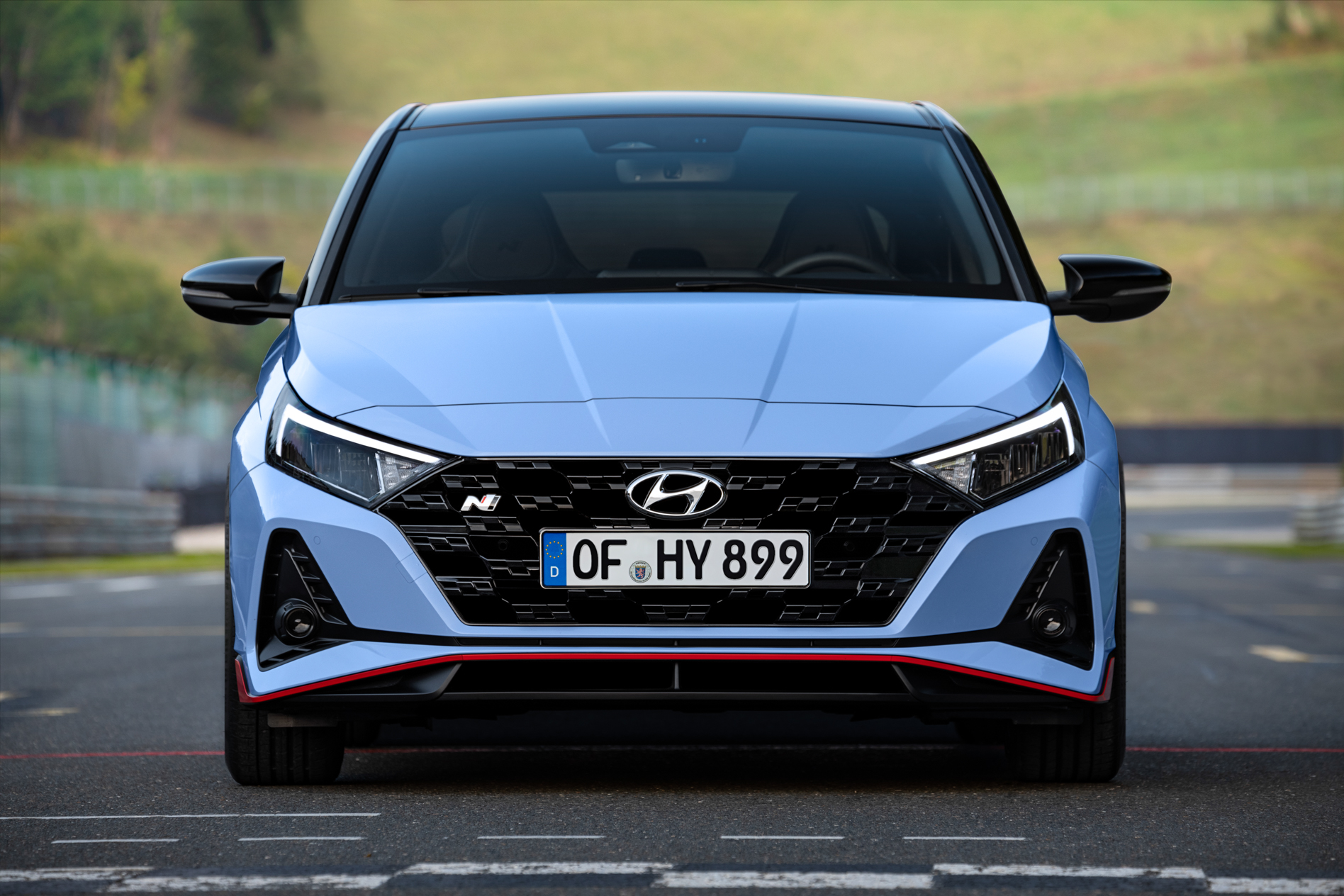
Sure, it’s not massive, but the i20 N weighs just 1190kg, making it lighter than both the Ford Fiesta ST (1262kg, 147kW/290Nm) and Volkswagen Polo GTI (1285kg, 147kW/320Nm).
This is clearly a car pointed directly at enthusiast buyers, with no automatic gearbox option in sight just yet. Want one? You’ll be dealing with three pedals.
When Hyundai dropped the i30 N on us, it instantly changed the game when it came to hot hatches and elevated the class benchmark to new highs.
Can the i20 N do the same in the lighter weight class?
Why we’re excited
We’ll let this excerpt from Tim Robson’s first drive of the i20 N prototype do the talking: “
“Straight away, it’s easy to access the i20N’s fun side, with tonnes of grip from those expensive tyres, a suspension tune that dances right on the line between compliance and support, big-ass stoppers and sufficient oomph delivered in an (almost) straight line.”
High praise, then.
By the time the i20 N goes on sale locally in early 2021, both the Ford Fiesta ST and Toyota GR Yaris will have been available for a little while, bringing a refreshing and fast update to the mini hot hatch genre.
What could go wrong?
The biggest risk facing the i20 N is any possible delays getting it into the country. We’ve driven a prototype version of the i30 N’s smaller sibling already, and well, let’s just say the Ford Fiesta ST has some stiff competition coming its way!
Pricing will also be important. Hyundai hasn’t confirmed anything yet, and we expect the i20 N will slot in around the $32,500 mark. This gives the bigger i30 N’s $40K+ pricetag enough of a buffer, while remaining competitive against the Fiesta ST’s $32,290 sticker.
Bring on the pocket rocket showdown!
PORSCHE CAYMAN GT4 RS
What is it?
Oh, you thought the Porsche Cayman range had topped out with the GT4? Not so, with Porsche’s GT division working in secret on a harder, faster RS version.
The Cayman GT4 is one of the best drivers’ cars of 2020, and next year Porsche is expected to reveal an improved, focused version.
Porsche’s GT division reserve the RS badge for only its most extreme creations. This should be good.
Why we’re excited
Do we really need to spell this one out?
A track-focused Cayman with more power, better rubber, and improved aerodynamics from Porsche’s most skilled engineers.
Yeah, that’s what we thought.
What could go wrong?
Being an RS model, the GT4 RS will be an automatic-only affair, meaning it won’t
be hamstrung by the regular GT4’s manual gearbox and its far-too-long ratios.
However, there is the issue of how to extract more power (and revs) from the GT4’s 4.0-litre six-cylinder engine.
This could be a costly exercise, with Porsche having to dip into a parts bin that is filled with exotic materials and technology to get the job done. Expect costs to be significant as a result.
But come on, it’s Porsche we are talking about. There’s little need to be worried.

Honda has closed the order books on the NSX in Australia, signalling the supercar’s end after close to four years on sale.
The brand’s Australian arm confirmed the news to WhichCar and that the twin-turbo V6 hybrid supercar was deleted from the brand’s local website a number of weeks ago.
It follows previously announced desires to restructure operations around a centralised model line-up.
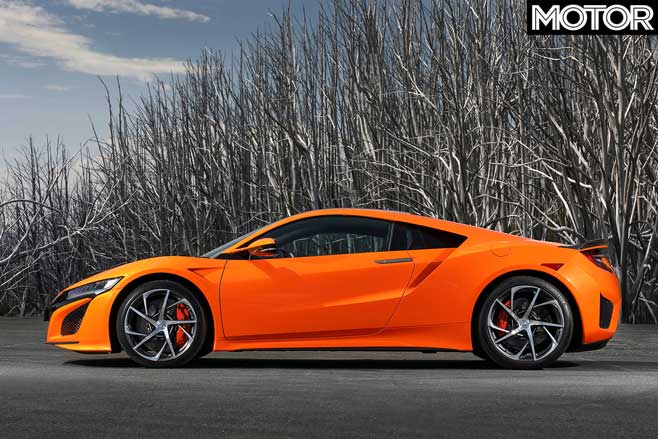
It features a recently updated chassis with more eye-catching details – planned to grab more attention in the over-crowded mid-engine supercar market.
Honda has always maintained NSX sales would be low in Australia, figuring a small allocation would keep demand high.
But we can only assume the nine NSXs registered since it arrived locally in 2016 has underperformed even those expectations.
The NSX was unique as one of the only genuine hybrid production supercars sold in Australia and impressed with its seamless electrification smarts, intuitive gearbox and million-dollar looks.
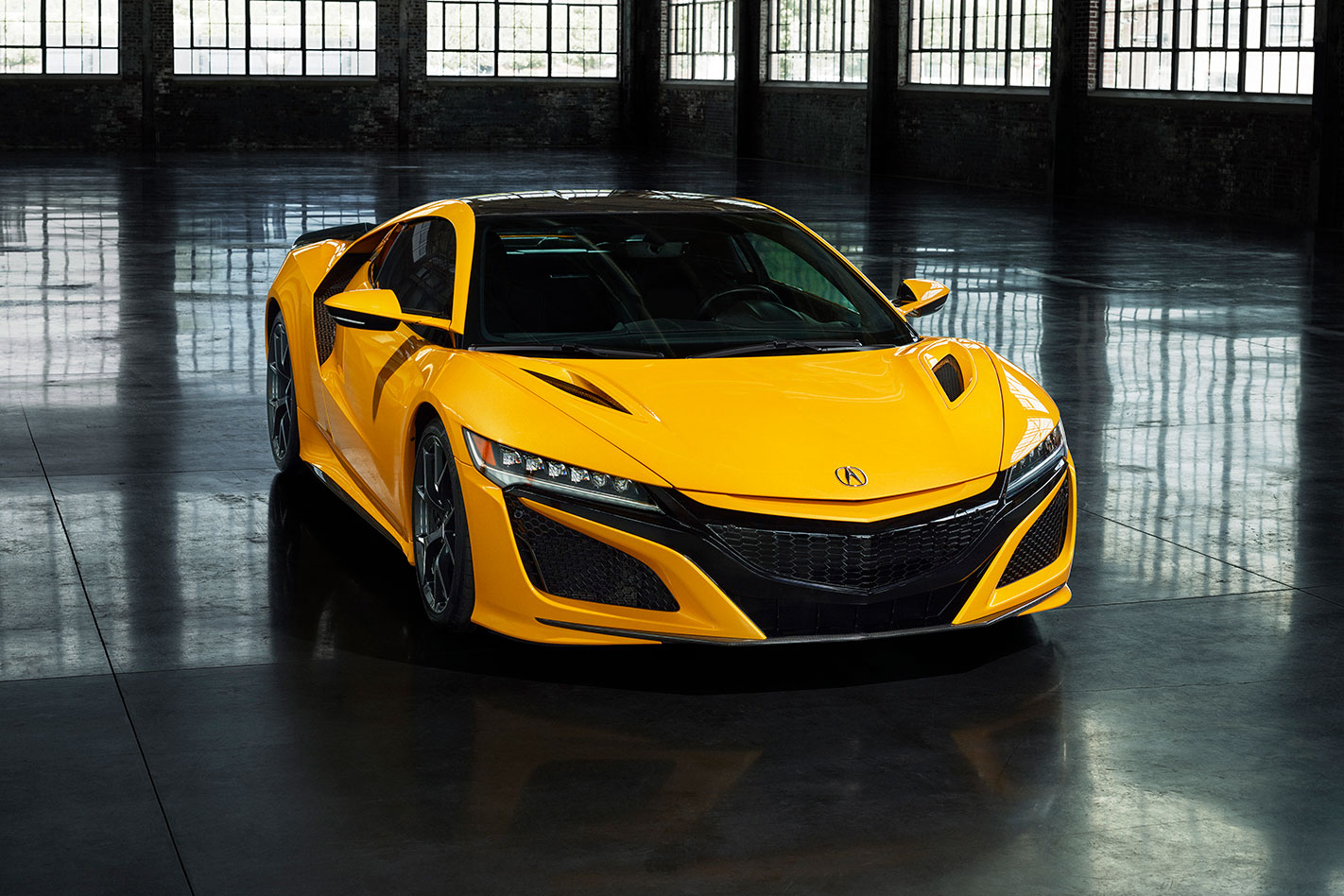
A high $420,000 price tag and a single-variant range also set it apart from competitors while a special-order basis, too, meant it was largely absent from showrooms and forced dealers to use Honda Australia’s sole press car for demo drives.
It won’t be the last car to leave Honda Australia’s showrooms, though.
Honda is boosting competitiveness in the face of shifting emission regulations, currency fluctuations and a per-capita recession which has driven a 30-month long new car market retraction in Australia. These are challenges faced by all manufacturers.
Honda’s slimming line-up now also excludes the small four-door City sedan that will not return as of this year given the declining light sedan segment in Australia. Nor will the brand not bring in the latest version of the Jazz light car in the face of declining demand and potentially higher prices.
Honda’s Civic – the car that arguably started the hatchback revolution in the 1970s – is holding its ground, but is still outsold three-to-one by cars like the Toyota Corolla and Kia Cerato.
Thankfully, the Honda Civic Type R remains firmly placed in the local line-up, with an updated MY21 model on its way before the GT3-esque Limited Edition arrives next year.
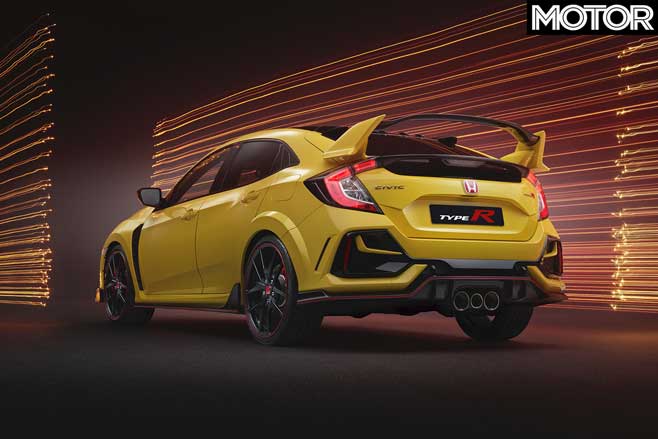
Overseas, Honda also announced a retreat from F1 engine supplier contracts at the end of 2021 when the sport moves to new and overhauled regulations.
The manufacturer has been building engines for the sport since 2014, achieving five wins in total and the honour of being the only engine to win with two separate teams: Red Bull Racing and Alpha Tauri (formerly Torro Rosso).
Subaru has treated its XV to a mid-life makeover, adding new technology, a light facelift and more hybrid choices to the popular small SUV line-up.
Introduced in 2018, the current generation XV has been a strong selling model for Subaru in an SUV-hungry market, with the underpinnings of the capable Impreza providing its basis.
Against the likes of the incredibly popular Hyundai Kona, Kia Seltos, and Mitsubishi ASX, the XV trails with around half the number of sales of the top three per month.
In a packed small SUV segment, though, the XV has always performed well, and provides a quarter of Subaru’s total sales volume.
While electrification is only a recent addition to the Subaru arsenal, the XV range is set to double its hybrid variant offerings in Australia… to two. What was simply the XV Hybrid variant is now split into XV Hybrid L and Hybrid S.
The range starts with the XV Hybrid L at $35,490 and is similarly priced to the outgoing 2020 XV Hybrid.
The 2021 XV Hybrid S becomes the range-topper, complete with a $40,790 price tag.
The two hybrid variants will also gain a feature called e-Active Shift Control, which senses the acceleration and G forces of the car to set the engine’s revs (via the CVT gearbox) for improved acceleration feel, or to improve engine braking on a hill descent.
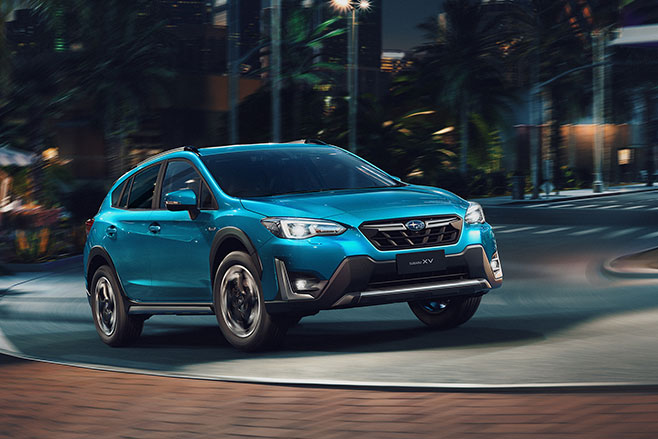
Subaru’s e-Active Shift Control function kicks in when S mode is engaged via the SI-Drive control system, which is also now standard across the entire Subaru XV range.
The rest of the range is also given plenty of attention in the latest update, from the simple addition of power-folding door mirrors on the base XV 2.0i AWD (on top of the addition of SI-Drive), to the plethora of new features the range-topping Hybrid S boasts.
The entire range also benefits from a suspension retune, which tweaks spring shapes at the front end to move more smoothly and, Subaru says, improve comfort and handling.
New 17-and 18-inch wheels are available for each variant, with the S and Hybrid S scoring the larger of the two.
In addition, the front bumper, fog light housing, and grille have been reshaped, while two exterior colour options change from Sunshine Orange and Quartz Blue Pearl to replacements Plasma Yellow Pearl and Horizon Blue Pearl respectively.
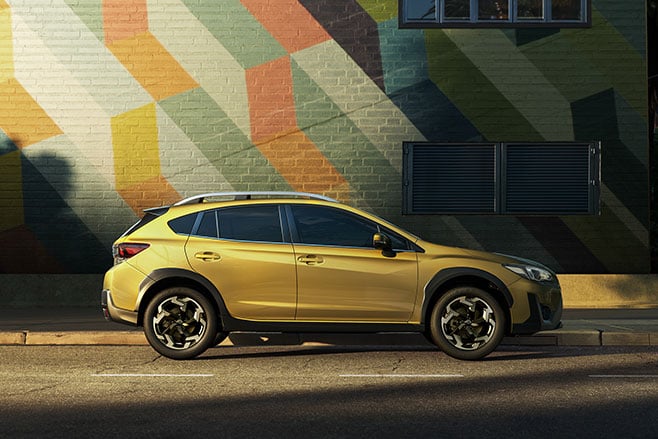
The range now starts at $29,690 for the Subaru XV 2.0i, though the slightly higher spec L variant is $31,990. These are $450 and $380 price hikes respectively, compared to their 2020 predecessors.
Stepping up from the base and L variants, and the XV Premium scores heated door mirrors, while also gaining Subaru’s more extensive safety ‘Vision Assist’ suite.
This adds a blind spot monitor, lane change assist, rear cross-traffic alert, reverse automatic braking and a front view monitor.
The Subaru XV 2.0i Premium now costs $34,590, which is a hefty $1170 more than the MY2020 version.
The top non-hybrid XV 2.0i S model now scores Subaru’s X-Mode for better off-road or snow driving settings, plus front and side view monitoring.
It also gets new creature comforts including a memory driver’s seat, auto-dipping and folding mirrors, and visual updates such as gloss black console panelling and a stitched binnacle visor.
The Subaru XV 2.0i-S AWD costs $37,290 now, $760 more than before.
Moving up to the Hybrid L, for $35,490, and the list of goodies includes the previously mentioned e-Active Shift Control, X-Mode, Subaru’s EyeSight tech, rain-sensing wipers, a leather steering wheel, and power-folding door mirrors.
The higher-spec Hybrid S ($40,790) adds on top of this a two-mode version of X-Mode, as well as the same Vision Assist suite as the XV Premium, leather-accented power seats with heating and position memory, sports pedals, unique interior accents, slightly larger 18-inch wheels, and an electric sunroof.
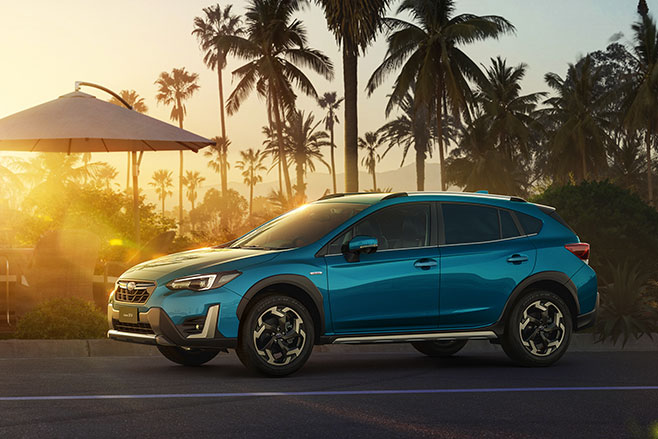
Subaru Australia’s newly appointed general manager Blair Read calls the mid-life update a “formidable list of technology and cosmetic changes.”
He says the Hybrid’s popularity in its debut year among buyers has prompted the slight diversification of its electrified offerings.
“We are also delighted to offer additional choice within the XV Hybrid range, which has drawn considerable interest from both existing Subaru owners and prospects since the initial variant launched early this year.”
Below is a breakdown of pricing for the entire range, compared with the equivalent in the 2020 model-year line-up.
| Variant | 2020 price | MY21 price |
| Subaru XV 2.0i AWD | $29,240 | $29,690 (+$450) |
| Subaru XV 2.0i-L AWD | $31,610 | $31,990 (+$380) |
| Subaru XV 2.0i Premium AWD | $33,420 | $34,590 (+$1170) |
| Subaru XV 2.0i-S AWD | $36,530 | $37,290 (+$760) |
| Subaru XV Hybrid L AWD | $35,580 (one hybrid variant) | $35,490 (-$90) |
| Subaru XV Hybrid S AWD | $40,790 (+$5210; higher spec) |
Spectators and workers who attended last weekend’s Bathurst 1000 have been warned that they may have been exposed to COVID-19 and advised to monitor for symptoms after the virus was detected in samples of the town’s sewerage.
New South Wales Health has issued the advice to all attendees as well as visitors to the area and is urging anyone with even minor symptoms to get tested immediately and self-isolate.
It’s not known if the virus remnants found in waste water originated from the event and one of the 4000 daily visitors, or a member of the township’s 37,000 population, but NSW Health is asking anyone who has visited the region to be on the lookout for a runny nose or scratchy throat, cough, tiredness or fever.
This year’s event was capped at about 6.0 percent of the usual Mount Panorama turnout amid the ongoing coronavirus pandemic. If the trace sample originated with a spectator or worker, the drastically reduced crowd may have avoided a significant hotspot of new cases.
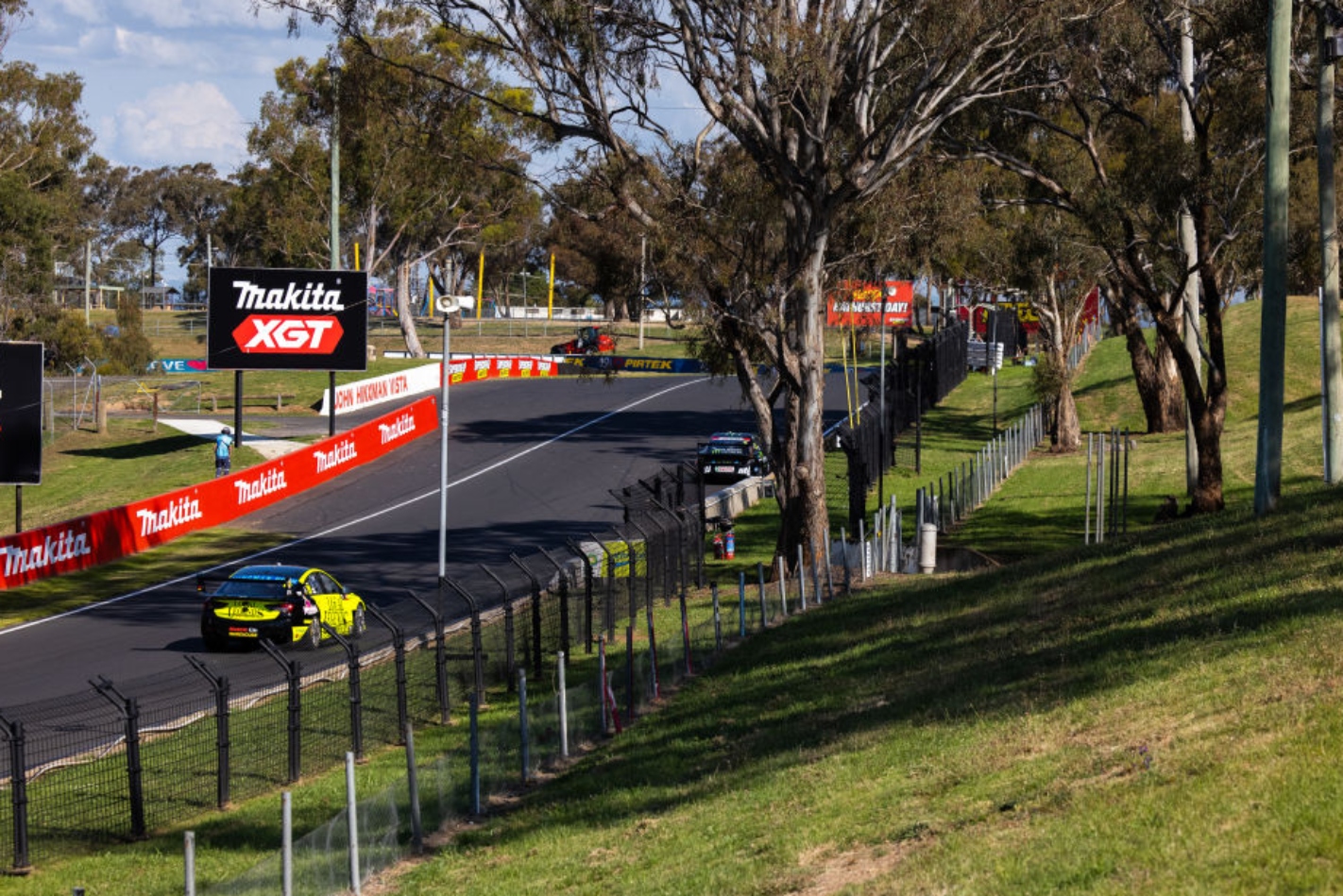
Following confirmation of the relatively tiny crowd limit this year, Bathurst 1000 organisers said they were “disappointed” at the strict cap, but may well be breathing a sigh of relief after the discovery.
“Whilst we are disappointed that we can’t have a full crowd at Bathurst, we’re delighted to offer even limited attendance,” said Supercars CEO Sean Seamer in a statement.
NSW Health is now investigating the movements of known cases to establish if infected persons attended the race or general area, including cases that are no longer considered active.
“NSW Health is urgently undertaking investigations, which include reviewing lists of all those known to have had the virus who attended or worked at the race,” it said in a statement issued on Wednesday night.
The wastewater testing strategy was introduced in NSW in July this year and is a highly sensitive way of tracing where the virus has been by looking for minute molecular markers, but there is no evidence the virus is spread via sewerage networks.
News of a potential outbreak in Bathurst comes as the state is preparing to ease restrictions and allow more group gatherings, but authorities will be monitoring the recent developments nervously.
Despite the departure of local vehicle manufacturing in Australia, one company is hedging its bets on a surge in demand for electric vehicles and will build a greenfields factory in the southern highlands of NSW, about an hour and a half southwest of Sydney.
Nexport will use established technology from Chinese electric firm BYD to assemble buses and cars on a $700 million 51-hectare site in Moss Vale, according to its CEO Luke Todd, once the plant is complete.
“We’ll be building a facility where we’ll be producing electric buses for the New South Wales bus fleet and other states, and hopefully an export market as well,” Todd told ABC Radio Illawarra. “We’ll also be producing electric trucks and we’ll also be doing some engineering work and then moving into a transition of electric cars in Moss Vale.”
The small, leafy town of Moss Vale was chosen over other sites because of its proximity to large urban centres and a seaport, according to Todd.
“I’ve been working on this project for some time, close to four years, myself, and talking with Infrastructure New South Wales on and off for close to three years, about the ideal site,” he said.
“We’ve always wanted to not do it in Sydney or in some of the built-up areas, such as Western Sydney. We’ve always wanted to move to somewhere regional. And we looked everywhere across the state and looked at various places – Parkes, Dubbo, and even Nowra. But what we found is that we wanted to make sure that we could have the most impact and not be caught in an area where we were too regional, if there is such a thing.
“So we looked at the Moss Vale area and obviously [there’s] the beautiful residential area, but there was some shoots of industrial activity starting to take place.”
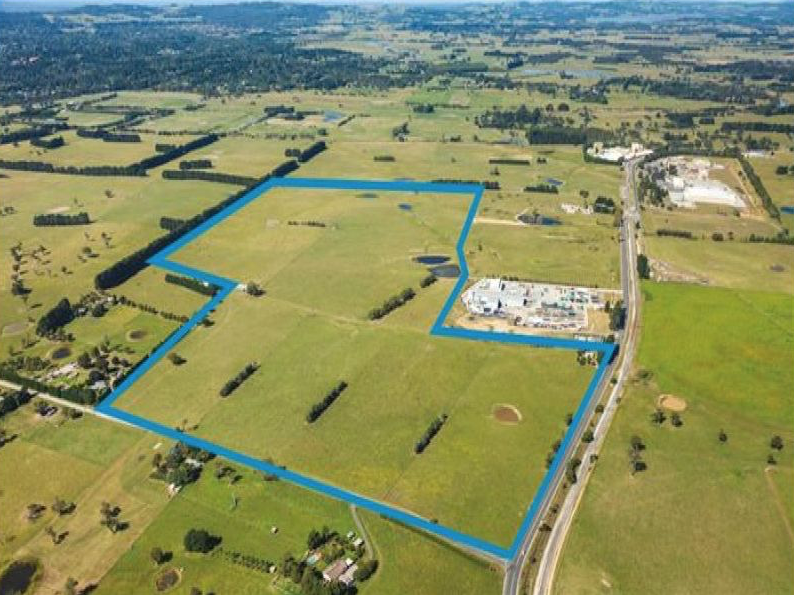
The town is home to several mining engineering firms, and is well serviced by freight rail and road services, including a rail corridor to the seaport at Port Kembla, an hour to the east.
“Some of our products that come in, componentry and so on is very easy to transport,” said Todd. “Then looking on a map we’re halfway between Sydney and the ACT. And both are the most progressive in Australia, in regard to electric bus transition. So it just made perfect sense.”
Nexport will initially set up a facility in Glendenning in Sydney’s west to build buses for the NSW government, before turning the earth on its Moss Vale site in 2021.
The new facility will take five years to complete, which may see Nexport import BYD EVs from China for direct-to-consumer sale in Australia ahead of building its own cars, subject to Australian Design Rule adaptation.
Todd sees an exponential growth in electric vehicles going forward, with the key to success coming by working smarter, not harder.
“The big change is that vehicles going forward are going to be electric vehicles in the main, so that is a massive technology transition from what a combustion engine vehicle was,” he said. “So it’s actually intelligent production, where you take the best of your local supply chain and you source as much as you can locally, which is our main goal and strategy.
“Then you take the best technology that you can find from around the world and bring that to Australia. You then produce a vehicle locally that is sustainable and also can be done in a cost-effective manner.”
The company has also imported EVs from BYD to establish an EV taxi fleet in Sydney’s northern suburbs, amongst other projects.
Depreciation is a silent killer in the running costs following a new car purchase. Most people tend to think of line items like fuel costs, servicing, tyre replacements and insurance as the main culprits siphoning money away from a new car buy, but they all pale in comparison to how much you lose with simple depreciation.
The claim often bandied about is that as soon as a new car drives off the dealership lot, it loses 10 percent of its value. That sounds dramatic, but sadly, that statement is actually not too far off.
That needn’t always be the case, though! There are cars out there that are shielded from the depreciation downtrend.
So what should you buy if you want to maximise your car’s trade-in value when it comes time to upgrade? That’s what we’re here to find out, armed with industry data to help.
Performance is king
According to automotive industry monitor Glass Data, the type of vehicles that dominate the top end of the 36-month/60,000km resale value charts are cars that are designed to go fast – and cost a lot.
In fact, the car that depreciates least – with 73 percent retained value at the end of 36 months – is the Audi RS3 Sportback, one of the hottest hatches on sale. Its sedan sibling isn’t far behind, with a score of 67 percent.

Other notable members of the high-resale club include the AMG GT (67 percent), Lexus LC 500 (67 percent) and eight variants of the Mercedes-Benz SLC (all 67 percent). Nissan’s GT-R Nismo also scores 67 percent, along with the Benz S500, S63 and S65.
Audi’s A5 coupe also features strongly, with 2.0 TDI, 2.0 TFSI and the 3.0-litre turbocharged S5 all recording 64 percent retained values. The Ford Mustang achieves the same rating too, but only the V8-powered GT manual model and not the four-cylinder Ecoboost.
It is worth pointing out, though, that a performance cars tend to cost far more than conventional passenger cars. So while they may be losing less of their value as a percentage, in real terms they’re still losing vast amounts.

Somewhat surprisingly, it takes a little bit of scrolling before Porsche’s sports car models start appearing. Vehicles like the 718 Boxster and Cayman as well as the 911 Carrera GTS retain 61 percent of their retail value after three years, which is a respectable result but lags behind the Cayenne and Macan. Porsche’s two-door models have traditionally been seen as rock-solid ‘investment grade’ buys, but apparently it’s the SUV product that performs better in the short term.
Premium vs mainstream
Luxury brands prove to be the better option for the most part. Audi had the distinction of claiming top spot overall, with five models (RS3, A4, A5/S5, Q5/SQ5, Q7/SQ7) all retaining more than 63 percent of their purchase value at the end of 36 months. It was a strong performer, however it’s not alone.
Mercedes-Benz actually had seven model lines represented at 60 percent and over, with the AMG GT, the S-Class in S500, S63 and S65 trim, the SLC, GLE, GLS and the C43 Coupe being its top scorers.

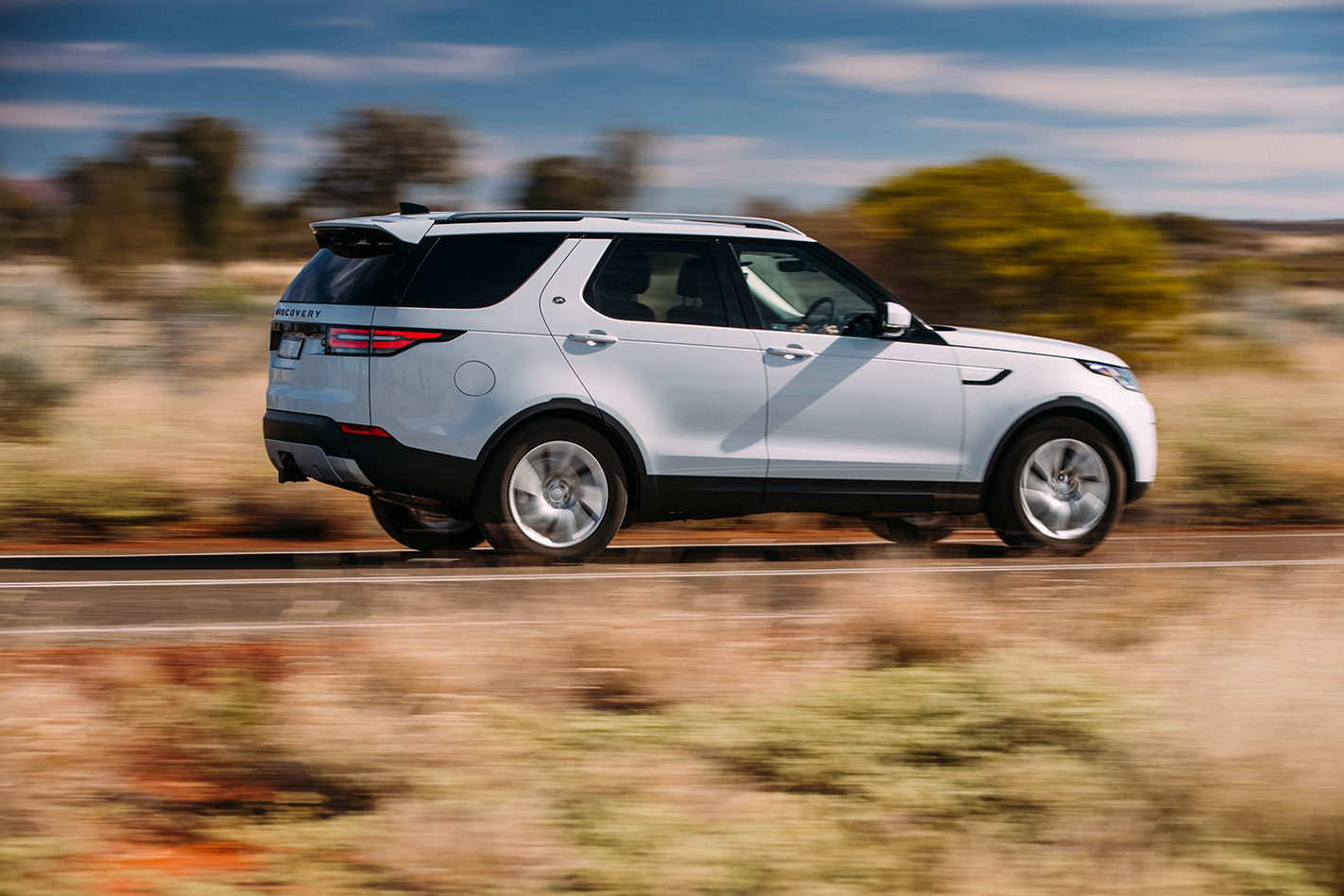
BMW also figures strongly with six model lines represented in the over-60-percent realm, but if you count all of the Jaguar Land Rover products as a single group, it was the Indian-owned British brands that had the strongest showing – all up, there were eight JLR models with retained values in excess of 60 percent, with Range Rover providing four and Jaguar and Land Rover bringing two each.
What’s more, virtually every variant of the Range Rover Velar and Jaguar F-Pace families made it onto the >60 percent list, both at 61 percent. British-accented premium SUVs appear to have very good prospects on the used car market.
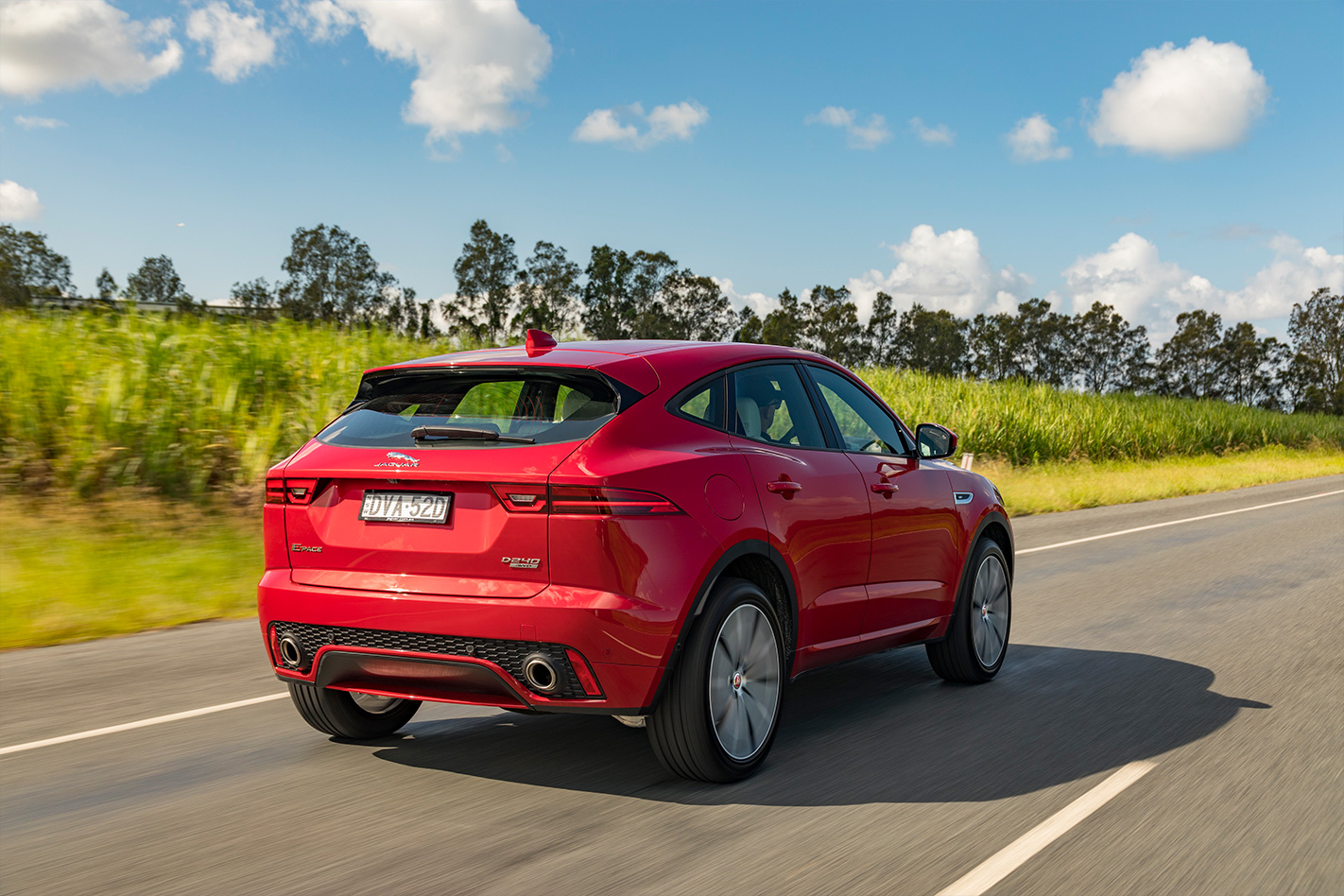
As an example of the premium vs mainstream trends, take the Jaguar E-Pace and Mitsubishi ASX. The E-Pace depreciates to 63 percent of its initial price after three years while the mainstream ASX can only hang onto 48 percent of its retail price. That’s 15 percent more value retained for going premium over three years.
The body style question
Not only is the 60-and-up gang dominated by premium brands, but it’s overwhelmingly populated by SUVs.
It’s a reflection of current buying trends and demand which sees more SUVs sold than any other body category.
Of course, we find a majority of the best retained values belonging to premium brands, but as a general rule, Glass Data suggests that SUVs tend to hang onto at least 50 percent or more of their value after three years.
Trends show that the larger the SUV, the more retained value as well.
Toyota snuck in among the prestigious group with 12 variants of the 200-series Landcruiser and six of the Landcruiser Prado, along with Volkswagen’s hulking Touareg. All three retain 61 percent of their value after three years.

As for the everyman, Mazda’s comparatively humble CX-5 Akera diesel AWD achieved a 60 percent score – though all other CX-5 variants appeared a few percentage points further down the list.
Trade vehicles
Just because your vehicle is a workhorse doesn’t mean nobody will want it once you’re done with it. In fact, if you shop smartly you’ll be able to dodge depreciation and reduce the impact on your business’ bottom line. Unsurprisingly, the best performers in the commercial space are Toyotas.

But despite dual-cab utes enjoying bigger and bigger sales in Australia, it’s not the Hilux that rates highest for Toyota’s commercial division – it’s the Hiace commuter van, which returns a healthy 59 percent of its retail value at the three-year mark.
The first Hilux on the list appears at the 58 percent mark (the Rugged X variant), followed by a brace of higher-spec Hilux Rogue, Rugged and XR5+ variants at 57 percent. Hiace SLWB models also turn up at 57 percent, while LWB models rate well at 56 percent.
The rest of the Hilux 4×4 range achieves a 56 percent retained value score too.
Ranger FX4, XLS, XLT and Wildtrak models also achieve 57 percent ROI, with the rest of the Ranger range appearing at 56 percent. With the Ranger continuing to experience strong demand in the new car market, its healthy performance as a used vehicle is easily understood.
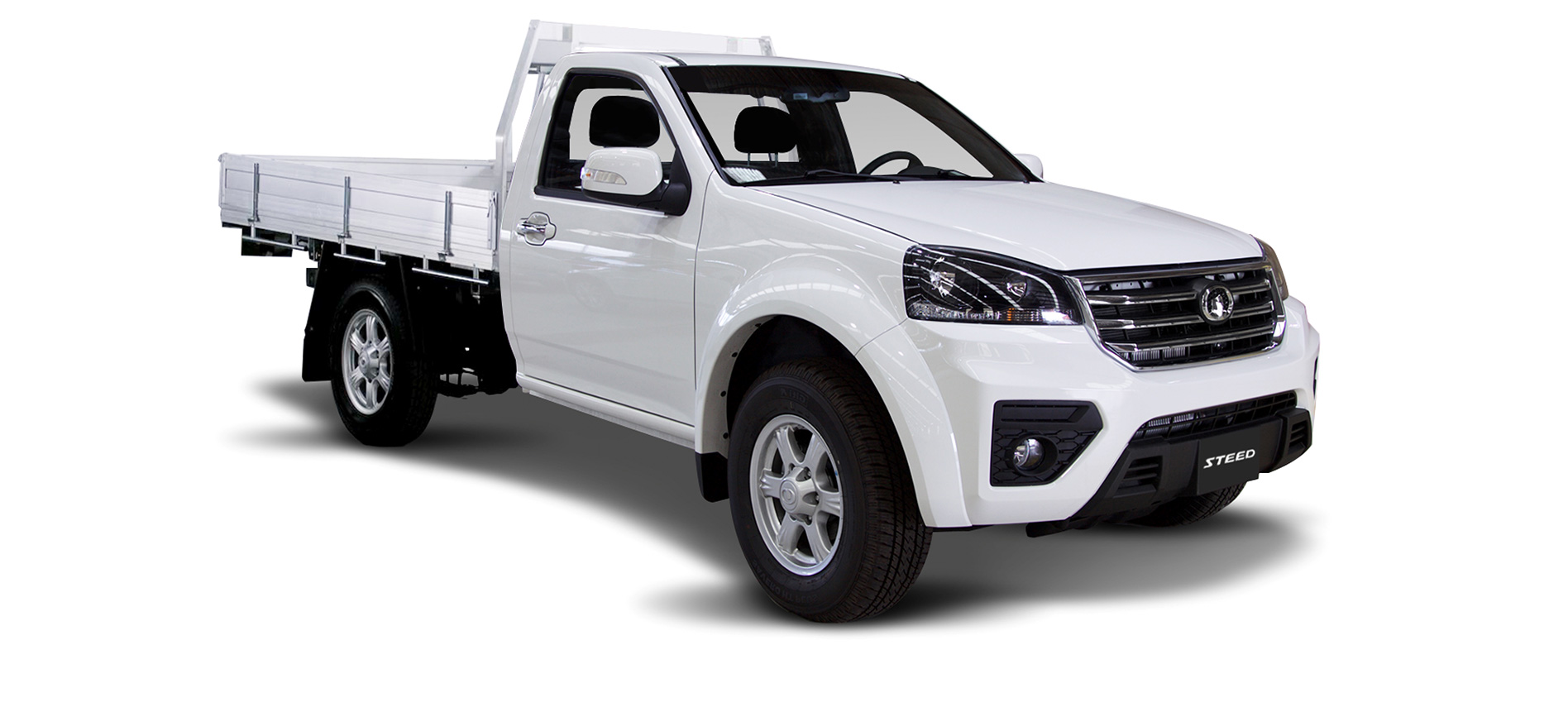
Virtually all dual-cab ute models hold their value well, but Chinese-built utes like the Great Wall Steed are an exception – only retaining 29 percent of its value after three years.
Colour, trim and options
It’s also worth pointing out that the paint colour and trim selections you make at the dealership can also have quite a profound impact on resale values years down the line.
White continues to be the most popular colour in Australia but opting for a high-profile ‘hero’ colour can produce dividends when time comes to sell – particularly on performance cars.

Some paint finishes – like silver and black – are considered timeless and thus are fairly safe choices, but will specialised finishes like matte or satin paint age quite so well? It’s something you’ll need to take into consideration if you consider resale to be more important than your own personal satisfaction.
And there are other general points to bear in mind to help preserve resale value. Keep your car clean and tidy and its interior will present far better. Paint scratches may be easily rectified, but a car’s interior is much harder – and more expensive – to refurbish if it’s heavily worn, soiled or otherwise damaged.
Keep the mileage down too, if you can. Used car buyers will always gravitate towards cars that have fewer kilometres on the odometer. Interestingly, Glass Data says optional equipment can depreciate faster than the car they’re bolted too – so select your options carefully.
And lastly, keep in mind that expensive optional extras very rarely add the same value (if any) to a car when it comes time to sell.
