
As sure as night follows day, supply nearly always follows demand. For an example or two, you need only look at the rise of locally-made gin, fidget spinners, and the global popularity of the dual-cab ute.
With the demand for the jacked-up, tray-backed family wagons skyrocketing in many global markets, a growing number of brands have responded for fear of missing out, adding plenty of fresh metal into the flourishing segment.
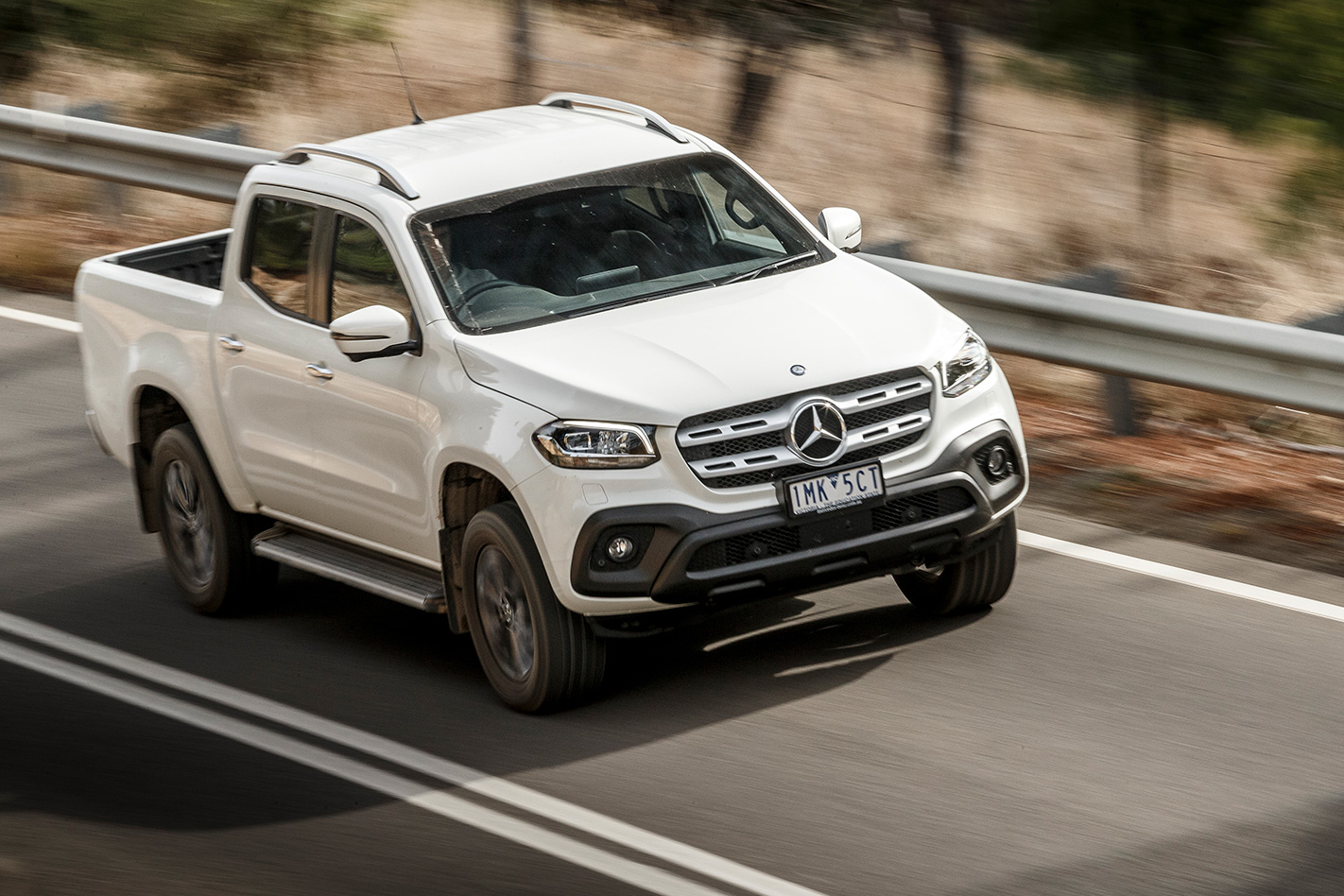
One of the latest is Mercedes-Benz, launching its new X-Class into the fray this year. Underpinned by mechanicals from the Nissan Navara but topped off with typical Merc styling inside and out, and its own chassis fettling.
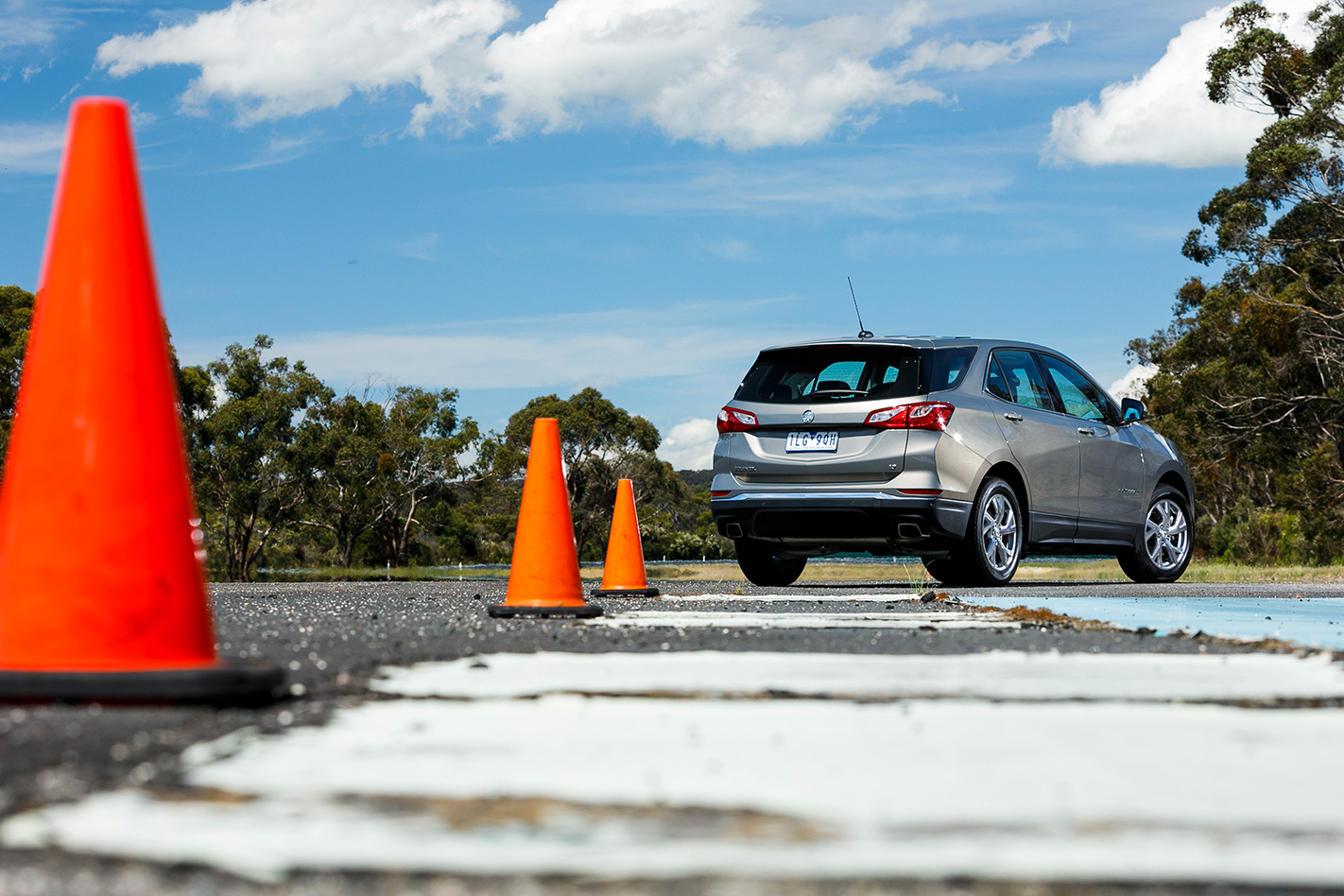
We pitched the greenhorn of the one-tonne ute arena against an established stalwart – the Ford Ranger – to see if the newcomer has the credentials to garner attention in an increasingly crowded market.
Price and equipment
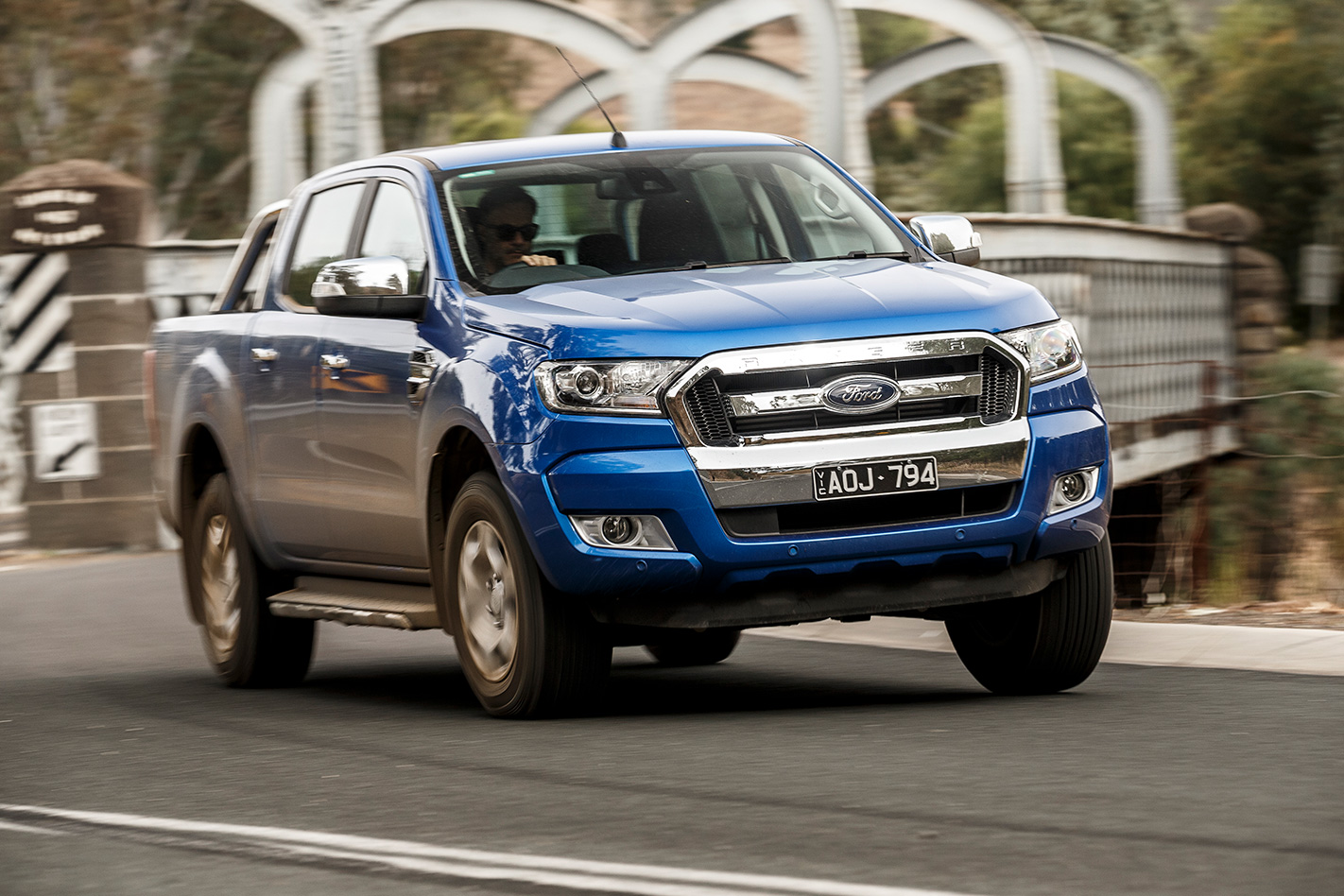
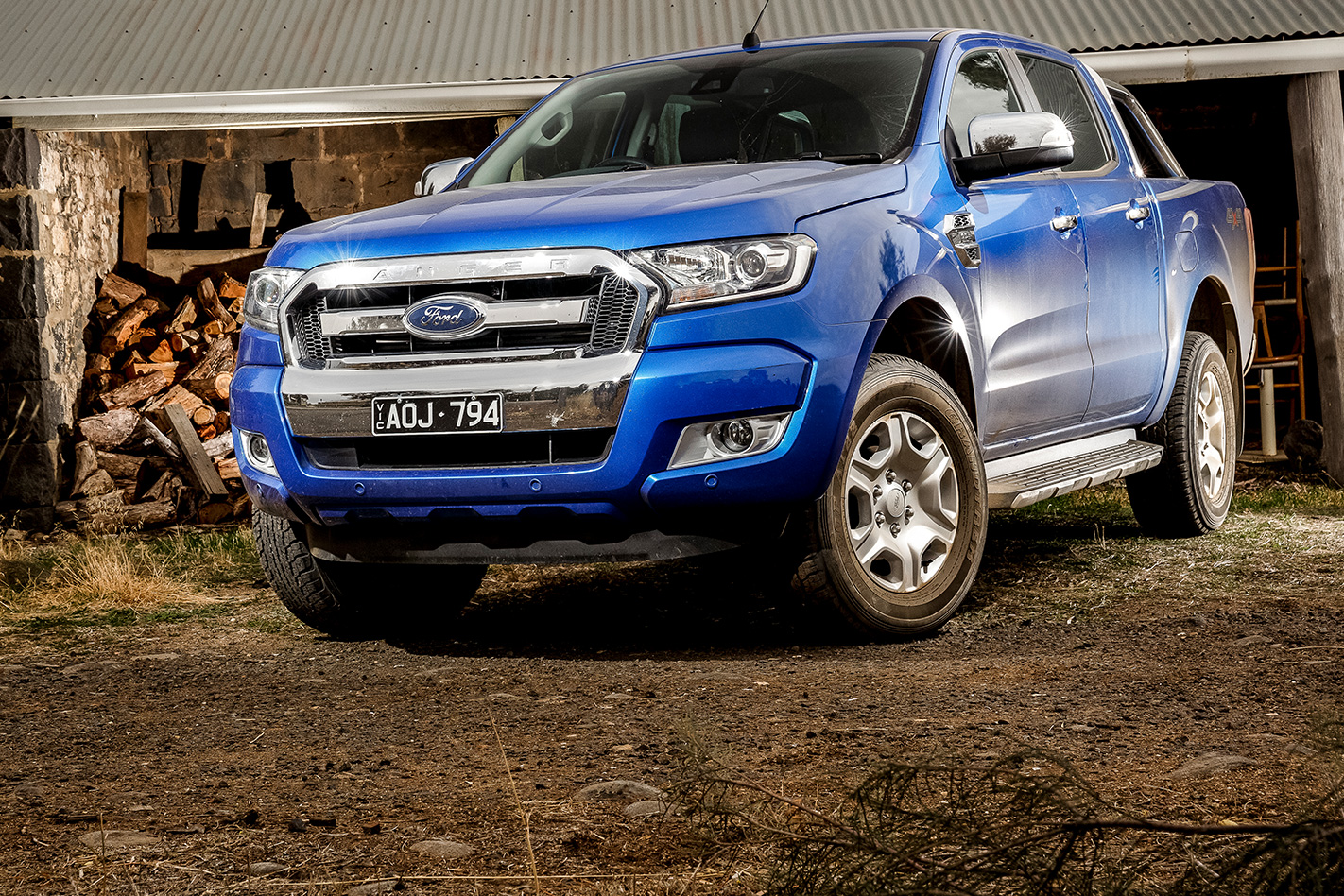
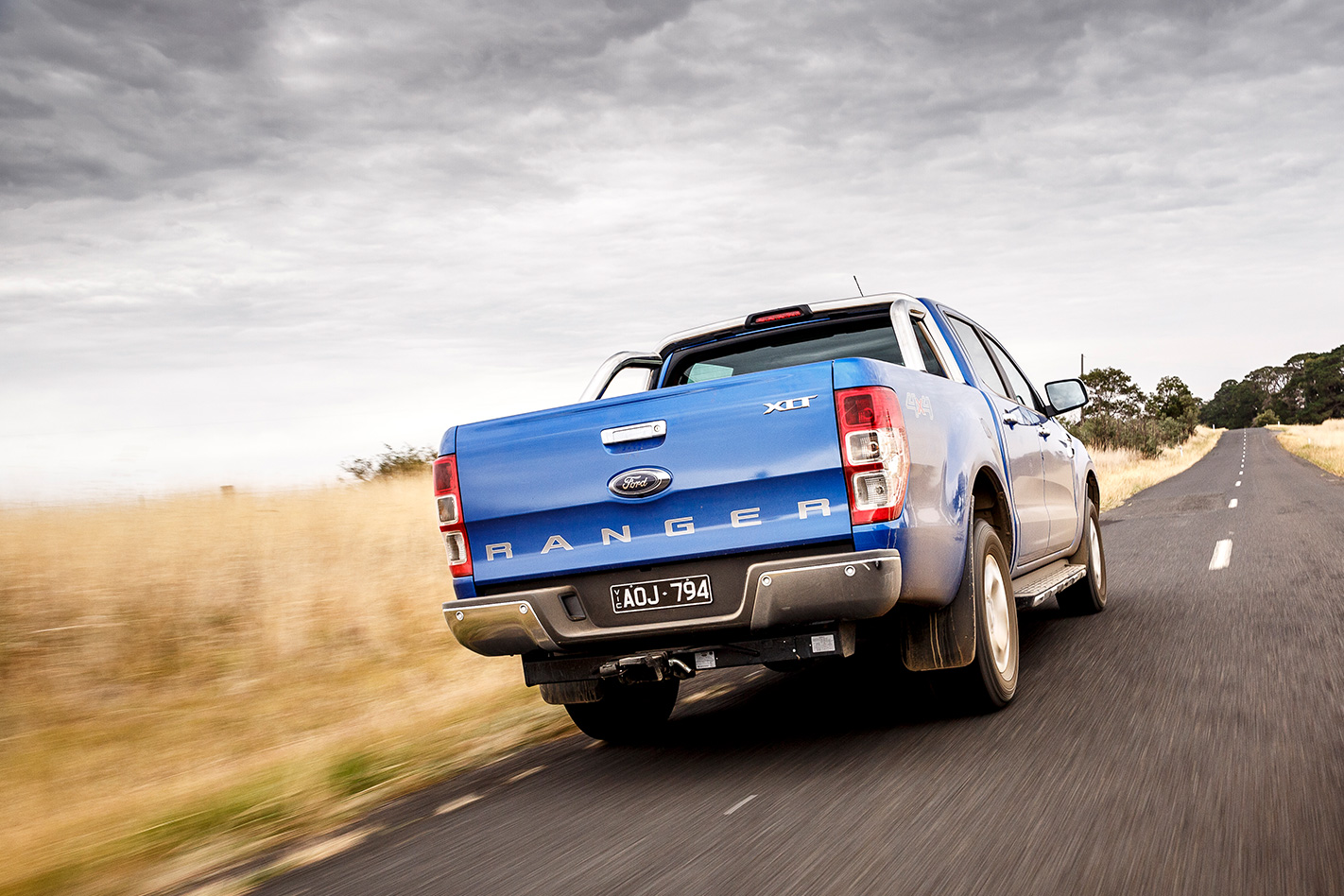
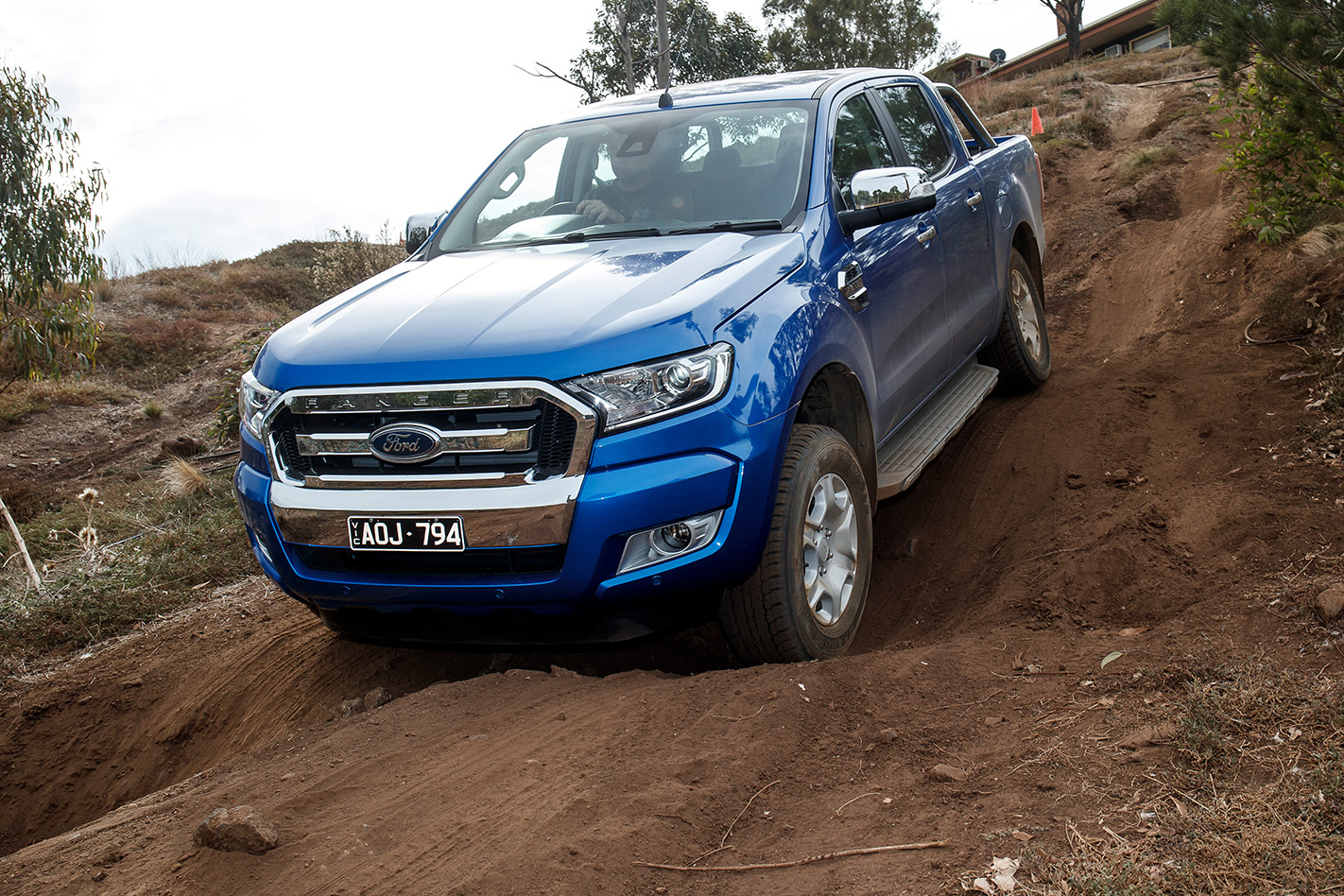
Ford Ranger: For a sticker price of $57,690, the XLT ranks second only to the Wildtrak in specification and brings an impressive selection of equipment. Included in the price are a host of practical features including 230-volt and 12-volt power supplies with a second battery and a second 12-volt socket in the plastic-lined tray, there are parking sensors all round (complemented by a reversing camera) and, unusually, a towbar is also standard. Adding to the tough looks are 18-inch alloy wheels, side steps, rear privacy glass, chrome-look sports bar, fog lights and projector headlamps, while metallic paint is a $600 extra.
There’s more kit inside too with the latest version of Ford’s Sync information and entertainment, accessible through an 8.0-inch touchscreen with digital radio as well as dual-zone climate control, voice control, a cooled central storage box and a dual colour driver information screen.
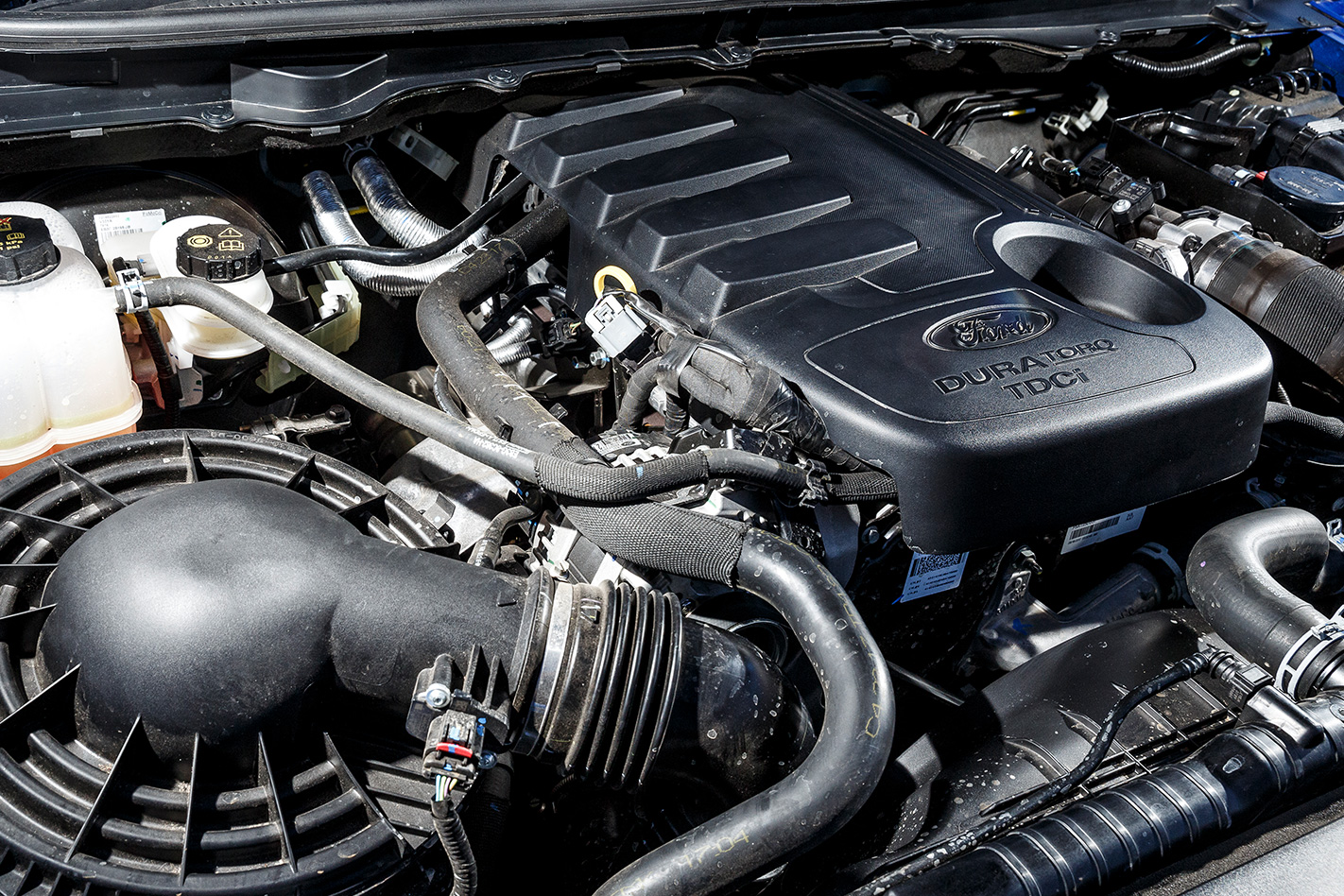
Under the bonnet, this variant gets the largest engine in the segment with a 3.2-litre five-cylinder diesel that sends 147kW and 470Nm to the rear wheels via a six-speed auto transmission during normal driving, can be electrically switched to four-wheel drive and low range for more challenging terrain. The rear diff is also lockable.
In the general ute landscape, this Ranger is on the pricier side but it’s equipment-rich and represents great value if your budget will stretch.
From a safety perspective, the Ranger offers a host of driver assistance and safety equipment. Adaptive cruise control is a rarity in the ute segment but the Ford has it along with lane keeping assistance and collision warning as part of an optional pack. Standard fare is hill-hold, trailer sway control, tyre pressure monitoring and six airbags.
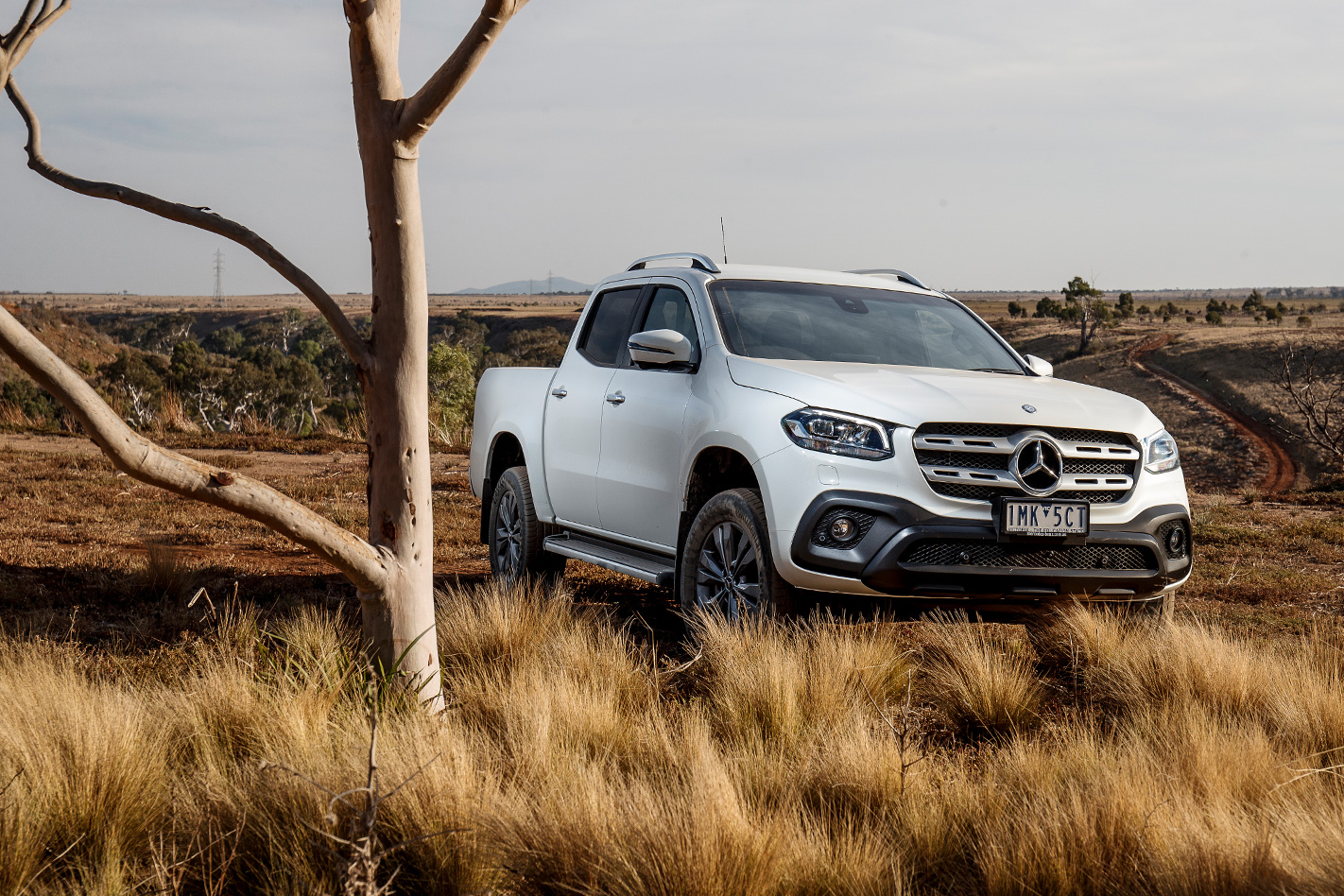
Mercedes X-Class: For its one-tonne foray, Mercedes has aimed for the premium end of the market, offering a good level of equipment no matter what the variant, especially when it comes to safety. The Pure is at the more basic end but this Progressive version sits in the middle of the range at $57,800, beneath the Power flagship.
Interior kit and features include a 7.0-inch central screen with navigation and digital radio, higher-grade fabric for the seats, leather upholstery for the steering wheel, handbrake (not electric), shift paddles and an eight-speaker sound system. There are also rain-sensing wipers, a reversing camera and some silver interior trim for a more premium look.
On the outside there are 17-inch alloy wheels, body-coloured bumpers in place of the Pure’s bare plastic items, halogen headlights, fog lights, illumination for the load area, more silver trimming and adjustable load area tie-downs.
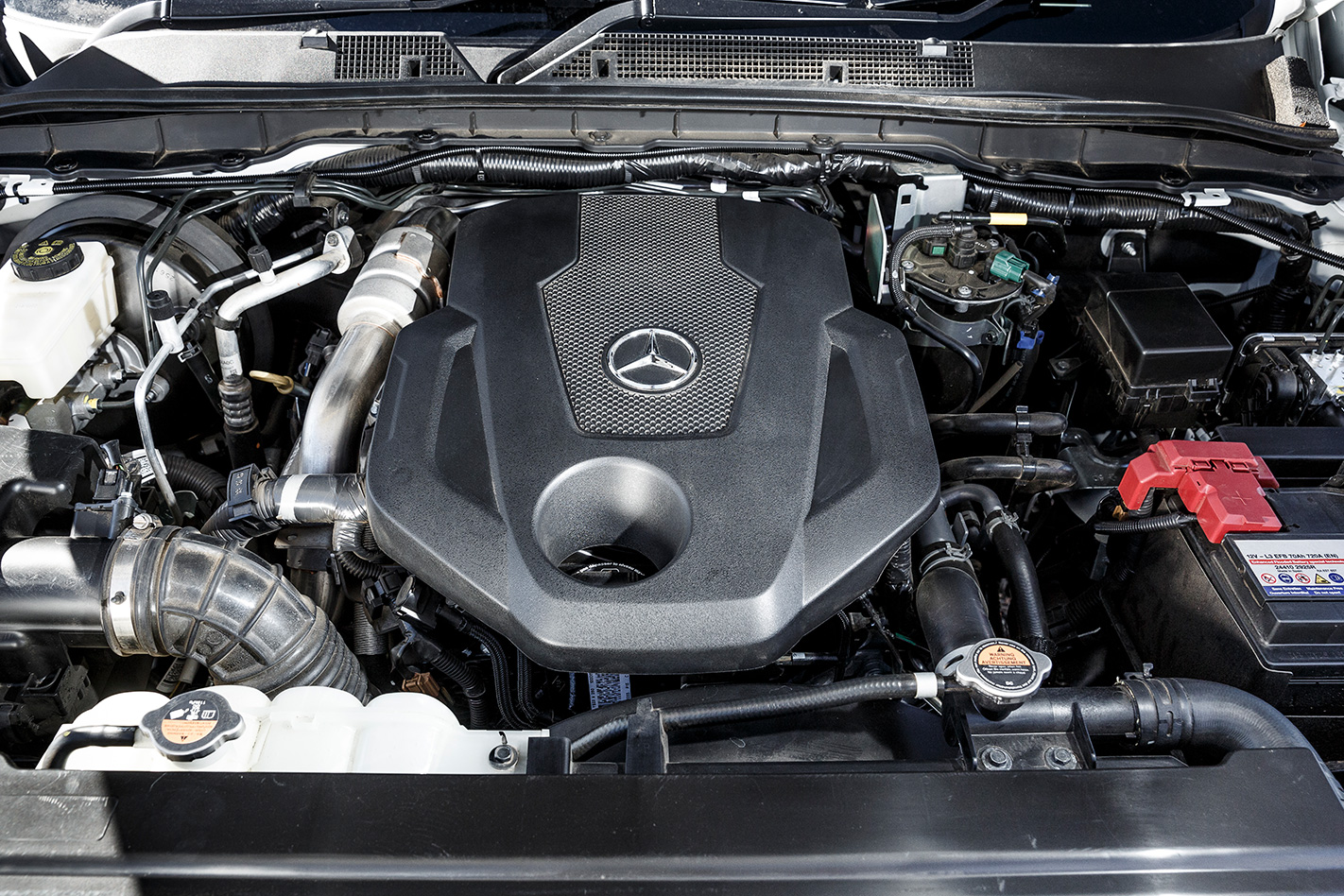
Compared with the Ford, the Mercedes has a bantamweight engine that displaces just 2.3 litres but it packs a big punch thanks to twin turbocharging. Outputs of 140kW and 450Nm nip at the heels of the Ranger’s much larger engine. Power finds its way to the rear wheels via a seven-speed automatic transmission but all four wheels can be engaged electrically as can a low-range gearbox and locking differential.
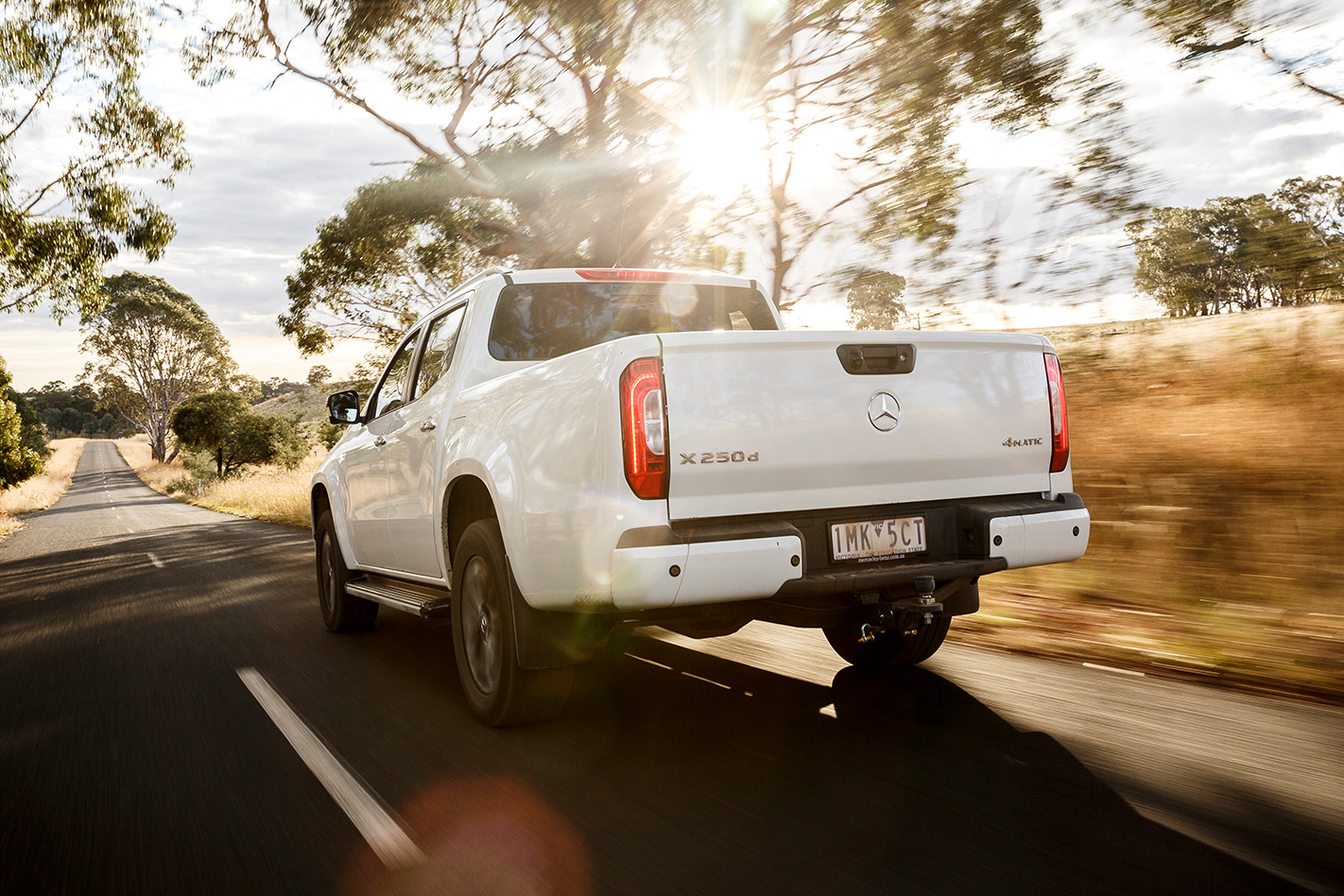
Safety is a strong point for the Mercedes with seven airbags, trailer stability assistance, hill-hold and tyre pressure monitoring but, unlike the Ford, autonomous braking, collision warning and lane departure and warning is standard – a feature unique to the segment.
Interior and connectivity
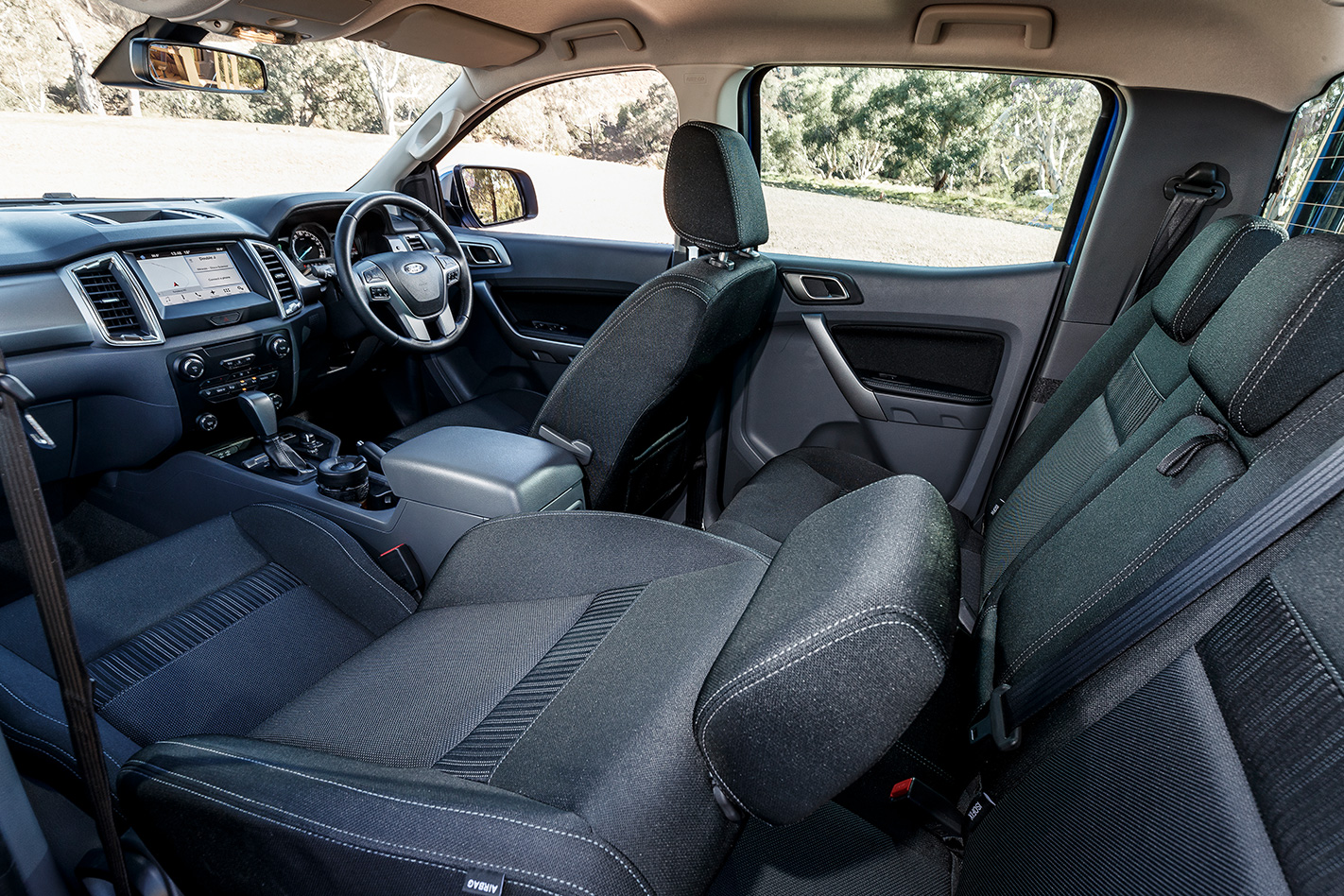
Ford Ranger: Now in its third generation, Ford’s Sync3 infotainment system is still one of the easiest to navigate without appearing basic, and is packed with features, including voice activation. Alternatively, occupants can switch to a mirrored version of their smartphone with Apple CarPlay and Android Auto compatibility. It also incorporates Bluetooth connectivity as well as two front USB ports, while second row passengers can charge devices with another 12-volt socket in the back.
Rear occupants are also treated to a centre armrest, supportive and comfortable seats with plenty of room for up to three adults, and high-grade fabric upholstery throughout. General cabin quality and style is in keeping with the Ford family – everything appears to be well screwed down, there are no rattles or squeaks, and the cabin design is basic and unpretentious.
Mercedes X-Class: While some competitors in the one-tonne ute segment pay less attention to cabin styling, Mercedes has made its interior a point of difference, offering something that feels high-end and aligned with Mercedes DNA. First impressions when boarding are excellent, with sharp styling, an ergonomically laid out dashboard and top quality materials abound.
The effect of black roof lining, matched by a combination of black synthetic suede and leather upholstery complete with contrasting stitching (optional) is a cosy and sophisticated cabin that is unmatched for class by anything else at this price.
The X-Class’ driving position is comfortable courtesy of a steering column that adjusts for reach and rake, and feels more akin to a Mercedes passenger model than its commercial vehicles. Even the steering wheel, ergonomically shaped and almost AMG-esque in its presentation, stands well apart from the normally utilitarian tillers in the ute segment, and the high-resolution central information display nestled between the analogue gauges brings more visual sparkle to the X-Class cabin..
Unlike the Ranger there’s no centre armrest for rear passengers, but back seat occupants are well accommodated with an otherwise spacious rear bench.
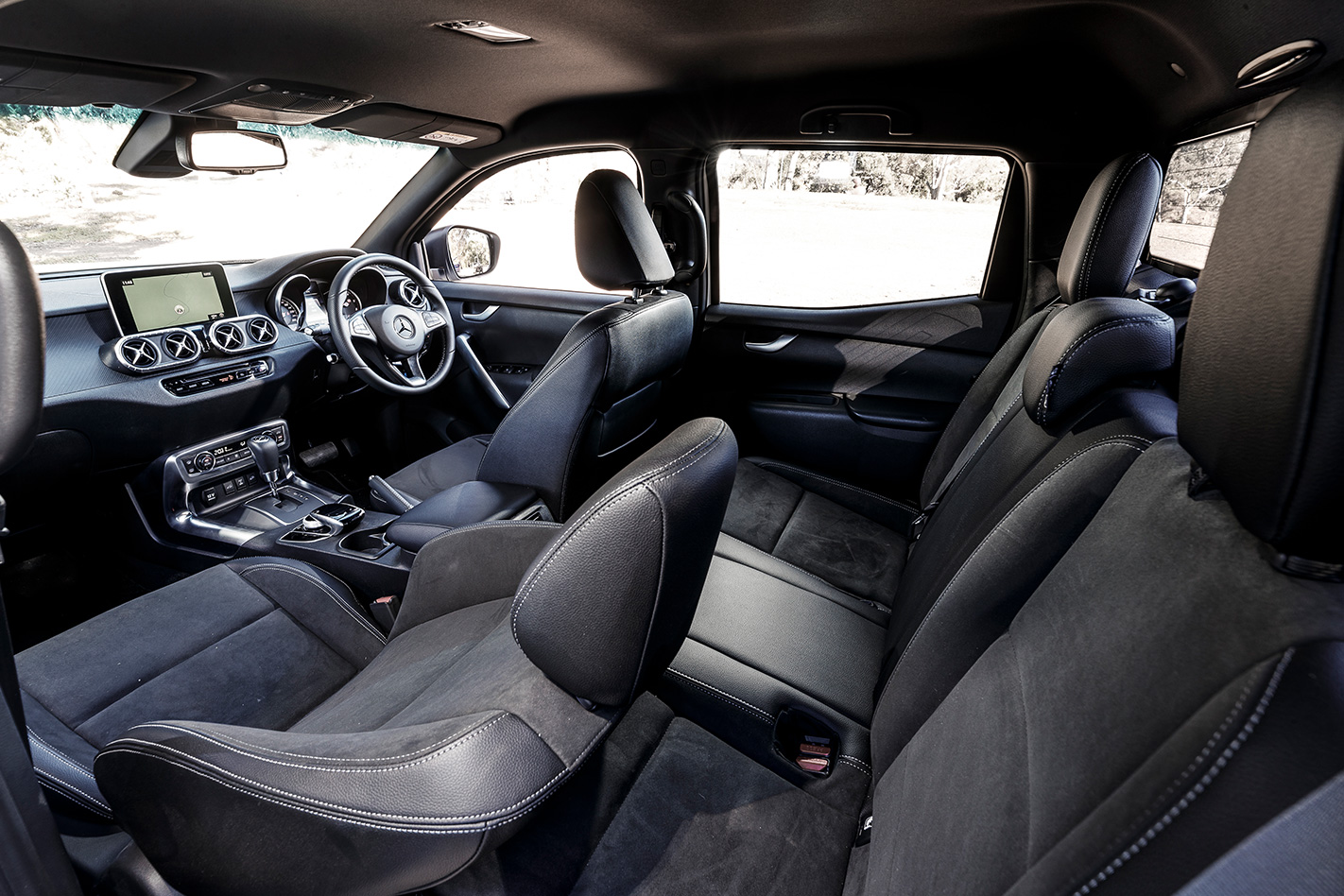
Where the X-Class loses marks is for its infotainment system. The central screen is not touch sensitive and functions are accessed by the control dial and shortcut buttons on the centre console. Furthermore, it’s not the usual high-feature system found in other Benzes – rather, the navigation software is by Garmin and has a distinctly aftermarket look and feel to its interface.
The tablet-style central screen floats above a quartet of gimbal airvents and certainly looks upmarket, but compared with Ford’s Sync3 approach, the Mercedes system is frustrating to use. Smartphones can connect via Bluetooth or USB, but Apple CarPlay and Android Auto is not supported, meaning you’re stuck with Benz’s inferior interface.
Ride and handling
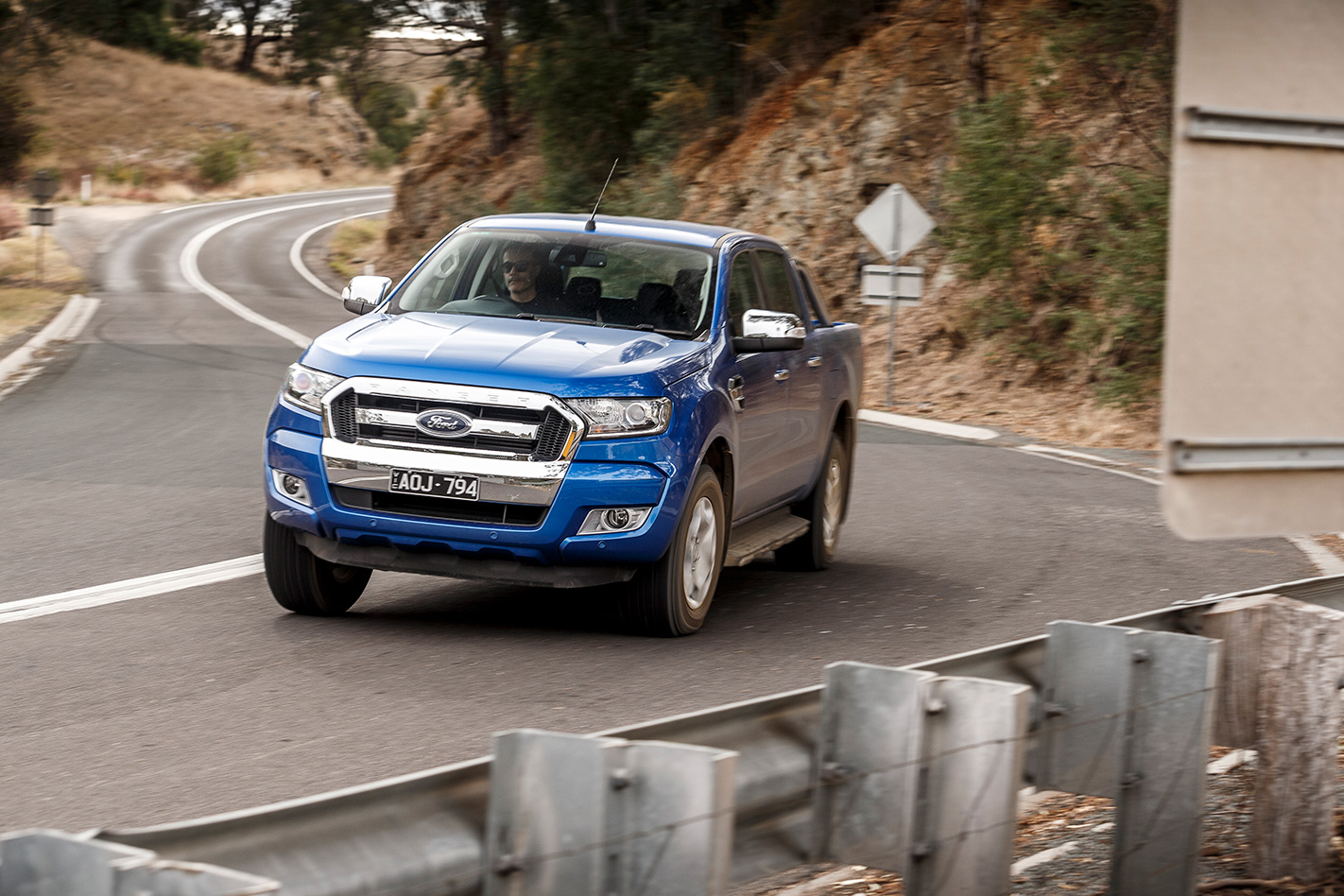
Ford Ranger: It might not be built in Australia but the Ranger is arguably the most True Blue vehicle on sale in Australia, with both its design and engineering originating from Ford’s local development centre. Its suspension tune is also another giveaway and one of the best one-tonne set-ups for Aussie roads. On rough, poorly maintained surfaces, the chassis absorbs imperfections with aplomb and transmits very little jarring through to the cabin. It also resists lateral movement and recovers quickly from large bumps at speed. That well-behaved nature is backed up with obedient steering (that could have more feel and perhaps a faster rack ratio), but still manages to be confident and linear. The Ford proves that local knowledge and tailored chassis fettling count for far more than a coil-sprung rear axle, and sets a ride and handling benchmark for all others to aspire to.
Mercedes X-Class: Under its suave German design, the Merc shares many of its mechanicals with the Nissan Navara – including the much-hyped coil-sprung rear axle (an otherwise unique feature in the market). Purported benefits include a smoother ride especially when unladen and more car-like dynamics. While the Mercedes ride quality is certainly not the worst in the class, it is not the cosseted glide that you might expect given how much fanfare the coil spring suspension was given. It’s a little fussy, although less nervous than its Navara relative thanks to Mercedes’ own chassis engineering work which has resulted in and finer handling on more challenging surfaces, but there are leaf spring set ups that offer a better all-round effect.
That said, the X-Class is among the more rewarding one-tonners to spend time in, whether you are steering or a passenger. Noise vibration and harshness (NVH) levels are particularly commendable and the four-cylinder diesel is quiet during all driving conditions. A fast steering rack ratio offers good feedback and feel, and pushing the X-Class through a few corners reveals a vehicle more sprightly than its appearance might suggest. There’s more good news when it’s time to stop, with disc brakes in all corners – only the Amarok has the same level of braking hardware. In testing, the Mercedes pulled up from 100km/h in 39.2 metres – the shortest distance of nine dual-cab contenders.
Performance and economy
Ford Ranger: Volkswagen’s recent V6 Amarok introduction proves that the largest engine is not necessarily the way to power superiority, pumping out more kilowatts and torque than the Ranger’s bigger five-cylinder, but it is still one of the Ford’s selling points. The extra cylinder elevates the 3.2-litre donk out of the clattery four-cylinder club and into smoother territory accompanied by a more satisfying and purposeful note. From the get go, the Ranger pulls hard but is also happy to rev and, in combination with an intuitive, silky transmission, the drivetrain is a great pairing. Its large capacity does come at a cost to fuel consumption however, and our test car used an average of 10.9 litres per 100km, which is on the high side but by no means the worst for a large, heavy duty pick-up.
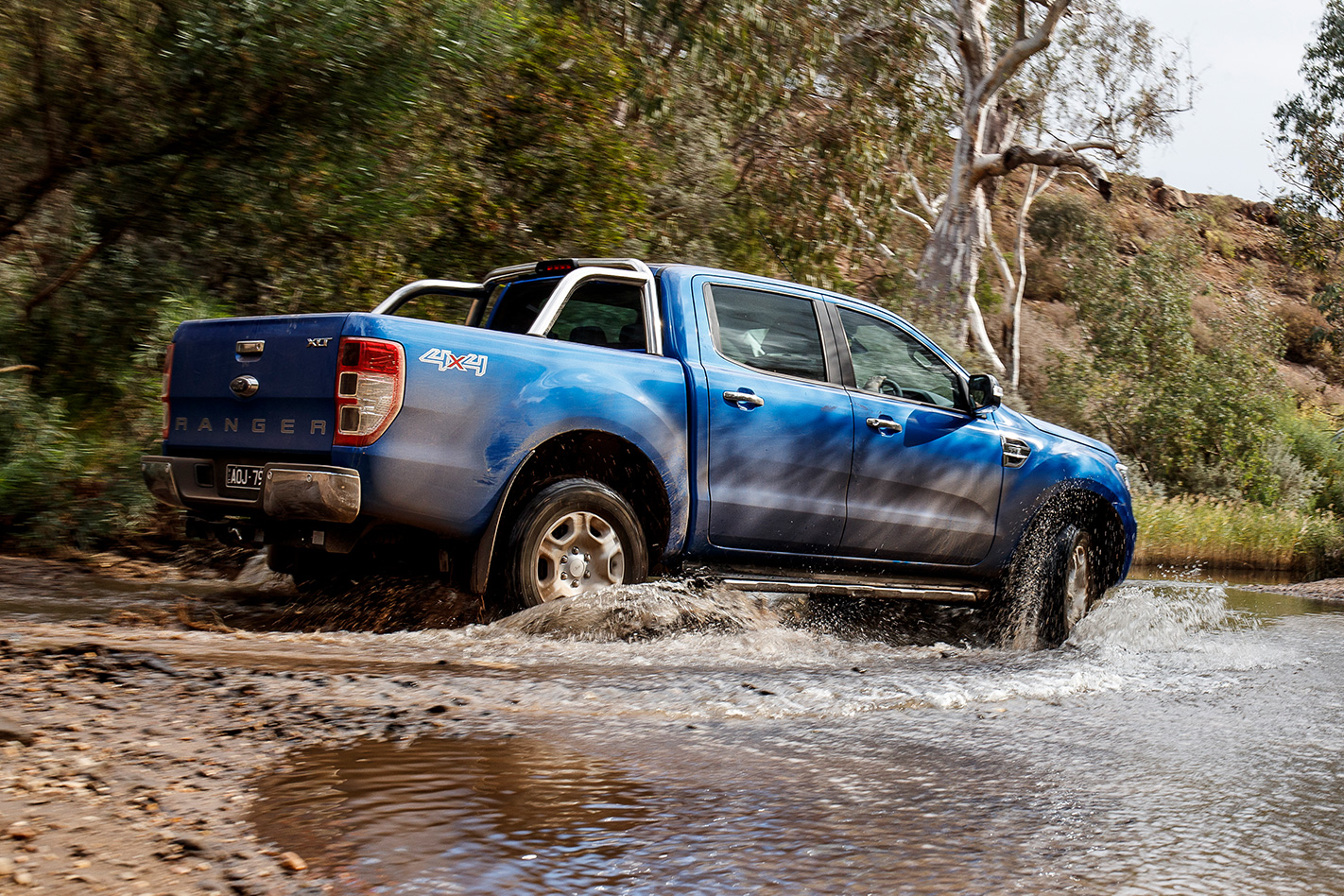
Off the mark acceleration is strong and off-road performance ranks up there with the best thanks to long suspension travel and a locking rear differential. In loaded testing the Ranger also performed well and was only equalled by the VW Amarok V6 when we compared them with seven other rivals.
Mercedes X-Class: In a basic zero to 100km/h comparison it’s almost a dead heat, with the Ford completing the milestone dash in 10.1 seconds and the Mercedes barely pipping it at 10 seconds flat – that’s impressive given the difference in engine capacity. A significant displacement difference also appears to make little difference to fuel consumption, with the Merc asking for slightly less juice than the Ford at 10.4L/100km.
In the hands of German engineers, the seven-speed automatic transmission has been expertly calibrated and causes no headaches regardless of the driving conditions. As far as truck gearboxes go, the X-Class box performs perhaps the best trick of all – its behaviour is barely noticeable at all.
The X-Class’ off-road ability is less impressive than its on-road manners, and it lacks the suspension travel to be a true all-terrain hero – not to mention it sitting slightly lower with 222mm of ground clearance, versus the Ranger’s 237mm. It does at least keep front axle traction control active when the rear axle locking differential is engaged, which does help its cause in the rough.
Warranty and servicing
Ford Ranger: In May this year, Ford announced it would boost its warranty to five years on all models (including commmercials) with unlimited mileage for the duration. That means all versions of the Ranger are covered by the deal, bringing it into line with its arch rival the Holden Colorado.
Ford’s Service Price Promise Calculator caps the cost of a standard A or B logbook service, allowing owners to see the maximum cost they will incur and applies to all vehicles built from 2007, for life.
Mercedes X-Class: With the arrival of the X-Class, Mercedes introduced a new capped-price plan to the brand. The Service Care Promise deal covers all X-Class variants for three years, with intervals of 20,000km or 12 months – whichever occurs sooner. Total cost to customers is $2350 over the three years, provided no other unscheduled attention is required.
The Mercedes warranty cannot quite match the Ford’s with cover lasting just three years, although it is an unlimited kilometre deal. Like the Ranger, roadside assistance is part of the deal.
Verdict
For its first sortie on the dual-cab ute camp, Mercedes’ X-Class is a gallant newcomer. With established brand Nissan handling most of the oily bits, Mercedes got on with fettling the other parts to impart its own unique flavour. The result is a one-tonner with class-leading safety technology that is just about the most refined in its segment from a styling and interior perspective, yet can still hold its own for both on and off-road driving.
But it was always going to have its work cut out for it as long as the Ranger was in the field. Through a process of constant improvement, the Ford delivers an incredibly complete package for a price just a few hundred bucks cheaper than the Mercedes.
Not only is it heavily laden with kit, the Ranger is a master of both the unbeaten trail and surfaced road alike thanks to a staunch focus on meeting uniquely Australian requirements from both our roads and customer demands. As if all that wasn’t a compelling deal enough, the blue oval badge offers Aussies an option to wear a bit of patriotic pride on their sleeve by being the only vehicle currently on sale that was both styled and engineered Down Under.
WE’RE ACCELERATING quicker than a flat-chat Ferrari F40, three-up with a bootful of bags. The climate control is delivering warmth, the heated seats are fired up and my passenger is on Bluetooth ordering takeaway. Preposterous numbers flash up on the M5’s head-up display, its giddying gathering of pace refusing to pall at road-legal speeds.

This is new territory for BMW – the debut of all-wheel drive for its pin-up performance sedan – and if this is Munich’s brave new world, then all I can do is shake my head in wonderment at how we arrived here.
It hasn’t arrived alone, though. The Mercedes-AMG E63 S 4Matic+ has occupied this turf for the past year, redefining the terms of reference for high-performance large sedans. Even the crazed, end-of-an-era HSV GTS-R W1, the car that saw the domestic industry go supernova, can’t level with this sort of grunt, trailing both the AMG and M5 across the key benchmark sprints by at least half a second.
Tracing the genesis of this Wagnerian butting of heads takes us back to 1996, when Mercedes’ 206kW E36 AMG was launched. This was fairly easily handled by BMW’s imperious 250kW E34 M5 3.8 and Munich’s dominance continued with the 1998 E39 M5. This 294kW 4.9-litre V8, manual-only powerhouse remains, for many, the M5’s finest hour. Its successor, the 2005 E60 M5, marked a change in philosophy. Most markets never saw a manual version, the automated single-clutch transmission was fragile and the exotic 373kW V10 powerplant lacked the sweetness of the old V8.

Then Mercedes weighed in with a V8 of its own and it was a thing of beauty. The 2007 E63 AMG was fitted with the 6208cc M156 lump, the first production engine designed autonomously by AMG. Since then it’s largely been advantage Affalterbach, with the M division repeatedly trying to regain its mojo.
So there’s a lengthy formline here and the E63 S carries itself with the confidence of an undisputed champ. The F90 M5 might be the newer car, but the AMG still has the advantage in terms of power (450kW vs 441) and, more decisively, torque (850Nm vs 750). It’s 25 kegs heavier than the BMW, and in terms of power to weight has an infinitesimal edge. Needless to say, on paper this appears a close-run thing.
So it proves at the strip too. It’s almost impossible to separate these two cars in terms of pure performance. The M5 was initially reluctant to engage launch control, and you’ll only really discover if the car’s opaque series of distance and temperature prerequisites are met when you plant the brake pedal and then floor the throttle. If launch control is ready, the revs build crisply to nearly 3000rpm, a flag symbol appears on the dash and you’re good to sidestep the brake pedal. If not, the first you’ll know of it will be the car groaning and straining against the picks, inching forward accompanied by a soundtrack that’s reminiscent of the final moments of a Bond villain’s lair. It’ll have anyone with an iota of mechanical sympathy wincing in horror.
An eight-speed ZF automatic replaces the old Getrag seven-speed dual-clutch transmission and, once launch control gets its pants on, bangs home shifts with a punchiness that belies its fluid interface. It’s markedly more accelerative than the old rear-drive car, the VBOX repeatedly registering 3.6sec to 100km/h, a 400m time of 11.5sec (at 201km/h), and 80-120km/h in 2.1sec.
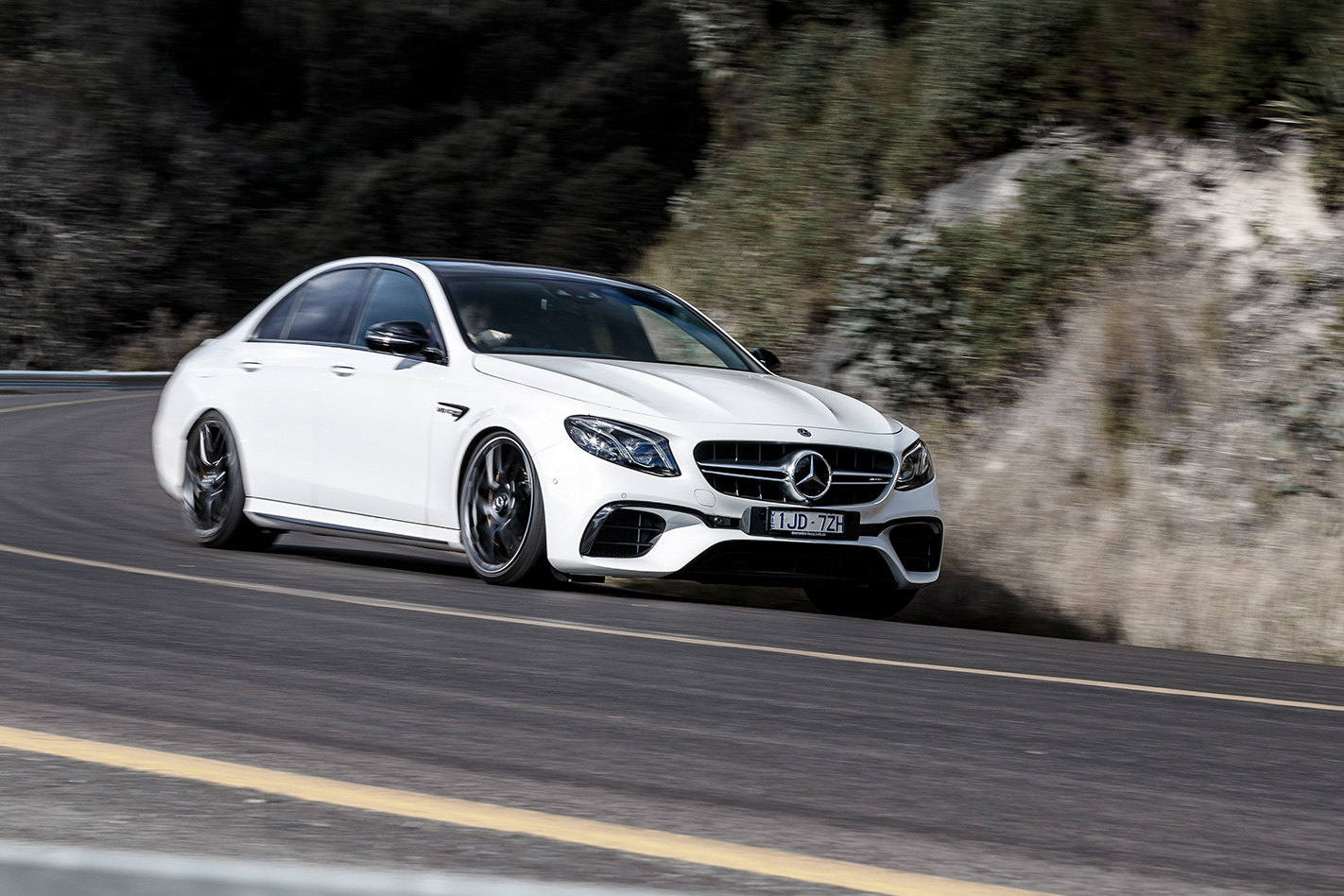
Then the Mercedes does exactly the same thing. We try repeatedly to go faster, and then the AMG finally manages to squeak an infinitesimal advantage, a mere tenth here and there. In the real world of reaction times, differences in contact-patch friction and a constellation of other variables, there’s really nothing to separate them in a straight line.
Both cars have rear-drive-only modes, which require the switching off of any semblance of electronic stability control, therefore limiting their utility on the road. Not being able to dial the cars into a lenient stability-control setting (dubbed M Dynamic Mode in the BMW and ESP Sport in the AMG) while in rear-drive-only mode is frustrating, and this tone-deaf chicanery grates because both cars are otherwise so long on substance.
Away from the timing gear, they’re incredibly divergent in feel. The AMG offers an instant hit. You’ll understand what this car is about within the first kilometre. That’s not to say it’s in any way one-dimensional, just that there’s an instant cohesion and accessibility to its skillset. It’s longer, lower and wider than the M5 and the front seats hunker down further, giving it an inherently sportier feel.
Its standard air suspension lends it just enough pliancy in its Comfort setting and the pre-selectable drive modes of Comfort, Sport and Sport Plus are all fairly self-explanatory, sensibly different in feel to one another and each with a measure of real-world usefulness. There’s no setting for adjusting the weighting of the steering.
The BMW offers a dizzying number of permutations of steering, suspension, throttle mapping, transmission logic and vehicle sound settings. There are Comfort, Sport and Sport Plus modes, and you can assign a couple of favourite settings to the M1 and M2 tabs on the steering wheel to quickly change from ambling mode to maximum attack. Switching from Comfort to Sport tightens things a tad, but switching to Sport Plus is a huge step up in focus.

As with most aspects of the M5, it takes time to get to know the car. You need to set yourself aside a few hours on quiet roads to really understand what settings best gel. Dial everything up to the angriest and in some areas it can feel even fiercer than the more overtly hardcore E63 S.
An example? The torque delivery of the M5 appears earlier and harder. It makes its peak torque at 1800rpm whereas the Mercedes has to wait until 2500rpm. Agreed, the AMG ultimately makes more, but to counter that, the M5’s turbos have a harder initial hit, delivering a more exciting rush. And they have 25kg less to move.
There’s a lot that’s fundamentally right about the M5 from a sporting perspective too. It has bigger brakes both front and rear, which is always a bonus. In addition to that, when you specify the optional $16,500 carbon stoppers (which pare 23kg of unsprung weight), you get four of them instead of just the front discs that Affalterbach delivers. This approach is apparent in other areas too. BMW fits a carbonfibre roof that saves a massive 21kg over the usual metal roof with integrated sunroof.
Mercedes-AMG fits a couple of huge panes of glass, putting mass exactly where you don’t want it. The BMW’s steering is a bit of an oddity. Drive it in its lightest mode and the variable-effort rack feels sweet and precise. Start shifting it up through Sport and Sport Plus and you’ll introduce an unwelcome gluey feel to the helm, but once you’ve done so, changing back to the lightest setting feels like putting the M5 into Prius mode.
Again, that tyranny of choice; that nagging suspicion that whichever one of the myriad settings you’re switched into, simple probability dictates that it’s unlikely to be the best one.

Jump into the AMG and the steering feels instantly heftier and more purposeful, with a clearer line of communication to the tread blocks, but that impression is a clever artifice. The BMW scribes a cleaner line through a corner, the E63’s He-Man impression of caster scrubbing into imprecision earlier than the M5.
Munich also offers a more naturally rear-drive feel to the chassis, while the AMG scores points for a slicker lane keep/active cruise combo. The BMW’s rear-drive mode isn’t speed governed, whereas in the AMG, the front axle slyly rejoins the fray if the needle hits 120km/h. Again and again the two cars’ dynamics steal points from each other, but neither does enough to score a knockout blow.
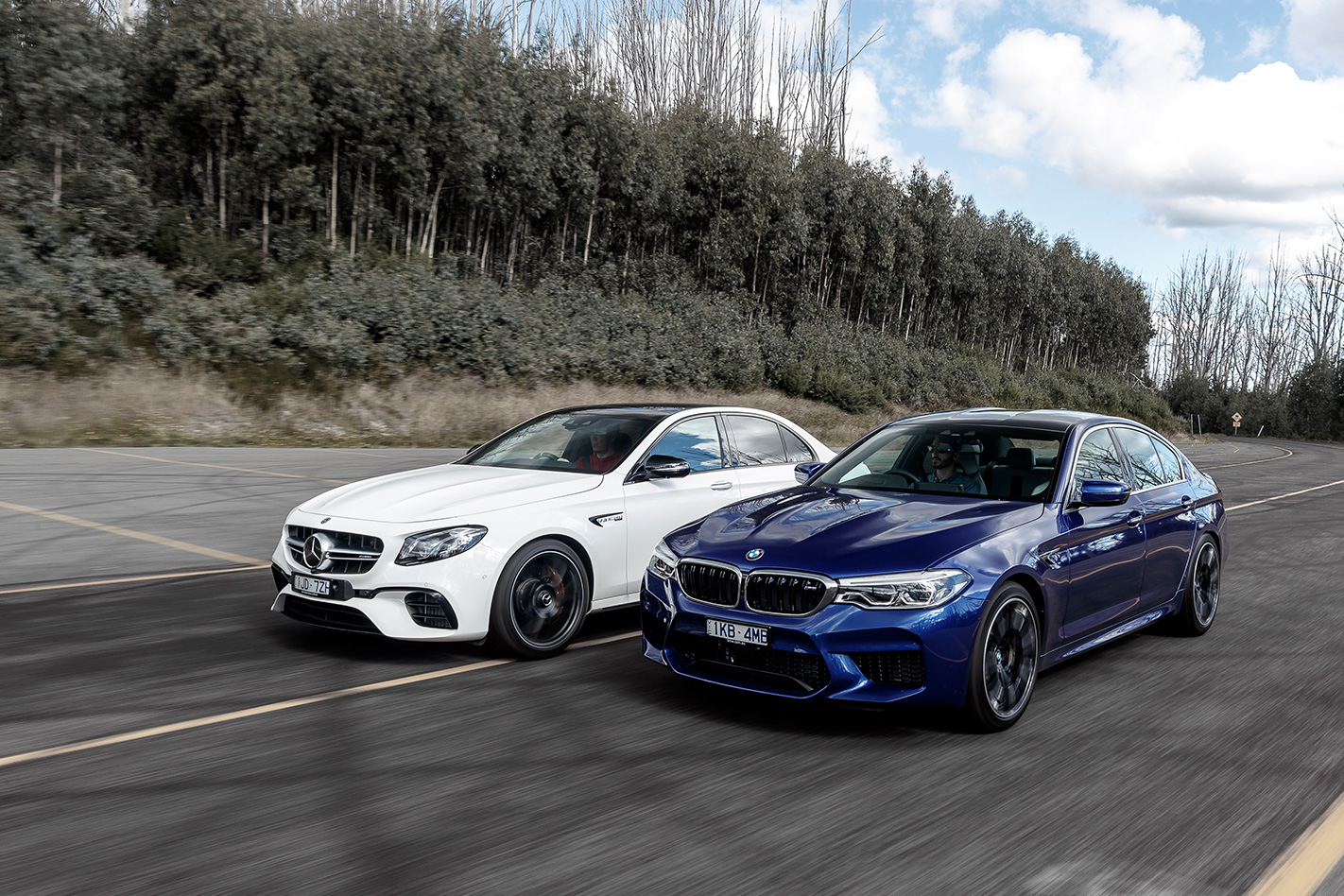
What’s different are their personalities. Drive the M5 hard through a series of challenging bends and you’ll come away impressed by its grip and composure, before conducting a review of which mode you should have been in. Do the same in the E63 S and you’ll love the way the car shrinks around you. You end up cackling at the sheer antisociality of it. More so if you have the exhaust on full noise.
Its repertoire of firework display acoustics is remarkable whereas the M5’s vocabulary begins and ends with a soft boom like a fire door being slammed at the end of a very long corridor. There’s an intensity of emotion to the AMG lacking in the BMW.
On paper, it would seem that the BMW’s price advantage could offset this shortcoming. The E63 S retails at $239,611, while the M5 seems a relative bargain at $199,900. The thing is, Mercedes-AMG has proven for some years that this sector of the market isn’t particularly price sensitive. Customers buy on features and specifications rather than price. And that 40 grand price differential is apparent inside the cabins.
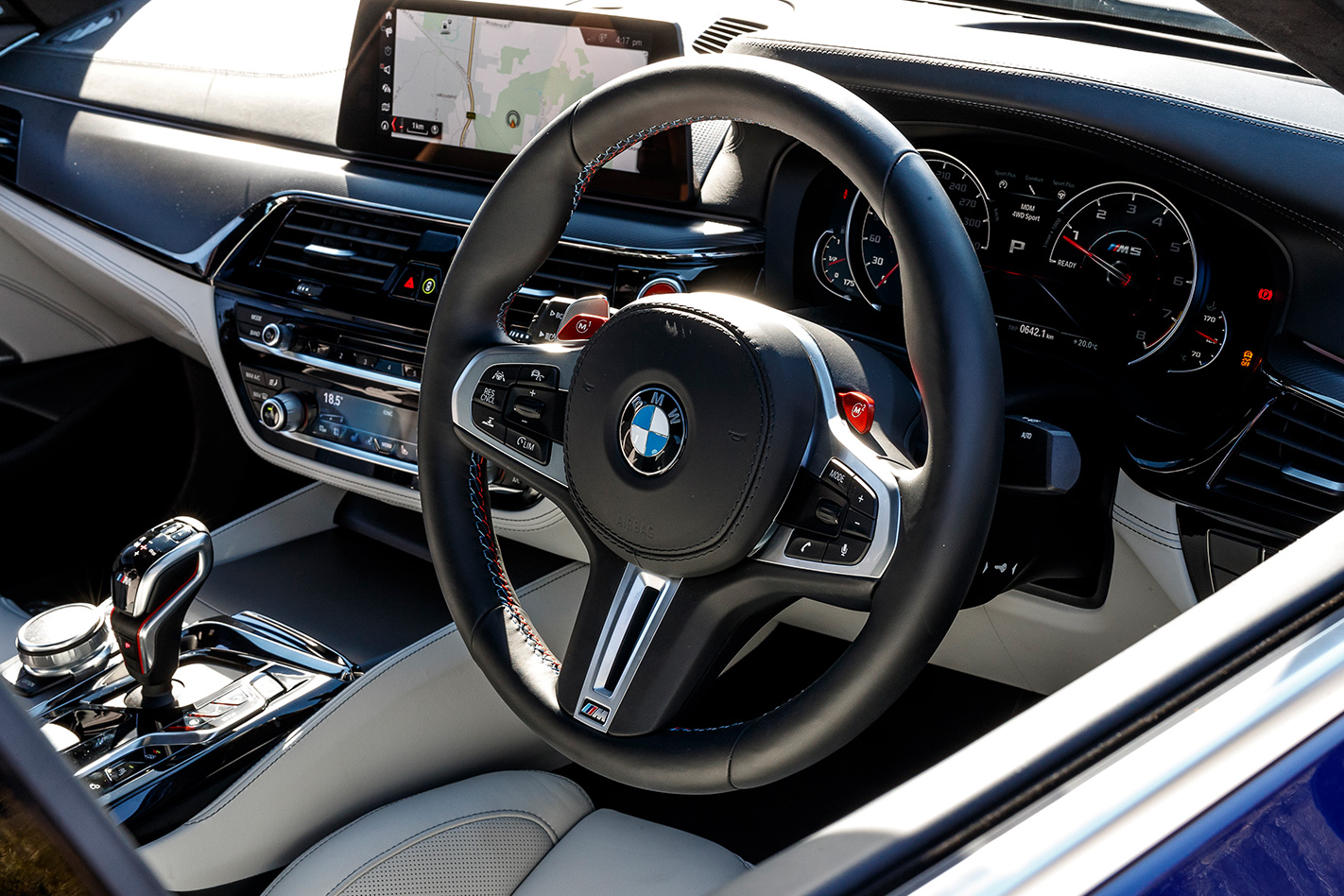
The AMG feels immediately glitzier, with more conspicuously high-end materials such as textured woodgrain dash infills, premium Burmester sound as standard, and a customisable wall-to-wall virtual dash, plus there’s more legroom in the back. But the BMW has some slick touches of its own. The M5’s Alcantara headliner, heated steering wheel, wireless CarPlay, dual rear climate controls and heated and cooled front seats found favour with testers, although the unnecessary complexity of the gear shifter, the faux-carbon trim and omnipresent chiming didn’t.
The glovebox is also basically useless because of the massive – and massively ugly – fragrance dispenser which accepts Nespresso-like pods. Being able to consult the virtual handbook only while you have the handbrake on is also a bind. The AMG comes with a paper manual that passengers can consult on a freeway, but such is the intuitive nature of its controls and electronic functions that you’ll rarely have recourse to. The glovebox fragrance dispenser also looks like some high-end contrivance you’d buy in duty free.
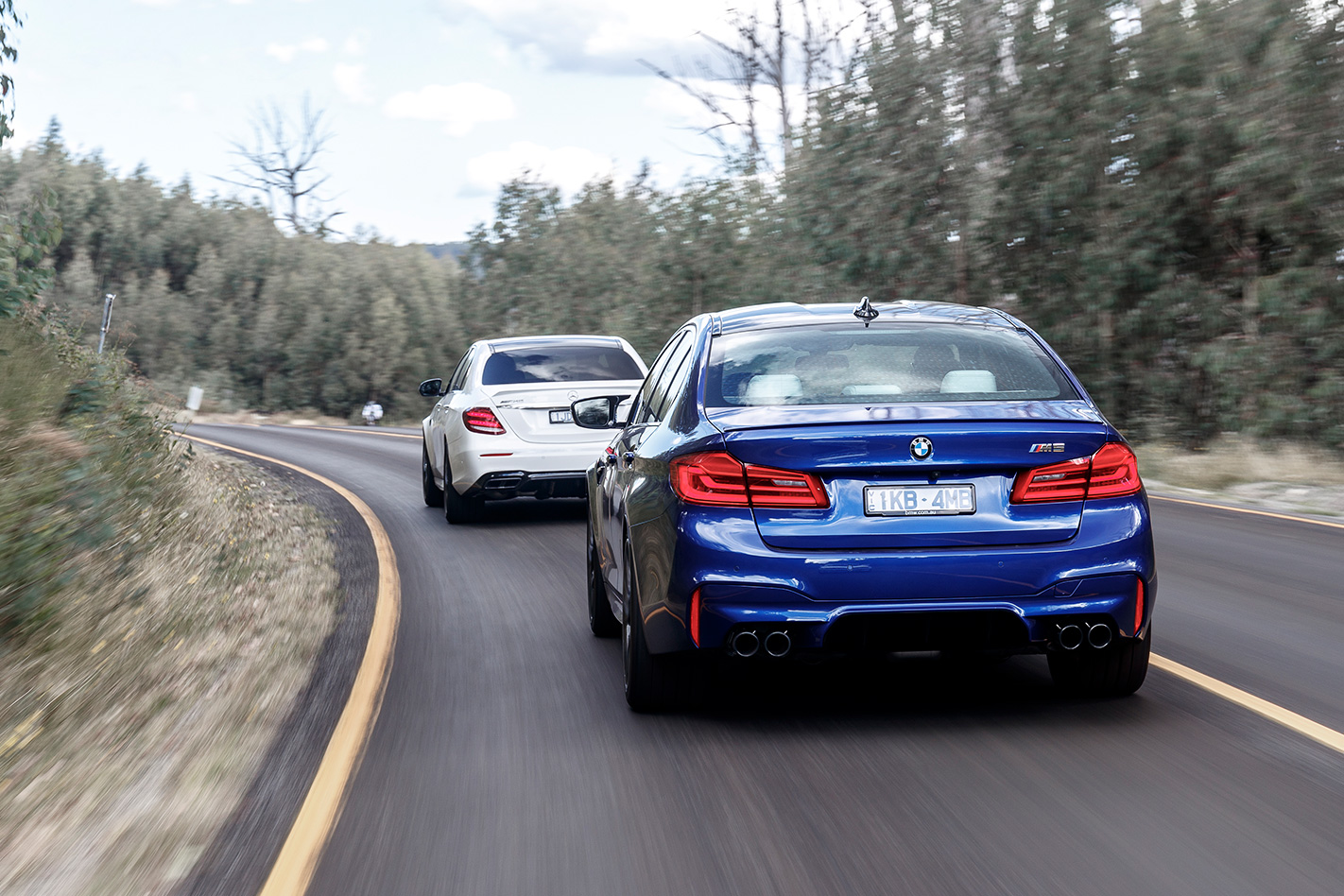
The M5 wears its battledress subtly, BMW having lifted the aesthetics of the cooking 5 Series’ M-Sport trim levels to the extent that the M5 is relatively inconspicuous. The badging, the wheels and the exhausts are the key identifiers, the flanks lacking the gym-toned musculature of the AMG or its bullish stance. Both cars parade feeble and largely cosmetic rear diffusers, yet there’s a degree of discretion about the M5 that some will doubtless find refreshing. It’s not a natural head-turner, which is welcome when you’re sitting on a traffic-choked freeway planning a major nasal excavation project.
Separating these two cars will likely come down to deeply subjective personal choices. So tightly does the M5 benchmark the AMG’s performance metrics that neither wields a decisive advantage over the other in real-world pace. The key objective differences between the two cars on test are the list prices and the fact that the AMG consumed 14 percent more fuel, neither of which count for a whole lot.
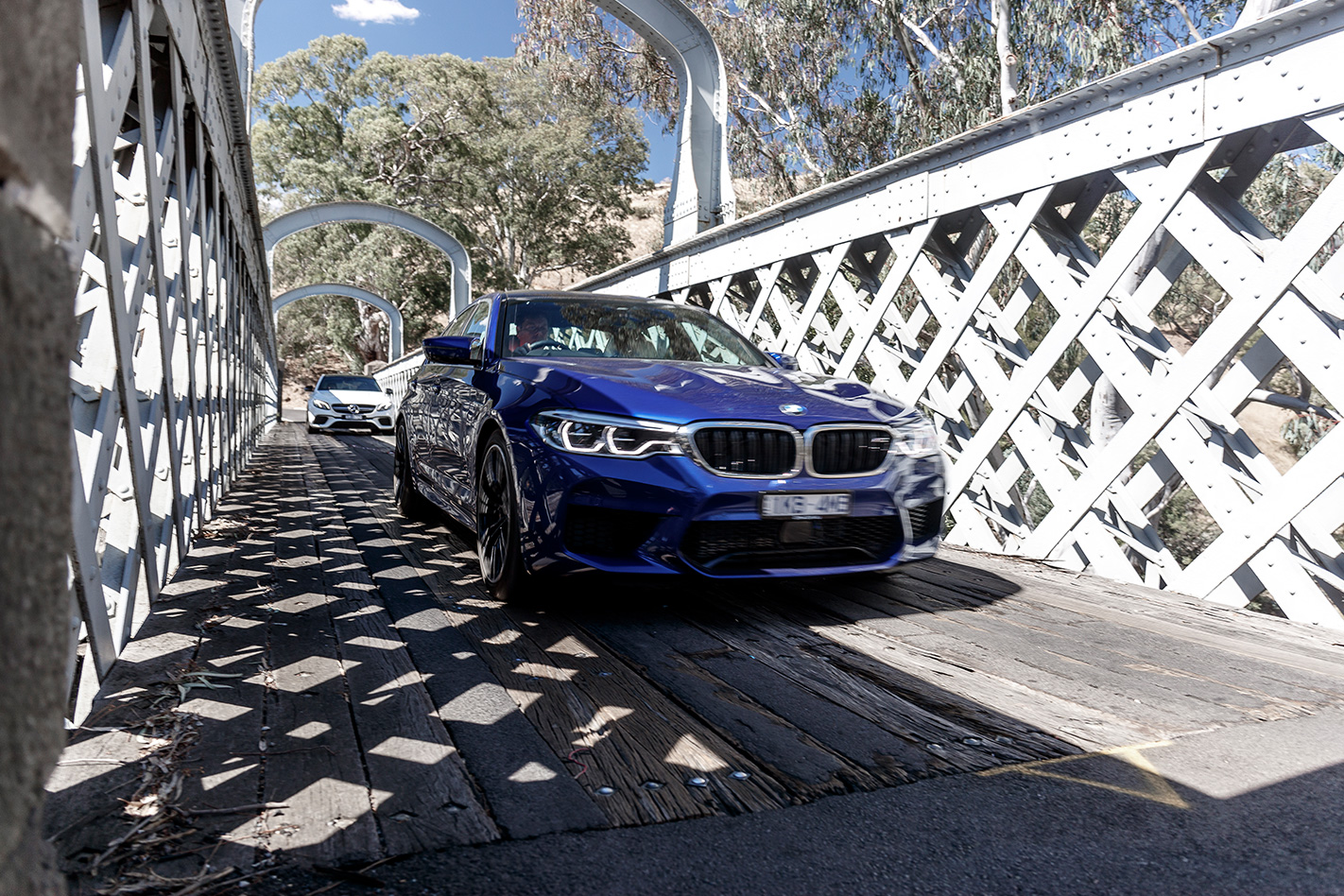
So in all probability, it’ll come down to which car feels the more special and, time and again, that’s the AMG. Look beyond the superficial, however, and the BMW emerges as a bit of a grower, offering a quiet assurance and maturity that the in-yer-face Benz can’t measure out. If you’re in the fortunate position to be faced with this decision, it’s good to know that you can’t really lose either way.
The M5 is the more considered choice, but the AMG is just too much fun not to get the nod this time around, but only by a hair’s breadth. We thought the E39 marked the high-water mark of M5 evolution and, while this latest F90 version does nothing to dim the old-stager’s shine, think of it as that car with 50 percent more power and torque, and a welcome element of its effortless sangfroid.
It’s not too big a call to say that this is the best M5 since the E39 retired some 15 years ago. That it has closed Mercedes-AMG’s superiority in this sector to virtually zero is a massive achievement. The substance is there; all it needs is a little more joy in its genes.
The future of luxury is here, and it is… what’s a polite term for ugly?
The Rolls-Royce Cullinan (named after the world’s largest diamond) and the Vision Mercedes-Maybach Ultimate Luxury (named after Melania Trump’s Google history) use euphemisms like “high sided” or “high bodied”, and everyone politely averts their eyes and tries not to say things like “faintly munted” or “fugly-esque”.
To anyone who says they’re too ugly to sell: have you seen a GLE Coupe or an X6? The Cullinan will obviously sell like hotcakes purely as a status symbol, even though it bears an uncanny resemblance to a London cab. Buyer beware to the London oligarch who orders one in black: you’ll be so busy ferrying people from Pret-A-Manger to Heathrow that you’ll miss the polo chukka altogether.
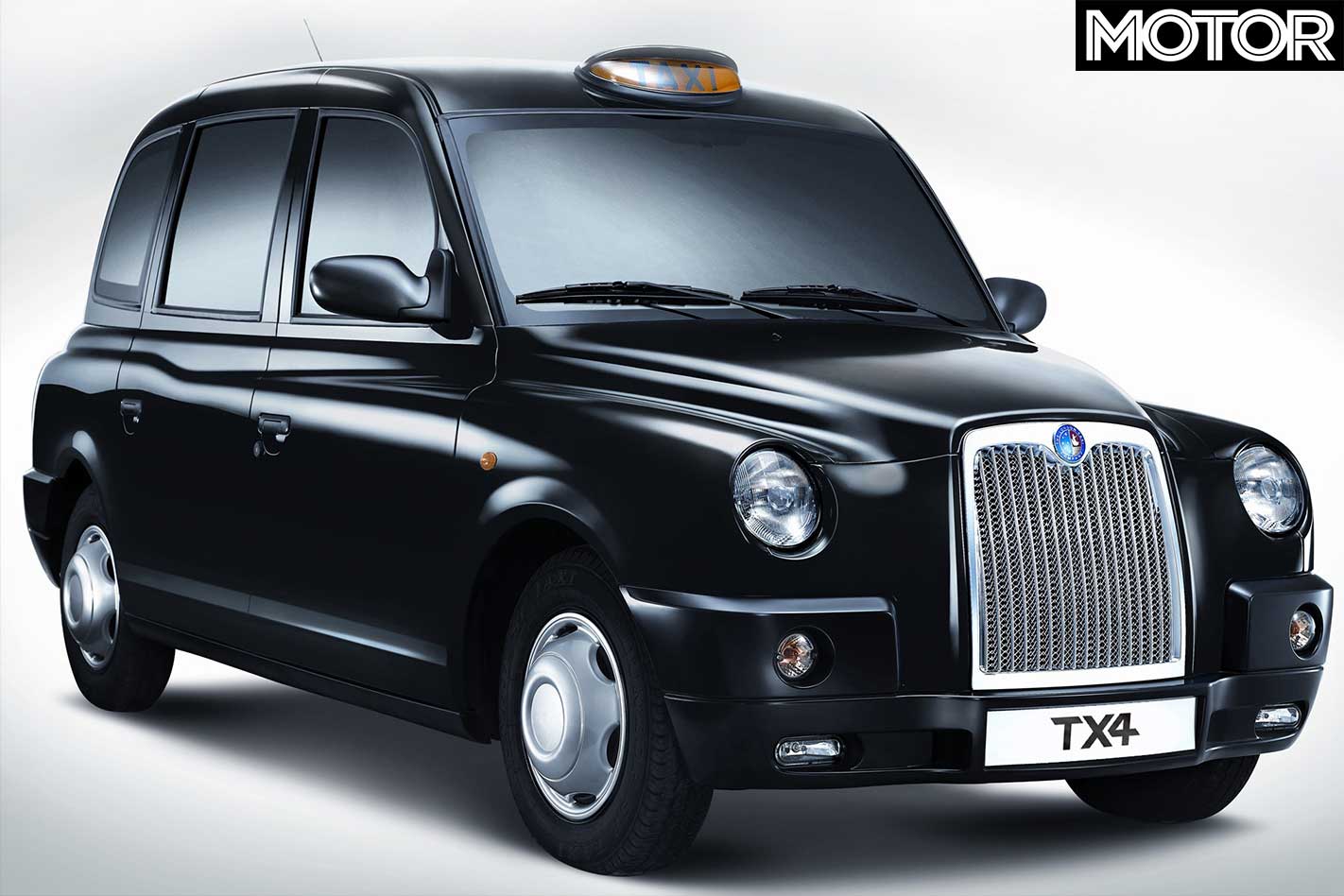
Every awkward-looking, self-consciously swoopy or quasi-futuristic luxury SUV out there, from the Cayenne to the RX to the Urus to the Vision Maybach Luxury… whatever it’s called, is just dancing around the fact that Range Rover pretty much locked up the popular consciousness of what a luxury SUV should look like, way back in the 1970s.
Every other SUV maker secretly wants to make a design that looks exactly like a Range Rover, but don’t want to be called copy-cats, so they add an aero detail here, a gaping Predator grille there; and the later you get started, the fewer original ideas are available.
It’s like being the person who insists they “don’t do costume parties”, but then relents at the last moment, only to find the costume shop has already rented out all the good stuff, and you’re left trying to choose between “Rastafarian sasquatch” and “plus-size Catwoman”, and wishing you’d shown up early enough to just get “Austin Powers” and be done with it.
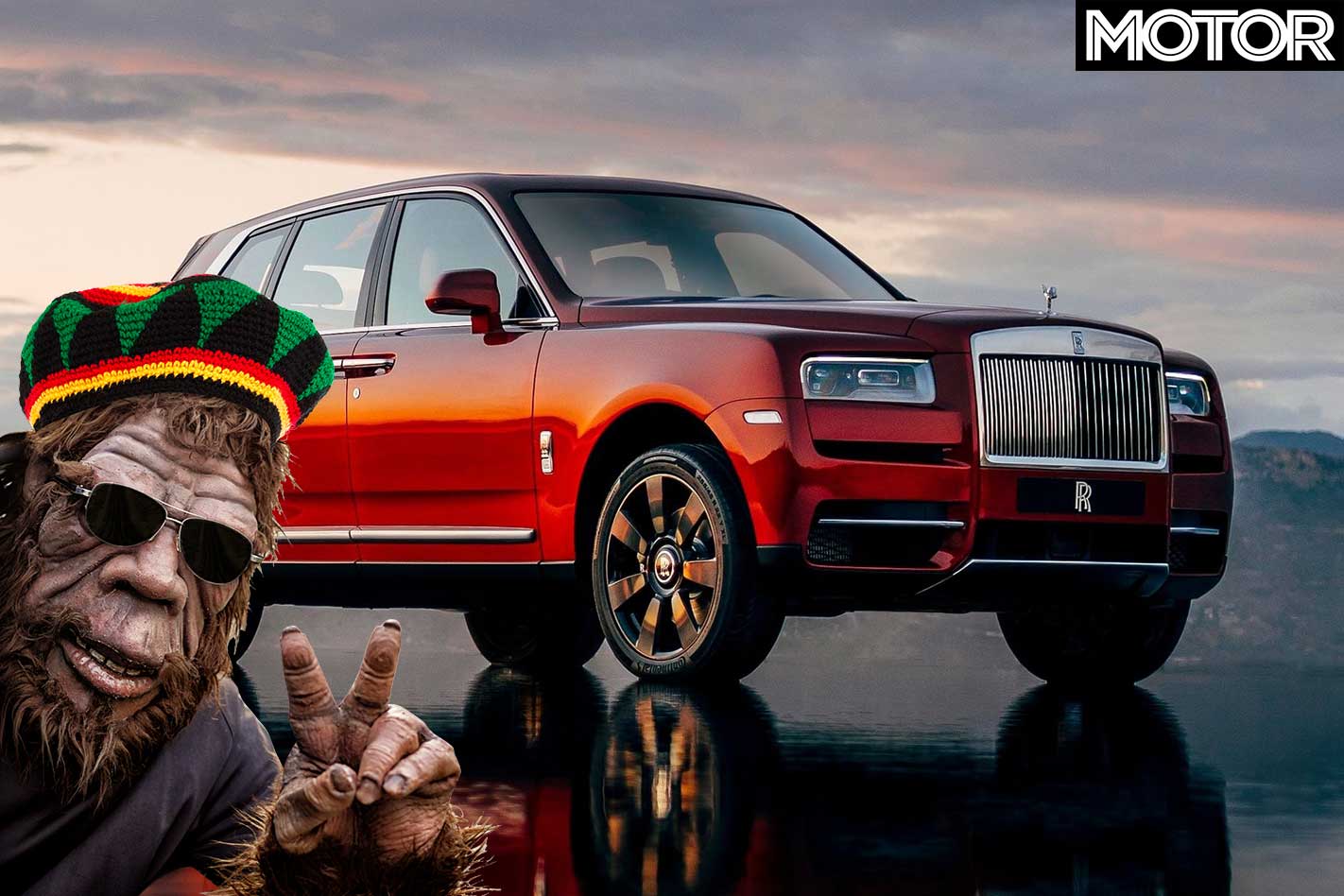
And so poor Rolls-Royce has to show up to the party wearing a tattered Rasta squatch costume and trying to convince everyone that, no, that’s what they really, really wanted, and they’re really very pleased with it. Really.
So why play that game at all, when you can only lose? Don’t wade into an argument over whether the correct proportions of an SUV is a two-box or three-box design – set your own course with the one design to rule them all and in the darkness bind them: the one-box. The van.
You know who drives vans? Rock bands, serial killers and Mr T. It doesn’t get much more badass than the van. Or at least, it didn’t.
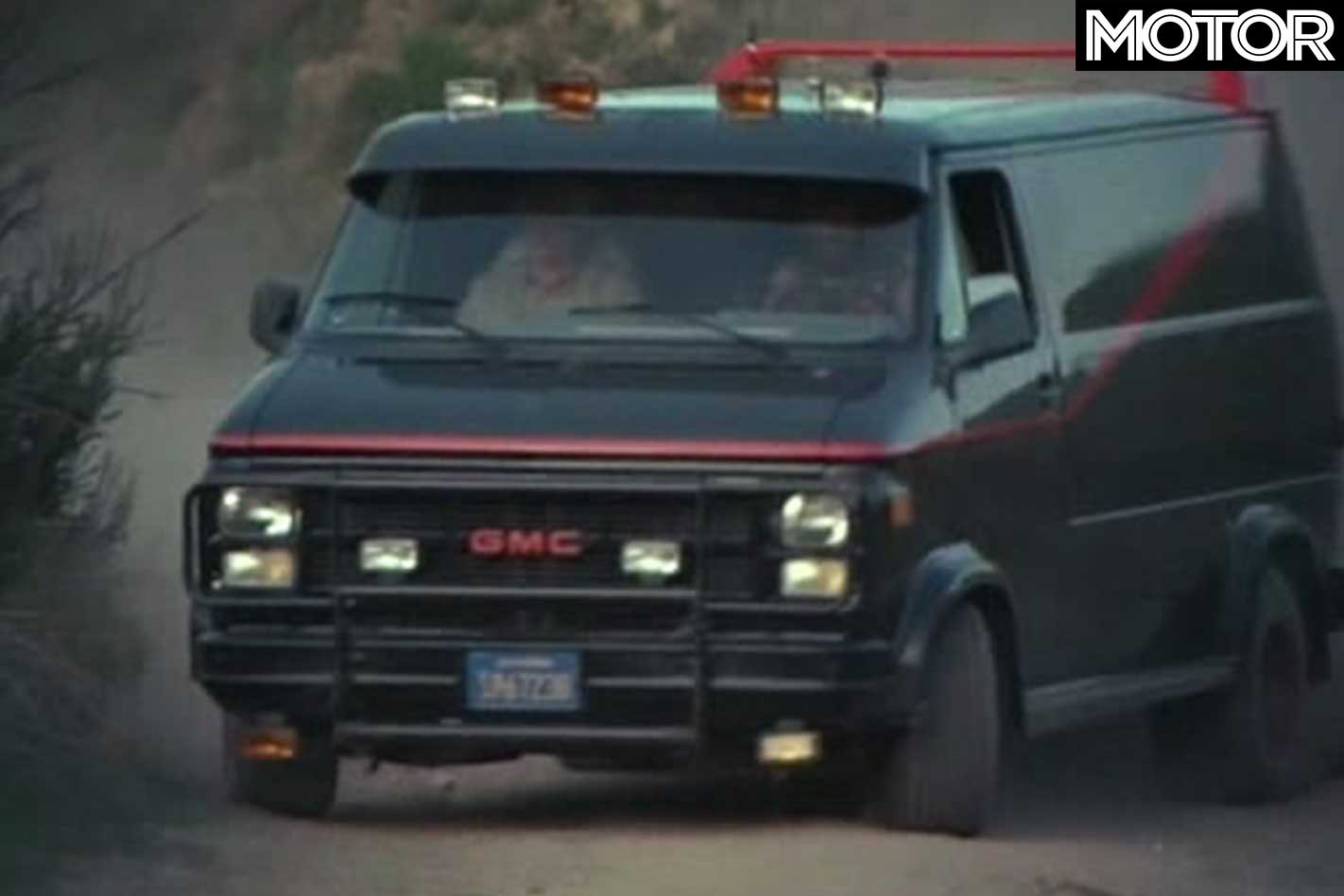
Vans used to be aspirational, the lifestyle choice of the alpha male (hey, these were sexist pre-MeToo times, #alphafemale, #liveyourbestlife), whether that man was a surfer or a rocker or a fugitive from military justice (or, y’know, a serial killer… but I’d leave that out of the brochure).
Then at some point, people forgot how awesome it was to have a car that you could live in if you wanted to, and had plenty of panel space to spraypaint barbarians on.
Sure, Rolls-Royce would have to go a little more upmarket – perhaps they could spraypaint Meghan Markle riding a polo pony on the side instead – but there’d be no need for those two dinky seats that fold out the cargo area: you could fit a full-size Chesterfield sofa back there, plus a little nook for your butler to hide quietly until he’s needed.
It’s time for the Van Renaissance (or Vanaissance, a term I am going to trademark as soon as possible.) I suggest that car makers embrace the inevitability of it early. Before you get stuck with the ugly leftover designs in a few years’ time.
It’s 9:30am and I’m stuck at my desk when I should already be west of the Blue Mountains.
This feature was originally published in MOTOR’s February 2005 issue
The key to a Guards Red 911 Carrera S sits just in front of the keyboard, shouting at me to hurry up. Marcus has called long ago, telling me he’s collected the Maserati GranSport and shooter Wielecki, and they’re on their way to the rendezvous point.
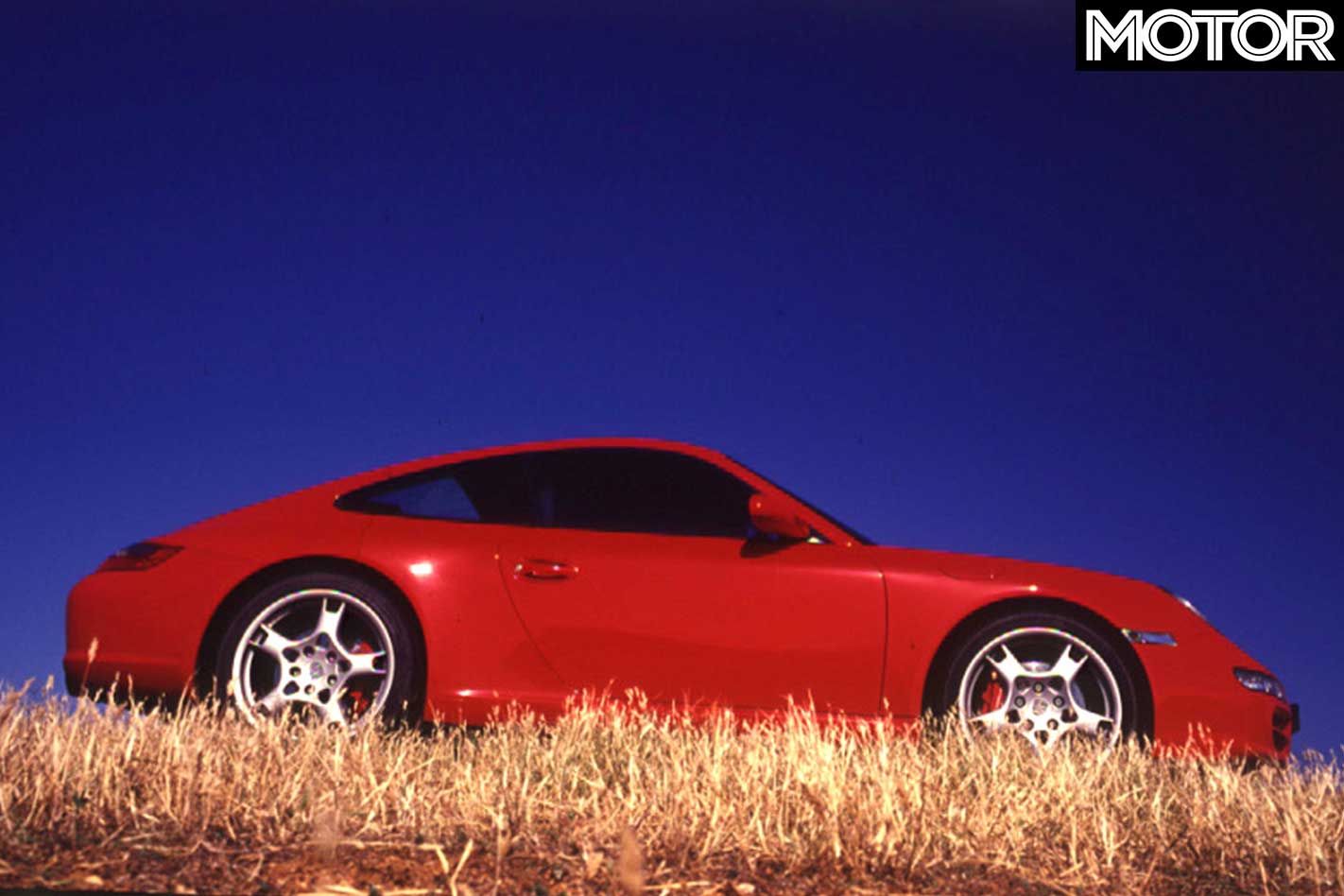
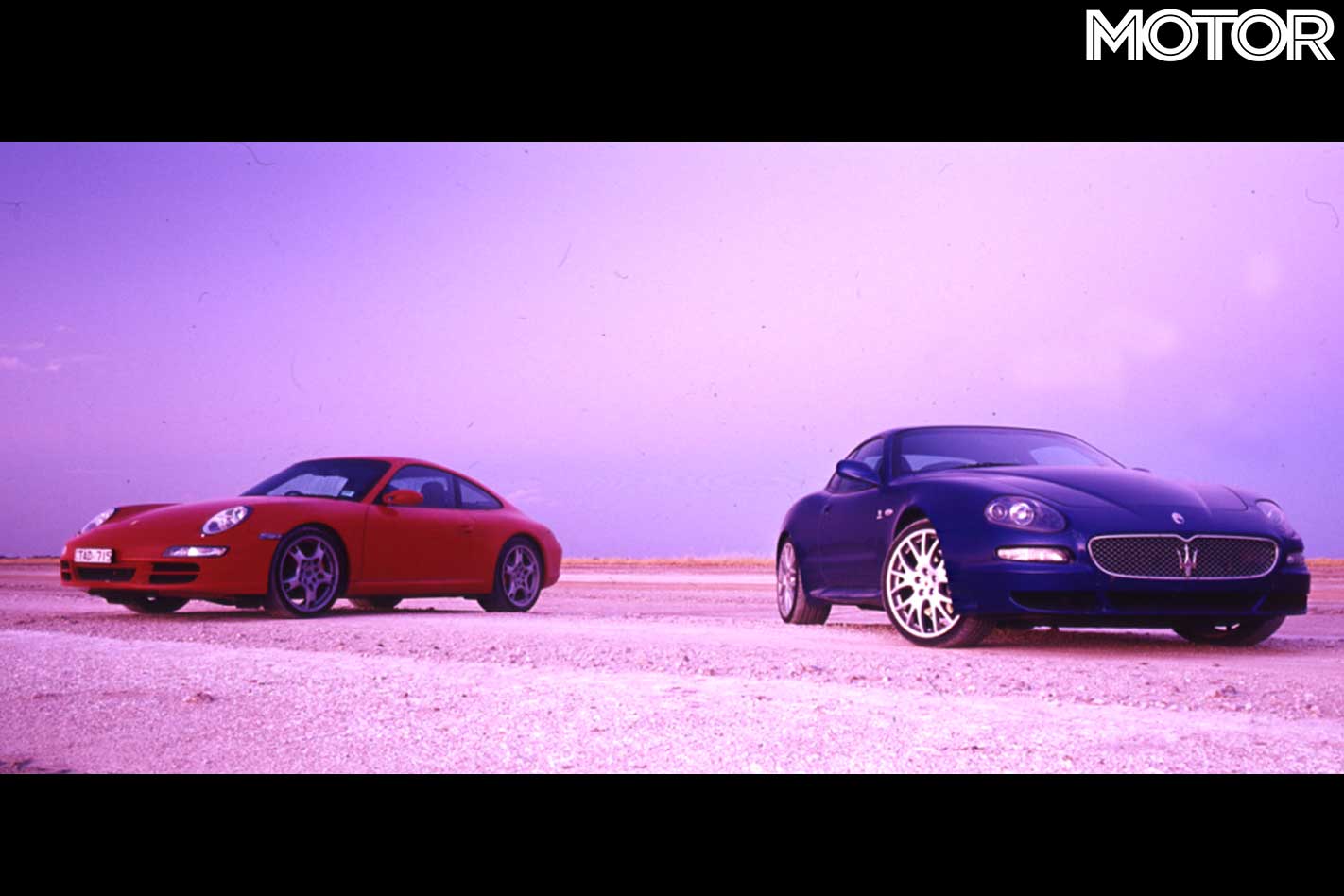
After last month’s first drive of the GranSport, we figured it deserved a shot at the 997 Carrera S – the benchmark, sub-supercar coupe. To really test the Gran Touring abilities of these two exceptional cars, we wanted to cover some serious distance and to do that, agreed to stab westward, into the big-sky country that lies beyond Dubbo in central western NSW.
The GranSport really impressed us last month. It’s got an evocative name, a sense of occasion and a level of exclusivity that the Porsche cannot hope to match, but more importantly, it may finally have the substance to back up all the boasting.
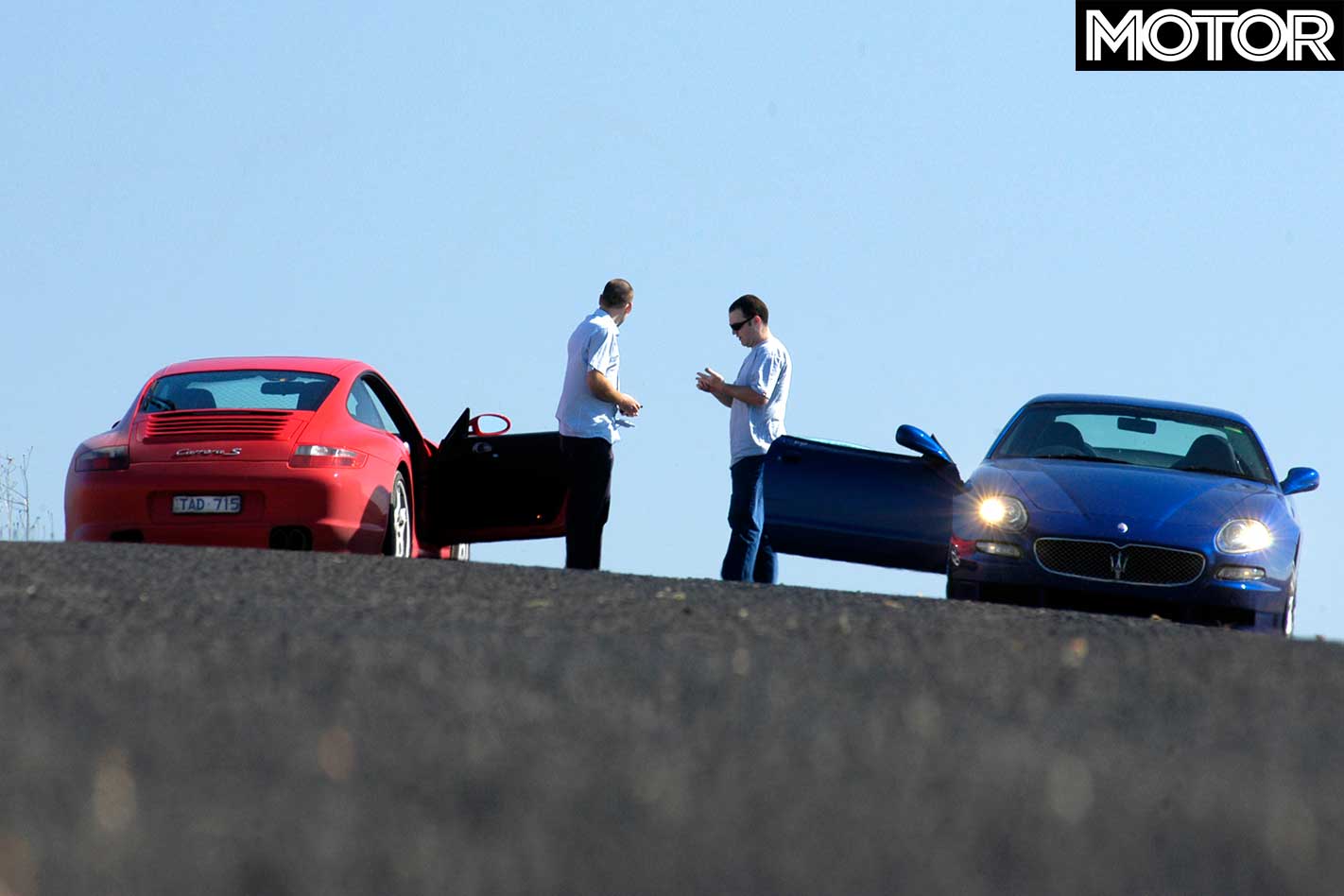
Whereas previous Maseratis we’ve driven have been a collection of outstanding parts (the engine) and disappointments (shift quality and dynamic ability), the GranSport finally puts more of the pieces together.
That jewel-like 4.2-litre quadcam V8 (which now forms the basic architecture for the Ferrari F430 engine) is even more powerful in GranSport form. Power jumps from 287kW to 295kW at 7000rpm and peak torque sneaks up a single Newton metre to 452Nm at 4500rpm.
The Porsche gives the Maserati a two piston, 400cc, 34kW and 52Nm head start, from its 3.8-litre 261kW, 400Nm flat-six. But that’s always been the thing with Porsches; they’re never that impressive on paper.
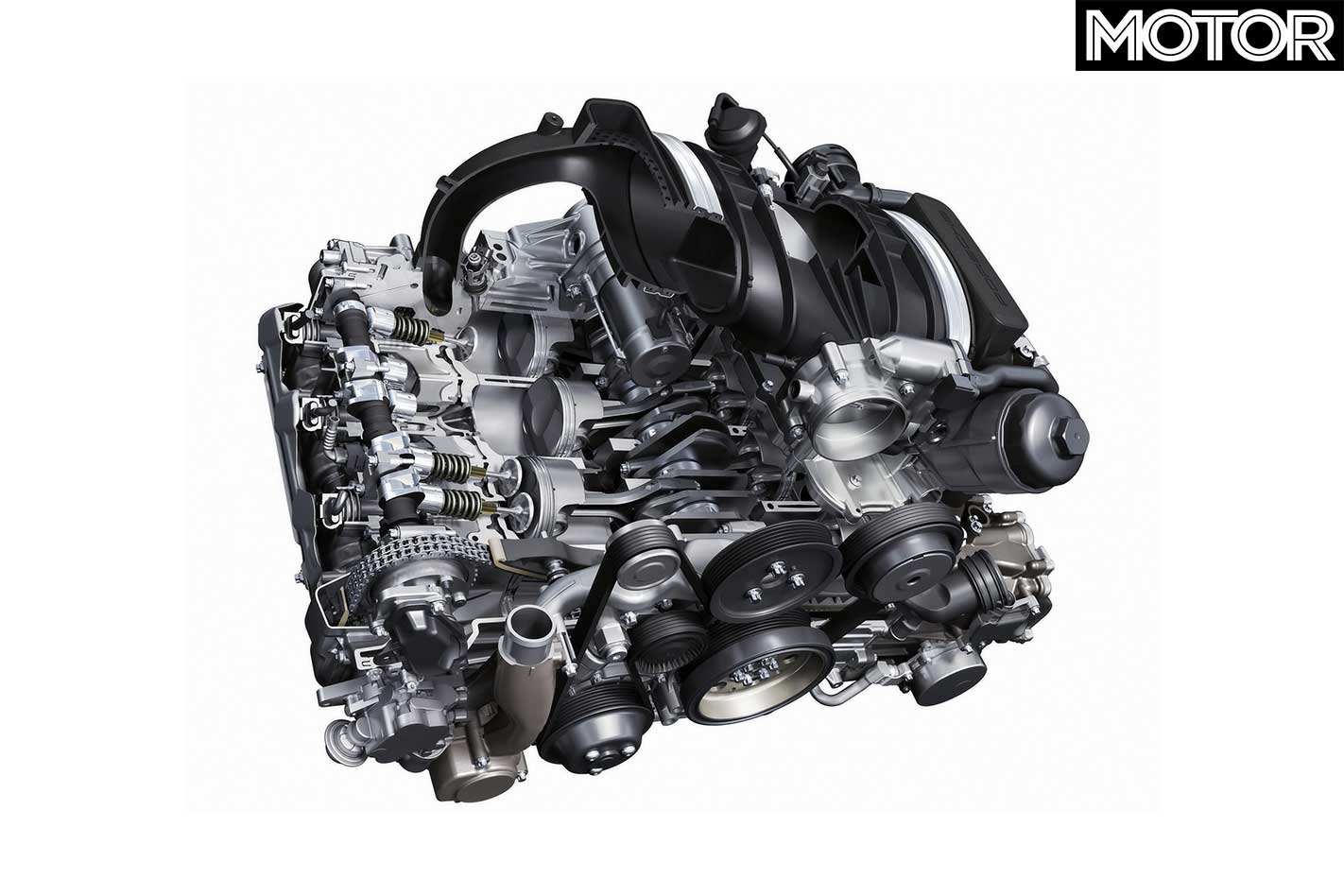
It’s not until you get behind the wheel of one that you can fully appreciate the level of technical perfection that the Stuttgart engineers have squeezed into the most recognisable shape in automotive history. As Michael Taylor said at PCOTY a few years back – when Porsche’s Boxster S took the gong – they are more than the sum of their parts.
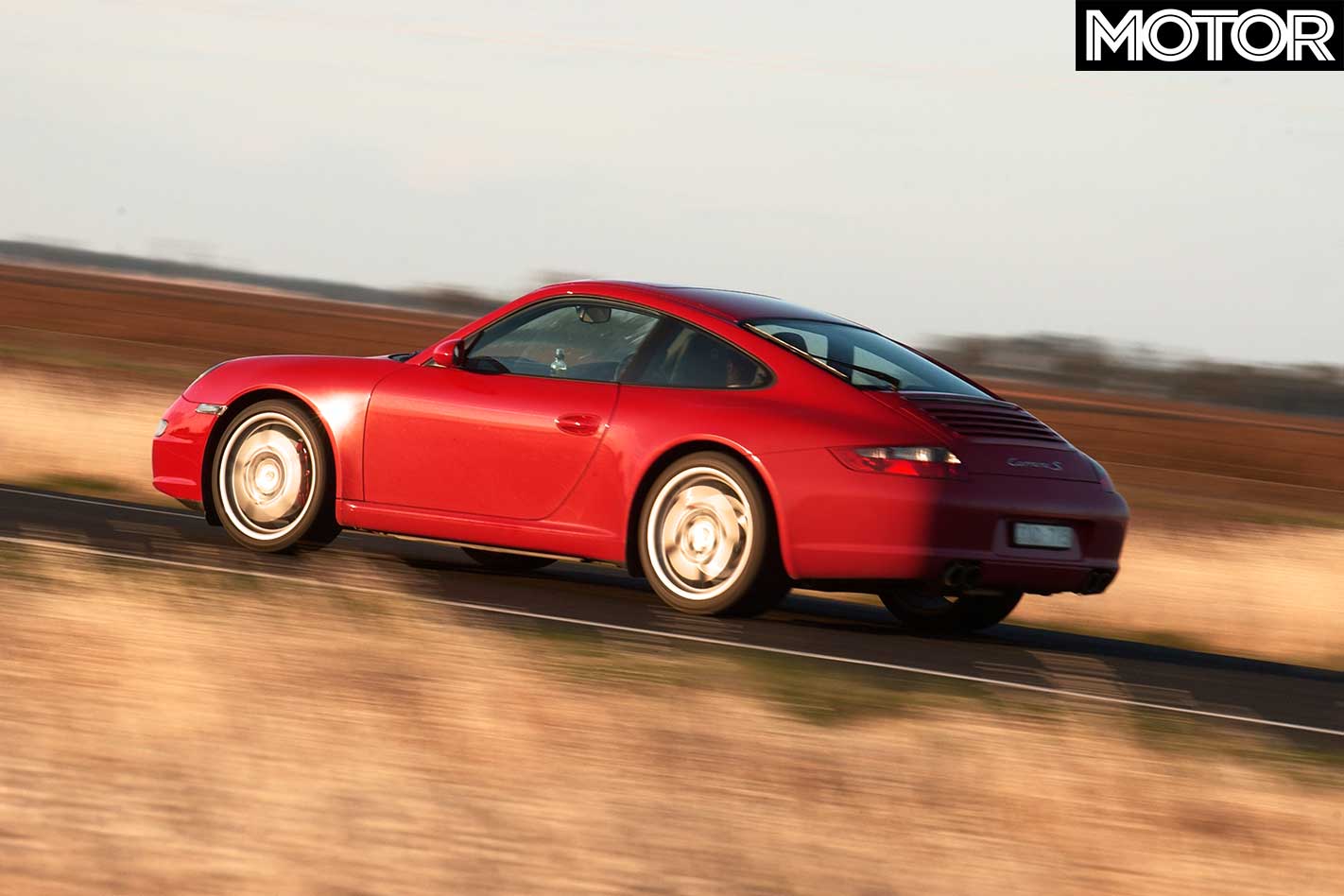
Both cars are significantly better lookers than the previous models. And in the case of the 911, the return to traditional oval headlights set into the ends of the more pronounced pontoon guards, gives the 997 a look not dissimilar to the 993 model – which is held in high regard by Porsche-philes, as it was the last of the air-cooled 911s. The pinched waist and swollen rear arches are further visual highlights.
But it’s not until you’re travelling directly behind the Porsche that you realise just how broad-beamed the 911 is, a point hammered home when you spot the huge 295/30 ZR19 Michelin Pilot rubber.
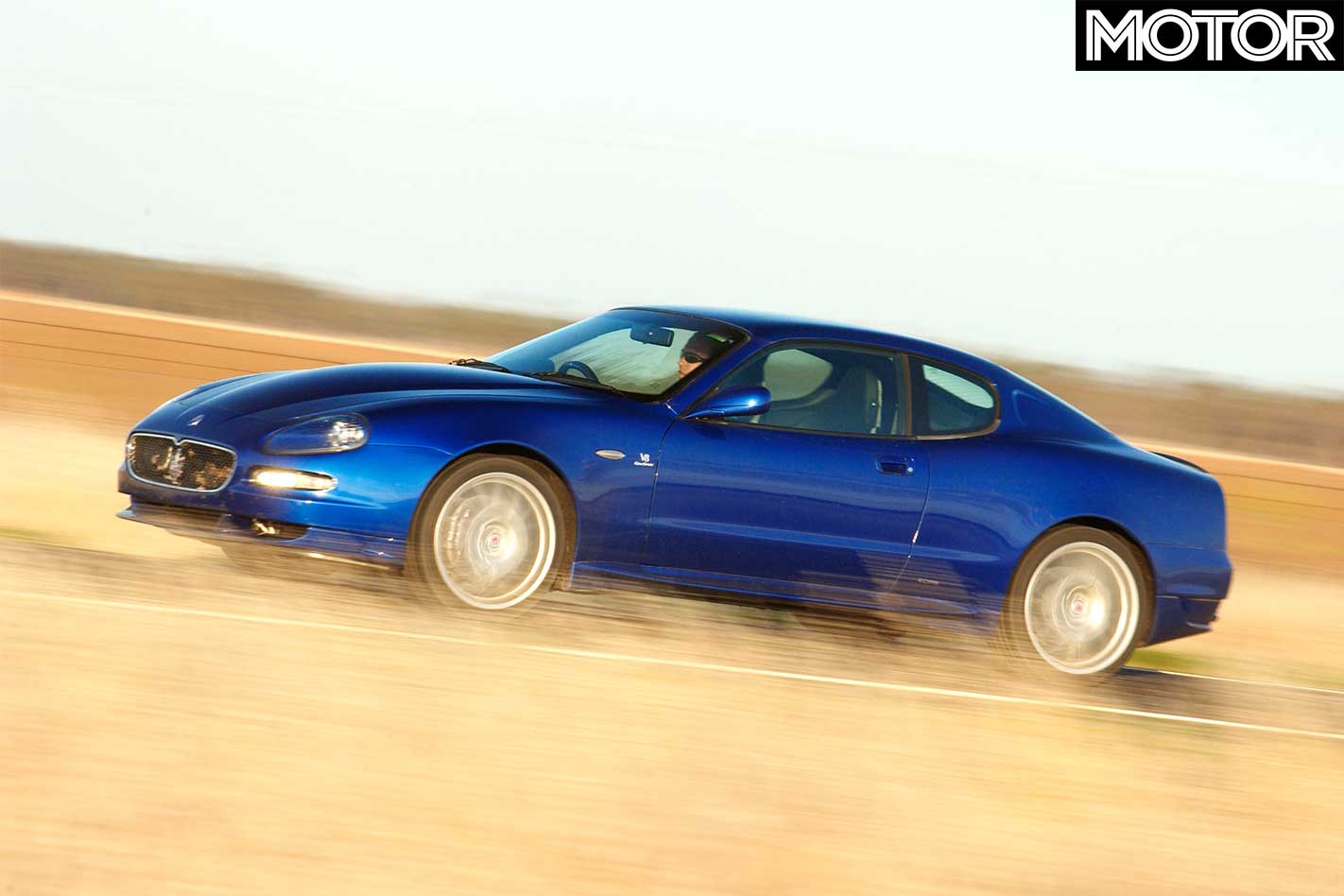
To the great unwashed, the GranSport might look like any other Maserati Coupe but Ferrari’s new chief designer, Frank Stephenson (also responsible for the MINI) has significantly reworked the aesthetics and aerodynamics.
Most noticeable of the changes is the extended Quattroporte-esque nose with the wider mouth, but there’s also curved sill skirts and a small carbon fibre lip on the boot. The GranSport’s look is further enhanced by the 10mm drop in ride height and the chunky 19-inch alloys (which borrow their style from the Trofeo racecars).
Aside from any subjective improvement to looks, the changes make the GranSport more stable at highspeed with an increase in downforce and a better balance of lift between the two axles. The shape is also more slippery through the air with an overall drag co-efficient of 0.33.
We reach the meeting point and I jump from the 911 to the Maser. You start the naturally-aspirated V8 with a twist of the key and a jab of the blue starter button. It cracks to life with a potent burst of noise.
Poke the Sport button and the note hardens as the exhaust by-pass valve opens and back pressure is reduced. The Sport button also heightens the stability control programming, firms up the Skyhooks adaptive suspension and brings quicker shift times from the six-speed sequential manual Cambiocorsa ’box.
This is the only gearbox available for the GranSport but as we’ve never driven a conventional six-speed manual (available as a delete option in the Coupe and Spyder) we don’t know if we’re missing anything.
We’ve previously reported that this gearbox, while fast shifting, can thump brutally as each gear is slammed home. So, when we learnt the GranSport’s Cambiocorsa was programmed to change even faster, there was a collective wince.
No need to worry though, because the quicker shifts (35 percent faster in Sport mode) actually smooths the process. Sure, full-blooded redline shifts will still thud into the rear-mounted transaxle, but they no longer rattle the superstructure of the car. And the automatic heel-and-toe throttle blip on downshifts is nape-prickling.
Below 2000rpm, the Maserati engine is surprisingly soft for a bent-eight displacing 4.2 litres. But as the revs rise, the power builds and the deep V8 rumble gives way to a creamy mechanical concert.
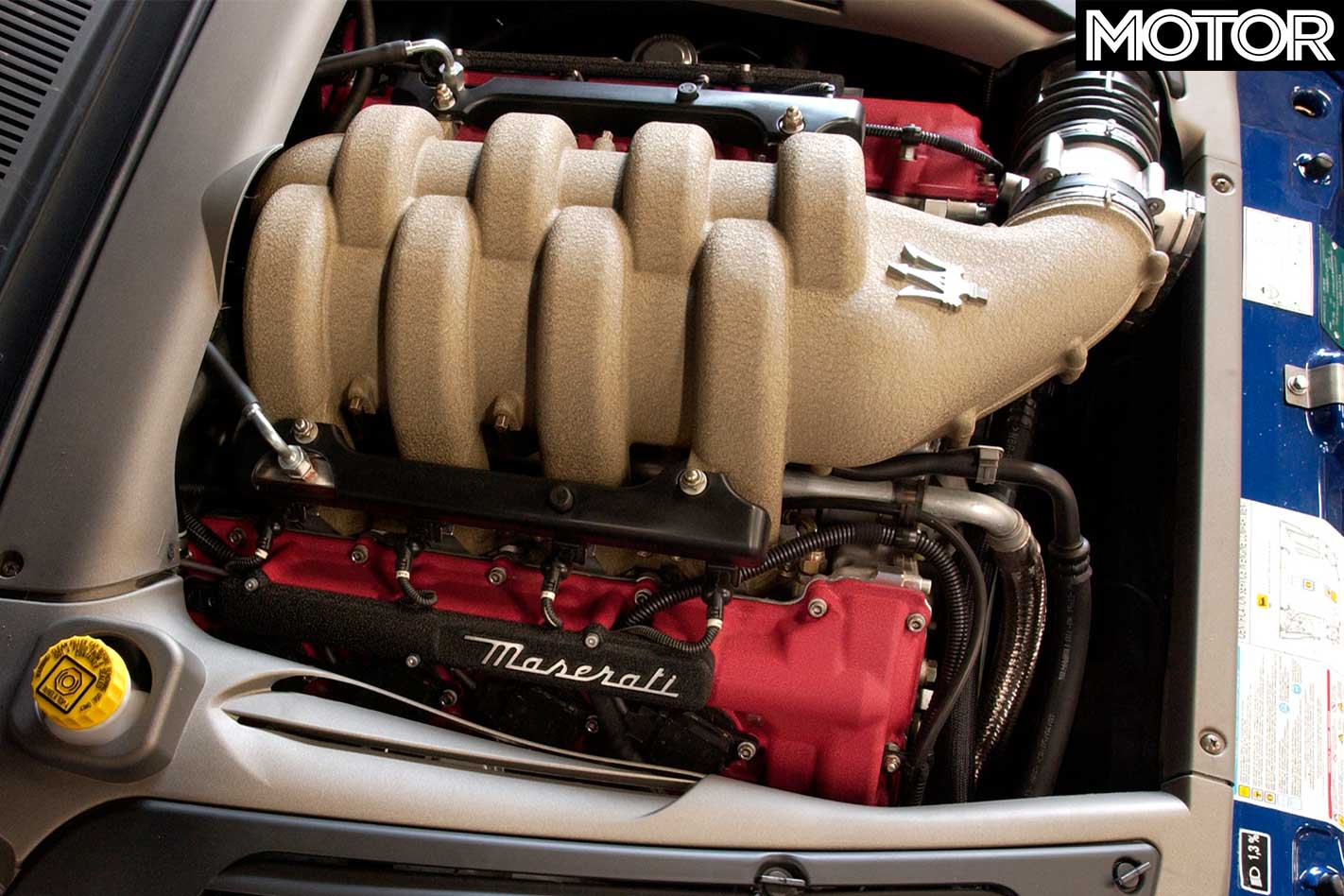
The Porsche plays a different tune and is so tractable at low engine and road speeds. Although the six-speed ’box is one of the best to ever shift cogs and has a firm but fast shift action and a heavy but positive clutch take-up, the boxer’s torquey nature forgives lazy driving and allows the 911 to carry a higher gear without a stumble or judder of complaint.
But for all its low-end flexibility, it’s the top-end of the 911 that’s truly astounding. From 5000rpm the big boxer takes another deep lung full of oxygen and hammers the tacho and speedo needles toward their end stops. Above 200km/h the acceleration is no less vigorous than the seat-pinning punch at 100km/h.
Find a road or runway long enough and the 911’s electronic speed display (found inside the analogue dial) will flash 303km/h at the top of sixth gear.
Before stretching into the far reaches of the speedo, the 911 will storm to 100km/h in 4.87 seconds and cross the quarter in 13.08 seconds at 175.8km/h – both figures are right on the Porsche claim.
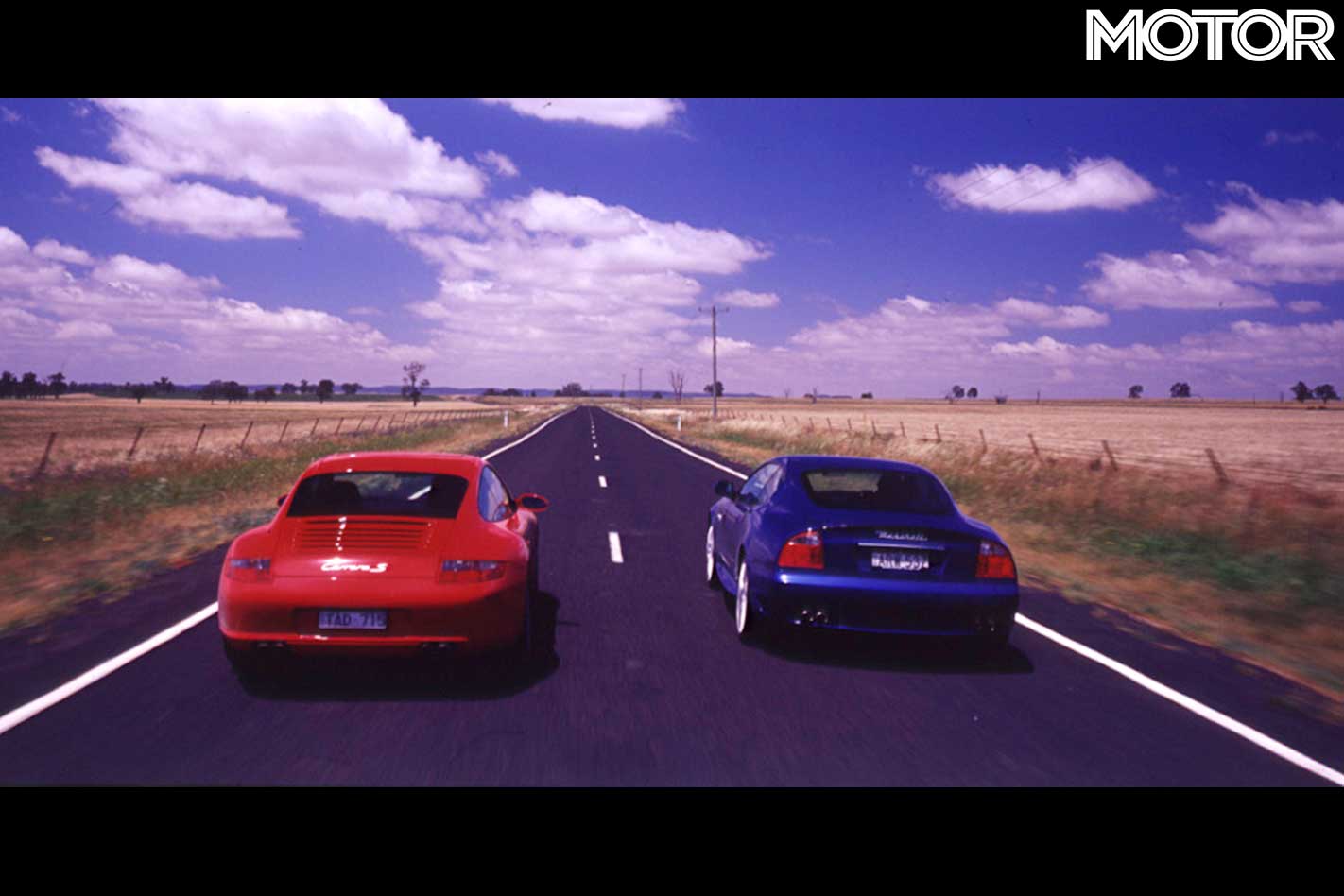
Maserati claims a 290km/h V-max, but it’ll take longer to get there. This is due, partly, to the GranSport’s four percent taller sixth gear, but also because the V8 lacks the ultimate top-end punch of the the 911’s flat-six .
Where the 911 really hooks up off the line (thanks to the weight over the rear axle) the Maserati is much harder to modulate off the start. Despite a Porsche-matching claim of 4.85 seconds, the best we could manage to 100km/h (on a low kay example) was 5.37. Most of that difference is lost as the PZeros struggle for grip. From 100km/h the Maserati starts to make up a bit of ground with a 13.46 0-400m time, and a 173.7km/h terminal speed.
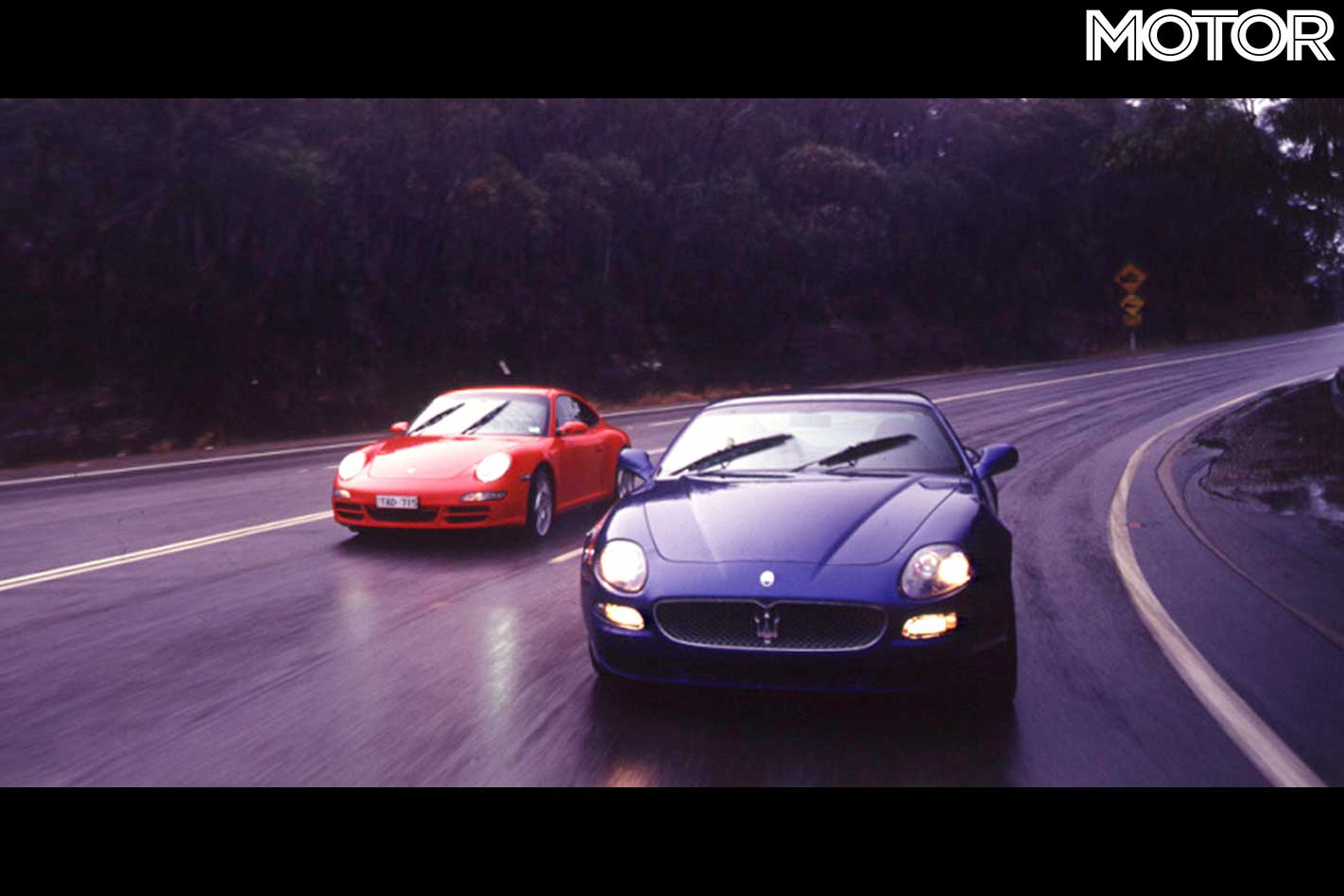
Somewhere between nowhere and the horizon, we pass the law. We’d not seen a car for a while, but as we pop over a slight rise, with the nose of the Maser (sans numberplate) buried up behind the rump of the 911 for a tracking shot, a marked-up Nissan Patrol flashes by.
Heart rates rise and sure enough there’s a splurge of brake lights on the back of the Patrol. A few minutes later he’s on us, lights ablaze, so I ease the Maserati onto the dirt shoulder, only for the cop to drive by in pursuit of his German prey. Wanting to help with explanations and share any blame, I slot in behind the captor and quarry.
Questions are asked. What was that hanging from the side of the Porsche? Why was that blue car so close? But most pointedly, why do we have the best part of half-a-million bucks in cars?
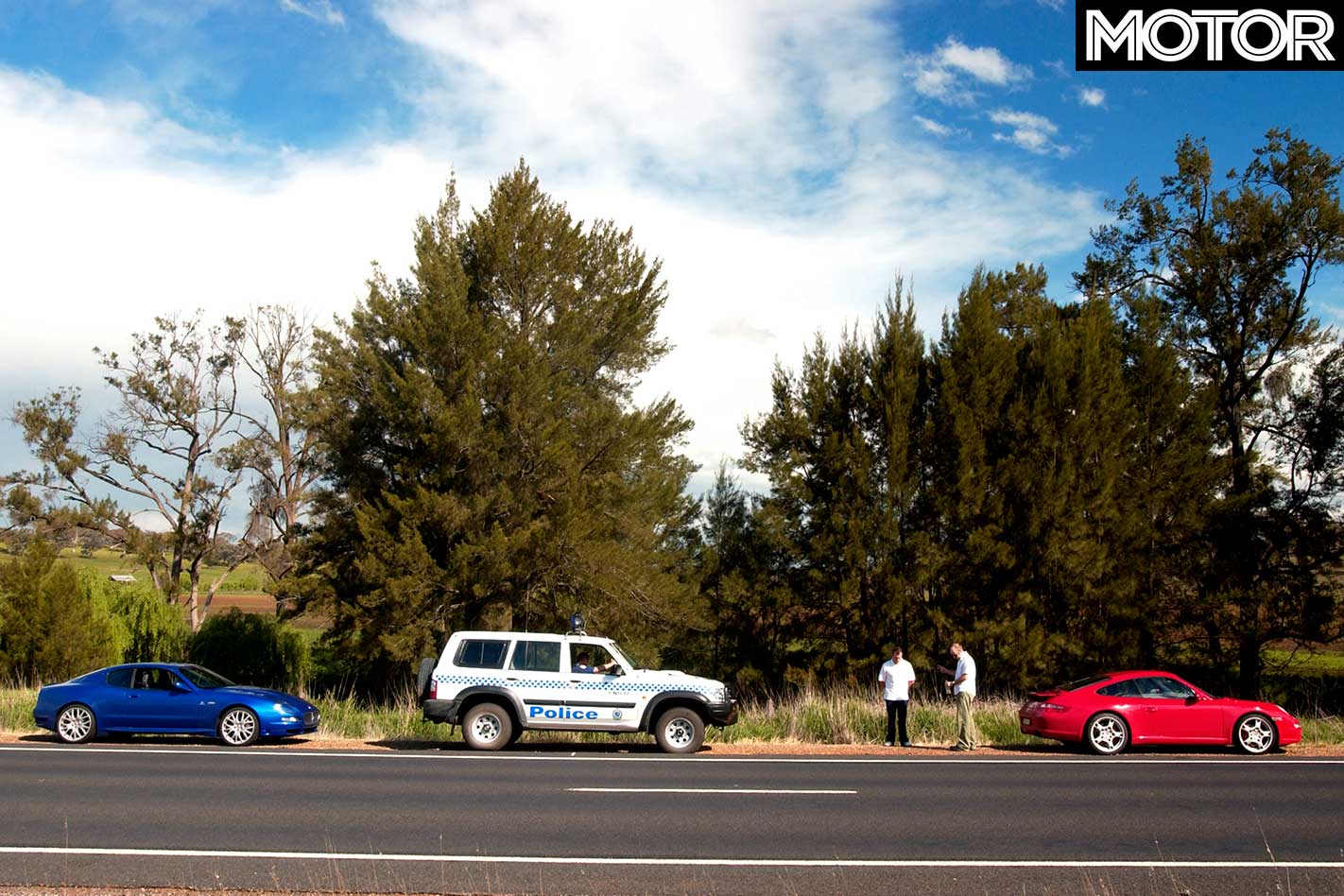
All easy to answer and the officer realised we weren’t doing anything dangerous, so let us off with a warning. He also told us if we wanted to do such photography, perhaps we could use one of the side roads.
So with photography suspended, we push on, looking for one of these suitable side roads. Jumping from Maserati to 911 and back again, I’m struck by how far the Italians have come on interior quality. The construction and material (carbon fibre, soft leather and a fabric sourced from Giorgio Armani) of the GranSport’s cabin is just about spot on, but without the smug mass-produced perfection you find in Audis.
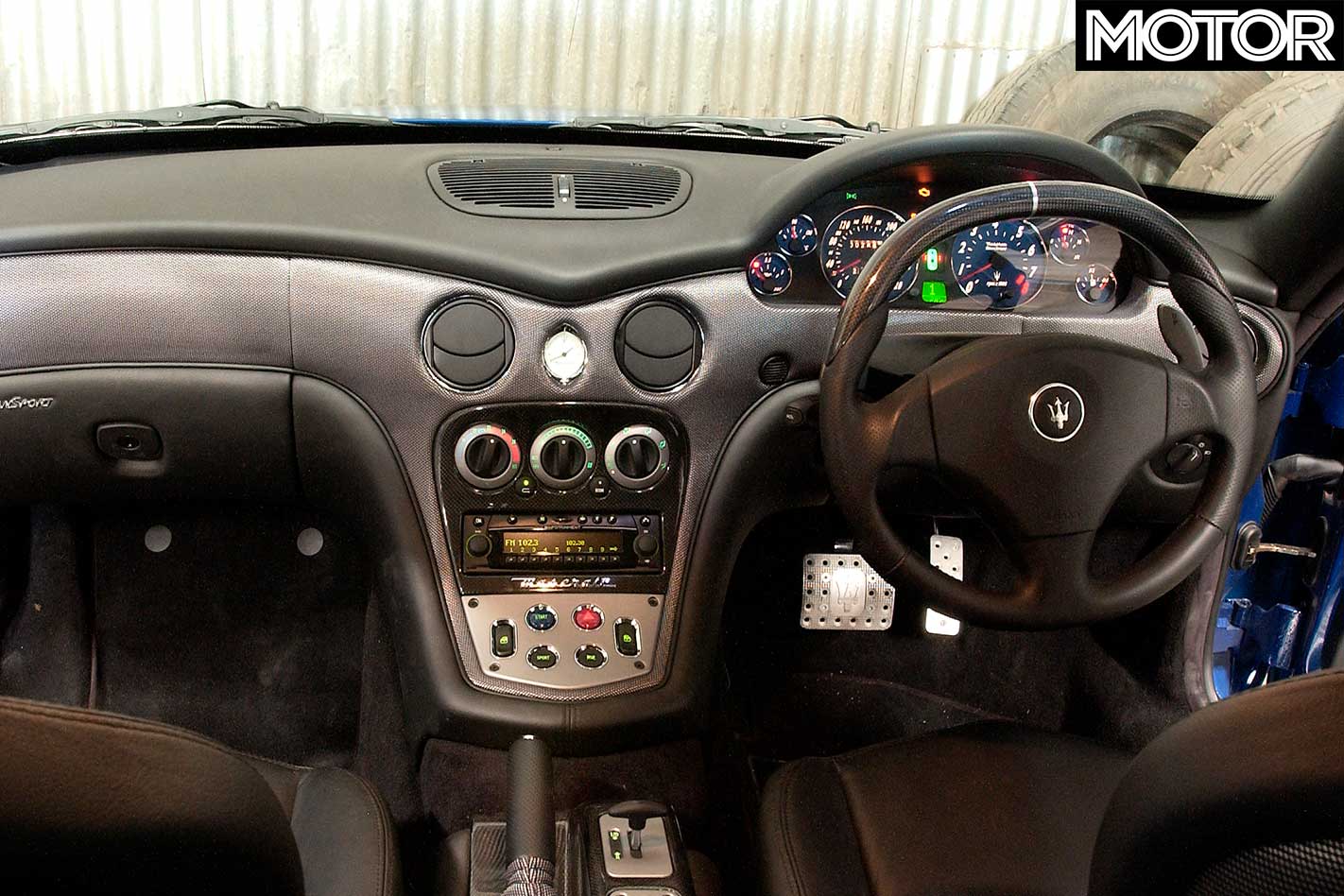
The Maserati still has that indefinable character of a low-volume, exclusive car, but without the shoddiness you used to find in such cars not that long ago. Still, it’s impossible to give the Maserati full marks when the ergonomics are so far off the pace. About the only thing further away than the top of the steering wheel (which also obscures some of the gauges), is the power window buttons.
The Porsche cabin, though ergonomically perfect, is uncharacteristically alive with rattles and squeaks. Technically the 997 cabin is better than the old model, with improved materials, construction (save the rattles of this example) and level of equipment.
All major controls are perfectly placed and their actions carry the correct weighting. Perhaps the only caveat is the steering. With the Carrera S fitted with adjustable dampers and variable ratio steering, there’s a sneaking suspicion that the wheel is not as talkative as it could be.
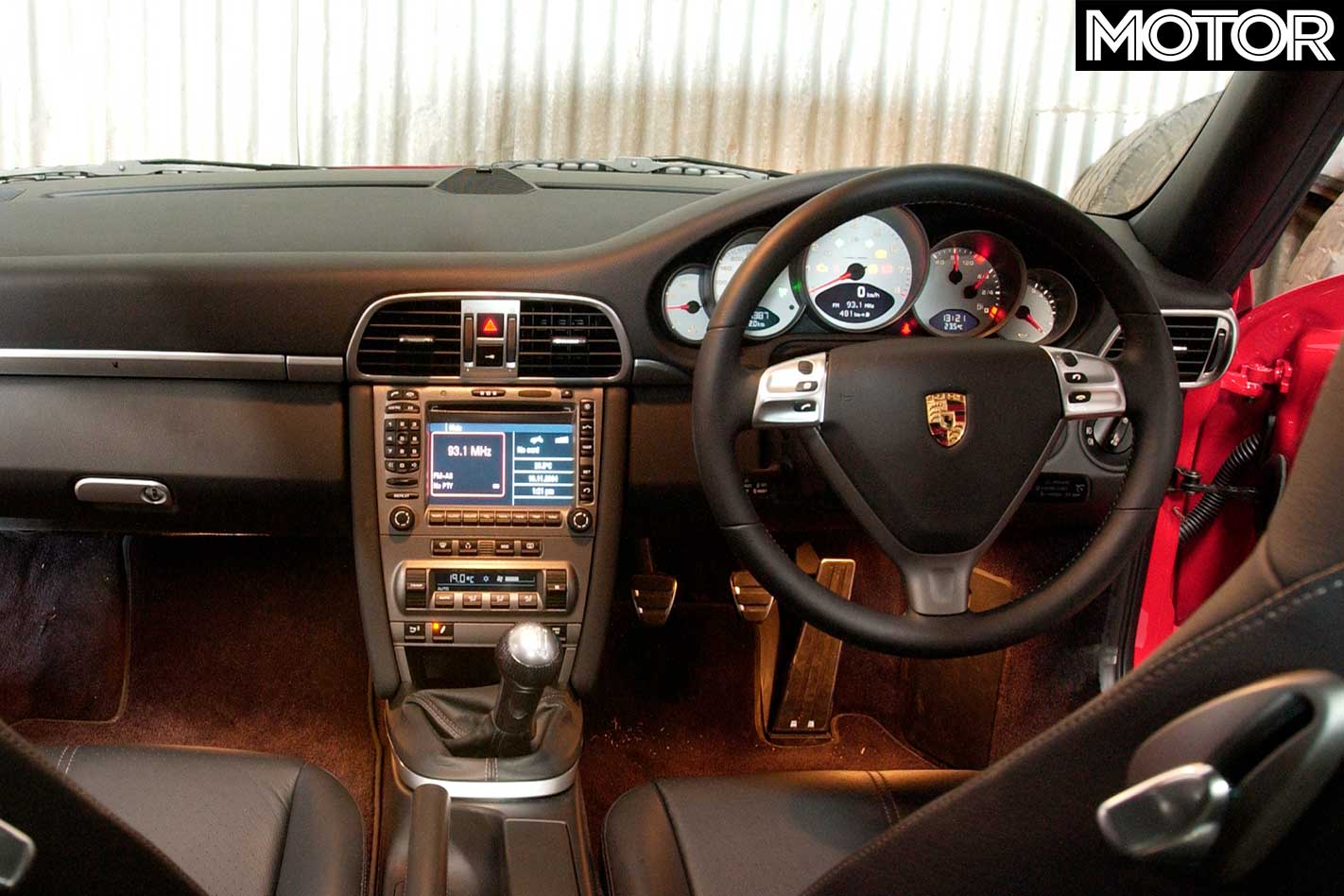
In isolation, or even in comparison with the Maserati, you’d never know. But those familiar with any 996 model or even the base model 997 Carrera, will feel the difference. It’s nothing major, just an initial fuzzyness as the steering wipes sleep from its eyes.
But that’s the only dynamic gripe you can level at the 911. Otherwise, it gets close to perfection with extraordinary grip from both ends, immediate turn-in and faithful feedback.
The ride is firm (it does wear 19s) but there’s genuine suppleness at medium and high speeds, which is just what you want when you’re pushing on. And the brakes will never quit on you. Dirty great 330mm discs straddled by four-piston monobloc calipers stop time and time again without the merest suggestion of fade.
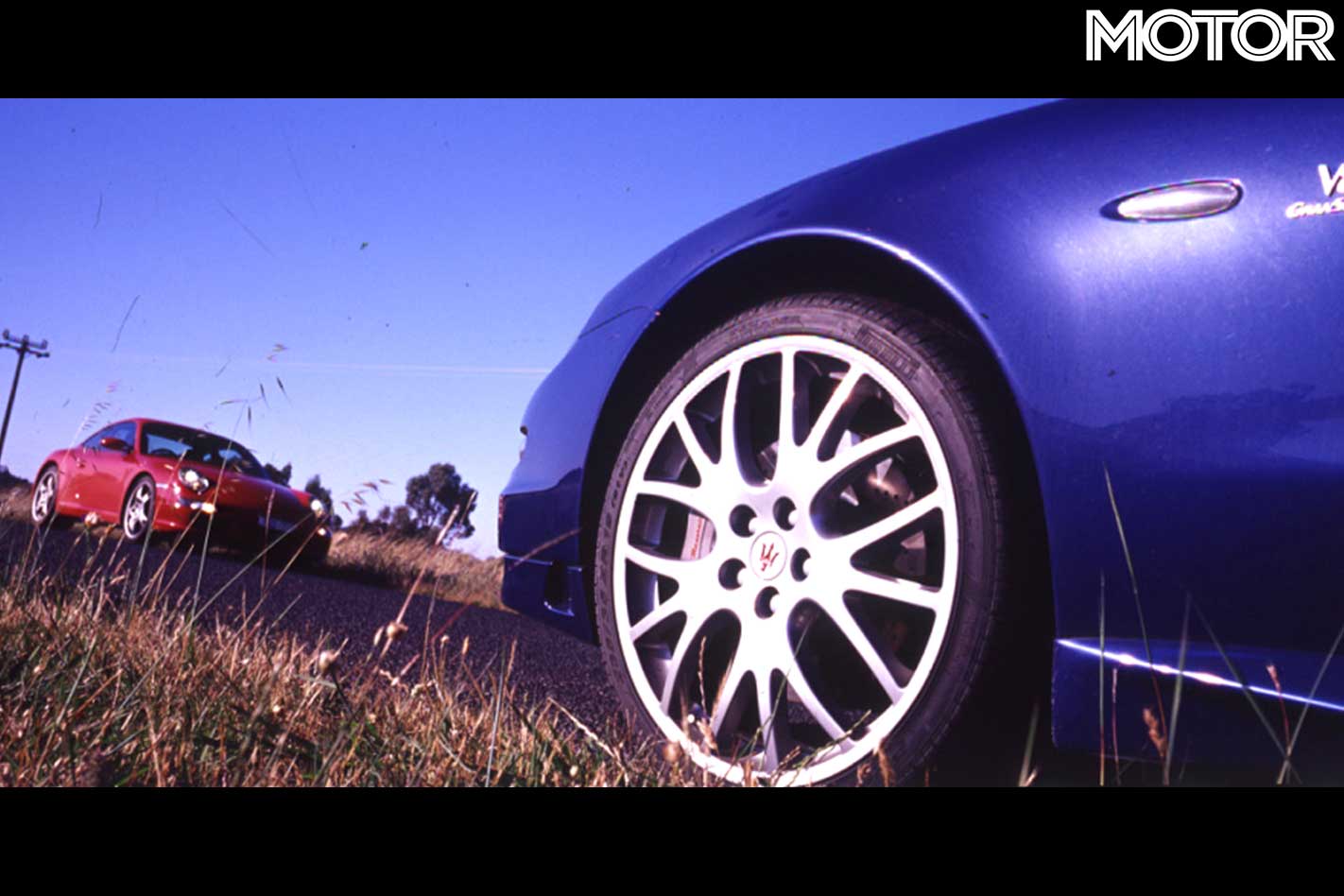
The Maserati’s lower and firmer suspension is so far ahead of previous Coupes that comparison is pointless. The older models felt like you were driving a bar of soap, never knowing when it would slip from your grasp, but the GranSport is a Maser you can trust.
At low speed the ride quality is remarkable (far superior to the Porsche) but as the stakes and speed are raised, there’s not the body control of the 911. Grip is tenacious, and messages from the treadblocks actually do make it to your hands, whereas the older car would play Chinese whispers with feedback.
In just a day-and-a-half of hard driving we’ve added over 1200km to the odometers of each car and both crushed the distance with ease, but the win goes to the 911.
With the exception of seating capacity, the Porsche plays the GT role just as well as the GranSport, but can slip into superman mode and tug at the capes of genuine supercars. And that’s probably the point, not only is it $20k cheaper than the Maserati, but to find better, you’re looking at the $400,000 Lamborghini Gallardo.
Fast Facts
| u00a0 | 2005 Porsche 911 Carrera S | 2005 Maserati GranSport |
| BODY | two-door coupe | two-door coupe |
| DRIVE | rear-wheel | rear-wheel |
| ENGINE | rear-mounted 3.8-litre 24-valve DOHC flat-six | front-mounted 4.2-litre DOHC 32-valve V8 |
| BORE x STROKE | 99.0mm x 82.8mm | 92.0mm x 79.8mm |
| COMPRESSION | 11.8:1 | 11.1:1 |
| POWER | 261kW @ 6600rpm | 295kW @ 7000rpm |
| TORQUE | 400Nm @ 4600rpm | 452Nm @ 4500rpm |
| WEIGHT | 1420kg | 1680kg |
| POWER/WEIGHT | 184kW/tonne | 176kW/tonne |
| TRANSMISSION | six-speed manual | six-speed sequential manual |
| SUSPENSION (f) | MacPherson struts, coil springs, adaptive dampers, anti-roll bar | double wishbones, coil springs, adaptive dampers, anti-roll bar |
| SUSPENSION (r) | multi-link, coil springs, adaptive dampers, anti-roll bar | double wishbones, coil springs, adaptive dampers, anti-roll bar |
| L/W/H | 4427/1808/1300mm | 4523/1822/1295mm |
| WHEELBASE | 2350mm | 2660mm |
| TRACKS | 1486mm (f); 1511mm (r) | 1525mm (f); 1538mm (r) |
| BRAKES (f) | 330mm cross-drilled & ventilated discs, 4-pistonu00a0calipers | 330mm cross-drilled & ventilated discs, 4-piston calipers |
| BRAKES (r) | 330mm cross-drilled & ventilated discs, 4-pistonu00a0calipers | 310mm cross-drilled & ventilated discs, 4-piston calipers |
| FUEL | 64 litres, PULP | 88 litres, PULP |
| WHEELS | 19 x 8.0-inch (f);u00a019 x 11.0-inch (r) | 19 x 8.0-inch (f); 19 x 9.5-inch (r) |
| TYRES | Michelin Pilot Sport;u00a0235/35 ZR19 (f), 295/30 ZR19 (r) | Pirelli PZero Rosso;u00a0235/35 ZR19 (f), 265/30 ZR19 (r) |
| PRICE | $221,500 | $242,500 |
Gran Turismo 3 Like the idea of a GT but not sold on the Maserati or 911?
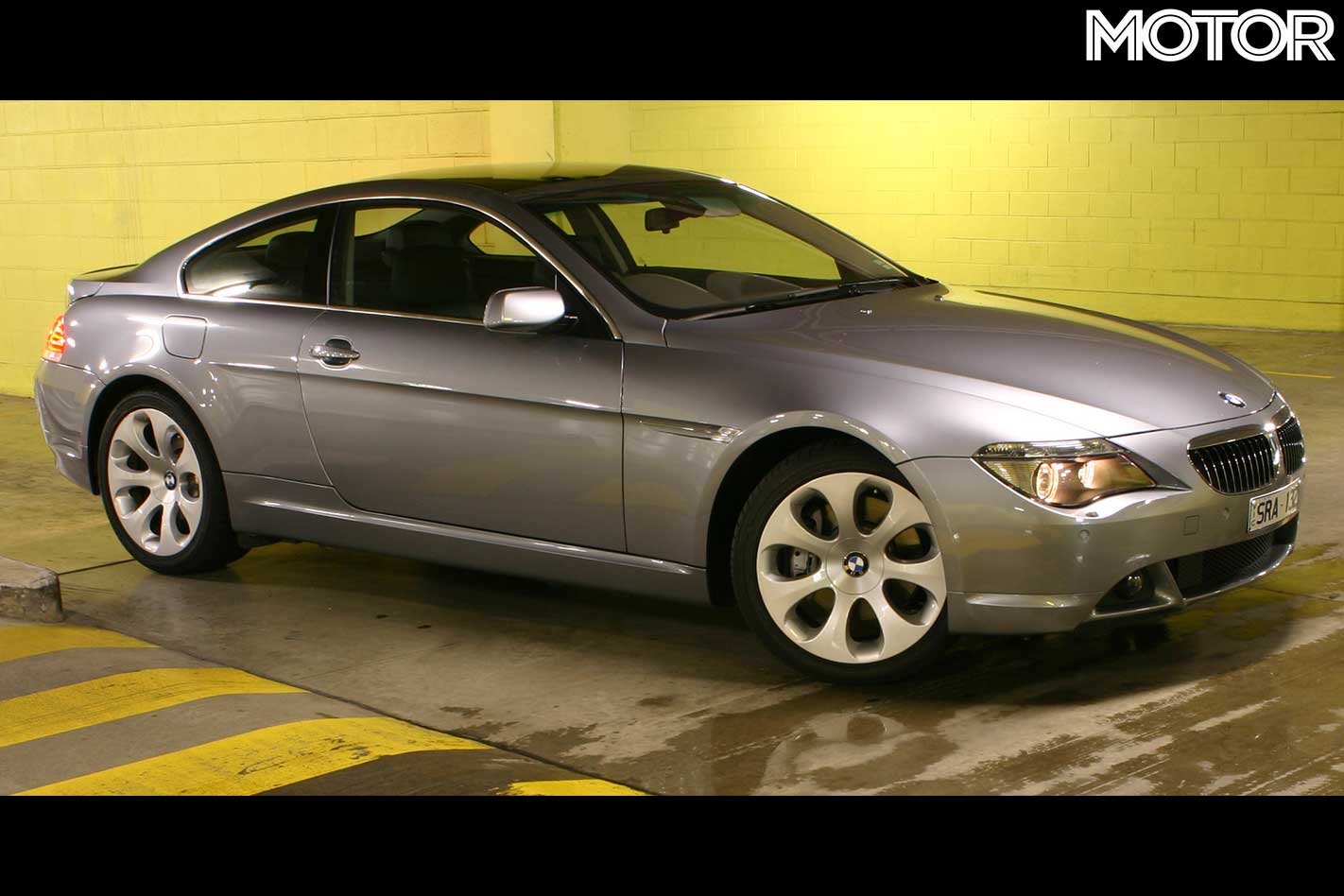
From BMW you’ve got the choice of the 645Ci coupe at $203,000 or the $220k convertible. Both are powered by a 245kW 4.4-litre V8 but there’ll be a 373kW 5.0-litre V10 M6 late this year or early 2006. Jaguar’s 298kW XKR has loads of sting, but is feeling its advanced years. There’s a coupe and drop top with prices starting at $209k.
Mercedes-Benz is in on the game as well with the CLK55 AMG. A naturally-aspirated 5.4-litre V8 delivers 270kW with coupe at $195k and convertible at $209k.
City Slickers Taking half a million bucks worth of exotica to the bush
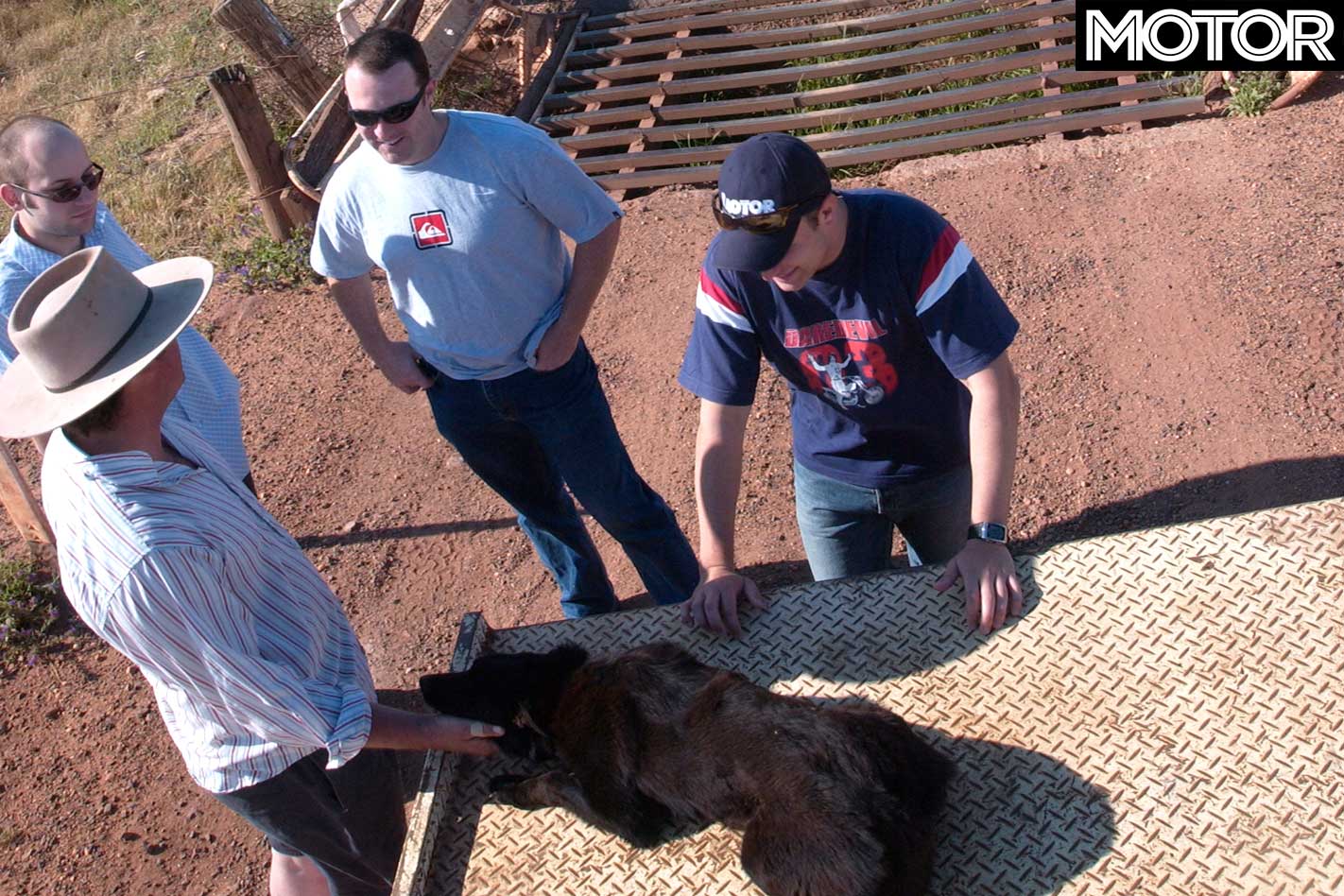
MOTOR’s logistics king, Marcus Hofmann is great for getting lots of cars and people together in the one place. He’s also pretty handy behind the wheel, but take ‘Herman’ west of the Blue Mountains and he’s out of his comfort zone. So, 500 kays west of the mountain range the confirmed city-slicker is a long way from home.
Searching for a suitable photographic location, we stumbled across a local farmer and about 300 head of sheep. Standing amidst said sheep, Marcus – a firm believer that there are no stupid questions – asks our new found friend, “So, you only have cattle out here, ya?”
In the mix of bewildered glances and nervous feet-shuffling that followed, the still country air somehow got even quieter. Even the distant crows stopped their faaarking to have a quiet chuckle.
McLaren Gandys MCL33 Halo Edition thongs, $39.00
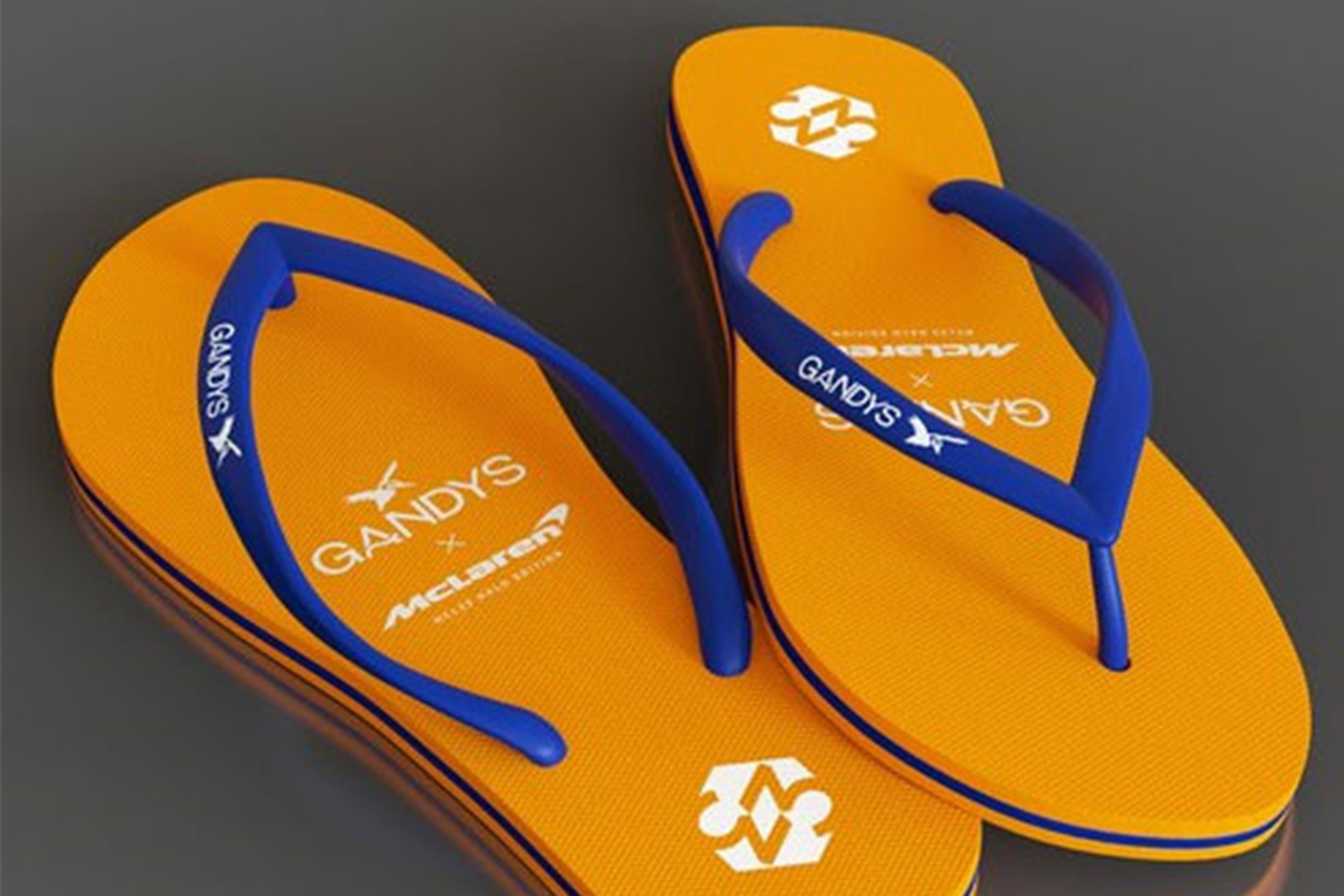
Not only are these official McLaren thongs an excellent parody of Formula 1’s controversial ‘halo’ safety device, but they do so in the name of charity. Forty bucks might seem a bit steep for a humble pair of Japanese safety boots, but 100 percent of profits from these McLaren orange beauties foes straight to Gandys Foundation, meaning your naked tootsies will be helping kids find safe shelter around the world. No, this is not the April edition, before you check. mclarenstore.com
Castrol Magnatec Bio-synthetic, $55.99

Oil. Put it in your engine and hopefully everything will stay nice and slippery and happy. It’s difficult to get excited about the stuff, though, unless it’s the sort that gets rubbed into your back on a beach in Bali. But Castrol has now launched its Bio-Synthetic range that will make you a little greener, not browner. Formulated using 25 percent plant oil, the newest addition to the Magnatec range is less dependent on fossil reserves and is even carbon neutral. Not recommended for salads or tanning. castrol.com.au/magnatec
BMW 2002 T-Shirt, $36.50
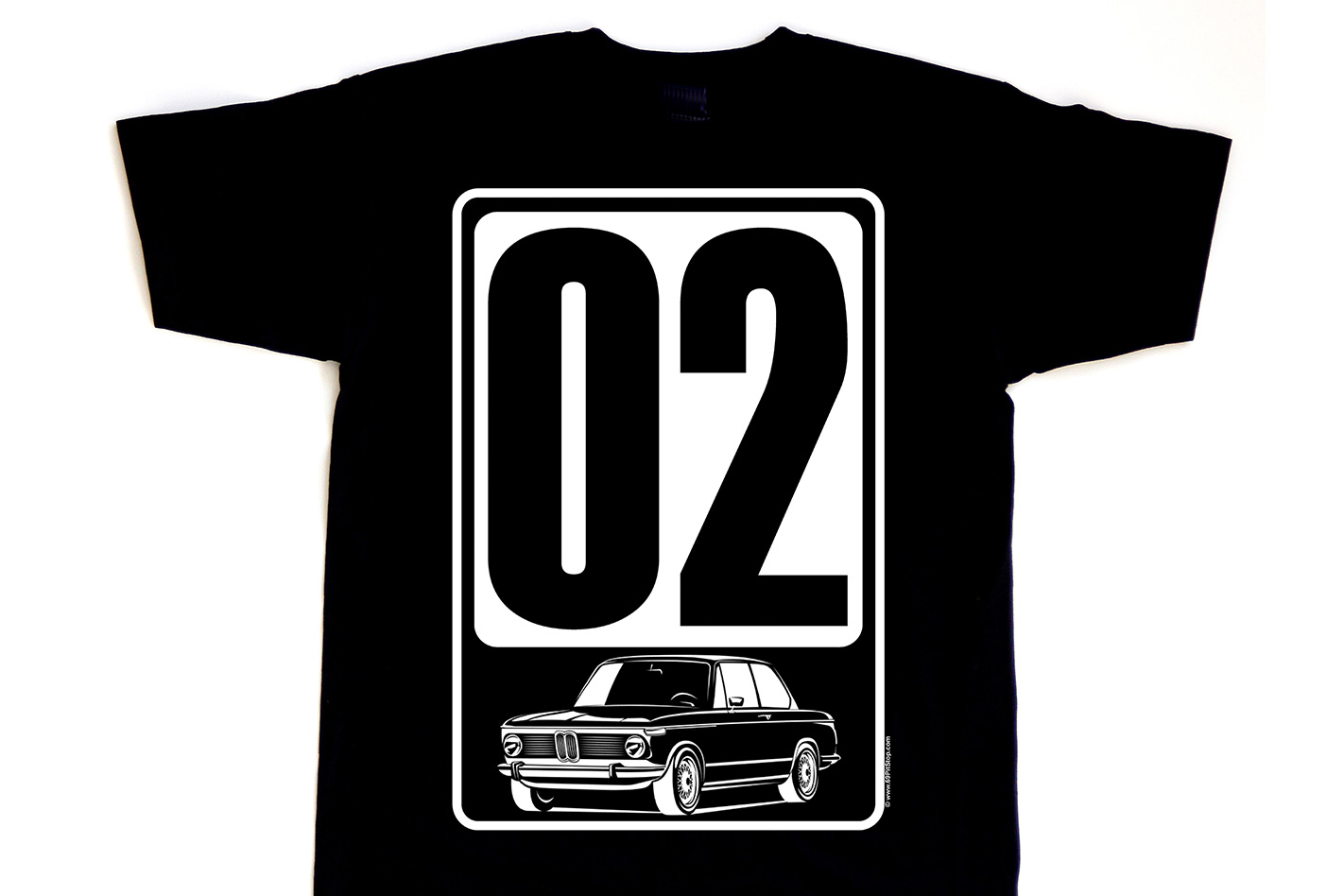
If you’ve ever driven a BMW ‘02’ you might wonder what all the fuss is about. Full throttle in the iconic Turbo resulted in about 30 minutes of lag, followed by a nanosecond of boost which preceded a decent engine explosion if you didn’t lift in time. The 2002 tii was worse, with its Pierburg injection system ensuring the engine didn’t run more often than it did. And yet … you just can’t help but love the sports sedan that fathered the 3 Series and all of its wondrous variants. Salute the magic model with this cool T. 69pitstop.com
Forever 21 Honda Racing collection, from $16.50

We love vintage motoring gear but sourcing it often meant running the gauntlet of musty op-shops and fighting hairy hipsters for all the good stuff, until now. Partnering with Honda, ice-cool label Forever 21 has created this range of retro apparel that offers the colourful and iconic Honda designs of the 1980s and 1990s without having to fork out extortionate prices for something that has already been worn by 15 other people. forever21.com
Watches
Ressence Type 1, $22,500
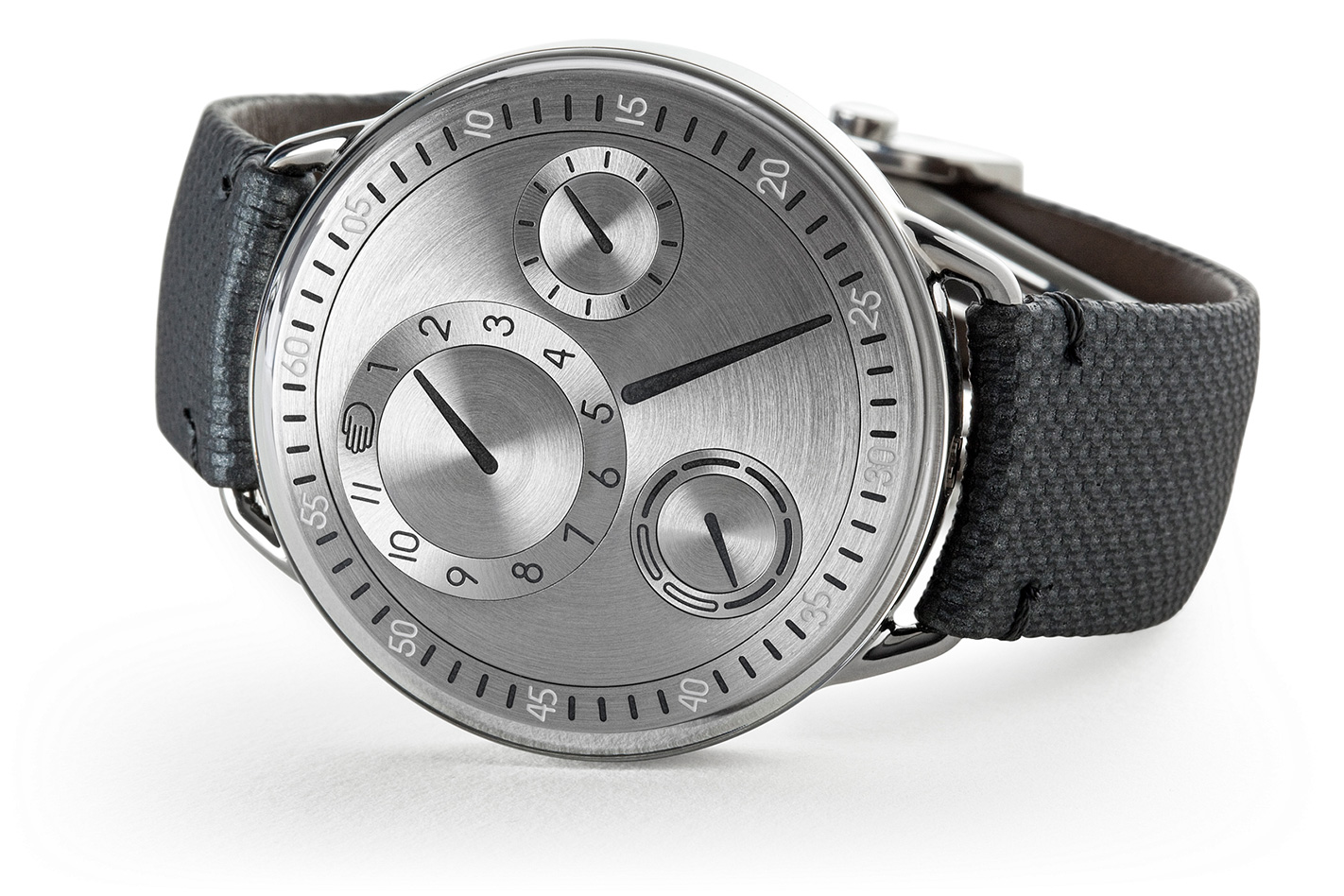
Trust the Belgians to deconstruct and reinvent something as traditional as telling the time. Benoit Mintiens is the founder and creative mind behind Ressence, an Antwerp-based watchmaker hell-bent on replacing conventional horological hands with rotating discs. This is the Type 1. It has a patented automatic movement driving a main disc for minutes, with three satellite sub-dials for hours, seconds and day that maintain their orientation while orbiting in unison. The watch has a unique case-back winder and no crown for a distinctively clean look. Its curved sapphire crystal blends into the 42mm, water-resistant titanium case. Five finishes are available. Mintiens – an industrial designer – penned high-speed trains, aircraft cabins, medical devices, leather goods and even hunting guns before he designed his first watch. ressencewatches.com
Classic Ride Edition Boost Watch, $190
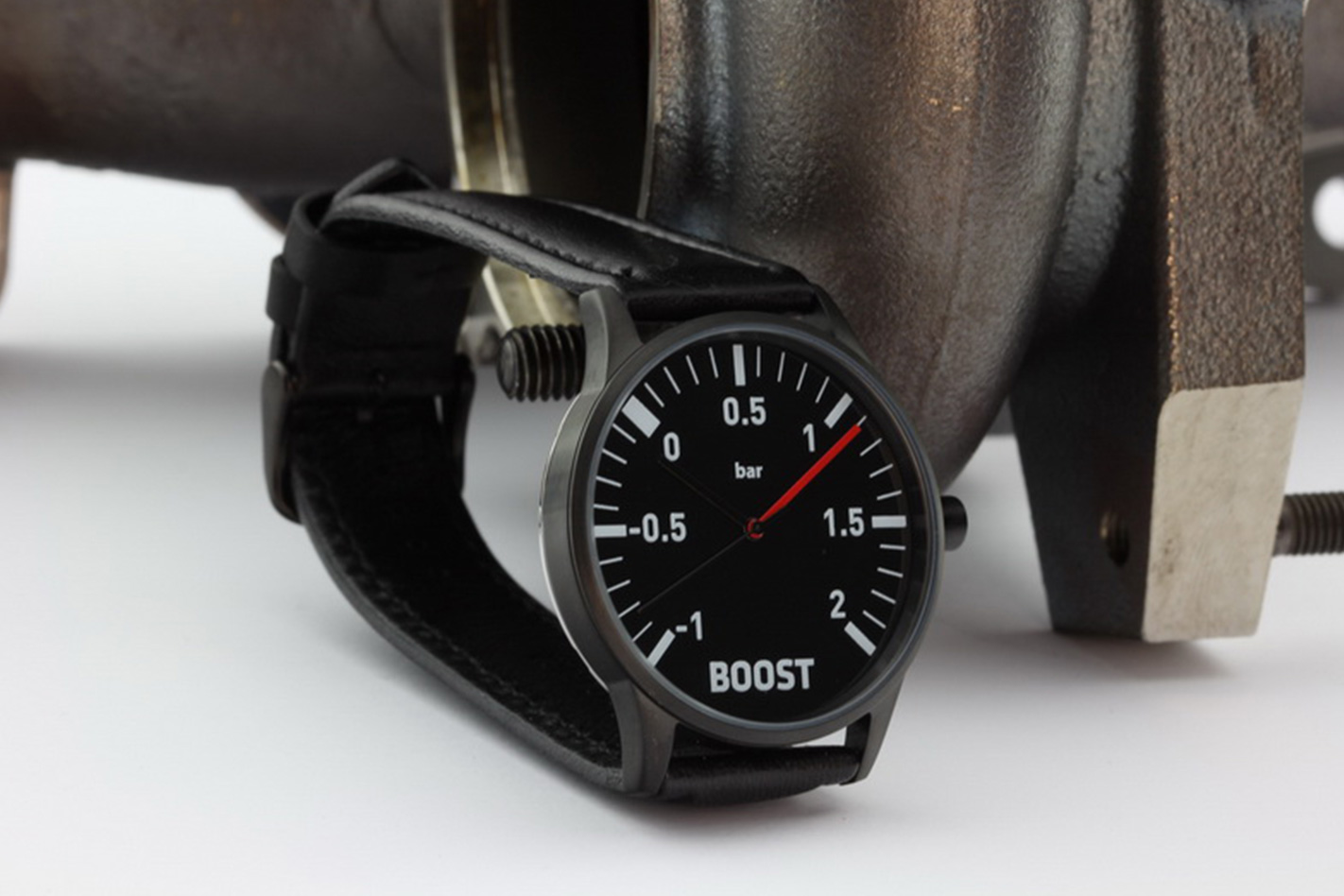
Okay, so not everybody is a watch snob. Some people just want a tool that tells the time and looks cool or represents something they like. Online outfit 69 Pit Stop specialises in accessories for petrolheads, including this wrist-borne tribute to forced induction. The eye-catching German-made timepiece isn’t the easiest thing to read with black hands on a black dial that’s designed to mimic an analogue boost gauge, but functionality seems to be of secondary importance for this conversation piece. It measures 43mm in diameter and comes with a two-year warranty. 69pitstop.com
Seiko SBDX017 Marine Master, $3200
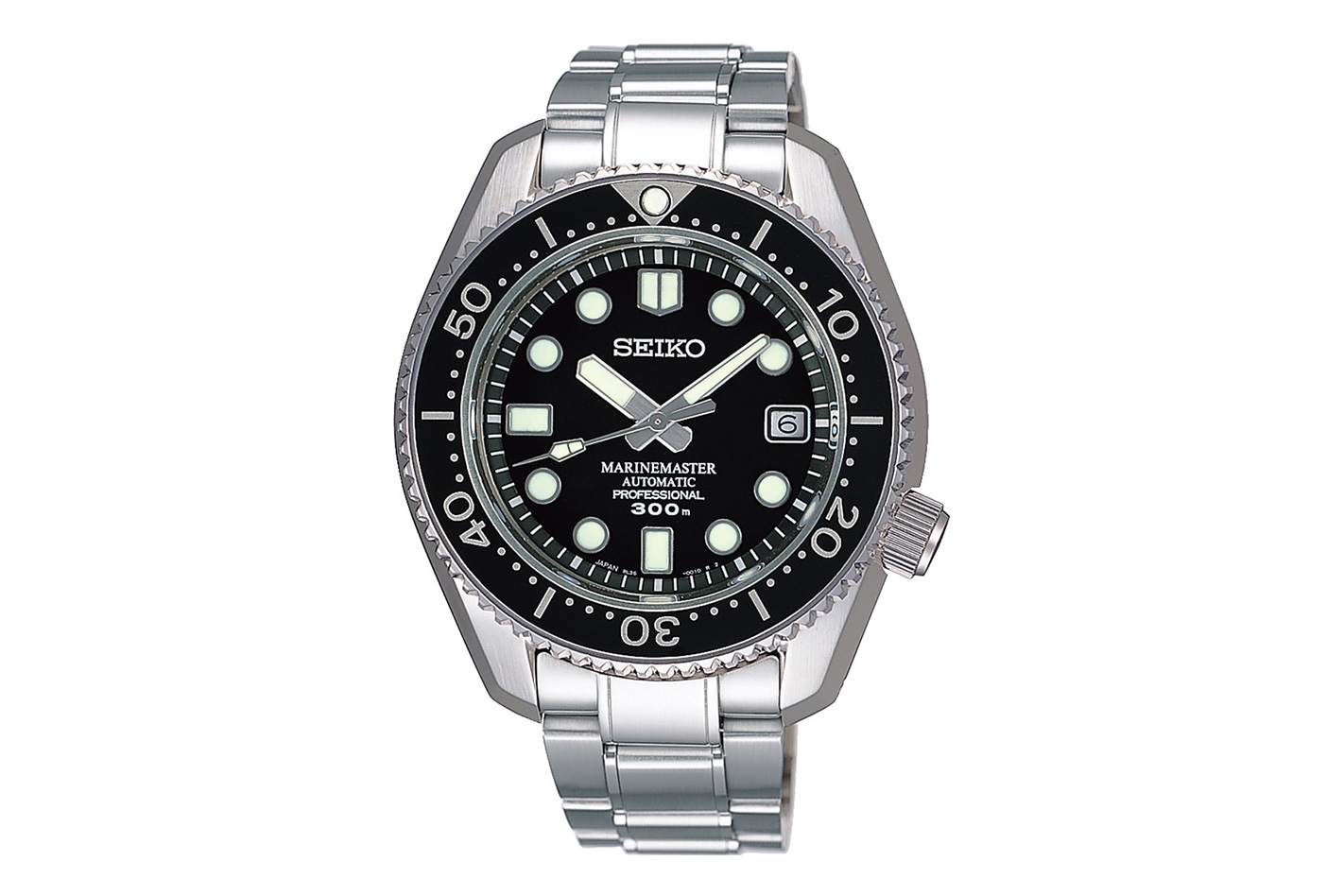
Earlier this year Seiko made the surprising decision to discontinue four of its most popular models, including the SBDX017 Marine Master, or MM300 as it is also known. Seiko has produced this particular watch for more than 15 years (originally as the SBDX001) over which time it has developed a dedicated following based on its robust simplicity. The 44mm case houses a gem of an automatic movement and Seiko’s own Hardlex mineral glass. Thankfully, stock is still relatively plentiful – for now – so nab one of these excellent dive watches before its sun finally sets. downunderwatches.com
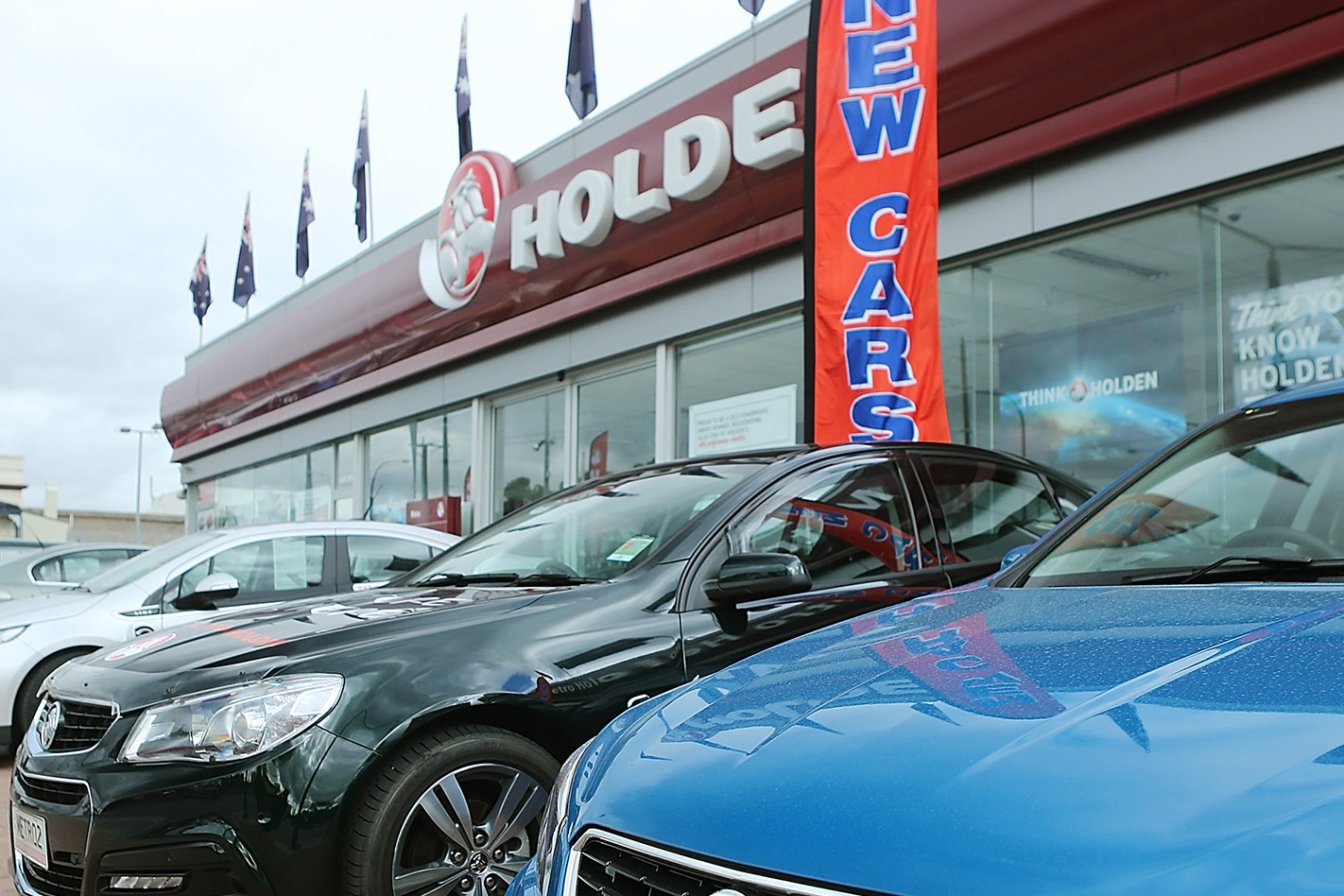
Six months after closing its Elizabeth production line, Holden is facing an intensifying battle for survival. Sales have dived, some dealers are furious and the latest round of departures has reshuffled the executive order – again.
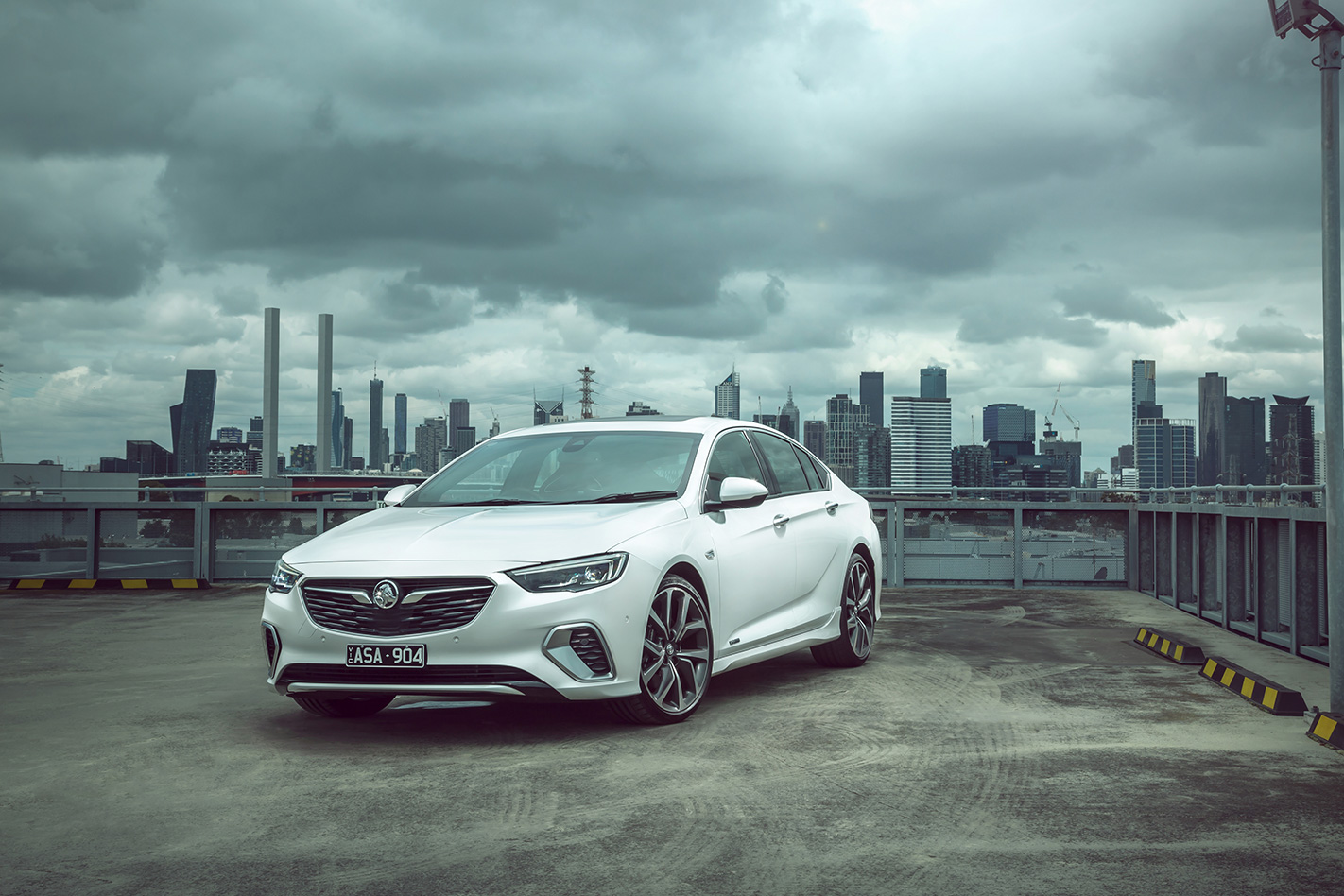
The shift from local manufacturer to full importer has been punishing, highlighting the poor health of the brand; Holden sold more imported cars in the early 2000s than it did in 2017, the year when imports became its sole focus. Discounting has been the solution to clear excess stock.
The plight of Holden is unlikely to be high on the radar of GM CEO Mary Barra, who is heavily focused on China and America, where almost 80 percent of the automotive giant’s cars are sold.
Local boss Mark Bernhard is under intense pressure, prompting meetings with analysts and key dealers to formulate a fresh plan.
Holden denies it is going anywhere, emphasising it has “great backing from GM” and that the company is investing heavily in ride-share service Maven, telematics system OnStar and $150 million in dealer updates.

The man in charge of the Asia-Pacific region since late last year, Barry Engle, visited Australia earlier this year and claimed he is “confident in our ability to turn the business around”.
Bernhard, meanwhile, remains steadfast and determined: “We are reinventing one of the longest-running companies in Australia and, in many ways, we’re in unchartered territory.”
BY THE NUMBERS
4.8% – Holden’s record low market share in March
From its worst-ever sales result in February, Holden sank to a record low market share in March. The 4.8 percent figure was a mere shadow of the 21.6 peak in 2002, the last time Holden was the top-selling brand. The March result saw Holden finish the monthly sales race in 10th, outdone by the likes of Volkswagen, Honda and Nissan, brands that have traditionally been well behind Holden. Even Kia came within 32 cars of outselling Holden.
7 Managing directors in 10 years
Current boss Mark Bernhard has been in post for almost three years, but executive positions at Holden have been a revolving door for the last decade. From sales and marketing to MDs, there have been more than 20 shifts in executive roles. Recently, Holden’s marketing director left the company, replaced by the head of Holden New Zealand, Kristian Aquilina. Ex-Telstra executive Peter Jamieson also departed the newly created position of director of customer experience. Holden also reappointed Peter Keley to the role of sales director following a sabbatical working on the upcoming OnStar rollout.
4 Major right-hand-drive markets GM has exited
In recent years General Motors has retreated from Europe, as well as key right-hand-drive markets, including Japan and the UK. Last year it also exited India and South Africa – sapping crucial volume that once used to justify right-hook investments within the GM portfolio.

78 Average sales per dealer
In the first quarter of 2018 the average Holden dealer shifted just 78 new cars, well down on the industry average; the average Toyota dealer moved 255 new cars, with Mercedes-Benz dealers shifting 170. As well as low sales Holden has the the second biggest dealer network in the country – outdone only by Toyota, compounding the problem. Despite the poor numbers Holden says there are no plans to further cull the network, with efforts instead focused on reviving sales.
7 – The number of brands GM has folded or sold since 2000
General Motors has had no qualms killing off brands over the past 20 years, including ones with histories as rich and treasured as Holden. Saab, Hummer, Saturn, Pontiac and Oldsmobile have all been consigned to the GM scrapheap (some as a result of the culling following bankruptcy), while grand plans for taking Chevrolet global have also been shelved, consigning it predominantly to America and parts of Asia. In 2017, GM also sold its European brands Opel and Vauxhall, two that were part of its stables since 1931 – the same year Holden came under full ownership of the former top-selling car maker.
IS AUSTRALIA really the lucky country? The land Down Under certainly has it pretty good in quality of life terms, but one thing our roads have always been short on is the presence of truly elite hypercars.
It’s a miniscule criticism in the scheme of things, but it’s a fact that grates with some Australian car enthusiasts, especially those who have watched the changing of the guard at the top of the automotive pyramid and the change in terminology from supercar to hypercar.
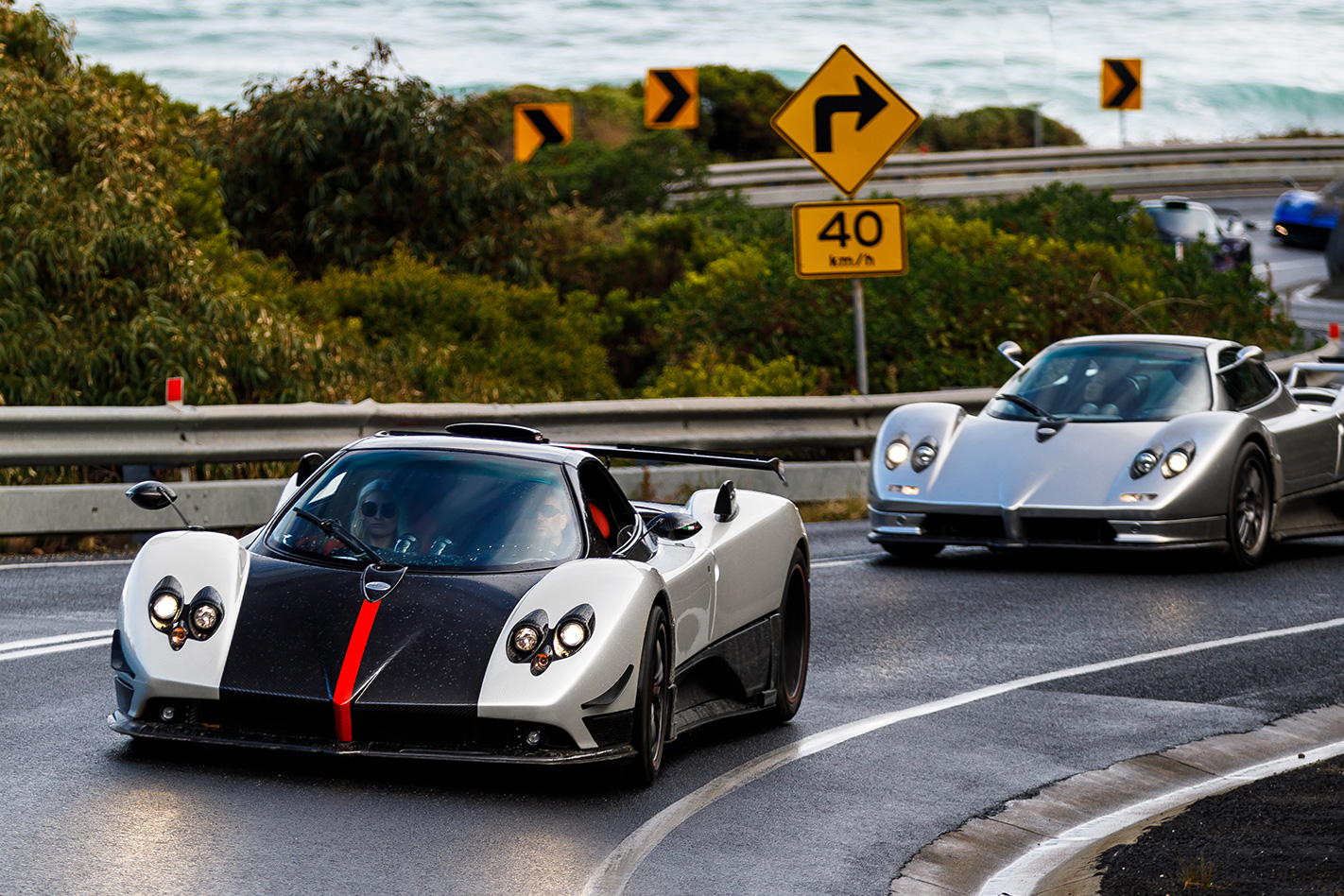
Top tier supercars are thin on the ground for a variety of reasons including limited supply, strict ADR requirements and sheer prohibitive expense, especially once local taxes are taken into account. These factors and others have meant that exotic machinery from car makers like Pagani and Koenigsegg have never cut through in number, but that could be about to change with both manufacturers securing local distribution through dealerships in Melbourne over the past few months.
To coincide with the Australian launch of Pagani in partnership with Zagame Automotive, the Modena-based factory planned a visit to Australia for a group of Pagani owners and their cars. It’s called a Pagani Raduno and it took place in the week after the Australian Grand Prix.
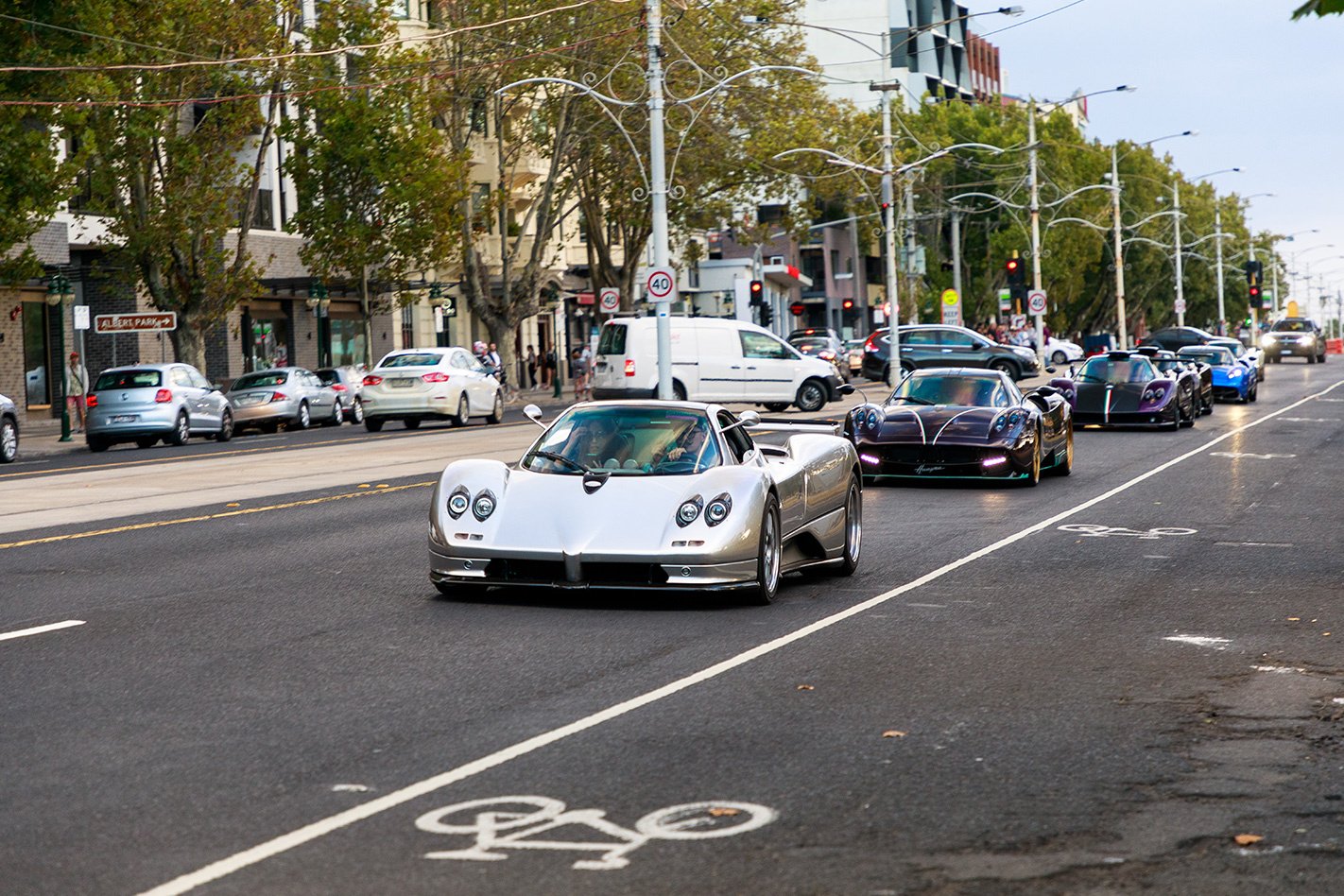
These Radunos, or rallies, are usually held overseas in places like Tuscany, Tokyo and certain cities in the United States, but the timing of the dealership opening and the start of the Grand Prix season in Melbourne was too good an opportunity to pass up.
So Melbourne played host to seven Paganis over the course of a week, with the owners of these multi-million dollar Zondas and Huayras flying in to see what Australia has to offer by way of a road trip.
A social media rumour mill fuelled by clandestine images of Zondas arriving via air freight, was fizzing with theories about why the cars were arriving on our soil.
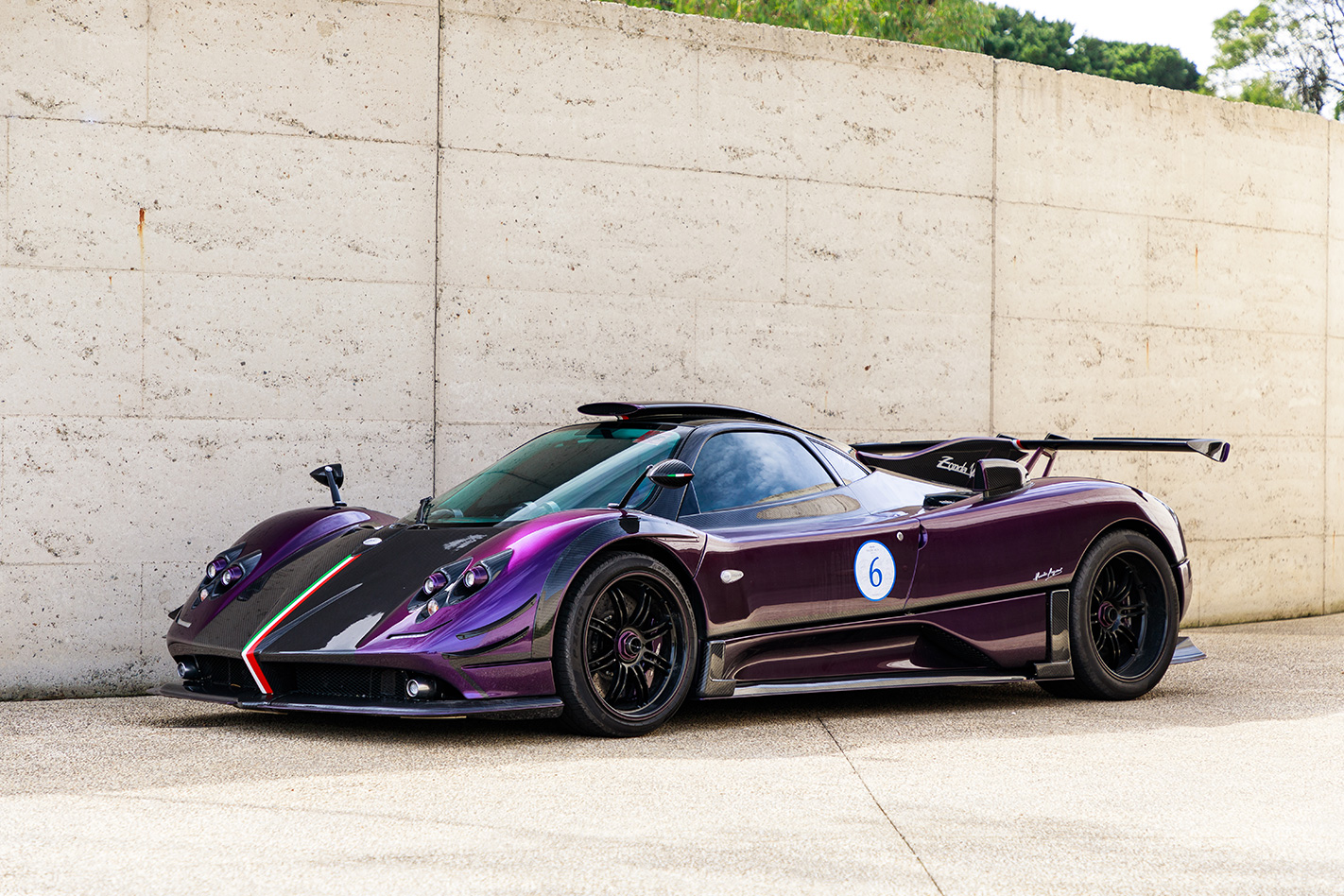
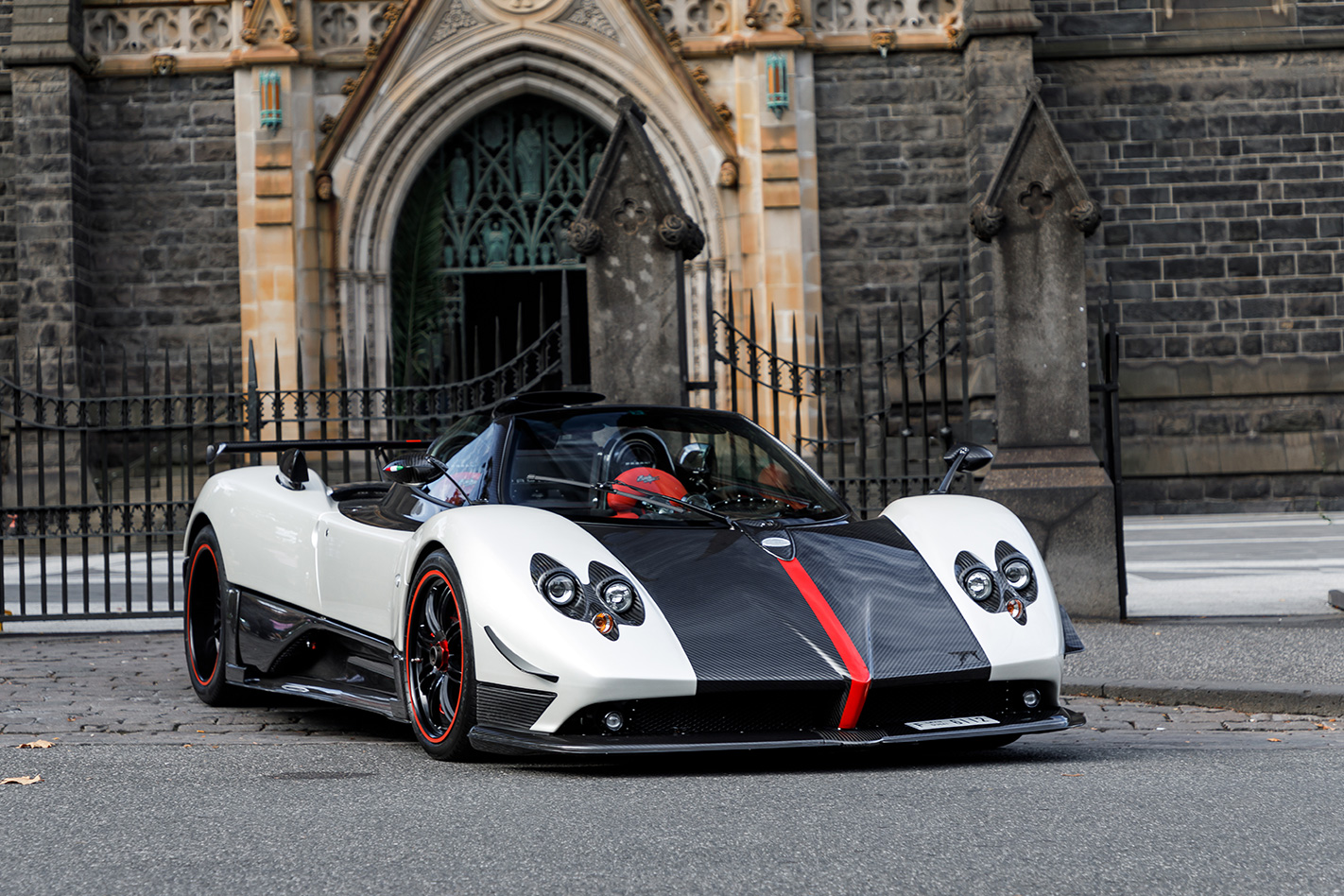
The first to land was the Zonda Viola 760RS all the way from the UK, followed in quick succession by a Zonda Cinque Roadster from Dubai, two bespoke Huayras, the famously crashed and reimagined Zonda Fantasma Evo and a stock-standard original Zonda S 7.3, which had just been restored by Pagani Rinascimento to original specification.
Turns out a pretty epic route was planned, encapsulating a variety of Victoria’s (and Australia’s) most stunning scenery.
DAY ONE
Beginning in the southwest of the state at the iconic Twelve Apostles, Pagani guests were flown to the Great Ocean Road, conveniently skipping the three-hour long boredom-inducing freeway jaunt down the A1.
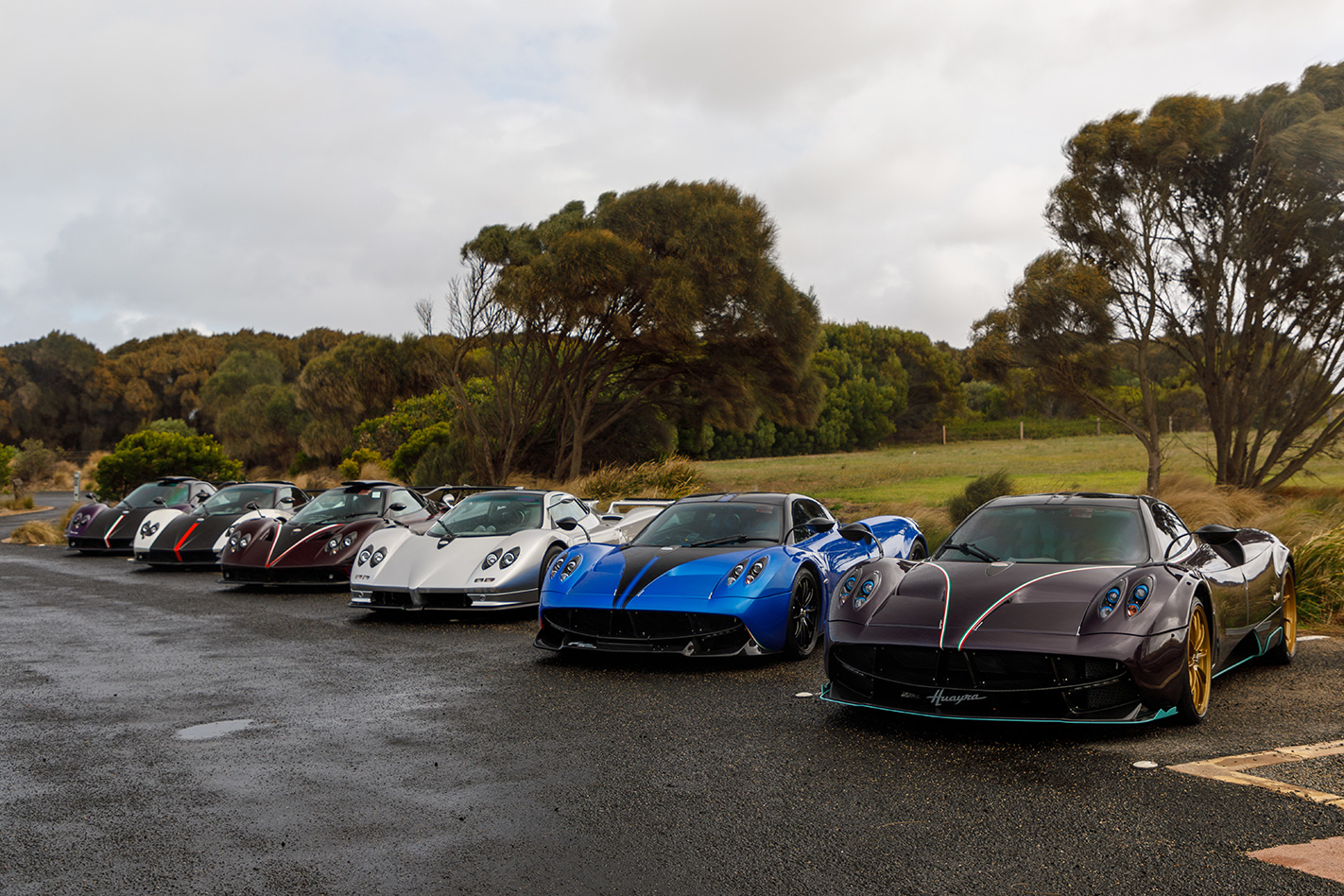
After seeing what is left of the Apostles, the convoy fired up its sextet of V12s ready to embark on the rally.
The group’s first experience of Victoria played out in almost comical fashion. Wind and rain threatened to discourage owners throughout the morning, and if that wasn’t enough to deter – roadworks slowed progress within the first few kilometres of the drive route.
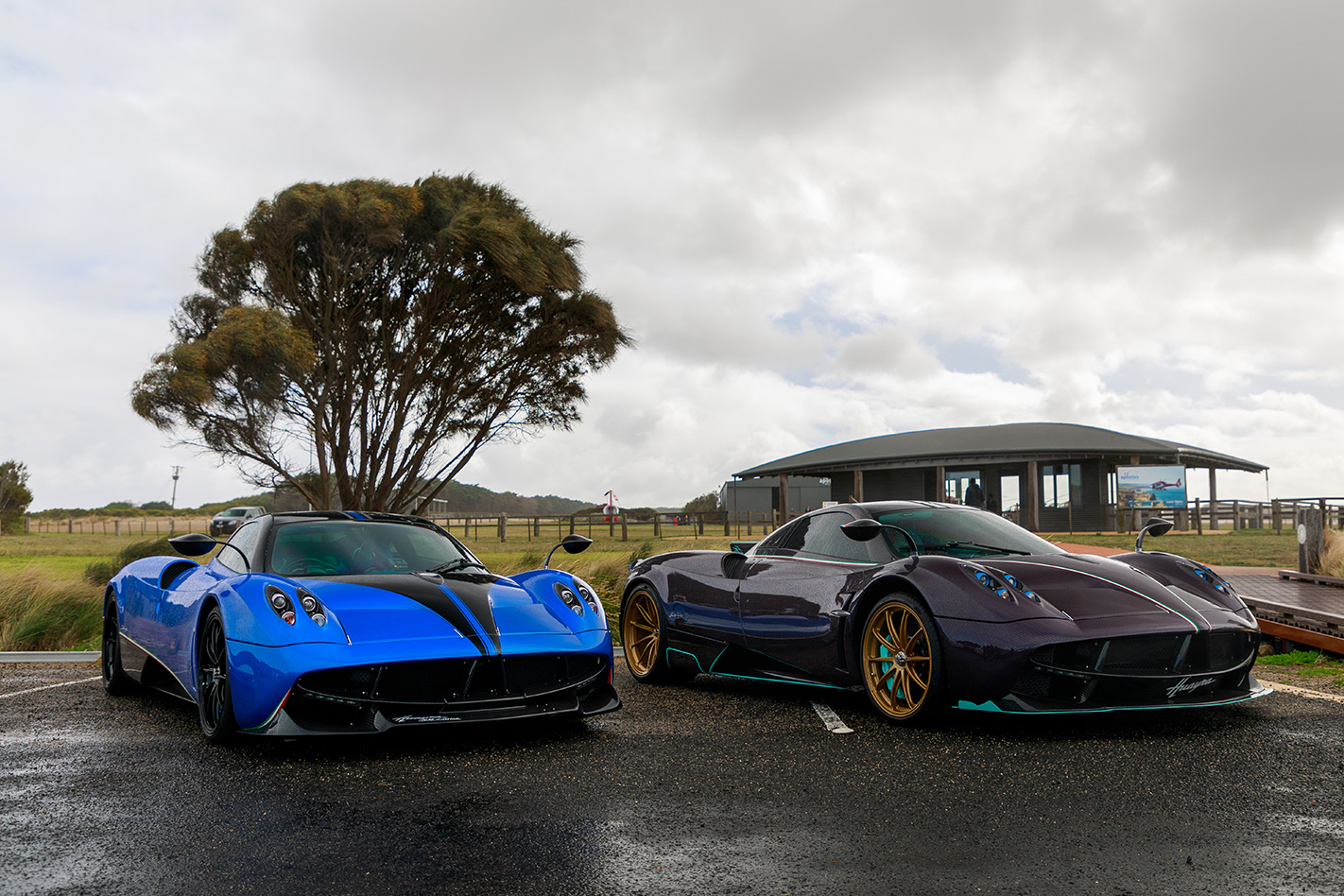
The convoy was forced to precariously navigate gravel roads, keeping a sizeable distance from one another so as not to send any loose stones through windscreens or painstakingly handcrafted carbon bodywork.
On the other side of the roadworks the group dropped hammer, taking full advantage of the quiet Monday morning roads. Expansive valley landscapes offered lush green views, even in Autumn, before the tarmac tightened into the Otways with the forest’s canopy whizzing by overhead.
Apollo Bay was the first major town on the route. A fuel stop gave station attendants the surprise of their lives, with more than $25m worth of cars rolling through nonchalantly.
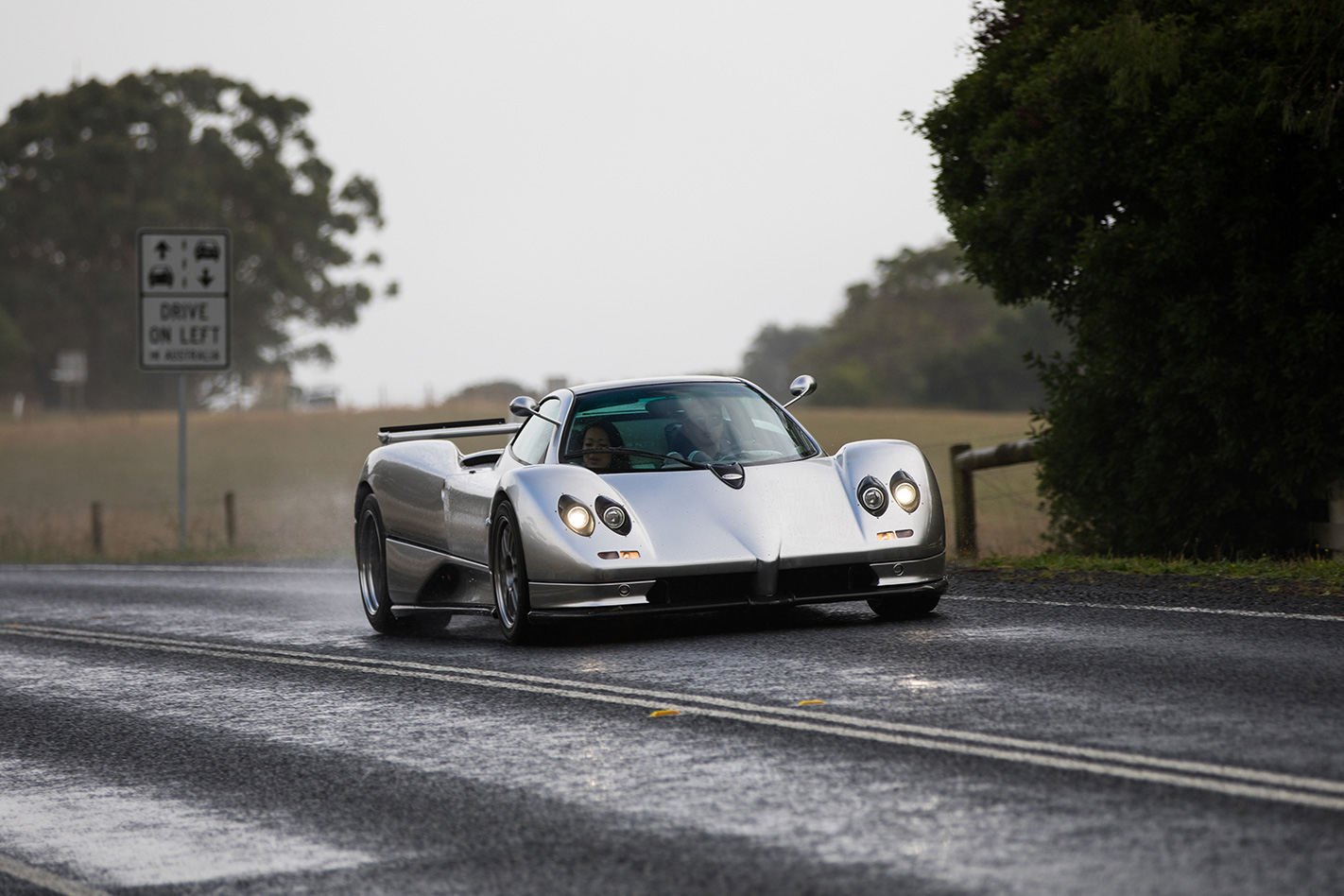
The amount of attention one Pagani receives is wild, let alone an entire convoy. It’s not uncommon to see people whip out their camera phone whenever an exotic car is spotted, but rarely do you see cars doubling back after passing one to actively chase it down.
With the cars fuelled up, it was time to hustle back up the coast, with the convoy taking in the picturesque ocean views and bouncing exhaust noises off the cliff faces.
Lorne was the next stop on the route as the convoy ventured inland to experience Australian history first-hand with a display of Aboriginal song and dance.
https://www.instagram.com/p/Bg5zMTAHm0y/
From there, the group passed through Bells Beach during the Rip Curl Pro surf competition for a photo opportunity then onwards to a self-serve car wash to spray off dust and grime from the day. The cars were then tucked away in Torquay for the night, ahead of another action-packed day.
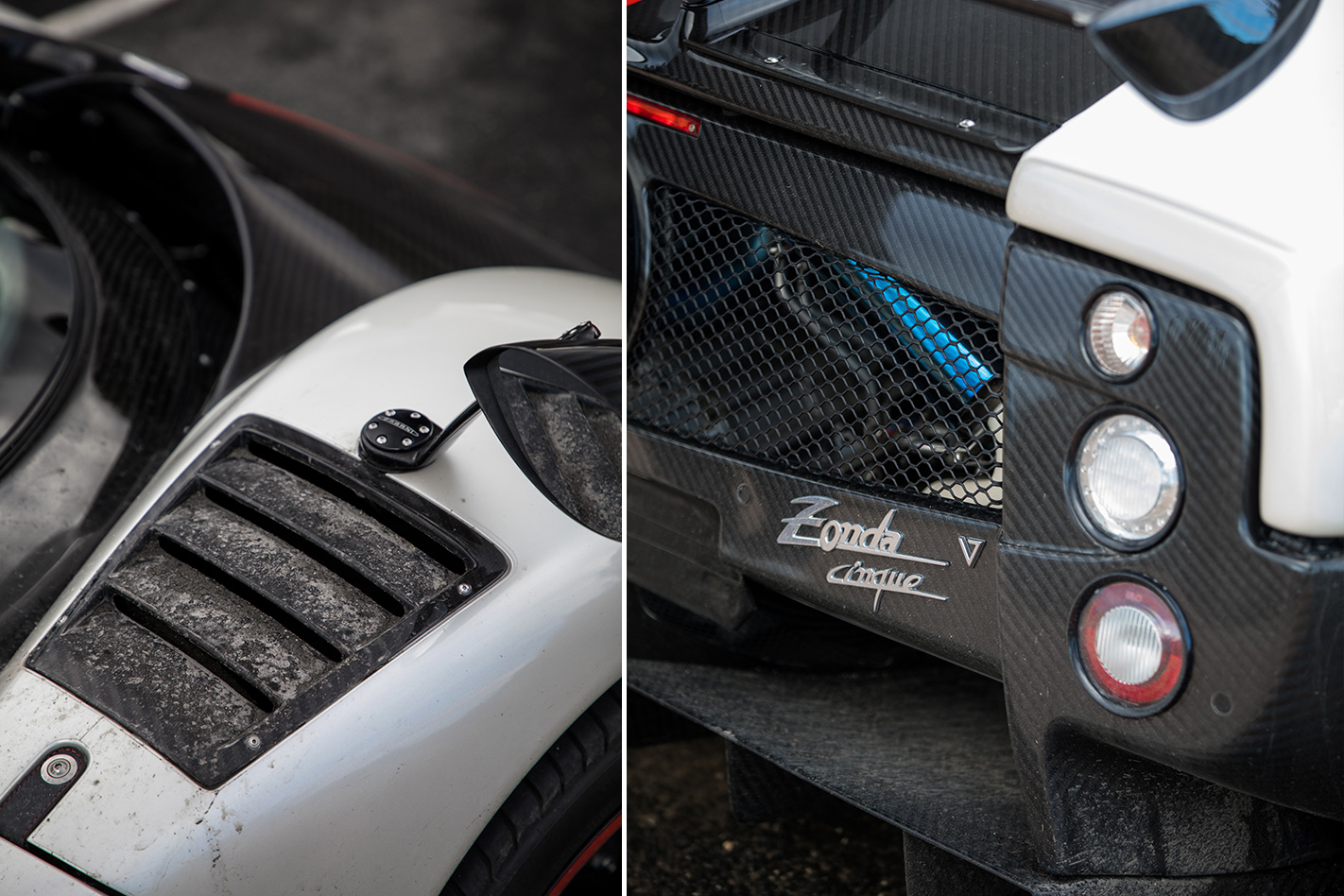
DAY TWO
At the same time many of Torquay’s locals were waking up for an early-morning surf, a breakaway group comprised of the Zonda Fantasma Evo, Huayra Dinastia and the Zonda Viola 760RS gathered at the boat ramp for an impromptu sunrise photoshoot.
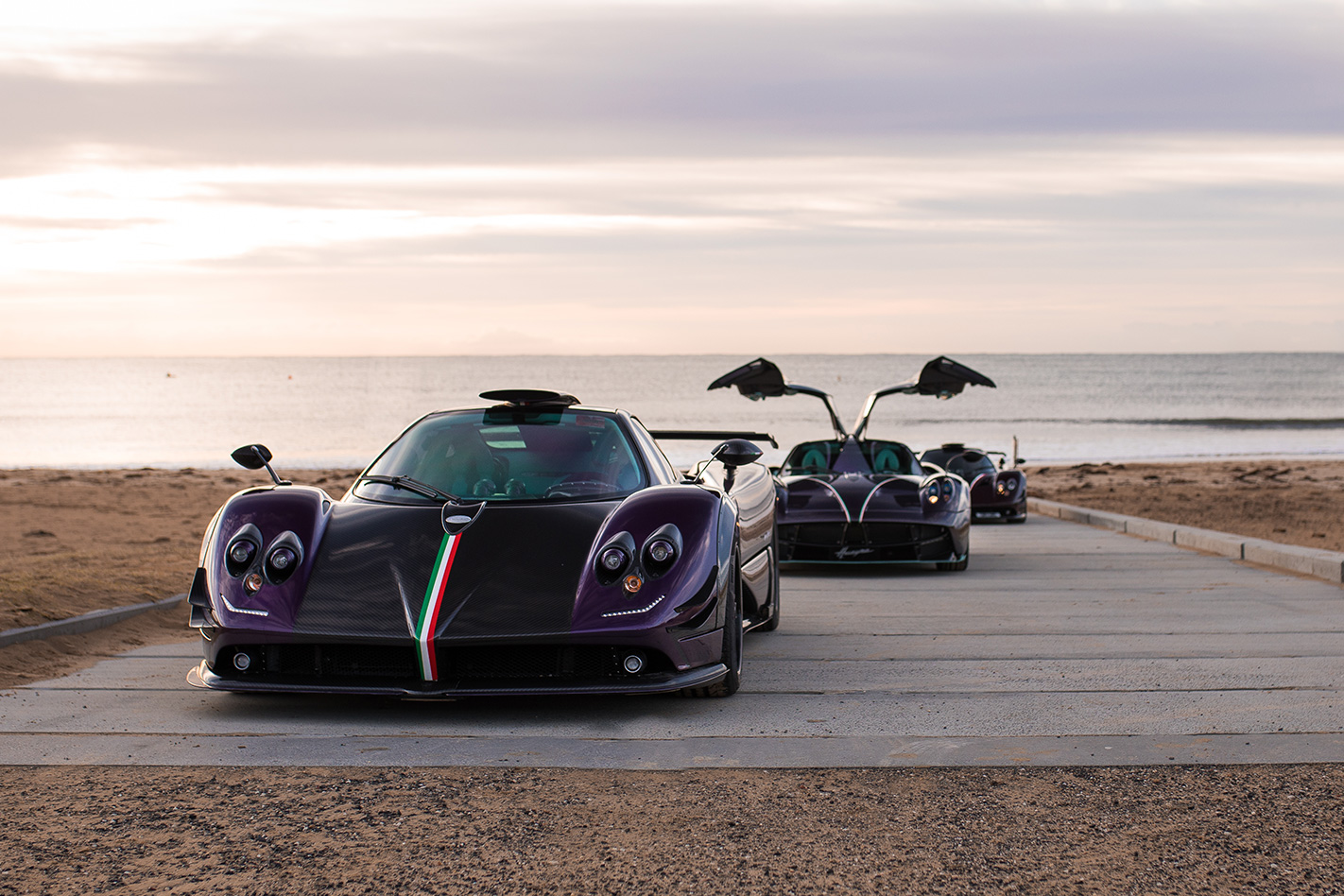
Normally on such occasions you’d attract the unwanted attention of park rangers or security, but the locals milling about were thankfully more than happy to oblige.
Having the Huayra side by side with the fan-favourite Zonda was an eye-opener, showing just how far the hypercar world has developed in recent years. Gone are the naturally aspirated Mercedes-AMG V12s from the Zondas, replaced by bi-turbo 6.0-litre units from the same company in the Huayra. Aerodynamics have also moved on, and lightweight composite materials like carbonfibre are used exclusively for the bodywork of the Huayra.
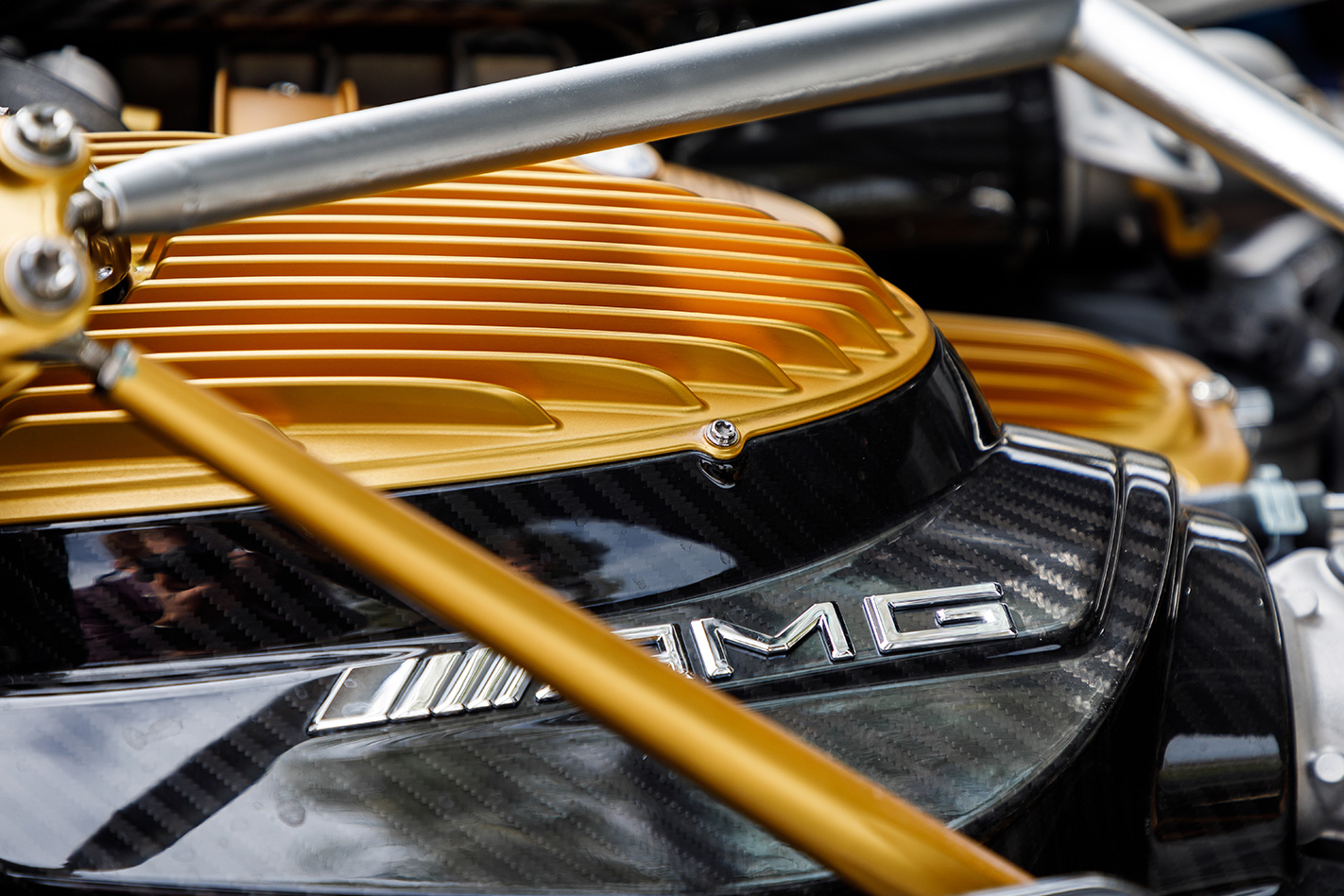
The game moves quickly, but even so there are still plenty who will stump up big bucks to order a special one-off Zonda. Just last year at the 2017 Pebble Beach Concours, Pagani unveiled the Zonda HP Barchetta – a $20m lightweight artwork of which they will sell only two. Company founder Horacio Pagani will keep a third one as a 60th birthday present to himself.
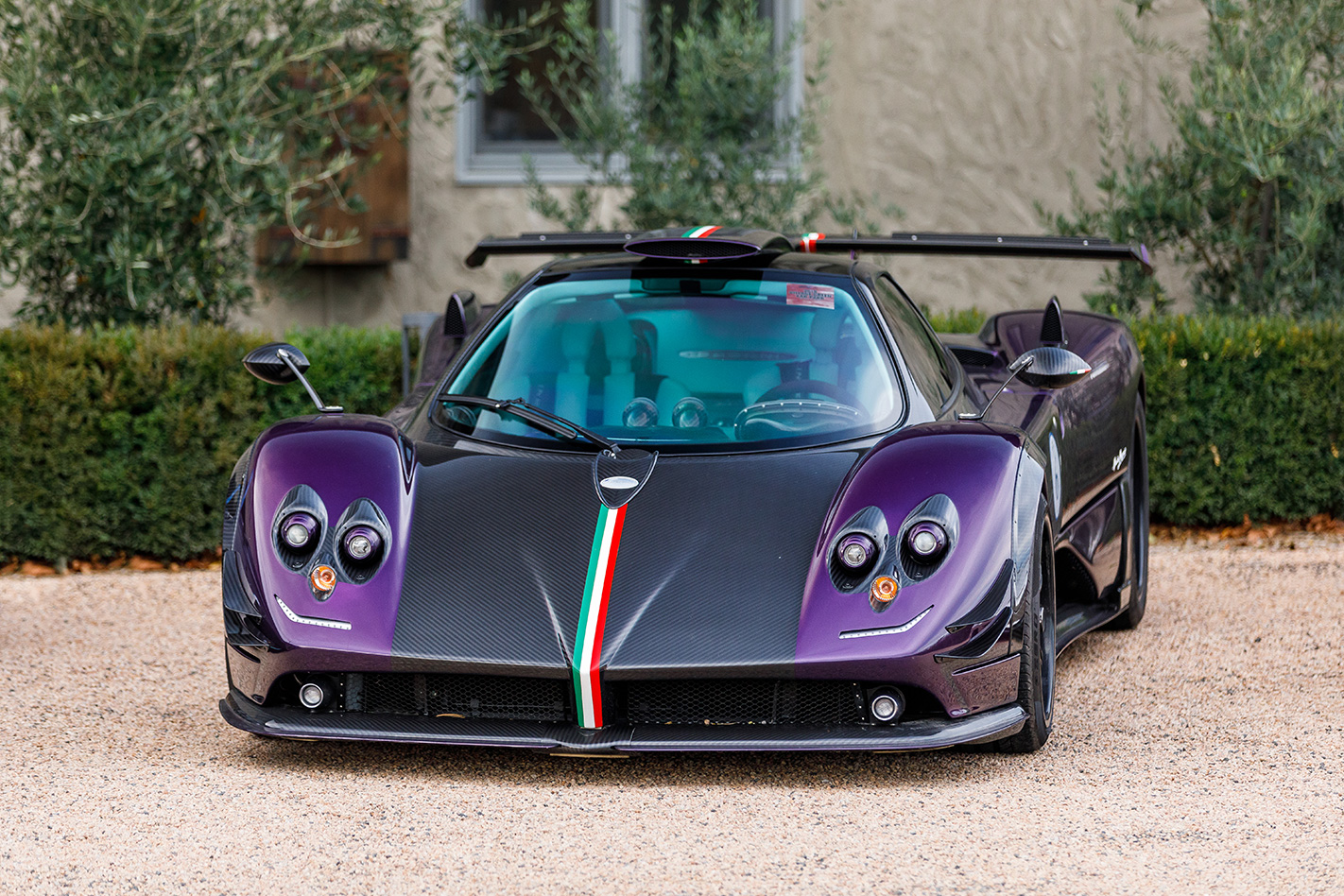
The possibilities are endless – as long as the bank account is too.
After a coffee stop, the Raduno group rolled out and headed towards Queenscliff to catch a ferry across to the Mornington Peninsula.
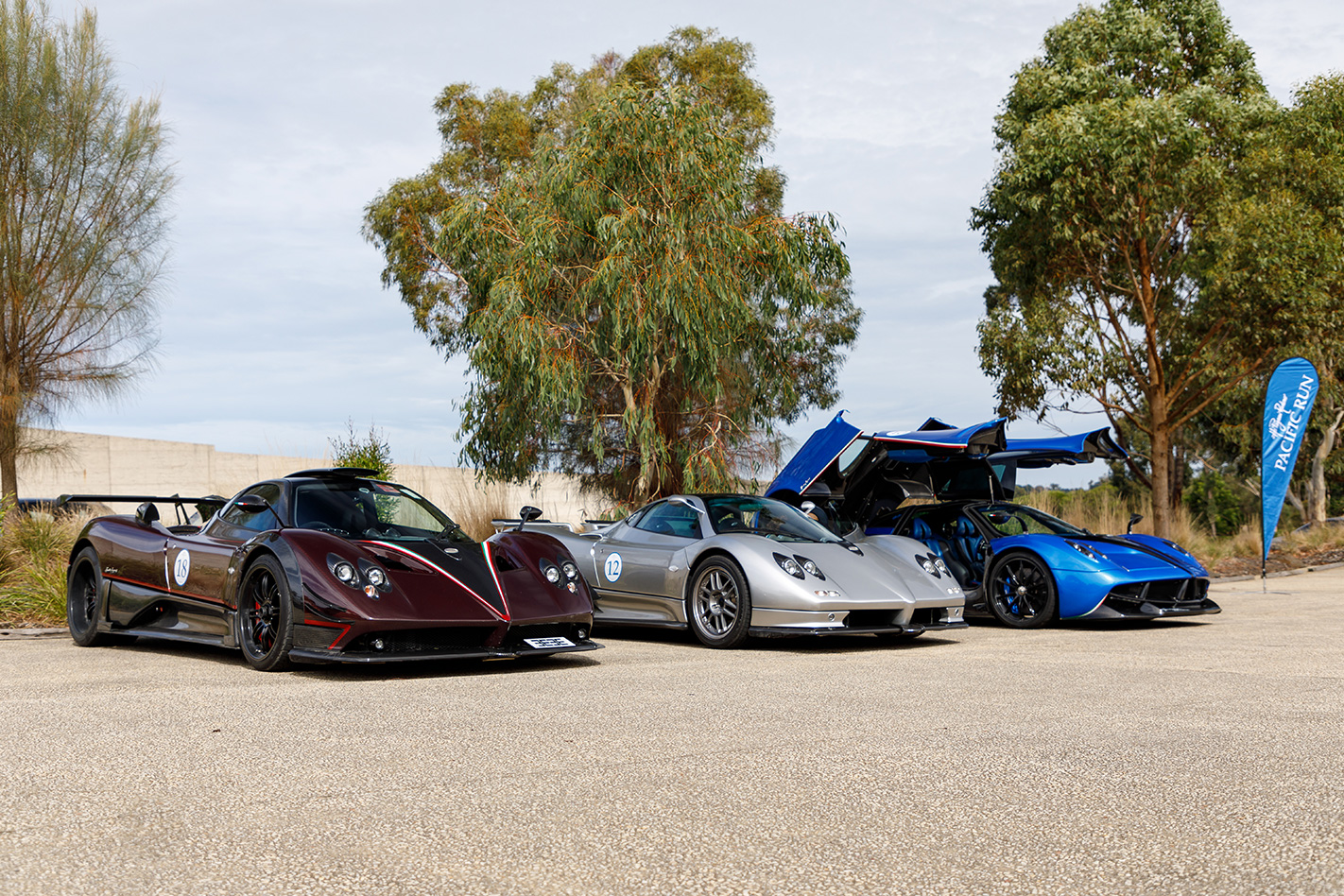
Catching the boat across Port Phillip Bay was one of the first moments where it seemed everyone could let their hair down a little. Although it was a brief one-hour sail, the Raduno crew relaxed and enjoyed letting someone else do the driving for the first time on the trip.
Grey nomads left their caravans on the lower deck to investigate what the fuss was all about, and kids were allowed to get up close and take some photos of the cars. While Pagani staff minded the cars, a few owners were on the open-air top deck checking out the dolphins that can often be seen when coming into Sorrento.
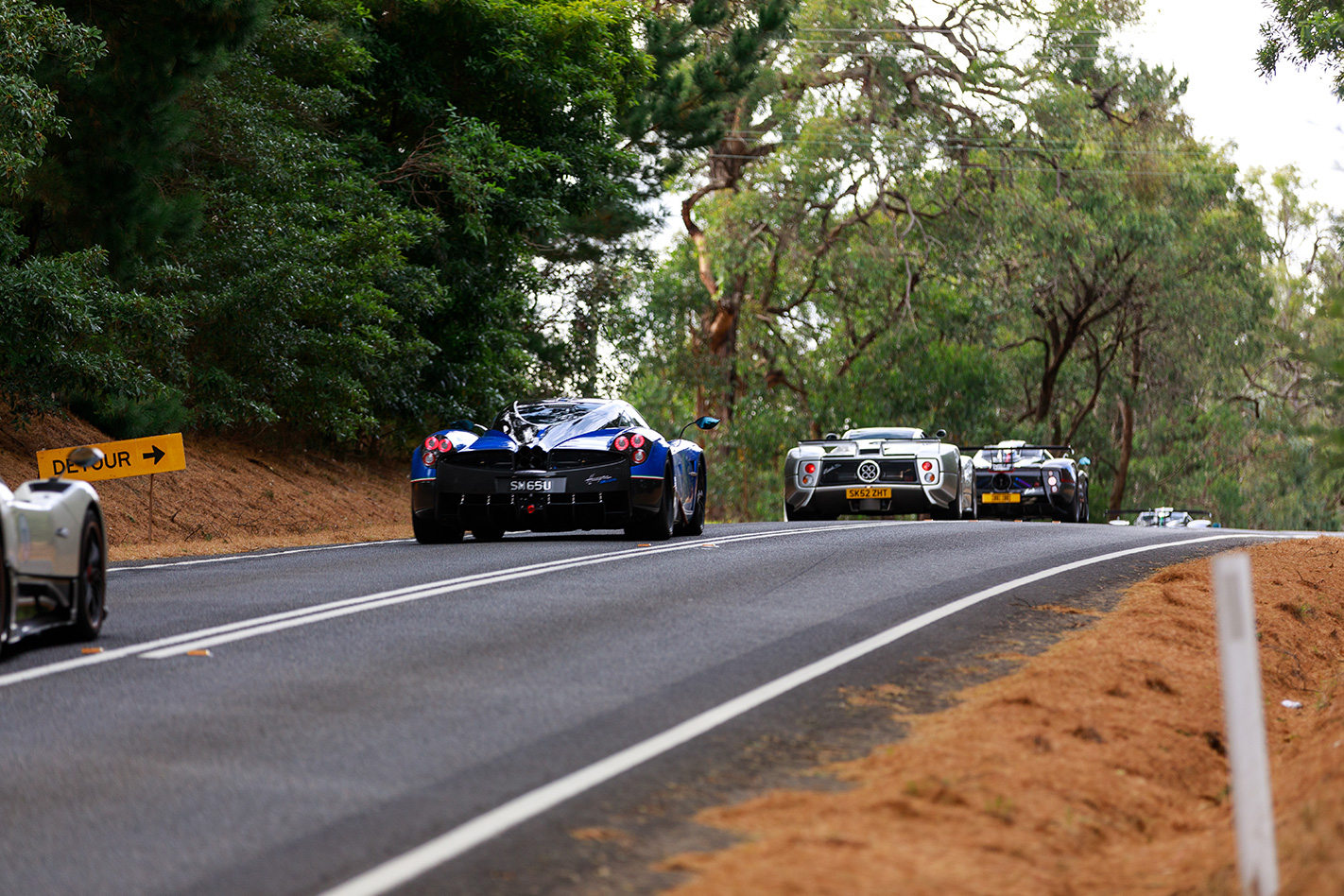
Once the ferry set-down, the run was back on. The next stop was the top of Arthur’s Seat and while some took the route going in-land – a couple of cars took the hairpin-laden climb up to the top, letting loose with a cacophony of V12 music.
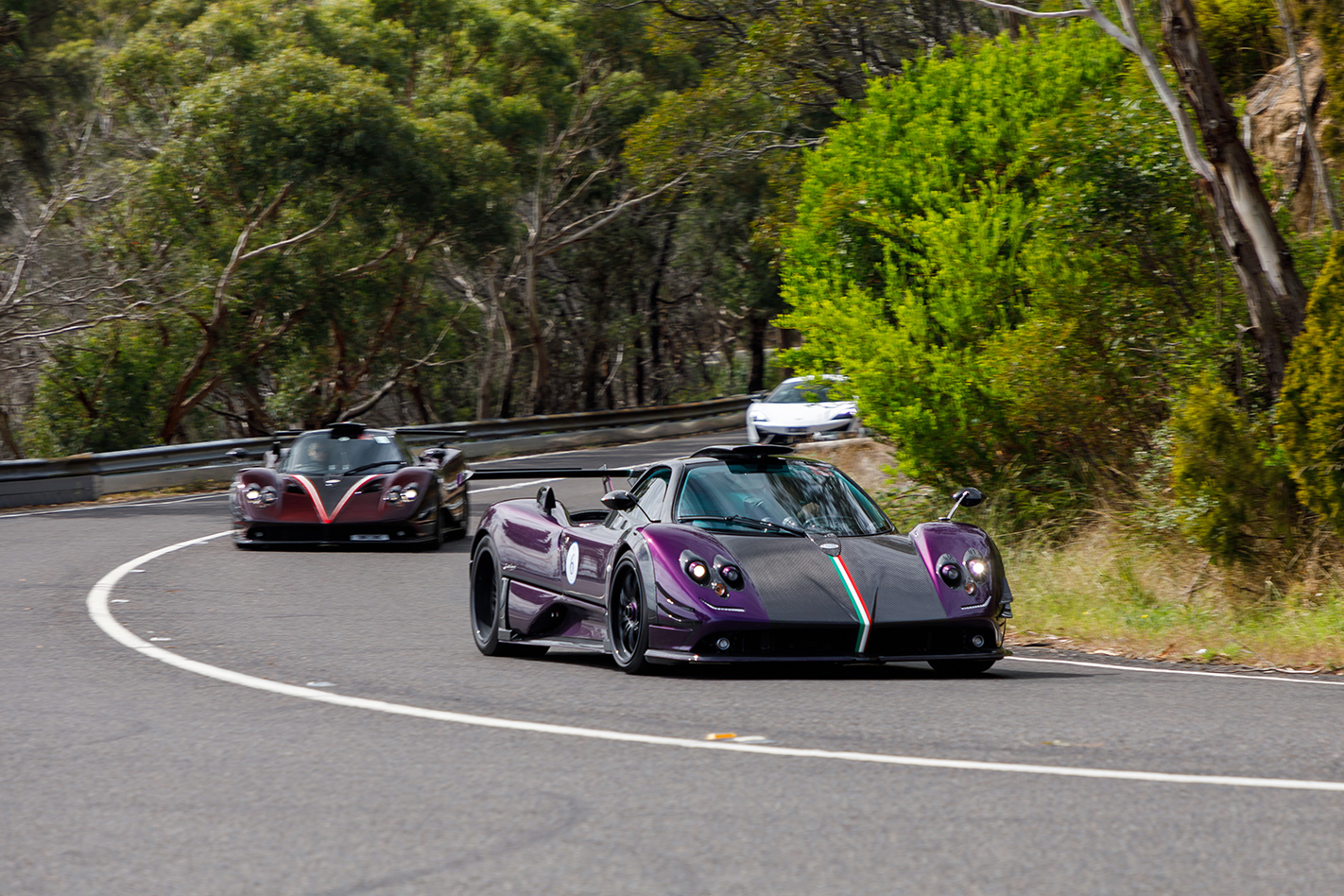
A common theme of a Raduno is the fact that it’ll always end up running behind time. It’s not a criticism of Pagani staff who ran the show – but it’s just a given that things won’t always go to plan on itineraries like this.
As such, the group ended up passing through Arthur’s Seat onto a quick lunch at a winery. From there, the convoy set into a long drive back up the Eastlink freeway toward the Yarra Valley – the playground of the final day of the Raduno.
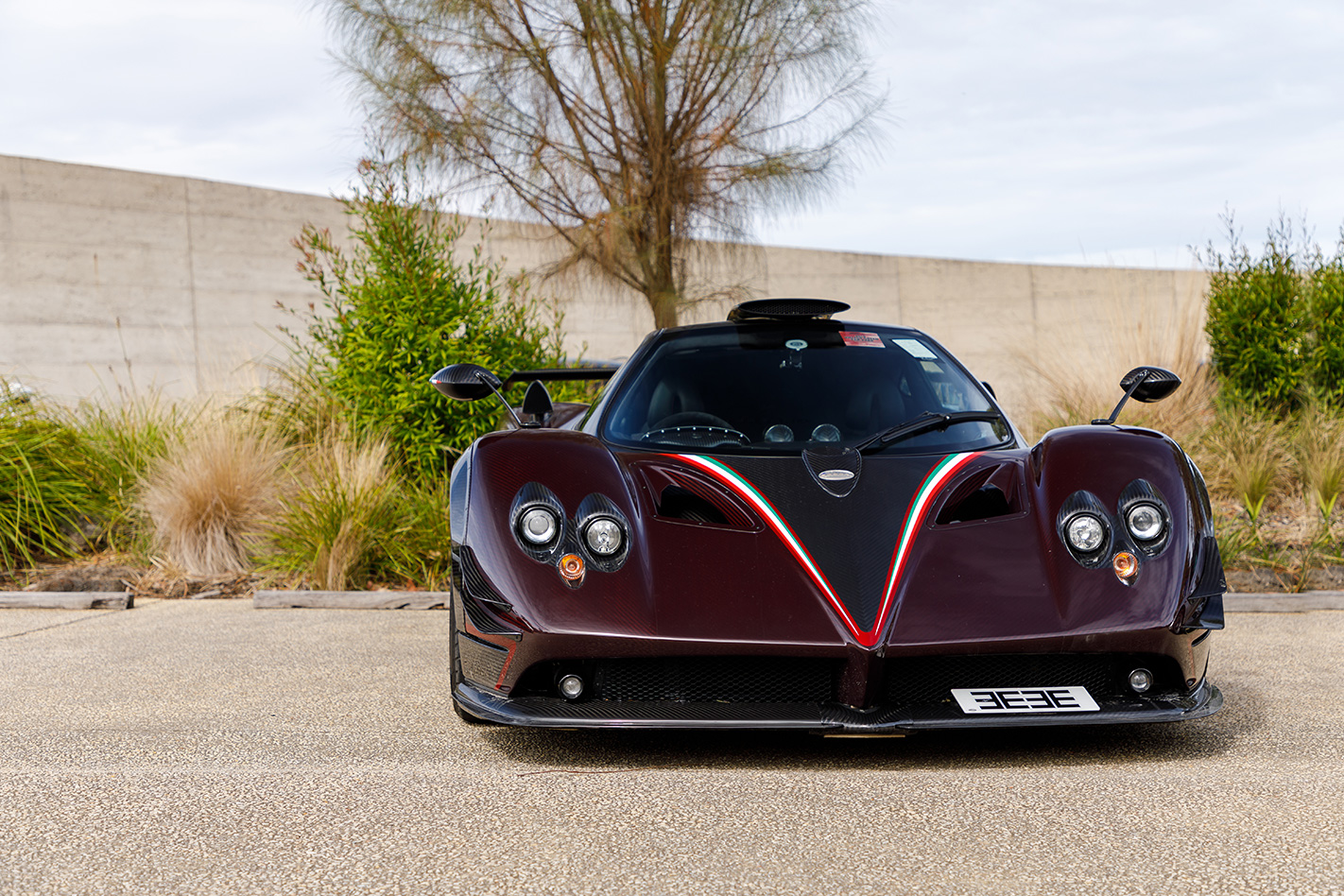
DAY THREE
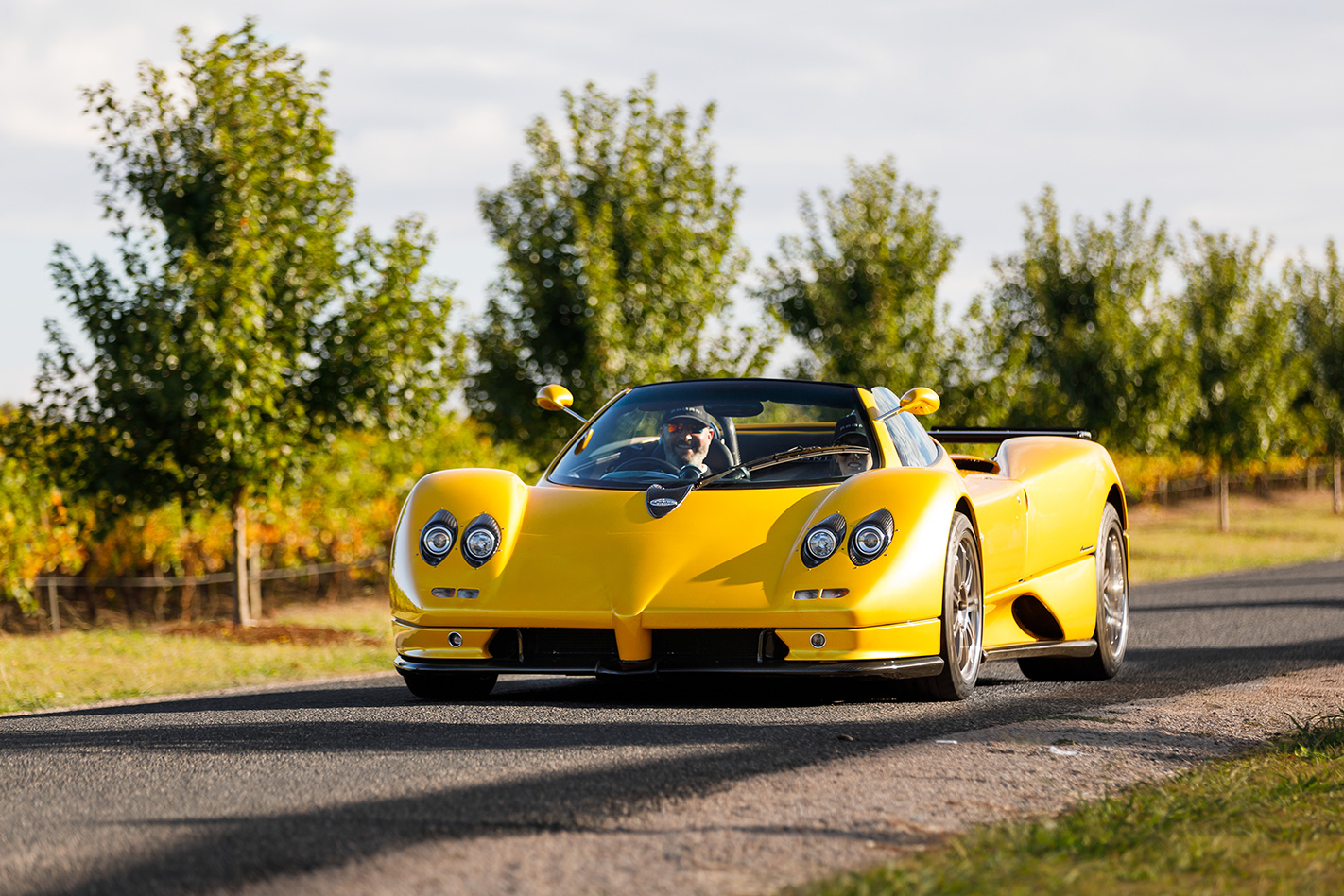
As luck would have it, Australia’s only resident Pagani – a yellow Zonda S – joined the Raduno on the final day. Not wanting to miss out on the absurdity of these hypercars roaming around Australia, the owner brought the more traditional looking Zonda down from Sydney to get involved in the final leg of the tour.
But before the entire group set off, we once again found ourselves tagging along to another sunrise video shoot along one of Victoria’s famed driving routes, the Black Spur. And as a subject to film, the recently restored silver Zonda S from Hong Kong was absolutely stunning.
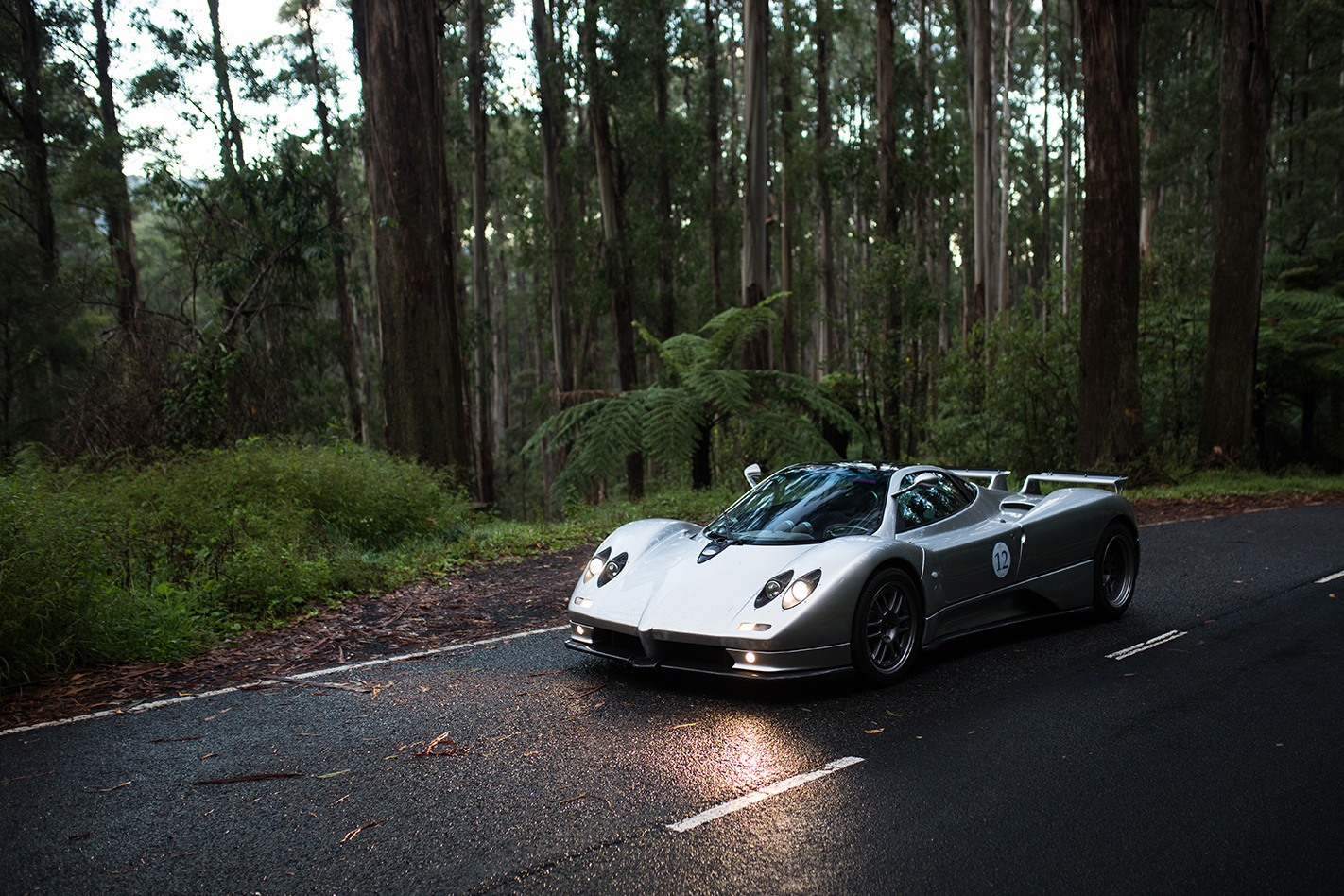
The owner of the silver Zonda also brought along the Zonda Fantasma Evo (two of his four Paganis in total) to the Australian Raduno but funnily enough ended up driving the original car more to give it a proper shakedown after the ‘Rinascimento’ restoration program. He said he enjoyed the older style, finer looks and raw power of the earlier cars.
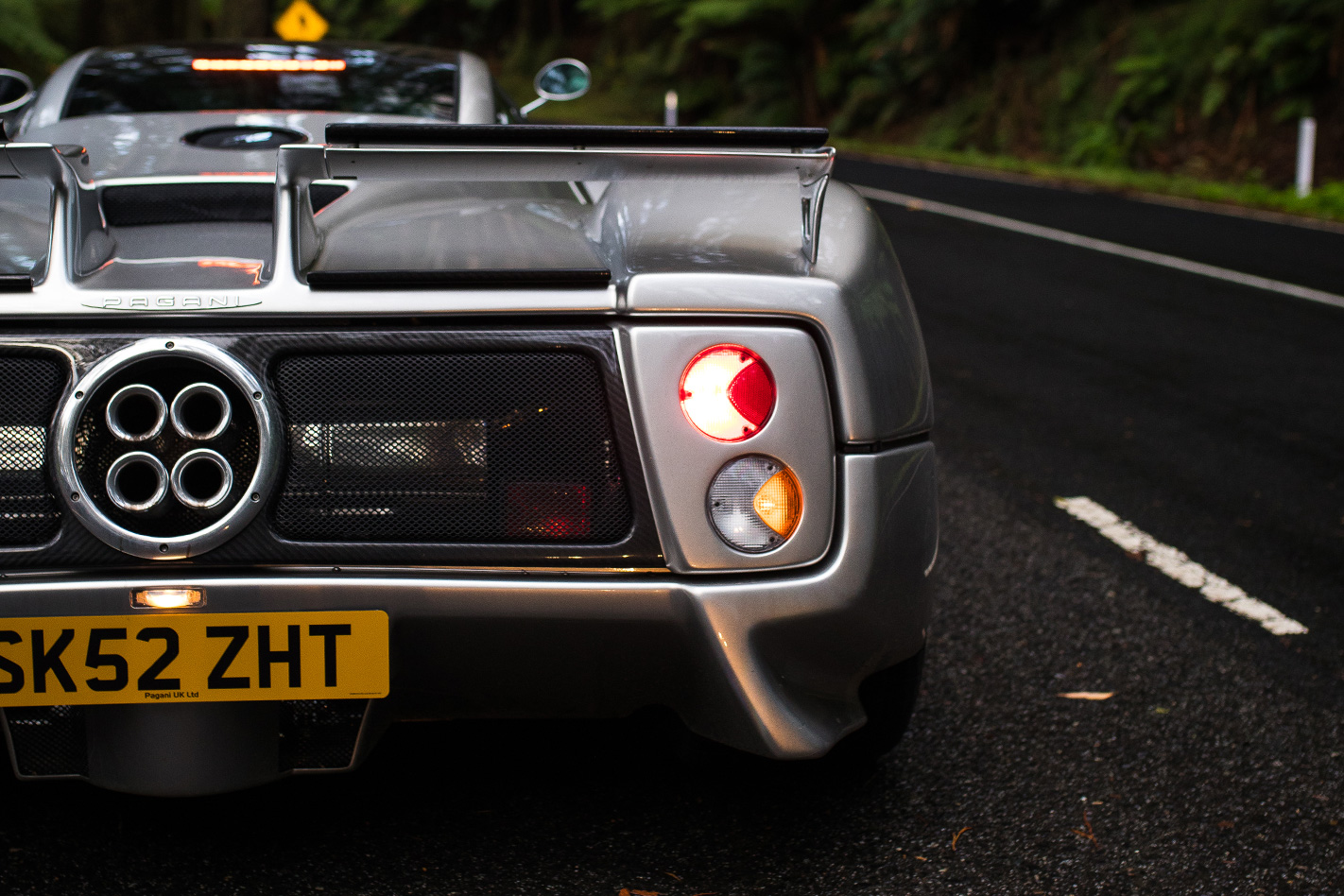
A quick blast along the fern-lined roads above Healesville and some car-to-car camera work resulted in us holding up the rest of the Raduno, so the getaway group hightailed it back to the accommodation to set off for the third day.
The planned route for the day had the owners driving up towards Narbethong and Buxton to stretch the legs of their cars along some of Victoria’s best driving roads, before making their way back down via Lake Mountain for a photo op and back to the valley for lunch.
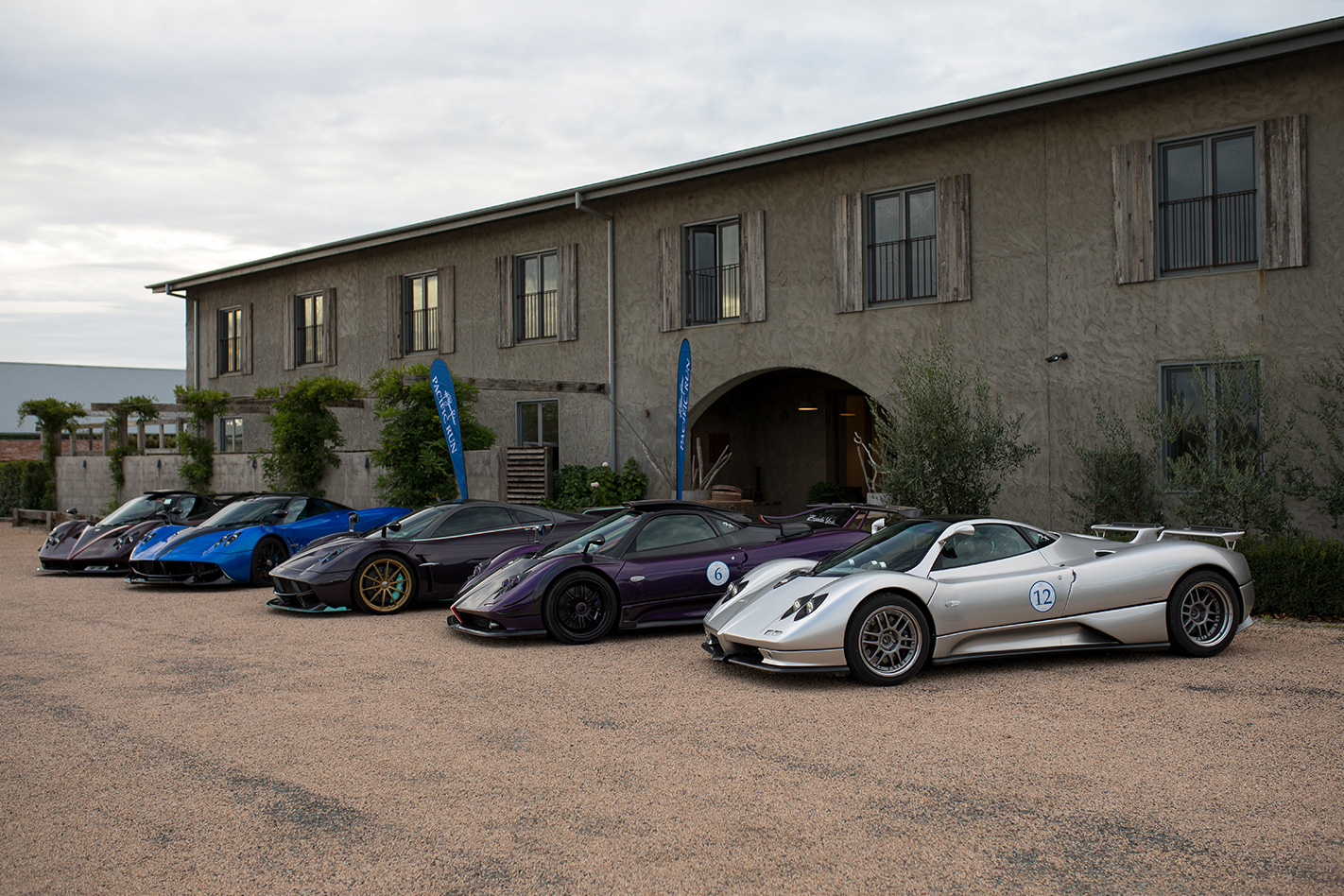
The tourists couldn’t resist a pit stop to see some native wildlife at Healesville Sanctuary on the way out, however, and even Horacio Pagani got involved in patting a kangaroo.
The loop was completed as quickly as you’d expect with V12 hypercars in play – and with that the group set off back to Melbourne for the launch of the Zagame Pagani showroom later that night.
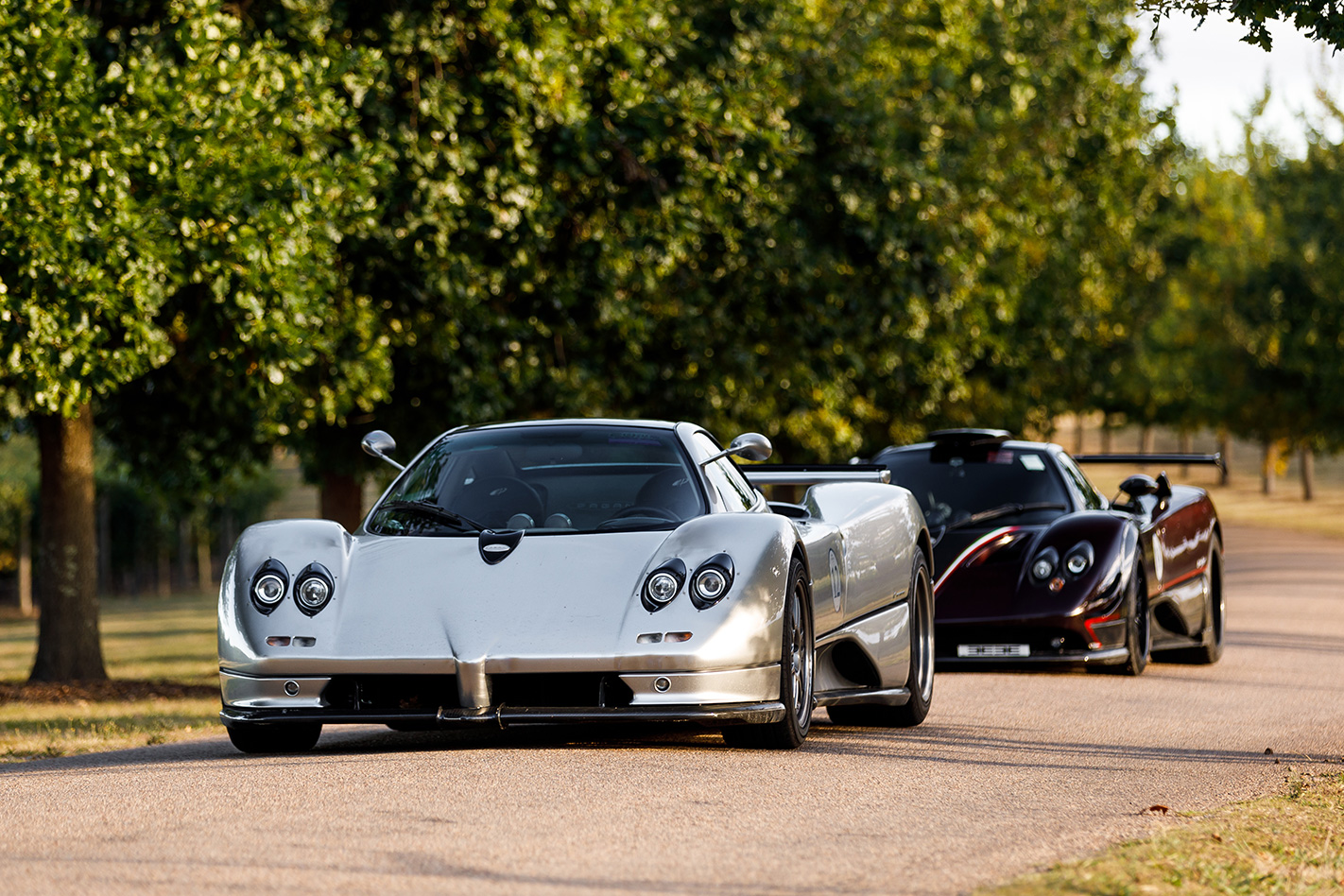
The upstairs section of the Zagame dealership was cleared out to make way for the Raduno cars to be put on display, and loyal Zagame customers were treated to the showroom launch with Horacio Pagani himself being the guest of honour.
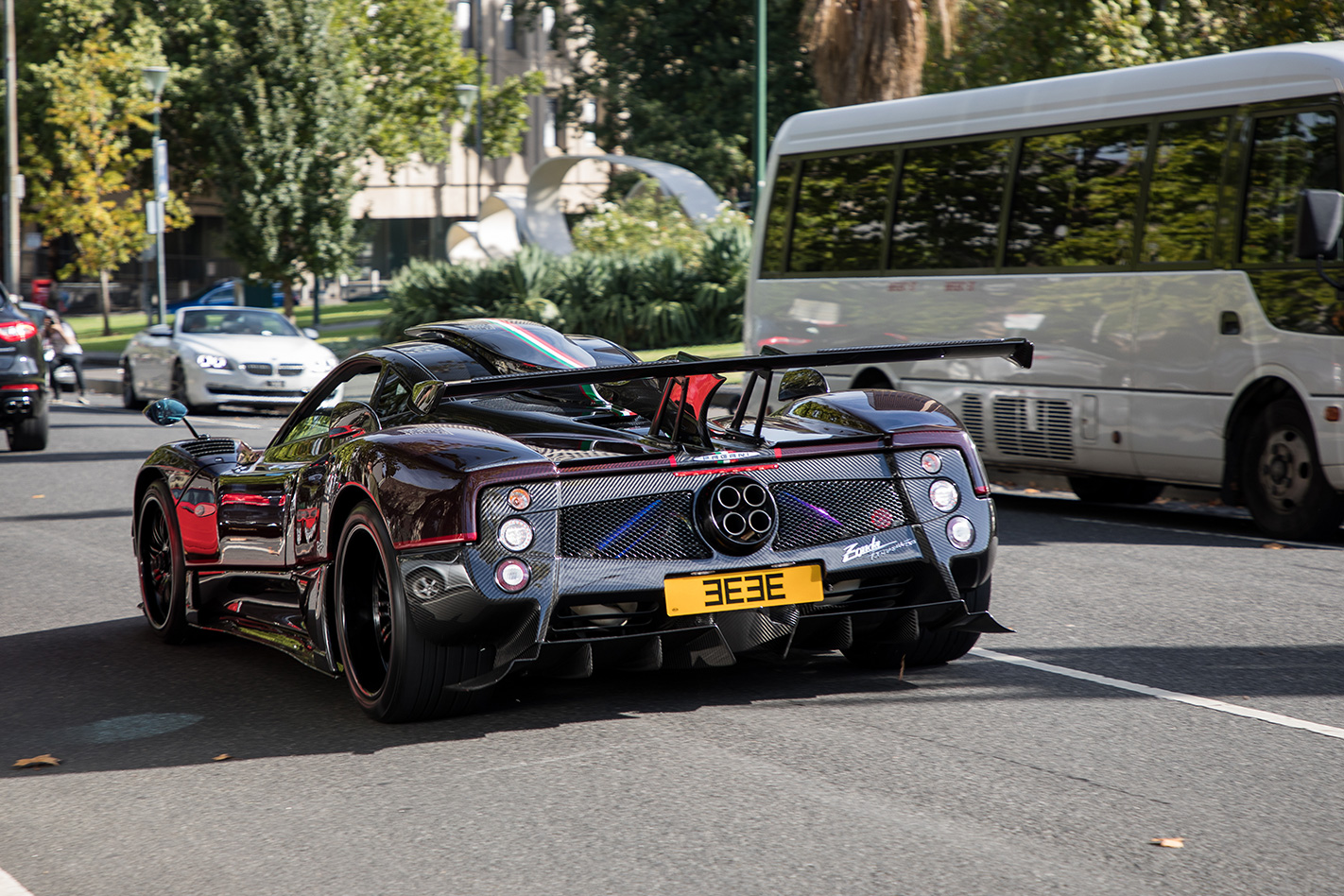
The following days involved the logistical nightmare of shipping the cars back to their respective locations and the owners who had to leave quickly jetted off back home while others stayed on to experience more of Australia.
With the whirlwind Pagani Raduno over, where does that leave us? Well, Australia has had its first real taste of the hypercar en masse and it seems to have been received well. Not only with the enthusiasts who cried out to see these machines in the metal, but also the authorities (who never once bothered the Pagani staff or owners) and the general public too.
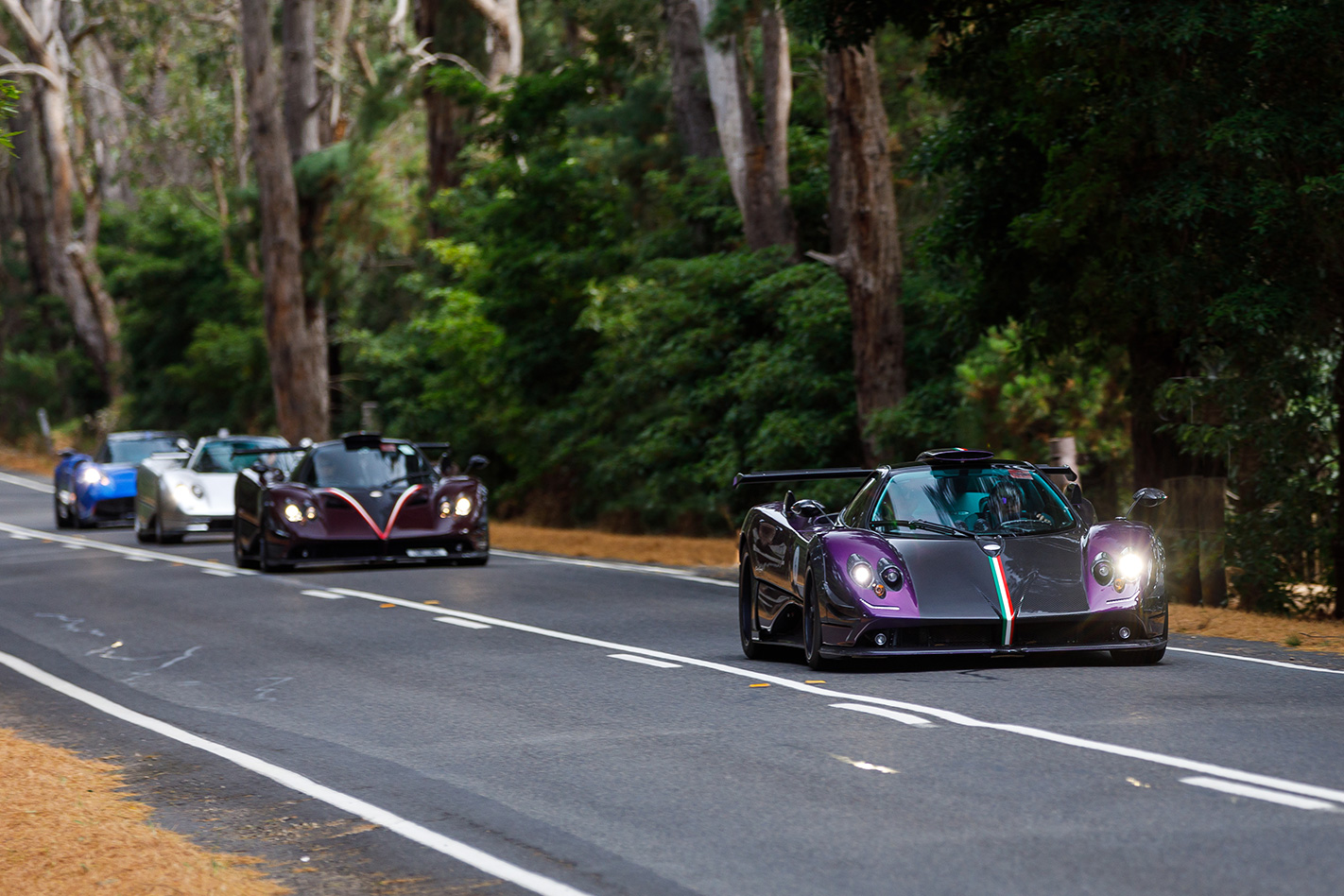
We’re now seeing a Koenigsegg dealership opening up in Melbourne to rival Zagame’s Pagani, and with the introduction of the bonkers Aussie-built Brabham BT62 that’ll arrive later this year – hopefully the ultra-exotic hypercar is here to stay.
Six months after Holden’s Port Elizabeth plant in Adelaide closed, it’s been interesting to see how people have responded to this momentous loss in their own different ways.
For the most part, and curiously, it seems to be by just not talking about it. Anybody who makes too much of a fuss or sends barbs flying over which is better, Falcon or Commodore, is quickly told to “move on” as we have “no choice but to”. That’s been our experience on social media, at least.
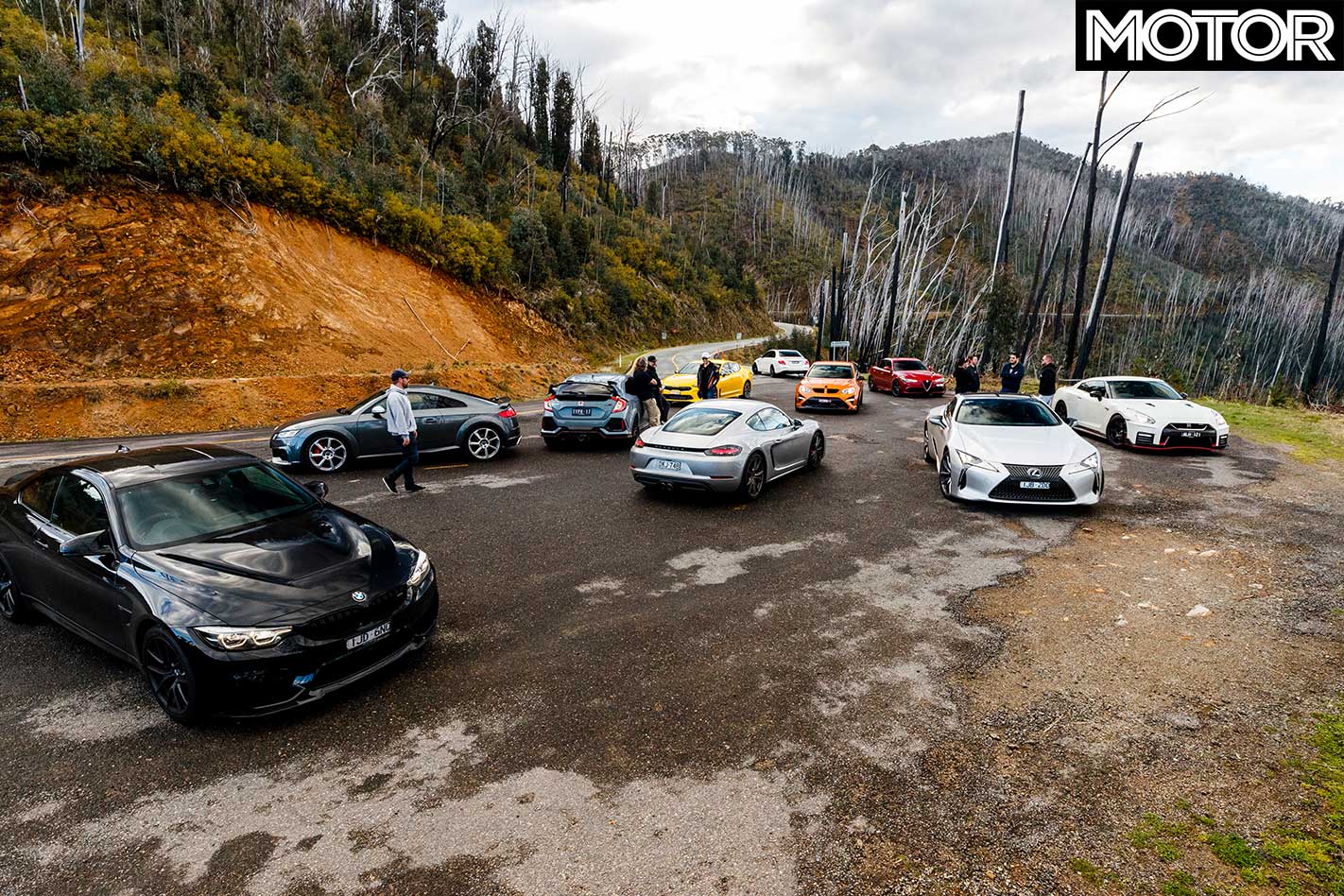
But it also seems that for many, you can’t just switch your interest off. It’s had to redirect into other things, like water flowing in whatever direction gravity pulls it.
Within our ranks there seems to have been a refusal to ‘buy an SUV and be done with it’. I was at a service station the other week and got chatting to a bloke in a Kia Stinger GT. He also owned an FG FPV F6 and Gen-F HSV GTS and said he loved everything about the Stinger – except the badge on the front of it.
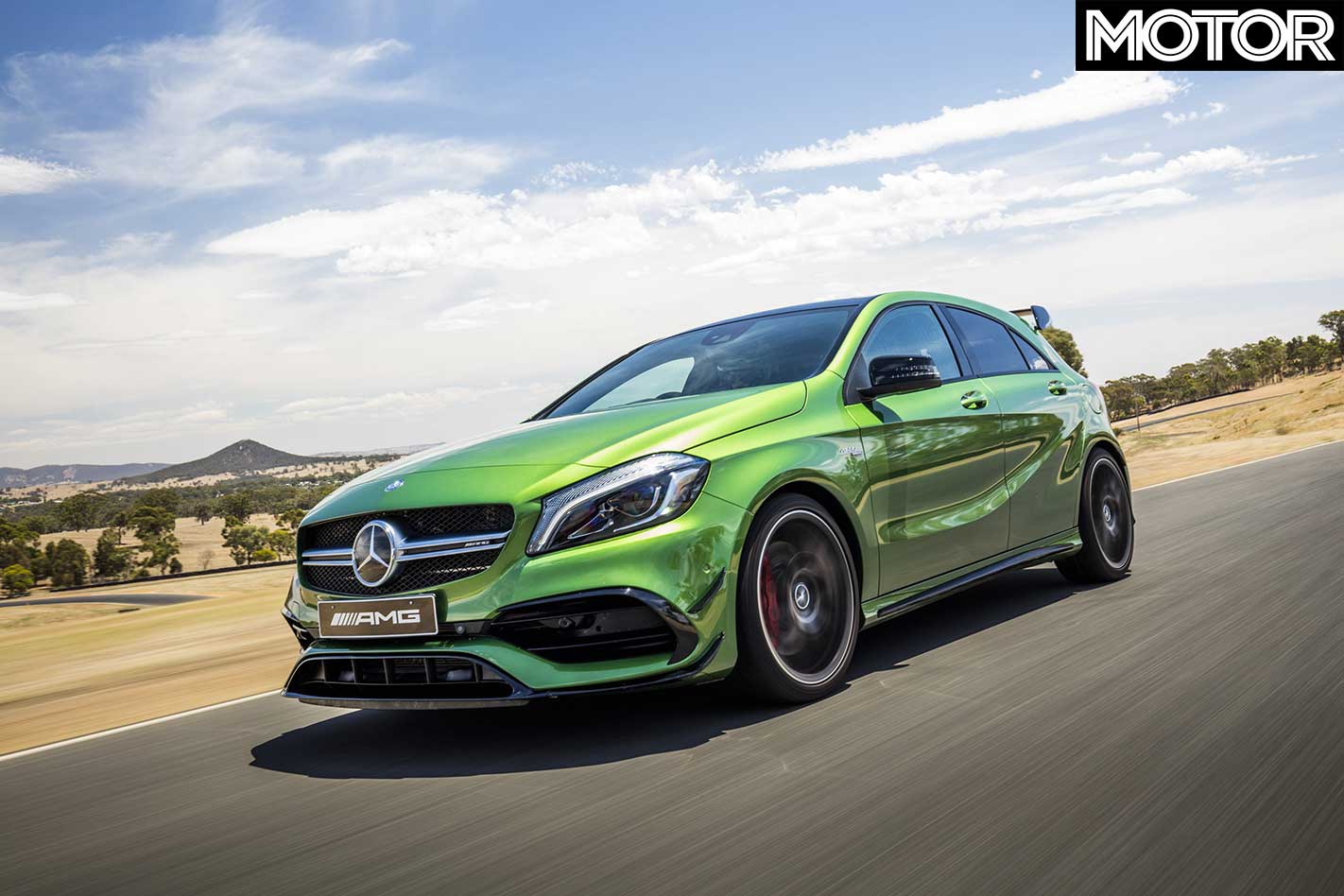
At MOTOR, we’ve seen a renewed interest in hot hatches. Once a category written off for being too small, too laggy, too toy-ish and perhaps not masculine enough, we met a tradie in his 50s at Winton Motor Raceway in country Victoria one afternoon a few weeks ago who proudly told us he had bought an A45 AMG.
Everybody mocks it off for being a little toy, and then he takes them for a ride in it, which quickly shuts them up, he told us through a wry smile.
Part of the new ‘direction’ for MOTOR is to celebrate modern classic cars more often. Vehicles like the BMW E46 M3, VT HSV GTSs, or the C5 Audi RS6 are featured in our latest June 2018 issue, to mention a random few. There is a whole universe of cars in this space and you’ve all told us you’re quite happy for us to go there, so we are.
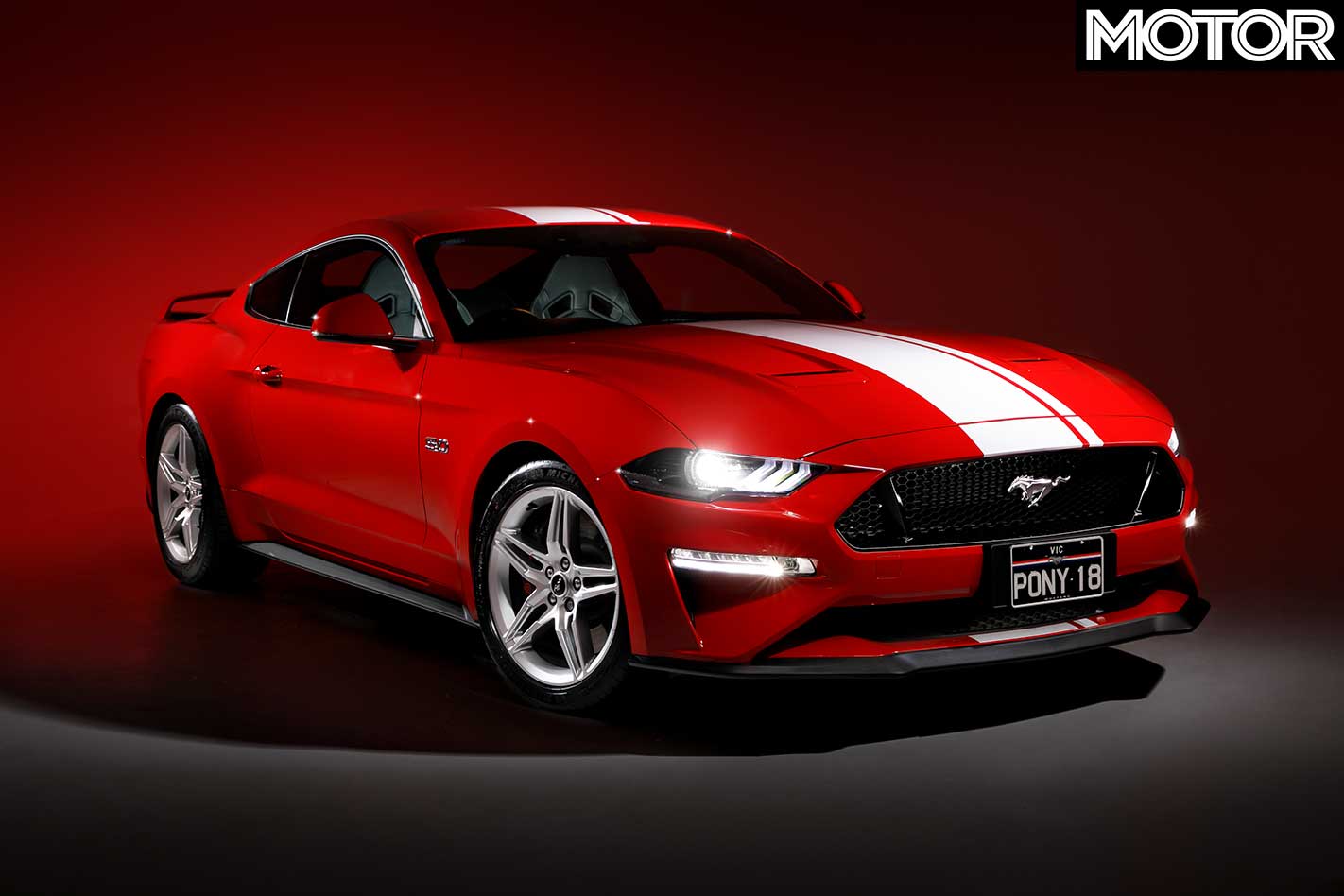
It’s been interesting to notice the curiosity in the upcoming updated Ford Mustang, too. Is this car the ‘new XR8’?
There’s certainly more Mustang news more often, as it’s a global car and Ford just has more money to spend on it. As such, there’s so much to talk about the new one that we’ve grilled the chief engineer and produced an exclusive under the skin tech feature, as you’ll read from our June 2018 issue.
The new performance car business continues to be a fascinating and surprising one, whether it’s the brilliant, thrummy three-cylinder Ford Fiesta ST, a Lamborghini SUV, a rear-drive Audi R8 departing from quattro, which was previously sacrosanct, or the McLaren Senna, a car that takes track performance of a road car to a brand new level.
And it seems Aussie manufacturing – which we thought we had just seen the last of – has entered its next chapter, a cottage industry, with the shock advent of the Brabham supercar, which you’ll also read about in the June 2018 issue.
With so much money flowing into the performance-car market and manufacturers pursuing your business, you can count on it keeping your interest. It’s keeping mine.
Volkswagen would never say it, but we reckon it’s a bit frightened by its new competition.
As we brace for hatches like the Hyundai i30 N, Honda Civic Type R, and incoming Renault Megane RS 280, it seems as if VW has scrambled to launch a counter attack with new technology, more variants, and smaller price tags.
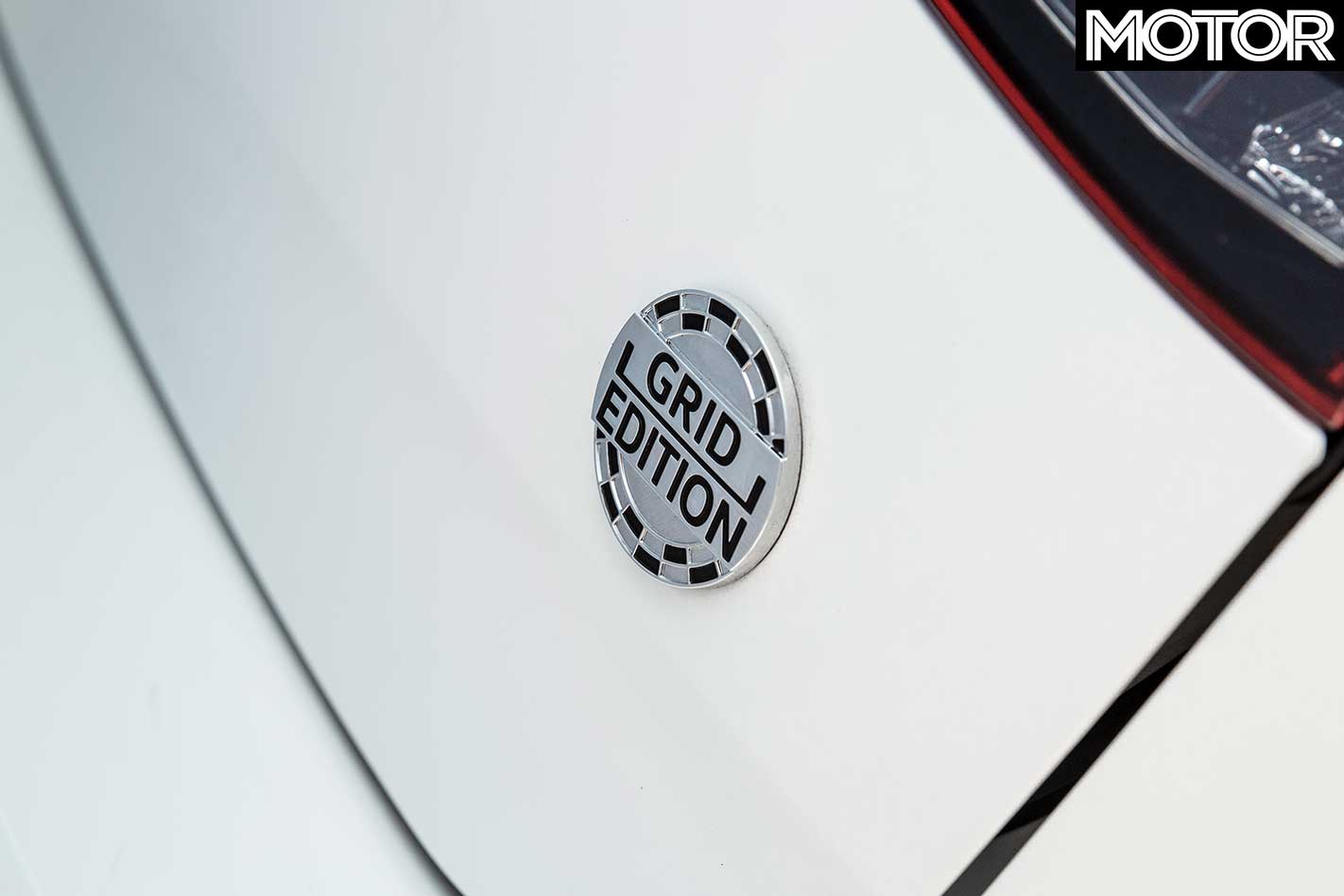
That, of course, is great news for punters, as the Golf R has been reeled closer to their reach with the new bargain-focused Grid Edition. Like a Golf GTI Original, the thinking behind the Grid is to ditch any equipment deemed superfluous.
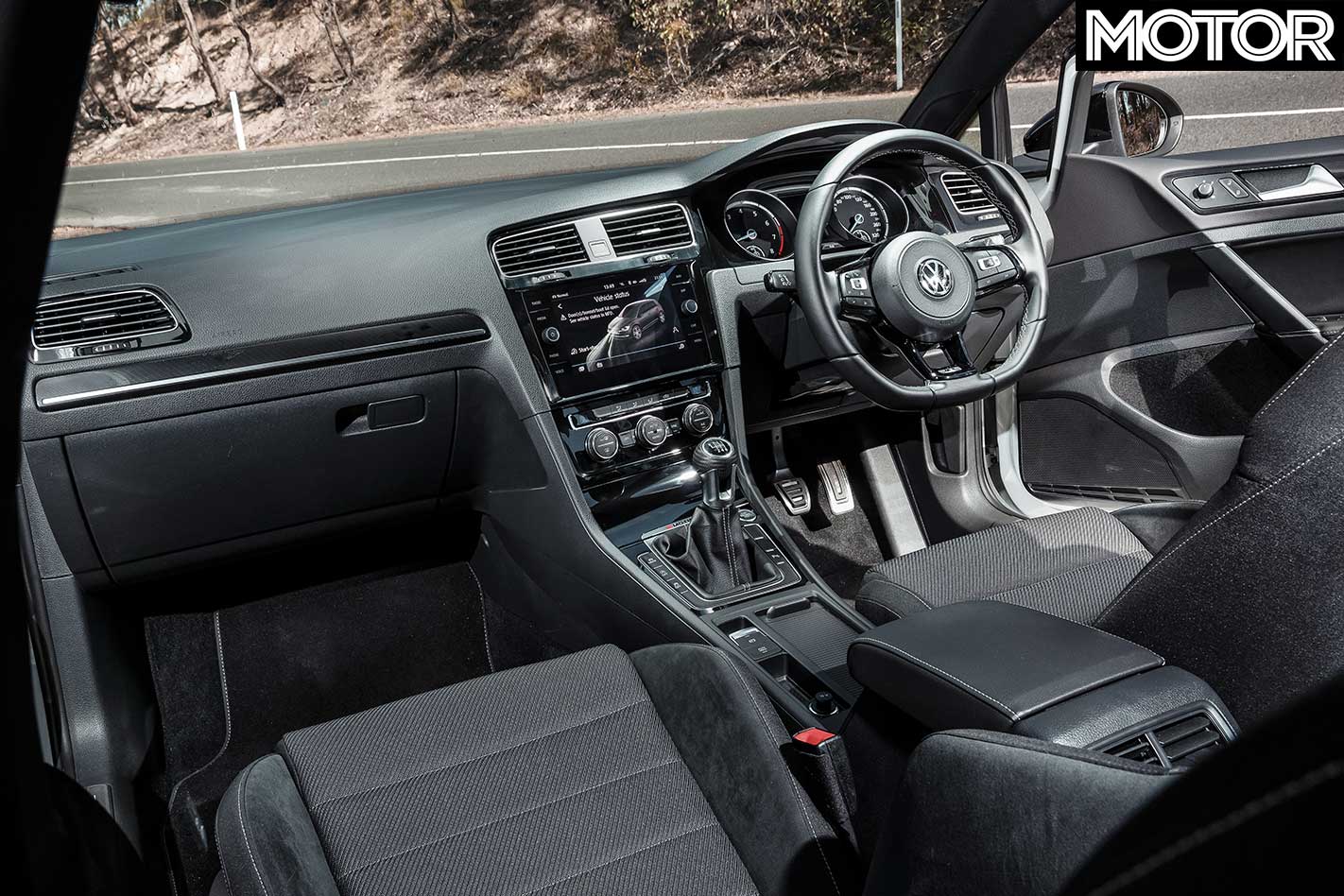
For a 2018 Golf R that happens to be leather seat trim, a newly introduced 9.2-inch digital instrument cluster, silver mirror covers, electric driver’s seat adjustment, seat heating, and a passenger’s seat under-drawer. They’re replaced by Alcantara seat trim, a good ol’ analogue cluster, and black mirror covers.
Lead foots can breathe a sigh of relief, though, that programmable adaptive suspension is carried over. It rides as good as anything less than $100K and can inject racetrack-ready responses back into the suspension at the switch of a mode. Its gentle damping also means it clings to everything but the roughest of surfaces and you’d have to be doing a pretty rough job of it to make the thing understeer.
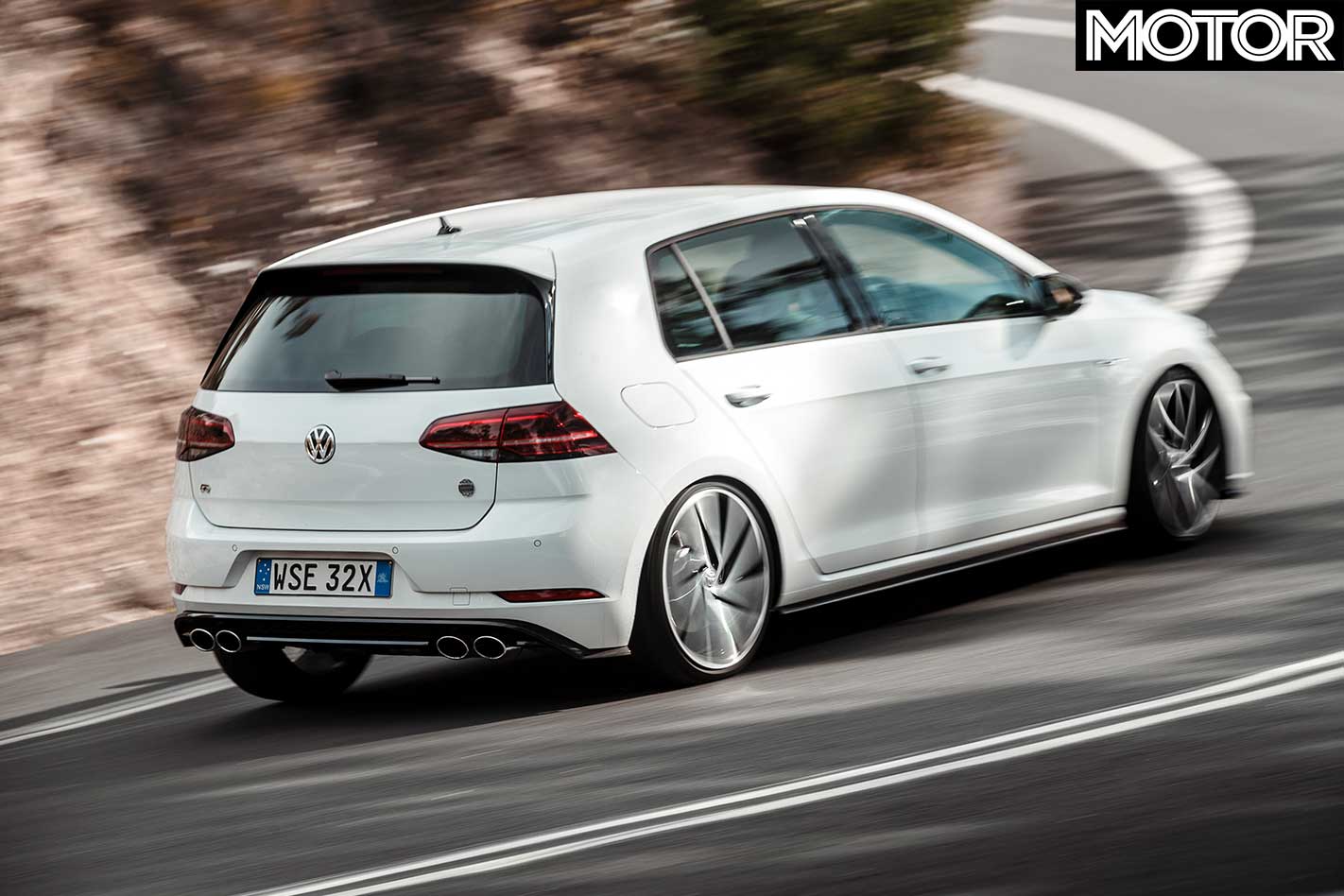
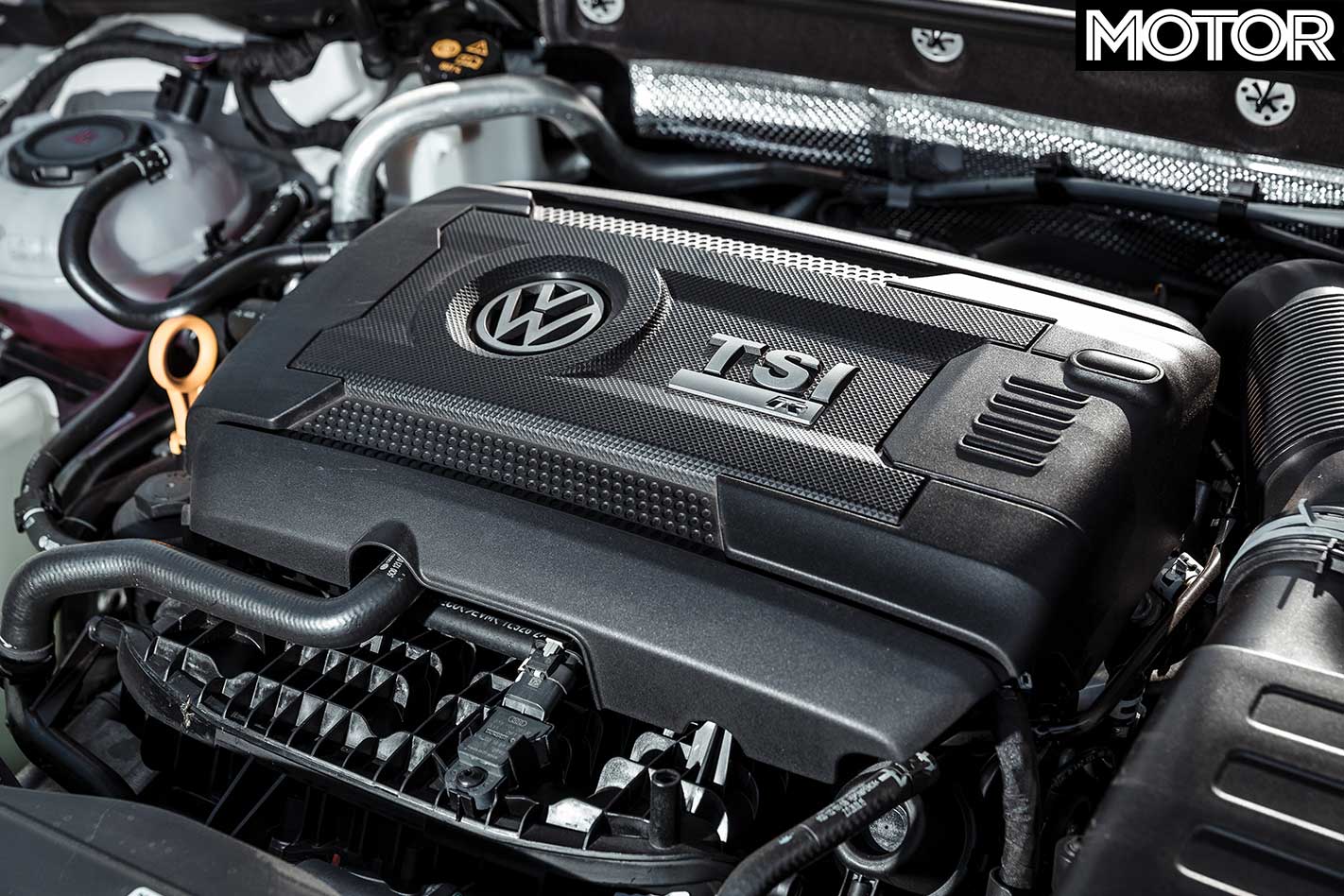
There’s also the same 2.0-litre EA888 with 213kW and 380Nm, backed by an all-wheel drive system spinning four 235mm-wide tread patches. It’s a versatile unit that rarely feels strained, punching hard in its top end; however, we reckon its grip levels are crying out for Europe’s full-fat 228kW and 400Nm tune.
We know from experience a dual-clutch ’box makes the Golf R a genuine 12.0sec car, but there’s no shame in opting for the manual. For one, it’s a sweet device that’s leisurely weighted and matched with a great clutch feel. There are more direct shifts out there, but that’s quickly forgotten when you remember how much this thing costs.
Remarkably, the absence of a few luxury touches slashes the Golf R’s price by $5500, driving down the six-speed manual transmission car’s price to $47,990 and the seven-speed DSG variant’s to $49,990.
Despite this drop the interior doesn’t feel particularly budget. Alcantara seat inserts lift the interior’s ambience while the recently introduced 8.0-inch infotainment keeps tech levels high. The GTI Original’s three-door body and passive dampers would drop its price and weight again, making us wonder ‘what if?’ But it’s hard to complain. This is as good as it gets for an all-rounder right now.
2018 VOLKSWAGEN GOLF R GRID EDITION SPECS: Engine: 1984cc inline-4, DOHC, 16v, turbo Power: 213kW @ 6000rpm Torque: 380Nm @ 1850-5300rpm 0-100km/h: 5.0sec (claimed) Weight: 1450kg Price: $47,990 (manual)
Rating: 4.5 out of 5 stars Like: Sleek looks; arresting price; polished dynamics; punchy engine; plenty of kit Dislike: Heavy steering in Race; detuned engine; there are more thrilling hatches out there
Bruno Senna was once faster than his triple Formula 1 world champion uncle, Ayrton. It was when he was about eight years old, flat out in a go-kart in his homeland, Brazil.
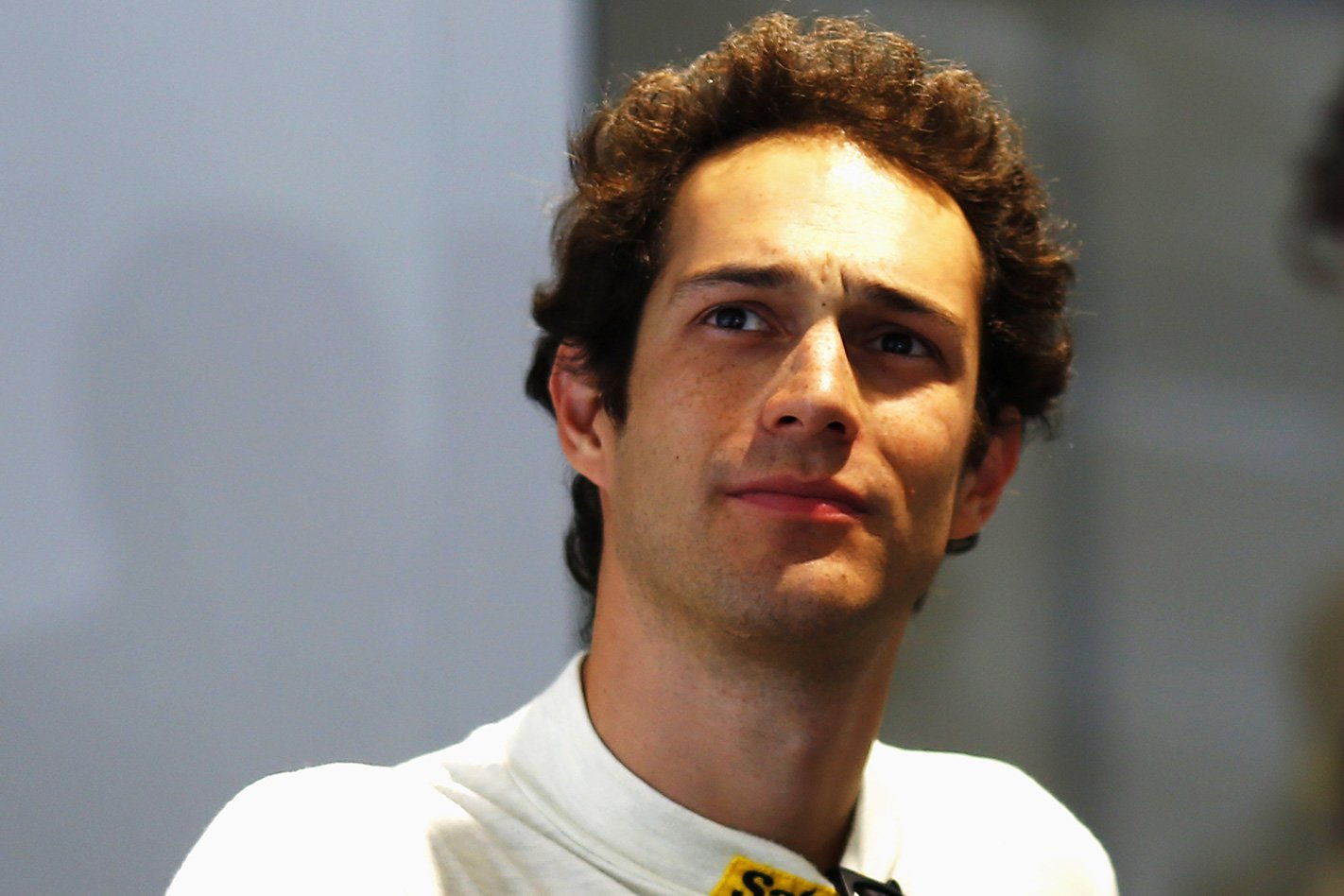
Perhaps his child-weight advantage gave him the edge, something that prompted a typically Ayrton response.
“He ended up putting loads of ballast in my go-kart … to the point where if I spun and went off the track I couldn’t restart it,” says Bruno.
As a broad smile beams, it’s clear the nephew of the triple world champion still has plenty of affection for the man who played a big role in his childhood. There was a 23-year age gap between them; Bruno was just 11 when Ayrton was killed at Imola in 1994. But his overarching memories are happy ones.
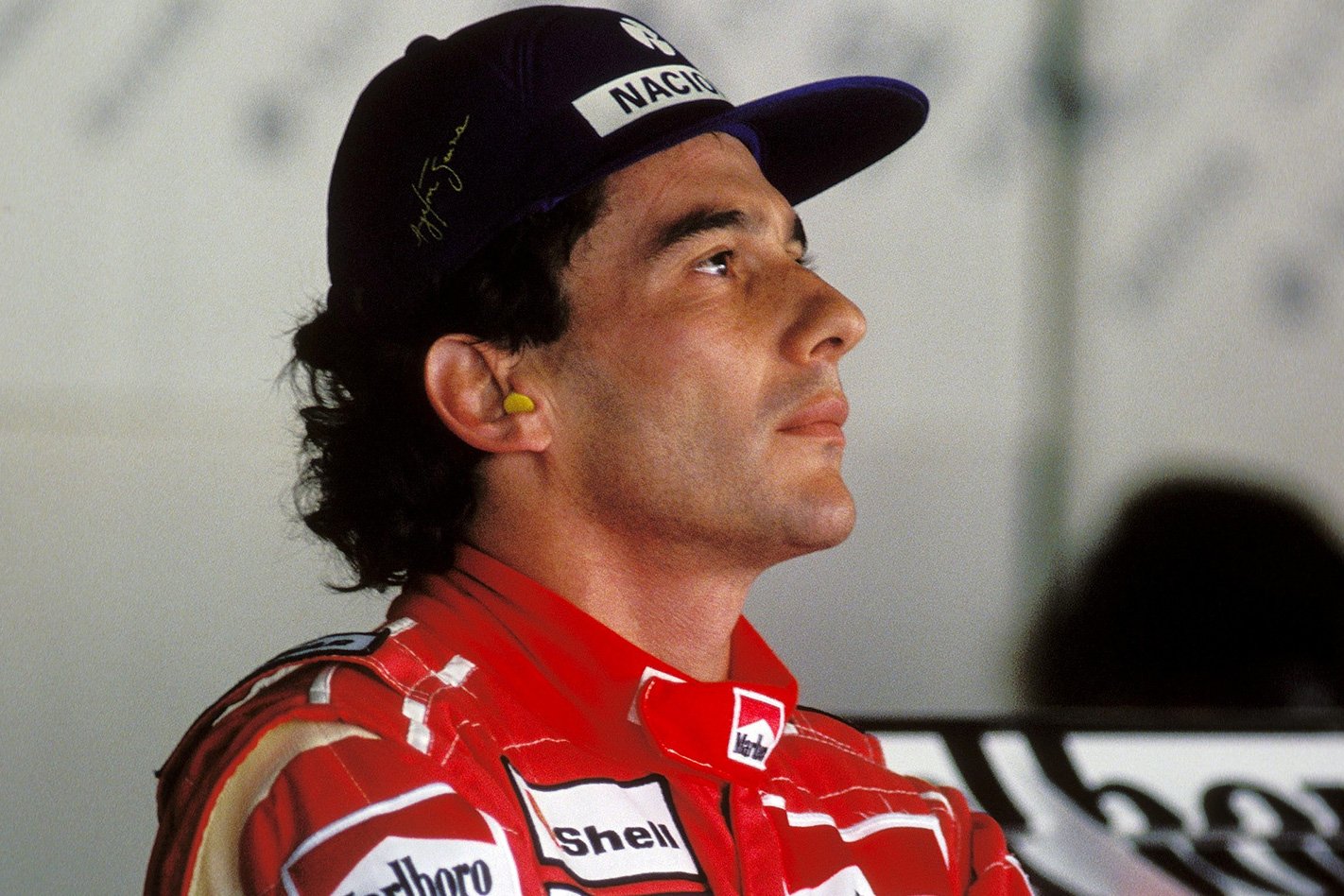
“It was quite funny to hang out with him because he was super competitive,” laughs Bruno. “He was a lot of fun to be with, always making pranks. This is the thing that stays with me most about him; at home he was like a super-relaxed guy but still had that competitive edge.”
Ayrton even modified his jetski to match the pace of Bruno on a stock ski. But Ayrton taught him race craft as much as pace.
“He was just trying to make you learn through experience … even if it was pushing you off a track when trying to overtake on the outside.”
Despite the tough love, “fun” is a recurring word in our pit garage at Silverstone for the launch of the McLaren Senna, a car Bruno helped name – and develop.
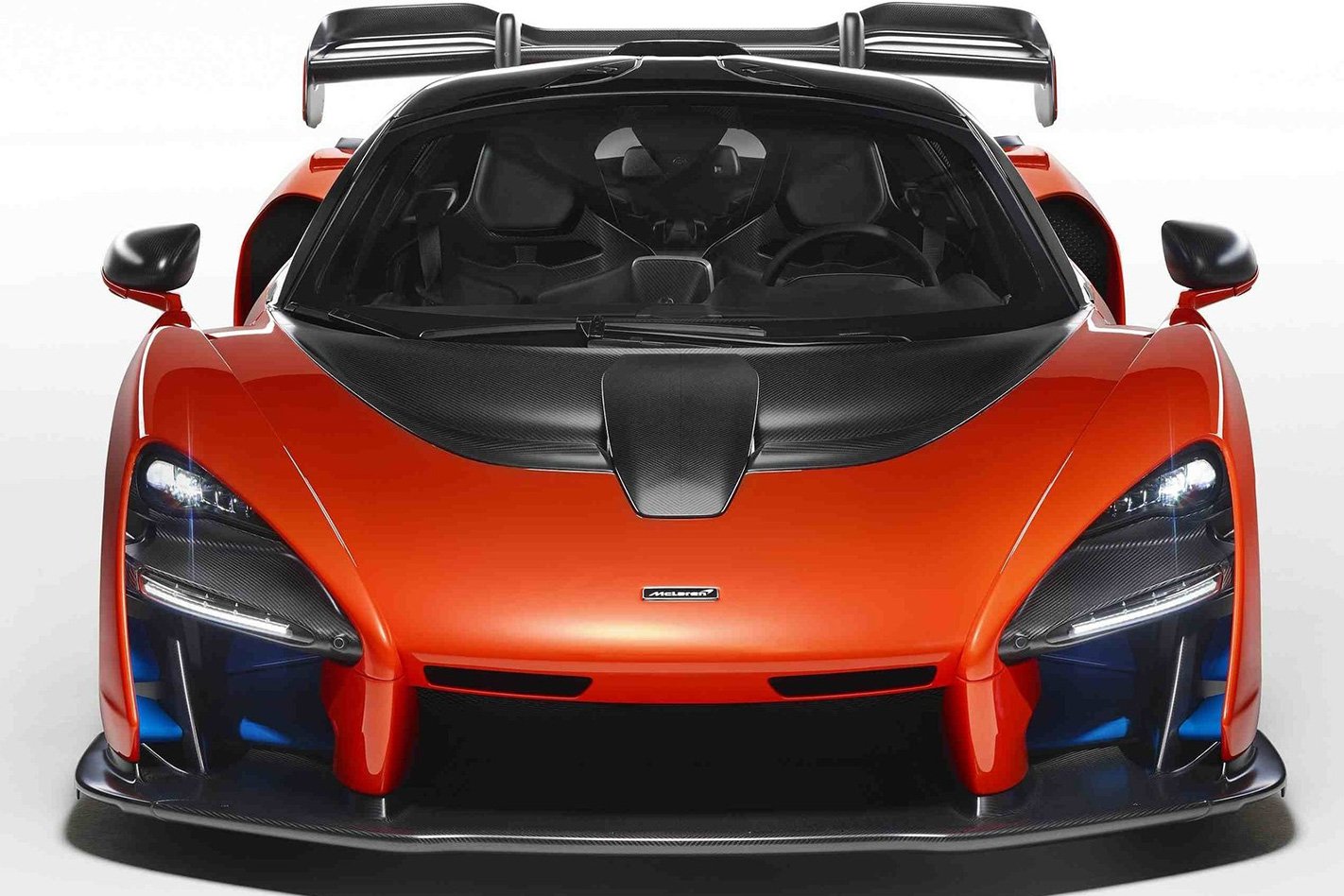
“I saw this car on the clay in November 2016. I was like ‘wow, this is amazing’,” he says. “I went to my family and I said, ‘look, these guys at McLaren are making this crazy car and I think it’s the right time to make a car with Ayrton’s name’.”
The result is (for now; see sidebar below left) the fastest road-legal car on a circuit.
“It really encompasses Ayrton’s spirit, it’s uncompromising … it really brings the passion, the driver into focus,” says Senna.
While the Senna family got one of the run of 500 as part of the deal to use the name, Bruno bought another, the carbonfibre car from the 2018 Geneva motorshow, complete with yellow and green Brazilian flag highlights.
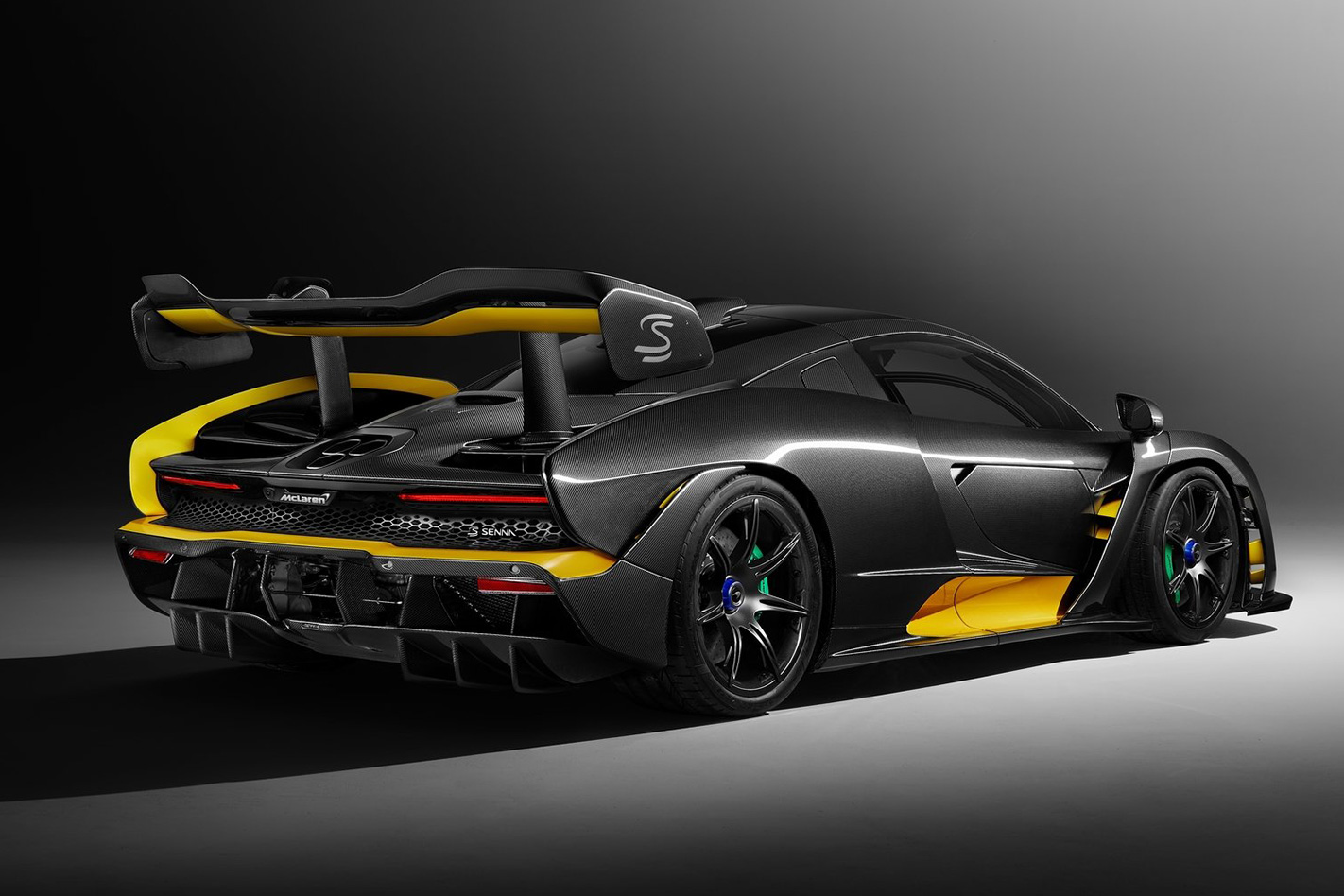
He had input into the car’s track tuning, something Ayrton famously did with the Honda NSX.
“I’ve driven that car specifically,” says Bruno of Senna’s NSX, remembering a snaking road in 1992. “He sat in the driver’s seat and he did the throttle, brakes and gears while I steered on this mountain road in Portugal. It was super cool; I loved it, we were just going flat out around some mountain roads.”
Senna junior is now 34, a few months older than Ayrton when the world champion raced his last lap at Imola in Italy. Bruno was watching with his family at home, although the gravity didn’t initially hit him. “You’re a kid … you never understand it until the funeral,” he says, solemn but seemingly accepting of the loss.
The tragedy shook the Senna family, to the point where Bruno’s mother, Viviane, halted his passion for motorsport. She later relented, leading to a brief stint in F1, something that lacked Ayrton’s dominance.
“I was not held to the same standards as other drivers, I was always held against Ayrton’s standards,” says Bruno. “Everyone expected me to be as good or better than Ayrton. That’s not only very difficult but also intangible … unless I had miracle drives it was never going to be enough.”
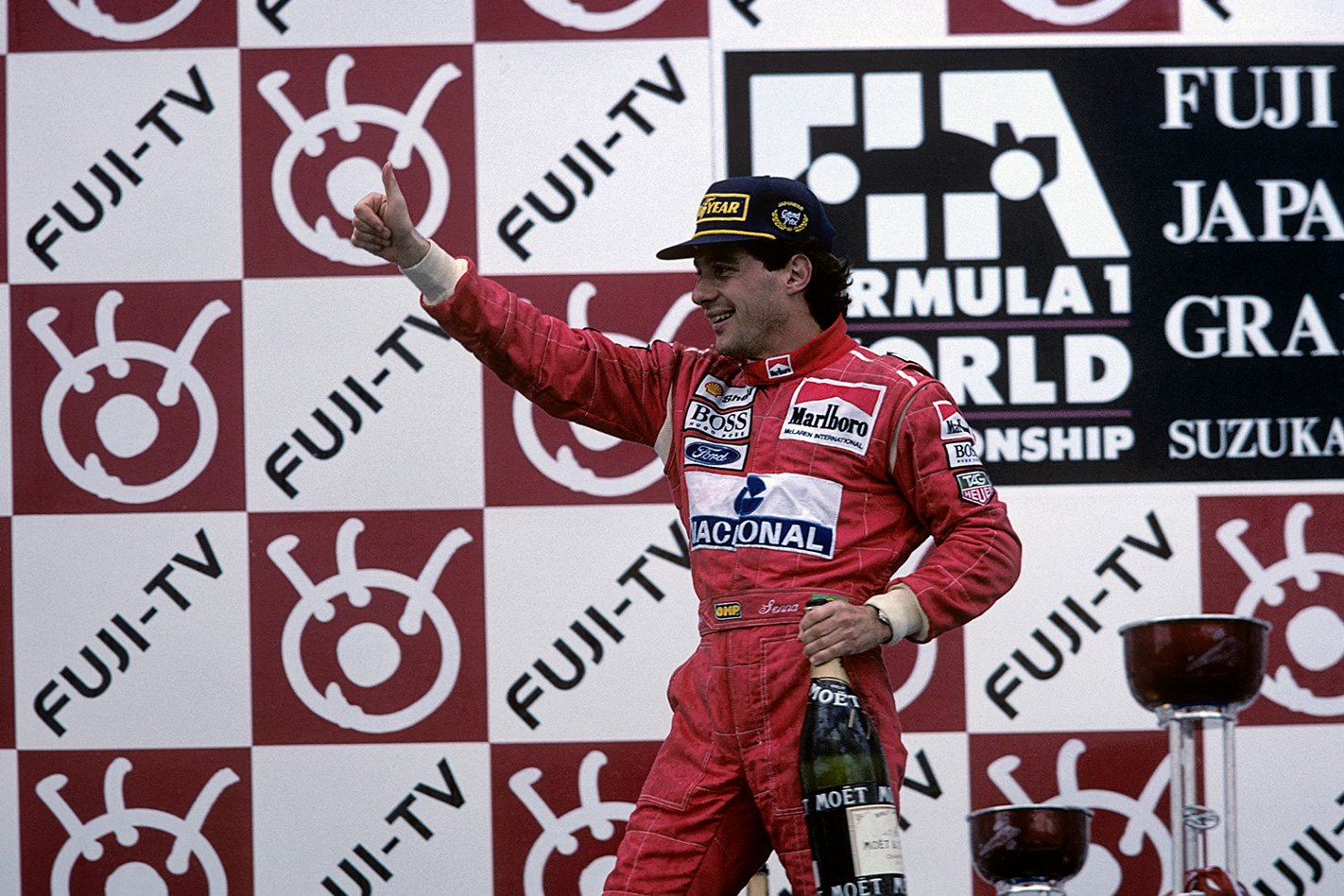
Bruno says experience and hindsight allowed him to reflect on a period that hurt and challenged him mentally.
“If I had understood that I would have probably taken it a different way and just did my job.”
These days Senna is loving the challenge of sports cars.
He squeezes in development work for McLaren, something engineers plan to further exploit.
“Bruno is very good … and, from what I hear, exactly like his uncle … the ability to get the flavour of the car and translate that into engineering speak; into how we can improve it,” says vehicle line director Andy Palmer.
As for Senna the car, it’s guaranteed to be a collector, but it may not be the only time the Senna name is used on a car.
“If the right project comes along, why not?” says Bruno.
