
Ford’s ability to craft hot hatches that are brilliant to drive is without question. However, their day-to-day usability, comfort and quality has been less well-defined. The outgoing Fiesta ST was a prime example; fast as hell, but far from comfy.
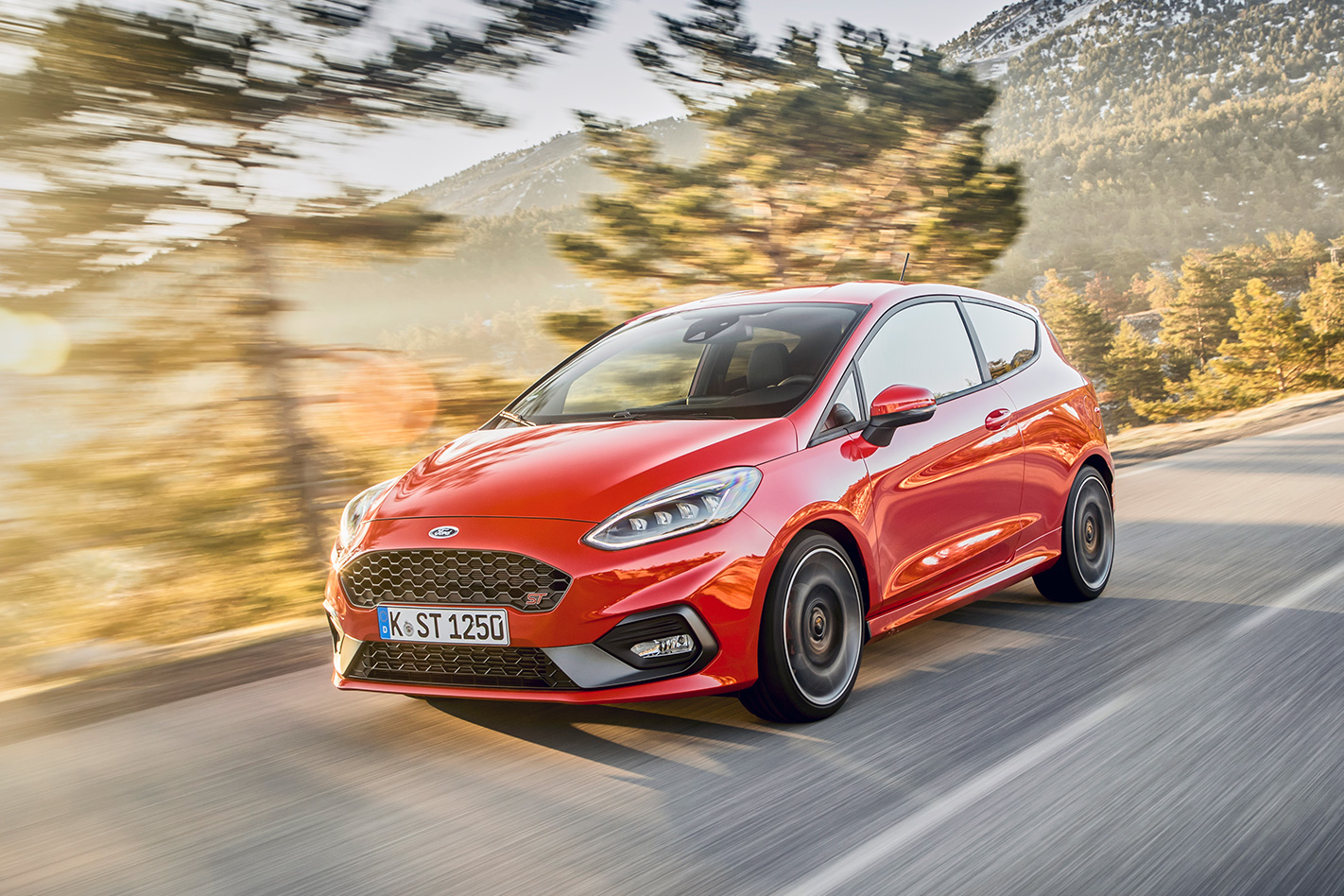
Now on sale in Europe, the new third-gen Fiesta ST promises to do things differently, without compromising on performance.
WHAT IS IT?
The third generation of the Fiesta’s performance flagship grade, the ST. Though its platform is an extensive evolution of the old car’s underpinnings – rather than an all-new architecture – the changes are wholesale. New engine (with one less cylinder than before), innovative suspension technology, impressive traction aids and a thoroughly modern interior all mark it well apart from the car it replaces.
WHY WE’RE TESTING IT
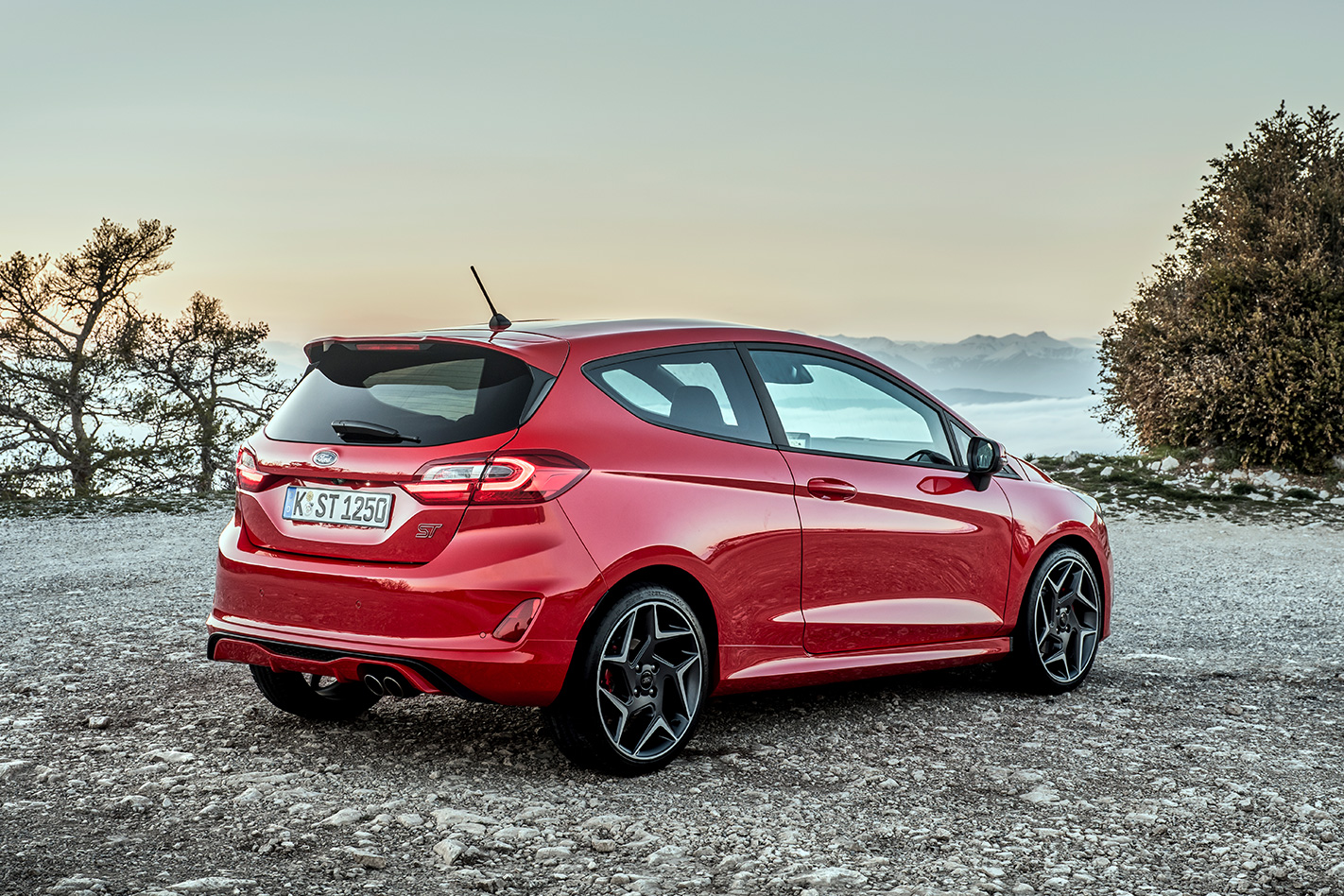
There’s one big question that’s on everyone’s lips: can a three-cylinder hatchback boast genuine performance appeal? The downsizing trend has been in full swing for a while now, but the Fiesta ST is the first hot hatch in its size category to drop a cylinder in favour of three-pot power. That alone is reason to investigate, but we also want to examine whether the new Fiesta ST remains as sharp to drive as the old one, and whether Ford has addressed complaints about cabin quality and ergonomics – key criticisms of the outgoing ST.
MAIN RIVALS
Volkswagen Polo GTI, Suzuki Swift Sport, Renault Clio RS, Peugeot 208 GTi
THE WHEELS VERDICT
Ignore the three-cylinder part, because the term “downsizing” has negative connotations that simply don’t apply to the Fiesta ST. Instead, Ford Performance has truly managed to create more with less. Through intelligent engineering and clever design, the new ST isn’t just better than its predecessor – it’s better than the vast majority of its rivals in more than one regard.
PLUS: Awesome grip from LSD and sticky tyres; cabin quality; torquey engine; neutral chassis; enjoyable engine note MINUS: Not here until early 2019; no automatic option for those that want it; pedal spacing
THE WHEELS REVIEW
IT’S A CHEEKY move by Ford to stage the launch of its third-generation Fiesta ST in France, given La Republique is home ground for scorching B-segmenters like the Clio RS and Pug 208 GTi.
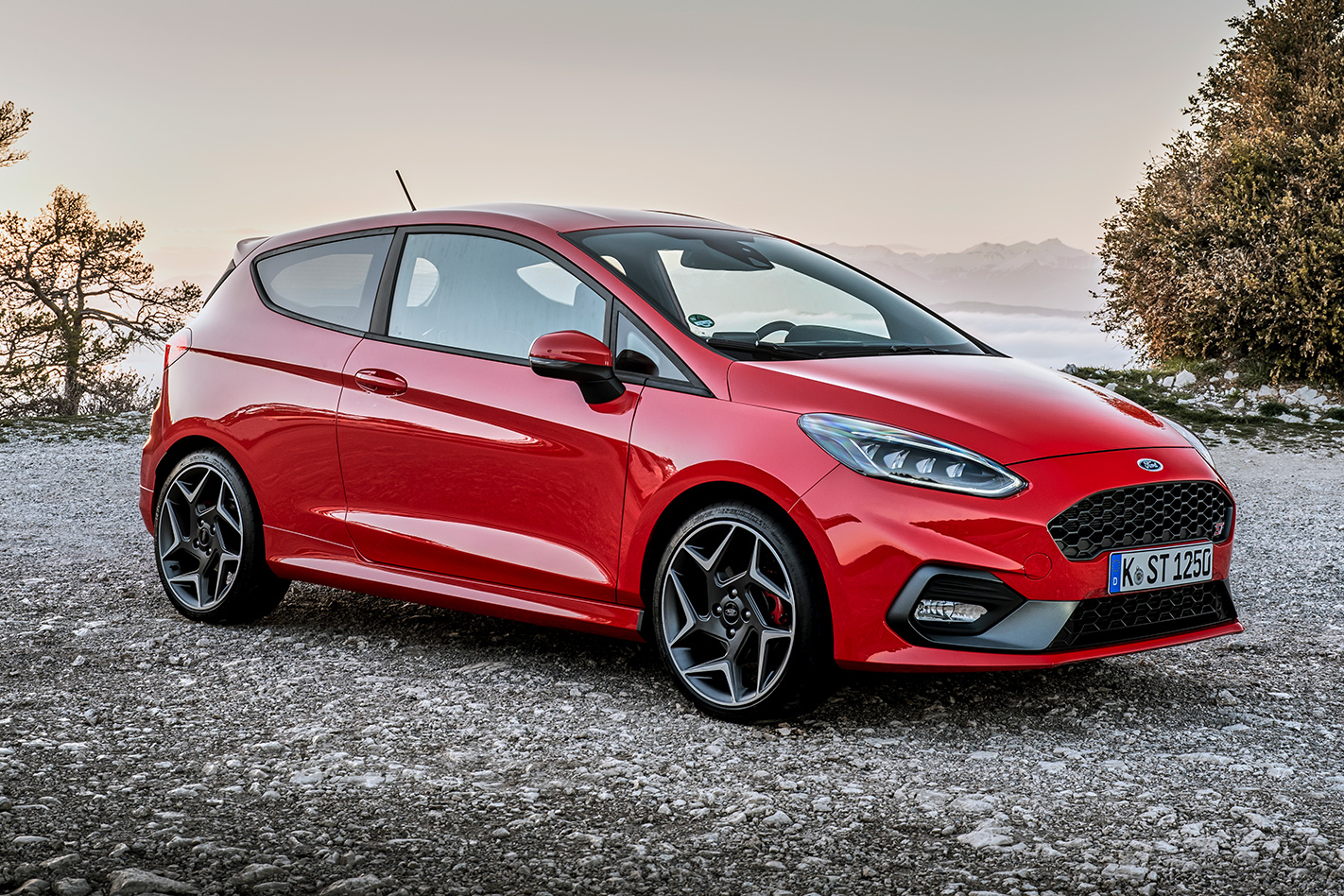
Yet here we are, on one of the twistier portions of the Route Napoleon, sitting inside the Blue Oval’s newest and most affordable performance car. The Fiesta is well and truly behind enemy lines right now, but it’s clutching a garrotte in one hand.
Ford’s European arm knows a thing or two about making compact hatches go fast. This 2018 model might be the third generation of car to wear the Fiesta ST moniker, but the lineage stretches all the way back to the 1981 Fiesta XR2. Those decades of experience are manifest in the way the latest Fiesta ST drives.
“What we wanted to achieve was improve in four areas.”
That’s Leo Roeks, director of Ford Performance’s European operation.
“One was the powertrain, the engine. Power obviously, but also CO2 emissions. Then there was the seating position.
“Another thing that’s very important is obviously ride, handling and steering, and the other thing is noise. Does a three-cylinder actually work for a sports car? I can guarantee you that yes it does.”
Proving naysayers wrong will be the Fiesta ST’s greatest challenge. Ford Performance’s decision to deploy a three-cylinder Ecoboost with just 1.5 litres of swept volume will no doubt have spec sheet fiends scratching their heads (especially given the new ST weighs more than the old car, and rival Polo GTI now boasts a big-block 2.0L), but Roeks and his team have equipped the humble Fiesta with an arsenal of go-faster tricks to boost its athletic ability, despite its smaller heart.
The ST suffix stands for ‘Sport Technology’, and there’s plenty of both in the fastest Fiesta. Technology helps counteract the reductions in displacement and cylinder count, with the new triple’s 147kW of peak power and 290Nm of maximum torque exceeding the official stats of the outgoing 1.6 by 13kW and 50Nm respectively. Incidentally, those numbers are also identical to what the second-gen ST generated when operating in overboost, which could only be done for 20 seconds at a time.
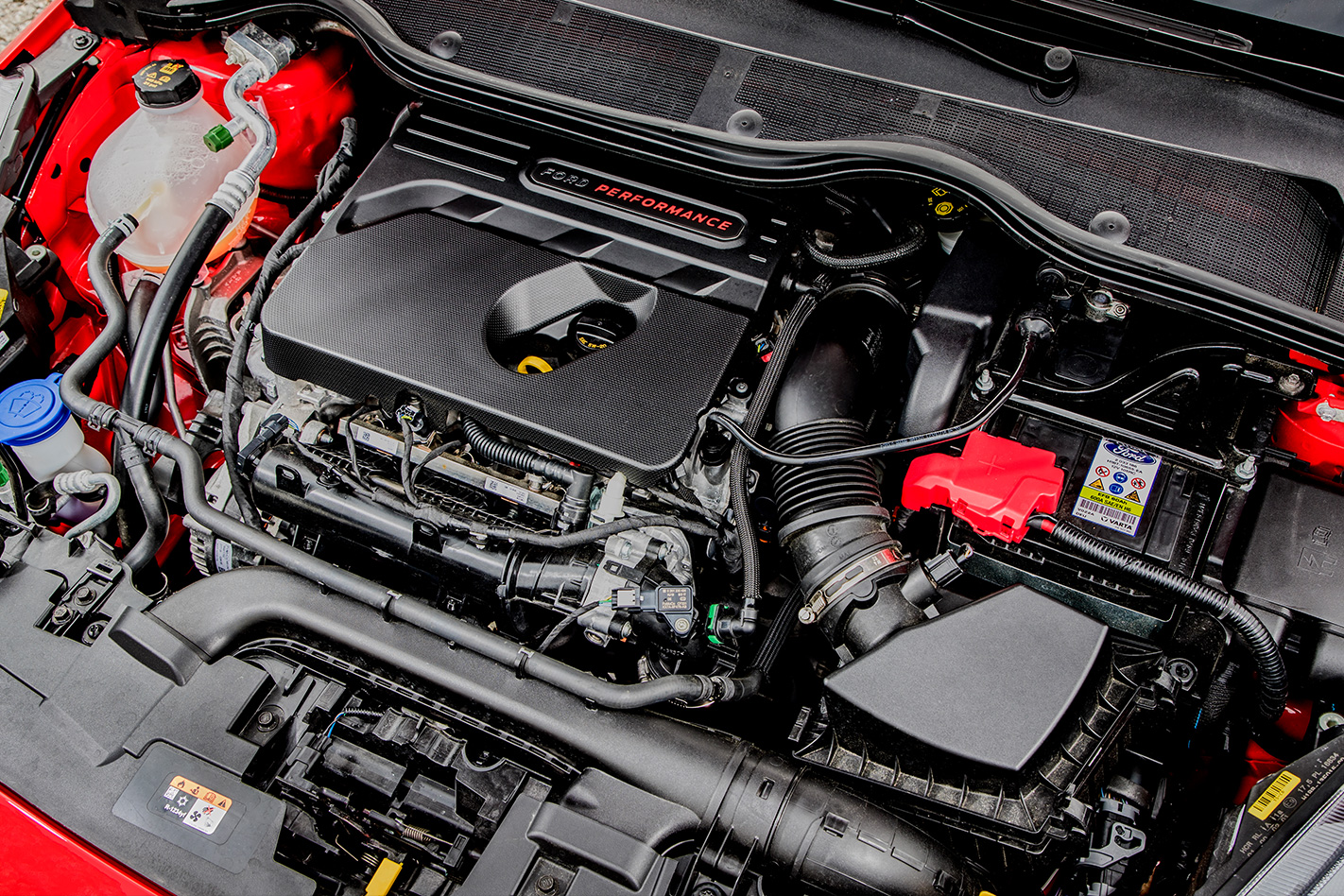
High-pressure direct fuel injection (working in concert with port injection), variable intake and exhaust cam timing, and clever turbine geometry are responsible for the 1.5’s prodigious muscle, and also help mitigate turbo lag. The result of all this is a 0.4 second faster 0-100km/h sprint compared to the outgoing Fiesta ST, trimming the stat down to a neat 6.5 seconds despite the new car’s 90kg of extra mass.
Amazingly, it also has cylinder deactivation. By decoupling the rocker arms for cylinder number one, the Fiesta ST’s three-pot can morph into a two-pot to help curb its thirst on light-throttle cruising. On the combined cycle, Ford claims the ST sips 6.0L/100km on average.
The tech story continues beneath. The rear suspension may be a mechanically simple torsion beam, but it’s augmented by what Ford Performance calls “force vectoring” springs that are banana-shaped in profile, wound in opposite directions and work to increase the rear axle’s lateral stiffness without requiring a Watts linkage – thus netting a weight saving of 10kg.
Then there are frequency-dependent shock absorbers at each corner – twin tubes at the front, mono-tubes at the back – that adjust damping force depending on the severity of the road surface.
The front knuckles have ST-specific geometry, and no matter whether you spec the standard 17-inch alloys or their more attractive 18-inch counterparts, the new ST rolls on grippy Michelin Pilot Super Sports – rubber that’s more commonly found on things like BMW M3s, not sub-$30K hatches. In fact, the Renault Clio RS220 Trophy is the only other competitor we can think of that rolls on Super Sports, and it retails for nearly $40K. The Fiesta ST should be well over ten grand cheaper, but more on that later.
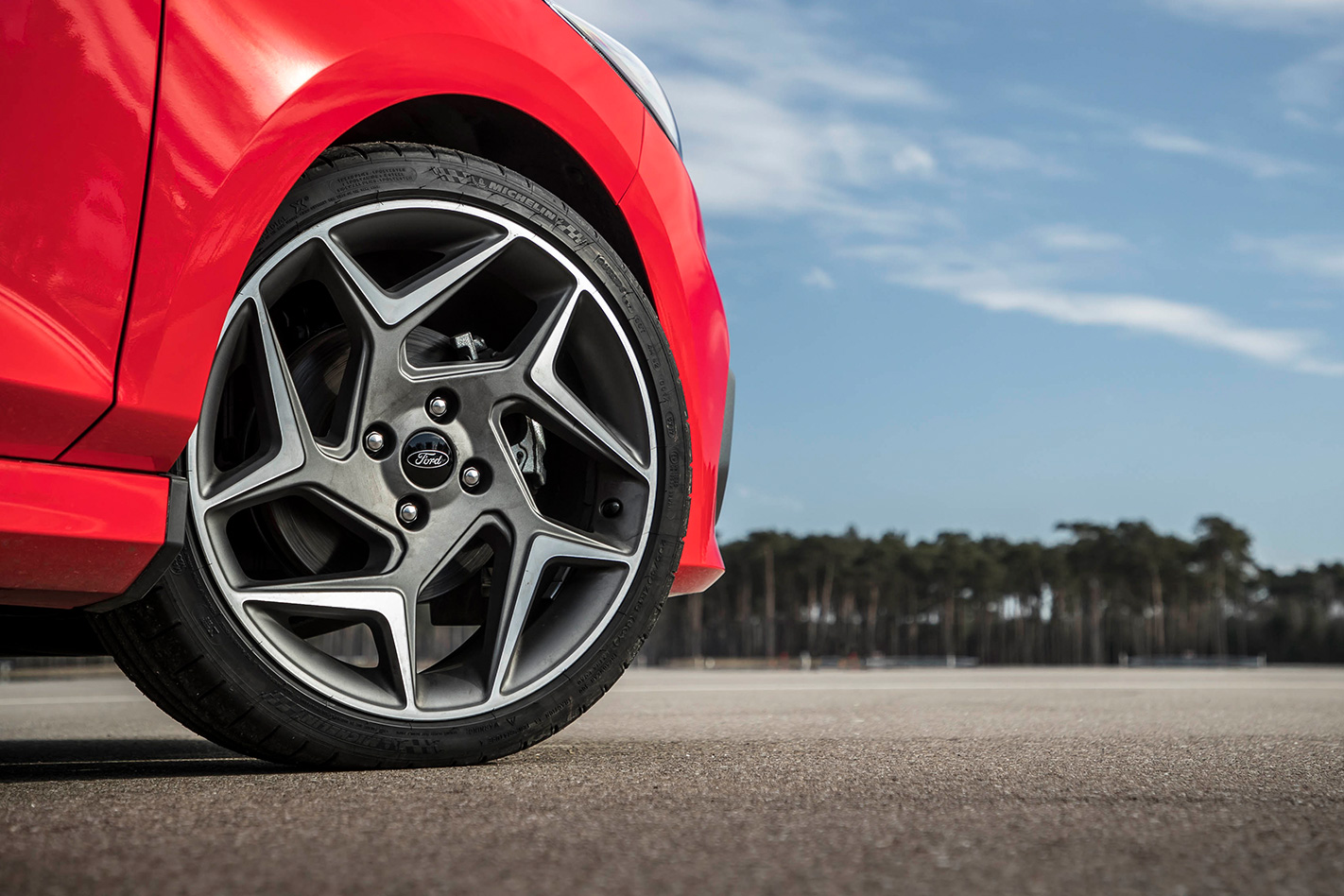
Launch control is a new feature for the ST as well, but the most transformational improvement is the addition of a Quaife limited-slip differential to the six-speed transaxle. It’s a proper mechanical unit rather than the brake-based virtual LSDs used by practically every other B-segment hot hatch, and while it’s optional in Europe, Wheels understands it’s likely to be standard-issue in Australia.
Helping it out is brake torque vectoring, which varies braking force between the left and right wheels to aid turn-in when decelerating or coasting, as well as mitigating understeer.
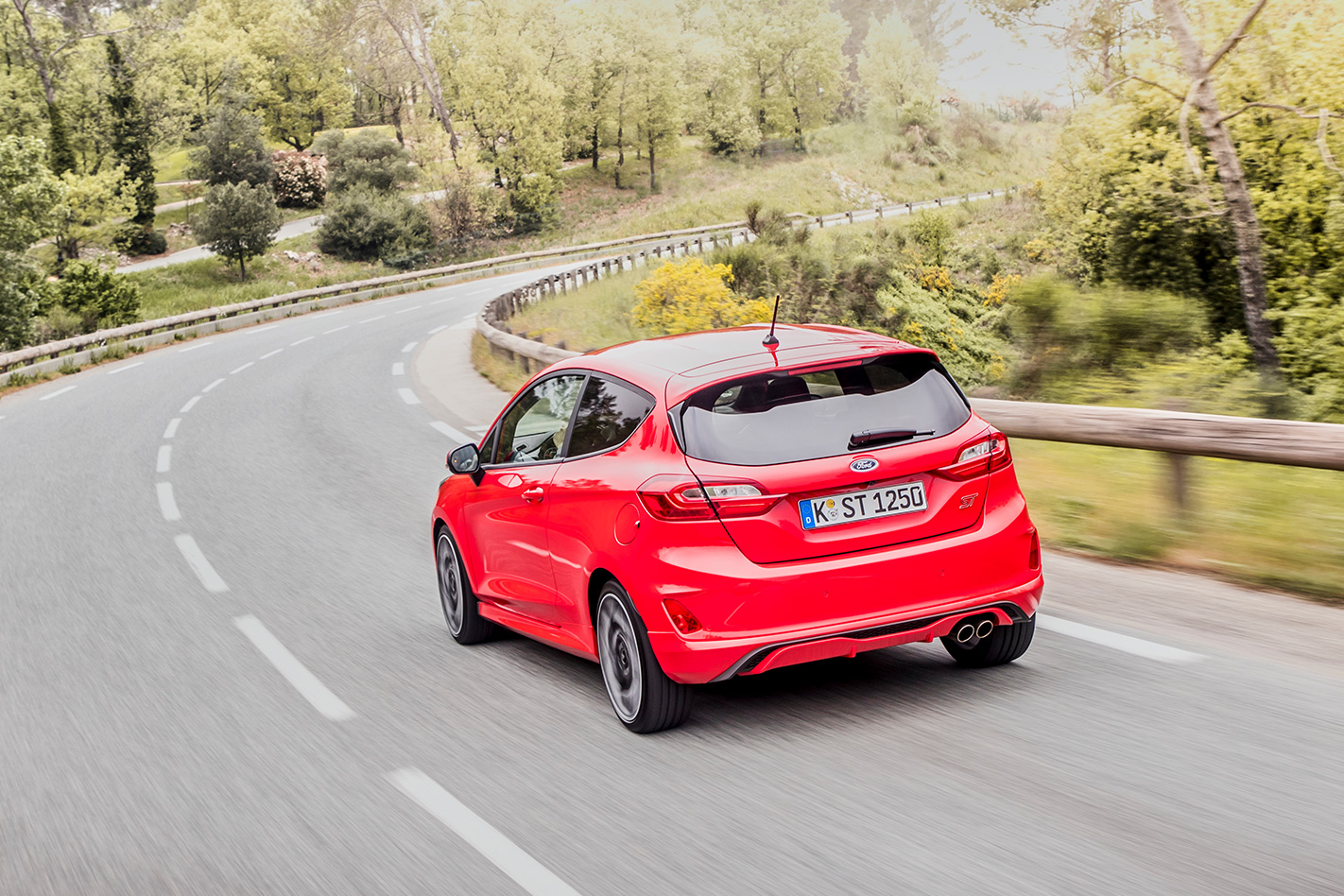
So that’s what makes the new ST tick. Let’s return to the Route Napoleon – it’s Ascension Day, a public holiday in France, and everyone with a fast car or motorcycle seems to have gravitated toward this road. Little wonder, considering the exceptional mix of fast sweepers and tight corners that can be found on the route around the town of Castellane. It’s prime hot hatch territory. We’re in a three-door ST equipped with the LSD and 18s – the lightest, most focused configuration – and it feels eager to attack what lies ahead.
The rubbery shifter isn’t especially precise, but the vague friction point that plagued the old car’s clutch pedal has been banished for good. Tipping in the throttle, the first impression is that the engine its far gutsier than expected of a 1.5-litre, and the swell of torque from just off idle endows it with outstanding tractability.
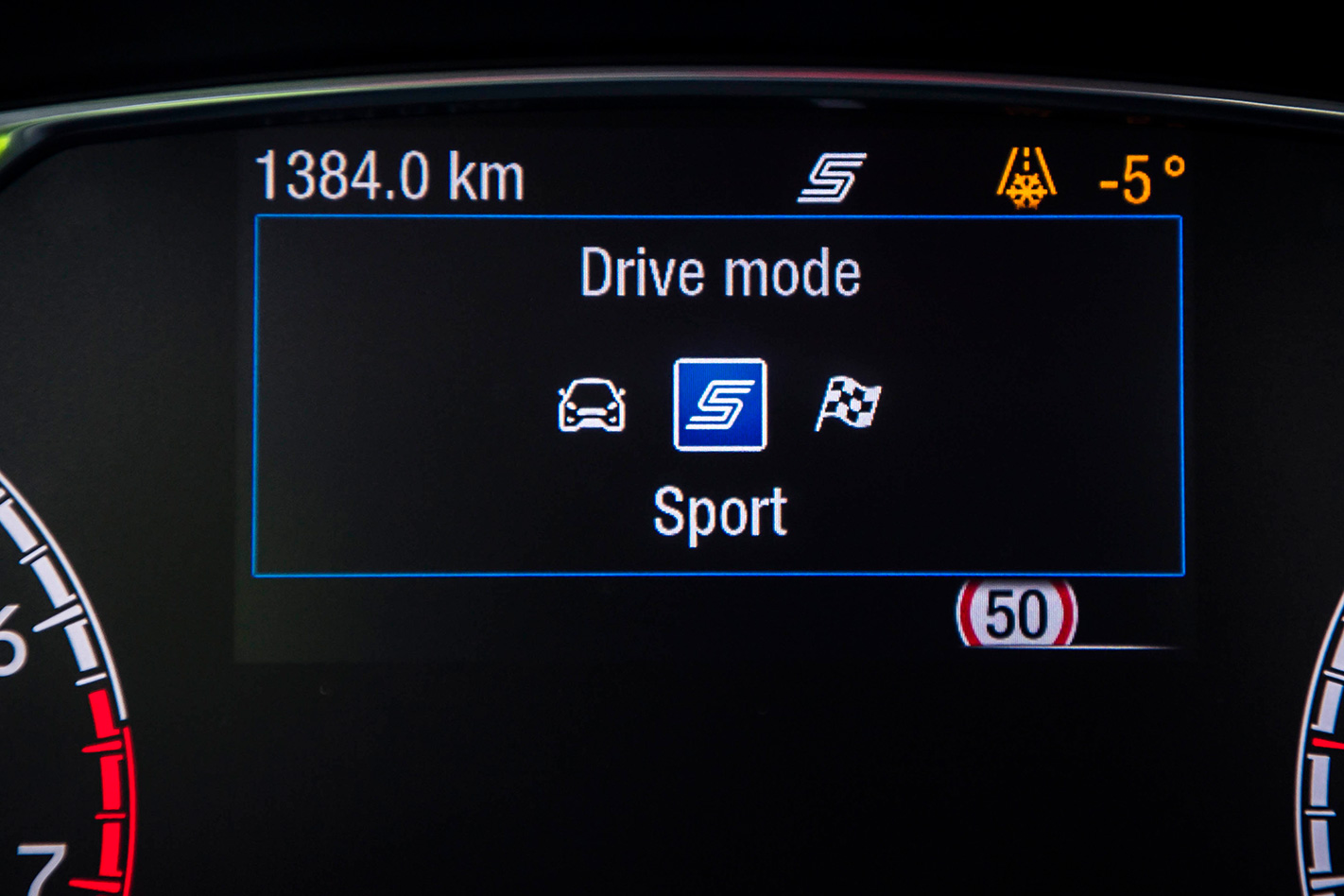
In Sport mode with the muffler flaps flipped open the three-cylinder burble also adds another endearing facet to this engine’s personality, though it’s unlike any other three-pot we’ve experienced. Rather, it sounds smoother and more V6-like (or even flat-six-like) than, say, the Audi A3’s 1.0-litre triple. Sport and Race modes also summon some extra theatrics from the fuel map, with rally-style exhaust crackles on big lifts of the throttle.
And the more revs you give it, the better it becomes. It’s torque-rich, yes, but it doesn’t mind chasing redline either. Keep the needle above 3000rpm and there’s no shortage of pull or throttle response until 6000rpm, where peak power is made and thrust starts to taper off before the ST’s 6200rpm redline.
That straight-line go is matched with a properly tied-down front end. There’s huge grip on these Michelins, and the limited-slip differential is a godsend. It lays power down beautifully, with no pauses in power delivery as chassis electronics attempt to rein in spinning wheels – just pure mechanical grip. The Quaife diff isn’t locked in for Australia, but the impact it makes on performance is so profound that it damn well ought to be. We had a punt in an open-diffed five-door and, while fast, it was missing the almost effortless traction of the LSD-equipped three-door and was slower as a result.
Both cars feel exceptionally alert through the steering wheel though, with a fat, leather-wrapped rim connected to an ultra-sharp and fast-ratio steering rack. As with its predecessor there’s virtually zero slack in its steering, though now (thanks to new geometry, those force-vectoring rear springs, frequency-selective dampers and improved suspension bushings) there’s a level of pliancy and fluidity to the Fiesta ST’s ride and handling that helps it cope with choppier roads. In other words, it’s actually comfortable now.
And that marks it apart from the Frenchies. With a chassis that’s more contained and sporty than the 208 GTi, yet not as single-mindedly firm as the Clio RS, the Fiesta ST eats up French roads with ease, peerless traction and few, if any, compromises. Does it beat them at their own game, on their own turf? Shockingly, it would seem so, and it’s going to be a blinder of a comparison test in Oz to find out for sure.
The ST’s limpet grip on the tarmac is hard to breach, but with enough inertia, the slacker ESP of the ‘Race’ drive mode, and a sharp lift n’ flick of the throttle and steering, the Fiesta ST’s rear end goes light and rotates around. It’s not the flamboyant kind of pirouette that you’d get in something like a Clio RS (especially non-Trophy models and their less sticky tyres), but at the same time it feels far more approachable, progressive and predictable when driven at the limit. Quite like its big bro, the Focus ST.
It’s hard to discern a dynamic distinction between the three-door and five-door, in case you were wondering. With just 21 kilograms separating them and identical length, track width and wheelbase, the two bodystyles handle virtually identically.
Problems? Very few. The pedals are still a little awkwardly spaced for neat heel-toe downshifts, and there’s no downshift rev-matching tech – or automatic option – to compensate for that. Automatic transmissions may be Kryptonite for many keen drivers, but self-shifting ‘boxes are fast becoming critical for commercial success. Even so, Ford has no immediate plans for an auto Fiesta ST. One could potentially join the family in the future, but for the time being all Fiesta STs will come with three pedals – no fewer.
The shift gate itself could also be tighter, and the lid for the centre console box gets in the way of elbows when selecting second, fourth or sixth. There’s a smidge of torque steer too, but it’s easily contained if you have both hands on the wheel, and there are few genuine qualms otherwise.
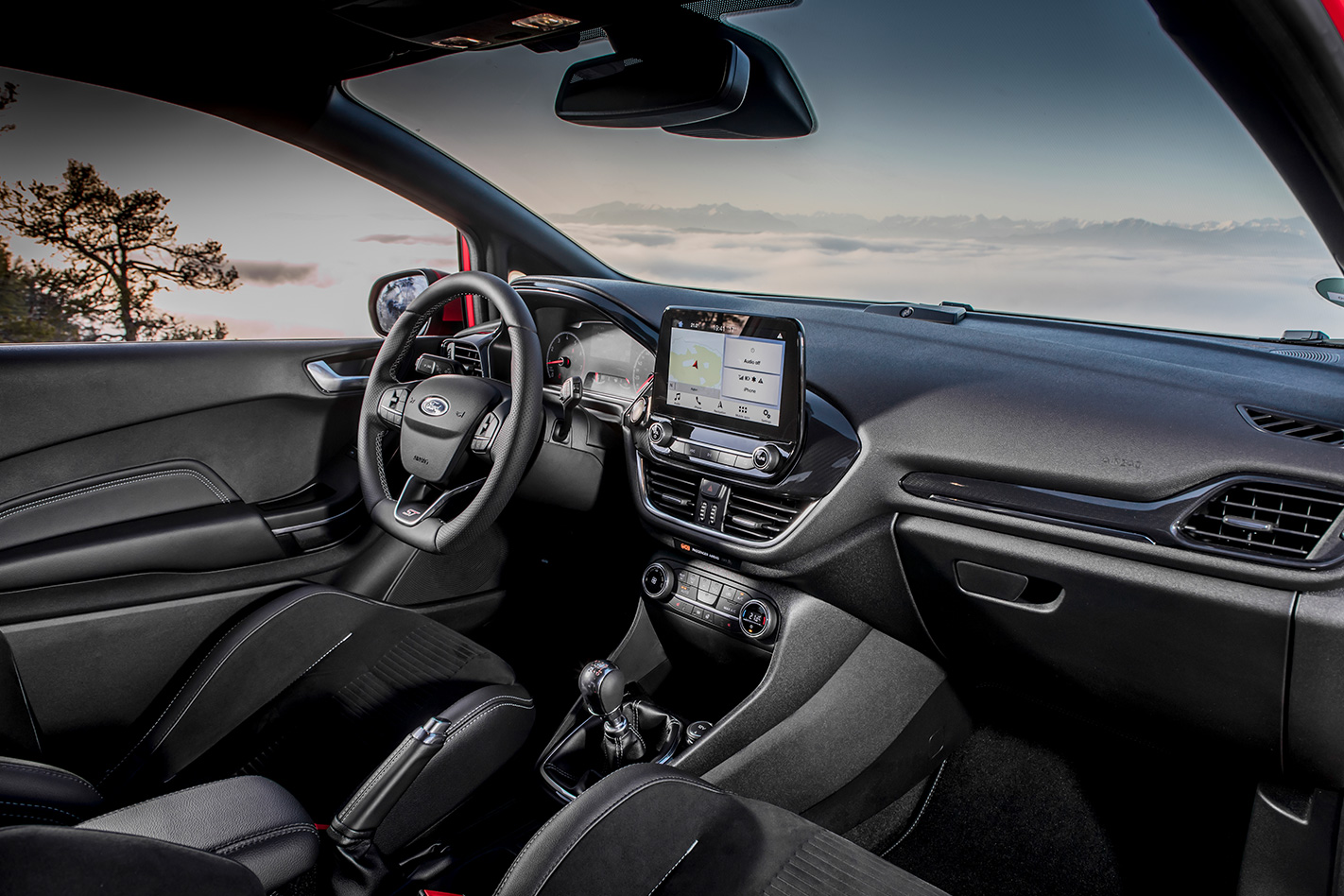
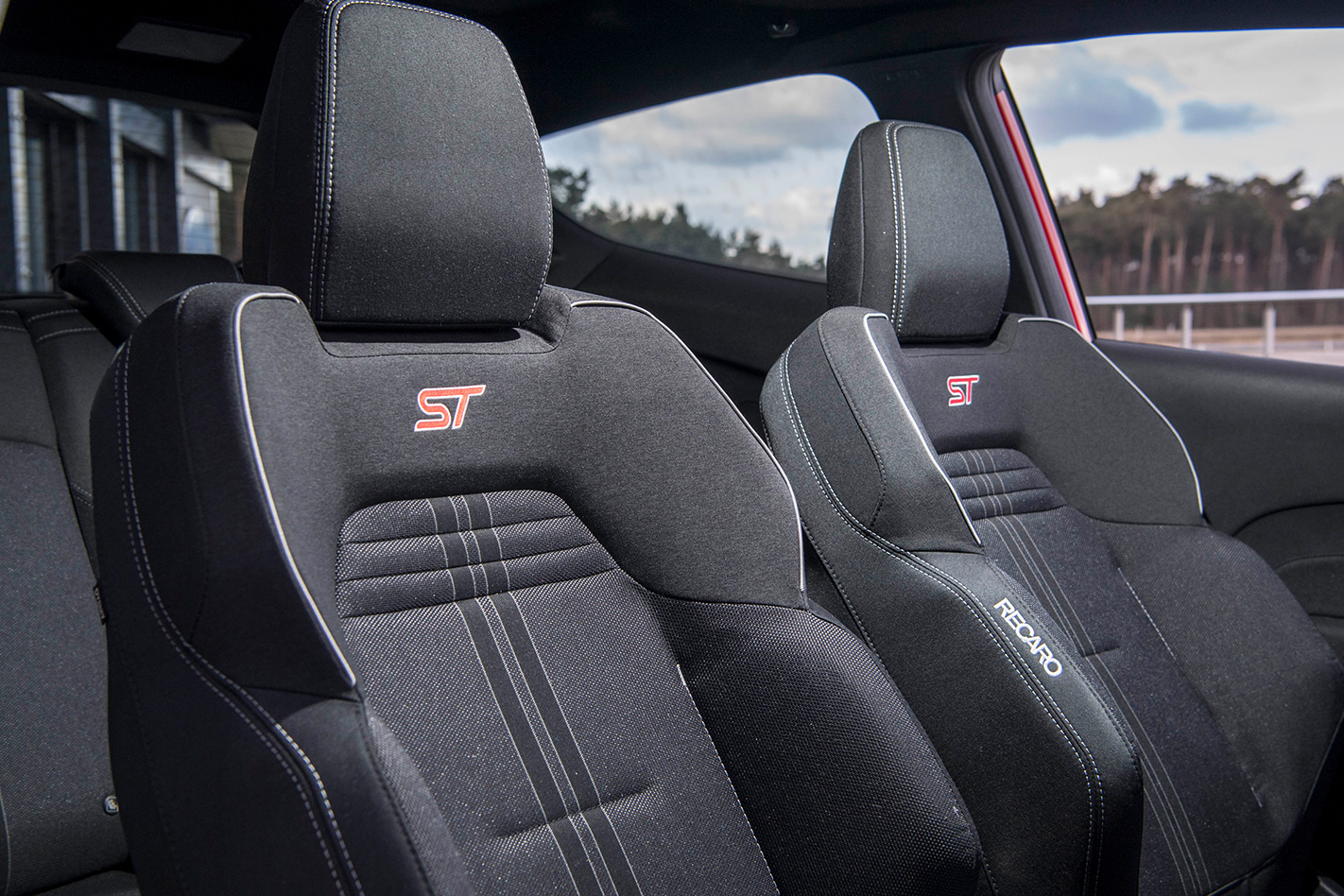
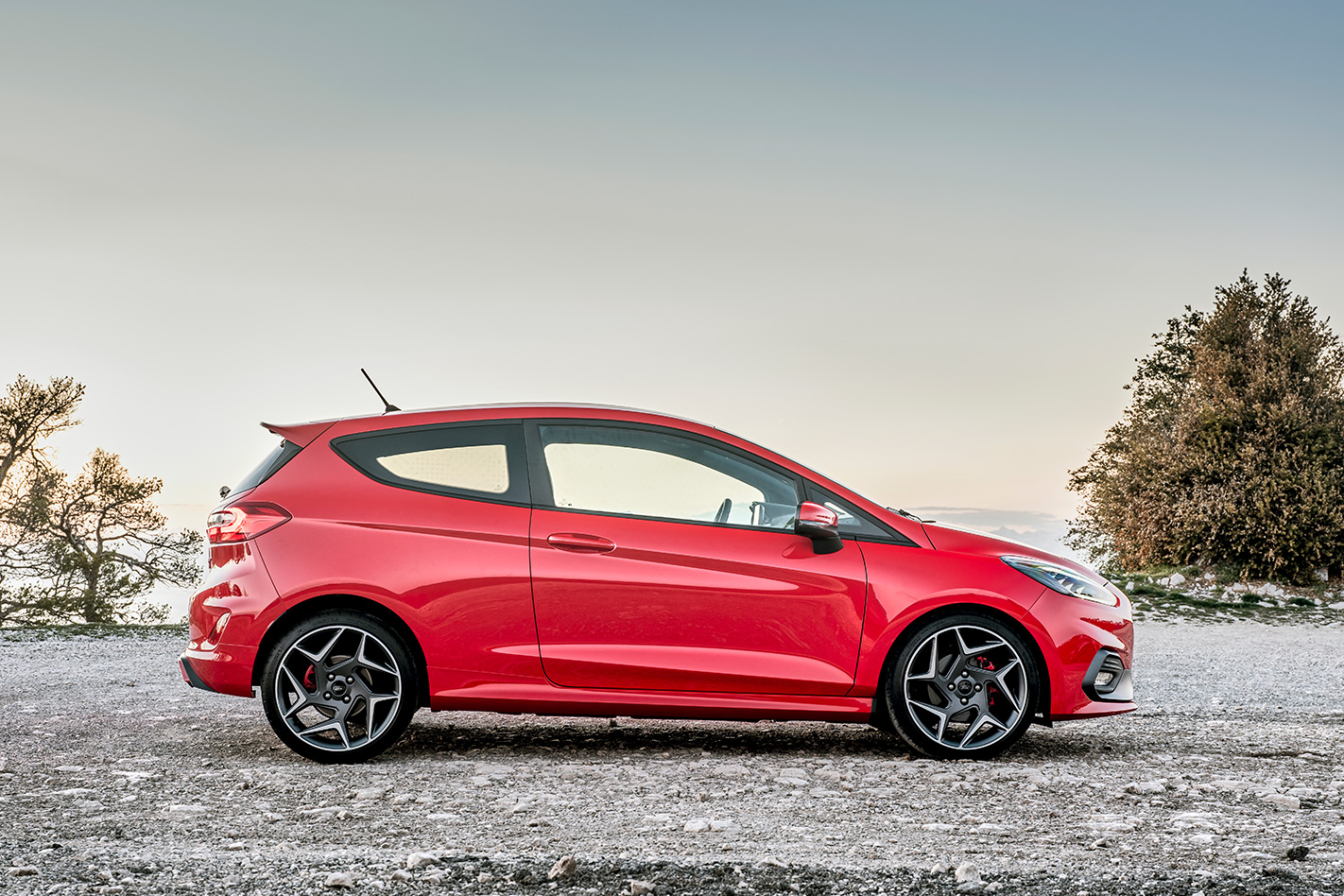
As with the outgoing car there’s a pair of Recaros up front, but this time they’re mounted on rails with plenty of height adjustment, while the steering column has a greater range of movement in both reach and rake. The old car suffered from bad ergonomics and perched the driver in a very un-sporty and upright seating position, but getting comfy behind the wheel of a Fiesta ST is no longer a challenge.
And while the second-gen ST was let down by a dated interior that boasted Nokia aesthetics in the iPhone era, its replacement suffers no such ailment. The new ST’s box-fresh interior lifts cabin quality significantly while also flaunting Ford’s latest and greatest SYNC3 infotainment system on an 8-inch tombstone-style screen (6.5in on low-spec Euro models), surrounded by cabin plastics that no longer have a Fisher-Price vibe.
The worst part is that we’ll have to wait so long for it. While it will have already launched in Europe by the time you read this, the Fiesta ST isn’t coming to our shores until the end of Q1, 2019. The final specifications of our cars have yet to be locked down, too.
As for bodystyle, it’ll be a hard decision for Ford Australia to make; to bring in the more overtly sporty, better-looking and somewhat selfish three-door, or capitulate to the demands of the public and give them the one with better everyday utility – the five-door. With the Fiesta ST being the sole Fiesta to go on sale in Australia, it’s unlikely we’ll receive both. Profit margins must be maintained, after all, and amortising the extra cost of bringing in two bodystyles will be a challenge for a car that won’t sell in volume.
And while the excellent Quaife differential should be a sure-fire inclusion for Australia, it’s less clear whether we’ll get the 17-inch alloys or the more eye-pleasing (and slightly sharper handling) 18-inch items instead. Local pricing is still to be determined, but a realistic window lies between $27-30K. With the new Polo GTI lobbing at $30,990 with an auto transmission as standard, the fast Fiesta will have to be priced well under that mark.
But whatever the price, be thankful that we’re getting it at all. Next year, the Fiesta ST will be the only Fiesta you’ll be able to buy brand-new from an Australian Ford dealer. Why? Because with production of the new-gen car now centralised in Europe, there’s no longer a fat enough profit margin in lower-grade Fiestas to enable a solid business case on our shores. However with a $25K-plus pricetag, the Fiesta ST has enough meat to make it worthwhile for Ford Australia and the dealerships that will sell them.
The wait will be a long one, but for those that can hold out it’ll most definitely be worth it.
SPECS
Model: Ford Fiesta ST three-door Engine: 1497cc 3cyl, dohc, 12v, turbo Max power: 147kW @ 6000rpm Max torque: 290Nm @ 1600-4000rpm Transmission: 6-speed manual L/W/H: 4068/1735/1469mm Wheelbase: 2493mm Weight: 1262kg 0-100km/h: 6.5sec (claimed) Economy: 6.0L/100km (EU) Price: $28,000 (estimated) On sale: Q1, 2019
Ford’s Everest large SUV will score the new Ranger Raptor’s gutsy 2.0-litre four-cylinder bi-turbo diesel engine and automatic emergency braking for the 2019 model year.
As forecast on WhichCar earlier this month, the new, more refined, powertrain, which also comes hooked up to the Raptor’s 10-speed automatic gearbox, will produce 157kW and a whopping 500Nm of torque from as low as 1750 rpm. The extra shove combines with the 10-speed’s closer gear ratios for more constant low range power and acceleration to make negotiating steep and slippery terrain easier.
Combined with Ford Auto Start-Stop, the bi-turbo provides improved fuel economy – 6.9L/100km in the 2.35-tonne Trend RWD, a significant improvement on the existing 3.2-litre five-cylinder Durotorq diesel’s 8.4L/100km claimed average.
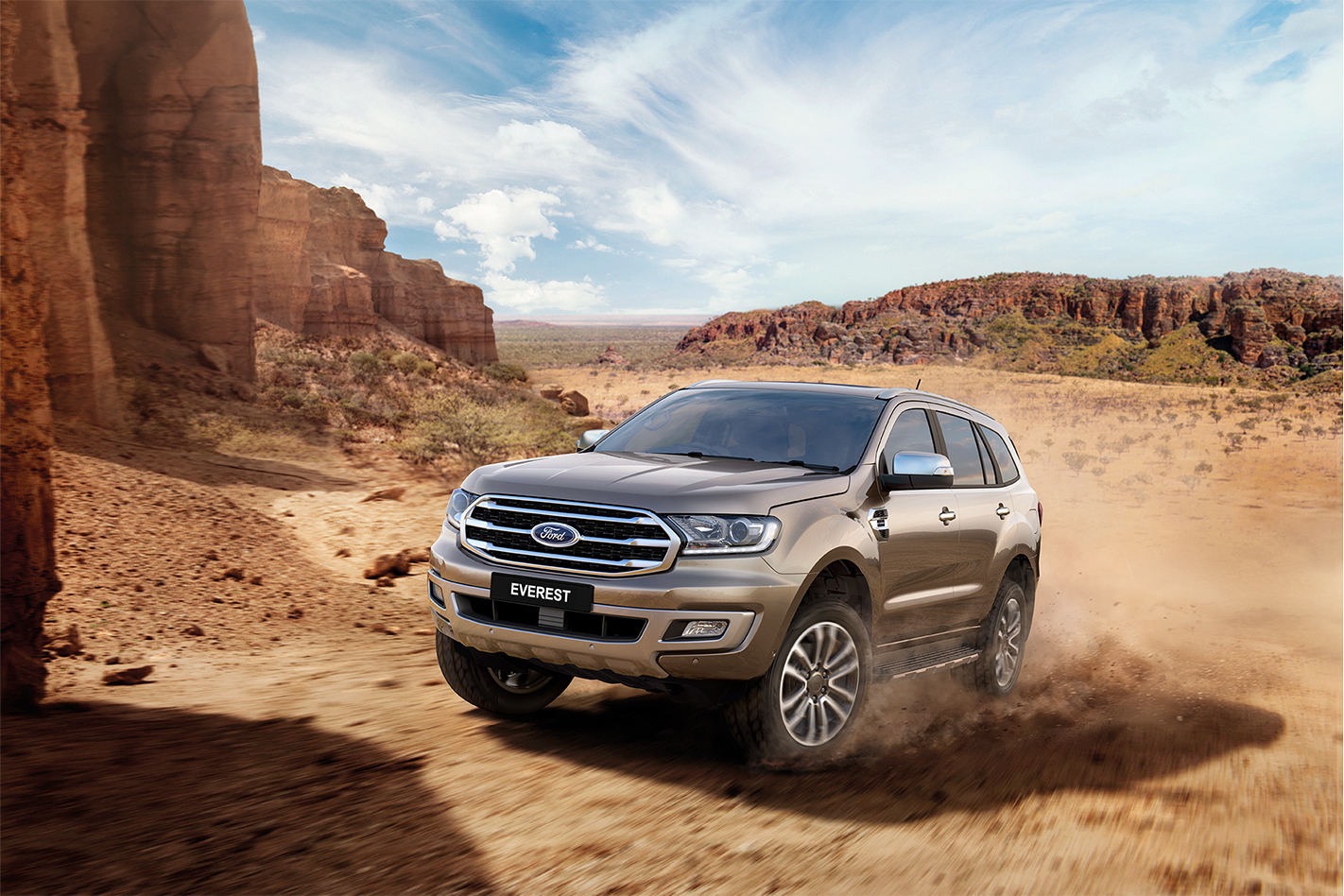
The twin turbo four-cylinder will be the standard powertrain on the range-topping Titanium spec and optional on the Trend grade over the Duratorq 3.2 diesel that’s also in the entry-level Ambiente.
Meanwhile Ford’s Pre-Collision Assist system featuring autonomous emergency braking with pedestrian detection will also be available in the 2019 Everest range – but only as standard kit in the Trend and Titanium variants.
The Trend and Titanium also acquire a hands-free power tailgate, while push button start will become standard across all three variants.
The 2019 Everest receives a minor facelift that includes a new grille treatment too. HID headlights will now be standard on the Everest Trend, while the range-topping Titanium will show off a new 20-inch split-spoke alloy wheel design.
Inside, the Everest’s spacious cabin gains a premium-look ebony interior and enhanced cabin materials, with more soft-touch surfaces throughout.
Engineered and developed for Australian conditions, the 2019 Everest will arrive in showrooms around September this year and will be covered by Ford’s new five-year, unlimited kilometre warranty.
Prices will be announced closer to launch.
The Nürburgring Nordschleife circuit can be treacherous enough during the day, but the 20.8km track becomes a different beast when the sun goes down… especially when it’s full of with other cars.
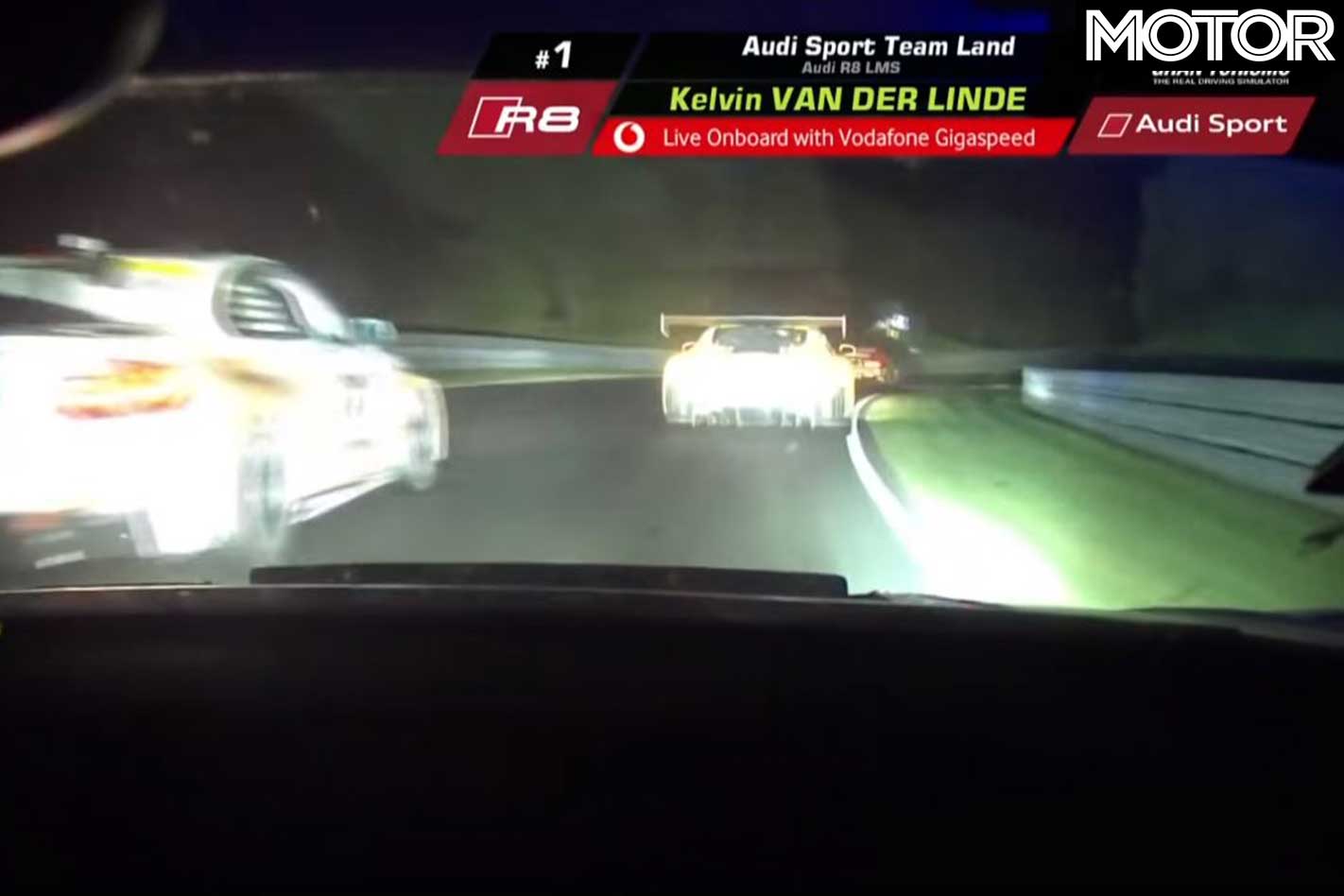
But managing to show us all how it’s done at the recent 24 Hours of Nürburgring was Audi Sport Team Land driver Kelvin van der Linde, pushing his Audi R8 LMS to the limit during this full lap onboard video.
For the first half of the video – which doesn’t actually show the lap beginning from the start line, but rather near ‘Foxhole’ – is a good indicator of just how packed the Nürburgring is during the race, with passing an every-few-seconds occurrence.
Given Christodoulou’s eventual place on the podium, it’s no surprise van der Linde finds it such a challenge to pass him.
What’s impressive about the whole thing however is how much more of a challenge passing at night would seem to be. The cars in front would see only headlights behind them (aside from the flashing blue LEDs, but we’ll get to that), which makes it harder to judge when and how to get out of the way of faster cars.
Luckily, those faster cars (in the GT3 class particularly) are equipped with flashing LEDs to alert drivers in front that they’re going to need to get out of the way, or risk holding up a much quicker car.
One casualty of the Green Hell can be seen around four and-a-half minutes into the video, a Porsche 911, that of Romain Dumas, faces the wrong way on the side of the track after a big crash.
Dumas was leading the race before the incident.
It seems like a fair idea – an option to do a speed awareness course instead of copping a fine and a demerit point when caught driving over the speed limit.
That’s a choice given to drivers in the UK for minor speeding offences, and there are calls to introduce the re-education classes in Australia.
The British Department of Transport’s National Speed Awareness Course has been criticised as a money-making formality that doesn’t teach anything drivers didn’t already know, but a newly published poll has shown it has had reasonable success with making speedsters reassess their driving behaviour.
According to the research, which was commissioned by the British government, 23 percent of attendees are less likely to be caught speeding again within six months of completing the course than those who opted for the fine and demerit points.
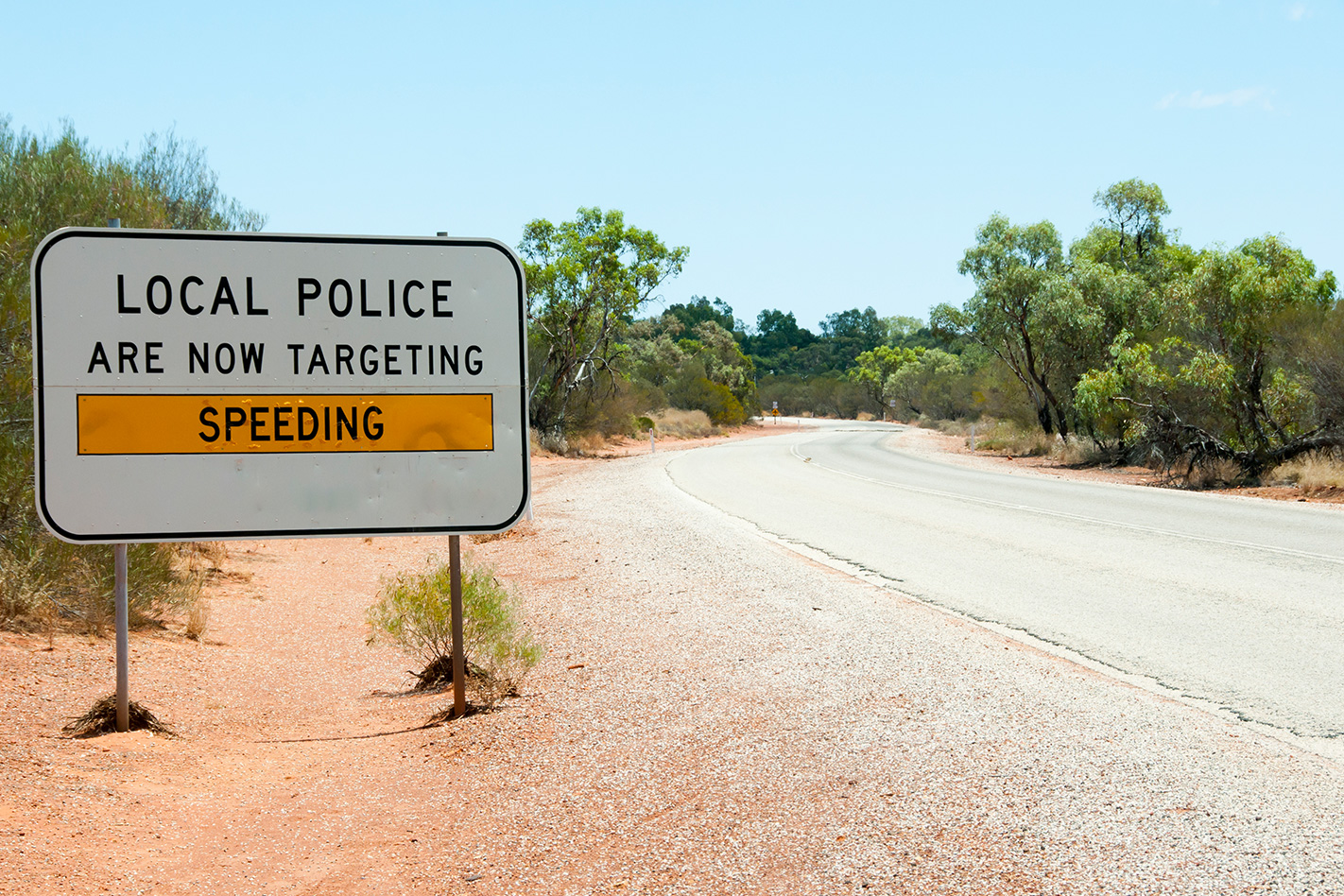
However, that gap diminished over time, with 21 per cent of attendees reoffending within three years, compared to 23 per cent who copped the fine and points.
Researchers pored through the records of 2.2 million speeding motorists and found more than half (1.4 million) opted for the course, with 192,000 coughing up the fine and losing points, and another 428,000 ineligible because their detected speed was too high.
They concluded that: “participation in the Speed Awareness Course reduced reoffending in comparison with the sanction of penalty points and fine associated with a Fixed Penalty Notice, and that this effect – while reducing with time – persisted over 36 months.”
The British Government talked up the results, with roads minister Jesse Norman saying he was “delighted to see that the National Speed Awareness Course is clearly working well in preventing drivers from putting other road users at risk by breaking speed limits”.
Closer to home, that positivity is shared by the NRMA, which has been calling on the NSW government to introduce the course to help stem a spike in road deaths, with the support of the NSW Police Association and the State Labor Opposition.
The NRMA wants the NSW Government to adopt the UK model making the course optional for drivers caught speeding by 10 km/hr or under. It would act as a one-off substitute to the driver getting a $114 fine and losing one demerit point per three year cycle.
NRMA Chairman Kyle Loades said while the organisation was a strong supporter of the NSW Government’s strategy to reduce the road toll through enforcement, new and innovative education programs should also play a part in saving lives.
“The NRMA also strongly believes that enforcement must be coupled with education in order to have a lasting impact on the road toll.
“That’s why the NRMA wants the Government to adopt this innovative approach to driving road safety messages home to low-range speeders. By doing the course the driver, who must have a clean record, saves money and a demerit point – but the course might just save their life and others.”
But a UK drivers’ rights group has described the courses as ‘money-making’ (attendees pay around $180) and ‘unethical’, pointing out the research showed that there was no ‘statistically significant’ evidence that drivers who have completed the course are less likely to be involved in collisions resulting in injuries.
The Alliance of British Drivers says the lack of strong evidence to suggest that the schemes improve road safety means the courses should be used differently, and only offered to drivers whose offences end up in court.
“This unethical and legally dubious diversion of drivers to speed awareness courses is primarily about generating money, not about road safety because there is no evidence of any real benefit,” the ABD said in a statement.
‘We suggest speed awareness courses should cease to be a money-making industry for ex-police and road safety officers and should only be offered to people who are actually convicted of speeding offences. Otherwise they are just a way to bribe the police to look the other way when an offence is committed.’
The NRMA’s support aside, there are no apparent plans to introduce speed awareness courses in Australia; with the Australian National Road Safety Strategy continuing to recommend prevention by promoting the benefits of lower speeds through advertising, school programs and community seminars, along with enforcement.
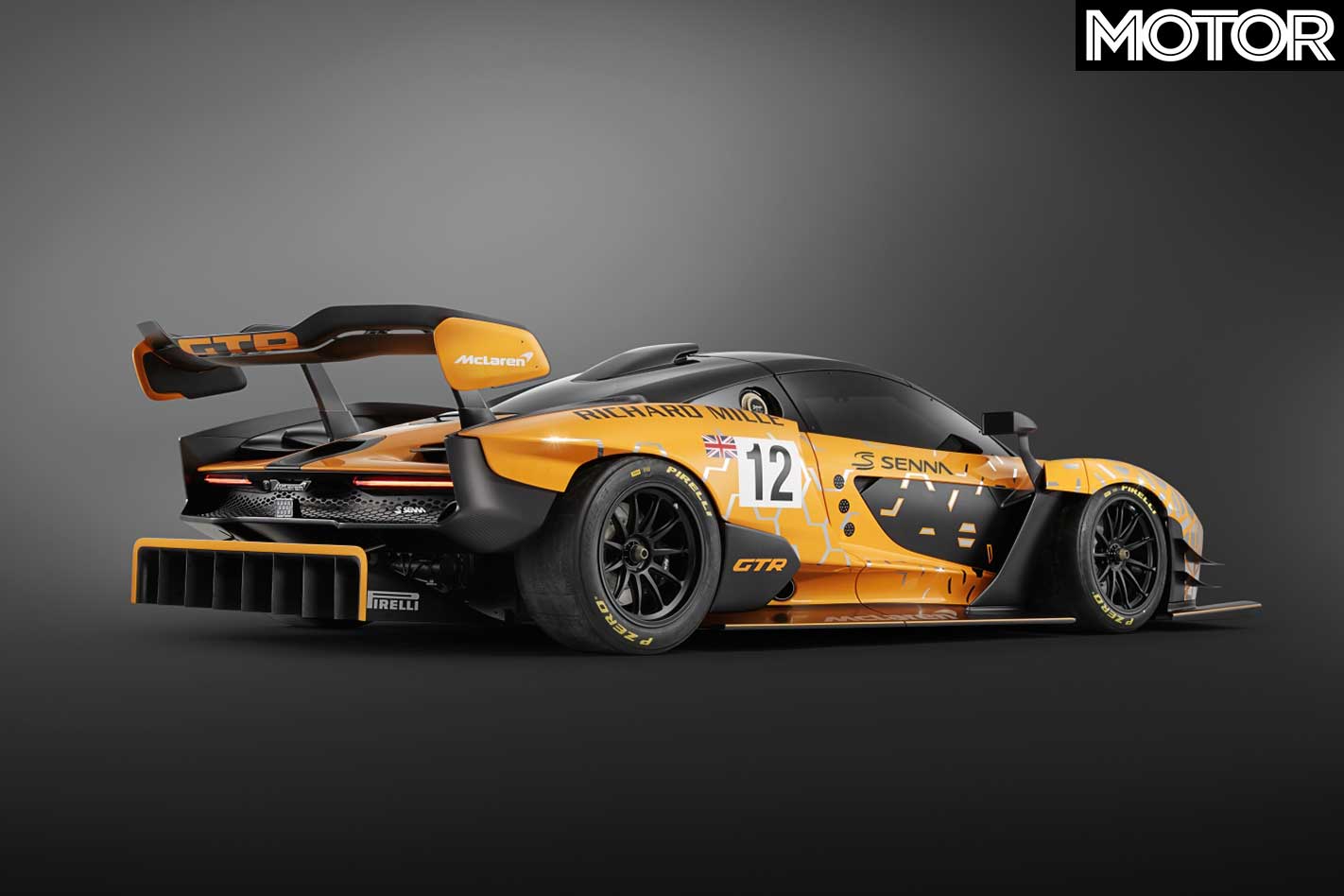
The 720S-based limited-edition P1 successor, with a racecar-sized wing that can develop 800kg of downforce, is completely sold out after the entire 500-unit allocation snapped up via pre orders. However, McLaren global communications director Wayne Bruce told MOTOR that Aussies were successful in snapping up the 588kW and 800Nm hypercar.
“Yes there are Sennas coming to Australia,” he revealed at an event in Sydney last week.
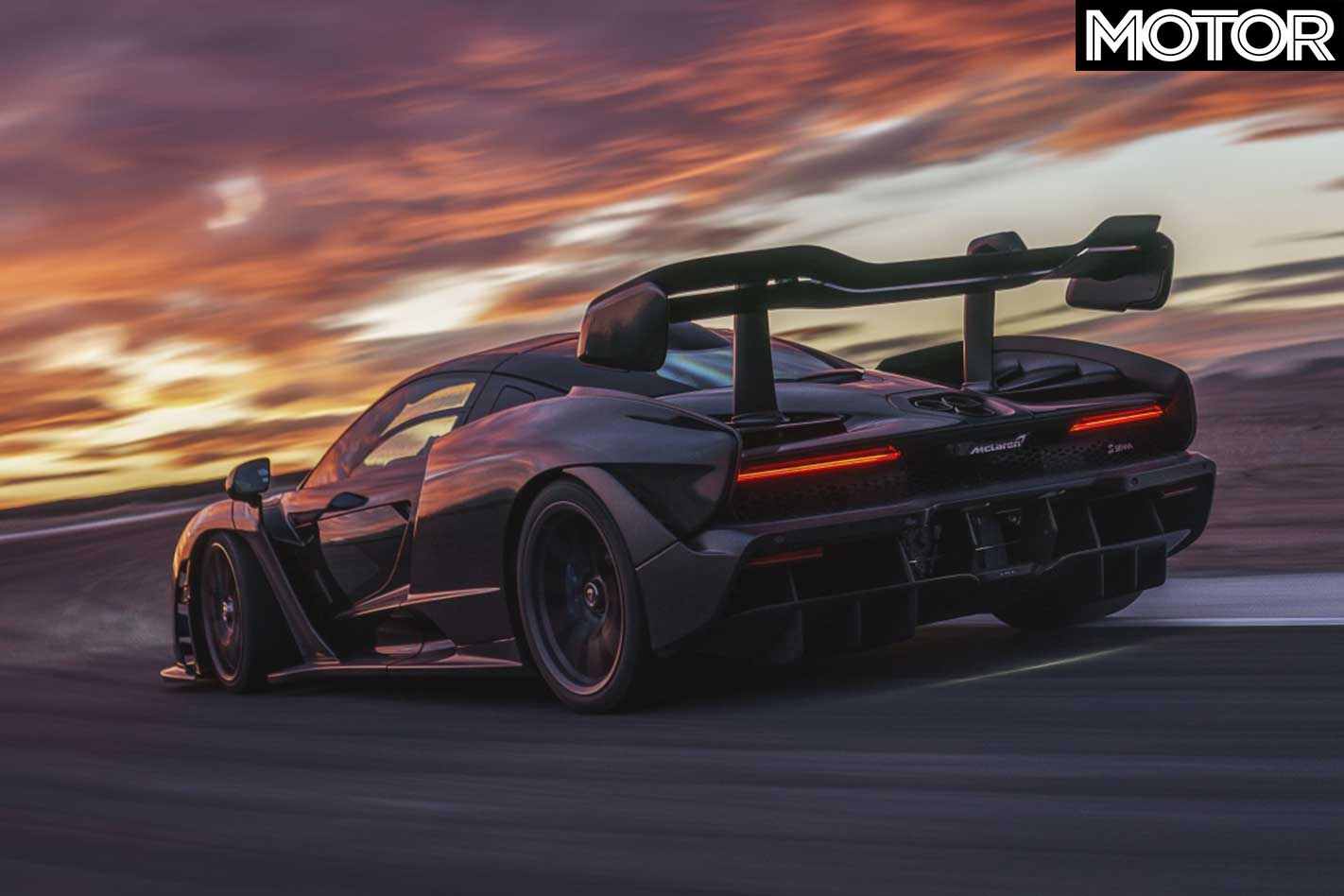
The P1 was built only in left-hand drive, as was the case with the Ferrari LaFerrari and Porsche 918 Spyder, but the Senna will be made in right-hook for UK and Aussie punters.
Yet that 3.8-litre twin-turbocharged V8-engined model, with a kerb weight of just 1198kg and a seven-figure pricetag, will still not be the most expensive McLaren coming to Oz.
Bruce revealed that by Christmas it will have taken the cloak off its new flagship and spiritual successor to the McLaren F1, currently codenamed BP23, or Bespoke Project number two and with three seats. It has a $2.9m pricetag in our coin, more than twice that of the Senna – but, with just 106 being produced, less than a quarter of its production rate.
“We’ll show the car before the end of this year and customer deliveries will start in 2020,” he confirmed.
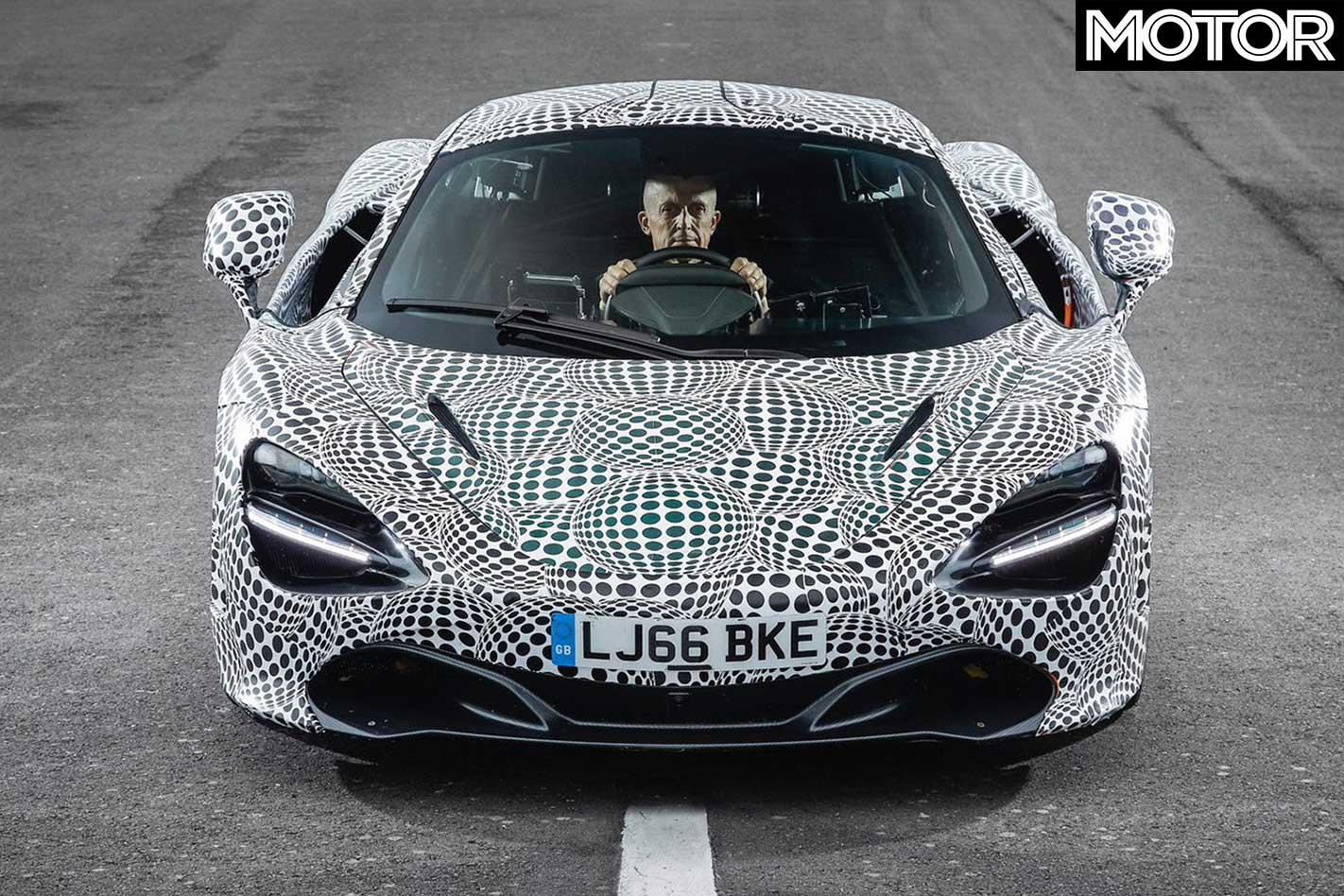
“Nobody knows outside the company what exactly it is going to look like, but that hasn’t stopped 300 people around the world saying they want one. That means around 200 people are going to be unhappy – sorry.”
And “at least one” is likely to make it to our shores, though whether its central driving position will allow it to be registered in this right-hand drive market remains to be seen. If it can’t be, the BP23 won’t top the Senna as the priciest vehicle to legally grace our streets.
Not only is the BP23 sold out three times over, but the Senna GTR is to the same degree as well, with the 75-unit production run of that racetrack-only – or non-road-legal – version of the Senna racking up a 200-strong cue of buyers, Bruce confirms.
While Lamborghini expects to double its total production volume from 3815 global units last year to capacity for 8000-plus this year thanks to its new Urus performance SUV, McLaren will not take the same path. Last year it produced a similar 3340 vehicles, but it only wants to produce between 4000 and 5000 vehicles all the way until 2022.
The focus, Bruce says, is vehicles like Senna and BP23 over any sort of SUV.
“We’ve got no space to make an SUV, and we have no desire to make an SUV,” he reiterated.
“But most importantly our customers are not asking us for a McLaren SUV. If you come with us to Woking [headquarters] and down to the directors’ carpark you’ll see many Defenders and Ranger Rovers – they do a better job of it than we ever could, so we’ll leave that to Land Rover.”
YOU PROBABLY wouldn’t have picked the Peugeot 308 GTi 270 if asked which of the cars assembled here packed the most potent power-to-weight figure.
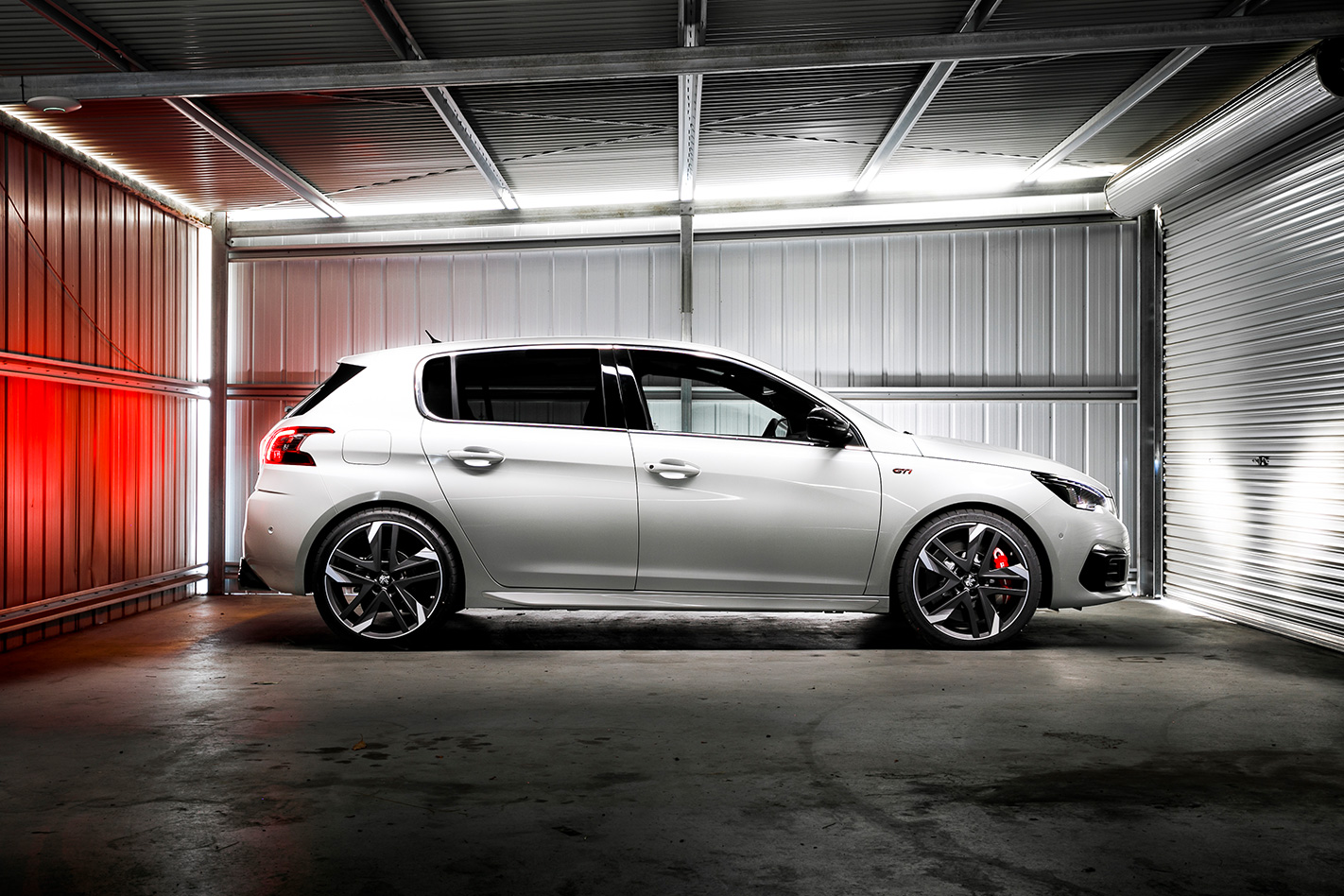
You’d have likely nominated the Civic Type R or the Subaru WRX STi on that score, but it’s the unassuming-looking French car that claims the kW/tonne crown here, thanks in no small part to a 1205kg kerb weight that would have impressed Colin Chapman.
It’s 65kg lighter than the Clio despite being a class bigger and would even make a base Toyota 86 look a bit of a bloater, despite seating five and packing a 200kW wallop. Coming from a 1.6-litre engine, that’s also the highest specific output of our field.
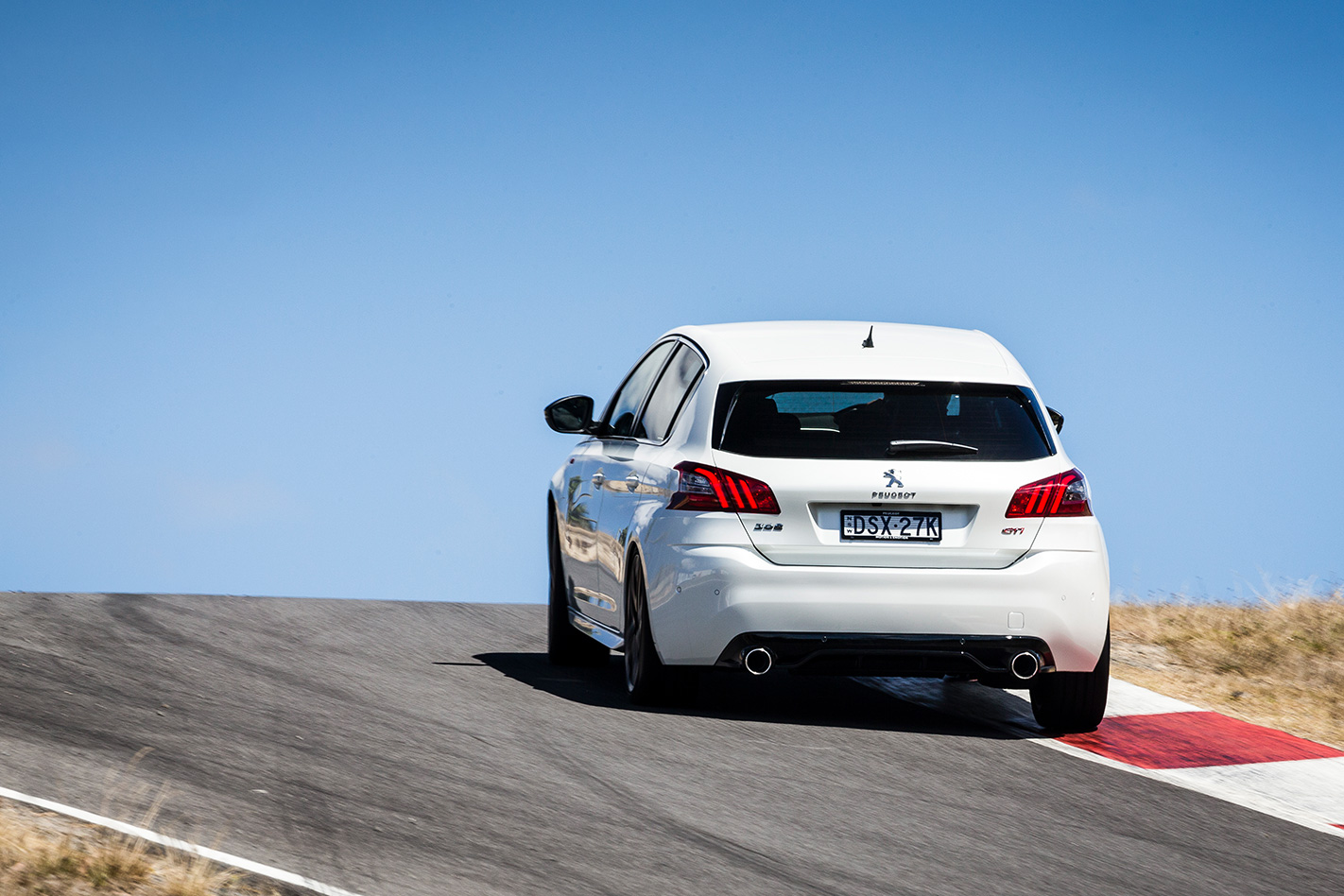
That gossamer kerb weight creates a virtuous circle in terms of dynamics. The 308 GTi rides beautifully, pulls up crisply on the brakes and makes the most of its power output, lapping quicker than the 221kW WRX STi and the 213kW Golf R. The initial impression is of polish and fluidity, the inherent suppleness of the suspension burnishing the Peugeot’s credentials as a fast road car. The Torsen helical limited-slip diff never feels quite as aggressive as that of the Civic or the i30 N, and there’s occasional tramlining from the 19-inch Michelin Pilot Super Sports, but that aside, it’s an instantly appealing package.
The EMP2 platform’s simpler and lighter torsion beam rear suspension isn’t quite as slick as a multi-link rear end, but the 308 GTi makes amends with a mighty front end, great body control and a powerplant that feels barrel-chested as long as you don’t dip below the turbo’s sweet spot.
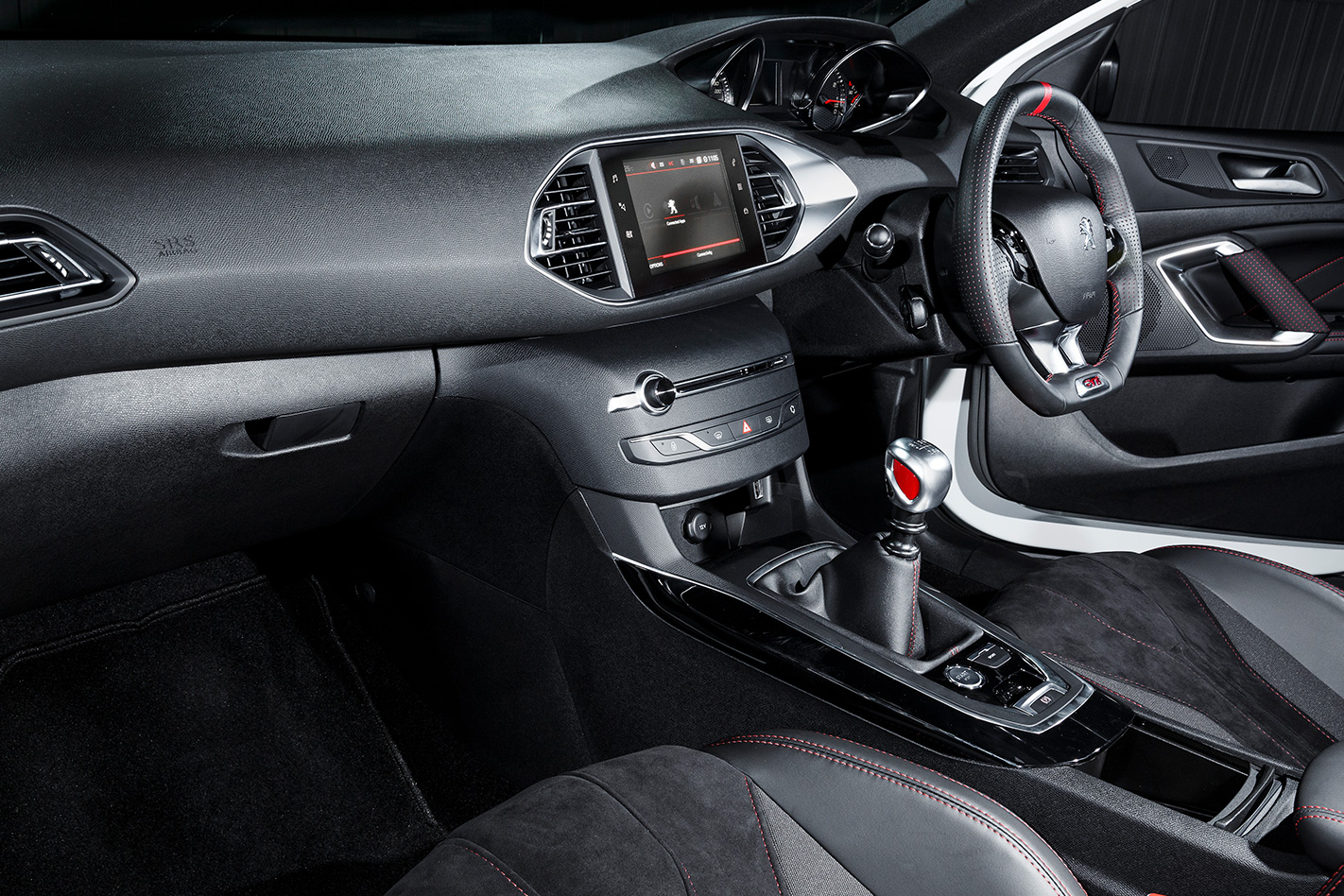
The manual gearbox is slightly longer in throw than some here, but feels well-oiled and positive, although it can baulk if you try to rush the synchro. The pedal placement is probably the best of the bunch too. Switch the car into Sport and the sound signature makes heel and toeing so simple that at first you have to check to see whether the car is executing the perfect throttle blip on downchanges for you. The 380mm front discs and four-piston calipers are hugely reassuring once you’re dialled into the middle pedal’s short travel.
Of course, being a French car, there are the occasional ergonomic glitches, such as the way switching into Sport causes the digital speedo to vanish, retrievable by prodding the end of the left-hand stalk a few times. There were also a couple of annoying trim rattles.
The tiny, low-set steering wheel might also dissuade some. I love its roll-of-the-wrists directness and that feeling like you’re on a triathlon bike, measuring your inputs carefully. It makes the car feel precise and special, but for shorter drivers it can obscure the main dial pack. The rest of the cabin looks slick and a couple of our judges thought the minimalist architecture of the dash was the best executed of all gathered contenders. Yet space in the rear is tight and it feels meanly equipped, with no rear vents or power outlets, and the ride that feels so fluid up front is notably more fractious in the back.
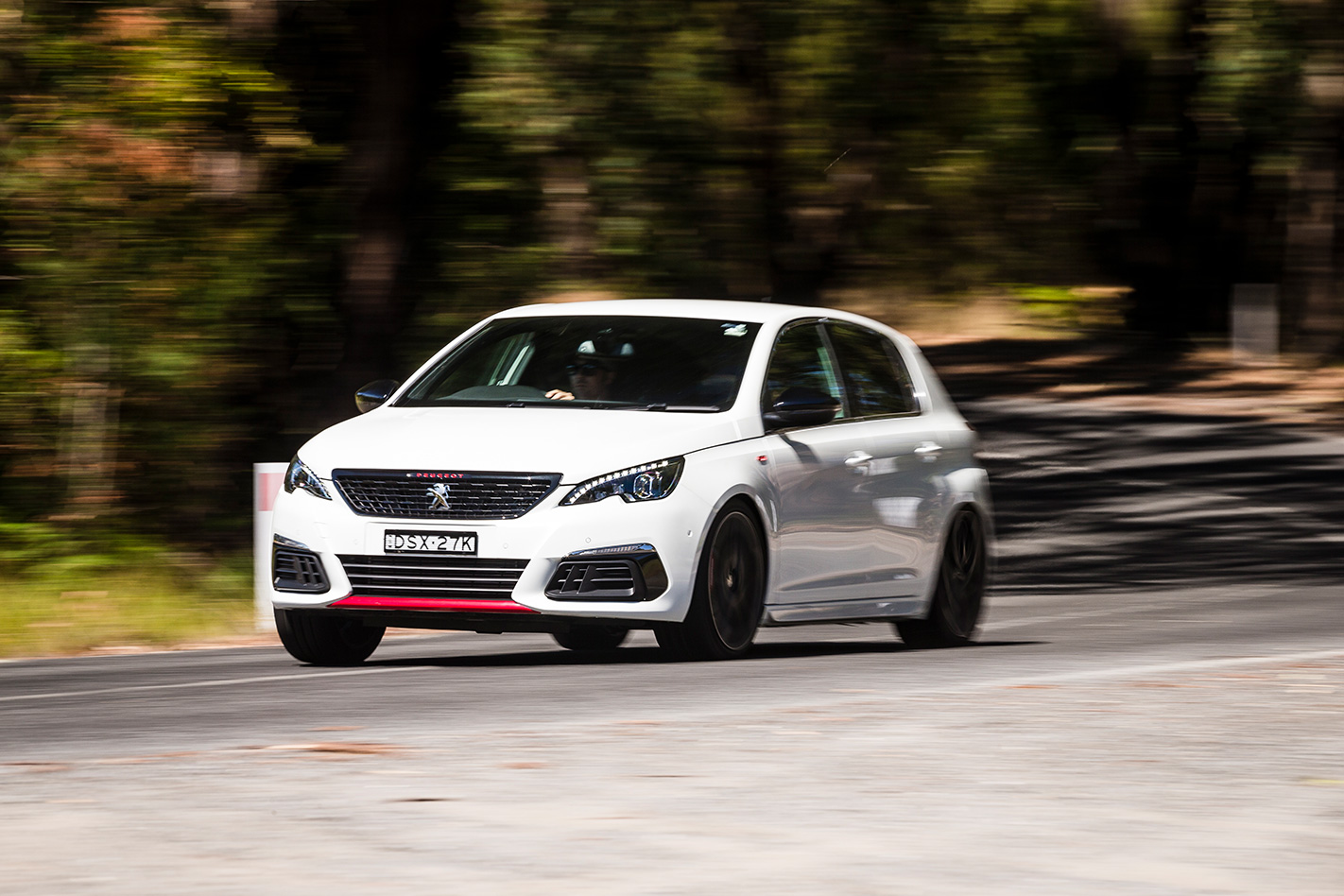
Above all, the 308 GTi nails a brief of being fast, discreet and classy. The Volkswagen Golf R also delivers on that brief, but the Peugeot is notably quicker on a challenging road and, as long as you spec it tastefully, has that rare talent of flying under the radar. We love it, which is why it more than merits its podium position here.
Peugeot 308 GTi 270 LAP TIME: 1:04:7sec SCORE: 8.5/10
Engine: 1598cc 4cyl, dohc, 16v, turbo Power: 200kW @ 6000rpm Torque: 330Nm @ 1900-5500rpm Transmission: 6-speed manual Weight: 1205kg Tyres: Michelin Pilot Super Sport 235/35ZR19 Fuel consumption: 14.4L/100km (tested) Power to weight: 166kW per tonne 0-100km/h: 6.0 sec (claimed) Price: $45,990
Hot Hatch Megatest Contenders
12th, Score 6/10: Mini Cooper S JCW
11th, Score 6.5/10: BMW 125i
10th, Score 6.5/10: Subaru WRX Premium
9th, Score 7/10: Subaru WRX STI
8th, Score 7/10: Skoda Octavia RS245
7th, Score: 7.5/10: Ford Focus ST
6th, Score: 7.5/10: Renault Clio RS220 Trophy
5th, Score: 8/10: Volkswagen Golf GTI Original
4th, Score: 8.5/10: Volkswagen Golf R Grid
3rd, Score: 8.5/10: Peugeot 308 GTi 270
2nd, Score: 9/10: Honda Civic Type R
Winner, Score: 9/10: Hyundai i30 N
WE’RE just under a month out from the 86th annual 24 Hours of Le Mans endurance race, where BMW plans to unveil its production-ready 8 Series alongside the M8 GTE racer.
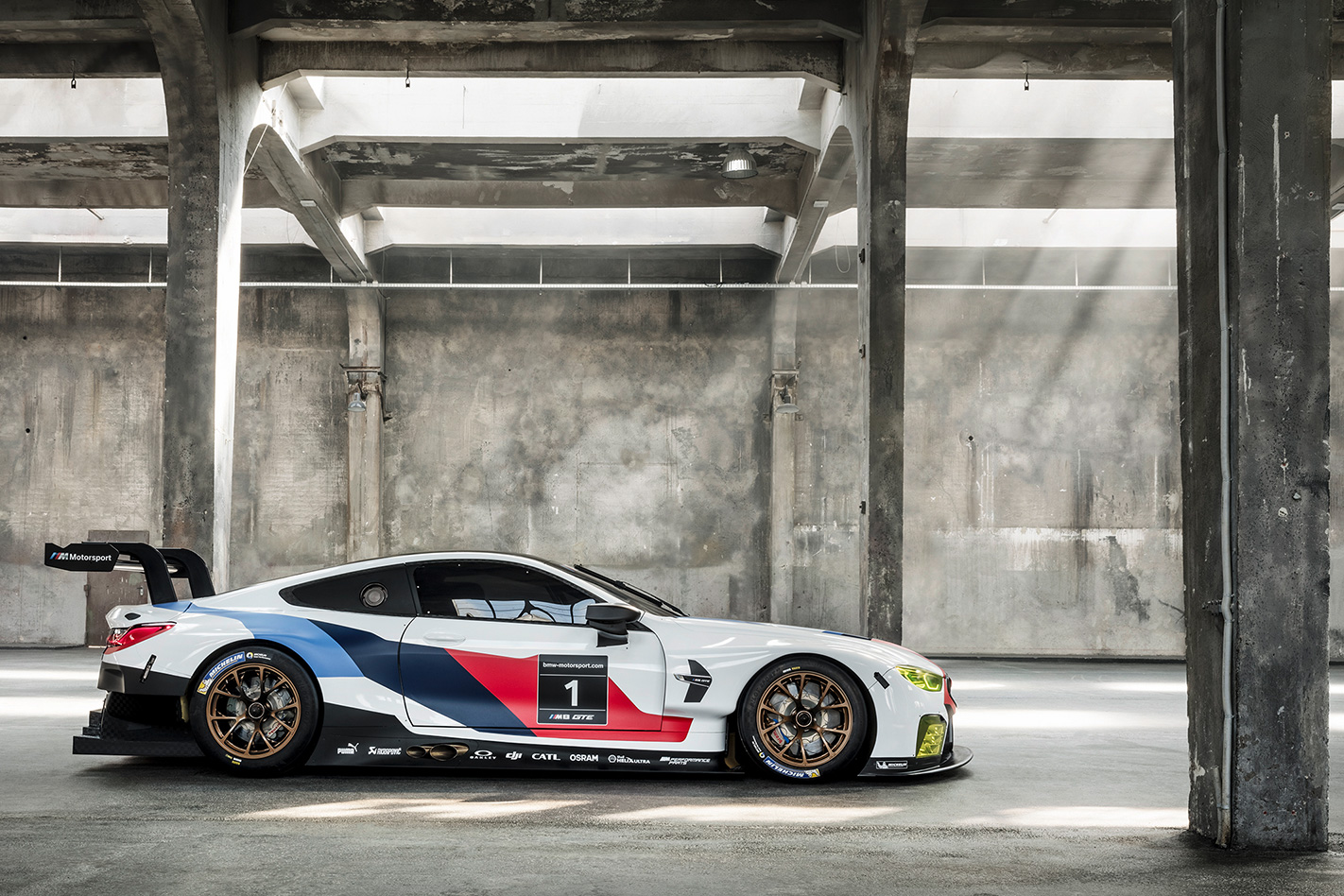
BMW’s involvement in the legendary enduro can be traced back to the late 1930s where the BMW 328 placed first in its class and fifth overall – one of the first motorsport events it would ever enter.
Nearly 80 years later they’re ready and raring to get back into the action after a six-year absence. Factory-backed BMW Team MTEK has committed to the full 2018 World Endurance Championship and will join the GTE Pro class at Le Mans, battling it out against seasoned veterans like the Ford GT, Porsche 911 RSR and Aston Martin Vantage GTE.
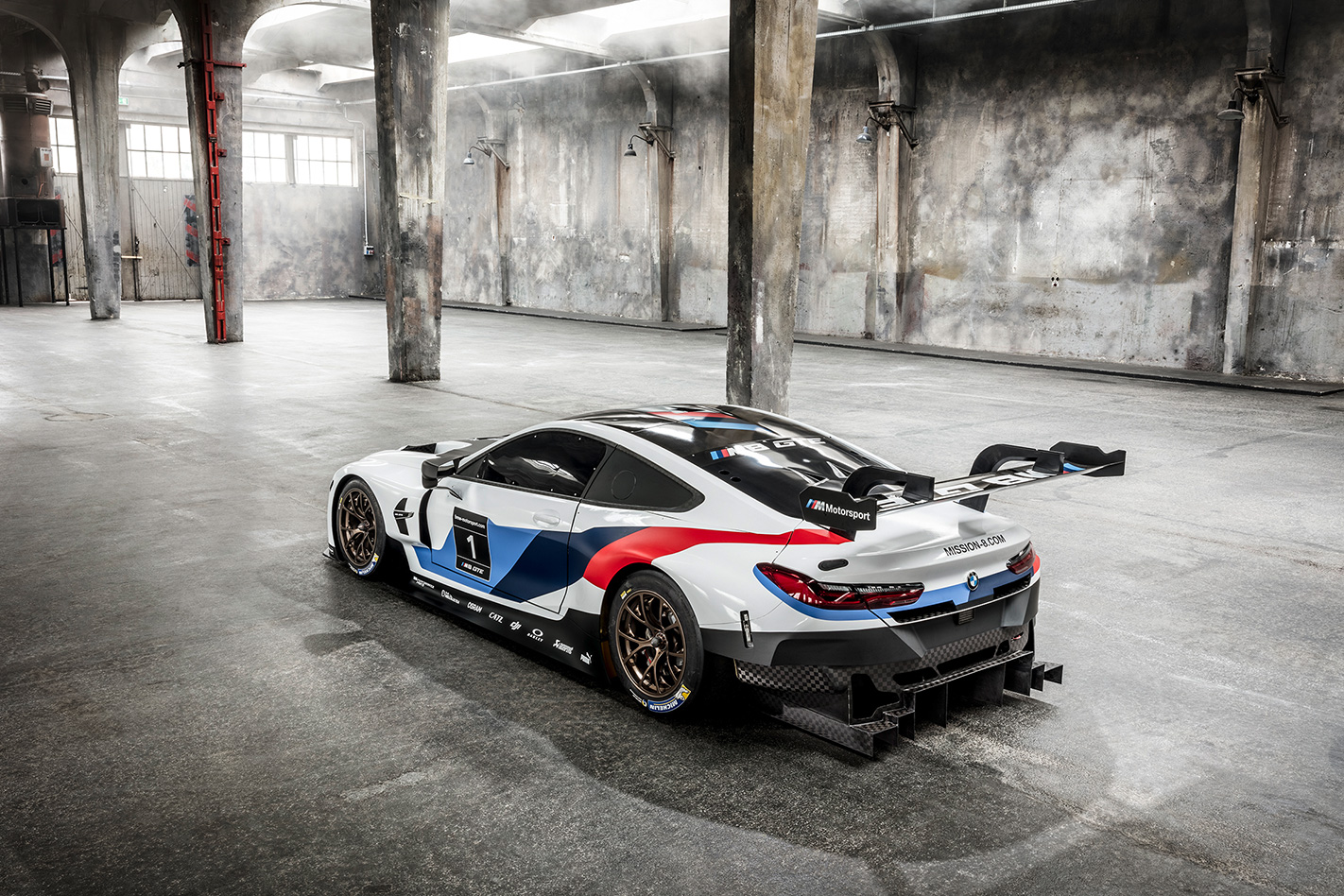
To celebrate BMW’s return to Le Mans with the new 8 Series-based M8 GTE (as if we even needed an excuse), we’ve compiled a list of our favourite BMW racers to have graced the Circuit de la Sarthe.
BMW V12 LMR
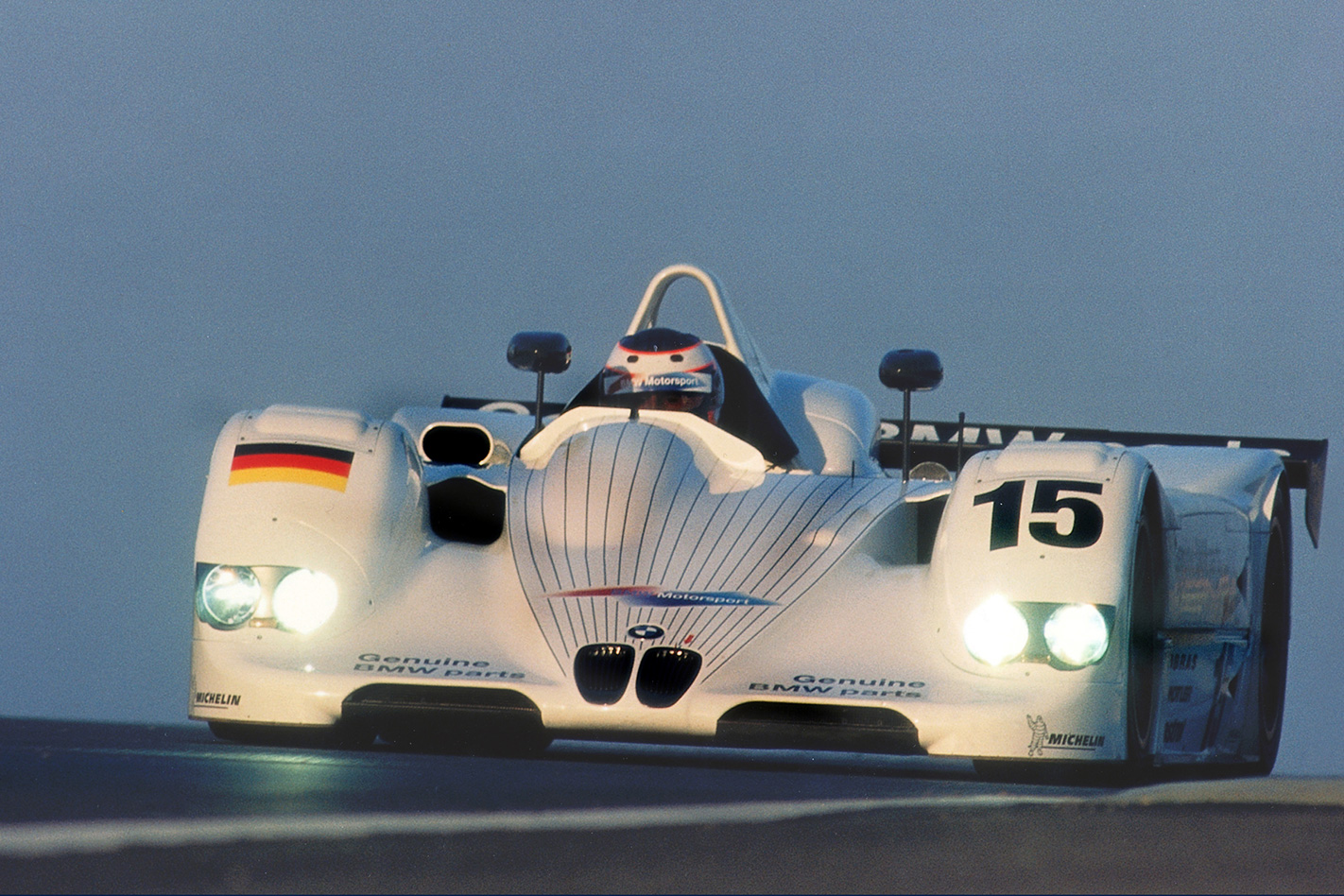
This 1999 Le Mans prototype racer was the successor to the lesser known V12 LM that, in the year prior, produced poor lap times and ultimately failed to finish. Not willing to give up however, BMW Motorsport developed a much-improved racer, changing everything bar the basic structure of the V12 LM.
All their hard work resulted in an outright win at the 1999 24 Hours of Le Mans, completing a gruelling 365 laps and only winning by a single lap ahead of the Toyota GT-One.
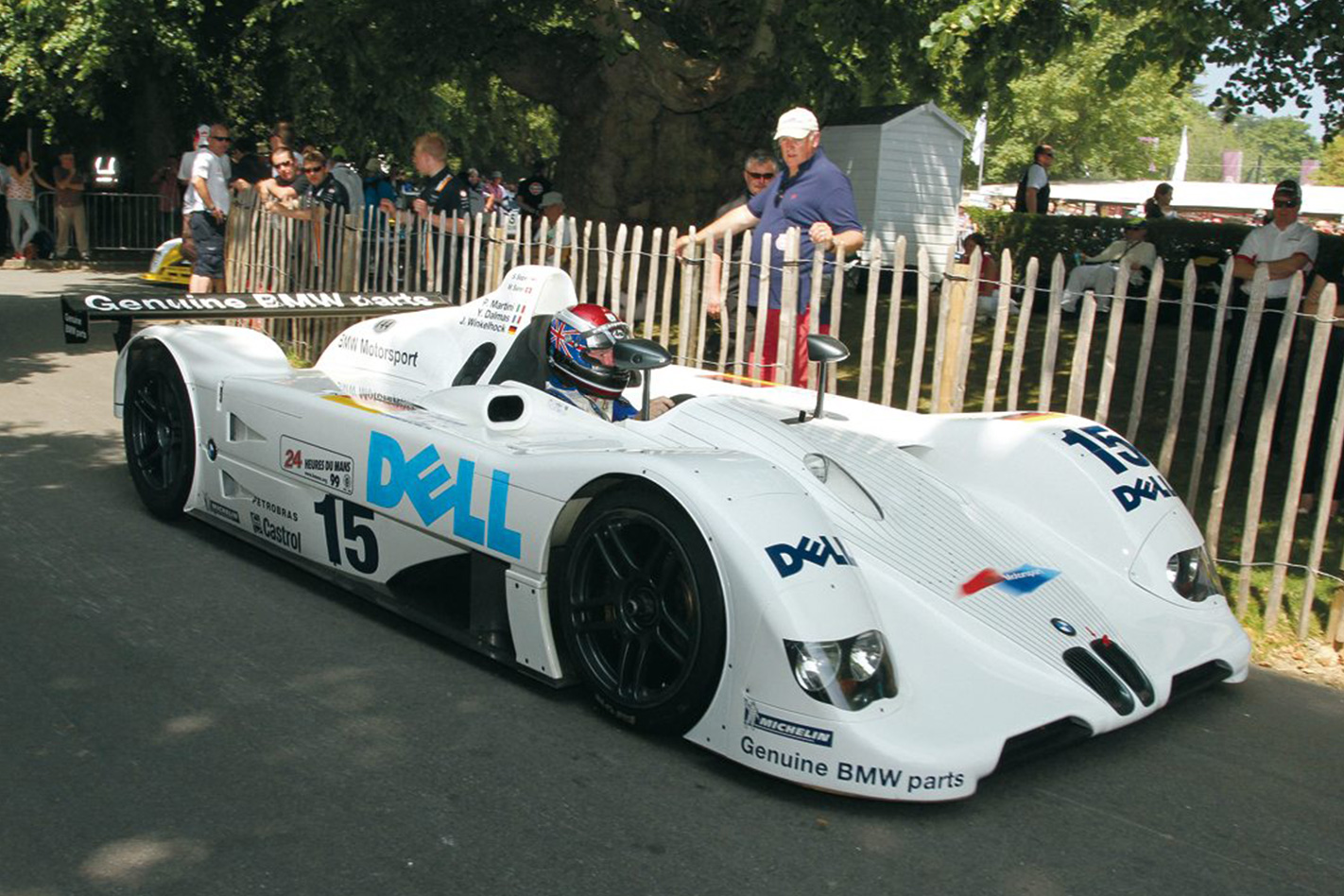
The LMR employed a version of the legendary BMW S70 V12, which was used in the McLaren F1. Output was said to be about 430kW with mandated air restrictors, which allowed the prototype to hit 342km/h on the Mulsanne straight.
BMW M3 E92 GT2
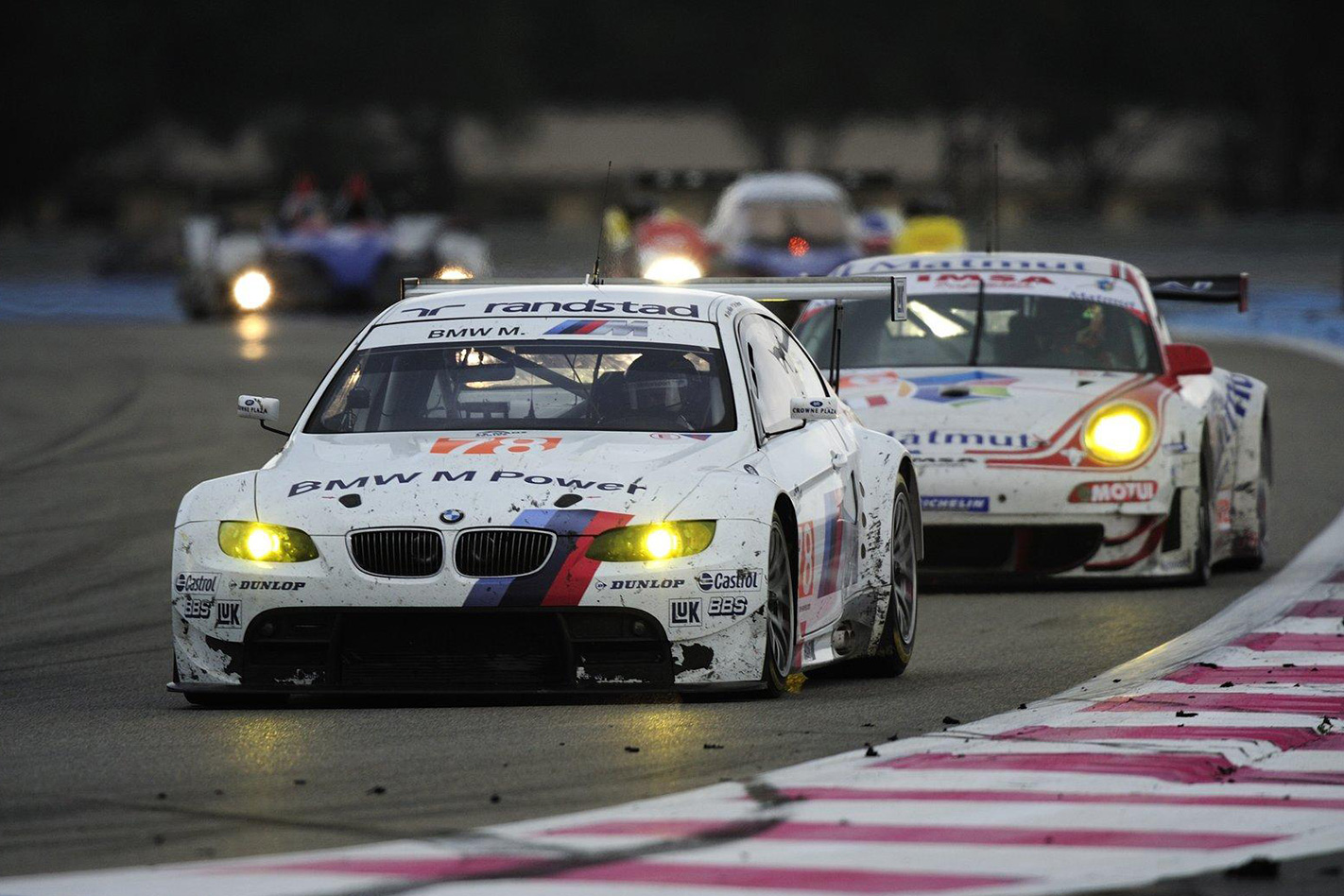
Eleven years after their win with the V12 LMR, BMW entered its M3 model into the GT2 category to battle against the likes of the Corvette C6.R, Ferrari F430 GT2 and Porsche’s GT3-RSR.
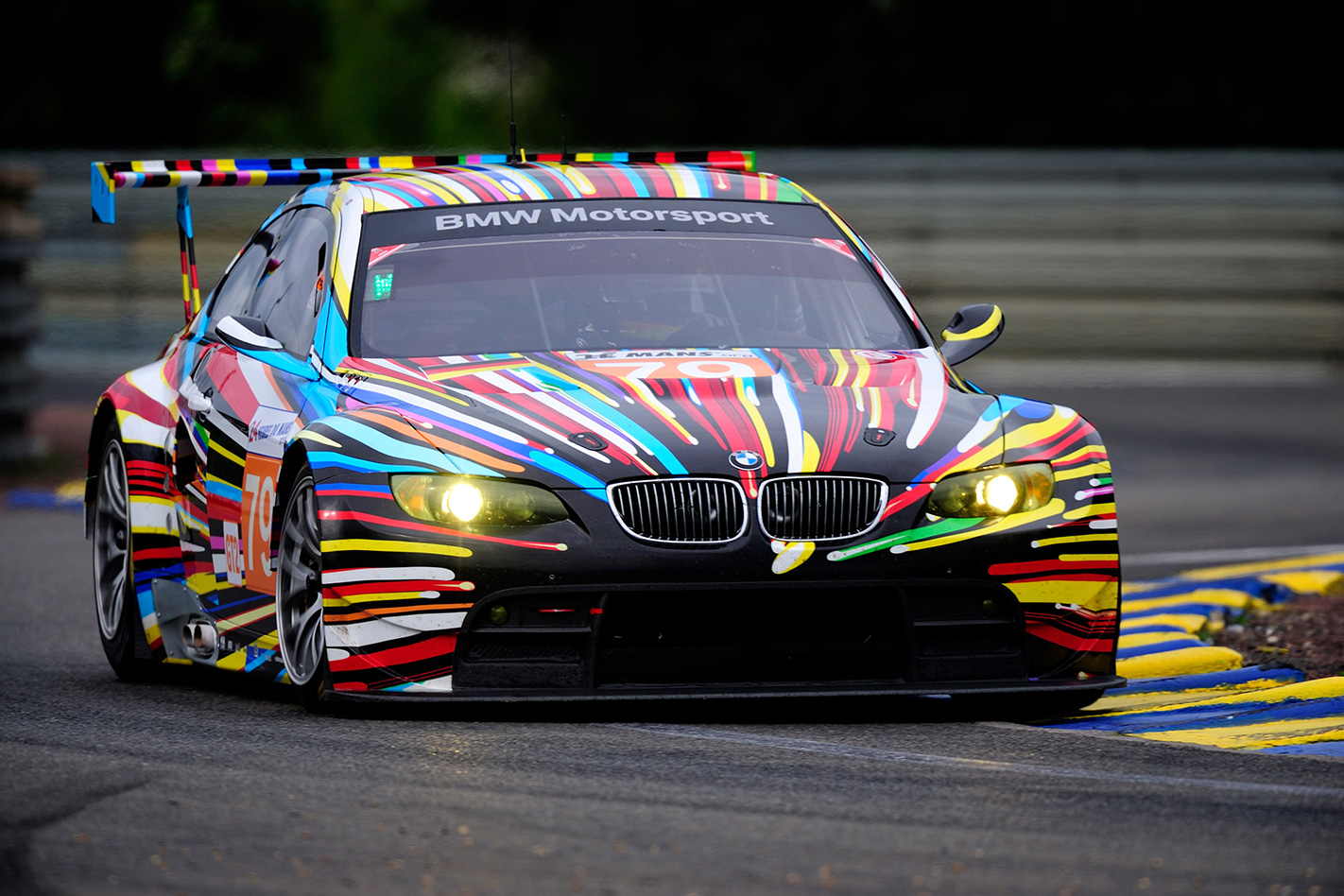
Of the two competing M3 GT2s, number 79 was chosen as a BMW Art Car and painted by American artist Jeff Koons. The first two BMW Art Cars at Le Mans were…
BMW E9 3.0 CSL
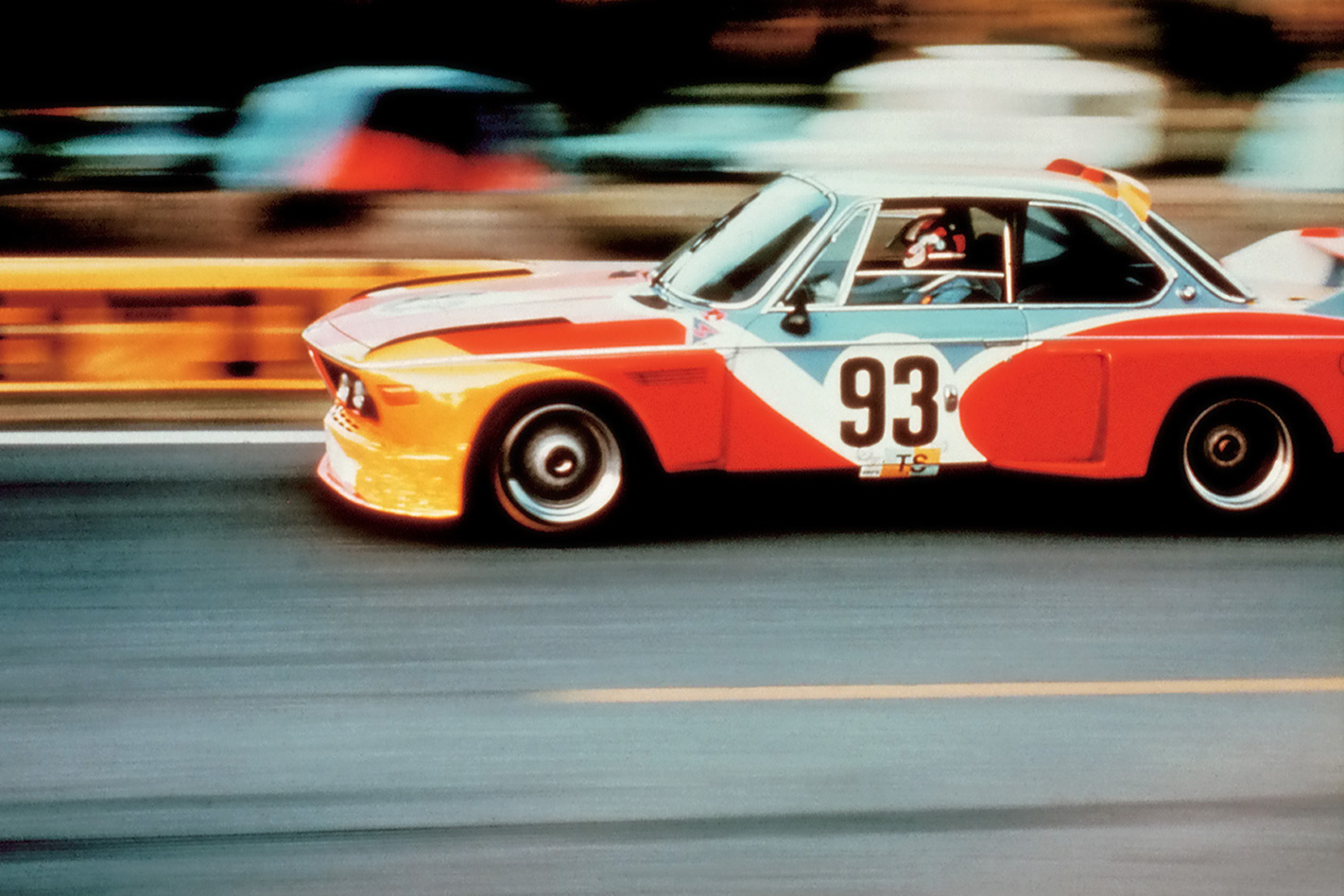
Possibly one of the most recognisable BMW racers of all time, the E9 3.0 CSL, or ‘Batmobile’ to enthusiasts, was introduced in May 1972 in order to homologate a European Tour Car Championship entry.
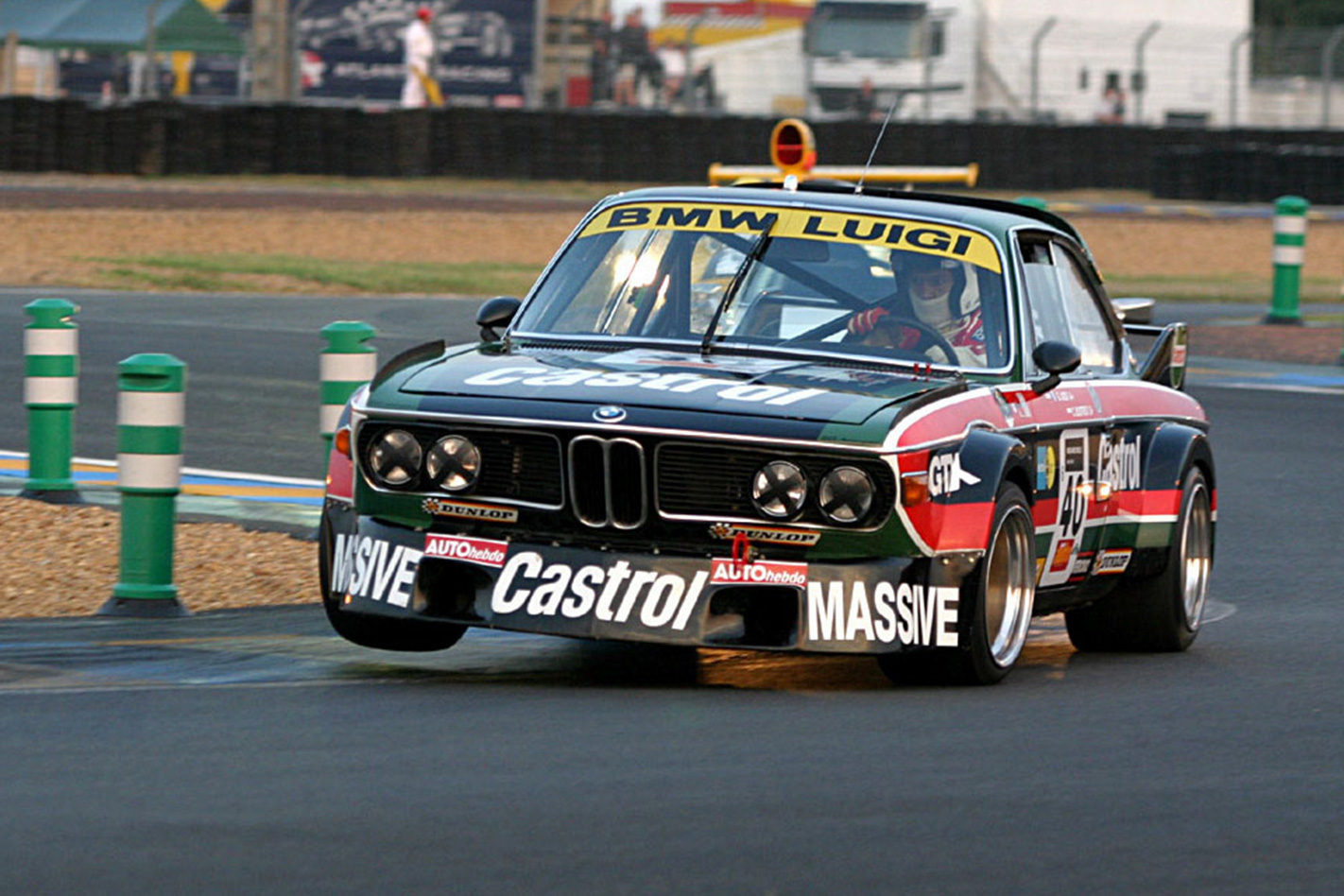
For the 1973 24 Hours of Le Mans, the engine was expanded to 3153cc and used an advanced aerodynamic package including a huge rear wing, fins running along the fenders and spoilers above the rear window. The car came away with a class win at Le Mans and went on to dominate in competition around the world, tallying up countless wins in different variations.
BMW M1 Procar
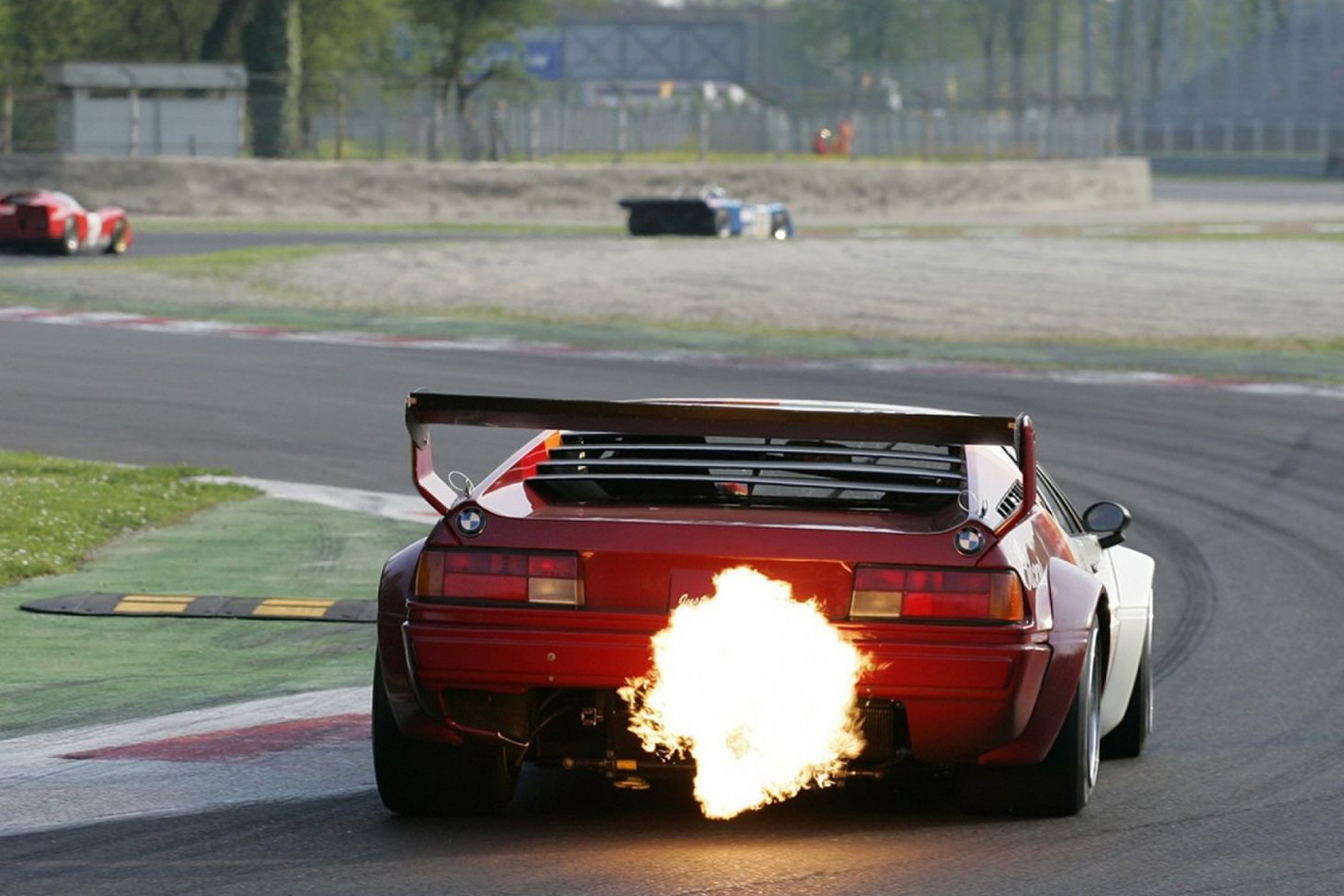
Initially created for a one-make championship, the M1 Procar was also entered into the 24 Hours of Le Mans from 1979 until 1986. Despite utilising an impressive inline six-cylinder producing 350kW, competitors of the time were much craftier – using turbochargers and lighter materials. As such, the M1 didn’t enjoy huge success over its eight year tenure at Le Mans, though it did pick up two class wins.
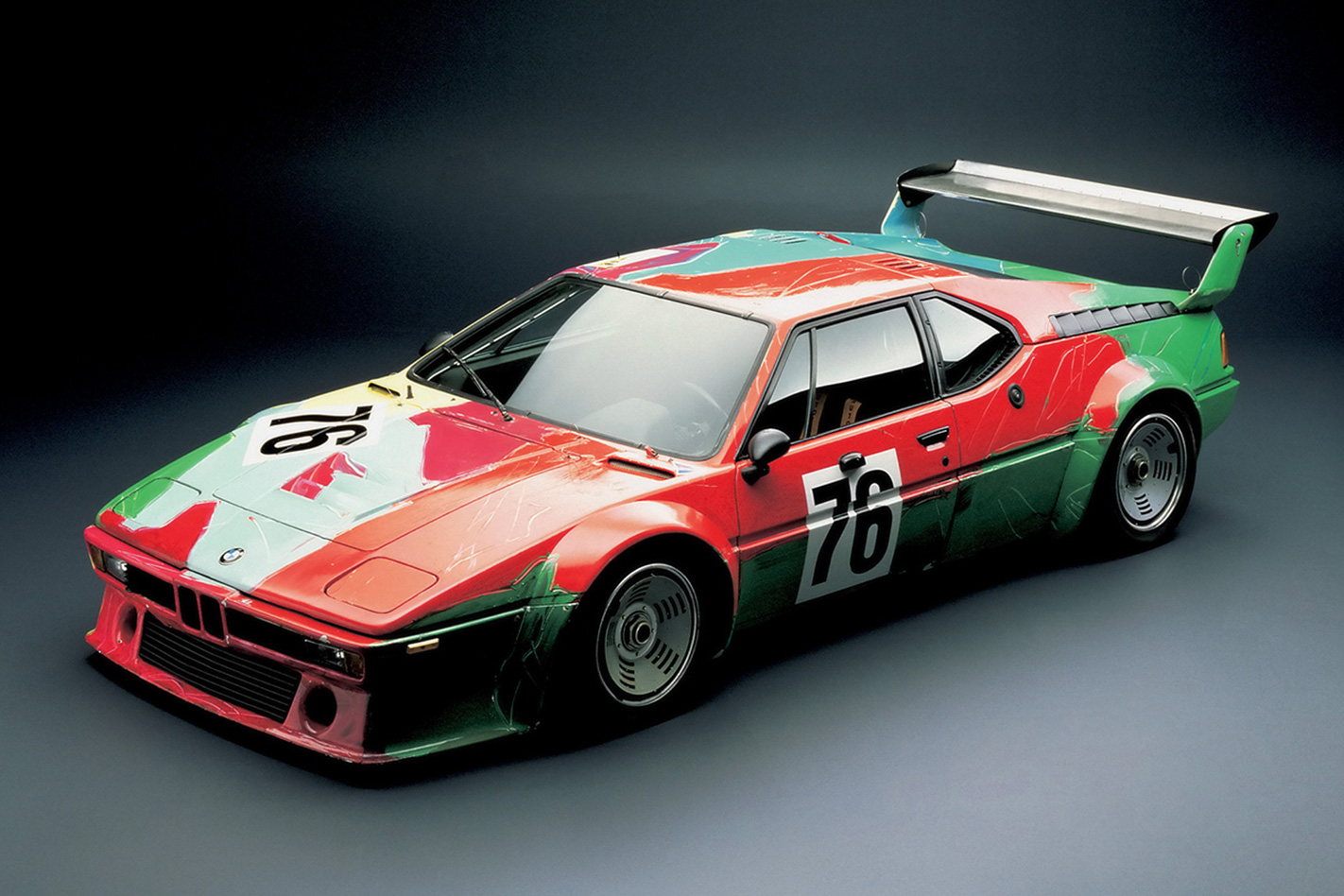
Herve Poulain conceived the idea of creating another BMW Art car for 1979, this time painted on an M1 by Andy Warhol.
BMW M8 GTE
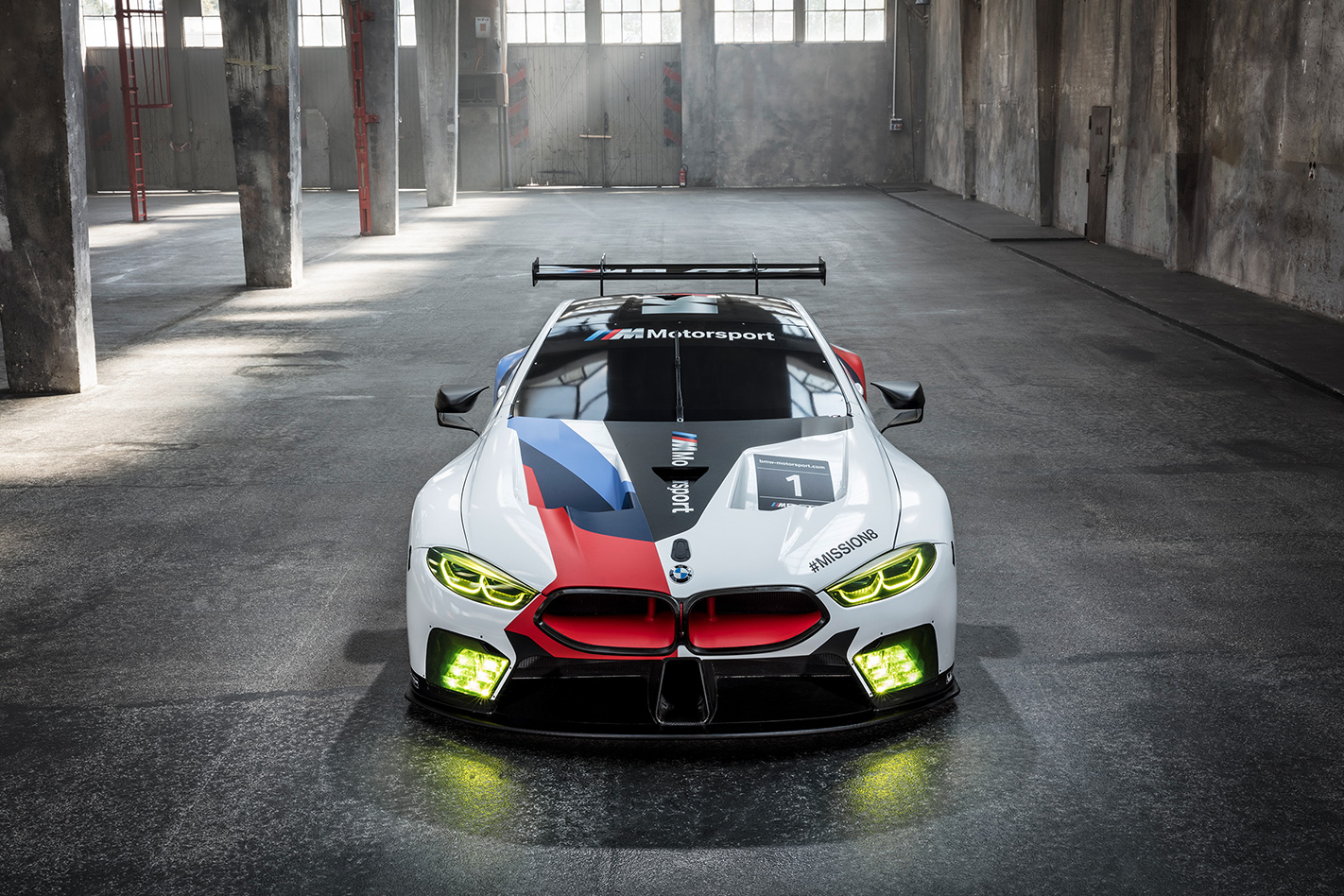
Now BMW’s hope for motorsport success rests upon its latest entry, the 2018 M8 GTE. In development since 2016, the endurance grand tourer uses a twin-turbocharged V8 producing over 370kW and weighs only 1250kg including its driver.
Based off the production BMW M8 that’s soon to be released, the M8 GTE already has its sights on being competitive in the IMSA SportsCar Championship and the FIA World Endurance Championship.
Hopefully it’ll be able to hold its own in next month’s 24 Hours of Le Mans as well.
Koenigsegg has announced it will launch its first Australian showroom late next month.
Set to be located within the Lorbek dealership in Port Melbourne, the showroom will be run by the Lorbek team with behind-the-scenes assistance from Prodigy Automotive.
“Koenigsegg’s arrival in Australia and New Zealand is long overdue,” Koenigsegg says in a statement.
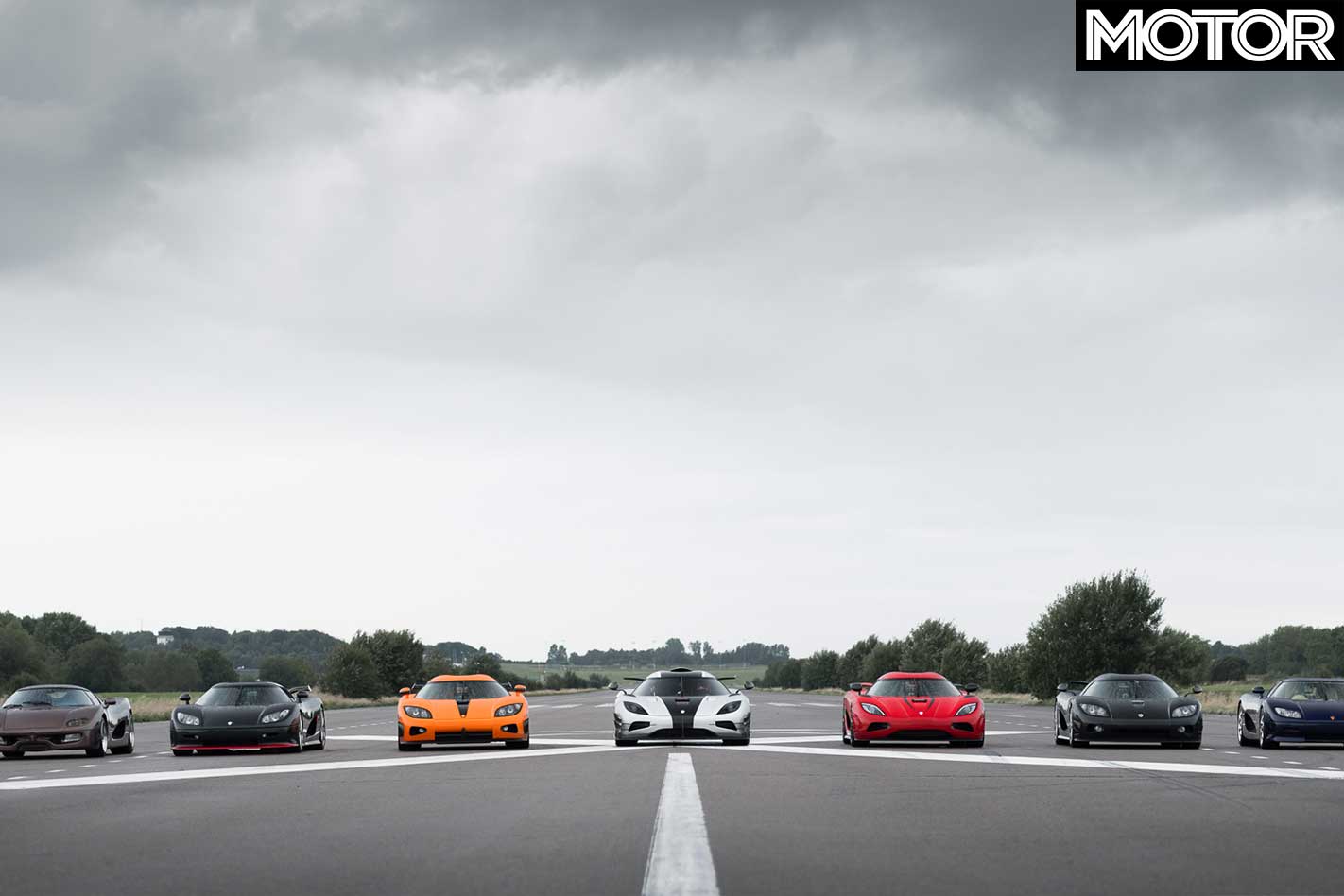
Speaking to MOTOR about the impending launch event, Lorbek marketing manager Harry Hamann said the company has already taken a deposit from a customer who has secured one of the build for the Koenigsegg Agera RS’s replacement.
“We, with Prodigy Automotive, are very excited to be able to officially offer Koenigsegg for the first time to the Australian market with full dealership service and support,” says Hamann.
“Koenigsegg not only builds the fastest car in the world, but also the best car in the world.”
With an expected price tag of around $5 million, it’ll be approaching the upper reaches of new car prices in Australia, currently topped off by the Pagani Huayra Roadster at $5.5 million.
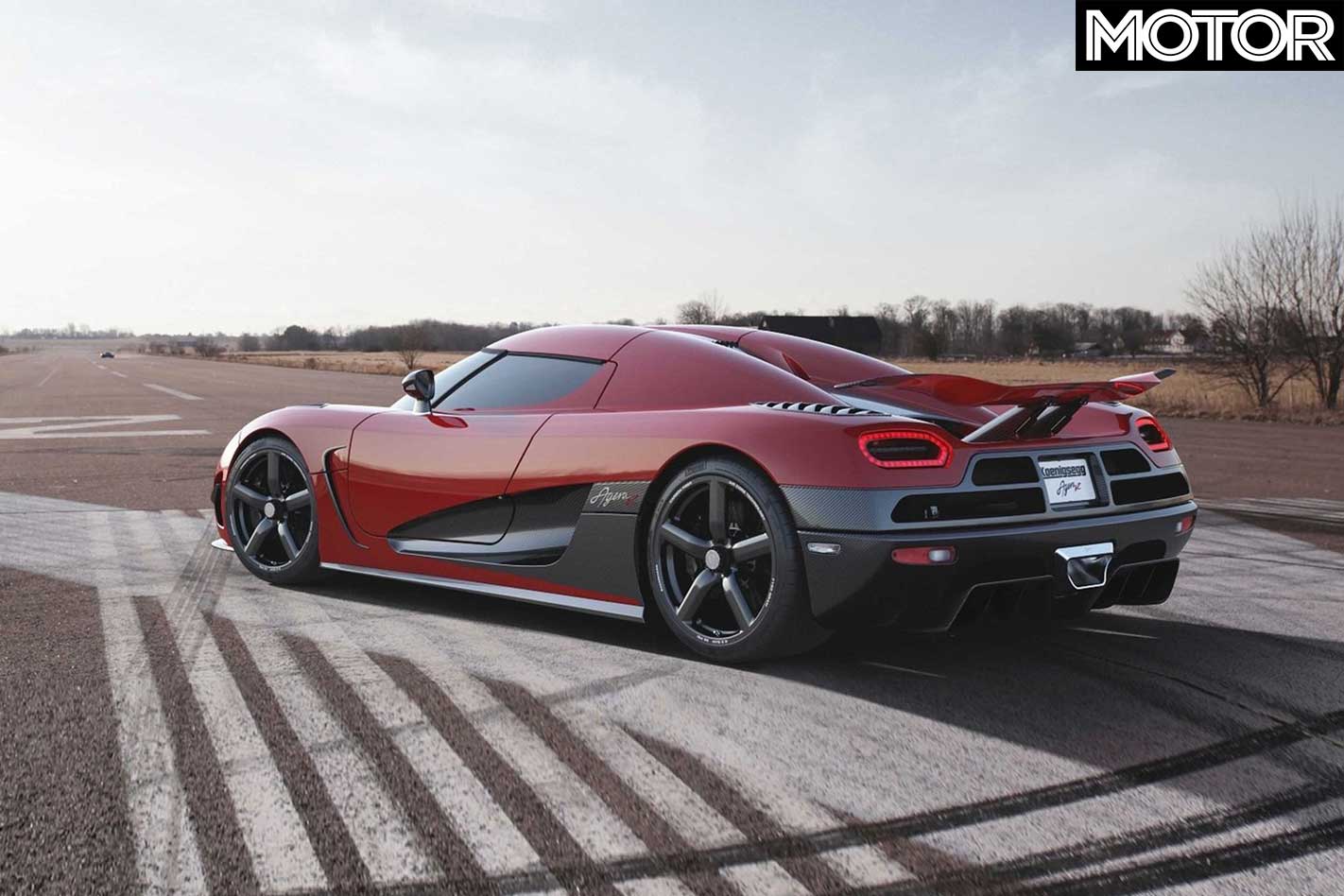
The Agera RS replacement is expected to become another record-setter following in the RS’s footsteps as the fastest production car in the world.
Assisting with the importation of the cars and compliance for Australian roads will be Prodigy Automotive, who will also be handling some of the behind-the-scenes factory involvement in each sale.
Prodigy had already confirmed last year that it had secured the 5.0-litre twin-turbo V8 Koenigsegg Regera for Australia, with one unit available to be sold through Lorbek.
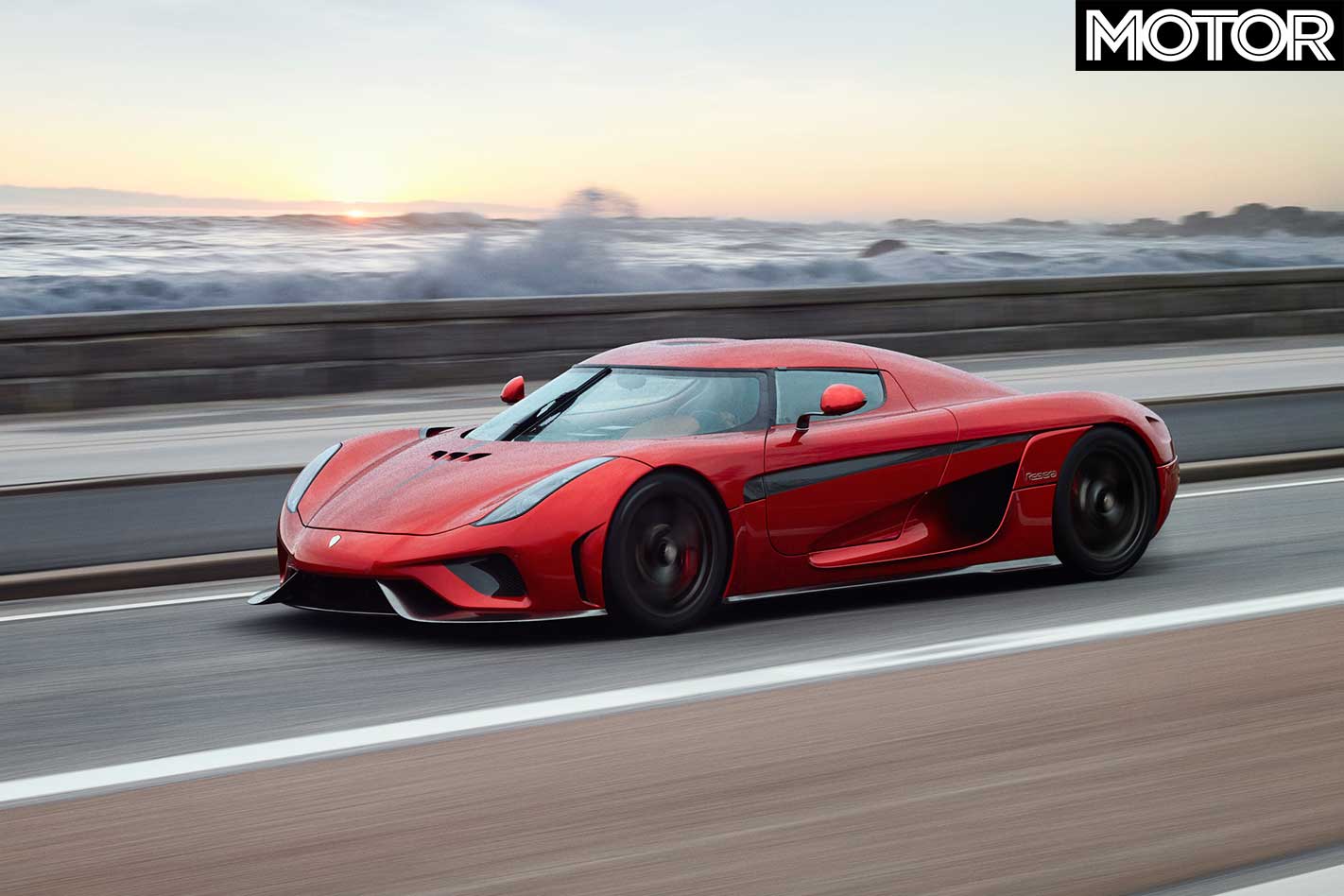
Prodigy Automotive director Nicholas Batzialas says 2-3 ‘Eggs are expected to sell per year, depending on factory availability, though more could see initially due to a surge of interest in the brand launching locally.
Attending the launch will be Koenigsegg’s sales director, Andreas Petré, as well as high-end car collectors and invited customers and clients of each business.
Toyota’s Altona plant has been blowing smoke recently, but not because production lines have switched back on.
Beau Yates and his wild pair of Toyota 86s infiltrated the defunct factory to film a promotional video for Toyota’s Genuine Parts and Accessories division.
He’s unleashed his two drift machines, a turbocharged AE86 and GT86, at the deserted plant to give us what we’ve been missing since the government banned Block from filming Gymkhana Nine here two years ago.
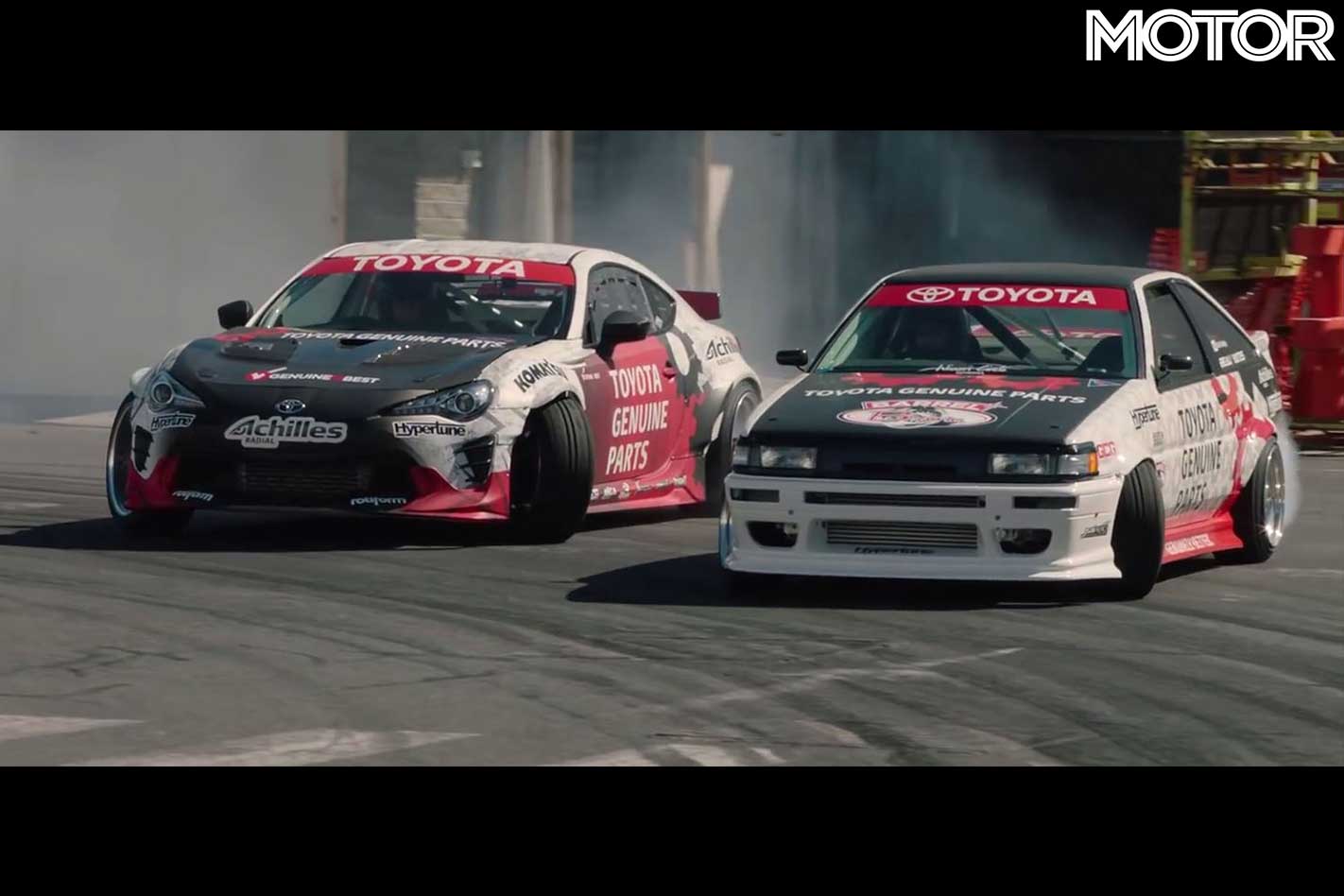
The storyline follows Yates confusingly entering a battle against himself, where he consecutively swings each car through the plant’s nook and crannies.
Footage concludes outside where an unnamed driver joins Beau in his own AE86 to evaporate tyres in synchronisation.
While Yates’ GT86 features few actual factory parts and accessories, it does have Toyota’s most legendary engine bolted into its bay. There’s a 3.0-litre ‘2JZ’ turbo six, producing 517kW and a lot of glorious noise.
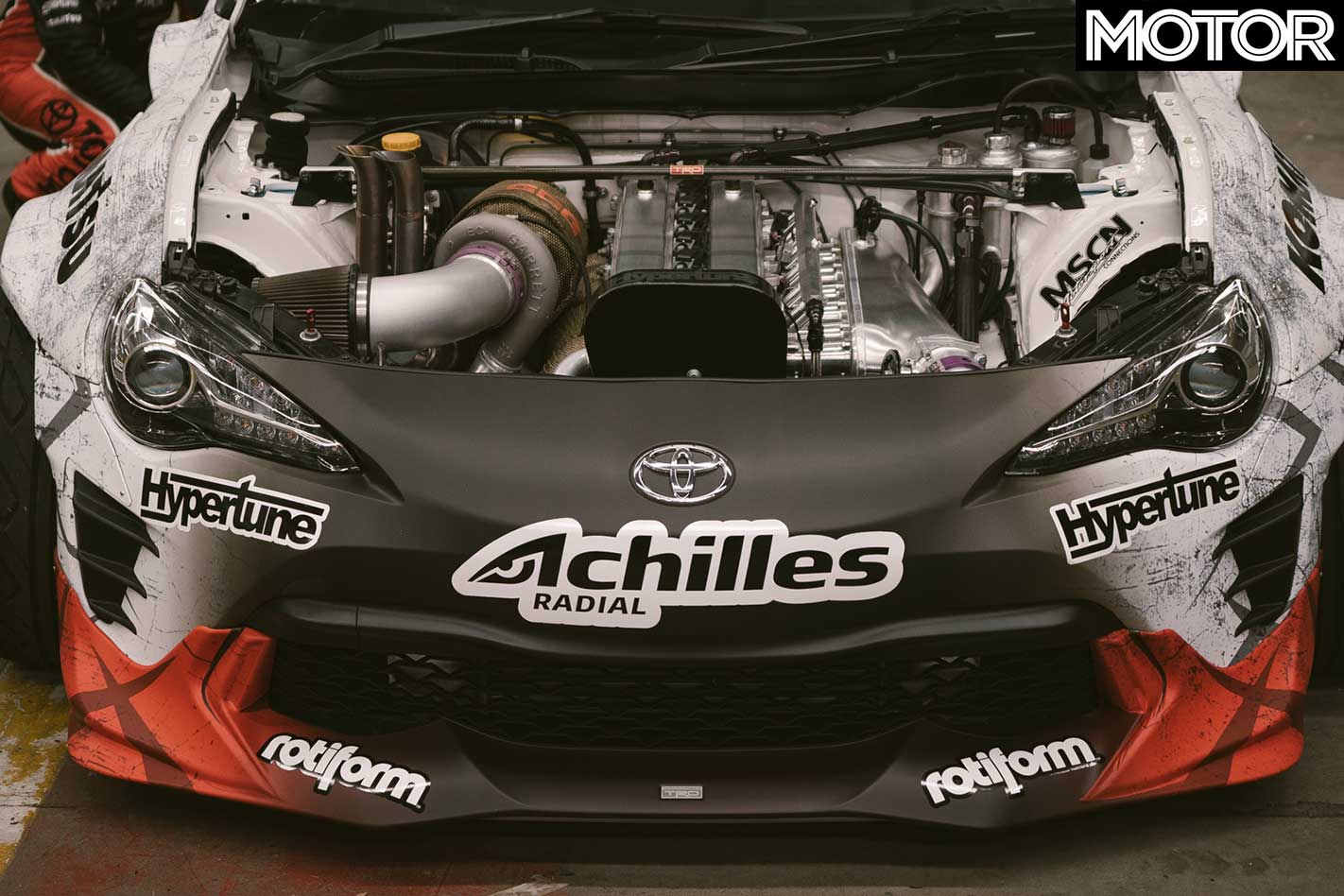
Its dance partner isn’t a concourse classic, either. The AE86 features another revered Toyota powerplant, a 3SGE Beams inline-four, matched to a big turbo and lots of shiny piping.
Highlights, besides seeing a professional drifter given access to an entire car plant with competition cars, include Yates charging at robots that have been switched on for the stunts.
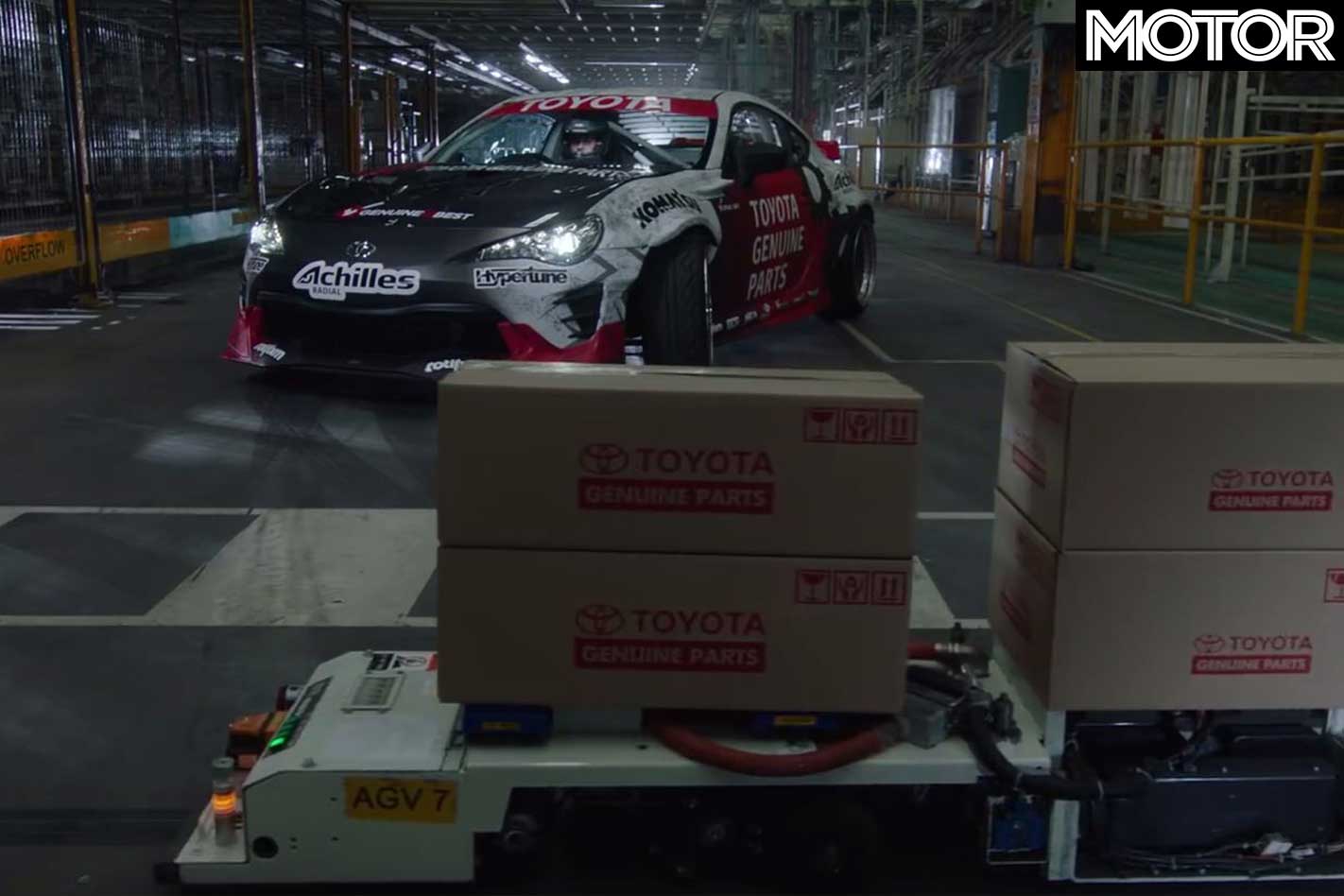
And you’ll close your eyes while he flicks through paint-inspection halls lined with fragile lights.
There are some odd messages littered throughout the video, with words like ‘courage’ and ‘precision’ flashing up here and there. But it’s an adrenalin filled three minutes.
Bravo, Yates and Toyota. Bravo.
IF EVER you needed an object lesson in the law of diminishing returns, the Volkswagen Golf R was your case material. More expensive than the iconic GTI, more powerful and, with the addition of all-wheel drive, successfully proving less was indeed more. Not any longer. Version 7.5 now has the talent to assert its rightful position in the Golf hierarchy.
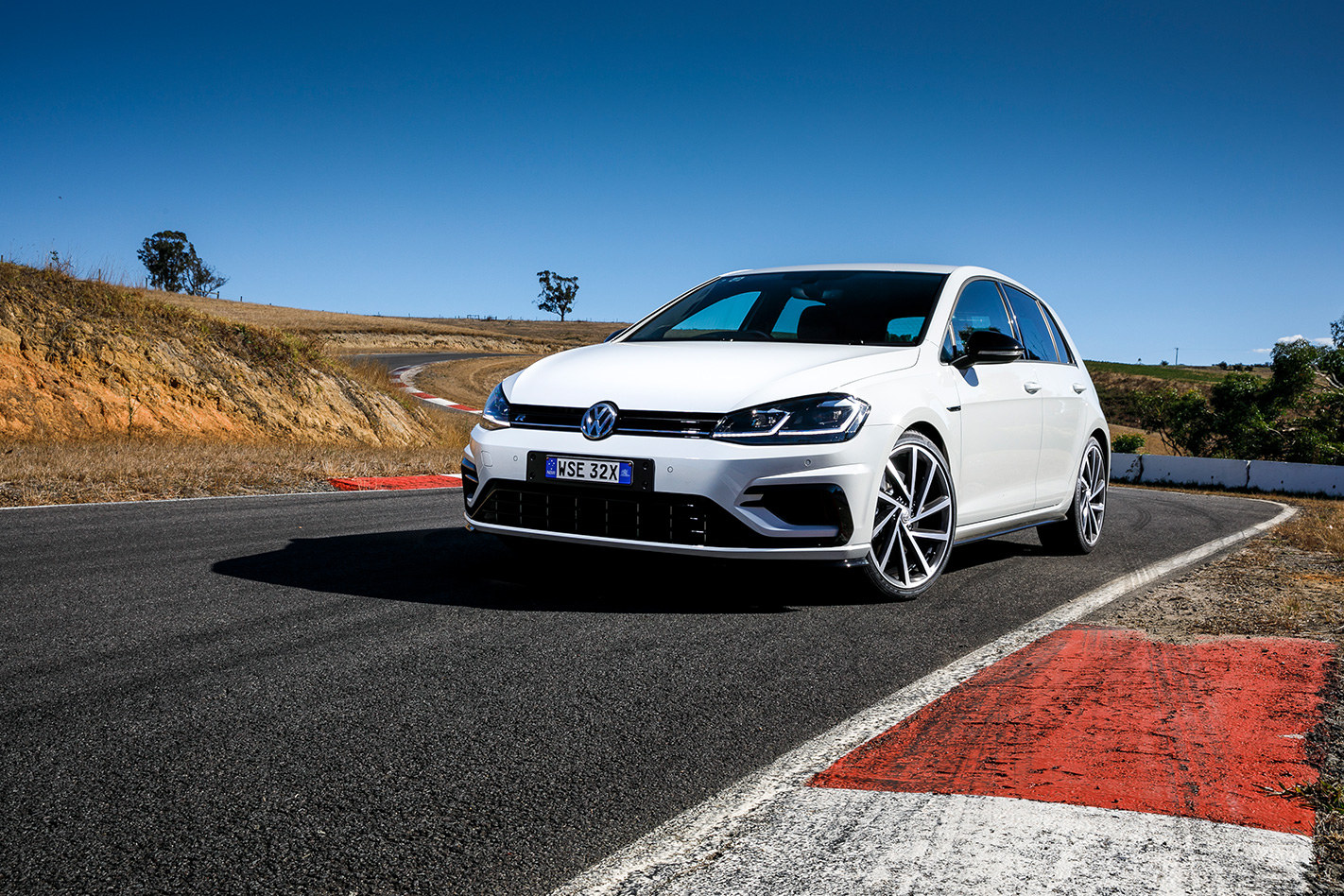
So what’s changed? Power has stepped up from 206kW to 213kW, the price of this no-nonsense Grid Edition has dipped below $50K and the DSG wet-clutch transmission gains an additional, seventh gear. We chose the six-speed manual version which is a tad slower across the acceleration benchmarks but which introduces an additional measure of tactility to the Golf R’s broad skill set.
While it’s not as overt as the cars occupying the podium positions, the Golf R is still huge fun to pedal along a challenging road. A sound symposer gives its engine more attitude than the GTI’s, as does an ESC system that’s fully disengagable. Volkswagen claims that this generation of 4Motion can send 100 percent of torque to either the front or rear axle, but only under severe provocation can you introduce an element of steer from the rear.
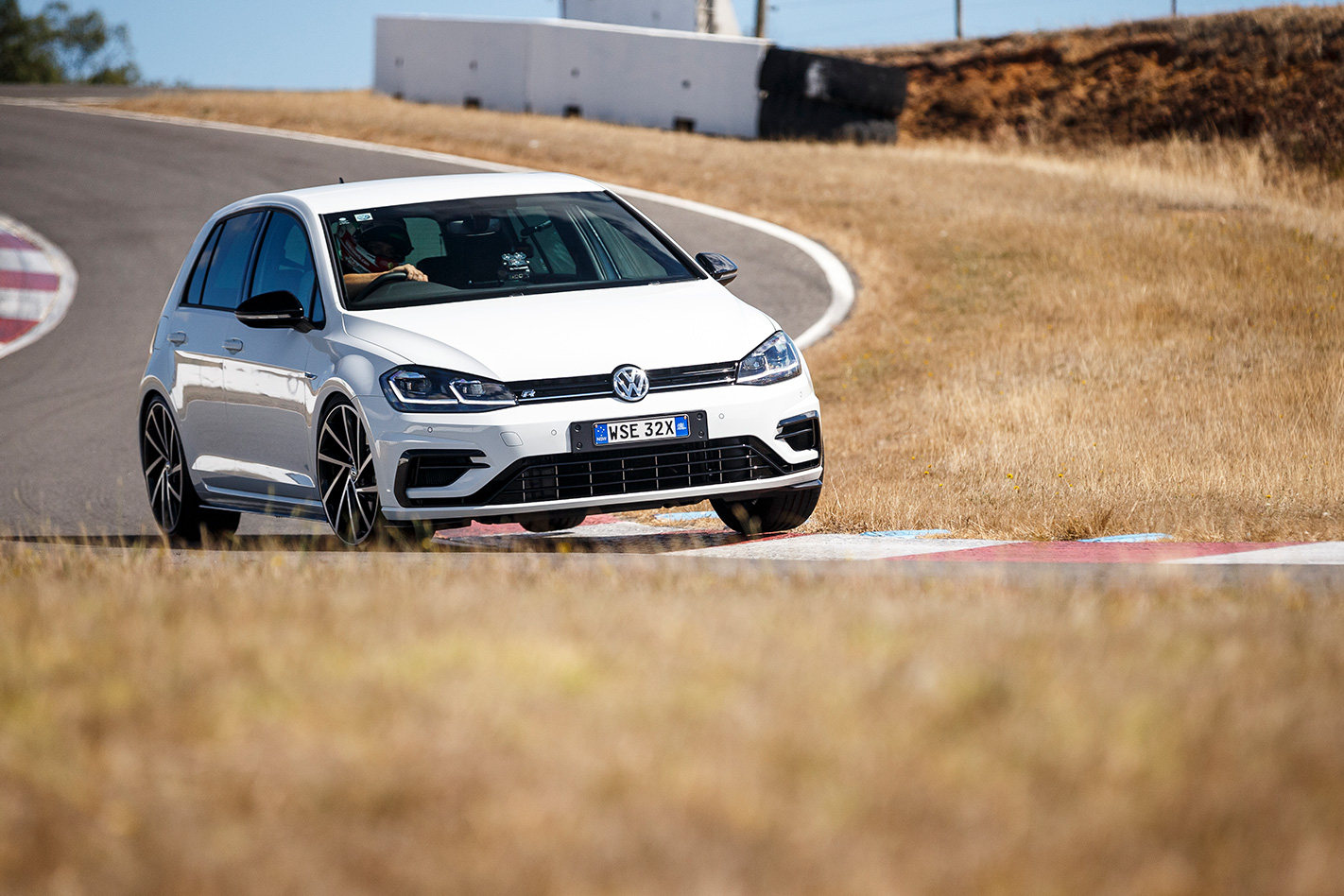
With the electronics off, it’s easier to move the R gently under its own momentum on the way into a corner and morph that into a buttery-smooth neutrality on the way out. Accurate steering and a good manual ’box help here, although some felt the gearing was a tad low for a car that develops 380Nm from just 1850rpm.
Gearbox aside, you’ll appreciate the measured nature of the Golf R Grid’s controls because the exterior inputs are happening so fast. It’s a fearsome ground-coverer, with just enough pliability in its damping to generate the confidence to wring out a big percentage of the EA888 powerplant’s potential on typical Aussie country roads. Rather than the fire-and-forget weapon that the Golf R has occasionally been portrayed as, there’s a real subtlety to the handling repertoire of this car.
Overdrive it and it feels clumsy, lapsing into dogged understeer if you get too greedy with the throttle in tight corners. Work with the small weight transfers of the car, however, and it feels neat and even delicate, not a word you’d traditionally use to describe the Golf R.
Try to drive it with the sort of aggression that the Civic or i30 N respond to and it can appear wooden, but a more sympathetic driver can extract the best from the Golf R without losing much in outright pace. A fierce mechanical front diff would help lift the Golf R into the upper echelon here and a little more outright stroke in the dampers would also be a plus on variable surfaces.
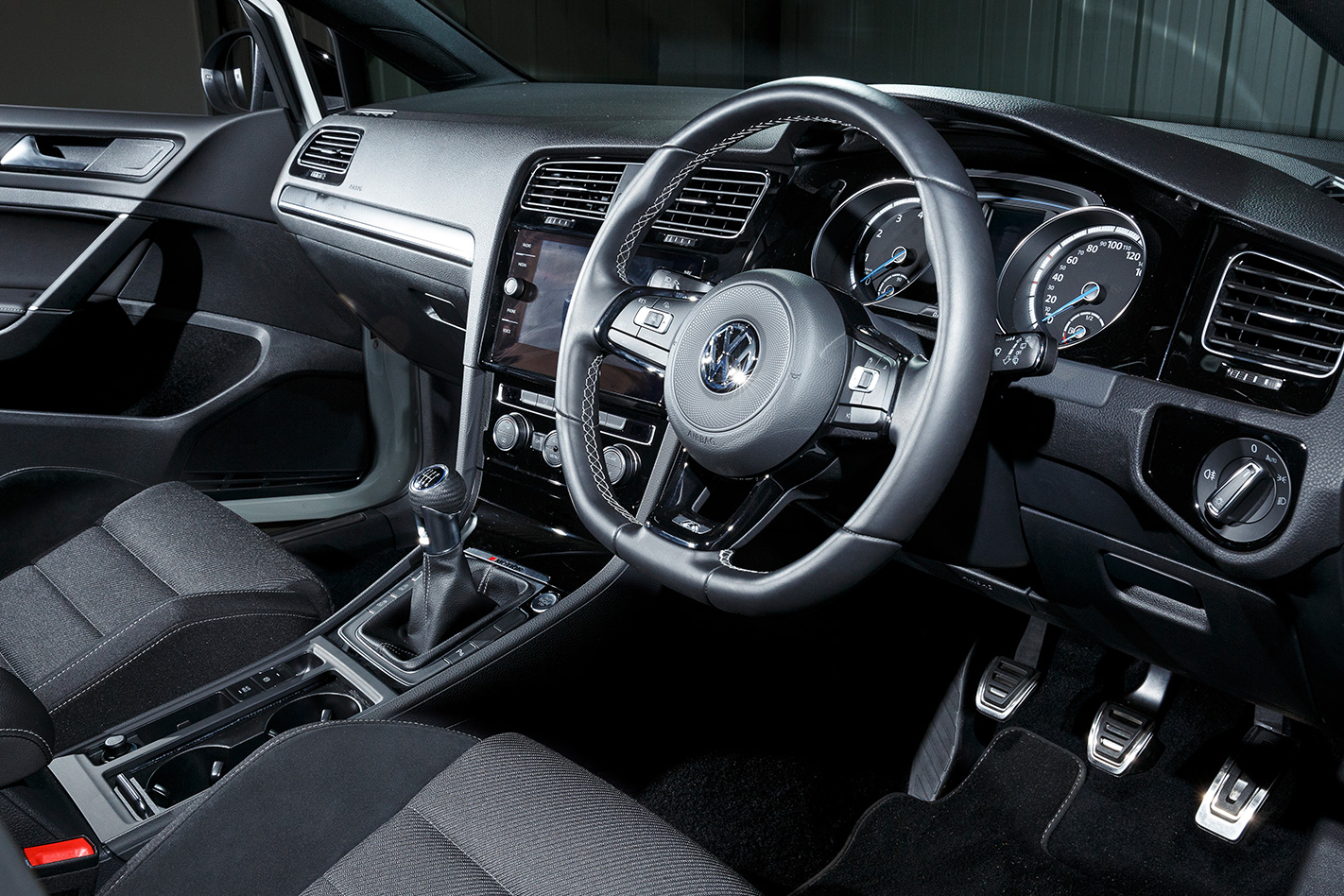
But the R is undeniably quick. Any car that can nudge 5.0sec to 100km/h is quite serious. That’s as rapid as a Porsche Cayman for less than half the price, and your $47K outlay also buys what might be the best interior of any of the cars assembled here.
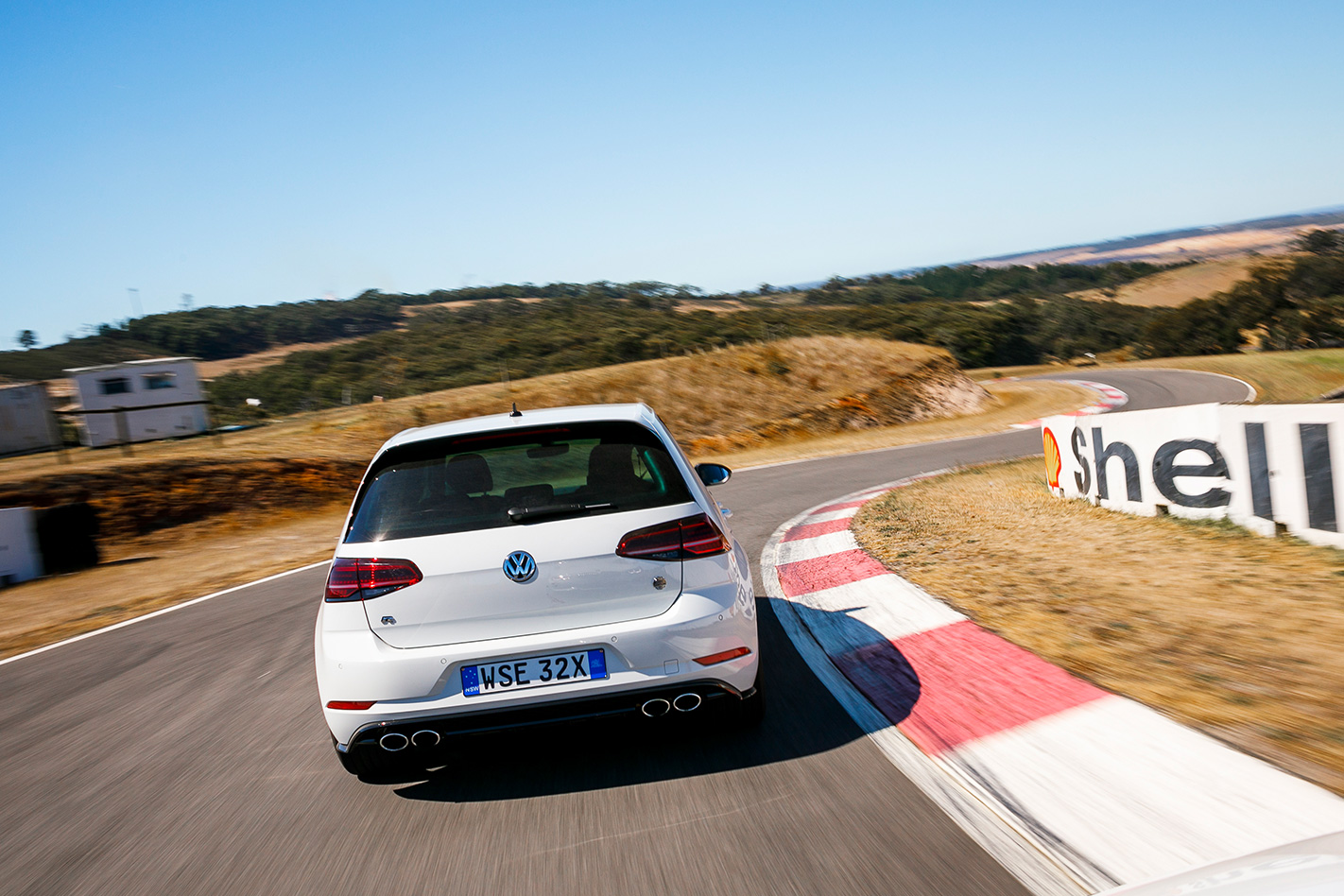
For a good proportion of buyers, it’s this sheer presentability that makes the Golf R the default choice. It’s hard to think of an occasion where it would look gauche or out of place. Couple that with sharper dynamics, a more aggressive soundtrack and the Grid Edition’s value, and it’s a package that presents a formidable all-round challenge.
Volkswagen Golf R Grid LAP TIME: 1:05.5sec SCORE: 8.5/10
Engine: 1984cc 4cyl, dohc, 16v, turbo Power: 213kW @ 5400-6000rpm Torque: 380Nm @ 1850-5300rpm Transmission: 6-speed manual Weight: 1429kg Tyres: Continental ContiSport Contact 5P 235/35R19 91Y Fuel consumption: 14.1L/100km (tested) Power to weight: 149kW per tonne 0-100km/h: 5.1sec (claimed) Price: $47,490
Hot Hatch Megatest Contenders
12th, Score 6/10: Mini Cooper S JCW
11th, Score 6.5/10: BMW 125i
10th, Score 6.5/10: Subaru WRX Premium
9th, Score 7/10: Subaru WRX STI
8th, Score 7/10: Skoda Octavia RS245
7th, Score: 7.5/10: Ford Focus ST
6th, Score: 7.5/10: Renault Clio RS220 Trophy
5th, Score: 8/10: Volkswagen Golf GTI Original
4th, Score: 8.5/10: Volkswagen Golf R Grid
3rd, Score: 8.5/10: Peugeot 308 GTi 270
2nd, Score: 9/10: Honda Civic Type R
Winner, Score: 9/10: Hyundai i30 N
