
If you like to hit the racetrack in your Mercedes-AMG A45 S – and why wouldn’t you? – but either want to go a bit quicker and/or are sick of burning through tyres, then a solution is at hand.Mercedes Australia is now offering the Pirelli P Zero Trofeo R tyre in ‘M01’ specification as an approved accessory for the A45 S and CLA45 S.
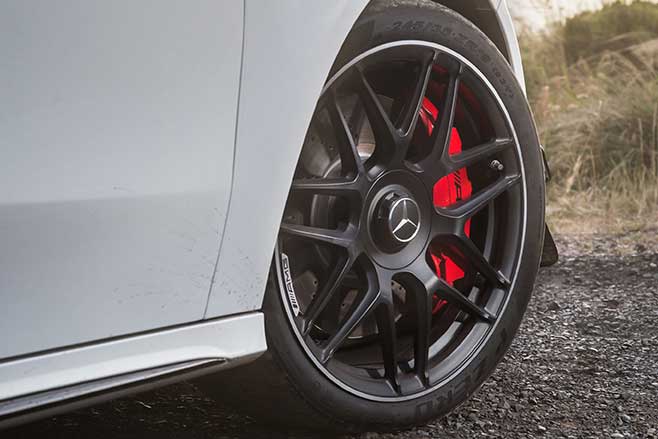
As far as round, black things go the Trofeo R is pretty special. It was standard equipment on the HSV GTSR W1 and has been available as an option on cars like the Honda NSX and McLaren P1.
It’s still a road-legal tyre and your car isn’t going to suddenly slide off the road at the first sign of a rain cloud, but it is primarily designed to work on a warm, dry racetrack.
And work it does, the Trofeo R’s effectiveness illustrated by a 3.4sec improvement in lap time around Phillip Island compared to the standard Michelin Pilot Sport 4 S, with Merc’s chief driving instructor Peter Hackett at the wheel.
Pirelli claims the Trofeo R offers greater effective grip, increased stability under braking, better lateral rigidity in cornering and more precise steering response, and thankfully we have the opportunity to test this for ourselves at Phillip Island.
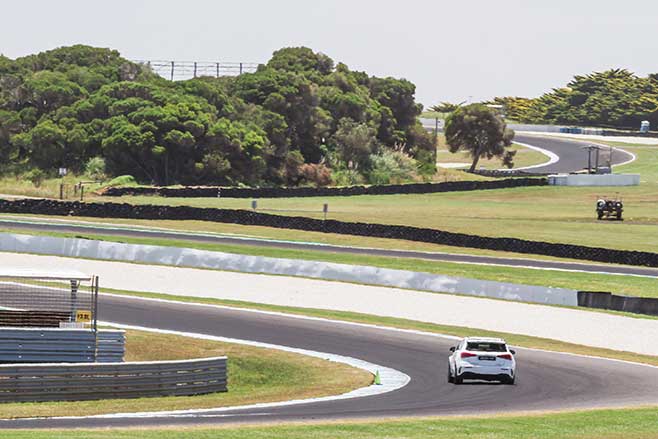
The new A45 (and the CLA45, for that matter) is a pretty awesome track tool. Its predecessor was fast but fairly benign in its behaviour, whereas this latest version is much more involving.The engine is insane; a 2.0-litre turbocharged four-cylinder producing 310kW and 500Nm should be a one-way express ticket to Lag Station, but there’s power everywhere in the rev range and it only increases and rpm builds.
AMG has traditionally struggled when it comes to gearbox response but the A45’s eight-speed dual-clutch will fire in downshifts that put the tacho needle within reach of the redline.
Best of all, though, is the chassis. Turn-in is much improved but it’s what happens on-throttle that is a game-changer. Instead of ugly power-understeer the A45 rotates sharply; almost too sharply, and you soon learn to wind off lock early in response.
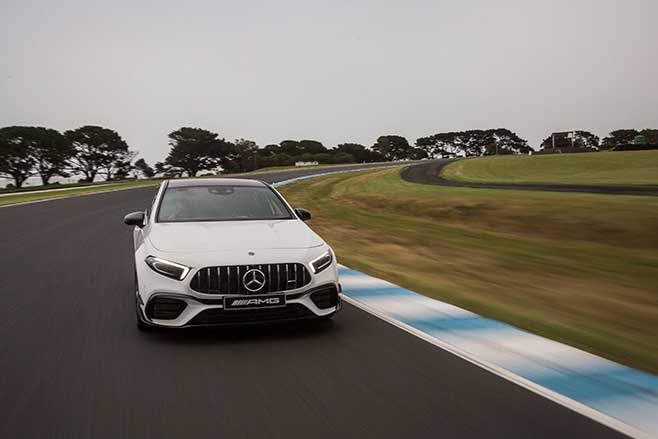
It gives you options and options breed confidence; Phillip Island’s super-fast turns no longer instil fear, the car squirming around but always driving forward, even with ESP completely on.
It’s like a Mitsubishi Lancer Evolution on steroids.Going in I was worried the grippier Pirellis might stamp out this behaviour and replace playfulness with precision, but the A45 (and its four-door sibling) is still happy to move around; it just does so at a higher limit.
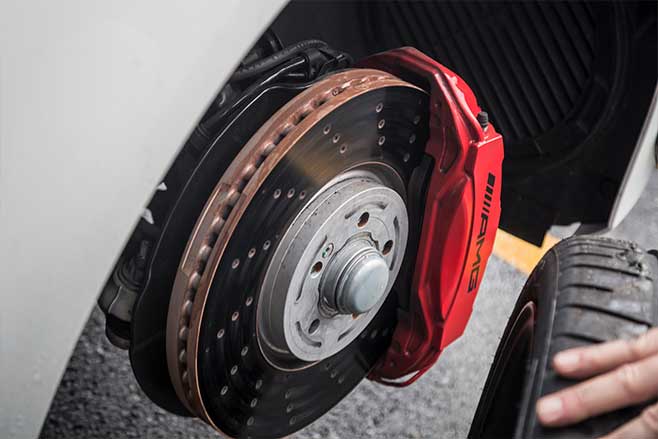
The brakes hold up to the punishment impressively well, too, the pedal only starting to show slight signs of distress after five flat-out laps, even with the extra braking grip to lean on.Where the Pirellis truly shine, though, is stamina. They are built to take the stress of track abuse and don’t suffer from heat fatigue like a standard road tyre.
The A45’s regular Michelins are fantastic and more than capable on track, but they wear much more quickly than the ultra-focused Trofeo Rs.
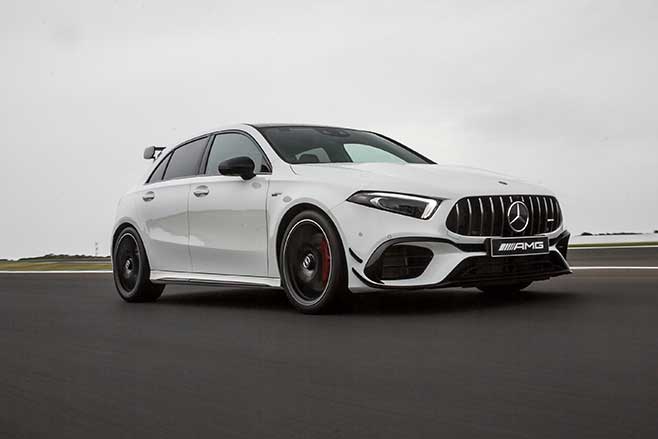
This is the beauty of the hot hatch: drop the rear seat and there’s enough space for a jack and an extra set of Pirelli-shod wheels, allowing you to rip around the track all day setting PBs safe in the knowledge there’s a fresh set of Michelin road tyres to bolt on for the drive home.5/5Likes performance; involvement; staminaDislikes nothing, really – can’t do it every day?Specifications Engine 1991cc inline-4cyl, DOHC, 16v Power 310kW @ 6750rpm Torque 500Nm @ 5000-5250rpm Weight 1550kg 0-100km/h 3.9sec (claimed) Fuel consumption 8.3L/100km (claimed) Price $93,600
One year ago, as Australia burned we watched – or experienced – the loss, death and devastating hardship, it’s only natural to apply our own frame of reference as we tried to make sense of it all. For car lovers, it’s likely your interest was piqued by the footage of the many trucks, cars and aircraft deployed to fight the fires. These machines are fundamental tools for those brave enough to face the flames, though the events was both eye-opening and horrific.
This column originally published in Wheels February 2020, edited for tense in January 2021.
Shaky camera-phone footage from inside a truck that was overrun by the rampaging fire front is likely to stay with me forever, as will the shocking account of RFS volunteer Samuel McPaul being killed by his firetruck when it was blown over in extreme winds.
Human nature dictates we need something, or someone, to blame for the senseless destruction, which gives pause for some worrying self-reflection. Have we, as motorists, made a disproportionate contribution to the warming of our planet? Cars, with their smoking tailpipes and burning fossil fuels, are an obvious and frequently hit target, after all.
It’s easy to reassure ourselves, however. While the transport sector is a major contributor to greenhouses gases, and cars the primary contributor to those, it pales in comparison to the real villain – the electricity sector. According to the Department of the Environment and Energy (DEE), generating electricity accounts for 34 percent of Australia’s emissions. Transport (which includes cars, trains, planes and ships) is the second-worst offender at 19 percent.
Plus, cars are getting cleaner, right? Stricter global emissions laws, closer scrutiny and eye-watering penalties for missing CO2 targets are forcing car companies to go green. We can rest easy, then. Things are changing for the better.
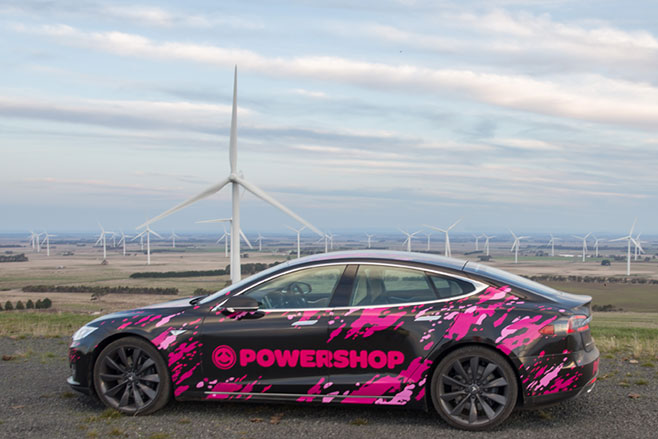
Drill a little deeper, though, and the sense of discomfort returns. Data from the National Transport Commission (NTC) reveals CO2 improvements have stagnated to their lowest levels since recordings started in 2002, with the 0.4 percent reduction in 2018 only a fraction better than 2017’s 0.3 percent. Worse, findings from independent research body, Transport Energy/Emission Research, shows that when these numbers are corrected to reflect real-world emissions, Australia’s CO2 levels stopped declining around 2014. So in reality, our emissions from road transport are actually getting worse, not better. Our growing love of SUVs and utes, and the increased number of cars on our roads, are blamed as the key causes.
The immediate outlook is grim, too. The DEE predicts vehicle emissions will continue to increase until at least 2025 before they gradually start to drop, which only highlights how far behind we are. Compared to Europe, our vehicle emissions are 45 percent higher on average.
So what can we do? The most immediate and impactful course of action is to donate to the bushfire appeal. Beyond that, a simple step is to opt for the most efficient vehicle in the class next time you buy a car. If every Aussie had done this in 2018, we’d have seen a 60 percent reduction in carbon intensity, according to the NTC.
More long-term, however, what we really need are mandatory fuel efficiency or vehicle emission standards. It’s hard to believe that Australia has failed to embrace such laws, which are now commonplace around the world.
Meaningful policy to increase the attractiveness of electric cars is another lever to pull. Be it tax breaks or monetary incentives, something needs to accelerate the penetration of EVs and hybrids. Creating cleaner electricity to power them is also fundamental.
The positive news is that none of these suggestions represent a threat to our love of cars. We can continue to enjoy the thrill of driving, whilst simultaneously moving towards a cleaner future. What we really need is a sense of urgency. Australia can no longer afford to sit on its hands and rely on the legislation of other countries to make our cars friendlier to the environment, or worse, to see us as an easy dumping ground for the world’s dirtiest engines.
Now is the time for action.
It’s funny that not many Australians aspire to owning a people mover, especially in the face of the SUV onslaught that has naturally delivered far more visually appealing machinery. But those spacious multi-row vans that are often keenly priced represent the best way to move lots of people.
Carrying people and luggage is something people movers do very well; SUVs tend to be compromised on the luggage bit.
The condensed field includes a mix of more value-focused Korean models up against boxier European contenders – and a rogue Toyota (the Granvia) that replaced with once popular Tarago that no longer exists.
It’s a mass of seats, cupholders, sliding side doors and occasionally innovative interior thinking – often with value-packed results.
GOLD – Honda Odyssey VTi
In many ways, the Honda Odyssey is the quiet achiever of the people mover market.
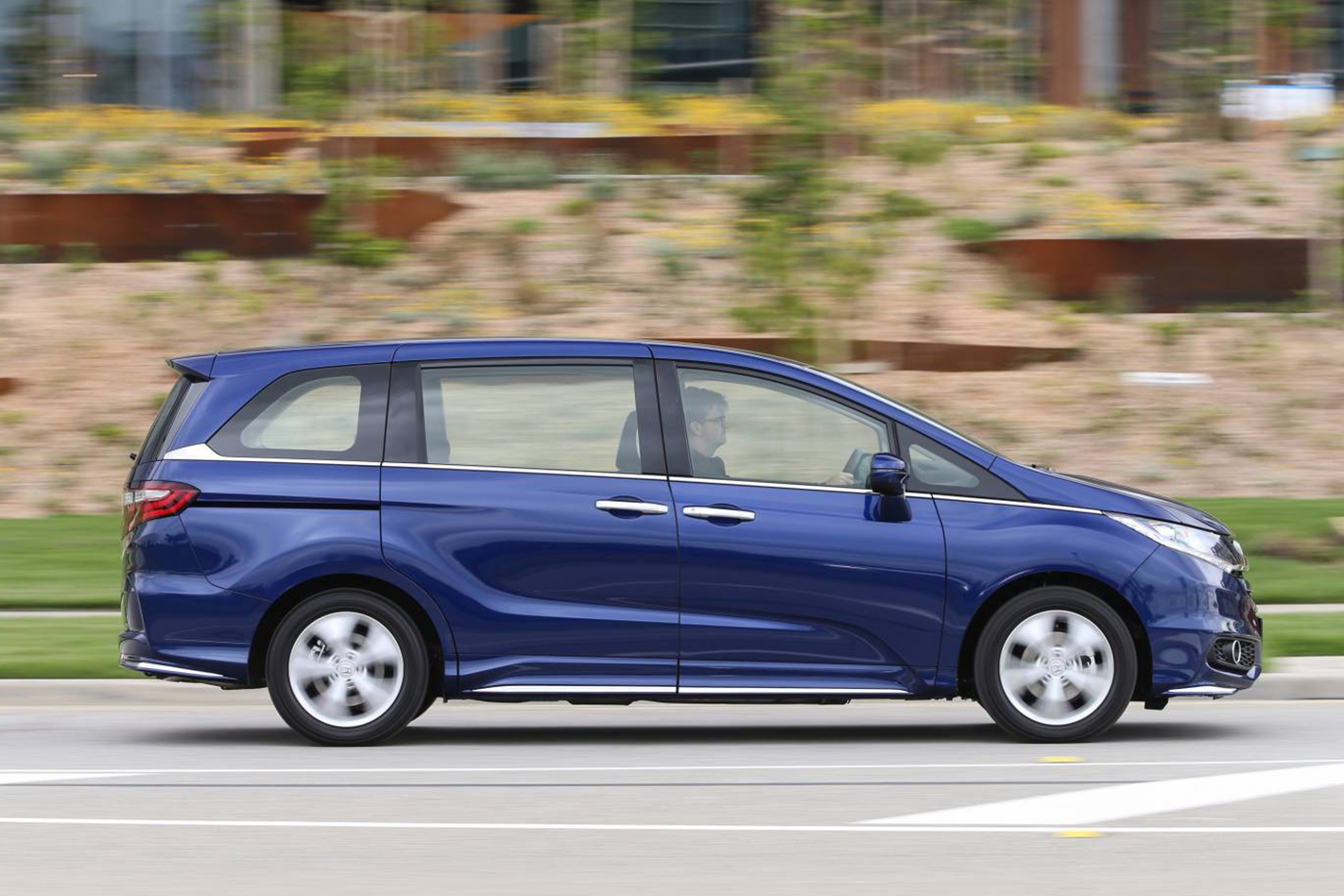
Rather than looking and feeling like a van full of seats, the Odyssey has more of a car-like flavour right down to its elegant interior and driving position.
As our analysis shows, it’s also fantastic value for those needing lots of space for lots of people.
Priced just below $40K ($39,140) in its most affordable VTi guise there are eight seats with easy flipping and folding for easy access; the third row even folds in a 40/20/40 configuration, allowing for easy packing of longer items such as skis or surfboards.
Sliding side doors reduce the chances of kids flinging them open onto carpark walls or a car parked alongside.
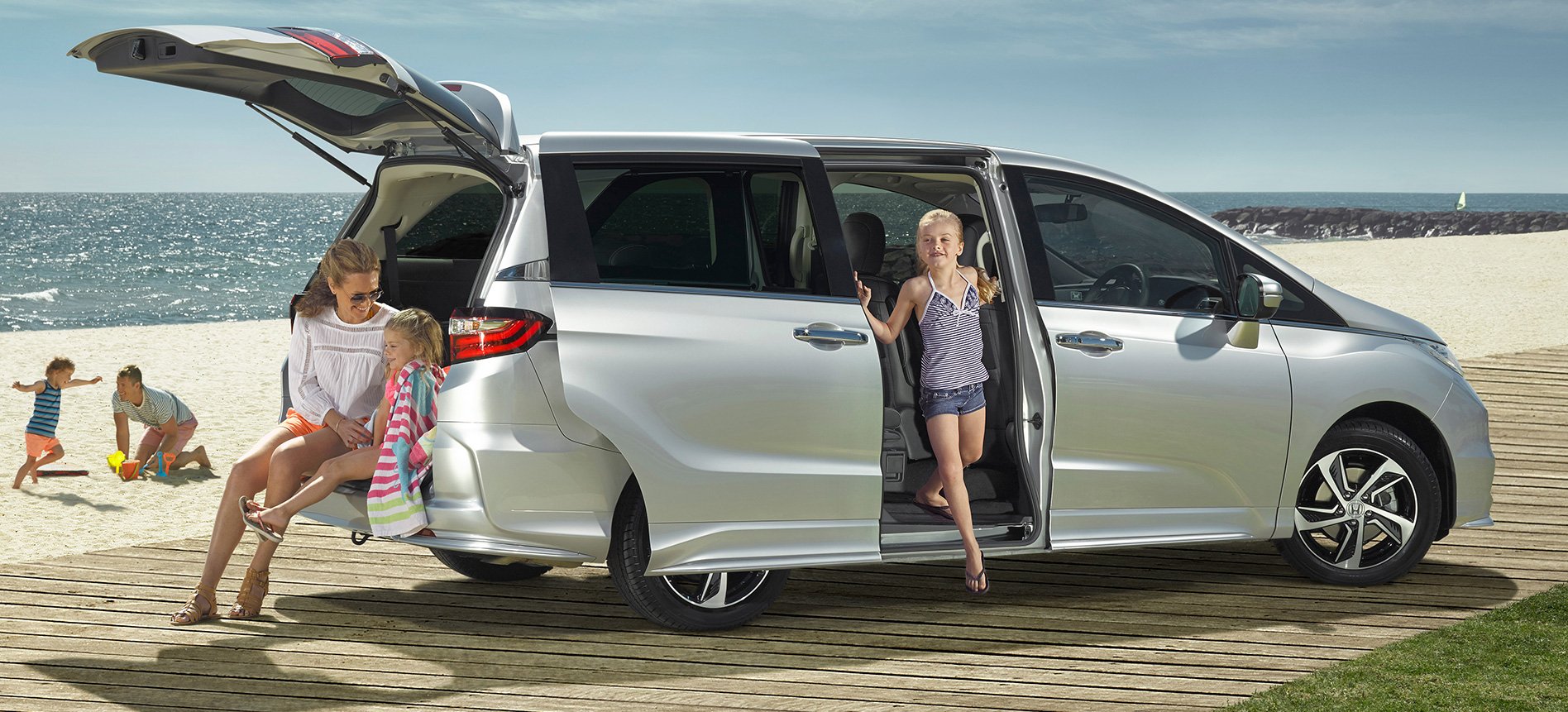
It’s a basic level of kit that includes dual-zone ventilation and Bluetooth, but not Apple CarPlay or Android Auto. A camera provides a virtual overhead view for reversing and the mirrors are heated and automatically fold when parked.
Advanced active safety features are only available on the more expensive VTi-L, which fits individual captain’s chairs in the second row, in turn reducing the seating capacity to seven.
Under the bonnet is a 2.4-litre four-cylinder, one that can be respectably frugal considering how much car it has to move. But load the Odyssey with people and you’ll have to work it harder.
One area that helped the Odyssey to the top spot in this contest is its above-average predicted resale of 61 per cent after five years.
While people movers aren’t high on the must-have list for many buyers, it seems there is demand for second-hand Odysseys. That’s important when it comes time to sell.
SILVER – Kia Carnival S
Space, space and more space. That’s a large part of the sales pitch for the Kia Carnival, which is due to be replaced shortly by an all-new model.
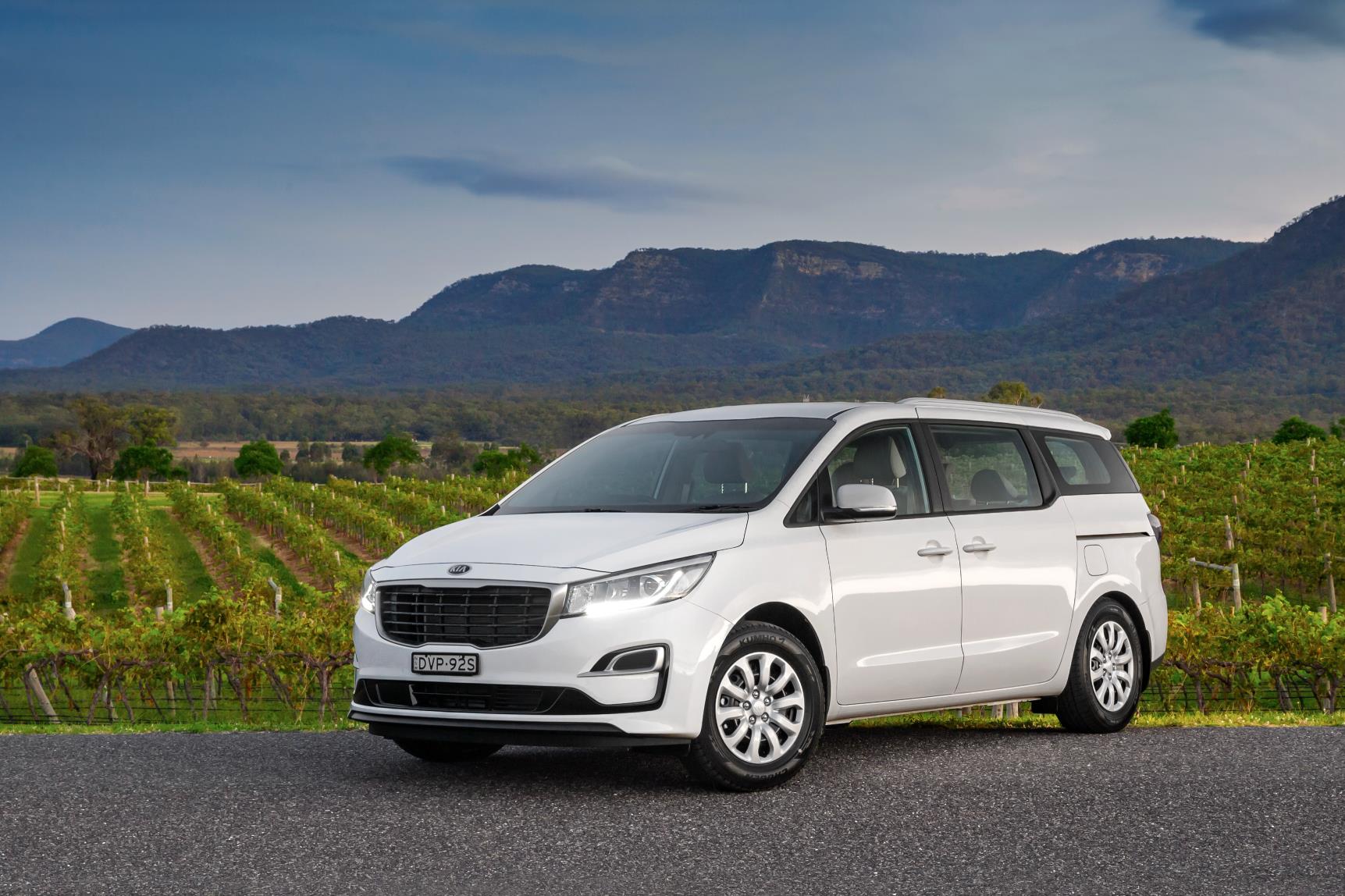
It’s a very big vehicle, one that not only comfortably carries eight people but can also carry a lot of their luggage at the same time.
That’s a rare talent not many people movers can achieve, but the space under the floor that holds the third row of seats when folded is very deep and useful if all seats are in play.
At $43,190 the Carnival also represents terrific value, incorporating Apple CarPlay and Android Auto, active cruise control and autonomous emergency braking AEB).
A trio of USB charging points is a nice touch to keep gadgets running.
The seven-year warranty is a handy addition, too, no doubt helping its respectable resale value that contributes to that value proposition.
And while there’s no shortage of go from the 3.5-litre V6, the engine hurts the Carnival’s running costs.
BRONZE – Volkswagen Caravelle Trendline
The Caravelle is one for big families, with four rows of seats providing accommodation for nine. Seating flexibility allows you to trade off luggage space, too.
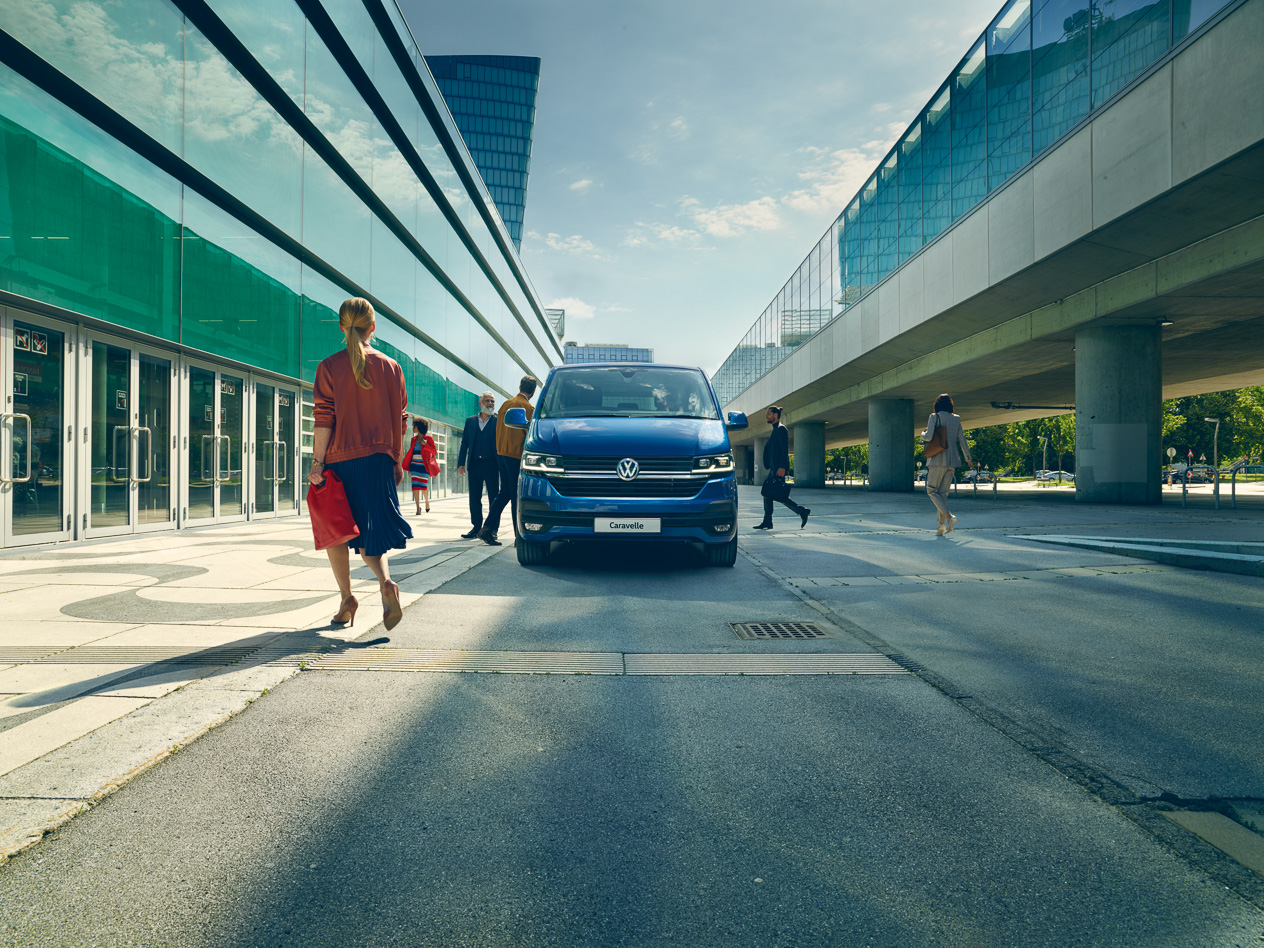
It’s a big vehicle, stretching the Multivan architecture to increase the focus on carrying lots of people.
At $58,990 it’s no outright bargain, with the emphasis on solid driving manners and a frugal diesel engine.
Indeed, low fuel use is something that helped it climb the value ladder.
While there are no curtain airbags in the rear, blind spot warning and auto braking helps with avoiding an impact in the first place.
Triple-zone ventilation and smartphone connectivity are among the trinkets for a car focused on fitting lots of people in.
Jump to
- How we rate Australia’s Best Value Car
- Light/City Cars
- Small Cars
- Budget luxury cars
- Family Cars
- Small SUVs
- Five-seat SUVs
- Seven-seat SUVs
- Premium SUVs
- Prestige cars
- Dual-Cab 4x4s
- Off-Road 4x4s
Ferrari’s most controversial model to date, wearing a controversial moniker, will herald the company’s most controversial drivetrain in its history, if a report by carmagazine.co.uk is on the money.
The Purosangue – a car regarded as sacrilegious by many for bringing SUVs into the prancing horse stable, and one that is still battling a charity for rights to the name – will introduce full electrification for Ferrari, the report says – a potential trifecta of trouble.
If the Italian anti-doping not-for-profit wins its battle, Ferrari may need to come up with another name for the crossover ahead of its launch in 2022, but its F175 codename however, is less sought after and is locked in.
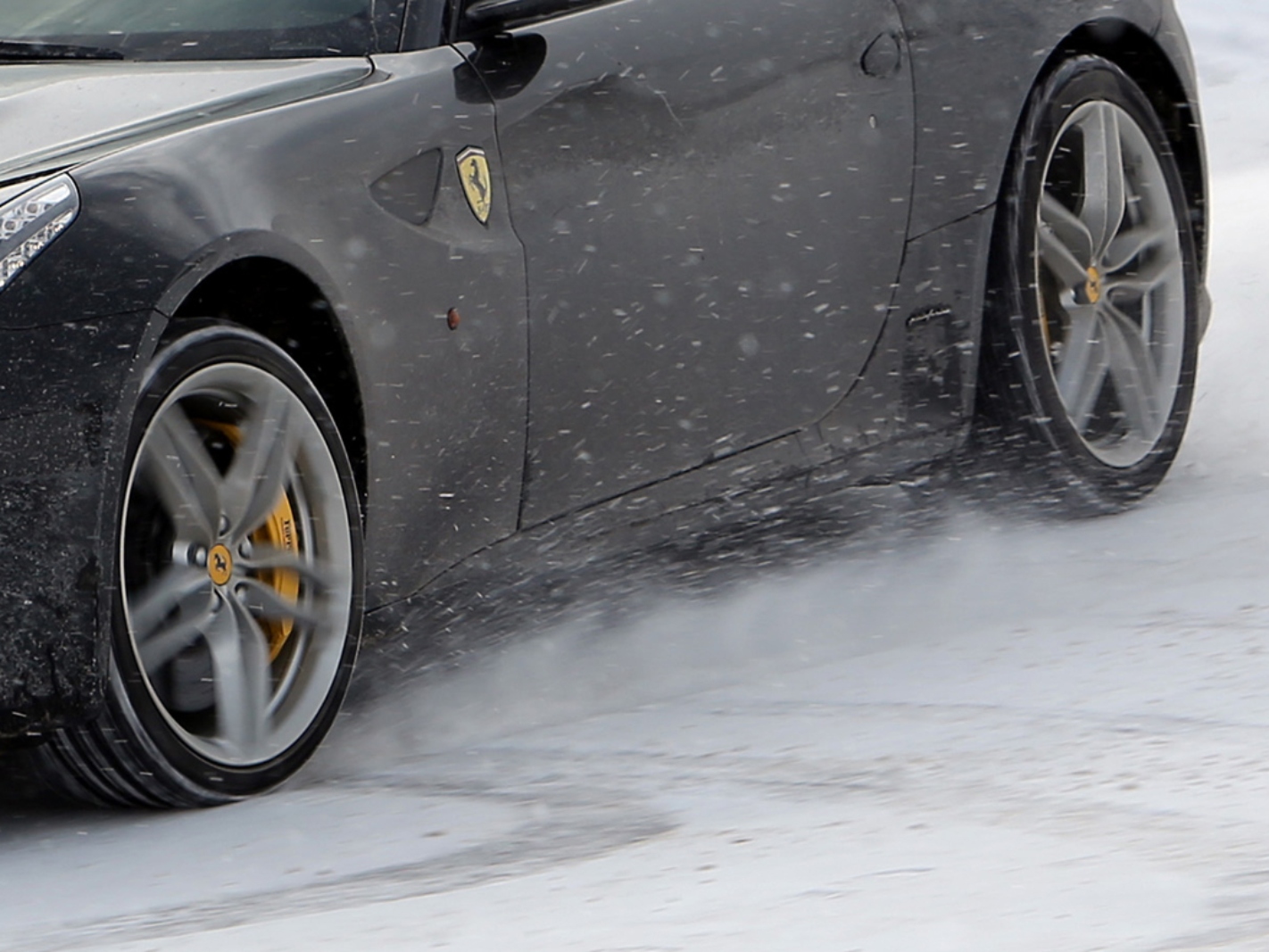
More interestingly though, two additional codenames are plotting the path of a family of high-riders beyond the Purosangue pioneer, with the F244 and F245 to follow.
This brace of crossovers, according to CAR, will emerge in 2024 with the F244, followed by the F245 in 2026, but while the F175 will have a choice of 588kW V12 and hybridised V8 petrol, the later models will introduce pure-electric power for the brand.
An all-new platform will provide the Purosangue underpinnings allowing the application of petrol or electric power, or a combination of both in the case of a hybrid variant – think jacked-up and expensive Hyundai Ioniq.
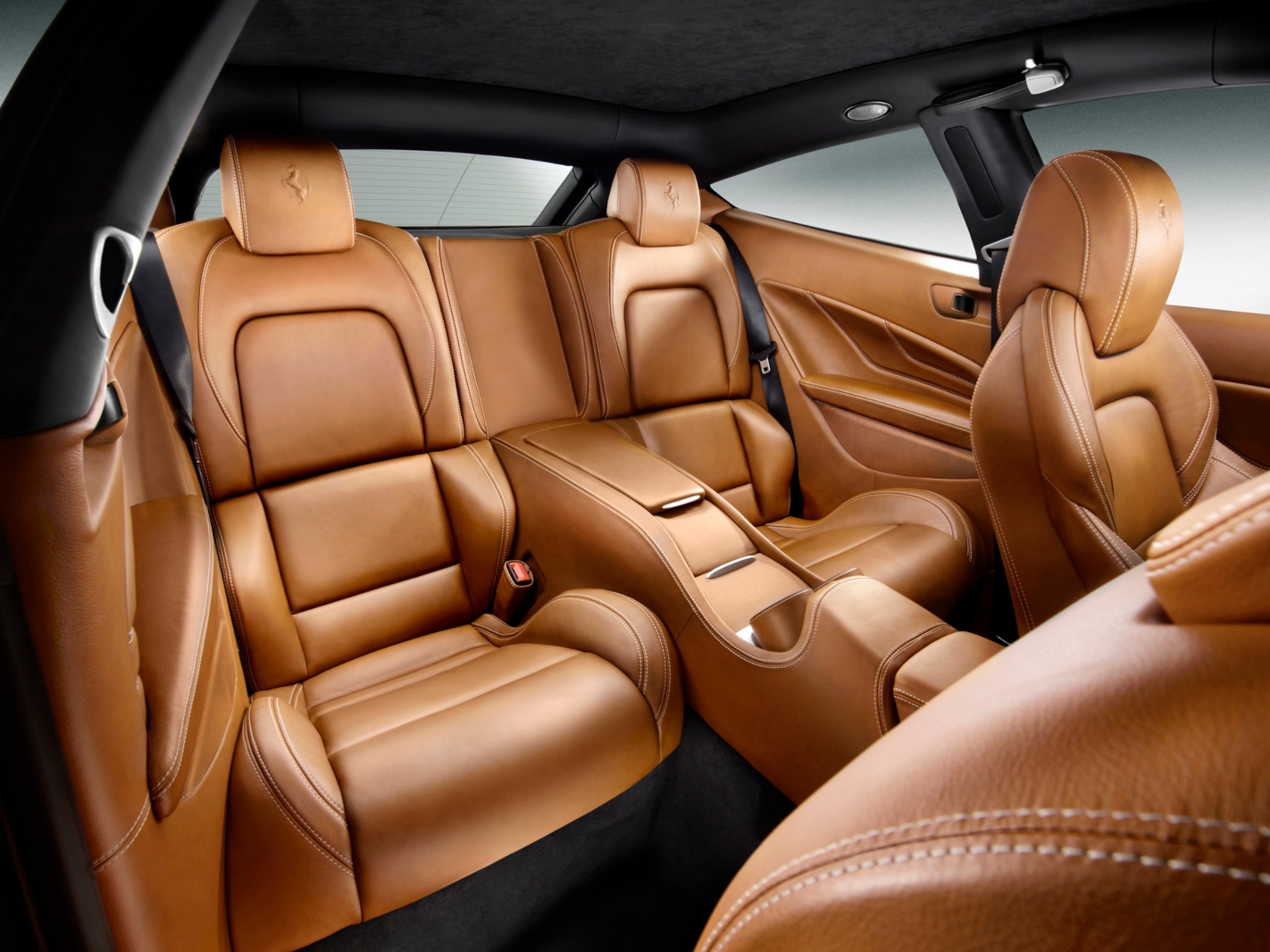
The skateboard architecture can accommodate up to four electric motors for pure EV applications – likely one for each wheel – fed by an 80kWh lithium-ion battery for a combined total of 450kW – the same as Tesla’s most feisty Model X.
If the new electric platform offers the space maximizing opportunities of other brands, the first battery powered Ferrari could take the title as its most practical to date as well.
The now discontinued FF and GTC4 Lusso successor offered the company’s first decent size boot, combined with four seats and all-wheel drive, but the Purosangue looks likely to beat each of those milestones with up to five seats, more luggage room and better off-road manners.
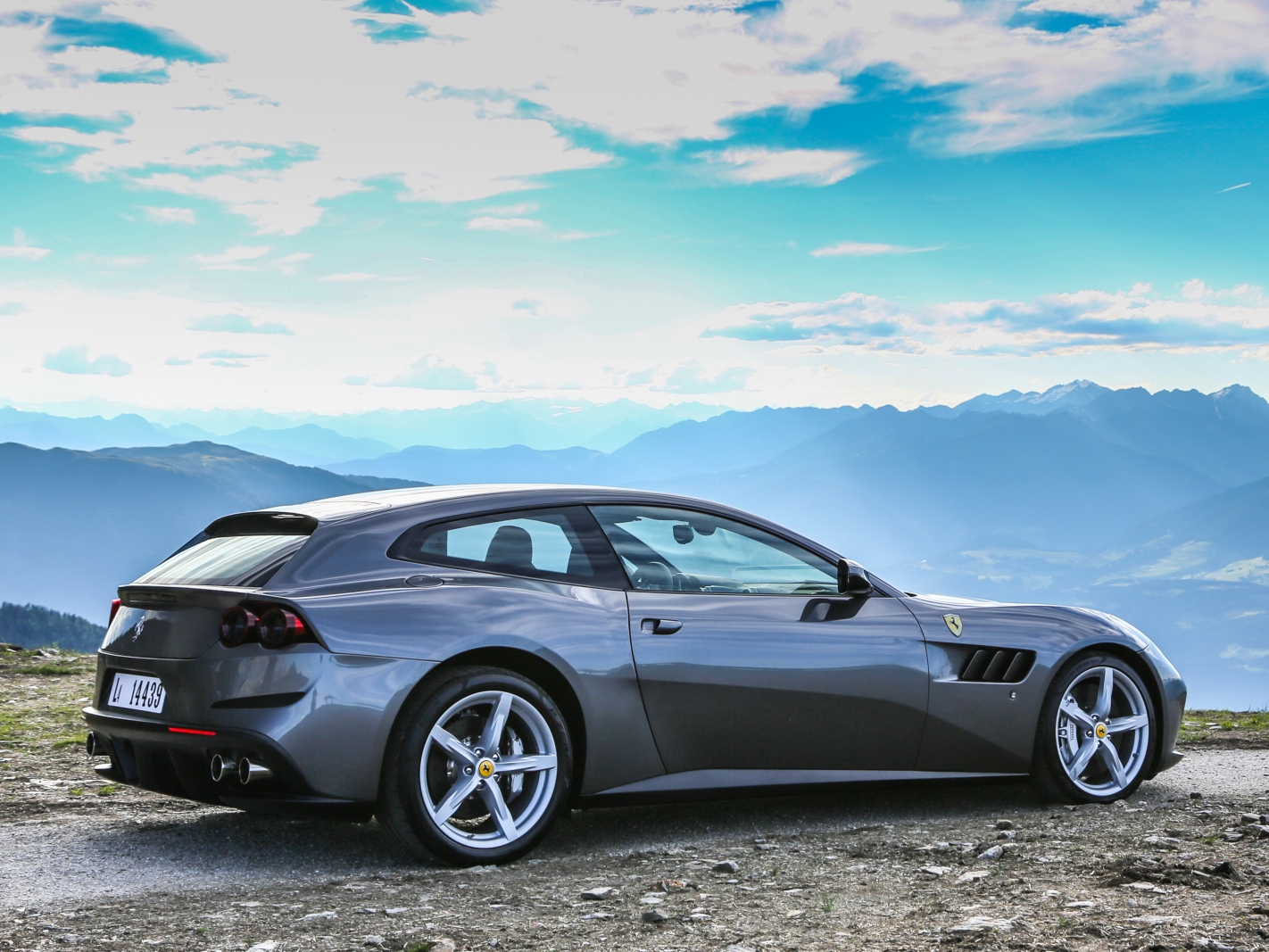
While tidbits continue to emerge regarding the Purosangue’s oily (and insulated) bits, little is yet known about the way it will look.
Spy shots of a vehicle touted to be a prototype may offer some insight but the build-up to Mazda’s MX-5 reveal should serve as a reminder just how wrong artist’s impressions and computer-generated renderings can be.
Hard to believe just a few years ago, but the Ferrari Purosangue will arrive into a crowded market with virtually all its key rivals weighing into the ultra SUV world ahead of it.
Lamborghini’s Urus, the Aston Martin DBX and Porsche Cayenne provide the closest competition, although Rolls Royce’s Cullinan and the Bentley Bentayga are also filling out the high-end high-rider space.
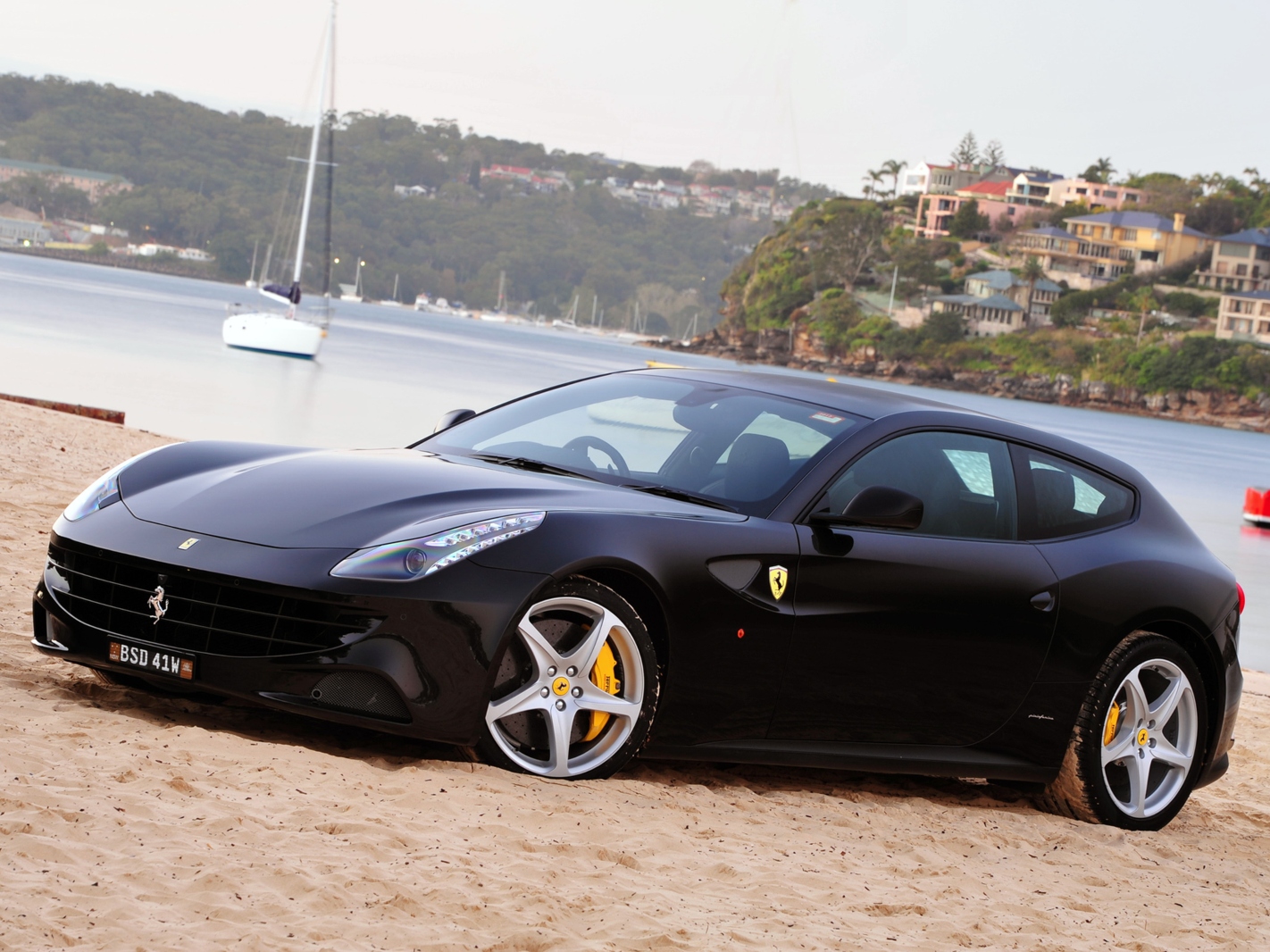
Of course, Ferrari says it has the pepper to cast all aside in its attack on the market and like some of its competitor brands, is even refusing to label the Purosangue an SUV – as if its most polarising and divisive vehicle to date needed to be any more controversial.
As it turned out, WhichCar attended the last vehicle launch that Holden would ever hold – but at the time, we had no idea that was the case.
It was an unusual trip, too; we expected to drive – or at least hear about – the long-overdue update to the Colorado ute on a quick trip to Thailand in December 2019.
Instead, we sampled a brace of Thai-market Chevrolet Colorados and a couple of current-spec Holdens plucked off the line at Rayong.
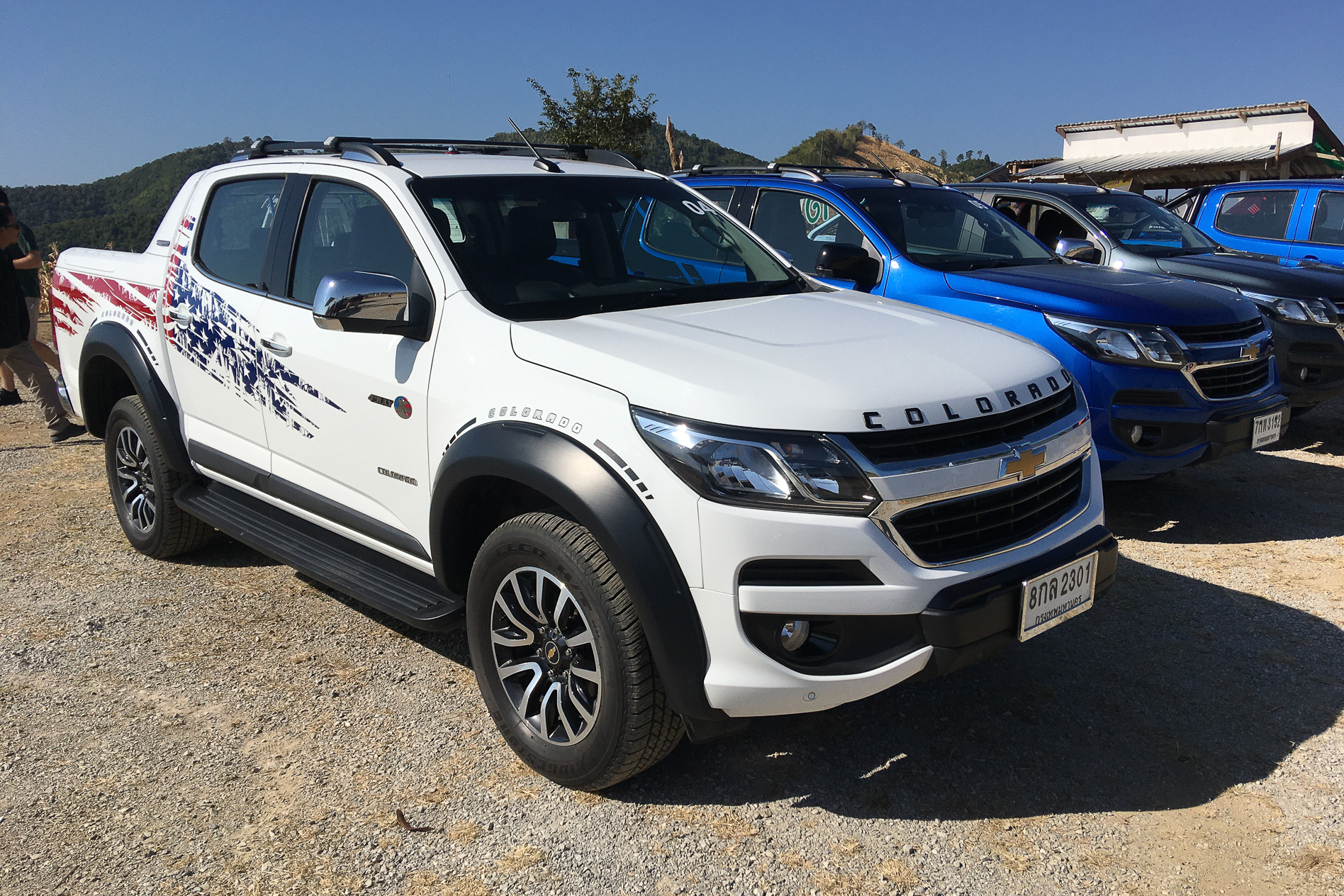
Our Holden hosts were tight-lipped about… well, everything, too.
While it was frustrating from a newshound’s point of view, it was understandable – this was a company under siege. In the face of tanking sales, rumblings about the company’s future had already started.
General Motors had been caught shopping the Holden brand to auto importer Inchcape earlier in the year, while the sale of Commodore maker Opel to Peugeot’s owner PSA in September also set tongues wagging.
The departure of vaunted industry veteran Dave Buttner from the CEO role on the eve of our trip, after just 16 months in the job, was also off-limits, as was any discussion about the future of the Commodore or Colorado.
In fact, the Commodore was cut from the local lineup four days after we returned from the trip – a plan that was definitely locked in before we bombed into Bangkok International.
History will show that General Motors pulled the rug out from underneath Holden in mid-February 2020, ending a 160-year legacy at the stroke of a pen.
And the Rayong plant? Sold virtually the same day…
As the end of 2020 draws in, Holden dealers are few and far between, while the huge discounts that produced a flurry of final sales for Holden end at midnight tonight.
Key staff have been quietly exiting the company over the course of the last eight months, including the talented design team, engineering support and back-office workers.
Thanks in part to COVID-19 but mostly, I think, because of an enduring sadness of the way it’s all gone down, Holden will simply fade out of existence. No closing ceremony, no final press call.
The HQ at Fishermans Bend will be partly repurposed into city housing and the other parts handed over to Vinfast, which also now has the keys to the Lang Lang proving ground. The Elizabeth factory in South Australia is long gone.
Tens of thousands of workers who served Australia well over the decades will no doubt pause and reflect on Holden’s demise, as will its legions of loyal fans.
Let’s look back at a few of the key stories that told the Holden tale best, brought to you by WhichCar’s team of motoring experts.
Vale Holden./Tim Robson
Looking back: Holden’s countdown to destruction
Bruce Newton examines in detail the timeline that led to Holden’s decision to exit local manufacturing in 2017.
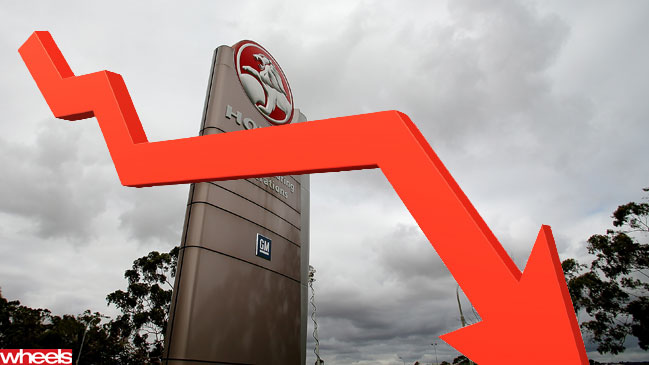
Ford quits Australia: what now for manufacturing?
Anna Kantilaftas reports on the first domino to fall – the announcement by Ford Australia to end manufacturing in Australia.
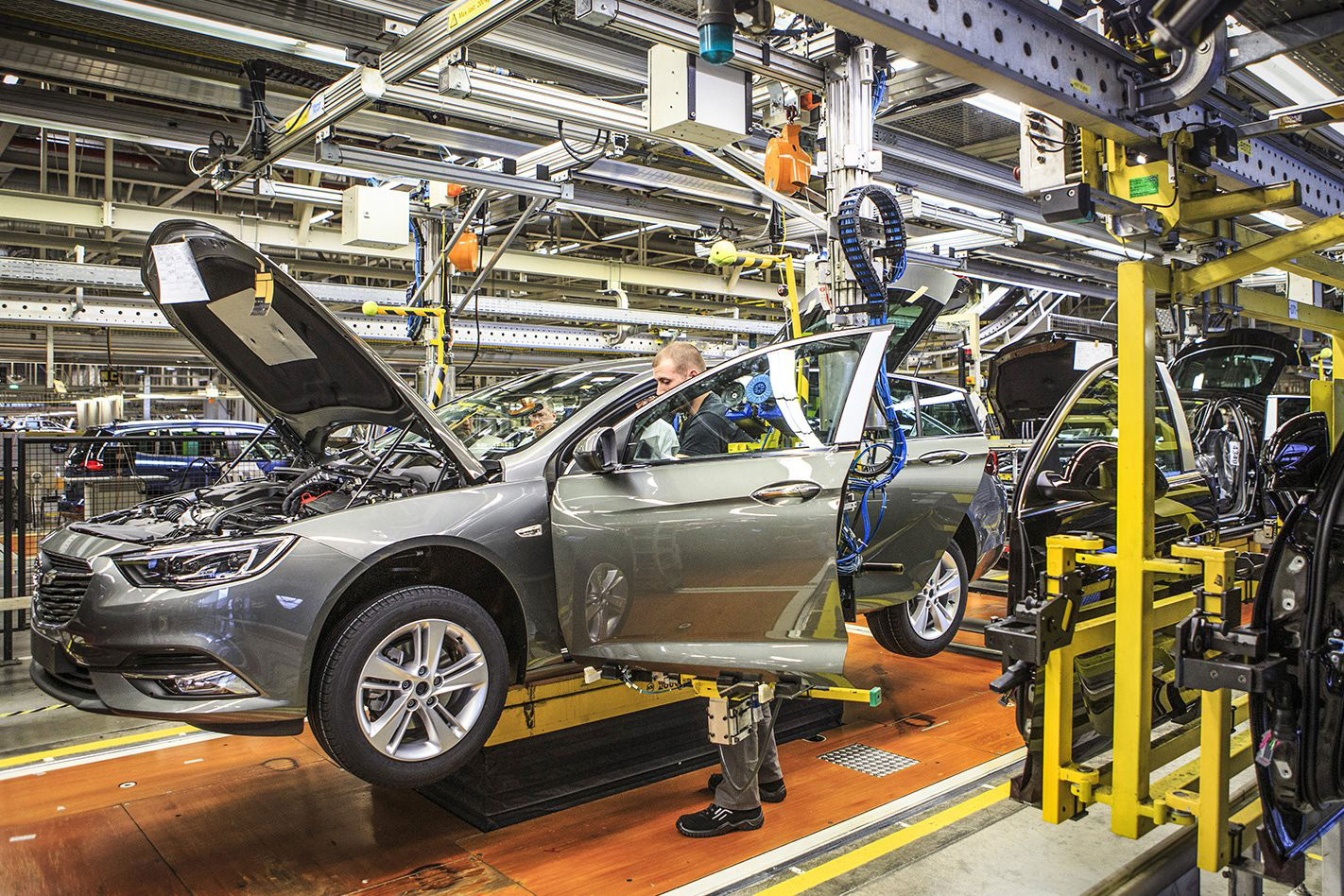
D-day for Holden
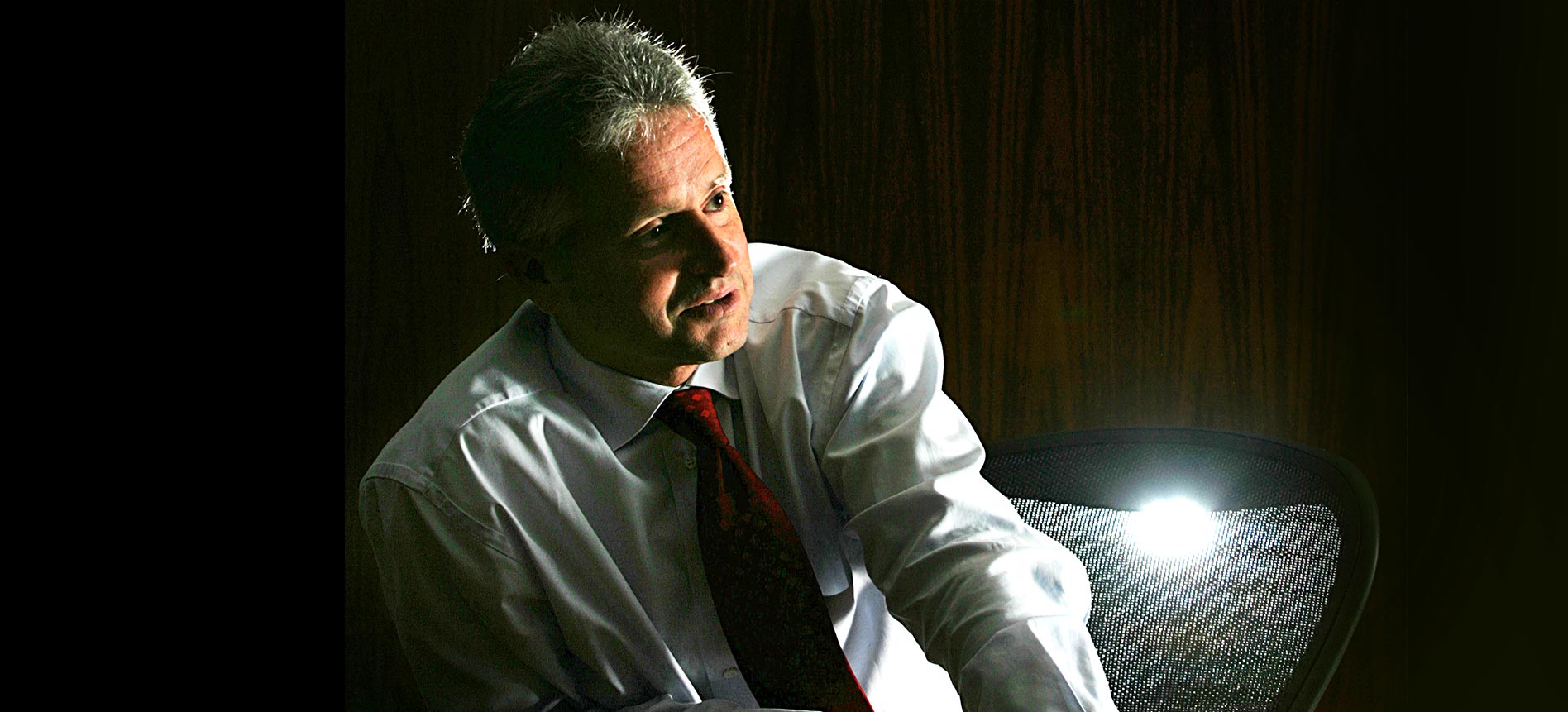
Wheels reports on the tumultuous events of late 2013, with the Australian government daring Holden chief Denny Mooney (below) to withdraw from the country.
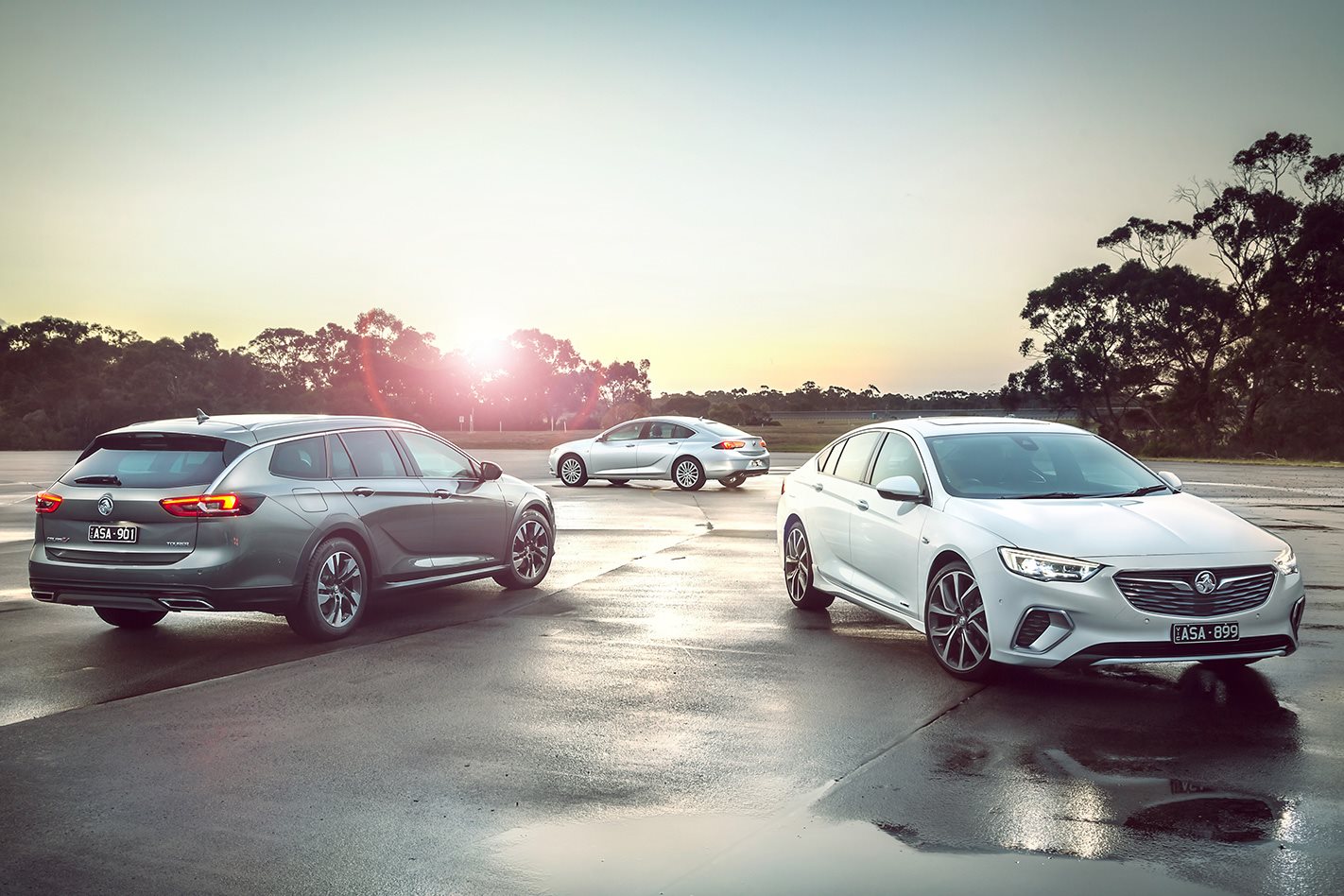
Tracking Holden’s decline
This comprehensive data set shows in black and white just how far Holden had slipped since 1996
Holden to exit Australia
One of the busiest days in our newsrooms’ collective histories as we pull together all the facts and figures around the momentous decision.
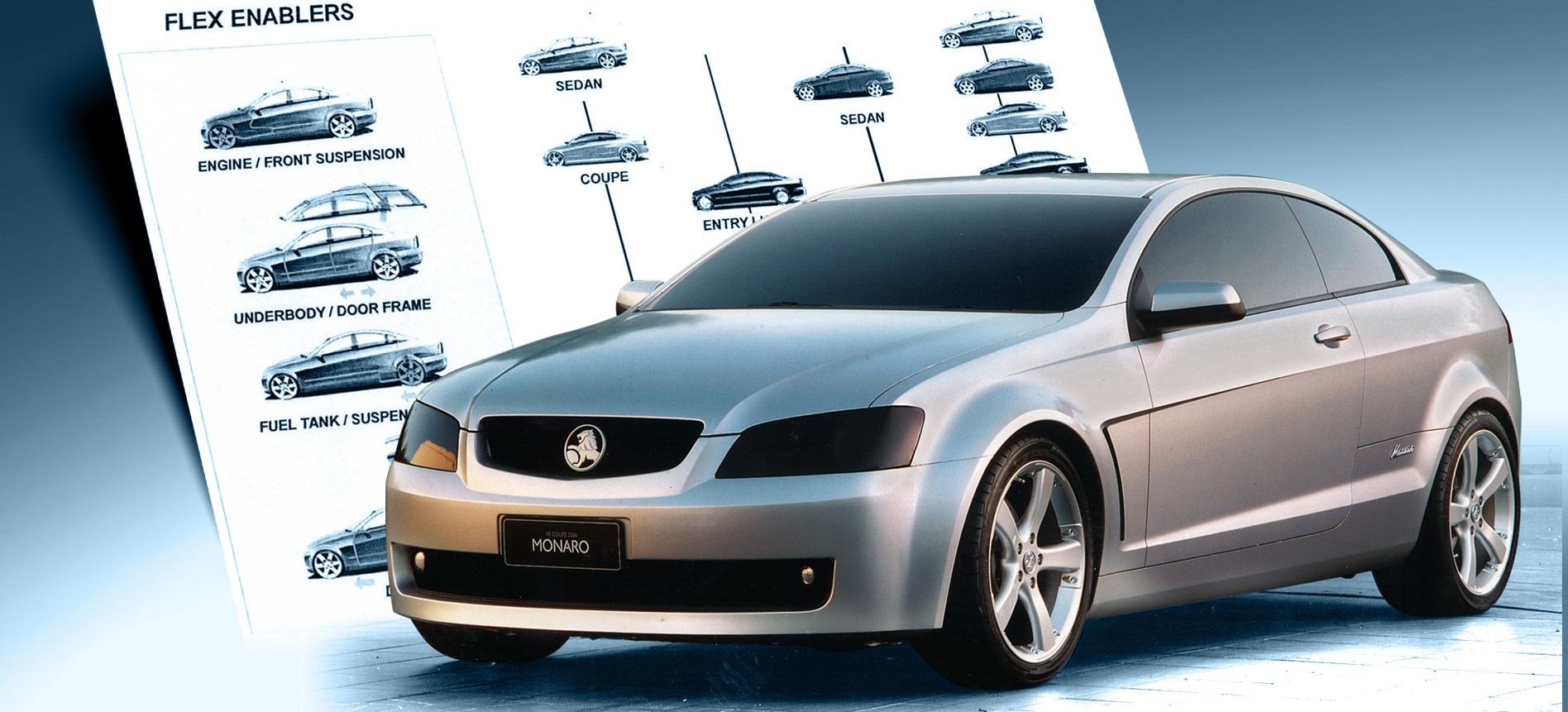
Secret documents reveal lost Holden opportunities
The Commodore VE could have spawned a brace of cars that may have changed the course of the company’s destiny, reported Cameron Kirby.
GM’s treatment of dealers “incredibly reckless”, inquiry told
Holden’s exit from Australia has been a catastrophe, with enraged dealers suing the company and government inquires instigated to resolve the issues.
Sign of the times as Holden sheds the Lion
Tim Robson was on the spot as a dealership debranded itself of its Holden signage.
Holden onto what matters
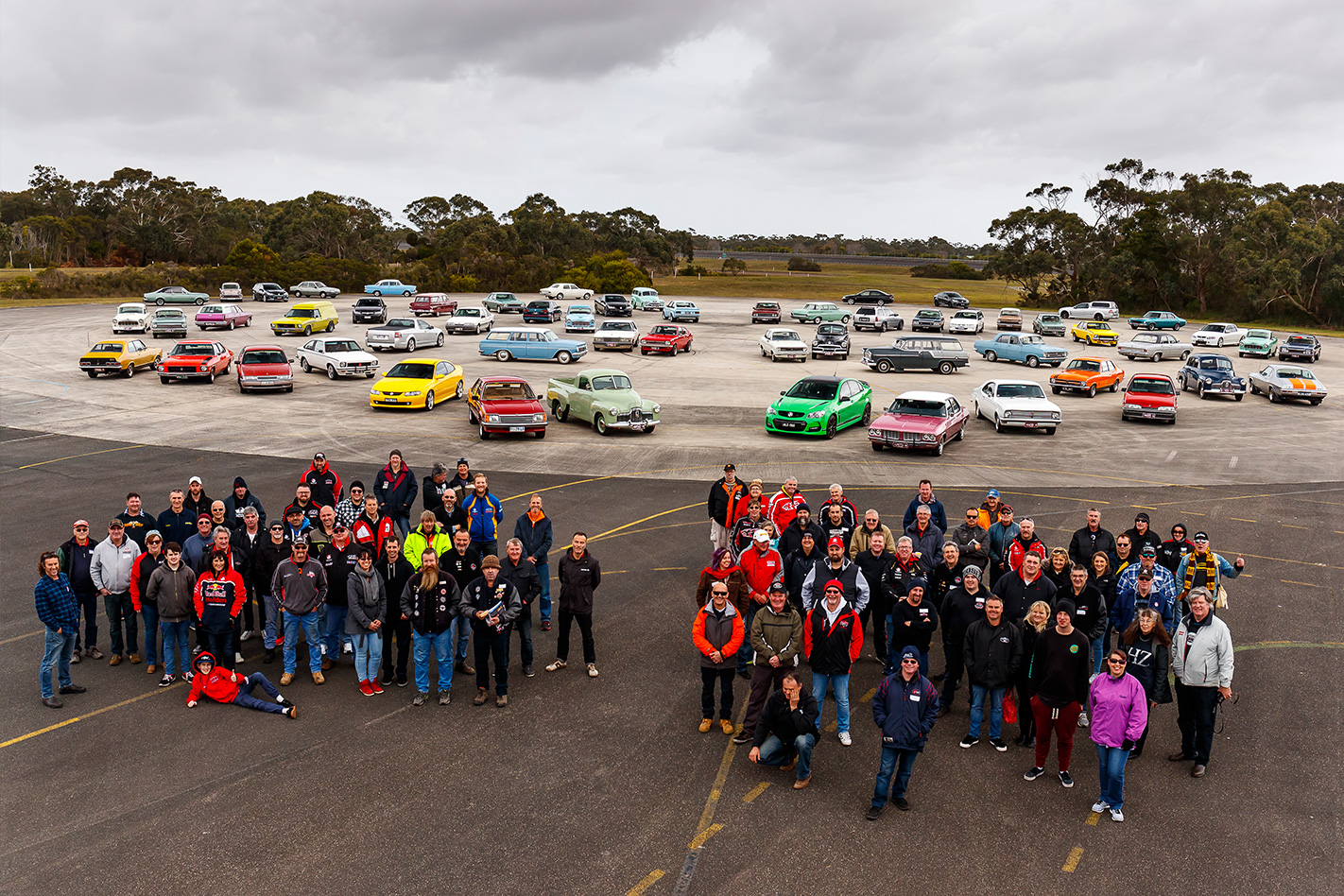
To mark the end of Holden manufacturing in Australia, we gathered together the largest number of vehicles in Wheels history at the Lang Lang proving ground.
READ MORE
- Clay modelling at Holden’s design studio (02 Jan 2020)
- Opinion: When was it time to retire the Holden brand? (18 Dec 2019)
- Why did Australia fall out of love with Holden? (12 Dec 2019)
- Two years on from Holden’s factory closure (18 Oct 2019)
- Holden halts production of Commodore and Equinox (17 Oct 2018)
- How Holden shaped a nation (25 Sep 2018)
- Opinion: ‘Quit Holden on’ (11 Apr 2018)
- The best performance Commodores (09 Nov 2017)
- The history of the SS (21 July 2017)
- Holden’s factory closure statement (11 Dec 2013)
BMW M-division CEO Markus Flasch has given high-performance car fans an early 2021 treat with a glimpse at a new even sharper version of the M5 dubbed the CS.
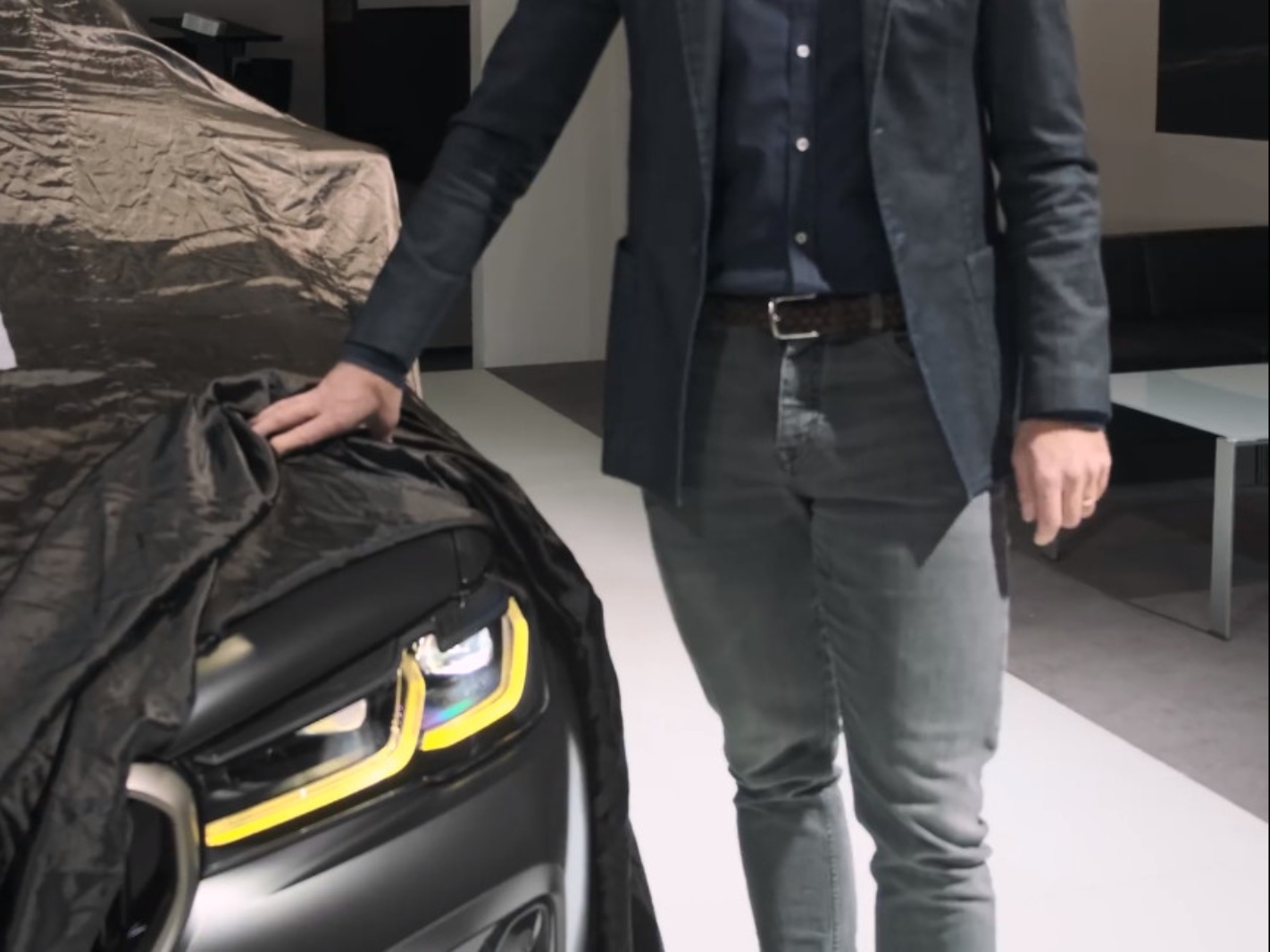
A full view of the new mega sedan variant is promised in January, but for now, M-boss Flasch has offered a tantalising glimpse at the M5 CS in a short walk-round video, lifting its covers on some key details.
Taking the M5 Competition as its basis, the M5 CS has the same 4.4-litre 460kW/750Nm twin-turbo V8 bolted to an eight-speed automatic transmission feeding a serious amount of grunt to all four wheels, but the M designers have put 70kg of weight in the bin.
That will take the executive sedan’s kerb weight down to less than 1800kg with an average fuel economy of between 11.3 and 11.1 L/100km, says BMW.
It’s not yet confirmed if that’s enough to shave tenths from the zero to 100km/h performance, which the Competition deals with in 3.3 seconds.
Presented in stealthy satin black, the CS is highlighted by a number of satin gold-bronze trims including the radiator grille as well as the side vents poking through the front wings.
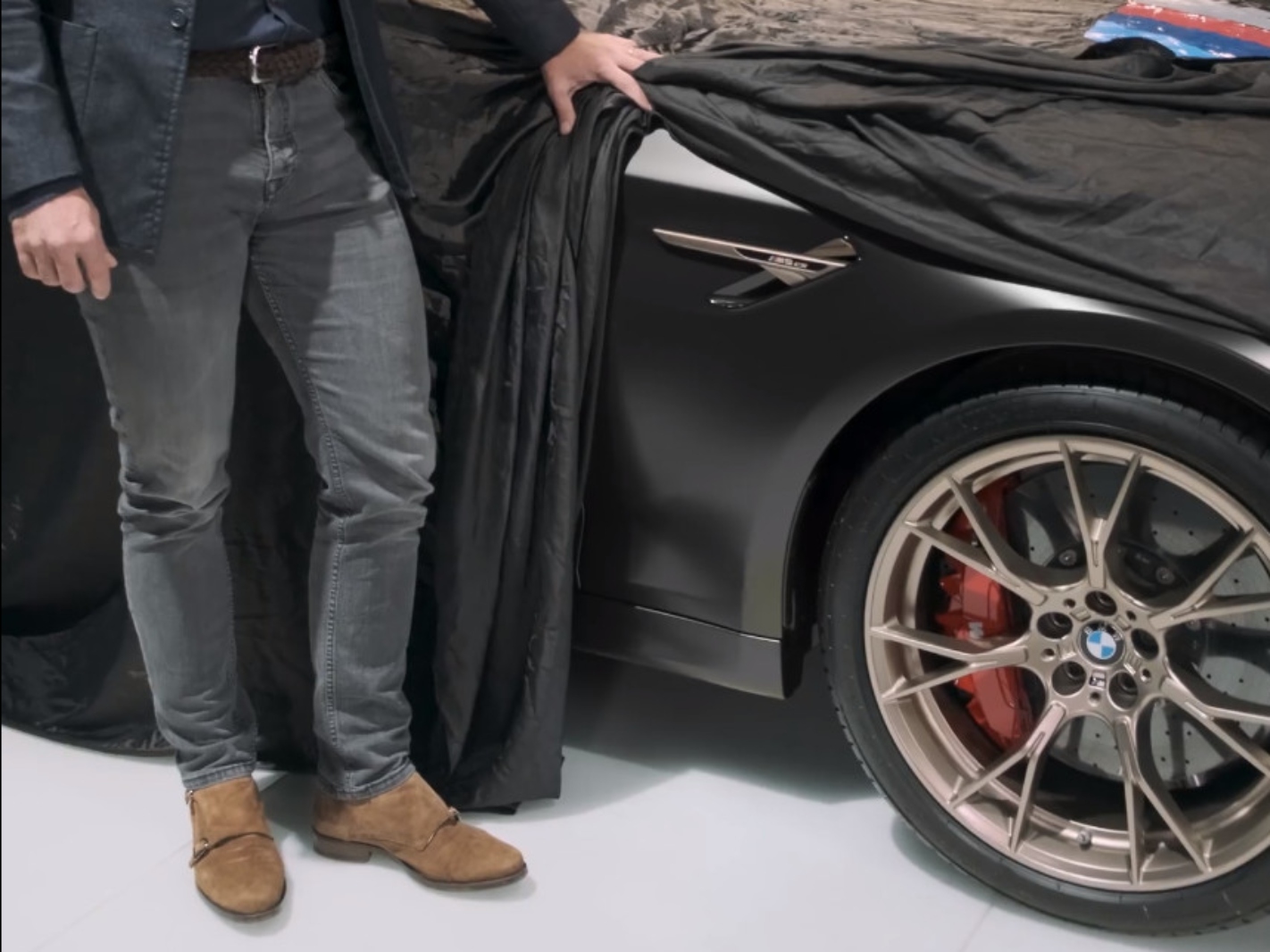
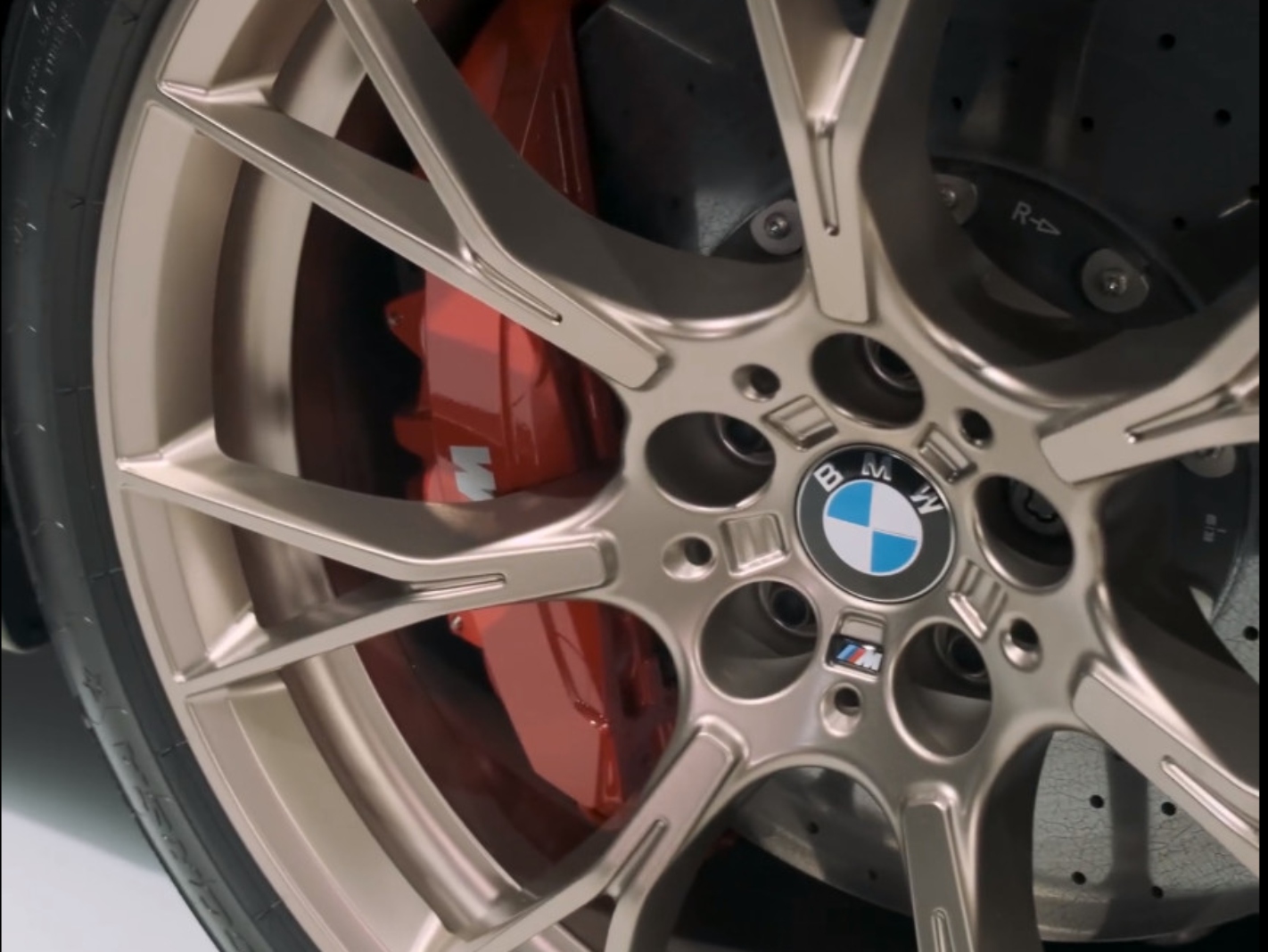
Massive forged alloy wheels also wear the same finish and a unique design for the new variant.
Inside them are ‘exclusive’ carbon-ceramic discs, clamped by mighty one-piece calipers finished in red.
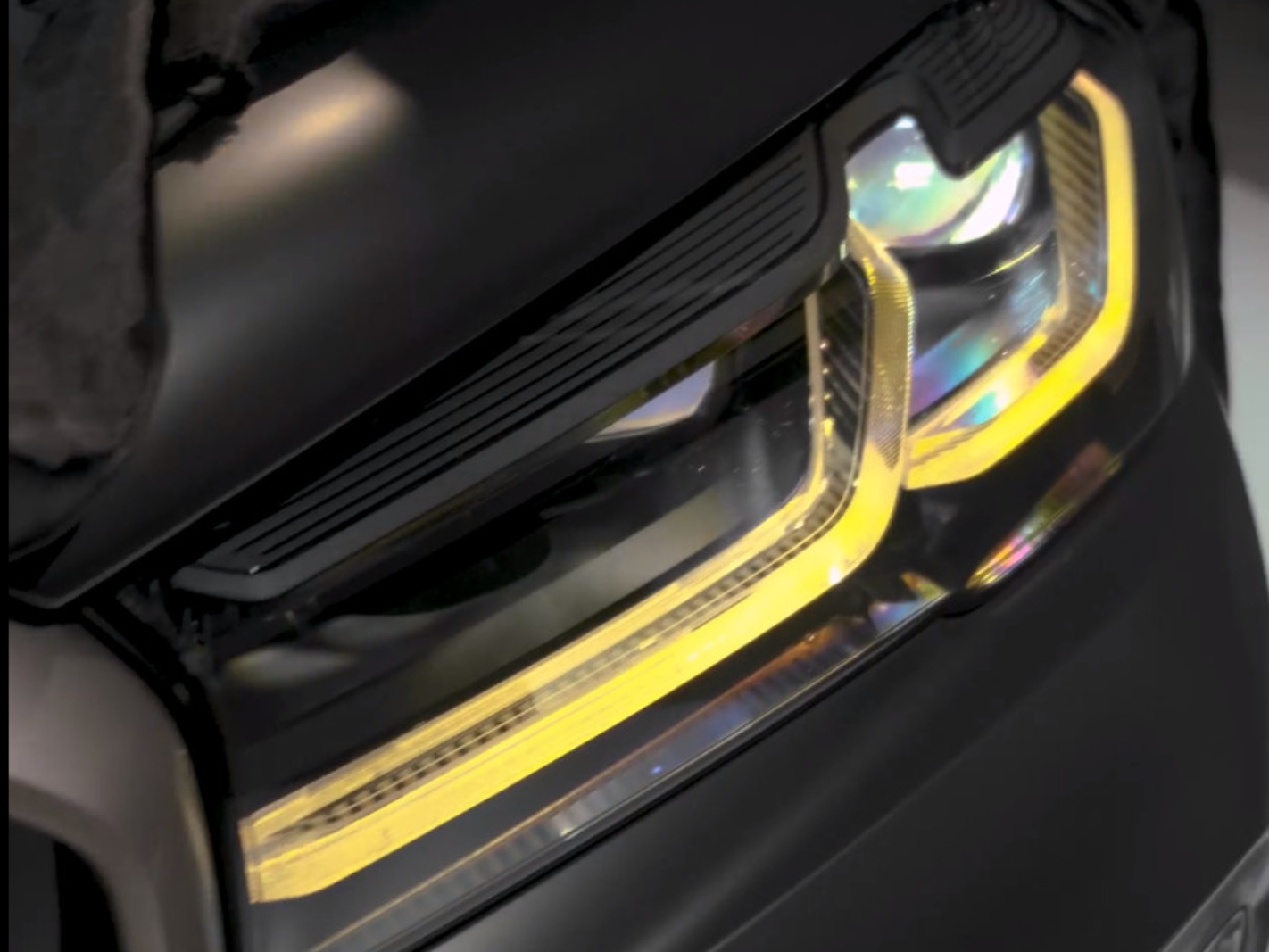
In addition to the eye-catching grille, the front end is further enhanced visually by stunning yellow headlights that Flasch says are “motorsport style”.
No further technical details are outlined in the short video, but you can expect a number of other enhancements to sharpen the M5’s claws, including a suspension retune and revised engine and transmission mapping.
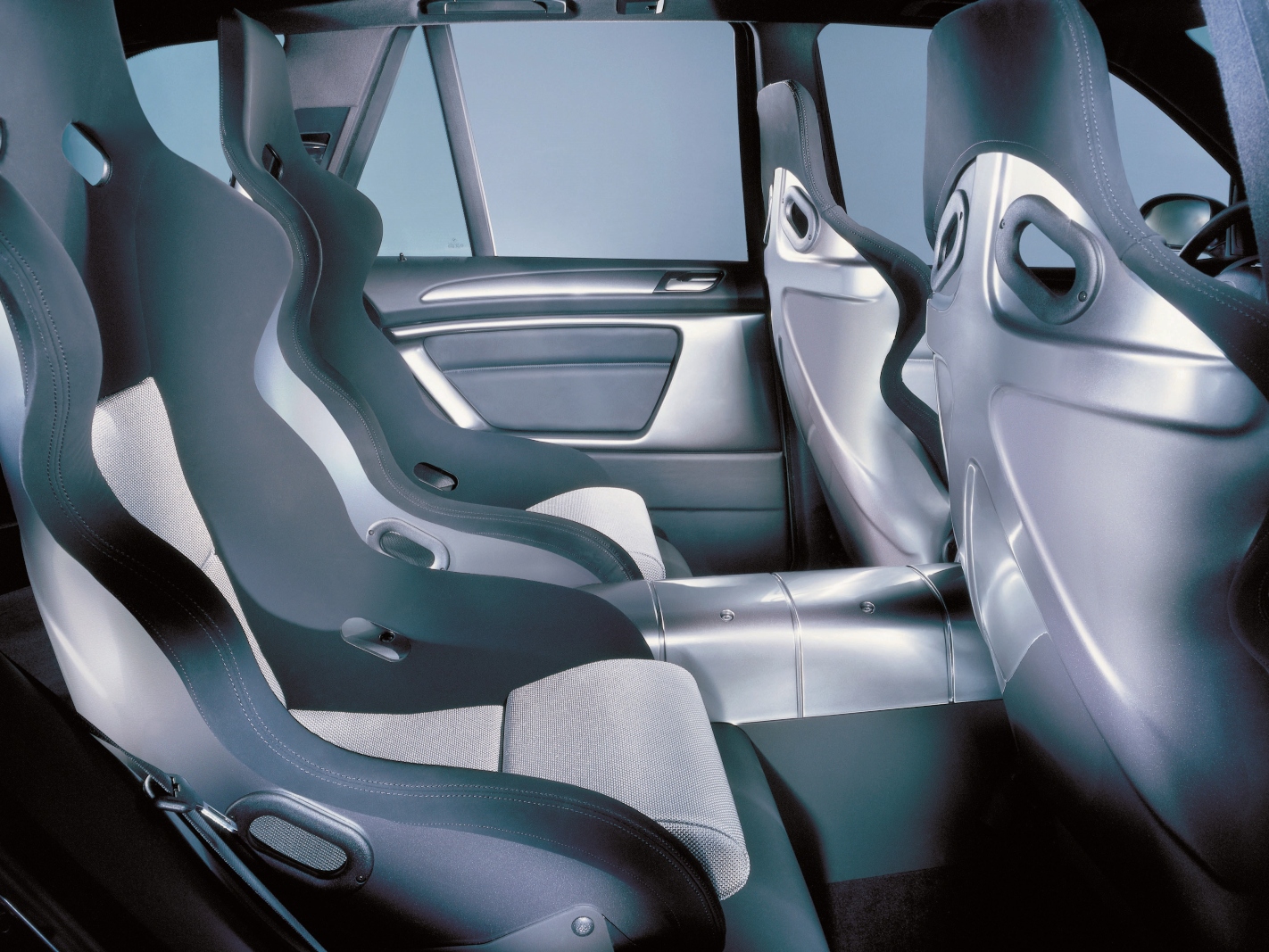
A glimpse at the interior is not offered but the CS will get the same carbon-fibre bucket front seats available for the M3 and M4 siblings, as well as something special for the second row.
“This car is a true four-seater so you can expect something in the rear,” said Flasch.
It’s not yet completely clear what that entails, but it could refer to another pair of bucket seats for the rear in place of the more conventional five-seater bench, similar to the company’s mad 200 X5 le Mans concept.
“We didn’t want to close 2020 with lousy New Year’s resolutions; we wanted to tease a car that we will disclose in January next year,” he said.
It will be the fourth CS model to join the growing family, following versions offered in the M2, (F80) M3 and (F82) M4 ranges but the most powerful to date.
Pricing is yet to be confirmed as well as Australian allocation, but you can expect to pay a premium over the standard M5 competition which kicks off from $245,000.
BMW is yet to confirm a CS version of the freshly launched G80/G82 model M3 and M4 although it’s fair to assume the company will be maintaining the performance sub-brand’s momentum.
MORE Don’t like the new M3 nose? We fixed it
The European Union has approved the merger of Fiat Chrysler Automobiles (FCA) with Groupe PSA, confirming the continent will get a new second biggest automobile maker and the fourth largest on the global stage.
It has obvious implications in Europe where almost every second car sold will be from either the newly formed Stellantis or the reigning champion of European sales, Volkswagen.

When plans to merge were first announced in November 2019, Australian eyes turned to Holden which, following the purchase by PSA of former General Motors brands Vauxhall and Opel, effectively turned the Commodore a different shade of red, white and blue – and could have provided ready access to other PSA products.
A partnership between Holden and PSA – potentially brokered by automotive giant Inchcape – failed to materialise, though, sentencing the iconic brand to the annals of history after GM decided it would be cheaper to dump the brand than to save it.
So what now?
With the formation of the Stellantis group, the brands already sold in Australia – including Abarth, Alfa Romeo, Chrysler, Citroen, Fiat, Jeep and Peugeot – will all effectively be housed under the same roof in the company’s Dutch headquarters.
However, things will continue to look a little different in Australia, where FCA Australia and Peugeot Citroen Australia (PCA) function independently of their HQs in much the same way Audi and Volkswagen have independence, despite joint ownership by parent Volkswagen Group.
Indeed, PSA’s exposure in the Australian market is more closely tied to Subaru than any others, thanks to its Inchcape overseers.
But a number of key brands not currently available in local markets are also subject to the merger, including Dodge, Citroen premium brand DS, Lancia, Opel and Vauxhall.
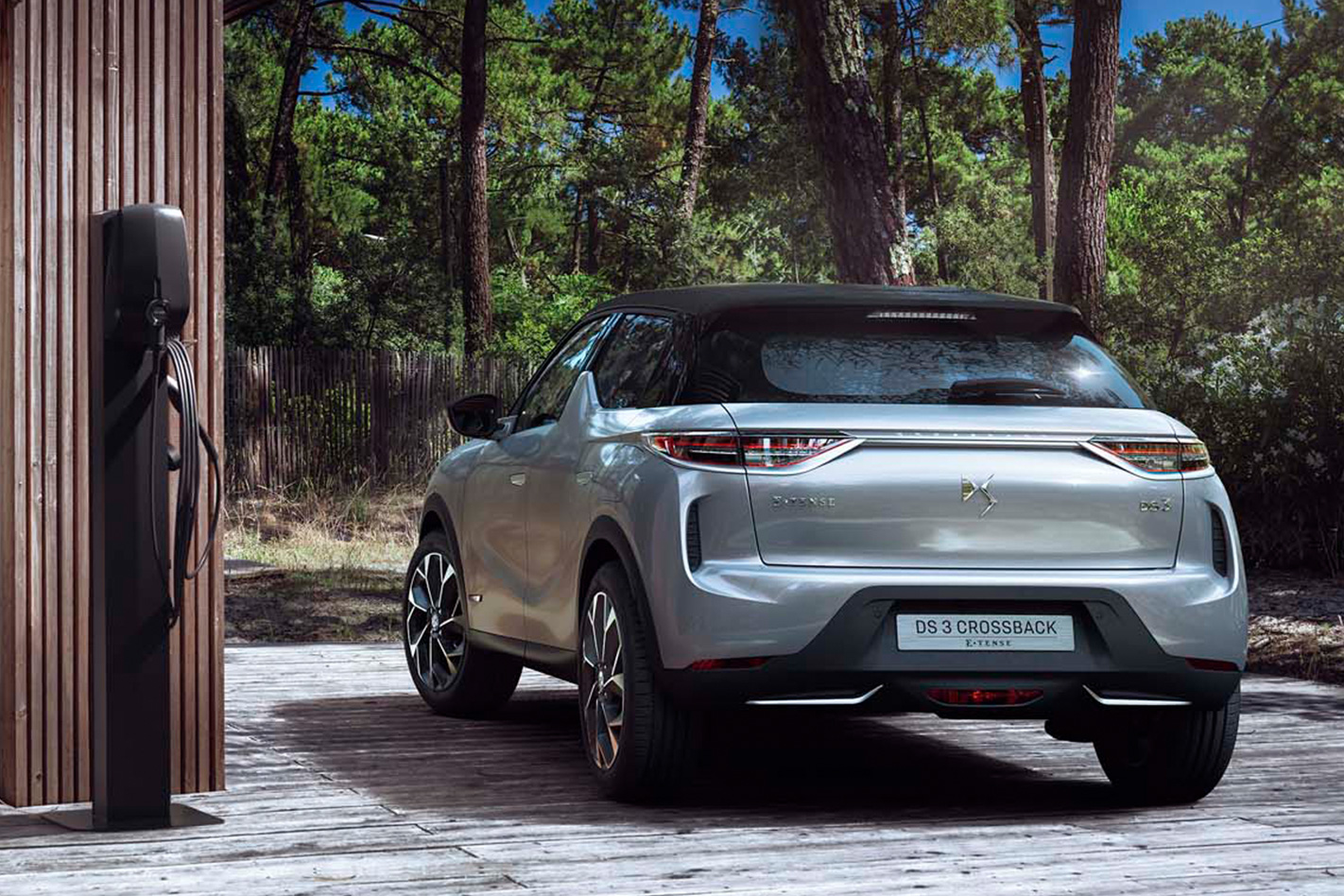
Not all of these brands are guaranteed to survive the merger – DS and Lancia, in particular – but the introduction of other brands to Australia under the Stellantis umbrella is not out of the question.
With its sales in free-fall prior to its closure, Holden arguably left little vacuum in the market, but an SUV-centric brand offering something fresh and inviting has the potential to lap up some of that spilt milk.
Opel/Vauxhall, for example, currently offer a range of affordable, attractive SUVs that could make a dent here, while the roadmap for new products has already drafted in updated technology from the PSA drawing board – something that GM denied Holden.
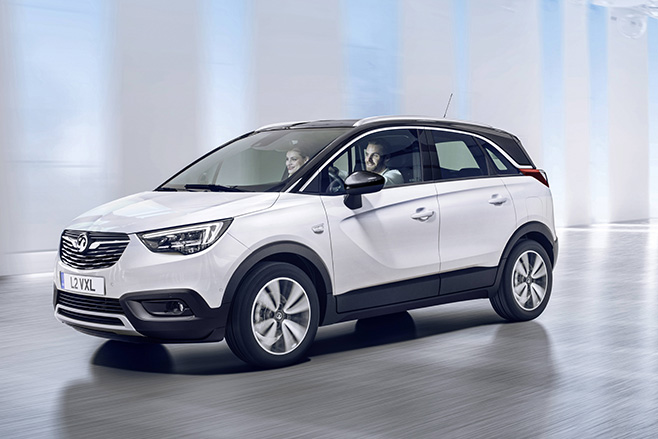
Not only will this give future products more scale and lower costs at a production level, it will potentially allow Stellantis to more easily incorporate right-hand-drive architecture into future models.
Could one of the carmakers return to Australia for another skirmish?
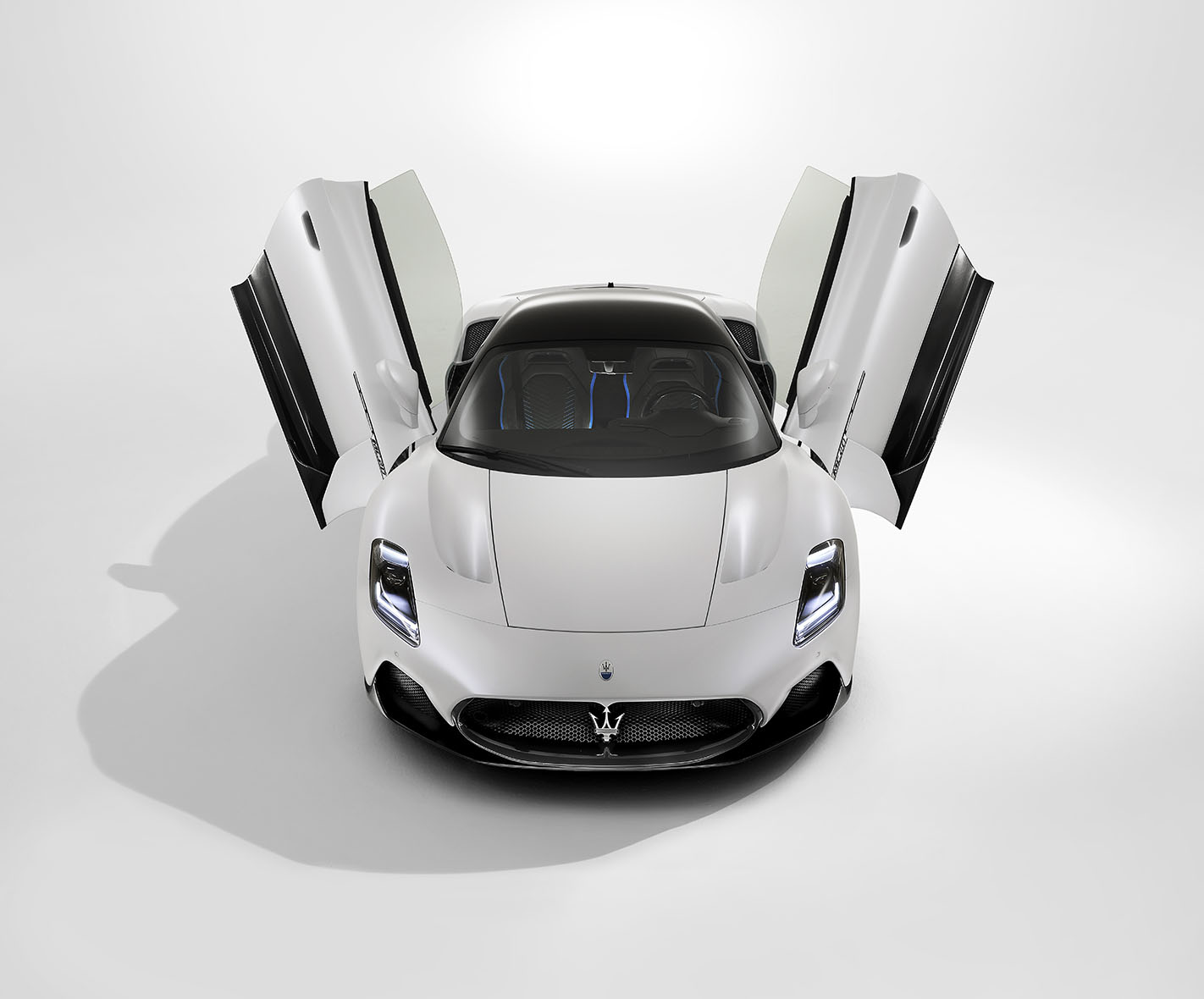
Further complexity lies in the final two brands involved in the merge, Maserati and Ram, which are already sold here by independent importers Ateco and GMSV, respectively.
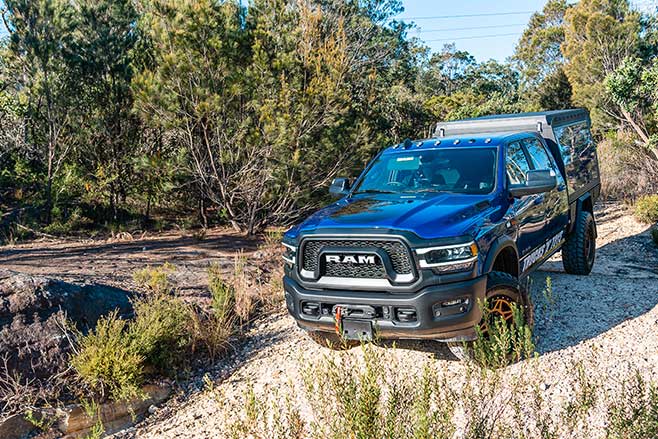
It’s possible the pair will continue on unaffected in the local landscape under a renegotiated agreement, but the more stable Stellantis group may have eyes on one or both of the brands and initiate plans to claim back Maserati and Ram for its own.
In Ram’s case, retrieval is less likely as the operation to convert the models to right-hand drive in Melbourne would need to be replicated, requiring massive investment for a tiny return.
Maserati, however, which already produces its models ready for market, is another matter. A factory distribution of Maserati models is one possible outcome of the FCA/PSA merger.
The most obvious impact on Australian showrooms is likely to be a more widespread platform-sharing plan – exactly what was predicted if the Holden Commodore had made it into a successive generation.
Small Peugeot and Citroen models, such as the Citroen C3, are currently underpinned by a combination of the older PF1 and the more recent EMP1 platform, while larger models such as the Peugeot 308 and 3008 roll on the newer EMP2.
The largest models still use the longstanding PF3 architecture.
While FCA has a number of platforms it could potentially bring to the engineering party, it has already made the decision to share PSA hardware for the basis of its new small and mid-size models.
For example, the electric version of Alfa Romeo’s incoming small SUV, the Tonale, will ride on Peugeot’s eCMP EV platform when it emerges in 2022.
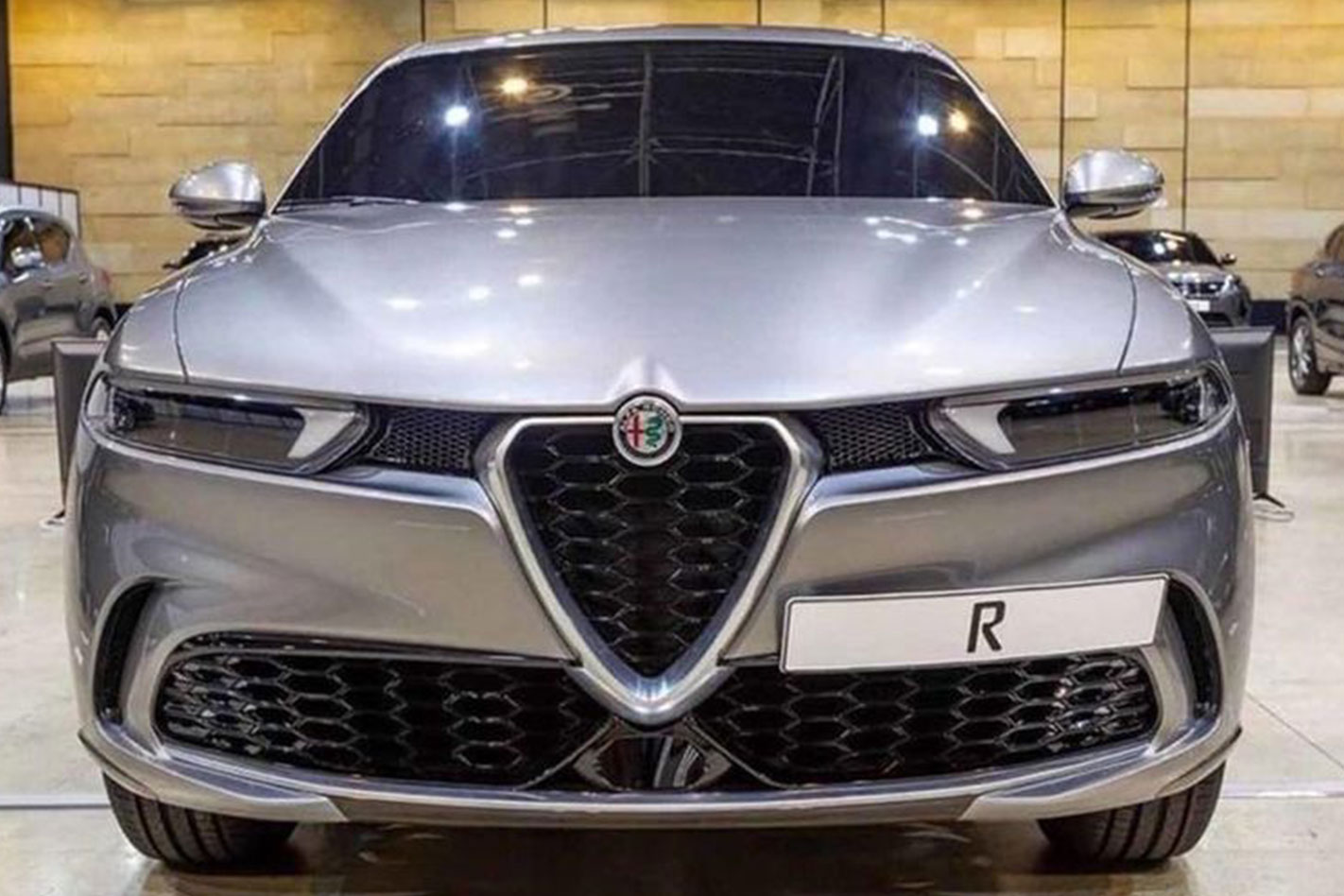
More electrified models arriving in Australia will most likely be the first evidence of the Stellantis takeover.
Speculation aside, the Stellantis deal appears to give PSA the upper hand, giving them access to US markets with the successful Jeep brand at the expense of a host of poorly performing but potentially repairable brand names like Alfa Romeo and Masterati.
How it views its far-flung corners of the empire – particularly those with potentially expensive requirements like right-hand-drive – remains to be seen, but in the short term, at least, nothing much will change for the Stellantis brands currently on sale here in Australia.
Any grand plans for Australia or any other nation for that matter will depend on the newly formed group’s success in its main target market, and all eyes will be on Europe for now.
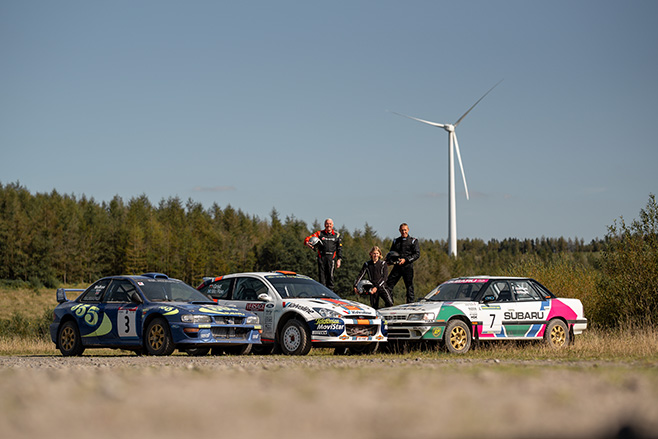
Winding along gravel roads criss-crossing 1600 hectares of forest, I pull my car to a stop in the heart of Walters Arena, the rally stage and test venue half an hour north east of Swansea, Wales, and pinch myself. Through the windscreen I can see a Subaru Legacy RS, and Impreza and Focus World Rally Cars, all bearing the surname McRae on their back windows. But that’s not why I pinch myself; I’m in Wales and it isn’t raining, foggy or freezing cold. Hallelujah!
The cars are framed by a clear blue sky and from the service area you can see the stages that have featured in the World Rally Championship over the years. I’m not the only one who’s grinning from ear to ear at the thought of seeing the three significant machines fly around the place. Max McRae, grandson of “Gramps” Jimmy and son of Alister, is also looking decidedly perky for someone that’s just got off a plane from Perth, Australia. He didn’t sleep a wink on the flight. Would you?
Max is here nearly 25 years after Colin McRae, or plain Uncle Colin, became Britain’s first World Rally Champion and the youngest ever driver to clinch the title. He would like to follow in the family footsteps and become the third generation of McRae to slug it out for supremacy at the wheel of a rally car.
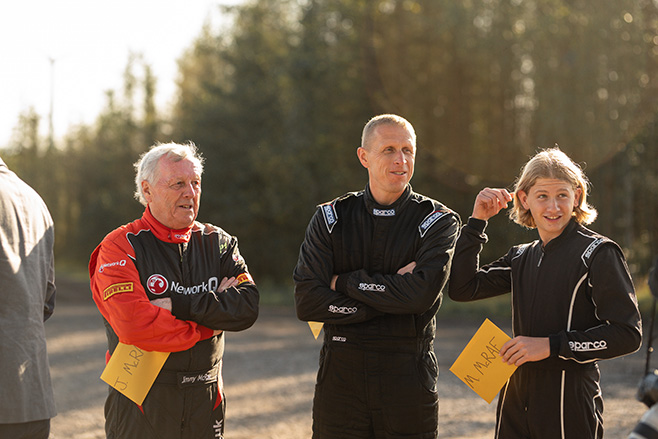
He hasn’t driven anything remotely like the three cars gathered at Walters Arena before. There has been motocross with Dad, then karting which brought a state championship to his name. He’s driven a couple of front-wheel-drive rally cars too: a Citroen C2 and a Suzuki Swift. And at the end of last year, he won a scholarship for a season in the 2020 West Australia Formula 1000 series, which will pitch Max against rivals in 400kg, 130kW, 1000cc Suzuki powered formula cars that can pull up to 3.2g through turns. But Max hasn’t been near a full-blooded rally car.
Yet for all that he admits that his heart is set on rallying.“I hope destiny is calling me for rallying. That’s really what I want to do with my life. For rallying, I’d be willing to do anything, even leave Australia and come back to Britain,” he tells me.
In October Max will take part in the McRae Rally Challenge, an invitational event for leading national and international rally crews that will feature two one-day single venue rallies, a power-stage finale on Sunday, and a Junior rally event, all held at Knockhill, the family’s local Scottish circuit north of Edinburgh.
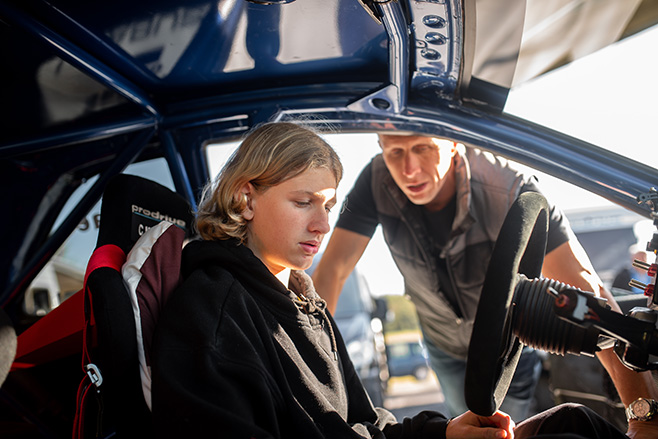
“It’s a really special day, especially to be driving that car with the McRae name on it,” Max continues. At home, he has a collection of scale models of all the cars Alister, Jimmy and Colin have competed in. And with mentors such as Alister and Jimmy on hand, the teenager says he has a strong work ethic. “Dad’s always telling me to put the effort in. He says, ‘If you put the effort in, you get what you want, and hopefully, get your dreams.’”
One of those dreams is coming true today. Max walks around the three rally machines, his gaze falling first on the Subaru Legacy RS, the car that put Uncle Colin firmly on the map of the British and, later, the international scene.
Then there’s a 1997 Subaru Impreza S3, the first WRC-spec Impreza during the year that Colin won five rallies. And finally, the one that’s caught most of Max’s attention, a Ford Focus RS world rally car from 2001, the year Colin won three rounds and finished runner-up in the championship. The Focus is also the model that’s best associated with Colin after it featured on the famous Colin McRae Rally and subsequent Dirt video games.
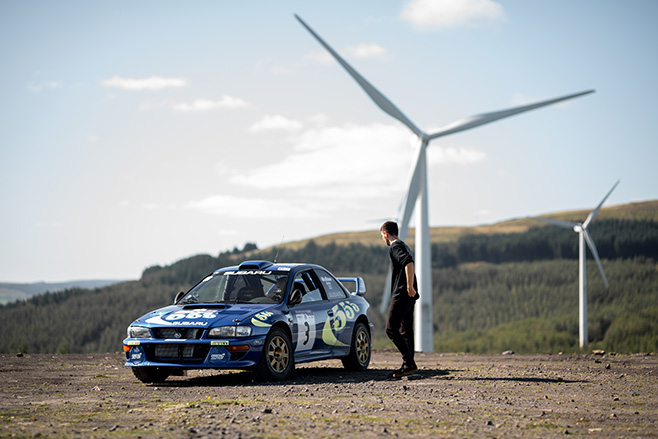
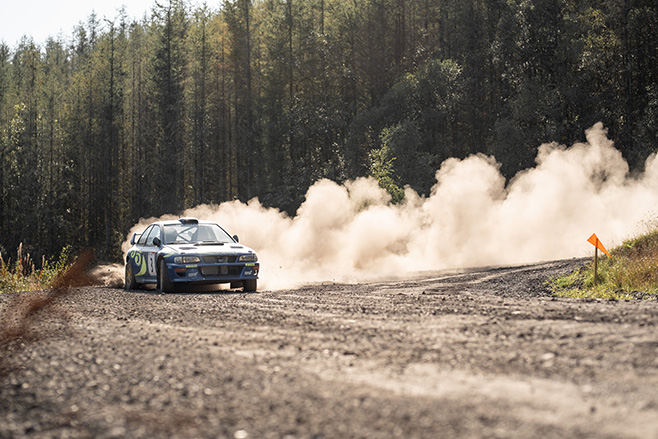
First to be driven is the Impreza, which is owned by Girardo & Co, a classic car dealership in the UK. Max is talked around the dogleg manual gearbox, which is set at an unusual angle to help speed up gearchanges (a signature of all of Colin’s cars). With helmet secure, belts fastened, door shut and engine fired up, he practises a handful of standing starts. These aren’t any old starts. Soon there’s a full bore “let’s go win a rally!” launch.
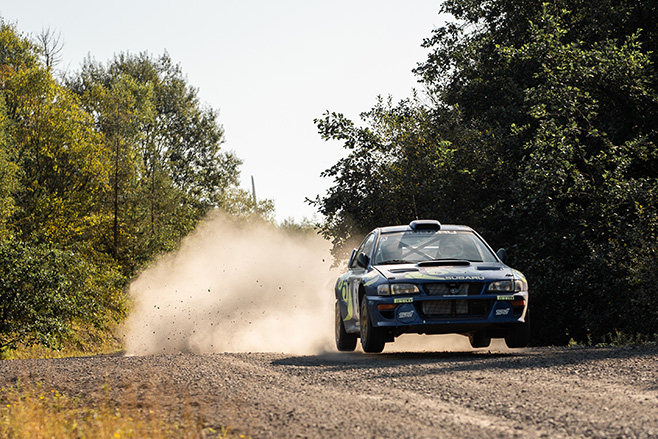
The laps pass. The engine noise is so evocative; the flat-four burble offset by high-pitched turbo chirps. Max drifts perfectly around our hairpin vantage point, then pulls up and shares his impressions. “The gearbox is tricky initially, then it’s fine. It’s got a really torquey engine. The car feels very responsive and fun to drive. I can’t believe how much grip it generates on gravel. The engine is so strong and full of power as soon as you get on the gas. And it is louder than I imagined, and sounds really good.”
Pretty awesome, is his verdict. Next comes the Legacy, which Colin drove to second place on the Swedish Rally in 1992. Max imagines it will be fairly tame, judging by its conservative looks. But he discovers “it is still pretty full on!
It’s powerful, with enough boost to give you a shock and pin you back in your seat. There isn’t much lag and it feels well built and really together.”
The run in the Focus WRC doesn’t happen after all, but there will be another time for this young man. Max has almost no recollection of being with Colin, but says that driving his old cars has been an emotional, raw experience.
Max clearly looks up to Jimmy, his father and to Colin. For his part, Alister plays the proud dad role perfectly. He tells Max how well he’s done at driving the cars within his limits, building up to it, and getting a feel for their potential.
How does Gramps think his grandson will fare, given the struggle that young drivers face to get a foothold in rallying? “I’ve been involved in the Scottish scene and young drivers. You see these guys come in at 14, and they’re shy and their mother is worried about them. And then they get into a car and just come out of their shell and learn how to be competitive.” However, he is pragmatic enough to admit that getting beyond a clubman level is as challenging as any WRC stage, even for a youngster named McRae.
“At a certain age in motorsport, you’ve got rich drivers with loads of money but no talent and loads of young guys with loads of talent and no money,” he says. “At the moment, rallying is such a big step. There are some teams that will charge you up to A$270,000 per event before you’ve even paid for your own travel!”
By the end of the session, Max’s mind is made up. He wants to answer rallying’s call. “After driving the cars, it gave me a clear view of what rallying could be like for me. It’s a goal I want to achieve. I just need to build up, drive harder and harder, put in the effort, get noticed and get people [sponsors] on board.” No small task, especially given he still has to go to school, sit exams, and navigate his teenage years.
Jimmy half jokes about how pleased he is that Alister now has the responsibility of paying for a son to go rallying. Having been through it, twice, he doesn’t miss the financial commitment. But you suspect that by hook or by crook, the McRaes will find a way to propel the next generation of the family to rallying’s start line.
Which McRae is quickest?
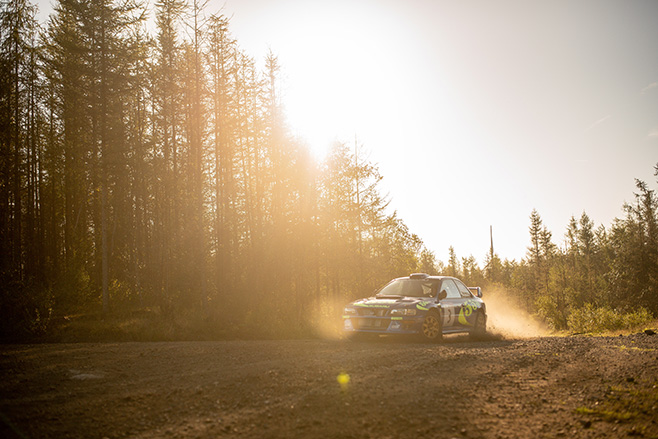
Colin gets most of the attention but driving quickly runs in the McRae family. Jimmy ‘Gramps’ McRae won the British Rally Championship five times, while Alister (also a British champ) was a World Rally Championship mainstay through the 1990s and mid-2000s. Most families are competitive, but get these three together and it wasn’t long before they were setting timed laps in Colin’s 1997 Subaru WRC car. In an added twist of nostalgia, Colin’s long-time navigator, Nicky Grist, was strapped in to deliver the pace notes. Alister was quickest with a time of 2m07s but it was Max who threw up the biggest surprise by beating home 76-year-old Jimmy (2m12s played 2m14s).
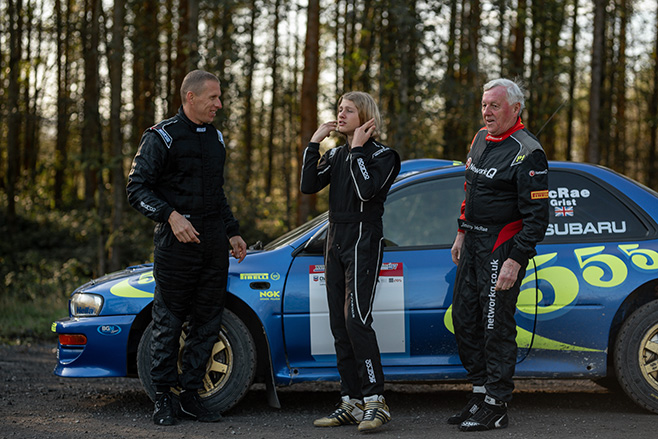
The secret plan to reunite Mcrae and Subaru
Late in his career and with no full-time top-flight drive, Colin McRae struggled to come to terms with being separated from the sport he loved and excelled at. One of McRae’s biggest fears in life was having to go back to his original trade, plumbing. A qualified heating engineer, during one interview at his local pub in Lanark, he laughed about how only 15 years earlier he’d had his arm “down a blocked drain outside this very pub, up to the elbow in shit… I’ve had a job. There’s no going back to that place.”
So he set about engineering a potential return to WRC. In 2007, McRae spoke at length with Prodrive’s David Richards who ran the Subaru World Rally Team. As Richards tells it, the team was struggling and the opportunity to bring back the driver that delivered Subaru its first WRC victory and championship was something that appealed.
“We talked at some length about Colin joining us the following year,” Richards told Motor Sport News. “It would have been a great combination to have Colin back to Subaru. We had agreed a test for the following week [the week of McRae’s helicopter accident]. Colin McRae back in a Subaru again for one last big push? Sadly now we’ll never find out.”
Jimmy says: “That was as near as done. And also he had a contract with BMW to do the Dakar.”
It’s been a big year for London-born F1 ace Lewis Hamilton, who capped his seventh Formula 1 world championship driver’s title and overall record-breaking win tally, with a knighthood in Queen Elizabeth’s New Year’s honours list.
The knighthood for the 35-year-old Mercedes driver has come in the face of controversy, however, with doubts around the award being offered because of Hamilton’s Monaco residency status.
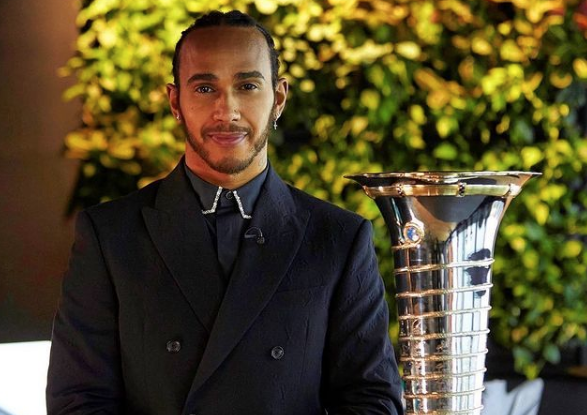
Reports from the UK suggest that beleaguered Prime Minister Boris Johnson had intervened to ensure the knighthood would be presented, which has been awarded under the ‘diplomatic and overseas’ category.
Hamilton has also been an outspoken voice for diversity in F1 in 2020, leading drivers in ‘Black Lives Matter’ protests at the beginning of every race.

“Lewis is one of the very greatest racing drivers of all time and the most successful British sportsperson of his era,” Mercedes team principal Toto Wolff said.
“Around the world, he has long been recognised for his sporting achievement; this year, he combined his excellence on the track with a powerful voice to fight discrimination. In every sense, he led the way in 2020.
“The news that he is to receive a knighthood shows that he is now receiving the recognition he has earned during a career of unparalleled success in motorsport.”
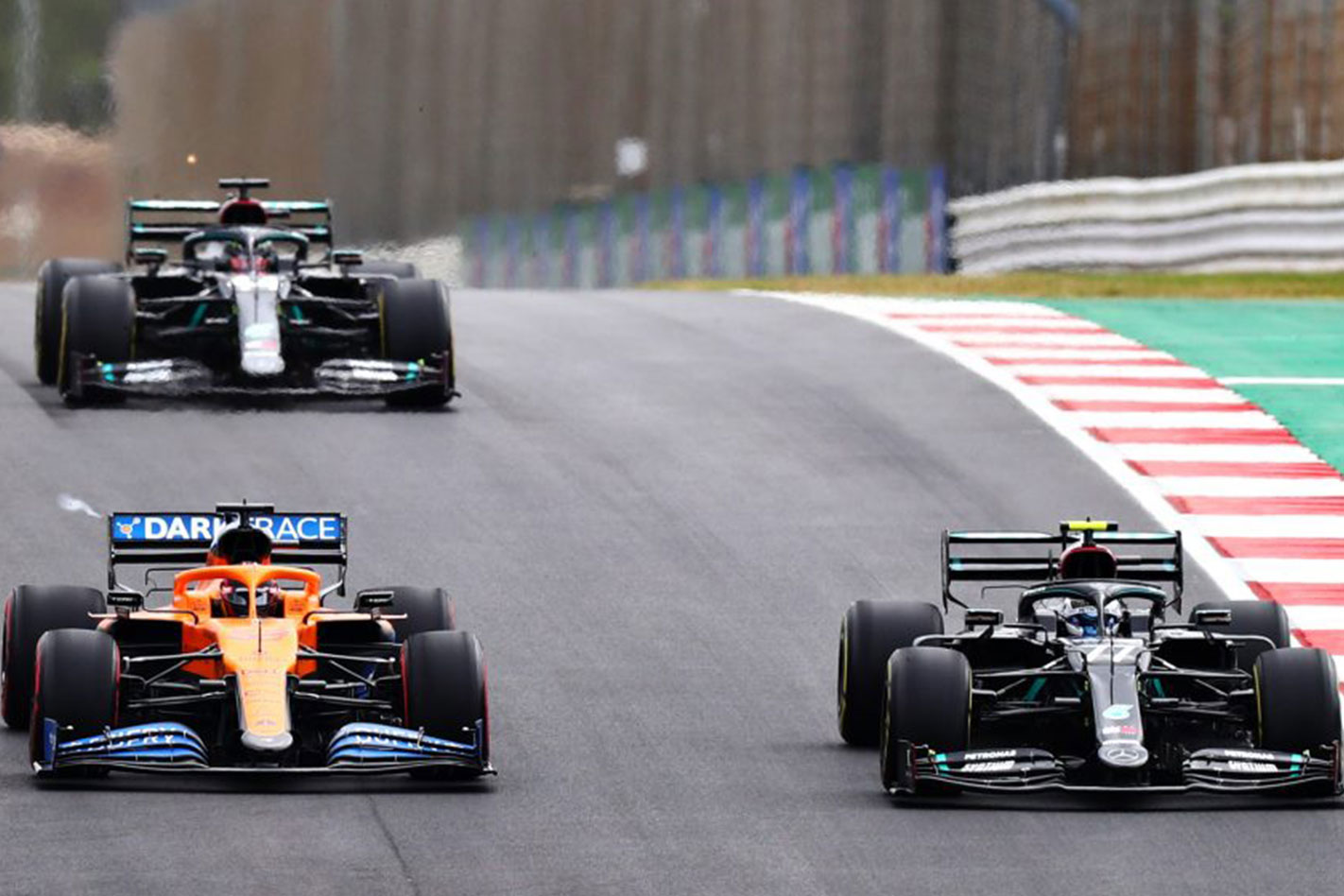
Hamilton, who will line up for Mercedes again in 2021, is just the fourth Formula 1 driver to earn the accolade, following in the footsteps of Sir Jack Brabham, Sir Jackie Stewart and Sir Stirling Moss.
Brabham was the first racing car driver ever to be knighted for his services to motorsports.
The NSW-born driver won the Formula One world championship three times as a driver, and became the first and only driver in Grand Prix racing to win with a car he built himself in 1966.
Sometimes five just isn’t enough, which is why seven-seat SUVs are now increasingly common among families who don’t necessarily fill all seven seats regularly but want the flexibility.
Two- and three-kid families often gravitate to SUVs with a third row just in case a friend (or two) needs a lift. And just in case some family members pull the Uber card on you.
Key to the appeal of seven-seat SUVs is design, something that inevitably compromises interior space.
Some do a better job than others of accommodating luggage and people; this is a category where our fit-for-purpose calculations play a key role in penalising those that don’t perform both duties adeptly.
It’s also a category that accommodates predominantly car-based SUVs from mostly Asian brands, but there’s also a healthy smattering of off-roaders that provide the platform to dream of that Big Trip while performing the school-run duties during the week.
GOLD – Honda CR-V VTi-7
Plumping a third row of seats into a mid-sized SUV is naturally going to have its compromises, but the Honda CR-V VTi-7 juggles them better than any.
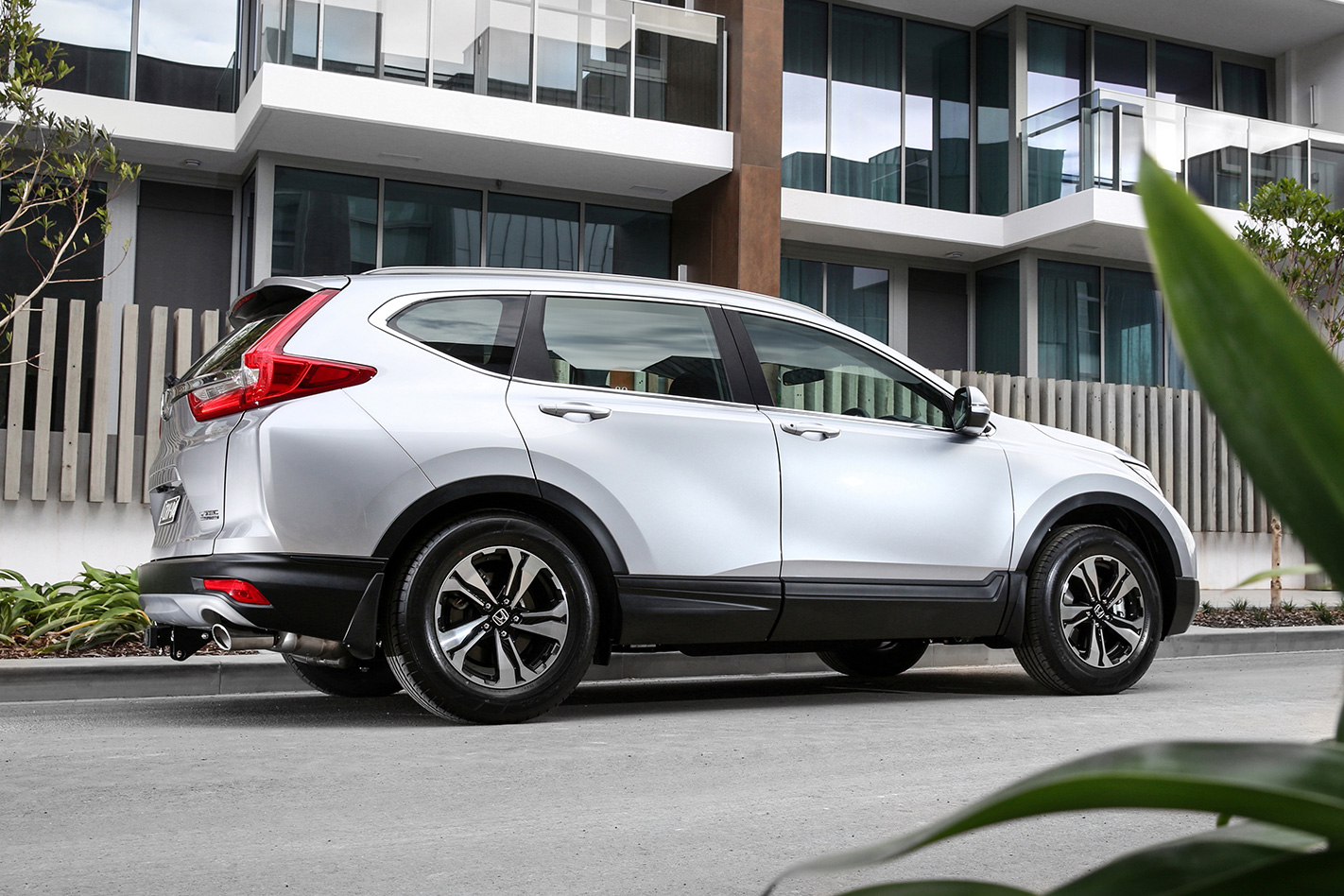
Before crunching any numbers the seven-seat CR-V was hit with penalty scores, particularly in the fit-for-purpose category.
With less interior space than larger rivals it simply won’t carry as much luggage once all seven seats are in use.
But it can carry plenty of people, even if that very back row is best left to the little ones. There are even air vents to circulate fresh air back there.
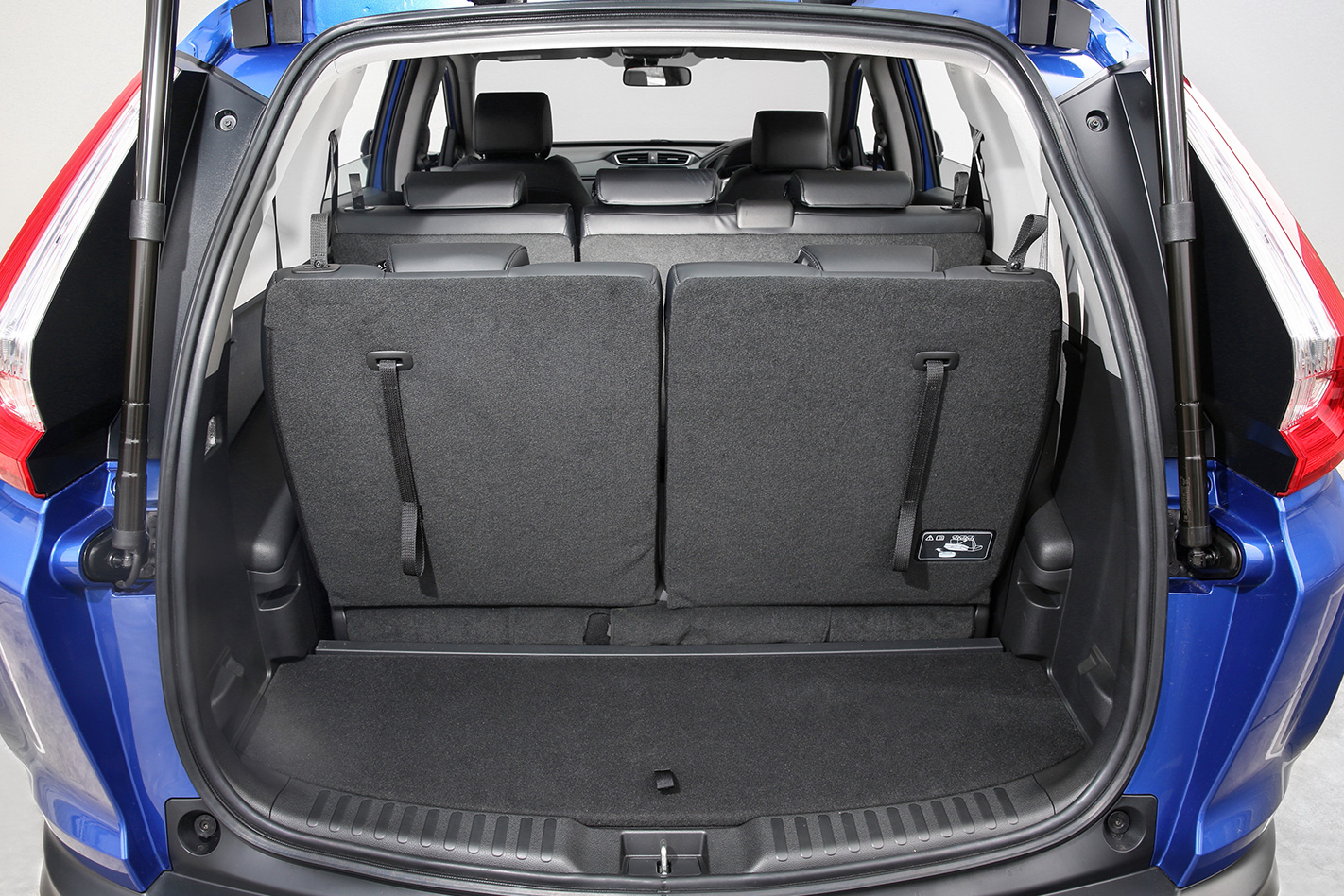
And the CR-V delivers that with a thoroughly tempting $35,490 price tag, one that also promises to hold its value nicely courtesy of 64 percent five-year resale prospects.
Those two factors account for plenty of the CR-V’s goodness in topping our charts.
A recent model update also upped the value, adding Honda Sensing – including active safety features such as autonomous emergency braking (AEB), auto high beam and active cruise control – to the already generous spread of gear.
Standard features include dual-zone ventilation, Apple CarPlay and Android Auto, smart key entry and noise-cancelling to quieten the cabin.
And while all seven people will be moved by just 1.5 litres of four-cylinder engine, the addition of a turbo means the CR-V delivers on performance.
There’s 150kW and 240Nm on tap, the latter available from just 2000rpm.
Mated to a CVT transmission that quickly adjusts according to what the driver is demanding it makes for perky acceleration.
SILVER – Kia Sorento S
If it’s space you’re chasing then the Kia Sorento delivers on value.
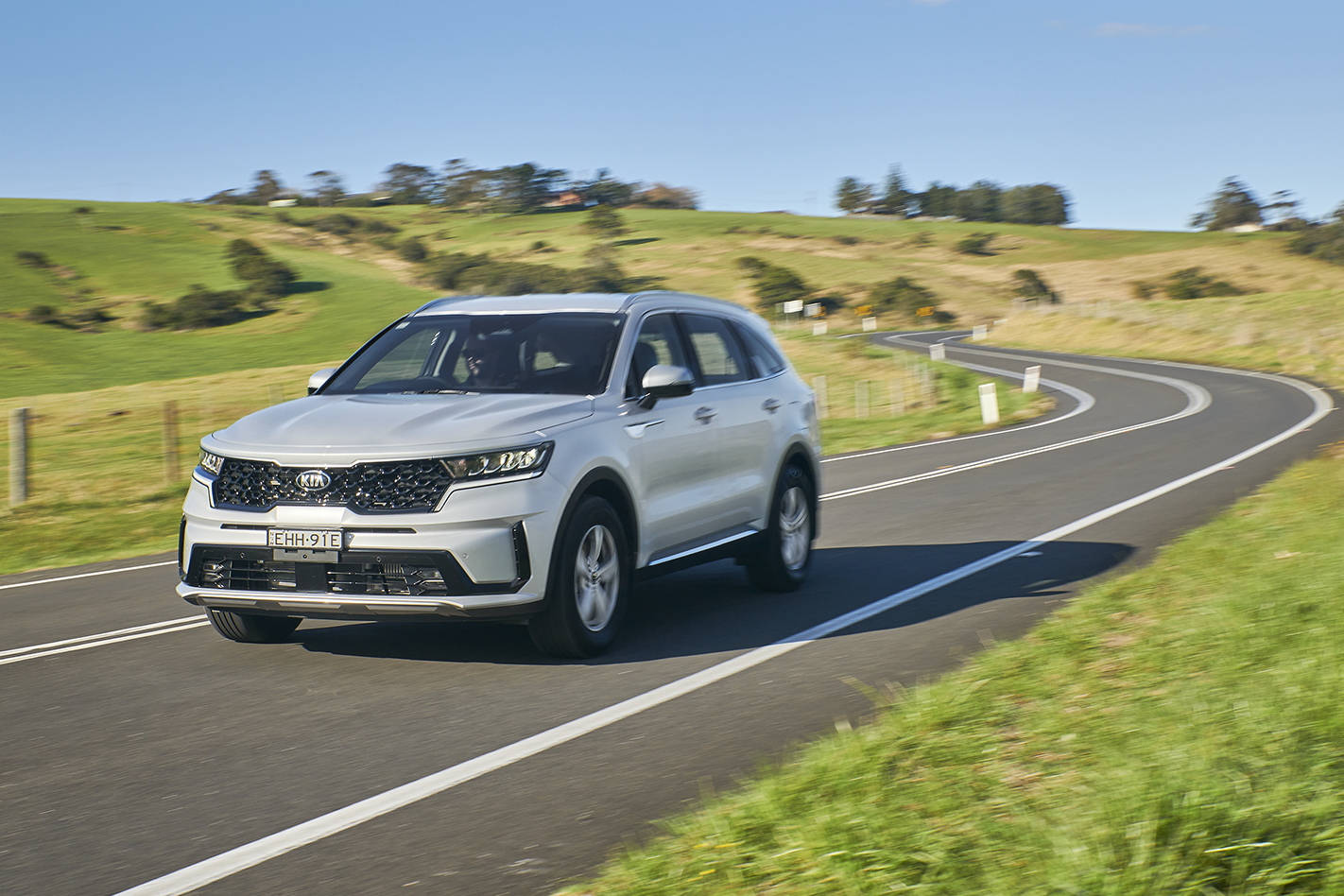
It’s officially a large SUV so does a better job of catering for seven adults (or lanky teens) than our category winner.
Those additional millimetres also means there’s a sizeable luggage cavity for the times you’re only taking five. At $43,990 for the most affordable Sorento S it’s a lot of SUV for the spend.
The still-fresh Sorento also comes loaded with gear, including blind-spot warning and auto braking, as well as excellent connectivity.
There’s the occasional oversight – no airbags or air vents to the third row, for example (more expensive models address the latter of those) – but it’s generally very well appointed.
No qualms with performance, either, although the basic 200kW 3.5-litre V6 uses plenty of fuel around town, mainly because you need to rev it harder than the optional diesel to get things moving enthusiastically.
Thankfully sharp service pricing partially offsets that.
The seven-year warranty also doesn’t hurt in making it appealing to used-car buyers once you’ve had your family fun, with decent 56-per cent forecast resale.
BRONZE – Hyundai Santa Fe Active
Sharing many mechanical components with the second-placed Sorento, the Hyundai Santa Fe at least deserves the comparison.
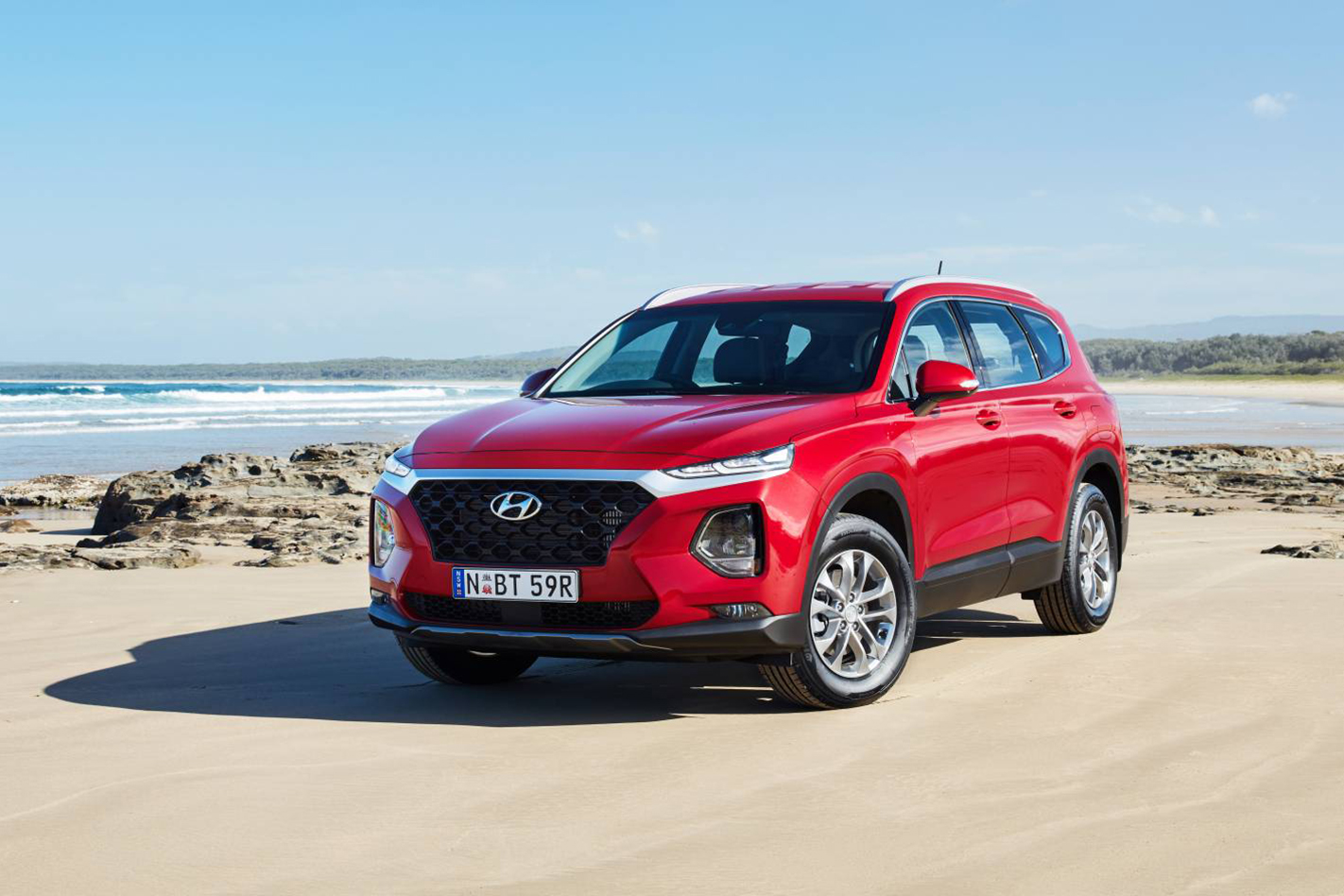
More than that, it deserves serious consideration because it was only edged out by the narrowest of margins.
The 200kW 3.5-litre V6 is the same as the Kia’s, although it ekes out a fraction more power (206kW).
It also does so using more fuel, something that hurt its value rating over our five-year period.
A comprehensive active safety package – including active cruise, blind-spot warning and auto braking – is the start of a long list of gear, albeit one missing digital radio tuning.
