
Hi! My wife and I are moving to Mudgee in regional NSW in the new year, and we are going to need to swap our faithful 2014 Toyota Corolla hatchback for a 4×4 ute or something similar – but I have no idea where to even start looking!
We have two kids (one still in a baby seat), I have to drive on dirt roads as part of my job, and it’ll be the only car in the household, so we would much prefer an automatic. We’ll buy it as part of a lease deal, and the budget can stretch to $40,000. Any advice would be really appreciated.
Aaron, Cronulla
Hey Aaron,
That’s an interesting question, and a pretty wide range of needs!
I’ll give you three options; two will be obvious, and the last one left field, so bear with me. First, you’re looking for something safe for the whole clan, so we’ll look at top-ranked ANCAP cars as a starting point. I’m going to assume that you’ll be covering a few miles both for work, and on trips back to Sydney to see friends and family, which puts diesels firmly in the frame; fuel economy on long runs is hard to beat. And if you’re driving gravel roads on a daily basis, then AWD is a good option.
My first thought is a Kia Sportage Si Premium at $37,690 before on-roads, which is a diesel-powered AWD mid-sized SUV. Yes, I know you mentioned 4×4 ute, but the Sportage offers more comfort, a safer overall package in terms of stability, driver aids like AEB and its size, and it’ll easily cope with graded gravel roads.
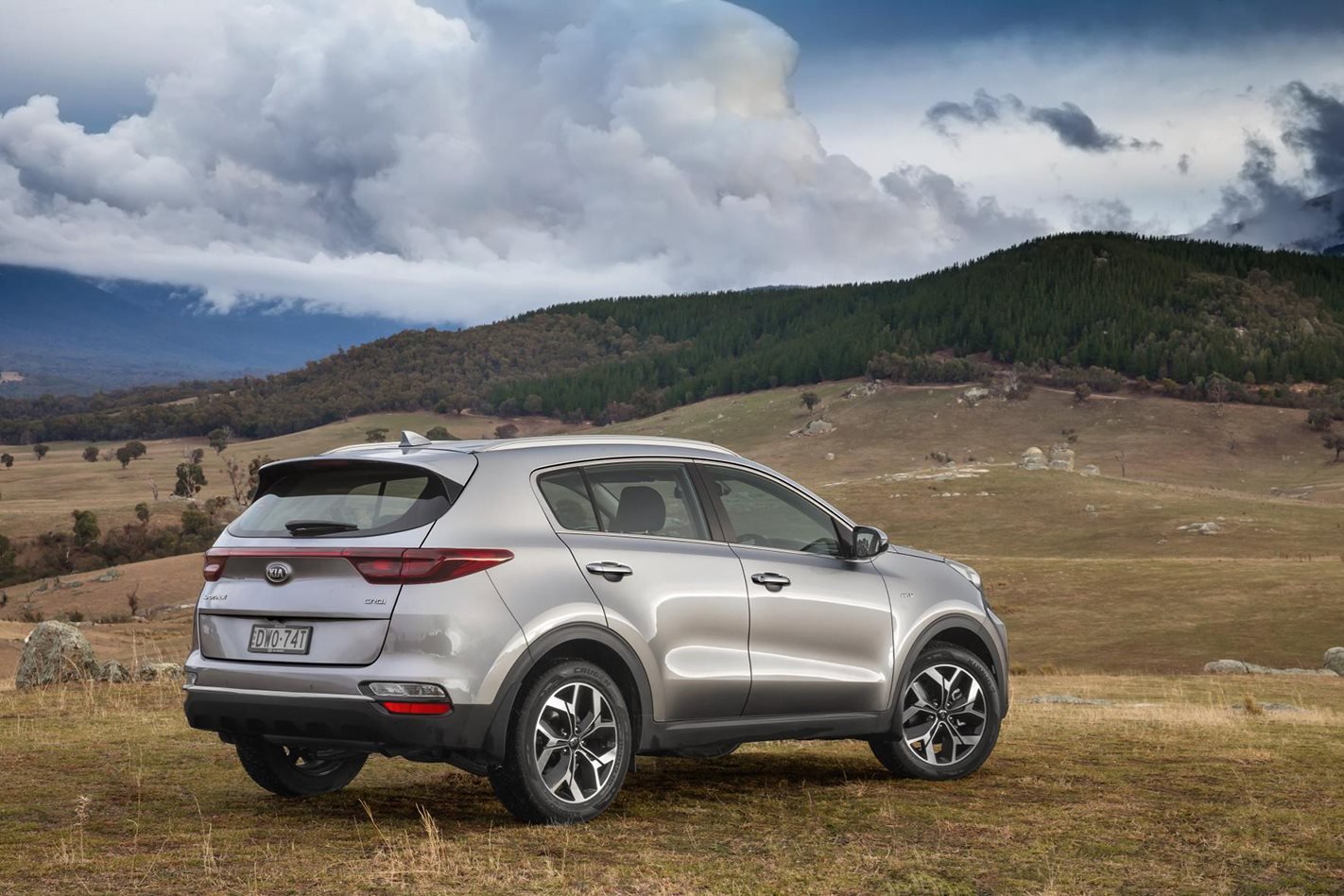
It’s also got enough boot room for kid’s junk like strollers and small bikes. And a seven-year warranty is no bad thing, either.
Second, I’ll go with your idea of a 4×4 ute and bowl up a Mitsubishi Triton GLX+ double-cab, mainly because it’s the one that comes closest to your $40K budget at $37,990 drive-away, with an automatic transmission. It’s only a five-speed automatic, which is behind the pace for passenger cars but not dual cabs.
In fact, with some shopping around, you’ll probably get a sharper price, especially as a facelifted model is due in early 2019.
It has full-length curtain airbags inside and a host of driver aid tech like trailer sway control… but not more modern systems like AEB. You might need to budget for a canopy, too, if you need security for tools and the like.
My third and left-field option is the Holden Commodore LT diesel wagon. It lists at $38,890 before on-roads, but there are deals to be had, given its quiet start.
The Holden Commodore loses out on ultimate off-road ability (it’ll deal with gravel just fine), but as a country-road mile-eater, it’s hard to beat. Quiet, economical and very safe, the only downside will be a pretty brisk devaluation if you decide to swap it after three years.
Our recommendation: Kia Sportage Si Premium
Need help to choose a new car? We’re here to help. Email us at [email protected]
I have a Toyota Kluger on lease which is about to end so I am looking for a new car. My two daughters are older now so I no longer need the practicality that the Kluger affords, however, I find myself wanting a large SUV or car because of their comfort and how they feel on the road. This time I want something with bells and whistles such as leather seats, sunroof and latest safety features. My new lease budget is about $55,000-$58,000. I was looking at something like a used Audi Q5 but was wondering what I can get that’s new and does the trick.
Charlotte, Yarraville, Victoria
Hi Charlotte, your budget is a little low to if you’re after large SUVs, but if you can stretch your dollar a little, the Kia Sorento GT-Line, at $58,990, certainly fits the bill. It feels nice and planted on the road and is brimming with bells and whistles including a huge panoramic sunroof, heated/ventilated leather seats with power adjustments, and active safety tech.
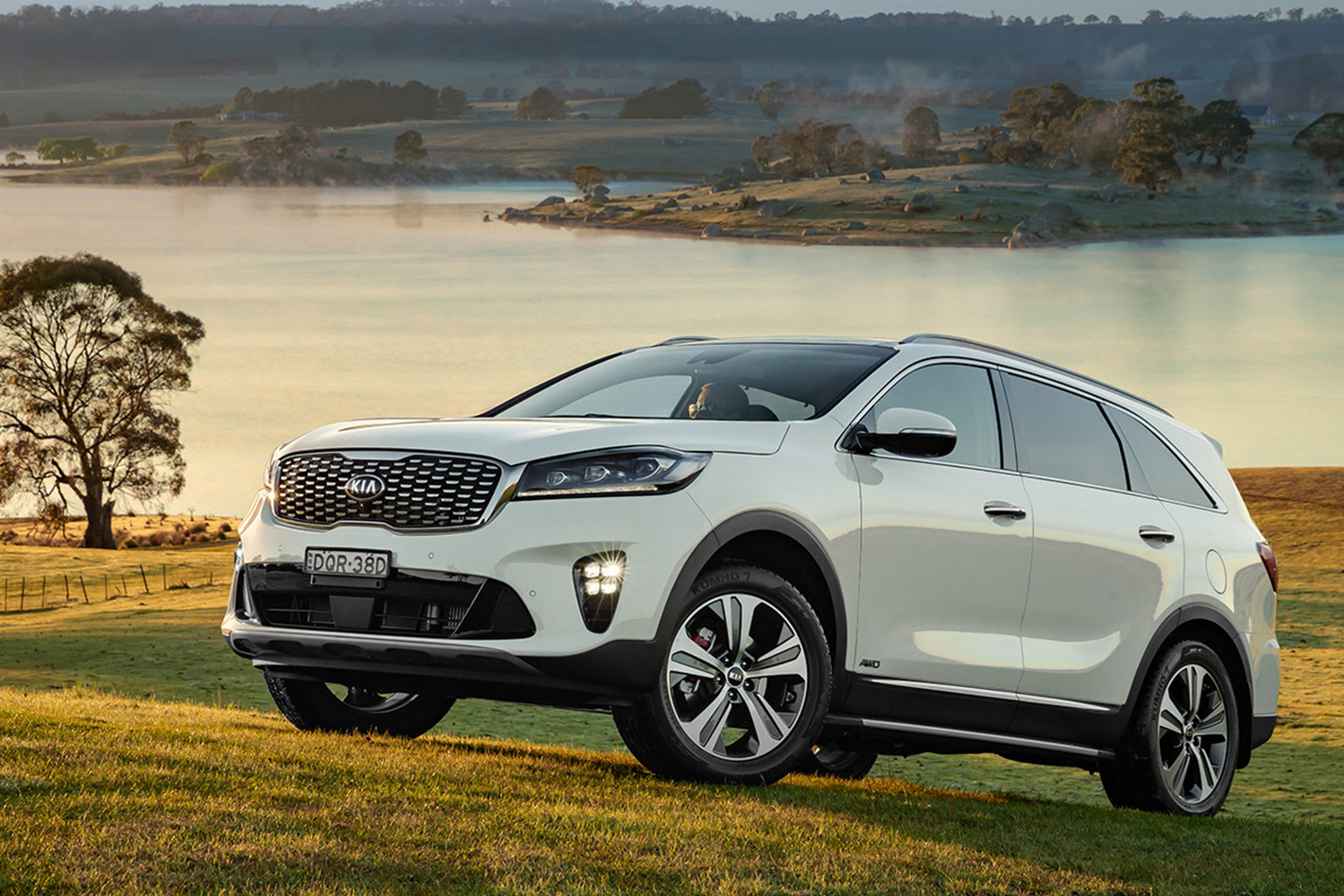
You can read more about the Kia Sorento GT-Line and the rest of the range with our Kia Sorento Range Review, which includes the Sorento SLi, which is also stacked with features for just $50,490.
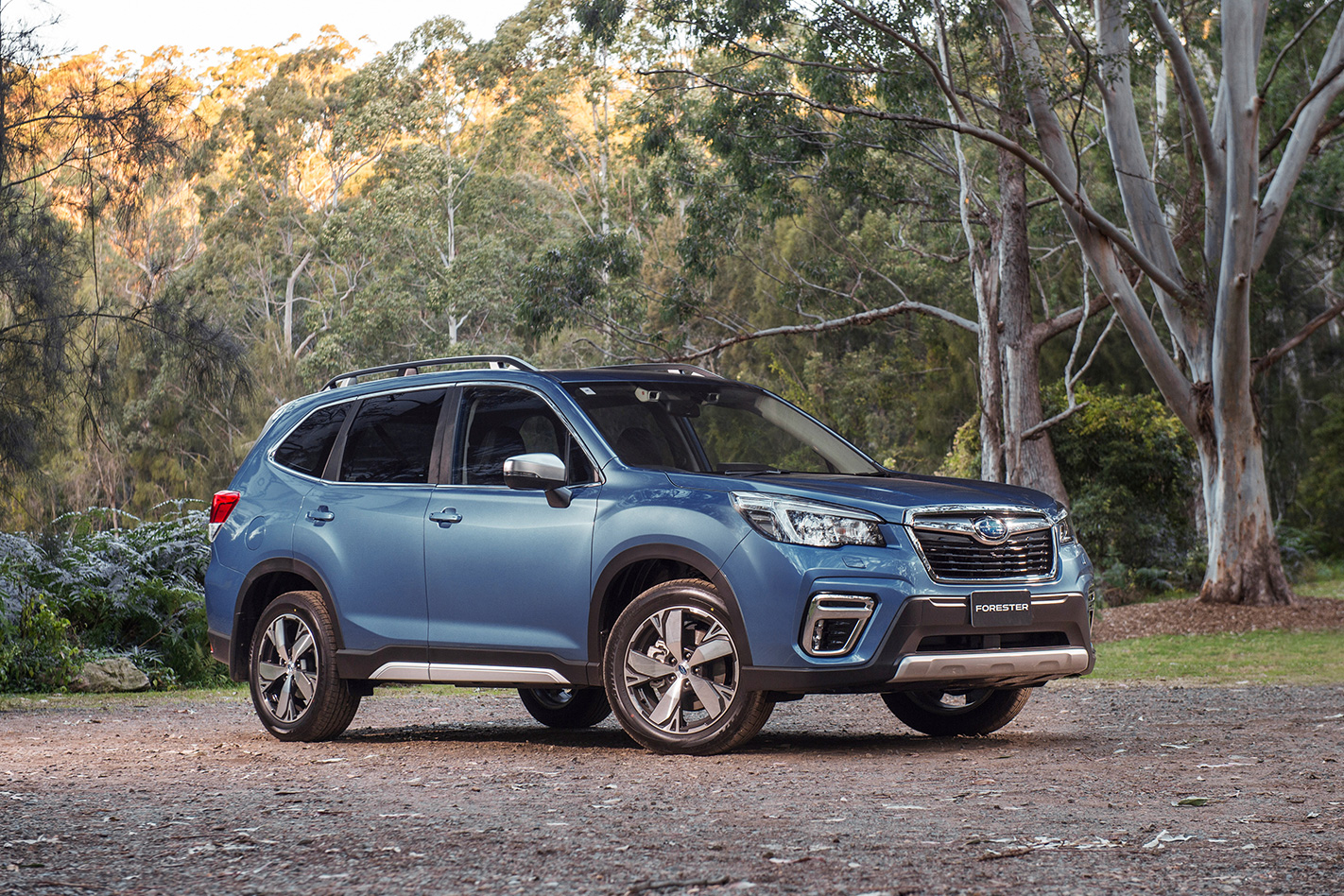
Another car worth considering is the Subaru Forester, which is technically a medium SUV but has a nice comfortable ride that makes it feel like a bigger vehicle. The top-spec Forester 2.5i-S is teeming with luxury touches and heaps of safety tech that puts many European cars to shame. Best of all, you’ll get all that for $41,490, or about $45,600 on road, which allows you to score some accessories and save on lease repayments.
One large car that has all your desires within your budget is the Holden Calais V, which is based on the Commodore and available as a sedan or an SUV-like Sportwagon priced from $53,990.
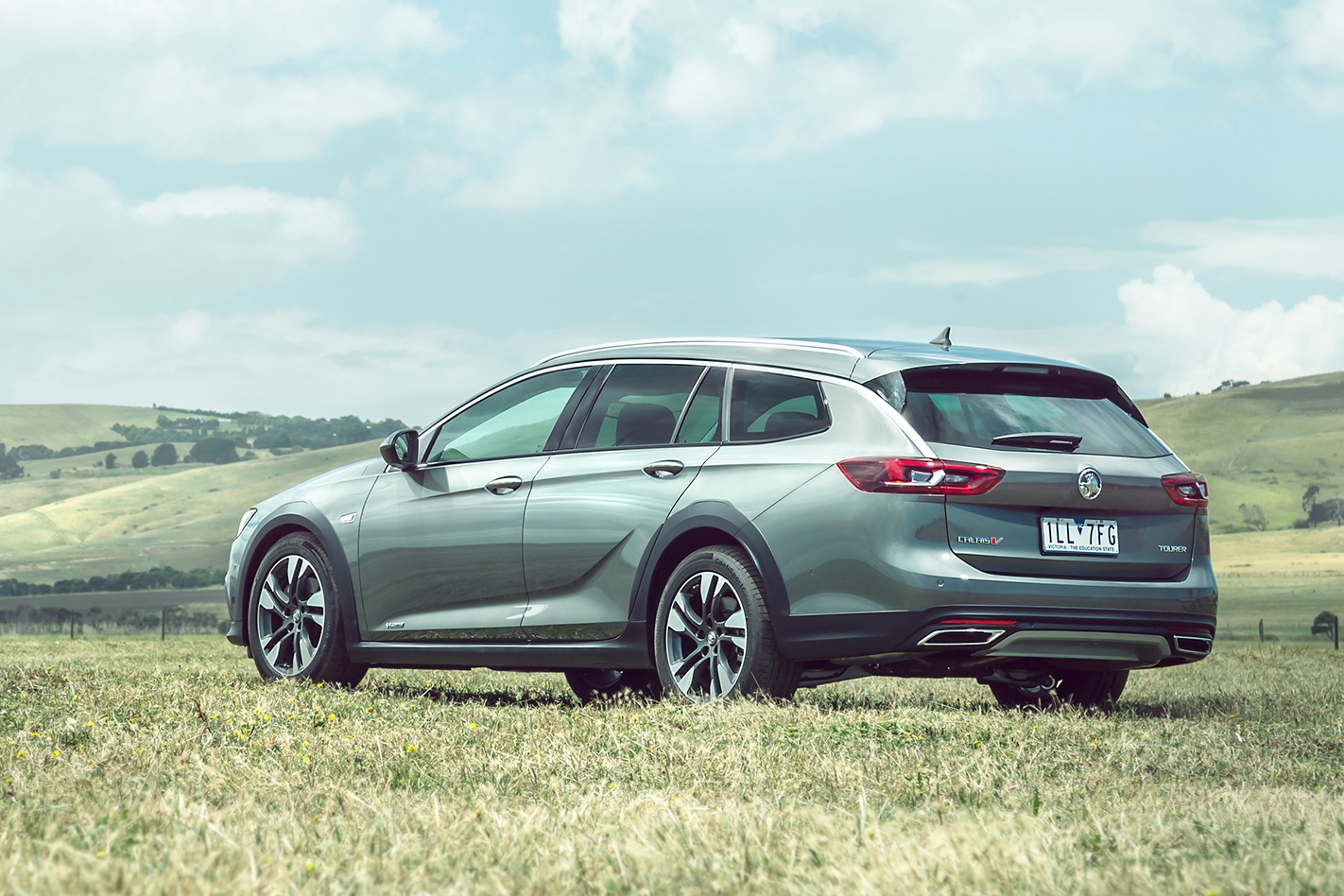
Based on your budget, desire for luxury and a commanding on-road presence, we’d choose the Calais V Tourer. The European Commodore/Calais hasn’t received much love compared to the Aussie-built versions, but that doesn’t reflect how good they actually are.
Our recommendation: Holden Calais V-Tourer
Need help to choose a new car? We’re here to help. Email us at [email protected]
Hi WhichCar team,
I’ve been made redundant and the job hunting isn’t going so good. I need to sell my pride and joy (BMW Z4 35is coupe) in favour of something a little more affordable and fuel-efficient. Can you recommend something that’s still fun but will help keep my head above water? The cheaper the better – the more change I get out of selling the Z4, the less chance there is that I’ll need to sell more of my possessions.
Danielle, Semaphore, South Australia
We’re sorry to hear about that Danielle, but hopefully the following advice may help make your situation a temporary one.
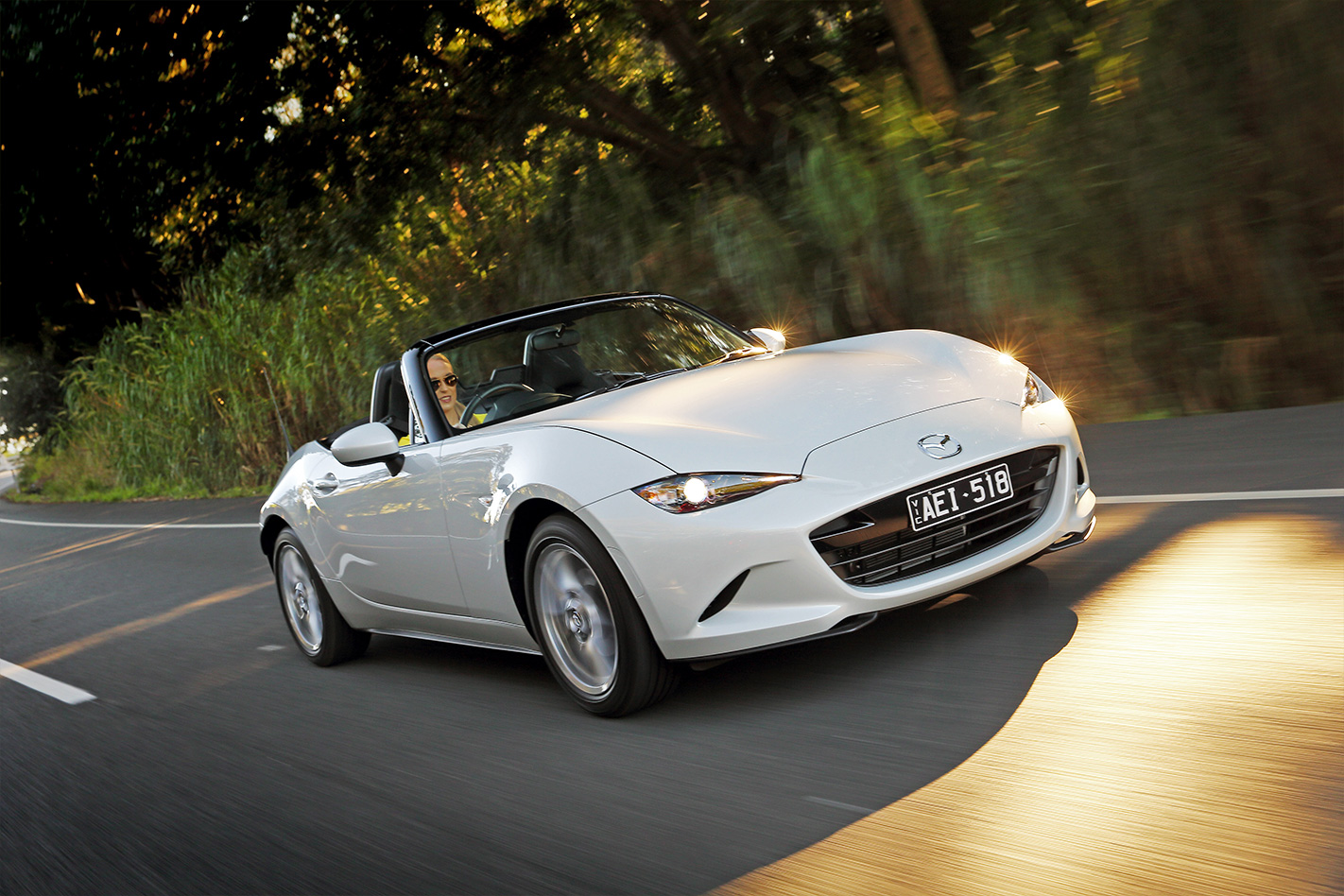
If you’re after a car that can replicate the Z4’s top-down driving experience, then there’s really no alternative to the Mazda MX-5. The MX-5 RF even has a folding metal hard top like your Z4 (along with plenty of gear), but is also the most expensive option at $45,960. Want to trim some dollars off? The fabric-roofed base model MX-5 Roadster is great value at $34,190, and an even better drive than the slightly heavier RF.
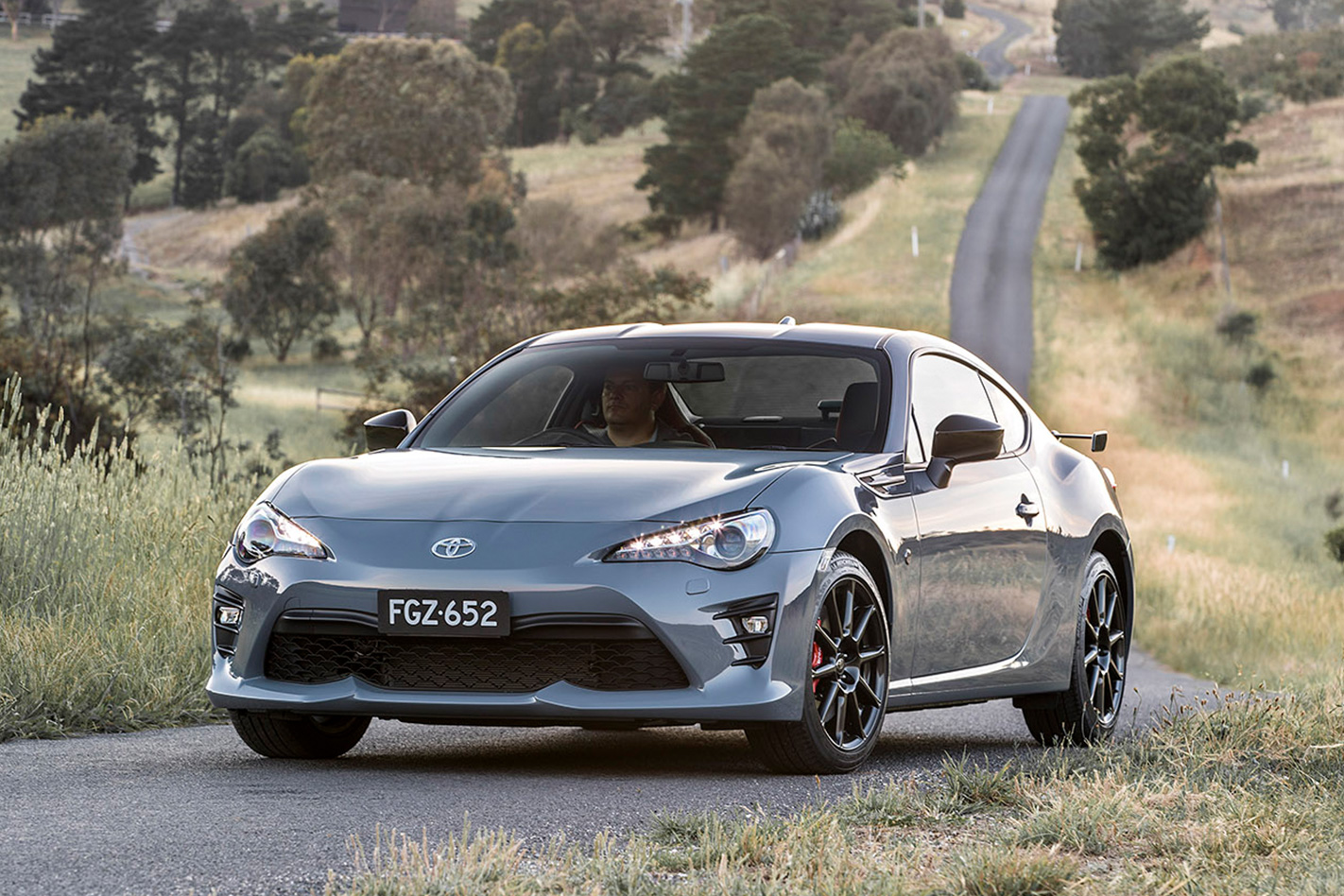
Another option for you is the Toyota 86 or almost identical Subaru BRZ. At $31,440 for the base model 86 GT, you get a car that’s a true joy to drive in a compact and practical 2+2 coupe body style. No, the roof doesn’t go down, but this is the most affordable ‘true sportscar’ on the market by a long shot!
With just a 2.0-litre naturally-aspirated four cylinder under their bonnets, however, the MX-5 and 86/BRZ aren’t going to deliver quite the same kind of straight-line performance as your Z4 34is. If that’s what you seek, then the most affordable options there are the Nissan 370Z coupe (which has now dipped below $50K) or, the 2.3-litre four-cylinder turbocharged Ford Mustang Ecoboost at $49,990. Both the 370Z and the Mustang are available in convertible form too, should you want to hang onto that combo of top-down fun.
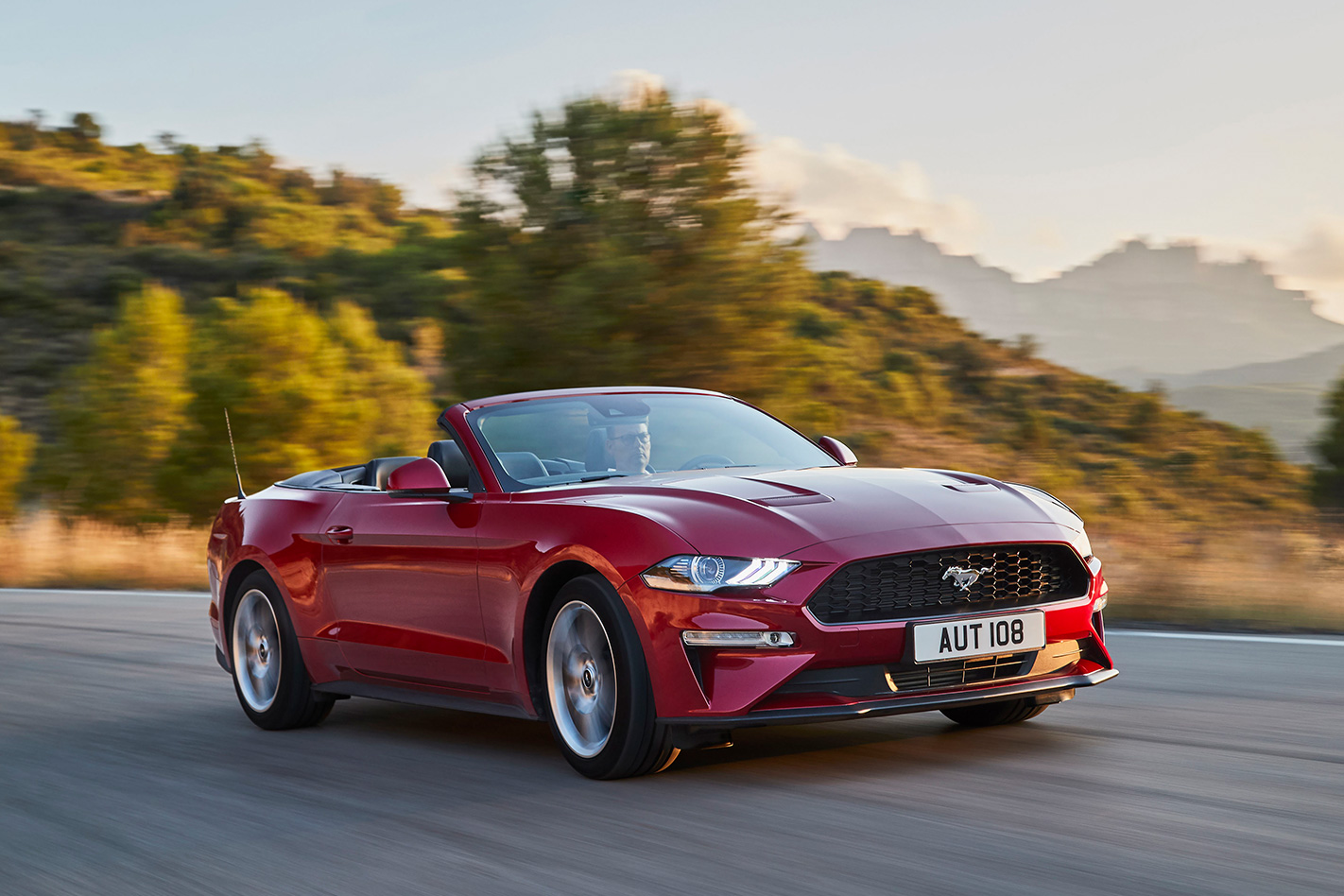
Of all the choices we reckon the Mazda MX-5 Roadster will put as big a smile on your face as the Z4 while being kind to your bank account in terms of price and running costs.
Our Recommendation: Mazda MX-5 Roadster
Need help to choose a new car? We’re here to help. Email us at [email protected]
IF THE incoming McLaren Speedtail is a window into the British brand’s future, then you best strap in. There’s a good chance the future is going to look a little bit weird. Because, and there really is no tactful way to say this, the mightiest McLaren to date looks somehow unfinished.
It’s as though some crucial elements (you know, pesky things like wing mirrors and alloy wheels at the front, or even some kind of downforce-inducing protuberance) have been forgotten in the rush to get it ready for its unveiling, and that, mere moments after the black silk was whipped back, someone at head office must have surely been receiving an Olympic-level bollocking for the cock-up.
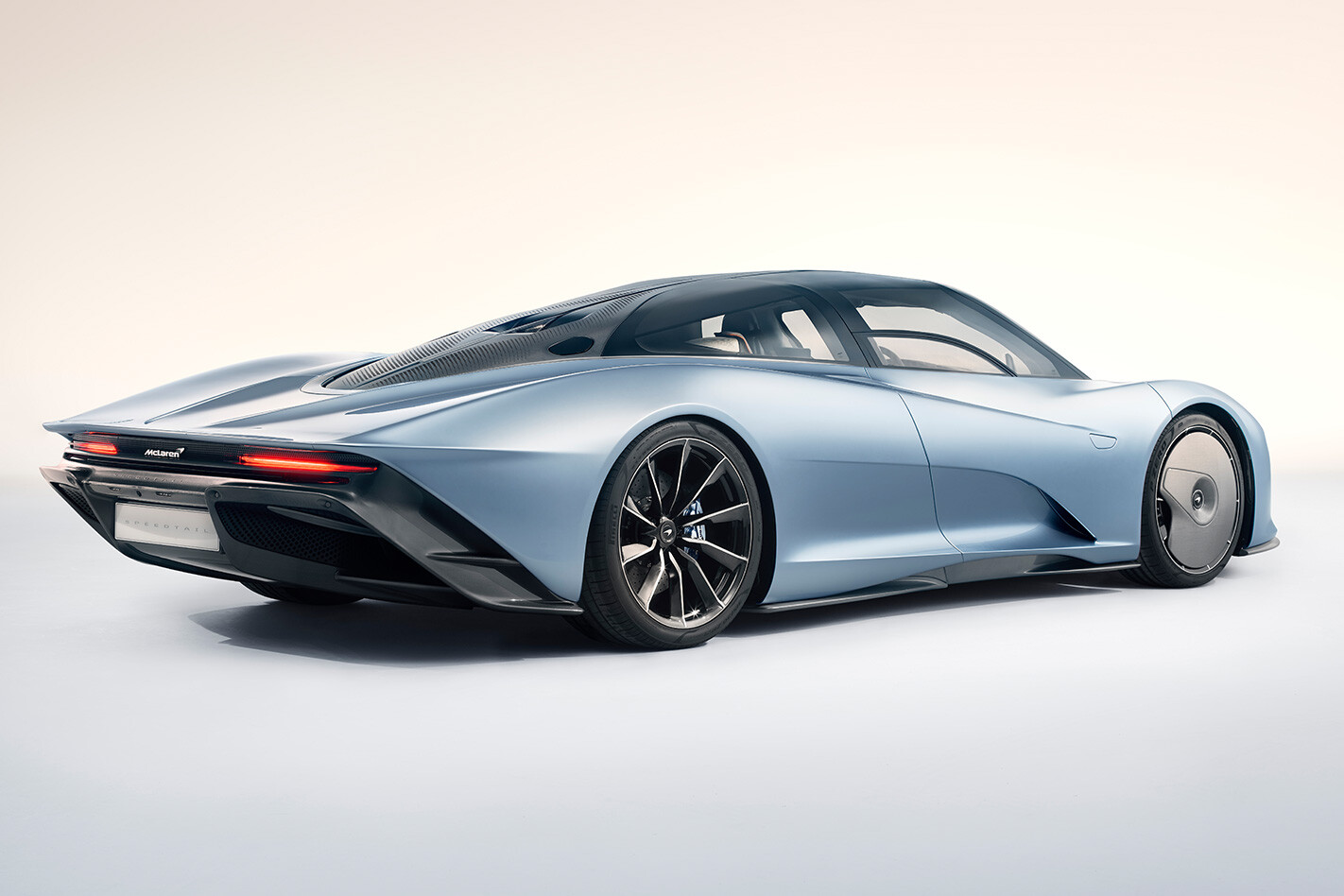
Not that it’s hurt sales, mind you. Just 106 will be built, and each will wear a £1.75 million (A$3.2m) price tag. (With taxes, expect the figure to be close to A$5m in Australia.) Cars won’t start arriving until the end of 2020, but all have already been officially spoken for.
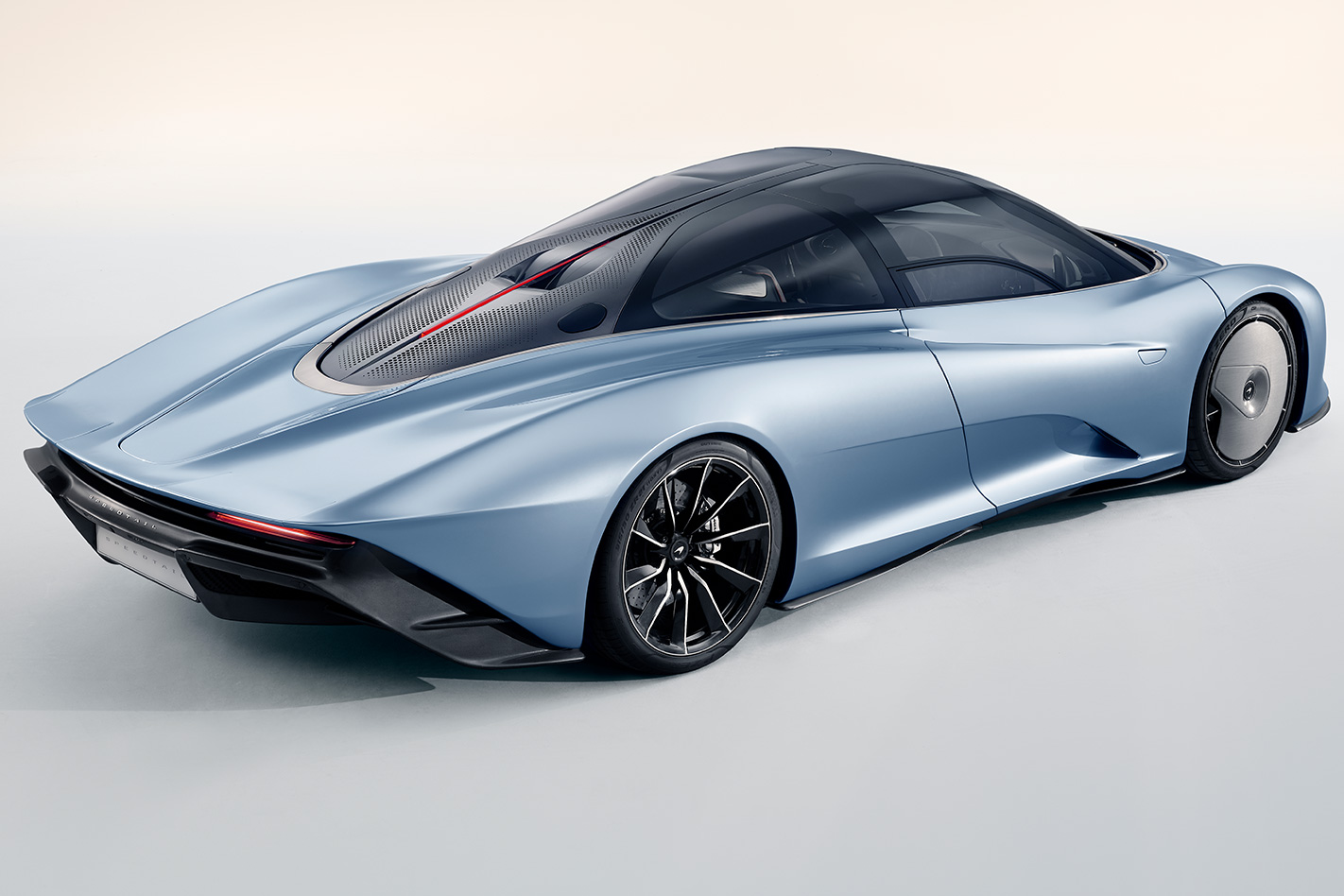
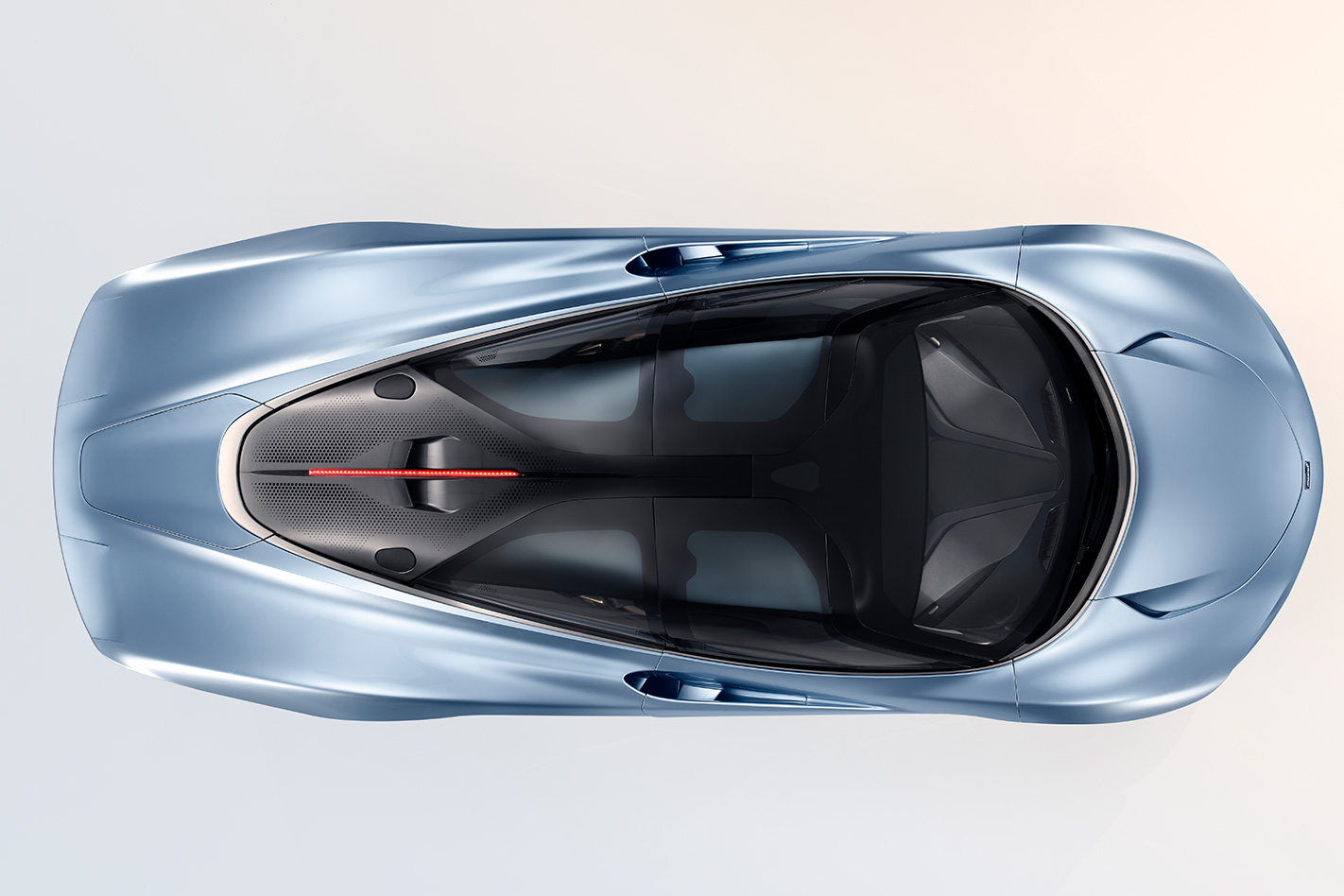
But on closer inspection, the sleek and swooping Speedtail suddenly sharpens into focus. It was all part of the plan from the outset, no less. Or, in the words of chief designer Rob Melville: “We wanted the car to be the world’s first three-seat hyper GT. The fastest acceleration and the highest top speed of any McLaren ever, yes, but with regards to the visual look, we wanted it to be incredibly sleek and seamless, all elegance and fluidity.”
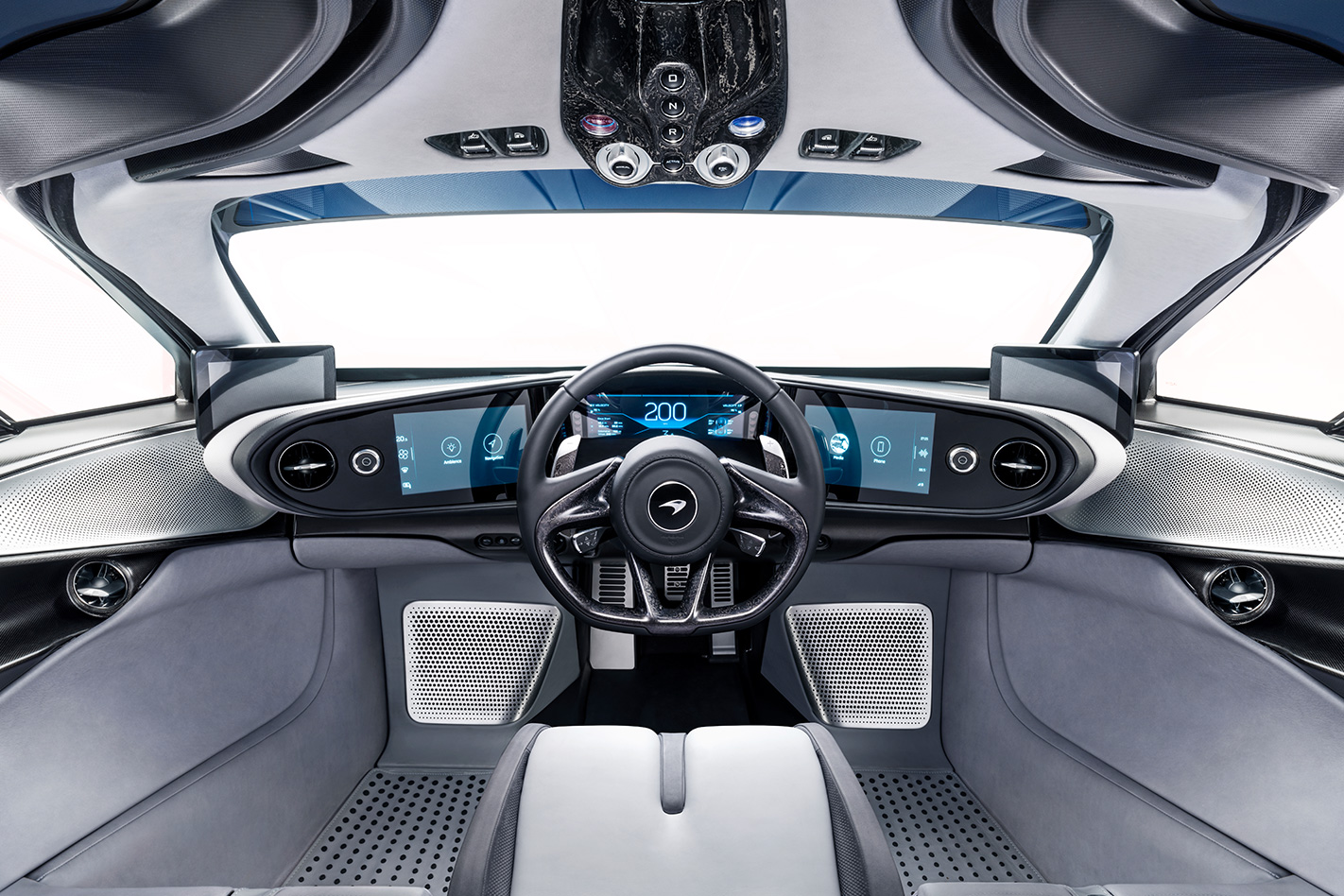
That fluid elegance comes from stripping away almost everything we’ve come to know about collecting speed. Gone are the giant wings so looming they look like felled lumber hovering above the car. Gone, too, are the sharp scoops and jutting splitters we’ve grown so accustomed to. And in their place live silky-smooth lines and curves so soft they could be modelled by Sophia Loren.
While cars like the McLaren Senna were designed with a singular focus on downforce and lap times, its new Ultimate Series sibling is just the opposite, sketched to slip through the air (and across continents) as the British brand’s first-ever hyper GT.
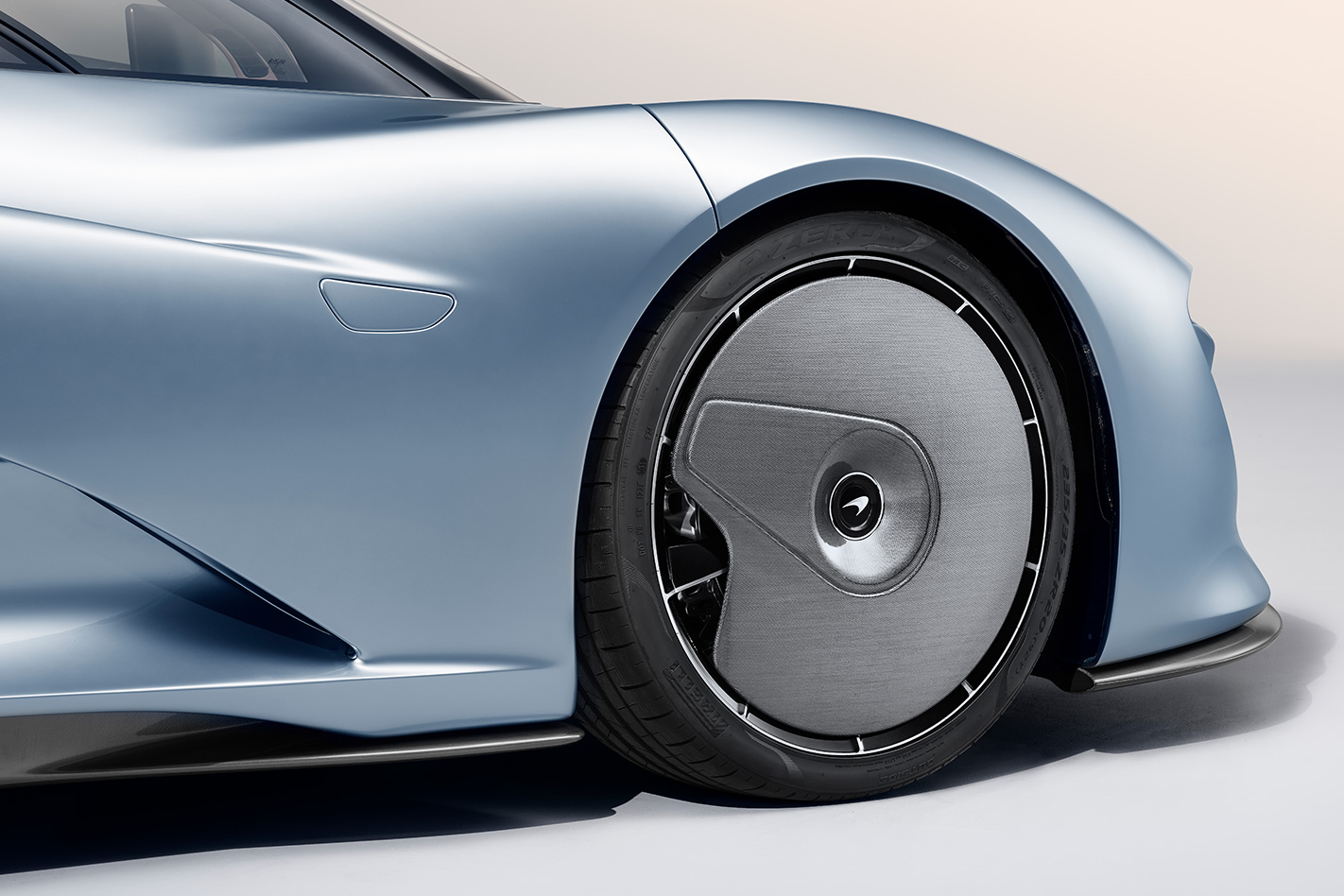
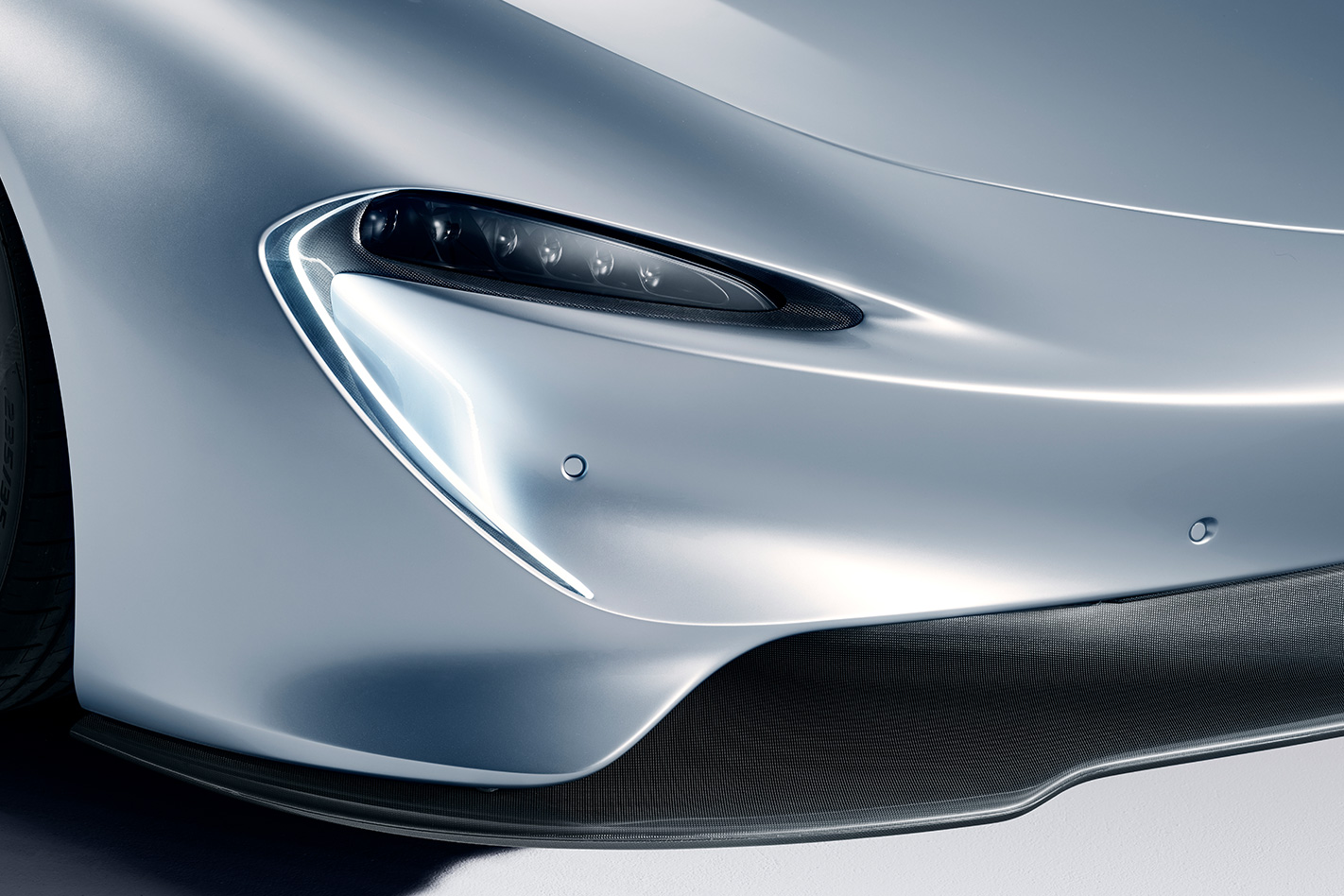
It’s why the wing mirrors have been replaced by high-definition cameras that pop out of the carbonfibre body work as required, beaming their image onto two screens in the cabin. And why the 20-inch alloy wheels at the front of the car have been smothered by carbonfibre covers that remain fixed in place as the hidden wheels behind them spin. Or why a traditional wing has been replaced by an active aero system made up of two tiny carbonfibre flaps that sit flush with the body work at the rear of the car, and that raise automatically to aid downforce or to act as an airbrake.
Everything you’d usually find glued to the interior has been stripped, leaving the F1-aping three-seat cabin almost impossibly clean. The sun-visors, for example, have been replaced by electrochromatic glass in the windscreen and roof that shifts to opaque at the touch of button. The traditional reading lights have been axed, too, replaced by a strip of LEDs embedded in the glass ceiling that are activated by touch.
And it’s all obviously worked, with the Speedtail now officially the fastest McLaren of all time, producing a staggering 772kW and a sprint to 300km/h of just 12.8 seconds. (Frustratingly, McLaren was not divulging full powertrain details at the unveiling, other than to confirm it runs the company’s 4.0-litre twin-turbo V8 mated to an electric hybrid powertrain). Top speed is 402km/h. It could likely go much faster, McLaren says, but not on tyres anyone could live with. Welcome, then, to the future of the brand.
“I think what our Ultimate Series gives us is a technology showcase,” says McLaren vehicle line chief, Andy Palmer. “It gives us the ability to showcase innovation, and then allow more customers to share that over the next five or 10 years.”
Take those front wheel covers, which admittedly do take some getting used to in the flesh (especially given the 21-inch alloys at the rear are uncovered), but are critical in achieving slippery aero.
“They’re not to everyone’s taste, but it’s part of the design of this car, and it contributes to the attributes of what we’re trying to achieve,” Palmer says. “And as cars need to become more efficient, whether that’s range or from a fuel perspective, this adds an aero story that reduces CO2, extends range or unlocks extra levels of performance.”
Asked whether this completes the brand’s Ultimate Series range, with the Senna built for the track, the Speedtail for the road, and the P1 (which will be replaced within the next five years) a bit of both, Palmer suddenly comes over a bit coy.
“Possibly,” he says. “I’d say this; the team is so passionate about what we do, and If I have an idea for a car, I will come to the board and ask them what they think. And some of those ideas will get a ‘what are you smoking, Andy?’ But others get a ‘well this is a great idea’.”
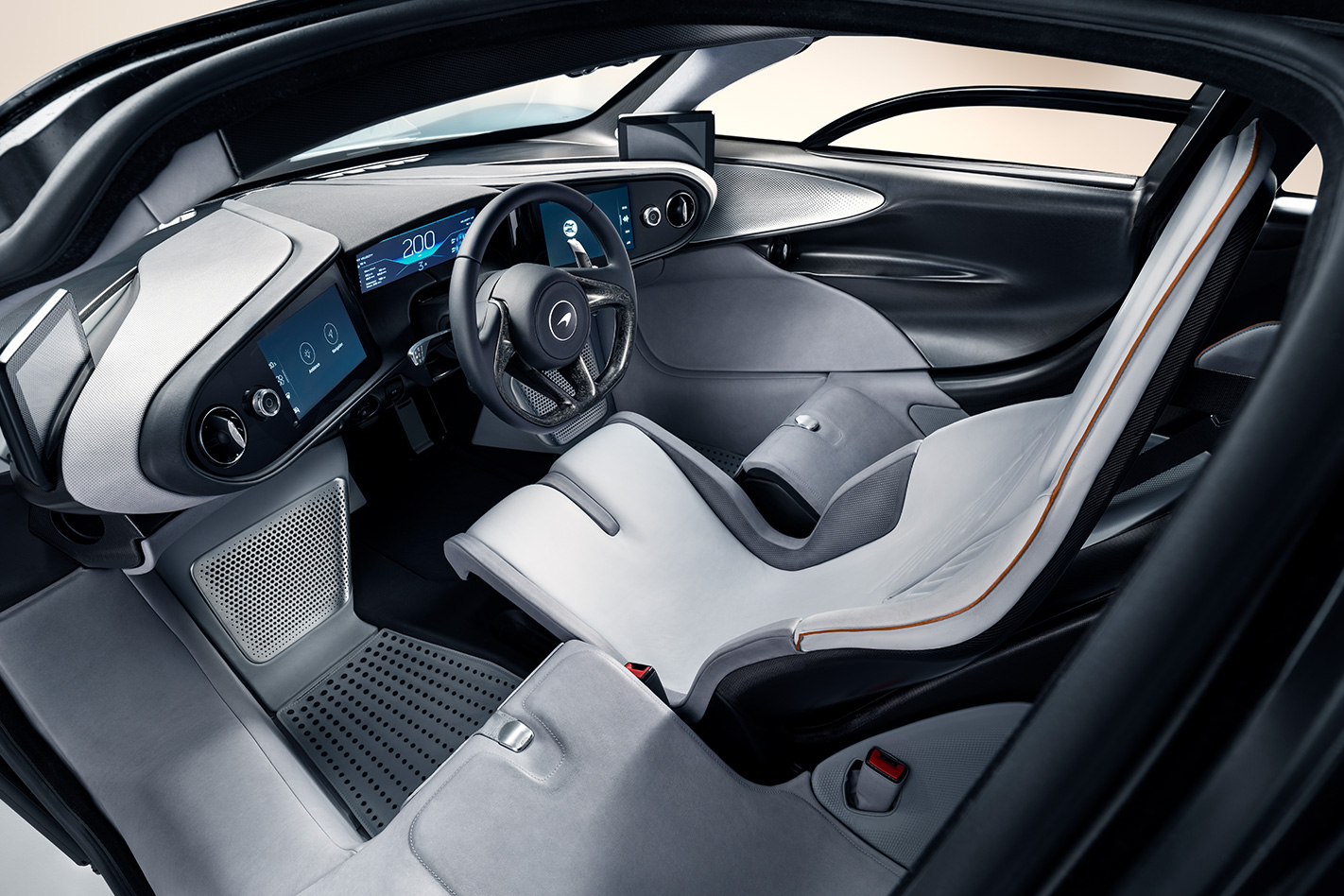
One thing is certain, though: electrification is the brand’s unshakeable destiny, with the Speedtail to debut the hybrid technology that should carry the brand through to the inevitability of full electrification.
“Fundamentally, we make sports cars, and what defines those cars are the performance attributes,” says McLaren CEO Mike Flewitt. “So for Speedtail, this hybrid version of our 4.0-litre V8 was the right way to go to get the performance characteristics we needed. It’s a different hybrid than we did in P1; it’s a direct-drive hybrid. There’s no EV capability, and it’s a fast recharge, so if you use the energy that’s stored, it recharges in about 90 seconds.
“So we produce incredible power for rapid acceleration or high speed, which is what this car is all about.
“As we go forward from there, we will keep developing drivetrains that give the performance we want. We will see more and more hybrids coming.”
We have never been more spoilt for car choices in Australia with more than 60 brands operating in our fearsomely competitive market, and offering a steady stream of fresh metal is one way of staying in the spotlight.
In 2019, more than 50 new or significantly updated models will roll out across most of the mainstream brands and a few of some smaller boutique manufacturers – and those are just the ones we know about!
Here’s our comprehensive list of new cars launching in 2019 to keep you in the loop if you’re thinking of treating yourself to a fresh set of wheels in the New Year.
Alfa Romeo Stelvio Quadrifoglio
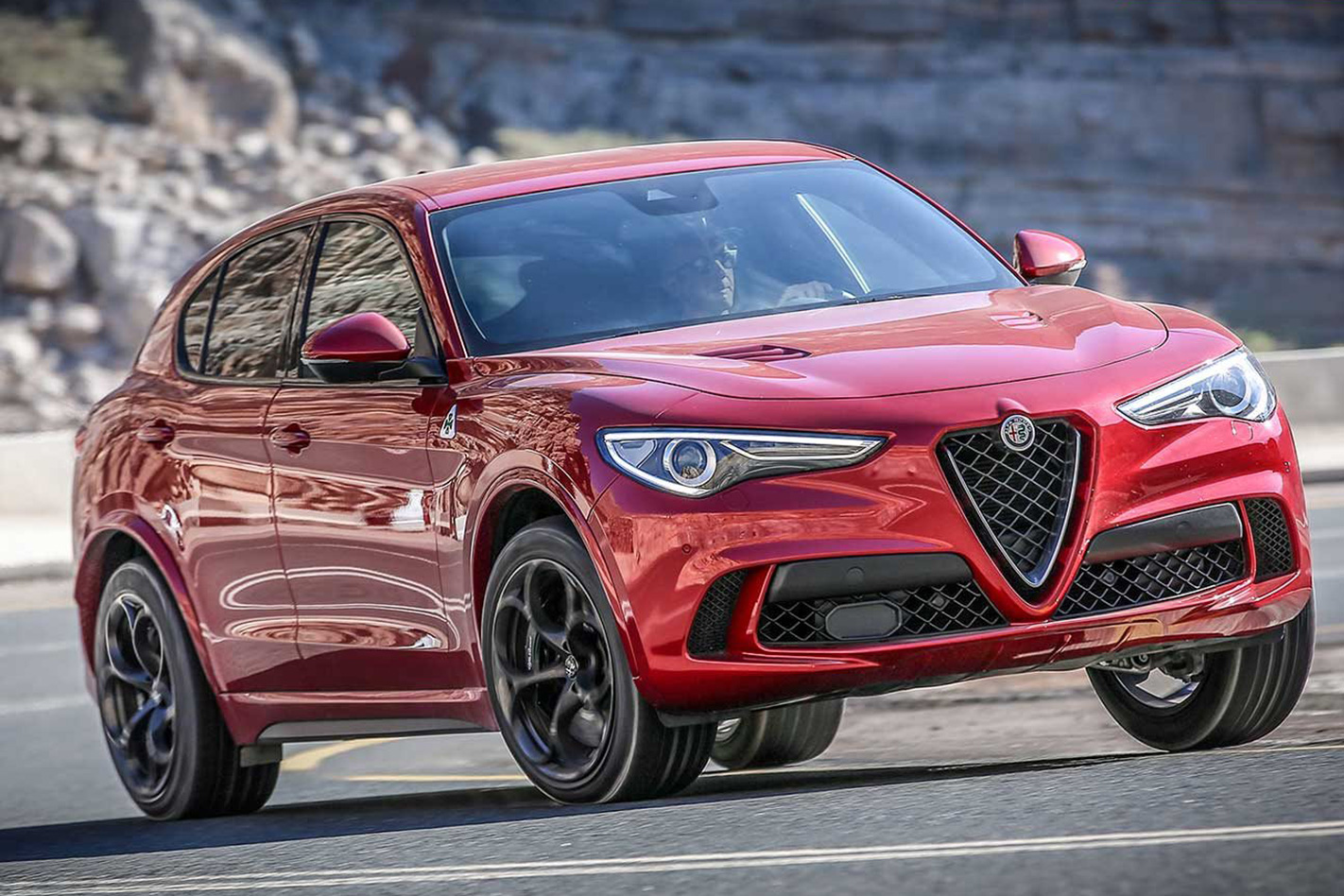
The high-performance Stelvio range topper will be the fastest SUV in its class
Price: $149,000
Rivals: BMW X3 M40I, Mercedes-AMG GLC43, Jaguar F-Pace 35t S
Due date: January 2019
The twin-turbo V6-powered Stelvio Quadrifoglio – known as the Stelvio Q in Australia – has a 283km/h top speed and a 0-100km/h time of just 3.8 seconds. The Q adds all-wheel-drive underpinnings to the Giulia Quadrifoglio’s 2.9-litre twin-turbo V6 and eight-speed automatic transmission. It also shares much of the sports sedan’s equipment levels. Apart from a significant power boost over other Stelvio models, the new Stelvio flagship differs from the rest of the line-up via a more aggressive body kit and tweaks to improve aerodynamics, performance and handling.
Aston Martin DBX
Aston’s fourbie foray – some might say sacrilegious submission to the SUV scourge
Price: $240,000 and up
Rivals: Maserati Levante, Porsche Cayenne
Due: October 2019
There are few details available yet on Aston Martin’s entry into the world of high-performance crossovers, but early imagery suggests that the British brand isn’t being shy about giving the high-riding DBX some off-road chops.
Based on the same platform that underpins the new DB11, the DBX will be a petrol-only proposition, with powerplants likely to be sourced from Mercedes-Benz. These could include Merc’s excellent 3.0-litre straight six at the entry level, while a flame-spitting twin turbo V8 could potentially power a range-topper.
Aston Martin Valkyrie
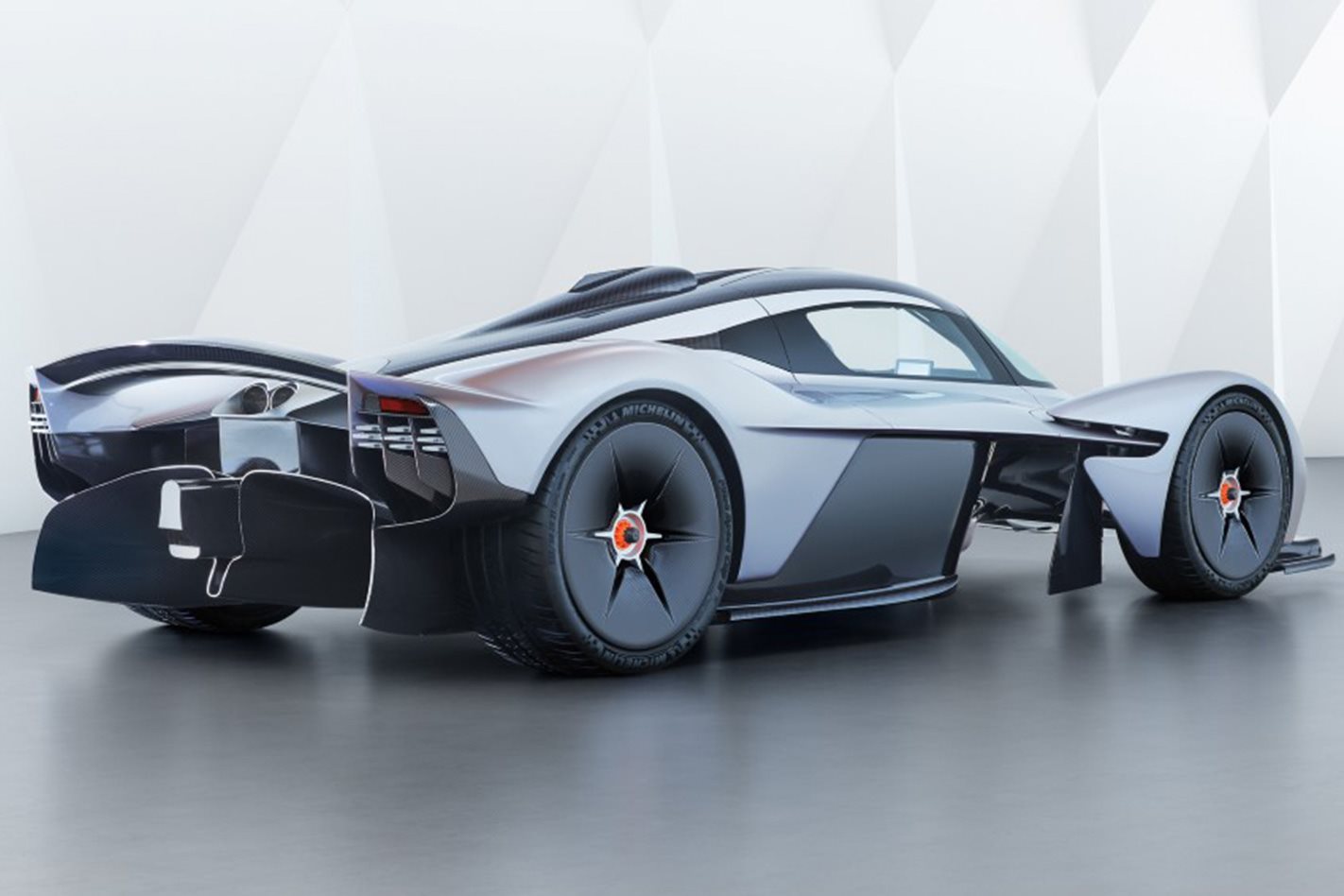
An almighty return to razor-sharp road rockets in incredible technological style
Price: $4 million
Rivals: McLaren Senna, Ferrari 812 Superfast, Mercedes-AMG Project One
Due: December 2019
This is one outrageous rig, featuring arguably the most powerful naturally aspirated road-going engine ever built. The Valkyrie is being built in conjunction with Red Bull Technologies – legendary F1 designer Adrian Newey penned its sensuous form – while its monster 6.5-litre V12 motor is being built in conjunction with legendary British engine builders Cosworth. Early mail suggests it’ll boot out north of 820kW. Gulp.
With its gullwing doors, carbon fibre everything, and a hybrid power system to go along with that engine, the $4 million price tag should be no surprise. And if you’re thinking of snapping a couple up, too late – all 150 road and 25 track version slated for production have been claimed.
Audi A1
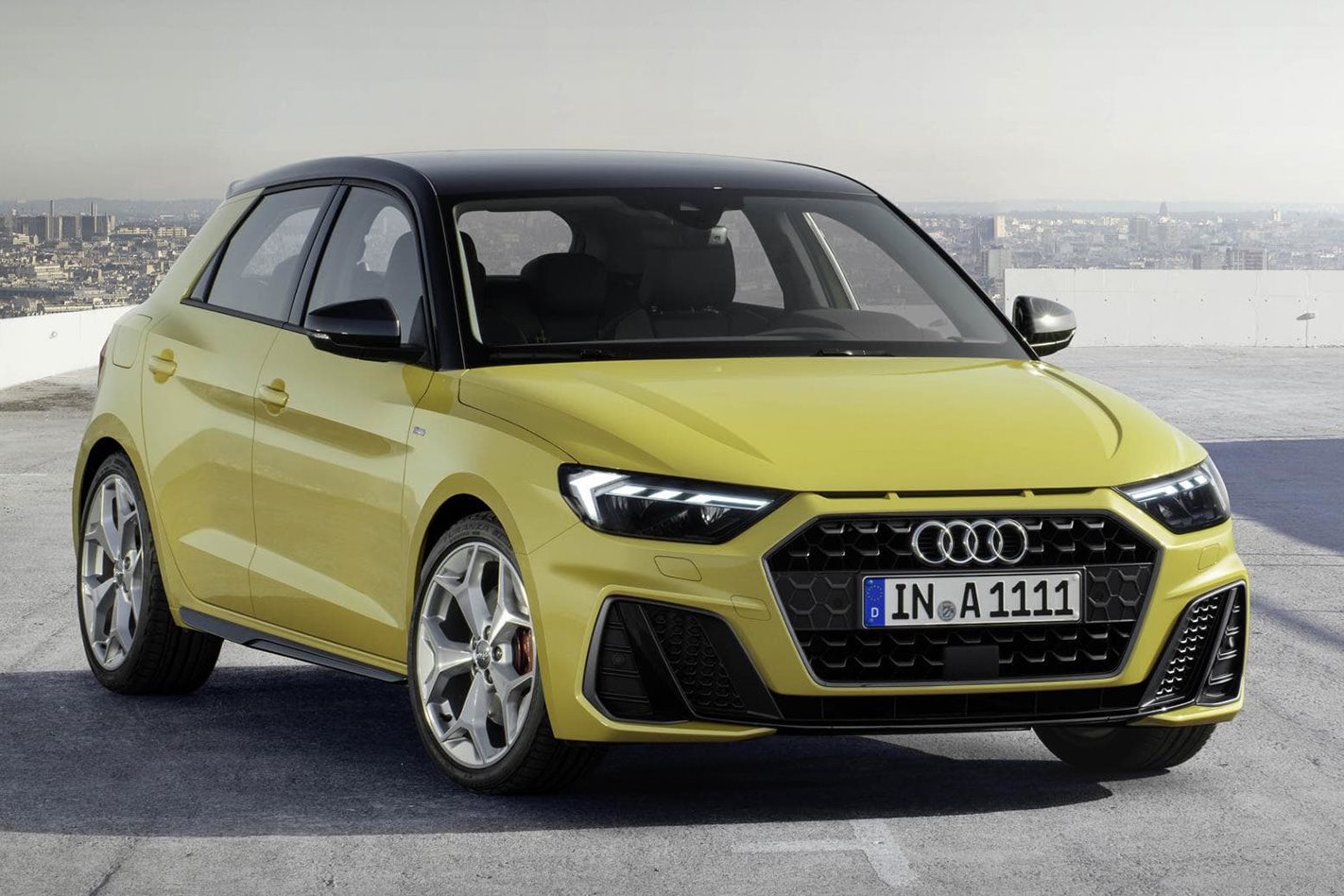
An all-new iteration of Audi’s gateway hatchback.
Price range: $30-40K
Rivals: Mini Cooper, Fiat 500
Due Date: March/April 2019
Spun-off from the new Volkswagen Polo platform, Audi’s box-fresh second-generation A1 city hatch promises to inject a great deal more sophistication into the bottom end of the German brand’s product portfolio. Now measuring over four metres long it’s physically bigger than before, but a range of new powertrains – including a 1.5-litre turbo four with cylinder deactivation – move the mechanical game along as well. Inside there’s a greater sense of maturity in the cabin furnishings, plus plenty of infotainment tech.
Audi A6

Another all-new Audi, this time in executive-grade large sedan form.
Price range: $80-120K (sub-Audi Sport variants)
Rivals: Mercedes-Benz E-Class, BMW 5 Series, Volvo S90, Lexus GS
Due Date: First quarter of 2019
Evolutionary styling might make the 2019 Audi A6 look broadly similar to the current model, but get up close (and perhaps take a peek underneath) and the differences become pretty stark.
Sure, there’s still a quasi-hexagonal grille, sharply-creased sheetmetal and a generally broad-shouldered look to Audi’s upcoming E-Class fighter, however Audi claims it’s a much sportier-feeling car to drive while the adoption of mild-hybrid tech in every model helps curb the big sedan’s thirst.
Additionally, rear-wheel steering, active rear differentials, heaps of aluminium and a brace of muscular turbo diesel and petrol V6s amp up the A6’s driver appeal, while all occupants will benefit from the latest generation of the company’s ever-evolving infotainment system.
Audi Q3
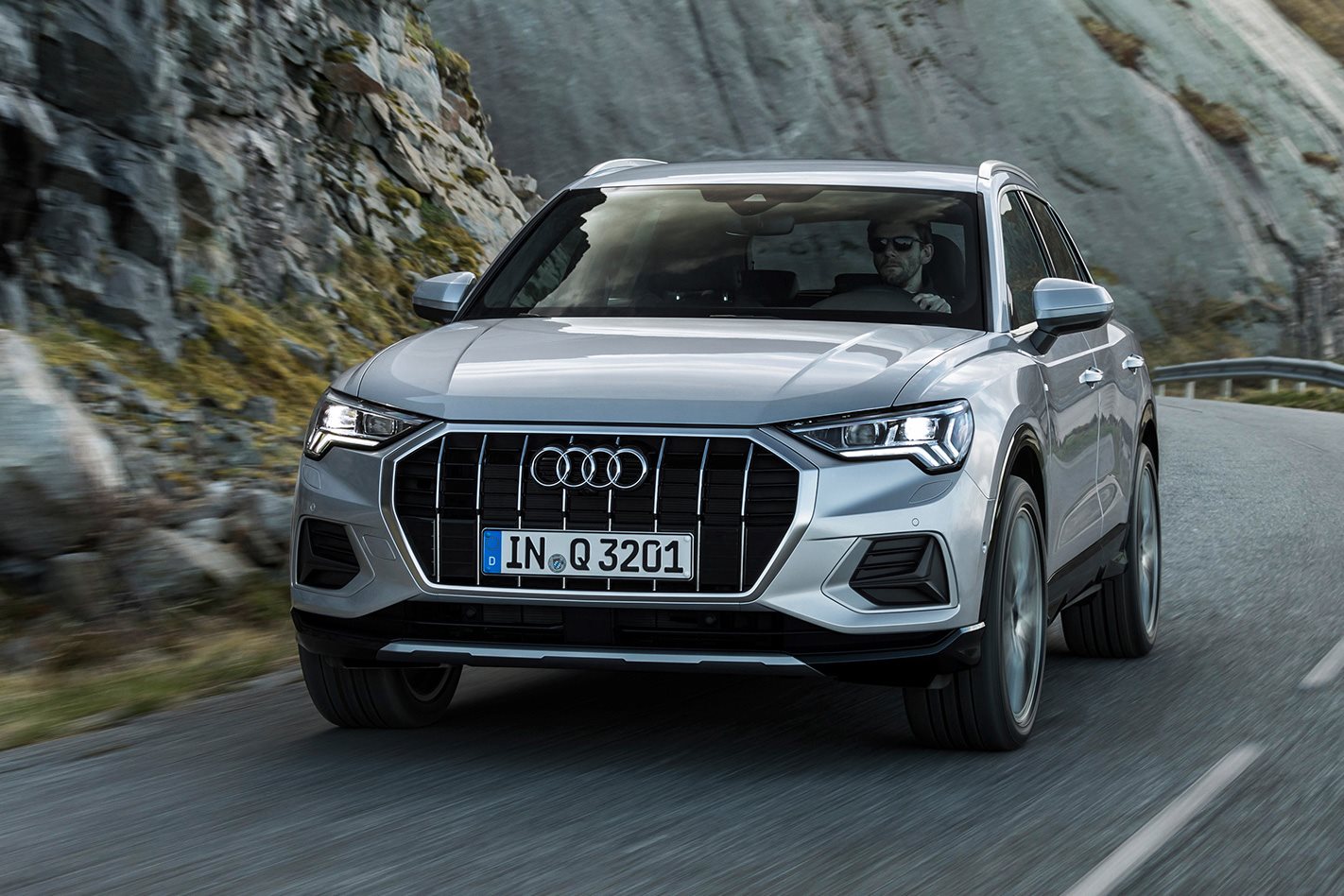
Audi’s original small SUV gains a mature new look and more equipment to separate it from the similarly sized Q2.
Price range: $45,000-$85,000 (estimated)
Rivals: BMW X2, Jaguar E-Pace, Mercedes-Benz GLA, Volvo XC40
Due date: June 2019
The all-new 2019 Audi Q3 features bold design cues taken from its bigger sibling, the Q5, to give it a more mature and attractive appearance than its predecessor. The new Q3 should also be more family-friendly and practical than before, and will benefit from a raft of infotainment, connectivity and driver assist upgrades.
Audi Q7 e-tron quattro
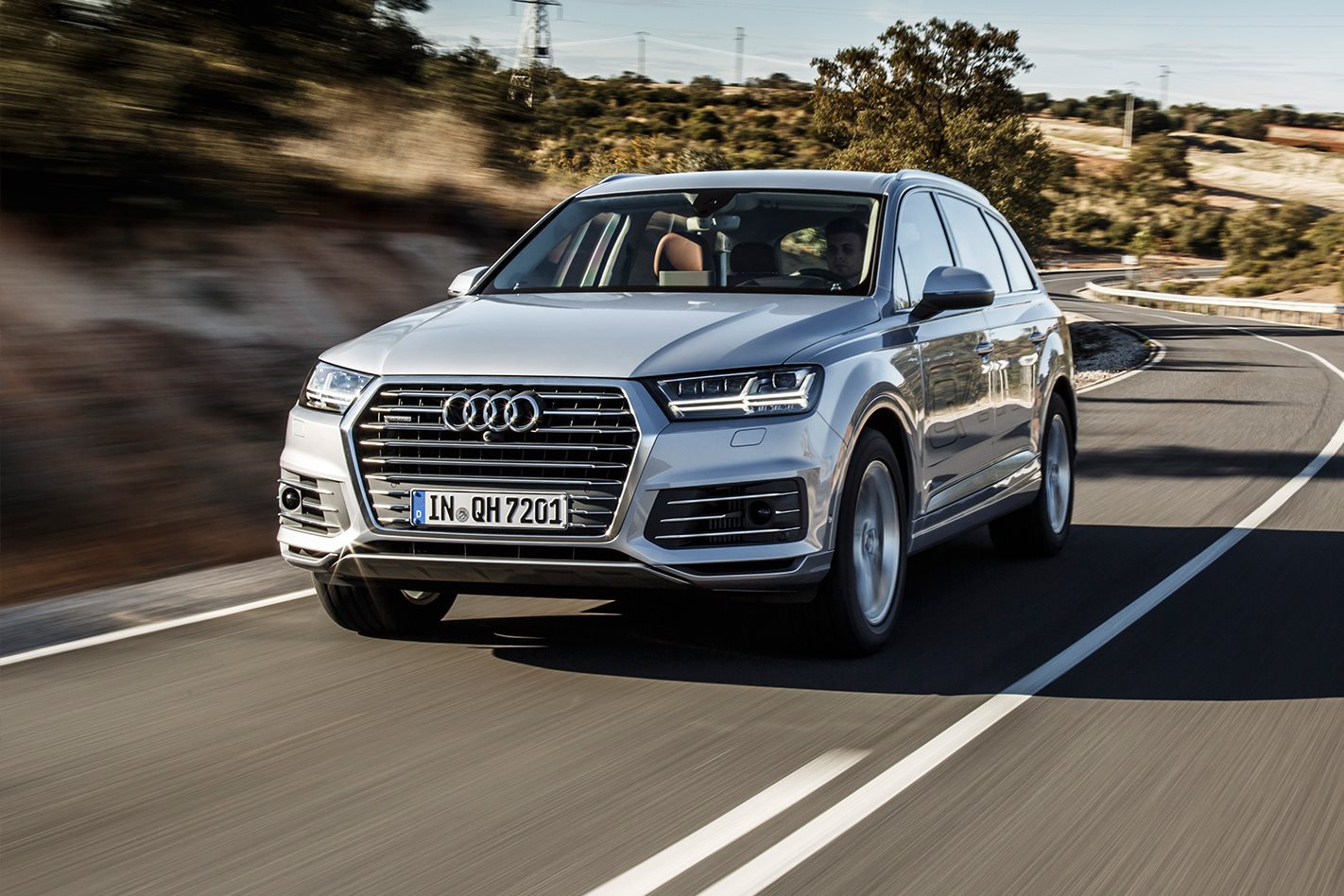
Audi’s first plug-in hybrid will be the first diesel/electric SUV on the Aussie market.
Price: $139,000
Rivals: Mercedes-Benz GLE500e, Mercedes-Benz EQC, Porsche Cayenne E-Hybrid, Volvo XC90 T8
Due date: January 2019
Using the Audi Q7’s 3.0-litre V6 synced to an electric motor fed by a plug-in chargeable 17.3kWh battery, the new Q7 e-tron large SUV has a pure electric range of up to 56km and a combined fuel efficiency of just 1.9L/100km. Beyond the plug-in hybrid system, the Q7 e-tron shares the same specification as the Q7 3.0 TDI quattro, and the driver assistance and safety systems of the entire range.
Audi Q8
Audi’s new SUV flagship is a big coupe-like alternative to the Q7
Price range: $128,900
Rivals: BMW X6, Mercedes-Benz GLE-Coupe, Porsche Cayenne, Range Rover Sport
Due date: January 2019
Closely following the design cues teased in the Audi Q8 Sport Concept unveiled at the 2017 Geneva Motor Show, the Q8 is a sportier, more luxurious sibling to the Q7 large SUV. It will be one of the most technically advanced Audis ever and is even able to park itself while you wait outside, although this may not be offered on Australian models. WhichCar understands Australia will get a 3.0-litre turbo petrol variant initially, possibly followed by a turbodiesel.
Audi RS5 Sportback
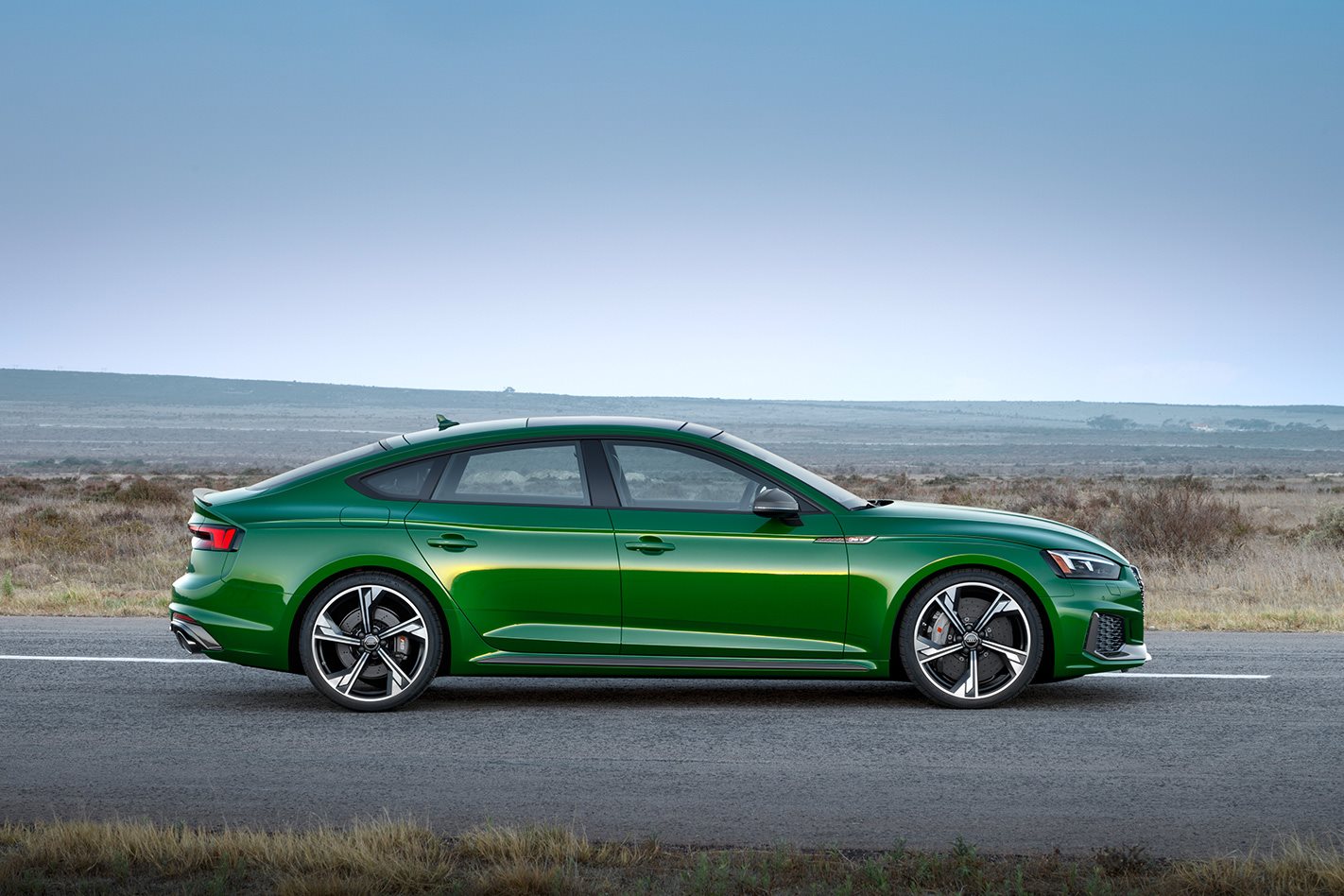
Take the Audi handsome A5 and transplant in the RS4’s powertrain. What’s not to like?
Price: $157,700
Rivals: Mercedes-AMG C63, BMW M4
Due: January 2019
Audi’s hotrod RS5 Sportback joins its wagon twin early in 2019, sharing the same 331kW/600Nm twin-turbo V6 powerplant that flings the grunt at all four wheels via an eight-speed automatic.
It’s a coupe bodystyle but equipped with four doors and a quasi-hatchback rear entrance. And because it’s an MY19 version of the RS 5 pairing, it’ll be graced with Audi’s digital dash, a heads-up display, wireless phone charger and rear USB ports. It’s also available with this exclusive green paint, too, called Sonoma Green.
Audi TT/TTS
Only a mild update for Audi’s pretty coupe and convertible but if it ain’t broke…
Price: $80,000-$95,000
Rivals: BMW M240i
Due: June 2019
Audi’s agreeable little two-seat coupe is in line for a mid-life facelift, having been on the scene since 2016. Don’t expect much in the way of dynamic fireworks or mechanical makeovers; the TT’s relative lack of sales will dictate a commensurately modest spend on updates by the company.
Audi R8
Also a light refresh as per its TT little sister, but still packs the incredible V10 punch
Price: $395,000 (est)
Rivals: McLaren 570S, Lamborghini Huracan LP610-4, Mercedes-Benz AMG GT-R
Due: October 2019
Even though the Audi to beat them all has already gone through a mid-life tweak, Audi says its mid-engined V10 high-performance coupe will score another light update later in 2019. It’s unlikely to score any substantial updates, given how late in its lifecycle it is, but expect perhaps a little tickle-up on the already potent 456kW headline figure, as well as a further tidying of its dynamics. Perhaps a more track-inspired version of its RWS rear-driver, too? Never say never…
BMW 1 Series
Baby Beamer is now less for the baby boomer with front drive
Price: $42,000-$72,000
Rivals: Mercedes Benz A-Class, Audi A3/S3
Due: November 2019
BMW is being pretty cagey on this one, but let’s have a swing anyway… Swapping to front wheel drive for the first time, the BMW 1 Series will still yield a performance variant – only this time it’s likely to mimic the M5 by offering all-wheel-drive in conjunction with a turbocharged four-cylinder petrol engine. This will pitch it up against Mercedes-AMG’s inbound A-Class hotties.
Given the potential change to a front wheel drive layout, it does put questions marks around the fate of cars like the M140i – it may well even be given a stay of execution until BMW’s first real FWD hot hatch is, err, hatched.
BMW 3 series
The one that started the executive sedan movement now into its seventh iteration
Price: $60,000-$120,000
Rivals: Mercedes-Benz C-Class, Audi A4
Due: September 2019
The all-new 3 Series will be built on top of a brand new platform, and will yield a new version of both the M3 performance sedan and the M4 coupe, which may just sneak in before Santa comes at the end of next year. Expect them both to retain a six-cylinder layout. First up, though, will be the 330i which will have M Sport kit as standard with an M Sport brake system, and the option of a limited slip rear diff.
BMW 8 Series
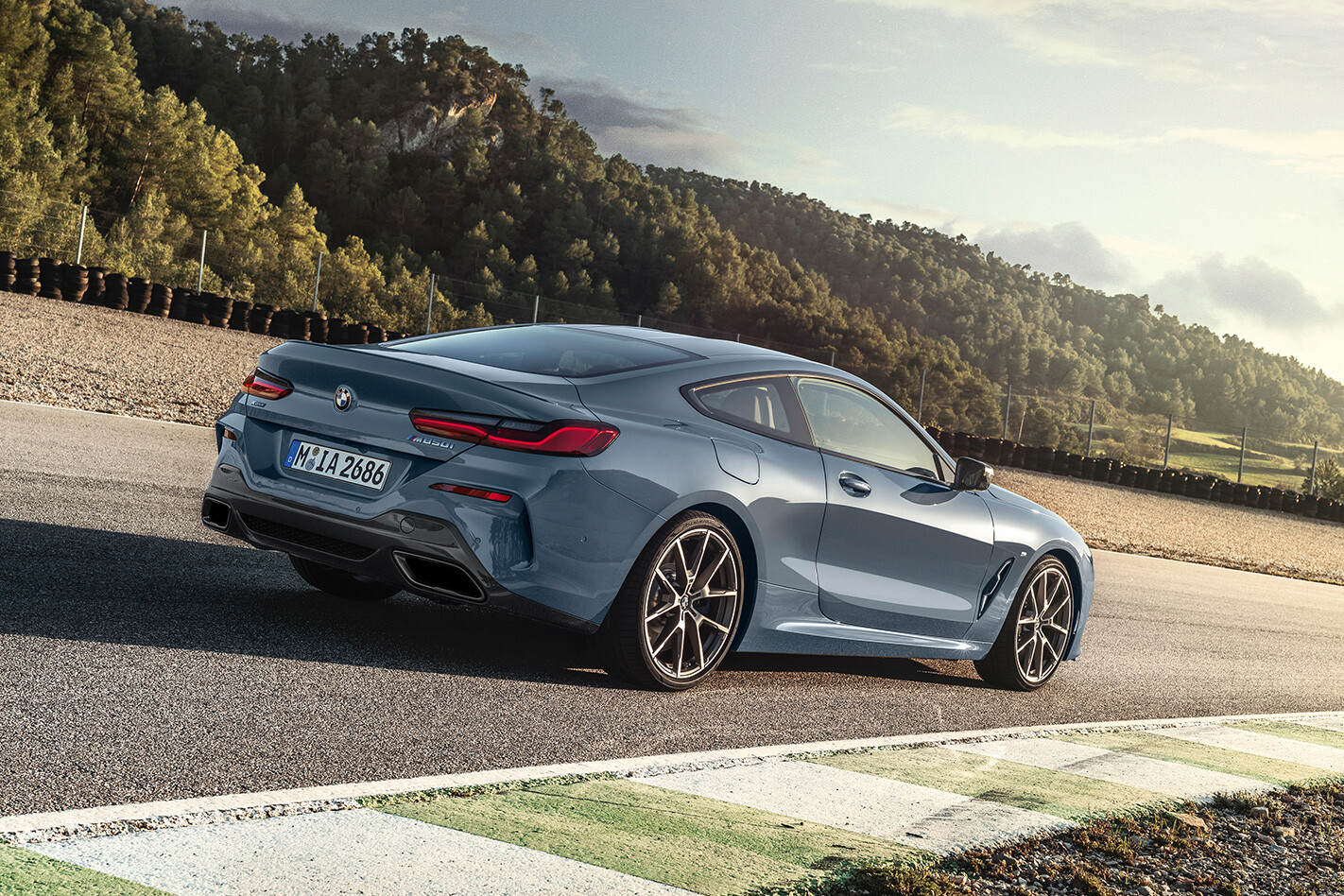
The return of one of BMW’s most-missed nameplates
Price range: $180-250K (non-M variants)
Rivals: Bentley Continental GT, Maserati GranTurismo
Due Date: First quarter, 2019
The BMW 6 Series has bowed out to make way for the long-awaited return of a legend – the 8 Series. Exciting, right? But don’t let the change in numbers fool you, for the 8 Series doesn’t necessarily represent any great increase in size, spec or sportiness. Generally speaking, the anticipated three-variant 8 Series family (two-door coupe, convertible and a low-slung four-door) will mirror that of the departed 6 Series range quite closely, and we expect their pricetags will too.
The M850i coupe will be the first out of the blocks in the first quarter, packing a V8 wallop to the tune of 390kW and 750Nm. Performance should be mega, but expect an M8 performance flagship to arrive later and turn the wick up even higher.
BMW 8 Series Gran Coupe
As above, plus rear doors
Price: $200,000 plus
Rivals: Audi S8, Mercedes-Benz S-Class
Due: March 2019
While an M8 version of this sexy four-door coupe won’t hit the market until after 2019, the ‘entry level’ models will not be slow.
Available from early 2019 will be an 840d xDrive Coupe, powered by a 3.0-litre inline six-cylinder diesel, making 235kW and 650Nm.
The M850i xDrive Coupe M Performance that will arrive alongside it will offer a 4.4-litre V8 petrol engine with 390kW and 750Nm of torque, so that should be pretty darn handy.
BMW X7
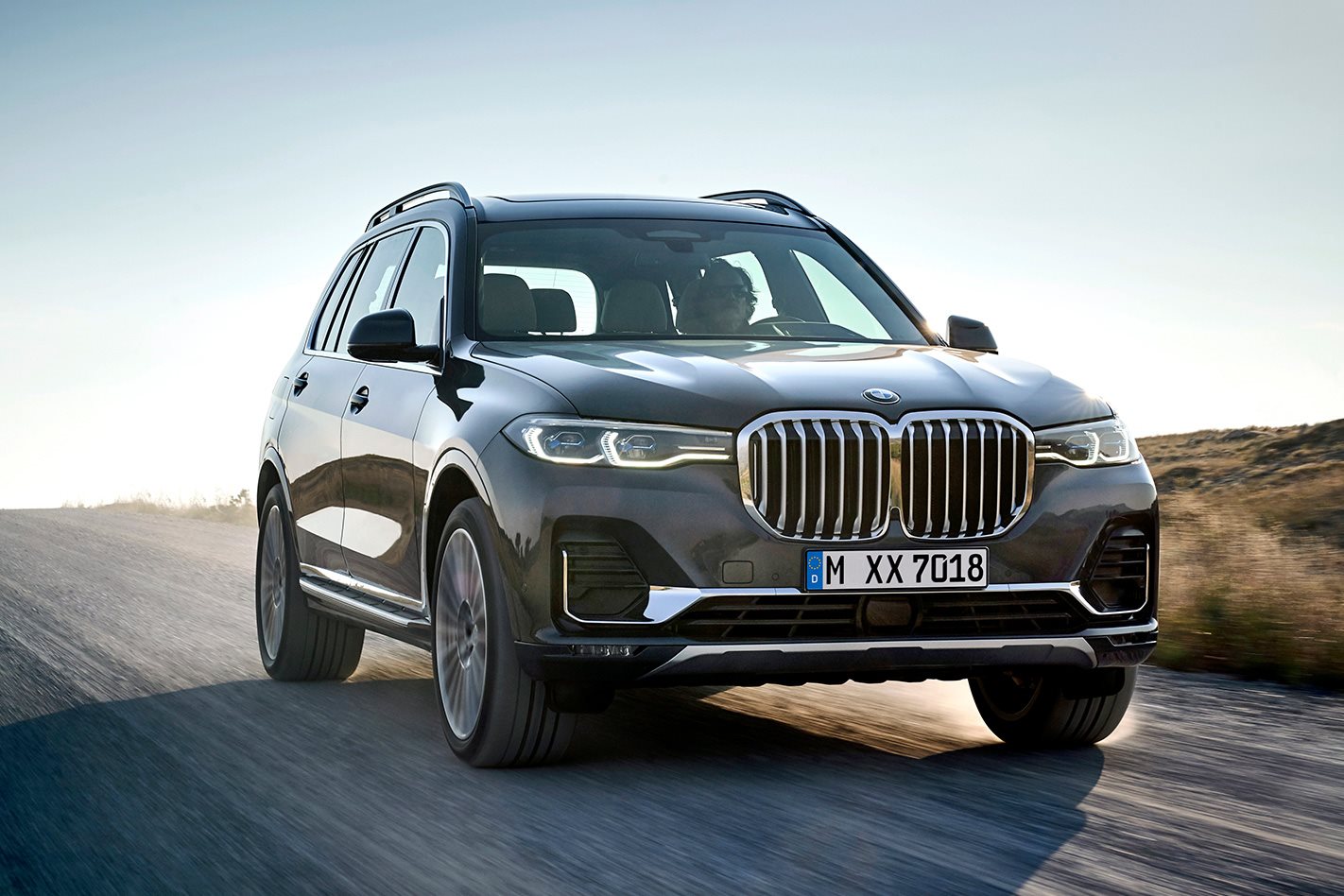
The biggest member of the BMW line-up will head Down Under with a twin-turbo V8 version that won’t be available in Europe
Price range: $150K-plus
Rivals: Bentley Bentayga, Mercedes-Benz GLS-Class
Due date: June 2019?
The BMW X7 is huge. Its 5.2m overall length is one the longest in BMW’s range, exceeded only by the 7 Series limousine, which cannot match the X7 SUV’s 1.8m height, 2.0m width and 3.1m wheelbase. BMW says the luxurious seven-seat X7 will feature an ‘intelligent personal assistant’ who responds to voice control, and can activate ‘in-car experiences’ including satellite navigation. A BMW digital key also allows X7 owners to unlock and start the vehicle using their smartphone.
BMW Z4
BMW’s revenant sportscar looks as wild and svelte as the concept that previewed the production version
Price: $75,000-$130,000 (est)
Rivals: Audi TT, Ford Mustang convertible
Due: March 2019
At long, long last, the new BMW Z4 will land in 2019. Lighter and simpler than the outgoing version thanks to a fabric roof, the Z4 is designed to chase cars like the Porsche Boxster and Alpine A110. Of course, it also shares its architecture with the forthcoming Toyota Supra.
No specifics on pricing yet, but it looks like there will be three models on offer; an sDrive20i, sDrive30i (just rolls off the tongue, doesn’t it?) and the most potent, the M40i.
Power will be sent to the rear wheels, and the two sDrive cars will get a 2.0-litre four-cylinder turbo engine. The M40i, meanwhile, will score a 3.0-litre turbocharged six-potter making a healthy 250kW and 500Nm.
Citroen C5 Aircross
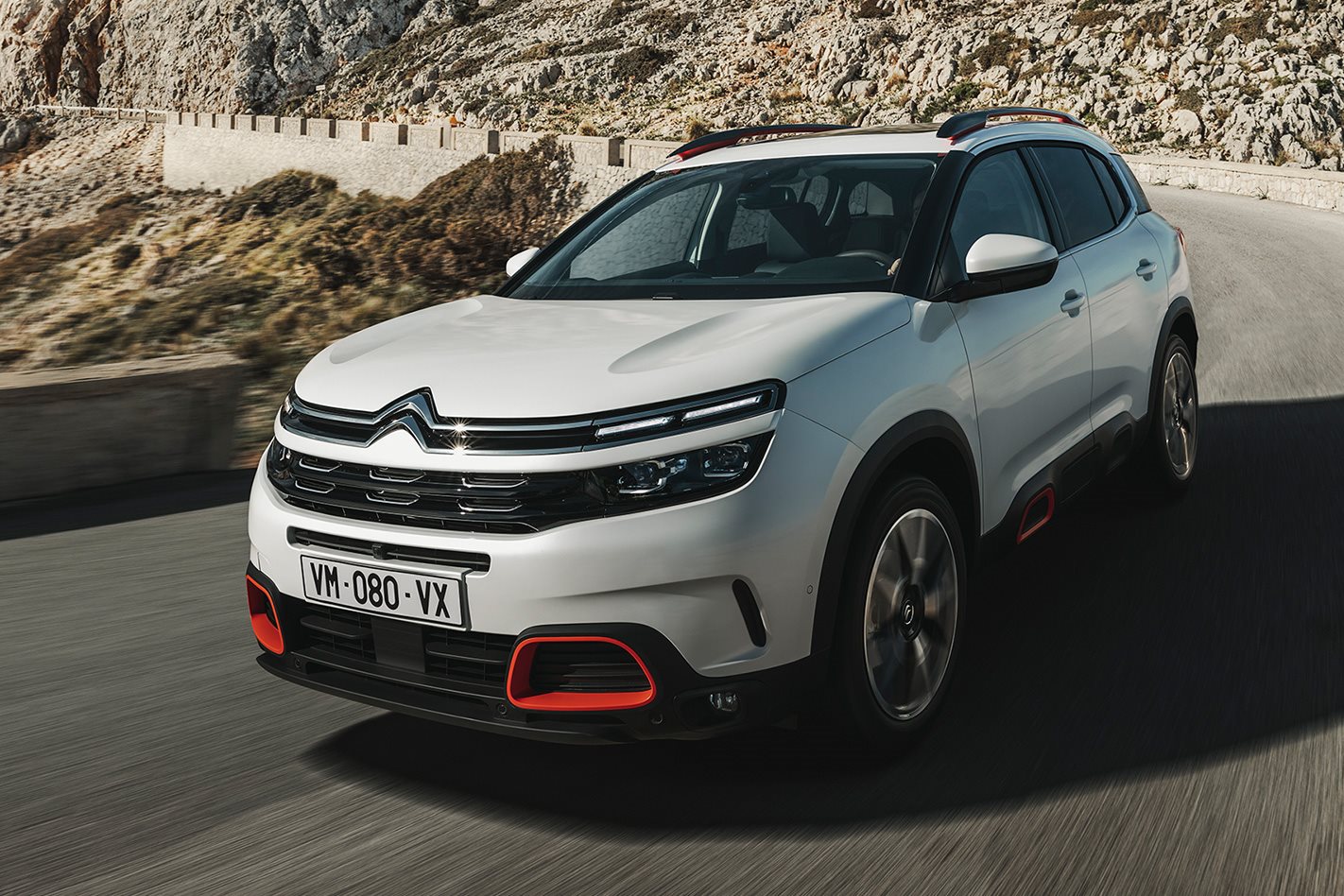
The C5 Aircross has morphed into an SUV that harks back to comfortable Citroen’s of old.
Price range: $38,000 -$55,000 (estimated)
Due date: Mid-2019
Rivals: Mazda CX-5, Subaru Forester, Peugeot 3008, Renault Koleos
Citroen says the new C5 Aircross will be the ‘most comfortable and modular SUV in its segment’ by drawing on its predecessor’s plush hydro-pneumatic suspension with tech that it calls “Progressive Hydraulic Cushions”. Ride comfort will be further enhanced by ‘Advanced Comfort’ seats that filter out road disturbances. The 4.5-metre-long C5 Aircross will make the most of its spacious interior by offering a wide centre console and flexible rear seating that can expand boot space from 580 to 720 litres.
Ferrari 488 Pista
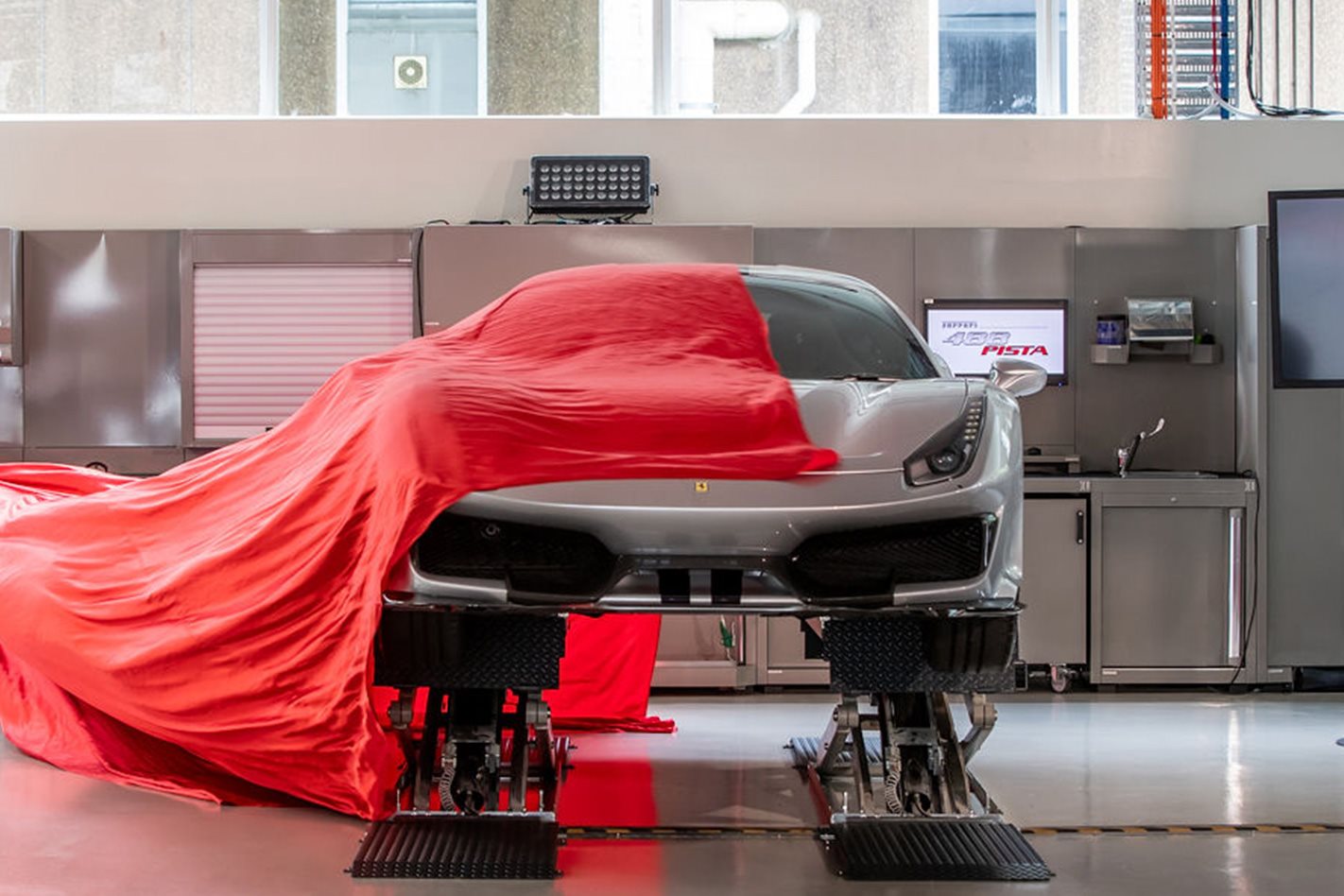
Ferrari’s mid-engined V8 road scythe gets a crash diet and more power for the track
Price: $645,000+
Rivals: McLaren 720S, Porsche 911 GT2 RS
Due: December 2019
Should be called the Pista de resistance… for this is the defining light of Ferrari’s V8 prowess. Packing 530kW and 770Nm in a lighter, more aerodynamic form, the Ferrari 488 Pista is a trackday toy like few others – though we’d love to see how it fares against Porsche’s 911 GT2 RS…
Pricing falls under the ‘if you have to ask…’ category, but since you asked, it’ll cost near enough to $650,000… And that’s before the average $65,000 that Ferrari owners add to their new cars.
Ford Fiesta
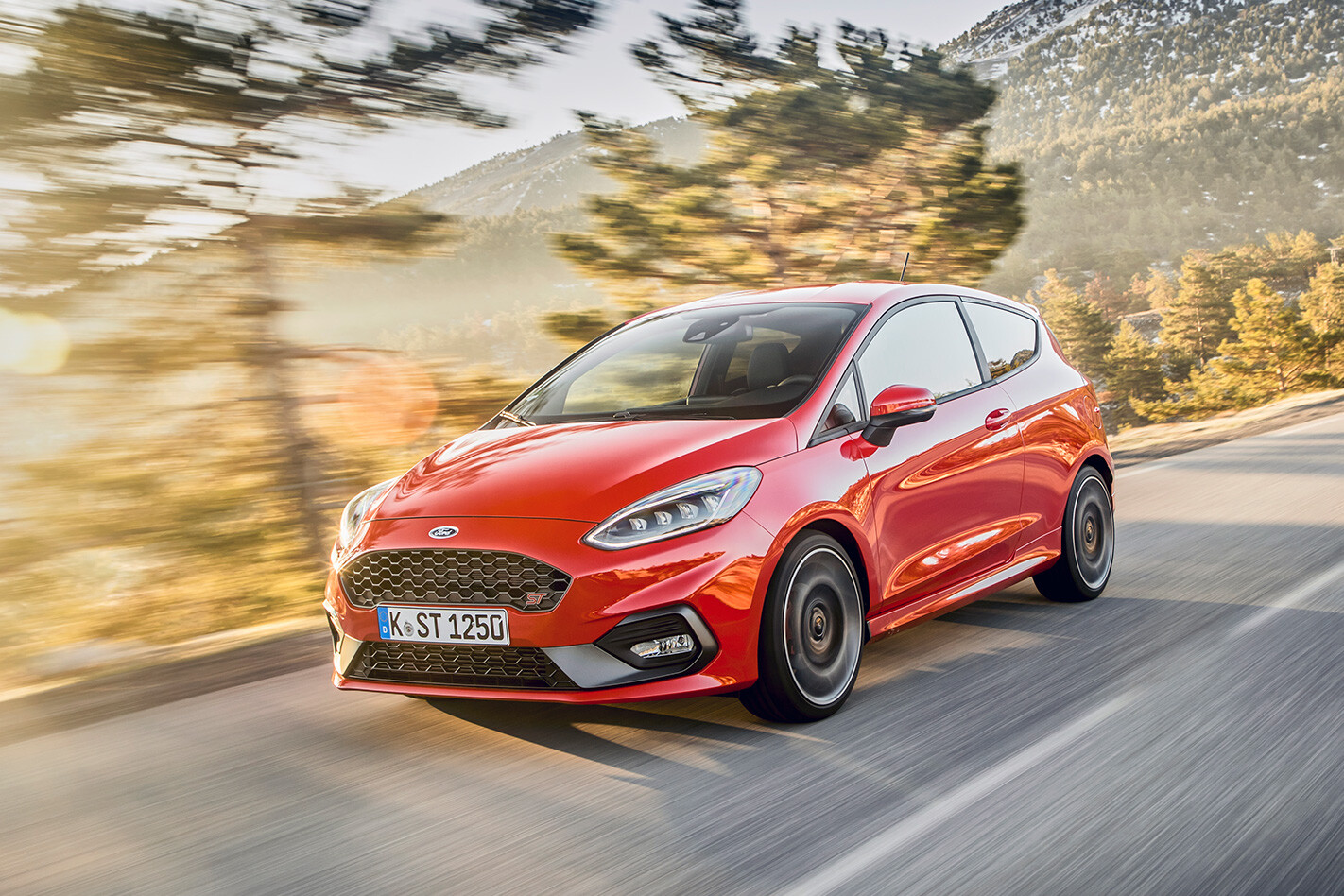
The Fiesta returns for another generation – but only as a hot hatch
Price range: $28K-$30K
Rivals: Volkswagen Polo GTI, Suzuki Swift Sport, Renault Clio RS
Due Date: Second quarter 2019
The Fiesta has long been a dynamic darling of the compact hatch set, and Ford will be cranking up the athletic ability of its next-generation Fiesta next year with the Fiesta ST hot hatch. However, the ST will be the only way you’ll get to put a new-gen Fiesta in your driveway, for Ford Australia has declined to bring lesser models in the range to local showrooms due to unfavourable exchange rates putting the squeeze on pricing. As for the ST, we’ve already driven it and declared it to be one of the best hot hatch options at its expected high-$20K price point. Expect to see it land sometime in the second quarter.
Ford Focus Active
A jacked-up version of the Focus for those with an outdoorsy bent
Price range: $29,990
Rivals: Subaru Impreza XV, Fiat 500X, Citroen C4 Cactus
Due Date: second-quarter
The Focus hatch has already received its full model changeover by now, but the family will grow when the Focus Active rolls into Ford showrooms in 2019.
Following a similar format to the Impreza-based Subaru XV but described by Ford as a passenger car rather than an SUV, the Focus Active will bridge the gap between the regular Focus hatchback and Ford’s bona-fide SUV line-up. The ‘missing link’, if you will. Only one engine, a 134kW 1.5-litre turbo petrol, will be offered, and the Focus Active is strictly front-wheel drive with an eight-speed automatic.
Ford Transit PHEV
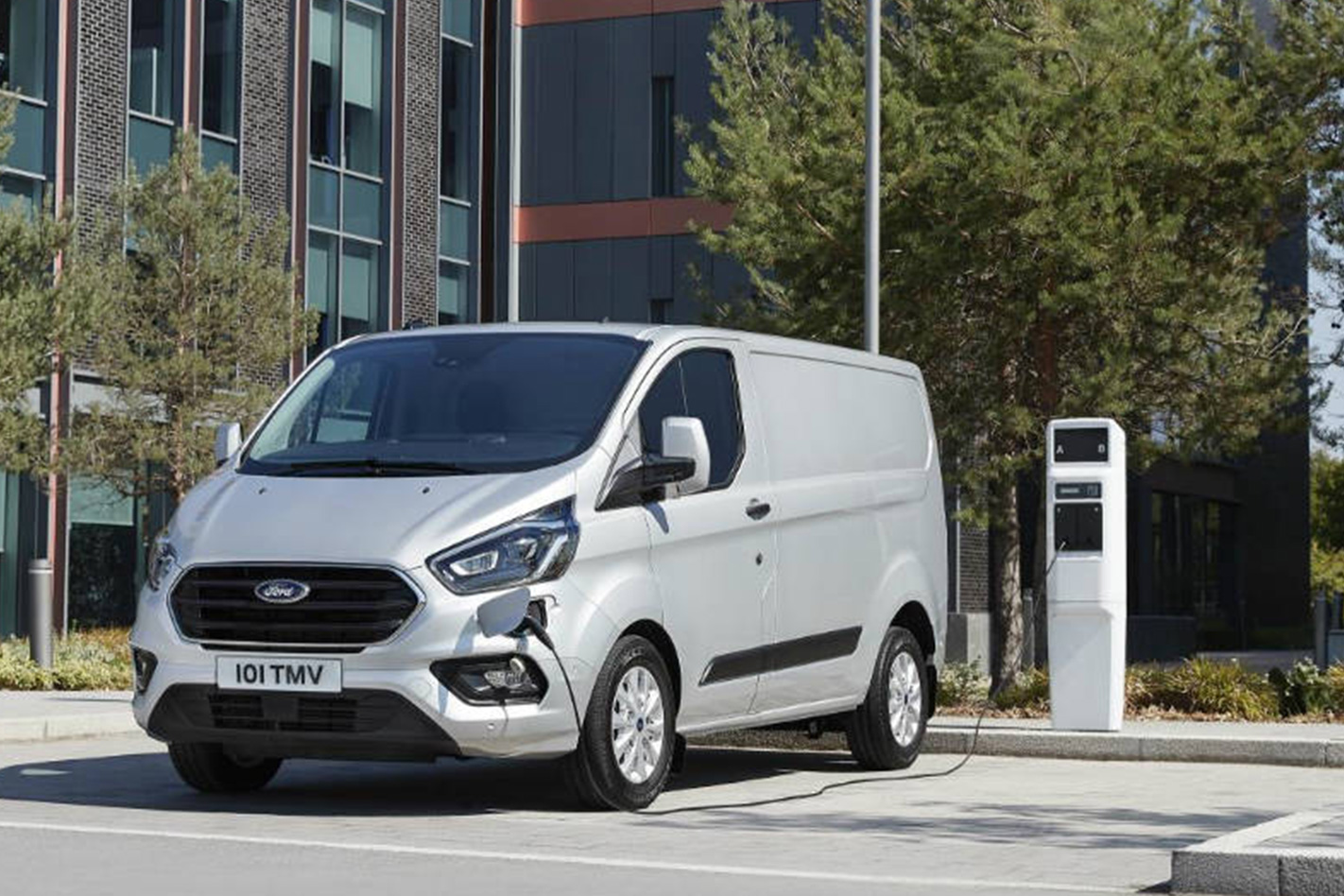
Iconic workhorse plugs into the 21st centuryPrice: $TBC Rivals: Toyota Hiace, Volkswagen Crafter, Hyundai iLoad, Mercedes Sprinter Due date: August
It’s not quite confirmed for Australia at the time of writing, but Ford says the first electrified version of the humble Transit in more than half a century is under consideration. If green Transit power gets the green light for local sale, it will touch down in the second half of the year. As for competition, there’s not a lot of electrified commercial vehicle action in Australia with only the Renault Kangoo ZE full EV (and Mitsubishi Outlander PHEV at a push) to apply any pressure… for now.
Honda Accord
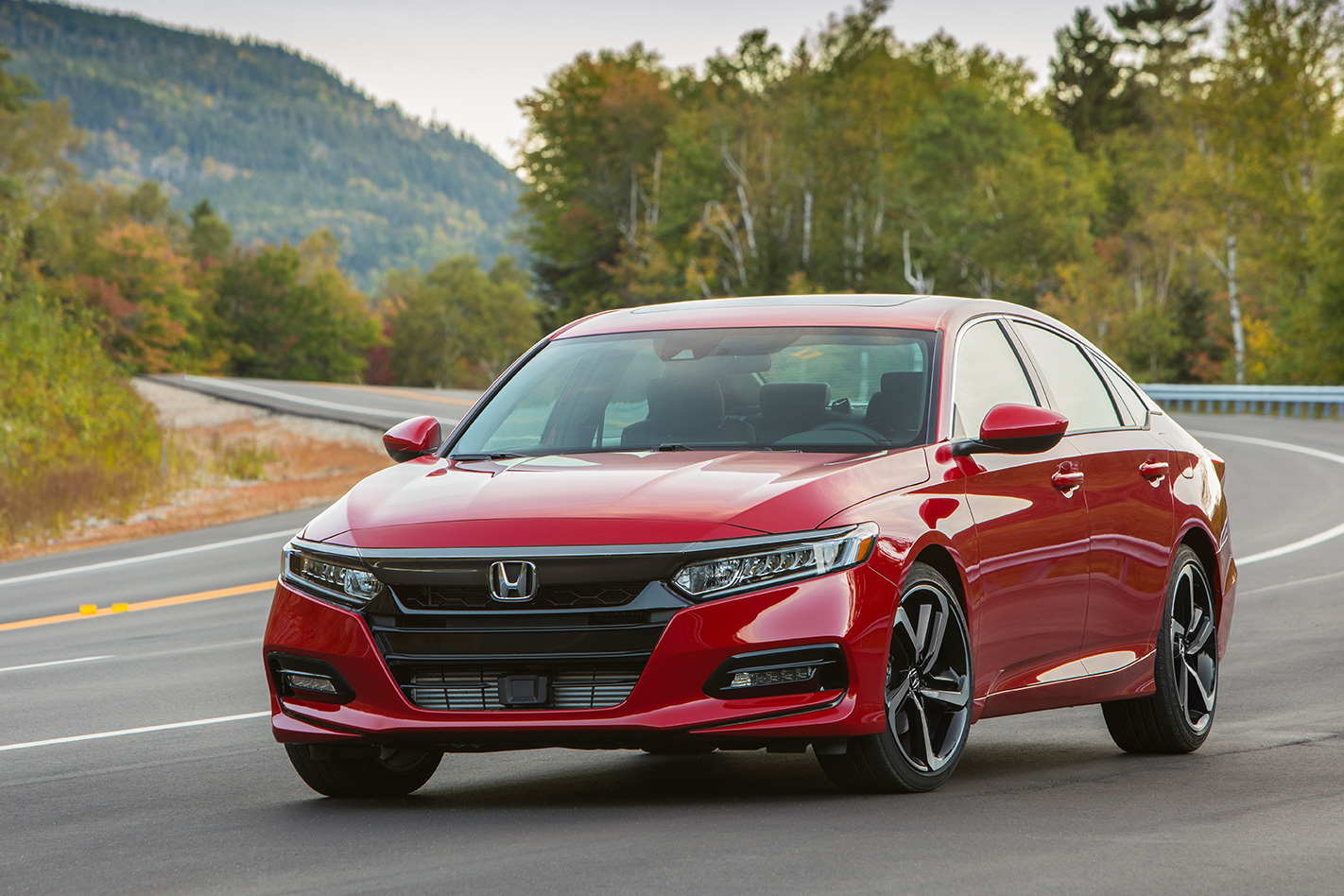
The Accord returns for a tenth time, and with a tech focus
Price range: Expected to be high $40K, low $50K
Rivals: Holden Commodore, Toyota Camry, Skoda Superb
Due Date: December 2019
Honda celebrates its 50th year of selling cars in Australia in 2019, and the biggest news on its car launch calendar is the arrival of the tenth-generation Accord at the end of the year.
Already on sale in the USA since mid-2017 the Accord will be something of a latecomer to Australia, however Honda’s hands have been tied due to delays in right-hand drive production. Rapidly declining demand in the mid-size car segment – where the Accord will sit – might temper sales somewhat, but Honda Australia says it won’t be gunning for big volumes with its next Accord. Rather, the family-sized sedan will instead be pitched into the market as a high-specification technological flagship to give it a point of difference.
Details are still under wraps, but don’t be surprised if the high-end strategy sees the Accord’s price of entry head north of $50,000.
Hyundai i30 N Fastback
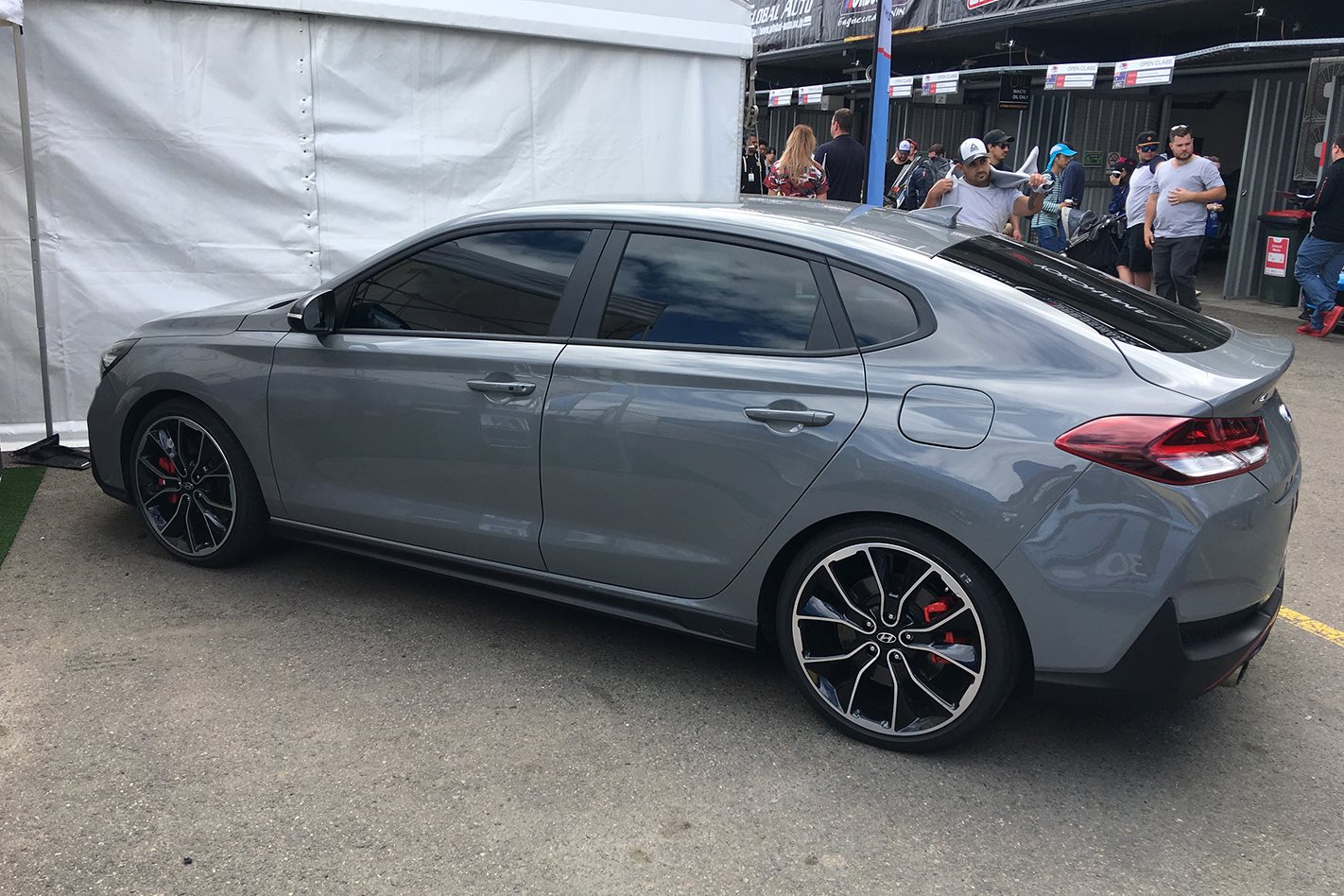
The only way you can buy an i30 that isn’t a hatchback
Price range: $40,000
Rivals: Subaru WRX, Renault Megane RS, Honda Civic Type R
Due Date: Unknown
While some overseas markets enjoy the ability to buy an i30 in a more mature ‘four-door coupe’ bodystyle, Hyundai Australia says the i30 Fastback is not coming our way… unless you spend big on the high-performance N variant.
Fatter profit margins at the circa-$40K mark mean the European-built i30 N Fastback actually makes economic sense for Hyundai to sell in cost-sensitive Australia, even though lesser variants aren’t. For buyers looking at the existing i30 N, the impending option of a grown-up looking Fastback may prove quite alluring, especially as it retains all of the go-fast mechanicals of its hatchback brother.
Exact launch timing has yet to be settled, but the i30 N Fastback’s price should only wear a very modest premium over that of the hatch.
Jeep Wrangler
An all-new version of the archetypal Jeep arrives early next year with looks that still hark back to its 1940s origins.
Price range: $40K-$70K
Due date: January 2019
Rivals: Ford Everest, Suzuki Jimny, Toyota 76 Series Wagon
The all-new Wrangler will have plenty of 21st-century technology under its familiar looking skin including a new 2.2-litre turbo-diesel engine, eight-speed auto, and a huge leap in interior presentation and equipment. Jeep is touting even greater off-road ability, but with suspension retuning aimed at improving road manners and ride comfort to overcome the current model’s weaker points. One weak point it seemingly can’t overcome is safety – with EuroNCAP deeming it worthy of just one star out of five during independent crash testing. The 2019 Wrangler range includes the entry-level Sport, the Overland and the more off-road focused Rubicon.
Kia e-Niro
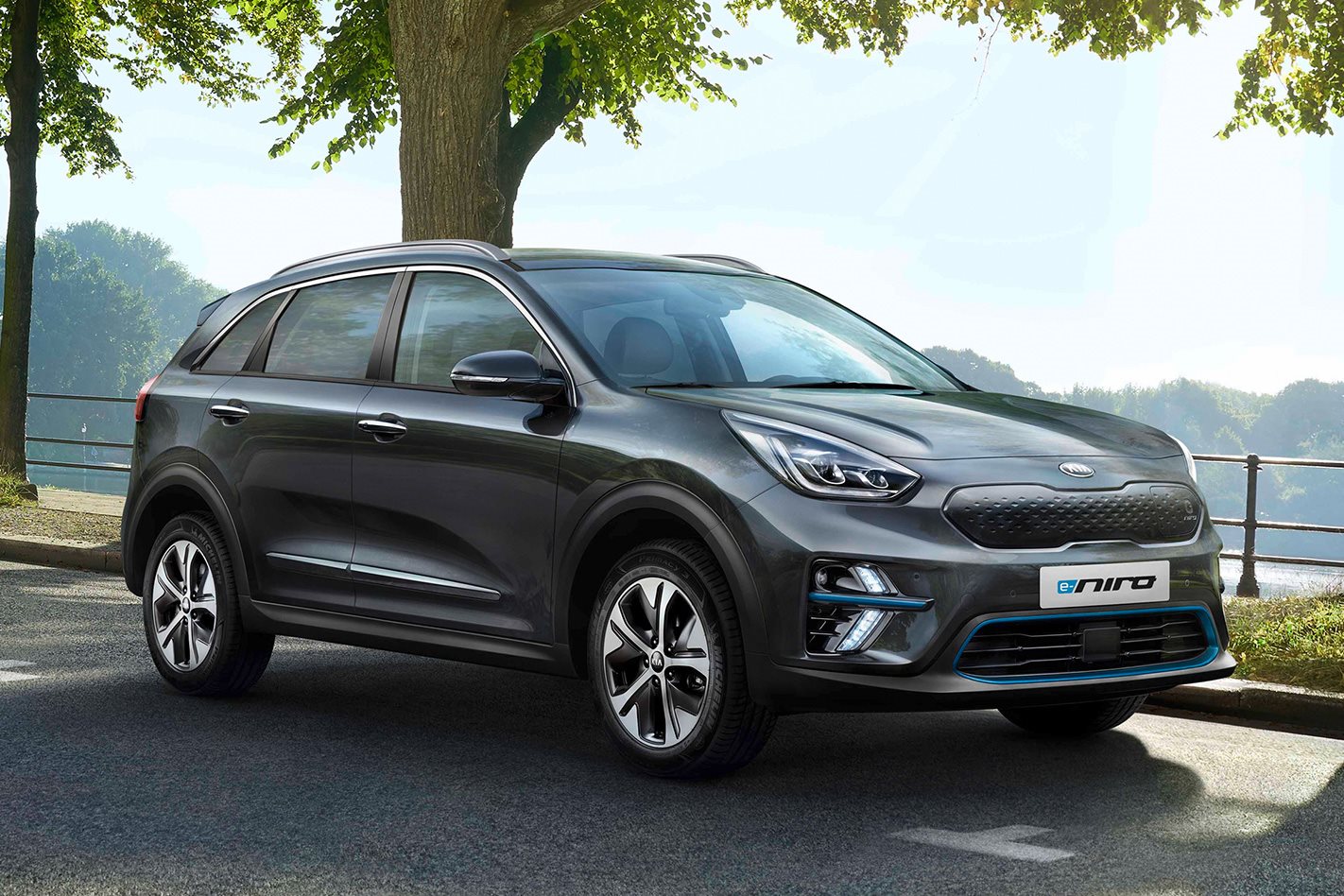
Kia’s first all-electric crossover promises a 600km urban range between charges.
Price range: From $55,000 (estimated)
Due date: November 2019
Rivals: Hyundai Kona Electric, Nissan Leaf
Kia Australia has all but confirmed its Sportage-sized e-Niro will arrive toward the end of 2019, boasting a range between charges of up to 615km that will leave more expensive European models such as the Jaguar i-Pace and Mercedes-Benz EQC in its wake. The e-Niro will also feature independent rear suspension, advanced regenerative braking technology, battery heating for cold climates, LED lighting inside and out, a 451-litre cargo area and Kia’s seven-year warranty.
Lamborghini Urus
Lambo’s SUV foray knocks Bentley’s Bentayga from the top sport as most powerful in class
Price: $390,000
Rivals: Porsche Cayenne Turbo S
Due: January 2019
What do you get when you blend the best elements from some of the world’s most premium brands and whack it underneath a body that a Hot Wheels designer couldn’t have dreamed up? The Lamborghini Urus. The five-door, five-seat Urus uses a Porsche-sourced twin-turbo 4.0-litre V8 petrol engine that produces 478kW and 850Nm, powering an all-wheel-drive system with the ability to send up to 87 per cent of drive to the rear end.
It’s backed by a traditional eight-speed automatic transmission, which forms part of a multiple drive mode system that includes Strada, Sport and Corsa road modes as well as Terra (land), Neve (snow) and Sabbia (sand) settings. There’s also an Ego mode that allows for a mix of personalised settings. The Urus uses components and tech found in cars like the Bentayga, Cayenne and Q7. It’ll do 0-100km/h in about 2.5 seconds, and its ten-piston brakes are the biggest ever fitted to any production car ever. Wow.
Lexus LC-F
Wildest Lexus since the LFA days, but still not as batshit crazy
Price: $280,000
Rivals: Audi RS7
Due: November 2019
Could this finally be the sports car that defines the Lexus brand? The LFA was awesome but expensive and a bit oddball, but the RC F potentially powered by a brand new twin-turbo 4.0-litre V8 – could be right on the money. Packing an expected 350kW or more, along with flared wheelarches, bigger tyres and a whole lot of attitude, it’ll surface late in 2019.
Mazda 3 – mid-2019
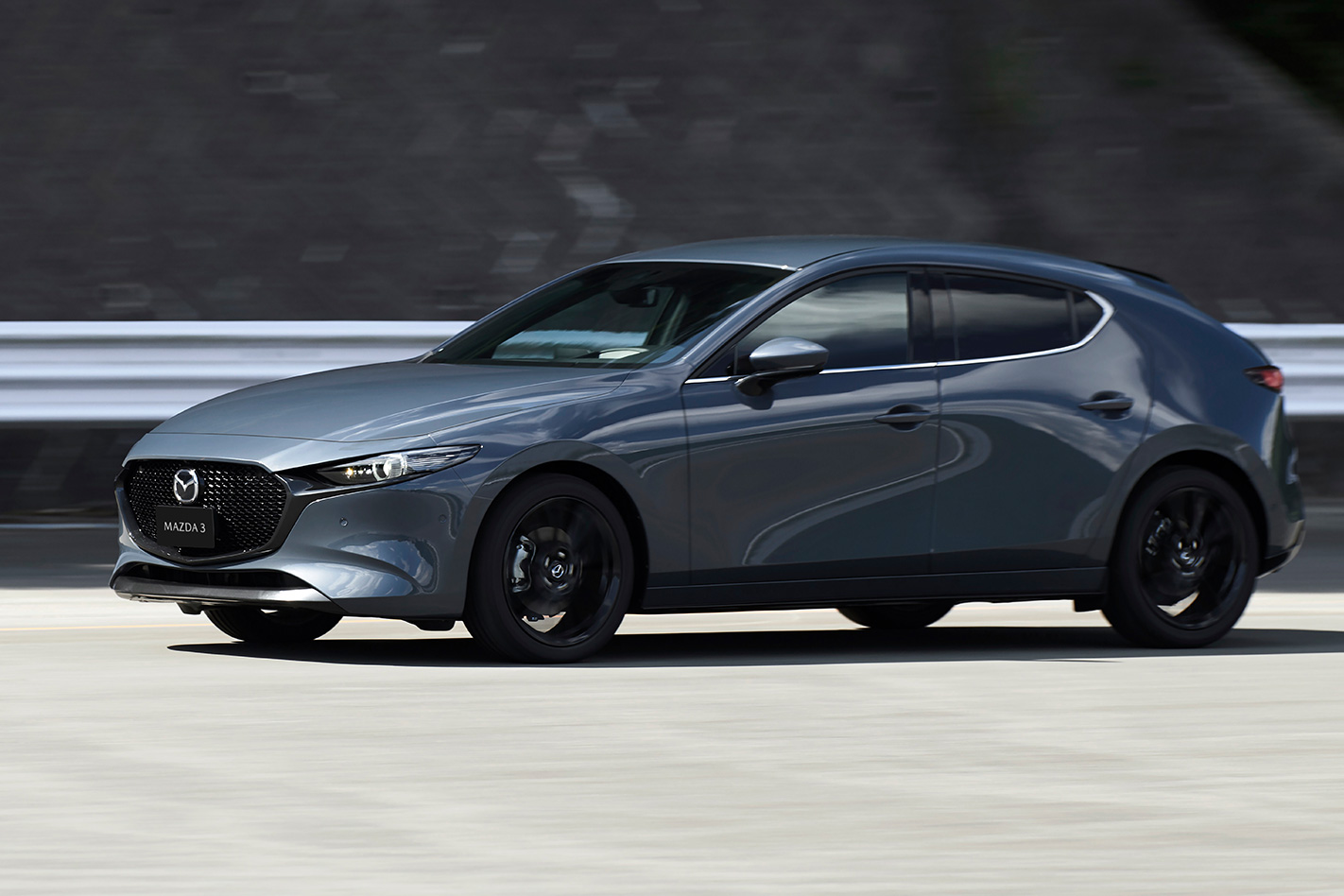
Mazda’s evergreen and much-loved all-rounder returns in its fourth generation
Price: $22,000 (estimate)
Rivals: Toyota Corolla, Hyundai i30, Kia Cerato, Volkswagen Golf
Due: June (approx.)
In the middle of the year Mazda Australia will change over its popular Mazda 3 range with an all-new generation hatch and sedan, and while local details such as range structure and pricing are still far from ironed out, the design of the new 3 shows that Mazda’s mainstay small car is set to be a real looker. The hatch and sedan will be quite visually distinct from the B-pillar rearward – certainly more so than the current generation – and the local powertrain line-up is likely to include Mazda’s innovative and ultra-efficient SkyActiv-X supercharged compression-ignition engine.
Mercedes-AMG A35
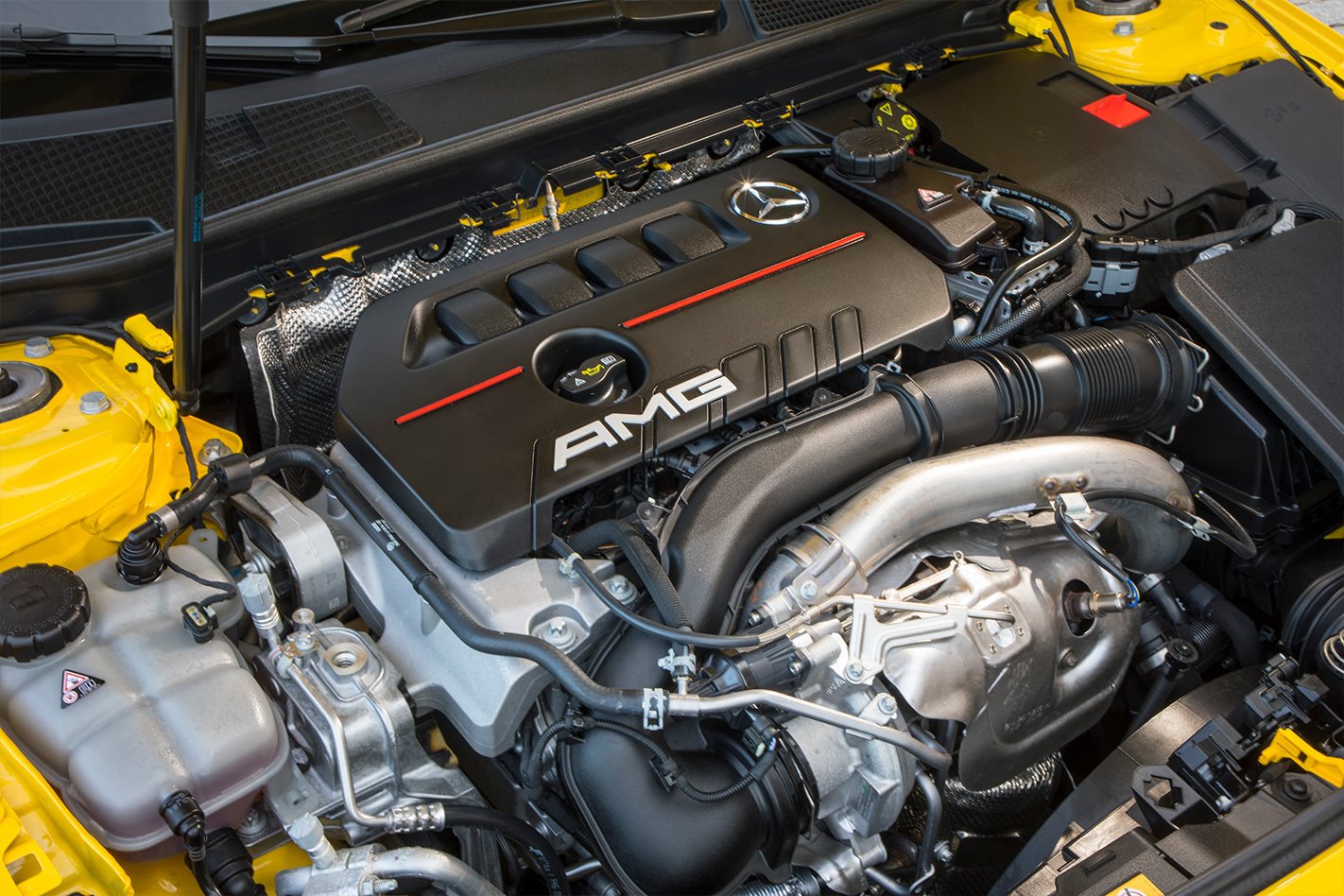
AMG-lite strategy spreads to the smallest model of the Mercedes line-up
Price: $55-60,000 (est)
Rivals: Volkswagen Golf R, Audi S3
Due: late 2019
Merc will bring a mid-grade version of the barmy A45 hot hatch to market in the back half of 2019. The A35 is expected to offer around 225kW of performance from a 2.0-litre four-cylinder turbo engine, and it’ll retain an all-wheel drivetrain as well.
Mercedes-AMG A45
Full-fat A-Class gets even phatter but can it keep up with the Audi RS3?
Price: $80,000 (est)
Rivals: Audi RS3, Ford Focus RS
Due: late 2019
The high performance version of the new A-Class may well be the first hot hatch to push through the mythical 300kW mark for a 2.0-litre turbocharged petrol powerplant. It’ll also bring adaptive dampers, all-wheel-drive, and much anger and rortiness to the up-to-now conservative new A-Class line up.
Mercedes-AMG GT 4-Door Coupe
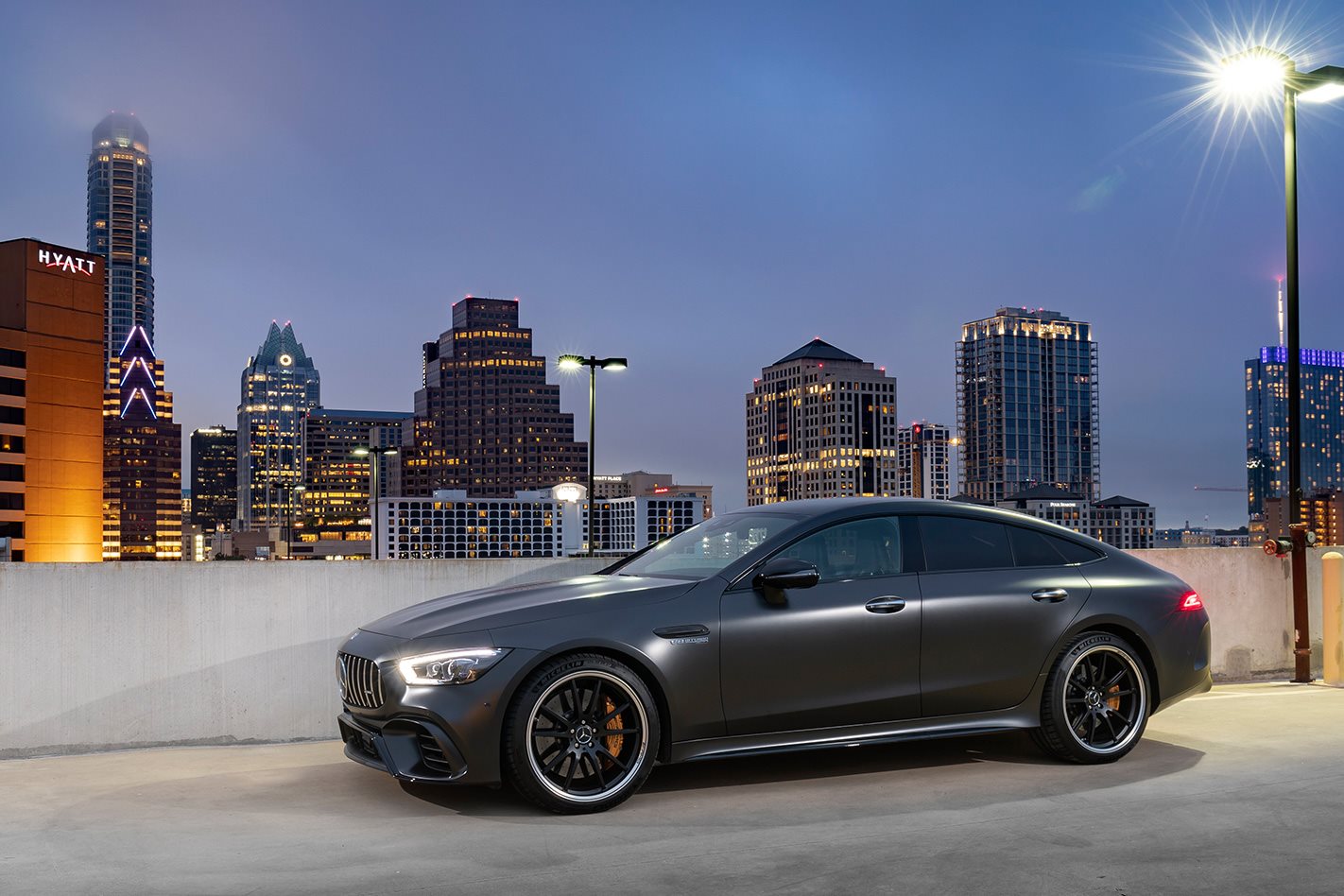
Long-rumoured addition to the AMG fold finally goes official
Price: $300,000 (est)
Rivals: Aston Martin Rapide, BMW M6 Gran Coupe, Porsche Panamera, Audi RS7
Due: mid 2019
It’s an AMG GT but not as we know it. The oddly named GT 4-Door Coupe is the first hot sedan built entirely by AMG, and it shares underpinnings with the E-Class. Due in Australia mid-way through 2019, it’s expected to arrive in two guises; a 320kW GT53 six-cylinder and a 470kW GT63 twin-turbo V8.
Even though it’s pretty closely related to the E63 sedan, the GT 4-Door brings with it some of the pomp and glitz of the AMG GT line-up, particularly in the cabin. Equally, though, you’ll get similar levels of performance from the excellent E63…
Mercedes-AMG Project One
Manic Formula One-engined hypercar threatens every road car record in the book
Price: $4m (estimated)
Rivals: Aston Martin Rapide, BMW M6 Gran Coupe, Porsche Panamera, Audi RS7
Due: 2019
When a car company says it’s built a race car for the road, it’s probably stretching the truth. In the case of Mercedes-AMG, however, it pretty much is the truth. Under the outlandish carbon skin of the Project One lies the complex, cutting edge heart of the same car that took Brit Lewis Hamilton to the 2017 and 2018 F1 World Championships.
It’s got a projected 0-100km/h time of just 2.5 seconds, courtesy of a 1.6-litre turbocharged V6 engine teamed with four electric motors, and it’s making a neat one thousand horsepower (745kW). And its limited top speed is a measly 350km/h. Pricing is expected to be in the A$4 million bracket – though it’s rumoured that all 275 are already sold out. We’d bet that ardent Merc collector Lindsey Fox might be near the front of the queue.
Mercedes-Benz EQC
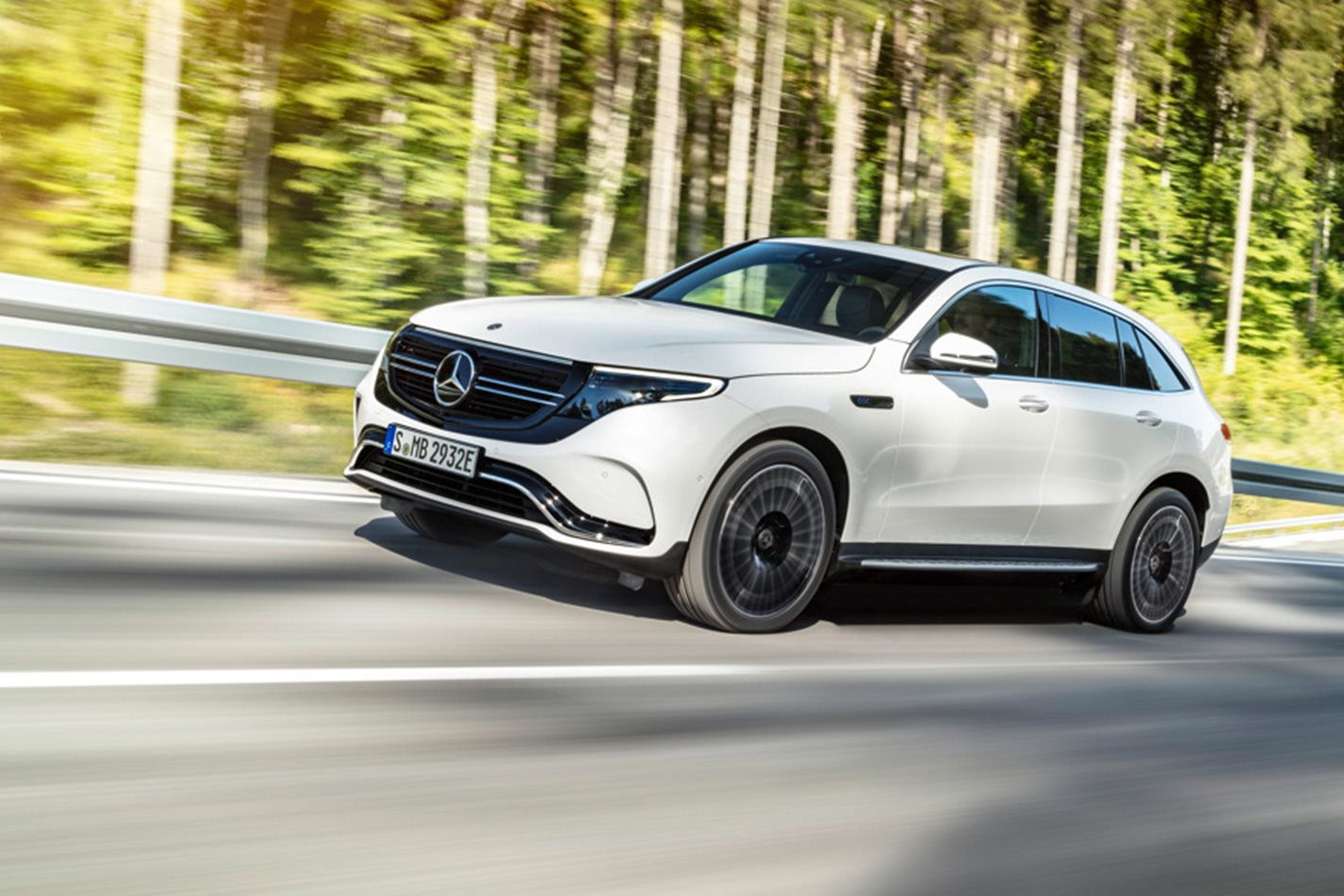
Benz’s luxurious all-electric SUV will arrive in Oz boasting a 450km range and plenty of performance.
Price range: $125,000 (estimated)
Due date: September 2019
Rivals: Audi Q7 e-tron quattro, Jaguar i-Pace S, Tesla Model X
The EQC kicks off Mercedes-Benz’s electric future with an emphasis on performance as well as environmental sustainability. It packs an 80kWh lithium-ion battery capable of producing enough power to propel it from 0-100km/h in 5.1seconds via two electric motors turning each axle. The EQC is very similar to the current GLC mid-size SUV in terms of size and equipment levels.
Mercedes-Benz GLE
The second-generation GLE premium large SUV will be the German carmaker’s most advanced model
Price range: $100,000 – $200,000 (depending on model)
Due date: April 2019
Rivals: Audi Q7, BMW X5, Range Rover
Sporting design features that originated with the 1997 M-Class from which it descends, the new GLE-Class is set to leap-frog competitors with technology making it even more advanced than Benz’s flagship S-Class sedan. This will include 48-volt ‘E-Active Body Control’ air suspension with the ability to control pitch and squat movements as well as roll, and Active Tailback Assist’ that used live traffic data to recognise traffic jams ahead and react accordingly before the driver even sees them.
Mercedes-Benz X350d
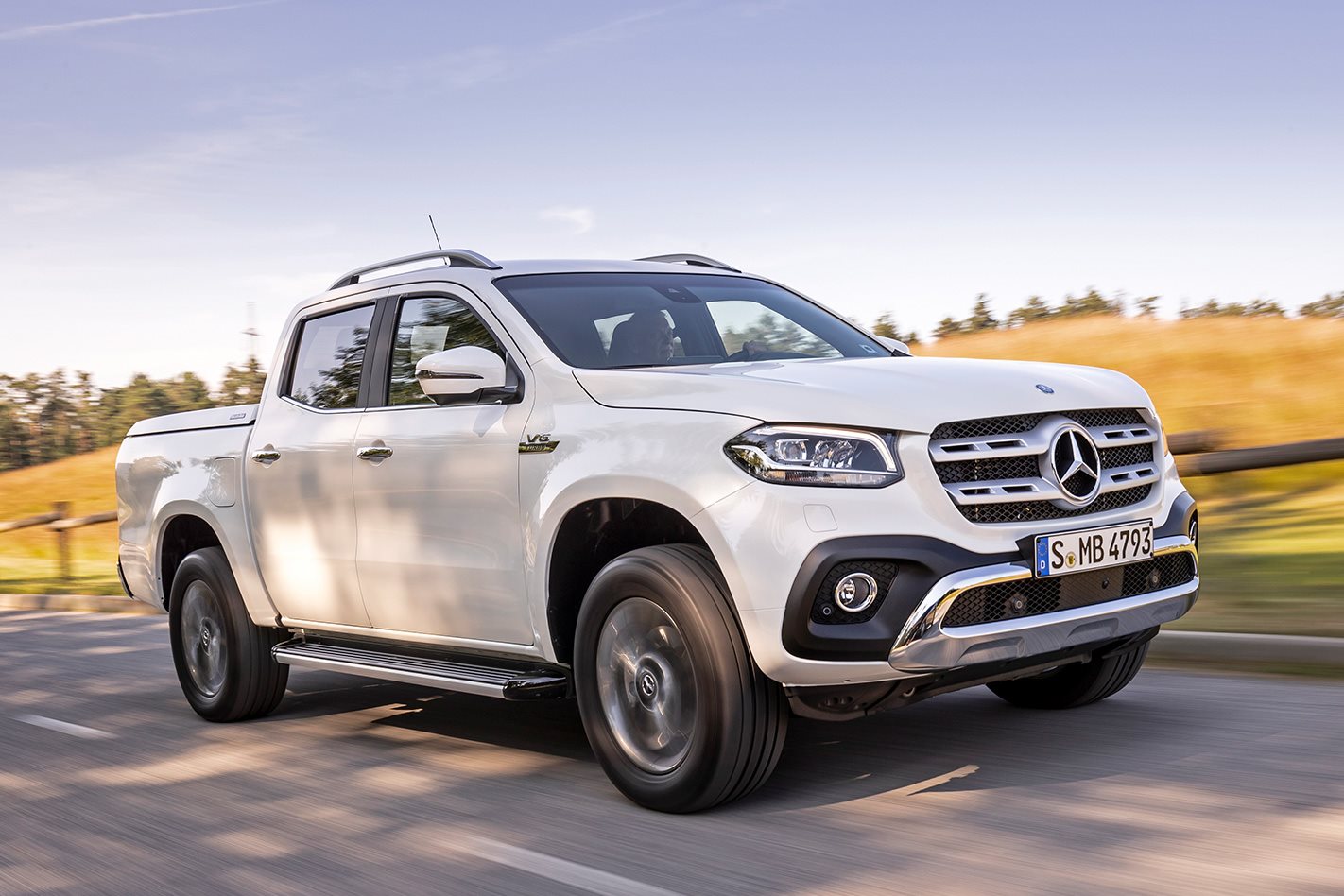
V6 diesel joins the Mercedes ute range to worry the as-yet unchallenged Volkswagen AmarokPrice: $73,270 Rivals: Volkswagen Amarok, Ford Ranger Raptor, Toyota Hilux Due date: January
Until now, Volkswagen has claimed the title as Australia’s most powerful one-tonner, but the arrival of the Mercedes X350d returns V6 fire with 190kW and 550Nm of torque. It’s pricey but the German car maker is kitting it out with the goods to match.
MG HS
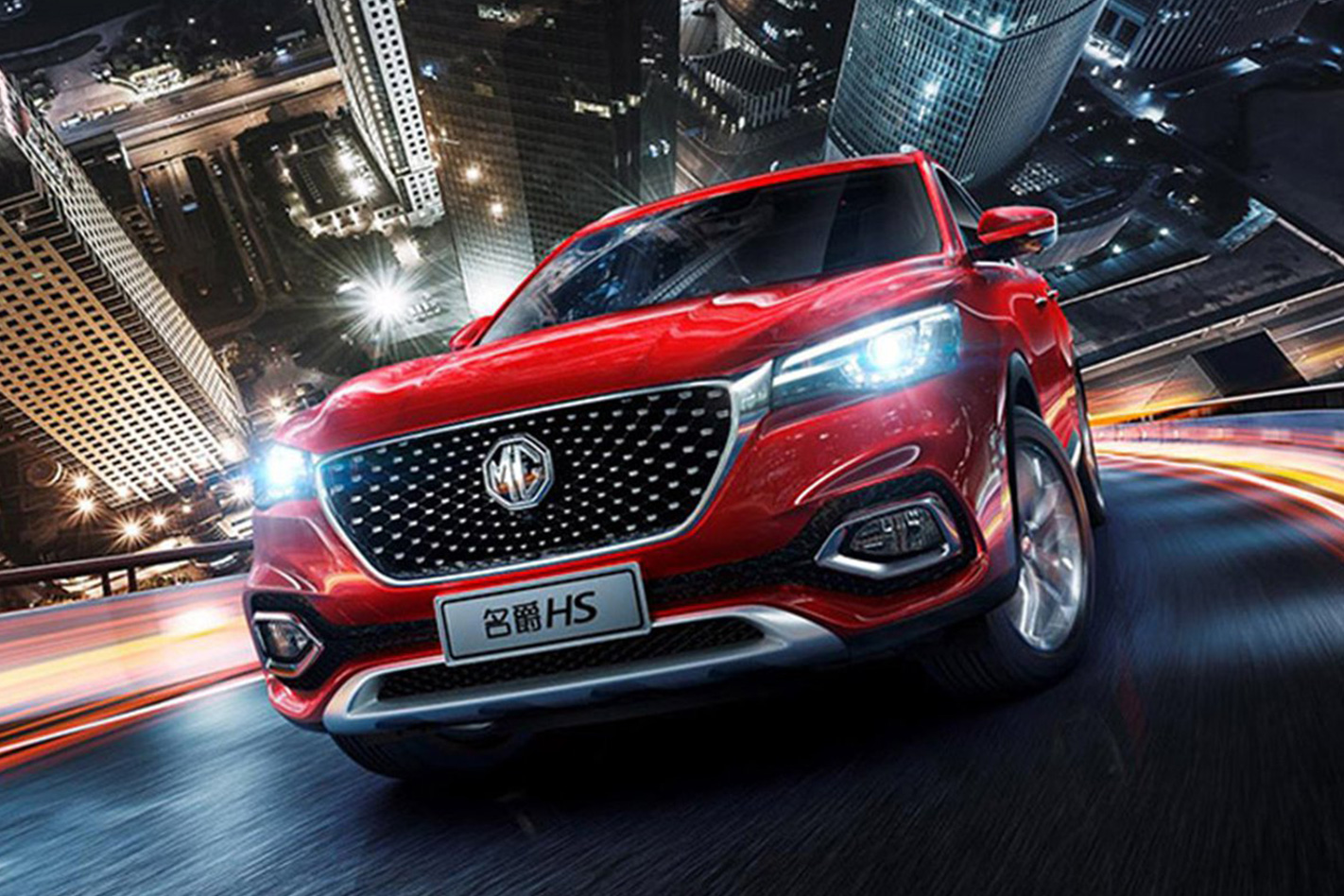
MG hopes to boost sales in Australia with its premium-equipped new-generation medium SUV.
Price range: $27,000 – $37,000 (estimated)
Due date: Late 2019
Rivals: Mazda CX-5, Toyota RAV-4, Hyundai Tucson
Based on the X-Motion concept revealed at the 2018 Beijing Motor Show, the MG HS’s attractive lines appear to have been penned to directly take on the Mazda CX-5, with state-of-the-art driver assistance tech and German-rivalling upmarket cabin appointments to sweeten the deal. The latter includes a 12.3-inch digital instrument cluster, 10.1-inch infotainment screen, soft-touch surfaces and eight-speaker Bose sound system. A gutsy 2.0-litre turbocharged petrol engine will be one of the engine options, with all-wheel-drive also available.
Mitsubishi Triton
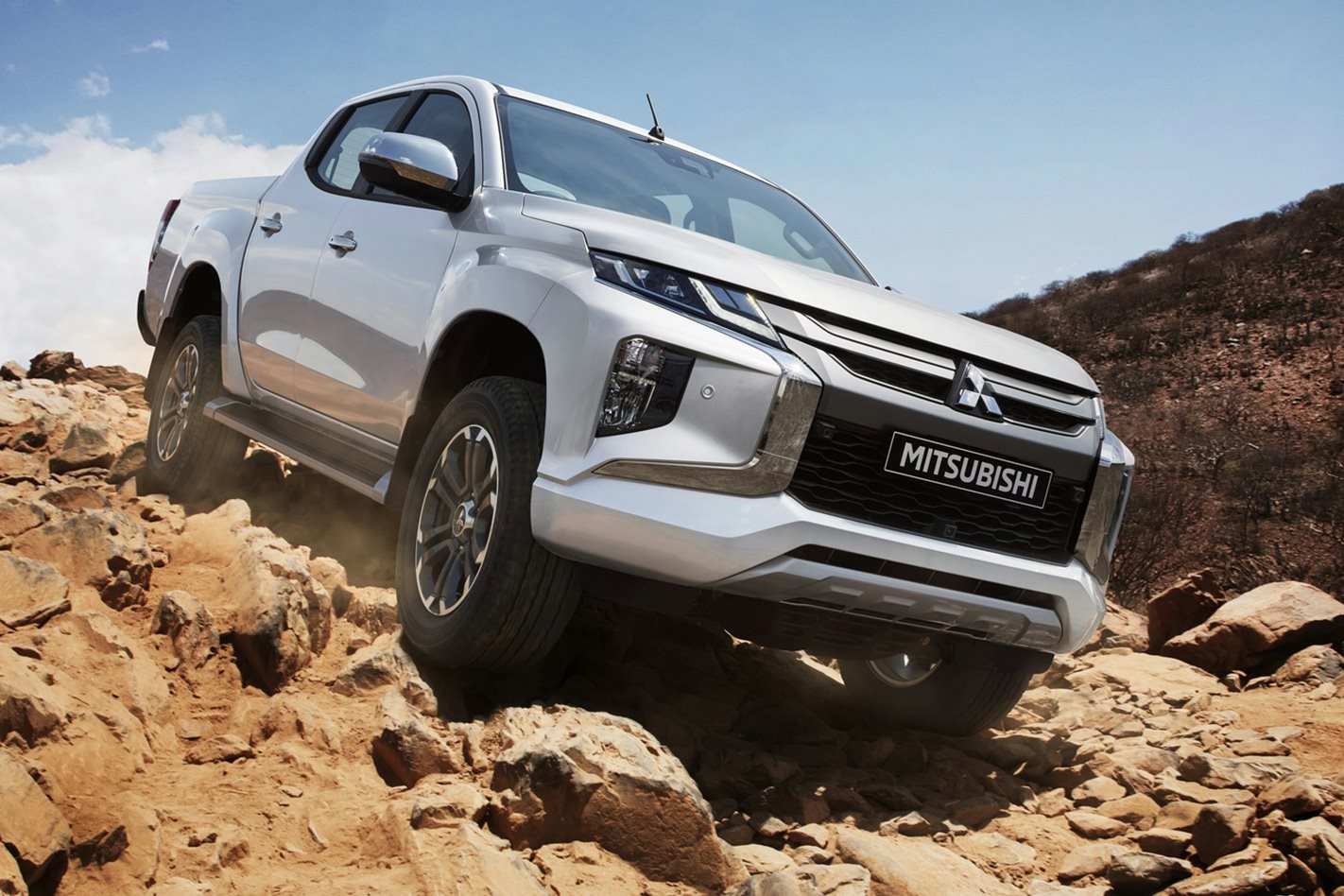
A major update and facelift of the fifth-generation ute.
Price range: $25,000 to $50,000 (estimated) Rivals: Toyota Hilux, Nissan Navara, Isuzu D-Max, Ford Ranger, Holden Colorado, Mazda BT-50 Due date: January
It’s not quite a full new model but with more than 2400 changes including new sheet metal, updated six-speed auto, more cabin equipment and safety tech, the 2019 version is significantly different. A new flagship is also expected at a later date bringing a tough truck rival to the Ranger Wildtrak and HSV Sportscat.
Nissan Leaf
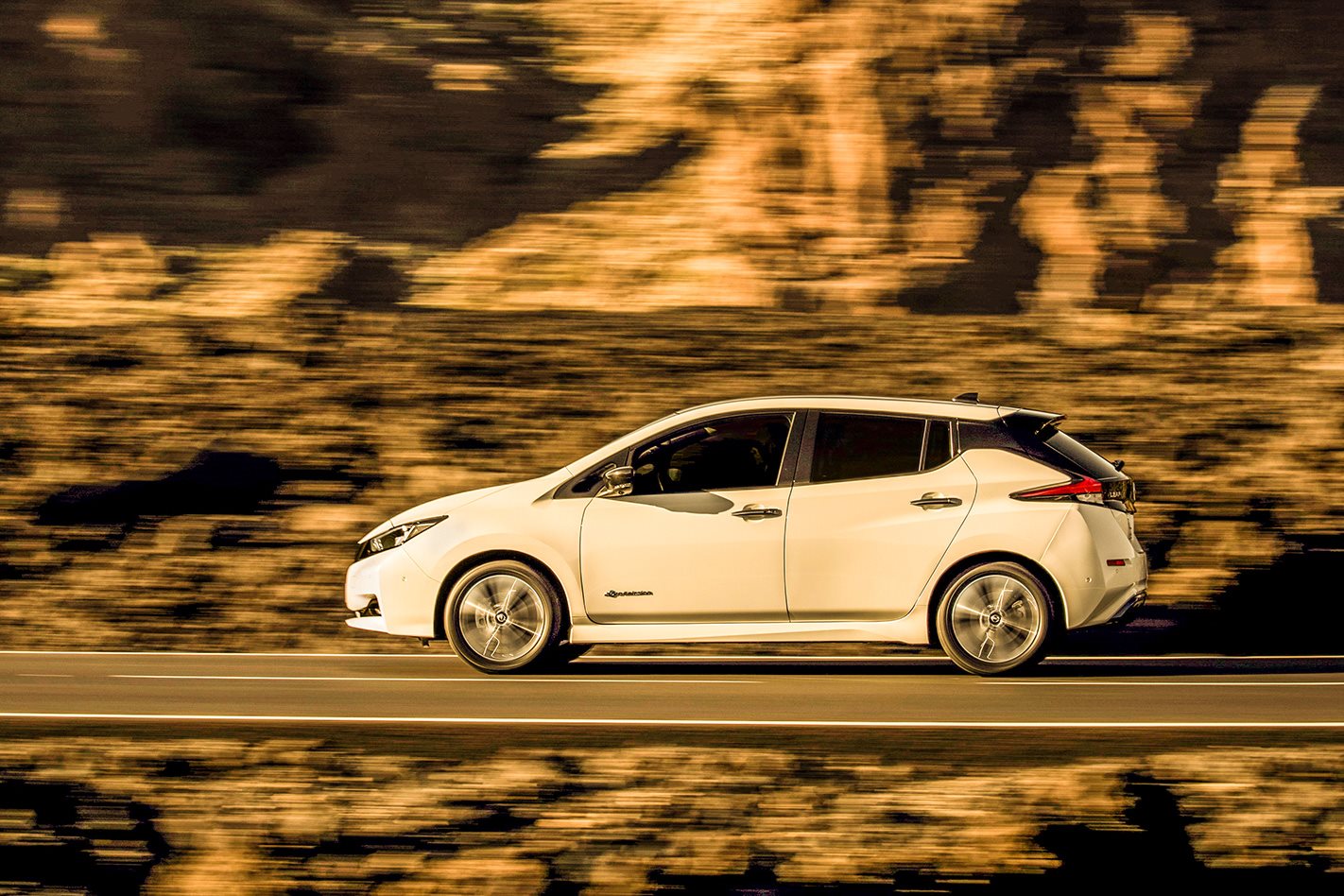
Nissan’s all-electric hatch returns
Price range: $50-60K
Rivals: Hyundai Ioniq EV, BMW i3
Due Date: March 2019
The Nissan Leaf electric car will return for its second generation in March, following the same format (and built on the same architecture) as its predecessor, but packing in greater energy storage and more power than before. The styling has also been dialled back to take the Leaf in a more conservative direction, and there’s a greater emphasis on driver-assistance technology, giving the new Leaf some limited self-driving capabilities.
Car-to-grid charging technology also unlocks some interesting new avenues for the Leaf, potentially making it a part of an interconnected smart power grid and giving it the ability to passively earn its owner money while it’s parked. Try doing that with a combustion-engined vehicle!
Porsche 911 992
Yes. Yes it really is a new 911 but you’ll have to look very closely to spot the differences
Price: $240,000 (estimated)
Rivals: Aston Martin DB11
Due: mid 2019
The 992 burst onto the world stage at the LA motor show late in 2018, and should make Australian shores in 2019. While it’s built around the same architecture as the 991, the 992 has been pulled, poked, prodded and massaged to make more power, have better handling, feature more safety tech and generally be better and faster than any 911 that’s gone before.
The 3.0-litre twin-turbocharged drivetrain stays the same, but will now make more power and torque than before in fact, the acceleration times of the Carrera 4 could better those posted by the track focused 911 991 GT3.
Porsche Taycan
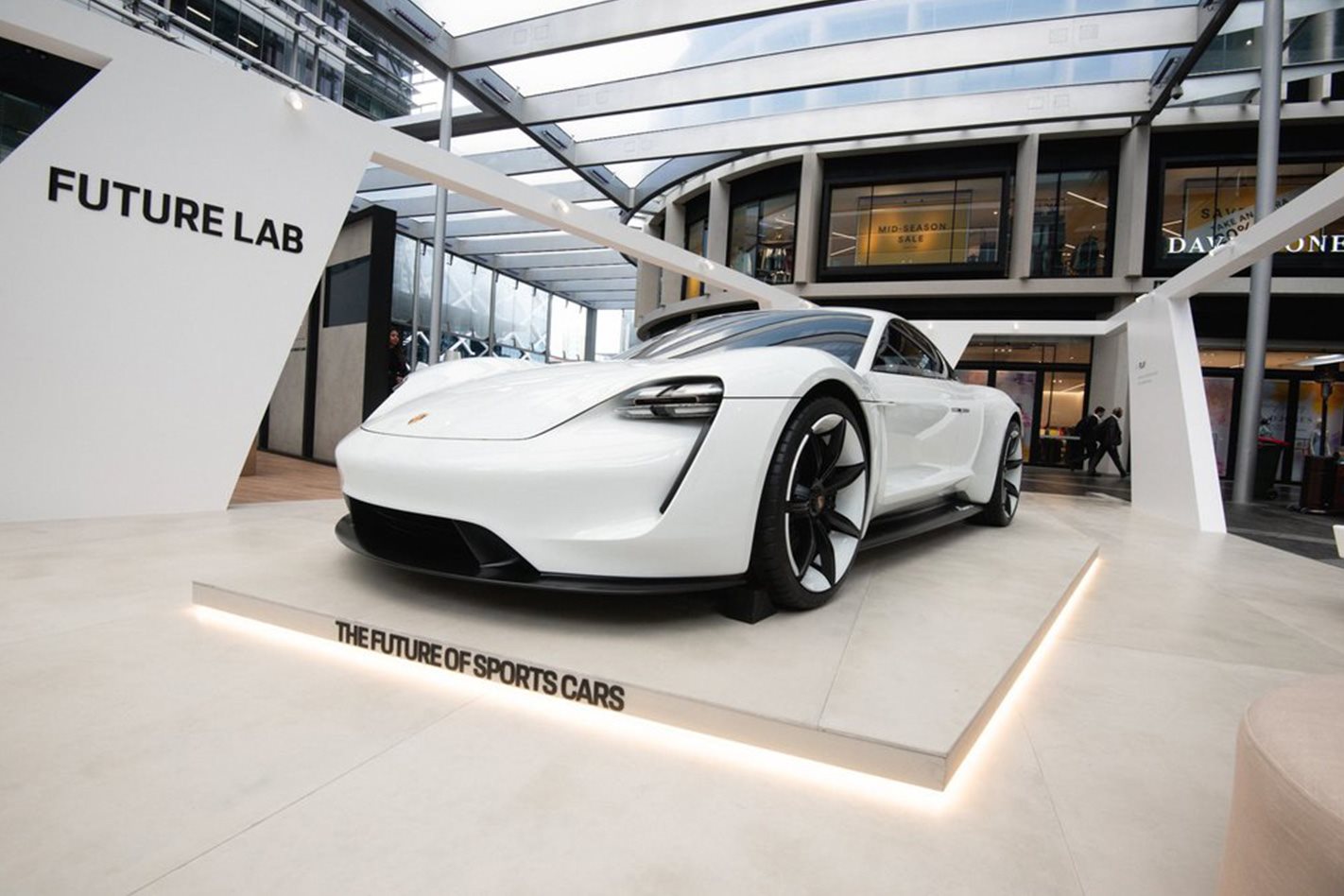
The car that surfaced as the dizzyingly gorgeous Mission E concept rolls out in production form
Price: $240,000 (estimated)
Rivals: Tesla Model S, Porsche Panamera
Due: Dec 2019
Long shot for 2019, this one, but Porsche is pushing hard with the development of its Taycan electric sedan. It runs on an all-wheel drive system driven by a twin-motor setup. The motors are permanent magnet synchronous, and the system is based on the one developed for the 918 Hybrid.
A 160kW/300Nm motor drives the massive 21-inch front wheels, while either a 240kW/340Nm or 320kW/550Nm motor will drive the even bigger 22-inch rears, depending on your spec. Porsche is already claiming a 0-100km/h sprint of 3.4 seconds, with a top speed limited to 250km/h… and what it says is usually true. Add to that a 500km claimed range on the larger 95kWh battery, and 800-volt charging that can give you 400km of range in 20 minutes (or 100km in four)… where do we sign up?
Peugeot 508
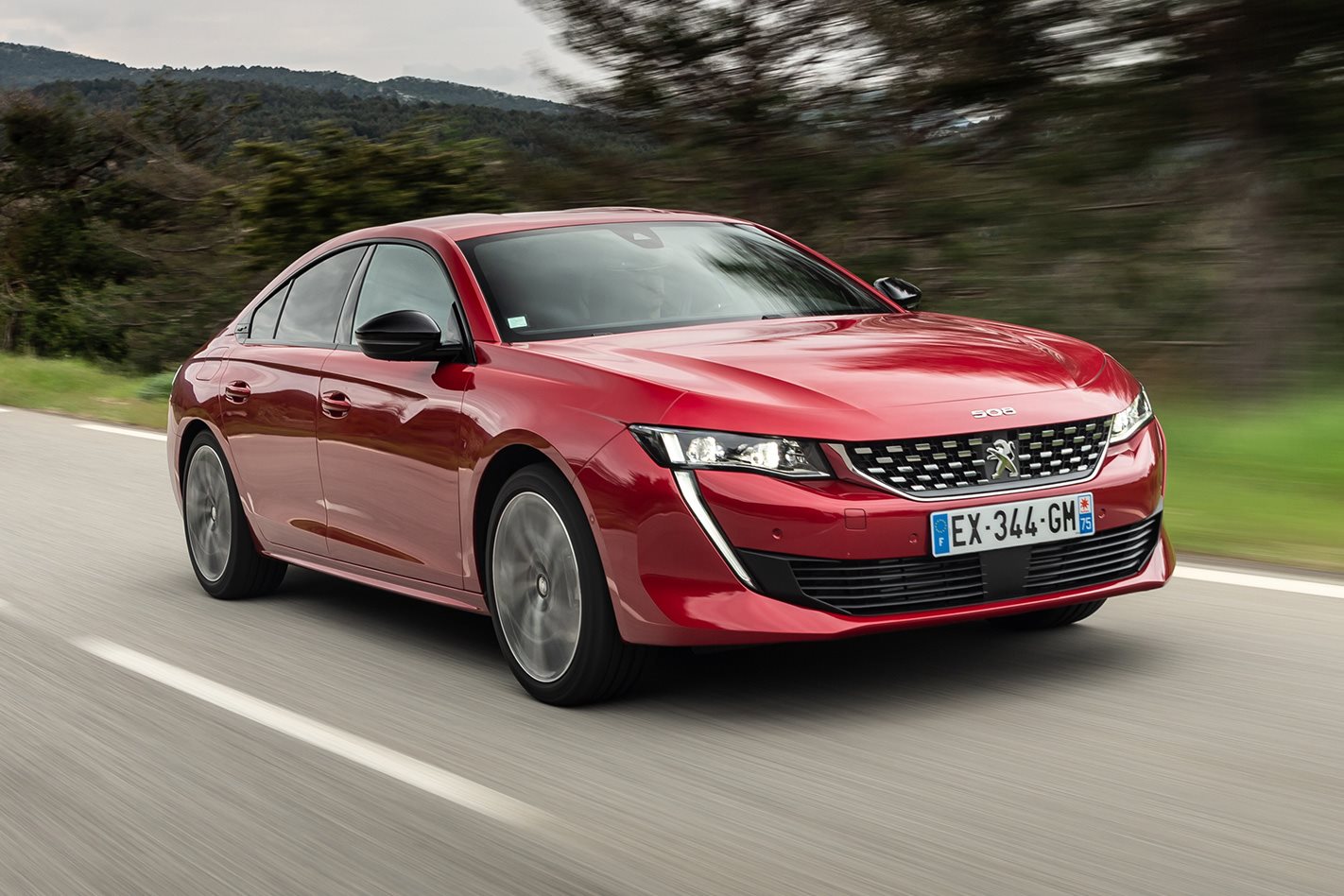
Ooh la la! Who knew a midsize sedan could look this good?
Price range: $40K+
Rivals: Volkswagen Passat, Toyota Camry, Mazda 6
Due Date: June 2019
After a couple of generations of extraordinarily soporific 508s, Peugeot has shaken off whatever ailment afflicted its design department and released a stunning mid-size pair in the form of the 2019 Peugeot 508 sedan and wagon.
Strong visual links with the 3008 and 5008 are in evidence both inside and out (a very good thing), and the new 508 looks modern, dignified and flaunts a far more premium aura than most would expect of the French brand. Lightweight engineering also promises more than a skerrick of dynamic aptitude as well. Translation: it’ll drive like a dream when it gets here in mid-2019.
Renault Alaskan
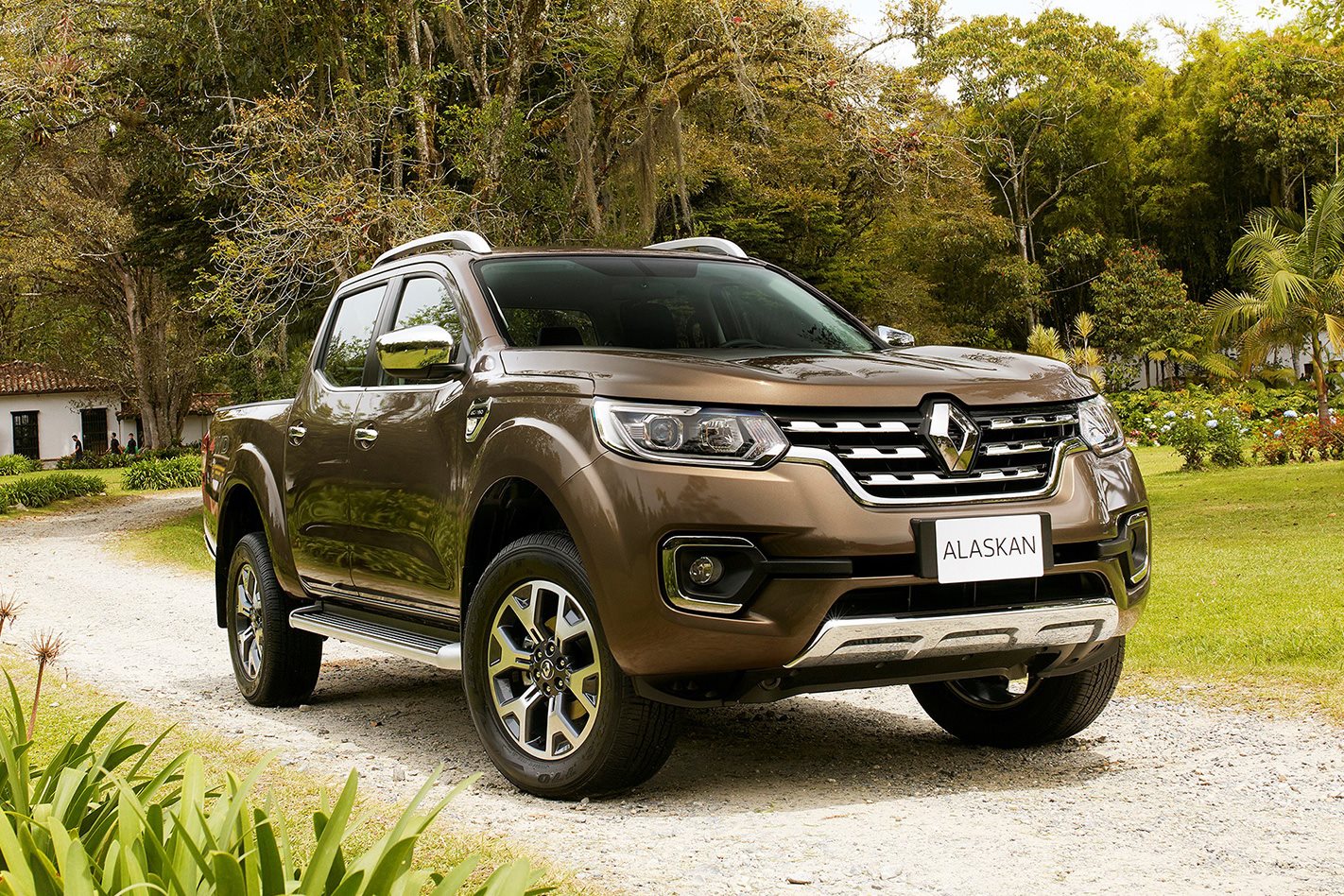
Renault joins the one-tonne ute revolution at last, but is it fashionably late?Price: $26,000 to $55,000 (estimated) Rivals: Toyota Hilux, Nissan Navara, Isuzu D-Max, Ford Ranger, Holden Colorado, Mazda BT-50 Due date: December
After a protracted gestation and a drawn out arrival date, it looks like Renault will finally weigh into the potentially lucrative dual-cab ute contest on red dirt. Like the Mercedes-Benz X-Class, the Alaskan also takes its underpinnings from the popular Nissan Navara, and although exact Australian specifications are yet to be confirmed, it’s likely the French contender will offer a high-end version with lots of kit as well as a more affordable workhorse at the entry point.
Ram 1500 diesel
Baby of the Ram range gets a more manageable thirst without sacrificing gruntPrice: $95,000 (estimate) Rivals: Ford Ranger Raptor, Chevrolet Silverado, Volkswagen Amarok V6 Due date: January/February
From launch, the smallest Ram in the line-up was available only with gas-guzzling V8 power, which likely put off a few fence-sitting fans. A V6 diesel version is on the way and it compromises little for the extra efficiency. Exact output figures are yet to be finalised for the Australian launch but the 3.0-litre V6 turbocharged diesel could produce up to 200kW and 600Nm. That compares with the current 5.7-litre V8 which pushes out 291kW and 556Nm.
Range Rover Evoque
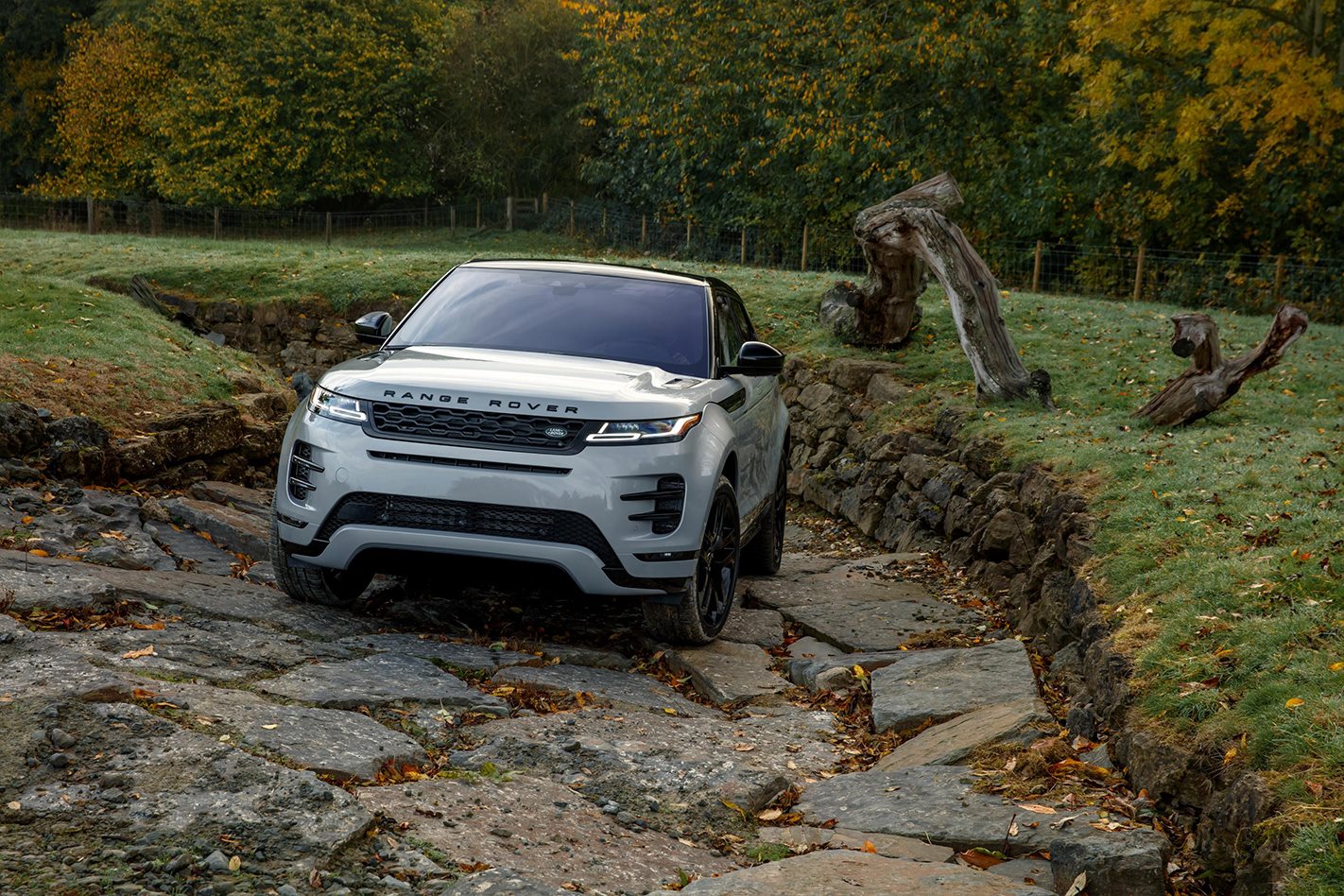
The baby Range Rover will mature to reflect its bigger siblings while offering more interior space
Price range: $64,000 – $105,000 (estimated)
Due date: May 2019
Rivals: BMW X4, Jaguar F-Pace, Mercedes-Benz GLC, Porsche Macan
Land Rover Australia is yet to detail the full 2019 Evoque line-up, but has confirmed that three diesel four-cylinder engines and three turbo petrol engines will be available with 48-volt mild hybrid technology. It’s 10mm wider and has a 20mm longer wheel base to provide more leg and elbow room, with boot space also increasing, by 10 percent, to 591 litres. The roof is 11mm lower though, resulting in a sportier coupe aesthetic resembling the Velar.
SsangYong Musso
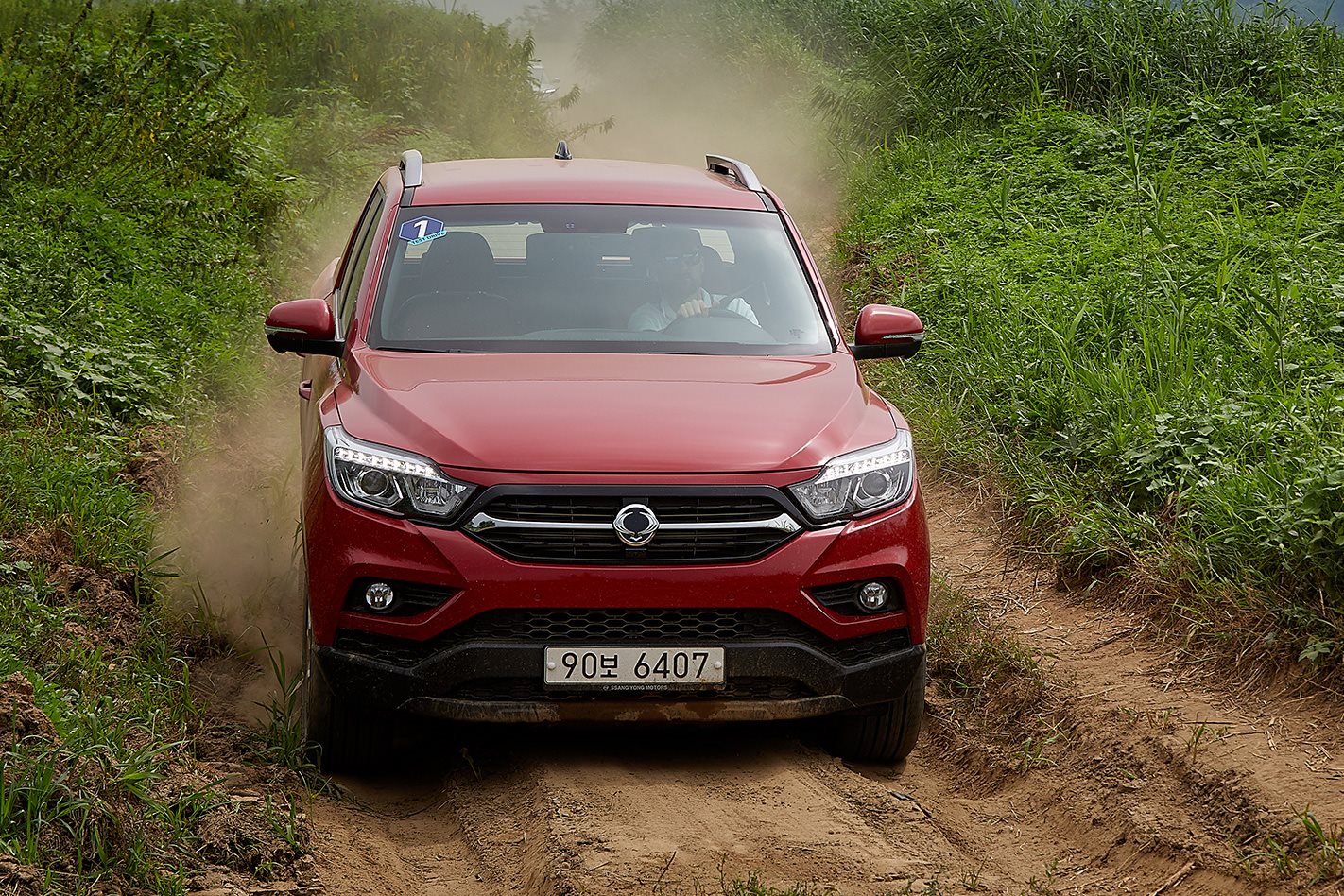
Returning South Korean ute brings sharp pricing, neat features and class-leading warranty
Price range: 39,990 to $52,990 Rivals: Toyota Hilux, Nissan Navara, Isuzu D-Max, Ford Ranger, Holden Colorado, Mazda BT-50 Due date: January
After a two-year hiatus, SsangYong is back on Australian turf with a factory backed operation and a four-model assault for its relaunch. Leading that charge is the Musso one tonner, which makes a good case for itself with standard AEB, enticing prices and an unbeatable seven-year warranty.
Suzuki Jimny
Suzuki goes back to the future to revive its mini 4×4’s iconic styling and serious off-road cred.
Price range: $27,000 – $29,500 (estimated)
Due date: February 2018
Rivals: Jeep Compass Trailhawk, Jeep Wrangler
It has questionable road manners and safety, but if initial reaction is any guide the new Jimny will be one of the most popular releases of 2019. The boxy fourth-generation Jimny retains its ladder-frame chassis, live front and rear axles and dual-range transmission that’s still activated by a proper lever. But there a few modern touches including a large infotainment screen with Apple CarPlay and Android auto connectivity. It will also come with a more powerful 1.5-litre petrol engine (up from 1.3L) petrol four-cylinder engine with a choice of five-speed manual or four-speed automatic transmissions.
Tesla Model 3
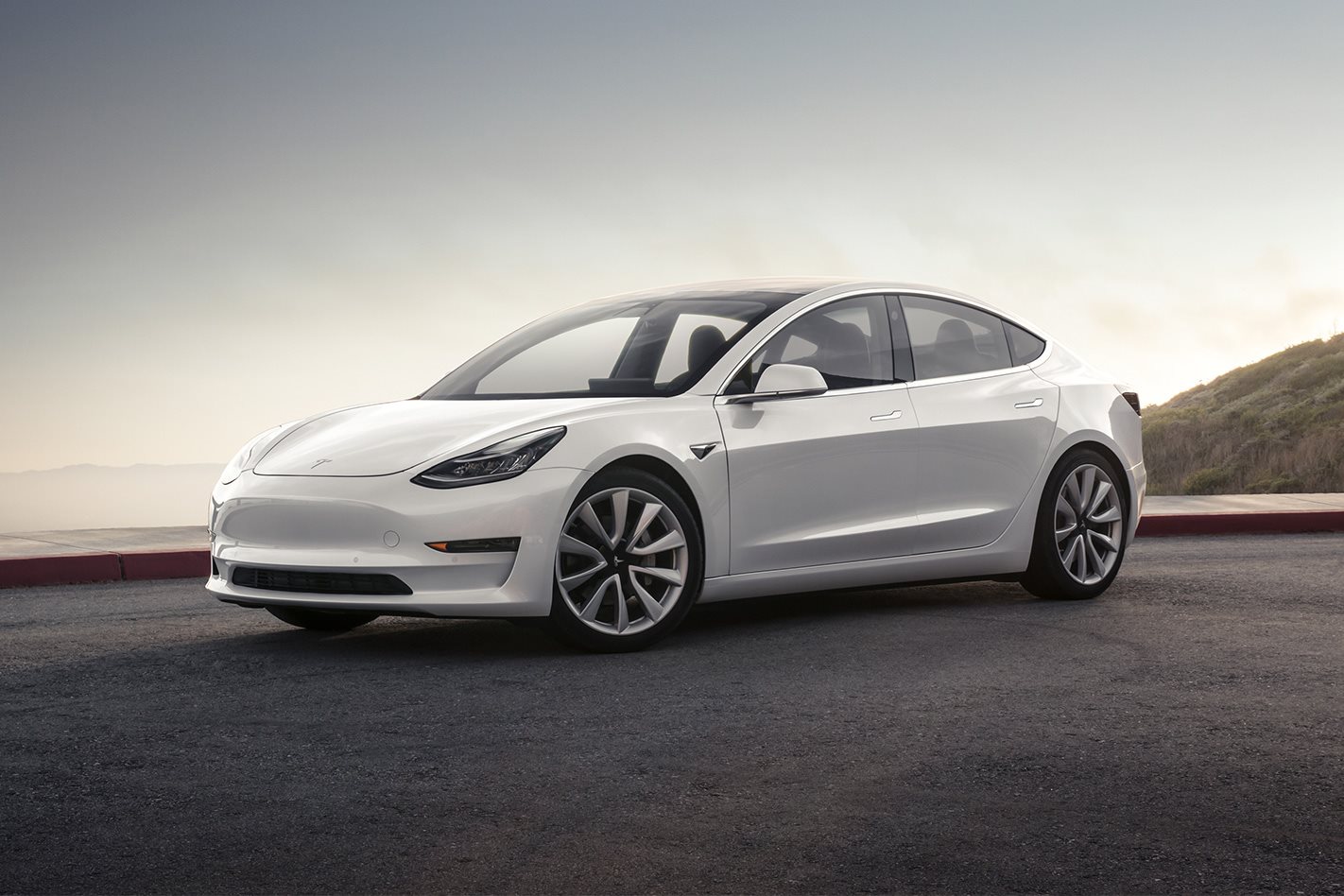
Tesla’s long-awaited ‘affordable’ EV, but is it really?
Price range: $60K+
Rivals: Nothing, really
Due Date: Mid-2019
Few cars are more heavily hyped than the Tesla Model 3, and the most affordable model from the American auto maker has endured an interesting start to its life. Production difficulties have crimped supply and Tesla is still working through fulfilling the huge number of pre-orders. Right-hand drive markets like Australia have been a low priority thus far.
The first deposits by would-be Australian owners were put down in March 2016, but Elon Musk himself says deliveries to Australia aren’t expected to begin until “around mid-2019”. A long time to hold out for a car that will, by the time it reaches here, already be halfway through its lifespan, but for some people the promise of a comparatively affordable premium electric car is too enticing to ignore.
Tesla pick-up?
A realistic offering or more typical Tesla bluster?Price: we’d be guessing Rivals: Mitsubishi Outlander PHEV, Toyota Hilux Due date: Possibly never
There’s no denying the Californian start-up tech company’s ability to surprise and produce notable vehicles in a relatively short development period. But seemingly ambitious statements from outspoken founder Elon Musk should also be taken with a grain of salt. And the same goes for Tesla’s plans to produce a pick-up or ute-like model. If one does eventuate, it’ll likely arrive with similarly record-breaking performance as the rest of its line-up. Emphasis on ‘if’.
Toyota RAV4
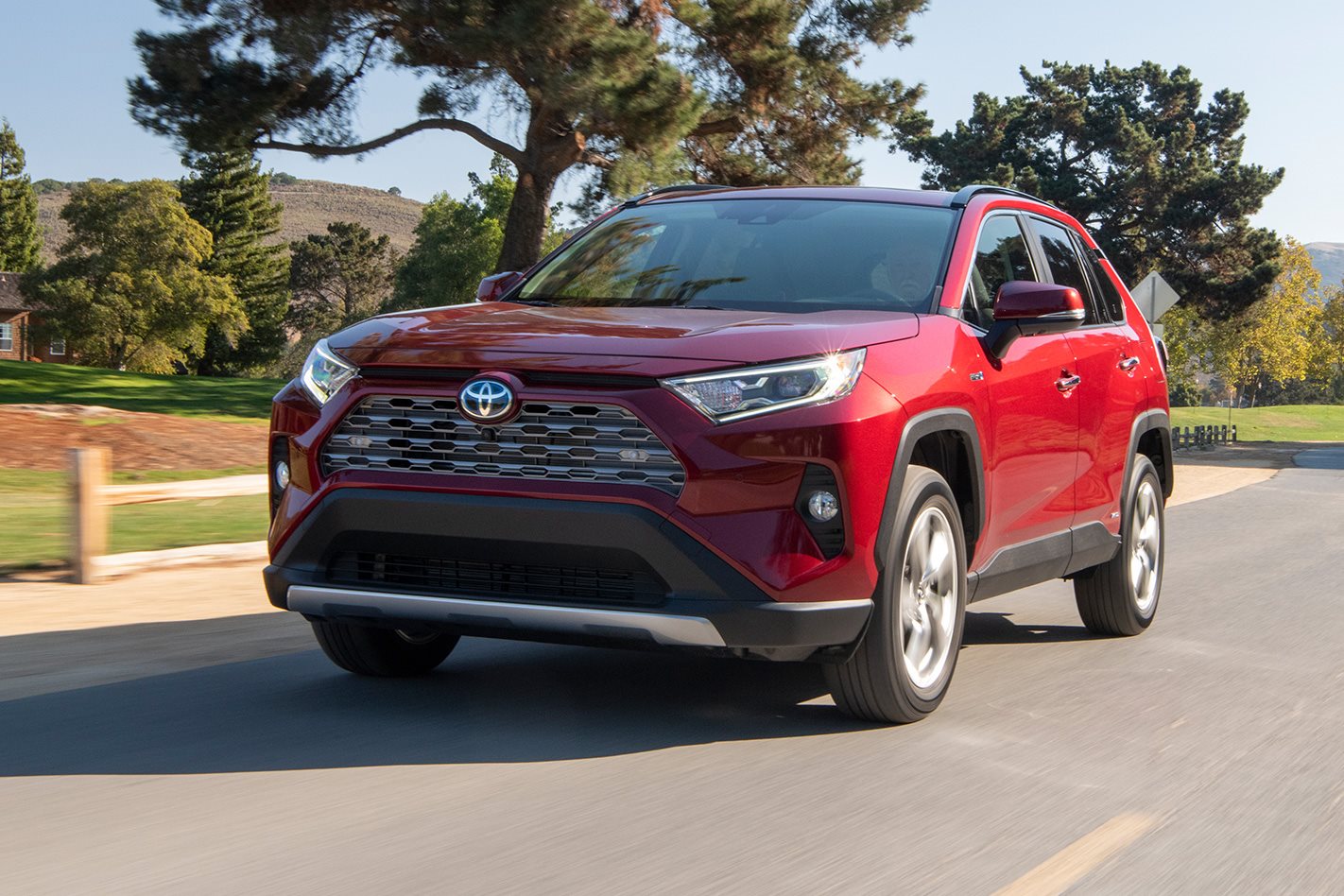
Toyota’s mainstay medium SUV has been totally redesigned and offers more comfort and technology than ever before
Price range: $30,00 – $55,000 (estimated)
Due date: April 2019
Rivals: Mazda CX-5, Subaru Forester, Jeep Cherokee
One of the most significant new cars for 2019, the all-new Toyota RAV4 promises to shake up the highly competitive medium SUV market by setting new benchmarks in terms of standard features and modern powertrains, including a petrol/electric hybrid. It will have the option of torque-vectoring AWD and multi-terrain drive modes to help it grip, lending itself to a more off-road focused version called the ‘RAV4 Adventure’. The new RAV4’s bigger exterior dimensions will result in significantly more interior space and comfort, while the interior designs will be more upscale than the current model.
Toyota Supra
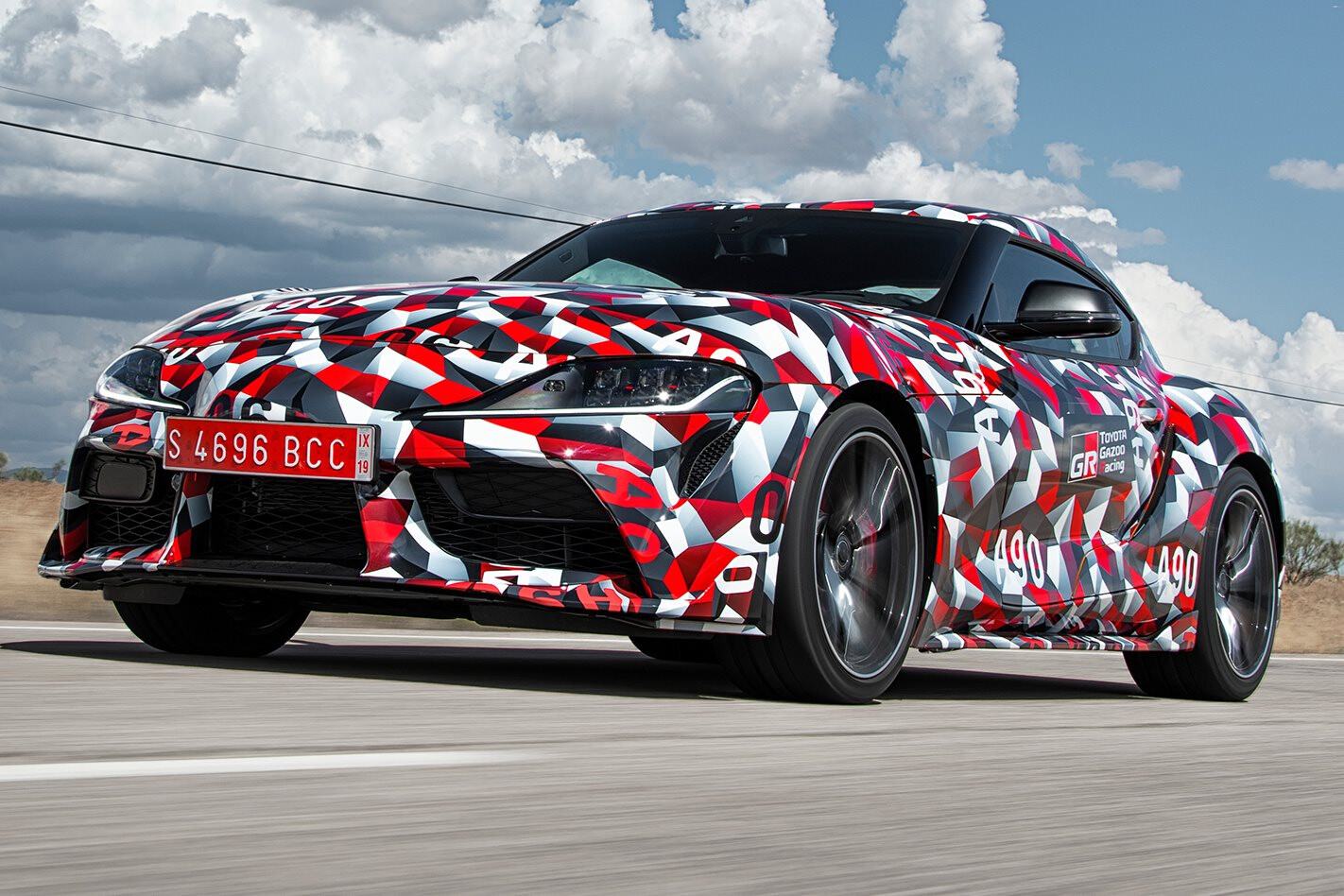
Price: $70,000 (estimated)
Rivals: BMW Z4, Nissan 370Z NISMO, Kia Stinger
Due: Late 2019
Seven years… that’s how long it’s been since Toyota first hinted that it might revisit the notion of a medium-sized sports coupe. Now, after a long and fruitful collaboration with BMW, the Supra is finally on the horizon (and maybe as soon as the Detroit Motor Show in January).
Stats are virtually non-existent on the internally coded A90 Supra, but figure on outputs of around 250kW and 450Nm, as well as an estimate weight of around 1500kg, a short wheelbase and wide front and rear track widths.
It’ll stay true to the notion of a rear-wheel-driven, six-cylinder petrol-powered two-door, though it may well forgo a manual gearbox (which really isn’t a drama these days; autos are generally quicker, and the Supra will get a ZF/BMW eight-speeder and a BMW limited slip diff). It’ll sit above the 86 in both size and price; we guess (hope?) that Toyota won’t make the Supra too premium at the base.
Volkswagen Touareg
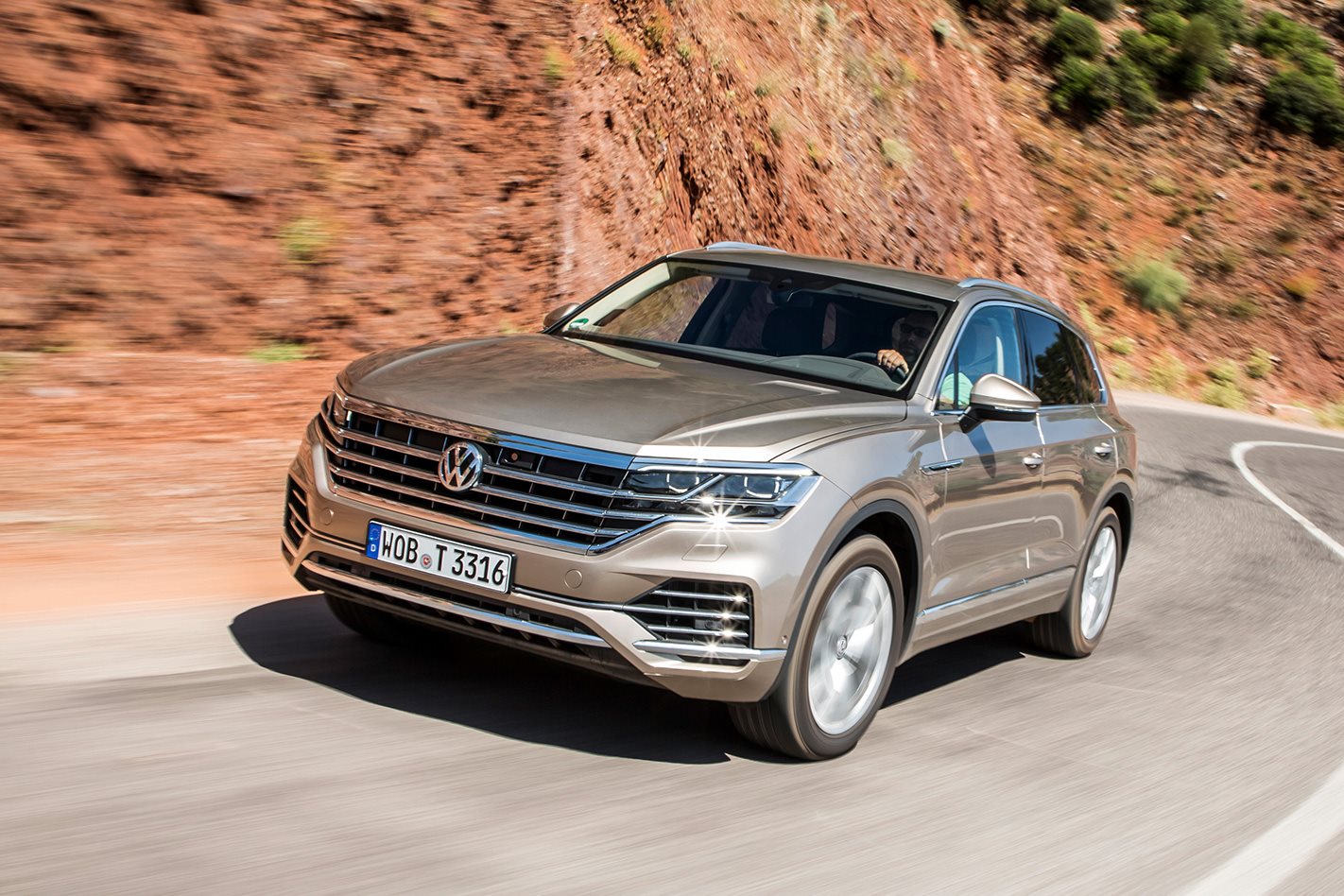
VW’s large SUV is now a truly premium offering that’s dripping with comfort and technology that rivals its Audi Q7 cousin
Price range: $83,000 – $120,000 (estimated)
Due date: May 2019
Rivals: Audi Q7, BMW X5, Lexus RX, Mercedes-Benz GLE
The first all-new Touareg since 2010 is the most luxurious and technologically advanced Volkswagen SUV yet and is built on the same platform as some of the world’s most luxurious high-riders including the Bentley Bentayga, Porsche Cayenne and Lamborghini Urus. Featuring interior trim levels that range from lounge-like to the sporty R-line, creature comforts will include VW’s biggest panoramic sunroof yet, 18-way electronically adjustable seats with high-quality leather detailing.
Volvo S60
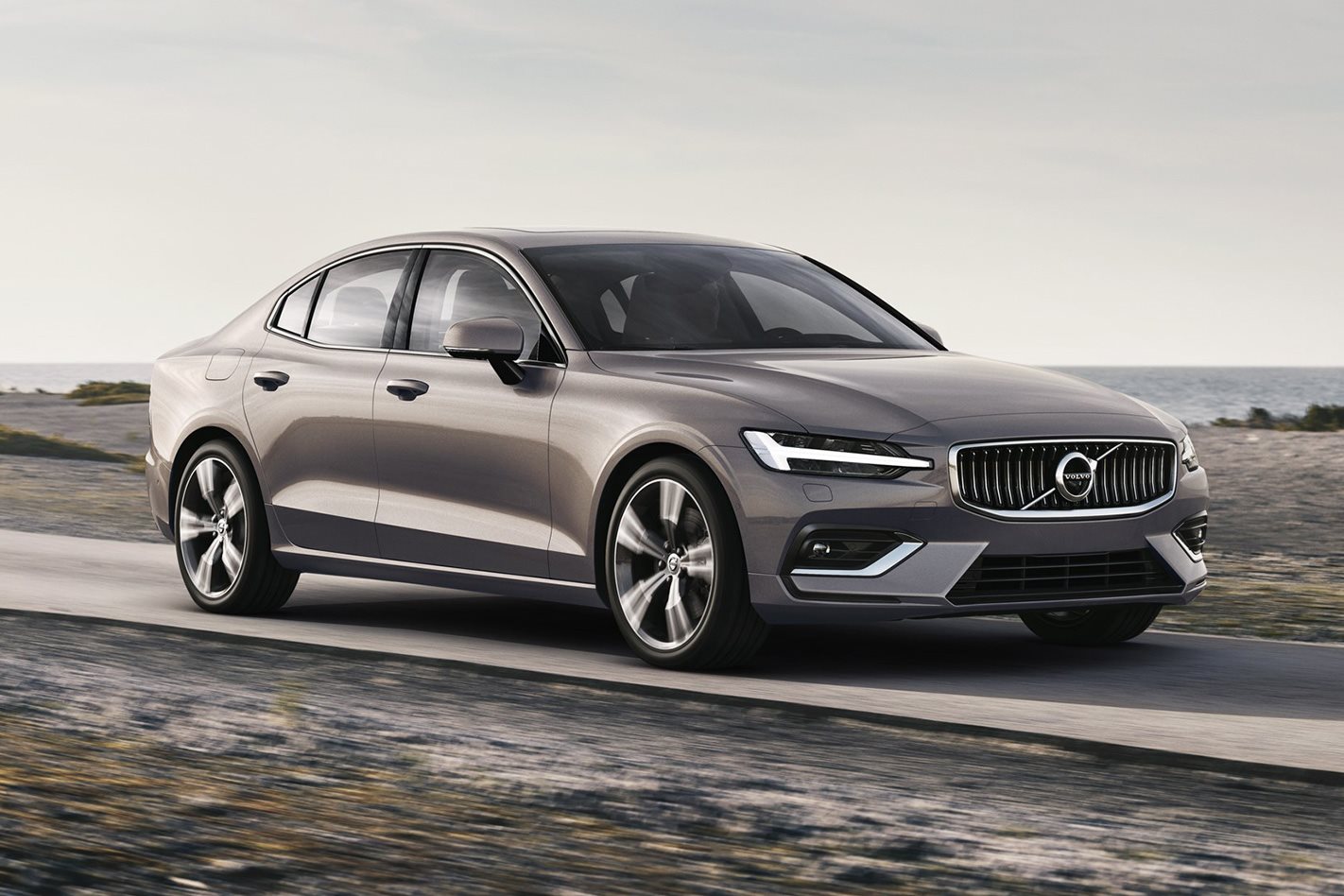
Volvo’s product renaissance continues with an intelligently-designed sedan
Price range: Unknown
Rivals: Mercedes-Benz C-Class, BMW 3 Series, Audi A4, Lexus IS, Jaguar XE
Due Date: Early 2019
Volvo plays to its Scandinavian strengths with the new S60, which takes the elegant design language introduced by the XC90, S90, XC60 and XC40, and wraps it in an incredibly handsome four-door bodystyle – with an interior that wouldn’t look out of place in a high-end interior design mag.
A V60 wagon equivalent will join it too, and between them they’ll take on the dominant Germans in the mid-size premium market with a range of 2.0-litre petrol and diesel powerplants – some with extensive electrification and a fuel-saving plug-in hybrid capability. If the rest of the modern Volvo line-up is anything to go by, the Germans will have some very stiff Swedish competition on their hands.
What is a performance car? Traditionally the term has referred to something fast and agile, low-slung and sporty, but perhaps it’s time to rethink the definition. After all, what is performance?
Is the power of a weightlifter or endurance of a cross-country skier any less impressive than the outright speed of a 100m sprinter? Icons like the Mazda MX-5 and Peugeot 205 GTI, as well as the recent acceptance of fast SUVs, prove that car fans can be a broadminded bunch, but surely calling a diesel ute a performance car is stretching the elasticity of the term to breaking point?
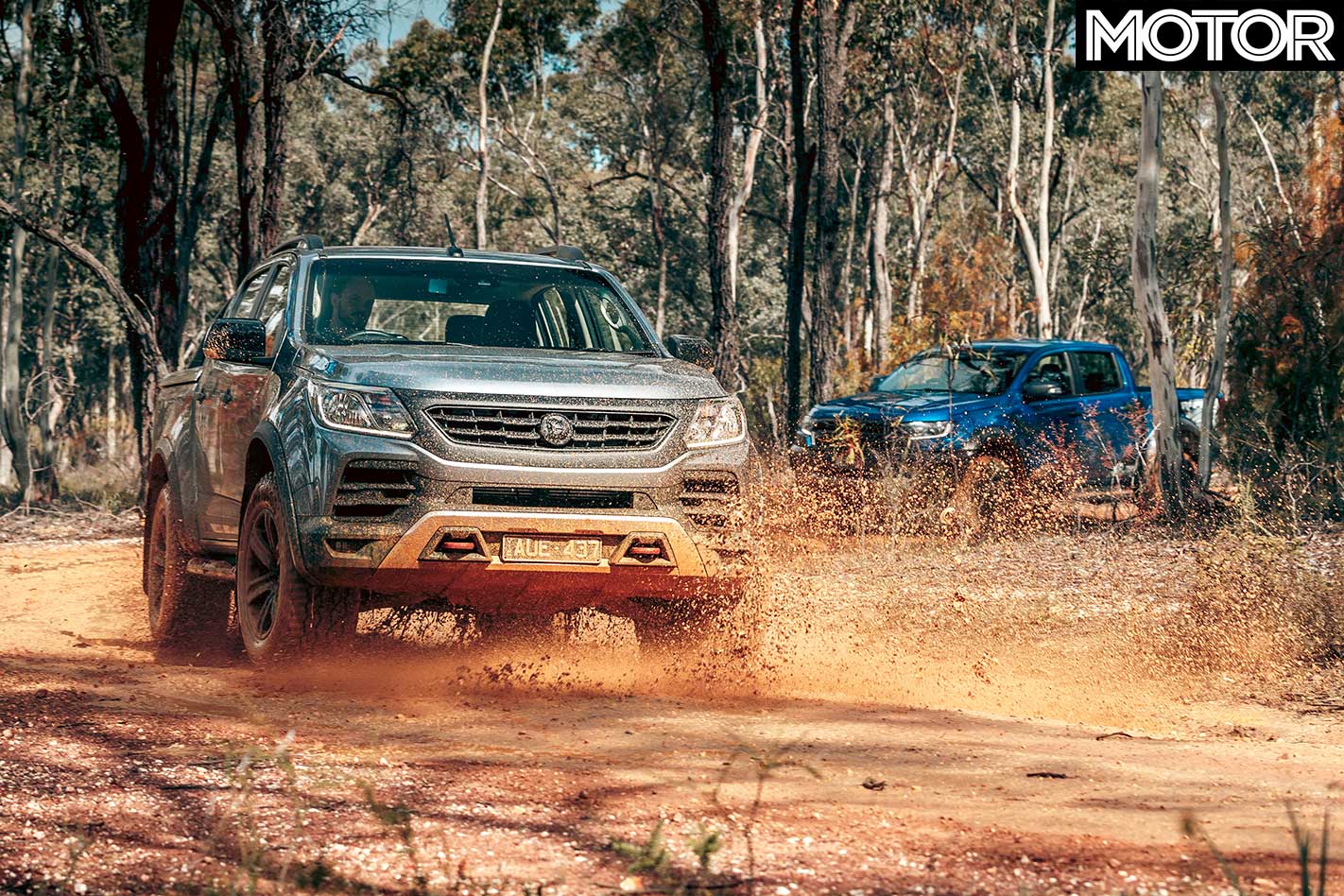
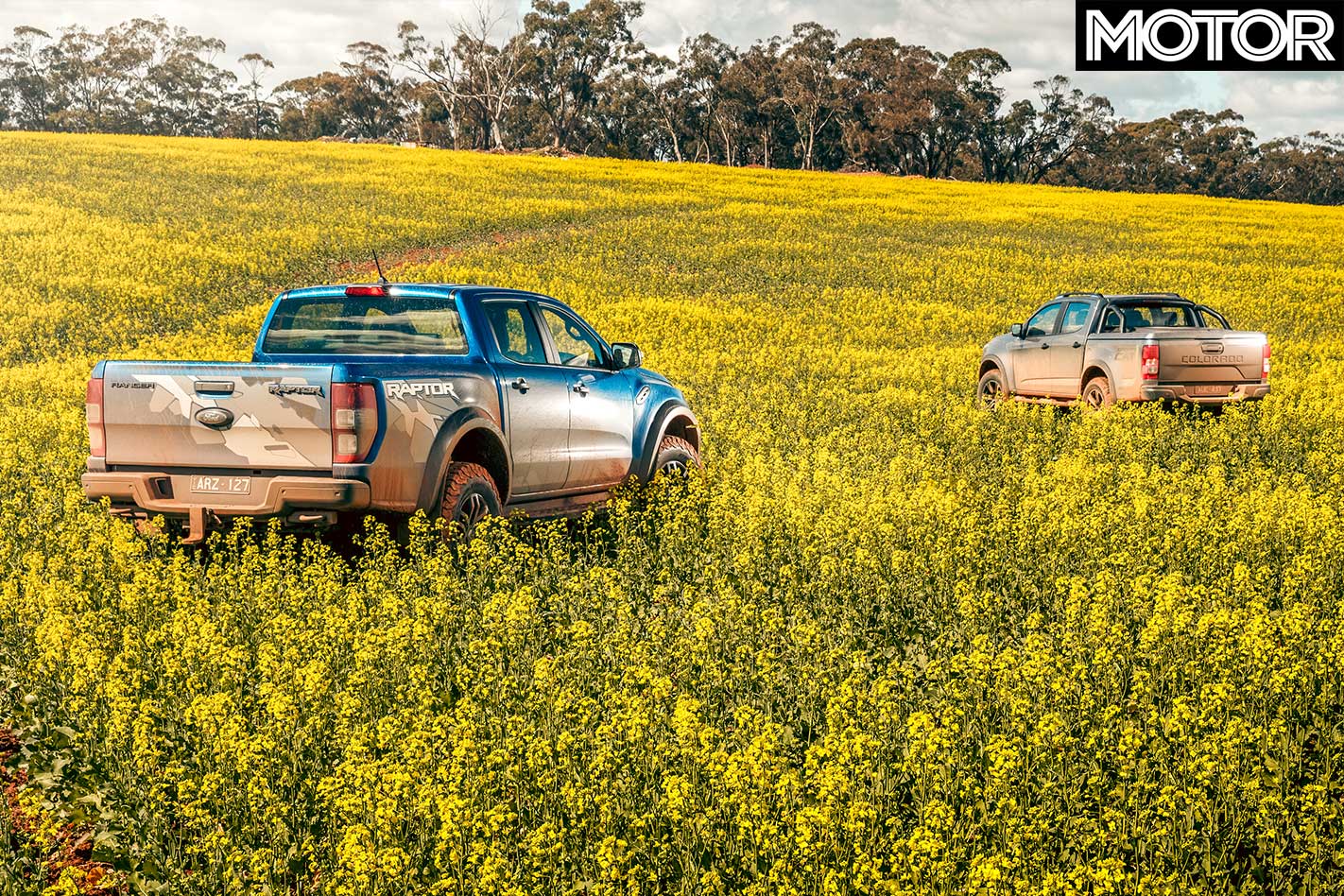
Ford and HSV disagree. They say their latest offerings, the Ranger Raptor and Colorado SportsCat respectively, are part of a new generation of performance and it’s enthusiast mindsets that need to change.
We debated long and hard whether to do this test. Were these tweaked tradie trucks simply too slow? Would readers be dismissive or, worse, insulted that the pages of MOTOR were sullied by jacked-up oil burners? In the end, the popularity of the dual-cab segment and our own curiosity led to the conclusion that we at least had to drive them and let the products speak for themselves. As such, this isn’t just a comparison but an acid test for the ‘performance truck’ segment – can diesel utes be fun?
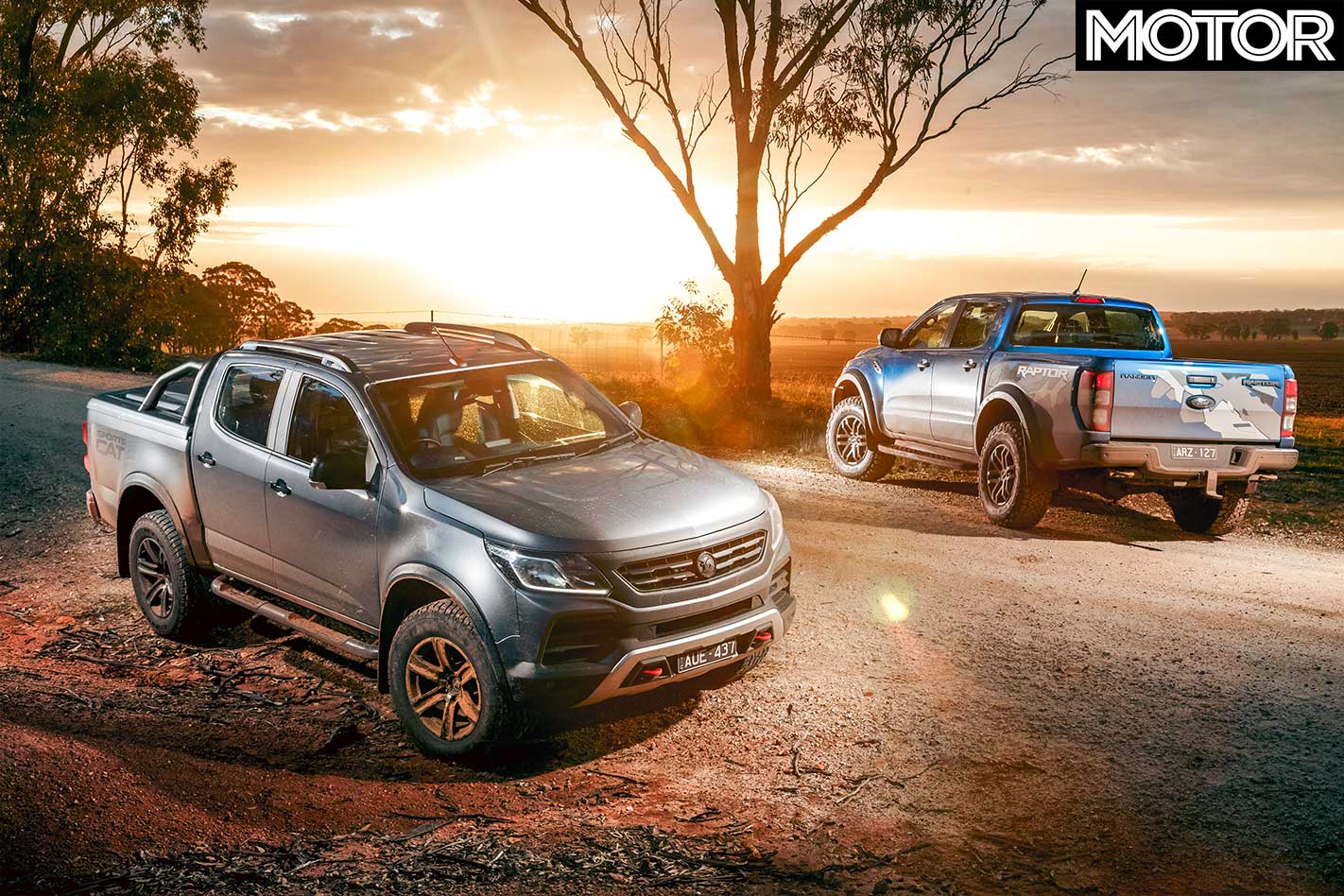
HSV hit the market first with the ‘Holden Colorado SportsCat by HSV’. For reasons of brevity, it’ll be referred to here as the HSV SportsCat. It’s unchanged under the bonnet, retaining the 147kW/500Nm (440Nm as a manual) 2.8-litre four-cylinder turbo-diesel, but there’s revised suspension, specially engineered Cooper Zeon tyres wrapped around 18 x 10.0-inch alloys, recalibrated electronics, more aggressive styling and a jazzed-up interior with suede, leather and new seats.
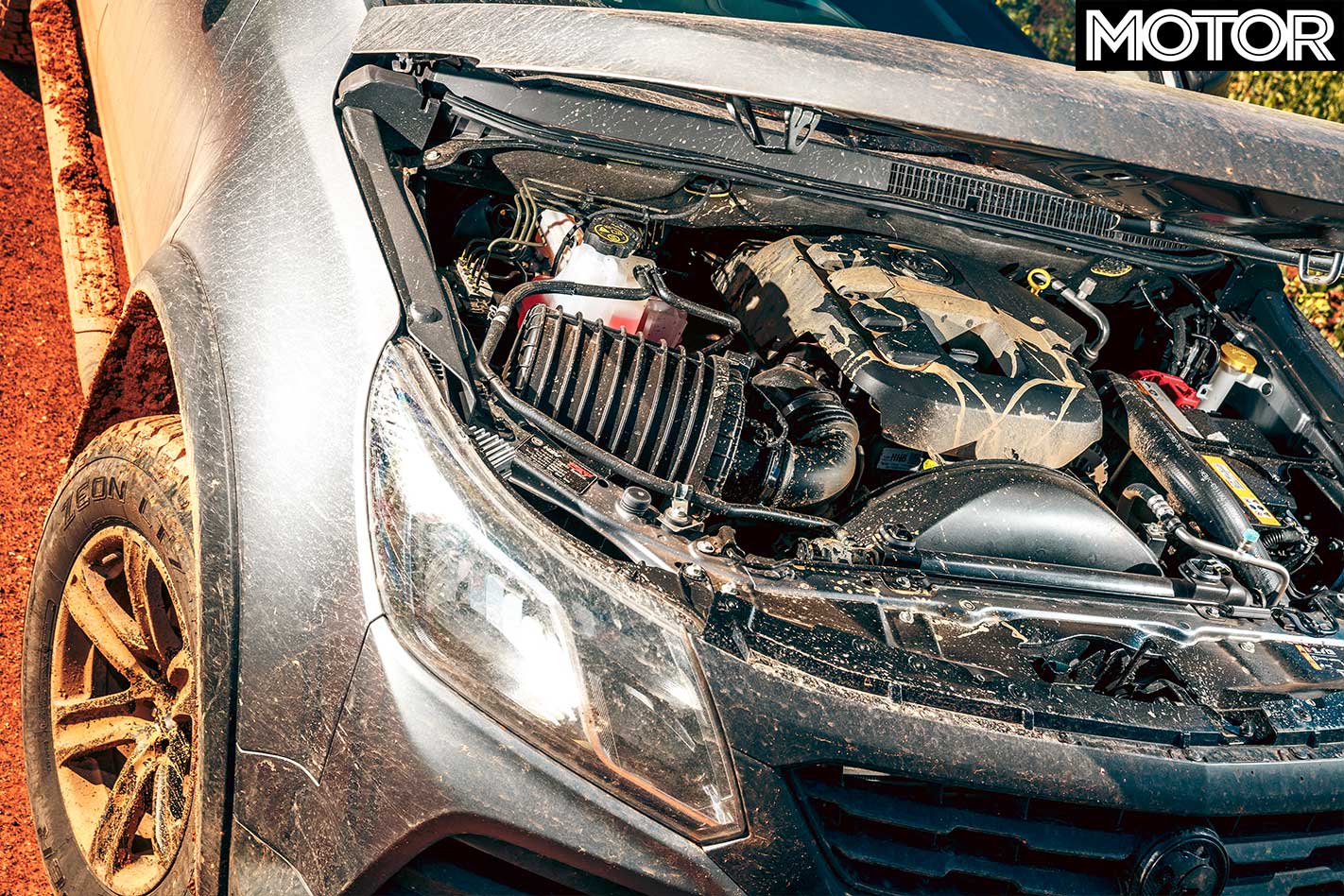
It’ll set you back $60,790 as a manual or $62,990 for the automatic tested here. We requested the higher-spec SportsCat+, which adds even angrier styling, larger brakes, a rear anti-roll bar and the option of trick SupaShock dampers, but sadly HSV did not have one available.
Its higher specification and price ($72,590 when optioned with an automatic and SupaShocks) would better match the $74,990 Ranger Raptor, but as it stands the Ford carries a significant price disadvantage. Its butch stance offers some compensation, its pumped guards gifting it the Mr Olympia title and relegating the Colorado to Mr Universe.
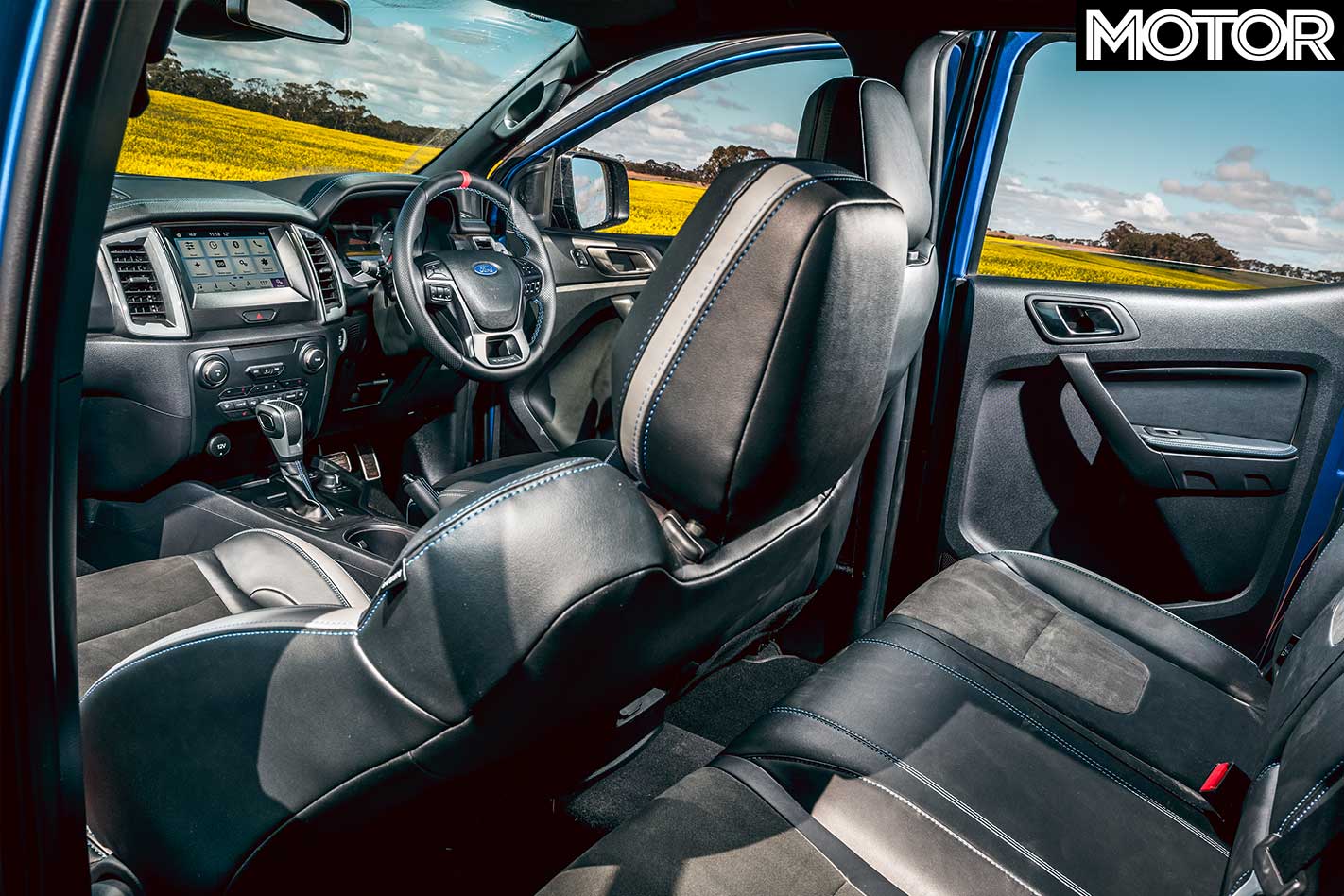
The Raptor also scores significant points inside, with more supportive seats, better materials – the aluminium shift paddles are beautiful – more up-to-date tech and a far superior driving position. Both lack steering wheel reach adjustment, but the Colorado’s seats are perched high, whereas the Ranger positions you low behind a wheel redolent of a modern Falcon.
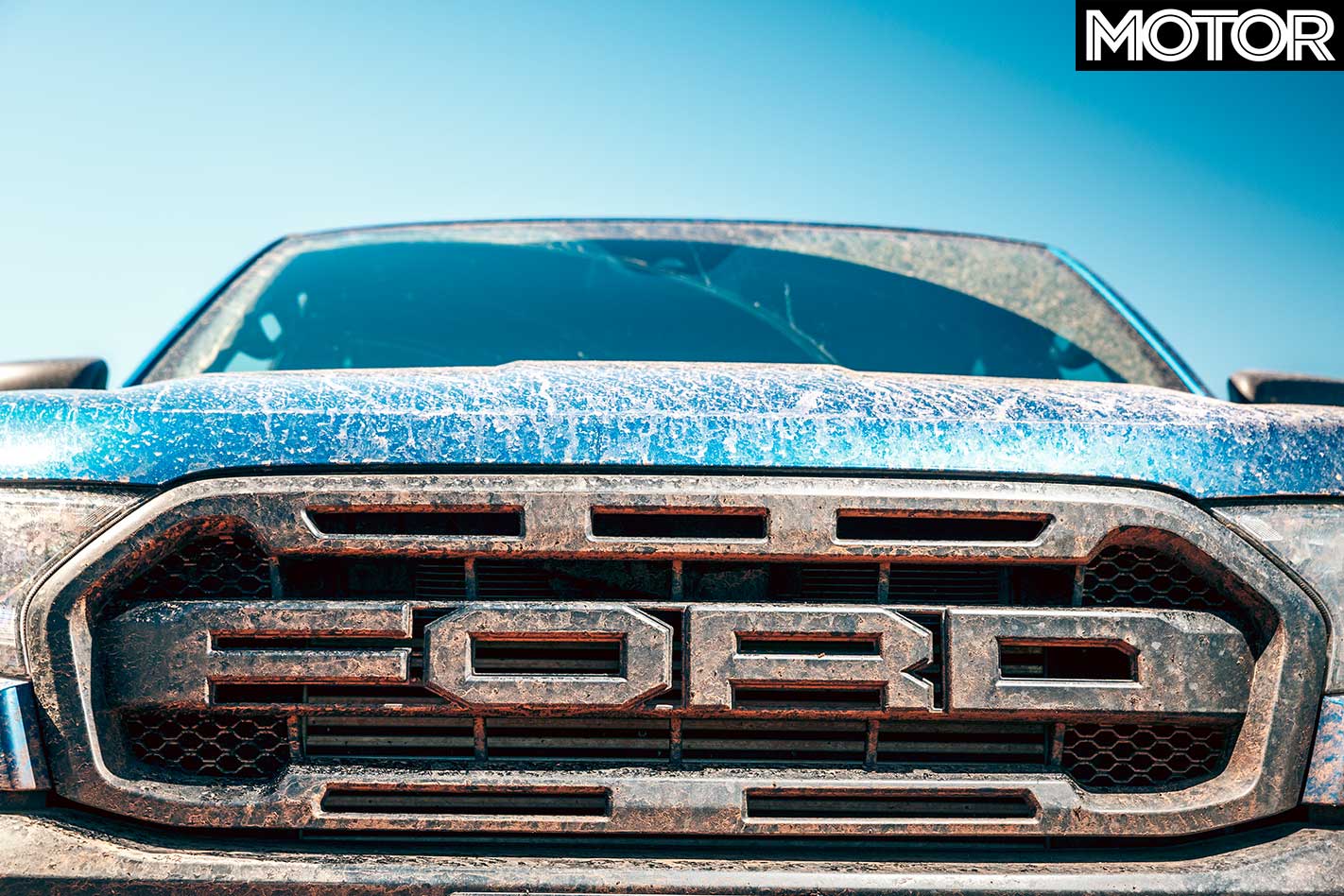
It’s under those swollen guards, though, where Ford spent the real money. Off-road suspension wizards FOX supply the dampers, while the standard Ranger’s leaf-sprung rear end is ditched for a Watt’s link setup that cuts towing ability to 2500kg, a tonne less than the Colorado. Brakes are discs all ’round, but the giant 285/70 BF Goodrich All-Terrains don’t bite into tarmac like they do dirt, the Raptor taking 43.9m to stop from 100km/h in a flurry of ABS.
Despite the Colorado’s humble disc/drum setup, its more road-focused Coopers offer better purchase, the Holden stopping almost three metres shorter (40.97m) with a firmer, more feelsome pedal. Likewise, the Holden’s ‘big block’ 2776cc diesel donk might not be the latest and greatest, but it’s enough to see off Ford’s whizz-bang new 2.0-litre twin-turbo unit. However, some context is required.
No-one is likely to buy one of these monsters for their engines and nor should they, because both are glacially slow. By the time these two meander past 100km/h, the likes of an Audi R8 or Porsche 911 Turbo have more than doubled that speed.
The culprit is not difficult to identify; the SportsCat musters just 65kW/tonne, the Raptor little better at 70kW/tonne. There’s reasonable torque on offer, but both weigh well over 2000kg. A dig through the archives to discover the last time we tested a car this slow was abandoned with the discovery a base 2005 Suzuki Swift was still quicker.
Now your expectations are set, the numbers. The SportsCat chirps its way off the line and revs cleanly, if slowly, to around 4000rpm, taking 17.28sec to cover 400m at 127.16km/h and 10.31sec to reach 100km/h on its way there.
The Raptor trails the Colorado by two-tenths to 100km/h (10.54sec) and that it gets this close is a testament to its 10-speed automatic, which works valiantly to keep the engine in its limited sweet spot – using the paddles and the engine’s full rev range results in times half-a-second slower. Essentially, the two trucks are almost identical in speed, separated by just 0.31km/h at the end of the quarter mile.
On the road the Ranger improves. Under full load it emits a nice enough roar and selecting Sport sharpens throttle response. The gearbox is smooth, but on kickdown it can hesitate and try a couple of gears on for size before selecting the right one.
With only six gears to choose from, the Colorado doesn’t suffer the same indecision, but whereas the Ford’s 2.0-litre could almost pass muster in a sedan in terms of noise and refinement, the HSV is undeniably a truck.
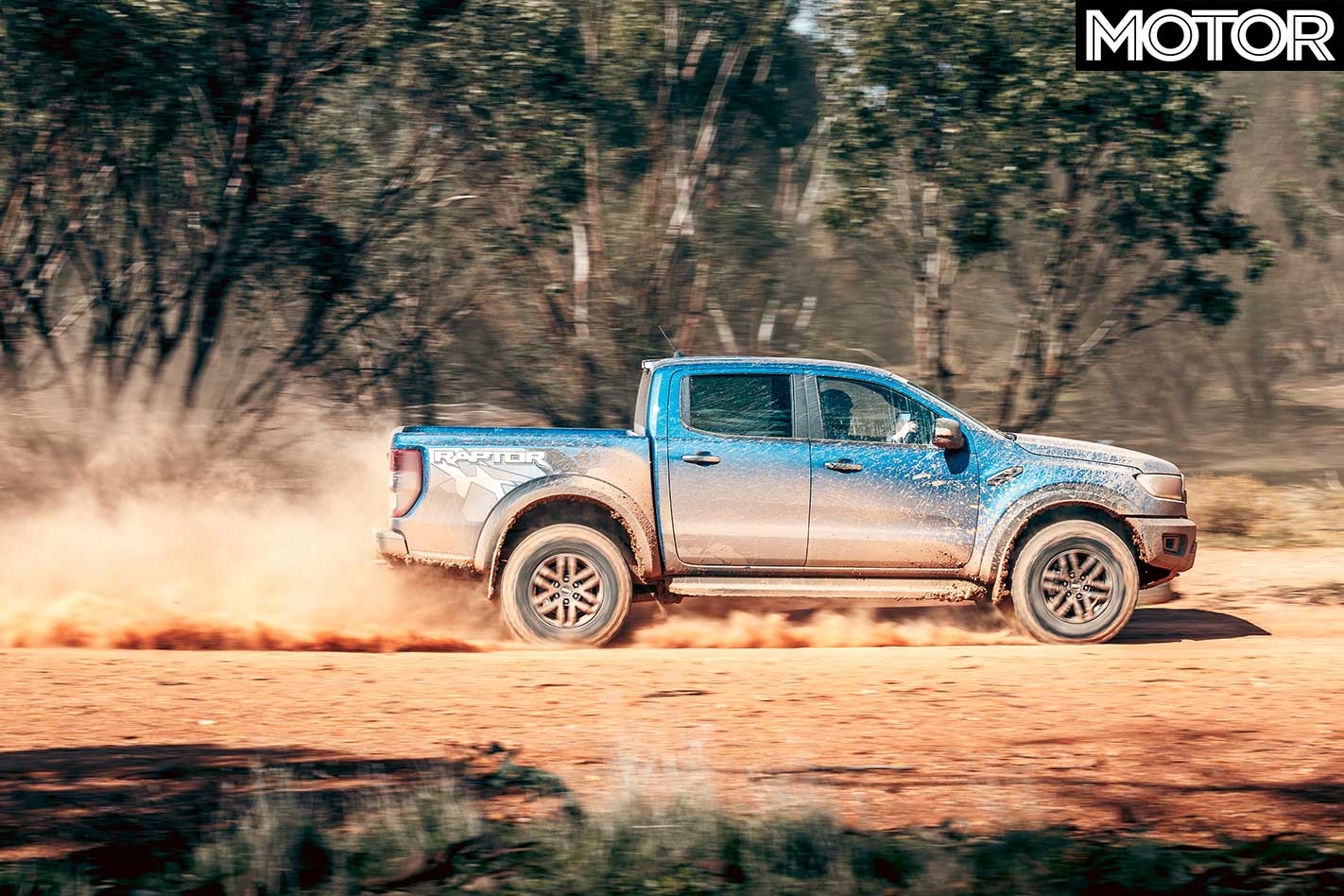
Similar comments apply to the touring ability of each. The SportsCat suffers from the body shimmy and jittery ride inherent in most dual-cab utes, fidgeting constantly on a typical country backroad. In contrast, the Raptor is a revelation.
There’s the occasional wobble from the rear end, but by and large the Ranger’s ride is remarkable, the combination of expensive suspension and those balloon-like tyres soaking up all manner of road imperfections. The penalty for this plushness is highly compromised on-road dynamics.
In building these utes, the two companies have adopted polar opposite handling approaches: HSV has attempted to broaden the Colorado’s appeal by improving its sealed surface abilities, while Ford has deemed this a fool’s errand and focused solely on making the Ranger as capable as possible off-road.
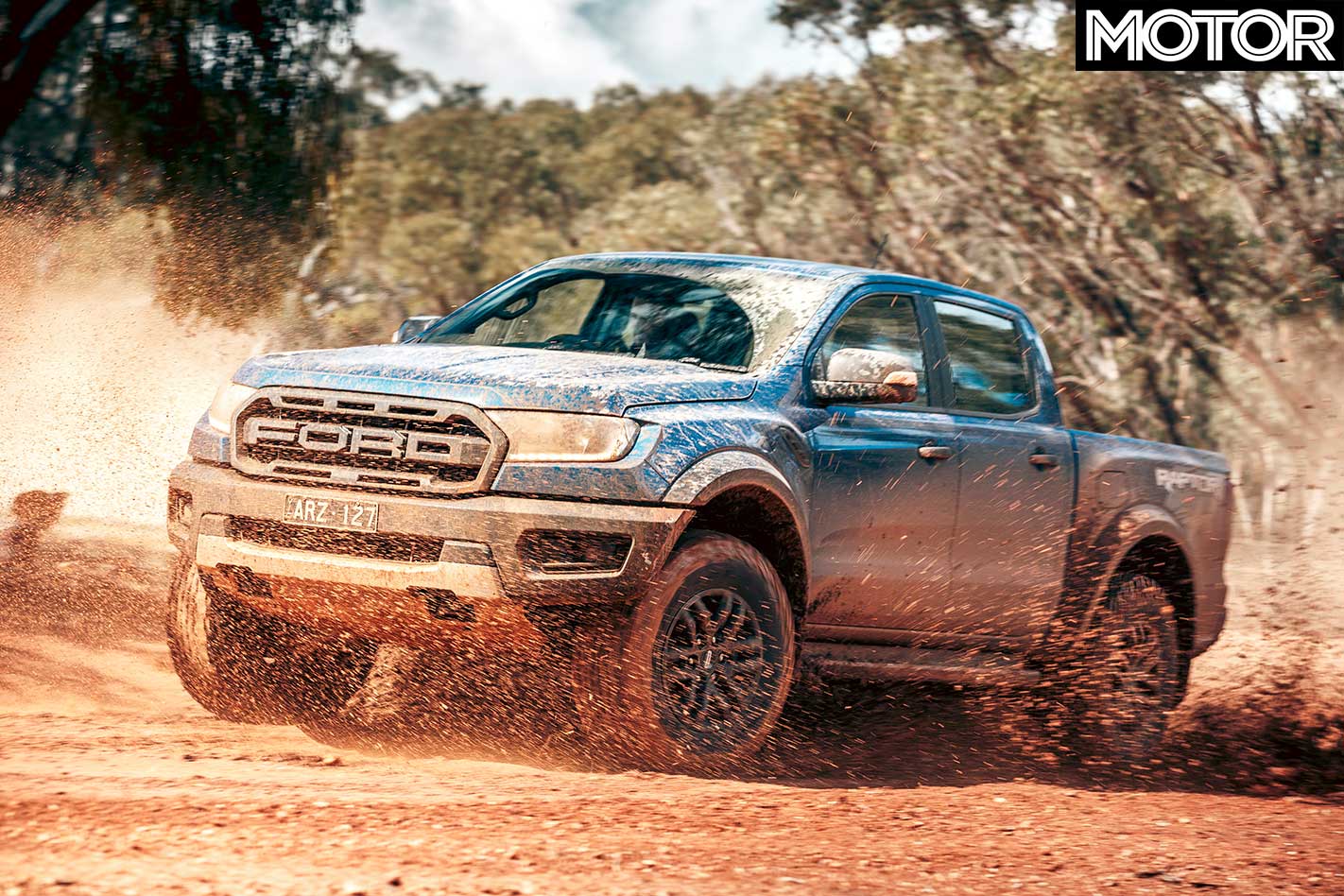
As a result, while it’s possible to hustle a Raptor on tarmac, it’s a largely pointless exercise. The steering is very nice, fluid and responsive with only slight low-speed wooliness, but cornering with any enthusiasm results in dogged early-onset understeer and the sorrowful howl of BF Goodrich rubber. Traction in the wet isn’t great, either; be wary of slick roundabouts.
In comparison, the HSV is a sharper tool, relatively speaking. The stiffer suspension setup pays dividends in its quicker responses and crisper turn-in, while the tyres inspire much greater confidence with surprising wet-weather grip.
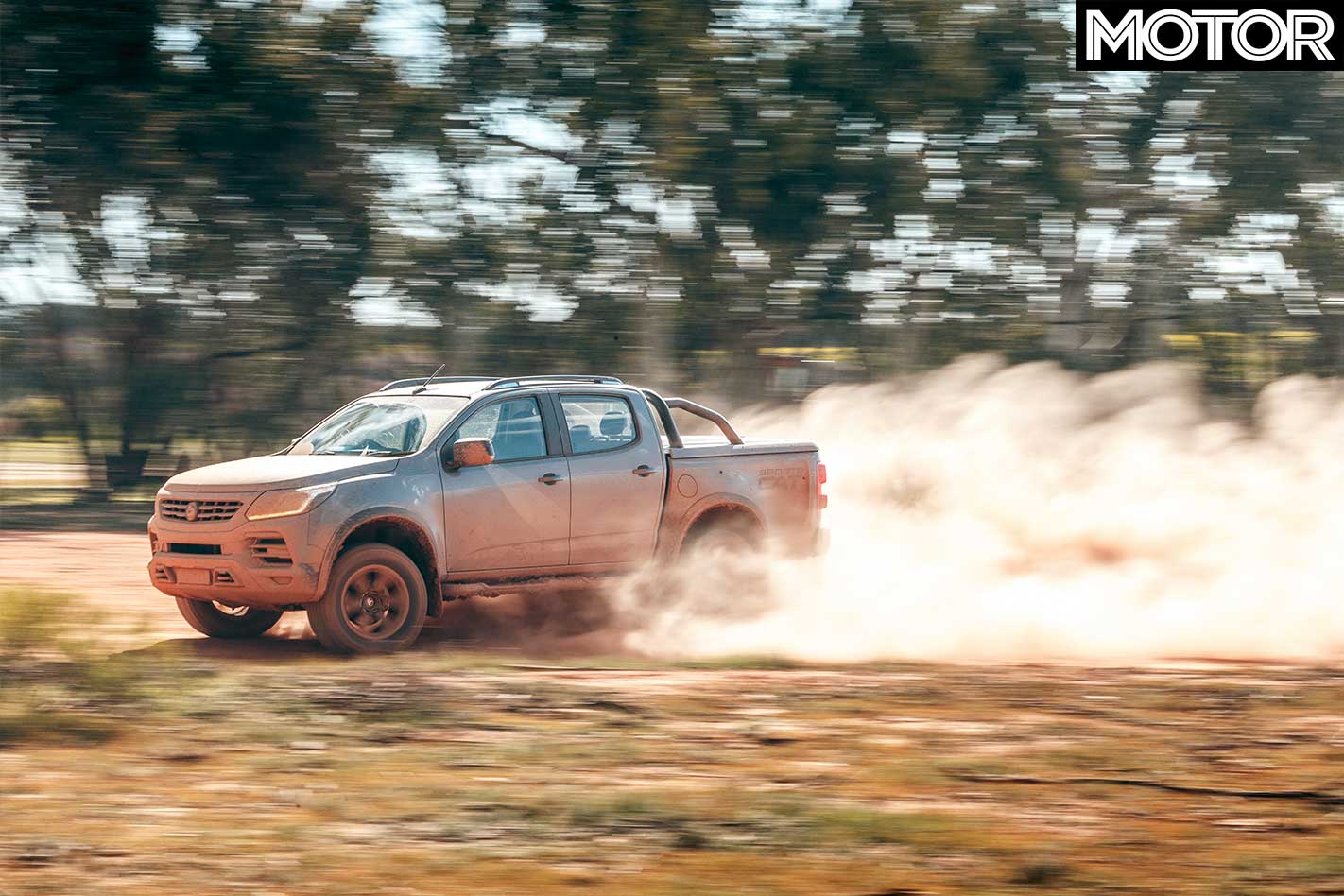
HSV has thus effectively achieved its goal of improving the Colorado’s on-road behaviour, but that doesn’t answer our original question, for a SportsCat is not ‘fun’ on a sealed surface. Thankfully, our route through the Bendigo Regional Park and Kooyora State Park offers the opportunity to swap tarmac for gravel, traversing rock-strewn fire trails with deep washouts, narrow, sandy tracks and fast, open, rally-style roads.
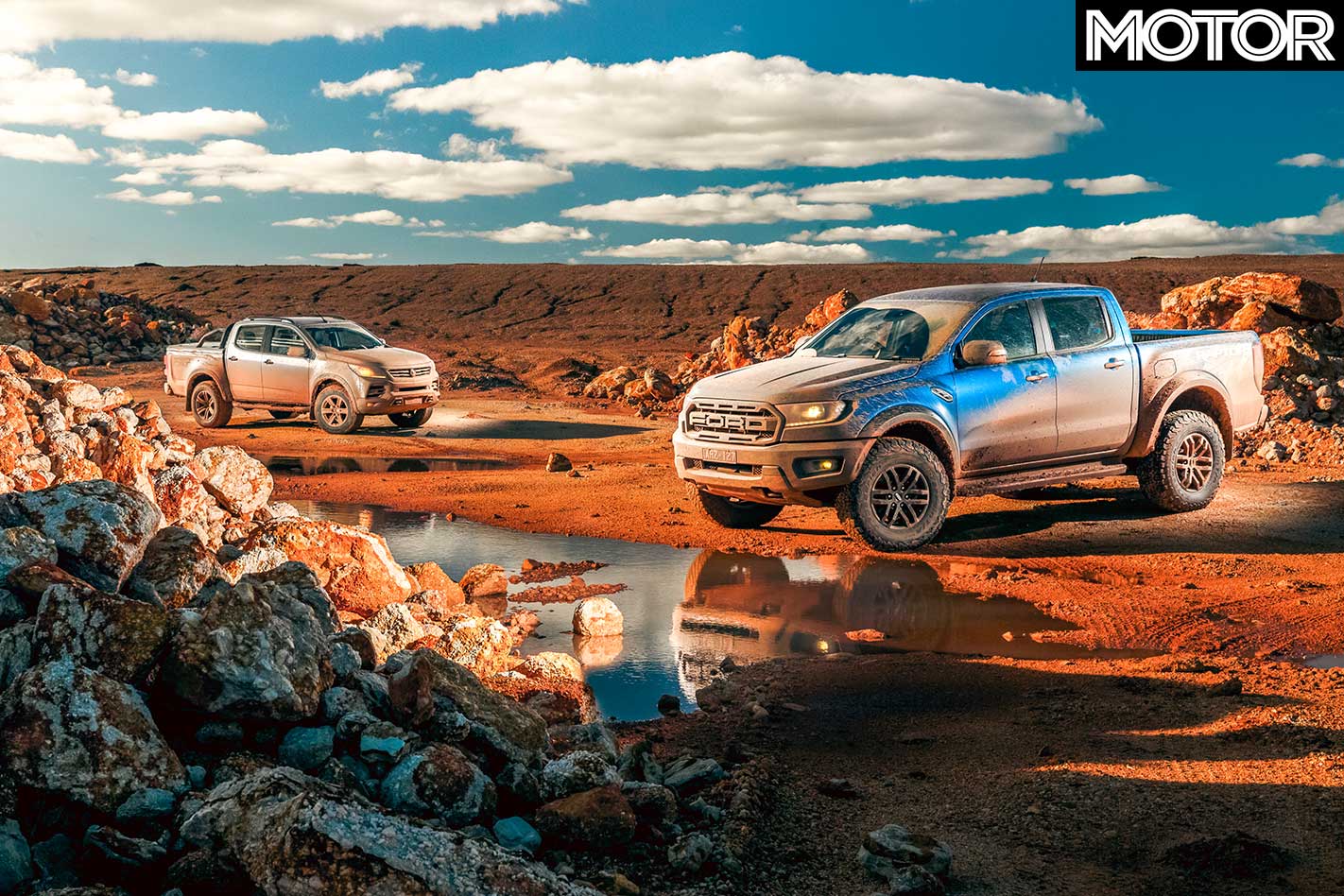
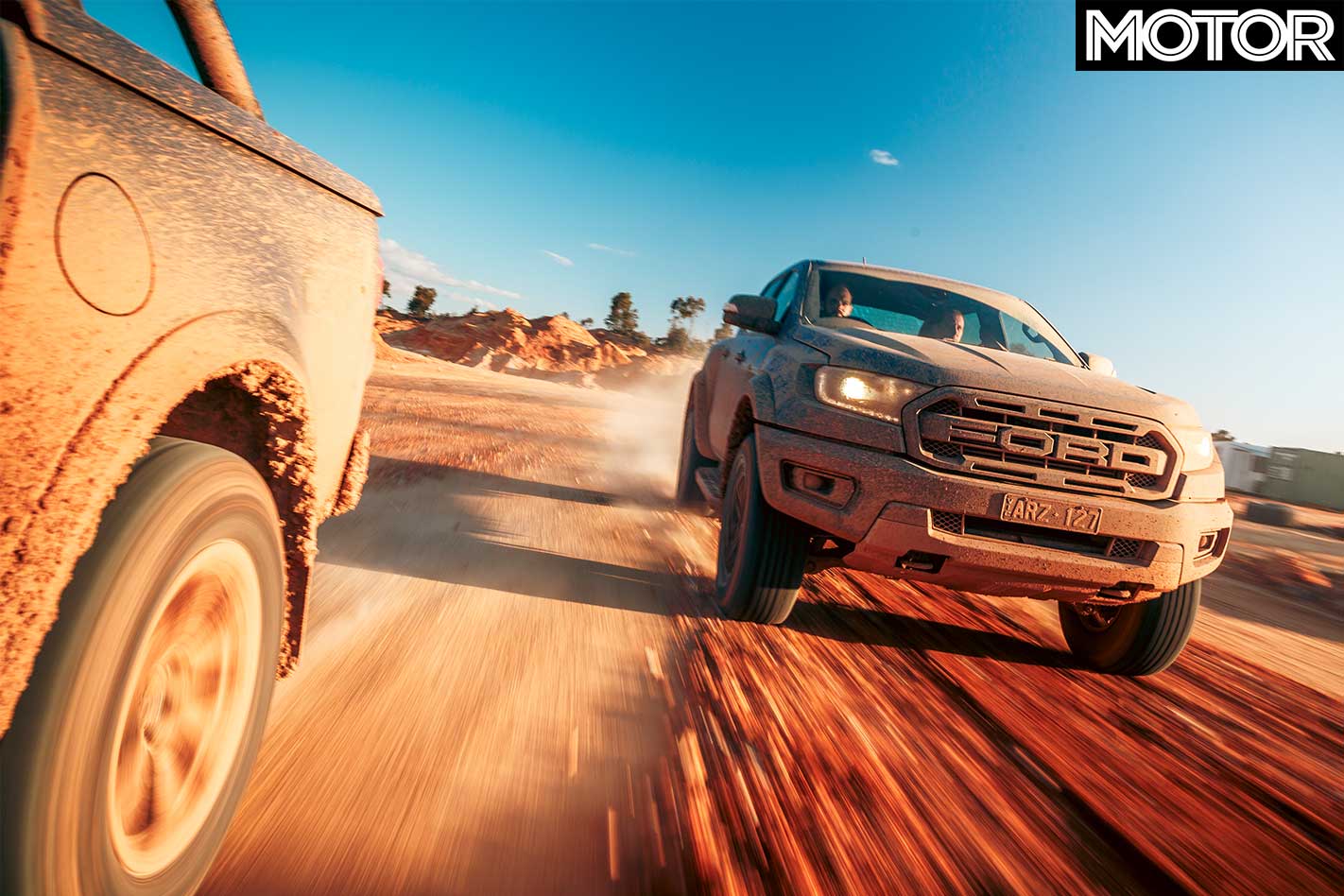
It’s here the HSV will put a smile on your face and for familiar reasons. The recipe is not complicated: a slippery surface, rear-wheel drive, limited-slip diff, 500Nm of torque, lots of steering lock and ESP that is happy to put its feet up and let the driver take control.
Throttle response isn’t amazing, but there’s enough grunt to get the rear-end swinging and enough traction from the deeply treaded tyres to retain control. The same is true of the Raptor with the bonus of quicker, more communicative steering, though its ESP isn’t as keen to take a back seat and the surplus of gears makes it harder for the auto to decide which ratio to hold a slide in.
A particularly gnarly stretch of forest road proves the brilliance of the Raptor’s FOX shocks. Bumps and compressions that send the stiffer SportsCat bouncing into the air and pogoing on landing are absorbed with nonchalance by the Ranger. You can drive over virtually everything at any speed and always retain control.
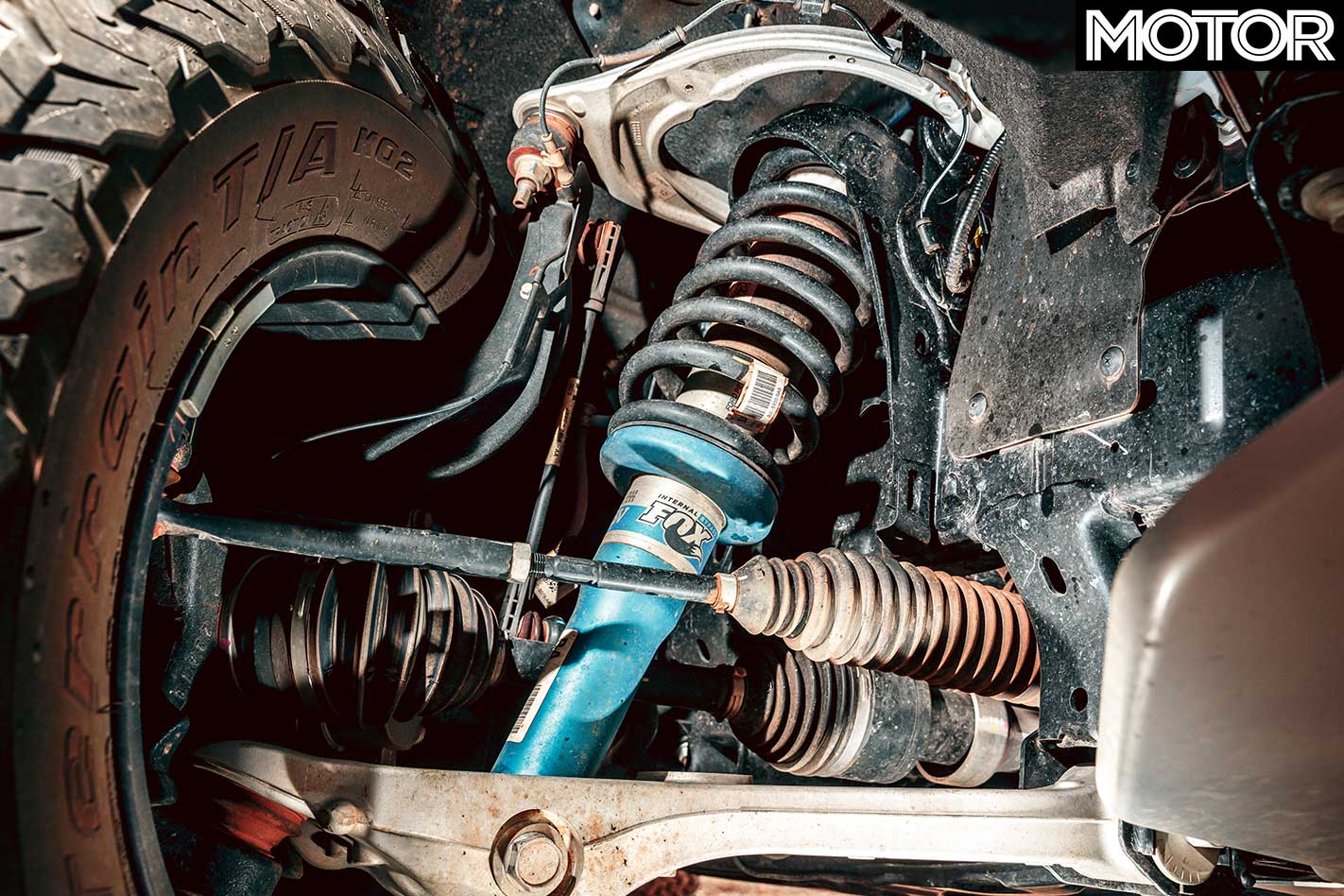
MOTOR isn’t the outlet to comment on the cars’ hardcore off-road credentials – we’ll leave that to our sister mag 4X4 Australia – but with low range gearing, locking rear diffs, chunky tyres and plenty of ground clearance (283mm for the Raptor, 251mm for the SportsCat) both seem capable of scaling most mountains and fjording most streams.
4×4 Comparison: SportsCat v Ranger Raptor
Our speciality is track testing, but while we aren’t going to make an exception for this pair simply because they sit higher and drink a different fuel to our usual test vehicles, we do need to alter the circuit characteristics somewhat, hence securing a private off-road circuit and the services of one of Australia’s top rally drivers, Brendan Reeves.
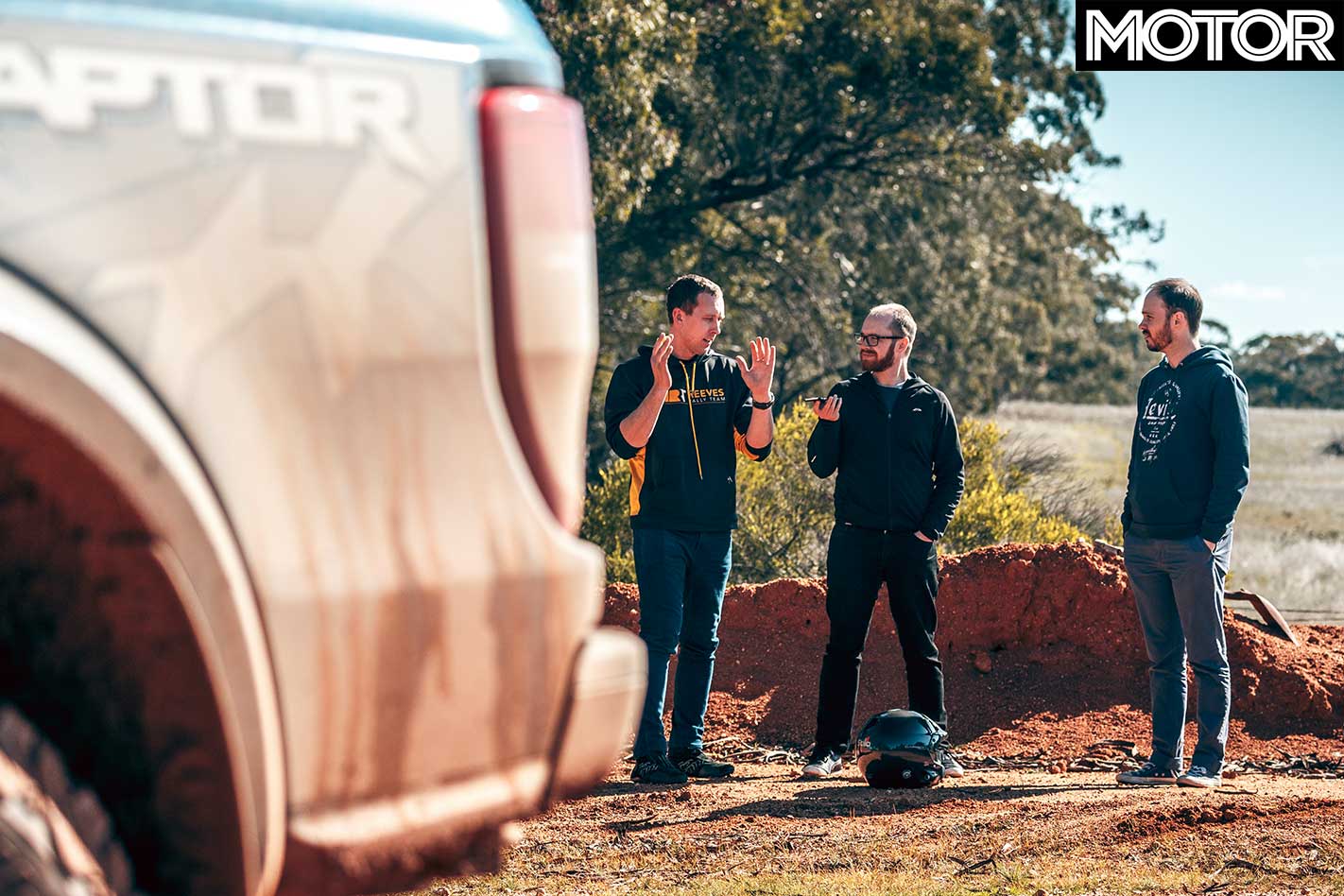
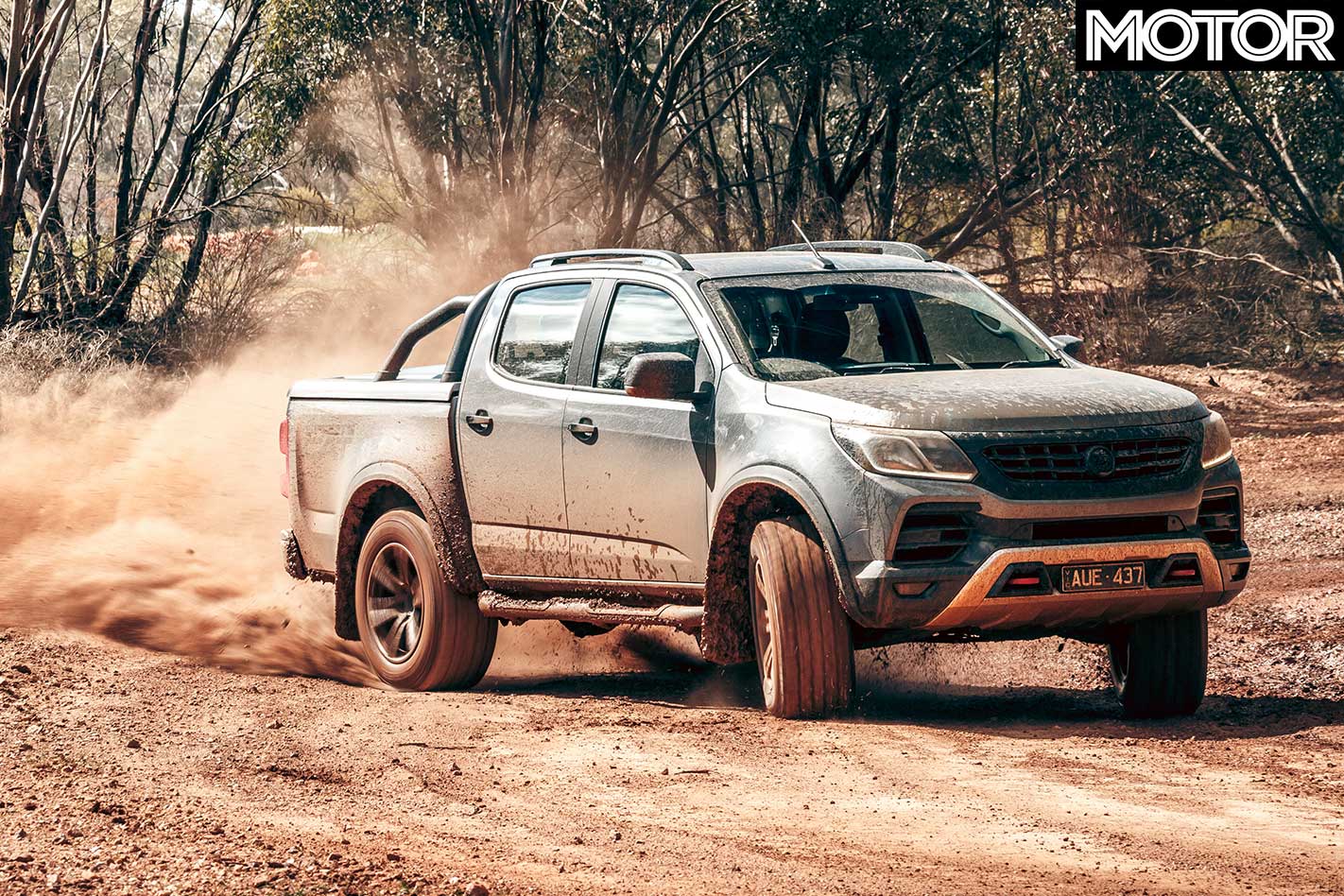
First up, the SportsCat, and DC and I take a large step backwards as Brendo seems to have forgotten where the brake pedal is, pitching into the long sweeper at the end of the straight at top speed, the SportsCat bouncing and squirming as it wages a furious battle with physics. Three laps later the HSV in all-wheel drive has managed a 1:24.2, a time around 12 seconds slower than Brendo’s full-house WRX STi rally car – not bad.
“It didn’t feel uncomfortable on the rally track,” explains Reeves. “There are a few bumps out there and I was nervous about hitting them sideways in such a high, heavy vehicle but it absorbed them well. Turn-in was quite good, I was able to get a bit of oversteer on the way into corners which was nice. In the twisty stuff the stability was good, I was able to hold the slide well; in high-speed corners the rear was rolling around a lot, but it never felt like it was going to tip over, I’d just apply more throttle to straighten it out.”
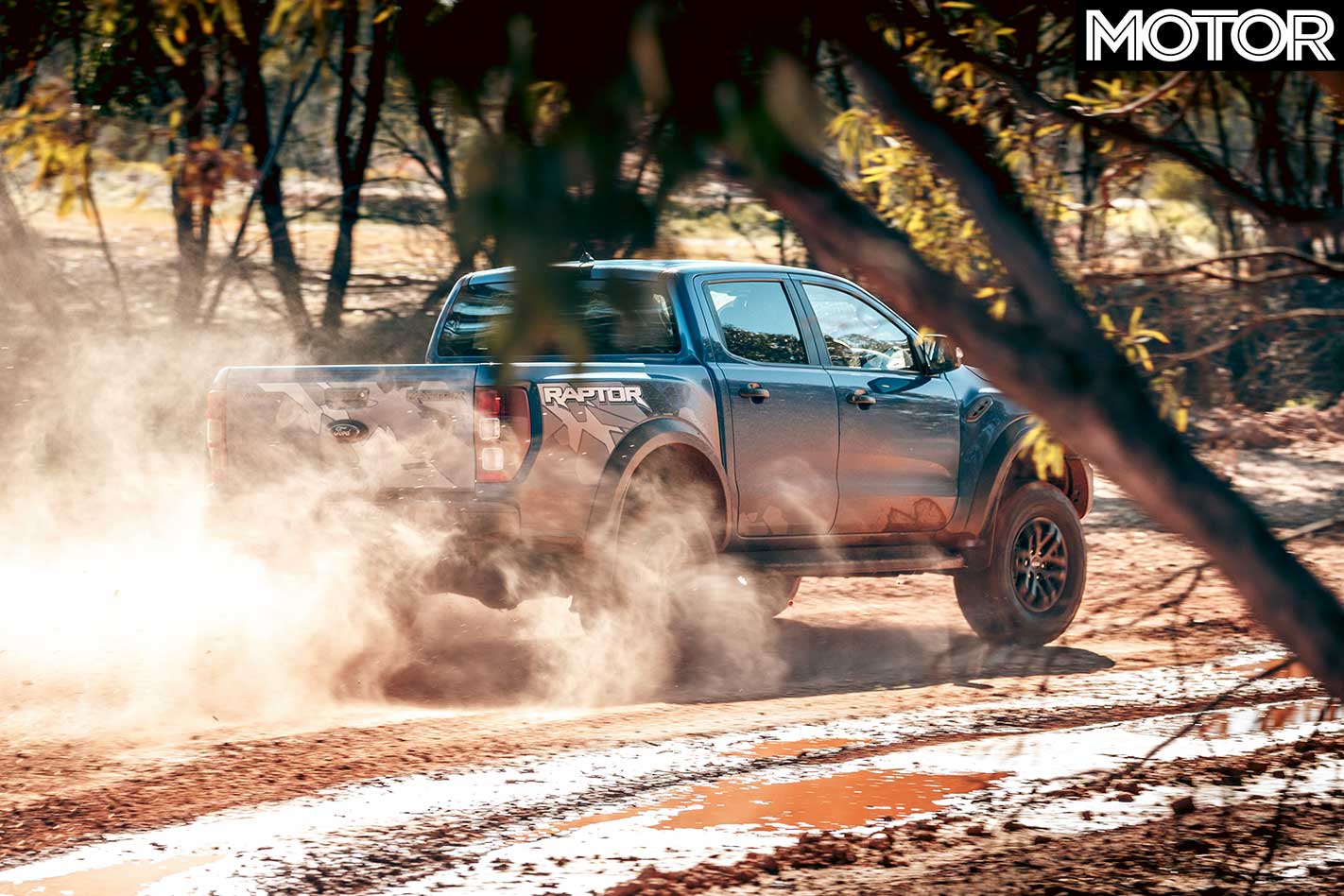
With the benchmark set, Brendo straps into the Raptor. It looks more composed from outside and theoretically its off-road focus should make it quicker, a hunch confirmed by its 1:23.7 lap time, half-a-second up on the HSV.
A quick confession: Brendo’s main complaint was the Ranger’s dead throttle response, which would have been solved by selecting Baja mode. Unfortunately, we didn’t know how to access it at the time and were on a very tight schedule, however, the Raptor benefited from a slightly drier track so the time difference is probably about right, give or take a tenth or two.
“I felt more comfortable to push harder, purely because of the suspension,” says Reeves. “In the high-speed corners the Raptor’s definitely nicer, you can really tip it in like a rally car. The speeds felt similar down the straight but when I jumped on the brakes it takes a bit longer to pull up and the pedal’s a bit softer as well.”
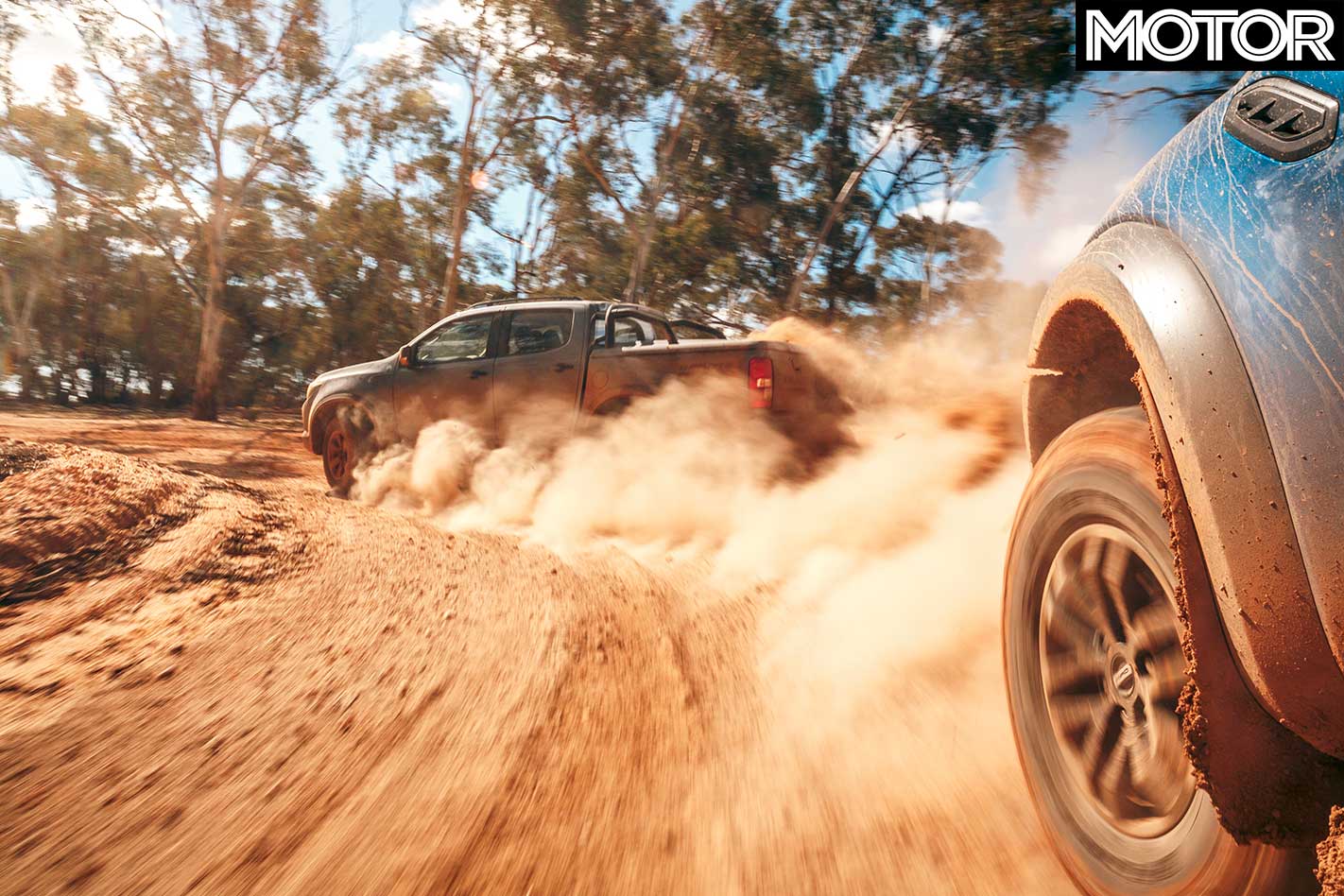
Brendo’s other Raptor bugbear was constant electronic intervention when it started to slide. After two days of experimentation with the various modes it appears that the ESP can be completely deactivated up to around 80km/h, but beyond that speed it reverts to a sort-of ‘Sports’ mode and will remain that way even if you slow down again.
The system is extremely well calibrated, allowing enough lateral movement to require opposite lock without intervening too harshly. On the other hand, it’s disappointing that a performance car aimed at off-road use won’t let the driver fly solo, regardless of the mode selected.
Nonetheless, both are more capable and entertaining than you’d ever believe. There’s enough chassis adjustability to constantly alter the balance with the throttle or brake, all-wheel drive opens a window to quasi-rally car dynamics and rear-drive results in lurid oversteer slides.
To back up Brendo’s comments, the Raptor feels absolutely in its element, but could use more finesse to its controls, particularly the brakes and throttle. The SportsCat has sharper responses and a stronger engine, but its firmer suspension and slower steering makes it a busier drive and it can’t soak up the same punishment as the Ford. Then again, it was never designed to.
So, can a diesel ute be a performance car? In terms of pure numbers, categorically not. However, if driving enjoyment is the criteria then both have something to offer – both DC and I agree we’ve had more fun on this shoot than any other in 2018.
Yes, that entertainment is available only in a very specific environment, but the same could be said of various track-day specials, which can’t carry five adults, tow a trailer and cart your rubbish to the tip.
That settled, which is best? HSV’s engineering improvements are admirable, but the SportsCat is too compromised by the standard Colorado’s shortcomings – terrible driving position, lacklustre interior, restless ride – to win. The Ranger is simply a nicer car and in Raptor guise offers benchmark on-road comfort as well as remarkable high-speed off-road ability. It has everything except a proper powertrain.
It doesn’t need a V8 or even the F150’s twin-turbo V6, just a decent diesel. Perhaps a bespoke engine would’ve killed the program, but for a Ford Performance product to be three seconds slower to 100km/h than the category benchmark – the 200kW/580Nm VW Amarok Ultimate – doesn’t help its credibility.
The Ranger Raptor makes the strongest case yet for redefining performance cars, but a bit more grunt would seal the deal.
Second opinion
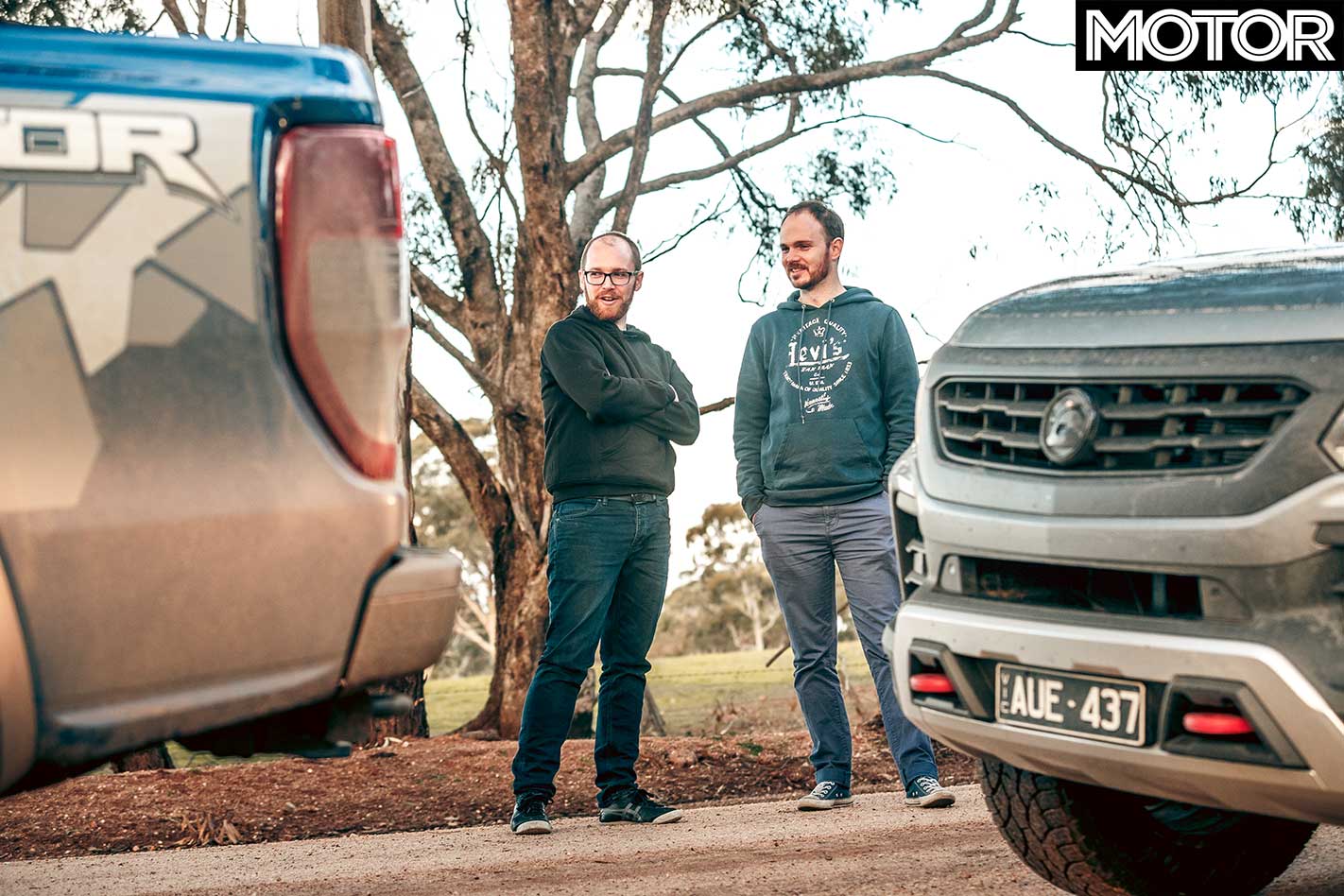
I’d take the Raptor. I think it looks cooler, it has a better driving position and it feels more complete to drive. Also the suspension is amazing; you can go so fast on the worst of roads. I was even more disappointed by the engine than expected; it, and the 10-speed auto, feel irritatingly sluggish. While a half turn opposite lock is possible, it’s a huge oversight that you can’t turn ESP completely off.
The Colorado is almost more fun in a tail-out way for this reason. But if the Raptor is closer to car, the Colorado feels closer to workhorse. There’s a chassis shimmy that never goes away, the front and rear ends don’t speak to each other. The suspension is surprisingly good, just overshadowed by the excellent Fox Racing set-up in the Ranger.
In many ways, the Raptor is to Colorado what VFII SS was to FGX XR8. – Dylan Campbell
Fast Facts
| u00a0 | HSV Colorado SportsCat | Ford Ranger Raptor |
| Body | 4-door, 5-seat ute | |
| Drive | rear- or all-wheel | |
| Engine | 2776cc inline-4cyl diesel DOHC, 16v, turbo | 1996cc inline-4cyl diesel DOHC, 16v, twin-turbo |
| Bore x Stroke | 94.0 x 100.0mm | 84.0 x 90.0mm |
| Compression | 16.5:1 | 16.0:1 |
| Power | 147kW @ 3600rpm | 157kW @ 3750rpm |
| Torque | 500Nm @ 2000rpm | 500Nm @ 1750-2000rpm |
| Power/Weight | 65kW/tonne | 70kW/tonne |
| Transmission | 6-speed auto | 10-speed auto |
| Weight | 2250kg | 2332kg |
| Suspension | double wishbones, coil springs (f); leaf springs (r) | struts, coil springs (f); Watts link, coil springs (r) |
| L/W/h | 5345/1933/1826mm | 5398/2025/1873mm |
| Wheelbase | 3096mm | 3220mm |
| Tracks | 1600mm (f/r) | 1710mm (f/r) |
| Steering | electrically-assisted rack-and-pinion | |
| Brakes | 300mm ventilated discs, 2-piston calipers (f); 295mm drums (r) | 332mm ventilated discs, 2-piston calipers (f); 332mm ventilated discs, single-piston calipers (r) |
| Wheels | 18.0 x 10.0-inch (f/r) | 17.0 x 8.5-inch (f/r) |
| Tyre Sizes | 285/60 R18 (f/r) | 285/70 R17 (f/r) |
| Tyres | Cooper Zeon LTZ | BF Goodrich All-Terrain K02 |
| Price | $62,990 | $74,990 |
| Pros | Impressive tyres; strong brakes; price | Amazing off-road ability; looks; interior |
| Cons | Unsettled ride; sub-standard interior | Deserves more grunt; brake feel; ESP confusion |
| Rating | 3 out of 5 stars | 3.5 ouf ot 5 stars |
The Strip
| u00a0 | HSV Colorado SportsCat | Ford Ranger Raptor | |
| 0-10km/h | 0.50sec | 0.65sec | |
| 0-20km/h | 1.01sec | 1.24sec | |
| 0-30km/h | 1.54sec | 1.92sec | |
| 0-40km/h | 2.39sec | 2.63sec | |
| 0-50km/h | 3.32sec | 3.53sec | |
| 0-60km/h | 4.31sec | 4.52sec | |
| 0-70km/h | 5.59sec | 5.70sec | |
| 0-80km/h | 6.97sec | 7.05sec | |
| 0-90km/h | 8.51sec | 8.69sec | |
| 0-100km/h | 10.31sec | 10.54sec | |
| 0-110km/h | 12.51sec | 12.72sec | |
| 0-120km/h | 15.02sec | 15.12sec | |
| 0-130km/h | 17.98sec | 18.36sec | |
| 0-400m | 17.28sec @ 127.16km/h | 17.48sec @ 127.47km/h | |
| 80-120km/h (Drive) | 8.05sec | 7.99sec | |
| 100-0km/h | 40.97m | 43.90m | |
| Speed in Gears | |||
| 1st | 52km/h @ 4500rpm | 40km/h @ 4500rpm | |
| 2nd | 89km/h @ 4500rpm | 63km/h @ 4500rpm | |
| 3rd | 137km/h @ 4500rpm | 88km/h @ 4500rpm | |
| 4th | 180km/h @ 4440rpm* | 107km/h @ 4500rpm | |
| 5th | 180km/h @ 3250rpm* | 124km/h @ 4500rpm | |
| 6th | 180km/h @ 2560rpm* | 148km/h @ 4500rpm | |
| 7th | N/A | 170km/h @ 4060rpm* | |
| 8th | N/A | 170km/h @ 3450rpm* | |
| 9th | N/A | 170km/h @ 2790rpm* | |
| 10th | N/A | 170km/h @ 2580rpm* | |
Heathcote Raceway, 13˚C, dry. Driver: Scott Newman *Manufacturer’s claim Official timing supplier – VBOX Australia
Gravel lap battle
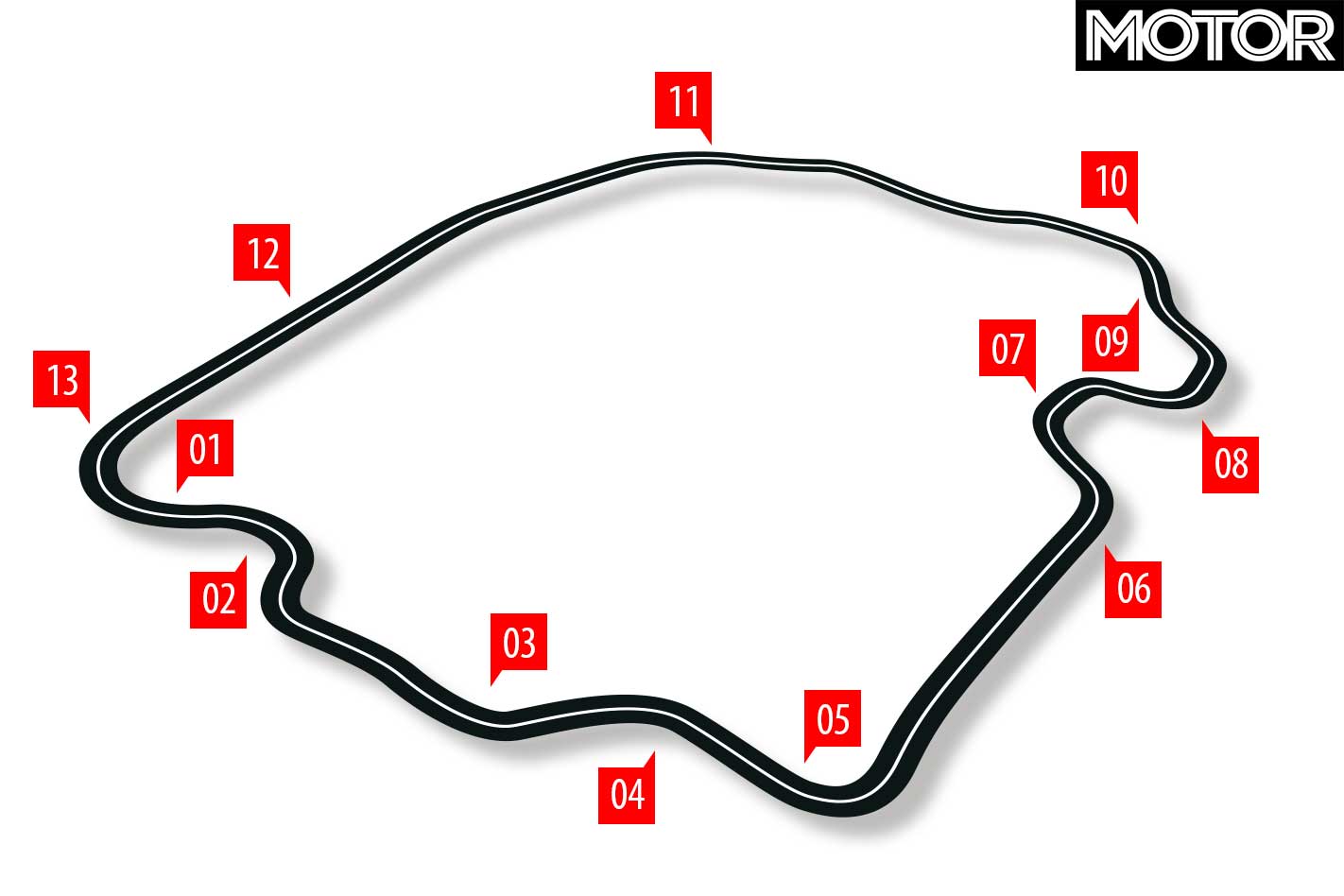
| SportsCat | Point | Raptor |
| 47km/h | 1 | 45km/h |
| 55km/h | 2 | 53km/h |
| 69km/h | 3 | 68km/h |
| 60km/h | 4 | 62km/h |
| 48km/h | 5 | 51km/h |
| 103km/h | Back straight | 105km/h |
| 54km/h | 7 | 50km/h |
| 52km/h | 8 | 56km/h |
| 35km/h | 9 | 38km/h |
| 55km/h | 10 | 58km/h |
| 95km/h | 11 | 95km/h |
| 126km/h | V-max | 126km/h |
| 58km/h | 13 | 58km/h |
| 1:24.2 | Lap Time | 1:23.7 |
Wedderburn, Victoria. 16˚C, dry. Driver: Brendan Reeves
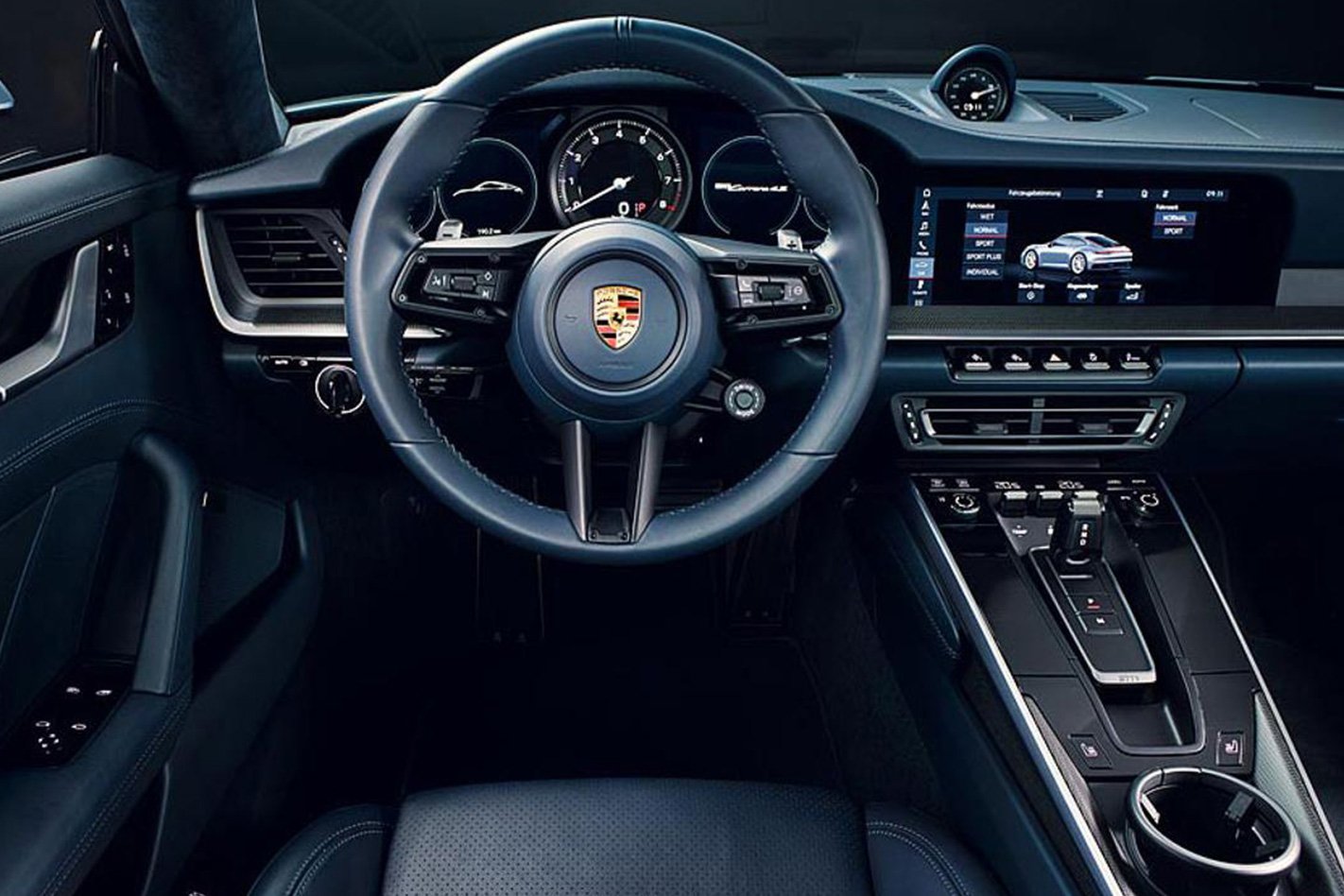
Porsche’s new 911 will arrive in Australia around April. Codenamed 992, it replaces the 991 generation of the rear-engined German icon introduced in 2012. The $265,000 S and $281,100 4S versions will lead the charge. These prices represent small increases over the current models.
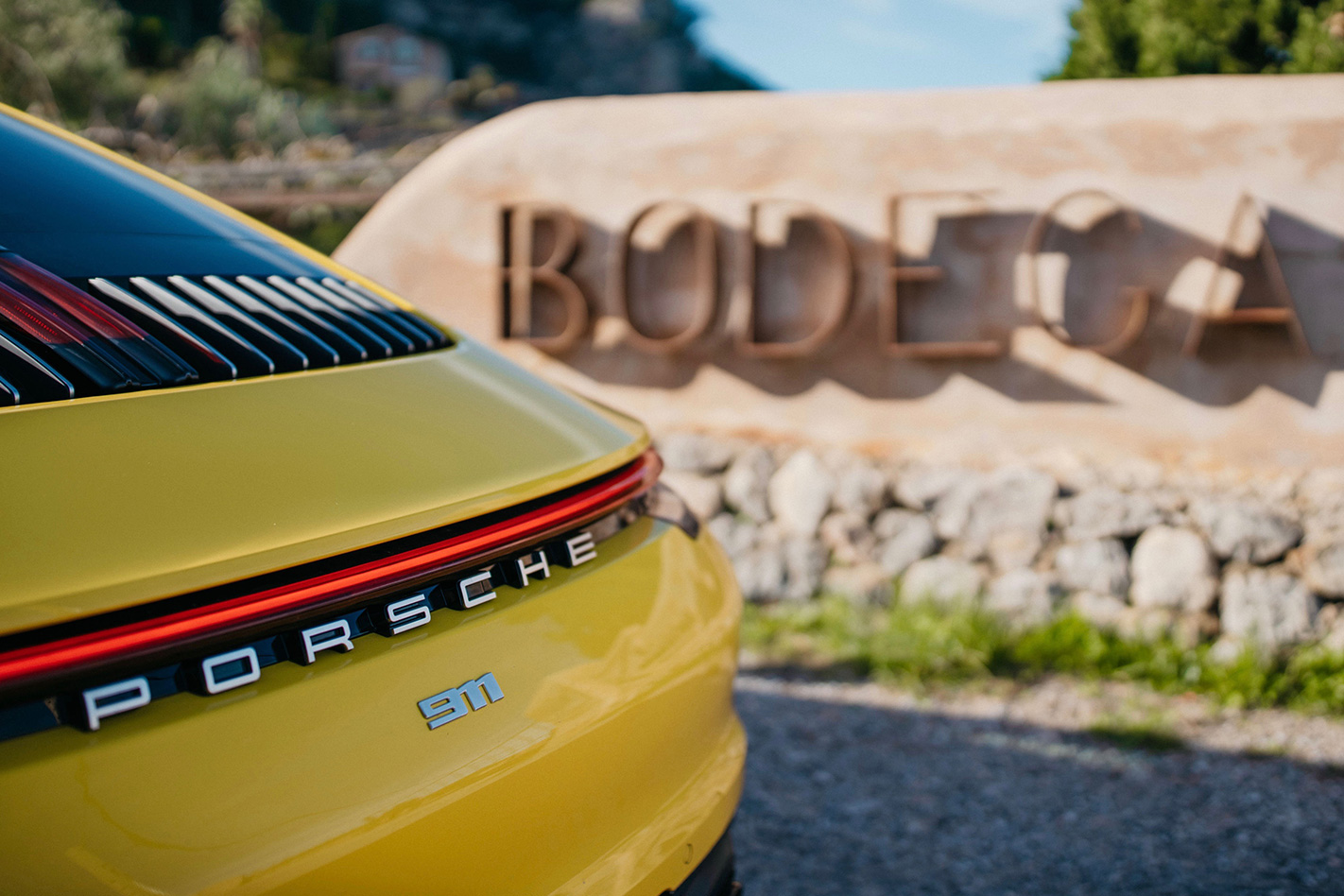
The 992 will bring perhaps the single greatest change in the long history of the 911. It has been engineered to accommodate a hybrid drivetrain, though Porsche execs won’t say at what point in the car’s six-year-or-so life cycle it will go into production.
But with the new 911’s European on-sale date drawing near, Porsche is talking fine detail on the technologies that will arrive with the Carrera S and 4S.
Engine
Capacity of the twin-turbo flat-six remains unchanged at 2981cc, but Porsche’s engineers have entirely redesigned its cylinder heads. One key change is asymmetric inlet valve lifting to promote efficiency-boosting fuel-air charge swirl. In the S models maximum outputs increase 22kW and 30Nm to 331kW and 530Nm. All you 911 trivia lovers need to know that the updated engine’s turbos now spin in opposite directions. The 991 had identical turbochargers, and this choice meant a flow-impeding kink in the plumbing for one side of the engine. For the 992, Porsche engineers have fixed this problem with mirror-image turbochargers.
Transmission
Porsche engineers confirm the rear-engined 992’s standard eight-speed dual-clutch uses the same innards as the PDK in the front-engined Panamera. As in the big four seater, it’s a hybrid-ready design with room for an electric motor between the engine flywheel and transmission clutches.

Body
Steel is no longer the majority metal in the 911 body. Where it was 63 percent of a 991’s structure and skin, it’s only 30 percent of the new 992. Aluminium is now used extensively; nearly all of the Porsche’s skin is stamped from the stuff, while extruded and die-cast pieces now take much of the structural strain.

Chassis
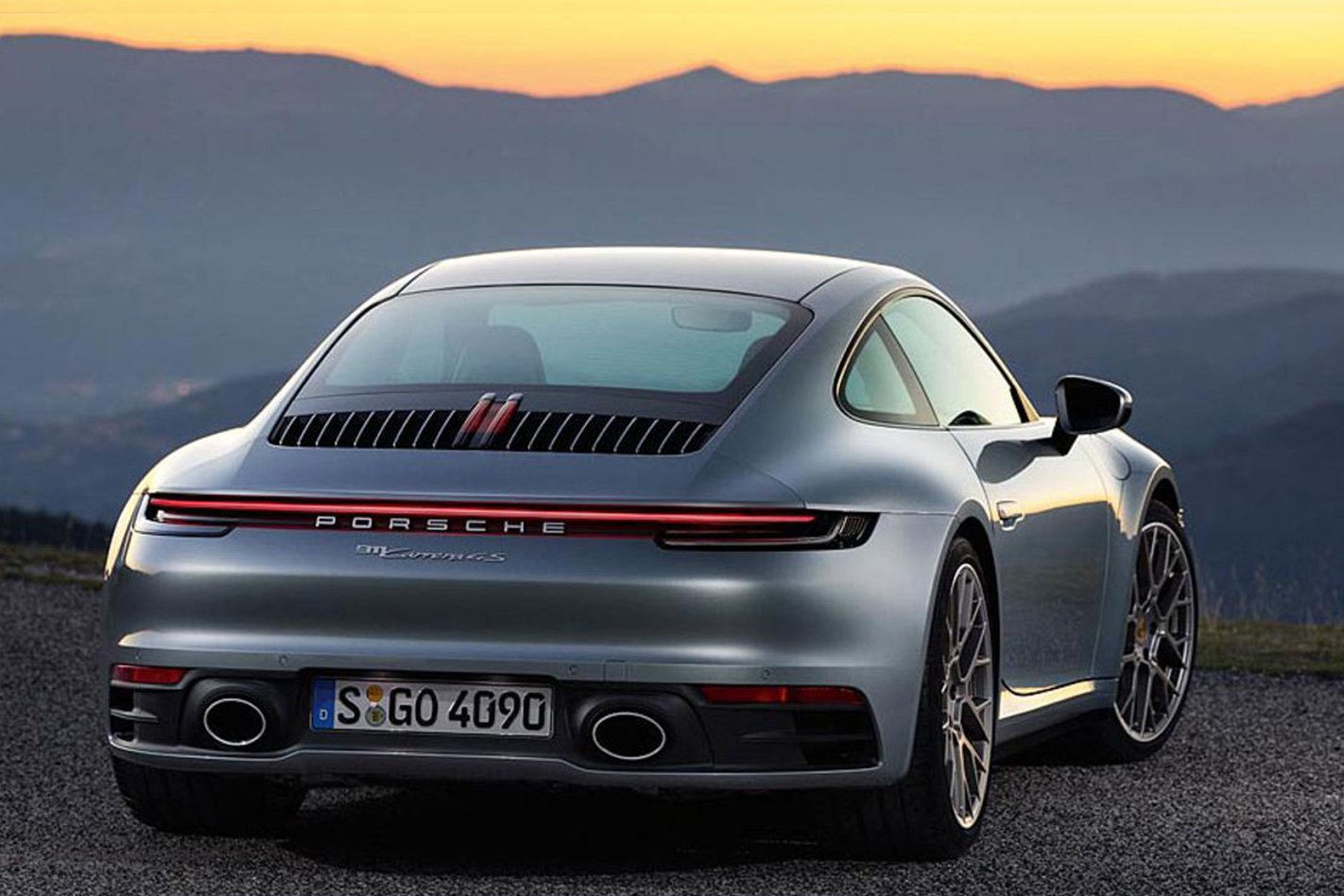
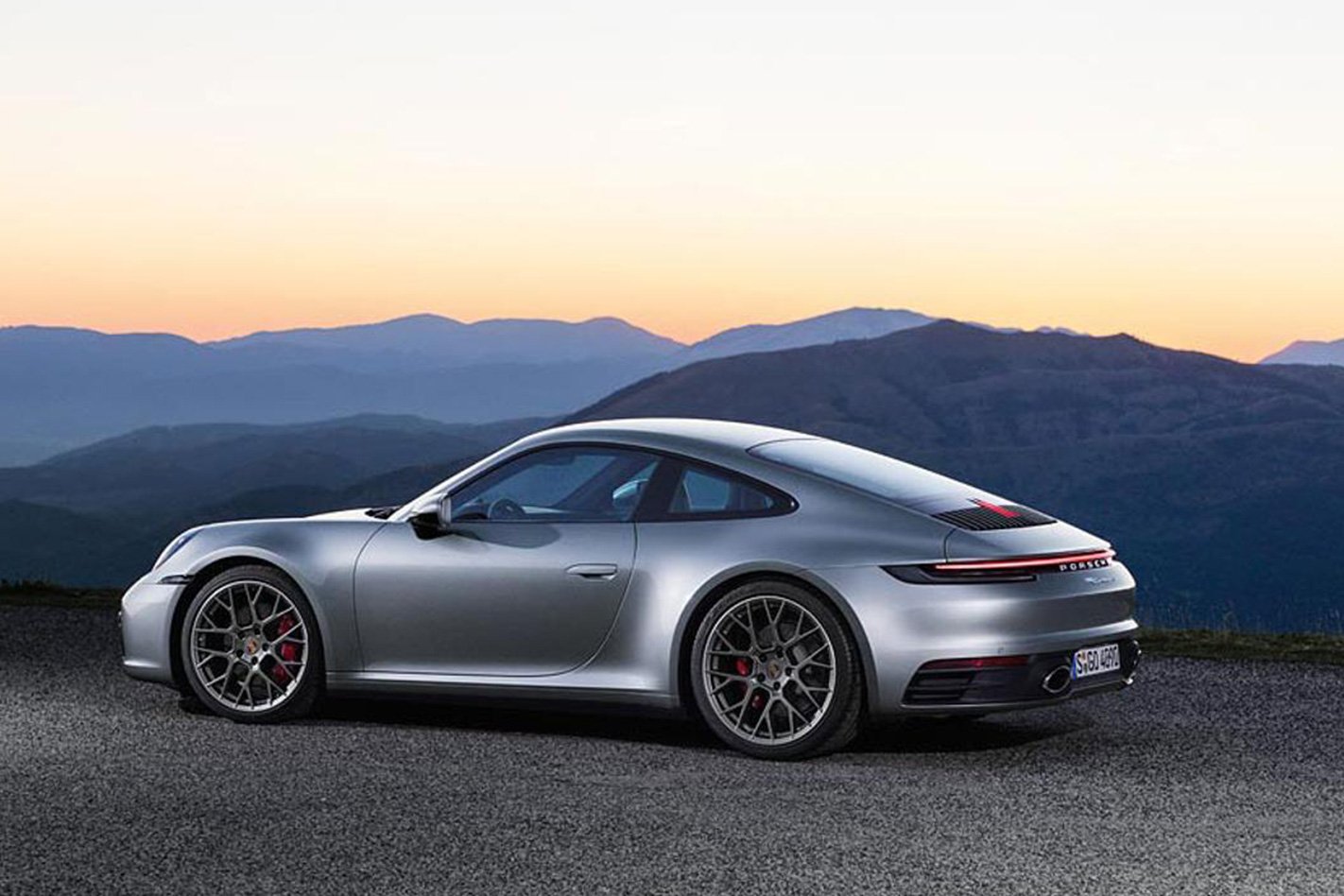
Wider tracks front and rear give the 992 broad but seductive hips. Porsche has also opted for larger diameter wheels at the rear. In the case of the Carrera S and 4S, this means 20-inch rims at the front, 21-inch at the rear. It’s as hard to spot in real life as in the photos.
Electronic Tech
Inside the 992 the large central touch screen is a window into more advanced infotainment, connectivity and driver-aid tech. Porsche is adopting many of the systems first seen in top-end Audis, like the use of digital map data to influence timing of the PDK’s shifts.
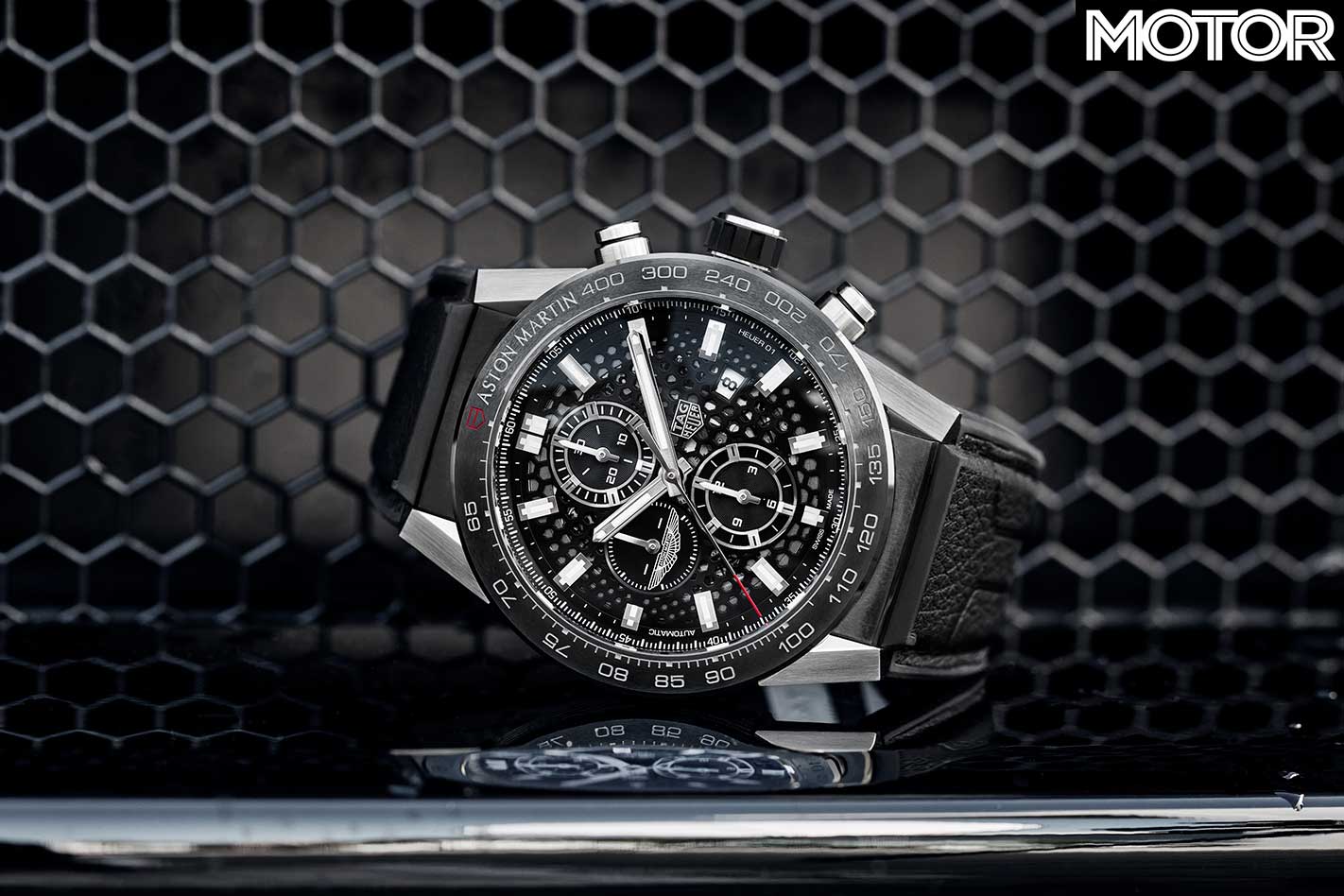
Aesthetics isn’t a necessity, you don’t need a coffee machine shaped like a V12 engine and a Casio wristwatch tells the time as well as a Tag Heuer, but you’d still want one, because aesthetics makes life a little more worth living.
Here are five cool car things that you don’t need, but you’ll definitely want.
1 – FEATURED “PRODUCT OF THE MONTH”: Tag Heuer Carrera Heuer-01 ($8450 from tagheuer.com) Celebrating a partnership between Tag Heuer and Aston Martin, the Carrera Heuer-01 chronograph is encased in a polished steel 45mm case and powered by a Swiss movement with a 50-hour reserve.
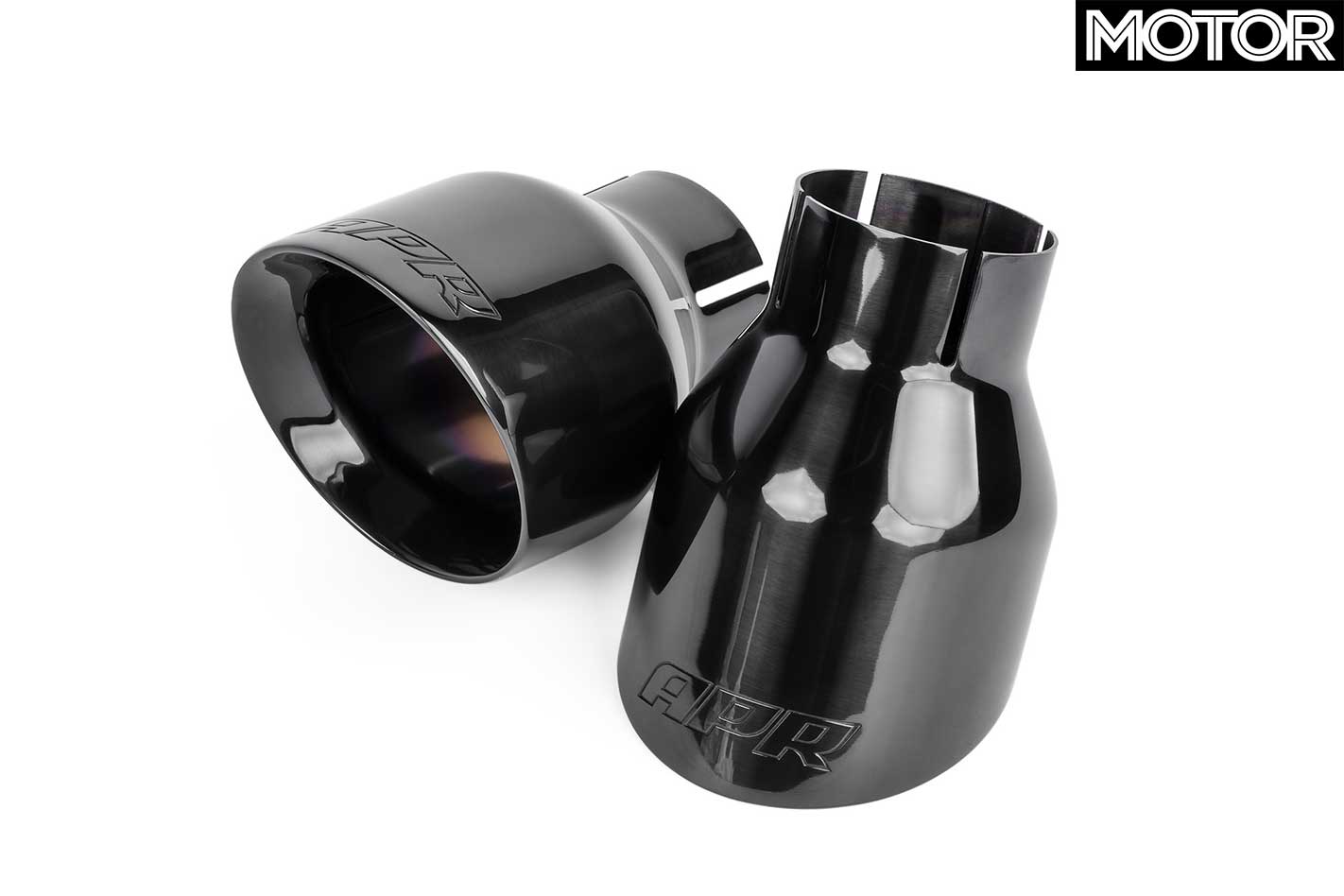
2 – Volkswagen Golf R exhaust tips ($350 from goapr.com.au) These removable exhaust tips for Mark 7 VW Golf Rs or Mk 3 Audi S3s come laser etched with the APR logo and are made from T304 Stainless Steel. They are seen here in Diamond Black finish.
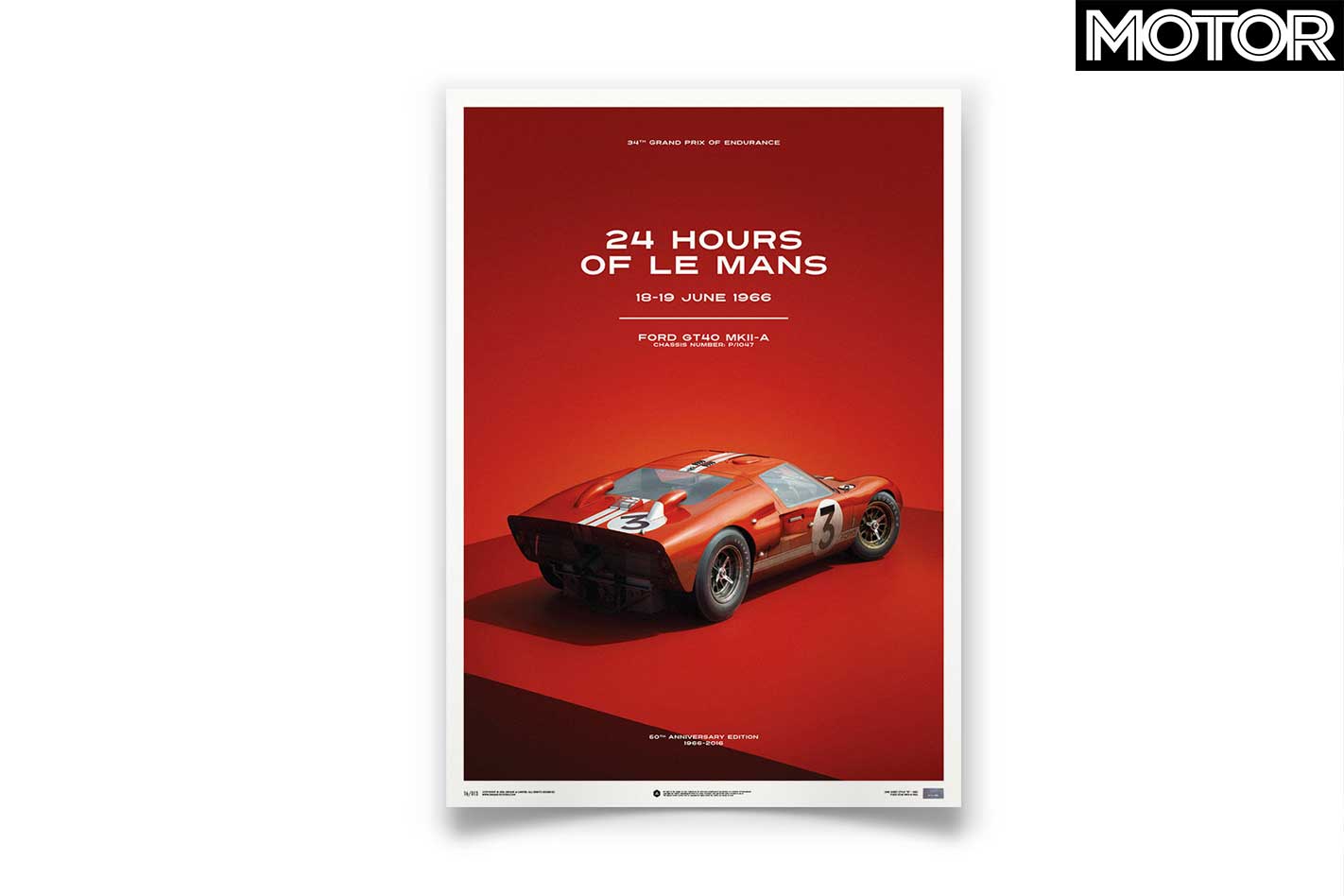
3 – Ford GT40 poster ($62 from automobilist.com) The Ford GT40 dominated Le Mans in the 1960s, now let it dominate your wall. This one-of-1000 limited edition print is sized 50cm by 70cm and comes printed on beautiful, thick 180gsm paper.
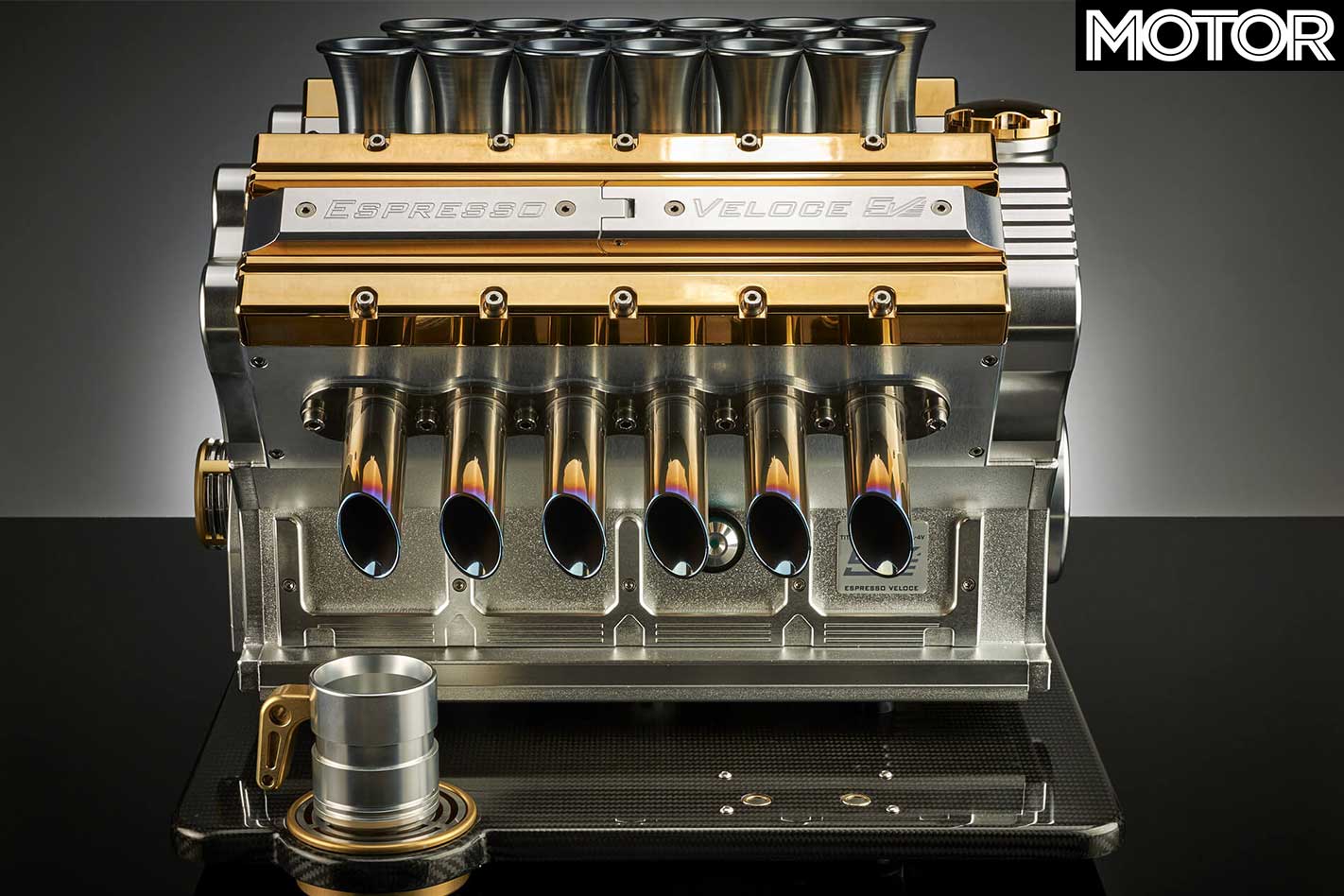
4 – V12 coffee machine ($16,000 from superveloce.co) Inspired by ’90s V12 engines, the Espresso Veloce Aurum is a pod-style machine, weighs 35kg and is made of stainless steel, alloy, titanium and gold plating. As beautiful as it is pricey.
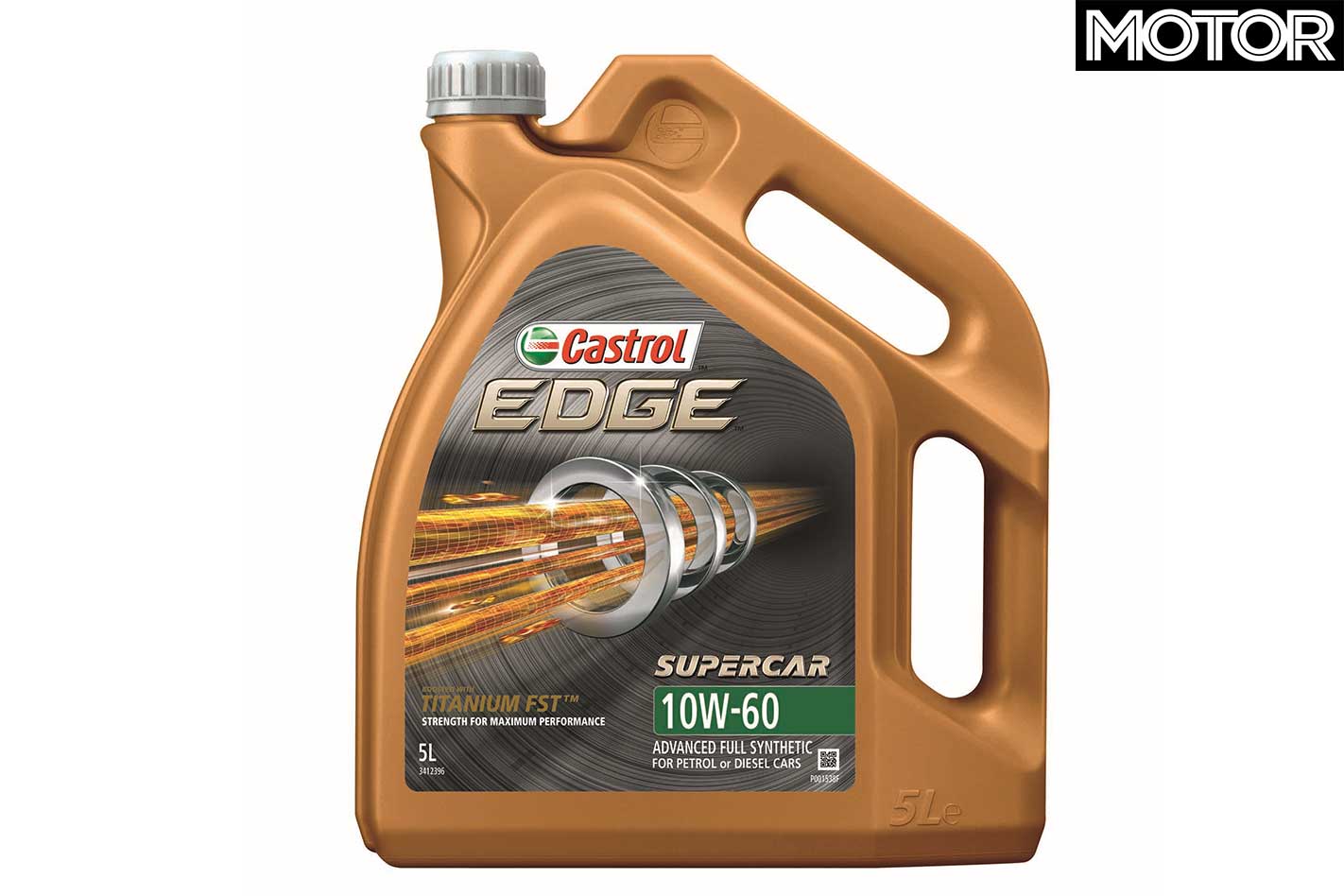
5 – Castrol Supercar oil ($78 from supercheapauto.com.au) Castrol’s new fully synthetic Edge ‘Supercar’ oil is aimed at high-end rides. The 10W-60 here is for Koenigseggs and BMW M cars, so refer to your manual to choose the right stuff.
It’s set to be one of the most hyped launches of 2019, and Toyota is trying to tick all the boxes to make sure the fifth-generation Supra sports car is ready for its worldwide debut in 2019.
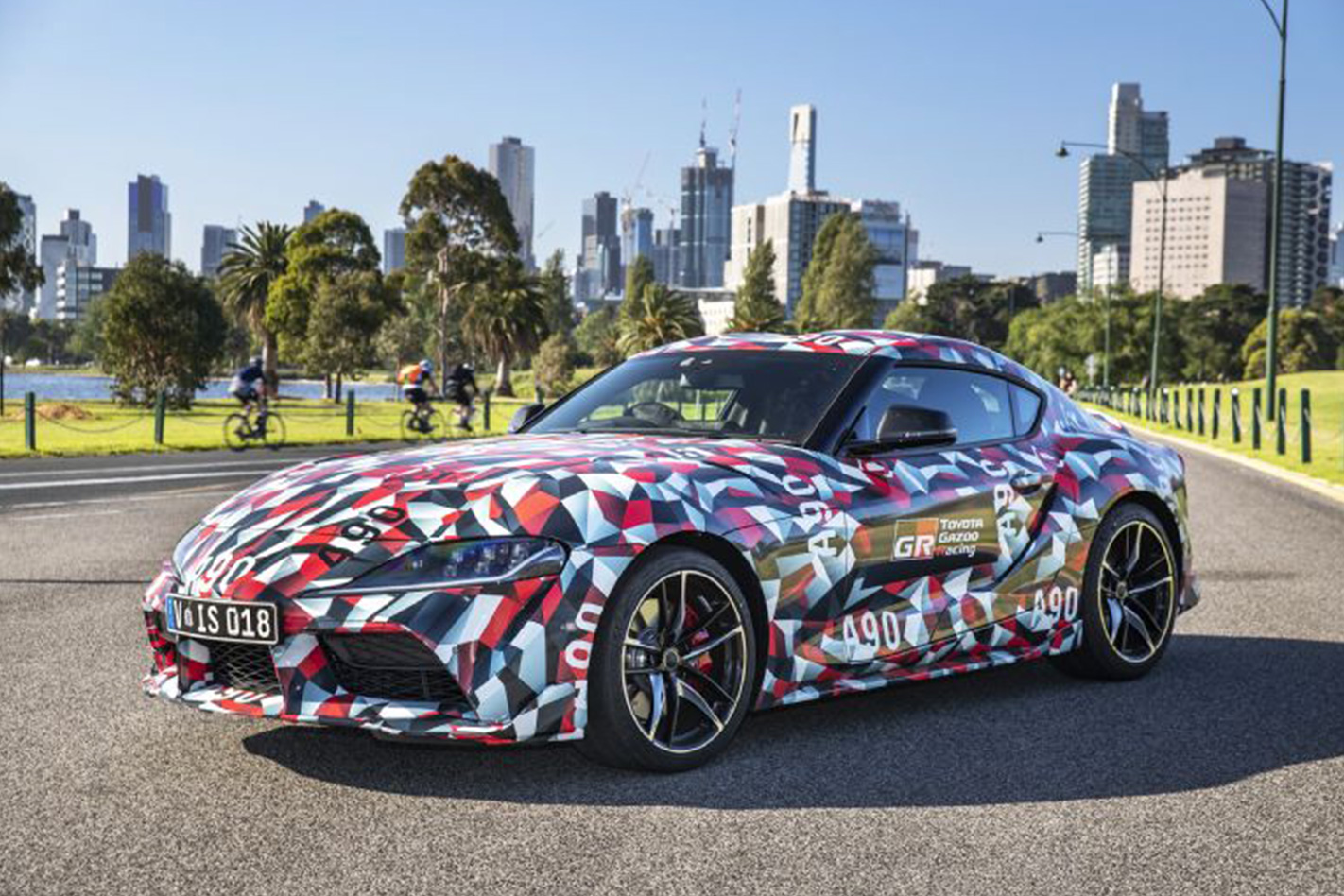
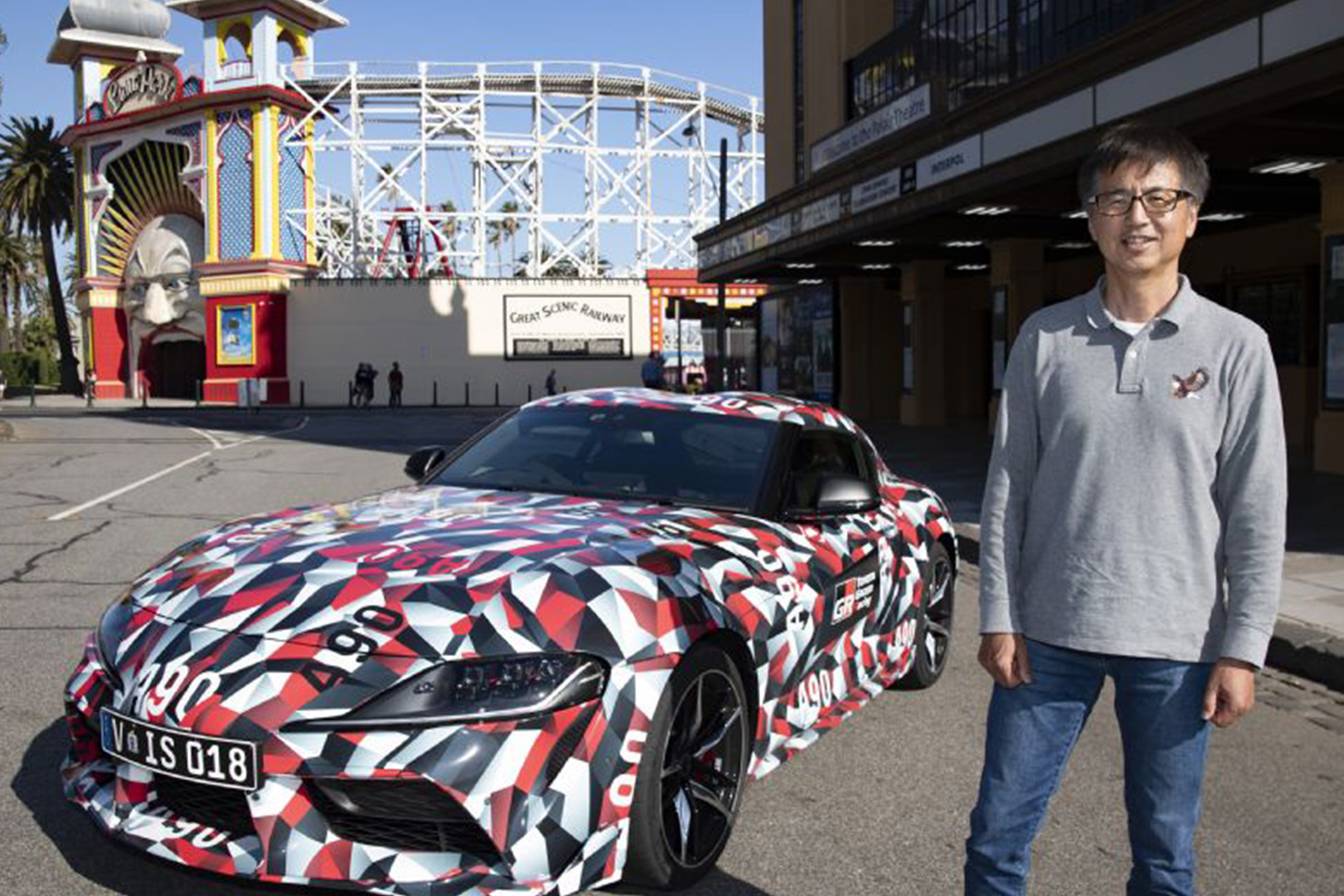
To that end, a pre-production version of the rear-wheel-drive two-door coupe was shipped to Australia earlier this month for what Toyota calls an “evaluation and suitability test,” under the watchful eye of the car’s chief engineer – and the father of the Toyota 86 – Tetsuya Tada.
The Great Ocean Road was used as part of the test loop, along with areas around Kinglake in Victoria, aboard an A90 pre-production prototype car wrapped in the Supra’s distinctive camouflage livery.
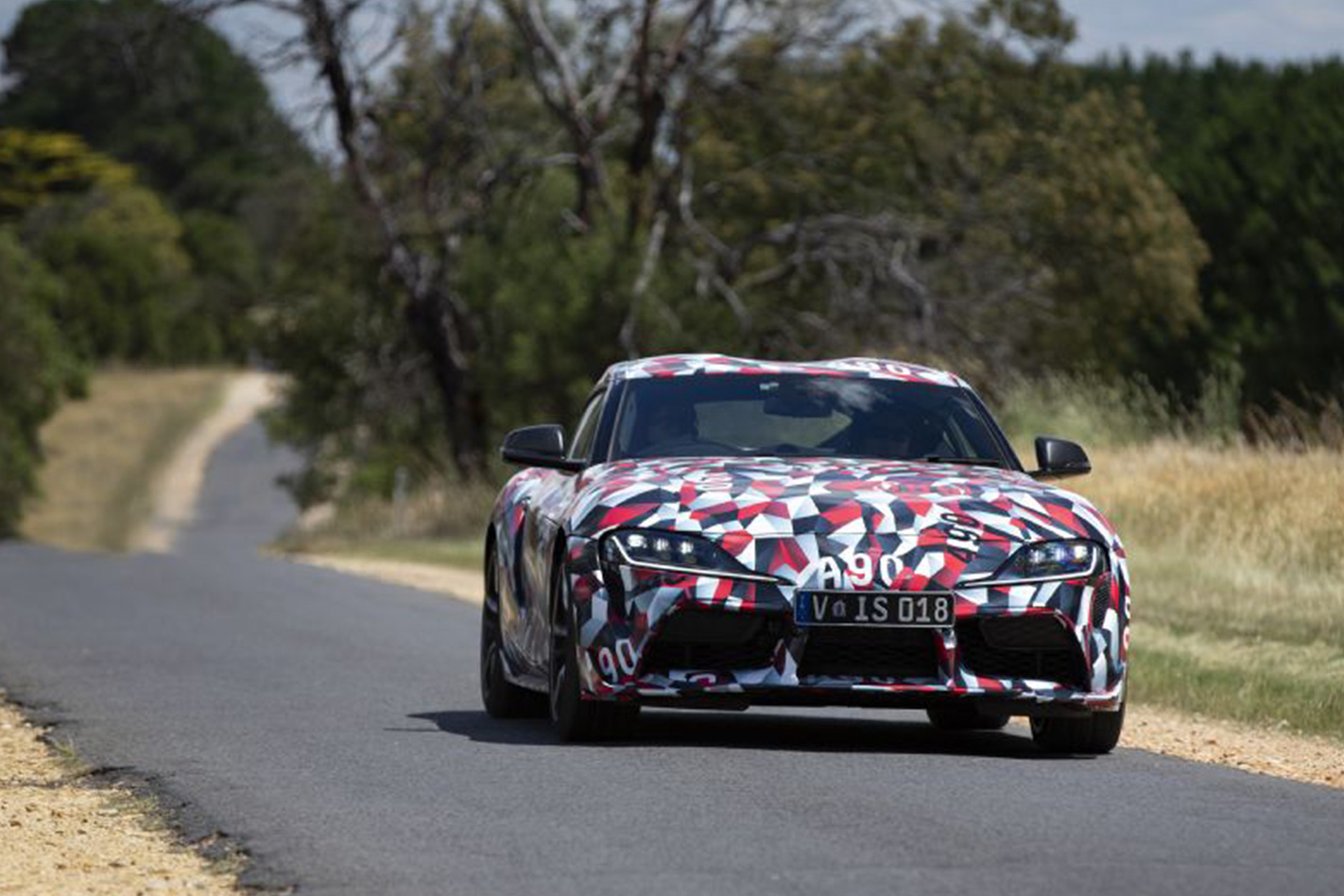
Given that the Supra – which is a co-development with the new BMW Z4, and a natural rival to the Ford Mustang and the ageing Nissan 370Z – will have been ‘signed off’ from an engineering standpoint for some time, the only changes that Toyota could realistically make are in areas like stability and traction control programming.
Mr Tada, who has visited Australia on numerous occasions as part of the Toyota 86 program, said he had been keen to use Australian roads to confirm what he calls “performance targets” for the Supra and to make sure it would satisfy Aussie customers.
“We know your drivers tend to favour strong levels of body control and steering feel, particularly for your undulating road surfaces,” Mr Tada said.
“It’s vital the driver feels confident during rough-road cornering and that the car is very stable under braking. Speedo accuracy is also very important.
“Working on aspects of handling and other details here in Australia allows us to make refinements that will result in a better car right up until production starts in the first part of next year.”
Specs are still scarce, but we do know that the Supra – which will be built in Austria – will be powered by a BMW-sourced 3.0-litre turbocharged inline six-cylinder petrol engine mounted in a traditional ‘north-south’ configuration, with drive sent to the rear wheels only.
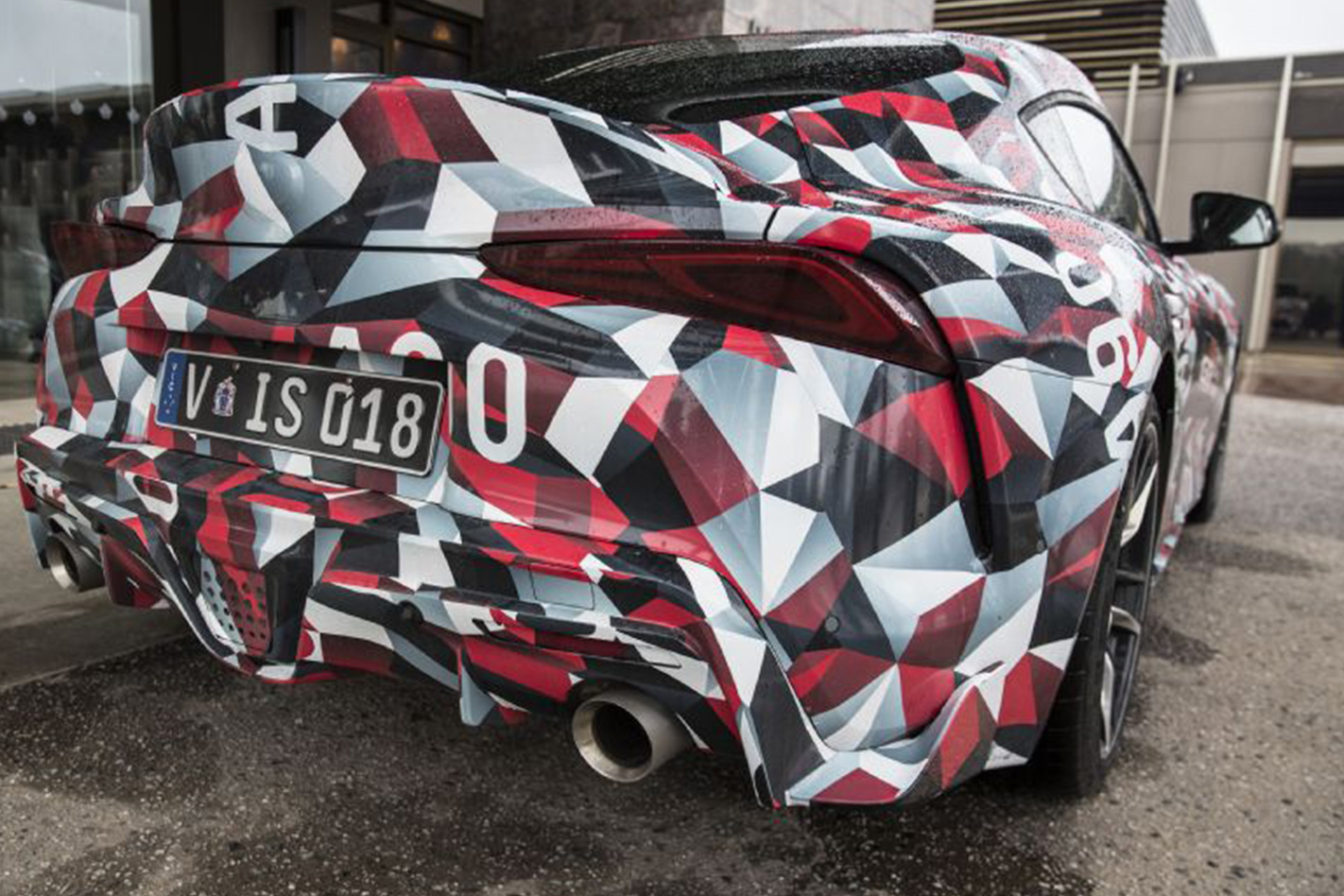
An eight-speed auto has already been previewed along with an electronically locking rear diff, though it’s not yet clear whether a manual variant will make it down under.
It’s expected that the Supra, which sits above the 86 in terms of size and spec, will also offer a variety of engine tunes from mild to wild.
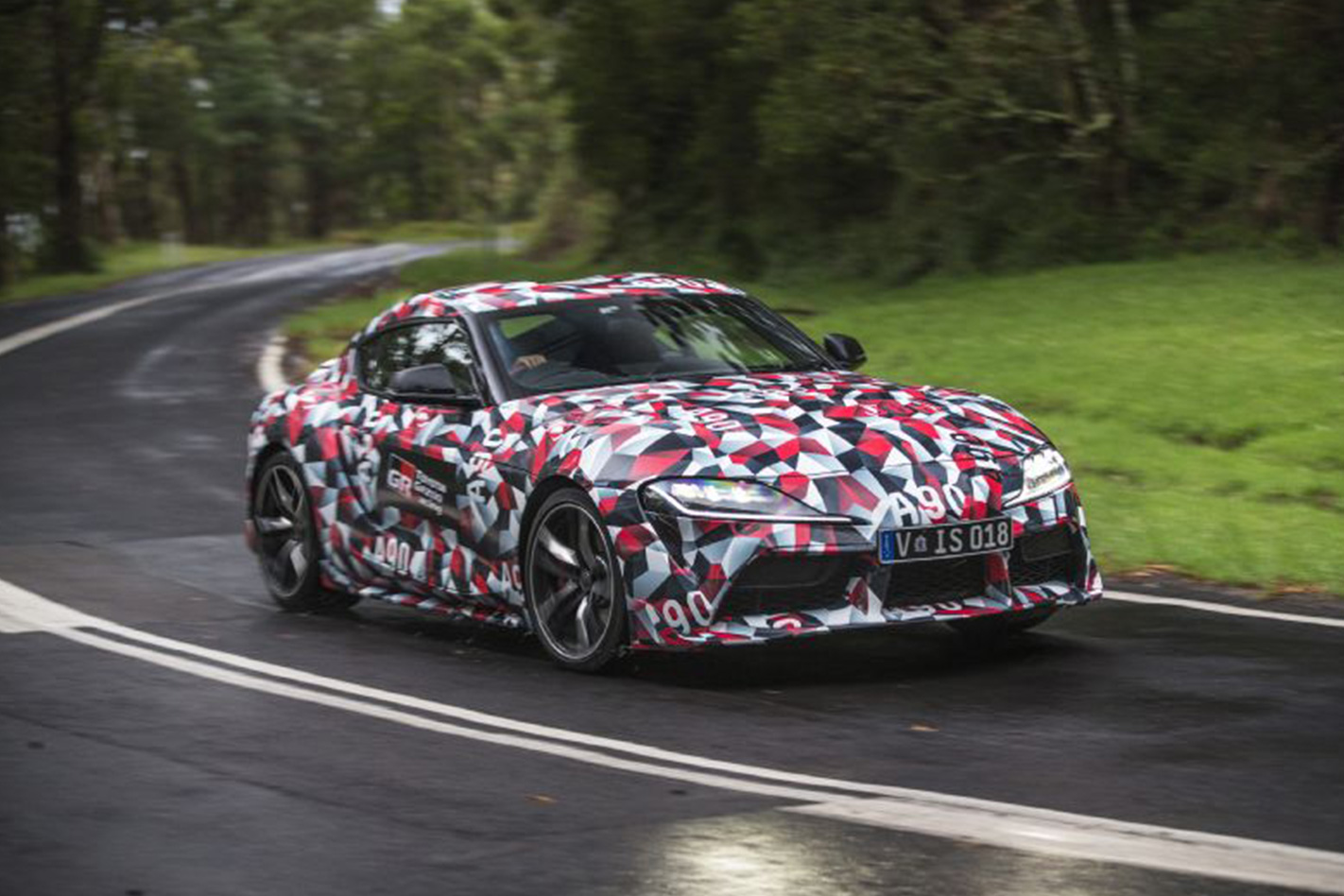
The Supra has had one of the most drawn-out launches of recent times, and it will finally burst onto the world at the Detroit motor show in January.
A cargo ship containing a large number of Volkswagen and Skoda cars is just one vessel that’s been turned away from Australian shores, thanks to an infestation of stinkbugs.
The Triumph was turned back by the Australian Department of Agriculture and Water Resources two weeks ago, after a nest of black mamorated stink bugs (or BMSBs) was found aboard. The ship had originated in China and had passed through several ports, including Indonesia.
It’s not just VW who is affected, either. Cars and other mechanical equipment sourced from Europe are now being treated to kill the bugs prior to being loaded onto ships, but WhichCar understands that other ships have also been parked or returned to port thanks to onboard infestations.
Brands like Mercedes-Benz, BMW, Kia and Hyundai source various vehicles from Europe. It’s not certain yet whether their cars have been caught up in the widening net.
Australian agricultural officials say that the bug destroys a wide variety of crops, and has the potential to “wreak havoc” on Australia’s $60 billion agricultural industry.
Two nests have already been found in Australia, which has resulted in more scrutiny for ships from Asian ports
Volkswagen Australia’s chief executive officer Michael Bartsch can only shake his head at the development, which tops off a tough retail year not just for VW, but for the industry as a whole.
“I’ve don’t think I’ve seen a year where there’s been so many variables,” the industry veteran – who has worked for Porsche and Nissan in global management roles – told WhichCar in a wide-ranging chat.
“Here’s a good example; we just had a ship turned around because of something called the stinkbug, and on board there were 1500 cars that we were planning to have on sale this month between our brands.
“That ship just got turned around and sent back to Indonesia because of quarantine issues. How can you plan for that?”
Mr Bartsch said that there’s no one reason why car sales in Australia are set to fall by more than 10 per cent from 2017 figures, noting changes in the financial sector due to the Royal Commission into the banking sector and housing price corrections amongst the possibilities.
“It’s a consequence of a lot of things,” he said. “That’s what has made the year so challenging – you can’t put your finger on one thing.
“Look at the (sales) figures in November; the passenger vehicle market was down 21 per cent year on year. Twenty-one per cent! That’s not just a little change, that’s a fall off a cliff.”
“The biggest focus for everyone here is ‘where does the [2018] market really end?’ When we started planning this year, we were talking 910,000-920,000 passenger vehicle [sales per year] market – your hatches, sedans and SUVs – where it could be 880,000 or 876,000… that’s a material change that has to be accounted for in the short term. It’s a big change in our environment.”
At the end of November, though, VW virtually matched its 2017 numbers, posting just over 53,000 sales.
“When you look at our metrics, we’ve done very well,” said Mr Bartsch.
Has your new car been delayed due to shipping issues? Let us know in the comments below!
