
SCOTT McLaughlin and his flying Ford Falcon FG X Supercar have been unstoppable four races in a row now.
The Kiwi DJR Team Penske driver swept both races at Barbagallo Raceway in Perth, following up his two race wins at the previous round in Phillip Island.
The last time a DJR Team Penske driver won four races in a row? James Courtney in 2010. He went on to win the championship that year.
Tyres were the major talking point in Perth, as the track’s surface tore the racer’s Dunlop rubber to shreds – thankfully there were no blowouts.
Late-race strategy became vital, as fresh rubber allowed racers to climb multiple positions in the closing laps.
McLaughlin dominated Saturday’s race, winning from pole, while Mark Winterbottom and Shane van Gisbergen stormed through the field to round out the podium positions.
A new for 2018 qualifying format meant both DJR Team Penske Fords started at the rear half of the field for Sunday’s racing.
With both Red Bull Holden Racing Team ZB Commodores locking out the front row, it seemed like Sunday was going to be redemption for Shane van Gisbergen and defending champ Jamie Whincup.
Drivers started the final day of racing expecting to have wet weather boots strapped to their cars, but by time the race start arrived, the track was dry and sun shining.
Starting from 19th on the grid, McLaughlin used a cunning three-stop strategy to move the lead of the race following final pit-stops.
However, it wasn’t all strategy. McLaughlin’s quick reflexes and skill helped him avoid a first-lap melee which took his teammate Fabian Coulthard out of serious contention.
Prior to the race start the young Kiwi had joked to his team engineers that he’d win from so far back on the grid but told TV cameras after the race that deep down “I didn’t bloody think I’d do it!”
Erebus Motorsport’s David Reynolds finished second, despite touring the sand trap just seconds before taking the chequered flag.
The 11th hour mistake at the final corner had commentators and fans alike baying at the drama.
“It was a pretty dick move, last corner, last lap,” Reynolds said post-race, chastising himself.
If McLaughlin’s run from 19th to first was heroic, Craig Lowndes’ race was utterly titanic, with the evergreen veteran starting second-last in 25th, battling his way onto the podium with just two laps remaining.
James Courtney finished fourth, with van Gisbergen and Whincup line astern behind him.
The racing on the short, dusty Barbagallo circuit was entertaining all weekend, with Supercars once again cementing itself as the premier touring car championship in the world for racing.
McLaughlin now leads the championship by 158 points ahead of van Gisbergen. The next round of the championship is at Winton on May 18-20.
TWO-time Formula 1 world champion, Fernando Alonso, has won on his LMP1 debut in the World Endurance Championship.
The Spaniard, along with his #8 Toyota teammates Sebastien Buemi and Kazuki Nakajima, claimed a dominant victory, leading from pole until the chequered flag.
Alonso’s debut victory in WEC was aided when the sister #7 TS050 LMP1 hybrid, which was originally meant to start from pole, was penalised and began the race from the pitlane, one lap down.
Fighting with one arm tied behind their back, the #7 Toyota drivers of Kamui Kobayashi, Mike Conway, and Jose Maria Lopez were on the lead-lap by half-race distance, and eventually finished in second place.
The quickest non-hybrid LMP1 was two laps down on the Toyotas. It seems that elusive Le Mans victory is all but guaranteed for the Japanese manufacturer this year.
Ford claimed first blood in GTE, beating Porsche to the line in a hard-fought race.
Aussie’s Matt Campbell and Alex Davison finished 25th and 30th respectively.
The race was punctuated by two heavy crashes at Spa’s infamous Eau Rouge-Radillion complex, with Harry Tincknell’s Ford GT crashing head-on into the barriers early.
Matevos Isaakyan in the #17 SMP Racing LMP2 car then made heavy contact at the five-hour mark, prompting a safety car and a tense fight to the flag.
Alonso’s victory at Spa-Francorchamps is his first win in the Belgian forest since his Formula 3000 days, making it 18 years between drinks.
The McLaren F1 driver is moonlighting in the World Endurance Championship this year as he chases the elusive ‘Motorsport Triple Crown’, of winning the Monaco Grand Prix, Indianapolis 500, and 24 Hours of Le Mans.
Having attempted the Indianapolis 500 last year, Alonso has signed on as a factory Toyota driver in WEC and will have two cracks at the 24 Hours of Le Mans during the 2018/19 Super season.
Juan Pablo Montoya is Alonso’s main living rival in achieving the feat, having claimed victories at both the Monaco Grand Prix and Indianapolis 500 in his career. The Colombian now races in the IMSA US sportscar series.
Graham Hill is the only driver in history to have won the Triple Cown.
Sitting pretty by the side of the road, the Miami Blue Porsche 911 GT3 quietly ticks as its metal components cool.
A persistent wind sweeps across a barren, almost treeless landscape, which looks more like somewhere north of England than the sunburnt country. There’s not a human structure for miles and we haven’t seen another car in what feels like hours. Falls Creek in the Victorian High Country, at sunset, in summer, is an isolated, empty place.
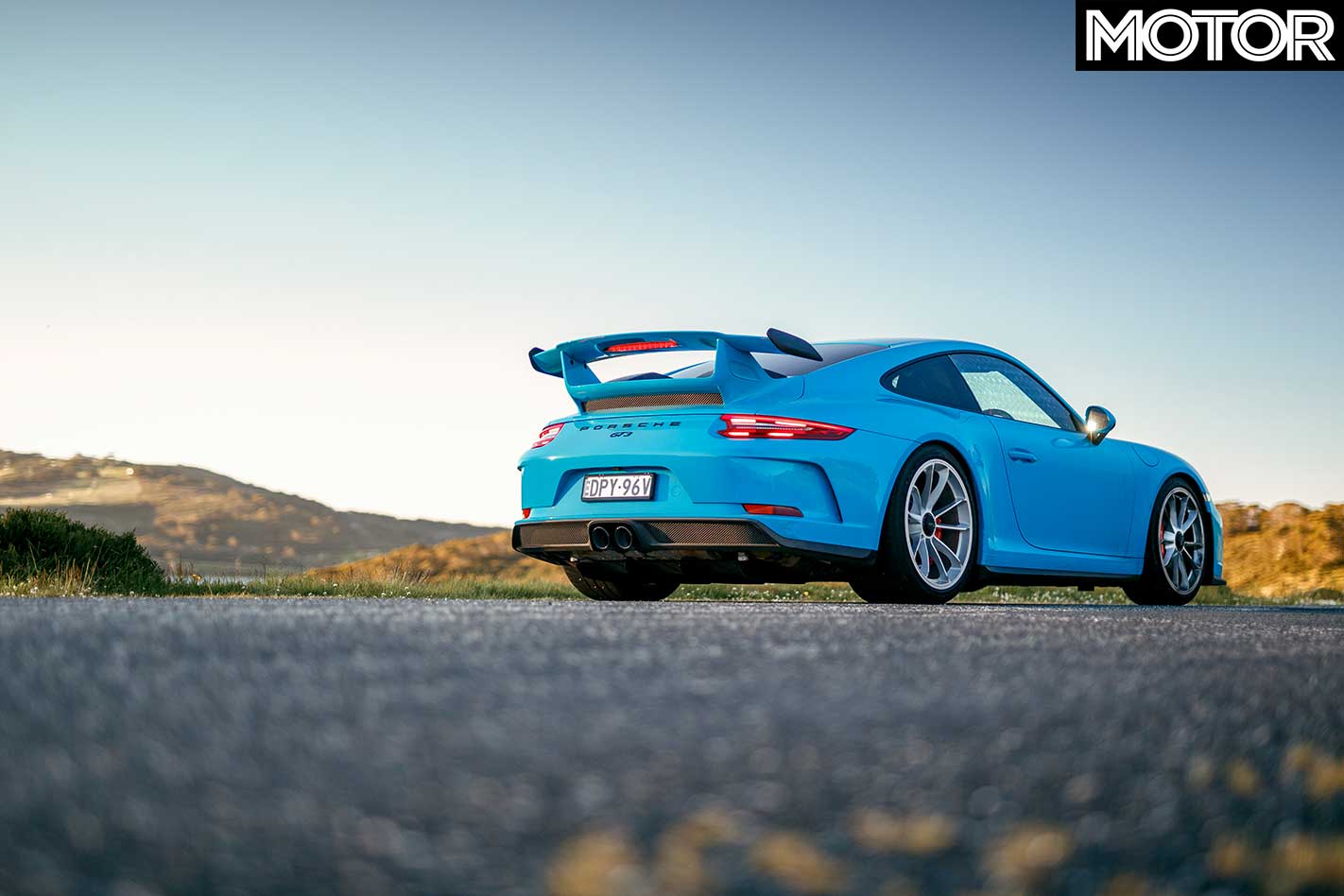
I’d just experienced the explosive new 4.0-litre engine in the 991.2 911 GT3 in all its 9000rpm fury, but also the punishing lateral grip from the super-soft Dunlops, the PDK so responsive it’s like it’s spliced directly into your brain, the flat-six howl loud like a Carrera Cup car.
This part of Australia is nirvana for driving roads. Hundreds of kilometres of undulating, twisting bitumen stretch across a unique Australian alpine landscape, as if thrown over the mountains in giant strings, forming into roads as they fell. You’ll lose 30 minutes of your life the first time you find this area on Google Maps.
If you could take one car, you surely wouldn’t shirk at the updated 991.2 GT3 – a car that does strange things to the soul. Built for drivers, the GT3 continues to evolve. And improve.
For 991.2, the big changes are engine, downforce and the glorious reinstatement of a manual transmission option.
Under the new engine boot-lid ram air scoops sits an even more muscular naturally aspirated flat-six, stroked from 3.8 to 4.0 litres, with a ridiculous 13.3:1 compression ratio (the highest of any car on sale today), a beefed-up, new dry sump oil system with seven scavenge pumps, not unlike the one you’ll find in the 919 Hybrid LMP1 car.
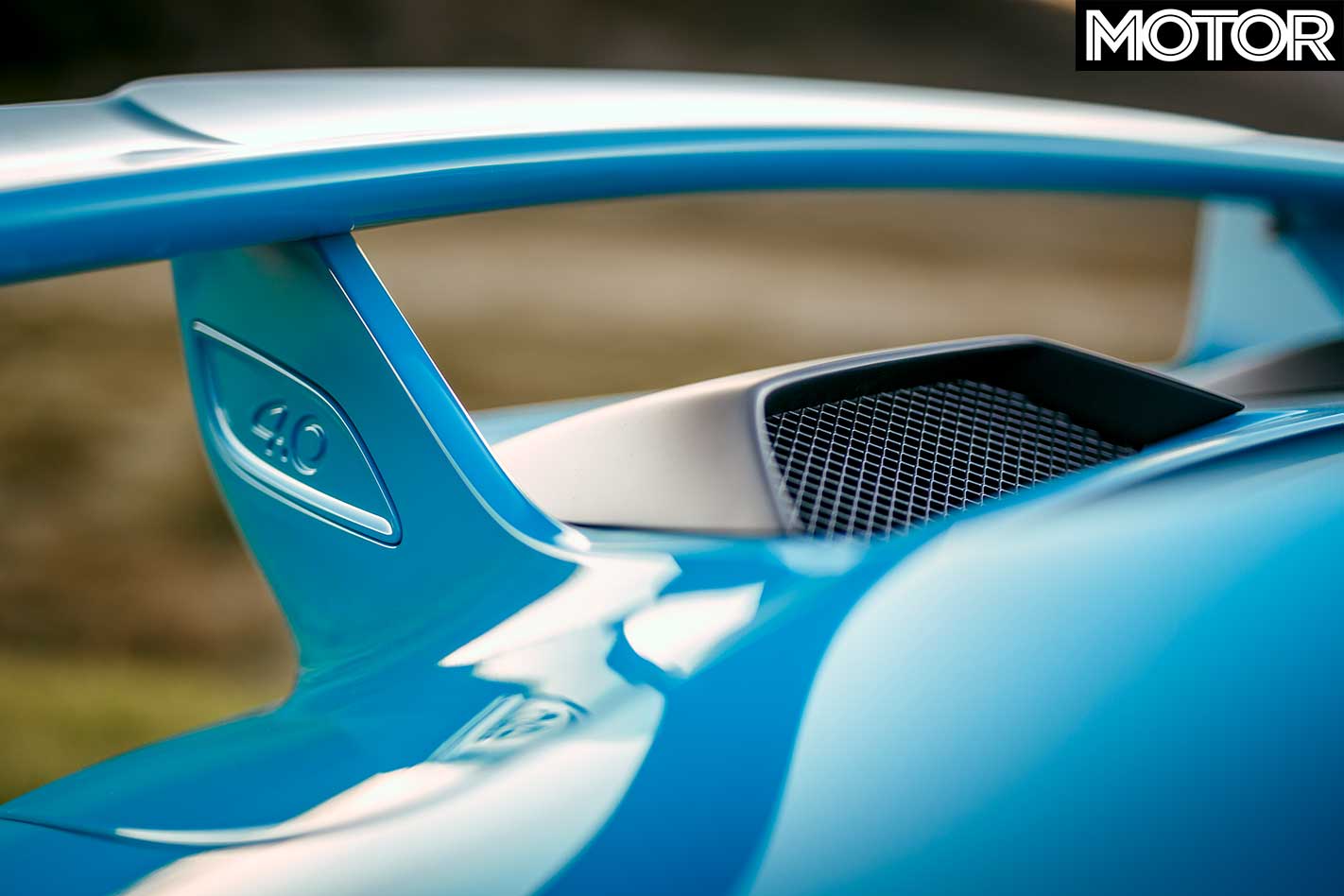
There’s a new crankshaft, no more hydraulic valvetrain and a new two-stage ‘flapper’ variable intake system for better air delivery no matter the rpm.
The embarrassing engine failures and fires of the first 991 GT3s have led Porsche to build this engine, something that’s bulletproof. While its 368kW and 460Nm are identical in output to the previous 991 GT3 RS (increases of 18kW/20Nm on the outgoing ‘base’ 3.8-litre GT3) Porsche says this new 4.0-litre unit is a very different animal.
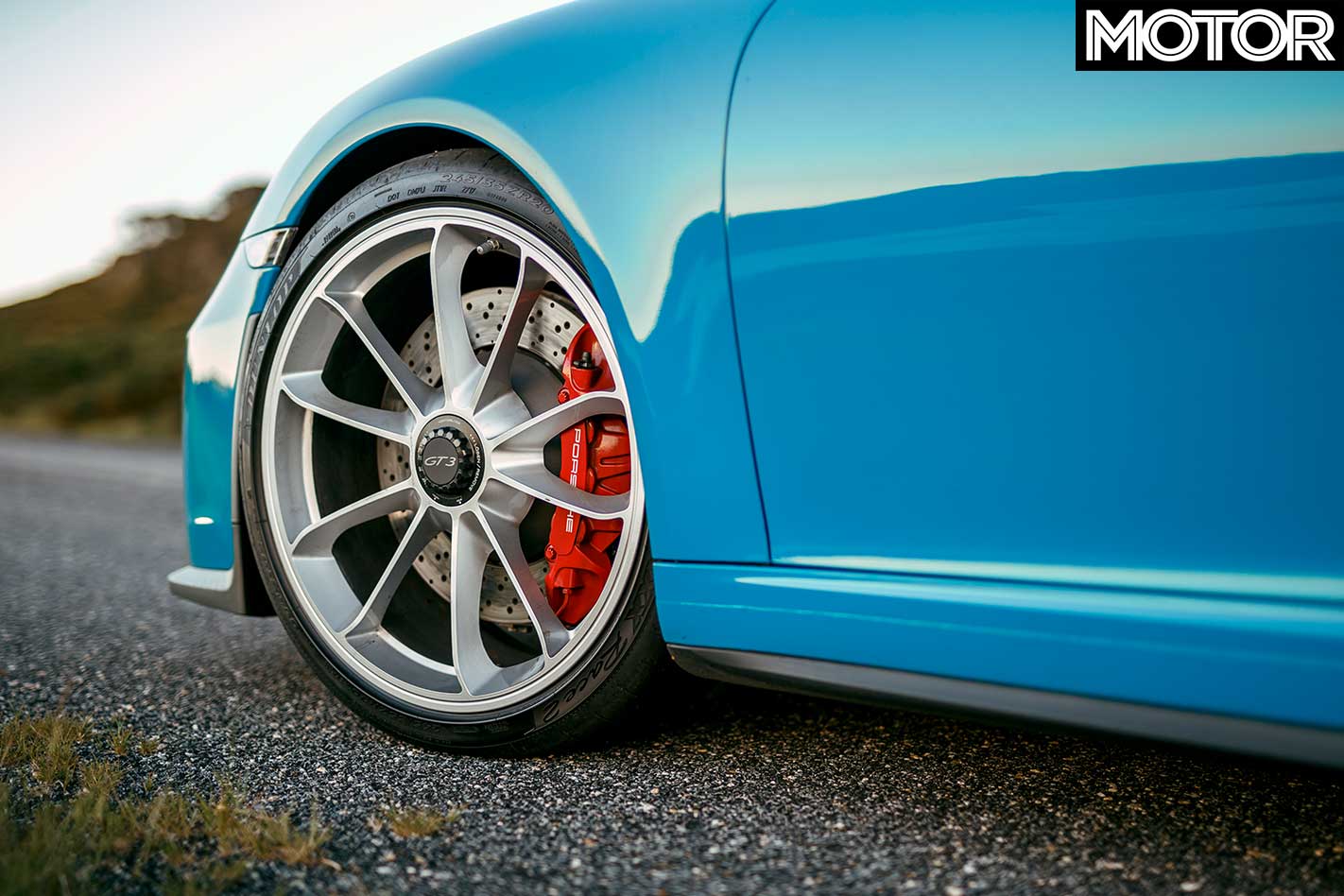
Porsche didn’t just stop at the engine, naturally. There are new calibrations for PDK and the all-wheel steering, restyled front and rear bumpers (which are an improvement to these eyes), subtle suspension tweaks and a revised Michelin Pilot Sport Cup 2 tyre (although our test car is fitted with Dunlop Sport Maxx Race 2s).
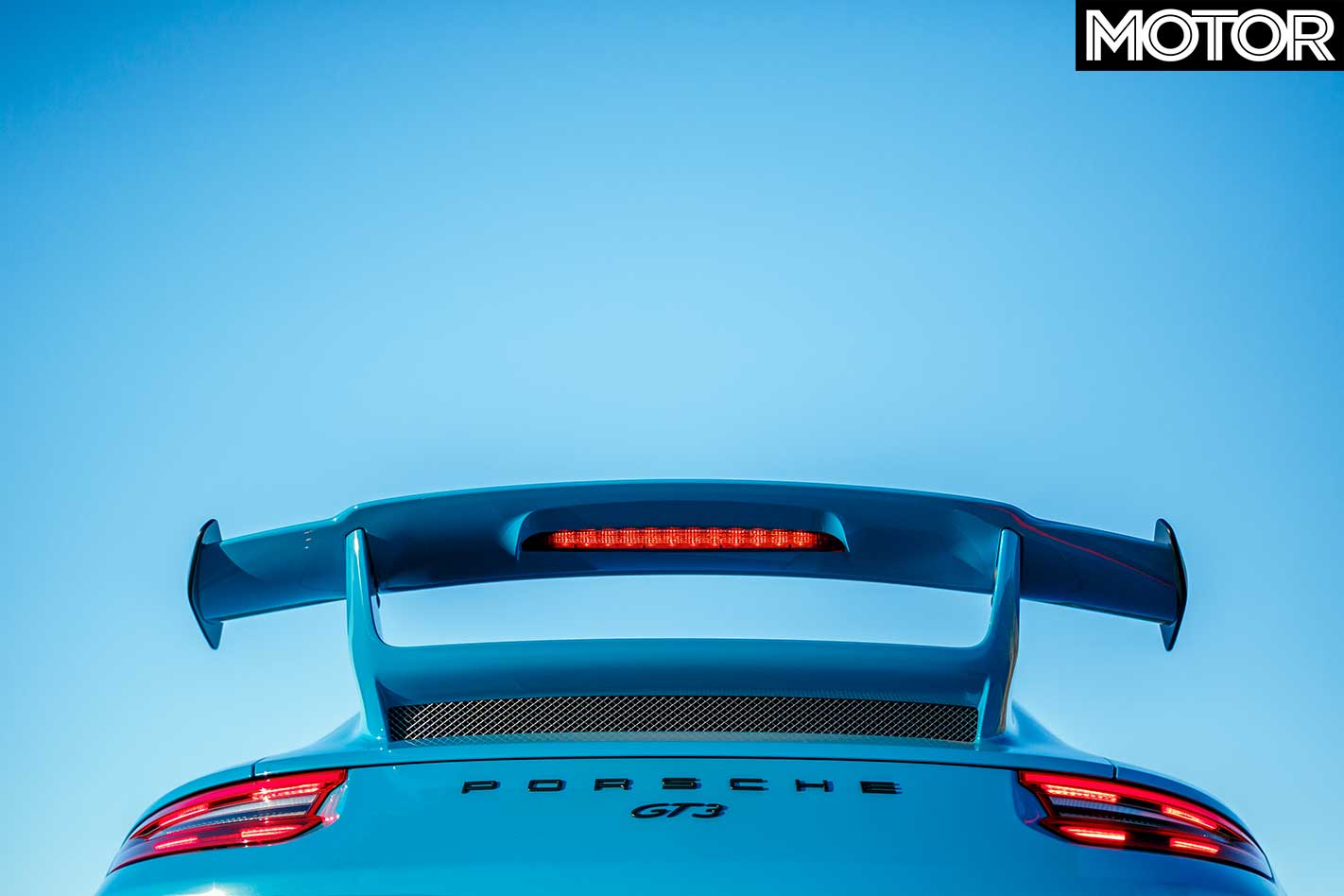
On the downforce front, the rear wing is mounted 20mm higher and further back to give the 991.2 GT3 around 20 per cent more than its predecessor – or about the same downforce as a 997.2 RS.
All this combines for a huge reduction in Nurburgring lap times. Where the outgoing 991 GT3 did a blistering 7:25 – four seconds quicker than a Carrera GT – the new 991.2 GT3, thanks to its extra grunt and downforce, is capable of a 7:12 lap, claims Porsche. Or a difficult-to-believe eight seconds quicker than the 991 GT3 RS.
Although the old RS will still shade the new GT3 in a straight line, no doubt helped by its widebody Turbo rear guards housing 918-spec 325mm rear tyres – compared to the 991.2 GT3’s Carrera body and 305s, carried over in width from the 991 car. We’re talking 3.3sec versus 3.4sec to 100km/h, 7.1sec versus 7.3sec to 160km/h, 10.9sec versus 11.0 to 200km/h.
But basically, the new GT3 is an RS-fast car without the audacious rear wing, vents and decals. In PDK form it weighs the same as the outgoing 991 GT3, 1430kg.
The return of a six-speed manual gearbox, the same Getrag unit first deployed in the 911 R, is huge news for purists, for obvious reasons. And tacit acknowledgement from Stuttgart that they misread the market by ditching it in the first place. It’s also 17kg lighter than the PDK, which is the transmission fitted to our test car today.
We have an Aussie test of the manual 991.2 GT3 in the pipeline but for now, there’s no denying the lightning-fast PDK will still be the pick for many GT3 owners.
Having rearranged the racing harness so as to not get a hockey-puck-sized buckle in your nether regions, as you fall into the GT3’s deep bucket seats you notice that its interior is a place of business.
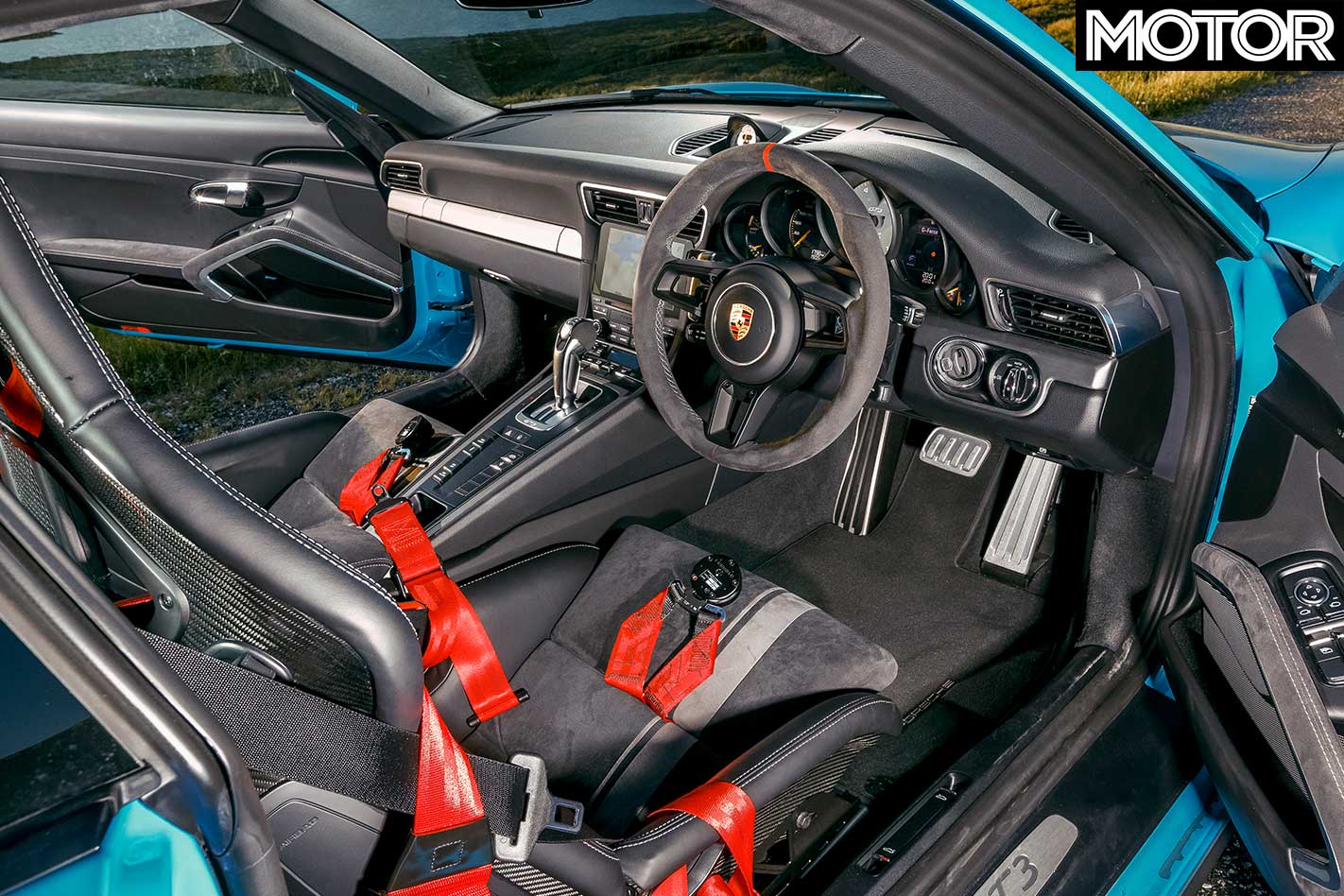
Although you sit low – with a very vertical steering wheel ahead of you inviting your hands to nestle into the Alcantara at nine-and-three – forward visibility is excellent. In the side mirrors you look over achingly gorgeous rear hips, catching sight of the rear wing’s endplates.
Glance behind the seats and there’s the gorgeous satin black half cage off which red racing belts reach into the carbon-backed fixed buckets. Your passenger will find it humorous that they have two sets of seat belts and a fire extinguisher at their ankles.
But if there’s one thing that’s certain, it’s that sitting in a 911 GT3, with its almost perfect driving position, feels oh-so-right.
In front of you, very excitingly, a large central tachometer reads 9000rpm and hints at what you’re in for. As you insert the chunky key fob into its cradle and turn it, the GT3 clatters to life, settling to a busy, gravelly idle.
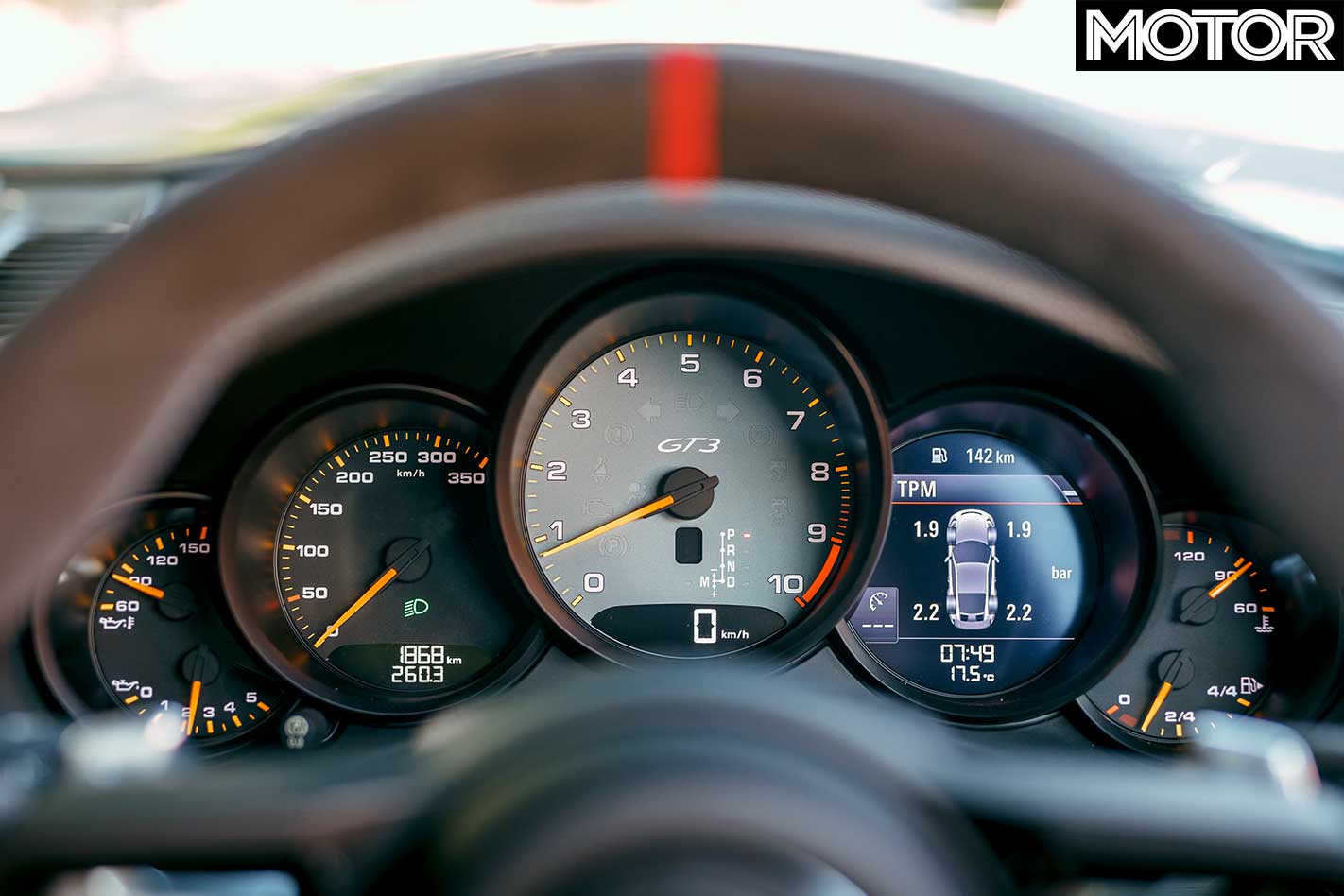
Around town and at low engine speeds, the GT3 is behaved – the PDK smooth, the ride satisfactory. The tyres roar at highway speeds on coarse chip bitumen but you could daily-drive the GT3, if you were willing to ‘put up with it’ a little bit.
Long distance touring is even possible, but at the end of, say, 500km, you’ll know you’ve just done it in a GT3. As we discovered driving it up the Hume Highway from Melbourne, to Winton Motor Raceway.
If we had just thrown you the key, we would expect nothing less than for you to drive straight to the nearest track day. Which is basically what we have just done.
Parking between Toyota 86 Racing Series cars and other punters in their BMW M3s et al, the GT3 is not the slightest bit subtle. “You can go out in both sessions,” grins Charlie, Winton’s track day babysitter.
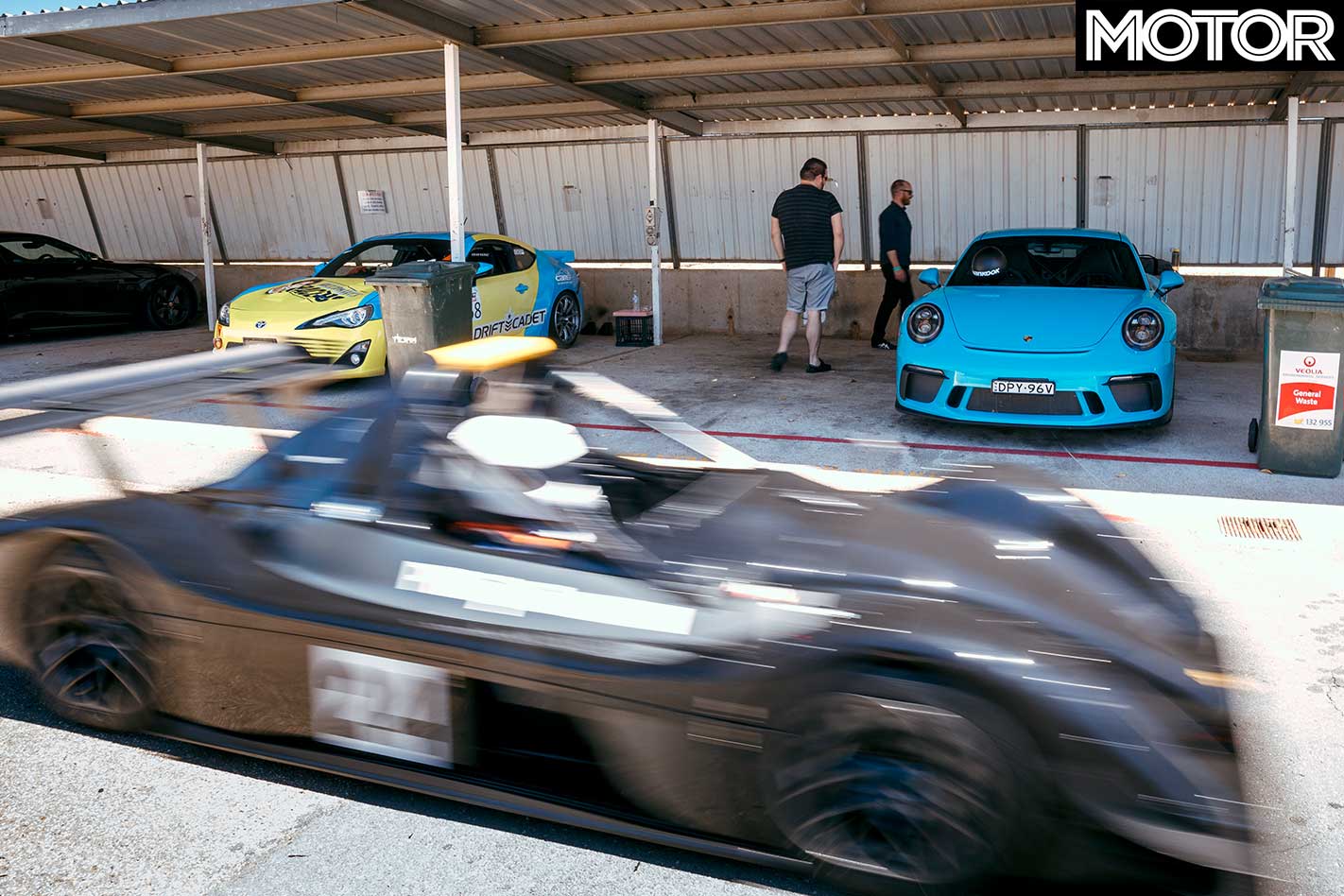
“You’ve got a cage and harness, so you can do both race cars and road car groups”. You beauty.
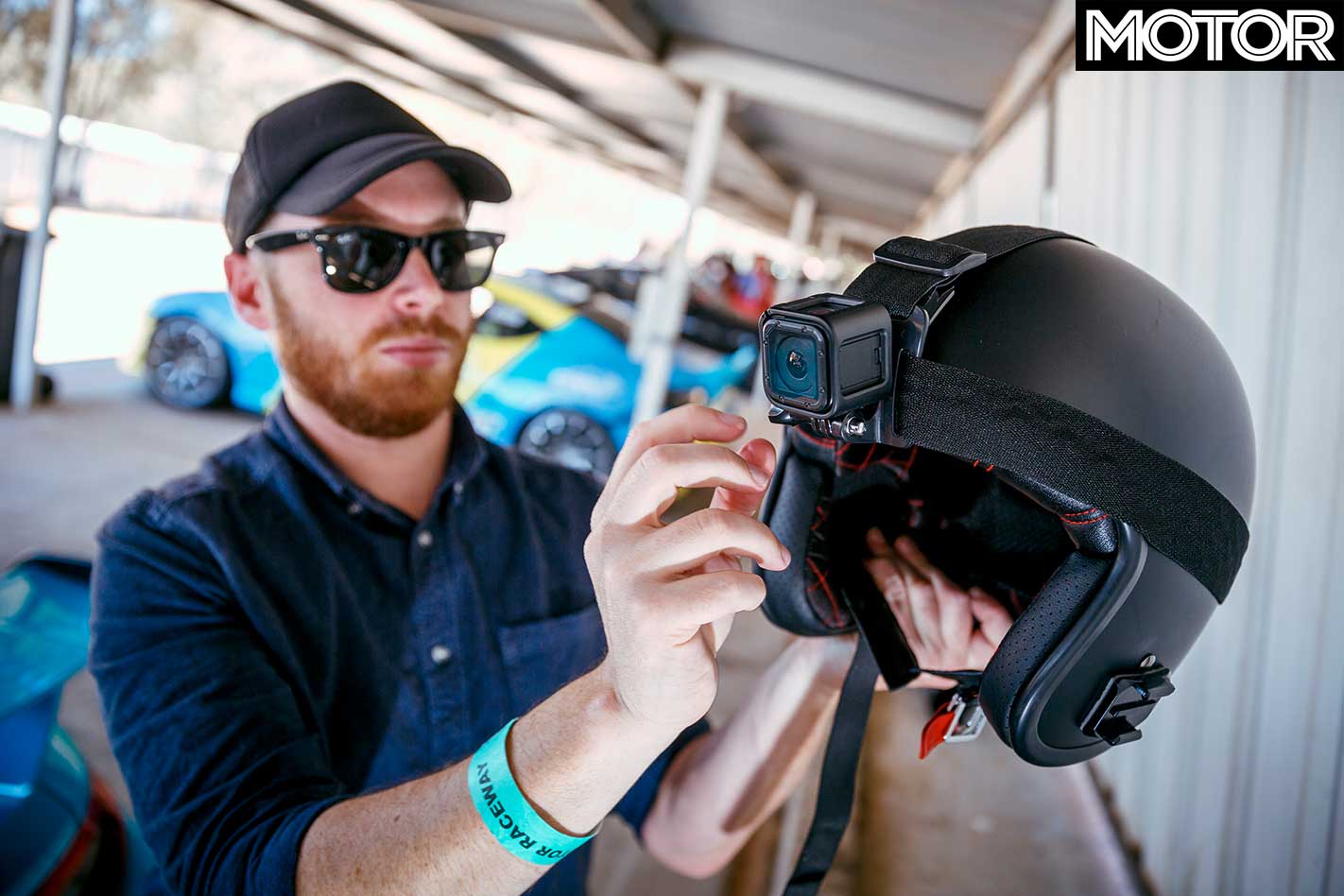
Donning my matte-black open-face Bell helmet which never fails to entertain my colleagues, and strapping myself in with the red harnesses, it’s time to head out on to the track.
It feels like I am in a carpeted race car, as rocks audibly tickle the car’s underside and like there is nothing whatsoever obstructing the noise coming from the tailpipes. With PDK knocked into manual mode, in Sport Plus, and the dampers soft, it’s time to build up to maximum attack.
The first thing you notice leaving pitlane is… this car has explosive response and acceleration that would make the previous 991 GT3 feel a little torque-less from the lower revs, and one that matches the 991 GT3 RS but with a roaring 9000rpm redline. (The 991 RS had a reduced 8800rpm redline.)
In first and second gears, you have to feed the throttle in a bit more carefully than you did the previous GT3 – there is a new eagerness to turn the cold rear tyres in the lower gears. And winding the fluoro orange tacho needle clockwise right to the ‘9’ feels like someone removed the rev limiter with a laptop, about 2000rpm higher than what feels safe. The noise at 8000-9000rpm is highly strung, technical, raw, sonorous. It is just so exciting.
On the first lap, the gumball-soft treadwear 80 Dunlops still cold, the GT3’s front end does not accept your ambitious steering inputs, the ABS has arrived early to the party and the rear end squirms as you try to put the power down. But as the tyres heat up, the car completely changes. And we are catching up and passing fully-caged race cars with no numberplates around the circuit. In a road car.
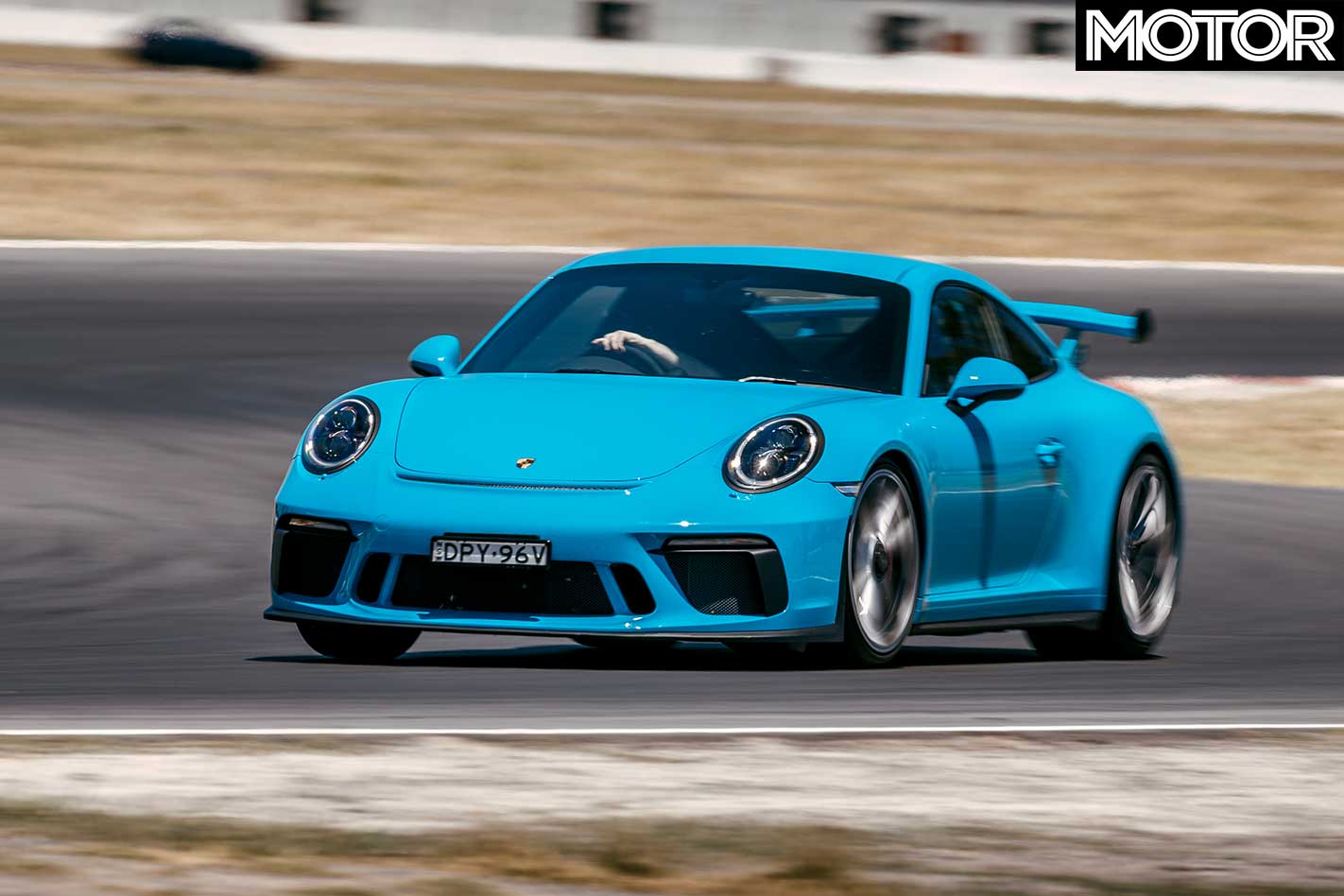
The challenge is getting the best out of the brakes – and the rear tyres, which are so much wider than the fronts. With tyre temp, you can brake so late – to the point it gets physical, your body straining into the belts and you having to hold your neck up as you try to find the ABS, but instead just find more g-force and dive. This makes getting the best out of the car an expert-level thing, as you have to brake late and right up to the apex, keeping the weight over the nose to combat understeer and get the GT3 pointing towards the exit.
Trail-braking, you can barrel into tight corners with more and more speed with each lap, expecting the rear to let go as you ask too much of it, but it just sticks and rotates – no doubt helped by the all-wheel steering, which works extremely subtly to enhance the GT3’s feeling of agility.
Once pointing towards the exit, you can pick up the throttle far more aggressively than feels possible – having an engine over the rear tyres does help in that department. And the 991.2 just leaps off apexes, more forgiving than the old 3.8 if you happen to find yourself lower in the revs.
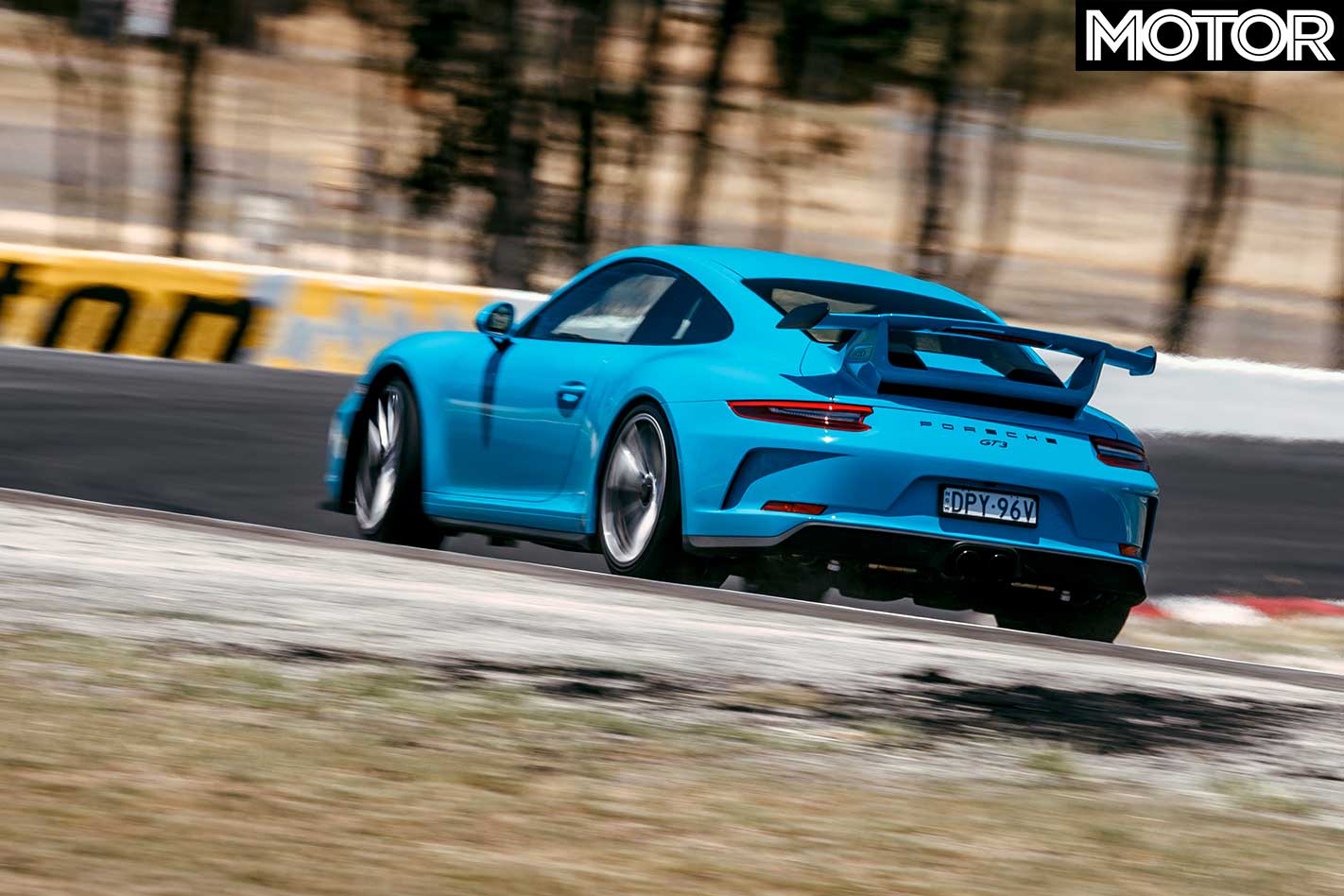
The lateral grip is absolutely stunning – and this is a car that feels better the harder you push it, and also exponentially more difficult to extract the best from as you try to move from nine-tenths to ten-tenths. It likes smoothness, but in fast-forward. Learn to master a GT3 on a racetrack and you will have made yourself into an incredibly skilled driver.
As the Dunlops start to give up – it was 35-degrees at Winton after all, and the pressures were probably too high – we button off and thoughts come flooding in.
The rear wheels and tyres feel bolted from the fixed-back seats off our hips. The front tyres’ contact patches feel at our finger tips. We can feel the power of the brakes in our chest and changing gears with the even-more-responsive PDK feels faster than thought itself.
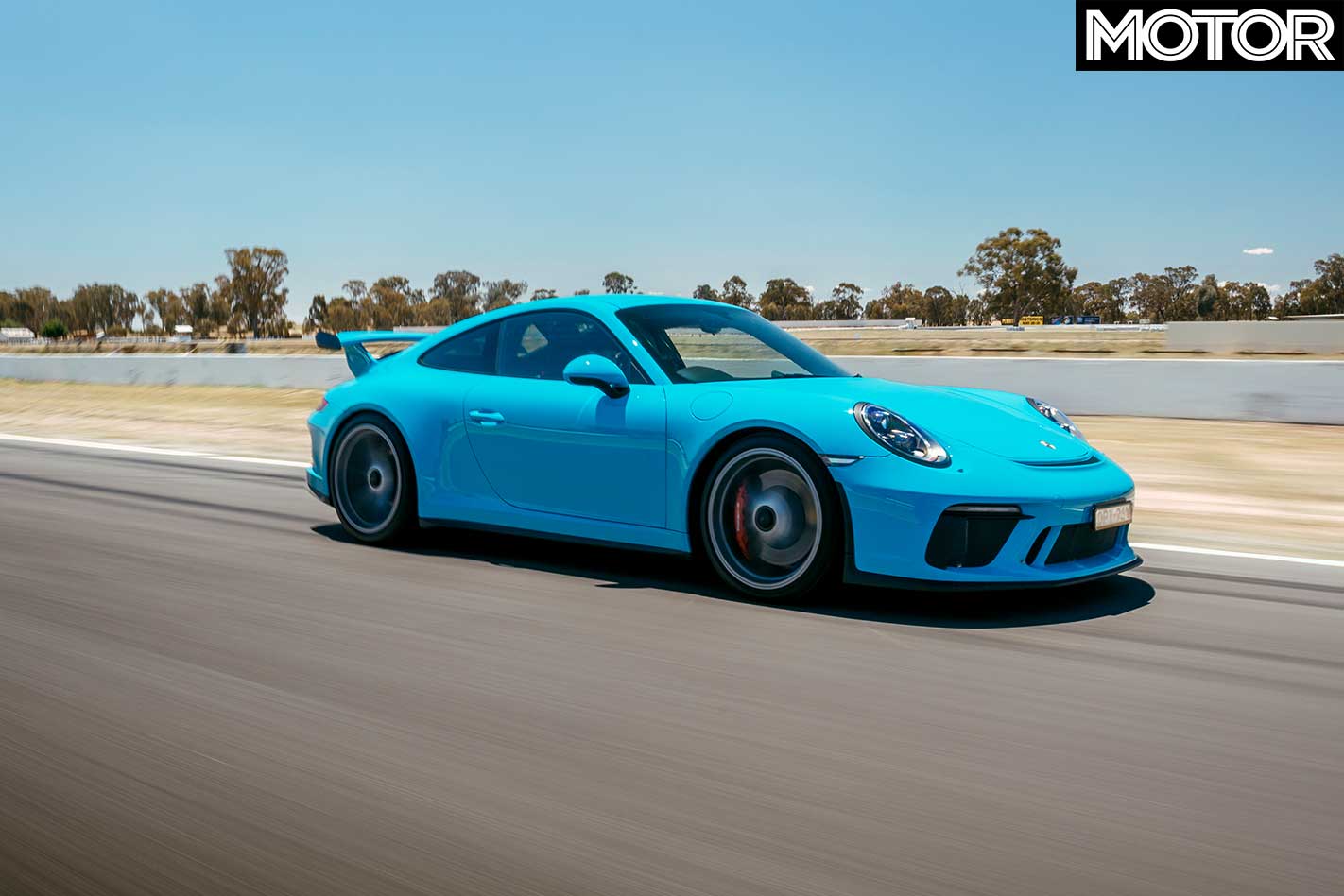
What a mega car – and one that feels to be able to take your punishment around a racetrack all day. You will fall to pieces before it does.
There is one thought we can’t shake, however, and it’s probably the only thing you could ever criticise a GT3 for: in the back of your mind, you are managing weight.
At 1430kg, the GT3 is not really a lightweight car, and neither are its RS siblings despite being adorned with all sorts of exotic, lightweight materials.
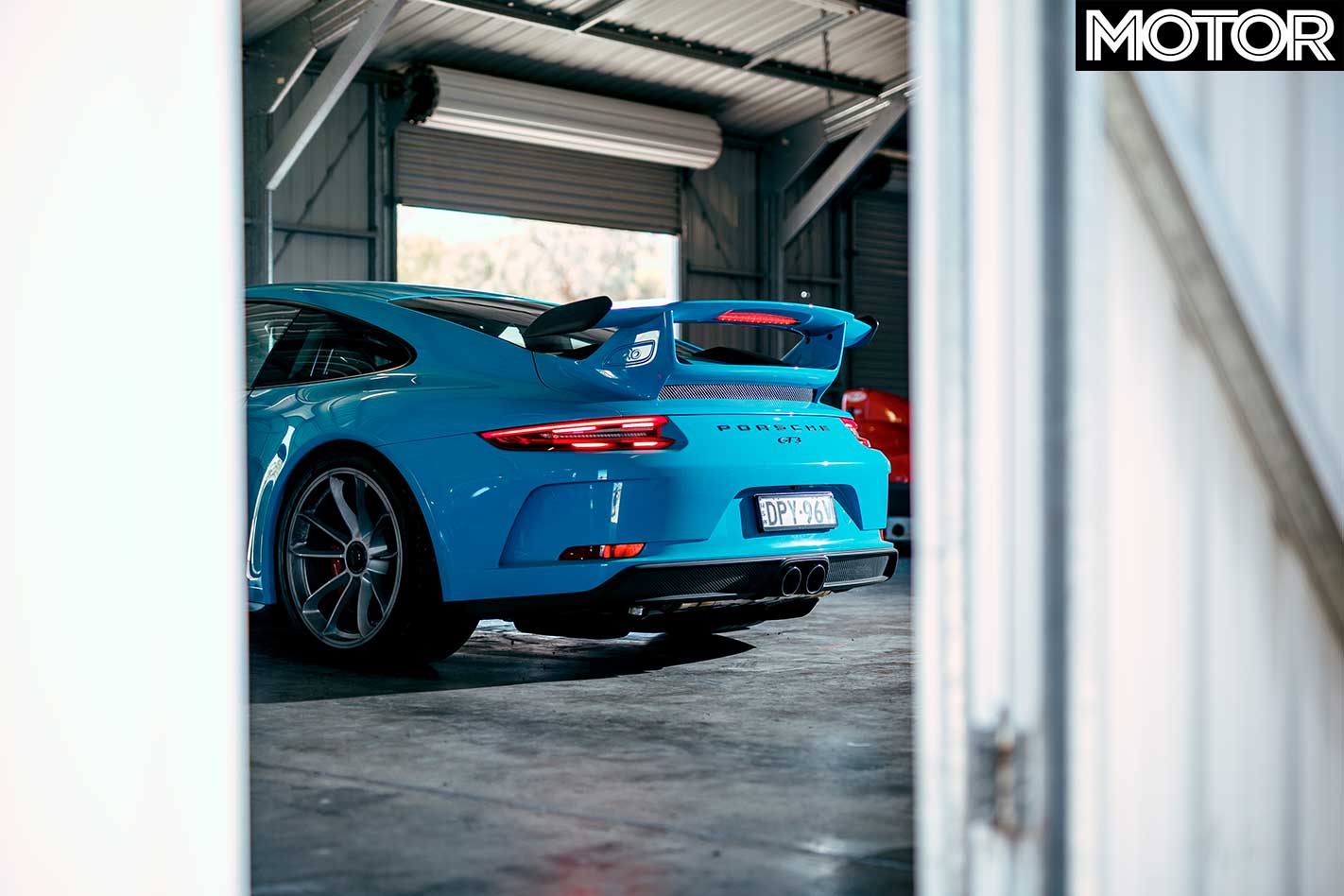
Carrying the brake into corners, it does feel ever so slightly like there are half a dozen bags of cement in the boot (no surprise) and when you’ve asked too much of the rear tyres into a corner on the brake, and they throw the towel in, be prepared to quickly chase it to get it back.
And those same cement bags make themselves known when the car is fully loaded on one side, and you need to quickly swap to the other through a fast chicane like Winton’s turn five left to turn six right.
With such a powerful, rev-happy, linear engine, crazy-fast PDK, incredible brakes and lateral grip, it does feel like only so much more can be thrown at the 991 GT3. The next big gain for the GT3 – and we hope this will be the case when the next-generation 992 is unveiled in the coming years – is a drastic diet. The 991.2 GT3 would go from beguiling to utterly god-like if it lost 100kg overnight – impossible, unfortunately.
Not that we’ve driven it yet, but we also have a sneaking suspicion the manual is the transmission to get.
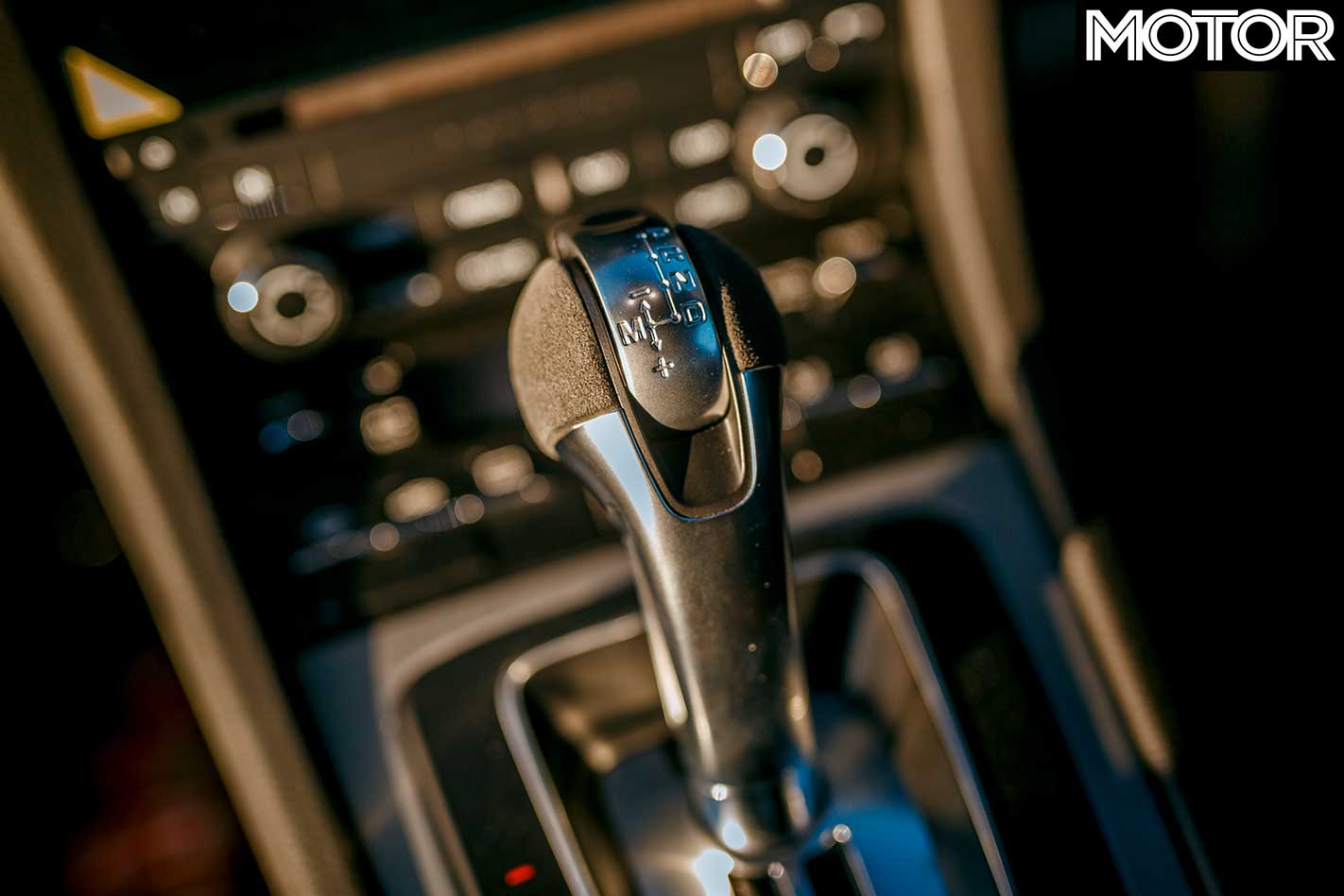
The PDK is ultra fast and in 991.2 GT3 guise, possibly the best performance automatic transmission ever. But while the GT3 is marketed as a track-day car and a tool in which you can chip away at your own lap time PBs, it’s become so much more than that.
With one of the last living atmo engines – which just so happens to also be one of the best free-breathing powerplants ever made – the GT3 has transcended its track-day image to become a truly lust-worthy, raw and pure driver’s car for the road.
Getting the manual is only going to deepen the connection with the car and improve the sense of involvement to make for a more emotional experience. Even if you’re hell-bent on chasing PBs at a racetrack, there’s nothing wrong with having a manual at all.
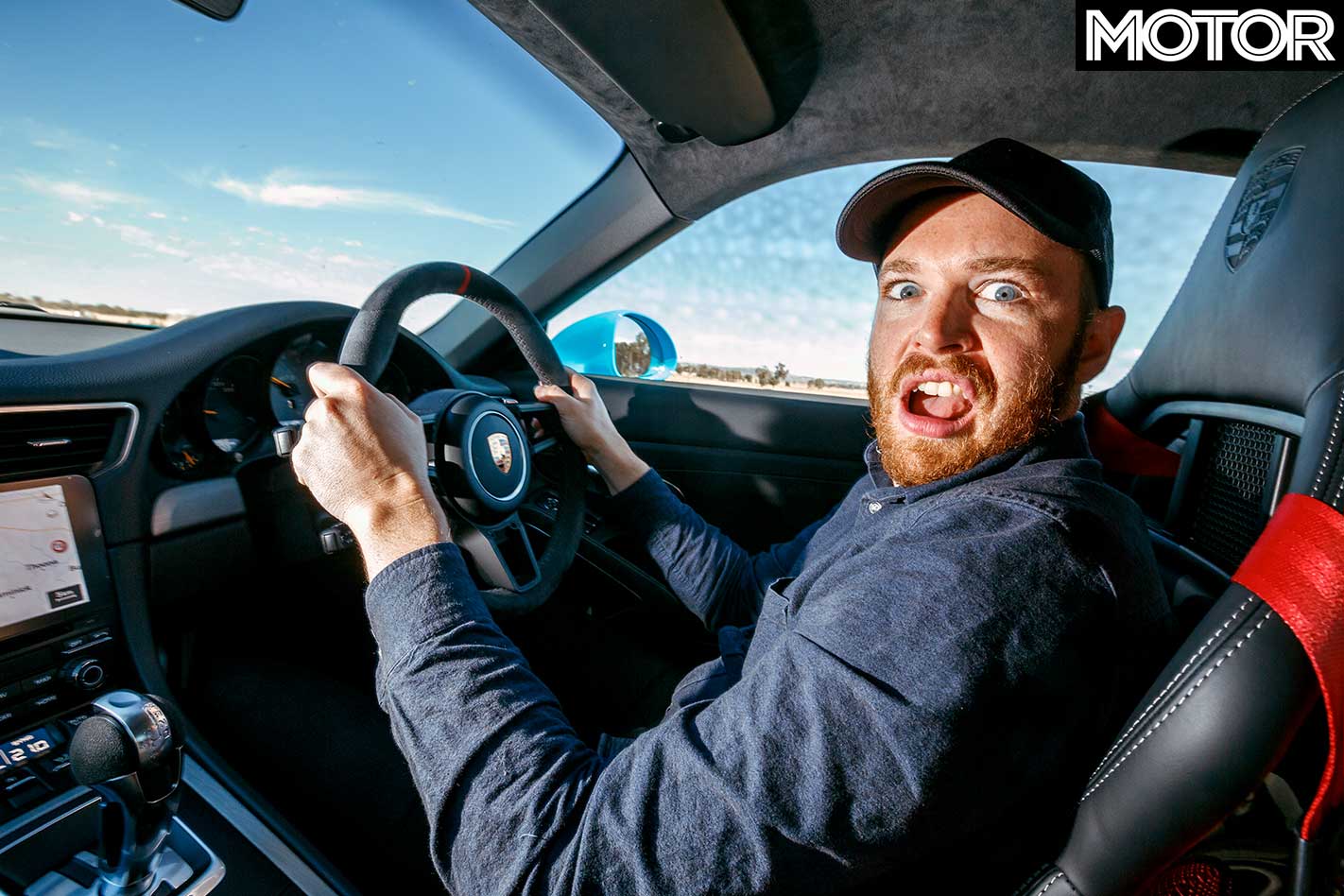
Yes, it’s slower than the PDK, but if you’re racing yourself, who cares? Recall that for decades, every race car on earth had an H-pattern and clutch pedal and its driver’s job was to shave tenths off their lap time.
Leaving the track, we set the satnav to Falls Creek, 165km east, straight into the heart of the Great Dividing Range. With the track the only place you can properly explore the GT3’s enormous reserves of grip, we relax into the drive as the rear tyres roar and the car jiggles along, the sun lowering towards the horizon in the rear vision mirrors, thinking the hard driving is done for the day. But we had forgotten that after Mount Beauty, the road turns properly twisty.
By the time we reach the top, somewhat sooner than expected, I feel like another cigarette. And I don’t even smoke.
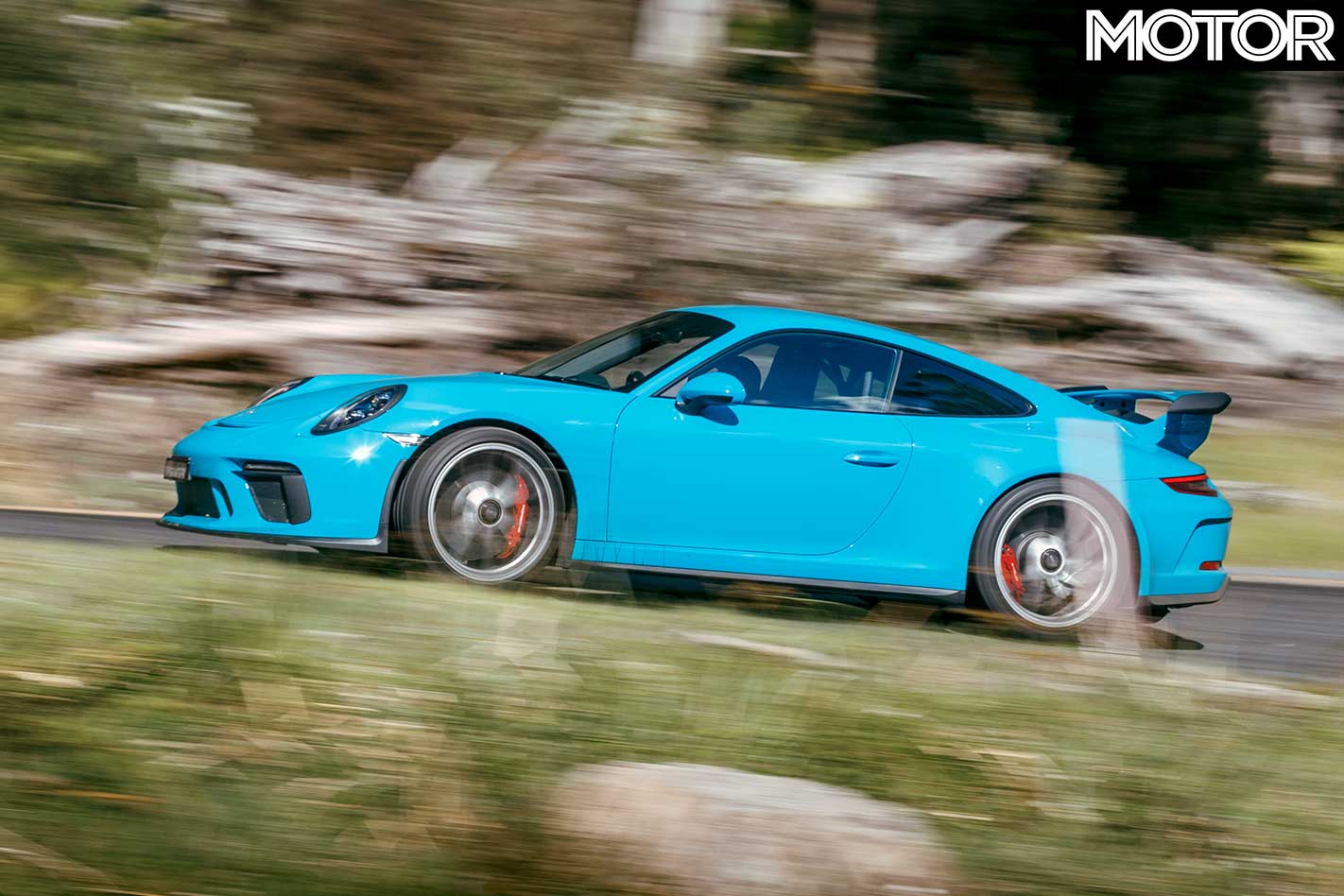
Porsche 991.2 911 GT3 Pros & Cons
5 Highs: 1 – Epic new engine, new muscularity 2 – The noise. Ermagerd, the noise 3 – PDK somehow even more responsive 4 – Will do laps of a track all day long 5 – You might have a spiritual epiphany
5 Lows: 1 – Dunlop Race 2s. Michelins are superior 2 – Porsche loves its taller gear ratios 3 – We wish it weighed 100kg less 4 – We can’t have one 5 – Erm. This is hard
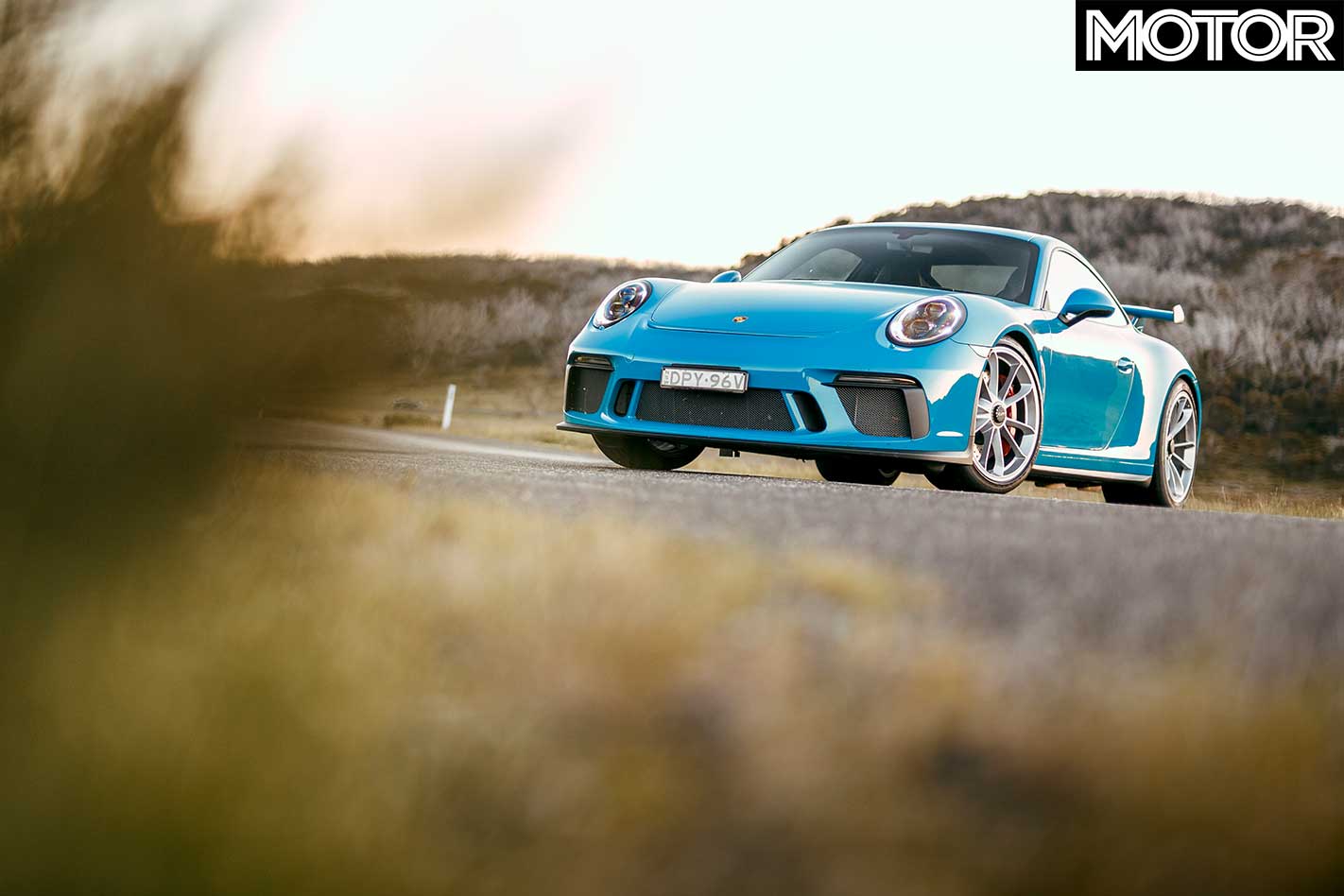
FAST FACTS Porsche 991.2 911 GT3
BODY: 2-door, 2-seat coupe DRIVE: rear-wheel ENGINE: 3996cc flat-6, DOHC, 24v COMPRESSION RATIO: 13.3:1 POWER: 368kW @ 8250rpm TORQUE: 460Nm @ 6000rpm WEIGHT: 1430kg POWER-TO-WEIGHT: 257kW/tonne TRANSMISSION: seven-speed dual-clutch automatic SUSPENSION: McPherson struts, adaptive dampers, anti-roll bar (f); multi-links, adaptive dampers, anti-roll bar (r) L/W/H: 4562/1852/1271mm WHEELBASE: 2457mm TRACKS: 1551/1555mm (f/r) STEERING: electrically assisted rack-and-pinion BRAKES: 380mm ventilated discs, 6-piston calipers (f); 380mm ventilated discs, 4-piston calipers (r) WHEELS: 20.0 x 9.0-inch (f); 20.0 x 12.0-inch (r) TYRES: Dunlop Sport Maxx Race2; 245/35 ZR20 (f); 305/30 ZR20 (r) PRICE: $361,470LIKE: Everything – engine, handling, noise, response DISLIKE: Noisy rear tyres; a little bit heavy; availability RATING: 5 out of 5 stars
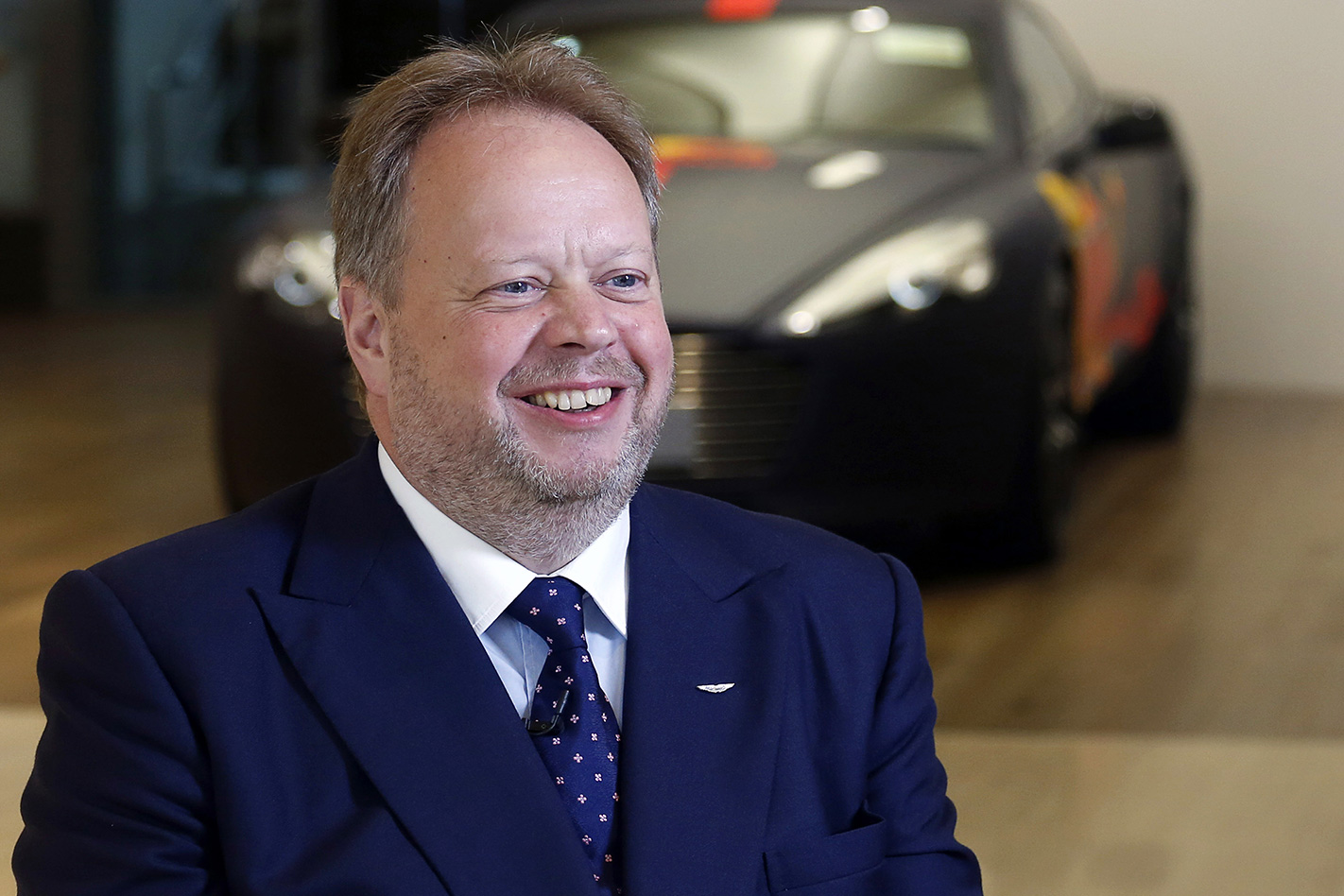
ANDY Palmer is a rarity in the automotive world: a CEO credited with righting the sinking fortunes of a premium brand in just four years. It’s an extraordinarily short time in this business, and an achievement that deserves more investigation.
We meet in a glass-walled room behind Aston Martin’s stand at the Geneva motor show. The 54-year-old Briton offers me a warm greeting, then sits, reclines his chair, and shares a candid version of his back story with assured self-confidence.
“I quit school when I was 16. I didn’t much care for it. Since 14 I’d wanted to be an engineer, so I left and did an apprenticeship, and ended up as a draftsman for four years. I recognised two things. One was that I needed some proper qualifications, and the other as I got to 20 was that I wanted to be a CEO of a car company.”
Three years of night school earned Palmer a degree and the leap into British car maker Austin Rover Group. He was appointed to the team responsible for K-series engine development, which over 17 years powered everything from the MG Metro to the Ariel Atom.
“It was mad, the company, but I got promoted very quickly. The management style was very aggressive, very testosterone driven. It was all about bullies and politics. It wasn’t good.
“At the time Austin Rover was in a relationship with Honda. Two things happened. One was I saw how efficient Honda was. The second was that I read a book called The Machine that Changed the World and figured it would be a good move to go and find out what the hell these guys were doing. So I joined Nissan.”
Over a period of seven years, Palmer became head of the Nissan Technical Centre in Europe. He completed a PhD at nearby Cranfield University, and then a decade into his UK-based employment, the Renault-Nissan alliance was formed.
“[Carlos] Ghosn created these six samurais, which were the program directors. He called me and said, ‘I want you to come out to Japan in two weeks … to live.’
“I did, initially for three years, and ended up staying for 13. I led the Nissan Leaf program – I’m quite a passionate believer in electric cars – and the last Nissan I did was the Nismo GT-R.”
Palmer opens a wound mentioning the Japanese supercar that launched during his last year with Nissan. He bought one, though it was to be an ill-fated parting gift to himself after British cycling champion Sir Chris Hoy famously crashed it at Goodwood later that year.
“I never drove it,” says Palmer. “I had it imported and it was going to go into my garage, and then the guys asked me if they could put it up the hill. I thought that’d be great provenance. That’ll really increase the value of the car! So I stood and watched it and saw it go off at the corner and thought, s__t, I hope that’s not damaged much… It moved the whole engine; the car was a write-off and I never got to drive it.”
A mere four years on and the scene has changed dramatically. A call from Aston Martin in 2014 brought Palmer home to England after more than a decade in Japan.
“Initially I wasn’t very interested. As part of Nissan’s corporate planning I’d actually made due diligence on Aston to think about buying it. It was bad timing and it didn’t work, but I had an opportunity to see what poor shape Aston was in.
“I was 50 years old, and I thought back to that 20-year-old kid that always wanted to be CEO of a car company. In the end the shareholders agreed to give me the autonomy to do the job properly and at that moment of clarity I thought, I want to do this, and see whether I’m as good as I think I am.”
Palmer joined the team at Gaydon on October 1, 2014. Last year the business posted its first profit this decade. Palmer’s short tenure is bearing fruit, the most exciting of which is yet to turn a wheel.
“The Valkyrie on road tyres would certainly put you on the podium of Le Mans LMP1” – Andy Palmer
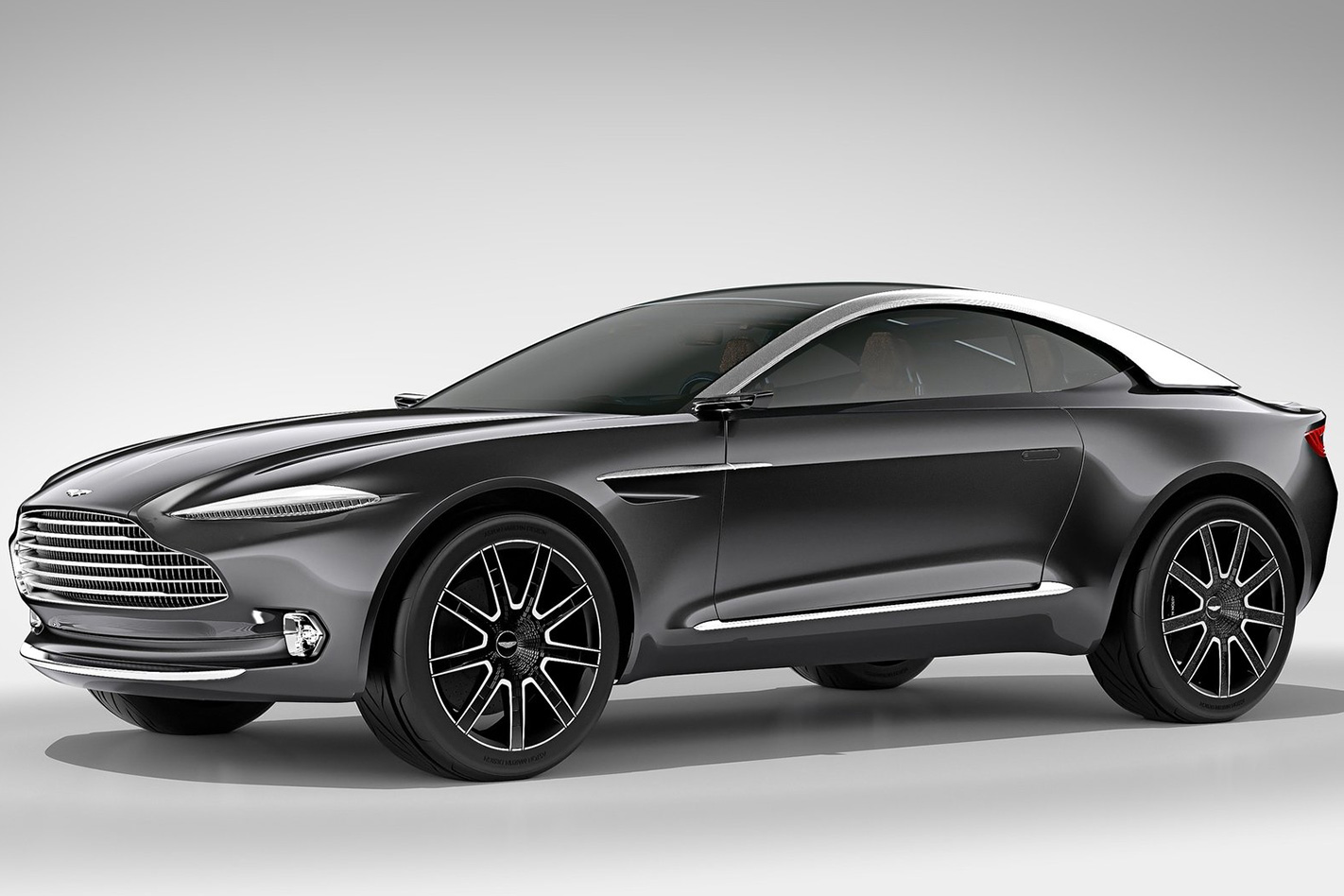
The Valkyrie is the headliner, spearheaded by Formula 1 designer Adrian Newey. It is set to mark a line in the sand for the automotive world to respond to, and putting the potential performance of this car into perspective is something Palmer takes pride in doing.
“In terms of simulations, a road-going Valkyrie on road tyres would certainly put you on the podium of Le Mans LMP1. Probably it would win – on road tyres. And at the end you could get in the car and drive home because it’s street legal. There is no car like that.”
Powered by a naturally aspirated 6.5-litre V12 and a hybrid system, the Valkyrie is a diminutive hypercar with a truly epic 815kW/tonne power-to-weight ratio. By contrast, a Bugatti Chiron manages a mere 552kW/tonne.
“It is absolutely nipped and gnawed. Adrian [Newey] is obsessive when it comes to weight. Everything does two or three jobs; everything has a downforce aspect to it. It’s hard work to take it away from him. ‘Finish now please because we’ve got to make the tool!’ The brief that I gave was to give me the car of the decade. I think Aston has the car.”
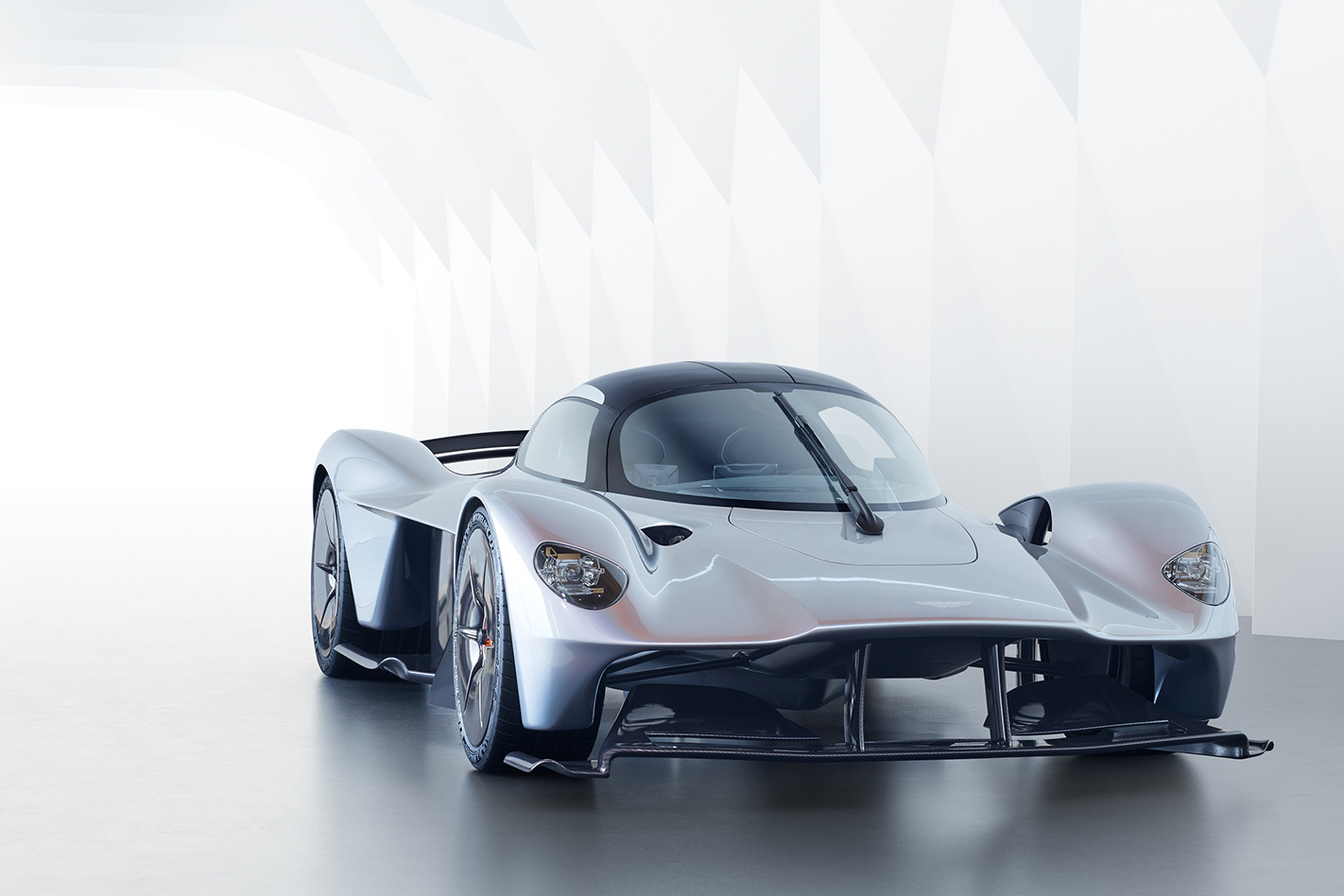
The autonomy afforded Palmer by the shareholders is a tool he has used to empower his employees, and Valkyrie is a direct product of this strategy. So what exactly happens when you allow a team to wilfully ignore the peripheral stuff in favour of a singular focus?
“They forget what time of day it is and they work stupid hours and they become passionately absorbed into everything about the car. I can only think of it happening once or twice in my life as an engineer where you participate in a team that can’t lose.
“The emotional attachment is really important and what I see now is that this is something everybody knows is defining their careers. They’re tired and they’re stressed, but they’re happy. We want people to be talking about Valkyrie 20 years from now going, ‘do you remember those crazy gits and what they did? Amazing.’”
What is it?
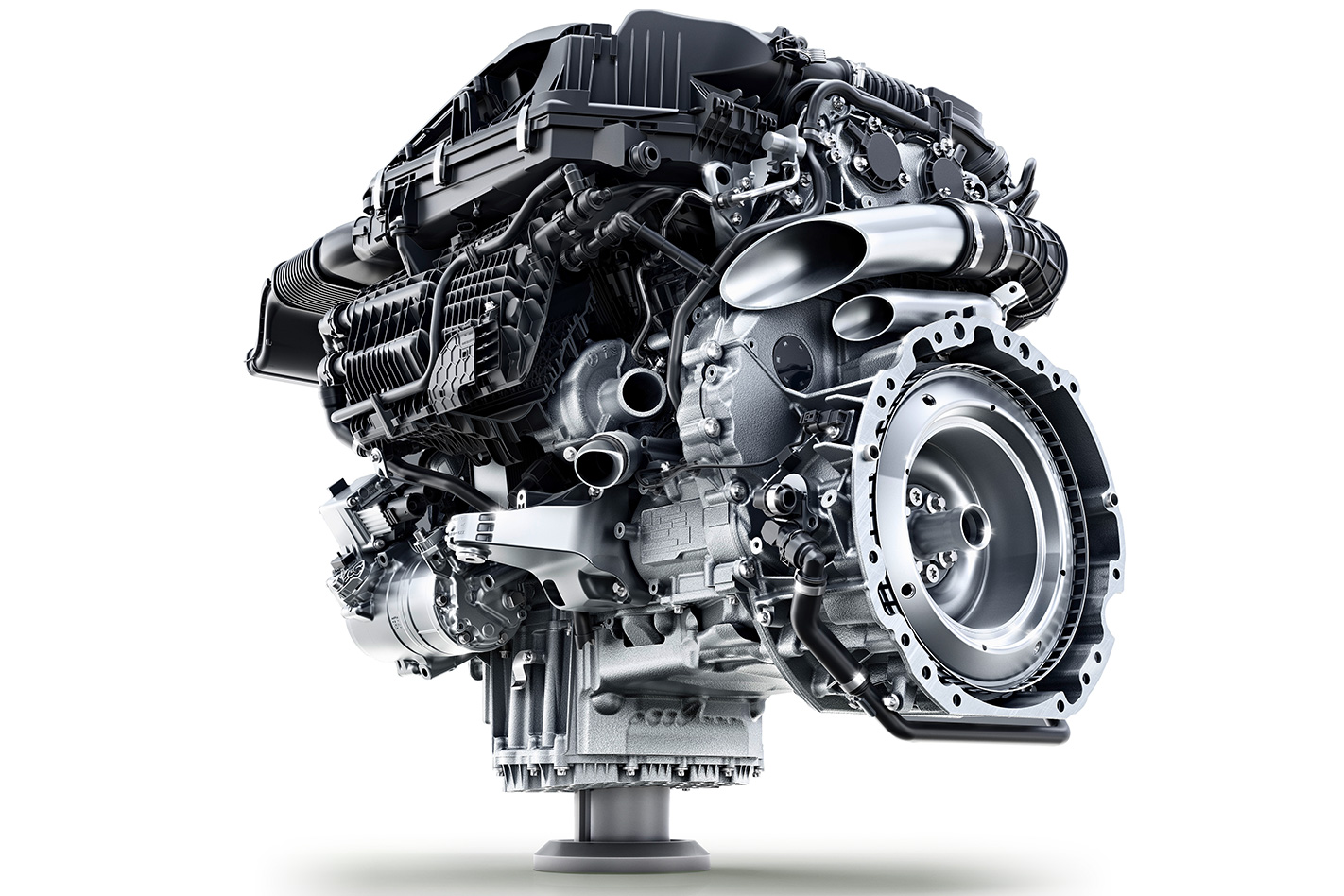
A mild hybrid system for Mercedes’ latest-generation straight-six powertrains. Built around a 48-volt electrical architecture, a powerful integrated electric starter motor/generator provides an acceleration boost, teamed with an electric compressor in AMG applications that fleshes out the bottom of the torque curve while the conventional turbo spins up.
The electrically assisted six powers the Merc-AMG CLS53 four-door (p28 of Wheels Magazine) and E53 Coupe and Cabriolet as a ‘starter’ series of AMG’s larger cars, like the V6-powered 43 range, but packing far more tech. It also features in non-AMG Benzes such as the CLS450.
How does it work?
The EQ Boost system’s key piece of hardware is an integrated starter-generator (ISG); a compact motor/generator sandwiched between the engine and the transmission that acts as both a starter motor and a hybrid assist motor, as well as allowing kinetic energy regeneration. Under hard acceleration the EQ Boost system augments the engine with up to 250Nm and 16kW. It also enables coasting, an extension of Merc’s ‘sailing’ mode, where the engine drops temporarily out of the equation to help save fuel.
In the CLS53, that engine is a 3.0-litre straight-six with an exhaust-driven turbo plus an auxiliary 48v electric compressor. The 48-volt power supply that makes the ISG and electric turbo viable already features in the S-Class, and will soon filter into other Mercs. These models, like the EQ Boosted CLS53, will supply a conventional 12-volt system for cabin accessories without a separate 12-volt battery.
Why does it matter?
Most importantly in an AMG, EQ Boost brings more immediate, harder-hitting performance than a turbocharged internal combustion engine of a given capacity could deliver on its own. With EQ Boost at work, the engine hits peak torque from idle within two seconds under full throttle. The 2999cc straight-six packs 320kW and 520Nm, and the ISG can bolster the bottom end by up to 250Nm. In addition, the electric auxiliary compressor can build charge pressure almost instantly, to fill a torque hole while the conventional turbocharger comes on stream. There are multiple side benefits.
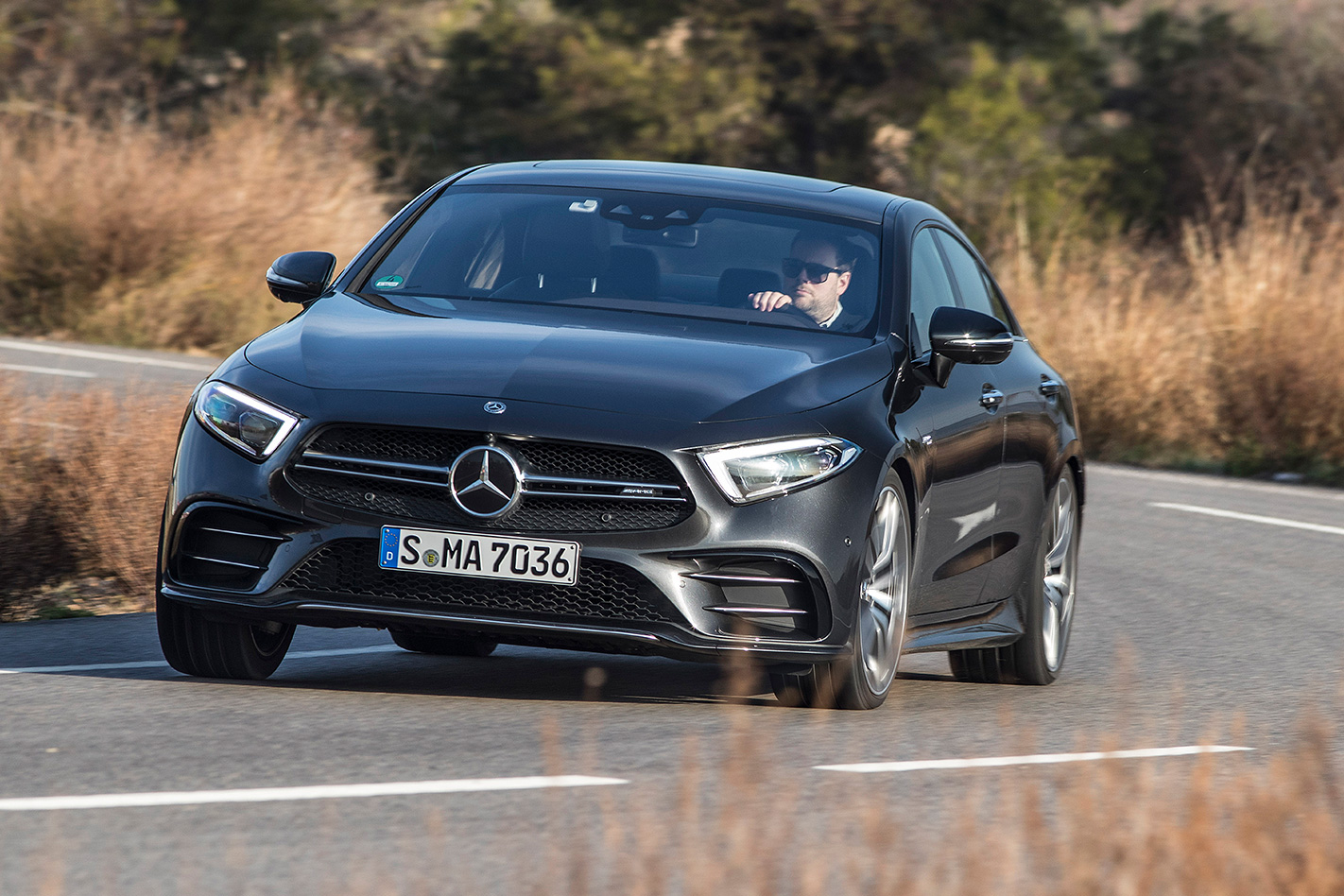
By recuperating kinetic energy, the system increases the car’s efficiency. The 48-volt system can also power the water pump and air-conditioning compressor, eliminating the need for belt-driven accessories, reducing drag losses and freeing space. Powering the motor on 48 volts requires a quarter the current it would with a 12-volt system, so the wiring can be thinner and lighter. Finally, the 48-volt power supply is less costly than plug-in hybrid technology, which will see it deployed widely to the benefit of a broad cross section of Benz and AMG buyers.
 Turbo Titans
Everything you’ve ever wanted to know about the humble turbocharger and its miraculous power-boosting abilities.
WHAT IS IT?
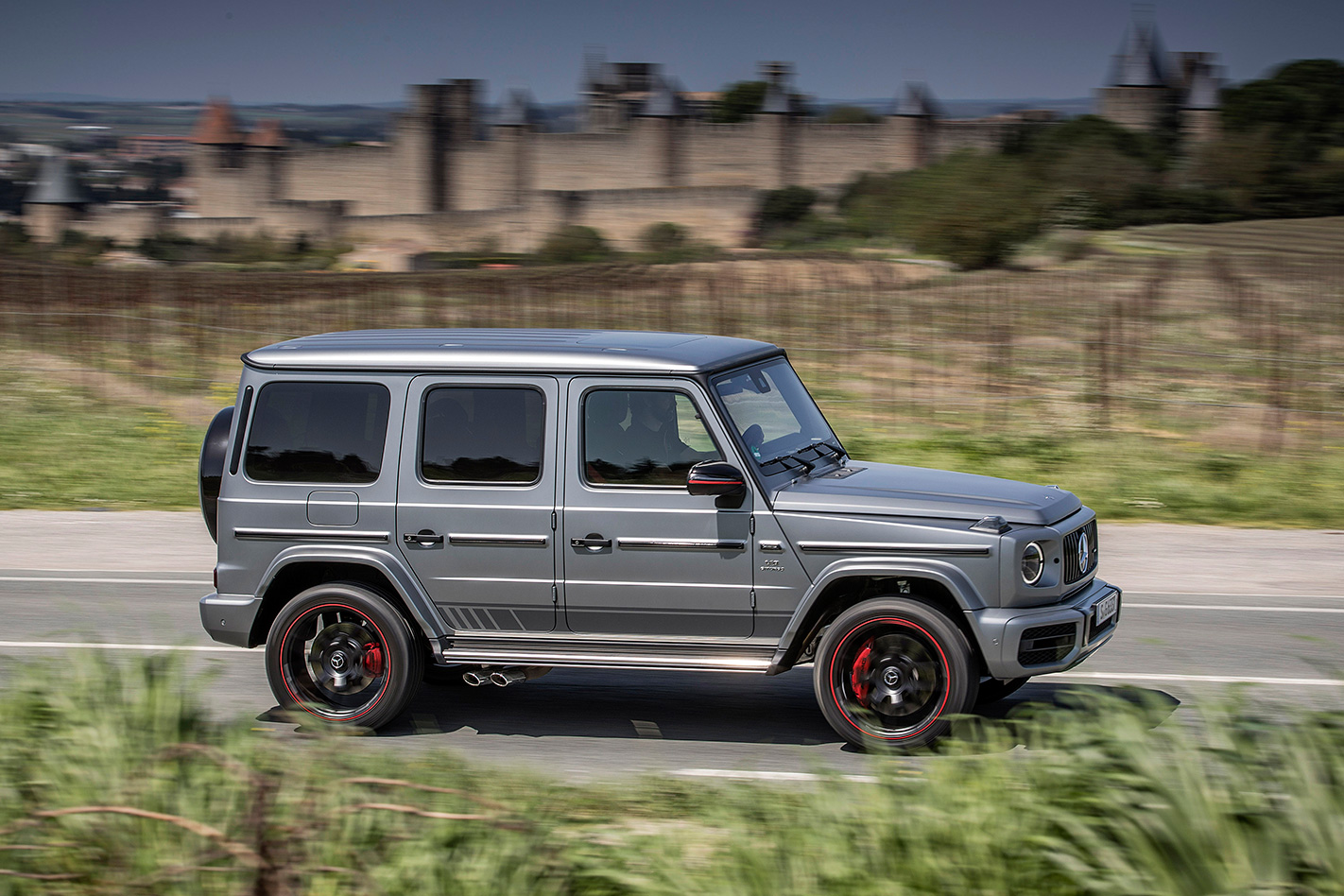
An all-new generation of the iconic circa-1979 ‘G-wagen’ – Mercedes-Benz’s belated response to the game-changing 1970 Range Rover – still with separate-chassis construction but rejecting live-axle front suspension and arm-twirling recirculating-ball steering for a dramatically new design, now with a double-wishbone front end and, wait for it, rack and pinion steering! Not to mention a searing G63 AMG range-topper with arguably more bandwidth than any car on earth.
WHY WE’RE TESTING IT?
Piggy-backing off the new A-Class launch, life was never going to be easy for the doppelganger G-Class. But this SUV’s superficially wilful rejection of technology and progress disguises a towering achievement of marrying the past with the present, with more character than it’s ever had.
MAIN RIVALS
Besides perhaps a power boat, and Mercedes-AMG’s own E63 S 4matic+ ($240K) and GLE63 wagon ($202K), we’re talking BMW X5 M for pace, and Porsche Cayenne Turbo for price.
THE WHEELS VERDICT
Feeling like it’s been engineered with the money-no-object ethos of Mercedes-Benz’s past, the new-gen G-Class – in particular, the wonderfully insane G63 AMG, which is the only variant coming to Oz – is one great big, flat-windowed surprise. It may appear antiquated – and, in terms of wind noise, sound antiquated – but underneath that brick-on-wheels body hides a hugely talented and lovable SUV, with so much character you could almost measure it in kilos. Even at $250K, this is dream-garage stuff – flawed yet fabulous.
PLUS: Hard-edged performance; flat-window vision; massively improved on-road dynamics; charming style; surprising ride quality; enough character to earn a Golden Globe nomination MINUS: Laughable wind noise; laborious turning circle; weighs a truckload; costs a barrow-load; consumes like Keith Richards
THE WHEELS REVIEW
IT BEGINS with a press of a button. Old-school metal door handles with the sort of push-button release most manufacturers relegated to history many decades ago.
And if you do it with your eyes closed, you can literally feel 1979 at your fingertips. Despite appearances, this new-generation G-Class is box-fresh from top to toe, yet its gloriously retro door handles are a direct DNA link to its 39-year-old predecessor. They’re exactly the same.
So, too, is the metallic clack of its doors as they close, and the startling cocked-rifle crack as its central locking auto-arms just above walking pace, which is exactly what G-Class buyers love. Again, with your eyes closed, you could easily believe you’ve just been imprisoned, panic-room-style, inside the decrepit confines of the old ‘G-wagen’. But those auditory nods to the past conceal a doppelganger SUV whose abilities have grown stratospherically.
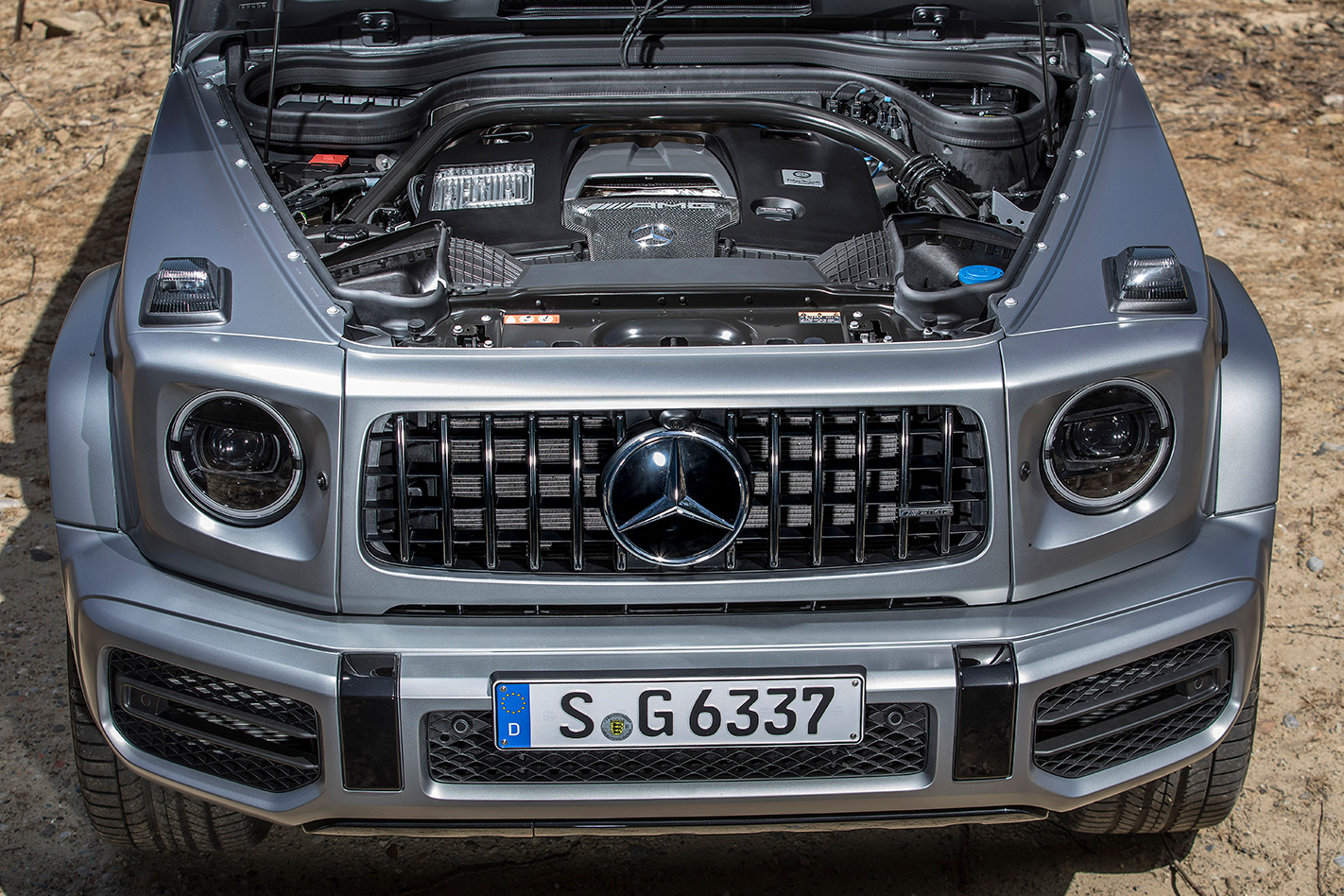
That the new-gen G-Class looks so much like the fossil it replaces says volumes about what people loved about Mercedes-Benz’s brick-tastic icon. All the cues are still there – flat windows, exposed hinges, frog-eye indicators, external spare wheel, and barely a curved edge in sight. And some of them are even direct carry-overs, including the front headlight washers, spare-wheel cover, internal sunvisors and the dashboard’s metallic diff-lock switches, as well as those aforementioned door handles. But all the stuff that matters has been transformed.
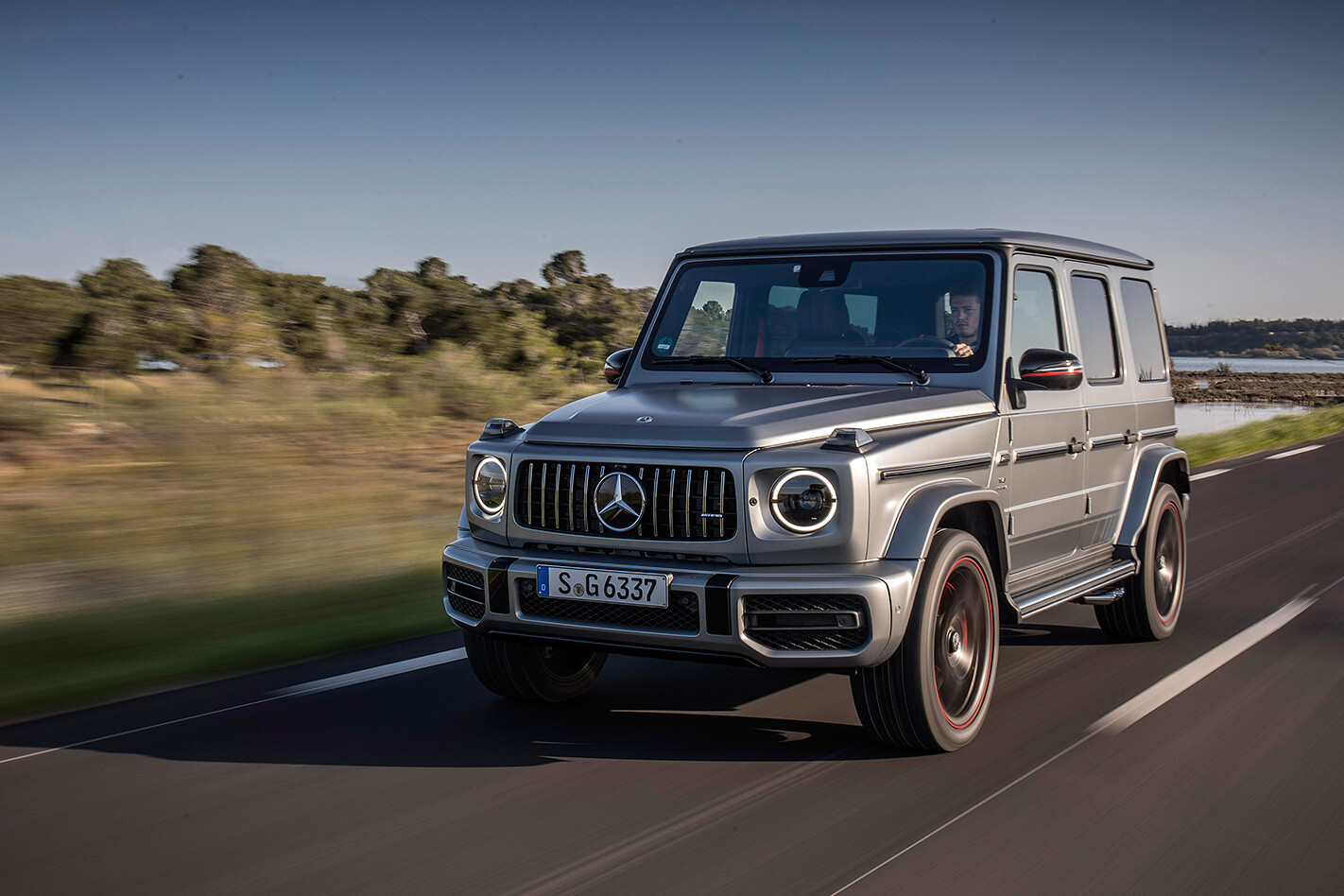
There’s still a ladder-frame chassis lurking underneath but it’s all-new, bolted to a body structure with an aluminium bonnet, front guards, doors and tailgate, for a total weight loss of 170kg, and a 55-percent increase in torsional rigidity. Neither of those improved numbers are particularly flattering, mind – in G63 guise, the G-banger still weighs 2485kg and its rigidity figure of 10,162 Nm/degree is well below what a modern monocoque can manage – but the new G feels mega-strong and virtually shock-proof.
There’s some ironic heritage at play too. Benz’s bluff bus might be 2018 in vintage, but its drag coefficient remains as old-world as polio. Simple physics dictate that an SUV that is taller than it is wide, despite having grown 64mm broader during its generational change, will struggle to better the old truck’s horrendous 0.54Cd. And so it proves with the new G63 AMG – a 0.532 drag coefficient, multiplied by an enormous frontal area of 3.217 square metres. No wonder there’s so much wind noise, another ironic nod to the past. Even Mercedes-Benz’s G-Class head of marketing, Ian Hadley-James, had a smirk on his face when he described the new G’s wind noise as “improved”.
It’s the componentry, however, that’s key to making the new G drive like something from this century. Hustling the previous G55/G63 AMG quickly was like going 10-pin bowling with a pumpkin – aimless, frustrating and, at times, potentially quite scary, as well as embarrassingly cumbersome at direction changes. Constant ESC intrusion was the only way to contain the waywardness of its non-independent suspension (yes folks, a live front axle) and recirculating-ball steering.
But this time around, we have an aluminium double-wishbone front end, rack-and-pinion steering with rack-mounted electro-mechanical assistance, and a brand new four-link live rear axle with a Panhard rod for lateral location. Not to mention anti-roll bars and adaptive dampers at both ends, three 100-percent locking diffs (just like before, and still the only series-production vehicle to do so) and an on-the-fly ability to switch between high- and low-range at speeds up to 40km/h.
The new front suspension is mounted directly to the frame, gifting the new-gen G-Class 270mm of ground clearance at the front axle, in combination with improved fording depth (up 100mm to 700mm), improved approach, departure and break-over angles (by one degree each), and a far-superior 35-degree tilt angle (seven degrees better).
Which is all good to know when you’re burbling along in traffic at 10km/h. But, given the opportunity, even the G63 version (Australia isn’t getting the G500) has some serious off-road savvy, as our rock-strewn thrash in Trail mode (which disables ESC) in a 20-inch-wheeled example proved.
With loads of suspension travel and a loping, almost luxurious ride, the G63 is breathtakingly accomplished. And when the bends get tighter, there’s proper balance and steering precision to nail your line of attack, combined with the rear-biased delights of the G63’s all-wheel-drive system and ginormous 850Nm torque reserve.
Almost unbelievably, the same applies out on tarmac roads. Our Edition 1 test trucks (wearing huge Goodyear Eagle F1 295/40R22 tyres) defied any pre-conceived, unguided-missile fears by demonstrating a love of corners – both fast and slow – and a level of accuracy that’s in a different solar system to the old turd-burger. Likewise the comparative lack of ESC intrusion.
With nine ratios channelling its loin-stirring 430kW/850Nm 4.0-litre twin-turbo V8, the G63 is laugh-out-loud quick. Nailing the throttle from a standing start sees it squirm and shift around like a pissed-off rodeo bull, lifting its nose as it charges ahead and barking its fury through four gloriously non-PC side pipes. This hair-raising theatre is so goddamn addictive on so many levels that I doubt anyone will ever get close to AMG’s 13.1L/100km combined fuel-economy claim.
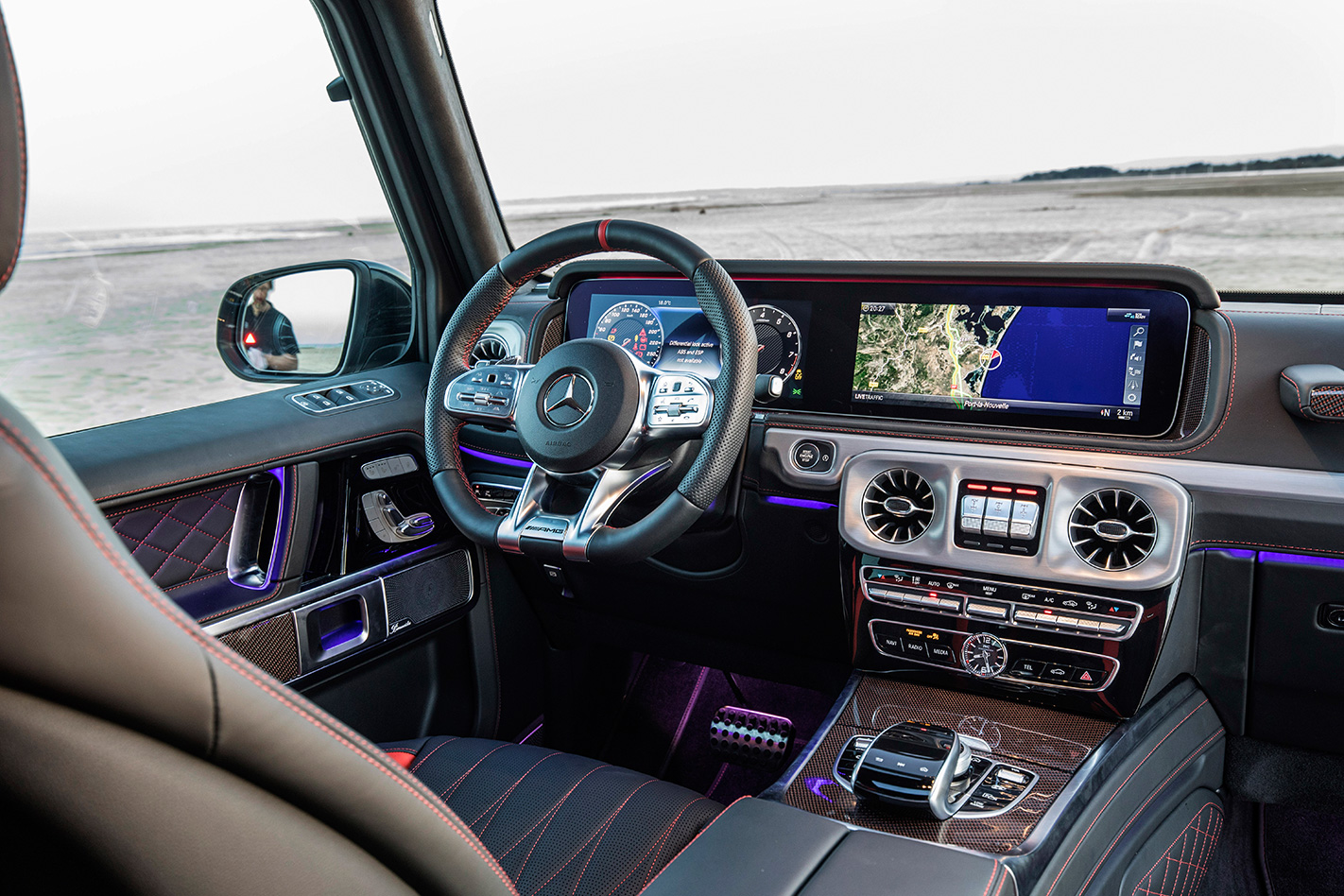
But it’s the cornering talent of this 2.5-tonne Tessie that garnishes the straight-line experience. With 2.7 turns lock-to-lock (spanning a rather quaint 13.6-metre turning circle) via Mercedes-Benz’s delightful new-gen three-spoke wheel, the G63 essentially goes where you point it. And if you drive it the way it desires – with a dose of patience in tight corners, trailing brakes in to pin the nose before squeezing copious amounts of 98RON juice into its combustion chambers and feeling the poised delights of 60-percent rear drive-bias – it’s not only quick but also fun. Even with Dynamic Select in Comfort mode, especially if you enjoy body roll.
Sport mode is the go, however, as it combines a still-supple ride with greater cornering poise and sharper transmission response. But there’s something deeply satisfying in belting down straight-ish back roads in Comfort, sports-exhaust button illuminated to unleash some backing-track thunder, marvelling at just how plush a G63’s ride is, even on 22-inch wheels. Even at 30km/h. It’s remarkable.
Sport+ brings the most intuitive mix of drivetrain smarts and stability-control freedom, but you can play with all that in Individual mode, amping up the engine, tranny and exhaust while relaxing the suspension firmness and ESC reins. At least with the exhausts bellowing and the 15-speaker Burmester stereo cranking Rammstein, you don’t notice the wind noise so much.
Despite all the wonders of modern sound deadening and noise cancelling, this thing has more front than a cyclone, and on a gusty day, the wind rush can be remarkably voluminous. Yet the G63 powers ahead, rock-steady and rock-star ready, with the pick-power to pull up forcefully if a star-struck fan happens to throw him/herself into its path. Vented and drilled 400mm front discs with six-piston calipers, matched to 370mm rears, will do that to a car… I mean truck.
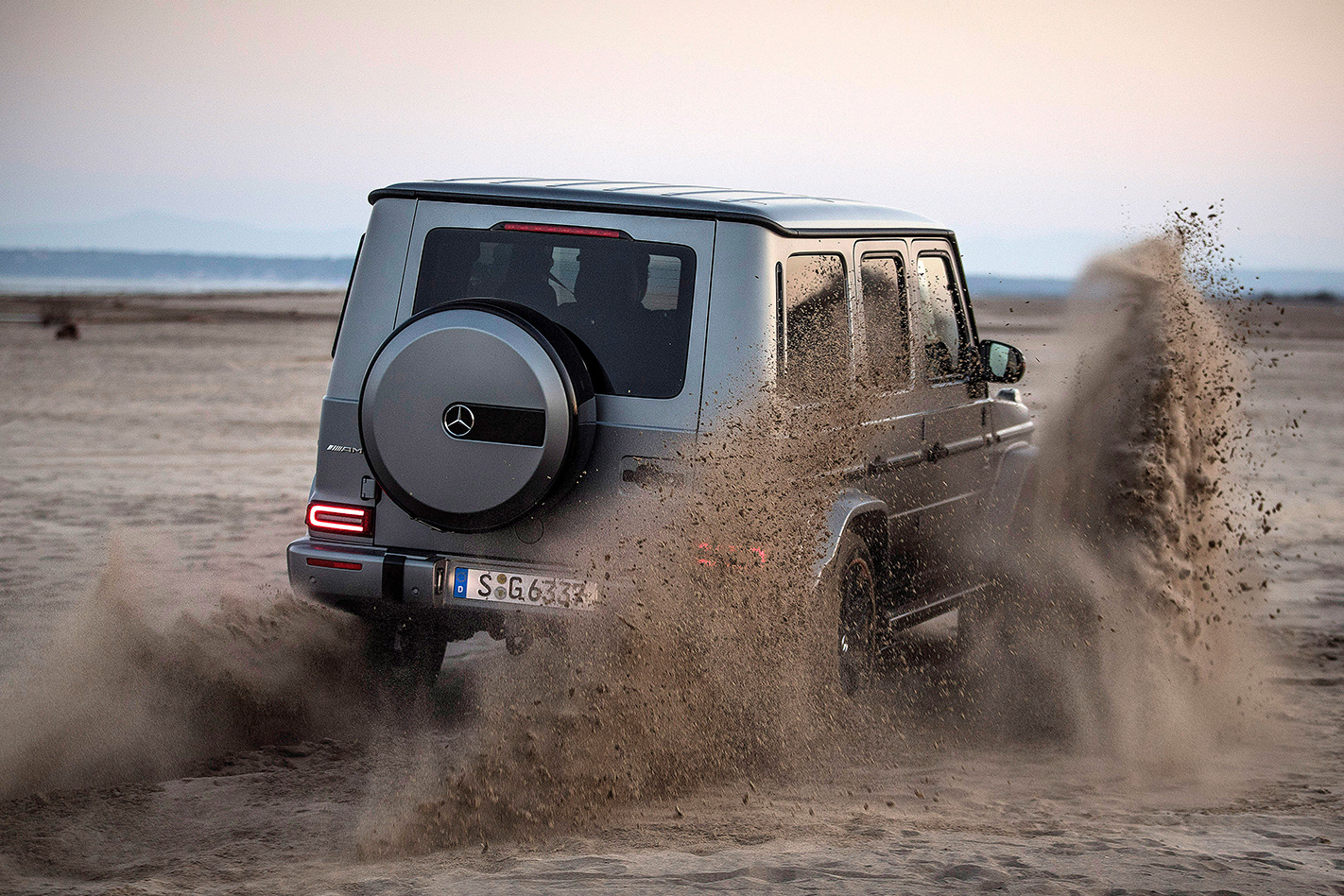
There’s far less pay-off than there used to be in the G63’s body-on-frame interior. Sizeable improvements in cabin space – especially the 150mm expansion in rear legroom – make this mother trucker an eminently liveable and likeable place to spend time. You can’t discount the vision-enhancing benefits of those flat windows and all that seating height, though the posh new G-Class does cede some modernity to the everyman’s new-gen A-Class. You won’t see any MBUX theatrics in this SUV’s Widescreen Cockpit display – merely the same stuff you get in an E- and S-Class – and now that we’ve sampled the sleek, stylish minimalism of the new A’s new-gen column stalk and gear-selector wand, the older gear in the G feels slightly parts-bin. Which is all an illusion, of course, because this beast is no Frankenstein.
Instead, it’s a spectacular achievement. I personally detested the old heap, yet feel blown away by the bandwidth of the new-gen G63, and the immensity of its character. There are few vehicles on earth that could achieve as much as this one can, with all the menacing, yet cuddly feels that a Grisly Bear gives you before it rips your face off.
The steadfast determination of the engineers in Graz, Austria (where the G is predominantly hand-built) to keep the G-Class true to its heritage, and the input from AMG into making this truck not drive like one, has produced a mega-fast SUV that feels wonderfully old-school Benz. It’s as if money was no object, just like it never used to be, when developing the new-gen G-wagen. In much the same fashion that money has never been a hurdle for those who aspire to G-Class ownership. Only this time, it’s actually worth the coin.
Want. Really. Badly.
2018 Mercedes AMG G63 specifications
Model: Mercedes-AMG G63 Engine: 3982cc V8 (90°), dohc, 32v, twin-turbo Max power: 430kW @ 6000rpm Max torque: 850Nm @ 2500-3500rpm Transmission: 9-speed automatic L/W/H: 4873/1984/1966mm Wheelbase: 2890mm Weight: 2485kg 0-100km/h: 4.5sec (claimed) Economy: 13.1L/100km (EU) Price: $247,700 On sale: August
As comebacks go, it’s a big one.
However, even the most enthusiastic of Toyota top brass admit they were underprepared for the song and dance that is being made about the return of the Supra – a car that has managed to retain its hard-earned reputation for style and performance despite having not been in production since 2002.
“The reaction up to now has been quite incredible,” says the man in charge of the new-for-2019 model, Supra engineering boss, Tetsuya Tada.
“It is a car a lot of people have been waiting a long time for us to return to the lineup, and the expectations are naturally quite high. I don’t think it will disappoint. Front engine and rear drive. With such a concept, you can have the greatest amount of fun.”
Tada-san’s words bring promise to the car that is set to share its mechanical package with the upcoming fourth-generation BMW Z4. It’s also good news that Toyota is not simply settling for a standard version of the new coupe, but has also engaged its Gazoo Racing performance car division to engineer a 300kW-plus variant of the new Supra.
The fact the company suggests the program acts as a spearhead for an extended range of hot new GR (Gazoo Racing) badged performance models definitely places it on the ‘one to watch’ list.
The range-topping version of the new rear-wheel drive Supra, which a senior Gazoo Racing manager has revealed to MOTOR is referred to by insiders as the Raijin – the mythological Japanese god of thunder – is set to run a powered-up version of its partner BMW’s turbocharged 3.0-litre inline six-cylinder engine.
That engine will be paired with a specially developed version of ZF’s eight-speed automatic gearbox featuring software mapping similar to that employed by the latest M5. It’s a combination aimed at placing the Supra GR – as the new car is tipped to be called – in competition with the likes of the Nissan 370Z Nismo.
In the new two-door Toyota, the BMW engine is reported to use a number of technical solutions already employed on BMW M division’s S55 unit – as used by the M3, M4 and the M2 Competition. It’s a move that sources reveal sees it develop in the region of 300kW while possessing the capability to rev to 7800rpm.
Despite its high-revving nature, though, the front, longitudinally-mounted inline six-cylinder is said to develop a similar 550Nm of torque to the S55 engine at little more than 1500rpm. They’re figures that hint it will not only be extremely flexible in nature, but promise to provide the hardcore Supra model with the sort of performance credentials to blow the lighter, four-cylinder-powered 86 out of the water.
The targeting of the Nissan 370Z Nismo by Gazoo Racing officials suggests the upcoming Supra GR, which is largely being developed by a European based team of engineers from a base at the Nurburgring, will boast a 0-100km/h time less than 5.0sec together with a top speed limited to 250km/h.
Among the features MOTOR has been told will appear on the new car is an electronically-controlled locking rear differential to vary the apportioning of drive to the individual rear wheels for added traction.
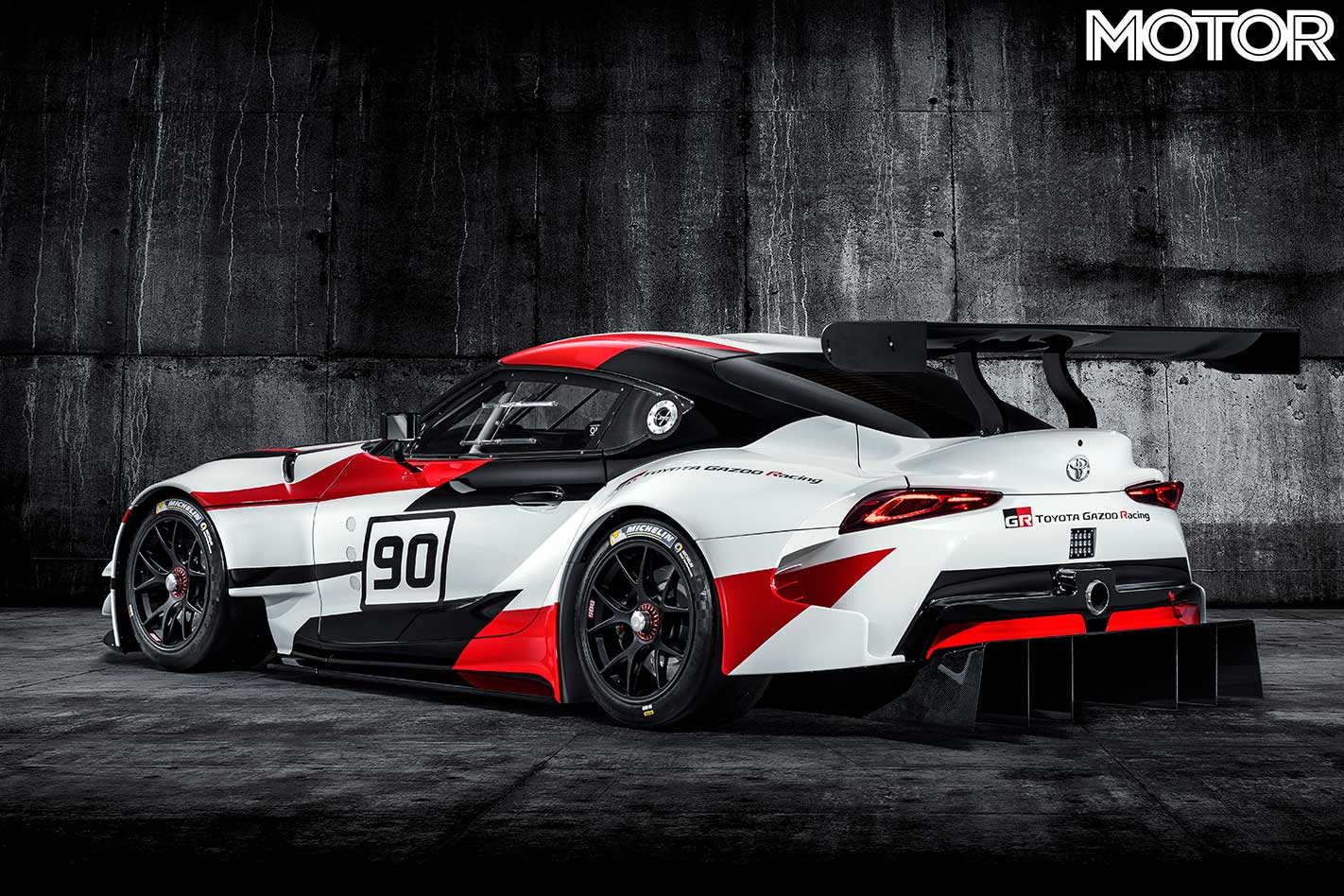
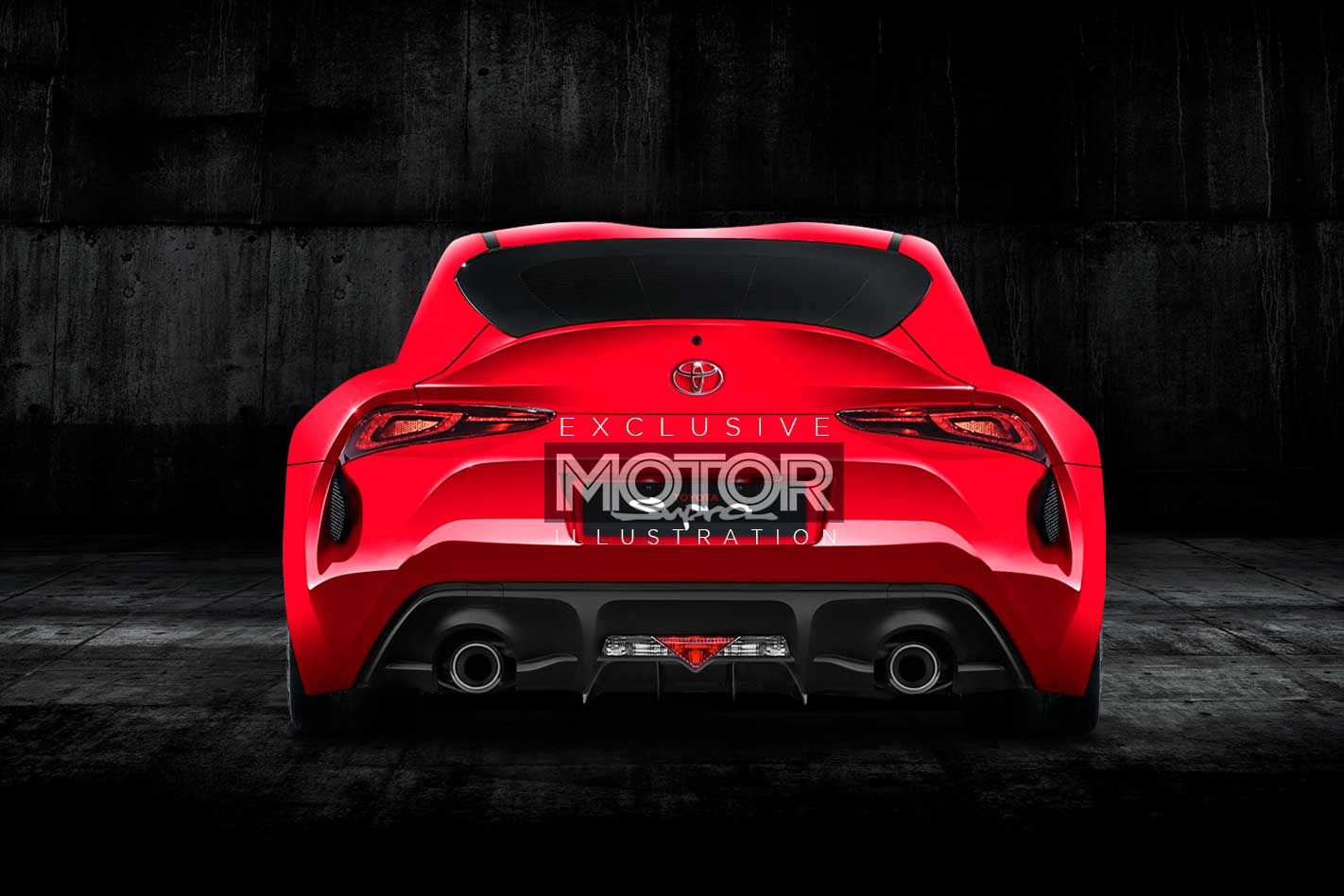
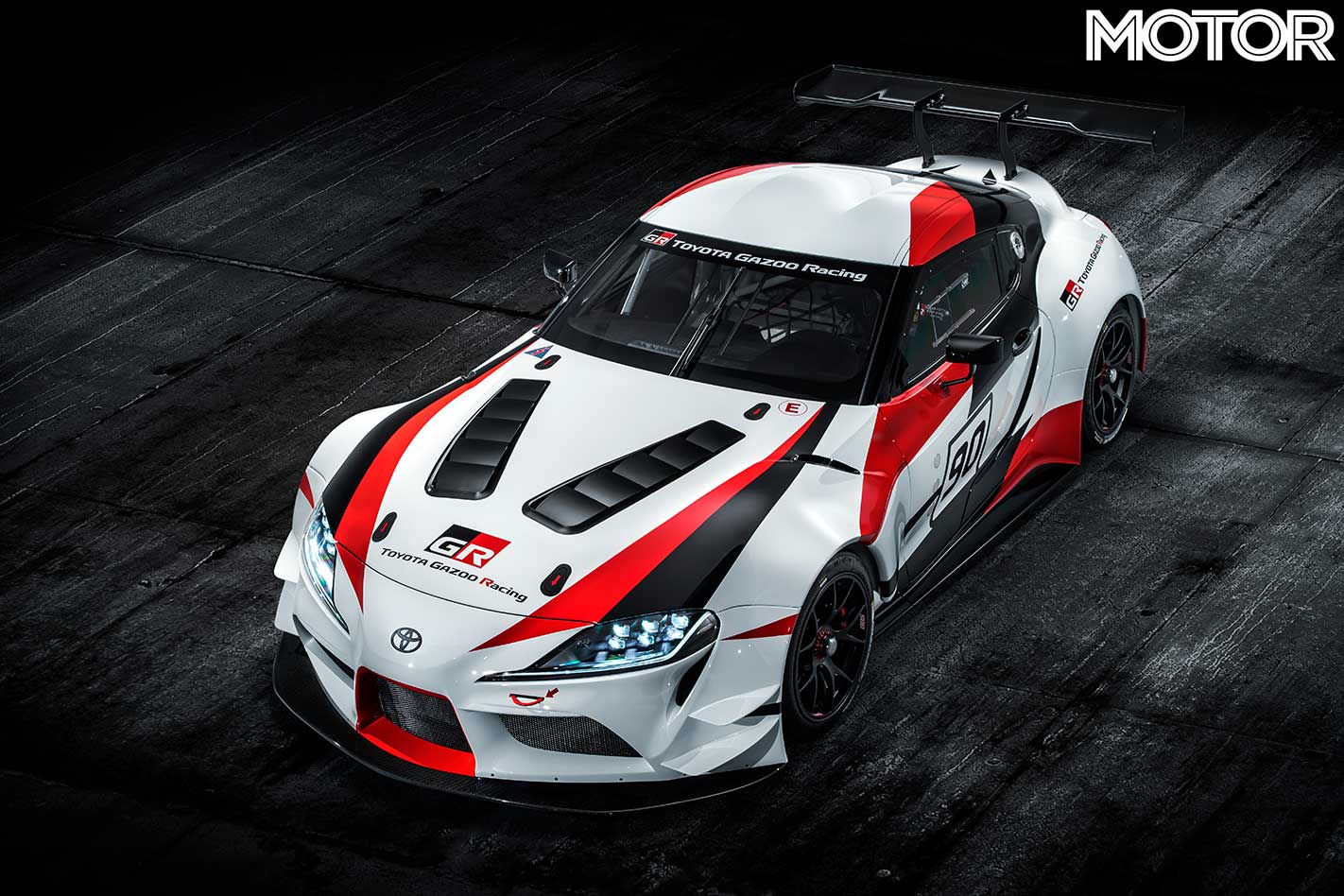
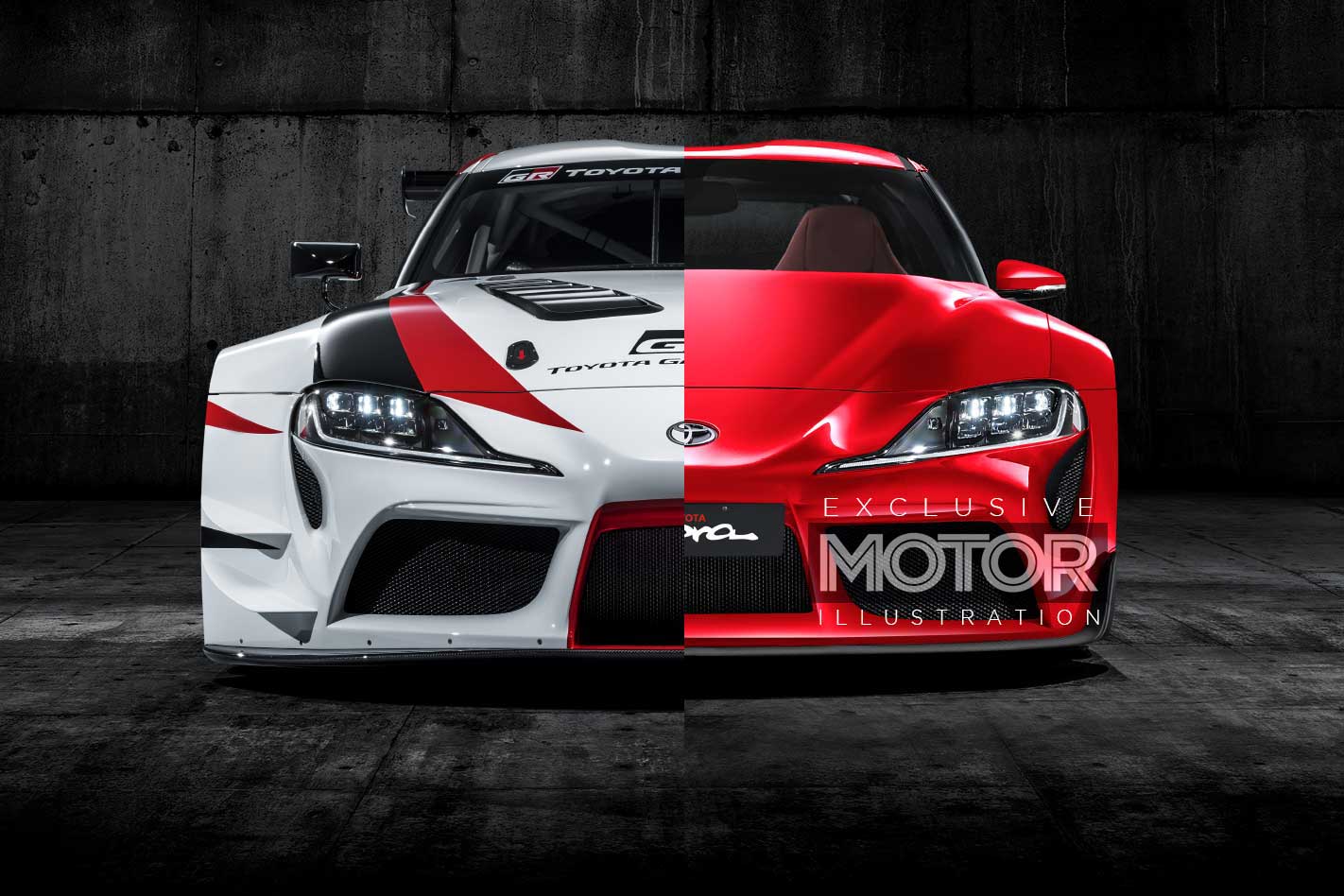
Toyota’s plans to get Gazoo Racing more heavily involved in the development of future performance models was echoed at the recent Geneva Motor Show, where it revealed an aggressively styled racing version of the Supra dubbed the GR Supra Racing Concept (the red road car is our own exclusive illustration).
Planned to be pressed into action at the Nurburgring 24 Hour in 2019, it provides the first tacit clues to the top-of-the-line road-going Supra.
At Geneva, the new concept featured a new interpretation of Gazoo Racing’s red, white and black racing livery together with the number 90, which Toyota says is a historical reference to the new Supra’s codename. The original Supra, launched in 1978, was codenamed A40. It was succeeded by the A60 in 1981, the A70 in 1986 and the A80 in 1993.
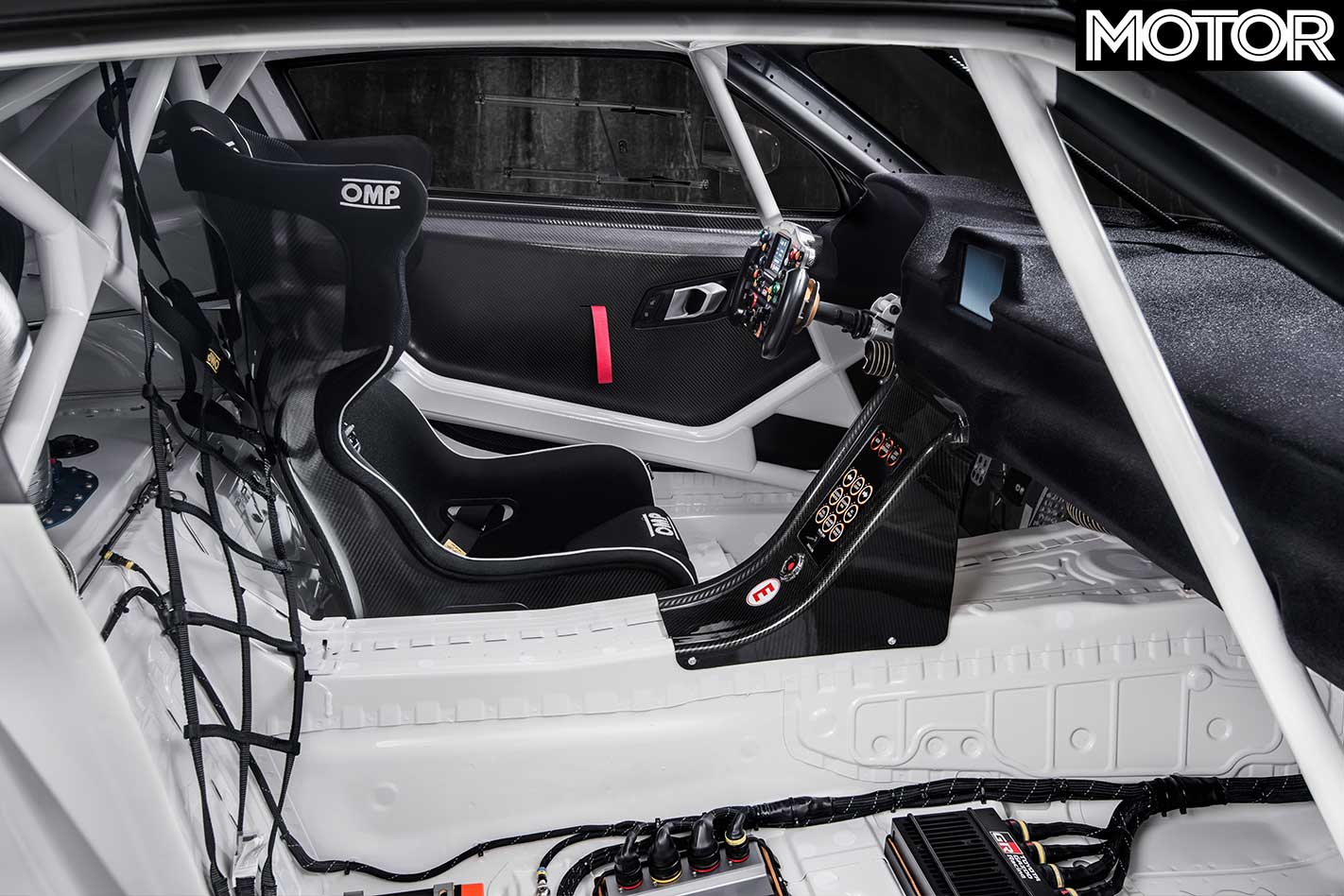
Before the Supra GR arrives in Australian showrooms in 2020, however, Toyota will have its hands full establishing the standard version of its new two-door, which like its predecessor features an expansive fastback style tailgate for added practicality.
Set to debut at the Detroit Motor Show in January 2019 – some five years after the unveiling of the FT-1 concept heralded its return – the new two-seat Toyota coupe, which goes under the official codename J29, has been developed in a joint engineering program with the fourth-generation BMW Z4. The Z4 should hit showrooms just before the Supra.
Unlike the new fixed-roof Supra, though, the upcoming Z4 is planned to be offered exclusively in roadster guise with a folding fabric roof, as hinted to by the Concept Z4 revealed at last year’s Pebble Beach Concourse in Monterey, USA, in August.
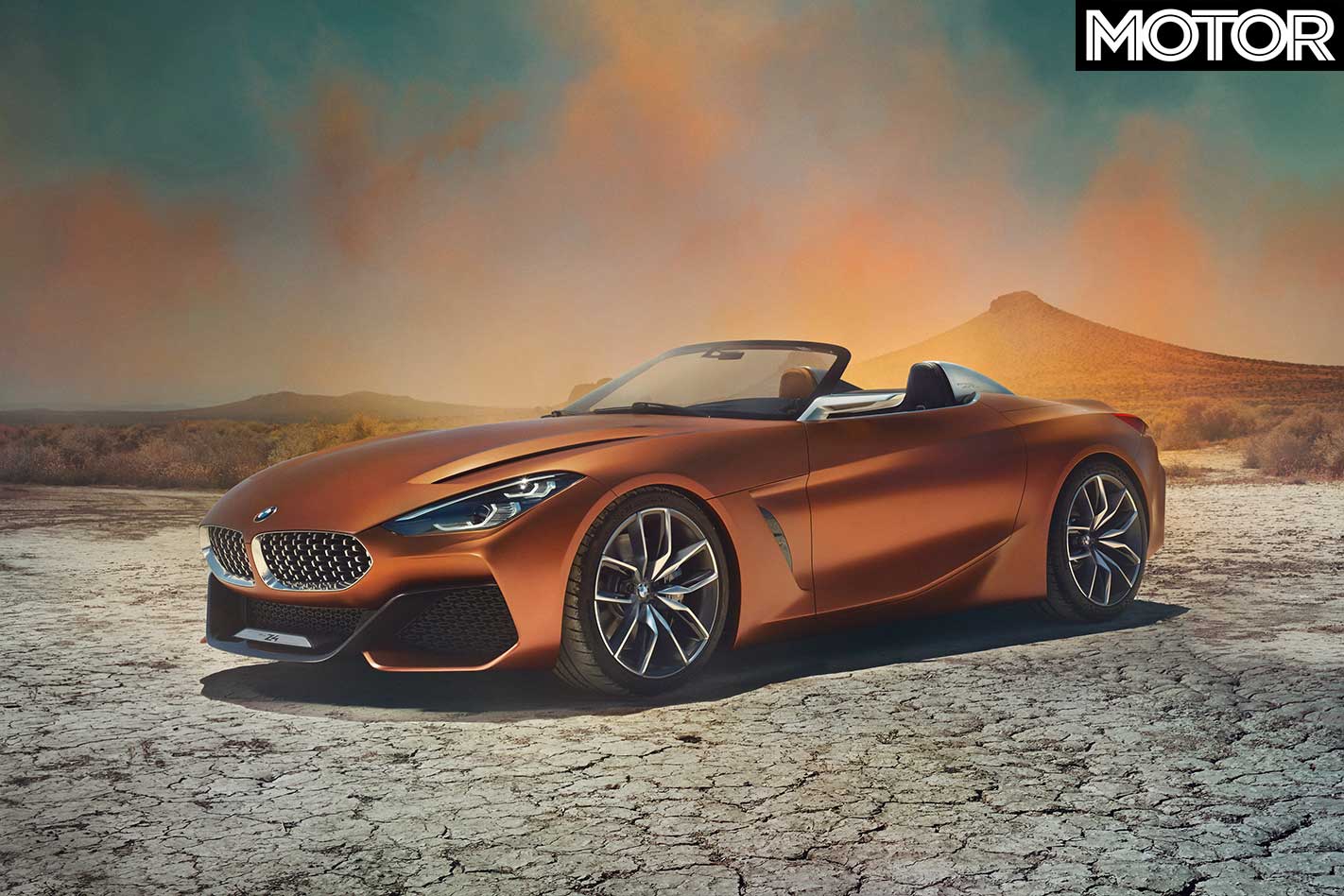
Speaking to MOTOR, Tada-san refuted claims the new Supra is behind schedule, saying it is “steadily progressing in line with engineering targets”. He also insists it will be a very different car to the Z4.
“It is different in character and philosophy to the BMW, they are two different cars,” he says. “We developed our own individual ideas then we shared them to identify where we can share common components.”
The basis for the new Supra is the latest version of BMW’s rear-wheel drive platform, the CLAR (cluster architecture) platform as it is known internally. It uses a floorplan featuring a multi-metal matrix of hot-formed high strength steel and aluminium together with a suspension with double wishbones up front and a five-link arrangement at the rear.
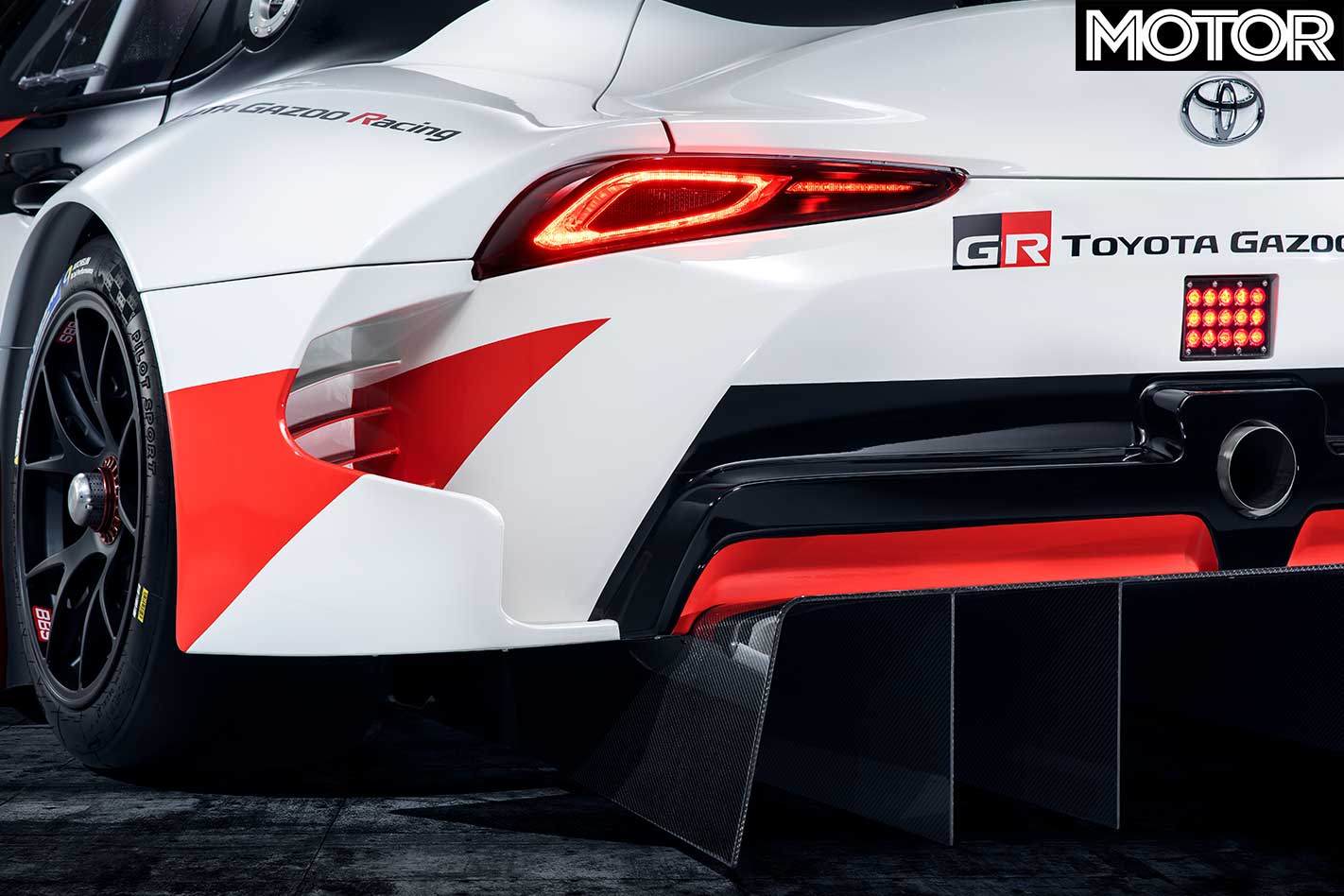
The decision to link up with BMW has seen much of the engineering of the new Supra carried out in Germany. As well as sharing its platform and driveline with the upcoming Z4, MOTOR can reveal much of its body engineering was carried out at KET Karosserie Entwicklung Thurner, a Munich-based specialist that also provides know-how for much of the German car industry, including Audi, BMW, Mercedes-Benz and Volkswagen.
Although it is yet to be made official, standard Supra models are understood to share the same engine as the upcoming Z4 sDrive40i. In the new coupe and roadster pairing, the front-mounted turbocharged 3.0-litre in-line six-cylinder is planned to deliver 265kW, with drive channelled through an eight-speed torque-converter-equipped automatic gearbox featuring steering wheel-mounted shift paddles.
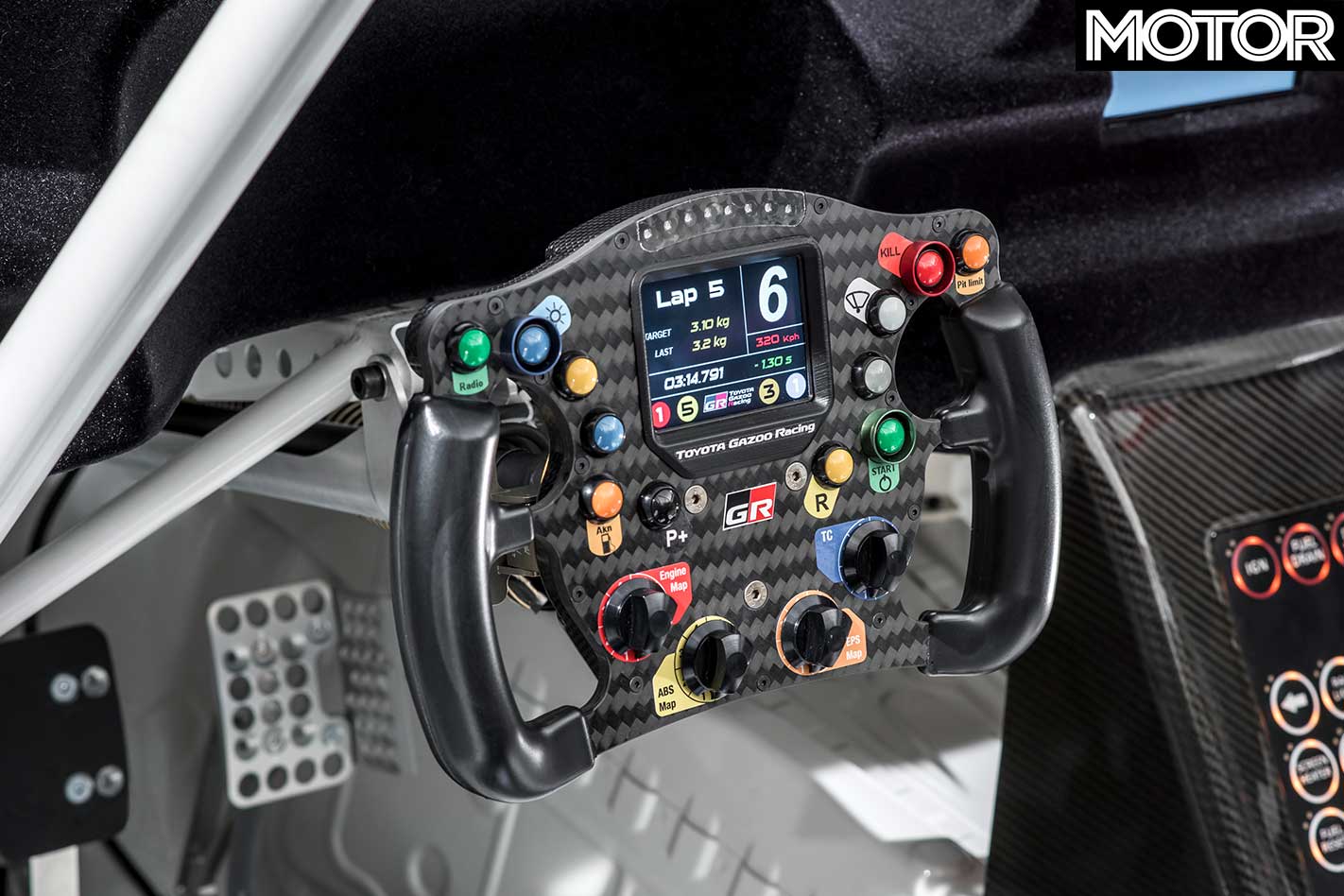
Recent documents lodged with the Japanese motor registry department reveal the dimensions of the new Supra, which is claimed to measure 4380mm in length, 1860mm in width and 1295mm in height. By comparison, the fourth-generation Supra measured 4515mm in length, 1811mm in width and 1265mm in height.
Production of the new Supra is planned to take place alongside the Z4 at production specialist Magna in Graz, Austria, beginning late this year. But while the new Toyota is not due in Australian showrooms until 2019, fans will be able to get a chance to drive it, albeit virtually, as the GR Supra Racing Concept has been given a digital treatment in a recent update of Gran Turismo Sport.
Heart of the Matter
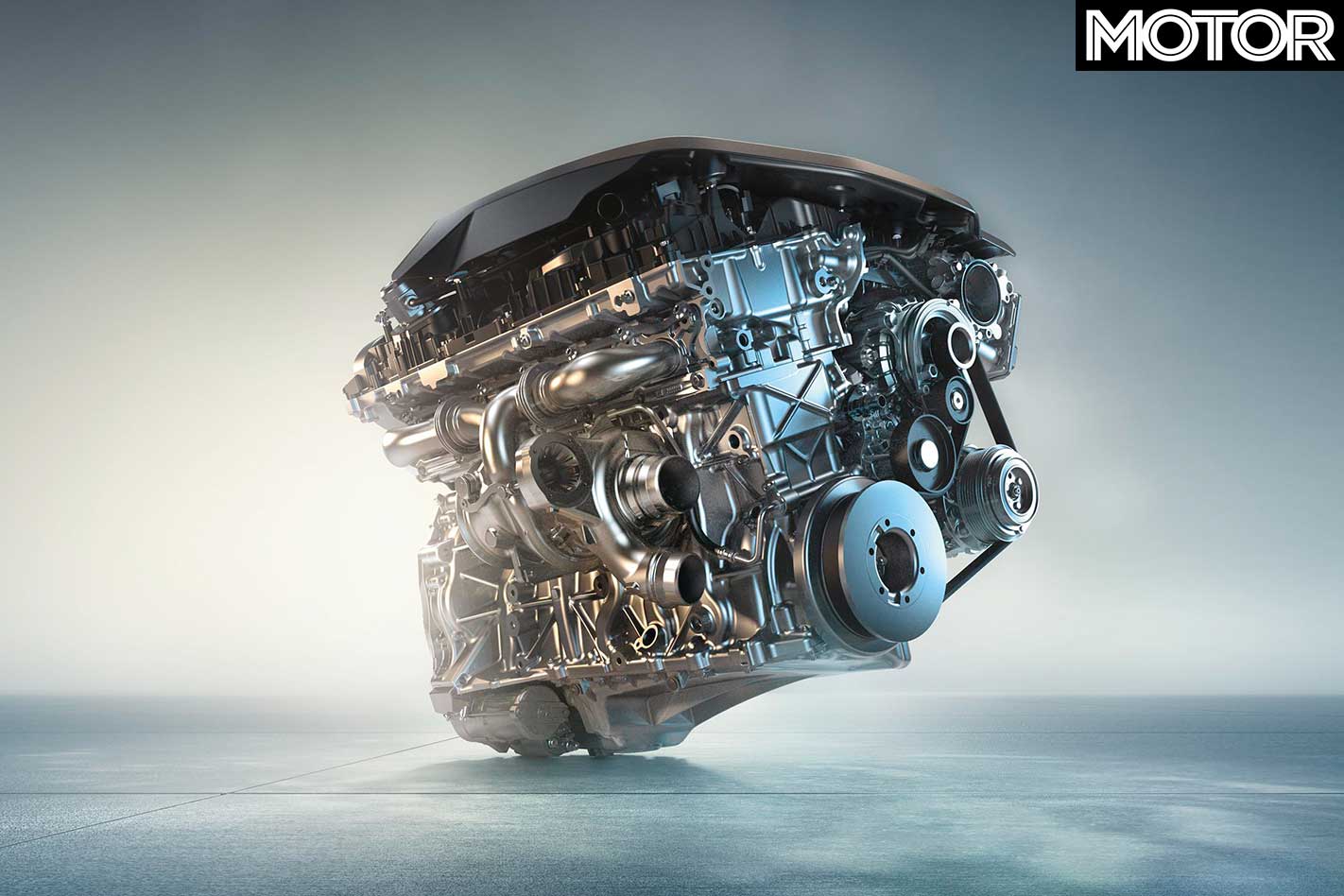
The recently updated B58 is used in models with a ‘40i’ designation and it predominately produces a healthy 250kW/500Nm; although the power figure is likely to reach 265kW as a base in the Supra.
What will be music to the ears of tuners is that the engine was designed with strength and durability in mind. So we’d say that there’s a bit of room to play with (something that’s been a Supra mainstay) in regards to gaining more than the 300kW figure.
The B58 uses a twin-scroll turbo, which has been moved closer to the manifold for better response, while the water-to-air intercooler is cleverly packaged within the inlet manifold. Plasma-coated cylinder sleeves and a ‘closed-deck’ design allow for more boost despite the high 11.0:1 compression ratio.
Four Things Toyota Did to Create the Supra Racing Concept
1 – A massive rear wing and diffuser will create much needed downforce, while the body is made of lightweight composite material. The windscreen and side windows are also made of plastic to keep the overall weight and centre of gravity low.
2 – Centre-lock BBS racing wheels are fitted with Michelin slicks while Brembo Racing calipers and discs have been used.
3 – The cabin is ready for competition with a racing dashboard, OMP driver’s seat harness and quick release steering with a paddle-shift system.
4 – It also already meets safety regulations thanks to a full roll cage, fire extinguisher as well as a host of competition-standard requirements.
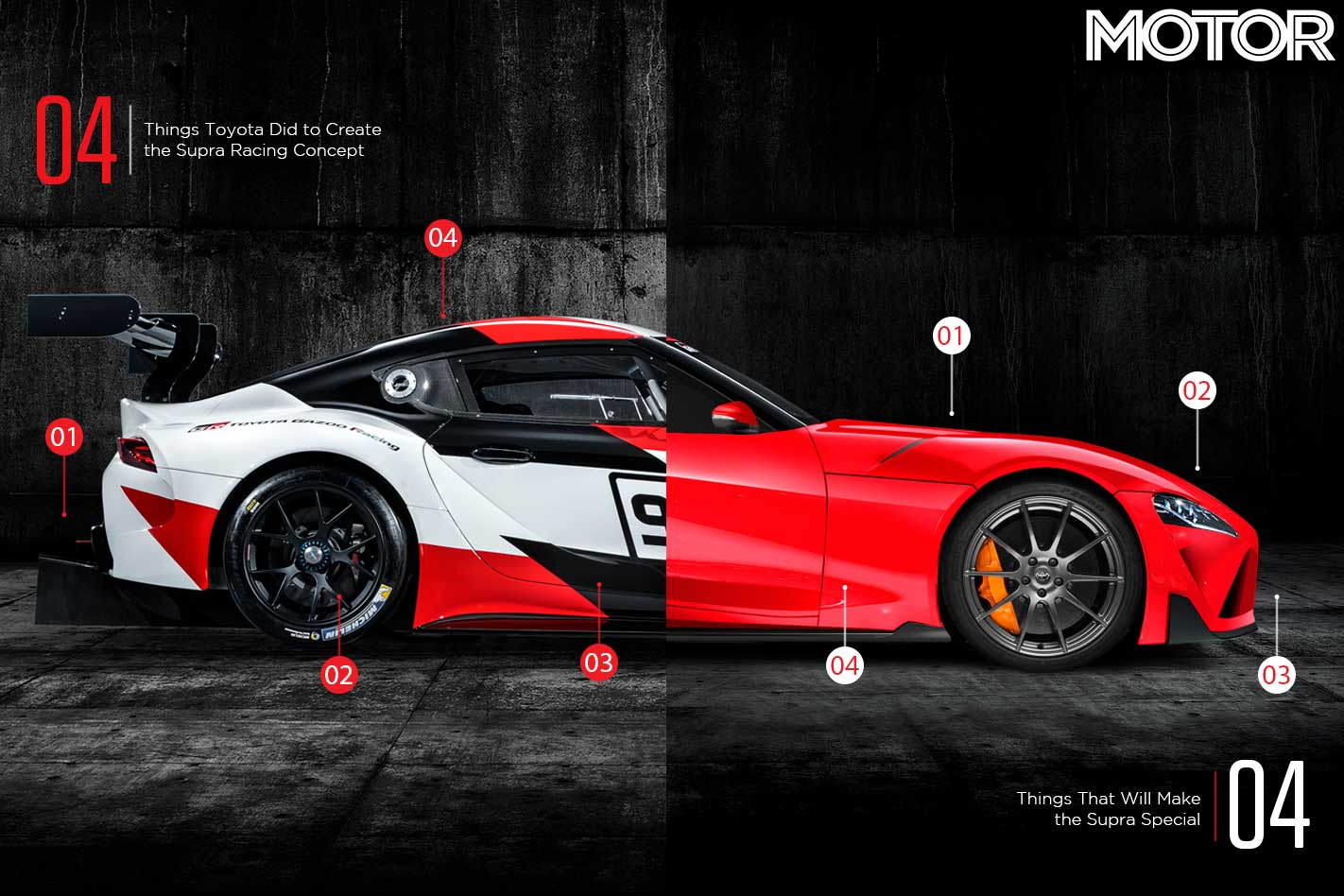
Four Things That Will Make the Supra Special
1 – The overall design has been around for five years, but the final production car isn’t slated for debut until the Detroit Motor Show in 2019.
2 – Propulsion should come from a range of turbocharged inline sixes from BMW. Power is expected to peak at more than 300kW for the range-topping GR variant.
3 – The rear-wheel drive coupe is expected to use a specifically designed ZF eight-speed, torque converter automatic transmission. Sadly there’s been no word on a possible manual option.
4 – The Supra’s basic architecture is believed to be based off BMW’s CLAR rear-wheel drive platform. Double wishbone front suspension should accompany a five-link rear setup with a rumoured electronically-controlled locking rear diff.
HOLDEN’s new ZB Commodore can already be seen as either a decent success or reasonable failure.
In March 2018, the Commodore in total secured 990 sales, fewer than half the 2081 units shifted in March 2017. Of that, 414 were run-out VF Series II models while the new ZB German-import secured the remaining 576.
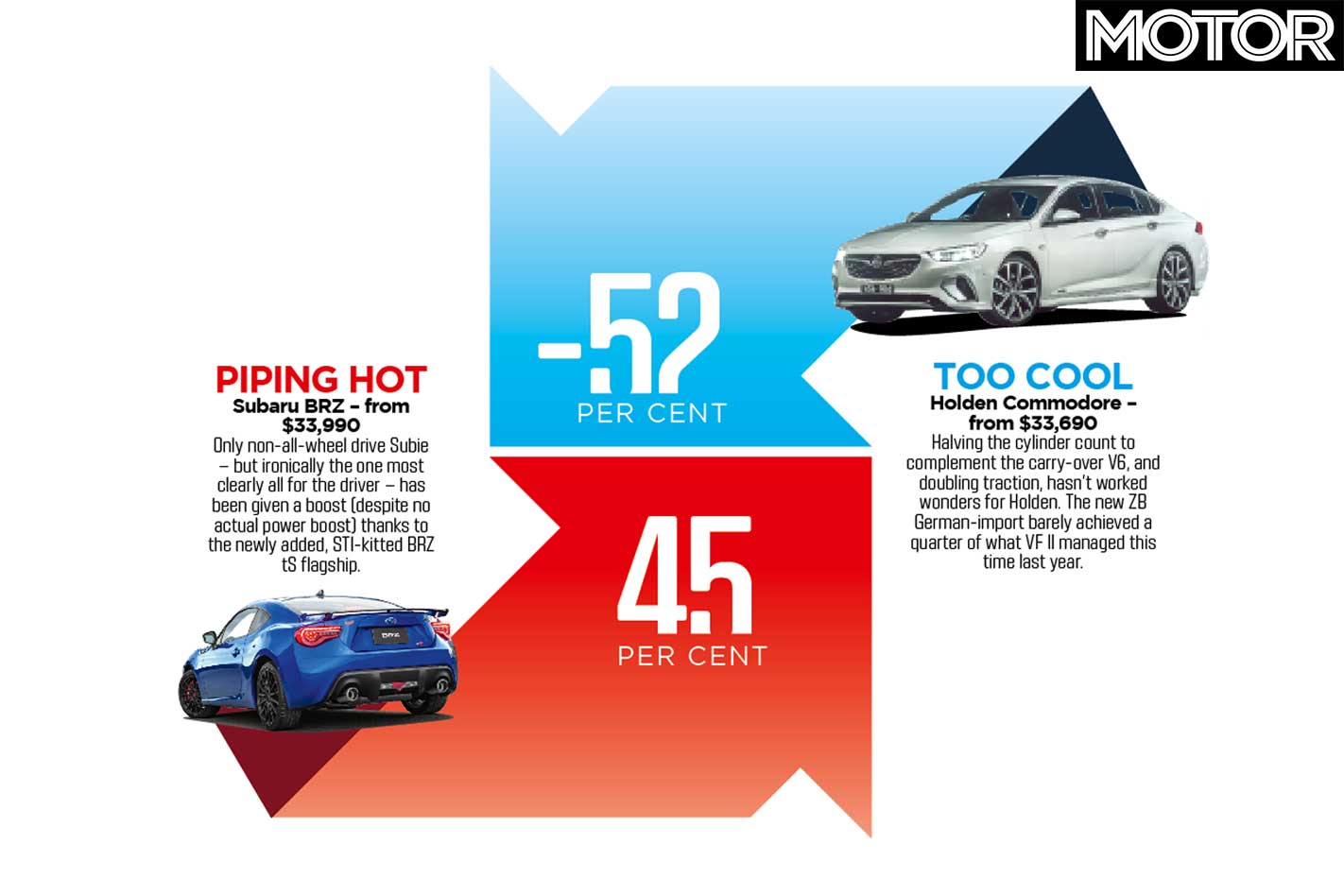
Take only the latter figure, and the nameplate shed about three quarters of its volume. In context, however, even 576 units placed Commodore ahead of all medium/large rivals except the Toyota Camry (1416), well ahead of the Mazda6 (306) and Ford Mondeo (214).
There’s zero positive outlook around Holden’s monthly sales, though. It fell 29.1 per cent compared with the same time last year, with a 5116-unit tally in March nearly pushing it out of the top 10 brands, behind Volkswagen (5317), Subaru (5195) and Honda (5586).
Affordable sports cars continue to take a tumble, too. In year-to-date percentage declines, the sub-$80K and $80K-$200K brackets fell by 23 and 24.5 per cent respectively.
Subaru’s BRZ (+45%) soared, with its 91-unit monthly tally challenging the 102 sales of its Toyota 86 twin, while in pricier segments, the Lexus RC (+29%) managed 49 monthly sales to finally challenge the 50 sales of the BMW 4 Series, if not the 185 of the Mercedes-Benz C-Class Coupe/Convertible.
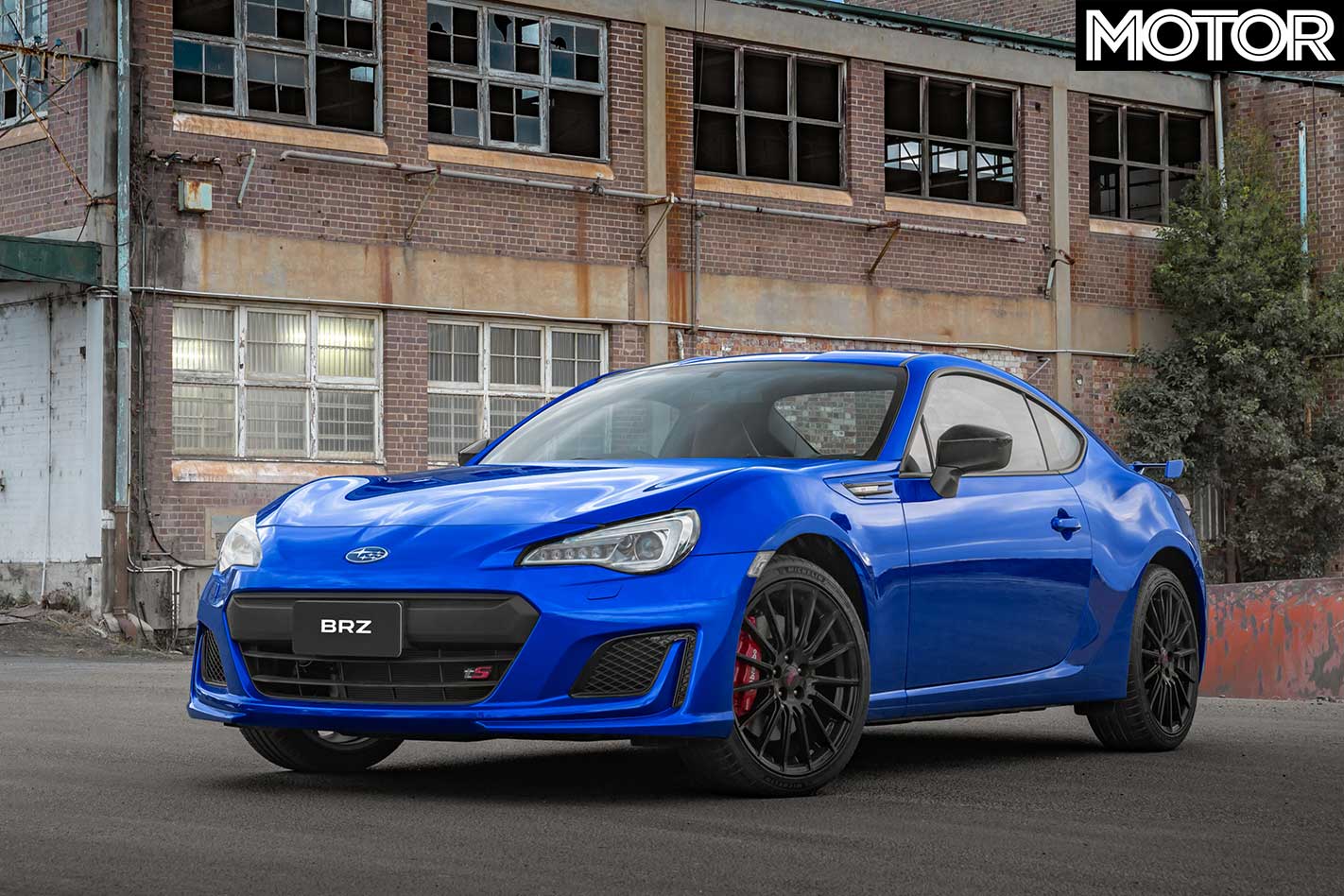
Meanwhile, Benz’s E-Class Coupe/Convertible (+130%), and Audi’s A5 (+70%) and TT (+60%) were the only other growers in this depressed end of the market.
The $200K-plus segment is only holding steady, with the Maserati GranTurismo/GranCabrio (+316%), BMW i8 (+33%), Mercedes-AMG GT (+32%) and Porsche 911 (+18%) on the rise.
You’ll sometimes hear it said that a new model “looks like it drove straight off the motor show stand”. That was pretty much the case with the Chevrolet Corvette C1, not only the first of GM’s now 68-year-old fibreglass-bodied sports car line, but America’s first production sports car.
In January 1953, General Motors kicked off the third of its post-war Motorama vehicle shows (and the first travelling Motorama) at the Waldorf Astoria Hotel in New York. Opening day alone pulled a crowd of 45,000. In addition to the new-for-’53 production models were a handful of concepts, most notably a two-seat roadster.
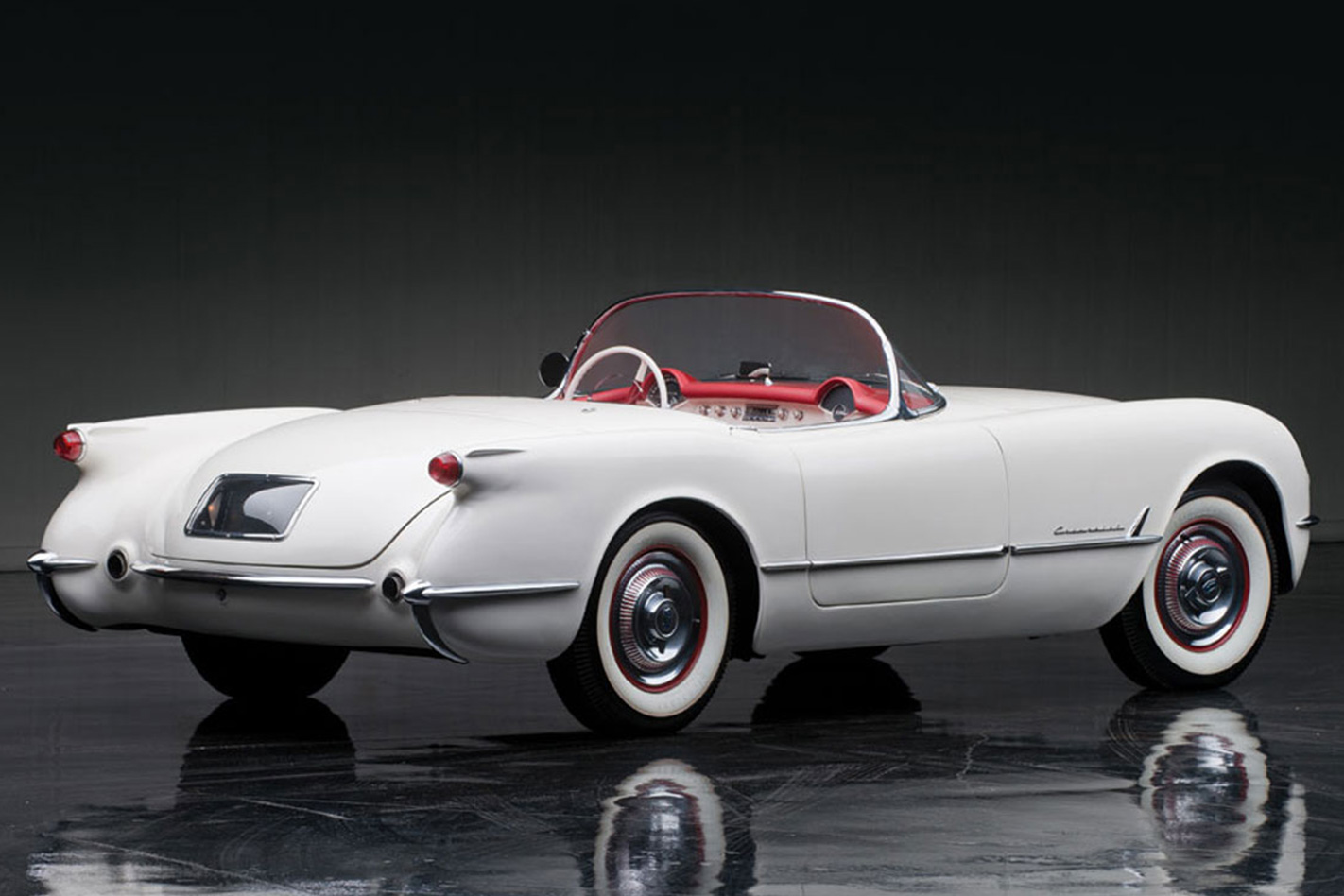
The ‘EX 122’ concept’s shapely body – in new-fangled ‘pressed fibreglass plastic’ – clearly took inspiration from the British and European sports cars then gaining a foothold in the US. GM’s design chief, the legendary Harley Earl, had instructed his styling team to “go all the way and then back off”. From the EX 122’s Ferrari-esque front, through the Jaguar XK-esque proportions, to the Earl-signature tailfins, they didn’t back off much.
Such was the response to EX 122, and the tool-up viability of the shortened sedan chassis and fibreglass body, that Chevrolet rolled the first ‘Corvette’ off the production line on 30 June that year.
With its eye mainly on the Jaguar XK120, Chevrolet had designed the Corvette with a six-cylinder engine, derived from the mundane 235.5ci (3859cc) ‘Powerglide’ sedan unit and its matched, two-speed auto transmission. With Corvette-specific mods helping it reach 112kW, it went into battle against Jaguar’s 120kW, twin-cam XK120.
It flopped, and not only on the road, where the lazy engine, two-speed auto and plainly crude suspension were obliterated by the (amazingly, cheaper) Jaguar. Even the limited build of 300 cars for 1953 were slow to sell. For ’54, the start of full production, an engine tweak and new colours failed to add much spice; almost one third of that year’s 3640 units were unsold by the end of the year. Dealers wanted the Corvette torpedoed.
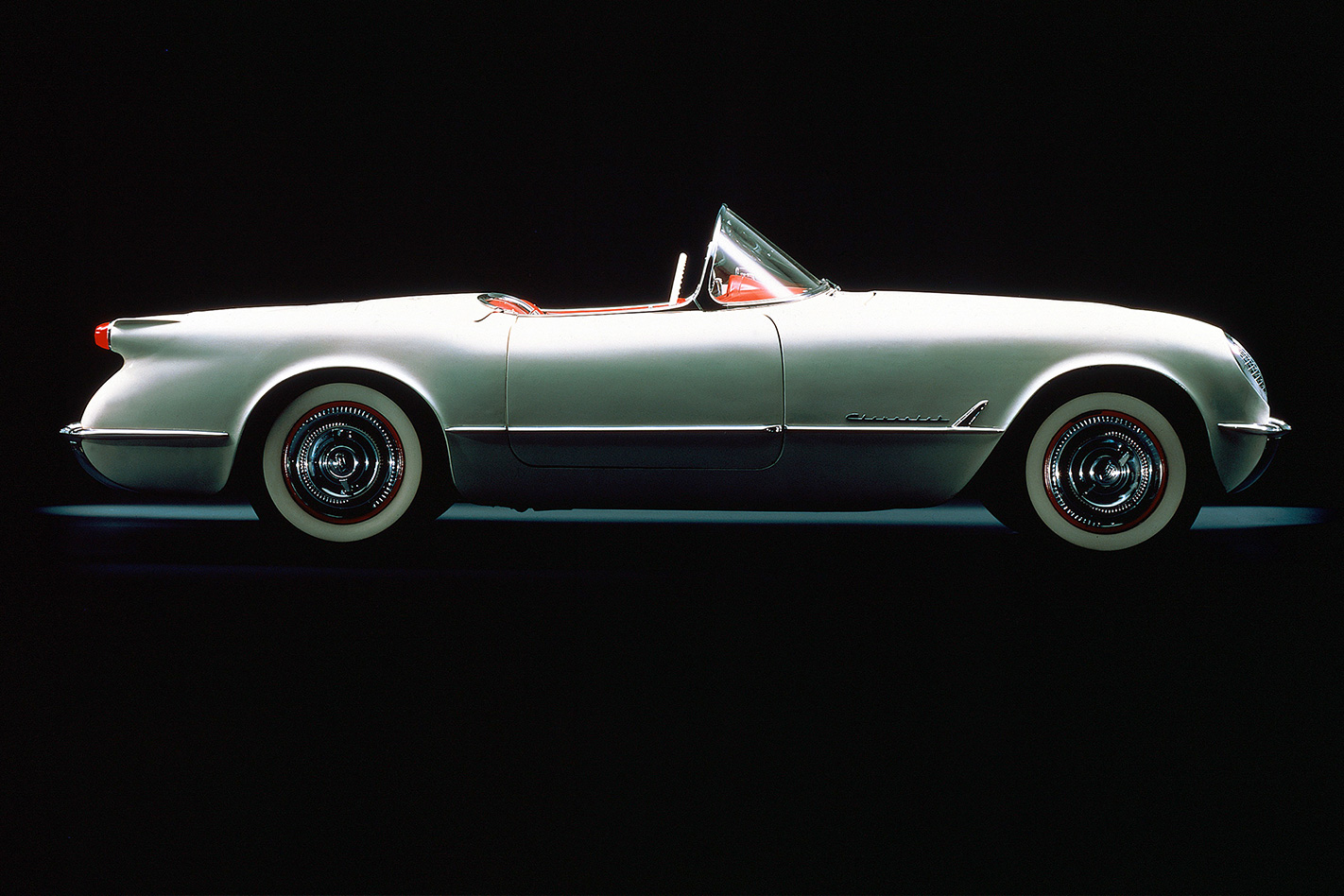
The 1955 arrival of Chevy’s 145kW, 4.3-litre small-block V8, an optional three-speed manual and iron-willed engineer Zora Arkus-Duntov turned the tide just in time. Even so, that year’s limited build of just 700 cars compared with more than 15,000 sales for Ford’s new, cruisy Thunderbird. It wasn’t until 1963, when the C2 series was launched, that the Corvette really got its glass ass on the gas.
Seen through ’glass
Corvette C1 was sensibly sized, measuring 4242mm overall, on a 2590mm wheelbase. The ladder-style chassis was shortened from a Chevy sedan’s. Front suspension was by unequal-length wishbones and coil springs, rear by live axle with semi-elliptics. Brakes were drums. Kerb weight of 1227kg was around 100kg lighter than a 1953 Jaguar XK120.
Flame with modest heat
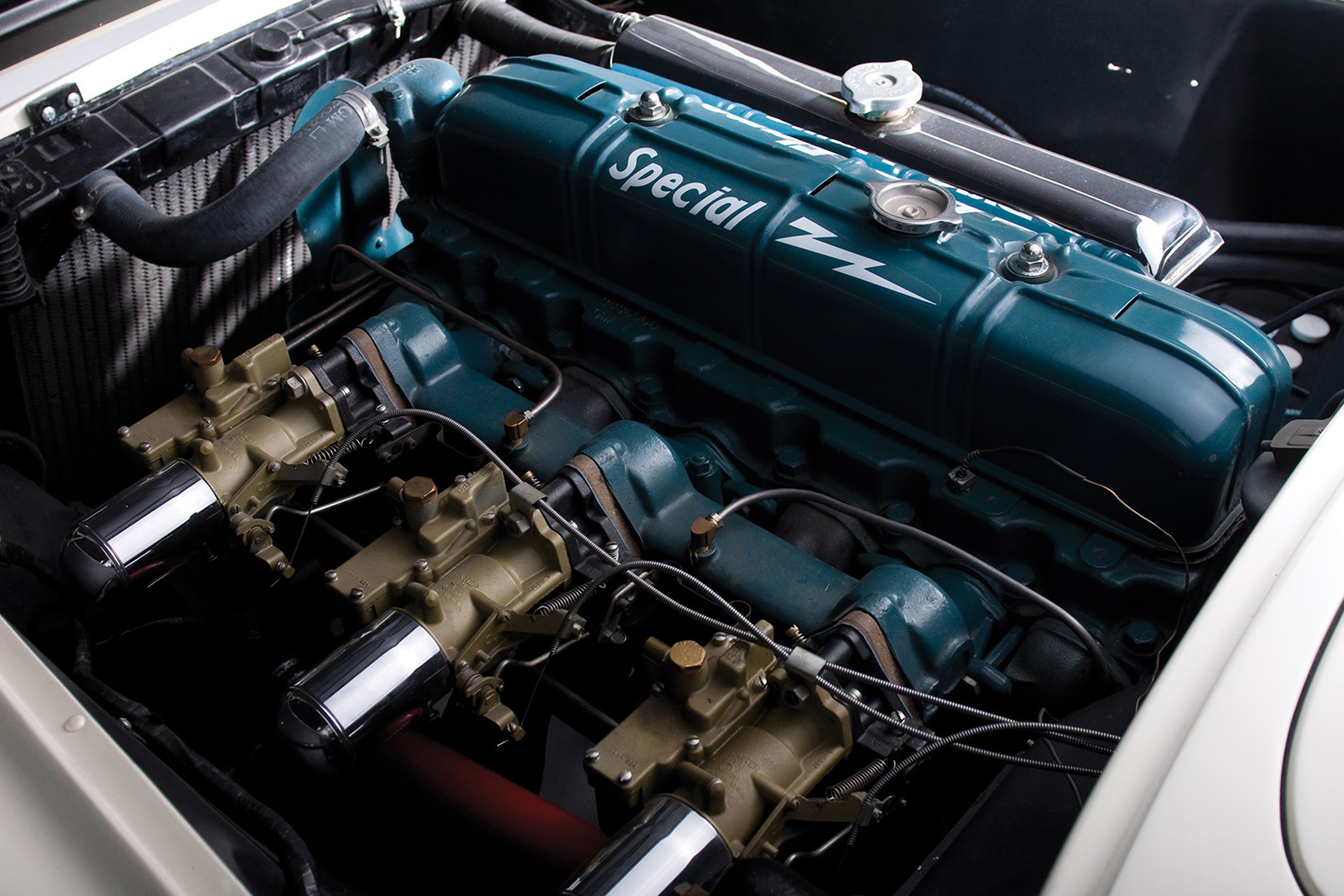
Fitting the frumpy, 3859cc ‘Blue Flame Six’ pushrod six was about cost and timing: Chev’s small-block V8 was still two years away. Corvette gained triple Carter carbs, 8.0:1 compression, a high-lift cam, solid lifters and dual valve springs, to rev beyond 5000rpm. Power was 112kW at 4200rpm; torque 302Nm at 2400rpm. Two-speed slushbox allowed 172km/h, with 0-100km/h in lazy elevens.
Meet the new squeeze
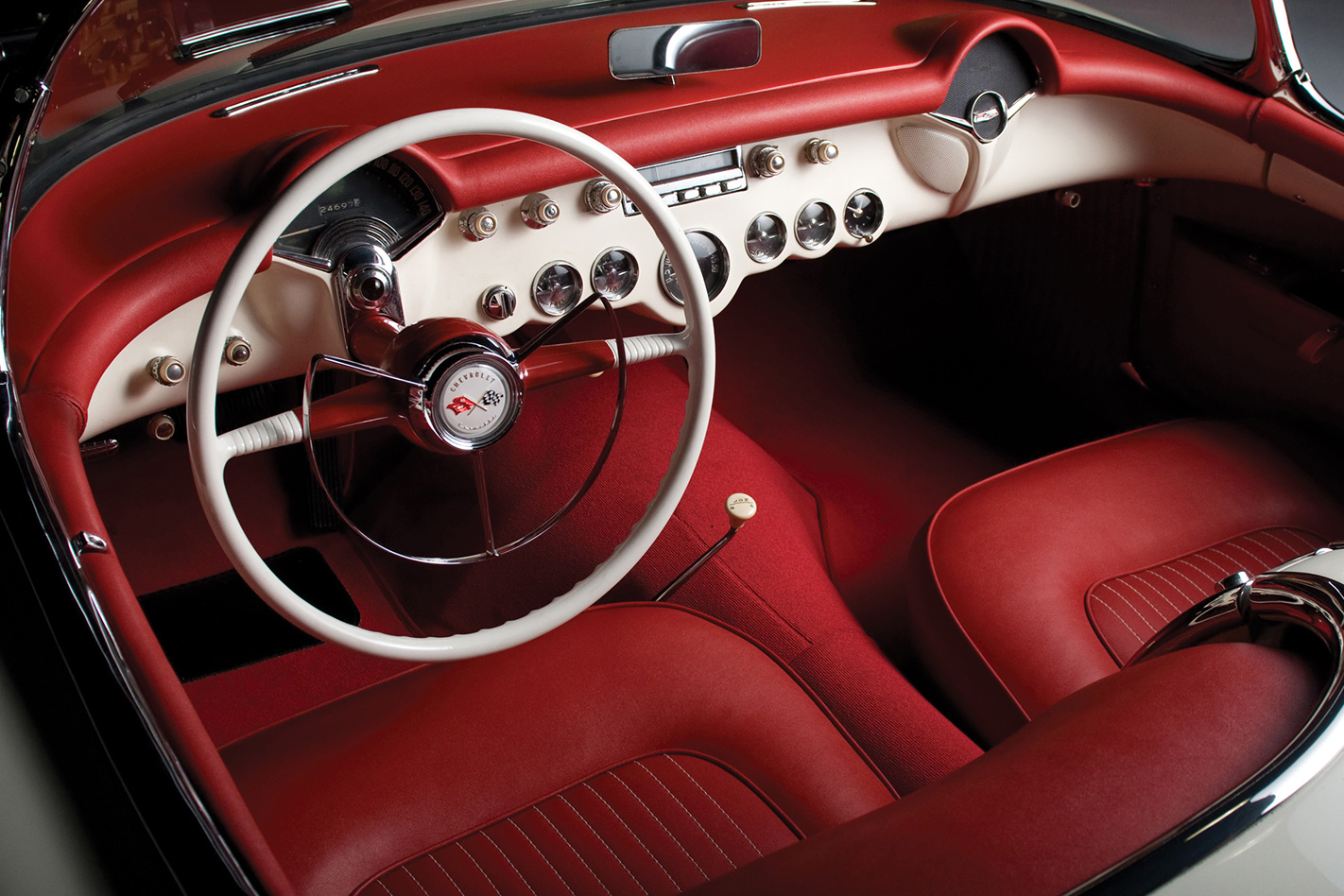
Corvette C1’s cockpit had notoriously cramped legroom for its two occupants. Door handles were inside and windows were removable, not roll-down. Bucket seats were still exotic in ’53, likewise the jet-age cockpit with centralised instruments, perhaps to suggest international ambitions. Folding canvas roof stowed neatly under the elegant panel behind cockpit. Fibreglass body allowed the integration of the radio antenna, moulded into the boot lid.
AS CHINA’S auto industry matures, the quality – and quantity – of product from the country has also grown. MG, a brand that used to be as British as bulldogs and warm beer, has been transformed into a subsidiary of Chinese mega-corp SAIC Automotive, and its most promising product since its Chinese-funded revival began is the MG ZS compact crossover.
Judged in isolation it presents a compelling case, with turbo petrol power under the bonnet and attractive design encasing a sizable-for-the-segment cabin. However in a realm as competitive as the compact SUV market, the MG has no shortage of sharp rivals – with the highly popular Mazda CX-3 being key among them. Can China square off against Japan in one of the most important categories around?
Price and Equipment – Winner: MG ZS
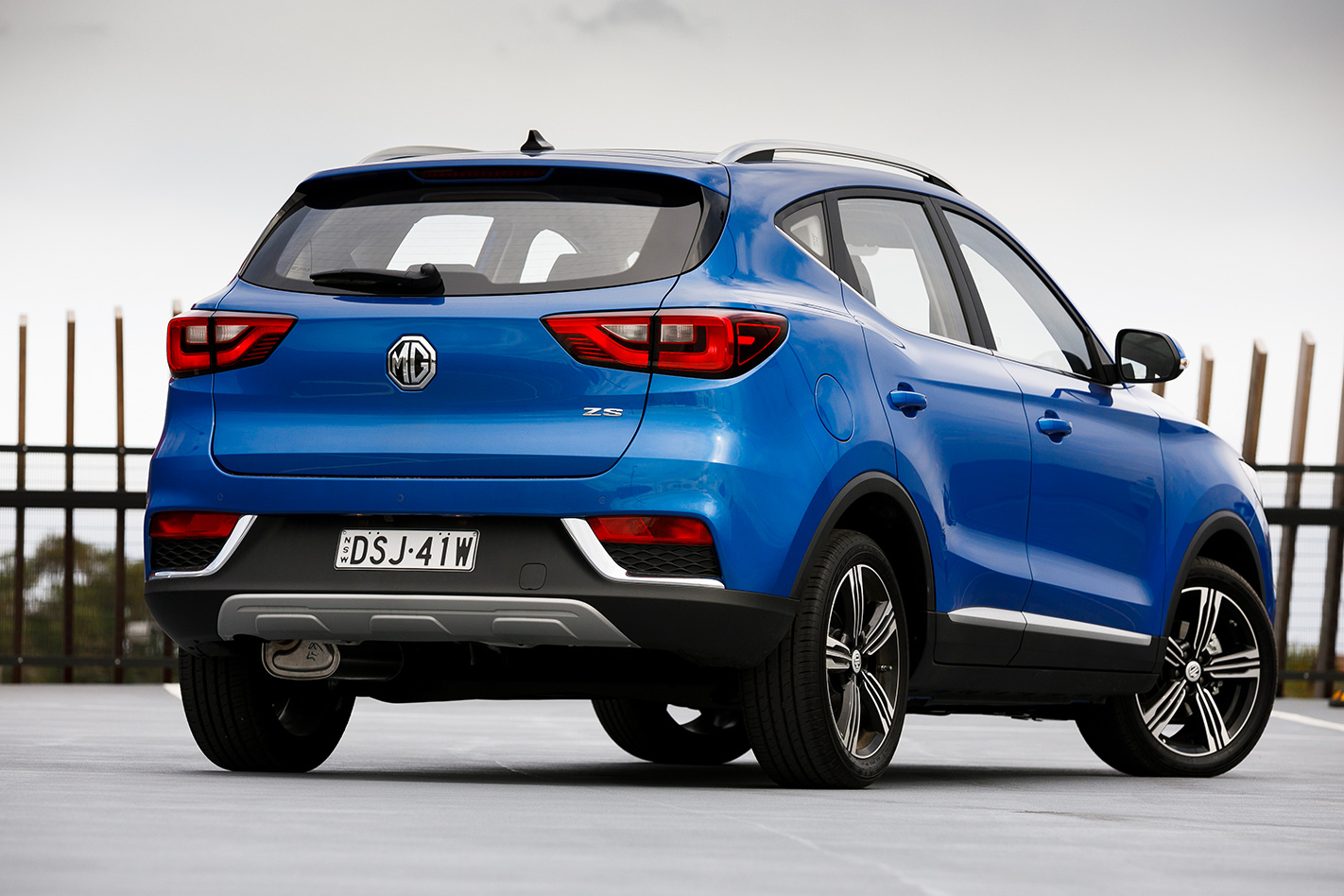
MAZDA CX-3: As well as a more convincing safety case that includes a five-star ANCAP rating, AEB, blind-spot monitoring, reverse camera and rear parking sensors, the CX-3 Maxx has dual-zone climate control and sat-nav as standard – items missing from the MG Essence. Even so, with a $900 premium over its rival, price-focused shoppers might still be swayed by the MG’s slightly fatter equipment list.
MG ZS: MG’s strategy is to let price and value do the talking. Top-grade ZS Essence packs a panoramic glass sunroof, rear parking sensors, a reversing camera, LED daytime running lights, a turbo engine and automatic as standard, which is a compelling deal at $23,990. Auto-on headlights and front and rear foglights are another spec advantage, but the four-star ANCAP score and no AEB is not.
Interior and Connectivity – Tied
MAZDA CX-3: The CX-3 has a far more compact cabin than the MG with tight rear seat accommodation and 95L less boot capacity, but that’s offset by a much higher-quality interior and superior ergonomics. There’s no smartphone mirroring, but the Mazda’s 7.0-inch infotainment display looks and feels more mature, is mounted high on the dash rather than halfway down it, and has a nifty rotary controller.
MG ZS: The MG’s interior decor screams ‘Volkswagen Group bootleg’, from the non-reach-adjustable steering wheel that flaunts previous-gen VW design cues to air vents that are eerily reminiscent of the Audi A3’s. Materials quality isn’t an MG strong suit; at least there’s plenty of cabin space. And while the 9.0-inch infotainment system feels decidedly aftermarket it does get Apple CarPlay.
Ride and Handling – Winner: Mazda CX-3
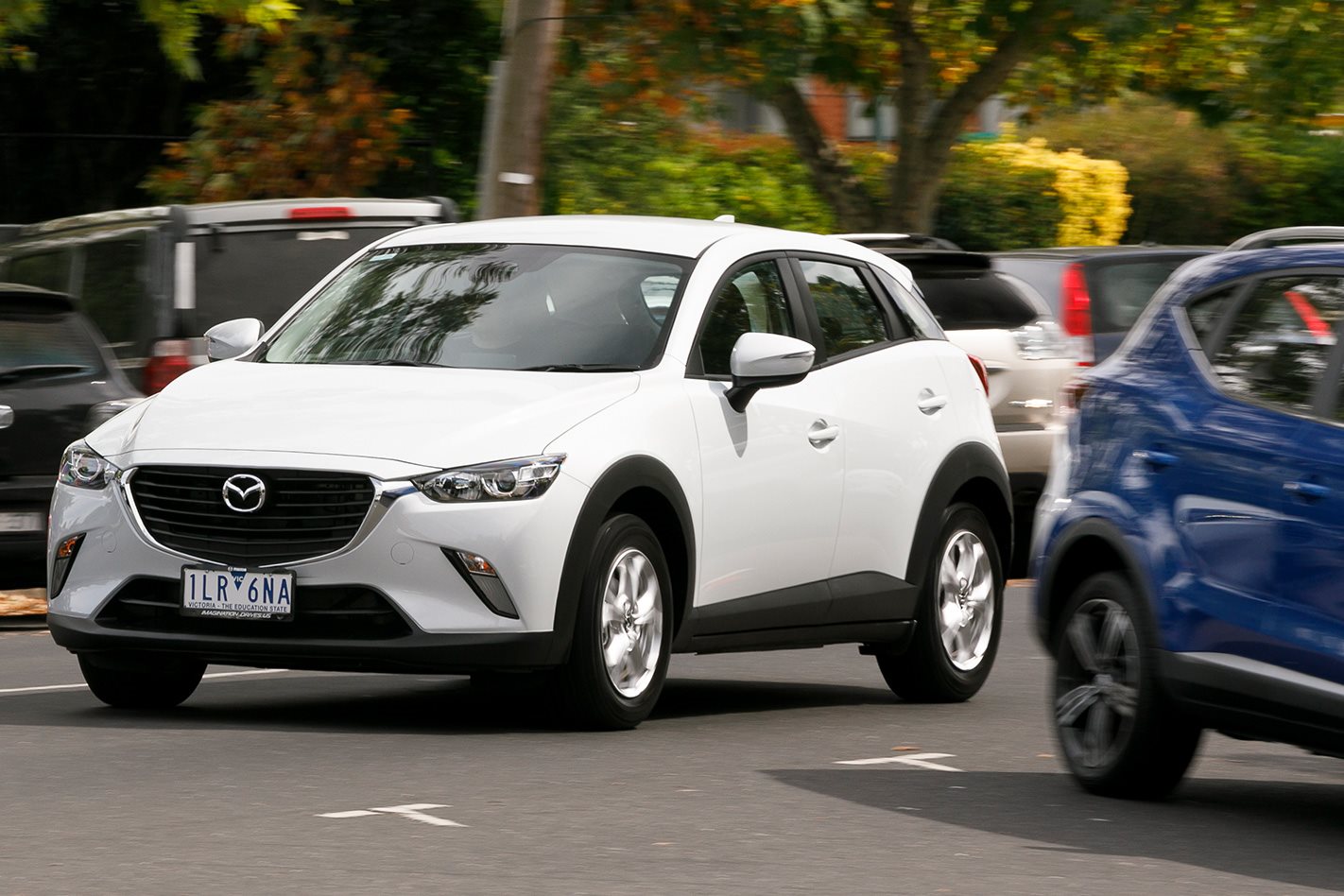
MAZDA CX-3: The CX-3 banks heavily on its dynamic capability, and for the most part the FWD Maxx delivers on that promise. The steering, now aided by G-Vectoring control, is responsive and the suspension tune straddles the line between ‘comfort’ and ‘handling’ rather well. Firm, but not objectionably so thanks to well-calibrated damping, and far more polished than the MG’s set-up.
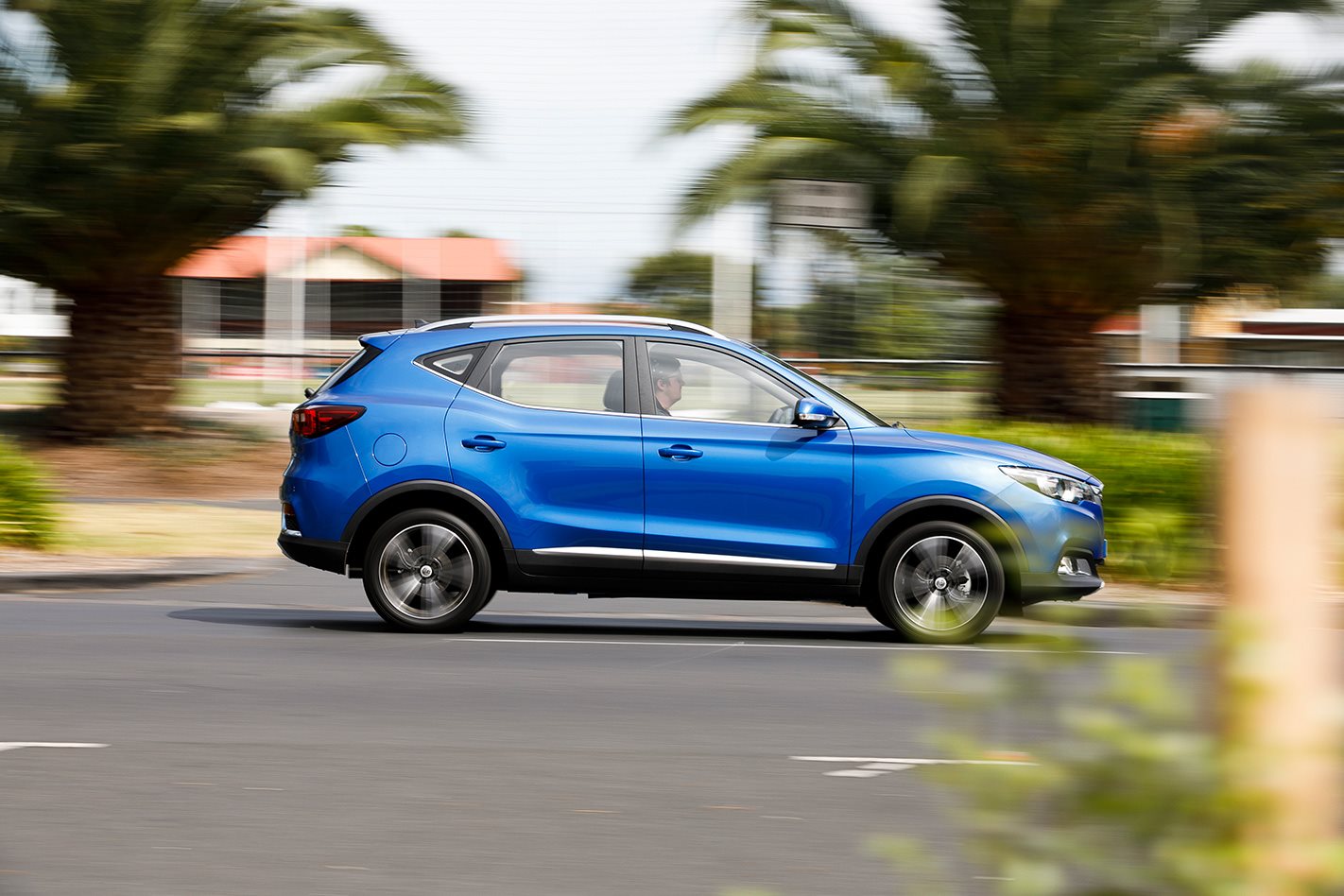
MG ZS: The ZS rolls on 17-inch alloys, an inch bigger than those on the CX-3, but that’s not enough to explain its significantly harsher and brittle ride. Speedbumps, manhole covers and expansion joints introduce far more thumping than they should. The MG’s tenacious grip on the road comes as a plus, however vague, over-assisted steering ensures there’s very little dynamic sheen.
Performance and Economy – Winner: Mazda CX-3
MAZDA CX-3: The CX-3’s substantial power and torque advantage coupled with an excellent six-speed auto deliver a more effortless driving experience, whether around town or on highways. But it’s a noisy powertrain, despite Mazda’s efforts to add refinement with CX-3’s recent update. In the same mix of driving, the CX-3 burned less fuel than the MG, the Mazda’s stop-start likely playing a part.
MG ZS: The MG’s 1.0-litre turbo has a relatively fat mid-range that sees it work well around town. But the engine lacks refinement and quickly runs out of puff beyond 5000rpm. The six-speed auto wants for calibration finesse, hunting up hills and suffering from low-speed lurching. And while a downsized turbo promises economy, this one works the snail too hard to deliver in the city.
Warranty and Servicing – Winner: MG ZS
MAZDA CX-3: Mazda’s warranty term is for the first three years of ownership, with no limit on kilometres; both have a 12 month, 10,000km service interval. The Mazda’s visits to the service department alternate between $286 and $314, however brake fluid needs to be replaced every 40,000km/24 months at $120 a pop, bringing the average cost to $360 per annum over the first six years.
MG ZS: The MG claws back some points with its generous seven-year, unlimited-kilometre warranty, which brings welcome peace of mind for a new model from a revived brand. MG doesn’t yet have a capped-price service plan for the ZS (or an extensive dealer network), but says average servicing costs over the first six years should be in the order of $426 per year.
Verdict – Winner: Mazda CX-3 Maxx
Driven back-to-back, the Mazda’s virtues throw some harsh light on the MG’s shortfalls. The ZS is far from woeful, but there’s definitely room for improvement in refinement, suspension tuning and transmission calibration. Cabin quality is also well behind that of the Mazda, and the copycat interior design is also pretty plain-Jane. That said, it’s a solid step up on Chinese efforts of years past.
And for many, the ZS’ affordability and huge warranty will get them across the line – even if average servicing costs are higher than the Mazda. Between these two, it’s a closer race then you might expect – though the CX-3 still comes out on top.
