
Snapshot
- Victorian Government introducing plates with security markings
- 430,000 plates to be created annually
- 15,000 thefts reported in 2021
The Victorian Government is set to roll out new number plates with extra security that it claims will reduce the instances of crime and plate theft.
The initiative began on Friday 30 December 2022, with the Government aiming to have 430,000 of the new plates created each year.
The number plates feature Directional Security Markings in the surface of the plate, which the Government says will provide an extra layer of authentication and make it difficult for the plates to be cloned – a problem that VicRoads has worked with Victoria Police and the Department of Justice and Community Safety to find a solution.
NOTE: Images of the new plates have not yet been released. Photos in this story are current, existing Victorian plates. |
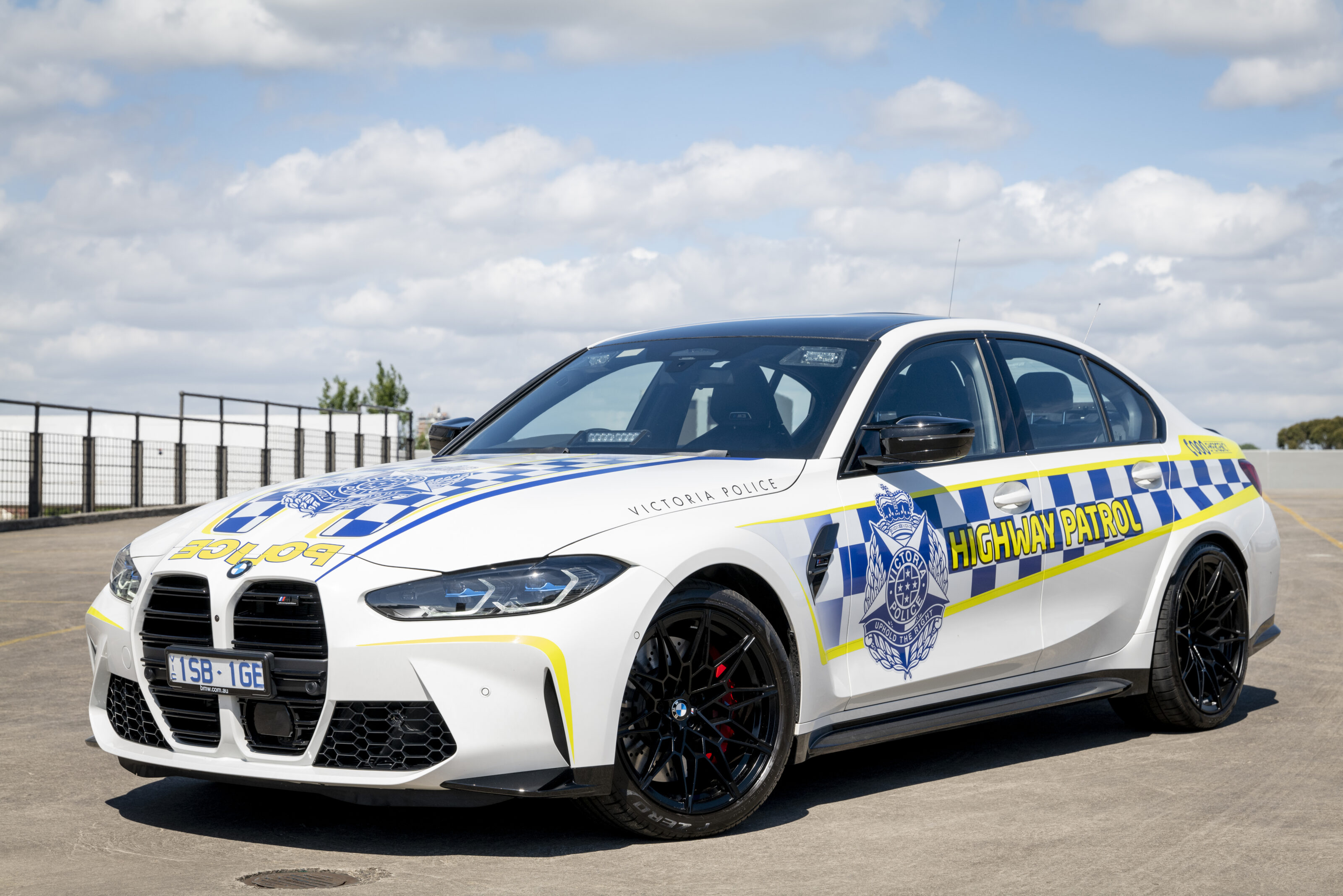
The new plate design seeks to prevent thefts through the use of markings that cannot be removed without damaging the reflective system.
This would help prevent duplication of plates that are fixed to vehicles of similar make and model, which are then used in the act of committing a crime.
Minister for Roads and Road Safety Melissa Horne said, “We have been working closely with relevant departments on a solution to address number plate theft and it is fantastic that we can now begin delivering this new technology.”
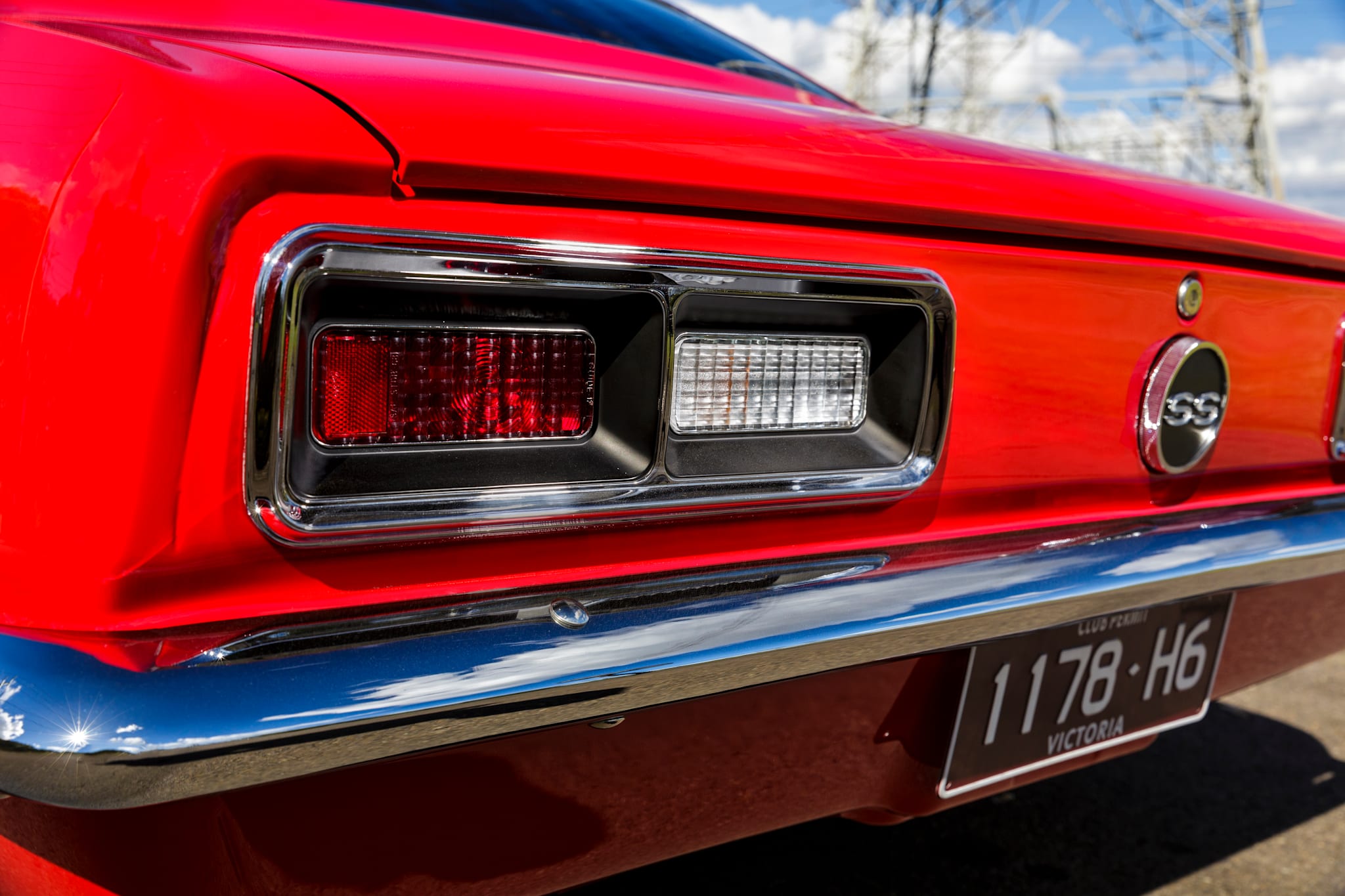
Number plate theft in Victoria has been a concern, with the RACV reporting in May this year that nearly 15,000 plate thefts were recorded in 2021. The types of crime for which these stolen plates were used ranged from burglaries and drug trafficking through to avoiding tolls and petrol station drive-offs.
The plate markings work in a manner similar to holograms in Australian banknotes, meaning that cloning plates is increasingly difficult.
Minister for Police, Anthony Carbines said, “We know that number-plate theft has been a growing problem in Victoria – these new Directional Security Markings add an additional layer of security that will stop theft and help reduce crime.”
Snapshot
- Universe Mobile Office able to provide worker needs while away from the office
- Bus will allow for both individual and collaborative workflows
- Hyundai outlines the office is available in three options
Hyundai feels it has the solution for teams that work remotely, unveiling the Universe Mobile Office – albeit for Korea only at this stage.
With remote working on the rise, and increasing needs for flexibility, Hyundai developed the Universe Mobile Office “by thinking of the bus as a smart mobility solution, not just as a means of transportation.”
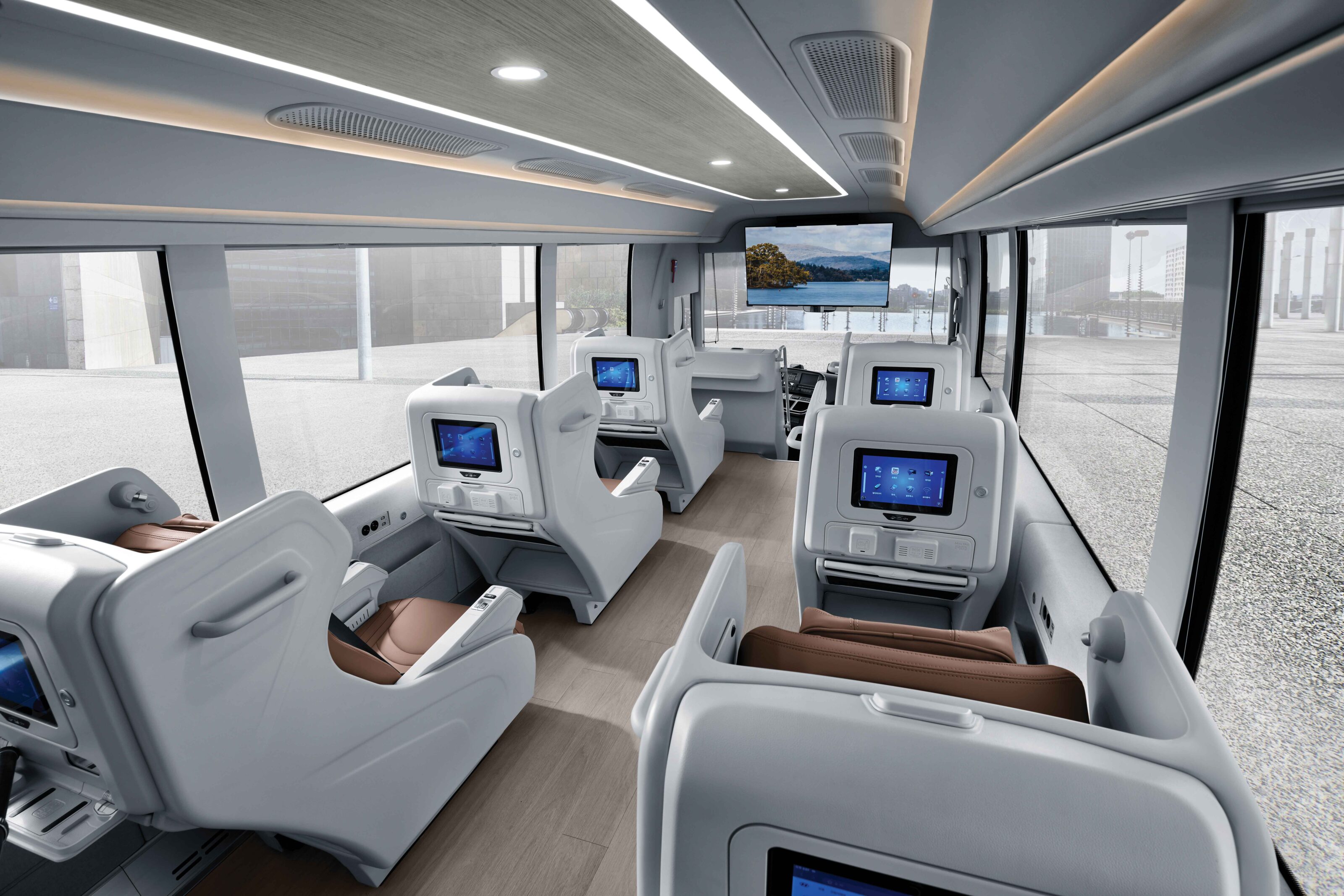
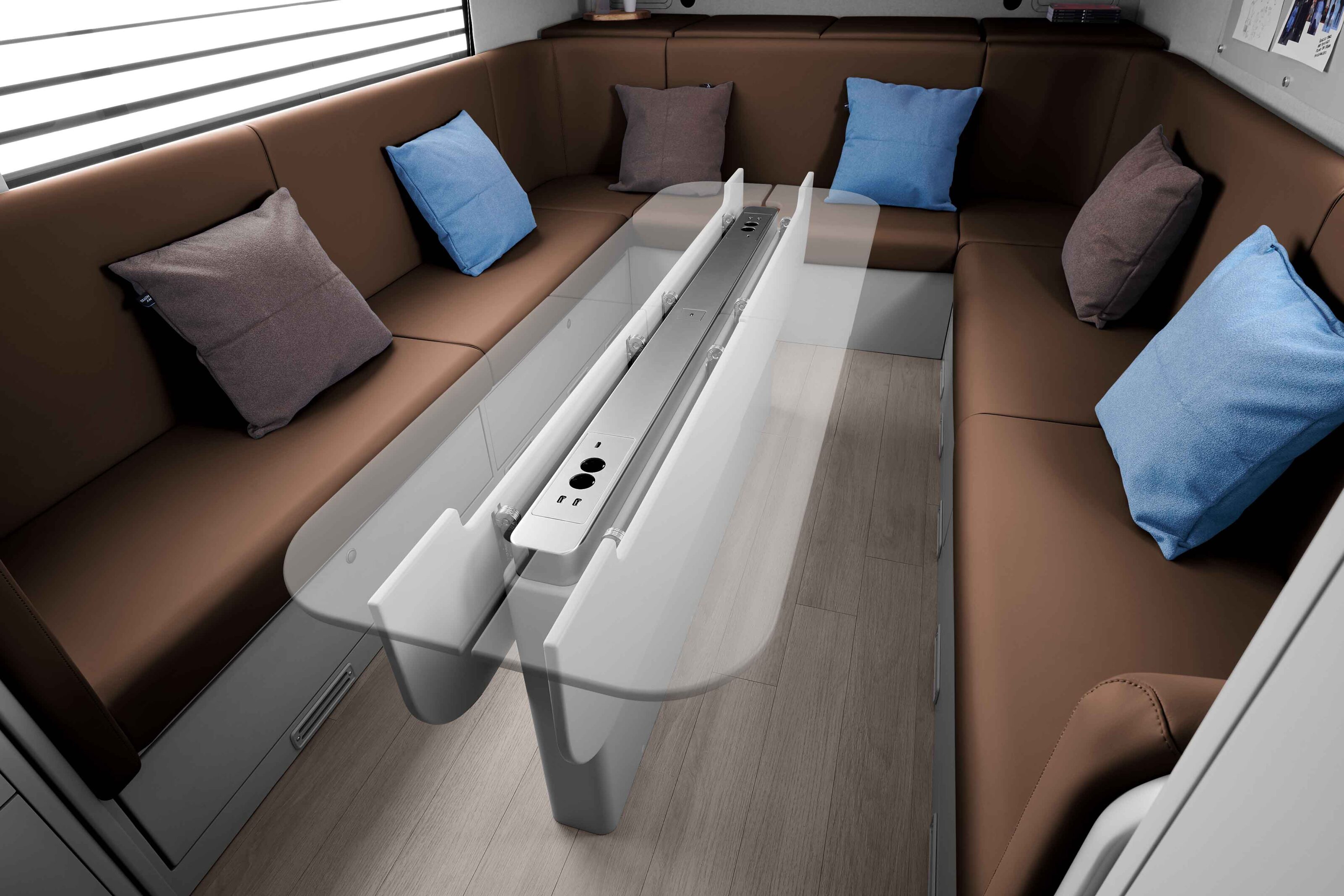
Based on Hyundai’s existing Universe coach, the bus will offer teams an environment that resembles the traditional office by offering individual work spaces, along with areas fore and aft for more open and collaborative working. The space at the front of the vehicle boasts video conferencing facilities, a foldable conference table, sofa seating and more storage.
The solo work areas treat occupants with reclining seats, tables, charging pads and personal storage for those additional items people use to personalise their space.
The Universe Mobile Office will be available in Korea only as a 10-seater, 13-seater with front collaboration space, 13-seater with extended office space and finally a 13-seater with other configurations to suit.
Professional rally driver and co-founder of Hoonigan, Ken Block, was killed in a snowmobile accident today at the age of 55.
https://www.instagram.com/p/Cm74ZDVL_PS/
The loss of the father of three was confirmed by The Hoonigans in a statement: “It’s with our deepest regrets that we can confirm that Ken Block passed away in a snowmobile accident today.”
“Ken was a visionary, a pioneer and an icon. And most importantly, a father and husband. He will be incredibly missed.”
Block is known for reigniting the passion for rally in the United States after starting his career later in life and winning the Rookie of the Year award in 2005’s American Rally championship.
https://www.instagram.com/p/Cm70xOIJ9GV/
Wearing his signature number 43, Ken went on to inspire enthusiasts young and old with innovative Gymkhana videos produced by the Hoonigan brand and became a beloved member of the car community.
Ken Block is survived by his wife, Lucy, and three children. Aside from driving highly-tuned rally cars and race cars, in his spare time Block participated in winter sports such as snowboarding, snowmobiling and riding UTVs.
November 2023: One More Playground
UPDATE: From January 1, 2023 mobile speed camera vehicles in NSW must carry pre- and post-warning signs leaving just over a quarter of the fleet operational.
Run by several contracting firms engaged by NSW Police, the current mobile speed camera fleet consists of 143 total vehicles made up of T32 Nissan X-Trails and MG HS medium SUVs, as well as Toyota Kluger and Hyundai Santa Fe large SUVs.
Both the Santa Fe and Kluger have been in use since before the Government removed roadside warning signs in the state in November 2019, so will likely not pose significant issues.
But there are 47 previous-gen T32 Nissan X-Trails operating which do not have sufficient cargo space to carry all the camera and safety equipment as well as the new warning signs.

In total, of the current fleet 103 vehicles will need to be modified to accommodate the signs according to a report in the Sydney Morning Herald, which labeled the situation a “debacle” – with only 38 operational in the busy holiday period.
Instead of replacing the vehicles that are too small, contractors working with Transport for NSW and NSW Police will upgrade the existing fleet to accommodate the warning signs. The Government announced the change in policy back in October, though it appears little headway has been made to update the vehicles.
The mobile speed camera warning policy in NSW has shifted right back to how it started, after roof-top warning signs were reintroduced in October 2021 due to an intense public backlash.
Our original story, below, continues unchanged.
The story to here
UPDATE 17/10/22: Up to 47 of the 143-strong NSW mobile speed camera fleet may not have enough space to carry required warning signs.
The NSW Government announced earlier this month that mobile speed cameras will return to having pre-warning signs from January, 1, 2023.
The change came after public backlash against the NSW Government’s decision to remove all signage during the pandemic, seeing revenue from speeding fines double in the state.
Since the axing of signs, the speed camera fleet has been renewed with 47 Nissan X-Trail medium SUVs which are now potentially too small to carry the warning signs, according to Transport for NSW deputy secretary Tara McCarthy reported by the ABC.
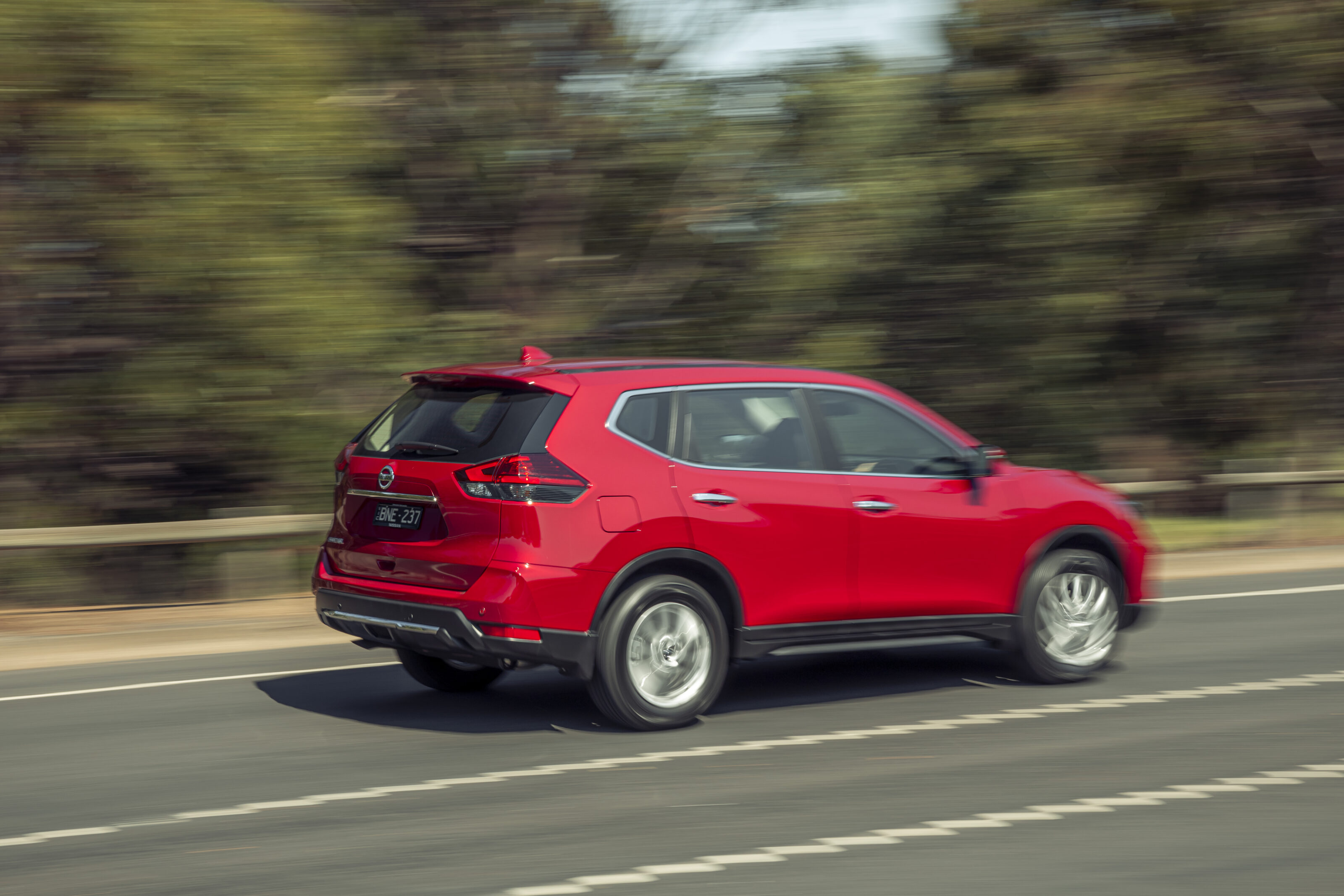
The update could spell a delay in reintroducing the signs. McCarthy indicated the Department was looking into a variety of solutions, including lighter weight signs (that will need to be tested against stiff breezes), or replacing some of the fleet with larger vehicles.
October 11: “We have heard loud and clear from the community on this issue, which is why we are making these important changes.”
Snapshot
- Warnings approach locations reinstated
- Decision made based on feedback from motorists
- To slow drivers down in dangerous areas, not raise revenue
The NSW Government will reinstate warning signs at mobile speed camera locations from January 1, 2023.
As before the Covid-19 pandemic, any mobile speed camera will be required to have a warning sign placed before and after the vehicle as well as roof-mounted signage.
“We have listened to extensive community feedback and from 1 January next year, all mobile speed cameras will include portable warning signage on the approach to, and after, enforcement sites”, said minister for metropolitan roads, Natalie Ward.
Mobile speed cameras in NSW
The decision is in response to communities and motorists about the optics of hidden mobile speed cameras that have been present in NSW since 2010, though have recently been a subject of contention.
During the Covid-19 pandemic, warning signs both ahead of the speed camera locations and on the car’s roofs were removed and some entirely unmarked MG ZS small SUVs were spotted on the roads. The threshold for low-level speeding fines also dropped during that time.
The result was more than twice the revenue from speeding fines compared to the previous financial year, despite 274 road fatalities between September 2021-2022 – a tragic 21 more than the year prior.
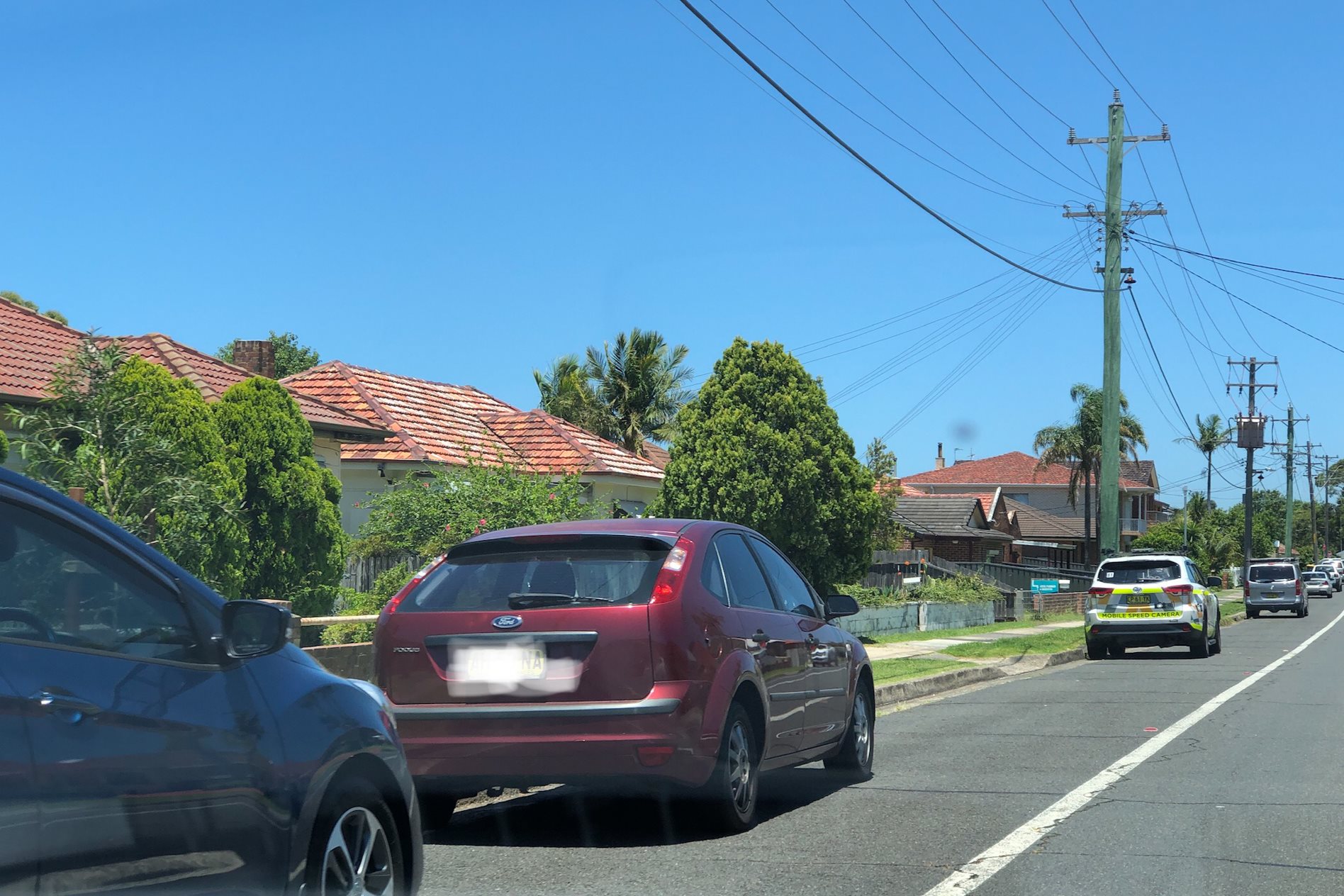
The NSW government listened to backlash against hidden cameras. As of April 2022 changes were made to aid visibility, starting with signs on top of mobile cameras being reinstated.
In September 2022, the NSW government introduced new guidelines to prevent mobile speed cameras from ‘hiding’ behind trees, poles, or parked cars.
“We have had a number of instances where mobile speed cameras have parked behind trees or poles, making it difficult for drivers to be alert to a mobile speed camera operating in the area,” minister for regional transport and roads, Sam Farraway said.
“I want motorists to slow down, drive to the speed limit and get home to their families safely.
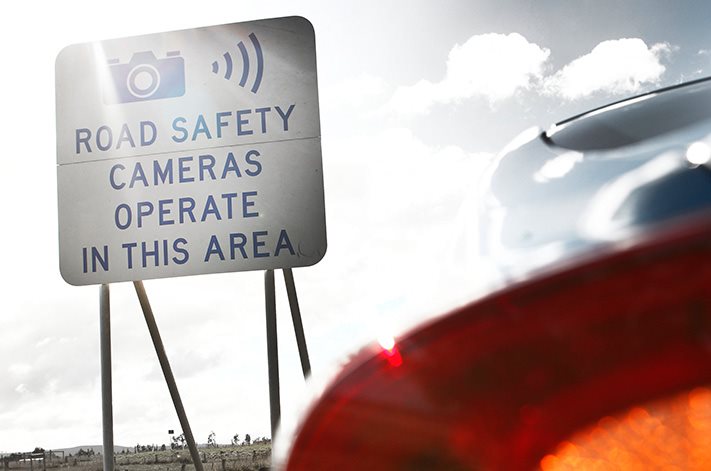
“These additional warning signs will help educate drivers in real time, giving them advanced warning to slow down at these high-risk points of our road network.
“In fact, around two thirds of speeding drivers or riders involved in fatal and serious injury crashes over the last five years were travelling less than 10km/h over the sign posted speed limit”, Mr Farraway added.
NSW will continue with its hidden phone detection cameras.
How NSW compares to other states
NSW may be listening to motorists regarding its hidden mobile speed cameras, but other states in Australia aren’t changing their way.
Victoria continues with unmarked mobile cars, adding 150 to its fleet in mid-2021 that went on to generate increased revenue.
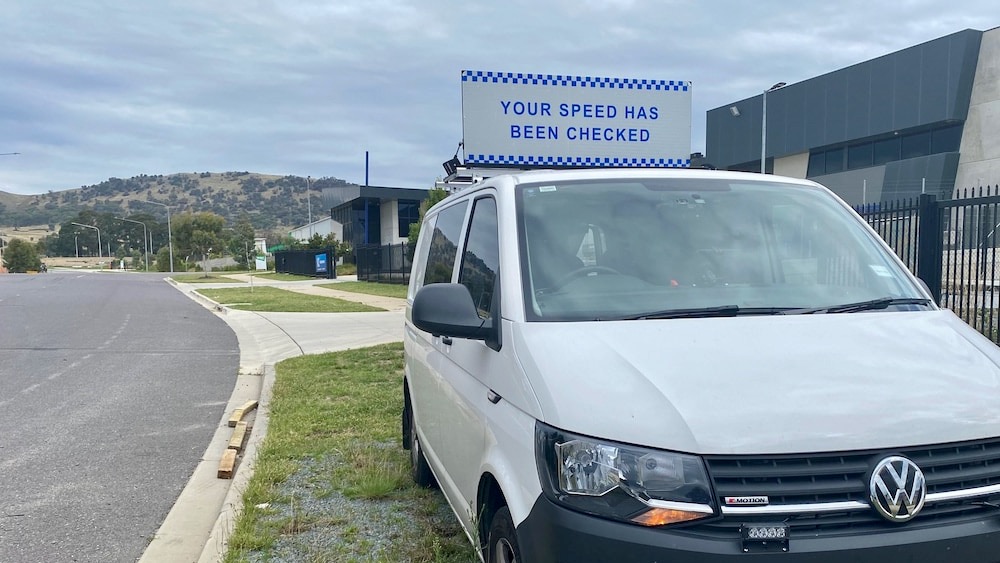
The Queensland government is trialing cameras disguised as roadworks machinery and portable speed signs in metro areas as of August 2022.
South Australia is also notorious for hidden speed detection with extremely covert approaches including devices embedded in car’s bumpers with no signage.
Snapshot
- Hyundai will only sell EVs in Norway from 2023, ditching PHEVs
- More than 90 per cent of Hyundai Norway sales are EV in the past three years
- Government policies have resulted in Ioniq 5 price parity with Tucson PHEV
Hyundai will ditch selling internal combustion engine cars in favour of pure electric models only in Norway from 2023.
It’s no surprise as Norway has long had the world’s largest electric vehicle adoption rates, with the South Korean carmaker already committing to only selling pure-electric models and plug-in hybrid versions of its Tucson and Santa Fe SUVs in 2020.
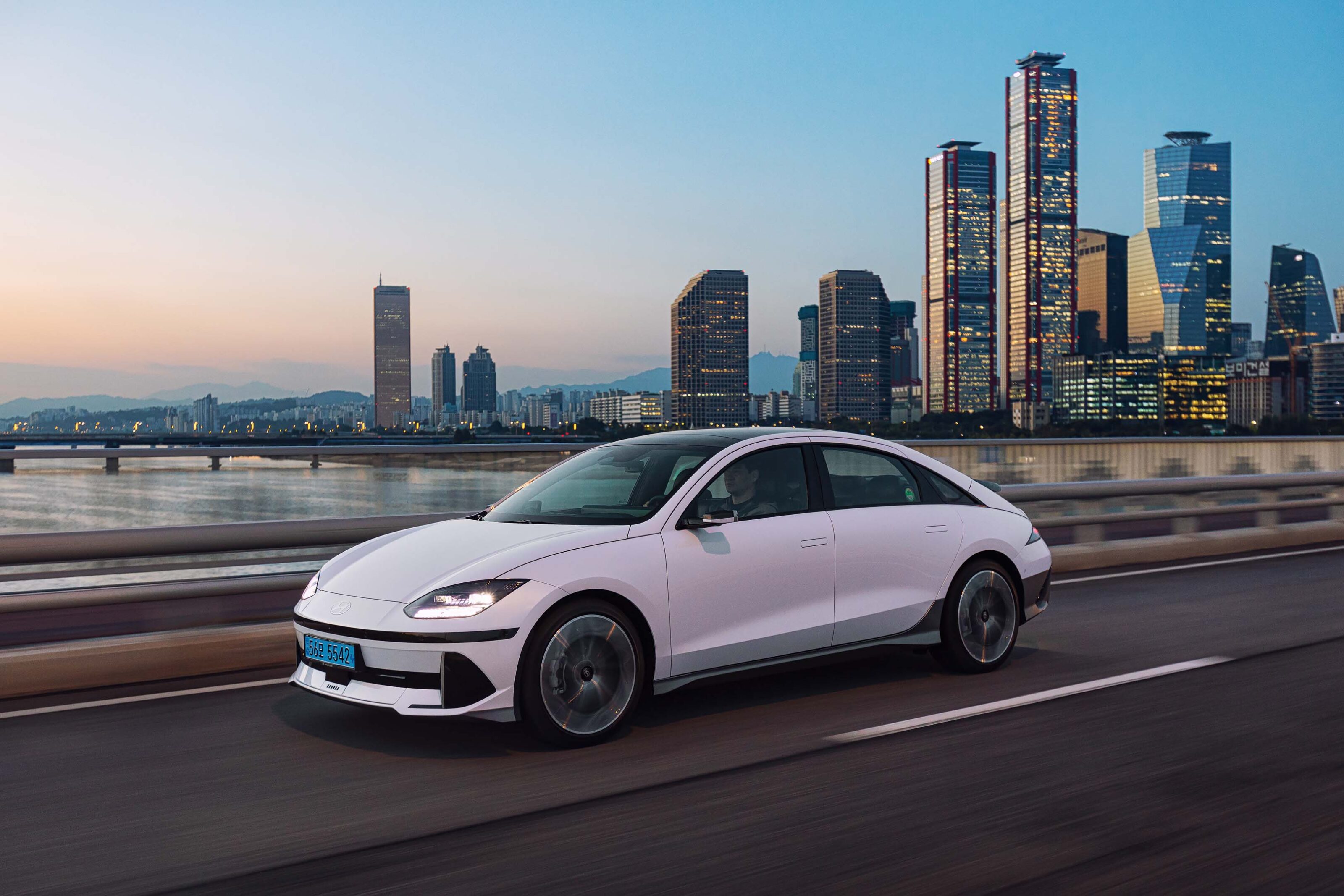
Now, those two models will be axed with the Hyundai Norwegian lineup to only consist of the Kona Electric small SUV (which will soon have an all-new successor), Ioniq 5 medium crossover, and newly launched Ioniq 6 sports sedan from January 1, 2023.
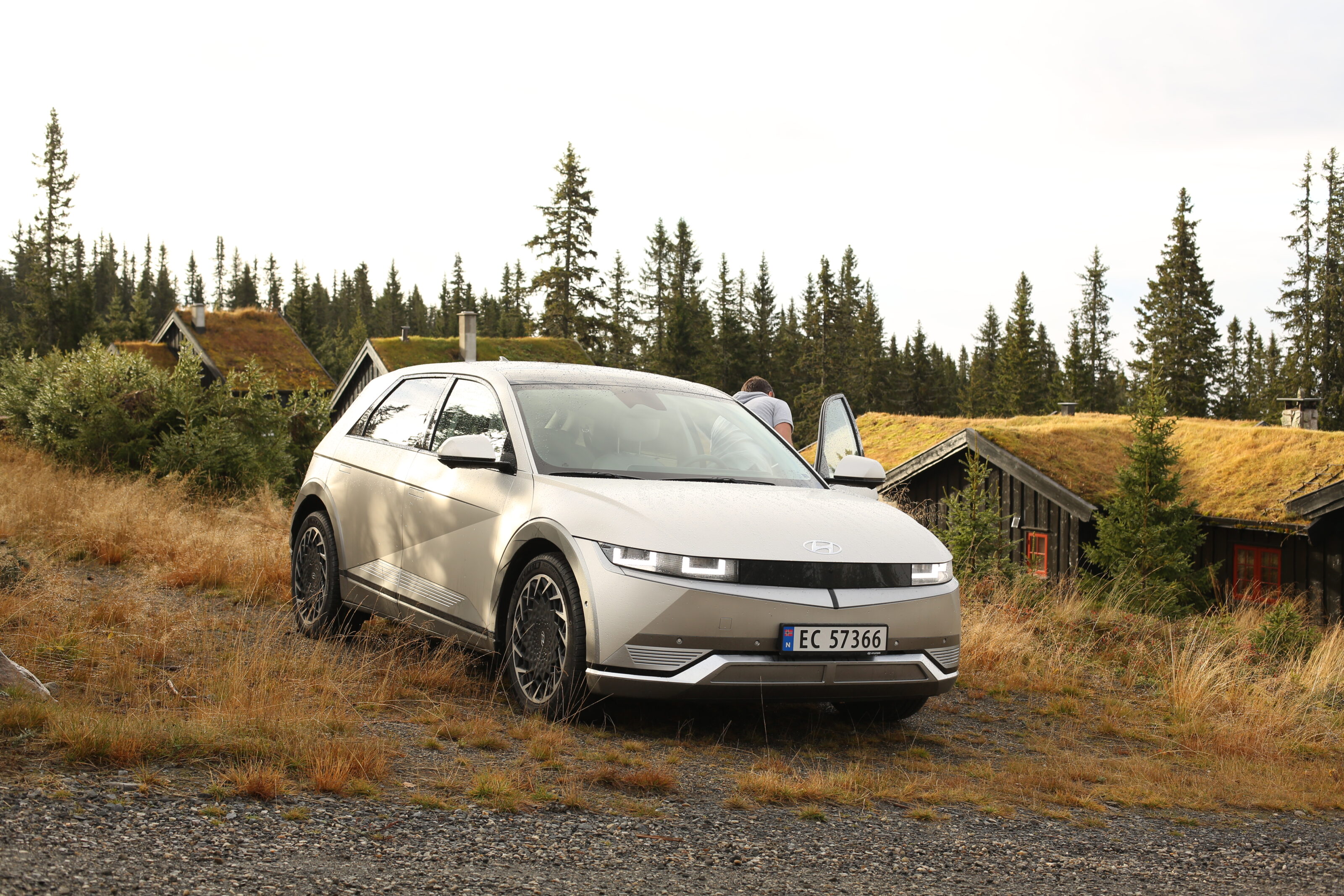
Between 2020 to 2022, 92 per cent of the South Korean carmaker’s sales in Norway were fully-electric models.
“We have great faith in the model portfolio we already have, and now that we have launched the all-new Ioniq 6, the time has come to only sell fully-electric cars in the Norwegian market,” Hyundai Norway’s managing director, Thomas Rosvold, said.
“The Ioniq 5 and Kona Electric have long since taken positions as some of the most popular cars in the market, and we are confident that our pure electric cars will give us continued success into the future.”
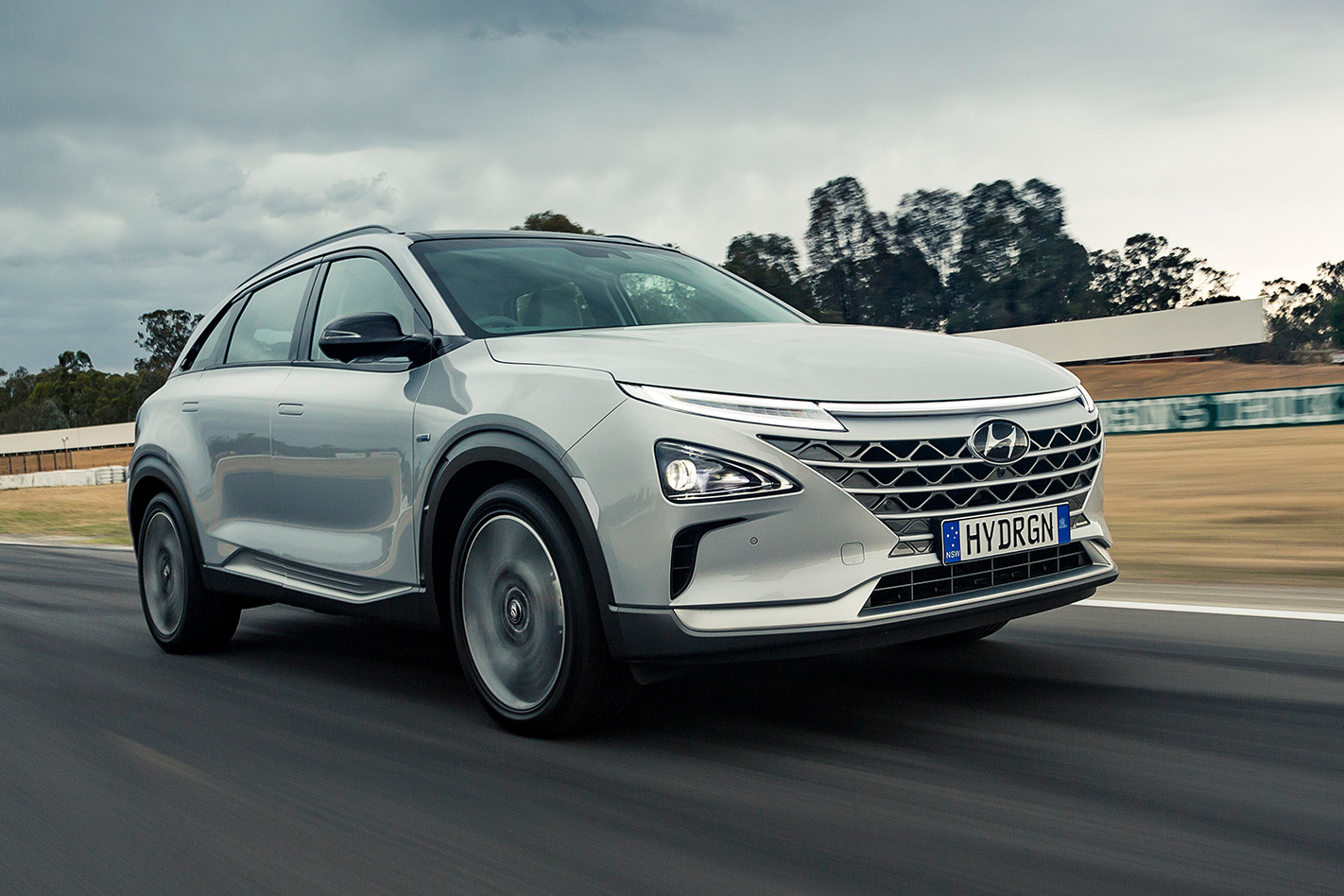
It’s unclear whether the Hyundai Nexo hydrogen fuel-cell SUV would live on in the country.
Why are EVs so popular in Norway?
Heavy incentives for owning an EV, like lower taxes and toll road fees, and disincentives for internal-combustion engine cars, such as imposing hefty pollution taxes and wider emissions regulations, have encouraged Norwegians to go tailpipe emissions-free – despite the Government reducing EV incentives this year.
This has resulted in price parity already being achieved between the two powertrains.
For example, buying the Hyundai Tucson plug-in hybrid in Norway costs from 514,900 NOK (AU$76,900) – but the Ioniq 5 EV undercuts it, priced from 504,900 NOK (AU$75,400).
It’s a similar story with the Volkswagen Golf small hatchback starting from 378,200 NOK (AU$56,500) compared to the ID.3 EV priced from 401,500 NOK (AU$60,000) in Norway.
According to Norway’s Information Council for Road Traffic, pure battery-electric vehicles have accounted for 78 per cent of new car sales to the end of November 2022. It’s led by the Tesla Model Y, Volkswagen ID.4 and Skoda Enyaq SUVs.
In contrast, EVs have only made up around three per cent of the Australian new car market in the same period in 2022. EV sales this year are already six times higher than in 2021, with the Tesla Model 3, Model Y and BYD Atto 3 leading the charge.
The earliest carmaker pledging to offer an electric-only lineup in Australia is Volvo, starting from 2026.
Snapshot
- Works start on South Australian EV charging network operated by Chargefox
- Stretches border-to-border with 75 per cent to be in the regions
- More than 140 AC and DC sites to open by early 2024
State motoring club RAA has started constructing its electric vehicle charging network in South Australia with more than 140 locations planned to open by early 2024.
At least 75 per cent of the public EV charging network has been earmarked to be in regional SA and stretches from border-to-border, with each site less than 200 kilometres apart to fit well within the full driving range of most models.
It will include more than 80 slow 7kW AC chargers with a Type 2 plug, plus more than 50 fast 150kW DC stations offering CCS2 only and 200kW DC stations with both CCS2 and CHAdeMO plugs.
They’ll be installed and operated by Chargefox – which was acquired by Australian Motoring Services that includes the RAA earlier in 2022 – with pricing yet-to-be announced.
The first batch of AC points are being installed at metro and Greater Adelaide sites, including; Marion, Woodside, West Lakes, Hahndorf, Mount Gambier and the Adelaide CBD. They’re expected to come online by the end of January.
“RAA research shows 62 per cent of members are looking at an EV as their next vehicle, but commitment to purchase is curbed by a lack of available charging infrastructure,” RAA CEO Nick Reade said.
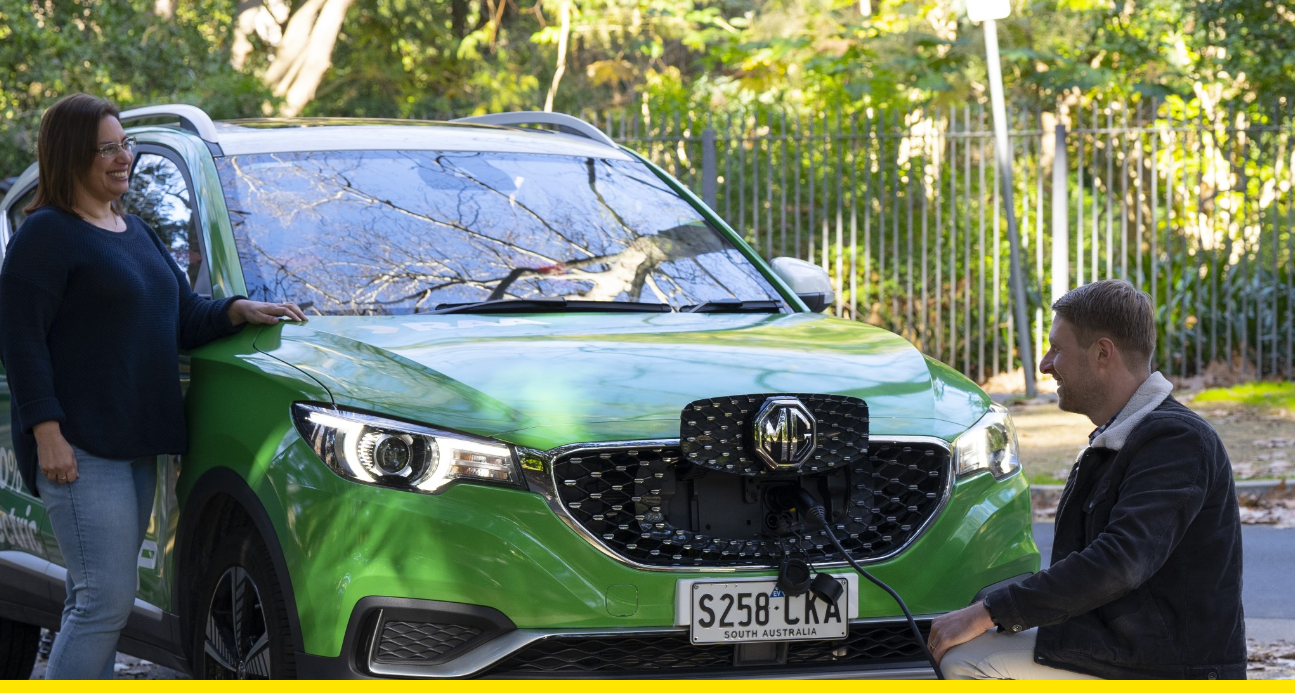
“This network will go a long way to allay these [driving] range anxiety fears and take the stress out of journey planning for EV drivers travelling and holidaying across South Australia.”
The RAA EV charging network is supported by a $12 million grant from the state government.
Currently, the state is served mostly by slow AC chargers with few fast DC stations only in Adelaide and its surrounds.
Only 26 Jolt, 19 Chargefox, five Tesla Superchargers, and four Evie Networks sites cover the almost one-million square kilometre state.
Best Electric Cars Under $65k: Affordable EVs Rated
Welcome to part one of three price-based EV buying guides, this one focused on the most affordable electric cars available in Australia today
Snapshot
- Lynn Calder named Ineos Automotive CEO
- Hans-Peter Pessler joins at COO
- Appointments conclude a process to strengthen leadership during business change
Ineos Automotive has appointed Lynn Calder as its new CEO, following years of executive-level contributions to the various arms of the brand.
Ineos says the move “completes a new, strengthened leadership team for Ineos Automotive marking the transition from engineering project to commercial business.”
Calder’s previous roles included time as the CEO of Ineos Composites, and as Commercial Director with Ineos Phenol.
The appointment is joined with Hans-Peter Pessler moving to Ineos Automotive as Chief Operating Officer, having performed executive duties with Magna Steyr – the company that manufactured Mercedes-Benz’ G-Wagon, among other models in the automotive market.
“We’re in the automotive industry for the long haul. The team has done a great job leading the engineering programme and overseeing the set-up of manufacturing. Now, as it goes into full commercial mode, Lynn (Calder) and Hans-Peter (Pessler) will take us forward in the next stage of the company’s development.” Said Ashley Reed, Chairman of Ineos Automotive.
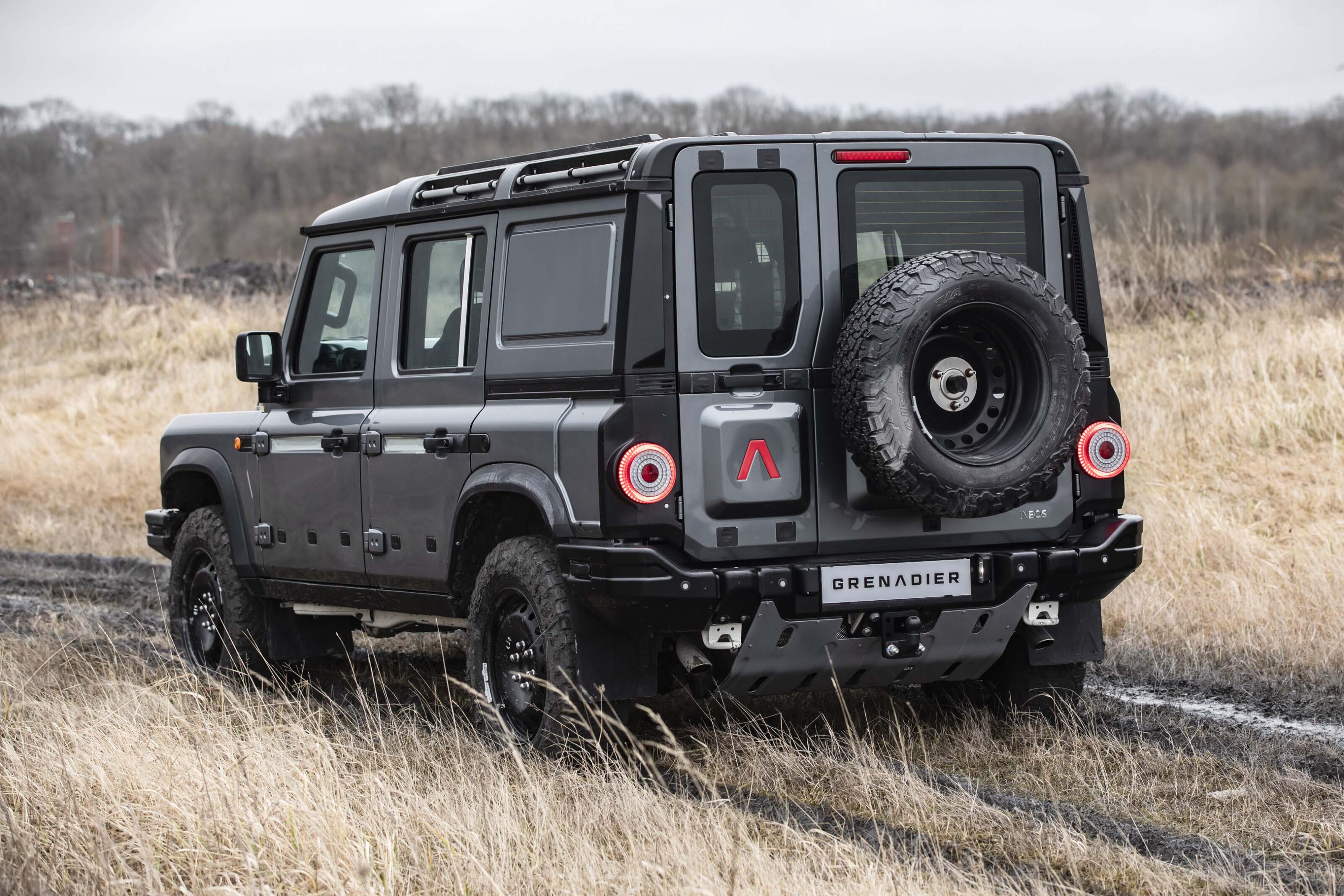
“It’s an exciting time to be taking the reins,” said Calder. “The team and the Grenadier itself have come a long way, and yet we’re still only at the beginning of creating a global automotive business. I love a challenge, and with bold plans for the future, I’m looking forward to the adventure ahead
Orders for the Ineos Grenadier opened in May 2022, with prices starting at $84,500. Those seeking the hard off-roader can configure their Grenadier at the Ineos website.
Watch for our first full drive review of the Grenadier to go live in the coming weeks.
This is your definitive list of all the new cars that launched in Australia in 2022.
Following the turmoil caused by the Coronavirus pandemic in 2020, many experts expected 2021 to bring a sense of recovery to the car world.
Instead, the year was marred by a widespread semiconductor chip shortage wreaking havoc on the automotive industry, as well as extended COVID-19 lockdowns in New South Wales and Victoria.
Despite these issues, 2021 saw the launch of a number of significant models in Australia, from the controversially styled new BMW M3 sedan and M4 coupe earlier in the year to the long-anticipated Toyota LandCruiser 300 Series towards the end – closing a 14-year run for the previous LandCruiser 200.
With many 2021 vehicle launches delayed by the semiconductor issue, 2022 shaped up to be a big year for the local automotive industry – spearheaded by the largest number of electrified vehicle arrivals to date.
Keeping this in mind, if you are struggling to keep on top of all the new vehicles that touched down in Australia this year, and when, our 2022 New Car Calendar has got you covered.
Best Electric Cars Under $65k: Affordable EVs Rated
Welcome to part one of three price-based EV buying guides, this one focused on the most affordable electric cars available in Australia today
To see every car launching in Australia in 2023 and beyond, check out our New Car Calendar below!
NOTE: A quarter refers to a three-month period of the year (i.e. January to March).
2022 New Car Calendar
JUMP AHEAD
New Cars First Quarter 2022
Australia’s new car market kicked off 2022 with the launch of key models such as the new-generation Audi A3 and Audi S3, the all-electric BMW i4 and, at last, the hotly anticipated Chevrolet Corvette.
- Audi A3 (price and specs) (launch review) – on sale now
- Audi E-Tron S (pricing) (launch review) – on sale now
- Audi S3 (pricing and features) (launch review) – on sale now
- BMW 1 Series Sport (pricing) – on sale now
- BMW 2 Series Gran Coupe Sport (pricing) – on sale now
- BMW 3 Series Sport (pricing) – on sale now
- BMW i4 (pricing announced) – on sale now
- BMW M135i update (announced) – on sale now
- Chevrolet Corvette (unveiled) (launch review) – on sale now
- Genesis G80 update (pricing and features) – on sale now
- Genesis GV80 update (VIP six-seater joins range) – on sale now
- Haval H6 Vanta limited-edition (details) – on sale now
- Haval Jolion Vanta limited-edition (announced) – on sale now
- Hyundai Santa Fe update (pricing and features) – on sale now
- Isuzu D-Max SX 1.9L Single Cab Chassis 4×2 (pricing and details) (launch review) – on sale now
- Jaguar F-Pace update (pricing) – on sale now
- Jaguar I-Pace update (pricing and specifications) – on sale now
- Jeep Compass update (entry Night Eagle arrives) – on sale now
- Kia EV6 (pricing and features) (launch review) – on sale now
- Kia Sorento Hybrid (pricing) – on sale now (in limited numbers)
- Lexus NX (price and features) (launch review) – on sale now
- Mazda BT-50 update (entry-level 1.9-litre engine and SP range-topper added) (launch review) – on sale now
- Mazda CX-5 update (price and features) (launch review) – on sale now
- Mazda CX-8 update (diesel FWD variants axed) – on sale now
- Mazda MX-5 update (1.5-litre engine dropped; new suspension tech) (launch review) – on sale now
- Mercedes-Benz C-Class (pricing and features) (launch review) – on sale now
- MG HS Plus EV Excite (announced) – on sale now
- Mitsubishi Pajero Sport update (pricing and features) – on sale now
- Nissan Patrol update (details) – on sale now
- Peugeot 508 GT Plug-In Hybrid (pricing and features) (launch review) – on sale now
- Peugeot 3008 GT Sport Plug-In Hybrid (pricing and features) (launch review) – on sale now
- Peugeot Boxer update – on sale now
- Peugeot Expert update (pricing announced) – on sale now
- Peugeot Partner update (pricing and features) – on sale now
- Polestar 2 (pricing and specification details) (launch review) – on sale now
- Porsche 911 GTS (pricing and features) – on sale now
- Porsche Taycan rear-wheel drive, 4 Cross Turismo (pricing and features) (launch review) – on sale now
- Range Rover Sport SVR Ultimate Edition (details) – on sale now
- Renault Arkana RS Line (pricing and features) – on sale now
- Renault Captur update (pricing and features) – on sale now
- Skoda Kodiaq update (pricing and specs) (launch review) – on sale now
- Subaru BRZ (pricing and features) (launch review) – on sale now
- Subaru Outback update (more kit added; new Premium special edition) – on sale now
- Toyota RAV4 update (pricing and features) – on sale now
- Volkswagen Arteon Shooting Brake (full supply)
- Volvo XC60 T8 Recharge – on sale now.
New Cars Second Quarter 2022
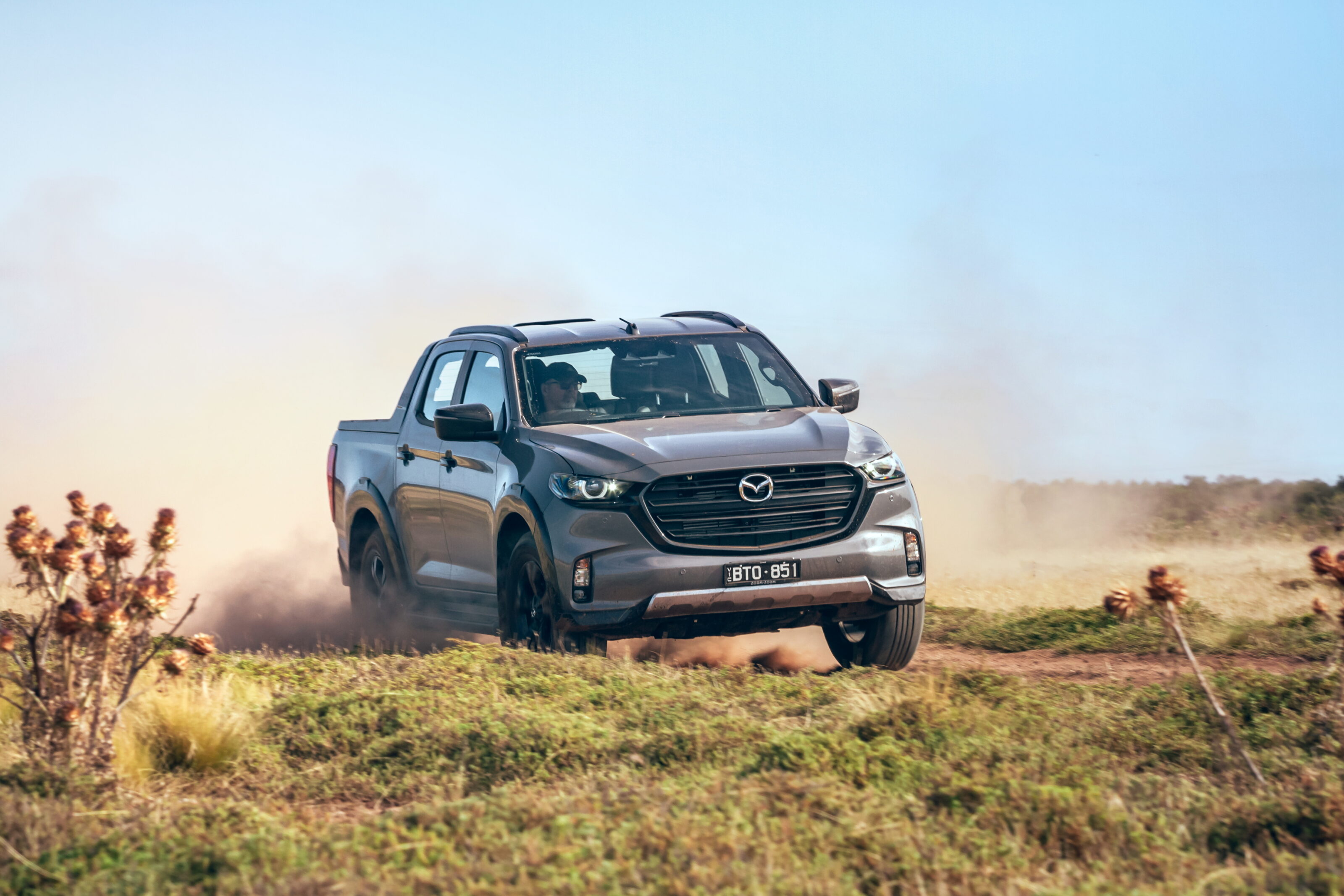
April to June 2022 saw a number of important new vehicles launch in Australia, including the next-generation Audi RS 3 hot hatch, an update to the Ford Mustang, the two-pronged Subaru WRX range, and our first look at a big expansion for the Volkswagen R line-up.
- Audi Q5 35 TDI Limited Edition, 40 TDI/45 TFSI Sport Limited Edition (details) (35 TDI launch review) – on sale now
- Audi SQ7 update (diesel power dropped) – on sale now
- Audi SQ8 update (new twin-turbo V8 petrol) – on sale now
- Bentley Bentayga S (revealed) – on sale now
- Bentley Continental GT Speed (unveiled) – on sale now
- BMW 230i Coupe (pricing and features) – on sale now
- BMW X1 Sport Collection (pricing) – on sale now
- BMW X2 Edition GoldPlay (details) – on sale now
- BMW X3 M40i, X4 M40i Frozen Edition (details) – on sale now
- Cupra Ateca, Formentor, Leon launch edition range (details) – on sale now
- Ford Escape PHEV (pricing and features) (launch review) – on sale now
- Ford Fiesta ST facelift (pricing and details) (strictly limited; now axed) – on sale now
- Ford Mustang update (burnout mode and GT California Special added) – on sale now
- Land Rover Defender update (pricing and specs) – on sale now
- Land Rover Discovery update – on sale now
- Lexus LX (pricing and features) (launch review) – on sale now
- Haval H6 Hybrid (pricing and features) (launch review) – on sale now
- Honda HR-V (pricing and features) (launch review) – on sale now
- Jeep Grand Cherokee L (pricing and features) (launch review) – on sale now
- Kia Seltos GT-Line FWD Limited Edition (initial details) – on sale now
- Kia Sportage SX+ (pricing) – on sale now
- Mercedes-Benz Vito, Vito Tourer update (details) – on sale now
- Mitsubishi Triton update (announced) – on sale now
- Porsche Panamera Platinum Edition (announced) – on sale now
- Porsche Taycan GTS (pricing announced) (launch review) – on sale now
- Range Rover Evoque plug-in hybrid (pricing) – on sale now
- Ssangyong Musso update (pricing and features) – on sale now
- Subaru WRX (pricing) (launch review) – on sale now
- Subaru WRX Sportswagon (pricing) (launch review) – on sale now
- Volkswagen Amarok Alpine, Alpine Plus packs (announced) – available now
- Volkswagen Amarok W580X (announced) – on sale now
- Volkswagen Caddy California (pricing) – on sale now
- Volkswagen Golf R hatch (details) (launch review) – on sale now
- Volkswagen Golf R wagon (pricing) (launch review) – on sale now
- Volkswagen Polo and Polo GTI facelift (pricing and features) (launch review) – on sale now
- Volkswagen Tiguan Allspace facelift (pricing and specs) (launch review) – on sale now
- Volkswagen Tiguan R (pricing and features) (launch review) – on sale now.
New Cars Third Quarter 2022
The arrival of the performance-orientated Cupra brand kickstarted the third quarter of 2022.
- Aston Martin DBX707 (revealed) (Australian drive) – on sale now
- Audi RS 3 (revealed) (pricing and features) – on sale now
- BMW 8 Series update (pricing and specifications) – on sale now
- BMW iX M60 (pricing and features) – on sale now
- BMW M8 Competition update (pricing) – on sale now
- BMW X2 sDrive18i Sport (pricing) – on sale now
- BYD Atto 3 Extended Range (pricing announced) – on sale now
- Cupra Ateca (pricing and features) – on sale now
- Cupra Formentor (pricing and features) – on sale now
- Cupra Leon (pricing and features) – on sale now; entry V delayed
- Fiat Ducato update – on sale now
- Ford Everest (pricing and features) (launch review) – on sale now
- Ford Ranger (pricing and features) (all reviews) – on sale now
- Ford Ranger Raptor (revealed) (first drive) – on sale now
- Ford Transit update (local details) – on sale now
- Genesis Electrified G80 (price and features) – on sale now
- Genesis GV60 (price and features) – on sale now
- Haval H6 GT (pricing and features) – on sale now
- Haval Jolion Ultra Hybrid (pricing) (review) – on sale now
- Hyundai Ioniq 5 update (details) – on sale now, in limited numbers
- Hyundai Palisade facelift (pricing and features) – on sale now
- Kia Niro (pricing) (launch review) – on sale now
- Mercedes-AMG EQS 53 (revealed) (launch review) – on sale now
- Mercedes-Benz EQA 350 (pricing) – on sale now
- Mercedes-Benz EQB (pricing and features) (launch review) – on sale now
- Mercedes-Benz eVito, eVito Tourer (pricing and features) – on sale now
- MG ZS EV facelift (pricing and features) (launch review) – on sale now
- Mitsubishi Outlander PHEV (pricing and features) – on sale now
- Nissan Leaf update (revealed) – on sale now
- Nissan Navara SL Warrior (pricing revealed) – on sale now
- Nissan Z (pricing and specs) (launch review) – on sale now
- Porsche Cayenne Turbo GT (revealed) – on sale now
- Ram 1500 TRX (pricing and features) – on sale now
- Renault Trafic facelift – on sale now
- Skoda Fabia Monte Carlo (pricing and features) (launch review) – on sale now
- Skoda Karoq facelift (pricing and features) (launch review) – on sale now
- Ssangyong Rexton Black Edition (details) – on sale now
- Suzuki S-Cross (pricing and features) (launch review) – on sale now
- Tesla Model Y (pricing) (launch review) – on sale now
- Toyota GR86 (pricing and features) (track review) – on sale now
- Volkswagen T-Roc R, facelift (pricing and features) (R specs) (launch review) – on sale now
- Volkswagen Tiguan Allspace Adventure Edition (details) – on sale now
- Volvo S60, V60 Cross Country update (revealed) – on sale now
- Volvo XC40 facelift (pricing and features) – on sale now.
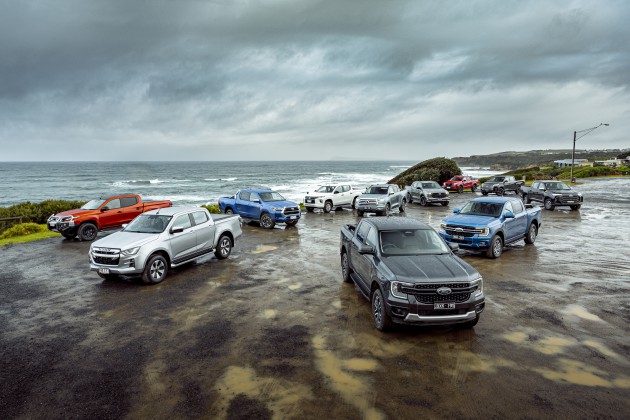
Dual-cab ute comparison 2022: The daily living test
Dual-cab utes have charged in as a firm favourite for family hauling and daily duties, well beyond the old mould of tradie tasks and off-road adventures. It’s time to see which are best suited to the role.
New Cars Fourth Quarter 2022
The fourth quarter of 2022 was headlined by a new product onslaught for Japanese rivals Toyota and Nissan, with updates to Australia’s most popular vehicles – the Toyota HiLux, RAV4, Corolla and Camry – and the all-new Nissan Qashqai, X-Trail and Pathfinder SUVs.
- Audi A8, S8 facelift (revealed) (S8 pricing) – on sale now
- Bentley Flying Spur Hybrid (revealed) – on sale now
- BMW 3 Series facelift (pricing and features) (global first drive) – on sale now
- BMW 7 Series and i7 (pricing and features) – on sale now
- BMW M4 CSL (revealed) – on sale now
- BMW X1 (pricing and features) (launch review) – on sale now
- BMW X7 facelift (pricing and features) – on sale now
- Chevrolet Corvette update (details) – on sale now
- Citroen C5 X (details) – on sale now
- Genesis Electrified GV70 (pricing) (launch review) – on sale now
- GWM Haval Jolion S (pricing and features) – on sale now
- GWM Ute Cannon Vanta (pricing and features) – on sale now
- Honda Civic Hybrid (pricing) (launch review) – on sale now
- Hyundai i30 N Drive-N Limited Edition (180 units bound for Australia) (pricing) – on sale now
- Hyundai Ioniq 5 update (full details) – on sale now (bam, sold out!)
- Hyundai Santa Fe Hybrid (pricing and features) – on sale now
- Isuzu D-Max update (pricing and features) – on sale now
- Isuzu MU-X update (details) – on sale now
- Kia Niro Plus (pricing) – on sale now (limited availability)
- Kia Seltos update (pricing) (launch review) – on sale now
- Land Rover Defender update (details) – on sale now
- Lexus LS update (pricing and features) – on sale now
- LDV eDeliver 9 (pricing and features) – on sale now
- LDV eT60 (pricing) (launch review) – on sale now
- LDV Mifa petrol (pricing and features) – on sale now
- LDV Mifa 9 (pricing and features) – on sale now
- Mercedes-Benz EQV (pricing and features) – on sale now
- Mitsubishi ASX update (details) – on sale now
- Mitsubishi Triton update (pricing and features) – on sale now
- Nissan Pathfinder (pricing and features) (launch review) – on sale now
- Nissan Qashqai (pricing and features) – on sale now
- Nissan X-Trail (pricing and features) (launch review) – on sale now
- Peugeot 308 (pricing and features) – on sale now
- Porsche 911 Sport Classic (revealed) – on sale now
- Porsche Cayman GT4 RS (pricing confirmed) – on sale now
- Range Rover (revealed) (pricing and features) – on sale now
- Range Rover Sport (revealed) (pricing and features) – on sale now
- Range Rover Velar update, plug-in hybrid (details) – on sale now
- Renault Koleos update (pricing and features) – on sale now
- Subaru Forester update (details) (2.5X special edition) – on sale now
- Subaru Outback update, XT 2.4 turbo (pricing) – on sale now
- Toyota Camry, C-HR minor updates (initial details) – on sale now
- Toyota Corolla facelift (pricing and features) – on sale now
- Toyota Corolla Cross (pricing and features) – on sale now
- Toyota GR Supra manual, update (pricing revealed) (international review) – on sale now
- Toyota HiAce barn-door update (announced) – on sale now
- Toyota HiLux update (pricing) – on sale now
- Toyota LandCruiser 70 Series update (AEB, GVM changes confirmed) (full details and pricing) – on sale now
- Toyota RAV4 tech update (pricing and features) – on sale now
- Toyota Yaris Cross GR Sport, update (pricing and features) – on sale now
- Volkswagen Caddy update (pricing) – on sale now
- Volkswagen Crafter Kampervan (pricing and features) – on sale now
- Volkswagen Multivan Edition (pricing) – on sale now
- Volkswagen T-Roc R, Tiguan R Grid Editions (details) – on sale now
- Volvo C40 (pricing and features) (launch review) – on sale now.
What was your favourite car launched in 2022? Let us know in the comments below!
The Toyota 86 was a darling of the motoring press when it launched in 2012 at a staggering $29,990 price of entry, before taking top honours in Wheels Car of the Year.
It’s now more grown up, more powerful, more differentiated from the Subaru BRZ (or so Toyota says) and a hell of a lot more money.
We’ve driven the new GR86 on track in both automatic and manual guises, as well as briefly on the road, but this is the first time the revamped sportscar has been subjected to the nitty gritty of Australia’s road network, clocking up 1013km in a week of testing across all sorts of surfaces.
This should deliver a nice contrast to the Subaru BRZ that Wheels editor Andy Enright ran for a few months in 2022.
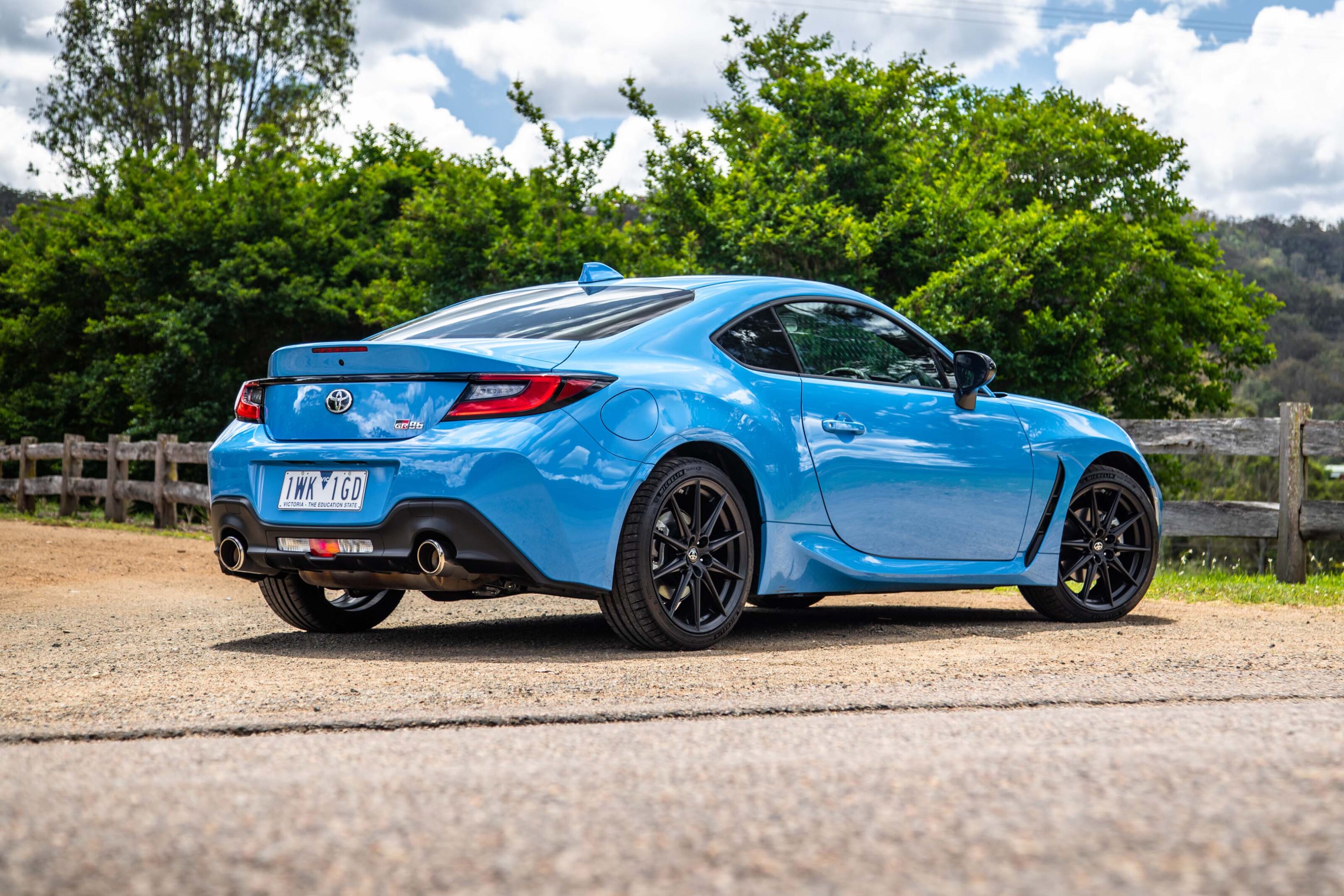
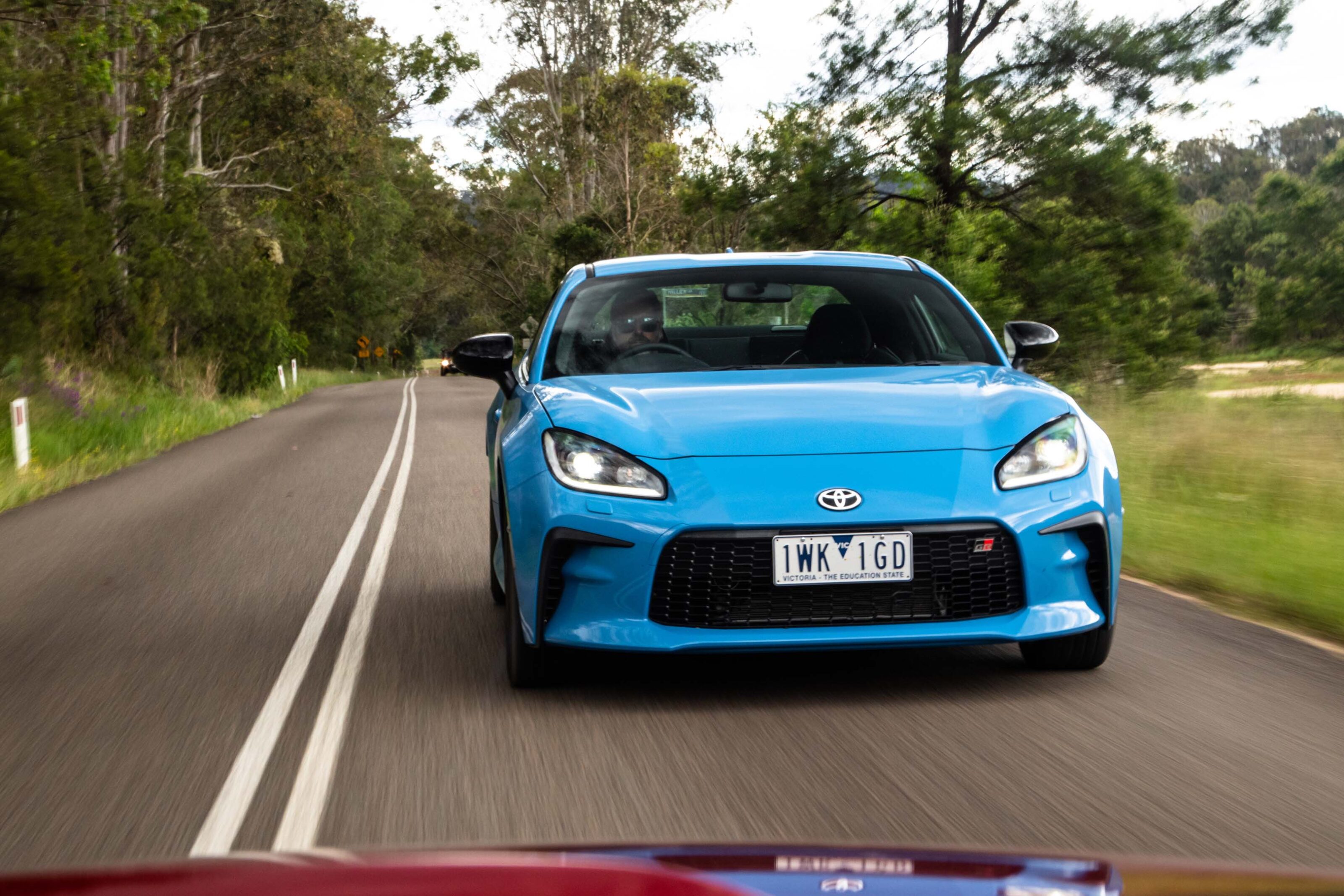
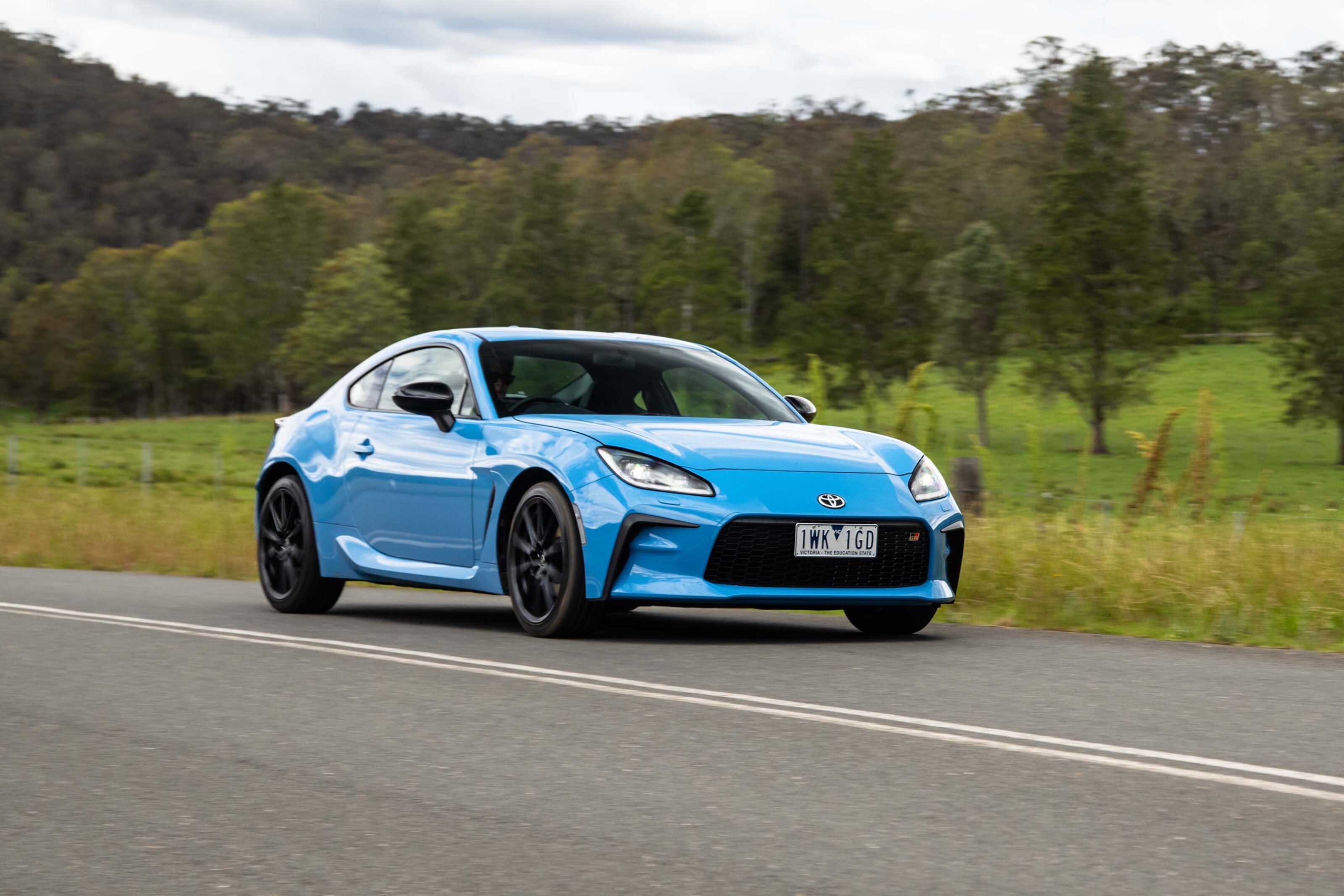
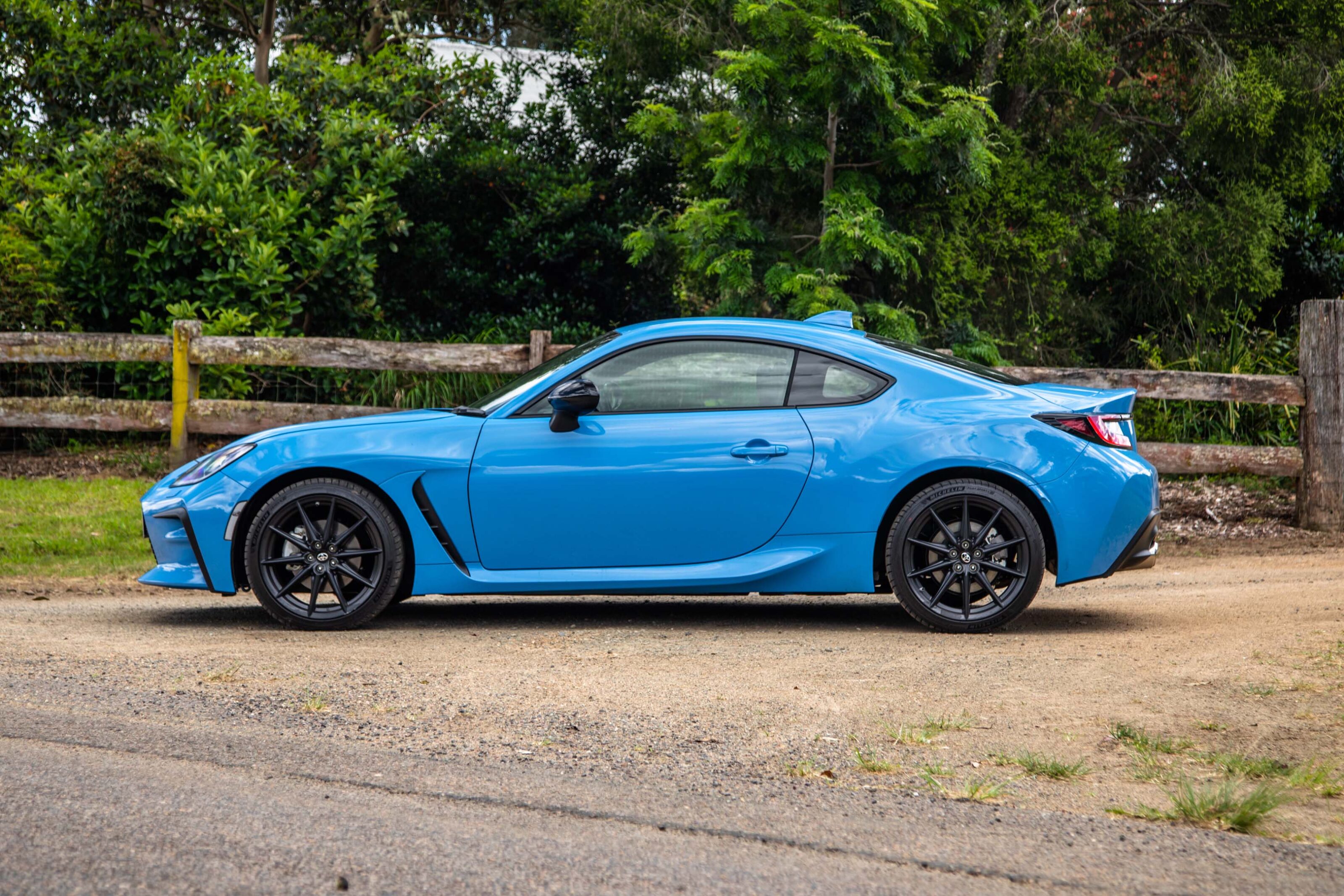
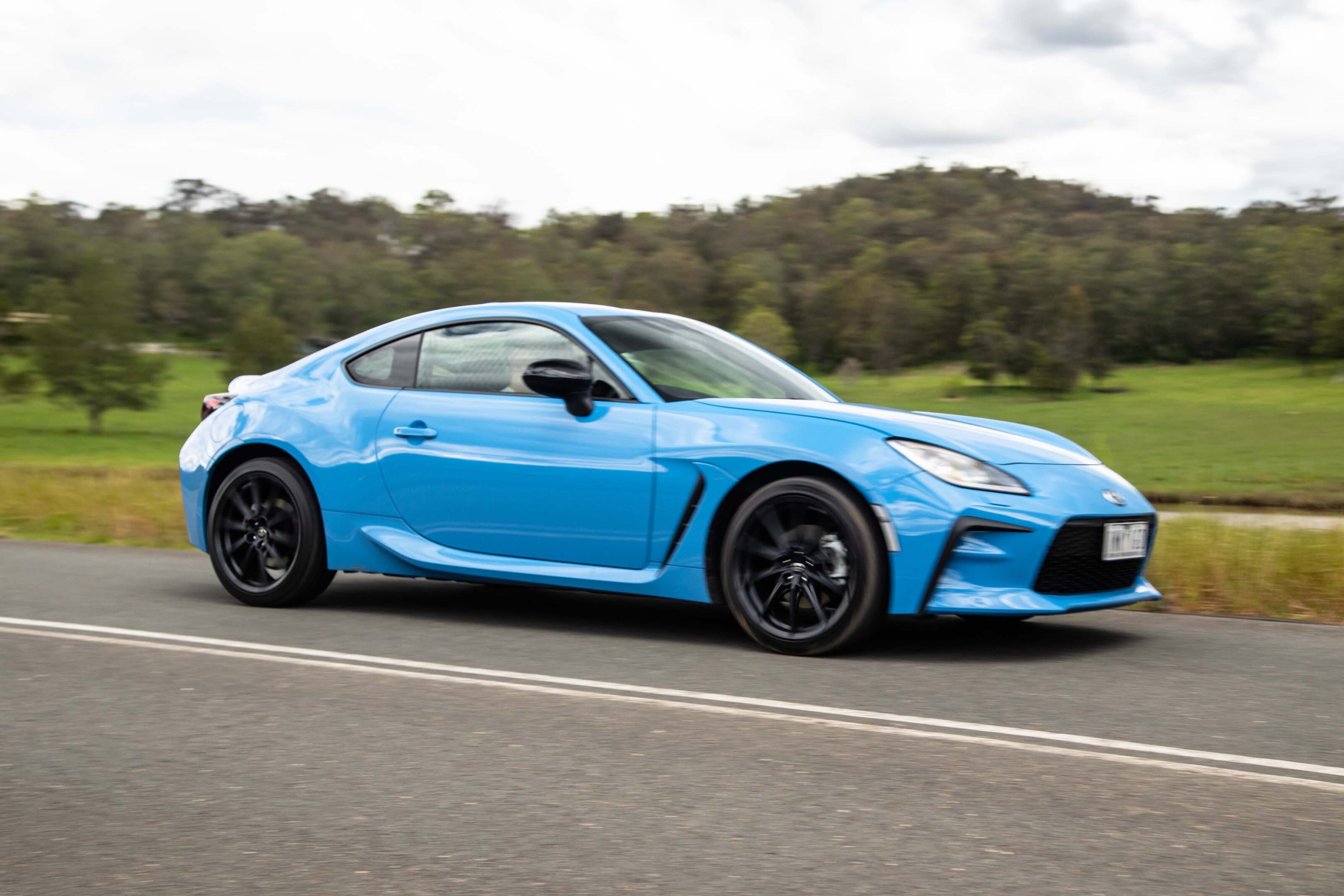
Let’s start at the beginning, the pick-up. I’d seen GR86s and Subaru BRZs on the road, but hadn’t yet stopped to drink in all the changes made to the new car. It’s clearly a similar glasshouse, but the second-gen car is tauter and meaner.
The way the pronounced sills trace up and fold under the body accentuates the GR86’s stance. The rear arches have swollen to accommodate a 10mm wider rear track, its LED headlights look angrier and the gaping black grille is ready to ingest as much air as the 174kW 2.4-litre boxer engine can take.
Apollo Blue isn’t a colour I would’ve chosen without seeing it in the flesh, but this little smurf looks hot on the road.
JUMP AHEAD
- How much is it, and what do you get?
- How do rivals compare on value?
- Interior comfort, space and storage
- What is it like to drive?
- How is it on fuel?
- How safe is it?
- Warranty and running costs
- VERDICT
- Specifications
How much is it, and what do you get?
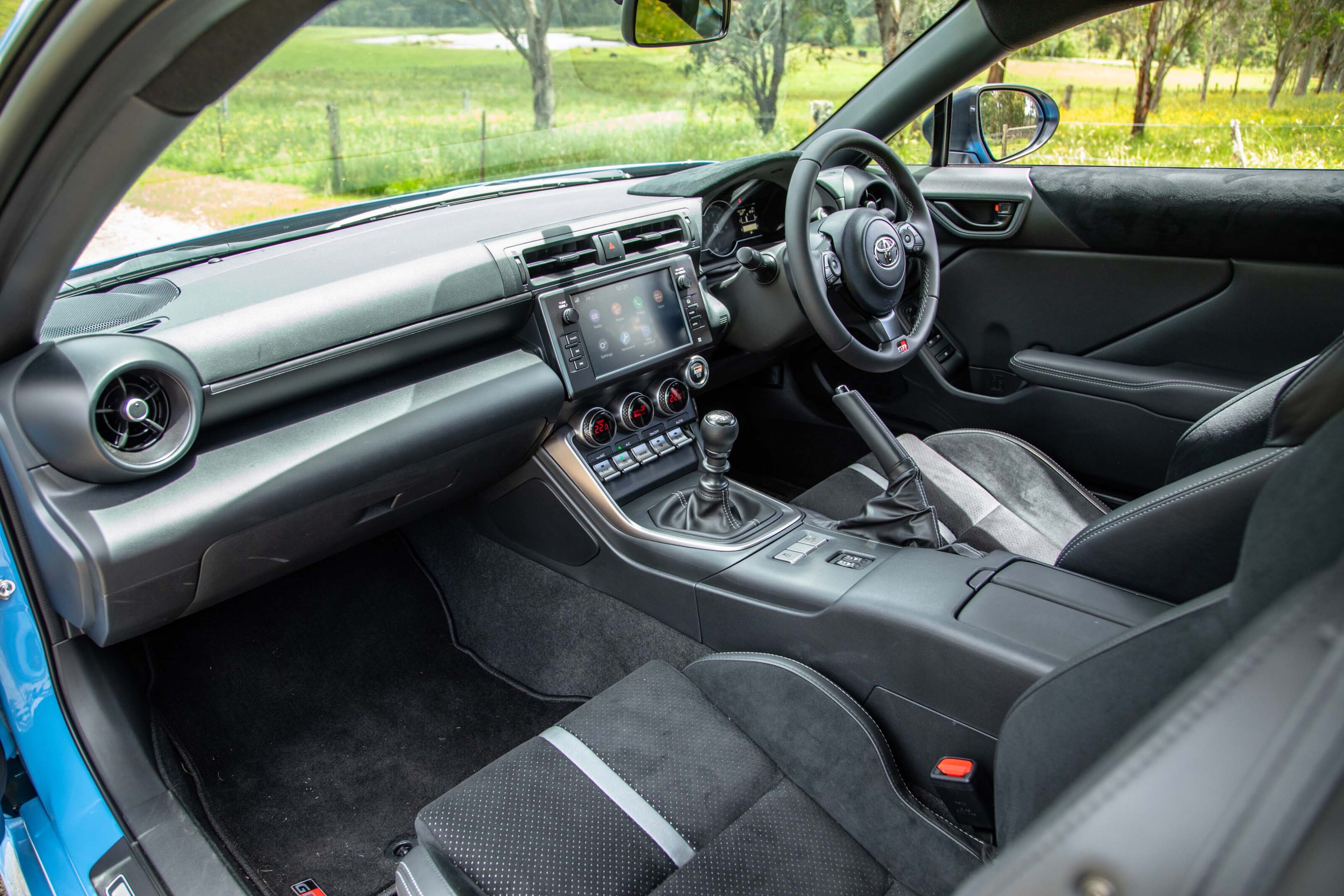
The 2023 Toyota GR86’s cabin greets you with a much-updated technology package including a handsome digital driver’s display featuring ‘track’ mode, and an 8.0-inch infotainment touchscreen with wired Apple CarPlay and Android Auto, as well as DAB+ digital radio, but no native navigation.
Unashamedly Subaru is the software used on those screens. In fact, there are a lot of Subaru bits in here that seem even more obvious than the first-gen car. The indicator stalks, the climate controls, the shifter feel and the awkward, vague light clutch (more on that later) are all very Subaru.
This variant tested is the up-spec GTS grade, differentiated by anthracite 18-inch alloy wheels, adaptive LED headlights, two-tone ‘Ultrasuede’ upholstery, red stitching, and vanity mirrors, priced at $45,390 before on-road costs.
Toyota GR86 GTS: The basics
| 2023 Toyota GR86 GTS manual | |
|---|---|
| Drive | rear-wheel |
| Engine | 2387cc flat-4, DOHC, 16v, petrol |
| Power | 174kW @ 7000rpm |
| Torque | 250Nm @ 3700rpm |
| Gearbox | 6-speed manual |
| Weight | 1291kg |
| Tyres | 215/40R18 Michelin Pilot Sport 4 |
| 0-100km/h (claimed) | 6.3 seconds (claimed) |
| Efficiency | 9.4L/100km (ADR combined) |
| Price | $45,390 + on-road costs |
How do rivals compare on value?
Although the basic GT saves you a little money ($2150), has nice cloth upholstery and the same technology package, it rides on dowdier 17-inch alloy wheels wrapped in Michelin Primacy rubber, not the GTS’s secure Pilot Sport 4 rubber.
Toyota has missed the mark on pricing a little bit, we reckon. That a manual costs the same as an auto, yet doesn’t get what some consider minimum safety technology in 2022 – forward auto emergency braking, for example – hurts when Subaru offers a handsome $3800 discount for the self-shifting transmission.
Other performance vehicles offer more features and practicality for a similar price, notably the Hyundai i30 N ($50,200) and dearly departed Ford Focus ST ($48,490) – both before on-road costs – but neither of those are bespoke two-seaters. And to be fair to the GR86, it gets newer technology than the similarly-priced Mazda MX-5 GT SP ($47,320) and similar features to the $74,990 Nissan Z. Again, both before on-road costs.
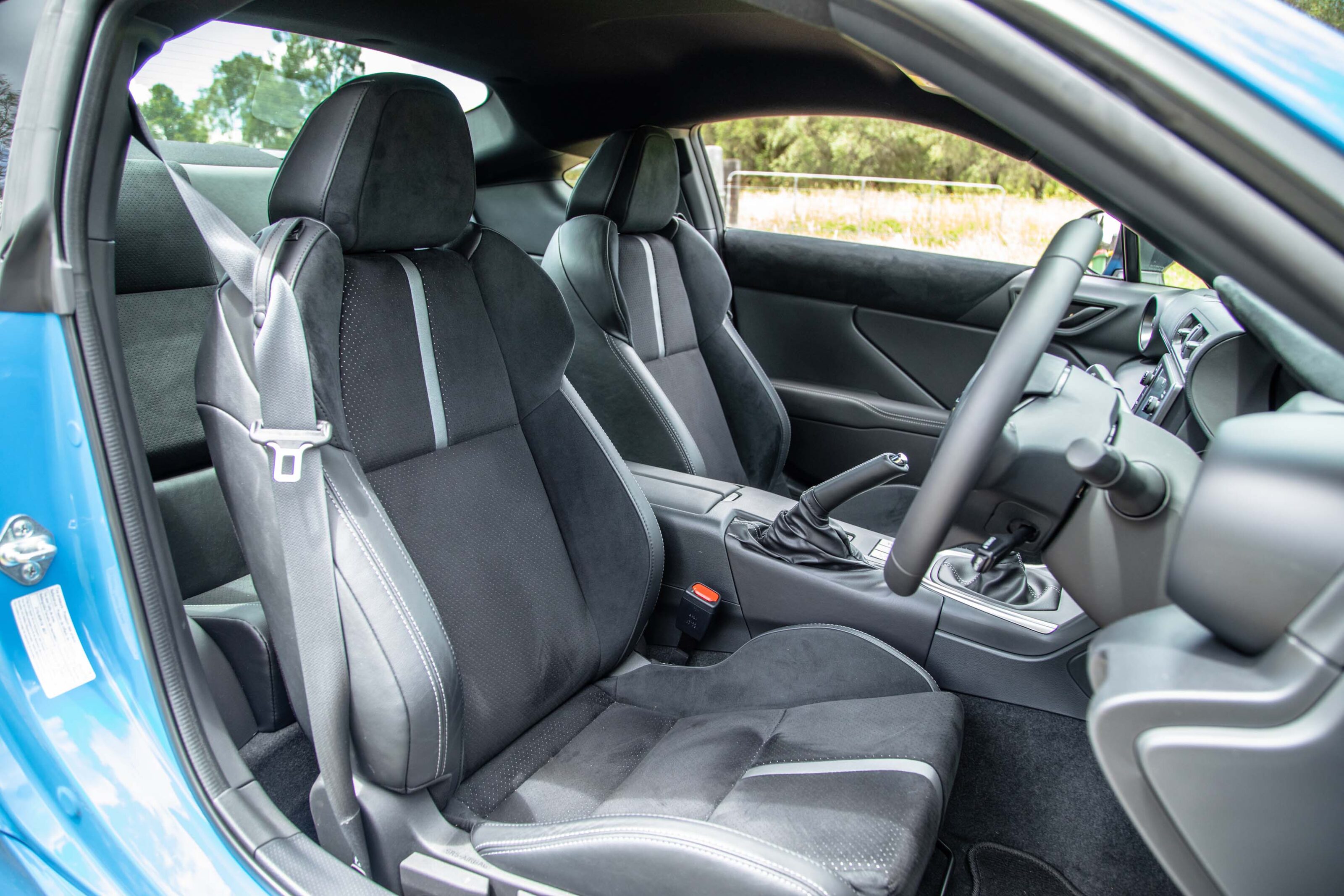
Interior comfort, space and storage
The GR86’s cabin gave a strong first impression with soft materials and refreshed look, but within minutes of setting off some things began to irk me. For a start, the driving position. This is probably an unpopular opinion, but measuring 188cm tall I found myself outside the GR86’s ‘goldilocks’ zone.
Headroom wasn’t an issue, but the seat could do with being set to 10-20mm lower and the steering column could do with another half-inch of telescoping to really dial in my spot. The seats, too, lacked under-thigh support and adequate tilt for my legs.
That said, this is still a much, much better car for lanky people than the cramped Mazda MX-5, and these are little nitpicks of what otherwise offers ergonomic excellence.
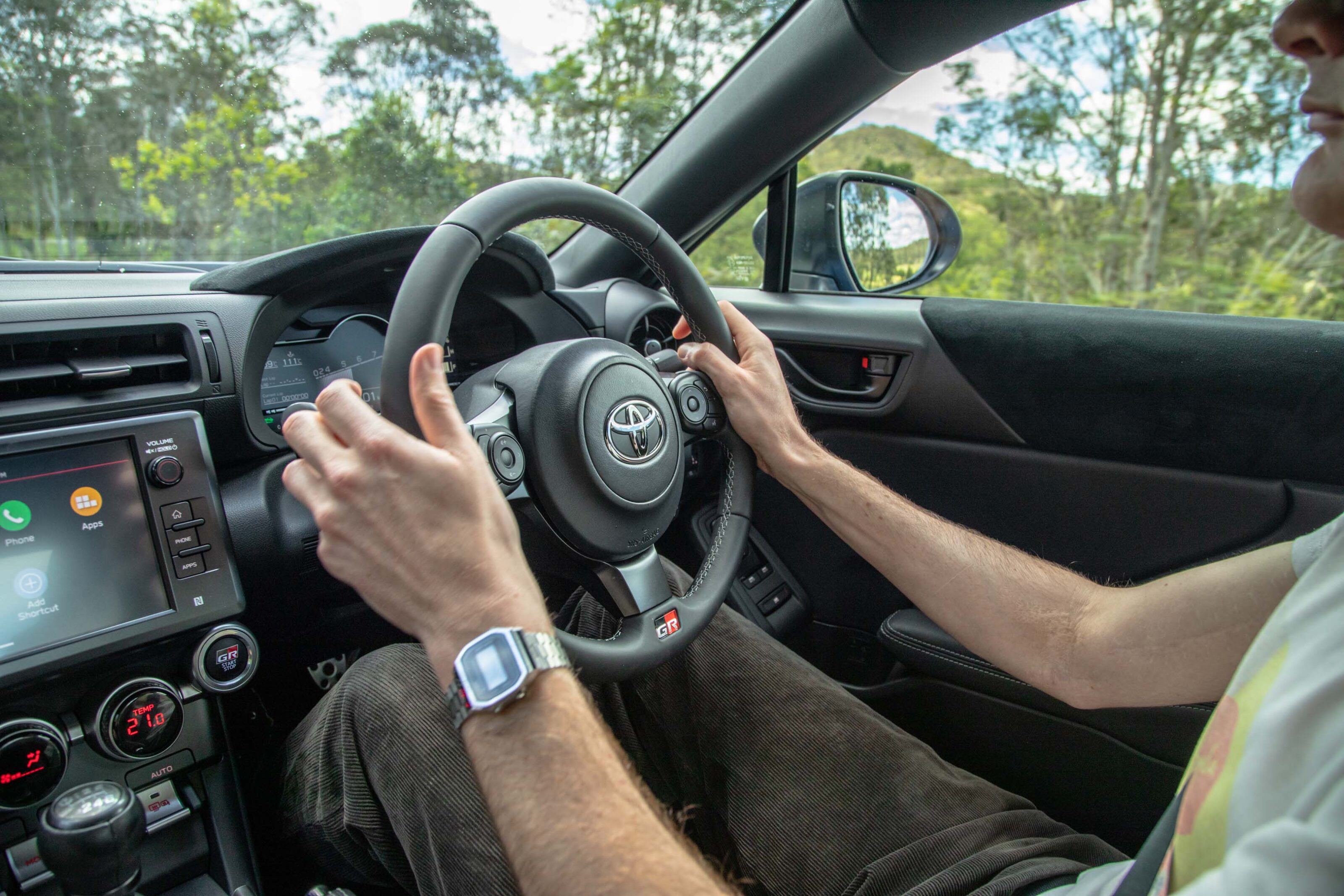
The suedecloth door tops and binnacle cover carry over from the old facelifted 86. The dash is topped with squishy rubber, and there’s now a leatherette flip-up cover over the cup holders that works as a (reasonably) comfortable armrest.
Cabin storage is also vastly superior to what you might expect from a sports coupe. The door cubbies grip a one-litre camping bottle snugly, and the two cup holders are generous. There still isn’t a great place for a phone, and only two USB-A ports and a 12-volt socket for charging, but it is very liveable.
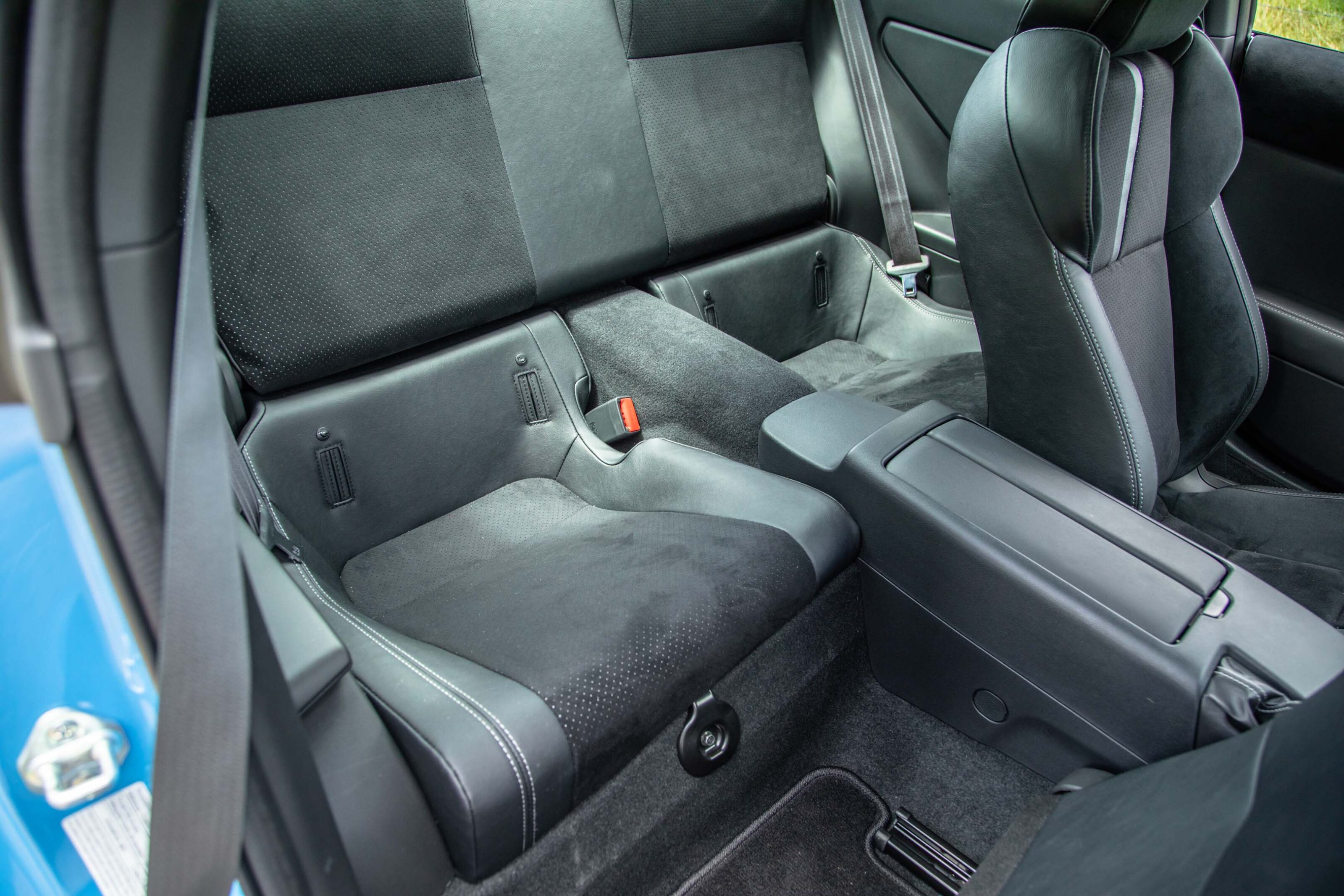
The back seats remain usable for short trips, which is one of the great things about the GR86. Not long after picking it up, I gave two others a lift home from football. The back seat passenger wasn’t able to sit behind me, but a comfy-enough compromise was reached behind the front passenger. It can be done.
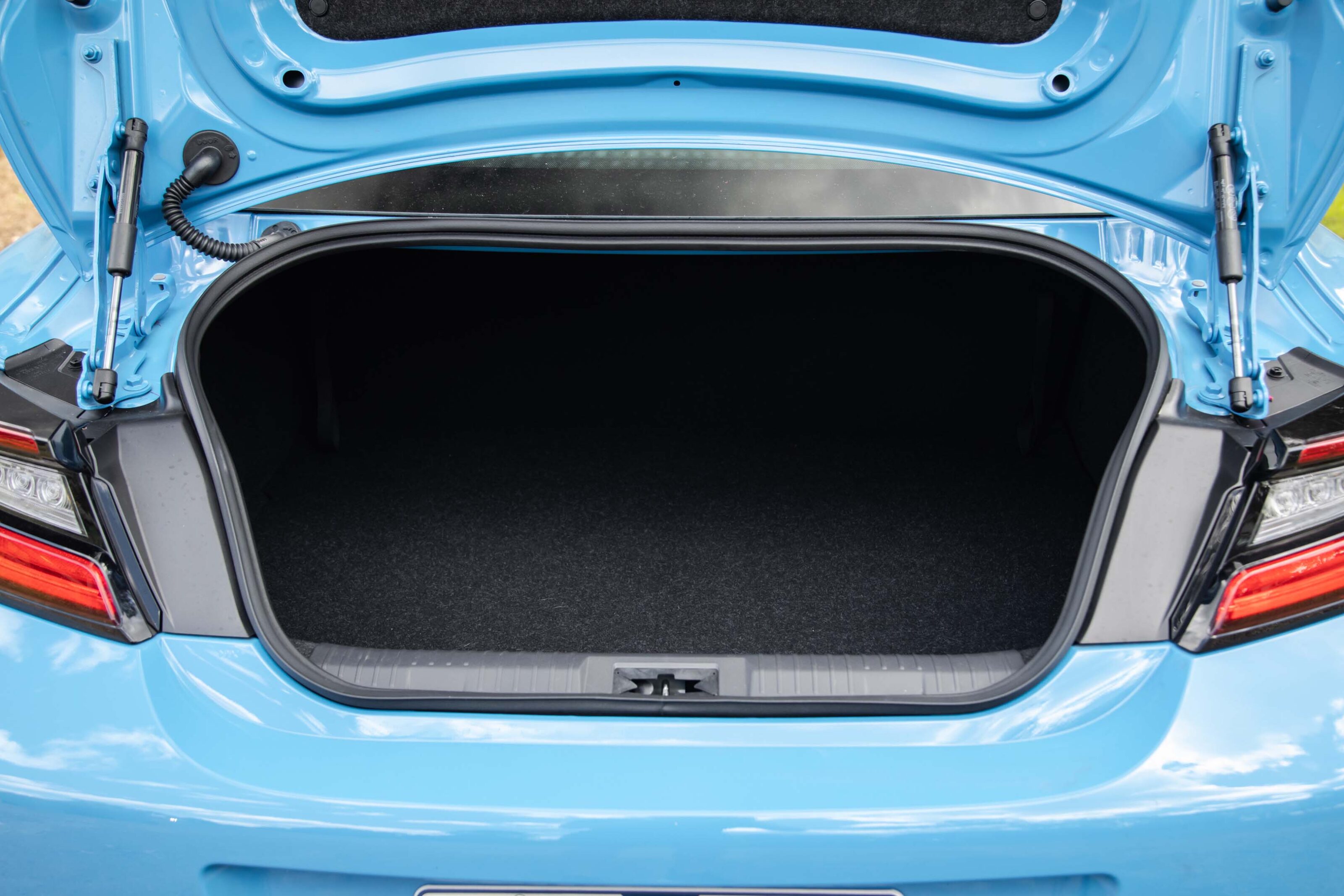
Although the GR86’s boot may only be rated at 237L, with the seats folded dead flat there’s room for two full-size suitcases and carry-on luggage… or four spare wheels for a track day. You also don’t have the BRZ’s awkward full-sized spare floating around in the back.
Unfortunately, in making the GR86’s chassis stiffer, the boot aperture is now tighter so I wasn’t able to fit my road bike in. A shame when you could in the last car.
What is it like to drive?
It’s refreshing to get in a modern car with properly good steering.
I think I’ll put up with compromised bike carrying, though, because the new GR86 is a sharper machine right from the off. It feels stiff and sturdy with that centre of gravity right down at your coccyx.
It’s refreshing to get in a modern car with properly good steering. The GR86’s electrically-assisted steering rack retains an uncorrupted feel and a quick ratio of 2.5 turns from lock to lock.
This joy of good steering is evident everywhere, not just on a country road. But I can’t get on with the GR86’s clutch at low speeds; it’s light, springy and has a high bite point – a classic Subaru trait that sits out of sorts with the otherwise matched control weights.
In fact, I stalled the GR86 while on the phone to content director Jez Spinks… at which point he threatened to fire me. And I’m still not sure whether that was a joke.
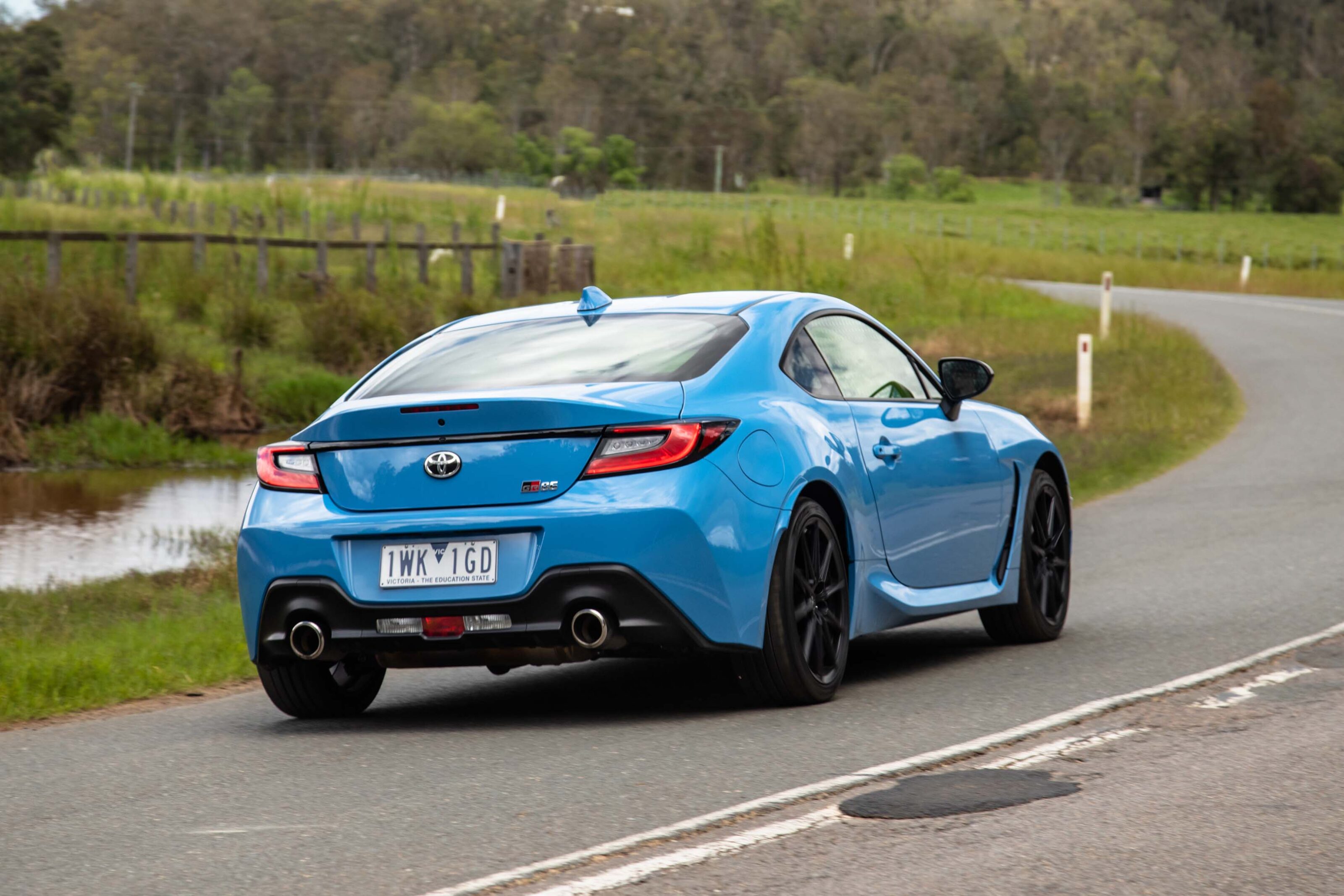
Anyway, back to the car.
The shifter requires a fair amount of force to get through the gate and, combined with the stiffer rear end, a manual GR86 can feel a touch clumsy when dawdling about town.
But that all comes to an end pretty abruptly when you lay into the GR86’s sharp throttle pedal and wake up the 2387cc ‘FA24’ boxer four-cylinder. The new car may have much grippier 215/40 R18 Michelin Pilot Sport 4 tyres, not the Prius’s Primacys, but with that new-found mid-range grunt, you can slide the GR86 at deserted suburban roundabouts to your heart’s content.
Around 150km of urban driving later, though, and I wasn’t entirely convinced by the firmer GR86, even though it did have me smiling. Time to head for the twisties, first up the Old Pacific Highway north of Sydney onto the Great North Road to Laguna – roads with a mix of scabby asphalt, camber changes and steep gradients.
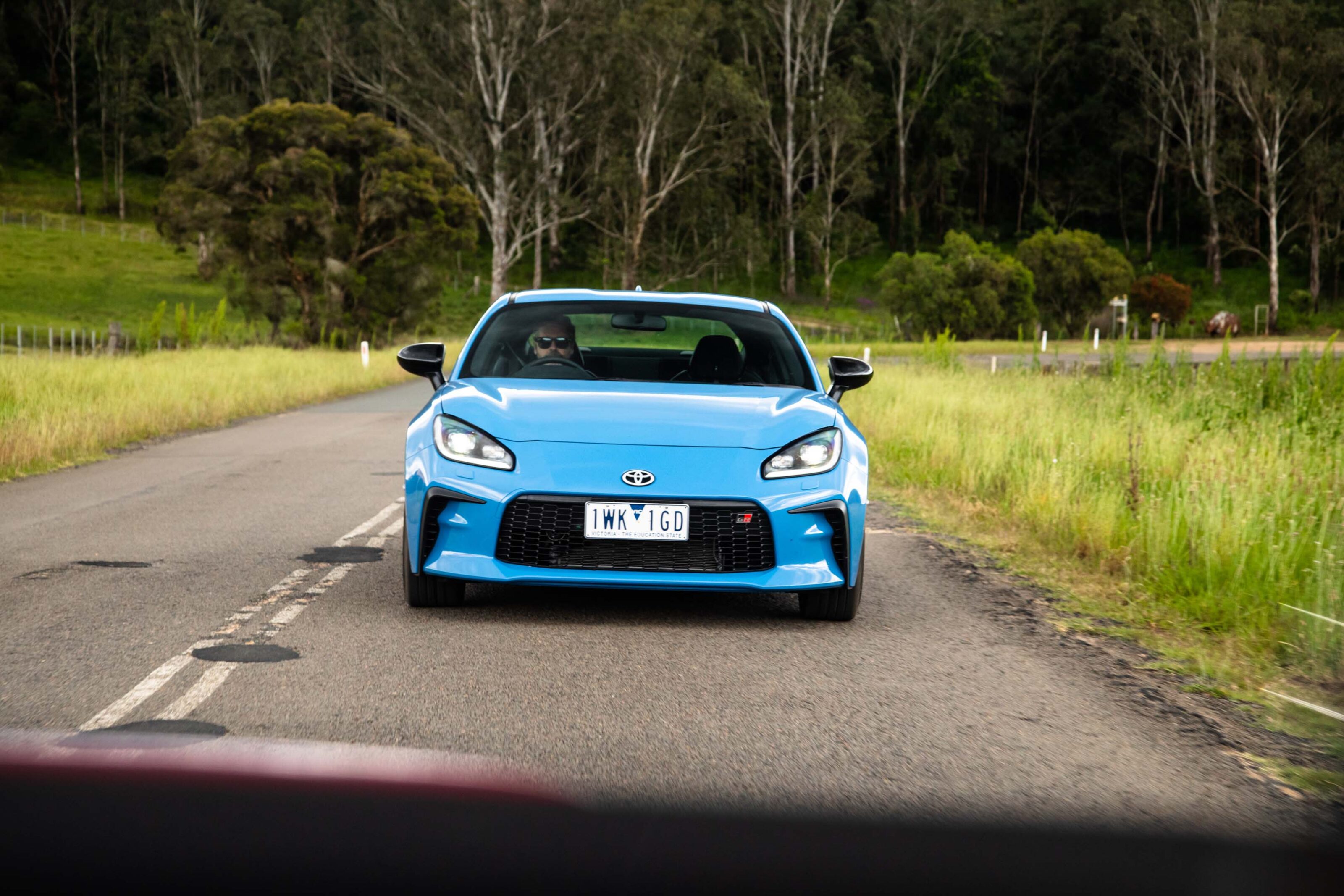
In bare numbers, the GR86 is up 22kW of power and 38Nm of torque, bringing outputs to 174kW/250Nm.
That means indulging in the reworked ‘FA24’ engine. It’s not all new, but the cylinders have been bored to 94mm while retaining the same 86mm stroke from the old ‘square’ motor.
In bare numbers, the GR86 is up 22kW of power and 38Nm of torque, bringing outputs to 174kW/250Nm, but there’s more to the figures. Torque now arrives at 3700rpm, rather than the absurd 6400-6800rpm it did before. The result is a muscular and flexible GR86 with no more flat spot.
The GR86 hasn’t lost its love of revving out either, but the redline does seem to cut in sooner than the 7500rpm suggested by the tachometer. Toyota claims a 0-100km/h sprint of 6.3 seconds and kerb weight of 1291kg for the manual GTS.
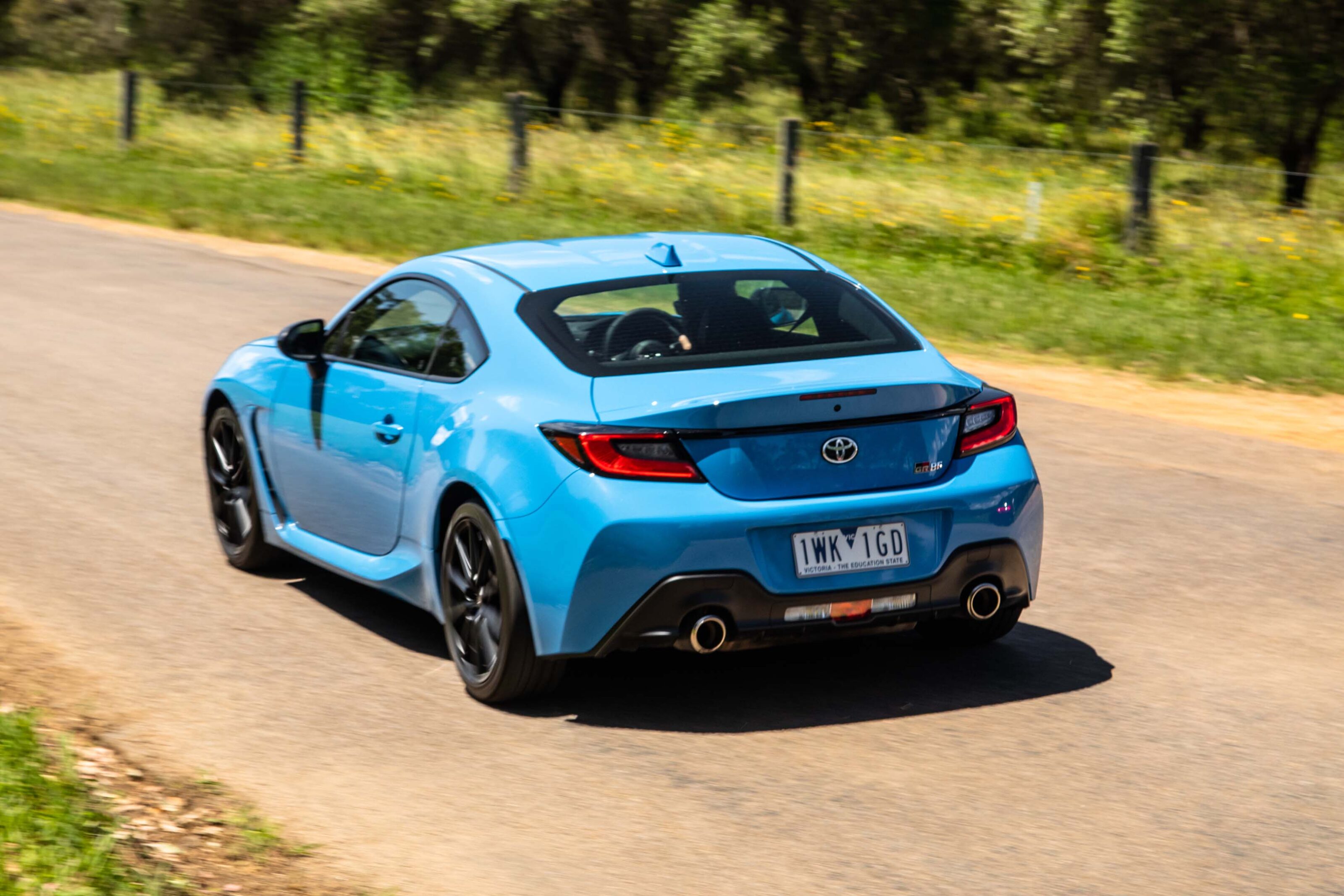
Nailing the short-travel throttle is accompanied by a curious synthesised sound that sits somewhere between Mazda RX-8 and Honda Integra Type R. Odd, but the more I listened to it, the more I liked it. It’s definitely better than the old 86’s gruff bark.
With the extra power and torque, the GR86 is finally effortless on a country road. More than enough grunt to leave it in third, but revvy enough to indulge in second, too. And this effortlessness encourages quite a lot of commitment from the driver.
The GR86’s chassis set-up is edgier than the BRZ’s and requires deliberate but sensitive inputs to extract its best. Throw it in hard and nail the throttle like you would an MX-5, and you’ll probably get a whiff of understeer. The same is true when you get a little greedy on the loud pedal mid-corner, and the nose pushes slightly wide.
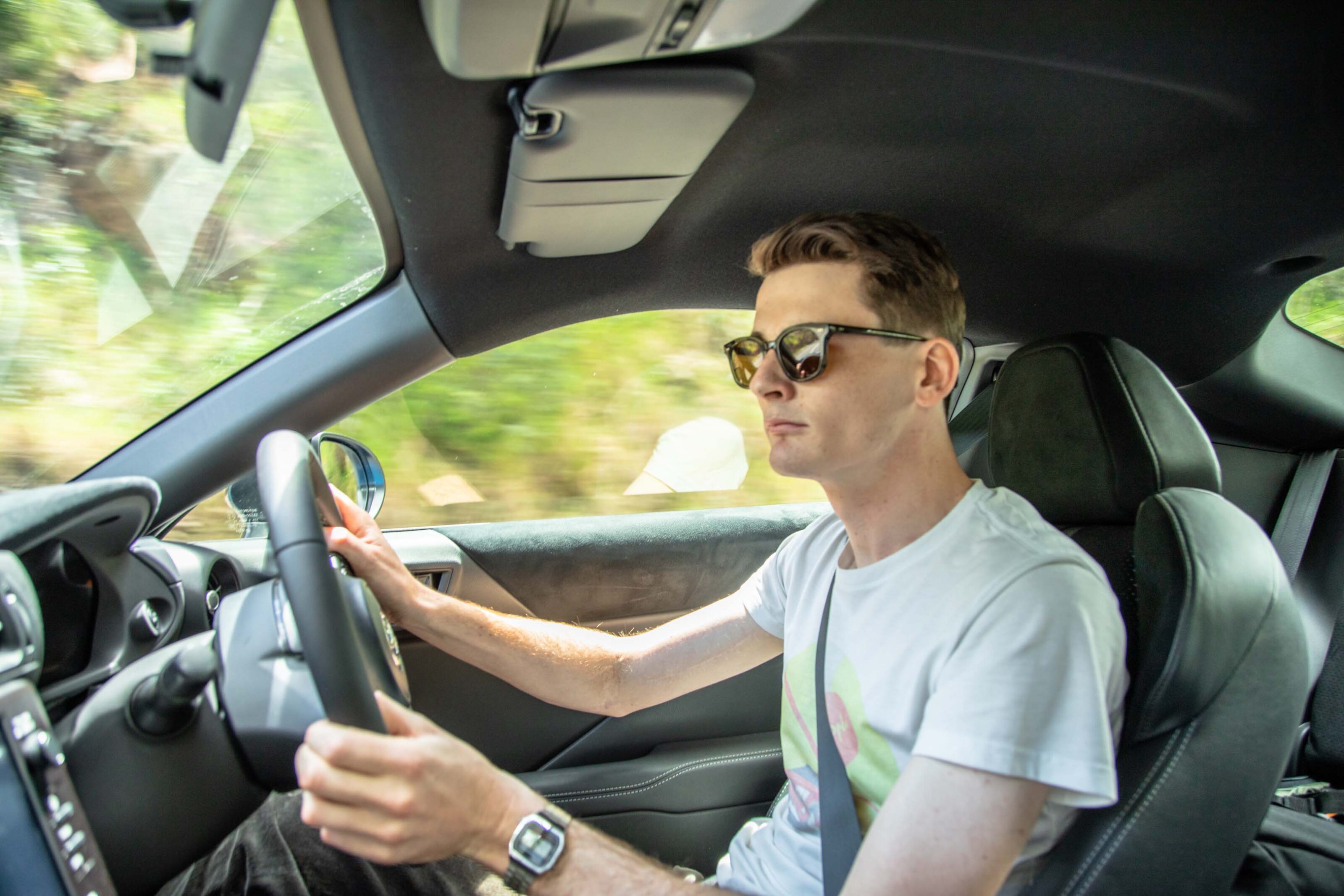
The GR86 rewards delicacy and accuracy. You can make unbelievably fast progress down a tight technical road and never feel tired.
I kept coming back for more, taking the GR86 out over and over to indulge the car’s balance and accuracy. With a little more camber, or stickier tyres, it’d be right at home on the track.
Back home to the mundanities of urban life, though, and the GR86 can get on your nerves. Including on the freeway heading home from my next run up to the Central Coast, where the boxer engine droned unpleasantly at constant high speeds. The GR86 also jostles the driver on broken concrete sections, but that’s sort of expected from a sportscar.
The GR86’s ride is firmer everywhere than the slinky BRZ, too, and that can get tiresome. I’m not sure the GR86 could be my only car. What I am sure of, though, is that chief GR86 engineer Yasunori Suezawa and his team have taken a Porsche-like attitude to refining this $50K sportscar. It’s a little more powerful, a tad sharper, a touch more involving and all the better for it.
How is it on fuel?
Combined-cycle ADR fuel consumption for the 2023 Toyota GR86 is 9.4L/100km. and it requires 98 RON unleaded petrol as a minimum.
The GR86’s rated fuel consumption is higher than turbo-petrol hot hatches but in the real world, it is possible to get consistent 9-10L/100km. Over 1000km of mixed driving we managed to slightly better that, recording 9.2L/100km for the whole stint.
That gives this sportscar a driving range of around 530km from a full tank and meant I topped it up three times over 1000km.
How safe is it?
The Toyota GR86 has not been evaluated by safety testing body ANCAP, and there seem to be no immediate plans to do so.
Standard safety features for the GR86 GT include seven airbags, anti-lock brakes, stability control and a reverse camera. The tested GTS adds rear cross-traffic alert and blind-spot monitoring.
Only automatic Toyota GR86s get forward auto emergency braking (AEB), rear parking sensors with low-speed reverse AEB, adaptive cruise control and lane-departure warning, leaving the manual seriously wanting for kit.
It’s a shame, given other manufacturers such as Hyundai, Mazda and Ford have all managed to get AEB working in their manual performance cars.
The GR86 is more useable around town than you might expect. You sit low, but not stupidly so, meaning visibility is good. The cab-forward position also makes the GR86 more natural to place and park than two-seaters such as the GR Supra, Nissan Z or Mazda MX-5.
Warranty and running costs
The GR86 is covered by a five-year, unlimited-kilometre warranty in Australia.
The guarantee doesn’t specifically cover track use like Hyundai’s does, but Toyota won’t void your warranty for attending a non-competitive track day.
Servicing is due every 12 months or 15,000km. Being a Toyota, the dealer network is expansive and capped-price plans are cheap. Each visit will cost a GR86 owner just $280, for a five-year/75,000km total of $1400.
Be wary of the type of driving you’re subjecting your GR86 to though, as the capped-price service schedule is the bare minimum. Regular attendees of track days would be well served by an interim oil and filter change between Toyota’s stated intervals.
VERDICT
We awarded the Subaru BRZ a high accolade of 9/10, so why didn’t the GR86 get the same score? Well, they’re no longer as identical as they once were, plus Toyota’s price gouging on the safety gear-lacking manual is hard to bear.
Despite a lower score, my money is going to the GR86 as an overall sharper tool. Only by a few per cent, but the crisper chassis response – that is, admittedly, begging for stickier tyres – suits me just right.
A longer time spent in this sportscar revealed that although it’s been tweaked and honed in an almost Porsche-like way, the GR86 still has foibles; primarily the occasionally firm ride and minimal safety equipment on the manual.
If you’re considering an automatic GR86 or thinking you’ll use this sportscar exclusively, or at least mostly, on the road, then the BRZ is a more well-rounded choice.
As it stands though, the fact you can buy a more hardcore second-gen GR86 should be celebrated.
| Body | 2-door, 4-seat coupe |
|---|---|
| Drive | rear-wheel |
| Engine | 2387cc flat-4, DOHC, 16v, petrol |
| Power | 174kW @ 7000rpm |
| Torque | 250Nm @ 3700rpm |
| Transmission | 6-speed manual |
| 0-100km/h (claimed) | 6.3 seconds (claimed) |
| Fuel consumption (ADR combined) | 9.4L/100km (98 RON) |
| Fuel consumption (tested) | 9.2 litres per 100km (98 RON) |
| Weight | 1291kg |
| Boot space | 237 litres |
| Suspension | Strut front / multi-link rear |
| Length/Width/Height | 4265/1775/1310mm |
| Wheelbase | 2575mm |
| Brakes | Ventilated discs (f/r) |
| Tyres | 215/40R18 Michelin Pilot Sport 4 |
| Wheels | 18-inch alloy |
| Price | $45,390 + on-road costs |
It’s road-trip time, right?
With any luck, you’re on holidays right now – maybe even without some kids to influence your plans – and you’re looking to get away on a long, spirited drive. Here are some of our faves.
We get it. You’ve played so much Gran Turismo that wisps of smoke are starting to bloom from the back of the PlayStation.
All of your model cars have been built, and destroyed, then built again. And you’ve spent so much time working your way through the ‘greatest car movies of all time’ list that you now know Bullitt is a truly terrible film (car chase aside, of course).
The metaphorical walls are closing, though mercifully there’s one avenue you maybe haven’t explored: planning your next great road trip.
This is serious business.
You’ll be tempted to return to your tried-and-tested routes – familiarity is reassuring, after all – but we challenge you to think bigger.
So, go on, expand your horizons. Fire up Google Maps, jump on AirBnB and start planning.
To help, here are five brilliant places to drive – chosen not only for their challenging tarmac, but because they aren’t obvious.
Some are well-known to enthusiasts, others less so, but you’ll need to think bigger than an afternoon jaunt through the National Park. Go on, you’ve earned it.
New South Wales
Bucketts/Thunderbolts/Waterfall Way
Total Distance: 1203km. Round trip from Sydney (13h41m).
Where to stay: Armidale has options for all budgets, though the Moore Park Inn offers nice rooms for around $145 a night (via Trip Advisor).
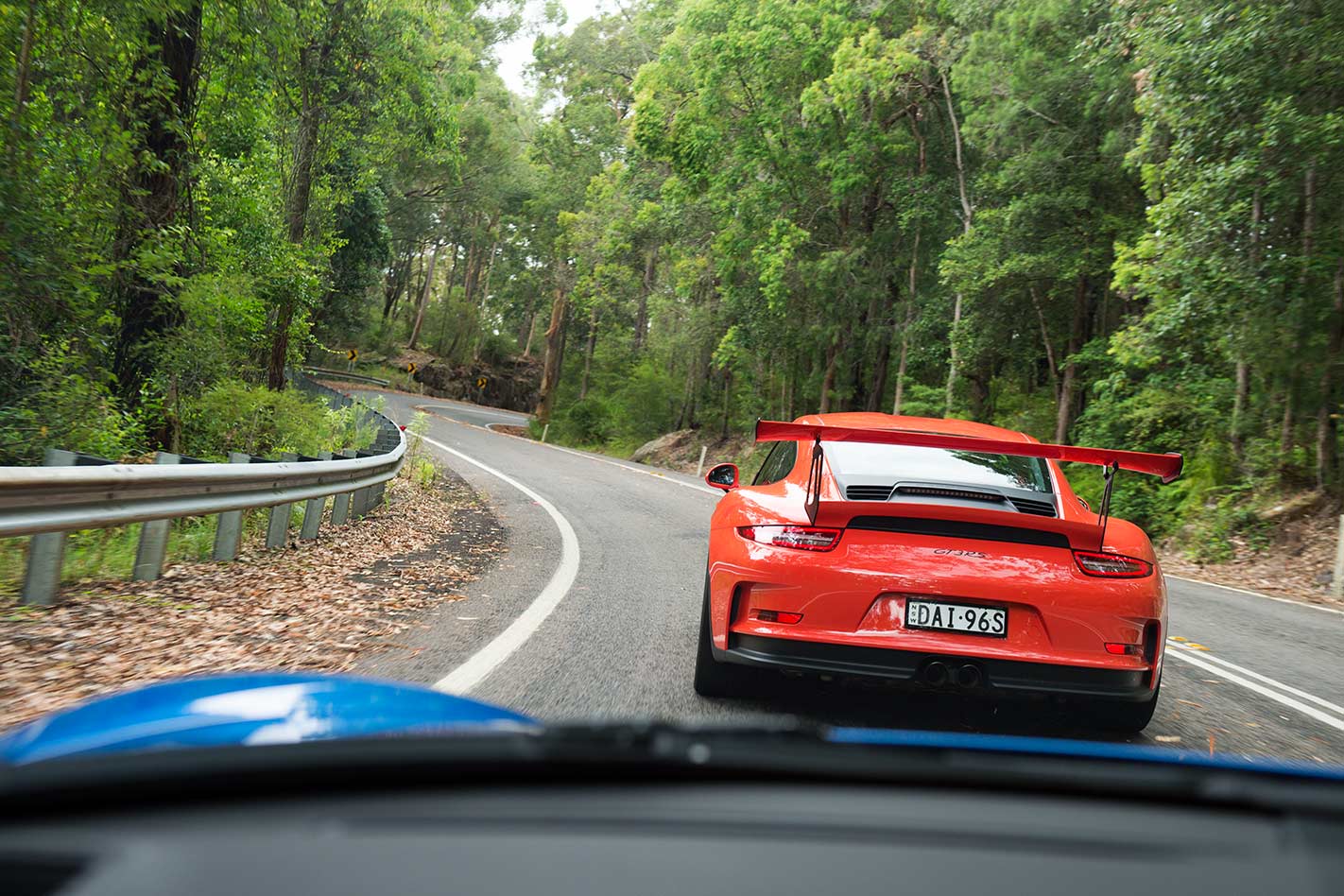
What to drive: You’ll need something with long legs, and comfy seats, given the amount of kms and some poorly maintained surfaces. A base 911 Carrera sounds perfect.
We agonised over this one. Our first thought was the Putty Road, but that felt too obvious, so our minds drifted to our favourite overnight route from Sydney to Bathurst, via the Jenolan Caves Road and Tarana.
But then it hit us like a thunderbolt: head north, to the beautiful mid-north coast, and take in three brilliant stretches along the way.
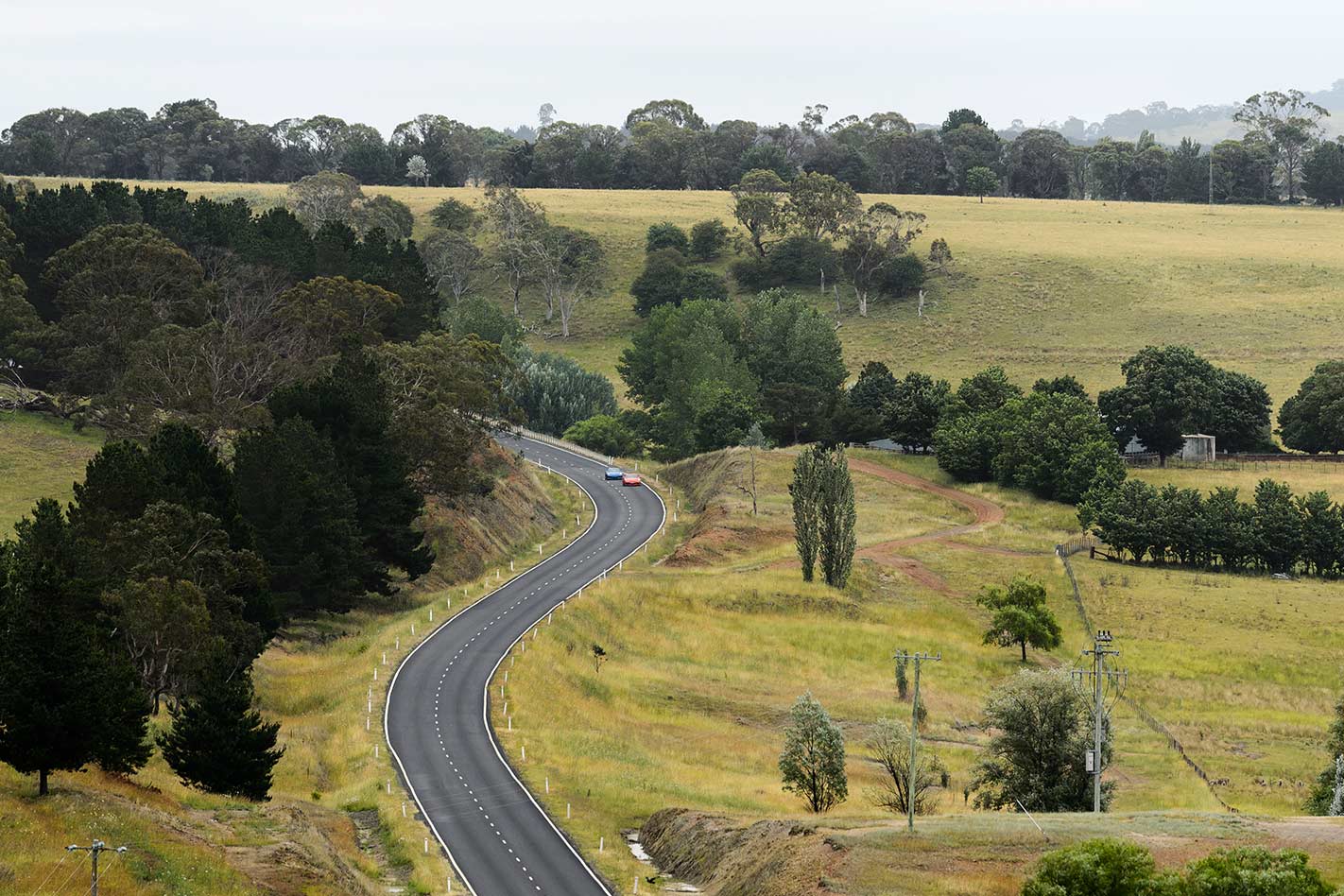
The loop that links the Bucketts Way, Thunderbolts Way and Waterfall Way involves two solid days of driving, though the pay-off is a diverse tapestry of roads, terrain and landscapes.
Leave Sydney and strike towards Newcastle, then splinter inland towards the picturesque town of Gloucester. The Thunderbolts Way follows (named after the infamous bushranger Captain Thunderbolt) though beware – while its mix of corners are bewitching, its surface can resemble that of the moon.
Swooping through the 155km towards the coast via the Waterfall Way offers some respite, and at its end you’re faced with two options: bolt straight down the coast for the 500km to home, or shoot back inland onto the Oxley Highway for a final, and brilliant, blat on some of Australia’s best bitumen. The choice is yours.
Queensland
Gillies Range Road
Total Distance: 160km. Round trip from Cairns (2h45m).
Where to stay: Spoil yourself at the Thala Beach nature reserve resort, near Port Douglas. Rooms start at $439 a night.
What to drive: A Mazda MX-5 would be ideal, to better feel that tropical air on your bonce. Its nimbleness and rear-drive balance will also make short work of the many hairpins.
We might be pushing the friendship here, given the Gillies Range Road is a whopping 1700km trek from Brisbane, but this is Far North Queensland, remember. Huge distances are kind of its shtick.
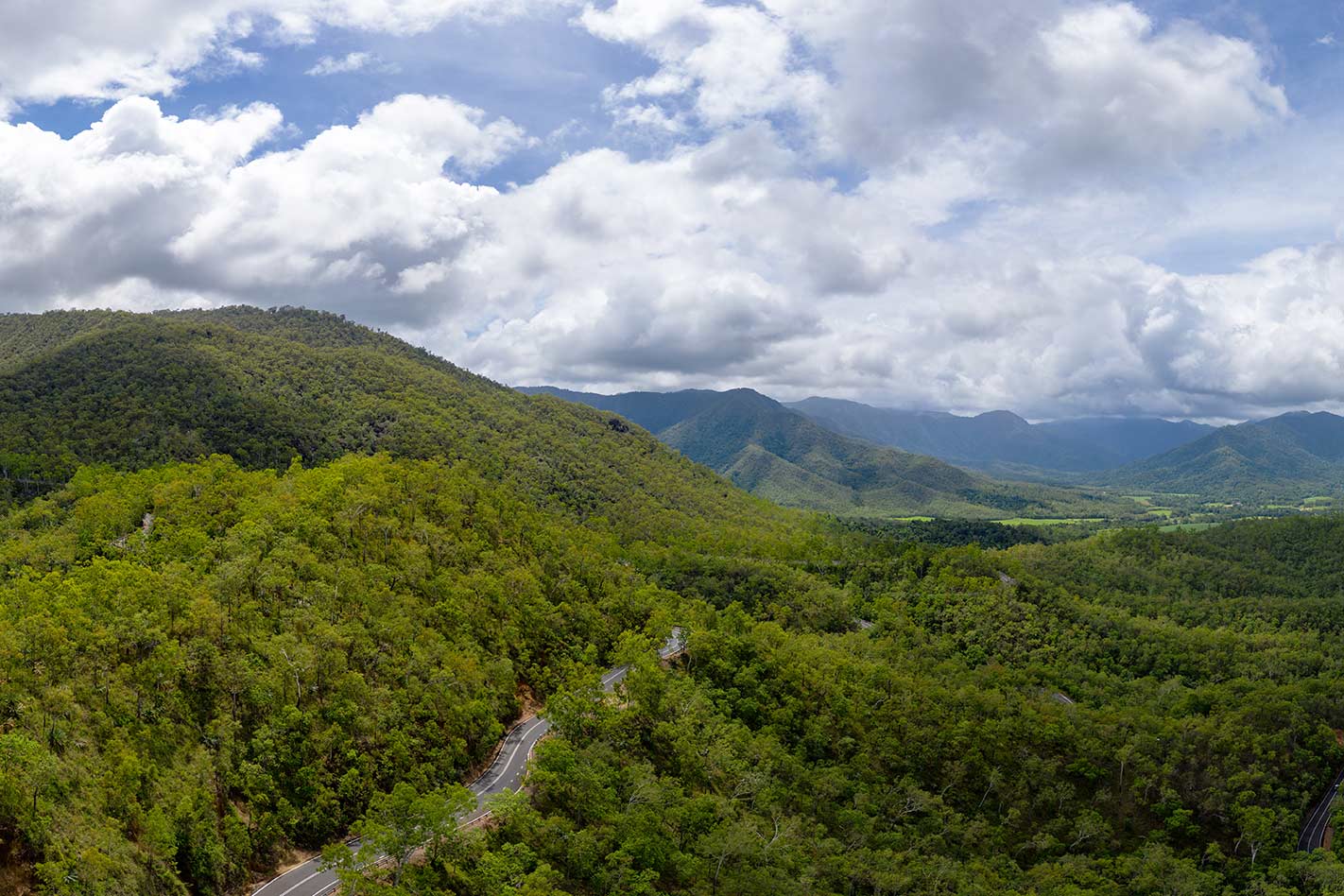
An easier option is to begin in Cairns, which is only 60km north of our starting point. Do that and you’ll want to make a beeline for Gordonvale before turning off the Bruce Highway and cutting inland to explore the beautiful Gadgarra National Park.
The section of winding hinterland nirvana that follows is relatively short but it crams 263 corners and 800 metres of elevation into just 19km of road. Being so remote also means the Gillies Range Road is usually bereft of the usual kind of traffic that plagues tourist roads like this, so you can hit those apexes sure in the knowledge you’re unlikely to suddenly happen upon a slow-moving Winnebago.
If Cairns is too far to travel, a solid Plan B for a northern road trip is to link a run through Mount Nebo and Mount Glorious with Northbrook Parkway. This well-trodden route is popular for a reason, and only an hour outside of Brisbane.
South Australia
Stott Highway
Total Distance: 230km. Round trip from Adelaide (3h16m).
Where to stay: The Bend Motorsport Park offers rooms with a fast view for $143 a night (for a weekday booking during February).
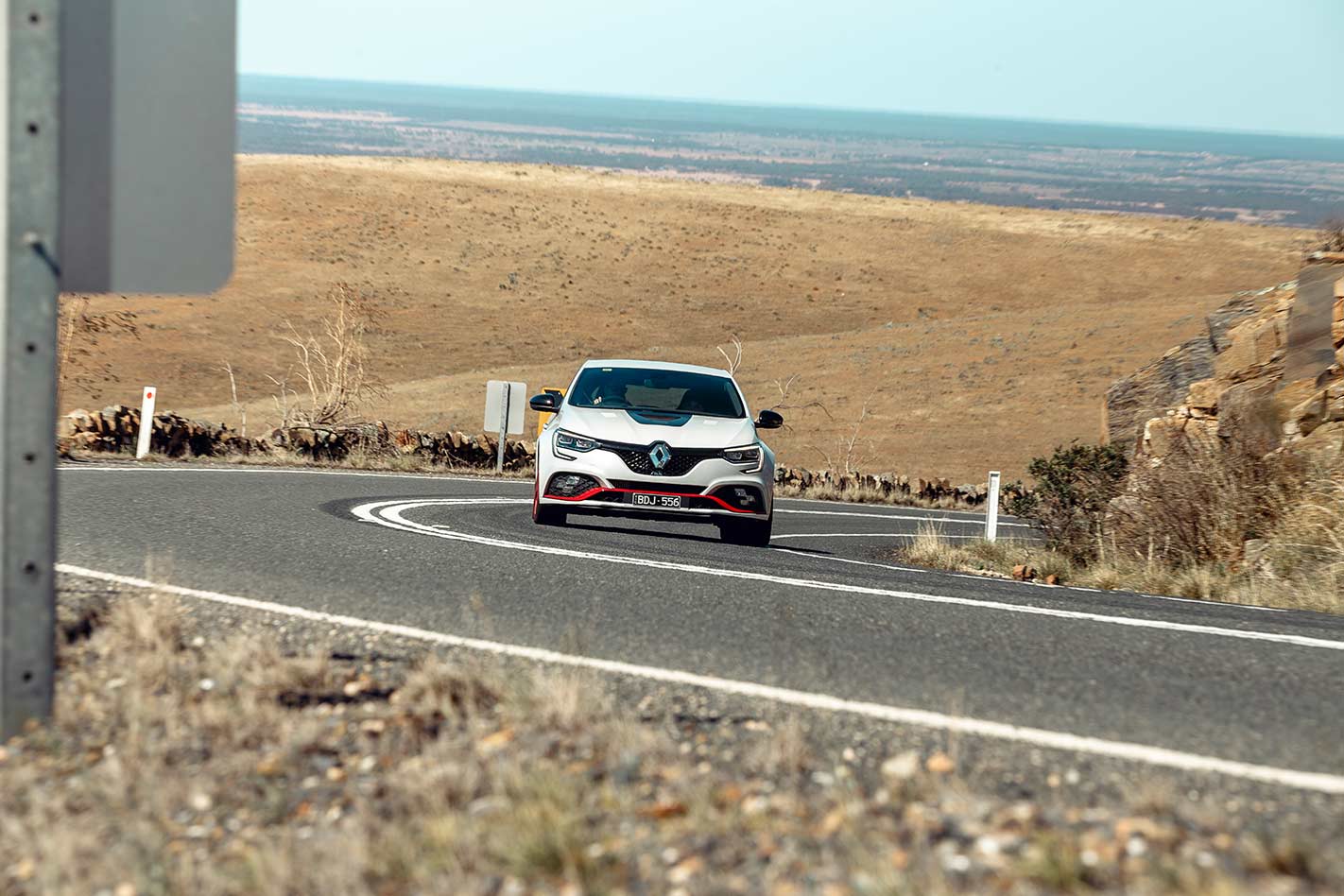
What to drive: Renault Megane RS Trophy. You’ll need something with enough grunt to handle the ascent, and enough grip to carry speed through the medium-radius sweepers.
Havin ‘highway’ in the name is kind of a turn-off, but this section of tarmac carries the gold seal of approval from our sister title MOTOR as the road-loop component of its Performance Car of the Year testing.
If that doesn’t tempt you, the fact it stars on YouTube as the playground for Jake ‘Driftsquid’ Jones who smokes his way up the hill in his modified E92 M3, should clinch it.
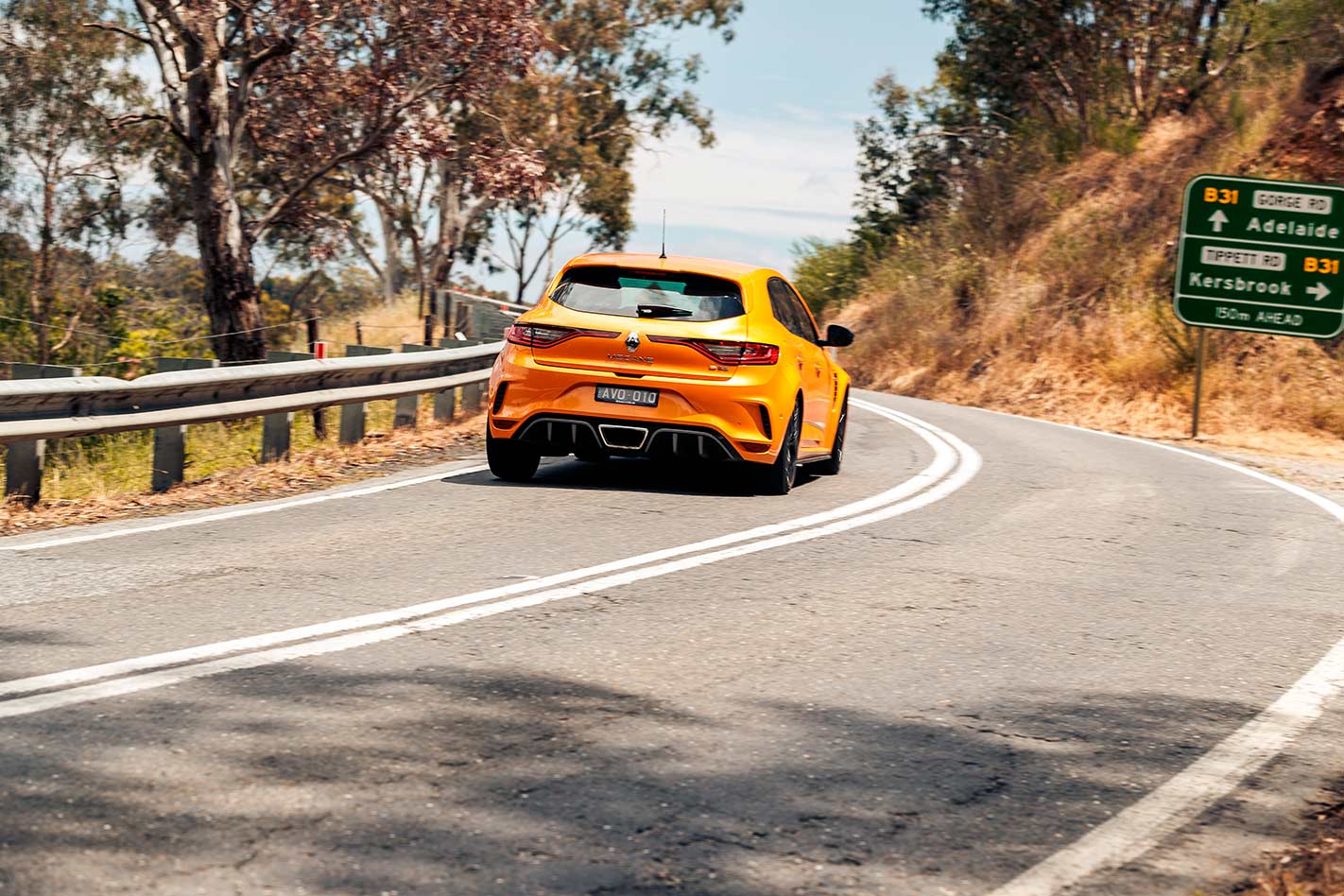
The section in question is the short run from Sedan to Angaston, and you’ll get to traverse the infamous Adelaide Hills to get to it. Leave the CBD proper and strike east towards Birdwood where you’ll sample the famous Gorge and Chain of Ponds Roads.
Continue through Eden Valley and turn right onto the Angaston-Swan Reach road to begin the loop proper. This is still a main road, so there’s a light smattering of traffic.
Start in the gully and brace for the climb as the tarmac rushes across the countryside. You’ll encounter mostly medium- to high-speed corners, though even taken at a canter this part of the world is stunning.
Once you’ve tackled it a few times you can meander back to Adelaide or head west to The Bend Motorsport Park, only an hour and a half away.
Tasmania
Strahan to Queenstown
Total Distance: 260km. One-way from Hobart (3h41m).
Where to stay: Hobart is full of boutique hotels, though the Henry Jones Art Hotel is brilliant for around $320 a night.
What to drive: Grip and confidence are key with this one. We’d recommend a Mercedes-AMG A45 S.
It’s tempting to name the entire state of Tasmania here, given its brilliant roads and sensible approach to speed limits (and speed enforcement) have made it a mecca for drivers and riders alike, though there’s one section that shines brighter than the rest.
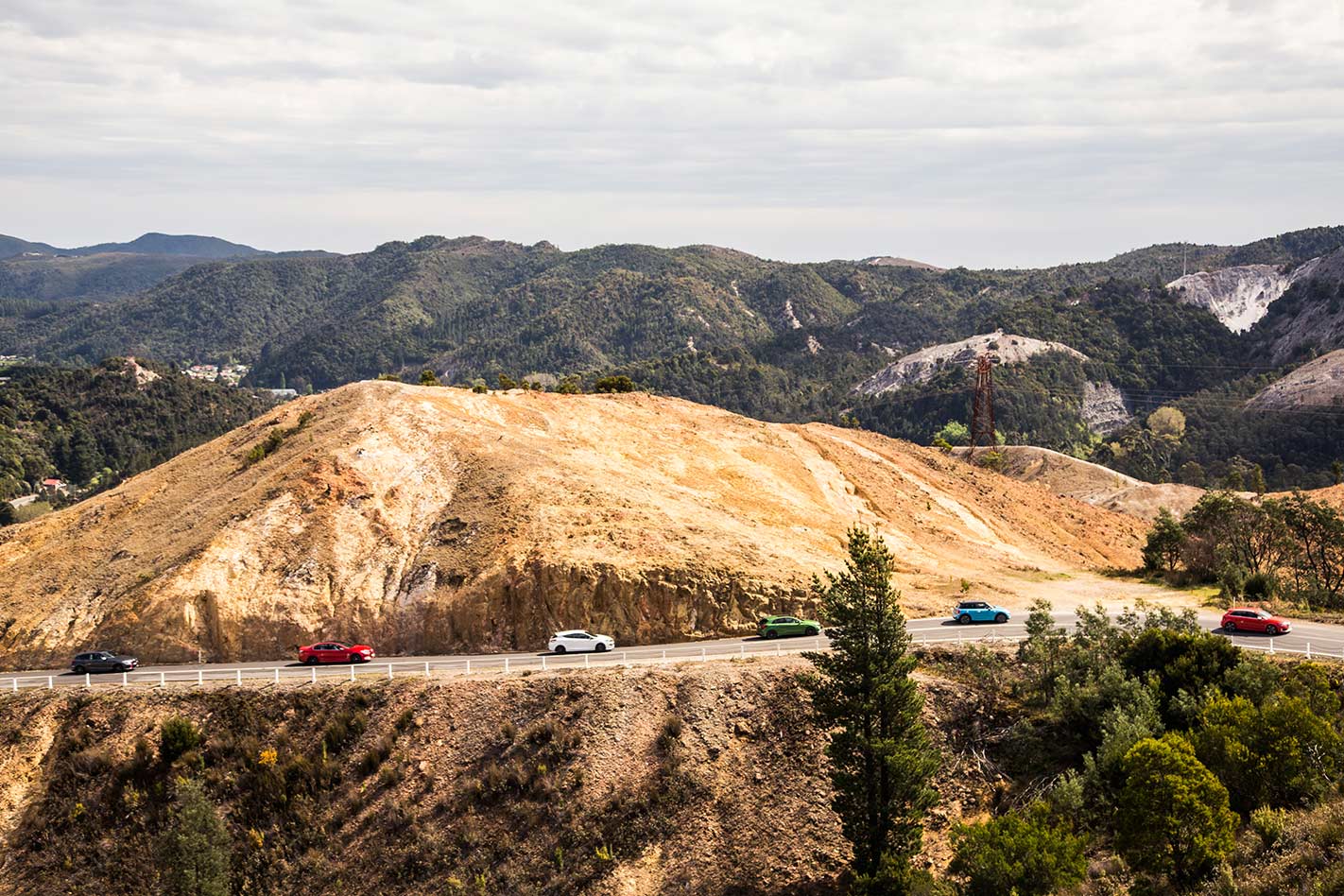
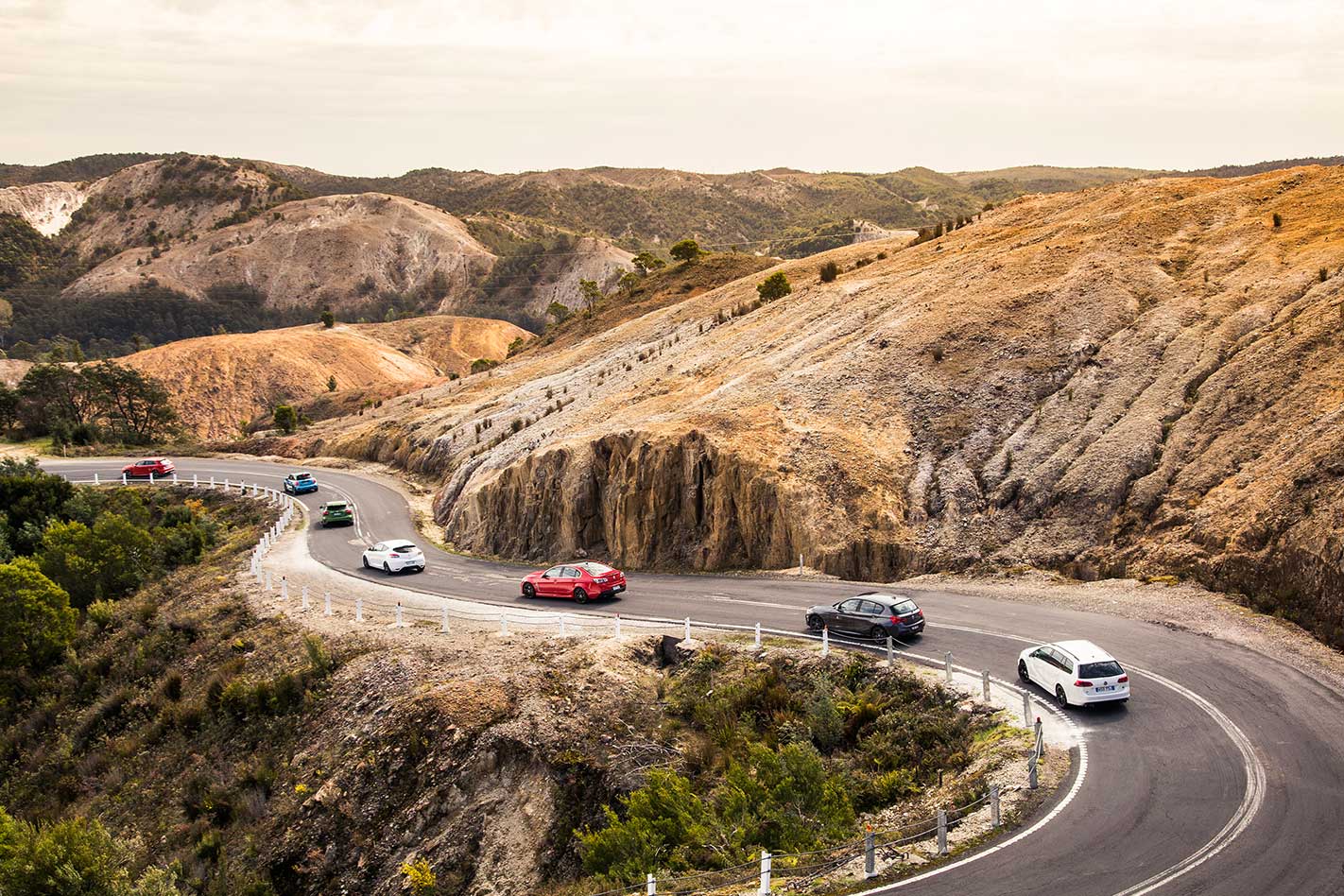
The run from Strahan to Queenstown should be at the top of any petrolhead’s ‘must drive’ list, though the 6.7km twisting trek from Queenstown to Gormanston on the Lyell Highway is a standout.
The road itself is enthralling, courtesy of its beguiling mix of tightening apexes and high-consequence running (a small mistake could see you rattle into the Armco), though it’s the landscape you’ll remember most.
Denuded by copper miners, the verges have taken on an alien feel; the exposed dirt a curious mix of sunburnt orange and black. The fun continues on the far side of Gormanston where you’ll find the Iron Blow Lookout which overlooks one of the earliest major mining ventures in the area.
Victoria
Dunkeld to Horsham
Total Distance: 708km. Round trip from Melbourne (8h).
Where to stay: Royal Mail Hotel Dunkeld has beautiful rooms for around $225 a night.
What to drive: Something quick to monster the faster sections, but also refined for the transit out of Melbourne. We reckon a BMW M2 Comp would be ideal.
The obvious choice for great driving roads out of Melbourne is to bolt north-east and take in the brilliant combo of Healesville/Black Spur/Lake Mountain/Reefton Spur.
Yet as good as that loop is, heading in the opposite direction, through Ballarat and beyond, yields an even sweeter reward.
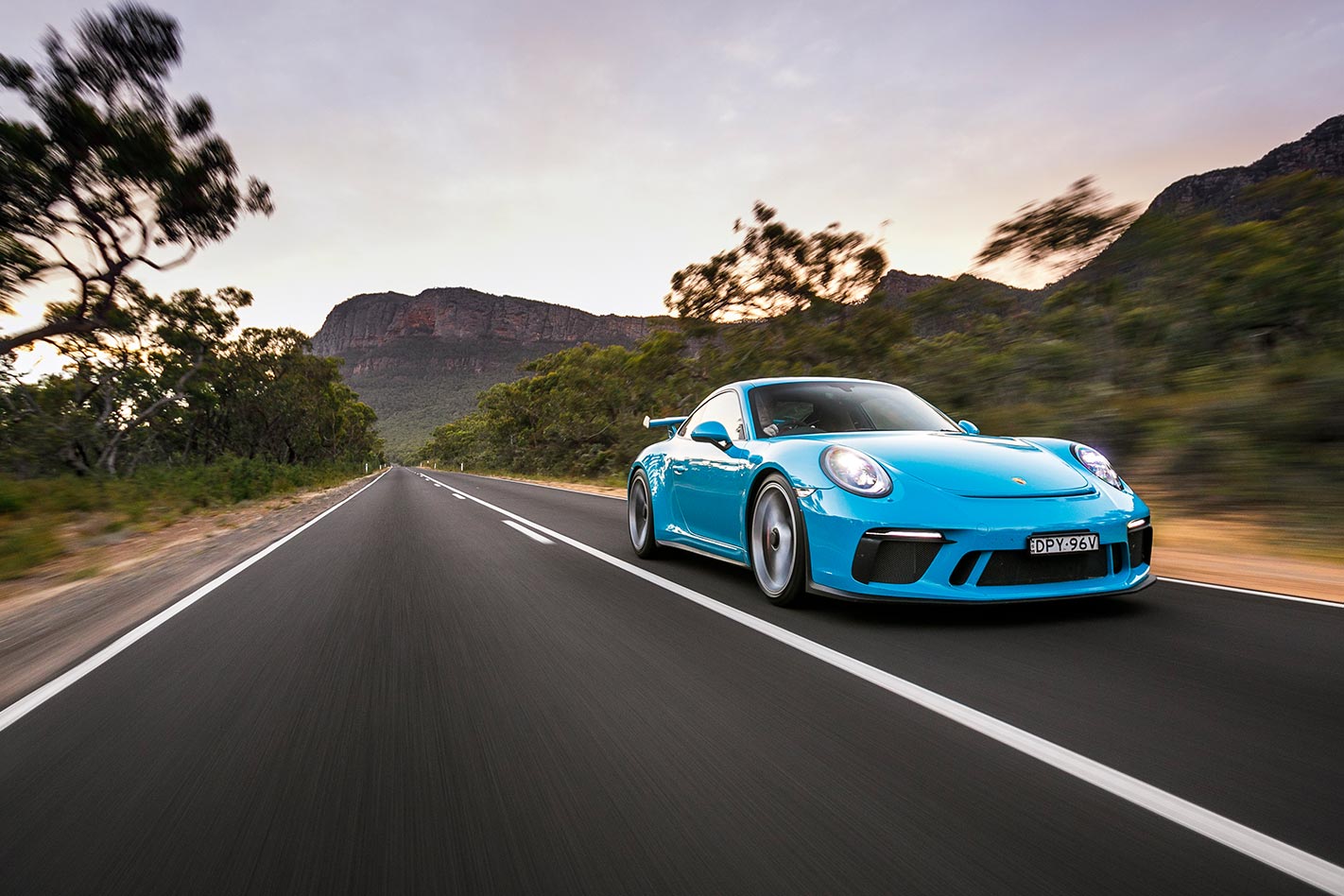
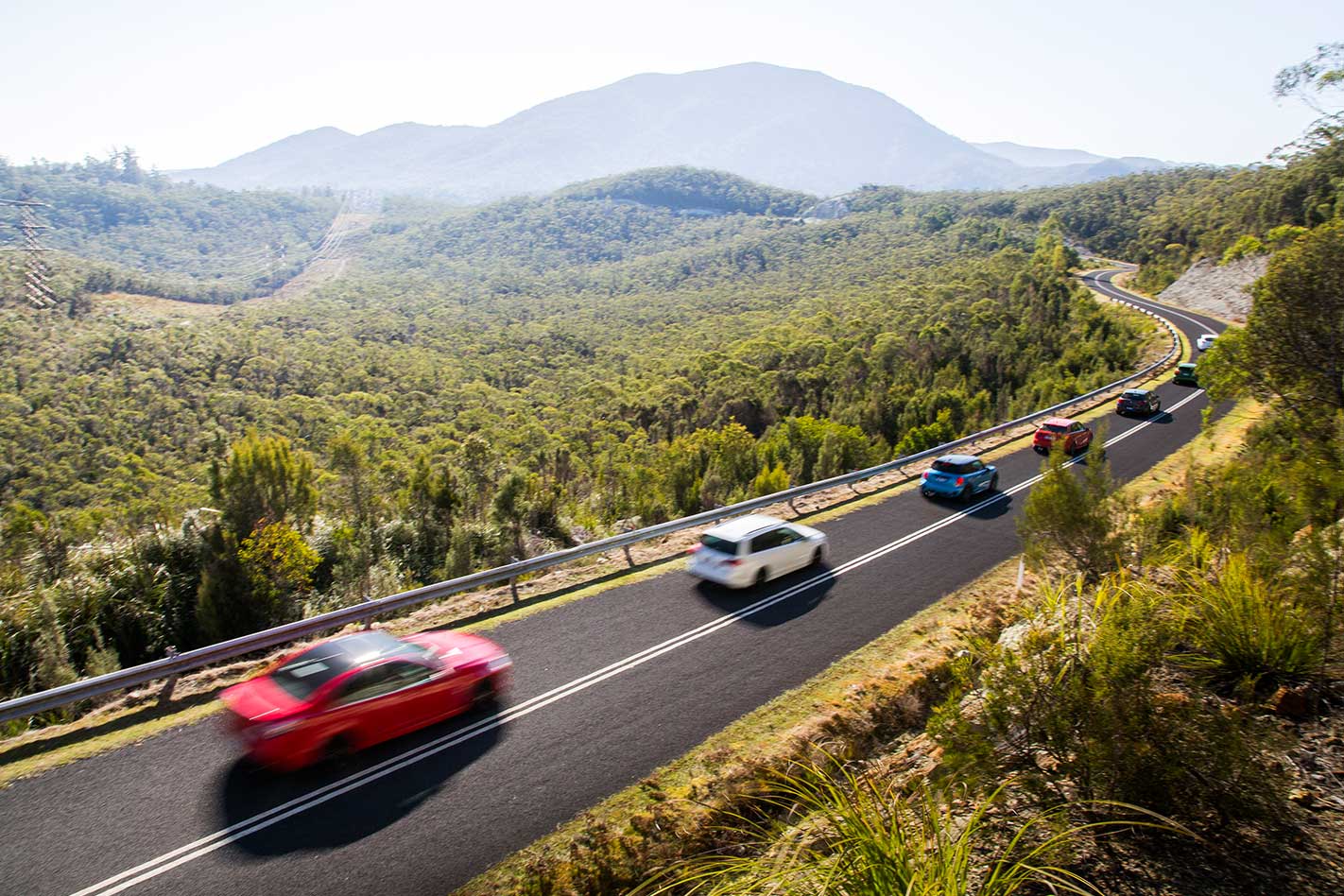
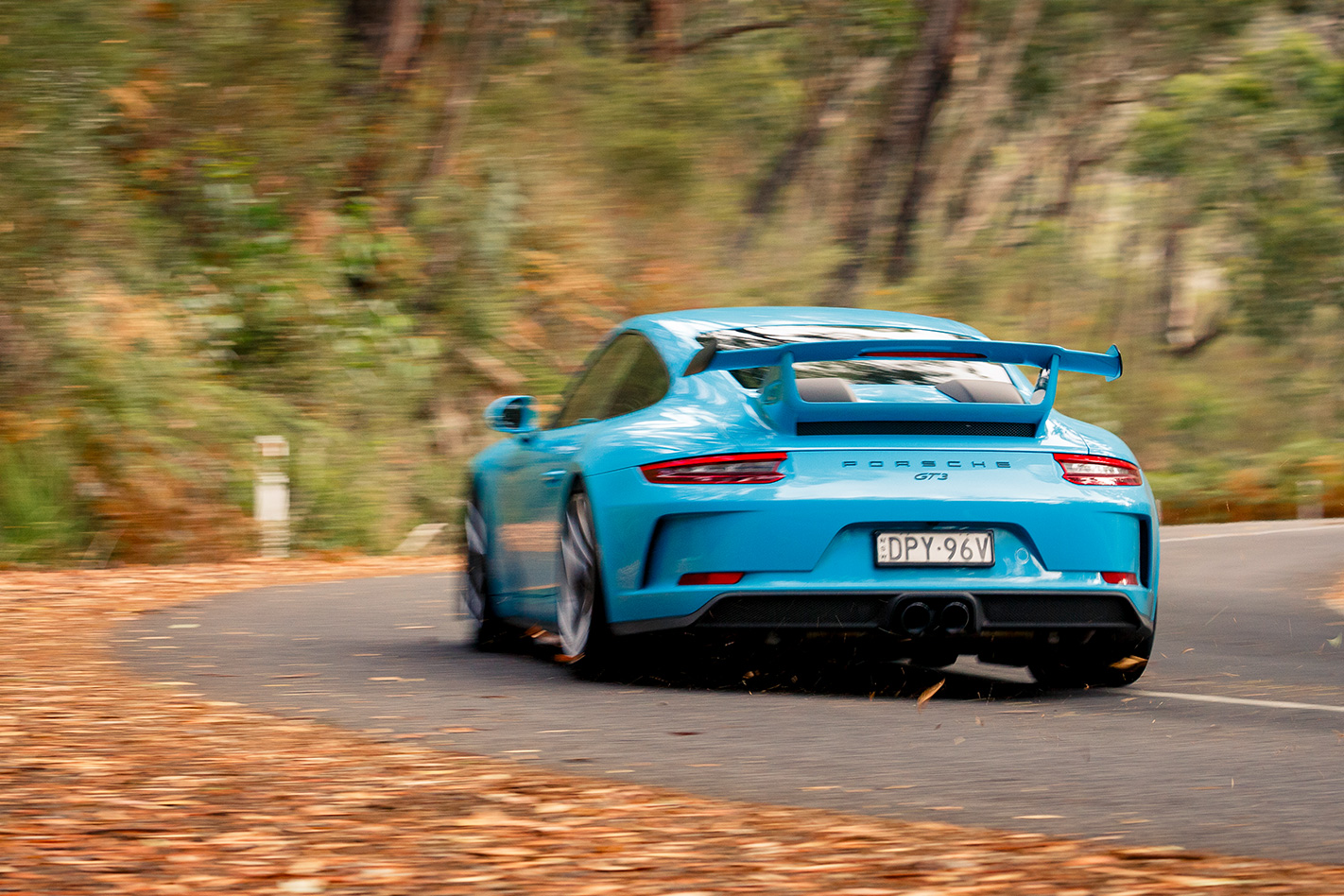
Wheels completed this exact loop in 2018 with a Miami Blue GT3 and it still sticks in our minds as one of the best two-day jaunts we’ve ever experienced. True, the transit leg out of Melbourne is tedious, but it’s quickly forgotten once you hit Dunkeld and dive into the Grampians.
Victoria’s winter weather can wreak havoc, so be mindful of slippery shady sections and poor visibility due to fog in the mornings. But on a clear dry day, the run through Halls Gap to Wartook, then Roses Gap and Lake Lonsdale combines just about everything a keen driver could want.
Tight technical sections that link second-gear switchbacks dominate, though there are also flowing sections that scythe through green valleys with incredible rock formations. A must-visit.
