
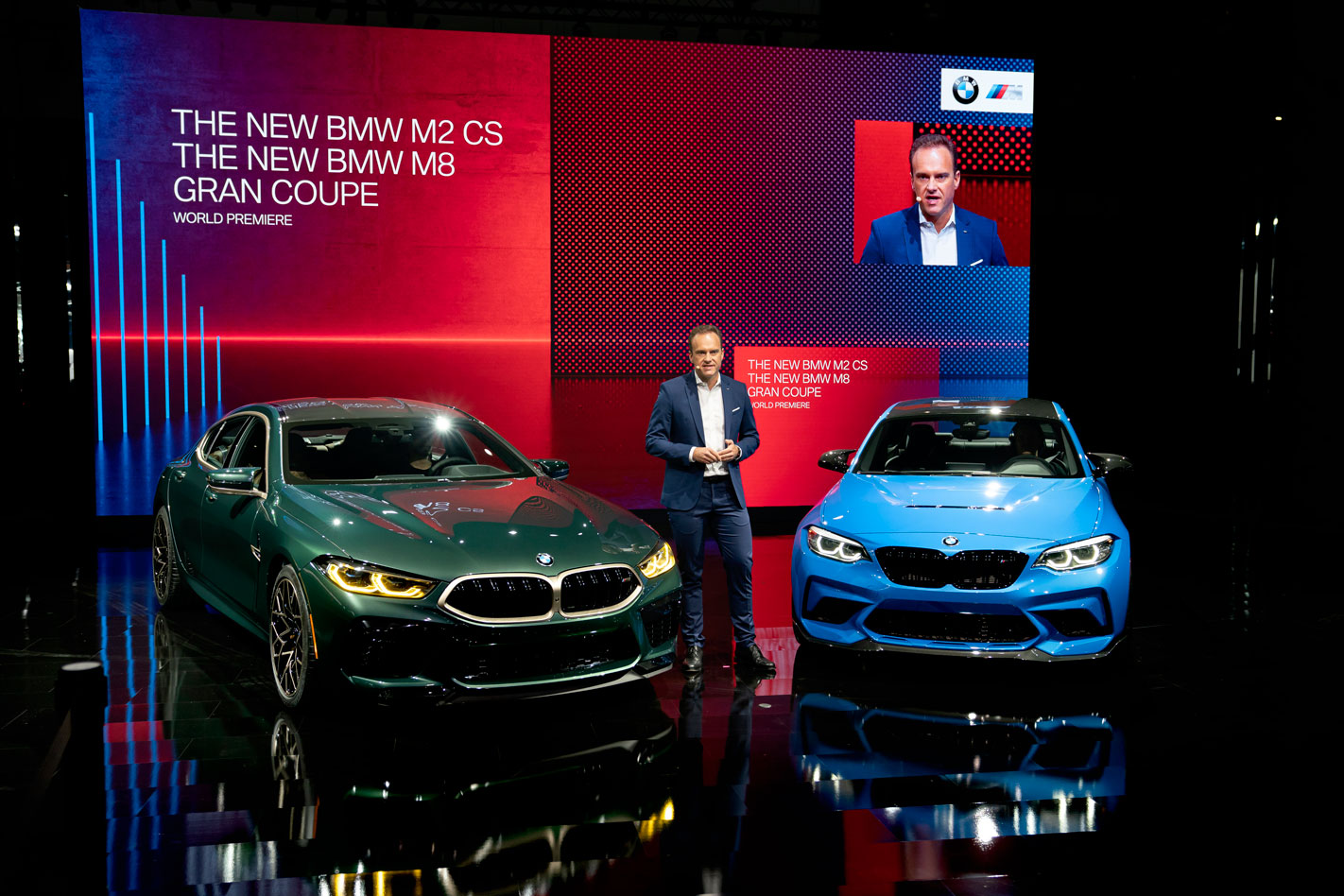
Markus Flasch ought to look happier. The boss of BMW M has just given a presentation highlighting how, within the space of five years, BMWs with M badges have seen sales rise by 207 percent. He’s just outlined a nine-model product offensive through to 2021, and we’re in the pit lane at a sunny Kyalami race track in South Africa with almost every car to ever wear an M badge available to us. And yet the brow is furrowed and he’s prickly, almost combative.
It’s a long way removed from the last time I spoke to him, almost a year ago when the 38-year-old ex-Magna Steyr prodigy and M8 product guru was newly installed in the job. Back then, he was affable and great for a quote. Maybe too great, as some of his more ebullient lines, such as calling the forthcoming M8 a “911 Turbo killer” seem to have been toned back for a more measured approach.
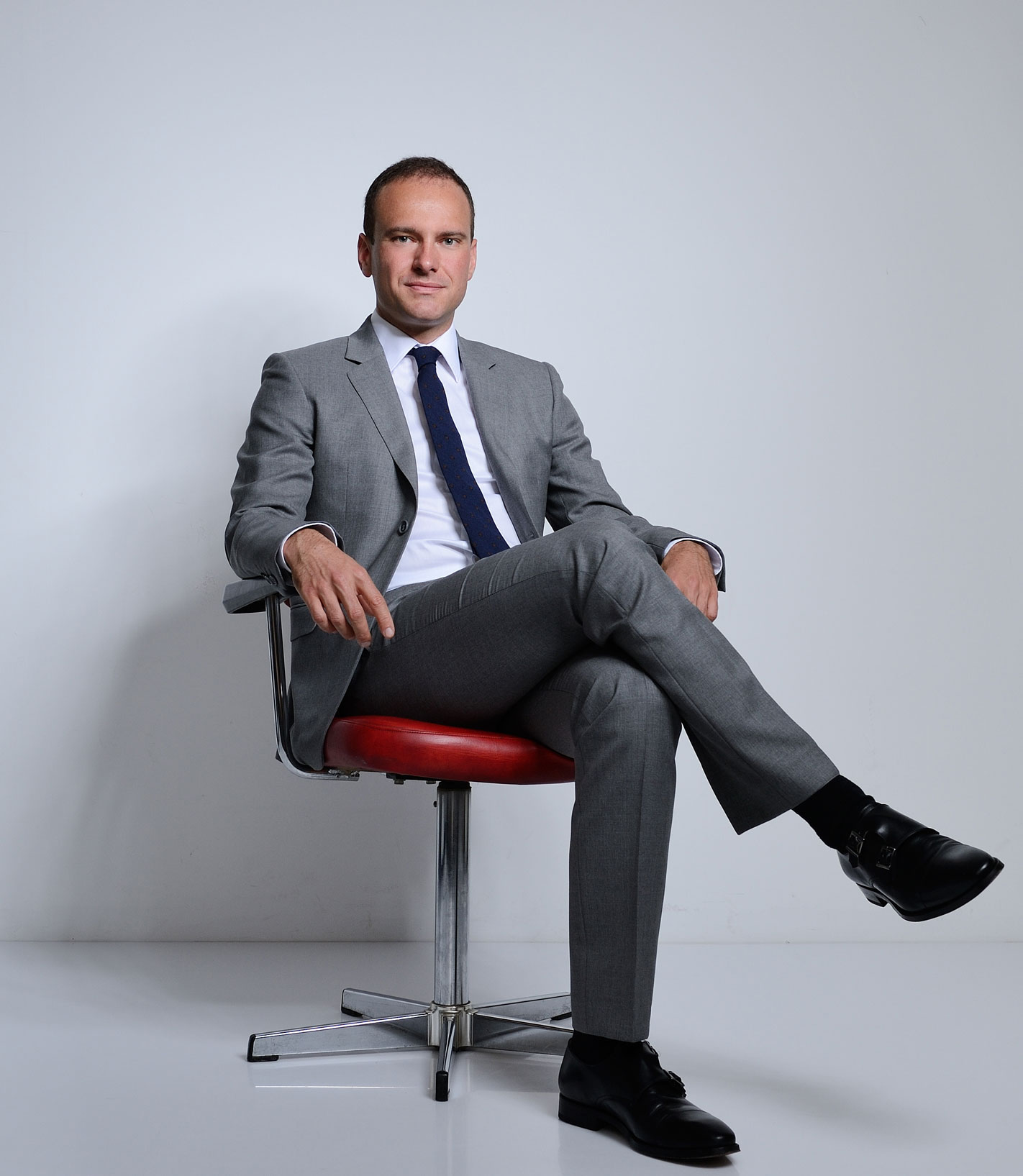
After claiming that nearly 50 percent of all BMWs now wear an M badge or are an M trim line, he denies that M is losing its specialness as a result and morphing into a default shorthand for BMW. “M has never been a competing brand to BMW,” he says, shrugging. “M is the exaggeration of what BMW stands for, in terms of driving pleasure. M supplements BMW and it’s going to remain this way.”
Sales success can breed a new suite of problems though. Does driving BMW customers towards the faster and higher-emitting cars in the range merely undo a lot of the research and development investment the company is making in electric mobility? He does little to hide a flicker of annoyance. “The increase of market share of M models does not compromise the role you do. Our models are very efficient, and secondly, we are well experienced in balancing our portfolio,” he says.
When it comes to hybridised and electrified drivetrains, Flasch has a very simple measure of what he wants those vehicles to be. “Success has to be better than the predecessor’s character. We won’t mess around or compromise the distinct character that our M cars have today,” he says. “An electrified car, whether it’s plug in the wall, battery electric, has to take it up with the predecessor, and I know that there are physical limits, but within physical limits of working dimensions, we are going to make it happen.”
In recent years we’ve seen some M cars taper off the amount of power they develop. Between 2010 and 2015, the BMW M5 saw its power increase by over 18 percent. The next five years have seen peak power tick up by four percent. Flasch doesn’t recognise any workable ceiling or gentleman’s agreement to limit the power of M cars.
“Power is nothing without control, right? And if there isn’t something with too much power it’s just a question of how you tune in and hone into a car, and how you make it accessible,” he explains. “You look 10, 15 years back and if you imagined 625 horsepower in a saloon car, you’d probably be scared. Now, I can give an M5 this 625 horsepower and only drive to my mom, in winter, and she’d still be okay. It’s all just a question of how you incorporate it into a package that makes it accessible for everyone, and this is what M has always been brilliant in. Don’t expect a power limit.”
That said, the car that has had the biggest effect on the M division’s recent volumes has been its most modestly powered offering: the M2. Flasch is clear on why and explains why it has become the current exemplar of M at its purest. “The M3 and the M4 have grown up a bit and we feel the M2 is the smaller, crisper, rougher package. These cars don’t compete with each other. I’m very happy with the set-up that we have and we’ll keep it this way.”
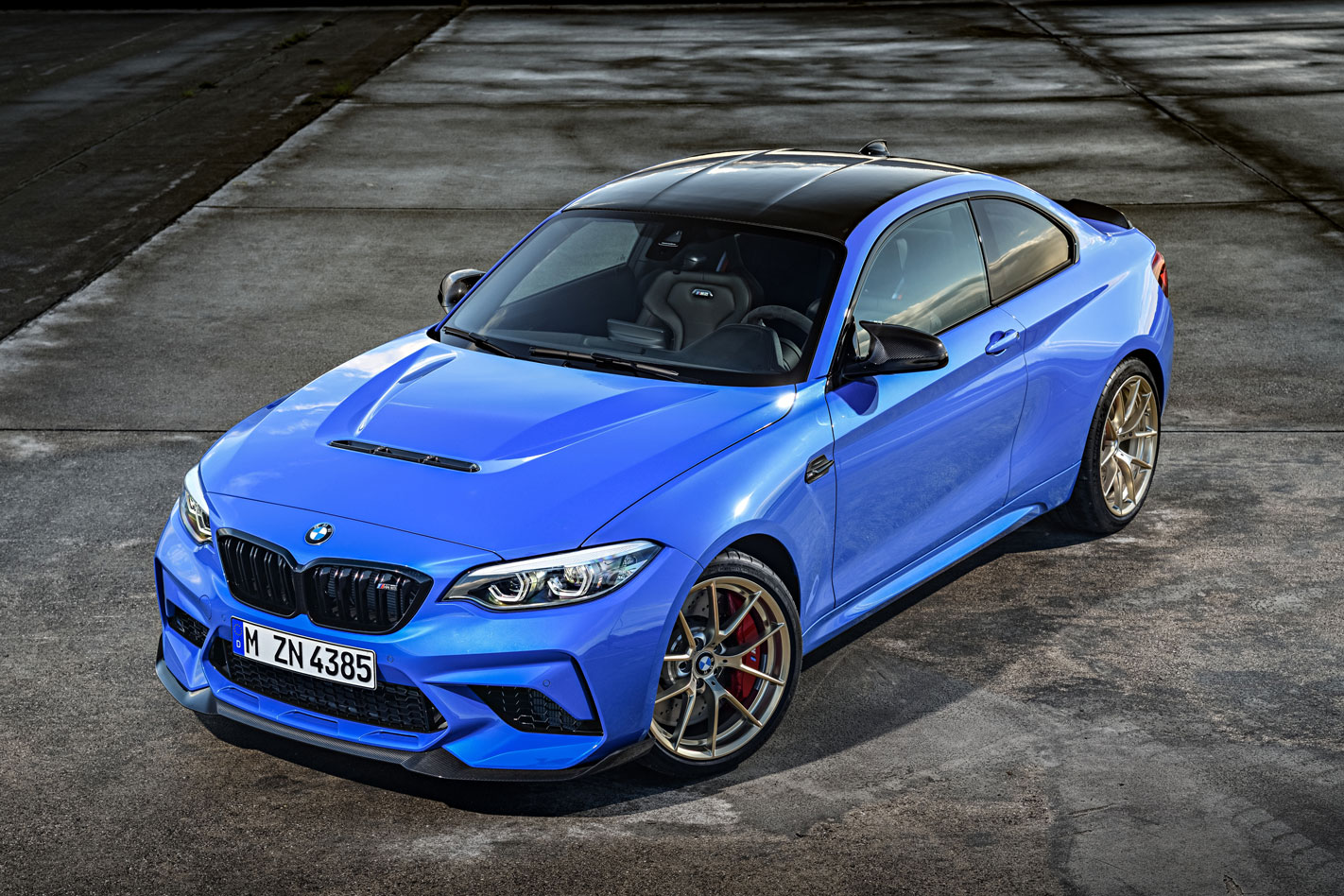
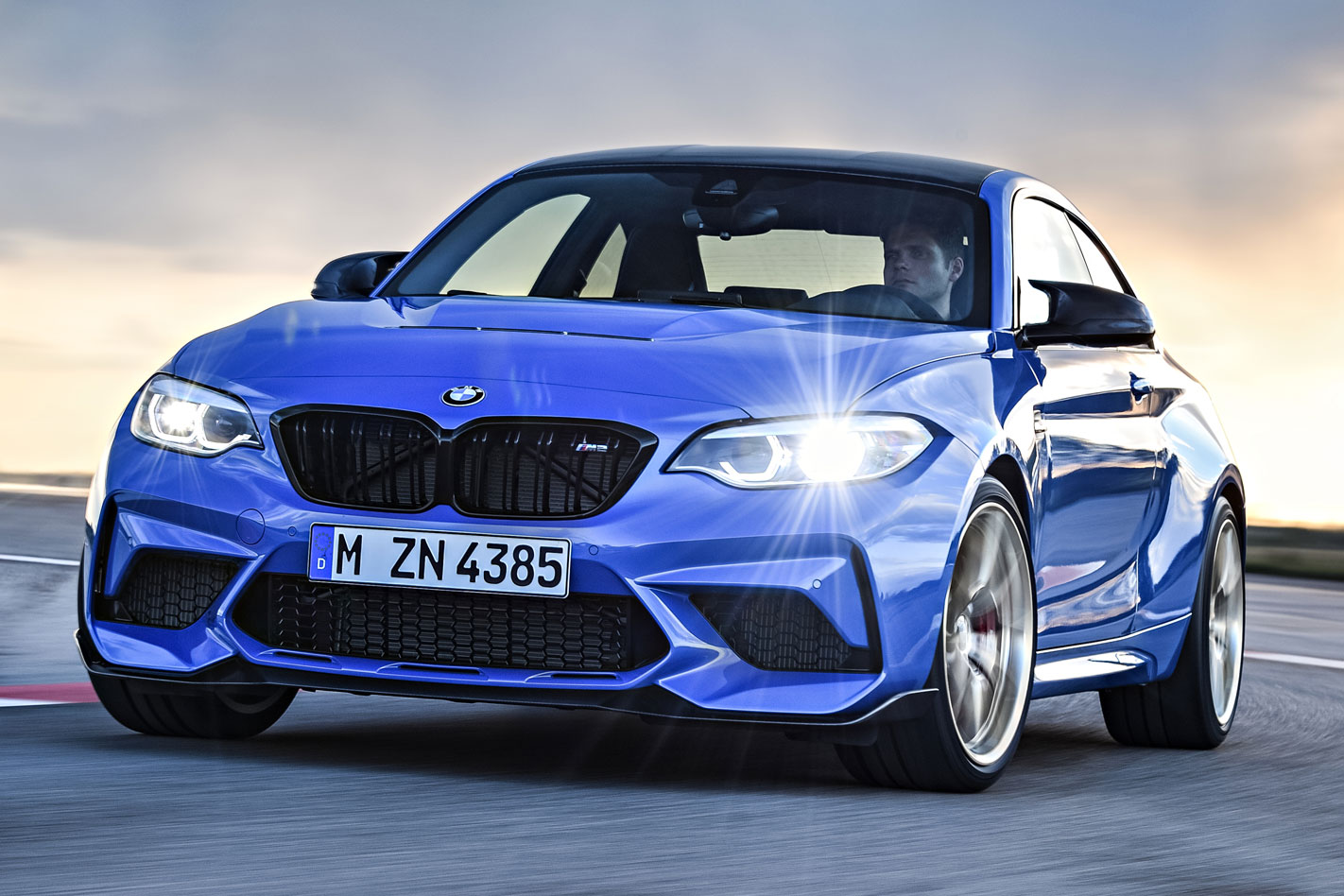
Building the base with the M2 has been one of Flasch’s prime objectives. When asked what his current favourite M car is, he has no hesitation. “The M2 CS,” he says. “It’s a very crisp and pure package. Manual stick shift. Basically, M4 technology in a more compact package. For me, this is probably my next company car after the M8 and X6 M. It’s got to be the M2 CS.
“For me, a manual transmission is not an entry proposition any more. It used to be the entry transmission and then on top of it you had the automatic or the semi-automatic. Today a manual is for the enthusiast; for someone who wears a mechanical watch. We made a conscious decision to offer a manual [in the M3 and M4] and the one single market who pushed for that was the United States.”
Clearly Flasch has an affinity with cars that are engaging and wieldy, which is certainly good news for those who despair at the dumbing down of sporting cars. His own set of wheels is a car that’s rapidly becoming a modern classic, the Z3 M Coupe. He visibly relaxes when asked why he’s such a fan of ‘the clown shoe’.
“First of all, I like the looks,” he smiles. “Secondly, I like the underdog thing, the not trying to be everybody’s beauty and everybody’s darling, and this is what the Z3 Coupe did, especially the M version. It’s a very correct car. It’s not a beauty at first sight, but its beauty grows with the years you look at it. That is something that is very special. You can’t say that about every car. Most of the cars, they lose something over time. This car gains over time.”
Time is something Flasch has found to be compressed. Some were disappointed that the M3 and M4 wouldn’t appear before 2021, but the interim launch calendar is rammed with vehicles such as the M5 LCI, the M2 CS, the M550i LCI, the M235i Gran Coupe, the M340d sedan and Touring, the M8 Gran Coupe and the X5 M and X6 M. That’s on top of the recently announced customer racing program and ongoing work on electrification.
“This hasn’t been all we’re working on,” he notes. “There’s the M Strategy Next, which we’ll bring to the board of BMW … and there will be further elements in design differentiation. There’s so much to come. I only see opportunities.
“It’s not a coincidence that we have an SOP [start of production] at the end of 2020 for the M3 and M4. The end-of-the-year SOP dates are the most robust because you have the full winter testing season before that, and for models with high volume – relatively high for M – and with very high significance, we typically choose end-of-year SOP dates. So we will launch this car at the end of 2020 and bring it to the market in ’21. 2019 was completely booked with the SOPs of the X3 M, X4 M, M8, and now the X5 M and the X6 M, so there was no room.”
I wonder whether there’s room for after-hours projects like the Z3 M Coupe in the giant, polished machine that is BMW M these days.
“I knew the guys that were responsible for the Z3 M; they’re personal friends,” says Flasch of Burkhard Goeschel and his team. “It was like a ‘submarine’ project at the time and it wasn’t very popular within BMW. My engineering department and the workshop there from time to time develop models that show me that there is still this ‘submarine captain’ spirit in some departments. I don’t think we can do entire models with this process. The homologation process is just so formal. For special editions, where we don’t have to sell 500,000 units, the submarine culture is still very much there.”
THE FIRST M CAR?
One of the highlights of the M Festival was to chat with Flasch about BMW’s very first factory M car, the little-known 530 MLE. Built at the Rosslyn plant in South Africa in 1976, this car, chassis #100, has been restored to concours condition by the same four technicians who originally built it. Designed by Jochen Neerpasch as a homologation special, the 147kW/277Nm factory lightweight gained the Flasch seal of approval. “It’s just beautiful,” he said. “This is something very special.”
In our Fast Facts series, WhichCar delves deep into the history of automotive brands to bring you fascinating facts and intriguing information.
Here we focus on McLaren, one of the most successful names in global motorsport that made champions of legendary drivers such as Ayrton Senna, built the iconic F1 road car, and now battles Ferrari off the track as well as on it after introducing a full range of supercars.
KIWI FOUNDATION
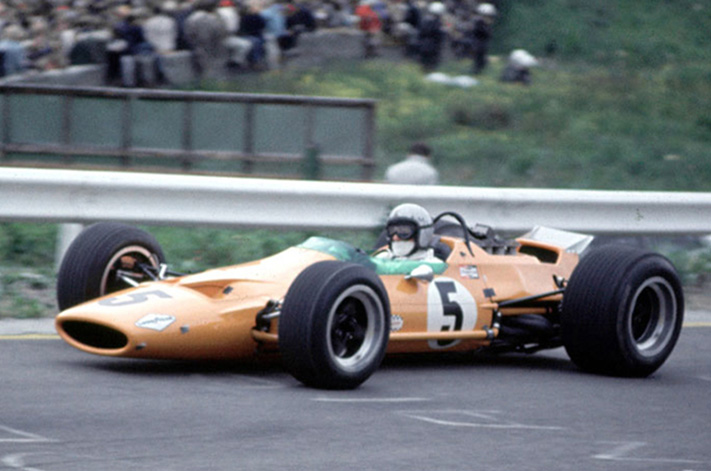
McLaren has been established in England for decades, but the company was originally formed by New Zealander Bruce McLaren. The Kiwi was an engineer, designer and racer all in one, and remains one of the rare drivers to have won a grand prix in a car of his own design (Belgium 1968).
AMERICAN DREAM
McLaren Cars entered Formula 1 from 1966, though the team would also achieve great things in America – dominating the Can-Am (Canadian-American) motor racing series with five consecutive constructors’ titles between 1967 and 1971, followed by three victories in the Indianapolis 500 (1972, 1974, 1976).
TRAGEDY
Bruce McLaren was testing his new M8D Can-Am car at England’s Goodwood circuit in June 1970 when the rear bodywork came loose and caused him to crash at high speed. He died instantly when he was thrown from the wreckage. He was just 32.
ORANGE IS THE NEW BLACK
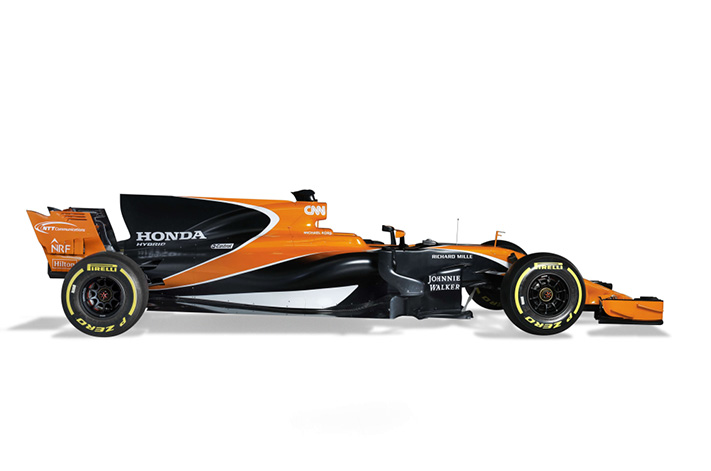
The famous orange livery of Bruce McLaren’s racing cars made a welcome return for McLaren-Honda’s 2017 Formula 1 car. The McLaren team had occasionally launched a new car pre-season in orange, but orange hadn’t been a prominent colour on one of its racing cars since 1971.
BLACK MAGIC
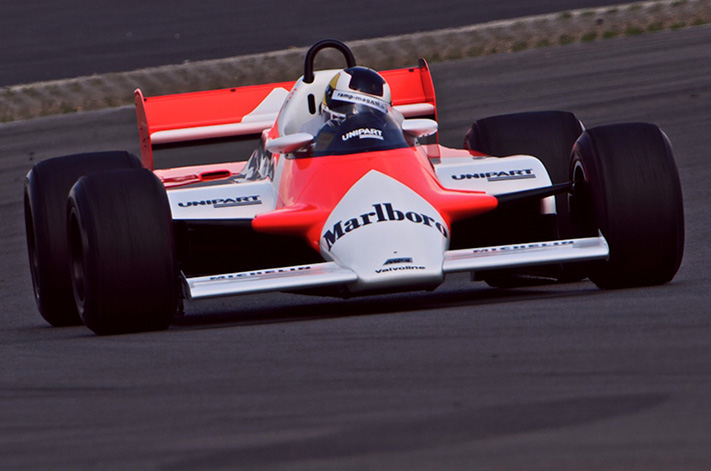
McLaren won its first Formula 1 titles in 1974, with Brazilian Emerson Fittipaldi taking the drivers’ championship, followed by a victorious James Hunt in 1976. Under new leadership from 1980 with a former mechanic called Ron Dennis, McLaren – inspired by the aerospace industry – pioneered the carbon fibre F1 car with its 1981 MP4/1. It was a construction technique that would eventually be copied by all its rivals. The team became a dominant force between 1984 and 1991, winning multiple drivers’ titles with legendary racers Niki Lauda, Alain Prost and Ayrton Senna.
WINNINGEST SEASON
McLaren currently holds the honour of registering the most successful season ever in Formula 1 when Alain Prost and Ayrton Senna won 15 of the 16 races held in 1988 – a 94 per cent win ratio. It would have been a clean sweep had Senna not collided clumsily with a backmarker while comfortably leading the Italian Grand Prix. If you’ve been following the team’s recent F1 travails, you might be surprised to learn the engine partner of the time was Honda.
FROM TRACK TO ROAD
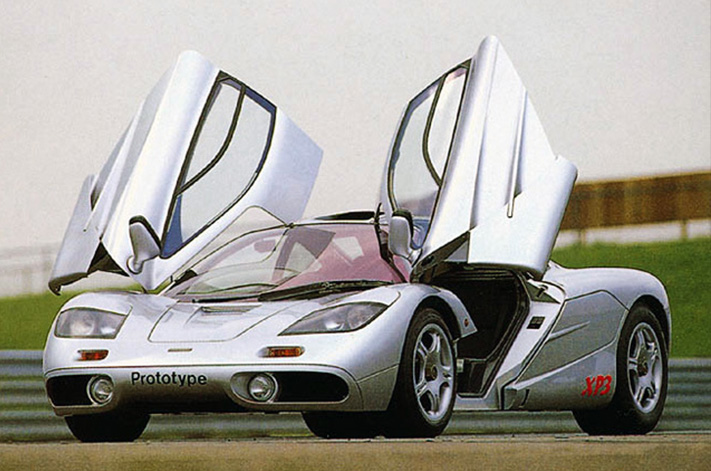
As four key McLaren personnel – including Ron Dennis and technical director Gordon Murray – sat in the lounge at Milan airport after that 1988 Italian Grand Prix, they discussed a plan to build the finest road car ever seen. Four years later, the McLaren F1 – complete with distinctive three-seater cockpit, featuring a central driver’s seat – emerged to establish itself for the next decade as the world’s fastest production car. Featuring a carbon fibre monocoque just like its race-car siblings, and powered by a BMW V12 engine, the F1 could accelerate from standstill to 100km/h in 3.2 seconds and hit a top speed of 387km/h (240mph). Just 106 were made between 1993 and 1998.
F1 ACHIEVES BRUCE’S DREAM
The multi-talented Bruce McLaren had himself envisioned putting the fastest car in the world on the road, with the 1969 M6GT – essentially one of his Can-Am cars with a coupe body. A potential plan to build 250 examples, however, was shelved the year later after Bruce’s fatal Goodwood accident.
24-HEAVEN
In 1995, McLaren built a few racing versions of the F1 for privateers – some of whom decided to take on the world-famous Le Mans endurance race. Against expectations, an F1 run by Lanzante Motorsport beat the race-favourite prototype cars to add yet another feather to McLaren’s motorsport cap. McLaren also celebrated by building five special edition LM models, which featured more power, less weight, and a carbon fibre front splitter and rear wing. While it was the first Le Mans win for a McLaren car, founder Bruce did win the 1966 event – driving a Ford GT40.
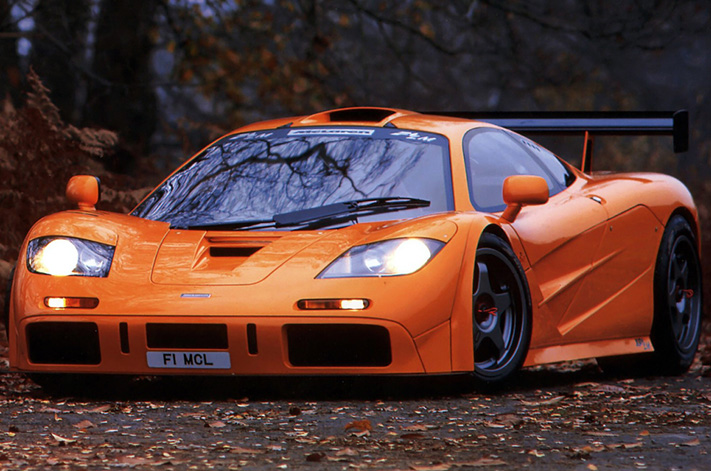
THE DO RON, RON
McLaren boss Ron Dennis wasn’t one for calling a spade a spade, when it could be described as a wide-bladed excavation device. His penchant for convoluted and elaborate language earned its own name in the sport: Ron-speak.
MP4 FOR THE ROAD
McLaren’s belated follow-up to the F1 followed the naming style of the team’s Formula 1 cars. The MP4-12C’s technologies even featured a trick from the 1998 MP4-13– a Brake Steer system designed to reduce mid-corner understeer. However, where the race car’s system involved a small, third pedal pressed by the driver to brake an inside rear wheel, the 12C did the same using electronics. The MP4-13’s system was banned after just one race, though it didn’t prevent Mika Hakkinen from winning the first of his two consecutive drivers’ titles with the team.
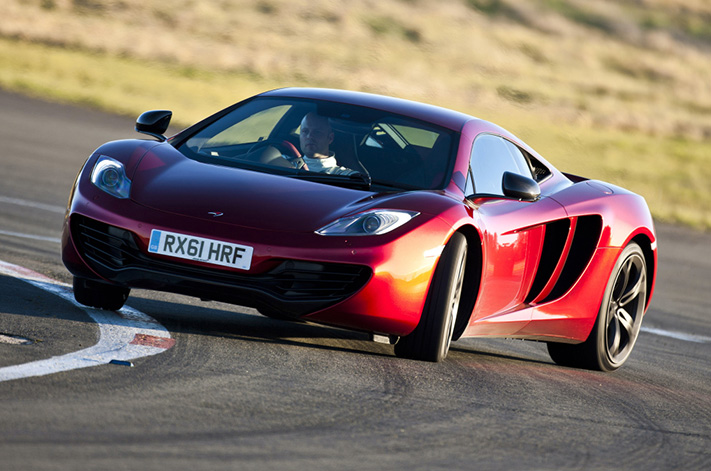
MAC DOC
A film documentary celebrating the story of Bruce McLaren was released in 2017. Directed by Roger Donaldson, the movie blends archival footage with recreations and interviews with the drivers, family and people who knew this pioneering New Zealander best.
CARBON, NO COPY
McLaren now produces a range of supercars, and each one continues to feature a carbon fibre monocoque at its core – super-strong yet weighing just 75kg. The company has changed its construction techniques dramatically to ensure it can build its cars in significant volume. Where it took 3000 hours for McLaren to build the monocoque for the F1, it now takes just four hours. Manufacturing was the responsibility of Austrian company Carbo Tech, though McLaren has now brought the process in-house.
It’s been the benchmark by which all sportscars have been measured against for the better part of the last 50 years, so the arrival of a new Porsche 911 is always a potentially game-changing event. But not every new 911 is as new as Porsche would like you to believe.
This feature was originally published in MOTOR’s February 2012 issue
The 997 was, for instance, a clever makeover of the not-so-desirable 996. The 991, however, has been redesigned from scratch. It boasts a brand-new longer, wider and lighter body, new interior, new electronics, new electro-hydraulic steering and the adoption of PDCC active anti-roll system.
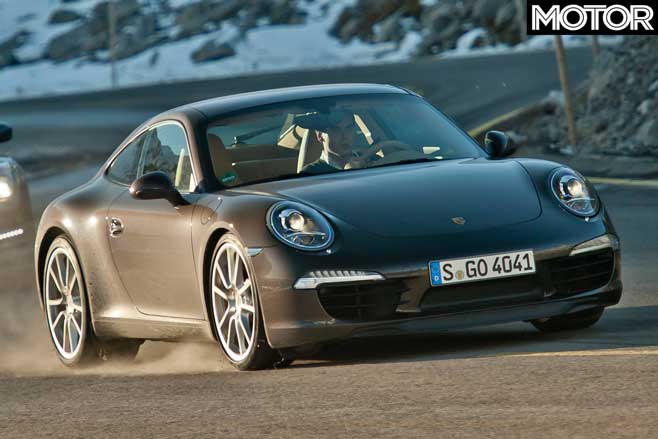
Thankfully, what’s not new at all is the essence of the engineering concept; the trademark six-cylinder boxer engine with its slightly precarious position aft of the rear axle, the iconic coupe’s style and its elastic ability to stretch from grand tourer to mountain climber to racetrack warrior without any fuss.
The 911 isn’t alone in that domain anymore. What has changed since the last all-new 911 arrived in 1998 (the water-cooled 996) is the bredth and depth of new challengers Porsche’s icon has to contend with now.
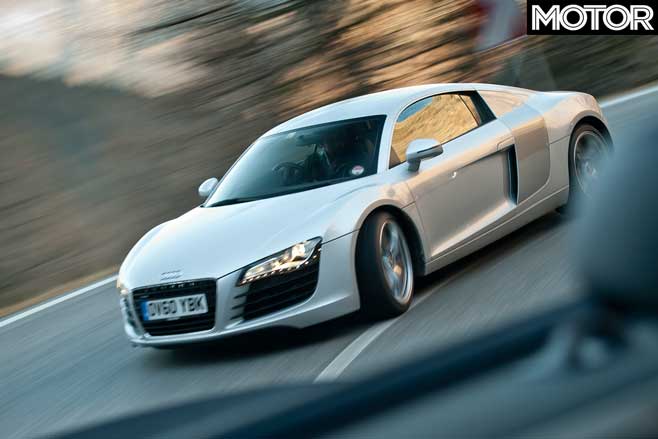
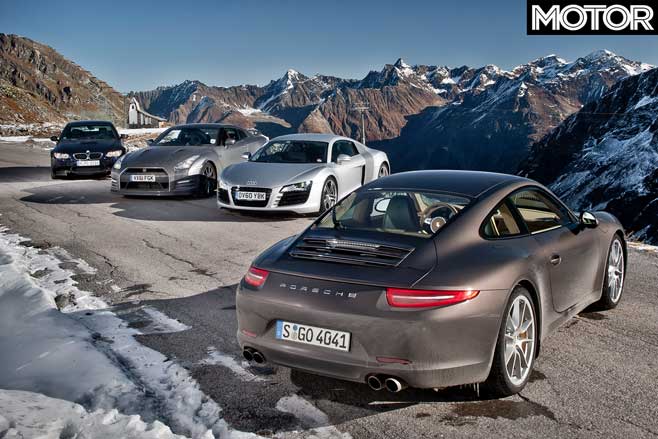
What we’ve assembled here is a bunch of relatively old cars, but all of them have lifted the sportscar benchmark in different areas enough to put the 911 on notice. The Audi R8 hit showrooms in April 2007 (we had to wait another six months for it to hit Aussie shores) and is due for a facelift in the next few months, with the heavily revised second-generation model following suit in mid-2014.
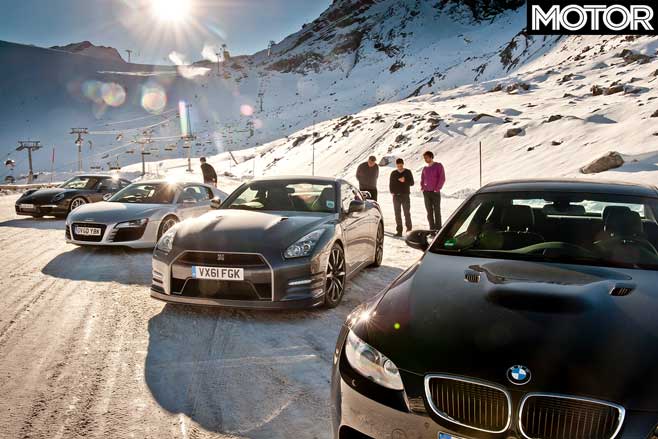
The M3 was launched just five months later and won’t be replaced until mid-2014 either, when the next M3 swaps the normally-aspirated V8 for a twin-turbo six. Outside of Japan and the USA, the current Nissan GT-R was not available before May 2009. For model year 2012, the Japanese cult coupe received minor styling mods, a round of suspension and brake upgrades as well as a power boost from 390 to 404kW.
We put these four cars through their paces on a variety of different turfs, from autobahns to fast A- and B-roads, winding country lanes, mountain passes and even snow and ice. Although the white stuff is, this winter, an unusually rare commodity, we did find a nice mix of packed and powder high up in the Tyrolean Alps.
Even more slippery than wet pavement, the linen ground provided an ideal stage to probe the performing-under-pressure talents of our four actors. Which, in this case, range from the front-engined, rear-wheel drive M3, to the mid-engined, all-wheel drive R8, the rear-engined, rear-wheel drive 911 and the front-engined, all-wheel drive GT-R.
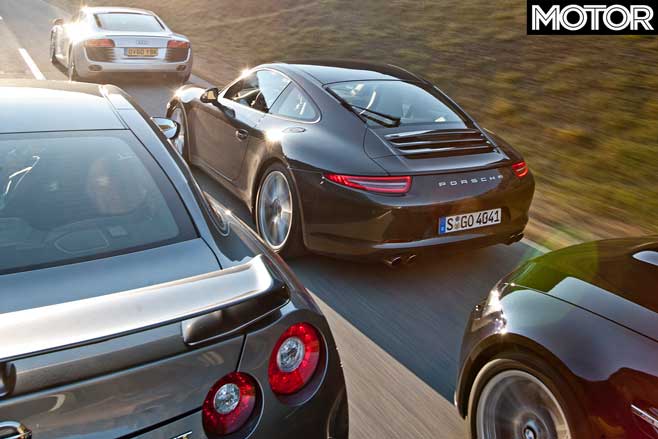
The list of engine configurations includes a normally-aspirated flat six and a twin-turbo V6, along with a pair of torquey atmo V8s. In terms of transmissions, three dual-clutch cogworks take on the Audi’s solitary six-speed manual. The Nissan is the heaviest at 1740kg, followed by the BMW at 1580, the Audi at 1560 and the Porsche at 1415 kilos.
At the end of our epic drive through the most picturesque parts of Austria and Bavaria, the 911 was the car everyone kept talking about. Even after six generations, the new rear-engined sportscar still has us hooked with its expressive design, the vocal and charismatic engine and the spicy handling. What has changed over time, though, is the detail execution.
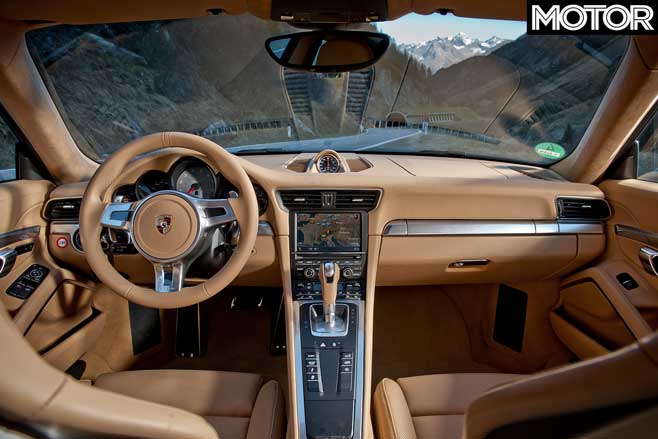
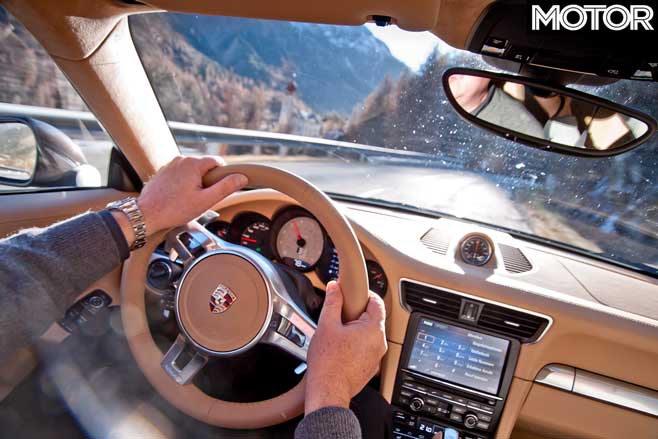
On request, the steering wheel is now electronically adjustable and has chromed shift paddles attached to its backside, the clutch can be expelled in exchange for the optional PDK ’box and the available seat selection varies from ultra-comfy to carbonfibre minimalistic.
Unlike the latest 3-Series saloon which can be typecast into Sport, Modern and Luxury moulds, the M3 Coupe is still workstation-like functional. While the M3 GTS is essentially a stripped-down track-day special, the base models can be specified with all conceivable mod cons like sat-nav, heated memory seats and a high-end audio system.
Extra money buys the desirable competition pack which sharpens all major man-machine interfaces and sports a set of eye-catching alloys not pictured here – after all, our M3 ran on slimline 18-inch snow tyres. Also optional are bold carbonfibre air dams and the loud free-flow M Performance exhaust.
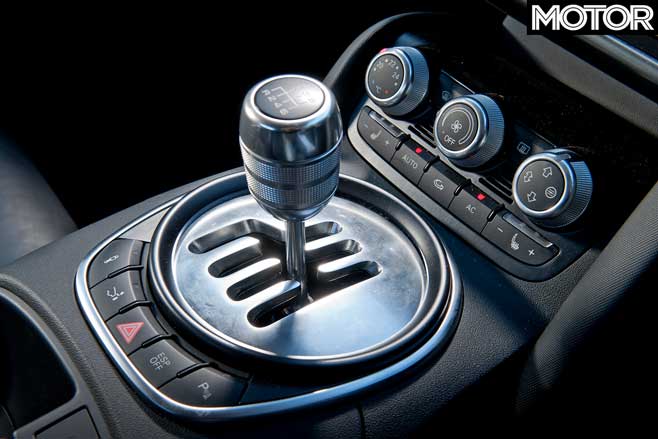
Most R8s are ordered with the R-tronic transmission which is, like its E-gear equivalent from Lamborghini, a hydraulically-operated manual ’box. With the facelift, this outmoded set of cogs will be replaced by a seven-speed dual-clutch S-tronic. Thankfully, the six-speed manual soldiers on in all R8 models on until the car is replaced in 2014.
One notch above the GT-R Premium Edition ranks the slightly sportier Black Edition featured here. It comes with Recaro seats, two-tone leather-Alcantara trim and charcoal alloy rims.
What often drives the transaction price of modern Porsches through the roof is not the quest for the biggest engine or the widest wheels, but a bunch of costly acronyms which manifest new standards of high technology.
Our brown beauty featured PDLS (dynamic lights), PDK (dual-clutch ’box), PCM (infotainment), PCCB (ceramic brakes), PTV (torque vectoring), PASM (active dampers) and PDCC (dynamic anti-roll system). That’s OTT by most clients’ standards, but according to 911 guru Walter Rohrl, PDCC and PCCB are nice to have on the track where a flatter ride and even more awesome deceleration can make all the difference.
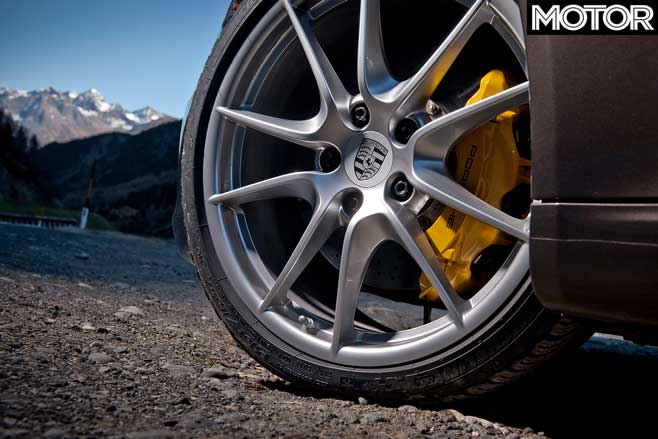
Having sampled three different specimens of the 991 kind over the past few months, I tend to lean towards the notably more affordable, yet barely less capable, 257kW Carrera with 20-inch wheels and sports suspension as the only chassis-related extras. Although the 294kW Carrera S sounds, looks and performs a little better, you also get the full 911 fix with the lesser engine.
But are these innovations highly intelligent if somewhat narcissistic solo artists, or can they also work together in concert, with the driver acting as conductor? For a start, the 991 is not your father’s 911, despite the samey silhouette and familiar voice. Redlined at 7800rpm, the new engine is more free-revving and linear in character than its initially more restrained, but ultimately more explosive, forerunners.
You can now leave the gear lever in D, stab the throttle and marvel at the 3.8-litre flat six as it whips the gears through their paces, never losing more than 1000-1500rpm during upshifts. Want to really go for it? Then push Sport Plus, and the acceleration time from 0-100km/h will shrink almost physically from 4.3 to 4.1sec as revs, torque and wheelspin perform a magic jam session.
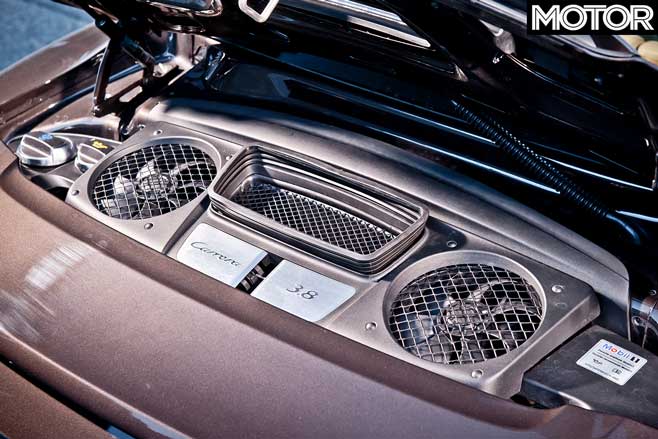
Keep the hoof down, and the car will pass the 160km/h mark still in fourth gear, storming towards the horizon as if fired by an afterburner. Porsche is posting a top speed of 304km/h, but even on a deserted autobahn we backed off at an indicated 257km/h since all cars were shod with winter tyres.
The Nissan, too, would wriggle, stomp and fight when pushed hard. On undulating ground, this car accelerates like a rocket-powered steamroller on pneumatic stilts – kicking, lurching and vaulting forward in rapid suck-and-release succession: Gorilla Godzilla on the prowl.
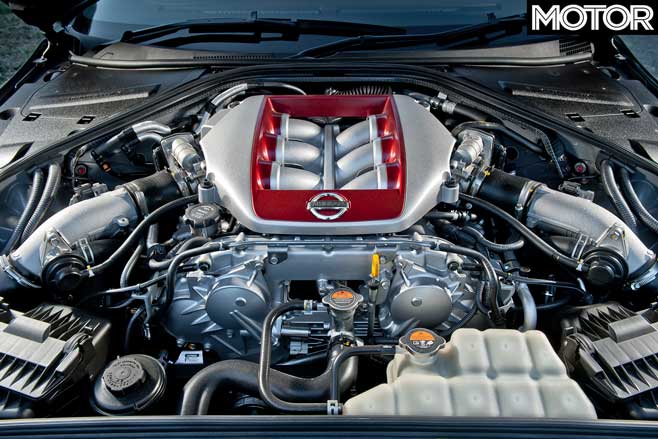
Only a Japanese engineer can invent a suspension which has firmer springs on the driver’s side to compensate for the offset propshaft and the weight of the driver, but that’s exactly what the 2012 model GT-R fields, along with an upward-facing left rear control arm and a downward-pointing right rear control arm. In sync, these asymmetrical hardware items are claimed to provide superior handling balance, quicker steering response and enhanced stability.
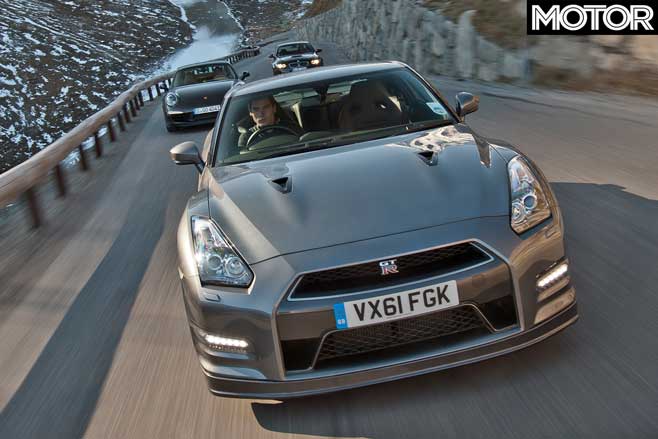
When that 404kW 3.8-litre V6 explodes, these combined kinematic wizardries effectively support the trick four-wheel drive system, the diffs that devise the torque flow and the sticky 20-inch Dunlop SP Winter Sport runflats in their quest to keep the mighty mauler on course.
In addition to the turbo whine, wastegate whistle, intake howl and exhaust thunder, every knife-between-the-teeth stampede along the ridge of adhesion is accompanied by the rhythmic rattling of the ESP and EDC solenoids. At 2.8sec from 0-100km/h, the latest GT-R is not only over half a second faster than last year’s model, it also eclipses the German sportscar establishment to a demoralizing degree.
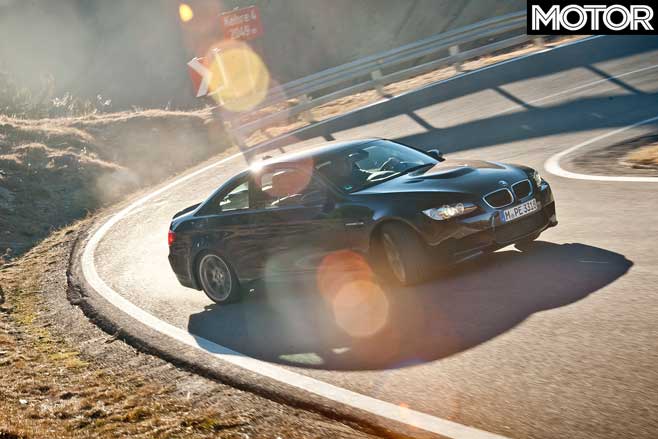
But speed isn’t everything. Emotion matters more, and the expert stimulation of the receptive nerve ends has less to do with sheer velocity than with subtle interaction, control and response. This is the domain of the M3 which steps sideways out of bed in the morning, lets its tail hang out wide on the way to and from lunch, and finishes the day off with a donut or two on the garage forecourt.
Fitted with petite 18-inchers and same-format all-round M&S rubber, the V8-engined crackerjack took every opportunity to catch late-season insects with its side windows. Redlined at 8300rpm, the 309kW 4.0-litre V8 takes 4.8sec to lunge this coupe-on-steroids to 100km/h, and it’s a creamy, smooth and free-revving motor.
True, the M3 is quite heavy, rather thirsty and a little outmoded here and there. But it still is a true hooligan’s delight; a proper driver’s car fitted with firm yet almost telepathic steering, strong life-saving brakes and an old-world chassis that has Entertainment Tax Paid stamped all over it.
Those who can afford to upgrade from extrovert oversteer to introvert ability may end up settling for the R8. The mid-engined contender is a fine choice – unless you are very tall, in which case you may find the packaging rather cramped.
The Audi is every bit as fluent and responsive as the BMW in the way it acts and responds, but it flexes its muscles with more discipline, performs with greater precision and times its gestures with greater maturity. True, there is quattro to iron out traction issues, answer stability questions and deal with torque split conflicts. But as soon as ESP takes a break, the law of physics invariably takes over.
The steering is as three-dimensional as a circular array of feelers, the chassis displays serious floor exercising talents even when hampered by relatively low-grip rubber and the four disc brakes have taken out a PhD in reverse thrust deceleration. The manual transmission may be slow and bulky, but at the end of the day it is more involving than all those modern piano shifters.
On snowy ground, the Porsche was the car everyone queued up for. With the engine perched almost on top of the driven wheels, the 991 puts the power down promptly, and although the car’s nose will occasionally struggle to adhere to the chosen line, pumping that fat rear end ’round bend after bend is a real treat.
Predictably, the M3 is almost equally talented at pleasing the child inside. The car from Munich would in fact have emerged as the uncrowned drift king, but keeping up the momentum on the progressively more polished ice rink was a real balancing act.
Although the R8 quattro scores full marks for its double axels, the Audi needs quite a bit more space to perform its extrovert sweeps. Forebear of all torque monsters, the Nissan was prone to early understeer and persistent wheelspin, and required firm throttle orders before it would wedel through the gates like a champ.
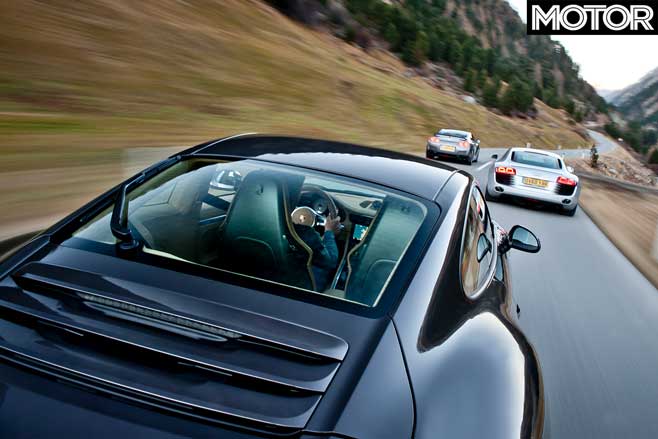
On the scenic and virtually traffic-free C-road through paradise from Zwieselstein to Vent, the boxy batmobile from Pachinko Land showed the C2S one last time where the hammer hangs. Although it distanced the Porsche and dwarfed the R8 and M3, during the debriefing at the top of the mountain everybody was raving about the 911 which spoiled us with instant feedback, 3D responses and a crystal-clear dialogue between car and driver.
Did we have an issue with the new power steering? Not really. After all, the Plus suffix does not indicate an active intervention. All one registers is a momentary minor tug which suggests that a correction manoeuvre might be appropriate.
Also gone are other traditional 911 misbehaviours, like the pumping motion of the offside rear wheel when accelerating hard out of a bend, the ho-hum high-speed aerodynamic stability, and the once notorious lift-off exit shrug which has been expertly neutralized by the two hydro-mechanical links of PTV Plus.
Efficiency may not be a key issue when you can spend a lazy 160K-plus on a Sunday morning plaything, but social acceptance is fast becoming a major buying motif, so the fuel economy does matter.
Unfortunately, this is a field where fact and fiction seldom match. Just look at the official numbers which see the Porsche (8.7L/100km, a 15 percent improvement over the 997) lead the Nissan (11.8L against 12.0L for last year’s model) by a huge margin, followed by the BMW (12.4L) and the Audi (14.2L).
In real life, however, the gap between the 911 and its rivals is less dramatic than on paper. And when you give these automobiles stick, their thirst for 95-plus octane instantly rises, even before the petrol floodgates open on an empty autobahn.
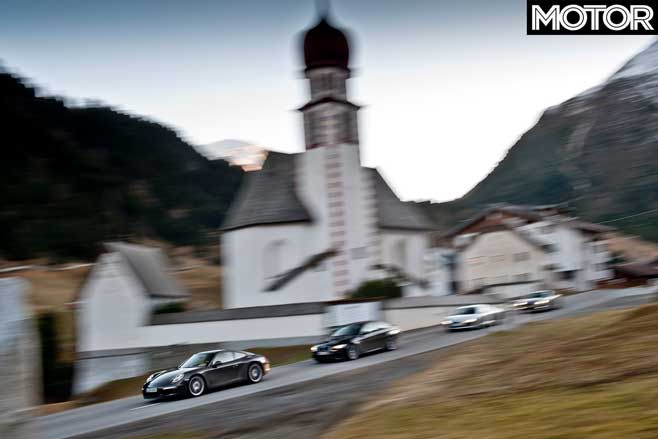
During our three-day event, the Audi (18.8L/100km) was the least economical, followed by the Nissan (16.6L), the BMW (15.7L) and the Carrera 2S (14.1L). But only the Porsche – and only when fitted with PDK – has that clever coast-on-demand feature which shifts smoothly into neutral and lets you waft along at a green 800rpm at speeds of up to 113km/h. The next step will be a plug-in hybrid, but this application is still about four years away.
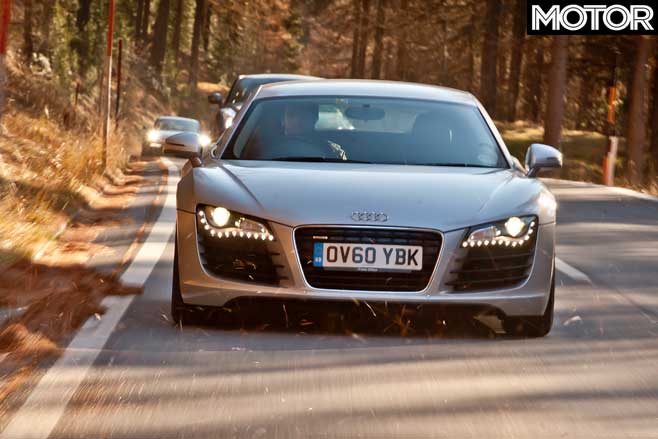
Four candidates, four winners? That would be too simple and superficial. First to fall through the grid is the Audi. The R8 is, in essence, an Italian thoroughbred built in Germany, finished to German quality standards and powered by the VW group’s longest-running V8 engine.
The Audi has great presence on the road, it feels special enough inside and it delivers in a grown-up yet laid-back manner. But there are downsides, too, like weight, thirst and cost, plus a rather tight cabin which will, unfortunately, be transplanted into the next-generation car. Here and now, the best R8 buy is perhaps a used one.
Exactly the same applies to the M3. With the replacement model waiting around the corner, it takes a rich M aficionado to shell out over $160,000 for an all-in factory-fresh Coupe when you can snap up a barely run in four-door saloon for much less.
The BMW does promise plenty of old-fashioned fun: massive V8 grunt, fearless brakes, meaty steering and gummed chassis make it a great Sunday morning rebel. But in the end, the M3 is a 3-Series Coupe on steroids, and even in full ecstasy trim, it can’t quite match the pace of the competition.
So, GT-R or Carrera 2S? Wait a minute. Let’s zoom in for a moment on the aforementioned base 911, and let’s be conservative with the options.
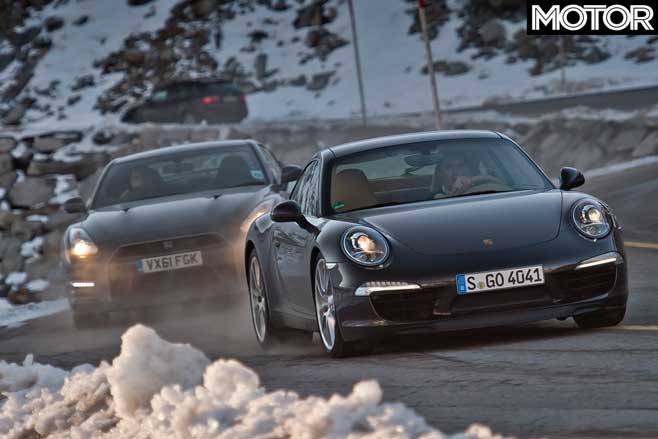
You see, Carrera and Carrera S are only separated by nuances in talent but by five figures in asking price. Great as it was to sample all the latest trickeries of the Weissach R&D wizards, it must be said that the 991 is also highly desirable in no-frills form.
Shelling out $229K for a 911 that is not a turbo seems like an act of over-indulgence … which is another way of saying that for the same money nothing beats the GT-R.
True, the PlayStation design is beginning to age, the interior does not look or feel truly special, and the build quality lacks the typical Teutonic finesse. But try to name a more ballistic A-to-B racer, a rival which releases similar quantities of adrenaline, or a more complete 24/7 near-supercar.
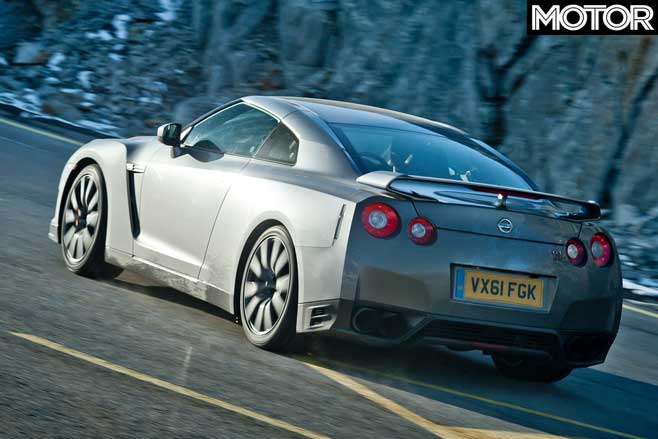
The Nissan competes in a different power and performance class. It could even challenge the 911 turbo. It invariably arrives a cigarette-length before the rest of the pack, and it should win. But it doesn’t. Because the bumblebees inside the tummy hand victory to the Porsche.
Mr Lightfoot is as trustworthy as a warm handshake, as sensitive as a soft caress and as determined as a firm embrace. Its talents go deeper, spread wider and last longer. It feels more like an old mate than a failsafe high-precision tool.
More important still, the 991 is a proper, died-in-the-wool 911. By a wafer-thin margin, it snatches the trophy away from the GT-R – at least for those who prefer a wide spectrum of competence over the focused ability to beat just about any street-legal four-seater against the stopwatch.
Fast Facts
| u00a0 | BMW M3 | Nissan GT-R | Audi R8 | Porsche 911 Carrera S |
| Body | 2-door, 4-seat coupe | 2-door, 2-seat coupe | 2-door, 4-seat coupe | |
| Drive | rear-wheel | all-wheel | rear-wheel | |
| Engine | 3999cc V8, DOHC, 32v | 3799ccu00a0V6, DOHC, 24v, twin-turbos | 4163cc V8, DOHC, 32v | 3800cc flat-6, DOHC, 24v |
| Bore x Stroke | 92.0 x 75.2mm | 95.5 x 88.4mm | 84.5 x 92.8mm | 102.0 x 77.5mm |
| Compression | 12.0:1 | 9.0:1 | 12.5:1 | |
| Power | 309kW @ 8300rpm | 404kW @ 6400rpm | 309kW @ 7800rpm | 294kW @ 7400rpm |
| Torque | 400Nm @ 3900rpm | 632Nm @ 3200-5800rpm | 430Nm @ 4500-6000rpm | 440Nm @ 5600rpm |
| Power/Weight | 195kW/tonne | 232kW/tonne | 198kW/tonne | 208kW/tonne |
| Transmission | 7-speed dual-clutch | 6-speed dual-clutch | 6-speed manual | 7-speed manual |
| Weight | 1580kg | 1740kg | 1560kg | 1415kg |
| Suspension (f) | struts, A-arms, adaptive dampers, anti-roll bar | double A-arms, coil springs, adaptive dampers, anti-roll bar | struts, A-arms, adaptive dampers, anti-roll bar | |
| Suspension (r) | multi-links, coil springs, adaptive dampers anti-roll bar | double A-arms, coil springs, adaptive dampers, anti-roll bar | multi-links, coil springs, adaptive dampers, anti-roll bar | |
| L/W/h | 4615/1842/1345mm | 4650/1895/1370mm | 4431/1904/1252mm | 4491/1808/1295mm |
| Wheelbase | 2761mm | 2780mm | 2650mm | 2450mm |
| Tracks | 1540/1539mm (f/r) | 1590/1600mm (f/r) | 1632/1593mm (f/r) | 1538/1516mm (f/r) |
| Steering | power rack and pinion | electrically assisted rack-and-pinion | ||
| Brakes (f) | 360mm ventilated/drilled discs, single-piston calipers | 390mm ventilated/drilled discs, six-piston calipers | 381mm ventilated/drilled discs, eight-piston calipers | 340mm ventilated/drilled discs, six-piston calipers |
| Brakes (r) | 350mm ventilated/drilled discs, single-piston calipers | 380mm ventilated/drilled discs, four-piston calipers | 356mm ventilated/drilled discs, four-piston calipers | 330mm ventilated/drilled discs, four-piston calipers |
| Wheels | 19 x 8.5-inch (f), 19 x 9.5-inch (r) | 20 x 9.5-inch (f), 20 x 10.5-inch (r) | 19 x 8.5-inch (f), 19 x 11.0-inch (r) | 20 x 8.5-inch (f), 20 x 11.0-inch (r) |
| Tyre Sizes | 245/35ZR19 93Y (f), 265/35 ZR19 97Y (r) | 255/40ZRF20 97Y (f), 285/35ZRF20 100Y (r) | 235/35ZR19 91Y (f/r) | 245/35ZR20 (f), 295/30 ZR20 (r) |
| Tyres | Michelin Pilot Sport | Dunlop SP Sport Maxx GT 600 DSST CTT | Pirelli P Zero Corsa | Michelin Pilot Sport |
| Price | $162,300 | $168,800 | $271,500 | $263,100 |
| Pros | Massive grunt, brilliant stoppers, fun chassis | More grunt, grip and go for what was already an absolute weapon | Supremely capable all-round sportscar, real road presence | Improved cabin, control, quality, looks and high-tech goodies |
| Cons | Basic 3-series origins showing its age, thirsty | Techno overkill, PlayStation interior, still a hefty bugger | Heavy, thirsty, pricey and still has that tight-squeeze cabin | Pricey, doesnu2019t have the outright grunt of the GT-R |
| Rating | 9 out of 10 stars | 9 out of 10 stars | 9 out of 10 stars | 9.5 out of 10 stars |
As Europe and the US weather the worst of the COVID-19 blast, motorsport is suffering as a result – and it’ll likely look even worse as the world emerges blinking into a new world.
Formula 1 announced this week that its season will provisionally start with the Austrian Grand Prix in early July, which means its jewel in the 2020 season – its 70th anniversary British Grand Prix start at Silverstone – is still on the calendar.
“We’re targeting a start to racing in Europe through July, August and beginning of September, with the first race taking place in Austria on 3-5 July weekend,” said F1’s head, Chase Carey.
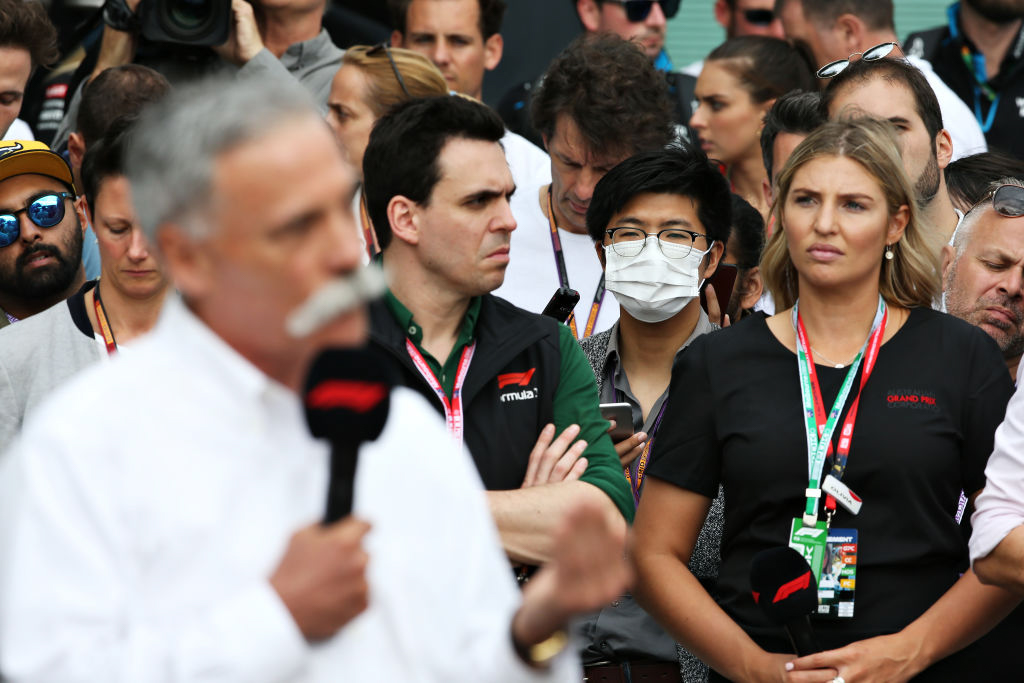
“September, October and November, would see us race in Eurasia, Asia and the Americas, finishing the season in the Gulf in December with Bahrain before the traditional finale in Abu Dhabi, having completed between 15-18 races.”
However, ticket holders have already been told that the UK race, which was a big part of F1’s 70th season celebrations, will go ahead behind locked gates.
“This is the best, safest and only decision we could make,” said Silverstone chief Stuart Pringle.
Putting aside the fact for a moment that a July start for F1 still seems to be quite optimistic, it’s worth thinking of the impact of this shutdown on the motorsport world in general.
At the elite end of the sport, teams exist solely to race cars, and their income is derived from a combination of sponsorship, appearance fees and paid driver inputs.
If there is no racing, none of this happens – sponsors will not be obliged to pay for coverage they’re not getting, sanction and appearance fees – particularly prevalent in US-based racing – aren’t paid, while drivers who pay to race from F1 through to national-level motorsport aren’t pulling on their helmets and signing the invoices.
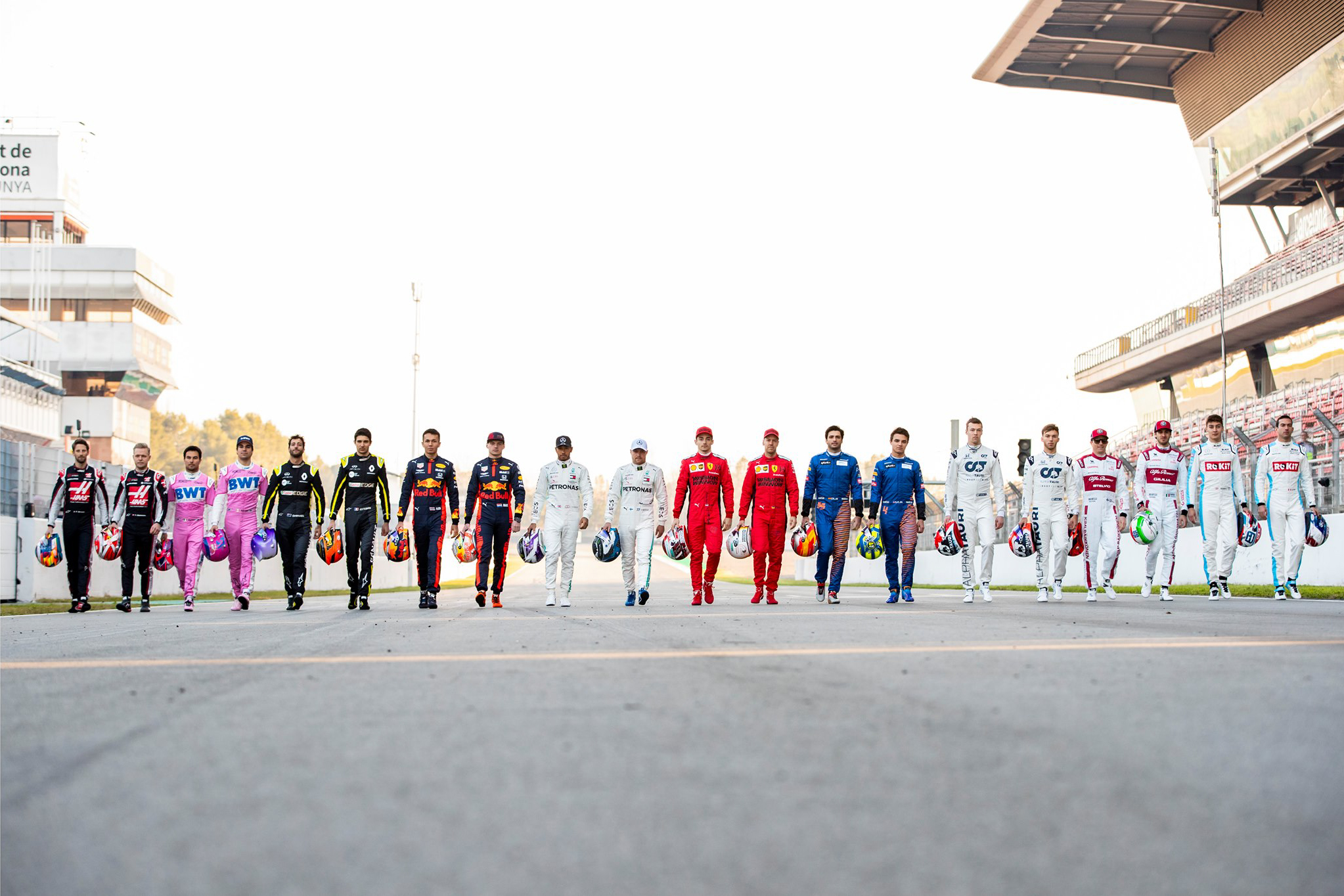
As well, car manufacturers are doing it tough, with some companies banking on 80 per cent downswings in sales in the first quarter of 2020.
That blows pretty big holes in budget sheets across the spectrum, so cuts need to be made… and motorsport programs are where the axe traditionally falls first.
More cynically, the downturn also presents as an opportunity for car companies to exit expensive motorsport programs, either because it’s not doing well, or because the marketing aims of the particular series have been met.
There are signs that this is already happening; in Germany, Audi has just announced its shock withdrawal from the DTM, the national touring car series that has long featured a strong rivalry between Germany’s top three brands.
Now that Audi has pulled the pin, it leaves only BMW standing, as Mercedes-Benz withdrew at the end of 2018.
It’s hard to see a way forward for the long-running championship, which – like our own home-grown Supercars – relies on expensive, bespoke racing cars that can’t be used in any other form of racing.
There has actually a movement over the last eight years towards combining Supercars, DTM and Japan’s GT Series into a World Cup of sorts for high-level tin-top racing, with the latter two joining forces in Germany and Japan last year for a quartet of entertaining races.
However, the momentum has been quelled by – you guessed it – the impacts of the coronavirus pandemic, with the 2020 version of the combo event unlikely to take place.
Supercars, meanwhile, is dealing with the double whammy of lockdown and the departure of one of its two competitive brands.
The series also has to make a call sooner than later on what its future will look like; the Ford vs Holden V8-fuelled rivalry has been swept away, and it needs to find a new direction – and soon.
While the top end of F1 is more resilient, it’s still suffering from a lack of income – and it would be well worth watching what happens with Mercedes F1.
The team has won the constructor’s championship for the last six years on the trot (the one that car companies REALLY want to win), as well as eight driver’s titles.
There is literally nothing left for the team to do but to spend almost $500 million a year on trying to repeat the trick.
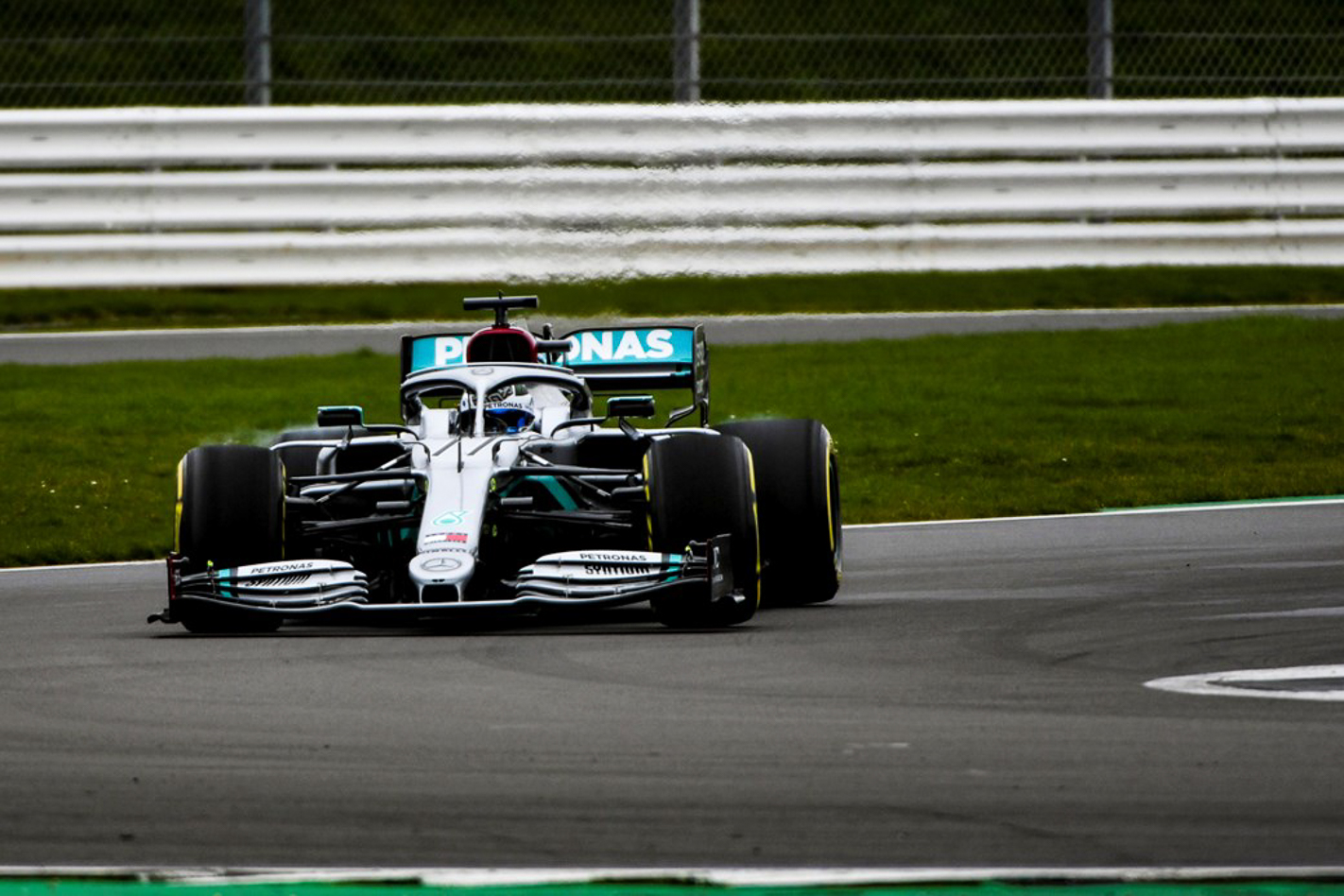
But its parent company Daimler is in a bit of trouble, as worldwide sales decline and its EV program sucks up more and more money each year, with little in the way of a viable return anywhere on the horizon.
Could Mercedes F1 leave F1 at the end of 2020? It’s an each-way bet for sure.
On the other side of the coin, though, there are series around the world rushing to get back to racing. To wit, NASCAR; it’s just announced an ambitious program of spectator-free events with two races on a single weekend, as well as mid-week evening races.
Personnel allowed into the venues will be severely curtailed, the events themselves will be run as single-day events and social distancing measures are expected to be followed.
Maybe it’ll help to keep their boys out of online trouble?
Seriously, though… this, to me at least, is pretty crazy. The US’s rates of COVID-19 infections and deaths continue to skyrocket, and there is no sign that the country has the pandemic under any sort of control. Yet NASCAR insists that it will run all 36 races in its 2020 season; so far, it’s run four.
We will all get to see some sort of motorsport in 2020, but aside from NASCAR’s ambitious efforts to get the flags waving again, it will be a busy back half of the year for the series that can find support, find venues – most race tracks are booked solid all year – and find crowds that are allowed to attend their events.
For a number of teams and series, though, the pain of 2020 may be too difficult to overcome, meaning that the motorsport stage for 2021 could look a lot different.
Mmm… I’m eating humble pie right now. And it tastes very very good.
This feature was originally published in a previous issue of MOTOR
I was the cynic who made fun of urban billboards marketing the Lexus brand off its LFA halo car. A cheap ploy to move product using a car, I joked, that didn’t actually exist. An enigma, I reckoned, that is so expensive, so exclusive, so rare and, frankly, so firmly planted in La La Land in any pragmatic motoring sense that, frankly, I’d only believe it when I saw it, mixing it with the great unwashed Falcodores on Aussie streets.
And yet here I am, tootling The Lexus of the Gods down Sydney’s Princes Highway in peak hour, one eye on a taxi ahead merging dangerous close to this $700,000 fairy tale on wheels. Today I’ll be the first journo in Australia to let LFA off its leash in public.
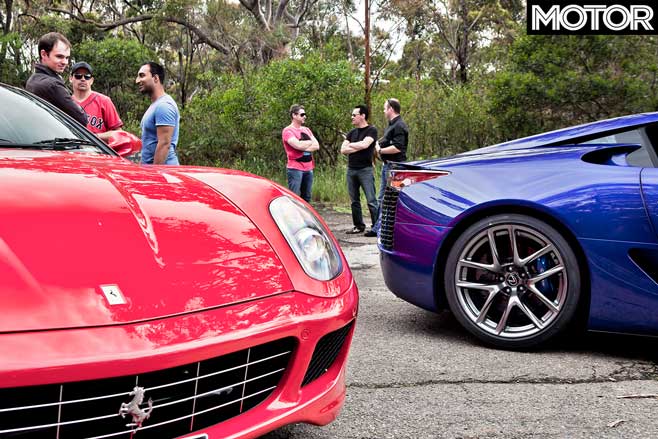
You know you’re in for a surreal day when you assemble four cars and Merc-Benz’s exotic SLS AMG is, at $468,820, one of cheapies. And when the field’s average price is a smidgen over a half-mil. But on only a few kays in, and barely out of second gear, the creeping feeling is that the complexion of this shootout will only get stranger.
The idea is innocent enough. Take the most outlandish front-engined – or front-mid-engined, to be precise – supercar ever to come out of Japan and pit it against the fittest and finest FR-layout kindred spirits from across the globe. Of course, nothing says business up front and party out the back (wheels) in German than Merc’s Gullwing. Or, perhaps, a Deutsch mullet.
Ol‘ Blighty (by way of India these days) is represented with fastest and most-powerful Jaguar ever created, the XKR-S, which, in this company, looks like chump change at $340,000. Especially when its half the price of our Italian representative.
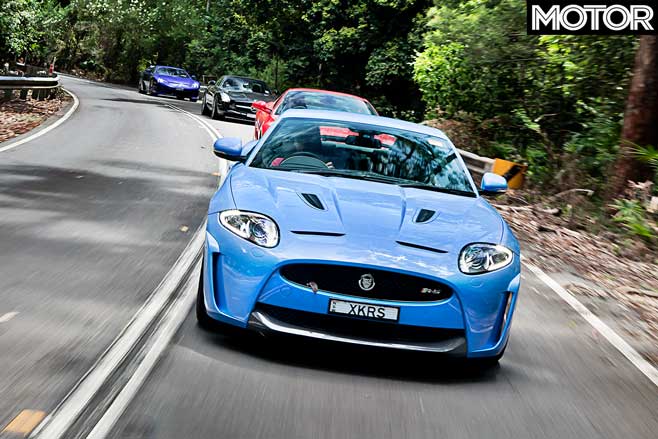
And when you’re talking supercars, and perhaps LFA’s most logical competitor, you simply must have a Ferrari of the V12-powered 599 persuasion, in our case a Fiorano GTB 4. Yes, there’s a hotter GTO version of the 599 out there, but the Gran Turismo Berlinetta lobs into the fray at an LFA rivalling $677,250.
Ferocious? You bet. Nothing here dips under 400kW. And horsepower wise the quartet is much closer than are on pricetags. The Jag uses supercharging on its 5.0L V8 to nail, the Merc uses cubic capacity (6.2 litres) to make its 420kW. And the LFA uses rpm, and its hellacious 9000rpm redline, to split the former pair neatly, with 412kW. Meanwhile, the top dog Ferrari musters big cubes and high rews to extract a lofty 456kW from its 6.0-litre V12. So far so fair…
But every passing gearchange and every fresh kilometre under its Bridgestones deepens a sense that the LFA sits further out on motoring’s extreme fringe than the rivals it rendezvous with south of Sydney. And having all of them sit present, correct and silent at the gates of the Royal National Park, further cements this idea.
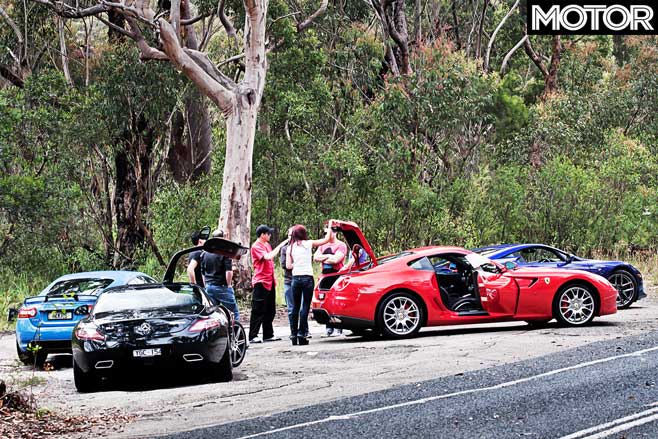
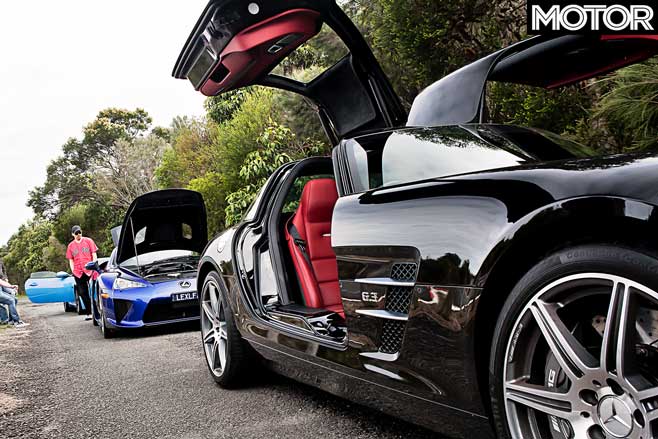
The LFA isn’t handsome. But it is low, purposefully and holds greater presence in the flesh than it does in photos, even in its reserved blue paintwork. Its techy, carefully wind-tunnelled lines are there to please airflow, not aesthetics.
It’s the antithesis of the 599, which no doubt owes its gorgeous shape to Pininfarina’s heart and hands, pencil and paper. And while the SLS’s styling harmonises opinion like sexual politics, it’s got X factor and character in droves, two things the ‘look-at-me!’ bright blue Jag almost desperately wants, but its gentleman-in-gym-pants presentation doesn’t quite pull off.
Bonnets up, doors open, there’s a keen inspection of the nitty gritty before the much anticipated ceremony of uncorking 1963kW in unison. And, surprisingly, it’s LFA’s ‘cockpit’, as Lexus calls it, that brings its fringe-dwelling essence into sharp focus.
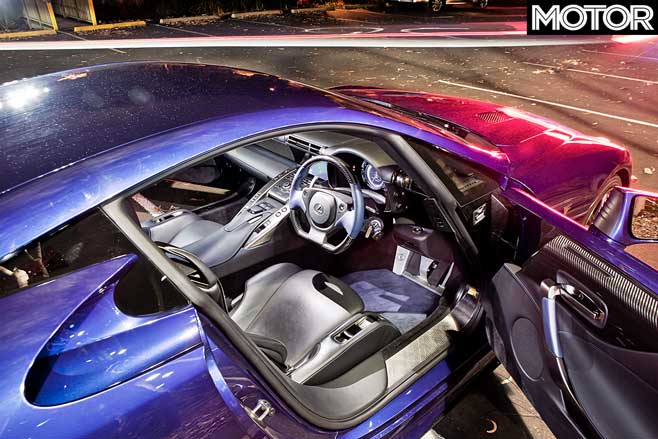
While both the Benz and Jag are rich and opulent inside – the Merc stylishly so, the XKR-S ostentatiously so – and the Ferrari presents a (frankly incoherent) mishmash of flamboyance, style and carbon-overkill motorsport, the LFA presents like a futurist concept car turned reality. And with zero compromise.
From the minimalist controls in high centre console to the Lexus engraved screw heads; from the impossibly techy LCD/TFT central rev-counter – motorised to move sideways in the instrument cluster – to the one-piece forged floor-mounted pedals; from its innovative air-bag seatbelts to the F1-style carbon-fibre flat bottom steering wheel; the whole shebang screams bespoke, no-compromise precision. Nothing (apart from the centre screen/satnav) seems parts-binned or derivative. Everything presents a feeling of no-fat purity. Everything has been honed to perfection. How much honing?
That it took and entire decade to develop isn’t nearly as eye-opening as that fact that, five years in, it was decided aluminium construction wouldn’t cut it. So they took and engine, gearbox and not much else out, scrapped the lot, and started anew with its now 65-percent carbon-fibre construction.
That, in nutshell, is what LFA is about. It’s not simply unlike any other Lexus, in some areas it couldn’t be more opposite.
The SLS comes closest to matching LFA’s bespoke exclusivity, and yet its cabin still feels all that separated from lesser Benz stock. The Jag – the only car here with rear seating – feels heaped with layer upon layer of added opulence, but can’t escape its regular and ageing XK essence. And despite its beautiful carbon-shelled buckets, lush surfaces and a sense of heritage seeping from its leather pores, the 599’s switchgear screams ‘Fiat’, it lacks the solidity of its rivals, and much of the handmade stuff, such as the dash pad stitching, looks to have been whipped up in the hurry.
Don’t get me wrong; the Euros are top-shelf by all measures…unless you benchmark them against the LFA, when shortcomings and compromises appear. It’s as if the LFA was hand-crafted by its own skunkworks. And that skunkworks (Lexus LFA Works, as it’s called) had absolute freedom to stretch its engineering and design talents to their limits, costing be damned. And that’s exactly how the Japanese supercar came together.
Four start button on ‘go!’, 38 cylinders ceremoniously part the national park skies. It’s more a cacophony than symphony, the Merc and Jag filling the throbbing low frequencies, the Lexus and Ferrari cutting through with the highs, their vastly different characters struggling for harmony.
The bass section is a familiar one; we’ve tested both the Brit and German numerous times to date, including last issue’s PCC2011. And though the scalded cat’s immense tyre-ripping, tail-squirming low-end shove is expected, it still brings a slight, grin-inducing surprise. Its key characteristic is its force-fed shove: 680 head-slapping Newtons at a casual 2500rpm, we’ll before it fully opens is lungs for a distinctly guttural, bent eight roar.
It delivers its energy like a swung baseball bat and its sport-tuned ZF six-speed auto is fine companion for metering out the shove with a semblance of composure. And the real beauty of the Jag experience is that it’s effortlessly flexible, composed and surefooted simply via easing out of the loud pedal, and as potent as a poked lion if you dial up its dynamic mode and give it a swift kick in the slats.
In today’s company, the usually visceral SLS presents a sort middle ground of the field. It needs 4750rpm for its 650Nm sledgehammer attack, is urgently tractable down low, rewards the harder and higher you rev it, feels blisteringly brisk, and its fat throb could well be the eighth wonder of the world.
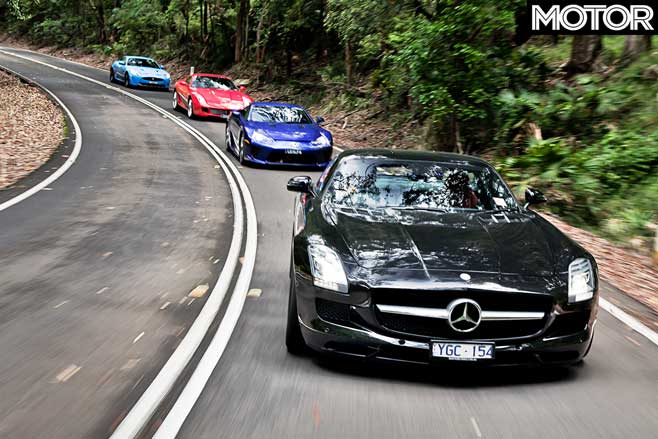
Despite appearing larger, the 1620kg Merc is a substantial 133kg lighter than the Jag and it monsters the blacktop more effortlessly. Its closer-stacked seven-speed DCT – the only twin-clutcher here – is the class of the field, almost silken in Comfort mode, rapid-fire in either Sport or Sport+ mode, and pretty much indicative of the Gullwing’s character.
Where the Jag feels the gentleman’s coupe with (literally) two layers of performance enhancement added, the SLS is more a proper super grand tourer, all the manners of an open road hauler but with supercar levels of bona-fide vibe and ability. The Merc is both more relaxed and confidently quicker of the two up a back road.
The 599, and its front-engined Ferrari forebears, pretty much created the super gran turismo mould. Oh, there’s supercar DNA in spades: its bent 12 lifted from the legendary Enzo, its F1 sequential six-speed manual gearbox largely derived, conceptually, from its namesake, F-Trac stability smarts and tiller mounted manettino dial, complete with Race mode. All in dignified coupe that comes with its own leather-strapped boutique luggage compartment.
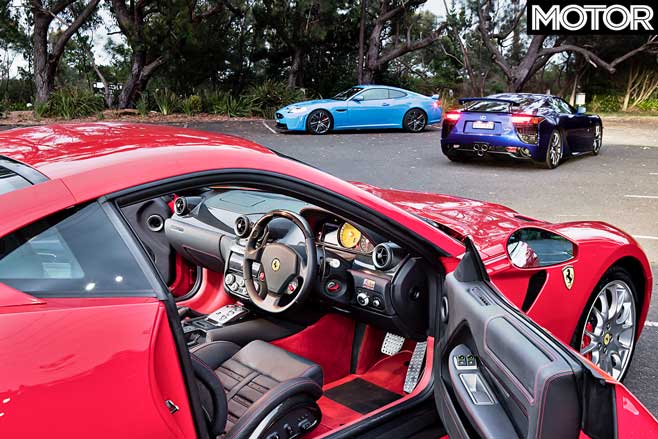
There’s 608Nm on tap – 42 down on the SLS, 72 down on XKR-S – and arrive well up there, at 5600rpm. But you don’t have to be card-carrying tifosi to get lost in the in the romance of
The surprising thing about the Ferrari is how light it feels both in its tangible controls – steering, brakes, throttle – and in its lateral acceleration. That’s because, at a Jag matching 1753kg, it quite portly. And while it doesn’t feel as ponderous and wallowy as the Brit in a general sense, you can feel the mass when firing the 599 through tighter curves. The Italian is engaging and lively – it doesn’t take much provocation for those huge 305mm rear Pirelli P Zeros to cry freedom – but there’s not as much hunkered down road holding grip or strident body control as the SLS musters up in the tighter stuff.
Both the 599 and SLS have meaty and nicely weighted steering, the latter, with its lighter kerb weight, keener to keep its front hoops biting into the hotmix through the middle of a corner. Perhaps the biggest dynamic letdown of the pack in the Jag’s steering: good by most measures, but against this lot it feels dull off centre, lacks bona-fide weight and communication, and anything but linear in front end grip as you pile on steering lock.
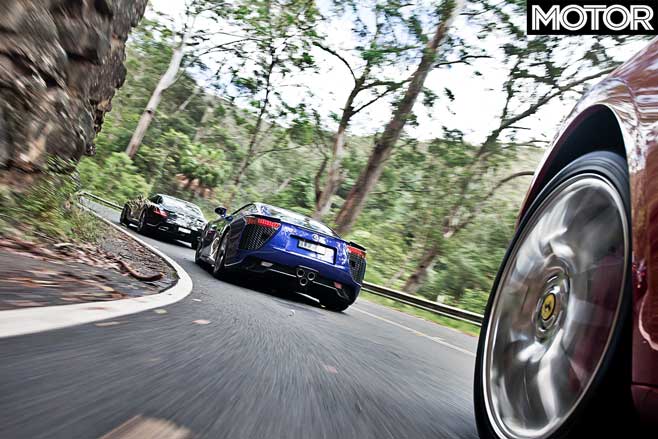
In short, they’re three distinctly different back road, hard-punt characters. The Jag feels immensely solid, comfortable but lacks dynamic conviction. The Ferrari is lively but misses out on a bit of ten-tenths sharpness and solidity. And the Merc is quick and grippy but a bit lifeless in the proceedings. But all are events to drive, and all offer plenty of feel-good vibe and thrills.
And then there’s the LFA. Which is on another planet.
Poke the carbon Start button and it suddenly ‘braps!’ before settling into a quiet idle. A rotary dial to the right of wheel selects the drive modes, reconfiguring the instrument from normal (black) to Sport (white). Below it is another dial for changing shift mapping for the six-speed, single-clutch/single-shaft gearbox that, in functionality at least, is cut from the old-school Lambo and Ferrari ethos.
That is, it’s literally sequential – it can’t jump ratios – and it’s complicated to use. Auto-shift mode demands its own button. Reverse its own switch, ditto the parking brake. Neutral requires pulling both exquisite column-mounted shift paddles. Three-point turns are, frankly, a long-winded nightmare.
Other vital stats make interesting reading. Its 72deg 40-valve V10 makes 412kW power peak at an extraordinary 8700rpm.
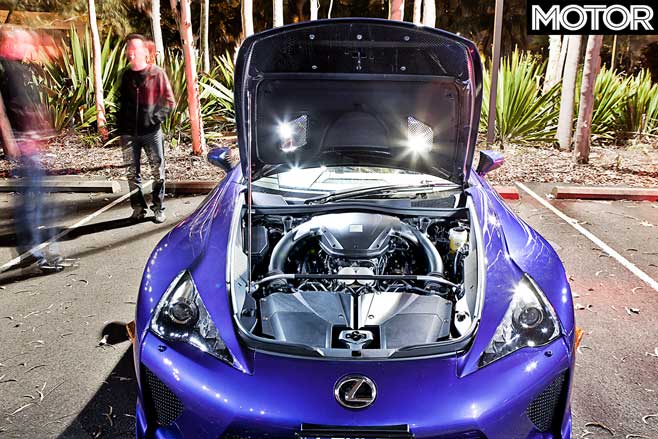
Harness its launch control, a 4000rpm clutch-dumper, and Lexus claims it’ll march from zero to 100km/h in 3.7sec. Or exactly what Ferrari claims for the 599, and one-tenth quicker than Merc’s figure for its SLS. Feasible? Well, the LFA as it sits here weighs just 1540kg, though delete-optioning its specs can, if a buyer wishes, drop that figure below 1500. Or around 275kW per tonne.
It’s the top of third gear when it happens. From a standstill, you dial up Sport mode, grab first, nail the throttle and at 3000rpm the active exhaust unleashes full volume and, by five grand you instinctively grab second because the engine sounds to be spinning hard. Nope. Second gear you hold it longer, a pure, visceral, banshee howl spiralling higher in pitch from its triangular exhaust stack, and you instinctively slap the paddle at around 7000rpm. Nope. Still short. Peak torque, a mere (in this company at least) 480Nm has only just clocked.
Bang! The upshifts are brutal, and mind-bogglingly instant. And so, in third, you finally commit, right foot buried, finger tips poised, needle sweeping past 7000rpm towards its 9000rpm target, and then…
“Oh…my…gawd!” …bang!
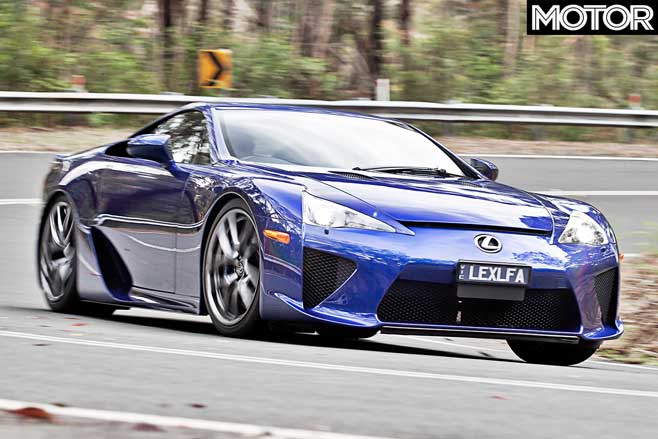
No other road car has an engine quite like this. That wail. That fury. It’s like Formula One with the volume knob turned down. Smooth? Beyond butter. I’d wager if you sat in the LFA wearing ear muffs you wouldn’t tell by feel if the engine was actually running. Linear? You could play billiards across its power curve.
There’s more. The engine’s formula motorsport sheen extends to liveliness. It revs so cleanly and quickly, virtually unimpeded by noticeable rotating inertia. Its punchiness and response to minute throttle inputs in the mid-range, at around 4500rpm, is simply startling. And you’d trade any amount of low-end shove for its breathtaking character that demands you rev it way beyond reason and rewards – massively – with a feel-good vibe even six litres of Ferrari V12 can’t come close to matching.
Yeah, that good.
One by one the MOTOR crew rotate through the cars, each one stumbling out of the LFA giggling like school boys. It’s more than just the engine.
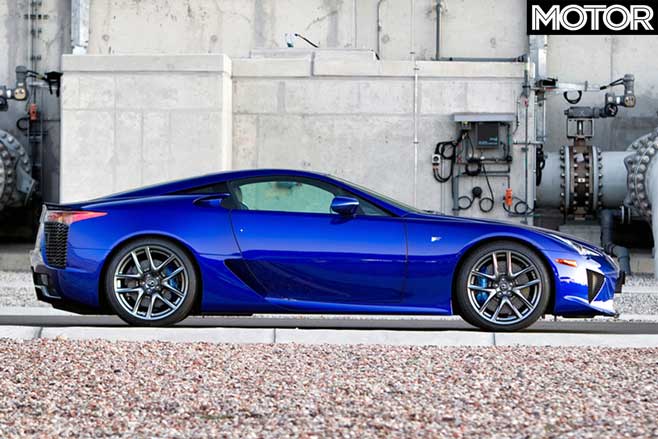
The speed and seamlessness of the downchanges is incredible. And beyond the sheer stopping power of its carbon-ceramic 390mm/360mm monobloc brakes – the Ferrari has equally mega stoppers – is the accuracy of the pedal feel.
What’s really surprising is how light and nimble it is – MOTOR cohort Ponchard remarks that it actually feels 100 kegs lighter that its claimed kerb weight. Oh, there’s some clever number crunching going on underneath: its Sport VDIM (Vehicle Dynamics Integration Management), which holistically governs everything from traction and stability smarts to engine mapping, has a cleverdick “road camber angle estimation system” in its arsenal. And there’s active aerodynamics, too.
But you never sense it operating. Even at a seriously hot pace the LFA never ever seems artificial. It just goes about bending physics with cornering grip, poise, balance and confidence-inspiring surety unmatched by anything the sane side of a Porsche GT3. With a lithe sense of driver engagement Nissan’s GT-R could only dream about.
Then there’s its electric-power-assisted steering. It’s perfect. Not great. Not excellent. But perfect. It’s amazingly linear, not over-ratio-ed, has an oversized shaft, hard-mounted rack and superlight hard-touch carbon tiller. And the only way you’d create a clearer, more intimate communication with the road is if you’d open the driver’s door and touch the hotmix with your fingertips. Yep, that good.
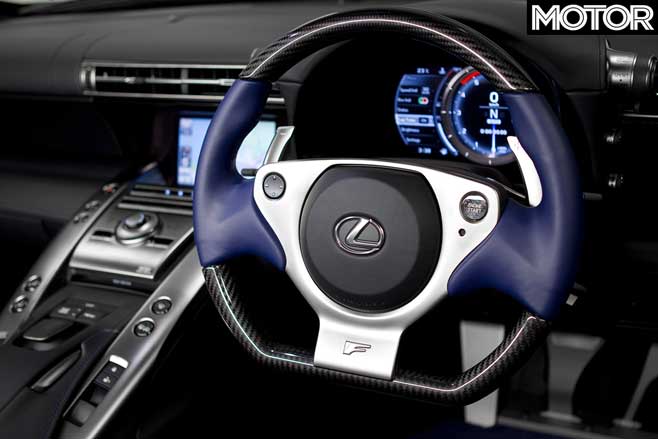
The LFA doesn’t have adaptive suspension. Its ride’s not unlike that of a Porsche GT3: firm but not crashy, a sheen of compliance. But what seems an oversight for the (set-damper) SLS package actually makes sense with the Japanese supercar’s ethos. See, switchable dampers might’ve robbed the LFA of detail in the sensory experience. Detail so fine you mightn’t have otherwise missed it. But Lexus LFA Works knew there was fine detail to be gained, so pursued it.
That’s what the LFA is all about. Absolute precision. Zero compromise. Regardless of, in this situation, comfort. Or cost. Or pricetag.
The Toyota Corp might’ve in fact garnered more street cred building LFA far simpler, cheaper, heavier (predominantly in steel) and with less efficiency, charged $160K, called it ‘Supra’ and gone chasing GT-R. And it’d be a much lesser car (and given its lightweight techy construction, more future-proof than the Nissan, too). It could’ve been primarily alloy and derived off an existing vehicle, pegged at $300K or so, and gone hunting 911s. But it wouldn’t have been nearly as bespoke. Or special.
In fact, not much this side of a McLaren MP4-12C or Lambo Aventador can blend bleeding-edged tech with such an incredible vibe and ferocious abilities. And, as we discover, Ferrari, Merc or Jag treatments come up short against the LFA’s pin-sharp focus of front-engined supercar greatness.
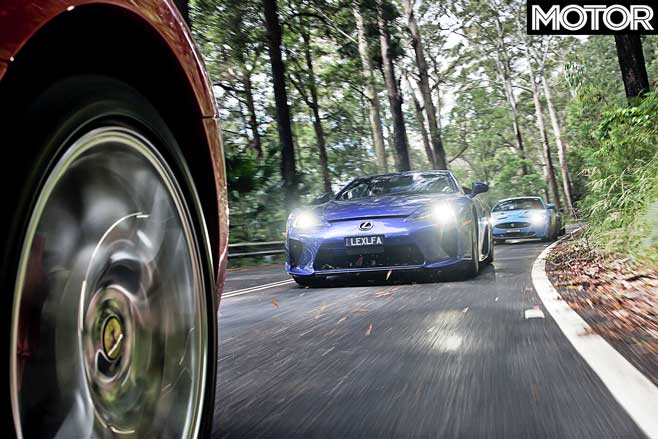
How quick the LFA is – startlingly – against the stopwatch isn’t the point. Its pace is one tool in its armada. And there are plenty of cheaper cars that are equally as quick on strip or circuit. Nope, the LFA’s most significant virtues are measured by feel, through your finger tips and spine, through its hyper-channelling extra-sensory experience that much more obvious, and eye-widening, on a twisty back road than it is on a track or dragstrip.
A shame, then, that with only three LFAs currently in Oz, and only another seven allocated for local sale, so few punters will get to sample its extraordinary essence well beyond the badge, output figures, pricetag or laptimes.
On a brighter note, Lexus were so impressed with the LFA Works blokes’ handiwork that the once independent skunkworks is now overseeing mainline product. Like the platform underpinning the next-gen IS – exciting news for those of we petrolheads not living in a La La Land paved with gold.
But until then, Lexus, can we have another taste of that pie?
Can a front-engine car be a supercar?
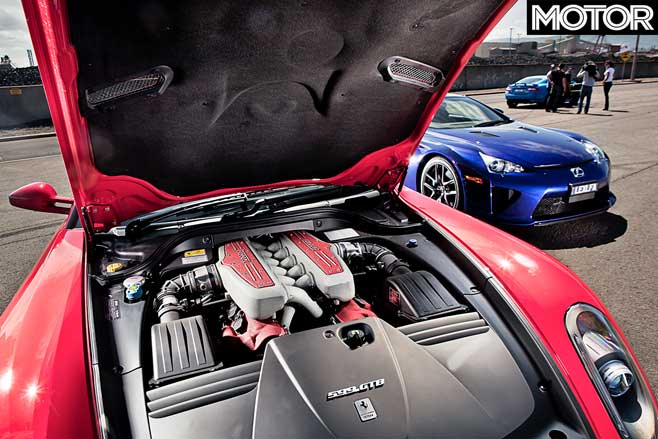
The concept of the front-engine supercar might seem foreign to many petrolheads who don’t have a senior’s card or wear an anorak sporting old Martini Racing patchwork. But history proves that before the most ferocious of road cars located their engines behind the cabin they pretty much all situated their powerplants in front of the driver.
Sure, mankind has explored all drivetrain layouts since time eternal and mid-engined racecars such as Benz Teardrop and Auto Union turned up in the ’20s and ’30s. But the rear-engine-equals-performance-domination idea didn’t catch on until the ’60s: first in formula motorsport with the Cooper-Climax T53, and a few years later, in 1966, Lamborghini’s Muira introduced the notion of a mid-/rear-engine uber-car. It took Lambo’s Countach, first unveiled in 1971with its rear-mounted V12 located north-south and with a transaxle, that the mould set on this relatively modern notion of a supercar.
You could call these four ‘classic’ supercars, so to speak. Their layouts boast the business up the front and the party, as far as driven wheels are concerned, up the back. So, mullet style, perhaps, though there’s nothing much bogan about any of the quartet.
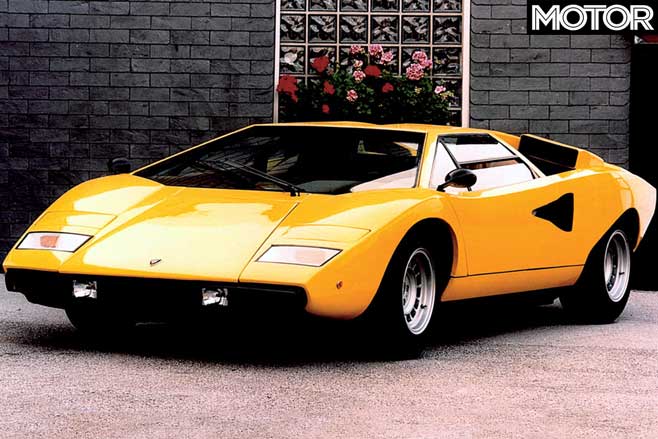
These are the most expensive, exclusive and exotic front-engined performance cars of their respective nations that serious money – the average price among them is the high side of a half-million – currently buys.
Well, almost currently buys.
The Prancing Horse here, the 599 (in Fiorano GTB 4 specification), is in the throw of doing its final laps of the Maranello stables and is being put out to pasture. But until Ferrari drops with a new V12-powered flagship, the 599 breed, which in GTB-trim derives its astonishing 456kW/608Nm 6.0-litre heart with the now-defunct Enzo, is the ultimate Italian two-seater FR expression of the super gran turismo.
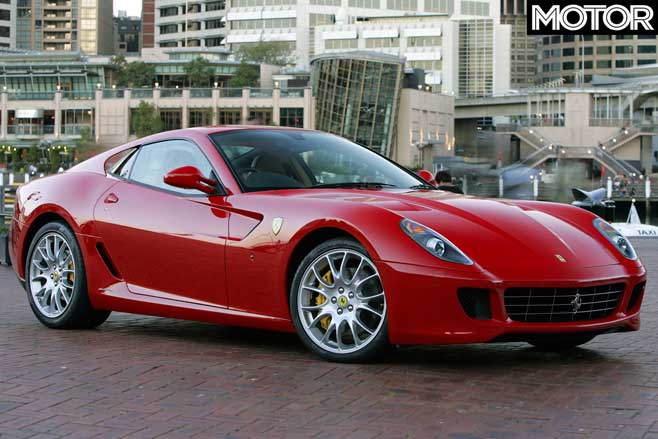
Ferrari has built a deep – thought not completely unbroken – heritage of offering front- and rear-engined mega-exotics. And deeper than any other car maker you can name. While rival Italians continue to promise variety in their ranges, Ferrari continues to deliver.
Representing Germany here is Mercedes-Benz. Like the Ferrari, its SLS AMG halo car trades on a rich sportscar heritage, specifically that of the 300SL. (And, like Ferrari, it’s technically a front-mid-ship engine placement.)
What if you wanted to break free from the new norm and go back to something more traditional? Yes, of course, we’re talking about the mass migration to SUVs that seems to know no limits. However, a wagon will do just about everything the modern SUV is tasked with, the only downfall being a lack of raised ride height. So we’ve got the new Volvo V60 and the BMW 330i Touring together to see which wagon is best.
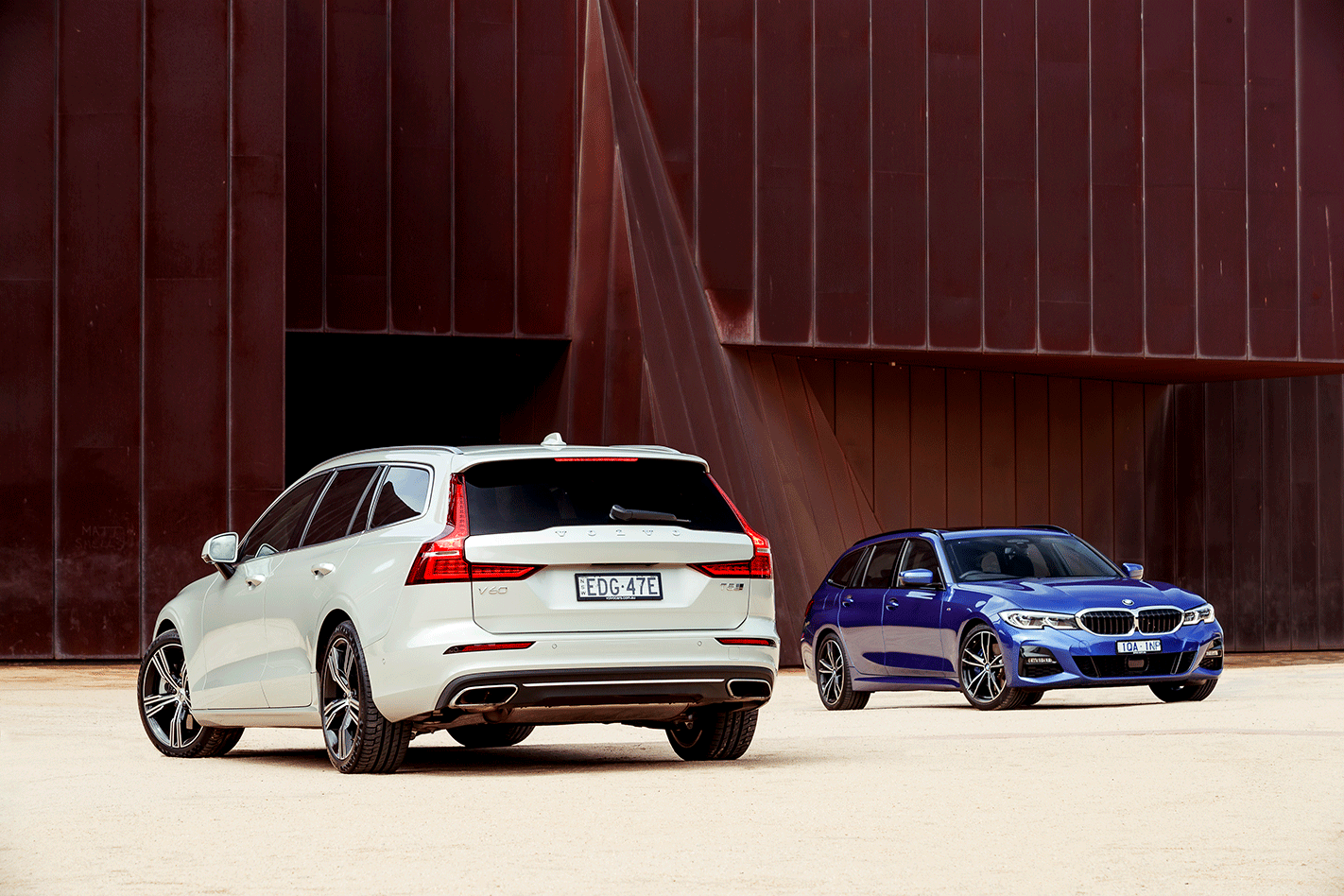
EQUIPMENT AND VALUE
At $62,990, the V60 is a compelling offer in standard trim, but box ticking ups the ante. Our tester added $10,000 across four option packs. An as-tested $72,390 lands you a panoramic sunroof, Harman Kardon sound, nappa leather trim, heated/cooled front seats with massage, heated rear seat and steering wheel, adaptive dampers, four-zone climate control, head-up display and digital instrument panel. Apple CarPlay and Android Auto are standard.
At $70,900 the BMW 330i Touring is nearly $8K more than the V60 without options. The Visibility Pack for $5589 (metallic paintwork, panorama sunroof, laser headlights and ambient lighting) and an instrument panel in Sensatec ($950) take the as-tested price to $77,439. Standard kit includes adaptive dampers, three-zone climate control, head-up display, digital instrument display, 10-speaker hi-fi system, Apple CarPlay (12 months) but no Android Auto.
WINNER: Volvo V60
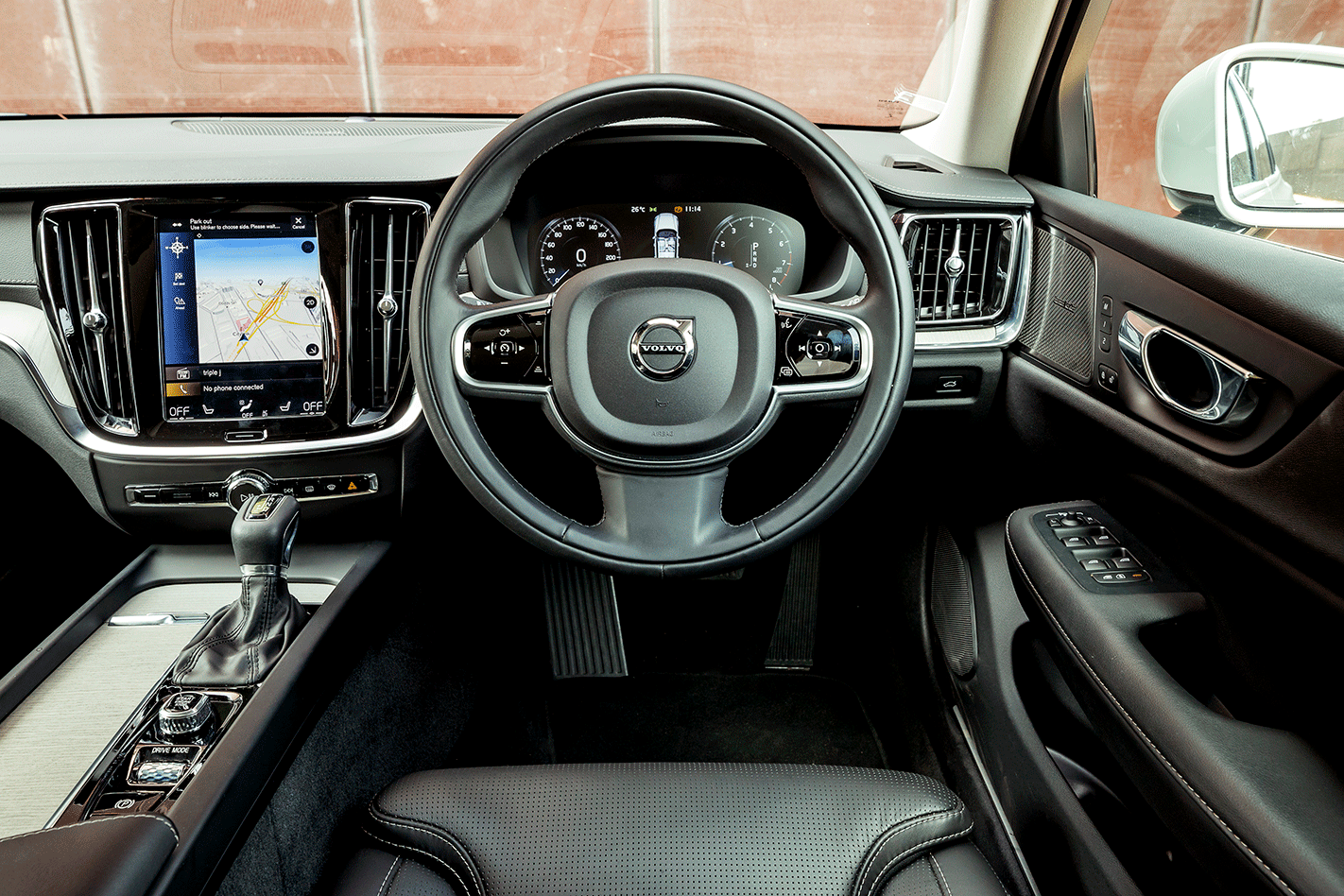
SPACE AND COMFORT
The V60 offers 529 litres of space behind the rear seats, expanding to 1441 litres when the rear seats are folded flat (an incredibly easy process). This is 26 litres larger and 69 litres smaller than the BMW respectively. Comparatively, rear legroom and headroom is not generous for adult rear-seat occupants. Comfort levels and adjustability of the seats are high, and Volvo’s designers have equipped the interior with handy cubbies and compartments.
The Touring has a neat 500 litres of boot space, expanding to 1510 litres with the rear seats folded. But the German truly shades the Swede in rear occupant space. Where taller adults may feel a tad cramped in the rear of the V60, the back of the BMW moves the needle in terms of space enough to make longer journeys palatable. Front seats are comfortable on long drives, and offer more side bolstering than those in the Volvo.
WINNER: BMW 330i Touring
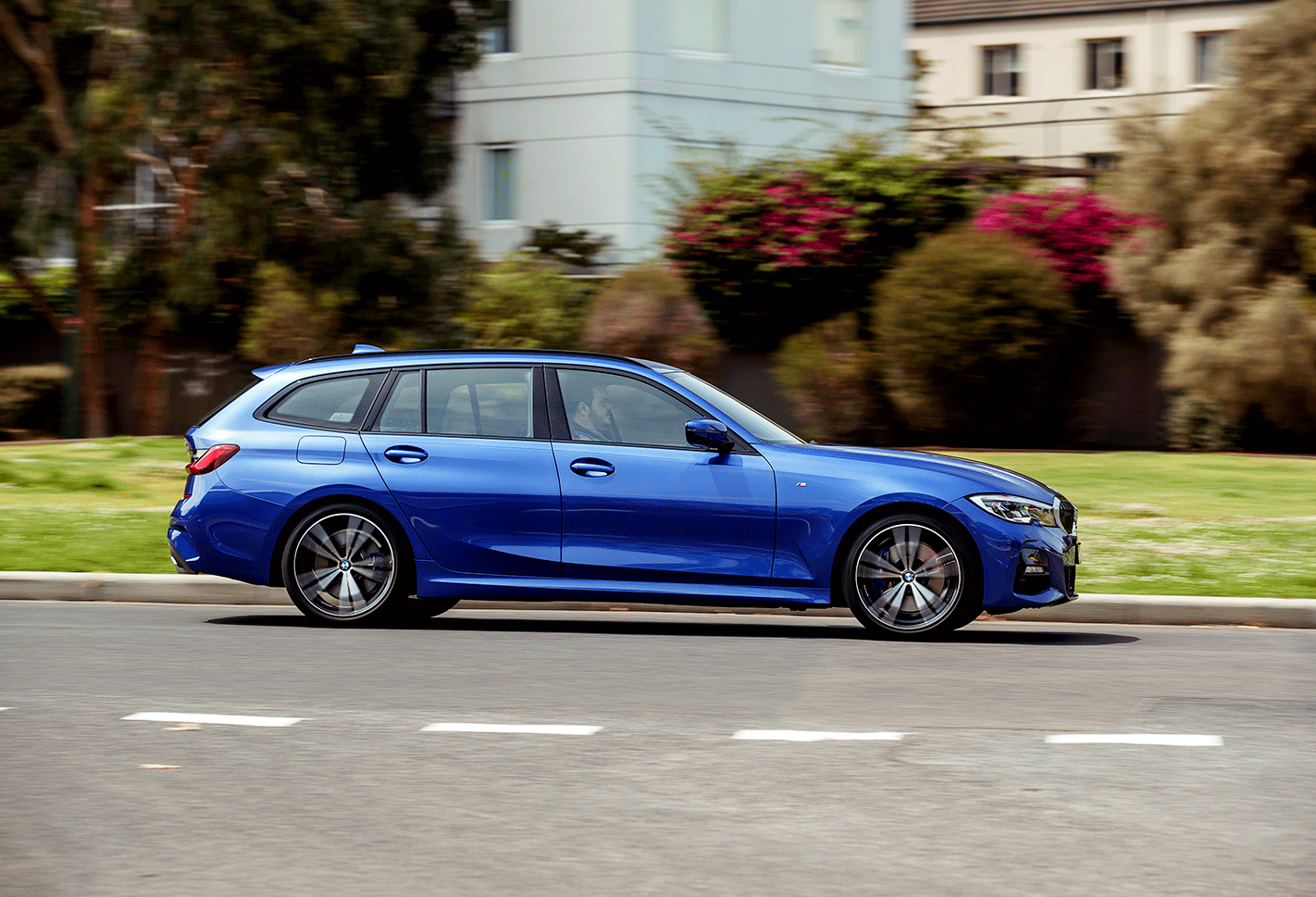
RIDE AND HANDLING
Adaptive dampers are recommended when speccing a V60 as they give the Volvo a mostly impressive ride quality on the standard 19-inch wheels. However, ride can be crashy over sharp bumps when the car is fully loaded with people and luggage. All-wheel drive delivers excellent traction, and helps the V60 feel planted and confident. Steering is light and direct around town, though more feedback through the wheel would be welcome.
BMW’s chassis engineers should be commended for their work on the 330i. It has a delightful suspension tune that allows it to be engaging and playful during dynamic driving, while retaining poise and ride refinement around town. It also remains composed over rougher roads even when packed with gear. Steering is weighted slightly heavier than that of the Volvo but is more communicative. The Touring is a real driver’s car that also boasts great day-to-day practicality.
WINNER: BMW 330i Touring
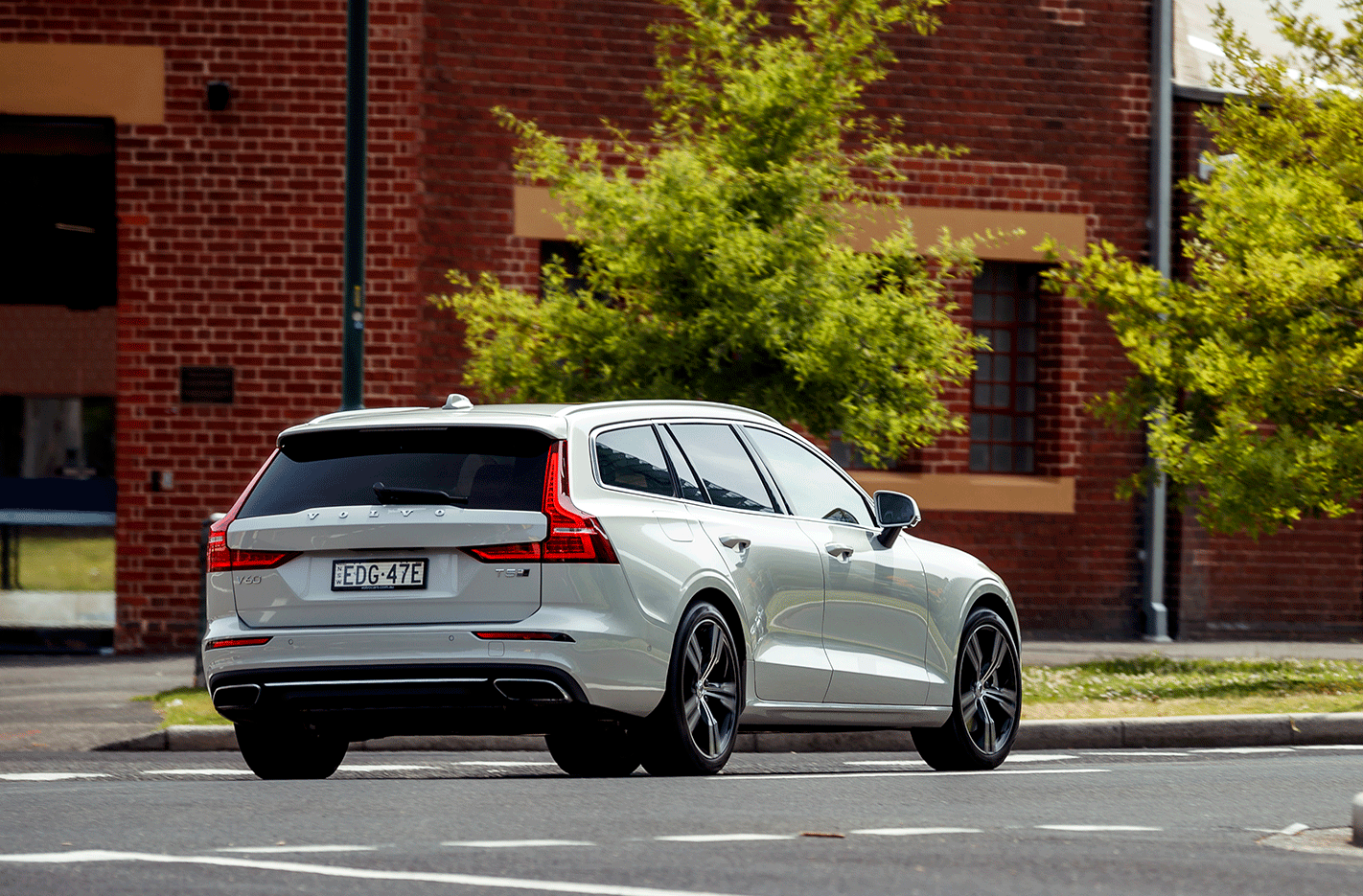
PERFORMANCE AND ECONOMY
Both contenders here have a turbocharged 2.0-litre four-cylinder engine. Volvo’s produces 187kW and 350Nm. The claimed 6.5sec 0-100km/h sprint feels swift in the real world but is slower than that of the 3 Series, while the 1797kg kerb weight hinders both performance and economy. Combined fuel use is 7.3L/100km (up 0.3L on the BMW). The trade-off for less performance and economy is all-paw traction, which is beneficial in poor weather.
The 330i Touring has outputs of 190kW and 400Nm, giving it a 3kW/50Nm advantage here, while a claimed 0-100km/h time of 5.9sec is 0.6sec quicker than the V60. There’s a delightfully fruity exhaust note under heavy throttle, and a hushed refinement during normal transit. Being more than 200kg lighter than the Volvo, at 1575kg, helps it to an edge in economy at 7.0L/100km. Faster and more economical to boot?
WINNER: BMW 330i Touring
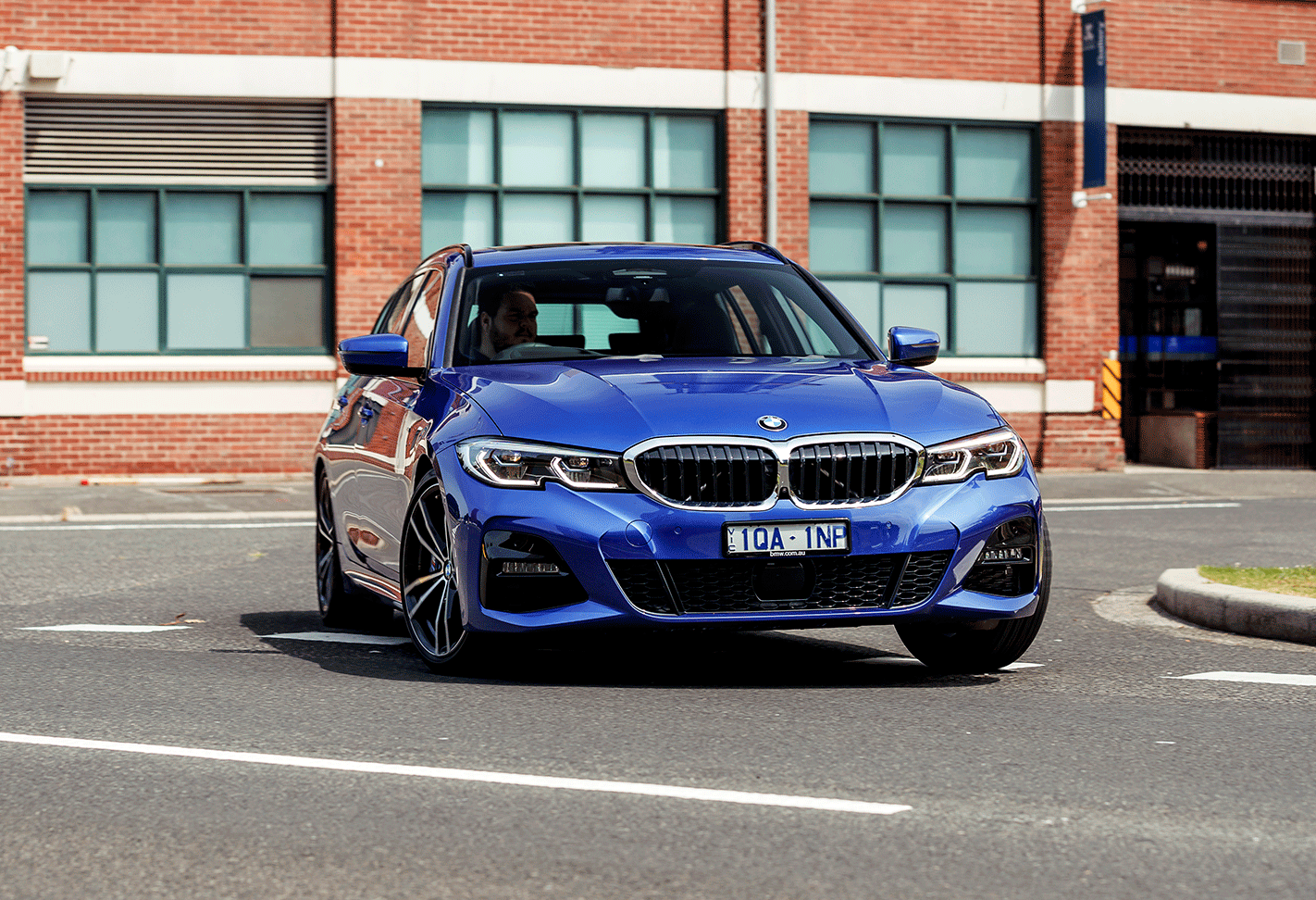
VERDICT: THREE FOR THE 3 SERIES
Playful rear-drive dynamics, extra performance and better economy make the BMW 3 Series 330i Touring the victor here. It takes everything that makes the regular 3 Series the best in class, and adds even more day-to-day useability. That’s not to discredit the hard work put in by Volvo with the V60. If practicality is the top of your priority list, it’s a more dynamic alternative to an SUV, while offering slick styling, generous equipment and a compelling asking price. With victories in two other Wheels comparisons, this win scores the 3 Series a hat-trick, and for good reason.
Could its beginnings have been any less promising? The VW Transporter, which has now been in production for a record-setting 70 years, was inspired by a flat-bed mini-truck used in VW’s Wolfsburg factory.
Visiting Dutch VW importer Ben Pon saw the potential of that Plattenwagen. And 13 million sales later, the Transporter is still thriving, uniting hippies and brickies, surfers and stretch-waisted Caravan Club members, like nothing else. However you define van, it’s the best-selling van of all time.
The start of an icon
VW was still under British military supervision in 1947 when the idea was first mooted. A couple of mock-ups were rejected but a panel-van prototype was shown in 1949 and in 1950 production began on the Mk1 (which became known as the T1, although it wasn’t actually called that at first, in much the same way that the Beetle wasn’t initially badged Beetle). It was made as a panel van, passenger van and eight-seater.
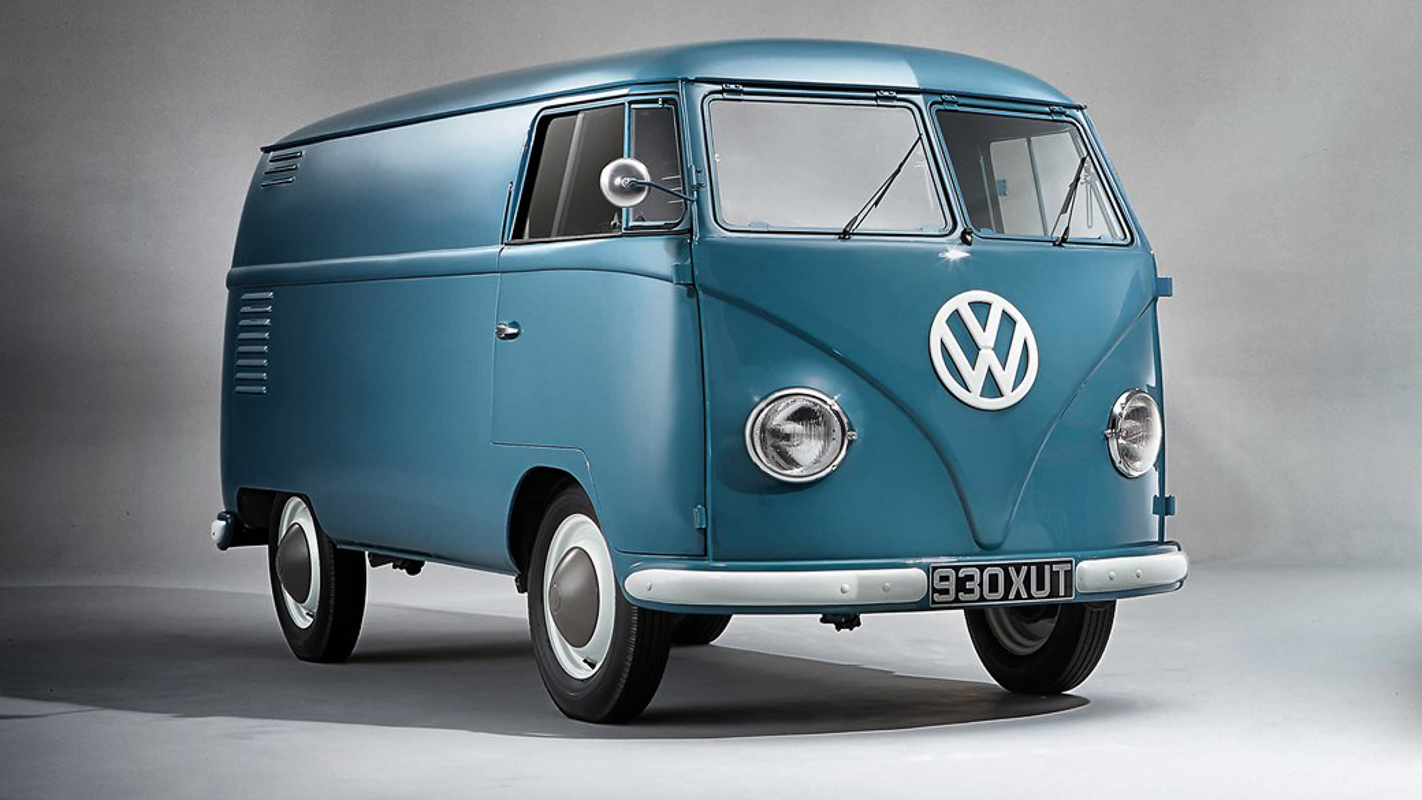
It used the engine and gearbox from the Beetle and had the same rear-engined, rear-drive layout, but was in fact aerodynamically superior to the Bug. The real magic was the low, flat floor, combined with VW’s open-door approach to collaboration.
Soon there were mobile-shop, tipper-truck, fire-brigade and ice-cream van versions from outside companies. By 1954 there had already been 30 variants, including 1951’s influential Samba – with windows all round and a folding sunroof – and in 1953 Westfalia offered for the first time a fully-fitted camper.
Both pioneering and convention-following
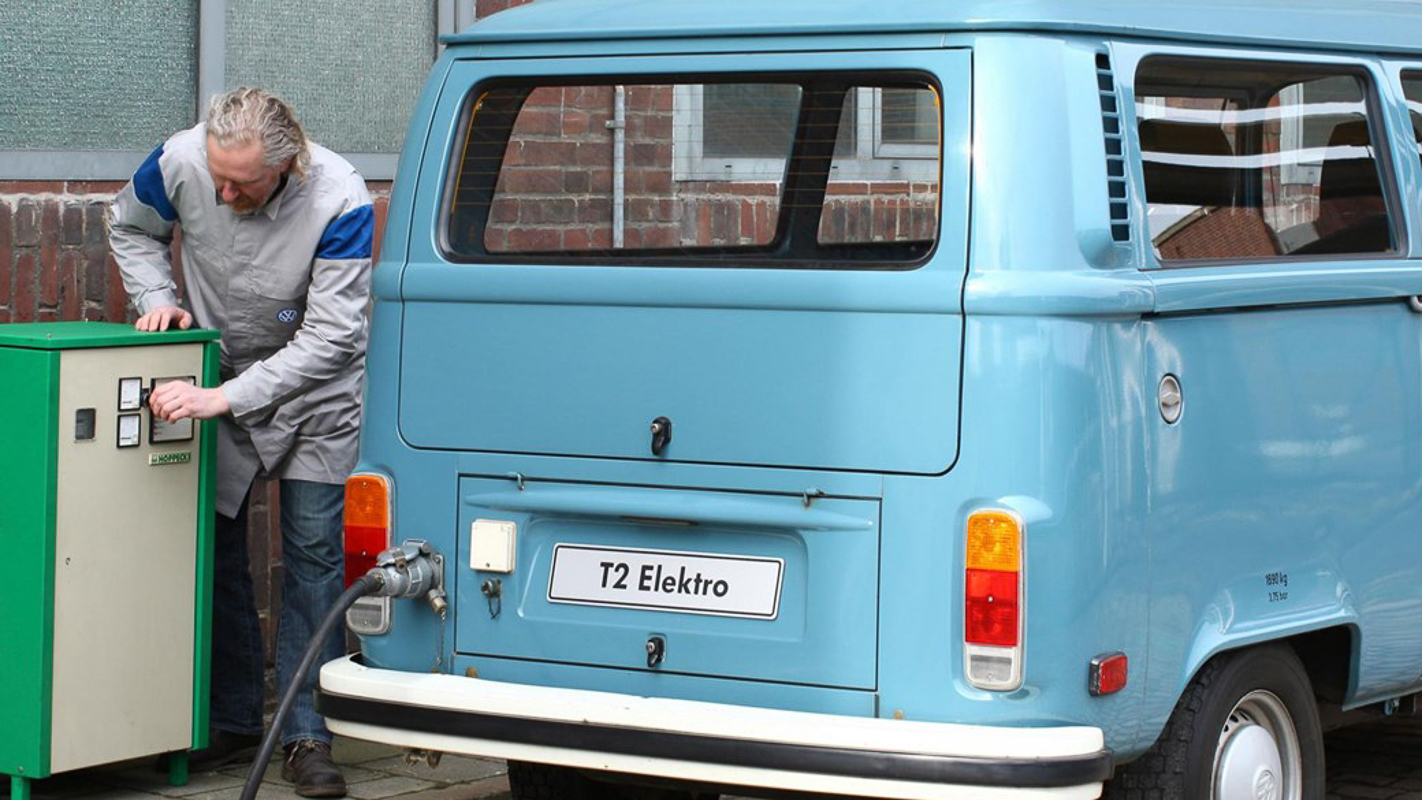
The T1’s split windscreen was replaced for 1967’s T2, dubbed the ‘bay window’ version, which also had a sliding side door as standard. In 1972 an electric version was available – four years before VW tried an electric Golf – although most Transporters retained a simple air-cooled petrol engine.
Liquid-cooling arrived in 1983, during the reign of the wider-bodied T3. The all-wheel-drive Syncro model turned out to offer desert racing potential.
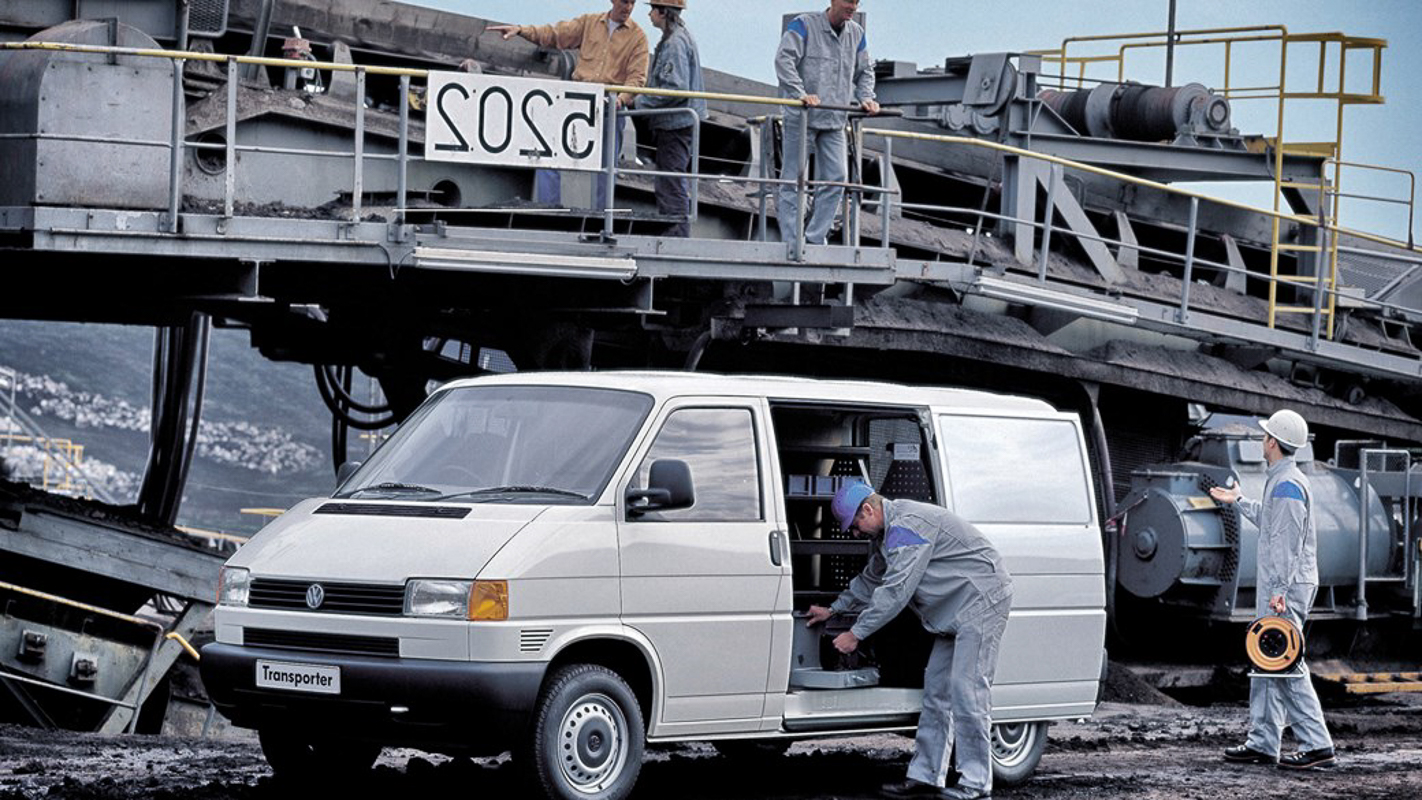
The biggest change came in 1990 with the T4, which kept the Transporter name but ditched everything else in favour of front engine and front-wheel drive. It was, however, still available in a wide variety of styles, including a custom-ready bare chassis, and a choice of wheelbases.
Present and future
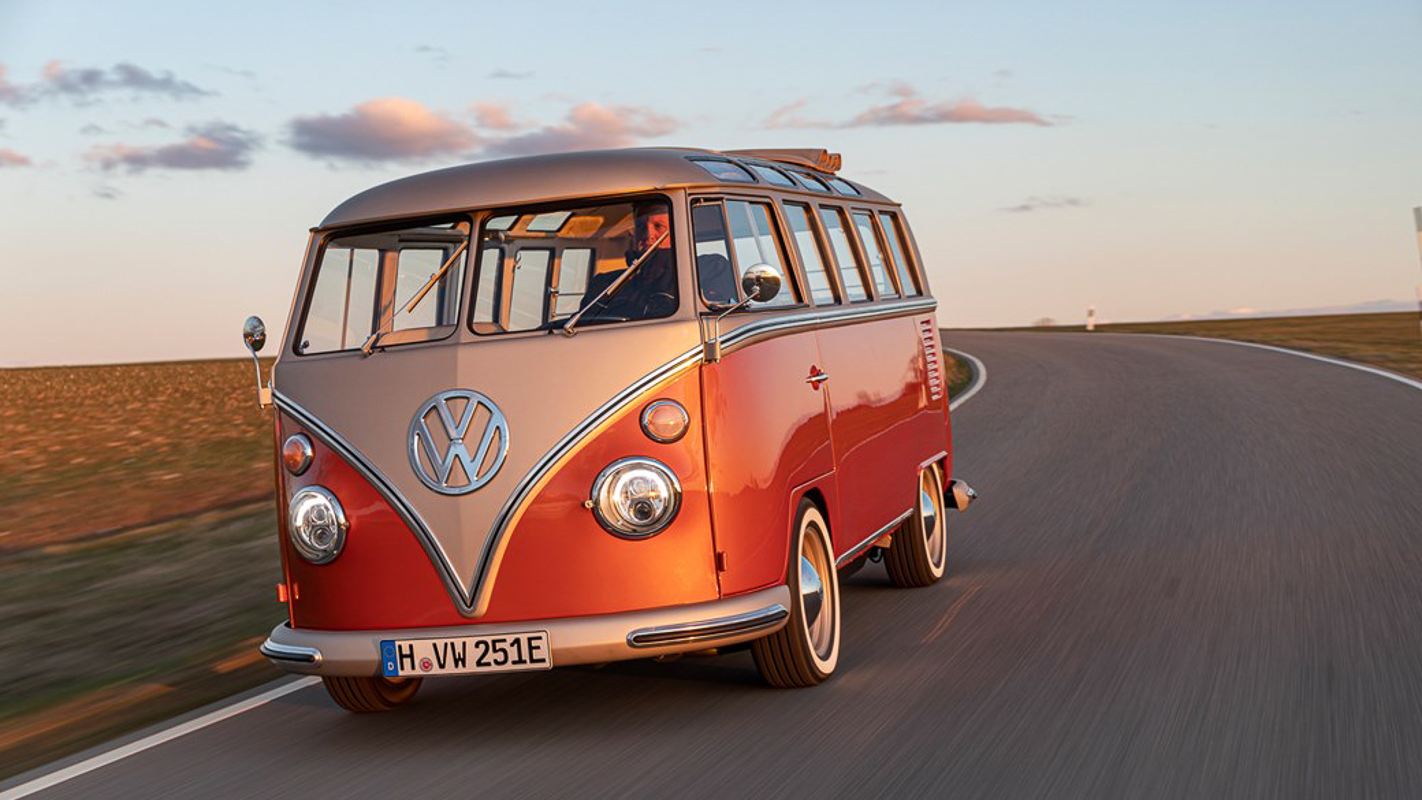
The current T6.1 arrived last year, with a digitally upgraded cabin. More intriguingly, VW has collaborated with conversion specialists eClassic on a retro electric T1 e-Bulli, and plans to offer an all-new ID Buzz Microbus built on the MEB all-electric platform in 2022.
Looks like the sun’s not going to set on the surfers’ favourite any time soon.
Click on the lead image at the top of this story for more photos of the VW Transporter through the ages.
This story was originally published on carmagazine.co.uk
There’s a reason the world knows The Corkscrew by name. It is, absolutely, one of the most technically difficult tests of a driver and a chassis in the world.
This review was originally published in MOTOR’s February 2012 issue
Its obstacles range from a high-speed, crooked braking zone that offers no forgiveness to the ill-positioned, to the utter invisibility of the left and right apexes, not to mention the demand to release the front end before you can get on the power again. It’s tough to get right in any car, much less a front-engined, rear-drive coupe based around a mass-production mid-sizer.
But the C63 AMG Black Series isn’t overly faithful to its humble C-Class beginnings; it took the better balance and front-end involvement of the C63, but then gave it more. Of everything.
The engine gets all SLS in its tech, including forged rods and pistons, a lightweight crankshaft and a new brain. It also gets more power, with 380kW of power and 620Nm of torque – an impressive amount of which arrives from surprisingly low revs for a non-turbo motor. It hooks this up to an even stronger version of the seven-speed auto-manual hybrid that is AMG’s stock ’box, which is essentially Benz’s seven-speed auto with an AMG clutch pack stuck on the end of it.
It gets bigger steel brakes, too, with six-piston calipers up front lurking inside 19-inch forged alloys that sit a long way further out than they do even in the C63 AMG. The body has been stretched 56mm wider at the front wheels and 84mm at the rear to help give the Black Series more lateral grip, and handling is further assisted by a set of coilover struts that feature six-click adjustment on both compression and rebound damping.
At 1635kg it’s not exactly light, and AMG needed to jettison the rear seats just to achieve even that. Yet it still manages to handle the dynamic challenges of The Corkscrew like it was born for it. And, in a way, it was.

As with all of its Black Series cars, AMG realises the C63 will spend much of its time on tracks, which makes the lack of carbon-ceramic rotors – even as an option – more puzzling. It doesn’t make it slower, though.
It’s a raucous, brutal, sophisticated and overwhelming sound the instant the 6.2-litre V8 fires up and things just get angrier and more brutal with each added speck of spinning speed. It fires to 100km/h in a claimed 4.2 seconds – only 0.08 seconds quicker than MOTOR eked out of the C63 in the December issue – but is capable of 3.9 on the stickier Dunlop rubber that comes with the Track package, while the Aerodynamics package sees a bigger front splitter and an enormous carbonfibre rear wing fitted.
Ours is a track-only test, but the Black Series is seriously impressive here. The noise is something to behold, even at idle, and it backs up the verbal barrage with fists of steel – running to a governed 300km/h given any straight much longer than a driveway.
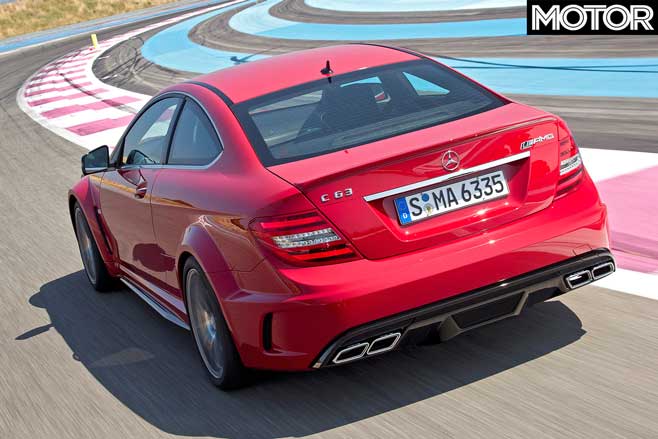
There’s a constant urgency to the Black Series that even the sparkling C63 can’t manage; it’s as though the car gets upset with you with any lift of the throttle in a straight line. It just wants to be hit hard all the time.
The gearshift is also quicker than it is in the C63, whipping through the cogs with a sudden craaack that reverberates through the entire car and blipping hard on each downshift. There are aluminium paddles behind the steering wheel, but most of the time you may as well just leave the car to do its own shifting so you can have time to appreciate the rest of it.
While the engine was always clearly the intended star of the show and the gearbox is its just-adequate companion, it’s the chassis that goes close to stealing the limelight. The first time you notice it is under brakes.
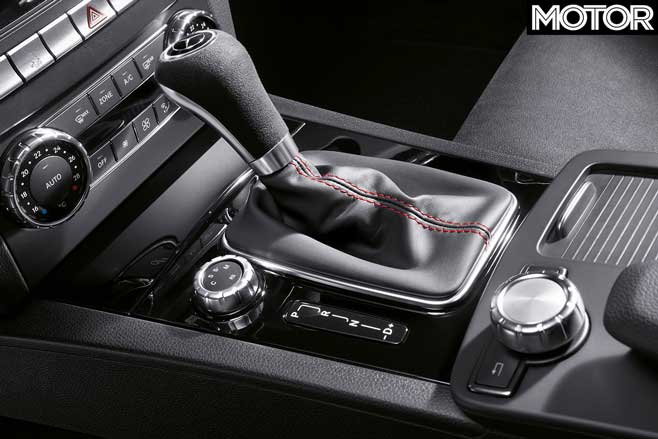
There is an assurance to the way the Black Series behaves at the front half of even the trickiest corner that builds a driver’s confidence. It’s partly due to the front-end overhaul of the C-Coupe, but it’s also got a lot to do with the 50 percent lockup the diff can deliver on deceleration. It just hunkers down into the road with barely any rear-end wiggle. The car’s data traces showed us hitting 100 percent braking force on every corner of the track, and that’s something that can only come with confidence.
Similarly, the steering feel from the front end carries over the C63’s intimacy, adding more grip and a sharper bite. It’s a better M3 than BMW can build right now and it’s so accurate that you can point its inside wheel at a single stone, even with the car fully loaded mid-corner, and feel the tyre move over it through the flat-topped and -bottomed steering wheel.
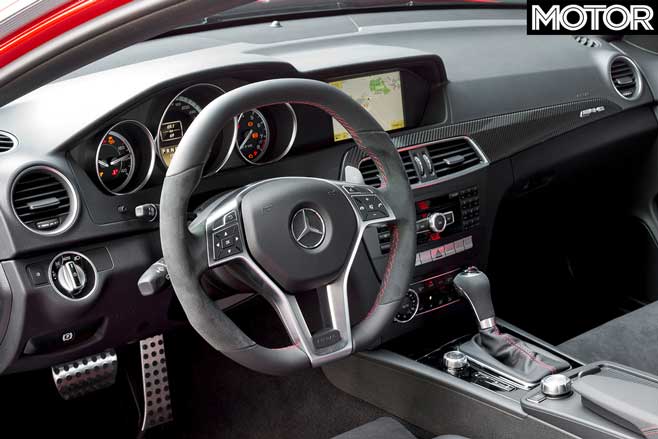
The seats hold you harder than a spider’s web on an errant fly and the car’s mid-corner behaviour is wonderfully fluid and integrated in a way past Black Series cars haven’t managed. It helps that the throttle is accurate enough that you can squeeze on exactly the right amount of power at exactly the right time, and its atmo nature comes through in its brilliant adjustability on long, sweeping corners. We pulled 1.37g out of the Black Series in the quick corners after The Corkscrew, pulled well over 1.1g under brakes and easily cranked out over 200km/h in three different places, not experiencing a single a trace of brake fade along the way.
Where Benzes – even quick ones from AMG – have been utterly adequate through a corner, the Black Series is utterly involving, fascinating, tantalising and inviting, only getting better with a series of corners.

It will happily powerslide its way through slower corners or just drive through them quickly, whichever you’d prefer. It will beg you to let it dance in faster corners; its cheerfully chatty front end forcing the turn, while the diff lets you play the throttle and its chest-wobbling sound continues as the tortured outside rear tyre still finds time to feed you precisely the information you need, precisely when you need it.
No matter how you look at it, the C63 AMG Black Series is fun. Simple as that. It’s just engagingly, outrageously and controllably fun.
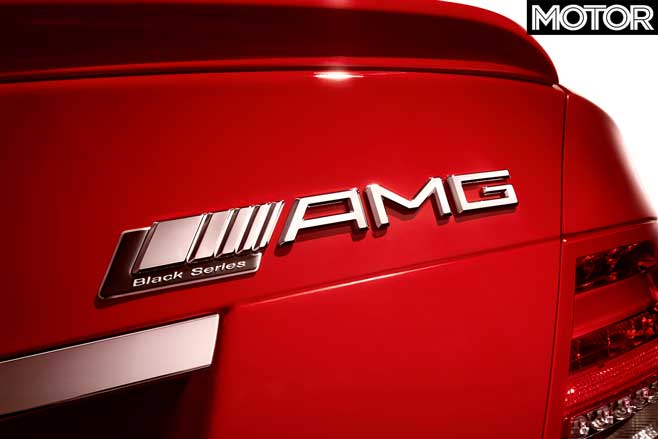
2012 Mercedes-Benz C63 AMG Black Series Specs BODY: 2-door, 2-seat coupe DRIVE: rear-wheel ENGINE: 6208cc V8, DOHC, 32v BORE/STROKE: 102.2 x 94.6mm COMPRESSION: 11.3:1 POWER: 380kW @ 6800rpm TORQUE: 620Nm @ 5200rpm WEIGHT: 1635kg POWER-TO- WEIGHT: 232kW/tonne TRANSMISSION: 7-speed automatic 0-100KM/H: 4.2sec (claimed) TOP SPEED: 300km/h (limited) SUSPENSION: multi-links, coil springs, anti-roll bar (f); multi-links, coil springs, anti-roll bar (r) L/W/h: 4764/1997/1388mm WHEELBASE: 2765mm TRACKS: 1614/1607mm (f/r) STEERING: power rack and pinion BRAKES: 390mm ventilated/drilled discs, six-piston calipers (f); 360mm ventilated/drilled discs, four-piston calipers (r) WHEELS: 19 x 9.0-inch (f), 19 x 9.5-inch (r) TYRES: 255/35ZR19 (f), 285/30ZR19 (r); Continental SportContact 5P PRICE: $245,000
PROS: Brilliant chassis, handling, seats, grunt, sound and user-friendliness CONS: A little heavy, 100K premium on base C63 model, still a bit thirsty RATING: 9 out of 10 stars
What makes the C63 AMG Black Series tick?

01 | Wider Stance Stretched 56mm at the front wheels and 84mm at the rear, the Black Series’ grip is even more oustanding than C63
02 | Chassis A front-end overhaul of the C63, along with the 50 percent lock-up the diff can deliver on lift-off, inspires more driver confidence
03 | Transmission AMG’s seven-speed auto-manual hybrid – now stock across the range – is essentially a stronger version of Benz’s automatic
03 | Styling Black Series features pronounced wide-body guards, unique front and rear bumpers and vented bonnet over C63
05 | Engine A 6.3-litre, 380kW/620Nm V8 lives beneath the Bavarian beast’s bonnet, and sounds the absolute biz via the AMG pipes
Unleash the racer within
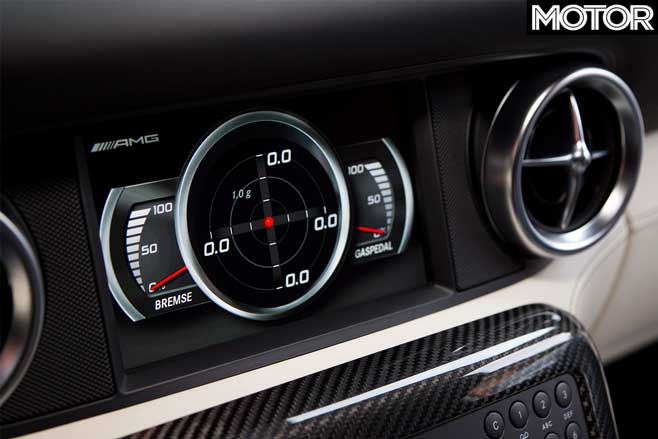
The only thing better than putting together a killer lap is being able to show it to someone. AMG introduced the Performance Media option on its SLS, but it’s now able to punch out data logging in the Black Series. It records everything for you, along with lap times, sector times, 0-100km/h times and more.
It’s perfect for bench racing, because it will learn whatever track you’re on and show you how you’ve gone. It’ll bring up your laps in order and is clever enough that you can use the car’s navigation dial to scroll your way around the lap. It’ll also show your time, braking and throttle percentages, speed, lateral acceleration and steering angle on the 178mm colour screen.
Welcome to WhichCar’s rolling coverage of the most unusual subject we’ve ever dealt with, the onset of the coronavirus COVID-19 pandemic.
It’s having a huge effect on the automotive, too, so we’re keeping you as up to date as we can in the light of the lightning-fast developments that are rolling out daily.
Our key social pages, including Wheels and WhichCar’s Facebook pages, will also keep you up to date.
Thursday 7 May – Thank you to everyone who has tuned into this updated-daily blog.
We’ve decided to stop daily updates on this one while we focus on our other rolling blogs, including our Travel in Australia page and our Best Car Deals page.
Monday 4 May
1300 – Porsche has announced it will resume its manufacturing across its German operations, where the Porsche 918 and 911 production lines are located.
Read the full Motor magazine story HERE
In the meantime, check out the action from Porsche’s first round of its Esports Supercup e-racing.
Saturday 2 May
1700 – Motorsport is in dire straights, with more and more series pushing back start dates and having to put on events behind locked doors. All series, that is, except for one.
You can read which series that is in this piece from Tim Robson.
1200 – An absolutely amazing stat from India overnight… the country of almost 1.4 billion people, who between them bought almost 4.4 million passenger and commercial cars in 2019, recorded not a single new car sale in India in April. None. Not a single, solitary unit.
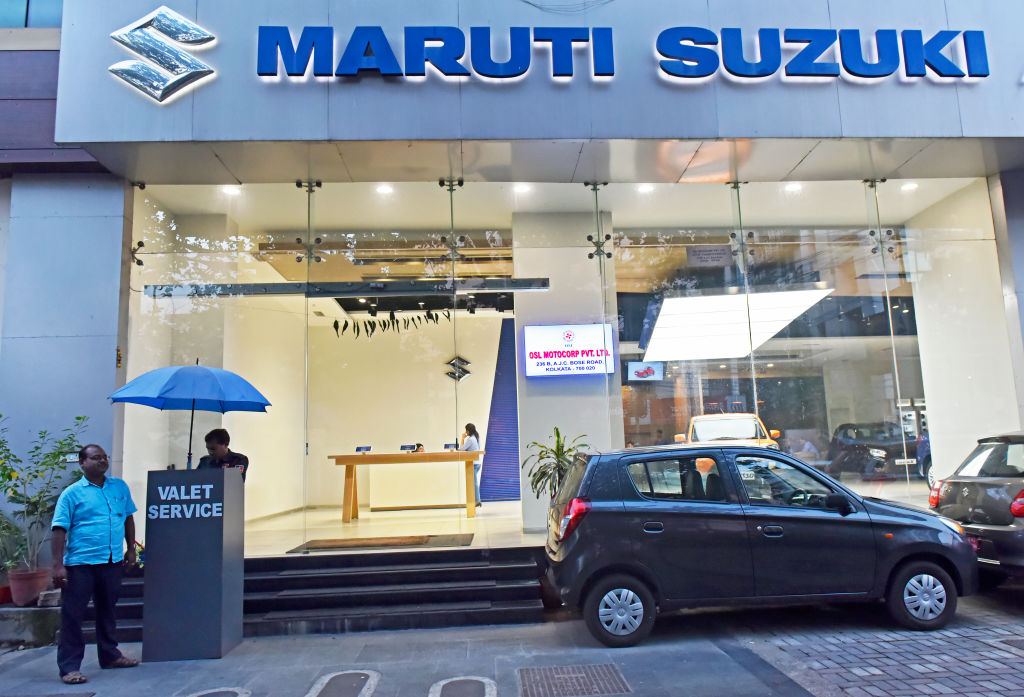
Thanks to a strict lockdown on both manufacturing and retail sales, the Indian industry – which has 42 brands – is in a state of complete paralysis, and is burning through a reported $500 million a day as it awaits restrictions to lift.
By way of comparison, the country saw around 320,000 four-wheeled vehicle sales in April 2019.
Early indications of huge losses for Australian importers, meanwhile, might prove to be unfounded, with feared declines of up to 70 per cent not materialising in early end-of-month data. We’ll have more on that subject during the week.
Friday 1 May
1500 – Lockdown trouble for a NASCAR racer during the week, as his daughter hits the wrong button on the remote, dumping him out of the lead of a race. Read more HERE
1430 – The US industry is sputtering back into life, with Mercedes-Benz turning the lights on again this week, and BMW set to follow suit next week.
However, Toyota has delayed its plans by a week, while VW has postponed opening its US plants indefinitely, as the death toll in the US tops 60,000 in just three months.
1330 – Not sure this is a great idea… though your author has an 18yo who failed his Ls by a single mark (not looking through an intersection) the day before retesting was cancelled by the state body, and would be perfectly okay to have him on the road.
1000 – Elon is at it again…
The eccentric founder of Tesla has been a vocal critic of the coronavirus pandemic and fought hard against the closure of the company’s San Francisco plant, and he’s keen to see the industry fire up again.
He also blew up at reporters about California’s stay-in-place laws.
“Frankly, I would call it forcibly imprisoning people in their homes against all their constitutional rights, in my opinion,” he said on an earnings call last night. “Breaking peoples’ freedoms in ways that are horrible and wrong and not why people came to America or built this country. What the f$$k?”
His provocative outburst comes on the back of reports of a third-straight profit period for the EV maker. Read the full story HERE.
Wednesday 29 April
0800 – It might not be exactly the news some Ford fans were hoping for, but the Blue Oval has restarted a small manufacturing operation in Australia, not to resurrect the Falcon or Territory, but in support of health professionals and the fight against COVID-19.
As the world struggles to meet the demand for essential personal protective equipment, Ford has allocated resources at its Broadmeadows facility in Melbourne’s north to manufacture up to 100,000 face shields. Read the full story HERE
Tuesday 28 April
1200 – Triple Eight Race Engineering has taken a vital second step towards the production of a new style of easy-to-use ventilator with genuine racing car tech onboard.
Monday 27 April
2200 – Factories across Europe are slowly returning to life, with measures in place to protect its workforce.
How slowly? Toyota’s Yaris plant in Valenciennes, France, can build 1000 cars a day – but output of the plant currently stands at 50 a day.
Volkswagen, meanwhile, has restarted production of its ID3 electric hatch in Zwickau, Germany, while Hyundai has been back of the thick of things since April 6, when it fired up its Sportage plant in Slovakia, followed a week later by its i30 facility in the Czech Republic.
1700 – F1 has announced that it will start its season on July 5 in Austria, and will attempt to run a season of at least 15 races. It’s expected that the first couple of events will be run in front of empty grandstands.
“We’re targeting a start to racing in Europe through July, August and beginning of September, with the first race taking place in Austria on 3-5 July weekend,” said F1 boss Chase Carey in a statement.
“September, October and November, would see us race in Eurasia, Asia and the Americas, finishing the season in the Gulf in December with Bahrain before the traditional finale in Abu Dhabi, having completed between 15-18 races.”
Local motorsport sources suggest that the Australian Grand Prix won’t return in 2020, but could potentially stage a double-header 2020 season closer/2021 season opener in March next year.
0900 – Ferrari has consulted virologists and experts to provide a safe working environment for the resumption of production in Covid-19-ravaged Italy.
The reopening of the Maranello factory and Modena offices will include a voluntary screening of Ferrari employees with blood tests, while each worker is offered the opportunity to use an app to receive medical support in monitoring the symptoms of the virus.The app works in a similar way to the one being rolled out here; f a member of the population under analysis tests positive for Covid-19, their contacts can be tracked via the app.Any employee who tests positive for Covid-19 will receive special free insurance cover as well as accommodation suitable for self-isolation, with medical and nursing support at home, along with the support of medical equipment (such as medicines, oximeter and, in case of emergency, oxygen).
Sunday 26 April
Movement within state and territory governments around loosening some of the restrictions around meeting and movement, with the key change being in Queensland.
From next weekend, people will be able to take drives up to 50km from home, while picnics and shopping trips are back on the agenda.
However, NSW and Victoria are sticking by a mid-May timeline, with leaders suggesting that the regulations in their respective states aren’t as strict. Read our updated travel blog HERE
Friday 24 April
1800 – news late today via Forbes that Formula 1 has managed to raise US$1.4 billion ($2 billion) in operating capital by selling a large stake of its event promotion business Live Nation to digital radio giant SiriusXM.
The fundraising will not only help F1 keep circling bankers at bay, but it will allow it to absorb a potential loss of event fees from cancelled and postponed 2020 races of close to a billion dollars.
The report also suggests that the sport has forwarded prizemoney to teams, even though it’s under no obligation to do so. This will help struggling outfits like Williams, who recently mortgaged the farm to the father of one of its drivers.
1200 – Wondering if you have to pay rego while you’re under lockdown? Could you get a break on your insurance, perhaps? And what about your poor car – is it okay out there in the street?
A lot has changed in a few short weeks, so we’ve tried to round up the answers to the questions you might have in this advice piece.
Thursday 23 April
0800 – A World Health Organisation vehicle has come under fire in Myanmar (formerly Burma), with the driver killed and a government official injured in the attack.
It’s been reported that the car was carrying coronavirus samples at the time of the attack.
“Unfortunately, we are seeing cases of attacks on doctors, on nurses, security personnel and all those who are assisting in testing, tracing contacts and enforcing physical distancing measures to stop COVID19,” said Dr Poonam Khetrapal Singh, the regional director of WHO in South-East Asia.
“As they deliver essential lifesaving services, our health workforce deserves gratitude, respect, appreciation and support for their selfless services.”
Wednesday 22 April
1500 – Hyundai has announced that it’ll offer Aussie health care workers a fifty per cent discount on scheduled servicing until the end of May.
The deal is available to all health care workers who present a badge or other form of ID at their dealership when booking a service, and will include all parts and fluids listed in the service schedule.
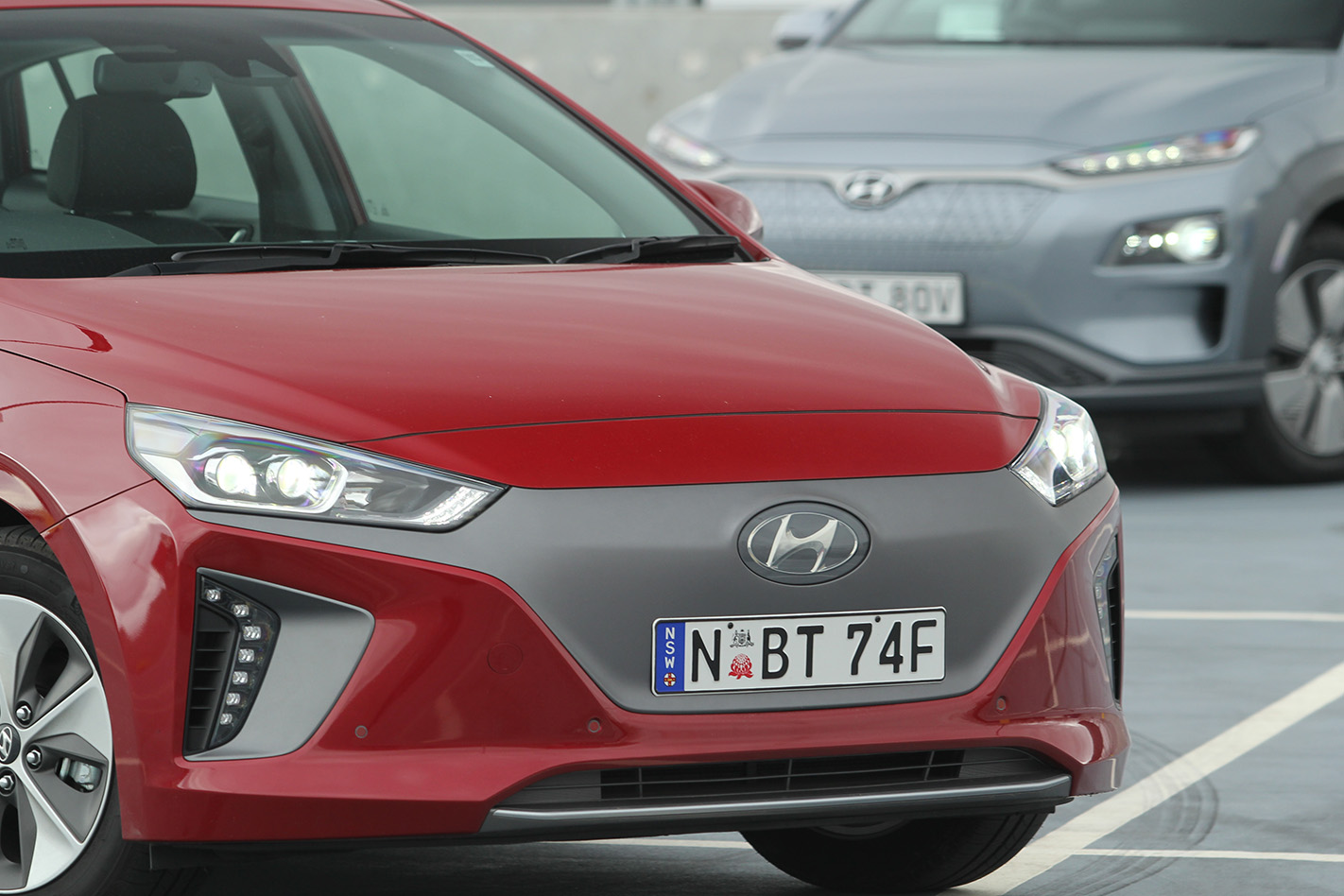
“This program is designed to offer something back to the many workers across the country that are at the front line of the battle against the Coronavirus,” said the company in a statement.
Tuesday 21 April
1200 – Engineering experts are suggesting that the now-defunct car manufacturing industry has a role to play in ‘crisis engineering’, as the wider car industry pivots to the manufacture of specialist medical supplies. Read David Bonnici’s story HERE
0930 – Oil prices have hit unprecedented levels, with buyers paying sellers to take excess stocks of crude oil. With demand plummeting and storage sites close to full, a barrel of oil fell to figures near -$50 AUD a barrel. Read our story HERE
It lines up nicely with Tony O’Kane’s piece yesterday about the shifting battle between combustion-engined cars and their EV counterparts, and how the balance has shifted in favour of ICE again.
0900 – With Virgin Australia appointing administrators today, where does this leave the airline’s title sponsorship of the Supercars series? Given some numbers that have surfaced around the sponsorship deal itself – which expires at the end of 2020 – it won’t impact things too much.
Its role as the title sponsor of the series is reported to be worth just $1.5m a year, with the balance of the deal provided in contra travel to series organisers and teams.
Monday 20 April
0900 – An unexpected wrinkle for US carmakers has come in the form of a tornado that ripped through a Borg-Warner factory in the south of the country last week, destroying the building and killing a security guard.
The plant in South Carolina produces transfer cases for AWD and 4×4 vehicles for car companies including Ford and Toyota. Salvage teams are on-site inspecting the damage to the building, which was shuttered due to the coronavirus pandemic.
It puts added pressure on disrupted supply chains which are key to the operation of a car factory. Parts are supplied to factories on a ‘just-in-time’ basis, but with the closure of many smaller suppliers and transport companies, these chains are in danger of being irreparably broken in the short to medium term.
Sunday 19 April
1300 – It seems while banks and other financial institutions are helping clients by pausing payments, most car insurers are not interested in doing the same.
A quick straw poll of the country’s major insurers, including NRMA, Shannons/GIO and Allianz shows that none offer any way to pause car insurance policies, despite the huge loss of employment across Australia, while a single insurer – Youi – is offering a 15 per cent reduction to current clients.
0900 – Volvo will start building cars again from Monday. Its Belgian plant in Ghent (below) has been offline since 13 March, costing the company millions of dollars and about 23,000 lost production slots for XC40s and V60s, while its Skovde plant in Sweden will also resume production of XC90s and XC60s.
It’s the first car company to fire up its plants, but its position of ‘produce or the economy is damned’ is an interesting one. Sweden is one of the few countries in the world that has not resorted to social distancing, and its death toll of 1511 looks as if it’ll climb further yet.
A spokesperson says that Volvo will build only cars that have been ordered for markets like China, which is starting to show signs that consumers are spending again.
Saturday 18 April
1200 – If the kids are driving you a bit mad, give them a pile of colouring-in to do! We’ve pulled together a bunch of cool pics from across the car-maker spectrum to print out and distribute to your little monsters.
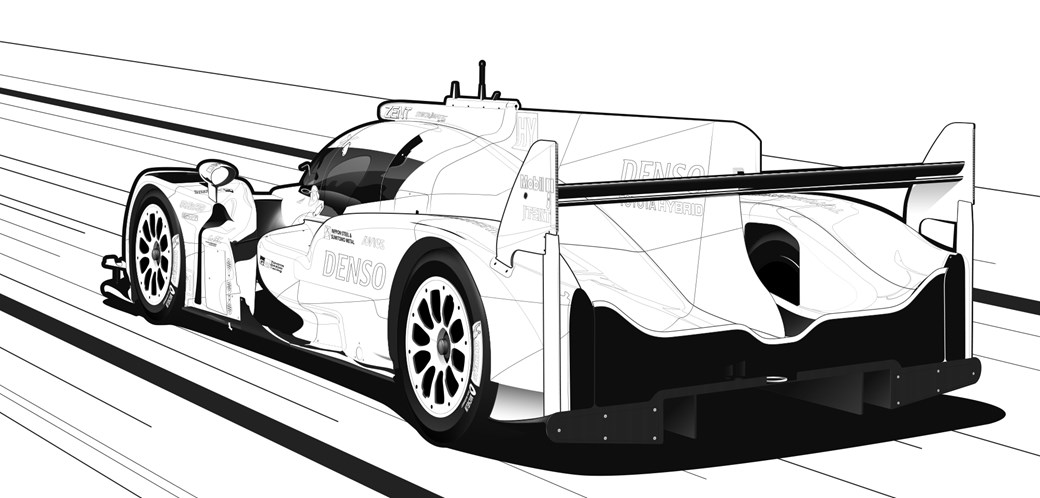
0700 – Will the huge upheaval of the current coronavirus change the way that we look at our cars? Will we use them more or less? On one side, the long-awaited but oft-delayed notion of telecommuting has been thrust upon us, rendering our highways and byways underutilised and virtually deserted.
And now that the issues that seemed so insurmountable to working from home just a few years ago seem to have all but disappeared, what does that mean for the future of commuting?
Equally, for those whose roles who don’t allow them to work from home… how ready will they be to ride on public transport again? Will they look at the car as a way to secure themselves in an uncertain future?
And what of the experience of buying and owning a car? The coronavirus shutdown means that businesses need to quickly pivot to new models in order to survive, and car companies are no different – and the ones who work out the best way to serve our new needs will be the ones who will recover the quickest from this once-in-a-lifetime event./Tim Robson
Friday 17 April
1700 – Stories are emerging of delays to automotive releases as the COVID-19 industry slowdown rolls on. Jeep’s long-awaited new Grand Cherokee will fall behind by a few months, for example, while Volvo execs have suggested that the need to switch suppliers will delay production briefly.
Volkswagen has also suggested in the German media that its operating profit for the first quarter is likely to fall by a staggering 81 per cent.
1200 – Looks like the animals are getting wiser…
Thursday 16 April
1300 – I reckon the Scottish coppers are onto something here…
1220 – As US companies start to look at ways to fire up production lines, Ford is experimenting with bracelets that are designed to buzz if the wearers cross social distancing thresholds.
The bracelets are being trialled by 50 workers at Ford’s plant in Plymouth, Michigan, and are designed to buzz if workers cross into the six-foot (2m) zone that the US government is recommending.
Taking thermal-imaging temperature readings of all workers entering any Ford facilities are also being discussed, while face masks and in some cases, face shields – made by Ford itself -will be issued
0900 – A group of teenagers in Afghanistan have come up with a working ventilator prototype for COVID-19 patients which costs less than US$300 ($500) to make, and uses parts from a Toyota Corolla to make.
The Afghan Dreamers girl’s robotic team is financed by a local tech entrepreneur, who tasked them to come up with a viable prototype to help the war-ravaged country combat the influx of COVID-19 cases. The country has just two hospitals designated to work with coronavirus cases, and they have 12 ventilators between them.
“We discussed our design with a professor from MIT, and sent it, based on the MIT prototype, using Toyota Corolla parts. He (the professor) was so surprised and wrote back to us saying that it was a clever design but would need to see if the system worked,” Roya Mahboob, the group’s founder (above middle), explains.
“What we are hoping, is that with the help of MIT we will be able to improve our model and make it ready for actual use by the end of May or June.”
Australian racing teams have been designing similar devices and making their designs open-source.
Wednesday 15 April
0800 – European-based car companies are starting to slowly turn some lights back on, as reports emerge that the region will see a potential downturn in sales this year of three million cars.
Audi, for example, has fired up its engine plant in Gyoer, Hungary, though only 100 workers on a single shift have been rostered on to work in one of the world’s biggest engine plants.
Hyundai, meanwhile, is reportedly looking to fire up its Czech Republic plant next week.
Interestingly, Volkswagen kept at least 100 people who were integral to keeping supply chains open on its books, which may pay dividends as it looks to bring its big plants back on stream.
Tuesday 14 April
1500 – Distressing stories of a seemingly zero-tolerance policy around being out of home without a valid reason are emerging, with a man describing to The Guardian how he, after losing his job, spending two week’s straight filing job applications and worrying about how to pay his mortgage, was fined $1000 in NSW for stopping in his car to drink a coffee and smoke a cigarette in an unpopulated area.
“His exact words to me were ‘if you keep this up, it’s a great way to become poor’,” said the man. Social distancing is working to defeat the spread of the virus – but is it coming at the expense of humanity?
1000 – Data sets around our collective time in a travel-restricted state of being are starting to emerge, and despite a lack of traffic on the roads, it appears we are still finding new and unique ways to die on the roads.
David Bonnici examined the stats and filed this great analysis.
Monday 13 April
1500 – An industry expert in the US has suggested that the car industry will need to cooperate in order to come back online, after the unprecedented site shutdowns across the US and Europe.
With more than 50 major plants in downtime mode at present, sourcing raw materials, the financial status of smaller suppliers and even the state of the transport industry will all play a part in how the industry fires back up.
As well, simple things – like how workers clock on for work under new cleanliness rules, or whether a parts supplier has gone out of business without the backup of a car company contract – could prove to be stumbling blocks to an orderly comeback to production.
0900 – So we move into another week of our new normal, but I reckon we are doing it under clearer, bluer skies!
We’re working on a story that will come out later in the month around how much less pollution has been produced while we’ve all been grounded – but some early numbers make for interesting reading.
For example, the Australia Institute reckons that 10 million tonnes of CO2 will be kept from the atmosphere this year just in the reduction of jet travel alone.
Read the rest of my brain wanderings around what our car-driving future might look like HERE./Tim Robson
Sunday 12 April
1630 – hopefully WhicCar TV was part of your Sunday afternoon iso viewing. If not, catch up on our Behind The Scenes piece here. You can also watch full eps on Ten’s TenPlay app, or click through here to check out our TV content page.
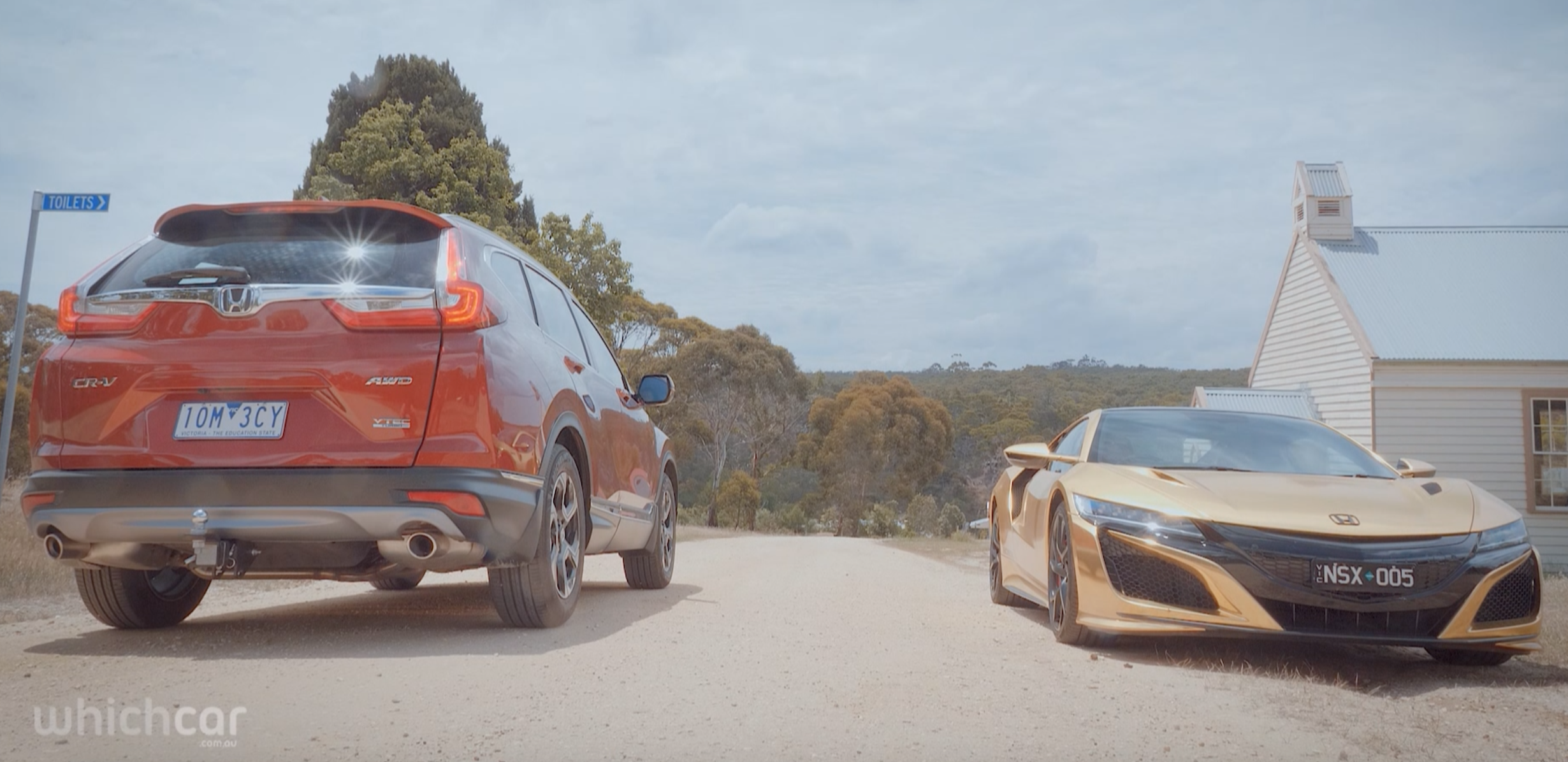
0900 – Hard to believe, but another 19 people have been ticketed after 40 cars broke into a reserve near Newcastle in NSW for an illicit burnout meet. The cops weren’t best pleased – read our updated story here.
Saturday 11 April
1900 – A light-hearted spot from Jeep starring Bill Murray has surfaced in the US, urging people to stay home.
1730 – Reports from the Queensland border this afternoon suggest that more than 500 motorists have been turned back from the NSW/Queensland border, after tougher new travel restrictions came into place at midnight.
Every person in each car now must have a permit to enter Queensland, or they will find themselves denied entry.
Aussies are responding to the unprecedented Easter holiday conditions, though, by camping out in their own backyards. A call-out on social media has thousands of families pitching a tent and cooking a snag in the privacy of their own homes.
Pic – Adam Laws
1200 – Dallara, which builds racing car chassis for various international series including IndyCar, is joining a host of other private businesses in the fight against COVID-19.
Inside its factory, Dallara staff are using cutting tables normally reserved to cut carbon fibre cloth for race cars to prepare materials that will be used for face masks and gowns.
The materials are first delivered to the factory from an outside vendor. Then, the Dallara staff cuts them for masks and gowns as needed.
“We need to be very active in everything we can to help, first of all, the medical cause and doctors, nurses and everyone involved, to fight this battle,” said Stefano dePonti, the ceo and general manager of Dallara USA.
“As soon as this virus is defeated, the better for everybody. So, if we cannot properly build race car parts, let’s do something that can help the community and move it forward with the hope that this will help many people that, right now, are suffering.”
Good Friday 10 April
1200 – Easter travel restrictions in Australia (updated)
There are no significant changes to the existing restrictions that apply to the Easter long weekend, but the message is the same – it’s highly recommended that we all stay home.
There are some subtleties – for example, the NSW Police Commissioner Mick Fuller has said that visiting other people for “caring reasons” is permitted, within reason.
“We have to look after each other, but don’t take the whole family with you,” he told media. “Don’t take your grandparents.”
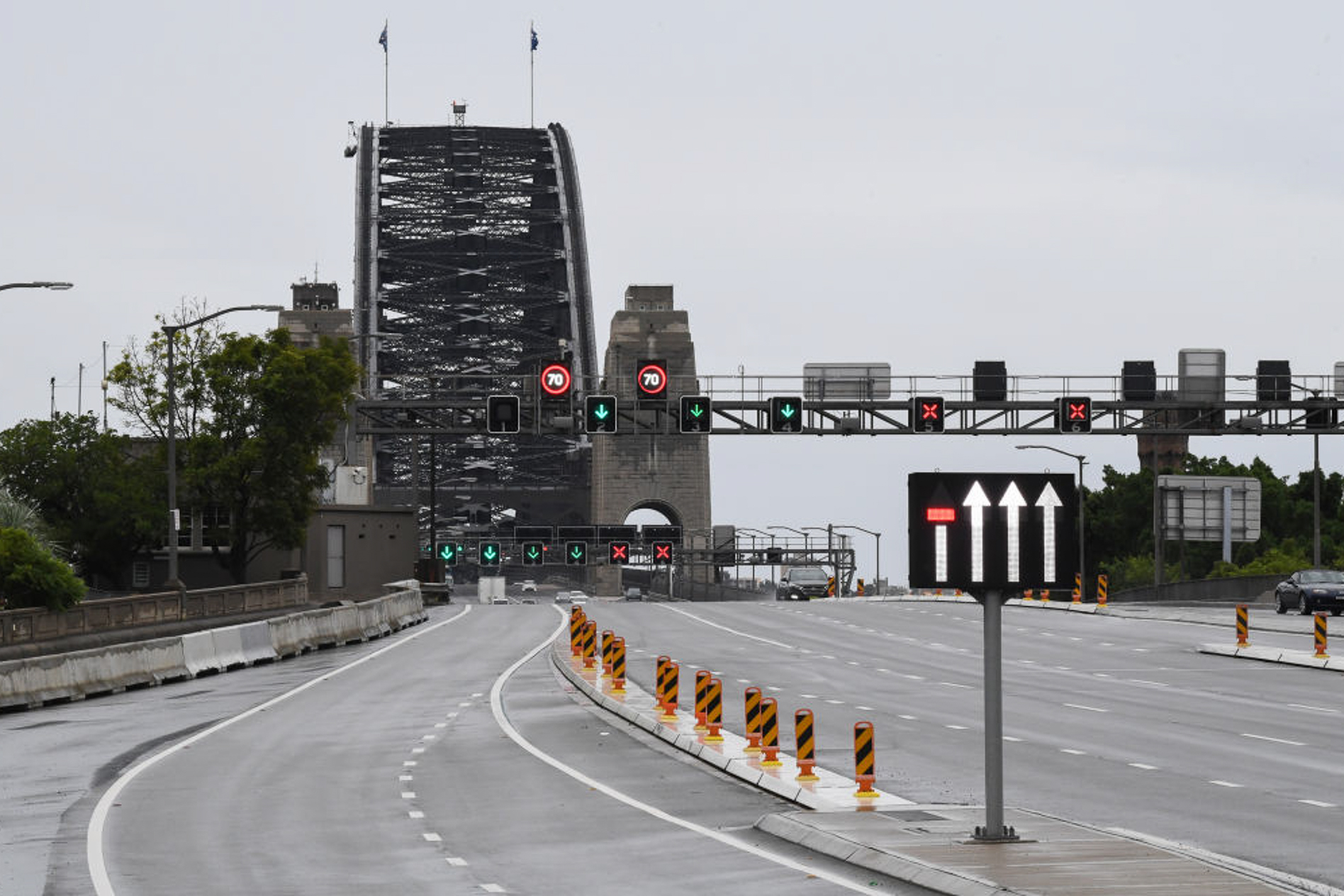
Sydney Harbour Bridge
Tasmanian police have announced that they, however, will be deploying aerial patrols to ensure compliance with travel restrictions, while Western Australian travel will be restricted to the nine zones implemented last week and the borders locked.
And while WA residents may visit partners that don’t live with them, social distancing is expected to be observed.
In ACT and Queensland, up to two people are allowed to visit a household, but again, social distancing between all is a requirement.
Police around the country have been actively enforcing social distancing and travel bans, with Queensland police fining a large number of people who attended a car meet last weekend. Victorian police also fined a learner driver for being out of home during the week, before the deputy commissioner reversed the decision.
In short, unless you’ve got an iron-clad reason to do so, it might be wise to just stay home this Easter.
Thursday 9 April
1730 – Nissan Australia is still planning to launch its all-new Juke small SUV before the middle of the year, despite confusion and uncertainty over whether restrictions will lift sufficiently.
With cars on the water, the company will plan for various contingencies to release the first all-new car from the embattled brand since the 2015 Navara.
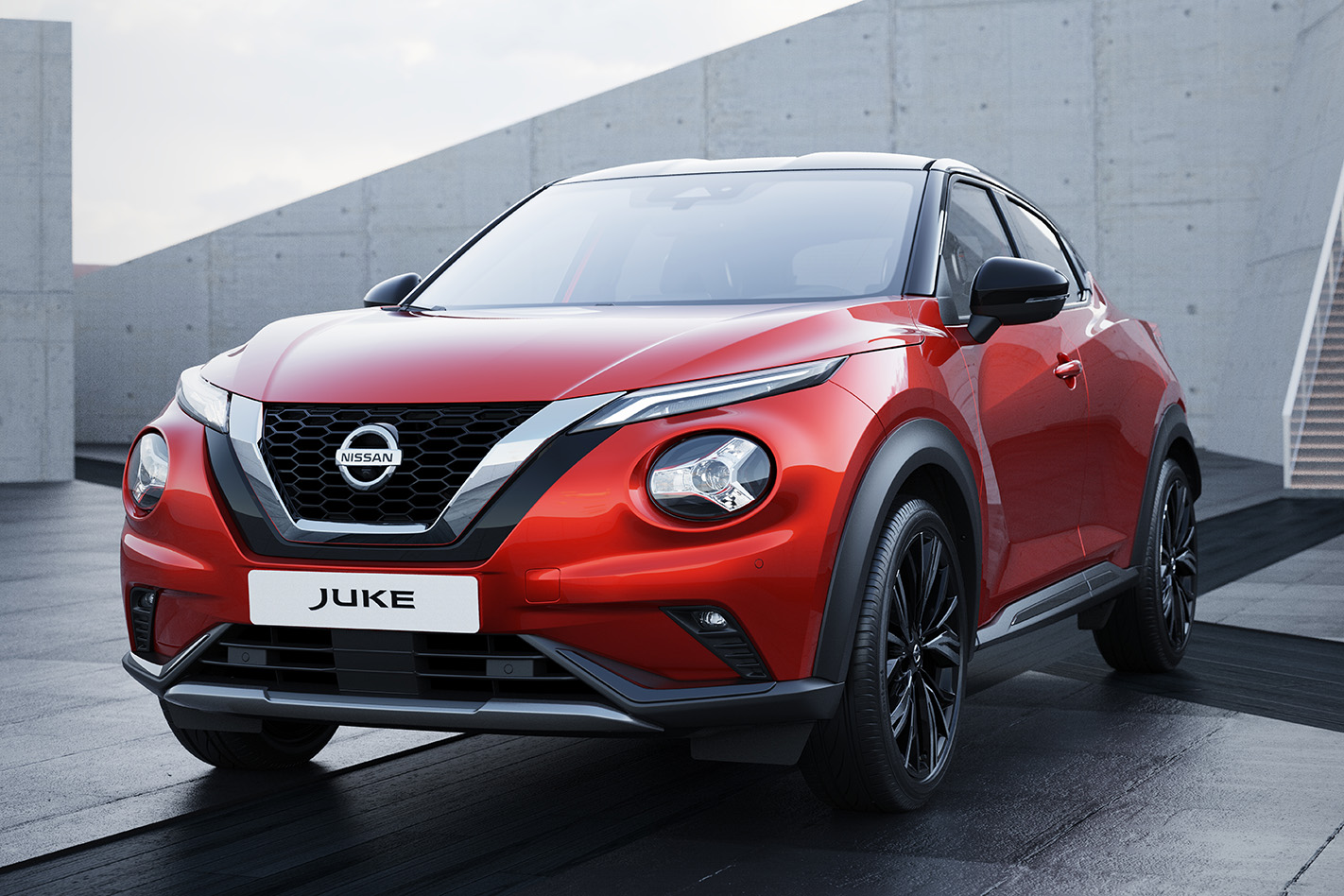
Other brands have been forced to completely reset the way they launch new cars. Audi and Volkswagen have provided limited solo access to new cars like the Audi Q7 update, Q3 Fastback and the forthcoming T-Cross.
1200 – Don’t think for a second our magazines are slowing down despite the restrictions on our movements. Motor magazine has just pushed under amazing issue out to the printers – check out a preview HERE.
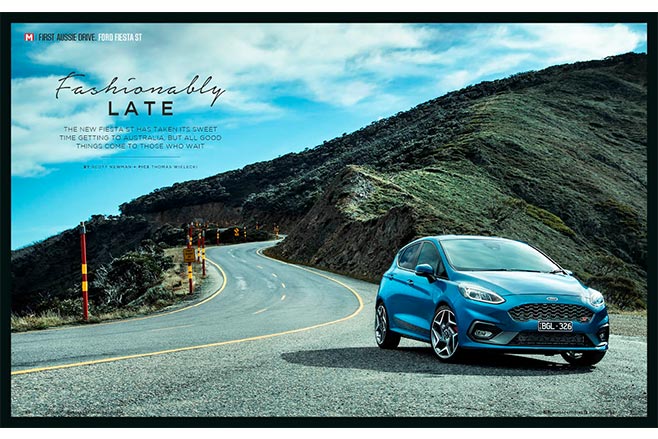
0930 – Canadian car dealers have been threatened with police prosecution if they don’t stop offering test drives for customers, reports Automotive News Canada.
Dealers are attempting to side-step the closure of their businesses – deemed non-essential by the Toronto area’s provincial government – by taking cars to customer’s houses for the purpose of a test drive.
Wednesday 8 April
2100 – As the automotive industry slowdown rumbles on, it’s becoming clear that not every brand will make it out the other end of the crisis intact – or even at all.
Reports from the US suggest that brands like Nissan will struggle badly in its current form, with plans to restructure the brand in the US scuppered by the COVID-19 outbreak.
More than 10,000 Nissan employees have been sent home without pay, a practice that’s known as furloughing in the US.
Tesla has also announced salary cuts and employee furloughs, which will extend at least until May. These salary cuts – 30 per cent for presidents, 20 per cent for VPs and 10 per cent for workers – are likely to extend to employees outside the US.
As well, Aston Martin has been forced to draw on high-interest loans to keep itself solvent, despite a more-than half a billion dollars (AUD) cash injection from its new investor, Lawrence Stroll.
Despite this cash infusion, the beleaguered British carmaker’s share price plunged to its lowest level ever this week. Read the story HERE.
1500 – Volkswagen has taken the experiences learned in pre-selling its incoming T-Cross SUV and applied to a new online sales site for the wider business.
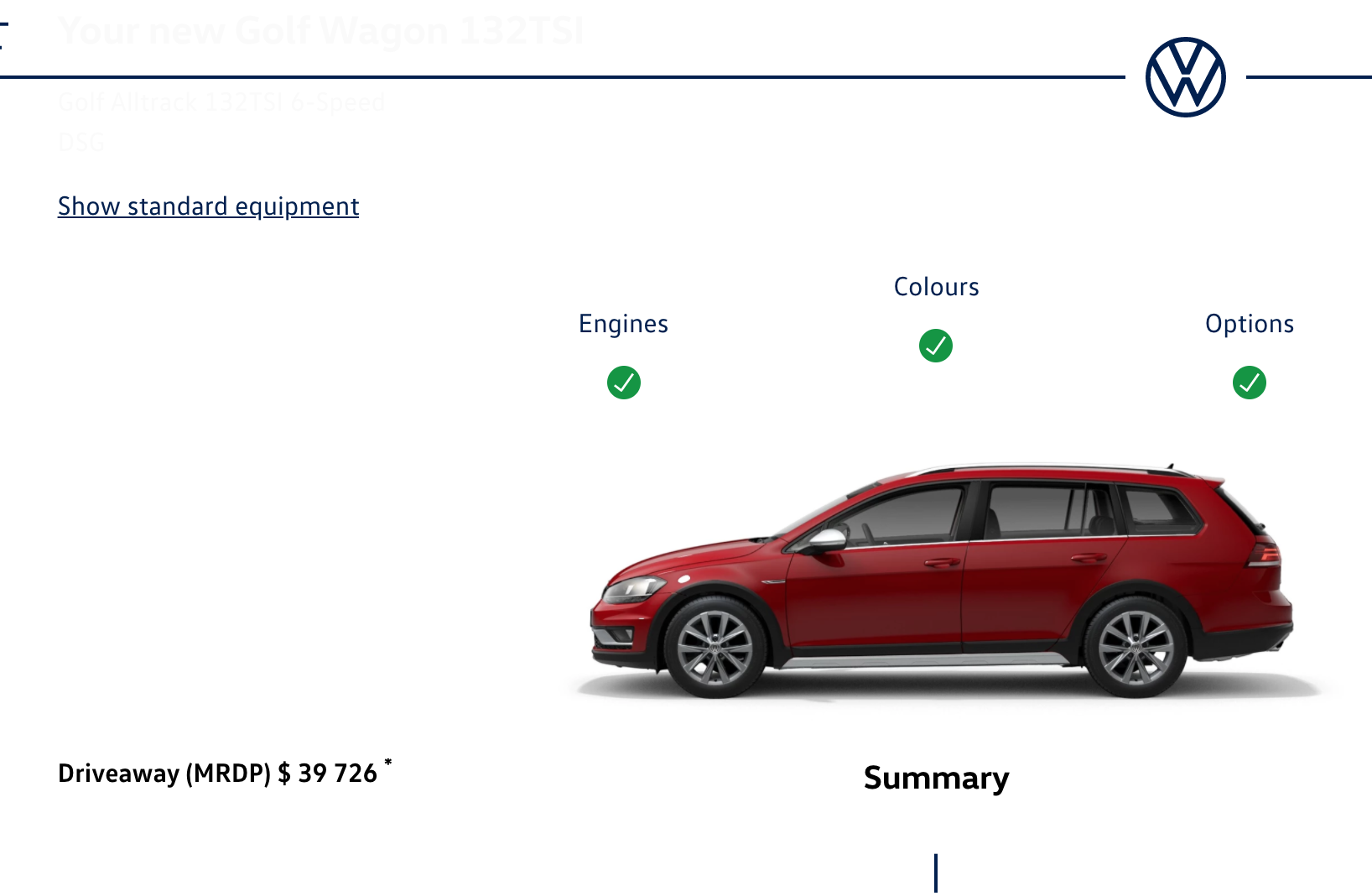
It allows customers to go right through the process of picking a car, adding extras and taking a deposit on a drive-away price, before assigning you to a nearby dealer to make the final collection arrangements within two days.
We’ll bring you a full story about the new world of car buying over the Easter break.
0800 – The Canadian Grand Prix joins the ranks of postponed Formula 1 races in the 2020 season, putting the rest of the season in real jeopardy. The F1 community is largely based in the UK, and the British Grand Prix coincides with the 70th anniversary of the first-ever F1 race – but will the world be ready by July 19 to go racing again?
And more importantly, will all the teams be able to take part? Read Wheel’s story about the state of the F1 paddock HERE
Tuesday April 7
1730 – Amazing news from Ford in the US, where its workers in Plymouth, Michigan have churned out one million face masks in just 13 days.
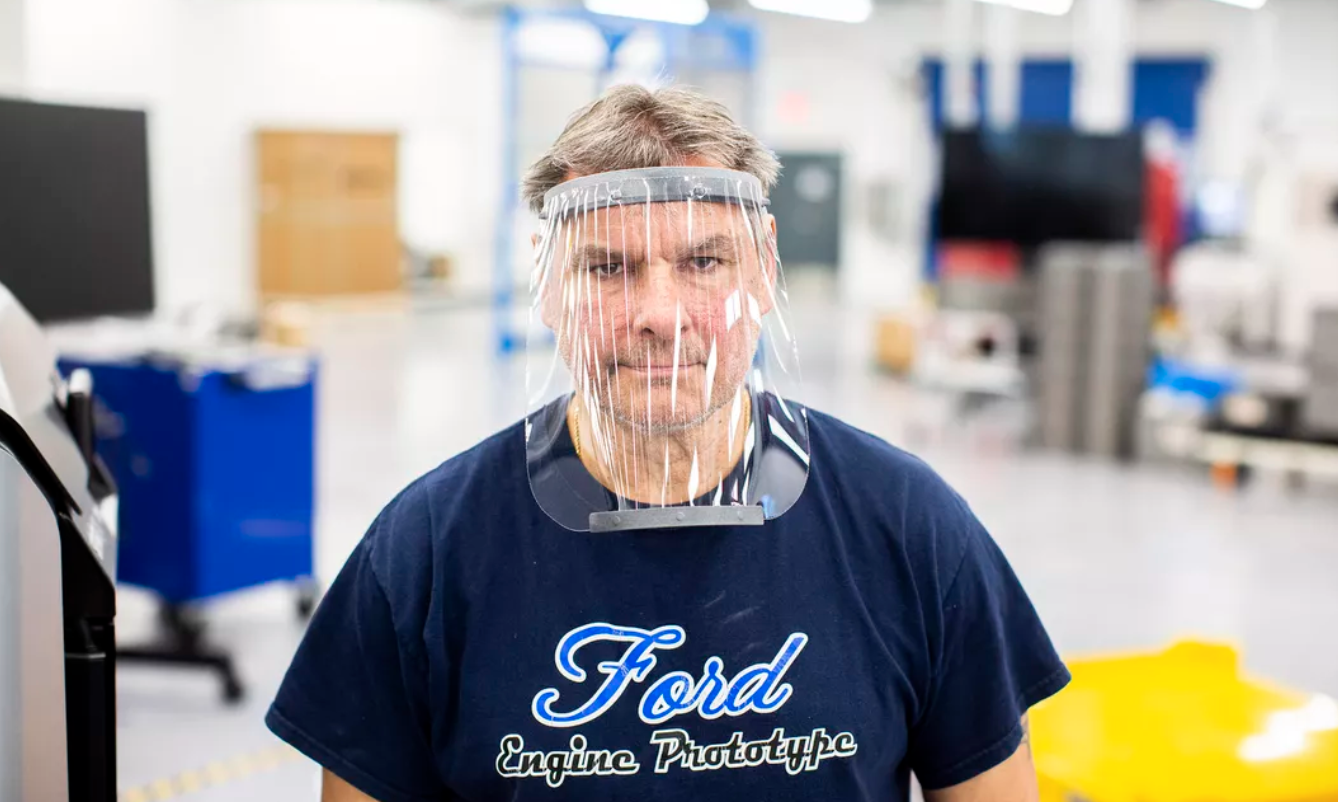
The numbers are quite amazing; from day one on March 13 where Ford workers assembled 1000 masks, they now make one mask every ten seconds, with seven-day shifts now churning out 200,000 hand-made face shields a day.
1400 – In the wake of the controversy over the learner driver fines and the general sense of uncertainty over driving at all, the lads at Motor have a message for you – just don’t do it.
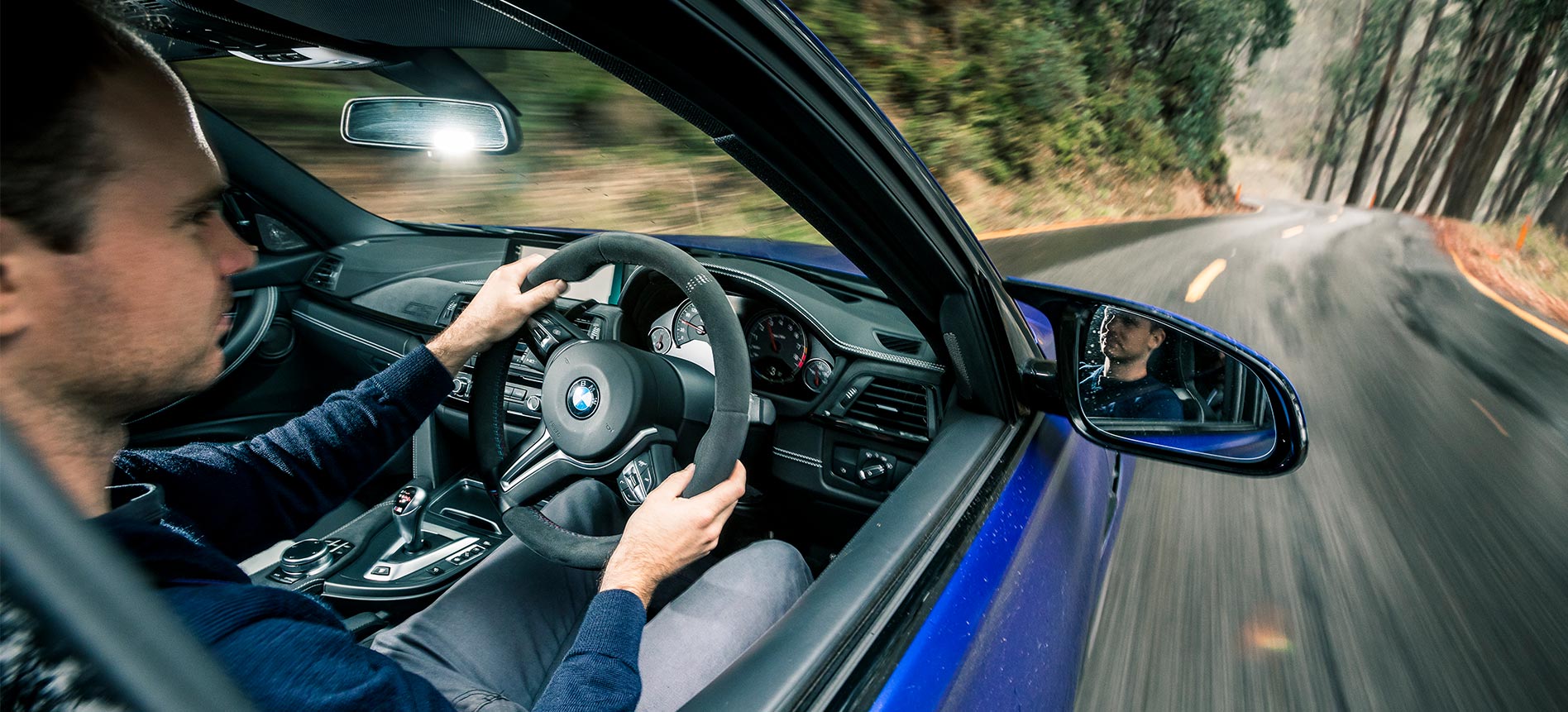
1100 – The fine for the Victorian learner caught breaking COVID-19 travel restriction rules has been rescinded by Victoria’s deputy police commissioner.
“It has highlighted a significant issue in terms of something that needed clarity,” Patton said on Melbourne radio station 3AW on Tuesday.
“Undertaking a driving lesson by itself, to simply go off and drive out somewhere … with your parent, you’re not able to do it. t doesn’t sit neatly with any of those permitted exemptions.”
Monday April 6
1810 – Hyundai extends warranties that expire between March 1 and May 30 2020
Hyundai has launched its CARE warranty extension policy, which aims to support customers who may face difficulties in getting vehicle repairs due to restricted access to service centres during the COVID-19 pandemic.
All Hyundai passenger vehicles with original warranties that expire between March 1 and May 30 this year ill benefit from a warranty extension until May 31 2020. More than 1.21 million Hyundai vehicles in 175 countries will be eligible, including approximately 27,000 vehicles in Australia.
Hyundai Australia will contact all affected customers separately in the coming days with more details about the Hyundai CARE program.
1730 – Reports have emerged from Victoria of a learner driver and her mum being fined $1652 for COVID-19 non-compliance.
There is an argument around whether the pair had broken the rules of essential travel (it’s suggested that the fine was issued five suburbs away from their home address), or whether they had been engaged in training that could not be reasonably completed within the confines of a dwelling. FULL STORY HERE
NSW Police seem to have a different take on the notion of learner-driving, though.
We reckon this one might go to court.
1630 – The team at 4×4 Australia has compiled a list of tracks and National Parks that are affected by the current crop of closures, which you can read here.
Tighter restrictions around the country have come into force, with Western Australia virtually annexing itself from the rest of the country, and Queensland closing off access to gold Coast beaches in the wake of large visitor numbers on the weekend.
1500 – Ford has opened up its 2nd Car complementary leasing program to health care workers, offering the use of a car for up to four weeks upon application. The scheme, which is offered to purchasers of new Fords in order for them to access a second Ford for 14 days over the course of two years, usually costs $500 to join.
HCWs don’t need to be Ford customers, either, but they will still be liable for tolls and any damage incurred. Still, it’s a terrific incentive.
1000 – Speaking of Ford, it also announced in a Facebook post that it is developing face shields for healthcare workers
Ford’s team of Australian engineers and tech experts have been hands-on in creating face shields for doctors, nurses, support staff who are working – literally – in the face of coronavirus. The prototype shields are now in test phase.
Hats off to Ford Australia! /Tom Fraser
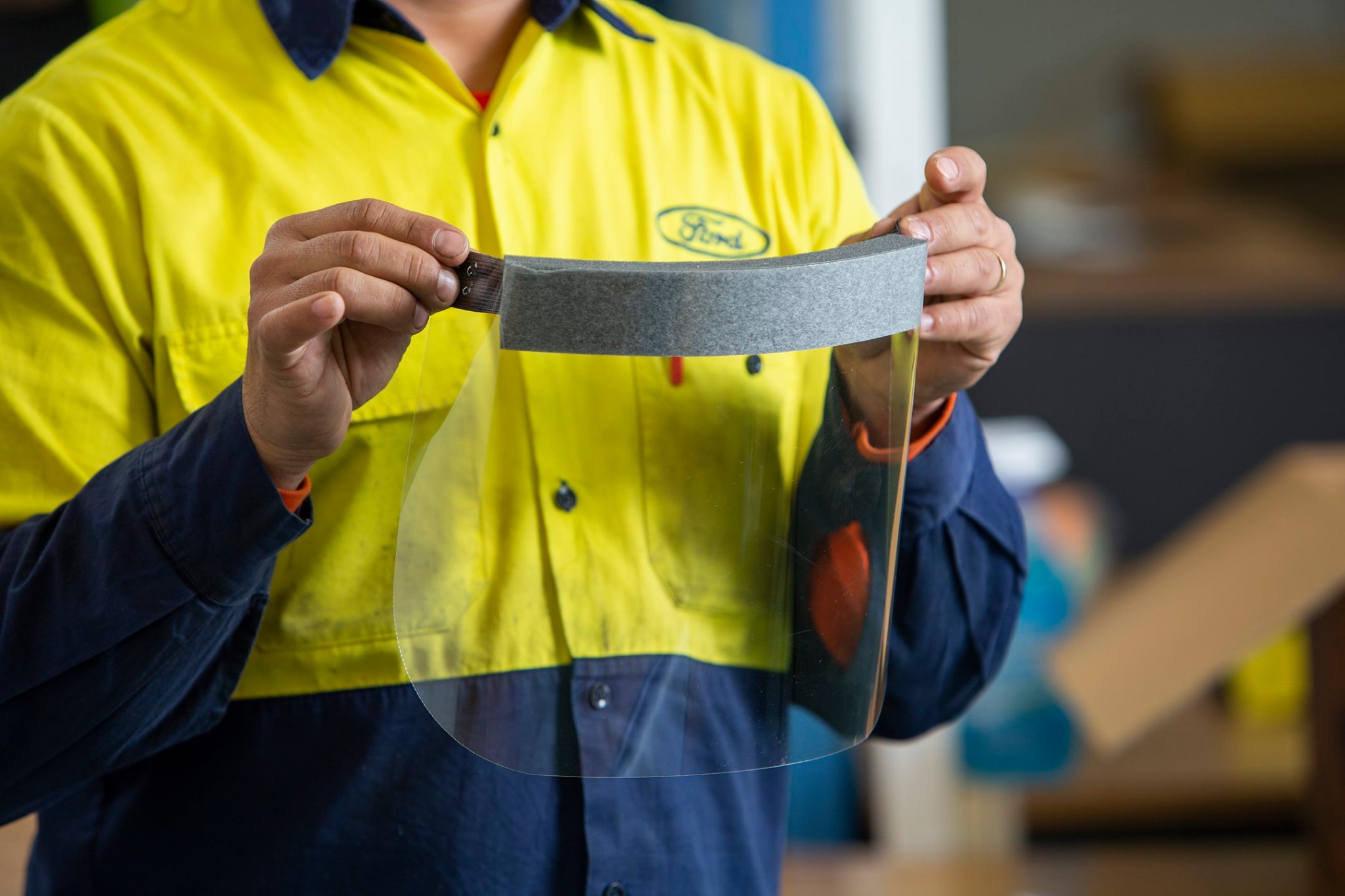
0800 – Some 58 car enthusiasts have been fined for flouting social distancing requirements in Queensland, each copping a hefty fine in the process.

Both passengers and drivers of the vehicles alike copped a $1334 penalty for ignoring recently introduced coronavirus laws, which prevent anyone leaving their house for anything other than ‘essential’ reasons. Read the full story HERE.
Saturday April 4
1730 – Some of the restrictions around travelling in NSW have been modified in light of how they have worked in the real world.
Caravan parks, for example, can now be used by overnight travellers, people who are working locally, and by locals who cannot stay in their primary place of residence (bushfire victims, for example).
NSW health minister Brad Hazzard also said that truck rest stops should be reopened as soon as possible.
1200 – The car industry’s sales figures for March are, as expected, quite dire, but there’s still more pain to come.
Many sales over the last 30 days were actually written in February, which helped to prop up an industry staggering under the weight of exchange rate pain, depressed demand as Aussie keep their hands in their pockets and the starting phase of the COVID-19-led shutdown of large swathes of the economy.
The monthly tally – between 30 and 40 per cent down across the board, in the main – was the worst recorded since the Global Financial Crisis of 2009, and the 24th straight month of decline.
Holden’s star flared briefly, the once-dominant player in the Australian market rallying on the back of dealer distress sales ahead of a June shutdown of local operations.
Brands with affordable cars at the fore did well, including Kia, MG and Haval, while Audi, Land Rover and every one of FCA’s brands (Fiat, Alfa Romeo, Jeep and Fiat) crashed to new lows.
But the ink will run an even richer shade of blood-red through the month of April, traditionally a strong one for car retailers at the back end of the Japanese financial year.
With dealer foot traffic decimated by social distancing requirements, most industries shuttered for the foreseeable future and huge job losses throughout the entire Australian workforce, new car sales will bear the brunt of the slowdown.
There may be a couple of bright spots; the construction industry is (for the moment at least) largely unaffected by the governmental restrictions around movement, which means utes and vans will still be in demand. As well, excellent rainfall in country areas means that farming machinery is still selling well.
Elsewhere, car companies are scrambling to adapt to the New Normal. Toyota is offering an online sales service, while Ford is advertising a pick-up service for mechanical repairs.
We fear for some of the smaller brands that were struggling to sell cars before the onset of the coronavirus shutdown, though – it may be easier for some to exit the Australian market for the interim, rather than ride out what could potentially be another six months of pure agony on a sales front./Tim Robson
Friday April 3
2300 – Good news finally, especially for the kids of WA.
1415 – Ford has announced that it is offering service customers a pick-up/drop-off service through a selected number of its dealers.
Customers book the service through Ford’s main site, their car is collected, serviced and then cleaned before being returned.
The pick-up service extends to scheduling servicing at this stage, and loaner cars can still be booked as well.
Ford says it will clean multiple points in the car. Good idea or a bit irresponsible?
The company says that its dealer network is still operating as normal, despite increasing retail outlet closures throughout Australia.
1500 – We’re currently building a story around the changes and cancellations to government services related to driving. What we’re learning is that most online transactions are unaffected, but other things like driver tests have been affected.
Driver testing across NSW has also been postponed for a minimum period of two months, according to Service NSW, and it applies to all practical driver assessments. It does not apply to assessments conducted via the Heavy Vehicle Competency Based Assessment Program or any other assessment provider outside of Service NSW, though.
In NSW, 12-month moratoriums on the retesting of drivers over 70 years old have also been implemented.
1200 – File this one under ‘Really? I didn’t think anyone was flying any more?’ Virgin and Qantas have both confirmed that they will cut back on their inflight catering arrangements, with Virgin canning free snacks for business class travellers and Qantas winding all services right back to a snack-only service.
This comes on top of the closure of all airport lounges and most sit-down cafes… so grab a snack before you head to the airport, maybe?
Thursday April 2
1730 – Western Australia will further tighten its borders on Sunday night (April 5), turning back all travellers that aren’t residents.
“WA is in a unique position, our isolation is our best defence, and we need to use it to our advantage,” the state’s premier Mark McGowan said.
“While our overall numbers are encouraging, we need to take further steps to protect our state. In effect, we’ll be turning Western Australia into an island within an island — our own country.” Read our updated travel restriction story here
1200 – McDonald’s has announced that it will offer milk and bread at its drive-thru windows.
While the restaurants themselves are mostly closed, Maccas will sell two-litre bottles of milk, buns and English muffins alongside its regular menu.
1030 – NSW Police have charged a driver of a Lamborghini after catching him travelling 160km/h in a 90km/h zone overnight. His excuse? He was heading to Westmead Hospital for a COVID-19 test.
Officers booked the man and suspended his licence, but allowed him to continue to the hospital, where he was tested before commencing a self-imposed 14-day quarantine period.
“Drivers shouldn’t break the road rules under any circumstances,” Assistant Police Commissioner Michael Corboy said in a statement.
“If you think you may have symptoms of COVID-19 and want to seek help from a doctor or hospital, call ahead of time to book an appointment, or visit a NSW Health COVID-19/Flu assessment clinic should you become unwell.”
0800 – while official results aren’t due out until tomorrow, sales of new cars have predictably tanked in Australia for March. While Toyota reportedly improved its position slightly, most brands took a 30 to 40 per cent sales hit in the wake of the spread of COVID-19.
Wednesday April 1
1530 – Motorsport Australia (nee CAMS) has reduced the pay and cut the hours of its Melbourne-based staff.
“This was certainly a tough request to deliver to our staff; however they all understood the situation we now find ourselves in,” said CEP Eugene Arocca.
Most staff will be retained under the federal government Job Keeper plan, with Arocca hopeful that a glut of postponed events will still run in the second half of the year.
1200 – Most states and territories have gotten a lot tougher on people moving around, so here’s an update to our travel restriction story.
0700 – No one really feels much like joking around at the moment, but here’s a beautiful moment of April Fool’s brevity from Aussie car care company Bowden’s Own.
You can check out the best April Fool’s car gags from over the years by clicking here, too.
Tuesday 31 March
1700 – A new website, www.raceagainstcovid19.com.au, has been established to serve as a portal for racing teams, engineering firms, similar organisations, or individuals, to join the cause to design and build medical gear to fight the coronavirus both here and overseas.
Following in the footsteps of programs already underway across the motorsport space, the program was founded by racer and automotive consultant Renato Loberto, who is already in regular contact with relevant public health advisors, government and the Australian Defence Force in order to ascertain what resources will be required.
Race against COVID-19 will facilitate a response to aid in the production and distribution of items requested by the healthcare system. Read the full story HERE
“We’re calling on local teams, engineering firms and people with skills that they think may help to put their details into the website, so we can coordinate a response and assist with whatever we’re told the health system requires, whenever they need it,” said Loberto.
UPDATE, March 12 2021: This website now appears to be either broken or closed down.
0700 – Triple Eight Engineering – home of the Red Bull Holden Racing team – has shown off a prototype patient ventilator that its engineering staff designed and prototyped in just four days. More in our updated story here.
Monday 30 March
2300 – Red Bull Racing’s outspoken Austrian race advisor Helmut Marko has suggested that the team’s four drivers, plus its junior development driver squad, should get together for a ‘coronavirus camp’, so the team could get through the infection process and be able to race the rest of the year unhindered.
“The idea was to organise a camp where we could bridge this – mentally and physically – somewhat dead time,” he told an Austrian TV interviewer.
“And that would be the ideal time for the infection to come.
“These are all strong young men in really good health.
“That way they would be prepared whenever the action starts, and you can be ready for what will probably be a very tough championship once it starts.”
Marko went on to say that the idea didn’t gain much traction within the team.
“Let’s put it this way: it has not been well received,” he deadpanned.
1715 – The NT just got serious about shutting its borders, telling travellers that not only will they be quarantined in a hotel for 14 days, but they will also have to pay for it.
See our story aboutborder closures HERE
1500 – Just heard that Sydney Motorsport Park has shut its doors until at least the end of April. The circuit in Sydney’s west is typically booked out almost every day.
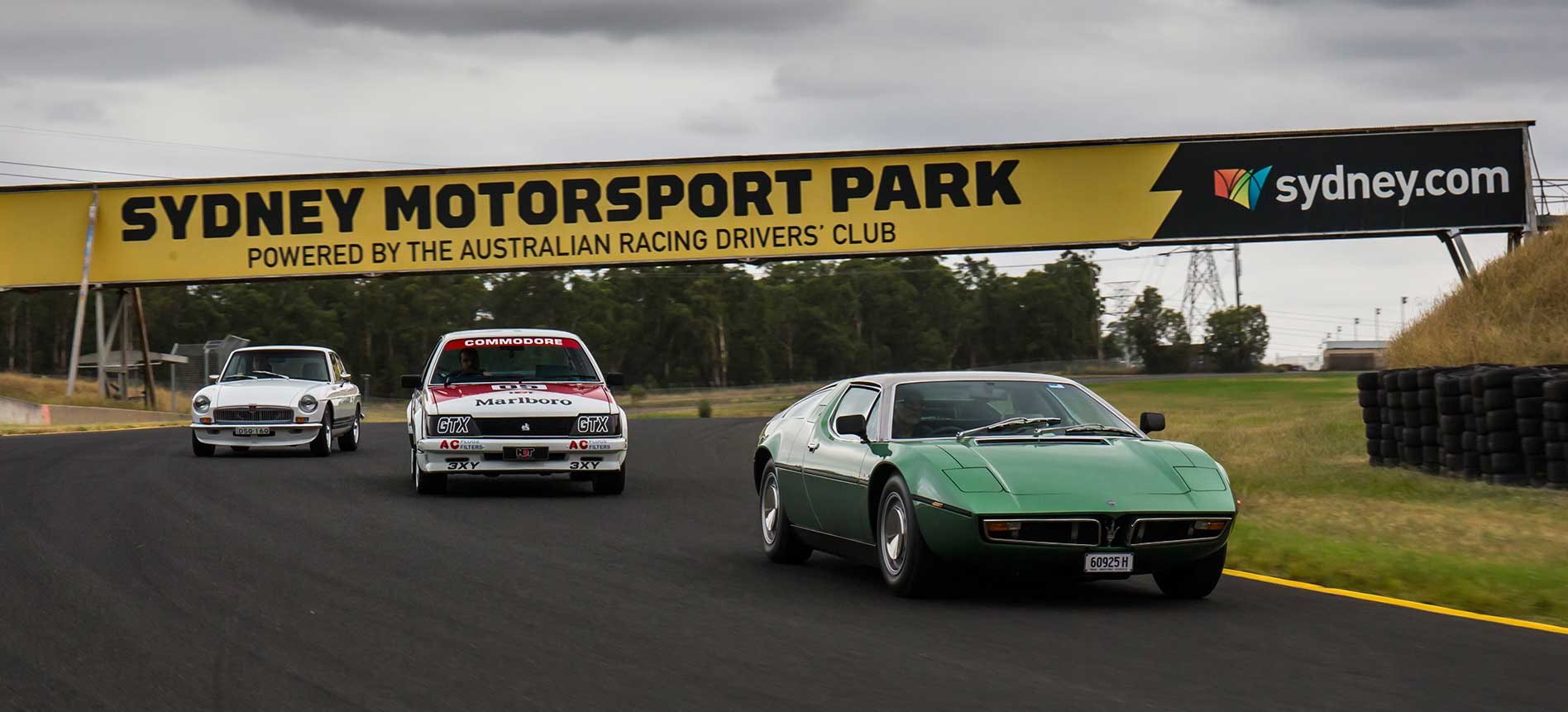
Other circuits including Phillip Island in Victoria and Wakefield Park near Goulburn in NSW appear to be operational but under the federal government’s latest Non-essential Activity Directive where no more than two people can congregate outside a family unit, expect those statuses to change soon.
In related news, the Supercars e-series is in full prep mode.
Though not everyone is taking it that seriously…
“Supercars set up this practice session and I got disqualified from it already and I wasn’t allowed to rejoin,” said Erebus racer David Reynolds, who freely admits he’s no sim racer.
“I crashed the car and then I started driving backwards on the track and then they disqualified me so I couldn’t log back in!
“I don’t want to embarrass myself too much but I think the more I embarrass myself on the Eseries, the funnier it will be.”
1200 – More and more businesses are voluntarily closing doors in Australia in the wake of tougher social distancing measures, but large auto retailers like Supercheap Auto are still trading.
Toyota has also started selling cars online via its main website, which we’ll do a story on for later today.
0800 – Two Ford workers in the US have died from COVID-19 infection in the Detroit area, while seven FCA employees have also succumbed to the disease.
The deaths occurred across two of Ford’s Detroit facilities, throwing into doubt the company’s plans to attempt to reopen some plants in a little over two week’s time. All three of the US’s largest carmakers are on pause in the state. Infections have climbed through 100,000 in the US.
Sunday 29 March
2000 – So we’ve avoided (so far) more stringent lock-downs in Australia. Here’s what stage four lockdown means to our Kiwi mates in the car game.
“Workers involved in the provision of essential maintenance and safety services where the services are limited to maintaining other essential services and their vehicles (e.g. repairing emergency vehicles or parts replacement for a vehicle moving essential freight),” reads a New Zealand government document that refers to essentials workers.
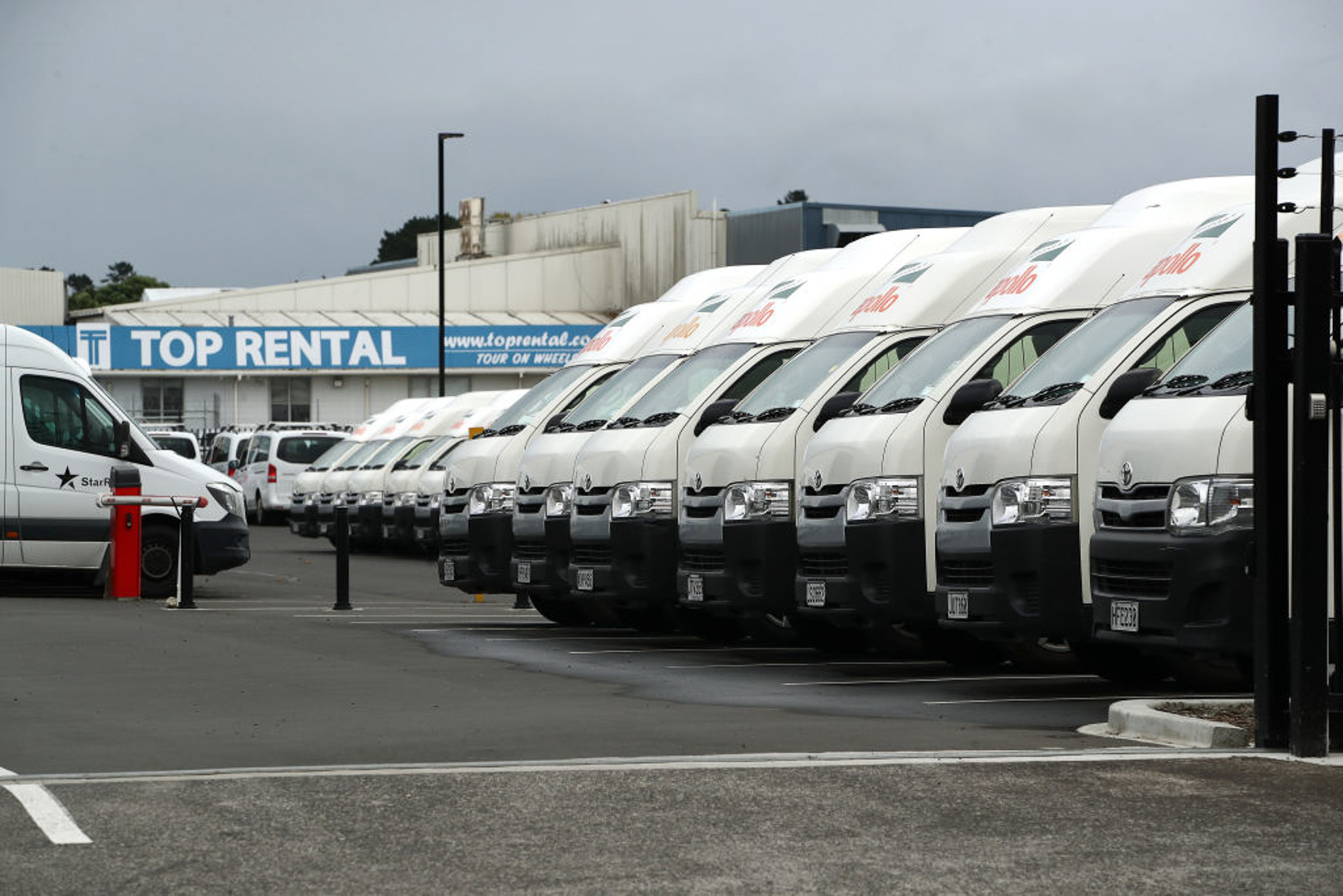
Rental vans in New Zealand lay dormant
“Ideally these would be provided on demand. The types of capability deemed essential are: maintenance and engineering staff; vehicle recovery and assistance services; vehicle repairers, inspectors, certifiers, mechanics and vehicle part providers.
“Vehicle recovery and assistance services are also available for essential private travel such as groceries and healthcare.”
1730 – A local Supercars team has designed a device that’s meant to help health care workers treat coronavirus patients in Australian hospitals.
Erebus Motorsport is using its downtime from racing to build both clever perspex treatment shields and bespoke CPAP masks using its in-house capabilities.
1200 – Another motor show bites the dust, as the Detroit Motor Show is cancelled, despite its June start date.
It follows the cancellation of the Geneva Show, while the venue for the New York Motor Show in April is now a field hospital (below).
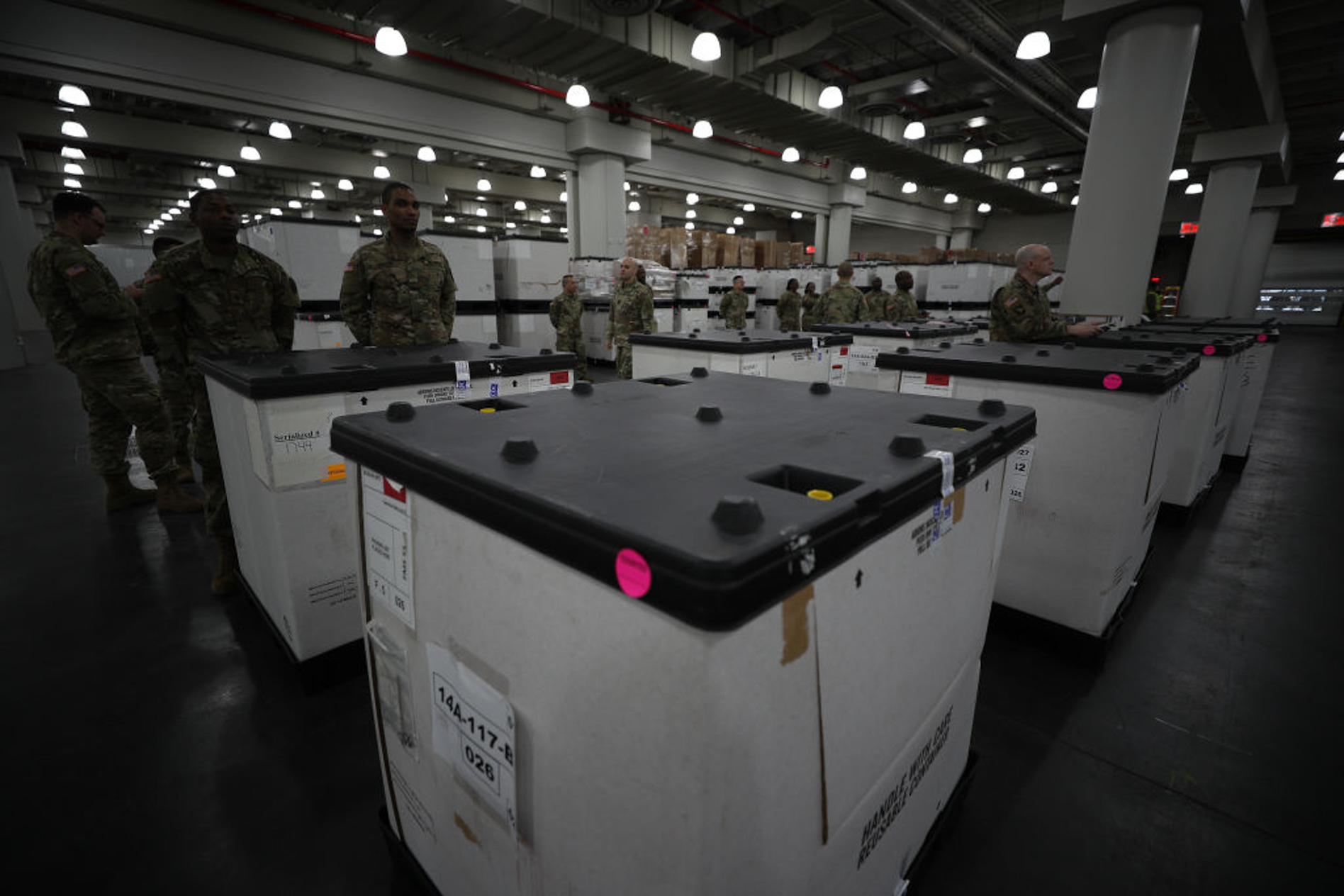
Saturday 28 March
1430 – Speaking of the VW Group…
1400 – VW boss Herbert Diess says the carmaker is tearing up about US$2.2b ($3.2b) a week as sales outside China grind to a halt.
Diess says the company is looking at ways it can open European facilities again by improving hygiene and distancing via lessons learnt from its Chinese operations. Geely is a good example of how the virus can be contained within a car plant.
1100 – President Trump is at it again, accusing GM in one breath of ripping off the US government with its plan to build medical-grade ventilators for US patients, before turning around the next morning and ordering the company to do exactly that. Read the full story HERE
Friday 27 March
0900 – Telsa kicked hard against the state-sanctioned shuttering of its San Francisco car plant, but it eventually complied with the legally enforceable closure – to a point.
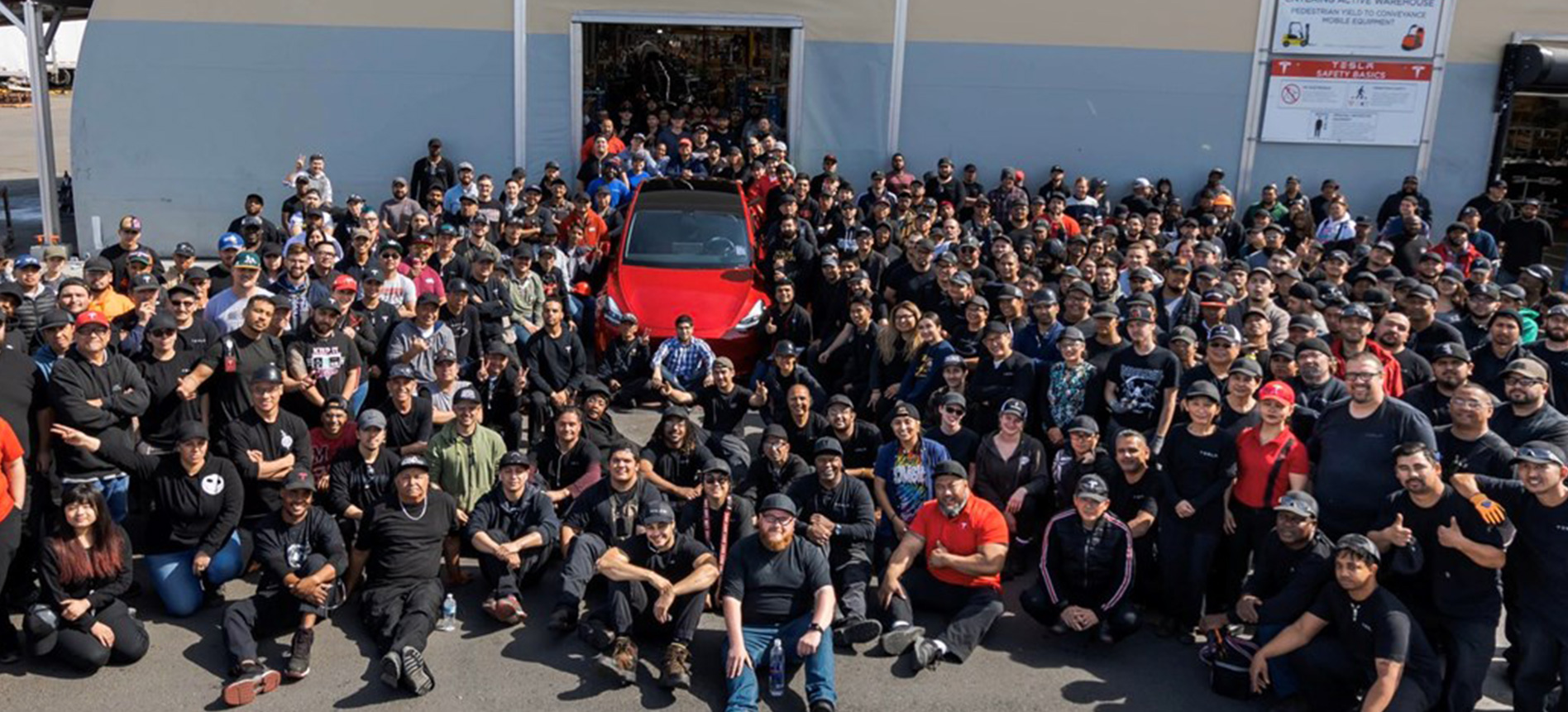
Reports are coming in that a number of end-of-line workers were required to attend the plant – which employes 10,000 people – to finish a batch of cars in time for end-of-quarter shipping. Local police, though, inspected the plant on Wednesday and declared themselves satisfied that the company had largely complied with the order.
The company recently built its millionth car at the Freemont facility, which started life as a Toyota factory.
0830 – The Indy 500, arguably the last large-scale sporting event on the planet that hadn’t made an announcement about its 2020 plans, will delay the event by four months, with a planned date of 24 August.
This will also push back Scott McLaughlin’s IndyCar series debut to July 4.
Our take? It’s pretty unlikely the event will run at all – up to 500,000 people can fit into the Indianapolis Speedway at once, and even if the virus has largely run its course, it will have likely done a lot of damage to the American economy. This will not only impact people’s ability to buy tickets to the event, but will affect how many teams are actually able to start the race.
Thursday 26 March
1730 – Car manufacturers are turning their plants into ventilator factories, including Ford which could help with the production of machines for Australia.
One of these is Ford, which this week announced it would provide General Electric Healthcare, which already produces ventilators, with a “simplified design” for ventilators that would allow it to significantly boost stocks in the US. We’re not sure it’ll help with the acute shortage, though, which we detail here.
The Australian government has immediately engaged in talks with Ford Australia, which has offered to share its design knowledge here too.
On Monday Fiat began converting one of its car plants in China to start making about one million masks a month, while General Motors, Nissan, Tesla and UK-based Formula 1 teams have also committed to mobilise to help treat COVID-19.
1200 – The Australian travel plans of thousands of people have been thrown into chaos, as states and territories across the nation shut their borders to all but essential traffic. Click here for details of the different restrictions across each jurisdiction.
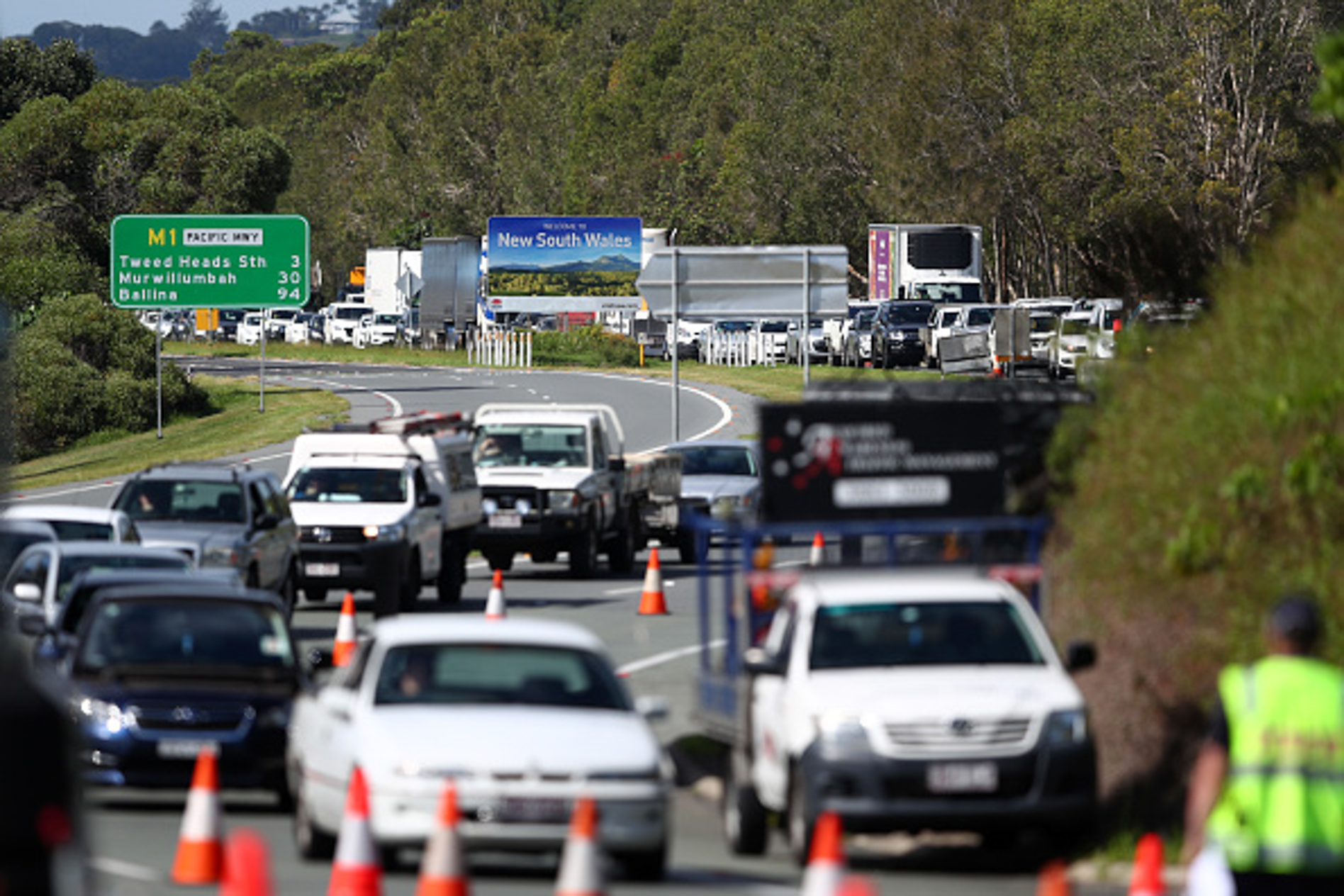
Wednesday 25 March
1030 – More than 900,000 people watched a recent iRacing NASCAR event that featured several prominent drivers from the series.
As well, the online simulation that hosted the event, iRacing, is experiencing unprecedented sign-up numbers. Check out our review here.
0900 – Further lockdown measures in Australia have still managed to sidestep most car-related industries. However, further lockdown measures are expected in the next days, which will likely affect the balance of retail that is still functioning here in Australia.
0800 – FCA in the United States is reporting that two of its plant workers have died of COVID-19. The workers were at separate facilities in Michigan and Indiana. All FCA plants in the US are currently closed.
Tuesday 24 March
17:45 – David Bonnici explains the steps you can take if you’re out of work and can’t pay off a car/personal loan.
14:00 – Car dealers remain open … for now
The Federal Chamber of Automotive Industries (FCAI) has advised that carmakers and their dealer networks will remain open to provide sales and service support to customers as long as COVID-19 regulations allow.
FCAI chief executive Tony Weber said motor vehicle dealerships supply essential services to the community through their service and repair centres and key supply chain facilities.
“With the increasing focus on social distancing, safe and reliable private transport is essential to enable communities and businesses to continue to operate.
Weber said the industry has adopted a number of additional hygiene and safety protocols, including extended cleaning processes, personal distancing, and contactless sales and service consultations.
He said at this stage there have been no restrictions to stock including new vehicles or parts.
1330 – In less than two weeks, the Jacob Javits Centre in New York was supposed to be hosting the 2020 New York International Auto Show. Instead, US Army corps are turning the convention centre into a field hospital.
The show was cancelled in the wake of the Geneva Motor Show’s closure, which cost carmakers upwards of $500 million collectively after stands were built then abandoned.
1230 – this amazing image is from Times Square in New York yesterday.
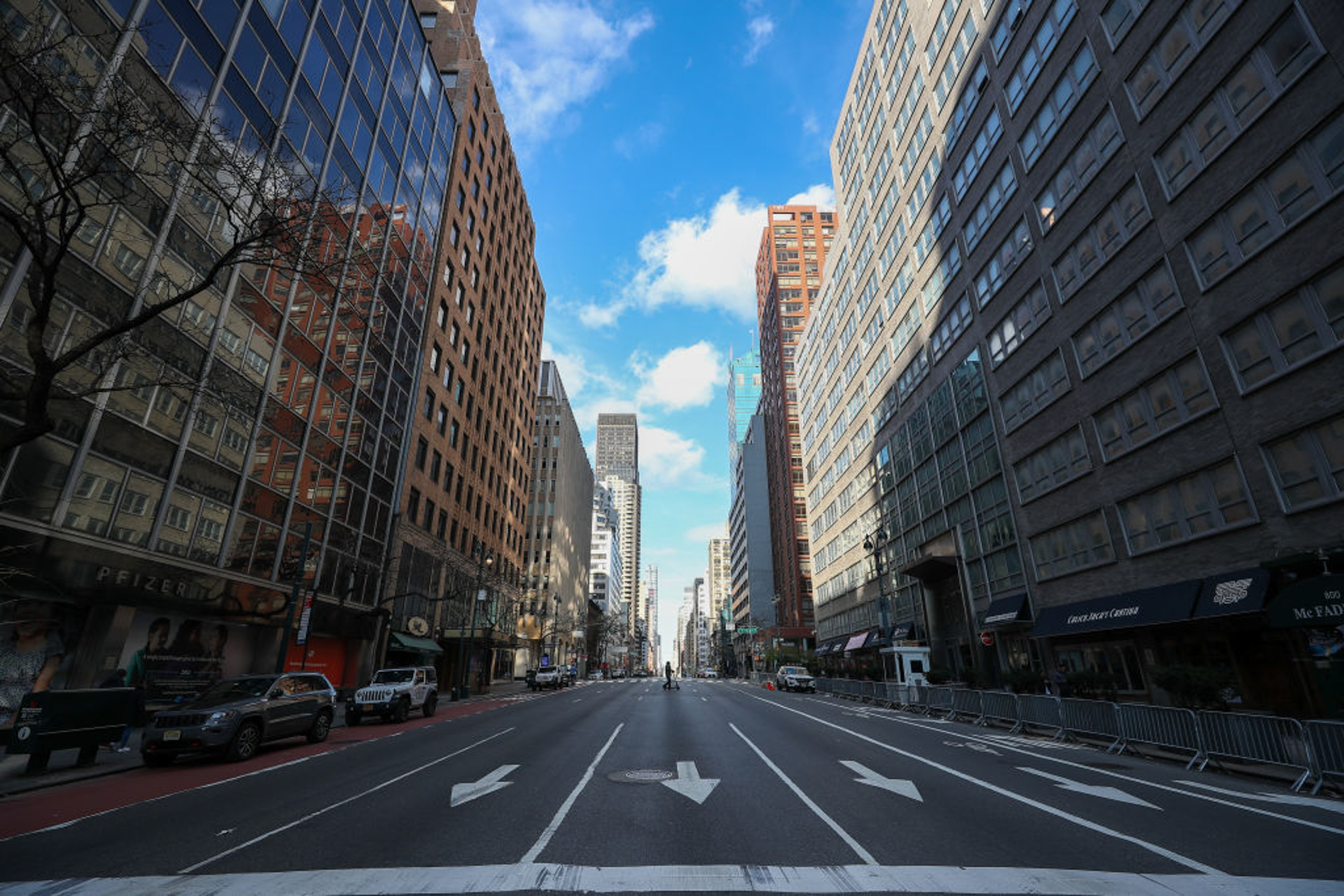
The world is slowly shutting down thanks to containment measures designed to slow the impact of the disease.
1130 – Tony O’Kane reports on the first-ever sanctioned e-Grand Prix, and it was a little bit weird.
The race came just hours before F1 announced it would also postpone its round in Baku in early June, pushing the start of the truncated 2020 season out even further.
1100 – Volkswagen CEO Herbert Diess is warning that car factory closures may last longer than two or three weeks, as the pandemic takes a firm hold in Europe.
“Most of our factories close for two weeks these days, in some regions for three,” he said in a LinkedIn post. “It is likely that the measures will take longer. The spread of the virus is unlikely to have stopped in several weeks. So we have to be prepared to live with the threat for a long time – until effective medication or vaccination becomes available.

“Until then, preventing the transmission and slowing down the spread are the main measures. I therefore urge you to adhere to the advice and guidelines of local administrations in an extremely disciplined manner.”
He also said that 100,000 VW workers in China are returning to work. “The sanitary and organizational measures are being continued there with great discipline – exemplary in my view – in order to keep the spread of the virus under control even after acute containment,” he said.
1030 – Taxi services around the country have started to offer ‘touch-free’ parcel delivery services, which are facilitated via apps.
As more and more people are sent home to work, traditional infrastructure as had to rapidly adapt – and cabbies aren’t having to hang around airports and train stations at the moment, so they are losing valuable income.
0800 – GM has shut down its plant in Bowling Green, Kentucky, which produces the Chevrolet Corvette C8.
The new mid-engined supercar, which was due in Australia in RHD form before Holden pulled out, has been plagued by delays, and had only started to roll off the production line ten days prior to the closure, which is being put down to “deep cleaning”.
Monday 23 March
With the volume of news rolling through the general network about closures of cafes, pubs and restaurants, not a lot of car news made it through!
Locally, we’re watching what will happen with the potential closure of businesses related to using our cars, like mechanics, insurance companies and even state registry offices, but nothing appears to be affected at the moment.
Worth noting, though, that New Zealand could serve as a barometer for what could happen here – the closure of essentially EVERYTHING apart from the basics is a stunning move in the current climate./Tim Robson
Sunday 22 March
2100 – So-called Stage One closures by the federal government have been aimed at clubs, pubs and restaurants, but service stations and retail outlets like mechanics will remain open.
The bans will be in place from midday Monday.
1845 – Scottish authorities are turning away so-called self-isolators arriving from the UK mainland, with officials declaring themselves “furious” with the campervan-driving escapees. Similar to Australia, travellers in the UK are being asked to restrict journeys to essential trips.
1700 – More states have announced border control measures, including South Australia and Western Australia, that will require all entrants to self-isolate for 14 days. This effectively puts the lid on domestic travel for the majority of Australians.
1400 – Lewis Hamilton has moved to allay fears that he might have been exposed to COVID-19, after he was shown meeting with US actor Idris Elba who has since fallen ill with the virus.
“There has been speculation about my health, after I was at an event where two people later tested positive for coronavirus,” said the six-time world champion (below in Melbourne).
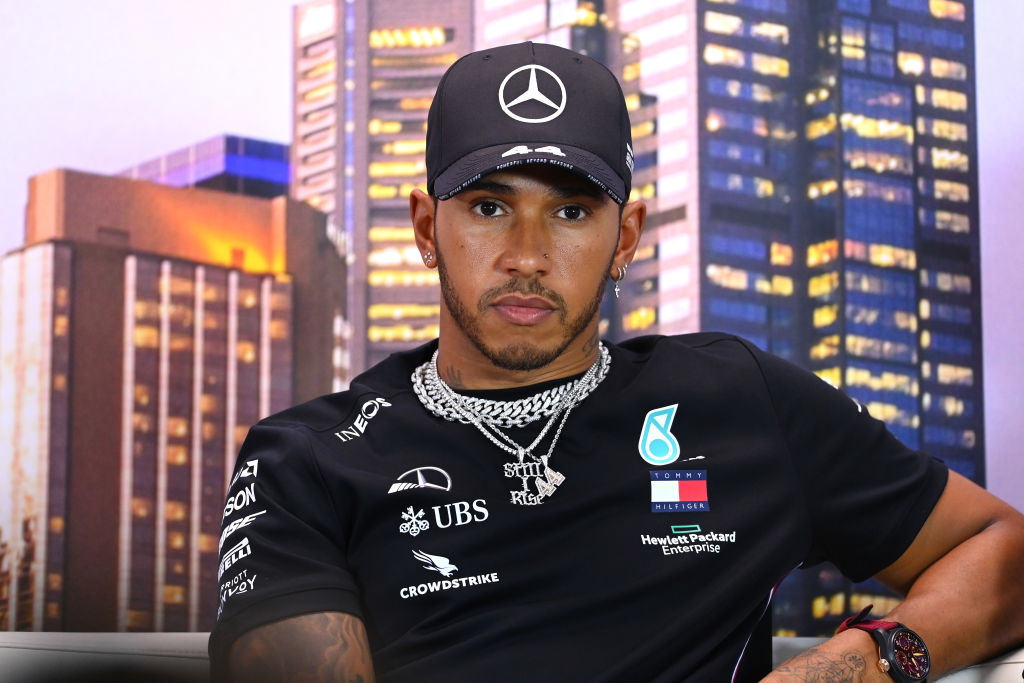
“I have zero symptoms and it has now been 17 days since I saw Sophie and Idris. I have been in touch with Idris and happy to hear he is OK.
“I did speak to my doctor and double-checked if I needed to take a test but the truth is, there is a limited amount of tests available and there are people who need it more than I do, especially when I wasn’t showing any symptoms at all.”
1015 – It looks like petrol companies are, as we feared, holding petrol prices high in the face of low crude oil prices.
Despite the odd independent petrol station offering sub-dollar 91RON, the average price of petrol in Australia has held steady in the $1.40 region, as the fuel industry attempts to make bank before the inevitable slowdown of demand.
You can read our in-depth story here.
1000 – Gratuitous plug time… make sure you tune into today’s ep of WhichCar TV, because it’s truly one for the (dark) ages. Check out the preview HERE and tune into Channel 10 at 4pm AEDT today.
0900 – it’s been revealed that the 14 McLaren F1 team members isolated after the abandoned Australian Grand Prix are free of the COVID-19 virus.
Seven crew members were tested and declared free of the disease, while the other seven weren’t required to test. The single crew member who contracted the coronavirus – and who essentially ended the GP weekend before it started – is also well on the way to recovery.
While the crew members will wing their way home early this week, it hasn’t been all bad news. Senior team personnel reportedly hit Melbourne’s CBD for a stash of PlayStation 4 consoles, a Nintendo Switch, indoor soccer balls and a dart set, so the crew could while away the hours.
0800 – The Northern Territory government will “close the gate” next week in its own words, declaring a virtual stage of siege as it restricts all travel into the territory.
Border controls will be put in place from Tuesday, with all arrivals by land, sea or air required by law to self-isolate for 14 days or face stiff penalties.
“The measures we are implementing are tough, but their purpose is clear: to save lives, and keep Territorians safe. That will always be our first priority,” chief minister Michael Gunner said in a strongly-worded statement.
“We can’t build a wall, but we can put in gates. Saving lives and saving jobs are my only focus right now, everything else can get in the bin.”
Someone ought to tell his social media manager…
The NT joins Tasmania in drawing the door down on visitors, with the Apple Isle imposing a similar 14-day self-isolation requirement for visitors and returning residents alike.
The team from 4×4 Australia magazine will discuss the impact of the closures further during the week.
Saturday 21 March
1730 – In a slightly ironic twist, Waymo – the single biggest operator of robotaxis and driverless cars in the US – is halting its robotaxi operation in Arizona.
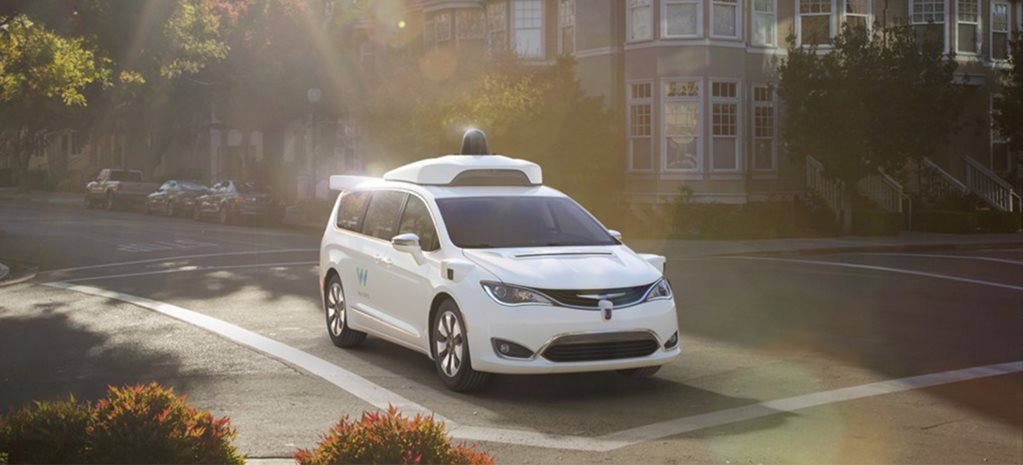
It will, however, continue to run a fleet of remotely controlled driverless cars over a 1200km2 area in the same state.
1400 – Is Australia finally getting the message? Bondi Beach has been cleared of beachgoers after thousands flocked to the famed shores on Friday.
The move comes as Australia locks foreign travellers from its borders, introduces a 500-person outdoor gathering limit and a 4m2 personal space rule
1045 – Some interesting observations around ride-sharing services like Uber and Didi are emerging. While passenger trips in the US have dropped by some 20 percent in the last week, much of the shortfall is being made up in food delivery jobs, as restaurants and bars pivot to a delivery model in the wake of city closures.
As well, if the ride-hailing company’s business declined by 80 percent year-over-year, there would still be US$4 billion in cash-on-hand by the end of the year, according to Uber CEO Dara Khosrowshahi.
He tweeted that two-thirds of Uber’s costs, like insurance and driver sign-up subsidies, vanish if trips don’t occur.
This tweet, though, highlights the plight of many ride-share drivers – the gig economy means that if they don’t get fares, they don’t get paid.
0800 – Tesla will be forced to suspend operations at its biggest factory in San Francisco, after initially scoring an exemption. It will also suspend ops at a New York facility.
Meanwhile, Elon Musk – who is still talking down the dangers of COVID-19 – has said that his company will look at using its SpaceX and car making abilities to build respirators for COVID-19 patients, but thinks that by the time the company could “make enough to matter” there will be no need for them.
As an aside, Tesla has also announced that it has started deliveries of its Model 3-based Model Y SUV. It will build them in the YUS and China, but the enforced shutdowns are sure to dent the rollout.
Friday 20 March
1435 – Toyota reports that a worker in its Takaoka plant has tested positive to COVID-19. The young worker self-diagnosed while he was off duty, and hasn’t returned to the plant, which builds the RAV4 and Corolla sedan.
1530 – Ford and GM are looking at ways to switch some manufacturing capacity over to the production of medical equipment to help treat the coronavirus. GM boss Mary Barra spoke with the Trump administration about the idea earlier this week, but no firm plans have been made.
WhichCar’s take; while this sounds like a great idea, the incredibly specialised nature of car manufacturing means that it’s more of a noble idea than hard reality. Ventilation machines to help affected patients breathe will be a key weapon in the fight, and so here’s hoping that a small skunkworks team can come up with a way to quickly design, test and build a suitable product in time./Tim Robson
1215 – US President Donald Trump has told US governors that his administration is “watching the auto industry very much.”
Trump – a former Ferrari man – has told them that the industry has reached out for help and that “we’re going to be helping them a little bit.”
That help could come in the form of temporary tariff relief, while carmakers and auto dealers petitioned Trump earlier in the week to have car repair facilities classified as essential businesses. The distinction will mean that mechanics can remain open in the event of a lockdown.
1020 – Lockdown is in full effect in Spain, but there’s an exemption for walking your pet so it can do its business. Apparently, dressing in a T-Rex costume doesn’t count…
0930 – Kia is pushing on with car production where a lot of the world isn’t. Here’s an excerpt from our recent new Sorento coverage;
“Despite the coronavirus’ impact on South Korea, production at Kia’s manufacturing facilities has been relatively unaffected and isn’t expected to effect deliveries of Australia-bound vehicles, including the new-generation Sorento large SUV that’s slated to launch here in June.
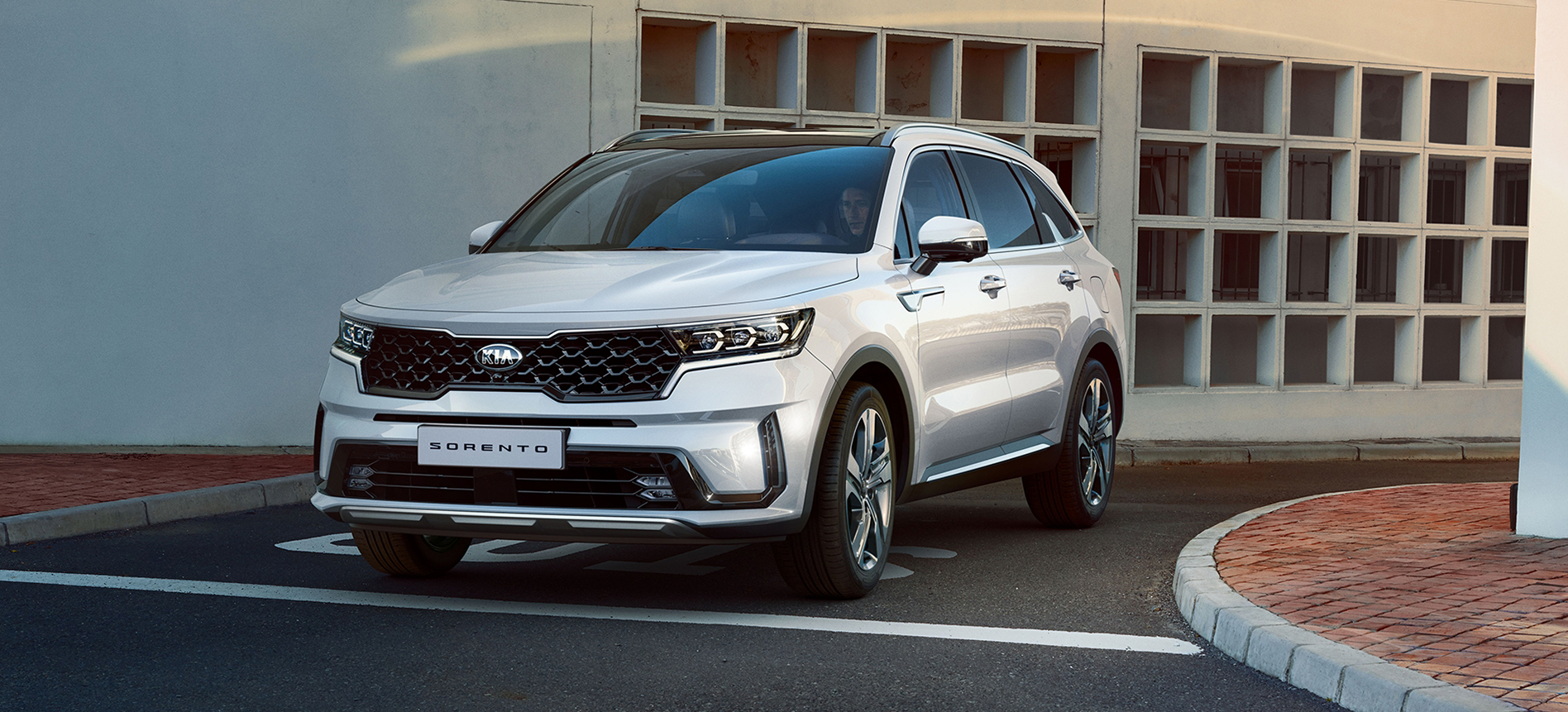
New Kia Sorento
“A Kia Australia spokesman told WhichCar it takes around 14 days for cars to travel from Korea to Australia by ship, which allows the company to work with any new quarantine measures introduced to curtail the disease in Australia.”
0625 – The Monaco Grand Prix has been cancelled, not postponed, for 2020. As we predicted, the Spanish and Dutch events have been postponed, meaning a June start at the earliest for the F1 season.
It’s the first time in 54 years a race won’t run around the principality.
As well, the teams have all agreed to delay the introduction of sweeping new rules designed to make for more exciting racing until 2022.
Thursday 19 March
2300 – Toyota boss Akio Toyoda has told a meeting of Japanese automotive makers that the company will strive to continue production in its home country.
“Production shall be continued on the shop floor,” Toyoda said in a press conference. “Otherwise, we will cause troubles and inconvenience to our customers. So, we shall never stop production activities.”
Interestingly, though, Toyoda said that responding to the virus is opening the industry’s eyes to alternative ways of working, like telecommuting and advanced crisis management. It’s also been reported that 25,000 Indian auto executives are already working from home.
1745 – toilet paper AND a DeLorean? Win!
1700 – Supercars star Scott McLaughlin can see the funny side of his potential future as a virtual racer with this fan interaction this arvo;

1600 – PM Scott Morrison has announced that the government will support the local economy with a $100 billion package for lenders. The gist is that funds will be easier to obtain for small businesses like mechanics and the like, thanks to an interest rate cut.
1230 – The car industry is a bit nervous about the continuing fall of the Aussie dollar against key currencies like the US dollar. WhichCar is doing a call-round to see who might need to move on their pricing as a result, but the team from Hyundai Australia told us that they’re quite used to currency fluctuations.
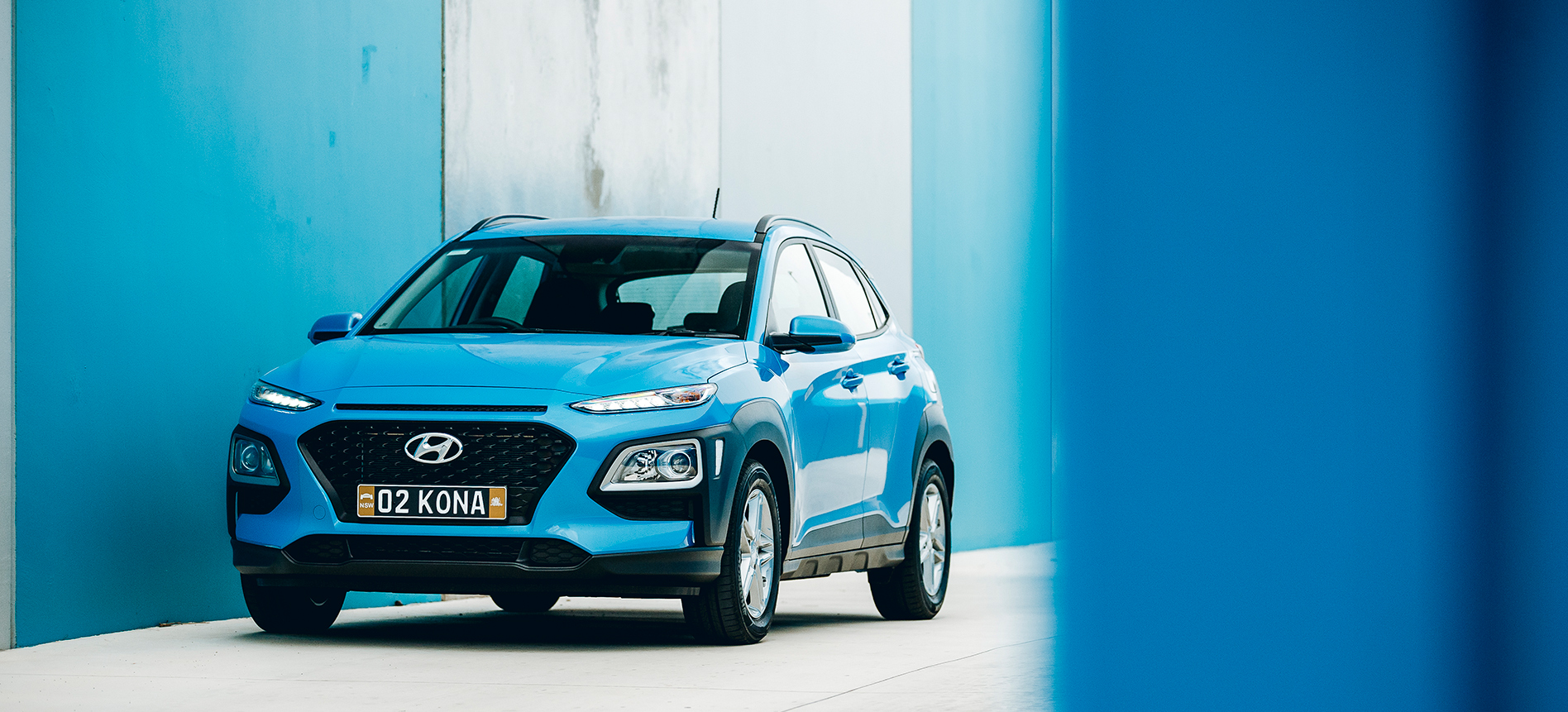
A bit of background; pricing on new cars is a complex and challenging metric that changes day by day and sometimes minute by minute. Often, prices for new cars are decided on the eve of, or even of the day of a new vehicle launch.
The cheaper the vehicle, the tighter the margins, too, as this chat with Hyundai Australia’s Andrew Tuatahi reveals. So every movement in exchange rates means a potential price adjustment on a new car.
1130 – the memes and the gags are flowing thick and fast…
1100 – The 2020 running of the Le Mans 24h has fallen victim to the COVID-19 virus, with organisers suggesting that – like Supercars and F1 – that it will push the race back to September. But how will this all work?
1030 – Rolls-Royce has announced that it will close its facilities for two weeks, while Maserati has pushed back a planned event that would have taken the sheets off new products for the storied Italian carmaker.
0900 – Geely is leading the way when it comes to preventing its workforce from contracting the COVID-19 virus in its Chinese facilities, and is a high water mark for the global industry.

Wednesday 18 March – If you’re confused by what the Australian government’s first round of fiscal stimulus means for buying a new car, you’re not alone. Toby Hagon has done his best to unravel the mystery around the $150k tax write-down.
Tuesday 17 March – Further to Andy’s excellent piece looking at supply lines, the sales of cars across the globe are already taking a huge hammering, while car companies across the globe are shuttering key facilities. Might be a good time to buy a new ute, then?
Monday 16 March – Andy Enright from Wheels has looked at the impact of the virus on industry supply chains, and it makes for sobering reading.
Australian police forces are also taking action by opting out of static (or mass) roadside breath testing.
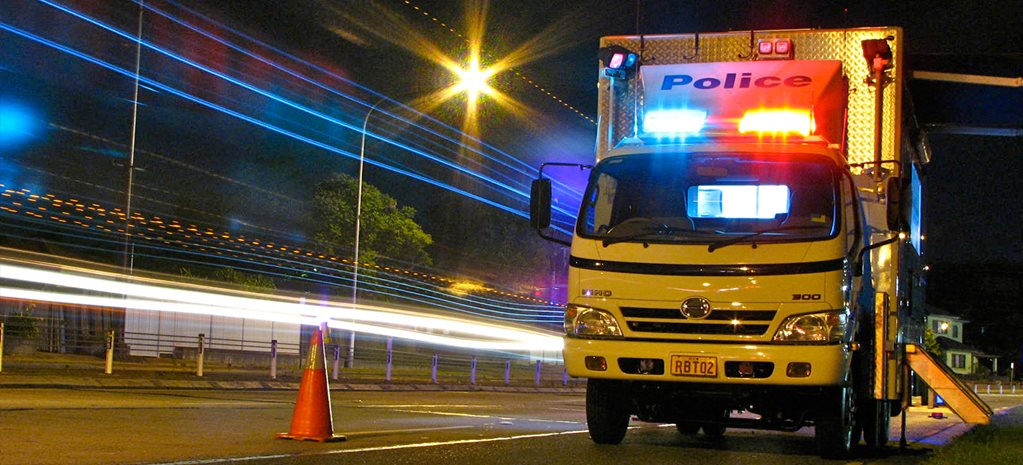
Elon Musk has added his two cents, too, though we suspect he’ll regret his cavalier attitude towards COVID-19.
Saturday 14 March – the cancellation of the AGP could be regarded as a marker in the automotive space that things have changed for the foreseeable future. Catch up on an amazing day HERE.
Friday 13 March – the emerging crisis has had an almost instant effect on the travel industry, and the ensuing excess of airline seats makes for an interesting comparison at a CO2 level.
https://www.whichcar.com.au/gaming/reviews/iracing-2019-review
Porsche has announced it will resume its manufacturing across its German operations, where the Porsche 918 and 911 production lines are located.
This is good news for customers who have recently had their new car deliveries impacted by COVID lockdowns and logistical hold-ups.
Porsche’s factories closed temporarily on March 21 “due to bottlenecks in global supply chains,” and have “remained closed for a total of six weeks because orderly production was not possible.”
MOTOR contacted Porsche Australia to confirm local deliveries were on their way to being back on track, and a Porsche spokesperson told us that while the situation is changing quickly, customers would be contacted as soon as local dealers are able to guarantee a delivery timeframe.
The last Porsche 991 911 auctioned
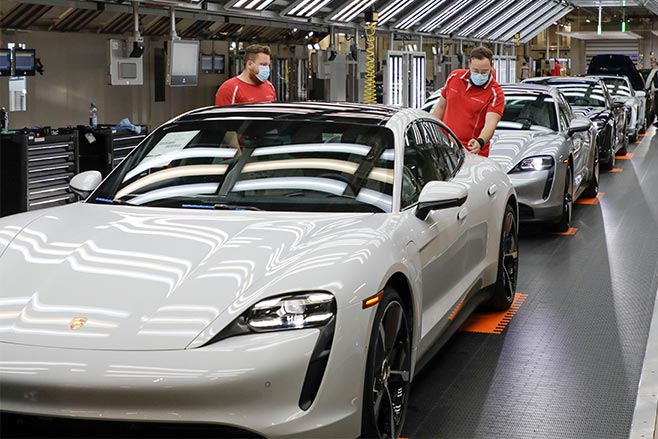
The details of the resumption of manufacturing have been outlined in a press release, in which the company says it will introduce a “comprehensive catalogue of measures” to ensure safety and high health standards, including prevention of staff working within 1.5 metres of each other.
“The restart is an important signal – for our employees as well as for our customers,” says Albrecht Reimold, board member for production and logistics.
“We have monitored and analysed the situation very carefully right from the start and flexibly adapted processes. Now is the right time to look forward with optimism and to resume work – subject to special precautions.”
Porsche will ramp up production again from Monday May 4, while the plant in Bratislava, Slovakia, is already producing Porsche Cayennes.
“It will take a great deal of effort to get the economic and social system moving again. Everyone must make a contribution to this,” says executive board chair Oliver Blume.
“It is important to have a positive fundamental attitude. Every crisis also offers opportunities. And we want to make the most of them.”
