
Nissan Australia has confirmed that the updated MY26 X-Trail will arrive in local showrooms during the first quarter of 2026, introducing a series of design, technology, and interior updates to one of the country’s most popular mid-size SUVs.
While pricing will rise by around $1150 across the range, the update brings new features aimed at improving comfort, safety, and connectivity, while retaining the choice of petrol and e-POWER hybrid drivetrains.
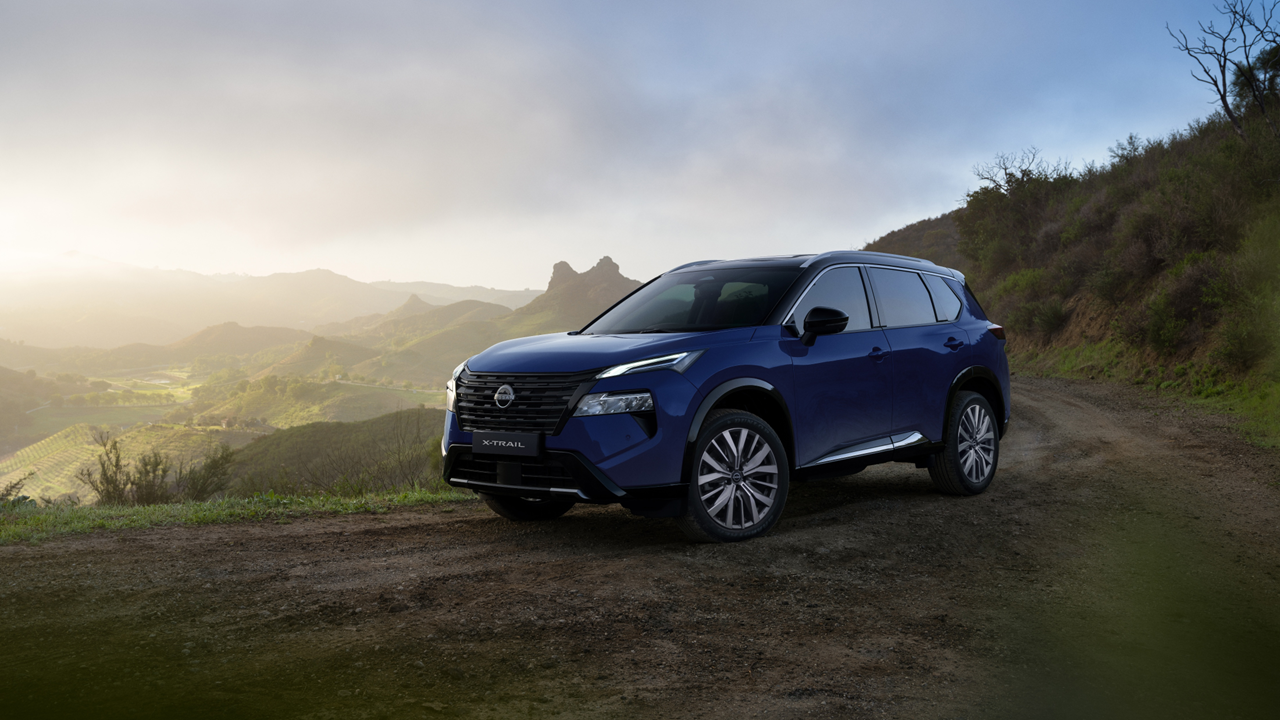
Externally, the MY26 X-Trail adopts Nissan’s latest design language, with a reshaped front grille, redesigned bumpers, and new LED lighting signatures. Fresh paint options and wheel designs will also be available.
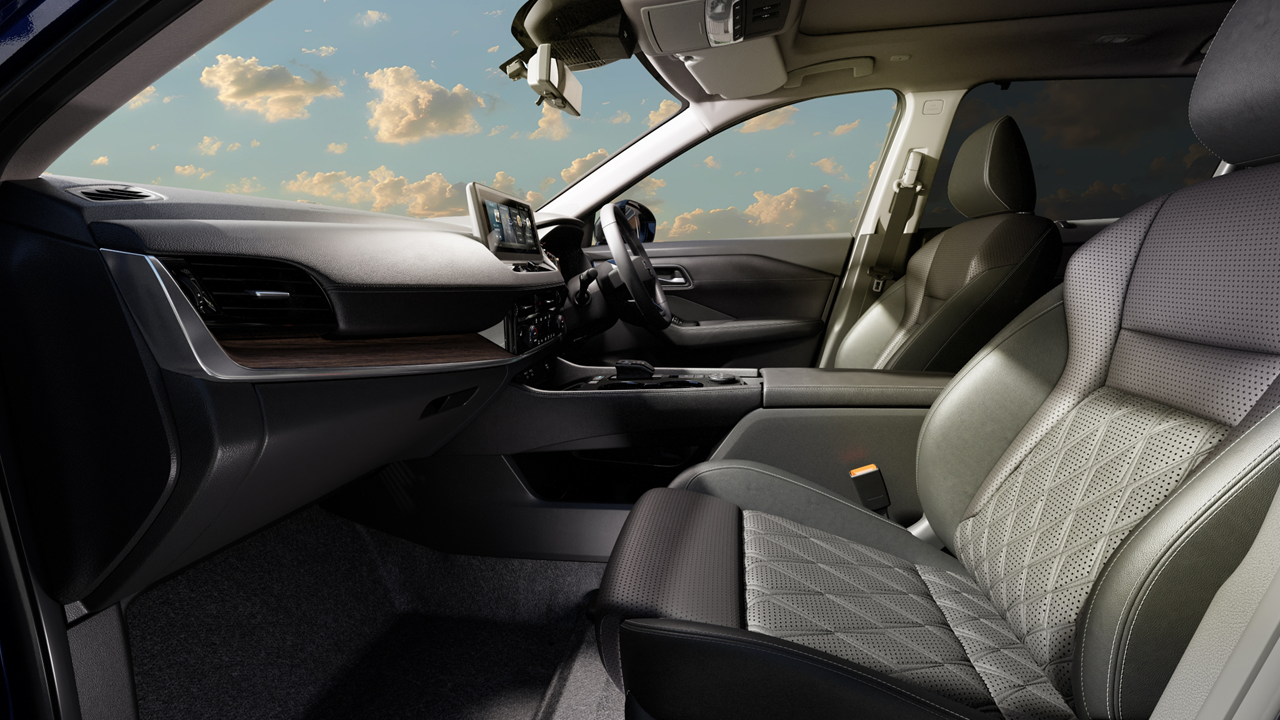
Inside, Nissan has focused on enhancing cabin quality, adding new seat materials, trim finishes, and colour combinations. The goal, Nissan says, is to give the SUV a more upmarket feel without compromising its practicality or space.
For the first time, all X-Trail grades will feature Nissan’s Connected Car Services (CCS 1.0), enabling owners to remotely monitor and control their vehicles through a smartphone app. The system includes remote engine start, vehicle health reports, theft alerts, and service reminders.
Higher-grade models (ST-L and above) gain an upgraded Around View Monitor, now featuring new camera angles such as Skeleton Hood view for tight streets and Multi-View support for improved visibility at intersections.
A 12.3-inch central display remains standard on ST and higher variants, with continued support for wireless Apple CarPlay and Android Auto.
Nissan’s e-POWER hybrid system, which drives the wheels solely via electric motors while using a petrol engine to charge the battery, carries over. The setup provides smooth acceleration and lower fuel use without requiring plug-in charging. Models equipped with e-4ORCE all-wheel drive continue to offer improved traction through electric torque distribution.
Safety features remain comprehensive, with Nissan Safety Shield 360 standard across the lineup. Upper grades add ProPilot with Lane Keep Assist, adaptive cruise control, and junction emergency braking.
The MY26 X-Trail will again be available in ST, ST-L, Ti, and Ti-L grades, offering five- and seven-seat configurations. All models are covered by Nissan’s 10-year/300,000km warranty and Roadside Assistance, with full specifications to be announced closer to launch.
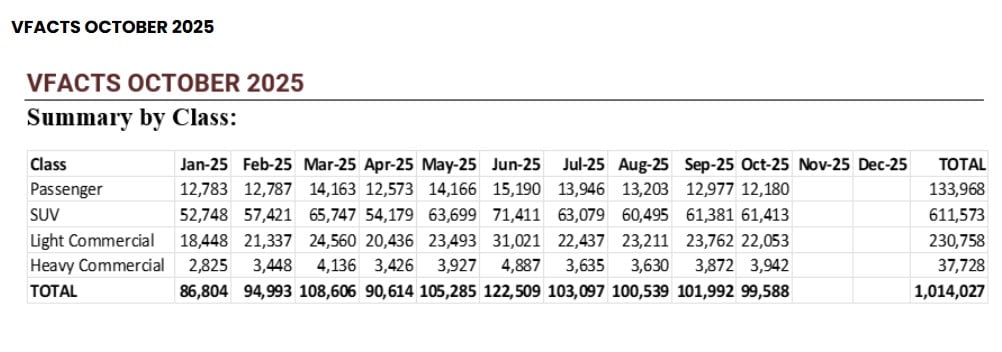
Australia’s new vehicle market held steady in October, with 99,588 cars sold – a modest 1.2 per cent increase on the same month last year. Despite the stable monthly result, year-to-date sales reached 1,014,027 vehicles, down slightly (1.1 per cent) compared to the same period in 2024.
The most notable development for the month was the rapid growth of hybrid and plug-in hybrid (PHEV) models, signalling a continued shift in buyer preferences toward electrified powertrains.
Hybrid vehicles accounted for 17.8 per cent of total sales, up 25 per cent from October 2024, while PHEVs rose 95 per cent to claim 4.7 per cent of the market. Battery electric vehicles (BEVs) made up 7.3 per cent, maintaining a stable share. Across the first ten months of 2025, hybrid sales are up 12 per cent, while PHEVs have surged 137 per cent.
Federal Chamber of Automotive Industries (FCAI) chief executive Tony Weber said the data confirmed that Australian drivers are embracing electrified technology at an accelerating pace.
“The October results show Australians are increasingly choosing hybrid and plug-in hybrid models as a practical path towards lower emissions,” Mr Weber said. “Hybrids are delivering strong growth right across the market, while petrol-only vehicles continue to lose ground.”
SUVs again dominated buyer demand, making up 61.7 per cent of all vehicles sold. Medium SUVs –Australia’s favourite vehicle category – accounted for one in every four new cars delivered. Passenger vehicles, by contrast, represented only 12.2 per cent of the total market, underscoring the ongoing consumer preference for larger, more versatile vehicles.
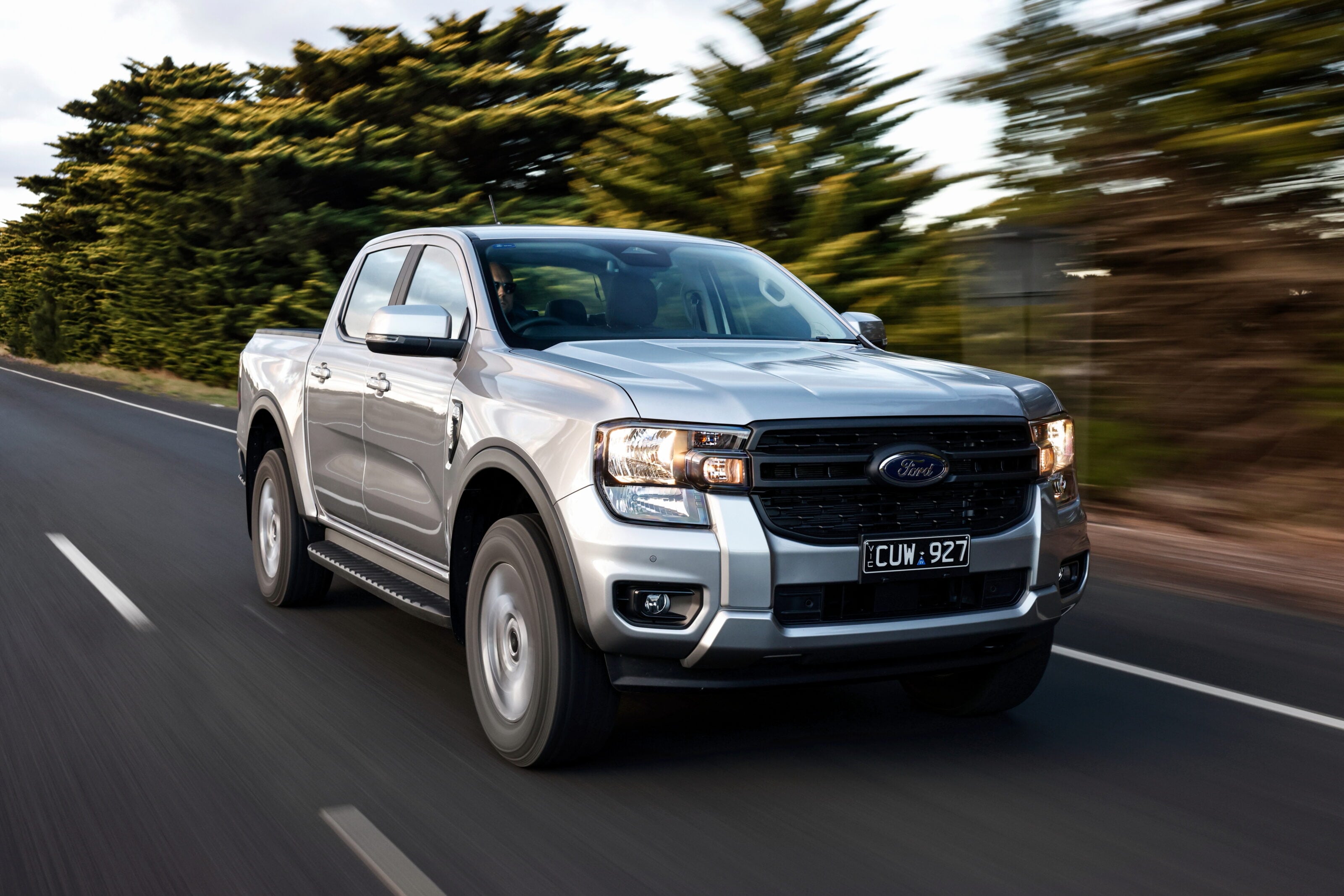
Toyota maintained its commanding position at the top of the sales charts with 19,726 vehicles sold, ahead of Ford (7,570), Mazda (7,140), Kia (6,610), and Hyundai (6,403). The Toyota HiLux, Ford Ranger, and Toyota RAV4 were separated by only a handful of units, reinforcing their dominance as Australia’s favourite models.
Chinese-made vehicles (GWM Haval H7, main image) also continued their upward trajectory, with sales up 40 per cent year-on-year, solidifying China’s place as the third-largest source market. Four Chinese brands featured among October’s top ten.
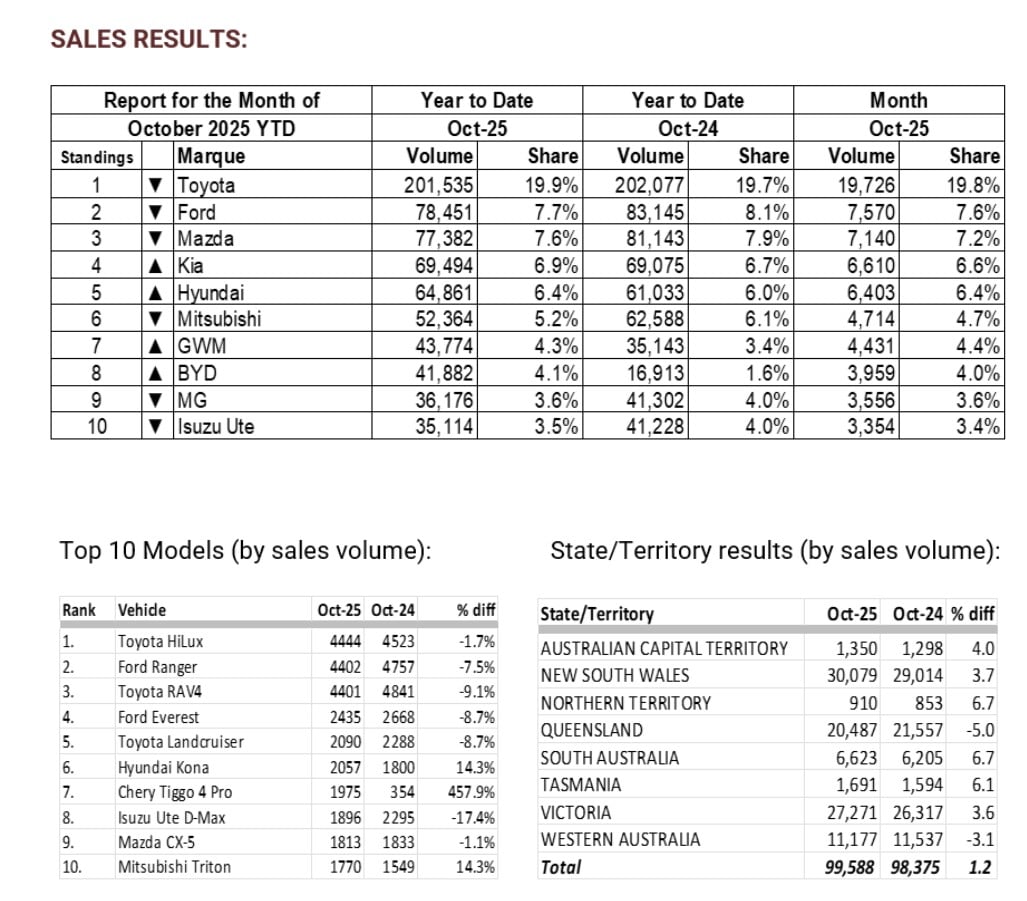
Across the states and territories, results were mixed. The ACT, South Australia, Tasmania, and Victoria all recorded solid growth, while Queensland and Western Australia posted modest declines.
Despite the small monthly lift, the latest figures highlight an industry in transition – one increasingly defined by electrification, SUV dominance, and changing consumer priorities.
The Land Rover Defender has appeared in countless guises – from rugged off-roader to commercial workhorse and high-performance flagship – but it’s never officially been offered as a ute. That’s changed thanks to Dutch outfit Heritage Customs, which has created the first pick-up conversion based on the modern Defender 130.
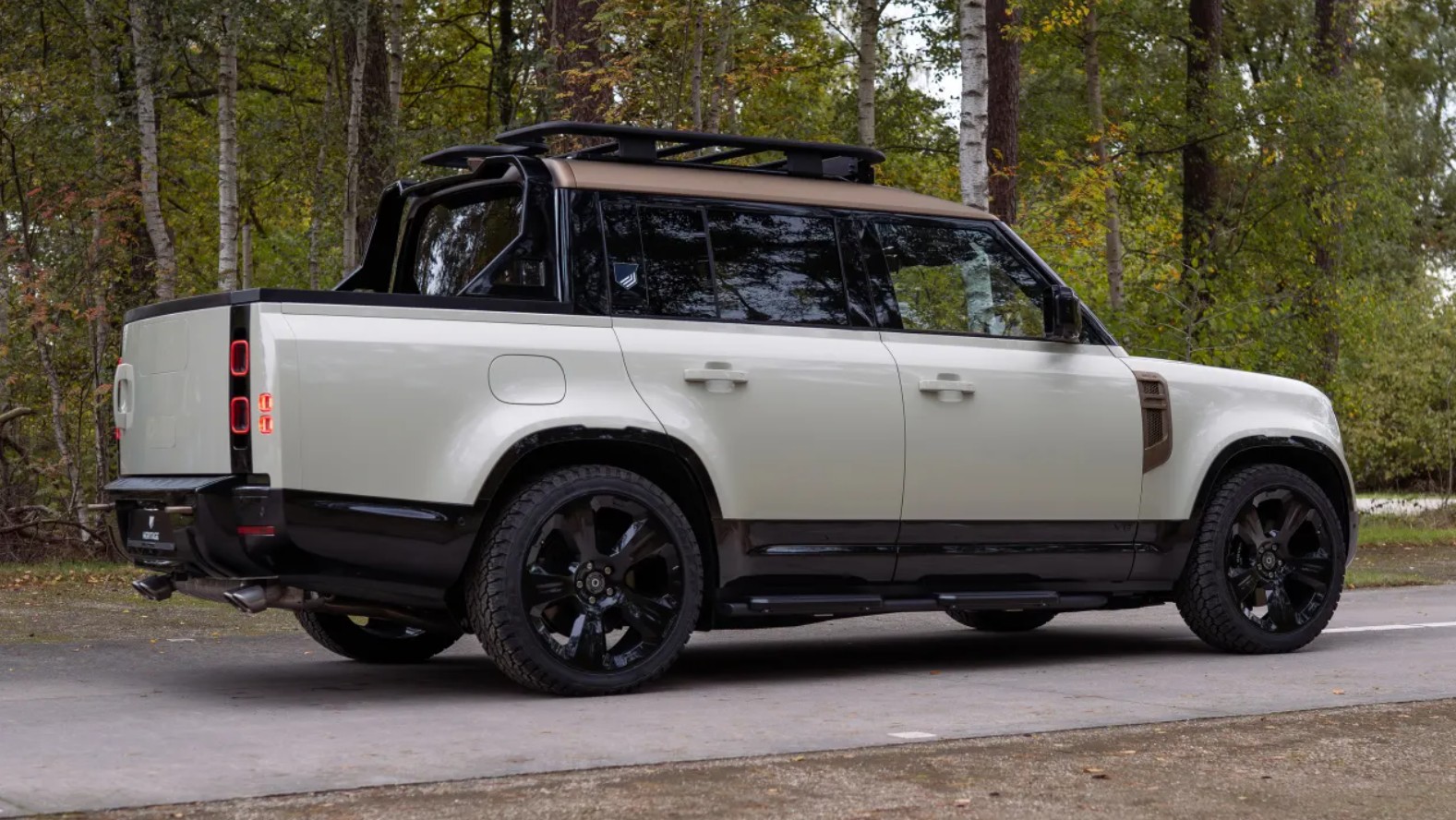
The project begins with Land Rover’s longest Defender body style, powered by a 5.0-litre supercharged V8 producing 312kW (419hp). Heritage Customs removes a large section of the roof to form a compact load tray and adds a roll hoop for reinforcement and visual impact. The tray is finished with a protective bed liner, while a roof rack provides space for tools or gear – including a relocated spare wheel that usually sits on the tailgate.
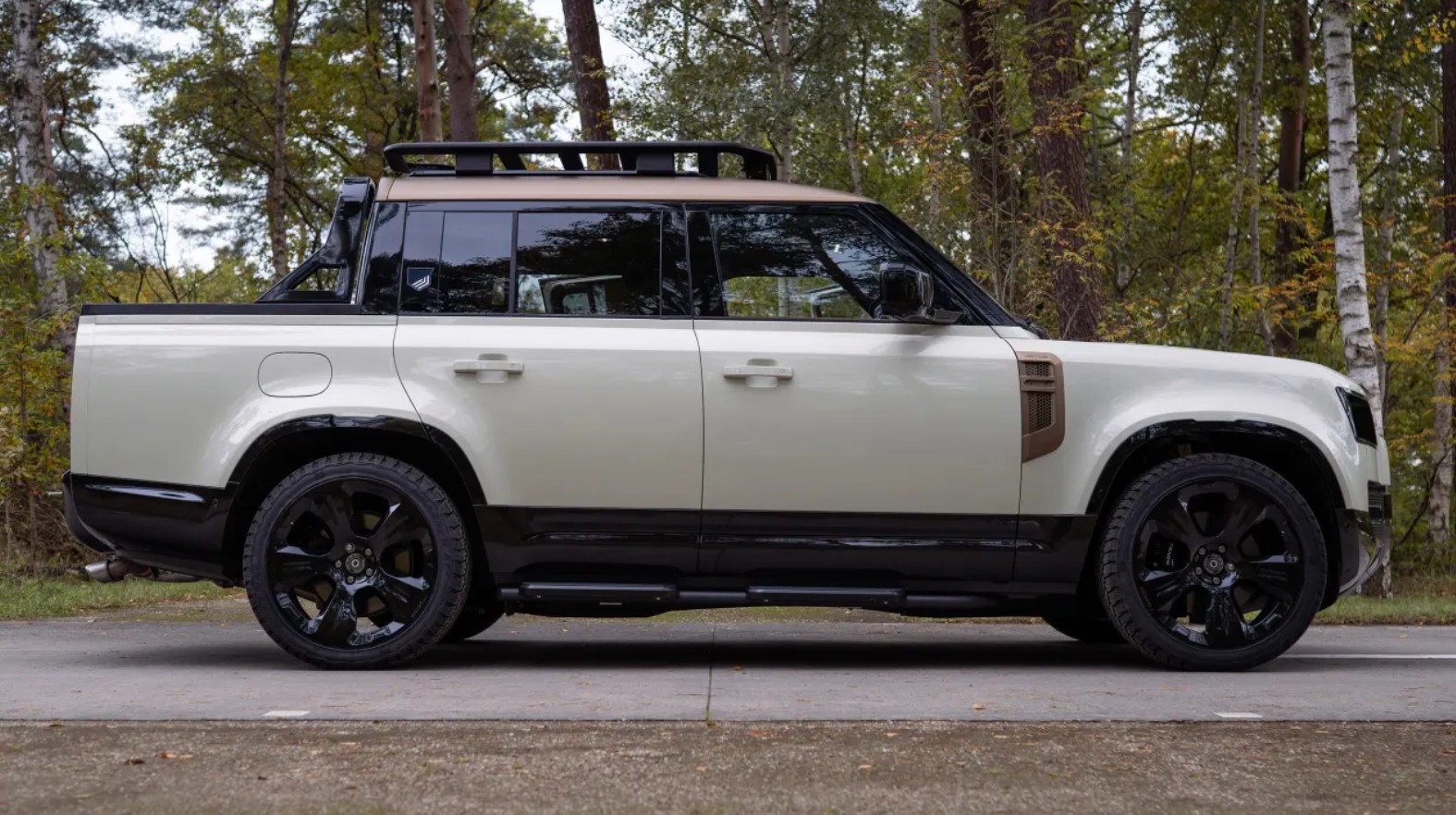
The company calls the vehicle a “semi-coachbuilt project”, reflecting how much of the original Defender’s character is retained. Buyers can commission the ute in a custom colour, choose from a range of wheel designs, and specify tailored interior finishes. Heritage also offers accessories developed in-house to match the conversion’s off-road intent.
Two design themes are available. The Heritage Edition embraces a classic aesthetic with refined detailing and elegant paintwork, appealing to traditionalists who want a timeless look. The Urban Edition, created in collaboration with British tuner Urban Automotive, takes a bolder approach with a blacked-out finish, wider wheelarches, and four roof-mounted light bars for a more aggressive city-ready stance.
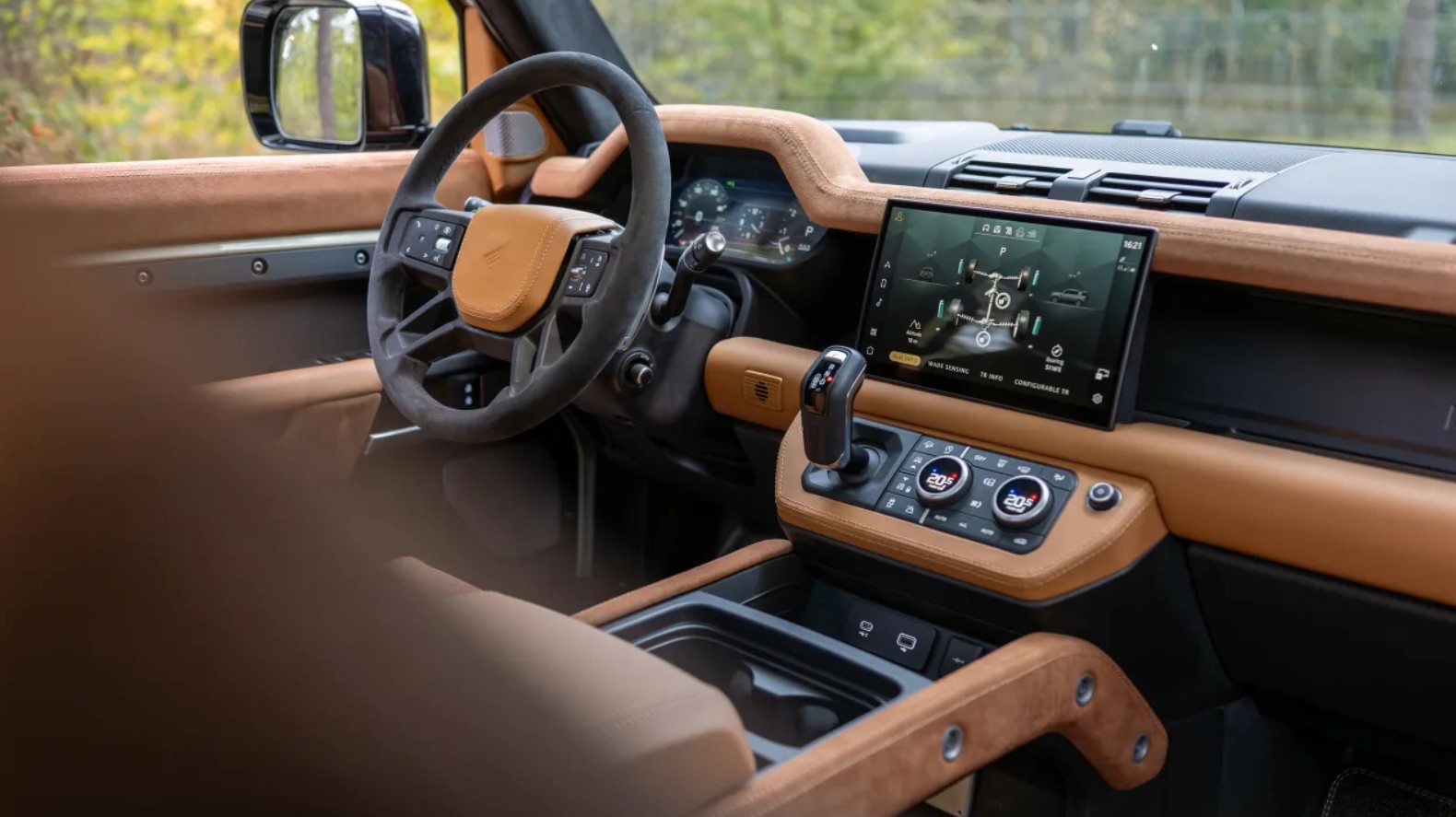
Each ute is hand-built at Heritage Customs’ facility in The Netherlands, and buyers can now secure a build slot. The conversion costs about A$115,000 on top of the donor Defender, with construction taking between two and three months depending on options.
While Land Rover itself has yet to announce an official Defender ute, the Heritage Customs project shows the potential demand for such a model – particularly in markets like Australia, where utes dominate both work and lifestyle segments.
A production-ready version of the Urban Edition is set to make its public debut at the Goodwood Festival of Speed in July 2026, offering enthusiasts an early glimpse at what could be the most distinctive Defender yet.
Mercedes-Benz Australia has added a new Mercedes-AMG GLC 43 Carbon Edition special edition variant of the GLC mid-size SUV and Coupé (pictured), now on sale in Australia. Priced from $133,100 plus on-road costs, the Carbon Edition adds performance features such as dynamic engine mounts and a race mode, yet is priced lower than the regular AMG GLC 43 models.
As with the regular AMG GLC 43, the Carbon Edition uses a turbocharged 2.0-litre four-cylinder petrol engine with a 48-volt mild-hybrid system. It makes 310kW of power and 500Nm of torque, enough for a claimed 4.5-second 0-100km/h sprint time.
Like the regular AMG GLC 43, the Carbon Edition is available in traditional SUV shape, or the sportier-looking coupe. It’s the first limited edition GLC since the Edition R that was available earlier this year.
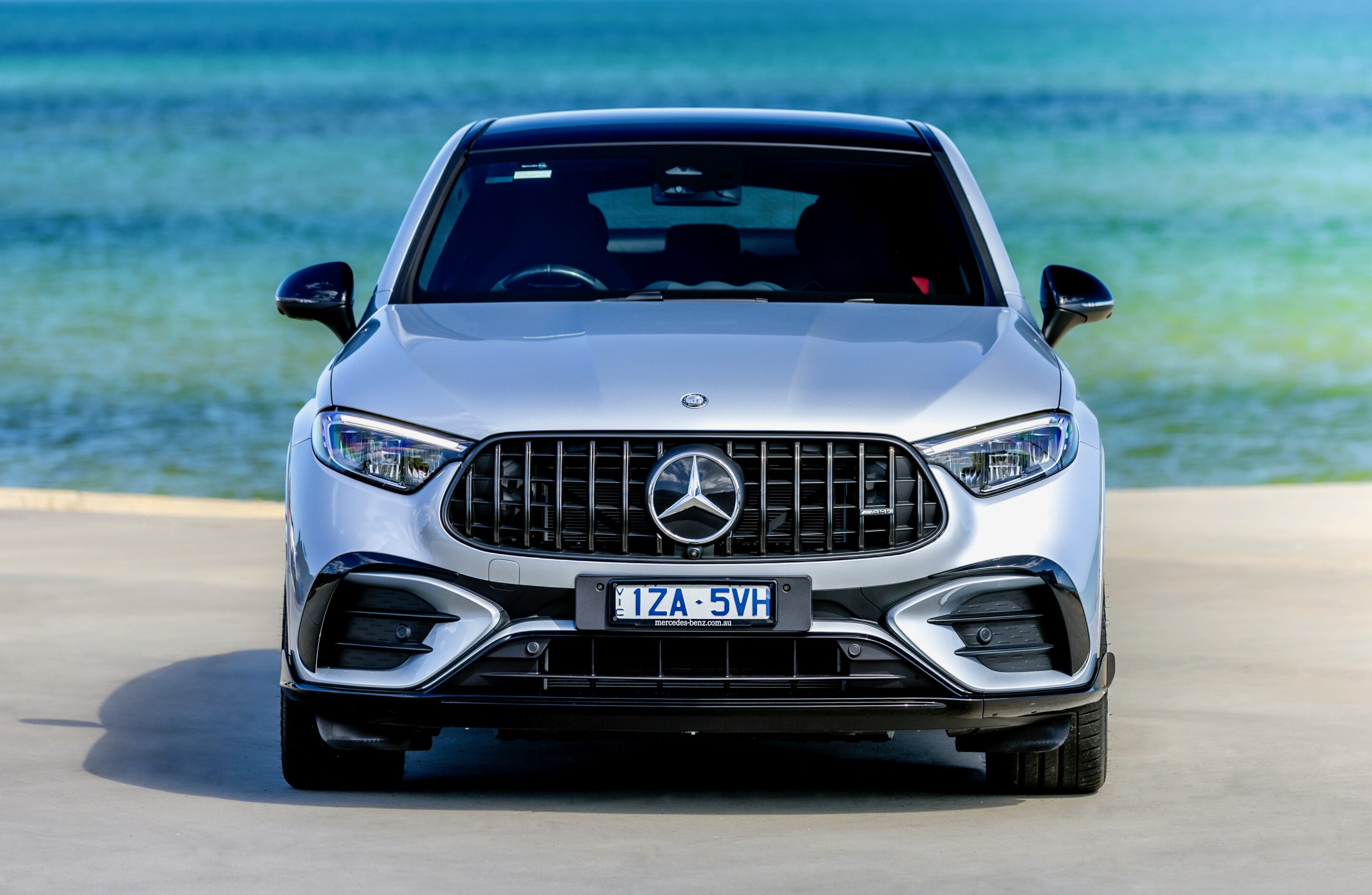
Equipment additions to the AMG GLC 43 Carbon Edition include 21-inch alloy wheels with a matte black and sheen finish, red brake callipers, automatic LED exterior lighting, the Night Package II with dark chrome exterior highlights, a flat-bottomed synthetic leather and suede steering wheel, suede and synthetic leather upholstery with front seat heating, red seat belts and AMG genuine carbon fibre interior trim.
Uniquely, the Carbon Edition adds the AMG Dynamic Plus Package with dynamic engine mounts and a dedicated race driving mode for heightened responses for track driving.
That’s on top of features such as multiple driving modes, heated front seats with memory functionality, a panoramic sunroof, a Burmester 3D surround sound system, MBUX infotainment system, wireless Apple CarPlay and Android Auto, ambient lighting, and an extensive suite of driver assistance technologies, including adaptive cruise control, blind-spot monitoring and lane keeping assistance.
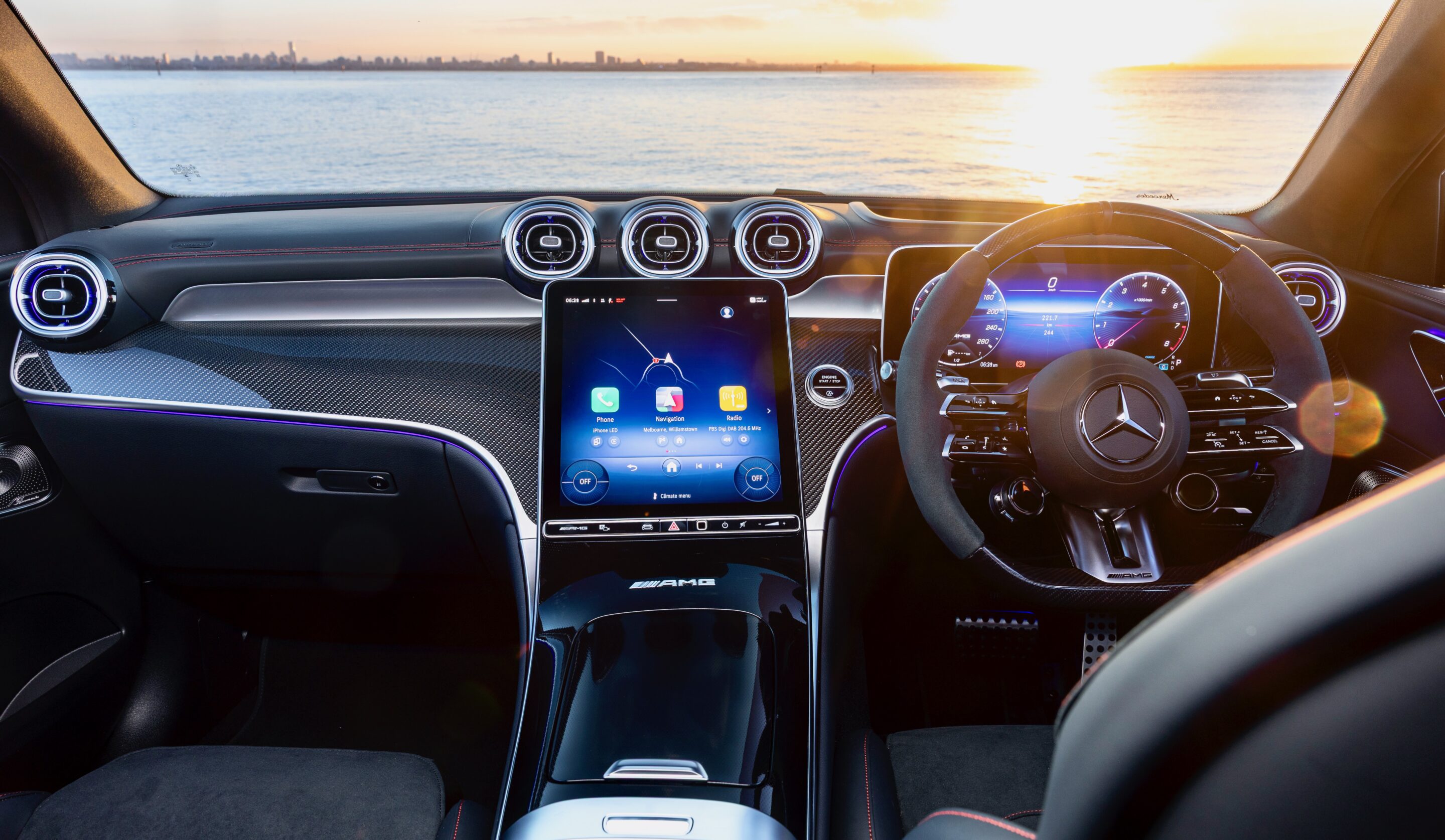
Compared with the regular AMG GLC 43 range, the Carbon Edition only loses Digital headlights with adaptive high beam, adaptive lane guidance, augmented reality for the sat-nav and aluminium-look running boards.
Mercedes-AMG GLC 43 pricing (plus on-road costs):
| AMG GLC 43 Carbon Edition | $133,100 |
|---|---|
| AMG GLC 43 Carbon Edition Coupe | $145,800 |
| AMG GLC 43 | $136,900 |
| AMG GLC 43 Coupe | $147,500 |
The Mercedes-AMG GLC 43 Carbon Edition is now available to order through Mercedes-Benz dealerships ahead of the first deliveries commencing soon.
The new Mercedes-Benz G 450 d will appeal to a new type of buyer in Australia, among strong demand for all G-Wagen variants, according to the brand.
Speaking to WhichCar by Wheels at the local launch of the newest G-Wagen, Mercedes-Benz Australia predicts that the new G 450 d will appeal to a different set of buyers than the variants already on sale: off-road enthusiasts, specifically, much in the same way the Toyota LandCruiser 300 Series or Land Rover Defender does.
While the high-performance AMG G 63 has traditionally been the biggest-selling G-Wagen variant, something that’s unlikely to change, the company thinks that the new G 450 d will appeal to buyers wanting greater off-road capability.
“We are already getting organic information from our network that we’re seeing non-traditional customers looking at the G 450 d, ones that could be more off-road focused and maybe coming from new brands, or perhaps even a GLE,” said Jerry Stamoulis, Head of Media Relations and Brand Engagement at Mercedes-Benz Australia.
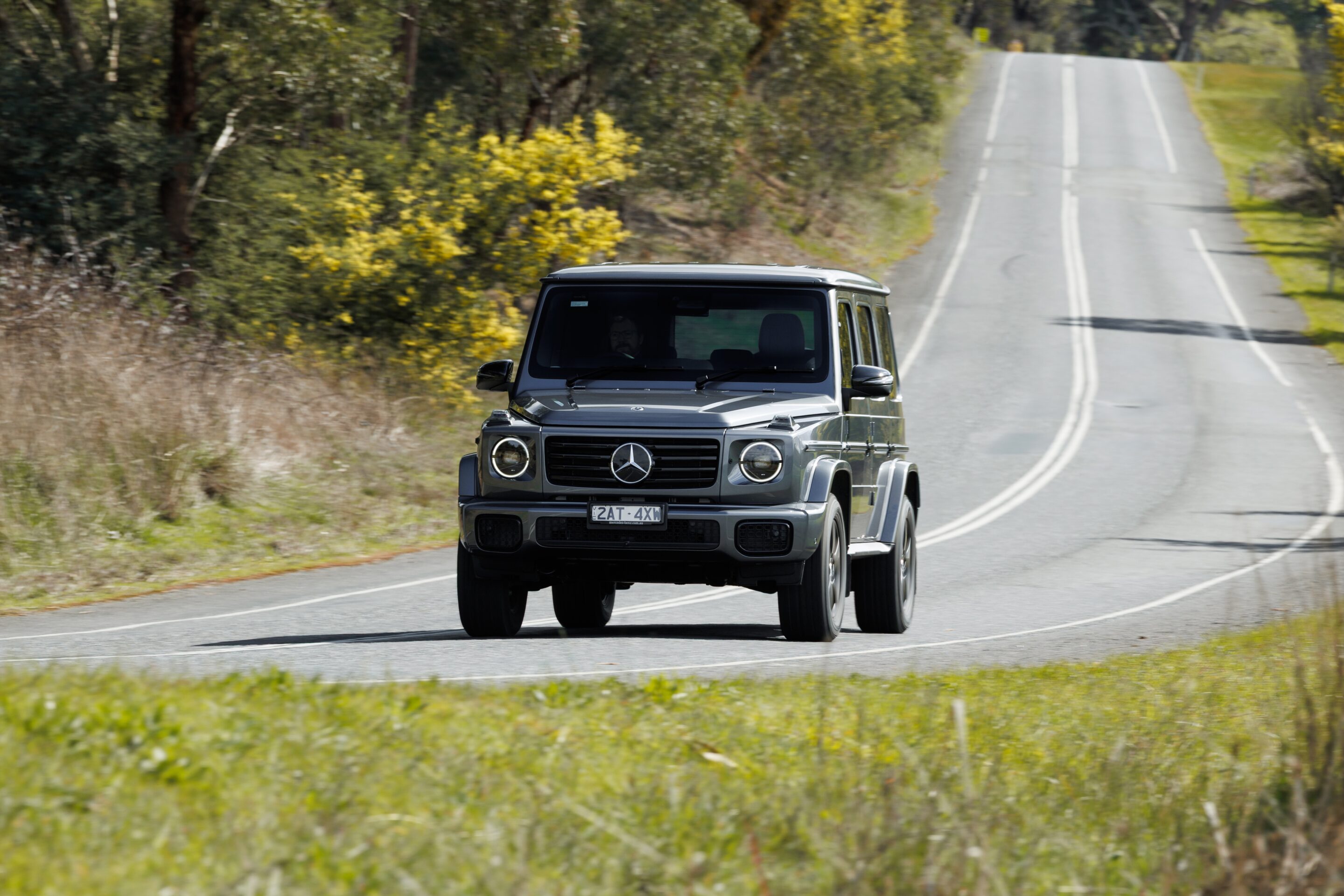
“The G 450 d is an off-road vehicle and you’re meant to take it off-road more than an AMG G 63, for example. We don’t know how many 63 buyers take their car off-road, but it’s likely to be quite small because the 63 is the performance model. The 450 d is a great off-road vehicle,” added Sales Director Johannes Schoen.
The revised strategy for the G 450 d comes among increasing demand for the G-Wagen in Australia. To the end of October 2025, 466 units were sold, which is a 35.9 per cent increase on the same period in 2024. If the same momentum continues to the end of 2025, G-Class sales are set to hit almost 600 for the first time since 2021 – a considerable number at this price point.
“We’ve seen really high demand for the G 450 d,” says Schoen. “The AMG G 63 is the all-time favourite, but we’ve launched the G 450 d just last month and we’re already quite pleased. Our order bank for the G 450 d has filled up remarkably fast, with allocations for the first production months effectively spoken for just weeks after launch.”
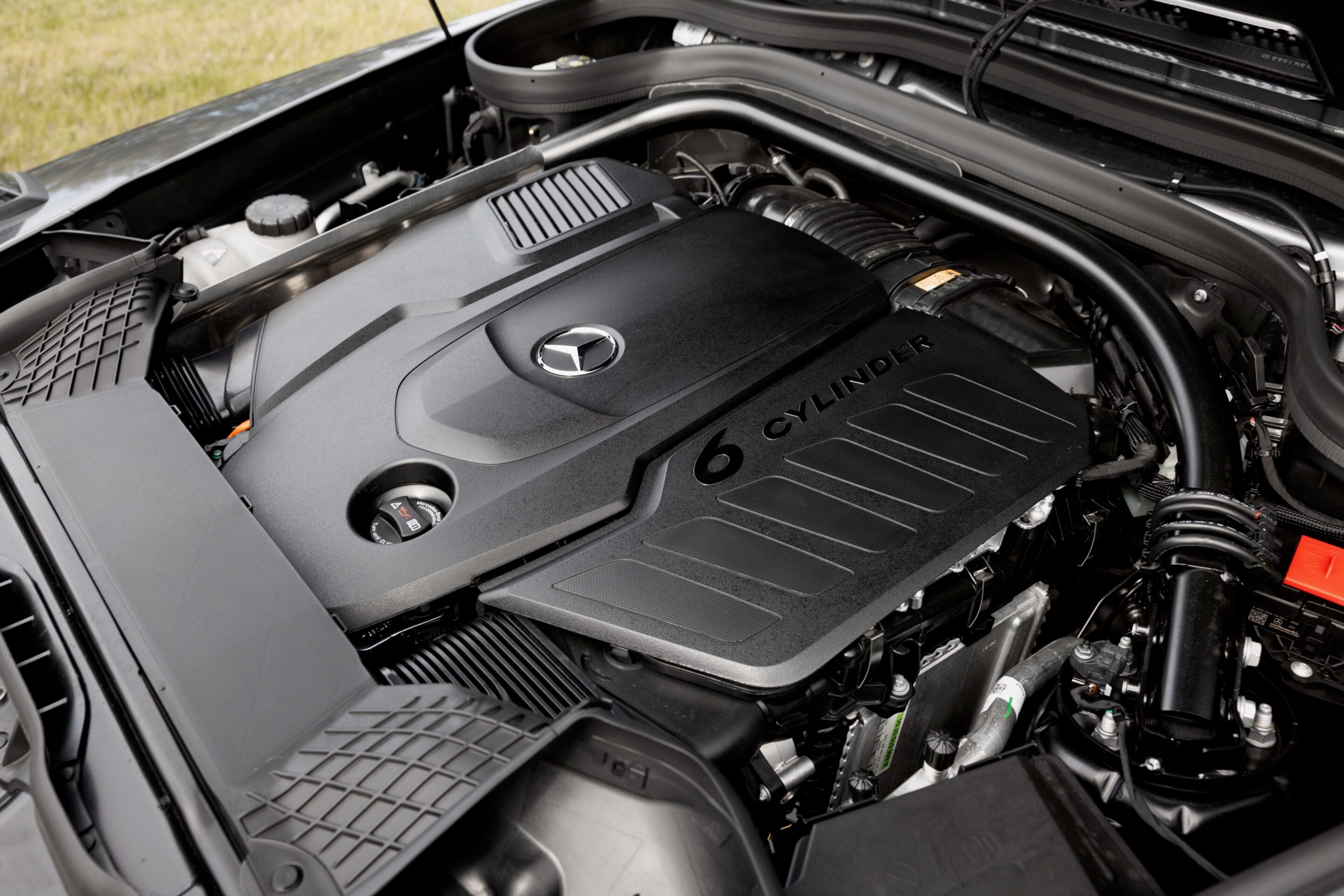
It was 2021 when the last diesel G-Wagen was offered locally, with the short-lived G 400 d priced at $246,500 plus on-road costs and using a less powerful version of the G 450 d’s inline six-cylinder turbo-diesel engine. While the AMG G 63 remains the most popular variant, Mercedes-Benz Australia executives say that there’s clear demand for a diesel powertrain in the line-up.
“Customer demand brought the diesel back,” said Schoen. “We used to have a wider range and then for a period, we didn’t and it was just the 63, but now we see potential because we think that there’s demand [for the G 450 d] so we brought the car in and we’re finding that it’s hitting the spot.”
2026 Mercedes-Benz G-Class pricing (plus on-road costs):
| G 450 d | $214,900 |
|---|---|
| G 580 with EQ Technology | $249,900 |
| AMG G 63 | $368,400 |
| AMG G 63 Offroad Pro | $383,900 |
The Mercedes-Benz G 450 d is now on sale in Australia, with local deliveries already underway.
The Mercedes-Benz G-Wagen is an iconic car. Whether it’s crossing the Outback or pootling down Chapel Street – as we are on this drive – it commands respect. However, the G-Wagen that most people will be familiar with in Australia is the AMG G 63 and its awesome side-mounted tailpipe – but that could change in the future thanks to the addition of the new G 450 d variant.
Aimed at those with more serious off-road aspirations, the new diesel inline six-powered G-Wagen is set to add a different character to the G-Class.
Available in either standard or ‘Offroad’ form, with the latter adding off-road tyres as standard, both are priced from $214,900 plus on-road costs.
Standard equipment includes 18-inch alloy wheels, adaptive dampers, low-range gearing, three differential locks, a sunroof, leather upholstery, a Nappa leather steering wheel, a 12.3-inch touchscreen with the company’s ‘MBUX’ infotainment system, augmented reality sat-nav, wireless smartphone mirroring, digital radio and safety features like autonomous emergency braking with pre-accident assistance, 360-degree camera with a see-through bonnet view, adaptive cruise control, blind-spot monitoring with safe exit assist and automatic parking.
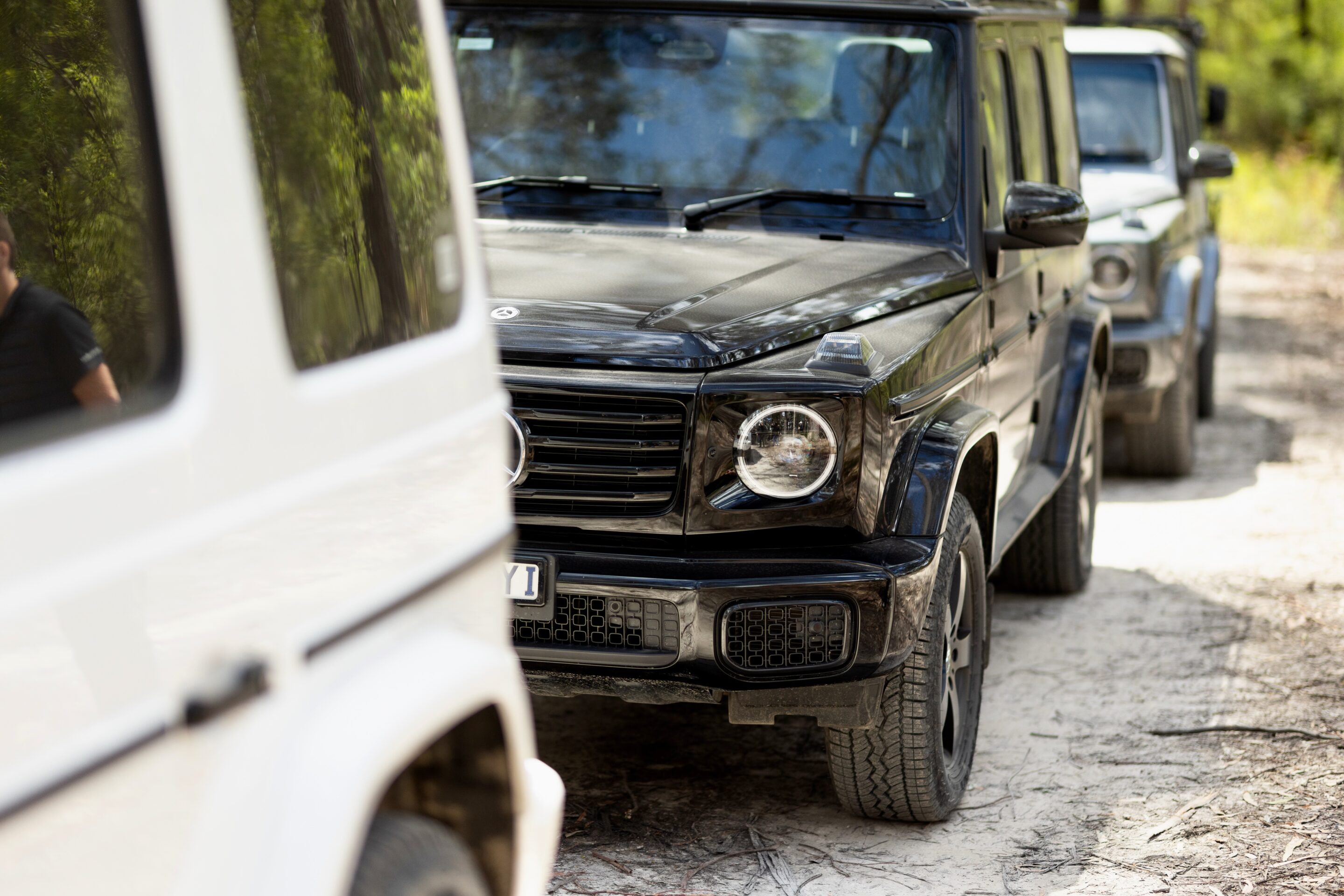
Options include the $18,000 AMG Luxury Package with 20-inch AMG alloy wheels, silver chrome grille exterior highlights, a Nappa leather sports steering wheel and the Exclusive Line Interior; $5600 Night Package with black exterior detailing such as the wheels; an $8500 Interior Comfort Package with a rear seat entertainment system, heated windscreen, heated steering wheel and heated armrests for the front cabin; and a $15,900 Professional Exterior Package with a roof rack and spare wheel holder. The latter option makes the G 450 d look especially tough.
The cabin of the G 450 d isn’t as racy as the AMG G 63, but it’s still high quality, comfortable and quite practical. The Nappa leather steering wheel feels excellent in hand, while the stitched leather trim around the cabin looks and feels expensive. The front seats are very comfortable with plenty of ways to adjust, though, curiously, no lumbar support.
The 12.3-inch touchscreen with Merc’s ‘MBUX’ software is sharp and easy to use. Cabin storage is ample, though the rear seat isn’t as spacious as you might expect thanks to the G-Wagen’s packaging. Boot space is large, however, at 620 litres with the seats up and that opens to 2010 litres with the rear seats folded.
Centre of the G 450 d is a new 3.0-litre inline six turbo-diesel engine, which makes impressive 270kW and 750Nm outputs, which are even stronger than the LC300’s 227kW/700Nm outputs. Sure, it’s not as powerful as the AMG G 63 and its monster twin-turbo V8, but it’s still a fabulous drivetrain thanks to its low-end grunt and quiet nature.
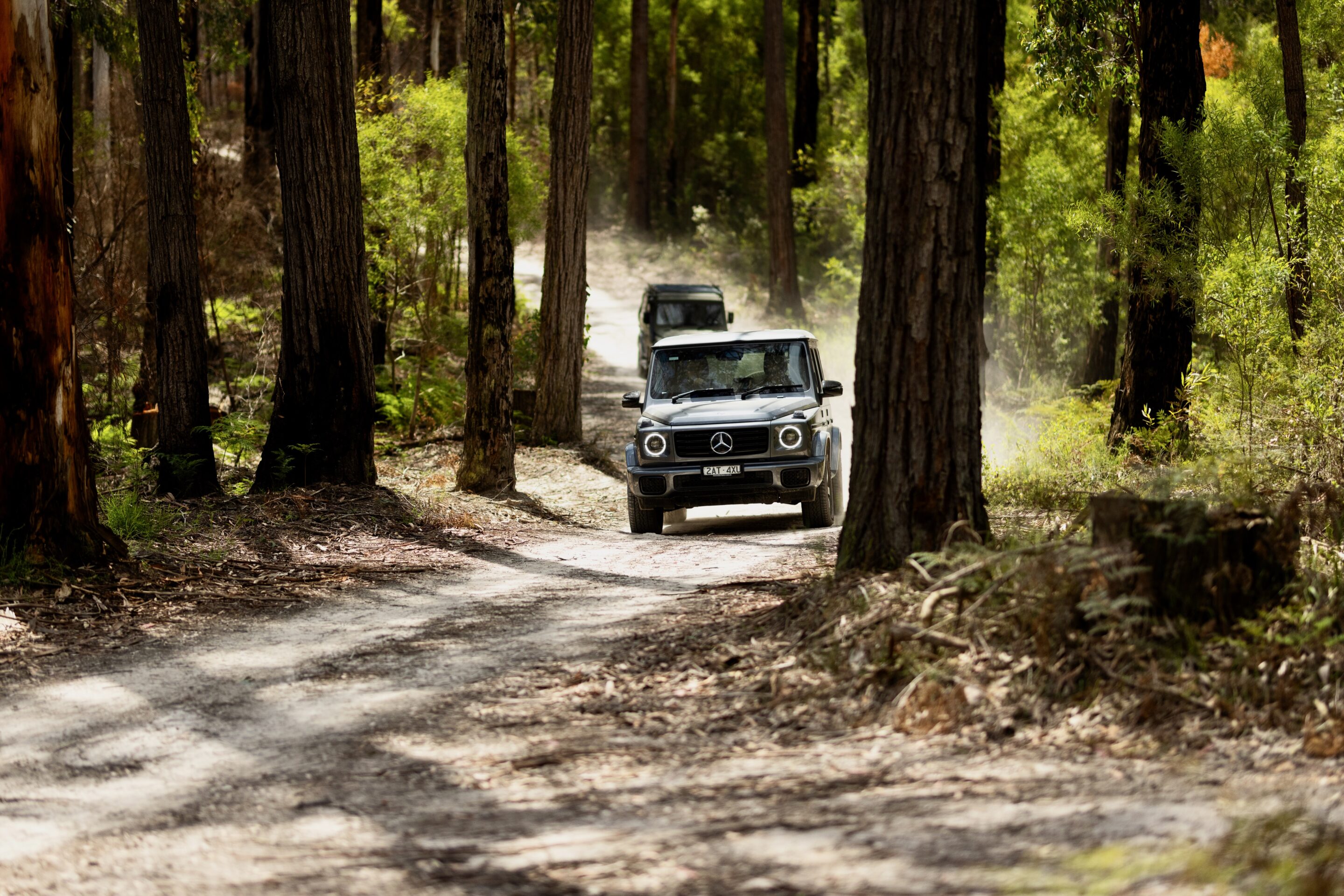
Despite the 450 d’s porky 2621kg tare mass, it hits 100km/h in just 5.8 seconds and a top end of 220km/h – having previously driven it at top speed on the German autobahn, it feels very solid no matter how fast it’s being driven.
The drive program for the G 450 d Australian launch rightly focused a lot on its off-road capability. Leaving Melbourne, we ventured south-east towards Neerim and through the beautiful Bunyip Sate Park, giving us plenty of opportunity to experience the G 450 d’s various talents in a variety of conditions.
Our launch drive started on tarmac, eventually progressing to dirt roads – including, oh joy, washboard gravel – and deep mud, steep uphill sections and then back to Melbourne. Unsurprisingly, the G 450 d did not struggle once. It took it all in its stride, and would give confidence even to off-road beginners. It’s rated at 8.1L/100km for combined fuel consumption and at the end of the off-road day, recorded an impressive 10.2L/100km average.
Off-road features in the G 450 d are plentiful, from low-range gearing and three differential locks to various off-road modes and a 360-degree camera with a useful transparent bonnet mode to help manage difficult terrain. The off-road cockpit view on the 12.3-inch touchscreen is also filled with helpful off-road information, such as gradient, tilt and differential status so make off-roading as stress-free as possible.
We were given advice to be cautious about a particularly deep mud section of the drive, but there was no need for concern: we just activated low range along with the centre differential lock and the G 450 d acted like nothing had changed. The nine-speed automatic’s short gearing helps here too: in low range, it starts in second gear and because of that – allowing for maximum grunt with no gear change in between – steep climbs are no match for the G 450 d. It’s impressive off-road stats include 700mm maximum fording depth, 31-degree approach angle and a 30-degree departure angle.
What is most impressive about the G 450 d is that despite all hell breaking loose outside, you’re cocooned in a luxurious and well insulated cabin with effective heated and chilled cup holders.
The G 450 d’s slow, mechanical steering is a delight in an age where most cars offer almost zero connection to the driver, and the ride quality is exceptional for a car with a ladder frame and rigid rear suspension – there’s an occasional tremor, but it’s otherwise quite comfortable. Overall, the driving experience of the G 450 d is impressive.
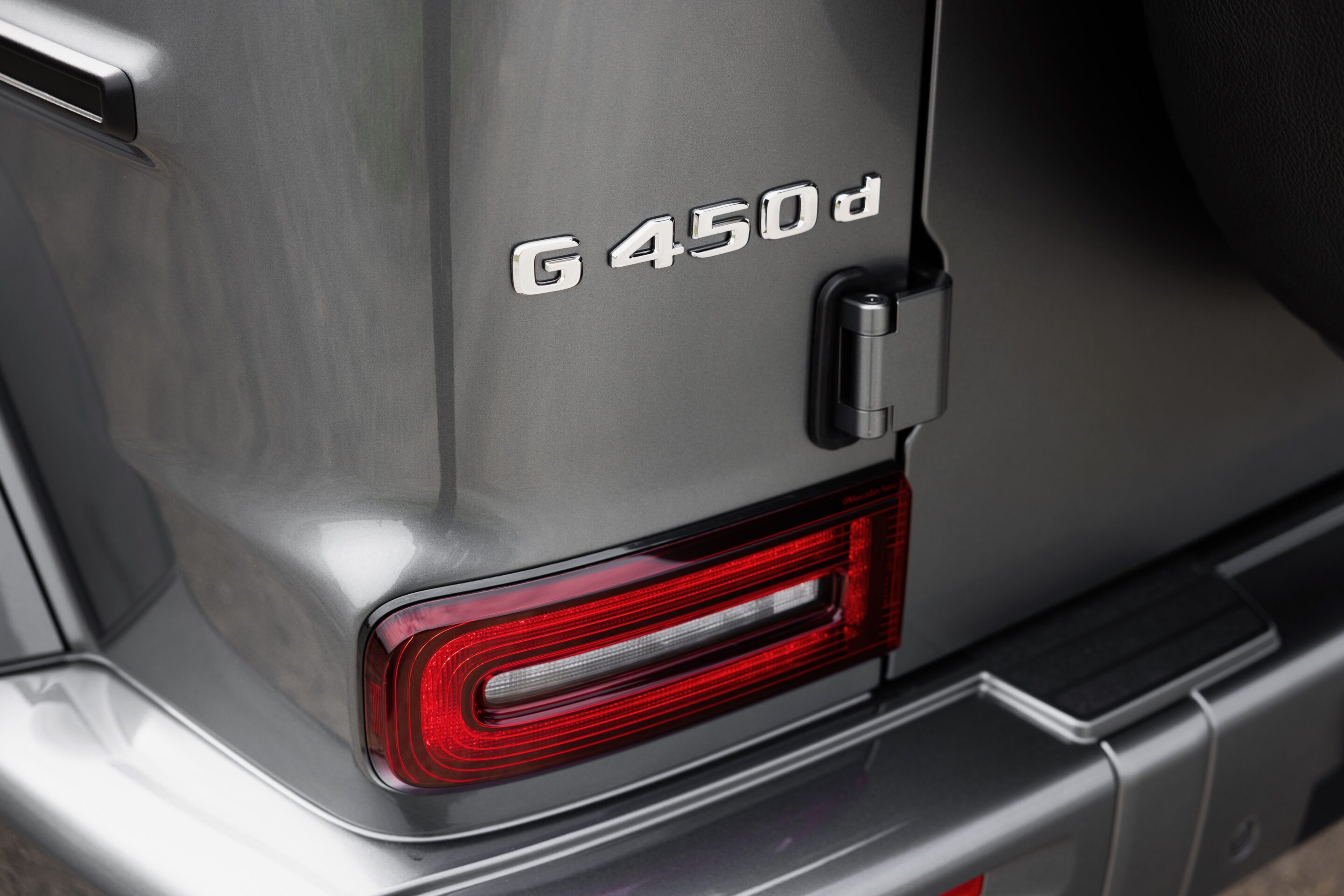
Are there any negatives to the G 450 d? Well, $7880 for five years/100,000km of servicing is quite expensive, the touch pad controls on the steering wheel are fiddly and the boot door opens on the wrong side for right-hand drive markets. Plus, despite a usefully lower price relative to the previous G 400 d last sold locally in 2021 and the $368,400 AMG G 63, it’s still a considerable outlay.
In an age where most G-Wagens are driven only in town, however a new model that can actually take you into deep territory away from the main road is refreshing. It really appeals to the traditional G-Wagen ethos and while it’s not cheap, we think that buyers of higher-end LandCruisers, Defenders and even Mercedes-Benz large SUVs such as the GLE will definitely be curious about this new addition to the G-Wagen range. Some will prefer the high-performance AMG G 63, but we think the new G 450 d is the G-Wagen at its best.
Mercedes-Benz G 450 d specifications:
| Model | Mercedes-Benz G 450 d 4Matic |
|---|---|
| Price | $214,900 plus on-road costs |
| Drivetrain | 2989cc inline six turbo-diesel, 48-volt mild-hybrid |
| Transmission | Nine-speed torque converter automatic, four-wheel drive |
| Peak power | 270kW (@ 4000rpm) |
| Peak torque | 750Nm (@ 1350 – 2800rpm) |
| 0-100km/h | 5.8 seconds |
| Combined fuel consumption/CO2 emissions | 8.1L/100km, 213g/km |
| Fuel tank/size | Diesel, 100 litres |
| Dimensions (length/width/height/wheelbase) | 4825/1931/1969/2890mm |
| Tare mass | 2621kg |
| Boot size | 620 litres (rear seats up) – 2010 litres (rear seats folded) |
| Warranty | Five-year/unlimited km with five-year roadside assistance |
| Service intervals/cost | Annual/every 20,000km, $7880 for a five-year plan ($1576 per year) |
| On sale | Now |
The Australian new car market offers buyers more choice than ever before – and that offering is set to become even more diverse with more brands heading for our market in 2026.
Here’s the WhichCar by Wheels guide to all the new car arrivals for 2026 so far. Check back in on this article regularly as we update with more soon-to-arrive models as they become known.
Alfa Romeo
Tonale: A new grille and front end hide updated powertrains for Alfa’s sweet-looking small SUV. Due in the first half of 2026.
Alpine
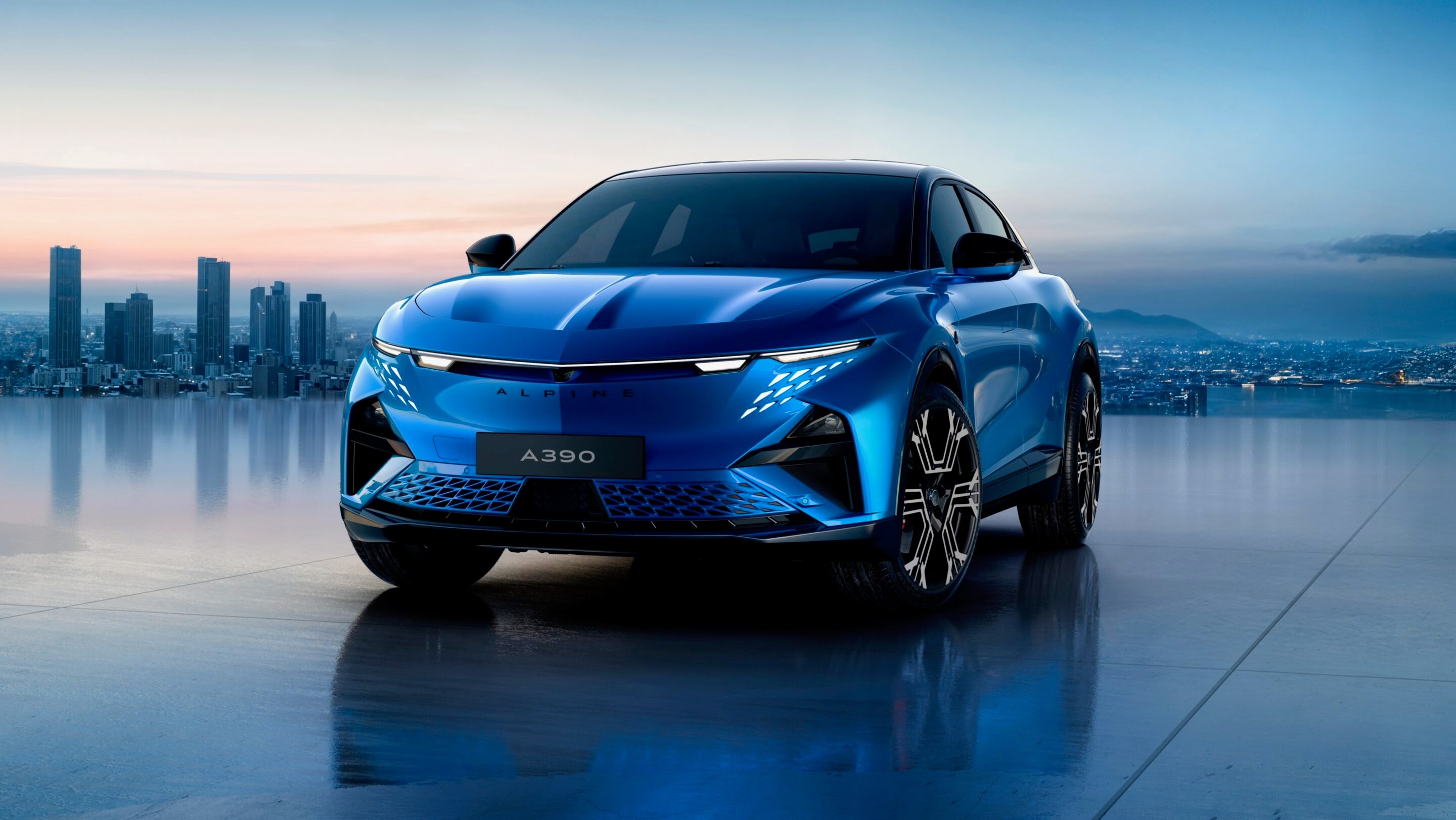
A390: Late 2026. Alpine’s first SUV signals its return to the Australian market.
Aston Martin
DB12 S: First half. Hotter DB12 launching with 515kW twin-turbo V8.
Valhalla: A number of the total production run of 999 of Aston’s twin-turbo V8 supercar are headed down under, due in the first half of 2026. Allegedly.
Vantage S: First half. Vantage S uses the same V8 as the DB12 S but with a smaller and harder attitude.
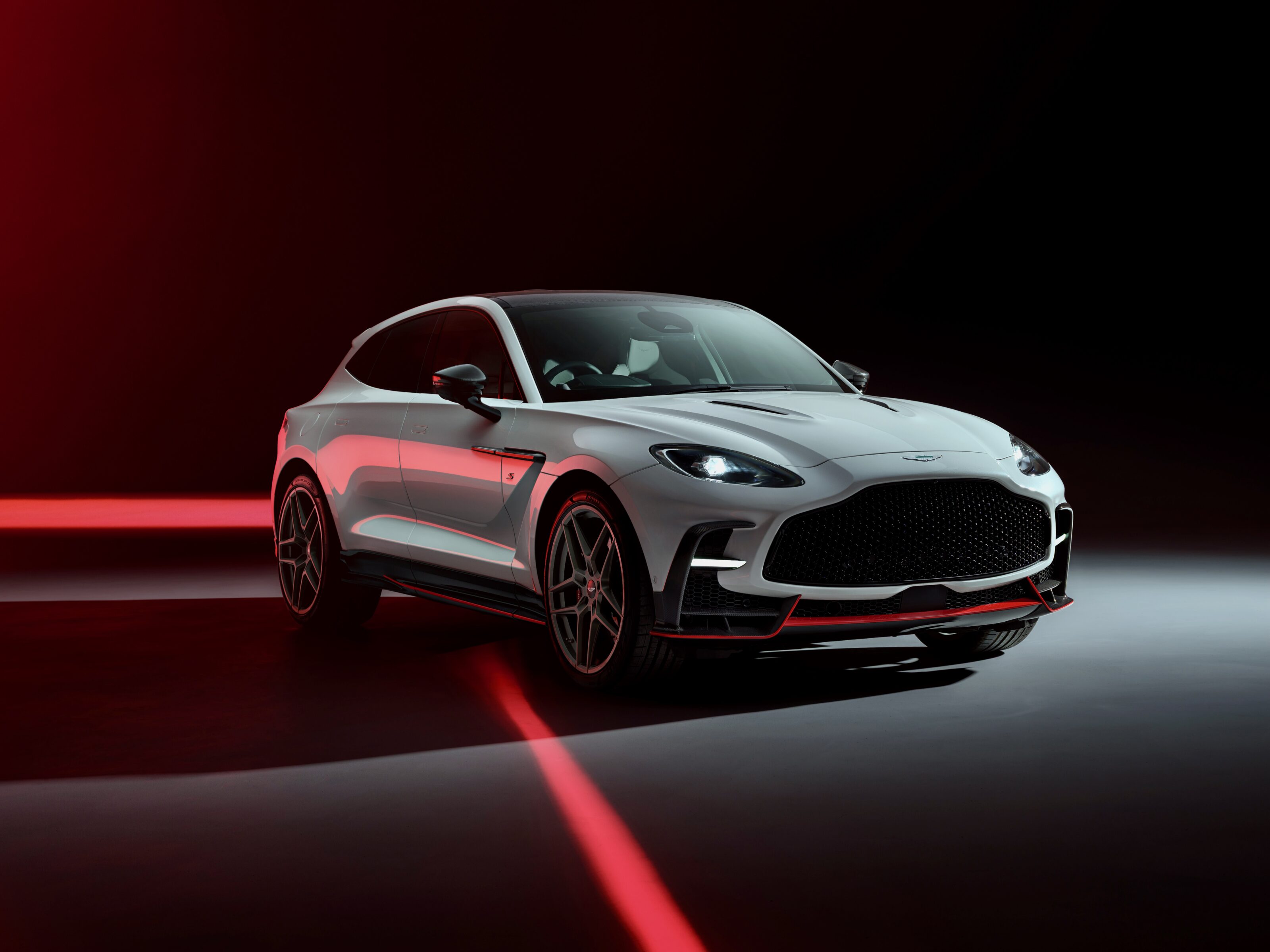
DBX S: First half. Harder DBX S uses the same V8 as its siblings but making 535kW, but is also lighter and harder than the regular DBX.
Audi
Q3 and Q3 Sportback: Second quarter. Audi’s most popular product locally enters its third generation, with plug-in hybrid power for the first time in Australia.
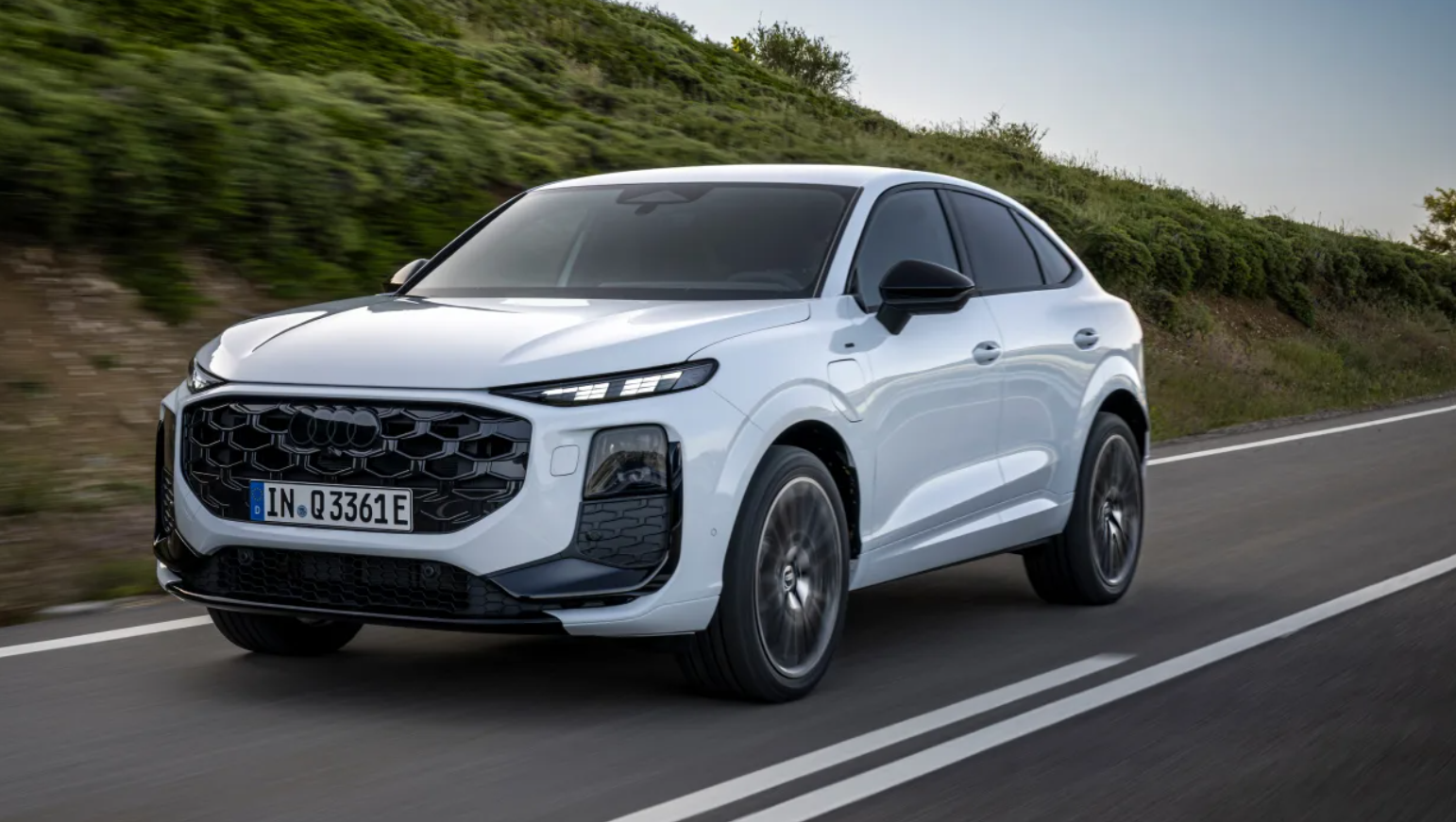
Q5 e-hybrid: First half. The third-generation Q5 earns a plug-in hybrid drivetrain with up to 270kW of power and 100km of WLTP electric driving.
Bentley
Bentayga Speed: Twin-turbo V8 replaces the outgoing V12 in the British brand’s half-a-million dollar super SUV. Due in local showrooms in the third quarter of 2026.
BMW
M2 CS: Early 2026. Higher-performance variant of the M2 sports coupe sports more performance and even sharper handling. Priced from $172,900 plus on-road costs.
XM update: Early 2026. The XM performance SUV earns slightly faster charging and new interior and exterior colour options.
i4 update: Early 2026. The i4 returns to Australia with a new single-grade model line-up in eDrive40 form priced from $88,900 plus on-road costs.

iX3: Mid 2026. The BMW iX3 is one of the most significant BMW products in decades and adopts an 800V platform for super fast charging and a range of up to 805km.
BYD
Atto 2 and Sealion 8: Early 2026. BYD is starting 2026 with two important new models, with the small electric Atto 2 and large plug-in hybrid seven-seat Sealion 8 both on sale early next year.
Atto 1: Australia’s most affordable electric car has landed with a sub-$25k price. On sale now.
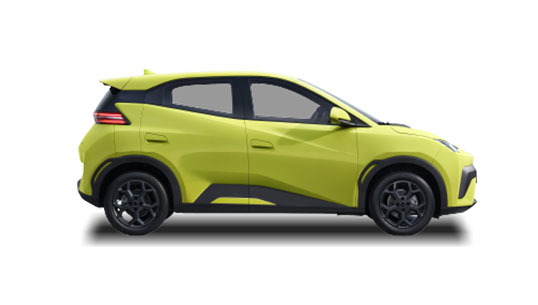
Sealion 5: With a $33,990 (plus on-road costs) price tag, BYD’s new plug-in hybrid medium SUV undercuts its rivals significantly on price. Due in the first half of 2026.
Chery

Tiggo 9: By early 2026. The Tiggo 9 will sit atop the local Chery range priced at $59,990 plus on-road costs. It will only be available in plug-in hybrid form with up to 170km of EV range.
Cupra
Leon facelift: Mid-2026. The updated Leon is already on sale in Australia, but other variants such as the 245kW VZx Sportstourer wagon are due in 2026.
Formentor facelift: Early 2026. The Formentor update is due early 2026 with new styling and a revised lineup, but the hi-po five-cylinder VZ5 is due locally in late 2026.
Deepal
S05: First half. Delayed so far for Australia – it was already meant to be launched – Deepal will launch its S05 small electric SUV in the first half of 2026.
Denza

B5 and B8: First quarter. A new brand to Australia, Denza is BYD’s premium arm and will initially sell two plug-in hybrid off-road SUVs called the B5 and B8 to go against the Toyota Prado.
Ferrari
Amalfi: First half. The Roma-replacing Amalfi will launch in the first half of 2026 with a 471kW 3.9-litre V8 engine and a starting price of over $500,000.
849 Testarossa: Second half. Priced at almost $1 million, the replacement to the SF90 makes 772kW of power thanks to a twin-turbo V8 and three electric motors.
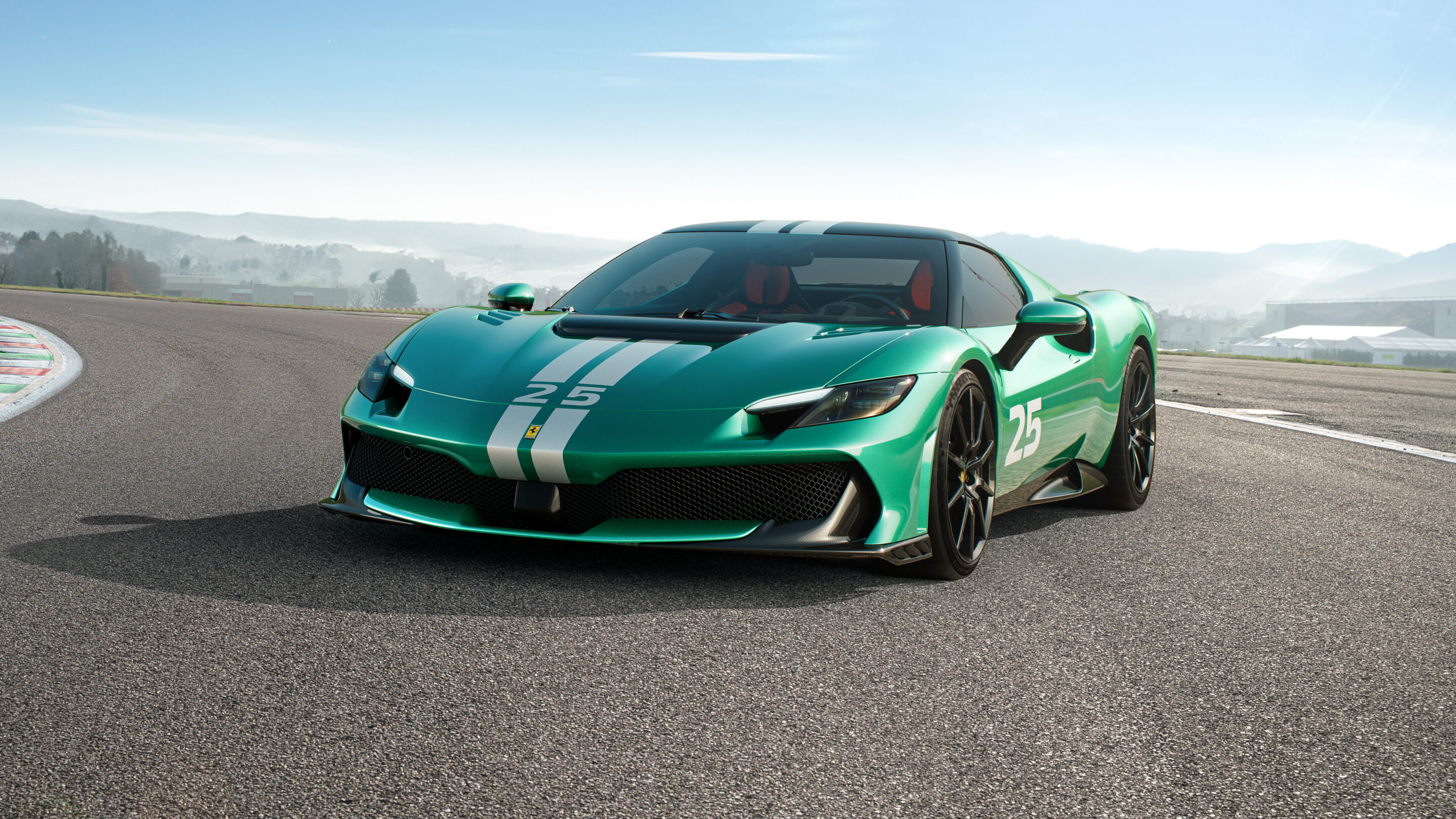
296 Speziale: Track-focussed variant of Fezza’s V6 hybrid sheds some kilos and promises 0-100km/h in just 2.8 seconds. Due here in the latter half of 2026.
Ford
F-150 facelift: Early 2026. The updated F-150 finally reaches Australia with new features, a new top-spec model and styling tweaks across the range.
Ranger Super Duty: Early 2026. The new Super Duty variant of the Ranger adds F-150-like capability such as a 4500kg GVM, 4500kg towing capacity and an overall GCM of 8000kg.
GAC

GAC’s First models– the Aion V, Enzoom and M8 – will launch locally in late 2025, but its line-up is set to expand in 2026 with more SUV offerings.
Geely
Riddara: First half. Geely’s first electric ute will launch in Australia with an 86kWh battery for 455km of range (NEDC) and a combined output of 315kW.
Genesis
GV60 Magma: Second half. The first product from Genesis’ new Magma performance sub-brand will launch locally likely with at least some shared parts with the Hyundai Ioniq 5 N.
Hybrid powertrains: Second half. Genesis will finally launch hybrid drivetrains in its products in the second half of 2026. Options may include a 2.5-litre turbo hybrid from the Hyundai Palisade or a rumoured new range-extender unit.
GMSV
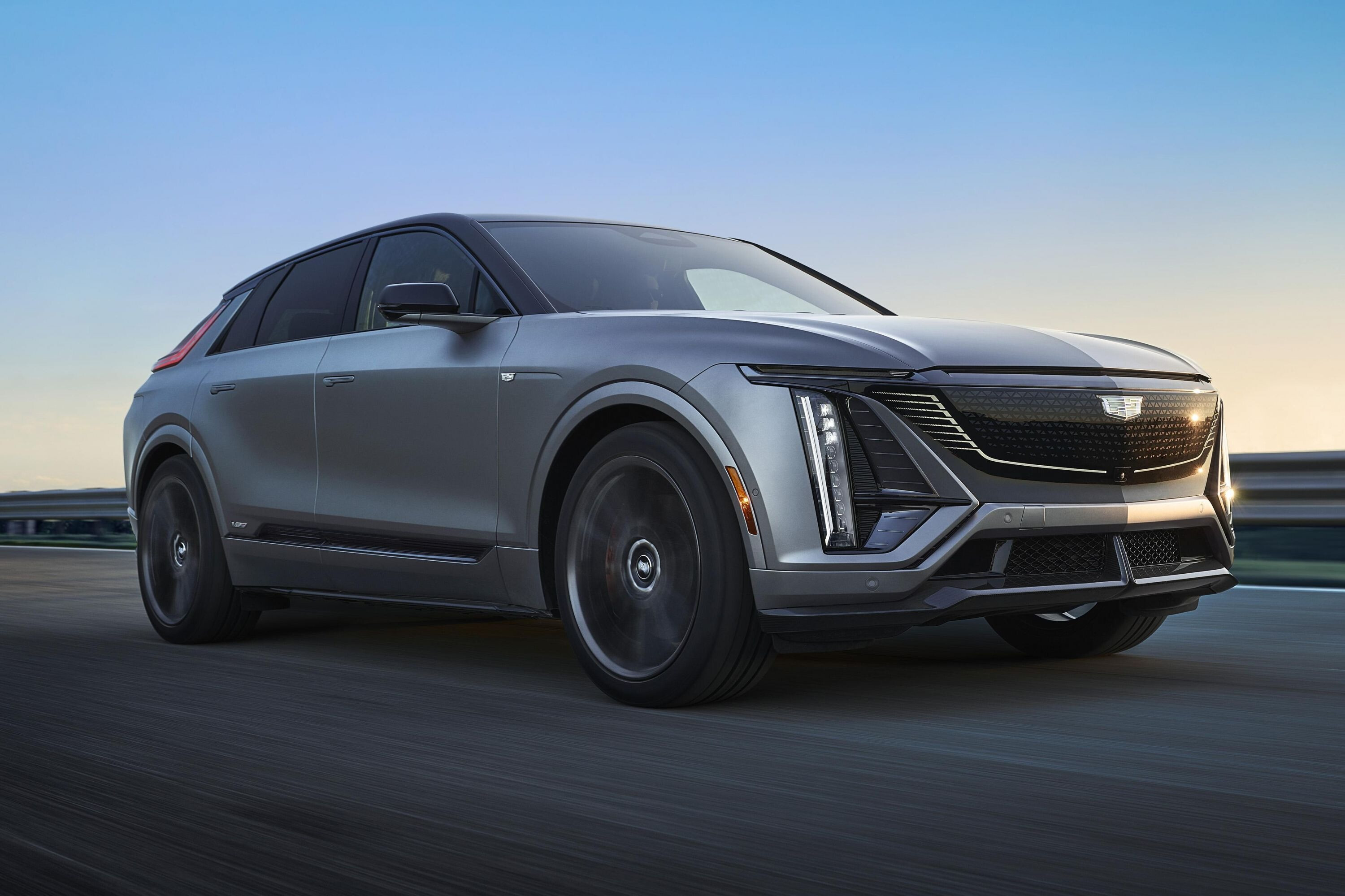
Cadillac Lyriq-V: Early 2026. The Lyriq large electric SUV will add a new higher-performance V model, making 459kW of power and 880Nm of torque for a 3.5-second 0-100km/h time.
Cadillac Optiq and Vistiq: Mid-year. Cadillac will launch both smaller, Optiq – and larger, Vistiq – electric SUVs, with both similar in styling to the Lyriq already on sale.
Chevrolet Corvette facelift: Early 2026. The facelifted Corvette introduces a revised interior, new colour options and a revised model line-up, including no more Z06 in Australia.
GWM
Tank 300 plug-in hybrid: New variant added to GWM’s line-up of popular off-roaders. Details still to be locked in but comes with 4X4 goodies including mechanical four-wheel-drive, locking diff and low-range transfer case. Due in the first quarter of 2026.
Wey luxury sub-brand: Mid-2026. GWM Australia will add to its line-up with products from its Wey domestic luxury brand, including more luxurious SUVs.
Honda
CR-V and ZR-V facelifts: First half. Both the CR-V and ZR-V SUVs will receive facelifts, likely with a new infotainment system, revised styling and more hybrid drivetrain availability.
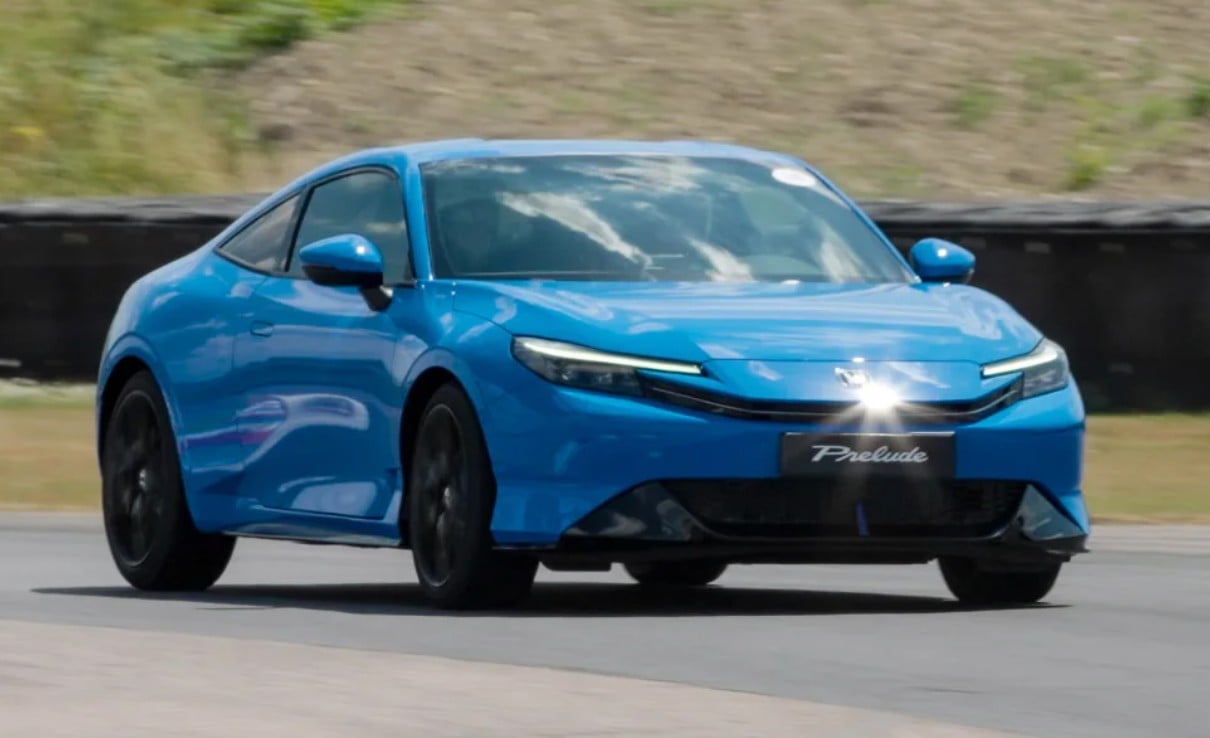
Prelude: Second half. The Prelude coupe is back and will launch in Australia in late 2026 with a 152kW 2.0-litre hybrid drivetrain and slinky styling.
Super One: Late 2026. The new kei-sized EV hatchback will launch locally in late 2026 with aggressive styling and a sporty driving experience.
Hyundai
Elexio: Early 2026. The Elexio is the sister car to the Kia EV5 mid-size electric SUV and will be the first Hyundai sold in Australia to be sourced from China. It’s priced from $59,990 drive away and will be offered in a single model at launch.
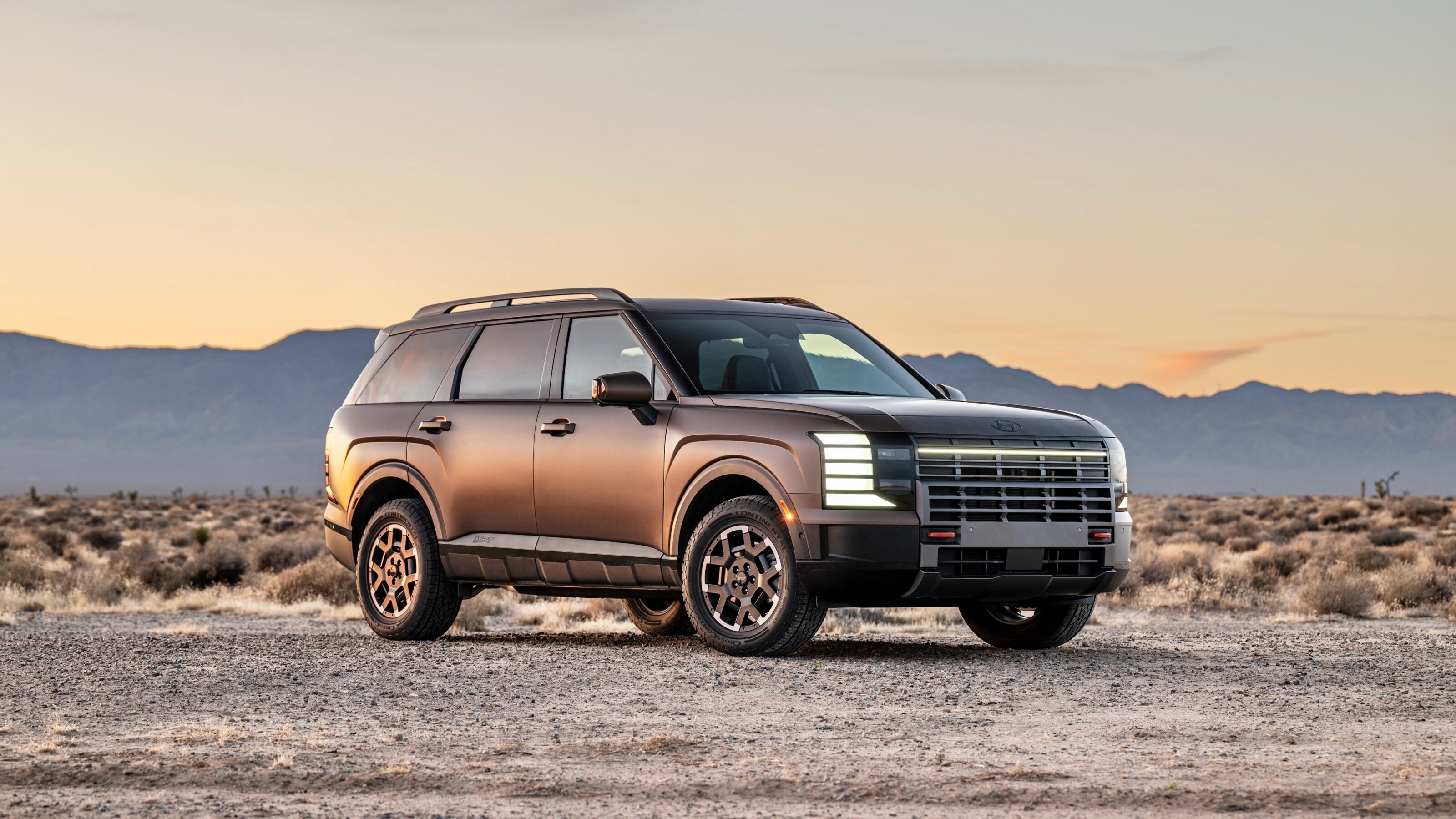
Palisade XRT Pro: Early 2026. The Palisade will gain an off-road-focused XRT Pro variant for the first time in Australia, as well as a 3.5-litre petrol V6 engine.
IONIQ 6 facelift and IONIQ 6 N: First half. The updated IONIQ 6 range will launch in Australia in the first half of the year, including the high-performance IONIQ 6 N.
Isuzu
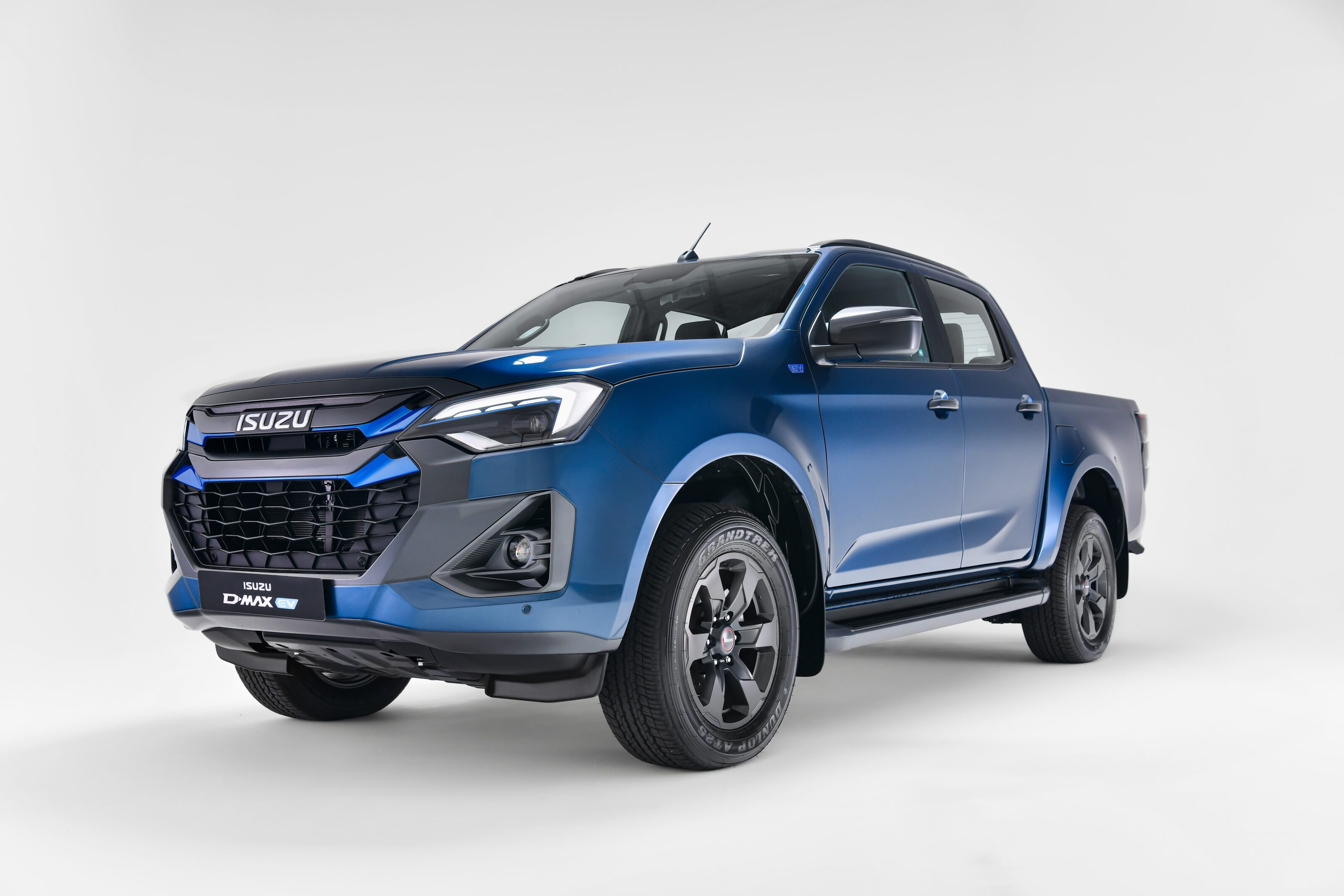
Electric D-Max: Mid-2026. Isuzu’s first electric vehicle to be sold in Australia will launch in mid-2026, with local pricing and specifications yet to be revealed.
JAC
T9 Hunter PHEV: BYD Shark rivalling plug-in hybrid ute from Chinese carmaker JAC is due in the first half of 2026.
Jaecoo
J5: Compact electric SUV from Chery sub-brand enters the EV party with $35,990 (plus on-roads) price tag and a claimed WLTP driving range of 402km. Arriving in January 2026 with petrol and hybrid models to follow.
Jeep
Compass: Mid-2026. The second-generation Compass will launch in Australia with hybrid and potentially full-EV drivetrains for Australia.
Wagoneer S: Late 2026. Jeep’s first EV for the North American market is a large five-seat SUV and it will launch locally in late 2026 with up to 447kW of power and a 0-100km/h time of just 3.5 seconds.
Recon: Late 2026. The Recon will use the same platform as the Wagoneer S, but is an off-roader instead with a similar attitude to the iconic Wrangler, such as its removable doors.
Avenger 4xe hybrid: TBC. The Avenger is only available as an EV in Australia, but in Europe, it’s also available as an all-wheel drive petrol hybrid with reasonable off-road capability. Local timing is yet to be announced, but the Australian Stellantis operation has reported interest in it previously.
Kia
EV4: Early 2026. Kia’s most important electric launch for 2026 will take place in the form of the EV4 sedan and hatchback, which will be aimed straight at the Tesla Model 3.
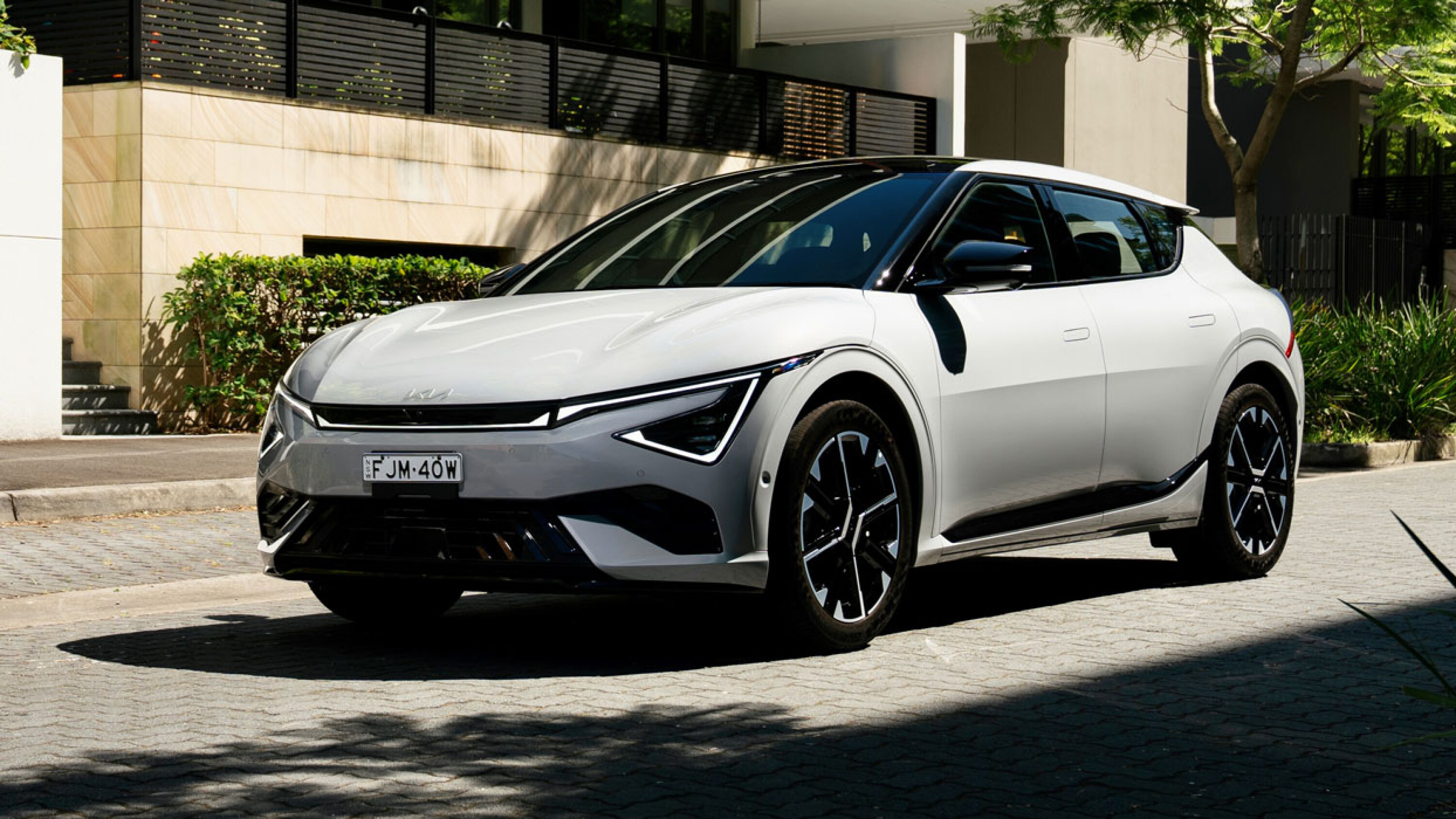
EV6: Early 2026. The facelifted EV6 electric SUV has been delayed for Australia and was meant to launch in early 2025, but will now hit Australia in early 2026. The facelift sharpens the EV6’s styling and adds more driving range, though the local line-up may look a bit different to now and focus on upper-spec models.
EV9 GT: First half. The EV9 GT was revealed almost 12 months ago and will finally launch in Australia in the first half of 2026 with its 375kW dual-motor drivetrain and still seating for seven.
PV5: Third quarter. Kia’s first electric van has been confirmed for Australia with its new platform batteries up to 71.2kWh in size for a range up of up 416km. Both cargo and passenger versions will be offered with seating up to five.
Tasman single-cab chassis: Tradie spec ute from Korean brand will land in dealerships in the first quarter of 2026.
KGM
Actyon and Torres hybrids: Early 2026. KGM’s new hybrid mid-size SUVs will launch using a 1.5-litre turbo-petrol engine and an electric motor making 130kW/300Nm outputs. It claims 6.1L/100km efficiency in the UK, which is a 2.5L/100km improvement on the non-hybrid model.
Musso EV: Early 2026. KGM’s first electric ute will launch locally positioned differently to the more heavy-duty turbo-diesel Musso already on sale as a more lifestyle-oriented model. It will be capable of up to 380km of driving range (WLTP) and its dual-motor drivetrain will deliver 304kW of power.
Lamborghini
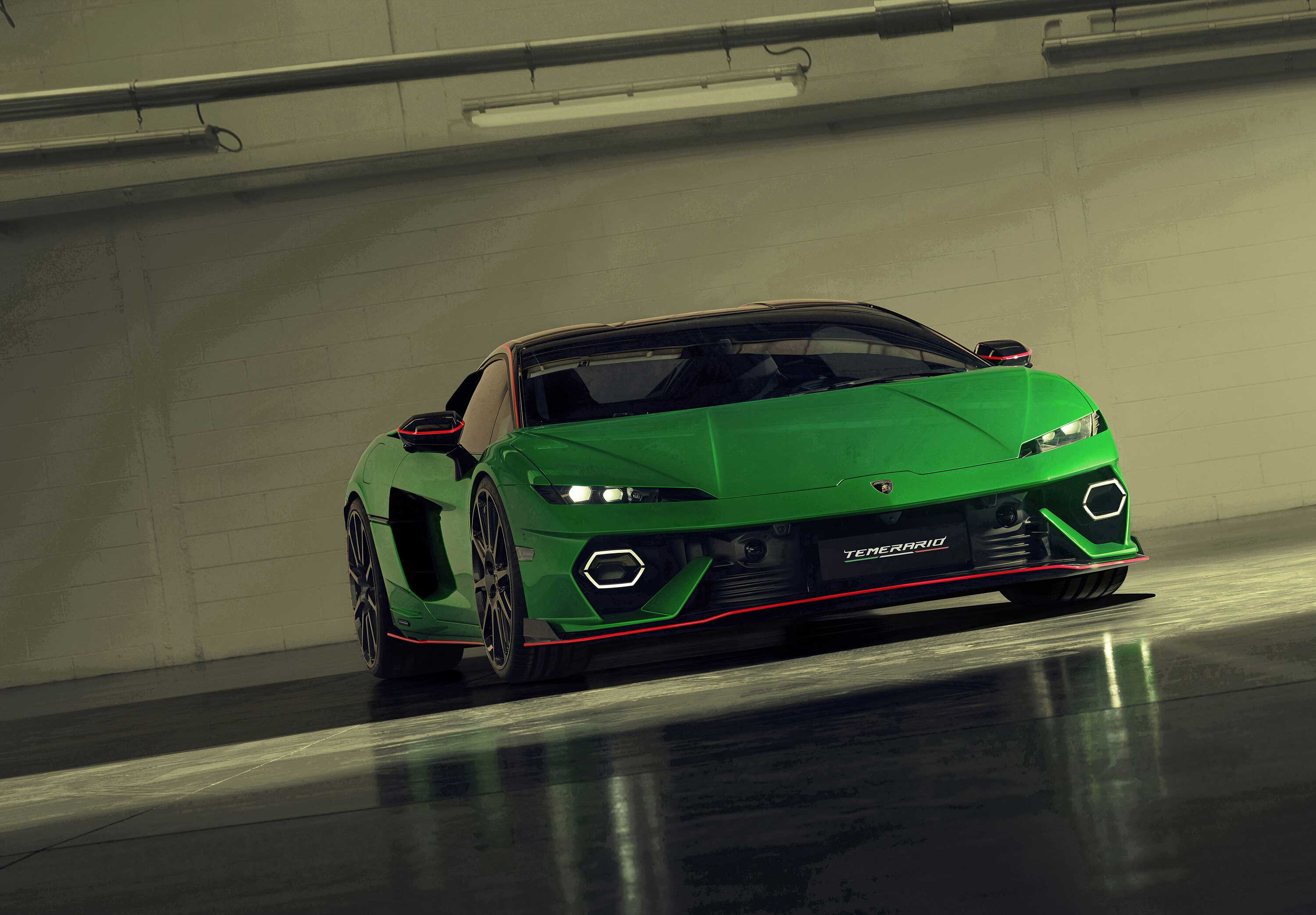
Temerario: Second quarter. The Huracan replacement will launch locally with a new twin-turbo V8 hybrid drivetrain making 676kW of power and a 2.7-second 0-100km/h sprint time.
Land Rover
Range Rover electric: Second half. Range Rover is yet to reveal any technical details, but the all-electric model will launch with similar power to the current model and with an 800V architecture for fast charging.
LDV
eTerron 9: Early 2026. While the diesel-powered Terron 9 is already on sale in Australia, the electric eTerron 9 is to be added to the range with a 102kWh battery and a WLTP range of up to 430km.
Leapmotor
B05: Mid-2026. Leapmotor will launch its new B05 electric hatchback in mid-2026. Revealed at IAA 2025, the B05 will compete with cars such as the MG 4 and offer up to 434km of WLTP range.
B10: Small electric SUV from Chinese tech brand promises European styling (the brand is co-owned by Stellantis) in an affordable sub-$40k package. Arrivals imminent.
Lepas
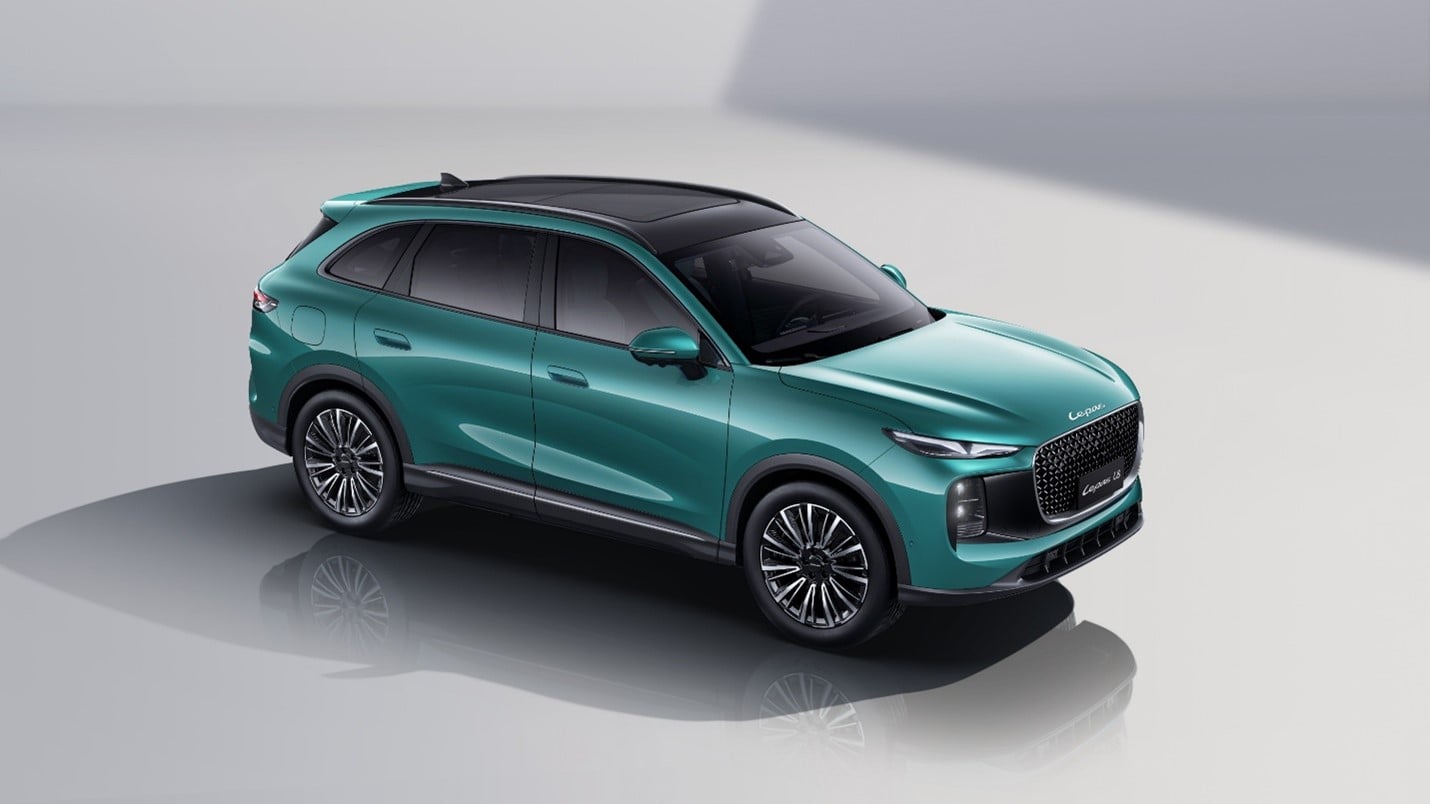
L8: First half. Chery’s latest brand for Australia will launch with the new L8 mid-size SUV, which is based on Chery underpinnings but adds more personality, according to its maker.
Lexus
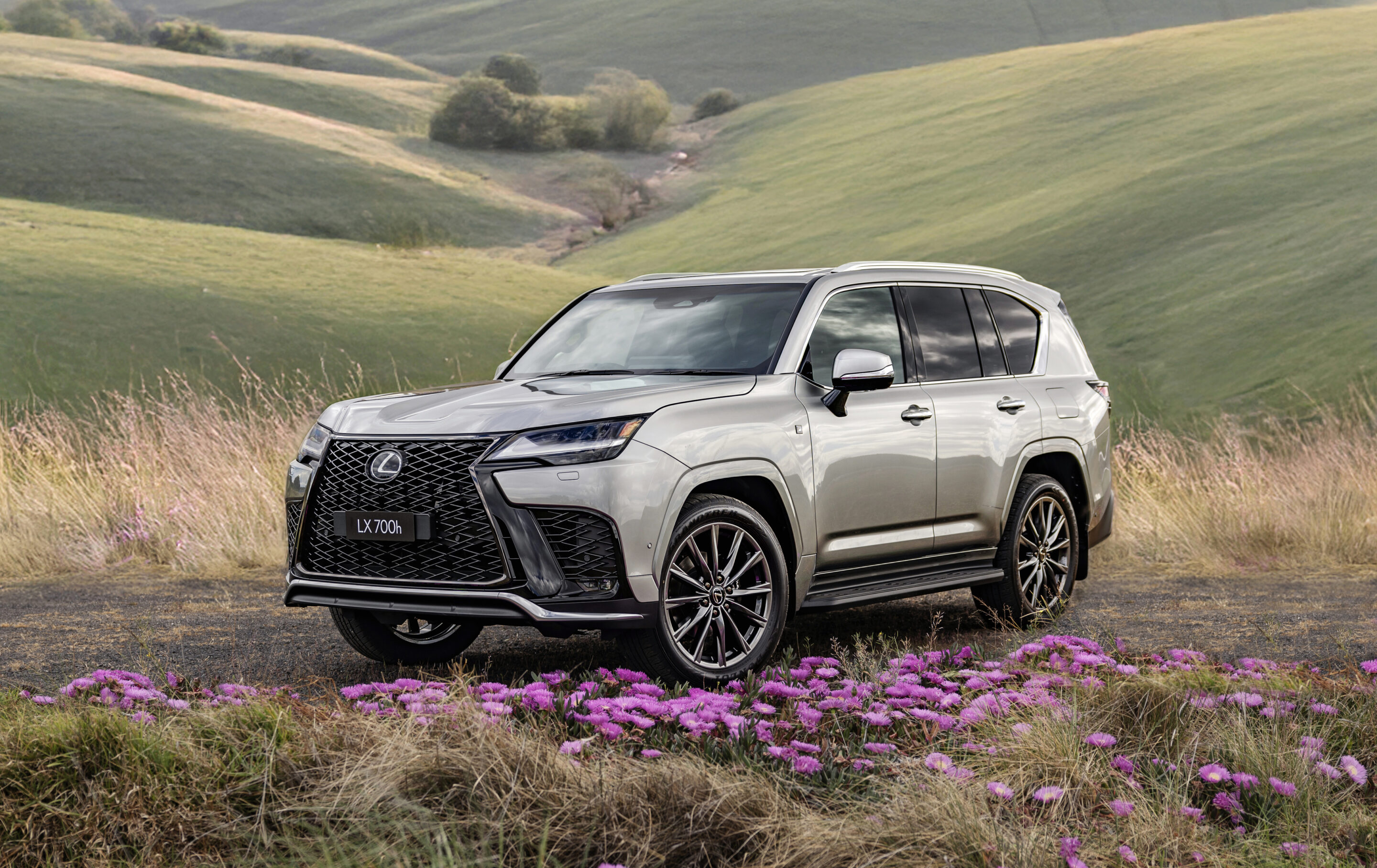
LX700h: Flagship hybrid SUV from the Japanese luxury brand promises 3500kg towing capacity and a $196,000 (before on-road costs) price tag. Due first half of 2026.
RZ update: Early 2026. Like its Subaru Solterra and Toyota bZ4X platform siblings, the Lexus RZ electric SUV has been given a big mid-life update with more performance and revised styling.
ES: first half. Lexus’ luxury mid-size sedan will launch locally with both hybrid and – for the first time in its history – electric power. It has also been given futuristic new styling and a big interior update.
Maserati
MCPura: Updated styling and a new name for this MC20 mid-life update also sees the price drop by around $40k. Still wants for $450,000 plus on-road costs. Due here in the first half of 2026.
Mazda
6e: Second quarter. Mazda’s first EV since the MX-30 will launch locally in the second quarter of 2026 priced under $55,000 and with up to 500km of WLTP range.

CX-5: Late 2026. The crucial third-generation CX-5 mid-size SUV was recently revealed with larger dimensions, a more luxurious interior and a big tech upgrade and will launch locally in late 2026.
CX-6e: By 2027. Using the same underpinnings as the 6e sedan, the CX-6e electric SUV will use a 78kWh battery for 494km of range and a 190kW rear-mounted electric motor.
McLaren
W1: Late 2026. McLaren’s new W1 hypercar is the successor to the previous P1, but will be officially sold in Australia for the first time. It makes 938kW power from its V8 hybrid drivetrain and 1000kg of downforce. Pricing is yet to be revealed, but don’t expect change from $4 million.
Mercedes-Benz
Maybach SL 680 Monogram Series: First half. The ultra-luxurious SL 680 Monogram has been confirmed for Australia and sits above the current AMG SL 63 already on sale locally, with even more luxury inside and more styling and trim options as well for extra exclusivity.
GLC EQ: Second half. One of the most important Mercedes-Benz models in decades, the GLC with EQ Technology will launch with up to 713km of WLTP range and ushers in a new styling theme throughout, including a huge new 40-inch touchscreen called the ‘Hyperscreen’.
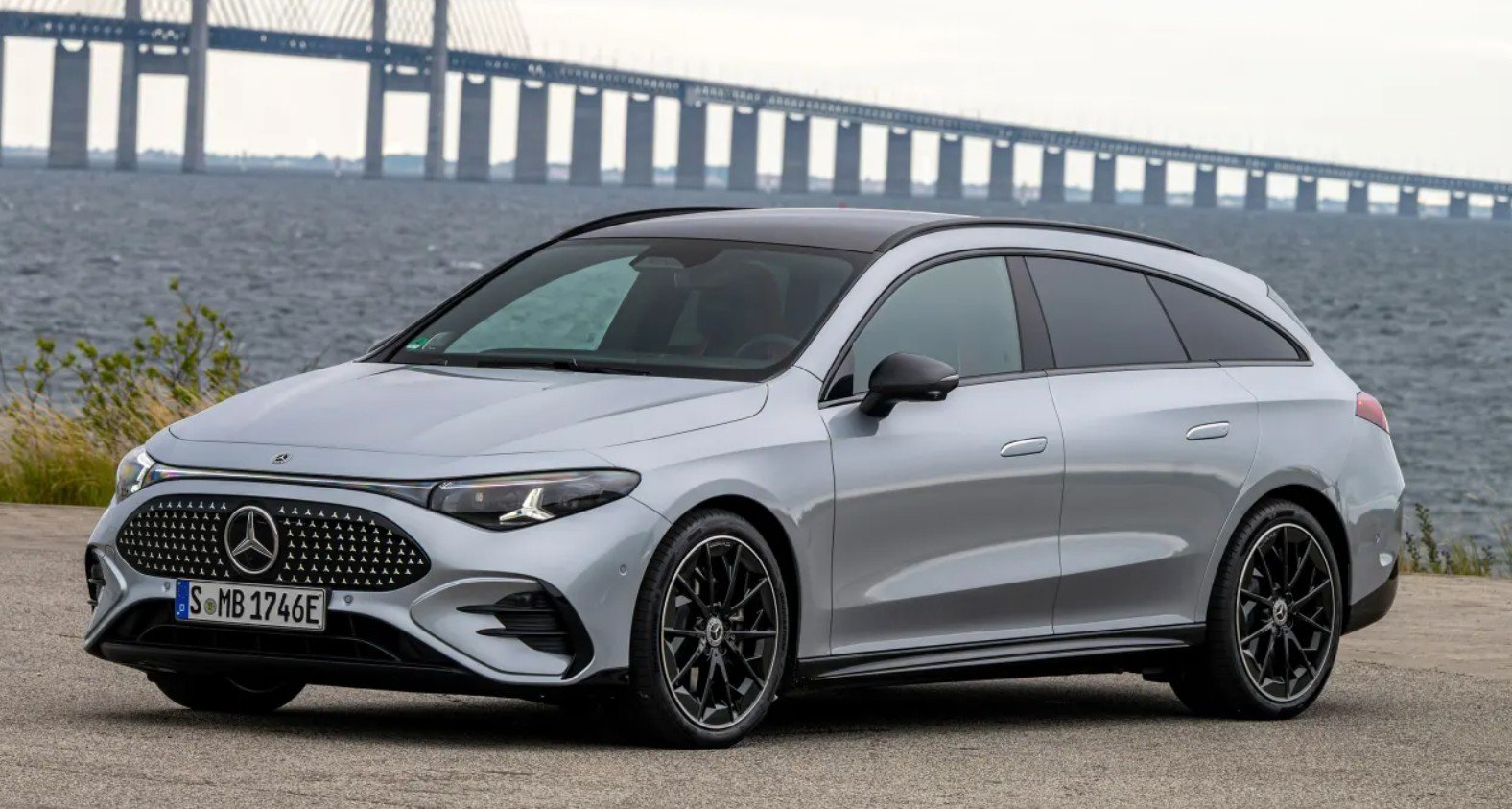
CLA hybrid and EV: Second half. The important new Mercedes-Benz GLA will be available in both electric and hybrid forms, with up to 800km of range from the EV. A Shooting Brake wagon is now available in Europe and is under consideration for Australia.
Updated GLE and GLS: Second half. Not much is known about them, but updated versions of the GLE and GLS large SUVs have been spied with revised styling and likely updated drivetrains.
AMG GT XX: Second half. AMG’s first electric car has been previewed by the AMG GT XX concept car and will launch with big performance, impressive charging and a new sound experience, according to its maker.
MG
MG 4 Urban: First half. The new MG 4 Urban – not to be confused with the MG 4 already on sale – will launch locally as the more affordable front-drive MG 4 variant against the current rear-drive model, which will be positioned as the sportier and slightly larger sibling.

MGS6 EV: First half. It was recently accidentally revealed by Euro NCAP but the MGS6 EV will launch sitting above the MGS5 EV already on sale. No details are known about it at this stage, but it will likely tackle other mid-size electric SUVs such as the Tesla Model Y on price.
Mitsubishi
Outlander PHEV update: Early 2026. The plug-in hybrid variant of the Outlander range with launch locally with the same updates to the petrol model, including revised styling, an updated interior and a standard Yamaha sound system.
Foxtron-based EV: Late 2026. It’s yet to be revealed and no details have been given, but Mitsubishi has confirmed that it will launch a rebadged EV from Taiwanese company Foxtron in Australia in late 2026.
Nio
Firefly: First half. Yet another new brand will launch in Australia in 2026, with Nio starting its local journey with the Firefly electric hatchback. In Europe, only a 105kW/200Nm electric motor available, using a 41.2kWh battery for up to 330km of WLTP electric range.
Nissan
Qashqai e-Power update: First half. The new generation of Nissan’s e-Power hybrid tech will launch in the updated Qashqai in the first half of 2026 with more power and increased efficiency. Pricing starts at $45,640 plus on-road costs.
Navara: First half. The new-generation Navara was recently revealed and is heavily based on the Mitsubishi Triton, so its twin-turbo 2.4-litre diesel engine and 3500kg towing carry over.

X-Trail facelift: Early 2026. A light facelift for the X-Trail mid-size SUV will launch with revised frontal styling and new features across the range.
Ariya facelift: Late 2026. It’s only recently gone on sale in Australia, but the Ariya mid-size electric SUV has already been given an update with a new infotainment system and revised frontal styling.
Leaf: Late 2026. The third-generation Leaf EV – now a small SUV and not a hatchback – will launch with a new attitude and a big interior upgrade, including higher-quality materials and a lot more tech.
Y63 Patrol: Late 2026. The Y63 generation Patrol is already on sale in overseas markets such as the Middle East and will finally reach Australia in late 2026 with a twin-turbo V6 engine with improved performance and efficiency replacing the current V8.
Peugeot
308: Mid-life update for small hatchback from the Frenchie brings a new front-end with redesigned grille and headlights. Due locally in the first half of 2026.
Polestar

3 update: First half. The Polestar 3 electric SUV was recently revealed with the same 800V architecture as the Volvo EX90 for faster 350kW charging, plus a quicker infotainment chip and new standard features.
5: Last quarter. The electric grand tourer Polestar 5 will reach Australia in the last quarter priced from $171,100 plus on-road costs and will be initially available in either entry-level Dual Motor or top-spec Performance variants.
Porsche
Macan GTS: Early 2026. The new GTS variant of the Macan electric SUV range adds more power, a sharper chassis and 700km of driving range. It will be priced from around $170,000 plus on-road costs.
Cayenne EV: First half. The new electric Cayenne SUV will be Porsche’s new tech highlight with wireless charging capability, a huge new infotainment screen and the off-road ability that the Cayenne is known for.

911 Turbo S: First half. Priced from a cool $577,300 plus on-road costs, the new Turbo S variant of the 911 range will launch with a hybridised 523kW/800Nm 3.8-litre flat-six engine for a claimed 2.6-second 0-100km/h sprint time.
718 EV: Second half. The new 718 sports car has confirmed to feature an electric drivetrain, though petrol power is reportedly going to be offered as well on higher-end models.
Renault
Scenic E-Tech: Early 2026. The Scenic name is returning to Australia with the new E-Tech electric mid-size SUV, which will offer up to 625km of driving range.
Captur facelift: First half. The Captur small SUV has been given a big mid-life update with updated styling and new features such as Google integration and will launch in the first half of 2026.
5 Turbo 3E: Late 2026. While the regular Renault 5 is yet to be offered locally, the 5 Turbo 3E hi-po hot hatch will launch with a big price tag and limited availability. It produces 414kW of power, will reach 100km/h in 3.5 seconds and a top speed of 270km/h.
Skoda
Kodiaq and Superb PHEV: Early 2026. Skoda’s first plug-in hybrids will launch in Australia with a 1.5-litre turbo-petrol engine, electric motor and up to around 100km of electric driving.

Enyaq RS and Elroq RS: Early 2026. Skoda Australia will add to the Elroq and recently-updated Enyaq electric SUV ranges with the top-spec 250kW RS models. Pricing is yet to be confirmed.
Octavia and Kodiaq mild-hybrid: First quarter. A new 1.5-litre turbo-petrol mild-hybrid drivetrain making 110kW/250Nm outputs will be added to both the Octavia and Kodiaq ranges.
Epiq: Late 2026. Skoda’s new Epiq small electric SUV is yet to be revealed in production form, but will likely launch in Australia by the end of 2026 with up to 425km of driving range.
Smart
#5: Late 2026. Smart’s largest product yet, the mid-size #5 SUV, will launch in Australia in very late 2025 or early 2026 with multiple model grades, including the hot Brabus variant.
Subaru
Crosstrek Strong Hybrid: TBC. Having recently debuted locally in the Forester hybrid mid-size SUV, the smaller Crosstrek has also scored Subaru’s new 145kW ‘strong hybrid’ drivetrain in some overseas markets boasting improved performance, refinement and efficiency compared to the 2.0-litre hybrid drivetrain already on sale.
Subaru is yet to confirm it for Australia, but given how popular both the Crosstrek and hybrid drivetrains are locally, we’d be surprised if it didn’t launch sometime in 2026.
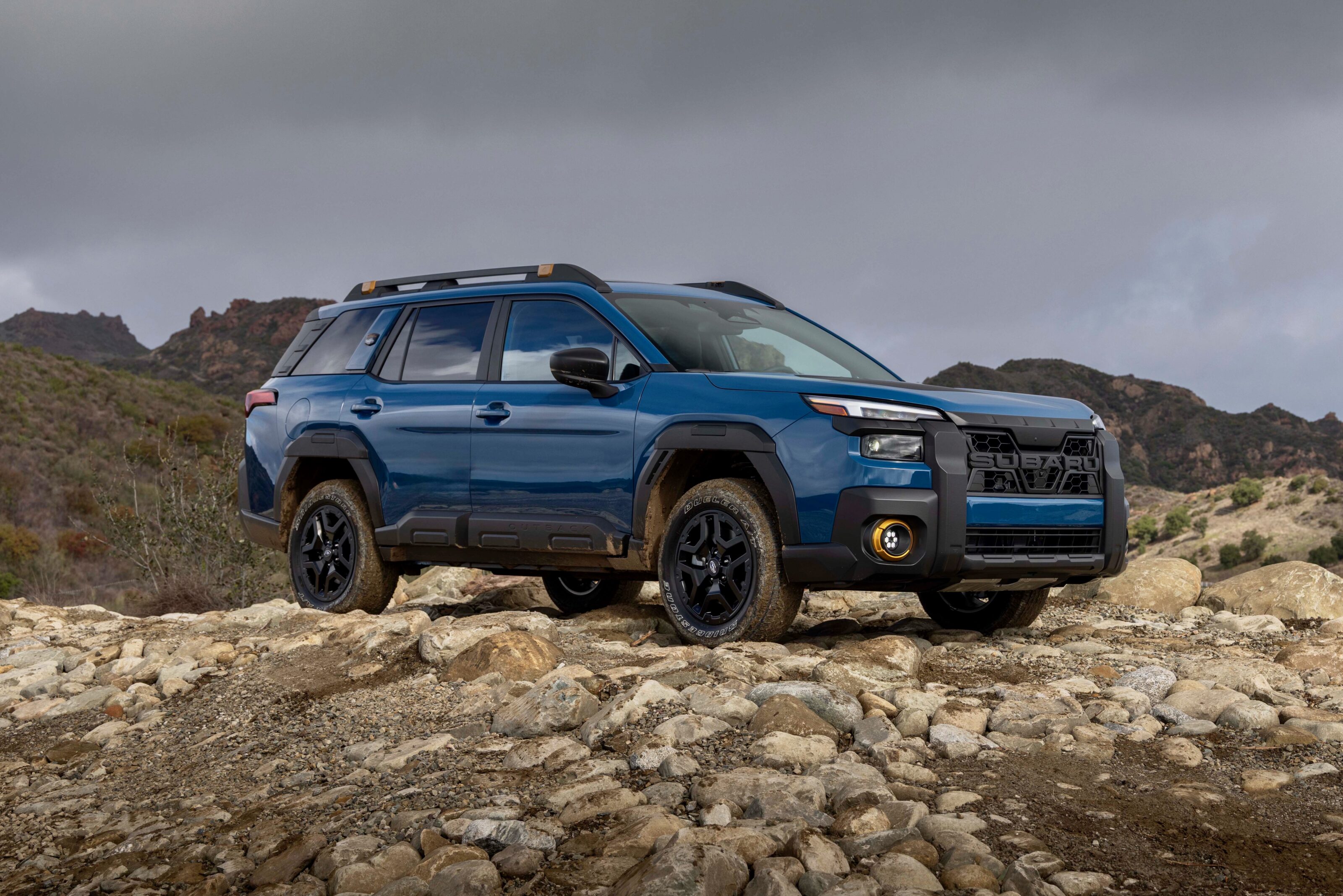
Outback: Early 2026. The new seventh-generation Outback has morphed into a bit more of an SUV than its traditional lifted wagon form. It will launch in Australia in early 2026 with more interior space, more technology through a new infotainment system and more features. It’s priced from $48,990 plus on-road costs.
Suzuki
eVitara and Vitara Hybrid: Early 2026. Suzuki’s first EV, the eVitara, will launch locally in early 2026 and will be accompanied by the new hybrid variant of the Vitara small SUV.
Jimny update: First quarter. The updated Jimny three-door will be equipped with more safety features such as adaptive cruise control on the automatic variant, a new 4.2-inch digital driver’s screen and a larger 9-inch touchscreen. Pricing is yet to be confirmed.
Toyota
New HiLux: Early 2026. The new-generation HiLux was revealed late last year and is now on sale. It uses the same body as the current model with updated styling and a new interior. The 2.8-litre turbo-diesel engine from the old HiLux carries over, and an electric drivetrain will added later in 2026.
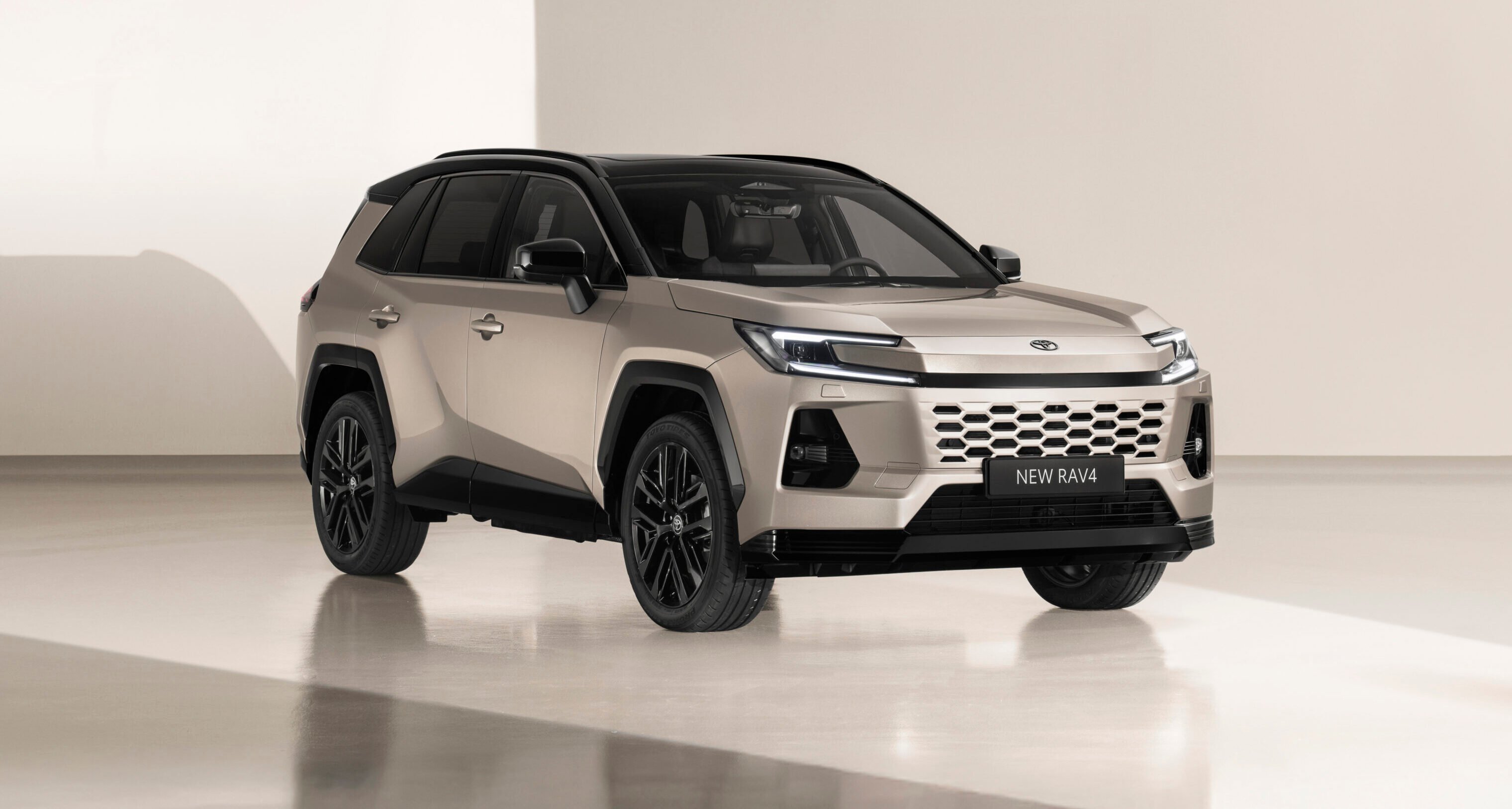
New RAV4: Early 2026. The sixth-generation RAV4 was revealed earlier this year with more features, new-gen hybrid systems – including Toyota’s first plug-in hybrid in Australia – and more tech than before.
GR Corolla update: Early 2026. The GR Corolla has been updated again for more precision, stronger cooling and new features such as JBL sound system.
bZ4X facelift: Early 2026. Like its Subaru Solterra twin, the updated bZ4X will launch with revised styling, more driving range and added performance to keep it at pace with other EVs.

LandCruiser 300 Series hybrid: First half. The LC300 hybrid launches with a 341kW/790Nm turbo-V6 hybrid drivetrain with 3500kg towing capacity
bz4X Touring: First half. The twin to the Subaru Trailseeker, the bZ4X Touring is being positioned as a lifestyle off-road electric SUV that will
Volkswagen
Multivan PHEV: Early 2026. A new plug-in hybrid drivetrain will be added to the Multivan range making 180kW of power and giving up to 94km of electric driving range.
Tiguan and Tayron PHEVs: First half. Plug-in hybrid variants of the Tiguan and Tayron ranges will launch in the first half with more than 100km of electric driving range and up to 200kW of power.
Touareg Final Edition: First half. The Touareg will stop production for global markets and the new Final Edition will be the final model offered, with special trims and badging to celebrate its run.

New T-Roc: Second half. Volkswagen’s biggest-selling product locally enters its second generation in a more premium and more spacious form, with hybrid drivetrains confirmed too.
Volvo
EX90 update: First half. The updated EX90 will launch with an uprated 800V architecture to support 350kW DC fast charging, as well as a faster infotainment processor.
EX60: mid-2026. Due to be revealed in early 2026, the crucial new EX60 will be Volvo’s new electric mid-size SUV and sit alongside the ICE XC60 in Volvo showrooms.
XPeng
G7: First half. XPeng is aiming at the Tesla Model Y with the new G7, which it closely resembles in size but will reportedly cheaper than the Tesla’s $58,900 +ORC starting price.
G9: First half. XPeng’s large electric SUV will launch locally with up to 570km of WLTP range and it’s capable of launching to 100km/h in just 3.9 seconds.

G6 update: First half. The G6 has been given a mid-life update and it will launch locally in the first half of the year with faster charging, revised styling and added features.
M03: Late 2026. Co-developed with ride share giant DiDi, the M03 electric sedan will launch in Australia aimed straight at the Tesla Model 3. Pricing and specs are likely a while off.
Zeekr
7X update: Mid-2026. The 7X has only just gone on sale in Australia, but it receive an update around the mid point of the year with even faster charging, more power and more driving range.
Volkswagen Australia has announced that the Tiguan and Tayron mid-size SUV ranges will be updated with new features for the 2026 model year.
The biggest addition to both models is a new feature called ‘Turning Assist 2.0’, while the brand has also confirmed that plug-in hybrid powertrains will become available locally in both models in the first half of 2026. MY26 Volkswagen Tiguan and Tayron models will commence deliveries soon.
The new Turning Assist 2.0 feature builds on the same feature already available in both models. It’s now able to detect oncoming traffic that’s about to turn towards the driver and brake automatically, in addition to its ability to detect oncoming traffic driving straight and which the driver is about to turn across and automatically brake. All models in the MY26 Tiguan and Tayron range will feature Turn Assist 2.0 as standard.
There have also been more minor changes to the specification of some models in the Tiguan range, with the entry-level Life now equipped with 17-inch alloy wheels and the mid-spec Elegance, 18s – both currently have 19s as standard, and Volkswagen says that change was made to enhance the ride quality.
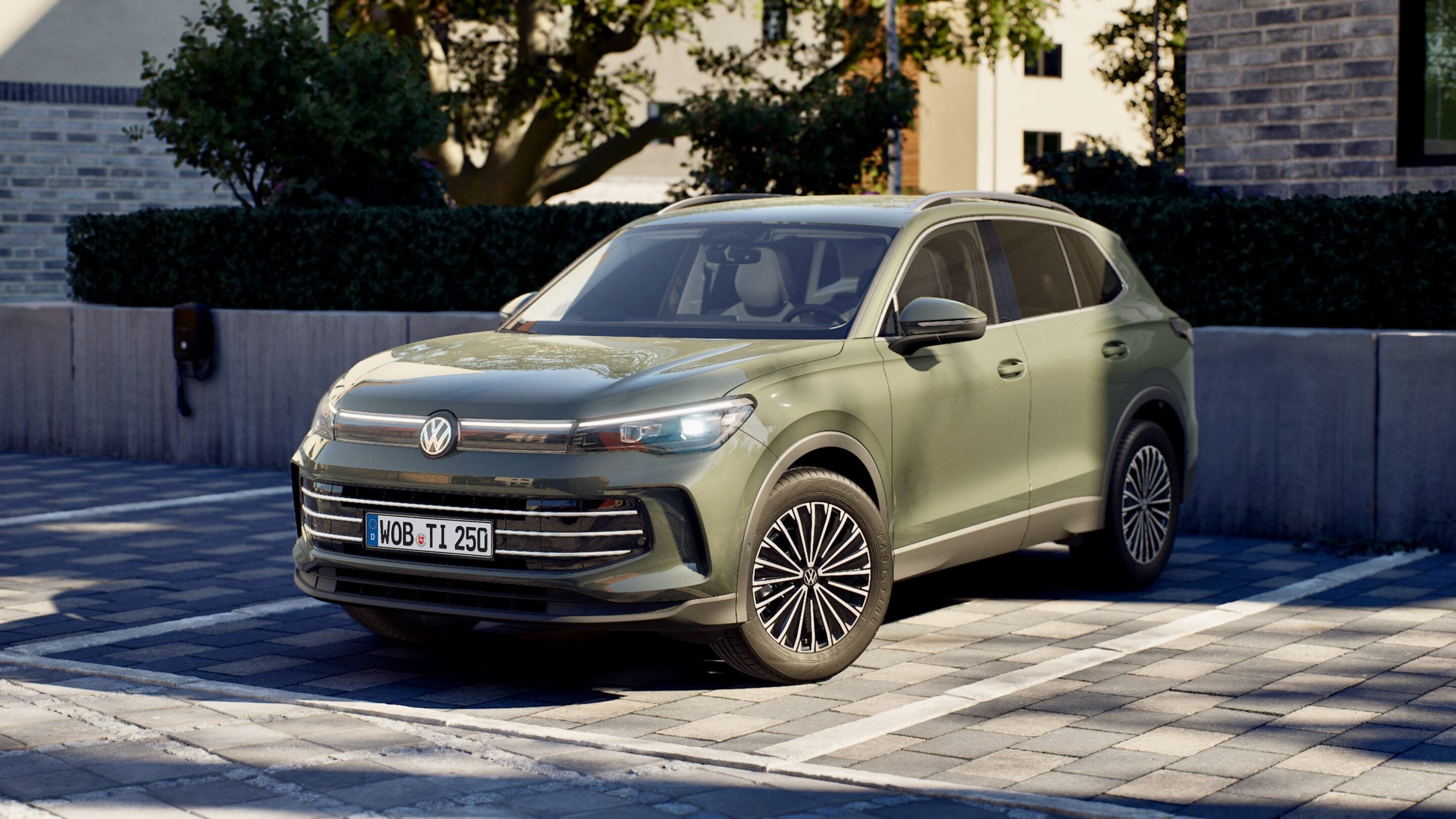
Meanwhile, the 20-inchers of the R-Line now have aero covers, matching the equivalents in the Golf hatchback and Touareg large SUV. The Tiguan will also now feature an illuminated rear Volkswagen badge, matching the Tayron.
Plug-in hybrid ‘eHybrid’ versions of both the Volkswagen Tiguan and Tayron also will be made available in 2026. A 1.5-litre turbo-petrol engine will provide propulsion in tandem with an electric motor, and both will be capable of more than 100km of electric driving range (WLTP).
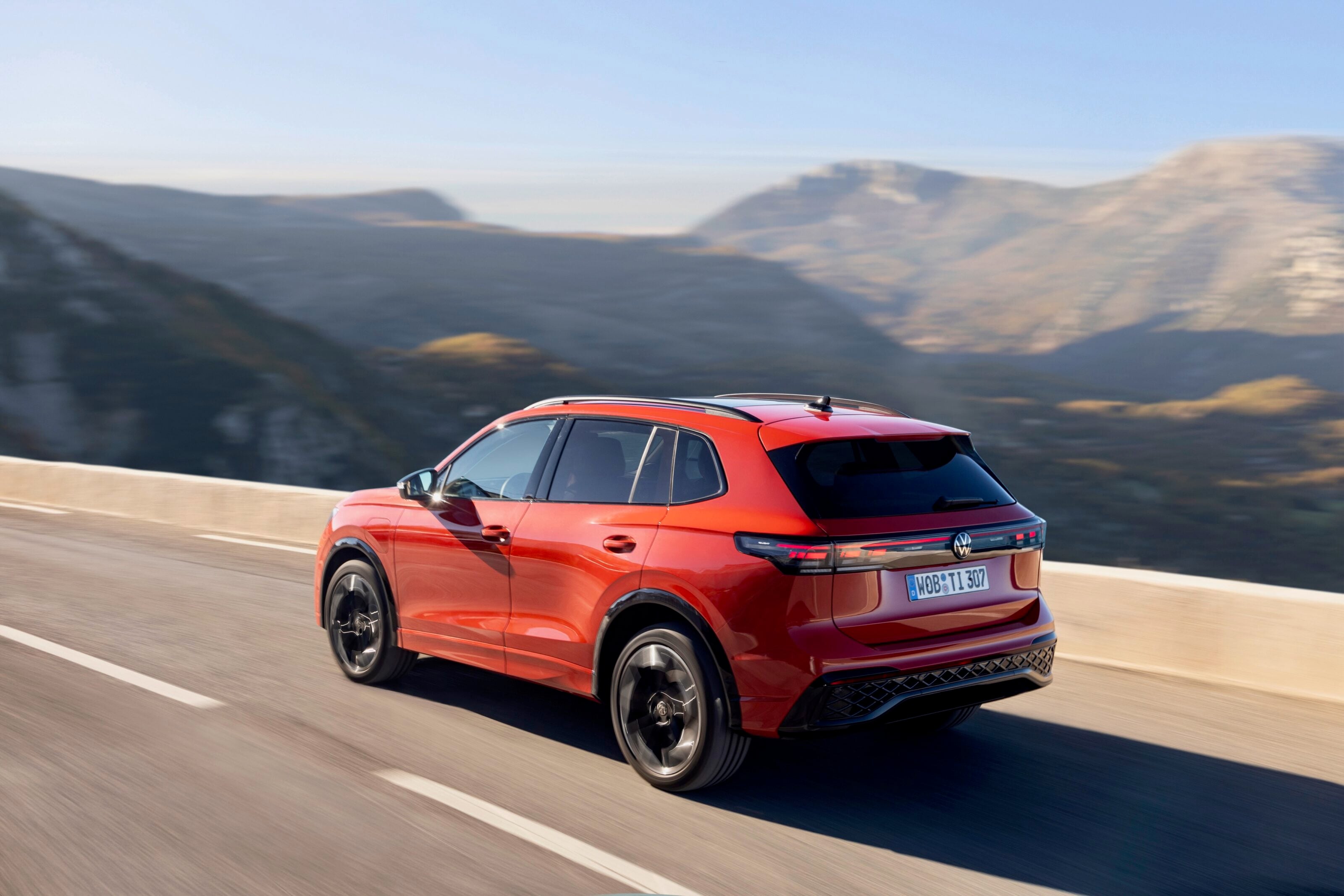
Pricing is yet to be announced for the PHEV models, but Volkswagen says they will priced in the $45,000-$75,000 bracket, as with the Tiguan and Tayron models already on sale, and the ID.4 and ID.5 electric SUVs as well.
Pricing for the Tiguan range starts at $44,990 plus on-road costs for the entry-level Life 110TSI, while the Tayron starts at $48,290 for its Life 110TSI model. The updated Volkswagen Tiguan and Tayron ranges will enter Volkswagen showrooms soon.
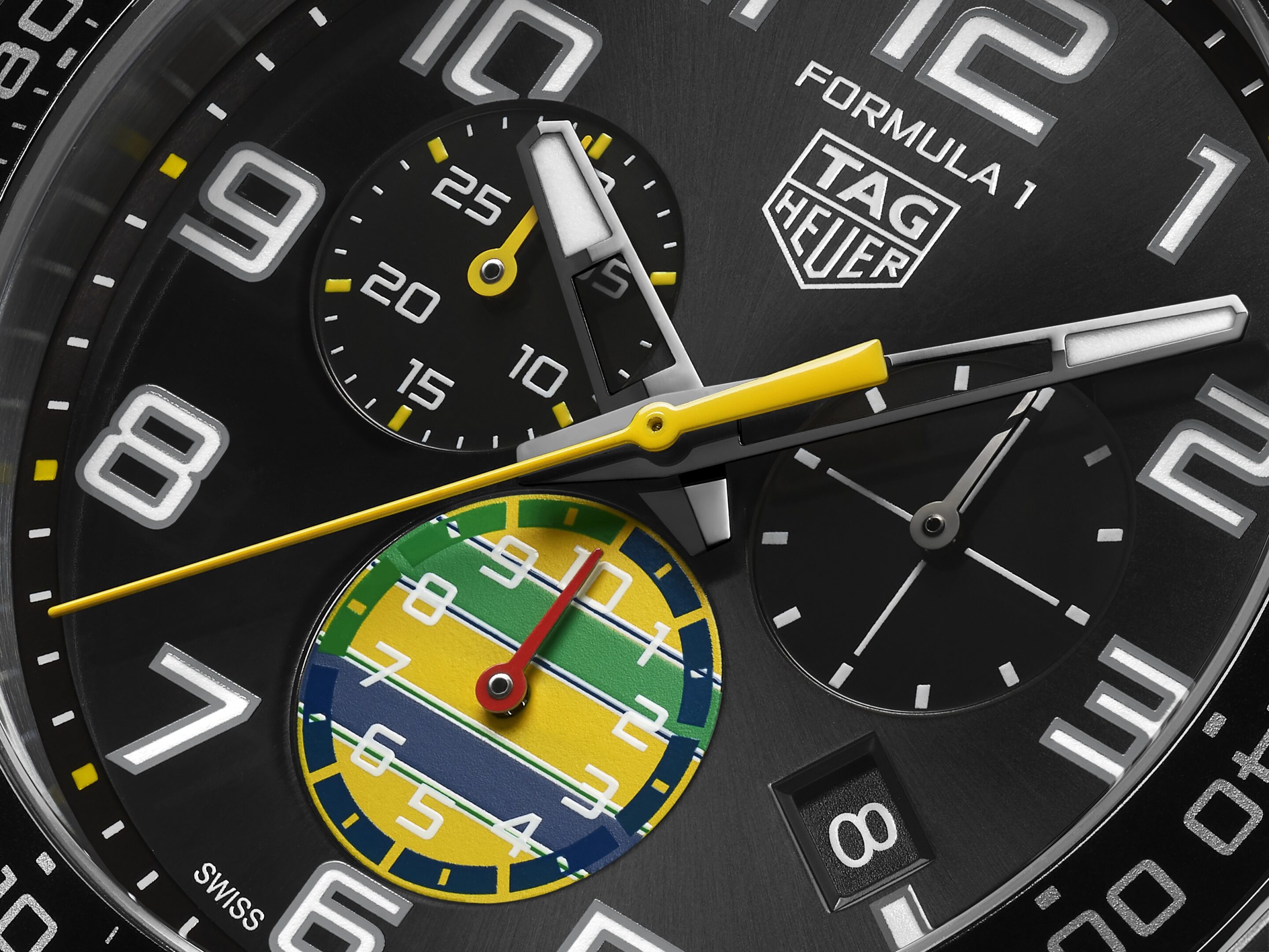
TAG Heuer has unveiled two new watches celebrating the legacy of Formula 1 legend Ayrton Senna, continuing a partnership that began in the late 1980s. The limited-edition TAG Heuer Formula 1 Chronograph x Senna models were launched during the São Paulo Grand Prix, expanding a collaboration that has spanned three decades and countless tributes to the Brazilian driver.
The first Senna special edition appeared in 1994, shortly after the three-time world champion’s death, and the relationship has since become one of the most enduring between a watchmaker and a sports icon. The 2025 releases mark a fresh chapter in that story, combining modern design with a nod to Senna’s racing heritage.

TAG Heuer first worked with Senna in 1988, the year he won his first world title. By 1993 he was an official brand ambassador, often seen wearing his chosen S/EL chronograph, a design now synonymous with his name. Over time, the partnership has become as much about values as aesthetics – precision, determination, and technical mastery.
Beyond the racetrack, TAG Heuer’s Senna collections have also contributed to the Instituto Ayrton Senna, a foundation created by the driver’s family to improve education for disadvantaged children in Brazil. The institute’s programs have reached millions of young people, extending Senna’s influence far beyond Formula 1.

The 44mm Formula 1 Chronograph x Senna automatic edition features a titanium case coated in black DLC and a forged carbon bezel. Its black dial is accented with the green and yellow of the Brazilian flag, and the caseback carries an engraving of Senna’s eyes behind his helmet – a reminder of his focus and drive. A yellow rubber strap and carbon details underscore the watch’s racing pedigree.
The 43mm quartz version reinterprets the S/EL bracelet worn by Senna throughout his career. With its interlocking steel links, black sunray dial, and bright yellow accents, it combines vintage inspiration with contemporary styling. Only 3,000 units will be produced.
Bianca Senna, CEO of the Senna Brand and Ayrton’s niece, said the partnership continues to embody her uncle’s competitive ethos. “Ayrton lived with determination, always pushing his limits,” she said. “These timepieces celebrate not only his victories but the way he faced life – with focus, excellence, and passion.”
TAG Heuer CEO Antoine Pin echoed that sentiment, describing the watches as a blend of “daring design and mechanical mastery.” More than 30 years after his passing, Ayrton Senna remains a benchmark of excellence in both racing and craftsmanship.
Audi Australia has announced new additions to its A3 small hatchback and sedan, Q7 seven-seat large SUV and Q8 five-seat large SUV line-up, all of which are now available from Audi dealerships. Focusing on added choice for consumers, the A3 is now available with a larger 2.0-litre turbo-petrol engine, while entry-level variants in the Q7 range are now available as an S Line Edition and the RS Q8 has arrived to sit below the RS Q8 Performance.
The new addition to the A3 small car range is a 2.0-litre turbo-petrol variant making 150kW of power and 320Nm of torque (+40kW and 70Nm on the existing A3 1.5-litre turbo-petrol) and equipped with the brand’s Quattro all-wheel drive system and a seven-speed dual-clutch transmission. It launches to 100km/h in just 6.3 seconds, which is 1.8 seconds faster than the 1.5-litre variant.
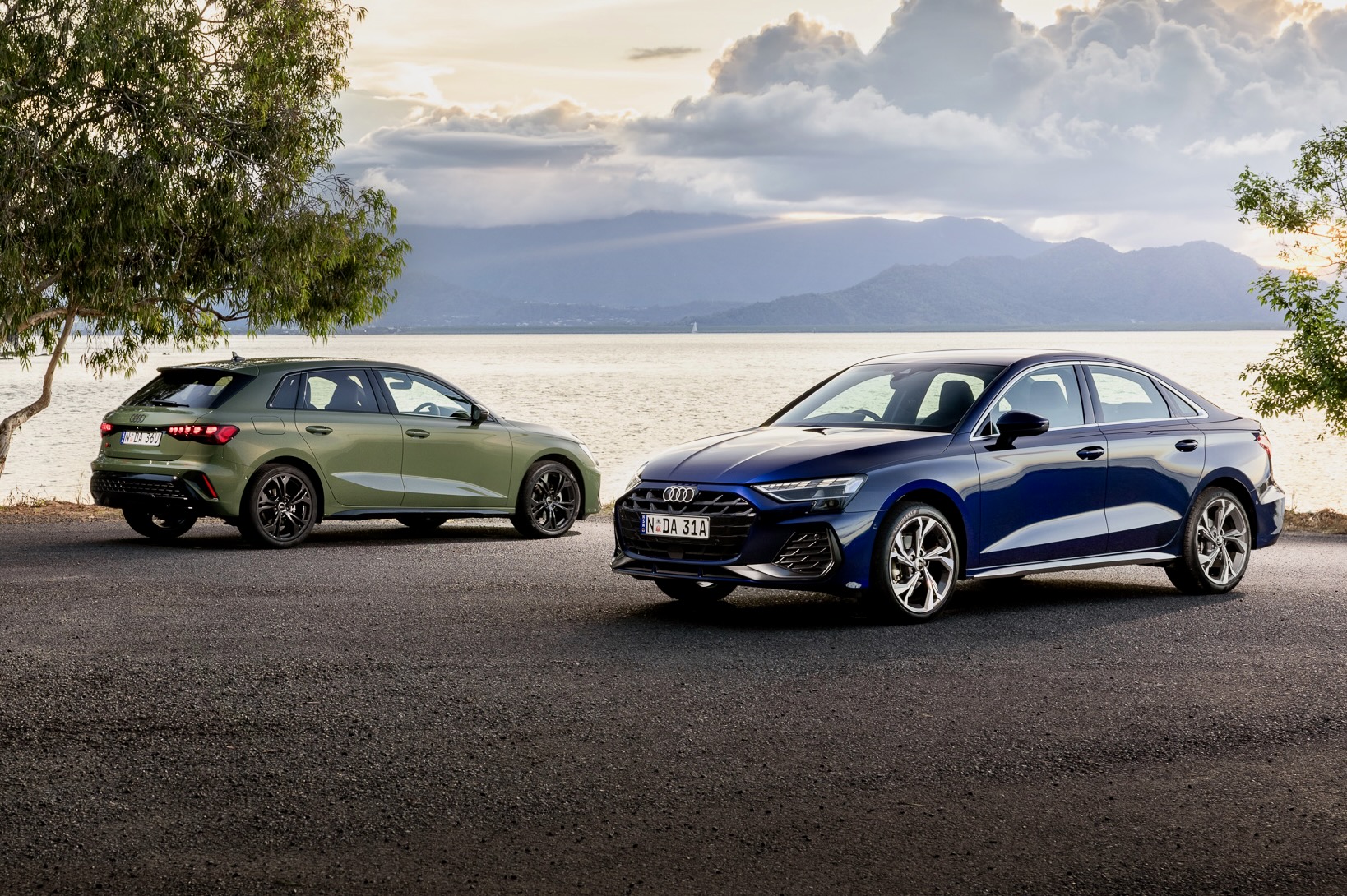
Priced from $62,800 plus on-road costs for the hatchback and $65,800 +ORC for the sedan, the A3 2.0-litre Quattro also adds equipment over the 1.5-litre model, including auto-folding and auto-dimming exterior mirrors, the S Line Interior Package with leather upholstery, an electric front passenger seat, colour ambient lighting and an auto-dimming interior mirror.
For the 2026 model year, the whole A3 range is also now equipped with a 360 degree camera, an updated automatic parking system that now assumes control of accelerating, braking, and changing gear when activated in the MMI, as well as updated traffic sign recognition and intersection assistant functionality.
The brand has also added two new variants to the Q7 large SUV range, with the S Line Editions also now on sale. Pricing starts at $3600 more than the 170kW 3.0TDI and 185kW 2.0TFSI variants on which they’re based, but add $9000 of added value, according to Audi.
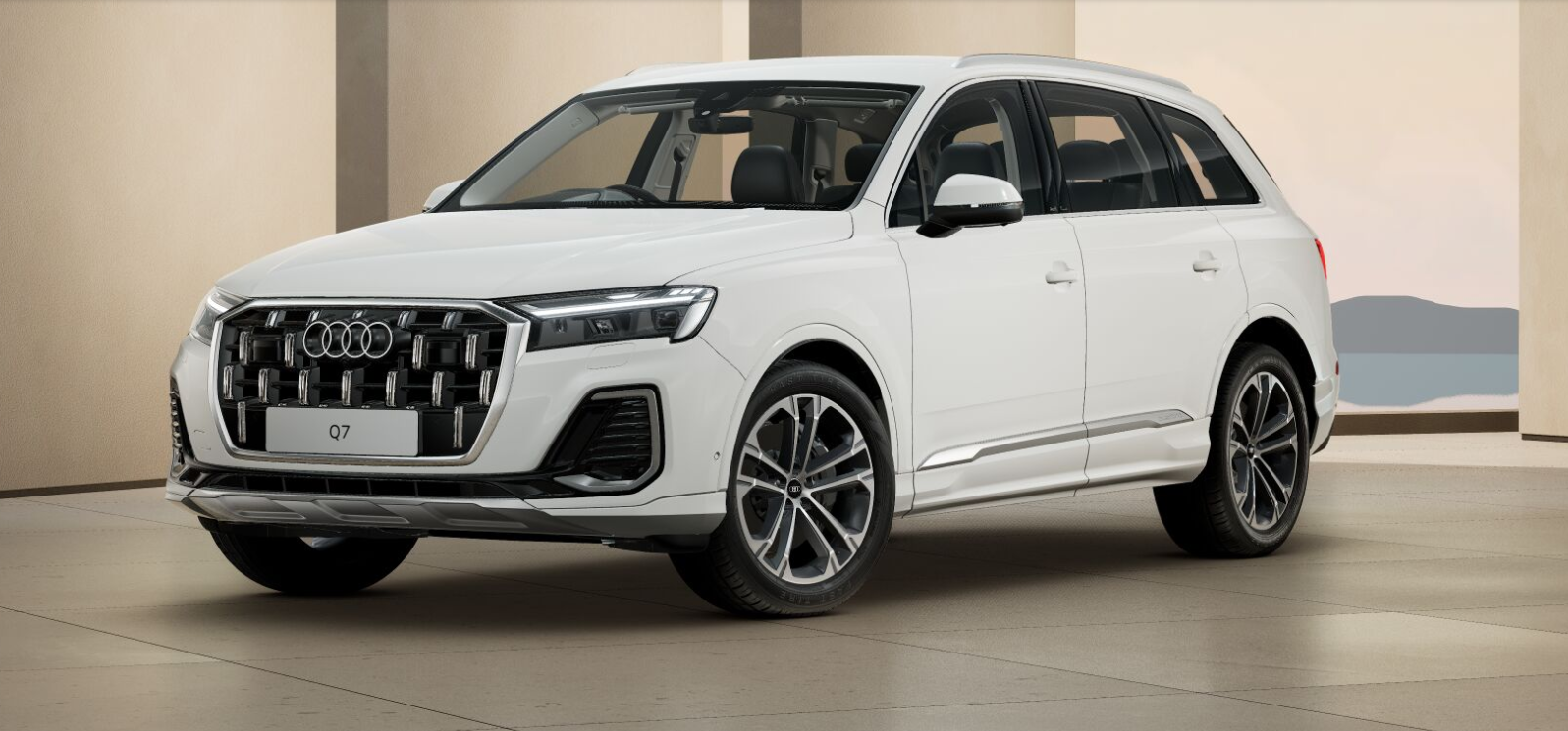
New standard features include Standard features include premium paint (including S line specific colours of Chilli Red or Daytona Grey), 21-inch alloy wheels, black exterior styling elements and an S Line exterior package. The S Line Edition also includes S line door entry sills with aluminium inlays with illuminated S logos in the front sills, as well as interior headlining in black cloth.
Finally, the new addition to the Q8 range is the RS Q8, which will sit below the current RS Q8 Performance model. Priced at $230,900 plus on-road costs, the RS Q8 uses a 441kW/700Nm version of the Performance’s 471kW/750Nm 4.0-litre twin-turbo V8 engine, which is still good for a 3.8-second 0-100km/h run (0.2 seconds behind the Performance).
Equipment changes include regular steel bakes with 10-piston callipers versus the Performance’s carbon ceramic discs and a six-Y spoke wheel design that’s available in four finishes.
New Audi range additions pricing:
| A3 Sportback TFSI quattro 150 kW S line | $62,800 |
|---|---|
| A3 Sedan TFSI quattro 150 kW S line | $65,800 |
| Q7 TDI quattro 170 kW S line edition | $124,130 |
| Q7 TFSI quattro 185 kW S line edition | $112,415 |
| RS Q8 TFSI quattro | $230,900 |
The new Audi variants will soon arrive in local Audi dealerships.
